window.__IS_SSR__=true
window.__INITIAL_STATE__={
"attachmentsReducer": {
"audio_0": {
"type": "attachments",
"id": "audio_0",
"imgSizes": {
"kqedFullSize": {
"file": "https://ww2.kqed.org/news/wp-content/themes/KQED-unified/img/audio_bgs/background0.jpg"
}
}
},
"audio_1": {
"type": "attachments",
"id": "audio_1",
"imgSizes": {
"kqedFullSize": {
"file": "https://ww2.kqed.org/news/wp-content/themes/KQED-unified/img/audio_bgs/background1.jpg"
}
}
},
"audio_2": {
"type": "attachments",
"id": "audio_2",
"imgSizes": {
"kqedFullSize": {
"file": "https://ww2.kqed.org/news/wp-content/themes/KQED-unified/img/audio_bgs/background2.jpg"
}
}
},
"audio_3": {
"type": "attachments",
"id": "audio_3",
"imgSizes": {
"kqedFullSize": {
"file": "https://ww2.kqed.org/news/wp-content/themes/KQED-unified/img/audio_bgs/background3.jpg"
}
}
},
"audio_4": {
"type": "attachments",
"id": "audio_4",
"imgSizes": {
"kqedFullSize": {
"file": "https://ww2.kqed.org/news/wp-content/themes/KQED-unified/img/audio_bgs/background4.jpg"
}
}
},
"placeholder": {
"type": "attachments",
"id": "placeholder",
"imgSizes": {
"thumbnail": {
"file": "https://cdn.kqed.org/wp-content/uploads/2024/12/KQED-Default-Image-816638274-2000x1333-1-160x107.jpg",
"width": 160,
"height": 107,
"mimeType": "image/jpeg"
},
"medium": {
"file": "https://cdn.kqed.org/wp-content/uploads/2024/12/KQED-Default-Image-816638274-2000x1333-1-800x533.jpg",
"width": 800,
"height": 533,
"mimeType": "image/jpeg"
},
"medium_large": {
"file": "https://cdn.kqed.org/wp-content/uploads/2024/12/KQED-Default-Image-816638274-2000x1333-1-768x512.jpg",
"width": 768,
"height": 512,
"mimeType": "image/jpeg"
},
"large": {
"file": "https://cdn.kqed.org/wp-content/uploads/2024/12/KQED-Default-Image-816638274-2000x1333-1-1020x680.jpg",
"width": 1020,
"height": 680,
"mimeType": "image/jpeg"
},
"1536x1536": {
"file": "https://cdn.kqed.org/wp-content/uploads/2024/12/KQED-Default-Image-816638274-2000x1333-1-1536x1024.jpg",
"width": 1536,
"height": 1024,
"mimeType": "image/jpeg"
},
"fd-lrg": {
"file": "https://cdn.kqed.org/wp-content/uploads/2024/12/KQED-Default-Image-816638274-2000x1333-1-1536x1024.jpg",
"width": 1536,
"height": 1024,
"mimeType": "image/jpeg"
},
"fd-med": {
"file": "https://cdn.kqed.org/wp-content/uploads/2024/12/KQED-Default-Image-816638274-2000x1333-1-1020x680.jpg",
"width": 1020,
"height": 680,
"mimeType": "image/jpeg"
},
"fd-sm": {
"file": "https://cdn.kqed.org/wp-content/uploads/2024/12/KQED-Default-Image-816638274-2000x1333-1-800x533.jpg",
"width": 800,
"height": 533,
"mimeType": "image/jpeg"
},
"post-thumbnail": {
"file": "https://cdn.kqed.org/wp-content/uploads/2024/12/KQED-Default-Image-816638274-2000x1333-1-672x372.jpg",
"width": 672,
"height": 372,
"mimeType": "image/jpeg"
},
"twentyfourteen-full-width": {
"file": "https://cdn.kqed.org/wp-content/uploads/2024/12/KQED-Default-Image-816638274-2000x1333-1-1038x576.jpg",
"width": 1038,
"height": 576,
"mimeType": "image/jpeg"
},
"xxsmall": {
"file": "https://cdn.kqed.org/wp-content/uploads/2024/12/KQED-Default-Image-816638274-2000x1333-1-160x107.jpg",
"width": 160,
"height": 107,
"mimeType": "image/jpeg"
},
"xsmall": {
"file": "https://cdn.kqed.org/wp-content/uploads/2024/12/KQED-Default-Image-816638274-2000x1333-1-672x372.jpg",
"width": 672,
"height": 372,
"mimeType": "image/jpeg"
},
"small": {
"file": "https://cdn.kqed.org/wp-content/uploads/2024/12/KQED-Default-Image-816638274-2000x1333-1-672x372.jpg",
"width": 672,
"height": 372,
"mimeType": "image/jpeg"
},
"xlarge": {
"file": "https://cdn.kqed.org/wp-content/uploads/2024/12/KQED-Default-Image-816638274-2000x1333-1-1020x680.jpg",
"width": 1020,
"height": 680,
"mimeType": "image/jpeg"
},
"full-width": {
"file": "https://cdn.kqed.org/wp-content/uploads/2024/12/KQED-Default-Image-816638274-2000x1333-1-1920x1280.jpg",
"width": 1920,
"height": 1280,
"mimeType": "image/jpeg"
},
"guest-author-32": {
"file": "https://cdn.kqed.org/wp-content/uploads/2025/01/KQED-Default-Image-816638274-1333x1333-1-160x160.jpg",
"width": 32,
"height": 32,
"mimeType": "image/jpeg"
},
"guest-author-50": {
"file": "https://cdn.kqed.org/wp-content/uploads/2025/01/KQED-Default-Image-816638274-1333x1333-1-160x160.jpg",
"width": 50,
"height": 50,
"mimeType": "image/jpeg"
},
"guest-author-64": {
"file": "https://cdn.kqed.org/wp-content/uploads/2025/01/KQED-Default-Image-816638274-1333x1333-1-160x160.jpg",
"width": 64,
"height": 64,
"mimeType": "image/jpeg"
},
"guest-author-96": {
"file": "https://cdn.kqed.org/wp-content/uploads/2025/01/KQED-Default-Image-816638274-1333x1333-1-160x160.jpg",
"width": 96,
"height": 96,
"mimeType": "image/jpeg"
},
"guest-author-128": {
"file": "https://cdn.kqed.org/wp-content/uploads/2025/01/KQED-Default-Image-816638274-1333x1333-1-160x160.jpg",
"width": 128,
"height": 128,
"mimeType": "image/jpeg"
},
"detail": {
"file": "https://cdn.kqed.org/wp-content/uploads/2025/01/KQED-Default-Image-816638274-1333x1333-1-160x160.jpg",
"width": 160,
"height": 160,
"mimeType": "image/jpeg"
},
"kqedFullSize": {
"file": "https://cdn.kqed.org/wp-content/uploads/2024/12/KQED-Default-Image-816638274-2000x1333-1.jpg",
"width": 2000,
"height": 1333
}
}
},
"science_1946251": {
"type": "attachments",
"id": "science_1946251",
"meta": {
"index": "attachments_1716263798",
"site": "science",
"id": "1946251",
"found": true
},
"parent": 1946249,
"imgSizes": {
"twentyfourteen-full-width": {
"file": "https://ww2.kqed.org/app/uploads/sites/35/2019/08/Hog-Island-Oyster-Farm.-MARSHALL.-Harvest.-RIna-Jordan-1000-1-1000x576.jpg",
"width": 1000,
"mimeType": "image/jpeg",
"height": 576
},
"thumbnail": {
"file": "https://ww2.kqed.org/app/uploads/sites/35/2019/08/Hog-Island-Oyster-Farm.-MARSHALL.-Harvest.-RIna-Jordan-1000-1-160x107.jpg",
"width": 160,
"mimeType": "image/jpeg",
"height": 107
},
"post-thumbnail": {
"file": "https://ww2.kqed.org/app/uploads/sites/35/2019/08/Hog-Island-Oyster-Farm.-MARSHALL.-Harvest.-RIna-Jordan-1000-1-672x372.jpg",
"width": 672,
"mimeType": "image/jpeg",
"height": 372
},
"kqedFullSize": {
"file": "https://ww2.kqed.org/app/uploads/sites/35/2019/08/Hog-Island-Oyster-Farm.-MARSHALL.-Harvest.-RIna-Jordan-1000-1.jpg",
"width": 1000,
"height": 668
},
"medium": {
"file": "https://ww2.kqed.org/app/uploads/sites/35/2019/08/Hog-Island-Oyster-Farm.-MARSHALL.-Harvest.-RIna-Jordan-1000-1-800x534.jpg",
"width": 800,
"mimeType": "image/jpeg",
"height": 534
},
"medium_large": {
"file": "https://ww2.kqed.org/app/uploads/sites/35/2019/08/Hog-Island-Oyster-Farm.-MARSHALL.-Harvest.-RIna-Jordan-1000-1-768x513.jpg",
"width": 768,
"mimeType": "image/jpeg",
"height": 513
}
},
"publishDate": 1565200649,
"modified": 1565200706,
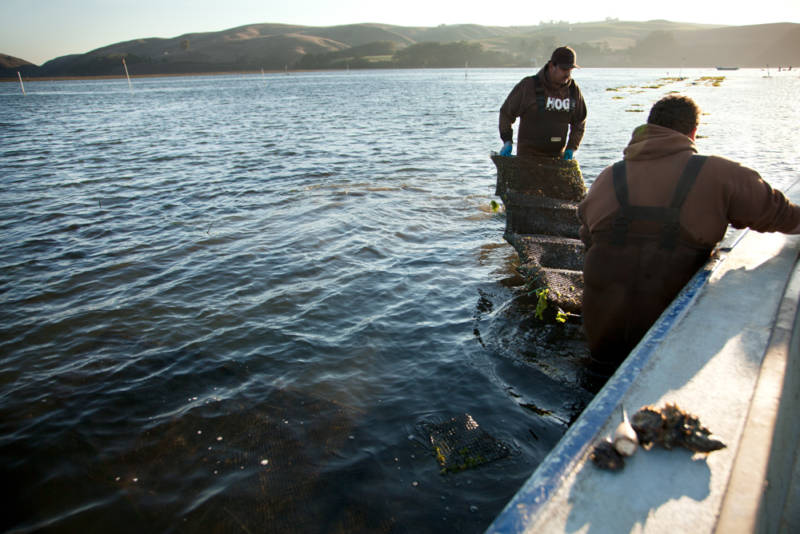
"caption": "Harvesting at an oyster farm in Tomales Bay. ",
"description": null,
"title": "Hog-Island-Oyster-Farm.-MARSHALL.-Harvest.-RIna-Jordan-1000 (1)",
"credit": "Hog Island Oyster Co.",
"status": "inherit",
"isLoading": false,
"fetchFailed": false
},
"science_1946299": {
"type": "attachments",
"id": "science_1946299",
"meta": {
"index": "attachments_1716263798",
"site": "science",
"id": "1946299",
"found": true
},
"parent": 1946295,
"imgSizes": {
"twentyfourteen-full-width": {
"file": "https://ww2.kqed.org/app/uploads/sites/35/2019/08/GettyImages-603968486-1038x576.jpg",
"width": 1038,
"mimeType": "image/jpeg",
"height": 576
},
"thumbnail": {
"file": "https://ww2.kqed.org/app/uploads/sites/35/2019/08/GettyImages-603968486-160x106.jpg",
"width": 160,
"mimeType": "image/jpeg",
"height": 106
},
"post-thumbnail": {
"file": "https://ww2.kqed.org/app/uploads/sites/35/2019/08/GettyImages-603968486-672x372.jpg",
"width": 672,
"mimeType": "image/jpeg",
"height": 372
},
"kqedFullSize": {
"file": "https://ww2.kqed.org/app/uploads/sites/35/2019/08/GettyImages-603968486-e1565282472991.jpg",
"width": 1925,
"height": 1281
},
"large": {
"file": "https://ww2.kqed.org/app/uploads/sites/35/2019/08/GettyImages-603968486-1020x679.jpg",
"width": 1020,
"mimeType": "image/jpeg",
"height": 679
},
"complete_open_graph": {
"file": "https://ww2.kqed.org/app/uploads/sites/35/2019/08/GettyImages-603968486-1200x799.jpg",
"width": 1200,
"mimeType": "image/jpeg",
"height": 799
},
"full-width": {
"file": "https://ww2.kqed.org/app/uploads/sites/35/2019/08/GettyImages-603968486-1920x1278.jpg",
"width": 1920,
"mimeType": "image/jpeg",
"height": 1278
},
"medium": {
"file": "https://ww2.kqed.org/app/uploads/sites/35/2019/08/GettyImages-603968486-800x532.jpg",
"width": 800,
"mimeType": "image/jpeg",
"height": 532
},
"medium_large": {
"file": "https://ww2.kqed.org/app/uploads/sites/35/2019/08/GettyImages-603968486-768x511.jpg",
"width": 768,
"mimeType": "image/jpeg",
"height": 511
}
},
"publishDate": 1565282403,
"modified": 1565282485,
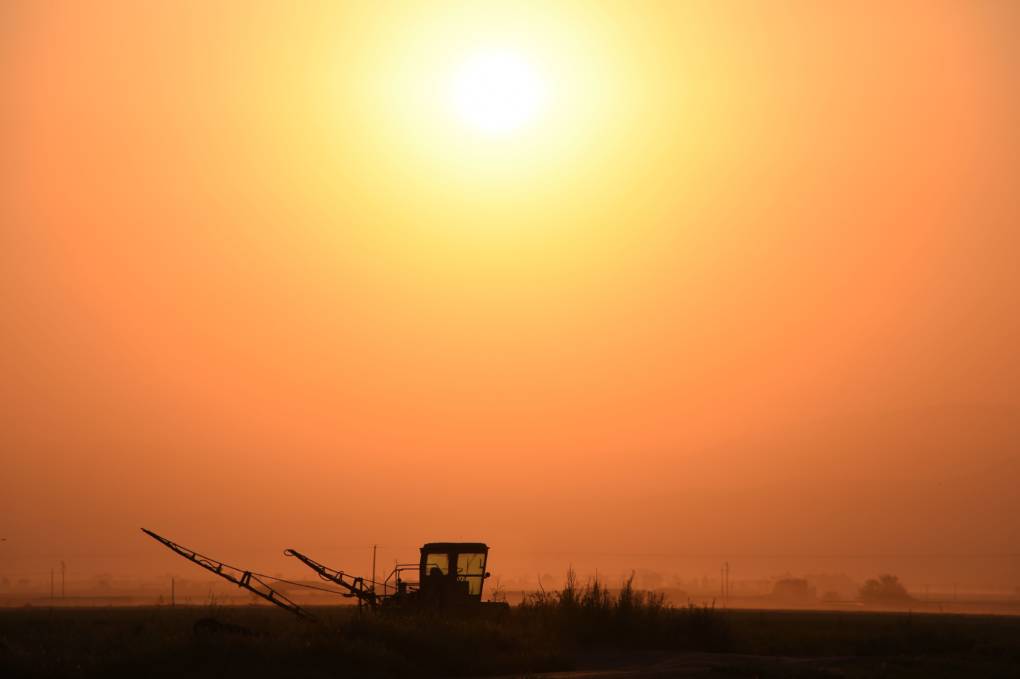
"caption": "Farm equipment is parked in a field near Bakersfield, California, as the sun rises August 24, 2016. \n",
"description": null,
"title": "US-ENVIRONMENT-POLLUTION-WATER-NITRATES",
"credit": "ROBYN BECK/AFP/Getty Images",
"status": "inherit",
"isLoading": false,
"fetchFailed": false
},
"science_1946228": {
"type": "attachments",
"id": "science_1946228",
"meta": {
"index": "attachments_1716263798",
"site": "science",
"id": "1946228",
"found": true
},
"parent": 1946219,
"imgSizes": {
"twentyfourteen-full-width": {
"file": "https://ww2.kqed.org/app/uploads/sites/35/2019/08/July-heat-record-1038x576.jpg",
"width": 1038,
"mimeType": "image/jpeg",
"height": 576
},
"thumbnail": {
"file": "https://ww2.kqed.org/app/uploads/sites/35/2019/08/July-heat-record-160x107.jpg",
"width": 160,
"mimeType": "image/jpeg",
"height": 107
},
"post-thumbnail": {
"file": "https://ww2.kqed.org/app/uploads/sites/35/2019/08/July-heat-record-672x372.jpg",
"width": 672,
"mimeType": "image/jpeg",
"height": 372
},
"kqedFullSize": {
"file": "https://ww2.kqed.org/app/uploads/sites/35/2019/08/July-heat-record.jpg",
"width": 1920,
"height": 1279
},
"large": {
"file": "https://ww2.kqed.org/app/uploads/sites/35/2019/08/July-heat-record-1020x679.jpg",
"width": 1020,
"mimeType": "image/jpeg",
"height": 679
},
"complete_open_graph": {
"file": "https://ww2.kqed.org/app/uploads/sites/35/2019/08/July-heat-record-1200x799.jpg",
"width": 1200,
"mimeType": "image/jpeg",
"height": 799
},
"full-width": {
"file": "https://ww2.kqed.org/app/uploads/sites/35/2019/08/July-heat-record-1920x1279.jpg",
"width": 1920,
"mimeType": "image/jpeg",
"height": 1279
},
"medium": {
"file": "https://ww2.kqed.org/app/uploads/sites/35/2019/08/July-heat-record-800x533.jpg",
"width": 800,
"mimeType": "image/jpeg",
"height": 533
},
"medium_large": {
"file": "https://ww2.kqed.org/app/uploads/sites/35/2019/08/July-heat-record-768x512.jpg",
"width": 768,
"mimeType": "image/jpeg",
"height": 512
}
},
"publishDate": 1565051298,
"modified": 1565051344,
"caption": "People refresh themselves under water atomizers during a heatwave, at the Bassin de la Villette in Paris, on July 24, 2019. - Parisians were bracing for potentially the hottest ever temperature in the French capital this week as a new heatwave blasted into northern Europe that could set records in several countries.",
"description": null,
"title": "July-heat-record",
"credit": "DOMINIQUE FAGET/AFP/Getty Images",
"status": "inherit",
"isLoading": false,
"fetchFailed": false
},
"science_1946042": {
"type": "attachments",
"id": "science_1946042",
"meta": {
"index": "attachments_1716263798",
"site": "science",
"id": "1946042",
"found": true
},
"parent": 1946004,
"imgSizes": {
"twentyfourteen-full-width": {
"file": "https://ww2.kqed.org/app/uploads/sites/35/2019/08/GettyImages-94321558-1038x576.jpg",
"width": 1038,
"mimeType": "image/jpeg",
"height": 576
},
"thumbnail": {
"file": "https://ww2.kqed.org/app/uploads/sites/35/2019/08/GettyImages-94321558-160x107.jpg",
"width": 160,
"mimeType": "image/jpeg",
"height": 107
},
"post-thumbnail": {
"file": "https://ww2.kqed.org/app/uploads/sites/35/2019/08/GettyImages-94321558-672x372.jpg",
"width": 672,
"mimeType": "image/jpeg",
"height": 372
},
"kqedFullSize": {
"file": "https://ww2.kqed.org/app/uploads/sites/35/2019/08/GettyImages-94321558-e1564700542607.jpg",
"width": 1925,
"height": 1284
},
"large": {
"file": "https://ww2.kqed.org/app/uploads/sites/35/2019/08/GettyImages-94321558-1020x680.jpg",
"width": 1020,
"mimeType": "image/jpeg",
"height": 680
},
"complete_open_graph": {
"file": "https://ww2.kqed.org/app/uploads/sites/35/2019/08/GettyImages-94321558-1200x800.jpg",
"width": 1200,
"mimeType": "image/jpeg",
"height": 800
},
"full-width": {
"file": "https://ww2.kqed.org/app/uploads/sites/35/2019/08/GettyImages-94321558-1920x1281.jpg",
"width": 1920,
"mimeType": "image/jpeg",
"height": 1281
},
"medium": {
"file": "https://ww2.kqed.org/app/uploads/sites/35/2019/08/GettyImages-94321558-800x534.jpg",
"width": 800,
"mimeType": "image/jpeg",
"height": 534
},
"medium_large": {
"file": "https://ww2.kqed.org/app/uploads/sites/35/2019/08/GettyImages-94321558-768x512.jpg",
"width": 768,
"mimeType": "image/jpeg",
"height": 512
}
},
"publishDate": 1564700493,
"modified": 1565023210,
"caption": "A protester holds up a newspaper during the Walk Against Warming in Martin Place on December 12, 2009 in Sydney, Australia.",
"description": "Walk Against Warming Takes Place In Sydney",
"title": "GettyImages-94321558",
"credit": "Mike Flokis/Getty Images",
"status": "inherit",
"isLoading": false,
"fetchFailed": false
},
"science_1945956": {
"type": "attachments",
"id": "science_1945956",
"meta": {
"index": "attachments_1716263798",
"site": "science",
"id": "1945956",
"found": true
},
"parent": 1945910,
"imgSizes": {
"twentyfourteen-full-width": {
"file": "https://ww2.kqed.org/app/uploads/sites/35/2019/07/RS18585_GettyImages-503677392-1-1-1038x576.jpg",
"width": 1038,
"mimeType": "image/jpeg",
"height": 576
},
"thumbnail": {
"file": "https://ww2.kqed.org/app/uploads/sites/35/2019/07/RS18585_GettyImages-503677392-1-1-160x107.jpg",
"width": 160,
"mimeType": "image/jpeg",
"height": 107
},
"post-thumbnail": {
"file": "https://ww2.kqed.org/app/uploads/sites/35/2019/07/RS18585_GettyImages-503677392-1-1-672x372.jpg",
"width": 672,
"mimeType": "image/jpeg",
"height": 372
},
"kqedFullSize": {
"file": "https://ww2.kqed.org/app/uploads/sites/35/2019/07/RS18585_GettyImages-503677392-1-1.jpg",
"width": 2048,
"height": 1365
},
"large": {
"file": "https://ww2.kqed.org/app/uploads/sites/35/2019/07/RS18585_GettyImages-503677392-1-1-1020x680.jpg",
"width": 1020,
"mimeType": "image/jpeg",
"height": 680
},
"complete_open_graph": {
"file": "https://ww2.kqed.org/app/uploads/sites/35/2019/07/RS18585_GettyImages-503677392-1-1-1200x800.jpg",
"width": 1200,
"mimeType": "image/jpeg",
"height": 800
},
"full-width": {
"file": "https://ww2.kqed.org/app/uploads/sites/35/2019/07/RS18585_GettyImages-503677392-1-1-1920x1280.jpg",
"width": 1920,
"mimeType": "image/jpeg",
"height": 1280
},
"medium": {
"file": "https://ww2.kqed.org/app/uploads/sites/35/2019/07/RS18585_GettyImages-503677392-1-1-800x533.jpg",
"width": 800,
"mimeType": "image/jpeg",
"height": 533
},
"medium_large": {
"file": "https://ww2.kqed.org/app/uploads/sites/35/2019/07/RS18585_GettyImages-503677392-1-1-768x512.jpg",
"width": 768,
"mimeType": "image/jpeg",
"height": 512
}
},
"publishDate": 1564621487,
"modified": 1564621607,
"caption": null,
"description": null,
"title": "US-CALIFORNIA-GAS-LEAK",
"credit": "Jonathan Alcorn/AFP/Getty Images",
"status": "inherit",
"isLoading": false,
"fetchFailed": false
},
"science_1945833": {
"type": "attachments",
"id": "science_1945833",
"meta": {
"index": "attachments_1716263798",
"site": "science",
"id": "1945833",
"found": true
},
"parent": 1945821,
"imgSizes": {
"twentyfourteen-full-width": {
"file": "https://ww2.kqed.org/app/uploads/sites/35/2019/07/GettyImages-1142591433-1038x576.jpg",
"width": 1038,
"mimeType": "image/jpeg",
"height": 576
},
"thumbnail": {
"file": "https://ww2.kqed.org/app/uploads/sites/35/2019/07/GettyImages-1142591433-160x107.jpg",
"width": 160,
"mimeType": "image/jpeg",
"height": 107
},
"post-thumbnail": {
"file": "https://ww2.kqed.org/app/uploads/sites/35/2019/07/GettyImages-1142591433-672x372.jpg",
"width": 672,
"mimeType": "image/jpeg",
"height": 372
},
"kqedFullSize": {
"file": "https://ww2.kqed.org/app/uploads/sites/35/2019/07/GettyImages-1142591433-e1564430842676.jpg",
"width": 1925,
"height": 1283
},
"large": {
"file": "https://ww2.kqed.org/app/uploads/sites/35/2019/07/GettyImages-1142591433-1020x680.jpg",
"width": 1020,
"mimeType": "image/jpeg",
"height": 680
},
"complete_open_graph": {
"file": "https://ww2.kqed.org/app/uploads/sites/35/2019/07/GettyImages-1142591433-1200x800.jpg",
"width": 1200,
"mimeType": "image/jpeg",
"height": 800
},
"full-width": {
"file": "https://ww2.kqed.org/app/uploads/sites/35/2019/07/GettyImages-1142591433-1920x1280.jpg",
"width": 1920,
"mimeType": "image/jpeg",
"height": 1280
},
"medium": {
"file": "https://ww2.kqed.org/app/uploads/sites/35/2019/07/GettyImages-1142591433-800x533.jpg",
"width": 800,
"mimeType": "image/jpeg",
"height": 533
},
"medium_large": {
"file": "https://ww2.kqed.org/app/uploads/sites/35/2019/07/GettyImages-1142591433-768x512.jpg",
"width": 768,
"mimeType": "image/jpeg",
"height": 512
}
},
"publishDate": 1564430660,
"modified": 1564430770,
"caption": "A Waymo self-driving car pulls into a parking lot at the Google-owned company's headquarters in Mountain View, California, on May 8, 2019. ",
"description": " Waymo",
"title": "US-IT-TRANSPORTATION-WAYMO",
"credit": "GLENN CHAPMAN/AFP/Getty Images",
"status": "inherit",
"isLoading": false,
"fetchFailed": false
},
"science_884300": {
"type": "attachments",
"id": "science_884300",
"meta": {
"index": "attachments_1716263798",
"site": "science",
"id": "884300",
"found": true
},
"parent": 884295,
"imgSizes": {
"twentyfourteen-full-width": {
"file": "https://ww2.kqed.org/app/uploads/sites/35/2016/07/JoshuaTree-1-web2-1-1038x576.jpg",
"width": 1038,
"mimeType": "image/jpeg",
"height": 576
},
"thumbnail": {
"file": "https://ww2.kqed.org/app/uploads/sites/35/2016/07/JoshuaTree-1-web2-1-400x187.jpg",
"width": 400,
"mimeType": "image/jpeg",
"height": 187
},
"fd-sm": {
"file": "https://ww2.kqed.org/app/uploads/sites/35/2016/07/JoshuaTree-1-web2-1-960x448.jpg",
"width": 960,
"mimeType": "image/jpeg",
"height": 448
},
"post-thumbnail": {
"file": "https://ww2.kqed.org/app/uploads/sites/35/2016/07/JoshuaTree-1-web2-1-672x372.jpg",
"width": 672,
"mimeType": "image/jpeg",
"height": 372
},
"kqedFullSize": {
"file": "https://ww2.kqed.org/app/uploads/sites/35/2016/07/JoshuaTree-1-web2-1.jpg",
"width": 1918,
"height": 895
},
"large": {
"file": "https://ww2.kqed.org/app/uploads/sites/35/2016/07/JoshuaTree-1-web2-1-1440x672.jpg",
"width": 1440,
"mimeType": "image/jpeg",
"height": 672
},
"guest-author-50": {
"file": "https://ww2.kqed.org/app/uploads/sites/35/2016/07/JoshuaTree-1-web2-1-50x50.jpg",
"width": 50,
"mimeType": "image/jpeg",
"height": 50
},
"guest-author-96": {
"file": "https://ww2.kqed.org/app/uploads/sites/35/2016/07/JoshuaTree-1-web2-1-96x96.jpg",
"width": 96,
"mimeType": "image/jpeg",
"height": 96
},
"medium": {
"file": "https://ww2.kqed.org/app/uploads/sites/35/2016/07/JoshuaTree-1-web2-1-800x373.jpg",
"width": 800,
"mimeType": "image/jpeg",
"height": 373
},
"guest-author-64": {
"file": "https://ww2.kqed.org/app/uploads/sites/35/2016/07/JoshuaTree-1-web2-1-64x64.jpg",
"width": 64,
"mimeType": "image/jpeg",
"height": 64
},
"guest-author-32": {
"file": "https://ww2.kqed.org/app/uploads/sites/35/2016/07/JoshuaTree-1-web2-1-32x32.jpg",
"width": 32,
"mimeType": "image/jpeg",
"height": 32
},
"fd-med": {
"file": "https://ww2.kqed.org/app/uploads/sites/35/2016/07/JoshuaTree-1-web2-1-1180x551.jpg",
"width": 1180,
"mimeType": "image/jpeg",
"height": 551
},
"detail": {
"file": "https://ww2.kqed.org/app/uploads/sites/35/2016/07/JoshuaTree-1-web2-1-150x150.jpg",
"width": 150,
"mimeType": "image/jpeg",
"height": 150
},
"medium_large": {
"file": "https://ww2.kqed.org/app/uploads/sites/35/2016/07/JoshuaTree-1-web2-1-768x358.jpg",
"width": 768,
"mimeType": "image/jpeg",
"height": 358
},
"guest-author-128": {
"file": "https://ww2.kqed.org/app/uploads/sites/35/2016/07/JoshuaTree-1-web2-1-128x128.jpg",
"width": 128,
"mimeType": "image/jpeg",
"height": 128
}
},
"publishDate": 1469828948,
"modified": 1469828977,
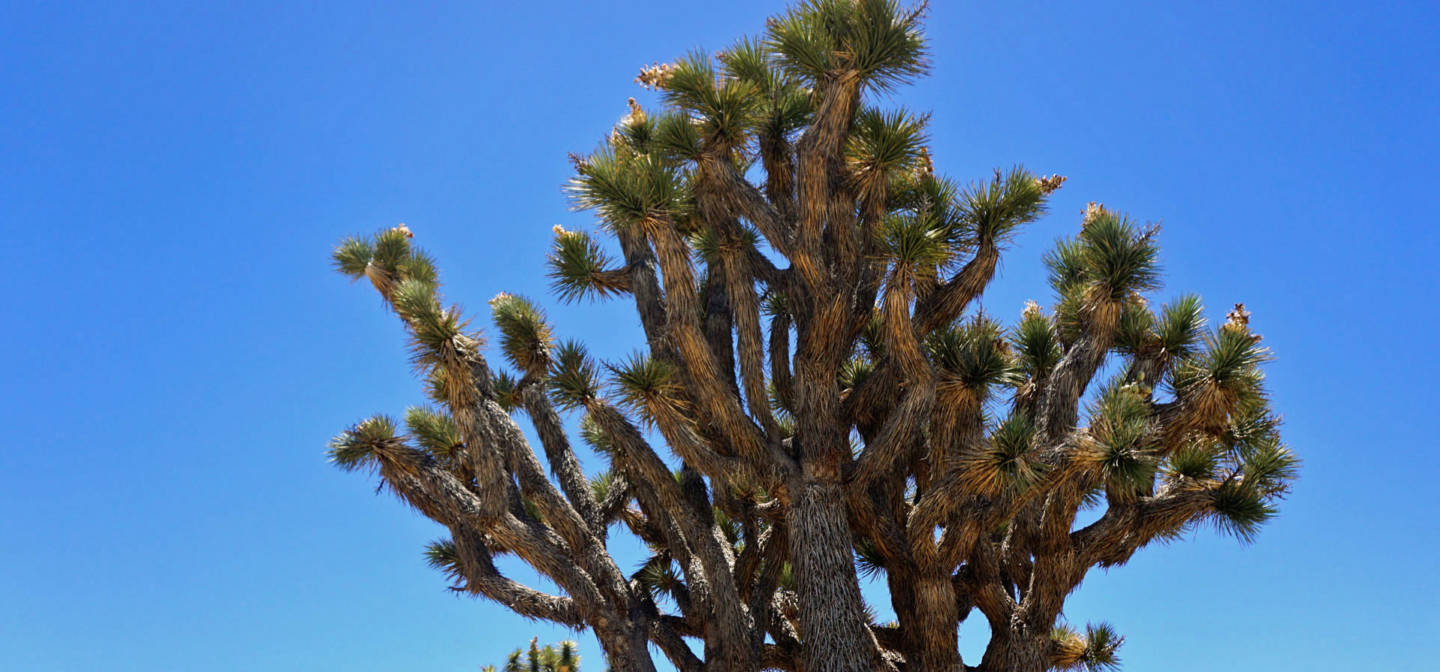
"caption": "Joshua tree habitat is expected to shrink dramatically because of climate change.",
"description": null,
"title": "JoshuaTree-1-web2",
"credit": "Lauren Sommer/KQED",
"status": "inherit",
"isLoading": false,
"fetchFailed": false
},
"science_1945070": {
"type": "attachments",
"id": "science_1945070",
"meta": {
"index": "attachments_1716263798",
"site": "science",
"id": "1945070",
"found": true
},
"parent": 1944993,
"imgSizes": {
"twentyfourteen-full-width": {
"file": "https://ww2.kqed.org/app/uploads/sites/35/2019/07/williams-calif-wildfire-nasa-2019-1038x576.jpg",
"width": 1038,
"mimeType": "image/jpeg",
"height": 576
},
"thumbnail": {
"file": "https://ww2.kqed.org/app/uploads/sites/35/2019/07/williams-calif-wildfire-nasa-2019-160x135.jpg",
"width": 160,
"mimeType": "image/jpeg",
"height": 135
},
"post-thumbnail": {
"file": "https://ww2.kqed.org/app/uploads/sites/35/2019/07/williams-calif-wildfire-nasa-2019-672x372.jpg",
"width": 672,
"mimeType": "image/jpeg",
"height": 372
},
"kqedFullSize": {
"file": "https://ww2.kqed.org/app/uploads/sites/35/2019/07/williams-calif-wildfire-nasa-2019.jpg",
"width": 1041,
"height": 880
},
"large": {
"file": "https://ww2.kqed.org/app/uploads/sites/35/2019/07/williams-calif-wildfire-nasa-2019-1020x862.jpg",
"width": 1020,
"mimeType": "image/jpeg",
"height": 862
},
"medium": {
"file": "https://ww2.kqed.org/app/uploads/sites/35/2019/07/williams-calif-wildfire-nasa-2019-800x676.jpg",
"width": 800,
"mimeType": "image/jpeg",
"height": 676
},
"medium_large": {
"file": "https://ww2.kqed.org/app/uploads/sites/35/2019/07/williams-calif-wildfire-nasa-2019-768x649.jpg",
"width": 768,
"mimeType": "image/jpeg",
"height": 649
}
},
"publishDate": 1563295006,
"modified": 1563295023,
"caption": "A satellite image, August 6, 2018, shows smoke from multiple large California wildfires. The fires themselves, detected by thermal imagery, are in red. ",
"description": null,
"title": "williams calif wildfire nasa 2019",
"credit": "NASA",
"status": "inherit",
"isLoading": false,
"fetchFailed": false
},
"science_1934976": {
"type": "attachments",
"id": "science_1934976",
"meta": {
"index": "attachments_1716263798",
"site": "science",
"id": "1934976",
"found": true
},
"parent": 1934969,
"imgSizes": {
"small": {
"file": "https://ww2.kqed.org/app/uploads/sites/35/2018/11/GettyImages-173465655-520x361.jpg",
"width": 520,
"mimeType": "image/jpeg",
"height": 361
},
"twentyfourteen-full-width": {
"file": "https://ww2.kqed.org/app/uploads/sites/35/2018/11/GettyImages-173465655-1038x576.jpg",
"width": 1038,
"mimeType": "image/jpeg",
"height": 576
},
"thumbnail": {
"file": "https://ww2.kqed.org/app/uploads/sites/35/2018/11/GettyImages-173465655-160x111.jpg",
"width": 160,
"mimeType": "image/jpeg",
"height": 111
},
"fd-sm": {
"file": "https://ww2.kqed.org/app/uploads/sites/35/2018/11/GettyImages-173465655-960x666.jpg",
"width": 960,
"mimeType": "image/jpeg",
"height": 666
},
"post-thumbnail": {
"file": "https://ww2.kqed.org/app/uploads/sites/35/2018/11/GettyImages-173465655-672x372.jpg",
"width": 672,
"mimeType": "image/jpeg",
"height": 372
},
"xsmall": {
"file": "https://ww2.kqed.org/app/uploads/sites/35/2018/11/GettyImages-173465655-375x260.jpg",
"width": 375,
"mimeType": "image/jpeg",
"height": 260
},
"kqedFullSize": {
"file": "https://ww2.kqed.org/app/uploads/sites/35/2018/11/GettyImages-173465655.jpg",
"width": 3000,
"height": 2082
},
"large": {
"file": "https://ww2.kqed.org/app/uploads/sites/35/2018/11/GettyImages-173465655-1020x708.jpg",
"width": 1020,
"mimeType": "image/jpeg",
"height": 708
},
"xlarge": {
"file": "https://ww2.kqed.org/app/uploads/sites/35/2018/11/GettyImages-173465655-1180x819.jpg",
"width": 1180,
"mimeType": "image/jpeg",
"height": 819
},
"complete_open_graph": {
"file": "https://ww2.kqed.org/app/uploads/sites/35/2018/11/GettyImages-173465655-1200x833.jpg",
"width": 1200,
"mimeType": "image/jpeg",
"height": 833
},
"guest-author-50": {
"file": "https://ww2.kqed.org/app/uploads/sites/35/2018/11/GettyImages-173465655-50x50.jpg",
"width": 50,
"mimeType": "image/jpeg",
"height": 50
},
"guest-author-96": {
"file": "https://ww2.kqed.org/app/uploads/sites/35/2018/11/GettyImages-173465655-96x96.jpg",
"width": 96,
"mimeType": "image/jpeg",
"height": 96
},
"medium": {
"file": "https://ww2.kqed.org/app/uploads/sites/35/2018/11/GettyImages-173465655-800x555.jpg",
"width": 800,
"mimeType": "image/jpeg",
"height": 555
},
"guest-author-64": {
"file": "https://ww2.kqed.org/app/uploads/sites/35/2018/11/GettyImages-173465655-64x64.jpg",
"width": 64,
"mimeType": "image/jpeg",
"height": 64
},
"guest-author-32": {
"file": "https://ww2.kqed.org/app/uploads/sites/35/2018/11/GettyImages-173465655-32x32.jpg",
"width": 32,
"mimeType": "image/jpeg",
"height": 32
},
"fd-lrg": {
"file": "https://ww2.kqed.org/app/uploads/sites/35/2018/11/GettyImages-173465655-1920x1332.jpg",
"width": 1920,
"mimeType": "image/jpeg",
"height": 1332
},
"fd-med": {
"file": "https://ww2.kqed.org/app/uploads/sites/35/2018/11/GettyImages-173465655-1180x819.jpg",
"width": 1180,
"mimeType": "image/jpeg",
"height": 819
},
"full-width": {
"file": "https://ww2.kqed.org/app/uploads/sites/35/2018/11/GettyImages-173465655-1920x1332.jpg",
"width": 1920,
"mimeType": "image/jpeg",
"height": 1332
},
"detail": {
"file": "https://ww2.kqed.org/app/uploads/sites/35/2018/11/GettyImages-173465655-150x150.jpg",
"width": 150,
"mimeType": "image/jpeg",
"height": 150
},
"medium_large": {
"file": "https://ww2.kqed.org/app/uploads/sites/35/2018/11/GettyImages-173465655-768x533.jpg",
"width": 768,
"mimeType": "image/jpeg",
"height": 533
},
"guest-author-128": {
"file": "https://ww2.kqed.org/app/uploads/sites/35/2018/11/GettyImages-173465655-128x128.jpg",
"width": 128,
"mimeType": "image/jpeg",
"height": 128
},
"xxsmall": {
"file": "https://ww2.kqed.org/app/uploads/sites/35/2018/11/GettyImages-173465655-240x167.jpg",
"width": 240,
"mimeType": "image/jpeg",
"height": 167
}
},
"publishDate": 1543428296,
"modified": 1563237574,
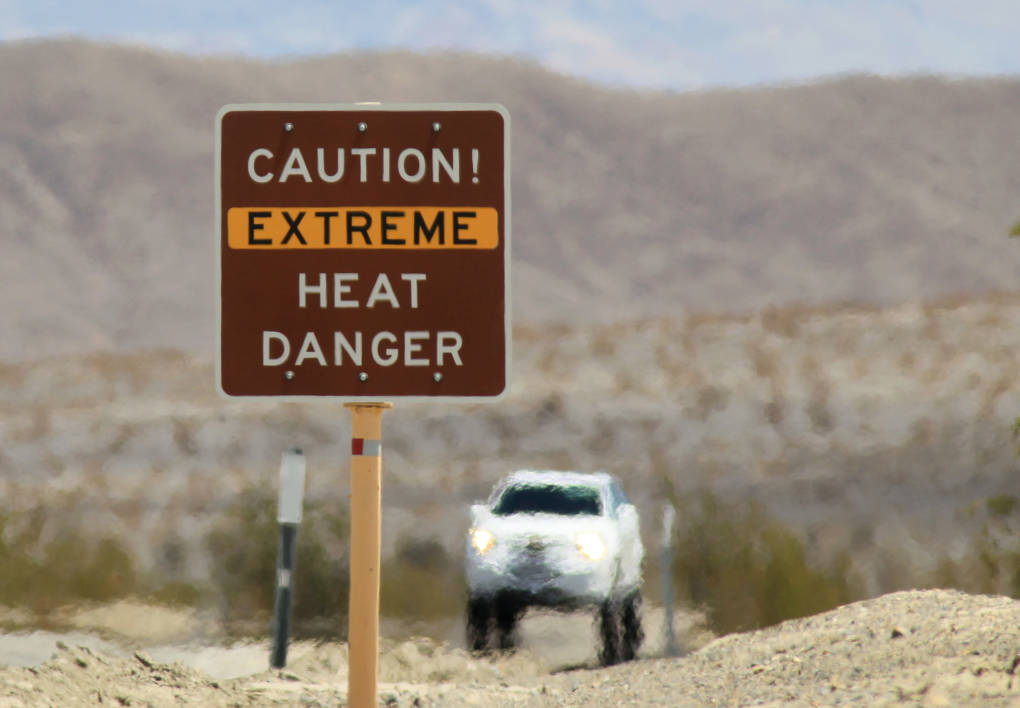
"caption": "A heat danger warning sign in Death Valley, which holds the record for the hottest month ever recorded on the planet.",
"description": "A heat danger warning sign in Death Valley, which holds the record for the hottest month ever recorded on the planet.",
"title": "Annual Badwater Ultra Marathon Held In Death Valley's Extreme Heat",
"credit": "David McNew/Getty Images",
"status": "inherit",
"isLoading": false,
"fetchFailed": false
},
"science_1944798": {
"type": "attachments",
"id": "science_1944798",
"meta": {
"index": "attachments_1716263798",
"site": "science",
"id": "1944798",
"found": true
},
"parent": 1944788,
"imgSizes": {
"twentyfourteen-full-width": {
"file": "https://ww2.kqed.org/app/uploads/sites/35/2019/07/RS25451_20170515_StateCapitol_Sen_BobWieckowski_credit_BertJohnson-1-qut-1038x576.jpg",
"width": 1038,
"mimeType": "image/jpeg",
"height": 576
},
"thumbnail": {
"file": "https://ww2.kqed.org/app/uploads/sites/35/2019/07/RS25451_20170515_StateCapitol_Sen_BobWieckowski_credit_BertJohnson-1-qut-160x107.jpg",
"width": 160,
"mimeType": "image/jpeg",
"height": 107
},
"post-thumbnail": {
"file": "https://ww2.kqed.org/app/uploads/sites/35/2019/07/RS25451_20170515_StateCapitol_Sen_BobWieckowski_credit_BertJohnson-1-qut-672x372.jpg",
"width": 672,
"mimeType": "image/jpeg",
"height": 372
},
"kqedFullSize": {
"file": "https://ww2.kqed.org/app/uploads/sites/35/2019/07/RS25451_20170515_StateCapitol_Sen_BobWieckowski_credit_BertJohnson-1-qut.jpg",
"width": 1920,
"height": 1280
},
"large": {
"file": "https://ww2.kqed.org/app/uploads/sites/35/2019/07/RS25451_20170515_StateCapitol_Sen_BobWieckowski_credit_BertJohnson-1-qut-1020x680.jpg",
"width": 1020,
"mimeType": "image/jpeg",
"height": 680
},
"complete_open_graph": {
"file": "https://ww2.kqed.org/app/uploads/sites/35/2019/07/RS25451_20170515_StateCapitol_Sen_BobWieckowski_credit_BertJohnson-1-qut-1200x800.jpg",
"width": 1200,
"mimeType": "image/jpeg",
"height": 800
},
"full-width": {
"file": "https://ww2.kqed.org/app/uploads/sites/35/2019/07/RS25451_20170515_StateCapitol_Sen_BobWieckowski_credit_BertJohnson-1-qut-1920x1280.jpg",
"width": 1920,
"mimeType": "image/jpeg",
"height": 1280
},
"medium": {
"file": "https://ww2.kqed.org/app/uploads/sites/35/2019/07/RS25451_20170515_StateCapitol_Sen_BobWieckowski_credit_BertJohnson-1-qut-800x533.jpg",
"width": 800,
"mimeType": "image/jpeg",
"height": 533
},
"medium_large": {
"file": "https://ww2.kqed.org/app/uploads/sites/35/2019/07/RS25451_20170515_StateCapitol_Sen_BobWieckowski_credit_BertJohnson-1-qut-768x512.jpg",
"width": 768,
"mimeType": "image/jpeg",
"height": 512
}
},
"publishDate": 1562703030,
"modified": 1562703220,
"caption": "California State Senator Bob Wieckowski in Sacramento on May 15, 2017.",
"description": null,
"title": null,
"credit": "Bert Johnson/KQED",
"status": "inherit",
"isLoading": false,
"fetchFailed": false
},
"science_1944215": {
"type": "attachments",
"id": "science_1944215",
"meta": {
"index": "attachments_1716263798",
"site": "science",
"id": "1944215",
"found": true
},
"parent": 1944050,
"imgSizes": {
"twentyfourteen-full-width": {
"file": "https://ww2.kqed.org/app/uploads/sites/35/2019/06/GettyImages-1152459663-1038x576.jpg",
"width": 1038,
"mimeType": "image/jpeg",
"height": 576
},
"thumbnail": {
"file": "https://ww2.kqed.org/app/uploads/sites/35/2019/06/GettyImages-1152459663-160x106.jpg",
"width": 160,
"mimeType": "image/jpeg",
"height": 106
},
"post-thumbnail": {
"file": "https://ww2.kqed.org/app/uploads/sites/35/2019/06/GettyImages-1152459663-672x372.jpg",
"width": 672,
"mimeType": "image/jpeg",
"height": 372
},
"kqedFullSize": {
"file": "https://ww2.kqed.org/app/uploads/sites/35/2019/06/GettyImages-1152459663.jpg",
"width": 2048,
"height": 1354
},
"large": {
"file": "https://ww2.kqed.org/app/uploads/sites/35/2019/06/GettyImages-1152459663-1020x674.jpg",
"width": 1020,
"mimeType": "image/jpeg",
"height": 674
},
"complete_open_graph": {
"file": "https://ww2.kqed.org/app/uploads/sites/35/2019/06/GettyImages-1152459663-1200x793.jpg",
"width": 1200,
"mimeType": "image/jpeg",
"height": 793
},
"full-width": {
"file": "https://ww2.kqed.org/app/uploads/sites/35/2019/06/GettyImages-1152459663-1920x1269.jpg",
"width": 1920,
"mimeType": "image/jpeg",
"height": 1269
},
"medium": {
"file": "https://ww2.kqed.org/app/uploads/sites/35/2019/06/GettyImages-1152459663-800x529.jpg",
"width": 800,
"mimeType": "image/jpeg",
"height": 529
},
"medium_large": {
"file": "https://ww2.kqed.org/app/uploads/sites/35/2019/06/GettyImages-1152459663-768x508.jpg",
"width": 768,
"mimeType": "image/jpeg",
"height": 508
}
},
"publishDate": 1561771341,
"modified": 1561838438,
"caption": "Democratic presidential hopeful US Senator for California Kamala Harris speaks with MSNBC host Chris Matthews (out of frame) in the Spin Room after the second Democratic primary debate of the 2020 presidential campaign season hosted by NBC News at the Adrienne Arsht Center for the Performing Arts in Miami, Florida, June 27, 2019.",
"description": null,
"title": "US-VOTE-2020-DEMOCRATS-DEBATE",
"credit": "Photo by SAUL LOEB / AFP /Getty",
"status": "inherit",
"isLoading": false,
"fetchFailed": false
},
"science_1943757": {
"type": "attachments",
"id": "science_1943757",
"meta": {
"index": "attachments_1716263798",
"site": "science",
"id": "1943757",
"found": true
},
"parent": 1943671,
"imgSizes": {
"twentyfourteen-full-width": {
"file": "https://ww2.kqed.org/app/uploads/sites/35/2019/06/Burroughs_005-1038x576.jpg",
"width": 1038,
"mimeType": "image/jpeg",
"height": 576
},
"thumbnail": {
"file": "https://ww2.kqed.org/app/uploads/sites/35/2019/06/Burroughs_005-160x110.jpg",
"width": 160,
"mimeType": "image/jpeg",
"height": 110
},
"post-thumbnail": {
"file": "https://ww2.kqed.org/app/uploads/sites/35/2019/06/Burroughs_005-672x372.jpg",
"width": 672,
"mimeType": "image/jpeg",
"height": 372
},
"kqedFullSize": {
"file": "https://ww2.kqed.org/app/uploads/sites/35/2019/06/Burroughs_005.jpg",
"width": 1920,
"height": 1325
},
"large": {
"file": "https://ww2.kqed.org/app/uploads/sites/35/2019/06/Burroughs_005-1020x704.jpg",
"width": 1020,
"mimeType": "image/jpeg",
"height": 704
},
"complete_open_graph": {
"file": "https://ww2.kqed.org/app/uploads/sites/35/2019/06/Burroughs_005-1200x828.jpg",
"width": 1200,
"mimeType": "image/jpeg",
"height": 828
},
"full-width": {
"file": "https://ww2.kqed.org/app/uploads/sites/35/2019/06/Burroughs_005-1920x1325.jpg",
"width": 1920,
"mimeType": "image/jpeg",
"height": 1325
},
"medium": {
"file": "https://ww2.kqed.org/app/uploads/sites/35/2019/06/Burroughs_005-800x552.jpg",
"width": 800,
"mimeType": "image/jpeg",
"height": 552
},
"medium_large": {
"file": "https://ww2.kqed.org/app/uploads/sites/35/2019/06/Burroughs_005-768x530.jpg",
"width": 768,
"mimeType": "image/jpeg",
"height": 530
}
},
"publishDate": 1561252951,
"modified": 1561253109,
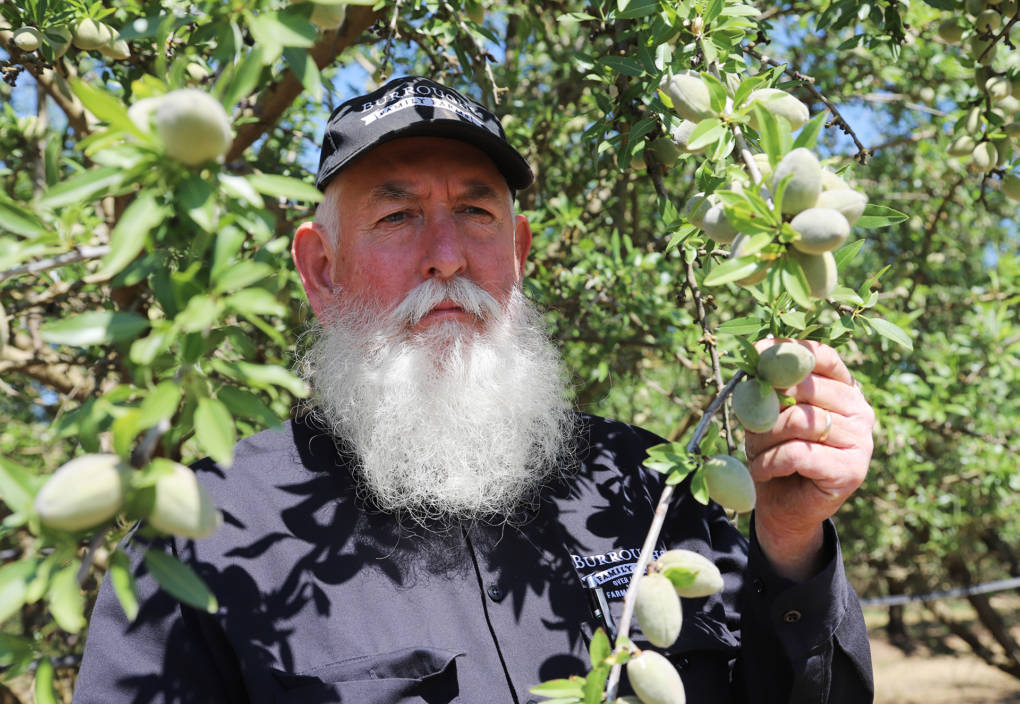
"caption": "Ward Burroughs, of Burroughs Family Farms in Denair, holds a branch full of his organic almonds that will be ready to harvest in the next few months. ",
"description": null,
"title": "Burroughs_005",
"credit": "Lindsey Moore/KQED",
"status": "inherit",
"isLoading": false,
"fetchFailed": false
}
},
"audioPlayerReducer": {
"postId": "stream_live",
"isPaused": true,
"isPlaying": false,
"pfsActive": false,
"pledgeModalIsOpen": true,
"playerDrawerIsOpen": false,
"liveAudioPlayStartedAt": 0,
"liveAudioPlayContext": ""
},
"authorsReducer": {
"byline_science_1946295": {
"type": "authors",
"id": "byline_science_1946295",
"meta": {
"override": true
},
"slug": "byline_science_1946295",
"name": "Georgina Gustin \u003cbr/>InsideClimate News\u003cbr>",
"isLoading": false
},
"byline_science_1945821": {
"type": "authors",
"id": "byline_science_1945821",
"meta": {
"override": true
},
"slug": "byline_science_1945821",
"name": "Julie Cart \u003cbr/> CALMATTERS \u003cBR>",
"isLoading": false
},
"byline_science_1943671": {
"type": "authors",
"id": "byline_science_1943671",
"meta": {
"override": true
},
"slug": "byline_science_1943671",
"name": "\u003cstrong>Mark Schapiro\u003c/strong>",
"isLoading": false
},
"laurensommer": {
"type": "authors",
"id": "239",
"meta": {
"index": "authors_1716337520",
"id": "239",
"found": true
},
"name": "Lauren Sommer",
"firstName": "Lauren",
"lastName": "Sommer",
"slug": "laurensommer",
"email": "lsommer@kqed.org",
"display_author_email": false,
"staff_mastheads": [],
"title": "KQED Contributor",
"bio": "Lauren is a radio reporter formerly covering environment, water, and energy for KQED Science. As part of her day job, she has scaled Sierra Nevada peaks, run from charging elephant seals, and desperately tried to get her sea legs - all in pursuit of good radio. Her work has appeared on Marketplace, Living on Earth, Science Friday and NPR's Morning Edition and All Things Considered. You can find her on Twitter at \u003ca href=\"https://twitter.com/lesommer\">@lesommer\u003c/a>.",
"avatar": "https://secure.gravatar.com/avatar/33aa3772bb86c6ad45b8aca6a238bbdf?s=600&d=blank&r=g",
"twitter": null,
"facebook": null,
"instagram": null,
"linkedin": null,
"sites": [
{
"site": "news",
"roles": [
"author"
]
},
{
"site": "science",
"roles": [
"editor",
"manage_content_types",
"manage_taxonomies"
]
},
{
"site": "quest",
"roles": [
"editor"
]
}
],
"headData": {
"title": "Lauren Sommer | KQED",
"description": "KQED Contributor",
"ogImgSrc": "https://secure.gravatar.com/avatar/33aa3772bb86c6ad45b8aca6a238bbdf?s=600&d=blank&r=g",
"twImgSrc": "https://secure.gravatar.com/avatar/33aa3772bb86c6ad45b8aca6a238bbdf?s=600&d=blank&r=g"
},
"isLoading": false,
"link": "/author/laurensommer"
},
"mpeterson": {
"type": "authors",
"id": "11223",
"meta": {
"index": "authors_1716337520",
"id": "11223",
"found": true
},
"name": "Molly Peterson",
"firstName": "Molly",
"lastName": "Peterson",
"slug": "mpeterson",
"email": "mpeterson@kqed.org",
"display_author_email": false,
"staff_mastheads": [],
"title": null,
"bio": "Molly Peterson reports for KQED science and news on climate change, catastrophe and risk. Previously she was environment correspondent at Southern California Public Radio. Her work has also appeared at The New York Times, The Guardian, on NPR, at High Country News, on Code Switch, and other national outlets. She has been honored with awards from Public Radio News Directors Incorporated, Investigative Reporters and Editors, the Society for Professional Journalists, the Los Angeles Press Club, and RTNDA Edward R. Murrow awards, among others.",
"avatar": "https://secure.gravatar.com/avatar/7908e2807131f776cc8165c649530b05?s=600&d=blank&r=g",
"twitter": "Mollydacious",
"facebook": null,
"instagram": "https://www.instagram.com/radiomolly/",
"linkedin": null,
"sites": [
{
"site": "news",
"roles": [
"subscriber"
]
},
{
"site": "futureofyou",
"roles": [
"editor"
]
},
{
"site": "science",
"roles": [
"editor"
]
}
],
"headData": {
"title": "Molly Peterson | KQED",
"description": null,
"ogImgSrc": "https://secure.gravatar.com/avatar/7908e2807131f776cc8165c649530b05?s=600&d=blank&r=g",
"twImgSrc": "https://secure.gravatar.com/avatar/7908e2807131f776cc8165c649530b05?s=600&d=blank&r=g"
},
"isLoading": false,
"link": "/author/mpeterson"
},
"kevinstark": {
"type": "authors",
"id": "11608",
"meta": {
"index": "authors_1716337520",
"id": "11608",
"found": true
},
"name": "Kevin Stark",
"firstName": "Kevin",
"lastName": "Stark",
"slug": "kevinstark",
"email": "kstark@kqed.org",
"display_author_email": true,
"staff_mastheads": [
"science"
],
"title": "Senior Editor",
"bio": "Kevin is a senior editor for KQED Science, managing the station's health and climate desks. His journalism career began in the Pacific Northwest, and he later became a lead reporter for the San Francisco Public Press. His work has appeared in Pacific Standard magazine, the Energy News Network, the Center for Investigative Reporting's Reveal and WBEZ in Chicago. Kevin joined KQED in 2019, and has covered issues related to energy, wildfire, climate change and the environment.",
"avatar": "https://secure.gravatar.com/avatar/365aaa4b597d3a8374f67504ff0facd323d7906e8eb4be0a7efd2427408e802c?s=600&d=blank&r=g",
"twitter": "starkkev",
"bluesky": null,
"facebook": null,
"instagram": null,
"linkedin": null,
"sites": [
{
"site": "",
"roles": [
"editor"
]
},
{
"site": "news",
"roles": [
"editor"
]
},
{
"site": "science",
"roles": [
"administrator"
]
}
],
"headData": {
"title": "Kevin Stark | KQED",
"description": "Senior Editor",
"ogImgSrc": "https://secure.gravatar.com/avatar/365aaa4b597d3a8374f67504ff0facd323d7906e8eb4be0a7efd2427408e802c?s=600&d=blank&r=g",
"twImgSrc": "https://secure.gravatar.com/avatar/365aaa4b597d3a8374f67504ff0facd323d7906e8eb4be0a7efd2427408e802c?s=600&d=blank&r=g"
},
"isLoading": false,
"link": "/author/kevinstark"
}
},
"pagesReducer": {
"science_tag_climate-change": {
"type": "terms",
"id": "science_194",
"meta": {
"index": "terms_1716263798",
"site": "science",
"id": "194",
"score": 7.946677
},
"featImg": null,
"name": "climate change",
"description": null,
"taxonomy": "tag",
"headData": {
"twImgId": null,
"twTitle": null,
"ogTitle": null,
"ogImgId": null,
"twDescription": null,
"description": null,
"title": "climate change Archives | KQED Science",
"ogDescription": null
},
"ttid": 198,
"slug": "climate-change",
"isLoading": false,
"title": "climate change",
"pageMeta": {
"site": "science",
"WpPageTemplate": "page-topic-editorial",
"currentPage": 32
},
"blocks": [
{
"blockName": "kqed/post-list",
"attrs": {
"layout": "cardArticle2",
"query": "posts/science?tag=climate-change",
"seeMore": false,
"paginated": true,
"page": 32
}
},
{
"blockName": "kqed/ad"
}
]
}
},
"pfsSessionReducer": {},
"postsReducer": {
"stream_live": {
"type": "live",
"id": "stream_live",
"audioUrl": "https://streams.kqed.org/kqedradio",
"title": "Live Stream",
"excerpt": "Live Stream information currently unavailable.",
"link": "/radio",
"featImg": "",
"label": {
"name": "KQED Live",
"link": "/"
}
},
"stream_kqedNewscast": {
"type": "posts",
"id": "stream_kqedNewscast",
"audioUrl": "https://www.kqed.org/.stream/anon/radio/RDnews/newscast.mp3?_=1",
"title": "KQED Newscast",
"featImg": "",
"label": {
"name": "88.5 FM",
"link": "/"
}
},
"science_1946249": {
"type": "posts",
"id": "science_1946249",
"meta": {
"index": "posts_1716263798",
"site": "science",
"id": "1946249",
"score": null,
"sort": [
1565294615000
]
},
"parent": 0,
"labelTerm": {},
"blocks": [],
"publishDate": 1565294615,
"format": "standard",
"title": "Study Suggests New Climate Threats to California's Oysters",
"headTitle": "Study Suggests New Climate Threats to California’s Oysters | KQED",
"content": "\u003cp>In the winter, rainstorms soak California’s coastline. In the spring and summer, strong winds blow waves into the narrow inlet of the Pacific Ocean.\u003c/p>\n\u003cp>For the briny bivalves that live in the bay, this is part of the natural rhythm of life.\u003c/p>\n\u003cp>But now, because of climate change, the torrents of winter rain run with increasing severity, and for oysters, all that freshwater can be dangerous. Summer’s waves bring increasingly acidic water, making it harder for small oysters to build their calcium-based shells.\u003c/p>\n\u003cp>For years, scientists have warned that \u003ca href=\"https://www.pmel.noaa.gov/co2/story/Ocean+Acidification's+impact+on+oysters+and+other+shellfish\" target=\"_blank\" rel=\"noopener\">ocean acidification\u003c/a> threaten oysters, but new research from UC Davis suggests that climate change ravages\u003cstrong> \u003c/strong>the creatures in a multitude of ways.\u003c/p>\n\u003cp>Ted Grosholz, a marine biologist at the university, studies California’s oyster habitats in this pastoral part of West Marin County. He led a team of researchers who found changes to salinity and dissolved oxygen levels could have an even greater impact on California’s oyster growth than acidic water. The team published their \u003ca href=\"https://www.ucdavis.edu/news/climate-change-could-shrink-oyster-habitat-california/\" target=\"_blank\" rel=\"noopener\">findings\u003c/a> this week in the journal \u003cem>Limnology and Oceanography\u003c/em>.\u003c/p>\n\u003cp>[ad fullwidth]\u003c/p>\n\u003cp>“We hear a lot about ocean acidification,” Grosholz said. “We have to keep our eye on the fact that other variables that are influenced by climate change may be just as important in the future.”\u003c/p>\n\u003cp>\u003cstrong>‘Convergence of Stresses’\u003c/strong>\u003c/p>\n\u003cp>From warming water and air temperatures to ecological disruptions, California’s oyster populations face a “convergence of stresses,” Grosholz said.\u003c/p>\n\u003cp>Warm water holds less dissolved oxygen than cold water. In extreme cases, when the water temperatures rise too high, the oysters can suffocate. That trend is only expected to increase, as California experiences hotter summers with higher air and water temperatures, Grosholz said.\u003c/p>\n\u003cp>When winter storms fill estuaries with fresh water, it temporarily reduces the water’s saltiness. The rainwater upsets the oyster’s osmotic balance, Grosholz said, they need a bit of brine to survive or they stop pumping water and eating.\u003c/p>\n\u003cp>The bivalves can handle the rain water for a few days. “They literally clam up and don’t open at all in low salinity,” he said. “But after a week or so they have to and that’s when they die.”\u003c/p>\n\u003cp>While strong winter rainstorms driven by atmospheric rivers aren’t new, they are exacerbated by climate change.\u003c/p>\n\u003cp>In the spring and summer, wind drives deeper ocean water into estuaries and bays where the oysters live. \u003cspan style=\"font-weight: 400\">This upwelling process, Grosholz said, is like “when you put cream in your coffee and blow across the surface, you can see cream mixing up from the bottom.” \u003c/span>\u003c/p>\n\u003cp>The seawater is increasingly acidic because oceans absorb the carbon dioxide we add to the air through burning fossil fuels.\u003c/p>\n\u003cp>It’s especially hard for oysters to reproduce in acidic water as it can erode calcium carbonate, which they use to build their shells.\u003c/p>\n\u003cp>With all the seasonal issues, says Grosholz, “we’re seeing it squeeze at both ends. Climate change is reducing the critical zone where oysters do well.”\u003c/p>\n\u003cp>Scientists found similar results while \u003ca href=\"https://fortress.wa.gov/ecy/publications/documents/1201015.pdf\" target=\"_blank\" rel=\"noopener\">researching\u003c/a> oysters in the coastal waters of Washington’s Puget Sound, according to Alexandria Boehm, an environmental engineer and professor at Stanford University.\u003c/p>\n\u003cp>In 2016, Boehm co-lead a science panel in California that found that global carbon emissions were a major driver of ocean acidification and \u003ca href=\"http://westcoastoah.org/wp-content/uploads/2016/04/OAH-Panel-Key-Findings-Recommendations-and-Actions-4.4.16-FINAL.pdf\" target=\"_blank\" rel=\"noopener\">recommended\u003c/a> more studies into other threats to the oysters. Subsequently, the Legislature passed a \u003ca href=\"https://leginfo.legislature.ca.gov/faces/billNavClient.xhtml?bill_id=201520160AB2139\" target=\"_blank\" rel=\"noopener\">bill\u003c/a> to support research like the new UC Davis study.\u003c/p>\n\u003cp>The beds of the California native Olympia oyster provide habitat for small fish and invertebrates, which in turn are prey for shorebirds, salmon, and foraging sturgeon. Grosholz’s research focused on the Olympia oyster and the non-native Pacific oyster, known for its crisp texture and mild and sweet flavor. Pacific oysters support a \u003ca href=\"http://www.pacshell.org/pdf/economic_impact_of_shellfish_aquaculture_2013.pdf\">$25 million industry\u003c/a> in California and are a staple in oyster shacks and seafood restaurants.\u003c/p>\n\u003cp>In an interview with KQED’s Michael Krasny on the \u003ca href=\"https://www.kqed.org/forum/2010101872656/climate-change-may-shrink-northern-california-oyster-habitat\" target=\"_blank\" rel=\"noopener\">program\u003c/a> Forum, Oyster farmer Terry Sawyer talked about the study’s implications for his farm in Tomales Bay and operating a business in such a dynamic ecosystem.\u003c/p>\n\u003cp>“The aquaculture industry challenge we are talking about is always change,” said Sawyer, a founder of \u003ca href=\"https://hogislandoysters.com/\" target=\"_blank\" rel=\"noopener\">Hog Island Oyster Co\u003c/a>. “As a business, we have to prepare.”\u003c/p>\n\u003cp>“The Pacific oyster is the most commonly grown species in aquaculture around the world,” he said. “This is going on here in Tomales Bay, but the ramifications are for the entire industry on the West Coast.”\u003c/p>\n\u003cp>\u003cstrong>Solutions and Hope\u003c/strong>\u003c/p>\n\u003cp>While curbing climate change will take a global effort, Grosholz research points to a number of ways that wildlife officials in California can support oyster growth.\u003c/p>\n\u003cp>They can divert the runoff away from oyster habitats, for example, and farmers can breed oysters to be more resilient to temperature changes in the water.\u003c/p>\n\u003cp>Also, there are ongoing efforts to restore native oyster populations.\u003c/p>\n\u003cp>In the San Francisco Bay and elsewhere, scientists and farmers construct reefs out of large mesh bags filled with discarded oyster shells. The restoration effort improves the habitat of bays and estuaries and help form more resilient shorelines.\u003c/p>\n\u003cp>\u003c/p>\n\u003cp>“Oysters offer a real benefit to humans,” Grosholz said. “You see these projects actively being conducted in the San Francisco Bay, for example. That’s a reason to be hopeful about the future to me.”\u003c/p>\n\n",
"stats": {
"hasVideo": false,
"hasChartOrMap": false,
"hasAudio": false,
"hasPolis": false,
"wordCount": 929,
"hasGoogleForm": false,
"hasGallery": false,
"hasHearkenModule": false,
"iframeSrcs": [],
"paragraphCount": 30
},
"modified": 1704848425,
"excerpt": "Beyond acidic ocean water, California oysters are threatened by a constellation of climate change stresses. ",
"headData": {
"twImgId": "",
"twTitle": "",
"ogTitle": "",
"ogImgId": "",
"twDescription": "",
"description": "Beyond acidic ocean water, California oysters are threatened by a constellation of climate change stresses. ",
"title": "Study Suggests New Climate Threats to California's Oysters | KQED",
"ogDescription": "",
"schema": {
"@context": "https://schema.org",
"@type": "Article",
"headline": "Study Suggests New Climate Threats to California's Oysters",
"datePublished": "2019-08-08T13:03:35-07:00",
"dateModified": "2024-01-09T17:00:25-08:00",
"image": "https://cdn.kqed.org/wp-content/uploads/2020/02/KQED-OG-Image@1x.png"
}
},
"guestAuthors": [],
"slug": "study-suggests-new-climate-threats-to-californias-oysters",
"status": "publish",
"sticky": false,
"source": "Climate change",
"path": "/science/1946249/study-suggests-new-climate-threats-to-californias-oysters",
"audioTrackLength": null,
"parsedContent": [
{
"type": "contentString",
"content": "\u003cdiv class=\"post-body\">\u003cp>\u003cp>In the winter, rainstorms soak California’s coastline. In the spring and summer, strong winds blow waves into the narrow inlet of the Pacific Ocean.\u003c/p>\n\u003cp>For the briny bivalves that live in the bay, this is part of the natural rhythm of life.\u003c/p>\n\u003cp>But now, because of climate change, the torrents of winter rain run with increasing severity, and for oysters, all that freshwater can be dangerous. Summer’s waves bring increasingly acidic water, making it harder for small oysters to build their calcium-based shells.\u003c/p>\n\u003cp>For years, scientists have warned that \u003ca href=\"https://www.pmel.noaa.gov/co2/story/Ocean+Acidification's+impact+on+oysters+and+other+shellfish\" target=\"_blank\" rel=\"noopener\">ocean acidification\u003c/a> threaten oysters, but new research from UC Davis suggests that climate change ravages\u003cstrong> \u003c/strong>the creatures in a multitude of ways.\u003c/p>\n\u003cp>Ted Grosholz, a marine biologist at the university, studies California’s oyster habitats in this pastoral part of West Marin County. He led a team of researchers who found changes to salinity and dissolved oxygen levels could have an even greater impact on California’s oyster growth than acidic water. The team published their \u003ca href=\"https://www.ucdavis.edu/news/climate-change-could-shrink-oyster-habitat-california/\" target=\"_blank\" rel=\"noopener\">findings\u003c/a> this week in the journal \u003cem>Limnology and Oceanography\u003c/em>.\u003c/p>\n\u003cp>\u003c/p>\u003c/div>",
"attributes": {
"named": {},
"numeric": []
}
},
{
"type": "component",
"content": "",
"name": "ad",
"attributes": {
"named": {
"label": "fullwidth"
},
"numeric": [
"fullwidth"
]
}
},
{
"type": "contentString",
"content": "\u003cdiv class=\"post-body\">\u003cp>\u003c/p>\n\u003cp>“We hear a lot about ocean acidification,” Grosholz said. “We have to keep our eye on the fact that other variables that are influenced by climate change may be just as important in the future.”\u003c/p>\n\u003cp>\u003cstrong>‘Convergence of Stresses’\u003c/strong>\u003c/p>\n\u003cp>From warming water and air temperatures to ecological disruptions, California’s oyster populations face a “convergence of stresses,” Grosholz said.\u003c/p>\n\u003cp>Warm water holds less dissolved oxygen than cold water. In extreme cases, when the water temperatures rise too high, the oysters can suffocate. That trend is only expected to increase, as California experiences hotter summers with higher air and water temperatures, Grosholz said.\u003c/p>\n\u003cp>When winter storms fill estuaries with fresh water, it temporarily reduces the water’s saltiness. The rainwater upsets the oyster’s osmotic balance, Grosholz said, they need a bit of brine to survive or they stop pumping water and eating.\u003c/p>\n\u003cp>The bivalves can handle the rain water for a few days. “They literally clam up and don’t open at all in low salinity,” he said. “But after a week or so they have to and that’s when they die.”\u003c/p>\n\u003cp>While strong winter rainstorms driven by atmospheric rivers aren’t new, they are exacerbated by climate change.\u003c/p>\n\u003cp>In the spring and summer, wind drives deeper ocean water into estuaries and bays where the oysters live. \u003cspan style=\"font-weight: 400\">This upwelling process, Grosholz said, is like “when you put cream in your coffee and blow across the surface, you can see cream mixing up from the bottom.” \u003c/span>\u003c/p>\n\u003cp>The seawater is increasingly acidic because oceans absorb the carbon dioxide we add to the air through burning fossil fuels.\u003c/p>\n\u003cp>It’s especially hard for oysters to reproduce in acidic water as it can erode calcium carbonate, which they use to build their shells.\u003c/p>\n\u003cp>With all the seasonal issues, says Grosholz, “we’re seeing it squeeze at both ends. Climate change is reducing the critical zone where oysters do well.”\u003c/p>\n\u003cp>Scientists found similar results while \u003ca href=\"https://fortress.wa.gov/ecy/publications/documents/1201015.pdf\" target=\"_blank\" rel=\"noopener\">researching\u003c/a> oysters in the coastal waters of Washington’s Puget Sound, according to Alexandria Boehm, an environmental engineer and professor at Stanford University.\u003c/p>\n\u003cp>In 2016, Boehm co-lead a science panel in California that found that global carbon emissions were a major driver of ocean acidification and \u003ca href=\"http://westcoastoah.org/wp-content/uploads/2016/04/OAH-Panel-Key-Findings-Recommendations-and-Actions-4.4.16-FINAL.pdf\" target=\"_blank\" rel=\"noopener\">recommended\u003c/a> more studies into other threats to the oysters. Subsequently, the Legislature passed a \u003ca href=\"https://leginfo.legislature.ca.gov/faces/billNavClient.xhtml?bill_id=201520160AB2139\" target=\"_blank\" rel=\"noopener\">bill\u003c/a> to support research like the new UC Davis study.\u003c/p>\n\u003cp>The beds of the California native Olympia oyster provide habitat for small fish and invertebrates, which in turn are prey for shorebirds, salmon, and foraging sturgeon. Grosholz’s research focused on the Olympia oyster and the non-native Pacific oyster, known for its crisp texture and mild and sweet flavor. Pacific oysters support a \u003ca href=\"http://www.pacshell.org/pdf/economic_impact_of_shellfish_aquaculture_2013.pdf\">$25 million industry\u003c/a> in California and are a staple in oyster shacks and seafood restaurants.\u003c/p>\n\u003cp>In an interview with KQED’s Michael Krasny on the \u003ca href=\"https://www.kqed.org/forum/2010101872656/climate-change-may-shrink-northern-california-oyster-habitat\" target=\"_blank\" rel=\"noopener\">program\u003c/a> Forum, Oyster farmer Terry Sawyer talked about the study’s implications for his farm in Tomales Bay and operating a business in such a dynamic ecosystem.\u003c/p>\n\u003cp>“The aquaculture industry challenge we are talking about is always change,” said Sawyer, a founder of \u003ca href=\"https://hogislandoysters.com/\" target=\"_blank\" rel=\"noopener\">Hog Island Oyster Co\u003c/a>. “As a business, we have to prepare.”\u003c/p>\n\u003cp>“The Pacific oyster is the most commonly grown species in aquaculture around the world,” he said. “This is going on here in Tomales Bay, but the ramifications are for the entire industry on the West Coast.”\u003c/p>\n\u003cp>\u003cstrong>Solutions and Hope\u003c/strong>\u003c/p>\n\u003cp>While curbing climate change will take a global effort, Grosholz research points to a number of ways that wildlife officials in California can support oyster growth.\u003c/p>\n\u003cp>They can divert the runoff away from oyster habitats, for example, and farmers can breed oysters to be more resilient to temperature changes in the water.\u003c/p>\n\u003cp>Also, there are ongoing efforts to restore native oyster populations.\u003c/p>\n\u003cp>In the San Francisco Bay and elsewhere, scientists and farmers construct reefs out of large mesh bags filled with discarded oyster shells. The restoration effort improves the habitat of bays and estuaries and help form more resilient shorelines.\u003c/p>\n\u003cp>\u003c/p>\n\u003cp>“Oysters offer a real benefit to humans,” Grosholz said. “You see these projects actively being conducted in the San Francisco Bay, for example. That’s a reason to be hopeful about the future to me.”\u003c/p>\n\n\u003c/div>\u003c/p>",
"attributes": {
"named": {},
"numeric": []
}
}
],
"link": "/science/1946249/study-suggests-new-climate-threats-to-californias-oysters",
"authors": [
"11608"
],
"categories": [
"science_2874",
"science_31",
"science_35",
"science_36",
"science_40"
],
"tags": [
"science_194",
"science_3370",
"science_3830"
],
"featImg": "science_1946251",
"label": "source_science_1946249"
},
"science_1946295": {
"type": "posts",
"id": "science_1946295",
"meta": {
"index": "posts_1716263798",
"site": "science",
"id": "1946295",
"score": null,
"sort": [
1565284750000
]
},
"parent": 0,
"labelTerm": {},
"blocks": [],
"publishDate": 1565284750,
"format": "standard",
"title": "UN Report Warns Global Heating Threatens Farming As We Know It",
"headTitle": "UN Report Warns Global Heating Threatens Farming As We Know It | KQED",
"content": "\u003cp>\u003cem>\u003ca href=\"https://protect-us.mimecast.com/s/Neq_CwpkPvsGmMG7hVOy7A?domain=insideclimatenews.org\" target=\"_blank\" rel=\"noopener\">InsideClimate News\u003c/a> is a nonprofit, independent news organization that covers climate, energy and the environment. Sign up for the ICN newsletter \u003c/em>\u003cem>\u003ca href=\"https://protect-us.mimecast.com/s/pD-rCxklQwf1V61yTviMEq?domain=insideclimatenews.org\" target=\"_blank\" rel=\"noopener\">here\u003c/a>.\u003cspan style=\"font-weight: 400\"> [aside postID=science_1943671,science_1941092]\u003c/span>\u003c/em>\u003c/p>\n\u003cp>Negotiators for the world’s governments signed off on a report Wednesday that describes in alarming detail how agriculture, deforestation and other human impacts on lands are transforming the climate.\u003c/p>\n\u003cp>The \u003ca href=\"https://www.ipcc.ch/report/srccl/\" target=\"_blank\" rel=\"noopener\">report\u003c/a>, from the United Nations’ Intergovernmental Panel on Climate Change (IPCC), shows the urgent need to overhaul the global food system to help control climate-warming emissions.\u003c/p>\n\u003cp>Written by more than 100 scientists from around the globe, it takes an unprecedented look at the impacts of \u003ca href=\"https://insideclimatenews.org/topic/climate-change\" target=\"_blank\" rel=\"noopener\">climate change\u003c/a> on lands and the effects of land use on the climate.\u003c/p>\n\u003cp>The authors say that the entire food production system, with transportation and packaging included, accounts for as much as 37 percent of total greenhouse gas emissions, and that better land use, less-meat-intensive diets and eliminating food waste should be global priorities, crucial to the immediate, all-out effort needed to forestall a climate catastrophe.\u003c/p>\n\u003cp>[ad fullwidth]\u003c/p>\n\u003cp>“There’s no doubt the window is closing rapidly,” said Pamela McElwee, one of the report’s authors and a professor of human ecology at Rutgers University. “That’s a key message of this report.”\u003c/p>\n\u003cp>Negotiations over the final wording of the report, which was written after assessing thousands of studies, began in Geneva last week. Attendees said the talks were bogged down at times by negotiators from countries, including the United States, with powerful biofuels and livestock industries. Still, the report that emerged was clear that diets high in meat have a bigger carbon footprint and that biofuels can compete with food production.\u003c/p>\n\u003cp>The authors had the daunting task of assessing the impact of agriculture and deforestation on the climate, and the equally challenging job of outlining ways that better land management can provide solutions to the climate crisis.\u003c/p>\n\u003cp>The report, released to the public on Aug. 8, shows that stopping deforestation, limiting greenhouse-gas-emitting fertilizers and raising crops in ways that \u003ca href=\"https://insideclimatenews.org/news/14112018/climate-change-solutions-forests-farms-carbon-storage-cancel-out-emissions-study\" target=\"_blank\" rel=\"noopener\">add carbon to the soil\u003c/a> are essential for achieving global goals for controlling rising temperatures.\u003cimg loading=\"lazy\" decoding=\"async\" class=\"size-full wp-image-1946297 alignright\" src=\"https://ww2.kqed.org/science/wp-content/uploads/sites/35/2019/08/IPCC-greenhouse-gases-land-use.png\" alt=\"\" width=\"529\" height=\"529\" srcset=\"https://cdn.kqed.org/wp-content/uploads/sites/35/2019/08/IPCC-greenhouse-gases-land-use.png 529w, https://cdn.kqed.org/wp-content/uploads/sites/35/2019/08/IPCC-greenhouse-gases-land-use-160x160.png 160w\" sizes=\"(max-width: 529px) 100vw, 529px\">\u003c/p>\n\u003cp>Currently, global lands absorb more carbon than they emit. But that will change if land degradation and deforestation continue, the report warns.\u003c/p>\n\u003cp>“The amount of greenhouse gases emitted in the future really depends on the choices we make today,” said Louis Verchot, one of the report’s lead authors and a researcher with the International Center for Tropical Agriculture. He noted that greenhouse gases from lands are increasing, especially with a recent uptick in deforestation in Brazil and other South American countries. “Could land shift from a sink to a source? We know that’s very much a possibility.”\u003c/p>\n\u003cp>\u003cstrong>More Intensive Farming\u003c/strong>\u003c/p>\n\u003cp>Most of the carbon stored in the planet’s land is in natural landscapes, not those managed as farmland or forests.\u003c/p>\n\u003cp>“If we continue to degrade ecosystems, if we continue to convert natural ecosystems, we continue to deforest and we continued to destroy our soils, we’re going to lose this natural subsidy that we’re getting that’s protecting us in part from ourselves and from the damage that we’re creating as we pump these greenhouse gases in the atmosphere,” Verchot explained.\u003c/p>\n\u003cp>Since the early 1960s, global population growth and more intensive farming have led to “unprecedented rates of land and freshwater use,” the report said. Human activities, including farming and other land uses, impact nearly three-quarters of the global land surface. Meat production has more than doubled, and the supply of calories per person has increased by one-third.\u003c/p>\n\u003cp>But the agricultural developments that helped propel the world’s population are now some of the same ones that need to be retooled.\u003c/p>\n\u003cp>As the population has grown, emissions related to agriculture have also grown, largely because of increases in livestock, deforestation to clear land for crops, and fertilizer use.\u003c/p>\n\u003cp>Agriculture and deforestation account for 23 percent of global greenhouse gas emissions. But the report says that if the entire spectrum of food production were factored in—from growing crops to transportation and packaging—that percentage could be as high as 37 percent.\u003c/p>\n\u003cp>Climate change is already having severe effects on agriculture, with more drought and extreme downpours. That has threatened food security, in part because it drives down crop yields.\u003c/p>\n\u003cp>That will likely get worse, especially in tropical and subtropical parts of the world, the report says. In some regions, extreme weather fueled by global warming could lead to “increased displacement, disrupted food chains, threatened livelihoods … and contribute to exacerbated stresses for conflict.”\u003c/p>\n\u003cp>The potential risk for “multi-bread-basket failure,” with climate disasters \u003ca href=\"http://insideclimatenews.org/news/11062018/climate-change-research-food-security-agriculture-impacts-corn-vegetables-crop-prices\" target=\"_blank\" rel=\"noopener\">hitting more than one\u003c/a> major agriculture region at the same time, is increasing, said Cynthia Rosenzweig, one of the report’s lead authors and a senior research scientist at the NASA Goddard Institute for Space Studies.\u003cimg loading=\"lazy\" decoding=\"async\" class=\"size-full wp-image-1946298 alignright\" src=\"https://ww2.kqed.org/science/wp-content/uploads/sites/35/2019/08/IPCC-land-ocean-temperature-increase.png\" alt=\"\" width=\"529\" height=\"519\" srcset=\"https://cdn.kqed.org/wp-content/uploads/sites/35/2019/08/IPCC-land-ocean-temperature-increase.png 529w, https://cdn.kqed.org/wp-content/uploads/sites/35/2019/08/IPCC-land-ocean-temperature-increase-160x157.png 160w\" sizes=\"(max-width: 529px) 100vw, 529px\">\u003c/p>\n\u003cp>The authors point to a suite of solutions for reducing agriculture’s impact on climate change, including farming more sustainably—using less fertilizer, lowering tillage and employing practices that increase the soil’s ability to hold carbon—as well as reducing higher-impact diets.\u003c/p>\n\u003cp>“Diets present major opportunities for reducing greenhouse gases as well, because diets that are rich in plant-based foods emit lower greenhouse gases than diets that are very heavy in red meat consumption,” Rosenzweig said. The report’s authors conclude that, by 2050, dietary changes could free up hundreds of millions of acres of land, which could help avoid deforestation and reduce emissions.\u003c/p>\n\u003cp>The report is the latest in a series of \u003ca href=\"https://insideclimatenews.org/news/16012019/global-food-agriculture-revolution-eat-lancet-commission-climate-change-health-nutrition-report-less-meat\">high-profile publications\u003c/a> pointing to meat consumption, particularly of beef, as a significant contributor of greenhouse gases. Not only do cattle emit methane, but beef production also leads to \u003ca href=\"https://insideclimatenews.org/news/25042019/deforestation-annual-global-tree-loss-tropics-climate-solution-carbon-storage-wri\">deforestation for grazing lands\u003c/a> and cropland to grow feed for livestock.\u003c/p>\n\u003cp>The authors say reducing food waste is another key strategy for cutting emissions from the food system. Nearly a third of the food produced in the world is lost or wasted.\u003c/p>\n\u003cp>\u003cstrong>Crops At Risk\u003c/strong>\u003c/p>\n\u003cp>The report underscores the urgency for using land-based solutions to tackle climate change, which can have a big impact but have to be accomplished in a relatively short time frame. As the climate heats up, crop yields will continue to drop while farm fields lose their ability to store carbon.\u003c/p>\n\u003cp>Some of the solutions, including large-scale tree-planting on previously unforested land and using land to grow biofuels, present trade-offs because they threaten to compete with land for growing food crops.\u003c/p>\n\u003cp>The authors outline various scenarios in which global population and resource consumption rises or falls. The most optimistic scenario, in which fewer resources are consumed and more people adopt “low greenhouse gas” diets, would translate to lower emissions and help keep global temperatures from rising more than 1.5 degrees Celsius above pre-industrial levels—the aim of the \u003ca href=\"https://insideclimatenews.org/tags/paris-climate-agreement\">Paris climate agreement\u003c/a>.\u003c/p>\n\u003cp>“It’s a critical report right now,” said Doreen Stabinsky, a professor of global environmental politics with the College of the Atlantic, who was in Geneva to observe the final negotiations over the report. “There’s been increasing recognition about the climate change impacts on land and food, and there’s a recognition that it’s all-hands-on-deck.”\u003c/p>\n\u003cp>[ad floatright]\u003c/p>\n\u003cp>The IPCC plans to release another report, this one exploring the relationships among climate change, oceans and frozen landscapes, or the “cryosphere,” this fall.\u003c/p>\n\u003ch3>\u003c/h3>\n\u003cdiv class=\"media media-element-container media-image_centered_medium\">\u003c/div>\n\n",
"stats": {
"hasVideo": false,
"hasChartOrMap": false,
"hasAudio": false,
"hasPolis": false,
"wordCount": 1301,
"hasGoogleForm": false,
"hasGallery": false,
"hasHearkenModule": false,
"iframeSrcs": [],
"paragraphCount": 33
},
"modified": 1704848426,
"excerpt": "Better land use, less-meat-intensive diets and eliminating food waste should be priorities to help forestall a climate catastrophe, the authors say.",
"headData": {
"twImgId": "",
"twTitle": "",
"ogTitle": "",
"ogImgId": "",
"twDescription": "",
"description": "Better land use, less-meat-intensive diets and eliminating food waste should be priorities to help forestall a climate catastrophe, the authors say.",
"title": "UN Report Warns Global Heating Threatens Farming As We Know It | KQED",
"ogDescription": "",
"schema": {
"@context": "https://schema.org",
"@type": "Article",
"headline": "UN Report Warns Global Heating Threatens Farming As We Know It",
"datePublished": "2019-08-08T10:19:10-07:00",
"dateModified": "2024-01-09T17:00:26-08:00",
"image": "https://cdn.kqed.org/wp-content/uploads/2020/02/KQED-OG-Image@1x.png"
}
},
"guestAuthors": [],
"slug": "un-report-warns-that-farming-as-we-know-it-threatened-by-warming",
"status": "publish",
"nprByline": "Georgina Gustin \u003cbr/>InsideClimate News\u003cbr>",
"sticky": false,
"source": "InsideClimate News",
"path": "/science/1946295/un-report-warns-that-farming-as-we-know-it-threatened-by-warming",
"audioTrackLength": null,
"parsedContent": [
{
"type": "contentString",
"content": "\u003cdiv class=\"post-body\">\u003cp>\u003cp>\u003cem>\u003ca href=\"https://protect-us.mimecast.com/s/Neq_CwpkPvsGmMG7hVOy7A?domain=insideclimatenews.org\" target=\"_blank\" rel=\"noopener\">InsideClimate News\u003c/a> is a nonprofit, independent news organization that covers climate, energy and the environment. Sign up for the ICN newsletter \u003c/em>\u003cem>\u003ca href=\"https://protect-us.mimecast.com/s/pD-rCxklQwf1V61yTviMEq?domain=insideclimatenews.org\" target=\"_blank\" rel=\"noopener\">here\u003c/a>.\u003cspan style=\"font-weight: 400\"> \u003c/p>\u003c/div>",
"attributes": {
"named": {},
"numeric": []
}
},
{
"type": "component",
"content": "",
"name": "aside",
"attributes": {
"named": {
"postid": "science_1943671,science_1941092",
"label": ""
},
"numeric": []
}
},
{
"type": "contentString",
"content": "\u003cdiv class=\"post-body\">\u003cp>\u003c/span>\u003c/em>\u003c/p>\n\u003cp>Negotiators for the world’s governments signed off on a report Wednesday that describes in alarming detail how agriculture, deforestation and other human impacts on lands are transforming the climate.\u003c/p>\n\u003cp>The \u003ca href=\"https://www.ipcc.ch/report/srccl/\" target=\"_blank\" rel=\"noopener\">report\u003c/a>, from the United Nations’ Intergovernmental Panel on Climate Change (IPCC), shows the urgent need to overhaul the global food system to help control climate-warming emissions.\u003c/p>\n\u003cp>Written by more than 100 scientists from around the globe, it takes an unprecedented look at the impacts of \u003ca href=\"https://insideclimatenews.org/topic/climate-change\" target=\"_blank\" rel=\"noopener\">climate change\u003c/a> on lands and the effects of land use on the climate.\u003c/p>\n\u003cp>The authors say that the entire food production system, with transportation and packaging included, accounts for as much as 37 percent of total greenhouse gas emissions, and that better land use, less-meat-intensive diets and eliminating food waste should be global priorities, crucial to the immediate, all-out effort needed to forestall a climate catastrophe.\u003c/p>\n\u003cp>\u003c/p>\u003c/div>",
"attributes": {
"named": {},
"numeric": []
}
},
{
"type": "component",
"content": "",
"name": "ad",
"attributes": {
"named": {
"label": "fullwidth"
},
"numeric": [
"fullwidth"
]
}
},
{
"type": "contentString",
"content": "\u003cdiv class=\"post-body\">\u003cp>\u003c/p>\n\u003cp>“There’s no doubt the window is closing rapidly,” said Pamela McElwee, one of the report’s authors and a professor of human ecology at Rutgers University. “That’s a key message of this report.”\u003c/p>\n\u003cp>Negotiations over the final wording of the report, which was written after assessing thousands of studies, began in Geneva last week. Attendees said the talks were bogged down at times by negotiators from countries, including the United States, with powerful biofuels and livestock industries. Still, the report that emerged was clear that diets high in meat have a bigger carbon footprint and that biofuels can compete with food production.\u003c/p>\n\u003cp>The authors had the daunting task of assessing the impact of agriculture and deforestation on the climate, and the equally challenging job of outlining ways that better land management can provide solutions to the climate crisis.\u003c/p>\n\u003cp>The report, released to the public on Aug. 8, shows that stopping deforestation, limiting greenhouse-gas-emitting fertilizers and raising crops in ways that \u003ca href=\"https://insideclimatenews.org/news/14112018/climate-change-solutions-forests-farms-carbon-storage-cancel-out-emissions-study\" target=\"_blank\" rel=\"noopener\">add carbon to the soil\u003c/a> are essential for achieving global goals for controlling rising temperatures.\u003cimg loading=\"lazy\" decoding=\"async\" class=\"size-full wp-image-1946297 alignright\" src=\"https://ww2.kqed.org/science/wp-content/uploads/sites/35/2019/08/IPCC-greenhouse-gases-land-use.png\" alt=\"\" width=\"529\" height=\"529\" srcset=\"https://cdn.kqed.org/wp-content/uploads/sites/35/2019/08/IPCC-greenhouse-gases-land-use.png 529w, https://cdn.kqed.org/wp-content/uploads/sites/35/2019/08/IPCC-greenhouse-gases-land-use-160x160.png 160w\" sizes=\"(max-width: 529px) 100vw, 529px\">\u003c/p>\n\u003cp>Currently, global lands absorb more carbon than they emit. But that will change if land degradation and deforestation continue, the report warns.\u003c/p>\n\u003cp>“The amount of greenhouse gases emitted in the future really depends on the choices we make today,” said Louis Verchot, one of the report’s lead authors and a researcher with the International Center for Tropical Agriculture. He noted that greenhouse gases from lands are increasing, especially with a recent uptick in deforestation in Brazil and other South American countries. “Could land shift from a sink to a source? We know that’s very much a possibility.”\u003c/p>\n\u003cp>\u003cstrong>More Intensive Farming\u003c/strong>\u003c/p>\n\u003cp>Most of the carbon stored in the planet’s land is in natural landscapes, not those managed as farmland or forests.\u003c/p>\n\u003cp>“If we continue to degrade ecosystems, if we continue to convert natural ecosystems, we continue to deforest and we continued to destroy our soils, we’re going to lose this natural subsidy that we’re getting that’s protecting us in part from ourselves and from the damage that we’re creating as we pump these greenhouse gases in the atmosphere,” Verchot explained.\u003c/p>\n\u003cp>Since the early 1960s, global population growth and more intensive farming have led to “unprecedented rates of land and freshwater use,” the report said. Human activities, including farming and other land uses, impact nearly three-quarters of the global land surface. Meat production has more than doubled, and the supply of calories per person has increased by one-third.\u003c/p>\n\u003cp>But the agricultural developments that helped propel the world’s population are now some of the same ones that need to be retooled.\u003c/p>\n\u003cp>As the population has grown, emissions related to agriculture have also grown, largely because of increases in livestock, deforestation to clear land for crops, and fertilizer use.\u003c/p>\n\u003cp>Agriculture and deforestation account for 23 percent of global greenhouse gas emissions. But the report says that if the entire spectrum of food production were factored in—from growing crops to transportation and packaging—that percentage could be as high as 37 percent.\u003c/p>\n\u003cp>Climate change is already having severe effects on agriculture, with more drought and extreme downpours. That has threatened food security, in part because it drives down crop yields.\u003c/p>\n\u003cp>That will likely get worse, especially in tropical and subtropical parts of the world, the report says. In some regions, extreme weather fueled by global warming could lead to “increased displacement, disrupted food chains, threatened livelihoods … and contribute to exacerbated stresses for conflict.”\u003c/p>\n\u003cp>The potential risk for “multi-bread-basket failure,” with climate disasters \u003ca href=\"http://insideclimatenews.org/news/11062018/climate-change-research-food-security-agriculture-impacts-corn-vegetables-crop-prices\" target=\"_blank\" rel=\"noopener\">hitting more than one\u003c/a> major agriculture region at the same time, is increasing, said Cynthia Rosenzweig, one of the report’s lead authors and a senior research scientist at the NASA Goddard Institute for Space Studies.\u003cimg loading=\"lazy\" decoding=\"async\" class=\"size-full wp-image-1946298 alignright\" src=\"https://ww2.kqed.org/science/wp-content/uploads/sites/35/2019/08/IPCC-land-ocean-temperature-increase.png\" alt=\"\" width=\"529\" height=\"519\" srcset=\"https://cdn.kqed.org/wp-content/uploads/sites/35/2019/08/IPCC-land-ocean-temperature-increase.png 529w, https://cdn.kqed.org/wp-content/uploads/sites/35/2019/08/IPCC-land-ocean-temperature-increase-160x157.png 160w\" sizes=\"(max-width: 529px) 100vw, 529px\">\u003c/p>\n\u003cp>The authors point to a suite of solutions for reducing agriculture’s impact on climate change, including farming more sustainably—using less fertilizer, lowering tillage and employing practices that increase the soil’s ability to hold carbon—as well as reducing higher-impact diets.\u003c/p>\n\u003cp>“Diets present major opportunities for reducing greenhouse gases as well, because diets that are rich in plant-based foods emit lower greenhouse gases than diets that are very heavy in red meat consumption,” Rosenzweig said. The report’s authors conclude that, by 2050, dietary changes could free up hundreds of millions of acres of land, which could help avoid deforestation and reduce emissions.\u003c/p>\n\u003cp>The report is the latest in a series of \u003ca href=\"https://insideclimatenews.org/news/16012019/global-food-agriculture-revolution-eat-lancet-commission-climate-change-health-nutrition-report-less-meat\">high-profile publications\u003c/a> pointing to meat consumption, particularly of beef, as a significant contributor of greenhouse gases. Not only do cattle emit methane, but beef production also leads to \u003ca href=\"https://insideclimatenews.org/news/25042019/deforestation-annual-global-tree-loss-tropics-climate-solution-carbon-storage-wri\">deforestation for grazing lands\u003c/a> and cropland to grow feed for livestock.\u003c/p>\n\u003cp>The authors say reducing food waste is another key strategy for cutting emissions from the food system. Nearly a third of the food produced in the world is lost or wasted.\u003c/p>\n\u003cp>\u003cstrong>Crops At Risk\u003c/strong>\u003c/p>\n\u003cp>The report underscores the urgency for using land-based solutions to tackle climate change, which can have a big impact but have to be accomplished in a relatively short time frame. As the climate heats up, crop yields will continue to drop while farm fields lose their ability to store carbon.\u003c/p>\n\u003cp>Some of the solutions, including large-scale tree-planting on previously unforested land and using land to grow biofuels, present trade-offs because they threaten to compete with land for growing food crops.\u003c/p>\n\u003cp>The authors outline various scenarios in which global population and resource consumption rises or falls. The most optimistic scenario, in which fewer resources are consumed and more people adopt “low greenhouse gas” diets, would translate to lower emissions and help keep global temperatures from rising more than 1.5 degrees Celsius above pre-industrial levels—the aim of the \u003ca href=\"https://insideclimatenews.org/tags/paris-climate-agreement\">Paris climate agreement\u003c/a>.\u003c/p>\n\u003cp>“It’s a critical report right now,” said Doreen Stabinsky, a professor of global environmental politics with the College of the Atlantic, who was in Geneva to observe the final negotiations over the report. “There’s been increasing recognition about the climate change impacts on land and food, and there’s a recognition that it’s all-hands-on-deck.”\u003c/p>\n\u003cp>\u003c/p>\u003c/div>",
"attributes": {
"named": {},
"numeric": []
}
},
{
"type": "component",
"content": "",
"name": "ad",
"attributes": {
"named": {
"label": "floatright"
},
"numeric": [
"floatright"
]
}
},
{
"type": "contentString",
"content": "\u003cdiv class=\"post-body\">\u003cp>\u003c/p>\n\u003cp>The IPCC plans to release another report, this one exploring the relationships among climate change, oceans and frozen landscapes, or the “cryosphere,” this fall.\u003c/p>\n\u003ch3>\u003c/h3>\n\u003cdiv class=\"media media-element-container media-image_centered_medium\">\u003c/div>\n\n\u003c/div>\u003c/p>",
"attributes": {
"named": {},
"numeric": []
}
}
],
"link": "/science/1946295/un-report-warns-that-farming-as-we-know-it-threatened-by-warming",
"authors": [
"byline_science_1946295"
],
"categories": [
"science_2874",
"science_31",
"science_35",
"science_36",
"science_39",
"science_40"
],
"tags": [
"science_392",
"science_194",
"science_3838",
"science_4122",
"science_1460",
"science_3794"
],
"featImg": "science_1946299",
"label": "source_science_1946295"
},
"science_1946219": {
"type": "posts",
"id": "science_1946219",
"meta": {
"index": "posts_1716263798",
"site": "science",
"id": "1946219",
"score": null,
"sort": [
1565053646000
]
},
"parent": 0,
"labelTerm": {},
"blocks": [],
"publishDate": 1565053646,
"format": "standard",
"title": "July Was the Hottest Month Ever Recorded",
"headTitle": "July Was the Hottest Month Ever Recorded | KQED",
"content": "\u003cp>In the latest sign the Earth is undergoing unprecedented warming, European scientists said Monday that July was the hottest month ever recorded.\u003c/p>\n\u003cp>[pullquote align=\"right\" citation=\"United Nations Secretary General António Guterres\"]‘We have always lived through hot summers. But this is not the summer of our youth. This is not your grandfather’s summer.’[/pullquote]\u003c/p>\n\u003cp>“While July is usually the warmest month of the year for the globe, according to our data it also was the warmest month recorded globally, by a very small margin,” Jean-Noël Thépaut, head of the European Union’s \u003ca href=\"https://climate.copernicus.eu/\">Copernicus\u003c/a> \u003ca href=\"https://climate.copernicus.eu/\">Climate\u003c/a> \u003ca href=\"https://climate.copernicus.eu/\">Change\u003c/a> \u003ca href=\"https://climate.copernicus.eu/\">Service\u003c/a>\u003ca href=\"https://climate.copernicus.eu/\">,\u003c/a> said in a statement.\u003c/p>\n\u003cp>Last week, citing the latest data, United Nations Secretary General António Guterres told reporters that the world is facing a “climate emergency.” He noted the July numbers were even more significant because the previous record-beating month, July 2016, occurred during one of the strongest El Nino’s on record. The weather phenomenon, which causes more storm systems to form, also tends to contribute to higher temperatures.\u003c/p>\n\u003cp>“We have always lived through hot summers,” Guterres said. “But this is not the summer of our youth. This is not your grandfather’s summer.”\u003c/p>\n\u003cp>[ad fullwidth]\u003c/p>\n\u003cp>The searing July followed the \u003ca href=\"https://climate.copernicus.eu/record-breaking-temperatures-june\">warmest\u003c/a> \u003ca href=\"https://climate.copernicus.eu/record-breaking-temperatures-june\">June\u003c/a> \u003ca href=\"https://climate.copernicus.eu/record-breaking-temperatures-june\">ever\u003c/a> \u003ca href=\"https://climate.copernicus.eu/record-breaking-temperatures-june\">recorded\u003c/a>, and occurred in a year in which every month ranked as at least the fourth warmest on record, according to the European agency.\u003c/p>\n\u003cp>The four warmest years on record are 2015-18.\u003c/p>\n\u003cp>In a news \u003ca href=\"https://climate.copernicus.eu/another-exceptional-month-global-average-temperatures\">release\u003c/a>, the scientists at Copernicus framed July’s heat against the goals outlined in the Paris climate agreement, which aims to keep the increase in global average temperatures less than 3.6 degrees Fahrenheit (2 degrees Celsius) above preindustrial levels.\u003c/p>\n\u003cp>Even at that those increased temperatures, the effects on Earth’s environment would be dramatic, including rising sea levels and more frequent droughts and famines.\u003c/p>\n\u003cp>The July temperature was close to 2.2 degrees Fahrenheit (1.2 degrees Celsius) above those in the preindustrial era. Since then, the Earth has warmed about 1.8 degrees Fahrenheit, according to the United Nations Intergovernmental Panel on Climate Change.\u003c/p>\n\u003cp>\u003cstrong>California Impacts \u003c/strong>[aside postID=science_1944972,news_11728595]\u003c/p>\n\u003cp>Much of Europe \u003ca href=\"https://www.nytimes.com/2019/08/02/climate/european-heatwave-climate-change.html?module=inline\">baked\u003c/a> in a brutal heat wave this summer. In Greenland, where temperatures are 10 to 15 degrees F above average, 10 billion tons of ice is \u003ca href=\"https://www.pbs.org/newshour/show/melting-away\">melting\u003c/a> into the ocean daily.\u003c/p>\n\u003cp>“This is exactly what the climate models predict,” said Daniel Kammen, a UC Berkeley professor who chairs the school’s Energy and Resources Group.\u003c/p>\n\u003cp>The state’s resident s are already seeing the impacts of global warming in more frequent and intense wildfires. Residents also have higher medical and energy costs as they use more air conditioning, Kammen says, and farmers are taking a hit as they attempt to cope with new weather conditions. The expense is mostly being shouldered by low-income people who can least afford it, said Kammen.\u003c/p>\n\u003cp>“We are seeing the social disruption right here in the Bay Area, not just some remote story about 122-degree days in India,” he said. “It is very close to home.”\u003c/p>\n\u003cp>Kammen says the new data underscores the importance of moving away from fossil fuels as an energy source, which would prevent the worst effects of climate change.\u003c/p>\n\u003cp>It can still be done, and California can contribute, he says. Already, officials have committed the state to renewable energy and climate-friendly policies such as the cap-and-trade system and a mandate for solar energy capability in the construction of new homes, Kammen says. But he thinks the state can do more, like building homes around mass transit a\u003cspan style=\"font-weight: 400\">nd implementing farming techniques that use less fertilizer, pesticides and water. \u003c/span>\u003c/p>\n\u003cp>\u003c/p>\n\u003cp>And he wants to see “a realistic plan for the most car-intensive state in the nation to switch us all to electric and hydrogen vehicles. That has to be next on California’s agenda.”\u003c/p>\n\n",
"stats": {
"hasVideo": false,
"hasChartOrMap": false,
"hasAudio": false,
"hasPolis": false,
"wordCount": 685,
"hasGoogleForm": false,
"hasGallery": false,
"hasHearkenModule": false,
"iframeSrcs": [],
"paragraphCount": 20
},
"modified": 1704848432,
"excerpt": "In the latest sign the Earth is undergoing unprecedented warming, European scientists said Monday that July was the hottest month ever recorded.",
"headData": {
"twImgId": "",
"twTitle": "",
"ogTitle": "",
"ogImgId": "",
"twDescription": "",
"description": "In the latest sign the Earth is undergoing unprecedented warming, European scientists said Monday that July was the hottest month ever recorded.",
"title": "July Was the Hottest Month Ever Recorded | KQED",
"ogDescription": "",
"schema": {
"@context": "https://schema.org",
"@type": "Article",
"headline": "July Was the Hottest Month Ever Recorded",
"datePublished": "2019-08-05T18:07:26-07:00",
"dateModified": "2024-01-09T17:00:32-08:00",
"image": "https://cdn.kqed.org/wp-content/uploads/2020/02/KQED-OG-Image@1x.png"
}
},
"guestAuthors": [],
"slug": "july-was-the-hottest-month-ever-recorded",
"status": "publish",
"sticky": false,
"source": "Climate change",
"path": "/science/1946219/july-was-the-hottest-month-ever-recorded",
"audioTrackLength": null,
"parsedContent": [
{
"type": "contentString",
"content": "\u003cdiv class=\"post-body\">\u003cp>\u003cp>In the latest sign the Earth is undergoing unprecedented warming, European scientists said Monday that July was the hottest month ever recorded.\u003c/p>\n\u003cp>\u003c/p>\u003c/div>",
"attributes": {
"named": {},
"numeric": []
}
},
{
"type": "component",
"content": "‘We have always lived through hot summers. But this is not the summer of our youth. This is not your grandfather’s summer.’",
"name": "pullquote",
"attributes": {
"named": {
"align": "right",
"citation": "United Nations Secretary General António Guterres",
"label": ""
},
"numeric": []
}
},
{
"type": "contentString",
"content": "\u003cdiv class=\"post-body\">\u003cp>\u003c/p>\n\u003cp>“While July is usually the warmest month of the year for the globe, according to our data it also was the warmest month recorded globally, by a very small margin,” Jean-Noël Thépaut, head of the European Union’s \u003ca href=\"https://climate.copernicus.eu/\">Copernicus\u003c/a> \u003ca href=\"https://climate.copernicus.eu/\">Climate\u003c/a> \u003ca href=\"https://climate.copernicus.eu/\">Change\u003c/a> \u003ca href=\"https://climate.copernicus.eu/\">Service\u003c/a>\u003ca href=\"https://climate.copernicus.eu/\">,\u003c/a> said in a statement.\u003c/p>\n\u003cp>Last week, citing the latest data, United Nations Secretary General António Guterres told reporters that the world is facing a “climate emergency.” He noted the July numbers were even more significant because the previous record-beating month, July 2016, occurred during one of the strongest El Nino’s on record. The weather phenomenon, which causes more storm systems to form, also tends to contribute to higher temperatures.\u003c/p>\n\u003cp>“We have always lived through hot summers,” Guterres said. “But this is not the summer of our youth. This is not your grandfather’s summer.”\u003c/p>\n\u003cp>\u003c/p>\u003c/div>",
"attributes": {
"named": {},
"numeric": []
}
},
{
"type": "component",
"content": "",
"name": "ad",
"attributes": {
"named": {
"label": "fullwidth"
},
"numeric": [
"fullwidth"
]
}
},
{
"type": "contentString",
"content": "\u003cdiv class=\"post-body\">\u003cp>\u003c/p>\n\u003cp>The searing July followed the \u003ca href=\"https://climate.copernicus.eu/record-breaking-temperatures-june\">warmest\u003c/a> \u003ca href=\"https://climate.copernicus.eu/record-breaking-temperatures-june\">June\u003c/a> \u003ca href=\"https://climate.copernicus.eu/record-breaking-temperatures-june\">ever\u003c/a> \u003ca href=\"https://climate.copernicus.eu/record-breaking-temperatures-june\">recorded\u003c/a>, and occurred in a year in which every month ranked as at least the fourth warmest on record, according to the European agency.\u003c/p>\n\u003cp>The four warmest years on record are 2015-18.\u003c/p>\n\u003cp>In a news \u003ca href=\"https://climate.copernicus.eu/another-exceptional-month-global-average-temperatures\">release\u003c/a>, the scientists at Copernicus framed July’s heat against the goals outlined in the Paris climate agreement, which aims to keep the increase in global average temperatures less than 3.6 degrees Fahrenheit (2 degrees Celsius) above preindustrial levels.\u003c/p>\n\u003cp>Even at that those increased temperatures, the effects on Earth’s environment would be dramatic, including rising sea levels and more frequent droughts and famines.\u003c/p>\n\u003cp>The July temperature was close to 2.2 degrees Fahrenheit (1.2 degrees Celsius) above those in the preindustrial era. Since then, the Earth has warmed about 1.8 degrees Fahrenheit, according to the United Nations Intergovernmental Panel on Climate Change.\u003c/p>\n\u003cp>\u003cstrong>California Impacts \u003c/strong>\u003c/p>\u003c/div>",
"attributes": {
"named": {},
"numeric": []
}
},
{
"type": "component",
"content": "",
"name": "aside",
"attributes": {
"named": {
"postid": "science_1944972,news_11728595",
"label": ""
},
"numeric": []
}
},
{
"type": "contentString",
"content": "\u003cdiv class=\"post-body\">\u003cp>\u003c/p>\n\u003cp>Much of Europe \u003ca href=\"https://www.nytimes.com/2019/08/02/climate/european-heatwave-climate-change.html?module=inline\">baked\u003c/a> in a brutal heat wave this summer. In Greenland, where temperatures are 10 to 15 degrees F above average, 10 billion tons of ice is \u003ca href=\"https://www.pbs.org/newshour/show/melting-away\">melting\u003c/a> into the ocean daily.\u003c/p>\n\u003cp>“This is exactly what the climate models predict,” said Daniel Kammen, a UC Berkeley professor who chairs the school’s Energy and Resources Group.\u003c/p>\n\u003cp>The state’s resident s are already seeing the impacts of global warming in more frequent and intense wildfires. Residents also have higher medical and energy costs as they use more air conditioning, Kammen says, and farmers are taking a hit as they attempt to cope with new weather conditions. The expense is mostly being shouldered by low-income people who can least afford it, said Kammen.\u003c/p>\n\u003cp>“We are seeing the social disruption right here in the Bay Area, not just some remote story about 122-degree days in India,” he said. “It is very close to home.”\u003c/p>\n\u003cp>Kammen says the new data underscores the importance of moving away from fossil fuels as an energy source, which would prevent the worst effects of climate change.\u003c/p>\n\u003cp>It can still be done, and California can contribute, he says. Already, officials have committed the state to renewable energy and climate-friendly policies such as the cap-and-trade system and a mandate for solar energy capability in the construction of new homes, Kammen says. But he thinks the state can do more, like building homes around mass transit a\u003cspan style=\"font-weight: 400\">nd implementing farming techniques that use less fertilizer, pesticides and water. \u003c/span>\u003c/p>\n\u003cp>\u003c/p>\n\u003cp>And he wants to see “a realistic plan for the most car-intensive state in the nation to switch us all to electric and hydrogen vehicles. That has to be next on California’s agenda.”\u003c/p>\n\n\u003c/div>\u003c/p>",
"attributes": {
"named": {},
"numeric": []
}
}
],
"link": "/science/1946219/july-was-the-hottest-month-ever-recorded",
"authors": [
"11608"
],
"categories": [
"science_31",
"science_40"
],
"tags": [
"science_194",
"science_3840"
],
"featImg": "science_1946228",
"label": "source_science_1946219"
},
"science_1946004": {
"type": "posts",
"id": "science_1946004",
"meta": {
"index": "posts_1716263798",
"site": "science",
"id": "1946004",
"score": null,
"sort": [
1565022412000
]
},
"parent": 0,
"labelTerm": {},
"blocks": [],
"publishDate": 1565022412,
"format": "standard",
"title": "You Are Now Much More Likely to Read This Climate Change Story",
"headTitle": "You Are Now Much More Likely to Read This Climate Change Story | KQED",
"content": "\u003cp>The public is paying a lot more attention to climate change news stories. That’s the thrust of Andrew McCormick’s \u003ca href=\"https://www.cjr.org/covering_climate_now/climate-change-stories-readers.php\">piece\u003c/a> in the Columbia Journalism Review this week, challenging the conventional wisdom that people’s interest in the topic is low. Confronted with a report about climate change, this view holds, most news consumers will change the channel, turn the radio dial, click off the website.\u003c/p>\n\u003cp>[pullquote align=\"right\"]MSNBC’s Chris Hayes’called climate change a ‘ratings killer,’ and just 22 of the top 50 U.S. newspapers last year covered a U.N. report that said humanity had just 12 years to avoid an even more catastrophic level of climate-related impacts than it already faces. But new data suggests the public is now starting to pay a lot more attention to the climate.[/pullquote]\u003cbr>\nAccording to the CJR report, only 22 of the 50 biggest newspapers in the U.S. covered the release of an October 2018 \u003ca href=\"https://www.kqed.org/science/1946004/you-are-now-much-more-likely-to-read-this-climate-change-story\">report\u003c/a> from the Intergovernmental Panel on Climate Change that said humanity had just \u003ca href=\"https://www.vox.com/2018/10/8/17948832/climate-change-global-warming-un-ipcc-report\" target=\"_blank\" rel=\"noopener\">12 years\u003c/a> to reduce emissions or face an even worse level of catastrophic impacts than it already does.\u003c/p>\n\u003cp>MSNBC host Chris Hayes captured the media’s reluctance to delve into the climate story with a July 2018 \u003ca href=\"https://twitter.com/chrislhayes/status/1021759145425489920?lang=en\" target=\"_blank\" rel=\"noopener\">tweet.\u003c/a>\u003c/p>\n\u003cp>“Almost without exception, every time we’ve covered it’s been a palpable ratings killer,” Hayes\u003ca href=\"https://twitter.com/chrislhayes/status/1021759145425489920?lang=en\" target=\"_blank\" rel=\"noopener\"> \u003c/a>wrote. “So the incentives are not great.”\u003c/p>\n\u003cp>But that appears to be changing, McCormick reports. He writes:\u003c/p>\n\u003cp>“A review of industry-wide data and accounts from numerous top-line publications suggest that audience interest in climate coverage is, in fact, on the rise, and that dedicating resources to the story might suit companies’ bottom lines.”\u003c/p>\n\u003cp>McCormick reached that conclusion after CJR obtained January 2017 to June 2019 data from about 1,300 media outlets, mainly from North America and Europe. He enlisted the help of data scientist Su Hang and her team at Chartbeat, a web analytics company, to crunch the numbers.\u003c/p>\n\u003cp>Looking at the first quarter of each year, Hang found the number of total minutes people spent reading climate change stories, which Chartbeat says represents “attentive traffic,”\u003cstrong> \u003c/strong>almost doubled from 2017 to 2019. At the same time, Hang noted, the number of articles published about climate change were up just 27%, an increase that wouldn’t alone account for the big jump in engaged minutes. Hang’s team defined a climate change story as any piece that included a discussion of the issue.\u003c/p>\n\u003cp>“You would expect people that are randomly bumping around the internet to be reading 20 or 30 percent more, but what we are seeing is that they are doubling their attention,” Hang said.\u003c/p>\n\u003cp>The increase in reader attention was also fairly steady over time, according to Josh Schwartz, head of the data science team at Chartbeat. That means the rise in engagement wasn’t driven by single blockbuster news events.\u003c/p>\n\u003cp>“There are certainly huge news events like the U.S. withdrawing from the Paris climate accord, but for the most part, this is a week-over-week increase. It is not individual stories blowing it out and changing the curve,” he said.\u003c/p>\n\u003cp>[ad fullwidth]\u003c/p>\n\u003cp>\u003cstrong>Why?\u003c/strong>\u003c/p>\n\u003cp>What is unclear is what’s driving the increased interest. In an email, CJR’s McCormick said he thinks that some outlets are “finding ways to crack the code” on covering the climate.\u003c/p>\n\u003cp>“Especially those that are finding ways to localize the issue,” he said. “That is, explaining the local environmental impacts of climate change or explaining how climate change is playing a role in extreme weather events in whatever region those publications serve.”\u003c/p>\n\u003cp>Whatever the reason, McCormick says it’s clear from his interviews with experts and editors at media outlets that people are hungrier for climate change reporting.\u003c/p>\n\u003cp>“The unfortunate irony here is that climate change concern is on the rise because extreme weather events are happening with increased frequency and duration,” he said. “That is, audiences are seeing it and they’re now finally believing that it will affect them.”\u003c/p>\n\u003cp>\u003cstrong>Climate Anxiety\u003c/strong>\u003c/p>\n\u003cp>How that concern translates into people’s engagement with media is unclear. But the most recent Public Policy Institute of California annual \u003ca href=\"https://www.ppic.org/publication/ppic-statewide-survey-californians-and-the-environment-july-2019/\" target=\"_blank\" rel=\"noopener\">poll\u003c/a> on the environment suggests that the public’s climate anxiety is driven by actual disasters linked to global warming. This year, for instance, 71% of Californians said they were “very concerned” about wildfires becoming more severe\u003ca href=\"https://www.kqed.org/science/1944993/study-climate-change-a-leading-driver-of-californias-wildfires\" target=\"_blank\" rel=\"noopener\"> due to\u003c/a> climate change, a \u003ca href=\"https://www.kqed.org/science/1945845/californians-concerns-about-worsening-wildfires-at-record-high\" target=\"_blank\" rel=\"noopener\">record high \u003c/a>for the poll. The survey was conducted about eight months after last year’s Camp Fire, the \u003ca href=\"https://www.kqed.org/news/11710884/list-of-those-who-died-in-butte-county-paradise-camp-fire\" target=\"_blank\" rel=\"noopener\">deadliest\u003c/a> U.S. wildfire in 100 years, which was followed by months of media coverage on the state’s perilous wildfire conditions.\u003c/p>\n\u003cp>But in the same poll, just 30% of Californians said the water supply is a “big problem,” down from nearly 50% in 2018. That result came after the state’s drought officially ended because of a particularly strong water year.\u003c/p>\n\u003cp>Similarly, only 42% expressed a strong concern about higher sea levels, even though one U.S. Geological Survey study showed that 600,000 coastal residents and $150 billion worth of property and infrastructure are now \u003ca href=\"https://www.kqed.org/science/1939059/the-ocean-is-not-a-bathtub-so-sea-level-rise-will-be-more-damaging\" target=\"_blank\" rel=\"noopener\">threatened \u003c/a>with inundation from rising seas.\u003c/p>\n\u003cp>KQED Science’s own metrics seem to bear out the theory that the increasingly tangible effects of global warming are having an effect on the audience’s interest in the topic.\u003c/p>\n\u003cp>“We’ve done several climate-related series,” said KQED Science Digital Editor Jon Brooks, “but our recent group of \u003ca href=\"https://www.kqed.org/science/tag/livingwithwildfire\" target=\"_blank\" rel=\"noopener\">stories\u003c/a> on ways to decrease the threat from worsening wildfires attracted by far the biggest audience.”\u003c/p>\n\u003cp>Another reason people might be more focused on the climate is that as temperatures continue to rise and storms become more frequent and severe, the coverage increasingly reflects a sense of urgency. The Guardian, for instance, now refers to global warming as a “\u003ca href=\"https://www.theguardian.com/commentisfree/2019/jul/31/climate-crisis-change-language\" target=\"_blank\" rel=\"noopener\">climate crisis\u003c/a>.”\u003c/p>\n\u003cp>McCormick thinks the media stumbled in the past by assuming that climate change is largely a science story. He said climate change angles can and should be included in a broad array of stories, just like economics or politics.\u003c/p>\n\u003cp>“Climate change is going to permeate most aspects of human life,” he said. “In some places, it already is. Many folks I spoke with emphasized that climate change is a dramatic human story — a food story, a housing story, a national security story and more.”\u003c/p>\n\u003cp>https://twitter.com/johnupton/status/1021801036862947328?s=20\u003c/p>\n\u003cp>[ad floatright]\u003c/p>\n",
"stats": {
"hasVideo": false,
"hasChartOrMap": false,
"hasAudio": false,
"hasPolis": false,
"wordCount": 1145,
"hasGoogleForm": false,
"hasGallery": false,
"hasHearkenModule": false,
"iframeSrcs": [],
"paragraphCount": 27
},
"modified": 1704848438,
"excerpt": "Audience interest in climate coverage is on the rise, according to one set of data acquired by the Columbia Journalism Review.",
"headData": {
"twImgId": "",
"twTitle": "",
"ogTitle": "",
"ogImgId": "",
"twDescription": "",
"description": "Audience interest in climate coverage is on the rise, according to one set of data acquired by the Columbia Journalism Review.",
"title": "You Are Now Much More Likely to Read This Climate Change Story | KQED",
"ogDescription": "",
"schema": {
"@context": "https://schema.org",
"@type": "Article",
"headline": "You Are Now Much More Likely to Read This Climate Change Story",
"datePublished": "2019-08-05T09:26:52-07:00",
"dateModified": "2024-01-09T17:00:38-08:00",
"image": "https://cdn.kqed.org/wp-content/uploads/2020/02/KQED-OG-Image@1x.png"
}
},
"guestAuthors": [],
"slug": "you-are-now-much-more-likely-to-read-this-climate-change-story",
"status": "publish",
"sticky": false,
"source": "Climate change",
"path": "/science/1946004/you-are-now-much-more-likely-to-read-this-climate-change-story",
"audioTrackLength": null,
"parsedContent": [
{
"type": "contentString",
"content": "\u003cdiv class=\"post-body\">\u003cp>\u003cp>The public is paying a lot more attention to climate change news stories. That’s the thrust of Andrew McCormick’s \u003ca href=\"https://www.cjr.org/covering_climate_now/climate-change-stories-readers.php\">piece\u003c/a> in the Columbia Journalism Review this week, challenging the conventional wisdom that people’s interest in the topic is low. Confronted with a report about climate change, this view holds, most news consumers will change the channel, turn the radio dial, click off the website.\u003c/p>\n\u003cp>\u003c/p>\u003c/div>",
"attributes": {
"named": {},
"numeric": []
}
},
{
"type": "component",
"content": "MSNBC’s Chris Hayes’called climate change a ‘ratings killer,’ and just 22 of the top 50 U.S. newspapers last year covered a U.N. report that said humanity had just 12 years to avoid an even more catastrophic level of climate-related impacts than it already faces. But new data suggests the public is now starting to pay a lot more attention to the climate.",
"name": "pullquote",
"attributes": {
"named": {
"align": "right",
"label": ""
},
"numeric": []
}
},
{
"type": "contentString",
"content": "\u003cdiv class=\"post-body\">\u003cp>\u003cbr>\nAccording to the CJR report, only 22 of the 50 biggest newspapers in the U.S. covered the release of an October 2018 \u003ca href=\"https://www.kqed.org/science/1946004/you-are-now-much-more-likely-to-read-this-climate-change-story\">report\u003c/a> from the Intergovernmental Panel on Climate Change that said humanity had just \u003ca href=\"https://www.vox.com/2018/10/8/17948832/climate-change-global-warming-un-ipcc-report\" target=\"_blank\" rel=\"noopener\">12 years\u003c/a> to reduce emissions or face an even worse level of catastrophic impacts than it already does.\u003c/p>\n\u003cp>MSNBC host Chris Hayes captured the media’s reluctance to delve into the climate story with a July 2018 \u003ca href=\"https://twitter.com/chrislhayes/status/1021759145425489920?lang=en\" target=\"_blank\" rel=\"noopener\">tweet.\u003c/a>\u003c/p>\n\u003cp>“Almost without exception, every time we’ve covered it’s been a palpable ratings killer,” Hayes\u003ca href=\"https://twitter.com/chrislhayes/status/1021759145425489920?lang=en\" target=\"_blank\" rel=\"noopener\"> \u003c/a>wrote. “So the incentives are not great.”\u003c/p>\n\u003cp>But that appears to be changing, McCormick reports. He writes:\u003c/p>\n\u003cp>“A review of industry-wide data and accounts from numerous top-line publications suggest that audience interest in climate coverage is, in fact, on the rise, and that dedicating resources to the story might suit companies’ bottom lines.”\u003c/p>\n\u003cp>McCormick reached that conclusion after CJR obtained January 2017 to June 2019 data from about 1,300 media outlets, mainly from North America and Europe. He enlisted the help of data scientist Su Hang and her team at Chartbeat, a web analytics company, to crunch the numbers.\u003c/p>\n\u003cp>Looking at the first quarter of each year, Hang found the number of total minutes people spent reading climate change stories, which Chartbeat says represents “attentive traffic,”\u003cstrong> \u003c/strong>almost doubled from 2017 to 2019. At the same time, Hang noted, the number of articles published about climate change were up just 27%, an increase that wouldn’t alone account for the big jump in engaged minutes. Hang’s team defined a climate change story as any piece that included a discussion of the issue.\u003c/p>\n\u003cp>“You would expect people that are randomly bumping around the internet to be reading 20 or 30 percent more, but what we are seeing is that they are doubling their attention,” Hang said.\u003c/p>\n\u003cp>The increase in reader attention was also fairly steady over time, according to Josh Schwartz, head of the data science team at Chartbeat. That means the rise in engagement wasn’t driven by single blockbuster news events.\u003c/p>\n\u003cp>“There are certainly huge news events like the U.S. withdrawing from the Paris climate accord, but for the most part, this is a week-over-week increase. It is not individual stories blowing it out and changing the curve,” he said.\u003c/p>\n\u003cp>\u003c/p>\u003c/div>",
"attributes": {
"named": {},
"numeric": []
}
},
{
"type": "component",
"content": "",
"name": "ad",
"attributes": {
"named": {
"label": "fullwidth"
},
"numeric": [
"fullwidth"
]
}
},
{
"type": "contentString",
"content": "\u003cdiv class=\"post-body\">\u003cp>\u003c/p>\n\u003cp>\u003cstrong>Why?\u003c/strong>\u003c/p>\n\u003cp>What is unclear is what’s driving the increased interest. In an email, CJR’s McCormick said he thinks that some outlets are “finding ways to crack the code” on covering the climate.\u003c/p>\n\u003cp>“Especially those that are finding ways to localize the issue,” he said. “That is, explaining the local environmental impacts of climate change or explaining how climate change is playing a role in extreme weather events in whatever region those publications serve.”\u003c/p>\n\u003cp>Whatever the reason, McCormick says it’s clear from his interviews with experts and editors at media outlets that people are hungrier for climate change reporting.\u003c/p>\n\u003cp>“The unfortunate irony here is that climate change concern is on the rise because extreme weather events are happening with increased frequency and duration,” he said. “That is, audiences are seeing it and they’re now finally believing that it will affect them.”\u003c/p>\n\u003cp>\u003cstrong>Climate Anxiety\u003c/strong>\u003c/p>\n\u003cp>How that concern translates into people’s engagement with media is unclear. But the most recent Public Policy Institute of California annual \u003ca href=\"https://www.ppic.org/publication/ppic-statewide-survey-californians-and-the-environment-july-2019/\" target=\"_blank\" rel=\"noopener\">poll\u003c/a> on the environment suggests that the public’s climate anxiety is driven by actual disasters linked to global warming. This year, for instance, 71% of Californians said they were “very concerned” about wildfires becoming more severe\u003ca href=\"https://www.kqed.org/science/1944993/study-climate-change-a-leading-driver-of-californias-wildfires\" target=\"_blank\" rel=\"noopener\"> due to\u003c/a> climate change, a \u003ca href=\"https://www.kqed.org/science/1945845/californians-concerns-about-worsening-wildfires-at-record-high\" target=\"_blank\" rel=\"noopener\">record high \u003c/a>for the poll. The survey was conducted about eight months after last year’s Camp Fire, the \u003ca href=\"https://www.kqed.org/news/11710884/list-of-those-who-died-in-butte-county-paradise-camp-fire\" target=\"_blank\" rel=\"noopener\">deadliest\u003c/a> U.S. wildfire in 100 years, which was followed by months of media coverage on the state’s perilous wildfire conditions.\u003c/p>\n\u003cp>But in the same poll, just 30% of Californians said the water supply is a “big problem,” down from nearly 50% in 2018. That result came after the state’s drought officially ended because of a particularly strong water year.\u003c/p>\n\u003cp>Similarly, only 42% expressed a strong concern about higher sea levels, even though one U.S. Geological Survey study showed that 600,000 coastal residents and $150 billion worth of property and infrastructure are now \u003ca href=\"https://www.kqed.org/science/1939059/the-ocean-is-not-a-bathtub-so-sea-level-rise-will-be-more-damaging\" target=\"_blank\" rel=\"noopener\">threatened \u003c/a>with inundation from rising seas.\u003c/p>\n\u003cp>KQED Science’s own metrics seem to bear out the theory that the increasingly tangible effects of global warming are having an effect on the audience’s interest in the topic.\u003c/p>\n\u003cp>“We’ve done several climate-related series,” said KQED Science Digital Editor Jon Brooks, “but our recent group of \u003ca href=\"https://www.kqed.org/science/tag/livingwithwildfire\" target=\"_blank\" rel=\"noopener\">stories\u003c/a> on ways to decrease the threat from worsening wildfires attracted by far the biggest audience.”\u003c/p>\n\u003cp>Another reason people might be more focused on the climate is that as temperatures continue to rise and storms become more frequent and severe, the coverage increasingly reflects a sense of urgency. The Guardian, for instance, now refers to global warming as a “\u003ca href=\"https://www.theguardian.com/commentisfree/2019/jul/31/climate-crisis-change-language\" target=\"_blank\" rel=\"noopener\">climate crisis\u003c/a>.”\u003c/p>\n\u003cp>McCormick thinks the media stumbled in the past by assuming that climate change is largely a science story. He said climate change angles can and should be included in a broad array of stories, just like economics or politics.\u003c/p>\n\u003cp>“Climate change is going to permeate most aspects of human life,” he said. “In some places, it already is. Many folks I spoke with emphasized that climate change is a dramatic human story — a food story, a housing story, a national security story and more.”\u003c/p>\u003c/p>\u003c/div>",
"attributes": {
"named": {},
"numeric": []
}
},
{
"type": "component",
"content": "",
"name": "singleTwitterStatus",
"attributes": {
"named": {
"id": "1021801036862947328"
},
"numeric": []
}
},
{
"type": "contentString",
"content": "\u003cdiv class=\"post-body\">\u003cp>\n\u003cp>\u003c/p>\u003c/div>",
"attributes": {
"named": {},
"numeric": []
}
},
{
"type": "component",
"content": "",
"name": "ad",
"attributes": {
"named": {
"label": "floatright"
},
"numeric": [
"floatright"
]
}
},
{
"type": "contentString",
"content": "\u003cdiv class=\"post-body\">\u003cp>\u003c/p>\n\u003c/div>\u003c/p>",
"attributes": {
"named": {},
"numeric": []
}
}
],
"link": "/science/1946004/you-are-now-much-more-likely-to-read-this-climate-change-story",
"authors": [
"11608"
],
"categories": [
"science_31",
"science_35",
"science_40",
"science_98",
"science_3730"
],
"tags": [
"science_194",
"science_3832",
"science_206",
"science_3830",
"science_113"
],
"featImg": "science_1946042",
"label": "source_science_1946004"
},
"science_1945910": {
"type": "posts",
"id": "science_1945910",
"meta": {
"index": "posts_1716263798",
"site": "science",
"id": "1945910",
"score": null,
"sort": [
1564624107000
]
},
"parent": 0,
"labelTerm": {},
"blocks": [],
"publishDate": 1564624107,
"format": "standard",
"title": "SoCalGas Admits Funding 'Front' Group in Fight for Its Future",
"headTitle": "SoCalGas Admits Funding ‘Front’ Group in Fight for Its Future | KQED",
"content": "\u003cp>Right now, regulators at the California Public Utilities Commission are weighing exactly how and when to wean the state away from natural gas. That means Southern California Gas is fighting for its future, and the Public Advocates Office, an independent watchdog within the CPUC, says the utility’s not fighting fairly, lying to regulators and violating ethics and other rules in the process.\u003c/p>\n\u003cp>[pullquote size=\"medium\" citation=\"Mike Campbell, Public Advocates Office, CPUC\"]‘SoCalGas is really clear that it sees the state’s climate goals really as an existential threat.’[/pullquote]SoCalGas, a Sempra Company, produces only one thing; with the state aiming for 100% renewable energy by 2045, the company’s days of selling natural gas to millions of customers are numbered.\u003c/p>\n\u003cp>“SoCalGas is really clear that it sees the state’s climate goals really as an existential threat,” said Mike Campbell, a program manager with the Public Advocates Office, which represents ratepayers in commission proceedings.\u003c/p>\n\u003cp>Campbell’s office argues that the utility’s tactics include lying to regulators, undermining efficiency codes and standards, and “astroturfing”: funding a seemingly independent advocacy group with ratepayer money. The independent watchdog is asking the commission to sanction SoCalGas, investigate its relationship with the nonprofit \u003ca href=\"https://c4bes.org/\" target=\"_blank\" rel=\"noopener\">Californians for Balanced Energy Solutions\u003c/a>, and withhold bonuses that would benefit the utility’s shareholders.\u003c/p>\n\u003cp>While utilities commonly work to sway regulatory outcomes, critics say what SoCalGas is doing is out of the ordinary.\u003c/p>\n\u003cfigure id=\"attachment_1945946\" class=\"wp-caption alignright\" style=\"max-width: 485px\">\u003ca href=\"https://ww2.kqed.org/science/wp-content/uploads/sites/35/2019/07/Screen-Shot-2019-07-31-at-5.40.00-PM.png\">\u003cimg loading=\"lazy\" decoding=\"async\" class=\" wp-image-1945946\" src=\"https://ww2.kqed.org/science/wp-content/uploads/sites/35/2019/07/Screen-Shot-2019-07-31-at-5.40.00-PM-800x448.png\" alt=\"\" width=\"485\" height=\"272\" srcset=\"https://cdn.kqed.org/wp-content/uploads/sites/35/2019/07/Screen-Shot-2019-07-31-at-5.40.00-PM-800x448.png 800w, https://cdn.kqed.org/wp-content/uploads/sites/35/2019/07/Screen-Shot-2019-07-31-at-5.40.00-PM-160x90.png 160w, https://cdn.kqed.org/wp-content/uploads/sites/35/2019/07/Screen-Shot-2019-07-31-at-5.40.00-PM-768x430.png 768w, https://cdn.kqed.org/wp-content/uploads/sites/35/2019/07/Screen-Shot-2019-07-31-at-5.40.00-PM.png 832w\" sizes=\"(max-width: 485px) 100vw, 485px\">\u003c/a>\u003cfigcaption class=\"wp-caption-text\">A page from a powerpoint by Californians for Balanced Energy Solutions, cited in a Sierra Club legal motion.\u003c/figcaption>\u003c/figure>\n\u003cp>“We know we have to move past gas to address climate change, to improve air quality, and so on,” said Earthjustice attorney Matt Vespa, who was among the first to raise questions about the utility’s tactics. “They’ve been fighting against this time and again; now they’re amplifying their efforts even more.”\u003c/p>\n\u003cp>SoCalGas countered in a statement that while it has respect for the Public Advocates Office, the claims that the company lied or misled regulators are “simply untrue.” SoCalGas \u003ca href=\"http://docs.cpuc.ca.gov/PublishedDocs/Efile/G000/M277/K270/277270076.PDF\" target=\"_blank\" rel=\"noopener\">argues\u003c/a> that “[c]onsumers want choice,” and the company is offering that.\u003c/p>\n\u003cp>\u003cb>Who is Californians for Balanced Energy Solutions?\u003c/b>\u003c/p>\n\u003cp>Natural gas heats water for showers, warms homes in winter, tumbles clothes dry, and cooks food in many California kitchens. That’s why buildings contribute about 25% of the state’s carbon pollution; they’re an often overlooked source of fossil fuel emissions.\u003c/p>\n\u003cp>Californians for Balanced Energy Solutions, or C4BES, focuses on kitchens. Its website features homey, multiracial photos of happy people cooking food, all gathered around flame-fed stoves. The nonprofit registered with the state in January, saying it was “representing the interests of gas industrial, commercial and residential users.”\u003c/p>\n\u003cp>Critics, including Earthjustice and the Sierra Club, argue that the group is a front; documents filed with the CPUC reveal that SoCalGas paid consultants to set up C4BES. Language the utility circulated in recruiting for the organization is nearly word-for-word the same as in the core principles now on the C4BES website.\u003c/p>\n\u003cp>[pullquote size=\"medium\" align=\"left\" citation=\"Steve Weissman, former administrative law judge, CPUC\"]‘When the merits of the action you want to take stand on their own, you don’t have to be deceptive about selling it.’[/pullquote]Earthjustice’s Vespa says he first got suspicious of C4BES in the spring. He and other environmental advocates dug into it and found that last October, SoCalGas public policy manager Ken Chawkins offered a “welcome…aboard” to new C4BES board chair Matt Rahn, a Temecula city council member. SoCalGas itself has a representative on the C4BES board, as do eight organizations that received donations from the utility.\u003c/p>\n\u003cp>In a statement, Southern California Gas says it has been transparent in its role starting and funding the nonprofit.\u003c/p>\n\u003cp>But when the organization joined the regulatory proceeding, saying it wanted to speak for gas users, C4BES \u003ca href=\"http://docs.cpuc.ca.gov/PublishedDocs/Efile/G000/M292/K932/292932611.PDF\">didn’t declare\u003c/a> any relationship with a regulated investor-owned utility.\u003c/p>\n\u003cp>Earthjustice, Sierra Club and the Public Advocates office say that’s a big deal. Using shareholder money, utilities can advocate for themselves when regulators make rules. But critics say SoCalGas shouldn’t be able to spend money from shareholders or its customers to create a “separate” group to give itself a second voice.\u003c/p>\n\u003cfigure id=\"attachment_1945951\" class=\"wp-caption alignright\" style=\"max-width: 800px\">\u003ca href=\"https://ww2.kqed.org/science/wp-content/uploads/sites/35/2019/07/RS3943_IMG_3348.jpg\">\u003cimg loading=\"lazy\" decoding=\"async\" class=\"size-medium wp-image-1945951\" src=\"https://ww2.kqed.org/science/wp-content/uploads/sites/35/2019/07/RS3943_IMG_3348-800x1067.jpg\" alt=\"\" width=\"800\" height=\"1067\" srcset=\"https://cdn.kqed.org/wp-content/uploads/sites/35/2019/07/RS3943_IMG_3348-800x1067.jpg 800w, https://cdn.kqed.org/wp-content/uploads/sites/35/2019/07/RS3943_IMG_3348-160x213.jpg 160w, https://cdn.kqed.org/wp-content/uploads/sites/35/2019/07/RS3943_IMG_3348-768x1024.jpg 768w, https://cdn.kqed.org/wp-content/uploads/sites/35/2019/07/RS3943_IMG_3348-1020x1360.jpg 1020w, https://cdn.kqed.org/wp-content/uploads/sites/35/2019/07/RS3943_IMG_3348-900x1200.jpg 900w, https://cdn.kqed.org/wp-content/uploads/sites/35/2019/07/RS3943_IMG_3348.jpg 1200w\" sizes=\"(max-width: 800px) 100vw, 800px\">\u003c/a>\u003cfigcaption class=\"wp-caption-text\">A drilling rig probes for natural gas on farm property in the Sacramento Valley. \u003ccite>(Craig Miller/KQED)\u003c/cite>\u003c/figcaption>\u003c/figure>\n\u003cp>Given the overlap between what the utility says and what the nonprofit says, “the way that SoCal Gas is attempting to inject those comments and ideas into the discourse, I think they should just raise those directly,” said Campbell.\u003c/p>\n\u003cp>Vespa calls the relationship between the utility and the nonprofit outrageous. “It just really does fundamentally undermine the integrity of commission proceedings and transparency,” he said.\u003c/p>\n\u003cp>Berkeley law lecturer Steve Weissman, a former administrative law judge at the CPUC, says he’s seen SoCalGas do this before: create organizations, populate them with supporters, and use the organizations’ support to bolster their points. But neither he nor Vespa has ever heard of a nonprofit funded by a utility seeking to become a party to a rulemaking like this.\u003c/p>\n\u003cp>“When the merits of the action you want to take stand on their own,” Weissman said, “you don’t have to be deceptive about selling it.”\u003c/p>\n\u003cp>\u003cb>Who’s Paying for This Advocacy?\u003c/b>\u003c/p>\n\u003cp>Investor-owned utilities are tightly regulated in how they can advocate for their interests; they’re not supposed to use ratepayer funds for political lobbying. And SoCalGas asserts that its “financial support for C4BES does not come from ratepayer dollars.” But according to Mike Campbell, from the public watchdog’s office, that’s “not credible.”\u003c/p>\n\u003cp>Campbell points out that in official information requests, the utility has given the Public Advocates Office multiple conflicting answers about what money, from what internal accounts, is going toward C4BES. For example, in one response, the utility claimed that the consultants who helped launch C4BES were paid half out of ratepayer funds and half out of shareholder funds. After questions about funding spilled into the regulatory proceeding, SoCalGas now says the consultants were paid with shareholder funds, on which there are fewer limitations.\u003cbr>\n[aside postID='science_1945656']The Public Advocates office often requests information from utilities; according to Campbell, not often do the companies offer murky answers, then modify them.\u003c/p>\n\u003cp>“And then as you [continue to] follow up, then another effort to mislead,” he said. “That’s extremely uncommon.”\u003c/p>\n\u003cp>Now the Public Advocates Office has asked the commission to investigate the relationship between the nonprofit and the utility, and sanction SoCalGas for violating Rule 1.1, under which anyone appearing before the CPUC \u003ca href=\"http://docs.cpuc.ca.gov/PublishedDocs/Published/G000/M209/K618/209618807.PDF\">agrees\u003c/a> “never to mislead the Commission or its staff by an artifice or false statement of fact or law.”\u003c/p>\n\u003cp>\u003cb>Ethical Questions Abound For SoCalGas Advocacy\u003c/b>\u003c/p>\n\u003cp>When you pay your gas or electric bill in California, you’re also paying for your utility to weigh in on technical issues like energy efficiency, and complex codes and standards.\u003c/p>\n\u003cp>In recent years, critics have scrutinized SoCalGas’s advocacy, arguing that customers are paying for lobbying that would benefit shareholders.\u003c/p>\n\u003cp>As SoCalGas made its case for raising rates last year, Earthjustice and the Sierra Club \u003ca href=\"https://earthjustice.org/sites/default/files/files/Sierra-Club-and-UCS_Opening-Brief_2018-09-21.pdf\">pointed out\u003c/a> the utility spent customer money on, for example, mailings that mislead customers on the relative costs of gas and electric heating.\u003c/p>\n\u003cp>[pullquote align=\"left\" size=\"medium\" citation=\"Mike Campbell, Office of the Public Advocate, CPUC\"]‘I mean, if you’re willing to lie about little things, why wouldn’t you mislead about the big things?’[/pullquote]And commissioners sanctioned SoCalGas for its advocacy about new specifications for everything from dishwashers to pool pumps.\u003c/p>\n\u003cp>Last year, commissioners concluded that SoCalGas used money from customers to advocate \u003ci>against \u003c/i>stricter codes and standards, not \u003ci>for \u003c/i>them, and that “there is a potential for SoCalGas to misuse ratepayer funds authorized for codes and standards advocacy.” As a result, through 2025, SoCalGas \u003ca href=\"http://docs.cpuc.ca.gov/PublishedDocs/Published/G000/M215/K706/215706139.PDF\">isn’t supposed to\u003c/a> charge ratepayers to do codes and standards advocacy.\u003c/p>\n\u003cp>Now, the Public Advocates Office says SoCalGas is violating that order, and they want the company sanctioned for that as well.\u003c/p>\n\u003cp>“We have evidence that they continued to work to undermine codes and standards even after the commission said you shouldn’t do that,” Campbell said. “And they kept charging those costs to ratepayers.”\u003c/p>\n\u003cp>\u003cb>Aggressive Advocacy Across the State\u003c/b>\u003c/p>\n\u003cp>Critics say SoCalGas’ aggressive advocacy sprawls beyond the PUC, into county board rooms and town council meetings.\u003c/p>\n\u003cp>Beginning last June, SoCalGas crisscrossed the state making \u003ca href=\"https://earthjustice.org/sites/default/files/files/Sierra-Club-Response-to-SoCalGas-Motion-to-Strike_2019-07-05.pdf\">dozens\u003c/a> of presentations — to city and county governments, local associations, and chambers of commerce — using the words “balanced energy solutions” and urging people to join the free group, C4BES.\u003c/p>\n\u003cp>At least two Southern California cities and three Central Valley counties have passed identical-language resolutions backing SoCalGas’ vision for “balanced energy solutions.” Supervisors in Kern, Tulare and Kings County approved the resolutions on their consent calendars, meaning without public discussion, and forwarded them as recommendations to legislators and regulators. Local reporting characterized their resolutions as evidence that the Central Valley doesn’t really share a Berkeley-type vision for moving away from natural gas.\u003c/p>\n\u003cp>The most active people on the C4BES \u003ca href=\"https://c4bes.org/\" target=\"_blank\" rel=\"noopener\">Facebook page\u003c/a> are from the utility and the consulting firm that helped the utility set up the nonprofit. That page counts more than a thousand hidden members. But few people engage with it: Most likes come from people affiliated with SoCalGas, including former community relations manager Alexander Kim and current public policy manager Ken Chawkins; from independent lobbyists for SoCalGas like Chris Gilbride; and from consultants (including Jorge Flores and Richard Lichtenstein) at Marathon Communications, which appears to have helped set up the group.\u003c/p>\n\u003cp>An email to Jim McDaniel, a Marathon consultant named in the Public Advocates file, was forwarded to Marathon, who declined to comment on Marathon and McDaniel’s behalf.\u003c/p>\n\u003cp>Natural gas has long positioned itself as a safe, clean, reliable bridge to a lighter-carbon future: an alternative to heavier fossil fuels at one end, and the daily ebb and flow of renewable energy at the other. But critics say infrastructure failures, including at the Aliso Canyon Gas Field in Los Angeles County, have helped make gas more expensive for California ratepayers in the last couple of years. Not long ago, the PUC opened \u003ca href=\"http://docs.cpuc.ca.gov/PublishedDocs/Published/G000/M307/K534/307534571.PDF\">two investigations\u003c/a> into SoCalGas, over Aliso Canyon failures, and over SoCalGas and Sempra safety culture.\u003c/p>\n\u003cp>Scattered ethics complaints, including the latest one about a nonprofit now clearly affiliated with SoCalGas, may seem small compared to penalties under consideration for wildfires, and the lobbying dollars other utilities put into that effort.\u003c/p>\n\u003cp>But Campbell says it’s emblematic of a larger problem. “I mean, if you’re willing to lie about little things, why wouldn’t you mislead about the big things?”\u003c/p>\n\u003cp>[ad fullwidth]\u003c/p>\n\u003cp>[ad floatright]\u003c/p>\n",
"stats": {
"hasVideo": false,
"hasChartOrMap": false,
"hasAudio": false,
"hasPolis": false,
"wordCount": 1883,
"hasGoogleForm": false,
"hasGallery": false,
"hasHearkenModule": false,
"iframeSrcs": [],
"paragraphCount": 43
},
"modified": 1704848450,
"excerpt": "The battle for California’s carbon-free future might one day come to your kitchen stove, but right now it’s at the state Public Utilities Commission, where Southern California Gas is fighting for its business -- and a watchdog says the utility’s not fighting fairly.",
"headData": {
"twImgId": "",
"twTitle": "",
"ogTitle": "",
"ogImgId": "",
"twDescription": "",
"description": "The battle for California’s carbon-free future might one day come to your kitchen stove, but right now it’s at the state Public Utilities Commission, where Southern California Gas is fighting for its business -- and a watchdog says the utility’s not fighting fairly.",
"title": "SoCalGas Admits Funding 'Front' Group in Fight for Its Future | KQED",
"ogDescription": "",
"schema": {
"@context": "https://schema.org",
"@type": "Article",
"headline": "SoCalGas Admits Funding 'Front' Group in Fight for Its Future",
"datePublished": "2019-07-31T18:48:27-07:00",
"dateModified": "2024-01-09T17:00:50-08:00",
"image": "https://cdn.kqed.org/wp-content/uploads/2020/02/KQED-OG-Image@1x.png"
}
},
"guestAuthors": [],
"slug": "socalgas-admits-funding-front-group-in-fight-for-its-future",
"status": "publish",
"audioUrl": "https://www.kqed.org/.stream/anon/radio/tcr/2019/08/2284492wayPeterson.mp3",
"sticky": false,
"audioTrackLength": 150,
"source": "Climate",
"path": "/science/1945910/socalgas-admits-funding-front-group-in-fight-for-its-future",
"audioDuration": 150000,
"parsedContent": [
{
"type": "contentString",
"content": "\u003cdiv class=\"post-body\">\u003cp>\u003cp>Right now, regulators at the California Public Utilities Commission are weighing exactly how and when to wean the state away from natural gas. That means Southern California Gas is fighting for its future, and the Public Advocates Office, an independent watchdog within the CPUC, says the utility’s not fighting fairly, lying to regulators and violating ethics and other rules in the process.\u003c/p>\n\u003cp>\u003c/p>\u003c/div>",
"attributes": {
"named": {},
"numeric": []
}
},
{
"type": "component",
"content": "‘SoCalGas is really clear that it sees the state’s climate goals really as an existential threat.’",
"name": "pullquote",
"attributes": {
"named": {
"size": "medium",
"citation": "Mike Campbell, Public Advocates Office, CPUC",
"label": ""
},
"numeric": []
}
},
{
"type": "contentString",
"content": "\u003cdiv class=\"post-body\">\u003cp>SoCalGas, a Sempra Company, produces only one thing; with the state aiming for 100% renewable energy by 2045, the company’s days of selling natural gas to millions of customers are numbered.\u003c/p>\n\u003cp>“SoCalGas is really clear that it sees the state’s climate goals really as an existential threat,” said Mike Campbell, a program manager with the Public Advocates Office, which represents ratepayers in commission proceedings.\u003c/p>\n\u003cp>Campbell’s office argues that the utility’s tactics include lying to regulators, undermining efficiency codes and standards, and “astroturfing”: funding a seemingly independent advocacy group with ratepayer money. The independent watchdog is asking the commission to sanction SoCalGas, investigate its relationship with the nonprofit \u003ca href=\"https://c4bes.org/\" target=\"_blank\" rel=\"noopener\">Californians for Balanced Energy Solutions\u003c/a>, and withhold bonuses that would benefit the utility’s shareholders.\u003c/p>\n\u003cp>While utilities commonly work to sway regulatory outcomes, critics say what SoCalGas is doing is out of the ordinary.\u003c/p>\n\u003cfigure id=\"attachment_1945946\" class=\"wp-caption alignright\" style=\"max-width: 485px\">\u003ca href=\"https://ww2.kqed.org/science/wp-content/uploads/sites/35/2019/07/Screen-Shot-2019-07-31-at-5.40.00-PM.png\">\u003cimg loading=\"lazy\" decoding=\"async\" class=\" wp-image-1945946\" src=\"https://ww2.kqed.org/science/wp-content/uploads/sites/35/2019/07/Screen-Shot-2019-07-31-at-5.40.00-PM-800x448.png\" alt=\"\" width=\"485\" height=\"272\" srcset=\"https://cdn.kqed.org/wp-content/uploads/sites/35/2019/07/Screen-Shot-2019-07-31-at-5.40.00-PM-800x448.png 800w, https://cdn.kqed.org/wp-content/uploads/sites/35/2019/07/Screen-Shot-2019-07-31-at-5.40.00-PM-160x90.png 160w, https://cdn.kqed.org/wp-content/uploads/sites/35/2019/07/Screen-Shot-2019-07-31-at-5.40.00-PM-768x430.png 768w, https://cdn.kqed.org/wp-content/uploads/sites/35/2019/07/Screen-Shot-2019-07-31-at-5.40.00-PM.png 832w\" sizes=\"(max-width: 485px) 100vw, 485px\">\u003c/a>\u003cfigcaption class=\"wp-caption-text\">A page from a powerpoint by Californians for Balanced Energy Solutions, cited in a Sierra Club legal motion.\u003c/figcaption>\u003c/figure>\n\u003cp>“We know we have to move past gas to address climate change, to improve air quality, and so on,” said Earthjustice attorney Matt Vespa, who was among the first to raise questions about the utility’s tactics. “They’ve been fighting against this time and again; now they’re amplifying their efforts even more.”\u003c/p>\n\u003cp>SoCalGas countered in a statement that while it has respect for the Public Advocates Office, the claims that the company lied or misled regulators are “simply untrue.” SoCalGas \u003ca href=\"http://docs.cpuc.ca.gov/PublishedDocs/Efile/G000/M277/K270/277270076.PDF\" target=\"_blank\" rel=\"noopener\">argues\u003c/a> that “[c]onsumers want choice,” and the company is offering that.\u003c/p>\n\u003cp>\u003cb>Who is Californians for Balanced Energy Solutions?\u003c/b>\u003c/p>\n\u003cp>Natural gas heats water for showers, warms homes in winter, tumbles clothes dry, and cooks food in many California kitchens. That’s why buildings contribute about 25% of the state’s carbon pollution; they’re an often overlooked source of fossil fuel emissions.\u003c/p>\n\u003cp>Californians for Balanced Energy Solutions, or C4BES, focuses on kitchens. Its website features homey, multiracial photos of happy people cooking food, all gathered around flame-fed stoves. The nonprofit registered with the state in January, saying it was “representing the interests of gas industrial, commercial and residential users.”\u003c/p>\n\u003cp>Critics, including Earthjustice and the Sierra Club, argue that the group is a front; documents filed with the CPUC reveal that SoCalGas paid consultants to set up C4BES. Language the utility circulated in recruiting for the organization is nearly word-for-word the same as in the core principles now on the C4BES website.\u003c/p>\n\u003cp>\u003c/p>\u003c/div>",
"attributes": {
"named": {},
"numeric": []
}
},
{
"type": "component",
"content": "‘When the merits of the action you want to take stand on their own, you don’t have to be deceptive about selling it.’",
"name": "pullquote",
"attributes": {
"named": {
"size": "medium",
"align": "left",
"citation": "Steve Weissman, former administrative law judge, CPUC",
"label": ""
},
"numeric": []
}
},
{
"type": "contentString",
"content": "\u003cdiv class=\"post-body\">\u003cp>Earthjustice’s Vespa says he first got suspicious of C4BES in the spring. He and other environmental advocates dug into it and found that last October, SoCalGas public policy manager Ken Chawkins offered a “welcome…aboard” to new C4BES board chair Matt Rahn, a Temecula city council member. SoCalGas itself has a representative on the C4BES board, as do eight organizations that received donations from the utility.\u003c/p>\n\u003cp>In a statement, Southern California Gas says it has been transparent in its role starting and funding the nonprofit.\u003c/p>\n\u003cp>But when the organization joined the regulatory proceeding, saying it wanted to speak for gas users, C4BES \u003ca href=\"http://docs.cpuc.ca.gov/PublishedDocs/Efile/G000/M292/K932/292932611.PDF\">didn’t declare\u003c/a> any relationship with a regulated investor-owned utility.\u003c/p>\n\u003cp>Earthjustice, Sierra Club and the Public Advocates office say that’s a big deal. Using shareholder money, utilities can advocate for themselves when regulators make rules. But critics say SoCalGas shouldn’t be able to spend money from shareholders or its customers to create a “separate” group to give itself a second voice.\u003c/p>\n\u003cfigure id=\"attachment_1945951\" class=\"wp-caption alignright\" style=\"max-width: 800px\">\u003ca href=\"https://ww2.kqed.org/science/wp-content/uploads/sites/35/2019/07/RS3943_IMG_3348.jpg\">\u003cimg loading=\"lazy\" decoding=\"async\" class=\"size-medium wp-image-1945951\" src=\"https://ww2.kqed.org/science/wp-content/uploads/sites/35/2019/07/RS3943_IMG_3348-800x1067.jpg\" alt=\"\" width=\"800\" height=\"1067\" srcset=\"https://cdn.kqed.org/wp-content/uploads/sites/35/2019/07/RS3943_IMG_3348-800x1067.jpg 800w, https://cdn.kqed.org/wp-content/uploads/sites/35/2019/07/RS3943_IMG_3348-160x213.jpg 160w, https://cdn.kqed.org/wp-content/uploads/sites/35/2019/07/RS3943_IMG_3348-768x1024.jpg 768w, https://cdn.kqed.org/wp-content/uploads/sites/35/2019/07/RS3943_IMG_3348-1020x1360.jpg 1020w, https://cdn.kqed.org/wp-content/uploads/sites/35/2019/07/RS3943_IMG_3348-900x1200.jpg 900w, https://cdn.kqed.org/wp-content/uploads/sites/35/2019/07/RS3943_IMG_3348.jpg 1200w\" sizes=\"(max-width: 800px) 100vw, 800px\">\u003c/a>\u003cfigcaption class=\"wp-caption-text\">A drilling rig probes for natural gas on farm property in the Sacramento Valley. \u003ccite>(Craig Miller/KQED)\u003c/cite>\u003c/figcaption>\u003c/figure>\n\u003cp>Given the overlap between what the utility says and what the nonprofit says, “the way that SoCal Gas is attempting to inject those comments and ideas into the discourse, I think they should just raise those directly,” said Campbell.\u003c/p>\n\u003cp>Vespa calls the relationship between the utility and the nonprofit outrageous. “It just really does fundamentally undermine the integrity of commission proceedings and transparency,” he said.\u003c/p>\n\u003cp>Berkeley law lecturer Steve Weissman, a former administrative law judge at the CPUC, says he’s seen SoCalGas do this before: create organizations, populate them with supporters, and use the organizations’ support to bolster their points. But neither he nor Vespa has ever heard of a nonprofit funded by a utility seeking to become a party to a rulemaking like this.\u003c/p>\n\u003cp>“When the merits of the action you want to take stand on their own,” Weissman said, “you don’t have to be deceptive about selling it.”\u003c/p>\n\u003cp>\u003cb>Who’s Paying for This Advocacy?\u003c/b>\u003c/p>\n\u003cp>Investor-owned utilities are tightly regulated in how they can advocate for their interests; they’re not supposed to use ratepayer funds for political lobbying. And SoCalGas asserts that its “financial support for C4BES does not come from ratepayer dollars.” But according to Mike Campbell, from the public watchdog’s office, that’s “not credible.”\u003c/p>\n\u003cp>Campbell points out that in official information requests, the utility has given the Public Advocates Office multiple conflicting answers about what money, from what internal accounts, is going toward C4BES. For example, in one response, the utility claimed that the consultants who helped launch C4BES were paid half out of ratepayer funds and half out of shareholder funds. After questions about funding spilled into the regulatory proceeding, SoCalGas now says the consultants were paid with shareholder funds, on which there are fewer limitations.\u003cbr>\n\u003c/p>\u003c/div>",
"attributes": {
"named": {},
"numeric": []
}
},
{
"type": "component",
"content": "",
"name": "aside",
"attributes": {
"named": {
"postid": "science_1945656",
"label": ""
},
"numeric": []
}
},
{
"type": "contentString",
"content": "\u003cdiv class=\"post-body\">\u003cp>The Public Advocates office often requests information from utilities; according to Campbell, not often do the companies offer murky answers, then modify them.\u003c/p>\n\u003cp>“And then as you [continue to] follow up, then another effort to mislead,” he said. “That’s extremely uncommon.”\u003c/p>\n\u003cp>Now the Public Advocates Office has asked the commission to investigate the relationship between the nonprofit and the utility, and sanction SoCalGas for violating Rule 1.1, under which anyone appearing before the CPUC \u003ca href=\"http://docs.cpuc.ca.gov/PublishedDocs/Published/G000/M209/K618/209618807.PDF\">agrees\u003c/a> “never to mislead the Commission or its staff by an artifice or false statement of fact or law.”\u003c/p>\n\u003cp>\u003cb>Ethical Questions Abound For SoCalGas Advocacy\u003c/b>\u003c/p>\n\u003cp>When you pay your gas or electric bill in California, you’re also paying for your utility to weigh in on technical issues like energy efficiency, and complex codes and standards.\u003c/p>\n\u003cp>In recent years, critics have scrutinized SoCalGas’s advocacy, arguing that customers are paying for lobbying that would benefit shareholders.\u003c/p>\n\u003cp>As SoCalGas made its case for raising rates last year, Earthjustice and the Sierra Club \u003ca href=\"https://earthjustice.org/sites/default/files/files/Sierra-Club-and-UCS_Opening-Brief_2018-09-21.pdf\">pointed out\u003c/a> the utility spent customer money on, for example, mailings that mislead customers on the relative costs of gas and electric heating.\u003c/p>\n\u003cp>\u003c/p>\u003c/div>",
"attributes": {
"named": {},
"numeric": []
}
},
{
"type": "component",
"content": "‘I mean, if you’re willing to lie about little things, why wouldn’t you mislead about the big things?’",
"name": "pullquote",
"attributes": {
"named": {
"align": "left",
"size": "medium",
"citation": "Mike Campbell, Office of the Public Advocate, CPUC",
"label": ""
},
"numeric": []
}
},
{
"type": "contentString",
"content": "\u003cdiv class=\"post-body\">\u003cp>And commissioners sanctioned SoCalGas for its advocacy about new specifications for everything from dishwashers to pool pumps.\u003c/p>\n\u003cp>Last year, commissioners concluded that SoCalGas used money from customers to advocate \u003ci>against \u003c/i>stricter codes and standards, not \u003ci>for \u003c/i>them, and that “there is a potential for SoCalGas to misuse ratepayer funds authorized for codes and standards advocacy.” As a result, through 2025, SoCalGas \u003ca href=\"http://docs.cpuc.ca.gov/PublishedDocs/Published/G000/M215/K706/215706139.PDF\">isn’t supposed to\u003c/a> charge ratepayers to do codes and standards advocacy.\u003c/p>\n\u003cp>Now, the Public Advocates Office says SoCalGas is violating that order, and they want the company sanctioned for that as well.\u003c/p>\n\u003cp>“We have evidence that they continued to work to undermine codes and standards even after the commission said you shouldn’t do that,” Campbell said. “And they kept charging those costs to ratepayers.”\u003c/p>\n\u003cp>\u003cb>Aggressive Advocacy Across the State\u003c/b>\u003c/p>\n\u003cp>Critics say SoCalGas’ aggressive advocacy sprawls beyond the PUC, into county board rooms and town council meetings.\u003c/p>\n\u003cp>Beginning last June, SoCalGas crisscrossed the state making \u003ca href=\"https://earthjustice.org/sites/default/files/files/Sierra-Club-Response-to-SoCalGas-Motion-to-Strike_2019-07-05.pdf\">dozens\u003c/a> of presentations — to city and county governments, local associations, and chambers of commerce — using the words “balanced energy solutions” and urging people to join the free group, C4BES.\u003c/p>\n\u003cp>At least two Southern California cities and three Central Valley counties have passed identical-language resolutions backing SoCalGas’ vision for “balanced energy solutions.” Supervisors in Kern, Tulare and Kings County approved the resolutions on their consent calendars, meaning without public discussion, and forwarded them as recommendations to legislators and regulators. Local reporting characterized their resolutions as evidence that the Central Valley doesn’t really share a Berkeley-type vision for moving away from natural gas.\u003c/p>\n\u003cp>The most active people on the C4BES \u003ca href=\"https://c4bes.org/\" target=\"_blank\" rel=\"noopener\">Facebook page\u003c/a> are from the utility and the consulting firm that helped the utility set up the nonprofit. That page counts more than a thousand hidden members. But few people engage with it: Most likes come from people affiliated with SoCalGas, including former community relations manager Alexander Kim and current public policy manager Ken Chawkins; from independent lobbyists for SoCalGas like Chris Gilbride; and from consultants (including Jorge Flores and Richard Lichtenstein) at Marathon Communications, which appears to have helped set up the group.\u003c/p>\n\u003cp>An email to Jim McDaniel, a Marathon consultant named in the Public Advocates file, was forwarded to Marathon, who declined to comment on Marathon and McDaniel’s behalf.\u003c/p>\n\u003cp>Natural gas has long positioned itself as a safe, clean, reliable bridge to a lighter-carbon future: an alternative to heavier fossil fuels at one end, and the daily ebb and flow of renewable energy at the other. But critics say infrastructure failures, including at the Aliso Canyon Gas Field in Los Angeles County, have helped make gas more expensive for California ratepayers in the last couple of years. Not long ago, the PUC opened \u003ca href=\"http://docs.cpuc.ca.gov/PublishedDocs/Published/G000/M307/K534/307534571.PDF\">two investigations\u003c/a> into SoCalGas, over Aliso Canyon failures, and over SoCalGas and Sempra safety culture.\u003c/p>\n\u003cp>Scattered ethics complaints, including the latest one about a nonprofit now clearly affiliated with SoCalGas, may seem small compared to penalties under consideration for wildfires, and the lobbying dollars other utilities put into that effort.\u003c/p>\n\u003cp>But Campbell says it’s emblematic of a larger problem. “I mean, if you’re willing to lie about little things, why wouldn’t you mislead about the big things?”\u003c/p>\n\u003cp>\u003c/p>\u003c/div>",
"attributes": {
"named": {},
"numeric": []
}
},
{
"type": "component",
"content": "",
"name": "ad",
"attributes": {
"named": {
"label": "fullwidth"
},
"numeric": [
"fullwidth"
]
}
},
{
"type": "contentString",
"content": "\u003cdiv class=\"post-body\">\u003cp>\u003c/p>\n\u003cp>\u003c/p>\u003c/div>",
"attributes": {
"named": {},
"numeric": []
}
},
{
"type": "component",
"content": "",
"name": "ad",
"attributes": {
"named": {
"label": "floatright"
},
"numeric": [
"floatright"
]
}
},
{
"type": "contentString",
"content": "\u003cdiv class=\"post-body\">\u003cp>\u003c/p>\n\u003c/div>\u003c/p>",
"attributes": {
"named": {},
"numeric": []
}
}
],
"link": "/science/1945910/socalgas-admits-funding-front-group-in-fight-for-its-future",
"authors": [
"11223"
],
"categories": [
"science_31",
"science_33",
"science_35",
"science_40",
"science_43"
],
"tags": [
"science_194",
"science_134",
"science_3370",
"science_1041",
"science_813"
],
"featImg": "science_1945956",
"label": "source_science_1945910"
},
"science_1945821": {
"type": "posts",
"id": "science_1945821",
"meta": {
"index": "posts_1716263798",
"site": "science",
"id": "1945821",
"score": null,
"sort": [
1564431581000
]
},
"parent": 0,
"labelTerm": {},
"blocks": [],
"publishDate": 1564431581,
"format": "standard",
"title": "California Pushes Ahead With Self-driving Vehicles",
"headTitle": "California Pushes Ahead With Self-driving Vehicles | KQED",
"content": "\u003cp>California is laying the groundwork for the next, slightly scary, phase in its push toward zero-emission transportation: self-driving cars packed with computers using finely tuned algorithms, high-definition cameras, radar and other high-tech gadgetry. What the driverless cars won’t feature: steering wheels, brake pedals and gas pedals.\u003cbr>\n\u003cspan style=\"font-weight: 400\">[pullquote align='right' citation='Daniel Sperling, UC Davis']‘It could lead to a dramatic improvement in safety, a dramatic improvement for mobility for the elderly, for physically disabled people and for low-income communities.’[/pullquote]\u003c/span>\u003c/p>\n\u003cp>Autonomous vehicles, mostly electric, are already here in a limited fashion—as a slow van, for example, to move people around a Bay Area \u003ca href=\"https://ccta.net/2018/10/16/first-autonomous-shuttle-test-on-public-roads-in-ca/\" target=\"_blank\" rel=\"noopener\">office park\u003c/a>. That kind of shuttle, and small delivery trucks, will likely be the first self-driving vehicles in wide use, employing\u003cstrong> \u003c/strong>GPS, 3-D imaging and other technology to process and respond to what their cameras see on the road: other cars, pavement markings, traffic signals, pedestrians, etc.\u003c/p>\n\u003cp>Officials say automated cars will dovetail in two ways with greenhouse-gas-cutting policies in California, where the transportation sector belches out nearly half of the state’s climate-warming emissions. They’ll be included in the fleets of ridesharing companies, reducing the number of personal cars on the road as the state transitions to electricity-powered transportation. And they’ll almost certainly operate on batteries (though some could run on zero-emission hydrogen fuel cells), helping motorists wean themselves off gasoline.\u003c/p>\n\u003cp>If properly managed, the coming driverless-car revolution\u003cstrong> \u003c/strong>could address other vexing problems as well, said Daniel Sperling, who directs the Institute of Transportation Studies at UC Davis. He cited his sister’s poor peripheral vision, which prevents her from driving.\u003c/p>\n\u003cp>“It could lead to a dramatic improvement in safety, a dramatic improvement for mobility for the elderly, for physically disabled people and for low-income communities,” he said. For many, autonomous vehicles will mean emancipation.\u003c/p>\n\u003cp>[ad fullwidth]\u003c/p>\n\u003cp>In addition, computer-driven cars are expected to reduce fatalities. They will never be afflicted with road rage, will not stop off after work for one too many and won’t nod off after endless hours on the road. And productivity could rise as motorists who now lose hundreds of hours idling in traffic each year are freed from the tyranny of paying attention and can legally text, work, answer email and even watch YouTube.\u003c/p>\n\u003cp>But it’s a significant step from allowing testing of automated cars in protected, supervised settings to unleashing them solo on the road, which experts say remains on a far horizon. There is much to be perfected: how best to turn left in traffic, for example, a maneuver that bedevils many human drivers. Multiply that by many more dicey scenarios and it makes sense that test vehicles’ current response to most obstacles is to just slow down.\u003c/p>\n\u003cp>\u003cimg loading=\"lazy\" decoding=\"async\" class=\"alignright wp-image-1945823 size-full\" src=\"https://ww2.kqed.org/science/wp-content/uploads/sites/35/2019/07/driverless-2-e1564428749657.png\" alt=\"\" width=\"300\" height=\"578\">\u003c/p>\n\u003cp>Although the National Highway Traffic Safety Administration says human errors cause 94% of serious crashes, motorists are reluctant to turn over the controls to computers, telling pollsters they prefer to drive a car, not interface with one. And the potential for hacking has led some doubters to paint a future in which bad actors “weaponize” a vehicle, taking over the controls with harmful intent.\u003c/p>\n\u003cp>Still, California is \u003ca href=\"https://calmatters.org/wp-content/uploads/sites/2/2019/07/AVSummaryGraphic-7.24.19.jpg\">pressing ahead\u003c/a>. It was among the first states to contemplate a future for autonomous cars, when the Legislature in 2012 \u003ca href=\"https://leginfo.legislature.ca.gov/faces/billTextClient.xhtml?bill_id=201120120SB1298\">authorized\u003c/a> the Department of Motor Vehicles to devise rules for them. Those regulations are now the nation’s most extensive; in April the DMV \u003ca href=\"https://www.dmv.ca.gov/portal/wcm/connect/1ba842c8-c3c9-4204-affb-698d248b8a14/avldmt_InitialStatementofReasons.pdf?MOD=AJPERES&CVID=\">proposed\u003c/a> allowing testing of autonomous lightweight delivery trucks.\u003c/p>\n\u003cp>“You have to know what you are regulating, and we had to go to manufacturers to understand the technology,” said Brian Soublet, the DMV’s chief counsel, who has been writing the regulations since 2014 and is excited about leading the way. “We had to start from scratch….My kids are tired of hearing about it, but to me it’s completely fascinating—the future of how we are getting around.”\u003c/p>\n\u003cdiv class=\"ad-wrapper -single\">\u003c/div>\n\u003cp>The Governor’s Office of Planning and Research has set out \u003ca href=\"http://opr.ca.gov/planning/transportation/automated-vehicles.html\">principles\u003c/a>, such as prioritizing emissions reduction and more car-sharing, to help guide future\u003cstrong> \u003c/strong>state\u003cstrong> \u003c/strong>policies on smart cars.\u003c/p>\n\u003cp>And California’s controversial 2017 \u003ca href=\"http://leginfo.legislature.ca.gov/faces/billNavClient.xhtml?bill_id=201720180SB1\">gas-tax increase\u003c/a> encourages the transportation department and local jurisdictions to tap road funds to build infrastructure that smart cars will require, such as traffic lights that tell them how much time remains on a green light and freeway signs that announce their messages digitally.\u003c/p>\n\u003cp>The DMV has doled out permits to more than 60 companies for testing autonomous cars—nearly 800 of them—on California streets. Those vehicles have traveled more than 3.6 million miles and have been involved in 177 collisions.\u003c/p>\n\u003cp>It’s not a free-for-all. Testing has been allowed since 2014, in nearly every case with a human “safety driver” on board, able to take over the car’s controls. And, although one company, Waymo, has a permit to conduct tests without a driver, it has yet to do so.\u003c/p>\n\u003cp>The future can be glimpsed at a former Navy base near the Bay Area city of Concord, converted to the nation’s largest autonomous-vehicle proving ground where computer-driven cars are let off their leashes and are free to roam across 2,100 acres. The facility, \u003ca href=\"https://gomentumstation.net/about/\">GoMentum Station\u003c/a>, run by the American Automobile Association, is an innovation hive where Silicon Valley marries its futuristic vision to the automobile industry’s traditional\u003cstrong> \u003c/strong>know-how.\u003c/p>\n\u003cp>California could reap economic benefits from a smart-car industry,\u003cstrong> \u003c/strong>attracting new business and jobs, officials say. Researchers \u003ca href=\"https://www.alixpartners.com/media-center/press-releases/alixpartners-global-automotive-industry-outlook-2019/?utm_source=newsletter&utm_medium=email&utm_campaign=newsletter_axiosautonomousvehicles&stream=autonomous-vehicles\">forecast\u003c/a> that investment in the technology, by traditional industry players and newcomers alike, will grow to $85 billion nationally through 2025, on top of $225 billion in spending on electric vehicles through 2023.\u003c/p>\n\u003cp>This transformation in transportation is taking place in a deceptively modest setting. The testing area has all the dusty charm of an abandoned town: shuttered buildings and empty parking lots, along with cattle, wild turkeys and coyotes wandering freely.\u003c/p>\n\u003cp>That’s perfect in the eyes of Randy Iwasaki, executive director of the Contra Costa Transportation Authority, which is a partner in the facility. He guided his electric (though not autonomous) car along some of the 20 miles of rough streets on a recent day.\u003c/p>\n\u003cp>“Look at this road, it’s cracked, you can barely see the center line it’s so worn, there are weeds growing all over,” Iwasaki said with a trace of pride. When testing first began, researchers\u003cstrong> \u003c/strong>had to mow the streets because the earliest automated vehicles perceived that they had wandered off-road. The imperfections provide excellent preparation for the vehicles to navigate California’s bumpy, clogged and often chaotic streetscape.\u003c/p>\n\u003cp>The facility also features 45 types of intersections, various railroad crossings and a warehouse full of “targets”—vinyl deer decoys, pedestrian mannequins, bicycles and traffic cones. Such accessories help the vehicles “learn” to process what they see and make decisions through artificial intelligence.\u003c/p>\n\u003cp>“The\u003cstrong> \u003c/strong>camera vision is great, but the perception is not always there,” said Huei Peng, who directs an autonomous-vehicle research program at the University of Michigan. “The vehicles can see, but they can’t always understand.”\u003c/p>\n\u003cp>Iwasaki explained this in people terms: At age 24 or 25, humans may be at the peak of their acuity, with quick reflexes and excellent vision. But drivers of that age lack a broad base of experience to make informed decisions about the safest responses in traffic. The current generation of automated vehicles, Iwasaki reckons, is still in its 20s and has much to learn from errors on the road.\u003c/p>\n\u003cp>That ignorance of some learned conventions and courtesies of driving gives many motorists pause. But they can relax: California is a long way—a decade or more—from hosting truly autonomous cars on city streets.\u003c/p>\n\u003cp>Iwaskai said most autonomous cars being tested in California are operating at very low speeds, almost crawling. That’s because their computers need time to analyze what they are seeing. “If computers got faster you could drive faster, but they are not ready to make that jump,” he said.\u003c/p>\n\u003cp>Uneasy about self-driving cars? Your vehicle is partly autonomous if it has such features as cruise control, parking assist and lane-keeping notifications. If you own a Tesla, you may have the highly advanced \u003ca href=\"https://www.tesla.com/autopilot\">Autopilot\u003c/a>, which makes decisions about steering and speed that maintain the vehicle within its lane.\u003c/p>\n\u003cp>What’s critical is the programming instructions companies feed to their computers\u003cstrong> \u003c/strong>to teach them decision-making of the sort human drivers make every day: Is it appropriate to break the law and cross a double yellow line to avoid an accident? Is it ok to drive on the shoulder to get around an obstacle?\u003c/p>\n\u003cp>Programmers use real-world experiences, like the cars get at GoMentum Station, to build databases enabling the vehicles to make split-second decisions as people do.\u003c/p>\n\u003cp>Bernard Soriano, deputy director of the state DMV, said his agency issues a driver’s license when a human exhibits a “minimum set of skills” and can be expected to improve over time. Autonomous cars will be held to the same standard, he said. At the moment, the state requires manufacturers to self-certify that their vehicles operate within the rules of the road—not exceeding the speed limit or crossing double lines, for example.\u003c/p>\n\u003cp>Autonomous vehicles are programmed to be cautious, to put safety first and to always obey the law. That typically translates into low speeds and frequent braking, trying the patience of the humans involved in the testing.\u003c/p>\n\u003cp>That makes for a sobering real-world scenario: What happens when fleets of law-abiding, speed-limit-adhering cars hit the road and mingle with California’s sometimes willful motorists, known to call their own shots?\u003c/p>\n\u003cp>“It’s an ongoing discussion,” Soriano said.\u003c/p>\n\u003cp>[ad floatright]\u003c/p>\n\u003cp>\u003ca href=\"http://calmatters.org/\">\u003cem>CALmatters\u003c/em>\u003c/a>\u003cem> is a non-profit journalism venture dedicated to exploring state policies and politics.\u003c/em>\u003c/p>\n\n",
"stats": {
"hasVideo": false,
"hasChartOrMap": false,
"hasAudio": false,
"hasPolis": false,
"wordCount": 1733,
"hasGoogleForm": false,
"hasGallery": false,
"hasHearkenModule": false,
"iframeSrcs": [],
"paragraphCount": 35
},
"modified": 1704848458,
"excerpt": "Self-driving cars will be part of ridesharing fleets, reducing the number of personal vehicles on the road and helping wean motorists off gasoline.",
"headData": {
"twImgId": "",
"twTitle": "",
"ogTitle": "",
"ogImgId": "",
"twDescription": "",
"description": "Self-driving cars will be part of ridesharing fleets, reducing the number of personal vehicles on the road and helping wean motorists off gasoline.",
"title": "California Pushes Ahead With Self-driving Vehicles | KQED",
"ogDescription": "",
"schema": {
"@context": "https://schema.org",
"@type": "Article",
"headline": "California Pushes Ahead With Self-driving Vehicles",
"datePublished": "2019-07-29T13:19:41-07:00",
"dateModified": "2024-01-09T17:00:58-08:00",
"image": "https://cdn.kqed.org/wp-content/uploads/2020/02/KQED-OG-Image@1x.png"
}
},
"guestAuthors": [],
"slug": "california-pushes-ahead-with-self-driving-vehicles",
"status": "publish",
"nprByline": "Julie Cart \u003cbr/> CALMATTERS \u003cBR>",
"sticky": false,
"source": "CALMATTERS",
"path": "/science/1945821/california-pushes-ahead-with-self-driving-vehicles",
"audioTrackLength": null,
"parsedContent": [
{
"type": "contentString",
"content": "\u003cdiv class=\"post-body\">\u003cp>\u003cp>California is laying the groundwork for the next, slightly scary, phase in its push toward zero-emission transportation: self-driving cars packed with computers using finely tuned algorithms, high-definition cameras, radar and other high-tech gadgetry. What the driverless cars won’t feature: steering wheels, brake pedals and gas pedals.\u003cbr>\n\u003cspan style=\"font-weight: 400\">\u003c/p>\u003c/div>",
"attributes": {
"named": {},
"numeric": []
}
},
{
"type": "component",
"content": "‘It could lead to a dramatic improvement in safety, a dramatic improvement for mobility for the elderly, for physically disabled people and for low-income communities.’",
"name": "pullquote",
"attributes": {
"named": {
"align": "right",
"citation": "Daniel Sperling, UC Davis",
"label": ""
},
"numeric": []
}
},
{
"type": "contentString",
"content": "\u003cdiv class=\"post-body\">\u003cp>\u003c/span>\u003c/p>\n\u003cp>Autonomous vehicles, mostly electric, are already here in a limited fashion—as a slow van, for example, to move people around a Bay Area \u003ca href=\"https://ccta.net/2018/10/16/first-autonomous-shuttle-test-on-public-roads-in-ca/\" target=\"_blank\" rel=\"noopener\">office park\u003c/a>. That kind of shuttle, and small delivery trucks, will likely be the first self-driving vehicles in wide use, employing\u003cstrong> \u003c/strong>GPS, 3-D imaging and other technology to process and respond to what their cameras see on the road: other cars, pavement markings, traffic signals, pedestrians, etc.\u003c/p>\n\u003cp>Officials say automated cars will dovetail in two ways with greenhouse-gas-cutting policies in California, where the transportation sector belches out nearly half of the state’s climate-warming emissions. They’ll be included in the fleets of ridesharing companies, reducing the number of personal cars on the road as the state transitions to electricity-powered transportation. And they’ll almost certainly operate on batteries (though some could run on zero-emission hydrogen fuel cells), helping motorists wean themselves off gasoline.\u003c/p>\n\u003cp>If properly managed, the coming driverless-car revolution\u003cstrong> \u003c/strong>could address other vexing problems as well, said Daniel Sperling, who directs the Institute of Transportation Studies at UC Davis. He cited his sister’s poor peripheral vision, which prevents her from driving.\u003c/p>\n\u003cp>“It could lead to a dramatic improvement in safety, a dramatic improvement for mobility for the elderly, for physically disabled people and for low-income communities,” he said. For many, autonomous vehicles will mean emancipation.\u003c/p>\n\u003cp>\u003c/p>\u003c/div>",
"attributes": {
"named": {},
"numeric": []
}
},
{
"type": "component",
"content": "",
"name": "ad",
"attributes": {
"named": {
"label": "fullwidth"
},
"numeric": [
"fullwidth"
]
}
},
{
"type": "contentString",
"content": "\u003cdiv class=\"post-body\">\u003cp>\u003c/p>\n\u003cp>In addition, computer-driven cars are expected to reduce fatalities. They will never be afflicted with road rage, will not stop off after work for one too many and won’t nod off after endless hours on the road. And productivity could rise as motorists who now lose hundreds of hours idling in traffic each year are freed from the tyranny of paying attention and can legally text, work, answer email and even watch YouTube.\u003c/p>\n\u003cp>But it’s a significant step from allowing testing of automated cars in protected, supervised settings to unleashing them solo on the road, which experts say remains on a far horizon. There is much to be perfected: how best to turn left in traffic, for example, a maneuver that bedevils many human drivers. Multiply that by many more dicey scenarios and it makes sense that test vehicles’ current response to most obstacles is to just slow down.\u003c/p>\n\u003cp>\u003cimg loading=\"lazy\" decoding=\"async\" class=\"alignright wp-image-1945823 size-full\" src=\"https://ww2.kqed.org/science/wp-content/uploads/sites/35/2019/07/driverless-2-e1564428749657.png\" alt=\"\" width=\"300\" height=\"578\">\u003c/p>\n\u003cp>Although the National Highway Traffic Safety Administration says human errors cause 94% of serious crashes, motorists are reluctant to turn over the controls to computers, telling pollsters they prefer to drive a car, not interface with one. And the potential for hacking has led some doubters to paint a future in which bad actors “weaponize” a vehicle, taking over the controls with harmful intent.\u003c/p>\n\u003cp>Still, California is \u003ca href=\"https://calmatters.org/wp-content/uploads/sites/2/2019/07/AVSummaryGraphic-7.24.19.jpg\">pressing ahead\u003c/a>. It was among the first states to contemplate a future for autonomous cars, when the Legislature in 2012 \u003ca href=\"https://leginfo.legislature.ca.gov/faces/billTextClient.xhtml?bill_id=201120120SB1298\">authorized\u003c/a> the Department of Motor Vehicles to devise rules for them. Those regulations are now the nation’s most extensive; in April the DMV \u003ca href=\"https://www.dmv.ca.gov/portal/wcm/connect/1ba842c8-c3c9-4204-affb-698d248b8a14/avldmt_InitialStatementofReasons.pdf?MOD=AJPERES&CVID=\">proposed\u003c/a> allowing testing of autonomous lightweight delivery trucks.\u003c/p>\n\u003cp>“You have to know what you are regulating, and we had to go to manufacturers to understand the technology,” said Brian Soublet, the DMV’s chief counsel, who has been writing the regulations since 2014 and is excited about leading the way. “We had to start from scratch….My kids are tired of hearing about it, but to me it’s completely fascinating—the future of how we are getting around.”\u003c/p>\n\u003cdiv class=\"ad-wrapper -single\">\u003c/div>\n\u003cp>The Governor’s Office of Planning and Research has set out \u003ca href=\"http://opr.ca.gov/planning/transportation/automated-vehicles.html\">principles\u003c/a>, such as prioritizing emissions reduction and more car-sharing, to help guide future\u003cstrong> \u003c/strong>state\u003cstrong> \u003c/strong>policies on smart cars.\u003c/p>\n\u003cp>And California’s controversial 2017 \u003ca href=\"http://leginfo.legislature.ca.gov/faces/billNavClient.xhtml?bill_id=201720180SB1\">gas-tax increase\u003c/a> encourages the transportation department and local jurisdictions to tap road funds to build infrastructure that smart cars will require, such as traffic lights that tell them how much time remains on a green light and freeway signs that announce their messages digitally.\u003c/p>\n\u003cp>The DMV has doled out permits to more than 60 companies for testing autonomous cars—nearly 800 of them—on California streets. Those vehicles have traveled more than 3.6 million miles and have been involved in 177 collisions.\u003c/p>\n\u003cp>It’s not a free-for-all. Testing has been allowed since 2014, in nearly every case with a human “safety driver” on board, able to take over the car’s controls. And, although one company, Waymo, has a permit to conduct tests without a driver, it has yet to do so.\u003c/p>\n\u003cp>The future can be glimpsed at a former Navy base near the Bay Area city of Concord, converted to the nation’s largest autonomous-vehicle proving ground where computer-driven cars are let off their leashes and are free to roam across 2,100 acres. The facility, \u003ca href=\"https://gomentumstation.net/about/\">GoMentum Station\u003c/a>, run by the American Automobile Association, is an innovation hive where Silicon Valley marries its futuristic vision to the automobile industry’s traditional\u003cstrong> \u003c/strong>know-how.\u003c/p>\n\u003cp>California could reap economic benefits from a smart-car industry,\u003cstrong> \u003c/strong>attracting new business and jobs, officials say. Researchers \u003ca href=\"https://www.alixpartners.com/media-center/press-releases/alixpartners-global-automotive-industry-outlook-2019/?utm_source=newsletter&utm_medium=email&utm_campaign=newsletter_axiosautonomousvehicles&stream=autonomous-vehicles\">forecast\u003c/a> that investment in the technology, by traditional industry players and newcomers alike, will grow to $85 billion nationally through 2025, on top of $225 billion in spending on electric vehicles through 2023.\u003c/p>\n\u003cp>This transformation in transportation is taking place in a deceptively modest setting. The testing area has all the dusty charm of an abandoned town: shuttered buildings and empty parking lots, along with cattle, wild turkeys and coyotes wandering freely.\u003c/p>\n\u003cp>That’s perfect in the eyes of Randy Iwasaki, executive director of the Contra Costa Transportation Authority, which is a partner in the facility. He guided his electric (though not autonomous) car along some of the 20 miles of rough streets on a recent day.\u003c/p>\n\u003cp>“Look at this road, it’s cracked, you can barely see the center line it’s so worn, there are weeds growing all over,” Iwasaki said with a trace of pride. When testing first began, researchers\u003cstrong> \u003c/strong>had to mow the streets because the earliest automated vehicles perceived that they had wandered off-road. The imperfections provide excellent preparation for the vehicles to navigate California’s bumpy, clogged and often chaotic streetscape.\u003c/p>\n\u003cp>The facility also features 45 types of intersections, various railroad crossings and a warehouse full of “targets”—vinyl deer decoys, pedestrian mannequins, bicycles and traffic cones. Such accessories help the vehicles “learn” to process what they see and make decisions through artificial intelligence.\u003c/p>\n\u003cp>“The\u003cstrong> \u003c/strong>camera vision is great, but the perception is not always there,” said Huei Peng, who directs an autonomous-vehicle research program at the University of Michigan. “The vehicles can see, but they can’t always understand.”\u003c/p>\n\u003cp>Iwasaki explained this in people terms: At age 24 or 25, humans may be at the peak of their acuity, with quick reflexes and excellent vision. But drivers of that age lack a broad base of experience to make informed decisions about the safest responses in traffic. The current generation of automated vehicles, Iwasaki reckons, is still in its 20s and has much to learn from errors on the road.\u003c/p>\n\u003cp>That ignorance of some learned conventions and courtesies of driving gives many motorists pause. But they can relax: California is a long way—a decade or more—from hosting truly autonomous cars on city streets.\u003c/p>\n\u003cp>Iwaskai said most autonomous cars being tested in California are operating at very low speeds, almost crawling. That’s because their computers need time to analyze what they are seeing. “If computers got faster you could drive faster, but they are not ready to make that jump,” he said.\u003c/p>\n\u003cp>Uneasy about self-driving cars? Your vehicle is partly autonomous if it has such features as cruise control, parking assist and lane-keeping notifications. If you own a Tesla, you may have the highly advanced \u003ca href=\"https://www.tesla.com/autopilot\">Autopilot\u003c/a>, which makes decisions about steering and speed that maintain the vehicle within its lane.\u003c/p>\n\u003cp>What’s critical is the programming instructions companies feed to their computers\u003cstrong> \u003c/strong>to teach them decision-making of the sort human drivers make every day: Is it appropriate to break the law and cross a double yellow line to avoid an accident? Is it ok to drive on the shoulder to get around an obstacle?\u003c/p>\n\u003cp>Programmers use real-world experiences, like the cars get at GoMentum Station, to build databases enabling the vehicles to make split-second decisions as people do.\u003c/p>\n\u003cp>Bernard Soriano, deputy director of the state DMV, said his agency issues a driver’s license when a human exhibits a “minimum set of skills” and can be expected to improve over time. Autonomous cars will be held to the same standard, he said. At the moment, the state requires manufacturers to self-certify that their vehicles operate within the rules of the road—not exceeding the speed limit or crossing double lines, for example.\u003c/p>\n\u003cp>Autonomous vehicles are programmed to be cautious, to put safety first and to always obey the law. That typically translates into low speeds and frequent braking, trying the patience of the humans involved in the testing.\u003c/p>\n\u003cp>That makes for a sobering real-world scenario: What happens when fleets of law-abiding, speed-limit-adhering cars hit the road and mingle with California’s sometimes willful motorists, known to call their own shots?\u003c/p>\n\u003cp>“It’s an ongoing discussion,” Soriano said.\u003c/p>\n\u003cp>\u003c/p>\u003c/div>",
"attributes": {
"named": {},
"numeric": []
}
},
{
"type": "component",
"content": "",
"name": "ad",
"attributes": {
"named": {
"label": "floatright"
},
"numeric": [
"floatright"
]
}
},
{
"type": "contentString",
"content": "\u003cdiv class=\"post-body\">\u003cp>\u003c/p>\n\u003cp>\u003ca href=\"http://calmatters.org/\">\u003cem>CALmatters\u003c/em>\u003c/a>\u003cem> is a non-profit journalism venture dedicated to exploring state policies and politics.\u003c/em>\u003c/p>\n\n\u003c/div>\u003c/p>",
"attributes": {
"named": {},
"numeric": []
}
}
],
"link": "/science/1945821/california-pushes-ahead-with-self-driving-vehicles",
"authors": [
"byline_science_1945821"
],
"categories": [
"science_31",
"science_33",
"science_35",
"science_40"
],
"tags": [
"science_3969",
"science_194",
"science_3838"
],
"featImg": "science_1945833",
"label": "source_science_1945821"
},
"science_884295": {
"type": "posts",
"id": "science_884295",
"meta": {
"index": "posts_1716263798",
"site": "science",
"id": "884295",
"score": null,
"sort": [
1563490808000
]
},
"parent": 0,
"labelTerm": {
"site": "science",
"term": 3081
},
"blocks": [],
"publishDate": 1563490808,
"format": "image",
"title": "Disappearing Icons: Joshua Trees Could Die Out in Park That Bears Their Name",
"headTitle": "Disappearing Icons: Joshua Trees Could Die Out in Park That Bears Their Name | KQED",
"content": "\u003cp>\u003cem>Editor’s Note: This story has been updated with new research. The original post was published on August 1, 2016.\u003c/em>\u003c/p>\n\u003cp>Many national parks were chosen for, and even named after, the country’s iconic natural sights, like sequoia trees, everglades and glaciers. Now, as the climate warms, many of these icons are beginning to disappear.\u003c/p>\n\u003cp>A new \u003ca href=\"https://esajournals.onlinelibrary.wiley.com/doi/epdf/10.1002/ecs2.2763\" target=\"_blank\" rel=\"noopener\">study\u003c/a> on the future of \u003ca href=\"https://www.nps.gov/jotr/index.htm\" target=\"_blank\" rel=\"noopener\">Joshua Tree National Park\u003c/a> finds that the eponymous trees’ survival there depends on how forcefully humans act to restrict carbon pollution. The study from the Center for Conservation Biology and UC Riverside says that with little to no change in carbon emissions, by the end of the century, the trees could die off entirely within the park that bears their name. With moderate or strong interventions, the trees could survive in small remnant patches.\u003c/p>\n\u003cp>\u003cstrong>Vanishing Trees\u003c/strong>\u003c/p>\n\u003cp>At Joshua Tree National Park in the Southern California desert, its namesake quirky trees are unmissable on the horizon, with twisted branches, shaggy bark and needle-like leaves.\u003c/p>\n\u003cp>[ad fullwidth]\u003c/p>\n\u003cp>“It’s something you don’t even imagine could live on Earth and here it is,” observes Cameron Barrows, an ecologist with UC Riverside and co-author of the new study. “It’s like a Dr. Seuss book.”\u003c/p>\n\u003cp>LISTEN:\u003cbr>\nhttp://www.kqed.org/.stream/anon/radio/science/2016/07/WEBNationalParksClimateSommer160801.mp3\u003c/p>\n\u003cfigure id=\"attachment_884306\" class=\"wp-caption aligncenter\" style=\"max-width: 800px\">\u003cimg loading=\"lazy\" decoding=\"async\" class=\"wp-image-884306 size-medium\" src=\"http://ww2.kqed.org/science/wp-content/uploads/sites/35/2016/07/Joshua2-web2-800x450.jpg\" alt=\"Joshua2-web2\" width=\"800\" height=\"450\" srcset=\"https://cdn.kqed.org/wp-content/uploads/sites/35/2016/07/Joshua2-web2-800x450.jpg 800w, https://cdn.kqed.org/wp-content/uploads/sites/35/2016/07/Joshua2-web2-400x225.jpg 400w, https://cdn.kqed.org/wp-content/uploads/sites/35/2016/07/Joshua2-web2-768x432.jpg 768w, https://cdn.kqed.org/wp-content/uploads/sites/35/2016/07/Joshua2-web2-1440x810.jpg 1440w, https://cdn.kqed.org/wp-content/uploads/sites/35/2016/07/Joshua2-web2.jpg 1920w, https://cdn.kqed.org/wp-content/uploads/sites/35/2016/07/Joshua2-web2-1180x664.jpg 1180w, https://cdn.kqed.org/wp-content/uploads/sites/35/2016/07/Joshua2-web2-960x540.jpg 960w\" sizes=\"(max-width: 800px) 100vw, 800px\">\u003cfigcaption class=\"wp-caption-text\">Ecologist Cameron Barrows and National Park Service biologist Kristen Lalumiere in a “climate refuge” in Joshua Tree National Park. \u003ccite>(Lauren Sommer/KQED)\u003c/cite>\u003c/figcaption>\u003c/figure>\n\u003cp>Were we all in a Dr. Seuss book, Barrows would be the Lorax, the character who speaks for the trees. He’s been trying to predict what will happen to Joshua trees in a warming climate.\u003c/p>\n\u003cp>“The biggest ones over there, those could be anywhere from 150 to 250 years old,” he says, pointing across the dusty valley we’re in, two hours east of Los Angeles. “Not bad for something that’s essentially a giant lily.”\u003c/p>\n\u003cp>A field crew from UC Riverside and the National Park Service has marked several large rectangular plots on the ground, mapping the location and condition of every Joshua tree, as well as every shrub and cactus. It’s part of an annual vegetation survey to document how things are changing.\u003c/p>\n\u003caside class=\"pullquote alignright\">‘You walk to a site where there are some and your spirits lift.’\u003cbr>\n\u003ccite>Kristen Lalumiere, National Park Service Biologist\u003c/cite>\u003c/aside>\n\u003cp>To the untrained eye, the Joshua trees in this valley look big and healthy. But that worries Barrows.\u003c/p>\n\u003cp>“We want to see babies and what we’re not seeing are individual seedlings that are coming up,” he says.\u003c/p>\n\u003cp>The youngest trees around us are 30-to-40 years old, which means seedlings aren’t surviving. The likely culprit, Barrows says, is climate change.\u003c/p>\n\u003cp>Joshua trees already live on the edge, surviving 120-degree summer days and as little as one inch of rain per year.\u003c/p>\n\u003cp>“They’re well adapted to what we have now,” Barrow says. “But you turn up the temperature a couple of degrees and that would be the end of most of these plants.”\u003c/p>\n\u003cp>Adult Joshua trees can withstand punishing desert conditions by storing water in their trunks. Seedlings are much more vulnerable.\u003c/p>\n\u003cdiv class=\"sharedaddy show-for-medium-up\">\u003cimg loading=\"lazy\" decoding=\"async\" class=\"aligncenter size-full wp-image-897894\" src=\"http://ww2.kqed.org/science/wp-content/uploads/sites/35/2016/08/Joshua_Desktop_edited.jpg\" alt=\"Joshua_Desktop_edited\" width=\"1040\" height=\"835\" srcset=\"https://cdn.kqed.org/wp-content/uploads/sites/35/2016/08/Joshua_Desktop_edited.jpg 1040w, https://cdn.kqed.org/wp-content/uploads/sites/35/2016/08/Joshua_Desktop_edited-400x321.jpg 400w, https://cdn.kqed.org/wp-content/uploads/sites/35/2016/08/Joshua_Desktop_edited-800x642.jpg 800w, https://cdn.kqed.org/wp-content/uploads/sites/35/2016/08/Joshua_Desktop_edited-768x617.jpg 768w, https://cdn.kqed.org/wp-content/uploads/sites/35/2016/08/Joshua_Desktop_edited-960x771.jpg 960w\" sizes=\"(max-width: 1040px) 100vw, 1040px\">\u003c/div>\n\u003cdiv class=\"show-for-small-only\">\u003cimg loading=\"lazy\" decoding=\"async\" class=\"aligncenter size-full wp-image-897896\" src=\"http://ww2.kqed.org/science/wp-content/uploads/sites/35/2016/08/Joshua_Mobile_edited.png\" alt=\"Joshua_Mobile_edited\" width=\"751\" height=\"1334\" srcset=\"https://cdn.kqed.org/wp-content/uploads/sites/35/2016/08/Joshua_Mobile_edited.png 751w, https://cdn.kqed.org/wp-content/uploads/sites/35/2016/08/Joshua_Mobile_edited-400x711.png 400w\" sizes=\"(max-width: 751px) 100vw, 751px\">\u003c/div>\n\u003cp> \u003c/p>\n\u003cp>At the rate the planet is warming, Barrows expects Joshua tree habitat in the park to \u003ca href=\"https://www.researchgate.net/publication/233729230_Modeling_impacts_of_climate_change_on_Joshua_trees_at_their_southern_boundary_How_scale_impacts_predictions\" target=\"_blank\" rel=\"noopener\">shrink \u003c/a>by anywhere from \u003ca href=\"https://esajournals.onlinelibrary.wiley.com/doi/epdf/10.1002/ecs2.2763\" target=\"_blank\" rel=\"noopener\">80 percent\u003c/a> to \u003ca href=\"https://www.researchgate.net/publication/233729230_Modeling_impacts_of_climate_change_on_Joshua_trees_at_their_southern_boundary_How_scale_impacts_predictions\" target=\"_blank\" rel=\"noopener\">90 percent\u003c/a> by the end of the century, disappearing altogether if humans take little action to cut carbon emissions.\u003c/p>\n\u003cp>The findings shook those who love the park’s stark landscape. The bleak joke is that without Joshua trees, the park would have to change its name. Barrows says there may be a way to avoid that.\u003c/p>\n\u003cp>\u003cstrong>Finding Climate Refuges\u003c/strong>\u003c/p>\n\u003cp>About half an hour away, Barrows is finding baby Joshua trees.\u003c/p>\n\u003cp>“There’s a little one sprouting there,” Barrows says, pointing to a Joshua tree that’s knee-high.\u003c/p>\n\u003cp>This site is at a higher elevation, where it’s a bit cooler and wetter.\u003c/p>\n\u003cp>“There are these little niches in this landscape that should be able to sustain Joshua trees,” Barrows says.\u003c/p>\n\u003cp>The little pockets, or “climate refugia” as Barrows called them, make up a small fraction of the habitat that’s here now, but they’re still within the national park boundary.\u003c/p>\n\u003cp>“This site is actually looking pretty good,” says Kristen Lalumiere, a wildlife biologist with the park.\u003c/p>\n\u003cp>“You walk to a site where there are some and your spirits lift,” she says.\u003c/p>\n\u003cfigure id=\"attachment_884316\" class=\"wp-caption aligncenter\" style=\"max-width: 1920px\">\u003cimg loading=\"lazy\" decoding=\"async\" class=\"wp-image-884316 size-full\" src=\"http://ww2.kqed.org/science/wp-content/uploads/sites/35/2016/07/Joshua3-web.jpg\" alt=\"James Heintz of UC Riverside maps out plant life for a yearly ecosystem census.\" width=\"1920\" height=\"1080\" srcset=\"https://cdn.kqed.org/wp-content/uploads/sites/35/2016/07/Joshua3-web.jpg 1920w, https://cdn.kqed.org/wp-content/uploads/sites/35/2016/07/Joshua3-web-400x225.jpg 400w, https://cdn.kqed.org/wp-content/uploads/sites/35/2016/07/Joshua3-web-800x450.jpg 800w, https://cdn.kqed.org/wp-content/uploads/sites/35/2016/07/Joshua3-web-768x432.jpg 768w, https://cdn.kqed.org/wp-content/uploads/sites/35/2016/07/Joshua3-web-1440x810.jpg 1440w, https://cdn.kqed.org/wp-content/uploads/sites/35/2016/07/Joshua3-web-1180x664.jpg 1180w, https://cdn.kqed.org/wp-content/uploads/sites/35/2016/07/Joshua3-web-960x540.jpg 960w\" sizes=\"(max-width: 1920px) 100vw, 1920px\">\u003cfigcaption class=\"wp-caption-text\">James Heintz of UC Riverside maps out plant life for a yearly ecosystem census. \u003ccite>(Lauren Sommer/KQED)\u003c/cite>\u003c/figcaption>\u003c/figure>\n\u003cp>The park service is looking at how to manage the refuge areas to preserve the trees there. That will likely mean protecting them from wildfires. Joshua trees aren’t adapted to withstand fire and invasive grasses in the park have made it easier for fire to spread.\u003c/p>\n\u003cp>As the climate warms, Joshua trees may be able to shift outside the park’s boundary, where some already exist. In February, President Obama established the Mojave Trails National Monument, protecting 1.6 million acres next to Joshua Tree. Two other national monuments, Sand to Snow and Castle Mountains, were also created nearby.\u003c/p>\n\u003cp>“They connect this landscape to other protected landscapes,” says Barrows. “We’ve created an undistributed, continuous landscape where species can shift and move. The future is much brighter for biodiversity.”\u003c/p>\n\u003cp>Even so, park officials are considering public displays, explaining to visitors that the Joshua trees they see today might one day be gone.\u003c/p>\n\u003cp>\u003cstrong>Evolving Parks\u003c/strong>\u003c/p>\n\u003cp>“We are already seeing the effects of climate change throughout the National Park system,” says Jon Jarvis, director of the National Park Service.\u003c/p>\n\u003cp>There’s a long list of examples. Sea level rise threatens the everglades of Everglades National Park in Florida. Sequoia trees in Sequoia & Kings Canyon National Park face drought stress from a shrinking Sierra snowpack. At Glacier National Park in Montana, its glaciers could all grind to a halt by 2030, according to Park Service projections.\u003c/p>\n\u003cp>“I think it is inevitable at this point,” he says.\u003c/p>\n\u003cfigure id=\"attachment_884322\" class=\"wp-caption aligncenter\" style=\"max-width: 1920px\">\u003cimg loading=\"lazy\" decoding=\"async\" class=\"wp-image-884322 size-full\" src=\"http://ww2.kqed.org/science/wp-content/uploads/sites/35/2016/07/Joshua5-web.jpg\" alt=\"The National Park Service is looking at protecting areas where Joshua trees could survive.\" width=\"1920\" height=\"1132\" srcset=\"https://cdn.kqed.org/wp-content/uploads/sites/35/2016/07/Joshua5-web.jpg 1920w, https://cdn.kqed.org/wp-content/uploads/sites/35/2016/07/Joshua5-web-400x236.jpg 400w, https://cdn.kqed.org/wp-content/uploads/sites/35/2016/07/Joshua5-web-800x472.jpg 800w, https://cdn.kqed.org/wp-content/uploads/sites/35/2016/07/Joshua5-web-768x453.jpg 768w, https://cdn.kqed.org/wp-content/uploads/sites/35/2016/07/Joshua5-web-1440x849.jpg 1440w, https://cdn.kqed.org/wp-content/uploads/sites/35/2016/07/Joshua5-web-1180x696.jpg 1180w, https://cdn.kqed.org/wp-content/uploads/sites/35/2016/07/Joshua5-web-960x566.jpg 960w\" sizes=\"(max-width: 1920px) 100vw, 1920px\">\u003cfigcaption class=\"wp-caption-text\">The National Park Service is looking at protecting areas where Joshua trees could survive. \u003ccite>(Lauren Sommer/KQED)\u003c/cite>\u003c/figcaption>\u003c/figure>\n\u003cp>That creates a more complicated mission for the parks. Until now, the goal has been preserving parks and all the plants and animals in them. Now, maintaining that historic picture probably isn’t possible.\u003c/p>\n\u003cp>“Managing for continuous change? That’s harder to imagine, harder to visualize,” Jarvis says.\u003c/p>\n\u003cp>Connecting the parks to open spaces will be key, so plants and animals have places to move to as the climate changes.\u003c/p>\n\u003cp>The Park Service’s other job will be helping the public understand what’s happening.\u003c/p>\n\u003cp>“These are places that people care about,” says Jarvis. “And maybe it can stimulate their own actions as a result of seeing the effects of climate change in our national parks.”\u003c/p>\n\u003cp>[ad floatright]\u003c/p>\n\u003cp>Jarvis hopes that 100 years from now, visitors will still see Joshua trees in the wild, instead of only in pictures on the park’s welcome sign.\u003c/p>\n\n",
"stats": {
"hasVideo": false,
"hasChartOrMap": false,
"hasAudio": true,
"hasPolis": false,
"wordCount": 1224,
"hasGoogleForm": false,
"hasGallery": false,
"hasHearkenModule": false,
"iframeSrcs": [],
"paragraphCount": 42
},
"modified": 1704848489,
"excerpt": "Joshua trees could largely vanish in the national park that bears their name, but park officials are trying to save them.",
"headData": {
"twImgId": "",
"twTitle": "",
"ogTitle": "",
"ogImgId": "",
"twDescription": "",
"description": "Joshua trees could largely vanish in the national park that bears their name, but park officials are trying to save them.",
"title": "Disappearing Icons: Joshua Trees Could Die Out in Park That Bears Their Name | KQED",
"ogDescription": "",
"schema": {
"@context": "https://schema.org",
"@type": "Article",
"headline": "Disappearing Icons: Joshua Trees Could Die Out in Park That Bears Their Name",
"datePublished": "2019-07-18T16:00:08-07:00",
"dateModified": "2024-01-09T17:01:29-08:00",
"image": "https://cdn.kqed.org/wp-content/uploads/2020/02/KQED-OG-Image@1x.png"
}
},
"guestAuthors": [],
"slug": "disappearing-icons-re-imagining-the-national-parks-after-climate-change",
"status": "publish",
"sticky": false,
"path": "/science/884295/disappearing-icons-re-imagining-the-national-parks-after-climate-change",
"audioTrackLength": null,
"parsedContent": [
{
"type": "contentString",
"content": "\u003cdiv class=\"post-body\">\u003cp>\u003cp>\u003cem>Editor’s Note: This story has been updated with new research. The original post was published on August 1, 2016.\u003c/em>\u003c/p>\n\u003cp>Many national parks were chosen for, and even named after, the country’s iconic natural sights, like sequoia trees, everglades and glaciers. Now, as the climate warms, many of these icons are beginning to disappear.\u003c/p>\n\u003cp>A new \u003ca href=\"https://esajournals.onlinelibrary.wiley.com/doi/epdf/10.1002/ecs2.2763\" target=\"_blank\" rel=\"noopener\">study\u003c/a> on the future of \u003ca href=\"https://www.nps.gov/jotr/index.htm\" target=\"_blank\" rel=\"noopener\">Joshua Tree National Park\u003c/a> finds that the eponymous trees’ survival there depends on how forcefully humans act to restrict carbon pollution. The study from the Center for Conservation Biology and UC Riverside says that with little to no change in carbon emissions, by the end of the century, the trees could die off entirely within the park that bears their name. With moderate or strong interventions, the trees could survive in small remnant patches.\u003c/p>\n\u003cp>\u003cstrong>Vanishing Trees\u003c/strong>\u003c/p>\n\u003cp>At Joshua Tree National Park in the Southern California desert, its namesake quirky trees are unmissable on the horizon, with twisted branches, shaggy bark and needle-like leaves.\u003c/p>\n\u003cp>\u003c/p>\u003c/div>",
"attributes": {
"named": {},
"numeric": []
}
},
{
"type": "component",
"content": "",
"name": "ad",
"attributes": {
"named": {
"label": "fullwidth"
},
"numeric": [
"fullwidth"
]
}
},
{
"type": "contentString",
"content": "\u003cdiv class=\"post-body\">\u003cp>\u003c/p>\n\u003cp>“It’s something you don’t even imagine could live on Earth and here it is,” observes Cameron Barrows, an ecologist with UC Riverside and co-author of the new study. “It’s like a Dr. Seuss book.”\u003c/p>\n\u003cp>LISTEN:\u003cbr>\u003c/p>\u003c/div>",
"attributes": {
"named": {},
"numeric": []
}
},
{
"type": "component",
"content": "",
"name": "audioLink",
"attributes": {
"named": {
"src": "http://www.kqed.org/.stream/anon/radio/science/2016/07/WEBNationalParksClimateSommer160801.mp3"
},
"numeric": []
}
},
{
"type": "contentString",
"content": "\u003cdiv class=\"post-body\">\u003cp>\u003cfigure id=\"attachment_884306\" class=\"wp-caption aligncenter\" style=\"max-width: 800px\">\u003cimg loading=\"lazy\" decoding=\"async\" class=\"wp-image-884306 size-medium\" src=\"http://ww2.kqed.org/science/wp-content/uploads/sites/35/2016/07/Joshua2-web2-800x450.jpg\" alt=\"Joshua2-web2\" width=\"800\" height=\"450\" srcset=\"https://cdn.kqed.org/wp-content/uploads/sites/35/2016/07/Joshua2-web2-800x450.jpg 800w, https://cdn.kqed.org/wp-content/uploads/sites/35/2016/07/Joshua2-web2-400x225.jpg 400w, https://cdn.kqed.org/wp-content/uploads/sites/35/2016/07/Joshua2-web2-768x432.jpg 768w, https://cdn.kqed.org/wp-content/uploads/sites/35/2016/07/Joshua2-web2-1440x810.jpg 1440w, https://cdn.kqed.org/wp-content/uploads/sites/35/2016/07/Joshua2-web2.jpg 1920w, https://cdn.kqed.org/wp-content/uploads/sites/35/2016/07/Joshua2-web2-1180x664.jpg 1180w, https://cdn.kqed.org/wp-content/uploads/sites/35/2016/07/Joshua2-web2-960x540.jpg 960w\" sizes=\"(max-width: 800px) 100vw, 800px\">\u003cfigcaption class=\"wp-caption-text\">Ecologist Cameron Barrows and National Park Service biologist Kristen Lalumiere in a “climate refuge” in Joshua Tree National Park. \u003ccite>(Lauren Sommer/KQED)\u003c/cite>\u003c/figcaption>\u003c/figure>\n\u003cp>Were we all in a Dr. Seuss book, Barrows would be the Lorax, the character who speaks for the trees. He’s been trying to predict what will happen to Joshua trees in a warming climate.\u003c/p>\n\u003cp>“The biggest ones over there, those could be anywhere from 150 to 250 years old,” he says, pointing across the dusty valley we’re in, two hours east of Los Angeles. “Not bad for something that’s essentially a giant lily.”\u003c/p>\n\u003cp>A field crew from UC Riverside and the National Park Service has marked several large rectangular plots on the ground, mapping the location and condition of every Joshua tree, as well as every shrub and cactus. It’s part of an annual vegetation survey to document how things are changing.\u003c/p>\n\u003caside class=\"pullquote alignright\">‘You walk to a site where there are some and your spirits lift.’\u003cbr>\n\u003ccite>Kristen Lalumiere, National Park Service Biologist\u003c/cite>\u003c/aside>\n\u003cp>To the untrained eye, the Joshua trees in this valley look big and healthy. But that worries Barrows.\u003c/p>\n\u003cp>“We want to see babies and what we’re not seeing are individual seedlings that are coming up,” he says.\u003c/p>\n\u003cp>The youngest trees around us are 30-to-40 years old, which means seedlings aren’t surviving. The likely culprit, Barrows says, is climate change.\u003c/p>\n\u003cp>Joshua trees already live on the edge, surviving 120-degree summer days and as little as one inch of rain per year.\u003c/p>\n\u003cp>“They’re well adapted to what we have now,” Barrow says. “But you turn up the temperature a couple of degrees and that would be the end of most of these plants.”\u003c/p>\n\u003cp>Adult Joshua trees can withstand punishing desert conditions by storing water in their trunks. Seedlings are much more vulnerable.\u003c/p>\n\u003cdiv class=\"sharedaddy show-for-medium-up\">\u003cimg loading=\"lazy\" decoding=\"async\" class=\"aligncenter size-full wp-image-897894\" src=\"http://ww2.kqed.org/science/wp-content/uploads/sites/35/2016/08/Joshua_Desktop_edited.jpg\" alt=\"Joshua_Desktop_edited\" width=\"1040\" height=\"835\" srcset=\"https://cdn.kqed.org/wp-content/uploads/sites/35/2016/08/Joshua_Desktop_edited.jpg 1040w, https://cdn.kqed.org/wp-content/uploads/sites/35/2016/08/Joshua_Desktop_edited-400x321.jpg 400w, https://cdn.kqed.org/wp-content/uploads/sites/35/2016/08/Joshua_Desktop_edited-800x642.jpg 800w, https://cdn.kqed.org/wp-content/uploads/sites/35/2016/08/Joshua_Desktop_edited-768x617.jpg 768w, https://cdn.kqed.org/wp-content/uploads/sites/35/2016/08/Joshua_Desktop_edited-960x771.jpg 960w\" sizes=\"(max-width: 1040px) 100vw, 1040px\">\u003c/div>\n\u003cdiv class=\"show-for-small-only\">\u003cimg loading=\"lazy\" decoding=\"async\" class=\"aligncenter size-full wp-image-897896\" src=\"http://ww2.kqed.org/science/wp-content/uploads/sites/35/2016/08/Joshua_Mobile_edited.png\" alt=\"Joshua_Mobile_edited\" width=\"751\" height=\"1334\" srcset=\"https://cdn.kqed.org/wp-content/uploads/sites/35/2016/08/Joshua_Mobile_edited.png 751w, https://cdn.kqed.org/wp-content/uploads/sites/35/2016/08/Joshua_Mobile_edited-400x711.png 400w\" sizes=\"(max-width: 751px) 100vw, 751px\">\u003c/div>\n\u003cp> \u003c/p>\n\u003cp>At the rate the planet is warming, Barrows expects Joshua tree habitat in the park to \u003ca href=\"https://www.researchgate.net/publication/233729230_Modeling_impacts_of_climate_change_on_Joshua_trees_at_their_southern_boundary_How_scale_impacts_predictions\" target=\"_blank\" rel=\"noopener\">shrink \u003c/a>by anywhere from \u003ca href=\"https://esajournals.onlinelibrary.wiley.com/doi/epdf/10.1002/ecs2.2763\" target=\"_blank\" rel=\"noopener\">80 percent\u003c/a> to \u003ca href=\"https://www.researchgate.net/publication/233729230_Modeling_impacts_of_climate_change_on_Joshua_trees_at_their_southern_boundary_How_scale_impacts_predictions\" target=\"_blank\" rel=\"noopener\">90 percent\u003c/a> by the end of the century, disappearing altogether if humans take little action to cut carbon emissions.\u003c/p>\n\u003cp>The findings shook those who love the park’s stark landscape. The bleak joke is that without Joshua trees, the park would have to change its name. Barrows says there may be a way to avoid that.\u003c/p>\n\u003cp>\u003cstrong>Finding Climate Refuges\u003c/strong>\u003c/p>\n\u003cp>About half an hour away, Barrows is finding baby Joshua trees.\u003c/p>\n\u003cp>“There’s a little one sprouting there,” Barrows says, pointing to a Joshua tree that’s knee-high.\u003c/p>\n\u003cp>This site is at a higher elevation, where it’s a bit cooler and wetter.\u003c/p>\n\u003cp>“There are these little niches in this landscape that should be able to sustain Joshua trees,” Barrows says.\u003c/p>\n\u003cp>The little pockets, or “climate refugia” as Barrows called them, make up a small fraction of the habitat that’s here now, but they’re still within the national park boundary.\u003c/p>\n\u003cp>“This site is actually looking pretty good,” says Kristen Lalumiere, a wildlife biologist with the park.\u003c/p>\n\u003cp>“You walk to a site where there are some and your spirits lift,” she says.\u003c/p>\n\u003cfigure id=\"attachment_884316\" class=\"wp-caption aligncenter\" style=\"max-width: 1920px\">\u003cimg loading=\"lazy\" decoding=\"async\" class=\"wp-image-884316 size-full\" src=\"http://ww2.kqed.org/science/wp-content/uploads/sites/35/2016/07/Joshua3-web.jpg\" alt=\"James Heintz of UC Riverside maps out plant life for a yearly ecosystem census.\" width=\"1920\" height=\"1080\" srcset=\"https://cdn.kqed.org/wp-content/uploads/sites/35/2016/07/Joshua3-web.jpg 1920w, https://cdn.kqed.org/wp-content/uploads/sites/35/2016/07/Joshua3-web-400x225.jpg 400w, https://cdn.kqed.org/wp-content/uploads/sites/35/2016/07/Joshua3-web-800x450.jpg 800w, https://cdn.kqed.org/wp-content/uploads/sites/35/2016/07/Joshua3-web-768x432.jpg 768w, https://cdn.kqed.org/wp-content/uploads/sites/35/2016/07/Joshua3-web-1440x810.jpg 1440w, https://cdn.kqed.org/wp-content/uploads/sites/35/2016/07/Joshua3-web-1180x664.jpg 1180w, https://cdn.kqed.org/wp-content/uploads/sites/35/2016/07/Joshua3-web-960x540.jpg 960w\" sizes=\"(max-width: 1920px) 100vw, 1920px\">\u003cfigcaption class=\"wp-caption-text\">James Heintz of UC Riverside maps out plant life for a yearly ecosystem census. \u003ccite>(Lauren Sommer/KQED)\u003c/cite>\u003c/figcaption>\u003c/figure>\n\u003cp>The park service is looking at how to manage the refuge areas to preserve the trees there. That will likely mean protecting them from wildfires. Joshua trees aren’t adapted to withstand fire and invasive grasses in the park have made it easier for fire to spread.\u003c/p>\n\u003cp>As the climate warms, Joshua trees may be able to shift outside the park’s boundary, where some already exist. In February, President Obama established the Mojave Trails National Monument, protecting 1.6 million acres next to Joshua Tree. Two other national monuments, Sand to Snow and Castle Mountains, were also created nearby.\u003c/p>\n\u003cp>“They connect this landscape to other protected landscapes,” says Barrows. “We’ve created an undistributed, continuous landscape where species can shift and move. The future is much brighter for biodiversity.”\u003c/p>\n\u003cp>Even so, park officials are considering public displays, explaining to visitors that the Joshua trees they see today might one day be gone.\u003c/p>\n\u003cp>\u003cstrong>Evolving Parks\u003c/strong>\u003c/p>\n\u003cp>“We are already seeing the effects of climate change throughout the National Park system,” says Jon Jarvis, director of the National Park Service.\u003c/p>\n\u003cp>There’s a long list of examples. Sea level rise threatens the everglades of Everglades National Park in Florida. Sequoia trees in Sequoia & Kings Canyon National Park face drought stress from a shrinking Sierra snowpack. At Glacier National Park in Montana, its glaciers could all grind to a halt by 2030, according to Park Service projections.\u003c/p>\n\u003cp>“I think it is inevitable at this point,” he says.\u003c/p>\n\u003cfigure id=\"attachment_884322\" class=\"wp-caption aligncenter\" style=\"max-width: 1920px\">\u003cimg loading=\"lazy\" decoding=\"async\" class=\"wp-image-884322 size-full\" src=\"http://ww2.kqed.org/science/wp-content/uploads/sites/35/2016/07/Joshua5-web.jpg\" alt=\"The National Park Service is looking at protecting areas where Joshua trees could survive.\" width=\"1920\" height=\"1132\" srcset=\"https://cdn.kqed.org/wp-content/uploads/sites/35/2016/07/Joshua5-web.jpg 1920w, https://cdn.kqed.org/wp-content/uploads/sites/35/2016/07/Joshua5-web-400x236.jpg 400w, https://cdn.kqed.org/wp-content/uploads/sites/35/2016/07/Joshua5-web-800x472.jpg 800w, https://cdn.kqed.org/wp-content/uploads/sites/35/2016/07/Joshua5-web-768x453.jpg 768w, https://cdn.kqed.org/wp-content/uploads/sites/35/2016/07/Joshua5-web-1440x849.jpg 1440w, https://cdn.kqed.org/wp-content/uploads/sites/35/2016/07/Joshua5-web-1180x696.jpg 1180w, https://cdn.kqed.org/wp-content/uploads/sites/35/2016/07/Joshua5-web-960x566.jpg 960w\" sizes=\"(max-width: 1920px) 100vw, 1920px\">\u003cfigcaption class=\"wp-caption-text\">The National Park Service is looking at protecting areas where Joshua trees could survive. \u003ccite>(Lauren Sommer/KQED)\u003c/cite>\u003c/figcaption>\u003c/figure>\n\u003cp>That creates a more complicated mission for the parks. Until now, the goal has been preserving parks and all the plants and animals in them. Now, maintaining that historic picture probably isn’t possible.\u003c/p>\n\u003cp>“Managing for continuous change? That’s harder to imagine, harder to visualize,” Jarvis says.\u003c/p>\n\u003cp>Connecting the parks to open spaces will be key, so plants and animals have places to move to as the climate changes.\u003c/p>\n\u003cp>The Park Service’s other job will be helping the public understand what’s happening.\u003c/p>\n\u003cp>“These are places that people care about,” says Jarvis. “And maybe it can stimulate their own actions as a result of seeing the effects of climate change in our national parks.”\u003c/p>\n\u003cp>\u003c/p>\u003c/div>",
"attributes": {
"named": {},
"numeric": []
}
},
{
"type": "component",
"content": "",
"name": "ad",
"attributes": {
"named": {
"label": "floatright"
},
"numeric": [
"floatright"
]
}
},
{
"type": "contentString",
"content": "\u003cdiv class=\"post-body\">\u003cp>\u003c/p>\n\u003cp>Jarvis hopes that 100 years from now, visitors will still see Joshua trees in the wild, instead of only in pictures on the park’s welcome sign.\u003c/p>\n\n\u003c/div>\u003c/p>",
"attributes": {
"named": {},
"numeric": []
}
}
],
"link": "/science/884295/disappearing-icons-re-imagining-the-national-parks-after-climate-change",
"authors": [
"239"
],
"series": [
"science_3081"
],
"categories": [
"science_31",
"science_35",
"science_40",
"science_43"
],
"tags": [
"science_194",
"science_205",
"science_3832",
"science_1349"
],
"featImg": "science_884300",
"label": "science_3081"
},
"science_1944993": {
"type": "posts",
"id": "science_1944993",
"meta": {
"index": "posts_1716263798",
"site": "science",
"id": "1944993",
"score": null,
"sort": [
1563307617000
]
},
"parent": 0,
"labelTerm": {},
"blocks": [],
"publishDate": 1563307617,
"format": "standard",
"title": "Study: Climate Change a Leading Driver of California's Wildfires",
"headTitle": "Study: Climate Change a Leading Driver of California’s Wildfires | KQED",
"content": "\u003cp>California is \u003ca href=\"https://www.kqed.org/science/1944972/this-will-be-a-sweltering-century\" target=\"_blank\" rel=\"noopener\">heating up\u003c/a>.\u003c/p>\n\u003cp>[aside postID='news_11759209' label='MAP: Do You Live In a High-Risk Fire Zone']\u003c/p>\n\u003cp>That heat is driving an increase in the land burned by California wildfires every year as the arid weather dries out forests along the North Coast and Sierra Nevada, according to new \u003ca href=\"https://doi.org/10.1029/2019EF001210\" target=\"_blank\" rel=\"noopener\">research \u003c/a>that published this week in the journal\u003cem>\u003ca href=\"https://agupubs.onlinelibrary.wiley.com/journal/23284277\" target=\"_blank\" rel=\"noopener\"> Earth’s Future.\u003c/a>\u003c/em>\u003c/p>\n\u003cp>Summer forest fires are pushing up the annual burn rates across the state, according to Park Williams, the study’s lead author.\u003c/p>\n\u003cp>“We’ve seen a five-fold increase in areas of California that burn in any given year,” said Williams, a bioclimatologist at Columbia University’s Lamont-Doherty Earth Observatory. “But just in the summer forest fire areas, we have seen an eight-fold increase.”\u003c/p>\n\u003cp>[ad fullwidth]\u003c/p>\n\u003cp>California wildfire activity has been increasing for the last 50 years, and the dominant driver of the increase is warming that is “very likely human-caused climate change,” he said.\u003c/p>\n\u003cp>For years, scientists have said that climate change is baking California’s forests, but the wildfires are also driven by other factors, including forest management techniques and natural climate variation.\u003c/p>\n\u003cp>Disentangling all the wildfire drivers is complicated, but Williams calls climate change “decisive.”\u003c/p>\n\u003cp>Also, the new research suggests that arid and hot conditions, in particular, were key reasons for the devastating forest fires that burned in recent years. The Tubbs fire killed 22 people and burned 36,807 acres in 2017, and last year’s Camp Fire killed 85 people and torched an incredible 153,336 acres.\u003c/p>\n\u003cp>The two fires are the worst on record in California. Of the \u003ca href=\"https://protect-us.mimecast.com/s/TJ8GC2k96Qfp4jYATn8Zi3?domain=fire.ca.gov\" target=\"_blank\" rel=\"noopener\">top 20\u003c/a> most destructive California wildfires, 10 have occurred since 2015. Of the top 10, seven have burned over the last four years.\u003c/p>\n\u003cp>“When we compare the records of forest fire areas in California against all the variables out there, the strongest correlation by far is the aridity of the atmosphere, and that’s driven by temperature,” said Williams.\u003c/p>\n\u003cfigure id=\"attachment_1944996\" class=\"wp-caption alignnone\" style=\"max-width: 637px\">\u003cimg loading=\"lazy\" decoding=\"async\" class=\"size-full wp-image-1944996\" src=\"https://ww2.kqed.org/science/wp-content/uploads/sites/35/2019/07/Williams-calif-wildfire-2019-637x423.jpg\" alt=\"\" width=\"637\" height=\"423\" srcset=\"https://cdn.kqed.org/wp-content/uploads/sites/35/2019/07/Williams-calif-wildfire-2019-637x423.jpg 637w, https://cdn.kqed.org/wp-content/uploads/sites/35/2019/07/Williams-calif-wildfire-2019-637x423-160x106.jpg 160w\" sizes=\"(max-width: 637px) 100vw, 637px\">\u003cfigcaption class=\"wp-caption-text\">Area burned by California wildfires in thousands of square kilometers, 1972-2018. Specific regions studied are at upper left. \u003ccite>(Adapted from Williams et al., 2019)\u003c/cite>\u003c/figcaption>\u003c/figure>\n\u003cp>Meg Krawchuk, a fire ecologist at the College of Forestry at Oregon State University, said the study is a thorough assessment of relationships between area burned and climate.\u003c/p>\n\u003cp>“It is incredibly important for all of us living in areas vulnerable to wildfire to more thoroughly appreciate how climate, and anthropogenic climate change more specifically, is contributing to the fires we’re experiencing in recent decades,” said Krawchuk, who was not involved in the study.\u003cstrong>\u003cbr>\n\u003c/strong>\u003c/p>\n\u003cp>Jon E. Keeley, a fire scientist with the US Geological Survey, said he agrees that rising temperatures are drying out forests and playing a major role in the increase in wildfire activity during the summer. “The hot air dries out fuels and makes the forests more flammable,” he said.\u003c/p>\n\u003cp>But he disagrees with another portion of the paper that emphasized the role that climate change plays in coastal and Southern California. He said the problem is that people there are starting more fires, either intentionally or with infrastructure like power lines.\u003c/p>\n\u003cp>“When it comes to fire, climate is important but it’s not the only show in town,” said Keeley, who did not participate in the study. “I think the real issue is population growth. We’ve added 6 million more people in the last 18 years, you can’t overlook that and address that as an important factor. The increases in fire are, in large part, due to ignition during extreme wind events.”\u003c/p>\n\u003cp>To be sure, there are many reasons that fire threatens to unleash disaster and chaos in more California communities.\u003c/p>\n\u003cp>For one, forest managers suppress naturally-occurring fires. Federal agencies resist \u003ca href=\"https://www.kqed.org/science/1942384/california-lagging-way-behind-southeast-in-prescribed-burns-to-curb-wildfire\" target=\"_blank\" rel=\"noopener\">performing \u003c/a>prescribed burns in California when they’re needed, which would curb the risk of wildfire.\u003c/p>\n\u003cp>Also, as wildfire-susceptible areas expand statewide, new Californians keep \u003ca href=\"https://www.kqed.org/science/1943266/one-potential-solution-to-fires-in-the-wilderness-dont-build-there\" target=\"_blank\" rel=\"noopener\">pouring into them\u003c/a>. By midcentury, home builders \u003ca href=\"https://www.sciencedirect.com/science/article/pii/S0264837714001409\" target=\"_blank\" rel=\"noopener\">may add\u003c/a> as many as 1.2 million new units in geographic areas most at risk.\u003c/p>\n\u003cp>Those are major factors, but Williams reiterates that a warming climate is the most powerful lever. As the atmosphere heats up, it acts like a sponge, soaking moisture out of the state’s forests — which increases the risk of a fire.\u003c/p>\n\u003cp>The warmer the atmosphere gets, the more moisture it can pull out of forests. Each degree of warming does more to promote fire than the previous degree, according to Williams, who said that large fires are likely to become increasingly frequent with continued warming.\u003c/p>\n\u003cp>Californians can learn to survive wildfire in a warming world. It will mean big changes in how we think and live. Read some of the stories of people leading the way in communities across the state \u003ca href=\"https://www.kqed.org/science/1941376/we-can-make-california-wildfires-less-horrific-will-we\" target=\"_blank\" rel=\"noopener\">here.\u003c/a>\u003c/p>\n\u003cp>\u003c/p>\n\u003cp> \u003c/p>\n\n",
"stats": {
"hasVideo": false,
"hasChartOrMap": false,
"hasAudio": false,
"hasPolis": false,
"wordCount": 832,
"hasGoogleForm": false,
"hasGallery": false,
"hasHearkenModule": false,
"iframeSrcs": [],
"paragraphCount": 24
},
"modified": 1704848505,
"excerpt": "New research suggests that climate change is the key driver of a five-fold increase in the amount of land burned annually in California.",
"headData": {
"twImgId": "",
"twTitle": "",
"ogTitle": "",
"ogImgId": "",
"twDescription": "",
"description": "New research suggests that climate change is the key driver of a five-fold increase in the amount of land burned annually in California.",
"title": "Study: Climate Change a Leading Driver of California's Wildfires | KQED",
"ogDescription": "",
"schema": {
"@context": "https://schema.org",
"@type": "Article",
"headline": "Study: Climate Change a Leading Driver of California's Wildfires",
"datePublished": "2019-07-16T13:06:57-07:00",
"dateModified": "2024-01-09T17:01:45-08:00",
"image": "https://cdn.kqed.org/wp-content/uploads/2020/02/KQED-OG-Image@1x.png"
}
},
"guestAuthors": [],
"slug": "study-climate-change-a-leading-driver-of-californias-wildfires",
"status": "publish",
"sticky": false,
"source": "Wildfire",
"path": "/science/1944993/study-climate-change-a-leading-driver-of-californias-wildfires",
"audioTrackLength": null,
"parsedContent": [
{
"type": "contentString",
"content": "\u003cdiv class=\"post-body\">\u003cp>\u003cp>California is \u003ca href=\"https://www.kqed.org/science/1944972/this-will-be-a-sweltering-century\" target=\"_blank\" rel=\"noopener\">heating up\u003c/a>.\u003c/p>\n\u003cp>\u003c/p>\u003c/div>",
"attributes": {
"named": {},
"numeric": []
}
},
{
"type": "component",
"content": "",
"name": "aside",
"attributes": {
"named": {
"postid": "news_11759209",
"label": "MAP: Do You Live In a High-Risk Fire Zone "
},
"numeric": []
}
},
{
"type": "contentString",
"content": "\u003cdiv class=\"post-body\">\u003cp>\u003c/p>\n\u003cp>That heat is driving an increase in the land burned by California wildfires every year as the arid weather dries out forests along the North Coast and Sierra Nevada, according to new \u003ca href=\"https://doi.org/10.1029/2019EF001210\" target=\"_blank\" rel=\"noopener\">research \u003c/a>that published this week in the journal\u003cem>\u003ca href=\"https://agupubs.onlinelibrary.wiley.com/journal/23284277\" target=\"_blank\" rel=\"noopener\"> Earth’s Future.\u003c/a>\u003c/em>\u003c/p>\n\u003cp>Summer forest fires are pushing up the annual burn rates across the state, according to Park Williams, the study’s lead author.\u003c/p>\n\u003cp>“We’ve seen a five-fold increase in areas of California that burn in any given year,” said Williams, a bioclimatologist at Columbia University’s Lamont-Doherty Earth Observatory. “But just in the summer forest fire areas, we have seen an eight-fold increase.”\u003c/p>\n\u003cp>\u003c/p>\u003c/div>",
"attributes": {
"named": {},
"numeric": []
}
},
{
"type": "component",
"content": "",
"name": "ad",
"attributes": {
"named": {
"label": "fullwidth"
},
"numeric": [
"fullwidth"
]
}
},
{
"type": "contentString",
"content": "\u003cdiv class=\"post-body\">\u003cp>\u003c/p>\n\u003cp>California wildfire activity has been increasing for the last 50 years, and the dominant driver of the increase is warming that is “very likely human-caused climate change,” he said.\u003c/p>\n\u003cp>For years, scientists have said that climate change is baking California’s forests, but the wildfires are also driven by other factors, including forest management techniques and natural climate variation.\u003c/p>\n\u003cp>Disentangling all the wildfire drivers is complicated, but Williams calls climate change “decisive.”\u003c/p>\n\u003cp>Also, the new research suggests that arid and hot conditions, in particular, were key reasons for the devastating forest fires that burned in recent years. The Tubbs fire killed 22 people and burned 36,807 acres in 2017, and last year’s Camp Fire killed 85 people and torched an incredible 153,336 acres.\u003c/p>\n\u003cp>The two fires are the worst on record in California. Of the \u003ca href=\"https://protect-us.mimecast.com/s/TJ8GC2k96Qfp4jYATn8Zi3?domain=fire.ca.gov\" target=\"_blank\" rel=\"noopener\">top 20\u003c/a> most destructive California wildfires, 10 have occurred since 2015. Of the top 10, seven have burned over the last four years.\u003c/p>\n\u003cp>“When we compare the records of forest fire areas in California against all the variables out there, the strongest correlation by far is the aridity of the atmosphere, and that’s driven by temperature,” said Williams.\u003c/p>\n\u003cfigure id=\"attachment_1944996\" class=\"wp-caption alignnone\" style=\"max-width: 637px\">\u003cimg loading=\"lazy\" decoding=\"async\" class=\"size-full wp-image-1944996\" src=\"https://ww2.kqed.org/science/wp-content/uploads/sites/35/2019/07/Williams-calif-wildfire-2019-637x423.jpg\" alt=\"\" width=\"637\" height=\"423\" srcset=\"https://cdn.kqed.org/wp-content/uploads/sites/35/2019/07/Williams-calif-wildfire-2019-637x423.jpg 637w, https://cdn.kqed.org/wp-content/uploads/sites/35/2019/07/Williams-calif-wildfire-2019-637x423-160x106.jpg 160w\" sizes=\"(max-width: 637px) 100vw, 637px\">\u003cfigcaption class=\"wp-caption-text\">Area burned by California wildfires in thousands of square kilometers, 1972-2018. Specific regions studied are at upper left. \u003ccite>(Adapted from Williams et al., 2019)\u003c/cite>\u003c/figcaption>\u003c/figure>\n\u003cp>Meg Krawchuk, a fire ecologist at the College of Forestry at Oregon State University, said the study is a thorough assessment of relationships between area burned and climate.\u003c/p>\n\u003cp>“It is incredibly important for all of us living in areas vulnerable to wildfire to more thoroughly appreciate how climate, and anthropogenic climate change more specifically, is contributing to the fires we’re experiencing in recent decades,” said Krawchuk, who was not involved in the study.\u003cstrong>\u003cbr>\n\u003c/strong>\u003c/p>\n\u003cp>Jon E. Keeley, a fire scientist with the US Geological Survey, said he agrees that rising temperatures are drying out forests and playing a major role in the increase in wildfire activity during the summer. “The hot air dries out fuels and makes the forests more flammable,” he said.\u003c/p>\n\u003cp>But he disagrees with another portion of the paper that emphasized the role that climate change plays in coastal and Southern California. He said the problem is that people there are starting more fires, either intentionally or with infrastructure like power lines.\u003c/p>\n\u003cp>“When it comes to fire, climate is important but it’s not the only show in town,” said Keeley, who did not participate in the study. “I think the real issue is population growth. We’ve added 6 million more people in the last 18 years, you can’t overlook that and address that as an important factor. The increases in fire are, in large part, due to ignition during extreme wind events.”\u003c/p>\n\u003cp>To be sure, there are many reasons that fire threatens to unleash disaster and chaos in more California communities.\u003c/p>\n\u003cp>For one, forest managers suppress naturally-occurring fires. Federal agencies resist \u003ca href=\"https://www.kqed.org/science/1942384/california-lagging-way-behind-southeast-in-prescribed-burns-to-curb-wildfire\" target=\"_blank\" rel=\"noopener\">performing \u003c/a>prescribed burns in California when they’re needed, which would curb the risk of wildfire.\u003c/p>\n\u003cp>Also, as wildfire-susceptible areas expand statewide, new Californians keep \u003ca href=\"https://www.kqed.org/science/1943266/one-potential-solution-to-fires-in-the-wilderness-dont-build-there\" target=\"_blank\" rel=\"noopener\">pouring into them\u003c/a>. By midcentury, home builders \u003ca href=\"https://www.sciencedirect.com/science/article/pii/S0264837714001409\" target=\"_blank\" rel=\"noopener\">may add\u003c/a> as many as 1.2 million new units in geographic areas most at risk.\u003c/p>\n\u003cp>Those are major factors, but Williams reiterates that a warming climate is the most powerful lever. As the atmosphere heats up, it acts like a sponge, soaking moisture out of the state’s forests — which increases the risk of a fire.\u003c/p>\n\u003cp>The warmer the atmosphere gets, the more moisture it can pull out of forests. Each degree of warming does more to promote fire than the previous degree, according to Williams, who said that large fires are likely to become increasingly frequent with continued warming.\u003c/p>\n\u003cp>Californians can learn to survive wildfire in a warming world. It will mean big changes in how we think and live. Read some of the stories of people leading the way in communities across the state \u003ca href=\"https://www.kqed.org/science/1941376/we-can-make-california-wildfires-less-horrific-will-we\" target=\"_blank\" rel=\"noopener\">here.\u003c/a>\u003c/p>\n\u003cp>\u003c/p>\n\u003cp> \u003c/p>\n\n\u003c/div>\u003c/p>",
"attributes": {
"named": {},
"numeric": []
}
}
],
"link": "/science/1944993/study-climate-change-a-leading-driver-of-californias-wildfires",
"authors": [
"11608"
],
"categories": [
"science_31",
"science_35",
"science_40",
"science_3730"
],
"tags": [
"science_194",
"science_4203",
"science_3370",
"science_3832",
"science_2184",
"science_3830",
"science_113"
],
"featImg": "science_1945070",
"label": "source_science_1944993"
},
"science_1944972": {
"type": "posts",
"id": "science_1944972",
"meta": {
"index": "posts_1716263798",
"site": "science",
"id": "1944972",
"score": null,
"sort": [
1563264163000
]
},
"parent": 0,
"labelTerm": {},
"blocks": [],
"publishDate": 1563264163,
"format": "standard",
"title": "This Will Be a Sweltering Century in California and the Nation",
"headTitle": "This Will Be a Sweltering Century in California and the Nation | KQED",
"content": "\u003cp>Extreme heat \u003ca href=\"https://www.wired.com/story/phoenix-flights-canceled-heat/\" target=\"_blank\" rel=\"noopener\">grounds\u003c/a> planes in Arizona. Last year in Australia, the government \u003ca href=\"https://www.bbc.com/news/world-australia-44720166\">blamed\u003c/a> it for melting tires on a road. And during a particularly brutal July in 2006, heat \u003ca href=\"https://oehha.ca.gov/epic/impacts-biological-systems/heat-related-mortality-and-morbidity\" target=\"_blank\" rel=\"noopener\">killed\u003c/a> at least \u003ca href=\"https://www.ncbi.nlm.nih.gov/pmc/articles/PMC2627866/\" target=\"_blank\" rel=\"noopener\">163 Californians\u003c/a>, with state epidemiologists estimating that it contributed to hundreds more deaths.\u003c/p>\n\u003cp>[pullquote align='right' size='medium' citation='Kristina Dahl, Union of Concerned Scientists']‘These results are really terrifying to me.’[/pullquote]If emissions aren’t seriously curbed — that is, even if the climate continues to warm with some abatement — researchers at the Union of Concerned Scientists say millions more people in California alone can expect at least \u003ca href=\"https://ucsusa.maps.arcgis.com/apps/MapSeries/index.html?appid=e4e9082a1ec343c794d27f3e12dd006d\" target=\"_blank\" rel=\"noopener\">a month\u003c/a> of extreme heat days each year, those days bringing with them more health risks and rippling environmental impacts.\u003c/p>\n\u003cp>“Even in the next few decades we’ll see \u003ca href=\"https://ucsusa.maps.arcgis.com/apps/MapSeries/index.html?appid=e4e9082a1ec343c794d27f3e12dd006d\" target=\"_blank\" rel=\"noopener\">major increases\u003c/a> in the frequency of really hot days,” says Kristina Dahl, a researcher with the Union of Concerned Scientists, who authored the study. “These results are really terrifying to me.”\u003c/p>\n\u003cp>Global climate models project how the planet will warm under various scenarios, anticipating a range of atmospheric conditions. The study’s authors ran climate models with two different emissions scenarios: one, where emissions begin to be curbed by mid-century; and a second, where no policies achieve significant reductions in emissions. Using daily high temperatures, the researchers calculated what’s known as heat indexes for cities and counties \u003ca href=\"https://ucsusa.maps.arcgis.com/apps/MapSeries/index.html?appid=e4e9082a1ec343c794d27f3e12dd006d\" target=\"_blank\" rel=\"noopener\">around the country\u003c/a>; the heat index is what the temperature “feels like” when humidity is taken into account.\u003c/p>\n\u003cp>\u003c!-- iframe plugin v.4.3 wordpress.org/plugins/iframe/ -->\u003cbr>\n\u003ciframe loading=\"lazy\" src=\"https://datawrapper.dwcdn.net/6OZjI/8/\" width=\"100%\" height=\"500\" scrolling=\"yes\" class=\"iframe-class\" frameborder=\"0\">\u003c/iframe>\u003c/p>\n\u003cp>Along a national “sunbelt,” inland cities, including in California’s Central Valley, could count dramatic increases in days with a heat index above 105 degrees. Until recently, Fresno averaged three such days a year, but the study found by late century, Fresno could have 58 days that feel like 105 degrees, in the absence of emissions limits. Even if governments rapidly move toward arresting global warming at a threshold of 2 degrees Celsius, parts of the Central Valley could still experience more than two-and-a-half weeks of heat that severe each year.\u003c/p>\n\u003cp>Where high heat is already common, as in Southern California, the study projects it will continue to grow. Los Angeles has experienced a heat index of 90 for twenty days a year, on average; even with some emissions curbed, the study projects that number will triple toward the end of the century.\u003c/p>\n\u003cp>\u003c!-- iframe plugin v.4.3 wordpress.org/plugins/iframe/ -->\u003cbr>\n\u003ciframe loading=\"lazy\" src=\"https://datawrapper.dwcdn.net/37joO/12/\" width=\"100%\" height=\"500\" scrolling=\"yes\" class=\"iframe-class\" frameborder=\"0\">\u003c/iframe>\u003c/p>\n\u003cp>Indio, a Sonoran Desert town in San Bernardino County, historically has racked up more than 100 high heat days a year, but it’s been rare that the heat index is so high as to be “off the charts.” Without action to curb emissions, the study’s authors say Indio can expect, on average, 37 days a year of excessive and dangerous heat.\u003c/p>\n\u003cp>Significantly, modeling suggests that the most dramatic transformations in the state are likely to come where the climate has been temperate — along the coast and in Northern California. Within a half century, the Sonoma County town of Petaluma could have 11 times as many days where the heat feels like 90 degrees. Santa Barbara County could have 27 times the number of days where that happens.\u003c/p>\n\u003cp>[pullquote align='right' size='small']To Protect Yourself and Loved Ones From Heat:\u003c/p>\n\u003cul>\n\u003cli>Drink more water whether you’re active or not\u003c/li>\n\u003cli>Go to an air-conditioned building, such as a library, movie theater, senior center, grocery store, or shopping mall.\u003c/li>\n\u003cli>Check on elderly people twice day\u003c/li>\n\u003cli>See \u003ca href=\"https://www.kqed.org/news/11753650/bay-area-braces-for-extreme-heat-advisory-in-effect\" target=\"_blank\" rel=\"noopener\">these tips\u003c/a> from KQED’s audience[/pullquote]\u003c/li>\n\u003c/ul>\n\u003cp>No one heat index or temperature definitely protects against health risks, and no one threshold triggers public response to heat. According to the National Weather Service, heat cramps, sun stroke, and heat exhaustion are possible at a heat index of 90 for some groups; in California, state labor regulations offer outdoor workers additional protections at that point. At a heat index of 105, according to federal authorities, even healthy adults are at risk.\u003c/p>\n\u003cp>The study may well underestimate some contributions to rising heat, especially in cities. In the built environment, concrete, asphalt and glass warm cities; so does energy consumption, including air conditioners that release heat to the atmosphere; so do greenhouse gases, like those released from cars and power plants. The resulting urban heat island isn’t accounted for in the new study, according to Dahl.\u003c/p>\n\u003cp>“That makes some of the results we have for cities conservative,” she says, “because, realistically, they’ll be experiencing even hotter temperatures earlier than we’re projecting.”\u003c/p>\n\u003cp>\u003cspan style=\"font-weight: 400\">And the projections don’t account at all for some other climate-driven temperature shifts. In temperate northern California, nighttime lows have risen, making it harder for people’s bodies to recover when they become overheated. In 2017, during a Labor Day heat wave in San Francisco, it was still \u003c/span>\u003ca href=\"https://www.kqed.org/science/1932692/climate-change-dishes-up-dangerous-heat-even-in-the-bay-area\" target=\"_blank\" rel=\"noopener\">80 degrees near midnight\u003c/a>; that weekend, the city’s coroner’s office counted six deaths attributable to heat.\u003c/p>\n\u003cp>\u003cspan style=\"font-weight: 400\">While Dahl says the new study focuses solely on high heat index days, “we do know that if people don’t have the opportunity to cool down at night, their bodies just carry that potential heat stress over from one day to the next, and that can build up over time.”\u003c/span>\u003c/p>\n\u003cp>\u003ca href=\"https://ww2.kqed.org/science/wp-content/uploads/sites/35/2018/10/KQEDScience_Heat_181012B.jpg\">\u003cimg loading=\"lazy\" decoding=\"async\" class=\"alignright wp-image-1932736\" src=\"https://ww2.kqed.org/science/wp-content/uploads/sites/35/2018/10/KQEDScience_Heat_181012B-674x1200.jpg\" alt=\"\" width=\"334\" height=\"594\" srcset=\"https://cdn.kqed.org/wp-content/uploads/sites/35/2018/10/KQEDScience_Heat_181012B-674x1200.jpg 674w, https://cdn.kqed.org/wp-content/uploads/sites/35/2018/10/KQEDScience_Heat_181012B-160x285.jpg 160w, https://cdn.kqed.org/wp-content/uploads/sites/35/2018/10/KQEDScience_Heat_181012B-240x427.jpg 240w, https://cdn.kqed.org/wp-content/uploads/sites/35/2018/10/KQEDScience_Heat_181012B-375x668.jpg 375w, https://cdn.kqed.org/wp-content/uploads/sites/35/2018/10/KQEDScience_Heat_181012B-520x926.jpg 520w, https://cdn.kqed.org/wp-content/uploads/sites/35/2018/10/KQEDScience_Heat_181012B.jpg 750w\" sizes=\"(max-width: 334px) 100vw, 334px\">\u003c/a>Some Bay Area counties trigger warnings well below a heat index of 90 degrees. The city of San Francisco considers it an extreme heat day when temperatures hit 85; based on Cal-Adapt projections, by late century city officials are \u003ca href=\"https://sfgov.maps.arcgis.com/apps/MapJournal/index.html?appid=093e26ddb26a4e3180fa1e35158858bf\" target=\"_blank\" rel=\"noopener\">planning for \u003c/a>that to happen 15 days a year. Last month, San Francisco’s departments of public health and emergency management \u003ca href=\"https://sfmayor.org/article/mayor-breed-announces-update-citys-air-quality-and-extreme-weather-emergency-preparedness\" target=\"_blank\" rel=\"noopener\">updated\u003c/a> the city’s emergency plan, including directions for respite centers.\u003c/p>\n\u003cp>During a heat wave last month in San Francisco, two sites in Bayview and Hunters’ Point, Mother Brown’s Kitchen and the Adult Day Senior Center, provided cooling resources to their clients. The San Francisco Foundation has funded that work with a grant to the \u003ca href=\"http://www.empowersf.org/resilientbayview/\" target=\"_blank\" rel=\"noopener\">Resilient Bayview\u003c/a> initiative, a program of the city’s Neighborhood Empowerment Network. The network also sponsors block-by-block potlucks known as Neighborfests; the idea is that through planning a party, neighbors can \u003ca href=\"https://www.kqed.org/science/1933237/investigation-finds-home-can-be-the-most-dangerous-place-in-a-heat-wave\" target=\"_blank\" rel=\"noopener\">develop skills\u003c/a> in community resilience and disaster response. This year, San Francisco’s Neighborfest idea is expanding in the East Bay and \u003ca href=\"https://srcity.org/2897/Neighborfest\" target=\"_blank\" rel=\"noopener\">in Santa Rosa\u003c/a>.\u003c/p>\n\u003cp>But experts say planning for diffuse and spotty heat waves in the greater Bay Area is challenging when there’s no historical practice or a response infrastructure.\u003c/p>\n\u003cp>\u003cspan style=\"font-weight: 400\">“I’ve had the impetus to take my kids to the library, thinking, ‘Well, of course the library will be cool,’ but not all of the libraries here are air-conditioned,” says UCS’s Dahl, a San Francisco resident. “So we don’t have places to escape the heat when our homes aren’t air-conditioned here in the Bay Area.”\u003c/span>\u003c/p>\n\u003cp>Risks related to heat, such as wildfires and air pollution, aren’t analyzed in the study. And local public officials are still taking the full measure of heat’s impacts. In San Mateo County, officials are using a CalTrans planning grant to study climate hazards, map heat islands where the tree canopy is low and more vulnerable people live, and communicate risk to the public.\u003c/p>\n\u003cp>\u003cspan style=\"font-weight: 400\">Jasneet Sharma, an acting program manager for sustainability in San Mateo County, says the county is considering wider impacts. For example, sustained high temperatures threaten public transit systems by warping tracks. \u003c/span>\u003c/p>\n\u003cp>\u003cspan style=\"font-weight: 400\">“An inability to cool homes would mean not just discomfort but unsafe conditions for seniors, farmworkers on the coastside and vulnerable community members,” Sharma says. “We know for certain we’re going to be impacted by rising heat. The full story goes beyond just the temperatures.” \u003c/span>\u003c/p>\n\u003cp>[ad fullwidth]\u003c/p>\n\u003cp>[ad floatright]\u003c/p>\n",
"stats": {
"hasVideo": false,
"hasChartOrMap": true,
"hasAudio": false,
"hasPolis": false,
"wordCount": 1336,
"hasGoogleForm": false,
"hasGallery": false,
"hasHearkenModule": false,
"iframeSrcs": [
"https://datawrapper.dwcdn.net/6OZjI/8/",
"https://datawrapper.dwcdn.net/37joO/12/"
],
"paragraphCount": 25
},
"modified": 1704848508,
"excerpt": "Researchers say millions more people in California alone can expect at least a month of extreme heat days every year. Find out the predictions for your area, and for other states.",
"headData": {
"twImgId": "",
"twTitle": "",
"ogTitle": "",
"ogImgId": "",
"twDescription": "",
"description": "Researchers say millions more people in California alone can expect at least a month of extreme heat days every year. Find out the predictions for your area, and for other states.",
"title": "This Will Be a Sweltering Century in California and the Nation | KQED",
"ogDescription": "",
"schema": {
"@context": "https://schema.org",
"@type": "Article",
"headline": "This Will Be a Sweltering Century in California and the Nation",
"datePublished": "2019-07-16T01:02:43-07:00",
"dateModified": "2024-01-09T17:01:48-08:00",
"image": "https://cdn.kqed.org/wp-content/uploads/2020/02/KQED-OG-Image@1x.png"
}
},
"guestAuthors": [],
"slug": "this-will-be-a-sweltering-century",
"status": "publish",
"audioUrl": "https://www.kqed.org/.stream/anon/radio/science/2019/07/PetersonHeatBseg190716.mp3",
"sticky": false,
"audioTrackLength": 204,
"source": "Climate",
"path": "/science/1944972/this-will-be-a-sweltering-century",
"audioDuration": 204000,
"parsedContent": [
{
"type": "contentString",
"content": "\u003cdiv class=\"post-body\">\u003cp>\u003cp>Extreme heat \u003ca href=\"https://www.wired.com/story/phoenix-flights-canceled-heat/\" target=\"_blank\" rel=\"noopener\">grounds\u003c/a> planes in Arizona. Last year in Australia, the government \u003ca href=\"https://www.bbc.com/news/world-australia-44720166\">blamed\u003c/a> it for melting tires on a road. And during a particularly brutal July in 2006, heat \u003ca href=\"https://oehha.ca.gov/epic/impacts-biological-systems/heat-related-mortality-and-morbidity\" target=\"_blank\" rel=\"noopener\">killed\u003c/a> at least \u003ca href=\"https://www.ncbi.nlm.nih.gov/pmc/articles/PMC2627866/\" target=\"_blank\" rel=\"noopener\">163 Californians\u003c/a>, with state epidemiologists estimating that it contributed to hundreds more deaths.\u003c/p>\n\u003cp>\u003c/p>\u003c/div>",
"attributes": {
"named": {},
"numeric": []
}
},
{
"type": "component",
"content": "‘These results are really terrifying to me.’",
"name": "pullquote",
"attributes": {
"named": {
"align": "right",
"size": "medium",
"citation": "Kristina Dahl, Union of Concerned Scientists",
"label": ""
},
"numeric": []
}
},
{
"type": "contentString",
"content": "\u003cdiv class=\"post-body\">\u003cp>If emissions aren’t seriously curbed — that is, even if the climate continues to warm with some abatement — researchers at the Union of Concerned Scientists say millions more people in California alone can expect at least \u003ca href=\"https://ucsusa.maps.arcgis.com/apps/MapSeries/index.html?appid=e4e9082a1ec343c794d27f3e12dd006d\" target=\"_blank\" rel=\"noopener\">a month\u003c/a> of extreme heat days each year, those days bringing with them more health risks and rippling environmental impacts.\u003c/p>\n\u003cp>“Even in the next few decades we’ll see \u003ca href=\"https://ucsusa.maps.arcgis.com/apps/MapSeries/index.html?appid=e4e9082a1ec343c794d27f3e12dd006d\" target=\"_blank\" rel=\"noopener\">major increases\u003c/a> in the frequency of really hot days,” says Kristina Dahl, a researcher with the Union of Concerned Scientists, who authored the study. “These results are really terrifying to me.”\u003c/p>\n\u003cp>Global climate models project how the planet will warm under various scenarios, anticipating a range of atmospheric conditions. The study’s authors ran climate models with two different emissions scenarios: one, where emissions begin to be curbed by mid-century; and a second, where no policies achieve significant reductions in emissions. Using daily high temperatures, the researchers calculated what’s known as heat indexes for cities and counties \u003ca href=\"https://ucsusa.maps.arcgis.com/apps/MapSeries/index.html?appid=e4e9082a1ec343c794d27f3e12dd006d\" target=\"_blank\" rel=\"noopener\">around the country\u003c/a>; the heat index is what the temperature “feels like” when humidity is taken into account.\u003c/p>\n\u003cp>\u003c!-- iframe plugin v.4.3 wordpress.org/plugins/iframe/ -->\u003cbr>\n\u003ciframe loading=\"lazy\" src=\"https://datawrapper.dwcdn.net/6OZjI/8/\" width=\"100%\" height=\"500\" scrolling=\"yes\" class=\"iframe-class\" frameborder=\"0\">\u003c/iframe>\u003c/p>\n\u003cp>Along a national “sunbelt,” inland cities, including in California’s Central Valley, could count dramatic increases in days with a heat index above 105 degrees. Until recently, Fresno averaged three such days a year, but the study found by late century, Fresno could have 58 days that feel like 105 degrees, in the absence of emissions limits. Even if governments rapidly move toward arresting global warming at a threshold of 2 degrees Celsius, parts of the Central Valley could still experience more than two-and-a-half weeks of heat that severe each year.\u003c/p>\n\u003cp>Where high heat is already common, as in Southern California, the study projects it will continue to grow. Los Angeles has experienced a heat index of 90 for twenty days a year, on average; even with some emissions curbed, the study projects that number will triple toward the end of the century.\u003c/p>\n\u003cp>\u003c!-- iframe plugin v.4.3 wordpress.org/plugins/iframe/ -->\u003cbr>\n\u003ciframe loading=\"lazy\" src=\"https://datawrapper.dwcdn.net/37joO/12/\" width=\"100%\" height=\"500\" scrolling=\"yes\" class=\"iframe-class\" frameborder=\"0\">\u003c/iframe>\u003c/p>\n\u003cp>Indio, a Sonoran Desert town in San Bernardino County, historically has racked up more than 100 high heat days a year, but it’s been rare that the heat index is so high as to be “off the charts.” Without action to curb emissions, the study’s authors say Indio can expect, on average, 37 days a year of excessive and dangerous heat.\u003c/p>\n\u003cp>Significantly, modeling suggests that the most dramatic transformations in the state are likely to come where the climate has been temperate — along the coast and in Northern California. Within a half century, the Sonoma County town of Petaluma could have 11 times as many days where the heat feels like 90 degrees. Santa Barbara County could have 27 times the number of days where that happens.\u003c/p>\n\u003cp>\u003c/p>\u003c/div>",
"attributes": {
"named": {},
"numeric": []
}
},
{
"type": "component",
"content": "To Protect Yourself and Loved Ones From Heat:\u003c/p>\n\u003cul>\n\u003cli>Drink more water whether you’re active or not\u003c/li>\n\u003cli>Go to an air-conditioned building, such as a library, movie theater, senior center, grocery store, or shopping mall.\u003c/li>\n\u003cli>Check on elderly people twice day\u003c/li>\n\u003cli>See \u003ca href=\"https://www.kqed.org/news/11753650/bay-area-braces-for-extreme-heat-advisory-in-effect\" target=\"_blank\" rel=\"noopener\">these tips\u003c/a> from KQED’s audience",
"name": "pullquote",
"attributes": {
"named": {
"align": "right",
"size": "small",
"label": ""
},
"numeric": []
}
},
{
"type": "contentString",
"content": "\u003cdiv class=\"post-body\">\u003cp>\u003c/li>\n\u003c/ul>\n\u003cp>No one heat index or temperature definitely protects against health risks, and no one threshold triggers public response to heat. According to the National Weather Service, heat cramps, sun stroke, and heat exhaustion are possible at a heat index of 90 for some groups; in California, state labor regulations offer outdoor workers additional protections at that point. At a heat index of 105, according to federal authorities, even healthy adults are at risk.\u003c/p>\n\u003cp>The study may well underestimate some contributions to rising heat, especially in cities. In the built environment, concrete, asphalt and glass warm cities; so does energy consumption, including air conditioners that release heat to the atmosphere; so do greenhouse gases, like those released from cars and power plants. The resulting urban heat island isn’t accounted for in the new study, according to Dahl.\u003c/p>\n\u003cp>“That makes some of the results we have for cities conservative,” she says, “because, realistically, they’ll be experiencing even hotter temperatures earlier than we’re projecting.”\u003c/p>\n\u003cp>\u003cspan style=\"font-weight: 400\">And the projections don’t account at all for some other climate-driven temperature shifts. In temperate northern California, nighttime lows have risen, making it harder for people’s bodies to recover when they become overheated. In 2017, during a Labor Day heat wave in San Francisco, it was still \u003c/span>\u003ca href=\"https://www.kqed.org/science/1932692/climate-change-dishes-up-dangerous-heat-even-in-the-bay-area\" target=\"_blank\" rel=\"noopener\">80 degrees near midnight\u003c/a>; that weekend, the city’s coroner’s office counted six deaths attributable to heat.\u003c/p>\n\u003cp>\u003cspan style=\"font-weight: 400\">While Dahl says the new study focuses solely on high heat index days, “we do know that if people don’t have the opportunity to cool down at night, their bodies just carry that potential heat stress over from one day to the next, and that can build up over time.”\u003c/span>\u003c/p>\n\u003cp>\u003ca href=\"https://ww2.kqed.org/science/wp-content/uploads/sites/35/2018/10/KQEDScience_Heat_181012B.jpg\">\u003cimg loading=\"lazy\" decoding=\"async\" class=\"alignright wp-image-1932736\" src=\"https://ww2.kqed.org/science/wp-content/uploads/sites/35/2018/10/KQEDScience_Heat_181012B-674x1200.jpg\" alt=\"\" width=\"334\" height=\"594\" srcset=\"https://cdn.kqed.org/wp-content/uploads/sites/35/2018/10/KQEDScience_Heat_181012B-674x1200.jpg 674w, https://cdn.kqed.org/wp-content/uploads/sites/35/2018/10/KQEDScience_Heat_181012B-160x285.jpg 160w, https://cdn.kqed.org/wp-content/uploads/sites/35/2018/10/KQEDScience_Heat_181012B-240x427.jpg 240w, https://cdn.kqed.org/wp-content/uploads/sites/35/2018/10/KQEDScience_Heat_181012B-375x668.jpg 375w, https://cdn.kqed.org/wp-content/uploads/sites/35/2018/10/KQEDScience_Heat_181012B-520x926.jpg 520w, https://cdn.kqed.org/wp-content/uploads/sites/35/2018/10/KQEDScience_Heat_181012B.jpg 750w\" sizes=\"(max-width: 334px) 100vw, 334px\">\u003c/a>Some Bay Area counties trigger warnings well below a heat index of 90 degrees. The city of San Francisco considers it an extreme heat day when temperatures hit 85; based on Cal-Adapt projections, by late century city officials are \u003ca href=\"https://sfgov.maps.arcgis.com/apps/MapJournal/index.html?appid=093e26ddb26a4e3180fa1e35158858bf\" target=\"_blank\" rel=\"noopener\">planning for \u003c/a>that to happen 15 days a year. Last month, San Francisco’s departments of public health and emergency management \u003ca href=\"https://sfmayor.org/article/mayor-breed-announces-update-citys-air-quality-and-extreme-weather-emergency-preparedness\" target=\"_blank\" rel=\"noopener\">updated\u003c/a> the city’s emergency plan, including directions for respite centers.\u003c/p>\n\u003cp>During a heat wave last month in San Francisco, two sites in Bayview and Hunters’ Point, Mother Brown’s Kitchen and the Adult Day Senior Center, provided cooling resources to their clients. The San Francisco Foundation has funded that work with a grant to the \u003ca href=\"http://www.empowersf.org/resilientbayview/\" target=\"_blank\" rel=\"noopener\">Resilient Bayview\u003c/a> initiative, a program of the city’s Neighborhood Empowerment Network. The network also sponsors block-by-block potlucks known as Neighborfests; the idea is that through planning a party, neighbors can \u003ca href=\"https://www.kqed.org/science/1933237/investigation-finds-home-can-be-the-most-dangerous-place-in-a-heat-wave\" target=\"_blank\" rel=\"noopener\">develop skills\u003c/a> in community resilience and disaster response. This year, San Francisco’s Neighborfest idea is expanding in the East Bay and \u003ca href=\"https://srcity.org/2897/Neighborfest\" target=\"_blank\" rel=\"noopener\">in Santa Rosa\u003c/a>.\u003c/p>\n\u003cp>But experts say planning for diffuse and spotty heat waves in the greater Bay Area is challenging when there’s no historical practice or a response infrastructure.\u003c/p>\n\u003cp>\u003cspan style=\"font-weight: 400\">“I’ve had the impetus to take my kids to the library, thinking, ‘Well, of course the library will be cool,’ but not all of the libraries here are air-conditioned,” says UCS’s Dahl, a San Francisco resident. “So we don’t have places to escape the heat when our homes aren’t air-conditioned here in the Bay Area.”\u003c/span>\u003c/p>\n\u003cp>Risks related to heat, such as wildfires and air pollution, aren’t analyzed in the study. And local public officials are still taking the full measure of heat’s impacts. In San Mateo County, officials are using a CalTrans planning grant to study climate hazards, map heat islands where the tree canopy is low and more vulnerable people live, and communicate risk to the public.\u003c/p>\n\u003cp>\u003cspan style=\"font-weight: 400\">Jasneet Sharma, an acting program manager for sustainability in San Mateo County, says the county is considering wider impacts. For example, sustained high temperatures threaten public transit systems by warping tracks. \u003c/span>\u003c/p>\n\u003cp>\u003cspan style=\"font-weight: 400\">“An inability to cool homes would mean not just discomfort but unsafe conditions for seniors, farmworkers on the coastside and vulnerable community members,” Sharma says. “We know for certain we’re going to be impacted by rising heat. The full story goes beyond just the temperatures.” \u003c/span>\u003c/p>\n\u003cp>\u003c/p>\u003c/div>",
"attributes": {
"named": {},
"numeric": []
}
},
{
"type": "component",
"content": "",
"name": "ad",
"attributes": {
"named": {
"label": "fullwidth"
},
"numeric": [
"fullwidth"
]
}
},
{
"type": "contentString",
"content": "\u003cdiv class=\"post-body\">\u003cp>\u003c/p>\n\u003cp>\u003c/p>\u003c/div>",
"attributes": {
"named": {},
"numeric": []
}
},
{
"type": "component",
"content": "",
"name": "ad",
"attributes": {
"named": {
"label": "floatright"
},
"numeric": [
"floatright"
]
}
},
{
"type": "contentString",
"content": "\u003cdiv class=\"post-body\">\u003cp>\u003c/p>\n\u003c/div>\u003c/p>",
"attributes": {
"named": {},
"numeric": []
}
}
],
"link": "/science/1944972/this-will-be-a-sweltering-century",
"authors": [
"11223"
],
"categories": [
"science_31",
"science_33",
"science_35",
"science_39",
"science_40",
"science_3730"
],
"tags": [
"science_505",
"science_194",
"science_3370",
"science_3833",
"science_2184",
"science_113"
],
"featImg": "science_1934976",
"label": "source_science_1944972"
},
"science_1944788": {
"type": "posts",
"id": "science_1944788",
"meta": {
"index": "posts_1716263798",
"site": "science",
"id": "1944788",
"score": null,
"sort": [
1562712363000
]
},
"parent": 0,
"labelTerm": {},
"blocks": [],
"publishDate": 1562712363,
"format": "standard",
"title": "Why This Bay Area Senator Was the Sole No Vote on Newsom's Clean Water Plan",
"headTitle": "Why This Bay Area Senator Was the Sole No Vote on Newsom’s Clean Water Plan | KQED",
"content": "\u003cp>\u003cspan style=\"font-weight: 400;\">Bob Wieckowski stands alone. \u003c/span>\u003c/p>\n\u003cp>\u003cspan style=\"font-weight: 400;\">He was the only state senator to vote against Gov. Gavin Newsom’s plan to clean up dirty drinking water in the California’s poorest communities, which passed the Senate in a 38-1 vote on Monday.\u003c/span>\u003c/p>\n\u003cp>The bill — \u003ca href=\"https://leginfo.legislature.ca.gov/faces/billVotesClient.xhtml?bill_id=201920200SB200\" target=\"_blank\" rel=\"noopener\">SB 200\u003c/a> — passed the Assembly last week without a single vote in opposition.\u003c/p>\n\u003cp>\u003cspan style=\"font-weight: 400;\">To be clear, Wieckowski thinks clean water is an important priority. His quibble is that California will pay for it with revenue generated from the state’s cap-and-trade auction.\u003c/span>\u003cspan style=\"font-weight: 400;\">\u003cbr>\n\u003c/span>\u003cspan style=\"font-weight: 400;\">\u003cbr>\n\u003c/span>\u003cspan style=\"font-weight: 400;\">His argument: money in the Greenhouse Gas Reduction Fund (GGRF) is supposed to be spent on, well, reducing greenhouse gas emissions. \u003c/span>\u003cspan style=\"font-weight: 400;\">\u003cbr>\n\u003c/span>\u003cspan style=\"font-weight: 400;\">\u003cbr>\n\u003c/span>\u003cspan style=\"font-weight: 400;\">“Diverting limited GGRF dollars away from cutting greenhouse gas emissions to other important causes, is not a path we should go down now or in the future,” Wieckowski said in a speech on the Senate floor.\u003c/span>\u003cspan style=\"font-weight: 400;\">\u003cbr>\n\u003c/span>\u003cspan style=\"font-weight: 400;\">\u003cbr>\n\u003c/span>\u003cspan style=\"font-weight: 400;\">“Members, we are falling farther behind in our commitment to meeting the Paris Accord,” he said. “We should not be creating a false dichotomy that is a by-product of this deal – pitting clean air against clean water. We know all Californians can, and must, have both.” \u003c/span>\u003cspan style=\"font-weight: 400;\">\u003cbr>\n\u003c/span>\u003cspan style=\"font-weight: 400;\">\u003cbr>\n\u003c/span>\u003cspan style=\"font-weight: 400;\">The bill includes $100 million from the Greenhouse Gas Reduction Fund and another $33 million from the general fund to be spent on rebuilding broken drinking water infrastructure in unincorporated communities and small towns across the state. \u003c/span>\u003cspan style=\"font-weight: 400;\">\u003cbr>\n\u003c/span>\u003cspan style=\"font-weight: 400;\">\u003cbr>\n\u003c/span>\u003cspan style=\"font-weight: 400;\">And it’s not a one-time money diversion. The bill also seeks to use 5% of California’s cap-and-trade proceeds, up to $130 million annually, for clean water projects until 2030. \u003c/span>\u003cspan style=\"font-weight: 400;\">\u003cstrong>\u003cbr>\n\u003c/strong>\u003c/span>\u003c/p>\n\u003cp>\u003cspan style=\"font-weight: 400;\">Earlier this year, the governor proposed a tax on all Californians’ water bills that would fund programs to clean up the dirty water, and in January, Newsom and his cabinet visited Monterey Park Tract in Ceres, a Central Valley city with contaminated wells, to highlight the issue.\u003cbr>\n\u003c/span>\u003c/p>\n\u003cp>https://twitter.com/agsecross/status/1083853934081372160\u003c/p>\n\u003cp>But the Legislature didn’t approve the plan, as some lawmakers worried that their constituents would object to a new monthly tax at a time when the state is enjoying a budget surplus.\u003c/p>\n\u003cp>The bill hasn’t reached Newsom’s desk yet, but he will have 12 days to sign it, when it does.\u003c/p>\n\u003cp>[ad fullwidth]\u003c/p>\n\u003cp>\u003c/p>\n",
"stats": {
"hasVideo": false,
"hasChartOrMap": false,
"hasAudio": false,
"hasPolis": false,
"wordCount": 392,
"hasGoogleForm": false,
"hasGallery": false,
"hasHearkenModule": false,
"iframeSrcs": [],
"paragraphCount": 9
},
"modified": 1704848522,
"excerpt": "A state lawmaker is the lone dissenting vote against a plan to use climate change money to pay for cleaning up contaminated water. ",
"headData": {
"twImgId": "",
"twTitle": "",
"ogTitle": "",
"ogImgId": "",
"twDescription": "",
"description": "A state lawmaker is the lone dissenting vote against a plan to use climate change money to pay for cleaning up contaminated water. ",
"title": "Why This Bay Area Senator Was the Sole No Vote on Newsom's Clean Water Plan | KQED",
"ogDescription": "",
"schema": {
"@context": "https://schema.org",
"@type": "Article",
"headline": "Why This Bay Area Senator Was the Sole No Vote on Newsom's Clean Water Plan",
"datePublished": "2019-07-09T15:46:03-07:00",
"dateModified": "2024-01-09T17:02:02-08:00",
"image": "https://cdn.kqed.org/wp-content/uploads/2020/02/KQED-OG-Image@1x.png"
}
},
"guestAuthors": [],
"slug": "why-this-lone-bay-area-senator-voted-no-on-newsoms-clean-water-plan",
"status": "publish",
"sticky": false,
"source": "Cap-and-trade",
"path": "/science/1944788/why-this-lone-bay-area-senator-voted-no-on-newsoms-clean-water-plan",
"audioTrackLength": null,
"parsedContent": [
{
"type": "contentString",
"content": "\u003cdiv class=\"post-body\">\u003cp>\u003cp>\u003cspan style=\"font-weight: 400;\">Bob Wieckowski stands alone. \u003c/span>\u003c/p>\n\u003cp>\u003cspan style=\"font-weight: 400;\">He was the only state senator to vote against Gov. Gavin Newsom’s plan to clean up dirty drinking water in the California’s poorest communities, which passed the Senate in a 38-1 vote on Monday.\u003c/span>\u003c/p>\n\u003cp>The bill — \u003ca href=\"https://leginfo.legislature.ca.gov/faces/billVotesClient.xhtml?bill_id=201920200SB200\" target=\"_blank\" rel=\"noopener\">SB 200\u003c/a> — passed the Assembly last week without a single vote in opposition.\u003c/p>\n\u003cp>\u003cspan style=\"font-weight: 400;\">To be clear, Wieckowski thinks clean water is an important priority. His quibble is that California will pay for it with revenue generated from the state’s cap-and-trade auction.\u003c/span>\u003cspan style=\"font-weight: 400;\">\u003cbr>\n\u003c/span>\u003cspan style=\"font-weight: 400;\">\u003cbr>\n\u003c/span>\u003cspan style=\"font-weight: 400;\">His argument: money in the Greenhouse Gas Reduction Fund (GGRF) is supposed to be spent on, well, reducing greenhouse gas emissions. \u003c/span>\u003cspan style=\"font-weight: 400;\">\u003cbr>\n\u003c/span>\u003cspan style=\"font-weight: 400;\">\u003cbr>\n\u003c/span>\u003cspan style=\"font-weight: 400;\">“Diverting limited GGRF dollars away from cutting greenhouse gas emissions to other important causes, is not a path we should go down now or in the future,” Wieckowski said in a speech on the Senate floor.\u003c/span>\u003cspan style=\"font-weight: 400;\">\u003cbr>\n\u003c/span>\u003cspan style=\"font-weight: 400;\">\u003cbr>\n\u003c/span>\u003cspan style=\"font-weight: 400;\">“Members, we are falling farther behind in our commitment to meeting the Paris Accord,” he said. “We should not be creating a false dichotomy that is a by-product of this deal – pitting clean air against clean water. We know all Californians can, and must, have both.” \u003c/span>\u003cspan style=\"font-weight: 400;\">\u003cbr>\n\u003c/span>\u003cspan style=\"font-weight: 400;\">\u003cbr>\n\u003c/span>\u003cspan style=\"font-weight: 400;\">The bill includes $100 million from the Greenhouse Gas Reduction Fund and another $33 million from the general fund to be spent on rebuilding broken drinking water infrastructure in unincorporated communities and small towns across the state. \u003c/span>\u003cspan style=\"font-weight: 400;\">\u003cbr>\n\u003c/span>\u003cspan style=\"font-weight: 400;\">\u003cbr>\n\u003c/span>\u003cspan style=\"font-weight: 400;\">And it’s not a one-time money diversion. The bill also seeks to use 5% of California’s cap-and-trade proceeds, up to $130 million annually, for clean water projects until 2030. \u003c/span>\u003cspan style=\"font-weight: 400;\">\u003cstrong>\u003cbr>\n\u003c/strong>\u003c/span>\u003c/p>\n\u003cp>\u003cspan style=\"font-weight: 400;\">Earlier this year, the governor proposed a tax on all Californians’ water bills that would fund programs to clean up the dirty water, and in January, Newsom and his cabinet visited Monterey Park Tract in Ceres, a Central Valley city with contaminated wells, to highlight the issue.\u003cbr>\n\u003c/span>\u003c/p>\u003c/p>\u003c/div>",
"attributes": {
"named": {},
"numeric": []
}
},
{
"type": "component",
"content": "",
"name": "singleTwitterStatus",
"attributes": {
"named": {
"id": "1083853934081372160"
},
"numeric": []
}
},
{
"type": "contentString",
"content": "\u003cdiv class=\"post-body\">\u003cp>\n\u003cp>But the Legislature didn’t approve the plan, as some lawmakers worried that their constituents would object to a new monthly tax at a time when the state is enjoying a budget surplus.\u003c/p>\n\u003cp>The bill hasn’t reached Newsom’s desk yet, but he will have 12 days to sign it, when it does.\u003c/p>\n\u003cp>\u003c/p>\u003c/div>",
"attributes": {
"named": {},
"numeric": []
}
},
{
"type": "component",
"content": "",
"name": "ad",
"attributes": {
"named": {
"label": "fullwidth"
},
"numeric": [
"fullwidth"
]
}
},
{
"type": "contentString",
"content": "\u003cdiv class=\"post-body\">\u003cp>\u003c/p>\n\u003cp>\u003c/p>\n\u003c/div>\u003c/p>",
"attributes": {
"named": {},
"numeric": []
}
}
],
"link": "/science/1944788/why-this-lone-bay-area-senator-voted-no-on-newsoms-clean-water-plan",
"authors": [
"11608"
],
"categories": [
"science_31",
"science_33",
"science_35",
"science_39",
"science_40"
],
"tags": [
"science_194",
"science_3830"
],
"featImg": "science_1944798",
"label": "source_science_1944788"
},
"science_1944050": {
"type": "posts",
"id": "science_1944050",
"meta": {
"index": "posts_1716263798",
"site": "science",
"id": "1944050",
"score": null,
"sort": [
1561839372000
]
},
"parent": 0,
"labelTerm": {},
"blocks": [],
"publishDate": 1561839372,
"format": "standard",
"title": "Here's What Each Democratic Candidate Said About Climate Change During the Debates",
"headTitle": "Here’s What Each Democratic Candidate Said About Climate Change During the Debates | KQED",
"content": "\u003cp>Kamala Harris\u003ca href=\"https://www.kqed.org/news/11757814/kamala-harris-swings-at-joe-biden-while-eric-swalwell-strives-to-stand-out-in-democratic-debate\"> taking a swing\u003c/a> at Joe Biden on racial issues is one of the standout moments of the first two Democratic presidential primary debates.\u003c/p>\n\u003cp>But what about climate change?\u003c/p>\n\u003cp>Nothing similar.\u003c/p>\n\u003cp>The candidates spent about \u003ca href=\"https://psmag.com/environment/democrats-spent-15-minutes-talking-about-climate-change-at-the-primary-debates\" target=\"_blank\" rel=\"noopener\">15 minutes\u003c/a> over both nights discussing the issue, disappointing many Democratic activists who have increased \u003ca href=\"https://www.vox.com/policy-and-politics/2019/6/28/18906968/democratic-debate-2019-climate-change\" target=\"_blank\" rel=\"noopener\">calls\u003c/a> for a debate focused only on climate, an issue, they say, that’s just too big and complicated to unpack during a short debate segment.\u003c/p>\n\u003cp>Pundits and writers, including the Atlantic’s Robinson Meyer,\u003ca href=\"https://www.theatlantic.com/science/archive/2019/06/democrats-still-dont-know-how-to-talk-about-climate-change/592711/\" target=\"_blank\" rel=\"noopener\"> harangued \u003c/a>Democrats for their shortcomings in how they talk about the issue.\u003c/p>\n\u003cp>[ad fullwidth]\u003c/p>\n\u003cp>But while they may struggle on a debate stage, many have published detailed climate plans (Vox outlined those \u003ca href=\"https://www.vox.com/2019/6/25/18715447/green-new-deal-climate-change-first-democrat-debate\">here\u003c/a>), most notably Washington Gov. Jay Inslee, who has made climate the central priority of his campaign.\u003c/p>\n\u003cp>How candidates frame the issue of climate change is important, according to Leah Stokes, a political scientist who works on environmental policy at the University of California, Santa Barbara. For one thing, it’s a mistake for candidates to frame the issue in terms of “doomsday,” she says.\u003c/p>\n\u003cp>“That’s not actually a great way to communicate on climate change and definitely not for a politician running for president,” she said. “You have to create a vision for people, you have to give them hope. You can’t just lead with devastation and a question mark.”\u003c/p>\n\u003cp>Candidates should talk about a “climate crisis” and convey the scope of the problem, rather than using language like “climate change” or “global warming.” This is something that some \u003ca href=\"https://www.google.com/search?q=%22climate+crisis%22\" target=\"_blank\" rel=\"noopener\">media organizations\u003c/a> have started to do.\u003c/p>\n\u003cp>“‘Climate crisis’ resonates with people on an emotional level,” she said.\u003c/p>\n\u003cp>Another challenge for candidates is to bring a measure of hope into their message, and include the possibility of innovation, economic opportunity and job creation. “There are ways that you can talk about climate change that makes the stakes clear for people but don’t leave them in a state of fear,” she said.\u003c/p>\n\u003cp>So what \u003cem>did\u003c/em> the candidates say? Below is how each of the participants who talked about climate framed the issue, and the plans they cited for addressing it.\u003c/p>\n\u003cp>Not every candidate was asked about climate change, but several, including Sen. Elizabeth Warren, brought it up on their own.\u003c/p>\n\u003cp>Other candidates, like Sen. Michael Bennet and Andrew Yang, the tech entrepreneur, mentioned climate change briefly in a response to a lightning-round style question about the first issue of their presidency. (The New York Times has charts with how much time each candidate spent talking about each issue in both the \u003ca href=\"https://www.nytimes.com/interactive/2019/06/26/us/elections/debate-speaking-time.html\" target=\"_blank\" rel=\"noopener\">first\u003c/a> and \u003ca href=\"https://www.nytimes.com/interactive/2019/06/27/us/elections/debate-speaking-time.html\" target=\"_blank\" rel=\"noopener\">second\u003c/a> debates).\u003c/p>\n\u003cp>\u003cstrong>Washington Gov. Jay Inslee\u003c/strong>\u003c/p>\n\u003cp>\u003cem>Climate framing\u003c/em>: “Our towns are burning, our fields are flooding, Miami is inundated … this is a climate crisis, an emergency and it is our last chance.”\u003c/p>\n\u003cp>\u003cem>Key argument\u003c/em>: “\u003cb>\u003c/b>I am the candidate, and the only one to say this has to be the top priority of the United States. The organizing principle to mobilize the United States so that we can do what we’ve always done, lead the world and invent the future and put 8 million people to work.”\u003c/p>\n\u003cp>\u003cstrong>Former Rep. Beto O’Rourke \u003c/strong>\u003c/p>\n\u003cp>\u003cem>Climate framing\u003c/em>: “You have to bring everybody in on the decisions and the solutions to the challenges that we face … We were in Pacific Junction, a town that had never meaningfully flooded before, just up against the Missouri River in Iowa. Every home in that community had flooded\u003ci>.”\u003cbr>\n\u003c/i>\u003c/p>\n\u003cp>\u003cem>Key argument\u003c/em>: “\u003cb>\u003c/b>We are going to fund resiliency in those communities…that are on the front lines of climate change today. We’re going to mobilize $5 trillion in this economy over the next 10 years to free ourselves from a dependence on fossil fuels, and we’re to put farmers and ranchers in the driver’s seat.”\u003c/p>\n\u003cp>\u003cstrong>Former HUD Secretary Julián Castro\u003c/strong>\u003c/p>\n\u003cp>\u003cem>Climate framing\u003c/em>: “\u003cb>\u003c/b>My first visit after I announced my candidacy wasn’t to Iowa or New Hampshire, it was to San Juan, Puerto Rico.” [Devastated by a hurricane in 2017].\u003cbr>\n\u003cb>\u003c/b>\u003c/p>\n\u003cp>“People should know that if I’m elected president everybody will count.”\u003c/p>\n\u003cp>\u003cem>Key Argument:\u003c/em> “I’m one of the few candidates in this race with executive experience with a track record of getting things done. When I was mayor of San Antonio, we moved our local public utility. We began to shift it from coal-fired plants to solar and other renewables and also created more than 800 jobs doing that.”\u003c/p>\n\u003cp>\u003cstrong>Sen. Elizabeth Warren\u003c/strong>\u003c/p>\n\u003cp>Warren wasn’t asked about climate, but she tied the issue to an argument about the U.S. economy, which she says only works for people at the top.\u003c/p>\n\u003cp>\u003cem>Key argument\u003c/em>: “Who is this economy really working for? … It’s doing great for giant oil companies that want to drill everywhere, just not for the rest of us who are watching climate change bear down upon us.”\u003c/p>\n\u003cp>\u003cstrong>Rep. Tim Ryan\u003c/strong>\u003c/p>\n\u003cp>\u003cem>Climate framing\u003c/em>: “If we don’t address that fundamental problem with our connection to workers — white, black, brown, gay, straight working-class people — none of this is going to get done.”\u003c/p>\n\u003cdiv>\u003cem>Key argument\u003c/em>: “We are not connecting to the middle-class people. We have got to hinge the center of gravity from being coastal and elitist and Ivy League … to getting those workers back on our side so we can say: ‘we are going to build solar, we are going to build electric vehicles.'”\u003c/div>\n\u003cp>\u003cstrong>\u003cbr>\nFormer Rep. John Delaney\u003c/strong>\u003c/p>\n\u003cp>Delaney wasn’t asked about climate change, but he interjected to make a point about using a tax to fight it.\u003c/p>\n\u003cp>\u003cem>Key argument\u003c/em>: “All the economist agree that a carbon pricing mechanism works. You just have to do it right. You can’t put a price on carbon, raise energy prices and not give the money back to the American people. My proposal, which is put a price on carbon, give a dividend back to the American people — it goes out one pocket, back in the other.”\u003c/p>\n\u003cp>\u003cstrong>Sen. Kamala Harris\u003c/strong>\u003c/p>\n\u003cp>\u003cem>Climate framing\u003c/em>: “I don’t even call it climate change, it is the climate crisis. It represents an existential threat to us as a species.”\u003c/p>\n\u003cp>\u003cem>Key Argument\u003c/em>: “I\u003cb>\u003c/b>t is a critical issue that is about what we must do to confront what is immediate and before us right now. That is why I support a Green New Deal. It is why I believe on day one, as president I will re-enter us in the Paris agreement.”\u003c/p>\n\u003cp>\u003cstrong>Mayor Pete Buttigieg\u003c/strong>\u003c/p>\n\u003cp>\u003cem>Climate framing\u003c/em>: “This is not just happening on the Arctic ice caps. This is happening in the middle of the country, and we’ve got to be dramatically more aggressive moving forward … R\u003cb>\u003c/b>ural America can be part of the solution instead of being told they’re part of the problem.”\u003c/p>\n\u003cp>\u003cem>Key argument\u003c/em>: “We need to begin adapting right away. But we also can’t skip a beat on preventing climate change from getting even worse … That’s why we need to do a carbon tax and dividend. But I would propose we do it in a way that is rebated out to the American people in a progressive fashion so that most Americans are made more than whole.”\u003c/p>\n\u003cp>\u003cstrong>Former Gov. John Hickenlooper\u003c/strong>\u003c/p>\n\u003cp>\u003cem>Climate framing\u003c/em>: “\u003cb>\u003c/b>I recognize that we are within 10 or 12 years of actually suffering irreversible damage.”\u003c/p>\n\u003cp>\u003cem>Key argument\u003c/em>: “We can’t demonize every business, we’ve got to bring them together to be partners. Ultimately, if we’re not able to do that, we will be doomed to failure. We have no way of doing this without bringing everyone together.”\u003c/p>\n\u003cp>\u003cstrong>Former Vice President Joe Biden\u003c/strong>\u003cb>\u003c/b>\u003c/p>\n\u003cp>\u003cem>Climate framing\u003c/em>: “We make up 15 percent of the problem. Eighty-five percent of the world makes up the rest.”\u003c/p>\n\u003cp>\u003cem>Key argument\u003c/em>: “\u003cb>\u003c/b>Our administration, we built the largest wind farm in the world, the largest solar energy facility in the world. We drove down the competitive price of both of those renewable sources … W\u003cb>\u003c/b>e have to have someone who knows how to corral the rest of the world, bring them together and get something done like we did in our administration.”\u003c/p>\n\u003cp>\u003cstrong>Sen. Bernie Sanders\u003c/strong>\u003c/p>\n\u003cp>\u003cb>\u003c/b>\u003cem>Climate framing\u003c/em>: “The old ways are no longer relevant. The scientists tell us we have 12 years before [there] is an irreparable damage to this planet. This is a global issue.”\u003c/p>\n\u003cp>[ad floatright]\u003c/p>\n\u003cp>\u003cem>Key argument\u003c/em>: “\u003cb>\u003c/b>What the president of the United States should do is not deny the reality of climate change but tell the rest of the world that instead of spending a trillion-and-a-half dollars on weapons of destruction, let us get together with a common enemy. And that is to transform the world energy system away from fossil fuel to energy efficiency and sustainable energy.”\u003c/p>\n\n",
"stats": {
"hasVideo": false,
"hasChartOrMap": false,
"hasAudio": false,
"hasPolis": false,
"wordCount": 1551,
"hasGoogleForm": false,
"hasGallery": false,
"hasHearkenModule": false,
"iframeSrcs": [],
"paragraphCount": 49
},
"modified": 1704848549,
"excerpt": "The candidates spent about 15 minutes over both nights discussing the issue, disappointing many Democratic activists who are calling for a debate focused only on climate. Here's how each candidate talked about the issue.",
"headData": {
"twImgId": "",
"twTitle": "",
"ogTitle": "",
"ogImgId": "",
"twDescription": "",
"description": "The candidates spent about 15 minutes over both nights discussing the issue, disappointing many Democratic activists who are calling for a debate focused only on climate. Here's how each candidate talked about the issue.",
"title": "Here's What Each Democratic Candidate Said About Climate Change During the Debates | KQED",
"ogDescription": "",
"schema": {
"@context": "https://schema.org",
"@type": "Article",
"headline": "Here's What Each Democratic Candidate Said About Climate Change During the Debates",
"datePublished": "2019-06-29T13:16:12-07:00",
"dateModified": "2024-01-09T17:02:29-08:00",
"image": "https://cdn.kqed.org/wp-content/uploads/2020/02/KQED-OG-Image@1x.png"
}
},
"guestAuthors": [],
"slug": "heres-what-democratic-candidates-said-about-climate-change-during-the-debates",
"status": "publish",
"sticky": false,
"source": "Climate change",
"path": "/science/1944050/heres-what-democratic-candidates-said-about-climate-change-during-the-debates",
"audioTrackLength": null,
"parsedContent": [
{
"type": "contentString",
"content": "\u003cdiv class=\"post-body\">\u003cp>\u003cp>Kamala Harris\u003ca href=\"https://www.kqed.org/news/11757814/kamala-harris-swings-at-joe-biden-while-eric-swalwell-strives-to-stand-out-in-democratic-debate\"> taking a swing\u003c/a> at Joe Biden on racial issues is one of the standout moments of the first two Democratic presidential primary debates.\u003c/p>\n\u003cp>But what about climate change?\u003c/p>\n\u003cp>Nothing similar.\u003c/p>\n\u003cp>The candidates spent about \u003ca href=\"https://psmag.com/environment/democrats-spent-15-minutes-talking-about-climate-change-at-the-primary-debates\" target=\"_blank\" rel=\"noopener\">15 minutes\u003c/a> over both nights discussing the issue, disappointing many Democratic activists who have increased \u003ca href=\"https://www.vox.com/policy-and-politics/2019/6/28/18906968/democratic-debate-2019-climate-change\" target=\"_blank\" rel=\"noopener\">calls\u003c/a> for a debate focused only on climate, an issue, they say, that’s just too big and complicated to unpack during a short debate segment.\u003c/p>\n\u003cp>Pundits and writers, including the Atlantic’s Robinson Meyer,\u003ca href=\"https://www.theatlantic.com/science/archive/2019/06/democrats-still-dont-know-how-to-talk-about-climate-change/592711/\" target=\"_blank\" rel=\"noopener\"> harangued \u003c/a>Democrats for their shortcomings in how they talk about the issue.\u003c/p>\n\u003cp>\u003c/p>\u003c/div>",
"attributes": {
"named": {},
"numeric": []
}
},
{
"type": "component",
"content": "",
"name": "ad",
"attributes": {
"named": {
"label": "fullwidth"
},
"numeric": [
"fullwidth"
]
}
},
{
"type": "contentString",
"content": "\u003cdiv class=\"post-body\">\u003cp>\u003c/p>\n\u003cp>But while they may struggle on a debate stage, many have published detailed climate plans (Vox outlined those \u003ca href=\"https://www.vox.com/2019/6/25/18715447/green-new-deal-climate-change-first-democrat-debate\">here\u003c/a>), most notably Washington Gov. Jay Inslee, who has made climate the central priority of his campaign.\u003c/p>\n\u003cp>How candidates frame the issue of climate change is important, according to Leah Stokes, a political scientist who works on environmental policy at the University of California, Santa Barbara. For one thing, it’s a mistake for candidates to frame the issue in terms of “doomsday,” she says.\u003c/p>\n\u003cp>“That’s not actually a great way to communicate on climate change and definitely not for a politician running for president,” she said. “You have to create a vision for people, you have to give them hope. You can’t just lead with devastation and a question mark.”\u003c/p>\n\u003cp>Candidates should talk about a “climate crisis” and convey the scope of the problem, rather than using language like “climate change” or “global warming.” This is something that some \u003ca href=\"https://www.google.com/search?q=%22climate+crisis%22\" target=\"_blank\" rel=\"noopener\">media organizations\u003c/a> have started to do.\u003c/p>\n\u003cp>“‘Climate crisis’ resonates with people on an emotional level,” she said.\u003c/p>\n\u003cp>Another challenge for candidates is to bring a measure of hope into their message, and include the possibility of innovation, economic opportunity and job creation. “There are ways that you can talk about climate change that makes the stakes clear for people but don’t leave them in a state of fear,” she said.\u003c/p>\n\u003cp>So what \u003cem>did\u003c/em> the candidates say? Below is how each of the participants who talked about climate framed the issue, and the plans they cited for addressing it.\u003c/p>\n\u003cp>Not every candidate was asked about climate change, but several, including Sen. Elizabeth Warren, brought it up on their own.\u003c/p>\n\u003cp>Other candidates, like Sen. Michael Bennet and Andrew Yang, the tech entrepreneur, mentioned climate change briefly in a response to a lightning-round style question about the first issue of their presidency. (The New York Times has charts with how much time each candidate spent talking about each issue in both the \u003ca href=\"https://www.nytimes.com/interactive/2019/06/26/us/elections/debate-speaking-time.html\" target=\"_blank\" rel=\"noopener\">first\u003c/a> and \u003ca href=\"https://www.nytimes.com/interactive/2019/06/27/us/elections/debate-speaking-time.html\" target=\"_blank\" rel=\"noopener\">second\u003c/a> debates).\u003c/p>\n\u003cp>\u003cstrong>Washington Gov. Jay Inslee\u003c/strong>\u003c/p>\n\u003cp>\u003cem>Climate framing\u003c/em>: “Our towns are burning, our fields are flooding, Miami is inundated … this is a climate crisis, an emergency and it is our last chance.”\u003c/p>\n\u003cp>\u003cem>Key argument\u003c/em>: “\u003cb>\u003c/b>I am the candidate, and the only one to say this has to be the top priority of the United States. The organizing principle to mobilize the United States so that we can do what we’ve always done, lead the world and invent the future and put 8 million people to work.”\u003c/p>\n\u003cp>\u003cstrong>Former Rep. Beto O’Rourke \u003c/strong>\u003c/p>\n\u003cp>\u003cem>Climate framing\u003c/em>: “You have to bring everybody in on the decisions and the solutions to the challenges that we face … We were in Pacific Junction, a town that had never meaningfully flooded before, just up against the Missouri River in Iowa. Every home in that community had flooded\u003ci>.”\u003cbr>\n\u003c/i>\u003c/p>\n\u003cp>\u003cem>Key argument\u003c/em>: “\u003cb>\u003c/b>We are going to fund resiliency in those communities…that are on the front lines of climate change today. We’re going to mobilize $5 trillion in this economy over the next 10 years to free ourselves from a dependence on fossil fuels, and we’re to put farmers and ranchers in the driver’s seat.”\u003c/p>\n\u003cp>\u003cstrong>Former HUD Secretary Julián Castro\u003c/strong>\u003c/p>\n\u003cp>\u003cem>Climate framing\u003c/em>: “\u003cb>\u003c/b>My first visit after I announced my candidacy wasn’t to Iowa or New Hampshire, it was to San Juan, Puerto Rico.” [Devastated by a hurricane in 2017].\u003cbr>\n\u003cb>\u003c/b>\u003c/p>\n\u003cp>“People should know that if I’m elected president everybody will count.”\u003c/p>\n\u003cp>\u003cem>Key Argument:\u003c/em> “I’m one of the few candidates in this race with executive experience with a track record of getting things done. When I was mayor of San Antonio, we moved our local public utility. We began to shift it from coal-fired plants to solar and other renewables and also created more than 800 jobs doing that.”\u003c/p>\n\u003cp>\u003cstrong>Sen. Elizabeth Warren\u003c/strong>\u003c/p>\n\u003cp>Warren wasn’t asked about climate, but she tied the issue to an argument about the U.S. economy, which she says only works for people at the top.\u003c/p>\n\u003cp>\u003cem>Key argument\u003c/em>: “Who is this economy really working for? … It’s doing great for giant oil companies that want to drill everywhere, just not for the rest of us who are watching climate change bear down upon us.”\u003c/p>\n\u003cp>\u003cstrong>Rep. Tim Ryan\u003c/strong>\u003c/p>\n\u003cp>\u003cem>Climate framing\u003c/em>: “If we don’t address that fundamental problem with our connection to workers — white, black, brown, gay, straight working-class people — none of this is going to get done.”\u003c/p>\n\u003cdiv>\u003cem>Key argument\u003c/em>: “We are not connecting to the middle-class people. We have got to hinge the center of gravity from being coastal and elitist and Ivy League … to getting those workers back on our side so we can say: ‘we are going to build solar, we are going to build electric vehicles.'”\u003c/div>\n\u003cp>\u003cstrong>\u003cbr>\nFormer Rep. John Delaney\u003c/strong>\u003c/p>\n\u003cp>Delaney wasn’t asked about climate change, but he interjected to make a point about using a tax to fight it.\u003c/p>\n\u003cp>\u003cem>Key argument\u003c/em>: “All the economist agree that a carbon pricing mechanism works. You just have to do it right. You can’t put a price on carbon, raise energy prices and not give the money back to the American people. My proposal, which is put a price on carbon, give a dividend back to the American people — it goes out one pocket, back in the other.”\u003c/p>\n\u003cp>\u003cstrong>Sen. Kamala Harris\u003c/strong>\u003c/p>\n\u003cp>\u003cem>Climate framing\u003c/em>: “I don’t even call it climate change, it is the climate crisis. It represents an existential threat to us as a species.”\u003c/p>\n\u003cp>\u003cem>Key Argument\u003c/em>: “I\u003cb>\u003c/b>t is a critical issue that is about what we must do to confront what is immediate and before us right now. That is why I support a Green New Deal. It is why I believe on day one, as president I will re-enter us in the Paris agreement.”\u003c/p>\n\u003cp>\u003cstrong>Mayor Pete Buttigieg\u003c/strong>\u003c/p>\n\u003cp>\u003cem>Climate framing\u003c/em>: “This is not just happening on the Arctic ice caps. This is happening in the middle of the country, and we’ve got to be dramatically more aggressive moving forward … R\u003cb>\u003c/b>ural America can be part of the solution instead of being told they’re part of the problem.”\u003c/p>\n\u003cp>\u003cem>Key argument\u003c/em>: “We need to begin adapting right away. But we also can’t skip a beat on preventing climate change from getting even worse … That’s why we need to do a carbon tax and dividend. But I would propose we do it in a way that is rebated out to the American people in a progressive fashion so that most Americans are made more than whole.”\u003c/p>\n\u003cp>\u003cstrong>Former Gov. John Hickenlooper\u003c/strong>\u003c/p>\n\u003cp>\u003cem>Climate framing\u003c/em>: “\u003cb>\u003c/b>I recognize that we are within 10 or 12 years of actually suffering irreversible damage.”\u003c/p>\n\u003cp>\u003cem>Key argument\u003c/em>: “We can’t demonize every business, we’ve got to bring them together to be partners. Ultimately, if we’re not able to do that, we will be doomed to failure. We have no way of doing this without bringing everyone together.”\u003c/p>\n\u003cp>\u003cstrong>Former Vice President Joe Biden\u003c/strong>\u003cb>\u003c/b>\u003c/p>\n\u003cp>\u003cem>Climate framing\u003c/em>: “We make up 15 percent of the problem. Eighty-five percent of the world makes up the rest.”\u003c/p>\n\u003cp>\u003cem>Key argument\u003c/em>: “\u003cb>\u003c/b>Our administration, we built the largest wind farm in the world, the largest solar energy facility in the world. We drove down the competitive price of both of those renewable sources … W\u003cb>\u003c/b>e have to have someone who knows how to corral the rest of the world, bring them together and get something done like we did in our administration.”\u003c/p>\n\u003cp>\u003cstrong>Sen. Bernie Sanders\u003c/strong>\u003c/p>\n\u003cp>\u003cb>\u003c/b>\u003cem>Climate framing\u003c/em>: “The old ways are no longer relevant. The scientists tell us we have 12 years before [there] is an irreparable damage to this planet. This is a global issue.”\u003c/p>\n\u003cp>\u003c/p>\u003c/div>",
"attributes": {
"named": {},
"numeric": []
}
},
{
"type": "component",
"content": "",
"name": "ad",
"attributes": {
"named": {
"label": "floatright"
},
"numeric": [
"floatright"
]
}
},
{
"type": "contentString",
"content": "\u003cdiv class=\"post-body\">\u003cp>\u003c/p>\n\u003cp>\u003cem>Key argument\u003c/em>: “\u003cb>\u003c/b>What the president of the United States should do is not deny the reality of climate change but tell the rest of the world that instead of spending a trillion-and-a-half dollars on weapons of destruction, let us get together with a common enemy. And that is to transform the world energy system away from fossil fuel to energy efficiency and sustainable energy.”\u003c/p>\n\n\u003c/div>\u003c/p>",
"attributes": {
"named": {},
"numeric": []
}
}
],
"link": "/science/1944050/heres-what-democratic-candidates-said-about-climate-change-during-the-debates",
"authors": [
"11608"
],
"categories": [
"science_31",
"science_33",
"science_35",
"science_40",
"science_98",
"science_3730"
],
"tags": [
"science_194",
"science_3840",
"science_3370",
"science_3830"
],
"featImg": "science_1944215",
"label": "source_science_1944050"
},
"science_1943671": {
"type": "posts",
"id": "science_1943671",
"meta": {
"index": "posts_1716263798",
"site": "science",
"id": "1943671",
"score": null,
"sort": [
1561273299000
]
},
"parent": 0,
"labelTerm": {},
"blocks": [],
"publishDate": 1561273299,
"format": "standard",
"title": "'Centers of Insurrection': Central Valley Farmers Reckon With Climate Change",
"headTitle": "‘Centers of Insurrection’: Central Valley Farmers Reckon With Climate Change | KQED",
"content": "\u003cp>\u003cem>“Reckoning in the Central Valley” is a collaboration between \u003ca href=\"https://baynature.org\" target=\"_blank\" rel=\"noopener\">Bay Nature\u003c/a> magazine and \u003ca href=\"https://www.kqed.org/science\" target=\"_blank\" rel=\"noopener\">KQED Science\u003c/a> examining how climate change is laying bare the vulnerabilities of California agriculture. \u003c/em>\u003c/p>\n\u003cp>\u003cspan style=\"font-size: 4.6875em;float: left;line-height: 0.733em;padding: 0.05em 0.1em 0 0;font-family: times, serif, georgia\">O\u003c/span>n an average day on the Burroughs farm outside of Denair, about an hour’s drive southeast of Modesto, you might witness the surprising sight of cows wandering amidst the almond trees. Chickens might peck their way by. And most definitely there will be plenty of free-spirited birds and bees and insects flickering across the scene, not to mention flowers and grasses unbound on the ground, making for a thick undermat amidst the rows of trees.\u003c/p>\n\u003cp>[aside label='Reckoning in the Central Valley' link1='https://baynature.org/article/a-time-of-reckoning-in-the-central-valley/,How a Hotter, Drier, Saltier Central Valley Is Upending Ag and Spurring Conservation' link2='https://baynature.org/2019/06/21/photos-climate-change-arrives-in-the-central-valley/,Photo Essay: Climate Change Arrives in the Central Valley' hero='https://ww2.kqed.org/science/wp-content/uploads/sites/35/2019/06/BAY20NATURE20LOGO20SUMMER-no20tag.jpg']\u003c/p>\n\u003cp>This scene on the eastern edge of the Central Valley in remote Stanislaus County is almost jarring, so unlike any of the other almond groves in the area, which are mostly barren of undergrowth — the telltale sign of herbicides like glyphosate sprayed abundantly in these parts. But here at the Burroughs Family Farm is an outpost of what Nina Ichikawa, director of the Berkeley Food Institute at UC Berkeley, describes as “centers of insurrection” spreading slowly but steadily across the Valley — test cases in how to cope with the instability of climate change.\u003c/p>\n\u003cp>The climate in the Central Valley is, like that in other food-growing regions of the earth, bouncing on an unpredictable axis — rising temperatures, followed by drought, followed by heavy rains, followed by intense sun, followed by ferocious winds, and then again, though not necessarily in that order. Such volatility presents a particular challenge to the crops that have swept through the Valley over the last decade — namely, almonds and other tree crops.\u003c/p>\n\u003cp>[pullquote size='medium' citation='Ward Burroughs, Burroughs Family Farm']‘Because we’re concentrating on soil health, we’re set up to be much more resilient.’[/pullquote]In a time of unprecedented changes in growing conditions, trees can’t move. You just can’t pack up an almond orchard and head somewhere with your trees.\u003c/p>\n\u003cp>“It’s bonkers right now with nuts in the Central Valley,” said Charlie Brummer, director of the Plant Breeding Center at UC Davis. “Two issues: Their genetic diversity is very low and they are less adaptable to climate changes.”\u003c/p>\n\u003cp>Burroughs and other such centers of insurrection are offering us something like an experiment in real time, to see what kinds of agriculture will survive the accelerating stresses being wrought by disequilibrium in the atmosphere. In the decade before 2017, according to the USDA, the number of acres devoted to organic agriculture nearly doubled, to 58,486 acres, in four of the Valley’s largest counties — Merced, Tulare, San Joaquin and Stanislaus. That’s tiny when compared to the five million-plus acres under cultivation in the Central Valley, but it’s steady and it’s growing.\u003c/p>\n\u003cfigure id=\"attachment_1943759\" class=\"wp-caption alignleft\" style=\"max-width: 1920px\">\u003ca href=\"https://ww2.kqed.org/science/wp-content/uploads/sites/35/2019/06/Burroughs_015.jpg\">\u003cimg loading=\"lazy\" decoding=\"async\" class=\"size-full wp-image-1943759\" src=\"https://ww2.kqed.org/science/wp-content/uploads/sites/35/2019/06/Burroughs_015.jpg\" alt=\"\" width=\"1920\" height=\"1306\" srcset=\"https://cdn.kqed.org/wp-content/uploads/sites/35/2019/06/Burroughs_015.jpg 1920w, https://cdn.kqed.org/wp-content/uploads/sites/35/2019/06/Burroughs_015-160x109.jpg 160w, https://cdn.kqed.org/wp-content/uploads/sites/35/2019/06/Burroughs_015-800x544.jpg 800w, https://cdn.kqed.org/wp-content/uploads/sites/35/2019/06/Burroughs_015-768x522.jpg 768w, https://cdn.kqed.org/wp-content/uploads/sites/35/2019/06/Burroughs_015-1020x694.jpg 1020w, https://cdn.kqed.org/wp-content/uploads/sites/35/2019/06/Burroughs_015-1200x816.jpg 1200w\" sizes=\"(max-width: 1920px) 100vw, 1920px\">\u003c/a>\u003cfigcaption class=\"wp-caption-text\">Rosie and Ward Burroughs, of Burroughs Family Farms in Denair, stand in the cover crops in their organic almond orchard. The cover crops will soon be mowed down in preparation for the harvest. These plants and grasses under the almond grove bring a variety of microbes to the soil, which enhances the health of the soil and growth of the trees. \u003ccite>(Lindsey Moore/KQED)\u003c/cite>\u003c/figcaption>\u003c/figure>\n\u003cp>\u003cstrong>Growing a Stronger Tree\u003c/strong>\u003c/p>\n\u003cp>\u003cspan style=\"font-size: 4.6875em;float: left;line-height: 0.733em;padding: 0.05em 0.1em 0 0;font-family: times, serif, georgia\">T\u003c/span>he Burroughs Family Farm supports three generations of Burroughs with a combination of organic almonds, cheese, olive oil, chickens, turkey, beef and pork, and a few vegetable crops.\u003c/p>\n\u003cp>Ward Burroughs and his wife, Rosie, were farming conventional until about 15 years ago, when they started transitioning to organic. They saw that, as Ward put it, applying the cocktail of chemicals required for conventional almond farming “meant destroying biology someplace, above or below the ground.”\u003c/p>\n\u003cp>In a test plot, their organic almond trees seemed stronger than the conventional trees, Burroughs told me. He noticed that a troublesome pest, the mite, attacked conventional trees more consistently than organic trees — which he surmised was because pesticides killed the mite’s natural predators. So the couple withdrew several hundred acres from cultivation for three years to cleanse the land of chemicals, and began planting new trees block by block. In 2009, the USDA certified the orchard as organic.\u003c/p>\n\u003cp>[aside label='Reckoning in the Central Valley' link1='https://wp.me/p6iq8L-89Dx,Centers of Insurrection: Central Valley Farmers Reckon With Climate Change' link2='https://ww2.kqed.org/science/2019/06/23/the-disrupters-meet-the-disruption-how-tech-aims-to-save-big-ag-from-climate-change,The Disrupters Meet the Disruption: How Tech Aims to Save Big Ag From Climate Change' hero='https://ww2.kqed.org/science/wp-content/uploads/sites/35/2019/06/kqed-logo-black.jpg']The scene on the Burroughs farm could not contrast more with the almond orchards that surround it, and which spread for miles in every direction. The ground under his trees burst with life — wildflowers and cover crops like radishes and mustard plants (good for bees), and grasses like rye, foxtails and philaree, all of which are excellent sources of nutrients and help sustain microorganisms in the soil.\u003c/p>\n\u003cp>“When we quit spraying herbicides,” said Burroughs, “the ground just springs up — grow, grow, grow.”\u003c/p>\n\u003cp>The land serves not only to grow almonds but as habitat for multiple species of birds, small mammals and insects, many of which prey on pests. It is also far more absorbent than it once was, he says, making him less dependent on irrigation or access to groundwater which, soon enough, will be curtailed.\u003c/p>\n\u003cp>There is, he says, more labor involved with these practices. A yearly ritual on the farm illustrates the difference. A common pest on almond and other nut trees is the naval almond worm, which leaves its young to hatch in discarded nut shells.\u003c/p>\n\u003cfigure id=\"attachment_1943761\" class=\"wp-caption aligncenter\" style=\"max-width: 1920px\">\u003ca href=\"https://ww2.kqed.org/science/wp-content/uploads/sites/35/2019/06/Burroughs_001.jpg\">\u003cimg loading=\"lazy\" decoding=\"async\" class=\"size-full wp-image-1943761\" src=\"https://ww2.kqed.org/science/wp-content/uploads/sites/35/2019/06/Burroughs_001.jpg\" alt=\"\" width=\"1920\" height=\"1346\" srcset=\"https://cdn.kqed.org/wp-content/uploads/sites/35/2019/06/Burroughs_001.jpg 1920w, https://cdn.kqed.org/wp-content/uploads/sites/35/2019/06/Burroughs_001-160x112.jpg 160w, https://cdn.kqed.org/wp-content/uploads/sites/35/2019/06/Burroughs_001-800x561.jpg 800w, https://cdn.kqed.org/wp-content/uploads/sites/35/2019/06/Burroughs_001-768x538.jpg 768w, https://cdn.kqed.org/wp-content/uploads/sites/35/2019/06/Burroughs_001-1020x715.jpg 1020w, https://cdn.kqed.org/wp-content/uploads/sites/35/2019/06/Burroughs_001-1200x841.jpg 1200w\" sizes=\"(max-width: 1920px) 100vw, 1920px\">\u003c/a>\u003cfigcaption class=\"wp-caption-text\">Ward Burroughs, of Burroughs Family Farms, holds a handful of the compost he and Rosie make for their farm. They buy cow manure and get onion and garlic skins from a local processing plant, add water and let it sit while microorganisms such as bacteria and fungi turn it into this rich, dark compost. It will be spread throughout his orchards to enhance the health of the soil and growth of his almond trees. \u003ccite>(Lindsey Moore/KQED)\u003c/cite>\u003c/figcaption>\u003c/figure>\n\u003cp>Conventional farmers apply pesticides to kill them before they hatch. But Burroughs, after each harvest, sends a machine through his fields that shakes the trees — that’s how almond trees are harvested — and collects the empty shells, denying the pest a hatching location. “We break the nuts and kill the worms,” he says. That requires several days of time-consuming tree-by-tree labor.\u003c/p>\n\u003cp>[pullquote size='medium' citation='Jeffrey Mitchell, UC Cooperative Extension']It’s that cover-cropped field ‘that is the real disrupter here.’[/pullquote]Yet Burroughs is convinced that his approach — often referred to broadly as “regenerative agriculture,” because it regenerates rather than depletes the soil — is more than compensated for by his soil’s greater water absorption and the farm’s enhanced ability to withstand the changing water and climate patterns.\u003c/p>\n\u003cp>“Because we’re concentrating on soil health,” he said, “we’re set up to be much more resilient.”\u003c/p>\n\u003cp>His yields don’t usually match those of his conventional counterparts, he concedes, but his net revenues are roughly the same because he doesn’t have to buy expensive chemicals or the machines that apply them.\u003c/p>\n\u003cp>\u003cstrong>Laying Bare the Vulnerabilities\u003c/strong>\u003c/p>\n\u003cp>\u003cspan style=\"font-size: 4.6875em;float: left;line-height: 0.733em;padding: 0.05em 0.1em 0 0;font-family: times, serif, georgia\">I\u003c/span>t could be these methods are just what’s needed as climatic shifts hit the Valley at an unprecedented rate of volatility. Valley temperatures are \u003ca href=\"http://climate.calcommons.org/article/central-valley-change\" target=\"_blank\" rel=\"noopener\">predicted to rise\u003c/a> five to six degrees Fahrenheit by the end of the century, while periods of extreme heat are expected to more than double to \u003ca href=\"http://climate.calcommons.org/article/central-valley-change\" target=\"_blank\" rel=\"noopener\">50 days\u003c/a> a year or more over that time. Irrigation water is becoming saltier, too, as desperate farmers drilling ever-deeper wells are pumping up ever-saltier water.\u003c/p>\n\u003cfigure id=\"attachment_1943776\" class=\"wp-caption alignleft\" style=\"max-width: 1920px\">\u003ca href=\"https://ww2.kqed.org/science/wp-content/uploads/sites/35/2019/06/Ichikawa_001.jpg\">\u003cimg loading=\"lazy\" decoding=\"async\" class=\"size-full wp-image-1943776\" src=\"https://ww2.kqed.org/science/wp-content/uploads/sites/35/2019/06/Ichikawa_001.jpg\" alt=\"\" width=\"1920\" height=\"1406\" srcset=\"https://cdn.kqed.org/wp-content/uploads/sites/35/2019/06/Ichikawa_001.jpg 1920w, https://cdn.kqed.org/wp-content/uploads/sites/35/2019/06/Ichikawa_001-160x117.jpg 160w, https://cdn.kqed.org/wp-content/uploads/sites/35/2019/06/Ichikawa_001-800x586.jpg 800w, https://cdn.kqed.org/wp-content/uploads/sites/35/2019/06/Ichikawa_001-768x562.jpg 768w, https://cdn.kqed.org/wp-content/uploads/sites/35/2019/06/Ichikawa_001-1020x747.jpg 1020w, https://cdn.kqed.org/wp-content/uploads/sites/35/2019/06/Ichikawa_001-1200x879.jpg 1200w\" sizes=\"(max-width: 1920px) 100vw, 1920px\">\u003c/a>\u003cfigcaption class=\"wp-caption-text\">Nina Ichikawa, the interim executive director at the Berkeley Food Institute, with some of her inspirations for growing food that is sustainable and accessible to people of all income levels. \u003ccite>(Lindsey Moore/KQED)\u003c/cite>\u003c/figcaption>\u003c/figure>\n\u003cp>During winter, it’s often not cold enough to permit trees’ metabolism to slow down, a process critical to the spring flowering that produces fruits and nuts later in the season. Those all-important tree “chill” hours have \u003ca href=\"https://journals.plos.org/plosone/article?id=10.1371/journal.pone.0006166\" target=\"_blank\" rel=\"noopener\">declined\u003c/a> by as much as 30 percent since 1950, according to the California Department of Food and Agriculture. Which means the tree cannot slow its metabolism and preserve its energy for the spring blooms that deliver fruit and nuts.\u003c/p>\n\u003cp>“If trees haven’t had that low-chill period when they wake up in the spring,” said Mae Culumber, a UC cooperative extension agent based in Fresno, “it’s like being up all night and then trying to go to work.”\u003c/p>\n\u003cp>Last year, scientists at UC Merced published \u003ca href=\"https://www.mdpi.com/2073-4395/8/3/25/htm\" target=\"_blank\" rel=\"noopener\">a paper\u003c/a> in agronomy suggesting that the climatic shifts underway ultimately challenge the Central Valley’s long-term life span as an agricultural powerhouse. The researchers foresaw more heat, drought and flooding. They predicted declines of more than 40 percent in avocado yields, and as much as 20 percent in oranges, grapes, walnuts and almonds. More heat-sensitive crops such as strawberries, grapes and cherries also face shrinking yields.\u003c/p>\n\u003cp>For the Central Valley, climate change is revealing the vulnerabilities of an industrial agriculture system that relies on predictability — which is rapidly unravelling — and shining a light on alternative growing practices that are potentially far more resilient to the onrushing changes.\u003c/p>\n\u003cfigure id=\"attachment_1943777\" class=\"wp-caption aligncenter\" style=\"max-width: 1920px\">\u003ca href=\"https://ww2.kqed.org/science/wp-content/uploads/sites/35/2019/06/Mitchell_006.jpg\">\u003cimg loading=\"lazy\" decoding=\"async\" class=\"size-full wp-image-1943777\" src=\"https://ww2.kqed.org/science/wp-content/uploads/sites/35/2019/06/Mitchell_006.jpg\" alt=\"\" width=\"1920\" height=\"1351\" srcset=\"https://cdn.kqed.org/wp-content/uploads/sites/35/2019/06/Mitchell_006.jpg 1920w, https://cdn.kqed.org/wp-content/uploads/sites/35/2019/06/Mitchell_006-160x113.jpg 160w, https://cdn.kqed.org/wp-content/uploads/sites/35/2019/06/Mitchell_006-800x563.jpg 800w, https://cdn.kqed.org/wp-content/uploads/sites/35/2019/06/Mitchell_006-768x540.jpg 768w, https://cdn.kqed.org/wp-content/uploads/sites/35/2019/06/Mitchell_006-1020x718.jpg 1020w, https://cdn.kqed.org/wp-content/uploads/sites/35/2019/06/Mitchell_006-1200x844.jpg 1200w\" sizes=\"(max-width: 1920px) 100vw, 1920px\">\u003c/a>\u003cfigcaption class=\"wp-caption-text\">Jeff Mitchell, a UC Cooperative Extension cropping systems specialist, oversees a UC Berkeley research area that compares different agriculture practices. Mitchell is in a field where cover crops such as triticale, vetch and mustard have grown in between the tomatoes and melons that were originally planted. \u003ccite>(Lindsey Moore/KQED)\u003c/cite>\u003c/figcaption>\u003c/figure>\n\u003cp>The lessons learned, or not learned, here at the Burroughs farm and across the Valley have implications for ag centers from the American Midwest to Central America to North Africa, southern Europe and southwest China — breadbaskets everywhere that are experiencing similar extremes of heat, drought and flood, and the new pests and diseases that follow them.\u003c/p>\n\u003cp>\u003cstrong>Cover Crops: ‘The Real Disruptor’\u003c/strong>\u003c/p>\n\u003cp>\u003cspan style=\"font-size: 4.6875em;float: left;line-height: 0.733em;padding: 0.05em 0.1em 0 0;font-family: times, serif, georgia\">J\u003c/span>ust off the town of Five Points, on the southern edge of Fresno County, a dusty crossroads at the junction between the single lane highways 145 and 269, I visited what could be characterized as the research hub for those ‘centers of insurrection’ — the West Side Research and Extension Center, a sprawl of fields and a couple of Quonset-like huts used for soil testing.\u003c/p>\n\u003cp>[pullquote size='medium' citation='Renata Brillinger, California Climate and Agriculture Network']‘It is healthy soil that is the actual source of a field’s fertility.’[/pullquote]Jeffrey Mitchell, an agricultural extension agent with UC Davis, has been experimenting for two decades with different ways of enriching the soil to enhance crop health. I looked out on his narrow test plots, stretching side-by-side for about 100 yards: tilling without cover crops; tilling with cover crops; no-till without cover crops; and no-till with cover crops. No-till farming seeks to avoid disrupting the soil ecosystem and to avoid the loss of valuable topsoil by not running a plow through fields. Cover crops are plants grown to enrich the soil, including mustard, fava beans and radishes.\u003c/p>\n\u003cp>It’s that cover-cropped field, Mitchell said, “that is the real disrupter here.”\u003c/p>\n\u003cp>The soil in it, he says, is loaded with far more organic nutrients than soil from the other fields. It absorbs water better and is thus more resilient to drier conditions. The wealth of plant and soil life in that experimental field means it also absorbs more carbon from the atmosphere than conventionally grown fields. That factor alone has become a high priority for the state, which aims to be carbon neutral by 2045.\u003c/p>\n\u003cfigure id=\"attachment_1943778\" class=\"wp-caption alignleft\" style=\"max-width: 585px\">\u003ca href=\"https://ww2.kqed.org/science/wp-content/uploads/sites/35/2019/06/Mitchell_002.jpg\">\u003cimg loading=\"lazy\" decoding=\"async\" class=\" wp-image-1943778\" src=\"https://ww2.kqed.org/science/wp-content/uploads/sites/35/2019/06/Mitchell_002.jpg\" alt=\"\" width=\"585\" height=\"423\" srcset=\"https://cdn.kqed.org/wp-content/uploads/sites/35/2019/06/Mitchell_002.jpg 1920w, https://cdn.kqed.org/wp-content/uploads/sites/35/2019/06/Mitchell_002-160x116.jpg 160w, https://cdn.kqed.org/wp-content/uploads/sites/35/2019/06/Mitchell_002-800x579.jpg 800w, https://cdn.kqed.org/wp-content/uploads/sites/35/2019/06/Mitchell_002-768x556.jpg 768w, https://cdn.kqed.org/wp-content/uploads/sites/35/2019/06/Mitchell_002-1020x738.jpg 1020w, https://cdn.kqed.org/wp-content/uploads/sites/35/2019/06/Mitchell_002-1200x868.jpg 1200w\" sizes=\"(max-width: 585px) 100vw, 585px\">\u003c/a>\u003cfigcaption class=\"wp-caption-text\">Jeff Mitchell, a UC Cooperative Extension cropping systems specialist, says the soil where the food crops and cover crops grow together is healthier, containing more beneficial microorganisms. \u003ccite>(Lindsey Moore/KQED)\u003c/cite>\u003c/figcaption>\u003c/figure>\n\u003cp>Conventional agriculture is linked to as much as \u003ca href=\"http://www.planetexperts.com/how-much-does-agriculture-contribute-to-global-warming/\" target=\"_blank\" rel=\"noopener\">18 percent\u003c/a> of total global greenhouse gas emissions — farms emit nitrous oxide from fertilizers and other synthetic substances, methane from animal waste and from tilling, and CO2 from the processing and transport of agricultural inputs and food. Twenty percent of the state’s carbon targets could, according to a \u003ca href=\"https://www.arb.ca.gov/cc/scopingplan/scoping_plan_2017.pdf?_ga=2.63385903.123425279.1561083206-859760894.1394303073\" target=\"_blank\" rel=\"noopener\">state climate plan\u003c/a>, be accomplished through forestry and agriculture. Soils enriched with organic compost, including cattle waste and other organic material, have the potential to turn farms from greenhouse gas emitters into greenhouse gas sinks.\u003c/p>\n\u003cp>Mitchell and his colleagues are also finding that fields with cover crops host a higher proportion of micro-organisms that strengthen plants’ immune systems, enabling them to fight off diseases, and of \u003ca href=\"https://www.sciencedirect.com/science/article/abs/pii/S0038071716303819?via%3Dihub\" target=\"_blank\" rel=\"noopener\">bacteriovores and fungivores\u003c/a> — organisms, like those abundant in the undergrowth on the Burroughs farm, that eat the bacteria and fungi that harm crops. This all translates to a reduced need for chemical biocides, and stabilizes soil so it doesn’t blow away as easily in the increasing windstorms.\u003c/p>\n\u003cp>Crops grown in such soil may also be more nutritious.\u003c/p>\n\u003cp>“What you see in Five Points,” said Daphne Miller, a physician who studies the links between the health of the foods we eat and the soil in which they’re grown, “is that the plots with the greatest diversity of cover crops had the most diverse microbiome in the soil.”\u003c/p>\n\u003cp>[pullquote]From 2003 to 2017 — 15 years — an average 2.4 million acre feet of water was coming out of the ground every year without getting replenished.[/pullquote]A recent \u003ca href=\"https://medcraveonline.com/MOJFPT/MOJFPT-06-00165\" target=\"_blank\" rel=\"noopener\">study\u003c/a> in Food Processing and Technology points to beneficial minerals like potassium and antioxidant enzymes in significantly higher concentrations in organic oats, tomatoes and peppers — the latter two of which are prominent veggie crops in the Central Valley — than in their conventional counterparts.\u003c/p>\n\u003cp>The most immediate benefit of cover crops and no-till may be how they reduce the need for irrigation. To demonstrate, Mitchell filled a long translucent tube with water, then dropped in dirt from the conventional field. In another water-filled tube, he dropped dirt from the no-till, cover-cropped field. Soil from the cover-cropped field congealed into a fist-sized mulch, suggesting that the water was absorbed, while the conventional soil dispersed quickly like so much dust. Healthy soil \u003ca href=\"http://calag.ucanr.edu/archive/?type=pdf&article=ca.v070n02p53\" target=\"_blank\" rel=\"noopener\">reduces\u003c/a> water evaporation levels by four to five inches annually, Mitchell has found. If widely adopted, these practices could reduce water use throughout the valley by millions of acre-feet per year.\u003c/p>\n\u003cfigure id=\"attachment_1930528\" class=\"wp-caption aligncenter\" style=\"max-width: 5145px\">\u003ca href=\"https://ww2.kqed.org/science/wp-content/uploads/sites/35/2018/08/gettyimages-584513988_slide-a6d7e2ff98a0e2e97a0abc6eb80e6a56b9a1ca5c.jpg\">\u003cimg loading=\"lazy\" decoding=\"async\" class=\"size-full wp-image-1930528\" src=\"https://ww2.kqed.org/science/wp-content/uploads/sites/35/2018/08/gettyimages-584513988_slide-a6d7e2ff98a0e2e97a0abc6eb80e6a56b9a1ca5c.jpg\" alt=\"\" width=\"5145\" height=\"3430\" srcset=\"https://cdn.kqed.org/wp-content/uploads/sites/35/2018/08/gettyimages-584513988_slide-a6d7e2ff98a0e2e97a0abc6eb80e6a56b9a1ca5c.jpg 5145w, https://cdn.kqed.org/wp-content/uploads/sites/35/2018/08/gettyimages-584513988_slide-a6d7e2ff98a0e2e97a0abc6eb80e6a56b9a1ca5c-160x107.jpg 160w, https://cdn.kqed.org/wp-content/uploads/sites/35/2018/08/gettyimages-584513988_slide-a6d7e2ff98a0e2e97a0abc6eb80e6a56b9a1ca5c-800x533.jpg 800w, https://cdn.kqed.org/wp-content/uploads/sites/35/2018/08/gettyimages-584513988_slide-a6d7e2ff98a0e2e97a0abc6eb80e6a56b9a1ca5c-768x512.jpg 768w, https://cdn.kqed.org/wp-content/uploads/sites/35/2018/08/gettyimages-584513988_slide-a6d7e2ff98a0e2e97a0abc6eb80e6a56b9a1ca5c-1020x680.jpg 1020w, https://cdn.kqed.org/wp-content/uploads/sites/35/2018/08/gettyimages-584513988_slide-a6d7e2ff98a0e2e97a0abc6eb80e6a56b9a1ca5c-1200x800.jpg 1200w, https://cdn.kqed.org/wp-content/uploads/sites/35/2018/08/gettyimages-584513988_slide-a6d7e2ff98a0e2e97a0abc6eb80e6a56b9a1ca5c-1920x1280.jpg 1920w, https://cdn.kqed.org/wp-content/uploads/sites/35/2018/08/gettyimages-584513988_slide-a6d7e2ff98a0e2e97a0abc6eb80e6a56b9a1ca5c-1180x787.jpg 1180w, https://cdn.kqed.org/wp-content/uploads/sites/35/2018/08/gettyimages-584513988_slide-a6d7e2ff98a0e2e97a0abc6eb80e6a56b9a1ca5c-960x640.jpg 960w, https://cdn.kqed.org/wp-content/uploads/sites/35/2018/08/gettyimages-584513988_slide-a6d7e2ff98a0e2e97a0abc6eb80e6a56b9a1ca5c-240x160.jpg 240w, https://cdn.kqed.org/wp-content/uploads/sites/35/2018/08/gettyimages-584513988_slide-a6d7e2ff98a0e2e97a0abc6eb80e6a56b9a1ca5c-375x250.jpg 375w, https://cdn.kqed.org/wp-content/uploads/sites/35/2018/08/gettyimages-584513988_slide-a6d7e2ff98a0e2e97a0abc6eb80e6a56b9a1ca5c-520x347.jpg 520w\" sizes=\"(max-width: 5145px) 100vw, 5145px\">\u003c/a>\u003cfigcaption class=\"wp-caption-text\">As the climate warms, drought is killing large numbers of trees in California. Scientists are looking to the past to try and understand how the ecosystems of today may be changing. \u003ccite>(Ashley Cooper/Getty Images)\u003c/cite>\u003c/figcaption>\u003c/figure>\n\u003cp>That would be a significant step given the pressures just ahead on the water supply. California’s $17 billion agriculture behemoth and its epic network of dams, pumps and canals were built on fragile assumptions: That the snow would keep falling on the Sierras in the winter and melt in the spring, just in time for the dry season in the south; and that farmers could always pump groundwater from one of the nation’s largest aquifers when those sources went dry.\u003c/p>\n\u003cp>But the snow has not been falling like it used to, and that groundwater is getting sucked from underground at unsustainable rates. The aquifer, for a time, “buffered farmers from the impacts of climate change,” said Charlie Brummer, at UC Davis. Not any more. Farmers made relentless runs at the aquifer when the aqueduct ran dry. From 2003 to 2017 — 15 years — an average \u003ca href=\"https://www.ppic.org/wp-content/uploads/water-and-the-future-of-the-san-joaquin-valley-february-2019.pdf\" target=\"_blank\" rel=\"noopener\">2.4 million\u003c/a> acre-feet of water was coming out of the ground every year without getting replenished.\u003c/p>\n\u003cp>One of the state’s efforts to reverse precipitous groundwater declines is the 2014 Sustainable Groundwater Management Act, an effort to restrict the water taken out of the aquifer. As water allotments for farmers drop, the Public Policy Institute estimates it could mean the loss of at least 500,000 acres of Valley farmland.\u003c/p>\n\u003cfigure id=\"attachment_1943780\" class=\"wp-caption aligncenter\" style=\"max-width: 1920px\">\u003ca href=\"https://ww2.kqed.org/science/wp-content/uploads/sites/35/2019/06/Guzman_001.jpg\">\u003cimg loading=\"lazy\" decoding=\"async\" class=\"size-full wp-image-1943780\" src=\"https://ww2.kqed.org/science/wp-content/uploads/sites/35/2019/06/Guzman_001.jpg\" alt=\"\" width=\"1920\" height=\"1406\" srcset=\"https://cdn.kqed.org/wp-content/uploads/sites/35/2019/06/Guzman_001.jpg 1920w, https://cdn.kqed.org/wp-content/uploads/sites/35/2019/06/Guzman_001-160x117.jpg 160w, https://cdn.kqed.org/wp-content/uploads/sites/35/2019/06/Guzman_001-800x586.jpg 800w, https://cdn.kqed.org/wp-content/uploads/sites/35/2019/06/Guzman_001-768x562.jpg 768w, https://cdn.kqed.org/wp-content/uploads/sites/35/2019/06/Guzman_001-1020x747.jpg 1020w, https://cdn.kqed.org/wp-content/uploads/sites/35/2019/06/Guzman_001-1200x879.jpg 1200w\" sizes=\"(max-width: 1920px) 100vw, 1920px\">\u003c/a>\u003cfigcaption class=\"wp-caption-text\">Aidee Guzman, a graduate student getting her Ph.D. at UC Berkeley, is leading a research project of the biodiversity of small farms in the Central Valley. She collects samples of soil and roots from the farms and studies their health. Here she looks at slides of root systems and organisms that attach to root systems. \u003ccite>(Lindsey Moore/KQED)\u003c/cite>\u003c/figcaption>\u003c/figure>\n\u003cp>The state’s Healthy Soils program is aiming to entice farmers to integrate water conservation practices before that happens. It has awarded farmers some $20 million in subsidies over the last two years to facilitate the adoption of cover crops and other soil-enriching, water-conserving, and carbon-absorbing, practices.\u003c/p>\n\u003cp>“It’s a different way of thinking about soil,” said Renata Brillinger, executive director of the California Climate and Agriculture Network. The program challenges the common assumption that “soil is just the thing that holds the plant up,” she said. “It is healthy soil that is the actual source of a field’s fertility.”\u003c/p>\n\u003cp>\u003cstrong>More Practices for Survival\u003c/strong>\u003c/p>\n\u003cp>\u003cspan style=\"font-size: 4.6875em;float: left;line-height: 0.733em;padding: 0.05em 0.1em 0 0;font-family: times, serif, georgia\">A\u003c/span>lthough the Valley can appear like one huge monochrome blur seen through a car window while speeding down I-5, it’s actually showing signs of diversity, and ingenious responses to the pressures that are impacting agriculture. You just have to know when to pull off. Fresno County is dotted with small and highly diversified farms, most of them run by immigrant families originally from Laos and Mexico.\u003c/p>\n\u003cp>“A lot of people think of Fresno as nothing but big-ag, but I see farmers tipping in another direction,” said Aidee Guzman, a Ph.D.-track researcher at UC Berkeley who grew up in the San Joaquin Valley and has been working with Central Valley farm communities.\u003c/p>\n\u003cp>These farms may have been cultivated as survival strategies for immigrants who knew nothing other than farming when they arrived here from Laos or Mexico, but they are now testing survival strategies for farmers who face accelerating changes in growing conditions.\u003c/p>\n\u003cfigure id=\"attachment_1943781\" class=\"wp-caption alignleft\" style=\"max-width: 800px\">\u003ca href=\"https://ww2.kqed.org/science/wp-content/uploads/sites/35/2019/06/Guzman_004.jpg\">\u003cimg loading=\"lazy\" decoding=\"async\" class=\"size-medium wp-image-1943781\" src=\"https://ww2.kqed.org/science/wp-content/uploads/sites/35/2019/06/Guzman_004-800x576.jpg\" alt=\"\" width=\"800\" height=\"576\" srcset=\"https://cdn.kqed.org/wp-content/uploads/sites/35/2019/06/Guzman_004-800x576.jpg 800w, https://cdn.kqed.org/wp-content/uploads/sites/35/2019/06/Guzman_004-160x115.jpg 160w, https://cdn.kqed.org/wp-content/uploads/sites/35/2019/06/Guzman_004-768x553.jpg 768w, https://cdn.kqed.org/wp-content/uploads/sites/35/2019/06/Guzman_004-1020x734.jpg 1020w, https://cdn.kqed.org/wp-content/uploads/sites/35/2019/06/Guzman_004-1200x864.jpg 1200w, https://cdn.kqed.org/wp-content/uploads/sites/35/2019/06/Guzman_004.jpg 1920w\" sizes=\"(max-width: 800px) 100vw, 800px\">\u003c/a>\u003cfigcaption class=\"wp-caption-text\">Aidee Guzman, a graduate student getting her PhD at UC Berkeley, is leading a research project on the biodiversity of small farms in the Central Valley. She collects samples of soil and roots from the farms and studies their health. Here, the detailed networks that make up the root systems can be seen under her microscope. \u003ccite>(Lindsey Moore/KQED)\u003c/cite>\u003c/figcaption>\u003c/figure>\n\u003cp>Thus far, Guzman’s research shows a number of correlations between these working farms and Jeff Mitchell’s findings on his experimental plots: higher populations of bees and other pollinators, and richer microbial activity below the surface. One detail — for plant scientists get deep into the details: Guzman says she’s found higher rates of colonization on crop roots of a fungus that helps plants to obtain nutrients from the soil. It appears the fungi send filaments further into the soil that pick up more nitrogen and phosphorous beyond the reach of roots and pass them along to the plant. They also help the plant to be more resistant to drought by retaining water.\u003c/p>\n\u003cp>Much of the bounty from these small farms — perhaps a couple of hundred across Fresno county, — comes into the farmers markets of the Bay Area and Sacramento, as well as to local ethnic markets. That includes some fruits like maringa, native to the Philippines and JuJuBe, native to China and Southeast Asia.\u003c/p>\n\u003cp>The farms appear to be seriously resistant to shortages of water that are becoming ever more common in the southern end of the Valley, says Ruth Dahlquist-Willard, a Fresno-based Small Farms Adviser for the UC Cooperative Extension Service. Many of the farms, she says, have from 40 to 50 different crops on them at a time — including daikon radishes, Asian eggplants, and numerous spices such as turmeric, ginger, and lemongrass.\u003c/p>\n\u003cp>“They know how to keep these crops going,” she said. “They never grow the same thing on the same piece of ground right after one another. They rotate, one year squash, the next year who knows what it could be.”\u003c/p>\n\u003cp>Many brought such practices with them from their ancestral homes. And scientists like Guzman and Mitchell, and farmers like the Burroughs, are discovering in these real-time experiments that such principles may actually aid farmers’ ability to ride out and survive the accelerating climate storm.\u003c/p>\n\u003cp>\u003cem>Mark Schapiro is an investigative journalist specializing in the environment. His most recent book is “\u003ca href=\"https://www.amazon.com/Seeds-Resistance-Fight-Save-Supply/dp/1510705767/ref=sr_1_1?keywords=Seeds+of+Resistance%2C+Mark+Schapiro&qid=1561401325&s=books&sr=1-1\" target=\"_blank\" rel=\"noopener\">Seeds of Resistance: The Fight To Save Our Food Supply,\u003c/a>” an investigation into the seeds needed to survive climate disruption and the fight to control them. His previous book, “\u003ca href=\"https://www.amazon.com/End-Stationarity-Searching-Normal-Carbon/dp/1603586806/ref=tmm_pap_swatch_0?_encoding=UTF8&qid=1561403133&sr=1-1\" target=\"_blank\" rel=\"noopener\">The End of Stationarity: Searching for the New Normal in the Age of Carbon Shock” \u003c/a>reveals the hidden costs of climate change. Schapiro is also a lecturer at the UC Berkeley Graduate School of Journalism. You can find him on Twitter \u003ca href=\"https://twitter.com/schapiro\" target=\"_blank\" rel=\"noopener\">@schapiro\u003c/a>.\u003c/em>\u003c/p>\n\u003cp>\u003c/p>\u003cp>\n\u003cem>‘Centers of Insurrection:’ Central Valley Farmers Reckon With Climate Change has been partially excerpted from Bay Nature magazine. You can find Mark Schapiro’s full Bay Nature story\u003ca href=\"https://baynature.org/article/a-time-of-reckoning-in-the-central-valley/\" target=\"_blank\" rel=\"noopener\"> here\u003c/a>.\u003c/em>\u003c/p>\n\u003cp>\u003cem>“Reckoning in the Central Valley” is a collaboration between KQED Science and Bay Nature magazine, examining how climate change is laying bare the vulnerabilities of California agriculture. \u003ca href=\"http://www.baynature.org/\">Bay Nature\u003c/a> is an independent, nonprofit publication that reports on the environment in the greater Bay Area.\u003cem>\u003c/em>\u003c/em>\u003c/p>\n\u003cp>[ad fullwidth]\u003c/p>\n\u003cp>[ad floatright]\u003c/p>\n",
"stats": {
"hasVideo": false,
"hasChartOrMap": false,
"hasAudio": false,
"hasPolis": false,
"wordCount": 3747,
"hasGoogleForm": false,
"hasGallery": false,
"hasHearkenModule": false,
"iframeSrcs": [],
"paragraphCount": 58
},
"modified": 1704848575,
"excerpt": "These farmers are finding ways to help their crops survive some of the ravages of climate change: drought, heat, and salty soil. And some of their newest ideas are actually the oldest.",
"headData": {
"twImgId": "",
"twTitle": "",
"ogTitle": "",
"ogImgId": "",
"twDescription": "",
"description": "These farmers are finding ways to help their crops survive some of the ravages of climate change: drought, heat, and salty soil. And some of their newest ideas are actually the oldest.",
"title": "'Centers of Insurrection': Central Valley Farmers Reckon With Climate Change | KQED",
"ogDescription": "",
"schema": {
"@context": "https://schema.org",
"@type": "Article",
"headline": "'Centers of Insurrection': Central Valley Farmers Reckon With Climate Change",
"datePublished": "2019-06-23T00:01:39-07:00",
"dateModified": "2024-01-09T17:02:55-08:00",
"image": "https://cdn.kqed.org/wp-content/uploads/2020/02/KQED-OG-Image@1x.png"
}
},
"guestAuthors": [],
"slug": "centers-of-insurrection-central-valley-farmers-reckon-with-climate-change",
"status": "publish",
"nprByline": "\u003cstrong>Mark Schapiro\u003c/strong>",
"sticky": false,
"source": "Climate",
"WpOldSlug": "salty-water-parched-earth-searing-heat-central-valley-farmers-reckon-with-climate-change",
"path": "/science/1943671/centers-of-insurrection-central-valley-farmers-reckon-with-climate-change",
"audioTrackLength": null,
"parsedContent": [
{
"type": "contentString",
"content": "\u003cdiv class=\"post-body\">\u003cp>\u003cp>\u003cem>“Reckoning in the Central Valley” is a collaboration between \u003ca href=\"https://baynature.org\" target=\"_blank\" rel=\"noopener\">Bay Nature\u003c/a> magazine and \u003ca href=\"https://www.kqed.org/science\" target=\"_blank\" rel=\"noopener\">KQED Science\u003c/a> examining how climate change is laying bare the vulnerabilities of California agriculture. \u003c/em>\u003c/p>\n\u003cp>\u003cspan style=\"font-size: 4.6875em;float: left;line-height: 0.733em;padding: 0.05em 0.1em 0 0;font-family: times, serif, georgia\">O\u003c/span>n an average day on the Burroughs farm outside of Denair, about an hour’s drive southeast of Modesto, you might witness the surprising sight of cows wandering amidst the almond trees. Chickens might peck their way by. And most definitely there will be plenty of free-spirited birds and bees and insects flickering across the scene, not to mention flowers and grasses unbound on the ground, making for a thick undermat amidst the rows of trees.\u003c/p>\n\u003cp>\u003c/p>\u003c/div>",
"attributes": {
"named": {},
"numeric": []
}
},
{
"type": "component",
"content": "",
"name": "aside",
"attributes": {
"named": {
"label": "Reckoning in the Central Valley ",
"link1": "https://baynature.org/article/a-time-of-reckoning-in-the-central-valley/,How a Hotter, Drier, Saltier Central Valley Is Upending Ag and Spurring Conservation",
"link2": "https://baynature.org/2019/06/21/photos-climate-change-arrives-in-the-central-valley/,Photo Essay: Climate Change Arrives in the Central Valley",
"hero": "https://ww2.kqed.org/science/wp-content/uploads/sites/35/2019/06/BAY20NATURE20LOGO20SUMMER-no20tag.jpg"
},
"numeric": []
}
},
{
"type": "contentString",
"content": "\u003cdiv class=\"post-body\">\u003cp>\u003c/p>\n\u003cp>This scene on the eastern edge of the Central Valley in remote Stanislaus County is almost jarring, so unlike any of the other almond groves in the area, which are mostly barren of undergrowth — the telltale sign of herbicides like glyphosate sprayed abundantly in these parts. But here at the Burroughs Family Farm is an outpost of what Nina Ichikawa, director of the Berkeley Food Institute at UC Berkeley, describes as “centers of insurrection” spreading slowly but steadily across the Valley — test cases in how to cope with the instability of climate change.\u003c/p>\n\u003cp>The climate in the Central Valley is, like that in other food-growing regions of the earth, bouncing on an unpredictable axis — rising temperatures, followed by drought, followed by heavy rains, followed by intense sun, followed by ferocious winds, and then again, though not necessarily in that order. Such volatility presents a particular challenge to the crops that have swept through the Valley over the last decade — namely, almonds and other tree crops.\u003c/p>\n\u003cp>\u003c/p>\u003c/div>",
"attributes": {
"named": {},
"numeric": []
}
},
{
"type": "component",
"content": "‘Because we’re concentrating on soil health, we’re set up to be much more resilient.’",
"name": "pullquote",
"attributes": {
"named": {
"size": "medium",
"citation": "Ward Burroughs, Burroughs Family Farm",
"label": ""
},
"numeric": []
}
},
{
"type": "contentString",
"content": "\u003cdiv class=\"post-body\">\u003cp>In a time of unprecedented changes in growing conditions, trees can’t move. You just can’t pack up an almond orchard and head somewhere with your trees.\u003c/p>\n\u003cp>“It’s bonkers right now with nuts in the Central Valley,” said Charlie Brummer, director of the Plant Breeding Center at UC Davis. “Two issues: Their genetic diversity is very low and they are less adaptable to climate changes.”\u003c/p>\n\u003cp>Burroughs and other such centers of insurrection are offering us something like an experiment in real time, to see what kinds of agriculture will survive the accelerating stresses being wrought by disequilibrium in the atmosphere. In the decade before 2017, according to the USDA, the number of acres devoted to organic agriculture nearly doubled, to 58,486 acres, in four of the Valley’s largest counties — Merced, Tulare, San Joaquin and Stanislaus. That’s tiny when compared to the five million-plus acres under cultivation in the Central Valley, but it’s steady and it’s growing.\u003c/p>\n\u003cfigure id=\"attachment_1943759\" class=\"wp-caption alignleft\" style=\"max-width: 1920px\">\u003ca href=\"https://ww2.kqed.org/science/wp-content/uploads/sites/35/2019/06/Burroughs_015.jpg\">\u003cimg loading=\"lazy\" decoding=\"async\" class=\"size-full wp-image-1943759\" src=\"https://ww2.kqed.org/science/wp-content/uploads/sites/35/2019/06/Burroughs_015.jpg\" alt=\"\" width=\"1920\" height=\"1306\" srcset=\"https://cdn.kqed.org/wp-content/uploads/sites/35/2019/06/Burroughs_015.jpg 1920w, https://cdn.kqed.org/wp-content/uploads/sites/35/2019/06/Burroughs_015-160x109.jpg 160w, https://cdn.kqed.org/wp-content/uploads/sites/35/2019/06/Burroughs_015-800x544.jpg 800w, https://cdn.kqed.org/wp-content/uploads/sites/35/2019/06/Burroughs_015-768x522.jpg 768w, https://cdn.kqed.org/wp-content/uploads/sites/35/2019/06/Burroughs_015-1020x694.jpg 1020w, https://cdn.kqed.org/wp-content/uploads/sites/35/2019/06/Burroughs_015-1200x816.jpg 1200w\" sizes=\"(max-width: 1920px) 100vw, 1920px\">\u003c/a>\u003cfigcaption class=\"wp-caption-text\">Rosie and Ward Burroughs, of Burroughs Family Farms in Denair, stand in the cover crops in their organic almond orchard. The cover crops will soon be mowed down in preparation for the harvest. These plants and grasses under the almond grove bring a variety of microbes to the soil, which enhances the health of the soil and growth of the trees. \u003ccite>(Lindsey Moore/KQED)\u003c/cite>\u003c/figcaption>\u003c/figure>\n\u003cp>\u003cstrong>Growing a Stronger Tree\u003c/strong>\u003c/p>\n\u003cp>\u003cspan style=\"font-size: 4.6875em;float: left;line-height: 0.733em;padding: 0.05em 0.1em 0 0;font-family: times, serif, georgia\">T\u003c/span>he Burroughs Family Farm supports three generations of Burroughs with a combination of organic almonds, cheese, olive oil, chickens, turkey, beef and pork, and a few vegetable crops.\u003c/p>\n\u003cp>Ward Burroughs and his wife, Rosie, were farming conventional until about 15 years ago, when they started transitioning to organic. They saw that, as Ward put it, applying the cocktail of chemicals required for conventional almond farming “meant destroying biology someplace, above or below the ground.”\u003c/p>\n\u003cp>In a test plot, their organic almond trees seemed stronger than the conventional trees, Burroughs told me. He noticed that a troublesome pest, the mite, attacked conventional trees more consistently than organic trees — which he surmised was because pesticides killed the mite’s natural predators. So the couple withdrew several hundred acres from cultivation for three years to cleanse the land of chemicals, and began planting new trees block by block. In 2009, the USDA certified the orchard as organic.\u003c/p>\n\u003cp>\u003c/p>\u003c/div>",
"attributes": {
"named": {},
"numeric": []
}
},
{
"type": "component",
"content": "",
"name": "aside",
"attributes": {
"named": {
"label": "Reckoning in the Central Valley ",
"link1": "https://wp.me/p6iq8L-89Dx,Centers of Insurrection: Central Valley Farmers Reckon With Climate Change",
"link2": "https://ww2.kqed.org/science/2019/06/23/the-disrupters-meet-the-disruption-how-tech-aims-to-save-big-ag-from-climate-change,The Disrupters Meet the Disruption: How Tech Aims to Save Big Ag From Climate Change",
"hero": "https://ww2.kqed.org/science/wp-content/uploads/sites/35/2019/06/kqed-logo-black.jpg"
},
"numeric": []
}
},
{
"type": "contentString",
"content": "\u003cdiv class=\"post-body\">\u003cp>The scene on the Burroughs farm could not contrast more with the almond orchards that surround it, and which spread for miles in every direction. The ground under his trees burst with life — wildflowers and cover crops like radishes and mustard plants (good for bees), and grasses like rye, foxtails and philaree, all of which are excellent sources of nutrients and help sustain microorganisms in the soil.\u003c/p>\n\u003cp>“When we quit spraying herbicides,” said Burroughs, “the ground just springs up — grow, grow, grow.”\u003c/p>\n\u003cp>The land serves not only to grow almonds but as habitat for multiple species of birds, small mammals and insects, many of which prey on pests. It is also far more absorbent than it once was, he says, making him less dependent on irrigation or access to groundwater which, soon enough, will be curtailed.\u003c/p>\n\u003cp>There is, he says, more labor involved with these practices. A yearly ritual on the farm illustrates the difference. A common pest on almond and other nut trees is the naval almond worm, which leaves its young to hatch in discarded nut shells.\u003c/p>\n\u003cfigure id=\"attachment_1943761\" class=\"wp-caption aligncenter\" style=\"max-width: 1920px\">\u003ca href=\"https://ww2.kqed.org/science/wp-content/uploads/sites/35/2019/06/Burroughs_001.jpg\">\u003cimg loading=\"lazy\" decoding=\"async\" class=\"size-full wp-image-1943761\" src=\"https://ww2.kqed.org/science/wp-content/uploads/sites/35/2019/06/Burroughs_001.jpg\" alt=\"\" width=\"1920\" height=\"1346\" srcset=\"https://cdn.kqed.org/wp-content/uploads/sites/35/2019/06/Burroughs_001.jpg 1920w, https://cdn.kqed.org/wp-content/uploads/sites/35/2019/06/Burroughs_001-160x112.jpg 160w, https://cdn.kqed.org/wp-content/uploads/sites/35/2019/06/Burroughs_001-800x561.jpg 800w, https://cdn.kqed.org/wp-content/uploads/sites/35/2019/06/Burroughs_001-768x538.jpg 768w, https://cdn.kqed.org/wp-content/uploads/sites/35/2019/06/Burroughs_001-1020x715.jpg 1020w, https://cdn.kqed.org/wp-content/uploads/sites/35/2019/06/Burroughs_001-1200x841.jpg 1200w\" sizes=\"(max-width: 1920px) 100vw, 1920px\">\u003c/a>\u003cfigcaption class=\"wp-caption-text\">Ward Burroughs, of Burroughs Family Farms, holds a handful of the compost he and Rosie make for their farm. They buy cow manure and get onion and garlic skins from a local processing plant, add water and let it sit while microorganisms such as bacteria and fungi turn it into this rich, dark compost. It will be spread throughout his orchards to enhance the health of the soil and growth of his almond trees. \u003ccite>(Lindsey Moore/KQED)\u003c/cite>\u003c/figcaption>\u003c/figure>\n\u003cp>Conventional farmers apply pesticides to kill them before they hatch. But Burroughs, after each harvest, sends a machine through his fields that shakes the trees — that’s how almond trees are harvested — and collects the empty shells, denying the pest a hatching location. “We break the nuts and kill the worms,” he says. That requires several days of time-consuming tree-by-tree labor.\u003c/p>\n\u003cp>\u003c/p>\u003c/div>",
"attributes": {
"named": {},
"numeric": []
}
},
{
"type": "component",
"content": "It’s that cover-cropped field ‘that is the real disrupter here.’",
"name": "pullquote",
"attributes": {
"named": {
"size": "medium",
"citation": "Jeffrey Mitchell, UC Cooperative Extension",
"label": ""
},
"numeric": []
}
},
{
"type": "contentString",
"content": "\u003cdiv class=\"post-body\">\u003cp>Yet Burroughs is convinced that his approach — often referred to broadly as “regenerative agriculture,” because it regenerates rather than depletes the soil — is more than compensated for by his soil’s greater water absorption and the farm’s enhanced ability to withstand the changing water and climate patterns.\u003c/p>\n\u003cp>“Because we’re concentrating on soil health,” he said, “we’re set up to be much more resilient.”\u003c/p>\n\u003cp>His yields don’t usually match those of his conventional counterparts, he concedes, but his net revenues are roughly the same because he doesn’t have to buy expensive chemicals or the machines that apply them.\u003c/p>\n\u003cp>\u003cstrong>Laying Bare the Vulnerabilities\u003c/strong>\u003c/p>\n\u003cp>\u003cspan style=\"font-size: 4.6875em;float: left;line-height: 0.733em;padding: 0.05em 0.1em 0 0;font-family: times, serif, georgia\">I\u003c/span>t could be these methods are just what’s needed as climatic shifts hit the Valley at an unprecedented rate of volatility. Valley temperatures are \u003ca href=\"http://climate.calcommons.org/article/central-valley-change\" target=\"_blank\" rel=\"noopener\">predicted to rise\u003c/a> five to six degrees Fahrenheit by the end of the century, while periods of extreme heat are expected to more than double to \u003ca href=\"http://climate.calcommons.org/article/central-valley-change\" target=\"_blank\" rel=\"noopener\">50 days\u003c/a> a year or more over that time. Irrigation water is becoming saltier, too, as desperate farmers drilling ever-deeper wells are pumping up ever-saltier water.\u003c/p>\n\u003cfigure id=\"attachment_1943776\" class=\"wp-caption alignleft\" style=\"max-width: 1920px\">\u003ca href=\"https://ww2.kqed.org/science/wp-content/uploads/sites/35/2019/06/Ichikawa_001.jpg\">\u003cimg loading=\"lazy\" decoding=\"async\" class=\"size-full wp-image-1943776\" src=\"https://ww2.kqed.org/science/wp-content/uploads/sites/35/2019/06/Ichikawa_001.jpg\" alt=\"\" width=\"1920\" height=\"1406\" srcset=\"https://cdn.kqed.org/wp-content/uploads/sites/35/2019/06/Ichikawa_001.jpg 1920w, https://cdn.kqed.org/wp-content/uploads/sites/35/2019/06/Ichikawa_001-160x117.jpg 160w, https://cdn.kqed.org/wp-content/uploads/sites/35/2019/06/Ichikawa_001-800x586.jpg 800w, https://cdn.kqed.org/wp-content/uploads/sites/35/2019/06/Ichikawa_001-768x562.jpg 768w, https://cdn.kqed.org/wp-content/uploads/sites/35/2019/06/Ichikawa_001-1020x747.jpg 1020w, https://cdn.kqed.org/wp-content/uploads/sites/35/2019/06/Ichikawa_001-1200x879.jpg 1200w\" sizes=\"(max-width: 1920px) 100vw, 1920px\">\u003c/a>\u003cfigcaption class=\"wp-caption-text\">Nina Ichikawa, the interim executive director at the Berkeley Food Institute, with some of her inspirations for growing food that is sustainable and accessible to people of all income levels. \u003ccite>(Lindsey Moore/KQED)\u003c/cite>\u003c/figcaption>\u003c/figure>\n\u003cp>During winter, it’s often not cold enough to permit trees’ metabolism to slow down, a process critical to the spring flowering that produces fruits and nuts later in the season. Those all-important tree “chill” hours have \u003ca href=\"https://journals.plos.org/plosone/article?id=10.1371/journal.pone.0006166\" target=\"_blank\" rel=\"noopener\">declined\u003c/a> by as much as 30 percent since 1950, according to the California Department of Food and Agriculture. Which means the tree cannot slow its metabolism and preserve its energy for the spring blooms that deliver fruit and nuts.\u003c/p>\n\u003cp>“If trees haven’t had that low-chill period when they wake up in the spring,” said Mae Culumber, a UC cooperative extension agent based in Fresno, “it’s like being up all night and then trying to go to work.”\u003c/p>\n\u003cp>Last year, scientists at UC Merced published \u003ca href=\"https://www.mdpi.com/2073-4395/8/3/25/htm\" target=\"_blank\" rel=\"noopener\">a paper\u003c/a> in agronomy suggesting that the climatic shifts underway ultimately challenge the Central Valley’s long-term life span as an agricultural powerhouse. The researchers foresaw more heat, drought and flooding. They predicted declines of more than 40 percent in avocado yields, and as much as 20 percent in oranges, grapes, walnuts and almonds. More heat-sensitive crops such as strawberries, grapes and cherries also face shrinking yields.\u003c/p>\n\u003cp>For the Central Valley, climate change is revealing the vulnerabilities of an industrial agriculture system that relies on predictability — which is rapidly unravelling — and shining a light on alternative growing practices that are potentially far more resilient to the onrushing changes.\u003c/p>\n\u003cfigure id=\"attachment_1943777\" class=\"wp-caption aligncenter\" style=\"max-width: 1920px\">\u003ca href=\"https://ww2.kqed.org/science/wp-content/uploads/sites/35/2019/06/Mitchell_006.jpg\">\u003cimg loading=\"lazy\" decoding=\"async\" class=\"size-full wp-image-1943777\" src=\"https://ww2.kqed.org/science/wp-content/uploads/sites/35/2019/06/Mitchell_006.jpg\" alt=\"\" width=\"1920\" height=\"1351\" srcset=\"https://cdn.kqed.org/wp-content/uploads/sites/35/2019/06/Mitchell_006.jpg 1920w, https://cdn.kqed.org/wp-content/uploads/sites/35/2019/06/Mitchell_006-160x113.jpg 160w, https://cdn.kqed.org/wp-content/uploads/sites/35/2019/06/Mitchell_006-800x563.jpg 800w, https://cdn.kqed.org/wp-content/uploads/sites/35/2019/06/Mitchell_006-768x540.jpg 768w, https://cdn.kqed.org/wp-content/uploads/sites/35/2019/06/Mitchell_006-1020x718.jpg 1020w, https://cdn.kqed.org/wp-content/uploads/sites/35/2019/06/Mitchell_006-1200x844.jpg 1200w\" sizes=\"(max-width: 1920px) 100vw, 1920px\">\u003c/a>\u003cfigcaption class=\"wp-caption-text\">Jeff Mitchell, a UC Cooperative Extension cropping systems specialist, oversees a UC Berkeley research area that compares different agriculture practices. Mitchell is in a field where cover crops such as triticale, vetch and mustard have grown in between the tomatoes and melons that were originally planted. \u003ccite>(Lindsey Moore/KQED)\u003c/cite>\u003c/figcaption>\u003c/figure>\n\u003cp>The lessons learned, or not learned, here at the Burroughs farm and across the Valley have implications for ag centers from the American Midwest to Central America to North Africa, southern Europe and southwest China — breadbaskets everywhere that are experiencing similar extremes of heat, drought and flood, and the new pests and diseases that follow them.\u003c/p>\n\u003cp>\u003cstrong>Cover Crops: ‘The Real Disruptor’\u003c/strong>\u003c/p>\n\u003cp>\u003cspan style=\"font-size: 4.6875em;float: left;line-height: 0.733em;padding: 0.05em 0.1em 0 0;font-family: times, serif, georgia\">J\u003c/span>ust off the town of Five Points, on the southern edge of Fresno County, a dusty crossroads at the junction between the single lane highways 145 and 269, I visited what could be characterized as the research hub for those ‘centers of insurrection’ — the West Side Research and Extension Center, a sprawl of fields and a couple of Quonset-like huts used for soil testing.\u003c/p>\n\u003cp>\u003c/p>\u003c/div>",
"attributes": {
"named": {},
"numeric": []
}
},
{
"type": "component",
"content": "‘It is healthy soil that is the actual source of a field’s fertility.’",
"name": "pullquote",
"attributes": {
"named": {
"size": "medium",
"citation": "Renata Brillinger, California Climate and Agriculture Network",
"label": ""
},
"numeric": []
}
},
{
"type": "contentString",
"content": "\u003cdiv class=\"post-body\">\u003cp>Jeffrey Mitchell, an agricultural extension agent with UC Davis, has been experimenting for two decades with different ways of enriching the soil to enhance crop health. I looked out on his narrow test plots, stretching side-by-side for about 100 yards: tilling without cover crops; tilling with cover crops; no-till without cover crops; and no-till with cover crops. No-till farming seeks to avoid disrupting the soil ecosystem and to avoid the loss of valuable topsoil by not running a plow through fields. Cover crops are plants grown to enrich the soil, including mustard, fava beans and radishes.\u003c/p>\n\u003cp>It’s that cover-cropped field, Mitchell said, “that is the real disrupter here.”\u003c/p>\n\u003cp>The soil in it, he says, is loaded with far more organic nutrients than soil from the other fields. It absorbs water better and is thus more resilient to drier conditions. The wealth of plant and soil life in that experimental field means it also absorbs more carbon from the atmosphere than conventionally grown fields. That factor alone has become a high priority for the state, which aims to be carbon neutral by 2045.\u003c/p>\n\u003cfigure id=\"attachment_1943778\" class=\"wp-caption alignleft\" style=\"max-width: 585px\">\u003ca href=\"https://ww2.kqed.org/science/wp-content/uploads/sites/35/2019/06/Mitchell_002.jpg\">\u003cimg loading=\"lazy\" decoding=\"async\" class=\" wp-image-1943778\" src=\"https://ww2.kqed.org/science/wp-content/uploads/sites/35/2019/06/Mitchell_002.jpg\" alt=\"\" width=\"585\" height=\"423\" srcset=\"https://cdn.kqed.org/wp-content/uploads/sites/35/2019/06/Mitchell_002.jpg 1920w, https://cdn.kqed.org/wp-content/uploads/sites/35/2019/06/Mitchell_002-160x116.jpg 160w, https://cdn.kqed.org/wp-content/uploads/sites/35/2019/06/Mitchell_002-800x579.jpg 800w, https://cdn.kqed.org/wp-content/uploads/sites/35/2019/06/Mitchell_002-768x556.jpg 768w, https://cdn.kqed.org/wp-content/uploads/sites/35/2019/06/Mitchell_002-1020x738.jpg 1020w, https://cdn.kqed.org/wp-content/uploads/sites/35/2019/06/Mitchell_002-1200x868.jpg 1200w\" sizes=\"(max-width: 585px) 100vw, 585px\">\u003c/a>\u003cfigcaption class=\"wp-caption-text\">Jeff Mitchell, a UC Cooperative Extension cropping systems specialist, says the soil where the food crops and cover crops grow together is healthier, containing more beneficial microorganisms. \u003ccite>(Lindsey Moore/KQED)\u003c/cite>\u003c/figcaption>\u003c/figure>\n\u003cp>Conventional agriculture is linked to as much as \u003ca href=\"http://www.planetexperts.com/how-much-does-agriculture-contribute-to-global-warming/\" target=\"_blank\" rel=\"noopener\">18 percent\u003c/a> of total global greenhouse gas emissions — farms emit nitrous oxide from fertilizers and other synthetic substances, methane from animal waste and from tilling, and CO2 from the processing and transport of agricultural inputs and food. Twenty percent of the state’s carbon targets could, according to a \u003ca href=\"https://www.arb.ca.gov/cc/scopingplan/scoping_plan_2017.pdf?_ga=2.63385903.123425279.1561083206-859760894.1394303073\" target=\"_blank\" rel=\"noopener\">state climate plan\u003c/a>, be accomplished through forestry and agriculture. Soils enriched with organic compost, including cattle waste and other organic material, have the potential to turn farms from greenhouse gas emitters into greenhouse gas sinks.\u003c/p>\n\u003cp>Mitchell and his colleagues are also finding that fields with cover crops host a higher proportion of micro-organisms that strengthen plants’ immune systems, enabling them to fight off diseases, and of \u003ca href=\"https://www.sciencedirect.com/science/article/abs/pii/S0038071716303819?via%3Dihub\" target=\"_blank\" rel=\"noopener\">bacteriovores and fungivores\u003c/a> — organisms, like those abundant in the undergrowth on the Burroughs farm, that eat the bacteria and fungi that harm crops. This all translates to a reduced need for chemical biocides, and stabilizes soil so it doesn’t blow away as easily in the increasing windstorms.\u003c/p>\n\u003cp>Crops grown in such soil may also be more nutritious.\u003c/p>\n\u003cp>“What you see in Five Points,” said Daphne Miller, a physician who studies the links between the health of the foods we eat and the soil in which they’re grown, “is that the plots with the greatest diversity of cover crops had the most diverse microbiome in the soil.”\u003c/p>\n\u003cp>\u003c/p>\u003c/div>",
"attributes": {
"named": {},
"numeric": []
}
},
{
"type": "component",
"content": "From 2003 to 2017 — 15 years — an average 2.4 million acre feet of water was coming out of the ground every year without getting replenished.",
"name": "pullquote",
"attributes": {
"named": {
"label": ""
},
"numeric": []
}
},
{
"type": "contentString",
"content": "\u003cdiv class=\"post-body\">\u003cp>A recent \u003ca href=\"https://medcraveonline.com/MOJFPT/MOJFPT-06-00165\" target=\"_blank\" rel=\"noopener\">study\u003c/a> in Food Processing and Technology points to beneficial minerals like potassium and antioxidant enzymes in significantly higher concentrations in organic oats, tomatoes and peppers — the latter two of which are prominent veggie crops in the Central Valley — than in their conventional counterparts.\u003c/p>\n\u003cp>The most immediate benefit of cover crops and no-till may be how they reduce the need for irrigation. To demonstrate, Mitchell filled a long translucent tube with water, then dropped in dirt from the conventional field. In another water-filled tube, he dropped dirt from the no-till, cover-cropped field. Soil from the cover-cropped field congealed into a fist-sized mulch, suggesting that the water was absorbed, while the conventional soil dispersed quickly like so much dust. Healthy soil \u003ca href=\"http://calag.ucanr.edu/archive/?type=pdf&article=ca.v070n02p53\" target=\"_blank\" rel=\"noopener\">reduces\u003c/a> water evaporation levels by four to five inches annually, Mitchell has found. If widely adopted, these practices could reduce water use throughout the valley by millions of acre-feet per year.\u003c/p>\n\u003cfigure id=\"attachment_1930528\" class=\"wp-caption aligncenter\" style=\"max-width: 5145px\">\u003ca href=\"https://ww2.kqed.org/science/wp-content/uploads/sites/35/2018/08/gettyimages-584513988_slide-a6d7e2ff98a0e2e97a0abc6eb80e6a56b9a1ca5c.jpg\">\u003cimg loading=\"lazy\" decoding=\"async\" class=\"size-full wp-image-1930528\" src=\"https://ww2.kqed.org/science/wp-content/uploads/sites/35/2018/08/gettyimages-584513988_slide-a6d7e2ff98a0e2e97a0abc6eb80e6a56b9a1ca5c.jpg\" alt=\"\" width=\"5145\" height=\"3430\" srcset=\"https://cdn.kqed.org/wp-content/uploads/sites/35/2018/08/gettyimages-584513988_slide-a6d7e2ff98a0e2e97a0abc6eb80e6a56b9a1ca5c.jpg 5145w, https://cdn.kqed.org/wp-content/uploads/sites/35/2018/08/gettyimages-584513988_slide-a6d7e2ff98a0e2e97a0abc6eb80e6a56b9a1ca5c-160x107.jpg 160w, https://cdn.kqed.org/wp-content/uploads/sites/35/2018/08/gettyimages-584513988_slide-a6d7e2ff98a0e2e97a0abc6eb80e6a56b9a1ca5c-800x533.jpg 800w, https://cdn.kqed.org/wp-content/uploads/sites/35/2018/08/gettyimages-584513988_slide-a6d7e2ff98a0e2e97a0abc6eb80e6a56b9a1ca5c-768x512.jpg 768w, https://cdn.kqed.org/wp-content/uploads/sites/35/2018/08/gettyimages-584513988_slide-a6d7e2ff98a0e2e97a0abc6eb80e6a56b9a1ca5c-1020x680.jpg 1020w, https://cdn.kqed.org/wp-content/uploads/sites/35/2018/08/gettyimages-584513988_slide-a6d7e2ff98a0e2e97a0abc6eb80e6a56b9a1ca5c-1200x800.jpg 1200w, https://cdn.kqed.org/wp-content/uploads/sites/35/2018/08/gettyimages-584513988_slide-a6d7e2ff98a0e2e97a0abc6eb80e6a56b9a1ca5c-1920x1280.jpg 1920w, https://cdn.kqed.org/wp-content/uploads/sites/35/2018/08/gettyimages-584513988_slide-a6d7e2ff98a0e2e97a0abc6eb80e6a56b9a1ca5c-1180x787.jpg 1180w, https://cdn.kqed.org/wp-content/uploads/sites/35/2018/08/gettyimages-584513988_slide-a6d7e2ff98a0e2e97a0abc6eb80e6a56b9a1ca5c-960x640.jpg 960w, https://cdn.kqed.org/wp-content/uploads/sites/35/2018/08/gettyimages-584513988_slide-a6d7e2ff98a0e2e97a0abc6eb80e6a56b9a1ca5c-240x160.jpg 240w, https://cdn.kqed.org/wp-content/uploads/sites/35/2018/08/gettyimages-584513988_slide-a6d7e2ff98a0e2e97a0abc6eb80e6a56b9a1ca5c-375x250.jpg 375w, https://cdn.kqed.org/wp-content/uploads/sites/35/2018/08/gettyimages-584513988_slide-a6d7e2ff98a0e2e97a0abc6eb80e6a56b9a1ca5c-520x347.jpg 520w\" sizes=\"(max-width: 5145px) 100vw, 5145px\">\u003c/a>\u003cfigcaption class=\"wp-caption-text\">As the climate warms, drought is killing large numbers of trees in California. Scientists are looking to the past to try and understand how the ecosystems of today may be changing. \u003ccite>(Ashley Cooper/Getty Images)\u003c/cite>\u003c/figcaption>\u003c/figure>\n\u003cp>That would be a significant step given the pressures just ahead on the water supply. California’s $17 billion agriculture behemoth and its epic network of dams, pumps and canals were built on fragile assumptions: That the snow would keep falling on the Sierras in the winter and melt in the spring, just in time for the dry season in the south; and that farmers could always pump groundwater from one of the nation’s largest aquifers when those sources went dry.\u003c/p>\n\u003cp>But the snow has not been falling like it used to, and that groundwater is getting sucked from underground at unsustainable rates. The aquifer, for a time, “buffered farmers from the impacts of climate change,” said Charlie Brummer, at UC Davis. Not any more. Farmers made relentless runs at the aquifer when the aqueduct ran dry. From 2003 to 2017 — 15 years — an average \u003ca href=\"https://www.ppic.org/wp-content/uploads/water-and-the-future-of-the-san-joaquin-valley-february-2019.pdf\" target=\"_blank\" rel=\"noopener\">2.4 million\u003c/a> acre-feet of water was coming out of the ground every year without getting replenished.\u003c/p>\n\u003cp>One of the state’s efforts to reverse precipitous groundwater declines is the 2014 Sustainable Groundwater Management Act, an effort to restrict the water taken out of the aquifer. As water allotments for farmers drop, the Public Policy Institute estimates it could mean the loss of at least 500,000 acres of Valley farmland.\u003c/p>\n\u003cfigure id=\"attachment_1943780\" class=\"wp-caption aligncenter\" style=\"max-width: 1920px\">\u003ca href=\"https://ww2.kqed.org/science/wp-content/uploads/sites/35/2019/06/Guzman_001.jpg\">\u003cimg loading=\"lazy\" decoding=\"async\" class=\"size-full wp-image-1943780\" src=\"https://ww2.kqed.org/science/wp-content/uploads/sites/35/2019/06/Guzman_001.jpg\" alt=\"\" width=\"1920\" height=\"1406\" srcset=\"https://cdn.kqed.org/wp-content/uploads/sites/35/2019/06/Guzman_001.jpg 1920w, https://cdn.kqed.org/wp-content/uploads/sites/35/2019/06/Guzman_001-160x117.jpg 160w, https://cdn.kqed.org/wp-content/uploads/sites/35/2019/06/Guzman_001-800x586.jpg 800w, https://cdn.kqed.org/wp-content/uploads/sites/35/2019/06/Guzman_001-768x562.jpg 768w, https://cdn.kqed.org/wp-content/uploads/sites/35/2019/06/Guzman_001-1020x747.jpg 1020w, https://cdn.kqed.org/wp-content/uploads/sites/35/2019/06/Guzman_001-1200x879.jpg 1200w\" sizes=\"(max-width: 1920px) 100vw, 1920px\">\u003c/a>\u003cfigcaption class=\"wp-caption-text\">Aidee Guzman, a graduate student getting her Ph.D. at UC Berkeley, is leading a research project of the biodiversity of small farms in the Central Valley. She collects samples of soil and roots from the farms and studies their health. Here she looks at slides of root systems and organisms that attach to root systems. \u003ccite>(Lindsey Moore/KQED)\u003c/cite>\u003c/figcaption>\u003c/figure>\n\u003cp>The state’s Healthy Soils program is aiming to entice farmers to integrate water conservation practices before that happens. It has awarded farmers some $20 million in subsidies over the last two years to facilitate the adoption of cover crops and other soil-enriching, water-conserving, and carbon-absorbing, practices.\u003c/p>\n\u003cp>“It’s a different way of thinking about soil,” said Renata Brillinger, executive director of the California Climate and Agriculture Network. The program challenges the common assumption that “soil is just the thing that holds the plant up,” she said. “It is healthy soil that is the actual source of a field’s fertility.”\u003c/p>\n\u003cp>\u003cstrong>More Practices for Survival\u003c/strong>\u003c/p>\n\u003cp>\u003cspan style=\"font-size: 4.6875em;float: left;line-height: 0.733em;padding: 0.05em 0.1em 0 0;font-family: times, serif, georgia\">A\u003c/span>lthough the Valley can appear like one huge monochrome blur seen through a car window while speeding down I-5, it’s actually showing signs of diversity, and ingenious responses to the pressures that are impacting agriculture. You just have to know when to pull off. Fresno County is dotted with small and highly diversified farms, most of them run by immigrant families originally from Laos and Mexico.\u003c/p>\n\u003cp>“A lot of people think of Fresno as nothing but big-ag, but I see farmers tipping in another direction,” said Aidee Guzman, a Ph.D.-track researcher at UC Berkeley who grew up in the San Joaquin Valley and has been working with Central Valley farm communities.\u003c/p>\n\u003cp>These farms may have been cultivated as survival strategies for immigrants who knew nothing other than farming when they arrived here from Laos or Mexico, but they are now testing survival strategies for farmers who face accelerating changes in growing conditions.\u003c/p>\n\u003cfigure id=\"attachment_1943781\" class=\"wp-caption alignleft\" style=\"max-width: 800px\">\u003ca href=\"https://ww2.kqed.org/science/wp-content/uploads/sites/35/2019/06/Guzman_004.jpg\">\u003cimg loading=\"lazy\" decoding=\"async\" class=\"size-medium wp-image-1943781\" src=\"https://ww2.kqed.org/science/wp-content/uploads/sites/35/2019/06/Guzman_004-800x576.jpg\" alt=\"\" width=\"800\" height=\"576\" srcset=\"https://cdn.kqed.org/wp-content/uploads/sites/35/2019/06/Guzman_004-800x576.jpg 800w, https://cdn.kqed.org/wp-content/uploads/sites/35/2019/06/Guzman_004-160x115.jpg 160w, https://cdn.kqed.org/wp-content/uploads/sites/35/2019/06/Guzman_004-768x553.jpg 768w, https://cdn.kqed.org/wp-content/uploads/sites/35/2019/06/Guzman_004-1020x734.jpg 1020w, https://cdn.kqed.org/wp-content/uploads/sites/35/2019/06/Guzman_004-1200x864.jpg 1200w, https://cdn.kqed.org/wp-content/uploads/sites/35/2019/06/Guzman_004.jpg 1920w\" sizes=\"(max-width: 800px) 100vw, 800px\">\u003c/a>\u003cfigcaption class=\"wp-caption-text\">Aidee Guzman, a graduate student getting her PhD at UC Berkeley, is leading a research project on the biodiversity of small farms in the Central Valley. She collects samples of soil and roots from the farms and studies their health. Here, the detailed networks that make up the root systems can be seen under her microscope. \u003ccite>(Lindsey Moore/KQED)\u003c/cite>\u003c/figcaption>\u003c/figure>\n\u003cp>Thus far, Guzman’s research shows a number of correlations between these working farms and Jeff Mitchell’s findings on his experimental plots: higher populations of bees and other pollinators, and richer microbial activity below the surface. One detail — for plant scientists get deep into the details: Guzman says she’s found higher rates of colonization on crop roots of a fungus that helps plants to obtain nutrients from the soil. It appears the fungi send filaments further into the soil that pick up more nitrogen and phosphorous beyond the reach of roots and pass them along to the plant. They also help the plant to be more resistant to drought by retaining water.\u003c/p>\n\u003cp>Much of the bounty from these small farms — perhaps a couple of hundred across Fresno county, — comes into the farmers markets of the Bay Area and Sacramento, as well as to local ethnic markets. That includes some fruits like maringa, native to the Philippines and JuJuBe, native to China and Southeast Asia.\u003c/p>\n\u003cp>The farms appear to be seriously resistant to shortages of water that are becoming ever more common in the southern end of the Valley, says Ruth Dahlquist-Willard, a Fresno-based Small Farms Adviser for the UC Cooperative Extension Service. Many of the farms, she says, have from 40 to 50 different crops on them at a time — including daikon radishes, Asian eggplants, and numerous spices such as turmeric, ginger, and lemongrass.\u003c/p>\n\u003cp>“They know how to keep these crops going,” she said. “They never grow the same thing on the same piece of ground right after one another. They rotate, one year squash, the next year who knows what it could be.”\u003c/p>\n\u003cp>Many brought such practices with them from their ancestral homes. And scientists like Guzman and Mitchell, and farmers like the Burroughs, are discovering in these real-time experiments that such principles may actually aid farmers’ ability to ride out and survive the accelerating climate storm.\u003c/p>\n\u003cp>\u003cem>Mark Schapiro is an investigative journalist specializing in the environment. His most recent book is “\u003ca href=\"https://www.amazon.com/Seeds-Resistance-Fight-Save-Supply/dp/1510705767/ref=sr_1_1?keywords=Seeds+of+Resistance%2C+Mark+Schapiro&qid=1561401325&s=books&sr=1-1\" target=\"_blank\" rel=\"noopener\">Seeds of Resistance: The Fight To Save Our Food Supply,\u003c/a>” an investigation into the seeds needed to survive climate disruption and the fight to control them. His previous book, “\u003ca href=\"https://www.amazon.com/End-Stationarity-Searching-Normal-Carbon/dp/1603586806/ref=tmm_pap_swatch_0?_encoding=UTF8&qid=1561403133&sr=1-1\" target=\"_blank\" rel=\"noopener\">The End of Stationarity: Searching for the New Normal in the Age of Carbon Shock” \u003c/a>reveals the hidden costs of climate change. Schapiro is also a lecturer at the UC Berkeley Graduate School of Journalism. You can find him on Twitter \u003ca href=\"https://twitter.com/schapiro\" target=\"_blank\" rel=\"noopener\">@schapiro\u003c/a>.\u003c/em>\u003c/p>\n\u003cp>\u003c/p>\u003cp>\n\u003cem>‘Centers of Insurrection:’ Central Valley Farmers Reckon With Climate Change has been partially excerpted from Bay Nature magazine. You can find Mark Schapiro’s full Bay Nature story\u003ca href=\"https://baynature.org/article/a-time-of-reckoning-in-the-central-valley/\" target=\"_blank\" rel=\"noopener\"> here\u003c/a>.\u003c/em>\u003c/p>\n\u003cp>\u003cem>“Reckoning in the Central Valley” is a collaboration between KQED Science and Bay Nature magazine, examining how climate change is laying bare the vulnerabilities of California agriculture. \u003ca href=\"http://www.baynature.org/\">Bay Nature\u003c/a> is an independent, nonprofit publication that reports on the environment in the greater Bay Area.\u003cem>\u003c/em>\u003c/em>\u003c/p>\n\u003cp>\u003c/p>\u003c/div>",
"attributes": {
"named": {},
"numeric": []
}
},
{
"type": "component",
"content": "",
"name": "ad",
"attributes": {
"named": {
"label": "fullwidth"
},
"numeric": [
"fullwidth"
]
}
},
{
"type": "contentString",
"content": "\u003cdiv class=\"post-body\">\u003cp>\u003c/p>\n\u003cp>\u003c/p>\u003c/div>",
"attributes": {
"named": {},
"numeric": []
}
},
{
"type": "component",
"content": "",
"name": "ad",
"attributes": {
"named": {
"label": "floatright"
},
"numeric": [
"floatright"
]
}
},
{
"type": "contentString",
"content": "\u003cdiv class=\"post-body\">\u003cp>\u003c/p>\n\u003c/div>\u003c/p>",
"attributes": {
"named": {},
"numeric": []
}
}
],
"link": "/science/1943671/centers-of-insurrection-central-valley-farmers-reckon-with-climate-change",
"authors": [
"byline_science_1943671"
],
"categories": [
"science_30",
"science_31",
"science_36",
"science_40"
],
"tags": [
"science_392",
"science_194",
"science_4203",
"science_3832",
"science_507",
"science_3834"
],
"featImg": "science_1943757",
"label": "source_science_1943671"
}
},
"podcastsReducer": {
"isFetching": false,
"fetchFailed": false,
"hasFetched": false,
"podcasts": {}
},
"radioProgramsReducer": {
"isFetching": false,
"fetchFailed": false,
"hasFetched": false,
"radioPrograms": {}
},
"radioSearchSegmentsReducer": {},
"programsReducer": {
"all-things-considered": {
"id": "all-things-considered",
"title": "All Things Considered",
"info": "Every weekday, \u003cem>All Things Considered\u003c/em> hosts Robert Siegel, Audie Cornish, Ari Shapiro, and Kelly McEvers present the program's trademark mix of news, interviews, commentaries, reviews, and offbeat features. Michel Martin hosts on the weekends.",
"airtime": "MON-FRI 1pm-2pm, 4:30pm-6:30pm\u003cbr />SAT-SUN 5pm-6pm",
"imageSrc": "https://cdn.kqed.org/wp-content/uploads/2024/04/All-Things-Considered-Podcast-Tile-360x360-1.jpg",
"officialWebsiteLink": "https://www.npr.org/programs/all-things-considered/",
"meta": {
"site": "news",
"source": "npr"
},
"link": "/radio/program/all-things-considered"
},
"american-suburb-podcast": {
"id": "american-suburb-podcast",
"title": "American Suburb: The Podcast",
"tagline": "The flip side of gentrification, told through one town",
"info": "Gentrification is changing cities across America, forcing people from neighborhoods they have long called home. Call them the displaced. Now those priced out of the Bay Area are looking for a better life in an unlikely place. American Suburb follows this migration to one California town along the Delta, 45 miles from San Francisco. But is this once sleepy suburb ready for them?",
"imageSrc": "https://cdn.kqed.org/wp-content/uploads/2024/04/American-Suburb-Podcast-Tile-703x703-1.jpg",
"officialWebsiteLink": "/news/series/american-suburb-podcast",
"meta": {
"site": "news",
"source": "kqed",
"order": 19
},
"link": "/news/series/american-suburb-podcast/",
"subscribe": {
"npr": "https://rpb3r.app.goo.gl/RBrW",
"apple": "https://itunes.apple.com/WebObjects/MZStore.woa/wa/viewPodcast?mt=2&id=1287748328",
"tuneIn": "https://tunein.com/radio/American-Suburb-p1086805/",
"rss": "https://ww2.kqed.org/news/series/american-suburb-podcast/feed/podcast",
"google": "https://podcasts.google.com/feed/aHR0cHM6Ly9mZWVkcy5tZWdhcGhvbmUuZm0vS1FJTkMzMDExODgxNjA5"
}
},
"baycurious": {
"id": "baycurious",
"title": "Bay Curious",
"tagline": "Exploring the Bay Area, one question at a time",
"info": "KQED’s new podcast, Bay Curious, gets to the bottom of the mysteries — both profound and peculiar — that give the Bay Area its unique identity. And we’ll do it with your help! You ask the questions. You decide what Bay Curious investigates. And you join us on the journey to find the answers.",
"imageSrc": "https://cdn.kqed.org/wp-content/uploads/2024/04/Bay-Curious-Podcast-Tile-703x703-1.jpg",
"imageAlt": "KQED Bay Curious",
"officialWebsiteLink": "/news/series/baycurious",
"meta": {
"site": "news",
"source": "kqed",
"order": 3
},
"link": "/podcasts/baycurious",
"subscribe": {
"apple": "https://podcasts.apple.com/us/podcast/bay-curious/id1172473406",
"npr": "https://www.npr.org/podcasts/500557090/bay-curious",
"rss": "https://ww2.kqed.org/news/category/bay-curious-podcast/feed/podcast",
"amazon": "https://music.amazon.com/podcasts/9a90d476-aa04-455d-9a4c-0871ed6216d4/bay-curious",
"stitcher": "https://www.stitcher.com/podcast/kqed/bay-curious",
"spotify": "https://open.spotify.com/show/6O76IdmhixfijmhTZLIJ8k"
}
},
"bbc-world-service": {
"id": "bbc-world-service",
"title": "BBC World Service",
"info": "The day's top stories from BBC News compiled twice daily in the week, once at weekends.",
"airtime": "MON-FRI 9pm-10pm, TUE-FRI 1am-2am",
"imageSrc": "https://cdn.kqed.org/wp-content/uploads/2024/04/BBC-World-Service-Podcast-Tile-360x360-1.jpg",
"officialWebsiteLink": "https://www.bbc.co.uk/sounds/play/live:bbc_world_service",
"meta": {
"site": "news",
"source": "BBC World Service"
},
"link": "/radio/program/bbc-world-service",
"subscribe": {
"apple": "https://itunes.apple.com/us/podcast/global-news-podcast/id135067274?mt=2",
"tuneIn": "https://tunein.com/radio/BBC-World-Service-p455581/",
"rss": "https://podcasts.files.bbci.co.uk/p02nq0gn.rss"
}
},
"californiareport": {
"id": "californiareport",
"title": "The California Report",
"tagline": "California, day by day",
"info": "KQED’s statewide radio news program providing daily coverage of issues, trends and public policy decisions.",
"imageSrc": "https://cdn.kqed.org/wp-content/uploads/2024/04/The-California-Report-Podcast-Tile-703x703-1.jpg",
"imageAlt": "KQED The California Report",
"officialWebsiteLink": "/californiareport",
"meta": {
"site": "news",
"source": "kqed",
"order": 8
},
"link": "/californiareport",
"subscribe": {
"apple": "https://podcasts.apple.com/us/podcast/kqeds-the-california-report/id79681292",
"amazon": "https://music.amazon.com/podcasts/26099305-72af-4542-9dde-ac1807fe36d5/kqed-s-the-california-report",
"npr": "https://www.npr.org/podcasts/432285393/the-california-report",
"stitcher": "https://www.stitcher.com/podcast/kqedfm-kqeds-the-california-report-podcast-8838",
"rss": "https://ww2.kqed.org/news/tag/tcram/feed/podcast"
}
},
"californiareportmagazine": {
"id": "californiareportmagazine",
"title": "The California Report Magazine",
"tagline": "Your state, your stories",
"info": "Every week, The California Report Magazine takes you on a road trip for the ears: to visit the places and meet the people who make California unique. The in-depth storytelling podcast from the California Report.",
"airtime": "FRI 4:30pm-5pm, 6:30pm-7pm, 11pm-11:30pm",
"imageSrc": "https://cdn.kqed.org/wp-content/uploads/2024/04/The-California-Report-Magazine-Podcast-Tile-703x703-1.jpg",
"imageAlt": "KQED The California Report Magazine",
"officialWebsiteLink": "/californiareportmagazine",
"meta": {
"site": "news",
"source": "kqed",
"order": 10
},
"link": "/californiareportmagazine",
"subscribe": {
"apple": "https://podcasts.apple.com/us/podcast/the-california-report-magazine/id1314750545",
"google": "https://podcasts.google.com/feed/aHR0cHM6Ly9mZWVkcy5tZWdhcGhvbmUuZm0vS1FJTkM3NjkwNjk1OTAz",
"npr": "https://www.npr.org/podcasts/564733126/the-california-report-magazine",
"stitcher": "https://www.stitcher.com/podcast/kqed/the-california-report-magazine",
"rss": "https://ww2.kqed.org/news/tag/tcrmag/feed/podcast"
}
},
"city-arts": {
"id": "city-arts",
"title": "City Arts & Lectures",
"info": "A one-hour radio program to hear celebrated writers, artists and thinkers address contemporary ideas and values, often discussing the creative process. Please note: tapes or transcripts are not available",
"imageSrc": "https://ww2.kqed.org/radio/wp-content/uploads/sites/50/2018/05/cityartsandlecture-300x300.jpg",
"officialWebsiteLink": "https://www.cityarts.net/",
"airtime": "SUN 1pm-2pm, TUE 10pm, WED 1am",
"meta": {
"site": "news",
"source": "City Arts & Lectures"
},
"link": "https://www.cityarts.net",
"subscribe": {
"tuneIn": "https://tunein.com/radio/City-Arts-and-Lectures-p692/",
"rss": "https://www.cityarts.net/feed/"
}
},
"closealltabs": {
"id": "closealltabs",
"title": "Close All Tabs",
"tagline": "Your irreverent guide to the trends redefining our world",
"info": "Close All Tabs breaks down how digital culture shapes our world through thoughtful insights and irreverent humor.",
"imageSrc": "https://cdn.kqed.org/wp-content/uploads/2025/02/CAT_2_Tile-scaled.jpg",
"imageAlt": "KQED Close All Tabs",
"officialWebsiteLink": "/podcasts/closealltabs",
"meta": {
"site": "news",
"source": "kqed",
"order": 1
},
"link": "/podcasts/closealltabs",
"subscribe": {
"apple": "https://podcasts.apple.com/us/podcast/close-all-tabs/id214663465",
"rss": "https://feeds.megaphone.fm/KQINC6993880386",
"amazon": "https://music.amazon.com/podcasts/92d9d4ac-67a3-4eed-b10a-fb45d45b1ef2/close-all-tabs",
"spotify": "https://open.spotify.com/show/6LAJFHnGK1pYXYzv6SIol6?si=deb0cae19813417c"
}
},
"code-switch-life-kit": {
"id": "code-switch-life-kit",
"title": "Code Switch / Life Kit",
"info": "\u003cem>Code Switch\u003c/em>, which listeners will hear in the first part of the hour, has fearless and much-needed conversations about race. Hosted by journalists of color, the show tackles the subject of race head-on, exploring how it impacts every part of society — from politics and pop culture to history, sports and more.\u003cbr />\u003cbr />\u003cem>Life Kit\u003c/em>, which will be in the second part of the hour, guides you through spaces and feelings no one prepares you for — from finances to mental health, from workplace microaggressions to imposter syndrome, from relationships to parenting. The show features experts with real world experience and shares their knowledge. Because everyone needs a little help being human.\u003cbr />\u003cbr />\u003ca href=\"https://www.npr.org/podcasts/510312/codeswitch\">\u003cem>Code Switch\u003c/em> offical site and podcast\u003c/a>\u003cbr />\u003ca href=\"https://www.npr.org/lifekit\">\u003cem>Life Kit\u003c/em> offical site and podcast\u003c/a>\u003cbr />",
"airtime": "SUN 9pm-10pm",
"imageSrc": "https://cdn.kqed.org/wp-content/uploads/2024/04/Code-Switch-Life-Kit-Podcast-Tile-360x360-1.jpg",
"meta": {
"site": "radio",
"source": "npr"
},
"link": "/radio/program/code-switch-life-kit",
"subscribe": {
"apple": "https://podcasts.apple.com/podcast/1112190608?mt=2&at=11l79Y&ct=nprdirectory",
"google": "https://podcasts.google.com/feed/aHR0cHM6Ly93d3cubnByLm9yZy9yc3MvcG9kY2FzdC5waHA_aWQ9NTEwMzEy",
"spotify": "https://open.spotify.com/show/3bExJ9JQpkwNhoHvaIIuyV",
"rss": "https://feeds.npr.org/510312/podcast.xml"
}
},
"commonwealth-club": {
"id": "commonwealth-club",
"title": "Commonwealth Club of California Podcast",
"info": "The Commonwealth Club of California is the nation's oldest and largest public affairs forum. As a non-partisan forum, The Club brings to the public airwaves diverse viewpoints on important topics. The Club's weekly radio broadcast - the oldest in the U.S., dating back to 1924 - is carried across the nation on public radio stations and is now podcasting. Our website archive features audio of our recent programs, as well as selected speeches from our long and distinguished history. This podcast feed is usually updated twice a week and is always un-edited.",
"airtime": "THU 10pm, FRI 1am",
"imageSrc": "https://cdn.kqed.org/wp-content/uploads/2024/04/Commonwealth-Club-Podcast-Tile-360x360-1.jpg",
"officialWebsiteLink": "https://www.commonwealthclub.org/podcasts",
"meta": {
"site": "news",
"source": "Commonwealth Club of California"
},
"link": "/radio/program/commonwealth-club",
"subscribe": {
"apple": "https://itunes.apple.com/us/podcast/commonwealth-club-of-california-podcast/id976334034?mt=2",
"google": "https://podcasts.google.com/feed/aHR0cDovL3d3dy5jb21tb253ZWFsdGhjbHViLm9yZy9hdWRpby9wb2RjYXN0L3dlZWtseS54bWw",
"tuneIn": "https://tunein.com/radio/Commonwealth-Club-of-California-p1060/"
}
},
"forum": {
"id": "forum",
"title": "Forum",
"tagline": "The conversation starts here",
"info": "KQED’s live call-in program discussing local, state, national and international issues, as well as in-depth interviews.",
"airtime": "MON-FRI 9am-11am, 10pm-11pm",
"imageSrc": "https://cdn.kqed.org/wp-content/uploads/2024/04/Forum-Podcast-Tile-703x703-1.jpg",
"imageAlt": "KQED Forum with Mina Kim and Alexis Madrigal",
"officialWebsiteLink": "/forum",
"meta": {
"site": "news",
"source": "kqed",
"order": 9
},
"link": "/forum",
"subscribe": {
"apple": "https://podcasts.apple.com/us/podcast/kqeds-forum/id73329719",
"google": "https://podcasts.google.com/feed/aHR0cHM6Ly9mZWVkcy5tZWdhcGhvbmUuZm0vS1FJTkM5NTU3MzgxNjMz",
"npr": "https://www.npr.org/podcasts/432307980/forum",
"stitcher": "https://www.stitcher.com/podcast/kqedfm-kqeds-forum-podcast",
"rss": "https://feeds.megaphone.fm/KQINC9557381633"
}
},
"freakonomics-radio": {
"id": "freakonomics-radio",
"title": "Freakonomics Radio",
"info": "Freakonomics Radio is a one-hour award-winning podcast and public-radio project hosted by Stephen Dubner, with co-author Steve Levitt as a regular guest. It is produced in partnership with WNYC.",
"imageSrc": "https://ww2.kqed.org/news/wp-content/uploads/sites/10/2018/05/freakonomicsRadio.png",
"officialWebsiteLink": "http://freakonomics.com/",
"airtime": "SUN 1am-2am, SAT 3pm-4pm",
"meta": {
"site": "radio",
"source": "WNYC"
},
"link": "/radio/program/freakonomics-radio",
"subscribe": {
"npr": "https://rpb3r.app.goo.gl/4s8b",
"apple": "https://itunes.apple.com/us/podcast/freakonomics-radio/id354668519",
"tuneIn": "https://tunein.com/podcasts/WNYC-Podcasts/Freakonomics-Radio-p272293/",
"rss": "https://feeds.feedburner.com/freakonomicsradio"
}
},
"fresh-air": {
"id": "fresh-air",
"title": "Fresh Air",
"info": "Hosted by Terry Gross, \u003cem>Fresh Air from WHYY\u003c/em> is the Peabody Award-winning weekday magazine of contemporary arts and issues. One of public radio's most popular programs, Fresh Air features intimate conversations with today's biggest luminaries.",
"airtime": "MON-FRI 7pm-8pm",
"imageSrc": "https://cdn.kqed.org/wp-content/uploads/2024/04/Fresh-Air-Podcast-Tile-360x360-1.jpg",
"officialWebsiteLink": "https://www.npr.org/programs/fresh-air/",
"meta": {
"site": "radio",
"source": "npr"
},
"link": "/radio/program/fresh-air",
"subscribe": {
"npr": "https://rpb3r.app.goo.gl/4s8b",
"apple": "https://itunes.apple.com/WebObjects/MZStore.woa/wa/viewPodcast?s=143441&mt=2&id=214089682&at=11l79Y&ct=nprdirectory",
"tuneIn": "https://tunein.com/radio/Fresh-Air-p17/",
"rss": "https://feeds.npr.org/381444908/podcast.xml"
}
},
"here-and-now": {
"id": "here-and-now",
"title": "Here & Now",
"info": "A live production of NPR and WBUR Boston, in collaboration with stations across the country, Here & Now reflects the fluid world of news as it's happening in the middle of the day, with timely, in-depth news, interviews and conversation. Hosted by Robin Young, Jeremy Hobson and Tonya Mosley.",
"airtime": "MON-THU 11am-12pm",
"imageSrc": "https://cdn.kqed.org/wp-content/uploads/2024/04/Here-And-Now-Podcast-Tile-360x360-1.jpg",
"officialWebsiteLink": "http://www.wbur.org/hereandnow",
"meta": {
"site": "news",
"source": "npr"
},
"link": "/radio/program/here-and-now",
"subsdcribe": {
"apple": "https://itunes.apple.com/WebObjects/MZStore.woa/wa/viewPodcast?mt=2&id=426698661",
"tuneIn": "https://tunein.com/radio/Here--Now-p211/",
"rss": "https://feeds.npr.org/510051/podcast.xml"
}
},
"hidden-brain": {
"id": "hidden-brain",
"title": "Hidden Brain",
"info": "Shankar Vedantam uses science and storytelling to reveal the unconscious patterns that drive human behavior, shape our choices and direct our relationships.",
"imageSrc": "https://ww2.kqed.org/radio/wp-content/uploads/sites/50/2018/05/hiddenbrain.jpg",
"officialWebsiteLink": "https://www.npr.org/series/423302056/hidden-brain",
"airtime": "SUN 7pm-8pm",
"meta": {
"site": "news",
"source": "NPR"
},
"link": "/radio/program/hidden-brain",
"subscribe": {
"apple": "https://itunes.apple.com/us/podcast/hidden-brain/id1028908750?mt=2",
"tuneIn": "https://tunein.com/podcasts/Science-Podcasts/Hidden-Brain-p787503/",
"rss": "https://feeds.npr.org/510308/podcast.xml"
}
},
"how-i-built-this": {
"id": "how-i-built-this",
"title": "How I Built This with Guy Raz",
"info": "Guy Raz dives into the stories behind some of the world's best known companies. How I Built This weaves a narrative journey about innovators, entrepreneurs and idealists—and the movements they built.",
"imageSrc": "https://ww2.kqed.org/news/wp-content/uploads/sites/10/2018/05/howIBuiltThis.png",
"officialWebsiteLink": "https://www.npr.org/podcasts/510313/how-i-built-this",
"airtime": "SUN 7:30pm-8pm",
"meta": {
"site": "news",
"source": "npr"
},
"link": "/radio/program/how-i-built-this",
"subscribe": {
"npr": "https://rpb3r.app.goo.gl/3zxy",
"apple": "https://itunes.apple.com/us/podcast/how-i-built-this-with-guy-raz/id1150510297?mt=2",
"tuneIn": "https://tunein.com/podcasts/Arts--Culture-Podcasts/How-I-Built-This-p910896/",
"rss": "https://feeds.npr.org/510313/podcast.xml"
}
},
"hyphenacion": {
"id": "hyphenacion",
"title": "Hyphenación",
"tagline": "Where conversation and cultura meet",
"info": "What kind of no sabo word is Hyphenación? For us, it’s about living within a hyphenation. Like being a third-gen Mexican-American from the Texas border now living that Bay Area Chicano life. Like Xorje! Each week we bring together a couple of hyphenated Latinos to talk all about personal life choices: family, careers, relationships, belonging … everything is on the table. ",
"imageSrc": "https://cdn.kqed.org/wp-content/uploads/2025/03/Hyphenacion_FinalAssets_PodcastTile.png",
"imageAlt": "KQED Hyphenación",
"officialWebsiteLink": "/podcasts/hyphenacion",
"meta": {
"site": "news",
"source": "kqed",
"order": 15
},
"link": "/podcasts/hyphenacion",
"subscribe": {
"apple": "https://podcasts.apple.com/us/podcast/hyphenaci%C3%B3n/id1191591838",
"spotify": "https://open.spotify.com/show/2p3Fifq96nw9BPcmFdIq0o?si=39209f7b25774f38",
"youtube": "https://www.youtube.com/c/kqedarts",
"amazon": "https://music.amazon.com/podcasts/6c3dd23c-93fb-4aab-97ba-1725fa6315f1/hyphenaci%C3%B3n",
"rss": "https://feeds.megaphone.fm/KQINC2275451163"
}
},
"jerrybrown": {
"id": "jerrybrown",
"title": "The Political Mind of Jerry Brown",
"tagline": "Lessons from a lifetime in politics",
"info": "The Political Mind of Jerry Brown brings listeners the wisdom of the former Governor, Mayor, and presidential candidate. Scott Shafer interviewed Brown for more than 40 hours, covering the former governor's life and half-century in the political game – and Brown has some lessons he'd like to share. ",
"imageSrc": "https://cdn.kqed.org/wp-content/uploads/2024/04/The-Political-Mind-of-Jerry-Brown-Podcast-Tile-703x703-1.jpg",
"imageAlt": "KQED The Political Mind of Jerry Brown",
"officialWebsiteLink": "/podcasts/jerrybrown",
"meta": {
"site": "news",
"source": "kqed",
"order": 18
},
"link": "/podcasts/jerrybrown",
"subscribe": {
"npr": "https://www.npr.org/podcasts/790253322/the-political-mind-of-jerry-brown",
"apple": "https://itunes.apple.com/us/podcast/id1492194549",
"rss": "https://ww2.kqed.org/news/series/jerrybrown/feed/podcast/",
"tuneIn": "http://tun.in/pjGcK",
"stitcher": "https://www.stitcher.com/podcast/kqed/the-political-mind-of-jerry-brown",
"spotify": "https://open.spotify.com/show/54C1dmuyFyKMFttY6X2j6r?si=K8SgRCoISNK6ZbjpXrX5-w",
"amazon": "https://music.amazon.com/podcasts/44420f75-3b0e-4301-ab3b-16da6b09e543/the-political-mind-of-jerry-brown"
}
},
"latino-usa": {
"id": "latino-usa",
"title": "Latino USA",
"airtime": "MON 1am-2am, SUN 6pm-7pm",
"info": "Latino USA, the radio journal of news and culture, is the only national, English-language radio program produced from a Latino perspective.",
"imageSrc": "https://ww2.kqed.org/radio/wp-content/uploads/sites/50/2018/04/latinoUsa.jpg",
"officialWebsiteLink": "http://latinousa.org/",
"meta": {
"site": "news",
"source": "npr"
},
"link": "/radio/program/latino-usa",
"subscribe": {
"npr": "https://rpb3r.app.goo.gl/xtTd",
"apple": "https://itunes.apple.com/WebObjects/MZStore.woa/wa/viewPodcast?s=143441&mt=2&id=79681317&at=11l79Y&ct=nprdirectory",
"tuneIn": "https://tunein.com/radio/Latino-USA-p621/",
"rss": "https://feeds.npr.org/510016/podcast.xml"
}
},
"marketplace": {
"id": "marketplace",
"title": "Marketplace",
"info": "Our flagship program, helmed by Kai Ryssdal, examines what the day in money delivered, through stories, conversations, newsworthy numbers and more. Updated Monday through Friday at about 3:30 p.m. PT.",
"airtime": "MON-FRI 4pm-4:30pm, MON-WED 6:30pm-7pm",
"imageSrc": "https://cdn.kqed.org/wp-content/uploads/2024/04/Marketplace-Podcast-Tile-360x360-1.jpg",
"officialWebsiteLink": "https://www.marketplace.org/",
"meta": {
"site": "news",
"source": "American Public Media"
},
"link": "/radio/program/marketplace",
"subscribe": {
"apple": "https://itunes.apple.com/WebObjects/MZStore.woa/wa/viewPodcast?s=143441&mt=2&id=201853034&at=11l79Y&ct=nprdirectory",
"tuneIn": "https://tunein.com/radio/APM-Marketplace-p88/",
"rss": "https://feeds.publicradio.org/public_feeds/marketplace-pm/rss/rss"
}
},
"masters-of-scale": {
"id": "masters-of-scale",
"title": "Masters of Scale",
"info": "Masters of Scale is an original podcast in which LinkedIn co-founder and Greylock Partner Reid Hoffman sets out to describe and prove theories that explain how great entrepreneurs take their companies from zero to a gazillion in ingenious fashion.",
"airtime": "Every other Wednesday June 12 through October 16 at 8pm (repeats Thursdays at 2am)",
"imageSrc": "https://cdn.kqed.org/wp-content/uploads/2024/04/Masters-of-Scale-Podcast-Tile-360x360-1.jpg",
"officialWebsiteLink": "https://mastersofscale.com/",
"meta": {
"site": "radio",
"source": "WaitWhat"
},
"link": "/radio/program/masters-of-scale",
"subscribe": {
"apple": "http://mastersofscale.app.link/",
"rss": "https://rss.art19.com/masters-of-scale"
}
},
"mindshift": {
"id": "mindshift",
"title": "MindShift",
"tagline": "A podcast about the future of learning and how we raise our kids",
"info": "The MindShift podcast explores the innovations in education that are shaping how kids learn. Hosts Ki Sung and Katrina Schwartz introduce listeners to educators, researchers, parents and students who are developing effective ways to improve how kids learn. We cover topics like how fed-up administrators are developing surprising tactics to deal with classroom disruptions; how listening to podcasts are helping kids develop reading skills; the consequences of overparenting; and why interdisciplinary learning can engage students on all ends of the traditional achievement spectrum. This podcast is part of the MindShift education site, a division of KQED News. KQED is an NPR/PBS member station based in San Francisco. You can also visit the MindShift website for episodes and supplemental blog posts or tweet us \u003ca href=\"https://twitter.com/MindShiftKQED\">@MindShiftKQED\u003c/a> or visit us at \u003ca href=\"/mindshift\">MindShift.KQED.org\u003c/a>",
"imageSrc": "https://cdn.kqed.org/wp-content/uploads/2024/04/Mindshift-Podcast-Tile-703x703-1.jpg",
"imageAlt": "KQED MindShift: How We Will Learn",
"officialWebsiteLink": "/mindshift/",
"meta": {
"site": "news",
"source": "kqed",
"order": 12
},
"link": "/podcasts/mindshift",
"subscribe": {
"apple": "https://podcasts.apple.com/us/podcast/mindshift-podcast/id1078765985",
"google": "https://podcasts.google.com/feed/aHR0cHM6Ly9mZWVkcy5tZWdhcGhvbmUuZm0vS1FJTkM1NzY0NjAwNDI5",
"npr": "https://www.npr.org/podcasts/464615685/mind-shift-podcast",
"stitcher": "https://www.stitcher.com/podcast/kqed/stories-teachers-share",
"spotify": "https://open.spotify.com/show/0MxSpNYZKNprFLCl7eEtyx"
}
},
"morning-edition": {
"id": "morning-edition",
"title": "Morning Edition",
"info": "\u003cem>Morning Edition\u003c/em> takes listeners around the country and the world with multi-faceted stories and commentaries every weekday. Hosts Steve Inskeep, David Greene and Rachel Martin bring you the latest breaking news and features to prepare you for the day.",
"airtime": "MON-FRI 3am-9am",
"imageSrc": "https://cdn.kqed.org/wp-content/uploads/2024/04/Morning-Edition-Podcast-Tile-360x360-1.jpg",
"officialWebsiteLink": "https://www.npr.org/programs/morning-edition/",
"meta": {
"site": "news",
"source": "npr"
},
"link": "/radio/program/morning-edition"
},
"onourwatch": {
"id": "onourwatch",
"title": "On Our Watch",
"tagline": "Deeply-reported investigative journalism",
"info": "For decades, the process for how police police themselves has been inconsistent – if not opaque. In some states, like California, these proceedings were completely hidden. After a new police transparency law unsealed scores of internal affairs files, our reporters set out to examine these cases and the shadow world of police discipline. On Our Watch brings listeners into the rooms where officers are questioned and witnesses are interrogated to find out who this system is really protecting. Is it the officers, or the public they've sworn to serve?",
"imageSrc": "https://cdn.kqed.org/wp-content/uploads/2024/04/On-Our-Watch-Podcast-Tile-703x703-1.jpg",
"imageAlt": "On Our Watch from NPR and KQED",
"officialWebsiteLink": "/podcasts/onourwatch",
"meta": {
"site": "news",
"source": "kqed",
"order": 11
},
"link": "/podcasts/onourwatch",
"subscribe": {
"apple": "https://podcasts.apple.com/podcast/id1567098962",
"google": "https://podcasts.google.com/feed/aHR0cHM6Ly9mZWVkcy5ucHIub3JnLzUxMDM2MC9wb2RjYXN0LnhtbD9zYz1nb29nbGVwb2RjYXN0cw",
"npr": "https://rpb3r.app.goo.gl/onourwatch",
"spotify": "https://open.spotify.com/show/0OLWoyizopu6tY1XiuX70x",
"tuneIn": "https://tunein.com/radio/On-Our-Watch-p1436229/",
"stitcher": "https://www.stitcher.com/show/on-our-watch",
"rss": "https://feeds.npr.org/510360/podcast.xml"
}
},
"on-the-media": {
"id": "on-the-media",
"title": "On The Media",
"info": "Our weekly podcast explores how the media 'sausage' is made, casts an incisive eye on fluctuations in the marketplace of ideas, and examines threats to the freedom of information and expression in America and abroad. For one hour a week, the show tries to lift the veil from the process of \"making media,\" especially news media, because it's through that lens that we see the world and the world sees us",
"airtime": "SUN 2pm-3pm, MON 12am-1am",
"imageSrc": "https://ww2.kqed.org/radio/wp-content/uploads/sites/50/2018/04/onTheMedia.png",
"officialWebsiteLink": "https://www.wnycstudios.org/shows/otm",
"meta": {
"site": "news",
"source": "wnyc"
},
"link": "/radio/program/on-the-media",
"subscribe": {
"apple": "https://itunes.apple.com/us/podcast/on-the-media/id73330715?mt=2",
"tuneIn": "https://tunein.com/radio/On-the-Media-p69/",
"rss": "http://feeds.wnyc.org/onthemedia"
}
},
"pbs-newshour": {
"id": "pbs-newshour",
"title": "PBS NewsHour",
"info": "Analysis, background reports and updates from the PBS NewsHour putting today's news in context.",
"airtime": "MON-FRI 3pm-4pm",
"imageSrc": "https://cdn.kqed.org/wp-content/uploads/2024/04/PBS-News-Hour-Podcast-Tile-360x360-1.jpg",
"officialWebsiteLink": "https://www.pbs.org/newshour/",
"meta": {
"site": "news",
"source": "pbs"
},
"link": "/radio/program/pbs-newshour",
"subscribe": {
"apple": "https://itunes.apple.com/us/podcast/pbs-newshour-full-show/id394432287?mt=2",
"tuneIn": "https://tunein.com/radio/PBS-NewsHour---Full-Show-p425698/",
"rss": "https://www.pbs.org/newshour/feeds/rss/podcasts/show"
}
},
"perspectives": {
"id": "perspectives",
"title": "Perspectives",
"tagline": "KQED's series of daily listener commentaries since 1991",
"info": "KQED's series of daily listener commentaries since 1991.",
"imageSrc": "https://cdn.kqed.org/wp-content/uploads/2025/01/Perspectives_Tile_Final.jpg",
"imageAlt": "KQED Perspectives",
"officialWebsiteLink": "/perspectives/",
"meta": {
"site": "radio",
"source": "kqed",
"order": 14
},
"link": "/perspectives",
"subscribe": {
"apple": "https://podcasts.apple.com/us/podcast/id73801135",
"npr": "https://www.npr.org/podcasts/432309616/perspectives",
"rss": "https://ww2.kqed.org/perspectives/category/perspectives/feed/",
"google": "https://podcasts.google.com/feed/aHR0cHM6Ly93dzIua3FlZC5vcmcvcGVyc3BlY3RpdmVzL2NhdGVnb3J5L3BlcnNwZWN0aXZlcy9mZWVkLw"
}
},
"planet-money": {
"id": "planet-money",
"title": "Planet Money",
"info": "The economy explained. Imagine you could call up a friend and say, Meet me at the bar and tell me what's going on with the economy. Now imagine that's actually a fun evening.",
"airtime": "SUN 3pm-4pm",
"imageSrc": "https://ww2.kqed.org/radio/wp-content/uploads/sites/50/2018/04/planetmoney.jpg",
"officialWebsiteLink": "https://www.npr.org/sections/money/",
"meta": {
"site": "news",
"source": "npr"
},
"link": "/radio/program/planet-money",
"subscribe": {
"npr": "https://rpb3r.app.goo.gl/M4f5",
"apple": "https://itunes.apple.com/us/podcast/planet-money/id290783428?mt=2",
"tuneIn": "https://tunein.com/podcasts/Business--Economics-Podcasts/Planet-Money-p164680/",
"rss": "https://feeds.npr.org/510289/podcast.xml"
}
},
"politicalbreakdown": {
"id": "politicalbreakdown",
"title": "Political Breakdown",
"tagline": "Politics from a personal perspective",
"info": "Political Breakdown is a new series that explores the political intersection of California and the nation. Each week hosts Scott Shafer and Marisa Lagos are joined with a new special guest to unpack politics -- with personality — and offer an insider’s glimpse at how politics happens.",
"airtime": "THU 6:30pm-7pm",
"imageSrc": "https://cdn.kqed.org/wp-content/uploads/2024/04/Political-Breakdown-2024-Podcast-Tile-703x703-1.jpg",
"imageAlt": "KQED Political Breakdown",
"officialWebsiteLink": "/podcasts/politicalbreakdown",
"meta": {
"site": "radio",
"source": "kqed",
"order": 5
},
"link": "/podcasts/politicalbreakdown",
"subscribe": {
"apple": "https://podcasts.apple.com/us/podcast/political-breakdown/id1327641087",
"amazon": "https://music.amazon.com/podcasts/e0c2d153-ad36-4c8d-901d-f1da6a724824/political-breakdown",
"npr": "https://www.npr.org/podcasts/572155894/political-breakdown",
"stitcher": "https://www.stitcher.com/podcast/kqed/political-breakdown",
"spotify": "https://open.spotify.com/show/07RVyIjIdk2WDuVehvBMoN",
"rss": "https://ww2.kqed.org/news/tag/political-breakdown/feed/podcast"
}
},
"possible": {
"id": "possible",
"title": "Possible",
"info": "Possible is hosted by entrepreneur Reid Hoffman and writer Aria Finger. Together in Possible, Hoffman and Finger lead enlightening discussions about building a brighter collective future. The show features interviews with visionary guests like Trevor Noah, Sam Altman and Janette Sadik-Khan. Possible paints an optimistic portrait of the world we can create through science, policy, business, art and our shared humanity. It asks: What if everything goes right for once? How can we get there? Each episode also includes a short fiction story generated by advanced AI GPT-4, serving as a thought-provoking springboard to speculate how humanity could leverage technology for good.",
"airtime": "SUN 2pm",
"imageSrc": "https://cdn.kqed.org/wp-content/uploads/2024/04/Possible-Podcast-Tile-360x360-1.jpg",
"officialWebsiteLink": "https://www.possible.fm/",
"meta": {
"site": "news",
"source": "Possible"
},
"link": "/radio/program/possible",
"subscribe": {
"apple": "https://podcasts.apple.com/us/podcast/possible/id1677184070",
"spotify": "https://open.spotify.com/show/730YpdUSNlMyPQwNnyjp4k"
}
},
"pri-the-world": {
"id": "pri-the-world",
"title": "PRI's The World: Latest Edition",
"info": "Each weekday, host Marco Werman and his team of producers bring you the world's most interesting stories in an hour of radio that reminds us just how small our planet really is.",
"airtime": "MON-FRI 2pm-3pm",
"imageSrc": "https://cdn.kqed.org/wp-content/uploads/2024/04/The-World-Podcast-Tile-360x360-1.jpg",
"officialWebsiteLink": "https://www.pri.org/programs/the-world",
"meta": {
"site": "news",
"source": "PRI"
},
"link": "/radio/program/pri-the-world",
"subscribe": {
"apple": "https://itunes.apple.com/us/podcast/pris-the-world-latest-edition/id278196007?mt=2",
"tuneIn": "https://tunein.com/podcasts/News--Politics-Podcasts/PRIs-The-World-p24/",
"rss": "http://feeds.feedburner.com/pri/theworld"
}
},
"radiolab": {
"id": "radiolab",
"title": "Radiolab",
"info": "A two-time Peabody Award-winner, Radiolab is an investigation told through sounds and stories, and centered around one big idea. In the Radiolab world, information sounds like music and science and culture collide. Hosted by Jad Abumrad and Robert Krulwich, the show is designed for listeners who demand skepticism, but appreciate wonder. WNYC Studios is the producer of other leading podcasts including Freakonomics Radio, Death, Sex & Money, On the Media and many more.",
"airtime": "SUN 12am-1am, SAT 2pm-3pm",
"imageSrc": "https://ww2.kqed.org/radio/wp-content/uploads/sites/50/2018/04/radiolab1400.png",
"officialWebsiteLink": "https://www.wnycstudios.org/shows/radiolab/",
"meta": {
"site": "science",
"source": "WNYC"
},
"link": "/radio/program/radiolab",
"subscribe": {
"apple": "https://itunes.apple.com/us/podcast/radiolab/id152249110?mt=2",
"tuneIn": "https://tunein.com/radio/RadioLab-p68032/",
"rss": "https://feeds.wnyc.org/radiolab"
}
},
"reveal": {
"id": "reveal",
"title": "Reveal",
"info": "Created by The Center for Investigative Reporting and PRX, Reveal is public radios first one-hour weekly radio show and podcast dedicated to investigative reporting. Credible, fact based and without a partisan agenda, Reveal combines the power and artistry of driveway moment storytelling with data-rich reporting on critically important issues. The result is stories that inform and inspire, arming our listeners with information to right injustices, hold the powerful accountable and improve lives.Reveal is hosted by Al Letson and showcases the award-winning work of CIR and newsrooms large and small across the nation. In a radio and podcast market crowded with choices, Reveal focuses on important and often surprising stories that illuminate the world for our listeners.",
"airtime": "SAT 4pm-5pm",
"imageSrc": "https://ww2.kqed.org/radio/wp-content/uploads/sites/50/2018/04/reveal300px.png",
"officialWebsiteLink": "https://www.revealnews.org/episodes/",
"meta": {
"site": "news",
"source": "npr"
},
"link": "/radio/program/reveal",
"subscribe": {
"apple": "https://itunes.apple.com/us/podcast/reveal/id886009669",
"tuneIn": "https://tunein.com/radio/Reveal-p679597/",
"rss": "http://feeds.revealradio.org/revealpodcast"
}
},
"rightnowish": {
"id": "rightnowish",
"title": "Rightnowish",
"tagline": "Art is where you find it",
"info": "Rightnowish digs into life in the Bay Area right now… ish. Journalist Pendarvis Harshaw takes us to galleries painted on the sides of liquor stores in West Oakland. We'll dance in warehouses in the Bayview, make smoothies with kids in South Berkeley, and listen to classical music in a 1984 Cutlass Supreme in Richmond. Every week, Pen talks to movers and shakers about how the Bay Area shapes what they create, and how they shape the place we call home.",
"imageSrc": "https://cdn.kqed.org/wp-content/uploads/2024/04/Rightnowish-Podcast-Tile-500x500-1.jpg",
"imageAlt": "KQED Rightnowish with Pendarvis Harshaw",
"officialWebsiteLink": "/podcasts/rightnowish",
"meta": {
"site": "arts",
"source": "kqed",
"order": 16
},
"link": "/podcasts/rightnowish",
"subscribe": {
"npr": "https://www.npr.org/podcasts/721590300/rightnowish",
"rss": "https://ww2.kqed.org/arts/programs/rightnowish/feed/podcast",
"apple": "https://podcasts.apple.com/us/podcast/rightnowish/id1482187648",
"stitcher": "https://www.stitcher.com/podcast/kqed/rightnowish",
"google": "https://podcasts.google.com/feed/aHR0cHM6Ly9mZWVkcy5tZWdhcGhvbmUuZm0vS1FJTkMxMjU5MTY3NDc4",
"spotify": "https://open.spotify.com/show/7kEJuafTzTVan7B78ttz1I"
}
},
"science-friday": {
"id": "science-friday",
"title": "Science Friday",
"info": "Science Friday is a weekly science talk show, broadcast live over public radio stations nationwide. Each week, the show focuses on science topics that are in the news and tries to bring an educated, balanced discussion to bear on the scientific issues at hand. Panels of expert guests join host Ira Flatow, a veteran science journalist, to discuss science and to take questions from listeners during the call-in portion of the program.",
"airtime": "FRI 11am-1pm",
"imageSrc": "https://cdn.kqed.org/wp-content/uploads/2024/04/Science-Friday-Podcast-Tile-360x360-1.jpg",
"officialWebsiteLink": "https://www.wnycstudios.org/shows/science-friday",
"meta": {
"site": "news",
"source": "npr"
},
"link": "/radio/program/science-friday",
"subscribe": {
"apple": "https://itunes.apple.com/WebObjects/MZStore.woa/wa/viewPodcast?s=143441&mt=2&id=73329284&at=11l79Y&ct=nprdirectory",
"tuneIn": "https://tunein.com/radio/Science-Friday-p394/",
"rss": "http://feeds.wnyc.org/science-friday"
}
},
"snap-judgment": {
"id": "snap-judgment",
"title": "Snap Judgment",
"tagline": "Real stories with killer beats",
"info": "The Snap Judgment radio show and podcast mixes real stories with killer beats to produce cinematic, dramatic radio. Snap's musical brand of storytelling dares listeners to see the world through the eyes of another. This is storytelling... with a BEAT!! Snap first aired on public radio stations nationwide in July 2010. Today, Snap Judgment airs on over 450 public radio stations and is brought to the airwaves by KQED & PRX.",
"airtime": "SAT 1pm-2pm, 9pm-10pm",
"imageSrc": "https://cdn.kqed.org/wp-content/uploads/2024/05/Snap-Judgment-Podcast-Tile-703x703-1.jpg",
"imageAlt": "KQED Snap Judgment",
"officialWebsiteLink": "https://snapjudgment.org",
"meta": {
"site": "arts",
"source": "kqed",
"order": 4
},
"link": "https://snapjudgment.org",
"subscribe": {
"apple": "https://podcasts.apple.com/us/podcast/snap-judgment/id283657561",
"npr": "https://www.npr.org/podcasts/449018144/snap-judgment",
"stitcher": "https://www.pandora.com/podcast/snap-judgment/PC:241?source=stitcher-sunset",
"spotify": "https://open.spotify.com/show/3Cct7ZWmxHNAtLgBTqjC5v",
"rss": "https://snap.feed.snapjudgment.org/"
}
},
"soldout": {
"id": "soldout",
"title": "SOLD OUT: Rethinking Housing in America",
"tagline": "A new future for housing",
"info": "Sold Out: Rethinking Housing in America",
"imageSrc": "https://cdn.kqed.org/wp-content/uploads/2024/04/Sold-Out-Podcast-Tile-703x703-1.jpg",
"imageAlt": "KQED Sold Out: Rethinking Housing in America",
"officialWebsiteLink": "/podcasts/soldout",
"meta": {
"site": "news",
"source": "kqed",
"order": 13
},
"link": "/podcasts/soldout",
"subscribe": {
"npr": "https://www.npr.org/podcasts/911586047/s-o-l-d-o-u-t-a-new-future-for-housing",
"apple": "https://podcasts.apple.com/us/podcast/introducing-sold-out-rethinking-housing-in-america/id1531354937",
"rss": "https://feeds.megaphone.fm/soldout",
"spotify": "https://open.spotify.com/show/38dTBSk2ISFoPiyYNoKn1X",
"stitcher": "https://www.stitcher.com/podcast/kqed/sold-out-rethinking-housing-in-america",
"tunein": "https://tunein.com/radio/SOLD-OUT-Rethinking-Housing-in-America-p1365871/"
}
},
"spooked": {
"id": "spooked",
"title": "Spooked",
"tagline": "True-life supernatural stories",
"info": "",
"imageSrc": "https://cdn.kqed.org/wp-content/uploads/2024/10/Spooked-Podcast-Tile-703x703-1.jpg",
"imageAlt": "KQED Spooked",
"officialWebsiteLink": "https://spookedpodcast.org/",
"meta": {
"site": "news",
"source": "kqed",
"order": 7
},
"link": "https://spookedpodcast.org/",
"subscribe": {
"apple": "https://podcasts.apple.com/us/podcast/spooked/id1279361017",
"npr": "https://www.npr.org/podcasts/549547848/snap-judgment-presents-spooked",
"spotify": "https://open.spotify.com/show/76571Rfl3m7PLJQZKQIGCT",
"rss": "https://feeds.simplecast.com/TBotaapn"
}
},
"tech-nation": {
"id": "tech-nation",
"title": "Tech Nation Radio Podcast",
"info": "Tech Nation is a weekly public radio program, hosted by Dr. Moira Gunn. Founded in 1993, it has grown from a simple interview show to a multi-faceted production, featuring conversations with noted technology and science leaders, and a weekly science and technology-related commentary.",
"airtime": "FRI 10pm",
"imageSrc": "https://cdn.kqed.org/wp-content/uploads/2024/04/Tech-Nation-Radio-Podcast-Tile-360x360-1.jpg",
"officialWebsiteLink": "http://technation.podomatic.com/",
"meta": {
"site": "science",
"source": "Tech Nation Media"
},
"link": "/radio/program/tech-nation",
"subscribe": {
"rss": "https://technation.podomatic.com/rss2.xml"
}
},
"ted-radio-hour": {
"id": "ted-radio-hour",
"title": "TED Radio Hour",
"info": "The TED Radio Hour is a journey through fascinating ideas, astonishing inventions, fresh approaches to old problems, and new ways to think and create.",
"airtime": "SUN 3pm-4pm, SAT 10pm-11pm",
"imageSrc": "https://ww2.kqed.org/radio/wp-content/uploads/sites/50/2018/04/tedRadioHour.jpg",
"officialWebsiteLink": "https://www.npr.org/programs/ted-radio-hour/?showDate=2018-06-22",
"meta": {
"site": "news",
"source": "npr"
},
"link": "/radio/program/ted-radio-hour",
"subscribe": {
"npr": "https://rpb3r.app.goo.gl/8vsS",
"apple": "https://itunes.apple.com/WebObjects/MZStore.woa/wa/viewPodcast?s=143441&mt=2&id=523121474&at=11l79Y&ct=nprdirectory",
"tuneIn": "https://tunein.com/radio/TED-Radio-Hour-p418021/",
"rss": "https://feeds.npr.org/510298/podcast.xml"
}
},
"thebay": {
"id": "thebay",
"title": "The Bay",
"tagline": "Local news to keep you rooted",
"info": "Host Devin Katayama walks you through the biggest story of the day with reporters and newsmakers.",
"imageSrc": "https://cdn.kqed.org/wp-content/uploads/2024/04/The-Bay-Podcast-Tile-703x703-1.jpg",
"imageAlt": "KQED The Bay",
"officialWebsiteLink": "/podcasts/thebay",
"meta": {
"site": "radio",
"source": "kqed",
"order": 2
},
"link": "/podcasts/thebay",
"subscribe": {
"apple": "https://podcasts.apple.com/us/podcast/the-bay/id1350043452",
"amazon": "https://music.amazon.com/podcasts/d800ea4c-7a2c-42f2-b861-edaf78a5db0b/the-bay",
"npr": "https://www.npr.org/podcasts/586725995/the-bay",
"stitcher": "https://www.stitcher.com/podcast/kqed/the-bay",
"spotify": "https://open.spotify.com/show/4BIKBKIujizLHlIlBNaAqQ",
"rss": "https://feeds.megaphone.fm/KQINC8259786327"
}
},
"thelatest": {
"id": "thelatest",
"title": "The Latest",
"tagline": "Trusted local news in real time",
"info": "",
"imageSrc": "https://cdn.kqed.org/wp-content/uploads/2025/05/The-Latest-2025-Podcast-Tile-703x703-1.jpg",
"imageAlt": "KQED The Latest",
"officialWebsiteLink": "/thelatest",
"meta": {
"site": "news",
"source": "kqed",
"order": 6
},
"link": "/thelatest",
"subscribe": {
"apple": "https://podcasts.apple.com/us/podcast/the-latest-from-kqed/id1197721799",
"npr": "https://www.npr.org/podcasts/1257949365/the-latest-from-k-q-e-d",
"spotify": "https://open.spotify.com/show/5KIIXMgM9GTi5AepwOYvIZ?si=bd3053fec7244dba",
"rss": "https://feeds.megaphone.fm/KQINC9137121918"
}
},
"theleap": {
"id": "theleap",
"title": "The Leap",
"tagline": "What if you closed your eyes, and jumped?",
"info": "Stories about people making dramatic, risky changes, told by award-winning public radio reporter Judy Campbell.",
"imageSrc": "https://cdn.kqed.org/wp-content/uploads/2024/04/The-Leap-Podcast-Tile-703x703-1.jpg",
"imageAlt": "KQED The Leap",
"officialWebsiteLink": "/podcasts/theleap",
"meta": {
"site": "news",
"source": "kqed",
"order": 17
},
"link": "/podcasts/theleap",
"subscribe": {
"apple": "https://podcasts.apple.com/us/podcast/the-leap/id1046668171",
"npr": "https://www.npr.org/podcasts/447248267/the-leap",
"stitcher": "https://www.stitcher.com/podcast/kqed/the-leap",
"spotify": "https://open.spotify.com/show/3sSlVHHzU0ytLwuGs1SD1U",
"rss": "https://ww2.kqed.org/news/programs/the-leap/feed/podcast"
}
},
"the-moth-radio-hour": {
"id": "the-moth-radio-hour",
"title": "The Moth Radio Hour",
"info": "Since its launch in 1997, The Moth has presented thousands of true stories, told live and without notes, to standing-room-only crowds worldwide. Moth storytellers stand alone, under a spotlight, with only a microphone and a roomful of strangers. The storyteller and the audience embark on a high-wire act of shared experience which is both terrifying and exhilarating. Since 2008, The Moth podcast has featured many of our favorite stories told live on Moth stages around the country. For information on all of our programs and live events, visit themoth.org.",
"airtime": "SAT 8pm-9pm and SUN 11am-12pm",
"imageSrc": "https://ww2.kqed.org/radio/wp-content/uploads/sites/50/2018/04/theMoth.jpg",
"officialWebsiteLink": "https://themoth.org/",
"meta": {
"site": "arts",
"source": "prx"
},
"link": "/radio/program/the-moth-radio-hour",
"subscribe": {
"apple": "https://itunes.apple.com/us/podcast/the-moth-podcast/id275699983?mt=2",
"tuneIn": "https://tunein.com/radio/The-Moth-p273888/",
"rss": "http://feeds.themoth.org/themothpodcast"
}
},
"the-new-yorker-radio-hour": {
"id": "the-new-yorker-radio-hour",
"title": "The New Yorker Radio Hour",
"info": "The New Yorker Radio Hour is a weekly program presented by the magazine's editor, David Remnick, and produced by WNYC Studios and The New Yorker. Each episode features a diverse mix of interviews, profiles, storytelling, and an occasional burst of humor inspired by the magazine, and shaped by its writers, artists, and editors. This isn't a radio version of a magazine, but something all its own, reflecting the rich possibilities of audio storytelling and conversation. Theme music for the show was composed and performed by Merrill Garbus of tUnE-YArDs.",
"airtime": "SAT 10am-11am",
"imageSrc": "https://cdn.kqed.org/wp-content/uploads/2024/04/The-New-Yorker-Podcast-Tile-360x360-1.jpg",
"officialWebsiteLink": "https://www.wnycstudios.org/shows/tnyradiohour",
"meta": {
"site": "arts",
"source": "WNYC"
},
"link": "/radio/program/the-new-yorker-radio-hour",
"subscribe": {
"apple": "https://itunes.apple.com/us/podcast/id1050430296",
"tuneIn": "https://tunein.com/podcasts/WNYC-Podcasts/New-Yorker-Radio-Hour-p803804/",
"rss": "https://feeds.feedburner.com/newyorkerradiohour"
}
},
"the-sam-sanders-show": {
"id": "the-sam-sanders-show",
"title": "The Sam Sanders Show",
"info": "One of public radio's most dynamic voices, Sam Sanders helped launch The NPR Politics Podcast and hosted NPR's hit show It's Been A Minute. Now, the award-winning host returns with something brand new, The Sam Sanders Show. Every week, Sam Sanders and friends dig into the culture that shapes our lives: what's driving the biggest trends, how artists really think, and even the memes you can't stop scrolling past. Sam is beloved for his way of unpacking the world and bringing you up close to fresh currents and engaging conversations. The Sam Sanders Show is smart, funny and always a good time.",
"airtime": "FRI 12-1pm AND SAT 11am-12pm",
"imageSrc": "https://cdn.kqed.org/wp-content/uploads/2025/11/The-Sam-Sanders-Show-Podcast-Tile-400x400-1.jpg",
"officialWebsiteLink": "https://www.kcrw.com/shows/the-sam-sanders-show/latest",
"meta": {
"site": "arts",
"source": "KCRW"
},
"link": "https://www.kcrw.com/shows/the-sam-sanders-show/latest",
"subscribe": {
"rss": "https://feed.cdnstream1.com/zjb/feed/download/ac/28/59/ac28594c-e1d0-4231-8728-61865cdc80e8.xml"
}
},
"the-splendid-table": {
"id": "the-splendid-table",
"title": "The Splendid Table",
"info": "\u003cem>The Splendid Table\u003c/em> hosts our nation's conversations about cooking, sustainability and food culture.",
"imageSrc": "https://cdn.kqed.org/wp-content/uploads/2024/04/The-Splendid-Table-Podcast-Tile-360x360-1.jpg",
"officialWebsiteLink": "https://www.splendidtable.org/",
"airtime": "SUN 10-11 pm",
"meta": {
"site": "radio",
"source": "npr"
},
"link": "/radio/program/the-splendid-table"
},
"this-american-life": {
"id": "this-american-life",
"title": "This American Life",
"info": "This American Life is a weekly public radio show, heard by 2.2 million people on more than 500 stations. Another 2.5 million people download the weekly podcast. It is hosted by Ira Glass, produced in collaboration with Chicago Public Media, delivered to stations by PRX The Public Radio Exchange, and has won all of the major broadcasting awards.",
"airtime": "SAT 12pm-1pm, 7pm-8pm",
"imageSrc": "https://ww2.kqed.org/radio/wp-content/uploads/sites/50/2018/04/thisAmericanLife.png",
"officialWebsiteLink": "https://www.thisamericanlife.org/",
"meta": {
"site": "news",
"source": "wbez"
},
"link": "/radio/program/this-american-life",
"subscribe": {
"apple": "https://itunes.apple.com/WebObjects/MZStore.woa/wa/viewPodcast?s=143441&mt=2&id=201671138&at=11l79Y&ct=nprdirectory",
"rss": "https://www.thisamericanlife.org/podcast/rss.xml"
}
},
"tinydeskradio": {
"id": "tinydeskradio",
"title": "Tiny Desk Radio",
"info": "We're bringing the best of Tiny Desk to the airwaves, only on public radio.",
"airtime": "SUN 8pm and SAT 9pm",
"imageSrc": "https://cdn.kqed.org/wp-content/uploads/2025/04/300x300-For-Member-Station-Logo-Tiny-Desk-Radio-@2x.png",
"officialWebsiteLink": "https://www.npr.org/series/g-s1-52030/tiny-desk-radio",
"meta": {
"site": "news",
"source": "npr"
},
"link": "/radio/program/tinydeskradio",
"subscribe": {
"rss": "https://feeds.npr.org/g-s1-52030/rss.xml"
}
},
"wait-wait-dont-tell-me": {
"id": "wait-wait-dont-tell-me",
"title": "Wait Wait... Don't Tell Me!",
"info": "Peter Sagal and Bill Kurtis host the weekly NPR News quiz show alongside some of the best and brightest news and entertainment personalities.",
"airtime": "SUN 10am-11am, SAT 11am-12pm, SAT 6pm-7pm",
"imageSrc": "https://cdn.kqed.org/wp-content/uploads/2024/04/Wait-Wait-Podcast-Tile-300x300-1.jpg",
"officialWebsiteLink": "https://www.npr.org/programs/wait-wait-dont-tell-me/",
"meta": {
"site": "news",
"source": "npr"
},
"link": "/radio/program/wait-wait-dont-tell-me",
"subscribe": {
"npr": "https://rpb3r.app.goo.gl/Xogv",
"apple": "https://itunes.apple.com/WebObjects/MZStore.woa/wa/viewPodcast?s=143441&mt=2&id=121493804&at=11l79Y&ct=nprdirectory",
"tuneIn": "https://tunein.com/radio/Wait-Wait-Dont-Tell-Me-p46/",
"rss": "https://feeds.npr.org/344098539/podcast.xml"
}
},
"weekend-edition-saturday": {
"id": "weekend-edition-saturday",
"title": "Weekend Edition Saturday",
"info": "Weekend Edition Saturday wraps up the week's news and offers a mix of analysis and features on a wide range of topics, including arts, sports, entertainment, and human interest stories. The two-hour program is hosted by NPR's Peabody Award-winning Scott Simon.",
"airtime": "SAT 5am-10am",
"imageSrc": "https://cdn.kqed.org/wp-content/uploads/2024/04/Weekend-Edition-Podcast-Tile-360x360-1.jpg",
"officialWebsiteLink": "https://www.npr.org/programs/weekend-edition-saturday/",
"meta": {
"site": "news",
"source": "npr"
},
"link": "/radio/program/weekend-edition-saturday"
},
"weekend-edition-sunday": {
"id": "weekend-edition-sunday",
"title": "Weekend Edition Sunday",
"info": "Weekend Edition Sunday features interviews with newsmakers, artists, scientists, politicians, musicians, writers, theologians and historians. The program has covered news events from Nelson Mandela's 1990 release from a South African prison to the capture of Saddam Hussein.",
"airtime": "SUN 5am-10am",
"imageSrc": "https://cdn.kqed.org/wp-content/uploads/2024/04/Weekend-Edition-Podcast-Tile-360x360-1.jpg",
"officialWebsiteLink": "https://www.npr.org/programs/weekend-edition-sunday/",
"meta": {
"site": "news",
"source": "npr"
},
"link": "/radio/program/weekend-edition-sunday"
}
},
"racesReducer": {},
"racesGenElectionReducer": {},
"racesGenElection2026Reducer": {},
"radioSchedulesReducer": {},
"listsReducer": {
"posts/science?tag=climate-change": {
"isFetching": false,
"latestQuery": {
"from": 372,
"size": 12
},
"vitalsOnly": false,
"totalRequested": 12,
"isLoading": false,
"isLoadingMore": true,
"total": {
"value": 634,
"relation": "eq"
},
"items": [
"science_1946249",
"science_1946295",
"science_1946219",
"science_1946004",
"science_1945910",
"science_1945821",
"science_884295",
"science_1944993",
"science_1944972",
"science_1944788",
"science_1944050",
"science_1943671"
],
"complete": true
}
},
"recallGuideReducer": {
"intros": {},
"policy": {},
"candidates": {}
},
"savedArticleReducer": {
"articles": [],
"status": {}
},
"newslettersReducer": {
"isFetching": false,
"fetchFailed": false,
"hasFetched": false,
"newsletters": {},
"isSubscribing": false,
"isUnsubscribing": false,
"subscribedNewsletters": {}
},
"termsReducer": {
"about": {
"name": "About",
"type": "terms",
"id": "about",
"slug": "about",
"link": "/about",
"taxonomy": "site"
},
"arts": {
"name": "Arts & Culture",
"grouping": [
"arts",
"pop",
"trulyca"
],
"description": "KQED Arts provides daily in-depth coverage of the Bay Area's music, art, film, performing arts, literature and arts news, as well as cultural commentary and criticism.",
"type": "terms",
"id": "arts",
"slug": "arts",
"link": "/arts",
"taxonomy": "site"
},
"artschool": {
"name": "Art School",
"parent": "arts",
"type": "terms",
"id": "artschool",
"slug": "artschool",
"link": "/artschool",
"taxonomy": "site"
},
"bayareabites": {
"name": "KQED food",
"grouping": [
"food",
"bayareabites",
"checkplease"
],
"parent": "food",
"type": "terms",
"id": "bayareabites",
"slug": "bayareabites",
"link": "/food",
"taxonomy": "site"
},
"bayareahiphop": {
"name": "Bay Area Hiphop",
"type": "terms",
"id": "bayareahiphop",
"slug": "bayareahiphop",
"link": "/bayareahiphop",
"taxonomy": "site"
},
"campaign21": {
"name": "Campaign 21",
"type": "terms",
"id": "campaign21",
"slug": "campaign21",
"link": "/campaign21",
"taxonomy": "site"
},
"careers": {
"name": "Careers",
"type": "terms",
"id": "careers",
"slug": "careers",
"link": "/careers",
"taxonomy": "site"
},
"checkplease": {
"name": "KQED food",
"grouping": [
"food",
"bayareabites",
"checkplease"
],
"parent": "food",
"type": "terms",
"id": "checkplease",
"slug": "checkplease",
"link": "/food",
"taxonomy": "site"
},
"education": {
"name": "Education",
"grouping": [
"education"
],
"type": "terms",
"id": "education",
"slug": "education",
"link": "/education",
"taxonomy": "site"
},
"elections": {
"name": "Elections",
"type": "terms",
"id": "elections",
"slug": "elections",
"link": "/elections",
"taxonomy": "site"
},
"events": {
"name": "Events",
"type": "terms",
"id": "events",
"slug": "events",
"link": "/events",
"taxonomy": "site"
},
"event": {
"name": "Event",
"alias": "events",
"type": "terms",
"id": "event",
"slug": "event",
"link": "/event",
"taxonomy": "site"
},
"filmschoolshorts": {
"name": "Film School Shorts",
"type": "terms",
"id": "filmschoolshorts",
"slug": "filmschoolshorts",
"link": "/filmschoolshorts",
"taxonomy": "site"
},
"food": {
"name": "KQED food",
"grouping": [
"food",
"bayareabites",
"checkplease"
],
"type": "terms",
"id": "food",
"slug": "food",
"link": "/food",
"taxonomy": "site"
},
"forum": {
"name": "Forum",
"relatedContentQuery": "posts/forum?",
"parent": "news",
"type": "terms",
"id": "forum",
"slug": "forum",
"link": "/forum",
"taxonomy": "site"
},
"futureofyou": {
"name": "Future of You",
"grouping": [
"science",
"futureofyou"
],
"parent": "science",
"type": "terms",
"id": "futureofyou",
"slug": "futureofyou",
"link": "/futureofyou",
"taxonomy": "site"
},
"jpepinheart": {
"name": "KQED food",
"relatedContentQuery": "posts/food,bayareabites,checkplease",
"parent": "food",
"type": "terms",
"id": "jpepinheart",
"slug": "jpepinheart",
"link": "/food",
"taxonomy": "site"
},
"liveblog": {
"name": "Live Blog",
"type": "terms",
"id": "liveblog",
"slug": "liveblog",
"link": "/liveblog",
"taxonomy": "site"
},
"livetv": {
"name": "Live TV",
"parent": "tv",
"type": "terms",
"id": "livetv",
"slug": "livetv",
"link": "/livetv",
"taxonomy": "site"
},
"lowdown": {
"name": "The Lowdown",
"relatedContentQuery": "posts/lowdown?",
"parent": "news",
"type": "terms",
"id": "lowdown",
"slug": "lowdown",
"link": "/lowdown",
"taxonomy": "site"
},
"mindshift": {
"name": "Mindshift",
"parent": "news",
"description": "MindShift explores the future of education by highlighting the innovative – and sometimes counterintuitive – ways educators and parents are helping all children succeed.",
"type": "terms",
"id": "mindshift",
"slug": "mindshift",
"link": "/mindshift",
"taxonomy": "site"
},
"news": {
"name": "News",
"grouping": [
"news",
"forum"
],
"type": "terms",
"id": "news",
"slug": "news",
"link": "/news",
"taxonomy": "site"
},
"newsletters": {
"name": "newsletters",
"type": "terms",
"id": "newsletters",
"slug": "newsletters",
"link": "/newsletters",
"taxonomy": "site"
},
"perspectives": {
"name": "Perspectives",
"parent": "radio",
"type": "terms",
"id": "perspectives",
"slug": "perspectives",
"link": "/perspectives",
"taxonomy": "site"
},
"podcasts": {
"name": "Podcasts",
"type": "terms",
"id": "podcasts",
"slug": "podcasts",
"link": "/podcasts",
"taxonomy": "site"
},
"pop": {
"name": "Pop",
"parent": "arts",
"type": "terms",
"id": "pop",
"slug": "pop",
"link": "/pop",
"taxonomy": "site"
},
"pressroom": {
"name": "Pressroom",
"type": "terms",
"id": "pressroom",
"slug": "pressroom",
"link": "/pressroom",
"taxonomy": "site"
},
"quest": {
"name": "Quest",
"parent": "science",
"type": "terms",
"id": "quest",
"slug": "quest",
"link": "/quest",
"taxonomy": "site"
},
"radio": {
"name": "Radio",
"grouping": [
"forum",
"perspectives"
],
"description": "Listen to KQED Public Radio – home of Forum and The California Report – on 88.5 FM in San Francisco, 89.3 FM in Sacramento, 88.3 FM in Santa Rosa and 88.1 FM in Martinez.",
"type": "terms",
"id": "radio",
"slug": "radio",
"link": "/radio",
"taxonomy": "site"
},
"root": {
"name": "KQED",
"image": "https://ww2.kqed.org/app/uploads/2020/02/KQED-OG-Image@1x.png",
"imageWidth": 1200,
"imageHeight": 630,
"headData": {
"title": "KQED | News, Radio, Podcasts, TV | Public Media for Northern California",
"description": "KQED provides public radio, television, and independent reporting on issues that matter to the Bay Area. We’re the NPR and PBS member station for Northern California."
},
"type": "terms",
"id": "root",
"slug": "root",
"link": "/root",
"taxonomy": "site"
},
"science": {
"name": "Science",
"grouping": [
"science",
"futureofyou"
],
"description": "KQED Science brings you award-winning science and environment coverage from the Bay Area and beyond.",
"type": "terms",
"id": "science",
"slug": "science",
"link": "/science",
"taxonomy": "site"
},
"stateofhealth": {
"name": "State of Health",
"parent": "science",
"type": "terms",
"id": "stateofhealth",
"slug": "stateofhealth",
"link": "/stateofhealth",
"taxonomy": "site"
},
"support": {
"name": "Support",
"type": "terms",
"id": "support",
"slug": "support",
"link": "/support",
"taxonomy": "site"
},
"thedolist": {
"name": "The Do List",
"parent": "arts",
"type": "terms",
"id": "thedolist",
"slug": "thedolist",
"link": "/thedolist",
"taxonomy": "site"
},
"trulyca": {
"name": "Truly CA",
"grouping": [
"arts",
"pop",
"trulyca"
],
"parent": "arts",
"type": "terms",
"id": "trulyca",
"slug": "trulyca",
"link": "/trulyca",
"taxonomy": "site"
},
"tv": {
"name": "TV",
"type": "terms",
"id": "tv",
"slug": "tv",
"link": "/tv",
"taxonomy": "site"
},
"voterguide": {
"name": "Voter Guide",
"parent": "elections",
"alias": "elections",
"type": "terms",
"id": "voterguide",
"slug": "voterguide",
"link": "/voterguide",
"taxonomy": "site"
},
"guiaelectoral": {
"name": "Guia Electoral",
"parent": "elections",
"alias": "elections",
"type": "terms",
"id": "guiaelectoral",
"slug": "guiaelectoral",
"link": "/guiaelectoral",
"taxonomy": "site"
},
"science_tag_climate-change": {
"isLoading": true
},
"science_194": {
"type": "terms",
"id": "science_194",
"meta": {
"index": "terms_1716263798",
"site": "science",
"id": "194",
"found": true
},
"relationships": {},
"featImg": null,
"name": "climate change",
"description": null,
"taxonomy": "tag",
"headData": {
"twImgId": null,
"twTitle": null,
"ogTitle": null,
"ogImgId": null,
"twDescription": null,
"description": null,
"title": "climate change Archives | KQED Science",
"ogDescription": null
},
"ttid": 198,
"slug": "climate-change",
"isLoading": false,
"link": "/science/tag/climate-change"
},
"source_science_1946249": {
"type": "terms",
"id": "source_science_1946249",
"meta": {
"override": true
},
"name": "Climate change",
"isLoading": false
},
"source_science_1946295": {
"type": "terms",
"id": "source_science_1946295",
"meta": {
"override": true
},
"name": "InsideClimate News",
"isLoading": false
},
"source_science_1946219": {
"type": "terms",
"id": "source_science_1946219",
"meta": {
"override": true
},
"name": "Climate change",
"isLoading": false
},
"source_science_1946004": {
"type": "terms",
"id": "source_science_1946004",
"meta": {
"override": true
},
"name": "Climate change",
"isLoading": false
},
"source_science_1945910": {
"type": "terms",
"id": "source_science_1945910",
"meta": {
"override": true
},
"name": "Climate",
"isLoading": false
},
"source_science_1945821": {
"type": "terms",
"id": "source_science_1945821",
"meta": {
"override": true
},
"name": "CALMATTERS",
"isLoading": false
},
"source_science_1944993": {
"type": "terms",
"id": "source_science_1944993",
"meta": {
"override": true
},
"name": "Wildfire",
"isLoading": false
},
"source_science_1944972": {
"type": "terms",
"id": "source_science_1944972",
"meta": {
"override": true
},
"name": "Climate",
"isLoading": false
},
"source_science_1944788": {
"type": "terms",
"id": "source_science_1944788",
"meta": {
"override": true
},
"name": "Cap-and-trade",
"isLoading": false
},
"source_science_1944050": {
"type": "terms",
"id": "source_science_1944050",
"meta": {
"override": true
},
"name": "Climate change",
"isLoading": false
},
"source_science_1943671": {
"type": "terms",
"id": "source_science_1943671",
"meta": {
"override": true
},
"name": "Climate",
"isLoading": false
},
"science_2874": {
"type": "terms",
"id": "science_2874",
"meta": {
"index": "terms_1716263798",
"site": "science",
"id": "2874",
"found": true
},
"relationships": {},
"featImg": null,
"name": "Animals",
"description": null,
"taxonomy": "category",
"headData": {
"twImgId": null,
"twTitle": null,
"ogTitle": null,
"ogImgId": null,
"twDescription": null,
"description": null,
"title": "Animals Archives | KQED Science",
"ogDescription": null
},
"ttid": 2874,
"slug": "animals",
"isLoading": false,
"link": "/science/category/animals"
},
"science_31": {
"type": "terms",
"id": "science_31",
"meta": {
"index": "terms_1716263798",
"site": "science",
"id": "31",
"found": true
},
"relationships": {},
"featImg": null,
"name": "Climate",
"description": null,
"taxonomy": "category",
"headData": {
"twImgId": null,
"twTitle": null,
"ogTitle": null,
"ogImgId": null,
"twDescription": null,
"description": null,
"title": "Climate Archives | KQED Science",
"ogDescription": null
},
"ttid": 33,
"slug": "climate",
"isLoading": false,
"link": "/science/category/climate"
},
"science_35": {
"type": "terms",
"id": "science_35",
"meta": {
"index": "terms_1716263798",
"site": "science",
"id": "35",
"found": true
},
"relationships": {},
"featImg": null,
"name": "Environment",
"description": null,
"taxonomy": "category",
"headData": {
"twImgId": null,
"twTitle": null,
"ogTitle": null,
"ogImgId": null,
"twDescription": null,
"description": null,
"title": "Environment Archives | KQED Science",
"ogDescription": null
},
"ttid": 37,
"slug": "environment",
"isLoading": false,
"link": "/science/category/environment"
},
"science_36": {
"type": "terms",
"id": "science_36",
"meta": {
"index": "terms_1716263798",
"site": "science",
"id": "36",
"found": true
},
"relationships": {},
"featImg": null,
"name": "Food",
"description": null,
"taxonomy": "category",
"headData": {
"twImgId": null,
"twTitle": null,
"ogTitle": null,
"ogImgId": null,
"twDescription": null,
"description": null,
"title": "Food Archives | KQED Science",
"ogDescription": null
},
"ttid": 38,
"slug": "food",
"isLoading": false,
"link": "/science/category/food"
},
"science_40": {
"type": "terms",
"id": "science_40",
"meta": {
"index": "terms_1716263798",
"site": "science",
"id": "40",
"found": true
},
"relationships": {},
"featImg": null,
"name": "News",
"description": null,
"taxonomy": "category",
"headData": {
"twImgId": null,
"twTitle": null,
"ogTitle": null,
"ogImgId": null,
"twDescription": null,
"description": null,
"title": "News Archives | KQED Science",
"ogDescription": null
},
"ttid": 42,
"slug": "news",
"isLoading": false,
"link": "/science/category/news"
},
"science_3370": {
"type": "terms",
"id": "science_3370",
"meta": {
"index": "terms_1716263798",
"site": "science",
"id": "3370",
"found": true
},
"relationships": {},
"featImg": null,
"name": "featured",
"description": null,
"taxonomy": "tag",
"headData": {
"twImgId": null,
"twTitle": null,
"ogTitle": null,
"ogImgId": null,
"twDescription": null,
"description": null,
"title": "featured Archives | KQED Science",
"ogDescription": null
},
"ttid": 3370,
"slug": "featured",
"isLoading": false,
"link": "/science/tag/featured"
},
"science_3830": {
"type": "terms",
"id": "science_3830",
"meta": {
"index": "terms_1716263798",
"site": "science",
"id": "3830",
"found": true
},
"relationships": {},
"featImg": null,
"name": "Staff",
"description": null,
"taxonomy": "tag",
"headData": {
"twImgId": null,
"twTitle": null,
"ogTitle": null,
"ogImgId": null,
"twDescription": null,
"description": null,
"title": "Staff Archives | KQED Science",
"ogDescription": null
},
"ttid": 3830,
"slug": "staff",
"isLoading": false,
"link": "/science/tag/staff"
},
"science_39": {
"type": "terms",
"id": "science_39",
"meta": {
"index": "terms_1716263798",
"site": "science",
"id": "39",
"found": true
},
"relationships": {},
"featImg": null,
"name": "Health",
"description": null,
"taxonomy": "category",
"headData": {
"twImgId": null,
"twTitle": null,
"ogTitle": null,
"ogImgId": null,
"twDescription": null,
"description": null,
"title": "Health Archives | KQED Science",
"ogDescription": null
},
"ttid": 41,
"slug": "health",
"isLoading": false,
"link": "/science/category/health"
},
"science_392": {
"type": "terms",
"id": "science_392",
"meta": {
"index": "terms_1716263798",
"site": "science",
"id": "392",
"found": true
},
"relationships": {},
"featImg": null,
"name": "agriculture",
"description": null,
"taxonomy": "tag",
"headData": {
"twImgId": null,
"twTitle": null,
"ogTitle": null,
"ogImgId": null,
"twDescription": null,
"description": null,
"title": "agriculture Archives | KQED Science",
"ogDescription": null
},
"ttid": 398,
"slug": "agriculture",
"isLoading": false,
"link": "/science/tag/agriculture"
},
"science_3838": {
"type": "terms",
"id": "science_3838",
"meta": {
"index": "terms_1716263798",
"site": "science",
"id": "3838",
"found": true
},
"relationships": {},
"featImg": null,
"name": "ingest",
"description": null,
"taxonomy": "tag",
"headData": {
"twImgId": null,
"twTitle": null,
"ogTitle": null,
"ogImgId": null,
"twDescription": null,
"description": null,
"title": "ingest Archives | KQED Science",
"ogDescription": null
},
"ttid": 3838,
"slug": "ingest",
"isLoading": false,
"link": "/science/tag/ingest"
},
"science_4122": {
"type": "terms",
"id": "science_4122",
"meta": {
"index": "terms_1716263798",
"site": "science",
"id": "4122",
"found": true
},
"relationships": {},
"featImg": null,
"name": "InsideClimate News",
"description": null,
"taxonomy": "tag",
"headData": {
"twImgId": null,
"twTitle": null,
"ogTitle": null,
"ogImgId": null,
"twDescription": null,
"description": null,
"title": "InsideClimate News Archives | KQED Science",
"ogDescription": null
},
"ttid": 4122,
"slug": "insideclimate-news",
"isLoading": false,
"link": "/science/tag/insideclimate-news"
},
"science_1460": {
"type": "terms",
"id": "science_1460",
"meta": {
"index": "terms_1716263798",
"site": "science",
"id": "1460",
"found": true
},
"relationships": {},
"featImg": null,
"name": "ipcc",
"description": null,
"taxonomy": "tag",
"headData": {
"twImgId": null,
"twTitle": null,
"ogTitle": null,
"ogImgId": null,
"twDescription": null,
"description": null,
"title": "ipcc Archives | KQED Science",
"ogDescription": null
},
"ttid": 1469,
"slug": "ipcc",
"isLoading": false,
"link": "/science/tag/ipcc"
},
"science_3794": {
"type": "terms",
"id": "science_3794",
"meta": {
"index": "terms_1716263798",
"site": "science",
"id": "3794",
"found": true
},
"relationships": {},
"featImg": null,
"name": "United Nations",
"description": null,
"taxonomy": "tag",
"headData": {
"twImgId": null,
"twTitle": null,
"ogTitle": null,
"ogImgId": null,
"twDescription": null,
"description": null,
"title": "United Nations Archives | KQED Science",
"ogDescription": null
},
"ttid": 3794,
"slug": "united-nations",
"isLoading": false,
"link": "/science/tag/united-nations"
},
"science_3840": {
"type": "terms",
"id": "science_3840",
"meta": {
"index": "terms_1716263798",
"site": "science",
"id": "3840",
"found": true
},
"relationships": {},
"featImg": null,
"name": "daily",
"description": null,
"taxonomy": "tag",
"headData": {
"twImgId": null,
"twTitle": null,
"ogTitle": null,
"ogImgId": null,
"twDescription": null,
"description": null,
"title": "daily Archives | KQED Science",
"ogDescription": null
},
"ttid": 3840,
"slug": "daily",
"isLoading": false,
"link": "/science/tag/daily"
},
"science_98": {
"type": "terms",
"id": "science_98",
"meta": {
"index": "terms_1716263798",
"site": "science",
"id": "98",
"found": true
},
"relationships": {},
"featImg": null,
"name": "Water",
"description": null,
"taxonomy": "category",
"headData": {
"twImgId": null,
"twTitle": null,
"ogTitle": null,
"ogImgId": null,
"twDescription": null,
"description": null,
"title": "Water Archives | KQED Science",
"ogDescription": null
},
"ttid": 102,
"slug": "water",
"isLoading": false,
"link": "/science/category/water"
},
"science_3730": {
"type": "terms",
"id": "science_3730",
"meta": {
"index": "terms_1716263798",
"site": "science",
"id": "3730",
"found": true
},
"relationships": {},
"featImg": null,
"name": "Wildfires",
"description": null,
"taxonomy": "category",
"headData": {
"twImgId": null,
"twTitle": null,
"ogTitle": null,
"ogImgId": null,
"twDescription": null,
"description": null,
"title": "Wildfires Archives | KQED Science",
"ogDescription": null
},
"ttid": 3730,
"slug": "wildfires",
"isLoading": false,
"link": "/science/category/wildfires"
},
"science_3832": {
"type": "terms",
"id": "science_3832",
"meta": {
"index": "terms_1716263798",
"site": "science",
"id": "3832",
"found": true
},
"relationships": {},
"featImg": null,
"name": "FeatureText",
"description": null,
"taxonomy": "tag",
"headData": {
"twImgId": null,
"twTitle": null,
"ogTitle": null,
"ogImgId": null,
"twDescription": null,
"description": null,
"title": "FeatureText Archives | KQED Science",
"ogDescription": null
},
"ttid": 3832,
"slug": "featuretext",
"isLoading": false,
"link": "/science/tag/featuretext"
},
"science_206": {
"type": "terms",
"id": "science_206",
"meta": {
"index": "terms_1716263798",
"site": "science",
"id": "206",
"found": true
},
"relationships": {},
"featImg": null,
"name": "sea level rise",
"description": null,
"taxonomy": "tag",
"headData": {
"twImgId": null,
"twTitle": null,
"ogTitle": null,
"ogImgId": null,
"twDescription": null,
"description": null,
"title": "sea level rise Archives | KQED Science",
"ogDescription": null
},
"ttid": 210,
"slug": "sea-level-rise",
"isLoading": false,
"link": "/science/tag/sea-level-rise"
},
"science_113": {
"type": "terms",
"id": "science_113",
"meta": {
"index": "terms_1716263798",
"site": "science",
"id": "113",
"found": true
},
"relationships": {},
"featImg": null,
"name": "wildfire",
"description": null,
"taxonomy": "tag",
"headData": {
"twImgId": null,
"twTitle": null,
"ogTitle": null,
"ogImgId": null,
"twDescription": null,
"description": null,
"title": "wildfire Archives | KQED Science",
"ogDescription": null
},
"ttid": 117,
"slug": "wildfire",
"isLoading": false,
"link": "/science/tag/wildfire"
},
"science_33": {
"type": "terms",
"id": "science_33",
"meta": {
"index": "terms_1716263798",
"site": "science",
"id": "33",
"found": true
},
"relationships": {},
"featImg": null,
"name": "Energy",
"description": null,
"taxonomy": "category",
"headData": {
"twImgId": null,
"twTitle": null,
"ogTitle": null,
"ogImgId": null,
"twDescription": null,
"description": null,
"title": "Energy Archives | KQED Science",
"ogDescription": null
},
"ttid": 35,
"slug": "energy",
"isLoading": false,
"link": "/science/category/energy"
},
"science_43": {
"type": "terms",
"id": "science_43",
"meta": {
"index": "terms_1716263798",
"site": "science",
"id": "43",
"found": true
},
"relationships": {},
"featImg": null,
"name": "Radio",
"description": null,
"taxonomy": "category",
"headData": {
"twImgId": null,
"twTitle": null,
"ogTitle": null,
"ogImgId": null,
"twDescription": null,
"description": null,
"title": "Radio Archives | KQED Science",
"ogDescription": null
},
"ttid": 45,
"slug": "radio",
"isLoading": false,
"link": "/science/category/radio"
},
"science_134": {
"type": "terms",
"id": "science_134",
"meta": {
"index": "terms_1716263798",
"site": "science",
"id": "134",
"found": true
},
"relationships": {},
"featImg": null,
"name": "energy",
"description": null,
"taxonomy": "tag",
"headData": {
"twImgId": null,
"twTitle": null,
"ogTitle": null,
"ogImgId": null,
"twDescription": null,
"description": null,
"title": "energy Archives | KQED Science",
"ogDescription": null
},
"ttid": 138,
"slug": "energy-2",
"isLoading": false,
"link": "/science/tag/energy-2"
},
"science_1041": {
"type": "terms",
"id": "science_1041",
"meta": {
"index": "terms_1716263798",
"site": "science",
"id": "1041",
"found": true
},
"relationships": {},
"featImg": null,
"name": "natural gas",
"description": null,
"taxonomy": "tag",
"headData": {
"twImgId": null,
"twTitle": null,
"ogTitle": null,
"ogImgId": null,
"twDescription": null,
"description": null,
"title": "natural gas Archives | KQED Science",
"ogDescription": null
},
"ttid": 1049,
"slug": "natural-gas",
"isLoading": false,
"link": "/science/tag/natural-gas"
},
"science_813": {
"type": "terms",
"id": "science_813",
"meta": {
"index": "terms_1716263798",
"site": "science",
"id": "813",
"found": true
},
"relationships": {},
"featImg": null,
"name": "news",
"description": null,
"taxonomy": "tag",
"headData": {
"twImgId": null,
"twTitle": null,
"ogTitle": null,
"ogImgId": null,
"twDescription": null,
"description": null,
"title": "news Archives | KQED Science",
"ogDescription": null
},
"ttid": 820,
"slug": "news-2",
"isLoading": false,
"link": "/science/tag/news-2"
},
"science_3969": {
"type": "terms",
"id": "science_3969",
"meta": {
"index": "terms_1716263798",
"site": "science",
"id": "3969",
"found": true
},
"relationships": {},
"featImg": null,
"name": "CALMATTERS",
"description": null,
"taxonomy": "tag",
"headData": {
"twImgId": null,
"twTitle": null,
"ogTitle": null,
"ogImgId": null,
"twDescription": null,
"description": null,
"title": "CALMATTERS Archives | KQED Science",
"ogDescription": null
},
"ttid": 3969,
"slug": "calmatters",
"isLoading": false,
"link": "/science/tag/calmatters"
},
"science_3081": {
"type": "terms",
"id": "science_3081",
"meta": {
"index": "terms_1716263798",
"site": "science",
"id": "3081",
"found": true
},
"relationships": {},
"featImg": null,
"name": "National Parks",
"description": null,
"taxonomy": "series",
"headData": {
"twImgId": null,
"twTitle": null,
"ogTitle": null,
"ogImgId": null,
"twDescription": null,
"description": null,
"title": "National Parks Archives | KQED Science",
"ogDescription": null
},
"ttid": 3081,
"slug": "national-parks",
"isLoading": false,
"link": "/science/series/national-parks"
},
"science_205": {
"type": "terms",
"id": "science_205",
"meta": {
"index": "terms_1716263798",
"site": "science",
"id": "205",
"found": true
},
"relationships": {},
"featImg": null,
"name": "conservation",
"description": null,
"taxonomy": "tag",
"headData": {
"twImgId": null,
"twTitle": null,
"ogTitle": null,
"ogImgId": null,
"twDescription": null,
"description": null,
"title": "conservation Archives | KQED Science",
"ogDescription": null
},
"ttid": 209,
"slug": "conservation",
"isLoading": false,
"link": "/science/tag/conservation"
},
"science_1349": {
"type": "terms",
"id": "science_1349",
"meta": {
"index": "terms_1716263798",
"site": "science",
"id": "1349",
"found": true
},
"relationships": {},
"featImg": null,
"name": "national parks",
"description": null,
"taxonomy": "tag",
"headData": {
"twImgId": null,
"twTitle": null,
"ogTitle": null,
"ogImgId": null,
"twDescription": null,
"description": null,
"title": "national parks Archives | KQED Science",
"ogDescription": null
},
"ttid": 1358,
"slug": "national-parks",
"isLoading": false,
"link": "/science/tag/national-parks"
},
"science_4203": {
"type": "terms",
"id": "science_4203",
"meta": {
"index": "terms_1716263798",
"site": "science",
"id": "4203",
"found": true
},
"relationships": {},
"featImg": null,
"name": "Covering Climate Now",
"description": null,
"taxonomy": "tag",
"headData": {
"twImgId": null,
"twTitle": null,
"ogTitle": null,
"ogImgId": null,
"twDescription": null,
"description": null,
"title": "Covering Climate Now Archives | KQED Science",
"ogDescription": null
},
"ttid": 4203,
"slug": "covering-climate-now",
"isLoading": false,
"link": "/science/tag/covering-climate-now"
},
"science_2184": {
"type": "terms",
"id": "science_2184",
"meta": {
"index": "terms_1716263798",
"site": "science",
"id": "2184",
"found": true
},
"relationships": {},
"featImg": null,
"name": "heat",
"description": null,
"taxonomy": "tag",
"headData": {
"twImgId": null,
"twTitle": null,
"ogTitle": null,
"ogImgId": null,
"twDescription": null,
"description": null,
"title": "heat Archives | KQED Science",
"ogDescription": null
},
"ttid": 2196,
"slug": "heat",
"isLoading": false,
"link": "/science/tag/heat"
},
"science_505": {
"type": "terms",
"id": "science_505",
"meta": {
"index": "terms_1716263798",
"site": "science",
"id": "505",
"found": true
},
"relationships": {},
"featImg": null,
"name": "air pollution",
"description": null,
"taxonomy": "tag",
"headData": {
"twImgId": null,
"twTitle": null,
"ogTitle": null,
"ogImgId": null,
"twDescription": null,
"description": null,
"title": "air pollution Archives | KQED Science",
"ogDescription": null
},
"ttid": 511,
"slug": "air-pollution",
"isLoading": false,
"link": "/science/tag/air-pollution"
},
"science_3833": {
"type": "terms",
"id": "science_3833",
"meta": {
"index": "terms_1716263798",
"site": "science",
"id": "3833",
"found": true
},
"relationships": {},
"featImg": null,
"name": "FeatureRadio",
"description": null,
"taxonomy": "tag",
"headData": {
"twImgId": null,
"twTitle": null,
"ogTitle": null,
"ogImgId": null,
"twDescription": null,
"description": null,
"title": "FeatureRadio Archives | KQED Science",
"ogDescription": null
},
"ttid": 3833,
"slug": "featureradio",
"isLoading": false,
"link": "/science/tag/featureradio"
},
"science_30": {
"type": "terms",
"id": "science_30",
"meta": {
"index": "terms_1716263798",
"site": "science",
"id": "30",
"found": true
},
"relationships": {},
"featImg": null,
"name": "Biology",
"description": null,
"taxonomy": "category",
"headData": {
"twImgId": null,
"twTitle": null,
"ogTitle": null,
"ogImgId": null,
"twDescription": null,
"description": null,
"title": "Biology Archives | KQED Science",
"ogDescription": null
},
"ttid": 32,
"slug": "biology",
"isLoading": false,
"link": "/science/category/biology"
},
"science_507": {
"type": "terms",
"id": "science_507",
"meta": {
"index": "terms_1716263798",
"site": "science",
"id": "507",
"found": true
},
"relationships": {},
"featImg": null,
"name": "food",
"description": null,
"taxonomy": "tag",
"headData": {
"twImgId": null,
"twTitle": null,
"ogTitle": null,
"ogImgId": null,
"twDescription": null,
"description": null,
"title": "food Archives | KQED Science",
"ogDescription": null
},
"ttid": 513,
"slug": "food-2",
"isLoading": false,
"link": "/science/tag/food-2"
},
"science_3834": {
"type": "terms",
"id": "science_3834",
"meta": {
"index": "terms_1716263798",
"site": "science",
"id": "3834",
"found": true
},
"relationships": {},
"featImg": null,
"name": "Freelance",
"description": null,
"taxonomy": "tag",
"headData": {
"twImgId": null,
"twTitle": null,
"ogTitle": null,
"ogImgId": null,
"twDescription": null,
"description": null,
"title": "Freelance Archives | KQED Science",
"ogDescription": null
},
"ttid": 3834,
"slug": "freelance",
"isLoading": false,
"link": "/science/tag/freelance"
}
},
"userPermissionsReducer": {
"wpLoggedIn": false
},
"eventsReducer": {},
"fssReducer": {},
"tvDailyScheduleReducer": {},
"tvWeeklyScheduleReducer": {},
"tvPrimetimeScheduleReducer": {},
"tvMonthlyScheduleReducer": {},
"userAccountReducer": {
"user": {
"email": null,
"emailStatus": "EMAIL_UNVALIDATED",
"loggedStatus": "LOGGED_OUT",
"loggingChecked": false,
"articles": [],
"firstName": null,
"lastName": null,
"phoneNumber": null,
"fetchingMembership": false,
"membershipError": false,
"memberships": [
{
"id": null,
"startDate": null,
"firstName": null,
"lastName": null,
"familyNumber": null,
"memberNumber": null,
"memberSince": null,
"expirationDate": null,
"pfsEligible": false,
"isSustaining": false,
"membershipLevel": "Prospect",
"membershipStatus": "Non Member",
"lastGiftDate": null,
"renewalDate": null,
"lastDonationAmount": null
}
]
},
"authModal": {
"isOpen": false,
"view": "LANDING_VIEW"
},
"error": null
},
"youthMediaReducer": {},
"checkPleaseReducer": {
"filterData": {
"region": {
"key": "Restaurant Region",
"filters": [
"Any Region"
]
},
"cuisine": {
"key": "Restaurant Cuisine",
"filters": [
"Any Cuisine"
]
}
},
"restaurantDataById": {},
"restaurantIdsSorted": [],
"error": null
},
"userAgentReducer": {
"userAgent": "Mozilla/5.0 AppleWebKit/537.36 (KHTML, like Gecko; compatible; ClaudeBot/1.0; +claudebot@anthropic.com)",
"isBot": true
},
"requestOutcomesReducer": {
"notFound": []
}
}