window.__IS_SSR__=true
window.__INITIAL_STATE__={
"attachmentsReducer": {
"audio_0": {
"type": "attachments",
"id": "audio_0",
"imgSizes": {
"kqedFullSize": {
"file": "https://ww2.kqed.org/news/wp-content/themes/KQED-unified/img/audio_bgs/background0.jpg"
}
}
},
"audio_1": {
"type": "attachments",
"id": "audio_1",
"imgSizes": {
"kqedFullSize": {
"file": "https://ww2.kqed.org/news/wp-content/themes/KQED-unified/img/audio_bgs/background1.jpg"
}
}
},
"audio_2": {
"type": "attachments",
"id": "audio_2",
"imgSizes": {
"kqedFullSize": {
"file": "https://ww2.kqed.org/news/wp-content/themes/KQED-unified/img/audio_bgs/background2.jpg"
}
}
},
"audio_3": {
"type": "attachments",
"id": "audio_3",
"imgSizes": {
"kqedFullSize": {
"file": "https://ww2.kqed.org/news/wp-content/themes/KQED-unified/img/audio_bgs/background3.jpg"
}
}
},
"audio_4": {
"type": "attachments",
"id": "audio_4",
"imgSizes": {
"kqedFullSize": {
"file": "https://ww2.kqed.org/news/wp-content/themes/KQED-unified/img/audio_bgs/background4.jpg"
}
}
},
"placeholder": {
"type": "attachments",
"id": "placeholder",
"imgSizes": {
"thumbnail": {
"file": "https://cdn.kqed.org/wp-content/uploads/2024/12/KQED-Default-Image-816638274-2000x1333-1-160x107.jpg",
"width": 160,
"height": 107,
"mimeType": "image/jpeg"
},
"medium": {
"file": "https://cdn.kqed.org/wp-content/uploads/2024/12/KQED-Default-Image-816638274-2000x1333-1-800x533.jpg",
"width": 800,
"height": 533,
"mimeType": "image/jpeg"
},
"medium_large": {
"file": "https://cdn.kqed.org/wp-content/uploads/2024/12/KQED-Default-Image-816638274-2000x1333-1-768x512.jpg",
"width": 768,
"height": 512,
"mimeType": "image/jpeg"
},
"large": {
"file": "https://cdn.kqed.org/wp-content/uploads/2024/12/KQED-Default-Image-816638274-2000x1333-1-1020x680.jpg",
"width": 1020,
"height": 680,
"mimeType": "image/jpeg"
},
"1536x1536": {
"file": "https://cdn.kqed.org/wp-content/uploads/2024/12/KQED-Default-Image-816638274-2000x1333-1-1536x1024.jpg",
"width": 1536,
"height": 1024,
"mimeType": "image/jpeg"
},
"fd-lrg": {
"file": "https://cdn.kqed.org/wp-content/uploads/2024/12/KQED-Default-Image-816638274-2000x1333-1-1536x1024.jpg",
"width": 1536,
"height": 1024,
"mimeType": "image/jpeg"
},
"fd-med": {
"file": "https://cdn.kqed.org/wp-content/uploads/2024/12/KQED-Default-Image-816638274-2000x1333-1-1020x680.jpg",
"width": 1020,
"height": 680,
"mimeType": "image/jpeg"
},
"fd-sm": {
"file": "https://cdn.kqed.org/wp-content/uploads/2024/12/KQED-Default-Image-816638274-2000x1333-1-800x533.jpg",
"width": 800,
"height": 533,
"mimeType": "image/jpeg"
},
"post-thumbnail": {
"file": "https://cdn.kqed.org/wp-content/uploads/2024/12/KQED-Default-Image-816638274-2000x1333-1-672x372.jpg",
"width": 672,
"height": 372,
"mimeType": "image/jpeg"
},
"twentyfourteen-full-width": {
"file": "https://cdn.kqed.org/wp-content/uploads/2024/12/KQED-Default-Image-816638274-2000x1333-1-1038x576.jpg",
"width": 1038,
"height": 576,
"mimeType": "image/jpeg"
},
"xxsmall": {
"file": "https://cdn.kqed.org/wp-content/uploads/2024/12/KQED-Default-Image-816638274-2000x1333-1-160x107.jpg",
"width": 160,
"height": 107,
"mimeType": "image/jpeg"
},
"xsmall": {
"file": "https://cdn.kqed.org/wp-content/uploads/2024/12/KQED-Default-Image-816638274-2000x1333-1-672x372.jpg",
"width": 672,
"height": 372,
"mimeType": "image/jpeg"
},
"small": {
"file": "https://cdn.kqed.org/wp-content/uploads/2024/12/KQED-Default-Image-816638274-2000x1333-1-672x372.jpg",
"width": 672,
"height": 372,
"mimeType": "image/jpeg"
},
"xlarge": {
"file": "https://cdn.kqed.org/wp-content/uploads/2024/12/KQED-Default-Image-816638274-2000x1333-1-1020x680.jpg",
"width": 1020,
"height": 680,
"mimeType": "image/jpeg"
},
"full-width": {
"file": "https://cdn.kqed.org/wp-content/uploads/2024/12/KQED-Default-Image-816638274-2000x1333-1-1920x1280.jpg",
"width": 1920,
"height": 1280,
"mimeType": "image/jpeg"
},
"guest-author-32": {
"file": "https://cdn.kqed.org/wp-content/uploads/2025/01/KQED-Default-Image-816638274-1333x1333-1-160x160.jpg",
"width": 32,
"height": 32,
"mimeType": "image/jpeg"
},
"guest-author-50": {
"file": "https://cdn.kqed.org/wp-content/uploads/2025/01/KQED-Default-Image-816638274-1333x1333-1-160x160.jpg",
"width": 50,
"height": 50,
"mimeType": "image/jpeg"
},
"guest-author-64": {
"file": "https://cdn.kqed.org/wp-content/uploads/2025/01/KQED-Default-Image-816638274-1333x1333-1-160x160.jpg",
"width": 64,
"height": 64,
"mimeType": "image/jpeg"
},
"guest-author-96": {
"file": "https://cdn.kqed.org/wp-content/uploads/2025/01/KQED-Default-Image-816638274-1333x1333-1-160x160.jpg",
"width": 96,
"height": 96,
"mimeType": "image/jpeg"
},
"guest-author-128": {
"file": "https://cdn.kqed.org/wp-content/uploads/2025/01/KQED-Default-Image-816638274-1333x1333-1-160x160.jpg",
"width": 128,
"height": 128,
"mimeType": "image/jpeg"
},
"detail": {
"file": "https://cdn.kqed.org/wp-content/uploads/2025/01/KQED-Default-Image-816638274-1333x1333-1-160x160.jpg",
"width": 160,
"height": 160,
"mimeType": "image/jpeg"
},
"kqedFullSize": {
"file": "https://cdn.kqed.org/wp-content/uploads/2024/12/KQED-Default-Image-816638274-2000x1333-1.jpg",
"width": 2000,
"height": 1333
}
}
},
"science_1937181": {
"type": "attachments",
"id": "science_1937181",
"meta": {
"index": "attachments_1716263798",
"site": "science",
"id": "1937181",
"found": true
},
"parent": 1937167,
"imgSizes": {
"twentyfourteen-full-width": {
"file": "https://ww2.kqed.org/app/uploads/sites/35/2019/01/GettyImages-1087945372-1024x576.jpg",
"width": 1024,
"mimeType": "image/jpeg",
"height": 576
},
"thumbnail": {
"file": "https://ww2.kqed.org/app/uploads/sites/35/2019/01/GettyImages-1087945372-160x120.jpg",
"width": 160,
"mimeType": "image/jpeg",
"height": 120
},
"post-thumbnail": {
"file": "https://ww2.kqed.org/app/uploads/sites/35/2019/01/GettyImages-1087945372-672x372.jpg",
"width": 672,
"mimeType": "image/jpeg",
"height": 372
},
"kqedFullSize": {
"file": "https://ww2.kqed.org/app/uploads/sites/35/2019/01/GettyImages-1087945372.jpg",
"width": 1024,
"height": 768
},
"large": {
"file": "https://ww2.kqed.org/app/uploads/sites/35/2019/01/GettyImages-1087945372-1020x765.jpg",
"width": 1020,
"mimeType": "image/jpeg",
"height": 765
},
"guest-author-50": {
"file": "https://ww2.kqed.org/app/uploads/sites/35/2019/01/GettyImages-1087945372-50x50.jpg",
"width": 50,
"mimeType": "image/jpeg",
"height": 50
},
"guest-author-96": {
"file": "https://ww2.kqed.org/app/uploads/sites/35/2019/01/GettyImages-1087945372-96x96.jpg",
"width": 96,
"mimeType": "image/jpeg",
"height": 96
},
"medium": {
"file": "https://ww2.kqed.org/app/uploads/sites/35/2019/01/GettyImages-1087945372-800x600.jpg",
"width": 800,
"mimeType": "image/jpeg",
"height": 600
},
"guest-author-64": {
"file": "https://ww2.kqed.org/app/uploads/sites/35/2019/01/GettyImages-1087945372-64x64.jpg",
"width": 64,
"mimeType": "image/jpeg",
"height": 64
},
"guest-author-32": {
"file": "https://ww2.kqed.org/app/uploads/sites/35/2019/01/GettyImages-1087945372-32x32.jpg",
"width": 32,
"mimeType": "image/jpeg",
"height": 32
},
"detail": {
"file": "https://ww2.kqed.org/app/uploads/sites/35/2019/01/GettyImages-1087945372-150x150.jpg",
"width": 150,
"mimeType": "image/jpeg",
"height": 150
},
"medium_large": {
"file": "https://ww2.kqed.org/app/uploads/sites/35/2019/01/GettyImages-1087945372-768x576.jpg",
"width": 768,
"mimeType": "image/jpeg",
"height": 576
},
"guest-author-128": {
"file": "https://ww2.kqed.org/app/uploads/sites/35/2019/01/GettyImages-1087945372-128x128.jpg",
"width": 128,
"mimeType": "image/jpeg",
"height": 128
}
},
"publishDate": 1548385675,
"modified": 1606251866,
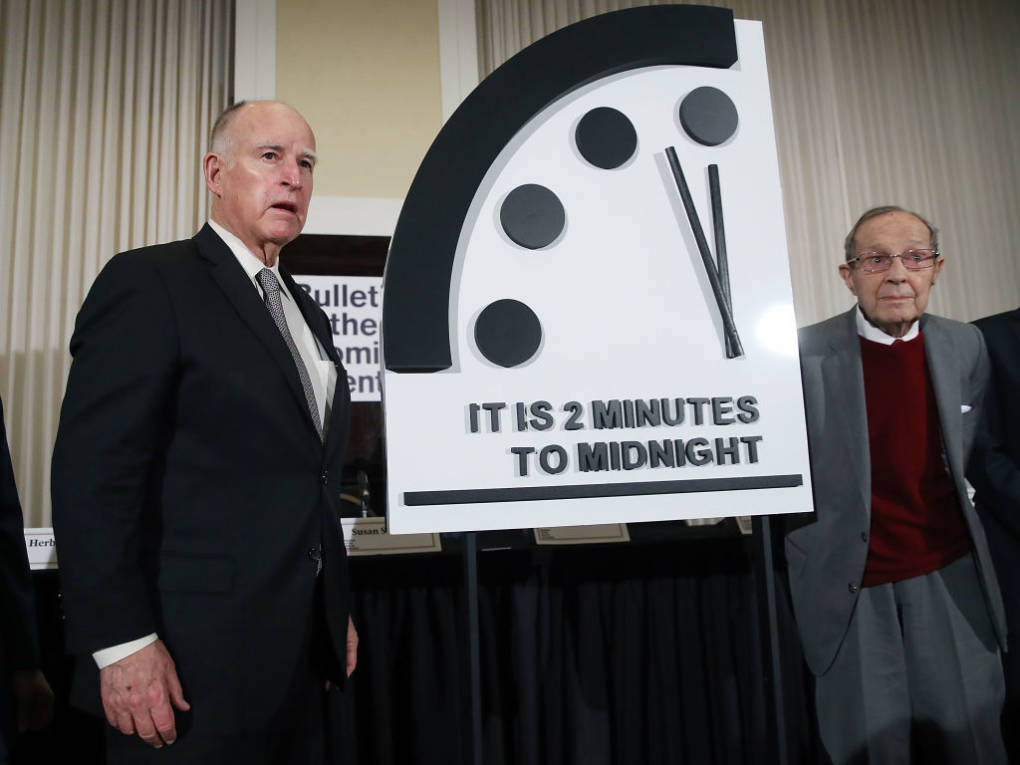
"caption": "Former California Gov. Jerry Brown, left, and former U.S. Secretary of Defense William Perry unveil the Doomsday Clock during The Bulletin of the Atomic Scientists news conference, on Jan. 24, 2019, in Washington, D.C. ",
"description": null,
"title": "Bulletin Of The Atomic Scientists Hold Annual News Conference To Announce Adjustment To Doomsday Clock",
"credit": "Mark Wilson/Getty Images",
"status": "inherit",
"isLoading": false,
"fetchFailed": false
},
"science_1933755": {
"type": "attachments",
"id": "science_1933755",
"meta": {
"index": "attachments_1716263798",
"site": "science",
"id": "1933755",
"found": true
},
"parent": 1933748,
"imgSizes": {
"small": {
"file": "https://ww2.kqed.org/app/uploads/sites/35/2018/10/GettyImages-1037385826-520x316.jpg",
"width": 520,
"mimeType": "image/jpeg",
"height": 316
},
"twentyfourteen-full-width": {
"file": "https://ww2.kqed.org/app/uploads/sites/35/2018/10/GettyImages-1037385826-1038x576.jpg",
"width": 1038,
"mimeType": "image/jpeg",
"height": 576
},
"thumbnail": {
"file": "https://ww2.kqed.org/app/uploads/sites/35/2018/10/GettyImages-1037385826-160x97.jpg",
"width": 160,
"mimeType": "image/jpeg",
"height": 97
},
"fd-sm": {
"file": "https://ww2.kqed.org/app/uploads/sites/35/2018/10/GettyImages-1037385826-960x584.jpg",
"width": 960,
"mimeType": "image/jpeg",
"height": 584
},
"post-thumbnail": {
"file": "https://ww2.kqed.org/app/uploads/sites/35/2018/10/GettyImages-1037385826-672x372.jpg",
"width": 672,
"mimeType": "image/jpeg",
"height": 372
},
"xsmall": {
"file": "https://ww2.kqed.org/app/uploads/sites/35/2018/10/GettyImages-1037385826-375x228.jpg",
"width": 375,
"mimeType": "image/jpeg",
"height": 228
},
"kqedFullSize": {
"file": "https://ww2.kqed.org/app/uploads/sites/35/2018/10/GettyImages-1037385826.jpg",
"width": 4800,
"height": 2921
},
"large": {
"file": "https://ww2.kqed.org/app/uploads/sites/35/2018/10/GettyImages-1037385826-1020x621.jpg",
"width": 1020,
"mimeType": "image/jpeg",
"height": 621
},
"xlarge": {
"file": "https://ww2.kqed.org/app/uploads/sites/35/2018/10/GettyImages-1037385826-1180x718.jpg",
"width": 1180,
"mimeType": "image/jpeg",
"height": 718
},
"complete_open_graph": {
"file": "https://ww2.kqed.org/app/uploads/sites/35/2018/10/GettyImages-1037385826-1200x730.jpg",
"width": 1200,
"mimeType": "image/jpeg",
"height": 730
},
"guest-author-50": {
"file": "https://ww2.kqed.org/app/uploads/sites/35/2018/10/GettyImages-1037385826-50x50.jpg",
"width": 50,
"mimeType": "image/jpeg",
"height": 50
},
"guest-author-96": {
"file": "https://ww2.kqed.org/app/uploads/sites/35/2018/10/GettyImages-1037385826-96x96.jpg",
"width": 96,
"mimeType": "image/jpeg",
"height": 96
},
"medium": {
"file": "https://ww2.kqed.org/app/uploads/sites/35/2018/10/GettyImages-1037385826-800x487.jpg",
"width": 800,
"mimeType": "image/jpeg",
"height": 487
},
"guest-author-64": {
"file": "https://ww2.kqed.org/app/uploads/sites/35/2018/10/GettyImages-1037385826-64x64.jpg",
"width": 64,
"mimeType": "image/jpeg",
"height": 64
},
"guest-author-32": {
"file": "https://ww2.kqed.org/app/uploads/sites/35/2018/10/GettyImages-1037385826-32x32.jpg",
"width": 32,
"mimeType": "image/jpeg",
"height": 32
},
"fd-lrg": {
"file": "https://ww2.kqed.org/app/uploads/sites/35/2018/10/GettyImages-1037385826-1920x1168.jpg",
"width": 1920,
"mimeType": "image/jpeg",
"height": 1168
},
"fd-med": {
"file": "https://ww2.kqed.org/app/uploads/sites/35/2018/10/GettyImages-1037385826-1180x718.jpg",
"width": 1180,
"mimeType": "image/jpeg",
"height": 718
},
"full-width": {
"file": "https://ww2.kqed.org/app/uploads/sites/35/2018/10/GettyImages-1037385826-1920x1168.jpg",
"width": 1920,
"mimeType": "image/jpeg",
"height": 1168
},
"detail": {
"file": "https://ww2.kqed.org/app/uploads/sites/35/2018/10/GettyImages-1037385826-150x150.jpg",
"width": 150,
"mimeType": "image/jpeg",
"height": 150
},
"medium_large": {
"file": "https://ww2.kqed.org/app/uploads/sites/35/2018/10/GettyImages-1037385826-768x467.jpg",
"width": 768,
"mimeType": "image/jpeg",
"height": 467
},
"guest-author-128": {
"file": "https://ww2.kqed.org/app/uploads/sites/35/2018/10/GettyImages-1037385826-128x128.jpg",
"width": 128,
"mimeType": "image/jpeg",
"height": 128
},
"xxsmall": {
"file": "https://ww2.kqed.org/app/uploads/sites/35/2018/10/GettyImages-1037385826-240x146.jpg",
"width": 240,
"mimeType": "image/jpeg",
"height": 146
}
},
"publishDate": 1540837908,
"modified": 1606166692,
"caption": "Highrise buildings in downtown Los Angeles, California are seen on on a hazy morning on September 21, 2018. ",
"description": null,
"title": "US-ENVIRONMENT-POLLUTION",
"credit": "FREDERIC J. BROWN/AFP/Getty Images",
"status": "inherit",
"isLoading": false,
"fetchFailed": false
},
"science_1956433": {
"type": "attachments",
"id": "science_1956433",
"meta": {
"index": "attachments_1716263798",
"site": "science",
"id": "1956433",
"found": true
},
"parent": 1956430,
"imgSizes": {
"twentyfourteen-full-width": {
"file": "https://ww2.kqed.org/app/uploads/sites/35/2021/02/RS41100_GettyImages-1203599077-qut-1038x576.jpg",
"width": 1038,
"mimeType": "image/jpeg",
"height": 576
},
"thumbnail": {
"file": "https://ww2.kqed.org/app/uploads/sites/35/2021/02/RS41100_GettyImages-1203599077-qut-160x105.jpg",
"width": 160,
"mimeType": "image/jpeg",
"height": 105
},
"post-thumbnail": {
"file": "https://ww2.kqed.org/app/uploads/sites/35/2021/02/RS41100_GettyImages-1203599077-qut-672x372.jpg",
"width": 672,
"mimeType": "image/jpeg",
"height": 372
},
"kqedFullSize": {
"file": "https://ww2.kqed.org/app/uploads/sites/35/2021/02/RS41100_GettyImages-1203599077-qut.jpg",
"width": 1920,
"height": 1256
},
"large": {
"file": "https://ww2.kqed.org/app/uploads/sites/35/2021/02/RS41100_GettyImages-1203599077-qut-1020x667.jpg",
"width": 1020,
"mimeType": "image/jpeg",
"height": 667
},
"full-width": {
"file": "https://ww2.kqed.org/app/uploads/sites/35/2021/02/RS41100_GettyImages-1203599077-qut-1920x1256.jpg",
"width": 1920,
"mimeType": "image/jpeg",
"height": 1256
},
"medium": {
"file": "https://ww2.kqed.org/app/uploads/sites/35/2021/02/RS41100_GettyImages-1203599077-qut-800x523.jpg",
"width": 800,
"mimeType": "image/jpeg",
"height": 523
},
"medium_large": {
"file": "https://ww2.kqed.org/app/uploads/sites/35/2021/02/RS41100_GettyImages-1203599077-qut-768x502.jpg",
"width": 768,
"mimeType": "image/jpeg",
"height": 502
}
},
"publishDate": 1580765379,
"modified": 1605640110,
"caption": "Joe Biden at an Iowa campaign event on Feb. 2, 2020.",
"description": null,
"title": null,
"credit": "Justin Sullivan/Getty Images",
"status": "inherit",
"isLoading": false,
"fetchFailed": false
},
"science_1970668": {
"type": "attachments",
"id": "science_1970668",
"meta": {
"index": "attachments_1716263798",
"site": "science",
"id": "1970668",
"found": true
},
"parent": 1970663,
"imgSizes": {
"twentyfourteen-full-width": {
"file": "https://cdn.kqed.org/wp-content/uploads/sites/35/2020/10/RS45431_GettyImages-1134096431-qut-1-1038x576.jpg",
"width": 1038,
"mimeType": "image/jpeg",
"height": 576
},
"thumbnail": {
"file": "https://cdn.kqed.org/wp-content/uploads/sites/35/2020/10/RS45431_GettyImages-1134096431-qut-1-160x104.jpg",
"width": 160,
"mimeType": "image/jpeg",
"height": 104
},
"post-thumbnail": {
"file": "https://cdn.kqed.org/wp-content/uploads/sites/35/2020/10/RS45431_GettyImages-1134096431-qut-1-672x372.jpg",
"width": 672,
"mimeType": "image/jpeg",
"height": 372
},
"kqedFullSize": {
"file": "https://cdn.kqed.org/wp-content/uploads/sites/35/2020/10/RS45431_GettyImages-1134096431-qut-1.jpg",
"width": 1920,
"height": 1249
},
"large": {
"file": "https://cdn.kqed.org/wp-content/uploads/sites/35/2020/10/RS45431_GettyImages-1134096431-qut-1-1020x664.jpg",
"width": 1020,
"mimeType": "image/jpeg",
"height": 664
},
"1536x1536": {
"file": "https://cdn.kqed.org/wp-content/uploads/sites/35/2020/10/RS45431_GettyImages-1134096431-qut-1-1536x999.jpg",
"width": 1536,
"mimeType": "image/jpeg",
"height": 999
},
"medium": {
"file": "https://cdn.kqed.org/wp-content/uploads/sites/35/2020/10/RS45431_GettyImages-1134096431-qut-1-800x520.jpg",
"width": 800,
"mimeType": "image/jpeg",
"height": 520
},
"medium_large": {
"file": "https://cdn.kqed.org/wp-content/uploads/sites/35/2020/10/RS45431_GettyImages-1134096431-qut-1-768x500.jpg",
"width": 768,
"mimeType": "image/jpeg",
"height": 500
}
},
"publishDate": 1603486706,
"modified": 1702082364,
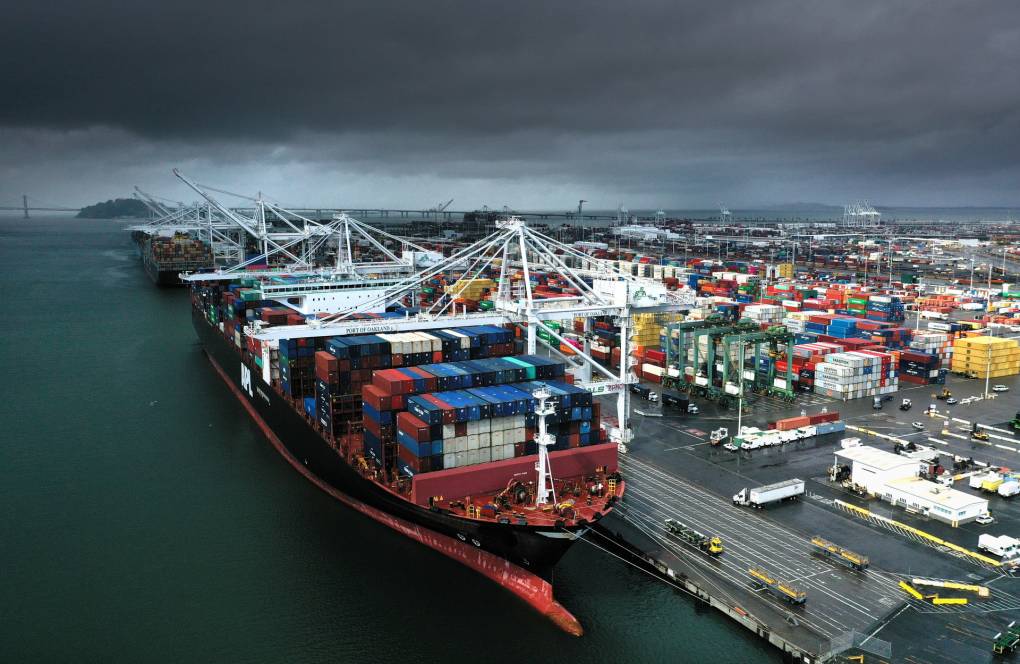
"caption": "An aerial view of container ships docked at the Port of Oakland on March 6, 2019. ",
"description": null,
"title": "U.S. Trade Deficit Rises To Highest Level In History At $891 Billion",
"credit": "Justin Sullivan/Getty Images",
"status": "inherit",
"altTag": "An aerial view of a very large container ship docked at a port.",
"isLoading": false,
"fetchFailed": false
},
"science_1970645": {
"type": "attachments",
"id": "science_1970645",
"meta": {
"index": "attachments_1716263798",
"site": "science",
"id": "1970645",
"found": true
},
"parent": 1970641,
"imgSizes": {
"twentyfourteen-full-width": {
"file": "https://ww2.kqed.org/app/uploads/sites/35/2020/10/RS45427_GettyImages-1281732602-qut-1038x576.jpg",
"width": 1038,
"mimeType": "image/jpeg",
"height": 576
},
"thumbnail": {
"file": "https://ww2.kqed.org/app/uploads/sites/35/2020/10/RS45427_GettyImages-1281732602-qut-160x112.jpg",
"width": 160,
"mimeType": "image/jpeg",
"height": 112
},
"post-thumbnail": {
"file": "https://ww2.kqed.org/app/uploads/sites/35/2020/10/RS45427_GettyImages-1281732602-qut-672x372.jpg",
"width": 672,
"mimeType": "image/jpeg",
"height": 372
},
"kqedFullSize": {
"file": "https://ww2.kqed.org/app/uploads/sites/35/2020/10/RS45427_GettyImages-1281732602-qut.jpg",
"width": 1920,
"height": 1341
},
"large": {
"file": "https://ww2.kqed.org/app/uploads/sites/35/2020/10/RS45427_GettyImages-1281732602-qut-1020x712.jpg",
"width": 1020,
"mimeType": "image/jpeg",
"height": 712
},
"1536x1536": {
"file": "https://ww2.kqed.org/app/uploads/sites/35/2020/10/RS45427_GettyImages-1281732602-qut-1536x1073.jpg",
"width": 1536,
"mimeType": "image/jpeg",
"height": 1073
},
"medium": {
"file": "https://ww2.kqed.org/app/uploads/sites/35/2020/10/RS45427_GettyImages-1281732602-qut-800x559.jpg",
"width": 800,
"mimeType": "image/jpeg",
"height": 559
},
"medium_large": {
"file": "https://ww2.kqed.org/app/uploads/sites/35/2020/10/RS45427_GettyImages-1281732602-qut-768x536.jpg",
"width": 768,
"mimeType": "image/jpeg",
"height": 536
}
},
"publishDate": 1603474813,
"modified": 1603474886,
"caption": "President Donald Trump and Democratic presidential nominee Joe Biden take the stage for the final presidential debate at Belmont University on October 22, 2020 in Nashville, Tennessee. ",
"description": null,
"title": "Donald Trump And Joe Biden Participate In Final Debate Before Presidential Election",
"credit": "Photo by Chip Somodevilla/Getty Images",
"status": "inherit",
"isLoading": false,
"fetchFailed": false
},
"science_1968917": {
"type": "attachments",
"id": "science_1968917",
"meta": {
"index": "attachments_1716263798",
"site": "science",
"id": "1968917",
"found": true
},
"parent": 1968913,
"imgSizes": {
"twentyfourteen-full-width": {
"file": "https://ww2.kqed.org/app/uploads/sites/35/2020/08/RS44588_GettyImages-1228132420-1-qut-1038x576.jpg",
"width": 1038,
"mimeType": "image/jpeg",
"height": 576
},
"thumbnail": {
"file": "https://ww2.kqed.org/app/uploads/sites/35/2020/08/RS44588_GettyImages-1228132420-1-qut-160x105.jpg",
"width": 160,
"mimeType": "image/jpeg",
"height": 105
},
"post-thumbnail": {
"file": "https://ww2.kqed.org/app/uploads/sites/35/2020/08/RS44588_GettyImages-1228132420-1-qut-672x372.jpg",
"width": 672,
"mimeType": "image/jpeg",
"height": 372
},
"kqedFullSize": {
"file": "https://ww2.kqed.org/app/uploads/sites/35/2020/08/RS44588_GettyImages-1228132420-1-qut.jpg",
"width": 1920,
"height": 1264
},
"large": {
"file": "https://ww2.kqed.org/app/uploads/sites/35/2020/08/RS44588_GettyImages-1228132420-1-qut-1020x672.jpg",
"width": 1020,
"mimeType": "image/jpeg",
"height": 672
},
"1536x1536": {
"file": "https://ww2.kqed.org/app/uploads/sites/35/2020/08/RS44588_GettyImages-1228132420-1-qut-1536x1011.jpg",
"width": 1536,
"mimeType": "image/jpeg",
"height": 1011
},
"medium": {
"file": "https://ww2.kqed.org/app/uploads/sites/35/2020/08/RS44588_GettyImages-1228132420-1-qut-800x527.jpg",
"width": 800,
"mimeType": "image/jpeg",
"height": 527
},
"medium_large": {
"file": "https://ww2.kqed.org/app/uploads/sites/35/2020/08/RS44588_GettyImages-1228132420-1-qut-768x506.jpg",
"width": 768,
"mimeType": "image/jpeg",
"height": 506
}
},
"publishDate": 1598398722,
"modified": 1598468047,
"caption": "People watch the Walbridge fire, part of the larger LNU Lightning Complex fire, from a vineyard in Healdsburg, Calif., on Aug. 20, 2020. ",
"description": null,
"title": "TOPSHOT-US-WILDFIRES-CALIFORNIA-fire-environment-weather",
"credit": "Josh Edelson/AFP via Getty Images",
"status": "inherit",
"isLoading": false,
"fetchFailed": false
},
"science_1968274": {
"type": "attachments",
"id": "science_1968274",
"meta": {
"index": "attachments_1716263798",
"site": "science",
"id": "1968274",
"found": true
},
"parent": 1968270,
"imgSizes": {
"twentyfourteen-full-width": {
"file": "https://ww2.kqed.org/app/uploads/sites/35/2020/08/GettyImages-1175985880-1-924x576.jpg",
"width": 924,
"mimeType": "image/jpeg",
"height": 576
},
"thumbnail": {
"file": "https://ww2.kqed.org/app/uploads/sites/35/2020/08/GettyImages-1175985880-1-160x107.jpg",
"width": 160,
"mimeType": "image/jpeg",
"height": 107
},
"post-thumbnail": {
"file": "https://ww2.kqed.org/app/uploads/sites/35/2020/08/GettyImages-1175985880-1-672x372.jpg",
"width": 672,
"mimeType": "image/jpeg",
"height": 372
},
"kqedFullSize": {
"file": "https://ww2.kqed.org/app/uploads/sites/35/2020/08/GettyImages-1175985880-1.jpg",
"width": 924,
"height": 616
},
"medium": {
"file": "https://ww2.kqed.org/app/uploads/sites/35/2020/08/GettyImages-1175985880-1-800x533.jpg",
"width": 800,
"mimeType": "image/jpeg",
"height": 533
},
"medium_large": {
"file": "https://ww2.kqed.org/app/uploads/sites/35/2020/08/GettyImages-1175985880-1-768x512.jpg",
"width": 768,
"mimeType": "image/jpeg",
"height": 512
}
},
"publishDate": 1597083221,
"modified": 1597089920,
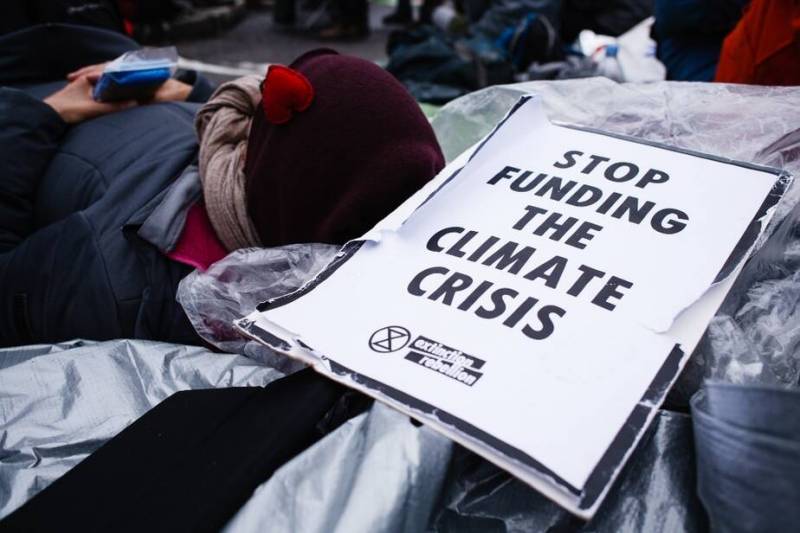
"caption": "Extinction Rebellion activists protest on the bank junction outside the Bank of America.",
"description": null,
"title": "GettyImages-1175985880 (1)",
"credit": "David Cliff/SOPA Images/LightRocket via Getty Images",
"status": "inherit",
"isLoading": false,
"fetchFailed": false
},
"science_1967919": {
"type": "attachments",
"id": "science_1967919",
"meta": {
"index": "attachments_1716263798",
"site": "science",
"id": "1967919",
"found": true
},
"parent": 1967914,
"imgSizes": {
"twentyfourteen-full-width": {
"file": "https://ww2.kqed.org/app/uploads/sites/35/2020/07/electric-vehicles_open-grid-scheduler-grid-engine-924x576.jpg",
"width": 924,
"mimeType": "image/jpeg",
"height": 576
},
"thumbnail": {
"file": "https://ww2.kqed.org/app/uploads/sites/35/2020/07/electric-vehicles_open-grid-scheduler-grid-engine-160x106.jpg",
"width": 160,
"mimeType": "image/jpeg",
"height": 106
},
"post-thumbnail": {
"file": "https://ww2.kqed.org/app/uploads/sites/35/2020/07/electric-vehicles_open-grid-scheduler-grid-engine-672x372.jpg",
"width": 672,
"mimeType": "image/jpeg",
"height": 372
},
"kqedFullSize": {
"file": "https://ww2.kqed.org/app/uploads/sites/35/2020/07/electric-vehicles_open-grid-scheduler-grid-engine.jpg",
"width": 924,
"height": 612
},
"medium": {
"file": "https://ww2.kqed.org/app/uploads/sites/35/2020/07/electric-vehicles_open-grid-scheduler-grid-engine-800x530.jpg",
"width": 800,
"mimeType": "image/jpeg",
"height": 530
},
"medium_large": {
"file": "https://ww2.kqed.org/app/uploads/sites/35/2020/07/electric-vehicles_open-grid-scheduler-grid-engine-768x509.jpg",
"width": 768,
"mimeType": "image/jpeg",
"height": 509
}
},
"publishDate": 1596217561,
"modified": 1596217589,
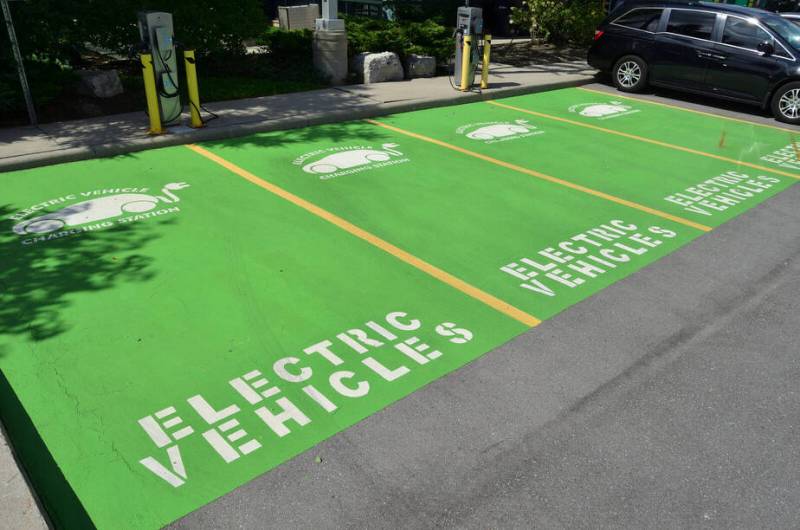
"caption": "Electric vehicles could soon have prices rivaling those of conventional gasoline vehicles, if battery prices get below $100 per kilowatt hour. ",
"description": null,
"title": "electric-vehicles_open-grid-scheduler-grid-engine",
"credit": "Open Grid Scheduler/Grid Engine/Flickr",
"status": "inherit",
"isLoading": false,
"fetchFailed": false
},
"science_1967927": {
"type": "attachments",
"id": "science_1967927",
"meta": {
"index": "attachments_1716263798",
"site": "science",
"id": "1967927",
"found": true
},
"parent": 1967925,
"imgSizes": {
"twentyfourteen-full-width": {
"file": "https://ww2.kqed.org/app/uploads/sites/35/2020/07/RS44167_GettyImages-474897535-qut-1038x576.jpg",
"width": 1038,
"mimeType": "image/jpeg",
"height": 576
},
"thumbnail": {
"file": "https://ww2.kqed.org/app/uploads/sites/35/2020/07/RS44167_GettyImages-474897535-qut-160x107.jpg",
"width": 160,
"mimeType": "image/jpeg",
"height": 107
},
"post-thumbnail": {
"file": "https://ww2.kqed.org/app/uploads/sites/35/2020/07/RS44167_GettyImages-474897535-qut-672x372.jpg",
"width": 672,
"mimeType": "image/jpeg",
"height": 372
},
"kqedFullSize": {
"file": "https://ww2.kqed.org/app/uploads/sites/35/2020/07/RS44167_GettyImages-474897535-qut.jpg",
"width": 1920,
"height": 1287
},
"large": {
"file": "https://ww2.kqed.org/app/uploads/sites/35/2020/07/RS44167_GettyImages-474897535-qut-1020x684.jpg",
"width": 1020,
"mimeType": "image/jpeg",
"height": 684
},
"1536x1536": {
"file": "https://ww2.kqed.org/app/uploads/sites/35/2020/07/RS44167_GettyImages-474897535-qut-1536x1030.jpg",
"width": 1536,
"mimeType": "image/jpeg",
"height": 1030
},
"medium": {
"file": "https://ww2.kqed.org/app/uploads/sites/35/2020/07/RS44167_GettyImages-474897535-qut-800x536.jpg",
"width": 800,
"mimeType": "image/jpeg",
"height": 536
},
"medium_large": {
"file": "https://ww2.kqed.org/app/uploads/sites/35/2020/07/RS44167_GettyImages-474897535-qut-768x515.jpg",
"width": 768,
"mimeType": "image/jpeg",
"height": 515
}
},
"publishDate": 1596219793,
"modified": 1596226744,
"caption": "A tractor plows a field on Feb. 25, 2014, in Firebaugh, California. ",
"description": null,
"title": "Statewide Drought Forces Californians To Take Drastic Measures For Water Conversation",
"credit": "Justin Sullivan/Getty Images",
"status": "inherit",
"isLoading": false,
"fetchFailed": false
},
"science_1967410": {
"type": "attachments",
"id": "science_1967410",
"meta": {
"index": "attachments_1716263798",
"site": "science",
"id": "1967410",
"found": true
},
"parent": 1967293,
"imgSizes": {
"twentyfourteen-full-width": {
"file": "https://ww2.kqed.org/app/uploads/sites/35/2020/07/Garden-Cacti-1038x576.jpg",
"width": 1038,
"mimeType": "image/jpeg",
"height": 576
},
"thumbnail": {
"file": "https://ww2.kqed.org/app/uploads/sites/35/2020/07/Garden-Cacti-160x107.jpg",
"width": 160,
"mimeType": "image/jpeg",
"height": 107
},
"post-thumbnail": {
"file": "https://ww2.kqed.org/app/uploads/sites/35/2020/07/Garden-Cacti-672x372.jpg",
"width": 672,
"mimeType": "image/jpeg",
"height": 372
},
"kqedFullSize": {
"file": "https://ww2.kqed.org/app/uploads/sites/35/2020/07/Garden-Cacti.jpg",
"width": 1500,
"height": 1000
},
"large": {
"file": "https://ww2.kqed.org/app/uploads/sites/35/2020/07/Garden-Cacti-1020x680.jpg",
"width": 1020,
"mimeType": "image/jpeg",
"height": 680
},
"medium": {
"file": "https://ww2.kqed.org/app/uploads/sites/35/2020/07/Garden-Cacti-800x533.jpg",
"width": 800,
"mimeType": "image/jpeg",
"height": 533
},
"medium_large": {
"file": "https://ww2.kqed.org/app/uploads/sites/35/2020/07/Garden-Cacti-768x512.jpg",
"width": 768,
"mimeType": "image/jpeg",
"height": 512
}
},
"publishDate": 1595270049,
"modified": 1595281261,
"caption": "The succulents garden at the San Francisco Botanical Garden, which is home to more than 9,000 different kinds of plants from around the world.",
"description": null,
"title": "holt_286_6307.tif",
"credit": "Courtesy of S.F. Botanical Garden",
"status": "inherit",
"isLoading": false,
"fetchFailed": false
},
"science_1967317": {
"type": "attachments",
"id": "science_1967317",
"meta": {
"index": "attachments_1716263798",
"site": "science",
"id": "1967317",
"found": true
},
"parent": 1967315,
"imgSizes": {
"twentyfourteen-full-width": {
"file": "https://ww2.kqed.org/app/uploads/sites/35/2020/07/RS43989_GettyImages-1219233550-qut-1038x576.jpg",
"width": 1038,
"mimeType": "image/jpeg",
"height": 576
},
"thumbnail": {
"file": "https://ww2.kqed.org/app/uploads/sites/35/2020/07/RS43989_GettyImages-1219233550-qut-160x104.jpg",
"width": 160,
"mimeType": "image/jpeg",
"height": 104
},
"post-thumbnail": {
"file": "https://ww2.kqed.org/app/uploads/sites/35/2020/07/RS43989_GettyImages-1219233550-qut-672x372.jpg",
"width": 672,
"mimeType": "image/jpeg",
"height": 372
},
"kqedFullSize": {
"file": "https://ww2.kqed.org/app/uploads/sites/35/2020/07/RS43989_GettyImages-1219233550-qut.jpg",
"width": 1920,
"height": 1242
},
"large": {
"file": "https://ww2.kqed.org/app/uploads/sites/35/2020/07/RS43989_GettyImages-1219233550-qut-1020x660.jpg",
"width": 1020,
"mimeType": "image/jpeg",
"height": 660
},
"1536x1536": {
"file": "https://ww2.kqed.org/app/uploads/sites/35/2020/07/RS43989_GettyImages-1219233550-qut-1536x994.jpg",
"width": 1536,
"mimeType": "image/jpeg",
"height": 994
},
"medium": {
"file": "https://ww2.kqed.org/app/uploads/sites/35/2020/07/RS43989_GettyImages-1219233550-qut-800x518.jpg",
"width": 800,
"mimeType": "image/jpeg",
"height": 518
},
"medium_large": {
"file": "https://ww2.kqed.org/app/uploads/sites/35/2020/07/RS43989_GettyImages-1219233550-qut-768x497.jpg",
"width": 768,
"mimeType": "image/jpeg",
"height": 497
}
},
"publishDate": 1595028720,
"modified": 1595033382,
"caption": "A driver wears a face mask and gloves as Uber and Lyft drivers with Rideshare Drivers United and the Transport Workers Union of America conduct a \"caravan protest\" outside the California Labor Commissioner’s Office amid the coronavirus pandemic on April 16, 2020, in Los Angeles, California. ",
"description": null,
"title": "Transportation Union And Rideshare Drivers United Members Hold Rolling Vehicle Protest Calling On State To Enforce AB5",
"credit": "Mario Tama/Getty Images",
"status": "inherit",
"isLoading": false,
"fetchFailed": false
},
"science_1967114": {
"type": "attachments",
"id": "science_1967114",
"meta": {
"index": "attachments_1716263798",
"site": "science",
"id": "1967114",
"found": true
},
"parent": 1967111,
"imgSizes": {
"twentyfourteen-full-width": {
"file": "https://ww2.kqed.org/app/uploads/sites/35/2020/07/Joe-Biden-climate-1038x576.jpg",
"width": 1038,
"mimeType": "image/jpeg",
"height": 576
},
"thumbnail": {
"file": "https://ww2.kqed.org/app/uploads/sites/35/2020/07/Joe-Biden-climate-160x107.jpg",
"width": 160,
"mimeType": "image/jpeg",
"height": 107
},
"post-thumbnail": {
"file": "https://ww2.kqed.org/app/uploads/sites/35/2020/07/Joe-Biden-climate-672x372.jpg",
"width": 672,
"mimeType": "image/jpeg",
"height": 372
},
"kqedFullSize": {
"file": "https://ww2.kqed.org/app/uploads/sites/35/2020/07/Joe-Biden-climate-scaled-e1594747722556.jpg",
"width": 1920,
"height": 1280
},
"2048x2048": {
"file": "https://ww2.kqed.org/app/uploads/sites/35/2020/07/Joe-Biden-climate-2048x1366.jpg",
"width": 2048,
"mimeType": "image/jpeg",
"height": 1366
},
"large": {
"file": "https://ww2.kqed.org/app/uploads/sites/35/2020/07/Joe-Biden-climate-1020x680.jpg",
"width": 1020,
"mimeType": "image/jpeg",
"height": 680
},
"1536x1536": {
"file": "https://ww2.kqed.org/app/uploads/sites/35/2020/07/Joe-Biden-climate-1536x1024.jpg",
"width": 1536,
"mimeType": "image/jpeg",
"height": 1024
},
"full-width": {
"file": "https://ww2.kqed.org/app/uploads/sites/35/2020/07/Joe-Biden-climate-1920x1280.jpg",
"width": 1920,
"mimeType": "image/jpeg",
"height": 1280
},
"medium": {
"file": "https://ww2.kqed.org/app/uploads/sites/35/2020/07/Joe-Biden-climate-800x533.jpg",
"width": 800,
"mimeType": "image/jpeg",
"height": 533
},
"medium_large": {
"file": "https://ww2.kqed.org/app/uploads/sites/35/2020/07/Joe-Biden-climate-768x512.jpg",
"width": 768,
"mimeType": "image/jpeg",
"height": 512
}
},
"publishDate": 1594747697,
"modified": 1594747832,
"caption": "Joe Biden at McGregor Industries on July 9, 2020. Biden released a plan Tuesday aimed at combating climate change and spurring economic growth in part by overhauling America’s energy industry.",
"description": null,
"title": "Presidential Candidate Joe Biden Delivers Remarks In Pennsylvania",
"credit": "Spencer Platt/Getty Images",
"status": "inherit",
"isLoading": false,
"fetchFailed": false
}
},
"audioPlayerReducer": {
"postId": "stream_live",
"isPaused": true,
"isPlaying": false,
"pfsActive": false,
"pledgeModalIsOpen": true,
"playerDrawerIsOpen": false,
"liveAudioPlayStartedAt": 0,
"liveAudioPlayContext": ""
},
"authorsReducer": {
"byline_science_1971224": {
"type": "authors",
"id": "byline_science_1971224",
"meta": {
"override": true
},
"slug": "byline_science_1971224",
"name": "Tom Krisher \u003cbr />Associated Press\u003cbr>",
"isLoading": false
},
"byline_science_1971113": {
"type": "authors",
"id": "byline_science_1971113",
"meta": {
"override": true
},
"slug": "byline_science_1971113",
"name": "Marianne Lavelle \u003cbr />InsideClimate News\u003cbr>",
"isLoading": false
},
"byline_science_1968270": {
"type": "authors",
"id": "byline_science_1968270",
"meta": {
"override": true
},
"slug": "byline_science_1968270",
"name": " Kristoffer Tigue \u003cbr />InsideClimate News\u003cbr>",
"isLoading": false
},
"byline_science_1967914": {
"type": "authors",
"id": "byline_science_1967914",
"meta": {
"override": true
},
"slug": "byline_science_1967914",
"name": "Dan Gearino \u003cBr />InsideClimate News\u003cbr>",
"isLoading": false
},
"byline_science_1967925": {
"type": "authors",
"id": "byline_science_1967925",
"meta": {
"override": true
},
"slug": "byline_science_1967925",
"name": "Dan Gearino \u003cbr />InsideClimate News\u003cbr>",
"isLoading": false
},
"byline_science_1967111": {
"type": "authors",
"id": "byline_science_1967111",
"meta": {
"override": true
},
"slug": "byline_science_1967111",
"name": "ALEXANDRA JAFFE, ELLEN KNICKMEYER and WILL WEISSERT\u003cbr /> Associated Press",
"isLoading": false
},
"kqedscience": {
"type": "authors",
"id": "6387",
"meta": {
"index": "authors_1716337520",
"id": "6387",
"found": true
},
"name": "KQED Science",
"firstName": "KQED",
"lastName": "Science",
"slug": "kqedscience",
"email": "kqedscience@gmail.com",
"display_author_email": false,
"staff_mastheads": [],
"title": null,
"bio": "KQED Science brings you award-winning science and environment coverage from the Bay Area and beyond by the flagship Northern California PBS and NPR affiliate.",
"avatar": "https://secure.gravatar.com/avatar/5a295ff49cf82a8c0f30937d3f788b2f?s=600&d=blank&r=g",
"twitter": null,
"facebook": null,
"instagram": null,
"linkedin": null,
"sites": [
{
"site": "science",
"roles": [
"contributor"
]
},
{
"site": "quest",
"roles": [
"editor"
]
},
{
"site": "food",
"roles": [
"contributor"
]
}
],
"headData": {
"title": "KQED Science | KQED",
"description": null,
"ogImgSrc": "https://secure.gravatar.com/avatar/5a295ff49cf82a8c0f30937d3f788b2f?s=600&d=blank&r=g",
"twImgSrc": "https://secure.gravatar.com/avatar/5a295ff49cf82a8c0f30937d3f788b2f?s=600&d=blank&r=g"
},
"isLoading": false,
"link": "/author/kqedscience"
},
"parcuni": {
"type": "authors",
"id": "11368",
"meta": {
"index": "authors_1716337520",
"id": "11368",
"found": true
},
"name": "Peter Arcuni",
"firstName": "Peter",
"lastName": "Arcuni",
"slug": "parcuni",
"email": "parcuni@KQED.org",
"display_author_email": false,
"staff_mastheads": [
"science"
],
"title": "Reporter",
"bio": "Peter reports radio and online stories for \u003cem>KQED Science\u003c/em>. His work has also appeared on the \u003cem>The California Report\u003c/em> morning show and \u003cem>KQED News\u003c/em>. His production credits include \u003cem>The California Report, The California Report Magazine\u003c/em> and KQED's local news podcast \u003cem>The Bay\u003c/em>. Other credits include NPR's \u003cem>All Things Considered\u003c/em>, WNYC's \u003cem>Science Friday\u003c/em>, WBUR's \u003cem>Here & Now\u003c/em>, WIRED and SFGate. Peter graduated from Brown University and earned a master's degree in journalism from Stanford. He's covered everything from homelessness to wildfires, health, the environment, arts and Thanksgiving in San Quentin prison. In other lives, he played rock n roll music and studied neuroscience. You can email him at: parcuni@kqed.org",
"avatar": "https://secure.gravatar.com/avatar/d5032f6f27199d478af34ad2e1d98732?s=600&d=blank&r=g",
"twitter": "peterarcuni",
"facebook": null,
"instagram": null,
"linkedin": null,
"sites": [
{
"site": "news",
"roles": [
"editor"
]
},
{
"site": "science",
"roles": [
"editor"
]
}
],
"headData": {
"title": "Peter Arcuni | KQED",
"description": "Reporter",
"ogImgSrc": "https://secure.gravatar.com/avatar/d5032f6f27199d478af34ad2e1d98732?s=600&d=blank&r=g",
"twImgSrc": "https://secure.gravatar.com/avatar/d5032f6f27199d478af34ad2e1d98732?s=600&d=blank&r=g"
},
"isLoading": false,
"link": "/author/parcuni"
},
"kevinstark": {
"type": "authors",
"id": "11608",
"meta": {
"index": "authors_1716337520",
"id": "11608",
"found": true
},
"name": "Kevin Stark",
"firstName": "Kevin",
"lastName": "Stark",
"slug": "kevinstark",
"email": "kstark@kqed.org",
"display_author_email": true,
"staff_mastheads": [
"science"
],
"title": "Senior Editor",
"bio": "Kevin is a senior editor for KQED Science, managing the station's health and climate desks. His journalism career began in the Pacific Northwest, and he later became a lead reporter for the San Francisco Public Press. His work has appeared in Pacific Standard magazine, the Energy News Network, the Center for Investigative Reporting's Reveal and WBEZ in Chicago. Kevin joined KQED in 2019, and has covered issues related to energy, wildfire, climate change and the environment.",
"avatar": "https://secure.gravatar.com/avatar/365aaa4b597d3a8374f67504ff0facd323d7906e8eb4be0a7efd2427408e802c?s=600&d=blank&r=g",
"twitter": "starkkev",
"bluesky": null,
"facebook": null,
"instagram": null,
"linkedin": null,
"sites": [
{
"site": "",
"roles": [
"editor"
]
},
{
"site": "news",
"roles": [
"editor"
]
},
{
"site": "science",
"roles": [
"administrator"
]
}
],
"headData": {
"title": "Kevin Stark | KQED",
"description": "Senior Editor",
"ogImgSrc": "https://secure.gravatar.com/avatar/365aaa4b597d3a8374f67504ff0facd323d7906e8eb4be0a7efd2427408e802c?s=600&d=blank&r=g",
"twImgSrc": "https://secure.gravatar.com/avatar/365aaa4b597d3a8374f67504ff0facd323d7906e8eb4be0a7efd2427408e802c?s=600&d=blank&r=g"
},
"isLoading": false,
"link": "/author/kevinstark"
}
},
"pagesReducer": {
"science_tag_climate-change": {
"type": "terms",
"id": "science_194",
"meta": {
"index": "terms_1716263798",
"site": "science",
"id": "194",
"score": 7.946677
},
"featImg": null,
"name": "climate change",
"description": null,
"taxonomy": "tag",
"headData": {
"twImgId": null,
"twTitle": null,
"ogTitle": null,
"ogImgId": null,
"twDescription": null,
"description": null,
"title": "climate change Archives | KQED Science",
"ogDescription": null
},
"ttid": 198,
"slug": "climate-change",
"isLoading": false,
"title": "climate change",
"pageMeta": {
"site": "science",
"WpPageTemplate": "page-topic-editorial",
"currentPage": 25
},
"blocks": [
{
"blockName": "kqed/post-list",
"attrs": {
"layout": "cardArticle2",
"query": "posts/science?tag=climate-change",
"seeMore": false,
"paginated": true,
"page": 25
}
},
{
"blockName": "kqed/ad"
}
]
}
},
"pfsSessionReducer": {},
"postsReducer": {
"stream_live": {
"type": "live",
"id": "stream_live",
"audioUrl": "https://streams.kqed.org/kqedradio",
"title": "Live Stream",
"excerpt": "Live Stream information currently unavailable.",
"link": "/radio",
"featImg": "",
"label": {
"name": "KQED Live",
"link": "/"
}
},
"stream_kqedNewscast": {
"type": "posts",
"id": "stream_kqedNewscast",
"audioUrl": "https://www.kqed.org/.stream/anon/radio/RDnews/newscast.mp3?_=1",
"title": "KQED Newscast",
"featImg": "",
"label": {
"name": "88.5 FM",
"link": "/"
}
},
"science_1971253": {
"type": "posts",
"id": "science_1971253",
"meta": {
"index": "posts_1716263798",
"site": "science",
"id": "1971253",
"score": null,
"sort": [
1606249436000
]
},
"parent": 0,
"labelTerm": {},
"blocks": [],
"publishDate": 1606249436,
"format": "standard",
"title": "Jerry Brown's Climate Advice to Biden: Rebuild Credibility, Disregard Environmental Advocates",
"headTitle": "Jerry Brown’s Climate Advice to Biden: Rebuild Credibility, Disregard Environmental Advocates | KQED",
"content": "\u003cp class=\"p1\">The man who presided over one of the most ambitious climate change agendas in the world has some advice for Joe Biden, who in a matter of weeks will become president of the only nation in the world to have signed and then left the Paris climate agreement.\u003c/p>\n\u003cp>In an interview with KQED, former Gov. Jerry Brown said Biden will need to rebuild U.S. credibility on the issue, focussing on the United Nations climate change \u003ca href=\"https://unfccc.int/process-and-meetings/conferences/glasgow-climate-change-conference\" target=\"_blank\" rel=\"noopener noreferrer\">\u003cspan class=\"s1\">conference\u003c/span>\u003c/a> in Glasgow in November 2021.\u003c/p>\n\u003cp>[pullquote]‘This is complicated stuff. What do we do and in what order? The advocates will be marching around for whatever they want, but the leader has to set in motion a process that can be managed sequentially, not all at once.’[/pullquote]Meanwhile, Brown advised, don’t pay too much attention to the “folks that have a banner” or “some great environmental writer who writes columns and gets in all the important publications.”\u003c/p>\n\u003cp>Brown, who said he was part of “the most successful climate fighting government in the Western Hemisphere,” said some environmentalists will “have their slogans and their framing.” But he said Biden should ignore them and tackle the issue “carefully, engaging different stakeholders,” unfolding policies in a logical sequence rather than all at once.\u003c/p>\n\u003cp>“That is not satisfying to the advocates,” he said. “It’s delayed gratification. But that’s how you have to do it.\u003ci>”\u003c/i>\u003c/p>\n\u003cp>[ad fullwidth]\u003c/p>\n\u003cp>Brown suggested the new president create strong international partnerships “so that the work becomes a planetary imperative.”\u003c/p>\n\u003cp class=\"p1\">He called the Glasgow conference “the next pivot point,” saying, “Everything ought to be focused on that.”\u003c/p>\n\u003cp>Biden’s first order of business should be to immediately talk to President Xi Jinping of China in order to\u003cspan class=\"Apple-converted-space\"> \u003c/span>reestablish a “partnership” that “led to the Paris agreement,” Brown said.\u003c/p>\n\u003cp class=\"p1\">“Now, can that be done with all the China bashing? Only with great aplomb and skill by President Biden. Anything less would shortchange this problem.”\u003c/p>\n\u003cp>Brown’s focus on China is not surprising. Last September, the former governor announced a climate-focused think tank at UC Berkeley, a partnership with China’s top climate official.\u003c/p>\n\u003cp>The mission of the \u003ca href=\"https://ccci.berkeley.edu/about\" target=\"_blank\" rel=\"noopener noreferrer\">\u003cspan class=\"s1\">California-China Climate Institute\u003c/span>\u003c/a> is to spur action through \u003cspan class=\"s2\">joint research, training and dialogue, according to the organization’s website. \u003c/span>\u003c/p>\n\u003cp class=\"p4\">The collaboration is also an end-run around the Trump administration, first announced when the U.S. was in the process of withdrawing from the 2015 Paris Agreement and embarking on a trade war with China.\u003c/p>\n\u003cp class=\"p1\">Brown says another environmental priority for Biden should be the reversal of all the regulatory rollbacks initiated under President Trump.\u003c/p>\n\u003cp>The administration’s deregulation of environmental rules spurred dozens of lawsuits by California, including a challenge to\u003cspan class=\"Apple-converted-space\"> \u003c/span>the science that the Environmental Protection Agency used to \u003ca href=\"https://www.kqed.org/science/1923269/california-sues-over-plan-to-scrap-car-emission-standards\" target=\"_blank\" rel=\"noopener noreferrer\">\u003cspan class=\"s1\">roll back emission standards\u003c/span>\u003c/a>, its \u003ca href=\"https://www.kqed.org/science/1956060/epa-rolls-back-obama-era-rules-protecting-rivers-and-wetlands\" target=\"_blank\" rel=\"noopener noreferrer\">\u003cspan class=\"s1\">justification for new water rules\u003c/span>\u003c/a>, and its plan to ease methane restrictions.\u003c/p>\n\u003cp class=\"p1\">During his first tour as governor, from 1975 to 1983, Brown promoted solar and wind power, then fledgling technologies. Chicago columnist Mike Royko saddled him with the nickname “\u003ca href=\"https://www.nytimes.com/2010/03/07/weekinreview/07mckinley.html\">\u003cspan class=\"s1\">Governor Moonbeam\u003c/span>\u003c/a>” due to Brown’s popularity with young, idealistic voters.\u003c/p>\n\u003cp class=\"p1\">In his second gubernatorial stint, from 2011 to 2019, renewable energy gained significant ground and carbon emissions declined, both while the California economy boomed. But Brown left office two years ago without ever convincing some environmentalists on the left to embrace California’s cap-and-trade program, one of his signature climate policies.\u003c/p>\n\u003cp>Many environmental justice groups in California still see the program, which allows industry to offset their carbon emissions by buying and trading credits to emit the gases that drive global warming, as a kind of Rube Goldberg mechanism that has allowed companies to pollute in some of the state’s poorest neighborhoods.\u003c/p>\n\u003cp class=\"p1\">Brown now says that directly taxing companies that emit carbon “obviously makes sense at some point,” but he’s dismissive of environmentalists who call for an immediate end to domestic oil production and other more sweeping climate policies.\u003c/p>\n\u003cp class=\"p1\">\u003ci>“\u003c/i>This is complicated stuff,” Brown said. “What do we do and in what order? The advocates will be marching around for whatever they want, but the leader has to set in motion a process that can be managed sequentially, not all at once.\u003c/p>\n\u003cp>“You don’t just spill your guts out,” he said, followed by the sound of “Blargh.”\u003c/p>\n\u003cp class=\"p1\">Brown ran through a litany of what he considers to be reductionist slogans. “‘’Carbon price,’ ‘’stop fracking,’ ‘stop the pipeline,’ ‘stop buying fossil fuel cars,’” he recited. “No. When they ask: ‘Why don’t you say something that will make everybody mad and go to the barricades and make sure we are totally ineffective in fighting climate change?’ I would say, ‘That is dumb.’”\u003c/p>\n\u003cp>\u003c/p>\n\u003cp>Brown did say he’s heartened by news reports that Biden is assembling a “\u003ca href=\"https://www.nytimes.com/2020/11/17/climate/biden-climate-change.html\">\u003cspan class=\"s1\">climate administration\u003c/span>\u003c/a>” that might include Mary Nichols, chair of the California Air Resources Board, who worked with him to implement cap-and-trade and other climate policies.\u003c/p>\n\n",
"stats": {
"hasVideo": false,
"hasChartOrMap": false,
"hasAudio": false,
"hasPolis": false,
"wordCount": 899,
"hasGoogleForm": false,
"hasGallery": false,
"hasHearkenModule": false,
"iframeSrcs": [],
"paragraphCount": 14
},
"modified": 1704846923,
"excerpt": "The man who presided over one of the most ambitious climate change agendas in the world offers his advice to President-elect Joe Biden.",
"headData": {
"twImgId": "",
"twTitle": "",
"ogTitle": "",
"ogImgId": "",
"twDescription": "",
"description": "The man who presided over one of the most ambitious climate change agendas in the world offers his advice to President-elect Joe Biden.",
"title": "Jerry Brown's Climate Advice to Biden: Rebuild Credibility, Disregard Environmental Advocates | KQED",
"ogDescription": "",
"schema": {
"@context": "https://schema.org",
"@type": "Article",
"headline": "Jerry Brown's Climate Advice to Biden: Rebuild Credibility, Disregard Environmental Advocates",
"datePublished": "2020-11-24T12:23:56-08:00",
"dateModified": "2024-01-09T16:35:23-08:00",
"image": "https://cdn.kqed.org/wp-content/uploads/2020/02/KQED-OG-Image@1x.png"
}
},
"guestAuthors": [],
"slug": "jerry-browns-advice-to-biden-on-climate-rebuild-credibility-disregard-advocates",
"status": "publish",
"audioUrl": "https://traffic.omny.fm/d/clips/0af137ef-751e-4b19-a055-aaef00d2d578/ffca7e9f-6831-41c5-bcaf-aaef00f5a073/d6ef6825-6a12-4700-b3eb-ac7e013618fb/audio.mp3",
"sticky": false,
"source": "Climate Change",
"path": "/science/1971253/jerry-browns-advice-to-biden-on-climate-rebuild-credibility-disregard-advocates",
"audioTrackLength": null,
"parsedContent": [
{
"type": "contentString",
"content": "\u003cdiv class=\"post-body\">\u003cp>\u003cp class=\"p1\">The man who presided over one of the most ambitious climate change agendas in the world has some advice for Joe Biden, who in a matter of weeks will become president of the only nation in the world to have signed and then left the Paris climate agreement.\u003c/p>\n\u003cp>In an interview with KQED, former Gov. Jerry Brown said Biden will need to rebuild U.S. credibility on the issue, focussing on the United Nations climate change \u003ca href=\"https://unfccc.int/process-and-meetings/conferences/glasgow-climate-change-conference\" target=\"_blank\" rel=\"noopener noreferrer\">\u003cspan class=\"s1\">conference\u003c/span>\u003c/a> in Glasgow in November 2021.\u003c/p>\n\u003cp>\u003c/p>\u003c/div>",
"attributes": {
"named": {},
"numeric": []
}
},
{
"type": "component",
"content": "‘This is complicated stuff. What do we do and in what order? The advocates will be marching around for whatever they want, but the leader has to set in motion a process that can be managed sequentially, not all at once.’",
"name": "pullquote",
"attributes": {
"named": {
"label": ""
},
"numeric": []
}
},
{
"type": "contentString",
"content": "\u003cdiv class=\"post-body\">\u003cp>Meanwhile, Brown advised, don’t pay too much attention to the “folks that have a banner” or “some great environmental writer who writes columns and gets in all the important publications.”\u003c/p>\n\u003cp>Brown, who said he was part of “the most successful climate fighting government in the Western Hemisphere,” said some environmentalists will “have their slogans and their framing.” But he said Biden should ignore them and tackle the issue “carefully, engaging different stakeholders,” unfolding policies in a logical sequence rather than all at once.\u003c/p>\n\u003cp>“That is not satisfying to the advocates,” he said. “It’s delayed gratification. But that’s how you have to do it.\u003ci>”\u003c/i>\u003c/p>\n\u003cp>\u003c/p>\u003c/div>",
"attributes": {
"named": {},
"numeric": []
}
},
{
"type": "component",
"content": "",
"name": "ad",
"attributes": {
"named": {
"label": "fullwidth"
},
"numeric": [
"fullwidth"
]
}
},
{
"type": "contentString",
"content": "\u003cdiv class=\"post-body\">\u003cp>\u003c/p>\n\u003cp>Brown suggested the new president create strong international partnerships “so that the work becomes a planetary imperative.”\u003c/p>\n\u003cp class=\"p1\">He called the Glasgow conference “the next pivot point,” saying, “Everything ought to be focused on that.”\u003c/p>\n\u003cp>Biden’s first order of business should be to immediately talk to President Xi Jinping of China in order to\u003cspan class=\"Apple-converted-space\"> \u003c/span>reestablish a “partnership” that “led to the Paris agreement,” Brown said.\u003c/p>\n\u003cp class=\"p1\">“Now, can that be done with all the China bashing? Only with great aplomb and skill by President Biden. Anything less would shortchange this problem.”\u003c/p>\n\u003cp>Brown’s focus on China is not surprising. Last September, the former governor announced a climate-focused think tank at UC Berkeley, a partnership with China’s top climate official.\u003c/p>\n\u003cp>The mission of the \u003ca href=\"https://ccci.berkeley.edu/about\" target=\"_blank\" rel=\"noopener noreferrer\">\u003cspan class=\"s1\">California-China Climate Institute\u003c/span>\u003c/a> is to spur action through \u003cspan class=\"s2\">joint research, training and dialogue, according to the organization’s website. \u003c/span>\u003c/p>\n\u003cp class=\"p4\">The collaboration is also an end-run around the Trump administration, first announced when the U.S. was in the process of withdrawing from the 2015 Paris Agreement and embarking on a trade war with China.\u003c/p>\n\u003cp class=\"p1\">Brown says another environmental priority for Biden should be the reversal of all the regulatory rollbacks initiated under President Trump.\u003c/p>\n\u003cp>The administration’s deregulation of environmental rules spurred dozens of lawsuits by California, including a challenge to\u003cspan class=\"Apple-converted-space\"> \u003c/span>the science that the Environmental Protection Agency used to \u003ca href=\"https://www.kqed.org/science/1923269/california-sues-over-plan-to-scrap-car-emission-standards\" target=\"_blank\" rel=\"noopener noreferrer\">\u003cspan class=\"s1\">roll back emission standards\u003c/span>\u003c/a>, its \u003ca href=\"https://www.kqed.org/science/1956060/epa-rolls-back-obama-era-rules-protecting-rivers-and-wetlands\" target=\"_blank\" rel=\"noopener noreferrer\">\u003cspan class=\"s1\">justification for new water rules\u003c/span>\u003c/a>, and its plan to ease methane restrictions.\u003c/p>\n\u003cp class=\"p1\">During his first tour as governor, from 1975 to 1983, Brown promoted solar and wind power, then fledgling technologies. Chicago columnist Mike Royko saddled him with the nickname “\u003ca href=\"https://www.nytimes.com/2010/03/07/weekinreview/07mckinley.html\">\u003cspan class=\"s1\">Governor Moonbeam\u003c/span>\u003c/a>” due to Brown’s popularity with young, idealistic voters.\u003c/p>\n\u003cp class=\"p1\">In his second gubernatorial stint, from 2011 to 2019, renewable energy gained significant ground and carbon emissions declined, both while the California economy boomed. But Brown left office two years ago without ever convincing some environmentalists on the left to embrace California’s cap-and-trade program, one of his signature climate policies.\u003c/p>\n\u003cp>Many environmental justice groups in California still see the program, which allows industry to offset their carbon emissions by buying and trading credits to emit the gases that drive global warming, as a kind of Rube Goldberg mechanism that has allowed companies to pollute in some of the state’s poorest neighborhoods.\u003c/p>\n\u003cp class=\"p1\">Brown now says that directly taxing companies that emit carbon “obviously makes sense at some point,” but he’s dismissive of environmentalists who call for an immediate end to domestic oil production and other more sweeping climate policies.\u003c/p>\n\u003cp class=\"p1\">\u003ci>“\u003c/i>This is complicated stuff,” Brown said. “What do we do and in what order? The advocates will be marching around for whatever they want, but the leader has to set in motion a process that can be managed sequentially, not all at once.\u003c/p>\n\u003cp>“You don’t just spill your guts out,” he said, followed by the sound of “Blargh.”\u003c/p>\n\u003cp class=\"p1\">Brown ran through a litany of what he considers to be reductionist slogans. “‘’Carbon price,’ ‘’stop fracking,’ ‘stop the pipeline,’ ‘stop buying fossil fuel cars,’” he recited. “No. When they ask: ‘Why don’t you say something that will make everybody mad and go to the barricades and make sure we are totally ineffective in fighting climate change?’ I would say, ‘That is dumb.’”\u003c/p>\n\u003cp>\u003c/p>\n\u003cp>Brown did say he’s heartened by news reports that Biden is assembling a “\u003ca href=\"https://www.nytimes.com/2020/11/17/climate/biden-climate-change.html\">\u003cspan class=\"s1\">climate administration\u003c/span>\u003c/a>” that might include Mary Nichols, chair of the California Air Resources Board, who worked with him to implement cap-and-trade and other climate policies.\u003c/p>\n\n\u003c/div>\u003c/p>",
"attributes": {
"named": {},
"numeric": []
}
}
],
"link": "/science/1971253/jerry-browns-advice-to-biden-on-climate-rebuild-credibility-disregard-advocates",
"authors": [
"11608"
],
"categories": [
"science_31",
"science_35",
"science_40",
"science_4450"
],
"tags": [
"science_194",
"science_101"
],
"featImg": "science_1937181",
"label": "source_science_1971253"
},
"science_1971224": {
"type": "posts",
"id": "science_1971224",
"meta": {
"index": "posts_1716263798",
"site": "science",
"id": "1971224",
"score": null,
"sort": [
1606167740000
]
},
"parent": 0,
"labelTerm": {},
"blocks": [],
"publishDate": 1606167740,
"format": "standard",
"title": "GM Abandons Trump's Battle With California Over Clean Car Rules",
"headTitle": "GM Abandons Trump’s Battle With California Over Clean Car Rules | KQED",
"content": "\u003cp class=\"Component-root-0-2-62 Component-p-0-2-53\">General Motors says it will no longer support the Trump administration in legal efforts to end California’s right to set its own clean-air standards.\u003c/p>\n\u003cp class=\"Component-root-0-2-62 Component-p-0-2-53\">CEO Mary Barra said in a letter Monday to environmental groups that GM will pull out of the lawsuit, urging other automakers to do the same.\u003c/p>\n\u003cp class=\"Component-root-0-2-62 Component-p-0-2-53\">She said the company agrees with President-elect Joe Biden’s plan to expand electric vehicle use. Last week, GM said it is testing a new battery chemistry that will bring electric-vehicle costs down to those of gas-powered vehicles within five years.\u003c/p>\n\u003cp class=\"Component-root-0-2-62 Component-p-0-2-53\">Barra sent the letter after a Monday morning conversation with Mary Nichols, head of California’s Air Resources Board, the company said. The board is the state’s air pollution regulator.\u003c/p>\n\u003cp class=\"Component-root-0-2-62 Component-p-0-2-53\">“We believe the ambitious electrification goals of the President-elect, California, and General Motors are aligned, to address climate change by drastically reducing automobile emissions,” Barra said in the letter.\u003c/p>\n\u003cp>[ad fullwidth]\u003c/p>\n\u003cp class=\"Component-root-0-2-62 Component-p-0-2-53\">Nichols called GM’s announcement good news. “I was pleased to be in communication with Mary Barra again,” she said. “It’s been a while since we had talked.”\u003c/p>\n\u003cp class=\"Component-root-0-2-62 Component-p-0-2-53\">Dan Becker of the Center for Biological Diversity, one of the environmental groups Barra wrote to, said GM was wrong in trying to stop California from protecting its people from auto pollution.\u003c/p>\n\u003cp class=\"Component-root-0-2-62 Component-p-0-2-53\">“Now the other automakers must follow GM and withdraw support for (President Donald) Trump’s attack on clean cars,” he said in an email.\u003c/p>\n\u003cp class=\"Component-root-0-2-62 Component-p-0-2-53\">The White House had no immediate comment Monday.\u003c/p>\n\u003cp class=\"Component-root-0-2-62 Component-p-0-2-53\">Ron Klain, Biden’s incoming chief of staff, wrote on Twitter that he is glad to see the president-elect’s leadership “is already encouraging progress.”\u003c/p>\n\u003cp class=\"Component-root-0-2-62 Component-p-0-2-53\">Last year General Motors, Fiat Chrysler, Toyota and 10 smaller automakers sided with the Trump administration in a lawsuit over whether California has the right to set its own standards for greenhouse gas emissions and fuel economy.\u003c/p>\n\u003cp class=\"Component-root-0-2-62 Component-p-0-2-53\">The companies said they would intervene in a lawsuit filed by the Environmental Defense Fund against the Trump administration, which has rolled back national pollution and gas mileage standards enacted while Barack Obama was president.\u003c/p>\n\u003cp class=\"Component-root-0-2-62 Component-p-0-2-53\">The group called itself the “Coalition or Sustainable Automotive Regulation” and also included Nissan, Hyundai, Kia, Subaru, Isuzu, Suzuki, Maserati, McLaren, Aston-Martin and Ferrari.\u003c/p>\n\u003cp class=\"Component-root-0-2-62 Component-p-0-2-53\">“With our industry facing the possibility of multiple, overlapping and inconsistent standards that drive up costs and penalize consumers, we had an obligation to intervene,” John Bozzella, CEO of Global Automakers and spokesman for the coalition, said at the time.\u003c/p>\n\u003cp class=\"Component-root-0-2-62 Component-p-0-2-53\">Toyota, one of the big automakers in the coalition favoring the Trump standards, said Monday it is reconsidering its position.\u003c/p>\n\u003cp class=\"Component-root-0-2-62 Component-p-0-2-53\">In a statement, the company said it has supported year-over-year increases in fuel economy standards, and it joined the coalition because most other automakers agreed there should be a single U.S. standard.\u003c/p>\n\u003cp class=\"Component-root-0-2-62 Component-p-0-2-53\">“Given the changing circumstances, we are assessing the situation, but remain committed to our goal of a consistent, unitary set of fuel economy standards applicable in all 50 states,” Toyota said.\u003c/p>\n\u003cp class=\"Component-root-0-2-62 Component-p-0-2-53\">The initial move put the coalition automakers at odds with five other companies — BMW, Ford, Volkswagen, Volvo and Honda — that backed California and endorsed stricter emissions and fuel economy standards than proposed by the Trump administration.\u003c/p>\n\u003cp class=\"Component-root-0-2-62 Component-p-0-2-53\">But the coalition’s stance was not so straightforward. For instance, although it opposed California, it still wanted Trump and the state to compromise on one national regulation.\u003c/p>\n\u003cp class=\"Component-root-0-2-62 Component-p-0-2-53\">In September of 2019, Trump announced his administration would seek to revoke California’s congressionally granted authority to set standards that are stricter than those issued by federal regulators.\u003c/p>\n\u003cp class=\"Component-root-0-2-62 Component-p-0-2-53\">The move came after Ford, BMW, Honda and Volkswagen signed a deal with the California Air Resources Board, which had been at odds with the Trump administration for months.\u003c/p>\n\u003cp class=\"Component-root-0-2-62 Component-p-0-2-53\">Many automakers have said in the past that they support increasing the standards, but not as much as those affirmed in the waning days of the Obama administration in 2016.\u003c/p>\n\u003cp class=\"Component-root-0-2-62 Component-p-0-2-53\">Under the Obama administration requirements, the fleet of new vehicles would have to average 30 mpg in real-world driving by 2021, rising to 36 mpg in 2025. Those increases would be about 5% per year. The Trump administration’s plan increased fuel economy by 1.5% per year, backing off an earlier proposal to freeze the requirements at 2021 levels.\u003c/p>\n\u003cp class=\"Component-root-0-2-62 Component-p-0-2-53\">Automakers say that because buyers are switching to larger trucks and SUVs, many companies would not be able to meet the stricter standards.\u003c/p>\n\u003cp class=\"Component-root-0-2-62 Component-p-0-2-53\">Shares of GM rose nearly 5% to $45.11 in Monday afternoon trading.\u003c/p>\n\u003cp>\u003c/p>\n\u003cp>\u003cem>Kathleen Ronayne in Sacramento, California, and Aamer Madhani in Washington, D.C., contributed to this story.\u003c/em>\u003c/p>\n\n",
"stats": {
"hasVideo": false,
"hasChartOrMap": false,
"hasAudio": false,
"hasPolis": false,
"wordCount": 796,
"hasGoogleForm": false,
"hasGallery": false,
"hasHearkenModule": false,
"iframeSrcs": [],
"paragraphCount": 3
},
"modified": 1704846928,
"excerpt": "CEO Mary Barra tells environmental groups that GM will pull out of a lawsuit challenging California's right to set its own clean-car standards, urging other automakers to do the same.",
"headData": {
"twImgId": "",
"twTitle": "",
"ogTitle": "",
"ogImgId": "",
"twDescription": "",
"description": "CEO Mary Barra tells environmental groups that GM will pull out of a lawsuit challenging California's right to set its own clean-car standards, urging other automakers to do the same.",
"title": "GM Abandons Trump's Battle With California Over Clean Car Rules | KQED",
"ogDescription": "",
"schema": {
"@context": "https://schema.org",
"@type": "Article",
"headline": "GM Abandons Trump's Battle With California Over Clean Car Rules",
"datePublished": "2020-11-23T13:42:20-08:00",
"dateModified": "2024-01-09T16:35:28-08:00",
"image": "https://cdn.kqed.org/wp-content/uploads/2020/02/KQED-OG-Image@1x.png"
}
},
"guestAuthors": [],
"slug": "gm-abandons-trumps-battle-with-california-over-clean-car-rules",
"status": "publish",
"nprByline": "Tom Krisher \u003cbr />Associated Press\u003cbr>",
"sticky": false,
"source": "Associated Press",
"WpOldSlug": "gm-abandons-trumps-battle-with-california-over-clean-car-rules__trashed",
"path": "/science/1971224/gm-abandons-trumps-battle-with-california-over-clean-car-rules",
"audioTrackLength": null,
"parsedContent": [
{
"type": "contentString",
"content": "\u003cdiv class=\"post-body\">\u003cp>\u003cp class=\"Component-root-0-2-62 Component-p-0-2-53\">General Motors says it will no longer support the Trump administration in legal efforts to end California’s right to set its own clean-air standards.\u003c/p>\n\u003cp class=\"Component-root-0-2-62 Component-p-0-2-53\">CEO Mary Barra said in a letter Monday to environmental groups that GM will pull out of the lawsuit, urging other automakers to do the same.\u003c/p>\n\u003cp class=\"Component-root-0-2-62 Component-p-0-2-53\">She said the company agrees with President-elect Joe Biden’s plan to expand electric vehicle use. Last week, GM said it is testing a new battery chemistry that will bring electric-vehicle costs down to those of gas-powered vehicles within five years.\u003c/p>\n\u003cp class=\"Component-root-0-2-62 Component-p-0-2-53\">Barra sent the letter after a Monday morning conversation with Mary Nichols, head of California’s Air Resources Board, the company said. The board is the state’s air pollution regulator.\u003c/p>\n\u003cp class=\"Component-root-0-2-62 Component-p-0-2-53\">“We believe the ambitious electrification goals of the President-elect, California, and General Motors are aligned, to address climate change by drastically reducing automobile emissions,” Barra said in the letter.\u003c/p>\n\u003cp>\u003c/p>\u003c/div>",
"attributes": {
"named": {},
"numeric": []
}
},
{
"type": "component",
"content": "",
"name": "ad",
"attributes": {
"named": {
"label": "fullwidth"
},
"numeric": [
"fullwidth"
]
}
},
{
"type": "contentString",
"content": "\u003cdiv class=\"post-body\">\u003cp>\u003c/p>\n\u003cp class=\"Component-root-0-2-62 Component-p-0-2-53\">Nichols called GM’s announcement good news. “I was pleased to be in communication with Mary Barra again,” she said. “It’s been a while since we had talked.”\u003c/p>\n\u003cp class=\"Component-root-0-2-62 Component-p-0-2-53\">Dan Becker of the Center for Biological Diversity, one of the environmental groups Barra wrote to, said GM was wrong in trying to stop California from protecting its people from auto pollution.\u003c/p>\n\u003cp class=\"Component-root-0-2-62 Component-p-0-2-53\">“Now the other automakers must follow GM and withdraw support for (President Donald) Trump’s attack on clean cars,” he said in an email.\u003c/p>\n\u003cp class=\"Component-root-0-2-62 Component-p-0-2-53\">The White House had no immediate comment Monday.\u003c/p>\n\u003cp class=\"Component-root-0-2-62 Component-p-0-2-53\">Ron Klain, Biden’s incoming chief of staff, wrote on Twitter that he is glad to see the president-elect’s leadership “is already encouraging progress.”\u003c/p>\n\u003cp class=\"Component-root-0-2-62 Component-p-0-2-53\">Last year General Motors, Fiat Chrysler, Toyota and 10 smaller automakers sided with the Trump administration in a lawsuit over whether California has the right to set its own standards for greenhouse gas emissions and fuel economy.\u003c/p>\n\u003cp class=\"Component-root-0-2-62 Component-p-0-2-53\">The companies said they would intervene in a lawsuit filed by the Environmental Defense Fund against the Trump administration, which has rolled back national pollution and gas mileage standards enacted while Barack Obama was president.\u003c/p>\n\u003cp class=\"Component-root-0-2-62 Component-p-0-2-53\">The group called itself the “Coalition or Sustainable Automotive Regulation” and also included Nissan, Hyundai, Kia, Subaru, Isuzu, Suzuki, Maserati, McLaren, Aston-Martin and Ferrari.\u003c/p>\n\u003cp class=\"Component-root-0-2-62 Component-p-0-2-53\">“With our industry facing the possibility of multiple, overlapping and inconsistent standards that drive up costs and penalize consumers, we had an obligation to intervene,” John Bozzella, CEO of Global Automakers and spokesman for the coalition, said at the time.\u003c/p>\n\u003cp class=\"Component-root-0-2-62 Component-p-0-2-53\">Toyota, one of the big automakers in the coalition favoring the Trump standards, said Monday it is reconsidering its position.\u003c/p>\n\u003cp class=\"Component-root-0-2-62 Component-p-0-2-53\">In a statement, the company said it has supported year-over-year increases in fuel economy standards, and it joined the coalition because most other automakers agreed there should be a single U.S. standard.\u003c/p>\n\u003cp class=\"Component-root-0-2-62 Component-p-0-2-53\">“Given the changing circumstances, we are assessing the situation, but remain committed to our goal of a consistent, unitary set of fuel economy standards applicable in all 50 states,” Toyota said.\u003c/p>\n\u003cp class=\"Component-root-0-2-62 Component-p-0-2-53\">The initial move put the coalition automakers at odds with five other companies — BMW, Ford, Volkswagen, Volvo and Honda — that backed California and endorsed stricter emissions and fuel economy standards than proposed by the Trump administration.\u003c/p>\n\u003cp class=\"Component-root-0-2-62 Component-p-0-2-53\">But the coalition’s stance was not so straightforward. For instance, although it opposed California, it still wanted Trump and the state to compromise on one national regulation.\u003c/p>\n\u003cp class=\"Component-root-0-2-62 Component-p-0-2-53\">In September of 2019, Trump announced his administration would seek to revoke California’s congressionally granted authority to set standards that are stricter than those issued by federal regulators.\u003c/p>\n\u003cp class=\"Component-root-0-2-62 Component-p-0-2-53\">The move came after Ford, BMW, Honda and Volkswagen signed a deal with the California Air Resources Board, which had been at odds with the Trump administration for months.\u003c/p>\n\u003cp class=\"Component-root-0-2-62 Component-p-0-2-53\">Many automakers have said in the past that they support increasing the standards, but not as much as those affirmed in the waning days of the Obama administration in 2016.\u003c/p>\n\u003cp class=\"Component-root-0-2-62 Component-p-0-2-53\">Under the Obama administration requirements, the fleet of new vehicles would have to average 30 mpg in real-world driving by 2021, rising to 36 mpg in 2025. Those increases would be about 5% per year. The Trump administration’s plan increased fuel economy by 1.5% per year, backing off an earlier proposal to freeze the requirements at 2021 levels.\u003c/p>\n\u003cp class=\"Component-root-0-2-62 Component-p-0-2-53\">Automakers say that because buyers are switching to larger trucks and SUVs, many companies would not be able to meet the stricter standards.\u003c/p>\n\u003cp class=\"Component-root-0-2-62 Component-p-0-2-53\">Shares of GM rose nearly 5% to $45.11 in Monday afternoon trading.\u003c/p>\n\u003cp>\u003c/p>\n\u003cp>\u003cem>Kathleen Ronayne in Sacramento, California, and Aamer Madhani in Washington, D.C., contributed to this story.\u003c/em>\u003c/p>\n\n\u003c/div>\u003c/p>",
"attributes": {
"named": {},
"numeric": []
}
}
],
"link": "/science/1971224/gm-abandons-trumps-battle-with-california-over-clean-car-rules",
"authors": [
"byline_science_1971224"
],
"categories": [
"science_31",
"science_35",
"science_40",
"science_4450"
],
"tags": [
"science_4209",
"science_194",
"science_4414"
],
"featImg": "science_1933755",
"label": "source_science_1971224"
},
"science_1971113": {
"type": "posts",
"id": "science_1971113",
"meta": {
"index": "posts_1716263798",
"site": "science",
"id": "1971113",
"score": null,
"sort": [
1605639890000
]
},
"parent": 0,
"labelTerm": {},
"blocks": [],
"publishDate": 1605639890,
"format": "standard",
"title": "Five Big Trump Environmental Rollbacks Biden Could Try to Reverse",
"headTitle": "Five Big Trump Environmental Rollbacks Biden Could Try to Reverse | KQED",
"content": "\u003cp style=\"font-weight: 400\">Even if President-elect Joe Biden can reassemble the pieces of climate policy shattered by President Donald Trump, it is not likely to be adequate to tackle the challenge of global warming, which has grown substantially after four years of inaction.\u003c/p>\n\u003cp style=\"font-weight: 400\">Biden faces science that paints a more alarming picture than it did four years ago and federal courts that, with Trump appointees, will be more skeptical of presidential power to act than when President Barack Obama put in place the first U.S. regulations to cut greenhouse gas emissions.\u003c/p>\n\u003cp style=\"font-weight: 400\">For Biden to bring the United States back into the Paris climate accord and achieve his ambitious goal of setting the United States on path to net-zero carbon emissions by mid-century, his team will have to attain deeper cuts in pollution than Obama sought, while having to work harder to bulletproof their actions against legal challenge.\u003c/p>\n\u003cp style=\"font-weight: 400\">The Trump administration has rolled back \u003ca href=\"https://climate.law.columbia.edu/climate-deregulation-tracker\">more than 100 environmental regulations\u003c/a> in the last four years — including rules on offshore drilling, management of water pollution at coal power plants, monitoring air pollution at oil refineries, and permits for pipeline construction.\u003c/p>\n\u003cp style=\"font-weight: 400\">“President Biden will have his work cut out for him to reverse the damage done,” said Dan Lashof, U.S. director of the World Resources Institute. “To be successful, he’s going to need to focus on a smaller number of very high-impact actions.”\u003c/p>\n\u003cp>[ad fullwidth]\u003c/p>\n\u003cp style=\"font-weight: 400\">Climate policy experts say they expect Biden’s team to focus on five Trump rollbacks in particular that have set back the nation’s progress in cutting emissions: rollbacks on clean cars, clean power, climate super-pollutants, methane leaks from oil and gas operations and gas from landfills. Taken together, those will result in the release of at least an additional 1.8 billion to 2.1 billion metric tons of greenhouse gases into the atmosphere by 2035 if they are not reversed, according to \u003ca href=\"https://rhg.com/research/the-rollback-of-us-climate-policy/#:~:text=Rhodium%20Group%20has%20analyzed%20the,to%20the%20atmosphere%20by%202035.\">a recent analysis \u003c/a>by the Rhodium Group consulting firm. That’s equivalent to more than one year’s emissions from Russia.\u003c/p>\n\u003cp style=\"font-weight: 400\">The Trump administration currently is in court facing multiple legal challenges over all five deregulatory actions — cases that the Biden administration now will inherit, and almost certainly will ask the courts to hold in abeyance while it reviews and revises the regulations. (The Trump administration did exactly that with litigation over the Obama rules when it took over in January 2017.)\u003c/p>\n\u003cp style=\"font-weight: 400\">Although the Biden administration will want to move quickly, there are few viable shortcuts in the process of writing new regulations, a process that can take two to three years. In fact, the Trump administration faced numerous setbacks in the courts, mainly because it did not adequately justify its actions or skipped the needed notice and comment procedures. The Institute for Policy Integrity at New York University Law School tallied \u003ca href=\"https://policyintegrity.org/trump-court-roundup\">some 80 adverse rulings\u003c/a> for the Trump administration in lawsuits over its weakening of environmental rules.\u003c/p>\n\u003cp style=\"font-weight: 400\">“Whether you’re building the building up, or you’re tearing the building down, or rebuilding it up again, you have to go through the same steps,” said David Doniger, director of the climate and clean energy program at the Natural Resources Defense Council, an environmental group that has led many of the legal challenges of Trump’s regulatory rollbacks.\u003c/p>\n\u003cp style=\"font-weight: 400\">Some had hoped that Biden would be able to rely on Congress to help repeal some of the Trump deregulatory actions. Using a Newt Gingrich-era law called the Congressional Review Act, Congress repealed 17 Obama administration rules after Trump took office.\u003c/p>\n\u003cp style=\"font-weight: 400\">But unless the Democrats gain control of the Senate by winning \u003ca href=\"https://insideclimatenews.org/tags/all-eyes-georgia\">Georgia’s two runoff races\u003c/a> in January, the party will not be able to bring such measures to the floor without the approval of Republican Senate Majority Leader Mitch McConnell.\u003c/p>\n\u003cp style=\"font-weight: 400\">Still, Doniger believes that Biden has an advantage that Obama lacked when he embarked on climate policy — a groundswell of public support and attention. Climate change was a focus throughout the 2020 campaign, with Biden repeatedly framing it as one of the four great crises he faces, along with the coronavirus, the economy and racial justice.\u003c/p>\n\u003cp style=\"font-weight: 400\">“We have enormous challenges ahead of us, but we have a new opportunity for forward motion, and for action and for hope,” Doniger said.\u003c/p>\n\u003cp style=\"font-weight: 400\">Even those who believe that Biden’s authority to use the regulatory process on climate is limited, think the atmosphere is favorable for progress. Jeff Holmstead, a partner in the law and lobbying firm Bracewell, who represents industry clients on clean air matters, argues that, even with a Republican-led Senate, the Biden White House should make its \u003ca href=\"https://insideclimatenews.org/news/05112020/election-2020-biden-mcconnell-senate-climate-change-policy\">case to Congress \u003c/a>instead of relying too heavily on new regulations. “There are many people in the business community who would like to see climate legislation,” Holmstead said. “They would like the business certainty.”\u003c/p>\n\u003cp style=\"font-weight: 400\">Here are the big climate regulations that environmental law experts believe will be high on the Biden team’s agenda, as well as the challenges they will face.\u003c/p>\n\u003cp>\u003cstrong> Clean Cars\u003c/strong>\u003c/p>\n\u003cp>Biden talked about his vision for an electric vehicle future in a campaign ad that featured his vintage 1967 Corvette Stingray, a wedding gift from his father, a car salesman. The message: He is seeking a transformational move away from the internal combustion engine that doesn’t leave behind the American love of the automobile.\u003c/p>\n\u003cp>\u003cimg loading=\"lazy\" decoding=\"async\" class=\"size-full wp-image-1971115 alignright\" src=\"https://ww2.kqed.org/app/uploads/sites/35/2020/11/TrumpClimateRollbacksChart529px-2.png\" alt=\"\" width=\"529\" height=\"653\" srcset=\"https://cdn.kqed.org/wp-content/uploads/sites/35/2020/11/TrumpClimateRollbacksChart529px-2.png 529w, https://cdn.kqed.org/wp-content/uploads/sites/35/2020/11/TrumpClimateRollbacksChart529px-2-160x198.png 160w\" sizes=\"(max-width: 529px) 100vw, 529px\">\u003cbr>\nBiden will have a chance early on to show if he can bring the auto industry aboard. One of the highest priority items for his climate agenda will be to undo the largest of the Trump administration’s regulatory rollbacks — eliminating the Obama program to boost the fuel economy of cars and SUVs to 54.5 miles per gallon by Model Year 2025.\u003c/p>\n\u003cp>The Trump plan, which ratcheted down the goal to 40 mpg by 2026 — a mark automakers were expected to hit with or without a rule — has the potential to release 1 gigaton of additional greenhouse gas pollution into the atmosphere by 2035, according to the Rhodium Group. That’s close to one year’s emissions from Japan, and equal to the impact of the four other big climate rollbacks put together.\u003c/p>\n\u003cp>Biden can’t tackle climate without action on passenger vehicles, which have driven transportation to surpass electric power as the No. 1 source of greenhouse gas emissions.\u003c/p>\n\u003cp>A key will be California, which has for 50 years had the leeway to set its own tough standards under the Clean Air Act, because it acted on pollution before the rest of the nation. As part of its rollback, Trump revoked California’s authority to act on greenhouse gas emissions. The result has been exactly what the carmakers said they didn’t want: the uncertainty of litigation, with 14 states supporting California’s battle against the Trump administration.\u003c/p>\n\u003cp>There’s already one compromise solution that might provide a template for Biden. Five automakers (Ford, Honda, BMW, Volkswagen and Volvo), accounting for 30% of the U.S. market, have cut a deal with California, agreeing to improve fuel economy from 38 mpg today to 51 mpg by 2026, a slightly less ambitious timetable than the Obama plan.\u003c/p>\n\u003cp>“That may well become the foundation for a new federal regulation,” said Michael Gerrard, founder and faculty director of the Sabin Center for Climate Change Law at Columbia University. The result would be the kind of nationwide uniform standard that carmakers had under the Obama plan, and that all agree they prefer. The trick will be mapping out a U.S. auto future beyond 2026; California Gov. Gavin Newsom in September pledged to ban all sales of gasoline-powered vehicles in the state by 2035.\u003c/p>\n\u003cp>General Motors, the largest carmaker and manufacturer of Biden’s beloved Corvette, has not signed on to the California deal. Like the other American carmakers, General Motors is dependent on sales of highly profitable, gas guzzling pickup trucks and large SUVs. But it recently has sent signals in sync with the Biden plan, announcing a $2.2 billion investment in EV production in the United States, with factories in Michigan and Tennessee. GM also rolled out an all-electric Hummer that will be available next year.\u003c/p>\n\u003cp>“As soon as soon as it became apparent that Biden was going to win the election, that was a signal to all the automobile manufacturers that these new, stricter standards are coming,” said Gerrard. “And I don’t think that they’re waiting for the conclusion of the rulemaking process. That work is probably already underway.”\u003c/p>\n\u003cp>In addition to regulation, Biden plans other moves to hasten an EV transition, including consumer incentives or rebates, the deployment of 500,000 charging stations across the United States and federal fleet purchases of electric vehicles.\u003c/p>\n\u003cp>\u003cstrong>Clean Power And Beyond?\u003c/strong>\u003c/p>\n\u003cp>One of the toughest legal strategy challenges the Biden administration will face in addressing climate change is what to do about electric power plants and other industrial sources of greenhouse gases. Obama’s signature climate policy, the Clean Power Plan, was never implemented because of a stay issued by U.S. Supreme Court Justice Antonin Scalia days before his death in 2016.\u003c/p>\n\u003cp>And last year, the Trump administration put in place a weak replacement, the Affordable Clean Energy rule, which would reduce carbon emissions less than 1% when fully implemented in 2030. Even though half the states are on track to meet their goals under the Obama plan anyway, the rollback could mean 241 million metric additional tons of greenhouse gas in the atmosphere by 2035, according to Rhodium.\u003c/p>\n\u003cp>The Trump administration, supported by some industry groups and coal-dependent states led by West Virginia, has maintained that the Environmental Protection Agency had no authority to put in place a sweeping program like the Clean Power Plan.\u003c/p>\n\u003cp>Under the Obama administration, the EPA treated electric power plants as part of an interconnected system, and gave states the flexibility to allow utilities to meet pollution reduction goals by switching the power plants they relied on, moving from coal to natural gas and renewable energy. But the Trump administration argued that the Clean Air Act only gave EPA authority to require efficiency improvements within each individual power plant.\u003c/p>\n\u003cp>Even with the Trump administration gone, any attempt by the Biden team to simply reinstate the Obama approach will meet with a legal challenge from industry and from some states, which are confident that the Supreme Court, as now remade by Trump, will see things their way.\u003c/p>\n\u003cp>“The Clean Air Act contains very circumscribed regulatory programs that the EPA can use when it comes to industrial sources, including power plants,” said Holmstead, who served as a top official in President George W. Bush’s EPA. “All they can do is require existing facilities to improve their operations or to install emission controls. And neither of those things is going to accomplish very much in terms of reducing CO2 emissions.”\u003c/p>\n\u003cp>Although Biden’s environmental law advisers disagree with that legal interpretation, the team is looking for ways to make progress without getting mired for years in a legal battle. Some legal scholars have proposed that the administration consider shifting to the use of another provision of the Clean Air Act: one that gives the EPA power to require states to address emissions that contribute to air pollution that endangers public health or welfare in other countries, as long as those countries provide reciprocal protections. Another approach would be to focus on tightening the U.S. air quality standards for other pollutants from burning fossil fuels — like smog-causing pollutants and particulate matter — which would have the effect of reducing carbon emissions.\u003c/p>\n\u003cp>Doniger said that approach might especially make sense for the Biden administration, which will be trying to meet environmental justice goals at the same time as it tackles climate change.\u003c/p>\n\u003cp>“This is hard, but worth doing,” said Doniger. “You would envision that the Biden EPA would not only focus on power plant carbon, but power plant emissions of other pollutants that especially burden people living in those communities which are over-polluted.”\u003c/p>\n\u003cp>To meet Biden’s goal of carbon-free electricity by 2035, whatever plan his team develops will have to go well beyond the Obama Clean Power Plan, which sought a 32% drop in carbon emissions by 2030. And the Biden administration can be expected to begin looking at regulating greenhouse gas emissions from industrial facilities beyond power plants, analysts say.\u003c/p>\n\u003cp>“Refineries, cement plants, other facilities — their greenhouse gas emissions are not being regulated,” said Richard Revesz, director of the Institute for Policy Integrity at New York University Law School. “In order to meet his ambitious goals, he’ll have to look at the potential for reductions economy-wide. And I assume that other significant categories of polluters will come under the EPA’s regulatory reach. Strengthening, extending and regulating new areas will have to be undertaken.”\u003c/p>\n\u003cp>\u003cstrong>Methane From Oil and Gas\u003c/strong>\u003c/p>\n\u003cp>The Biden administration should have at least some industry support in its effort to restore the Obama administration regulation on methane emissions from oil and gas operations.\u003c/p>\n\u003cp>Some leading oil and gas companies opposed the Trump administration’s rollback of the rules. Detecting and capturing methane, the main component of natural gas, is something the companies know how to do, and they would prefer a level playing field, where all companies are doing their part. The methane that they capture is natural gas that can be sold, although the payback for the investment in controls may be slow with natural gas prices low. The largest industry group, the American Petroleum Institute, supported Trump’s loosening of the regulations.\u003c/p>\n\u003cp>Because methane is 86 times more potent in warming the atmosphere over a 20-year period than carbon dioxide, the Biden administration will be able to make large progress in a short time by acting on the super-pollutant. And there is new outside pressure to do so: The European Union is working toward adopting \u003cb>\u003ca href=\"https://www.bcg.com/en-us/publications/2020/how-an-eu-carbon-border-tax-could-jolt-world-trade\">a methane strategy \u003c/a>\u003c/b>that may result in tariffs or border adjustments on the United States if the nation leaves methane from oil and gas unregulated.\u003c/p>\n\u003cp>Expect the Biden administration to do more than reinstate the Obama rules, which only covered new oil and gas operations. In order to get a handle on methane from the oil and gas industry, the EPA will have to tackle the much larger problem of methane leaking from existing operations. “That’s where the big reduction potentials are,” said Revesz.\u003c/p>\n\u003cp>\u003cb>\u003ca href=\"https://insideclimatenews.org/news/03032017/scott-pruitt-environmental-protection-agency-methane-greenhouse-gas-climate-change\">One of the first steps\u003c/a>\u003c/b> the Trump EPA took was to halt an effort begun under the Obama administration to gather information and measure just how large the methane problem from existing facilities was. Recent studies, using state-of-the-art monitoring techniques, have indicated that methane releases from the industry are twice as high as the \u003cb>\u003ca href=\"https://insideclimatenews.org/news/22042020/permian-basin-methane-emissions-texas-new-mexico\">federal government previously estimated.\u003c/a>\u003c/b>\u003c/p>\n\u003cp>\u003cstrong>Climate Super-Pollutants\u003c/strong>\u003c/p>\n\u003cp>Earlier this year, the Trump administration repealed rules designed to curb the leaking and venting of a powerful group of greenhouse gases known as hydrofluorocarbons (HFCs) from refrigeration and air-conditioning systems. The greenhouse gas impact of the move was equivalent to\u003cb>\u003ca href=\"https://insideclimatenews.org/news/27022020/epa-hfc-refrigerant-emissions-climate-hydrofluorocarbons-pollutant-andrew-wheeler\"> adding at least 625,000 new cars \u003c/a>\u003c/b>to the nation’s highways.\u003c/p>\n\u003cp>The Trump EPA said its goal was to save businesses $24 million a year, and a group of industry players including BP, Boeing and Koch Industries pushed hard for the repeal. But the manufacturers of alternative refrigerants, including Honeywell and Chemours, a DuPont spinoff, support a global phaseout of HFCs, as nations had agreed to in 2016 in an international pact reached in Kigali, Rwanda.\u003c/p>\n\u003cp>Biden’s effort to reinstate HFC regulation may get a boost from Congress, where bipartisan legislation to phase out the super-pollutants, co-sponsored by Sens. Tom Carper, D-Del., and John Kennedy, R-La., has 31 co-sponsors, including 16 Republicans. One provision of the bill is designed to make clear that EPA has the authority to regulate HFCs.\u003c/p>\n\u003cp>\u003cstrong>Landfill Gas\u003c/strong>\u003c/p>\n\u003cp>The Trump administration hasn’t disputed that there is a need to address air pollution from landfills. It has simply delayed doing anything about it.\u003c/p>\n\u003cp>Municipal waste landfills not only are the nation’s third-largest source of methane pollution (behind the energy and agriculture industries), the landfills also emit hazardous pollutants like benzene and volatile organic compounds that lead to the formation of smog.\u003c/p>\n\u003cp>In its final year, the Obama administration approved a rule that required states to submit their plans for controlling landfill gas within nine months. But the Trump administration put off enforcement of the requirement, and after lawsuits by states and environmental groups, the administration last year approved a new rule that gave states three years to act. Late last year, U.S. District Judge Haywood Gilliam, an Obama-appointed federal judge in Northern California, accused the Trump administration of attempting to sidestep its previous orders and the law.\u003c/p>\n\u003cp>“This scenario presents a serious concern that in cases where a judgment is premised on an agency’s failure to meet deadlines, that agency can perpetually evade judicial review through amendment, even after a violation has been found,” Gilliam wrote.\u003c/p>\n\u003cp>But in October, the Trump administration got a reprieve, when a three-judge panel of the 9th U.S. Circuit Court of Appeals, including two of Trump’s own appointees, reversed that ruling and said that the EPA could take more time to act on landfill gas.\u003c/p>\n\u003cp>By reinstating the Obama rules, the Biden administration could cut greenhouse gas emissions by the equivalent of 46 million metric tons of carbon dioxide through 2035 — the equivalent of closing down a dozen coal-fired power plants. But among the obstacles the Biden administration may face are courts like the 9th Circuit and the U.S. Supreme Court, which may be inclined to extend the deregulatory legacy of Trump long after he leaves office.\u003c/p>\n\u003cp>[ad floatright]\u003c/p>\n\u003cp>\u003cem>\u003ca href=\"https://insideclimatenews.org/\" target=\"_blank\" rel=\"noopener noreferrer\">InsideClimate News\u003c/a> is a nonprofit, independent news organization that covers climate, energy and the environment. Sign up for the ICN newsletter \u003ca href=\"https://insideclimatenews.org/newsletter\" target=\"_blank\" rel=\"noopener noreferrer\">here\u003c/a>.\u003c/em>\u003c/p>\n\n",
"stats": {
"hasVideo": false,
"hasChartOrMap": false,
"hasAudio": false,
"hasPolis": false,
"wordCount": 3081,
"hasGoogleForm": false,
"hasGallery": false,
"hasHearkenModule": false,
"iframeSrcs": [],
"paragraphCount": 43
},
"modified": 1704846937,
"excerpt": "Together, the five Trump administration regulations would release an additional 1.8 billion to 2.1 billion metric tons of greenhouse gases into the atmosphere by 2035.\r\n\r\n",
"headData": {
"twImgId": "",
"twTitle": "",
"ogTitle": "",
"ogImgId": "",
"twDescription": "",
"description": "Together, the five Trump administration regulations would release an additional 1.8 billion to 2.1 billion metric tons of greenhouse gases into the atmosphere by 2035.\r\n\r\n",
"title": "Five Big Trump Environmental Rollbacks Biden Could Try to Reverse | KQED",
"ogDescription": "",
"schema": {
"@context": "https://schema.org",
"@type": "Article",
"headline": "Five Big Trump Environmental Rollbacks Biden Could Try to Reverse",
"datePublished": "2020-11-17T11:04:50-08:00",
"dateModified": "2024-01-09T16:35:37-08:00",
"image": "https://cdn.kqed.org/wp-content/uploads/2020/02/KQED-OG-Image@1x.png"
}
},
"guestAuthors": [],
"slug": "five-big-trump-environmental-rollbacks-biden-could-try-to-reverse",
"status": "publish",
"nprByline": "Marianne Lavelle \u003cbr />InsideClimate News\u003cbr>",
"sticky": false,
"source": "InsideClimate News",
"path": "/science/1971113/five-big-trump-environmental-rollbacks-biden-could-try-to-reverse",
"audioTrackLength": null,
"parsedContent": [
{
"type": "contentString",
"content": "\u003cdiv class=\"post-body\">\u003cp>\u003cp style=\"font-weight: 400\">Even if President-elect Joe Biden can reassemble the pieces of climate policy shattered by President Donald Trump, it is not likely to be adequate to tackle the challenge of global warming, which has grown substantially after four years of inaction.\u003c/p>\n\u003cp style=\"font-weight: 400\">Biden faces science that paints a more alarming picture than it did four years ago and federal courts that, with Trump appointees, will be more skeptical of presidential power to act than when President Barack Obama put in place the first U.S. regulations to cut greenhouse gas emissions.\u003c/p>\n\u003cp style=\"font-weight: 400\">For Biden to bring the United States back into the Paris climate accord and achieve his ambitious goal of setting the United States on path to net-zero carbon emissions by mid-century, his team will have to attain deeper cuts in pollution than Obama sought, while having to work harder to bulletproof their actions against legal challenge.\u003c/p>\n\u003cp style=\"font-weight: 400\">The Trump administration has rolled back \u003ca href=\"https://climate.law.columbia.edu/climate-deregulation-tracker\">more than 100 environmental regulations\u003c/a> in the last four years — including rules on offshore drilling, management of water pollution at coal power plants, monitoring air pollution at oil refineries, and permits for pipeline construction.\u003c/p>\n\u003cp style=\"font-weight: 400\">“President Biden will have his work cut out for him to reverse the damage done,” said Dan Lashof, U.S. director of the World Resources Institute. “To be successful, he’s going to need to focus on a smaller number of very high-impact actions.”\u003c/p>\n\u003cp>\u003c/p>\u003c/div>",
"attributes": {
"named": {},
"numeric": []
}
},
{
"type": "component",
"content": "",
"name": "ad",
"attributes": {
"named": {
"label": "fullwidth"
},
"numeric": [
"fullwidth"
]
}
},
{
"type": "contentString",
"content": "\u003cdiv class=\"post-body\">\u003cp>\u003c/p>\n\u003cp style=\"font-weight: 400\">Climate policy experts say they expect Biden’s team to focus on five Trump rollbacks in particular that have set back the nation’s progress in cutting emissions: rollbacks on clean cars, clean power, climate super-pollutants, methane leaks from oil and gas operations and gas from landfills. Taken together, those will result in the release of at least an additional 1.8 billion to 2.1 billion metric tons of greenhouse gases into the atmosphere by 2035 if they are not reversed, according to \u003ca href=\"https://rhg.com/research/the-rollback-of-us-climate-policy/#:~:text=Rhodium%20Group%20has%20analyzed%20the,to%20the%20atmosphere%20by%202035.\">a recent analysis \u003c/a>by the Rhodium Group consulting firm. That’s equivalent to more than one year’s emissions from Russia.\u003c/p>\n\u003cp style=\"font-weight: 400\">The Trump administration currently is in court facing multiple legal challenges over all five deregulatory actions — cases that the Biden administration now will inherit, and almost certainly will ask the courts to hold in abeyance while it reviews and revises the regulations. (The Trump administration did exactly that with litigation over the Obama rules when it took over in January 2017.)\u003c/p>\n\u003cp style=\"font-weight: 400\">Although the Biden administration will want to move quickly, there are few viable shortcuts in the process of writing new regulations, a process that can take two to three years. In fact, the Trump administration faced numerous setbacks in the courts, mainly because it did not adequately justify its actions or skipped the needed notice and comment procedures. The Institute for Policy Integrity at New York University Law School tallied \u003ca href=\"https://policyintegrity.org/trump-court-roundup\">some 80 adverse rulings\u003c/a> for the Trump administration in lawsuits over its weakening of environmental rules.\u003c/p>\n\u003cp style=\"font-weight: 400\">“Whether you’re building the building up, or you’re tearing the building down, or rebuilding it up again, you have to go through the same steps,” said David Doniger, director of the climate and clean energy program at the Natural Resources Defense Council, an environmental group that has led many of the legal challenges of Trump’s regulatory rollbacks.\u003c/p>\n\u003cp style=\"font-weight: 400\">Some had hoped that Biden would be able to rely on Congress to help repeal some of the Trump deregulatory actions. Using a Newt Gingrich-era law called the Congressional Review Act, Congress repealed 17 Obama administration rules after Trump took office.\u003c/p>\n\u003cp style=\"font-weight: 400\">But unless the Democrats gain control of the Senate by winning \u003ca href=\"https://insideclimatenews.org/tags/all-eyes-georgia\">Georgia’s two runoff races\u003c/a> in January, the party will not be able to bring such measures to the floor without the approval of Republican Senate Majority Leader Mitch McConnell.\u003c/p>\n\u003cp style=\"font-weight: 400\">Still, Doniger believes that Biden has an advantage that Obama lacked when he embarked on climate policy — a groundswell of public support and attention. Climate change was a focus throughout the 2020 campaign, with Biden repeatedly framing it as one of the four great crises he faces, along with the coronavirus, the economy and racial justice.\u003c/p>\n\u003cp style=\"font-weight: 400\">“We have enormous challenges ahead of us, but we have a new opportunity for forward motion, and for action and for hope,” Doniger said.\u003c/p>\n\u003cp style=\"font-weight: 400\">Even those who believe that Biden’s authority to use the regulatory process on climate is limited, think the atmosphere is favorable for progress. Jeff Holmstead, a partner in the law and lobbying firm Bracewell, who represents industry clients on clean air matters, argues that, even with a Republican-led Senate, the Biden White House should make its \u003ca href=\"https://insideclimatenews.org/news/05112020/election-2020-biden-mcconnell-senate-climate-change-policy\">case to Congress \u003c/a>instead of relying too heavily on new regulations. “There are many people in the business community who would like to see climate legislation,” Holmstead said. “They would like the business certainty.”\u003c/p>\n\u003cp style=\"font-weight: 400\">Here are the big climate regulations that environmental law experts believe will be high on the Biden team’s agenda, as well as the challenges they will face.\u003c/p>\n\u003cp>\u003cstrong> Clean Cars\u003c/strong>\u003c/p>\n\u003cp>Biden talked about his vision for an electric vehicle future in a campaign ad that featured his vintage 1967 Corvette Stingray, a wedding gift from his father, a car salesman. The message: He is seeking a transformational move away from the internal combustion engine that doesn’t leave behind the American love of the automobile.\u003c/p>\n\u003cp>\u003cimg loading=\"lazy\" decoding=\"async\" class=\"size-full wp-image-1971115 alignright\" src=\"https://ww2.kqed.org/app/uploads/sites/35/2020/11/TrumpClimateRollbacksChart529px-2.png\" alt=\"\" width=\"529\" height=\"653\" srcset=\"https://cdn.kqed.org/wp-content/uploads/sites/35/2020/11/TrumpClimateRollbacksChart529px-2.png 529w, https://cdn.kqed.org/wp-content/uploads/sites/35/2020/11/TrumpClimateRollbacksChart529px-2-160x198.png 160w\" sizes=\"(max-width: 529px) 100vw, 529px\">\u003cbr>\nBiden will have a chance early on to show if he can bring the auto industry aboard. One of the highest priority items for his climate agenda will be to undo the largest of the Trump administration’s regulatory rollbacks — eliminating the Obama program to boost the fuel economy of cars and SUVs to 54.5 miles per gallon by Model Year 2025.\u003c/p>\n\u003cp>The Trump plan, which ratcheted down the goal to 40 mpg by 2026 — a mark automakers were expected to hit with or without a rule — has the potential to release 1 gigaton of additional greenhouse gas pollution into the atmosphere by 2035, according to the Rhodium Group. That’s close to one year’s emissions from Japan, and equal to the impact of the four other big climate rollbacks put together.\u003c/p>\n\u003cp>Biden can’t tackle climate without action on passenger vehicles, which have driven transportation to surpass electric power as the No. 1 source of greenhouse gas emissions.\u003c/p>\n\u003cp>A key will be California, which has for 50 years had the leeway to set its own tough standards under the Clean Air Act, because it acted on pollution before the rest of the nation. As part of its rollback, Trump revoked California’s authority to act on greenhouse gas emissions. The result has been exactly what the carmakers said they didn’t want: the uncertainty of litigation, with 14 states supporting California’s battle against the Trump administration.\u003c/p>\n\u003cp>There’s already one compromise solution that might provide a template for Biden. Five automakers (Ford, Honda, BMW, Volkswagen and Volvo), accounting for 30% of the U.S. market, have cut a deal with California, agreeing to improve fuel economy from 38 mpg today to 51 mpg by 2026, a slightly less ambitious timetable than the Obama plan.\u003c/p>\n\u003cp>“That may well become the foundation for a new federal regulation,” said Michael Gerrard, founder and faculty director of the Sabin Center for Climate Change Law at Columbia University. The result would be the kind of nationwide uniform standard that carmakers had under the Obama plan, and that all agree they prefer. The trick will be mapping out a U.S. auto future beyond 2026; California Gov. Gavin Newsom in September pledged to ban all sales of gasoline-powered vehicles in the state by 2035.\u003c/p>\n\u003cp>General Motors, the largest carmaker and manufacturer of Biden’s beloved Corvette, has not signed on to the California deal. Like the other American carmakers, General Motors is dependent on sales of highly profitable, gas guzzling pickup trucks and large SUVs. But it recently has sent signals in sync with the Biden plan, announcing a $2.2 billion investment in EV production in the United States, with factories in Michigan and Tennessee. GM also rolled out an all-electric Hummer that will be available next year.\u003c/p>\n\u003cp>“As soon as soon as it became apparent that Biden was going to win the election, that was a signal to all the automobile manufacturers that these new, stricter standards are coming,” said Gerrard. “And I don’t think that they’re waiting for the conclusion of the rulemaking process. That work is probably already underway.”\u003c/p>\n\u003cp>In addition to regulation, Biden plans other moves to hasten an EV transition, including consumer incentives or rebates, the deployment of 500,000 charging stations across the United States and federal fleet purchases of electric vehicles.\u003c/p>\n\u003cp>\u003cstrong>Clean Power And Beyond?\u003c/strong>\u003c/p>\n\u003cp>One of the toughest legal strategy challenges the Biden administration will face in addressing climate change is what to do about electric power plants and other industrial sources of greenhouse gases. Obama’s signature climate policy, the Clean Power Plan, was never implemented because of a stay issued by U.S. Supreme Court Justice Antonin Scalia days before his death in 2016.\u003c/p>\n\u003cp>And last year, the Trump administration put in place a weak replacement, the Affordable Clean Energy rule, which would reduce carbon emissions less than 1% when fully implemented in 2030. Even though half the states are on track to meet their goals under the Obama plan anyway, the rollback could mean 241 million metric additional tons of greenhouse gas in the atmosphere by 2035, according to Rhodium.\u003c/p>\n\u003cp>The Trump administration, supported by some industry groups and coal-dependent states led by West Virginia, has maintained that the Environmental Protection Agency had no authority to put in place a sweeping program like the Clean Power Plan.\u003c/p>\n\u003cp>Under the Obama administration, the EPA treated electric power plants as part of an interconnected system, and gave states the flexibility to allow utilities to meet pollution reduction goals by switching the power plants they relied on, moving from coal to natural gas and renewable energy. But the Trump administration argued that the Clean Air Act only gave EPA authority to require efficiency improvements within each individual power plant.\u003c/p>\n\u003cp>Even with the Trump administration gone, any attempt by the Biden team to simply reinstate the Obama approach will meet with a legal challenge from industry and from some states, which are confident that the Supreme Court, as now remade by Trump, will see things their way.\u003c/p>\n\u003cp>“The Clean Air Act contains very circumscribed regulatory programs that the EPA can use when it comes to industrial sources, including power plants,” said Holmstead, who served as a top official in President George W. Bush’s EPA. “All they can do is require existing facilities to improve their operations or to install emission controls. And neither of those things is going to accomplish very much in terms of reducing CO2 emissions.”\u003c/p>\n\u003cp>Although Biden’s environmental law advisers disagree with that legal interpretation, the team is looking for ways to make progress without getting mired for years in a legal battle. Some legal scholars have proposed that the administration consider shifting to the use of another provision of the Clean Air Act: one that gives the EPA power to require states to address emissions that contribute to air pollution that endangers public health or welfare in other countries, as long as those countries provide reciprocal protections. Another approach would be to focus on tightening the U.S. air quality standards for other pollutants from burning fossil fuels — like smog-causing pollutants and particulate matter — which would have the effect of reducing carbon emissions.\u003c/p>\n\u003cp>Doniger said that approach might especially make sense for the Biden administration, which will be trying to meet environmental justice goals at the same time as it tackles climate change.\u003c/p>\n\u003cp>“This is hard, but worth doing,” said Doniger. “You would envision that the Biden EPA would not only focus on power plant carbon, but power plant emissions of other pollutants that especially burden people living in those communities which are over-polluted.”\u003c/p>\n\u003cp>To meet Biden’s goal of carbon-free electricity by 2035, whatever plan his team develops will have to go well beyond the Obama Clean Power Plan, which sought a 32% drop in carbon emissions by 2030. And the Biden administration can be expected to begin looking at regulating greenhouse gas emissions from industrial facilities beyond power plants, analysts say.\u003c/p>\n\u003cp>“Refineries, cement plants, other facilities — their greenhouse gas emissions are not being regulated,” said Richard Revesz, director of the Institute for Policy Integrity at New York University Law School. “In order to meet his ambitious goals, he’ll have to look at the potential for reductions economy-wide. And I assume that other significant categories of polluters will come under the EPA’s regulatory reach. Strengthening, extending and regulating new areas will have to be undertaken.”\u003c/p>\n\u003cp>\u003cstrong>Methane From Oil and Gas\u003c/strong>\u003c/p>\n\u003cp>The Biden administration should have at least some industry support in its effort to restore the Obama administration regulation on methane emissions from oil and gas operations.\u003c/p>\n\u003cp>Some leading oil and gas companies opposed the Trump administration’s rollback of the rules. Detecting and capturing methane, the main component of natural gas, is something the companies know how to do, and they would prefer a level playing field, where all companies are doing their part. The methane that they capture is natural gas that can be sold, although the payback for the investment in controls may be slow with natural gas prices low. The largest industry group, the American Petroleum Institute, supported Trump’s loosening of the regulations.\u003c/p>\n\u003cp>Because methane is 86 times more potent in warming the atmosphere over a 20-year period than carbon dioxide, the Biden administration will be able to make large progress in a short time by acting on the super-pollutant. And there is new outside pressure to do so: The European Union is working toward adopting \u003cb>\u003ca href=\"https://www.bcg.com/en-us/publications/2020/how-an-eu-carbon-border-tax-could-jolt-world-trade\">a methane strategy \u003c/a>\u003c/b>that may result in tariffs or border adjustments on the United States if the nation leaves methane from oil and gas unregulated.\u003c/p>\n\u003cp>Expect the Biden administration to do more than reinstate the Obama rules, which only covered new oil and gas operations. In order to get a handle on methane from the oil and gas industry, the EPA will have to tackle the much larger problem of methane leaking from existing operations. “That’s where the big reduction potentials are,” said Revesz.\u003c/p>\n\u003cp>\u003cb>\u003ca href=\"https://insideclimatenews.org/news/03032017/scott-pruitt-environmental-protection-agency-methane-greenhouse-gas-climate-change\">One of the first steps\u003c/a>\u003c/b> the Trump EPA took was to halt an effort begun under the Obama administration to gather information and measure just how large the methane problem from existing facilities was. Recent studies, using state-of-the-art monitoring techniques, have indicated that methane releases from the industry are twice as high as the \u003cb>\u003ca href=\"https://insideclimatenews.org/news/22042020/permian-basin-methane-emissions-texas-new-mexico\">federal government previously estimated.\u003c/a>\u003c/b>\u003c/p>\n\u003cp>\u003cstrong>Climate Super-Pollutants\u003c/strong>\u003c/p>\n\u003cp>Earlier this year, the Trump administration repealed rules designed to curb the leaking and venting of a powerful group of greenhouse gases known as hydrofluorocarbons (HFCs) from refrigeration and air-conditioning systems. The greenhouse gas impact of the move was equivalent to\u003cb>\u003ca href=\"https://insideclimatenews.org/news/27022020/epa-hfc-refrigerant-emissions-climate-hydrofluorocarbons-pollutant-andrew-wheeler\"> adding at least 625,000 new cars \u003c/a>\u003c/b>to the nation’s highways.\u003c/p>\n\u003cp>The Trump EPA said its goal was to save businesses $24 million a year, and a group of industry players including BP, Boeing and Koch Industries pushed hard for the repeal. But the manufacturers of alternative refrigerants, including Honeywell and Chemours, a DuPont spinoff, support a global phaseout of HFCs, as nations had agreed to in 2016 in an international pact reached in Kigali, Rwanda.\u003c/p>\n\u003cp>Biden’s effort to reinstate HFC regulation may get a boost from Congress, where bipartisan legislation to phase out the super-pollutants, co-sponsored by Sens. Tom Carper, D-Del., and John Kennedy, R-La., has 31 co-sponsors, including 16 Republicans. One provision of the bill is designed to make clear that EPA has the authority to regulate HFCs.\u003c/p>\n\u003cp>\u003cstrong>Landfill Gas\u003c/strong>\u003c/p>\n\u003cp>The Trump administration hasn’t disputed that there is a need to address air pollution from landfills. It has simply delayed doing anything about it.\u003c/p>\n\u003cp>Municipal waste landfills not only are the nation’s third-largest source of methane pollution (behind the energy and agriculture industries), the landfills also emit hazardous pollutants like benzene and volatile organic compounds that lead to the formation of smog.\u003c/p>\n\u003cp>In its final year, the Obama administration approved a rule that required states to submit their plans for controlling landfill gas within nine months. But the Trump administration put off enforcement of the requirement, and after lawsuits by states and environmental groups, the administration last year approved a new rule that gave states three years to act. Late last year, U.S. District Judge Haywood Gilliam, an Obama-appointed federal judge in Northern California, accused the Trump administration of attempting to sidestep its previous orders and the law.\u003c/p>\n\u003cp>“This scenario presents a serious concern that in cases where a judgment is premised on an agency’s failure to meet deadlines, that agency can perpetually evade judicial review through amendment, even after a violation has been found,” Gilliam wrote.\u003c/p>\n\u003cp>But in October, the Trump administration got a reprieve, when a three-judge panel of the 9th U.S. Circuit Court of Appeals, including two of Trump’s own appointees, reversed that ruling and said that the EPA could take more time to act on landfill gas.\u003c/p>\n\u003cp>By reinstating the Obama rules, the Biden administration could cut greenhouse gas emissions by the equivalent of 46 million metric tons of carbon dioxide through 2035 — the equivalent of closing down a dozen coal-fired power plants. But among the obstacles the Biden administration may face are courts like the 9th Circuit and the U.S. Supreme Court, which may be inclined to extend the deregulatory legacy of Trump long after he leaves office.\u003c/p>\n\u003cp>\u003c/p>\u003c/div>",
"attributes": {
"named": {},
"numeric": []
}
},
{
"type": "component",
"content": "",
"name": "ad",
"attributes": {
"named": {
"label": "floatright"
},
"numeric": [
"floatright"
]
}
},
{
"type": "contentString",
"content": "\u003cdiv class=\"post-body\">\u003cp>\u003c/p>\n\u003cp>\u003cem>\u003ca href=\"https://insideclimatenews.org/\" target=\"_blank\" rel=\"noopener noreferrer\">InsideClimate News\u003c/a> is a nonprofit, independent news organization that covers climate, energy and the environment. Sign up for the ICN newsletter \u003ca href=\"https://insideclimatenews.org/newsletter\" target=\"_blank\" rel=\"noopener noreferrer\">here\u003c/a>.\u003c/em>\u003c/p>\n\n\u003c/div>\u003c/p>",
"attributes": {
"named": {},
"numeric": []
}
}
],
"link": "/science/1971113/five-big-trump-environmental-rollbacks-biden-could-try-to-reverse",
"authors": [
"byline_science_1971113"
],
"categories": [
"science_31",
"science_40",
"science_4450"
],
"tags": [
"science_194",
"science_2080",
"science_4414",
"science_4122"
],
"featImg": "science_1956433",
"label": "source_science_1971113"
},
"science_1970663": {
"type": "posts",
"id": "science_1970663",
"meta": {
"index": "posts_1716263798",
"site": "science",
"id": "1970663",
"score": null,
"sort": [
1603493122000
]
},
"parent": 0,
"labelTerm": {},
"blocks": [],
"publishDate": 1603493122,
"format": "standard",
"title": "How Would Oakland Community Groups Spend $30 Billion? We Asked Four of Them ...",
"headTitle": "How Would Oakland Community Groups Spend $30 Billion? We Asked Four of Them … | KQED",
"content": "\u003cp class=\"p1\">Let’s say you’re a Green-New-Deal-type environmentalist hell-bent on avoiding planetary destruction while also fixing societal problems like economic inequality and racial injustice. Then, somehow, someway, just as California is digging itself out of a pandemic-induced recession, you have $30 billion to invest any way you want.\u003c/p>\n\u003cp>What are you going to do?\u003cbr>\n\u003cspan class=\"s1\">\u003cbr>\n\u003c/span>In early October, environmental groups convened a \u003ca href=\"https://www.youtube.com/watch?v=zZRRMdMYe8U\" target=\"_blank\" rel=\"noopener noreferrer\">\u003cspan class=\"s2\">livestreamed\u003c/span>\u003c/a> panel with some of California’s climate intelligentsia for just such an exercise. Organizers are testing the waters for putting a \u003ca href=\"https://www.movela.org/\" target=\"_blank\" rel=\"noopener noreferrer\">\u003cspan class=\"s2\">“\u003c/span>\u003cspan class=\"s3\">California Climate and Clean Air Initiative” \u003c/span>\u003c/a>\u003cspan class=\"s3\">on the \u003c/span>\u003cspan class=\"s2\">2022 ballot \u003c/span>and hoped the conversation could generate some policy ideas. For example, Kevin de León, former president pro tempore of the state Senate, wanted to spend money on building infrastructure for charging electric cars, plus a cash incentive for low-income people to buy them. Senate Majority Whip Nancy Skinner wish-listed $10 billion toward affordable housing near job centers and funds for green hydrogen, carbon sequestration and electric vehicles.\u003c/p>\n\u003cp>Environmentalists often argue economic stimulus is a tea best served with two lumps of clean energy and a heavy dose of social justice. So now that the policy bigwigs have opined, we decided to bring the same fantasy question to community organizations working in Oakland, a city where chronic exposure to particulate matter from smog generated by the heavily trafficked port and spider-webbed freeways exacerbates lung and heart disease in poorer neighborhoods; and where air pollution can also \u003ca href=\"https://www.ncbi.nlm.nih.gov/pmc/articles/PMC7345938/\" target=\"_blank\" rel=\"noopener noreferrer\">enable\u003c/a> the spread of COVID-19.\u003c/p>\n\u003cp class=\"p1\">So we asked activists from four organizations: If you were suddenly awash in $30 billion worth of funding, what would be your priorities for Oakland?\u003c/p>\n\u003cp class=\"p1\">Here’s how the groups would want to spend those billions …\u003cb>\u003cbr>\n\u003c/b>\u003cbr>\n\u003cb>Crystal Huang\u003c/b>, worker-director of \u003cstrong>\u003ca href=\"https://www.peoplepowersolar.org/\">\u003cspan class=\"s2\">People Power Solar Cooperative\u003c/span>\u003c/a>\u003c/strong>, a grassroots-led initiative to develop community solar in the East Bay.\u003c/p>\n\u003cp>\u003cem>The Idea:\u003c/em> Community members can “control their own power; literally, financially and politically.” The group develops community solar projects, where neighbors pool resources to invest in shared solar projects.\u003c/p>\n\u003cp>\u003cem>How would you spend $30 billion?\u003c/em>\u003c/p>\n\u003cp>“Building community solar projects,” she said. “People who don’t normally have the ability to get financial benefit or social benefit of solar power can own the solar system through the cooperative. Regardless of their living situation or whether they own real estate, they can participate in the energy transition.”\u003c/p>\n\u003cp class=\"p1\">\u003cb>Sonrisa Cooper\u003c/b>, community development program manager with the \u003ca href=\"https://greenlining.org/\">\u003cspan class=\"s2\">\u003cstrong>Greenlining Institute\u003c/strong>,\u003c/span>\u003c/a> which advocates for economic opportunity and empowerment for people of color\u003c/p>\n\u003cp>\u003cem>The Idea:\u003c/em> Cooper recently co-authored a report calling for a “radical rethinking of community development.” The “\u003ca href=\"https://greenlining.org/publications/2020/greenlined-economy/\">\u003cspan class=\"s2\">Greenlined Economy Guidebook\u003c/span>\u003c/a>” outlines a framework for government leaders and businesses to invest more equitably.\u003cspan class=\"Apple-converted-space\"> \u003c/span>\u003c/p>\n\u003cp>\u003cem>How would you spend $30 billion? \u003c/em>\u003c/p>\n\u003cp>“Policymakers are talking about recovering from COVID and the recession,” she said. “There is a very real threat of exacerbating the existing inequities, if economic recovery efforts aren’t done with equity as a priority.\u003c/p>\n\u003cp>“We would make recovery efforts explicit about race. Redlining, urban renewal, even the foreclosure crisis of 2008, all of these policies were race-conscious. We shouldn’t use a race-neutral blanket policy to correct harms that have been done in communities of color, especially when they’re being disproportionately affected by COVID, by the recession, and now by climate change.”\u003c/p>\n\u003cp>\u003cb>Noni Session\u003c/b>, director and co-founder of the \u003cstrong>\u003ca href=\"https://ebprec.org/\">\u003cspan class=\"s2\">East Bay Permanent Real Estate Cooperative\u003c/span>\u003c/a>\u003c/strong>, a democratically run cooperative that creates affordable housing for people of color living in the East Bay.\u003c/p>\n\u003cp>\u003cem>The idea:\u003c/em> Lift Oakland out of recession by facilitating home ownership and investing in local businesses.\u003c/p>\n\u003cp>\u003cem>How would you spend $30 billion?\u003c/em>\u003c/p>\n\u003cp>“We would turn that $30 billion into a low-interest technical assistance housing redevelopment fund,” Session said. “We would target standing housing stock, empty lots for land and housing acquisition projects.\u003c/p>\n\u003cp>“We often treat housing and the economy as two separate issues that need separate solutions. But they should be thought of together. When markets rise and dip, when folks’ tenancy is tenuous, our economic networks always take the first hit, particularly for small holders and small operators like Black and Brown Oaklanders, who are the canary in the well for those rises and dips.”\u003c/p>\n\u003cp class=\"p1\">\u003cb>Amee Raval,\u003c/b> research director for the \u003cstrong>\u003ca href=\"http://apen4ej.org/\">\u003cspan class=\"s2\">Asian Pacific Environmental Network\u003c/span>\u003c/a>\u003c/strong>, which advocates for communities in Richmond and Oakland’s Chinatown.\u003c/p>\n\u003cp>\u003cem>The Idea:\u003c/em> Raval recently co-authored a \u003ca href=\"http://apen4ej.org/wp-content/uploads/2020/10/Resilience-Before-Disaster-FINAL-UPDATED.pdf\">\u003cspan class=\"s2\">report\u003c/span>\u003c/a> calling for California policymakers to invest equally in both hard infrastructure (think climate-adapted bridges and seawalls) and social infrastructure (think services and well-being initiatives).\u003c/p>\n\u003cp>\u003cem>How would you spend $30 billion?\u003c/em>\u003c/p>\n\u003cp>“Our members describe Oakland as a wok for pollution,” Raval said. “It’s surrounded by freeways on every side and it’s in close proximity to the port, with all that diesel pollution. We want investment in existing community institutions.\u003c/p>\n\u003cp>“We need $30 billion, probably more. Working-class communities of color are being hardest hit by the COVID pandemic, by fires, by heat waves, and power shutoffs. Many people already have asthma, respiratory illness and autoimmune disease from breathing polluted air daily.\u003c/p>\n\u003cp>“That’s why we need to strengthen the existing social fabric in communities, coordinate with local governments, invest in resilience hubs and services, and train workers and community members to prepare for and respond to shocks.”\u003c/p>\n\u003cp>[ad fullwidth]\u003c/p>\n\u003cp>\u003c/p>\n",
"stats": {
"hasVideo": false,
"hasChartOrMap": false,
"hasAudio": false,
"hasPolis": false,
"wordCount": 922,
"hasGoogleForm": false,
"hasGallery": false,
"hasHearkenModule": false,
"iframeSrcs": [],
"paragraphCount": 21
},
"modified": 1704846973,
"excerpt": "Thought experiment: You're a local activist and you suddenly have $30 billion to invest any way you want. What would you do?",
"headData": {
"twImgId": "",
"twTitle": "",
"ogTitle": "",
"ogImgId": "",
"twDescription": "",
"description": "Thought experiment: You're a local activist and you suddenly have $30 billion to invest any way you want. What would you do?",
"title": "How Would Oakland Community Groups Spend $30 Billion? We Asked Four of Them ... | KQED",
"ogDescription": "",
"schema": {
"@context": "https://schema.org",
"@type": "Article",
"headline": "How Would Oakland Community Groups Spend $30 Billion? We Asked Four of Them ...",
"datePublished": "2020-10-23T15:45:22-07:00",
"dateModified": "2024-01-09T16:36:13-08:00",
"image": "https://cdn.kqed.org/wp-content/uploads/2020/02/KQED-OG-Image@1x.png"
}
},
"guestAuthors": [],
"slug": "how-would-oakland-community-groups-spend-30-billion-we-asked-four-of-them",
"status": "publish",
"audioUrl": "https://traffic.omny.fm/d/clips/0af137ef-751e-4b19-a055-aaef00d2d578/ffca7e9f-6831-41c5-bcaf-aaef00f5a073/5bda8ece-4a6e-4750-9b8f-ac670147b345/audio.mp3",
"sticky": false,
"source": "Climate Change",
"path": "/science/1970663/how-would-oakland-community-groups-spend-30-billion-we-asked-four-of-them",
"audioTrackLength": null,
"parsedContent": [
{
"type": "contentString",
"content": "\u003cdiv class=\"post-body\">\u003cp>\u003cp class=\"p1\">Let’s say you’re a Green-New-Deal-type environmentalist hell-bent on avoiding planetary destruction while also fixing societal problems like economic inequality and racial injustice. Then, somehow, someway, just as California is digging itself out of a pandemic-induced recession, you have $30 billion to invest any way you want.\u003c/p>\n\u003cp>What are you going to do?\u003cbr>\n\u003cspan class=\"s1\">\u003cbr>\n\u003c/span>In early October, environmental groups convened a \u003ca href=\"https://www.youtube.com/watch?v=zZRRMdMYe8U\" target=\"_blank\" rel=\"noopener noreferrer\">\u003cspan class=\"s2\">livestreamed\u003c/span>\u003c/a> panel with some of California’s climate intelligentsia for just such an exercise. Organizers are testing the waters for putting a \u003ca href=\"https://www.movela.org/\" target=\"_blank\" rel=\"noopener noreferrer\">\u003cspan class=\"s2\">“\u003c/span>\u003cspan class=\"s3\">California Climate and Clean Air Initiative” \u003c/span>\u003c/a>\u003cspan class=\"s3\">on the \u003c/span>\u003cspan class=\"s2\">2022 ballot \u003c/span>and hoped the conversation could generate some policy ideas. For example, Kevin de León, former president pro tempore of the state Senate, wanted to spend money on building infrastructure for charging electric cars, plus a cash incentive for low-income people to buy them. Senate Majority Whip Nancy Skinner wish-listed $10 billion toward affordable housing near job centers and funds for green hydrogen, carbon sequestration and electric vehicles.\u003c/p>\n\u003cp>Environmentalists often argue economic stimulus is a tea best served with two lumps of clean energy and a heavy dose of social justice. So now that the policy bigwigs have opined, we decided to bring the same fantasy question to community organizations working in Oakland, a city where chronic exposure to particulate matter from smog generated by the heavily trafficked port and spider-webbed freeways exacerbates lung and heart disease in poorer neighborhoods; and where air pollution can also \u003ca href=\"https://www.ncbi.nlm.nih.gov/pmc/articles/PMC7345938/\" target=\"_blank\" rel=\"noopener noreferrer\">enable\u003c/a> the spread of COVID-19.\u003c/p>\n\u003cp class=\"p1\">So we asked activists from four organizations: If you were suddenly awash in $30 billion worth of funding, what would be your priorities for Oakland?\u003c/p>\n\u003cp class=\"p1\">Here’s how the groups would want to spend those billions …\u003cb>\u003cbr>\n\u003c/b>\u003cbr>\n\u003cb>Crystal Huang\u003c/b>, worker-director of \u003cstrong>\u003ca href=\"https://www.peoplepowersolar.org/\">\u003cspan class=\"s2\">People Power Solar Cooperative\u003c/span>\u003c/a>\u003c/strong>, a grassroots-led initiative to develop community solar in the East Bay.\u003c/p>\n\u003cp>\u003cem>The Idea:\u003c/em> Community members can “control their own power; literally, financially and politically.” The group develops community solar projects, where neighbors pool resources to invest in shared solar projects.\u003c/p>\n\u003cp>\u003cem>How would you spend $30 billion?\u003c/em>\u003c/p>\n\u003cp>“Building community solar projects,” she said. “People who don’t normally have the ability to get financial benefit or social benefit of solar power can own the solar system through the cooperative. Regardless of their living situation or whether they own real estate, they can participate in the energy transition.”\u003c/p>\n\u003cp class=\"p1\">\u003cb>Sonrisa Cooper\u003c/b>, community development program manager with the \u003ca href=\"https://greenlining.org/\">\u003cspan class=\"s2\">\u003cstrong>Greenlining Institute\u003c/strong>,\u003c/span>\u003c/a> which advocates for economic opportunity and empowerment for people of color\u003c/p>\n\u003cp>\u003cem>The Idea:\u003c/em> Cooper recently co-authored a report calling for a “radical rethinking of community development.” The “\u003ca href=\"https://greenlining.org/publications/2020/greenlined-economy/\">\u003cspan class=\"s2\">Greenlined Economy Guidebook\u003c/span>\u003c/a>” outlines a framework for government leaders and businesses to invest more equitably.\u003cspan class=\"Apple-converted-space\"> \u003c/span>\u003c/p>\n\u003cp>\u003cem>How would you spend $30 billion? \u003c/em>\u003c/p>\n\u003cp>“Policymakers are talking about recovering from COVID and the recession,” she said. “There is a very real threat of exacerbating the existing inequities, if economic recovery efforts aren’t done with equity as a priority.\u003c/p>\n\u003cp>“We would make recovery efforts explicit about race. Redlining, urban renewal, even the foreclosure crisis of 2008, all of these policies were race-conscious. We shouldn’t use a race-neutral blanket policy to correct harms that have been done in communities of color, especially when they’re being disproportionately affected by COVID, by the recession, and now by climate change.”\u003c/p>\n\u003cp>\u003cb>Noni Session\u003c/b>, director and co-founder of the \u003cstrong>\u003ca href=\"https://ebprec.org/\">\u003cspan class=\"s2\">East Bay Permanent Real Estate Cooperative\u003c/span>\u003c/a>\u003c/strong>, a democratically run cooperative that creates affordable housing for people of color living in the East Bay.\u003c/p>\n\u003cp>\u003cem>The idea:\u003c/em> Lift Oakland out of recession by facilitating home ownership and investing in local businesses.\u003c/p>\n\u003cp>\u003cem>How would you spend $30 billion?\u003c/em>\u003c/p>\n\u003cp>“We would turn that $30 billion into a low-interest technical assistance housing redevelopment fund,” Session said. “We would target standing housing stock, empty lots for land and housing acquisition projects.\u003c/p>\n\u003cp>“We often treat housing and the economy as two separate issues that need separate solutions. But they should be thought of together. When markets rise and dip, when folks’ tenancy is tenuous, our economic networks always take the first hit, particularly for small holders and small operators like Black and Brown Oaklanders, who are the canary in the well for those rises and dips.”\u003c/p>\n\u003cp class=\"p1\">\u003cb>Amee Raval,\u003c/b> research director for the \u003cstrong>\u003ca href=\"http://apen4ej.org/\">\u003cspan class=\"s2\">Asian Pacific Environmental Network\u003c/span>\u003c/a>\u003c/strong>, which advocates for communities in Richmond and Oakland’s Chinatown.\u003c/p>\n\u003cp>\u003cem>The Idea:\u003c/em> Raval recently co-authored a \u003ca href=\"http://apen4ej.org/wp-content/uploads/2020/10/Resilience-Before-Disaster-FINAL-UPDATED.pdf\">\u003cspan class=\"s2\">report\u003c/span>\u003c/a> calling for California policymakers to invest equally in both hard infrastructure (think climate-adapted bridges and seawalls) and social infrastructure (think services and well-being initiatives).\u003c/p>\n\u003cp>\u003cem>How would you spend $30 billion?\u003c/em>\u003c/p>\n\u003cp>“Our members describe Oakland as a wok for pollution,” Raval said. “It’s surrounded by freeways on every side and it’s in close proximity to the port, with all that diesel pollution. We want investment in existing community institutions.\u003c/p>\n\u003cp>“We need $30 billion, probably more. Working-class communities of color are being hardest hit by the COVID pandemic, by fires, by heat waves, and power shutoffs. Many people already have asthma, respiratory illness and autoimmune disease from breathing polluted air daily.\u003c/p>\n\u003cp>“That’s why we need to strengthen the existing social fabric in communities, coordinate with local governments, invest in resilience hubs and services, and train workers and community members to prepare for and respond to shocks.”\u003c/p>\n\u003cp>\u003c/p>\u003c/div>",
"attributes": {
"named": {},
"numeric": []
}
},
{
"type": "component",
"content": "",
"name": "ad",
"attributes": {
"named": {
"label": "fullwidth"
},
"numeric": [
"fullwidth"
]
}
},
{
"type": "contentString",
"content": "\u003cdiv class=\"post-body\">\u003cp>\u003c/p>\n\u003cp>\u003c/p>\n\u003c/div>\u003c/p>",
"attributes": {
"named": {},
"numeric": []
}
}
],
"link": "/science/1970663/how-would-oakland-community-groups-spend-30-billion-we-asked-four-of-them",
"authors": [
"11608"
],
"categories": [
"science_31",
"science_35",
"science_40",
"science_4450"
],
"tags": [
"science_194"
],
"featImg": "science_1970668",
"label": "source_science_1970663"
},
"science_1970641": {
"type": "posts",
"id": "science_1970641",
"meta": {
"index": "posts_1716263798",
"site": "science",
"id": "1970641",
"score": null,
"sort": [
1603477180000
]
},
"guestAuthors": [],
"slug": "watch-video-of-first-ever-climate-change-segment-in-a-presidential-debate",
"title": "WATCH: Video of First-Ever Climate Change Segment in a Presidential Debate",
"publishDate": 1603477180,
"format": "aside",
"headTitle": "WATCH: Video of First-Ever Climate Change Segment in a Presidential Debate | KQED",
"labelTerm": {
"site": "science"
},
"content": "\u003cp>https://www.youtube.com/watch?v=cGtJQhxZB48\u003c/p>\n\u003cp>For the first time in history, the issue of climate change was a \u003ca href=\"https://www.kqed.org/science/1970622/climate-change-gets-its-own-segment-at-trump-biden-debate-heres-what-they-said\" target=\"_blank\" rel=\"noopener noreferrer\">featured issue\u003c/a> at a presidential election debate. Moderator Kristen Welker of NBC asked the candidates how they would tackle climate change, while also supporting job growth.\u003c/p>\n\u003cp>Welker also directed the candidates in a rare discussion of environmental justice, starting with a question to President Trump: “Some people of color are much more likely to live near oil refineries and chemical plants in Texas. There are families who worry the plants near them are making them sick. Your administration has rolled back regulations on these kinds of facilities. Why should these families give you another four years in office?”\u003c/p>\n\u003cp>In a contentious exchange, Biden, after being pressed by Trump, said he was opposed to banning fracking, except on federal land.\u003c/p>\n\u003cp>Watch the entire segment in the video above from ABC News.\u003c/p>\n\u003cp>[ad fullwidth]\u003c/p>\u003cp>\u003c/p>\n",
"blocks": [],
"excerpt": "Moderator Kristin Welker of NBC asked the candidates how they would tackle climate change while supporting job growth. ",
"status": "publish",
"parent": 0,
"modified": 1725577884,
"stats": {
"hasAudio": false,
"hasVideo": true,
"hasChartOrMap": false,
"iframeSrcs": [],
"hasGoogleForm": false,
"hasGallery": false,
"hasHearkenModule": false,
"hasPolis": false,
"paragraphCount": 6,
"wordCount": 154
},
"headData": {
"title": "WATCH: Video of First-Ever Climate Change Segment in a Presidential Debate | KQED",
"description": "Moderator Kristin Welker of NBC asked the candidates how they would tackle climate change while supporting job growth. ",
"ogTitle": "",
"ogDescription": "",
"ogImgId": "",
"twTitle": "",
"twDescription": "",
"twImgId": "",
"schema": {
"@context": "https://schema.org",
"@type": "Article",
"headline": "WATCH: Video of First-Ever Climate Change Segment in a Presidential Debate",
"datePublished": "2020-10-23T11:19:40-07:00",
"dateModified": "2024-09-05T16:11:24-07:00",
"image": "https://cdn.kqed.org/wp-content/uploads/2020/02/KQED-OG-Image@1x.png"
}
},
"sticky": false,
"path": "/science/1970641/watch-video-of-first-ever-climate-change-segment-in-a-presidential-debate",
"audioTrackLength": null,
"parsedContent": [
{
"type": "contentString",
"content": "\u003cdiv class=\"post-body\">\u003cp>\u003c/p>\u003cp>\u003cspan class='utils-parseShortcode-shortcodes-__youtubeShortcode__embedYoutube'>\n \u003cspan class='utils-parseShortcode-shortcodes-__youtubeShortcode__embedYoutubeInside'>\n \u003ciframe\n loading='lazy'\n class='utils-parseShortcode-shortcodes-__youtubeShortcode__youtubePlayer'\n type='text/html'\n src='//www.youtube.com/embed/cGtJQhxZB48'\n title='//www.youtube.com/embed/cGtJQhxZB48'\n allowfullscreen='true'\n style='border:0;'>\u003c/iframe>\n \u003c/span>\n \u003c/span>\u003c/p>\u003cp>\u003cp>For the first time in history, the issue of climate change was a \u003ca href=\"https://www.kqed.org/science/1970622/climate-change-gets-its-own-segment-at-trump-biden-debate-heres-what-they-said\" target=\"_blank\" rel=\"noopener noreferrer\">featured issue\u003c/a> at a presidential election debate. Moderator Kristen Welker of NBC asked the candidates how they would tackle climate change, while also supporting job growth.\u003c/p>\n\u003cp>Welker also directed the candidates in a rare discussion of environmental justice, starting with a question to President Trump: “Some people of color are much more likely to live near oil refineries and chemical plants in Texas. There are families who worry the plants near them are making them sick. Your administration has rolled back regulations on these kinds of facilities. Why should these families give you another four years in office?”\u003c/p>\n\u003cp>In a contentious exchange, Biden, after being pressed by Trump, said he was opposed to banning fracking, except on federal land.\u003c/p>\n\u003cp>Watch the entire segment in the video above from ABC News.\u003c/p>\n\u003cp>\u003c/p>\u003c/div>",
"attributes": {
"named": {},
"numeric": []
}
},
{
"type": "component",
"content": "",
"name": "ad",
"attributes": {
"named": {
"label": "fullwidth"
},
"numeric": [
"fullwidth"
]
}
},
{
"type": "contentString",
"content": "\u003cdiv class=\"post-body\">\u003cp>\u003c/p>\u003cp>\u003c/p>\n\u003c/div>\u003c/p>",
"attributes": {
"named": {},
"numeric": []
}
}
],
"link": "/science/1970641/watch-video-of-first-ever-climate-change-segment-in-a-presidential-debate",
"authors": [
"11608"
],
"categories": [
"science_31",
"science_33",
"science_35",
"science_40",
"science_4450"
],
"tags": [
"science_194",
"science_2006"
],
"featImg": "science_1970645",
"label": "science"
},
"science_1968913": {
"type": "posts",
"id": "science_1968913",
"meta": {
"index": "posts_1716263798",
"site": "science",
"id": "1968913",
"score": null,
"sort": [
1598466930000
]
},
"parent": 0,
"labelTerm": {},
"blocks": [],
"publishDate": 1598466930,
"format": "standard",
"title": "How Climate Change Is Contributing to California's Bad Fire Seasons",
"headTitle": "How Climate Change Is Contributing to California’s Bad Fire Seasons | KQED",
"content": "\u003cp>Addressing the Democratic National Convention last week via a \u003ca href=\"https://www.youtube.com/watch?v=jqGJlDwqNcw\" target=\"_blank\" rel=\"noopener noreferrer\">\u003cspan class=\"s1\">cellphone video\u003c/span>\u003c/a> shot in a redwood forest around Santa Cruz, about a mile from the CZU Lightning Complex fire, Gov. Gavin Newsom said the series of conflagrations ripping through the state have the fingerprints of climate change all over it.\u003c/p>\n\u003cp>“The hots are getting hotter, the drys are getting drier. Climate change is real,” he said. “If you are in denial about climate change, come to California.”\u003c/p>\n\u003cp>https://twitter.com/DemConvention/status/1296614745374629889?s=20\u003c/p>\n\u003cp>\u003cstrong>Daniel Swain\u003c/strong>, a climate scientist with UCLA and a prolific \u003ca href=\"https://weatherwest.com/\" target=\"_blank\" rel=\"noopener noreferrer\">\u003cspan class=\"s1\">chronicler \u003c/span>\u003c/a> of California’s increasingly \u003ca href=\"https://www.kqed.org/science/1922847/wilder-weather-swings-in-californias-future-could-spell-disaster\" target=\"_blank\" rel=\"noopener noreferrer\">\u003cspan class=\"s1\">wild weather\u003c/span>\u003c/a>, discussed the impact of climate change on wildfires on KQED’s Forum radio \u003ca href=\"https://www.kqed.org/forum/2010101879342/the-link-between-climate-change-and-wildfires\" target=\"_blank\" rel=\"noopener noreferrer\">program\u003c/a> on Tuesday. Swain and other scientists have conducted \u003cspan class=\"s1\">research\u003c/span> suggesting climate change is a key driver of more frequent wildfires in the state.\u003c/p>\n\u003cp>Below are some key points Swain made on the show, edited for length and clarity.\u003c/p>\n\u003cp class=\"p1\">\u003cb>What’s different about this series of fires?\u003c/b>\u003c/p>\n\u003cp class=\"p1\">\u003cem>Daniel Swain:\u003c/em> It’s not the total acreage burned that’s so astonishing. It’s the fact that it occurred in about a two-week period and just in Northern California. That’s a relatively small region in a very short period of time over which to see that kind of wildfire extent, even in a part of the world that has experienced quite severe wildfire activity over the past five or six years.\u003c/p>\n\u003cp class=\"p1\">What’s so surprising is how quickly the situation escalated. Often California sees its largest and fastest moving wildfires, especially in coastal areas, in the autumn, with offshore wind conditions \u003ci>—\u003c/i> the Diablo winds in the Bay Area and the Santa Ana winds in Southern California. In this case, there were no such offshore winds to speak of.\u003c/p>\n\u003cp class=\"p1\">\u003cb>What has the effect of climate change been on California wildfires?\u003c/b>\u003c/p>\n\u003cp class=\"p1\">My co-authors and I published a \u003ca href=\"https://iopscience.iop.org/article/10.1088/1748-9326/ab83a7\" target=\"_blank\" rel=\"noopener noreferrer\">study\u003c/a> recently focused on autumn fire risk in California and did indeed find that the number of extreme fire-weather days has already doubled due to climate change and is continuing to increase as warming continues.\u003c/p>\n\u003cp class=\"p1\">My same colleagues were involved in another study that came to the conclusion that there has been a very steep increase in the number of wildfire acres burned in California over the past several decades. And one of the key reasons for that is indeed the way the climate has changed.\u003c/p>\n\u003cp class=\"p1\">\u003cb>How has climate contributed to these bad fire seasons?\u003c/b>\u003c/p>\n\u003cp class=\"p1\">Climate change has increased fire risk by increasing vegetation aridity \u003ci>—\u003c/i> what’s known as fuel moisture \u003ci>—\u003c/i> over time; meaning vegetation becomes more flammable. Increasingly, dry vegetation burns more intensely, creates more intense and larger fires, which spread more quickly and are harder to fight.\u003ci> \u003c/i>\u003c/p>\n\u003cp class=\"p1\">What’s so striking this year is that we had sort of this classic sequence of events that you might expect to lead to a bad fire season. It started out with the dry winter in Northern California and then a particularly warm spring. July was actually pretty typical, which is to say, relatively mild and dry. But then we came to August and things changed very quickly. We had a very prolonged record heat wave and that big lightning event. [Lightning strikes ignited the recent series of fires in Northern California.] And then on top of that we have the legacy of climate change with this long-term dryness in the vegetation.\u003c/p>\n\u003cp class=\"p1\">All the other factors that normally play into fire risk in California are still relevant. Obviously, we still worry about strong winds, especially those strong offshore winds in autumn. We worry about dry winters. We worry about dry autumns because that extends our fire season. But on top of all of this, what really seems to matter is that when you do get extreme fire weather conditions by some other means, whether it’s the dry lightning outbreak or a strong wind outbreak or a big heat wave, there’s antecedent drying of vegetation that sets the stage for those fires to become even more extreme than they would have been otherwise under the circumstances.\u003ci> \u003c/i>\u003c/p>\n\u003cp>[ad fullwidth]\u003c/p>\n\u003cp>\u003c/p>\n",
"stats": {
"hasVideo": false,
"hasChartOrMap": false,
"hasAudio": false,
"hasPolis": false,
"wordCount": 700,
"hasGoogleForm": false,
"hasGallery": false,
"hasHearkenModule": false,
"iframeSrcs": [],
"paragraphCount": 6
},
"modified": 1704847078,
"excerpt": "UCLA climate scientist Daniel Swain discusses climate change as a key driver of more frequent and intense wildfires in California.",
"headData": {
"twImgId": "",
"twTitle": "",
"ogTitle": "",
"ogImgId": "",
"twDescription": "",
"description": "UCLA climate scientist Daniel Swain discusses climate change as a key driver of more frequent and intense wildfires in California.",
"title": "How Climate Change Is Contributing to California's Bad Fire Seasons | KQED",
"ogDescription": "",
"schema": {
"@context": "https://schema.org",
"@type": "Article",
"headline": "How Climate Change Is Contributing to California's Bad Fire Seasons",
"datePublished": "2020-08-26T11:35:30-07:00",
"dateModified": "2024-01-09T16:37:58-08:00",
"image": "https://cdn.kqed.org/wp-content/uploads/2020/02/KQED-OG-Image@1x.png"
}
},
"guestAuthors": [],
"slug": "how-climate-change-is-contributing-to-californias-bad-fire-seasons",
"status": "publish",
"sticky": false,
"source": "Climate Change",
"path": "/science/1968913/how-climate-change-is-contributing-to-californias-bad-fire-seasons",
"audioTrackLength": null,
"parsedContent": [
{
"type": "contentString",
"content": "\u003cdiv class=\"post-body\">\u003cp>\u003cp>Addressing the Democratic National Convention last week via a \u003ca href=\"https://www.youtube.com/watch?v=jqGJlDwqNcw\" target=\"_blank\" rel=\"noopener noreferrer\">\u003cspan class=\"s1\">cellphone video\u003c/span>\u003c/a> shot in a redwood forest around Santa Cruz, about a mile from the CZU Lightning Complex fire, Gov. Gavin Newsom said the series of conflagrations ripping through the state have the fingerprints of climate change all over it.\u003c/p>\n\u003cp>“The hots are getting hotter, the drys are getting drier. Climate change is real,” he said. “If you are in denial about climate change, come to California.”\u003c/p>\u003c/p>\u003c/div>",
"attributes": {
"named": {},
"numeric": []
}
},
{
"type": "component",
"content": "",
"name": "singleTwitterStatus",
"attributes": {
"named": {
"id": "1296614745374629889"
},
"numeric": []
}
},
{
"type": "contentString",
"content": "\u003cdiv class=\"post-body\">\u003cp>\n\u003cp>\u003cstrong>Daniel Swain\u003c/strong>, a climate scientist with UCLA and a prolific \u003ca href=\"https://weatherwest.com/\" target=\"_blank\" rel=\"noopener noreferrer\">\u003cspan class=\"s1\">chronicler \u003c/span>\u003c/a> of California’s increasingly \u003ca href=\"https://www.kqed.org/science/1922847/wilder-weather-swings-in-californias-future-could-spell-disaster\" target=\"_blank\" rel=\"noopener noreferrer\">\u003cspan class=\"s1\">wild weather\u003c/span>\u003c/a>, discussed the impact of climate change on wildfires on KQED’s Forum radio \u003ca href=\"https://www.kqed.org/forum/2010101879342/the-link-between-climate-change-and-wildfires\" target=\"_blank\" rel=\"noopener noreferrer\">program\u003c/a> on Tuesday. Swain and other scientists have conducted \u003cspan class=\"s1\">research\u003c/span> suggesting climate change is a key driver of more frequent wildfires in the state.\u003c/p>\n\u003cp>Below are some key points Swain made on the show, edited for length and clarity.\u003c/p>\n\u003cp class=\"p1\">\u003cb>What’s different about this series of fires?\u003c/b>\u003c/p>\n\u003cp class=\"p1\">\u003cem>Daniel Swain:\u003c/em> It’s not the total acreage burned that’s so astonishing. It’s the fact that it occurred in about a two-week period and just in Northern California. That’s a relatively small region in a very short period of time over which to see that kind of wildfire extent, even in a part of the world that has experienced quite severe wildfire activity over the past five or six years.\u003c/p>\n\u003cp class=\"p1\">What’s so surprising is how quickly the situation escalated. Often California sees its largest and fastest moving wildfires, especially in coastal areas, in the autumn, with offshore wind conditions \u003ci>—\u003c/i> the Diablo winds in the Bay Area and the Santa Ana winds in Southern California. In this case, there were no such offshore winds to speak of.\u003c/p>\n\u003cp class=\"p1\">\u003cb>What has the effect of climate change been on California wildfires?\u003c/b>\u003c/p>\n\u003cp class=\"p1\">My co-authors and I published a \u003ca href=\"https://iopscience.iop.org/article/10.1088/1748-9326/ab83a7\" target=\"_blank\" rel=\"noopener noreferrer\">study\u003c/a> recently focused on autumn fire risk in California and did indeed find that the number of extreme fire-weather days has already doubled due to climate change and is continuing to increase as warming continues.\u003c/p>\n\u003cp class=\"p1\">My same colleagues were involved in another study that came to the conclusion that there has been a very steep increase in the number of wildfire acres burned in California over the past several decades. And one of the key reasons for that is indeed the way the climate has changed.\u003c/p>\n\u003cp class=\"p1\">\u003cb>How has climate contributed to these bad fire seasons?\u003c/b>\u003c/p>\n\u003cp class=\"p1\">Climate change has increased fire risk by increasing vegetation aridity \u003ci>—\u003c/i> what’s known as fuel moisture \u003ci>—\u003c/i> over time; meaning vegetation becomes more flammable. Increasingly, dry vegetation burns more intensely, creates more intense and larger fires, which spread more quickly and are harder to fight.\u003ci> \u003c/i>\u003c/p>\n\u003cp class=\"p1\">What’s so striking this year is that we had sort of this classic sequence of events that you might expect to lead to a bad fire season. It started out with the dry winter in Northern California and then a particularly warm spring. July was actually pretty typical, which is to say, relatively mild and dry. But then we came to August and things changed very quickly. We had a very prolonged record heat wave and that big lightning event. [Lightning strikes ignited the recent series of fires in Northern California.] And then on top of that we have the legacy of climate change with this long-term dryness in the vegetation.\u003c/p>\n\u003cp class=\"p1\">All the other factors that normally play into fire risk in California are still relevant. Obviously, we still worry about strong winds, especially those strong offshore winds in autumn. We worry about dry winters. We worry about dry autumns because that extends our fire season. But on top of all of this, what really seems to matter is that when you do get extreme fire weather conditions by some other means, whether it’s the dry lightning outbreak or a strong wind outbreak or a big heat wave, there’s antecedent drying of vegetation that sets the stage for those fires to become even more extreme than they would have been otherwise under the circumstances.\u003ci> \u003c/i>\u003c/p>\n\u003cp>\u003c/p>\u003c/div>",
"attributes": {
"named": {},
"numeric": []
}
},
{
"type": "component",
"content": "",
"name": "ad",
"attributes": {
"named": {
"label": "fullwidth"
},
"numeric": [
"fullwidth"
]
}
},
{
"type": "contentString",
"content": "\u003cdiv class=\"post-body\">\u003cp>\u003c/p>\n\u003cp>\u003c/p>\n\u003c/div>\u003c/p>",
"attributes": {
"named": {},
"numeric": []
}
}
],
"link": "/science/1968913/how-climate-change-is-contributing-to-californias-bad-fire-seasons",
"authors": [
"6387"
],
"categories": [
"science_31",
"science_35",
"science_40",
"science_4450",
"science_3730"
],
"tags": [
"science_182",
"science_194"
],
"featImg": "science_1968917",
"label": "source_science_1968913"
},
"science_1968270": {
"type": "posts",
"id": "science_1968270",
"meta": {
"index": "posts_1716263798",
"site": "science",
"id": "1968270",
"score": null,
"sort": [
1597086205000
]
},
"parent": 0,
"labelTerm": {},
"blocks": [],
"publishDate": 1597086205,
"format": "standard",
"title": "Pandemic Galvanizes Money Managers Who See Climate Changes as Next Global Financial Crisis",
"headTitle": "Pandemic Galvanizes Money Managers Who See Climate Changes as Next Global Financial Crisis | KQED",
"content": "\u003cp>\u003cem>\u003ca href=\"https://insideclimatenews.org/\" target=\"_blank\" rel=\"noopener noreferrer\">InsideClimate News\u003c/a> is a nonprofit, independent news organization that covers climate, energy and the environment. Sign up for the ICN newsletter \u003ca href=\"https://insideclimatenews.org/newsletter\" target=\"_blank\" rel=\"noopener noreferrer\">here\u003c/a>.\u003c/em>\u003c/p>\n\u003cp style=\"font-weight: 400\">It was only back in January when Larry Fink announced that the world’s largest asset manager was making the risks associated with climate change a central tenet of how it did business and suggested that the rest of the financial world do the same.\u003c/p>\n\u003cp style=\"font-weight: 400\">“Climate change has become a defining factor in companies’ long-term prospects,” wrote Fink, the founder and chief executive of BlackRock, which handles nearly $7 trillion in investments, in his \u003ca href=\"https://www.blackrock.com/corporate/investor-relations/larry-fink-ceo-letter\" target=\"_blank\" rel=\"noopener noreferrer\">annual letter to shareholders\u003c/a>. “Awareness is rapidly changing, and I believe we are on the edge of a fundamental reshaping of finance.”\u003c/p>\n\u003cp style=\"font-weight: 400\">For those who had long been pressing investment banks and other asset managers to address their funding of the fossil fuel industry and other industries warming the climate, BlackRock’s announcement was a long-awaited and hard-fought victory. It signaled, advocacy groups said, that Wall Street’s elite were finally taking climate change seriously after more than a decade of pressure to do so.\u003c/p>\n\u003cp dir=\"ltr\">So when the coronavirus pandemic hit less than two months later and all but derailed the global economy, many analysts expected the financial sector to walk back its newfound commitment to safeguarding the climate. Critics have long argued that the investment industry’s development of “socially responsible” funds — and particularly the ones tailored toward improving the environment — were simply marketing ploys meant to stir up business without making real changes. And in June, the Trump administration proposed a rule change that would make it harder for retirement plans to invest in those types of funds in the first place.\u003c/p>\n\u003cp>[ad fullwidth]\u003c/p>\n\u003cp dir=\"ltr\">But the pandemic hasn’t dissuaded investors from acting on climate change. And many analysts argue that the economic disaster caused by the virus has helped galvanize money managers — who now see climate change as the next global financial crisis — to more urgently protect their assets by transitioning away from high-carbon industries.\u003c/p>\n\u003cp dir=\"ltr\">Since February, some of the world’s largest financial institutions have stopped putting their money behind\u003ca href=\"https://insideclimatenews.org/news/04052020/oil-gas-banks-arctic-drilling-coronavirus\" target=\"_blank\" rel=\"noopener noreferrer\"> oil and gas drilling in the Arctic\u003c/a>, or into Canada’s particularly dirty\u003ca href=\"https://www.nytimes.com/2020/02/12/climate/blackrock-oil-sands-alberta-financing.html\" target=\"_blank\" rel=\"noopener noreferrer\"> tar sands operations\u003c/a>. Investment funds geared toward either excluding the fossil fuel industry entirely, or underweighting high-carbon companies in their mix, have exploded with\u003ca href=\"https://www.cnbc.com/2020/06/07/sustainable-investing-is-set-to-surge-in-the-wake-of-the-coronavirus-pandemic.html\" target=\"_blank\" rel=\"noopener noreferrer\"> record cash inflows\u003c/a>, despite the market turmoil.\u003c/p>\n\u003cp dir=\"ltr\">In July, several top U.S. banks\u003ca href=\"https://www.cnbc.com/2020/07/22/fed-gets-new-carbon-warning-will-never-be-a-vaccine-for-climate.html\" target=\"_blank\" rel=\"noopener noreferrer\"> funded the launch of a massive new climate initiative\u003c/a> aimed at spurring a quicker transition to a low-carbon economy, with Goldman Sachs pledging $750 billion through 2030 to address climate change in its operations, investments and financing. Morgan Stanley, too, made headlines when it announced, later that month, that it would become the first major U.S. bank to disclose how all of its investments and loans were contributing to global warming.\u003c/p>\n\u003cp dir=\"ltr\">“The kind of change we’ve seen over the past six months indicates, in a new way, how important this issue is,” said Kirsten Spalding, senior program director for the advocacy investor group Ceres. “If this could happen with one virus, what are we waiting for in terms of climate change?”\u003c/p>\n\u003cp dir=\"ltr\">\u003cstrong>Environmentalists Say Banks’ Pledges Are Good, But Only a Start\u003c/strong>\u003c/p>\n\u003cp dir=\"ltr\">Morgan Stanley’s decision to disclose how its investments contribute to climate change is comparable to “admitting you’ve got a problem,” said longtime analyst Lila Holzman.\u003c/p>\n\u003cp dir=\"ltr\">Holzman, who manages the energy program for the prominent advocacy investment group As You Sow, has for years been pressuring banks like Morgan Stanley to disclose their financials in regard to global warming, but to no avail. “Now,” she said, “the institutions themselves are going to, in a sense, come clean.”\u003c/p>\n\u003cp dir=\"ltr\">Still, environmentalists say that Morgan Stanley’s pledge, the latest in a slew of pledges from banks over the last six months, is only a start. Admitting you have a problem is a good first step, Holzman said, but there is still a lot more work ahead, including setting specific targets to phase out companies with heavy carbon emissions from portfolios and creating detailed plans for how to do that.\u003c/p>\n\u003cp dir=\"ltr\">The reality is that even with recent pledges from banks to withdraw financial support from certain areas of fossil fuel development — mainly coal, Arctic drilling and oil sands projects — money managers are still bankrolling new fossil fuel development elsewhere.\u003c/p>\n\u003cp dir=\"ltr\">Between 2016 and 2019, 35 banks doled out $2.7 trillion for fossil fuel projects, according to the environmental group\u003ca href=\"https://www.ran.org/wp-content/uploads/2020/05/BOCC__2020_Summary_vENG_spread.pdf\" target=\"_blank\" rel=\"noopener noreferrer\"> Rainforest Action Network\u003c/a>. Several U.S. banks accounted for a good chunk of that funding, with JPMorgan Chase having supplied $269 billion and Morgan Stanley having given $92 billion.\u003c/p>\n\u003cp dir=\"ltr\">Holzman said that’s exactly why banks should be more transparent about the impact and risks of their investments regarding climate change. If investors want to avoid funds that they believe exacerbate climate change, or puts their assets at risk from its effects, they currently don’t have good information to help them make that decision, she said.\u003c/p>\n\u003cp dir=\"ltr\">\u003cimg loading=\"lazy\" decoding=\"async\" class=\"size-full wp-image-1968272 alignright\" src=\"https://ww2.kqed.org/app/uploads/sites/35/2020/08/BankFossilFuelInvestChart529px_1.png\" alt=\"\" width=\"529\" height=\"429\" srcset=\"https://cdn.kqed.org/wp-content/uploads/sites/35/2020/08/BankFossilFuelInvestChart529px_1.png 529w, https://cdn.kqed.org/wp-content/uploads/sites/35/2020/08/BankFossilFuelInvestChart529px_1-160x130.png 160w\" sizes=\"(max-width: 529px) 100vw, 529px\">\u003c/p>\n\u003cp dir=\"ltr\">Holzman said that’s exactly why banks should be more transparent about the impact and risks of their investments regarding climate change. If investors want to avoid funds that they believe exacerbate climate change, or puts their assets at risk from its effects, they currently don’t have good information to help them make that decision, she said.\u003c/p>\n\u003cp dir=\"ltr\">Both Holzman and Ceres’ Spalding hope Morgan Stanley’s decision will encourage other banks to voluntarily disclose their own finances in relation to climate change. They both expect governments to implement laws that would require banks to do so in the coming decades — although those regulations will likely be passed in Europe long before being adopted in the United States.\u003c/p>\n\u003cp dir=\"ltr\">Banks and other asset managers have terrible track records in adopting measures to increase their transparency regarding climate-related risks to their finances. The boards of both BlackRock and Vanguard — another major investment firm — have voted overwhelmingly against shareholder resolutions meant to address global warming, including those requiring asset managers to disclose climate-related risks, according to\u003ca href=\"https://www.majorityaction.us/asset-manager-report\" target=\"_blank\" rel=\"noopener noreferrer\"> a report from the shareholder advocacy group Majority Action\u003c/a>.\u003c/p>\n\u003cp dir=\"ltr\">But analysts say banks are starting to come around when it comes to climate-related resolutions. In May, the board of JPMorgan Chase voted to remove former ExxonMobil CEO Lee Raymond as the board’s lead independent director, amid pressure from climate activists. And in June, at the behest of European bank BNP Paribas, Chevron’s board\u003ca href=\"https://www.ceres.org/news-center/press-releases/climate-action-100-investor-signatories-achieve-major-gains-during-2020\" target=\"_blank\" rel=\"noopener noreferrer\"> voted for the first time ever\u003c/a> to align the oil giant with the Paris climate accord.\u003c/p>\n\u003cp dir=\"ltr\">“They’ve really come a long way to recognize their role in contributing to climate change,” Holzman said.\u003c/p>\n\u003cp dir=\"ltr\">\u003cstrong>’Social Good’ Funds Growing Fast, But a Trump Proposal Could Stifle Them\u003c/strong>\u003c/p>\n\u003cp dir=\"ltr\">Growing investor demand to address climate change has also spurred an explosion in so-called ESG funds — investment funds that attempt to do “social good,” by taking environmental, societal and corporate governance factors into account, rather than looking at financials alone.\u003c/p>\n\u003cp dir=\"ltr\">Last year, there were a staggering 37,000 index funds worldwide that tracked companies according to their ESG risk and performance profiles,\u003ca href=\"https://www.ethicalcorp.com/csr-cheat-sheet-esg-investors-turn-heat-blackrock\" target=\"_blank\" rel=\"noopener noreferrer\"> Reuters reported\u003c/a>. That’s a 60% increase from a year earlier, with ESG indexes being the fastest growing segment of the market. And so far this year, ESG funds have seen a record inflow of cash — more than $45 billion — despite the pandemic, with U.S. funds exceeding $10 billion, according to\u003ca href=\"https://www.cnbc.com/2020/06/07/sustainable-investing-is-set-to-surge-in-the-wake-of-the-coronavirus-pandemic.html\" target=\"_blank\" rel=\"noopener noreferrer\"> a report from CNBC\u003c/a>.\u003c/p>\n\u003cp dir=\"ltr\">But a Trump administration \u003ca href=\"https://www.govinfo.gov/content/pkg/FR-2020-06-30/pdf/2020-13705.pdf\" target=\"_blank\" rel=\"noopener noreferrer\">proposal\u003c/a>, if finalized, could slow that growth by making it harder for pension plans to invest their money into such funds. In June, the Department of Labor proposed amendments to the investment duties regulation under the Employee Retirement Income Security Act, which if enacted, would reaffirm that fiduciaries must select investments based solely on monetary return factors.\u003c/p>\n\u003cp dir=\"ltr\">The proposal drew quick ire from advocacy and financial groups, including several state treasurers, who argued that taking climate change into account is a monetary factor. “The DOL proposal ignores the fact that funds that use ESG considerations have outperformed the market,” wrote Illinois State Treasurer Michael Frerichs in a press release. “As a fiduciary I believe it is my duty to consider material and systemic risks like those posed by the climate crisis, water scarcity and ineffective human capital management.”\u003c/p>\n\u003cp dir=\"ltr\">ESG funds aren’t without their faults, and most agree a green economy alone won’t solve the climate crisis. As a nascent market, ESG funds lack cohesive guidelines and methodologies for how to measure, report and enforce their environmental impact, said Gita Rao, a professor of finance at the MIT Sloan School of Management and a longtime investment consultant.\u003c/p>\n\u003cp dir=\"ltr\">“Part of the problem is we don’t have a set criteria,” Rao said. “We don’t have something that says, ‘If you are truly ESG, you should not be holding X, Y and Z.'”\u003c/p>\n\u003cp dir=\"ltr\">That ambiguity has allowed some funds to “greenwash,” she said, by claiming to be ESG while still holding companies with heavy carbon emissions. One BlackRock ESG index, for example, held\u003ca href=\"https://apnews.com/bf8b14cbffa5c3a1f10c6fd2702c7c38\" target=\"_blank\" rel=\"noopener noreferrer\"> a significant share of ExxonMobil\u003c/a> back in January.\u003c/p>\n\u003cp dir=\"ltr\">There has been some progress on that front, and several groups have emerged to help banks standardize how they track, report and enforce ESG metrics in their portfolios. In July, Morgan Stanley joined one of those groups, the Partnership for Carbon Accounting Financials. Several other banks, including Wells Fargo, Goldman Sachs, Bank of America and JPMorgan Chase, joined the Rocky Mountain Institute’s Center for Climate-Aligned Finance.\u003c/p>\n\u003cp dir=\"ltr\">While there are still issues to work out, ESG funds are still an effective way to transition to a cleaner economy, Rao said, especially if investor interest continues to grow.\u003c/p>\n\u003cp>[ad floatright]\u003c/p>\n\u003cp dir=\"ltr\">“Can we move money away from high-carbon companies? If the industry trend catches on in ESG the way it has in mainstream investment, absolutely — it will happen,” she said.\u003c/p>\n\n",
"stats": {
"hasVideo": false,
"hasChartOrMap": false,
"hasAudio": false,
"hasPolis": false,
"wordCount": 1738,
"hasGoogleForm": false,
"hasGallery": false,
"hasHearkenModule": false,
"iframeSrcs": [],
"paragraphCount": 3
},
"modified": 1704847103,
"excerpt": "The risks of climate change and pressure from investors is driving the finance industry to move away from fossil fuels and improve its transparency.",
"headData": {
"twImgId": "",
"twTitle": "",
"ogTitle": "",
"ogImgId": "",
"twDescription": "",
"description": "The risks of climate change and pressure from investors is driving the finance industry to move away from fossil fuels and improve its transparency.",
"title": "Pandemic Galvanizes Money Managers Who See Climate Changes as Next Global Financial Crisis | KQED",
"ogDescription": "",
"schema": {
"@context": "https://schema.org",
"@type": "Article",
"headline": "Pandemic Galvanizes Money Managers Who See Climate Changes as Next Global Financial Crisis",
"datePublished": "2020-08-10T12:03:25-07:00",
"dateModified": "2024-01-09T16:38:23-08:00",
"image": "https://cdn.kqed.org/wp-content/uploads/2020/02/KQED-OG-Image@1x.png"
}
},
"guestAuthors": [],
"slug": "pandemic-galvanizes-money-managers-who-see-climate-changes-as-next-global-financial-crisis",
"status": "publish",
"nprByline": " Kristoffer Tigue \u003cbr />InsideClimate News\u003cbr>",
"sticky": false,
"source": "InsideClimate News",
"path": "/science/1968270/pandemic-galvanizes-money-managers-who-see-climate-changes-as-next-global-financial-crisis",
"audioTrackLength": null,
"parsedContent": [
{
"type": "contentString",
"content": "\u003cdiv class=\"post-body\">\u003cp>\u003cp>\u003cem>\u003ca href=\"https://insideclimatenews.org/\" target=\"_blank\" rel=\"noopener noreferrer\">InsideClimate News\u003c/a> is a nonprofit, independent news organization that covers climate, energy and the environment. Sign up for the ICN newsletter \u003ca href=\"https://insideclimatenews.org/newsletter\" target=\"_blank\" rel=\"noopener noreferrer\">here\u003c/a>.\u003c/em>\u003c/p>\n\u003cp style=\"font-weight: 400\">It was only back in January when Larry Fink announced that the world’s largest asset manager was making the risks associated with climate change a central tenet of how it did business and suggested that the rest of the financial world do the same.\u003c/p>\n\u003cp style=\"font-weight: 400\">“Climate change has become a defining factor in companies’ long-term prospects,” wrote Fink, the founder and chief executive of BlackRock, which handles nearly $7 trillion in investments, in his \u003ca href=\"https://www.blackrock.com/corporate/investor-relations/larry-fink-ceo-letter\" target=\"_blank\" rel=\"noopener noreferrer\">annual letter to shareholders\u003c/a>. “Awareness is rapidly changing, and I believe we are on the edge of a fundamental reshaping of finance.”\u003c/p>\n\u003cp style=\"font-weight: 400\">For those who had long been pressing investment banks and other asset managers to address their funding of the fossil fuel industry and other industries warming the climate, BlackRock’s announcement was a long-awaited and hard-fought victory. It signaled, advocacy groups said, that Wall Street’s elite were finally taking climate change seriously after more than a decade of pressure to do so.\u003c/p>\n\u003cp dir=\"ltr\">So when the coronavirus pandemic hit less than two months later and all but derailed the global economy, many analysts expected the financial sector to walk back its newfound commitment to safeguarding the climate. Critics have long argued that the investment industry’s development of “socially responsible” funds — and particularly the ones tailored toward improving the environment — were simply marketing ploys meant to stir up business without making real changes. And in June, the Trump administration proposed a rule change that would make it harder for retirement plans to invest in those types of funds in the first place.\u003c/p>\n\u003cp>\u003c/p>\u003c/div>",
"attributes": {
"named": {},
"numeric": []
}
},
{
"type": "component",
"content": "",
"name": "ad",
"attributes": {
"named": {
"label": "fullwidth"
},
"numeric": [
"fullwidth"
]
}
},
{
"type": "contentString",
"content": "\u003cdiv class=\"post-body\">\u003cp>\u003c/p>\n\u003cp dir=\"ltr\">But the pandemic hasn’t dissuaded investors from acting on climate change. And many analysts argue that the economic disaster caused by the virus has helped galvanize money managers — who now see climate change as the next global financial crisis — to more urgently protect their assets by transitioning away from high-carbon industries.\u003c/p>\n\u003cp dir=\"ltr\">Since February, some of the world’s largest financial institutions have stopped putting their money behind\u003ca href=\"https://insideclimatenews.org/news/04052020/oil-gas-banks-arctic-drilling-coronavirus\" target=\"_blank\" rel=\"noopener noreferrer\"> oil and gas drilling in the Arctic\u003c/a>, or into Canada’s particularly dirty\u003ca href=\"https://www.nytimes.com/2020/02/12/climate/blackrock-oil-sands-alberta-financing.html\" target=\"_blank\" rel=\"noopener noreferrer\"> tar sands operations\u003c/a>. Investment funds geared toward either excluding the fossil fuel industry entirely, or underweighting high-carbon companies in their mix, have exploded with\u003ca href=\"https://www.cnbc.com/2020/06/07/sustainable-investing-is-set-to-surge-in-the-wake-of-the-coronavirus-pandemic.html\" target=\"_blank\" rel=\"noopener noreferrer\"> record cash inflows\u003c/a>, despite the market turmoil.\u003c/p>\n\u003cp dir=\"ltr\">In July, several top U.S. banks\u003ca href=\"https://www.cnbc.com/2020/07/22/fed-gets-new-carbon-warning-will-never-be-a-vaccine-for-climate.html\" target=\"_blank\" rel=\"noopener noreferrer\"> funded the launch of a massive new climate initiative\u003c/a> aimed at spurring a quicker transition to a low-carbon economy, with Goldman Sachs pledging $750 billion through 2030 to address climate change in its operations, investments and financing. Morgan Stanley, too, made headlines when it announced, later that month, that it would become the first major U.S. bank to disclose how all of its investments and loans were contributing to global warming.\u003c/p>\n\u003cp dir=\"ltr\">“The kind of change we’ve seen over the past six months indicates, in a new way, how important this issue is,” said Kirsten Spalding, senior program director for the advocacy investor group Ceres. “If this could happen with one virus, what are we waiting for in terms of climate change?”\u003c/p>\n\u003cp dir=\"ltr\">\u003cstrong>Environmentalists Say Banks’ Pledges Are Good, But Only a Start\u003c/strong>\u003c/p>\n\u003cp dir=\"ltr\">Morgan Stanley’s decision to disclose how its investments contribute to climate change is comparable to “admitting you’ve got a problem,” said longtime analyst Lila Holzman.\u003c/p>\n\u003cp dir=\"ltr\">Holzman, who manages the energy program for the prominent advocacy investment group As You Sow, has for years been pressuring banks like Morgan Stanley to disclose their financials in regard to global warming, but to no avail. “Now,” she said, “the institutions themselves are going to, in a sense, come clean.”\u003c/p>\n\u003cp dir=\"ltr\">Still, environmentalists say that Morgan Stanley’s pledge, the latest in a slew of pledges from banks over the last six months, is only a start. Admitting you have a problem is a good first step, Holzman said, but there is still a lot more work ahead, including setting specific targets to phase out companies with heavy carbon emissions from portfolios and creating detailed plans for how to do that.\u003c/p>\n\u003cp dir=\"ltr\">The reality is that even with recent pledges from banks to withdraw financial support from certain areas of fossil fuel development — mainly coal, Arctic drilling and oil sands projects — money managers are still bankrolling new fossil fuel development elsewhere.\u003c/p>\n\u003cp dir=\"ltr\">Between 2016 and 2019, 35 banks doled out $2.7 trillion for fossil fuel projects, according to the environmental group\u003ca href=\"https://www.ran.org/wp-content/uploads/2020/05/BOCC__2020_Summary_vENG_spread.pdf\" target=\"_blank\" rel=\"noopener noreferrer\"> Rainforest Action Network\u003c/a>. Several U.S. banks accounted for a good chunk of that funding, with JPMorgan Chase having supplied $269 billion and Morgan Stanley having given $92 billion.\u003c/p>\n\u003cp dir=\"ltr\">Holzman said that’s exactly why banks should be more transparent about the impact and risks of their investments regarding climate change. If investors want to avoid funds that they believe exacerbate climate change, or puts their assets at risk from its effects, they currently don’t have good information to help them make that decision, she said.\u003c/p>\n\u003cp dir=\"ltr\">\u003cimg loading=\"lazy\" decoding=\"async\" class=\"size-full wp-image-1968272 alignright\" src=\"https://ww2.kqed.org/app/uploads/sites/35/2020/08/BankFossilFuelInvestChart529px_1.png\" alt=\"\" width=\"529\" height=\"429\" srcset=\"https://cdn.kqed.org/wp-content/uploads/sites/35/2020/08/BankFossilFuelInvestChart529px_1.png 529w, https://cdn.kqed.org/wp-content/uploads/sites/35/2020/08/BankFossilFuelInvestChart529px_1-160x130.png 160w\" sizes=\"(max-width: 529px) 100vw, 529px\">\u003c/p>\n\u003cp dir=\"ltr\">Holzman said that’s exactly why banks should be more transparent about the impact and risks of their investments regarding climate change. If investors want to avoid funds that they believe exacerbate climate change, or puts their assets at risk from its effects, they currently don’t have good information to help them make that decision, she said.\u003c/p>\n\u003cp dir=\"ltr\">Both Holzman and Ceres’ Spalding hope Morgan Stanley’s decision will encourage other banks to voluntarily disclose their own finances in relation to climate change. They both expect governments to implement laws that would require banks to do so in the coming decades — although those regulations will likely be passed in Europe long before being adopted in the United States.\u003c/p>\n\u003cp dir=\"ltr\">Banks and other asset managers have terrible track records in adopting measures to increase their transparency regarding climate-related risks to their finances. The boards of both BlackRock and Vanguard — another major investment firm — have voted overwhelmingly against shareholder resolutions meant to address global warming, including those requiring asset managers to disclose climate-related risks, according to\u003ca href=\"https://www.majorityaction.us/asset-manager-report\" target=\"_blank\" rel=\"noopener noreferrer\"> a report from the shareholder advocacy group Majority Action\u003c/a>.\u003c/p>\n\u003cp dir=\"ltr\">But analysts say banks are starting to come around when it comes to climate-related resolutions. In May, the board of JPMorgan Chase voted to remove former ExxonMobil CEO Lee Raymond as the board’s lead independent director, amid pressure from climate activists. And in June, at the behest of European bank BNP Paribas, Chevron’s board\u003ca href=\"https://www.ceres.org/news-center/press-releases/climate-action-100-investor-signatories-achieve-major-gains-during-2020\" target=\"_blank\" rel=\"noopener noreferrer\"> voted for the first time ever\u003c/a> to align the oil giant with the Paris climate accord.\u003c/p>\n\u003cp dir=\"ltr\">“They’ve really come a long way to recognize their role in contributing to climate change,” Holzman said.\u003c/p>\n\u003cp dir=\"ltr\">\u003cstrong>’Social Good’ Funds Growing Fast, But a Trump Proposal Could Stifle Them\u003c/strong>\u003c/p>\n\u003cp dir=\"ltr\">Growing investor demand to address climate change has also spurred an explosion in so-called ESG funds — investment funds that attempt to do “social good,” by taking environmental, societal and corporate governance factors into account, rather than looking at financials alone.\u003c/p>\n\u003cp dir=\"ltr\">Last year, there were a staggering 37,000 index funds worldwide that tracked companies according to their ESG risk and performance profiles,\u003ca href=\"https://www.ethicalcorp.com/csr-cheat-sheet-esg-investors-turn-heat-blackrock\" target=\"_blank\" rel=\"noopener noreferrer\"> Reuters reported\u003c/a>. That’s a 60% increase from a year earlier, with ESG indexes being the fastest growing segment of the market. And so far this year, ESG funds have seen a record inflow of cash — more than $45 billion — despite the pandemic, with U.S. funds exceeding $10 billion, according to\u003ca href=\"https://www.cnbc.com/2020/06/07/sustainable-investing-is-set-to-surge-in-the-wake-of-the-coronavirus-pandemic.html\" target=\"_blank\" rel=\"noopener noreferrer\"> a report from CNBC\u003c/a>.\u003c/p>\n\u003cp dir=\"ltr\">But a Trump administration \u003ca href=\"https://www.govinfo.gov/content/pkg/FR-2020-06-30/pdf/2020-13705.pdf\" target=\"_blank\" rel=\"noopener noreferrer\">proposal\u003c/a>, if finalized, could slow that growth by making it harder for pension plans to invest their money into such funds. In June, the Department of Labor proposed amendments to the investment duties regulation under the Employee Retirement Income Security Act, which if enacted, would reaffirm that fiduciaries must select investments based solely on monetary return factors.\u003c/p>\n\u003cp dir=\"ltr\">The proposal drew quick ire from advocacy and financial groups, including several state treasurers, who argued that taking climate change into account is a monetary factor. “The DOL proposal ignores the fact that funds that use ESG considerations have outperformed the market,” wrote Illinois State Treasurer Michael Frerichs in a press release. “As a fiduciary I believe it is my duty to consider material and systemic risks like those posed by the climate crisis, water scarcity and ineffective human capital management.”\u003c/p>\n\u003cp dir=\"ltr\">ESG funds aren’t without their faults, and most agree a green economy alone won’t solve the climate crisis. As a nascent market, ESG funds lack cohesive guidelines and methodologies for how to measure, report and enforce their environmental impact, said Gita Rao, a professor of finance at the MIT Sloan School of Management and a longtime investment consultant.\u003c/p>\n\u003cp dir=\"ltr\">“Part of the problem is we don’t have a set criteria,” Rao said. “We don’t have something that says, ‘If you are truly ESG, you should not be holding X, Y and Z.'”\u003c/p>\n\u003cp dir=\"ltr\">That ambiguity has allowed some funds to “greenwash,” she said, by claiming to be ESG while still holding companies with heavy carbon emissions. One BlackRock ESG index, for example, held\u003ca href=\"https://apnews.com/bf8b14cbffa5c3a1f10c6fd2702c7c38\" target=\"_blank\" rel=\"noopener noreferrer\"> a significant share of ExxonMobil\u003c/a> back in January.\u003c/p>\n\u003cp dir=\"ltr\">There has been some progress on that front, and several groups have emerged to help banks standardize how they track, report and enforce ESG metrics in their portfolios. In July, Morgan Stanley joined one of those groups, the Partnership for Carbon Accounting Financials. Several other banks, including Wells Fargo, Goldman Sachs, Bank of America and JPMorgan Chase, joined the Rocky Mountain Institute’s Center for Climate-Aligned Finance.\u003c/p>\n\u003cp dir=\"ltr\">While there are still issues to work out, ESG funds are still an effective way to transition to a cleaner economy, Rao said, especially if investor interest continues to grow.\u003c/p>\n\u003cp>\u003c/p>\u003c/div>",
"attributes": {
"named": {},
"numeric": []
}
},
{
"type": "component",
"content": "",
"name": "ad",
"attributes": {
"named": {
"label": "floatright"
},
"numeric": [
"floatright"
]
}
},
{
"type": "contentString",
"content": "\u003cdiv class=\"post-body\">\u003cp>\u003c/p>\n\u003cp dir=\"ltr\">“Can we move money away from high-carbon companies? If the industry trend catches on in ESG the way it has in mainstream investment, absolutely — it will happen,” she said.\u003c/p>\n\n\u003c/div>\u003c/p>",
"attributes": {
"named": {},
"numeric": []
}
}
],
"link": "/science/1968270/pandemic-galvanizes-money-managers-who-see-climate-changes-as-next-global-financial-crisis",
"authors": [
"byline_science_1968270"
],
"categories": [
"science_31",
"science_33",
"science_40",
"science_4450"
],
"tags": [
"science_194",
"science_4329",
"science_4122"
],
"featImg": "science_1968274",
"label": "source_science_1968270"
},
"science_1967914": {
"type": "posts",
"id": "science_1967914",
"meta": {
"index": "posts_1716263798",
"site": "science",
"id": "1967914",
"score": null,
"sort": [
1596220399000
]
},
"guestAuthors": [],
"slug": "electric-cars-will-cost-same-as-gas-models-as-soon-as-2023-researchers-say",
"title": "Electric Cars Will Cost Same as Gas Models as Soon as 2023, Researchers Say",
"publishDate": 1596220399,
"format": "standard",
"headTitle": "Electric Cars Will Cost Same as Gas Models as Soon as 2023, Researchers Say | KQED",
"labelTerm": {},
"content": "\u003cp style=\"font-weight: 400\">\u003cem>\u003ca href=\"https://protect-us.mimecast.com/s/Neq_CwpkPvsGmMG7hVOy7A?domain=insideclimatenews.org\" target=\"_blank\" rel=\"noopener noreferrer\">InsideClimate News\u003c/a> is a nonprofit, independent news organization that covers climate, energy and the environment. Sign up for the ICN newsletter \u003ca href=\"https://protect-us.mimecast.com/s/pD-rCxklQwf1V61yTviMEq?domain=insideclimatenews.org\" target=\"_blank\" rel=\"noopener noreferrer\">here\u003c/a>.\u003c/em>\u003c/p>\n\u003cp style=\"font-weight: 400\">At some point, probably sooner than you expect, the price of an all-electric vehicle will fall far enough to equal the cost of an equivalent gasoline vehicle.\u003c/p>\n\u003cp style=\"font-weight: 400\">We know that day is coming and a whole lot of people — many of whom work in the auto industry — would like to know when.\u003c/p>\n\u003cp style=\"font-weight: 400\">So here’s an answer: Maybe by 2023, probably by 2024 and almost definitely by 2025.\u003c/p>\n\u003cp style=\"font-weight: 400\">That’s according to Venkat Viswanathan and his team of researchers at Carnegie Mellon University in Pittsburgh. They developed a model to calculate the costs of EV batteries that breaks down the costs of each component and then predicts changes over time.\u003c/p>\n\u003cp>[ad fullwidth]\u003c/p>\n\u003cp style=\"font-weight: 400\">“There will definitely be cars, passenger vehicles, in multiple segments where the EV option is the cheaper option,” Viswanathan said about the 2025 time frame.\u003c/p>\n\u003cp style=\"font-weight: 400\">When we talk about the cost of EVs, we’re mainly talking about the cost of batteries, which are the most expensive components in the vehicle, and also the ones for which the costs are changing most quickly.\u003c/p>\n\u003cp style=\"font-weight: 400\">Analysts and researchers have said for years that a battery price of $100 per kilowatt-hour is the point at which EVs become cost-competitive with gasoline vehicles. Last year, the global average price was down to \u003cb>\u003ca href=\"https://about.bnef.com/blog/battery-pack-prices-fall-as-market-ramps-up-with-market-average-at-156-kwh-in-2019/\">$156\u003c/a>\u003c/b> per kilowatt-hour, according to BloombergNEF.\u003c/p>\n\u003cp>\u003cimg loading=\"lazy\" decoding=\"async\" class=\"alignnone size-full wp-image-1967915\" src=\"https://ww2.kqed.org/app/uploads/sites/35/2020/07/LithiumIonBatteryPricesICE529px.png\" alt=\"\" width=\"529\" height=\"491\" srcset=\"https://cdn.kqed.org/wp-content/uploads/sites/35/2020/07/LithiumIonBatteryPricesICE529px.png 529w, https://cdn.kqed.org/wp-content/uploads/sites/35/2020/07/LithiumIonBatteryPricesICE529px-160x149.png 160w\" sizes=\"(max-width: 529px) 100vw, 529px\">\u003c/p>\n\u003cp style=\"font-weight: 400\">But the model developed by Viswanathan and his colleagues shows that battery packs are on track to cost less than $80 per kilowatt-hour by 2025, a projection in line with leading forecasts, like that from BloombergNEF (You can read more about their model in a 2017 \u003cb>\u003ca href=\"https://iopscience.iop.org/article/10.1149/2.0671711jes\">journal article\u003c/a>\u003c/b> and in a \u003cb>\u003ca href=\"https://theconversation.com/the-road-to-electric-vehicles-with-lower-sticker-prices-than-gas-cars-battery-costs-explained-137196\">recent post\u003c/a>\u003c/b> on The Conversation).\u003c/p>\n\u003cp style=\"font-weight: 400\">Now that the below-$100 benchmark is within sight, it’s important to specify what it means. It doesn’t mean that I can go out and buy an EV of any size and it will cost the same or less than it would for a gasoline model with similar features. But it probably does mean that I will be able to get a compact sedan EV for about the same cost and with similar features as one that runs on gasoline.\u003c/p>\n\u003cp style=\"font-weight: 400\">Viswanathan said cost parity will arrive first for small sedans that now sell for $30,000 or less. It will take longer for automakers to develop electric trucks and SUVs that cost about the same as similar gasoline models.\u003c/p>\n\u003cp style=\"font-weight: 400\">One of the big reasons we will need to wait longer for larger vehicles is that trucks and SUVs need a lot of power for towing capacity, which means larger battery packs and higher costs.\u003c/p>\n\u003cp style=\"font-weight: 400\">The fact that EVs will be cost-competitive should help to transform a market in which less than 2% of new vehicles sold are all-electric.\u003c/p>\n\u003cp style=\"font-weight: 400\">This change is coming, and it’s coming fast, and that’s good news for the climate because transportation is responsible for \u003cb>\u003ca href=\"https://www.epa.gov/ghgemissions/sources-greenhouse-gas-emissions#:~:text=The%20primary%20sources%20of%20greenhouse,share%20of%20greenhouse%20gas%20emissions.\">more than a quarter\u003c/a>\u003c/b> of U.S. emissions.\u003c/p>\n\u003cp>\u003cstrong>Electric Trucks Are Coming, with Chevy Entering the Fray\u003c/strong>\u003c/p>\n\u003cp style=\"font-weight: 400\">Most of the EVs on the market today are sedans, even though U.S. \u003ca href=\"https://www.nada.org/nadamarketbeat/\">consumers prefer\u003c/a>, by a wide margin, crossovers, trucks and SUVs.\u003c/p>\n\u003cp style=\"font-weight: 400\">Automakers know that for EVs to truly reach the mainstream, there will need to be attractive options in all of those classes, which is why several of the biggest players are racing to develop all-electric pickups.\u003c/p>\n\u003cp style=\"font-weight: 400\">General Motors \u003ca href=\"https://www.autoweek.com/news/green-cars/a33367111/gm-promises-a-400-mile-range-electric-pickup/\">said last week\u003c/a> that it will begin selling an all-electric Chevrolet pickup by 2025. This will follow the company’s release of the GMC Hummer EV, a pickup that could go on sale as soon as next year.\u003c/p>\n\u003cp style=\"font-weight: 400\">Those models will be part of a competitive landscape that also includes the Ford F-150 EV, the Tesla Cybertruck and the Rivian R1T, all of which are heading for rollouts over the next two years.\u003c/p>\n\u003cp style=\"font-weight: 400\">Stephanie Brinley, an auto analyst for IHS Markit, told me that automakers are developing electric trucks not because they expect to sell a lot of them in the near future, but because they need to have strong electric options across their lineups in the long run.\u003c/p>\n\u003cp style=\"font-weight: 400\">“You can’t wait until 2040 and go, ‘Oh, now we’ll just drop the battery in here,'” she said. “The vehicle needs are too complicated, so you have to start developing it much earlier.”\u003c/p>\n\u003cp style=\"font-weight: 400\">Her company is projecting that all-electric trucks will be 0.87% of U.S. sales of cars and light trucks in 2025, and that EVs in general will be about 8% of sales.\u003c/p>\n\u003cp style=\"font-weight: 400\">One of the big questions about electric trucks is which regions will emerge as centers of customer demand. Brinley said she is looking to Texas as a possibility because the state is the leading market for pickup trucks. California is also likely to have a big role to play, she said.\u003c/p>\n\u003cp style=\"font-weight: 400\">But even in those places that have demand for electric trucks, that demand is likely to be low.\u003c/p>\n\u003cp>“We’re really in baby stages,” Brinley said of building the foundation of the market to come. “It’s not about how many you sell in 2024. It’s about how many you sell in 2035.”\u003c/p>\n\u003cp>\u003c/p>\n\u003cp style=\"font-weight: 400\">\u003ci>\u003cem>Reporter Nicole Pollack contributed to this story.\u003c/em>\u003c/i>\u003c/p>\n\n",
"blocks": [],
"excerpt": "The change is coming and it's coming fast, Dan Gearino of InsideClimate News writes. ",
"status": "publish",
"parent": 0,
"modified": 1725577886,
"stats": {
"hasAudio": false,
"hasVideo": false,
"hasChartOrMap": false,
"iframeSrcs": [],
"hasGoogleForm": false,
"hasGallery": false,
"hasHearkenModule": false,
"hasPolis": false,
"paragraphCount": 5,
"wordCount": 923
},
"headData": {
"title": "Electric Cars Will Cost Same as Gas Models as Soon as 2023, Researchers Say | KQED",
"description": "The change is coming and it's coming fast, Dan Gearino of InsideClimate News writes. ",
"ogTitle": "",
"ogDescription": "",
"ogImgId": "",
"twTitle": "",
"twDescription": "",
"twImgId": "",
"schema": {
"@context": "https://schema.org",
"@type": "Article",
"headline": "Electric Cars Will Cost Same as Gas Models as Soon as 2023, Researchers Say",
"datePublished": "2020-07-31T11:33:19-07:00",
"dateModified": "2024-09-05T16:11:26-07:00",
"image": "https://cdn.kqed.org/wp-content/uploads/2020/02/KQED-OG-Image@1x.png"
}
},
"source": "InsideClimate News",
"sticky": false,
"nprByline": "Dan Gearino \u003cBr />InsideClimate News\u003cbr>",
"path": "/science/1967914/electric-cars-will-cost-same-as-gas-models-as-soon-as-2023-researchers-say",
"audioTrackLength": null,
"parsedContent": [
{
"type": "contentString",
"content": "\u003cdiv class=\"post-body\">\u003cp>\u003cp style=\"font-weight: 400\">\u003cem>\u003ca href=\"https://protect-us.mimecast.com/s/Neq_CwpkPvsGmMG7hVOy7A?domain=insideclimatenews.org\" target=\"_blank\" rel=\"noopener noreferrer\">InsideClimate News\u003c/a> is a nonprofit, independent news organization that covers climate, energy and the environment. Sign up for the ICN newsletter \u003ca href=\"https://protect-us.mimecast.com/s/pD-rCxklQwf1V61yTviMEq?domain=insideclimatenews.org\" target=\"_blank\" rel=\"noopener noreferrer\">here\u003c/a>.\u003c/em>\u003c/p>\n\u003cp style=\"font-weight: 400\">At some point, probably sooner than you expect, the price of an all-electric vehicle will fall far enough to equal the cost of an equivalent gasoline vehicle.\u003c/p>\n\u003cp style=\"font-weight: 400\">We know that day is coming and a whole lot of people — many of whom work in the auto industry — would like to know when.\u003c/p>\n\u003cp style=\"font-weight: 400\">So here’s an answer: Maybe by 2023, probably by 2024 and almost definitely by 2025.\u003c/p>\n\u003cp style=\"font-weight: 400\">That’s according to Venkat Viswanathan and his team of researchers at Carnegie Mellon University in Pittsburgh. They developed a model to calculate the costs of EV batteries that breaks down the costs of each component and then predicts changes over time.\u003c/p>\n\u003cp>\u003c/p>\u003c/div>",
"attributes": {
"named": {},
"numeric": []
}
},
{
"type": "component",
"content": "",
"name": "ad",
"attributes": {
"named": {
"label": "fullwidth"
},
"numeric": [
"fullwidth"
]
}
},
{
"type": "contentString",
"content": "\u003cdiv class=\"post-body\">\u003cp>\u003c/p>\n\u003cp style=\"font-weight: 400\">“There will definitely be cars, passenger vehicles, in multiple segments where the EV option is the cheaper option,” Viswanathan said about the 2025 time frame.\u003c/p>\n\u003cp style=\"font-weight: 400\">When we talk about the cost of EVs, we’re mainly talking about the cost of batteries, which are the most expensive components in the vehicle, and also the ones for which the costs are changing most quickly.\u003c/p>\n\u003cp style=\"font-weight: 400\">Analysts and researchers have said for years that a battery price of $100 per kilowatt-hour is the point at which EVs become cost-competitive with gasoline vehicles. Last year, the global average price was down to \u003cb>\u003ca href=\"https://about.bnef.com/blog/battery-pack-prices-fall-as-market-ramps-up-with-market-average-at-156-kwh-in-2019/\">$156\u003c/a>\u003c/b> per kilowatt-hour, according to BloombergNEF.\u003c/p>\n\u003cp>\u003cimg loading=\"lazy\" decoding=\"async\" class=\"alignnone size-full wp-image-1967915\" src=\"https://ww2.kqed.org/app/uploads/sites/35/2020/07/LithiumIonBatteryPricesICE529px.png\" alt=\"\" width=\"529\" height=\"491\" srcset=\"https://cdn.kqed.org/wp-content/uploads/sites/35/2020/07/LithiumIonBatteryPricesICE529px.png 529w, https://cdn.kqed.org/wp-content/uploads/sites/35/2020/07/LithiumIonBatteryPricesICE529px-160x149.png 160w\" sizes=\"(max-width: 529px) 100vw, 529px\">\u003c/p>\n\u003cp style=\"font-weight: 400\">But the model developed by Viswanathan and his colleagues shows that battery packs are on track to cost less than $80 per kilowatt-hour by 2025, a projection in line with leading forecasts, like that from BloombergNEF (You can read more about their model in a 2017 \u003cb>\u003ca href=\"https://iopscience.iop.org/article/10.1149/2.0671711jes\">journal article\u003c/a>\u003c/b> and in a \u003cb>\u003ca href=\"https://theconversation.com/the-road-to-electric-vehicles-with-lower-sticker-prices-than-gas-cars-battery-costs-explained-137196\">recent post\u003c/a>\u003c/b> on The Conversation).\u003c/p>\n\u003cp style=\"font-weight: 400\">Now that the below-$100 benchmark is within sight, it’s important to specify what it means. It doesn’t mean that I can go out and buy an EV of any size and it will cost the same or less than it would for a gasoline model with similar features. But it probably does mean that I will be able to get a compact sedan EV for about the same cost and with similar features as one that runs on gasoline.\u003c/p>\n\u003cp style=\"font-weight: 400\">Viswanathan said cost parity will arrive first for small sedans that now sell for $30,000 or less. It will take longer for automakers to develop electric trucks and SUVs that cost about the same as similar gasoline models.\u003c/p>\n\u003cp style=\"font-weight: 400\">One of the big reasons we will need to wait longer for larger vehicles is that trucks and SUVs need a lot of power for towing capacity, which means larger battery packs and higher costs.\u003c/p>\n\u003cp style=\"font-weight: 400\">The fact that EVs will be cost-competitive should help to transform a market in which less than 2% of new vehicles sold are all-electric.\u003c/p>\n\u003cp style=\"font-weight: 400\">This change is coming, and it’s coming fast, and that’s good news for the climate because transportation is responsible for \u003cb>\u003ca href=\"https://www.epa.gov/ghgemissions/sources-greenhouse-gas-emissions#:~:text=The%20primary%20sources%20of%20greenhouse,share%20of%20greenhouse%20gas%20emissions.\">more than a quarter\u003c/a>\u003c/b> of U.S. emissions.\u003c/p>\n\u003cp>\u003cstrong>Electric Trucks Are Coming, with Chevy Entering the Fray\u003c/strong>\u003c/p>\n\u003cp style=\"font-weight: 400\">Most of the EVs on the market today are sedans, even though U.S. \u003ca href=\"https://www.nada.org/nadamarketbeat/\">consumers prefer\u003c/a>, by a wide margin, crossovers, trucks and SUVs.\u003c/p>\n\u003cp style=\"font-weight: 400\">Automakers know that for EVs to truly reach the mainstream, there will need to be attractive options in all of those classes, which is why several of the biggest players are racing to develop all-electric pickups.\u003c/p>\n\u003cp style=\"font-weight: 400\">General Motors \u003ca href=\"https://www.autoweek.com/news/green-cars/a33367111/gm-promises-a-400-mile-range-electric-pickup/\">said last week\u003c/a> that it will begin selling an all-electric Chevrolet pickup by 2025. This will follow the company’s release of the GMC Hummer EV, a pickup that could go on sale as soon as next year.\u003c/p>\n\u003cp style=\"font-weight: 400\">Those models will be part of a competitive landscape that also includes the Ford F-150 EV, the Tesla Cybertruck and the Rivian R1T, all of which are heading for rollouts over the next two years.\u003c/p>\n\u003cp style=\"font-weight: 400\">Stephanie Brinley, an auto analyst for IHS Markit, told me that automakers are developing electric trucks not because they expect to sell a lot of them in the near future, but because they need to have strong electric options across their lineups in the long run.\u003c/p>\n\u003cp style=\"font-weight: 400\">“You can’t wait until 2040 and go, ‘Oh, now we’ll just drop the battery in here,'” she said. “The vehicle needs are too complicated, so you have to start developing it much earlier.”\u003c/p>\n\u003cp style=\"font-weight: 400\">Her company is projecting that all-electric trucks will be 0.87% of U.S. sales of cars and light trucks in 2025, and that EVs in general will be about 8% of sales.\u003c/p>\n\u003cp style=\"font-weight: 400\">One of the big questions about electric trucks is which regions will emerge as centers of customer demand. Brinley said she is looking to Texas as a possibility because the state is the leading market for pickup trucks. California is also likely to have a big role to play, she said.\u003c/p>\n\u003cp style=\"font-weight: 400\">But even in those places that have demand for electric trucks, that demand is likely to be low.\u003c/p>\n\u003cp>“We’re really in baby stages,” Brinley said of building the foundation of the market to come. “It’s not about how many you sell in 2024. It’s about how many you sell in 2035.”\u003c/p>\n\u003cp>\u003c/p>\n\u003cp style=\"font-weight: 400\">\u003ci>\u003cem>Reporter Nicole Pollack contributed to this story.\u003c/em>\u003c/i>\u003c/p>\n\n\u003c/div>\u003c/p>",
"attributes": {
"named": {},
"numeric": []
}
}
],
"link": "/science/1967914/electric-cars-will-cost-same-as-gas-models-as-soon-as-2023-researchers-say",
"authors": [
"byline_science_1967914"
],
"categories": [
"science_31",
"science_33",
"science_40",
"science_4450"
],
"tags": [
"science_194",
"science_845",
"science_4122"
],
"featImg": "science_1967919",
"label": "source_science_1967914"
},
"science_1967925": {
"type": "posts",
"id": "science_1967925",
"meta": {
"index": "posts_1716263798",
"site": "science",
"id": "1967925",
"score": null,
"sort": [
1596220199000
]
},
"guestAuthors": [],
"slug": "evs-are-coming-to-the-farm-in-californias-central-coast",
"title": "EVs Are Coming to the Farm in California's Central Coast",
"publishDate": 1596220199,
"format": "standard",
"headTitle": "EVs Are Coming to the Farm in California’s Central Coast | KQED",
"labelTerm": {},
"content": "\u003cp>\u003cem>\u003ca href=\"https://protect-us.mimecast.com/s/Neq_CwpkPvsGmMG7hVOy7A?domain=insideclimatenews.org\" target=\"_blank\" rel=\"noopener noreferrer\">InsideClimate News\u003c/a> is a nonprofit, independent news organization that covers climate, energy and the environment. Sign up for the ICN newsletter \u003ca href=\"https://protect-us.mimecast.com/s/pD-rCxklQwf1V61yTviMEq?domain=insideclimatenews.org\" target=\"_blank\" rel=\"noopener noreferrer\">here\u003c/a>.\u003c/em>\u003c/p>\n\u003cp style=\"font-weight: 400\">Monterey Bay Community Power is entering the world of agricultural electrification.\u003c/p>\n\u003cp style=\"font-weight: 400\">The community-owned electricity provider launched its first \u003ca href=\"https://www.mbcommunitypower.org/ag-electrification-grant-program/\">agriculture-specific grant program\u003c/a> this week, an initiative that will fund the replacement of fossil fuel-powered farm equipment, like tractors and forklifts, with electric alternatives.\u003c/p>\n\u003cp style=\"font-weight: 400\">Funding will be allocated based on the number of customers that the electricity provider serves in each county. Of the $160,000 available — enough to fund at least eight grants of up to $20,000 each — half the money is earmarked for agricultural customers in Monterey County and a quarter for Santa Cruz County, with the remainder split between San Benito County and the cities of San Luis Obispo and Morro Bay.\u003c/p>\n\u003cp style=\"font-weight: 400\">“The hope is to learn, establish ourselves as a trusted resource for the Ag sector, and then just build upon the success of this program,” said J.R. Killigrew, director of communications and outreach for Monterey Bay Community Power.\u003c/p>\n\u003cp>[ad fullwidth]\u003c/p>\n\u003cp style=\"font-weight: 400\">The electricity provider’s leaders have said their goal is to electrify the Central Coast, and they want to ensure that agricultural customers are included in that transition.\u003c/p>\n\u003cp style=\"font-weight: 400\">The grant program would mean new customers for the small but growing array of companies that make electric farm equipment. One of those companies is \u003ca href=\"https://www.solectrac.com/\">Solectrac\u003c/a>, a startup based in Mendocino County, California, that makes compact electric tractors. Its eUtility model provides the equivalent of 40 horsepower for a base price of $45,000, which is roughly 50% more than an equivalent diesel tractor.\u003c/p>\n\u003cp style=\"font-weight: 400\">“I became converted that this is going to work, and this is coming,” said Roger Hoy, director of the University of Nebraska Tractor Test Laboratory, who has tested the Solectac model.\u003c/p>\n\u003cp style=\"font-weight: 400\">He said he expects that the electric tractor market will start with small models and build from that niche, adding that there is not yet a viable electric alternative to the large tractors used for row crops.\u003c/p>\n\u003cp style=\"font-weight: 400\">The grants from Monterey Bay Community Power would reduce or eliminate the cost difference between an electric model and a diesel one, which should make the EVs an attractive option.\u003c/p>\n\u003cp style=\"font-weight: 400\">“At the end of the day, they’re trying to make a buck,” Killigrew said about the farmers that may apply. “They’re trying to make sure that they stay in business. So any way they could find means that could help support their operations, and if we can do it in a clean and sustainable way, then we’re meeting their goals and we’re also meeting our goals.”\u003c/p>\n\u003cp style=\"font-weight: 400\">Applications for the grant close at the end of August. The electricity provider plans to announce recipients by late September.\u003c/p>\n\u003cp>\u003c/p>\n\u003cp style=\"font-weight: 400\">\u003ci>\u003cem>Reporter Nicole Pollack contributed to this story.\u003c/em>\u003c/i>\u003c/p>\n\n",
"blocks": [],
"excerpt": "Monterey Bay Community Power launched a grant program to pay for replacing gas-powered farm equipment with electric ones. ",
"status": "publish",
"parent": 0,
"modified": 1725577888,
"stats": {
"hasAudio": false,
"hasVideo": false,
"hasChartOrMap": false,
"iframeSrcs": [],
"hasGoogleForm": false,
"hasGallery": false,
"hasHearkenModule": false,
"hasPolis": false,
"paragraphCount": 3,
"wordCount": 488
},
"headData": {
"title": "EVs Are Coming to the Farm in California's Central Coast | KQED",
"description": "Monterey Bay Community Power launched a grant program to pay for replacing gas-powered farm equipment with electric ones. ",
"ogTitle": "",
"ogDescription": "",
"ogImgId": "",
"twTitle": "",
"twDescription": "",
"twImgId": "",
"schema": {
"@context": "https://schema.org",
"@type": "Article",
"headline": "EVs Are Coming to the Farm in California's Central Coast",
"datePublished": "2020-07-31T11:29:59-07:00",
"dateModified": "2024-09-05T16:11:28-07:00",
"image": "https://cdn.kqed.org/wp-content/uploads/2020/02/KQED-OG-Image@1x.png"
}
},
"source": "InsideClimate News",
"sticky": false,
"nprByline": "Dan Gearino \u003cbr />InsideClimate News\u003cbr>",
"path": "/science/1967925/evs-are-coming-to-the-farm-in-californias-central-coast",
"audioTrackLength": null,
"parsedContent": [
{
"type": "contentString",
"content": "\u003cdiv class=\"post-body\">\u003cp>\u003cp>\u003cem>\u003ca href=\"https://protect-us.mimecast.com/s/Neq_CwpkPvsGmMG7hVOy7A?domain=insideclimatenews.org\" target=\"_blank\" rel=\"noopener noreferrer\">InsideClimate News\u003c/a> is a nonprofit, independent news organization that covers climate, energy and the environment. Sign up for the ICN newsletter \u003ca href=\"https://protect-us.mimecast.com/s/pD-rCxklQwf1V61yTviMEq?domain=insideclimatenews.org\" target=\"_blank\" rel=\"noopener noreferrer\">here\u003c/a>.\u003c/em>\u003c/p>\n\u003cp style=\"font-weight: 400\">Monterey Bay Community Power is entering the world of agricultural electrification.\u003c/p>\n\u003cp style=\"font-weight: 400\">The community-owned electricity provider launched its first \u003ca href=\"https://www.mbcommunitypower.org/ag-electrification-grant-program/\">agriculture-specific grant program\u003c/a> this week, an initiative that will fund the replacement of fossil fuel-powered farm equipment, like tractors and forklifts, with electric alternatives.\u003c/p>\n\u003cp style=\"font-weight: 400\">Funding will be allocated based on the number of customers that the electricity provider serves in each county. Of the $160,000 available — enough to fund at least eight grants of up to $20,000 each — half the money is earmarked for agricultural customers in Monterey County and a quarter for Santa Cruz County, with the remainder split between San Benito County and the cities of San Luis Obispo and Morro Bay.\u003c/p>\n\u003cp style=\"font-weight: 400\">“The hope is to learn, establish ourselves as a trusted resource for the Ag sector, and then just build upon the success of this program,” said J.R. Killigrew, director of communications and outreach for Monterey Bay Community Power.\u003c/p>\n\u003cp>\u003c/p>\u003c/div>",
"attributes": {
"named": {},
"numeric": []
}
},
{
"type": "component",
"content": "",
"name": "ad",
"attributes": {
"named": {
"label": "fullwidth"
},
"numeric": [
"fullwidth"
]
}
},
{
"type": "contentString",
"content": "\u003cdiv class=\"post-body\">\u003cp>\u003c/p>\n\u003cp style=\"font-weight: 400\">The electricity provider’s leaders have said their goal is to electrify the Central Coast, and they want to ensure that agricultural customers are included in that transition.\u003c/p>\n\u003cp style=\"font-weight: 400\">The grant program would mean new customers for the small but growing array of companies that make electric farm equipment. One of those companies is \u003ca href=\"https://www.solectrac.com/\">Solectrac\u003c/a>, a startup based in Mendocino County, California, that makes compact electric tractors. Its eUtility model provides the equivalent of 40 horsepower for a base price of $45,000, which is roughly 50% more than an equivalent diesel tractor.\u003c/p>\n\u003cp style=\"font-weight: 400\">“I became converted that this is going to work, and this is coming,” said Roger Hoy, director of the University of Nebraska Tractor Test Laboratory, who has tested the Solectac model.\u003c/p>\n\u003cp style=\"font-weight: 400\">He said he expects that the electric tractor market will start with small models and build from that niche, adding that there is not yet a viable electric alternative to the large tractors used for row crops.\u003c/p>\n\u003cp style=\"font-weight: 400\">The grants from Monterey Bay Community Power would reduce or eliminate the cost difference between an electric model and a diesel one, which should make the EVs an attractive option.\u003c/p>\n\u003cp style=\"font-weight: 400\">“At the end of the day, they’re trying to make a buck,” Killigrew said about the farmers that may apply. “They’re trying to make sure that they stay in business. So any way they could find means that could help support their operations, and if we can do it in a clean and sustainable way, then we’re meeting their goals and we’re also meeting our goals.”\u003c/p>\n\u003cp style=\"font-weight: 400\">Applications for the grant close at the end of August. The electricity provider plans to announce recipients by late September.\u003c/p>\n\u003cp>\u003c/p>\n\u003cp style=\"font-weight: 400\">\u003ci>\u003cem>Reporter Nicole Pollack contributed to this story.\u003c/em>\u003c/i>\u003c/p>\n\n\u003c/div>\u003c/p>",
"attributes": {
"named": {},
"numeric": []
}
}
],
"link": "/science/1967925/evs-are-coming-to-the-farm-in-californias-central-coast",
"authors": [
"byline_science_1967925"
],
"categories": [
"science_31",
"science_33",
"science_36",
"science_39",
"science_40",
"science_4450"
],
"tags": [
"science_392",
"science_194",
"science_4122"
],
"featImg": "science_1967927",
"label": "source_science_1967925"
},
"science_1967293": {
"type": "posts",
"id": "science_1967293",
"meta": {
"index": "posts_1716263798",
"site": "science",
"id": "1967293",
"score": null,
"sort": [
1595250017000
]
},
"guestAuthors": [],
"slug": "meet-the-plants-sf-botanical-garden-is-a-refuge-for-rare-and-disappearing-flora",
"title": "Meet the Plants! SF Botanical Garden Looks Like Willy Wonka's Chocolate Factory for Flora",
"publishDate": 1595250017,
"format": "audio",
"headTitle": "Meet the Plants! SF Botanical Garden Looks Like Willy Wonka’s Chocolate Factory for Flora | KQED",
"labelTerm": {},
"content": "\u003cp>Stepping onto the 55-acre grounds of the \u003ca href=\"https://www.sfbg.org/\" target=\"_blank\" rel=\"noopener noreferrer\">San Francisco Botanical Garden\u003c/a> feels a bit like entering the \u003ca href=\"https://www.google.com/search?q=willy+wonka+chocolate+room&rlz=1C5CHFA_enUS713US713&sxsrf=ALeKk00S0TQAe5qnyjx1nlMRJMht0PP7Aw:1595006275195&tbm=isch&source=iu&ictx=1&fir=neWbfqjFQpbtyM%252CXDtTsL3n2vNpnM%252C_&vet=1&usg=AI4_-kSqV4eGiK9f39dAzPlcnNkeZeKEyA&sa=X&ved=2ahUKEwiU5smz5dTqAhUDgp4KHZE5C34Q_h0wAXoECAkQBA&biw=1583&bih=935\" target=\"_blank\" rel=\"noopener noreferrer\">chocolate room\u003c/a> at Willy Wonka’s factory, if that storybook setting were bursting with real plants instead of ones made of candy.\u003c/p>\n\u003cp>Located in the heart of Golden Gate Park, just blocks away from bustling city life (though not as bustling during these days of the pandemic), the garden is home to an astounding array of more than 9,000 types of flowers, plants and trees from across the globe. When not subject to various levels of quarantine, roughly 400,000 visitors a year tour the grounds, which are open seven days a week and are free to city residents. Horticulturist John McLaren, the Golden Gate Park superintendent for over 50 years, first devised plans for the garden in the late 1800s. But funding problems prevented an official opening until 1940.\u003c/p>\n\u003cfigure id=\"attachment_1967325\" class=\"wp-caption alignright\" style=\"max-width: 800px\">\u003cimg loading=\"lazy\" decoding=\"async\" class=\"size-full wp-image-1967325\" src=\"https://ww2.kqed.org/app/uploads/sites/35/2020/07/Magnolia-1978.jpg\" alt=\"\" width=\"800\" height=\"535\" srcset=\"https://cdn.kqed.org/wp-content/uploads/sites/35/2020/07/Magnolia-1978.jpg 800w, https://cdn.kqed.org/wp-content/uploads/sites/35/2020/07/Magnolia-1978-160x107.jpg 160w, https://cdn.kqed.org/wp-content/uploads/sites/35/2020/07/Magnolia-1978-768x514.jpg 768w\" sizes=\"(max-width: 800px) 100vw, 800px\">\u003cfigcaption class=\"wp-caption-text\">Artist Patricia Forrester painting magnolias in the garden in 1978. \u003ccite>(Courtesy of the SF Botanical Garden)\u003c/cite>\u003c/figcaption>\u003c/figure>\n\u003cp>Here they can take in velvety pink and magenta flowering magnolias from the Himalayas; endangered South African proteas that grow on a single mountain; and something called a monkey puzzle tree, a rare evergreen from Chile with \u003ca href=\"https://images-na.ssl-images-amazon.com/images/I/718%2BFoHyN6L._AC_SL1000_.jpg\" target=\"_blank\" rel=\"noopener noreferrer\">limbs of sharp, succulent-like leaves\u003c/a> unfolding from its trunk. As for native species, the garden hosts everything from California lilac to giant sequoias.\u003c/p>\n\u003cp>In this 150th year of Golden Gate Park and 80th of the Botanical Garden, the garden has unveiled plans for a brand new nursery to advance its mission of preserving endangered plants increasingly threatened by climate change.\u003c/p>\n\u003cp>\u003cb>From Big Beach to Big Garden\u003c/b>\u003c/p>\n\u003cp>Staring out at the sanctuary’s lush lawns and winding forested foot trails, it’s hard to imagine this was all once nothing but sand dunes.\u003c/p>\n\u003cp>Before Golden Gate Park was established in 1870, the dunes stretched out over its thousand-acres, extending east from Ocean Beach, where San Francisco meets the Pacific at the edge of the continent.\u003c/p>\n\u003cfigure id=\"attachment_1967328\" class=\"wp-caption alignnone\" style=\"max-width: 800px\">\u003cimg loading=\"lazy\" decoding=\"async\" class=\"size-full wp-image-1967328\" src=\"https://ww2.kqed.org/app/uploads/sites/35/2020/07/Sand-dunes.jpg\" alt=\"\" width=\"800\" height=\"320\" srcset=\"https://cdn.kqed.org/wp-content/uploads/sites/35/2020/07/Sand-dunes.jpg 800w, https://cdn.kqed.org/wp-content/uploads/sites/35/2020/07/Sand-dunes-160x64.jpg 160w, https://cdn.kqed.org/wp-content/uploads/sites/35/2020/07/Sand-dunes-768x307.jpg 768w\" sizes=\"(max-width: 800px) 100vw, 800px\">\u003cfigcaption class=\"wp-caption-text\">Golden Gate Park, as pictured in the late 1800s, was once sand dunes stretching east from Ocean Beach. \u003ccite>(Courtesy of SF Botanical Garden)\u003c/cite>\u003c/figcaption>\u003c/figure>\n\u003cp>“This was just a big dune all the way out. If you dig down 2 feet anywhere here, it’s gonna be sand,” said garden docent Kyle Pierce, while leading a tour in late February, just weeks before the pandemic shut the garden down for several months. It reopened in June, with safety protocols requiring masks and a capacity limit of 2,500 people.\u003c/p>\n\u003cp>To transform the terrain from beach to garden, he says, the city plowed in horse manure and nutrient-rich soil, so plants could take root and thrive.\u003c/p>\n\u003cfigure id=\"attachment_1967327\" class=\"wp-caption alignright\" style=\"max-width: 800px\">\u003cimg loading=\"lazy\" decoding=\"async\" class=\"size-full wp-image-1967327\" src=\"https://ww2.kqed.org/app/uploads/sites/35/2020/07/Magnolia-Campbelli.jpg\" alt=\"\" width=\"800\" height=\"522\" srcset=\"https://cdn.kqed.org/wp-content/uploads/sites/35/2020/07/Magnolia-Campbelli.jpg 800w, https://cdn.kqed.org/wp-content/uploads/sites/35/2020/07/Magnolia-Campbelli-160x104.jpg 160w, https://cdn.kqed.org/wp-content/uploads/sites/35/2020/07/Magnolia-Campbelli-768x501.jpg 768w\" sizes=\"(max-width: 800px) 100vw, 800px\">\u003cfigcaption class=\"wp-caption-text\">Eric Walther, the garden’s first director, pictured next to a blooming Magnolia campbellii, his favorite plant, in the 1940s. \u003ccite>(Courtesy of the SF Botanical Garden)\u003c/cite>\u003c/figcaption>\u003c/figure>\n\u003cp>“If you amend it enough, you can grow anything,” he said. “By 1879 they’d already planted 150,000 trees.”\u003c/p>\n\u003cp>Many of the initial Monterey cypress, Monterey pine and blue gum eucalyptus trees remain in the park today, 150 years later. The species were chosen, Pierce says, to serve as a windbreak for other plants to grow.\u003c/p>\n\u003cp>\u003cb>Preserving Flora From Across the Globe \u003c/b>\u003c/p>\n\u003cp>Over time, the garden has become a refuge for threatened plants from all over the world. One of its main attractions is a collection of more than a hundred different types of \u003ca href=\"https://www.sfbg.org/magnolias\" target=\"_blank\" rel=\"noopener noreferrer\">magnolia trees\u003c/a>, which bloom for three months at the start of each year.\u003c/p>\n\u003cp>These trees have been dubbed the most significant collection of magnolias for the purposes of conservation outside of China by \u003ca href=\"https://www.bgci.org/\" target=\"_blank\" rel=\"noopener noreferrer\">Botanic Garden Conservation International\u003c/a>, a global plant preservation society.\u003c/p>\n\u003cfigure id=\"attachment_1967300\" class=\"wp-caption alignright\" style=\"max-width: 800px\">\u003cimg loading=\"lazy\" decoding=\"async\" class=\"size-medium wp-image-1967300\" src=\"https://ww2.kqed.org/app/uploads/sites/35/2020/07/Zen-Magnolia-2-800x600.jpg\" alt=\"\" width=\"800\" height=\"600\" srcset=\"https://cdn.kqed.org/wp-content/uploads/sites/35/2020/07/Zen-Magnolia-2-800x600.jpg 800w, https://cdn.kqed.org/wp-content/uploads/sites/35/2020/07/Zen-Magnolia-2-1020x765.jpg 1020w, https://cdn.kqed.org/wp-content/uploads/sites/35/2020/07/Zen-Magnolia-2-160x120.jpg 160w, https://cdn.kqed.org/wp-content/uploads/sites/35/2020/07/Zen-Magnolia-2-768x576.jpg 768w, https://cdn.kqed.org/wp-content/uploads/sites/35/2020/07/Zen-Magnolia-2-1536x1152.jpg 1536w, https://cdn.kqed.org/wp-content/uploads/sites/35/2020/07/Zen-Magnolia-2-2048x1536.jpg 2048w, https://cdn.kqed.org/wp-content/uploads/sites/35/2020/07/Zen-Magnolia-2-1920x1440.jpg 1920w\" sizes=\"(max-width: 800px) 100vw, 800px\">\u003cfigcaption class=\"wp-caption-text\">A zen magnolia blossoming at the San Francisco Botanical Garden in February 2020. Less than 20 of these trees are left in the wild. \u003ccite>(Peter Arcuni/KQED)\u003c/cite>\u003c/figcaption>\u003c/figure>\n\u003cp>On our walk, Pierce points out the distinct cup-and-saucer arrangement of one magnolia’s pink-hued petals. This \u003ci>Magnolia campbellii\u003c/i>, a native to Himalayan valleys, became the first of its kind to blossom in the U.S. back when the garden opened in the winter of 1940.\u003c/p>\n\u003cp>The rarest tree of the bunch is the \u003ci>Magnolia zenii\u003c/i>, or the zen magnolia. Its flowers, snowy white with purple stripes, are smaller and more delicate than the others we passed.\u003c/p>\n\u003cp>“Only 18 individuals exist in the wild within one province in China, with no sign of regeneration,” Pierce said. “A lot of the garden’s magnolias are wild-collected. So they’re preserving a DNA of wild species.”\u003c/p>\n\u003cp>The San Francisco Botanical Garden and \u003ca href=\"https://www.kqed.org/science/1926500/a-glimpse-into-the-future-of-northern-california-plantlife\" target=\"_blank\" rel=\"noopener noreferrer\">other created havens\u003c/a> for flora play a critical role in protecting plants that are at risk of extinction due to climate change and deforestation.\u003c/p>\n\u003cp>“Botanical gardens, public gardens, are a key mechanism in making sure those plants don’t disappear from humanity,” said the San Francisco garden’s director, Matthew Stephens. “Because what the research suggests is that they probably won’t be wherever they’re growing now in 150 or 200 years.”\u003c/p>\n\u003cfigure id=\"attachment_1967324\" class=\"wp-caption alignright\" style=\"max-width: 800px\">\u003cimg loading=\"lazy\" decoding=\"async\" class=\"size-medium wp-image-1967324\" src=\"https://ww2.kqed.org/app/uploads/sites/35/2020/07/Greenhouse-1-800x533.jpg\" alt=\"\" width=\"800\" height=\"533\" srcset=\"https://cdn.kqed.org/wp-content/uploads/sites/35/2020/07/Greenhouse-1-800x533.jpg 800w, https://cdn.kqed.org/wp-content/uploads/sites/35/2020/07/Greenhouse-1-1020x680.jpg 1020w, https://cdn.kqed.org/wp-content/uploads/sites/35/2020/07/Greenhouse-1-160x107.jpg 160w, https://cdn.kqed.org/wp-content/uploads/sites/35/2020/07/Greenhouse-1-768x512.jpg 768w, https://cdn.kqed.org/wp-content/uploads/sites/35/2020/07/Greenhouse-1-1536x1024.jpg 1536w, https://cdn.kqed.org/wp-content/uploads/sites/35/2020/07/Greenhouse-1-2048x1365.jpg 2048w, https://cdn.kqed.org/wp-content/uploads/sites/35/2020/07/Greenhouse-1-1920x1280.jpg 1920w\" sizes=\"(max-width: 800px) 100vw, 800px\">\u003cfigcaption class=\"wp-caption-text\">In the greenhouse, horticulturists raise plants from seeds or seedlings until they’re ready to move to the garden outside. \u003ccite>(Peter Arcuni/KQED)\u003c/cite>\u003c/figcaption>\u003c/figure>\n\u003cp>To protect threatened species, he says, the garden partners with greenhouses, nonprofits and governments from around the world. The hope is that preserving a population across a network of different gardens will act as insurance against the extinction of a species in decline.\u003c/p>\n\u003cp>“The core function of the nursery is to be a pipeline for plants into the garden,” Stephens said. “Through our network of collaborators, new plants arrive at the garden all the time.”\u003c/p>\n\u003cp>Ethically sourced seeds and seedlings are reared in the greenhouse until they’re hardy enough for planting in the garden outside. Earlier this year, garden officials announced a nearly $7 million project for a new climate-controlled greenhouse and outdoor nursery to replace the current facility, which is more than 50 years old and was originally envisioned as a temporary structure.\u003c/p>\n\u003cp>“With a new modern nursery,” Stephens said, “it enables us to bring a more sophisticated approach to that new wave, new pipeline of plants for today, but also for future generations.”\u003c/p>\n\u003cfigure id=\"attachment_1967326\" class=\"wp-caption alignright\" style=\"max-width: 800px\">\u003cimg loading=\"lazy\" decoding=\"async\" class=\"size-medium wp-image-1967326\" src=\"https://ww2.kqed.org/app/uploads/sites/35/2020/07/New-Nursery-Rendering-Siegel-and-Strai-800x508.jpg\" alt=\"\" width=\"800\" height=\"508\" srcset=\"https://cdn.kqed.org/wp-content/uploads/sites/35/2020/07/New-Nursery-Rendering-Siegel-and-Strai-800x508.jpg 800w, https://cdn.kqed.org/wp-content/uploads/sites/35/2020/07/New-Nursery-Rendering-Siegel-and-Strai-1020x648.jpg 1020w, https://cdn.kqed.org/wp-content/uploads/sites/35/2020/07/New-Nursery-Rendering-Siegel-and-Strai-160x102.jpg 160w, https://cdn.kqed.org/wp-content/uploads/sites/35/2020/07/New-Nursery-Rendering-Siegel-and-Strai-768x488.jpg 768w, https://cdn.kqed.org/wp-content/uploads/sites/35/2020/07/New-Nursery-Rendering-Siegel-and-Strai.jpg 1489w\" sizes=\"(max-width: 800px) 100vw, 800px\">\u003cfigcaption class=\"wp-caption-text\">The garden has plans to break ground on a new climate-controlled greenhouse and outdoor plant nursery in 2021. \u003ccite>(Courtesy of the SF Botanical Garden)\u003c/cite>\u003c/figcaption>\u003c/figure>\n\u003cp>\u003cb>From High Altitude Cloud Forests to San Francisco Fog\u003c/b>\u003c/p>\n\u003cp>The successful conservation of rare flora in gardens like this often depends on how well the environment matches the plants’ wild conditions. A species that thrives in San Francisco, for instance, may not do well in \u003ca href=\"https://botanicalgarden.berkeley.edu/\">Berkeley\u003c/a>, even though it’s just across the bay.\u003c/p>\n\u003cp>“We are blessed with this very cool, foggy, mild climate here in San Francisco,” said garden curator Ryan Guillou. “So we can grow a lot of things that most other gardens can’t.”\u003c/p>\n\u003cp>In particular, he says, these year-round conditions make the botanical garden a refuge for plants from the cool, high-elevation cloud forests of Africa and South America.\u003c/p>\n\u003cp>Guillou says less than 1% of the world’s land surface has the right climate to support cloud forest flora, and with climate change, even that small number will decline.\u003c/p>\n\u003cp>“Their habitat is definitely shrinking because these plants can’t move fast enough up the mountain to stay cool and they’re disappearing,” he said.\u003c/p>\n\u003cfigure id=\"attachment_1967298\" class=\"wp-caption alignright\" style=\"max-width: 800px\">\u003cimg loading=\"lazy\" decoding=\"async\" class=\"size-medium wp-image-1967298\" src=\"https://ww2.kqed.org/app/uploads/sites/35/2020/07/Andean-Wax-Palm-1-800x608.jpg\" alt=\"\" width=\"800\" height=\"608\" srcset=\"https://cdn.kqed.org/wp-content/uploads/sites/35/2020/07/Andean-Wax-Palm-1-800x608.jpg 800w, https://cdn.kqed.org/wp-content/uploads/sites/35/2020/07/Andean-Wax-Palm-1-1020x775.jpg 1020w, https://cdn.kqed.org/wp-content/uploads/sites/35/2020/07/Andean-Wax-Palm-1-160x122.jpg 160w, https://cdn.kqed.org/wp-content/uploads/sites/35/2020/07/Andean-Wax-Palm-1-768x583.jpg 768w, https://cdn.kqed.org/wp-content/uploads/sites/35/2020/07/Andean-Wax-Palm-1-1536x1167.jpg 1536w, https://cdn.kqed.org/wp-content/uploads/sites/35/2020/07/Andean-Wax-Palm-1-2048x1556.jpg 2048w, https://cdn.kqed.org/wp-content/uploads/sites/35/2020/07/Andean-Wax-Palm-1-1920x1459.jpg 1920w\" sizes=\"(max-width: 800px) 100vw, 800px\">\u003cfigcaption class=\"wp-caption-text\">Two towering specimens of Ceroxylon quindiuense, or Andean wax palm. Plants from the mountainous cloud forests of South America are under increasing threat from climate change. \u003ccite>(Peter Arcuni/KQED)\u003c/cite>\u003c/figcaption>\u003c/figure>\n\u003cp>A prominent feature of the garden’s Andean Cloud Forest collection are two side-by-side specimens of \u003ci>Ceroxylon quindiuense,\u003c/i> or the Andean wax palm. These towering trees grow at elevations higher than any palm species in the world. They’re also the tallest palm trees, growing up to 200 feet in the wild. The bark is chalky white with charcoal-colored rings extending up the trunk, impressions left by falling leaves as the tree grew.\u003c/p>\n\u003cp>During my visit, I helped Guillou plant another palm species that came to the nursery as a seedling six years ago from the highlands of Colombia. The baby \u003ci>Ceroxylon alpinum\u003c/i>, or alpine wax palm, may look like an ordinary house plant now, but Guillou says over the next hundred years it will sprout up 60 feet, and its leaves will develop a glowing silvery sheen.\u003c/p>\n\u003cp>“These guys are actually one of the more endangered species of the \u003ci>Ceroxylon\u003c/i> group,\u003ci>” \u003c/i>Guillou said while covering the palm’s roots with soil. “It’s one of the classic examples of species that has to grow here. And if they go extinct in the wild, where else are they going to grow?”\u003c/p>\n\u003cfigure id=\"attachment_1967302\" class=\"wp-caption alignnone\" style=\"max-width: 800px\">\u003cimg loading=\"lazy\" decoding=\"async\" class=\"size-medium wp-image-1967302\" src=\"https://ww2.kqed.org/app/uploads/sites/35/2020/07/alpine-palm-2-800x533.jpg\" alt=\"\" width=\"800\" height=\"533\" srcset=\"https://cdn.kqed.org/wp-content/uploads/sites/35/2020/07/alpine-palm-2-800x533.jpg 800w, https://cdn.kqed.org/wp-content/uploads/sites/35/2020/07/alpine-palm-2-1020x680.jpg 1020w, https://cdn.kqed.org/wp-content/uploads/sites/35/2020/07/alpine-palm-2-160x107.jpg 160w, https://cdn.kqed.org/wp-content/uploads/sites/35/2020/07/alpine-palm-2-768x512.jpg 768w, https://cdn.kqed.org/wp-content/uploads/sites/35/2020/07/alpine-palm-2-1536x1024.jpg 1536w, https://cdn.kqed.org/wp-content/uploads/sites/35/2020/07/alpine-palm-2-2048x1365.jpg 2048w, https://cdn.kqed.org/wp-content/uploads/sites/35/2020/07/alpine-palm-2-1920x1280.jpg 1920w\" sizes=\"(max-width: 800px) 100vw, 800px\">\u003cfigcaption class=\"wp-caption-text\">San Francisco Botanical Garden curator Ryan Guillou adds the ID tag to a newly planted endangered Alpine wax palm. \u003ccite>(Peter Arcuni/KQED)\u003c/cite>\u003c/figcaption>\u003c/figure>\n\u003cp>\u003cb>Coping With COVID-19\u003c/b>\u003c/p>\n\u003cp>The three-month coronavirus shutdown cost the Botanical Garden roughly a million dollars in revenue. The garden, which is managed jointly by the San Francisco Recreation and Park Department and the San Francisco Botanical Garden Society, laid off 25 staff (12 of whom were hired back upon reopening). Dozens of programs and special events had to be canceled.\u003c/p>\n\u003cfigure id=\"attachment_1967369\" class=\"wp-caption alignright\" style=\"max-width: 800px\">\u003cimg loading=\"lazy\" decoding=\"async\" class=\"size-medium wp-image-1967369\" src=\"https://ww2.kqed.org/app/uploads/sites/35/2020/07/Magnolia-x-color-corrected-800x533.jpg\" alt=\"\" width=\"800\" height=\"533\" srcset=\"https://cdn.kqed.org/wp-content/uploads/sites/35/2020/07/Magnolia-x-color-corrected-800x533.jpg 800w, https://cdn.kqed.org/wp-content/uploads/sites/35/2020/07/Magnolia-x-color-corrected-1020x680.jpg 1020w, https://cdn.kqed.org/wp-content/uploads/sites/35/2020/07/Magnolia-x-color-corrected-160x107.jpg 160w, https://cdn.kqed.org/wp-content/uploads/sites/35/2020/07/Magnolia-x-color-corrected-768x512.jpg 768w, https://cdn.kqed.org/wp-content/uploads/sites/35/2020/07/Magnolia-x-color-corrected-1536x1024.jpg 1536w, https://cdn.kqed.org/wp-content/uploads/sites/35/2020/07/Magnolia-x-color-corrected-2048x1365.jpg 2048w, https://cdn.kqed.org/wp-content/uploads/sites/35/2020/07/Magnolia-x-color-corrected-1920x1280.jpg 1920w\" sizes=\"(max-width: 800px) 100vw, 800px\">\u003cfigcaption class=\"wp-caption-text\">A Magnolia x veitchii flower blooms at the San Francisco Botanical Garden in February 2020. \u003ccite>(Peter Arcuni/KQED)\u003c/cite>\u003c/figcaption>\u003c/figure>\n\u003cp>But despite the closure, Executive Director Stephanie Linder says plantings and other critical projects have continued, including preparations for the new greenhouse and nursery. Garden officials say plans to break ground on the project in 2021 are still on track.\u003c/p>\n\u003cp>With the garden now reopened to the public, Linder hopes it can be not only a refuge for plants, but for people who can connect with nature again after being trapped at home for so long.\u003c/p>\n\u003cp>“We’ve known for quite some time that there is scientific evidence that time spent outdoors in nature boosts immunity, lowers stress hormones, lowers blood pressure, just gives people a sense of well-being, reflection,” Linder said. “And all of those things are needed now more than ever.”\u003c/p>\n\u003cp>If recent attendance is any indication, Linder is right. The garden welcomed roughly 50,000 visitors in June, a 40 percent jump from last year.\u003c/p>\n\u003cfigure id=\"attachment_1967329\" class=\"wp-caption alignnone\" style=\"max-width: 800px\">\u003cimg loading=\"lazy\" decoding=\"async\" class=\"size-full wp-image-1967329\" src=\"https://ww2.kqed.org/app/uploads/sites/35/2020/07/Map-1970s.jpg\" alt=\"\" width=\"800\" height=\"486\" srcset=\"https://cdn.kqed.org/wp-content/uploads/sites/35/2020/07/Map-1970s.jpg 800w, https://cdn.kqed.org/wp-content/uploads/sites/35/2020/07/Map-1970s-160x97.jpg 160w, https://cdn.kqed.org/wp-content/uploads/sites/35/2020/07/Map-1970s-768x467.jpg 768w\" sizes=\"(max-width: 800px) 100vw, 800px\">\u003cfigcaption class=\"wp-caption-text\">A hand-illustrated map of the garden from the 1970s. \u003ccite>(Courtesy of the SF Botanical Garden)\u003c/cite>\u003c/figcaption>\u003c/figure>\n\u003cp>[ad fullwidth]\u003c/p>\n\u003cp>[ad floatright]\u003c/p>\n",
"blocks": [],
"excerpt": "From rare magnolias to towering palm trees, the San Francisco Botanical Garden is a haven for plants threatened by climate change and deforestation around the globe.",
"status": "publish",
"parent": 0,
"modified": 1727135464,
"stats": {
"hasAudio": false,
"hasVideo": false,
"hasChartOrMap": false,
"iframeSrcs": [],
"hasGoogleForm": false,
"hasGallery": false,
"hasHearkenModule": false,
"hasPolis": false,
"paragraphCount": 40,
"wordCount": 1773
},
"headData": {
"title": "Meet the Plants! SF Botanical Garden Looks Like Willy Wonka's Chocolate Factory for Flora | KQED",
"description": "From rare magnolias to towering palm trees, the San Francisco Botanical Garden is a haven for plants threatened by climate change and deforestation around the globe.",
"ogTitle": "",
"ogDescription": "",
"ogImgId": "",
"twTitle": "",
"twDescription": "",
"twImgId": "",
"schema": {
"@context": "https://schema.org",
"@type": "Article",
"headline": "Meet the Plants! SF Botanical Garden Looks Like Willy Wonka's Chocolate Factory for Flora",
"datePublished": "2020-07-20T06:00:17-07:00",
"dateModified": "2024-09-23T16:51:04-07:00",
"image": "https://cdn.kqed.org/wp-content/uploads/2020/02/KQED-OG-Image@1x.png"
}
},
"source": "Environment",
"audioUrl": "https://traffic.omny.fm/d/clips/0af137ef-751e-4b19-a055-aaef00d2d578/ffca7e9f-6831-41c5-bcaf-aaef00f5a073/2263d083-bb2f-48ac-820c-abff0128a255/audio.mp3",
"sticky": false,
"templateType": "standard",
"featuredImageType": "standard",
"path": "/science/1967293/meet-the-plants-sf-botanical-garden-is-a-refuge-for-rare-and-disappearing-flora",
"audioDuration": 282000,
"audioTrackLength": null,
"parsedContent": [
{
"type": "contentString",
"content": "\u003cdiv class=\"post-body\">\u003cp>\u003cp>Stepping onto the 55-acre grounds of the \u003ca href=\"https://www.sfbg.org/\" target=\"_blank\" rel=\"noopener noreferrer\">San Francisco Botanical Garden\u003c/a> feels a bit like entering the \u003ca href=\"https://www.google.com/search?q=willy+wonka+chocolate+room&rlz=1C5CHFA_enUS713US713&sxsrf=ALeKk00S0TQAe5qnyjx1nlMRJMht0PP7Aw:1595006275195&tbm=isch&source=iu&ictx=1&fir=neWbfqjFQpbtyM%252CXDtTsL3n2vNpnM%252C_&vet=1&usg=AI4_-kSqV4eGiK9f39dAzPlcnNkeZeKEyA&sa=X&ved=2ahUKEwiU5smz5dTqAhUDgp4KHZE5C34Q_h0wAXoECAkQBA&biw=1583&bih=935\" target=\"_blank\" rel=\"noopener noreferrer\">chocolate room\u003c/a> at Willy Wonka’s factory, if that storybook setting were bursting with real plants instead of ones made of candy.\u003c/p>\n\u003cp>Located in the heart of Golden Gate Park, just blocks away from bustling city life (though not as bustling during these days of the pandemic), the garden is home to an astounding array of more than 9,000 types of flowers, plants and trees from across the globe. When not subject to various levels of quarantine, roughly 400,000 visitors a year tour the grounds, which are open seven days a week and are free to city residents. Horticulturist John McLaren, the Golden Gate Park superintendent for over 50 years, first devised plans for the garden in the late 1800s. But funding problems prevented an official opening until 1940.\u003c/p>\n\u003cfigure id=\"attachment_1967325\" class=\"wp-caption alignright\" style=\"max-width: 800px\">\u003cimg loading=\"lazy\" decoding=\"async\" class=\"size-full wp-image-1967325\" src=\"https://ww2.kqed.org/app/uploads/sites/35/2020/07/Magnolia-1978.jpg\" alt=\"\" width=\"800\" height=\"535\" srcset=\"https://cdn.kqed.org/wp-content/uploads/sites/35/2020/07/Magnolia-1978.jpg 800w, https://cdn.kqed.org/wp-content/uploads/sites/35/2020/07/Magnolia-1978-160x107.jpg 160w, https://cdn.kqed.org/wp-content/uploads/sites/35/2020/07/Magnolia-1978-768x514.jpg 768w\" sizes=\"(max-width: 800px) 100vw, 800px\">\u003cfigcaption class=\"wp-caption-text\">Artist Patricia Forrester painting magnolias in the garden in 1978. \u003ccite>(Courtesy of the SF Botanical Garden)\u003c/cite>\u003c/figcaption>\u003c/figure>\n\u003cp>Here they can take in velvety pink and magenta flowering magnolias from the Himalayas; endangered South African proteas that grow on a single mountain; and something called a monkey puzzle tree, a rare evergreen from Chile with \u003ca href=\"https://images-na.ssl-images-amazon.com/images/I/718%2BFoHyN6L._AC_SL1000_.jpg\" target=\"_blank\" rel=\"noopener noreferrer\">limbs of sharp, succulent-like leaves\u003c/a> unfolding from its trunk. As for native species, the garden hosts everything from California lilac to giant sequoias.\u003c/p>\n\u003cp>In this 150th year of Golden Gate Park and 80th of the Botanical Garden, the garden has unveiled plans for a brand new nursery to advance its mission of preserving endangered plants increasingly threatened by climate change.\u003c/p>\n\u003cp>\u003cb>From Big Beach to Big Garden\u003c/b>\u003c/p>\n\u003cp>Staring out at the sanctuary’s lush lawns and winding forested foot trails, it’s hard to imagine this was all once nothing but sand dunes.\u003c/p>\n\u003cp>Before Golden Gate Park was established in 1870, the dunes stretched out over its thousand-acres, extending east from Ocean Beach, where San Francisco meets the Pacific at the edge of the continent.\u003c/p>\n\u003cfigure id=\"attachment_1967328\" class=\"wp-caption alignnone\" style=\"max-width: 800px\">\u003cimg loading=\"lazy\" decoding=\"async\" class=\"size-full wp-image-1967328\" src=\"https://ww2.kqed.org/app/uploads/sites/35/2020/07/Sand-dunes.jpg\" alt=\"\" width=\"800\" height=\"320\" srcset=\"https://cdn.kqed.org/wp-content/uploads/sites/35/2020/07/Sand-dunes.jpg 800w, https://cdn.kqed.org/wp-content/uploads/sites/35/2020/07/Sand-dunes-160x64.jpg 160w, https://cdn.kqed.org/wp-content/uploads/sites/35/2020/07/Sand-dunes-768x307.jpg 768w\" sizes=\"(max-width: 800px) 100vw, 800px\">\u003cfigcaption class=\"wp-caption-text\">Golden Gate Park, as pictured in the late 1800s, was once sand dunes stretching east from Ocean Beach. \u003ccite>(Courtesy of SF Botanical Garden)\u003c/cite>\u003c/figcaption>\u003c/figure>\n\u003cp>“This was just a big dune all the way out. If you dig down 2 feet anywhere here, it’s gonna be sand,” said garden docent Kyle Pierce, while leading a tour in late February, just weeks before the pandemic shut the garden down for several months. It reopened in June, with safety protocols requiring masks and a capacity limit of 2,500 people.\u003c/p>\n\u003cp>To transform the terrain from beach to garden, he says, the city plowed in horse manure and nutrient-rich soil, so plants could take root and thrive.\u003c/p>\n\u003cfigure id=\"attachment_1967327\" class=\"wp-caption alignright\" style=\"max-width: 800px\">\u003cimg loading=\"lazy\" decoding=\"async\" class=\"size-full wp-image-1967327\" src=\"https://ww2.kqed.org/app/uploads/sites/35/2020/07/Magnolia-Campbelli.jpg\" alt=\"\" width=\"800\" height=\"522\" srcset=\"https://cdn.kqed.org/wp-content/uploads/sites/35/2020/07/Magnolia-Campbelli.jpg 800w, https://cdn.kqed.org/wp-content/uploads/sites/35/2020/07/Magnolia-Campbelli-160x104.jpg 160w, https://cdn.kqed.org/wp-content/uploads/sites/35/2020/07/Magnolia-Campbelli-768x501.jpg 768w\" sizes=\"(max-width: 800px) 100vw, 800px\">\u003cfigcaption class=\"wp-caption-text\">Eric Walther, the garden’s first director, pictured next to a blooming Magnolia campbellii, his favorite plant, in the 1940s. \u003ccite>(Courtesy of the SF Botanical Garden)\u003c/cite>\u003c/figcaption>\u003c/figure>\n\u003cp>“If you amend it enough, you can grow anything,” he said. “By 1879 they’d already planted 150,000 trees.”\u003c/p>\n\u003cp>Many of the initial Monterey cypress, Monterey pine and blue gum eucalyptus trees remain in the park today, 150 years later. The species were chosen, Pierce says, to serve as a windbreak for other plants to grow.\u003c/p>\n\u003cp>\u003cb>Preserving Flora From Across the Globe \u003c/b>\u003c/p>\n\u003cp>Over time, the garden has become a refuge for threatened plants from all over the world. One of its main attractions is a collection of more than a hundred different types of \u003ca href=\"https://www.sfbg.org/magnolias\" target=\"_blank\" rel=\"noopener noreferrer\">magnolia trees\u003c/a>, which bloom for three months at the start of each year.\u003c/p>\n\u003cp>These trees have been dubbed the most significant collection of magnolias for the purposes of conservation outside of China by \u003ca href=\"https://www.bgci.org/\" target=\"_blank\" rel=\"noopener noreferrer\">Botanic Garden Conservation International\u003c/a>, a global plant preservation society.\u003c/p>\n\u003cfigure id=\"attachment_1967300\" class=\"wp-caption alignright\" style=\"max-width: 800px\">\u003cimg loading=\"lazy\" decoding=\"async\" class=\"size-medium wp-image-1967300\" src=\"https://ww2.kqed.org/app/uploads/sites/35/2020/07/Zen-Magnolia-2-800x600.jpg\" alt=\"\" width=\"800\" height=\"600\" srcset=\"https://cdn.kqed.org/wp-content/uploads/sites/35/2020/07/Zen-Magnolia-2-800x600.jpg 800w, https://cdn.kqed.org/wp-content/uploads/sites/35/2020/07/Zen-Magnolia-2-1020x765.jpg 1020w, https://cdn.kqed.org/wp-content/uploads/sites/35/2020/07/Zen-Magnolia-2-160x120.jpg 160w, https://cdn.kqed.org/wp-content/uploads/sites/35/2020/07/Zen-Magnolia-2-768x576.jpg 768w, https://cdn.kqed.org/wp-content/uploads/sites/35/2020/07/Zen-Magnolia-2-1536x1152.jpg 1536w, https://cdn.kqed.org/wp-content/uploads/sites/35/2020/07/Zen-Magnolia-2-2048x1536.jpg 2048w, https://cdn.kqed.org/wp-content/uploads/sites/35/2020/07/Zen-Magnolia-2-1920x1440.jpg 1920w\" sizes=\"(max-width: 800px) 100vw, 800px\">\u003cfigcaption class=\"wp-caption-text\">A zen magnolia blossoming at the San Francisco Botanical Garden in February 2020. Less than 20 of these trees are left in the wild. \u003ccite>(Peter Arcuni/KQED)\u003c/cite>\u003c/figcaption>\u003c/figure>\n\u003cp>On our walk, Pierce points out the distinct cup-and-saucer arrangement of one magnolia’s pink-hued petals. This \u003ci>Magnolia campbellii\u003c/i>, a native to Himalayan valleys, became the first of its kind to blossom in the U.S. back when the garden opened in the winter of 1940.\u003c/p>\n\u003cp>The rarest tree of the bunch is the \u003ci>Magnolia zenii\u003c/i>, or the zen magnolia. Its flowers, snowy white with purple stripes, are smaller and more delicate than the others we passed.\u003c/p>\n\u003cp>“Only 18 individuals exist in the wild within one province in China, with no sign of regeneration,” Pierce said. “A lot of the garden’s magnolias are wild-collected. So they’re preserving a DNA of wild species.”\u003c/p>\n\u003cp>The San Francisco Botanical Garden and \u003ca href=\"https://www.kqed.org/science/1926500/a-glimpse-into-the-future-of-northern-california-plantlife\" target=\"_blank\" rel=\"noopener noreferrer\">other created havens\u003c/a> for flora play a critical role in protecting plants that are at risk of extinction due to climate change and deforestation.\u003c/p>\n\u003cp>“Botanical gardens, public gardens, are a key mechanism in making sure those plants don’t disappear from humanity,” said the San Francisco garden’s director, Matthew Stephens. “Because what the research suggests is that they probably won’t be wherever they’re growing now in 150 or 200 years.”\u003c/p>\n\u003cfigure id=\"attachment_1967324\" class=\"wp-caption alignright\" style=\"max-width: 800px\">\u003cimg loading=\"lazy\" decoding=\"async\" class=\"size-medium wp-image-1967324\" src=\"https://ww2.kqed.org/app/uploads/sites/35/2020/07/Greenhouse-1-800x533.jpg\" alt=\"\" width=\"800\" height=\"533\" srcset=\"https://cdn.kqed.org/wp-content/uploads/sites/35/2020/07/Greenhouse-1-800x533.jpg 800w, https://cdn.kqed.org/wp-content/uploads/sites/35/2020/07/Greenhouse-1-1020x680.jpg 1020w, https://cdn.kqed.org/wp-content/uploads/sites/35/2020/07/Greenhouse-1-160x107.jpg 160w, https://cdn.kqed.org/wp-content/uploads/sites/35/2020/07/Greenhouse-1-768x512.jpg 768w, https://cdn.kqed.org/wp-content/uploads/sites/35/2020/07/Greenhouse-1-1536x1024.jpg 1536w, https://cdn.kqed.org/wp-content/uploads/sites/35/2020/07/Greenhouse-1-2048x1365.jpg 2048w, https://cdn.kqed.org/wp-content/uploads/sites/35/2020/07/Greenhouse-1-1920x1280.jpg 1920w\" sizes=\"(max-width: 800px) 100vw, 800px\">\u003cfigcaption class=\"wp-caption-text\">In the greenhouse, horticulturists raise plants from seeds or seedlings until they’re ready to move to the garden outside. \u003ccite>(Peter Arcuni/KQED)\u003c/cite>\u003c/figcaption>\u003c/figure>\n\u003cp>To protect threatened species, he says, the garden partners with greenhouses, nonprofits and governments from around the world. The hope is that preserving a population across a network of different gardens will act as insurance against the extinction of a species in decline.\u003c/p>\n\u003cp>“The core function of the nursery is to be a pipeline for plants into the garden,” Stephens said. “Through our network of collaborators, new plants arrive at the garden all the time.”\u003c/p>\n\u003cp>Ethically sourced seeds and seedlings are reared in the greenhouse until they’re hardy enough for planting in the garden outside. Earlier this year, garden officials announced a nearly $7 million project for a new climate-controlled greenhouse and outdoor nursery to replace the current facility, which is more than 50 years old and was originally envisioned as a temporary structure.\u003c/p>\n\u003cp>“With a new modern nursery,” Stephens said, “it enables us to bring a more sophisticated approach to that new wave, new pipeline of plants for today, but also for future generations.”\u003c/p>\n\u003cfigure id=\"attachment_1967326\" class=\"wp-caption alignright\" style=\"max-width: 800px\">\u003cimg loading=\"lazy\" decoding=\"async\" class=\"size-medium wp-image-1967326\" src=\"https://ww2.kqed.org/app/uploads/sites/35/2020/07/New-Nursery-Rendering-Siegel-and-Strai-800x508.jpg\" alt=\"\" width=\"800\" height=\"508\" srcset=\"https://cdn.kqed.org/wp-content/uploads/sites/35/2020/07/New-Nursery-Rendering-Siegel-and-Strai-800x508.jpg 800w, https://cdn.kqed.org/wp-content/uploads/sites/35/2020/07/New-Nursery-Rendering-Siegel-and-Strai-1020x648.jpg 1020w, https://cdn.kqed.org/wp-content/uploads/sites/35/2020/07/New-Nursery-Rendering-Siegel-and-Strai-160x102.jpg 160w, https://cdn.kqed.org/wp-content/uploads/sites/35/2020/07/New-Nursery-Rendering-Siegel-and-Strai-768x488.jpg 768w, https://cdn.kqed.org/wp-content/uploads/sites/35/2020/07/New-Nursery-Rendering-Siegel-and-Strai.jpg 1489w\" sizes=\"(max-width: 800px) 100vw, 800px\">\u003cfigcaption class=\"wp-caption-text\">The garden has plans to break ground on a new climate-controlled greenhouse and outdoor plant nursery in 2021. \u003ccite>(Courtesy of the SF Botanical Garden)\u003c/cite>\u003c/figcaption>\u003c/figure>\n\u003cp>\u003cb>From High Altitude Cloud Forests to San Francisco Fog\u003c/b>\u003c/p>\n\u003cp>The successful conservation of rare flora in gardens like this often depends on how well the environment matches the plants’ wild conditions. A species that thrives in San Francisco, for instance, may not do well in \u003ca href=\"https://botanicalgarden.berkeley.edu/\">Berkeley\u003c/a>, even though it’s just across the bay.\u003c/p>\n\u003cp>“We are blessed with this very cool, foggy, mild climate here in San Francisco,” said garden curator Ryan Guillou. “So we can grow a lot of things that most other gardens can’t.”\u003c/p>\n\u003cp>In particular, he says, these year-round conditions make the botanical garden a refuge for plants from the cool, high-elevation cloud forests of Africa and South America.\u003c/p>\n\u003cp>Guillou says less than 1% of the world’s land surface has the right climate to support cloud forest flora, and with climate change, even that small number will decline.\u003c/p>\n\u003cp>“Their habitat is definitely shrinking because these plants can’t move fast enough up the mountain to stay cool and they’re disappearing,” he said.\u003c/p>\n\u003cfigure id=\"attachment_1967298\" class=\"wp-caption alignright\" style=\"max-width: 800px\">\u003cimg loading=\"lazy\" decoding=\"async\" class=\"size-medium wp-image-1967298\" src=\"https://ww2.kqed.org/app/uploads/sites/35/2020/07/Andean-Wax-Palm-1-800x608.jpg\" alt=\"\" width=\"800\" height=\"608\" srcset=\"https://cdn.kqed.org/wp-content/uploads/sites/35/2020/07/Andean-Wax-Palm-1-800x608.jpg 800w, https://cdn.kqed.org/wp-content/uploads/sites/35/2020/07/Andean-Wax-Palm-1-1020x775.jpg 1020w, https://cdn.kqed.org/wp-content/uploads/sites/35/2020/07/Andean-Wax-Palm-1-160x122.jpg 160w, https://cdn.kqed.org/wp-content/uploads/sites/35/2020/07/Andean-Wax-Palm-1-768x583.jpg 768w, https://cdn.kqed.org/wp-content/uploads/sites/35/2020/07/Andean-Wax-Palm-1-1536x1167.jpg 1536w, https://cdn.kqed.org/wp-content/uploads/sites/35/2020/07/Andean-Wax-Palm-1-2048x1556.jpg 2048w, https://cdn.kqed.org/wp-content/uploads/sites/35/2020/07/Andean-Wax-Palm-1-1920x1459.jpg 1920w\" sizes=\"(max-width: 800px) 100vw, 800px\">\u003cfigcaption class=\"wp-caption-text\">Two towering specimens of Ceroxylon quindiuense, or Andean wax palm. Plants from the mountainous cloud forests of South America are under increasing threat from climate change. \u003ccite>(Peter Arcuni/KQED)\u003c/cite>\u003c/figcaption>\u003c/figure>\n\u003cp>A prominent feature of the garden’s Andean Cloud Forest collection are two side-by-side specimens of \u003ci>Ceroxylon quindiuense,\u003c/i> or the Andean wax palm. These towering trees grow at elevations higher than any palm species in the world. They’re also the tallest palm trees, growing up to 200 feet in the wild. The bark is chalky white with charcoal-colored rings extending up the trunk, impressions left by falling leaves as the tree grew.\u003c/p>\n\u003cp>During my visit, I helped Guillou plant another palm species that came to the nursery as a seedling six years ago from the highlands of Colombia. The baby \u003ci>Ceroxylon alpinum\u003c/i>, or alpine wax palm, may look like an ordinary house plant now, but Guillou says over the next hundred years it will sprout up 60 feet, and its leaves will develop a glowing silvery sheen.\u003c/p>\n\u003cp>“These guys are actually one of the more endangered species of the \u003ci>Ceroxylon\u003c/i> group,\u003ci>” \u003c/i>Guillou said while covering the palm’s roots with soil. “It’s one of the classic examples of species that has to grow here. And if they go extinct in the wild, where else are they going to grow?”\u003c/p>\n\u003cfigure id=\"attachment_1967302\" class=\"wp-caption alignnone\" style=\"max-width: 800px\">\u003cimg loading=\"lazy\" decoding=\"async\" class=\"size-medium wp-image-1967302\" src=\"https://ww2.kqed.org/app/uploads/sites/35/2020/07/alpine-palm-2-800x533.jpg\" alt=\"\" width=\"800\" height=\"533\" srcset=\"https://cdn.kqed.org/wp-content/uploads/sites/35/2020/07/alpine-palm-2-800x533.jpg 800w, https://cdn.kqed.org/wp-content/uploads/sites/35/2020/07/alpine-palm-2-1020x680.jpg 1020w, https://cdn.kqed.org/wp-content/uploads/sites/35/2020/07/alpine-palm-2-160x107.jpg 160w, https://cdn.kqed.org/wp-content/uploads/sites/35/2020/07/alpine-palm-2-768x512.jpg 768w, https://cdn.kqed.org/wp-content/uploads/sites/35/2020/07/alpine-palm-2-1536x1024.jpg 1536w, https://cdn.kqed.org/wp-content/uploads/sites/35/2020/07/alpine-palm-2-2048x1365.jpg 2048w, https://cdn.kqed.org/wp-content/uploads/sites/35/2020/07/alpine-palm-2-1920x1280.jpg 1920w\" sizes=\"(max-width: 800px) 100vw, 800px\">\u003cfigcaption class=\"wp-caption-text\">San Francisco Botanical Garden curator Ryan Guillou adds the ID tag to a newly planted endangered Alpine wax palm. \u003ccite>(Peter Arcuni/KQED)\u003c/cite>\u003c/figcaption>\u003c/figure>\n\u003cp>\u003cb>Coping With COVID-19\u003c/b>\u003c/p>\n\u003cp>The three-month coronavirus shutdown cost the Botanical Garden roughly a million dollars in revenue. The garden, which is managed jointly by the San Francisco Recreation and Park Department and the San Francisco Botanical Garden Society, laid off 25 staff (12 of whom were hired back upon reopening). Dozens of programs and special events had to be canceled.\u003c/p>\n\u003cfigure id=\"attachment_1967369\" class=\"wp-caption alignright\" style=\"max-width: 800px\">\u003cimg loading=\"lazy\" decoding=\"async\" class=\"size-medium wp-image-1967369\" src=\"https://ww2.kqed.org/app/uploads/sites/35/2020/07/Magnolia-x-color-corrected-800x533.jpg\" alt=\"\" width=\"800\" height=\"533\" srcset=\"https://cdn.kqed.org/wp-content/uploads/sites/35/2020/07/Magnolia-x-color-corrected-800x533.jpg 800w, https://cdn.kqed.org/wp-content/uploads/sites/35/2020/07/Magnolia-x-color-corrected-1020x680.jpg 1020w, https://cdn.kqed.org/wp-content/uploads/sites/35/2020/07/Magnolia-x-color-corrected-160x107.jpg 160w, https://cdn.kqed.org/wp-content/uploads/sites/35/2020/07/Magnolia-x-color-corrected-768x512.jpg 768w, https://cdn.kqed.org/wp-content/uploads/sites/35/2020/07/Magnolia-x-color-corrected-1536x1024.jpg 1536w, https://cdn.kqed.org/wp-content/uploads/sites/35/2020/07/Magnolia-x-color-corrected-2048x1365.jpg 2048w, https://cdn.kqed.org/wp-content/uploads/sites/35/2020/07/Magnolia-x-color-corrected-1920x1280.jpg 1920w\" sizes=\"(max-width: 800px) 100vw, 800px\">\u003cfigcaption class=\"wp-caption-text\">A Magnolia x veitchii flower blooms at the San Francisco Botanical Garden in February 2020. \u003ccite>(Peter Arcuni/KQED)\u003c/cite>\u003c/figcaption>\u003c/figure>\n\u003cp>But despite the closure, Executive Director Stephanie Linder says plantings and other critical projects have continued, including preparations for the new greenhouse and nursery. Garden officials say plans to break ground on the project in 2021 are still on track.\u003c/p>\n\u003cp>With the garden now reopened to the public, Linder hopes it can be not only a refuge for plants, but for people who can connect with nature again after being trapped at home for so long.\u003c/p>\n\u003cp>“We’ve known for quite some time that there is scientific evidence that time spent outdoors in nature boosts immunity, lowers stress hormones, lowers blood pressure, just gives people a sense of well-being, reflection,” Linder said. “And all of those things are needed now more than ever.”\u003c/p>\n\u003cp>If recent attendance is any indication, Linder is right. The garden welcomed roughly 50,000 visitors in June, a 40 percent jump from last year.\u003c/p>\n\u003cfigure id=\"attachment_1967329\" class=\"wp-caption alignnone\" style=\"max-width: 800px\">\u003cimg loading=\"lazy\" decoding=\"async\" class=\"size-full wp-image-1967329\" src=\"https://ww2.kqed.org/app/uploads/sites/35/2020/07/Map-1970s.jpg\" alt=\"\" width=\"800\" height=\"486\" srcset=\"https://cdn.kqed.org/wp-content/uploads/sites/35/2020/07/Map-1970s.jpg 800w, https://cdn.kqed.org/wp-content/uploads/sites/35/2020/07/Map-1970s-160x97.jpg 160w, https://cdn.kqed.org/wp-content/uploads/sites/35/2020/07/Map-1970s-768x467.jpg 768w\" sizes=\"(max-width: 800px) 100vw, 800px\">\u003cfigcaption class=\"wp-caption-text\">A hand-illustrated map of the garden from the 1970s. \u003ccite>(Courtesy of the SF Botanical Garden)\u003c/cite>\u003c/figcaption>\u003c/figure>\n\u003cp>\u003c/p>\u003c/div>",
"attributes": {
"named": {},
"numeric": []
}
},
{
"type": "component",
"content": "",
"name": "ad",
"attributes": {
"named": {
"label": "fullwidth"
},
"numeric": [
"fullwidth"
]
}
},
{
"type": "contentString",
"content": "\u003cdiv class=\"post-body\">\u003cp>\u003c/p>\n\u003cp>\u003c/p>\u003c/div>",
"attributes": {
"named": {},
"numeric": []
}
},
{
"type": "component",
"content": "",
"name": "ad",
"attributes": {
"named": {
"label": "floatright"
},
"numeric": [
"floatright"
]
}
},
{
"type": "contentString",
"content": "\u003cdiv class=\"post-body\">\u003cp>\u003c/p>\n\u003c/div>\u003c/p>",
"attributes": {
"named": {},
"numeric": []
}
}
],
"link": "/science/1967293/meet-the-plants-sf-botanical-garden-is-a-refuge-for-rare-and-disappearing-flora",
"authors": [
"11368"
],
"programs": [
"science_5376"
],
"categories": [
"science_31",
"science_35",
"science_40",
"science_5141",
"science_4450",
"science_3423"
],
"tags": [
"science_194",
"science_4414",
"science_2377",
"science_1097",
"science_787"
],
"featImg": "science_1967410",
"label": "source_science_1967293"
},
"science_1967315": {
"type": "posts",
"id": "science_1967315",
"meta": {
"index": "posts_1716263798",
"site": "science",
"id": "1967315",
"score": null,
"sort": [
1595032124000
]
},
"parent": 0,
"labelTerm": {},
"blocks": [],
"publishDate": 1595032124,
"format": "standard",
"title": "California Dials Back Plan to Require Uber, Lyft Go Electric",
"headTitle": "California Dials Back Plan to Require Uber, Lyft Go Electric | KQED",
"content": "\u003cp>California on Friday scaled back a proposal to mandate Lyft and Uber to use more electric vehicles on their platforms, with regulators acknowledging that demand for ride-hailing services has cratered during the coronavirus pandemic.\u003c/p>\n\u003cp>The California Air Resources Board now wants to require that electric or zero-emission vehicles provide 60% of the miles driven on ride-service trips by 2030, agency staff \u003ca href=\"https://ww2.arb.ca.gov/sites/default/files/2020-07/CMS%20Workshop%205_Public%20.pdf\">announced\u003c/a> during a livestreamed workshop Friday. That’s down from 70%-80%, the figure stipulated in early draft regulations.\u003c/p>\n\u003cp>The state hopes requiring cleaner cars on ride-hailing platforms will spur innovation in electric vehicles and reduce the emissions of planet-warming gases in a small but rapidly growing part of the state’s transportation sector.\u003c/p>\n\u003cp>Vehicles driving for Transportation Network Company, as companies like Lyft and Uber are called in California, represented about 1% of greenhouse gas emissions from small vehicles driving on state roads in 2018, according to \u003ca href=\"https://content.govdelivery.com/accounts/CARB/bulletins/2959d74\" target=\"_blank\" rel=\"noopener noreferrer\">CARB\u003c/a>.\u003c/p>\n\u003cp>But Lyft and Uber are weathering a storm of events that have ravaged their businesses: the coronavirus pandemic, the ensuing recession and people’s fear of riding in a car with a stranger while the coronavirus continues to rapidly spread in many communities across California and the U.S.\u003c/p>\n\u003cp>[ad fullwidth]\u003c/p>\n\u003cp>Regulators cited a projection that demand for Uber and Lyft rides won’t rebound to previous levels until 2023.\u003c/p>\n\u003cp>People driving for Lyft and Uber use newer and more efficient cars than are owned by the public at large, but \u003ca href=\"https://www.ucsusa.org/sites/default/files/2020-02/Ride-Hailing%27s-Climate-Risks.pdf\">research\u003c/a> has shown that the average ride-hailing trip emits several times the amount of greenhouse gas emissions compared to the transportation it supplants, mostly because of all the miles driven between pickups.\u003c/p>\n\u003cp>Substituting an electric vehicle for a conventional car or truck used in the ride-hailing business can achieve nearly three times the reduction in carbon emissions of an electric vehicle that replaces a private car, according to \u003ca href=\"https://www.nature.com/articles/s41560-020-0632-7?proof=trueIn\">research\u003c/a> from UC Davis published in the journal \u003cem>Nature Energy\u003c/em>. \u003cem> \u003c/em>\u003c/p>\n\u003cp>\u003c/p>\n\u003cp>Lyft recently \u003ca href=\"https://www.kqed.org/science/1966119/lyft-sets-target-for-electric-vehicles-ahead-of-a-clean-air-mandate\">said\u003c/a> it wants every vehicle on its platform to be electric by 2030, but critics \u003ca href=\"https://medium.com/@adam.winer/lyft-announcement-on-electrification-shows-why-consumers-need-stronger-state-standards-60c4074bb2bc\">point\u003c/a> \u003ca href=\"https://medium.com/@adam.winer/lyft-announcement-on-electrification-shows-why-consumers-need-stronger-state-standards-60c4074bb2bc\">out\u003c/a> the goal is nonbinding, and Lyft’s leaders have been noncommittal about actually blocking gasoline-powered vehicles on its platform.\u003c/p>\n\n",
"stats": {
"hasVideo": false,
"hasChartOrMap": false,
"hasAudio": false,
"hasPolis": false,
"wordCount": 372,
"hasGoogleForm": false,
"hasGallery": false,
"hasHearkenModule": false,
"iframeSrcs": [],
"paragraphCount": 11
},
"modified": 1704847174,
"excerpt": "The state hopes requiring cleaner cars on ride-hailing platforms will reduce the emissions of planet-warming gases. ",
"headData": {
"twImgId": "",
"twTitle": "",
"ogTitle": "",
"ogImgId": "",
"twDescription": "",
"description": "The state hopes requiring cleaner cars on ride-hailing platforms will reduce the emissions of planet-warming gases. ",
"title": "California Dials Back Plan to Require Uber, Lyft Go Electric | KQED",
"ogDescription": "",
"schema": {
"@context": "https://schema.org",
"@type": "Article",
"headline": "California Dials Back Plan to Require Uber, Lyft Go Electric",
"datePublished": "2020-07-17T17:28:44-07:00",
"dateModified": "2024-01-09T16:39:34-08:00",
"image": "https://cdn.kqed.org/wp-content/uploads/2020/02/KQED-OG-Image@1x.png"
}
},
"guestAuthors": [],
"slug": "california-dials-back-plan-to-require-uber-lyft-go-electric",
"status": "publish",
"sticky": false,
"source": "Climate Change",
"path": "/science/1967315/california-dials-back-plan-to-require-uber-lyft-go-electric",
"audioTrackLength": null,
"parsedContent": [
{
"type": "contentString",
"content": "\u003cdiv class=\"post-body\">\u003cp>\u003cp>California on Friday scaled back a proposal to mandate Lyft and Uber to use more electric vehicles on their platforms, with regulators acknowledging that demand for ride-hailing services has cratered during the coronavirus pandemic.\u003c/p>\n\u003cp>The California Air Resources Board now wants to require that electric or zero-emission vehicles provide 60% of the miles driven on ride-service trips by 2030, agency staff \u003ca href=\"https://ww2.arb.ca.gov/sites/default/files/2020-07/CMS%20Workshop%205_Public%20.pdf\">announced\u003c/a> during a livestreamed workshop Friday. That’s down from 70%-80%, the figure stipulated in early draft regulations.\u003c/p>\n\u003cp>The state hopes requiring cleaner cars on ride-hailing platforms will spur innovation in electric vehicles and reduce the emissions of planet-warming gases in a small but rapidly growing part of the state’s transportation sector.\u003c/p>\n\u003cp>Vehicles driving for Transportation Network Company, as companies like Lyft and Uber are called in California, represented about 1% of greenhouse gas emissions from small vehicles driving on state roads in 2018, according to \u003ca href=\"https://content.govdelivery.com/accounts/CARB/bulletins/2959d74\" target=\"_blank\" rel=\"noopener noreferrer\">CARB\u003c/a>.\u003c/p>\n\u003cp>But Lyft and Uber are weathering a storm of events that have ravaged their businesses: the coronavirus pandemic, the ensuing recession and people’s fear of riding in a car with a stranger while the coronavirus continues to rapidly spread in many communities across California and the U.S.\u003c/p>\n\u003cp>\u003c/p>\u003c/div>",
"attributes": {
"named": {},
"numeric": []
}
},
{
"type": "component",
"content": "",
"name": "ad",
"attributes": {
"named": {
"label": "fullwidth"
},
"numeric": [
"fullwidth"
]
}
},
{
"type": "contentString",
"content": "\u003cdiv class=\"post-body\">\u003cp>\u003c/p>\n\u003cp>Regulators cited a projection that demand for Uber and Lyft rides won’t rebound to previous levels until 2023.\u003c/p>\n\u003cp>People driving for Lyft and Uber use newer and more efficient cars than are owned by the public at large, but \u003ca href=\"https://www.ucsusa.org/sites/default/files/2020-02/Ride-Hailing%27s-Climate-Risks.pdf\">research\u003c/a> has shown that the average ride-hailing trip emits several times the amount of greenhouse gas emissions compared to the transportation it supplants, mostly because of all the miles driven between pickups.\u003c/p>\n\u003cp>Substituting an electric vehicle for a conventional car or truck used in the ride-hailing business can achieve nearly three times the reduction in carbon emissions of an electric vehicle that replaces a private car, according to \u003ca href=\"https://www.nature.com/articles/s41560-020-0632-7?proof=trueIn\">research\u003c/a> from UC Davis published in the journal \u003cem>Nature Energy\u003c/em>. \u003cem> \u003c/em>\u003c/p>\n\u003cp>\u003c/p>\n\u003cp>Lyft recently \u003ca href=\"https://www.kqed.org/science/1966119/lyft-sets-target-for-electric-vehicles-ahead-of-a-clean-air-mandate\">said\u003c/a> it wants every vehicle on its platform to be electric by 2030, but critics \u003ca href=\"https://medium.com/@adam.winer/lyft-announcement-on-electrification-shows-why-consumers-need-stronger-state-standards-60c4074bb2bc\">point\u003c/a> \u003ca href=\"https://medium.com/@adam.winer/lyft-announcement-on-electrification-shows-why-consumers-need-stronger-state-standards-60c4074bb2bc\">out\u003c/a> the goal is nonbinding, and Lyft’s leaders have been noncommittal about actually blocking gasoline-powered vehicles on its platform.\u003c/p>\n\n\u003c/div>\u003c/p>",
"attributes": {
"named": {},
"numeric": []
}
}
],
"link": "/science/1967315/california-dials-back-plan-to-require-uber-lyft-go-electric",
"authors": [
"11608"
],
"categories": [
"science_31",
"science_35",
"science_40",
"science_4450"
],
"tags": [
"science_5178",
"science_4093",
"science_194"
],
"featImg": "science_1967317",
"label": "source_science_1967315"
},
"science_1967111": {
"type": "posts",
"id": "science_1967111",
"meta": {
"index": "posts_1716263798",
"site": "science",
"id": "1967111",
"score": null,
"sort": [
1594747977000
]
},
"guestAuthors": [],
"slug": "biden-climate-change-plan-calls-for-carbon-free-energy-by-2035",
"title": "Biden Climate Change Plan Calls for Carbon-Free Energy by 2035",
"publishDate": 1594747977,
"format": "standard",
"headTitle": "Biden Climate Change Plan Calls for Carbon-Free Energy by 2035 | KQED",
"labelTerm": {},
"content": "\u003cp>Joe Biden released a plan Tuesday aimed at combating climate change and spurring economic growth in part by overhauling America’s energy industry, with a proposal to achieve entirely carbon pollution-free power by 2035.\u003c/p>\n\u003cp>The presumptive Democratic presidential nominee will discuss the proposal later Tuesday near his home in Wilmington, Delaware. It marks his latest effort to build out a legislative agenda with measures that could animate progressives who may be skeptical of Biden, who waged a more centrist campaign during the Democratic primary.\u003c/p>\n\u003cp>The plan reflects ideas embraced by some of Biden’s more progressive allies during the primary, like Jay Inslee, whose campaign centered on the issue of climate change. The Washington governor first proposed achieving entirely carbon-free electricity by 2035. But it doesn’t go as far as the Green New Deal, the sweeping proposal from progressives in Congress that calls for achieving net-zero greenhouse gas emissions across the economy by 2030.\u003c/p>\n\u003cp>Biden’s plan does align with a climate bill spearheaded by House Speaker Nancy Pelosi in reducing emissions to zero by 2050, however. And it goes farther than that bill on achieving a carbon-neutral power sector. House Democrats’ proposal sets a 2040 deadline for that goal, while Biden’s aims to achieve it five years faster.\u003c/p>\n\u003cp>In the plan, Biden pledges to spend $2 trillion over four years to promote his energy proposals, a significant acceleration of the $1.7 trillion over 10 years he proposed spending in his climate plan during the primary.\u003c/p>\n\u003cp>[ad fullwidth]\u003c/p>\n\u003cp>The proposal doesn’t include specifics on how it would be paid for. Senior campaign officials who requested anonymity to discuss strategy said it would require a mix of tax increases on corporations and the wealthy and deficit spending aimed at stimulating the economy.\u003c/p>\n\u003cp>Unlike several of his Democratic rivals in the primary, Biden makes no mention of banning dirtier-burning coal or prohibiting fracking, a method of extracting oil and gas that triggered a natural gas boom in the United States over the last decade. The issue is politically sensitive in some key battleground states such as Pennsylvania, and during the primary Biden limited his opposition to new fracking permits.\u003c/p>\n\u003cp>Biden’s new plan instead describes an easing out of burning of oil and gas and coal, through more efficient vehicles and public transport and buildings and power plants.\u003c/p>\n\u003cp>Instead of an all-out ban on climate-damaging fossil fuels, he talks about carbon capture technologies to catch coal and petroleum pollution from power plant smokestacks.\u003c/p>\n\u003cp>Biden also embraces nuclear power, unlike some other Democratic opponents earlier. He calls for pumping up research on still-developing power technologies like hydrogen power and grid-size storage to stash power from solar and wind, overcoming a key drawback of those carbon-free energy sources now.\u003c/p>\n\u003cp>Earlier Democratic rivals found themselves targeted by ad campaigns from the petroleum industry after calling for aggressive ramp downs of fossil fuel use. Biden avoids even mentioning fossil fuels in his plan, referring simply to “clean energy” from alternate or cleaned-up sources.\u003c/p>\n\u003cp>The plan places a heavy emphasis on updating America’s infrastructure, and includes investments in improving energy efficiency in buildings and housing as well as promoting production of electric vehicles and conservation efforts in the agriculture industry.\u003c/p>\n\u003cp>It also includes a portion focused on environmental justice, including a requirement that 40% of the money he wants to spend on clean energy deployment, reduction of legacy pollution and other investments, will go to historically disadvantaged communities.\u003c/p>\n\u003cp>President Donald Trump campaign surrogates on Tuesday described Biden’s energy plan as a waste of taxpayer money and sought to compare it to the Obama administration’s clean energy loan guarantee program created as part of the 2009 stimulus effort to bolster an economy reeling from the Great Recession.\u003c/p>\n\u003cp>Some companies that benefited from that program, including solar panel manufacturer Solyndra, which won a $528 million taxpayer-backed loan guarantee, collapsed after receiving federal subsidies.\u003c/p>\n\u003cp>“That is Solyndra on steroids,” said Republican House Minority Whip Steve Scalise, in a call with reporters organized by the Trump campaign about the Biden energy plan.\u003c/p>\n\u003cp>“Joe Biden has been here before, you can see his track record.”\u003c/p>\n\u003cp>On a Monday evening fundraising call with renewable energy executives, Biden pledged to make an irreversible impact on the nation’s efforts to combat climate change.\u003c/p>\n\u003cp>“God willing I win and even if I serve eight years, I want to make sure we put down such a marker that it’s impossible for the next president to turn it around,” he said.\u003c/p>\n\u003cp>Senior campaign officials said Tuesday morning that the plan includes planks that could be achieved by executive action, and others that would require legislation. The officials, who requested anonymity to discuss the campaign’s thinking, said many of the energy measures would be included in the first stimulus package Biden plans to bring to Congress.\u003c/p>\n\u003cp>It would likely face steep opposition from elected Republicans. Democrats need to pick up at least three seats to take back the Senate, and Biden has pledged to campaign hard to help Democrats win back control.\u003c/p>\n\u003cp>But he argued during his Monday evening fundraiser that the current “historic set of crises — a pandemic, an economic crisis and systemic racism” would make it “easier” to pass major reforms like his climate plan.\u003c/p>\n\u003cp>Climate change, Biden said, “is the existential threat to humanity, and it is real. It is real. And it is urgent, and the public is becoming aware of it. And it may be the very answer to get us out of this economic situation we’re in.”\u003c/p>\n\u003cp>\u003c/p>\n\u003cp>\u003cem>Associated Press writer Aamer Madhani contributed to this report.\u003c/em>\u003c/p>\n\n",
"blocks": [],
"excerpt": "Biden released a plan Tuesday aimed at combating climate change and spurring economic growth in part by overhauling America’s energy industry.",
"status": "publish",
"parent": 0,
"modified": 1725577891,
"stats": {
"hasAudio": false,
"hasVideo": false,
"hasChartOrMap": false,
"iframeSrcs": [],
"hasGoogleForm": false,
"hasGallery": false,
"hasHearkenModule": false,
"hasPolis": false,
"paragraphCount": 26,
"wordCount": 976
},
"headData": {
"title": "Biden Climate Change Plan Calls for Carbon-Free Energy by 2035 | KQED",
"description": "Biden released a plan Tuesday aimed at combating climate change and spurring economic growth in part by overhauling America’s energy industry.",
"ogTitle": "",
"ogDescription": "",
"ogImgId": "",
"twTitle": "",
"twDescription": "",
"twImgId": "",
"schema": {
"@context": "https://schema.org",
"@type": "Article",
"headline": "Biden Climate Change Plan Calls for Carbon-Free Energy by 2035",
"datePublished": "2020-07-14T10:32:57-07:00",
"dateModified": "2024-09-05T16:11:31-07:00",
"image": "https://cdn.kqed.org/wp-content/uploads/2020/02/KQED-OG-Image@1x.png"
}
},
"source": "Climate Change",
"sticky": false,
"nprByline": "ALEXANDRA JAFFE, ELLEN KNICKMEYER and WILL WEISSERT\u003cbr /> Associated Press",
"path": "/science/1967111/biden-climate-change-plan-calls-for-carbon-free-energy-by-2035",
"audioTrackLength": null,
"parsedContent": [
{
"type": "contentString",
"content": "\u003cdiv class=\"post-body\">\u003cp>\u003cp>Joe Biden released a plan Tuesday aimed at combating climate change and spurring economic growth in part by overhauling America’s energy industry, with a proposal to achieve entirely carbon pollution-free power by 2035.\u003c/p>\n\u003cp>The presumptive Democratic presidential nominee will discuss the proposal later Tuesday near his home in Wilmington, Delaware. It marks his latest effort to build out a legislative agenda with measures that could animate progressives who may be skeptical of Biden, who waged a more centrist campaign during the Democratic primary.\u003c/p>\n\u003cp>The plan reflects ideas embraced by some of Biden’s more progressive allies during the primary, like Jay Inslee, whose campaign centered on the issue of climate change. The Washington governor first proposed achieving entirely carbon-free electricity by 2035. But it doesn’t go as far as the Green New Deal, the sweeping proposal from progressives in Congress that calls for achieving net-zero greenhouse gas emissions across the economy by 2030.\u003c/p>\n\u003cp>Biden’s plan does align with a climate bill spearheaded by House Speaker Nancy Pelosi in reducing emissions to zero by 2050, however. And it goes farther than that bill on achieving a carbon-neutral power sector. House Democrats’ proposal sets a 2040 deadline for that goal, while Biden’s aims to achieve it five years faster.\u003c/p>\n\u003cp>In the plan, Biden pledges to spend $2 trillion over four years to promote his energy proposals, a significant acceleration of the $1.7 trillion over 10 years he proposed spending in his climate plan during the primary.\u003c/p>\n\u003cp>\u003c/p>\u003c/div>",
"attributes": {
"named": {},
"numeric": []
}
},
{
"type": "component",
"content": "",
"name": "ad",
"attributes": {
"named": {
"label": "fullwidth"
},
"numeric": [
"fullwidth"
]
}
},
{
"type": "contentString",
"content": "\u003cdiv class=\"post-body\">\u003cp>\u003c/p>\n\u003cp>The proposal doesn’t include specifics on how it would be paid for. Senior campaign officials who requested anonymity to discuss strategy said it would require a mix of tax increases on corporations and the wealthy and deficit spending aimed at stimulating the economy.\u003c/p>\n\u003cp>Unlike several of his Democratic rivals in the primary, Biden makes no mention of banning dirtier-burning coal or prohibiting fracking, a method of extracting oil and gas that triggered a natural gas boom in the United States over the last decade. The issue is politically sensitive in some key battleground states such as Pennsylvania, and during the primary Biden limited his opposition to new fracking permits.\u003c/p>\n\u003cp>Biden’s new plan instead describes an easing out of burning of oil and gas and coal, through more efficient vehicles and public transport and buildings and power plants.\u003c/p>\n\u003cp>Instead of an all-out ban on climate-damaging fossil fuels, he talks about carbon capture technologies to catch coal and petroleum pollution from power plant smokestacks.\u003c/p>\n\u003cp>Biden also embraces nuclear power, unlike some other Democratic opponents earlier. He calls for pumping up research on still-developing power technologies like hydrogen power and grid-size storage to stash power from solar and wind, overcoming a key drawback of those carbon-free energy sources now.\u003c/p>\n\u003cp>Earlier Democratic rivals found themselves targeted by ad campaigns from the petroleum industry after calling for aggressive ramp downs of fossil fuel use. Biden avoids even mentioning fossil fuels in his plan, referring simply to “clean energy” from alternate or cleaned-up sources.\u003c/p>\n\u003cp>The plan places a heavy emphasis on updating America’s infrastructure, and includes investments in improving energy efficiency in buildings and housing as well as promoting production of electric vehicles and conservation efforts in the agriculture industry.\u003c/p>\n\u003cp>It also includes a portion focused on environmental justice, including a requirement that 40% of the money he wants to spend on clean energy deployment, reduction of legacy pollution and other investments, will go to historically disadvantaged communities.\u003c/p>\n\u003cp>President Donald Trump campaign surrogates on Tuesday described Biden’s energy plan as a waste of taxpayer money and sought to compare it to the Obama administration’s clean energy loan guarantee program created as part of the 2009 stimulus effort to bolster an economy reeling from the Great Recession.\u003c/p>\n\u003cp>Some companies that benefited from that program, including solar panel manufacturer Solyndra, which won a $528 million taxpayer-backed loan guarantee, collapsed after receiving federal subsidies.\u003c/p>\n\u003cp>“That is Solyndra on steroids,” said Republican House Minority Whip Steve Scalise, in a call with reporters organized by the Trump campaign about the Biden energy plan.\u003c/p>\n\u003cp>“Joe Biden has been here before, you can see his track record.”\u003c/p>\n\u003cp>On a Monday evening fundraising call with renewable energy executives, Biden pledged to make an irreversible impact on the nation’s efforts to combat climate change.\u003c/p>\n\u003cp>“God willing I win and even if I serve eight years, I want to make sure we put down such a marker that it’s impossible for the next president to turn it around,” he said.\u003c/p>\n\u003cp>Senior campaign officials said Tuesday morning that the plan includes planks that could be achieved by executive action, and others that would require legislation. The officials, who requested anonymity to discuss the campaign’s thinking, said many of the energy measures would be included in the first stimulus package Biden plans to bring to Congress.\u003c/p>\n\u003cp>It would likely face steep opposition from elected Republicans. Democrats need to pick up at least three seats to take back the Senate, and Biden has pledged to campaign hard to help Democrats win back control.\u003c/p>\n\u003cp>But he argued during his Monday evening fundraiser that the current “historic set of crises — a pandemic, an economic crisis and systemic racism” would make it “easier” to pass major reforms like his climate plan.\u003c/p>\n\u003cp>Climate change, Biden said, “is the existential threat to humanity, and it is real. It is real. And it is urgent, and the public is becoming aware of it. And it may be the very answer to get us out of this economic situation we’re in.”\u003c/p>\n\u003cp>\u003c/p>\n\u003cp>\u003cem>Associated Press writer Aamer Madhani contributed to this report.\u003c/em>\u003c/p>\n\n\u003c/div>\u003c/p>",
"attributes": {
"named": {},
"numeric": []
}
}
],
"link": "/science/1967111/biden-climate-change-plan-calls-for-carbon-free-energy-by-2035",
"authors": [
"byline_science_1967111"
],
"categories": [
"science_31",
"science_40",
"science_4450"
],
"tags": [
"science_182",
"science_194",
"science_4414"
],
"featImg": "science_1967114",
"label": "source_science_1967111"
}
},
"podcastsReducer": {
"isFetching": false,
"fetchFailed": false,
"hasFetched": false,
"podcasts": {}
},
"radioProgramsReducer": {
"isFetching": false,
"fetchFailed": false,
"hasFetched": false,
"radioPrograms": {}
},
"radioSearchSegmentsReducer": {},
"programsReducer": {
"all-things-considered": {
"id": "all-things-considered",
"title": "All Things Considered",
"info": "Every weekday, \u003cem>All Things Considered\u003c/em> hosts Robert Siegel, Audie Cornish, Ari Shapiro, and Kelly McEvers present the program's trademark mix of news, interviews, commentaries, reviews, and offbeat features. Michel Martin hosts on the weekends.",
"airtime": "MON-FRI 1pm-2pm, 4:30pm-6:30pm\u003cbr />SAT-SUN 5pm-6pm",
"imageSrc": "https://cdn.kqed.org/wp-content/uploads/2024/04/All-Things-Considered-Podcast-Tile-360x360-1.jpg",
"officialWebsiteLink": "https://www.npr.org/programs/all-things-considered/",
"meta": {
"site": "news",
"source": "npr"
},
"link": "/radio/program/all-things-considered"
},
"american-suburb-podcast": {
"id": "american-suburb-podcast",
"title": "American Suburb: The Podcast",
"tagline": "The flip side of gentrification, told through one town",
"info": "Gentrification is changing cities across America, forcing people from neighborhoods they have long called home. Call them the displaced. Now those priced out of the Bay Area are looking for a better life in an unlikely place. American Suburb follows this migration to one California town along the Delta, 45 miles from San Francisco. But is this once sleepy suburb ready for them?",
"imageSrc": "https://cdn.kqed.org/wp-content/uploads/2024/04/American-Suburb-Podcast-Tile-703x703-1.jpg",
"officialWebsiteLink": "/news/series/american-suburb-podcast",
"meta": {
"site": "news",
"source": "kqed",
"order": 19
},
"link": "/news/series/american-suburb-podcast/",
"subscribe": {
"npr": "https://rpb3r.app.goo.gl/RBrW",
"apple": "https://itunes.apple.com/WebObjects/MZStore.woa/wa/viewPodcast?mt=2&id=1287748328",
"tuneIn": "https://tunein.com/radio/American-Suburb-p1086805/",
"rss": "https://ww2.kqed.org/news/series/american-suburb-podcast/feed/podcast",
"google": "https://podcasts.google.com/feed/aHR0cHM6Ly9mZWVkcy5tZWdhcGhvbmUuZm0vS1FJTkMzMDExODgxNjA5"
}
},
"baycurious": {
"id": "baycurious",
"title": "Bay Curious",
"tagline": "Exploring the Bay Area, one question at a time",
"info": "KQED’s new podcast, Bay Curious, gets to the bottom of the mysteries — both profound and peculiar — that give the Bay Area its unique identity. And we’ll do it with your help! You ask the questions. You decide what Bay Curious investigates. And you join us on the journey to find the answers.",
"imageSrc": "https://cdn.kqed.org/wp-content/uploads/2024/04/Bay-Curious-Podcast-Tile-703x703-1.jpg",
"imageAlt": "KQED Bay Curious",
"officialWebsiteLink": "/news/series/baycurious",
"meta": {
"site": "news",
"source": "kqed",
"order": 3
},
"link": "/podcasts/baycurious",
"subscribe": {
"apple": "https://podcasts.apple.com/us/podcast/bay-curious/id1172473406",
"npr": "https://www.npr.org/podcasts/500557090/bay-curious",
"rss": "https://ww2.kqed.org/news/category/bay-curious-podcast/feed/podcast",
"amazon": "https://music.amazon.com/podcasts/9a90d476-aa04-455d-9a4c-0871ed6216d4/bay-curious",
"stitcher": "https://www.stitcher.com/podcast/kqed/bay-curious",
"spotify": "https://open.spotify.com/show/6O76IdmhixfijmhTZLIJ8k"
}
},
"bbc-world-service": {
"id": "bbc-world-service",
"title": "BBC World Service",
"info": "The day's top stories from BBC News compiled twice daily in the week, once at weekends.",
"airtime": "MON-FRI 9pm-10pm, TUE-FRI 1am-2am",
"imageSrc": "https://cdn.kqed.org/wp-content/uploads/2024/04/BBC-World-Service-Podcast-Tile-360x360-1.jpg",
"officialWebsiteLink": "https://www.bbc.co.uk/sounds/play/live:bbc_world_service",
"meta": {
"site": "news",
"source": "BBC World Service"
},
"link": "/radio/program/bbc-world-service",
"subscribe": {
"apple": "https://itunes.apple.com/us/podcast/global-news-podcast/id135067274?mt=2",
"tuneIn": "https://tunein.com/radio/BBC-World-Service-p455581/",
"rss": "https://podcasts.files.bbci.co.uk/p02nq0gn.rss"
}
},
"californiareport": {
"id": "californiareport",
"title": "The California Report",
"tagline": "California, day by day",
"info": "KQED’s statewide radio news program providing daily coverage of issues, trends and public policy decisions.",
"imageSrc": "https://cdn.kqed.org/wp-content/uploads/2024/04/The-California-Report-Podcast-Tile-703x703-1.jpg",
"imageAlt": "KQED The California Report",
"officialWebsiteLink": "/californiareport",
"meta": {
"site": "news",
"source": "kqed",
"order": 8
},
"link": "/californiareport",
"subscribe": {
"apple": "https://podcasts.apple.com/us/podcast/kqeds-the-california-report/id79681292",
"amazon": "https://music.amazon.com/podcasts/26099305-72af-4542-9dde-ac1807fe36d5/kqed-s-the-california-report",
"npr": "https://www.npr.org/podcasts/432285393/the-california-report",
"stitcher": "https://www.stitcher.com/podcast/kqedfm-kqeds-the-california-report-podcast-8838",
"rss": "https://ww2.kqed.org/news/tag/tcram/feed/podcast"
}
},
"californiareportmagazine": {
"id": "californiareportmagazine",
"title": "The California Report Magazine",
"tagline": "Your state, your stories",
"info": "Every week, The California Report Magazine takes you on a road trip for the ears: to visit the places and meet the people who make California unique. The in-depth storytelling podcast from the California Report.",
"airtime": "FRI 4:30pm-5pm, 6:30pm-7pm, 11pm-11:30pm",
"imageSrc": "https://cdn.kqed.org/wp-content/uploads/2024/04/The-California-Report-Magazine-Podcast-Tile-703x703-1.jpg",
"imageAlt": "KQED The California Report Magazine",
"officialWebsiteLink": "/californiareportmagazine",
"meta": {
"site": "news",
"source": "kqed",
"order": 10
},
"link": "/californiareportmagazine",
"subscribe": {
"apple": "https://podcasts.apple.com/us/podcast/the-california-report-magazine/id1314750545",
"google": "https://podcasts.google.com/feed/aHR0cHM6Ly9mZWVkcy5tZWdhcGhvbmUuZm0vS1FJTkM3NjkwNjk1OTAz",
"npr": "https://www.npr.org/podcasts/564733126/the-california-report-magazine",
"stitcher": "https://www.stitcher.com/podcast/kqed/the-california-report-magazine",
"rss": "https://ww2.kqed.org/news/tag/tcrmag/feed/podcast"
}
},
"city-arts": {
"id": "city-arts",
"title": "City Arts & Lectures",
"info": "A one-hour radio program to hear celebrated writers, artists and thinkers address contemporary ideas and values, often discussing the creative process. Please note: tapes or transcripts are not available",
"imageSrc": "https://ww2.kqed.org/radio/wp-content/uploads/sites/50/2018/05/cityartsandlecture-300x300.jpg",
"officialWebsiteLink": "https://www.cityarts.net/",
"airtime": "SUN 1pm-2pm, TUE 10pm, WED 1am",
"meta": {
"site": "news",
"source": "City Arts & Lectures"
},
"link": "https://www.cityarts.net",
"subscribe": {
"tuneIn": "https://tunein.com/radio/City-Arts-and-Lectures-p692/",
"rss": "https://www.cityarts.net/feed/"
}
},
"closealltabs": {
"id": "closealltabs",
"title": "Close All Tabs",
"tagline": "Your irreverent guide to the trends redefining our world",
"info": "Close All Tabs breaks down how digital culture shapes our world through thoughtful insights and irreverent humor.",
"imageSrc": "https://cdn.kqed.org/wp-content/uploads/2025/02/CAT_2_Tile-scaled.jpg",
"imageAlt": "KQED Close All Tabs",
"officialWebsiteLink": "/podcasts/closealltabs",
"meta": {
"site": "news",
"source": "kqed",
"order": 1
},
"link": "/podcasts/closealltabs",
"subscribe": {
"apple": "https://podcasts.apple.com/us/podcast/close-all-tabs/id214663465",
"rss": "https://feeds.megaphone.fm/KQINC6993880386",
"amazon": "https://music.amazon.com/podcasts/92d9d4ac-67a3-4eed-b10a-fb45d45b1ef2/close-all-tabs",
"spotify": "https://open.spotify.com/show/6LAJFHnGK1pYXYzv6SIol6?si=deb0cae19813417c"
}
},
"code-switch-life-kit": {
"id": "code-switch-life-kit",
"title": "Code Switch / Life Kit",
"info": "\u003cem>Code Switch\u003c/em>, which listeners will hear in the first part of the hour, has fearless and much-needed conversations about race. Hosted by journalists of color, the show tackles the subject of race head-on, exploring how it impacts every part of society — from politics and pop culture to history, sports and more.\u003cbr />\u003cbr />\u003cem>Life Kit\u003c/em>, which will be in the second part of the hour, guides you through spaces and feelings no one prepares you for — from finances to mental health, from workplace microaggressions to imposter syndrome, from relationships to parenting. The show features experts with real world experience and shares their knowledge. Because everyone needs a little help being human.\u003cbr />\u003cbr />\u003ca href=\"https://www.npr.org/podcasts/510312/codeswitch\">\u003cem>Code Switch\u003c/em> offical site and podcast\u003c/a>\u003cbr />\u003ca href=\"https://www.npr.org/lifekit\">\u003cem>Life Kit\u003c/em> offical site and podcast\u003c/a>\u003cbr />",
"airtime": "SUN 9pm-10pm",
"imageSrc": "https://cdn.kqed.org/wp-content/uploads/2024/04/Code-Switch-Life-Kit-Podcast-Tile-360x360-1.jpg",
"meta": {
"site": "radio",
"source": "npr"
},
"link": "/radio/program/code-switch-life-kit",
"subscribe": {
"apple": "https://podcasts.apple.com/podcast/1112190608?mt=2&at=11l79Y&ct=nprdirectory",
"google": "https://podcasts.google.com/feed/aHR0cHM6Ly93d3cubnByLm9yZy9yc3MvcG9kY2FzdC5waHA_aWQ9NTEwMzEy",
"spotify": "https://open.spotify.com/show/3bExJ9JQpkwNhoHvaIIuyV",
"rss": "https://feeds.npr.org/510312/podcast.xml"
}
},
"commonwealth-club": {
"id": "commonwealth-club",
"title": "Commonwealth Club of California Podcast",
"info": "The Commonwealth Club of California is the nation's oldest and largest public affairs forum. As a non-partisan forum, The Club brings to the public airwaves diverse viewpoints on important topics. The Club's weekly radio broadcast - the oldest in the U.S., dating back to 1924 - is carried across the nation on public radio stations and is now podcasting. Our website archive features audio of our recent programs, as well as selected speeches from our long and distinguished history. This podcast feed is usually updated twice a week and is always un-edited.",
"airtime": "THU 10pm, FRI 1am",
"imageSrc": "https://cdn.kqed.org/wp-content/uploads/2024/04/Commonwealth-Club-Podcast-Tile-360x360-1.jpg",
"officialWebsiteLink": "https://www.commonwealthclub.org/podcasts",
"meta": {
"site": "news",
"source": "Commonwealth Club of California"
},
"link": "/radio/program/commonwealth-club",
"subscribe": {
"apple": "https://itunes.apple.com/us/podcast/commonwealth-club-of-california-podcast/id976334034?mt=2",
"google": "https://podcasts.google.com/feed/aHR0cDovL3d3dy5jb21tb253ZWFsdGhjbHViLm9yZy9hdWRpby9wb2RjYXN0L3dlZWtseS54bWw",
"tuneIn": "https://tunein.com/radio/Commonwealth-Club-of-California-p1060/"
}
},
"forum": {
"id": "forum",
"title": "Forum",
"tagline": "The conversation starts here",
"info": "KQED’s live call-in program discussing local, state, national and international issues, as well as in-depth interviews.",
"airtime": "MON-FRI 9am-11am, 10pm-11pm",
"imageSrc": "https://cdn.kqed.org/wp-content/uploads/2024/04/Forum-Podcast-Tile-703x703-1.jpg",
"imageAlt": "KQED Forum with Mina Kim and Alexis Madrigal",
"officialWebsiteLink": "/forum",
"meta": {
"site": "news",
"source": "kqed",
"order": 9
},
"link": "/forum",
"subscribe": {
"apple": "https://podcasts.apple.com/us/podcast/kqeds-forum/id73329719",
"google": "https://podcasts.google.com/feed/aHR0cHM6Ly9mZWVkcy5tZWdhcGhvbmUuZm0vS1FJTkM5NTU3MzgxNjMz",
"npr": "https://www.npr.org/podcasts/432307980/forum",
"stitcher": "https://www.stitcher.com/podcast/kqedfm-kqeds-forum-podcast",
"rss": "https://feeds.megaphone.fm/KQINC9557381633"
}
},
"freakonomics-radio": {
"id": "freakonomics-radio",
"title": "Freakonomics Radio",
"info": "Freakonomics Radio is a one-hour award-winning podcast and public-radio project hosted by Stephen Dubner, with co-author Steve Levitt as a regular guest. It is produced in partnership with WNYC.",
"imageSrc": "https://ww2.kqed.org/news/wp-content/uploads/sites/10/2018/05/freakonomicsRadio.png",
"officialWebsiteLink": "http://freakonomics.com/",
"airtime": "SUN 1am-2am, SAT 3pm-4pm",
"meta": {
"site": "radio",
"source": "WNYC"
},
"link": "/radio/program/freakonomics-radio",
"subscribe": {
"npr": "https://rpb3r.app.goo.gl/4s8b",
"apple": "https://itunes.apple.com/us/podcast/freakonomics-radio/id354668519",
"tuneIn": "https://tunein.com/podcasts/WNYC-Podcasts/Freakonomics-Radio-p272293/",
"rss": "https://feeds.feedburner.com/freakonomicsradio"
}
},
"fresh-air": {
"id": "fresh-air",
"title": "Fresh Air",
"info": "Hosted by Terry Gross, \u003cem>Fresh Air from WHYY\u003c/em> is the Peabody Award-winning weekday magazine of contemporary arts and issues. One of public radio's most popular programs, Fresh Air features intimate conversations with today's biggest luminaries.",
"airtime": "MON-FRI 7pm-8pm",
"imageSrc": "https://cdn.kqed.org/wp-content/uploads/2024/04/Fresh-Air-Podcast-Tile-360x360-1.jpg",
"officialWebsiteLink": "https://www.npr.org/programs/fresh-air/",
"meta": {
"site": "radio",
"source": "npr"
},
"link": "/radio/program/fresh-air",
"subscribe": {
"npr": "https://rpb3r.app.goo.gl/4s8b",
"apple": "https://itunes.apple.com/WebObjects/MZStore.woa/wa/viewPodcast?s=143441&mt=2&id=214089682&at=11l79Y&ct=nprdirectory",
"tuneIn": "https://tunein.com/radio/Fresh-Air-p17/",
"rss": "https://feeds.npr.org/381444908/podcast.xml"
}
},
"here-and-now": {
"id": "here-and-now",
"title": "Here & Now",
"info": "A live production of NPR and WBUR Boston, in collaboration with stations across the country, Here & Now reflects the fluid world of news as it's happening in the middle of the day, with timely, in-depth news, interviews and conversation. Hosted by Robin Young, Jeremy Hobson and Tonya Mosley.",
"airtime": "MON-THU 11am-12pm",
"imageSrc": "https://cdn.kqed.org/wp-content/uploads/2024/04/Here-And-Now-Podcast-Tile-360x360-1.jpg",
"officialWebsiteLink": "http://www.wbur.org/hereandnow",
"meta": {
"site": "news",
"source": "npr"
},
"link": "/radio/program/here-and-now",
"subsdcribe": {
"apple": "https://itunes.apple.com/WebObjects/MZStore.woa/wa/viewPodcast?mt=2&id=426698661",
"tuneIn": "https://tunein.com/radio/Here--Now-p211/",
"rss": "https://feeds.npr.org/510051/podcast.xml"
}
},
"hidden-brain": {
"id": "hidden-brain",
"title": "Hidden Brain",
"info": "Shankar Vedantam uses science and storytelling to reveal the unconscious patterns that drive human behavior, shape our choices and direct our relationships.",
"imageSrc": "https://ww2.kqed.org/radio/wp-content/uploads/sites/50/2018/05/hiddenbrain.jpg",
"officialWebsiteLink": "https://www.npr.org/series/423302056/hidden-brain",
"airtime": "SUN 7pm-8pm",
"meta": {
"site": "news",
"source": "NPR"
},
"link": "/radio/program/hidden-brain",
"subscribe": {
"apple": "https://itunes.apple.com/us/podcast/hidden-brain/id1028908750?mt=2",
"tuneIn": "https://tunein.com/podcasts/Science-Podcasts/Hidden-Brain-p787503/",
"rss": "https://feeds.npr.org/510308/podcast.xml"
}
},
"how-i-built-this": {
"id": "how-i-built-this",
"title": "How I Built This with Guy Raz",
"info": "Guy Raz dives into the stories behind some of the world's best known companies. How I Built This weaves a narrative journey about innovators, entrepreneurs and idealists—and the movements they built.",
"imageSrc": "https://ww2.kqed.org/news/wp-content/uploads/sites/10/2018/05/howIBuiltThis.png",
"officialWebsiteLink": "https://www.npr.org/podcasts/510313/how-i-built-this",
"airtime": "SUN 7:30pm-8pm",
"meta": {
"site": "news",
"source": "npr"
},
"link": "/radio/program/how-i-built-this",
"subscribe": {
"npr": "https://rpb3r.app.goo.gl/3zxy",
"apple": "https://itunes.apple.com/us/podcast/how-i-built-this-with-guy-raz/id1150510297?mt=2",
"tuneIn": "https://tunein.com/podcasts/Arts--Culture-Podcasts/How-I-Built-This-p910896/",
"rss": "https://feeds.npr.org/510313/podcast.xml"
}
},
"hyphenacion": {
"id": "hyphenacion",
"title": "Hyphenación",
"tagline": "Where conversation and cultura meet",
"info": "What kind of no sabo word is Hyphenación? For us, it’s about living within a hyphenation. Like being a third-gen Mexican-American from the Texas border now living that Bay Area Chicano life. Like Xorje! Each week we bring together a couple of hyphenated Latinos to talk all about personal life choices: family, careers, relationships, belonging … everything is on the table. ",
"imageSrc": "https://cdn.kqed.org/wp-content/uploads/2025/03/Hyphenacion_FinalAssets_PodcastTile.png",
"imageAlt": "KQED Hyphenación",
"officialWebsiteLink": "/podcasts/hyphenacion",
"meta": {
"site": "news",
"source": "kqed",
"order": 15
},
"link": "/podcasts/hyphenacion",
"subscribe": {
"apple": "https://podcasts.apple.com/us/podcast/hyphenaci%C3%B3n/id1191591838",
"spotify": "https://open.spotify.com/show/2p3Fifq96nw9BPcmFdIq0o?si=39209f7b25774f38",
"youtube": "https://www.youtube.com/c/kqedarts",
"amazon": "https://music.amazon.com/podcasts/6c3dd23c-93fb-4aab-97ba-1725fa6315f1/hyphenaci%C3%B3n",
"rss": "https://feeds.megaphone.fm/KQINC2275451163"
}
},
"jerrybrown": {
"id": "jerrybrown",
"title": "The Political Mind of Jerry Brown",
"tagline": "Lessons from a lifetime in politics",
"info": "The Political Mind of Jerry Brown brings listeners the wisdom of the former Governor, Mayor, and presidential candidate. Scott Shafer interviewed Brown for more than 40 hours, covering the former governor's life and half-century in the political game – and Brown has some lessons he'd like to share. ",
"imageSrc": "https://cdn.kqed.org/wp-content/uploads/2024/04/The-Political-Mind-of-Jerry-Brown-Podcast-Tile-703x703-1.jpg",
"imageAlt": "KQED The Political Mind of Jerry Brown",
"officialWebsiteLink": "/podcasts/jerrybrown",
"meta": {
"site": "news",
"source": "kqed",
"order": 18
},
"link": "/podcasts/jerrybrown",
"subscribe": {
"npr": "https://www.npr.org/podcasts/790253322/the-political-mind-of-jerry-brown",
"apple": "https://itunes.apple.com/us/podcast/id1492194549",
"rss": "https://ww2.kqed.org/news/series/jerrybrown/feed/podcast/",
"tuneIn": "http://tun.in/pjGcK",
"stitcher": "https://www.stitcher.com/podcast/kqed/the-political-mind-of-jerry-brown",
"spotify": "https://open.spotify.com/show/54C1dmuyFyKMFttY6X2j6r?si=K8SgRCoISNK6ZbjpXrX5-w",
"amazon": "https://music.amazon.com/podcasts/44420f75-3b0e-4301-ab3b-16da6b09e543/the-political-mind-of-jerry-brown"
}
},
"latino-usa": {
"id": "latino-usa",
"title": "Latino USA",
"airtime": "MON 1am-2am, SUN 6pm-7pm",
"info": "Latino USA, the radio journal of news and culture, is the only national, English-language radio program produced from a Latino perspective.",
"imageSrc": "https://ww2.kqed.org/radio/wp-content/uploads/sites/50/2018/04/latinoUsa.jpg",
"officialWebsiteLink": "http://latinousa.org/",
"meta": {
"site": "news",
"source": "npr"
},
"link": "/radio/program/latino-usa",
"subscribe": {
"npr": "https://rpb3r.app.goo.gl/xtTd",
"apple": "https://itunes.apple.com/WebObjects/MZStore.woa/wa/viewPodcast?s=143441&mt=2&id=79681317&at=11l79Y&ct=nprdirectory",
"tuneIn": "https://tunein.com/radio/Latino-USA-p621/",
"rss": "https://feeds.npr.org/510016/podcast.xml"
}
},
"marketplace": {
"id": "marketplace",
"title": "Marketplace",
"info": "Our flagship program, helmed by Kai Ryssdal, examines what the day in money delivered, through stories, conversations, newsworthy numbers and more. Updated Monday through Friday at about 3:30 p.m. PT.",
"airtime": "MON-FRI 4pm-4:30pm, MON-WED 6:30pm-7pm",
"imageSrc": "https://cdn.kqed.org/wp-content/uploads/2024/04/Marketplace-Podcast-Tile-360x360-1.jpg",
"officialWebsiteLink": "https://www.marketplace.org/",
"meta": {
"site": "news",
"source": "American Public Media"
},
"link": "/radio/program/marketplace",
"subscribe": {
"apple": "https://itunes.apple.com/WebObjects/MZStore.woa/wa/viewPodcast?s=143441&mt=2&id=201853034&at=11l79Y&ct=nprdirectory",
"tuneIn": "https://tunein.com/radio/APM-Marketplace-p88/",
"rss": "https://feeds.publicradio.org/public_feeds/marketplace-pm/rss/rss"
}
},
"masters-of-scale": {
"id": "masters-of-scale",
"title": "Masters of Scale",
"info": "Masters of Scale is an original podcast in which LinkedIn co-founder and Greylock Partner Reid Hoffman sets out to describe and prove theories that explain how great entrepreneurs take their companies from zero to a gazillion in ingenious fashion.",
"airtime": "Every other Wednesday June 12 through October 16 at 8pm (repeats Thursdays at 2am)",
"imageSrc": "https://cdn.kqed.org/wp-content/uploads/2024/04/Masters-of-Scale-Podcast-Tile-360x360-1.jpg",
"officialWebsiteLink": "https://mastersofscale.com/",
"meta": {
"site": "radio",
"source": "WaitWhat"
},
"link": "/radio/program/masters-of-scale",
"subscribe": {
"apple": "http://mastersofscale.app.link/",
"rss": "https://rss.art19.com/masters-of-scale"
}
},
"mindshift": {
"id": "mindshift",
"title": "MindShift",
"tagline": "A podcast about the future of learning and how we raise our kids",
"info": "The MindShift podcast explores the innovations in education that are shaping how kids learn. Hosts Ki Sung and Katrina Schwartz introduce listeners to educators, researchers, parents and students who are developing effective ways to improve how kids learn. We cover topics like how fed-up administrators are developing surprising tactics to deal with classroom disruptions; how listening to podcasts are helping kids develop reading skills; the consequences of overparenting; and why interdisciplinary learning can engage students on all ends of the traditional achievement spectrum. This podcast is part of the MindShift education site, a division of KQED News. KQED is an NPR/PBS member station based in San Francisco. You can also visit the MindShift website for episodes and supplemental blog posts or tweet us \u003ca href=\"https://twitter.com/MindShiftKQED\">@MindShiftKQED\u003c/a> or visit us at \u003ca href=\"/mindshift\">MindShift.KQED.org\u003c/a>",
"imageSrc": "https://cdn.kqed.org/wp-content/uploads/2024/04/Mindshift-Podcast-Tile-703x703-1.jpg",
"imageAlt": "KQED MindShift: How We Will Learn",
"officialWebsiteLink": "/mindshift/",
"meta": {
"site": "news",
"source": "kqed",
"order": 12
},
"link": "/podcasts/mindshift",
"subscribe": {
"apple": "https://podcasts.apple.com/us/podcast/mindshift-podcast/id1078765985",
"google": "https://podcasts.google.com/feed/aHR0cHM6Ly9mZWVkcy5tZWdhcGhvbmUuZm0vS1FJTkM1NzY0NjAwNDI5",
"npr": "https://www.npr.org/podcasts/464615685/mind-shift-podcast",
"stitcher": "https://www.stitcher.com/podcast/kqed/stories-teachers-share",
"spotify": "https://open.spotify.com/show/0MxSpNYZKNprFLCl7eEtyx"
}
},
"morning-edition": {
"id": "morning-edition",
"title": "Morning Edition",
"info": "\u003cem>Morning Edition\u003c/em> takes listeners around the country and the world with multi-faceted stories and commentaries every weekday. Hosts Steve Inskeep, David Greene and Rachel Martin bring you the latest breaking news and features to prepare you for the day.",
"airtime": "MON-FRI 3am-9am",
"imageSrc": "https://cdn.kqed.org/wp-content/uploads/2024/04/Morning-Edition-Podcast-Tile-360x360-1.jpg",
"officialWebsiteLink": "https://www.npr.org/programs/morning-edition/",
"meta": {
"site": "news",
"source": "npr"
},
"link": "/radio/program/morning-edition"
},
"onourwatch": {
"id": "onourwatch",
"title": "On Our Watch",
"tagline": "Deeply-reported investigative journalism",
"info": "For decades, the process for how police police themselves has been inconsistent – if not opaque. In some states, like California, these proceedings were completely hidden. After a new police transparency law unsealed scores of internal affairs files, our reporters set out to examine these cases and the shadow world of police discipline. On Our Watch brings listeners into the rooms where officers are questioned and witnesses are interrogated to find out who this system is really protecting. Is it the officers, or the public they've sworn to serve?",
"imageSrc": "https://cdn.kqed.org/wp-content/uploads/2024/04/On-Our-Watch-Podcast-Tile-703x703-1.jpg",
"imageAlt": "On Our Watch from NPR and KQED",
"officialWebsiteLink": "/podcasts/onourwatch",
"meta": {
"site": "news",
"source": "kqed",
"order": 11
},
"link": "/podcasts/onourwatch",
"subscribe": {
"apple": "https://podcasts.apple.com/podcast/id1567098962",
"google": "https://podcasts.google.com/feed/aHR0cHM6Ly9mZWVkcy5ucHIub3JnLzUxMDM2MC9wb2RjYXN0LnhtbD9zYz1nb29nbGVwb2RjYXN0cw",
"npr": "https://rpb3r.app.goo.gl/onourwatch",
"spotify": "https://open.spotify.com/show/0OLWoyizopu6tY1XiuX70x",
"tuneIn": "https://tunein.com/radio/On-Our-Watch-p1436229/",
"stitcher": "https://www.stitcher.com/show/on-our-watch",
"rss": "https://feeds.npr.org/510360/podcast.xml"
}
},
"on-the-media": {
"id": "on-the-media",
"title": "On The Media",
"info": "Our weekly podcast explores how the media 'sausage' is made, casts an incisive eye on fluctuations in the marketplace of ideas, and examines threats to the freedom of information and expression in America and abroad. For one hour a week, the show tries to lift the veil from the process of \"making media,\" especially news media, because it's through that lens that we see the world and the world sees us",
"airtime": "SUN 2pm-3pm, MON 12am-1am",
"imageSrc": "https://ww2.kqed.org/radio/wp-content/uploads/sites/50/2018/04/onTheMedia.png",
"officialWebsiteLink": "https://www.wnycstudios.org/shows/otm",
"meta": {
"site": "news",
"source": "wnyc"
},
"link": "/radio/program/on-the-media",
"subscribe": {
"apple": "https://itunes.apple.com/us/podcast/on-the-media/id73330715?mt=2",
"tuneIn": "https://tunein.com/radio/On-the-Media-p69/",
"rss": "http://feeds.wnyc.org/onthemedia"
}
},
"pbs-newshour": {
"id": "pbs-newshour",
"title": "PBS NewsHour",
"info": "Analysis, background reports and updates from the PBS NewsHour putting today's news in context.",
"airtime": "MON-FRI 3pm-4pm",
"imageSrc": "https://cdn.kqed.org/wp-content/uploads/2024/04/PBS-News-Hour-Podcast-Tile-360x360-1.jpg",
"officialWebsiteLink": "https://www.pbs.org/newshour/",
"meta": {
"site": "news",
"source": "pbs"
},
"link": "/radio/program/pbs-newshour",
"subscribe": {
"apple": "https://itunes.apple.com/us/podcast/pbs-newshour-full-show/id394432287?mt=2",
"tuneIn": "https://tunein.com/radio/PBS-NewsHour---Full-Show-p425698/",
"rss": "https://www.pbs.org/newshour/feeds/rss/podcasts/show"
}
},
"perspectives": {
"id": "perspectives",
"title": "Perspectives",
"tagline": "KQED's series of daily listener commentaries since 1991",
"info": "KQED's series of daily listener commentaries since 1991.",
"imageSrc": "https://cdn.kqed.org/wp-content/uploads/2025/01/Perspectives_Tile_Final.jpg",
"imageAlt": "KQED Perspectives",
"officialWebsiteLink": "/perspectives/",
"meta": {
"site": "radio",
"source": "kqed",
"order": 14
},
"link": "/perspectives",
"subscribe": {
"apple": "https://podcasts.apple.com/us/podcast/id73801135",
"npr": "https://www.npr.org/podcasts/432309616/perspectives",
"rss": "https://ww2.kqed.org/perspectives/category/perspectives/feed/",
"google": "https://podcasts.google.com/feed/aHR0cHM6Ly93dzIua3FlZC5vcmcvcGVyc3BlY3RpdmVzL2NhdGVnb3J5L3BlcnNwZWN0aXZlcy9mZWVkLw"
}
},
"planet-money": {
"id": "planet-money",
"title": "Planet Money",
"info": "The economy explained. Imagine you could call up a friend and say, Meet me at the bar and tell me what's going on with the economy. Now imagine that's actually a fun evening.",
"airtime": "SUN 3pm-4pm",
"imageSrc": "https://ww2.kqed.org/radio/wp-content/uploads/sites/50/2018/04/planetmoney.jpg",
"officialWebsiteLink": "https://www.npr.org/sections/money/",
"meta": {
"site": "news",
"source": "npr"
},
"link": "/radio/program/planet-money",
"subscribe": {
"npr": "https://rpb3r.app.goo.gl/M4f5",
"apple": "https://itunes.apple.com/us/podcast/planet-money/id290783428?mt=2",
"tuneIn": "https://tunein.com/podcasts/Business--Economics-Podcasts/Planet-Money-p164680/",
"rss": "https://feeds.npr.org/510289/podcast.xml"
}
},
"politicalbreakdown": {
"id": "politicalbreakdown",
"title": "Political Breakdown",
"tagline": "Politics from a personal perspective",
"info": "Political Breakdown is a new series that explores the political intersection of California and the nation. Each week hosts Scott Shafer and Marisa Lagos are joined with a new special guest to unpack politics -- with personality — and offer an insider’s glimpse at how politics happens.",
"airtime": "THU 6:30pm-7pm",
"imageSrc": "https://cdn.kqed.org/wp-content/uploads/2024/04/Political-Breakdown-2024-Podcast-Tile-703x703-1.jpg",
"imageAlt": "KQED Political Breakdown",
"officialWebsiteLink": "/podcasts/politicalbreakdown",
"meta": {
"site": "radio",
"source": "kqed",
"order": 5
},
"link": "/podcasts/politicalbreakdown",
"subscribe": {
"apple": "https://podcasts.apple.com/us/podcast/political-breakdown/id1327641087",
"amazon": "https://music.amazon.com/podcasts/e0c2d153-ad36-4c8d-901d-f1da6a724824/political-breakdown",
"npr": "https://www.npr.org/podcasts/572155894/political-breakdown",
"stitcher": "https://www.stitcher.com/podcast/kqed/political-breakdown",
"spotify": "https://open.spotify.com/show/07RVyIjIdk2WDuVehvBMoN",
"rss": "https://ww2.kqed.org/news/tag/political-breakdown/feed/podcast"
}
},
"possible": {
"id": "possible",
"title": "Possible",
"info": "Possible is hosted by entrepreneur Reid Hoffman and writer Aria Finger. Together in Possible, Hoffman and Finger lead enlightening discussions about building a brighter collective future. The show features interviews with visionary guests like Trevor Noah, Sam Altman and Janette Sadik-Khan. Possible paints an optimistic portrait of the world we can create through science, policy, business, art and our shared humanity. It asks: What if everything goes right for once? How can we get there? Each episode also includes a short fiction story generated by advanced AI GPT-4, serving as a thought-provoking springboard to speculate how humanity could leverage technology for good.",
"airtime": "SUN 2pm",
"imageSrc": "https://cdn.kqed.org/wp-content/uploads/2024/04/Possible-Podcast-Tile-360x360-1.jpg",
"officialWebsiteLink": "https://www.possible.fm/",
"meta": {
"site": "news",
"source": "Possible"
},
"link": "/radio/program/possible",
"subscribe": {
"apple": "https://podcasts.apple.com/us/podcast/possible/id1677184070",
"spotify": "https://open.spotify.com/show/730YpdUSNlMyPQwNnyjp4k"
}
},
"pri-the-world": {
"id": "pri-the-world",
"title": "PRI's The World: Latest Edition",
"info": "Each weekday, host Marco Werman and his team of producers bring you the world's most interesting stories in an hour of radio that reminds us just how small our planet really is.",
"airtime": "MON-FRI 2pm-3pm",
"imageSrc": "https://cdn.kqed.org/wp-content/uploads/2024/04/The-World-Podcast-Tile-360x360-1.jpg",
"officialWebsiteLink": "https://www.pri.org/programs/the-world",
"meta": {
"site": "news",
"source": "PRI"
},
"link": "/radio/program/pri-the-world",
"subscribe": {
"apple": "https://itunes.apple.com/us/podcast/pris-the-world-latest-edition/id278196007?mt=2",
"tuneIn": "https://tunein.com/podcasts/News--Politics-Podcasts/PRIs-The-World-p24/",
"rss": "http://feeds.feedburner.com/pri/theworld"
}
},
"radiolab": {
"id": "radiolab",
"title": "Radiolab",
"info": "A two-time Peabody Award-winner, Radiolab is an investigation told through sounds and stories, and centered around one big idea. In the Radiolab world, information sounds like music and science and culture collide. Hosted by Jad Abumrad and Robert Krulwich, the show is designed for listeners who demand skepticism, but appreciate wonder. WNYC Studios is the producer of other leading podcasts including Freakonomics Radio, Death, Sex & Money, On the Media and many more.",
"airtime": "SUN 12am-1am, SAT 2pm-3pm",
"imageSrc": "https://ww2.kqed.org/radio/wp-content/uploads/sites/50/2018/04/radiolab1400.png",
"officialWebsiteLink": "https://www.wnycstudios.org/shows/radiolab/",
"meta": {
"site": "science",
"source": "WNYC"
},
"link": "/radio/program/radiolab",
"subscribe": {
"apple": "https://itunes.apple.com/us/podcast/radiolab/id152249110?mt=2",
"tuneIn": "https://tunein.com/radio/RadioLab-p68032/",
"rss": "https://feeds.wnyc.org/radiolab"
}
},
"reveal": {
"id": "reveal",
"title": "Reveal",
"info": "Created by The Center for Investigative Reporting and PRX, Reveal is public radios first one-hour weekly radio show and podcast dedicated to investigative reporting. Credible, fact based and without a partisan agenda, Reveal combines the power and artistry of driveway moment storytelling with data-rich reporting on critically important issues. The result is stories that inform and inspire, arming our listeners with information to right injustices, hold the powerful accountable and improve lives.Reveal is hosted by Al Letson and showcases the award-winning work of CIR and newsrooms large and small across the nation. In a radio and podcast market crowded with choices, Reveal focuses on important and often surprising stories that illuminate the world for our listeners.",
"airtime": "SAT 4pm-5pm",
"imageSrc": "https://ww2.kqed.org/radio/wp-content/uploads/sites/50/2018/04/reveal300px.png",
"officialWebsiteLink": "https://www.revealnews.org/episodes/",
"meta": {
"site": "news",
"source": "npr"
},
"link": "/radio/program/reveal",
"subscribe": {
"apple": "https://itunes.apple.com/us/podcast/reveal/id886009669",
"tuneIn": "https://tunein.com/radio/Reveal-p679597/",
"rss": "http://feeds.revealradio.org/revealpodcast"
}
},
"rightnowish": {
"id": "rightnowish",
"title": "Rightnowish",
"tagline": "Art is where you find it",
"info": "Rightnowish digs into life in the Bay Area right now… ish. Journalist Pendarvis Harshaw takes us to galleries painted on the sides of liquor stores in West Oakland. We'll dance in warehouses in the Bayview, make smoothies with kids in South Berkeley, and listen to classical music in a 1984 Cutlass Supreme in Richmond. Every week, Pen talks to movers and shakers about how the Bay Area shapes what they create, and how they shape the place we call home.",
"imageSrc": "https://cdn.kqed.org/wp-content/uploads/2024/04/Rightnowish-Podcast-Tile-500x500-1.jpg",
"imageAlt": "KQED Rightnowish with Pendarvis Harshaw",
"officialWebsiteLink": "/podcasts/rightnowish",
"meta": {
"site": "arts",
"source": "kqed",
"order": 16
},
"link": "/podcasts/rightnowish",
"subscribe": {
"npr": "https://www.npr.org/podcasts/721590300/rightnowish",
"rss": "https://ww2.kqed.org/arts/programs/rightnowish/feed/podcast",
"apple": "https://podcasts.apple.com/us/podcast/rightnowish/id1482187648",
"stitcher": "https://www.stitcher.com/podcast/kqed/rightnowish",
"google": "https://podcasts.google.com/feed/aHR0cHM6Ly9mZWVkcy5tZWdhcGhvbmUuZm0vS1FJTkMxMjU5MTY3NDc4",
"spotify": "https://open.spotify.com/show/7kEJuafTzTVan7B78ttz1I"
}
},
"science-friday": {
"id": "science-friday",
"title": "Science Friday",
"info": "Science Friday is a weekly science talk show, broadcast live over public radio stations nationwide. Each week, the show focuses on science topics that are in the news and tries to bring an educated, balanced discussion to bear on the scientific issues at hand. Panels of expert guests join host Ira Flatow, a veteran science journalist, to discuss science and to take questions from listeners during the call-in portion of the program.",
"airtime": "FRI 11am-1pm",
"imageSrc": "https://cdn.kqed.org/wp-content/uploads/2024/04/Science-Friday-Podcast-Tile-360x360-1.jpg",
"officialWebsiteLink": "https://www.wnycstudios.org/shows/science-friday",
"meta": {
"site": "news",
"source": "npr"
},
"link": "/radio/program/science-friday",
"subscribe": {
"apple": "https://itunes.apple.com/WebObjects/MZStore.woa/wa/viewPodcast?s=143441&mt=2&id=73329284&at=11l79Y&ct=nprdirectory",
"tuneIn": "https://tunein.com/radio/Science-Friday-p394/",
"rss": "http://feeds.wnyc.org/science-friday"
}
},
"snap-judgment": {
"id": "snap-judgment",
"title": "Snap Judgment",
"tagline": "Real stories with killer beats",
"info": "The Snap Judgment radio show and podcast mixes real stories with killer beats to produce cinematic, dramatic radio. Snap's musical brand of storytelling dares listeners to see the world through the eyes of another. This is storytelling... with a BEAT!! Snap first aired on public radio stations nationwide in July 2010. Today, Snap Judgment airs on over 450 public radio stations and is brought to the airwaves by KQED & PRX.",
"airtime": "SAT 1pm-2pm, 9pm-10pm",
"imageSrc": "https://cdn.kqed.org/wp-content/uploads/2024/05/Snap-Judgment-Podcast-Tile-703x703-1.jpg",
"imageAlt": "KQED Snap Judgment",
"officialWebsiteLink": "https://snapjudgment.org",
"meta": {
"site": "arts",
"source": "kqed",
"order": 4
},
"link": "https://snapjudgment.org",
"subscribe": {
"apple": "https://podcasts.apple.com/us/podcast/snap-judgment/id283657561",
"npr": "https://www.npr.org/podcasts/449018144/snap-judgment",
"stitcher": "https://www.pandora.com/podcast/snap-judgment/PC:241?source=stitcher-sunset",
"spotify": "https://open.spotify.com/show/3Cct7ZWmxHNAtLgBTqjC5v",
"rss": "https://snap.feed.snapjudgment.org/"
}
},
"soldout": {
"id": "soldout",
"title": "SOLD OUT: Rethinking Housing in America",
"tagline": "A new future for housing",
"info": "Sold Out: Rethinking Housing in America",
"imageSrc": "https://cdn.kqed.org/wp-content/uploads/2024/04/Sold-Out-Podcast-Tile-703x703-1.jpg",
"imageAlt": "KQED Sold Out: Rethinking Housing in America",
"officialWebsiteLink": "/podcasts/soldout",
"meta": {
"site": "news",
"source": "kqed",
"order": 13
},
"link": "/podcasts/soldout",
"subscribe": {
"npr": "https://www.npr.org/podcasts/911586047/s-o-l-d-o-u-t-a-new-future-for-housing",
"apple": "https://podcasts.apple.com/us/podcast/introducing-sold-out-rethinking-housing-in-america/id1531354937",
"rss": "https://feeds.megaphone.fm/soldout",
"spotify": "https://open.spotify.com/show/38dTBSk2ISFoPiyYNoKn1X",
"stitcher": "https://www.stitcher.com/podcast/kqed/sold-out-rethinking-housing-in-america",
"tunein": "https://tunein.com/radio/SOLD-OUT-Rethinking-Housing-in-America-p1365871/"
}
},
"spooked": {
"id": "spooked",
"title": "Spooked",
"tagline": "True-life supernatural stories",
"info": "",
"imageSrc": "https://cdn.kqed.org/wp-content/uploads/2024/10/Spooked-Podcast-Tile-703x703-1.jpg",
"imageAlt": "KQED Spooked",
"officialWebsiteLink": "https://spookedpodcast.org/",
"meta": {
"site": "news",
"source": "kqed",
"order": 7
},
"link": "https://spookedpodcast.org/",
"subscribe": {
"apple": "https://podcasts.apple.com/us/podcast/spooked/id1279361017",
"npr": "https://www.npr.org/podcasts/549547848/snap-judgment-presents-spooked",
"spotify": "https://open.spotify.com/show/76571Rfl3m7PLJQZKQIGCT",
"rss": "https://feeds.simplecast.com/TBotaapn"
}
},
"tech-nation": {
"id": "tech-nation",
"title": "Tech Nation Radio Podcast",
"info": "Tech Nation is a weekly public radio program, hosted by Dr. Moira Gunn. Founded in 1993, it has grown from a simple interview show to a multi-faceted production, featuring conversations with noted technology and science leaders, and a weekly science and technology-related commentary.",
"airtime": "FRI 10pm",
"imageSrc": "https://cdn.kqed.org/wp-content/uploads/2024/04/Tech-Nation-Radio-Podcast-Tile-360x360-1.jpg",
"officialWebsiteLink": "http://technation.podomatic.com/",
"meta": {
"site": "science",
"source": "Tech Nation Media"
},
"link": "/radio/program/tech-nation",
"subscribe": {
"rss": "https://technation.podomatic.com/rss2.xml"
}
},
"ted-radio-hour": {
"id": "ted-radio-hour",
"title": "TED Radio Hour",
"info": "The TED Radio Hour is a journey through fascinating ideas, astonishing inventions, fresh approaches to old problems, and new ways to think and create.",
"airtime": "SUN 3pm-4pm, SAT 10pm-11pm",
"imageSrc": "https://ww2.kqed.org/radio/wp-content/uploads/sites/50/2018/04/tedRadioHour.jpg",
"officialWebsiteLink": "https://www.npr.org/programs/ted-radio-hour/?showDate=2018-06-22",
"meta": {
"site": "news",
"source": "npr"
},
"link": "/radio/program/ted-radio-hour",
"subscribe": {
"npr": "https://rpb3r.app.goo.gl/8vsS",
"apple": "https://itunes.apple.com/WebObjects/MZStore.woa/wa/viewPodcast?s=143441&mt=2&id=523121474&at=11l79Y&ct=nprdirectory",
"tuneIn": "https://tunein.com/radio/TED-Radio-Hour-p418021/",
"rss": "https://feeds.npr.org/510298/podcast.xml"
}
},
"thebay": {
"id": "thebay",
"title": "The Bay",
"tagline": "Local news to keep you rooted",
"info": "Host Devin Katayama walks you through the biggest story of the day with reporters and newsmakers.",
"imageSrc": "https://cdn.kqed.org/wp-content/uploads/2024/04/The-Bay-Podcast-Tile-703x703-1.jpg",
"imageAlt": "KQED The Bay",
"officialWebsiteLink": "/podcasts/thebay",
"meta": {
"site": "radio",
"source": "kqed",
"order": 2
},
"link": "/podcasts/thebay",
"subscribe": {
"apple": "https://podcasts.apple.com/us/podcast/the-bay/id1350043452",
"amazon": "https://music.amazon.com/podcasts/d800ea4c-7a2c-42f2-b861-edaf78a5db0b/the-bay",
"npr": "https://www.npr.org/podcasts/586725995/the-bay",
"stitcher": "https://www.stitcher.com/podcast/kqed/the-bay",
"spotify": "https://open.spotify.com/show/4BIKBKIujizLHlIlBNaAqQ",
"rss": "https://feeds.megaphone.fm/KQINC8259786327"
}
},
"thelatest": {
"id": "thelatest",
"title": "The Latest",
"tagline": "Trusted local news in real time",
"info": "",
"imageSrc": "https://cdn.kqed.org/wp-content/uploads/2025/05/The-Latest-2025-Podcast-Tile-703x703-1.jpg",
"imageAlt": "KQED The Latest",
"officialWebsiteLink": "/thelatest",
"meta": {
"site": "news",
"source": "kqed",
"order": 6
},
"link": "/thelatest",
"subscribe": {
"apple": "https://podcasts.apple.com/us/podcast/the-latest-from-kqed/id1197721799",
"npr": "https://www.npr.org/podcasts/1257949365/the-latest-from-k-q-e-d",
"spotify": "https://open.spotify.com/show/5KIIXMgM9GTi5AepwOYvIZ?si=bd3053fec7244dba",
"rss": "https://feeds.megaphone.fm/KQINC9137121918"
}
},
"theleap": {
"id": "theleap",
"title": "The Leap",
"tagline": "What if you closed your eyes, and jumped?",
"info": "Stories about people making dramatic, risky changes, told by award-winning public radio reporter Judy Campbell.",
"imageSrc": "https://cdn.kqed.org/wp-content/uploads/2024/04/The-Leap-Podcast-Tile-703x703-1.jpg",
"imageAlt": "KQED The Leap",
"officialWebsiteLink": "/podcasts/theleap",
"meta": {
"site": "news",
"source": "kqed",
"order": 17
},
"link": "/podcasts/theleap",
"subscribe": {
"apple": "https://podcasts.apple.com/us/podcast/the-leap/id1046668171",
"npr": "https://www.npr.org/podcasts/447248267/the-leap",
"stitcher": "https://www.stitcher.com/podcast/kqed/the-leap",
"spotify": "https://open.spotify.com/show/3sSlVHHzU0ytLwuGs1SD1U",
"rss": "https://ww2.kqed.org/news/programs/the-leap/feed/podcast"
}
},
"the-moth-radio-hour": {
"id": "the-moth-radio-hour",
"title": "The Moth Radio Hour",
"info": "Since its launch in 1997, The Moth has presented thousands of true stories, told live and without notes, to standing-room-only crowds worldwide. Moth storytellers stand alone, under a spotlight, with only a microphone and a roomful of strangers. The storyteller and the audience embark on a high-wire act of shared experience which is both terrifying and exhilarating. Since 2008, The Moth podcast has featured many of our favorite stories told live on Moth stages around the country. For information on all of our programs and live events, visit themoth.org.",
"airtime": "SAT 8pm-9pm and SUN 11am-12pm",
"imageSrc": "https://ww2.kqed.org/radio/wp-content/uploads/sites/50/2018/04/theMoth.jpg",
"officialWebsiteLink": "https://themoth.org/",
"meta": {
"site": "arts",
"source": "prx"
},
"link": "/radio/program/the-moth-radio-hour",
"subscribe": {
"apple": "https://itunes.apple.com/us/podcast/the-moth-podcast/id275699983?mt=2",
"tuneIn": "https://tunein.com/radio/The-Moth-p273888/",
"rss": "http://feeds.themoth.org/themothpodcast"
}
},
"the-new-yorker-radio-hour": {
"id": "the-new-yorker-radio-hour",
"title": "The New Yorker Radio Hour",
"info": "The New Yorker Radio Hour is a weekly program presented by the magazine's editor, David Remnick, and produced by WNYC Studios and The New Yorker. Each episode features a diverse mix of interviews, profiles, storytelling, and an occasional burst of humor inspired by the magazine, and shaped by its writers, artists, and editors. This isn't a radio version of a magazine, but something all its own, reflecting the rich possibilities of audio storytelling and conversation. Theme music for the show was composed and performed by Merrill Garbus of tUnE-YArDs.",
"airtime": "SAT 10am-11am",
"imageSrc": "https://cdn.kqed.org/wp-content/uploads/2024/04/The-New-Yorker-Podcast-Tile-360x360-1.jpg",
"officialWebsiteLink": "https://www.wnycstudios.org/shows/tnyradiohour",
"meta": {
"site": "arts",
"source": "WNYC"
},
"link": "/radio/program/the-new-yorker-radio-hour",
"subscribe": {
"apple": "https://itunes.apple.com/us/podcast/id1050430296",
"tuneIn": "https://tunein.com/podcasts/WNYC-Podcasts/New-Yorker-Radio-Hour-p803804/",
"rss": "https://feeds.feedburner.com/newyorkerradiohour"
}
},
"the-sam-sanders-show": {
"id": "the-sam-sanders-show",
"title": "The Sam Sanders Show",
"info": "One of public radio's most dynamic voices, Sam Sanders helped launch The NPR Politics Podcast and hosted NPR's hit show It's Been A Minute. Now, the award-winning host returns with something brand new, The Sam Sanders Show. Every week, Sam Sanders and friends dig into the culture that shapes our lives: what's driving the biggest trends, how artists really think, and even the memes you can't stop scrolling past. Sam is beloved for his way of unpacking the world and bringing you up close to fresh currents and engaging conversations. The Sam Sanders Show is smart, funny and always a good time.",
"airtime": "FRI 12-1pm AND SAT 11am-12pm",
"imageSrc": "https://cdn.kqed.org/wp-content/uploads/2025/11/The-Sam-Sanders-Show-Podcast-Tile-400x400-1.jpg",
"officialWebsiteLink": "https://www.kcrw.com/shows/the-sam-sanders-show/latest",
"meta": {
"site": "arts",
"source": "KCRW"
},
"link": "https://www.kcrw.com/shows/the-sam-sanders-show/latest",
"subscribe": {
"rss": "https://feed.cdnstream1.com/zjb/feed/download/ac/28/59/ac28594c-e1d0-4231-8728-61865cdc80e8.xml"
}
},
"the-splendid-table": {
"id": "the-splendid-table",
"title": "The Splendid Table",
"info": "\u003cem>The Splendid Table\u003c/em> hosts our nation's conversations about cooking, sustainability and food culture.",
"imageSrc": "https://cdn.kqed.org/wp-content/uploads/2024/04/The-Splendid-Table-Podcast-Tile-360x360-1.jpg",
"officialWebsiteLink": "https://www.splendidtable.org/",
"airtime": "SUN 10-11 pm",
"meta": {
"site": "radio",
"source": "npr"
},
"link": "/radio/program/the-splendid-table"
},
"this-american-life": {
"id": "this-american-life",
"title": "This American Life",
"info": "This American Life is a weekly public radio show, heard by 2.2 million people on more than 500 stations. Another 2.5 million people download the weekly podcast. It is hosted by Ira Glass, produced in collaboration with Chicago Public Media, delivered to stations by PRX The Public Radio Exchange, and has won all of the major broadcasting awards.",
"airtime": "SAT 12pm-1pm, 7pm-8pm",
"imageSrc": "https://ww2.kqed.org/radio/wp-content/uploads/sites/50/2018/04/thisAmericanLife.png",
"officialWebsiteLink": "https://www.thisamericanlife.org/",
"meta": {
"site": "news",
"source": "wbez"
},
"link": "/radio/program/this-american-life",
"subscribe": {
"apple": "https://itunes.apple.com/WebObjects/MZStore.woa/wa/viewPodcast?s=143441&mt=2&id=201671138&at=11l79Y&ct=nprdirectory",
"rss": "https://www.thisamericanlife.org/podcast/rss.xml"
}
},
"tinydeskradio": {
"id": "tinydeskradio",
"title": "Tiny Desk Radio",
"info": "We're bringing the best of Tiny Desk to the airwaves, only on public radio.",
"airtime": "SUN 8pm and SAT 9pm",
"imageSrc": "https://cdn.kqed.org/wp-content/uploads/2025/04/300x300-For-Member-Station-Logo-Tiny-Desk-Radio-@2x.png",
"officialWebsiteLink": "https://www.npr.org/series/g-s1-52030/tiny-desk-radio",
"meta": {
"site": "news",
"source": "npr"
},
"link": "/radio/program/tinydeskradio",
"subscribe": {
"rss": "https://feeds.npr.org/g-s1-52030/rss.xml"
}
},
"wait-wait-dont-tell-me": {
"id": "wait-wait-dont-tell-me",
"title": "Wait Wait... Don't Tell Me!",
"info": "Peter Sagal and Bill Kurtis host the weekly NPR News quiz show alongside some of the best and brightest news and entertainment personalities.",
"airtime": "SUN 10am-11am, SAT 11am-12pm, SAT 6pm-7pm",
"imageSrc": "https://cdn.kqed.org/wp-content/uploads/2024/04/Wait-Wait-Podcast-Tile-300x300-1.jpg",
"officialWebsiteLink": "https://www.npr.org/programs/wait-wait-dont-tell-me/",
"meta": {
"site": "news",
"source": "npr"
},
"link": "/radio/program/wait-wait-dont-tell-me",
"subscribe": {
"npr": "https://rpb3r.app.goo.gl/Xogv",
"apple": "https://itunes.apple.com/WebObjects/MZStore.woa/wa/viewPodcast?s=143441&mt=2&id=121493804&at=11l79Y&ct=nprdirectory",
"tuneIn": "https://tunein.com/radio/Wait-Wait-Dont-Tell-Me-p46/",
"rss": "https://feeds.npr.org/344098539/podcast.xml"
}
},
"weekend-edition-saturday": {
"id": "weekend-edition-saturday",
"title": "Weekend Edition Saturday",
"info": "Weekend Edition Saturday wraps up the week's news and offers a mix of analysis and features on a wide range of topics, including arts, sports, entertainment, and human interest stories. The two-hour program is hosted by NPR's Peabody Award-winning Scott Simon.",
"airtime": "SAT 5am-10am",
"imageSrc": "https://cdn.kqed.org/wp-content/uploads/2024/04/Weekend-Edition-Podcast-Tile-360x360-1.jpg",
"officialWebsiteLink": "https://www.npr.org/programs/weekend-edition-saturday/",
"meta": {
"site": "news",
"source": "npr"
},
"link": "/radio/program/weekend-edition-saturday"
},
"weekend-edition-sunday": {
"id": "weekend-edition-sunday",
"title": "Weekend Edition Sunday",
"info": "Weekend Edition Sunday features interviews with newsmakers, artists, scientists, politicians, musicians, writers, theologians and historians. The program has covered news events from Nelson Mandela's 1990 release from a South African prison to the capture of Saddam Hussein.",
"airtime": "SUN 5am-10am",
"imageSrc": "https://cdn.kqed.org/wp-content/uploads/2024/04/Weekend-Edition-Podcast-Tile-360x360-1.jpg",
"officialWebsiteLink": "https://www.npr.org/programs/weekend-edition-sunday/",
"meta": {
"site": "news",
"source": "npr"
},
"link": "/radio/program/weekend-edition-sunday"
}
},
"racesReducer": {},
"racesGenElectionReducer": {},
"racesGenElection2026Reducer": {},
"radioSchedulesReducer": {},
"listsReducer": {
"posts/science?tag=climate-change": {
"isFetching": false,
"latestQuery": {
"from": 288,
"size": 12
},
"vitalsOnly": false,
"totalRequested": 12,
"isLoading": false,
"isLoadingMore": true,
"total": {
"value": 634,
"relation": "eq"
},
"items": [
"science_1971253",
"science_1971224",
"science_1971113",
"science_1970663",
"science_1970641",
"science_1968913",
"science_1968270",
"science_1967914",
"science_1967925",
"science_1967293",
"science_1967315",
"science_1967111"
],
"complete": true
}
},
"recallGuideReducer": {
"intros": {},
"policy": {},
"candidates": {}
},
"savedArticleReducer": {
"articles": [],
"status": {}
},
"newslettersReducer": {
"isFetching": false,
"fetchFailed": false,
"hasFetched": false,
"newsletters": {},
"isSubscribing": false,
"isUnsubscribing": false,
"subscribedNewsletters": {}
},
"termsReducer": {
"about": {
"name": "About",
"type": "terms",
"id": "about",
"slug": "about",
"link": "/about",
"taxonomy": "site"
},
"arts": {
"name": "Arts & Culture",
"grouping": [
"arts",
"pop",
"trulyca"
],
"description": "KQED Arts provides daily in-depth coverage of the Bay Area's music, art, film, performing arts, literature and arts news, as well as cultural commentary and criticism.",
"type": "terms",
"id": "arts",
"slug": "arts",
"link": "/arts",
"taxonomy": "site"
},
"artschool": {
"name": "Art School",
"parent": "arts",
"type": "terms",
"id": "artschool",
"slug": "artschool",
"link": "/artschool",
"taxonomy": "site"
},
"bayareabites": {
"name": "KQED food",
"grouping": [
"food",
"bayareabites",
"checkplease"
],
"parent": "food",
"type": "terms",
"id": "bayareabites",
"slug": "bayareabites",
"link": "/food",
"taxonomy": "site"
},
"bayareahiphop": {
"name": "Bay Area Hiphop",
"type": "terms",
"id": "bayareahiphop",
"slug": "bayareahiphop",
"link": "/bayareahiphop",
"taxonomy": "site"
},
"campaign21": {
"name": "Campaign 21",
"type": "terms",
"id": "campaign21",
"slug": "campaign21",
"link": "/campaign21",
"taxonomy": "site"
},
"careers": {
"name": "Careers",
"type": "terms",
"id": "careers",
"slug": "careers",
"link": "/careers",
"taxonomy": "site"
},
"checkplease": {
"name": "KQED food",
"grouping": [
"food",
"bayareabites",
"checkplease"
],
"parent": "food",
"type": "terms",
"id": "checkplease",
"slug": "checkplease",
"link": "/food",
"taxonomy": "site"
},
"education": {
"name": "Education",
"grouping": [
"education"
],
"type": "terms",
"id": "education",
"slug": "education",
"link": "/education",
"taxonomy": "site"
},
"elections": {
"name": "Elections",
"type": "terms",
"id": "elections",
"slug": "elections",
"link": "/elections",
"taxonomy": "site"
},
"events": {
"name": "Events",
"type": "terms",
"id": "events",
"slug": "events",
"link": "/events",
"taxonomy": "site"
},
"event": {
"name": "Event",
"alias": "events",
"type": "terms",
"id": "event",
"slug": "event",
"link": "/event",
"taxonomy": "site"
},
"filmschoolshorts": {
"name": "Film School Shorts",
"type": "terms",
"id": "filmschoolshorts",
"slug": "filmschoolshorts",
"link": "/filmschoolshorts",
"taxonomy": "site"
},
"food": {
"name": "KQED food",
"grouping": [
"food",
"bayareabites",
"checkplease"
],
"type": "terms",
"id": "food",
"slug": "food",
"link": "/food",
"taxonomy": "site"
},
"forum": {
"name": "Forum",
"relatedContentQuery": "posts/forum?",
"parent": "news",
"type": "terms",
"id": "forum",
"slug": "forum",
"link": "/forum",
"taxonomy": "site"
},
"futureofyou": {
"name": "Future of You",
"grouping": [
"science",
"futureofyou"
],
"parent": "science",
"type": "terms",
"id": "futureofyou",
"slug": "futureofyou",
"link": "/futureofyou",
"taxonomy": "site"
},
"jpepinheart": {
"name": "KQED food",
"relatedContentQuery": "posts/food,bayareabites,checkplease",
"parent": "food",
"type": "terms",
"id": "jpepinheart",
"slug": "jpepinheart",
"link": "/food",
"taxonomy": "site"
},
"liveblog": {
"name": "Live Blog",
"type": "terms",
"id": "liveblog",
"slug": "liveblog",
"link": "/liveblog",
"taxonomy": "site"
},
"livetv": {
"name": "Live TV",
"parent": "tv",
"type": "terms",
"id": "livetv",
"slug": "livetv",
"link": "/livetv",
"taxonomy": "site"
},
"lowdown": {
"name": "The Lowdown",
"relatedContentQuery": "posts/lowdown?",
"parent": "news",
"type": "terms",
"id": "lowdown",
"slug": "lowdown",
"link": "/lowdown",
"taxonomy": "site"
},
"mindshift": {
"name": "Mindshift",
"parent": "news",
"description": "MindShift explores the future of education by highlighting the innovative – and sometimes counterintuitive – ways educators and parents are helping all children succeed.",
"type": "terms",
"id": "mindshift",
"slug": "mindshift",
"link": "/mindshift",
"taxonomy": "site"
},
"news": {
"name": "News",
"grouping": [
"news",
"forum"
],
"type": "terms",
"id": "news",
"slug": "news",
"link": "/news",
"taxonomy": "site"
},
"newsletters": {
"name": "newsletters",
"type": "terms",
"id": "newsletters",
"slug": "newsletters",
"link": "/newsletters",
"taxonomy": "site"
},
"perspectives": {
"name": "Perspectives",
"parent": "radio",
"type": "terms",
"id": "perspectives",
"slug": "perspectives",
"link": "/perspectives",
"taxonomy": "site"
},
"podcasts": {
"name": "Podcasts",
"type": "terms",
"id": "podcasts",
"slug": "podcasts",
"link": "/podcasts",
"taxonomy": "site"
},
"pop": {
"name": "Pop",
"parent": "arts",
"type": "terms",
"id": "pop",
"slug": "pop",
"link": "/pop",
"taxonomy": "site"
},
"pressroom": {
"name": "Pressroom",
"type": "terms",
"id": "pressroom",
"slug": "pressroom",
"link": "/pressroom",
"taxonomy": "site"
},
"quest": {
"name": "Quest",
"parent": "science",
"type": "terms",
"id": "quest",
"slug": "quest",
"link": "/quest",
"taxonomy": "site"
},
"radio": {
"name": "Radio",
"grouping": [
"forum",
"perspectives"
],
"description": "Listen to KQED Public Radio – home of Forum and The California Report – on 88.5 FM in San Francisco, 89.3 FM in Sacramento, 88.3 FM in Santa Rosa and 88.1 FM in Martinez.",
"type": "terms",
"id": "radio",
"slug": "radio",
"link": "/radio",
"taxonomy": "site"
},
"root": {
"name": "KQED",
"image": "https://ww2.kqed.org/app/uploads/2020/02/KQED-OG-Image@1x.png",
"imageWidth": 1200,
"imageHeight": 630,
"headData": {
"title": "KQED | News, Radio, Podcasts, TV | Public Media for Northern California",
"description": "KQED provides public radio, television, and independent reporting on issues that matter to the Bay Area. We’re the NPR and PBS member station for Northern California."
},
"type": "terms",
"id": "root",
"slug": "root",
"link": "/root",
"taxonomy": "site"
},
"science": {
"name": "Science",
"grouping": [
"science",
"futureofyou"
],
"description": "KQED Science brings you award-winning science and environment coverage from the Bay Area and beyond.",
"type": "terms",
"id": "science",
"slug": "science",
"link": "/science",
"taxonomy": "site"
},
"stateofhealth": {
"name": "State of Health",
"parent": "science",
"type": "terms",
"id": "stateofhealth",
"slug": "stateofhealth",
"link": "/stateofhealth",
"taxonomy": "site"
},
"support": {
"name": "Support",
"type": "terms",
"id": "support",
"slug": "support",
"link": "/support",
"taxonomy": "site"
},
"thedolist": {
"name": "The Do List",
"parent": "arts",
"type": "terms",
"id": "thedolist",
"slug": "thedolist",
"link": "/thedolist",
"taxonomy": "site"
},
"trulyca": {
"name": "Truly CA",
"grouping": [
"arts",
"pop",
"trulyca"
],
"parent": "arts",
"type": "terms",
"id": "trulyca",
"slug": "trulyca",
"link": "/trulyca",
"taxonomy": "site"
},
"tv": {
"name": "TV",
"type": "terms",
"id": "tv",
"slug": "tv",
"link": "/tv",
"taxonomy": "site"
},
"voterguide": {
"name": "Voter Guide",
"parent": "elections",
"alias": "elections",
"type": "terms",
"id": "voterguide",
"slug": "voterguide",
"link": "/voterguide",
"taxonomy": "site"
},
"guiaelectoral": {
"name": "Guia Electoral",
"parent": "elections",
"alias": "elections",
"type": "terms",
"id": "guiaelectoral",
"slug": "guiaelectoral",
"link": "/guiaelectoral",
"taxonomy": "site"
},
"science_tag_climate-change": {
"isLoading": true
},
"science_194": {
"type": "terms",
"id": "science_194",
"meta": {
"index": "terms_1716263798",
"site": "science",
"id": "194",
"found": true
},
"relationships": {},
"featImg": null,
"name": "climate change",
"description": null,
"taxonomy": "tag",
"headData": {
"twImgId": null,
"twTitle": null,
"ogTitle": null,
"ogImgId": null,
"twDescription": null,
"description": null,
"title": "climate change Archives | KQED Science",
"ogDescription": null
},
"ttid": 198,
"slug": "climate-change",
"isLoading": false,
"link": "/science/tag/climate-change"
},
"source_science_1971253": {
"type": "terms",
"id": "source_science_1971253",
"meta": {
"override": true
},
"name": "Climate Change",
"isLoading": false
},
"source_science_1971224": {
"type": "terms",
"id": "source_science_1971224",
"meta": {
"override": true
},
"name": "Associated Press",
"isLoading": false
},
"source_science_1971113": {
"type": "terms",
"id": "source_science_1971113",
"meta": {
"override": true
},
"name": "InsideClimate News",
"isLoading": false
},
"source_science_1970663": {
"type": "terms",
"id": "source_science_1970663",
"meta": {
"override": true
},
"name": "Climate Change",
"isLoading": false
},
"source_science_1968913": {
"type": "terms",
"id": "source_science_1968913",
"meta": {
"override": true
},
"name": "Climate Change",
"isLoading": false
},
"source_science_1968270": {
"type": "terms",
"id": "source_science_1968270",
"meta": {
"override": true
},
"name": "InsideClimate News",
"isLoading": false
},
"source_science_1967914": {
"type": "terms",
"id": "source_science_1967914",
"meta": {
"override": true
},
"name": "InsideClimate News",
"isLoading": false
},
"source_science_1967925": {
"type": "terms",
"id": "source_science_1967925",
"meta": {
"override": true
},
"name": "InsideClimate News",
"isLoading": false
},
"source_science_1967293": {
"type": "terms",
"id": "source_science_1967293",
"meta": {
"override": true
},
"name": "Environment",
"isLoading": false
},
"source_science_1967315": {
"type": "terms",
"id": "source_science_1967315",
"meta": {
"override": true
},
"name": "Climate Change",
"isLoading": false
},
"source_science_1967111": {
"type": "terms",
"id": "source_science_1967111",
"meta": {
"override": true
},
"name": "Climate Change",
"isLoading": false
},
"science_31": {
"type": "terms",
"id": "science_31",
"meta": {
"index": "terms_1716263798",
"site": "science",
"id": "31",
"found": true
},
"relationships": {},
"featImg": null,
"name": "Climate",
"description": null,
"taxonomy": "category",
"headData": {
"twImgId": null,
"twTitle": null,
"ogTitle": null,
"ogImgId": null,
"twDescription": null,
"description": null,
"title": "Climate Archives | KQED Science",
"ogDescription": null
},
"ttid": 33,
"slug": "climate",
"isLoading": false,
"link": "/science/category/climate"
},
"science_35": {
"type": "terms",
"id": "science_35",
"meta": {
"index": "terms_1716263798",
"site": "science",
"id": "35",
"found": true
},
"relationships": {},
"featImg": null,
"name": "Environment",
"description": null,
"taxonomy": "category",
"headData": {
"twImgId": null,
"twTitle": null,
"ogTitle": null,
"ogImgId": null,
"twDescription": null,
"description": null,
"title": "Environment Archives | KQED Science",
"ogDescription": null
},
"ttid": 37,
"slug": "environment",
"isLoading": false,
"link": "/science/category/environment"
},
"science_40": {
"type": "terms",
"id": "science_40",
"meta": {
"index": "terms_1716263798",
"site": "science",
"id": "40",
"found": true
},
"relationships": {},
"featImg": null,
"name": "News",
"description": null,
"taxonomy": "category",
"headData": {
"twImgId": null,
"twTitle": null,
"ogTitle": null,
"ogImgId": null,
"twDescription": null,
"description": null,
"title": "News Archives | KQED Science",
"ogDescription": null
},
"ttid": 42,
"slug": "news",
"isLoading": false,
"link": "/science/category/news"
},
"science_4450": {
"type": "terms",
"id": "science_4450",
"meta": {
"index": "terms_1716263798",
"site": "science",
"id": "4450",
"found": true
},
"relationships": {},
"featImg": null,
"name": "Science",
"description": null,
"taxonomy": "category",
"headData": {
"twImgId": null,
"twTitle": null,
"ogTitle": null,
"ogImgId": null,
"twDescription": null,
"description": null,
"title": "Science Archives | KQED Science",
"ogDescription": null
},
"ttid": 4450,
"slug": "science",
"isLoading": false,
"link": "/science/category/science"
},
"science_101": {
"type": "terms",
"id": "science_101",
"meta": {
"index": "terms_1716263798",
"site": "science",
"id": "101",
"found": true
},
"relationships": {},
"featImg": null,
"name": "Jerry Brown",
"description": null,
"taxonomy": "tag",
"headData": {
"twImgId": null,
"twTitle": null,
"ogTitle": null,
"ogImgId": null,
"twDescription": null,
"description": null,
"title": "Jerry Brown Archives | KQED Science",
"ogDescription": null
},
"ttid": 105,
"slug": "jerry-brown",
"isLoading": false,
"link": "/science/tag/jerry-brown"
},
"science_4209": {
"type": "terms",
"id": "science_4209",
"meta": {
"index": "terms_1716263798",
"site": "science",
"id": "4209",
"found": true
},
"relationships": {},
"featImg": null,
"name": "AP",
"description": null,
"taxonomy": "tag",
"headData": {
"twImgId": null,
"twTitle": null,
"ogTitle": null,
"ogImgId": null,
"twDescription": null,
"description": null,
"title": "AP Archives | KQED Science",
"ogDescription": null
},
"ttid": 4209,
"slug": "ap",
"isLoading": false,
"link": "/science/tag/ap"
},
"science_4414": {
"type": "terms",
"id": "science_4414",
"meta": {
"index": "terms_1716263798",
"site": "science",
"id": "4414",
"found": true
},
"relationships": {},
"featImg": null,
"name": "featured-science",
"description": null,
"taxonomy": "tag",
"headData": {
"twImgId": null,
"twTitle": null,
"ogTitle": null,
"ogImgId": null,
"twDescription": null,
"description": null,
"title": "featured-science Archives | KQED Science",
"ogDescription": null
},
"ttid": 4414,
"slug": "featured-science",
"isLoading": false,
"link": "/science/tag/featured-science"
},
"science_2080": {
"type": "terms",
"id": "science_2080",
"meta": {
"index": "terms_1716263798",
"site": "science",
"id": "2080",
"found": true
},
"relationships": {},
"featImg": null,
"name": "EPA",
"description": null,
"taxonomy": "tag",
"headData": {
"twImgId": null,
"twTitle": null,
"ogTitle": null,
"ogImgId": null,
"twDescription": null,
"description": null,
"title": "EPA Archives | KQED Science",
"ogDescription": null
},
"ttid": 2091,
"slug": "epa",
"isLoading": false,
"link": "/science/tag/epa"
},
"science_4122": {
"type": "terms",
"id": "science_4122",
"meta": {
"index": "terms_1716263798",
"site": "science",
"id": "4122",
"found": true
},
"relationships": {},
"featImg": null,
"name": "InsideClimate News",
"description": null,
"taxonomy": "tag",
"headData": {
"twImgId": null,
"twTitle": null,
"ogTitle": null,
"ogImgId": null,
"twDescription": null,
"description": null,
"title": "InsideClimate News Archives | KQED Science",
"ogDescription": null
},
"ttid": 4122,
"slug": "insideclimate-news",
"isLoading": false,
"link": "/science/tag/insideclimate-news"
},
"science_33": {
"type": "terms",
"id": "science_33",
"meta": {
"index": "terms_1716263798",
"site": "science",
"id": "33",
"found": true
},
"relationships": {},
"featImg": null,
"name": "Energy",
"description": null,
"taxonomy": "category",
"headData": {
"twImgId": null,
"twTitle": null,
"ogTitle": null,
"ogImgId": null,
"twDescription": null,
"description": null,
"title": "Energy Archives | KQED Science",
"ogDescription": null
},
"ttid": 35,
"slug": "energy",
"isLoading": false,
"link": "/science/category/energy"
},
"science_2006": {
"type": "terms",
"id": "science_2006",
"meta": {
"index": "terms_1716263798",
"site": "science",
"id": "2006",
"found": true
},
"relationships": {},
"featImg": null,
"name": "election",
"description": null,
"taxonomy": "tag",
"headData": {
"twImgId": null,
"twTitle": null,
"ogTitle": null,
"ogImgId": null,
"twDescription": null,
"description": null,
"title": "election Archives | KQED Science",
"ogDescription": null
},
"ttid": 2017,
"slug": "election",
"isLoading": false,
"link": "/science/tag/election"
},
"science_3730": {
"type": "terms",
"id": "science_3730",
"meta": {
"index": "terms_1716263798",
"site": "science",
"id": "3730",
"found": true
},
"relationships": {},
"featImg": null,
"name": "Wildfires",
"description": null,
"taxonomy": "category",
"headData": {
"twImgId": null,
"twTitle": null,
"ogTitle": null,
"ogImgId": null,
"twDescription": null,
"description": null,
"title": "Wildfires Archives | KQED Science",
"ogDescription": null
},
"ttid": 3730,
"slug": "wildfires",
"isLoading": false,
"link": "/science/category/wildfires"
},
"science_182": {
"type": "terms",
"id": "science_182",
"meta": {
"index": "terms_1716263798",
"site": "science",
"id": "182",
"found": true
},
"relationships": {},
"featImg": null,
"name": "climate",
"description": null,
"taxonomy": "tag",
"headData": {
"twImgId": null,
"twTitle": null,
"ogTitle": null,
"ogImgId": null,
"twDescription": null,
"description": null,
"title": "climate Archives | KQED Science",
"ogDescription": null
},
"ttid": 186,
"slug": "climate-2",
"isLoading": false,
"link": "/science/tag/climate-2"
},
"science_4329": {
"type": "terms",
"id": "science_4329",
"meta": {
"index": "terms_1716263798",
"site": "science",
"id": "4329",
"found": true
},
"relationships": {},
"featImg": null,
"name": "Coronavirus",
"description": null,
"taxonomy": "tag",
"headData": {
"twImgId": null,
"twTitle": null,
"ogTitle": null,
"ogImgId": null,
"twDescription": null,
"description": null,
"title": "Coronavirus Archives | KQED Science",
"ogDescription": null
},
"ttid": 4329,
"slug": "coronavirus",
"isLoading": false,
"link": "/science/tag/coronavirus"
},
"science_845": {
"type": "terms",
"id": "science_845",
"meta": {
"index": "terms_1716263798",
"site": "science",
"id": "845",
"found": true
},
"relationships": {},
"featImg": null,
"name": "electric cars",
"description": null,
"taxonomy": "tag",
"headData": {
"twImgId": null,
"twTitle": null,
"ogTitle": null,
"ogImgId": null,
"twDescription": null,
"description": null,
"title": "electric cars Archives | KQED Science",
"ogDescription": null
},
"ttid": 851,
"slug": "electric-cars",
"isLoading": false,
"link": "/science/tag/electric-cars"
},
"science_36": {
"type": "terms",
"id": "science_36",
"meta": {
"index": "terms_1716263798",
"site": "science",
"id": "36",
"found": true
},
"relationships": {},
"featImg": null,
"name": "Food",
"description": null,
"taxonomy": "category",
"headData": {
"twImgId": null,
"twTitle": null,
"ogTitle": null,
"ogImgId": null,
"twDescription": null,
"description": null,
"title": "Food Archives | KQED Science",
"ogDescription": null
},
"ttid": 38,
"slug": "food",
"isLoading": false,
"link": "/science/category/food"
},
"science_39": {
"type": "terms",
"id": "science_39",
"meta": {
"index": "terms_1716263798",
"site": "science",
"id": "39",
"found": true
},
"relationships": {},
"featImg": null,
"name": "Health",
"description": null,
"taxonomy": "category",
"headData": {
"twImgId": null,
"twTitle": null,
"ogTitle": null,
"ogImgId": null,
"twDescription": null,
"description": null,
"title": "Health Archives | KQED Science",
"ogDescription": null
},
"ttid": 41,
"slug": "health",
"isLoading": false,
"link": "/science/category/health"
},
"science_392": {
"type": "terms",
"id": "science_392",
"meta": {
"index": "terms_1716263798",
"site": "science",
"id": "392",
"found": true
},
"relationships": {},
"featImg": null,
"name": "agriculture",
"description": null,
"taxonomy": "tag",
"headData": {
"twImgId": null,
"twTitle": null,
"ogTitle": null,
"ogImgId": null,
"twDescription": null,
"description": null,
"title": "agriculture Archives | KQED Science",
"ogDescription": null
},
"ttid": 398,
"slug": "agriculture",
"isLoading": false,
"link": "/science/tag/agriculture"
},
"science_5376": {
"type": "terms",
"id": "science_5376",
"meta": {
"index": "terms_1716263798",
"site": "science",
"id": "5376",
"found": true
},
"relationships": {},
"name": "Science Podcast",
"slug": "science-podcast",
"taxonomy": "program",
"description": null,
"featImg": null,
"headData": {
"title": "Science Podcast | KQED Science",
"description": null,
"ogTitle": null,
"ogDescription": null,
"ogImgId": null,
"twTitle": null,
"twDescription": null,
"twImgId": null
},
"ttid": 5376,
"isLoading": false,
"link": "/science/program/science-podcast"
},
"science_5141": {
"type": "terms",
"id": "science_5141",
"meta": {
"index": "terms_1716263798",
"site": "science",
"id": "5141",
"found": true
},
"relationships": {},
"featImg": null,
"name": "Podcast",
"description": null,
"taxonomy": "category",
"headData": {
"twImgId": null,
"twTitle": null,
"ogTitle": null,
"ogImgId": null,
"twDescription": null,
"description": null,
"title": "Podcast Archives | KQED Science",
"ogDescription": null
},
"ttid": 5141,
"slug": "podcast",
"isLoading": false,
"link": "/science/category/podcast"
},
"science_3423": {
"type": "terms",
"id": "science_3423",
"meta": {
"index": "terms_1716263798",
"site": "science",
"id": "3423",
"found": true
},
"relationships": {},
"featImg": null,
"name": "Science Podcast",
"description": null,
"taxonomy": "category",
"headData": {
"twImgId": null,
"twTitle": null,
"socialTitle": "Bay Area Science: Stories & Insights with KQED's Science Podcasts",
"ogTitle": null,
"ogImgId": null,
"twDescription": null,
"description": "Our captivating podcasts take you on a journey through the Bay Area's vibrant scientific landscape. Discover groundbreaking research & hear expert insights.",
"title": "Bay Area Science: Stories & Insights with KQED's Science Podcasts",
"ogDescription": null
},
"ttid": 3423,
"slug": "science-podcast",
"isLoading": false,
"link": "/science/category/science-podcast"
},
"science_2377": {
"type": "terms",
"id": "science_2377",
"meta": {
"index": "terms_1716263798",
"site": "science",
"id": "2377",
"found": true
},
"relationships": {},
"featImg": null,
"name": "flowers",
"description": null,
"taxonomy": "tag",
"headData": {
"twImgId": null,
"twTitle": null,
"ogTitle": null,
"ogImgId": null,
"twDescription": null,
"description": null,
"title": "flowers Archives | KQED Science",
"ogDescription": null
},
"ttid": 2389,
"slug": "flowers",
"isLoading": false,
"link": "/science/tag/flowers"
},
"science_1097": {
"type": "terms",
"id": "science_1097",
"meta": {
"index": "terms_1716263798",
"site": "science",
"id": "1097",
"found": true
},
"relationships": {},
"featImg": null,
"name": "Plants",
"description": null,
"taxonomy": "tag",
"headData": {
"twImgId": null,
"twTitle": null,
"ogTitle": null,
"ogImgId": null,
"twDescription": null,
"description": null,
"title": "Plants Archives | KQED Science",
"ogDescription": null
},
"ttid": 1105,
"slug": "plants",
"isLoading": false,
"link": "/science/tag/plants"
},
"science_787": {
"type": "terms",
"id": "science_787",
"meta": {
"index": "terms_1716263798",
"site": "science",
"id": "787",
"found": true
},
"relationships": {},
"featImg": null,
"name": "trees",
"description": null,
"taxonomy": "tag",
"headData": {
"twImgId": null,
"twTitle": null,
"ogTitle": null,
"ogImgId": null,
"twDescription": null,
"description": null,
"title": "trees Archives | KQED Science",
"ogDescription": null
},
"ttid": 794,
"slug": "trees",
"isLoading": false,
"link": "/science/tag/trees"
},
"science_5178": {
"type": "terms",
"id": "science_5178",
"meta": {
"index": "terms_1716263798",
"site": "science",
"id": "5178",
"found": true
},
"relationships": {},
"featImg": null,
"name": "California",
"description": null,
"taxonomy": "tag",
"headData": {
"twImgId": null,
"twTitle": null,
"ogTitle": null,
"ogImgId": null,
"twDescription": null,
"description": null,
"title": "California Archives | KQED Science",
"ogDescription": null
},
"ttid": 5178,
"slug": "california",
"isLoading": false,
"link": "/science/tag/california"
},
"science_4093": {
"type": "terms",
"id": "science_4093",
"meta": {
"index": "terms_1716263798",
"site": "science",
"id": "4093",
"found": true
},
"relationships": {},
"featImg": null,
"name": "CARB",
"description": null,
"taxonomy": "tag",
"headData": {
"twImgId": null,
"twTitle": null,
"ogTitle": null,
"ogImgId": null,
"twDescription": null,
"description": null,
"title": "CARB Archives | KQED Science",
"ogDescription": null
},
"ttid": 4093,
"slug": "carb",
"isLoading": false,
"link": "/science/tag/carb"
}
},
"userPermissionsReducer": {
"wpLoggedIn": false
},
"eventsReducer": {},
"fssReducer": {},
"tvDailyScheduleReducer": {},
"tvWeeklyScheduleReducer": {},
"tvPrimetimeScheduleReducer": {},
"tvMonthlyScheduleReducer": {},
"userAccountReducer": {
"user": {
"email": null,
"emailStatus": "EMAIL_UNVALIDATED",
"loggedStatus": "LOGGED_OUT",
"loggingChecked": false,
"articles": [],
"firstName": null,
"lastName": null,
"phoneNumber": null,
"fetchingMembership": false,
"membershipError": false,
"memberships": [
{
"id": null,
"startDate": null,
"firstName": null,
"lastName": null,
"familyNumber": null,
"memberNumber": null,
"memberSince": null,
"expirationDate": null,
"pfsEligible": false,
"isSustaining": false,
"membershipLevel": "Prospect",
"membershipStatus": "Non Member",
"lastGiftDate": null,
"renewalDate": null,
"lastDonationAmount": null
}
]
},
"authModal": {
"isOpen": false,
"view": "LANDING_VIEW"
},
"error": null
},
"youthMediaReducer": {},
"checkPleaseReducer": {
"filterData": {
"region": {
"key": "Restaurant Region",
"filters": [
"Any Region"
]
},
"cuisine": {
"key": "Restaurant Cuisine",
"filters": [
"Any Cuisine"
]
}
},
"restaurantDataById": {},
"restaurantIdsSorted": [],
"error": null
},
"userAgentReducer": {
"userAgent": "Mozilla/5.0 AppleWebKit/537.36 (KHTML, like Gecko; compatible; ClaudeBot/1.0; +claudebot@anthropic.com)",
"isBot": true
},
"requestOutcomesReducer": {
"notFound": []
}
}