window.__IS_SSR__=true
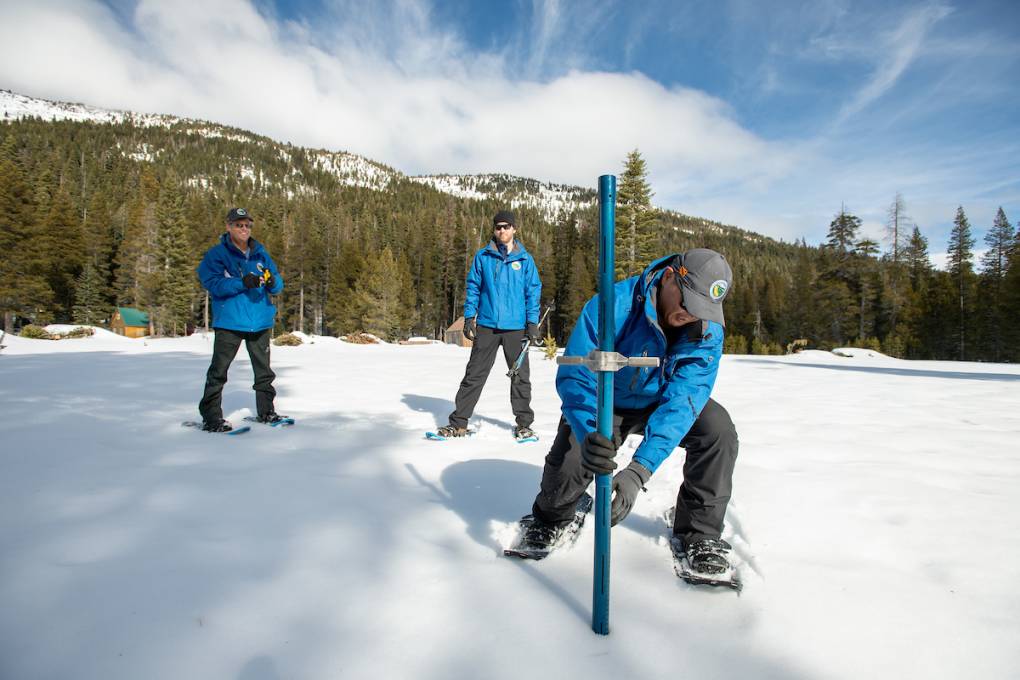
window.__INITIAL_STATE__={
"attachmentsReducer": {
"audio_0": {
"type": "attachments",
"id": "audio_0",
"imgSizes": {
"kqedFullSize": {
"file": "https://ww2.kqed.org/news/wp-content/themes/KQED-unified/img/audio_bgs/background0.jpg"
}
}
},
"audio_1": {
"type": "attachments",
"id": "audio_1",
"imgSizes": {
"kqedFullSize": {
"file": "https://ww2.kqed.org/news/wp-content/themes/KQED-unified/img/audio_bgs/background1.jpg"
}
}
},
"audio_2": {
"type": "attachments",
"id": "audio_2",
"imgSizes": {
"kqedFullSize": {
"file": "https://ww2.kqed.org/news/wp-content/themes/KQED-unified/img/audio_bgs/background2.jpg"
}
}
},
"audio_3": {
"type": "attachments",
"id": "audio_3",
"imgSizes": {
"kqedFullSize": {
"file": "https://ww2.kqed.org/news/wp-content/themes/KQED-unified/img/audio_bgs/background3.jpg"
}
}
},
"audio_4": {
"type": "attachments",
"id": "audio_4",
"imgSizes": {
"kqedFullSize": {
"file": "https://ww2.kqed.org/news/wp-content/themes/KQED-unified/img/audio_bgs/background4.jpg"
}
}
},
"placeholder": {
"type": "attachments",
"id": "placeholder",
"imgSizes": {
"thumbnail": {
"file": "https://cdn.kqed.org/wp-content/uploads/2024/12/KQED-Default-Image-816638274-2000x1333-1-160x107.jpg",
"width": 160,
"height": 107,
"mimeType": "image/jpeg"
},
"medium": {
"file": "https://cdn.kqed.org/wp-content/uploads/2024/12/KQED-Default-Image-816638274-2000x1333-1-800x533.jpg",
"width": 800,
"height": 533,
"mimeType": "image/jpeg"
},
"medium_large": {
"file": "https://cdn.kqed.org/wp-content/uploads/2024/12/KQED-Default-Image-816638274-2000x1333-1-768x512.jpg",
"width": 768,
"height": 512,
"mimeType": "image/jpeg"
},
"large": {
"file": "https://cdn.kqed.org/wp-content/uploads/2024/12/KQED-Default-Image-816638274-2000x1333-1-1020x680.jpg",
"width": 1020,
"height": 680,
"mimeType": "image/jpeg"
},
"1536x1536": {
"file": "https://cdn.kqed.org/wp-content/uploads/2024/12/KQED-Default-Image-816638274-2000x1333-1-1536x1024.jpg",
"width": 1536,
"height": 1024,
"mimeType": "image/jpeg"
},
"fd-lrg": {
"file": "https://cdn.kqed.org/wp-content/uploads/2024/12/KQED-Default-Image-816638274-2000x1333-1-1536x1024.jpg",
"width": 1536,
"height": 1024,
"mimeType": "image/jpeg"
},
"fd-med": {
"file": "https://cdn.kqed.org/wp-content/uploads/2024/12/KQED-Default-Image-816638274-2000x1333-1-1020x680.jpg",
"width": 1020,
"height": 680,
"mimeType": "image/jpeg"
},
"fd-sm": {
"file": "https://cdn.kqed.org/wp-content/uploads/2024/12/KQED-Default-Image-816638274-2000x1333-1-800x533.jpg",
"width": 800,
"height": 533,
"mimeType": "image/jpeg"
},
"post-thumbnail": {
"file": "https://cdn.kqed.org/wp-content/uploads/2024/12/KQED-Default-Image-816638274-2000x1333-1-672x372.jpg",
"width": 672,
"height": 372,
"mimeType": "image/jpeg"
},
"twentyfourteen-full-width": {
"file": "https://cdn.kqed.org/wp-content/uploads/2024/12/KQED-Default-Image-816638274-2000x1333-1-1038x576.jpg",
"width": 1038,
"height": 576,
"mimeType": "image/jpeg"
},
"xxsmall": {
"file": "https://cdn.kqed.org/wp-content/uploads/2024/12/KQED-Default-Image-816638274-2000x1333-1-160x107.jpg",
"width": 160,
"height": 107,
"mimeType": "image/jpeg"
},
"xsmall": {
"file": "https://cdn.kqed.org/wp-content/uploads/2024/12/KQED-Default-Image-816638274-2000x1333-1-672x372.jpg",
"width": 672,
"height": 372,
"mimeType": "image/jpeg"
},
"small": {
"file": "https://cdn.kqed.org/wp-content/uploads/2024/12/KQED-Default-Image-816638274-2000x1333-1-672x372.jpg",
"width": 672,
"height": 372,
"mimeType": "image/jpeg"
},
"xlarge": {
"file": "https://cdn.kqed.org/wp-content/uploads/2024/12/KQED-Default-Image-816638274-2000x1333-1-1020x680.jpg",
"width": 1020,
"height": 680,
"mimeType": "image/jpeg"
},
"full-width": {
"file": "https://cdn.kqed.org/wp-content/uploads/2024/12/KQED-Default-Image-816638274-2000x1333-1-1920x1280.jpg",
"width": 1920,
"height": 1280,
"mimeType": "image/jpeg"
},
"guest-author-32": {
"file": "https://cdn.kqed.org/wp-content/uploads/2025/01/KQED-Default-Image-816638274-1333x1333-1-160x160.jpg",
"width": 32,
"height": 32,
"mimeType": "image/jpeg"
},
"guest-author-50": {
"file": "https://cdn.kqed.org/wp-content/uploads/2025/01/KQED-Default-Image-816638274-1333x1333-1-160x160.jpg",
"width": 50,
"height": 50,
"mimeType": "image/jpeg"
},
"guest-author-64": {
"file": "https://cdn.kqed.org/wp-content/uploads/2025/01/KQED-Default-Image-816638274-1333x1333-1-160x160.jpg",
"width": 64,
"height": 64,
"mimeType": "image/jpeg"
},
"guest-author-96": {
"file": "https://cdn.kqed.org/wp-content/uploads/2025/01/KQED-Default-Image-816638274-1333x1333-1-160x160.jpg",
"width": 96,
"height": 96,
"mimeType": "image/jpeg"
},
"guest-author-128": {
"file": "https://cdn.kqed.org/wp-content/uploads/2025/01/KQED-Default-Image-816638274-1333x1333-1-160x160.jpg",
"width": 128,
"height": 128,
"mimeType": "image/jpeg"
},
"detail": {
"file": "https://cdn.kqed.org/wp-content/uploads/2025/01/KQED-Default-Image-816638274-1333x1333-1-160x160.jpg",
"width": 160,
"height": 160,
"mimeType": "image/jpeg"
},
"kqedFullSize": {
"file": "https://cdn.kqed.org/wp-content/uploads/2024/12/KQED-Default-Image-816638274-2000x1333-1.jpg",
"width": 2000,
"height": 1333
}
}
},
"science_1956335": {
"type": "attachments",
"id": "science_1956335",
"meta": {
"index": "attachments_1716263798",
"site": "science",
"id": "1956335",
"found": true
},
"parent": 1956314,
"imgSizes": {
"twentyfourteen-full-width": {
"file": "https://ww2.kqed.org/app/uploads/sites/35/2020/01/KJ_snow_survey_0419_01_30_201-1038x576.jpg",
"width": 1038,
"mimeType": "image/jpeg",
"height": 576
},
"thumbnail": {
"file": "https://ww2.kqed.org/app/uploads/sites/35/2020/01/KJ_snow_survey_0419_01_30_201-160x107.jpg",
"width": 160,
"mimeType": "image/jpeg",
"height": 107
},
"post-thumbnail": {
"file": "https://ww2.kqed.org/app/uploads/sites/35/2020/01/KJ_snow_survey_0419_01_30_201-672x372.jpg",
"width": 672,
"mimeType": "image/jpeg",
"height": 372
},
"kqedFullSize": {
"file": "https://ww2.kqed.org/app/uploads/sites/35/2020/01/KJ_snow_survey_0419_01_30_201.jpg",
"width": 1200,
"height": 800
},
"large": {
"file": "https://ww2.kqed.org/app/uploads/sites/35/2020/01/KJ_snow_survey_0419_01_30_201-1020x680.jpg",
"width": 1020,
"mimeType": "image/jpeg",
"height": 680
},
"medium": {
"file": "https://ww2.kqed.org/app/uploads/sites/35/2020/01/KJ_snow_survey_0419_01_30_201-800x533.jpg",
"width": 800,
"mimeType": "image/jpeg",
"height": 533
},
"medium_large": {
"file": "https://ww2.kqed.org/app/uploads/sites/35/2020/01/KJ_snow_survey_0419_01_30_201-768x512.jpg",
"width": 768,
"mimeType": "image/jpeg",
"height": 512
}
},
"publishDate": 1580425634,
"modified": 1582760732,
"caption": "Sean de Guzman (right), chief of California Department of Water Resources, Snow Surveys and Water Supply Forecasting Section, inserts a survey pole into the snow during the second media snow survey of the year at Phillips Station in the Sierra Nevada Mountains on January 30, 2020. ",
"description": null,
"title": null,
"credit": "Ken James/California Department of Water Resources",
"status": "inherit",
"isLoading": false,
"fetchFailed": false
},
"science_1957356": {
"type": "attachments",
"id": "science_1957356",
"meta": {
"index": "attachments_1716263798",
"site": "science",
"id": "1957356",
"found": true
},
"parent": 1957355,
"imgSizes": {
"twentyfourteen-full-width": {
"file": "https://ww2.kqed.org/app/uploads/sites/35/2020/02/RS41461_GettyImages-55828573-qut-1038x576.jpg",
"width": 1038,
"mimeType": "image/jpeg",
"height": 576
},
"thumbnail": {
"file": "https://ww2.kqed.org/app/uploads/sites/35/2020/02/RS41461_GettyImages-55828573-qut-160x108.jpg",
"width": 160,
"mimeType": "image/jpeg",
"height": 108
},
"post-thumbnail": {
"file": "https://ww2.kqed.org/app/uploads/sites/35/2020/02/RS41461_GettyImages-55828573-qut-672x372.jpg",
"width": 672,
"mimeType": "image/jpeg",
"height": 372
},
"kqedFullSize": {
"file": "https://ww2.kqed.org/app/uploads/sites/35/2020/02/RS41461_GettyImages-55828573-qut.jpg",
"width": 1920,
"height": 1290
},
"large": {
"file": "https://ww2.kqed.org/app/uploads/sites/35/2020/02/RS41461_GettyImages-55828573-qut-1020x685.jpg",
"width": 1020,
"mimeType": "image/jpeg",
"height": 685
},
"full-width": {
"file": "https://ww2.kqed.org/app/uploads/sites/35/2020/02/RS41461_GettyImages-55828573-qut-1920x1290.jpg",
"width": 1920,
"mimeType": "image/jpeg",
"height": 1290
},
"medium": {
"file": "https://ww2.kqed.org/app/uploads/sites/35/2020/02/RS41461_GettyImages-55828573-qut-800x538.jpg",
"width": 800,
"mimeType": "image/jpeg",
"height": 538
},
"medium_large": {
"file": "https://ww2.kqed.org/app/uploads/sites/35/2020/02/RS41461_GettyImages-55828573-qut-768x516.jpg",
"width": 768,
"mimeType": "image/jpeg",
"height": 516
}
},
"publishDate": 1582302159,
"modified": 1582302192,
"caption": "A fisherman casts his line into the Sacramento River in the Sacramento-San Joaquin River Delta on September 29, 2005 south of Sacramento, California. ",
"description": null,
"title": "RS41461_GettyImages-55828573-qut",
"credit": "Photo by David McNew/Getty Images",
"status": "inherit",
"isLoading": false,
"fetchFailed": false
},
"science_1951389": {
"type": "attachments",
"id": "science_1951389",
"meta": {
"index": "attachments_1716263798",
"site": "science",
"id": "1951389",
"found": true
},
"parent": 1951384,
"imgSizes": {
"twentyfourteen-full-width": {
"file": "https://ww2.kqed.org/app/uploads/sites/35/2019/12/RS40328_GettyImages-668839668-qut-1038x576.jpg",
"width": 1038,
"mimeType": "image/jpeg",
"height": 576
},
"thumbnail": {
"file": "https://ww2.kqed.org/app/uploads/sites/35/2019/12/RS40328_GettyImages-668839668-qut-160x107.jpg",
"width": 160,
"mimeType": "image/jpeg",
"height": 107
},
"post-thumbnail": {
"file": "https://ww2.kqed.org/app/uploads/sites/35/2019/12/RS40328_GettyImages-668839668-qut-672x372.jpg",
"width": 672,
"mimeType": "image/jpeg",
"height": 372
},
"kqedFullSize": {
"file": "https://ww2.kqed.org/app/uploads/sites/35/2019/12/RS40328_GettyImages-668839668-qut.jpg",
"width": 1920,
"height": 1280
},
"large": {
"file": "https://ww2.kqed.org/app/uploads/sites/35/2019/12/RS40328_GettyImages-668839668-qut-1020x680.jpg",
"width": 1020,
"mimeType": "image/jpeg",
"height": 680
},
"complete_open_graph": {
"file": "https://ww2.kqed.org/app/uploads/sites/35/2019/12/RS40328_GettyImages-668839668-qut-1200x800.jpg",
"width": 1200,
"mimeType": "image/jpeg",
"height": 800
},
"full-width": {
"file": "https://ww2.kqed.org/app/uploads/sites/35/2019/12/RS40328_GettyImages-668839668-qut-1920x1280.jpg",
"width": 1920,
"mimeType": "image/jpeg",
"height": 1280
},
"medium": {
"file": "https://ww2.kqed.org/app/uploads/sites/35/2019/12/RS40328_GettyImages-668839668-qut-800x533.jpg",
"width": 800,
"mimeType": "image/jpeg",
"height": 533
},
"medium_large": {
"file": "https://ww2.kqed.org/app/uploads/sites/35/2019/12/RS40328_GettyImages-668839668-qut-768x512.jpg",
"width": 768,
"mimeType": "image/jpeg",
"height": 512
}
},
"publishDate": 1575656184,
"modified": 1575656248,
"caption": "A federal plan could allow oil exploration at the edge of California's Carrizo Plain National Monument. ",
"description": null,
"title": "US-WILDFLOWERS-BLOOM-NATURE",
"credit": "ROBYN BECK/AFP via Getty Images",
"status": "inherit",
"isLoading": false,
"fetchFailed": false
},
"science_1951230": {
"type": "attachments",
"id": "science_1951230",
"meta": {
"index": "attachments_1716263798",
"site": "science",
"id": "1951230",
"found": true
},
"parent": 1951205,
"imgSizes": {
"twentyfourteen-full-width": {
"file": "https://ww2.kqed.org/app/uploads/sites/35/2019/12/RS40322__20190326_A_0809_full-qut-1038x576.jpg",
"width": 1038,
"mimeType": "image/jpeg",
"height": 576
},
"thumbnail": {
"file": "https://ww2.kqed.org/app/uploads/sites/35/2019/12/RS40322__20190326_A_0809_full-qut-160x113.jpg",
"width": 160,
"mimeType": "image/jpeg",
"height": 113
},
"post-thumbnail": {
"file": "https://ww2.kqed.org/app/uploads/sites/35/2019/12/RS40322__20190326_A_0809_full-qut-672x372.jpg",
"width": 672,
"mimeType": "image/jpeg",
"height": 372
},
"kqedFullSize": {
"file": "https://ww2.kqed.org/app/uploads/sites/35/2019/12/RS40322__20190326_A_0809_full-qut.jpg",
"width": 1920,
"height": 1355
},
"large": {
"file": "https://ww2.kqed.org/app/uploads/sites/35/2019/12/RS40322__20190326_A_0809_full-qut-1020x720.jpg",
"width": 1020,
"mimeType": "image/jpeg",
"height": 720
},
"complete_open_graph": {
"file": "https://ww2.kqed.org/app/uploads/sites/35/2019/12/RS40322__20190326_A_0809_full-qut-1200x847.jpg",
"width": 1200,
"mimeType": "image/jpeg",
"height": 847
},
"full-width": {
"file": "https://ww2.kqed.org/app/uploads/sites/35/2019/12/RS40322__20190326_A_0809_full-qut-1920x1355.jpg",
"width": 1920,
"mimeType": "image/jpeg",
"height": 1355
},
"medium": {
"file": "https://ww2.kqed.org/app/uploads/sites/35/2019/12/RS40322__20190326_A_0809_full-qut-800x565.jpg",
"width": 800,
"mimeType": "image/jpeg",
"height": 565
},
"medium_large": {
"file": "https://ww2.kqed.org/app/uploads/sites/35/2019/12/RS40322__20190326_A_0809_full-qut-768x542.jpg",
"width": 768,
"mimeType": "image/jpeg",
"height": 542
}
},
"publishDate": 1575498256,
"modified": 1575498323,
"caption": "Carson Jeffries and Jacob Katz examining a salmon fry taken from a cage in the floodplain near Knaggs Ranch on the Sacramento River.",
"description": null,
"title": "RS40322__20190326_A_0809_full-qut",
"credit": "Jak Wonderly/bioGraphic",
"status": "inherit",
"isLoading": false,
"fetchFailed": false
},
"science_1949827": {
"type": "attachments",
"id": "science_1949827",
"meta": {
"index": "attachments_1716263798",
"site": "science",
"id": "1949827",
"found": true
},
"parent": 1949823,
"imgSizes": {
"twentyfourteen-full-width": {
"file": "https://ww2.kqed.org/app/uploads/sites/35/2019/10/GettyImages-93533212-1038x576.jpg",
"width": 1038,
"mimeType": "image/jpeg",
"height": 576
},
"thumbnail": {
"file": "https://ww2.kqed.org/app/uploads/sites/35/2019/10/GettyImages-93533212-160x107.jpg",
"width": 160,
"mimeType": "image/jpeg",
"height": 107
},
"post-thumbnail": {
"file": "https://ww2.kqed.org/app/uploads/sites/35/2019/10/GettyImages-93533212-672x372.jpg",
"width": 672,
"mimeType": "image/jpeg",
"height": 372
},
"kqedFullSize": {
"file": "https://ww2.kqed.org/app/uploads/sites/35/2019/10/GettyImages-93533212.jpg",
"width": 3000,
"height": 2000
},
"large": {
"file": "https://ww2.kqed.org/app/uploads/sites/35/2019/10/GettyImages-93533212-1020x680.jpg",
"width": 1020,
"mimeType": "image/jpeg",
"height": 680
},
"complete_open_graph": {
"file": "https://ww2.kqed.org/app/uploads/sites/35/2019/10/GettyImages-93533212-1200x800.jpg",
"width": 1200,
"mimeType": "image/jpeg",
"height": 800
},
"full-width": {
"file": "https://ww2.kqed.org/app/uploads/sites/35/2019/10/GettyImages-93533212-1920x1280.jpg",
"width": 1920,
"mimeType": "image/jpeg",
"height": 1280
},
"medium": {
"file": "https://ww2.kqed.org/app/uploads/sites/35/2019/10/GettyImages-93533212-800x533.jpg",
"width": 800,
"mimeType": "image/jpeg",
"height": 533
},
"medium_large": {
"file": "https://ww2.kqed.org/app/uploads/sites/35/2019/10/GettyImages-93533212-768x512.jpg",
"width": 768,
"mimeType": "image/jpeg",
"height": 512
}
},
"publishDate": 1571849488,
"modified": 1571849527,
"caption": "A truck travels the 210 freeway between Los Angeles and cities to the east on December 1, 2009 near Pasadena, California. ",
"description": null,
"title": null,
"credit": "David McNew/Getty Images",
"status": "inherit",
"isLoading": false,
"fetchFailed": false
},
"science_1947542": {
"type": "attachments",
"id": "science_1947542",
"meta": {
"index": "attachments_1716263798",
"site": "science",
"id": "1947542",
"found": true
},
"parent": 1947538,
"imgSizes": {
"twentyfourteen-full-width": {
"file": "https://ww2.kqed.org/app/uploads/sites/35/2019/09/GettyImages-78713689-1038x576.jpg",
"width": 1038,
"mimeType": "image/jpeg",
"height": 576
},
"thumbnail": {
"file": "https://ww2.kqed.org/app/uploads/sites/35/2019/09/GettyImages-78713689-160x107.jpg",
"width": 160,
"mimeType": "image/jpeg",
"height": 107
},
"post-thumbnail": {
"file": "https://ww2.kqed.org/app/uploads/sites/35/2019/09/GettyImages-78713689-672x372.jpg",
"width": 672,
"mimeType": "image/jpeg",
"height": 372
},
"kqedFullSize": {
"file": "https://ww2.kqed.org/app/uploads/sites/35/2019/09/GettyImages-78713689.jpg",
"width": 2048,
"height": 1367
},
"large": {
"file": "https://ww2.kqed.org/app/uploads/sites/35/2019/09/GettyImages-78713689-1020x681.jpg",
"width": 1020,
"mimeType": "image/jpeg",
"height": 681
},
"complete_open_graph": {
"file": "https://ww2.kqed.org/app/uploads/sites/35/2019/09/GettyImages-78713689-1200x801.jpg",
"width": 1200,
"mimeType": "image/jpeg",
"height": 801
},
"full-width": {
"file": "https://ww2.kqed.org/app/uploads/sites/35/2019/09/GettyImages-78713689-1920x1281.jpg",
"width": 1920,
"mimeType": "image/jpeg",
"height": 1281
},
"medium": {
"file": "https://ww2.kqed.org/app/uploads/sites/35/2019/09/GettyImages-78713689-800x534.jpg",
"width": 800,
"mimeType": "image/jpeg",
"height": 534
},
"medium_large": {
"file": "https://ww2.kqed.org/app/uploads/sites/35/2019/09/GettyImages-78713689-768x512.jpg",
"width": 768,
"mimeType": "image/jpeg",
"height": 512
}
},
"publishDate": 1568836135,
"modified": 1568836162,
"caption": "Exhaust billows out of a car tailpipe January 2, 2008 in San Francisco, California. ",
"description": null,
"title": "California Sues EPA Over Ruling Blocking State Emissions Law",
"credit": "Photo by David Paul Morris/Getty Images",
"status": "inherit",
"isLoading": false,
"fetchFailed": false
},
"science_1946807": {
"type": "attachments",
"id": "science_1946807",
"meta": {
"index": "attachments_1716263798",
"site": "science",
"id": "1946807",
"found": true
},
"parent": 1946804,
"imgSizes": {
"twentyfourteen-full-width": {
"file": "https://ww2.kqed.org/app/uploads/sites/35/2019/08/RS38657_CapandTrade_005-1038x576.jpg",
"width": 1038,
"mimeType": "image/jpeg",
"height": 576
},
"thumbnail": {
"file": "https://ww2.kqed.org/app/uploads/sites/35/2019/08/RS38657_CapandTrade_005-160x101.jpg",
"width": 160,
"mimeType": "image/jpeg",
"height": 101
},
"post-thumbnail": {
"file": "https://ww2.kqed.org/app/uploads/sites/35/2019/08/RS38657_CapandTrade_005-672x372.jpg",
"width": 672,
"mimeType": "image/jpeg",
"height": 372
},
"kqedFullSize": {
"file": "https://ww2.kqed.org/app/uploads/sites/35/2019/08/RS38657_CapandTrade_005.jpg",
"width": 1920,
"height": 1212
},
"large": {
"file": "https://ww2.kqed.org/app/uploads/sites/35/2019/08/RS38657_CapandTrade_005-1020x644.jpg",
"width": 1020,
"mimeType": "image/jpeg",
"height": 644
},
"complete_open_graph": {
"file": "https://ww2.kqed.org/app/uploads/sites/35/2019/08/RS38657_CapandTrade_005-1200x758.jpg",
"width": 1200,
"mimeType": "image/jpeg",
"height": 758
},
"full-width": {
"file": "https://ww2.kqed.org/app/uploads/sites/35/2019/08/RS38657_CapandTrade_005-1920x1212.jpg",
"width": 1920,
"mimeType": "image/jpeg",
"height": 1212
},
"medium": {
"file": "https://ww2.kqed.org/app/uploads/sites/35/2019/08/RS38657_CapandTrade_005-800x505.jpg",
"width": 800,
"mimeType": "image/jpeg",
"height": 505
},
"medium_large": {
"file": "https://ww2.kqed.org/app/uploads/sites/35/2019/08/RS38657_CapandTrade_005-768x485.jpg",
"width": 768,
"mimeType": "image/jpeg",
"height": 485
}
},
"publishDate": 1566853665,
"modified": 1566853685,
"caption": "Logs sit in a pile in a lumber yard in Sonora, California on Friday August 23, 2019. ",
"description": null,
"title": "RS38657_CapandTrade_005",
"credit": "Lindsey Moore/KQED",
"status": "inherit",
"isLoading": false,
"fetchFailed": false
},
"science_1943946": {
"type": "attachments",
"id": "science_1943946",
"meta": {
"index": "attachments_1716263798",
"site": "science",
"id": "1943946",
"found": true
},
"parent": 1943941,
"imgSizes": {
"thumbnail": {
"file": "https://ww2.kqed.org/app/uploads/sites/35/2019/06/AdobeStock_241337941-768x432-160x90.jpeg",
"width": 160,
"mimeType": "image/jpeg",
"height": 90
},
"post-thumbnail": {
"file": "https://ww2.kqed.org/app/uploads/sites/35/2019/06/AdobeStock_241337941-768x432-672x372.jpeg",
"width": 672,
"mimeType": "image/jpeg",
"height": 372
},
"kqedFullSize": {
"file": "https://ww2.kqed.org/app/uploads/sites/35/2019/06/AdobeStock_241337941-768x432.jpeg",
"width": 768,
"height": 432
},
"medium_large": {
"file": "https://ww2.kqed.org/app/uploads/sites/35/2019/06/AdobeStock_241337941-768x432-768x432.jpeg",
"width": 768,
"mimeType": "image/jpeg",
"height": 432
}
},
"publishDate": 1561493962,
"modified": 1561493974,
"caption": null,
"description": null,
"title": "AdobeStock_241337941-768x432",
"credit": "Adobe",
"status": "inherit",
"isLoading": false,
"fetchFailed": false
},
"science_1936460": {
"type": "attachments",
"id": "science_1936460",
"meta": {
"index": "attachments_1716263798",
"site": "science",
"id": "1936460",
"found": true
},
"parent": 1936450,
"imgSizes": {
"small": {
"file": "https://ww2.kqed.org/app/uploads/sites/35/2019/01/SatherGate-1180x776-520x342.jpg",
"width": 520,
"mimeType": "image/jpeg",
"height": 342
},
"twentyfourteen-full-width": {
"file": "https://ww2.kqed.org/app/uploads/sites/35/2019/01/SatherGate-1180x776-1038x576.jpg",
"width": 1038,
"mimeType": "image/jpeg",
"height": 576
},
"thumbnail": {
"file": "https://ww2.kqed.org/app/uploads/sites/35/2019/01/SatherGate-1180x776-160x105.jpg",
"width": 160,
"mimeType": "image/jpeg",
"height": 105
},
"fd-sm": {
"file": "https://ww2.kqed.org/app/uploads/sites/35/2019/01/SatherGate-1180x776-960x631.jpg",
"width": 960,
"mimeType": "image/jpeg",
"height": 631
},
"post-thumbnail": {
"file": "https://ww2.kqed.org/app/uploads/sites/35/2019/01/SatherGate-1180x776-672x372.jpg",
"width": 672,
"mimeType": "image/jpeg",
"height": 372
},
"xsmall": {
"file": "https://ww2.kqed.org/app/uploads/sites/35/2019/01/SatherGate-1180x776-375x247.jpg",
"width": 375,
"mimeType": "image/jpeg",
"height": 247
},
"kqedFullSize": {
"file": "https://ww2.kqed.org/app/uploads/sites/35/2019/01/SatherGate-1180x776.jpg",
"width": 1180,
"height": 776
},
"large": {
"file": "https://ww2.kqed.org/app/uploads/sites/35/2019/01/SatherGate-1180x776-1020x671.jpg",
"width": 1020,
"mimeType": "image/jpeg",
"height": 671
},
"xlarge": {
"file": "https://ww2.kqed.org/app/uploads/sites/35/2019/01/SatherGate-1180x776-1180x776.jpg",
"width": 1180,
"mimeType": "image/jpeg",
"height": 776
},
"guest-author-50": {
"file": "https://ww2.kqed.org/app/uploads/sites/35/2019/01/SatherGate-1180x776-50x50.jpg",
"width": 50,
"mimeType": "image/jpeg",
"height": 50
},
"guest-author-96": {
"file": "https://ww2.kqed.org/app/uploads/sites/35/2019/01/SatherGate-1180x776-96x96.jpg",
"width": 96,
"mimeType": "image/jpeg",
"height": 96
},
"medium": {
"file": "https://ww2.kqed.org/app/uploads/sites/35/2019/01/SatherGate-1180x776-800x526.jpg",
"width": 800,
"mimeType": "image/jpeg",
"height": 526
},
"guest-author-64": {
"file": "https://ww2.kqed.org/app/uploads/sites/35/2019/01/SatherGate-1180x776-64x64.jpg",
"width": 64,
"mimeType": "image/jpeg",
"height": 64
},
"guest-author-32": {
"file": "https://ww2.kqed.org/app/uploads/sites/35/2019/01/SatherGate-1180x776-32x32.jpg",
"width": 32,
"mimeType": "image/jpeg",
"height": 32
},
"fd-med": {
"file": "https://ww2.kqed.org/app/uploads/sites/35/2019/01/SatherGate-1180x776-1180x776.jpg",
"width": 1180,
"mimeType": "image/jpeg",
"height": 776
},
"detail": {
"file": "https://ww2.kqed.org/app/uploads/sites/35/2019/01/SatherGate-1180x776-150x150.jpg",
"width": 150,
"mimeType": "image/jpeg",
"height": 150
},
"medium_large": {
"file": "https://ww2.kqed.org/app/uploads/sites/35/2019/01/SatherGate-1180x776-768x505.jpg",
"width": 768,
"mimeType": "image/jpeg",
"height": 505
},
"guest-author-128": {
"file": "https://ww2.kqed.org/app/uploads/sites/35/2019/01/SatherGate-1180x776-128x128.jpg",
"width": 128,
"mimeType": "image/jpeg",
"height": 128
},
"xxsmall": {
"file": "https://ww2.kqed.org/app/uploads/sites/35/2019/01/SatherGate-1180x776-240x158.jpg",
"width": 240,
"mimeType": "image/jpeg",
"height": 158
}
},
"publishDate": 1546908550,
"modified": 1614900330,
"caption": "Students walk through Sproul Plaza on the UC Berkeley campus.",
"description": null,
"title": null,
"credit": "Justin Sullivan/Getty Images",
"status": "inherit",
"altTag": null,
"isLoading": false,
"fetchFailed": false
},
"science_1937352": {
"type": "attachments",
"id": "science_1937352",
"meta": {
"index": "attachments_1716263798",
"site": "science",
"id": "1937352",
"found": true
},
"parent": 1937151,
"imgSizes": {
"twentyfourteen-full-width": {
"file": "https://ww2.kqed.org/app/uploads/sites/35/2019/01/835426327_b9c8e58fb6_o-1-1038x576.jpg",
"width": 1038,
"mimeType": "image/jpeg",
"height": 576
},
"thumbnail": {
"file": "https://ww2.kqed.org/app/uploads/sites/35/2019/01/835426327_b9c8e58fb6_o-1-160x90.jpg",
"width": 160,
"mimeType": "image/jpeg",
"height": 90
},
"post-thumbnail": {
"file": "https://ww2.kqed.org/app/uploads/sites/35/2019/01/835426327_b9c8e58fb6_o-1-672x372.jpg",
"width": 672,
"mimeType": "image/jpeg",
"height": 372
},
"kqedFullSize": {
"file": "https://ww2.kqed.org/app/uploads/sites/35/2019/01/835426327_b9c8e58fb6_o-1-e1548787753264.jpg",
"width": 1920,
"height": 1080
},
"large": {
"file": "https://ww2.kqed.org/app/uploads/sites/35/2019/01/835426327_b9c8e58fb6_o-1-1020x574.jpg",
"width": 1020,
"mimeType": "image/jpeg",
"height": 574
},
"complete_open_graph": {
"file": "https://ww2.kqed.org/app/uploads/sites/35/2019/01/835426327_b9c8e58fb6_o-1-1200x675.jpg",
"width": 1200,
"mimeType": "image/jpeg",
"height": 675
},
"guest-author-50": {
"file": "https://ww2.kqed.org/app/uploads/sites/35/2019/01/835426327_b9c8e58fb6_o-1-50x50.jpg",
"width": 50,
"mimeType": "image/jpeg",
"height": 50
},
"guest-author-96": {
"file": "https://ww2.kqed.org/app/uploads/sites/35/2019/01/835426327_b9c8e58fb6_o-1-96x96.jpg",
"width": 96,
"mimeType": "image/jpeg",
"height": 96
},
"medium": {
"file": "https://ww2.kqed.org/app/uploads/sites/35/2019/01/835426327_b9c8e58fb6_o-1-800x450.jpg",
"width": 800,
"mimeType": "image/jpeg",
"height": 450
},
"guest-author-64": {
"file": "https://ww2.kqed.org/app/uploads/sites/35/2019/01/835426327_b9c8e58fb6_o-1-64x64.jpg",
"width": 64,
"mimeType": "image/jpeg",
"height": 64
},
"guest-author-32": {
"file": "https://ww2.kqed.org/app/uploads/sites/35/2019/01/835426327_b9c8e58fb6_o-1-32x32.jpg",
"width": 32,
"mimeType": "image/jpeg",
"height": 32
},
"full-width": {
"file": "https://ww2.kqed.org/app/uploads/sites/35/2019/01/835426327_b9c8e58fb6_o-1-1920x1080.jpg",
"width": 1920,
"mimeType": "image/jpeg",
"height": 1080
},
"detail": {
"file": "https://ww2.kqed.org/app/uploads/sites/35/2019/01/835426327_b9c8e58fb6_o-1-150x150.jpg",
"width": 150,
"mimeType": "image/jpeg",
"height": 150
},
"medium_large": {
"file": "https://ww2.kqed.org/app/uploads/sites/35/2019/01/835426327_b9c8e58fb6_o-1-768x432.jpg",
"width": 768,
"mimeType": "image/jpeg",
"height": 432
},
"guest-author-128": {
"file": "https://ww2.kqed.org/app/uploads/sites/35/2019/01/835426327_b9c8e58fb6_o-1-128x128.jpg",
"width": 128,
"mimeType": "image/jpeg",
"height": 128
}
},
"publishDate": 1548787732,
"modified": 1548807179,
"caption": "Sunset over Bakersfield, California, in the San Joaquin Valley.",
"description": null,
"title": "835426327_b9c8e58fb6_o (1)",
"credit": "Andy Castro",
"status": "inherit",
"isLoading": false,
"fetchFailed": false
},
"science_1923160": {
"type": "attachments",
"id": "science_1923160",
"meta": {
"index": "attachments_1716263798",
"site": "science",
"id": "1923160",
"found": true
},
"parent": 1923154,
"imgSizes": {
"small": {
"file": "https://ww2.kqed.org/app/uploads/sites/35/2018/04/900_01_ca170561-520x346.jpg",
"width": 520,
"mimeType": "image/jpeg",
"height": 346
},
"thumbnail": {
"file": "https://ww2.kqed.org/app/uploads/sites/35/2018/04/900_01_ca170561-160x107.jpg",
"width": 160,
"mimeType": "image/jpeg",
"height": 107
},
"post-thumbnail": {
"file": "https://ww2.kqed.org/app/uploads/sites/35/2018/04/900_01_ca170561-672x372.jpg",
"width": 672,
"mimeType": "image/jpeg",
"height": 372
},
"xsmall": {
"file": "https://ww2.kqed.org/app/uploads/sites/35/2018/04/900_01_ca170561-375x250.jpg",
"width": 375,
"mimeType": "image/jpeg",
"height": 250
},
"kqedFullSize": {
"file": "https://ww2.kqed.org/app/uploads/sites/35/2018/04/900_01_ca170561.jpg",
"width": 800,
"height": 533
},
"guest-author-50": {
"file": "https://ww2.kqed.org/app/uploads/sites/35/2018/04/900_01_ca170561-50x50.jpg",
"width": 50,
"mimeType": "image/jpeg",
"height": 50
},
"guest-author-96": {
"file": "https://ww2.kqed.org/app/uploads/sites/35/2018/04/900_01_ca170561-96x96.jpg",
"width": 96,
"mimeType": "image/jpeg",
"height": 96
},
"medium": {
"file": "https://ww2.kqed.org/app/uploads/sites/35/2018/04/900_01_ca170561-800x533.jpg",
"width": 800,
"mimeType": "image/jpeg",
"height": 533
},
"guest-author-64": {
"file": "https://ww2.kqed.org/app/uploads/sites/35/2018/04/900_01_ca170561-64x64.jpg",
"width": 64,
"mimeType": "image/jpeg",
"height": 64
},
"guest-author-32": {
"file": "https://ww2.kqed.org/app/uploads/sites/35/2018/04/900_01_ca170561-32x32.jpg",
"width": 32,
"mimeType": "image/jpeg",
"height": 32
},
"detail": {
"file": "https://ww2.kqed.org/app/uploads/sites/35/2018/04/900_01_ca170561-150x150.jpg",
"width": 150,
"mimeType": "image/jpeg",
"height": 150
},
"medium_large": {
"file": "https://ww2.kqed.org/app/uploads/sites/35/2018/04/900_01_ca170561-768x512.jpg",
"width": 768,
"mimeType": "image/jpeg",
"height": 512
},
"guest-author-128": {
"file": "https://ww2.kqed.org/app/uploads/sites/35/2018/04/900_01_ca170561-128x128.jpg",
"width": 128,
"mimeType": "image/jpeg",
"height": 128
},
"xxsmall": {
"file": "https://ww2.kqed.org/app/uploads/sites/35/2018/04/900_01_ca170561-240x160.jpg",
"width": 240,
"mimeType": "image/jpeg",
"height": 160
}
},
"publishDate": 1524843773,
"modified": 1528386974,
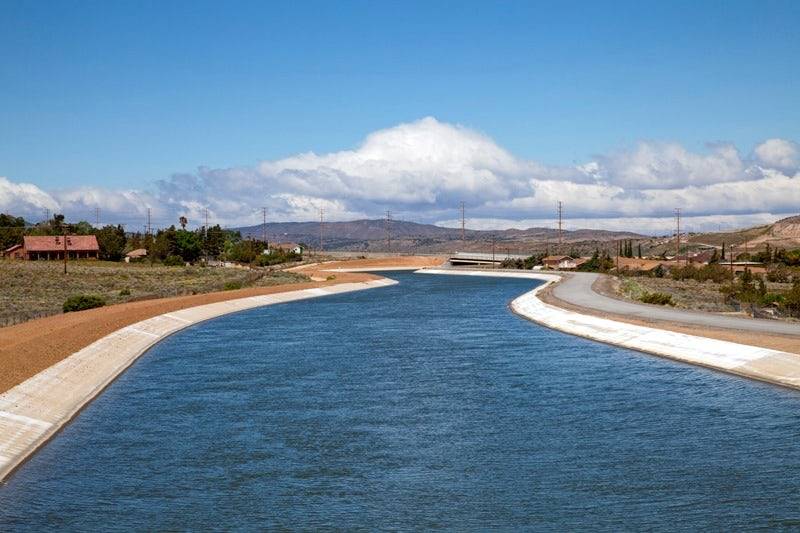
"caption": "The California Aqueduct is the state’s largest and longest water transport system, fed by the Sacramento-San Joaquin Delta.",
"description": null,
"title": "900_01_ca170561",
"credit": "Citizens of the Planet/Education Images/UIG via Getty Images",
"status": "inherit",
"isLoading": false,
"fetchFailed": false
},
"science_1924845": {
"type": "attachments",
"id": "science_1924845",
"meta": {
"index": "attachments_1716263798",
"site": "science",
"id": "1924845",
"found": true
},
"parent": 1924801,
"imgSizes": {
"small": {
"file": "https://ww2.kqed.org/app/uploads/sites/35/2018/05/GettyImages-474029596-520x347.jpg",
"width": 520,
"mimeType": "image/jpeg",
"height": 347
},
"twentyfourteen-full-width": {
"file": "https://ww2.kqed.org/app/uploads/sites/35/2018/05/GettyImages-474029596-1038x576.jpg",
"width": 1038,
"mimeType": "image/jpeg",
"height": 576
},
"thumbnail": {
"file": "https://ww2.kqed.org/app/uploads/sites/35/2018/05/GettyImages-474029596-160x107.jpg",
"width": 160,
"mimeType": "image/jpeg",
"height": 107
},
"fd-sm": {
"file": "https://ww2.kqed.org/app/uploads/sites/35/2018/05/GettyImages-474029596-960x640.jpg",
"width": 960,
"mimeType": "image/jpeg",
"height": 640
},
"post-thumbnail": {
"file": "https://ww2.kqed.org/app/uploads/sites/35/2018/05/GettyImages-474029596-672x372.jpg",
"width": 672,
"mimeType": "image/jpeg",
"height": 372
},
"xsmall": {
"file": "https://ww2.kqed.org/app/uploads/sites/35/2018/05/GettyImages-474029596-375x250.jpg",
"width": 375,
"mimeType": "image/jpeg",
"height": 250
},
"kqedFullSize": {
"file": "https://ww2.kqed.org/app/uploads/sites/35/2018/05/GettyImages-474029596.jpg",
"width": 3000,
"height": 2000
},
"large": {
"file": "https://ww2.kqed.org/app/uploads/sites/35/2018/05/GettyImages-474029596-1020x680.jpg",
"width": 1020,
"mimeType": "image/jpeg",
"height": 680
},
"xlarge": {
"file": "https://ww2.kqed.org/app/uploads/sites/35/2018/05/GettyImages-474029596-1180x787.jpg",
"width": 1180,
"mimeType": "image/jpeg",
"height": 787
},
"complete_open_graph": {
"file": "https://ww2.kqed.org/app/uploads/sites/35/2018/05/GettyImages-474029596-1200x800.jpg",
"width": 1200,
"mimeType": "image/jpeg",
"height": 800
},
"guest-author-50": {
"file": "https://ww2.kqed.org/app/uploads/sites/35/2018/05/GettyImages-474029596-50x50.jpg",
"width": 50,
"mimeType": "image/jpeg",
"height": 50
},
"guest-author-96": {
"file": "https://ww2.kqed.org/app/uploads/sites/35/2018/05/GettyImages-474029596-96x96.jpg",
"width": 96,
"mimeType": "image/jpeg",
"height": 96
},
"medium": {
"file": "https://ww2.kqed.org/app/uploads/sites/35/2018/05/GettyImages-474029596-800x533.jpg",
"width": 800,
"mimeType": "image/jpeg",
"height": 533
},
"guest-author-64": {
"file": "https://ww2.kqed.org/app/uploads/sites/35/2018/05/GettyImages-474029596-64x64.jpg",
"width": 64,
"mimeType": "image/jpeg",
"height": 64
},
"guest-author-32": {
"file": "https://ww2.kqed.org/app/uploads/sites/35/2018/05/GettyImages-474029596-32x32.jpg",
"width": 32,
"mimeType": "image/jpeg",
"height": 32
},
"fd-lrg": {
"file": "https://ww2.kqed.org/app/uploads/sites/35/2018/05/GettyImages-474029596-1920x1280.jpg",
"width": 1920,
"mimeType": "image/jpeg",
"height": 1280
},
"fd-med": {
"file": "https://ww2.kqed.org/app/uploads/sites/35/2018/05/GettyImages-474029596-1180x787.jpg",
"width": 1180,
"mimeType": "image/jpeg",
"height": 787
},
"full-width": {
"file": "https://ww2.kqed.org/app/uploads/sites/35/2018/05/GettyImages-474029596-1920x1280.jpg",
"width": 1920,
"mimeType": "image/jpeg",
"height": 1280
},
"detail": {
"file": "https://ww2.kqed.org/app/uploads/sites/35/2018/05/GettyImages-474029596-150x150.jpg",
"width": 150,
"mimeType": "image/jpeg",
"height": 150
},
"medium_large": {
"file": "https://ww2.kqed.org/app/uploads/sites/35/2018/05/GettyImages-474029596-768x512.jpg",
"width": 768,
"mimeType": "image/jpeg",
"height": 512
},
"guest-author-128": {
"file": "https://ww2.kqed.org/app/uploads/sites/35/2018/05/GettyImages-474029596-128x128.jpg",
"width": 128,
"mimeType": "image/jpeg",
"height": 128
},
"xxsmall": {
"file": "https://ww2.kqed.org/app/uploads/sites/35/2018/05/GettyImages-474029596-240x160.jpg",
"width": 240,
"mimeType": "image/jpeg",
"height": 160
}
},
"publishDate": 1527814508,
"modified": 1527814552,
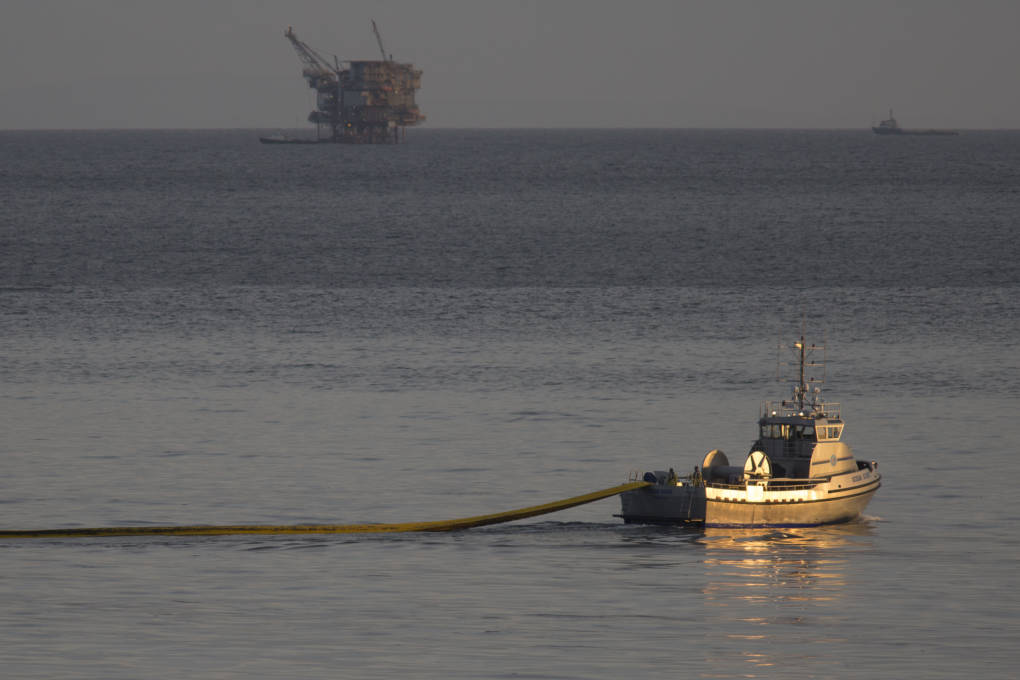
"caption": "A boat with the nonprofit collective Clean Seas deploys a boom, with an oil platform seen in the distance, to try to contain an oil spill on May 19, 2015 north of Goleta, California.",
"description": null,
"title": "Ruptured Pipeline Spills Oil Along Santa Barbara Coast",
"credit": "Robyn Beck/AFP/Getty Images",
"status": "inherit",
"isLoading": false,
"fetchFailed": false
}
},
"audioPlayerReducer": {
"postId": "stream_live",
"isPaused": true,
"isPlaying": false,
"pfsActive": false,
"pledgeModalIsOpen": true,
"playerDrawerIsOpen": false,
"liveAudioPlayStartedAt": 0,
"liveAudioPlayContext": ""
},
"authorsReducer": {
"byline_science_1957355": {
"type": "authors",
"id": "byline_science_1957355",
"meta": {
"override": true
},
"slug": "byline_science_1957355",
"name": "Adam Beam \u003cbr />Associated Press\u003cbr>",
"isLoading": false
},
"byline_science_1951384": {
"type": "authors",
"id": "byline_science_1951384",
"meta": {
"override": true
},
"slug": "byline_science_1951384",
"name": "Julie Cart \u003cbr /> CalMatters \u003cBR>",
"isLoading": false
},
"byline_science_1951205": {
"type": "authors",
"id": "byline_science_1951205",
"meta": {
"override": true
},
"slug": "byline_science_1951205",
"name": " Robin Meadows \u003cbr />bioGraphic\u003cbr>",
"isLoading": false
},
"byline_science_1943941": {
"type": "authors",
"id": "byline_science_1943941",
"meta": {
"override": true
},
"slug": "byline_science_1943941",
"name": "Sharon Begley \u003cbr/> STAT News \u003cbr>",
"isLoading": false
},
"byline_science_1925354": {
"type": "authors",
"id": "byline_science_1925354",
"meta": {
"override": true
},
"slug": "byline_science_1925354",
"name": "Erik Porse\u003cbr />Water Deeply",
"isLoading": false
},
"jbrooks": {
"type": "authors",
"id": "80",
"meta": {
"index": "authors_1716337520",
"id": "80",
"found": true
},
"name": "Jon Brooks",
"firstName": "Jon",
"lastName": "Brooks",
"slug": "jbrooks",
"email": "jbrooks@kqed.org",
"display_author_email": true,
"staff_mastheads": [
"science"
],
"title": "Digital Editor",
"bio": "Jon Brooks is a former Digital Editor for KQED Science. He is the former editor of KQED’s daily news blog, News Fix. In 2014, he won a California Journalism Award for his coverage of ride services like Uber and Lyft and the taxi industry. A veteran blogger, he previously worked for Yahoo! in various news writing and editing roles. Jon is also a playwright whose work has been produced in San Francisco, New York, Italy, and around the U.S. He has written about film for his own blog and studied film at Boston University.",
"avatar": "https://secure.gravatar.com/avatar/98887f7ed1c876ed414d4c915e969584?s=600&d=blank&r=g",
"twitter": "jbrooksfoy",
"facebook": null,
"instagram": null,
"linkedin": null,
"sites": [
{
"site": "arts",
"roles": [
"Contributor",
"editor"
]
},
{
"site": "news",
"roles": [
"author"
]
},
{
"site": "futureofyou",
"roles": [
"administrator"
]
},
{
"site": "mindshift",
"roles": [
"editor"
]
},
{
"site": "stateofhealth",
"roles": [
"editor"
]
},
{
"site": "science",
"roles": [
"administrator"
]
},
{
"site": "quest",
"roles": [
"editor"
]
}
],
"headData": {
"title": "Jon Brooks | KQED",
"description": "Digital Editor",
"ogImgSrc": "https://secure.gravatar.com/avatar/98887f7ed1c876ed414d4c915e969584?s=600&d=blank&r=g",
"twImgSrc": "https://secure.gravatar.com/avatar/98887f7ed1c876ed414d4c915e969584?s=600&d=blank&r=g"
},
"isLoading": false,
"link": "/author/jbrooks"
},
"parcuni": {
"type": "authors",
"id": "11368",
"meta": {
"index": "authors_1716337520",
"id": "11368",
"found": true
},
"name": "Peter Arcuni",
"firstName": "Peter",
"lastName": "Arcuni",
"slug": "parcuni",
"email": "parcuni@KQED.org",
"display_author_email": false,
"staff_mastheads": [
"science"
],
"title": "Reporter",
"bio": "Peter reports radio and online stories for \u003cem>KQED Science\u003c/em>. His work has also appeared on the \u003cem>The California Report\u003c/em> morning show and \u003cem>KQED News\u003c/em>. His production credits include \u003cem>The California Report, The California Report Magazine\u003c/em> and KQED's local news podcast \u003cem>The Bay\u003c/em>. Other credits include NPR's \u003cem>All Things Considered\u003c/em>, WNYC's \u003cem>Science Friday\u003c/em>, WBUR's \u003cem>Here & Now\u003c/em>, WIRED and SFGate. Peter graduated from Brown University and earned a master's degree in journalism from Stanford. He's covered everything from homelessness to wildfires, health, the environment, arts and Thanksgiving in San Quentin prison. In other lives, he played rock n roll music and studied neuroscience. You can email him at: parcuni@kqed.org",
"avatar": "https://secure.gravatar.com/avatar/d5032f6f27199d478af34ad2e1d98732?s=600&d=blank&r=g",
"twitter": "peterarcuni",
"facebook": null,
"instagram": null,
"linkedin": null,
"sites": [
{
"site": "news",
"roles": [
"editor"
]
},
{
"site": "science",
"roles": [
"editor"
]
}
],
"headData": {
"title": "Peter Arcuni | KQED",
"description": "Reporter",
"ogImgSrc": "https://secure.gravatar.com/avatar/d5032f6f27199d478af34ad2e1d98732?s=600&d=blank&r=g",
"twImgSrc": "https://secure.gravatar.com/avatar/d5032f6f27199d478af34ad2e1d98732?s=600&d=blank&r=g"
},
"isLoading": false,
"link": "/author/parcuni"
},
"aahmed": {
"type": "authors",
"id": "11428",
"meta": {
"index": "authors_1716337520",
"id": "11428",
"found": true
},
"name": "Amel Ahmed",
"firstName": "Amel",
"lastName": "Ahmed",
"slug": "aahmed",
"email": "aahmed@kqed.org",
"display_author_email": false,
"staff_mastheads": [],
"title": "KQED Contributor",
"bio": "Amel Ahmed is a reporter for KQED. Prior to joining KQED, Amel worked at Al Jazeera America, Al Jazeera English, Democracy Now! and Punched Productions. She also helped produce \u003cem>Changing Face of Harlem\u003c/em>, a documentary that tracked gentrification in Harlem over a period of ten years. She is a 2013 graduate of Brooklyn Law School and is currently researching war on terror prosecutions for an upcoming book.",
"avatar": "https://secure.gravatar.com/avatar/c8b48ebc98e770640f3013c470d23f3e?s=600&d=blank&r=g",
"twitter": "amelscript",
"facebook": null,
"instagram": null,
"linkedin": null,
"sites": [
{
"site": "futureofyou",
"roles": []
},
{
"site": "science",
"roles": []
}
],
"headData": {
"title": "Amel Ahmed | KQED",
"description": "KQED Contributor",
"ogImgSrc": "https://secure.gravatar.com/avatar/c8b48ebc98e770640f3013c470d23f3e?s=600&d=blank&r=g",
"twImgSrc": "https://secure.gravatar.com/avatar/c8b48ebc98e770640f3013c470d23f3e?s=600&d=blank&r=g"
},
"isLoading": false,
"link": "/author/aahmed"
},
"kevinstark": {
"type": "authors",
"id": "11608",
"meta": {
"index": "authors_1716337520",
"id": "11608",
"found": true
},
"name": "Kevin Stark",
"firstName": "Kevin",
"lastName": "Stark",
"slug": "kevinstark",
"email": "kstark@kqed.org",
"display_author_email": true,
"staff_mastheads": [
"science"
],
"title": "Senior Editor",
"bio": "Kevin is a senior editor for KQED Science, managing the station's health and climate desks. His journalism career began in the Pacific Northwest, and he later became a lead reporter for the San Francisco Public Press. His work has appeared in Pacific Standard magazine, the Energy News Network, the Center for Investigative Reporting's Reveal and WBEZ in Chicago. Kevin joined KQED in 2019, and has covered issues related to energy, wildfire, climate change and the environment.",
"avatar": "https://secure.gravatar.com/avatar/365aaa4b597d3a8374f67504ff0facd323d7906e8eb4be0a7efd2427408e802c?s=600&d=blank&r=g",
"twitter": "starkkev",
"bluesky": null,
"facebook": null,
"instagram": null,
"linkedin": null,
"sites": [
{
"site": "",
"roles": [
"editor"
]
},
{
"site": "news",
"roles": [
"editor"
]
},
{
"site": "science",
"roles": [
"administrator"
]
}
],
"headData": {
"title": "Kevin Stark | KQED",
"description": "Senior Editor",
"ogImgSrc": "https://secure.gravatar.com/avatar/365aaa4b597d3a8374f67504ff0facd323d7906e8eb4be0a7efd2427408e802c?s=600&d=blank&r=g",
"twImgSrc": "https://secure.gravatar.com/avatar/365aaa4b597d3a8374f67504ff0facd323d7906e8eb4be0a7efd2427408e802c?s=600&d=blank&r=g"
},
"isLoading": false,
"link": "/author/kevinstark"
}
},
"pagesReducer": {
"science_tag_california": {
"type": "terms",
"id": "science_5178",
"meta": {
"index": "terms_1716263798",
"site": "science",
"id": "5178",
"score": 6.849299
},
"featImg": null,
"name": "California",
"description": null,
"taxonomy": "tag",
"headData": {
"twImgId": null,
"twTitle": null,
"ogTitle": null,
"ogImgId": null,
"twDescription": null,
"description": null,
"title": "California Archives | KQED Science",
"ogDescription": null
},
"ttid": 5178,
"slug": "california",
"isLoading": false,
"title": "California",
"pageMeta": {
"site": "science",
"WpPageTemplate": "page-topic-editorial",
"currentPage": 19
},
"blocks": [
{
"blockName": "kqed/post-list",
"attrs": {
"layout": "cardArticle2",
"query": "posts/science?tag=california",
"seeMore": false,
"paginated": true,
"page": 19
}
},
{
"blockName": "kqed/ad"
}
]
}
},
"pfsSessionReducer": {},
"postsReducer": {
"stream_live": {
"type": "live",
"id": "stream_live",
"audioUrl": "https://streams.kqed.org/kqedradio",
"title": "Live Stream",
"excerpt": "Live Stream information currently unavailable.",
"link": "/radio",
"featImg": "",
"label": {
"name": "KQED Live",
"link": "/"
}
},
"stream_kqedNewscast": {
"type": "posts",
"id": "stream_kqedNewscast",
"audioUrl": "https://www.kqed.org/.stream/anon/radio/RDnews/newscast.mp3?_=1",
"title": "KQED Newscast",
"featImg": "",
"label": {
"name": "88.5 FM",
"link": "/"
}
},
"science_1957569": {
"type": "posts",
"id": "science_1957569",
"meta": {
"index": "posts_1716263798",
"site": "science",
"id": "1957569",
"score": null,
"sort": [
1582840404000
]
},
"parent": 0,
"labelTerm": {},
"blocks": [],
"publishDate": 1582840404,
"format": "standard",
"title": "Clear Skies Mean California’s Snowpack Is Now Below Half of Normal",
"headTitle": "Clear Skies Mean California’s Snowpack Is Now Below Half of Normal | KQED",
"content": "\u003cp class=\"p1\">After two dry months in a row, state water officials say California’s snowpack is at \u003ca href=\"http://cdec.water.ca.gov/snowapp/sweq.action\" target=\"_blank\" rel=\"noopener noreferrer\">46% of normal\u003c/a> for this time of year.\u003c/p>\n\u003cp class=\"p1\">As usual, the\u003ca href=\"https://water.ca.gov/News/News-Releases/2020/January-2020-Snow-Survey\"> \u003cspan class=\"s1\">California Department of Water Resources\u003c/span>\u003c/a> on Thursday conducted the third monthly snow survey of 2020 at the Phillips Station snow course in the Sierra Nevada, south of Lake Tahoe.\u003c/p>\n\u003cp class=\"p1\">The snow course is one of 260 stations that measure snowpack statewide. The data \u003ca href=\"https://www.kqed.org/science/1936797/why-we-cant-stop-talking-about-californias-sierra-snowpack\">\u003cspan class=\"s1\">help scientists\u003c/span>\u003c/a> determine how much water will run off during the spring and summer months to replenish California’s reservoirs.\u003c/p>\n\u003cp class=\"p1\">Sierra snowpack accounts for about one-third of California’s annual\u003ca href=\"https://sierranevada.ca.gov/ca-primary-watershed/\"> \u003cspan class=\"s1\">water supply\u003c/span>\u003c/a>.\u003c/p>\n\u003cp class=\"p1\">DWR’s Jan. 2 snow survey tracked the Sierra snowpack at close to average for the start of the year. By the end of January, the statewide percentage was down to 72%. At the end of one of the driest Februarys in state history, the snowpack is now below half of the historical average.\u003c/p>\n\u003cp>[ad fullwidth]\u003c/p>\n\u003cp>About 23.3% of the state is now in “moderate drought,” up from 9.5% last week. That’s according to the \u003ca href=\"https://droughtmonitor.unl.edu/CurrentMap/StateDroughtMonitor.aspx?CA\" target=\"_blank\" rel=\"noopener noreferrer\">U.S. Drought Monitor\u003c/a>, a weekly report issued by the National Oceanic and Atmospheric Administration, the U.S. Department of Agriculture and the University of Nebraska-Lincoln.\u003c/p>\n\u003cp class=\"p2\">DWR spokesman Chris Orrock says the dry winter is in stark contrast to last year.\u003c/p>\n\u003cp class=\"p2\">“In February of 2019, it was probably one of the wettest Februarys we’ve ever had. Some areas of the Sierra accumulated up to 50 feet of snow,” Orrock said. “This year in the majority of the Central Valley and Northern California we had little to no measurable precipitation.”\u003c/p>\n\u003cp class=\"p2\">But thanks in part to a snowy and cold 2019 in California’s mountains, Orrock says the state’s reservoirs still have plenty of water.\u003c/p>\n\u003cp class=\"p2\">“They’re all at or near those averages that they would be at this time of year anyhow because of that good snowpack we had last year,” Orrock said.\u003c/p>\n\u003cp class=\"p2\">California typically receives about half of its annual precipitation in the months of December, January and February.\u003c/p>\n\u003cp>Snowpack is an important insurance policy to protect against wildfire, says John Abatzoglou, a climatologist at University of California, Merced.\u003c/p>\n\u003cp class=\"p1\">Snow melt provides a sustained, gradual source of moisture and keeps those forested areas wet later into the spring and early summer.\u003c/p>\n\u003cp>A subpar snowpack year sets the stage for an early start to fire season, Abatzoglou says.\u003c/p>\n\u003cp class=\"p1\">“California certainly has seen longer fire seasons, lasting both later in the fall and starting early in the spring,” he said. “And unfortunately, the lack of precipitation across the state — we’ve basically struck out during the two wettest months of the year.”\u003c/p>\n\u003cp class=\"p1\">Cal Fire, the state agency responsible for fire prevention in California, says that the current dry and windy conditions have already contributed to wildfires, which is usual for wintertime.\u003c/p>\n\u003cp>\u003c/p>\n\u003cp>Orrock says water officials are now hoping for a repeat of the 2018 wet season, when a series of March storms replenished the snowpack in time for the spring runoff.\u003c/p>\n\n",
"stats": {
"hasVideo": false,
"hasChartOrMap": false,
"hasAudio": false,
"hasPolis": false,
"wordCount": 526,
"hasGoogleForm": false,
"hasGallery": false,
"hasHearkenModule": false,
"iframeSrcs": [],
"paragraphCount": 6
},
"modified": 1704847725,
"excerpt": "Thursday’s manual snowpack readings say California's snowpack is 46% of normal for this time of year. ",
"headData": {
"twImgId": "",
"twTitle": "",
"ogTitle": "",
"ogImgId": "",
"twDescription": "",
"description": "Thursday’s manual snowpack readings say California's snowpack is 46% of normal for this time of year. ",
"title": "Clear Skies Mean California’s Snowpack Is Now Below Half of Normal | KQED",
"ogDescription": "",
"schema": {
"@context": "https://schema.org",
"@type": "Article",
"headline": "Clear Skies Mean California’s Snowpack Is Now Below Half of Normal",
"datePublished": "2020-02-27T13:53:24-08:00",
"dateModified": "2024-01-09T16:48:45-08:00",
"image": "https://cdn.kqed.org/wp-content/uploads/2020/02/KQED-OG-Image@1x.png"
}
},
"guestAuthors": [],
"slug": "clear-skies-mean-californias-snowpack-is-now-below-half-of-normal",
"status": "publish",
"sticky": false,
"source": "Water",
"path": "/science/1957569/clear-skies-mean-californias-snowpack-is-now-below-half-of-normal",
"audioTrackLength": null,
"parsedContent": [
{
"type": "contentString",
"content": "\u003cdiv class=\"post-body\">\u003cp>\u003cp class=\"p1\">After two dry months in a row, state water officials say California’s snowpack is at \u003ca href=\"http://cdec.water.ca.gov/snowapp/sweq.action\" target=\"_blank\" rel=\"noopener noreferrer\">46% of normal\u003c/a> for this time of year.\u003c/p>\n\u003cp class=\"p1\">As usual, the\u003ca href=\"https://water.ca.gov/News/News-Releases/2020/January-2020-Snow-Survey\"> \u003cspan class=\"s1\">California Department of Water Resources\u003c/span>\u003c/a> on Thursday conducted the third monthly snow survey of 2020 at the Phillips Station snow course in the Sierra Nevada, south of Lake Tahoe.\u003c/p>\n\u003cp class=\"p1\">The snow course is one of 260 stations that measure snowpack statewide. The data \u003ca href=\"https://www.kqed.org/science/1936797/why-we-cant-stop-talking-about-californias-sierra-snowpack\">\u003cspan class=\"s1\">help scientists\u003c/span>\u003c/a> determine how much water will run off during the spring and summer months to replenish California’s reservoirs.\u003c/p>\n\u003cp class=\"p1\">Sierra snowpack accounts for about one-third of California’s annual\u003ca href=\"https://sierranevada.ca.gov/ca-primary-watershed/\"> \u003cspan class=\"s1\">water supply\u003c/span>\u003c/a>.\u003c/p>\n\u003cp class=\"p1\">DWR’s Jan. 2 snow survey tracked the Sierra snowpack at close to average for the start of the year. By the end of January, the statewide percentage was down to 72%. At the end of one of the driest Februarys in state history, the snowpack is now below half of the historical average.\u003c/p>\n\u003cp>\u003c/p>\u003c/div>",
"attributes": {
"named": {},
"numeric": []
}
},
{
"type": "component",
"content": "",
"name": "ad",
"attributes": {
"named": {
"label": "fullwidth"
},
"numeric": [
"fullwidth"
]
}
},
{
"type": "contentString",
"content": "\u003cdiv class=\"post-body\">\u003cp>\u003c/p>\n\u003cp>About 23.3% of the state is now in “moderate drought,” up from 9.5% last week. That’s according to the \u003ca href=\"https://droughtmonitor.unl.edu/CurrentMap/StateDroughtMonitor.aspx?CA\" target=\"_blank\" rel=\"noopener noreferrer\">U.S. Drought Monitor\u003c/a>, a weekly report issued by the National Oceanic and Atmospheric Administration, the U.S. Department of Agriculture and the University of Nebraska-Lincoln.\u003c/p>\n\u003cp class=\"p2\">DWR spokesman Chris Orrock says the dry winter is in stark contrast to last year.\u003c/p>\n\u003cp class=\"p2\">“In February of 2019, it was probably one of the wettest Februarys we’ve ever had. Some areas of the Sierra accumulated up to 50 feet of snow,” Orrock said. “This year in the majority of the Central Valley and Northern California we had little to no measurable precipitation.”\u003c/p>\n\u003cp class=\"p2\">But thanks in part to a snowy and cold 2019 in California’s mountains, Orrock says the state’s reservoirs still have plenty of water.\u003c/p>\n\u003cp class=\"p2\">“They’re all at or near those averages that they would be at this time of year anyhow because of that good snowpack we had last year,” Orrock said.\u003c/p>\n\u003cp class=\"p2\">California typically receives about half of its annual precipitation in the months of December, January and February.\u003c/p>\n\u003cp>Snowpack is an important insurance policy to protect against wildfire, says John Abatzoglou, a climatologist at University of California, Merced.\u003c/p>\n\u003cp class=\"p1\">Snow melt provides a sustained, gradual source of moisture and keeps those forested areas wet later into the spring and early summer.\u003c/p>\n\u003cp>A subpar snowpack year sets the stage for an early start to fire season, Abatzoglou says.\u003c/p>\n\u003cp class=\"p1\">“California certainly has seen longer fire seasons, lasting both later in the fall and starting early in the spring,” he said. “And unfortunately, the lack of precipitation across the state — we’ve basically struck out during the two wettest months of the year.”\u003c/p>\n\u003cp class=\"p1\">Cal Fire, the state agency responsible for fire prevention in California, says that the current dry and windy conditions have already contributed to wildfires, which is usual for wintertime.\u003c/p>\n\u003cp>\u003c/p>\n\u003cp>Orrock says water officials are now hoping for a repeat of the 2018 wet season, when a series of March storms replenished the snowpack in time for the spring runoff.\u003c/p>\n\n\u003c/div>\u003c/p>",
"attributes": {
"named": {},
"numeric": []
}
}
],
"link": "/science/1957569/clear-skies-mean-californias-snowpack-is-now-below-half-of-normal",
"authors": [
"11368"
],
"categories": [
"science_35",
"science_40",
"science_98",
"science_3730"
],
"tags": [
"science_5178",
"science_3840",
"science_1127",
"science_201"
],
"featImg": "science_1956335",
"label": "source_science_1957569"
},
"science_1957355": {
"type": "posts",
"id": "science_1957355",
"meta": {
"index": "posts_1716263798",
"site": "science",
"id": "1957355",
"score": null,
"sort": [
1582312448000
]
},
"parent": 0,
"labelTerm": {},
"blocks": [],
"publishDate": 1582312448,
"format": "standard",
"title": "It's Finally On: California Files Lawsuit to Block Trump Administration Water Rules",
"headTitle": "It’s Finally On: California Files Lawsuit to Block Trump Administration Water Rules | KQED",
"content": "\u003cp class=\"Component-root-0-2-54 Component-p-0-2-46\">California sued the Trump administration on Thursday to block new rules that would let farmers take more water from the state’s largest river systems, arguing it would push endangered populations of delta smelt, chinook salmon and steelhead trout to extinction.\u003c/p>\n\u003cp class=\"Component-root-0-2-54 Component-p-0-2-46\">The federal rules govern how much water can be pumped out of the watersheds of the Sacramento and San Joaquin rivers, which flow from the Sierra Nevada mountains to the San Francisco Bay and provide the state with much of its water for a bustling agriculture industry that supplies two-thirds of the country’s fruits and nuts and more than a third of its vegetables.\u003c/p>\n\u003cp class=\"Component-root-0-2-54 Component-p-0-2-46\">But the rivers are also home to a variety of state and federally protected fish species, whose numbers have been dwindling since humans began building dams and reservoirs to control flooding and send water throughout the state.\u003c/p>\n\u003cp class=\"Component-root-0-2-54 Component-p-0-2-46\">Two massive networks of dams and canals determine how much water gets taken out, with one system run by the state and the other run by the federal government.\u003c/p>\n\u003cp class=\"Component-root-0-2-54 Component-p-0-2-46\">Historically, the federal government has set the rules for both systems. But recently, state officials have complained the Trump administration’s proposed rules don’t do enough to protect endangered species. Gov. Gavin Newsom’s administration threatened to sue the federal government in November, but delayed action in the hopes he could work out a compromise.\u003c/p>\n\u003cp>[ad fullwidth]\u003c/p>\n\u003cp class=\"Component-root-0-2-54 Component-p-0-2-46\">But the federal government finalized the new rules this week.\u003c/p>\n\u003cp>On the issue of the environment, California is trouncing the Trump administration in the courts, \u003ca href=\"https://www.kqed.org/science/1956379/on-the-environment-trump-is-getting-trounced-in-the-courts-at-least-so-far\">at least so far\u003c/a>.\u003c/p>\n\u003cp class=\"Component-root-0-2-54 Component-p-0-2-46\">Yet, when President Trump visited Bakersfield this week to promote his California water plan in front of a friendly crowd of Central Valley conservatives and farmers, Newsom \u003ca href=\"https://www.sfchronicle.com/environment/article/Trump-s-California-visit-raises-questions-about-15065150.php\" target=\"_blank\" rel=\"noopener noreferrer\">took heat\u003c/a> for not standing up to the president on the issue sooner.\u003c/p>\n\u003cp>\u003cspan style=\"font-weight: 400\">Newsom’s critics say the governor’s office has been complicit in weakening protections for waterways and wildlife. \u003c/span>\u003c/p>\n\u003cp>“They’re not doing enough, and, in fact, they’re hand in glove with the Trump administration,” Jon Rosenfield, the environmental advocacy group San Francisco Baykeeper, told the \u003ca href=\"https://www.sfchronicle.com/environment/article/Trump-s-California-visit-raises-questions-about-15065150.php\" target=\"_blank\" rel=\"noopener noreferrer\">San Francisco Chronicle\u003c/a> this week.\u003c/p>\n\u003cp>Trump traveled to Bakersfield on Wednesday to celebrate his plan before a jubilant crowd.\u003c/p>\n\u003cp class=\"Component-root-0-2-54 Component-p-0-2-46\">“We’re going to get you your water and put a lot of pressure on your governor,” Trump told the crowd. “And, frankly, if he doesn’t do it, you’re going to get a new governor.”\u003c/p>\n\u003cp class=\"Component-root-0-2-54 Component-p-0-2-46\">Newsom responded on Thursday with a lawsuit, filed in partnership with state Attorney General Xavier Becerra.\u003c/p>\n\u003cp class=\"Component-root-0-2-54 Component-p-0-2-46\">“California won’t silently spectate as the Trump Administration adopts scientifically-challenged biological opinions that push species to extinction and harm our natural resources and waterways,” Becerra said.\u003c/p>\n\u003cp class=\"Component-root-0-2-54 Component-p-0-2-46\">The lawsuit, filed in federal court in San Francisco, challenges the actions of the U.S. Bureau of Reclamation.\u003c/p>\n\u003cp class=\"Component-root-0-2-54 Component-p-0-2-46\">U.S. Interior Secretary David Bernhardt, who oversees the bureau, warned Thursday night of unpredictable consequences that could result from the lawsuit.\u003c/p>\n\u003cp class=\"Component-root-0-2-54 Component-p-0-2-46\">“The governor and attorney general just launched a ship into a sea of unpredictable administrative and legal challenges regarding the most complex water operations in the country, something they have not chartered before,” Bernhardt said in a statement. “Litigation can lead to unpredictable twists and turns that can create significant challenges for the people of California who depend on the sound operation of these two important water projects.”\u003c/p>\n\u003cp class=\"Component-root-0-2-54 Component-p-0-2-46\">Wednesday, the U.S. Department of the Interior touted the new rules for pledging $1.5 billion of federal and state funds over the next 10 years to restore habitat for endangered species, scientific monitoring of the rivers and improvements to fish hatcheries.\u003c/p>\n\u003cp class=\"Component-root-0-2-54 Component-p-0-2-46\">But state officials say the rules would mean less water in the rivers, which would kill more fish. In particular, the low flows would hurt chinook salmon and steelhead trout, which once a year return to the freshwater rivers from the Pacific Ocean to spawn.\u003c/p>\n\u003cp class=\"Component-root-0-2-54 Component-p-0-2-46\">The state’s lawsuit says the federal government did not properly analyze the rules to see if they would “tip a species toward extinction.”\u003c/p>\n\u003cp class=\"Component-root-0-2-54 Component-p-0-2-46\">Last year, a KQED \u003ca class=\"c-link\" href=\"https://slack-redir.net/link?url=https%3A%2F%2Fwww.kqed.org%2Fscience%2F1938750%2Ftrump-pressure-on-california-water-plan-excludes-public-rushes-science-emails-show\" target=\"_blank\" rel=\"noopener noreferrer\" aria-describedby=\"slack-kit-tooltip\">investigation\u003c/a> found that the Trump administration ordered federal biologists to speed up critical decisions about whether to send more water from Northern California to farmers in the Central Valley.\u003c/p>\n\u003cp>Environmentalists and research scientists said the rushed science threatened the integrity of the process and cut the public out.\u003c/p>\n\u003cp class=\"Component-root-0-2-54 Component-p-0-2-46\">Lawsuits over water in California are common, but it’s something the Newsom administration has been trying to avoid. For the past year, state regulators have been negotiating with water agencies on a set of voluntary agreements to set water quality standards in the delta. Newsom hopes these agreements, if they are ever reached, would avoid decades of lawsuits that have plagued prior water regulations.\u003c/p>\n\u003cp class=\"Component-root-0-2-54 Component-p-0-2-46\">The lawsuit announced Thursday could put those agreements in jeopardy. A representative for the State Water Contractors declined to comment on the lawsuit, but pointed to the group’s previous comments where General Manager Jennifer Pierre said they were “disappointed” the two sides could not compromise.\u003c/p>\n\u003cp class=\"Component-root-0-2-54 Component-p-0-2-46\">“We are concerned about the impact any litigation may have on the Voluntary Agreements process,” Pierre said at the time.\u003c/p>\n\u003cp class=\"Component-root-0-2-54 Component-p-0-2-46\">Thursday, Newsom said his goal remains to “realize enforceable voluntary agreements.”\u003c/p>\n\u003cp class=\"Component-root-0-2-54 Component-p-0-2-46\">“This is the best path forward to sustain our communities, our environment and our economy,” the governor said.\u003c/p>\n\u003cp>\u003c/p>\n\u003cp>\u003cem>Kevin Stark of KQED contributed to this post.\u003c/em>\u003c/p>\n\n",
"stats": {
"hasVideo": false,
"hasChartOrMap": false,
"hasAudio": false,
"hasPolis": false,
"wordCount": 926,
"hasGoogleForm": false,
"hasGallery": false,
"hasHearkenModule": false,
"iframeSrcs": [],
"paragraphCount": 8
},
"modified": 1704847754,
"excerpt": "California has sued the Trump administration to block new rules that would let farmers take more water from the state’s largest river systems, arguing it would push endangered populations of fish to extinction.",
"headData": {
"twImgId": "",
"twTitle": "",
"ogTitle": "",
"ogImgId": "",
"twDescription": "",
"description": "California has sued the Trump administration to block new rules that would let farmers take more water from the state’s largest river systems, arguing it would push endangered populations of fish to extinction.",
"title": "It's Finally On: California Files Lawsuit to Block Trump Administration Water Rules | KQED",
"ogDescription": "",
"schema": {
"@context": "https://schema.org",
"@type": "Article",
"headline": "It's Finally On: California Files Lawsuit to Block Trump Administration Water Rules",
"datePublished": "2020-02-21T11:14:08-08:00",
"dateModified": "2024-01-09T16:49:14-08:00",
"image": "https://cdn.kqed.org/wp-content/uploads/2020/02/KQED-OG-Image@1x.png"
}
},
"guestAuthors": [],
"slug": "its-finally-on-california-files-lawsuit-to-block-trump-administration-water-rules",
"status": "publish",
"nprByline": "Adam Beam \u003cbr />Associated Press\u003cbr>",
"sticky": false,
"source": "Associated Press",
"path": "/science/1957355/its-finally-on-california-files-lawsuit-to-block-trump-administration-water-rules",
"audioTrackLength": null,
"parsedContent": [
{
"type": "contentString",
"content": "\u003cdiv class=\"post-body\">\u003cp>\u003cp class=\"Component-root-0-2-54 Component-p-0-2-46\">California sued the Trump administration on Thursday to block new rules that would let farmers take more water from the state’s largest river systems, arguing it would push endangered populations of delta smelt, chinook salmon and steelhead trout to extinction.\u003c/p>\n\u003cp class=\"Component-root-0-2-54 Component-p-0-2-46\">The federal rules govern how much water can be pumped out of the watersheds of the Sacramento and San Joaquin rivers, which flow from the Sierra Nevada mountains to the San Francisco Bay and provide the state with much of its water for a bustling agriculture industry that supplies two-thirds of the country’s fruits and nuts and more than a third of its vegetables.\u003c/p>\n\u003cp class=\"Component-root-0-2-54 Component-p-0-2-46\">But the rivers are also home to a variety of state and federally protected fish species, whose numbers have been dwindling since humans began building dams and reservoirs to control flooding and send water throughout the state.\u003c/p>\n\u003cp class=\"Component-root-0-2-54 Component-p-0-2-46\">Two massive networks of dams and canals determine how much water gets taken out, with one system run by the state and the other run by the federal government.\u003c/p>\n\u003cp class=\"Component-root-0-2-54 Component-p-0-2-46\">Historically, the federal government has set the rules for both systems. But recently, state officials have complained the Trump administration’s proposed rules don’t do enough to protect endangered species. Gov. Gavin Newsom’s administration threatened to sue the federal government in November, but delayed action in the hopes he could work out a compromise.\u003c/p>\n\u003cp>\u003c/p>\u003c/div>",
"attributes": {
"named": {},
"numeric": []
}
},
{
"type": "component",
"content": "",
"name": "ad",
"attributes": {
"named": {
"label": "fullwidth"
},
"numeric": [
"fullwidth"
]
}
},
{
"type": "contentString",
"content": "\u003cdiv class=\"post-body\">\u003cp>\u003c/p>\n\u003cp class=\"Component-root-0-2-54 Component-p-0-2-46\">But the federal government finalized the new rules this week.\u003c/p>\n\u003cp>On the issue of the environment, California is trouncing the Trump administration in the courts, \u003ca href=\"https://www.kqed.org/science/1956379/on-the-environment-trump-is-getting-trounced-in-the-courts-at-least-so-far\">at least so far\u003c/a>.\u003c/p>\n\u003cp class=\"Component-root-0-2-54 Component-p-0-2-46\">Yet, when President Trump visited Bakersfield this week to promote his California water plan in front of a friendly crowd of Central Valley conservatives and farmers, Newsom \u003ca href=\"https://www.sfchronicle.com/environment/article/Trump-s-California-visit-raises-questions-about-15065150.php\" target=\"_blank\" rel=\"noopener noreferrer\">took heat\u003c/a> for not standing up to the president on the issue sooner.\u003c/p>\n\u003cp>\u003cspan style=\"font-weight: 400\">Newsom’s critics say the governor’s office has been complicit in weakening protections for waterways and wildlife. \u003c/span>\u003c/p>\n\u003cp>“They’re not doing enough, and, in fact, they’re hand in glove with the Trump administration,” Jon Rosenfield, the environmental advocacy group San Francisco Baykeeper, told the \u003ca href=\"https://www.sfchronicle.com/environment/article/Trump-s-California-visit-raises-questions-about-15065150.php\" target=\"_blank\" rel=\"noopener noreferrer\">San Francisco Chronicle\u003c/a> this week.\u003c/p>\n\u003cp>Trump traveled to Bakersfield on Wednesday to celebrate his plan before a jubilant crowd.\u003c/p>\n\u003cp class=\"Component-root-0-2-54 Component-p-0-2-46\">“We’re going to get you your water and put a lot of pressure on your governor,” Trump told the crowd. “And, frankly, if he doesn’t do it, you’re going to get a new governor.”\u003c/p>\n\u003cp class=\"Component-root-0-2-54 Component-p-0-2-46\">Newsom responded on Thursday with a lawsuit, filed in partnership with state Attorney General Xavier Becerra.\u003c/p>\n\u003cp class=\"Component-root-0-2-54 Component-p-0-2-46\">“California won’t silently spectate as the Trump Administration adopts scientifically-challenged biological opinions that push species to extinction and harm our natural resources and waterways,” Becerra said.\u003c/p>\n\u003cp class=\"Component-root-0-2-54 Component-p-0-2-46\">The lawsuit, filed in federal court in San Francisco, challenges the actions of the U.S. Bureau of Reclamation.\u003c/p>\n\u003cp class=\"Component-root-0-2-54 Component-p-0-2-46\">U.S. Interior Secretary David Bernhardt, who oversees the bureau, warned Thursday night of unpredictable consequences that could result from the lawsuit.\u003c/p>\n\u003cp class=\"Component-root-0-2-54 Component-p-0-2-46\">“The governor and attorney general just launched a ship into a sea of unpredictable administrative and legal challenges regarding the most complex water operations in the country, something they have not chartered before,” Bernhardt said in a statement. “Litigation can lead to unpredictable twists and turns that can create significant challenges for the people of California who depend on the sound operation of these two important water projects.”\u003c/p>\n\u003cp class=\"Component-root-0-2-54 Component-p-0-2-46\">Wednesday, the U.S. Department of the Interior touted the new rules for pledging $1.5 billion of federal and state funds over the next 10 years to restore habitat for endangered species, scientific monitoring of the rivers and improvements to fish hatcheries.\u003c/p>\n\u003cp class=\"Component-root-0-2-54 Component-p-0-2-46\">But state officials say the rules would mean less water in the rivers, which would kill more fish. In particular, the low flows would hurt chinook salmon and steelhead trout, which once a year return to the freshwater rivers from the Pacific Ocean to spawn.\u003c/p>\n\u003cp class=\"Component-root-0-2-54 Component-p-0-2-46\">The state’s lawsuit says the federal government did not properly analyze the rules to see if they would “tip a species toward extinction.”\u003c/p>\n\u003cp class=\"Component-root-0-2-54 Component-p-0-2-46\">Last year, a KQED \u003ca class=\"c-link\" href=\"https://slack-redir.net/link?url=https%3A%2F%2Fwww.kqed.org%2Fscience%2F1938750%2Ftrump-pressure-on-california-water-plan-excludes-public-rushes-science-emails-show\" target=\"_blank\" rel=\"noopener noreferrer\" aria-describedby=\"slack-kit-tooltip\">investigation\u003c/a> found that the Trump administration ordered federal biologists to speed up critical decisions about whether to send more water from Northern California to farmers in the Central Valley.\u003c/p>\n\u003cp>Environmentalists and research scientists said the rushed science threatened the integrity of the process and cut the public out.\u003c/p>\n\u003cp class=\"Component-root-0-2-54 Component-p-0-2-46\">Lawsuits over water in California are common, but it’s something the Newsom administration has been trying to avoid. For the past year, state regulators have been negotiating with water agencies on a set of voluntary agreements to set water quality standards in the delta. Newsom hopes these agreements, if they are ever reached, would avoid decades of lawsuits that have plagued prior water regulations.\u003c/p>\n\u003cp class=\"Component-root-0-2-54 Component-p-0-2-46\">The lawsuit announced Thursday could put those agreements in jeopardy. A representative for the State Water Contractors declined to comment on the lawsuit, but pointed to the group’s previous comments where General Manager Jennifer Pierre said they were “disappointed” the two sides could not compromise.\u003c/p>\n\u003cp class=\"Component-root-0-2-54 Component-p-0-2-46\">“We are concerned about the impact any litigation may have on the Voluntary Agreements process,” Pierre said at the time.\u003c/p>\n\u003cp class=\"Component-root-0-2-54 Component-p-0-2-46\">Thursday, Newsom said his goal remains to “realize enforceable voluntary agreements.”\u003c/p>\n\u003cp class=\"Component-root-0-2-54 Component-p-0-2-46\">“This is the best path forward to sustain our communities, our environment and our economy,” the governor said.\u003c/p>\n\u003cp>\u003c/p>\n\u003cp>\u003cem>Kevin Stark of KQED contributed to this post.\u003c/em>\u003c/p>\n\n\u003c/div>\u003c/p>",
"attributes": {
"named": {},
"numeric": []
}
}
],
"link": "/science/1957355/its-finally-on-california-files-lawsuit-to-block-trump-administration-water-rules",
"authors": [
"byline_science_1957355"
],
"categories": [
"science_35",
"science_40",
"science_98"
],
"tags": [
"science_4081",
"science_5178",
"science_3838",
"science_3322",
"science_201"
],
"featImg": "science_1957356",
"label": "source_science_1957355"
},
"science_1951384": {
"type": "posts",
"id": "science_1951384",
"meta": {
"index": "posts_1716263798",
"site": "science",
"id": "1951384",
"score": null,
"sort": [
1575663957000
]
},
"parent": 0,
"labelTerm": {},
"blocks": [],
"publishDate": 1575663957,
"format": "standard",
"title": "California is Phasing Out Fossil Fuels; Trump Wants to Expand Drilling. Something's Gotta Give",
"headTitle": "California is Phasing Out Fossil Fuels; Trump Wants to Expand Drilling. Something’s Gotta Give | KQED",
"content": "\u003cp>Two announcements with implications for California’s oil industry whizzed past each other in recent weeks, revealing starkly conflicting visions for energy development.\u003c/p>\n\u003cp>After a five-year hiatus on auctions for oil-drilling rights on federal land, Washington \u003ca href=\"https://eplanning.blm.gov/epl-front-office/projects/lup/67003/20005020/250005892/Record_of_Decision_CCFO_RMPA-Final_EIS_508.pdf\">finalized a plan\u003c/a> to allow them\u003cstrong> \u003c/strong>on more than 700,000 acres in 11 Central California counties. A more significant proposal to include parcels on more than 1 million acres in the Bakersfield area is due in the next few months.\u003c/p>\n\u003cp>Meanwhile, California’s oil and gas regulator announced \u003ca href=\"https://www.conservation.ca.gov/index/Pages/News/California-Establishes-Moratorium-on-High-Pressure-Extraction.aspx\">a range of measures\u003c/a> including a moratorium on certain types of well injections, more oversight of hydraulic fracturing — fracking — and an independent audit of the state’s process for granting drilling permits. After a flurry of activity at the beginning of the year, the state has not approved any fracking permits since June.\u003c/p>\n\u003cp>The policy divergence\u003cstrong> \u003c/strong>underscores the difference between state and federal views on the future of fossil fuels in California: The state is moving to ramp down oil production while Washington is \u003ca href=\"https://www.whitehouse.gov/presidential-actions/presidential-executive-order-promoting-energy-independence-economic-growth/\">expediting\u003c/a> it. State officials are taking a closer look at the environmental and health threats — especially land, air and water contamination — posed by energy extraction, while Washington appears to have concluded that existing federal regulations\u003cstrong> \u003c/strong>sufficiently protect its sensitive landscapes as well as public health.\u003c/p>\n\u003cfigure class=\"wp-block-embed alignright is-type-rich is-provider-infogram embed -50\">\n\u003cdiv class=\"wp-block-embed__wrapper\">\n\u003cdiv id=\"ig-d6b63a74-852e-f771-1ab4-d90fd4c8e42e\" class=\"infogram-embed\" data-id=\"ff507a65-49f9-4c82-9df3-1d372ac7d1d4\" data-type=\"interactive\" data-title=\"california field production/oil 2\" data-processed=\"1\">\u003c/div>\n\u003c/div>\n\u003c/figure>\n\u003cp>It is unclear how this schism\u003cstrong> \u003c/strong>will play out, beyond aggravating the already fraught relationship between the Golden State and President Donald Trump — though the federal plans date to the Obama administration.\u003cstrong> \u003c/strong>Experts caution that even with nearly 2 million acres now open to drilling leases, there’s no certainty that energy companies will show any interest. Overall, oil production in California has \u003ca href=\"https://www.eia.gov/dnav/pet/hist/LeafHandler.ashx?n=pet&s=mcrfpca2&f=a\">fallen by about 60%\u003c/a> since the mid-1980s.\u003c/p>\n\u003cp>[ad fullwidth]\u003c/p>\n\u003cp>“The Trump administration has moved federal agencies’ policies toward aggressive expansion of fossil fuel development on public lands,” California Natural Resources Secretary Wade Crowfoot said in an email. “The Newsom administration disagrees with this direction….The governor has been clear that we need to reduce our reliance on oil and gas.”\u003c/p>\n\u003cp>Indeed, in a plainly worded statement last month, Gov. Gavin Newsom said the state was taking its steps “as we phase out our dependence on fossil fuels and focus on clean-energy sources.” He stopped short of a fracking ban, which he said he supported during his campaign. Environmental groups \u003ca href=\"https://calmatters.org/environment/2019/04/activists-want-california-fracking-ban-newsom/\">have lobbied\u003c/a> to outlaw fracking, but many nevertheless applauded the state’s moves.\u003c/p>\n\u003cp>They derided the federal plans, which could allow\u003cstrong> \u003c/strong>drilling\u003cstrong> \u003c/strong>at the edges of such treasured landscapes as the Carrizo Plain National Monument in San Luis Obispo County and near Sequoia & Kings Canyon National Parks in the Central Valley. A few of the potentially affected parcels overlap the Pacific Crest Trail, a popular hiking route that traces California’s spine.\u003c/p>\n\u003cp>Kassie Siegel is director of the Climate Law Institute\u003cstrong> \u003c/strong>of the Center for Biological Diversity, an environmental group whose 2013 lawsuit halted federal leasing of land for oil and gas exploration in parts of\u003cstrong> \u003c/strong>California. She said the state’s slowdown is necessary to achieve its greenhouse-gas-reduction goals and\u003cstrong> \u003c/strong>eventually run the state without fossil fuels.\u003c/p>\n\u003cp>“It’s really good news for California and is globally significant,” she said. “This is the first governor of a major oil-producing state to launch the phase-out of fossil-fuel extraction. This is really a watershed for California.”\u003c/p>\n\u003cp>The lawsuit was settled in 2017, forcing federal agencies to review the environmental effects of fracking. With that done, the plans were revived, with the same footprint.\u003c/p>\n\u003cp>California is the nation’s sixth-largest oil producer, but because of geology and regulation it operates differently from many other energy-producing states. For example, fracking takes place in nearly two dozen states and gets a lot of attention, but the process is used on only about 1 in 5 oil wells in California. The controversial practice has been blamed for fouling water and air in communities around the country.\u003c/p>\n\u003cp>On the other hand, the process of injecting steam, water and other chemicals into wells at high pressure is common, particularly given the heaviness and viscosity of California crude oil. Steam softens the crude, and the pressure pushes it to well bores to be extracted. These high-pressure injections have been put on hold while the state studies the hazards that accompany them.\u003c/p>\n\u003cp>Ideally, federal and state land-use plans would be harmonized for consistency and efficiency. But that is rarely achievable in California’s checkerboard of land ownership, a complex blend of federal, tribal, state, local and private property.\u003c/p>\n\u003cp>The federal government controls nearly 46% of the land in California, though its mineral rights extend far beyond that under a longstanding land-use doctrine. In the Bakersfield area alone, the feds control about 1.2 million acres of mineral rights. In total, the U.S. government holds about half the mineral rights in California, including rights\u003cstrong> \u003c/strong>to oil, gas and mined minerals. But few of those resources are being explored, officials said. Federal lands produce less than 10% of California’s oil.\u003c/p>\n\u003cp>The federal Bureau of Land Management is required to offer leases quarterly if there is an expression of interest from the energy industry. Leases are awarded to the highest bidders and are good for 10 years. But officials said they don’t expect a rush of new leasing; companies prefer to rework wells that already exist, and there has been little interest expressed in undeveloped areas.\u003c/p>\n\u003cp>“I would not anticipate that we would see a large uptick on new … leases,” said John Hodge, associate field manager for the bureau’s Bakersfield office, adding that most of the recent permitting on federal land has been in areas already leased and in production for decades or more. Companies have been congregating in established fields in Kern County, he said, because “they’ve got the infrastructure in place and the oil is there.”\u003c/p>\n\u003cp>In fact, the federal leasing plan for its Central California properties anticipates at most a few dozen applications over the next 20 years. There are no immediate industry expressions of interest in the area, Hodge said, and the agency has no current plan to offer a lease sale there.\u003c/p>\n\u003cp>Oil is a commodity, and energy companies make decisions based on the price of a barrel of oil, said Rock Zierman, Chief Executive Officer of the California Independent Petroleum Association.\u003c/p>\n\u003cp>“There’s some interest,” he said of the proposed new lease areas. “But in our business, you are going to invest your dollars where you can get the best return.” The leases are exploratory, so “there’s less certainty.”\u003c/p>\n\u003cp>[ad floatright]\u003c/p>\n\u003cp>\u003ca href=\"http://calmatters.org/\">\u003cem>CalMatters\u003c/em>\u003c/a>\u003cem> is a non-profit journalism venture dedicated to exploring state policies and politics.\u003c/em>\u003c/p>\n\n",
"stats": {
"hasVideo": false,
"hasChartOrMap": false,
"hasAudio": false,
"hasPolis": false,
"wordCount": 1183,
"hasGoogleForm": false,
"hasGallery": false,
"hasHearkenModule": false,
"iframeSrcs": [],
"paragraphCount": 23
},
"modified": 1704848058,
"excerpt": "California is clamping down on oil exploration. Washington is expediting it on nearly 2 million acres of federal land here. How will this schism play out?",
"headData": {
"twImgId": "",
"twTitle": "",
"ogTitle": "",
"ogImgId": "",
"twDescription": "",
"description": "California is clamping down on oil exploration. Washington is expediting it on nearly 2 million acres of federal land here. How will this schism play out?",
"title": "California is Phasing Out Fossil Fuels; Trump Wants to Expand Drilling. Something's Gotta Give | KQED",
"ogDescription": "",
"schema": {
"@context": "https://schema.org",
"@type": "Article",
"headline": "California is Phasing Out Fossil Fuels; Trump Wants to Expand Drilling. Something's Gotta Give",
"datePublished": "2019-12-06T12:25:57-08:00",
"dateModified": "2024-01-09T16:54:18-08:00",
"image": "https://cdn.kqed.org/wp-content/uploads/2020/02/KQED-OG-Image@1x.png"
}
},
"guestAuthors": [],
"slug": "california-is-phasing-out-fossil-fuels-trump-wants-to-expand-drilling-somethings-gotta-give",
"status": "publish",
"nprByline": "Julie Cart \u003cbr /> CalMatters \u003cBR>",
"sticky": false,
"source": "CalMatters",
"path": "/science/1951384/california-is-phasing-out-fossil-fuels-trump-wants-to-expand-drilling-somethings-gotta-give",
"audioTrackLength": null,
"parsedContent": [
{
"type": "contentString",
"content": "\u003cdiv class=\"post-body\">\u003cp>\u003cp>Two announcements with implications for California’s oil industry whizzed past each other in recent weeks, revealing starkly conflicting visions for energy development.\u003c/p>\n\u003cp>After a five-year hiatus on auctions for oil-drilling rights on federal land, Washington \u003ca href=\"https://eplanning.blm.gov/epl-front-office/projects/lup/67003/20005020/250005892/Record_of_Decision_CCFO_RMPA-Final_EIS_508.pdf\">finalized a plan\u003c/a> to allow them\u003cstrong> \u003c/strong>on more than 700,000 acres in 11 Central California counties. A more significant proposal to include parcels on more than 1 million acres in the Bakersfield area is due in the next few months.\u003c/p>\n\u003cp>Meanwhile, California’s oil and gas regulator announced \u003ca href=\"https://www.conservation.ca.gov/index/Pages/News/California-Establishes-Moratorium-on-High-Pressure-Extraction.aspx\">a range of measures\u003c/a> including a moratorium on certain types of well injections, more oversight of hydraulic fracturing — fracking — and an independent audit of the state’s process for granting drilling permits. After a flurry of activity at the beginning of the year, the state has not approved any fracking permits since June.\u003c/p>\n\u003cp>The policy divergence\u003cstrong> \u003c/strong>underscores the difference between state and federal views on the future of fossil fuels in California: The state is moving to ramp down oil production while Washington is \u003ca href=\"https://www.whitehouse.gov/presidential-actions/presidential-executive-order-promoting-energy-independence-economic-growth/\">expediting\u003c/a> it. State officials are taking a closer look at the environmental and health threats — especially land, air and water contamination — posed by energy extraction, while Washington appears to have concluded that existing federal regulations\u003cstrong> \u003c/strong>sufficiently protect its sensitive landscapes as well as public health.\u003c/p>\n\u003cfigure class=\"wp-block-embed alignright is-type-rich is-provider-infogram embed -50\">\n\u003cdiv class=\"wp-block-embed__wrapper\">\n\u003cdiv id=\"ig-d6b63a74-852e-f771-1ab4-d90fd4c8e42e\" class=\"infogram-embed\" data-id=\"ff507a65-49f9-4c82-9df3-1d372ac7d1d4\" data-type=\"interactive\" data-title=\"california field production/oil 2\" data-processed=\"1\">\u003c/div>\n\u003c/div>\n\u003c/figure>\n\u003cp>It is unclear how this schism\u003cstrong> \u003c/strong>will play out, beyond aggravating the already fraught relationship between the Golden State and President Donald Trump — though the federal plans date to the Obama administration.\u003cstrong> \u003c/strong>Experts caution that even with nearly 2 million acres now open to drilling leases, there’s no certainty that energy companies will show any interest. Overall, oil production in California has \u003ca href=\"https://www.eia.gov/dnav/pet/hist/LeafHandler.ashx?n=pet&s=mcrfpca2&f=a\">fallen by about 60%\u003c/a> since the mid-1980s.\u003c/p>\n\u003cp>\u003c/p>\u003c/div>",
"attributes": {
"named": {},
"numeric": []
}
},
{
"type": "component",
"content": "",
"name": "ad",
"attributes": {
"named": {
"label": "fullwidth"
},
"numeric": [
"fullwidth"
]
}
},
{
"type": "contentString",
"content": "\u003cdiv class=\"post-body\">\u003cp>\u003c/p>\n\u003cp>“The Trump administration has moved federal agencies’ policies toward aggressive expansion of fossil fuel development on public lands,” California Natural Resources Secretary Wade Crowfoot said in an email. “The Newsom administration disagrees with this direction….The governor has been clear that we need to reduce our reliance on oil and gas.”\u003c/p>\n\u003cp>Indeed, in a plainly worded statement last month, Gov. Gavin Newsom said the state was taking its steps “as we phase out our dependence on fossil fuels and focus on clean-energy sources.” He stopped short of a fracking ban, which he said he supported during his campaign. Environmental groups \u003ca href=\"https://calmatters.org/environment/2019/04/activists-want-california-fracking-ban-newsom/\">have lobbied\u003c/a> to outlaw fracking, but many nevertheless applauded the state’s moves.\u003c/p>\n\u003cp>They derided the federal plans, which could allow\u003cstrong> \u003c/strong>drilling\u003cstrong> \u003c/strong>at the edges of such treasured landscapes as the Carrizo Plain National Monument in San Luis Obispo County and near Sequoia & Kings Canyon National Parks in the Central Valley. A few of the potentially affected parcels overlap the Pacific Crest Trail, a popular hiking route that traces California’s spine.\u003c/p>\n\u003cp>Kassie Siegel is director of the Climate Law Institute\u003cstrong> \u003c/strong>of the Center for Biological Diversity, an environmental group whose 2013 lawsuit halted federal leasing of land for oil and gas exploration in parts of\u003cstrong> \u003c/strong>California. She said the state’s slowdown is necessary to achieve its greenhouse-gas-reduction goals and\u003cstrong> \u003c/strong>eventually run the state without fossil fuels.\u003c/p>\n\u003cp>“It’s really good news for California and is globally significant,” she said. “This is the first governor of a major oil-producing state to launch the phase-out of fossil-fuel extraction. This is really a watershed for California.”\u003c/p>\n\u003cp>The lawsuit was settled in 2017, forcing federal agencies to review the environmental effects of fracking. With that done, the plans were revived, with the same footprint.\u003c/p>\n\u003cp>California is the nation’s sixth-largest oil producer, but because of geology and regulation it operates differently from many other energy-producing states. For example, fracking takes place in nearly two dozen states and gets a lot of attention, but the process is used on only about 1 in 5 oil wells in California. The controversial practice has been blamed for fouling water and air in communities around the country.\u003c/p>\n\u003cp>On the other hand, the process of injecting steam, water and other chemicals into wells at high pressure is common, particularly given the heaviness and viscosity of California crude oil. Steam softens the crude, and the pressure pushes it to well bores to be extracted. These high-pressure injections have been put on hold while the state studies the hazards that accompany them.\u003c/p>\n\u003cp>Ideally, federal and state land-use plans would be harmonized for consistency and efficiency. But that is rarely achievable in California’s checkerboard of land ownership, a complex blend of federal, tribal, state, local and private property.\u003c/p>\n\u003cp>The federal government controls nearly 46% of the land in California, though its mineral rights extend far beyond that under a longstanding land-use doctrine. In the Bakersfield area alone, the feds control about 1.2 million acres of mineral rights. In total, the U.S. government holds about half the mineral rights in California, including rights\u003cstrong> \u003c/strong>to oil, gas and mined minerals. But few of those resources are being explored, officials said. Federal lands produce less than 10% of California’s oil.\u003c/p>\n\u003cp>The federal Bureau of Land Management is required to offer leases quarterly if there is an expression of interest from the energy industry. Leases are awarded to the highest bidders and are good for 10 years. But officials said they don’t expect a rush of new leasing; companies prefer to rework wells that already exist, and there has been little interest expressed in undeveloped areas.\u003c/p>\n\u003cp>“I would not anticipate that we would see a large uptick on new … leases,” said John Hodge, associate field manager for the bureau’s Bakersfield office, adding that most of the recent permitting on federal land has been in areas already leased and in production for decades or more. Companies have been congregating in established fields in Kern County, he said, because “they’ve got the infrastructure in place and the oil is there.”\u003c/p>\n\u003cp>In fact, the federal leasing plan for its Central California properties anticipates at most a few dozen applications over the next 20 years. There are no immediate industry expressions of interest in the area, Hodge said, and the agency has no current plan to offer a lease sale there.\u003c/p>\n\u003cp>Oil is a commodity, and energy companies make decisions based on the price of a barrel of oil, said Rock Zierman, Chief Executive Officer of the California Independent Petroleum Association.\u003c/p>\n\u003cp>“There’s some interest,” he said of the proposed new lease areas. “But in our business, you are going to invest your dollars where you can get the best return.” The leases are exploratory, so “there’s less certainty.”\u003c/p>\n\u003cp>\u003c/p>\u003c/div>",
"attributes": {
"named": {},
"numeric": []
}
},
{
"type": "component",
"content": "",
"name": "ad",
"attributes": {
"named": {
"label": "floatright"
},
"numeric": [
"floatright"
]
}
},
{
"type": "contentString",
"content": "\u003cdiv class=\"post-body\">\u003cp>\u003c/p>\n\u003cp>\u003ca href=\"http://calmatters.org/\">\u003cem>CalMatters\u003c/em>\u003c/a>\u003cem> is a non-profit journalism venture dedicated to exploring state policies and politics.\u003c/em>\u003c/p>\n\n\u003c/div>\u003c/p>",
"attributes": {
"named": {},
"numeric": []
}
}
],
"link": "/science/1951384/california-is-phasing-out-fossil-fuels-trump-wants-to-expand-drilling-somethings-gotta-give",
"authors": [
"byline_science_1951384"
],
"categories": [
"science_31",
"science_33",
"science_35",
"science_40"
],
"tags": [
"science_5178",
"science_3969",
"science_194",
"science_429",
"science_953",
"science_3838",
"science_3322",
"science_3514"
],
"featImg": "science_1951389",
"label": "source_science_1951384"
},
"science_1951205": {
"type": "posts",
"id": "science_1951205",
"meta": {
"index": "posts_1716263798",
"site": "science",
"id": "1951205",
"score": null,
"sort": [
1575584913000
]
},
"parent": 0,
"labelTerm": {},
"blocks": [],
"publishDate": 1575584913,
"format": "video",
"title": "Farmers Flood Fields to Give Beleaguered Salmon a Boost",
"headTitle": "Farmers Flood Fields to Give Beleaguered Salmon a Boost | KQED",
"content": "\u003cp>\u003cem>This story originally appeared in \u003ca href=\"https://protect-us.mimecast.com/s/XRVyCNk8PyfNj41KT4udQM?domain=biographic.com\">bioGraphic\u003c/a>, an online magazine about nature and sustainability powered by the California Academy of Sciences.\u003c/em>\u003c/p>\n\u003cp>Snow geese erupt against a blue sky trimmed with fresh, white clouds. The air is so clear you can see for miles, east to the distant peaks of the Sierra Nevada and west to the gentle slopes of the Coast Ranges. But Carson Jeffres and Jacob Katz are less interested in the view above them than the one at their feet. Standing knee-deep in a flooded field at Knaggs Ranch, a rice farm near Sacramento, they peer into a floating cage made of PVC pipe and mesh and prepare to check on its unusual inhabitants.\u003c/p>\n\u003cp>Jeffres opens the top of the cage and dips in a small net. When he pulls it out, a pair of plump fish, each the size of a pinky finger, wriggle inside. These are young Chinook salmon—a species imperiled in California. He holds up his catch for Katz to admire.\u003c/p>\n\u003cp>The two men are fish ecologists—Jeffres at the University of California, Davis, and Katz at the conservation-based non-profit California Trout—and they are testing a wild idea. To help save the Chinook, they are using rice fields as winter nurseries for young salmon migrating from their natal streams to the ocean.\u003c/p>\n\u003cp>Over the last century, water agencies have built levees along most of the state’s rivers to control floods and supply water to communities and farmers alike. But these levees also bar young Chinook from the floodplains that historically provided safe, food-rich places to grow on their journey to the Pacific. Today, more than half a million acres of these former floodplains in California’s immense interior valley are occupied by rice farms. Repurposing them as surrogate floodplains during the months they would otherwise lie fallow could be key to restoring endangered populations of wild-spawning Chinook.\u003c/p>\n\u003cp>[ad fullwidth]\u003c/p>\n\u003cp>“We can’t restore those floodplains,” says Rene Henery, California science director for the conservation non-profit Trout Unlimited, “but we can recover the functionality that the fish evolved with.”\u003c/p>\n\u003cp>California’s Central Valley is a flat expanse, flanked on either side by mountain ranges, that extends 400 miles down the middle of the state. Salmon once flourished in the streams and rivers that course through it. “One or two million came back every year,” says Peter Moyle, a fish ecologist at UC Davis. “They were up to 60 pounds and close to a meter long.”\u003c/p>\n\u003cp>For millennia, adult Chinook in California returned to spawn in the upper reaches of waterways that flow down from mountains surrounding the valley. Then, when the winter rainy season caused their natal streams to swell, the next generation of young fish would all swim downstream toward the sea, taking advantage of the many floodplains along the way.\u003c/p>\n\u003cp>The final stretch of their long journey would begin when the fish hit the Sacramento-San Joaquin River Delta, where the water slows, twisting and turning around the Delta’s many islands. Migrating young salmon have to navigate these braided waterways before making their way across the San Francisco Bay and through the Golden Gate Strait, the iconic narrow opening spanned by the Golden Gate Bridge that leads to the ocean.\u003c/p>\n\u003cfigure id=\"attachment_1951349\" class=\"wp-caption alignnone\" style=\"max-width: 640px\">\u003cimg loading=\"lazy\" decoding=\"async\" class=\"wp-image-1951349 size-complete_open_graph\" src=\"https://ww2.kqed.org/app/uploads/sites/35/2019/12/20190326_A_0785_full-1200x800.jpg\" alt=\"\" width=\"640\" height=\"427\">\u003cfigcaption class=\"wp-caption-text\">Jacob Katz examining the siphon after collecting a water sample to measure zooplankton in the floodplain near the Sacramento River. \u003ccite>(Jak Wonderly/bioGraphic)\u003c/cite>\u003c/figcaption>\u003c/figure>\n\u003cp>\u003cstrong>Habitat Loss\u003c/strong>\u003c/p>\n\u003cp>Today, few Central Valley salmon spawn in the wild. The region’s waterways have been completely remade into a system that includes 20 major dams and more than 1,600 miles of riverbank levees. While this engineered set-up tames flooding and supplies drinking and irrigation water, these benefits to people come at a cost to salmon. Dams block entry to the mountain streams where the fish once spawned, and levees block access to the valley-floor floodplains where young salmon once found plentiful food and shelter.\u003c/p>\n\u003cp>Across their range, Central Valley Chinook are all classified as a single species, but for management purposes the fish are divided into four runs according to the season when adults return from the Pacific Ocean to spawn. Two of those runs are listed under the federal Endangered Species Act, while the other two are considered federal populations of concern.\u003c/p>\n\u003cp>Engineered rivers are almost completely to blame. “Just as we’ve lost almost all the floodplain habitat, we’ve also lost pretty much all of the spawning habitat,” says Brian Ellrott, the Central Valley salmon recovery coordinator at the National Oceanic and Atmospheric Administration (NOAA), which leads the efforts to restore populations of these fish.\u003c/p>\n\u003cp>“They’re just straggling along right now,” Jeffres says. “They’re propped up by hatcheries.” State hatcheries release more than 32 million young salmon annually, and these fish dominate all four runs of Central Valley Chinook.\u003c/p>\n\u003cp>The best way to restore Chinook salmon, fish biologists say, is to give them back some of what they’ve lost. To provide more spawning grounds, NOAA plans to start transporting migrating adults past Central Valley dams―from the downstream side to the upstream reaches―as is done by wildlife agencies in the states of Washington and Oregon.\u003c/p>\n\u003cp>Restoration of degraded spawning grounds below dams will also be critical to their recovery. While most salmon return to their natal waters to spawn, a few stray in search of new homes. This penchant for exploration allows them to revisit waterways where they had previously been extinct for decades. Recent restoration efforts are starting to pay off: After an absence of 70 years, Chinook now return by the hundreds to spawn in Putah Creek, a tributary of the Sacramento River. Likewise, for the first time in more than half a century, a couple dozen Chinook have found their way back to historical spawning grounds in the San Joaquin River, which flows from the Sierra Nevada to the Delta.[pullquote align='right' citation='Jacob Katz, fish ecologist']‘Fish abundance equals water security. It doesn’t have to be fish versus farms―it can be fish and farms.’[/pullquote]\u003c/p>\n\u003cp>Restoring floodplain nurseries is a harder problem to solve, since this habitat has been more dramatically altered and requires changes on a much larger scale. Repurposing rice fields in the off-season may be a big part of the answer, and NOAA is supportive of the effort. “We’re pushing to make that happen,” Ellrott says. “Salmon are really resilient―I’m optimistic that if we give them the right nudge, we can restore them in the valley.”\u003c/p>\n\u003cp>Restorationists have good reason to think that prime nursery grounds are vital to the long-term survival of the region’s salmon. The most robust population of spring-run Chinook originates in Butte Creek, which runs along a wildlife refuge that contains some of the valley’s few remaining floodplains. The Butte Creek salmon population is wild-spawning and self-sustaining. “It’s the one successful population of spring-run salmon,” Jeffres says. Young salmon here are more likely to make it out to sea, and the adults more likely to return and spawn.\u003c/p>\n\u003cp>A probable reason for Butte Creek’s success is that it gives Chinook a place to grow and thrive. The creek’s young fish are larger than those elsewhere in the valley, and being bigger presumably boosts survival. “It makes the salmon more resilient,” Katz says, just like packing lunch before a long trip.\u003c/p>\n\u003cfigure id=\"attachment_1951231\" class=\"wp-caption aligncenter\" style=\"max-width: 540px\">\u003cimg loading=\"lazy\" decoding=\"async\" class=\"size-full wp-image-1951231\" src=\"https://ww2.kqed.org/app/uploads/sites/35/2019/12/RS40320__20190311_dji_0341_full-sfi.jpg\" alt=\"\" width=\"540\" height=\"360\" srcset=\"https://cdn.kqed.org/wp-content/uploads/sites/35/2019/12/RS40320__20190311_dji_0341_full-sfi.jpg 540w, https://cdn.kqed.org/wp-content/uploads/sites/35/2019/12/RS40320__20190311_dji_0341_full-sfi-160x107.jpg 160w\" sizes=\"(max-width: 540px) 100vw, 540px\">\u003cfigcaption class=\"wp-caption-text\">Restored wetlands from the air. This area is adjacent to the sample area. \u003ccite>(Jak Wonderly/bioGraphic)\u003c/cite>\u003c/figcaption>\u003c/figure>\n\u003cp>[ad floatright]\u003c/p>\n\u003cp>\u003cstrong>Understanding Floodplain Value\u003c/strong>\u003c/p>\n\u003cdiv class=\"et_pb_section et_pb_section_13 et_pb_section_parallax et_pb_with_background et_section_regular\">\n\u003cdiv class=\"et_pb_row et_pb_row_14 text_row\">\n\u003cdiv class=\"et_pb_column et_pb_column_1_2 et_pb_column_23 text_column align_text_bottom_of_bg_image et_pb_css_mix_blend_mode_passthrough\">\n\u003cdiv class=\"et_pb_module et_pb_text et_pb_text_12 et_pb_text_align_left et_pb_bg_layout_light\">\n\u003cdiv class=\"et_pb_text_inner\">\n\u003cp>Before researchers understood the value of floodplains, they considered them risky for fish. “Wildlife biologists thought floodplains were bad for salmon because they stranded them, and that levees were good for salmon because they kept them in the river,” Moyle says. “It was pretty much unquestioned.”\u003c/p>\n\u003cp>It’s only in the last two decades that this conventional wisdom has been overturned. The first evidence came from scientists looking at the fate of young salmon in the Yolo Bypass. Built to contain a floodplain of the Sacramento River, the Bypass is an enormous flood control structure—about 40 miles long and two miles wide—that shunts water from the Sacramento River around the City of Sacramento. It’s bounded on either side by colossal, earthen levees that are more than 20 feet high and wide enough to drive on. When the river runs high, it overtops a weir at the north end of the levees. Water spills down inside the bypass, flooding it, then rejoins the river at the south end of the levees.\u003c/p>\n\u003c/div>\n\u003c/div>\n\u003c/div>\n\u003c/div>\n\u003c/div>\n\u003cdiv class=\"et_pb_section et_pb_section_14 text_section et_section_regular\">\n\u003cdiv class=\"et_pb_row et_pb_row_15 text_row et_pb_equal_columns\">\n\u003cdiv class=\"et_pb_column et_pb_column_1_2 et_pb_column_25 vertical-align-in-column text_column et_pb_css_mix_blend_mode_passthrough\">\n\u003cdiv class=\"et_pb_module et_pb_text et_pb_text_13 et_pb_text_align_left et_pb_bg_layout_light\">\n\u003cdiv class=\"et_pb_text_inner\">\n\u003cp>The Yolo Bypass only fills during the winter, and, when it does, some of the young salmon migrating downstream come along for the ride. During particularly wet winters, the bypass is so full it looks like an inland sea. “The floodplains are still there,” Katz says. “They’re just used differently, as bypasses.” A 1998 study concluded that salmon swept into the bypass grew faster than those that remained in the river.\u003c/p>\n\u003cp>Jeffres got similar results when he looked at fish in the Cosumnes, one of the state’s rare, free-flowing rivers that still has remnants of natural floodplains. In 2004, he found that young salmon in a floodplain grew faster than those in the Cosumnes River itself.\u003c/p>\n\u003cp>In 2009, the California Department of Water Resources decided to give salmon about 20,000 acres of floodplain habitat―one-third of the total acreage―in the Yolo Bypass. Most of the land there is privately owned and farmed for rice during the summer growing season. That decision caught the attention of rice farmer John Brennan, who wanted to keep fields in production in the Yolo Bypass.\u003c/p>\n\u003cp>Water is in short supply during the hot, dry Central Valley summers, especially during the state’s periodic severe droughts. Historically, the fight over this constrained resource has pitted growers against environmental laws that require allocating water for endangered fish like Chinook. Rather than playing this zero-sum game, Brennan has been looking for ways to integrate conservation with agriculture. “If you’re in the rice business, you’re in the water business―and if you’re in the water business, you’re in the fish business,” he says.\u003c/p>\n\u003cp>Katz puts it this way: “Fish abundance equals water security. It doesn’t have to be fish versus farms―it can be fish \u003cem>and\u003c/em> farms.”\u003c/p>\n\u003cdiv class=\"et_pb_section et_pb_section_18 text_section et_section_regular\">\n\u003cdiv class=\"et_pb_row et_pb_row_20 text_row et_pb_equal_columns\">\n\u003cdiv class=\"et_pb_column et_pb_column_1_2 et_pb_column_33 vertical-align-in-column text_column et_pb_css_mix_blend_mode_passthrough\">\n\u003cdiv class=\"et_pb_module et_pb_text et_pb_text_15 et_pb_text_align_left et_pb_bg_layout_light\">\n\u003cdiv class=\"et_pb_text_inner\">\n\u003cp>In 2010, Brennan joined forces with two environmentalists to see if rice fields in the bypass could be used as salmon nurseries during the winter, when the fields are dormant and fish are migrating downstream. After scouting the Yolo Bypass for available properties, Brennan and his partners settled on the rice fields of Knaggs Ranch as a chance to put their plan into practice. They bought the ranch and assembled a research team, starting with Jacob Katz since his father is one of Brennan’s partners. Katz invited Jeffres to join him, and the pair has collaborated ever since.\u003c/p>\n\u003cp>In the winter of 2012, the researchers flooded a five-acre corner of the ranch and released 10,000 young hatchery salmon in the fallow field. “When we first started, lots of farmers laughed and said it was the stupidest thing they’d ever heard,’” Jeffres says. He and Katz had their doubts, too. “It didn’t look like fish habitat,” Jeffres says, pointing across the ranch to their original test site. Flat brown fields stretch in all directions, and tidy mud berms divide the land into a patchwork of close-packed rice paddies. “We thought it might be the dumbest thing we’d ever done.”\u003c/p>\n\u003c/div>\n\u003c/div>\n\u003c/div>\n\u003c/div>\n\u003c/div>\n\u003cdiv class=\"et_pb_section et_pb_section_19 article_text_section et_section_regular\">\n\u003cdiv class=\"et_pb_row et_pb_row_21 text_row et_pb_equal_columns\">\n\u003cdiv class=\"et_pb_column et_pb_column_1_2 et_pb_column_35 text_column et_pb_css_mix_blend_mode_passthrough\">\n\u003cdiv class=\"et_pb_module et_pb_text et_pb_text_16 et_pb_text_align_left et_pb_bg_layout_light\">\n\u003cdiv class=\"et_pb_text_inner\">\n\u003cp>They worried they’d end up with a field full of dead fish. They weren’t concerned about residual pesticides, which are applied months earlier and break down relatively quickly in the environment, but they fretted about a host of other potential pitfalls. They thought the stagnant, shallow water in the field might get too warm for fish or make them easy prey for hungry birds. And they didn’t know whether the decomposition of rice stubble, which is left on the fields after the fall harvest, would deplete oxygen levels in the water.\u003c/p>\n\u003cp>At first the researchers couldn’t tell whether anything was happening. “Out in the fields in mid-winter it looks like a mud puddle. We couldn’t see the fish,” Katz says. “Then we ran a net through the water and caught fish with little potbellies. It was amazing.”\u003c/p>\n\u003cp>Their rice-field test subjects did far more than survive. They thrived, growing five-fold―from 1 gram to more than 5―in just six weeks. “They grew at the highest rates recorded in the Central Valley,” Jeffres says.\u003c/p>\n\u003cp>Ultimately, the scientists envision that the young salmon, instead of being introduced into rice fields by humans, will leave their natal waters and migrate downstream and into the bypass on their own. To make that journey possible even if the weir hasn’t overflowed, the California Department of Water Resources wants to add gates that can be opened to let salmon swim in and out of the rice fields on their way to the ocean.\u003c/p>\n\u003cp>While there are still some barriers left to remove, the possibility of wild-spawning, self-sustaining Chinook runs raised on rice farms is no longer just a pipe dream. In the years since they launched their pilot project, Jeffres and Katz have expanded their effort to encompass 20 acres and 50,000 fish, proving that it can work on a real-world scale. They have also found that, on average, salmon reared in these rice-field nurseries weigh 12 times more than those that grow up in the Sacramento River. The reason for this, Jeffres says, is that there’s so much more for them to eat.\u003c/p>\n\u003cfigure id=\"attachment_1951234\" class=\"wp-caption aligncenter\" style=\"max-width: 540px\">\u003cimg loading=\"lazy\" decoding=\"async\" class=\"size-full wp-image-1951234\" src=\"https://ww2.kqed.org/app/uploads/sites/35/2019/12/RS40324__20190419_A_1200_full-2-sfi.jpg\" alt=\"\" width=\"540\" height=\"360\" srcset=\"https://cdn.kqed.org/wp-content/uploads/sites/35/2019/12/RS40324__20190419_A_1200_full-2-sfi.jpg 540w, https://cdn.kqed.org/wp-content/uploads/sites/35/2019/12/RS40324__20190419_A_1200_full-2-sfi-160x107.jpg 160w\" sizes=\"(max-width: 540px) 100vw, 540px\">\u003cfigcaption class=\"wp-caption-text\">Hundreds of chinook salmon fry in a tank at the UC Davis Marine Laboratory. \u003ccite>(Jak Wonderly/bioGraphic)\u003c/cite>\u003c/figcaption>\u003c/figure>\n\u003cp>\u003cstrong>Back at Knaggs Ranch\u003c/strong>\u003c/p>\n\u003cp>Jeffres wants to know just how much more food the rice fields contain. He casts a long, white net across the shallow water of a rice field then draws it back carefully, keeping clear of the mud. Katz tips the contents into a plastic bag and lifts it high so they can both see.\u003c/p>\n\u003cp>“Holy shit! Holy shit! Holy moly!” Katz exclaims. “I am totally astonished.”\u003c/p>\n\u003cp>Jeffres is equally jazzed. “That’s insane!”\u003c/p>\n\u003cp>Inside the plastic bag, tiny freshwater crustaceans―or “bugs,” as the researchers call them―dart back and forth in constant motion. The water is so thick with them that it looks like a whirling cloud of pink.\u003c/p>\n\u003cp>These small crustaceans are the perfect food for young fish, and this haul is the best Katz and Jeffres have ever seen. Most of the bugs they netted belong to the genus \u003cem>Daphnia\u003c/em>, often dubbed water fleas for the way they swim in short hops. They’re here in such abundance because they thrive in shallow, algae-rich waters, from puddles to flooded fields to floodplains. “It’s magic when water slows down and spreads across a floodplain,” Katz says. “It’s liquid protein.”\u003c/p>\n\u003cp>Pickings are far slimmer in rivers. Katz holds up another bag, this one netted about an hour earlier from the Sacramento River. Just a few crustaceans scoot around inside it. “There’s basically nothing here,” he says. “By building levees, we’ve created rivers that are essentially food deserts.”\u003c/p>\n\u003cp>The Sacramento River has several flood control bypasses, and Katz estimates that, altogether, they contain up to 150,000 acres of rice fields that could be used as bug-rich salmon nurseries. Another 500,000 acres of rice farms lie along the Sacramento River but outside bypasses―and he thinks they may be able to help salmon, too.\u003c/p>\n\u003cp>One of these is River Garden Farms, which lies a short stretch upriver from Knaggs Ranch and is managed by Roger Cornwell. Like Brennan, Cornwell wondered if his fields could benefit salmon, despite the fact that the land is not in a bypass. “I met Jacob Katz and started talking to him about what we could do,” he says. Katz proposed another wild idea, one that could solve the food-desert problem: bug farming.\u003c/p>\n\u003cp>They wanted to know, Jeffres says, “If we can’t bring the fish to the floodplain, can we bring the floodplain to the fish?”\u003c/p>\n\u003cp>River Garden Farms is separated from the Sacramento River by a levee, atop which sits the Rough and Ready Pumping Plant, which was installed in 1915 to irrigate fields. The plant houses five glossy, black, massive pumps—each about six feet tall—which fill the pump house with a low roar. This past winter, the team took advantage of the setup and flooded a fallow rice field to raise bugs, then pumped the food-rich water into the Sacramento River to feed young fish as they swam through.\u003c/p>\n\u003cp>To test whether the bugs would reach their intended recipients, the researchers placed cages of young salmon at intervals along a mile or so of the river. The Rough and Ready pumps delivered bugs starting in late February, and Jacob Montgomery and Jennifer Kronk of California Trout took weekly measurements of the caged fish. By late March, when we visit, all the bugs have been pumped off the field. The field crew pulls on their waders and heads out to the river to see if the experiment worked.\u003c/p>\n\u003cp>They start at a site upstream of the pumping plant, where the caged fish didn’t get any field-raised bugs. Montgomery and Kronk wrestle a cage to the river’s muddy bank. Montgomery hefts the cage above the water, revealing young salmon that flash silver as they flip back and forth in distress. The team works fast so as to get the fish back to the river as soon as possible. Montgomery places each fish in a tray with a ruler, splashing it with water to keep it calm and still, and calls out the length for Kronk to record. Then he passes it to her for weighing. When the measuring is done, he estimates that the upstream fish averaged about 55 millimeters long and weighed around 2 grams.\u003c/p>\n\u003cp>Moving downstream to the next site, Kronk scoops up a fish collected right by the pump outfall. This site got the most bugs delivered from the rice field―if the experiment works, they’ll see it here.\u003c/p>\n\u003cp>“Oh, he’s fat,” Kronk says.\u003c/p>\n\u003cp>She lays it in the measuring tray. It’s 65 millimeters and 2.5 grams, considerably bigger than the upstream average. The next fish is even fatter, at 66 mm and just over 3 g, and the one after that is fatter still, at 71 mm and 4 g.\u003c/p>\n\u003cp>“Wow, look at these guys. They’re doing great,” Montgomery says.\u003c/p>\n\u003cp>Although supplying bugs to fish in a free-flowing river doesn’t guarantee delivery, a system that monitors migrating salmon is already in place―so the researchers will know when to expect the fish and can serve them food from the fields at just the right time. “We can pump bugs into the river when fish are passing by,” Katz says. By spring, the salmon will have completed their journey, and the rice fields will be drained and ready for planting.\u003c/p>\n\u003cfigure id=\"attachment_1951235\" class=\"wp-caption aligncenter\" style=\"max-width: 540px\">\u003cimg loading=\"lazy\" decoding=\"async\" class=\"size-full wp-image-1951235\" src=\"https://ww2.kqed.org/app/uploads/sites/35/2019/12/RS40325__20190424_2341_full-sfi.jpg\" alt=\"\" width=\"540\" height=\"360\" srcset=\"https://cdn.kqed.org/wp-content/uploads/sites/35/2019/12/RS40325__20190424_2341_full-sfi.jpg 540w, https://cdn.kqed.org/wp-content/uploads/sites/35/2019/12/RS40325__20190424_2341_full-sfi-160x107.jpg 160w\" sizes=\"(max-width: 540px) 100vw, 540px\">\u003cfigcaption class=\"wp-caption-text\">Rachelle Tallman, UC Davis Graduate student, creating an incision in a salmon fry after inserting a tracking tag. \u003ccite>(Jak Wonderly/bioGraphic)\u003c/cite>\u003c/figcaption>\u003c/figure>\n\u003cp>Fish biologists have long assumed that the larger young salmon are when they navigate the Delta, the faster they can swim and the better their chances of survival. “It’s a really dangerous place,” Trout Unlimited’s Rene Henery says. “There are lots of introduced predatory fish.” To date, however, there is no direct evidence that size is important to survival.\u003c/p>\n\u003cp>“In the fish world, we say bigger fish are more likely to make it to the ocean. But no one has actually looked at survival,” says Rachelle Tallman, a graduate student in fish ecology at UC Davis. Tallman is now heading up a project to do just that.\u003c/p>\n\u003cp>The project is part of an effort by the California Rice Commission to incentivize farmers to manage their rice fields in a way that benefits local wildlife. Paul Buttner, who manages environmental affairs for the commission, currently pays farmers to flood their fields for water birds migrating along the Pacific Flyway. He hopes to launch a similar program for salmon that would compensate farmers for creating floodplain nurseries for young, migrating fish. But first he needs solid proof that it works.\u003c/p>\n\u003cp>“How many salmon from fields survive and go out the Golden Gate?” Buttner asks. “More than those that grow up in the river?”\u003c/p>\n\u003cp>While the Rough and Ready plant was pumping bugs into the Sacramento River, Tallman was setting up a different experiment to assess how size affects a salmon’s success. She reared two sets of young salmon: some in a laboratory tank and others in rice fields in the Yolo Bypass. Now, on a warm April day near the edge of the bypass, she’s pulling fish from the rice fields and equipping them with acoustic tags so she can compare survival rates as they swim out to, and beyond, the Golden Gate.\u003c/p>\n\u003cp>Tallman stands at a fish-surgery station sheltered by a white tent. As she slips a young salmon into a bucket of anesthetic, she alerts her team that a surgery is in progress. “Dope!” she calls out. A minute later the fish has stopped wriggling and Tallman springs into action. In rapid succession, she weighs it, measures it, and places it on a foam block. Cool water streams across the fish, which lies motionless apart from flapping gills.\u003c/p>\n\u003cp>Surgical scissors in hand, Tallman cuts a small opening in its belly and pushes a centimeter-long tag inside. She closes the wound with a single stitch and knots both ends. “Fish out of surgery,” she calls. A crew member collects the salmon and puts it in a recovery bucket. The whole operation, including anesthesia, takes just two minutes. Then Tallman picks up another fish and starts the process anew. “Dope!” she says.\u003c/p>\n\u003cp>Back at the lab, another crew tags tank-reared fish. Collectively, the team tags more than 750 salmon.\u003c/p>\n\u003cp>A day after the surgeries, Tallman releases her tagged salmon into the wild, sending some into the Sacramento River and some into the Yolo Bypass, which drains into the Sacramento. About 200 underwater acoustic receivers will track their progress.\u003c/p>\n\u003cp>By early May, the first tagged fish have navigated the perils of the Delta. Now, they must traverse the San Francisco Bay—a huge body of water that covers more than 500 square miles. But this part of their journey is less risky. Once they’ve gotten this far, most young salmon readily find their way across the Bay and swim through its narrow opening beneath the Golden Gate Bridge, out into the Pacific Ocean. It will likely be December before Tallman can crunch all the data and tell Buttner whether—and how much—the rice field nurseries boost survival rates for the salmon. While the final verdict is still out, Buttner says they’re all hoping for a nice Christmas present.\u003c/p>\n\u003cp>The fish in Tallman’s study that do make it to the Pacific and survive in the open ocean will eventually attempt to return as adults to spawn in the Central Valley’s extensive but highly altered river system. It’s a journey the scientists hope will become at least slightly less challenging in the years to come. “We’re not going to get back what we once had,” Jeffres says. “But we can mimic it.” He and Katz envision waterways that are managed for flood control and farming but also for Chinook survival, ones with rice-field nurseries and bug farms to help restore self-sustaining salmon populations.\u003c/p>\n\u003cp>“It’s about welcoming the wild back into human landscapes in a way that makes sense,” Katz says. “We’re reimagining the system to work with nature.”\u003c/p>\n\u003c/div>\n\u003c/div>\n\u003c/div>\n\u003c/div>\n\u003c/div>\n\u003c/div>\n\u003c/div>\n\u003c/div>\n\u003c/div>\n\u003c/div>\n\n",
"stats": {
"hasVideo": false,
"hasChartOrMap": false,
"hasAudio": false,
"hasPolis": false,
"wordCount": 4200,
"hasGoogleForm": false,
"hasGallery": false,
"hasHearkenModule": false,
"iframeSrcs": [],
"paragraphCount": 66
},
"modified": 1704848061,
"excerpt": "California’s Chinook salmon have been losing habitat to agriculture for decades. Now, the fish are getting some much-needed help.",
"headData": {
"twImgId": "",
"twTitle": "",
"ogTitle": "",
"ogImgId": "",
"twDescription": "",
"description": "California’s Chinook salmon have been losing habitat to agriculture for decades. Now, the fish are getting some much-needed help.",
"title": "Farmers Flood Fields to Give Beleaguered Salmon a Boost | KQED",
"ogDescription": "",
"schema": {
"@context": "https://schema.org",
"@type": "Article",
"headline": "Farmers Flood Fields to Give Beleaguered Salmon a Boost",
"datePublished": "2019-12-05T14:28:33-08:00",
"dateModified": "2024-01-09T16:54:21-08:00",
"image": "https://cdn.kqed.org/wp-content/uploads/2020/02/KQED-OG-Image@1x.png"
}
},
"guestAuthors": [],
"slug": "farmers-give-beleaguered-salmon-a-boost-by-flooding-fields",
"status": "publish",
"videoEmbed": "https://youtu.be/jAJR03u248c",
"nprByline": " Robin Meadows \u003cbr />bioGraphic\u003cbr>",
"sticky": false,
"source": "bioGraphic",
"path": "/science/1951205/farmers-give-beleaguered-salmon-a-boost-by-flooding-fields",
"audioTrackLength": null,
"parsedContent": [
{
"type": "contentString",
"content": "\u003cdiv class=\"post-body\">\u003cp>\u003cp>\u003cem>This story originally appeared in \u003ca href=\"https://protect-us.mimecast.com/s/XRVyCNk8PyfNj41KT4udQM?domain=biographic.com\">bioGraphic\u003c/a>, an online magazine about nature and sustainability powered by the California Academy of Sciences.\u003c/em>\u003c/p>\n\u003cp>Snow geese erupt against a blue sky trimmed with fresh, white clouds. The air is so clear you can see for miles, east to the distant peaks of the Sierra Nevada and west to the gentle slopes of the Coast Ranges. But Carson Jeffres and Jacob Katz are less interested in the view above them than the one at their feet. Standing knee-deep in a flooded field at Knaggs Ranch, a rice farm near Sacramento, they peer into a floating cage made of PVC pipe and mesh and prepare to check on its unusual inhabitants.\u003c/p>\n\u003cp>Jeffres opens the top of the cage and dips in a small net. When he pulls it out, a pair of plump fish, each the size of a pinky finger, wriggle inside. These are young Chinook salmon—a species imperiled in California. He holds up his catch for Katz to admire.\u003c/p>\n\u003cp>The two men are fish ecologists—Jeffres at the University of California, Davis, and Katz at the conservation-based non-profit California Trout—and they are testing a wild idea. To help save the Chinook, they are using rice fields as winter nurseries for young salmon migrating from their natal streams to the ocean.\u003c/p>\n\u003cp>Over the last century, water agencies have built levees along most of the state’s rivers to control floods and supply water to communities and farmers alike. But these levees also bar young Chinook from the floodplains that historically provided safe, food-rich places to grow on their journey to the Pacific. Today, more than half a million acres of these former floodplains in California’s immense interior valley are occupied by rice farms. Repurposing them as surrogate floodplains during the months they would otherwise lie fallow could be key to restoring endangered populations of wild-spawning Chinook.\u003c/p>\n\u003cp>\u003c/p>\u003c/div>",
"attributes": {
"named": {},
"numeric": []
}
},
{
"type": "component",
"content": "",
"name": "ad",
"attributes": {
"named": {
"label": "fullwidth"
},
"numeric": [
"fullwidth"
]
}
},
{
"type": "contentString",
"content": "\u003cdiv class=\"post-body\">\u003cp>\u003c/p>\n\u003cp>“We can’t restore those floodplains,” says Rene Henery, California science director for the conservation non-profit Trout Unlimited, “but we can recover the functionality that the fish evolved with.”\u003c/p>\n\u003cp>California’s Central Valley is a flat expanse, flanked on either side by mountain ranges, that extends 400 miles down the middle of the state. Salmon once flourished in the streams and rivers that course through it. “One or two million came back every year,” says Peter Moyle, a fish ecologist at UC Davis. “They were up to 60 pounds and close to a meter long.”\u003c/p>\n\u003cp>For millennia, adult Chinook in California returned to spawn in the upper reaches of waterways that flow down from mountains surrounding the valley. Then, when the winter rainy season caused their natal streams to swell, the next generation of young fish would all swim downstream toward the sea, taking advantage of the many floodplains along the way.\u003c/p>\n\u003cp>The final stretch of their long journey would begin when the fish hit the Sacramento-San Joaquin River Delta, where the water slows, twisting and turning around the Delta’s many islands. Migrating young salmon have to navigate these braided waterways before making their way across the San Francisco Bay and through the Golden Gate Strait, the iconic narrow opening spanned by the Golden Gate Bridge that leads to the ocean.\u003c/p>\n\u003cfigure id=\"attachment_1951349\" class=\"wp-caption alignnone\" style=\"max-width: 640px\">\u003cimg loading=\"lazy\" decoding=\"async\" class=\"wp-image-1951349 size-complete_open_graph\" src=\"https://ww2.kqed.org/app/uploads/sites/35/2019/12/20190326_A_0785_full-1200x800.jpg\" alt=\"\" width=\"640\" height=\"427\">\u003cfigcaption class=\"wp-caption-text\">Jacob Katz examining the siphon after collecting a water sample to measure zooplankton in the floodplain near the Sacramento River. \u003ccite>(Jak Wonderly/bioGraphic)\u003c/cite>\u003c/figcaption>\u003c/figure>\n\u003cp>\u003cstrong>Habitat Loss\u003c/strong>\u003c/p>\n\u003cp>Today, few Central Valley salmon spawn in the wild. The region’s waterways have been completely remade into a system that includes 20 major dams and more than 1,600 miles of riverbank levees. While this engineered set-up tames flooding and supplies drinking and irrigation water, these benefits to people come at a cost to salmon. Dams block entry to the mountain streams where the fish once spawned, and levees block access to the valley-floor floodplains where young salmon once found plentiful food and shelter.\u003c/p>\n\u003cp>Across their range, Central Valley Chinook are all classified as a single species, but for management purposes the fish are divided into four runs according to the season when adults return from the Pacific Ocean to spawn. Two of those runs are listed under the federal Endangered Species Act, while the other two are considered federal populations of concern.\u003c/p>\n\u003cp>Engineered rivers are almost completely to blame. “Just as we’ve lost almost all the floodplain habitat, we’ve also lost pretty much all of the spawning habitat,” says Brian Ellrott, the Central Valley salmon recovery coordinator at the National Oceanic and Atmospheric Administration (NOAA), which leads the efforts to restore populations of these fish.\u003c/p>\n\u003cp>“They’re just straggling along right now,” Jeffres says. “They’re propped up by hatcheries.” State hatcheries release more than 32 million young salmon annually, and these fish dominate all four runs of Central Valley Chinook.\u003c/p>\n\u003cp>The best way to restore Chinook salmon, fish biologists say, is to give them back some of what they’ve lost. To provide more spawning grounds, NOAA plans to start transporting migrating adults past Central Valley dams―from the downstream side to the upstream reaches―as is done by wildlife agencies in the states of Washington and Oregon.\u003c/p>\n\u003cp>Restoration of degraded spawning grounds below dams will also be critical to their recovery. While most salmon return to their natal waters to spawn, a few stray in search of new homes. This penchant for exploration allows them to revisit waterways where they had previously been extinct for decades. Recent restoration efforts are starting to pay off: After an absence of 70 years, Chinook now return by the hundreds to spawn in Putah Creek, a tributary of the Sacramento River. Likewise, for the first time in more than half a century, a couple dozen Chinook have found their way back to historical spawning grounds in the San Joaquin River, which flows from the Sierra Nevada to the Delta.\u003c/p>\u003c/div>",
"attributes": {
"named": {},
"numeric": []
}
},
{
"type": "component",
"content": "‘Fish abundance equals water security. It doesn’t have to be fish versus farms―it can be fish and farms.’",
"name": "pullquote",
"attributes": {
"named": {
"align": "right",
"citation": "Jacob Katz, fish ecologist",
"label": ""
},
"numeric": []
}
},
{
"type": "contentString",
"content": "\u003cdiv class=\"post-body\">\u003cp>\u003c/p>\n\u003cp>Restoring floodplain nurseries is a harder problem to solve, since this habitat has been more dramatically altered and requires changes on a much larger scale. Repurposing rice fields in the off-season may be a big part of the answer, and NOAA is supportive of the effort. “We’re pushing to make that happen,” Ellrott says. “Salmon are really resilient―I’m optimistic that if we give them the right nudge, we can restore them in the valley.”\u003c/p>\n\u003cp>Restorationists have good reason to think that prime nursery grounds are vital to the long-term survival of the region’s salmon. The most robust population of spring-run Chinook originates in Butte Creek, which runs along a wildlife refuge that contains some of the valley’s few remaining floodplains. The Butte Creek salmon population is wild-spawning and self-sustaining. “It’s the one successful population of spring-run salmon,” Jeffres says. Young salmon here are more likely to make it out to sea, and the adults more likely to return and spawn.\u003c/p>\n\u003cp>A probable reason for Butte Creek’s success is that it gives Chinook a place to grow and thrive. The creek’s young fish are larger than those elsewhere in the valley, and being bigger presumably boosts survival. “It makes the salmon more resilient,” Katz says, just like packing lunch before a long trip.\u003c/p>\n\u003cfigure id=\"attachment_1951231\" class=\"wp-caption aligncenter\" style=\"max-width: 540px\">\u003cimg loading=\"lazy\" decoding=\"async\" class=\"size-full wp-image-1951231\" src=\"https://ww2.kqed.org/app/uploads/sites/35/2019/12/RS40320__20190311_dji_0341_full-sfi.jpg\" alt=\"\" width=\"540\" height=\"360\" srcset=\"https://cdn.kqed.org/wp-content/uploads/sites/35/2019/12/RS40320__20190311_dji_0341_full-sfi.jpg 540w, https://cdn.kqed.org/wp-content/uploads/sites/35/2019/12/RS40320__20190311_dji_0341_full-sfi-160x107.jpg 160w\" sizes=\"(max-width: 540px) 100vw, 540px\">\u003cfigcaption class=\"wp-caption-text\">Restored wetlands from the air. This area is adjacent to the sample area. \u003ccite>(Jak Wonderly/bioGraphic)\u003c/cite>\u003c/figcaption>\u003c/figure>\n\u003cp>\u003c/p>\u003c/div>",
"attributes": {
"named": {},
"numeric": []
}
},
{
"type": "component",
"content": "",
"name": "ad",
"attributes": {
"named": {
"label": "floatright"
},
"numeric": [
"floatright"
]
}
},
{
"type": "contentString",
"content": "\u003cdiv class=\"post-body\">\u003cp>\u003c/p>\n\u003cp>\u003cstrong>Understanding Floodplain Value\u003c/strong>\u003c/p>\n\u003cdiv class=\"et_pb_section et_pb_section_13 et_pb_section_parallax et_pb_with_background et_section_regular\">\n\u003cdiv class=\"et_pb_row et_pb_row_14 text_row\">\n\u003cdiv class=\"et_pb_column et_pb_column_1_2 et_pb_column_23 text_column align_text_bottom_of_bg_image et_pb_css_mix_blend_mode_passthrough\">\n\u003cdiv class=\"et_pb_module et_pb_text et_pb_text_12 et_pb_text_align_left et_pb_bg_layout_light\">\n\u003cdiv class=\"et_pb_text_inner\">\n\u003cp>Before researchers understood the value of floodplains, they considered them risky for fish. “Wildlife biologists thought floodplains were bad for salmon because they stranded them, and that levees were good for salmon because they kept them in the river,” Moyle says. “It was pretty much unquestioned.”\u003c/p>\n\u003cp>It’s only in the last two decades that this conventional wisdom has been overturned. The first evidence came from scientists looking at the fate of young salmon in the Yolo Bypass. Built to contain a floodplain of the Sacramento River, the Bypass is an enormous flood control structure—about 40 miles long and two miles wide—that shunts water from the Sacramento River around the City of Sacramento. It’s bounded on either side by colossal, earthen levees that are more than 20 feet high and wide enough to drive on. When the river runs high, it overtops a weir at the north end of the levees. Water spills down inside the bypass, flooding it, then rejoins the river at the south end of the levees.\u003c/p>\n\u003c/div>\n\u003c/div>\n\u003c/div>\n\u003c/div>\n\u003c/div>\n\u003cdiv class=\"et_pb_section et_pb_section_14 text_section et_section_regular\">\n\u003cdiv class=\"et_pb_row et_pb_row_15 text_row et_pb_equal_columns\">\n\u003cdiv class=\"et_pb_column et_pb_column_1_2 et_pb_column_25 vertical-align-in-column text_column et_pb_css_mix_blend_mode_passthrough\">\n\u003cdiv class=\"et_pb_module et_pb_text et_pb_text_13 et_pb_text_align_left et_pb_bg_layout_light\">\n\u003cdiv class=\"et_pb_text_inner\">\n\u003cp>The Yolo Bypass only fills during the winter, and, when it does, some of the young salmon migrating downstream come along for the ride. During particularly wet winters, the bypass is so full it looks like an inland sea. “The floodplains are still there,” Katz says. “They’re just used differently, as bypasses.” A 1998 study concluded that salmon swept into the bypass grew faster than those that remained in the river.\u003c/p>\n\u003cp>Jeffres got similar results when he looked at fish in the Cosumnes, one of the state’s rare, free-flowing rivers that still has remnants of natural floodplains. In 2004, he found that young salmon in a floodplain grew faster than those in the Cosumnes River itself.\u003c/p>\n\u003cp>In 2009, the California Department of Water Resources decided to give salmon about 20,000 acres of floodplain habitat―one-third of the total acreage―in the Yolo Bypass. Most of the land there is privately owned and farmed for rice during the summer growing season. That decision caught the attention of rice farmer John Brennan, who wanted to keep fields in production in the Yolo Bypass.\u003c/p>\n\u003cp>Water is in short supply during the hot, dry Central Valley summers, especially during the state’s periodic severe droughts. Historically, the fight over this constrained resource has pitted growers against environmental laws that require allocating water for endangered fish like Chinook. Rather than playing this zero-sum game, Brennan has been looking for ways to integrate conservation with agriculture. “If you’re in the rice business, you’re in the water business―and if you’re in the water business, you’re in the fish business,” he says.\u003c/p>\n\u003cp>Katz puts it this way: “Fish abundance equals water security. It doesn’t have to be fish versus farms―it can be fish \u003cem>and\u003c/em> farms.”\u003c/p>\n\u003cdiv class=\"et_pb_section et_pb_section_18 text_section et_section_regular\">\n\u003cdiv class=\"et_pb_row et_pb_row_20 text_row et_pb_equal_columns\">\n\u003cdiv class=\"et_pb_column et_pb_column_1_2 et_pb_column_33 vertical-align-in-column text_column et_pb_css_mix_blend_mode_passthrough\">\n\u003cdiv class=\"et_pb_module et_pb_text et_pb_text_15 et_pb_text_align_left et_pb_bg_layout_light\">\n\u003cdiv class=\"et_pb_text_inner\">\n\u003cp>In 2010, Brennan joined forces with two environmentalists to see if rice fields in the bypass could be used as salmon nurseries during the winter, when the fields are dormant and fish are migrating downstream. After scouting the Yolo Bypass for available properties, Brennan and his partners settled on the rice fields of Knaggs Ranch as a chance to put their plan into practice. They bought the ranch and assembled a research team, starting with Jacob Katz since his father is one of Brennan’s partners. Katz invited Jeffres to join him, and the pair has collaborated ever since.\u003c/p>\n\u003cp>In the winter of 2012, the researchers flooded a five-acre corner of the ranch and released 10,000 young hatchery salmon in the fallow field. “When we first started, lots of farmers laughed and said it was the stupidest thing they’d ever heard,’” Jeffres says. He and Katz had their doubts, too. “It didn’t look like fish habitat,” Jeffres says, pointing across the ranch to their original test site. Flat brown fields stretch in all directions, and tidy mud berms divide the land into a patchwork of close-packed rice paddies. “We thought it might be the dumbest thing we’d ever done.”\u003c/p>\n\u003c/div>\n\u003c/div>\n\u003c/div>\n\u003c/div>\n\u003c/div>\n\u003cdiv class=\"et_pb_section et_pb_section_19 article_text_section et_section_regular\">\n\u003cdiv class=\"et_pb_row et_pb_row_21 text_row et_pb_equal_columns\">\n\u003cdiv class=\"et_pb_column et_pb_column_1_2 et_pb_column_35 text_column et_pb_css_mix_blend_mode_passthrough\">\n\u003cdiv class=\"et_pb_module et_pb_text et_pb_text_16 et_pb_text_align_left et_pb_bg_layout_light\">\n\u003cdiv class=\"et_pb_text_inner\">\n\u003cp>They worried they’d end up with a field full of dead fish. They weren’t concerned about residual pesticides, which are applied months earlier and break down relatively quickly in the environment, but they fretted about a host of other potential pitfalls. They thought the stagnant, shallow water in the field might get too warm for fish or make them easy prey for hungry birds. And they didn’t know whether the decomposition of rice stubble, which is left on the fields after the fall harvest, would deplete oxygen levels in the water.\u003c/p>\n\u003cp>At first the researchers couldn’t tell whether anything was happening. “Out in the fields in mid-winter it looks like a mud puddle. We couldn’t see the fish,” Katz says. “Then we ran a net through the water and caught fish with little potbellies. It was amazing.”\u003c/p>\n\u003cp>Their rice-field test subjects did far more than survive. They thrived, growing five-fold―from 1 gram to more than 5―in just six weeks. “They grew at the highest rates recorded in the Central Valley,” Jeffres says.\u003c/p>\n\u003cp>Ultimately, the scientists envision that the young salmon, instead of being introduced into rice fields by humans, will leave their natal waters and migrate downstream and into the bypass on their own. To make that journey possible even if the weir hasn’t overflowed, the California Department of Water Resources wants to add gates that can be opened to let salmon swim in and out of the rice fields on their way to the ocean.\u003c/p>\n\u003cp>While there are still some barriers left to remove, the possibility of wild-spawning, self-sustaining Chinook runs raised on rice farms is no longer just a pipe dream. In the years since they launched their pilot project, Jeffres and Katz have expanded their effort to encompass 20 acres and 50,000 fish, proving that it can work on a real-world scale. They have also found that, on average, salmon reared in these rice-field nurseries weigh 12 times more than those that grow up in the Sacramento River. The reason for this, Jeffres says, is that there’s so much more for them to eat.\u003c/p>\n\u003cfigure id=\"attachment_1951234\" class=\"wp-caption aligncenter\" style=\"max-width: 540px\">\u003cimg loading=\"lazy\" decoding=\"async\" class=\"size-full wp-image-1951234\" src=\"https://ww2.kqed.org/app/uploads/sites/35/2019/12/RS40324__20190419_A_1200_full-2-sfi.jpg\" alt=\"\" width=\"540\" height=\"360\" srcset=\"https://cdn.kqed.org/wp-content/uploads/sites/35/2019/12/RS40324__20190419_A_1200_full-2-sfi.jpg 540w, https://cdn.kqed.org/wp-content/uploads/sites/35/2019/12/RS40324__20190419_A_1200_full-2-sfi-160x107.jpg 160w\" sizes=\"(max-width: 540px) 100vw, 540px\">\u003cfigcaption class=\"wp-caption-text\">Hundreds of chinook salmon fry in a tank at the UC Davis Marine Laboratory. \u003ccite>(Jak Wonderly/bioGraphic)\u003c/cite>\u003c/figcaption>\u003c/figure>\n\u003cp>\u003cstrong>Back at Knaggs Ranch\u003c/strong>\u003c/p>\n\u003cp>Jeffres wants to know just how much more food the rice fields contain. He casts a long, white net across the shallow water of a rice field then draws it back carefully, keeping clear of the mud. Katz tips the contents into a plastic bag and lifts it high so they can both see.\u003c/p>\n\u003cp>“Holy shit! Holy shit! Holy moly!” Katz exclaims. “I am totally astonished.”\u003c/p>\n\u003cp>Jeffres is equally jazzed. “That’s insane!”\u003c/p>\n\u003cp>Inside the plastic bag, tiny freshwater crustaceans―or “bugs,” as the researchers call them―dart back and forth in constant motion. The water is so thick with them that it looks like a whirling cloud of pink.\u003c/p>\n\u003cp>These small crustaceans are the perfect food for young fish, and this haul is the best Katz and Jeffres have ever seen. Most of the bugs they netted belong to the genus \u003cem>Daphnia\u003c/em>, often dubbed water fleas for the way they swim in short hops. They’re here in such abundance because they thrive in shallow, algae-rich waters, from puddles to flooded fields to floodplains. “It’s magic when water slows down and spreads across a floodplain,” Katz says. “It’s liquid protein.”\u003c/p>\n\u003cp>Pickings are far slimmer in rivers. Katz holds up another bag, this one netted about an hour earlier from the Sacramento River. Just a few crustaceans scoot around inside it. “There’s basically nothing here,” he says. “By building levees, we’ve created rivers that are essentially food deserts.”\u003c/p>\n\u003cp>The Sacramento River has several flood control bypasses, and Katz estimates that, altogether, they contain up to 150,000 acres of rice fields that could be used as bug-rich salmon nurseries. Another 500,000 acres of rice farms lie along the Sacramento River but outside bypasses―and he thinks they may be able to help salmon, too.\u003c/p>\n\u003cp>One of these is River Garden Farms, which lies a short stretch upriver from Knaggs Ranch and is managed by Roger Cornwell. Like Brennan, Cornwell wondered if his fields could benefit salmon, despite the fact that the land is not in a bypass. “I met Jacob Katz and started talking to him about what we could do,” he says. Katz proposed another wild idea, one that could solve the food-desert problem: bug farming.\u003c/p>\n\u003cp>They wanted to know, Jeffres says, “If we can’t bring the fish to the floodplain, can we bring the floodplain to the fish?”\u003c/p>\n\u003cp>River Garden Farms is separated from the Sacramento River by a levee, atop which sits the Rough and Ready Pumping Plant, which was installed in 1915 to irrigate fields. The plant houses five glossy, black, massive pumps—each about six feet tall—which fill the pump house with a low roar. This past winter, the team took advantage of the setup and flooded a fallow rice field to raise bugs, then pumped the food-rich water into the Sacramento River to feed young fish as they swam through.\u003c/p>\n\u003cp>To test whether the bugs would reach their intended recipients, the researchers placed cages of young salmon at intervals along a mile or so of the river. The Rough and Ready pumps delivered bugs starting in late February, and Jacob Montgomery and Jennifer Kronk of California Trout took weekly measurements of the caged fish. By late March, when we visit, all the bugs have been pumped off the field. The field crew pulls on their waders and heads out to the river to see if the experiment worked.\u003c/p>\n\u003cp>They start at a site upstream of the pumping plant, where the caged fish didn’t get any field-raised bugs. Montgomery and Kronk wrestle a cage to the river’s muddy bank. Montgomery hefts the cage above the water, revealing young salmon that flash silver as they flip back and forth in distress. The team works fast so as to get the fish back to the river as soon as possible. Montgomery places each fish in a tray with a ruler, splashing it with water to keep it calm and still, and calls out the length for Kronk to record. Then he passes it to her for weighing. When the measuring is done, he estimates that the upstream fish averaged about 55 millimeters long and weighed around 2 grams.\u003c/p>\n\u003cp>Moving downstream to the next site, Kronk scoops up a fish collected right by the pump outfall. This site got the most bugs delivered from the rice field―if the experiment works, they’ll see it here.\u003c/p>\n\u003cp>“Oh, he’s fat,” Kronk says.\u003c/p>\n\u003cp>She lays it in the measuring tray. It’s 65 millimeters and 2.5 grams, considerably bigger than the upstream average. The next fish is even fatter, at 66 mm and just over 3 g, and the one after that is fatter still, at 71 mm and 4 g.\u003c/p>\n\u003cp>“Wow, look at these guys. They’re doing great,” Montgomery says.\u003c/p>\n\u003cp>Although supplying bugs to fish in a free-flowing river doesn’t guarantee delivery, a system that monitors migrating salmon is already in place―so the researchers will know when to expect the fish and can serve them food from the fields at just the right time. “We can pump bugs into the river when fish are passing by,” Katz says. By spring, the salmon will have completed their journey, and the rice fields will be drained and ready for planting.\u003c/p>\n\u003cfigure id=\"attachment_1951235\" class=\"wp-caption aligncenter\" style=\"max-width: 540px\">\u003cimg loading=\"lazy\" decoding=\"async\" class=\"size-full wp-image-1951235\" src=\"https://ww2.kqed.org/app/uploads/sites/35/2019/12/RS40325__20190424_2341_full-sfi.jpg\" alt=\"\" width=\"540\" height=\"360\" srcset=\"https://cdn.kqed.org/wp-content/uploads/sites/35/2019/12/RS40325__20190424_2341_full-sfi.jpg 540w, https://cdn.kqed.org/wp-content/uploads/sites/35/2019/12/RS40325__20190424_2341_full-sfi-160x107.jpg 160w\" sizes=\"(max-width: 540px) 100vw, 540px\">\u003cfigcaption class=\"wp-caption-text\">Rachelle Tallman, UC Davis Graduate student, creating an incision in a salmon fry after inserting a tracking tag. \u003ccite>(Jak Wonderly/bioGraphic)\u003c/cite>\u003c/figcaption>\u003c/figure>\n\u003cp>Fish biologists have long assumed that the larger young salmon are when they navigate the Delta, the faster they can swim and the better their chances of survival. “It’s a really dangerous place,” Trout Unlimited’s Rene Henery says. “There are lots of introduced predatory fish.” To date, however, there is no direct evidence that size is important to survival.\u003c/p>\n\u003cp>“In the fish world, we say bigger fish are more likely to make it to the ocean. But no one has actually looked at survival,” says Rachelle Tallman, a graduate student in fish ecology at UC Davis. Tallman is now heading up a project to do just that.\u003c/p>\n\u003cp>The project is part of an effort by the California Rice Commission to incentivize farmers to manage their rice fields in a way that benefits local wildlife. Paul Buttner, who manages environmental affairs for the commission, currently pays farmers to flood their fields for water birds migrating along the Pacific Flyway. He hopes to launch a similar program for salmon that would compensate farmers for creating floodplain nurseries for young, migrating fish. But first he needs solid proof that it works.\u003c/p>\n\u003cp>“How many salmon from fields survive and go out the Golden Gate?” Buttner asks. “More than those that grow up in the river?”\u003c/p>\n\u003cp>While the Rough and Ready plant was pumping bugs into the Sacramento River, Tallman was setting up a different experiment to assess how size affects a salmon’s success. She reared two sets of young salmon: some in a laboratory tank and others in rice fields in the Yolo Bypass. Now, on a warm April day near the edge of the bypass, she’s pulling fish from the rice fields and equipping them with acoustic tags so she can compare survival rates as they swim out to, and beyond, the Golden Gate.\u003c/p>\n\u003cp>Tallman stands at a fish-surgery station sheltered by a white tent. As she slips a young salmon into a bucket of anesthetic, she alerts her team that a surgery is in progress. “Dope!” she calls out. A minute later the fish has stopped wriggling and Tallman springs into action. In rapid succession, she weighs it, measures it, and places it on a foam block. Cool water streams across the fish, which lies motionless apart from flapping gills.\u003c/p>\n\u003cp>Surgical scissors in hand, Tallman cuts a small opening in its belly and pushes a centimeter-long tag inside. She closes the wound with a single stitch and knots both ends. “Fish out of surgery,” she calls. A crew member collects the salmon and puts it in a recovery bucket. The whole operation, including anesthesia, takes just two minutes. Then Tallman picks up another fish and starts the process anew. “Dope!” she says.\u003c/p>\n\u003cp>Back at the lab, another crew tags tank-reared fish. Collectively, the team tags more than 750 salmon.\u003c/p>\n\u003cp>A day after the surgeries, Tallman releases her tagged salmon into the wild, sending some into the Sacramento River and some into the Yolo Bypass, which drains into the Sacramento. About 200 underwater acoustic receivers will track their progress.\u003c/p>\n\u003cp>By early May, the first tagged fish have navigated the perils of the Delta. Now, they must traverse the San Francisco Bay—a huge body of water that covers more than 500 square miles. But this part of their journey is less risky. Once they’ve gotten this far, most young salmon readily find their way across the Bay and swim through its narrow opening beneath the Golden Gate Bridge, out into the Pacific Ocean. It will likely be December before Tallman can crunch all the data and tell Buttner whether—and how much—the rice field nurseries boost survival rates for the salmon. While the final verdict is still out, Buttner says they’re all hoping for a nice Christmas present.\u003c/p>\n\u003cp>The fish in Tallman’s study that do make it to the Pacific and survive in the open ocean will eventually attempt to return as adults to spawn in the Central Valley’s extensive but highly altered river system. It’s a journey the scientists hope will become at least slightly less challenging in the years to come. “We’re not going to get back what we once had,” Jeffres says. “But we can mimic it.” He and Katz envision waterways that are managed for flood control and farming but also for Chinook survival, ones with rice-field nurseries and bug farms to help restore self-sustaining salmon populations.\u003c/p>\n\u003cp>“It’s about welcoming the wild back into human landscapes in a way that makes sense,” Katz says. “We’re reimagining the system to work with nature.”\u003c/p>\n\u003c/div>\n\u003c/div>\n\u003c/div>\n\u003c/div>\n\u003c/div>\n\u003c/div>\n\u003c/div>\n\u003c/div>\n\u003c/div>\n\u003c/div>\n\n\u003c/div>\u003c/p>",
"attributes": {
"named": {},
"numeric": []
}
}
],
"link": "/science/1951205/farmers-give-beleaguered-salmon-a-boost-by-flooding-fields",
"authors": [
"byline_science_1951205"
],
"categories": [
"science_2874",
"science_35",
"science_40",
"science_98"
],
"tags": [
"science_1120",
"science_5178",
"science_205",
"science_3370",
"science_248",
"science_3838",
"science_201"
],
"featImg": "science_1951230",
"label": "source_science_1951205"
},
"science_1949823": {
"type": "posts",
"id": "science_1949823",
"meta": {
"index": "posts_1716263798",
"site": "science",
"id": "1949823",
"score": null,
"sort": [
1571850462000
]
},
"parent": 0,
"labelTerm": {},
"blocks": [],
"publishDate": 1571850462,
"format": "standard",
"title": "California's Top Air Regulator Is Scathing in Response to DOJ Climate Suit",
"headTitle": "California’s Top Air Regulator Is Scathing in Response to DOJ Climate Suit | KQED",
"content": "\u003cp class=\"p1\">Once again, the federal government is challenging California over policies related to climate change.\u003c/p>\n\u003cp>The Justice Department filed a lawsuit today in the Eastern District of California arguing that the state’s 2013 cap-and-trade \u003ca href=\"https://ww3.arb.ca.gov/cc/capandtrade/linkage/linkage.htm\">\u003cspan class=\"s1\">agreement \u003c/span>\u003c/a>with the Canadian Province of Quebec violates the law.\u003c/p>\n\u003cp>The feds say in a \u003cspan class=\"s1\">\u003ca href=\"https://www.justice.gov/opa/pr/united-states-files-lawsuit-against-state-california-unlawful-cap-and-trade-agreement\">release\u003c/a> that \u003c/span>California is interfering with U.S. international relations by “attempting to pursue an independent foreign policy in the area of greenhouse gas regulation.”\u003c/p>\n\u003cp class=\"p1\">In a statement, Jeffrey Bossert Clark, assistant attorney general of the Justice Department’s Environment and Natural Resources Division, said that California “veered outside of its proper constitutional lane” with the agreement.\u003c/p>\n\u003cp>“The power to enter into such agreements is reserved to the federal government, which must be able to speak with one voice in the area of U.S. foreign policy,” he said.\u003cspan class=\"Apple-converted-space\"> \u003c/span>\u003c/p>\n\u003cp>[ad fullwidth]\u003c/p>\n\u003cp>The civil complaint named the state, key officials, the California Air Resources Board and the Western Climate Initiative Inc.\u003c/p>\n\u003cp>Mary Nichols, chair of the California Air Resources Board, was scathing in her criticism of the suit.\u003c/p>\n\u003cp>Speaking after her keynote address at a climate policy \u003ca href=\"https://www.hamiltonproject.org/events/economic_policy_innovations_to_combat_climate_change\" target=\"_blank\" rel=\"noopener\">forum\u003c/a> hosted by the Hamilton Project at the Brookings Institution and Stanford Institute for Economic Policy Research, she said her “first thought was that it was a joke.” She continued …\u003c/p>\n\u003cblockquote>\u003cp>The linkage with Canada has been in effect for a number of years. And our State Department and other elements of the U.S. government are well aware of it. They were following its development from the very beginning. We’ve also had legal opinions at all levels that what we’re doing doesn’t interfere with the federal prerogative on treaties. We don’t have a treaty. We’re not entering into treaties. But we do have many different memorandums of understanding that allow us to work on cross boundary problems with other states in other countries. And this is one of those programs. We’ll fight it out in the court, of course. But it just seems odd. The timing seems odd, and particularly odd at a time when the U.S. government is being investigated for conducting illegal foreign policy. It’s almost as though they are searching for a distraction.\u003c/p>\u003c/blockquote>\n\u003cp>Gov. Gavin Newsom pushed back even before the workday in California had begun.\u003c/p>\n\u003cp>In a press release, Newsom said on the issue of climate change that the White House has its “head in the sand,” and the Trump administration is pursuing “political retribution against California, our climate policies and the health of our communities.”\u003c/p>\n\u003cp>“Carbon pollution knows no borders, and the Trump administration’s abysmal record of denying climate change and propping up big polluters makes cross-border collaboration all the more necessary,” Newsom said in his statement. “California’s landmark cap-and-trade program has inspired the creation of dozens of businesses, is a model for similar policies around the world, and puts California well ahead of the pack as we prepare for a low-carbon future.”\u003c/p>\n\u003cp>In July, Newsom and Nichols reached a tailpipe emissions agreement with four major automakers. Ford, Honda, BMW, and Volkswagen voluntarily agreed to produce cleaner cars over time and invest in electric vehicles.\u003c/p>\n\u003cp>That agreement was a rebuke of the Trump administration, which wanted to loosen emission standards.\u003c/p>\n\u003cp>\u003c/p>\n\u003cp>California’s attorney general has sued the federal government more two dozen times over the Trump administration’s environmental policies.\u003c/p>\n\n",
"stats": {
"hasVideo": false,
"hasChartOrMap": false,
"hasAudio": false,
"hasPolis": false,
"wordCount": 601,
"hasGoogleForm": false,
"hasGallery": false,
"hasHearkenModule": false,
"iframeSrcs": [],
"paragraphCount": 15
},
"modified": 1704848205,
"excerpt": "Both Air Resources Board head Mary Nichols and Gov. Gavin Newsom lashed out at the Trump administration over its latest attempt to dismantle a critical California environmental policy.",
"headData": {
"twImgId": "",
"twTitle": "",
"ogTitle": "",
"ogImgId": "",
"twDescription": "",
"description": "Both Air Resources Board head Mary Nichols and Gov. Gavin Newsom lashed out at the Trump administration over its latest attempt to dismantle a critical California environmental policy.",
"title": "California's Top Air Regulator Is Scathing in Response to DOJ Climate Suit | KQED",
"ogDescription": "",
"schema": {
"@context": "https://schema.org",
"@type": "Article",
"headline": "California's Top Air Regulator Is Scathing in Response to DOJ Climate Suit",
"datePublished": "2019-10-23T10:07:42-07:00",
"dateModified": "2024-01-09T16:56:45-08:00",
"image": "https://cdn.kqed.org/wp-content/uploads/2020/02/KQED-OG-Image@1x.png"
}
},
"guestAuthors": [],
"slug": "doj-sues-california-over-its-climate-agreement-with-quebec",
"status": "publish",
"sticky": false,
"source": "Climate Change",
"path": "/science/1949823/doj-sues-california-over-its-climate-agreement-with-quebec",
"audioTrackLength": null,
"parsedContent": [
{
"type": "contentString",
"content": "\u003cdiv class=\"post-body\">\u003cp>\u003cp class=\"p1\">Once again, the federal government is challenging California over policies related to climate change.\u003c/p>\n\u003cp>The Justice Department filed a lawsuit today in the Eastern District of California arguing that the state’s 2013 cap-and-trade \u003ca href=\"https://ww3.arb.ca.gov/cc/capandtrade/linkage/linkage.htm\">\u003cspan class=\"s1\">agreement \u003c/span>\u003c/a>with the Canadian Province of Quebec violates the law.\u003c/p>\n\u003cp>The feds say in a \u003cspan class=\"s1\">\u003ca href=\"https://www.justice.gov/opa/pr/united-states-files-lawsuit-against-state-california-unlawful-cap-and-trade-agreement\">release\u003c/a> that \u003c/span>California is interfering with U.S. international relations by “attempting to pursue an independent foreign policy in the area of greenhouse gas regulation.”\u003c/p>\n\u003cp class=\"p1\">In a statement, Jeffrey Bossert Clark, assistant attorney general of the Justice Department’s Environment and Natural Resources Division, said that California “veered outside of its proper constitutional lane” with the agreement.\u003c/p>\n\u003cp>“The power to enter into such agreements is reserved to the federal government, which must be able to speak with one voice in the area of U.S. foreign policy,” he said.\u003cspan class=\"Apple-converted-space\"> \u003c/span>\u003c/p>\n\u003cp>\u003c/p>\u003c/div>",
"attributes": {
"named": {},
"numeric": []
}
},
{
"type": "component",
"content": "",
"name": "ad",
"attributes": {
"named": {
"label": "fullwidth"
},
"numeric": [
"fullwidth"
]
}
},
{
"type": "contentString",
"content": "\u003cdiv class=\"post-body\">\u003cp>\u003c/p>\n\u003cp>The civil complaint named the state, key officials, the California Air Resources Board and the Western Climate Initiative Inc.\u003c/p>\n\u003cp>Mary Nichols, chair of the California Air Resources Board, was scathing in her criticism of the suit.\u003c/p>\n\u003cp>Speaking after her keynote address at a climate policy \u003ca href=\"https://www.hamiltonproject.org/events/economic_policy_innovations_to_combat_climate_change\" target=\"_blank\" rel=\"noopener\">forum\u003c/a> hosted by the Hamilton Project at the Brookings Institution and Stanford Institute for Economic Policy Research, she said her “first thought was that it was a joke.” She continued …\u003c/p>\n\u003cblockquote>\u003cp>The linkage with Canada has been in effect for a number of years. And our State Department and other elements of the U.S. government are well aware of it. They were following its development from the very beginning. We’ve also had legal opinions at all levels that what we’re doing doesn’t interfere with the federal prerogative on treaties. We don’t have a treaty. We’re not entering into treaties. But we do have many different memorandums of understanding that allow us to work on cross boundary problems with other states in other countries. And this is one of those programs. We’ll fight it out in the court, of course. But it just seems odd. The timing seems odd, and particularly odd at a time when the U.S. government is being investigated for conducting illegal foreign policy. It’s almost as though they are searching for a distraction.\u003c/p>\u003c/blockquote>\n\u003cp>Gov. Gavin Newsom pushed back even before the workday in California had begun.\u003c/p>\n\u003cp>In a press release, Newsom said on the issue of climate change that the White House has its “head in the sand,” and the Trump administration is pursuing “political retribution against California, our climate policies and the health of our communities.”\u003c/p>\n\u003cp>“Carbon pollution knows no borders, and the Trump administration’s abysmal record of denying climate change and propping up big polluters makes cross-border collaboration all the more necessary,” Newsom said in his statement. “California’s landmark cap-and-trade program has inspired the creation of dozens of businesses, is a model for similar policies around the world, and puts California well ahead of the pack as we prepare for a low-carbon future.”\u003c/p>\n\u003cp>In July, Newsom and Nichols reached a tailpipe emissions agreement with four major automakers. Ford, Honda, BMW, and Volkswagen voluntarily agreed to produce cleaner cars over time and invest in electric vehicles.\u003c/p>\n\u003cp>That agreement was a rebuke of the Trump administration, which wanted to loosen emission standards.\u003c/p>\n\u003cp>\u003c/p>\n\u003cp>California’s attorney general has sued the federal government more two dozen times over the Trump administration’s environmental policies.\u003c/p>\n\n\u003c/div>\u003c/p>",
"attributes": {
"named": {},
"numeric": []
}
}
],
"link": "/science/1949823/doj-sues-california-over-its-climate-agreement-with-quebec",
"authors": [
"11608"
],
"categories": [
"science_31",
"science_35",
"science_40"
],
"tags": [
"science_524",
"science_5178",
"science_121",
"science_4093",
"science_194",
"science_3514"
],
"featImg": "science_1949827",
"label": "source_science_1949823"
},
"science_1947538": {
"type": "posts",
"id": "science_1947538",
"meta": {
"index": "posts_1716263798",
"site": "science",
"id": "1947538",
"score": null,
"sort": [
1568844792000
]
},
"parent": 0,
"labelTerm": {},
"blocks": [],
"publishDate": 1568844792,
"format": "standard",
"title": "Trump Aims to Kill California's Clean-Air Powers. Lawyers Doubt He Can.",
"headTitle": "Trump Aims to Kill California’s Clean-Air Powers. Lawyers Doubt He Can. | KQED",
"content": "\u003cp>\u003cspan style=\"font-weight: 400\">\u003cstrong>Update, Sept. 19, 2019:\u003c/strong> The Trump administration today \u003ca href=\"https://www.epa.gov/newsreleases/trump-administration-announces-one-national-program-rule-federal-preemption-state-fuel\">formally announced\u003c/a> it will finalize uniform vehicle emission standards for the U.S. and take away California’s right to enact stricter rules as it has for more than half a century.\u003c/span>\u003c/p>\n\u003cp>A statement from the federal Environmental Protection Agency announced the administration’s a final action called the “One National Program Rule.” It will enable the federal government to provide nationwide uniform fuel economy and greenhouse gas emission standards for automobiles and light duty trucks.\u003c/p>\n\u003cp>The initiative goes by the acronym SAFE, for “Safer, Affordable, Fuel-Efficient.”\u003c/p>\n\u003cp>California officials are poised to fight the administration’s effort in court.\u003c/p>\n\u003cp>The EPA statement continues: “Pursuant to Congress’s mandate in the Energy Policy and Conservation Act, only the federal government may set fuel economy standards, and state and local governments may not establish their own separate fuel economy standards. This includes state laws that substantially affect fuel economy standards (such as tailpipe GHG emissions standards and ZEV mandates).\u003c/p>\n\u003cp>The agency also is withdrawing the 2013 Clean Air Act waiver that authorized California to pursue its own tailpipe greenhouse gas emission standard (fuel economy standard) and ZEV mandate. As a result, the statement said, these two programs are also prohibited by the Clean Air Act.\u003c/p>\n\u003cp>The administration’s statement emphasized that “California must continue to enforce its programs to address smog and other forms of traditional air pollution caused by motor vehicles. The state must redouble its efforts to address the worst air quality in the United States and finally achieve compliance with EPA’s National Ambient Air Quality Standards, where for decades it has failed to address serious, severe, and extreme non-compliance status in several areas within the state.”\u003c/p>\n\u003cp>\u003cstrong>Original post:\u003c/strong> \u003cspan style=\"font-weight: 400\">In a \u003ca href=\"https://twitter.com/realDonaldTrump/status/1174342163141812224?s=20\">tweet\u003c/a> Wednesday morning, President Donald Trump announced the revocation of California’s legal authority to set tailpipe pollution standards, upending 50 years of precedent under the federal Clean Air Act of 1970.\u003c/span>\u003c/p>\n\u003cp>https://twitter.com/realDonaldTrump/status/1174342163141812224?s=20\u003c/p>\n\u003cp>\u003cspan style=\"font-weight: 400\">The latest attempt by the administration to dismantle longstanding environmental regulations follows California’s voluntary framework agreement in July with Ford, Honda, Volkswagen and BMW on clean-car standards. That effort was supposed to circumvent the Trump administration’s efforts to loosen emission rules for new small cars and trucks set under President Barack Obama. \u003c/span>\u003cspan style=\"font-weight: 400\">The stronger pollution requirements were central to the Obama administration’s plans to address the climate crisis. \u003c/span>\u003cspan style=\"font-weight: 400\">In response, the Trump administration’s opened an \u003c/span>\u003ca href=\"https://www.nytimes.com/2019/09/06/climate/automakers-california-emissions-antitrust.html\">\u003cspan style=\"font-weight: 400\">antitrust investigation\u003c/span>\u003c/a>\u003cspan style=\"font-weight: 400\"> of the deal.\u003c/span>\u003cspan style=\"font-weight: 400\">\u003cbr>\n\u003c/span>\u003cspan style=\"font-weight: 400\">\u003cbr>\n\u003c/span>\u003cspan style=\"font-weight: 400\">During a press conference Wednesday, \u003c/span>\u003cspan style=\"font-weight: 400\">Gov. Gavin Newsom slammed the plan to revoke California’s authority and accused the Trump administration of bullying the state and the car companies. He expressed confidence th\u003c/span>\u003cspan style=\"font-weight: 400\">at California would prevail in a\u003c/span>\u003cspan style=\"font-weight: 400\"> legal challenge.\u003c/span>\u003c/p>\n\u003cp>\u003cspan style=\"font-weight: 400\">He added that the market, as well as the future of the auto industry, are on California’s side. \u003c/span>\u003cspan style=\"font-weight: 400\">“The innovation genie is out of the bottle,” Newsom said. “Every single one of these companies know where the consumer is going and the world is going. That is the elimination of the internal combustion engine. California gets that because we are in the future business.”\u003c/span>\u003c/p>\n\u003cp>\u003cspan style=\"font-weight: 400\">\u003cstrong>California’s Waiver\u003c/strong>\u003cbr>\n\u003c/span>\u003cspan style=\"font-weight: 400\">\u003cbr>\n\u003c/span>\u003cspan style=\"font-weight: 400\">California has a long history of writing its own car emission rules. Starting in the early 1960s, the state required that car makers prevent exhaust from going straight into the air from a vehicle’s engine. California passed the nation’s first tailpipe emissions standards for carbon monoxide in 1966. \u003c/span>\u003c/p>\n\u003cp>\u003cspan style=\"font-weight: 400\">When the federal government passed the Clean Air Act in 1970, it recognized California’s existing rules and the state’s extraordinary air pollution problem by providing for a waiver through which the state could set emission standards more stringent than those in the rest of the U.S.\u003c/span>\u003cspan style=\"font-weight: 400\">\u003cbr>\n\u003c/span>\u003cspan style=\"font-weight: 400\">\u003cbr>\n\u003c/span>\u003cspan style=\"font-weight: 400\">The state Air Resources Board reports that California is home to 7 of 10 cities with the worst air pollution in the country, and that 10 million people breathe punishing smog in the San Joaquin Valley and Los Angeles air basins. Scientists expect climate change to exacerbate these problems. \u003c/span>\u003cspan style=\"font-weight: 400\">\u003cbr>\n\u003c/span>\u003cspan style=\"font-weight: 400\">\u003cbr>\n\u003c/span>\u003cspan style=\"font-weight: 400\">In order to receive the waiver, California’s emission standards have to meet certain technical requirements and provide enough lead time for car manufacturers to adapt. California must also demonstrate the need for a waiver that meets “compelling and extraordinary conditions.” \u003c/span>\u003c/p>\n\u003cp>\u003cspan style=\"font-weight: 400\">Legal scholars describe as unprecedented any formal revocation of California’s ability to set its own tailpipe emissions standards. They also question whether the federal Environmental Protection Agency has legal authority to do so.\u003c/span>\u003c/p>\n\u003cp>\u003cspan style=\"font-weight: 400\">In 2008, President George W. Bush threatened to deny a waiver. California sued, and a federal appeals court had not ruled on the issue by the time Obama took office the following year and granted the waiver.\u003c/span>\u003cspan style=\"font-weight: 400\">\u003cbr>\n\u003c/span>\u003c/p>\n\u003cp>[ad fullwidth]\u003cbr>\n\u003cspan style=\"font-weight: 400\">‘\u003c/span>\u003cb>Trying to Muddy the Waters’\u003c/b>\u003cspan style=\"font-weight: 400\">\u003cbr>\n\u003c/span>\u003cspan style=\"font-weight: 400\">\u003cbr>\n\u003c/span>\u003cspan style=\"font-weight: 400\">EPA Administrator Andrew Wheeler raised the issue of the waiver when he addressed the National Automobile Dealers Association \u003c/span>\u003ca href=\"https://www.epa.gov/newsreleases/administrator-wheeler-addresses-national-automobile-dealers-association\" target=\"_blank\" rel=\"noopener\">\u003cspan style=\"font-weight: 400\">Tuesday\u003c/span>\u003c/a>. He said his agency will work with the U.S. Department of Transportation to “bring clarity to the proper — and improper — scope and use of the Clean Air Act pre-emption waiver.”\u003cspan style=\"font-weight: 400\">\u003cbr>\n\u003c/span>\u003cspan style=\"font-weight: 400\">\u003cbr>\n\u003c/span>\u003cspan style=\"font-weight: 400\">Wheeler said the the current standards set in the previous administration “focused almost exclusively on energy efficiency and carbon dioxide reductions.” Bloomberg, which first \u003ca href=\"https://www.bloomberg.com/news/articles/2019-09-17/epa-to-unveil-plan-to-yank-california-s-car-emissions-authority\" target=\"_blank\" rel=\"noopener\">reported\u003c/a> the coming announcement of the waiver’s revocation, said the administration’s plan “leaves intact California’s power to regulate smog-forming pollutants from autos and other sources.”\u003c/span>\u003c/p>\n\u003cp>\u003cspan style=\"font-weight: 400\">Wheeler seemed to say as much to the auto dealers.\u003c/span>\u003cspan style=\"font-weight: 400\">\u003cbr>\n\u003c/span>\u003cspan style=\"font-weight: 400\">\u003cbr>\n\u003c/span>\u003cspan style=\"font-weight: 400\">“\u003c/span>\u003cspan style=\"font-weight: 400\">Our actions will not impact California’s health-based standards and programs,” he said. “California will be able to keep in place and enforce programs to address smog and other forms of air pollution caused by motor vehicles. This will allow the state to redouble its efforts to address its air quality problems and finally achieve compliance with EPA’s National Ambient Air Quality Standards.” \u003c/span>\u003c/p>\n\u003cp>\u003cspan style=\"font-weight: 400\">California routinely fails to meet federal smog standards. \u003c/span>\u003c/p>\n\u003cp>\u003cspan style=\"font-weight: 400\">Mary Nichols, chairwoman of the California Air Resources Board, pushed back against the notion of separating the issues of climate change from air quality and public health. \u003c/span>\u003cspan style=\"font-weight: 400\">\u003cbr>\n\u003c/span>\u003cspan style=\"font-weight: 400\">\u003cbr>\n\u003c/span>\u003cspan style=\"font-weight: 400\">“They are trying to muddy the waters,” Nichols said. “The standards that we are in the process of enforcing are necessary to protect the public health and welfare. Not just because we care about the future of the planet. We need these extra clean cars in order to meet the health standards set by the federal government that we violate now on a regular basis throughout Southern California and the San Joaquin Valley.”\u003c/span>\u003c/p>\n\u003cp>\u003cspan style=\"font-weight: 400\">Ann Carlson, a law professor at UCLA, says the Trump administration has struggled to implement its long-promised plan of rolling back Obama-era auto emission standards. The process the EPA has to complete in order to formally roll back those rules has resulted in a “a mess full of \u003c/span>\u003ca href=\"https://www.theatlantic.com/science/archive/2018/10/trumps-clean-car-rollback-is-riddled-with-math-errors-clouding-its-legal-future/574249/\">\u003cspan style=\"font-weight: 400\">errors\u003c/span>\u003c/a>\u003cspan style=\"font-weight: 400\">,” she said. \u003c/span>\u003cspan style=\"font-weight: 400\">“The Trump administration is not yet in a position to roll back the Obama standards because their legal justifications are weak.” \u003c/span>\u003c/p>\n\u003cp>\u003cspan style=\"font-weight: 400\">Carlson added that\u003c/span>\u003cspan style=\"font-weight: 400\"> the timing of the EPA’s announcement on California’s waiver is “completely suspect.” \u003c/span>\u003cspan style=\"font-weight: 400\">On the heels of the states agreement with automakers, Carlson said, the lifting of the waiver looks motivated by spite.\u003c/span>\u003c/p>\n\u003cp>\u003cspan style=\"font-weight: 400\">“It’s also terrible for the climate and clean air,” she said.\u003c/span>\u003c/p>\n\u003cp>\u003cspan style=\"font-weight: 400\">The Trump administration \u003c/span>\u003ca href=\"https://www.nhtsa.gov/sites/nhtsa.dot.gov/files/documents/ld_cafe_my2021-26_deis_0.pdf\">\u003cspan style=\"font-weight: 400\">estimates\u003c/span>\u003c/a>\u003cspan style=\"font-weight: 400\"> that the rollbacks could increase total vehicle greenhouse gas emissions between 2% and 10%. That’s the \u003c/span>\u003ca href=\"https://calmatters.org/explainers/california-auto-emissions-standards-fight-with-donald-trump-explained/\">\u003cspan style=\"font-weight: 400\">equivalent\u003c/span>\u003c/a>\u003cspan style=\"font-weight: 400\"> of putting 9 million additional vehicles on the road.\u003c/span>\u003c/p>\n\u003cp>\u003cspan style=\"font-weight: 400\">Top California officials and environmental groups pledged legal action. \u003c/span>\u003cspan style=\"font-weight: 400\">Attorney General Xavier Becerra promised to meet Trump in court.\u003c/span>\u003c/p>\n\u003cp>\u003cspan style=\"font-weight: 400\">“While the White House clings to the past, automakers and American families embrace cleaner cars,” Becerra said in a statement. “The evidence is irrefutable: Today’s clean car standards are achievable, science-based, and a boon for hardworking American families and public health.” \u003c/span>\u003cspan style=\"font-weight: 400\">\u003cbr>\n\u003c/span>\u003cb>\u003cbr>\n\u003c/b>\u003cb>Legal Outlook\u003c/b>\u003c/p>\n\u003cp>\u003cspan style=\"font-weight: 400\">It’s unclear when President Trump’s order will go into effect — California air regulators have yet to see any paperwork. It’s also unclear whether California will retain regulatory authority while the case is litigated.\u003c/span>\u003c/p>\n\u003cp>\u003cspan style=\"font-weight: 400\">While the law is clear that the\u003c/span>\u003cspan style=\"font-weight: 400\"> EPA can grant the waiver, it says nothing about whether the agency can revoke it, said Julia Stein, a supervising attorney with UCLA’s environmental law clinic.\u003c/span>\u003cspan style=\"font-weight: 400\">\u003cbr>\n\u003c/span>\u003cspan style=\"font-weight: 400\">\u003cbr>\n\u003c/span>\u003cspan style=\"font-weight: 400\">“There has never been a waiver revocation in the entire 50-year history of the Clean Air Act,” she said. “We’re really in unprecedented territory here.”\u003c/span>\u003c/p>\n\u003cp>\u003cspan style=\"font-weight: 400\">Stein said that normally when a federal regulatory action will have fiscal impacts, as is the case with Trump’s plan, the Office of Information and Regulatory Affairs must review that action within 90 days. However, it’s possible that because a draft of the waiver went to the agency earlier this year, the review could take only 45 days.\u003c/span>\u003c/p>\n\u003cp>\u003cspan style=\"font-weight: 400\">The Trump administration could pursue an expedited review if it designates the changes an emergency, but Stein called into question the rationale for such an action.\u003c/span>\u003c/p>\n\u003cp>\u003cspan style=\"font-weight: 400\">Once the regulatory affairs office finishes its review, California will have 60 days to sue.\u003c/span>\u003c/p>\n\u003cp>\u003cspan style=\"font-weight: 400\">“Once litigation is filed, it is possible that California could seek a stay to keep waiver authority in place while the case is pending,” Stein said. “If a court were to grant a stay, California would continue to have the right to enforce its standards until the action is resolved.”\u003c/span>\u003c/p>\n\u003cp>\u003cstrong>‘Chaos’\u003c/strong>\u003c/p>\n\u003cp>\u003cspan style=\"font-weight: 400\">Michael Wara, a lawyer and research fellow at Stanford University, said the administration is pursuing an agenda of regulatory rollbacks that extends beyond what businesses want. In this case, Trump’s plan could set off deep uncertainty within the auto industry.\u003c/span>\u003c/p>\n\u003cp>\u003cspan style=\"font-weight: 400\">“This is chaos,” he said.\u003c/span>\u003c/p>\n\u003cp>\u003cspan style=\"font-weight: 400\">Wara added that the timing of the announcement was clearly made with the upcoming presidential election in mind. “They want the litigation to be concluded with a final Supreme Court decision by the time that the November 2020 elections occur,” Wara said. “They are looking at the clock.”\u003c/span>\u003c/p>\n\u003cp>\u003cstrong>Reducing Emissions Through Technology … and Burning Less Gas\u003c/strong>\u003c/p>\n\u003cp>\u003cspan style=\"font-weight: 400\">While California can set tougher rules for tailpipe emissions, a 1975 law that requires what’s called corporate average fuel economy standards says only the federal government can set gas mileage standards.\u003c/span>\u003c/p>\n\u003cp>\u003cspan style=\"font-weight: 400\">So automakers can reduce greenhouse gases through innovation and technology, or they can make cars that burn less gasoline, and California’s rules have had the effect of pushing manufacturers to build more fuel-efficient cars.\u003c/span>\u003c/p>\n\u003cp>\u003cspan style=\"font-weight: 400\">Over decades, EPA granted waivers to California so it could reduce smog from vehicles by requiring tighter-fitting fuel caps, catalytic converters, check-engine lights and other measures.\u003c/span>\u003c/p>\n\u003cp>\u003cspan style=\"font-weight: 400\">In 2007, the U.S. Supreme Court ruled in the landmark \u003c/span>\u003ca href=\"https://www.justice.gov/enrd/massachusetts-v-epa\">\u003cspan style=\"font-weight: 400\">Massachusetts v. EPA\u003c/span>\u003c/a>\u003cspan style=\"font-weight: 400\"> decision that the federal government could use the Clean Air Act to regulate greenhouse gases. Afterward, California passed rules to reduce greenhouse gas emissions from vehicles. \u003c/span>\u003c/p>\n\u003cp>[ad floatright]\u003c/p>\n",
"stats": {
"hasVideo": false,
"hasChartOrMap": false,
"hasAudio": false,
"hasPolis": false,
"wordCount": 1903,
"hasGoogleForm": false,
"hasGallery": false,
"hasHearkenModule": false,
"iframeSrcs": [],
"paragraphCount": 40
},
"modified": 1704848324,
"excerpt": "California leaders are promising to fight Trump's plan to revoke the state's legal authority to set tailpipe pollution rules, and lawyers are dubious.",
"headData": {
"twImgId": "",
"twTitle": "",
"ogTitle": "",
"ogImgId": "",
"twDescription": "",
"description": "California leaders are promising to fight Trump's plan to revoke the state's legal authority to set tailpipe pollution rules, and lawyers are dubious.",
"title": "Trump Aims to Kill California's Clean-Air Powers. Lawyers Doubt He Can. | KQED",
"ogDescription": "",
"schema": {
"@context": "https://schema.org",
"@type": "Article",
"headline": "Trump Aims to Kill California's Clean-Air Powers. Lawyers Doubt He Can.",
"datePublished": "2019-09-18T15:13:12-07:00",
"dateModified": "2024-01-09T16:58:44-08:00",
"image": "https://cdn.kqed.org/wp-content/uploads/2020/02/KQED-OG-Image@1x.png"
}
},
"guestAuthors": [],
"slug": "can-he-do-that-lawyers-doubt-trump-can-kill-californias-clean-air-powers",
"status": "publish",
"audioUrl": "https://od1.kqed.org/anon.kqed/radio/RDnews/2019/09/StarkEmissions.mp3?listeningSessionID=5c51409d12940a9a_20019015_ydLOMXsX__0000000xhGO",
"sticky": false,
"audioTrackLength": 254,
"source": "Air Quality",
"path": "/science/1947538/can-he-do-that-lawyers-doubt-trump-can-kill-californias-clean-air-powers",
"parsedContent": [
{
"type": "contentString",
"content": "\u003cdiv class=\"post-body\">\u003cp>\u003cp>\u003cspan style=\"font-weight: 400\">\u003cstrong>Update, Sept. 19, 2019:\u003c/strong> The Trump administration today \u003ca href=\"https://www.epa.gov/newsreleases/trump-administration-announces-one-national-program-rule-federal-preemption-state-fuel\">formally announced\u003c/a> it will finalize uniform vehicle emission standards for the U.S. and take away California’s right to enact stricter rules as it has for more than half a century.\u003c/span>\u003c/p>\n\u003cp>A statement from the federal Environmental Protection Agency announced the administration’s a final action called the “One National Program Rule.” It will enable the federal government to provide nationwide uniform fuel economy and greenhouse gas emission standards for automobiles and light duty trucks.\u003c/p>\n\u003cp>The initiative goes by the acronym SAFE, for “Safer, Affordable, Fuel-Efficient.”\u003c/p>\n\u003cp>California officials are poised to fight the administration’s effort in court.\u003c/p>\n\u003cp>The EPA statement continues: “Pursuant to Congress’s mandate in the Energy Policy and Conservation Act, only the federal government may set fuel economy standards, and state and local governments may not establish their own separate fuel economy standards. This includes state laws that substantially affect fuel economy standards (such as tailpipe GHG emissions standards and ZEV mandates).\u003c/p>\n\u003cp>The agency also is withdrawing the 2013 Clean Air Act waiver that authorized California to pursue its own tailpipe greenhouse gas emission standard (fuel economy standard) and ZEV mandate. As a result, the statement said, these two programs are also prohibited by the Clean Air Act.\u003c/p>\n\u003cp>The administration’s statement emphasized that “California must continue to enforce its programs to address smog and other forms of traditional air pollution caused by motor vehicles. The state must redouble its efforts to address the worst air quality in the United States and finally achieve compliance with EPA’s National Ambient Air Quality Standards, where for decades it has failed to address serious, severe, and extreme non-compliance status in several areas within the state.”\u003c/p>\n\u003cp>\u003cstrong>Original post:\u003c/strong> \u003cspan style=\"font-weight: 400\">In a \u003ca href=\"https://twitter.com/realDonaldTrump/status/1174342163141812224?s=20\">tweet\u003c/a> Wednesday morning, President Donald Trump announced the revocation of California’s legal authority to set tailpipe pollution standards, upending 50 years of precedent under the federal Clean Air Act of 1970.\u003c/span>\u003c/p>\u003c/p>\u003c/div>",
"attributes": {
"named": {},
"numeric": []
}
},
{
"type": "component",
"content": "",
"name": "singleTwitterStatus",
"attributes": {
"named": {
"id": "1174342163141812224"
},
"numeric": []
}
},
{
"type": "contentString",
"content": "\u003cdiv class=\"post-body\">\u003cp>\n\u003cp>\u003cspan style=\"font-weight: 400\">The latest attempt by the administration to dismantle longstanding environmental regulations follows California’s voluntary framework agreement in July with Ford, Honda, Volkswagen and BMW on clean-car standards. That effort was supposed to circumvent the Trump administration’s efforts to loosen emission rules for new small cars and trucks set under President Barack Obama. \u003c/span>\u003cspan style=\"font-weight: 400\">The stronger pollution requirements were central to the Obama administration’s plans to address the climate crisis. \u003c/span>\u003cspan style=\"font-weight: 400\">In response, the Trump administration’s opened an \u003c/span>\u003ca href=\"https://www.nytimes.com/2019/09/06/climate/automakers-california-emissions-antitrust.html\">\u003cspan style=\"font-weight: 400\">antitrust investigation\u003c/span>\u003c/a>\u003cspan style=\"font-weight: 400\"> of the deal.\u003c/span>\u003cspan style=\"font-weight: 400\">\u003cbr>\n\u003c/span>\u003cspan style=\"font-weight: 400\">\u003cbr>\n\u003c/span>\u003cspan style=\"font-weight: 400\">During a press conference Wednesday, \u003c/span>\u003cspan style=\"font-weight: 400\">Gov. Gavin Newsom slammed the plan to revoke California’s authority and accused the Trump administration of bullying the state and the car companies. He expressed confidence th\u003c/span>\u003cspan style=\"font-weight: 400\">at California would prevail in a\u003c/span>\u003cspan style=\"font-weight: 400\"> legal challenge.\u003c/span>\u003c/p>\n\u003cp>\u003cspan style=\"font-weight: 400\">He added that the market, as well as the future of the auto industry, are on California’s side. \u003c/span>\u003cspan style=\"font-weight: 400\">“The innovation genie is out of the bottle,” Newsom said. “Every single one of these companies know where the consumer is going and the world is going. That is the elimination of the internal combustion engine. California gets that because we are in the future business.”\u003c/span>\u003c/p>\n\u003cp>\u003cspan style=\"font-weight: 400\">\u003cstrong>California’s Waiver\u003c/strong>\u003cbr>\n\u003c/span>\u003cspan style=\"font-weight: 400\">\u003cbr>\n\u003c/span>\u003cspan style=\"font-weight: 400\">California has a long history of writing its own car emission rules. Starting in the early 1960s, the state required that car makers prevent exhaust from going straight into the air from a vehicle’s engine. California passed the nation’s first tailpipe emissions standards for carbon monoxide in 1966. \u003c/span>\u003c/p>\n\u003cp>\u003cspan style=\"font-weight: 400\">When the federal government passed the Clean Air Act in 1970, it recognized California’s existing rules and the state’s extraordinary air pollution problem by providing for a waiver through which the state could set emission standards more stringent than those in the rest of the U.S.\u003c/span>\u003cspan style=\"font-weight: 400\">\u003cbr>\n\u003c/span>\u003cspan style=\"font-weight: 400\">\u003cbr>\n\u003c/span>\u003cspan style=\"font-weight: 400\">The state Air Resources Board reports that California is home to 7 of 10 cities with the worst air pollution in the country, and that 10 million people breathe punishing smog in the San Joaquin Valley and Los Angeles air basins. Scientists expect climate change to exacerbate these problems. \u003c/span>\u003cspan style=\"font-weight: 400\">\u003cbr>\n\u003c/span>\u003cspan style=\"font-weight: 400\">\u003cbr>\n\u003c/span>\u003cspan style=\"font-weight: 400\">In order to receive the waiver, California’s emission standards have to meet certain technical requirements and provide enough lead time for car manufacturers to adapt. California must also demonstrate the need for a waiver that meets “compelling and extraordinary conditions.” \u003c/span>\u003c/p>\n\u003cp>\u003cspan style=\"font-weight: 400\">Legal scholars describe as unprecedented any formal revocation of California’s ability to set its own tailpipe emissions standards. They also question whether the federal Environmental Protection Agency has legal authority to do so.\u003c/span>\u003c/p>\n\u003cp>\u003cspan style=\"font-weight: 400\">In 2008, President George W. Bush threatened to deny a waiver. California sued, and a federal appeals court had not ruled on the issue by the time Obama took office the following year and granted the waiver.\u003c/span>\u003cspan style=\"font-weight: 400\">\u003cbr>\n\u003c/span>\u003c/p>\n\u003cp>\u003c/p>\u003c/div>",
"attributes": {
"named": {},
"numeric": []
}
},
{
"type": "component",
"content": "",
"name": "ad",
"attributes": {
"named": {
"label": "fullwidth"
},
"numeric": [
"fullwidth"
]
}
},
{
"type": "contentString",
"content": "\u003cdiv class=\"post-body\">\u003cp>\u003cbr>\n\u003cspan style=\"font-weight: 400\">‘\u003c/span>\u003cb>Trying to Muddy the Waters’\u003c/b>\u003cspan style=\"font-weight: 400\">\u003cbr>\n\u003c/span>\u003cspan style=\"font-weight: 400\">\u003cbr>\n\u003c/span>\u003cspan style=\"font-weight: 400\">EPA Administrator Andrew Wheeler raised the issue of the waiver when he addressed the National Automobile Dealers Association \u003c/span>\u003ca href=\"https://www.epa.gov/newsreleases/administrator-wheeler-addresses-national-automobile-dealers-association\" target=\"_blank\" rel=\"noopener\">\u003cspan style=\"font-weight: 400\">Tuesday\u003c/span>\u003c/a>. He said his agency will work with the U.S. Department of Transportation to “bring clarity to the proper — and improper — scope and use of the Clean Air Act pre-emption waiver.”\u003cspan style=\"font-weight: 400\">\u003cbr>\n\u003c/span>\u003cspan style=\"font-weight: 400\">\u003cbr>\n\u003c/span>\u003cspan style=\"font-weight: 400\">Wheeler said the the current standards set in the previous administration “focused almost exclusively on energy efficiency and carbon dioxide reductions.” Bloomberg, which first \u003ca href=\"https://www.bloomberg.com/news/articles/2019-09-17/epa-to-unveil-plan-to-yank-california-s-car-emissions-authority\" target=\"_blank\" rel=\"noopener\">reported\u003c/a> the coming announcement of the waiver’s revocation, said the administration’s plan “leaves intact California’s power to regulate smog-forming pollutants from autos and other sources.”\u003c/span>\u003c/p>\n\u003cp>\u003cspan style=\"font-weight: 400\">Wheeler seemed to say as much to the auto dealers.\u003c/span>\u003cspan style=\"font-weight: 400\">\u003cbr>\n\u003c/span>\u003cspan style=\"font-weight: 400\">\u003cbr>\n\u003c/span>\u003cspan style=\"font-weight: 400\">“\u003c/span>\u003cspan style=\"font-weight: 400\">Our actions will not impact California’s health-based standards and programs,” he said. “California will be able to keep in place and enforce programs to address smog and other forms of air pollution caused by motor vehicles. This will allow the state to redouble its efforts to address its air quality problems and finally achieve compliance with EPA’s National Ambient Air Quality Standards.” \u003c/span>\u003c/p>\n\u003cp>\u003cspan style=\"font-weight: 400\">California routinely fails to meet federal smog standards. \u003c/span>\u003c/p>\n\u003cp>\u003cspan style=\"font-weight: 400\">Mary Nichols, chairwoman of the California Air Resources Board, pushed back against the notion of separating the issues of climate change from air quality and public health. \u003c/span>\u003cspan style=\"font-weight: 400\">\u003cbr>\n\u003c/span>\u003cspan style=\"font-weight: 400\">\u003cbr>\n\u003c/span>\u003cspan style=\"font-weight: 400\">“They are trying to muddy the waters,” Nichols said. “The standards that we are in the process of enforcing are necessary to protect the public health and welfare. Not just because we care about the future of the planet. We need these extra clean cars in order to meet the health standards set by the federal government that we violate now on a regular basis throughout Southern California and the San Joaquin Valley.”\u003c/span>\u003c/p>\n\u003cp>\u003cspan style=\"font-weight: 400\">Ann Carlson, a law professor at UCLA, says the Trump administration has struggled to implement its long-promised plan of rolling back Obama-era auto emission standards. The process the EPA has to complete in order to formally roll back those rules has resulted in a “a mess full of \u003c/span>\u003ca href=\"https://www.theatlantic.com/science/archive/2018/10/trumps-clean-car-rollback-is-riddled-with-math-errors-clouding-its-legal-future/574249/\">\u003cspan style=\"font-weight: 400\">errors\u003c/span>\u003c/a>\u003cspan style=\"font-weight: 400\">,” she said. \u003c/span>\u003cspan style=\"font-weight: 400\">“The Trump administration is not yet in a position to roll back the Obama standards because their legal justifications are weak.” \u003c/span>\u003c/p>\n\u003cp>\u003cspan style=\"font-weight: 400\">Carlson added that\u003c/span>\u003cspan style=\"font-weight: 400\"> the timing of the EPA’s announcement on California’s waiver is “completely suspect.” \u003c/span>\u003cspan style=\"font-weight: 400\">On the heels of the states agreement with automakers, Carlson said, the lifting of the waiver looks motivated by spite.\u003c/span>\u003c/p>\n\u003cp>\u003cspan style=\"font-weight: 400\">“It’s also terrible for the climate and clean air,” she said.\u003c/span>\u003c/p>\n\u003cp>\u003cspan style=\"font-weight: 400\">The Trump administration \u003c/span>\u003ca href=\"https://www.nhtsa.gov/sites/nhtsa.dot.gov/files/documents/ld_cafe_my2021-26_deis_0.pdf\">\u003cspan style=\"font-weight: 400\">estimates\u003c/span>\u003c/a>\u003cspan style=\"font-weight: 400\"> that the rollbacks could increase total vehicle greenhouse gas emissions between 2% and 10%. That’s the \u003c/span>\u003ca href=\"https://calmatters.org/explainers/california-auto-emissions-standards-fight-with-donald-trump-explained/\">\u003cspan style=\"font-weight: 400\">equivalent\u003c/span>\u003c/a>\u003cspan style=\"font-weight: 400\"> of putting 9 million additional vehicles on the road.\u003c/span>\u003c/p>\n\u003cp>\u003cspan style=\"font-weight: 400\">Top California officials and environmental groups pledged legal action. \u003c/span>\u003cspan style=\"font-weight: 400\">Attorney General Xavier Becerra promised to meet Trump in court.\u003c/span>\u003c/p>\n\u003cp>\u003cspan style=\"font-weight: 400\">“While the White House clings to the past, automakers and American families embrace cleaner cars,” Becerra said in a statement. “The evidence is irrefutable: Today’s clean car standards are achievable, science-based, and a boon for hardworking American families and public health.” \u003c/span>\u003cspan style=\"font-weight: 400\">\u003cbr>\n\u003c/span>\u003cb>\u003cbr>\n\u003c/b>\u003cb>Legal Outlook\u003c/b>\u003c/p>\n\u003cp>\u003cspan style=\"font-weight: 400\">It’s unclear when President Trump’s order will go into effect — California air regulators have yet to see any paperwork. It’s also unclear whether California will retain regulatory authority while the case is litigated.\u003c/span>\u003c/p>\n\u003cp>\u003cspan style=\"font-weight: 400\">While the law is clear that the\u003c/span>\u003cspan style=\"font-weight: 400\"> EPA can grant the waiver, it says nothing about whether the agency can revoke it, said Julia Stein, a supervising attorney with UCLA’s environmental law clinic.\u003c/span>\u003cspan style=\"font-weight: 400\">\u003cbr>\n\u003c/span>\u003cspan style=\"font-weight: 400\">\u003cbr>\n\u003c/span>\u003cspan style=\"font-weight: 400\">“There has never been a waiver revocation in the entire 50-year history of the Clean Air Act,” she said. “We’re really in unprecedented territory here.”\u003c/span>\u003c/p>\n\u003cp>\u003cspan style=\"font-weight: 400\">Stein said that normally when a federal regulatory action will have fiscal impacts, as is the case with Trump’s plan, the Office of Information and Regulatory Affairs must review that action within 90 days. However, it’s possible that because a draft of the waiver went to the agency earlier this year, the review could take only 45 days.\u003c/span>\u003c/p>\n\u003cp>\u003cspan style=\"font-weight: 400\">The Trump administration could pursue an expedited review if it designates the changes an emergency, but Stein called into question the rationale for such an action.\u003c/span>\u003c/p>\n\u003cp>\u003cspan style=\"font-weight: 400\">Once the regulatory affairs office finishes its review, California will have 60 days to sue.\u003c/span>\u003c/p>\n\u003cp>\u003cspan style=\"font-weight: 400\">“Once litigation is filed, it is possible that California could seek a stay to keep waiver authority in place while the case is pending,” Stein said. “If a court were to grant a stay, California would continue to have the right to enforce its standards until the action is resolved.”\u003c/span>\u003c/p>\n\u003cp>\u003cstrong>‘Chaos’\u003c/strong>\u003c/p>\n\u003cp>\u003cspan style=\"font-weight: 400\">Michael Wara, a lawyer and research fellow at Stanford University, said the administration is pursuing an agenda of regulatory rollbacks that extends beyond what businesses want. In this case, Trump’s plan could set off deep uncertainty within the auto industry.\u003c/span>\u003c/p>\n\u003cp>\u003cspan style=\"font-weight: 400\">“This is chaos,” he said.\u003c/span>\u003c/p>\n\u003cp>\u003cspan style=\"font-weight: 400\">Wara added that the timing of the announcement was clearly made with the upcoming presidential election in mind. “They want the litigation to be concluded with a final Supreme Court decision by the time that the November 2020 elections occur,” Wara said. “They are looking at the clock.”\u003c/span>\u003c/p>\n\u003cp>\u003cstrong>Reducing Emissions Through Technology … and Burning Less Gas\u003c/strong>\u003c/p>\n\u003cp>\u003cspan style=\"font-weight: 400\">While California can set tougher rules for tailpipe emissions, a 1975 law that requires what’s called corporate average fuel economy standards says only the federal government can set gas mileage standards.\u003c/span>\u003c/p>\n\u003cp>\u003cspan style=\"font-weight: 400\">So automakers can reduce greenhouse gases through innovation and technology, or they can make cars that burn less gasoline, and California’s rules have had the effect of pushing manufacturers to build more fuel-efficient cars.\u003c/span>\u003c/p>\n\u003cp>\u003cspan style=\"font-weight: 400\">Over decades, EPA granted waivers to California so it could reduce smog from vehicles by requiring tighter-fitting fuel caps, catalytic converters, check-engine lights and other measures.\u003c/span>\u003c/p>\n\u003cp>\u003cspan style=\"font-weight: 400\">In 2007, the U.S. Supreme Court ruled in the landmark \u003c/span>\u003ca href=\"https://www.justice.gov/enrd/massachusetts-v-epa\">\u003cspan style=\"font-weight: 400\">Massachusetts v. EPA\u003c/span>\u003c/a>\u003cspan style=\"font-weight: 400\"> decision that the federal government could use the Clean Air Act to regulate greenhouse gases. Afterward, California passed rules to reduce greenhouse gas emissions from vehicles. \u003c/span>\u003c/p>\n\u003cp>\u003c/p>\u003c/div>",
"attributes": {
"named": {},
"numeric": []
}
},
{
"type": "component",
"content": "",
"name": "ad",
"attributes": {
"named": {
"label": "floatright"
},
"numeric": [
"floatright"
]
}
},
{
"type": "contentString",
"content": "\u003cdiv class=\"post-body\">\u003cp>\u003c/p>\n\u003c/div>\u003c/p>",
"attributes": {
"named": {},
"numeric": []
}
}
],
"link": "/science/1947538/can-he-do-that-lawyers-doubt-trump-can-kill-californias-clean-air-powers",
"authors": [
"11608",
"11368"
],
"categories": [
"science_31",
"science_33",
"science_35",
"science_39",
"science_40"
],
"tags": [
"science_5178",
"science_4093",
"science_3840",
"science_3370"
],
"featImg": "science_1947542",
"label": "source_science_1947538"
},
"science_1946804": {
"type": "posts",
"id": "science_1946804",
"meta": {
"index": "posts_1716263798",
"site": "science",
"id": "1946804",
"score": null,
"sort": [
1566889364000
]
},
"parent": 0,
"labelTerm": {},
"blocks": [],
"publishDate": 1566889364,
"format": "standard",
"title": "Researchers Press California to Strengthen Landmark Climate Law",
"headTitle": "Researchers Press California to Strengthen Landmark Climate Law | KQED",
"content": "\u003cp>California’s cornerstone climate law for reducing planet warming emissions is coming under fire from a group of high-profile researchers.\u003c/p>\n\u003cp>The legal and policy experts are challenging California’s top regulators to strengthen oversight of the state’s cap-and-trade law and to adopt changes to ensure that the state’s marketplace is reducing greenhouse gas pollution at the rate it claims.\u003c/p>\n\u003cp>Authors from Stanford Law School, UC Berkeley, UC Santa Barbara, among other institutions released a\u003ca href=\"https://www-cdn.law.stanford.edu/wp-content/uploads/2015/03/Managing-Uncertainty-in-Carbon-Offsets-SLS-Working-Paper.pdf\" target=\"_blank\" rel=\"noopener\"> paper\u003c/a> today pressing the California Air Resources Board to strengthen accounting reviews and ensure the state’s landmark climate change law is achieving its goals.\u003c/p>\n\u003cp>The board monitors the cap-and-trade program, and agency leadership are vigorously defending it.\u003c/p>\n\u003cp>The researchers — many of whom have been active in the program’s rule making and have challenged the agency before — argue in the working paper that the emissions reductions in California’s offset program are inherently uncertain. In some cases, they wrote, the rules create “perverse incentives” toward increasing planet-warming gases.\u003c/p>\n\u003cp>[ad fullwidth]\u003c/p>\n\u003cp>The California law is at the center of the state’s plans to fight climate change and the state is counting on the initiative to \u003ca href=\"https://www.c2es.org/content/california-cap-and-trade/\">reduce\u003c/a> its total emissions by 40% by 2030.\u003c/p>\n\u003cp>“So far, cap-and-trade programs have relied heavily on carbon offsets, as a way to meet the cap,” said lead author Barbara Haya, a UC Berkeley research fellow. “But carbon offsets have not worked very well.”\u003c/p>\n\u003cp>In May, Haya examined the board’s assumptions around its offset program for forests in the U.S. (the agency refers to it as the U.S. Forest Projects \u003ca href=\"https://ww3.arb.ca.gov/cc/capandtrade/protocols/usforest/forestprotocol2015.pdf\">protocol\u003c/a>). She \u003ca href=\"https://gspp.berkeley.edu/assets/uploads/research/pdf/Policy_Brief-US_Forest_Projects-Leakage-Haya_2.pdf\">estimates\u003c/a> landowners earn millions for reductions in planet warming emissions that might not be real.\u003c/p>\n\u003cp>She argues that California overestimated carbon dioxide emissions reductions by 80 million tons, and the program may only have accomplished 18% of the emission reductions it claims to have made.\u003c/p>\n\u003cp>When you consider that U.S. forests comprise the vast majority of the credits the agency has issued to date, that’s a big discrepancy. The analysis raises questions about how well the state’s landmark climate program — a model for other states and even countries — is working.\u003c/p>\n\u003cp>But the agency is aggressively defending its cap-and-trade program saying it’s a model for the international community and the forest initiative is the product of years of policy making, hearings, and stakeholder input.\u003c/p>\n\u003cp>Mary Nichols, the Air Resource Board’s chair and top official, said in a letter to members of the Legislature that the agency reviewed Haya’s forest study and strongly disagreed with her analysis because it “contains errors and misunderstandings of the Forest Protocol.”\u003c/p>\n\u003cp>Beyond the letter, the agency released a detailed \u003ca href=\"https://ww3.arb.ca.gov/cc/capandtrade/offsets/overview.pdf\">rebuttal\u003c/a>, to which Haya \u003ca href=\"https://gspp.berkeley.edu/research/working-paper-series/policy-brief-arbas-us-forest-projects-offset-protocol-underestimates-leaka\">responded\u003c/a>.\u003c/p>\n\u003cp>Rajinder Sahota, who manages the cap-and-trade program for the agency, said she’s fully confident that the program is working. “We categorically disagree with these assertions,” she said.\u003c/p>\n\u003cp>She vigorously defended the forest program calling it the “global gold standard” and saying that it was designed over many years, thousands of review comments, and dozens of public meetings.\u003c/p>\n\u003cp>Also, Sahota categorized Haya’s studies as representing “old arguments” and pointed to the fact that in 2015 the First District Court of Appeals rejected a lawsuit from environmental groups that charged the offset program could not be ensured.\u003c/p>\n\u003cp>“They brought the assertion that the offset program didn’t meet the requirements for being real, quantifiable emissions reductions,” Sahota said. “We litigated that and we prevailed in the lawsuit.”\u003c/p>\n\u003cp>\u003cstrong>Strengthening the Program\u003c/strong>\u003c/p>\n\u003cp>California cap-and-trade works in two ways. It places a limit on industrial emissions — a “cap” that is lowered over time — and it creates a marketplace for companies to buy emissions offset credits from forest managers, dairy farmers, or others who are taking steps to remove carbon from the atmosphere or prevent its release.\u003c/p>\n\u003cp>Carbon offsets are central to California’s landmark climate change policy, and are organized into different areas the agency calls “\u003ca href=\"https://ww3.arb.ca.gov/cc/capandtrade/offsets/offsets.htm\">protocols\u003c/a>.”\u003c/p>\n\u003cp>Rather than reduce its own pollution, for example, an oil refinery can buy an offset that represents a ton of carbon emissions reductions from sustainable practices in another industry.\u003c/p>\n\u003cp>“Our goal was to explore how can an offset program be designed,” Haya said, “so that we can trust that the credits generated represent real emissions reductions and don’t undermine the effectiveness of our cap-and-trade programs.”\u003c/p>\n\u003cfigure id=\"attachment_1946806\" class=\"wp-caption alignright\" style=\"max-width: 531px\">\u003cimg loading=\"lazy\" decoding=\"async\" class=\"size-full wp-image-1946806\" src=\"https://ww2.kqed.org/science/wp-content/uploads/sites/35/2019/08/RS38656_CapandTrade_004-sfi.jpg\" alt=\"\" width=\"531\" height=\"360\" srcset=\"https://cdn.kqed.org/wp-content/uploads/sites/35/2019/08/RS38656_CapandTrade_004-sfi.jpg 531w, https://cdn.kqed.org/wp-content/uploads/sites/35/2019/08/RS38656_CapandTrade_004-sfi-160x108.jpg 160w\" sizes=\"(max-width: 531px) 100vw, 531px\">\u003cfigcaption class=\"wp-caption-text\">Barbara Haya, a research fellow at UC Berkeley. A portrait of Haya was taken near the Alumni House at UC Berkeley on Saturday August 24, 2019. \u003ccite>(Lindsey Moore/KQED)\u003c/cite>\u003c/figcaption>\u003c/figure>\n\u003cp>The key issue, she added, has to do with California’s marketplace for “trading” emissions. State law requires that all of the offset credits be “real, permanent, quantifiable, verifiable, and enforceable.” Haya’s research found something different.\u003c/p>\n\u003cp>“What we saw really clearly looking at California’s program is that the reductions from offsets are inherently uncertain,” she said. “We know how to measure emissions under a cap, but it is much harder to measure emissions reductions.”\u003c/p>\n\u003cp>Danny Cullenward, an energy economist and co-author of the paper, said that California doesn’t maintain an ongoing, formal structure to monitor how well the program is working.\u003c/p>\n\u003cp>“People think that these protocols can be used and used well, and we rely heavily on them, and invoke the idea that they’re high quality,” he said, adding that the California approach to ensuring quality with its offsets is “ad hoc.”\u003c/p>\n\u003cp>Sahota disagrees, saying that all of the emissions offsets are verified by a third party; if any fraud is detected, the offsets are invalidated; and all of the underlying reports are made available to the public. Also, since the forest program was first adopted, the agency has updated its rules on different occasions after a review of the latest science.\u003c/p>\n\u003cp>‘\u003cstrong>Perverse Incentives’ \u003c/strong>\u003c/p>\n\u003cp>When researchers examined California’s recent initiatives that allow regulated industries to trade emissions, they found that, in some cases, they create what Haya calls “perverse incentives” that can lead to more emissions.\u003c/p>\n\u003cp>For example, with one of its new initiatives, coal mines can make money by burning off the methane gas that leaks during production. While burning methane releases carbon dioxide — the main greenhouse gas driving climate change — methane gas is 84 times more potent in terms of global warming over the first 20 years it is released.\u003c/p>\n\u003cp>Burning the methane, even though it increases the carbon wafting in the air, is a net positive.\u003c/p>\n\u003cp>But the researchers identified a problem. By destroying methane, the gassiest mines in the U.S. could earn enough money to remain open for longer than they would have at a moment when coal and natural gas are competing and mines closing. “Those profits can be substantial for those mines,” Haya said.\u003c/p>\n\u003cp>Also, California’s marketplace for emissions can deter governments from instituting other climate change regulations. Once an agency requires coal mines to flare their leaky gas, for example, the mines can no longer sell methane offsets.\u003c/p>\n\u003cp>“Someone can’t pay someone else to reduce emissions because they are already required by law,” Haya said.\u003c/p>\n\u003cp>Sahota disagrees, and points to the fact that before California adopted the coal mine program in 2014, agency staff \u003ca href=\"https://ww3.arb.ca.gov/regact/2013/capandtrade13/1mmcecon.pdf\">estimated\u003c/a> its potential impacts and found the potential revenue for the industry was minimal, a half a percent of the value of overall domestic coal production. “The protocol does not make any financial impact on bottom line decisions,” she said.\u003c/p>\n\u003cp>Also, Sahota pushed back on the notion that the cap-and-trade program could deter other agencies away from regulations calling it “another falsehood.”\u003c/p>\n\u003cp>She pointed to the fact that after the board adopted a market for capturing methane from dairy farms, California \u003ca href=\"https://www.kqed.org/science/1201862/california-targets-dairy-cows-to-combat-global-warming\">passed\u003c/a> a bill regulating heat-trapping gases from livestock operations and landfills (when cows belch, pass gas and make manure they release methane).\u003c/p>\n\u003cp>But, she acknowledged that other agencies might use California’s cap-and-trade law as an excuse not to pass regulations that they don’t want.\u003c/p>\n\u003cp>“Regulation is the best way to achieve these emissions reductions because it guarantees action,” she said. “But until such time that regulations can be formulated, offset protocols incentivize early action and actually get people doing something.”\u003c/p>\n\u003cp>Basically, it’s a carrot rather than the stick way to produce emissions reductions.\u003c/p>\n\u003cp>\u003cstrong>U.S. Forests and Amazon Fires\u003c/strong>\u003c/p>\n\u003cp>One reason that the quality of the program is so important is because California is a testing ground for climate policy, and the state exports its ideas to other countries, and also states like Oregon, which was poised to pass a similar law this year (until 11 Republican senators revolted, fled the state in protest, and \u003ca href=\"https://www.wweek.com/news/2019/07/30/boeing-killed-oregons-cap-and-trade-deal-by-peeling-away-the-key-democrats-vote/\">killed\u003c/a> the bill).\u003c/p>\n\u003cp>The quality of the state’s landmark climate law is all the more important because the board will meet next month to consider framework rules for a new tropical forest program.\u003c/p>\n\u003cp>While the agency is not yet considering adopting a program for international rainforest — that would require years of environmental review and public comment — the board will consider a methodology for what such a program might look like, a precursor to adoption.\u003c/p>\n\u003cp>This is important because fires are ripping across the Brazilian Amazon after a \u003ca href=\"https://www.kqed.org/science/1946696/fires-spread-across-brazilian-amazon-after-surge-in-deforestation\" target=\"_blank\" rel=\"noopener\">surge\u003c/a> in deforestation, and supporters of expanding California’s market \u003ca href=\"https://calmatters.org/commentary/climate-change-2/\" target=\"_blank\" rel=\"noopener\">argue\u003c/a> that the state can fight climate change while saving tropical forests throughout the globe.\u003c/p>\n\u003cp>If California approved a new program, forest managers in Brazil could earn money by sustainably managing their forests.\u003c/p>\n\u003cp>But ensuring the quality of the program in other countries with different types of governments is a difficult challenge, Cullenward said.\u003c/p>\n\u003cp>“If California will be overseeing the program, who’s going to do that?” he said. “If you think it’s challenging to manage a forest protocol in the continental United States and Alaska, how about operating in Acre, Brazil, right now?”\u003c/p>\n\u003cp>Germany, Norway, and other governments invested in a fund to support sustainable forestry in this part of Brazil. But recently, they \u003ca href=\"https://www.npr.org/2019/08/23/753836508/why-norway-and-germany-have-frozen-money-going-to-the-amazon-fund\">withdrew\u003c/a> their investment because Brazil’s right-of-center president, Jair Bolsonaro, encourages deforestation.\u003c/p>\n\u003cp>NPR \u003ca href=\"https://www.npr.org/2019/08/21/753140642/tens-of-thousands-of-fires-ravage-brazilian-amazon-where-deforestation-has-spike\">reporting\u003c/a> has Bolsonaro on the record saying he wants the Amazon open to development and describing rainforest protection measures as “obstacles” to the economy.\u003c/p>\n\u003cp>\u003cstrong>Early Pushback \u003c/strong>\u003c/p>\n\u003cp>California’s cap-and-trade law is a second generation carbon offset program. European leaders promoted the first generation program following the 1997 Kyoto Protocol, when an international coalition of countries promised to reduce emissions.\u003c/p>\n\u003cp>The Kyoto’s offsets didn’t work very well. One \u003ca href=\"https://ec.europa.eu/clima/sites/clima/files/ets/docs/clean_dev_mechanism_en.pdf\">study\u003c/a> found that only 2% of the projects have a “high likelihood” of ensuring that emission reductions were additional and not over-estimated.\u003c/p>\n\u003cp>Reporting in \u003ca href=\"https://features.propublica.org/brazil-carbon-offsets/inconvenient-truth-carbon-credits-dont-work-deforestation-redd-acre-cambodia/\">ProPublica\u003c/a> revealed that the program subsidized thousands of projects, including coal plants, that claimed credits for being more efficient than they would have been. The European Union stopped accepting the credits after the program became mired in technical and human rights scandals.\u003c/p>\n\u003cp>California’s market is meant to respond to some of the criticisms of the dysfunctional first generation program created under the United Nations climate trading regime and is different in a few key ways.\u003c/p>\n\u003cp>Kyoto’s initiative was voluntary and underfunded. But California’s program allows companies to offset a small percentage of their carbon output and only recognizes forests in the U.S., where the state can presumably have more oversight.\u003c/p>\n\u003cp>“The offset program is one of the most transparent parts of the cap-and-trade program,” Sahota said. “We were sensitive to the concerns about distrust of offsets when we were designing it.”\u003c/p>\n\u003cp>But from the get-go, environmental justice groups like the Asian Pacific Environmental Network and Leadership Counsel for Justice and Accountability debated whether California’s cap-and-trade offsets would improve on the old model.\u003c/p>\n\u003cp>They argue it allows industry to pay to pollute in areas already suffering from toxic pollution.\u003c/p>\n\u003cp>[ad floatright]\u003c/p>\n\u003cp>Even so, they’ve recently eased back on their protests as long as the revenue from the market be used to meet the needs of neighborhoods most prone to dirty air; as, they hope, will be the case with California’s \u003ca href=\"https://www.kqed.org/science/1943578/climate-funds-for-clean-water-democrats-enviro-groups-are-split\">plan\u003c/a> to use cap-and-trade money to clean dirty drinking water.\u003c/p>\n\n",
"stats": {
"hasVideo": false,
"hasChartOrMap": false,
"hasAudio": false,
"hasPolis": false,
"wordCount": 2158,
"hasGoogleForm": false,
"hasGallery": false,
"hasHearkenModule": false,
"iframeSrcs": [],
"paragraphCount": 62
},
"modified": 1704848371,
"excerpt": "California is vigorously defending its cap-and-trade law from research that found the state is overestimating emissions reductions.",
"headData": {
"twImgId": "",
"twTitle": "",
"ogTitle": "",
"ogImgId": "",
"twDescription": "",
"description": "California is vigorously defending its cap-and-trade law from research that found the state is overestimating emissions reductions.",
"title": "Researchers Press California to Strengthen Landmark Climate Law | KQED",
"ogDescription": "",
"schema": {
"@context": "https://schema.org",
"@type": "Article",
"headline": "Researchers Press California to Strengthen Landmark Climate Law",
"datePublished": "2019-08-27T00:02:44-07:00",
"dateModified": "2024-01-09T16:59:31-08:00",
"image": "https://cdn.kqed.org/wp-content/uploads/2020/02/KQED-OG-Image@1x.png"
}
},
"guestAuthors": [],
"slug": "researchers-press-california-to-strengthen-landmark-climate-law",
"status": "publish",
"audioUrl": "https://www.kqed.org/.stream/anon/radio/tcr/2019/08/294649StarkCamhiCapandTrade2way.mp3",
"sticky": false,
"audioTrackLength": 200,
"source": "Climate change",
"path": "/science/1946804/researchers-press-california-to-strengthen-landmark-climate-law",
"audioDuration": 200000,
"parsedContent": [
{
"type": "contentString",
"content": "\u003cdiv class=\"post-body\">\u003cp>\u003cp>California’s cornerstone climate law for reducing planet warming emissions is coming under fire from a group of high-profile researchers.\u003c/p>\n\u003cp>The legal and policy experts are challenging California’s top regulators to strengthen oversight of the state’s cap-and-trade law and to adopt changes to ensure that the state’s marketplace is reducing greenhouse gas pollution at the rate it claims.\u003c/p>\n\u003cp>Authors from Stanford Law School, UC Berkeley, UC Santa Barbara, among other institutions released a\u003ca href=\"https://www-cdn.law.stanford.edu/wp-content/uploads/2015/03/Managing-Uncertainty-in-Carbon-Offsets-SLS-Working-Paper.pdf\" target=\"_blank\" rel=\"noopener\"> paper\u003c/a> today pressing the California Air Resources Board to strengthen accounting reviews and ensure the state’s landmark climate change law is achieving its goals.\u003c/p>\n\u003cp>The board monitors the cap-and-trade program, and agency leadership are vigorously defending it.\u003c/p>\n\u003cp>The researchers — many of whom have been active in the program’s rule making and have challenged the agency before — argue in the working paper that the emissions reductions in California’s offset program are inherently uncertain. In some cases, they wrote, the rules create “perverse incentives” toward increasing planet-warming gases.\u003c/p>\n\u003cp>\u003c/p>\u003c/div>",
"attributes": {
"named": {},
"numeric": []
}
},
{
"type": "component",
"content": "",
"name": "ad",
"attributes": {
"named": {
"label": "fullwidth"
},
"numeric": [
"fullwidth"
]
}
},
{
"type": "contentString",
"content": "\u003cdiv class=\"post-body\">\u003cp>\u003c/p>\n\u003cp>The California law is at the center of the state’s plans to fight climate change and the state is counting on the initiative to \u003ca href=\"https://www.c2es.org/content/california-cap-and-trade/\">reduce\u003c/a> its total emissions by 40% by 2030.\u003c/p>\n\u003cp>“So far, cap-and-trade programs have relied heavily on carbon offsets, as a way to meet the cap,” said lead author Barbara Haya, a UC Berkeley research fellow. “But carbon offsets have not worked very well.”\u003c/p>\n\u003cp>In May, Haya examined the board’s assumptions around its offset program for forests in the U.S. (the agency refers to it as the U.S. Forest Projects \u003ca href=\"https://ww3.arb.ca.gov/cc/capandtrade/protocols/usforest/forestprotocol2015.pdf\">protocol\u003c/a>). She \u003ca href=\"https://gspp.berkeley.edu/assets/uploads/research/pdf/Policy_Brief-US_Forest_Projects-Leakage-Haya_2.pdf\">estimates\u003c/a> landowners earn millions for reductions in planet warming emissions that might not be real.\u003c/p>\n\u003cp>She argues that California overestimated carbon dioxide emissions reductions by 80 million tons, and the program may only have accomplished 18% of the emission reductions it claims to have made.\u003c/p>\n\u003cp>When you consider that U.S. forests comprise the vast majority of the credits the agency has issued to date, that’s a big discrepancy. The analysis raises questions about how well the state’s landmark climate program — a model for other states and even countries — is working.\u003c/p>\n\u003cp>But the agency is aggressively defending its cap-and-trade program saying it’s a model for the international community and the forest initiative is the product of years of policy making, hearings, and stakeholder input.\u003c/p>\n\u003cp>Mary Nichols, the Air Resource Board’s chair and top official, said in a letter to members of the Legislature that the agency reviewed Haya’s forest study and strongly disagreed with her analysis because it “contains errors and misunderstandings of the Forest Protocol.”\u003c/p>\n\u003cp>Beyond the letter, the agency released a detailed \u003ca href=\"https://ww3.arb.ca.gov/cc/capandtrade/offsets/overview.pdf\">rebuttal\u003c/a>, to which Haya \u003ca href=\"https://gspp.berkeley.edu/research/working-paper-series/policy-brief-arbas-us-forest-projects-offset-protocol-underestimates-leaka\">responded\u003c/a>.\u003c/p>\n\u003cp>Rajinder Sahota, who manages the cap-and-trade program for the agency, said she’s fully confident that the program is working. “We categorically disagree with these assertions,” she said.\u003c/p>\n\u003cp>She vigorously defended the forest program calling it the “global gold standard” and saying that it was designed over many years, thousands of review comments, and dozens of public meetings.\u003c/p>\n\u003cp>Also, Sahota categorized Haya’s studies as representing “old arguments” and pointed to the fact that in 2015 the First District Court of Appeals rejected a lawsuit from environmental groups that charged the offset program could not be ensured.\u003c/p>\n\u003cp>“They brought the assertion that the offset program didn’t meet the requirements for being real, quantifiable emissions reductions,” Sahota said. “We litigated that and we prevailed in the lawsuit.”\u003c/p>\n\u003cp>\u003cstrong>Strengthening the Program\u003c/strong>\u003c/p>\n\u003cp>California cap-and-trade works in two ways. It places a limit on industrial emissions — a “cap” that is lowered over time — and it creates a marketplace for companies to buy emissions offset credits from forest managers, dairy farmers, or others who are taking steps to remove carbon from the atmosphere or prevent its release.\u003c/p>\n\u003cp>Carbon offsets are central to California’s landmark climate change policy, and are organized into different areas the agency calls “\u003ca href=\"https://ww3.arb.ca.gov/cc/capandtrade/offsets/offsets.htm\">protocols\u003c/a>.”\u003c/p>\n\u003cp>Rather than reduce its own pollution, for example, an oil refinery can buy an offset that represents a ton of carbon emissions reductions from sustainable practices in another industry.\u003c/p>\n\u003cp>“Our goal was to explore how can an offset program be designed,” Haya said, “so that we can trust that the credits generated represent real emissions reductions and don’t undermine the effectiveness of our cap-and-trade programs.”\u003c/p>\n\u003cfigure id=\"attachment_1946806\" class=\"wp-caption alignright\" style=\"max-width: 531px\">\u003cimg loading=\"lazy\" decoding=\"async\" class=\"size-full wp-image-1946806\" src=\"https://ww2.kqed.org/science/wp-content/uploads/sites/35/2019/08/RS38656_CapandTrade_004-sfi.jpg\" alt=\"\" width=\"531\" height=\"360\" srcset=\"https://cdn.kqed.org/wp-content/uploads/sites/35/2019/08/RS38656_CapandTrade_004-sfi.jpg 531w, https://cdn.kqed.org/wp-content/uploads/sites/35/2019/08/RS38656_CapandTrade_004-sfi-160x108.jpg 160w\" sizes=\"(max-width: 531px) 100vw, 531px\">\u003cfigcaption class=\"wp-caption-text\">Barbara Haya, a research fellow at UC Berkeley. A portrait of Haya was taken near the Alumni House at UC Berkeley on Saturday August 24, 2019. \u003ccite>(Lindsey Moore/KQED)\u003c/cite>\u003c/figcaption>\u003c/figure>\n\u003cp>The key issue, she added, has to do with California’s marketplace for “trading” emissions. State law requires that all of the offset credits be “real, permanent, quantifiable, verifiable, and enforceable.” Haya’s research found something different.\u003c/p>\n\u003cp>“What we saw really clearly looking at California’s program is that the reductions from offsets are inherently uncertain,” she said. “We know how to measure emissions under a cap, but it is much harder to measure emissions reductions.”\u003c/p>\n\u003cp>Danny Cullenward, an energy economist and co-author of the paper, said that California doesn’t maintain an ongoing, formal structure to monitor how well the program is working.\u003c/p>\n\u003cp>“People think that these protocols can be used and used well, and we rely heavily on them, and invoke the idea that they’re high quality,” he said, adding that the California approach to ensuring quality with its offsets is “ad hoc.”\u003c/p>\n\u003cp>Sahota disagrees, saying that all of the emissions offsets are verified by a third party; if any fraud is detected, the offsets are invalidated; and all of the underlying reports are made available to the public. Also, since the forest program was first adopted, the agency has updated its rules on different occasions after a review of the latest science.\u003c/p>\n\u003cp>‘\u003cstrong>Perverse Incentives’ \u003c/strong>\u003c/p>\n\u003cp>When researchers examined California’s recent initiatives that allow regulated industries to trade emissions, they found that, in some cases, they create what Haya calls “perverse incentives” that can lead to more emissions.\u003c/p>\n\u003cp>For example, with one of its new initiatives, coal mines can make money by burning off the methane gas that leaks during production. While burning methane releases carbon dioxide — the main greenhouse gas driving climate change — methane gas is 84 times more potent in terms of global warming over the first 20 years it is released.\u003c/p>\n\u003cp>Burning the methane, even though it increases the carbon wafting in the air, is a net positive.\u003c/p>\n\u003cp>But the researchers identified a problem. By destroying methane, the gassiest mines in the U.S. could earn enough money to remain open for longer than they would have at a moment when coal and natural gas are competing and mines closing. “Those profits can be substantial for those mines,” Haya said.\u003c/p>\n\u003cp>Also, California’s marketplace for emissions can deter governments from instituting other climate change regulations. Once an agency requires coal mines to flare their leaky gas, for example, the mines can no longer sell methane offsets.\u003c/p>\n\u003cp>“Someone can’t pay someone else to reduce emissions because they are already required by law,” Haya said.\u003c/p>\n\u003cp>Sahota disagrees, and points to the fact that before California adopted the coal mine program in 2014, agency staff \u003ca href=\"https://ww3.arb.ca.gov/regact/2013/capandtrade13/1mmcecon.pdf\">estimated\u003c/a> its potential impacts and found the potential revenue for the industry was minimal, a half a percent of the value of overall domestic coal production. “The protocol does not make any financial impact on bottom line decisions,” she said.\u003c/p>\n\u003cp>Also, Sahota pushed back on the notion that the cap-and-trade program could deter other agencies away from regulations calling it “another falsehood.”\u003c/p>\n\u003cp>She pointed to the fact that after the board adopted a market for capturing methane from dairy farms, California \u003ca href=\"https://www.kqed.org/science/1201862/california-targets-dairy-cows-to-combat-global-warming\">passed\u003c/a> a bill regulating heat-trapping gases from livestock operations and landfills (when cows belch, pass gas and make manure they release methane).\u003c/p>\n\u003cp>But, she acknowledged that other agencies might use California’s cap-and-trade law as an excuse not to pass regulations that they don’t want.\u003c/p>\n\u003cp>“Regulation is the best way to achieve these emissions reductions because it guarantees action,” she said. “But until such time that regulations can be formulated, offset protocols incentivize early action and actually get people doing something.”\u003c/p>\n\u003cp>Basically, it’s a carrot rather than the stick way to produce emissions reductions.\u003c/p>\n\u003cp>\u003cstrong>U.S. Forests and Amazon Fires\u003c/strong>\u003c/p>\n\u003cp>One reason that the quality of the program is so important is because California is a testing ground for climate policy, and the state exports its ideas to other countries, and also states like Oregon, which was poised to pass a similar law this year (until 11 Republican senators revolted, fled the state in protest, and \u003ca href=\"https://www.wweek.com/news/2019/07/30/boeing-killed-oregons-cap-and-trade-deal-by-peeling-away-the-key-democrats-vote/\">killed\u003c/a> the bill).\u003c/p>\n\u003cp>The quality of the state’s landmark climate law is all the more important because the board will meet next month to consider framework rules for a new tropical forest program.\u003c/p>\n\u003cp>While the agency is not yet considering adopting a program for international rainforest — that would require years of environmental review and public comment — the board will consider a methodology for what such a program might look like, a precursor to adoption.\u003c/p>\n\u003cp>This is important because fires are ripping across the Brazilian Amazon after a \u003ca href=\"https://www.kqed.org/science/1946696/fires-spread-across-brazilian-amazon-after-surge-in-deforestation\" target=\"_blank\" rel=\"noopener\">surge\u003c/a> in deforestation, and supporters of expanding California’s market \u003ca href=\"https://calmatters.org/commentary/climate-change-2/\" target=\"_blank\" rel=\"noopener\">argue\u003c/a> that the state can fight climate change while saving tropical forests throughout the globe.\u003c/p>\n\u003cp>If California approved a new program, forest managers in Brazil could earn money by sustainably managing their forests.\u003c/p>\n\u003cp>But ensuring the quality of the program in other countries with different types of governments is a difficult challenge, Cullenward said.\u003c/p>\n\u003cp>“If California will be overseeing the program, who’s going to do that?” he said. “If you think it’s challenging to manage a forest protocol in the continental United States and Alaska, how about operating in Acre, Brazil, right now?”\u003c/p>\n\u003cp>Germany, Norway, and other governments invested in a fund to support sustainable forestry in this part of Brazil. But recently, they \u003ca href=\"https://www.npr.org/2019/08/23/753836508/why-norway-and-germany-have-frozen-money-going-to-the-amazon-fund\">withdrew\u003c/a> their investment because Brazil’s right-of-center president, Jair Bolsonaro, encourages deforestation.\u003c/p>\n\u003cp>NPR \u003ca href=\"https://www.npr.org/2019/08/21/753140642/tens-of-thousands-of-fires-ravage-brazilian-amazon-where-deforestation-has-spike\">reporting\u003c/a> has Bolsonaro on the record saying he wants the Amazon open to development and describing rainforest protection measures as “obstacles” to the economy.\u003c/p>\n\u003cp>\u003cstrong>Early Pushback \u003c/strong>\u003c/p>\n\u003cp>California’s cap-and-trade law is a second generation carbon offset program. European leaders promoted the first generation program following the 1997 Kyoto Protocol, when an international coalition of countries promised to reduce emissions.\u003c/p>\n\u003cp>The Kyoto’s offsets didn’t work very well. One \u003ca href=\"https://ec.europa.eu/clima/sites/clima/files/ets/docs/clean_dev_mechanism_en.pdf\">study\u003c/a> found that only 2% of the projects have a “high likelihood” of ensuring that emission reductions were additional and not over-estimated.\u003c/p>\n\u003cp>Reporting in \u003ca href=\"https://features.propublica.org/brazil-carbon-offsets/inconvenient-truth-carbon-credits-dont-work-deforestation-redd-acre-cambodia/\">ProPublica\u003c/a> revealed that the program subsidized thousands of projects, including coal plants, that claimed credits for being more efficient than they would have been. The European Union stopped accepting the credits after the program became mired in technical and human rights scandals.\u003c/p>\n\u003cp>California’s market is meant to respond to some of the criticisms of the dysfunctional first generation program created under the United Nations climate trading regime and is different in a few key ways.\u003c/p>\n\u003cp>Kyoto’s initiative was voluntary and underfunded. But California’s program allows companies to offset a small percentage of their carbon output and only recognizes forests in the U.S., where the state can presumably have more oversight.\u003c/p>\n\u003cp>“The offset program is one of the most transparent parts of the cap-and-trade program,” Sahota said. “We were sensitive to the concerns about distrust of offsets when we were designing it.”\u003c/p>\n\u003cp>But from the get-go, environmental justice groups like the Asian Pacific Environmental Network and Leadership Counsel for Justice and Accountability debated whether California’s cap-and-trade offsets would improve on the old model.\u003c/p>\n\u003cp>They argue it allows industry to pay to pollute in areas already suffering from toxic pollution.\u003c/p>\n\u003cp>\u003c/p>\u003c/div>",
"attributes": {
"named": {},
"numeric": []
}
},
{
"type": "component",
"content": "",
"name": "ad",
"attributes": {
"named": {
"label": "floatright"
},
"numeric": [
"floatright"
]
}
},
{
"type": "contentString",
"content": "\u003cdiv class=\"post-body\">\u003cp>\u003c/p>\n\u003cp>Even so, they’ve recently eased back on their protests as long as the revenue from the market be used to meet the needs of neighborhoods most prone to dirty air; as, they hope, will be the case with California’s \u003ca href=\"https://www.kqed.org/science/1943578/climate-funds-for-clean-water-democrats-enviro-groups-are-split\">plan\u003c/a> to use cap-and-trade money to clean dirty drinking water.\u003c/p>\n\n\u003c/div>\u003c/p>",
"attributes": {
"named": {},
"numeric": []
}
}
],
"link": "/science/1946804/researchers-press-california-to-strengthen-landmark-climate-law",
"authors": [
"11608"
],
"categories": [
"science_31",
"science_89",
"science_35",
"science_40"
],
"tags": [
"science_5178",
"science_121",
"science_4093",
"science_3832",
"science_3830"
],
"featImg": "science_1946807",
"label": "source_science_1946804"
},
"science_1943941": {
"type": "posts",
"id": "science_1943941",
"meta": {
"index": "posts_1716263798",
"site": "science",
"id": "1943941",
"score": null,
"sort": [
1561495618000
]
},
"parent": 0,
"labelTerm": {},
"blocks": [],
"publishDate": 1561495618,
"format": "aside",
"title": "Here We Go Again: Feds Reopen Patent Dispute Between UC and Broad Institute",
"headTitle": "Here We Go Again: Feds Reopen Patent Dispute Between UC and Broad Institute | KQED",
"content": "\u003cp>The U.S. patent office has \u003ca href=\"https://www.broadinstitute.org/files/news/pdfs/106115-NoticeDeclaringInterference.pdf\" target=\"_blank\" rel=\"noopener\">declared an interference\u003c/a> between a dozen key patents awarded to the Broad Institute on the genome-editing technology CRISPR and 10 CRISPR patent applications submitted by the University of California and its partners, according to documents posted by the U.S. Patent and Trademark Office.\u003c/p>\n\u003cp>\u003cimg loading=\"lazy\" decoding=\"async\" class=\"alignnone size-medium wp-image-1943947\" src=\"https://ww2.kqed.org/science/wp-content/uploads/sites/35/2019/06/DESKTOP_CRISPR_171115-1-800x531.jpg\" alt=\"\" width=\"800\" height=\"531\" srcset=\"https://cdn.kqed.org/wp-content/uploads/sites/35/2019/06/DESKTOP_CRISPR_171115-1-800x531.jpg 800w, https://cdn.kqed.org/wp-content/uploads/sites/35/2019/06/DESKTOP_CRISPR_171115-1-160x106.jpg 160w, https://cdn.kqed.org/wp-content/uploads/sites/35/2019/06/DESKTOP_CRISPR_171115-1-768x510.jpg 768w, https://cdn.kqed.org/wp-content/uploads/sites/35/2019/06/DESKTOP_CRISPR_171115-1-1020x677.jpg 1020w, https://cdn.kqed.org/wp-content/uploads/sites/35/2019/06/DESKTOP_CRISPR_171115-1-1200x797.jpg 1200w, https://cdn.kqed.org/wp-content/uploads/sites/35/2019/06/DESKTOP_CRISPR_171115-1.jpg 1280w\" sizes=\"(max-width: 800px) 100vw, 800px\">\u003c/p>\n\u003cp>The declaration of an interference means that the patent office has determined that one or more patent applications describe inventions that are substantially the same as those for which patents have already been issued. In this case, the patents awarded to the Broad, beginning in 2014, describe the use of CRISPR-Cas9 to edit the genomes of eukaryotes — organisms whose genomes are enclosed within a cell nucleus, including all plants and animals — based on the research of Broad biologist Feng Zhang. UC’s patent applications also cover the use of CRISPR in eukaryotes, based on the work of UC Berkeley biochemist Jennifer Doudna and her collaborator Emmanuelle Charpentier.\u003c/p>\n\u003cp>UC and the Broad already went through an interference proceeding that went all the way to federal appeals court, with the Broad \u003ca href=\"https://www.statnews.com/2018/09/10/appeals-court-upholds-crispr-patents-awarded-to-broad-institute/\" target=\"_blank\" rel=\"noopener\">prevailing\u003c/a>.\u003c/p>\n\u003cp>That history made patent experts react almost identically to this latest development. “Here we are again,” said attorney Kevin Noonan of the Chicago law firm McDonnell Boehnen Hulbert & Berghoff LLP, who specializes in biotech patents. “I can only imagine that this will go on, and on, and on.”\u003c/p>\n\u003cp>[ad fullwidth]\u003c/p>\n\u003cp>Both the Doudna and Zhang teams did their research under a system that awarded patents based on who was the first to invent (the current system, in place since 2013, awards patents based on who was the first to file). The interference proceeding will entail motions filed with the patent office, which will likely take a year, and then possibly a hearing. At some point, the patent office will therefore have to determine who was the inventor of CRISPR genome editing in higher organisms — not bacteria, and not DNA floating freely in a test tube.\u003c/p>\n\u003cp>“Now we’re having the fight over who invented CRISPR in eukaryotes,” said Eldora Ellison of Sterne Kessler Goldstein & Fox, who represents UC. The declaration of interference, she said, “means that the patent office has recognized that it has a duty to determine who invented this important invention. The fact that the Broad has patents does not resolve that question.”\u003c/p>\n\u003cp>The answer to that question would reverberate well beyond the potentially billion-dollar market for CRISPR therapies. Those are being developed by at least three companies, including Editas Medicine, CRISPR Therapeutics, and Intellia Therapeutics. The outcome could also affect who the science record books, to say nothing of the Nobel Prize committee, recognizes as the inventors of this revolutionary technology.\u003c/p>\n\u003cp>In a statement, the Broad said, “We welcome this action by the [patent office], which has previously ruled that the claims of the Broad patents, issued for methods for eukaryotic genome editing, were properly granted.”\u003c/p>\n\u003cp>Unlike the last interference, which UC requested, neither party asked for this one. But that can be done “indirectly,” Noonan said.\u003c/p>\n\u003cp>“The interesting thing in terms of the [University of California] strategy is that they seem to have filed a bunch of patent applications intended to provoke an interference,” by describing the use of CRISPR in eukaryotes even though the UC team was not the first to achieve that, Noonan said.\u003c/p>\n\u003cp>“If you write the [patent] claim the right way, and the patent examiner is aware that the Broad’s patents [on that invention] exist, it wouldn’t take a genius examiner to say, aha,” he said.\u003c/p>\n\u003cp>The patent office has designated the Broad as the “senior party” in the interference and UC as the “junior party.” That means the Broad, with patents in hand since 2014, is presumed to be the rightful, first inventor. UC therefore has to prove its case to the patent office.\u003c/p>\n\u003cp>\u003c/p>\n\u003cp>\u003cem>This \u003ca href=\"https://www.statnews.com/2019/05/01/from-protegee-to-whistleblower-a-former-theranos-scientist-says-elizabeth-holmes-should-come-forward-and-apologize/\">story\u003c/a> was originally published by \u003ca href=\"https://www.statnews.com/\">STAT\u003c/a>, an online publication of Boston Globe Media that covers health, medicine, and scientific discovery.\u003c/em>\u003c/p>\n\n",
"stats": {
"hasVideo": false,
"hasChartOrMap": false,
"hasAudio": false,
"hasPolis": false,
"wordCount": 694,
"hasGoogleForm": false,
"hasGallery": false,
"hasHearkenModule": false,
"iframeSrcs": [],
"paragraphCount": 16
},
"modified": 1704848566,
"excerpt": "The U.S. patent office declared an interference between CRISPR patents awarded to the Broad Institute and the University of California. ",
"headData": {
"twImgId": "",
"twTitle": "",
"ogTitle": "",
"ogImgId": "",
"twDescription": "",
"description": "The U.S. patent office declared an interference between CRISPR patents awarded to the Broad Institute and the University of California. ",
"title": "Here We Go Again: Feds Reopen Patent Dispute Between UC and Broad Institute | KQED",
"ogDescription": "",
"schema": {
"@context": "https://schema.org",
"@type": "Article",
"headline": "Here We Go Again: Feds Reopen Patent Dispute Between UC and Broad Institute",
"datePublished": "2019-06-25T13:46:58-07:00",
"dateModified": "2024-01-09T17:02:46-08:00",
"image": "https://cdn.kqed.org/wp-content/uploads/2020/02/KQED-OG-Image@1x.png"
}
},
"guestAuthors": [],
"slug": "here-we-go-again-feds-reopen-patent-dispute-between-uc-and-broad-institute",
"status": "publish",
"nprByline": "Sharon Begley \u003cbr/> STAT News \u003cbr>",
"sticky": false,
"source": "STAT News",
"path": "/science/1943941/here-we-go-again-feds-reopen-patent-dispute-between-uc-and-broad-institute",
"audioTrackLength": null,
"parsedContent": [
{
"type": "contentString",
"content": "\u003cdiv class=\"post-body\">\u003cp>\u003cp>The U.S. patent office has \u003ca href=\"https://www.broadinstitute.org/files/news/pdfs/106115-NoticeDeclaringInterference.pdf\" target=\"_blank\" rel=\"noopener\">declared an interference\u003c/a> between a dozen key patents awarded to the Broad Institute on the genome-editing technology CRISPR and 10 CRISPR patent applications submitted by the University of California and its partners, according to documents posted by the U.S. Patent and Trademark Office.\u003c/p>\n\u003cp>\u003cimg loading=\"lazy\" decoding=\"async\" class=\"alignnone size-medium wp-image-1943947\" src=\"https://ww2.kqed.org/science/wp-content/uploads/sites/35/2019/06/DESKTOP_CRISPR_171115-1-800x531.jpg\" alt=\"\" width=\"800\" height=\"531\" srcset=\"https://cdn.kqed.org/wp-content/uploads/sites/35/2019/06/DESKTOP_CRISPR_171115-1-800x531.jpg 800w, https://cdn.kqed.org/wp-content/uploads/sites/35/2019/06/DESKTOP_CRISPR_171115-1-160x106.jpg 160w, https://cdn.kqed.org/wp-content/uploads/sites/35/2019/06/DESKTOP_CRISPR_171115-1-768x510.jpg 768w, https://cdn.kqed.org/wp-content/uploads/sites/35/2019/06/DESKTOP_CRISPR_171115-1-1020x677.jpg 1020w, https://cdn.kqed.org/wp-content/uploads/sites/35/2019/06/DESKTOP_CRISPR_171115-1-1200x797.jpg 1200w, https://cdn.kqed.org/wp-content/uploads/sites/35/2019/06/DESKTOP_CRISPR_171115-1.jpg 1280w\" sizes=\"(max-width: 800px) 100vw, 800px\">\u003c/p>\n\u003cp>The declaration of an interference means that the patent office has determined that one or more patent applications describe inventions that are substantially the same as those for which patents have already been issued. In this case, the patents awarded to the Broad, beginning in 2014, describe the use of CRISPR-Cas9 to edit the genomes of eukaryotes — organisms whose genomes are enclosed within a cell nucleus, including all plants and animals — based on the research of Broad biologist Feng Zhang. UC’s patent applications also cover the use of CRISPR in eukaryotes, based on the work of UC Berkeley biochemist Jennifer Doudna and her collaborator Emmanuelle Charpentier.\u003c/p>\n\u003cp>UC and the Broad already went through an interference proceeding that went all the way to federal appeals court, with the Broad \u003ca href=\"https://www.statnews.com/2018/09/10/appeals-court-upholds-crispr-patents-awarded-to-broad-institute/\" target=\"_blank\" rel=\"noopener\">prevailing\u003c/a>.\u003c/p>\n\u003cp>That history made patent experts react almost identically to this latest development. “Here we are again,” said attorney Kevin Noonan of the Chicago law firm McDonnell Boehnen Hulbert & Berghoff LLP, who specializes in biotech patents. “I can only imagine that this will go on, and on, and on.”\u003c/p>\n\u003cp>\u003c/p>\u003c/div>",
"attributes": {
"named": {},
"numeric": []
}
},
{
"type": "component",
"content": "",
"name": "ad",
"attributes": {
"named": {
"label": "fullwidth"
},
"numeric": [
"fullwidth"
]
}
},
{
"type": "contentString",
"content": "\u003cdiv class=\"post-body\">\u003cp>\u003c/p>\n\u003cp>Both the Doudna and Zhang teams did their research under a system that awarded patents based on who was the first to invent (the current system, in place since 2013, awards patents based on who was the first to file). The interference proceeding will entail motions filed with the patent office, which will likely take a year, and then possibly a hearing. At some point, the patent office will therefore have to determine who was the inventor of CRISPR genome editing in higher organisms — not bacteria, and not DNA floating freely in a test tube.\u003c/p>\n\u003cp>“Now we’re having the fight over who invented CRISPR in eukaryotes,” said Eldora Ellison of Sterne Kessler Goldstein & Fox, who represents UC. The declaration of interference, she said, “means that the patent office has recognized that it has a duty to determine who invented this important invention. The fact that the Broad has patents does not resolve that question.”\u003c/p>\n\u003cp>The answer to that question would reverberate well beyond the potentially billion-dollar market for CRISPR therapies. Those are being developed by at least three companies, including Editas Medicine, CRISPR Therapeutics, and Intellia Therapeutics. The outcome could also affect who the science record books, to say nothing of the Nobel Prize committee, recognizes as the inventors of this revolutionary technology.\u003c/p>\n\u003cp>In a statement, the Broad said, “We welcome this action by the [patent office], which has previously ruled that the claims of the Broad patents, issued for methods for eukaryotic genome editing, were properly granted.”\u003c/p>\n\u003cp>Unlike the last interference, which UC requested, neither party asked for this one. But that can be done “indirectly,” Noonan said.\u003c/p>\n\u003cp>“The interesting thing in terms of the [University of California] strategy is that they seem to have filed a bunch of patent applications intended to provoke an interference,” by describing the use of CRISPR in eukaryotes even though the UC team was not the first to achieve that, Noonan said.\u003c/p>\n\u003cp>“If you write the [patent] claim the right way, and the patent examiner is aware that the Broad’s patents [on that invention] exist, it wouldn’t take a genius examiner to say, aha,” he said.\u003c/p>\n\u003cp>The patent office has designated the Broad as the “senior party” in the interference and UC as the “junior party.” That means the Broad, with patents in hand since 2014, is presumed to be the rightful, first inventor. UC therefore has to prove its case to the patent office.\u003c/p>\n\u003cp>\u003c/p>\n\u003cp>\u003cem>This \u003ca href=\"https://www.statnews.com/2019/05/01/from-protegee-to-whistleblower-a-former-theranos-scientist-says-elizabeth-holmes-should-come-forward-and-apologize/\">story\u003c/a> was originally published by \u003ca href=\"https://www.statnews.com/\">STAT\u003c/a>, an online publication of Boston Globe Media that covers health, medicine, and scientific discovery.\u003c/em>\u003c/p>\n\n\u003c/div>\u003c/p>",
"attributes": {
"named": {},
"numeric": []
}
}
],
"link": "/science/1943941/here-we-go-again-feds-reopen-patent-dispute-between-uc-and-broad-institute",
"authors": [
"byline_science_1943941"
],
"categories": [
"science_30",
"science_29",
"science_39",
"science_40"
],
"tags": [
"science_5178",
"science_1287",
"science_3838"
],
"featImg": "science_1943946",
"label": "source_science_1943941"
},
"science_1936450": {
"type": "posts",
"id": "science_1936450",
"meta": {
"index": "posts_1716263798",
"site": "science",
"id": "1936450",
"score": null,
"sort": [
1551729255000
]
},
"parent": 0,
"labelTerm": {},
"blocks": [],
"publishDate": 1551729255,
"format": "standard",
"title": "University of California Won't Renew Subscription With Academic Publishing Giant Elsevier",
"headTitle": "University of California Won’t Renew Subscription With Academic Publishing Giant Elsevier | KQED",
"content": "\u003cp>\u003cstrong>Update March 4: \u003c/strong>Researchers at University of California schools may soon lose access to research appearing in journals published by Elsevier, one of the largest academic publishers in the world.\u003c/p>\n\u003cp>UC announced on Thursday that it was not renewing its subscriptions with the academic publishing giant. The two sides had been in drawn-out negotiations to forge a new deal after extensions were granted upon the expiration of the old contract at the end of last year.\u003c/p>\n\u003cp>Free access to UC research paid for by public funds was a major sticking point during the negotiations.\u003c/p>\n\u003cp>“Despite months of contract negotiations, Elsevier was unwilling to meet UC’s key goal: securing universal open access to UC research while containing the rapidly escalating costs associated with for-profit journals,” UC said in its \u003ca href=\"https://www.universityofcalifornia.edu/press-room/uc-terminates-subscriptions-worlds-largest-scientific-publisher-push-open-access-publicly\" target=\"_blank\" rel=\"noopener\">announcement\u003c/a>.\u003c/p>\n\u003cp>Randy Schekman, a professor of molecular and cell biology at UC Berkeley, explained the university’s position on “\u003ca href=\"https://www.kqed.org/forum/2010101868974/uc-takes-on-publishing-conglomerate-fights-for-open-access-to-publicly-funded-research\" target=\"_blank\" rel=\"noopener\">KQED Forum\u003c/a>” last month.\u003c/p>\n\u003cp>“Very often … physicians who are not connected to an institution that may have a license for scientific literature will not have the ability to read a paper on a subject of direct relevance to their clinical practice,” Schekman said. “They’ll find they have to pay a fee of $30 or more to a journal published by Elsevier or Springer Nature just for the privilege of reading a paper. \u003cstrong>\u003cbr>\n\u003c/strong>\u003c/p>\n\u003cp>“This is largely work that has been funded, in the case of the U.S., by the National Institutes of Health. That is, by taxpayer funds.”\u003c/p>\n\u003cp>An Elsevier spokesperson told \u003ca href=\"https://www.chronicle.com/article/U-of-California-System/245798\" target=\"_blank\" rel=\"noopener\">The Chronicle of Higher Education\u003c/a> that it was “disappointing” that UC “has broken off negotiations unilaterally, but we hope we can bridge this divide with them soon.”\u003c/p>\n\u003cp>Meanwhile, UC’s Office of Scholarly Communications has posted a web page called “\u003ca href=\"https://osc.universityofcalifornia.edu/open-access-at-uc/publisher-negotiations/alternative-access-to-articles/\" target=\"_blank\" rel=\"noopener\">Alternative Access to Elsevier Communications\u003c/a>.”\u003c/p>\n\u003cp>“Elsevier is expected to begin limiting UC’s access to new articles through its online platform, ScienceDirect, possibly very soon,” the post says. “If Elsevier were to reduce access to subscribed content, access to articles published from 2019 forward, as well as a limited amount of historical content, would no longer be available directly on Elsevier’s ScienceDirect platform.”\u003c/p>\n\u003cp>The page goes on to list \u003ca href=\"https://osc.universityofcalifornia.edu/wp-content/uploads/2019/01/AlternativeAccess_UC.pdf\" target=\"_blank\" rel=\"noopener\">four alternatives\u003c/a> to accessing papers published by one of Elseiver’s titles, including searching for open access copies, contacting authors, and securing them from libraries.\u003c/p>\n\u003cp>The UC Berkeley Library also has a page up delineating \u003ca href=\"https://news.lib.berkeley.edu/elsevier-outcome\" target=\"_blank\" rel=\"noopener\">which Elsevier content will and won’t be affected\u003c/a>.\u003c/p>\n\u003cp>\u003cstrong>Original post\u003c/strong>\u003c/p>\n\u003cp>The University of California is trying to negotiate free public access to scientific research conducted by its publicly funded schools.\u003c/p>\n\u003cp>UC, which publishes about 10 percent of the country’s science studies, paid more than $10 million in 2018 to access and publish its own research in journals owned by the academic publishing giant Elsevier.\u003c/p>\n\u003cp>“Open access” has been a major sticking point during UC’s contract negotiations with Elsevier. The previous contract expired at the end of 2018, but access to the publisher’s journals was extended to the end of January.\u003c/p>\n\u003cp>Representatives from both UC and from Elsevier’s advisory board joined\u003ca href=\"https://www.kqed.org/forum/2010101868974/uc-takes-on-publishing-conglomerate-fights-for-open-access-to-publicly-funded-research\"> KQED Forum\u003c/a> host Michael Krasny last week to discuss the debate over open access and who gets to set the terms for the scientific publishing industry.\u003c/p>\n\u003cp>Here are excepts from their conversation, edited for length and clarity.\u003c/p>\n\u003ch3>What does the term “open access” mean?\u003c/h3>\n\u003cp>\u003cstrong>Randy Schekman (professor of molecular and cell biology, UC Berkeley): \u003c/strong>Open access is the idea that scientific literature paid for largely by public taxpayer funds should be available for all. Not only to those at universities, but also to the public.\u003c/p>\n\u003cp>Very often, for instance, physicians who are not connected to an institution that may have a license for scientific literature will not have the ability to read a paper on a subject of direct relevance to their clinical practice. They’ll find they have to pay a fee of $30 or more to a journal published by Elsevier or Springer Nature just for the privilege of reading a paper. \u003cstrong>\u003cbr>\n\u003c/strong>\u003c/p>\n\u003cp>This is largely work that has been funded, in the case of the U.S., by the National Institutes of Health. That is, by taxpayer funds. So those of us who are associated with the open access movement feel very strongly that it’s about time that people have access to the literature that they paid for.\u003c/p>\n\u003cp>Lower subscription prices were also an issue. Elseiver “has one of the highest profit margins of any company in the world — the \u003ca href=\"https://www.theguardian.com/science/2017/jun/27/profitable-business-scientific-publishing-bad-for-science\" target=\"_blank\" rel=\"noopener\">profit margin is higher\u003c/a> than Apple’s,” said Jeff MacKie-Mason, co-chair, of UC’s Publisher Negotiation Task Force, on the same program. “So Elsevier is getting an enormous amount of profit out of what they’re charging us to read articles that, to a large extent, we wrote.”\u003c/p>\n\u003cp>[ad fullwidth]\u003c/p>\n\u003ch3>What is the University of California asking for in its contract negotiations with Elsevier?\u003c/h3>\n\u003cp>\u003cstrong>Jeff MacKie-Mason (university librarian, UC Berkeley, and co-chair, UC Publisher Negotiation Task Force): \u003c/strong>We have two main goals. One is what we call “default open access” for all publications by University of California authors. By default, we mean that unless the author objects and chooses not to publish open access, their research will be available to the entire world for free.\u003c/p>\n\u003caside class=\"alignright\">\n\u003cul>\n\u003cli>\u003ca href=\"https://dailybruin.com/2019/01/08/uc-in-negotiations-with-publisher-elsevier-for-open-access-to-journal-articles/\">More on the dispute from the UCLA Daily Bruin\u003c/a>\u003c/li>\n\u003cli>\u003ca href=\"https://sparcopen.org/our-work/big-deal-cancellation-tracking/\" target=\"_blank\" rel=\"noopener\">Big Deal Cancellation Tracking\u003c/a>\u003c/li>\n\u003c/ul>\n\u003c/aside>\n\u003cp>We’ll still pay Elsevier money to publish it, but nobody will have to pay to read it. In the proposal, we offer authors the option to opt out of that.\u003c/p>\n\u003cp>The second thing is that Elsevier is a for-profit company. It has one of the highest profit margins of any company in the world — the \u003ca href=\"https://www.theguardian.com/science/2017/jun/27/profitable-business-scientific-publishing-bad-for-science\" target=\"_blank\" rel=\"noopener\">profit margin is higher\u003c/a> than Apple’s.\u003c/p>\n\u003cp>So Elsevier is getting an enormous amount of profit out of what they’re charging us to read articles that, to a large extent, we wrote. And so we would like to see lower prices as well.\u003c/p>\n\u003ch3>How does Elsevier see open access?\u003c/h3>\n\u003cp>\u003cstrong>Rick Anderson (associate dean, University of Utah Library, and member of Elsevier advisory board): \u003c/strong>I should clarify upfront that while I do serve on Elsevier’s advisory board, I am not representing Elsevier in any way. I’m not advocating for Elsevier.\u003c/p>\n\u003cp>As far as the question of public money, the reality is a little more complicated. Public money pays for the research to be conducted. The gap then comes between what happens after the research has been completed and a publishable article is prepared by the publisher.\u003c/p>\n\u003cp>It’s not as simple as ‘the public has paid for the research so the public ought to have access to the research.’ What you’re getting is access to a product that is created after the research is done. Publishers do an awful lot more than just a little bit of editing and then putting the articles online. The peer review process is very involved and expensive to manage. The rejection of papers is also an expensive process.\u003c/p>\n\u003cp>Managing the submission process, monitoring for plagiarism, archiving and curating the published content, managing compliance with funder requirements, applying and managing metadata — these are all things that publishers do that add value to manuscripts.\u003c/p>\n\u003cp>(Read Elsevier’s full response, below.)\u003c/p>\n\u003cp>\u003cstrong>Randy Schekman (UC Berkeley)\u003c/strong>: There are legitimate expenses. But all these things are done by all journals, not just the Elsevier journals. All journals rely to a large extent on free labor provided by academics, who do most of the reviewing for the journals as part of their academic responsibility.\u003c/p>\n\u003cp>So the question is not, ‘Are there other legitimate expenses?’ Absolutely there are. But other journals find other ways to publish without the very large profit margin that Elsevier enjoys.\u003c/p>\n\u003cp>\u003cstrong>Rick Anderson (Elsevier advisory board):\u003c/strong> Are Elsevier journals worth what they cost? That’s a completely legitimate question that every subscriber to Elsevier journals has to ask and every library has to ask as it considers renewing. The UC system, like many libraries, has what Elsevier calls a ‘big DEAL’ package. It’s basically access to their entire journal list at a deeply discounted per unit price, but of course at a very high cost for the whole package.\u003c/p>\n\u003cp>Nobody is required to subscribe to the big deal. Elsevier continues to sell individual subscriptions to any individual or library who wants them. So the fact that UC is in tough negotiations with Elsevier right now over the terms of their big deal renewal is what libraries as consumers in the scholarly communication ecosystem ought to do.\u003c/p>\n\u003ch3>What’s the outlook for the negotiaions between UC and Berkeley, and the academic publishing industry at large?\u003c/h3>\n\u003cp>\u003cstrong>Jeff MacKie-Mason (UC Publisher Negotiation Task Force):\u003c/strong> Elsevier and many other publishers have been raising prices above the rate of general inflation, which has been really devastating to university budgets, which have been declining over the past 15 years. University library budgets are declining even faster. And the publishers have been raising prices faster than inflation.\u003c/p>\n\u003cp>We’re not the only ones negotiating with Elsevier in this fashion. The entire nation of Germany has canceled its contract with Elsevier. Last spring, the nation of Sweden \u003ca href=\"https://www.the-scientist.com/news-opinion/universities-in-germany-and-sweden-lose-access-to-elsevier-journals--64522\" target=\"_blank\" rel=\"noopener\">also canceled\u003c/a>. Florida State canceled their contract last year. So there’s a lot of pressure and we think that the leverage is growing largely because the economics don’t make sense anymore.\u003c/p>\n\u003cp>\u003cem>Elsevier declined to appear on the show, but the company sent this statement: \u003c/em>\u003c/p>\n\u003cblockquote>\u003cp>\u003cem>Elsevier supports open access and a more inclusive, collaborative, and transparent world of research through open science. Elsevier is also strongly supportive of our authors having options to publish their work for free, as around 85% of them currently prefer, or to choose to have to pay a fee to publish. We serve the needs of customers and researchers around the globe so we have to be careful about uprooting the way most researchers prefer to publish for free in well regarded journals.\u003c/em>\u003c/p>\u003c/blockquote>\n\u003cp>[ad floatright]\u003c/p>\n",
"stats": {
"hasVideo": false,
"hasChartOrMap": false,
"hasAudio": false,
"hasPolis": false,
"wordCount": 1730,
"hasGoogleForm": false,
"hasGallery": false,
"hasHearkenModule": false,
"iframeSrcs": [],
"paragraphCount": 41
},
"modified": 1704848823,
"excerpt": "UC and Elsevier couldn't resolve the major sticking point of open access to research conducted by the university's researchers. ",
"headData": {
"twImgId": "",
"twTitle": "",
"ogTitle": "",
"ogImgId": "",
"twDescription": "",
"description": "UC and Elsevier couldn't resolve the major sticking point of open access to research conducted by the university's researchers. ",
"title": "University of California Won't Renew Subscription With Academic Publishing Giant Elsevier | KQED",
"ogDescription": "",
"schema": {
"@context": "https://schema.org",
"@type": "Article",
"headline": "University of California Won't Renew Subscription With Academic Publishing Giant Elsevier",
"datePublished": "2019-03-04T11:54:15-08:00",
"dateModified": "2024-01-09T17:07:03-08:00",
"image": "https://cdn.kqed.org/wp-content/uploads/2020/02/KQED-OG-Image@1x.png"
}
},
"guestAuthors": [],
"slug": "uc-battles-with-publishing-giant-over-free-access-to-research",
"status": "publish",
"sticky": false,
"source": "Science",
"path": "/science/1936450/uc-battles-with-publishing-giant-over-free-access-to-research",
"audioTrackLength": null,
"parsedContent": [
{
"type": "contentString",
"content": "\u003cdiv class=\"post-body\">\u003cp>\u003cp>\u003cstrong>Update March 4: \u003c/strong>Researchers at University of California schools may soon lose access to research appearing in journals published by Elsevier, one of the largest academic publishers in the world.\u003c/p>\n\u003cp>UC announced on Thursday that it was not renewing its subscriptions with the academic publishing giant. The two sides had been in drawn-out negotiations to forge a new deal after extensions were granted upon the expiration of the old contract at the end of last year.\u003c/p>\n\u003cp>Free access to UC research paid for by public funds was a major sticking point during the negotiations.\u003c/p>\n\u003cp>“Despite months of contract negotiations, Elsevier was unwilling to meet UC’s key goal: securing universal open access to UC research while containing the rapidly escalating costs associated with for-profit journals,” UC said in its \u003ca href=\"https://www.universityofcalifornia.edu/press-room/uc-terminates-subscriptions-worlds-largest-scientific-publisher-push-open-access-publicly\" target=\"_blank\" rel=\"noopener\">announcement\u003c/a>.\u003c/p>\n\u003cp>Randy Schekman, a professor of molecular and cell biology at UC Berkeley, explained the university’s position on “\u003ca href=\"https://www.kqed.org/forum/2010101868974/uc-takes-on-publishing-conglomerate-fights-for-open-access-to-publicly-funded-research\" target=\"_blank\" rel=\"noopener\">KQED Forum\u003c/a>” last month.\u003c/p>\n\u003cp>“Very often … physicians who are not connected to an institution that may have a license for scientific literature will not have the ability to read a paper on a subject of direct relevance to their clinical practice,” Schekman said. “They’ll find they have to pay a fee of $30 or more to a journal published by Elsevier or Springer Nature just for the privilege of reading a paper. \u003cstrong>\u003cbr>\n\u003c/strong>\u003c/p>\n\u003cp>“This is largely work that has been funded, in the case of the U.S., by the National Institutes of Health. That is, by taxpayer funds.”\u003c/p>\n\u003cp>An Elsevier spokesperson told \u003ca href=\"https://www.chronicle.com/article/U-of-California-System/245798\" target=\"_blank\" rel=\"noopener\">The Chronicle of Higher Education\u003c/a> that it was “disappointing” that UC “has broken off negotiations unilaterally, but we hope we can bridge this divide with them soon.”\u003c/p>\n\u003cp>Meanwhile, UC’s Office of Scholarly Communications has posted a web page called “\u003ca href=\"https://osc.universityofcalifornia.edu/open-access-at-uc/publisher-negotiations/alternative-access-to-articles/\" target=\"_blank\" rel=\"noopener\">Alternative Access to Elsevier Communications\u003c/a>.”\u003c/p>\n\u003cp>“Elsevier is expected to begin limiting UC’s access to new articles through its online platform, ScienceDirect, possibly very soon,” the post says. “If Elsevier were to reduce access to subscribed content, access to articles published from 2019 forward, as well as a limited amount of historical content, would no longer be available directly on Elsevier’s ScienceDirect platform.”\u003c/p>\n\u003cp>The page goes on to list \u003ca href=\"https://osc.universityofcalifornia.edu/wp-content/uploads/2019/01/AlternativeAccess_UC.pdf\" target=\"_blank\" rel=\"noopener\">four alternatives\u003c/a> to accessing papers published by one of Elseiver’s titles, including searching for open access copies, contacting authors, and securing them from libraries.\u003c/p>\n\u003cp>The UC Berkeley Library also has a page up delineating \u003ca href=\"https://news.lib.berkeley.edu/elsevier-outcome\" target=\"_blank\" rel=\"noopener\">which Elsevier content will and won’t be affected\u003c/a>.\u003c/p>\n\u003cp>\u003cstrong>Original post\u003c/strong>\u003c/p>\n\u003cp>The University of California is trying to negotiate free public access to scientific research conducted by its publicly funded schools.\u003c/p>\n\u003cp>UC, which publishes about 10 percent of the country’s science studies, paid more than $10 million in 2018 to access and publish its own research in journals owned by the academic publishing giant Elsevier.\u003c/p>\n\u003cp>“Open access” has been a major sticking point during UC’s contract negotiations with Elsevier. The previous contract expired at the end of 2018, but access to the publisher’s journals was extended to the end of January.\u003c/p>\n\u003cp>Representatives from both UC and from Elsevier’s advisory board joined\u003ca href=\"https://www.kqed.org/forum/2010101868974/uc-takes-on-publishing-conglomerate-fights-for-open-access-to-publicly-funded-research\"> KQED Forum\u003c/a> host Michael Krasny last week to discuss the debate over open access and who gets to set the terms for the scientific publishing industry.\u003c/p>\n\u003cp>Here are excepts from their conversation, edited for length and clarity.\u003c/p>\n\u003ch3>What does the term “open access” mean?\u003c/h3>\n\u003cp>\u003cstrong>Randy Schekman (professor of molecular and cell biology, UC Berkeley): \u003c/strong>Open access is the idea that scientific literature paid for largely by public taxpayer funds should be available for all. Not only to those at universities, but also to the public.\u003c/p>\n\u003cp>Very often, for instance, physicians who are not connected to an institution that may have a license for scientific literature will not have the ability to read a paper on a subject of direct relevance to their clinical practice. They’ll find they have to pay a fee of $30 or more to a journal published by Elsevier or Springer Nature just for the privilege of reading a paper. \u003cstrong>\u003cbr>\n\u003c/strong>\u003c/p>\n\u003cp>This is largely work that has been funded, in the case of the U.S., by the National Institutes of Health. That is, by taxpayer funds. So those of us who are associated with the open access movement feel very strongly that it’s about time that people have access to the literature that they paid for.\u003c/p>\n\u003cp>Lower subscription prices were also an issue. Elseiver “has one of the highest profit margins of any company in the world — the \u003ca href=\"https://www.theguardian.com/science/2017/jun/27/profitable-business-scientific-publishing-bad-for-science\" target=\"_blank\" rel=\"noopener\">profit margin is higher\u003c/a> than Apple’s,” said Jeff MacKie-Mason, co-chair, of UC’s Publisher Negotiation Task Force, on the same program. “So Elsevier is getting an enormous amount of profit out of what they’re charging us to read articles that, to a large extent, we wrote.”\u003c/p>\n\u003cp>\u003c/p>\u003c/div>",
"attributes": {
"named": {},
"numeric": []
}
},
{
"type": "component",
"content": "",
"name": "ad",
"attributes": {
"named": {
"label": "fullwidth"
},
"numeric": [
"fullwidth"
]
}
},
{
"type": "contentString",
"content": "\u003cdiv class=\"post-body\">\u003cp>\u003c/p>\n\u003ch3>What is the University of California asking for in its contract negotiations with Elsevier?\u003c/h3>\n\u003cp>\u003cstrong>Jeff MacKie-Mason (university librarian, UC Berkeley, and co-chair, UC Publisher Negotiation Task Force): \u003c/strong>We have two main goals. One is what we call “default open access” for all publications by University of California authors. By default, we mean that unless the author objects and chooses not to publish open access, their research will be available to the entire world for free.\u003c/p>\n\u003caside class=\"alignright\">\n\u003cul>\n\u003cli>\u003ca href=\"https://dailybruin.com/2019/01/08/uc-in-negotiations-with-publisher-elsevier-for-open-access-to-journal-articles/\">More on the dispute from the UCLA Daily Bruin\u003c/a>\u003c/li>\n\u003cli>\u003ca href=\"https://sparcopen.org/our-work/big-deal-cancellation-tracking/\" target=\"_blank\" rel=\"noopener\">Big Deal Cancellation Tracking\u003c/a>\u003c/li>\n\u003c/ul>\n\u003c/aside>\n\u003cp>We’ll still pay Elsevier money to publish it, but nobody will have to pay to read it. In the proposal, we offer authors the option to opt out of that.\u003c/p>\n\u003cp>The second thing is that Elsevier is a for-profit company. It has one of the highest profit margins of any company in the world — the \u003ca href=\"https://www.theguardian.com/science/2017/jun/27/profitable-business-scientific-publishing-bad-for-science\" target=\"_blank\" rel=\"noopener\">profit margin is higher\u003c/a> than Apple’s.\u003c/p>\n\u003cp>So Elsevier is getting an enormous amount of profit out of what they’re charging us to read articles that, to a large extent, we wrote. And so we would like to see lower prices as well.\u003c/p>\n\u003ch3>How does Elsevier see open access?\u003c/h3>\n\u003cp>\u003cstrong>Rick Anderson (associate dean, University of Utah Library, and member of Elsevier advisory board): \u003c/strong>I should clarify upfront that while I do serve on Elsevier’s advisory board, I am not representing Elsevier in any way. I’m not advocating for Elsevier.\u003c/p>\n\u003cp>As far as the question of public money, the reality is a little more complicated. Public money pays for the research to be conducted. The gap then comes between what happens after the research has been completed and a publishable article is prepared by the publisher.\u003c/p>\n\u003cp>It’s not as simple as ‘the public has paid for the research so the public ought to have access to the research.’ What you’re getting is access to a product that is created after the research is done. Publishers do an awful lot more than just a little bit of editing and then putting the articles online. The peer review process is very involved and expensive to manage. The rejection of papers is also an expensive process.\u003c/p>\n\u003cp>Managing the submission process, monitoring for plagiarism, archiving and curating the published content, managing compliance with funder requirements, applying and managing metadata — these are all things that publishers do that add value to manuscripts.\u003c/p>\n\u003cp>(Read Elsevier’s full response, below.)\u003c/p>\n\u003cp>\u003cstrong>Randy Schekman (UC Berkeley)\u003c/strong>: There are legitimate expenses. But all these things are done by all journals, not just the Elsevier journals. All journals rely to a large extent on free labor provided by academics, who do most of the reviewing for the journals as part of their academic responsibility.\u003c/p>\n\u003cp>So the question is not, ‘Are there other legitimate expenses?’ Absolutely there are. But other journals find other ways to publish without the very large profit margin that Elsevier enjoys.\u003c/p>\n\u003cp>\u003cstrong>Rick Anderson (Elsevier advisory board):\u003c/strong> Are Elsevier journals worth what they cost? That’s a completely legitimate question that every subscriber to Elsevier journals has to ask and every library has to ask as it considers renewing. The UC system, like many libraries, has what Elsevier calls a ‘big DEAL’ package. It’s basically access to their entire journal list at a deeply discounted per unit price, but of course at a very high cost for the whole package.\u003c/p>\n\u003cp>Nobody is required to subscribe to the big deal. Elsevier continues to sell individual subscriptions to any individual or library who wants them. So the fact that UC is in tough negotiations with Elsevier right now over the terms of their big deal renewal is what libraries as consumers in the scholarly communication ecosystem ought to do.\u003c/p>\n\u003ch3>What’s the outlook for the negotiaions between UC and Berkeley, and the academic publishing industry at large?\u003c/h3>\n\u003cp>\u003cstrong>Jeff MacKie-Mason (UC Publisher Negotiation Task Force):\u003c/strong> Elsevier and many other publishers have been raising prices above the rate of general inflation, which has been really devastating to university budgets, which have been declining over the past 15 years. University library budgets are declining even faster. And the publishers have been raising prices faster than inflation.\u003c/p>\n\u003cp>We’re not the only ones negotiating with Elsevier in this fashion. The entire nation of Germany has canceled its contract with Elsevier. Last spring, the nation of Sweden \u003ca href=\"https://www.the-scientist.com/news-opinion/universities-in-germany-and-sweden-lose-access-to-elsevier-journals--64522\" target=\"_blank\" rel=\"noopener\">also canceled\u003c/a>. Florida State canceled their contract last year. So there’s a lot of pressure and we think that the leverage is growing largely because the economics don’t make sense anymore.\u003c/p>\n\u003cp>\u003cem>Elsevier declined to appear on the show, but the company sent this statement: \u003c/em>\u003c/p>\n\u003cblockquote>\u003cp>\u003cem>Elsevier supports open access and a more inclusive, collaborative, and transparent world of research through open science. Elsevier is also strongly supportive of our authors having options to publish their work for free, as around 85% of them currently prefer, or to choose to have to pay a fee to publish. We serve the needs of customers and researchers around the globe so we have to be careful about uprooting the way most researchers prefer to publish for free in well regarded journals.\u003c/em>\u003c/p>\u003c/blockquote>\n\u003cp>\u003c/p>\u003c/div>",
"attributes": {
"named": {},
"numeric": []
}
},
{
"type": "component",
"content": "",
"name": "ad",
"attributes": {
"named": {
"label": "floatright"
},
"numeric": [
"floatright"
]
}
},
{
"type": "contentString",
"content": "\u003cdiv class=\"post-body\">\u003cp>\u003c/p>\n\u003c/div>\u003c/p>",
"attributes": {
"named": {},
"numeric": []
}
}
],
"link": "/science/1936450/uc-battles-with-publishing-giant-over-free-access-to-research",
"authors": [
"80",
"11368"
],
"categories": [
"science_32",
"science_40"
],
"tags": [
"science_5178",
"science_3840",
"science_1947",
"science_3834"
],
"featImg": "science_1936460",
"label": "source_science_1936450"
},
"science_1937151": {
"type": "posts",
"id": "science_1937151",
"meta": {
"index": "posts_1716263798",
"site": "science",
"id": "1937151",
"score": null,
"sort": [
1548788255000
]
},
"parent": 0,
"labelTerm": {
"site": "science"
},
"blocks": [],
"publishDate": 1548788255,
"format": "standard",
"title": "California Approves Plan to Clean Up Central Valley's Toxic Air",
"headTitle": "California Approves Plan to Clean Up Central Valley’s Toxic Air | KQED",
"content": "\u003cp>The California Air Resources Board on Thursday \u003ca href=\"https://content.govdelivery.com/accounts/CARB/bulletins/22a833b\" target=\"_blank\" rel=\"noopener\">announced \u003c/a>it’s moving forward with a plan to clean up the toxic air that plagues the San Joaquin Valley.\u003c/p>\n\u003cp>The region, which stretches from roughly Stockton to Bakersfield through the middle of the state, suffers some of the\u003ca href=\"https://www.theguardian.com/us-news/2016/may/13/california-san-joaquin-valley-porterville-pollution-poverty\" target=\"_blank\" rel=\"noopener\"> most dangerous air quality\u003c/a> in the country. \u003ca href=\"https://www.researchgate.net/publication/40894933_Outdoor_air_pollution_and_uncontrolled_asthma_in_the_San_Joaquin_Valley_California\" target=\"_blank\" rel=\"noopener\">Asthma\u003c/a> and asthma-related hospitalization rates in the San Joaquin Valley are among the highest in the state, particularly in children.\u003c/p>\n\u003cp>A major culprit is fine particulate pollution, known as PM2.5, made up of tiny particles like soot, dust or sulfates floating through the air. These particles are \u003cem>2.5 \u003c/em>or fewer micrometers in diameter and are typically produced by the burning of carbon-based fuel. Not only does the San Joaquin Valley have the \u003ca href=\"https://www.lung.org/local-content/california/documents/state-of-the-air/2018/sota-2018-statewide-press-english.pdf\">wors\u003c/a>\u003ca href=\"https://www.lung.org/local-content/california/documents/state-of-the-air/2018/sota-2018-statewide-press-english.pdf\">t \u003c/a>\u003ca href=\"https://www.lung.org/local-content/california/documents/state-of-the-air/2018/sota-2018-statewide-press-english.pdf\" target=\"_blank\" rel=\"noopener\">particle pollution\u003c/a> in California, it’s also the among the worst nationally, failing to meet four federal standards.\u003c/p>\n\u003cp>[emailsignup newslettername='science' align='right']“The San Joaquin Valley has had a longstanding challenge in meeting the federal air quality standards for fine particulate,” says Michael Benjamin, chief of CARB’s Air Quality Planning and Science Division.\u003c/p>\n\u003cp>The region is still struggling to meet PM2.5 standards established by the U.S. Environmental Protection Agency in 1997 and since revised. Due to it’s history of noncompliance, the \u003ca href=\"https://www.valleyair.org/Home.htm\" target=\"_blank\" rel=\"noopener\">San Joaquin Valley Air Pollution Control District\u003c/a> is required to draft a plan to meet the requirements and submit it to CARB, the state’s clean air agency, which must approve it before passing it on to the EPA for federal approval.\u003c/p>\n\u003cp>[ad fullwidth]\u003c/p>\n\u003cp>Benjamin says the combination of agricultural emissions as well as those from the high volume of trucks moving through the region makes it a hot spot for these pollutants. In addition, the valley’s hot, dry summers followed by cool winters trap pollutants in the air.\u003c/p>\n\u003cp>Roughly half of the fine particulate pollution in the region is the product of burning fuels like gasoline and diesel. The other half is primarily from wood smoke and dust, \u003ca href=\"https://www.arb.ca.gov/planning/sip/sjvpm25/2018plan/2018pm25staffreport.pdf?utm_medium=email&utm_source=govdelivery\" target=\"_blank\" rel=\"noopener\">according to CARB\u003c/a>.\u003c/p>\n\u003cp>According to the American Lung Association, the\u003ca href=\"https://www.lung.org/local-content/california/documents/ALAC_SJV-fact-sheet_042216.pdf\" target=\"_blank\" rel=\"noopener\"> health risks\u003c/a> associated with particle pollution include asthma attacks, heart attacks, stroke, cancer and harm to developmental and reproductive systems.\u003c/p>\n\u003cp>The state’s new plan, which the district drafted with input from CARB and environmental advocacy groups, combines both regulations and financial incentives, with the goal of meeting federal clean air standards by 2024.\u003c/p>\n\u003cp>The plan lays outs tighter restrictions on heavy-duty truck emissions, wood-burning stoves, oil refineries and commercial charbroiling.\u003c/p>\n\u003cp>Benjamin says the plan will also rely heavily on the use of incentives to encourage owners of trucks and tractors to move to new, “cleaner equipment.”\u003c/p>\n\u003cp>“We’re telling people, ‘Okay you need to replace your tractor maybe 10 years sooner than you would otherwise. But if you do that, we will provide 50 percent or more funding to offset the cost of that new piece of equipment.”\u003c/p>\n\u003cp>The goal is to turn over 12,000 tractors and 33,000 trucks in the process. But it’s still unclear where the funding will come from to pay for the incentives.\u003c/p>\n\u003cp>The district’s plan calls for the allocation of $5 billion spread across the next five years to get the San Joaquin Valley up to code by 2024.\u003c/p>\n\u003cp>“The concern of a lot of people is that it relies on the governor and the Legislature allocating funds for this every year,” Benjamin says.\u003c/p>\n\u003cp>Bill Magavern, policy director for the Coalition for Clean Air, an advocacy group, says his organization is “skeptical” of the financial feasibility of the state’s plan.\u003c/p>\n\u003cp>“They’re relying on levels of incentive money that have not been available in the past, and are unlikely to be available in the future,” Magavern says. “If that money doesn’t materialize, then there’s going to be a gap.”\u003c/p>\n\u003cp>In 2016, the Coalition for Clean Air advised CARB to reject a previous plan by the district to meet federal standards for particulate pollution.\u003c/p>\n\u003cp>“We thought what was presented in 2016 was really just a ‘business as usual’ plan,” Magavern says. “We thought that was unacceptable.”\u003c/p>\n\u003cp>While the new version goes a lot further, Magavern says the coalition pushed for even tighter standards in order “to have more certainty in bringing down the emissions.”\u003c/p>\n\u003cp>Magavern says the San Joaquin Valley’s oil and gas industry should be more heavily regulated for their contributions to the region’s pollution.\u003c/p>\n\u003cp>“It’s been a long effort to try to get the pollution under control and there’s been some progress,” Magavern says, “But we’re definitely not where we need to be.”\u003c/p>\n\u003cp>While CARB signed off on the district’s plan on Thursday, the EPA approval process could take at least several months.\u003c/p>\n\u003cp>But CARB’s Benjamin says the state won’t wait for the federal government to weigh in before starting to implement the plan.\u003c/p>\n\u003cp>“In order to hit our target,” he says, “We’re going to need to just move forward in real-world terms—taking these actions, passing these regulations, passing out money, finding money, turning over equipment and doing all of this regardless of the bureaucratic process.”\u003c/p>\n\u003cp>Benjamin says the region has made significant progress in recent years. Many of the regulatory measures put forth in the plan have already been adopted by CARB, and others could be put into effect as early as late 2019.\u003c/p>\n\u003cp>\u003c/p>\n\u003cp>“Ninety percent of the emissions reductions that are going to be needed to achieve clean air has already been adopted by CARB’s board,” Benjamin says. “So what was acted on Thursday was the final 10 percent of emission reductions.”\u003c/p>\n\n",
"stats": {
"hasVideo": false,
"hasChartOrMap": false,
"hasAudio": false,
"hasPolis": false,
"wordCount": 1007,
"hasGoogleForm": false,
"hasGallery": false,
"hasHearkenModule": false,
"iframeSrcs": [],
"paragraphCount": 29
},
"modified": 1704848874,
"excerpt": "A new plan approved by California air quality officials to clean up the air pollution plaguing the San Joaquin Valley moves on to the EPA for approval.",
"headData": {
"twImgId": "",
"twTitle": "",
"ogTitle": "",
"ogImgId": "",
"twDescription": "",
"description": "A new plan approved by California air quality officials to clean up the air pollution plaguing the San Joaquin Valley moves on to the EPA for approval.",
"title": "California Approves Plan to Clean Up Central Valley's Toxic Air | KQED",
"ogDescription": "",
"schema": {
"@context": "https://schema.org",
"@type": "Article",
"headline": "California Approves Plan to Clean Up Central Valley's Toxic Air",
"datePublished": "2019-01-29T10:57:35-08:00",
"dateModified": "2024-01-09T17:07:54-08:00",
"image": "https://cdn.kqed.org/wp-content/uploads/2020/02/KQED-OG-Image@1x.png"
}
},
"guestAuthors": [],
"slug": "california-approves-plan-to-clean-up-central-valleys-toxic-air",
"status": "publish",
"sticky": false,
"path": "/science/1937151/california-approves-plan-to-clean-up-central-valleys-toxic-air",
"audioTrackLength": null,
"parsedContent": [
{
"type": "contentString",
"content": "\u003cdiv class=\"post-body\">\u003cp>\u003cp>The California Air Resources Board on Thursday \u003ca href=\"https://content.govdelivery.com/accounts/CARB/bulletins/22a833b\" target=\"_blank\" rel=\"noopener\">announced \u003c/a>it’s moving forward with a plan to clean up the toxic air that plagues the San Joaquin Valley.\u003c/p>\n\u003cp>The region, which stretches from roughly Stockton to Bakersfield through the middle of the state, suffers some of the\u003ca href=\"https://www.theguardian.com/us-news/2016/may/13/california-san-joaquin-valley-porterville-pollution-poverty\" target=\"_blank\" rel=\"noopener\"> most dangerous air quality\u003c/a> in the country. \u003ca href=\"https://www.researchgate.net/publication/40894933_Outdoor_air_pollution_and_uncontrolled_asthma_in_the_San_Joaquin_Valley_California\" target=\"_blank\" rel=\"noopener\">Asthma\u003c/a> and asthma-related hospitalization rates in the San Joaquin Valley are among the highest in the state, particularly in children.\u003c/p>\n\u003cp>A major culprit is fine particulate pollution, known as PM2.5, made up of tiny particles like soot, dust or sulfates floating through the air. These particles are \u003cem>2.5 \u003c/em>or fewer micrometers in diameter and are typically produced by the burning of carbon-based fuel. Not only does the San Joaquin Valley have the \u003ca href=\"https://www.lung.org/local-content/california/documents/state-of-the-air/2018/sota-2018-statewide-press-english.pdf\">wors\u003c/a>\u003ca href=\"https://www.lung.org/local-content/california/documents/state-of-the-air/2018/sota-2018-statewide-press-english.pdf\">t \u003c/a>\u003ca href=\"https://www.lung.org/local-content/california/documents/state-of-the-air/2018/sota-2018-statewide-press-english.pdf\" target=\"_blank\" rel=\"noopener\">particle pollution\u003c/a> in California, it’s also the among the worst nationally, failing to meet four federal standards.\u003c/p>\n\u003cp>\u003c/p>\u003c/div>",
"attributes": {
"named": {},
"numeric": []
}
},
{
"type": "component",
"content": "",
"name": "emailsignup",
"attributes": {
"named": {
"newslettername": "science",
"align": "right",
"label": ""
},
"numeric": []
}
},
{
"type": "contentString",
"content": "\u003cdiv class=\"post-body\">\u003cp>“The San Joaquin Valley has had a longstanding challenge in meeting the federal air quality standards for fine particulate,” says Michael Benjamin, chief of CARB’s Air Quality Planning and Science Division.\u003c/p>\n\u003cp>The region is still struggling to meet PM2.5 standards established by the U.S. Environmental Protection Agency in 1997 and since revised. Due to it’s history of noncompliance, the \u003ca href=\"https://www.valleyair.org/Home.htm\" target=\"_blank\" rel=\"noopener\">San Joaquin Valley Air Pollution Control District\u003c/a> is required to draft a plan to meet the requirements and submit it to CARB, the state’s clean air agency, which must approve it before passing it on to the EPA for federal approval.\u003c/p>\n\u003cp>\u003c/p>\u003c/div>",
"attributes": {
"named": {},
"numeric": []
}
},
{
"type": "component",
"content": "",
"name": "ad",
"attributes": {
"named": {
"label": "fullwidth"
},
"numeric": [
"fullwidth"
]
}
},
{
"type": "contentString",
"content": "\u003cdiv class=\"post-body\">\u003cp>\u003c/p>\n\u003cp>Benjamin says the combination of agricultural emissions as well as those from the high volume of trucks moving through the region makes it a hot spot for these pollutants. In addition, the valley’s hot, dry summers followed by cool winters trap pollutants in the air.\u003c/p>\n\u003cp>Roughly half of the fine particulate pollution in the region is the product of burning fuels like gasoline and diesel. The other half is primarily from wood smoke and dust, \u003ca href=\"https://www.arb.ca.gov/planning/sip/sjvpm25/2018plan/2018pm25staffreport.pdf?utm_medium=email&utm_source=govdelivery\" target=\"_blank\" rel=\"noopener\">according to CARB\u003c/a>.\u003c/p>\n\u003cp>According to the American Lung Association, the\u003ca href=\"https://www.lung.org/local-content/california/documents/ALAC_SJV-fact-sheet_042216.pdf\" target=\"_blank\" rel=\"noopener\"> health risks\u003c/a> associated with particle pollution include asthma attacks, heart attacks, stroke, cancer and harm to developmental and reproductive systems.\u003c/p>\n\u003cp>The state’s new plan, which the district drafted with input from CARB and environmental advocacy groups, combines both regulations and financial incentives, with the goal of meeting federal clean air standards by 2024.\u003c/p>\n\u003cp>The plan lays outs tighter restrictions on heavy-duty truck emissions, wood-burning stoves, oil refineries and commercial charbroiling.\u003c/p>\n\u003cp>Benjamin says the plan will also rely heavily on the use of incentives to encourage owners of trucks and tractors to move to new, “cleaner equipment.”\u003c/p>\n\u003cp>“We’re telling people, ‘Okay you need to replace your tractor maybe 10 years sooner than you would otherwise. But if you do that, we will provide 50 percent or more funding to offset the cost of that new piece of equipment.”\u003c/p>\n\u003cp>The goal is to turn over 12,000 tractors and 33,000 trucks in the process. But it’s still unclear where the funding will come from to pay for the incentives.\u003c/p>\n\u003cp>The district’s plan calls for the allocation of $5 billion spread across the next five years to get the San Joaquin Valley up to code by 2024.\u003c/p>\n\u003cp>“The concern of a lot of people is that it relies on the governor and the Legislature allocating funds for this every year,” Benjamin says.\u003c/p>\n\u003cp>Bill Magavern, policy director for the Coalition for Clean Air, an advocacy group, says his organization is “skeptical” of the financial feasibility of the state’s plan.\u003c/p>\n\u003cp>“They’re relying on levels of incentive money that have not been available in the past, and are unlikely to be available in the future,” Magavern says. “If that money doesn’t materialize, then there’s going to be a gap.”\u003c/p>\n\u003cp>In 2016, the Coalition for Clean Air advised CARB to reject a previous plan by the district to meet federal standards for particulate pollution.\u003c/p>\n\u003cp>“We thought what was presented in 2016 was really just a ‘business as usual’ plan,” Magavern says. “We thought that was unacceptable.”\u003c/p>\n\u003cp>While the new version goes a lot further, Magavern says the coalition pushed for even tighter standards in order “to have more certainty in bringing down the emissions.”\u003c/p>\n\u003cp>Magavern says the San Joaquin Valley’s oil and gas industry should be more heavily regulated for their contributions to the region’s pollution.\u003c/p>\n\u003cp>“It’s been a long effort to try to get the pollution under control and there’s been some progress,” Magavern says, “But we’re definitely not where we need to be.”\u003c/p>\n\u003cp>While CARB signed off on the district’s plan on Thursday, the EPA approval process could take at least several months.\u003c/p>\n\u003cp>But CARB’s Benjamin says the state won’t wait for the federal government to weigh in before starting to implement the plan.\u003c/p>\n\u003cp>“In order to hit our target,” he says, “We’re going to need to just move forward in real-world terms—taking these actions, passing these regulations, passing out money, finding money, turning over equipment and doing all of this regardless of the bureaucratic process.”\u003c/p>\n\u003cp>Benjamin says the region has made significant progress in recent years. Many of the regulatory measures put forth in the plan have already been adopted by CARB, and others could be put into effect as early as late 2019.\u003c/p>\n\u003cp>\u003c/p>\n\u003cp>“Ninety percent of the emissions reductions that are going to be needed to achieve clean air has already been adopted by CARB’s board,” Benjamin says. “So what was acted on Thursday was the final 10 percent of emission reductions.”\u003c/p>\n\n\u003c/div>\u003c/p>",
"attributes": {
"named": {},
"numeric": []
}
}
],
"link": "/science/1937151/california-approves-plan-to-clean-up-central-valleys-toxic-air",
"authors": [
"11368"
],
"categories": [
"science_33",
"science_35",
"science_39",
"science_40"
],
"tags": [
"science_392",
"science_505",
"science_524",
"science_5178",
"science_686",
"science_2080",
"science_3370",
"science_1487"
],
"featImg": "science_1937352",
"label": "science"
},
"science_1925354": {
"type": "posts",
"id": "science_1925354",
"meta": {
"index": "posts_1716263798",
"site": "science",
"id": "1925354",
"score": null,
"sort": [
1528398001000
]
},
"parent": 0,
"labelTerm": {},
"blocks": [],
"publishDate": 1528398001,
"format": "standard",
"title": "New Data Shows How Much Water California Cities Should Use",
"headTitle": "New Data Shows How Much Water California Cities Should Use | KQED",
"content": "\u003cp>\u003cspan class=\"start\">The relatively dry \u003c/span>2017-18 winter in California resurfaced recent memories of drought conservation mandates. From 2013-16, urban water utilities complied with voluntary, then mandatory, water use limits as part of \u003ca class=\"preview-link\" href=\"https://www.gov.ca.gov/wp-content/uploads/2017/09/5.9.16_Attested_Drought_Order.pdf\" target=\"_blank\" rel=\"noopener\">Executive Order B-37-16\u003c/a>. Urban water utilities met a statewide 25 percent conservation target, helping the state weather severe \u003ca class=\"preview-link\" href=\"http://www.ppic.org/publication/building-drought-resilience-californias-cities-suburbs/\" target=\"_blank\" rel=\"noopener\">drought\u003c/a>. Winter rains in 2016-17 led to a reprieve from mandatory conservation. Freed from statewide requirements, urban water agencies ended mandatory cutbacks by meeting “stress tests” that included several years of secured water supplies.\u003c/p>\n\u003cp>A useful outcome of the 2013-17 drought period was long-needed \u003ca class=\"preview-link\" href=\"https://www.waterboards.ca.gov/water_issues/programs/conservation_portal/conservation_reporting.shtml\" target=\"_blank\" rel=\"noopener\">reporting data\u003c/a> on monthly urban water use and conservation. This reporting has continued, creating a growing repository for measuring trends. The data helps understand how much water California cities actually use, including trends over time, across geography and seasonal differences.\u003c/p>\n\u003cp>But importantly, can it help understand how much water California cities should use? Some analysis of the water conservation reporting data, coupled with recent research, lends a few clues to this more complex question.\u003c/p>\n\u003cp>\u003cstrong>Seasonal and Geographic Differences in Water Use\u003c/strong>\u003c/p>\n\u003cp>Recent water use totals through the end of 2017 show that cities in many parts of the state \u003ca class=\"preview-link\" href=\"https://www.waterboards.ca.gov/water_issues/programs/conservation_portal/docs/2018feb/fs020618.pdf\" target=\"_blank\" rel=\"noopener\">continue to use less water\u003c/a> compared to 2013, but not as efficiently as during drought. There were a few exceptions, including the South Coast, where 59 percent of utilities reported increases compared to the similar period in 2013.\u003c/p>\n\u003cp>[ad fullwidth]\u003c/p>\n\u003cp>But examining trends over time and space is instructive. Some localities continued high, even ostentatious, rates of water use. In addition, seasonal differences are evident. Drier months see much higher per capita water use due to outdoor irrigation, as shown in graphics via the Pacific Institute’s water use \u003ca class=\"preview-link\" href=\"https://pacinst.org/publication/interactive-map-of-californias-urban-water-use/\" target=\"_blank\" rel=\"noopener\">webmap\u003c/a>. But winter irrigation can be just as important. Moving toward urban landscapes with no winter irrigation requirements can be as effective as limiting summer irrigation.\u003c/p>\n\u003cp>\u003cstrong>Benchmarking Per Capita Consumption\u003c/strong>\u003c/p>\n\u003cp>Many cities in California have higher rates of water use than \u003ca class=\"preview-link\" href=\"https://ascelibrary.org/doi/abs/10.1061/(ASCE)WR.1943-5452.0000225\" target=\"_blank\" rel=\"noopener\">counterparts in other countries\u003c/a>. But what does a target of 100 gallons per person per day (total use) actually mean for urban life?\u003c/p>\n\u003cp>The 2016 executive order sought to address this question in part by requiring state agencies to develop water use budgets based on specified targets of indoor use, commercial and industrial needs, and outdoor irrigation. This effort is continuing. But water use budgets themselves do not reveal the implications of various per capita targets, especially for outdoor needs.\u003c/p>\n\u003cp>Could a city in coastal Southern California, for instance, exist with 80 gallons per capita per day of total use? What would this mean for its plants, trees and landscapes? How would the effects change in the San Francisco Bay Area or the Central Valley? Urban ecology research demonstrates that plants and trees often show \u003ca class=\"preview-link\" href=\"http://onlinelibrary.wiley.com/doi/10.1890/09-1717.1/full\" target=\"_blank\" rel=\"noopener\">distinct and varying physiological characteristics\u003c/a> and water use trends in cities, owing to irrigation habits, climate and other factors. Such emerging knowledge must help inform practice.\u003c/p>\n\u003cdiv id=\"attachment_130863\" class=\"wp-caption aligncenter\">\n\u003cp>\u003cimg loading=\"lazy\" decoding=\"async\" class=\"size-full wp-image-130863\" src=\"https://newsdeeply.imgix.net/20180516014832/FL_State_Fair-75821.jpg\" alt=\"\" width=\"800\" height=\"534\">\u003c/p>\n\u003cp class=\"wp-caption-text\">The California Department of Water Resources displays water efficient gardens and step-by-step examples of how to replace grass turf in the Kaiser Permanente Farm at the California State Fair in Sacramento, California, July 8, 2016. (California Department of Water Resources)\u003c/p>\n\u003c/div>\n\u003cp>In Los Angeles, for example, \u003ca class=\"preview-link\" href=\"https://ascelibrary.org/doi/full/10.1061/(ASCE)WR.1943-5452.0000803\" target=\"_blank\" rel=\"noopener\">research\u003c/a> used \u003ca class=\"preview-link\" href=\"http://www.waterhub.ucla.edu/slides/2_NSFTAC_Landscape_072417.pdf\" target=\"_blank\" rel=\"noopener\">experimental data for species-specific tree and lawn water use\u003c/a> to estimate outdoor water use budgets and associated effects of conservation on trees and plants. Across metropolitan \u003cspan class=\"caps\">L.A\u003c/span>,, an estimated target of 80-100 gallons per capita per day could support trees and low water landscapes, along with current residential and commercial needs, while also allowing for significant cutbacks in imported water. More aggressive conservation at the lower end of that range would require long-term conversion of the existing tree canopy to low-water and drought tolerant species.\u003c/p>\n\u003cp>\u003cstrong>Urban Yards as a Resource\u003c/strong>\u003c/p>\n\u003cp>Well-designed urban yards can support important plant and animal species, but residents need better tools, information, and guidelines on soil and irrigation practices. \u003ca class=\"preview-link\" href=\"https://www.sciencedirect.com/science/article/pii/S0169204614000917\" target=\"_blank\" rel=\"noopener\">Outdoor landscapes\u003c/a> constitute 50 percent of total urban water use in many areas. Water utilities increasingly fund replacement of lawns as a way to promote long-term conservation. But most programs do not require resultant landscapes with ecological diversity and native plants.\u003c/p>\n\u003cp>\u003ca class=\"preview-link\" href=\"https://www.ioes.ucla.edu/publication/evaluating-effects-turf-replacement-programs-los-angeles-county/\" target=\"_blank\" rel=\"noopener\">Research\u003c/a> from Los Angeles indicates that, even in the absence of such requirements, turf replacement can yield more diverse landscapes. Urban utilities with ecologists on staff can better ensure turf replacement that supports biodiversity, native vegetation and trees. Some examples, such as the City of Long Beach’s turf replacement program, offer useful \u003ca class=\"preview-link\" href=\"http://lblawntogarden.com/free-designs-ideas/free-design-with-plants-list/\" target=\"_blank\" rel=\"noopener\">guidance for residents\u003c/a>. Resources such as the \u003ca class=\"preview-link\" href=\"http://www.calflora.org/\" target=\"_blank\" rel=\"noopener\">Calflora\u003c/a> database of native California plants and Cal-Poly’s Urban Forest Ecosystem Institute \u003ca class=\"preview-link\" href=\"https://selectree.calpoly.edu/\" target=\"_blank\" rel=\"noopener\">tree selection guide\u003c/a> are excellent statewide resources. But improving native and drought-tolerant plant selections in California’s urban \u003ca class=\"preview-link\" href=\"https://www.sciencedirect.com/science/article/pii/S0169204613000996\" target=\"_blank\" rel=\"noopener\">nurseries\u003c/a>would allow residents to translate such information into practice.\u003c/p>\n\u003cp>\u003cstrong>Water Use in an Era of Big Data\u003c/strong>\u003c/p>\n\u003cp>Urban water use trends are usefully understood when consumption data is \u003ca class=\"preview-link\" href=\"http://wp.iwaponline.com/content/16/6/1054\" target=\"_blank\" rel=\"noopener\">linked\u003c/a> with other data sets, including United States Census data, county property tax records and climate trends. This allows for high-resolution analysis that informs investments and rate-setting procedures. Some examples of innovative data initiatives exist, including the California Data Collaborative. Such tools have cascading benefits for planning.\u003c/p>\n\u003cp>Statewide efforts around water data are ramping up, but the state’s fragmented system of water governance inhibits broader analysis. Moreover, high-detail water use data is difficult to obtain. More accessible data across residential, commercial, industrial and institutional properties is essential for improving management. Linking and publishing this data is an important step for promoting 21st century, data-driven urban water polices in California.\u003c/p>\n\u003cp>\u003cstrong>Responsibility at Many Levels\u003c/strong>\u003c/p>\n\u003cp>Both water utilities and residents are essential participants in continued conservation. Utilities must retool finances to stabilize revenues given long-term conservation. Additionally, they must better engage residents and community organizations in promoting culture change. But residents also have responsibilities. Building social capital is key. Community-based organizations help engage residents in this task. For example, the \u003cspan class=\"caps\">L.A.\u003c/span> River Project with its \u003ca class=\"preview-link\" href=\"https://www.theriverproject.org/water-la-2018-report\" target=\"_blank\" rel=\"noopener\">Water \u003cspan class=\"caps\">L.A\u003c/span>\u003c/a>. program engages residents in remaking landscapes for dual goals drought-tolerance and stormwater management. The \u003ca class=\"preview-link\" href=\"http://www.sactree.com/\" target=\"_blank\" rel=\"noopener\">Sacramento Tree Foundation\u003c/a> and \u003ca class=\"preview-link\" href=\"https://www.treepeople.org/\" target=\"_blank\" rel=\"noopener\">TreePeople\u003c/a> are additional examples of community-based groups effectively bridging gaps between residents and utilities. Water agencies that meaningfully engage community groups will be better positioned to promote long-term conservation.\u003c/p>\n\u003cp>Given the popularity and continued growth of California’s cities, along with the inevitability of drought, urban water conservation will need to continue. Implementing policies to promote equitable conservation, which also supports cities where we want to live, is a challenge that an innovative California is capable of tackling.\u003c/p>\n\u003cp>\u003cem>Erik Porse is a research engineer in the Office of Water Programs at \u003c/em>\u003cem>California State University-Sacramento and a visiting assistant researcher at the University of California, Los Angeles.\u003cbr>\n\u003c/em>__\u003c/p>\n\u003cp>\u003ci>\u003cspan style=\"font-weight: 400\">This article appeared on \u003c/span>\u003c/i>\u003ca href=\"https://mail.kqed.org/owa/redir.aspx?C=9e4bb0e1a7d74f24ba4684ef2533053d&URL=https%3a%2f%2fwww.newsdeeply.com%2fwater\">\u003ci>\u003cspan style=\"font-weight: 400\">Water Deeply\u003c/span>\u003c/i>\u003c/a>\u003ci>\u003cspan style=\"font-weight: 400\">, and you can find it \u003c/span>\u003c/i>\u003ca href=\"https://www.newsdeeply.com/water/community/2018/05/17/how-much-water-should-california-cities-use-new-data-could-help\" target=\"_blank\" rel=\"noopener\">\u003ci>\u003cspan style=\"font-weight: 400\">here\u003c/span>\u003c/i>\u003c/a>\u003ci>\u003cspan style=\"font-weight: 400\">. For important news about the California drought, you can \u003c/span>\u003c/i>\u003ca href=\"http://waterdeeply.us5.list-manage.com/subscribe?u=8b78e9a34ff7443ec1e8c62c6&id=2947becb78\">\u003ci>\u003cspan style=\"font-weight: 400\">sign up\u003c/span>\u003c/i>\u003c/a>\u003ci>\u003cspan style=\"font-weight: 400\"> to the Water Deeply email list. \u003c/span>\u003c/i>\u003ci>This story first appeared on \u003c/i>\u003ca class=\"preview-link\" href=\"https://californiawaterblog.com/\" target=\"_blank\" rel=\"noopener\">\u003ci>California Water Blog\u003c/i>\u003c/a>\u003ci>, published by the University of California, Davis Center for Watershed Sciences.\u003c/i>\u003c/p>\n\u003cp class=\"fin\">\u003ci>The views expressed in this article belong to the author and do not necessarily reflect the editorial policy of Water Deeply.\u003c/i>\u003c/p>\n\u003cp>[ad floatright]\u003c/p>\n\u003cp> \u003c/p>\n\n",
"stats": {
"hasVideo": false,
"hasChartOrMap": false,
"hasAudio": false,
"hasPolis": false,
"wordCount": 1251,
"hasGoogleForm": false,
"hasGallery": false,
"hasHearkenModule": false,
"iframeSrcs": [],
"paragraphCount": 25
},
"modified": 1704927837,
"excerpt": "California has learned a lot since the last drought about how much water urban areas are using, but research engineer Erik Porse examines whether it can help answer the complex question about how much water should be used.",
"headData": {
"twImgId": "",
"twTitle": "",
"ogTitle": "",
"ogImgId": "",
"twDescription": "",
"description": "California has learned a lot since the last drought about how much water urban areas are using, but research engineer Erik Porse examines whether it can help answer the complex question about how much water should be used.",
"title": "New Data Shows How Much Water California Cities Should Use | KQED",
"ogDescription": "",
"schema": {
"@context": "https://schema.org",
"@type": "Article",
"headline": "New Data Shows How Much Water California Cities Should Use",
"datePublished": "2018-06-07T12:00:01-07:00",
"dateModified": "2024-01-10T15:03:57-08:00",
"image": "https://cdn.kqed.org/wp-content/uploads/2020/02/KQED-OG-Image@1x.png"
}
},
"guestAuthors": [],
"slug": "new-data-shows-how-much-water-california-cities-should-use",
"status": "publish",
"nprByline": "Erik Porse\u003cbr />Water Deeply",
"sticky": false,
"source": "Water",
"path": "/science/1925354/new-data-shows-how-much-water-california-cities-should-use",
"audioTrackLength": null,
"parsedContent": [
{
"type": "contentString",
"content": "\u003cdiv class=\"post-body\">\u003cp>\u003cp>\u003cspan class=\"start\">The relatively dry \u003c/span>2017-18 winter in California resurfaced recent memories of drought conservation mandates. From 2013-16, urban water utilities complied with voluntary, then mandatory, water use limits as part of \u003ca class=\"preview-link\" href=\"https://www.gov.ca.gov/wp-content/uploads/2017/09/5.9.16_Attested_Drought_Order.pdf\" target=\"_blank\" rel=\"noopener\">Executive Order B-37-16\u003c/a>. Urban water utilities met a statewide 25 percent conservation target, helping the state weather severe \u003ca class=\"preview-link\" href=\"http://www.ppic.org/publication/building-drought-resilience-californias-cities-suburbs/\" target=\"_blank\" rel=\"noopener\">drought\u003c/a>. Winter rains in 2016-17 led to a reprieve from mandatory conservation. Freed from statewide requirements, urban water agencies ended mandatory cutbacks by meeting “stress tests” that included several years of secured water supplies.\u003c/p>\n\u003cp>A useful outcome of the 2013-17 drought period was long-needed \u003ca class=\"preview-link\" href=\"https://www.waterboards.ca.gov/water_issues/programs/conservation_portal/conservation_reporting.shtml\" target=\"_blank\" rel=\"noopener\">reporting data\u003c/a> on monthly urban water use and conservation. This reporting has continued, creating a growing repository for measuring trends. The data helps understand how much water California cities actually use, including trends over time, across geography and seasonal differences.\u003c/p>\n\u003cp>But importantly, can it help understand how much water California cities should use? Some analysis of the water conservation reporting data, coupled with recent research, lends a few clues to this more complex question.\u003c/p>\n\u003cp>\u003cstrong>Seasonal and Geographic Differences in Water Use\u003c/strong>\u003c/p>\n\u003cp>Recent water use totals through the end of 2017 show that cities in many parts of the state \u003ca class=\"preview-link\" href=\"https://www.waterboards.ca.gov/water_issues/programs/conservation_portal/docs/2018feb/fs020618.pdf\" target=\"_blank\" rel=\"noopener\">continue to use less water\u003c/a> compared to 2013, but not as efficiently as during drought. There were a few exceptions, including the South Coast, where 59 percent of utilities reported increases compared to the similar period in 2013.\u003c/p>\n\u003cp>\u003c/p>\u003c/div>",
"attributes": {
"named": {},
"numeric": []
}
},
{
"type": "component",
"content": "",
"name": "ad",
"attributes": {
"named": {
"label": "fullwidth"
},
"numeric": [
"fullwidth"
]
}
},
{
"type": "contentString",
"content": "\u003cdiv class=\"post-body\">\u003cp>\u003c/p>\n\u003cp>But examining trends over time and space is instructive. Some localities continued high, even ostentatious, rates of water use. In addition, seasonal differences are evident. Drier months see much higher per capita water use due to outdoor irrigation, as shown in graphics via the Pacific Institute’s water use \u003ca class=\"preview-link\" href=\"https://pacinst.org/publication/interactive-map-of-californias-urban-water-use/\" target=\"_blank\" rel=\"noopener\">webmap\u003c/a>. But winter irrigation can be just as important. Moving toward urban landscapes with no winter irrigation requirements can be as effective as limiting summer irrigation.\u003c/p>\n\u003cp>\u003cstrong>Benchmarking Per Capita Consumption\u003c/strong>\u003c/p>\n\u003cp>Many cities in California have higher rates of water use than \u003ca class=\"preview-link\" href=\"https://ascelibrary.org/doi/abs/10.1061/(ASCE)WR.1943-5452.0000225\" target=\"_blank\" rel=\"noopener\">counterparts in other countries\u003c/a>. But what does a target of 100 gallons per person per day (total use) actually mean for urban life?\u003c/p>\n\u003cp>The 2016 executive order sought to address this question in part by requiring state agencies to develop water use budgets based on specified targets of indoor use, commercial and industrial needs, and outdoor irrigation. This effort is continuing. But water use budgets themselves do not reveal the implications of various per capita targets, especially for outdoor needs.\u003c/p>\n\u003cp>Could a city in coastal Southern California, for instance, exist with 80 gallons per capita per day of total use? What would this mean for its plants, trees and landscapes? How would the effects change in the San Francisco Bay Area or the Central Valley? Urban ecology research demonstrates that plants and trees often show \u003ca class=\"preview-link\" href=\"http://onlinelibrary.wiley.com/doi/10.1890/09-1717.1/full\" target=\"_blank\" rel=\"noopener\">distinct and varying physiological characteristics\u003c/a> and water use trends in cities, owing to irrigation habits, climate and other factors. Such emerging knowledge must help inform practice.\u003c/p>\n\u003cdiv id=\"attachment_130863\" class=\"wp-caption aligncenter\">\n\u003cp>\u003cimg loading=\"lazy\" decoding=\"async\" class=\"size-full wp-image-130863\" src=\"https://newsdeeply.imgix.net/20180516014832/FL_State_Fair-75821.jpg\" alt=\"\" width=\"800\" height=\"534\">\u003c/p>\n\u003cp class=\"wp-caption-text\">The California Department of Water Resources displays water efficient gardens and step-by-step examples of how to replace grass turf in the Kaiser Permanente Farm at the California State Fair in Sacramento, California, July 8, 2016. (California Department of Water Resources)\u003c/p>\n\u003c/div>\n\u003cp>In Los Angeles, for example, \u003ca class=\"preview-link\" href=\"https://ascelibrary.org/doi/full/10.1061/(ASCE)WR.1943-5452.0000803\" target=\"_blank\" rel=\"noopener\">research\u003c/a> used \u003ca class=\"preview-link\" href=\"http://www.waterhub.ucla.edu/slides/2_NSFTAC_Landscape_072417.pdf\" target=\"_blank\" rel=\"noopener\">experimental data for species-specific tree and lawn water use\u003c/a> to estimate outdoor water use budgets and associated effects of conservation on trees and plants. Across metropolitan \u003cspan class=\"caps\">L.A\u003c/span>,, an estimated target of 80-100 gallons per capita per day could support trees and low water landscapes, along with current residential and commercial needs, while also allowing for significant cutbacks in imported water. More aggressive conservation at the lower end of that range would require long-term conversion of the existing tree canopy to low-water and drought tolerant species.\u003c/p>\n\u003cp>\u003cstrong>Urban Yards as a Resource\u003c/strong>\u003c/p>\n\u003cp>Well-designed urban yards can support important plant and animal species, but residents need better tools, information, and guidelines on soil and irrigation practices. \u003ca class=\"preview-link\" href=\"https://www.sciencedirect.com/science/article/pii/S0169204614000917\" target=\"_blank\" rel=\"noopener\">Outdoor landscapes\u003c/a> constitute 50 percent of total urban water use in many areas. Water utilities increasingly fund replacement of lawns as a way to promote long-term conservation. But most programs do not require resultant landscapes with ecological diversity and native plants.\u003c/p>\n\u003cp>\u003ca class=\"preview-link\" href=\"https://www.ioes.ucla.edu/publication/evaluating-effects-turf-replacement-programs-los-angeles-county/\" target=\"_blank\" rel=\"noopener\">Research\u003c/a> from Los Angeles indicates that, even in the absence of such requirements, turf replacement can yield more diverse landscapes. Urban utilities with ecologists on staff can better ensure turf replacement that supports biodiversity, native vegetation and trees. Some examples, such as the City of Long Beach’s turf replacement program, offer useful \u003ca class=\"preview-link\" href=\"http://lblawntogarden.com/free-designs-ideas/free-design-with-plants-list/\" target=\"_blank\" rel=\"noopener\">guidance for residents\u003c/a>. Resources such as the \u003ca class=\"preview-link\" href=\"http://www.calflora.org/\" target=\"_blank\" rel=\"noopener\">Calflora\u003c/a> database of native California plants and Cal-Poly’s Urban Forest Ecosystem Institute \u003ca class=\"preview-link\" href=\"https://selectree.calpoly.edu/\" target=\"_blank\" rel=\"noopener\">tree selection guide\u003c/a> are excellent statewide resources. But improving native and drought-tolerant plant selections in California’s urban \u003ca class=\"preview-link\" href=\"https://www.sciencedirect.com/science/article/pii/S0169204613000996\" target=\"_blank\" rel=\"noopener\">nurseries\u003c/a>would allow residents to translate such information into practice.\u003c/p>\n\u003cp>\u003cstrong>Water Use in an Era of Big Data\u003c/strong>\u003c/p>\n\u003cp>Urban water use trends are usefully understood when consumption data is \u003ca class=\"preview-link\" href=\"http://wp.iwaponline.com/content/16/6/1054\" target=\"_blank\" rel=\"noopener\">linked\u003c/a> with other data sets, including United States Census data, county property tax records and climate trends. This allows for high-resolution analysis that informs investments and rate-setting procedures. Some examples of innovative data initiatives exist, including the California Data Collaborative. Such tools have cascading benefits for planning.\u003c/p>\n\u003cp>Statewide efforts around water data are ramping up, but the state’s fragmented system of water governance inhibits broader analysis. Moreover, high-detail water use data is difficult to obtain. More accessible data across residential, commercial, industrial and institutional properties is essential for improving management. Linking and publishing this data is an important step for promoting 21st century, data-driven urban water polices in California.\u003c/p>\n\u003cp>\u003cstrong>Responsibility at Many Levels\u003c/strong>\u003c/p>\n\u003cp>Both water utilities and residents are essential participants in continued conservation. Utilities must retool finances to stabilize revenues given long-term conservation. Additionally, they must better engage residents and community organizations in promoting culture change. But residents also have responsibilities. Building social capital is key. Community-based organizations help engage residents in this task. For example, the \u003cspan class=\"caps\">L.A.\u003c/span> River Project with its \u003ca class=\"preview-link\" href=\"https://www.theriverproject.org/water-la-2018-report\" target=\"_blank\" rel=\"noopener\">Water \u003cspan class=\"caps\">L.A\u003c/span>\u003c/a>. program engages residents in remaking landscapes for dual goals drought-tolerance and stormwater management. The \u003ca class=\"preview-link\" href=\"http://www.sactree.com/\" target=\"_blank\" rel=\"noopener\">Sacramento Tree Foundation\u003c/a> and \u003ca class=\"preview-link\" href=\"https://www.treepeople.org/\" target=\"_blank\" rel=\"noopener\">TreePeople\u003c/a> are additional examples of community-based groups effectively bridging gaps between residents and utilities. Water agencies that meaningfully engage community groups will be better positioned to promote long-term conservation.\u003c/p>\n\u003cp>Given the popularity and continued growth of California’s cities, along with the inevitability of drought, urban water conservation will need to continue. Implementing policies to promote equitable conservation, which also supports cities where we want to live, is a challenge that an innovative California is capable of tackling.\u003c/p>\n\u003cp>\u003cem>Erik Porse is a research engineer in the Office of Water Programs at \u003c/em>\u003cem>California State University-Sacramento and a visiting assistant researcher at the University of California, Los Angeles.\u003cbr>\n\u003c/em>__\u003c/p>\n\u003cp>\u003ci>\u003cspan style=\"font-weight: 400\">This article appeared on \u003c/span>\u003c/i>\u003ca href=\"https://mail.kqed.org/owa/redir.aspx?C=9e4bb0e1a7d74f24ba4684ef2533053d&URL=https%3a%2f%2fwww.newsdeeply.com%2fwater\">\u003ci>\u003cspan style=\"font-weight: 400\">Water Deeply\u003c/span>\u003c/i>\u003c/a>\u003ci>\u003cspan style=\"font-weight: 400\">, and you can find it \u003c/span>\u003c/i>\u003ca href=\"https://www.newsdeeply.com/water/community/2018/05/17/how-much-water-should-california-cities-use-new-data-could-help\" target=\"_blank\" rel=\"noopener\">\u003ci>\u003cspan style=\"font-weight: 400\">here\u003c/span>\u003c/i>\u003c/a>\u003ci>\u003cspan style=\"font-weight: 400\">. For important news about the California drought, you can \u003c/span>\u003c/i>\u003ca href=\"http://waterdeeply.us5.list-manage.com/subscribe?u=8b78e9a34ff7443ec1e8c62c6&id=2947becb78\">\u003ci>\u003cspan style=\"font-weight: 400\">sign up\u003c/span>\u003c/i>\u003c/a>\u003ci>\u003cspan style=\"font-weight: 400\"> to the Water Deeply email list. \u003c/span>\u003c/i>\u003ci>This story first appeared on \u003c/i>\u003ca class=\"preview-link\" href=\"https://californiawaterblog.com/\" target=\"_blank\" rel=\"noopener\">\u003ci>California Water Blog\u003c/i>\u003c/a>\u003ci>, published by the University of California, Davis Center for Watershed Sciences.\u003c/i>\u003c/p>\n\u003cp class=\"fin\">\u003ci>The views expressed in this article belong to the author and do not necessarily reflect the editorial policy of Water Deeply.\u003c/i>\u003c/p>\n\u003cp>\u003c/p>\u003c/div>",
"attributes": {
"named": {},
"numeric": []
}
},
{
"type": "component",
"content": "",
"name": "ad",
"attributes": {
"named": {
"label": "floatright"
},
"numeric": [
"floatright"
]
}
},
{
"type": "contentString",
"content": "\u003cdiv class=\"post-body\">\u003cp>\u003c/p>\n\u003cp> \u003c/p>\n\n\u003c/div>\u003c/p>",
"attributes": {
"named": {},
"numeric": []
}
}
],
"link": "/science/1925354/new-data-shows-how-much-water-california-cities-should-use",
"authors": [
"byline_science_1925354"
],
"categories": [
"science_89",
"science_98"
],
"tags": [
"science_5178",
"science_3626",
"science_572",
"science_201",
"science_876"
],
"featImg": "science_1923160",
"label": "source_science_1925354"
},
"science_1924801": {
"type": "posts",
"id": "science_1924801",
"meta": {
"index": "posts_1716263798",
"site": "science",
"id": "1924801",
"score": null,
"sort": [
1527814567000
]
},
"parent": 0,
"labelTerm": {},
"blocks": [],
"publishDate": 1527814567,
"format": "standard",
"title": "California Moves Closer to Banning Federal Offshore Drilling",
"headTitle": "California Moves Closer to Banning Federal Offshore Drilling | KQED",
"content": "\u003cp>California joins a growing number of states passing new laws intended to fend off any new offshore oil drilling.\u003c/p>\n\u003cp>On Wednesday, California’s Senate and Assembly each passed nearly identical bills, \u003ca href=\"https://leginfo.legislature.ca.gov/faces/billTextClient.xhtml?bill_id=201720180AB1775\" target=\"_blank\" rel=\"noopener\">Assembly Bill 1775\u003c/a> and \u003ca href=\"https://leginfo.legislature.ca.gov/faces/billTextClient.xhtml?bill_id=201720180SB834\" target=\"_blank\" rel=\"noopener\">Senate Bill 834.\u003c/a> The two bills effectively bans new offshore drilling by prohibiting the State Lands Commission from issuing new leases for oil-related infrastructure in the state’s coastal waters. This includes piers, pipelines and wharves needed for oil and gas development.\u003c/p>\n\u003caside class=\"pullquote alignright\">‘If you can’t build it on state waters and you can’t build it on land, you’re not going to bother to drill off the California coast.’\u003ccite>Richard Charter, The Ocean Foundation\u003c/cite>\u003c/aside>\n\u003cp>“It will act as a strong deterrent for oil companies, who will be forced to transport oil through Mexico and Canada,” says \u003ca href=\"https://www.oceanfdn.org/our-story/fellows-and-heroes\" target=\"_blank\" rel=\"noopener\">Richard Charter\u003c/a>, a senior fellow at the \u003ca href=\"https://www.oceanfdn.org/\" target=\"_blank\" rel=\"noopener\">Ocean Foundation.\u003c/a>\u003c/p>\n\u003cp>The proposal also bars current leases from being renewed or modified to support new offshore drilling efforts. This could stand in the way of the \u003ca href=\"http://www.latimes.com/nation/la-na-offshore-drilling-20180104-story.html\" target=\"_blank\" rel=\"noopener\">federal governments proposals\u003c/a> to expand coastal oil and gas extraction in California by offering new leases.\u003c/p>\n\u003cp>State-level efforts to thwart federal offshore drilling are a response to the Trump administration’s proposal \u003ca href=\"https://www.kqed.org/science/1918627/trump-administration-opens-door-to-dramatic-expansion-of-offshore-energy-leases\" target=\"_blank\" rel=\"noopener\">to open up more than 90\u003c/a> percent of the outer continental shelf to oil and gas exploration.\u003c/p>\n\u003cp>[ad fullwidth]\u003c/p>\n\u003cp>New Jersey \u003ca href=\"https://www.northjersey.com/story/news/new-jersey/governor/2018/04/20/counter-trump-new-jersey-bans-offshore-drilling-state-waters/535303002/\" target=\"_blank\" rel=\"noopener\">passed\u003c/a> a comparable bill in April. \u003ca href=\"http://delawarepublic.org/post/bill-would-ban-offshore-drilling-along-delawares-coast\" target=\"_blank\" rel=\"noopener\">Delaware\u003c/a>, \u003ca href=\"http://www.chicagotribune.com/news/nationworld/science/ct-states-oil-drill-bans-20180319-story.html\" target=\"_blank\" rel=\"noopener\">Maryland, New York, Rhode Island and South Carolina\u003c/a> are considering similar measures while \u003ca href=\"https://www.naplesnews.com/story/news/government/2018/04/17/ban-offshore-oil-drilling-moves-closer-november-ballot-florida/525442002/\" target=\"_blank\" rel=\"noopener\">Florida\u003c/a> has placed the issue on the November ballot.\u003c/p>\n\u003cp>Efforts by multiple states to effectively ban offshore drilling are unprecedented, says UC Davis environmental law professor Richard Frank. The last time a major clash between states and the federal government over offshore drilling occurred was during the Reagan administration, when then-Interior Secretary James Watt also attempted to open up much of the continental shelf to offshore drilling. In response to widespread public opposition, Congress \u003ca href=\"https://www.nytimes.com/1982/05/11/us/many-on-coast-fight-oil-lease-move.html\" target=\"_blank\" rel=\"noopener\">ultimately stepped in\u003c/a> and blocked the Interior Department from moving forward with its plans.\u003c/p>\n\u003cp>The same philosophical issues and\u003ca href=\"https://www.nytimes.com/1982/05/11/us/many-on-coast-fight-oil-lease-move.html\" target=\"_blank\" rel=\"noopener\"> heated rhetoric\u003c/a> characterized that debate, with Governor Jerry Brown, who was also governor at the time, blasting Watt as a ”zealot intent on wrecking our coastline.”\u003c/p>\n\u003cp>In response to the Reagan Administration’s proposal, 24 cities and counties throughout California adopted local ordinances in the late 1980s banning onshore facilities from supporting offshore drilling. Oil companies sued to overturn the ordinances and eventually lost.\u003c/p>\n\u003cp>Charter, who helped craft the local ordinances, says the current proposal being considered by the state legislature would compliment existing local ordinances, and even encourage new ones, by denying oil companies access to both California land and waters.\u003c/p>\n\u003cp>“If you can’t build it on state waters and you can’t build it on land, you’re not going to bother to drill off the California coast,” says Charter.\u003c/p>\n\u003cp>Frank says if Congress really wanted to get on a war-footing with defiant states, it could pass a law to override local legislation but that would likely lead to a slew of lengthy lawsuits.\u003c/p>\n\u003cp>“The lands in question here are state sovereign lands. Federal and state courts have acknowledged that states have very broad authority to manage those lands as they see fit,” says Frank.\u003c/p>\n\u003cp>Current efforts to ban offshore drilling also benefit from bipartisan support, with many state republican leaders forcefully objecting to the Trump Administration’s efforts to open up lands for offshore drilling.\u003c/p>\n\u003cp>“This has never been a partisan issue. It’s always been a no-brainer because it’s local economies you’re protecting,” says Charter.\u003c/p>\n\u003cp>California’s coastal economy attracts 400,000 jobs and generates almost $20 billion annually in the fishing, recreation, and tourism sectors, according to the \u003ca href=\"https://protect-us.mimecast.com/s/6_86Cqx2JmsNqB5tXUnZz?domain=s.bl-1.com\">Business Alliance to Protect the Pacific Coast. \u003c/a>\u003c/p>\n\u003cp>In what might be an ironic twist, Charter says Trump might turn out to be one of the strongest motivators yet for coastal protection. He even credits Trump with broadening and deepening the conservation ethic nationwide.\u003c/p>\n\u003cp>“I think he may be doing us a favor by awakening a latent public interest in defending our national parks, national monuments, and coasts,” says Charter. “In a Machiavellian sort of way, I think Trump is actually helping to develop a stronger environmental ethic in America by threatening everything the public holds dear. ”\u003c/p>\n\u003cp>\u003c/p>\n\u003cp>The California legislature is expected to finalize and pass the bills by August.\u003c/p>\n\n",
"stats": {
"hasVideo": false,
"hasChartOrMap": false,
"hasAudio": false,
"hasPolis": false,
"wordCount": 764,
"hasGoogleForm": false,
"hasGallery": false,
"hasHearkenModule": false,
"iframeSrcs": [],
"paragraphCount": 21
},
"modified": 1704927865,
"excerpt": "California joins a growing number of states that are passing laws banning state infrastructure from being used for oil and gas exploration.",
"headData": {
"twImgId": "",
"twTitle": "",
"ogTitle": "",
"ogImgId": "",
"twDescription": "",
"description": "California joins a growing number of states that are passing laws banning state infrastructure from being used for oil and gas exploration.",
"title": "California Moves Closer to Banning Federal Offshore Drilling | KQED",
"ogDescription": "",
"schema": {
"@context": "https://schema.org",
"@type": "Article",
"headline": "California Moves Closer to Banning Federal Offshore Drilling",
"datePublished": "2018-05-31T17:56:07-07:00",
"dateModified": "2024-01-10T15:04:25-08:00",
"image": "https://cdn.kqed.org/wp-content/uploads/2020/02/KQED-OG-Image@1x.png"
}
},
"guestAuthors": [],
"slug": "california-moves-closer-to-banning-federal-offshore-drilling",
"status": "publish",
"sticky": false,
"source": "Environment",
"path": "/science/1924801/california-moves-closer-to-banning-federal-offshore-drilling",
"audioTrackLength": null,
"parsedContent": [
{
"type": "contentString",
"content": "\u003cdiv class=\"post-body\">\u003cp>\u003cp>California joins a growing number of states passing new laws intended to fend off any new offshore oil drilling.\u003c/p>\n\u003cp>On Wednesday, California’s Senate and Assembly each passed nearly identical bills, \u003ca href=\"https://leginfo.legislature.ca.gov/faces/billTextClient.xhtml?bill_id=201720180AB1775\" target=\"_blank\" rel=\"noopener\">Assembly Bill 1775\u003c/a> and \u003ca href=\"https://leginfo.legislature.ca.gov/faces/billTextClient.xhtml?bill_id=201720180SB834\" target=\"_blank\" rel=\"noopener\">Senate Bill 834.\u003c/a> The two bills effectively bans new offshore drilling by prohibiting the State Lands Commission from issuing new leases for oil-related infrastructure in the state’s coastal waters. This includes piers, pipelines and wharves needed for oil and gas development.\u003c/p>\n\u003caside class=\"pullquote alignright\">‘If you can’t build it on state waters and you can’t build it on land, you’re not going to bother to drill off the California coast.’\u003ccite>Richard Charter, The Ocean Foundation\u003c/cite>\u003c/aside>\n\u003cp>“It will act as a strong deterrent for oil companies, who will be forced to transport oil through Mexico and Canada,” says \u003ca href=\"https://www.oceanfdn.org/our-story/fellows-and-heroes\" target=\"_blank\" rel=\"noopener\">Richard Charter\u003c/a>, a senior fellow at the \u003ca href=\"https://www.oceanfdn.org/\" target=\"_blank\" rel=\"noopener\">Ocean Foundation.\u003c/a>\u003c/p>\n\u003cp>The proposal also bars current leases from being renewed or modified to support new offshore drilling efforts. This could stand in the way of the \u003ca href=\"http://www.latimes.com/nation/la-na-offshore-drilling-20180104-story.html\" target=\"_blank\" rel=\"noopener\">federal governments proposals\u003c/a> to expand coastal oil and gas extraction in California by offering new leases.\u003c/p>\n\u003cp>State-level efforts to thwart federal offshore drilling are a response to the Trump administration’s proposal \u003ca href=\"https://www.kqed.org/science/1918627/trump-administration-opens-door-to-dramatic-expansion-of-offshore-energy-leases\" target=\"_blank\" rel=\"noopener\">to open up more than 90\u003c/a> percent of the outer continental shelf to oil and gas exploration.\u003c/p>\n\u003cp>\u003c/p>\u003c/div>",
"attributes": {
"named": {},
"numeric": []
}
},
{
"type": "component",
"content": "",
"name": "ad",
"attributes": {
"named": {
"label": "fullwidth"
},
"numeric": [
"fullwidth"
]
}
},
{
"type": "contentString",
"content": "\u003cdiv class=\"post-body\">\u003cp>\u003c/p>\n\u003cp>New Jersey \u003ca href=\"https://www.northjersey.com/story/news/new-jersey/governor/2018/04/20/counter-trump-new-jersey-bans-offshore-drilling-state-waters/535303002/\" target=\"_blank\" rel=\"noopener\">passed\u003c/a> a comparable bill in April. \u003ca href=\"http://delawarepublic.org/post/bill-would-ban-offshore-drilling-along-delawares-coast\" target=\"_blank\" rel=\"noopener\">Delaware\u003c/a>, \u003ca href=\"http://www.chicagotribune.com/news/nationworld/science/ct-states-oil-drill-bans-20180319-story.html\" target=\"_blank\" rel=\"noopener\">Maryland, New York, Rhode Island and South Carolina\u003c/a> are considering similar measures while \u003ca href=\"https://www.naplesnews.com/story/news/government/2018/04/17/ban-offshore-oil-drilling-moves-closer-november-ballot-florida/525442002/\" target=\"_blank\" rel=\"noopener\">Florida\u003c/a> has placed the issue on the November ballot.\u003c/p>\n\u003cp>Efforts by multiple states to effectively ban offshore drilling are unprecedented, says UC Davis environmental law professor Richard Frank. The last time a major clash between states and the federal government over offshore drilling occurred was during the Reagan administration, when then-Interior Secretary James Watt also attempted to open up much of the continental shelf to offshore drilling. In response to widespread public opposition, Congress \u003ca href=\"https://www.nytimes.com/1982/05/11/us/many-on-coast-fight-oil-lease-move.html\" target=\"_blank\" rel=\"noopener\">ultimately stepped in\u003c/a> and blocked the Interior Department from moving forward with its plans.\u003c/p>\n\u003cp>The same philosophical issues and\u003ca href=\"https://www.nytimes.com/1982/05/11/us/many-on-coast-fight-oil-lease-move.html\" target=\"_blank\" rel=\"noopener\"> heated rhetoric\u003c/a> characterized that debate, with Governor Jerry Brown, who was also governor at the time, blasting Watt as a ”zealot intent on wrecking our coastline.”\u003c/p>\n\u003cp>In response to the Reagan Administration’s proposal, 24 cities and counties throughout California adopted local ordinances in the late 1980s banning onshore facilities from supporting offshore drilling. Oil companies sued to overturn the ordinances and eventually lost.\u003c/p>\n\u003cp>Charter, who helped craft the local ordinances, says the current proposal being considered by the state legislature would compliment existing local ordinances, and even encourage new ones, by denying oil companies access to both California land and waters.\u003c/p>\n\u003cp>“If you can’t build it on state waters and you can’t build it on land, you’re not going to bother to drill off the California coast,” says Charter.\u003c/p>\n\u003cp>Frank says if Congress really wanted to get on a war-footing with defiant states, it could pass a law to override local legislation but that would likely lead to a slew of lengthy lawsuits.\u003c/p>\n\u003cp>“The lands in question here are state sovereign lands. Federal and state courts have acknowledged that states have very broad authority to manage those lands as they see fit,” says Frank.\u003c/p>\n\u003cp>Current efforts to ban offshore drilling also benefit from bipartisan support, with many state republican leaders forcefully objecting to the Trump Administration’s efforts to open up lands for offshore drilling.\u003c/p>\n\u003cp>“This has never been a partisan issue. It’s always been a no-brainer because it’s local economies you’re protecting,” says Charter.\u003c/p>\n\u003cp>California’s coastal economy attracts 400,000 jobs and generates almost $20 billion annually in the fishing, recreation, and tourism sectors, according to the \u003ca href=\"https://protect-us.mimecast.com/s/6_86Cqx2JmsNqB5tXUnZz?domain=s.bl-1.com\">Business Alliance to Protect the Pacific Coast. \u003c/a>\u003c/p>\n\u003cp>In what might be an ironic twist, Charter says Trump might turn out to be one of the strongest motivators yet for coastal protection. He even credits Trump with broadening and deepening the conservation ethic nationwide.\u003c/p>\n\u003cp>“I think he may be doing us a favor by awakening a latent public interest in defending our national parks, national monuments, and coasts,” says Charter. “In a Machiavellian sort of way, I think Trump is actually helping to develop a stronger environmental ethic in America by threatening everything the public holds dear. ”\u003c/p>\n\u003cp>\u003c/p>\n\u003cp>The California legislature is expected to finalize and pass the bills by August.\u003c/p>\n\n\u003c/div>\u003c/p>",
"attributes": {
"named": {},
"numeric": []
}
}
],
"link": "/science/1924801/california-moves-closer-to-banning-federal-offshore-drilling",
"authors": [
"11428"
],
"categories": [
"science_4450"
],
"tags": [
"science_5178",
"science_3370",
"science_1264",
"science_1712",
"science_3322"
],
"featImg": "science_1924845",
"label": "source_science_1924801"
}
},
"podcastsReducer": {
"isFetching": false,
"fetchFailed": false,
"hasFetched": false,
"podcasts": {}
},
"radioProgramsReducer": {
"isFetching": false,
"fetchFailed": false,
"hasFetched": false,
"radioPrograms": {}
},
"radioSearchSegmentsReducer": {},
"programsReducer": {
"all-things-considered": {
"id": "all-things-considered",
"title": "All Things Considered",
"info": "Every weekday, \u003cem>All Things Considered\u003c/em> hosts Robert Siegel, Audie Cornish, Ari Shapiro, and Kelly McEvers present the program's trademark mix of news, interviews, commentaries, reviews, and offbeat features. Michel Martin hosts on the weekends.",
"airtime": "MON-FRI 1pm-2pm, 4:30pm-6:30pm\u003cbr />SAT-SUN 5pm-6pm",
"imageSrc": "https://cdn.kqed.org/wp-content/uploads/2024/04/All-Things-Considered-Podcast-Tile-360x360-1.jpg",
"officialWebsiteLink": "https://www.npr.org/programs/all-things-considered/",
"meta": {
"site": "news",
"source": "npr"
},
"link": "/radio/program/all-things-considered"
},
"american-suburb-podcast": {
"id": "american-suburb-podcast",
"title": "American Suburb: The Podcast",
"tagline": "The flip side of gentrification, told through one town",
"info": "Gentrification is changing cities across America, forcing people from neighborhoods they have long called home. Call them the displaced. Now those priced out of the Bay Area are looking for a better life in an unlikely place. American Suburb follows this migration to one California town along the Delta, 45 miles from San Francisco. But is this once sleepy suburb ready for them?",
"imageSrc": "https://cdn.kqed.org/wp-content/uploads/2024/04/American-Suburb-Podcast-Tile-703x703-1.jpg",
"officialWebsiteLink": "/news/series/american-suburb-podcast",
"meta": {
"site": "news",
"source": "kqed",
"order": 19
},
"link": "/news/series/american-suburb-podcast/",
"subscribe": {
"npr": "https://rpb3r.app.goo.gl/RBrW",
"apple": "https://itunes.apple.com/WebObjects/MZStore.woa/wa/viewPodcast?mt=2&id=1287748328",
"tuneIn": "https://tunein.com/radio/American-Suburb-p1086805/",
"rss": "https://ww2.kqed.org/news/series/american-suburb-podcast/feed/podcast",
"google": "https://podcasts.google.com/feed/aHR0cHM6Ly9mZWVkcy5tZWdhcGhvbmUuZm0vS1FJTkMzMDExODgxNjA5"
}
},
"baycurious": {
"id": "baycurious",
"title": "Bay Curious",
"tagline": "Exploring the Bay Area, one question at a time",
"info": "KQED’s new podcast, Bay Curious, gets to the bottom of the mysteries — both profound and peculiar — that give the Bay Area its unique identity. And we’ll do it with your help! You ask the questions. You decide what Bay Curious investigates. And you join us on the journey to find the answers.",
"imageSrc": "https://cdn.kqed.org/wp-content/uploads/2024/04/Bay-Curious-Podcast-Tile-703x703-1.jpg",
"imageAlt": "KQED Bay Curious",
"officialWebsiteLink": "/news/series/baycurious",
"meta": {
"site": "news",
"source": "kqed",
"order": 3
},
"link": "/podcasts/baycurious",
"subscribe": {
"apple": "https://podcasts.apple.com/us/podcast/bay-curious/id1172473406",
"npr": "https://www.npr.org/podcasts/500557090/bay-curious",
"rss": "https://ww2.kqed.org/news/category/bay-curious-podcast/feed/podcast",
"amazon": "https://music.amazon.com/podcasts/9a90d476-aa04-455d-9a4c-0871ed6216d4/bay-curious",
"stitcher": "https://www.stitcher.com/podcast/kqed/bay-curious",
"spotify": "https://open.spotify.com/show/6O76IdmhixfijmhTZLIJ8k"
}
},
"bbc-world-service": {
"id": "bbc-world-service",
"title": "BBC World Service",
"info": "The day's top stories from BBC News compiled twice daily in the week, once at weekends.",
"airtime": "MON-FRI 9pm-10pm, TUE-FRI 1am-2am",
"imageSrc": "https://cdn.kqed.org/wp-content/uploads/2024/04/BBC-World-Service-Podcast-Tile-360x360-1.jpg",
"officialWebsiteLink": "https://www.bbc.co.uk/sounds/play/live:bbc_world_service",
"meta": {
"site": "news",
"source": "BBC World Service"
},
"link": "/radio/program/bbc-world-service",
"subscribe": {
"apple": "https://itunes.apple.com/us/podcast/global-news-podcast/id135067274?mt=2",
"tuneIn": "https://tunein.com/radio/BBC-World-Service-p455581/",
"rss": "https://podcasts.files.bbci.co.uk/p02nq0gn.rss"
}
},
"californiareport": {
"id": "californiareport",
"title": "The California Report",
"tagline": "California, day by day",
"info": "KQED’s statewide radio news program providing daily coverage of issues, trends and public policy decisions.",
"imageSrc": "https://cdn.kqed.org/wp-content/uploads/2024/04/The-California-Report-Podcast-Tile-703x703-1.jpg",
"imageAlt": "KQED The California Report",
"officialWebsiteLink": "/californiareport",
"meta": {
"site": "news",
"source": "kqed",
"order": 8
},
"link": "/californiareport",
"subscribe": {
"apple": "https://podcasts.apple.com/us/podcast/kqeds-the-california-report/id79681292",
"amazon": "https://music.amazon.com/podcasts/26099305-72af-4542-9dde-ac1807fe36d5/kqed-s-the-california-report",
"npr": "https://www.npr.org/podcasts/432285393/the-california-report",
"stitcher": "https://www.stitcher.com/podcast/kqedfm-kqeds-the-california-report-podcast-8838",
"rss": "https://ww2.kqed.org/news/tag/tcram/feed/podcast"
}
},
"californiareportmagazine": {
"id": "californiareportmagazine",
"title": "The California Report Magazine",
"tagline": "Your state, your stories",
"info": "Every week, The California Report Magazine takes you on a road trip for the ears: to visit the places and meet the people who make California unique. The in-depth storytelling podcast from the California Report.",
"airtime": "FRI 4:30pm-5pm, 6:30pm-7pm, 11pm-11:30pm",
"imageSrc": "https://cdn.kqed.org/wp-content/uploads/2024/04/The-California-Report-Magazine-Podcast-Tile-703x703-1.jpg",
"imageAlt": "KQED The California Report Magazine",
"officialWebsiteLink": "/californiareportmagazine",
"meta": {
"site": "news",
"source": "kqed",
"order": 10
},
"link": "/californiareportmagazine",
"subscribe": {
"apple": "https://podcasts.apple.com/us/podcast/the-california-report-magazine/id1314750545",
"google": "https://podcasts.google.com/feed/aHR0cHM6Ly9mZWVkcy5tZWdhcGhvbmUuZm0vS1FJTkM3NjkwNjk1OTAz",
"npr": "https://www.npr.org/podcasts/564733126/the-california-report-magazine",
"stitcher": "https://www.stitcher.com/podcast/kqed/the-california-report-magazine",
"rss": "https://ww2.kqed.org/news/tag/tcrmag/feed/podcast"
}
},
"city-arts": {
"id": "city-arts",
"title": "City Arts & Lectures",
"info": "A one-hour radio program to hear celebrated writers, artists and thinkers address contemporary ideas and values, often discussing the creative process. Please note: tapes or transcripts are not available",
"imageSrc": "https://ww2.kqed.org/radio/wp-content/uploads/sites/50/2018/05/cityartsandlecture-300x300.jpg",
"officialWebsiteLink": "https://www.cityarts.net/",
"airtime": "SUN 1pm-2pm, TUE 10pm, WED 1am",
"meta": {
"site": "news",
"source": "City Arts & Lectures"
},
"link": "https://www.cityarts.net",
"subscribe": {
"tuneIn": "https://tunein.com/radio/City-Arts-and-Lectures-p692/",
"rss": "https://www.cityarts.net/feed/"
}
},
"closealltabs": {
"id": "closealltabs",
"title": "Close All Tabs",
"tagline": "Your irreverent guide to the trends redefining our world",
"info": "Close All Tabs breaks down how digital culture shapes our world through thoughtful insights and irreverent humor.",
"imageSrc": "https://cdn.kqed.org/wp-content/uploads/2025/02/CAT_2_Tile-scaled.jpg",
"imageAlt": "KQED Close All Tabs",
"officialWebsiteLink": "/podcasts/closealltabs",
"meta": {
"site": "news",
"source": "kqed",
"order": 1
},
"link": "/podcasts/closealltabs",
"subscribe": {
"apple": "https://podcasts.apple.com/us/podcast/close-all-tabs/id214663465",
"rss": "https://feeds.megaphone.fm/KQINC6993880386",
"amazon": "https://music.amazon.com/podcasts/92d9d4ac-67a3-4eed-b10a-fb45d45b1ef2/close-all-tabs",
"spotify": "https://open.spotify.com/show/6LAJFHnGK1pYXYzv6SIol6?si=deb0cae19813417c"
}
},
"code-switch-life-kit": {
"id": "code-switch-life-kit",
"title": "Code Switch / Life Kit",
"info": "\u003cem>Code Switch\u003c/em>, which listeners will hear in the first part of the hour, has fearless and much-needed conversations about race. Hosted by journalists of color, the show tackles the subject of race head-on, exploring how it impacts every part of society — from politics and pop culture to history, sports and more.\u003cbr />\u003cbr />\u003cem>Life Kit\u003c/em>, which will be in the second part of the hour, guides you through spaces and feelings no one prepares you for — from finances to mental health, from workplace microaggressions to imposter syndrome, from relationships to parenting. The show features experts with real world experience and shares their knowledge. Because everyone needs a little help being human.\u003cbr />\u003cbr />\u003ca href=\"https://www.npr.org/podcasts/510312/codeswitch\">\u003cem>Code Switch\u003c/em> offical site and podcast\u003c/a>\u003cbr />\u003ca href=\"https://www.npr.org/lifekit\">\u003cem>Life Kit\u003c/em> offical site and podcast\u003c/a>\u003cbr />",
"airtime": "SUN 9pm-10pm",
"imageSrc": "https://cdn.kqed.org/wp-content/uploads/2024/04/Code-Switch-Life-Kit-Podcast-Tile-360x360-1.jpg",
"meta": {
"site": "radio",
"source": "npr"
},
"link": "/radio/program/code-switch-life-kit",
"subscribe": {
"apple": "https://podcasts.apple.com/podcast/1112190608?mt=2&at=11l79Y&ct=nprdirectory",
"google": "https://podcasts.google.com/feed/aHR0cHM6Ly93d3cubnByLm9yZy9yc3MvcG9kY2FzdC5waHA_aWQ9NTEwMzEy",
"spotify": "https://open.spotify.com/show/3bExJ9JQpkwNhoHvaIIuyV",
"rss": "https://feeds.npr.org/510312/podcast.xml"
}
},
"commonwealth-club": {
"id": "commonwealth-club",
"title": "Commonwealth Club of California Podcast",
"info": "The Commonwealth Club of California is the nation's oldest and largest public affairs forum. As a non-partisan forum, The Club brings to the public airwaves diverse viewpoints on important topics. The Club's weekly radio broadcast - the oldest in the U.S., dating back to 1924 - is carried across the nation on public radio stations and is now podcasting. Our website archive features audio of our recent programs, as well as selected speeches from our long and distinguished history. This podcast feed is usually updated twice a week and is always un-edited.",
"airtime": "THU 10pm, FRI 1am",
"imageSrc": "https://cdn.kqed.org/wp-content/uploads/2024/04/Commonwealth-Club-Podcast-Tile-360x360-1.jpg",
"officialWebsiteLink": "https://www.commonwealthclub.org/podcasts",
"meta": {
"site": "news",
"source": "Commonwealth Club of California"
},
"link": "/radio/program/commonwealth-club",
"subscribe": {
"apple": "https://itunes.apple.com/us/podcast/commonwealth-club-of-california-podcast/id976334034?mt=2",
"google": "https://podcasts.google.com/feed/aHR0cDovL3d3dy5jb21tb253ZWFsdGhjbHViLm9yZy9hdWRpby9wb2RjYXN0L3dlZWtseS54bWw",
"tuneIn": "https://tunein.com/radio/Commonwealth-Club-of-California-p1060/"
}
},
"forum": {
"id": "forum",
"title": "Forum",
"tagline": "The conversation starts here",
"info": "KQED’s live call-in program discussing local, state, national and international issues, as well as in-depth interviews.",
"airtime": "MON-FRI 9am-11am, 10pm-11pm",
"imageSrc": "https://cdn.kqed.org/wp-content/uploads/2024/04/Forum-Podcast-Tile-703x703-1.jpg",
"imageAlt": "KQED Forum with Mina Kim and Alexis Madrigal",
"officialWebsiteLink": "/forum",
"meta": {
"site": "news",
"source": "kqed",
"order": 9
},
"link": "/forum",
"subscribe": {
"apple": "https://podcasts.apple.com/us/podcast/kqeds-forum/id73329719",
"google": "https://podcasts.google.com/feed/aHR0cHM6Ly9mZWVkcy5tZWdhcGhvbmUuZm0vS1FJTkM5NTU3MzgxNjMz",
"npr": "https://www.npr.org/podcasts/432307980/forum",
"stitcher": "https://www.stitcher.com/podcast/kqedfm-kqeds-forum-podcast",
"rss": "https://feeds.megaphone.fm/KQINC9557381633"
}
},
"freakonomics-radio": {
"id": "freakonomics-radio",
"title": "Freakonomics Radio",
"info": "Freakonomics Radio is a one-hour award-winning podcast and public-radio project hosted by Stephen Dubner, with co-author Steve Levitt as a regular guest. It is produced in partnership with WNYC.",
"imageSrc": "https://ww2.kqed.org/news/wp-content/uploads/sites/10/2018/05/freakonomicsRadio.png",
"officialWebsiteLink": "http://freakonomics.com/",
"airtime": "SUN 1am-2am, SAT 3pm-4pm",
"meta": {
"site": "radio",
"source": "WNYC"
},
"link": "/radio/program/freakonomics-radio",
"subscribe": {
"npr": "https://rpb3r.app.goo.gl/4s8b",
"apple": "https://itunes.apple.com/us/podcast/freakonomics-radio/id354668519",
"tuneIn": "https://tunein.com/podcasts/WNYC-Podcasts/Freakonomics-Radio-p272293/",
"rss": "https://feeds.feedburner.com/freakonomicsradio"
}
},
"fresh-air": {
"id": "fresh-air",
"title": "Fresh Air",
"info": "Hosted by Terry Gross, \u003cem>Fresh Air from WHYY\u003c/em> is the Peabody Award-winning weekday magazine of contemporary arts and issues. One of public radio's most popular programs, Fresh Air features intimate conversations with today's biggest luminaries.",
"airtime": "MON-FRI 7pm-8pm",
"imageSrc": "https://cdn.kqed.org/wp-content/uploads/2024/04/Fresh-Air-Podcast-Tile-360x360-1.jpg",
"officialWebsiteLink": "https://www.npr.org/programs/fresh-air/",
"meta": {
"site": "radio",
"source": "npr"
},
"link": "/radio/program/fresh-air",
"subscribe": {
"npr": "https://rpb3r.app.goo.gl/4s8b",
"apple": "https://itunes.apple.com/WebObjects/MZStore.woa/wa/viewPodcast?s=143441&mt=2&id=214089682&at=11l79Y&ct=nprdirectory",
"tuneIn": "https://tunein.com/radio/Fresh-Air-p17/",
"rss": "https://feeds.npr.org/381444908/podcast.xml"
}
},
"here-and-now": {
"id": "here-and-now",
"title": "Here & Now",
"info": "A live production of NPR and WBUR Boston, in collaboration with stations across the country, Here & Now reflects the fluid world of news as it's happening in the middle of the day, with timely, in-depth news, interviews and conversation. Hosted by Robin Young, Jeremy Hobson and Tonya Mosley.",
"airtime": "MON-THU 11am-12pm",
"imageSrc": "https://cdn.kqed.org/wp-content/uploads/2024/04/Here-And-Now-Podcast-Tile-360x360-1.jpg",
"officialWebsiteLink": "http://www.wbur.org/hereandnow",
"meta": {
"site": "news",
"source": "npr"
},
"link": "/radio/program/here-and-now",
"subsdcribe": {
"apple": "https://itunes.apple.com/WebObjects/MZStore.woa/wa/viewPodcast?mt=2&id=426698661",
"tuneIn": "https://tunein.com/radio/Here--Now-p211/",
"rss": "https://feeds.npr.org/510051/podcast.xml"
}
},
"hidden-brain": {
"id": "hidden-brain",
"title": "Hidden Brain",
"info": "Shankar Vedantam uses science and storytelling to reveal the unconscious patterns that drive human behavior, shape our choices and direct our relationships.",
"imageSrc": "https://ww2.kqed.org/radio/wp-content/uploads/sites/50/2018/05/hiddenbrain.jpg",
"officialWebsiteLink": "https://www.npr.org/series/423302056/hidden-brain",
"airtime": "SUN 7pm-8pm",
"meta": {
"site": "news",
"source": "NPR"
},
"link": "/radio/program/hidden-brain",
"subscribe": {
"apple": "https://itunes.apple.com/us/podcast/hidden-brain/id1028908750?mt=2",
"tuneIn": "https://tunein.com/podcasts/Science-Podcasts/Hidden-Brain-p787503/",
"rss": "https://feeds.npr.org/510308/podcast.xml"
}
},
"how-i-built-this": {
"id": "how-i-built-this",
"title": "How I Built This with Guy Raz",
"info": "Guy Raz dives into the stories behind some of the world's best known companies. How I Built This weaves a narrative journey about innovators, entrepreneurs and idealists—and the movements they built.",
"imageSrc": "https://ww2.kqed.org/news/wp-content/uploads/sites/10/2018/05/howIBuiltThis.png",
"officialWebsiteLink": "https://www.npr.org/podcasts/510313/how-i-built-this",
"airtime": "SUN 7:30pm-8pm",
"meta": {
"site": "news",
"source": "npr"
},
"link": "/radio/program/how-i-built-this",
"subscribe": {
"npr": "https://rpb3r.app.goo.gl/3zxy",
"apple": "https://itunes.apple.com/us/podcast/how-i-built-this-with-guy-raz/id1150510297?mt=2",
"tuneIn": "https://tunein.com/podcasts/Arts--Culture-Podcasts/How-I-Built-This-p910896/",
"rss": "https://feeds.npr.org/510313/podcast.xml"
}
},
"hyphenacion": {
"id": "hyphenacion",
"title": "Hyphenación",
"tagline": "Where conversation and cultura meet",
"info": "What kind of no sabo word is Hyphenación? For us, it’s about living within a hyphenation. Like being a third-gen Mexican-American from the Texas border now living that Bay Area Chicano life. Like Xorje! Each week we bring together a couple of hyphenated Latinos to talk all about personal life choices: family, careers, relationships, belonging … everything is on the table. ",
"imageSrc": "https://cdn.kqed.org/wp-content/uploads/2025/03/Hyphenacion_FinalAssets_PodcastTile.png",
"imageAlt": "KQED Hyphenación",
"officialWebsiteLink": "/podcasts/hyphenacion",
"meta": {
"site": "news",
"source": "kqed",
"order": 15
},
"link": "/podcasts/hyphenacion",
"subscribe": {
"apple": "https://podcasts.apple.com/us/podcast/hyphenaci%C3%B3n/id1191591838",
"spotify": "https://open.spotify.com/show/2p3Fifq96nw9BPcmFdIq0o?si=39209f7b25774f38",
"youtube": "https://www.youtube.com/c/kqedarts",
"amazon": "https://music.amazon.com/podcasts/6c3dd23c-93fb-4aab-97ba-1725fa6315f1/hyphenaci%C3%B3n",
"rss": "https://feeds.megaphone.fm/KQINC2275451163"
}
},
"jerrybrown": {
"id": "jerrybrown",
"title": "The Political Mind of Jerry Brown",
"tagline": "Lessons from a lifetime in politics",
"info": "The Political Mind of Jerry Brown brings listeners the wisdom of the former Governor, Mayor, and presidential candidate. Scott Shafer interviewed Brown for more than 40 hours, covering the former governor's life and half-century in the political game – and Brown has some lessons he'd like to share. ",
"imageSrc": "https://cdn.kqed.org/wp-content/uploads/2024/04/The-Political-Mind-of-Jerry-Brown-Podcast-Tile-703x703-1.jpg",
"imageAlt": "KQED The Political Mind of Jerry Brown",
"officialWebsiteLink": "/podcasts/jerrybrown",
"meta": {
"site": "news",
"source": "kqed",
"order": 18
},
"link": "/podcasts/jerrybrown",
"subscribe": {
"npr": "https://www.npr.org/podcasts/790253322/the-political-mind-of-jerry-brown",
"apple": "https://itunes.apple.com/us/podcast/id1492194549",
"rss": "https://ww2.kqed.org/news/series/jerrybrown/feed/podcast/",
"tuneIn": "http://tun.in/pjGcK",
"stitcher": "https://www.stitcher.com/podcast/kqed/the-political-mind-of-jerry-brown",
"spotify": "https://open.spotify.com/show/54C1dmuyFyKMFttY6X2j6r?si=K8SgRCoISNK6ZbjpXrX5-w",
"amazon": "https://music.amazon.com/podcasts/44420f75-3b0e-4301-ab3b-16da6b09e543/the-political-mind-of-jerry-brown"
}
},
"latino-usa": {
"id": "latino-usa",
"title": "Latino USA",
"airtime": "MON 1am-2am, SUN 6pm-7pm",
"info": "Latino USA, the radio journal of news and culture, is the only national, English-language radio program produced from a Latino perspective.",
"imageSrc": "https://ww2.kqed.org/radio/wp-content/uploads/sites/50/2018/04/latinoUsa.jpg",
"officialWebsiteLink": "http://latinousa.org/",
"meta": {
"site": "news",
"source": "npr"
},
"link": "/radio/program/latino-usa",
"subscribe": {
"npr": "https://rpb3r.app.goo.gl/xtTd",
"apple": "https://itunes.apple.com/WebObjects/MZStore.woa/wa/viewPodcast?s=143441&mt=2&id=79681317&at=11l79Y&ct=nprdirectory",
"tuneIn": "https://tunein.com/radio/Latino-USA-p621/",
"rss": "https://feeds.npr.org/510016/podcast.xml"
}
},
"marketplace": {
"id": "marketplace",
"title": "Marketplace",
"info": "Our flagship program, helmed by Kai Ryssdal, examines what the day in money delivered, through stories, conversations, newsworthy numbers and more. Updated Monday through Friday at about 3:30 p.m. PT.",
"airtime": "MON-FRI 4pm-4:30pm, MON-WED 6:30pm-7pm",
"imageSrc": "https://cdn.kqed.org/wp-content/uploads/2024/04/Marketplace-Podcast-Tile-360x360-1.jpg",
"officialWebsiteLink": "https://www.marketplace.org/",
"meta": {
"site": "news",
"source": "American Public Media"
},
"link": "/radio/program/marketplace",
"subscribe": {
"apple": "https://itunes.apple.com/WebObjects/MZStore.woa/wa/viewPodcast?s=143441&mt=2&id=201853034&at=11l79Y&ct=nprdirectory",
"tuneIn": "https://tunein.com/radio/APM-Marketplace-p88/",
"rss": "https://feeds.publicradio.org/public_feeds/marketplace-pm/rss/rss"
}
},
"masters-of-scale": {
"id": "masters-of-scale",
"title": "Masters of Scale",
"info": "Masters of Scale is an original podcast in which LinkedIn co-founder and Greylock Partner Reid Hoffman sets out to describe and prove theories that explain how great entrepreneurs take their companies from zero to a gazillion in ingenious fashion.",
"airtime": "Every other Wednesday June 12 through October 16 at 8pm (repeats Thursdays at 2am)",
"imageSrc": "https://cdn.kqed.org/wp-content/uploads/2024/04/Masters-of-Scale-Podcast-Tile-360x360-1.jpg",
"officialWebsiteLink": "https://mastersofscale.com/",
"meta": {
"site": "radio",
"source": "WaitWhat"
},
"link": "/radio/program/masters-of-scale",
"subscribe": {
"apple": "http://mastersofscale.app.link/",
"rss": "https://rss.art19.com/masters-of-scale"
}
},
"mindshift": {
"id": "mindshift",
"title": "MindShift",
"tagline": "A podcast about the future of learning and how we raise our kids",
"info": "The MindShift podcast explores the innovations in education that are shaping how kids learn. Hosts Ki Sung and Katrina Schwartz introduce listeners to educators, researchers, parents and students who are developing effective ways to improve how kids learn. We cover topics like how fed-up administrators are developing surprising tactics to deal with classroom disruptions; how listening to podcasts are helping kids develop reading skills; the consequences of overparenting; and why interdisciplinary learning can engage students on all ends of the traditional achievement spectrum. This podcast is part of the MindShift education site, a division of KQED News. KQED is an NPR/PBS member station based in San Francisco. You can also visit the MindShift website for episodes and supplemental blog posts or tweet us \u003ca href=\"https://twitter.com/MindShiftKQED\">@MindShiftKQED\u003c/a> or visit us at \u003ca href=\"/mindshift\">MindShift.KQED.org\u003c/a>",
"imageSrc": "https://cdn.kqed.org/wp-content/uploads/2024/04/Mindshift-Podcast-Tile-703x703-1.jpg",
"imageAlt": "KQED MindShift: How We Will Learn",
"officialWebsiteLink": "/mindshift/",
"meta": {
"site": "news",
"source": "kqed",
"order": 12
},
"link": "/podcasts/mindshift",
"subscribe": {
"apple": "https://podcasts.apple.com/us/podcast/mindshift-podcast/id1078765985",
"google": "https://podcasts.google.com/feed/aHR0cHM6Ly9mZWVkcy5tZWdhcGhvbmUuZm0vS1FJTkM1NzY0NjAwNDI5",
"npr": "https://www.npr.org/podcasts/464615685/mind-shift-podcast",
"stitcher": "https://www.stitcher.com/podcast/kqed/stories-teachers-share",
"spotify": "https://open.spotify.com/show/0MxSpNYZKNprFLCl7eEtyx"
}
},
"morning-edition": {
"id": "morning-edition",
"title": "Morning Edition",
"info": "\u003cem>Morning Edition\u003c/em> takes listeners around the country and the world with multi-faceted stories and commentaries every weekday. Hosts Steve Inskeep, David Greene and Rachel Martin bring you the latest breaking news and features to prepare you for the day.",
"airtime": "MON-FRI 3am-9am",
"imageSrc": "https://cdn.kqed.org/wp-content/uploads/2024/04/Morning-Edition-Podcast-Tile-360x360-1.jpg",
"officialWebsiteLink": "https://www.npr.org/programs/morning-edition/",
"meta": {
"site": "news",
"source": "npr"
},
"link": "/radio/program/morning-edition"
},
"onourwatch": {
"id": "onourwatch",
"title": "On Our Watch",
"tagline": "Deeply-reported investigative journalism",
"info": "For decades, the process for how police police themselves has been inconsistent – if not opaque. In some states, like California, these proceedings were completely hidden. After a new police transparency law unsealed scores of internal affairs files, our reporters set out to examine these cases and the shadow world of police discipline. On Our Watch brings listeners into the rooms where officers are questioned and witnesses are interrogated to find out who this system is really protecting. Is it the officers, or the public they've sworn to serve?",
"imageSrc": "https://cdn.kqed.org/wp-content/uploads/2024/04/On-Our-Watch-Podcast-Tile-703x703-1.jpg",
"imageAlt": "On Our Watch from NPR and KQED",
"officialWebsiteLink": "/podcasts/onourwatch",
"meta": {
"site": "news",
"source": "kqed",
"order": 11
},
"link": "/podcasts/onourwatch",
"subscribe": {
"apple": "https://podcasts.apple.com/podcast/id1567098962",
"google": "https://podcasts.google.com/feed/aHR0cHM6Ly9mZWVkcy5ucHIub3JnLzUxMDM2MC9wb2RjYXN0LnhtbD9zYz1nb29nbGVwb2RjYXN0cw",
"npr": "https://rpb3r.app.goo.gl/onourwatch",
"spotify": "https://open.spotify.com/show/0OLWoyizopu6tY1XiuX70x",
"tuneIn": "https://tunein.com/radio/On-Our-Watch-p1436229/",
"stitcher": "https://www.stitcher.com/show/on-our-watch",
"rss": "https://feeds.npr.org/510360/podcast.xml"
}
},
"on-the-media": {
"id": "on-the-media",
"title": "On The Media",
"info": "Our weekly podcast explores how the media 'sausage' is made, casts an incisive eye on fluctuations in the marketplace of ideas, and examines threats to the freedom of information and expression in America and abroad. For one hour a week, the show tries to lift the veil from the process of \"making media,\" especially news media, because it's through that lens that we see the world and the world sees us",
"airtime": "SUN 2pm-3pm, MON 12am-1am",
"imageSrc": "https://ww2.kqed.org/radio/wp-content/uploads/sites/50/2018/04/onTheMedia.png",
"officialWebsiteLink": "https://www.wnycstudios.org/shows/otm",
"meta": {
"site": "news",
"source": "wnyc"
},
"link": "/radio/program/on-the-media",
"subscribe": {
"apple": "https://itunes.apple.com/us/podcast/on-the-media/id73330715?mt=2",
"tuneIn": "https://tunein.com/radio/On-the-Media-p69/",
"rss": "http://feeds.wnyc.org/onthemedia"
}
},
"pbs-newshour": {
"id": "pbs-newshour",
"title": "PBS NewsHour",
"info": "Analysis, background reports and updates from the PBS NewsHour putting today's news in context.",
"airtime": "MON-FRI 3pm-4pm",
"imageSrc": "https://cdn.kqed.org/wp-content/uploads/2024/04/PBS-News-Hour-Podcast-Tile-360x360-1.jpg",
"officialWebsiteLink": "https://www.pbs.org/newshour/",
"meta": {
"site": "news",
"source": "pbs"
},
"link": "/radio/program/pbs-newshour",
"subscribe": {
"apple": "https://itunes.apple.com/us/podcast/pbs-newshour-full-show/id394432287?mt=2",
"tuneIn": "https://tunein.com/radio/PBS-NewsHour---Full-Show-p425698/",
"rss": "https://www.pbs.org/newshour/feeds/rss/podcasts/show"
}
},
"perspectives": {
"id": "perspectives",
"title": "Perspectives",
"tagline": "KQED's series of daily listener commentaries since 1991",
"info": "KQED's series of daily listener commentaries since 1991.",
"imageSrc": "https://cdn.kqed.org/wp-content/uploads/2025/01/Perspectives_Tile_Final.jpg",
"imageAlt": "KQED Perspectives",
"officialWebsiteLink": "/perspectives/",
"meta": {
"site": "radio",
"source": "kqed",
"order": 14
},
"link": "/perspectives",
"subscribe": {
"apple": "https://podcasts.apple.com/us/podcast/id73801135",
"npr": "https://www.npr.org/podcasts/432309616/perspectives",
"rss": "https://ww2.kqed.org/perspectives/category/perspectives/feed/",
"google": "https://podcasts.google.com/feed/aHR0cHM6Ly93dzIua3FlZC5vcmcvcGVyc3BlY3RpdmVzL2NhdGVnb3J5L3BlcnNwZWN0aXZlcy9mZWVkLw"
}
},
"planet-money": {
"id": "planet-money",
"title": "Planet Money",
"info": "The economy explained. Imagine you could call up a friend and say, Meet me at the bar and tell me what's going on with the economy. Now imagine that's actually a fun evening.",
"airtime": "SUN 3pm-4pm",
"imageSrc": "https://ww2.kqed.org/radio/wp-content/uploads/sites/50/2018/04/planetmoney.jpg",
"officialWebsiteLink": "https://www.npr.org/sections/money/",
"meta": {
"site": "news",
"source": "npr"
},
"link": "/radio/program/planet-money",
"subscribe": {
"npr": "https://rpb3r.app.goo.gl/M4f5",
"apple": "https://itunes.apple.com/us/podcast/planet-money/id290783428?mt=2",
"tuneIn": "https://tunein.com/podcasts/Business--Economics-Podcasts/Planet-Money-p164680/",
"rss": "https://feeds.npr.org/510289/podcast.xml"
}
},
"politicalbreakdown": {
"id": "politicalbreakdown",
"title": "Political Breakdown",
"tagline": "Politics from a personal perspective",
"info": "Political Breakdown is a new series that explores the political intersection of California and the nation. Each week hosts Scott Shafer and Marisa Lagos are joined with a new special guest to unpack politics -- with personality — and offer an insider’s glimpse at how politics happens.",
"airtime": "THU 6:30pm-7pm",
"imageSrc": "https://cdn.kqed.org/wp-content/uploads/2024/04/Political-Breakdown-2024-Podcast-Tile-703x703-1.jpg",
"imageAlt": "KQED Political Breakdown",
"officialWebsiteLink": "/podcasts/politicalbreakdown",
"meta": {
"site": "radio",
"source": "kqed",
"order": 5
},
"link": "/podcasts/politicalbreakdown",
"subscribe": {
"apple": "https://podcasts.apple.com/us/podcast/political-breakdown/id1327641087",
"amazon": "https://music.amazon.com/podcasts/e0c2d153-ad36-4c8d-901d-f1da6a724824/political-breakdown",
"npr": "https://www.npr.org/podcasts/572155894/political-breakdown",
"stitcher": "https://www.stitcher.com/podcast/kqed/political-breakdown",
"spotify": "https://open.spotify.com/show/07RVyIjIdk2WDuVehvBMoN",
"rss": "https://ww2.kqed.org/news/tag/political-breakdown/feed/podcast"
}
},
"possible": {
"id": "possible",
"title": "Possible",
"info": "Possible is hosted by entrepreneur Reid Hoffman and writer Aria Finger. Together in Possible, Hoffman and Finger lead enlightening discussions about building a brighter collective future. The show features interviews with visionary guests like Trevor Noah, Sam Altman and Janette Sadik-Khan. Possible paints an optimistic portrait of the world we can create through science, policy, business, art and our shared humanity. It asks: What if everything goes right for once? How can we get there? Each episode also includes a short fiction story generated by advanced AI GPT-4, serving as a thought-provoking springboard to speculate how humanity could leverage technology for good.",
"airtime": "SUN 2pm",
"imageSrc": "https://cdn.kqed.org/wp-content/uploads/2024/04/Possible-Podcast-Tile-360x360-1.jpg",
"officialWebsiteLink": "https://www.possible.fm/",
"meta": {
"site": "news",
"source": "Possible"
},
"link": "/radio/program/possible",
"subscribe": {
"apple": "https://podcasts.apple.com/us/podcast/possible/id1677184070",
"spotify": "https://open.spotify.com/show/730YpdUSNlMyPQwNnyjp4k"
}
},
"pri-the-world": {
"id": "pri-the-world",
"title": "PRI's The World: Latest Edition",
"info": "Each weekday, host Marco Werman and his team of producers bring you the world's most interesting stories in an hour of radio that reminds us just how small our planet really is.",
"airtime": "MON-FRI 2pm-3pm",
"imageSrc": "https://cdn.kqed.org/wp-content/uploads/2024/04/The-World-Podcast-Tile-360x360-1.jpg",
"officialWebsiteLink": "https://www.pri.org/programs/the-world",
"meta": {
"site": "news",
"source": "PRI"
},
"link": "/radio/program/pri-the-world",
"subscribe": {
"apple": "https://itunes.apple.com/us/podcast/pris-the-world-latest-edition/id278196007?mt=2",
"tuneIn": "https://tunein.com/podcasts/News--Politics-Podcasts/PRIs-The-World-p24/",
"rss": "http://feeds.feedburner.com/pri/theworld"
}
},
"radiolab": {
"id": "radiolab",
"title": "Radiolab",
"info": "A two-time Peabody Award-winner, Radiolab is an investigation told through sounds and stories, and centered around one big idea. In the Radiolab world, information sounds like music and science and culture collide. Hosted by Jad Abumrad and Robert Krulwich, the show is designed for listeners who demand skepticism, but appreciate wonder. WNYC Studios is the producer of other leading podcasts including Freakonomics Radio, Death, Sex & Money, On the Media and many more.",
"airtime": "SUN 12am-1am, SAT 2pm-3pm",
"imageSrc": "https://ww2.kqed.org/radio/wp-content/uploads/sites/50/2018/04/radiolab1400.png",
"officialWebsiteLink": "https://www.wnycstudios.org/shows/radiolab/",
"meta": {
"site": "science",
"source": "WNYC"
},
"link": "/radio/program/radiolab",
"subscribe": {
"apple": "https://itunes.apple.com/us/podcast/radiolab/id152249110?mt=2",
"tuneIn": "https://tunein.com/radio/RadioLab-p68032/",
"rss": "https://feeds.wnyc.org/radiolab"
}
},
"reveal": {
"id": "reveal",
"title": "Reveal",
"info": "Created by The Center for Investigative Reporting and PRX, Reveal is public radios first one-hour weekly radio show and podcast dedicated to investigative reporting. Credible, fact based and without a partisan agenda, Reveal combines the power and artistry of driveway moment storytelling with data-rich reporting on critically important issues. The result is stories that inform and inspire, arming our listeners with information to right injustices, hold the powerful accountable and improve lives.Reveal is hosted by Al Letson and showcases the award-winning work of CIR and newsrooms large and small across the nation. In a radio and podcast market crowded with choices, Reveal focuses on important and often surprising stories that illuminate the world for our listeners.",
"airtime": "SAT 4pm-5pm",
"imageSrc": "https://ww2.kqed.org/radio/wp-content/uploads/sites/50/2018/04/reveal300px.png",
"officialWebsiteLink": "https://www.revealnews.org/episodes/",
"meta": {
"site": "news",
"source": "npr"
},
"link": "/radio/program/reveal",
"subscribe": {
"apple": "https://itunes.apple.com/us/podcast/reveal/id886009669",
"tuneIn": "https://tunein.com/radio/Reveal-p679597/",
"rss": "http://feeds.revealradio.org/revealpodcast"
}
},
"rightnowish": {
"id": "rightnowish",
"title": "Rightnowish",
"tagline": "Art is where you find it",
"info": "Rightnowish digs into life in the Bay Area right now… ish. Journalist Pendarvis Harshaw takes us to galleries painted on the sides of liquor stores in West Oakland. We'll dance in warehouses in the Bayview, make smoothies with kids in South Berkeley, and listen to classical music in a 1984 Cutlass Supreme in Richmond. Every week, Pen talks to movers and shakers about how the Bay Area shapes what they create, and how they shape the place we call home.",
"imageSrc": "https://cdn.kqed.org/wp-content/uploads/2024/04/Rightnowish-Podcast-Tile-500x500-1.jpg",
"imageAlt": "KQED Rightnowish with Pendarvis Harshaw",
"officialWebsiteLink": "/podcasts/rightnowish",
"meta": {
"site": "arts",
"source": "kqed",
"order": 16
},
"link": "/podcasts/rightnowish",
"subscribe": {
"npr": "https://www.npr.org/podcasts/721590300/rightnowish",
"rss": "https://ww2.kqed.org/arts/programs/rightnowish/feed/podcast",
"apple": "https://podcasts.apple.com/us/podcast/rightnowish/id1482187648",
"stitcher": "https://www.stitcher.com/podcast/kqed/rightnowish",
"google": "https://podcasts.google.com/feed/aHR0cHM6Ly9mZWVkcy5tZWdhcGhvbmUuZm0vS1FJTkMxMjU5MTY3NDc4",
"spotify": "https://open.spotify.com/show/7kEJuafTzTVan7B78ttz1I"
}
},
"science-friday": {
"id": "science-friday",
"title": "Science Friday",
"info": "Science Friday is a weekly science talk show, broadcast live over public radio stations nationwide. Each week, the show focuses on science topics that are in the news and tries to bring an educated, balanced discussion to bear on the scientific issues at hand. Panels of expert guests join host Ira Flatow, a veteran science journalist, to discuss science and to take questions from listeners during the call-in portion of the program.",
"airtime": "FRI 11am-1pm",
"imageSrc": "https://cdn.kqed.org/wp-content/uploads/2024/04/Science-Friday-Podcast-Tile-360x360-1.jpg",
"officialWebsiteLink": "https://www.wnycstudios.org/shows/science-friday",
"meta": {
"site": "news",
"source": "npr"
},
"link": "/radio/program/science-friday",
"subscribe": {
"apple": "https://itunes.apple.com/WebObjects/MZStore.woa/wa/viewPodcast?s=143441&mt=2&id=73329284&at=11l79Y&ct=nprdirectory",
"tuneIn": "https://tunein.com/radio/Science-Friday-p394/",
"rss": "http://feeds.wnyc.org/science-friday"
}
},
"snap-judgment": {
"id": "snap-judgment",
"title": "Snap Judgment",
"tagline": "Real stories with killer beats",
"info": "The Snap Judgment radio show and podcast mixes real stories with killer beats to produce cinematic, dramatic radio. Snap's musical brand of storytelling dares listeners to see the world through the eyes of another. This is storytelling... with a BEAT!! Snap first aired on public radio stations nationwide in July 2010. Today, Snap Judgment airs on over 450 public radio stations and is brought to the airwaves by KQED & PRX.",
"airtime": "SAT 1pm-2pm, 9pm-10pm",
"imageSrc": "https://cdn.kqed.org/wp-content/uploads/2024/05/Snap-Judgment-Podcast-Tile-703x703-1.jpg",
"imageAlt": "KQED Snap Judgment",
"officialWebsiteLink": "https://snapjudgment.org",
"meta": {
"site": "arts",
"source": "kqed",
"order": 4
},
"link": "https://snapjudgment.org",
"subscribe": {
"apple": "https://podcasts.apple.com/us/podcast/snap-judgment/id283657561",
"npr": "https://www.npr.org/podcasts/449018144/snap-judgment",
"stitcher": "https://www.pandora.com/podcast/snap-judgment/PC:241?source=stitcher-sunset",
"spotify": "https://open.spotify.com/show/3Cct7ZWmxHNAtLgBTqjC5v",
"rss": "https://snap.feed.snapjudgment.org/"
}
},
"soldout": {
"id": "soldout",
"title": "SOLD OUT: Rethinking Housing in America",
"tagline": "A new future for housing",
"info": "Sold Out: Rethinking Housing in America",
"imageSrc": "https://cdn.kqed.org/wp-content/uploads/2024/04/Sold-Out-Podcast-Tile-703x703-1.jpg",
"imageAlt": "KQED Sold Out: Rethinking Housing in America",
"officialWebsiteLink": "/podcasts/soldout",
"meta": {
"site": "news",
"source": "kqed",
"order": 13
},
"link": "/podcasts/soldout",
"subscribe": {
"npr": "https://www.npr.org/podcasts/911586047/s-o-l-d-o-u-t-a-new-future-for-housing",
"apple": "https://podcasts.apple.com/us/podcast/introducing-sold-out-rethinking-housing-in-america/id1531354937",
"rss": "https://feeds.megaphone.fm/soldout",
"spotify": "https://open.spotify.com/show/38dTBSk2ISFoPiyYNoKn1X",
"stitcher": "https://www.stitcher.com/podcast/kqed/sold-out-rethinking-housing-in-america",
"tunein": "https://tunein.com/radio/SOLD-OUT-Rethinking-Housing-in-America-p1365871/"
}
},
"spooked": {
"id": "spooked",
"title": "Spooked",
"tagline": "True-life supernatural stories",
"info": "",
"imageSrc": "https://cdn.kqed.org/wp-content/uploads/2024/10/Spooked-Podcast-Tile-703x703-1.jpg",
"imageAlt": "KQED Spooked",
"officialWebsiteLink": "https://spookedpodcast.org/",
"meta": {
"site": "news",
"source": "kqed",
"order": 7
},
"link": "https://spookedpodcast.org/",
"subscribe": {
"apple": "https://podcasts.apple.com/us/podcast/spooked/id1279361017",
"npr": "https://www.npr.org/podcasts/549547848/snap-judgment-presents-spooked",
"spotify": "https://open.spotify.com/show/76571Rfl3m7PLJQZKQIGCT",
"rss": "https://feeds.simplecast.com/TBotaapn"
}
},
"tech-nation": {
"id": "tech-nation",
"title": "Tech Nation Radio Podcast",
"info": "Tech Nation is a weekly public radio program, hosted by Dr. Moira Gunn. Founded in 1993, it has grown from a simple interview show to a multi-faceted production, featuring conversations with noted technology and science leaders, and a weekly science and technology-related commentary.",
"airtime": "FRI 10pm",
"imageSrc": "https://cdn.kqed.org/wp-content/uploads/2024/04/Tech-Nation-Radio-Podcast-Tile-360x360-1.jpg",
"officialWebsiteLink": "http://technation.podomatic.com/",
"meta": {
"site": "science",
"source": "Tech Nation Media"
},
"link": "/radio/program/tech-nation",
"subscribe": {
"rss": "https://technation.podomatic.com/rss2.xml"
}
},
"ted-radio-hour": {
"id": "ted-radio-hour",
"title": "TED Radio Hour",
"info": "The TED Radio Hour is a journey through fascinating ideas, astonishing inventions, fresh approaches to old problems, and new ways to think and create.",
"airtime": "SUN 3pm-4pm, SAT 10pm-11pm",
"imageSrc": "https://ww2.kqed.org/radio/wp-content/uploads/sites/50/2018/04/tedRadioHour.jpg",
"officialWebsiteLink": "https://www.npr.org/programs/ted-radio-hour/?showDate=2018-06-22",
"meta": {
"site": "news",
"source": "npr"
},
"link": "/radio/program/ted-radio-hour",
"subscribe": {
"npr": "https://rpb3r.app.goo.gl/8vsS",
"apple": "https://itunes.apple.com/WebObjects/MZStore.woa/wa/viewPodcast?s=143441&mt=2&id=523121474&at=11l79Y&ct=nprdirectory",
"tuneIn": "https://tunein.com/radio/TED-Radio-Hour-p418021/",
"rss": "https://feeds.npr.org/510298/podcast.xml"
}
},
"thebay": {
"id": "thebay",
"title": "The Bay",
"tagline": "Local news to keep you rooted",
"info": "Host Devin Katayama walks you through the biggest story of the day with reporters and newsmakers.",
"imageSrc": "https://cdn.kqed.org/wp-content/uploads/2024/04/The-Bay-Podcast-Tile-703x703-1.jpg",
"imageAlt": "KQED The Bay",
"officialWebsiteLink": "/podcasts/thebay",
"meta": {
"site": "radio",
"source": "kqed",
"order": 2
},
"link": "/podcasts/thebay",
"subscribe": {
"apple": "https://podcasts.apple.com/us/podcast/the-bay/id1350043452",
"amazon": "https://music.amazon.com/podcasts/d800ea4c-7a2c-42f2-b861-edaf78a5db0b/the-bay",
"npr": "https://www.npr.org/podcasts/586725995/the-bay",
"stitcher": "https://www.stitcher.com/podcast/kqed/the-bay",
"spotify": "https://open.spotify.com/show/4BIKBKIujizLHlIlBNaAqQ",
"rss": "https://feeds.megaphone.fm/KQINC8259786327"
}
},
"thelatest": {
"id": "thelatest",
"title": "The Latest",
"tagline": "Trusted local news in real time",
"info": "",
"imageSrc": "https://cdn.kqed.org/wp-content/uploads/2025/05/The-Latest-2025-Podcast-Tile-703x703-1.jpg",
"imageAlt": "KQED The Latest",
"officialWebsiteLink": "/thelatest",
"meta": {
"site": "news",
"source": "kqed",
"order": 6
},
"link": "/thelatest",
"subscribe": {
"apple": "https://podcasts.apple.com/us/podcast/the-latest-from-kqed/id1197721799",
"npr": "https://www.npr.org/podcasts/1257949365/the-latest-from-k-q-e-d",
"spotify": "https://open.spotify.com/show/5KIIXMgM9GTi5AepwOYvIZ?si=bd3053fec7244dba",
"rss": "https://feeds.megaphone.fm/KQINC9137121918"
}
},
"theleap": {
"id": "theleap",
"title": "The Leap",
"tagline": "What if you closed your eyes, and jumped?",
"info": "Stories about people making dramatic, risky changes, told by award-winning public radio reporter Judy Campbell.",
"imageSrc": "https://cdn.kqed.org/wp-content/uploads/2024/04/The-Leap-Podcast-Tile-703x703-1.jpg",
"imageAlt": "KQED The Leap",
"officialWebsiteLink": "/podcasts/theleap",
"meta": {
"site": "news",
"source": "kqed",
"order": 17
},
"link": "/podcasts/theleap",
"subscribe": {
"apple": "https://podcasts.apple.com/us/podcast/the-leap/id1046668171",
"npr": "https://www.npr.org/podcasts/447248267/the-leap",
"stitcher": "https://www.stitcher.com/podcast/kqed/the-leap",
"spotify": "https://open.spotify.com/show/3sSlVHHzU0ytLwuGs1SD1U",
"rss": "https://ww2.kqed.org/news/programs/the-leap/feed/podcast"
}
},
"the-moth-radio-hour": {
"id": "the-moth-radio-hour",
"title": "The Moth Radio Hour",
"info": "Since its launch in 1997, The Moth has presented thousands of true stories, told live and without notes, to standing-room-only crowds worldwide. Moth storytellers stand alone, under a spotlight, with only a microphone and a roomful of strangers. The storyteller and the audience embark on a high-wire act of shared experience which is both terrifying and exhilarating. Since 2008, The Moth podcast has featured many of our favorite stories told live on Moth stages around the country. For information on all of our programs and live events, visit themoth.org.",
"airtime": "SAT 8pm-9pm and SUN 11am-12pm",
"imageSrc": "https://ww2.kqed.org/radio/wp-content/uploads/sites/50/2018/04/theMoth.jpg",
"officialWebsiteLink": "https://themoth.org/",
"meta": {
"site": "arts",
"source": "prx"
},
"link": "/radio/program/the-moth-radio-hour",
"subscribe": {
"apple": "https://itunes.apple.com/us/podcast/the-moth-podcast/id275699983?mt=2",
"tuneIn": "https://tunein.com/radio/The-Moth-p273888/",
"rss": "http://feeds.themoth.org/themothpodcast"
}
},
"the-new-yorker-radio-hour": {
"id": "the-new-yorker-radio-hour",
"title": "The New Yorker Radio Hour",
"info": "The New Yorker Radio Hour is a weekly program presented by the magazine's editor, David Remnick, and produced by WNYC Studios and The New Yorker. Each episode features a diverse mix of interviews, profiles, storytelling, and an occasional burst of humor inspired by the magazine, and shaped by its writers, artists, and editors. This isn't a radio version of a magazine, but something all its own, reflecting the rich possibilities of audio storytelling and conversation. Theme music for the show was composed and performed by Merrill Garbus of tUnE-YArDs.",
"airtime": "SAT 10am-11am",
"imageSrc": "https://cdn.kqed.org/wp-content/uploads/2024/04/The-New-Yorker-Podcast-Tile-360x360-1.jpg",
"officialWebsiteLink": "https://www.wnycstudios.org/shows/tnyradiohour",
"meta": {
"site": "arts",
"source": "WNYC"
},
"link": "/radio/program/the-new-yorker-radio-hour",
"subscribe": {
"apple": "https://itunes.apple.com/us/podcast/id1050430296",
"tuneIn": "https://tunein.com/podcasts/WNYC-Podcasts/New-Yorker-Radio-Hour-p803804/",
"rss": "https://feeds.feedburner.com/newyorkerradiohour"
}
},
"the-sam-sanders-show": {
"id": "the-sam-sanders-show",
"title": "The Sam Sanders Show",
"info": "One of public radio's most dynamic voices, Sam Sanders helped launch The NPR Politics Podcast and hosted NPR's hit show It's Been A Minute. Now, the award-winning host returns with something brand new, The Sam Sanders Show. Every week, Sam Sanders and friends dig into the culture that shapes our lives: what's driving the biggest trends, how artists really think, and even the memes you can't stop scrolling past. Sam is beloved for his way of unpacking the world and bringing you up close to fresh currents and engaging conversations. The Sam Sanders Show is smart, funny and always a good time.",
"airtime": "FRI 12-1pm AND SAT 11am-12pm",
"imageSrc": "https://cdn.kqed.org/wp-content/uploads/2025/11/The-Sam-Sanders-Show-Podcast-Tile-400x400-1.jpg",
"officialWebsiteLink": "https://www.kcrw.com/shows/the-sam-sanders-show/latest",
"meta": {
"site": "arts",
"source": "KCRW"
},
"link": "https://www.kcrw.com/shows/the-sam-sanders-show/latest",
"subscribe": {
"rss": "https://feed.cdnstream1.com/zjb/feed/download/ac/28/59/ac28594c-e1d0-4231-8728-61865cdc80e8.xml"
}
},
"the-splendid-table": {
"id": "the-splendid-table",
"title": "The Splendid Table",
"info": "\u003cem>The Splendid Table\u003c/em> hosts our nation's conversations about cooking, sustainability and food culture.",
"imageSrc": "https://cdn.kqed.org/wp-content/uploads/2024/04/The-Splendid-Table-Podcast-Tile-360x360-1.jpg",
"officialWebsiteLink": "https://www.splendidtable.org/",
"airtime": "SUN 10-11 pm",
"meta": {
"site": "radio",
"source": "npr"
},
"link": "/radio/program/the-splendid-table"
},
"this-american-life": {
"id": "this-american-life",
"title": "This American Life",
"info": "This American Life is a weekly public radio show, heard by 2.2 million people on more than 500 stations. Another 2.5 million people download the weekly podcast. It is hosted by Ira Glass, produced in collaboration with Chicago Public Media, delivered to stations by PRX The Public Radio Exchange, and has won all of the major broadcasting awards.",
"airtime": "SAT 12pm-1pm, 7pm-8pm",
"imageSrc": "https://ww2.kqed.org/radio/wp-content/uploads/sites/50/2018/04/thisAmericanLife.png",
"officialWebsiteLink": "https://www.thisamericanlife.org/",
"meta": {
"site": "news",
"source": "wbez"
},
"link": "/radio/program/this-american-life",
"subscribe": {
"apple": "https://itunes.apple.com/WebObjects/MZStore.woa/wa/viewPodcast?s=143441&mt=2&id=201671138&at=11l79Y&ct=nprdirectory",
"rss": "https://www.thisamericanlife.org/podcast/rss.xml"
}
},
"tinydeskradio": {
"id": "tinydeskradio",
"title": "Tiny Desk Radio",
"info": "We're bringing the best of Tiny Desk to the airwaves, only on public radio.",
"airtime": "SUN 8pm and SAT 9pm",
"imageSrc": "https://cdn.kqed.org/wp-content/uploads/2025/04/300x300-For-Member-Station-Logo-Tiny-Desk-Radio-@2x.png",
"officialWebsiteLink": "https://www.npr.org/series/g-s1-52030/tiny-desk-radio",
"meta": {
"site": "news",
"source": "npr"
},
"link": "/radio/program/tinydeskradio",
"subscribe": {
"rss": "https://feeds.npr.org/g-s1-52030/rss.xml"
}
},
"wait-wait-dont-tell-me": {
"id": "wait-wait-dont-tell-me",
"title": "Wait Wait... Don't Tell Me!",
"info": "Peter Sagal and Bill Kurtis host the weekly NPR News quiz show alongside some of the best and brightest news and entertainment personalities.",
"airtime": "SUN 10am-11am, SAT 11am-12pm, SAT 6pm-7pm",
"imageSrc": "https://cdn.kqed.org/wp-content/uploads/2024/04/Wait-Wait-Podcast-Tile-300x300-1.jpg",
"officialWebsiteLink": "https://www.npr.org/programs/wait-wait-dont-tell-me/",
"meta": {
"site": "news",
"source": "npr"
},
"link": "/radio/program/wait-wait-dont-tell-me",
"subscribe": {
"npr": "https://rpb3r.app.goo.gl/Xogv",
"apple": "https://itunes.apple.com/WebObjects/MZStore.woa/wa/viewPodcast?s=143441&mt=2&id=121493804&at=11l79Y&ct=nprdirectory",
"tuneIn": "https://tunein.com/radio/Wait-Wait-Dont-Tell-Me-p46/",
"rss": "https://feeds.npr.org/344098539/podcast.xml"
}
},
"weekend-edition-saturday": {
"id": "weekend-edition-saturday",
"title": "Weekend Edition Saturday",
"info": "Weekend Edition Saturday wraps up the week's news and offers a mix of analysis and features on a wide range of topics, including arts, sports, entertainment, and human interest stories. The two-hour program is hosted by NPR's Peabody Award-winning Scott Simon.",
"airtime": "SAT 5am-10am",
"imageSrc": "https://cdn.kqed.org/wp-content/uploads/2024/04/Weekend-Edition-Podcast-Tile-360x360-1.jpg",
"officialWebsiteLink": "https://www.npr.org/programs/weekend-edition-saturday/",
"meta": {
"site": "news",
"source": "npr"
},
"link": "/radio/program/weekend-edition-saturday"
},
"weekend-edition-sunday": {
"id": "weekend-edition-sunday",
"title": "Weekend Edition Sunday",
"info": "Weekend Edition Sunday features interviews with newsmakers, artists, scientists, politicians, musicians, writers, theologians and historians. The program has covered news events from Nelson Mandela's 1990 release from a South African prison to the capture of Saddam Hussein.",
"airtime": "SUN 5am-10am",
"imageSrc": "https://cdn.kqed.org/wp-content/uploads/2024/04/Weekend-Edition-Podcast-Tile-360x360-1.jpg",
"officialWebsiteLink": "https://www.npr.org/programs/weekend-edition-sunday/",
"meta": {
"site": "news",
"source": "npr"
},
"link": "/radio/program/weekend-edition-sunday"
}
},
"racesReducer": {},
"racesGenElectionReducer": {},
"racesGenElection2026Reducer": {},
"racesGenElection2026PresidentialReducer": {},
"radioSchedulesReducer": {},
"listsReducer": {
"posts/science?tag=california": {
"isFetching": false,
"latestQuery": {
"from": 216,
"size": 12
},
"vitalsOnly": false,
"totalRequested": 12,
"isLoading": false,
"isLoadingMore": true,
"total": {
"value": 251,
"relation": "eq"
},
"items": [
"science_1957569",
"science_1957355",
"science_1951384",
"science_1951205",
"science_1949823",
"science_1947538",
"science_1946804",
"science_1943941",
"science_1936450",
"science_1937151",
"science_1925354",
"science_1924801"
],
"complete": true
}
},
"recallGuideReducer": {
"intros": {},
"policy": {},
"candidates": {}
},
"savedArticleReducer": {
"articles": [],
"status": {}
},
"newslettersReducer": {
"isFetching": false,
"fetchFailed": false,
"hasFetched": false,
"newsletters": {},
"isSubscribing": false,
"isUnsubscribing": false,
"subscribedNewsletters": {}
},
"termsReducer": {
"about": {
"name": "About",
"type": "terms",
"id": "about",
"slug": "about",
"link": "/about",
"taxonomy": "site"
},
"arts": {
"name": "Arts & Culture",
"grouping": [
"arts",
"pop",
"trulyca"
],
"description": "KQED Arts provides daily in-depth coverage of the Bay Area's music, art, film, performing arts, literature and arts news, as well as cultural commentary and criticism.",
"type": "terms",
"id": "arts",
"slug": "arts",
"link": "/arts",
"taxonomy": "site"
},
"artschool": {
"name": "Art School",
"parent": "arts",
"type": "terms",
"id": "artschool",
"slug": "artschool",
"link": "/artschool",
"taxonomy": "site"
},
"bayareabites": {
"name": "KQED food",
"grouping": [
"food",
"bayareabites",
"checkplease"
],
"parent": "food",
"type": "terms",
"id": "bayareabites",
"slug": "bayareabites",
"link": "/food",
"taxonomy": "site"
},
"bayareahiphop": {
"name": "Bay Area Hiphop",
"type": "terms",
"id": "bayareahiphop",
"slug": "bayareahiphop",
"link": "/bayareahiphop",
"taxonomy": "site"
},
"campaign21": {
"name": "Campaign 21",
"type": "terms",
"id": "campaign21",
"slug": "campaign21",
"link": "/campaign21",
"taxonomy": "site"
},
"careers": {
"name": "Careers",
"type": "terms",
"id": "careers",
"slug": "careers",
"link": "/careers",
"taxonomy": "site"
},
"checkplease": {
"name": "KQED food",
"grouping": [
"food",
"bayareabites",
"checkplease"
],
"parent": "food",
"type": "terms",
"id": "checkplease",
"slug": "checkplease",
"link": "/food",
"taxonomy": "site"
},
"education": {
"name": "Education",
"grouping": [
"education"
],
"type": "terms",
"id": "education",
"slug": "education",
"link": "/education",
"taxonomy": "site"
},
"elections": {
"name": "Elections",
"type": "terms",
"id": "elections",
"slug": "elections",
"link": "/elections",
"taxonomy": "site"
},
"events": {
"name": "Events",
"type": "terms",
"id": "events",
"slug": "events",
"link": "/events",
"taxonomy": "site"
},
"event": {
"name": "Event",
"alias": "events",
"type": "terms",
"id": "event",
"slug": "event",
"link": "/event",
"taxonomy": "site"
},
"filmschoolshorts": {
"name": "Film School Shorts",
"type": "terms",
"id": "filmschoolshorts",
"slug": "filmschoolshorts",
"link": "/filmschoolshorts",
"taxonomy": "site"
},
"food": {
"name": "KQED food",
"grouping": [
"food",
"bayareabites",
"checkplease"
],
"type": "terms",
"id": "food",
"slug": "food",
"link": "/food",
"taxonomy": "site"
},
"forum": {
"name": "Forum",
"relatedContentQuery": "posts/forum?",
"parent": "news",
"type": "terms",
"id": "forum",
"slug": "forum",
"link": "/forum",
"taxonomy": "site"
},
"futureofyou": {
"name": "Future of You",
"grouping": [
"science",
"futureofyou"
],
"parent": "science",
"type": "terms",
"id": "futureofyou",
"slug": "futureofyou",
"link": "/futureofyou",
"taxonomy": "site"
},
"jpepinheart": {
"name": "KQED food",
"relatedContentQuery": "posts/food,bayareabites,checkplease",
"parent": "food",
"type": "terms",
"id": "jpepinheart",
"slug": "jpepinheart",
"link": "/food",
"taxonomy": "site"
},
"liveblog": {
"name": "Live Blog",
"type": "terms",
"id": "liveblog",
"slug": "liveblog",
"link": "/liveblog",
"taxonomy": "site"
},
"livetv": {
"name": "Live TV",
"parent": "tv",
"type": "terms",
"id": "livetv",
"slug": "livetv",
"link": "/livetv",
"taxonomy": "site"
},
"lowdown": {
"name": "The Lowdown",
"relatedContentQuery": "posts/lowdown?",
"parent": "news",
"type": "terms",
"id": "lowdown",
"slug": "lowdown",
"link": "/lowdown",
"taxonomy": "site"
},
"mindshift": {
"name": "Mindshift",
"parent": "news",
"description": "MindShift explores the future of education by highlighting the innovative – and sometimes counterintuitive – ways educators and parents are helping all children succeed.",
"type": "terms",
"id": "mindshift",
"slug": "mindshift",
"link": "/mindshift",
"taxonomy": "site"
},
"news": {
"name": "News",
"grouping": [
"news",
"forum"
],
"type": "terms",
"id": "news",
"slug": "news",
"link": "/news",
"taxonomy": "site"
},
"newsletters": {
"name": "newsletters",
"type": "terms",
"id": "newsletters",
"slug": "newsletters",
"link": "/newsletters",
"taxonomy": "site"
},
"perspectives": {
"name": "Perspectives",
"parent": "radio",
"type": "terms",
"id": "perspectives",
"slug": "perspectives",
"link": "/perspectives",
"taxonomy": "site"
},
"podcasts": {
"name": "Podcasts",
"type": "terms",
"id": "podcasts",
"slug": "podcasts",
"link": "/podcasts",
"taxonomy": "site"
},
"pop": {
"name": "Pop",
"parent": "arts",
"type": "terms",
"id": "pop",
"slug": "pop",
"link": "/pop",
"taxonomy": "site"
},
"pressroom": {
"name": "Pressroom",
"type": "terms",
"id": "pressroom",
"slug": "pressroom",
"link": "/pressroom",
"taxonomy": "site"
},
"quest": {
"name": "Quest",
"parent": "science",
"type": "terms",
"id": "quest",
"slug": "quest",
"link": "/quest",
"taxonomy": "site"
},
"radio": {
"name": "Radio",
"grouping": [
"forum",
"perspectives"
],
"description": "Listen to KQED Public Radio – home of Forum and The California Report – on 88.5 FM in San Francisco, 89.3 FM in Sacramento, 88.3 FM in Santa Rosa and 88.1 FM in Martinez.",
"type": "terms",
"id": "radio",
"slug": "radio",
"link": "/radio",
"taxonomy": "site"
},
"root": {
"name": "KQED",
"image": "https://ww2.kqed.org/app/uploads/2020/02/KQED-OG-Image@1x.png",
"imageWidth": 1200,
"imageHeight": 630,
"headData": {
"title": "KQED | News, Radio, Podcasts, TV | Public Media for Northern California",
"description": "KQED provides public radio, television, and independent reporting on issues that matter to the Bay Area. We’re the NPR and PBS member station for Northern California."
},
"type": "terms",
"id": "root",
"slug": "root",
"link": "/root",
"taxonomy": "site"
},
"science": {
"name": "Science",
"grouping": [
"science",
"futureofyou"
],
"description": "KQED Science brings you award-winning science and environment coverage from the Bay Area and beyond.",
"type": "terms",
"id": "science",
"slug": "science",
"link": "/science",
"taxonomy": "site"
},
"stateofhealth": {
"name": "State of Health",
"parent": "science",
"type": "terms",
"id": "stateofhealth",
"slug": "stateofhealth",
"link": "/stateofhealth",
"taxonomy": "site"
},
"support": {
"name": "Support",
"type": "terms",
"id": "support",
"slug": "support",
"link": "/support",
"taxonomy": "site"
},
"thedolist": {
"name": "The Do List",
"parent": "arts",
"type": "terms",
"id": "thedolist",
"slug": "thedolist",
"link": "/thedolist",
"taxonomy": "site"
},
"trulyca": {
"name": "Truly CA",
"grouping": [
"arts",
"pop",
"trulyca"
],
"parent": "arts",
"type": "terms",
"id": "trulyca",
"slug": "trulyca",
"link": "/trulyca",
"taxonomy": "site"
},
"tv": {
"name": "TV",
"type": "terms",
"id": "tv",
"slug": "tv",
"link": "/tv",
"taxonomy": "site"
},
"voterguide": {
"name": "Voter Guide",
"parent": "elections",
"alias": "elections",
"type": "terms",
"id": "voterguide",
"slug": "voterguide",
"link": "/voterguide",
"taxonomy": "site"
},
"guiaelectoral": {
"name": "Guia Electoral",
"parent": "elections",
"alias": "elections",
"type": "terms",
"id": "guiaelectoral",
"slug": "guiaelectoral",
"link": "/guiaelectoral",
"taxonomy": "site"
},
"science_tag_california": {
"isLoading": true
},
"science_5178": {
"type": "terms",
"id": "science_5178",
"meta": {
"index": "terms_1716263798",
"site": "science",
"id": "5178",
"found": true
},
"relationships": {},
"featImg": null,
"name": "California",
"description": null,
"taxonomy": "tag",
"headData": {
"twImgId": null,
"twTitle": null,
"ogTitle": null,
"ogImgId": null,
"twDescription": null,
"description": null,
"title": "California Archives | KQED Science",
"ogDescription": null
},
"ttid": 5178,
"slug": "california",
"isLoading": false,
"link": "/science/tag/california"
},
"source_science_1957569": {
"type": "terms",
"id": "source_science_1957569",
"meta": {
"override": true
},
"name": "Water",
"isLoading": false
},
"source_science_1957355": {
"type": "terms",
"id": "source_science_1957355",
"meta": {
"override": true
},
"name": "Associated Press",
"isLoading": false
},
"source_science_1951384": {
"type": "terms",
"id": "source_science_1951384",
"meta": {
"override": true
},
"name": "CalMatters",
"isLoading": false
},
"source_science_1951205": {
"type": "terms",
"id": "source_science_1951205",
"meta": {
"override": true
},
"name": "bioGraphic",
"isLoading": false
},
"source_science_1949823": {
"type": "terms",
"id": "source_science_1949823",
"meta": {
"override": true
},
"name": "Climate Change",
"isLoading": false
},
"source_science_1947538": {
"type": "terms",
"id": "source_science_1947538",
"meta": {
"override": true
},
"name": "Air Quality",
"isLoading": false
},
"source_science_1946804": {
"type": "terms",
"id": "source_science_1946804",
"meta": {
"override": true
},
"name": "Climate change",
"isLoading": false
},
"source_science_1943941": {
"type": "terms",
"id": "source_science_1943941",
"meta": {
"override": true
},
"name": "STAT News",
"isLoading": false
},
"source_science_1936450": {
"type": "terms",
"id": "source_science_1936450",
"meta": {
"override": true
},
"name": "Science",
"isLoading": false
},
"source_science_1925354": {
"type": "terms",
"id": "source_science_1925354",
"meta": {
"override": true
},
"name": "Water",
"isLoading": false
},
"source_science_1924801": {
"type": "terms",
"id": "source_science_1924801",
"meta": {
"override": true
},
"name": "Environment",
"isLoading": false
},
"science_35": {
"type": "terms",
"id": "science_35",
"meta": {
"index": "terms_1716263798",
"site": "science",
"id": "35",
"found": true
},
"relationships": {},
"featImg": null,
"name": "Environment",
"description": null,
"taxonomy": "category",
"headData": {
"twImgId": null,
"twTitle": null,
"ogTitle": null,
"ogImgId": null,
"twDescription": null,
"description": null,
"title": "Environment Archives | KQED Science",
"ogDescription": null
},
"ttid": 37,
"slug": "environment",
"isLoading": false,
"link": "/science/category/environment"
},
"science_40": {
"type": "terms",
"id": "science_40",
"meta": {
"index": "terms_1716263798",
"site": "science",
"id": "40",
"found": true
},
"relationships": {},
"featImg": null,
"name": "News",
"description": null,
"taxonomy": "category",
"headData": {
"twImgId": null,
"twTitle": null,
"ogTitle": null,
"ogImgId": null,
"twDescription": null,
"description": null,
"title": "News Archives | KQED Science",
"ogDescription": null
},
"ttid": 42,
"slug": "news",
"isLoading": false,
"link": "/science/category/news"
},
"science_98": {
"type": "terms",
"id": "science_98",
"meta": {
"index": "terms_1716263798",
"site": "science",
"id": "98",
"found": true
},
"relationships": {},
"featImg": null,
"name": "Water",
"description": null,
"taxonomy": "category",
"headData": {
"twImgId": null,
"twTitle": null,
"ogTitle": null,
"ogImgId": null,
"twDescription": null,
"description": null,
"title": "Water Archives | KQED Science",
"ogDescription": null
},
"ttid": 102,
"slug": "water",
"isLoading": false,
"link": "/science/category/water"
},
"science_3730": {
"type": "terms",
"id": "science_3730",
"meta": {
"index": "terms_1716263798",
"site": "science",
"id": "3730",
"found": true
},
"relationships": {},
"featImg": null,
"name": "Wildfires",
"description": null,
"taxonomy": "category",
"headData": {
"twImgId": null,
"twTitle": null,
"ogTitle": null,
"ogImgId": null,
"twDescription": null,
"description": null,
"title": "Wildfires Archives | KQED Science",
"ogDescription": null
},
"ttid": 3730,
"slug": "wildfires",
"isLoading": false,
"link": "/science/category/wildfires"
},
"science_3840": {
"type": "terms",
"id": "science_3840",
"meta": {
"index": "terms_1716263798",
"site": "science",
"id": "3840",
"found": true
},
"relationships": {},
"featImg": null,
"name": "daily",
"description": null,
"taxonomy": "tag",
"headData": {
"twImgId": null,
"twTitle": null,
"ogTitle": null,
"ogImgId": null,
"twDescription": null,
"description": null,
"title": "daily Archives | KQED Science",
"ogDescription": null
},
"ttid": 3840,
"slug": "daily",
"isLoading": false,
"link": "/science/tag/daily"
},
"science_1127": {
"type": "terms",
"id": "science_1127",
"meta": {
"index": "terms_1716263798",
"site": "science",
"id": "1127",
"found": true
},
"relationships": {},
"featImg": null,
"name": "snowpack",
"description": null,
"taxonomy": "tag",
"headData": {
"twImgId": null,
"twTitle": null,
"ogTitle": null,
"ogImgId": null,
"twDescription": null,
"description": null,
"title": "snowpack Archives | KQED Science",
"ogDescription": null
},
"ttid": 1135,
"slug": "snowpack",
"isLoading": false,
"link": "/science/tag/snowpack"
},
"science_201": {
"type": "terms",
"id": "science_201",
"meta": {
"index": "terms_1716263798",
"site": "science",
"id": "201",
"found": true
},
"relationships": {},
"featImg": null,
"name": "water",
"description": null,
"taxonomy": "tag",
"headData": {
"twImgId": null,
"twTitle": null,
"ogTitle": null,
"ogImgId": null,
"twDescription": null,
"description": null,
"title": "water Archives | KQED Science",
"ogDescription": null
},
"ttid": 205,
"slug": "water-2",
"isLoading": false,
"link": "/science/tag/water-2"
},
"science_4081": {
"type": "terms",
"id": "science_4081",
"meta": {
"index": "terms_1716263798",
"site": "science",
"id": "4081",
"found": true
},
"relationships": {},
"featImg": null,
"name": "Associated Press",
"description": null,
"taxonomy": "tag",
"headData": {
"twImgId": null,
"twTitle": null,
"ogTitle": null,
"ogImgId": null,
"twDescription": null,
"description": null,
"title": "Associated Press Archives | KQED Science",
"ogDescription": null
},
"ttid": 4081,
"slug": "associated-press",
"isLoading": false,
"link": "/science/tag/associated-press"
},
"science_3838": {
"type": "terms",
"id": "science_3838",
"meta": {
"index": "terms_1716263798",
"site": "science",
"id": "3838",
"found": true
},
"relationships": {},
"featImg": null,
"name": "ingest",
"description": null,
"taxonomy": "tag",
"headData": {
"twImgId": null,
"twTitle": null,
"ogTitle": null,
"ogImgId": null,
"twDescription": null,
"description": null,
"title": "ingest Archives | KQED Science",
"ogDescription": null
},
"ttid": 3838,
"slug": "ingest",
"isLoading": false,
"link": "/science/tag/ingest"
},
"science_3322": {
"type": "terms",
"id": "science_3322",
"meta": {
"index": "terms_1716263798",
"site": "science",
"id": "3322",
"found": true
},
"relationships": {},
"featImg": null,
"name": "Trump",
"description": null,
"taxonomy": "tag",
"headData": {
"twImgId": null,
"twTitle": null,
"ogTitle": null,
"ogImgId": null,
"twDescription": null,
"description": null,
"title": "Trump Archives | KQED Science",
"ogDescription": null
},
"ttid": 3322,
"slug": "trump",
"isLoading": false,
"link": "/science/tag/trump"
},
"science_31": {
"type": "terms",
"id": "science_31",
"meta": {
"index": "terms_1716263798",
"site": "science",
"id": "31",
"found": true
},
"relationships": {},
"featImg": null,
"name": "Climate",
"description": null,
"taxonomy": "category",
"headData": {
"twImgId": null,
"twTitle": null,
"ogTitle": null,
"ogImgId": null,
"twDescription": null,
"description": null,
"title": "Climate Archives | KQED Science",
"ogDescription": null
},
"ttid": 33,
"slug": "climate",
"isLoading": false,
"link": "/science/category/climate"
},
"science_33": {
"type": "terms",
"id": "science_33",
"meta": {
"index": "terms_1716263798",
"site": "science",
"id": "33",
"found": true
},
"relationships": {},
"featImg": null,
"name": "Energy",
"description": null,
"taxonomy": "category",
"headData": {
"twImgId": null,
"twTitle": null,
"ogTitle": null,
"ogImgId": null,
"twDescription": null,
"description": null,
"title": "Energy Archives | KQED Science",
"ogDescription": null
},
"ttid": 35,
"slug": "energy",
"isLoading": false,
"link": "/science/category/energy"
},
"science_3969": {
"type": "terms",
"id": "science_3969",
"meta": {
"index": "terms_1716263798",
"site": "science",
"id": "3969",
"found": true
},
"relationships": {},
"featImg": null,
"name": "CALMATTERS",
"description": null,
"taxonomy": "tag",
"headData": {
"twImgId": null,
"twTitle": null,
"ogTitle": null,
"ogImgId": null,
"twDescription": null,
"description": null,
"title": "CALMATTERS Archives | KQED Science",
"ogDescription": null
},
"ttid": 3969,
"slug": "calmatters",
"isLoading": false,
"link": "/science/tag/calmatters"
},
"science_194": {
"type": "terms",
"id": "science_194",
"meta": {
"index": "terms_1716263798",
"site": "science",
"id": "194",
"found": true
},
"relationships": {},
"featImg": null,
"name": "climate change",
"description": null,
"taxonomy": "tag",
"headData": {
"twImgId": null,
"twTitle": null,
"ogTitle": null,
"ogImgId": null,
"twDescription": null,
"description": null,
"title": "climate change Archives | KQED Science",
"ogDescription": null
},
"ttid": 198,
"slug": "climate-change",
"isLoading": false,
"link": "/science/tag/climate-change"
},
"science_429": {
"type": "terms",
"id": "science_429",
"meta": {
"index": "terms_1716263798",
"site": "science",
"id": "429",
"found": true
},
"relationships": {},
"featImg": null,
"name": "fracking",
"description": null,
"taxonomy": "tag",
"headData": {
"twImgId": null,
"twTitle": null,
"ogTitle": null,
"ogImgId": null,
"twDescription": null,
"description": null,
"title": "fracking Archives | KQED Science",
"ogDescription": null
},
"ttid": 435,
"slug": "fracking",
"isLoading": false,
"link": "/science/tag/fracking"
},
"science_953": {
"type": "terms",
"id": "science_953",
"meta": {
"index": "terms_1716263798",
"site": "science",
"id": "953",
"found": true
},
"relationships": {},
"featImg": null,
"name": "gas",
"description": null,
"taxonomy": "tag",
"headData": {
"twImgId": null,
"twTitle": null,
"ogTitle": null,
"ogImgId": null,
"twDescription": null,
"description": null,
"title": "gas Archives | KQED Science",
"ogDescription": null
},
"ttid": 960,
"slug": "gas",
"isLoading": false,
"link": "/science/tag/gas"
},
"science_3514": {
"type": "terms",
"id": "science_3514",
"meta": {
"index": "terms_1716263798",
"site": "science",
"id": "3514",
"found": true
},
"relationships": {},
"featImg": null,
"name": "Trump Administration",
"description": null,
"taxonomy": "tag",
"headData": {
"twImgId": null,
"twTitle": null,
"ogTitle": null,
"ogImgId": null,
"twDescription": null,
"description": null,
"title": "Trump Administration Archives | KQED Science",
"ogDescription": null
},
"ttid": 3514,
"slug": "trump-administration",
"isLoading": false,
"link": "/science/tag/trump-administration"
},
"science_2874": {
"type": "terms",
"id": "science_2874",
"meta": {
"index": "terms_1716263798",
"site": "science",
"id": "2874",
"found": true
},
"relationships": {},
"featImg": null,
"name": "Animals",
"description": null,
"taxonomy": "category",
"headData": {
"twImgId": null,
"twTitle": null,
"ogTitle": null,
"ogImgId": null,
"twDescription": null,
"description": null,
"title": "Animals Archives | KQED Science",
"ogDescription": null
},
"ttid": 2874,
"slug": "animals",
"isLoading": false,
"link": "/science/category/animals"
},
"science_1120": {
"type": "terms",
"id": "science_1120",
"meta": {
"index": "terms_1716263798",
"site": "science",
"id": "1120",
"found": true
},
"relationships": {},
"featImg": null,
"name": "animals",
"description": null,
"taxonomy": "tag",
"headData": {
"twImgId": null,
"twTitle": null,
"ogTitle": null,
"ogImgId": null,
"twDescription": null,
"description": null,
"title": "animals Archives | KQED Science",
"ogDescription": null
},
"ttid": 1128,
"slug": "animals",
"isLoading": false,
"link": "/science/tag/animals"
},
"science_205": {
"type": "terms",
"id": "science_205",
"meta": {
"index": "terms_1716263798",
"site": "science",
"id": "205",
"found": true
},
"relationships": {},
"featImg": null,
"name": "conservation",
"description": null,
"taxonomy": "tag",
"headData": {
"twImgId": null,
"twTitle": null,
"ogTitle": null,
"ogImgId": null,
"twDescription": null,
"description": null,
"title": "conservation Archives | KQED Science",
"ogDescription": null
},
"ttid": 209,
"slug": "conservation",
"isLoading": false,
"link": "/science/tag/conservation"
},
"science_3370": {
"type": "terms",
"id": "science_3370",
"meta": {
"index": "terms_1716263798",
"site": "science",
"id": "3370",
"found": true
},
"relationships": {},
"featImg": null,
"name": "featured",
"description": null,
"taxonomy": "tag",
"headData": {
"twImgId": null,
"twTitle": null,
"ogTitle": null,
"ogImgId": null,
"twDescription": null,
"description": null,
"title": "featured Archives | KQED Science",
"ogDescription": null
},
"ttid": 3370,
"slug": "featured",
"isLoading": false,
"link": "/science/tag/featured"
},
"science_248": {
"type": "terms",
"id": "science_248",
"meta": {
"index": "terms_1716263798",
"site": "science",
"id": "248",
"found": true
},
"relationships": {},
"featImg": null,
"name": "fish",
"description": null,
"taxonomy": "tag",
"headData": {
"twImgId": null,
"twTitle": null,
"ogTitle": null,
"ogImgId": null,
"twDescription": null,
"description": null,
"title": "fish Archives | KQED Science",
"ogDescription": null
},
"ttid": 252,
"slug": "fish",
"isLoading": false,
"link": "/science/tag/fish"
},
"science_524": {
"type": "terms",
"id": "science_524",
"meta": {
"index": "terms_1716263798",
"site": "science",
"id": "524",
"found": true
},
"relationships": {},
"featImg": null,
"name": "air quality",
"description": null,
"taxonomy": "tag",
"headData": {
"twImgId": null,
"twTitle": null,
"ogTitle": null,
"ogImgId": null,
"twDescription": null,
"description": null,
"title": "air quality Archives | KQED Science",
"ogDescription": null
},
"ttid": 530,
"slug": "air-quality",
"isLoading": false,
"link": "/science/tag/air-quality"
},
"science_121": {
"type": "terms",
"id": "science_121",
"meta": {
"index": "terms_1716263798",
"site": "science",
"id": "121",
"found": true
},
"relationships": {},
"featImg": null,
"name": "cap and trade",
"description": null,
"taxonomy": "tag",
"headData": {
"twImgId": null,
"twTitle": null,
"ogTitle": null,
"ogImgId": null,
"twDescription": null,
"description": null,
"title": "cap and trade Archives | KQED Science",
"ogDescription": null
},
"ttid": 125,
"slug": "cap-and-trade",
"isLoading": false,
"link": "/science/tag/cap-and-trade"
},
"science_4093": {
"type": "terms",
"id": "science_4093",
"meta": {
"index": "terms_1716263798",
"site": "science",
"id": "4093",
"found": true
},
"relationships": {},
"featImg": null,
"name": "CARB",
"description": null,
"taxonomy": "tag",
"headData": {
"twImgId": null,
"twTitle": null,
"ogTitle": null,
"ogImgId": null,
"twDescription": null,
"description": null,
"title": "CARB Archives | KQED Science",
"ogDescription": null
},
"ttid": 4093,
"slug": "carb",
"isLoading": false,
"link": "/science/tag/carb"
},
"science_39": {
"type": "terms",
"id": "science_39",
"meta": {
"index": "terms_1716263798",
"site": "science",
"id": "39",
"found": true
},
"relationships": {},
"featImg": null,
"name": "Health",
"description": null,
"taxonomy": "category",
"headData": {
"twImgId": null,
"twTitle": null,
"ogTitle": null,
"ogImgId": null,
"twDescription": null,
"description": null,
"title": "Health Archives | KQED Science",
"ogDescription": null
},
"ttid": 41,
"slug": "health",
"isLoading": false,
"link": "/science/category/health"
},
"science_89": {
"type": "terms",
"id": "science_89",
"meta": {
"index": "terms_1716263798",
"site": "science",
"id": "89",
"found": true
},
"relationships": {},
"featImg": null,
"name": "Engineering",
"description": null,
"taxonomy": "category",
"headData": {
"twImgId": null,
"twTitle": null,
"ogTitle": null,
"ogImgId": null,
"twDescription": null,
"description": null,
"title": "Engineering Archives | KQED Science",
"ogDescription": null
},
"ttid": 92,
"slug": "engineering",
"isLoading": false,
"link": "/science/category/engineering"
},
"science_3832": {
"type": "terms",
"id": "science_3832",
"meta": {
"index": "terms_1716263798",
"site": "science",
"id": "3832",
"found": true
},
"relationships": {},
"featImg": null,
"name": "FeatureText",
"description": null,
"taxonomy": "tag",
"headData": {
"twImgId": null,
"twTitle": null,
"ogTitle": null,
"ogImgId": null,
"twDescription": null,
"description": null,
"title": "FeatureText Archives | KQED Science",
"ogDescription": null
},
"ttid": 3832,
"slug": "featuretext",
"isLoading": false,
"link": "/science/tag/featuretext"
},
"science_3830": {
"type": "terms",
"id": "science_3830",
"meta": {
"index": "terms_1716263798",
"site": "science",
"id": "3830",
"found": true
},
"relationships": {},
"featImg": null,
"name": "Staff",
"description": null,
"taxonomy": "tag",
"headData": {
"twImgId": null,
"twTitle": null,
"ogTitle": null,
"ogImgId": null,
"twDescription": null,
"description": null,
"title": "Staff Archives | KQED Science",
"ogDescription": null
},
"ttid": 3830,
"slug": "staff",
"isLoading": false,
"link": "/science/tag/staff"
},
"science_30": {
"type": "terms",
"id": "science_30",
"meta": {
"index": "terms_1716263798",
"site": "science",
"id": "30",
"found": true
},
"relationships": {},
"featImg": null,
"name": "Biology",
"description": null,
"taxonomy": "category",
"headData": {
"twImgId": null,
"twTitle": null,
"ogTitle": null,
"ogImgId": null,
"twDescription": null,
"description": null,
"title": "Biology Archives | KQED Science",
"ogDescription": null
},
"ttid": 32,
"slug": "biology",
"isLoading": false,
"link": "/science/category/biology"
},
"science_29": {
"type": "terms",
"id": "science_29",
"meta": {
"index": "terms_1716263798",
"site": "science",
"id": "29",
"found": true
},
"relationships": {},
"featImg": null,
"name": "Chemistry",
"description": null,
"taxonomy": "category",
"headData": {
"twImgId": null,
"twTitle": null,
"ogTitle": null,
"ogImgId": null,
"twDescription": null,
"description": null,
"title": "Chemistry Archives | KQED Science",
"ogDescription": null
},
"ttid": 31,
"slug": "chemistry",
"isLoading": false,
"link": "/science/category/chemistry"
},
"science_1287": {
"type": "terms",
"id": "science_1287",
"meta": {
"index": "terms_1716263798",
"site": "science",
"id": "1287",
"found": true
},
"relationships": {},
"featImg": null,
"name": "CRISPR",
"description": null,
"taxonomy": "tag",
"headData": {
"twImgId": null,
"twTitle": null,
"ogTitle": null,
"ogImgId": null,
"twDescription": null,
"description": null,
"title": "CRISPR Archives | KQED Science",
"ogDescription": null
},
"ttid": 1296,
"slug": "crispr",
"isLoading": false,
"link": "/science/tag/crispr"
},
"science_32": {
"type": "terms",
"id": "science_32",
"meta": {
"index": "terms_1716263798",
"site": "science",
"id": "32",
"found": true
},
"relationships": {},
"featImg": null,
"name": "Education",
"description": null,
"taxonomy": "category",
"headData": {
"twImgId": null,
"twTitle": null,
"ogTitle": null,
"ogImgId": null,
"twDescription": null,
"description": null,
"title": "Education Archives | KQED Science",
"ogDescription": null
},
"ttid": 34,
"slug": "education",
"isLoading": false,
"link": "/science/category/education"
},
"science_1947": {
"type": "terms",
"id": "science_1947",
"meta": {
"index": "terms_1716263798",
"site": "science",
"id": "1947",
"found": true
},
"relationships": {},
"featImg": null,
"name": "education",
"description": null,
"taxonomy": "tag",
"headData": {
"twImgId": null,
"twTitle": null,
"ogTitle": null,
"ogImgId": null,
"twDescription": null,
"description": null,
"title": "education Archives | KQED Science",
"ogDescription": null
},
"ttid": 1958,
"slug": "education-2",
"isLoading": false,
"link": "/science/tag/education-2"
},
"science_3834": {
"type": "terms",
"id": "science_3834",
"meta": {
"index": "terms_1716263798",
"site": "science",
"id": "3834",
"found": true
},
"relationships": {},
"featImg": null,
"name": "Freelance",
"description": null,
"taxonomy": "tag",
"headData": {
"twImgId": null,
"twTitle": null,
"ogTitle": null,
"ogImgId": null,
"twDescription": null,
"description": null,
"title": "Freelance Archives | KQED Science",
"ogDescription": null
},
"ttid": 3834,
"slug": "freelance",
"isLoading": false,
"link": "/science/tag/freelance"
},
"science_392": {
"type": "terms",
"id": "science_392",
"meta": {
"index": "terms_1716263798",
"site": "science",
"id": "392",
"found": true
},
"relationships": {},
"featImg": null,
"name": "agriculture",
"description": null,
"taxonomy": "tag",
"headData": {
"twImgId": null,
"twTitle": null,
"ogTitle": null,
"ogImgId": null,
"twDescription": null,
"description": null,
"title": "agriculture Archives | KQED Science",
"ogDescription": null
},
"ttid": 398,
"slug": "agriculture",
"isLoading": false,
"link": "/science/tag/agriculture"
},
"science_505": {
"type": "terms",
"id": "science_505",
"meta": {
"index": "terms_1716263798",
"site": "science",
"id": "505",
"found": true
},
"relationships": {},
"featImg": null,
"name": "air pollution",
"description": null,
"taxonomy": "tag",
"headData": {
"twImgId": null,
"twTitle": null,
"ogTitle": null,
"ogImgId": null,
"twDescription": null,
"description": null,
"title": "air pollution Archives | KQED Science",
"ogDescription": null
},
"ttid": 511,
"slug": "air-pollution",
"isLoading": false,
"link": "/science/tag/air-pollution"
},
"science_686": {
"type": "terms",
"id": "science_686",
"meta": {
"index": "terms_1716263798",
"site": "science",
"id": "686",
"found": true
},
"relationships": {},
"featImg": null,
"name": "central valley",
"description": null,
"taxonomy": "tag",
"headData": {
"twImgId": null,
"twTitle": null,
"ogTitle": null,
"ogImgId": null,
"twDescription": null,
"description": null,
"title": "central valley Archives | KQED Science",
"ogDescription": null
},
"ttid": 693,
"slug": "central-valley",
"isLoading": false,
"link": "/science/tag/central-valley"
},
"science_2080": {
"type": "terms",
"id": "science_2080",
"meta": {
"index": "terms_1716263798",
"site": "science",
"id": "2080",
"found": true
},
"relationships": {},
"featImg": null,
"name": "EPA",
"description": null,
"taxonomy": "tag",
"headData": {
"twImgId": null,
"twTitle": null,
"ogTitle": null,
"ogImgId": null,
"twDescription": null,
"description": null,
"title": "EPA Archives | KQED Science",
"ogDescription": null
},
"ttid": 2091,
"slug": "epa",
"isLoading": false,
"link": "/science/tag/epa"
},
"science_1487": {
"type": "terms",
"id": "science_1487",
"meta": {
"index": "terms_1716263798",
"site": "science",
"id": "1487",
"found": true
},
"relationships": {},
"featImg": null,
"name": "San Joaquin Valley",
"description": null,
"taxonomy": "tag",
"headData": {
"twImgId": null,
"twTitle": null,
"ogTitle": null,
"ogImgId": null,
"twDescription": null,
"description": null,
"title": "San Joaquin Valley Archives | KQED Science",
"ogDescription": null
},
"ttid": 1496,
"slug": "san-joaquin-valley",
"isLoading": false,
"link": "/science/tag/san-joaquin-valley"
},
"science_3626": {
"type": "terms",
"id": "science_3626",
"meta": {
"index": "terms_1716263798",
"site": "science",
"id": "3626",
"found": true
},
"relationships": {},
"featImg": null,
"name": "data",
"description": null,
"taxonomy": "tag",
"headData": {
"twImgId": null,
"twTitle": null,
"ogTitle": null,
"ogImgId": null,
"twDescription": null,
"description": null,
"title": "data Archives | KQED Science",
"ogDescription": null
},
"ttid": 3626,
"slug": "data",
"isLoading": false,
"link": "/science/tag/data"
},
"science_572": {
"type": "terms",
"id": "science_572",
"meta": {
"index": "terms_1716263798",
"site": "science",
"id": "572",
"found": true
},
"relationships": {},
"featImg": null,
"name": "drought",
"description": null,
"taxonomy": "tag",
"headData": {
"twImgId": null,
"twTitle": null,
"ogTitle": null,
"ogImgId": null,
"twDescription": null,
"description": null,
"title": "drought Archives | KQED Science",
"ogDescription": null
},
"ttid": 578,
"slug": "drought",
"isLoading": false,
"link": "/science/tag/drought"
},
"science_876": {
"type": "terms",
"id": "science_876",
"meta": {
"index": "terms_1716263798",
"site": "science",
"id": "876",
"found": true
},
"relationships": {},
"featImg": null,
"name": "water conservation",
"description": null,
"taxonomy": "tag",
"headData": {
"twImgId": null,
"twTitle": null,
"ogTitle": null,
"ogImgId": null,
"twDescription": null,
"description": null,
"title": "water conservation Archives | KQED Science",
"ogDescription": null
},
"ttid": 882,
"slug": "water-conservation",
"isLoading": false,
"link": "/science/tag/water-conservation"
},
"science_4450": {
"type": "terms",
"id": "science_4450",
"meta": {
"index": "terms_1716263798",
"site": "science",
"id": "4450",
"found": true
},
"relationships": {},
"featImg": null,
"name": "Science",
"description": null,
"taxonomy": "category",
"headData": {
"twImgId": null,
"twTitle": null,
"ogTitle": null,
"ogImgId": null,
"twDescription": null,
"description": null,
"title": "Science Archives | KQED Science",
"ogDescription": null
},
"ttid": 4450,
"slug": "science",
"isLoading": false,
"link": "/science/category/science"
},
"science_1264": {
"type": "terms",
"id": "science_1264",
"meta": {
"index": "terms_1716263798",
"site": "science",
"id": "1264",
"found": true
},
"relationships": {},
"featImg": null,
"name": "offshore drilling",
"description": null,
"taxonomy": "tag",
"headData": {
"twImgId": null,
"twTitle": null,
"ogTitle": null,
"ogImgId": null,
"twDescription": null,
"description": null,
"title": "offshore drilling Archives | KQED Science",
"ogDescription": null
},
"ttid": 1273,
"slug": "offshore-drilling",
"isLoading": false,
"link": "/science/tag/offshore-drilling"
},
"science_1712": {
"type": "terms",
"id": "science_1712",
"meta": {
"index": "terms_1716263798",
"site": "science",
"id": "1712",
"found": true
},
"relationships": {},
"featImg": null,
"name": "oil and gas production",
"description": null,
"taxonomy": "tag",
"headData": {
"twImgId": null,
"twTitle": null,
"ogTitle": null,
"ogImgId": null,
"twDescription": null,
"description": null,
"title": "oil and gas production Archives | KQED Science",
"ogDescription": null
},
"ttid": 1722,
"slug": "oil-and-gas-production",
"isLoading": false,
"link": "/science/tag/oil-and-gas-production"
}
},
"userPermissionsReducer": {
"wpLoggedIn": false
},
"eventsReducer": {},
"fssReducer": {},
"tvDailyScheduleReducer": {},
"tvWeeklyScheduleReducer": {},
"tvPrimetimeScheduleReducer": {},
"tvMonthlyScheduleReducer": {},
"userAccountReducer": {
"user": {
"email": null,
"emailStatus": "EMAIL_UNVALIDATED",
"loggedStatus": "LOGGED_OUT",
"loggingChecked": false,
"articles": [],
"firstName": null,
"lastName": null,
"phoneNumber": null,
"fetchingMembership": false,
"membershipError": false,
"memberships": [
{
"id": null,
"startDate": null,
"firstName": null,
"lastName": null,
"familyNumber": null,
"memberNumber": null,
"memberSince": null,
"expirationDate": null,
"pfsEligible": false,
"isSustaining": false,
"membershipLevel": "Prospect",
"membershipStatus": "Non Member",
"lastGiftDate": null,
"renewalDate": null,
"lastDonationAmount": null
}
]
},
"authModal": {
"isOpen": false,
"view": "LANDING_VIEW"
},
"error": null
},
"youthMediaReducer": {},
"checkPleaseReducer": {
"filterData": {
"region": {
"key": "Restaurant Region",
"filters": [
"Any Region"
]
},
"cuisine": {
"key": "Restaurant Cuisine",
"filters": [
"Any Cuisine"
]
}
},
"restaurantDataById": {},
"restaurantIdsSorted": [],
"error": null
},
"userAgentReducer": {
"userAgent": "Mozilla/5.0 AppleWebKit/537.36 (KHTML, like Gecko; compatible; ClaudeBot/1.0; +claudebot@anthropic.com)",
"isBot": true
},
"requestOutcomesReducer": {
"notFound": []
}
}