window.__IS_SSR__=true
window.__INITIAL_STATE__={
"attachmentsReducer": {
"audio_0": {
"type": "attachments",
"id": "audio_0",
"imgSizes": {
"kqedFullSize": {
"file": "https://ww2.kqed.org/news/wp-content/themes/KQED-unified/img/audio_bgs/background0.jpg"
}
}
},
"audio_1": {
"type": "attachments",
"id": "audio_1",
"imgSizes": {
"kqedFullSize": {
"file": "https://ww2.kqed.org/news/wp-content/themes/KQED-unified/img/audio_bgs/background1.jpg"
}
}
},
"audio_2": {
"type": "attachments",
"id": "audio_2",
"imgSizes": {
"kqedFullSize": {
"file": "https://ww2.kqed.org/news/wp-content/themes/KQED-unified/img/audio_bgs/background2.jpg"
}
}
},
"audio_3": {
"type": "attachments",
"id": "audio_3",
"imgSizes": {
"kqedFullSize": {
"file": "https://ww2.kqed.org/news/wp-content/themes/KQED-unified/img/audio_bgs/background3.jpg"
}
}
},
"audio_4": {
"type": "attachments",
"id": "audio_4",
"imgSizes": {
"kqedFullSize": {
"file": "https://ww2.kqed.org/news/wp-content/themes/KQED-unified/img/audio_bgs/background4.jpg"
}
}
},
"placeholder": {
"type": "attachments",
"id": "placeholder",
"imgSizes": {
"thumbnail": {
"file": "https://cdn.kqed.org/wp-content/uploads/2024/12/KQED-Default-Image-816638274-2000x1333-1-160x107.jpg",
"width": 160,
"height": 107,
"mimeType": "image/jpeg"
},
"medium": {
"file": "https://cdn.kqed.org/wp-content/uploads/2024/12/KQED-Default-Image-816638274-2000x1333-1-800x533.jpg",
"width": 800,
"height": 533,
"mimeType": "image/jpeg"
},
"medium_large": {
"file": "https://cdn.kqed.org/wp-content/uploads/2024/12/KQED-Default-Image-816638274-2000x1333-1-768x512.jpg",
"width": 768,
"height": 512,
"mimeType": "image/jpeg"
},
"large": {
"file": "https://cdn.kqed.org/wp-content/uploads/2024/12/KQED-Default-Image-816638274-2000x1333-1-1020x680.jpg",
"width": 1020,
"height": 680,
"mimeType": "image/jpeg"
},
"1536x1536": {
"file": "https://cdn.kqed.org/wp-content/uploads/2024/12/KQED-Default-Image-816638274-2000x1333-1-1536x1024.jpg",
"width": 1536,
"height": 1024,
"mimeType": "image/jpeg"
},
"fd-lrg": {
"file": "https://cdn.kqed.org/wp-content/uploads/2024/12/KQED-Default-Image-816638274-2000x1333-1-1536x1024.jpg",
"width": 1536,
"height": 1024,
"mimeType": "image/jpeg"
},
"fd-med": {
"file": "https://cdn.kqed.org/wp-content/uploads/2024/12/KQED-Default-Image-816638274-2000x1333-1-1020x680.jpg",
"width": 1020,
"height": 680,
"mimeType": "image/jpeg"
},
"fd-sm": {
"file": "https://cdn.kqed.org/wp-content/uploads/2024/12/KQED-Default-Image-816638274-2000x1333-1-800x533.jpg",
"width": 800,
"height": 533,
"mimeType": "image/jpeg"
},
"post-thumbnail": {
"file": "https://cdn.kqed.org/wp-content/uploads/2024/12/KQED-Default-Image-816638274-2000x1333-1-672x372.jpg",
"width": 672,
"height": 372,
"mimeType": "image/jpeg"
},
"twentyfourteen-full-width": {
"file": "https://cdn.kqed.org/wp-content/uploads/2024/12/KQED-Default-Image-816638274-2000x1333-1-1038x576.jpg",
"width": 1038,
"height": 576,
"mimeType": "image/jpeg"
},
"xxsmall": {
"file": "https://cdn.kqed.org/wp-content/uploads/2024/12/KQED-Default-Image-816638274-2000x1333-1-160x107.jpg",
"width": 160,
"height": 107,
"mimeType": "image/jpeg"
},
"xsmall": {
"file": "https://cdn.kqed.org/wp-content/uploads/2024/12/KQED-Default-Image-816638274-2000x1333-1-672x372.jpg",
"width": 672,
"height": 372,
"mimeType": "image/jpeg"
},
"small": {
"file": "https://cdn.kqed.org/wp-content/uploads/2024/12/KQED-Default-Image-816638274-2000x1333-1-672x372.jpg",
"width": 672,
"height": 372,
"mimeType": "image/jpeg"
},
"xlarge": {
"file": "https://cdn.kqed.org/wp-content/uploads/2024/12/KQED-Default-Image-816638274-2000x1333-1-1020x680.jpg",
"width": 1020,
"height": 680,
"mimeType": "image/jpeg"
},
"full-width": {
"file": "https://cdn.kqed.org/wp-content/uploads/2024/12/KQED-Default-Image-816638274-2000x1333-1-1920x1280.jpg",
"width": 1920,
"height": 1280,
"mimeType": "image/jpeg"
},
"guest-author-32": {
"file": "https://cdn.kqed.org/wp-content/uploads/2025/01/KQED-Default-Image-816638274-1333x1333-1-160x160.jpg",
"width": 32,
"height": 32,
"mimeType": "image/jpeg"
},
"guest-author-50": {
"file": "https://cdn.kqed.org/wp-content/uploads/2025/01/KQED-Default-Image-816638274-1333x1333-1-160x160.jpg",
"width": 50,
"height": 50,
"mimeType": "image/jpeg"
},
"guest-author-64": {
"file": "https://cdn.kqed.org/wp-content/uploads/2025/01/KQED-Default-Image-816638274-1333x1333-1-160x160.jpg",
"width": 64,
"height": 64,
"mimeType": "image/jpeg"
},
"guest-author-96": {
"file": "https://cdn.kqed.org/wp-content/uploads/2025/01/KQED-Default-Image-816638274-1333x1333-1-160x160.jpg",
"width": 96,
"height": 96,
"mimeType": "image/jpeg"
},
"guest-author-128": {
"file": "https://cdn.kqed.org/wp-content/uploads/2025/01/KQED-Default-Image-816638274-1333x1333-1-160x160.jpg",
"width": 128,
"height": 128,
"mimeType": "image/jpeg"
},
"detail": {
"file": "https://cdn.kqed.org/wp-content/uploads/2025/01/KQED-Default-Image-816638274-1333x1333-1-160x160.jpg",
"width": 160,
"height": 160,
"mimeType": "image/jpeg"
},
"kqedFullSize": {
"file": "https://cdn.kqed.org/wp-content/uploads/2024/12/KQED-Default-Image-816638274-2000x1333-1.jpg",
"width": 2000,
"height": 1333
}
}
},
"science_517881": {
"type": "attachments",
"id": "science_517881",
"meta": {
"index": "attachments_1716263798",
"site": "science",
"id": "517881",
"found": true
},
"parent": 517792,
"imgSizes": {
"twentyfourteen-full-width": {
"file": "https://ww2.kqed.org/app/uploads/sites/35/2016/02/Manzanita_mount_tam-1038x576.jpg",
"width": 1038,
"mimeType": "image/jpeg",
"height": 576
},
"thumbnail": {
"file": "https://ww2.kqed.org/app/uploads/sites/35/2016/02/Manzanita_mount_tam-400x267.jpg",
"width": 400,
"mimeType": "image/jpeg",
"height": 267
},
"fd-sm": {
"file": "https://ww2.kqed.org/app/uploads/sites/35/2016/02/Manzanita_mount_tam-960x640.jpg",
"width": 960,
"mimeType": "image/jpeg",
"height": 640
},
"post-thumbnail": {
"file": "https://ww2.kqed.org/app/uploads/sites/35/2016/02/Manzanita_mount_tam-672x372.jpg",
"width": 672,
"mimeType": "image/jpeg",
"height": 372
},
"kqedFullSize": {
"file": "https://ww2.kqed.org/app/uploads/sites/35/2016/02/Manzanita_mount_tam.jpg",
"width": 1200,
"height": 800
},
"guest-author-96": {
"file": "https://ww2.kqed.org/app/uploads/sites/35/2016/02/Manzanita_mount_tam-96x96.jpg",
"width": 96,
"mimeType": "image/jpeg",
"height": 96
},
"medium": {
"file": "https://ww2.kqed.org/app/uploads/sites/35/2016/02/Manzanita_mount_tam-800x533.jpg",
"width": 800,
"mimeType": "image/jpeg",
"height": 533
},
"guest-author-64": {
"file": "https://ww2.kqed.org/app/uploads/sites/35/2016/02/Manzanita_mount_tam-64x64.jpg",
"width": 64,
"mimeType": "image/jpeg",
"height": 64
},
"guest-author-32": {
"file": "https://ww2.kqed.org/app/uploads/sites/35/2016/02/Manzanita_mount_tam-32x32.jpg",
"width": 32,
"mimeType": "image/jpeg",
"height": 32
},
"fd-med": {
"file": "https://ww2.kqed.org/app/uploads/sites/35/2016/02/Manzanita_mount_tam-1180x787.jpg",
"width": 1180,
"mimeType": "image/jpeg",
"height": 787
},
"detail": {
"file": "https://ww2.kqed.org/app/uploads/sites/35/2016/02/Manzanita_mount_tam-75x75.jpg",
"width": 75,
"mimeType": "image/jpeg",
"height": 75
},
"medium_large": {
"file": "https://ww2.kqed.org/app/uploads/sites/35/2016/02/Manzanita_mount_tam-768x512.jpg",
"width": 768,
"mimeType": "image/jpeg",
"height": 512
},
"guest-author-128": {
"file": "https://ww2.kqed.org/app/uploads/sites/35/2016/02/Manzanita_mount_tam-128x128.jpg",
"width": 128,
"mimeType": "image/jpeg",
"height": 128
}
},
"publishDate": 1454956437,
"modified": 1454957248,
"caption": "Hooker's manzanita\nis endemic to California and hasn't moved its habitat upward in response to climate change.\n\n",
"description": null,
"title": "Manzanita_mount_tam",
"credit": "Kaela in Somewhere-land",
"status": "inherit",
"isLoading": false,
"fetchFailed": false
},
"science_25911": {
"type": "attachments",
"id": "science_25911",
"meta": {
"index": "attachments_1716263798",
"site": "science",
"id": "25911",
"found": true
},
"parent": 25908,
"imgSizes": {
"kqedFullSize": {
"file": "https://ww2.kqed.org/app/uploads/sites/35/2015/01/OtterFloat.png",
"width": 1201,
"height": 679
}
},
"publishDate": 1420565093,
"modified": 1420565093,
"caption": null,
"description": null,
"title": "OtterFloat",
"credit": null,
"status": "inherit",
"isLoading": false,
"fetchFailed": false
},
"science_20423": {
"type": "attachments",
"id": "science_20423",
"meta": {
"index": "attachments_1716263798",
"site": "science",
"id": "20423",
"found": true
},
"parent": 20401,
"imgSizes": {
"kqedFullSize": {
"file": "https://ww2.kqed.org/app/uploads/sites/35/2014/08/RS9144_476374685-hpf.jpg",
"width": 640,
"height": 360
}
},
"publishDate": 1407375057,
"modified": 1407375057,
"caption": "Prices at the pump are widely expected to go up early next year. ",
"description": "Prices at the pump are widely expected to go up early next year. ",
"title": "RS9144_476374685-hpf",
"credit": null,
"status": "inherit",
"isLoading": false,
"fetchFailed": false
},
"science_18815": {
"type": "attachments",
"id": "science_18815",
"meta": {
"index": "attachments_1716263798",
"site": "science",
"id": "18815",
"found": true
},
"parent": 18812,
"imgSizes": {
"kqedFullSize": {
"file": "https://ww2.kqed.org/app/uploads/sites/35/2014/06/WatersnakeSalamander_JDW-e1404152683988.jpeg",
"width": 640,
"height": 360
}
},
"publishDate": 1404151330,
"modified": 1404151330,
"caption": "The common water snake and southern water snake are characterized by dark cross bands, which the native Garter snake lacks. (J.D. Willson/University of Arkansas)",
"description": "Pictured: A southern watersnake, which commonly eats mole salamanders, a group that includes two endangered species in California. The non-native snakes are invading California waters, posing a threat to native fish, amphibians and reptiles.",
"title": "WatersnakeSalamander_JDW",
"credit": null,
"status": "inherit",
"isLoading": false,
"fetchFailed": false
},
"science_14742": {
"type": "attachments",
"id": "science_14742",
"meta": {
"index": "attachments_1716263798",
"site": "science",
"id": "14742",
"found": true
},
"parent": 12317,
"imgSizes": {
"kqedFullSize": {
"file": "https://ww2.kqed.org/app/uploads/sites/35/2014/02/Cobra-GIF-05-15fps.gif",
"width": 500,
"height": 281
}
},
"publishDate": 1393548958,
"modified": 1393548958,
"caption": null,
"description": null,
"title": "Cobra-GIF-05-15fps",
"credit": null,
"status": "inherit",
"isLoading": false,
"fetchFailed": false
},
"science_13681": {
"type": "attachments",
"id": "science_13681",
"meta": {
"index": "attachments_1716263798",
"site": "science",
"id": "13681",
"found": true
},
"parent": 13653,
"imgSizes": {
"kqedFullSize": {
"file": "https://ww2.kqed.org/app/uploads/sites/35/2014/01/reservoir.jpg",
"width": 640,
"height": 360
}
},
"publishDate": 1391043546,
"modified": 1391043546,
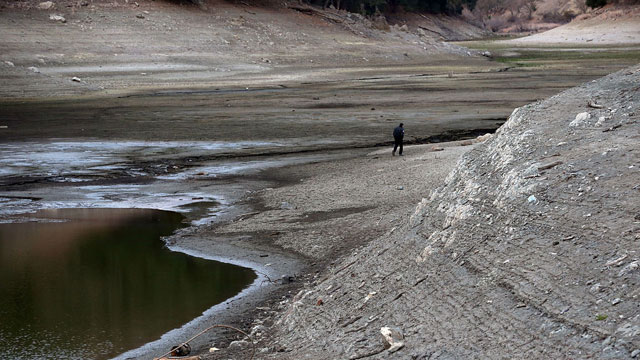
"caption": "Almaden Reservoir in San Jose is owned by the Santa Clara Valley Water District, a large water supplier, and not one of the ones currently in trouble. (Justin Sullivan/Getty Images)",
"description": "Almaden Reservoir in San Jose is owned by the Santa Clara Valley Water District, a large water supplier, and not one of the ones currently in trouble. (Justin Sullivan/Getty Images)",
"title": "reservoir",
"credit": null,
"status": "inherit",
"isLoading": false,
"fetchFailed": false
},
"science_12139": {
"type": "attachments",
"id": "science_12139",
"meta": {
"index": "attachments_1716263798",
"site": "science",
"id": "12139",
"found": true
},
"parent": 12126,
"imgSizes": {
"kqedFullSize": {
"file": "https://ww2.kqed.org/app/uploads/sites/35/2013/12/Lick_Pranjal-Mahna_SCALE.jpg",
"width": 1012,
"height": 569
}
},
"publishDate": 1387328476,
"modified": 1387328476,
"caption": "(flickr/Pranjal Mahnal)",
"description": null,
"title": "Lick_Pranjal-Mahna_SCALE",
"credit": null,
"status": "inherit",
"isLoading": false,
"fetchFailed": false
},
"science_11066": {
"type": "attachments",
"id": "science_11066",
"meta": {
"index": "attachments_1716263798",
"site": "science",
"id": "11066",
"found": true
},
"parent": 10944,
"imgSizes": {
"kqedFullSize": {
"file": "https://ww2.kqed.org/app/uploads/sites/35/2013/11/nightburn-small.jpg",
"width": 640,
"height": 360
}
},
"publishDate": 1384554995,
"modified": 1384554995,
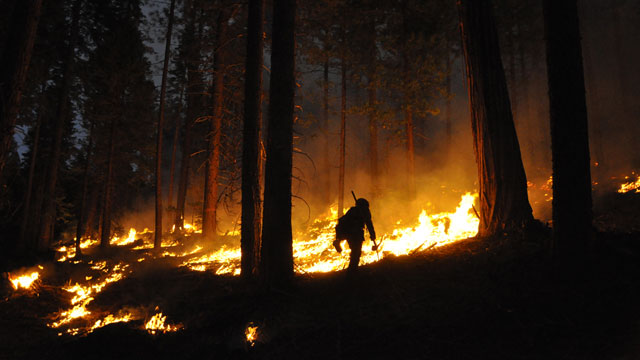
"caption": "A nighttime prescribed burn in the Stanislaus National Forest in California's Sierra Nevada. (Eric Knapp/U.S. Forest Service)",
"description": "A nighttime prescribed burn in the Stanislaus National Forest in California's Sierra Nevada. (Eric Knapp/U.S. Forest Service)",
"title": "prescribed burn at night",
"credit": null,
"status": "inherit",
"isLoading": false,
"fetchFailed": false
},
"science_10732": {
"type": "attachments",
"id": "science_10732",
"meta": {
"index": "attachments_1716263798",
"site": "science",
"id": "10732",
"found": true
},
"parent": 10727,
"imgSizes": {
"kqedFullSize": {
"file": "https://ww2.kqed.org/app/uploads/sites/35/2013/11/RS696_Download090427-061-scr.jpg",
"width": 850,
"height": 638
}
},
"publishDate": 1383701736,
"modified": 1443633742,
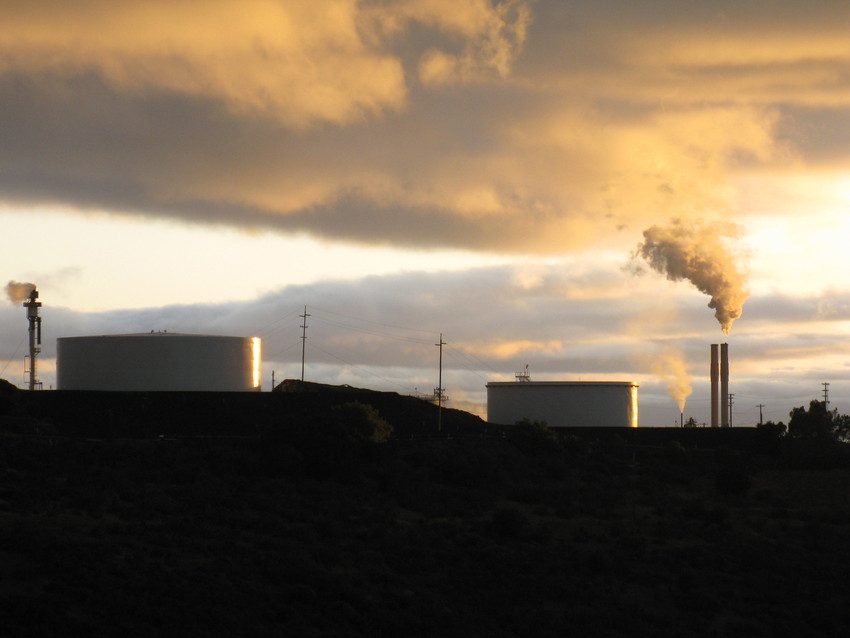
"caption": "Calif. lawmakers halted a bill that would have mandated deep greenhouse gas emissions cuts by the year 2050.",
"description": "California's climate change policies are cutting emissions, but not enough, according to a report from Berkeley Lab. (Craig Miller/KQED)",
"title": "RS696_Download090427 061-scr",
"credit": "Craig Miller/KQED",
"status": "inherit",
"isLoading": false,
"fetchFailed": false
},
"science_9912": {
"type": "attachments",
"id": "science_9912",
"meta": {
"index": "attachments_1716263798",
"site": "science",
"id": "9912",
"found": true
},
"parent": 9836,
"imgSizes": {
"kqedFullSize": {
"file": "https://ww2.kqed.org/app/uploads/sites/35/2013/10/tarantula.jpg",
"width": 640,
"height": 360
}
},
"publishDate": 1381513123,
"modified": 1381513123,
"caption": "Sandy Redding/Flickr",
"description": null,
"title": "tarantula",
"credit": null,
"status": "inherit",
"isLoading": false,
"fetchFailed": false
},
"science_8034": {
"type": "attachments",
"id": "science_8034",
"meta": {
"index": "attachments_1716263798",
"site": "science",
"id": "8034",
"found": true
},
"parent": 8032,
"imgSizes": {
"kqedFullSize": {
"file": "https://ww2.kqed.org/app/uploads/sites/35/2013/09/southernsierra.jpg",
"width": 640,
"height": 360
}
},
"publishDate": 1378406044,
"modified": 1378406044,
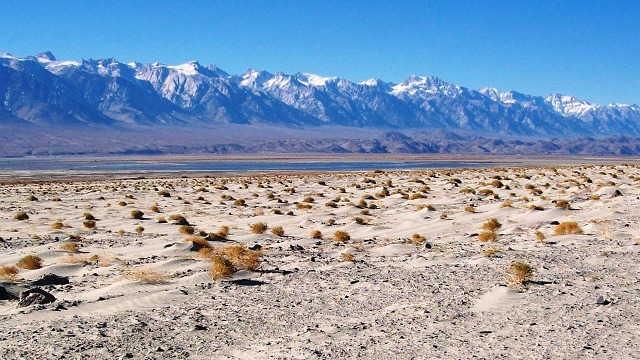
"caption": "East face of the southern Sierra Nevada at Owens Lake. Photo courtesy \u003ca href=\"http://www.flickr.com/photos/matthigh/\">Matthew Lee High\u003c/a> of Flickr via Creative Commons license",
"description": null,
"title": "southernsierra",
"credit": null,
"status": "inherit",
"isLoading": false,
"fetchFailed": false
}
},
"audioPlayerReducer": {
"postId": "stream_live",
"isPaused": true,
"isPlaying": false,
"pfsActive": false,
"pledgeModalIsOpen": true,
"playerDrawerIsOpen": false,
"liveAudioPlayStartedAt": 0,
"liveAudioPlayContext": ""
},
"authorsReducer": {
"byline_science_517792": {
"type": "authors",
"id": "byline_science_517792",
"meta": {
"override": true
},
"slug": "byline_science_517792",
"name": "John Upton, Climate Central",
"isLoading": false
},
"mollysamuel": {
"type": "authors",
"id": "200",
"meta": {
"index": "authors_1716337520",
"id": "200",
"found": true
},
"name": "Molly Samuel",
"firstName": "Molly",
"lastName": "Samuel",
"slug": "mollysamuel",
"email": "msamuel@kqed.org",
"display_author_email": false,
"staff_mastheads": [],
"title": null,
"bio": "Molly Samuel joined KQED as an intern in 2007, and since then has worked here as a reporter, producer, director and blogger. Before becoming KQED Science’s Multimedia Producer, she was a producer for Climate Watch. Molly has also reported for NPR, KALW and High Country News, and has produced audio stories for The Encyclopedia of Life and the Oakland Museum of California. She was a fellow with the Middlebury Fellowships in Environmental Journalism and a journalist-in-residence at the National Evolutionary Synthesis Center. Molly has a degree in Ancient Greek from Oberlin College and is a co-founder of the record label True Panther Sounds.",
"avatar": "https://secure.gravatar.com/avatar/a6abd3b949a89fe5109fa9917631d0b6?s=600&d=blank&r=g",
"twitter": null,
"facebook": null,
"instagram": null,
"linkedin": null,
"sites": [
{
"site": "news",
"roles": [
"subscriber"
]
},
{
"site": "stateofhealth",
"roles": [
"subscriber"
]
},
{
"site": "science",
"roles": [
"subscriber"
]
},
{
"site": "quest",
"roles": [
"edit_users",
"subscriber"
]
}
],
"headData": {
"title": "Molly Samuel | KQED",
"description": null,
"ogImgSrc": "https://secure.gravatar.com/avatar/a6abd3b949a89fe5109fa9917631d0b6?s=600&d=blank&r=g",
"twImgSrc": "https://secure.gravatar.com/avatar/a6abd3b949a89fe5109fa9917631d0b6?s=600&d=blank&r=g"
},
"isLoading": false,
"link": "/author/mollysamuel"
},
"amystanden": {
"type": "authors",
"id": "210",
"meta": {
"index": "authors_1716337520",
"id": "210",
"found": true
},
"name": "Amy Standen",
"firstName": "Amy",
"lastName": "Standen",
"slug": "amystanden",
"email": "astanden@kqed.org",
"display_author_email": false,
"staff_mastheads": [],
"title": "KQED Contributor",
"bio": "Amy Standen (@amystanden) is co-host of #\u003ca href=\"https://ww2.kqed.org/news/programs/the-leap\">TheLeapPodcast\u003c/a> (subscribe on iTunes or Stitcher!) and host of KQED and PBSDigital Studios' science video series, \u003ca href=\"https://www.youtube.com/user/KQEDDeepLook\">Deep Look\u003c/a>. Her science radio stories appear on KQED and NPR.\r\n\r\nEmail her at astanden@kqed.org",
"avatar": "https://secure.gravatar.com/avatar/3d021b72de685a788b0487b059d0a6a1?s=600&d=blank&r=g",
"twitter": null,
"facebook": null,
"instagram": null,
"linkedin": null,
"sites": [
{
"site": "news",
"roles": [
"subscriber"
]
},
{
"site": "futureofyou",
"roles": [
"subscriber"
]
},
{
"site": "stateofhealth",
"roles": [
"subscriber"
]
},
{
"site": "science",
"roles": []
},
{
"site": "quest",
"roles": [
"subscriber"
]
}
],
"headData": {
"title": "Amy Standen | KQED",
"description": "KQED Contributor",
"ogImgSrc": "https://secure.gravatar.com/avatar/3d021b72de685a788b0487b059d0a6a1?s=600&d=blank&r=g",
"twImgSrc": "https://secure.gravatar.com/avatar/3d021b72de685a788b0487b059d0a6a1?s=600&d=blank&r=g"
},
"isLoading": false,
"link": "/author/amystanden"
},
"sdetrow": {
"type": "authors",
"id": "256",
"meta": {
"index": "authors_1716337520",
"id": "256",
"found": true
},
"name": "Scott Detrow",
"firstName": "Scott",
"lastName": "Detrow",
"slug": "sdetrow",
"email": "sdetrow@kqed.org",
"display_author_email": false,
"staff_mastheads": [],
"title": null,
"bio": "Sacramento bureau chief Scott Detrow covers state government, politics and policy for KQED News and its statewide news program, The California Report.",
"avatar": "https://secure.gravatar.com/avatar/3271d0c151ba26452e3417f5ac251c30?s=600&d=blank&r=g",
"twitter": null,
"facebook": null,
"instagram": null,
"linkedin": null,
"sites": [
{
"site": "news",
"roles": [
"subscriber"
]
},
{
"site": "science",
"roles": [
"subscriber"
]
}
],
"headData": {
"title": "Scott Detrow | KQED",
"description": null,
"ogImgSrc": "https://secure.gravatar.com/avatar/3271d0c151ba26452e3417f5ac251c30?s=600&d=blank&r=g",
"twImgSrc": "https://secure.gravatar.com/avatar/3271d0c151ba26452e3417f5ac251c30?s=600&d=blank&r=g"
},
"isLoading": false,
"link": "/author/sdetrow"
},
"joshua-cassidy": {
"type": "authors",
"id": "6219",
"meta": {
"index": "authors_1716337520",
"id": "6219",
"found": true
},
"name": "Josh Cassidy",
"firstName": "Josh",
"lastName": "Cassidy",
"slug": "joshua-cassidy",
"email": "jcassidy@kqed.org",
"display_author_email": false,
"staff_mastheads": [
"science"
],
"title": "Digital Video Producer",
"bio": "Josh is a Senior Video Producer for KQED Science, and the Lead Producer and Cinematographer for Deep Look. After receiving his BS in Wildlife Biology from Ohio University, he went on to participate in marine mammal research for NOAA, USGS and the Intersea Foundation. He also served as the president of The Pacific Cetacean Group, a nonprofit organization dedicated to teaching students K-6 about whales. Josh studied science and natural history filmmaking at San Francisco State University and Montana State University.",
"avatar": "https://secure.gravatar.com/avatar/f2582a0801a35af53b734d56bcac2bbe?s=600&d=blank&r=g",
"twitter": null,
"facebook": null,
"instagram": null,
"linkedin": null,
"sites": [
{
"site": "science",
"roles": [
"editor"
]
},
{
"site": "quest",
"roles": [
"author",
"edit_others_posts"
]
}
],
"headData": {
"title": "Josh Cassidy | KQED",
"description": "Digital Video Producer",
"ogImgSrc": "https://secure.gravatar.com/avatar/f2582a0801a35af53b734d56bcac2bbe?s=600&d=blank&r=g",
"twImgSrc": "https://secure.gravatar.com/avatar/f2582a0801a35af53b734d56bcac2bbe?s=600&d=blank&r=g"
},
"isLoading": false,
"link": "/author/joshua-cassidy"
},
"andrew-alden": {
"type": "authors",
"id": "6228",
"meta": {
"index": "authors_1716337520",
"id": "6228",
"found": true
},
"name": "Andrew Alden",
"firstName": "Andrew",
"lastName": "Alden",
"slug": "andrew-alden",
"email": "alden@andrew-alden.com",
"display_author_email": false,
"staff_mastheads": [],
"title": null,
"bio": "Andrew Alden earned his geology degree at the University of New Hampshire and moved back to the Bay Area to work at the U.S. Geological Survey for six years. He has \u003ca href=\"http://geology.about.com/\">written on geology for About.com\u003c/a> since its founding in 1997. In 2007, he started the Oakland Geology blog, which won recognition as \"Best of the East Bay\" from the \u003ci>East Bay Express\u003c/i> in 2010. In writing about geology in the Bay Area and surroundings, he hopes to share some of the useful and pleasurable insights that geologists give us—not just facts about the deep past, but an attitude that might be called the \u003ci>deep present\u003c/i>.\r\n\r\nRead his \u003ca href=\"http://science.kqed.org/quest/author/andrew-alden/\">previous contributions\u003c/a> to \u003ca href=\"http://http://science.kqed.org/quest/\">QUEST\u003c/a>, a project dedicated to exploring the Science of Sustainability.",
"avatar": "https://secure.gravatar.com/avatar/9eaa0afc32f98c5fc7ce634437334a64?s=600&d=blank&r=g",
"twitter": null,
"facebook": null,
"instagram": null,
"linkedin": null,
"sites": [
{
"site": "science",
"roles": [
"author"
]
},
{
"site": "quest",
"roles": [
"subscriber"
]
}
],
"headData": {
"title": "Andrew Alden | KQED",
"description": null,
"ogImgSrc": "https://secure.gravatar.com/avatar/9eaa0afc32f98c5fc7ce634437334a64?s=600&d=blank&r=g",
"twImgSrc": "https://secure.gravatar.com/avatar/9eaa0afc32f98c5fc7ce634437334a64?s=600&d=blank&r=g"
},
"isLoading": false,
"link": "/author/andrew-alden"
},
"sharolembry": {
"type": "authors",
"id": "6328",
"meta": {
"index": "authors_1716337520",
"id": "6328",
"found": true
},
"name": "Sharol Nelson-Embry",
"firstName": "Sharol",
"lastName": "Nelson-Embry",
"slug": "sharolembry",
"email": "bobsharol@gmail.com",
"display_author_email": false,
"staff_mastheads": [],
"title": "KQED Contributor",
"bio": "Sharol Nelson-Embry is the Supervising Naturalist at the Crab Cove Visitor Center & Aquarium on San Francisco Bay in Alameda. Crab Cove is part of the East Bay Regional Park District, one of the largest and oldest regional park agencies in the nation. She graduated from Cal Poly, San Luis Obispo with a degree in Natural Resources Management and an epiphany that connecting kids with nature was her destiny. She's been rooted in the Bay Area since 1991 after working at nature centers and outdoor science schools around our fair state. She loves the great variety of habitats stretching from the Bay shoreline to the redwoods, lakes, and hills. Sharol enjoys connecting people to nature with articles in local newspapers and online forums.\r\n\r\nRead her \u003ca href=\"http://science.kqed.org/quest/author/sharolembry/\">previous contributions\u003c/a> to \u003ca href=\"http://http://science.kqed.org/quest/\">QUEST\u003c/a>, a project dedicated to exploring the Science of Sustainability.",
"avatar": "https://secure.gravatar.com/avatar/7d0ffaf107f228c8293464f98d8aeecdc95cf55410e3481c2f4e9f5d0e415cec?s=600&d=blank&r=g",
"twitter": null,
"bluesky": null,
"facebook": null,
"instagram": null,
"linkedin": null,
"sites": [
{
"site": "science",
"roles": [
"subscriber"
]
},
{
"site": "quest",
"roles": [
"subscriber"
]
}
],
"headData": {
"title": "Sharol Nelson-Embry | KQED",
"description": "KQED Contributor",
"ogImgSrc": "https://secure.gravatar.com/avatar/7d0ffaf107f228c8293464f98d8aeecdc95cf55410e3481c2f4e9f5d0e415cec?s=600&d=blank&r=g",
"twImgSrc": "https://secure.gravatar.com/avatar/7d0ffaf107f228c8293464f98d8aeecdc95cf55410e3481c2f4e9f5d0e415cec?s=600&d=blank&r=g"
},
"isLoading": false,
"link": "/author/sharolembry"
},
"kqedscience": {
"type": "authors",
"id": "6387",
"meta": {
"index": "authors_1716337520",
"id": "6387",
"found": true
},
"name": "KQED Science",
"firstName": "KQED",
"lastName": "Science",
"slug": "kqedscience",
"email": "kqedscience@gmail.com",
"display_author_email": false,
"staff_mastheads": [],
"title": null,
"bio": "KQED Science brings you award-winning science and environment coverage from the Bay Area and beyond by the flagship Northern California PBS and NPR affiliate.",
"avatar": "https://secure.gravatar.com/avatar/5a295ff49cf82a8c0f30937d3f788b2f?s=600&d=blank&r=g",
"twitter": null,
"facebook": null,
"instagram": null,
"linkedin": null,
"sites": [
{
"site": "science",
"roles": [
"contributor"
]
},
{
"site": "quest",
"roles": [
"editor"
]
},
{
"site": "food",
"roles": [
"contributor"
]
}
],
"headData": {
"title": "KQED Science | KQED",
"description": null,
"ogImgSrc": "https://secure.gravatar.com/avatar/5a295ff49cf82a8c0f30937d3f788b2f?s=600&d=blank&r=g",
"twImgSrc": "https://secure.gravatar.com/avatar/5a295ff49cf82a8c0f30937d3f788b2f?s=600&d=blank&r=g"
},
"isLoading": false,
"link": "/author/kqedscience"
},
"sfrancisbongue": {
"type": "authors",
"id": "6564",
"meta": {
"index": "authors_1716337520",
"id": "6564",
"found": true
},
"name": "Silvia Francis",
"firstName": "Silvia",
"lastName": "Francis",
"slug": "sfrancisbongue",
"email": "sfrancisbongue@KQED.org",
"display_author_email": false,
"staff_mastheads": [],
"title": null,
"bio": "Silvia Francis is an intern at KQED Science and a senior at Denison University where she studies biology and cinema. She was drawn to KQED by her interests in science communication and multimedia.",
"avatar": "https://secure.gravatar.com/avatar/190f8c7ebf1f03859aa6ccb24d709fe6?s=600&d=blank&r=g",
"twitter": null,
"facebook": null,
"instagram": null,
"linkedin": null,
"sites": [
{
"site": "science",
"roles": [
"editor"
]
}
],
"headData": {
"title": "Silvia Francis | KQED",
"description": null,
"ogImgSrc": "https://secure.gravatar.com/avatar/190f8c7ebf1f03859aa6ccb24d709fe6?s=600&d=blank&r=g",
"twImgSrc": "https://secure.gravatar.com/avatar/190f8c7ebf1f03859aa6ccb24d709fe6?s=600&d=blank&r=g"
},
"isLoading": false,
"link": "/author/sfrancisbongue"
}
},
"pagesReducer": {
"science_tag_california": {
"type": "terms",
"id": "science_5178",
"meta": {
"index": "terms_1716263798",
"site": "science",
"id": "5178",
"score": 6.849279
},
"featImg": null,
"name": "California",
"description": null,
"taxonomy": "tag",
"headData": {
"twImgId": null,
"twTitle": null,
"ogTitle": null,
"ogImgId": null,
"twDescription": null,
"description": null,
"title": "California Archives | KQED Science",
"ogDescription": null
},
"ttid": 5178,
"slug": "california",
"isLoading": false,
"title": "California",
"pageMeta": {
"site": "science",
"WpPageTemplate": "page-topic-editorial",
"currentPage": 21
},
"blocks": [
{
"blockName": "kqed/post-list",
"attrs": {
"layout": "cardArticle2",
"query": "posts/science?tag=california",
"seeMore": false,
"paginated": true,
"page": 21
}
},
{
"blockName": "kqed/ad"
}
]
}
},
"pfsSessionReducer": {},
"postsReducer": {
"stream_live": {
"type": "live",
"id": "stream_live",
"audioUrl": "https://streams.kqed.org/kqedradio",
"title": "Live Stream",
"excerpt": "Live Stream information currently unavailable.",
"link": "/radio",
"featImg": "",
"label": {
"name": "KQED Live",
"link": "/"
}
},
"stream_kqedNewscast": {
"type": "posts",
"id": "stream_kqedNewscast",
"audioUrl": "https://www.kqed.org/.stream/anon/radio/RDnews/newscast.mp3?_=1",
"title": "KQED Newscast",
"featImg": "",
"label": {
"name": "88.5 FM",
"link": "/"
}
},
"science_517792": {
"type": "posts",
"id": "science_517792",
"meta": {
"index": "posts_1716263798",
"site": "science",
"id": "517792",
"score": null,
"sort": [
1454958024000
]
},
"parent": 0,
"labelTerm": {
"site": "science"
},
"blocks": [],
"publishDate": 1454958024,
"format": "standard",
"title": "Climate Change Is Leaving Native Plants Behind",
"headTitle": "Climate Change Is Leaving Native Plants Behind | KQED",
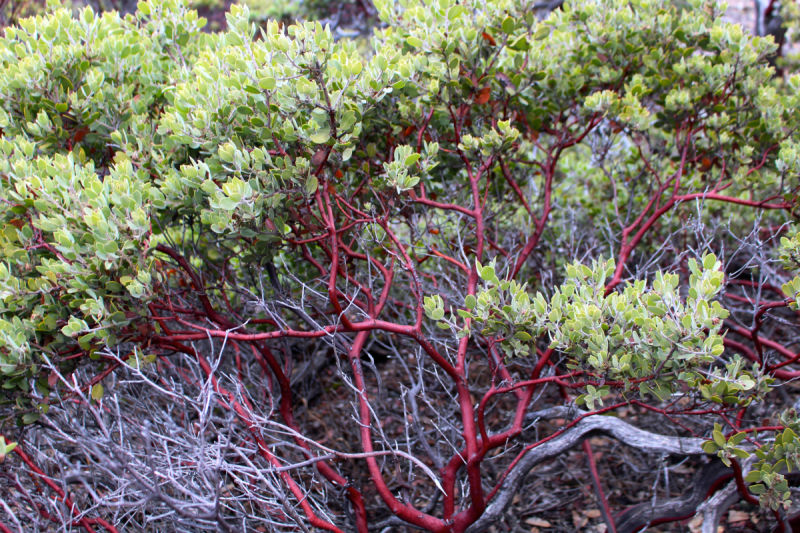
"content": "\u003cp>Willis Linn Jepson encountered a squat shrub while he was collecting botanical specimens on California’s Mount Tamalpais in the fall of 1936. He trimmed off a few branches and jotted down the location along the ridge trail where the manzanita grew, 2,255 feet above sea level.\u003c/p>\n\u003cp>The desiccated specimen is now part of an \u003ca href=\"http://ucjeps.berkeley.edu/\">herbarium here\u003c/a> that’s named for the famed botanist. It was among hundreds of thousands of specimens of thousands of different species that were used recently to track the movement of plant species up the state’s many hills.\u003c/p>\n\u003cp>[contextly_sidebar id=”7swK7Qp0JuUh8gyefXT0ZWzUlphgkOLV”]The results of the analysis warn that native plants are struggling to keep up with changes around them as pollution from fuel burning and deforestation continues to warm the planet. Earlier research into the movement of Californian animals shows they’re shifting more quickly than the native plants.\u003c/p>\n\u003cp>“The big takeaway is that species are on the move, and they’re moving at different rates,” said \u003ca href=\"http://www.environment.ucla.edu/people/jon-christensen\">Jon Christensen\u003c/a>, a scientist and historian at the \u003ca href=\"http://www.ucla.edu/\">University of California, Los Angeles\u003c/a>. “Which raises the concern that the ecosystems of California could be unraveling.”\u003c/p>\n\u003cp>Christensen and four other scientists analyzed a database of 2 million specimens from a network of \u003ca href=\"http://ucjeps.berkeley.edu/consortium/participants.html\">35 Californian herbariums\u003c/a>. Herbariums are like little-known natural history museums that store vast collections of ferns, mosses, algae and other plants. They found 681,609 specimen records to include in their analysis.\u003c/p>\n\u003cp>[ad fullwidth]\u003c/p>\n\u003cp>They discovered that the range of the Eastwood’s manzanita, which was the type of plant Jepson trimmed on the mountain trail in 1936, hasn’t budged — even as temperatures have risen around it.\u003c/p>\n\u003cp>Temperatures have been rising around the world because of the heat-trapping effects of carbon dioxide, methane and other types of atmospheric pollution. The combined effects of global warming and phases in ocean cycles contributed to \u003ca href=\"http://www.climatecentral.org/news/2015-hottest-year-2016-could-surpass-19929\">record-breaking warmth\u003c/a> globally in 2015.\u003c/p>\n\u003cp>More warming is anticipated in the years and decades ahead, yet ecologists remain unsure how wildlife will be affected. The discovery that the Eastwood’s manzanita range has been locked in its original range “raises questions” about whether it will be able to adapt as the climate changes around it, Christensen said.\u003c/p>\n\u003cp>Overall, just one in eight native Californian species shifted their ranges significantly upward during more than a century of specimen collecting in California, during which time temperatures rose by about 1°C (nearly 2°F), the researchers \u003ca href=\"http://onlinelibrary.wiley.com/doi/10.1111/geb.12423/abstract\">concluded in a paper\u003c/a> published in Global Ecology and Biogeography.\u003c/p>\n\u003cp>“Plants and animals aren’t moving together in sync,” University of Connecticut ornithologist \u003ca href=\"http://www.morgantingley.com/\">Morgan Tingley\u003c/a>, who has studied the \u003ca href=\"http://www.pnas.org/content/106/Supplement_2/19637.full.pdf\">shifting ranges of native birds\u003c/a> in parts of California, said after reading the new paper.\u003c/p>\n\u003cp>“This leads us to suspect that ecological communities are breaking down and disassembling,” Tingley said. “It’s a worrying possibility, and one that we don’t yet know the consequences of.”\u003c/p>\n\u003cp>The native plants were also found to be moving more slowly into higher altitudes than their invasive counterparts, one in four of which were found to be spreading uphill.\u003c/p>\n\u003cp>As the planet warms, ideal climatic conditions for different species of wildlife tend to shift to higher latitudes and greater altitudes. Not all species are expected to be able to keep pace with the changes underway. Of those that do, some will encounter mountaintops, shorelines and freeways that prevent them from going any further.\u003c/p>\n\u003cp>“If the climate changes too quickly, and species can’t keep up with it, they might be left behind in a climate that’s completely unsuitable for them,” said \u003ca href=\"http://www.werc.usgs.gov/person.aspx?personid=138\">Nate Stephenson\u003c/a>, a federal forest ecologist who researches climate change. “Then their population numbers may go down. In extreme cases, they might even blink out.”\u003c/p>\n\u003cp>While animals can fly or clamber to new grounds, most plants expand their ranges only when they cast their seeds.\u003c/p>\n\u003cp>“There’s a legitimate concern that many plant species are simply not evolved to be able to shift their population distributions as fast as the current climate-change event will require,” said \u003ca href=\"http://www.ldeo.columbia.edu/user/williams\">Park Williams\u003c/a>, a bioclimatologist at the Lamont-Doherty Earth Observatory.\u003c/p>\n\u003cp>Williams described the new paper, with which he was not involved, as the “culmination of an incredible amount of work.” He said its conclusions are also “broadly relevant” outside California.\u003c/p>\n\u003cp>“California is a great place to study species’ range responses to climate,” Williams said. “They have a great dataset, and also a lot of diversity in terms of elevation and climate type.”\u003c/p>\n\u003cp>The new study relied on the results of the ongoing digitization of the specimens at the Californian herbariums. Digitization involves shooting digital photographs of samples and noting the coordinates and other details of the sites where they were collected.\u003c/p>\n\u003cp>About a quarter of more than 2 million specimens stored in manilla folders in long rows of tall cabinets in a large herbarium at the University of California, Berkeley have been digitized so far. “Big data is a big thing on our campus,” said \u003ca href=\"http://ucjeps.berkeley.edu/people/mishler.html\">Brent Mishler\u003c/a>, a biology professor who oversees the collection.\u003c/p>\n\u003cp>The potential power of each piece of data is limited by the amount of information recorded when the specimen was collected.\u003c/p>\n\u003cp>“The older ones — they may not have as much data,” Mishler said. “But it still tells you where it was collected and when.”\u003c/p>\n\u003cp>The analysis of the big herbarium data showed small-seeded native plant species, such as grasses, are moving more quickly and more often up California’s hills than those with larger seeds — such as manzanita. Small seeds travel further than large ones, making it easier for those types of plants to spread.\u003c/p>\n\u003cp>“There’s huge variation in the species distribution shifts, depending on whether a plant is endemic, native or invasive,” said \u003ca href=\"https://adamwolf.princeton.edu/about/\">Adam Wolf\u003c/a>, a former Princeton University scientist who led the study. “On top of that, there’s huge variation, depending on whether they have little seeds, medium seeds or big seeds.”\u003c/p>\n\u003cp>Invasive species were more likely to be stretching their ranges upward than native species, and the ranges are moving or expanding more quickly.\u003c/p>\n\u003cp>Unwanted weeds aren’t necessarily growing their Californian footprints because of climate change, although it may be helping some of them. Many would still be conquering new territory as they continued to invade after finding footholds in the state in decades past, regardless of climatic changes.\u003c/p>\n\u003cp>The expanding ranges of unwanted weeds is putting extra pressures on native plants, which are already struggling to withstand the effects climate change.\u003c/p>\n\u003cp>[ad floatright]\u003c/p>\n\u003cp>“The fact that non-native plant species have been shifting upslope faster than native plant species is worrisome,” Lamont-Doherty’s Williams said. “In the time required for some slow-migrating native plant species to shift their distributions to locations where the climate is more suitable, those locations may already be colonized by invasive plants.”\u003c/p>\n\n",
"stats": {
"hasVideo": false,
"hasChartOrMap": false,
"hasAudio": false,
"hasPolis": false,
"wordCount": 1196,
"hasGoogleForm": false,
"hasGallery": false,
"hasHearkenModule": false,
"iframeSrcs": [],
"paragraphCount": 30
},
"modified": 1704930667,
"excerpt": "Animals and weeds are bounding up California's warming hills, while native plants are stuck in place.",
"headData": {
"twImgId": "",
"twTitle": "",
"ogTitle": "",
"ogImgId": "",
"twDescription": "",
"description": "Animals and weeds are bounding up California's warming hills, while native plants are stuck in place.",
"title": "Climate Change Is Leaving Native Plants Behind | KQED",
"ogDescription": "",
"schema": {
"@context": "https://schema.org",
"@type": "Article",
"headline": "Climate Change Is Leaving Native Plants Behind",
"datePublished": "2016-02-08T11:00:24-08:00",
"dateModified": "2024-01-10T15:51:07-08:00",
"image": "https://cdn.kqed.org/wp-content/uploads/2020/02/KQED-OG-Image@1x.png"
}
},
"guestAuthors": [],
"slug": "climate-change-is-leaving-native-plants-behind",
"status": "publish",
"nprByline": "John Upton, Climate Central",
"sticky": false,
"path": "/science/517792/climate-change-is-leaving-native-plants-behind",
"audioTrackLength": null,
"parsedContent": [
{
"type": "contentString",
"content": "\u003cdiv class=\"post-body\">\u003cp>\u003cp>Willis Linn Jepson encountered a squat shrub while he was collecting botanical specimens on California’s Mount Tamalpais in the fall of 1936. He trimmed off a few branches and jotted down the location along the ridge trail where the manzanita grew, 2,255 feet above sea level.\u003c/p>\n\u003cp>The desiccated specimen is now part of an \u003ca href=\"http://ucjeps.berkeley.edu/\">herbarium here\u003c/a> that’s named for the famed botanist. It was among hundreds of thousands of specimens of thousands of different species that were used recently to track the movement of plant species up the state’s many hills.\u003c/p>\n\u003cp>\u003c/p>\u003cp>\u003c/p>\u003cp>The results of the analysis warn that native plants are struggling to keep up with changes around them as pollution from fuel burning and deforestation continues to warm the planet. Earlier research into the movement of Californian animals shows they’re shifting more quickly than the native plants.\u003c/p>\n\u003cp>“The big takeaway is that species are on the move, and they’re moving at different rates,” said \u003ca href=\"http://www.environment.ucla.edu/people/jon-christensen\">Jon Christensen\u003c/a>, a scientist and historian at the \u003ca href=\"http://www.ucla.edu/\">University of California, Los Angeles\u003c/a>. “Which raises the concern that the ecosystems of California could be unraveling.”\u003c/p>\n\u003cp>Christensen and four other scientists analyzed a database of 2 million specimens from a network of \u003ca href=\"http://ucjeps.berkeley.edu/consortium/participants.html\">35 Californian herbariums\u003c/a>. Herbariums are like little-known natural history museums that store vast collections of ferns, mosses, algae and other plants. They found 681,609 specimen records to include in their analysis.\u003c/p>\n\u003cp>\u003c/p>\u003c/div>",
"attributes": {
"named": {},
"numeric": []
}
},
{
"type": "component",
"content": "",
"name": "ad",
"attributes": {
"named": {
"label": "fullwidth"
},
"numeric": [
"fullwidth"
]
}
},
{
"type": "contentString",
"content": "\u003cdiv class=\"post-body\">\u003cp>\u003c/p>\n\u003cp>They discovered that the range of the Eastwood’s manzanita, which was the type of plant Jepson trimmed on the mountain trail in 1936, hasn’t budged — even as temperatures have risen around it.\u003c/p>\n\u003cp>Temperatures have been rising around the world because of the heat-trapping effects of carbon dioxide, methane and other types of atmospheric pollution. The combined effects of global warming and phases in ocean cycles contributed to \u003ca href=\"http://www.climatecentral.org/news/2015-hottest-year-2016-could-surpass-19929\">record-breaking warmth\u003c/a> globally in 2015.\u003c/p>\n\u003cp>More warming is anticipated in the years and decades ahead, yet ecologists remain unsure how wildlife will be affected. The discovery that the Eastwood’s manzanita range has been locked in its original range “raises questions” about whether it will be able to adapt as the climate changes around it, Christensen said.\u003c/p>\n\u003cp>Overall, just one in eight native Californian species shifted their ranges significantly upward during more than a century of specimen collecting in California, during which time temperatures rose by about 1°C (nearly 2°F), the researchers \u003ca href=\"http://onlinelibrary.wiley.com/doi/10.1111/geb.12423/abstract\">concluded in a paper\u003c/a> published in Global Ecology and Biogeography.\u003c/p>\n\u003cp>“Plants and animals aren’t moving together in sync,” University of Connecticut ornithologist \u003ca href=\"http://www.morgantingley.com/\">Morgan Tingley\u003c/a>, who has studied the \u003ca href=\"http://www.pnas.org/content/106/Supplement_2/19637.full.pdf\">shifting ranges of native birds\u003c/a> in parts of California, said after reading the new paper.\u003c/p>\n\u003cp>“This leads us to suspect that ecological communities are breaking down and disassembling,” Tingley said. “It’s a worrying possibility, and one that we don’t yet know the consequences of.”\u003c/p>\n\u003cp>The native plants were also found to be moving more slowly into higher altitudes than their invasive counterparts, one in four of which were found to be spreading uphill.\u003c/p>\n\u003cp>As the planet warms, ideal climatic conditions for different species of wildlife tend to shift to higher latitudes and greater altitudes. Not all species are expected to be able to keep pace with the changes underway. Of those that do, some will encounter mountaintops, shorelines and freeways that prevent them from going any further.\u003c/p>\n\u003cp>“If the climate changes too quickly, and species can’t keep up with it, they might be left behind in a climate that’s completely unsuitable for them,” said \u003ca href=\"http://www.werc.usgs.gov/person.aspx?personid=138\">Nate Stephenson\u003c/a>, a federal forest ecologist who researches climate change. “Then their population numbers may go down. In extreme cases, they might even blink out.”\u003c/p>\n\u003cp>While animals can fly or clamber to new grounds, most plants expand their ranges only when they cast their seeds.\u003c/p>\n\u003cp>“There’s a legitimate concern that many plant species are simply not evolved to be able to shift their population distributions as fast as the current climate-change event will require,” said \u003ca href=\"http://www.ldeo.columbia.edu/user/williams\">Park Williams\u003c/a>, a bioclimatologist at the Lamont-Doherty Earth Observatory.\u003c/p>\n\u003cp>Williams described the new paper, with which he was not involved, as the “culmination of an incredible amount of work.” He said its conclusions are also “broadly relevant” outside California.\u003c/p>\n\u003cp>“California is a great place to study species’ range responses to climate,” Williams said. “They have a great dataset, and also a lot of diversity in terms of elevation and climate type.”\u003c/p>\n\u003cp>The new study relied on the results of the ongoing digitization of the specimens at the Californian herbariums. Digitization involves shooting digital photographs of samples and noting the coordinates and other details of the sites where they were collected.\u003c/p>\n\u003cp>About a quarter of more than 2 million specimens stored in manilla folders in long rows of tall cabinets in a large herbarium at the University of California, Berkeley have been digitized so far. “Big data is a big thing on our campus,” said \u003ca href=\"http://ucjeps.berkeley.edu/people/mishler.html\">Brent Mishler\u003c/a>, a biology professor who oversees the collection.\u003c/p>\n\u003cp>The potential power of each piece of data is limited by the amount of information recorded when the specimen was collected.\u003c/p>\n\u003cp>“The older ones — they may not have as much data,” Mishler said. “But it still tells you where it was collected and when.”\u003c/p>\n\u003cp>The analysis of the big herbarium data showed small-seeded native plant species, such as grasses, are moving more quickly and more often up California’s hills than those with larger seeds — such as manzanita. Small seeds travel further than large ones, making it easier for those types of plants to spread.\u003c/p>\n\u003cp>“There’s huge variation in the species distribution shifts, depending on whether a plant is endemic, native or invasive,” said \u003ca href=\"https://adamwolf.princeton.edu/about/\">Adam Wolf\u003c/a>, a former Princeton University scientist who led the study. “On top of that, there’s huge variation, depending on whether they have little seeds, medium seeds or big seeds.”\u003c/p>\n\u003cp>Invasive species were more likely to be stretching their ranges upward than native species, and the ranges are moving or expanding more quickly.\u003c/p>\n\u003cp>Unwanted weeds aren’t necessarily growing their Californian footprints because of climate change, although it may be helping some of them. Many would still be conquering new territory as they continued to invade after finding footholds in the state in decades past, regardless of climatic changes.\u003c/p>\n\u003cp>The expanding ranges of unwanted weeds is putting extra pressures on native plants, which are already struggling to withstand the effects climate change.\u003c/p>\n\u003cp>\u003c/p>\u003c/div>",
"attributes": {
"named": {},
"numeric": []
}
},
{
"type": "component",
"content": "",
"name": "ad",
"attributes": {
"named": {
"label": "floatright"
},
"numeric": [
"floatright"
]
}
},
{
"type": "contentString",
"content": "\u003cdiv class=\"post-body\">\u003cp>\u003c/p>\n\u003cp>“The fact that non-native plant species have been shifting upslope faster than native plant species is worrisome,” Lamont-Doherty’s Williams said. “In the time required for some slow-migrating native plant species to shift their distributions to locations where the climate is more suitable, those locations may already be colonized by invasive plants.”\u003c/p>\n\n\u003c/div>\u003c/p>",
"attributes": {
"named": {},
"numeric": []
}
}
],
"link": "/science/517792/climate-change-is-leaving-native-plants-behind",
"authors": [
"byline_science_517792"
],
"categories": [
"science_31",
"science_35",
"science_40"
],
"tags": [
"science_1665",
"science_5178",
"science_1678",
"science_194",
"science_311"
],
"featImg": "science_517881",
"label": "science"
},
"science_25908": {
"type": "posts",
"id": "science_25908",
"meta": {
"index": "posts_1716263798",
"site": "science",
"id": "25908",
"score": null,
"sort": [
1420597029000
]
},
"guestAuthors": [],
"slug": "the-fantastic-fur-of-sea-otters",
"title": "The Fantastic Fur of Sea Otters",
"publishDate": 1420597029,
"format": "video",
"headTitle": "The Fantastic Fur of Sea Otters | KQED",
"labelTerm": {},
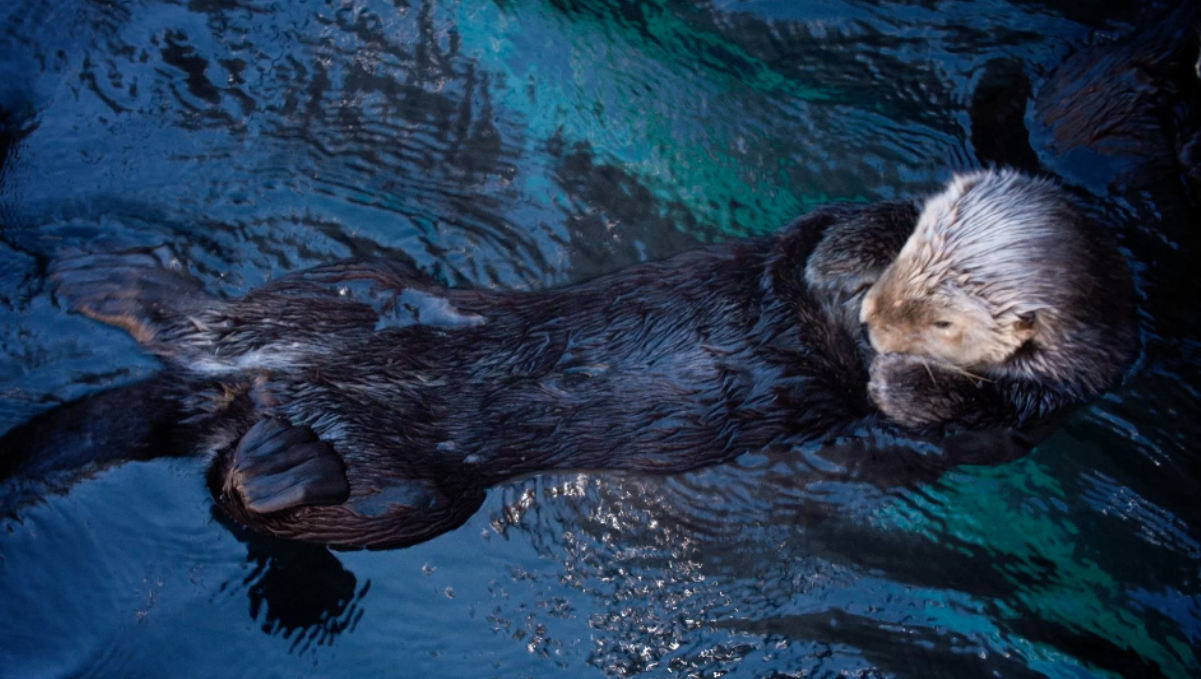
"content": "\u003cp>[dl_subscribe]California sea otters (\u003cem>Enhydra lutris\u003c/em>) — the frolicking mascots of the coast who draw visitors to aquariums in droves and who float among the kelp beds just beyond the surf line — have the densest fur of any mammal on Earth.\u003c/p>\n\u003cp>With up to a million hairs per inch, the super-soft coats were once such a lure for hunters that they nearly led to the otters’ demise in the early 1900s. But now, the federally protected species is free to use its luxurious fur for one key purpose: to keep warm in the often chilly Pacific Ocean, particularly during winter months.\u003c/p>\n\u003cp>“They live in cold water, and it’s too cold for them,” says Heather Liwanag, a biologist who studied otter fur as part of her Ph.D. research at \u003ca href=\"http://www.ucsc.edu/\">U.C. Santa Cruz\u003c/a>.\u003c/p>\n\u003caside class=\"pullquote alignleft\">‘If an otter were to use blubber to stay warm the amount of blubber it would need would be bigger than the otter.’\u003ccite>— Heather Liwanag,\u003cbr>\nAdelphi University Biologist \u003c/cite>\u003c/aside>\n\u003cp>Everywhere in the otter’s geographic range, she says, is outside their “thermal neutral zone.” This zone is the range of temperatures in which a mammal can live without expending energy to maintain its internal body temperature. So how do they do it? The same way you or I would—with a nice warm blanket. But theirs is a blanket of air.\u003c/p>\n\u003cp>“They’re using fur for insulation, but it’s not really the fur that’s insulating them,” says Liwanag, now an assistant professor of biology at \u003ca href=\"http://www.adelphi.edu/\">Adelphi University\u003c/a> in New York.\u003c/p>\n\u003cp>[ad fullwidth]\u003c/p>\n\u003cp>The true insulating power comes from a layer of air the fur keeps trapped next to their skin. Otter fur has two special properties that make it especially good at creating an insulating layer of air: It’s dense, and it’s spiky.\u003c/p>\n\u003cfigure id=\"attachment_25925\" class=\"wp-caption aligncenter\" style=\"max-width: 640px\">\u003ca href=\"http://ww2.kqed.org/science/wp-content/uploads/sites/35/2015/01/Sea-otter-guard-hair.jpeg\">\u003cimg decoding=\"async\" class=\"size-medium wp-image-25925\" src=\"http://ww2.kqed.org/science/wp-content/uploads/sites/35/2015/01/Sea-otter-guard-hair.jpeg\" alt=\"Scanning electron microscope image of a human hair showing scaled texture (Guangwei Min/UCB)\" width=\"640\">\u003c/a>\u003cfigcaption class=\"wp-caption-text\">Scanning electron microscope image of a sea otter guard hair. The barbed scales allow sea otter fur to form a nearly waterproof layer to protect the otter from the frigid ocean (Heather Liwanag/Adelphi University)\u003c/figcaption>\u003c/figure>\n\u003cp> \u003c/p>\n\u003cfigure id=\"attachment_25924\" class=\"wp-caption aligncenter\" style=\"max-width: 640px\">\u003ca href=\"http://ww2.kqed.org/science/wp-content/uploads/sites/35/2015/01/Human-Hair-SEM.jpg\">\u003cimg decoding=\"async\" class=\"size-medium wp-image-25924\" src=\"http://ww2.kqed.org/science/wp-content/uploads/sites/35/2015/01/Human-Hair-SEM.jpg\" alt=\"Scanning electron microscope image of a human hair showing scaled texture (Guangwei Min/UC Berkeley)\" width=\"640\">\u003c/a>\u003cfigcaption class=\"wp-caption-text\">Scanning electron microscope image of a human hair showing scaled texture (Guangwei Min/UC Berkeley)\u003c/figcaption>\u003c/figure>\n\u003cp>Otters fur is about 1,000 times more dense than human hair. But it wouldn’t do them any good if it were smooth and perfectly combed. Otters want their hair as tangled as possible, so that the air bubbles they blow into their pelts can’t get out. This is where the spiky aspect comes in handy.\u003c/p>\n\u003cp>Otter pelts feel smooth and soft to us, but if you look at otter hair with a microscope you can see that it’s covered in tiny, geometric barbs. The barbs help the hair mat together so tightly that the fur near the otter’s body is almost completely dry. And keeping the animals dry is key to keeping them warm.\u003c/p>\n\u003cp>There are some disadvantages to the otter’s heating system. Because it relies on the trapped air, otters can’t dive too deep because high pressure forces the bubbles out. Also, the air makes them so buoyant they have to work hard to swim down. They sometimes even need to grab a rock or piece of kelp to help stay submerged.\u003c/p>\n\u003cp>\u003c!-- iframe plugin v.4.3 wordpress.org/plugins/iframe/ -->\u003cbr>\n\u003ciframe loading=\"lazy\" src=\"http://projects1.kqed.org/imageslider/deeplook-otter-slider.html\" width=\"360px\" height=\"300px\" frameborder=\"0\" scrolling=\"yes\" class=\"iframe-class\">\u003c/iframe>\u003c/p>\n\u003cp>\u003csmall>\u003cem>Oil disrupts the sea otter fur’s ability to trap insulating air.The oiled section\u003cbr>\nshows bright red where the otter’s body heat is exposed. (California Department\u003cbr>\nof Fish and Wildlife)\u003c/em>\u003c/small>\u003c/p>\n\u003cp>Their unique use of air bubbles to stay insulated and warm is what makes oil spills so dangerous to otters. Oil can mat down otter fur and keep it from holding air. Without the insulation the otter is left unprotected from the frigid ocean water. It doesn’t take long for oiled otters to succumb to hypothermia and drown.\u003c/p>\n\u003cp>Many other marine mammals, including whales and sea lions, stay warm a different way — with layers of blubber.\u003c/p>\n\u003cp>Liwanag, in her thesis research that was published in 2012, compared the insulating powers of fur and blubber under different conditions. She wanted to learn more about how different species of mammals adapted to the marine environment to stay warm.\u003c/p>\n\u003cp>“Going in to this thesis, I fully expected blubber to be the better insulator,” she says, “because we see it arise multiple times, across different lineages.” But that wasn’t the case, and it turned out that fur—or really, air—is warmer, at least at shallow depths.\u003c/p>\n\u003cp>\u003c/p>\n\u003cp>“If an otter were to use blubber to stay warm,” Liwanag says, “the amount of blubber it would need would be bigger than the otter.”\u003c/p>\n\n",
"blocks": [],
"excerpt": "Sea otters aren’t just cute -- they’re a vivid example of life on the edge. Unlike whales and other ocean mammals, sea otters have no blubber. Yet they're still able to keep warm in the frigid Pacific waters. The secret to their survival? A fur coat like no other.",
"status": "publish",
"parent": 0,
"modified": 1738702496,
"stats": {
"hasAudio": false,
"hasVideo": false,
"hasChartOrMap": true,
"iframeSrcs": [
"http://projects1.kqed.org/imageslider/deeplook-otter-slider.html"
],
"hasGoogleForm": false,
"hasGallery": false,
"hasHearkenModule": false,
"hasPolis": false,
"paragraphCount": 18,
"wordCount": 796
},
"headData": {
"title": "The Fantastic Fur of Sea Otters | KQED",
"description": "Sea otters aren’t just cute -- they’re a vivid example of life on the edge. Unlike whales and other ocean mammals, sea otters have no blubber. Yet they're still able to keep warm in the frigid Pacific waters. The secret to their survival? A fur coat like no other.",
"ogTitle": "",
"ogDescription": "",
"ogImgId": "",
"twTitle": "",
"twDescription": "",
"twImgId": "",
"schema": {
"@context": "https://schema.org",
"@type": "Article",
"headline": "The Fantastic Fur of Sea Otters",
"datePublished": "2015-01-06T18:17:09-08:00",
"dateModified": "2025-02-04T12:54:56-08:00",
"image": "https://cdn.kqed.org/wp-content/uploads/2020/02/KQED-OG-Image@1x.png"
}
},
"videoEmbed": "http://www.youtube.com/embed/Zxqg_um1TXI",
"pbsMediaId": "2365583367",
"source": "DEEP LOOK",
"sourceUrl": "https://ww2.kqed.org/science/series/deep-look/",
"sticky": false,
"excludeFromSiteSearch": "Include",
"articleAge": "0",
"path": "/science/25908/the-fantastic-fur-of-sea-otters",
"audioTrackLength": null,
"parsedContent": [
{
"type": "contentString",
"content": "\u003cdiv class=\"post-body\">\u003cp>\u003cp>\u003c/p>\u003c/div>",
"attributes": {
"named": {},
"numeric": []
}
},
{
"type": "component",
"content": "",
"name": "dl_subscribe",
"attributes": {
"named": {
"label": ""
},
"numeric": []
}
},
{
"type": "contentString",
"content": "\u003cdiv class=\"post-body\">\u003cp>California sea otters (\u003cem>Enhydra lutris\u003c/em>) — the frolicking mascots of the coast who draw visitors to aquariums in droves and who float among the kelp beds just beyond the surf line — have the densest fur of any mammal on Earth.\u003c/p>\n\u003cp>With up to a million hairs per inch, the super-soft coats were once such a lure for hunters that they nearly led to the otters’ demise in the early 1900s. But now, the federally protected species is free to use its luxurious fur for one key purpose: to keep warm in the often chilly Pacific Ocean, particularly during winter months.\u003c/p>\n\u003cp>“They live in cold water, and it’s too cold for them,” says Heather Liwanag, a biologist who studied otter fur as part of her Ph.D. research at \u003ca href=\"http://www.ucsc.edu/\">U.C. Santa Cruz\u003c/a>.\u003c/p>\n\u003caside class=\"pullquote alignleft\">‘If an otter were to use blubber to stay warm the amount of blubber it would need would be bigger than the otter.’\u003ccite>— Heather Liwanag,\u003cbr>\nAdelphi University Biologist \u003c/cite>\u003c/aside>\n\u003cp>Everywhere in the otter’s geographic range, she says, is outside their “thermal neutral zone.” This zone is the range of temperatures in which a mammal can live without expending energy to maintain its internal body temperature. So how do they do it? The same way you or I would—with a nice warm blanket. But theirs is a blanket of air.\u003c/p>\n\u003cp>“They’re using fur for insulation, but it’s not really the fur that’s insulating them,” says Liwanag, now an assistant professor of biology at \u003ca href=\"http://www.adelphi.edu/\">Adelphi University\u003c/a> in New York.\u003c/p>\n\u003cp>\u003c/p>\u003c/div>",
"attributes": {
"named": {},
"numeric": []
}
},
{
"type": "component",
"content": "",
"name": "ad",
"attributes": {
"named": {
"label": "fullwidth"
},
"numeric": [
"fullwidth"
]
}
},
{
"type": "contentString",
"content": "\u003cdiv class=\"post-body\">\u003cp>\u003c/p>\n\u003cp>The true insulating power comes from a layer of air the fur keeps trapped next to their skin. Otter fur has two special properties that make it especially good at creating an insulating layer of air: It’s dense, and it’s spiky.\u003c/p>\n\u003cfigure id=\"attachment_25925\" class=\"wp-caption aligncenter\" style=\"max-width: 640px\">\u003ca href=\"http://ww2.kqed.org/science/wp-content/uploads/sites/35/2015/01/Sea-otter-guard-hair.jpeg\">\u003cimg decoding=\"async\" class=\"size-medium wp-image-25925\" src=\"http://ww2.kqed.org/science/wp-content/uploads/sites/35/2015/01/Sea-otter-guard-hair.jpeg\" alt=\"Scanning electron microscope image of a human hair showing scaled texture (Guangwei Min/UCB)\" width=\"640\">\u003c/a>\u003cfigcaption class=\"wp-caption-text\">Scanning electron microscope image of a sea otter guard hair. The barbed scales allow sea otter fur to form a nearly waterproof layer to protect the otter from the frigid ocean (Heather Liwanag/Adelphi University)\u003c/figcaption>\u003c/figure>\n\u003cp> \u003c/p>\n\u003cfigure id=\"attachment_25924\" class=\"wp-caption aligncenter\" style=\"max-width: 640px\">\u003ca href=\"http://ww2.kqed.org/science/wp-content/uploads/sites/35/2015/01/Human-Hair-SEM.jpg\">\u003cimg decoding=\"async\" class=\"size-medium wp-image-25924\" src=\"http://ww2.kqed.org/science/wp-content/uploads/sites/35/2015/01/Human-Hair-SEM.jpg\" alt=\"Scanning electron microscope image of a human hair showing scaled texture (Guangwei Min/UC Berkeley)\" width=\"640\">\u003c/a>\u003cfigcaption class=\"wp-caption-text\">Scanning electron microscope image of a human hair showing scaled texture (Guangwei Min/UC Berkeley)\u003c/figcaption>\u003c/figure>\n\u003cp>Otters fur is about 1,000 times more dense than human hair. But it wouldn’t do them any good if it were smooth and perfectly combed. Otters want their hair as tangled as possible, so that the air bubbles they blow into their pelts can’t get out. This is where the spiky aspect comes in handy.\u003c/p>\n\u003cp>Otter pelts feel smooth and soft to us, but if you look at otter hair with a microscope you can see that it’s covered in tiny, geometric barbs. The barbs help the hair mat together so tightly that the fur near the otter’s body is almost completely dry. And keeping the animals dry is key to keeping them warm.\u003c/p>\n\u003cp>There are some disadvantages to the otter’s heating system. Because it relies on the trapped air, otters can’t dive too deep because high pressure forces the bubbles out. Also, the air makes them so buoyant they have to work hard to swim down. They sometimes even need to grab a rock or piece of kelp to help stay submerged.\u003c/p>\n\u003cp>\u003c!-- iframe plugin v.4.3 wordpress.org/plugins/iframe/ -->\u003cbr>\n\u003ciframe loading=\"lazy\" src=\"http://projects1.kqed.org/imageslider/deeplook-otter-slider.html\" width=\"360px\" height=\"300px\" frameborder=\"0\" scrolling=\"yes\" class=\"iframe-class\">\u003c/iframe>\u003c/p>\n\u003cp>\u003csmall>\u003cem>Oil disrupts the sea otter fur’s ability to trap insulating air.The oiled section\u003cbr>\nshows bright red where the otter’s body heat is exposed. (California Department\u003cbr>\nof Fish and Wildlife)\u003c/em>\u003c/small>\u003c/p>\n\u003cp>Their unique use of air bubbles to stay insulated and warm is what makes oil spills so dangerous to otters. Oil can mat down otter fur and keep it from holding air. Without the insulation the otter is left unprotected from the frigid ocean water. It doesn’t take long for oiled otters to succumb to hypothermia and drown.\u003c/p>\n\u003cp>Many other marine mammals, including whales and sea lions, stay warm a different way — with layers of blubber.\u003c/p>\n\u003cp>Liwanag, in her thesis research that was published in 2012, compared the insulating powers of fur and blubber under different conditions. She wanted to learn more about how different species of mammals adapted to the marine environment to stay warm.\u003c/p>\n\u003cp>“Going in to this thesis, I fully expected blubber to be the better insulator,” she says, “because we see it arise multiple times, across different lineages.” But that wasn’t the case, and it turned out that fur—or really, air—is warmer, at least at shallow depths.\u003c/p>\n\u003cp>\u003c/p>\n\u003cp>“If an otter were to use blubber to stay warm,” Liwanag says, “the amount of blubber it would need would be bigger than the otter.”\u003c/p>\n\n\u003c/div>\u003c/p>",
"attributes": {
"named": {},
"numeric": []
}
}
],
"link": "/science/25908/the-fantastic-fur-of-sea-otters",
"authors": [
"6219"
],
"series": [
"science_1935",
"science_2625"
],
"categories": [
"science_30",
"science_35",
"science_86"
],
"tags": [
"science_5178",
"science_64",
"science_325",
"science_309"
],
"featImg": "science_25911",
"label": "source_science_25908"
},
"science_20401": {
"type": "posts",
"id": "science_20401",
"meta": {
"index": "posts_1716263798",
"site": "science",
"id": "20401",
"score": null,
"sort": [
1407423644000
]
},
"parent": 0,
"labelTerm": {
"site": "science"
},
"blocks": [],
"publishDate": 1407423644,
"format": "aside",
"title": "Cap-and-Trade Faces First Major Political Test",
"headTitle": "Cap-and-Trade Faces First Major Political Test | KQED",
"content": "\u003cp>\n\u003c!-- iframe plugin v.4.3 wordpress.org/plugins/iframe/ -->\u003cbr>\n\u003ciframe loading=\"lazy\" src=\"https://w.soundcloud.com/player/?url=https%3A//api.soundcloud.com/tracks/162143268&color=ff5500&inverse=false&auto_play=false&show_user=true\" width=\"100%\" height=\"20\" frameborder=\"no\" scrolling=\"no\" class=\"iframe-class\">\u003c/iframe>\n\u003c/p>\n\u003cp>\u003cfigure id=\"attachment_20423\" class=\"wp-caption aligncenter\" style=\"max-width: 640px\">\u003ca href=\"http://ww2.kqed.org/science/wp-content/uploads/sites/35/2014/08/RS9144_476374685-hpf.jpg\">\u003cimg loading=\"lazy\" decoding=\"async\" class=\"size-full wp-image-20423\" src=\"http://ww2.kqed.org/science/wp-content/uploads/sites/35/2014/08/RS9144_476374685-hpf.jpg\" alt=\"Prices at the pump are widely expected to go up early next year. \" width=\"640\" height=\"360\">\u003c/a>\u003cfigcaption class=\"wp-caption-text\">Prices at the pump are widely expected to go up early next year.\u003c/figcaption>\u003c/figure>\n\u003c/p>\n\u003cp>California’s cap-and-trade system expands next year. And while the program has already discreetly impacted energy prices, consumers will likely get their first direct glimpse at cap and trade’s effect on markets when it’s applied to transportation fuels.\u003c/p>\n\u003cp>That fact has many politicians nervous, including a group of Democrats who are urging Governor Jerry Brown to hit the breaks on cap and trade.\u003c/p>\n\u003cp>\u003cstrong>‘What The Hell Is Going On?’\u003c/strong>\u003c/p>\n\u003cp>[ad fullwidth]\u003c/p>\n\u003cp>There’s no day-to-day cost that smacks you right in the face quite like gasoline. You fill your car up, and you stare straight at the price as it climbs higher and higher. So it’s no surprise that when a recent poll asked whether Californians would keep supporting the state’s cap-and-trade system, even if its new phase leads to higher gas prices, \u003ca href=\"http://www.ppic.org/main/blog_detail.asp?i=1566\">support suddenly tanked by nearly 40 points.\u003c/a>\u003c/p>\n\u003cp>Democratic political consultant Garry South doubts many people really understand what the program does. “I think it’s just so far out of the typical person’s viewfinder that the impact of this is not going to be known until gasoline prices actually start occurring,” he said, “and people say, ‘Hey what the hell’s going on here?’”\u003c/p>\n\u003cp>What’s going on is, in fact, \u003ca href=\"http://science.kqed.org/quest/audio/cap-and-trade-101-how-californias-carbon-market-works/\">a kind of stock market for pollution\u003c/a>. Companies buy and sell the right to emit carbon dioxide and other greenhouse gasses. Right now, the system covers industrial sources like power plants. And the direct consumer impact has been blunted a bit by rebates and other breaks for power utilities.\u003c/p>\n\u003cp>Next year, cap-and-trade expands to cover transportation fuels. Oil companies will be charged that assessment up front, and then pass the cost along to consumers. State officials say that could lead to a price spike of as much as 30 cents a gallon, though most experts think it will actually be around 10 cents. “The actual price increase will depend on a wide variety of economic, technological and regulatory factors that are difficult to predict,”\u003ca href=\"http://www.lao.ca.gov/Letters/2014/Perea-Gasoline-Cap-and-Trade-080414.pdf\"> the Legislative Analyst’s Office noted this week.\u003c/a>\u003c/p>\n\u003cp>Either way, Republicans and business groups have latched on to the potential price increase, which they’re calling a “hidden gas tax.”\u003c/p>\n\u003cp>\u003cstrong>Democratic Pushback\u003c/strong>\u003c/p>\n\u003cp>But even some cap-and-trade supporters are having doubts. “I represent a district in southern Fresno County that is very poor,” explained Assemblyman Henry Perea, a Democrat. “My constituents are going to be hurt a lot more than constituents in other parts of the state where the economy’s stronger, and people are making a lot more money.”\u003c/p>\n\u003cp>Perea is leading the effort to delay cap-and-trade’s expansion to transportation fuels. Fifteen other Democrats are supporting a slow-down. Perea said the push is about the economy, not the environment. He’s framing the debate as Valley Vs. Coast, Rich Vs. Poor, pointing out the geographic divide between the lawmakers supporting a slowdown, and those pushing to stay the course.\u003c/p>\n\u003cp>A three-year delay, he said, would allow policymakers to ask some questions. “How do we meet the goals of AB 32, how do we reduce greenhouse gasses and how do we do that in a meaningful way through fuels, and not have a large economic impact on everyday people who are struggling to make ends meet?”\u003c/p>\n\u003cp>\u003cstrong>‘Higher Prices Discourage Demand’\u003c/strong>\u003c/p>\n\u003cp>That may be hard to do, though, since the entire point of cap-and-trade is to make carbon emissions more expensive. That’s not the sort of thing politicians say in front of crowds. But Senate President Pro Tem Darrell Steinberg did just that during an unusually blunt speech earlier this year. “It may not be popular to say, but that’s necessary. Higher prices discourage demand,” he told the Sacramento Press Club. “If carbon pricing doesn’t sting, at least a little bit, we won’t change our habits.”\u003c/p>\n\u003cp>Not exactly a populist argument. But the push to delay the cap-and-trade expansion may still come up short. That’s due mostly to a lack of political muscle.\u003c/p>\n\u003cp>First, there’s the simple fact that gas prices won’t be affected until January, long after the state’s election.\u003c/p>\n\u003cp>The second factor is more powerful: cap-and-trade’s biggest cheerleader is the popular, well-funded Governor Jerry Brown. “This is a path that must be pursued today, the next decade, the next hundred years,” Brown said at a climate change conference in May.\u003c/p>\n\u003cp>Brown hasn’t directly weighed in on the push to delay cap-and-trade’s expansion to transportation fuels. But the chair of California’s Air Resources Board, appointed by Brown, has warned the delay would be “a major set-back” to the program, pointing out transportation fuels are responsible for “almost 40 percent” of California’s greenhouse gas emissions.\u003c/p>\n\u003cp>Still, political consultant Garry South argued Brown may have a tough time convincing Democrats to keep backing a program that’s costing voters money. “I equate this to Obamacare,” he said. “This is another fairly massive change in government policy to affect a real problem that people are concerned about, but that is going to have some impact on people’s daily lives. And that always has the potential for a revolt taking place.”\u003c/p>\n\u003cp>Brown has acknowledged cap-and-trade and other climate change efforts can be a tough sell. “This is really a complex set of pressures that are not easy to talk about in a sound bite, a bumper sticker, or a one-liner,” he said in May. “It is something that is yet to fully capture the public imagination,”\u003c/p>\n\u003cp>\u003c/p>\n\u003cp>But like it or not, politicians live in the world of one-liners and bumper stickers. Hearing voters say, “Your program costs me money” is a powerful motivator for politicians. And Brown may have to spend a lot of political capital keeping jittery Democrats in line, if predictions about the price at the pump come true.\u003c/p>\n\n",
"stats": {
"hasVideo": false,
"hasChartOrMap": false,
"hasAudio": true,
"hasPolis": false,
"wordCount": 1083,
"hasGoogleForm": false,
"hasGallery": false,
"hasHearkenModule": false,
"iframeSrcs": [],
"paragraphCount": 25
},
"modified": 1704933164,
"excerpt": "A group of Democrats wants to delay the planned expansion of California's cap-and-trade system. They're worried about the impact of higher gas prices.",
"headData": {
"twImgId": "",
"twTitle": "",
"ogTitle": "",
"ogImgId": "",
"twDescription": "",
"description": "A group of Democrats wants to delay the planned expansion of California's cap-and-trade system. They're worried about the impact of higher gas prices.",
"title": "Cap-and-Trade Faces First Major Political Test | KQED",
"ogDescription": "",
"schema": {
"@context": "https://schema.org",
"@type": "Article",
"headline": "Cap-and-Trade Faces First Major Political Test",
"datePublished": "2014-08-07T08:00:44-07:00",
"dateModified": "2024-01-10T16:32:44-08:00",
"image": "https://cdn.kqed.org/wp-content/uploads/2020/02/KQED-OG-Image@1x.png"
}
},
"guestAuthors": [],
"slug": "cap-and-trade-faces-first-major-political-test",
"status": "publish",
"sticky": false,
"path": "/science/20401/cap-and-trade-faces-first-major-political-test",
"audioTrackLength": null,
"parsedContent": [
{
"type": "contentString",
"content": "\u003cdiv class=\"post-body\">\u003cp>\u003cp>\n\u003c!-- iframe plugin v.4.3 wordpress.org/plugins/iframe/ -->\u003cbr>\n\u003ciframe loading=\"lazy\" src=\"https://w.soundcloud.com/player/?url=https%3A//api.soundcloud.com/tracks/162143268&color=ff5500&inverse=false&auto_play=false&show_user=true\" width=\"100%\" height=\"20\" frameborder=\"no\" scrolling=\"no\" class=\"iframe-class\">\u003c/iframe>\n\u003c/p>\n\u003cp>\u003cfigure id=\"attachment_20423\" class=\"wp-caption aligncenter\" style=\"max-width: 640px\">\u003ca href=\"http://ww2.kqed.org/science/wp-content/uploads/sites/35/2014/08/RS9144_476374685-hpf.jpg\">\u003cimg loading=\"lazy\" decoding=\"async\" class=\"size-full wp-image-20423\" src=\"http://ww2.kqed.org/science/wp-content/uploads/sites/35/2014/08/RS9144_476374685-hpf.jpg\" alt=\"Prices at the pump are widely expected to go up early next year. \" width=\"640\" height=\"360\">\u003c/a>\u003cfigcaption class=\"wp-caption-text\">Prices at the pump are widely expected to go up early next year.\u003c/figcaption>\u003c/figure>\n\u003c/p>\n\u003cp>California’s cap-and-trade system expands next year. And while the program has already discreetly impacted energy prices, consumers will likely get their first direct glimpse at cap and trade’s effect on markets when it’s applied to transportation fuels.\u003c/p>\n\u003cp>That fact has many politicians nervous, including a group of Democrats who are urging Governor Jerry Brown to hit the breaks on cap and trade.\u003c/p>\n\u003cp>\u003cstrong>‘What The Hell Is Going On?’\u003c/strong>\u003c/p>\n\u003cp>\u003c/p>\u003c/div>",
"attributes": {
"named": {},
"numeric": []
}
},
{
"type": "component",
"content": "",
"name": "ad",
"attributes": {
"named": {
"label": "fullwidth"
},
"numeric": [
"fullwidth"
]
}
},
{
"type": "contentString",
"content": "\u003cdiv class=\"post-body\">\u003cp>\u003c/p>\n\u003cp>There’s no day-to-day cost that smacks you right in the face quite like gasoline. You fill your car up, and you stare straight at the price as it climbs higher and higher. So it’s no surprise that when a recent poll asked whether Californians would keep supporting the state’s cap-and-trade system, even if its new phase leads to higher gas prices, \u003ca href=\"http://www.ppic.org/main/blog_detail.asp?i=1566\">support suddenly tanked by nearly 40 points.\u003c/a>\u003c/p>\n\u003cp>Democratic political consultant Garry South doubts many people really understand what the program does. “I think it’s just so far out of the typical person’s viewfinder that the impact of this is not going to be known until gasoline prices actually start occurring,” he said, “and people say, ‘Hey what the hell’s going on here?’”\u003c/p>\n\u003cp>What’s going on is, in fact, \u003ca href=\"http://science.kqed.org/quest/audio/cap-and-trade-101-how-californias-carbon-market-works/\">a kind of stock market for pollution\u003c/a>. Companies buy and sell the right to emit carbon dioxide and other greenhouse gasses. Right now, the system covers industrial sources like power plants. And the direct consumer impact has been blunted a bit by rebates and other breaks for power utilities.\u003c/p>\n\u003cp>Next year, cap-and-trade expands to cover transportation fuels. Oil companies will be charged that assessment up front, and then pass the cost along to consumers. State officials say that could lead to a price spike of as much as 30 cents a gallon, though most experts think it will actually be around 10 cents. “The actual price increase will depend on a wide variety of economic, technological and regulatory factors that are difficult to predict,”\u003ca href=\"http://www.lao.ca.gov/Letters/2014/Perea-Gasoline-Cap-and-Trade-080414.pdf\"> the Legislative Analyst’s Office noted this week.\u003c/a>\u003c/p>\n\u003cp>Either way, Republicans and business groups have latched on to the potential price increase, which they’re calling a “hidden gas tax.”\u003c/p>\n\u003cp>\u003cstrong>Democratic Pushback\u003c/strong>\u003c/p>\n\u003cp>But even some cap-and-trade supporters are having doubts. “I represent a district in southern Fresno County that is very poor,” explained Assemblyman Henry Perea, a Democrat. “My constituents are going to be hurt a lot more than constituents in other parts of the state where the economy’s stronger, and people are making a lot more money.”\u003c/p>\n\u003cp>Perea is leading the effort to delay cap-and-trade’s expansion to transportation fuels. Fifteen other Democrats are supporting a slow-down. Perea said the push is about the economy, not the environment. He’s framing the debate as Valley Vs. Coast, Rich Vs. Poor, pointing out the geographic divide between the lawmakers supporting a slowdown, and those pushing to stay the course.\u003c/p>\n\u003cp>A three-year delay, he said, would allow policymakers to ask some questions. “How do we meet the goals of AB 32, how do we reduce greenhouse gasses and how do we do that in a meaningful way through fuels, and not have a large economic impact on everyday people who are struggling to make ends meet?”\u003c/p>\n\u003cp>\u003cstrong>‘Higher Prices Discourage Demand’\u003c/strong>\u003c/p>\n\u003cp>That may be hard to do, though, since the entire point of cap-and-trade is to make carbon emissions more expensive. That’s not the sort of thing politicians say in front of crowds. But Senate President Pro Tem Darrell Steinberg did just that during an unusually blunt speech earlier this year. “It may not be popular to say, but that’s necessary. Higher prices discourage demand,” he told the Sacramento Press Club. “If carbon pricing doesn’t sting, at least a little bit, we won’t change our habits.”\u003c/p>\n\u003cp>Not exactly a populist argument. But the push to delay the cap-and-trade expansion may still come up short. That’s due mostly to a lack of political muscle.\u003c/p>\n\u003cp>First, there’s the simple fact that gas prices won’t be affected until January, long after the state’s election.\u003c/p>\n\u003cp>The second factor is more powerful: cap-and-trade’s biggest cheerleader is the popular, well-funded Governor Jerry Brown. “This is a path that must be pursued today, the next decade, the next hundred years,” Brown said at a climate change conference in May.\u003c/p>\n\u003cp>Brown hasn’t directly weighed in on the push to delay cap-and-trade’s expansion to transportation fuels. But the chair of California’s Air Resources Board, appointed by Brown, has warned the delay would be “a major set-back” to the program, pointing out transportation fuels are responsible for “almost 40 percent” of California’s greenhouse gas emissions.\u003c/p>\n\u003cp>Still, political consultant Garry South argued Brown may have a tough time convincing Democrats to keep backing a program that’s costing voters money. “I equate this to Obamacare,” he said. “This is another fairly massive change in government policy to affect a real problem that people are concerned about, but that is going to have some impact on people’s daily lives. And that always has the potential for a revolt taking place.”\u003c/p>\n\u003cp>Brown has acknowledged cap-and-trade and other climate change efforts can be a tough sell. “This is really a complex set of pressures that are not easy to talk about in a sound bite, a bumper sticker, or a one-liner,” he said in May. “It is something that is yet to fully capture the public imagination,”\u003c/p>\n\u003cp>\u003c/p>\n\u003cp>But like it or not, politicians live in the world of one-liners and bumper stickers. Hearing voters say, “Your program costs me money” is a powerful motivator for politicians. And Brown may have to spend a lot of political capital keeping jittery Democrats in line, if predictions about the price at the pump come true.\u003c/p>\n\n\u003c/div>\u003c/p>",
"attributes": {
"named": {},
"numeric": []
}
}
],
"link": "/science/20401/cap-and-trade-faces-first-major-political-test",
"authors": [
"256"
],
"categories": [
"science_31",
"science_40"
],
"tags": [
"science_5178",
"science_121",
"science_101"
],
"featImg": "science_20423",
"label": "science"
},
"science_18812": {
"type": "posts",
"id": "science_18812",
"meta": {
"index": "posts_1716263798",
"site": "science",
"id": "18812",
"score": null,
"sort": [
1404170332000
]
},
"parent": 0,
"labelTerm": {
"site": "science"
},
"blocks": [],
"publishDate": 1404170332,
"format": "aside",
"title": "Water Snakes Invading California Threaten Native Species",
"headTitle": "Water Snakes Invading California Threaten Native Species | KQED",
"content": "\u003cfigure id=\"attachment_18816\" class=\"wp-caption alignnone\" style=\"max-width: 895px\">\u003ca href=\"http://ww2.kqed.org/science/wp-content/uploads/sites/35/2014/06/commonwatersnake_OJM-e1404151734964.jpeg\">\u003cimg loading=\"lazy\" decoding=\"async\" class=\"wp-image-18816\" src=\"http://ww2.kqed.org/science/wp-content/uploads/sites/35/2014/06/commonwatersnake_OJM-e1404151734964.jpeg\" alt=\"The common water snake and southern water snake are characterized by dark cross bands, which the native garter snake lacks. (OJ Miano/UC Davis)\" width=\"895\" height=\"508\">\u003c/a>\u003cfigcaption class=\"wp-caption-text\">The common water snake and southern water snake are characterized by dark cross bands, which the native garter snake lacks. (OJ Miano/UC Davis)\u003c/figcaption>\u003c/figure>\n\u003cp>Water snakes from the eastern United States are being found in increasing numbers throughout California’s waterways, and biologists at the University of California at Davis are growing concerned.\u003c/p>\n\u003cp>The common water snake and the southern water snake thrive in suburban areas and human-disturbed habitats but are harmless to humans. However, they may pose a threat to native aquatic species, including some types of frogs, snakes and salamanders because they compete for the same food source or directly pray on the native species. The invasive water snakes have been found in some areas near Sacramento as well as near Long Beach in Southern California.\u003c/p>\n\u003caside class=\"pullquote alignleft\">‘This instance of these non-native snakes is emblematic of a bigger problem in California’\u003ccite>— Jonathan Rose, UC Davis\u003c/cite>\u003c/aside>\n\u003cp>“This instance of these non-native snakes is emblematic of a bigger problem in California where many of our native aquatic species are being replaced by non-native species,” says \u003ca href=\"http://toddlab.ucdavis.edu/jrose.html\">Jonathan Rose\u003c/a>, a doctoral candidate at UC Davis. Rose has been working under\u003ca href=\"http://wfcb.ucdavis.edu/people/faculty/todd.php\"> Dr. Brian Todd\u003c/a>, an Assistant Professor of Wildlife Biology, to analyze the snake’s potential to spread through California and the Western United States.\u003c/p>\n\u003cp>\u003ca href=\"http://www.plosone.org/article/info%3Adoi%2F10.1371%2Fjournal.pone.0100277\">The study\u003c/a> by Rose and Todd lists which areas will be affected if populations of the invasive water snakes continue to spread. According to their projections, invasive snakes could spread throughout the western United States, overlapping with the habitats of native aquatic dwellers like the foothill yellow-legged frog, the giant garter snake, the California giant salamander and the California tiger salamander.\u003c/p>\n\u003cp>“These non-native water snakes present yet another threat or stress to many already imperiled species,” Rose says. Many of the native aquatic species are already at risk due to changes in their habitats and the introduction of other non-native species.\u003c/p>\n\u003cfigure id=\"attachment_18843\" class=\"wp-caption alignleft\" style=\"max-width: 465px\">\u003ca href=\"http://ww2.kqed.org/science/wp-content/uploads/sites/35/2014/06/WatersnakeSalamander_JDW-1.jpeg\">\u003cimg loading=\"lazy\" decoding=\"async\" class=\"wp-image-18843\" src=\"http://ww2.kqed.org/science/wp-content/uploads/sites/35/2014/06/WatersnakeSalamander_JDW-1.jpeg\" alt=\"WatersnakeSalamander_JDW (1)\" width=\"465\" height=\"349\">\u003c/a>\u003cfigcaption class=\"wp-caption-text\">The southern water snake, which commonly feeds on the endangered mole salamander, is one of two water snake species invading California’s waterways. (J.D. Willson/University of Arkansas)\u003c/figcaption>\u003c/figure>\n\u003cp>Non-native water snakes have been present in California for quite a while now. As of 2008 it is unlawful to possess one of these water snakes as a pet, but Rose says they were likely introduced as a result of people releasing their pet snakes before this ban was in place. It is unclear exactly how many of these snakes are in California presently, but there are roughly 300 in the Sacramento area, according to Rose.\u003c/p>\n\u003cp>[ad fullwidth]\u003c/p>\n\u003cp>While they currently pose no immediate threat to native species, non-native species often pass a threshold at which the population grows rapidly and starts spreading. According to Rose, we are at the early stage where snakes haven’t spread out of control as far as we know. The snakes aren’t having any negative effects on native species but that could change at any time. “These snakes are not picky eaters; they’ll feed on pretty much any fish or amphibian they can overpower,” he says.\u003c/p>\n\u003caside class=\"pullquote alignleft\">‘These snakes are not picky eaters; they’ll feed on pretty much any fish or amphibian they can overpower’\u003ccite>Jonathan Rose\u003c/cite>\u003c/aside>\n\u003cp>The common water snake is of particular concern, says Rose, because it is geographically widespread and able to survive in a variety of climates. Rose says that some snakes are capable of producing litters of 50 or more offspring. They also reach sexual maturity at two or three years of age, so their populations can grow rapidly and bounce back from negative influences.\u003c/p>\n\u003cp>According to Rose, it is possible that the snakes have already spread throughout the state without our knowledge. If they are more established than we realize, they will eventually start to compete with aquatic species. But it may not be too late. Rose explained that the best case scenario is that fish and wildlife agencies put together a management plan to determine where these species are and act quickly to eradicate their populations.\u003c/p>\n\u003cp>\u003c/p>\n\u003cp>The common water snake and southern water snake are characterized by dark cross bands, which the native garter snake lacks. Sightings and pictures of introduced water snakes can be reported to \u003ca href=\"mailto:californiawatersnakes@gmail.com\">californiawatersnakes@gmail.com\u003c/a>.\u003c/p>\n\n",
"stats": {
"hasVideo": false,
"hasChartOrMap": false,
"hasAudio": false,
"hasPolis": false,
"wordCount": 725,
"hasGoogleForm": false,
"hasGallery": false,
"hasHearkenModule": false,
"iframeSrcs": [],
"paragraphCount": 12
},
"modified": 1704933404,
"excerpt": "Biologists at UC Davis are growing concerned about the presence of non-native aquatic snakes in California’s waterways. ",
"headData": {
"twImgId": "",
"twTitle": "",
"ogTitle": "",
"ogImgId": "",
"twDescription": "",
"description": "Biologists at UC Davis are growing concerned about the presence of non-native aquatic snakes in California’s waterways. ",
"title": "Water Snakes Invading California Threaten Native Species | KQED",
"ogDescription": "",
"schema": {
"@context": "https://schema.org",
"@type": "Article",
"headline": "Water Snakes Invading California Threaten Native Species",
"datePublished": "2014-06-30T16:18:52-07:00",
"dateModified": "2024-01-10T16:36:44-08:00",
"image": "https://cdn.kqed.org/wp-content/uploads/2020/02/KQED-OG-Image@1x.png"
}
},
"guestAuthors": [],
"slug": "an-unwelcome-visitor-threatens-a-california-species",
"status": "publish",
"sticky": false,
"path": "/science/18812/an-unwelcome-visitor-threatens-a-california-species",
"audioTrackLength": null,
"parsedContent": [
{
"type": "contentString",
"content": "\u003cdiv class=\"post-body\">\u003cp>\u003cfigure id=\"attachment_18816\" class=\"wp-caption alignnone\" style=\"max-width: 895px\">\u003ca href=\"http://ww2.kqed.org/science/wp-content/uploads/sites/35/2014/06/commonwatersnake_OJM-e1404151734964.jpeg\">\u003cimg loading=\"lazy\" decoding=\"async\" class=\"wp-image-18816\" src=\"http://ww2.kqed.org/science/wp-content/uploads/sites/35/2014/06/commonwatersnake_OJM-e1404151734964.jpeg\" alt=\"The common water snake and southern water snake are characterized by dark cross bands, which the native garter snake lacks. (OJ Miano/UC Davis)\" width=\"895\" height=\"508\">\u003c/a>\u003cfigcaption class=\"wp-caption-text\">The common water snake and southern water snake are characterized by dark cross bands, which the native garter snake lacks. (OJ Miano/UC Davis)\u003c/figcaption>\u003c/figure>\n\u003cp>Water snakes from the eastern United States are being found in increasing numbers throughout California’s waterways, and biologists at the University of California at Davis are growing concerned.\u003c/p>\n\u003cp>The common water snake and the southern water snake thrive in suburban areas and human-disturbed habitats but are harmless to humans. However, they may pose a threat to native aquatic species, including some types of frogs, snakes and salamanders because they compete for the same food source or directly pray on the native species. The invasive water snakes have been found in some areas near Sacramento as well as near Long Beach in Southern California.\u003c/p>\n\u003caside class=\"pullquote alignleft\">‘This instance of these non-native snakes is emblematic of a bigger problem in California’\u003ccite>— Jonathan Rose, UC Davis\u003c/cite>\u003c/aside>\n\u003cp>“This instance of these non-native snakes is emblematic of a bigger problem in California where many of our native aquatic species are being replaced by non-native species,” says \u003ca href=\"http://toddlab.ucdavis.edu/jrose.html\">Jonathan Rose\u003c/a>, a doctoral candidate at UC Davis. Rose has been working under\u003ca href=\"http://wfcb.ucdavis.edu/people/faculty/todd.php\"> Dr. Brian Todd\u003c/a>, an Assistant Professor of Wildlife Biology, to analyze the snake’s potential to spread through California and the Western United States.\u003c/p>\n\u003cp>\u003ca href=\"http://www.plosone.org/article/info%3Adoi%2F10.1371%2Fjournal.pone.0100277\">The study\u003c/a> by Rose and Todd lists which areas will be affected if populations of the invasive water snakes continue to spread. According to their projections, invasive snakes could spread throughout the western United States, overlapping with the habitats of native aquatic dwellers like the foothill yellow-legged frog, the giant garter snake, the California giant salamander and the California tiger salamander.\u003c/p>\n\u003cp>“These non-native water snakes present yet another threat or stress to many already imperiled species,” Rose says. Many of the native aquatic species are already at risk due to changes in their habitats and the introduction of other non-native species.\u003c/p>\n\u003cfigure id=\"attachment_18843\" class=\"wp-caption alignleft\" style=\"max-width: 465px\">\u003ca href=\"http://ww2.kqed.org/science/wp-content/uploads/sites/35/2014/06/WatersnakeSalamander_JDW-1.jpeg\">\u003cimg loading=\"lazy\" decoding=\"async\" class=\"wp-image-18843\" src=\"http://ww2.kqed.org/science/wp-content/uploads/sites/35/2014/06/WatersnakeSalamander_JDW-1.jpeg\" alt=\"WatersnakeSalamander_JDW (1)\" width=\"465\" height=\"349\">\u003c/a>\u003cfigcaption class=\"wp-caption-text\">The southern water snake, which commonly feeds on the endangered mole salamander, is one of two water snake species invading California’s waterways. (J.D. Willson/University of Arkansas)\u003c/figcaption>\u003c/figure>\n\u003cp>Non-native water snakes have been present in California for quite a while now. As of 2008 it is unlawful to possess one of these water snakes as a pet, but Rose says they were likely introduced as a result of people releasing their pet snakes before this ban was in place. It is unclear exactly how many of these snakes are in California presently, but there are roughly 300 in the Sacramento area, according to Rose.\u003c/p>\n\u003cp>\u003c/p>\u003c/div>",
"attributes": {
"named": {},
"numeric": []
}
},
{
"type": "component",
"content": "",
"name": "ad",
"attributes": {
"named": {
"label": "fullwidth"
},
"numeric": [
"fullwidth"
]
}
},
{
"type": "contentString",
"content": "\u003cdiv class=\"post-body\">\u003cp>\u003c/p>\n\u003cp>While they currently pose no immediate threat to native species, non-native species often pass a threshold at which the population grows rapidly and starts spreading. According to Rose, we are at the early stage where snakes haven’t spread out of control as far as we know. The snakes aren’t having any negative effects on native species but that could change at any time. “These snakes are not picky eaters; they’ll feed on pretty much any fish or amphibian they can overpower,” he says.\u003c/p>\n\u003caside class=\"pullquote alignleft\">‘These snakes are not picky eaters; they’ll feed on pretty much any fish or amphibian they can overpower’\u003ccite>Jonathan Rose\u003c/cite>\u003c/aside>\n\u003cp>The common water snake is of particular concern, says Rose, because it is geographically widespread and able to survive in a variety of climates. Rose says that some snakes are capable of producing litters of 50 or more offspring. They also reach sexual maturity at two or three years of age, so their populations can grow rapidly and bounce back from negative influences.\u003c/p>\n\u003cp>According to Rose, it is possible that the snakes have already spread throughout the state without our knowledge. If they are more established than we realize, they will eventually start to compete with aquatic species. But it may not be too late. Rose explained that the best case scenario is that fish and wildlife agencies put together a management plan to determine where these species are and act quickly to eradicate their populations.\u003c/p>\n\u003cp>\u003c/p>\n\u003cp>The common water snake and southern water snake are characterized by dark cross bands, which the native garter snake lacks. Sightings and pictures of introduced water snakes can be reported to \u003ca href=\"mailto:californiawatersnakes@gmail.com\">californiawatersnakes@gmail.com\u003c/a>.\u003c/p>\n\n\u003c/div>\u003c/p>",
"attributes": {
"named": {},
"numeric": []
}
}
],
"link": "/science/18812/an-unwelcome-visitor-threatens-a-california-species",
"authors": [
"6564"
],
"categories": [
"science_30",
"science_35",
"science_40"
],
"tags": [
"science_5178",
"science_1320"
],
"featImg": "science_18815",
"label": "science"
},
"science_12317": {
"type": "posts",
"id": "science_12317",
"meta": {
"index": "posts_1716263798",
"site": "science",
"id": "12317",
"score": null,
"sort": [
1393871399000
]
},
"parent": 0,
"labelTerm": {
"site": "science",
"term": 66
},
"blocks": [],
"publishDate": 1393871399,
"format": "video",
"title": "Predatory Plant: Lure of the Cobra Lily",
"headTitle": "Predatory Plant: Lure of the Cobra Lily | KQED",
"content": "\u003cp>The cobra lily (Darlingtonia californica) is a patient and devious predatory plant native to Northern California and Southern Oregon. Also called the California pitcher plant, it has evolved an astonishing set of adaptations that allow it to trap, kill and digest its animal prey using highly modified pitcher-shaped leaves. But what would make a plant select a diet of insect meat?\u003c/p>\n\u003cp>“It seems strange to us that a plant can be carnivorous,” said Barry Rice, a botanist at the University of California, Davis Center for Plant Diversity. “We’ve gotten used to what we think of as a natural order of things, where people and animals eat plants, not the other way around.”\u003c/p>\n\u003cfigure id=\"attachment_12326\" class=\"wp-caption alignleft\" style=\"max-width: 288px\">\u003ca href=\"http://ww2.kqed.org/science/wp-content/uploads/sites/35/2013/12/Butterfly-Valley-288x162.jpg\">\u003cimg loading=\"lazy\" decoding=\"async\" class=\"size-medium wp-image-12326\" src=\"http://ww2.kqed.org/science/wp-content/uploads/sites/35/2013/12/Butterfly-Valley-288x162.jpg\" alt=\"Butterfly Valley, located Plumas Nationa Forest, is one of the only protected cobra lily habitats. Photo by Josh Cassidy/KQED.\" width=\"288\" height=\"162\">\u003c/a>\u003cfigcaption class=\"wp-caption-text\">Butterfly Valley, located Plumas Nationa Forest, is one of the only protected cobra lily habitats. Photo by Josh Cassidy/KQED.\u003c/figcaption>\u003c/figure>\n\u003cp>But Butterfly Valley Botanical Area is a place where the tables are turned. Located in Plumas National Forest, about 150 miles northeast of Sacramento, Butterfly Valley is home to the Darlingtonia bog. More accurately described as a fen, this wetland is home to some amazing carnivorous plants. The combination of cold, slow moving water, nutrient-poor soils and bright sun provide the perfect conditions for cobra lilies to thrive.\u003c/p>\n\u003cfigure id=\"attachment_12636\" class=\"wp-caption alignright\" style=\"max-width: 288px\">\u003ca href=\"http://ww2.kqed.org/science/wp-content/uploads/sites/35/2013/12/fly-under-hood-288x162.jpg\">\u003cimg loading=\"lazy\" decoding=\"async\" class=\"size-medium wp-image-12636\" src=\"http://ww2.kqed.org/science/wp-content/uploads/sites/35/2013/12/fly-under-hood-288x162.jpg\" alt=\"The cobra lily uses nectar to lure insects into its pitcher traps. Photo by Phi Tran.\" width=\"288\" height=\"162\">\u003c/a>\u003cfigcaption class=\"wp-caption-text\">The cobra lily uses nectar to lure insects into its pitcher traps. Photo by Phi Tran.\u003c/figcaption>\u003c/figure>\n\u003cp>Drudging through the soggy fen recently, Rice said: “In habitats like this, where there are very few nutrients, carnivorous plants act as the top predator of the ecosystem. And they’ll eat just about anything they can lure into them.”\u003c/p>\n\u003cp>The plants entice insects into their pitcher-shaped traps with an offering of sugary nectar on their long leafy fangs. Insects that land on the plants gorge on the nectar, which leads them to the cobra lillies’ downward facing openings.\u003c/p>\n\u003cfigure id=\"attachment_12325\" class=\"wp-caption alignleft\" style=\"max-width: 288px\">\u003ca href=\"http://ww2.kqed.org/science/wp-content/uploads/sites/35/2013/12/Ant03-cropped-288x162.jpg\">\u003cimg loading=\"lazy\" decoding=\"async\" class=\"size-medium wp-image-12325\" src=\"http://ww2.kqed.org/science/wp-content/uploads/sites/35/2013/12/Ant03-cropped-288x162.jpg\" alt=\"The entrance to the cobra lily's pitcher trap is curled inwards making it easy for insects to enter, but difficult for them to find the exit once inside. Photo by Josh Cassidy/KQED.\" width=\"288\" height=\"162\">\u003c/a>\u003cfigcaption class=\"wp-caption-text\">The entrance to the cobra lily’s pitcher trap is curled inwards making it easy for insects to enter, but difficult for them to find the exit once inside. Photo by Josh Cassidy/KQED.\u003c/figcaption>\u003c/figure>\n\u003cp>Once inside a cobra lily, insects become confused by the light shining down through the transparent windows — called fenestrations — at the top of the chamber. Insects are drawn to light, but the false exits only serve to confuse and tire the plant’s prey. The entrance to the pitcher curls into the chamber obscuring the only way out.\u003c/p>\n\u003cp>[ad fullwidth]\u003c/p>\n\u003cp>After buzzing around within the chamber and repeatedly slamming into the fenestrations, some unlucky insects fall or crawl down into the pitcher’s descending tube. The tube is lined with tiny downward facing hairs to discourage the insects from crawling back up to safety.\u003c/p>\n\u003cfigure id=\"attachment_12329\" class=\"wp-caption alignright\" style=\"max-width: 288px\">\u003ca href=\"http://ww2.kqed.org/science/wp-content/uploads/sites/35/2013/12/fenistrations-288x162.jpg\">\u003cimg loading=\"lazy\" decoding=\"async\" class=\"size-medium wp-image-12329\" src=\"http://ww2.kqed.org/science/wp-content/uploads/sites/35/2013/12/fenistrations-288x162.jpg\" alt=\"Transparent windows called fenestrations confuse trapped insects. Photo by Josh Cassidy/KQED\" width=\"288\" height=\"162\">\u003c/a>\u003cfigcaption class=\"wp-caption-text\">Transparent windows called fenestrations confuse trapped insects. Photo by Josh Cassidy/KQED\u003c/figcaption>\u003c/figure>\n\u003cp>Exhausted, the insects eventually drown in the puddle of fluid at the bottom of the pitcher. Symbiotic midge larvae and bacteria living in the fluid, assist the cobra lily in digesting the doomed bugs. The plant then absorbs the nutrients through cells that line the inside of the pitcher tube, much the same way that roots absorb nutrients and water from the soil.\u003c/p>\n\u003cp>Carnivorous plants like the cobra lily still collect energy from the sun. But plants also require nutrients, and not all habitats have ideal nutrients in the soil. Carnivorous plants have evolved an alternative method of absorbing the essential nutrients. Instead of depending entirely on their roots to draw nitrogen and phosphorus up from the soil, carnivorous plants can supplement their input by absorbing the nutrients from the carcasses of their insect prey.\u003c/p>\n\u003cfigure id=\"attachment_12328\" class=\"wp-caption alignleft\" style=\"max-width: 162px\">\u003ca href=\"http://ww2.kqed.org/science/wp-content/uploads/sites/35/2013/12/Darlingtonia-range-map-1300-162x162.jpg\">\u003cimg loading=\"lazy\" decoding=\"async\" class=\"size-medium wp-image-12328\" src=\"http://ww2.kqed.org/science/wp-content/uploads/sites/35/2013/12/Darlingtonia-range-map-1300-162x162.jpg\" alt=\"The cobra lily is endemic to northern California and southern Oregon. Based on map by Noah Elhardt.\" width=\"162\" height=\"162\">\u003c/a>\u003cfigcaption class=\"wp-caption-text\">The cobra lily is endemic to Northern California and Southern Oregon. Based on map by Noah Elhardt.\u003c/figcaption>\u003c/figure>\n\u003cp>By adopting this alternative method of nutrition, the cobra lily is able to thrive in habitats that might otherwise be hostile to plant growth. The plant’s unusual affinity for frigid water and hot sun also make it a poor choice for carnivorous plant enthusiasts hoping to keep a cobra lily at home, since the plant’s preferred habitat is extremely difficult to recreate. Cobra lilies also receive federal protection in Butterfly Valley Botanical Area, so taking one home is not permitted. Those interested in growing carnivorous plants can check out Rice’s book, \u003ca href=\"http://www.sarracenia.com/cp.html\">Growing Carnivorous Plants\u003c/a>, or make a visit to \u003ca href=\"http://www.californiacarnivores.com/\">California Carnivores\u003c/a>, a carnivorous plant shop in Sebastopol, CA.\u003c/p>\n\u003cp>While carnivorous plants seem exotic, North America is actually home to lots of predatory plants.\u003c/p>\n\u003cp>“Many people think that carnivorous plants are only found in the tropics,” said Rice. “They don’t know that North America’s a hotspot for carnivorous plants. These Darlingtonia, for example, are only found in California and Oregon. The Venus flytrap is from North and South Carolina. So we have a lot of impressive carnivorous plant biodiversity in the United States.”\u003c/p>\n\u003cp>\u003c/p>\n\u003cp>\u003cimg loading=\"lazy\" decoding=\"async\" class=\"aligncenter size-full wp-image-14742\" src=\"http://ww2.kqed.org/science/wp-content/uploads/sites/35/2014/02/Cobra-GIF-05-15fps.gif\" alt=\"Cobra-GIF-05-15fps\" width=\"500\" height=\"281\">\u003c/p>\n\n",
"stats": {
"hasVideo": false,
"hasChartOrMap": false,
"hasAudio": false,
"hasPolis": false,
"wordCount": 811,
"hasGoogleForm": false,
"hasGallery": false,
"hasHearkenModule": false,
"iframeSrcs": [],
"paragraphCount": 15
},
"modified": 1704934087,
"excerpt": "What lurks inside a hungry pitcher plant? The cobra lily, a carnivorous plant native to California, uses deception, patience and bacteria to catch and digest its prey. Watch it in action. ",
"headData": {
"twImgId": "",
"twTitle": "",
"ogTitle": "",
"ogImgId": "",
"twDescription": "",
"description": "What lurks inside a hungry pitcher plant? The cobra lily, a carnivorous plant native to California, uses deception, patience and bacteria to catch and digest its prey. Watch it in action. ",
"title": "Predatory Plant: Lure of the Cobra Lily | KQED",
"ogDescription": "",
"schema": {
"@context": "https://schema.org",
"@type": "Article",
"headline": "Predatory Plant: Lure of the Cobra Lily",
"datePublished": "2014-03-03T10:29:59-08:00",
"dateModified": "2024-01-10T16:48:07-08:00",
"image": "https://cdn.kqed.org/wp-content/uploads/2020/02/KQED-OG-Image@1x.png"
}
},
"guestAuthors": [],
"slug": "predatory-plant-lure-of-the-cobra-lily",
"status": "publish",
"videoEmbed": "https://www.youtube.com/watch?v=TJpC05V2EaE",
"sticky": false,
"path": "/science/12317/predatory-plant-lure-of-the-cobra-lily",
"audioTrackLength": null,
"parsedContent": [
{
"type": "contentString",
"content": "\u003cdiv class=\"post-body\">\u003cp>\u003cp>The cobra lily (Darlingtonia californica) is a patient and devious predatory plant native to Northern California and Southern Oregon. Also called the California pitcher plant, it has evolved an astonishing set of adaptations that allow it to trap, kill and digest its animal prey using highly modified pitcher-shaped leaves. But what would make a plant select a diet of insect meat?\u003c/p>\n\u003cp>“It seems strange to us that a plant can be carnivorous,” said Barry Rice, a botanist at the University of California, Davis Center for Plant Diversity. “We’ve gotten used to what we think of as a natural order of things, where people and animals eat plants, not the other way around.”\u003c/p>\n\u003cfigure id=\"attachment_12326\" class=\"wp-caption alignleft\" style=\"max-width: 288px\">\u003ca href=\"http://ww2.kqed.org/science/wp-content/uploads/sites/35/2013/12/Butterfly-Valley-288x162.jpg\">\u003cimg loading=\"lazy\" decoding=\"async\" class=\"size-medium wp-image-12326\" src=\"http://ww2.kqed.org/science/wp-content/uploads/sites/35/2013/12/Butterfly-Valley-288x162.jpg\" alt=\"Butterfly Valley, located Plumas Nationa Forest, is one of the only protected cobra lily habitats. Photo by Josh Cassidy/KQED.\" width=\"288\" height=\"162\">\u003c/a>\u003cfigcaption class=\"wp-caption-text\">Butterfly Valley, located Plumas Nationa Forest, is one of the only protected cobra lily habitats. Photo by Josh Cassidy/KQED.\u003c/figcaption>\u003c/figure>\n\u003cp>But Butterfly Valley Botanical Area is a place where the tables are turned. Located in Plumas National Forest, about 150 miles northeast of Sacramento, Butterfly Valley is home to the Darlingtonia bog. More accurately described as a fen, this wetland is home to some amazing carnivorous plants. The combination of cold, slow moving water, nutrient-poor soils and bright sun provide the perfect conditions for cobra lilies to thrive.\u003c/p>\n\u003cfigure id=\"attachment_12636\" class=\"wp-caption alignright\" style=\"max-width: 288px\">\u003ca href=\"http://ww2.kqed.org/science/wp-content/uploads/sites/35/2013/12/fly-under-hood-288x162.jpg\">\u003cimg loading=\"lazy\" decoding=\"async\" class=\"size-medium wp-image-12636\" src=\"http://ww2.kqed.org/science/wp-content/uploads/sites/35/2013/12/fly-under-hood-288x162.jpg\" alt=\"The cobra lily uses nectar to lure insects into its pitcher traps. Photo by Phi Tran.\" width=\"288\" height=\"162\">\u003c/a>\u003cfigcaption class=\"wp-caption-text\">The cobra lily uses nectar to lure insects into its pitcher traps. Photo by Phi Tran.\u003c/figcaption>\u003c/figure>\n\u003cp>Drudging through the soggy fen recently, Rice said: “In habitats like this, where there are very few nutrients, carnivorous plants act as the top predator of the ecosystem. And they’ll eat just about anything they can lure into them.”\u003c/p>\n\u003cp>The plants entice insects into their pitcher-shaped traps with an offering of sugary nectar on their long leafy fangs. Insects that land on the plants gorge on the nectar, which leads them to the cobra lillies’ downward facing openings.\u003c/p>\n\u003cfigure id=\"attachment_12325\" class=\"wp-caption alignleft\" style=\"max-width: 288px\">\u003ca href=\"http://ww2.kqed.org/science/wp-content/uploads/sites/35/2013/12/Ant03-cropped-288x162.jpg\">\u003cimg loading=\"lazy\" decoding=\"async\" class=\"size-medium wp-image-12325\" src=\"http://ww2.kqed.org/science/wp-content/uploads/sites/35/2013/12/Ant03-cropped-288x162.jpg\" alt=\"The entrance to the cobra lily's pitcher trap is curled inwards making it easy for insects to enter, but difficult for them to find the exit once inside. Photo by Josh Cassidy/KQED.\" width=\"288\" height=\"162\">\u003c/a>\u003cfigcaption class=\"wp-caption-text\">The entrance to the cobra lily’s pitcher trap is curled inwards making it easy for insects to enter, but difficult for them to find the exit once inside. Photo by Josh Cassidy/KQED.\u003c/figcaption>\u003c/figure>\n\u003cp>Once inside a cobra lily, insects become confused by the light shining down through the transparent windows — called fenestrations — at the top of the chamber. Insects are drawn to light, but the false exits only serve to confuse and tire the plant’s prey. The entrance to the pitcher curls into the chamber obscuring the only way out.\u003c/p>\n\u003cp>\u003c/p>\u003c/div>",
"attributes": {
"named": {},
"numeric": []
}
},
{
"type": "component",
"content": "",
"name": "ad",
"attributes": {
"named": {
"label": "fullwidth"
},
"numeric": [
"fullwidth"
]
}
},
{
"type": "contentString",
"content": "\u003cdiv class=\"post-body\">\u003cp>\u003c/p>\n\u003cp>After buzzing around within the chamber and repeatedly slamming into the fenestrations, some unlucky insects fall or crawl down into the pitcher’s descending tube. The tube is lined with tiny downward facing hairs to discourage the insects from crawling back up to safety.\u003c/p>\n\u003cfigure id=\"attachment_12329\" class=\"wp-caption alignright\" style=\"max-width: 288px\">\u003ca href=\"http://ww2.kqed.org/science/wp-content/uploads/sites/35/2013/12/fenistrations-288x162.jpg\">\u003cimg loading=\"lazy\" decoding=\"async\" class=\"size-medium wp-image-12329\" src=\"http://ww2.kqed.org/science/wp-content/uploads/sites/35/2013/12/fenistrations-288x162.jpg\" alt=\"Transparent windows called fenestrations confuse trapped insects. Photo by Josh Cassidy/KQED\" width=\"288\" height=\"162\">\u003c/a>\u003cfigcaption class=\"wp-caption-text\">Transparent windows called fenestrations confuse trapped insects. Photo by Josh Cassidy/KQED\u003c/figcaption>\u003c/figure>\n\u003cp>Exhausted, the insects eventually drown in the puddle of fluid at the bottom of the pitcher. Symbiotic midge larvae and bacteria living in the fluid, assist the cobra lily in digesting the doomed bugs. The plant then absorbs the nutrients through cells that line the inside of the pitcher tube, much the same way that roots absorb nutrients and water from the soil.\u003c/p>\n\u003cp>Carnivorous plants like the cobra lily still collect energy from the sun. But plants also require nutrients, and not all habitats have ideal nutrients in the soil. Carnivorous plants have evolved an alternative method of absorbing the essential nutrients. Instead of depending entirely on their roots to draw nitrogen and phosphorus up from the soil, carnivorous plants can supplement their input by absorbing the nutrients from the carcasses of their insect prey.\u003c/p>\n\u003cfigure id=\"attachment_12328\" class=\"wp-caption alignleft\" style=\"max-width: 162px\">\u003ca href=\"http://ww2.kqed.org/science/wp-content/uploads/sites/35/2013/12/Darlingtonia-range-map-1300-162x162.jpg\">\u003cimg loading=\"lazy\" decoding=\"async\" class=\"size-medium wp-image-12328\" src=\"http://ww2.kqed.org/science/wp-content/uploads/sites/35/2013/12/Darlingtonia-range-map-1300-162x162.jpg\" alt=\"The cobra lily is endemic to northern California and southern Oregon. Based on map by Noah Elhardt.\" width=\"162\" height=\"162\">\u003c/a>\u003cfigcaption class=\"wp-caption-text\">The cobra lily is endemic to Northern California and Southern Oregon. Based on map by Noah Elhardt.\u003c/figcaption>\u003c/figure>\n\u003cp>By adopting this alternative method of nutrition, the cobra lily is able to thrive in habitats that might otherwise be hostile to plant growth. The plant’s unusual affinity for frigid water and hot sun also make it a poor choice for carnivorous plant enthusiasts hoping to keep a cobra lily at home, since the plant’s preferred habitat is extremely difficult to recreate. Cobra lilies also receive federal protection in Butterfly Valley Botanical Area, so taking one home is not permitted. Those interested in growing carnivorous plants can check out Rice’s book, \u003ca href=\"http://www.sarracenia.com/cp.html\">Growing Carnivorous Plants\u003c/a>, or make a visit to \u003ca href=\"http://www.californiacarnivores.com/\">California Carnivores\u003c/a>, a carnivorous plant shop in Sebastopol, CA.\u003c/p>\n\u003cp>While carnivorous plants seem exotic, North America is actually home to lots of predatory plants.\u003c/p>\n\u003cp>“Many people think that carnivorous plants are only found in the tropics,” said Rice. “They don’t know that North America’s a hotspot for carnivorous plants. These Darlingtonia, for example, are only found in California and Oregon. The Venus flytrap is from North and South Carolina. So we have a lot of impressive carnivorous plant biodiversity in the United States.”\u003c/p>\n\u003cp>\u003c/p>\n\u003cp>\u003cimg loading=\"lazy\" decoding=\"async\" class=\"aligncenter size-full wp-image-14742\" src=\"http://ww2.kqed.org/science/wp-content/uploads/sites/35/2014/02/Cobra-GIF-05-15fps.gif\" alt=\"Cobra-GIF-05-15fps\" width=\"500\" height=\"281\">\u003c/p>\n\n\u003c/div>\u003c/p>",
"attributes": {
"named": {},
"numeric": []
}
}
],
"link": "/science/12317/predatory-plant-lure-of-the-cobra-lily",
"authors": [
"6219"
],
"series": [
"science_66"
],
"categories": [
"science_30",
"science_35",
"science_86"
],
"tags": [
"science_5196",
"science_5178",
"science_83",
"science_1097"
],
"featImg": "science_14742",
"label": "science_66"
},
"science_13653": {
"type": "posts",
"id": "science_13653",
"meta": {
"index": "posts_1716263798",
"site": "science",
"id": "13653",
"score": null,
"sort": [
1391043589000
]
},
"parent": 0,
"labelTerm": {
"site": "science",
"term": 1151
},
"blocks": [],
"publishDate": 1391043589,
"format": "aside",
"title": "California Drought: 17 Communities on the Critical List",
"headTitle": "California Drought: 17 Communities on the Critical List | KQED",
"content": "\u003cfigure id=\"attachment_13665\" class=\"wp-caption aligncenter\" style=\"max-width: 1280px\">\u003ca href=\"http://ww2.kqed.org/science/wp-content/uploads/sites/35/2014/01/reservoir-featured.jpg\">\u003cimg loading=\"lazy\" decoding=\"async\" class=\"size-full wp-image-13665 \" src=\"http://ww2.kqed.org/science/wp-content/uploads/sites/35/2014/01/reservoir-featured.jpg\" alt=\"Almaden Reservoir in San Jose is owned by the Santa Clara Valley Water District, a large water supplier, and not one of the ones currently in trouble. (Justin Sullivan/Getty Images)\" width=\"1280\" height=\"720\">\u003c/a>\u003cfigcaption class=\"wp-caption-text\">Almaden Reservoir in San Jose is owned by the Santa Clara Valley Water District, a large water supplier, and not one of the ones currently in trouble. (Justin Sullivan/Getty Images)\u003c/figcaption>\u003c/figure>\n\u003cp>The scant amounts of rain and snow that finally infiltrated Northern California this week will put barely a dent in the ongoing drought. Now, 17 communities in California are at risk of running out of water within one to four months, according to the \u003ca href=\"http://www.cdph.ca.gov/Pages/NR14-012.aspx\">California Department of Public Health\u003c/a>.\u003c/p>\n\u003cp>KQED Science managing editor and San Jose Mercury News reporter Paul Rogers \u003ca href=\"http://www.mercurynews.com/science/ci_25013388/california-drought-17-communities-could-run-out-water\">described the problem in the Merc\u003c/a>:\u003c/p>\n\u003cblockquote>\u003cp>In some communities, wells are running dry. In others, reservoirs are nearly empty. Some have long-running problems that predate the drought.\u003c/p>\n\u003cp>The water systems, all in rural areas, serve from 39 to 11,000 residents. They range from the tiny Lompico County Water District in Santa Cruz County to districts that serve the cities of Healdsburg and Cloverdale in Sonoma County.\u003c/p>\u003c/blockquote>\n\u003caside class=\"pullquote alignleft\">‘I expect if the drought continues, we will see more small areas getting in trouble and needing help.’\u003c/aside>\n\u003cp>“These little districts with the small number of ratepayers don’t have a safety net,” \u003ca href=\"http://www.californiareport.org/archive/R201401311630/a\">Rogers told The California Report’s Scott Shafer\u003c/a>. “Many of them were vulnerable to begin with.”\u003c/p>\n\u003cp>Unlike big urban water agencies such as the San Francisco Public Utilities Commission, Santa Clara Valley Water District and East Bay Municipal Utility District, smaller water districts don’t have the resources to build new reservoirs and manage water conservation programs.\u003c/p>\n\u003cp>And so while some of the large districts with water banked in big reservoirs are asking for \u003ca href=\"http://ww2.kqed.org/news/2014/01/28/san-francisco-seeks-10-percent-voluntary-cut-in-water-consumption\">voluntary cutbacks\u003c/a> — 10 percent in San Francisco and the Peninsula, for instance, and 20 percent in Alameda County — Rogers said these 17 small districts will be looking at more drastic solutions: new pipelines, trucking in water, drilling new wells or bringing in mobile desalination plants.\u003c/p>\n\u003cp>[ad fullwidth]\u003c/p>\n\u003cp>As the drought drags on, they may not be the only ones. “I expect if the drought continues, we will see more small areas getting in trouble and needing help,” Rogers said. “When we talk about who’s going to suffer the most, it’s small, rural communities without money and it’s farmers and ranchers who need the water the most for their economics.”\u003c/p>\n\u003cp>While we may get, oh, another tenth of an inch or so of rain in today’s weather system, the National Weather Service is \u003ca href=\"http://forecast.weather.gov/product.php?site=NWS&issuedby=MTR&product=AFD&format=CI&version=1&glossary=1\">forecasting more dry weather\u003c/a> on the horizon.\u003c/p>\n\u003cp>\u003c/p>\n\u003cp style=\"text-align: center\">\u003ca href=\"http://ww2.kqed.org/science/wp-content/uploads/sites/35/2014/01/20140128_091728_ssjm0129nowater90.jpg\">\u003cimg loading=\"lazy\" decoding=\"async\" class=\"wp-image-13671 aligncenter\" src=\"http://ww2.kqed.org/science/wp-content/uploads/sites/35/2014/01/20140128_091728_ssjm0129nowater90.jpg\" alt=\"NEW GRAPHICS TEMPLATE\" width=\"586\" height=\"476\">\u003c/a>\u003c/p>\n\n",
"stats": {
"hasVideo": false,
"hasChartOrMap": false,
"hasAudio": false,
"hasPolis": false,
"wordCount": 429,
"hasGoogleForm": false,
"hasGallery": false,
"hasHearkenModule": false,
"iframeSrcs": [],
"paragraphCount": 11
},
"modified": 1704934291,
"excerpt": "It finally rained and snowed in parts of Northern California, but we are still deep in a drought. Now, 17 communities in California are at risk of running out of water within 60 to 100 days.",
"headData": {
"twImgId": "",
"twTitle": "",
"ogTitle": "",
"ogImgId": "",
"twDescription": "",
"description": "It finally rained and snowed in parts of Northern California, but we are still deep in a drought. Now, 17 communities in California are at risk of running out of water within 60 to 100 days.",
"title": "California Drought: 17 Communities on the Critical List | KQED",
"ogDescription": "",
"schema": {
"@context": "https://schema.org",
"@type": "Article",
"headline": "California Drought: 17 Communities on the Critical List",
"datePublished": "2014-01-29T16:59:49-08:00",
"dateModified": "2024-01-10T16:51:31-08:00",
"image": "https://cdn.kqed.org/wp-content/uploads/2020/02/KQED-OG-Image@1x.png"
}
},
"guestAuthors": [],
"slug": "california-drought-17-communities-on-the-critical-list",
"status": "publish",
"sticky": false,
"path": "/science/13653/california-drought-17-communities-on-the-critical-list",
"audioTrackLength": null,
"parsedContent": [
{
"type": "contentString",
"content": "\u003cdiv class=\"post-body\">\u003cp>\u003cfigure id=\"attachment_13665\" class=\"wp-caption aligncenter\" style=\"max-width: 1280px\">\u003ca href=\"http://ww2.kqed.org/science/wp-content/uploads/sites/35/2014/01/reservoir-featured.jpg\">\u003cimg loading=\"lazy\" decoding=\"async\" class=\"size-full wp-image-13665 \" src=\"http://ww2.kqed.org/science/wp-content/uploads/sites/35/2014/01/reservoir-featured.jpg\" alt=\"Almaden Reservoir in San Jose is owned by the Santa Clara Valley Water District, a large water supplier, and not one of the ones currently in trouble. (Justin Sullivan/Getty Images)\" width=\"1280\" height=\"720\">\u003c/a>\u003cfigcaption class=\"wp-caption-text\">Almaden Reservoir in San Jose is owned by the Santa Clara Valley Water District, a large water supplier, and not one of the ones currently in trouble. (Justin Sullivan/Getty Images)\u003c/figcaption>\u003c/figure>\n\u003cp>The scant amounts of rain and snow that finally infiltrated Northern California this week will put barely a dent in the ongoing drought. Now, 17 communities in California are at risk of running out of water within one to four months, according to the \u003ca href=\"http://www.cdph.ca.gov/Pages/NR14-012.aspx\">California Department of Public Health\u003c/a>.\u003c/p>\n\u003cp>KQED Science managing editor and San Jose Mercury News reporter Paul Rogers \u003ca href=\"http://www.mercurynews.com/science/ci_25013388/california-drought-17-communities-could-run-out-water\">described the problem in the Merc\u003c/a>:\u003c/p>\n\u003cblockquote>\u003cp>In some communities, wells are running dry. In others, reservoirs are nearly empty. Some have long-running problems that predate the drought.\u003c/p>\n\u003cp>The water systems, all in rural areas, serve from 39 to 11,000 residents. They range from the tiny Lompico County Water District in Santa Cruz County to districts that serve the cities of Healdsburg and Cloverdale in Sonoma County.\u003c/p>\u003c/blockquote>\n\u003caside class=\"pullquote alignleft\">‘I expect if the drought continues, we will see more small areas getting in trouble and needing help.’\u003c/aside>\n\u003cp>“These little districts with the small number of ratepayers don’t have a safety net,” \u003ca href=\"http://www.californiareport.org/archive/R201401311630/a\">Rogers told The California Report’s Scott Shafer\u003c/a>. “Many of them were vulnerable to begin with.”\u003c/p>\n\u003cp>Unlike big urban water agencies such as the San Francisco Public Utilities Commission, Santa Clara Valley Water District and East Bay Municipal Utility District, smaller water districts don’t have the resources to build new reservoirs and manage water conservation programs.\u003c/p>\n\u003cp>And so while some of the large districts with water banked in big reservoirs are asking for \u003ca href=\"http://ww2.kqed.org/news/2014/01/28/san-francisco-seeks-10-percent-voluntary-cut-in-water-consumption\">voluntary cutbacks\u003c/a> — 10 percent in San Francisco and the Peninsula, for instance, and 20 percent in Alameda County — Rogers said these 17 small districts will be looking at more drastic solutions: new pipelines, trucking in water, drilling new wells or bringing in mobile desalination plants.\u003c/p>\n\u003cp>\u003c/p>\u003c/div>",
"attributes": {
"named": {},
"numeric": []
}
},
{
"type": "component",
"content": "",
"name": "ad",
"attributes": {
"named": {
"label": "fullwidth"
},
"numeric": [
"fullwidth"
]
}
},
{
"type": "contentString",
"content": "\u003cdiv class=\"post-body\">\u003cp>\u003c/p>\n\u003cp>As the drought drags on, they may not be the only ones. “I expect if the drought continues, we will see more small areas getting in trouble and needing help,” Rogers said. “When we talk about who’s going to suffer the most, it’s small, rural communities without money and it’s farmers and ranchers who need the water the most for their economics.”\u003c/p>\n\u003cp>While we may get, oh, another tenth of an inch or so of rain in today’s weather system, the National Weather Service is \u003ca href=\"http://forecast.weather.gov/product.php?site=NWS&issuedby=MTR&product=AFD&format=CI&version=1&glossary=1\">forecasting more dry weather\u003c/a> on the horizon.\u003c/p>\n\u003cp>\u003c/p>\n\u003cp style=\"text-align: center\">\u003ca href=\"http://ww2.kqed.org/science/wp-content/uploads/sites/35/2014/01/20140128_091728_ssjm0129nowater90.jpg\">\u003cimg loading=\"lazy\" decoding=\"async\" class=\"wp-image-13671 aligncenter\" src=\"http://ww2.kqed.org/science/wp-content/uploads/sites/35/2014/01/20140128_091728_ssjm0129nowater90.jpg\" alt=\"NEW GRAPHICS TEMPLATE\" width=\"586\" height=\"476\">\u003c/a>\u003c/p>\n\n\u003c/div>\u003c/p>",
"attributes": {
"named": {},
"numeric": []
}
}
],
"link": "/science/13653/california-drought-17-communities-on-the-critical-list",
"authors": [
"200"
],
"series": [
"science_1151"
],
"categories": [
"science_40",
"science_98"
],
"tags": [
"science_5178",
"science_572",
"science_539",
"science_201",
"science_110"
],
"featImg": "science_13681",
"label": "science_1151"
},
"science_12126": {
"type": "posts",
"id": "science_12126",
"meta": {
"index": "posts_1716263798",
"site": "science",
"id": "12126",
"score": null,
"sort": [
1387330600000
]
},
"parent": 0,
"labelTerm": {
"site": "science"
},
"blocks": [],
"publishDate": 1387330600,
"format": "aside",
"title": "Historic San Jose Observatory Faces Closure",
"headTitle": "Historic San Jose Observatory Faces Closure | KQED",
"content": "\u003cfigure id=\"attachment_12134\" class=\"wp-caption aligncenter\" style=\"max-width: 717px\">\u003ca href=\"http://ww2.kqed.org/science/wp-content/uploads/sites/35/2013/12/lick_vpanicker.jpg\" rel=\"attachment wp-att-12134\">\u003cimg loading=\"lazy\" decoding=\"async\" class=\" wp-image-12134 \" src=\"http://ww2.kqed.org/science/wp-content/uploads/sites/35/2013/12/lick_vpanicker.jpg\" alt=\"Mt. Hamilton's Lick Observatory houses the most powerful telescope in Northern California. (flickr/vpanicker)\" width=\"717\" height=\"538\">\u003c/a>\u003cfigcaption class=\"wp-caption-text\">Mt. Hamilton’s Lick Observatory houses the most powerful telescope in Northern California. (flickr/vpanicker)\u003c/figcaption>\u003c/figure>\n\u003cp>An historic observatory near San Jose is in danger of being mothballed, if University of California officials can’t come up with new sources of revenue.\u003c/p>\n\u003cp>When James Lick built his observatory on top of Mount Hamilton in 1888, it offered the most powerful telescope in the world. He even had himself buried under it.\u003c/p>\n\u003cp>But UC officials say in lean times, funds should go instead to the more modern Keck observatory in Hawaii, as well as an international collaboration, the Thirty-Meter Telescope, or TMT, also in Hawaii.\u003c/p>\n\u003cdiv class=\"embedly\">\n\u003cp>\u003cimg decoding=\"async\" class=\"thumb embedly-thumbnail-small\" src=\"http://extras.mnginteractive.com/live/media/site568/2013/1216/20131216__lick~1.JPG\" alt=\"\">\u003ca class=\"embedly-title\" href=\"http://www.mercurynews.com/science/ci_24734951/lick-observatorys-astronomy-research-could-end\" target=\"_blank\" rel=\"noopener\">Lick Observatory’s astronomy research could end\u003c/a>The future of astronomical research at the iconic Lick Observatory is in peril, as the University of California threatens to cut funding and perhaps even convert most of its once-cutting-edge Mount Hamilton telescopes into museum relics.\u003c/p>\u003c/div>\n\u003cdiv class=\"embedly-clear\">\u003c/div>\n\u003cp>\u003cspan class=\"embedly-powered\" style=\"float: right\">\u003ca title=\"Powered by Embedly\" href=\"http://embed.ly/code?url=http%3A%2F%2Fwww.mercurynews.com%2Fscience%2Fci_24734951%2Flick-observatorys-astronomy-research-could-end\" target=\"_blank\" rel=\"noopener\">\u003cimg decoding=\"async\" src=\"http://static.embed.ly/images/logos/embedly-powered-small-light.png\" alt=\"Embedly Powered\">\u003c/a>\u003c/span>\u003c/p>\n\u003cdiv class=\"media-attribution\">via \u003ca class=\"media-attribution-link\" href=\"http://www.mercurynews.com\" target=\"_blank\" rel=\"noopener\">Mercurynews\u003c/a>\u003c/div>\n\u003cp>\u003cbr>\nFor younger researchers working on smaller projects, as well as long-term projects like the search for supernovae and exoplanets, Lick has been a workhorse, says UC Santa Cruz Astronomy Professor Garth Illingworth.\u003c/p>\n\u003cp>[ad fullwidth]\u003c/p>\n\u003cp>“These are things that could be done better with a big telescope,” says Illingworth. “But you don’t get very much time on a big telescope.”\u003c/p>\n\u003cp>\u003c/p>\n\u003cp>A UC Panel is recommending that the University of California stop funding the Lick Observatory in 2018.\u003c/p>\n\n",
"stats": {
"hasVideo": false,
"hasChartOrMap": false,
"hasAudio": false,
"hasPolis": false,
"wordCount": 236,
"hasGoogleForm": false,
"hasGallery": false,
"hasHearkenModule": false,
"iframeSrcs": [],
"paragraphCount": 10
},
"modified": 1704934528,
"excerpt": "Lick Observatory, on top of Mount Hamilton, is in danger of being mothballed if University of California officials can't come up with new sources of revenue. ",
"headData": {
"twImgId": "",
"twTitle": "",
"ogTitle": "",
"ogImgId": "",
"twDescription": "",
"description": "Lick Observatory, on top of Mount Hamilton, is in danger of being mothballed if University of California officials can't come up with new sources of revenue. ",
"title": "Historic San Jose Observatory Faces Closure | KQED",
"ogDescription": "",
"schema": {
"@context": "https://schema.org",
"@type": "Article",
"headline": "Historic San Jose Observatory Faces Closure",
"datePublished": "2013-12-17T17:36:40-08:00",
"dateModified": "2024-01-10T16:55:28-08:00",
"image": "https://cdn.kqed.org/wp-content/uploads/2020/02/KQED-OG-Image@1x.png"
}
},
"guestAuthors": [],
"slug": "historic-san-jose-observatory-faces-closure",
"status": "publish",
"sticky": false,
"path": "/science/12126/historic-san-jose-observatory-faces-closure",
"audioTrackLength": null,
"parsedContent": [
{
"type": "contentString",
"content": "\u003cdiv class=\"post-body\">\u003cp>\u003cfigure id=\"attachment_12134\" class=\"wp-caption aligncenter\" style=\"max-width: 717px\">\u003ca href=\"http://ww2.kqed.org/science/wp-content/uploads/sites/35/2013/12/lick_vpanicker.jpg\" rel=\"attachment wp-att-12134\">\u003cimg loading=\"lazy\" decoding=\"async\" class=\" wp-image-12134 \" src=\"http://ww2.kqed.org/science/wp-content/uploads/sites/35/2013/12/lick_vpanicker.jpg\" alt=\"Mt. Hamilton's Lick Observatory houses the most powerful telescope in Northern California. (flickr/vpanicker)\" width=\"717\" height=\"538\">\u003c/a>\u003cfigcaption class=\"wp-caption-text\">Mt. Hamilton’s Lick Observatory houses the most powerful telescope in Northern California. (flickr/vpanicker)\u003c/figcaption>\u003c/figure>\n\u003cp>An historic observatory near San Jose is in danger of being mothballed, if University of California officials can’t come up with new sources of revenue.\u003c/p>\n\u003cp>When James Lick built his observatory on top of Mount Hamilton in 1888, it offered the most powerful telescope in the world. He even had himself buried under it.\u003c/p>\n\u003cp>But UC officials say in lean times, funds should go instead to the more modern Keck observatory in Hawaii, as well as an international collaboration, the Thirty-Meter Telescope, or TMT, also in Hawaii.\u003c/p>\n\u003cdiv class=\"embedly\">\n\u003cp>\u003cimg decoding=\"async\" class=\"thumb embedly-thumbnail-small\" src=\"http://extras.mnginteractive.com/live/media/site568/2013/1216/20131216__lick~1.JPG\" alt=\"\">\u003ca class=\"embedly-title\" href=\"http://www.mercurynews.com/science/ci_24734951/lick-observatorys-astronomy-research-could-end\" target=\"_blank\" rel=\"noopener\">Lick Observatory’s astronomy research could end\u003c/a>The future of astronomical research at the iconic Lick Observatory is in peril, as the University of California threatens to cut funding and perhaps even convert most of its once-cutting-edge Mount Hamilton telescopes into museum relics.\u003c/p>\u003c/div>\n\u003cdiv class=\"embedly-clear\">\u003c/div>\n\u003cp>\u003cspan class=\"embedly-powered\" style=\"float: right\">\u003ca title=\"Powered by Embedly\" href=\"http://embed.ly/code?url=http%3A%2F%2Fwww.mercurynews.com%2Fscience%2Fci_24734951%2Flick-observatorys-astronomy-research-could-end\" target=\"_blank\" rel=\"noopener\">\u003cimg decoding=\"async\" src=\"http://static.embed.ly/images/logos/embedly-powered-small-light.png\" alt=\"Embedly Powered\">\u003c/a>\u003c/span>\u003c/p>\n\u003cdiv class=\"media-attribution\">via \u003ca class=\"media-attribution-link\" href=\"http://www.mercurynews.com\" target=\"_blank\" rel=\"noopener\">Mercurynews\u003c/a>\u003c/div>\n\u003cp>\u003cbr>\nFor younger researchers working on smaller projects, as well as long-term projects like the search for supernovae and exoplanets, Lick has been a workhorse, says UC Santa Cruz Astronomy Professor Garth Illingworth.\u003c/p>\n\u003cp>\u003c/p>\u003c/div>",
"attributes": {
"named": {},
"numeric": []
}
},
{
"type": "component",
"content": "",
"name": "ad",
"attributes": {
"named": {
"label": "fullwidth"
},
"numeric": [
"fullwidth"
]
}
},
{
"type": "contentString",
"content": "\u003cdiv class=\"post-body\">\u003cp>\u003c/p>\n\u003cp>“These are things that could be done better with a big telescope,” says Illingworth. “But you don’t get very much time on a big telescope.”\u003c/p>\n\u003cp>\u003c/p>\n\u003cp>A UC Panel is recommending that the University of California stop funding the Lick Observatory in 2018.\u003c/p>\n\n\u003c/div>\u003c/p>",
"attributes": {
"named": {},
"numeric": []
}
}
],
"link": "/science/12126/historic-san-jose-observatory-faces-closure",
"authors": [
"210"
],
"categories": [
"science_28",
"science_40"
],
"tags": [
"science_1073",
"science_5178",
"science_64",
"science_25"
],
"featImg": "science_12139",
"label": "science"
},
"science_10944": {
"type": "posts",
"id": "science_10944",
"meta": {
"index": "posts_1716263798",
"site": "science",
"id": "10944",
"score": null,
"sort": [
1384571245000
]
},
"parent": 0,
"labelTerm": {
"site": "science"
},
"blocks": [],
"publishDate": 1384571245,
"format": "aside",
"title": "Can California Burn its Way Out of its Wildfire Problem?",
"headTitle": "Can California Burn its Way Out of its Wildfire Problem? | KQED",
"content": "\u003cdiv class=\"audio-wrap\">\n\u003ch2>Listen:\u003c/h2>\n\u003cp>http://www.kqed.org/.stream/anon/radio/science/2013/11/20131118science.mp3\u003c/p>\n\u003c/div>\n\u003cfigure id=\"attachment_11068\" class=\"wp-caption aligncenter\" style=\"max-width: 1280px\">\u003ca href=\"http://ww2.kqed.org/science/wp-content/uploads/sites/35/2013/11/nightburn-large.jpg\">\u003cimg loading=\"lazy\" decoding=\"async\" class=\"size-full wp-image-11068\" src=\"http://ww2.kqed.org/science/wp-content/uploads/sites/35/2013/11/nightburn-large.jpg\" alt=\"A nighttime prescribed burn in the Stanislaus National Forest in California's Sierra Nevada. (Eric Knapp/U.S. Forest Service)\" width=\"1280\" height=\"720\">\u003c/a>\u003cfigcaption class=\"wp-caption-text\">A nighttime prescribed burn in the Stanislaus National Forest in California’s Sierra Nevada. (Eric Knapp/U.S. Forest Service)\u003c/figcaption>\u003c/figure>\n\u003cp>The Rim Fire, which consumed more than 250,000 acres in and around Yosemite National Park this summer, is a prime example of America’s dangerous legacy of putting out too many wildfires. After a century of suppressing the flames, firefighting agencies have let the brush and small trees get so thick, that when a fire does get going, it can turn into a monster.\u003c/p>\n\u003cp>People who fight and study fire generally agree that one of the best tools for preventing massive wildfires is prescribed burning: intentionally setting smaller fires before the big ones hit. But there are major challenges to fighting fire with fire.\u003c/p>\n\u003cp>\u003cstrong>Setting the Forest on Fire\u003c/strong>\u003c/p>\n\u003cp>On a sunny day earlier this fall, about 50 Forest Service firefighters, mostly men, all wearing the Forest Service uniform of fire-resistant bright yellow shirts and fire-resistant dark green pants, are working a prescribed burn in the Shasta National Forest, near Redding, California.\u003c/p>\n\u003cp>\u003c!-- iframe plugin v.4.3 wordpress.org/plugins/iframe/ -->\u003cbr>\n\u003ciframe loading=\"lazy\" src=\"http://www.kqed.org/assets/slideshow/fightfirewithfire/_files/iframe.html?noscale=640x400\" frameborder=\"0\" scrolling=\"no\" width=\"640\" height=\"360\" class=\"iframe-class\">\u003c/iframe>\u003c/p>\n\u003cp>[ad fullwidth]\u003c/p>\n\u003cp>Setting fire to a forest actually requires many of the same tactics as putting one out. The crews are planning today to burn a slope near Shasta Lake, bordered on three sides by fire lines, and on the fourth by the lake itself.\u003c/p>\n\u003cp>They had earlier cleared fire lines, strips without brush and leaves, that will contain the flames. As they begin their work this morning, they burn what they call “the black,” an area ahead of and along the edges of the area to be burned that creates a safety zone for them and helps keep the fire from spreading. Then, beginning at the top of the ridge and working their way down (fire travels uphill, so this helps keep it in check), the crews set flame to dead leaves, and let the fire do its work.\u003c/p>\n\u003cfigure id=\"attachment_11079\" class=\"wp-caption aligncenter\" style=\"max-width: 1280px\">\u003ca href=\"http://ww2.kqed.org/science/wp-content/uploads/sites/35/2013/11/settingfire.jpg\">\u003cimg loading=\"lazy\" decoding=\"async\" class=\"size-full wp-image-11079\" src=\"http://ww2.kqed.org/science/wp-content/uploads/sites/35/2013/11/settingfire.jpg\" alt=\"A firefighter works a prescribed burn at the Shasta National Forest.(Molly Samuel/KQED)\" width=\"1280\" height=\"720\">\u003c/a>\u003cfigcaption class=\"wp-caption-text\">A firefighter works a prescribed burn at the Shasta National Forest.(Molly Samuel/KQED)\u003c/figcaption>\u003c/figure>\n\u003cp>This is not a scene from \u003cem>“Bambi,”\u003c/em> with flames raging and animals fleeing. For the most part, the fire barely reaches a foot high. It kills bushes and smaller trees and clears out leaves and brush. But most of the bigger, older trees survive. Fires like this have, on occasion, gotten out of control and turned into wildfires in their own right. But this one is well under control. It’s the end of the wildfire season, and the firefighters — many of whom are on the elite hotshot teams that fight the biggest fires — are relaxed while monitoring the flames, talking about their kids and their dogs. \u003c/p>\n\u003cp>“I always like seeing fire on the ground,” says Eric Knapp, an ecologist with the Forest Service. He says prescribed burns are good for the environment, for animals, for preventing massive wildfires and for keeping firefighters and the public safe.\u003c/p>\n\u003cp>But getting them done is tricky.\u003c/p>\n\u003cfigure id=\"attachment_11081\" class=\"wp-caption aligncenter\" style=\"max-width: 1280px\">\u003ca href=\"http://ww2.kqed.org/science/wp-content/uploads/sites/35/2013/11/fireline.jpg\">\u003cimg loading=\"lazy\" decoding=\"async\" class=\"size-full wp-image-11081 \" src=\"http://ww2.kqed.org/science/wp-content/uploads/sites/35/2013/11/fireline.jpg\" alt=\"A fire line marks the left-hand side of the burn. (It looks like a hiking trail.) The area to the left of the line burned previously. (Molly Samuel/KQED)\" width=\"1280\" height=\"720\">\u003c/a>\u003cfigcaption class=\"wp-caption-text\">A fire line marks the left-hand side of the burn. (It looks like a hiking trail.) The area to the left of the line burned previously. (Molly Samuel/KQED)\u003c/figcaption>\u003c/figure>\n\u003cp>\u003cstrong>It’s Not Easy to Fight Fire with Fire\u003c/strong>\u003c/p>\n\u003cp>The window for conducting prescribed burns is narrow: when it’s dry enough that a fire will start, but not so dry that it will rage. “We have a limited opportunity to burn, maybe a week or two every year,” says Knapp. “And (we have) a limited number of resources to get a lot of acres done.”\u003c/p>\n\u003cp>Often the people conducting the burns are seasonal firefighters, who are only budgeted for six months. “A lot of their seasons are spent dealing with wildfire during the hotter, drier times,” says Knapp. In fact, at the Shasta burn, some of the firefighters are on the second-to-last day of their contracts.\u003c/p>\n\u003cp>Then there’s the smoke. “It’s a carcinogen,” Knapp acknowledges. “And there are people who are legitimately strongly affected.” Because of that, regional air quality districts tightly regulate prescribed burns. Another burn, scheduled to take place near Redding on the same day we went to Shasta, was cancelled because of smoke.\u003c/p>\n\u003cfigure id=\"attachment_11083\" class=\"wp-caption aligncenter\" style=\"max-width: 1280px\">\u003ca href=\"http://ww2.kqed.org/science/wp-content/uploads/sites/35/2013/11/smoke.jpg\">\u003cimg loading=\"lazy\" decoding=\"async\" class=\"size-full wp-image-11083\" src=\"http://ww2.kqed.org/science/wp-content/uploads/sites/35/2013/11/smoke.jpg\" alt=\"Smoke rises from the prescribed burn at the Shasta National Forest. (Molly Samuel/KQED)\" width=\"1280\" height=\"720\">\u003c/a>\u003cfigcaption class=\"wp-caption-text\">Smoke rises from the prescribed burn at the Shasta National Forest. (Molly Samuel/KQED)\u003c/figcaption>\u003c/figure>\n\u003cp>And sometimes it just comes down to a public relations issue. Not everyone sees the benefit of starting fires. “There’s a consensus among the scientists and the land managers,” Knapp says. “I don’t believe there’s a consensus in the public.”\u003c/p>\n\u003caside class=\"pullquote alignleft\">It’s like we’re losing the race, we’re just not losing it quite as fast.\u003c/aside>\n\u003cp>It all adds up to mean that not enough acres burn. “Every year we fall further behind and the fuel continues to build up,” says Knapp. “If it weren’t for prescribed burning, we’d fall behind even more. But it’s like we’re losing the race, we’re just not losing it quite as fast.”\u003c/p>\n\u003cp>\u003cstrong>The Backlog\u003c/strong>\u003c/p>\n\u003cp>In California alone, about 15 million acres of forest are in need of some kind of treatment.\u003c/p>\n\u003cp>“We’re in a huge deficit,” says Scott Stephens, a fire scientist at University of California, Berkeley. Before the year 1800, he says, 4.5 million acres burned in California every year. Fires started either by Native Americans or by lightning were generally smaller and less intense, but much more frequent. Many areas burned every ten years or so.\u003c/p>\n\u003cfigure id=\"attachment_11089\" class=\"wp-caption aligncenter\" style=\"max-width: 1280px\">\u003ca href=\"http://ww2.kqed.org/science/wp-content/uploads/sites/35/2013/11/firefighters.jpg\">\u003cimg loading=\"lazy\" decoding=\"async\" class=\"size-full wp-image-11089\" src=\"http://ww2.kqed.org/science/wp-content/uploads/sites/35/2013/11/firefighters.jpg\" alt=\"Firefighters monitor the flames and keep the burn on the right side of the fire line. (Molly Samuel/KQED)\" width=\"1280\" height=\"720\">\u003c/a>\u003cfigcaption class=\"wp-caption-text\">Firefighters monitor the flames and keep the burn on the right side of the fire line. (Molly Samuel/KQED)\u003c/figcaption>\u003c/figure>\n\u003cp>But because of aggressive fire suppression policies that managers followed for decades, many places haven’t burned in a century or more. Some forests are so overgrown, they have ten times the number of trees as they had historically. That’s the difference between running through the trees, arms outstretched, maybe with a couple of friends by your side, and not being able to crawl through. Forests like these are more susceptible to giant wildfires, because there’s more fuel to burn and it burns hotter.\u003c/p>\n\u003caside class=\"pullquote alignleft\">We’re carrying these forests that are incredibly vulnerable forward into climate change. It’s a disaster really.\u003c/aside>\n\u003cp>“We’re carrying these forests that are incredibly vulnerable forward into climate change,” says Stephens. “It’s a disaster really.” Because, he explains, California’s changing climate will make the fire season longer, and the prescribed-burn season shorter.\u003c/p>\n\u003cp>Caught in the middle are the firefighting agencies, each with different approaches and priorities. The National Park Service and the Forest Service both have prescribed burn programs, but while the parks are concerned with conservation, the Forest Service must also take into account logging, and other land uses.\u003c/p>\n\u003cp>The state agency, CalFire, has its own constraints, fighting many wildfires close to development in the “wildland-urban interface.” This mingling of forest and residential areas makes prescribed burns still more difficult.\u003c/p>\n\u003cfigure id=\"attachment_11092\" class=\"wp-caption aligncenter\" style=\"max-width: 1280px\">\u003ca href=\"http://ww2.kqed.org/science/wp-content/uploads/sites/35/2013/11/burning.jpg\">\u003cimg loading=\"lazy\" decoding=\"async\" class=\"size-full wp-image-11092\" src=\"http://ww2.kqed.org/science/wp-content/uploads/sites/35/2013/11/burning.jpg\" alt=\"The firefighters set the fire in spots then let it spread uphill. (Molly Samuel/KQED)\" width=\"1280\" height=\"720\">\u003c/a>\u003cfigcaption class=\"wp-caption-text\">The firefighters set the fire in spots then let it spread uphill. (Molly Samuel/KQED)\u003c/figcaption>\u003c/figure>\n\u003cp>\u003cstrong>A Success and a Nightmare Scenario\u003c/strong>\u003c/p>\n\u003cp>If this summer’s Rim Fire — the largest known fire in the Sierra Nevada and the third-largest in California history — is a lesson in the dangers of fire suppression, it also offers glimmers of hope about the benefits of prescribed burns.\u003c/p>\n\u003cp>“Where I started my division assignment on the Rim Fire, was in areas where the Forest Service had recently completed some prescribed burns,” says Tom Garcia, the fire manager at Whiskeytown National Recreation Area. “And we were able to stall that fire out in that particular area and buy some decision space and some time.” With that extra time, Garcia says, they were able to get ahead of the fire, and save some nearby homes.\u003c/p>\n\u003cfigure id=\"attachment_11098\" class=\"wp-caption alignleft\" style=\"max-width: 308px\">\u003ca href=\"http://ww2.kqed.org/science/wp-content/uploads/sites/35/2013/11/ericknapp.jpg\">\u003cimg loading=\"lazy\" decoding=\"async\" class=\" wp-image-11098 \" src=\"http://ww2.kqed.org/science/wp-content/uploads/sites/35/2013/11/ericknapp.jpg\" alt=\"Eric Knapp, an ecologist with the Forest Service, says we're going to have to accept more frequent fires. (Molly Samuel/KQED)\" width=\"308\" height=\"431\">\u003c/a>\u003cfigcaption class=\"wp-caption-text\">Eric Knapp, an ecologist with the Forest Service, says we’re going to have to accept more frequent fires. (Molly Samuel/KQED)\u003c/figcaption>\u003c/figure>\n\u003cp>“My real nightmare scenario is current conditions going forward,” says Stephens. He says he hopes the Rim Fire will serve as a turning point: a glimpse of the path we’re on, and an opportunity to choose a different path that includes more thinning, more prescribed burns and more ability to manage and take advantage of fires that start naturally. A few of the National Forests in California are currently reviewing their management plans, and Stephens says he sees that as an opportunity to bring in more fire, too. \u003c/p>\n\u003cp>“If we don’t do it now we’re going to set people up in the future for less decision space. They’re going to have less options. It’s going to be warmer. It’s going to have longer drier periods,” he says. “50 years from now, 80 years from now, they will just wish that we would have moved.”\u003c/p>\n\u003cp>Knapp, the Forest Service ecologist, says he’s optimistic about the future. But major wildfires will be a part of it.\u003c/p>\n\u003cp>“We’re going to have to accept the fact that we live in an environment with occasional fire and that fire is more intense,” he says.\u003c/p>\n\u003cp>[ad floatright]\u003c/p>\n\u003cp>Because after a century of admonishments from Smokey Bear, even with the best efforts of firefighters, even with prescribed burns and logging and managed wildland fire, the era of catastrophic fires is upon us.\u003c/p>\n\n",
"stats": {
"hasVideo": false,
"hasChartOrMap": true,
"hasAudio": true,
"hasPolis": false,
"wordCount": 1636,
"hasGoogleForm": false,
"hasGallery": false,
"hasHearkenModule": false,
"iframeSrcs": [
"http://www.kqed.org/assets/slideshow/fightfirewithfire/_files/iframe.html"
],
"paragraphCount": 33
},
"modified": 1704934684,
"excerpt": "People who fight and study fire generally agree that one of the best tools for preventing massive wildfires is prescribed burning: intentionally setting smaller fires before the big ones hit. But there are major challenges to fighting fire with fire.",
"headData": {
"twImgId": "",
"twTitle": "",
"ogTitle": "",
"ogImgId": "",
"twDescription": "",
"description": "People who fight and study fire generally agree that one of the best tools for preventing massive wildfires is prescribed burning: intentionally setting smaller fires before the big ones hit. But there are major challenges to fighting fire with fire.",
"title": "Can California Burn its Way Out of its Wildfire Problem? | KQED",
"ogDescription": "",
"schema": {
"@context": "https://schema.org",
"@type": "Article",
"headline": "Can California Burn its Way Out of its Wildfire Problem?",
"datePublished": "2013-11-15T19:07:25-08:00",
"dateModified": "2024-01-10T16:58:04-08:00",
"image": "https://cdn.kqed.org/wp-content/uploads/2020/02/KQED-OG-Image@1x.png"
}
},
"guestAuthors": [],
"slug": "can-california-burn-its-way-out-of-its-wildfire-problem",
"status": "publish",
"audioUrl": "http://www.kqed.org/.stream/anon/radio/science/2013/11/20131118science.mp3",
"sticky": false,
"path": "/science/10944/can-california-burn-its-way-out-of-its-wildfire-problem",
"audioTrackLength": null,
"parsedContent": [
{
"type": "contentString",
"content": "\u003cdiv class=\"post-body\">\u003cp>\u003cdiv class=\"audio-wrap\">\n\u003ch2>Listen:\u003c/h2>\u003c/p>\u003c/div>",
"attributes": {
"named": {},
"numeric": []
}
},
{
"type": "component",
"content": "",
"name": "audioLink",
"attributes": {
"named": {
"src": "http://www.kqed.org/.stream/anon/radio/science/2013/11/20131118science.mp3"
},
"numeric": []
}
},
{
"type": "contentString",
"content": "\u003cdiv class=\"post-body\">\u003cp>\u003c/div>\n\u003cfigure id=\"attachment_11068\" class=\"wp-caption aligncenter\" style=\"max-width: 1280px\">\u003ca href=\"http://ww2.kqed.org/science/wp-content/uploads/sites/35/2013/11/nightburn-large.jpg\">\u003cimg loading=\"lazy\" decoding=\"async\" class=\"size-full wp-image-11068\" src=\"http://ww2.kqed.org/science/wp-content/uploads/sites/35/2013/11/nightburn-large.jpg\" alt=\"A nighttime prescribed burn in the Stanislaus National Forest in California's Sierra Nevada. (Eric Knapp/U.S. Forest Service)\" width=\"1280\" height=\"720\">\u003c/a>\u003cfigcaption class=\"wp-caption-text\">A nighttime prescribed burn in the Stanislaus National Forest in California’s Sierra Nevada. (Eric Knapp/U.S. Forest Service)\u003c/figcaption>\u003c/figure>\n\u003cp>The Rim Fire, which consumed more than 250,000 acres in and around Yosemite National Park this summer, is a prime example of America’s dangerous legacy of putting out too many wildfires. After a century of suppressing the flames, firefighting agencies have let the brush and small trees get so thick, that when a fire does get going, it can turn into a monster.\u003c/p>\n\u003cp>People who fight and study fire generally agree that one of the best tools for preventing massive wildfires is prescribed burning: intentionally setting smaller fires before the big ones hit. But there are major challenges to fighting fire with fire.\u003c/p>\n\u003cp>\u003cstrong>Setting the Forest on Fire\u003c/strong>\u003c/p>\n\u003cp>On a sunny day earlier this fall, about 50 Forest Service firefighters, mostly men, all wearing the Forest Service uniform of fire-resistant bright yellow shirts and fire-resistant dark green pants, are working a prescribed burn in the Shasta National Forest, near Redding, California.\u003c/p>\n\u003cp>\u003c!-- iframe plugin v.4.3 wordpress.org/plugins/iframe/ -->\u003cbr>\n\u003ciframe loading=\"lazy\" src=\"http://www.kqed.org/assets/slideshow/fightfirewithfire/_files/iframe.html?noscale=640x400\" frameborder=\"0\" scrolling=\"no\" width=\"640\" height=\"360\" class=\"iframe-class\">\u003c/iframe>\u003c/p>\n\u003cp>\u003c/p>\u003c/div>",
"attributes": {
"named": {},
"numeric": []
}
},
{
"type": "component",
"content": "",
"name": "ad",
"attributes": {
"named": {
"label": "fullwidth"
},
"numeric": [
"fullwidth"
]
}
},
{
"type": "contentString",
"content": "\u003cdiv class=\"post-body\">\u003cp>\u003c/p>\n\u003cp>Setting fire to a forest actually requires many of the same tactics as putting one out. The crews are planning today to burn a slope near Shasta Lake, bordered on three sides by fire lines, and on the fourth by the lake itself.\u003c/p>\n\u003cp>They had earlier cleared fire lines, strips without brush and leaves, that will contain the flames. As they begin their work this morning, they burn what they call “the black,” an area ahead of and along the edges of the area to be burned that creates a safety zone for them and helps keep the fire from spreading. Then, beginning at the top of the ridge and working their way down (fire travels uphill, so this helps keep it in check), the crews set flame to dead leaves, and let the fire do its work.\u003c/p>\n\u003cfigure id=\"attachment_11079\" class=\"wp-caption aligncenter\" style=\"max-width: 1280px\">\u003ca href=\"http://ww2.kqed.org/science/wp-content/uploads/sites/35/2013/11/settingfire.jpg\">\u003cimg loading=\"lazy\" decoding=\"async\" class=\"size-full wp-image-11079\" src=\"http://ww2.kqed.org/science/wp-content/uploads/sites/35/2013/11/settingfire.jpg\" alt=\"A firefighter works a prescribed burn at the Shasta National Forest.(Molly Samuel/KQED)\" width=\"1280\" height=\"720\">\u003c/a>\u003cfigcaption class=\"wp-caption-text\">A firefighter works a prescribed burn at the Shasta National Forest.(Molly Samuel/KQED)\u003c/figcaption>\u003c/figure>\n\u003cp>This is not a scene from \u003cem>“Bambi,”\u003c/em> with flames raging and animals fleeing. For the most part, the fire barely reaches a foot high. It kills bushes and smaller trees and clears out leaves and brush. But most of the bigger, older trees survive. Fires like this have, on occasion, gotten out of control and turned into wildfires in their own right. But this one is well under control. It’s the end of the wildfire season, and the firefighters — many of whom are on the elite hotshot teams that fight the biggest fires — are relaxed while monitoring the flames, talking about their kids and their dogs. \u003c/p>\n\u003cp>“I always like seeing fire on the ground,” says Eric Knapp, an ecologist with the Forest Service. He says prescribed burns are good for the environment, for animals, for preventing massive wildfires and for keeping firefighters and the public safe.\u003c/p>\n\u003cp>But getting them done is tricky.\u003c/p>\n\u003cfigure id=\"attachment_11081\" class=\"wp-caption aligncenter\" style=\"max-width: 1280px\">\u003ca href=\"http://ww2.kqed.org/science/wp-content/uploads/sites/35/2013/11/fireline.jpg\">\u003cimg loading=\"lazy\" decoding=\"async\" class=\"size-full wp-image-11081 \" src=\"http://ww2.kqed.org/science/wp-content/uploads/sites/35/2013/11/fireline.jpg\" alt=\"A fire line marks the left-hand side of the burn. (It looks like a hiking trail.) The area to the left of the line burned previously. (Molly Samuel/KQED)\" width=\"1280\" height=\"720\">\u003c/a>\u003cfigcaption class=\"wp-caption-text\">A fire line marks the left-hand side of the burn. (It looks like a hiking trail.) The area to the left of the line burned previously. (Molly Samuel/KQED)\u003c/figcaption>\u003c/figure>\n\u003cp>\u003cstrong>It’s Not Easy to Fight Fire with Fire\u003c/strong>\u003c/p>\n\u003cp>The window for conducting prescribed burns is narrow: when it’s dry enough that a fire will start, but not so dry that it will rage. “We have a limited opportunity to burn, maybe a week or two every year,” says Knapp. “And (we have) a limited number of resources to get a lot of acres done.”\u003c/p>\n\u003cp>Often the people conducting the burns are seasonal firefighters, who are only budgeted for six months. “A lot of their seasons are spent dealing with wildfire during the hotter, drier times,” says Knapp. In fact, at the Shasta burn, some of the firefighters are on the second-to-last day of their contracts.\u003c/p>\n\u003cp>Then there’s the smoke. “It’s a carcinogen,” Knapp acknowledges. “And there are people who are legitimately strongly affected.” Because of that, regional air quality districts tightly regulate prescribed burns. Another burn, scheduled to take place near Redding on the same day we went to Shasta, was cancelled because of smoke.\u003c/p>\n\u003cfigure id=\"attachment_11083\" class=\"wp-caption aligncenter\" style=\"max-width: 1280px\">\u003ca href=\"http://ww2.kqed.org/science/wp-content/uploads/sites/35/2013/11/smoke.jpg\">\u003cimg loading=\"lazy\" decoding=\"async\" class=\"size-full wp-image-11083\" src=\"http://ww2.kqed.org/science/wp-content/uploads/sites/35/2013/11/smoke.jpg\" alt=\"Smoke rises from the prescribed burn at the Shasta National Forest. (Molly Samuel/KQED)\" width=\"1280\" height=\"720\">\u003c/a>\u003cfigcaption class=\"wp-caption-text\">Smoke rises from the prescribed burn at the Shasta National Forest. (Molly Samuel/KQED)\u003c/figcaption>\u003c/figure>\n\u003cp>And sometimes it just comes down to a public relations issue. Not everyone sees the benefit of starting fires. “There’s a consensus among the scientists and the land managers,” Knapp says. “I don’t believe there’s a consensus in the public.”\u003c/p>\n\u003caside class=\"pullquote alignleft\">It’s like we’re losing the race, we’re just not losing it quite as fast.\u003c/aside>\n\u003cp>It all adds up to mean that not enough acres burn. “Every year we fall further behind and the fuel continues to build up,” says Knapp. “If it weren’t for prescribed burning, we’d fall behind even more. But it’s like we’re losing the race, we’re just not losing it quite as fast.”\u003c/p>\n\u003cp>\u003cstrong>The Backlog\u003c/strong>\u003c/p>\n\u003cp>In California alone, about 15 million acres of forest are in need of some kind of treatment.\u003c/p>\n\u003cp>“We’re in a huge deficit,” says Scott Stephens, a fire scientist at University of California, Berkeley. Before the year 1800, he says, 4.5 million acres burned in California every year. Fires started either by Native Americans or by lightning were generally smaller and less intense, but much more frequent. Many areas burned every ten years or so.\u003c/p>\n\u003cfigure id=\"attachment_11089\" class=\"wp-caption aligncenter\" style=\"max-width: 1280px\">\u003ca href=\"http://ww2.kqed.org/science/wp-content/uploads/sites/35/2013/11/firefighters.jpg\">\u003cimg loading=\"lazy\" decoding=\"async\" class=\"size-full wp-image-11089\" src=\"http://ww2.kqed.org/science/wp-content/uploads/sites/35/2013/11/firefighters.jpg\" alt=\"Firefighters monitor the flames and keep the burn on the right side of the fire line. (Molly Samuel/KQED)\" width=\"1280\" height=\"720\">\u003c/a>\u003cfigcaption class=\"wp-caption-text\">Firefighters monitor the flames and keep the burn on the right side of the fire line. (Molly Samuel/KQED)\u003c/figcaption>\u003c/figure>\n\u003cp>But because of aggressive fire suppression policies that managers followed for decades, many places haven’t burned in a century or more. Some forests are so overgrown, they have ten times the number of trees as they had historically. That’s the difference between running through the trees, arms outstretched, maybe with a couple of friends by your side, and not being able to crawl through. Forests like these are more susceptible to giant wildfires, because there’s more fuel to burn and it burns hotter.\u003c/p>\n\u003caside class=\"pullquote alignleft\">We’re carrying these forests that are incredibly vulnerable forward into climate change. It’s a disaster really.\u003c/aside>\n\u003cp>“We’re carrying these forests that are incredibly vulnerable forward into climate change,” says Stephens. “It’s a disaster really.” Because, he explains, California’s changing climate will make the fire season longer, and the prescribed-burn season shorter.\u003c/p>\n\u003cp>Caught in the middle are the firefighting agencies, each with different approaches and priorities. The National Park Service and the Forest Service both have prescribed burn programs, but while the parks are concerned with conservation, the Forest Service must also take into account logging, and other land uses.\u003c/p>\n\u003cp>The state agency, CalFire, has its own constraints, fighting many wildfires close to development in the “wildland-urban interface.” This mingling of forest and residential areas makes prescribed burns still more difficult.\u003c/p>\n\u003cfigure id=\"attachment_11092\" class=\"wp-caption aligncenter\" style=\"max-width: 1280px\">\u003ca href=\"http://ww2.kqed.org/science/wp-content/uploads/sites/35/2013/11/burning.jpg\">\u003cimg loading=\"lazy\" decoding=\"async\" class=\"size-full wp-image-11092\" src=\"http://ww2.kqed.org/science/wp-content/uploads/sites/35/2013/11/burning.jpg\" alt=\"The firefighters set the fire in spots then let it spread uphill. (Molly Samuel/KQED)\" width=\"1280\" height=\"720\">\u003c/a>\u003cfigcaption class=\"wp-caption-text\">The firefighters set the fire in spots then let it spread uphill. (Molly Samuel/KQED)\u003c/figcaption>\u003c/figure>\n\u003cp>\u003cstrong>A Success and a Nightmare Scenario\u003c/strong>\u003c/p>\n\u003cp>If this summer’s Rim Fire — the largest known fire in the Sierra Nevada and the third-largest in California history — is a lesson in the dangers of fire suppression, it also offers glimmers of hope about the benefits of prescribed burns.\u003c/p>\n\u003cp>“Where I started my division assignment on the Rim Fire, was in areas where the Forest Service had recently completed some prescribed burns,” says Tom Garcia, the fire manager at Whiskeytown National Recreation Area. “And we were able to stall that fire out in that particular area and buy some decision space and some time.” With that extra time, Garcia says, they were able to get ahead of the fire, and save some nearby homes.\u003c/p>\n\u003cfigure id=\"attachment_11098\" class=\"wp-caption alignleft\" style=\"max-width: 308px\">\u003ca href=\"http://ww2.kqed.org/science/wp-content/uploads/sites/35/2013/11/ericknapp.jpg\">\u003cimg loading=\"lazy\" decoding=\"async\" class=\" wp-image-11098 \" src=\"http://ww2.kqed.org/science/wp-content/uploads/sites/35/2013/11/ericknapp.jpg\" alt=\"Eric Knapp, an ecologist with the Forest Service, says we're going to have to accept more frequent fires. (Molly Samuel/KQED)\" width=\"308\" height=\"431\">\u003c/a>\u003cfigcaption class=\"wp-caption-text\">Eric Knapp, an ecologist with the Forest Service, says we’re going to have to accept more frequent fires. (Molly Samuel/KQED)\u003c/figcaption>\u003c/figure>\n\u003cp>“My real nightmare scenario is current conditions going forward,” says Stephens. He says he hopes the Rim Fire will serve as a turning point: a glimpse of the path we’re on, and an opportunity to choose a different path that includes more thinning, more prescribed burns and more ability to manage and take advantage of fires that start naturally. A few of the National Forests in California are currently reviewing their management plans, and Stephens says he sees that as an opportunity to bring in more fire, too. \u003c/p>\n\u003cp>“If we don’t do it now we’re going to set people up in the future for less decision space. They’re going to have less options. It’s going to be warmer. It’s going to have longer drier periods,” he says. “50 years from now, 80 years from now, they will just wish that we would have moved.”\u003c/p>\n\u003cp>Knapp, the Forest Service ecologist, says he’s optimistic about the future. But major wildfires will be a part of it.\u003c/p>\n\u003cp>“We’re going to have to accept the fact that we live in an environment with occasional fire and that fire is more intense,” he says.\u003c/p>\n\u003cp>\u003c/p>\u003c/div>",
"attributes": {
"named": {},
"numeric": []
}
},
{
"type": "component",
"content": "",
"name": "ad",
"attributes": {
"named": {
"label": "floatright"
},
"numeric": [
"floatright"
]
}
},
{
"type": "contentString",
"content": "\u003cdiv class=\"post-body\">\u003cp>\u003c/p>\n\u003cp>Because after a century of admonishments from Smokey Bear, even with the best efforts of firefighters, even with prescribed burns and logging and managed wildland fire, the era of catastrophic fires is upon us.\u003c/p>\n\n\u003c/div>\u003c/p>",
"attributes": {
"named": {},
"numeric": []
}
}
],
"link": "/science/10944/can-california-burn-its-way-out-of-its-wildfire-problem",
"authors": [
"200"
],
"categories": [
"science_46",
"science_30",
"science_31",
"science_35",
"science_40",
"science_43"
],
"tags": [
"science_5178",
"science_112",
"science_763",
"science_956",
"science_448",
"science_959",
"science_607",
"science_113"
],
"featImg": "science_11066",
"label": "science"
},
"science_10727": {
"type": "posts",
"id": "science_10727",
"meta": {
"index": "posts_1716263798",
"site": "science",
"id": "10727",
"score": null,
"sort": [
1383701888000
]
},
"parent": 0,
"labelTerm": {
"site": "science"
},
"blocks": [],
"publishDate": 1383701888,
"format": "aside",
"title": "Report: California Will Fall Short of its Carbon Emissions Reduction Goals",
"headTitle": "Report: California Will Fall Short of its Carbon Emissions Reduction Goals | KQED",
"content": "\u003cp>\u003cstrong>By Peter Lollo / KQED News\u003c/strong>\u003c/p>\n\u003cfigure id=\"attachment_10732\" class=\"wp-caption alignleft\" style=\"max-width: 215px\">\u003ca href=\"http://ww2.kqed.org/science/wp-content/uploads/sites/35/2013/11/RS696_Download090427-061-scr-215x162.jpg\">\u003cimg loading=\"lazy\" decoding=\"async\" class=\"size-medium wp-image-10732\" src=\"http://ww2.kqed.org/science/wp-content/uploads/sites/35/2013/11/RS696_Download090427-061-scr-215x162.jpg\" alt=\"California's climate change policies are cutting emissions, but not enough, according to a report from Berkeley Lab. (Craig Miller/KQED)\" width=\"215\" height=\"162\">\u003c/a>\u003cfigcaption class=\"wp-caption-text\">California’s climate change policies are cutting emissions, but not enough, according to a report from Berkeley Lab. (Craig Miller/KQED) \u003ccite>(Craig Miller/KQED)\u003c/cite>\u003c/figcaption>\u003c/figure>\n\u003cp>California is not on track to meet its ambitious greenhouse gas reduction goals, according to a \u003ca href=\"http://eetd.lbl.gov/publications/estimating-policy-driven-greenhouse-g\">study from Lawrence Berkeley National Laboratory\u003c/a>. The report, released on Monday, found that California’s current energy policies have put the state on track to meet its \u003ca href=\"http://www.arb.ca.gov/cc/ab32/ab32.htm\">2020 target\u003c/a>, which is to bring greenhouse gas emissions down to 1990 levels. But without adopting more aggressive tactics, the state will not meet its \u003ca href=\"http://www.dot.ca.gov/hq/energy/ExecOrderS-3-05.htm\">2050 goal\u003c/a> to reduce emissions by 80 percent from 1990 levels.\u003c/p>\n\u003cp>“The set of policies that we have — the renewable portfolio standard, the low-carbon fuel standard, vehicle efficiencies, zero net energy buildings, more efficient appliance standard, et cetera et cetera — are all very helpful,” said Berkeley Lab scientist Jeffery Greenblatt, who led the study. But, he said, taken by themselves, these policies will not get the state to its long-term emissions goals.\u003c/p>\n\u003cp>“We’re going to have to develop some additional policies to get us all the way to the 2050 target and we’re going to have to invest in more technology R&D in order to have those lower-carbon technologies available.”\u003c/p>\n\u003cp>Greenblatt recommended that the state invest in biofuels, derive 100 percent of its energy from renewable sources and develop more energy storage. Storage will become especially important as more and more power is acquired from fluctuating, intermittent sources like wind and solar.\u003c/p>\n\u003cp>[ad fullwidth]\u003c/p>\n\u003cp>The California Air Resources Board, the agency charged with implementing California’s emissions goals, acknowledged the gap between current policy and long-term targets.\u003c/p>\n\u003cp>“We agree that there’s more that needs to be done,” said Dave Clegern of the Air Board. He said that the state has been focused on meeting the 2020 goals, but now officials are drafting a new plan to help guide future energy policy. “It’s the first one to really look beyond 2020,” he said.\u003c/p>\n\u003cp>\u003c/p>\n\u003cp>That plan is expected to be completed by March of next year.\u003c/p>\n\n",
"stats": {
"hasVideo": false,
"hasChartOrMap": false,
"hasAudio": false,
"hasPolis": false,
"wordCount": 368,
"hasGoogleForm": false,
"hasGallery": false,
"hasHearkenModule": false,
"iframeSrcs": [],
"paragraphCount": 10
},
"modified": 1704934746,
"excerpt": "Without adopting more aggressive tactics, the state will not meet its 2050 goal to reduce emissions by 80 percent from 1990 levels.",
"headData": {
"twImgId": "",
"twTitle": "",
"ogTitle": "",
"ogImgId": "",
"twDescription": "",
"description": "Without adopting more aggressive tactics, the state will not meet its 2050 goal to reduce emissions by 80 percent from 1990 levels.",
"title": "Report: California Will Fall Short of its Carbon Emissions Reduction Goals | KQED",
"ogDescription": "",
"schema": {
"@context": "https://schema.org",
"@type": "Article",
"headline": "Report: California Will Fall Short of its Carbon Emissions Reduction Goals",
"datePublished": "2013-11-05T17:38:08-08:00",
"dateModified": "2024-01-10T16:59:06-08:00",
"image": "https://cdn.kqed.org/wp-content/uploads/2020/02/KQED-OG-Image@1x.png"
}
},
"guestAuthors": [],
"slug": "report-california-will-fall-short-of-its-carbon-emissions-reduction-goals",
"status": "publish",
"sticky": false,
"path": "/science/10727/report-california-will-fall-short-of-its-carbon-emissions-reduction-goals",
"audioTrackLength": null,
"parsedContent": [
{
"type": "contentString",
"content": "\u003cdiv class=\"post-body\">\u003cp>\u003cp>\u003cstrong>By Peter Lollo / KQED News\u003c/strong>\u003c/p>\n\u003cfigure id=\"attachment_10732\" class=\"wp-caption alignleft\" style=\"max-width: 215px\">\u003ca href=\"http://ww2.kqed.org/science/wp-content/uploads/sites/35/2013/11/RS696_Download090427-061-scr-215x162.jpg\">\u003cimg loading=\"lazy\" decoding=\"async\" class=\"size-medium wp-image-10732\" src=\"http://ww2.kqed.org/science/wp-content/uploads/sites/35/2013/11/RS696_Download090427-061-scr-215x162.jpg\" alt=\"California's climate change policies are cutting emissions, but not enough, according to a report from Berkeley Lab. (Craig Miller/KQED)\" width=\"215\" height=\"162\">\u003c/a>\u003cfigcaption class=\"wp-caption-text\">California’s climate change policies are cutting emissions, but not enough, according to a report from Berkeley Lab. (Craig Miller/KQED) \u003ccite>(Craig Miller/KQED)\u003c/cite>\u003c/figcaption>\u003c/figure>\n\u003cp>California is not on track to meet its ambitious greenhouse gas reduction goals, according to a \u003ca href=\"http://eetd.lbl.gov/publications/estimating-policy-driven-greenhouse-g\">study from Lawrence Berkeley National Laboratory\u003c/a>. The report, released on Monday, found that California’s current energy policies have put the state on track to meet its \u003ca href=\"http://www.arb.ca.gov/cc/ab32/ab32.htm\">2020 target\u003c/a>, which is to bring greenhouse gas emissions down to 1990 levels. But without adopting more aggressive tactics, the state will not meet its \u003ca href=\"http://www.dot.ca.gov/hq/energy/ExecOrderS-3-05.htm\">2050 goal\u003c/a> to reduce emissions by 80 percent from 1990 levels.\u003c/p>\n\u003cp>“The set of policies that we have — the renewable portfolio standard, the low-carbon fuel standard, vehicle efficiencies, zero net energy buildings, more efficient appliance standard, et cetera et cetera — are all very helpful,” said Berkeley Lab scientist Jeffery Greenblatt, who led the study. But, he said, taken by themselves, these policies will not get the state to its long-term emissions goals.\u003c/p>\n\u003cp>“We’re going to have to develop some additional policies to get us all the way to the 2050 target and we’re going to have to invest in more technology R&D in order to have those lower-carbon technologies available.”\u003c/p>\n\u003cp>Greenblatt recommended that the state invest in biofuels, derive 100 percent of its energy from renewable sources and develop more energy storage. Storage will become especially important as more and more power is acquired from fluctuating, intermittent sources like wind and solar.\u003c/p>\n\u003cp>\u003c/p>\u003c/div>",
"attributes": {
"named": {},
"numeric": []
}
},
{
"type": "component",
"content": "",
"name": "ad",
"attributes": {
"named": {
"label": "fullwidth"
},
"numeric": [
"fullwidth"
]
}
},
{
"type": "contentString",
"content": "\u003cdiv class=\"post-body\">\u003cp>\u003c/p>\n\u003cp>The California Air Resources Board, the agency charged with implementing California’s emissions goals, acknowledged the gap between current policy and long-term targets.\u003c/p>\n\u003cp>“We agree that there’s more that needs to be done,” said Dave Clegern of the Air Board. He said that the state has been focused on meeting the 2020 goals, but now officials are drafting a new plan to help guide future energy policy. “It’s the first one to really look beyond 2020,” he said.\u003c/p>\n\u003cp>\u003c/p>\n\u003cp>That plan is expected to be completed by March of next year.\u003c/p>\n\n\u003c/div>\u003c/p>",
"attributes": {
"named": {},
"numeric": []
}
}
],
"link": "/science/10727/report-california-will-fall-short-of-its-carbon-emissions-reduction-goals",
"authors": [
"6387"
],
"categories": [
"science_31",
"science_35",
"science_40"
],
"tags": [
"science_122",
"science_5178",
"science_354",
"science_452"
],
"featImg": "science_10732",
"label": "science"
},
"science_9836": {
"type": "posts",
"id": "science_9836",
"meta": {
"index": "posts_1716263798",
"site": "science",
"id": "9836",
"score": null,
"sort": [
1381503602000
]
},
"parent": 0,
"labelTerm": {
"site": "science"
},
"blocks": [],
"publishDate": 1381503602,
"format": "aside",
"title": "California's Tarantulas Are on the Move During Mating Season",
"headTitle": "California’s Tarantulas Are on the Move During Mating Season | KQED",
"content": "\u003cfigure id=\"attachment_9837\" class=\"wp-caption aligncenter\" style=\"max-width: 480px\">\u003ca href=\"http://ww2.kqed.org/science/wp-content/uploads/sites/35/2013/10/dussau-holds-tarantula-e1381367430751.jpg\" rel=\"attachment wp-att-9837\">\u003cimg loading=\"lazy\" decoding=\"async\" class=\"size-full wp-image-9837\" src=\"http://ww2.kqed.org/science/wp-content/uploads/sites/35/2013/10/dussau-holds-tarantula-e1381367430751.jpg\" alt=\"Wandering male tarantulas go searching for females in the fall, never to return home again. Photo by Robert Kanagaki, EBRPD\" width=\"480\" height=\"360\">\u003c/a>\u003cfigcaption class=\"wp-caption-text\">Wandering male tarantulas go searching for females in the fall, never to return home again. Photo by Robert Kanagaki, EBRPD\u003c/figcaption>\u003c/figure>\n\u003cp>When the sun sets in the Bay Area in October, you may notice large hairy spiders emerging from their homes for their once-in-a-lifetime quest. After 5 to 8 years spent in a solitary, nocturnal life — largely in a burrow subsisting on insects, frogs and perhaps even snakes or mice — the male \u003ca title=\"CA Tarantula brochure, EBRPD\" href=\"http://www.ebparks.org/Assets/files/Tarantulas_Brochure.pdf\">California tarantula\u003c/a> is mature and ready to find a mate. Roaming at dusk and after dark, sometimes in large numbers, the males go in search of a willing female. They hunt to find her silk-lined burrow marked with a scent indicating she’s looking for a mate. To prevent being accidentally trapped for a future meal, he uses his front legs to drum on her doorstep. There is a good video from the \u003ca title=\"San Diego Zoo, tarantulas mating video\" href=\"http://animals.sandiegozoo.org/animals/tarantula\" target=\"_blank\" rel=\"noopener\">San Diego Zoo\u003c/a> showing this whole courtship and mating ritual with the California tarantula’s cousin, the even larger Goliath tarantula. Within about 6 months after mating, male tarantulas die. The females live for another 25-or more years; they’re built to last!\u003c/p>\n\u003cp>Male spiders are most often seen on trails, roads and gardens with occasional appearances in residential homes and garages this time of year. When I began my career as a naturalist at Black Diamond Mines, I often encountered them in the parking lot as I left work in September and October. For those with \u003ca href=\"http://en.wikipedia.org/wiki/Arachnophobia\" target=\"_blank\" rel=\"noopener\">\u003cem>arachnophobia\u003c/em>\u003c/a>, it can seem like some kind of autumnal plague. In reality, though, these spiders are gentle giants, especially as procreation is foremost on their minds.\u003c/p>\n\u003cfigure id=\"attachment_9838\" class=\"wp-caption alignleft\" style=\"max-width: 210px\">\u003ca href=\"http://ww2.kqed.org/science/wp-content/uploads/sites/35/2013/10/Eddie-Willis-and-Tarantula-210x162.jpg\" rel=\"attachment wp-att-9838\">\u003cimg loading=\"lazy\" decoding=\"async\" class=\"size-medium wp-image-9838\" src=\"http://ww2.kqed.org/science/wp-content/uploads/sites/35/2013/10/Eddie-Willis-and-Tarantula-210x162.jpg\" alt=\"Naturalist Eddie Willis at Black Diamond Mines handles a male tarantula found wandering the park. Photo by Robert Kanagaki, EBRPD\" width=\"210\" height=\"162\">\u003c/a>\u003cfigcaption class=\"wp-caption-text\">Naturalist Eddie Willis at Black Diamond Mines handles a male tarantula found wandering the park. Photo by Curtis Corlew, EBRPD\u003c/figcaption>\u003c/figure>\n\u003cp>Tarantulas have a couple of defensive behaviors as they are sometimes considered food items by other animals. They defend themselves by rubbing or flicking irritating hairs off of their abdomen with their hind legs. If these get into any animals’ eyes, noses or mouths, it will be enough to dissuade them from eating the spider and can even cause blindness. Tarantulas also have large fangs with venom. Their bite hurts like a honeybee sting and some people experience a similar allergic reaction to it.\u003c/p>\n\u003cp>The tarantula is susceptible to a wasp, called a tarantula hawk, which seeks them out. The wasp will sting the spider and drag it to an underground burrow. It then lays an egg on the paralyzed spider while it’s still alive. The larva of the tarantula hawk then consumes the fresh meal. It’s all part of nature’s balance — a female spider can produce 75 to 1,000 young per year — and the tarantula hawk helps control the numbers. You shouldn’t mess with tarantula hawks, though, as they have one of the most painful stings in nature (see \u003ca title=\"Schmidt Pain Index\" href=\"http://scienceblogs.com/retrospectacle/2007/05/16/schmidt-pain-index-which-sting/\" target=\"_blank\" rel=\"noopener\">Schmidt’s Pain Scale\u003c/a> with its evocative descriptions of pain.)\u003c/p>\n\u003cp>Scientists are exploring uses for t\u003ca title=\"Potential Medical Uses of Tarantula Venom, YouTube\" href=\"http://www.youtube.com/watch?v=NPKfmLDxsGk\" target=\"_blank\" rel=\"noopener\">arantula venom\u003c/a>. There are apparently hold potential for treatments for Multiple Sclerosis and breast cancer. As Aldo Leopold so astutely put it, “…who but a fool would discard seemingly useless parts? To keep every cog and wheel is the first precaution of intelligent tinkering.” Keeping a healthy, wild population of huge spiders might just benefit us in the end.\u003c/p>\n\u003cp>[ad fullwidth]\u003c/p>\n\u003cp>\u003c/p>\n\u003cp>You can catch the hairy spider show any evening this fall. Areas within various \u003ca title=\"East Bay Regional Park District website\" href=\"http://www.ebparks.org/\" target=\"_blank\" rel=\"noopener\">East Bay Regional Parks\u003c/a> from the Delta, south through Mt. Diablo and Sunol-Ohlone Wilderness have their fair share of them. In the Oakland hills, you’re more likely to see a different spider species, the \u003ca title=\"Spider ID, Nature.Berkeley.edu\" href=\"http://nature.berkeley.edu/~callobius/cbcstuff/common_spiders/big_spi_quilt.html\" target=\"_blank\" rel=\"noopener\">false tarantula\u003c/a>, which looks similar. If you encounter any of these tarantulas during your travels, remember that they’re just trying to carry out their spider business — they’re not out to get you! Give them a helping hand and let them carry on.\u003c/p>\n\n",
"stats": {
"hasVideo": false,
"hasChartOrMap": false,
"hasAudio": false,
"hasPolis": false,
"wordCount": 682,
"hasGoogleForm": false,
"hasGallery": false,
"hasHearkenModule": false,
"iframeSrcs": [],
"paragraphCount": 8
},
"modified": 1704934903,
"excerpt": "Male California tarantulas are now roaming through the Bay Area looking for love. Find out more about where you can see them, what they're doing and what dangers they face from naturalist Sharol Nelson-Embry.",
"headData": {
"twImgId": "",
"twTitle": "",
"ogTitle": "",
"ogImgId": "",
"twDescription": "",
"description": "Male California tarantulas are now roaming through the Bay Area looking for love. Find out more about where you can see them, what they're doing and what dangers they face from naturalist Sharol Nelson-Embry.",
"title": "California's Tarantulas Are on the Move During Mating Season | KQED",
"ogDescription": "",
"schema": {
"@context": "https://schema.org",
"@type": "Article",
"headline": "California's Tarantulas Are on the Move During Mating Season",
"datePublished": "2013-10-11T08:00:02-07:00",
"dateModified": "2024-01-10T17:01:43-08:00",
"image": "https://cdn.kqed.org/wp-content/uploads/2020/02/KQED-OG-Image@1x.png"
}
},
"guestAuthors": [],
"slug": "californas-tarantulas-are-on-the-move-during-mating-season",
"status": "publish",
"sticky": false,
"path": "/science/9836/californas-tarantulas-are-on-the-move-during-mating-season",
"audioTrackLength": null,
"parsedContent": [
{
"type": "contentString",
"content": "\u003cdiv class=\"post-body\">\u003cp>\u003cfigure id=\"attachment_9837\" class=\"wp-caption aligncenter\" style=\"max-width: 480px\">\u003ca href=\"http://ww2.kqed.org/science/wp-content/uploads/sites/35/2013/10/dussau-holds-tarantula-e1381367430751.jpg\" rel=\"attachment wp-att-9837\">\u003cimg loading=\"lazy\" decoding=\"async\" class=\"size-full wp-image-9837\" src=\"http://ww2.kqed.org/science/wp-content/uploads/sites/35/2013/10/dussau-holds-tarantula-e1381367430751.jpg\" alt=\"Wandering male tarantulas go searching for females in the fall, never to return home again. Photo by Robert Kanagaki, EBRPD\" width=\"480\" height=\"360\">\u003c/a>\u003cfigcaption class=\"wp-caption-text\">Wandering male tarantulas go searching for females in the fall, never to return home again. Photo by Robert Kanagaki, EBRPD\u003c/figcaption>\u003c/figure>\n\u003cp>When the sun sets in the Bay Area in October, you may notice large hairy spiders emerging from their homes for their once-in-a-lifetime quest. After 5 to 8 years spent in a solitary, nocturnal life — largely in a burrow subsisting on insects, frogs and perhaps even snakes or mice — the male \u003ca title=\"CA Tarantula brochure, EBRPD\" href=\"http://www.ebparks.org/Assets/files/Tarantulas_Brochure.pdf\">California tarantula\u003c/a> is mature and ready to find a mate. Roaming at dusk and after dark, sometimes in large numbers, the males go in search of a willing female. They hunt to find her silk-lined burrow marked with a scent indicating she’s looking for a mate. To prevent being accidentally trapped for a future meal, he uses his front legs to drum on her doorstep. There is a good video from the \u003ca title=\"San Diego Zoo, tarantulas mating video\" href=\"http://animals.sandiegozoo.org/animals/tarantula\" target=\"_blank\" rel=\"noopener\">San Diego Zoo\u003c/a> showing this whole courtship and mating ritual with the California tarantula’s cousin, the even larger Goliath tarantula. Within about 6 months after mating, male tarantulas die. The females live for another 25-or more years; they’re built to last!\u003c/p>\n\u003cp>Male spiders are most often seen on trails, roads and gardens with occasional appearances in residential homes and garages this time of year. When I began my career as a naturalist at Black Diamond Mines, I often encountered them in the parking lot as I left work in September and October. For those with \u003ca href=\"http://en.wikipedia.org/wiki/Arachnophobia\" target=\"_blank\" rel=\"noopener\">\u003cem>arachnophobia\u003c/em>\u003c/a>, it can seem like some kind of autumnal plague. In reality, though, these spiders are gentle giants, especially as procreation is foremost on their minds.\u003c/p>\n\u003cfigure id=\"attachment_9838\" class=\"wp-caption alignleft\" style=\"max-width: 210px\">\u003ca href=\"http://ww2.kqed.org/science/wp-content/uploads/sites/35/2013/10/Eddie-Willis-and-Tarantula-210x162.jpg\" rel=\"attachment wp-att-9838\">\u003cimg loading=\"lazy\" decoding=\"async\" class=\"size-medium wp-image-9838\" src=\"http://ww2.kqed.org/science/wp-content/uploads/sites/35/2013/10/Eddie-Willis-and-Tarantula-210x162.jpg\" alt=\"Naturalist Eddie Willis at Black Diamond Mines handles a male tarantula found wandering the park. Photo by Robert Kanagaki, EBRPD\" width=\"210\" height=\"162\">\u003c/a>\u003cfigcaption class=\"wp-caption-text\">Naturalist Eddie Willis at Black Diamond Mines handles a male tarantula found wandering the park. Photo by Curtis Corlew, EBRPD\u003c/figcaption>\u003c/figure>\n\u003cp>Tarantulas have a couple of defensive behaviors as they are sometimes considered food items by other animals. They defend themselves by rubbing or flicking irritating hairs off of their abdomen with their hind legs. If these get into any animals’ eyes, noses or mouths, it will be enough to dissuade them from eating the spider and can even cause blindness. Tarantulas also have large fangs with venom. Their bite hurts like a honeybee sting and some people experience a similar allergic reaction to it.\u003c/p>\n\u003cp>The tarantula is susceptible to a wasp, called a tarantula hawk, which seeks them out. The wasp will sting the spider and drag it to an underground burrow. It then lays an egg on the paralyzed spider while it’s still alive. The larva of the tarantula hawk then consumes the fresh meal. It’s all part of nature’s balance — a female spider can produce 75 to 1,000 young per year — and the tarantula hawk helps control the numbers. You shouldn’t mess with tarantula hawks, though, as they have one of the most painful stings in nature (see \u003ca title=\"Schmidt Pain Index\" href=\"http://scienceblogs.com/retrospectacle/2007/05/16/schmidt-pain-index-which-sting/\" target=\"_blank\" rel=\"noopener\">Schmidt’s Pain Scale\u003c/a> with its evocative descriptions of pain.)\u003c/p>\n\u003cp>Scientists are exploring uses for t\u003ca title=\"Potential Medical Uses of Tarantula Venom, YouTube\" href=\"http://www.youtube.com/watch?v=NPKfmLDxsGk\" target=\"_blank\" rel=\"noopener\">arantula venom\u003c/a>. There are apparently hold potential for treatments for Multiple Sclerosis and breast cancer. As Aldo Leopold so astutely put it, “…who but a fool would discard seemingly useless parts? To keep every cog and wheel is the first precaution of intelligent tinkering.” Keeping a healthy, wild population of huge spiders might just benefit us in the end.\u003c/p>\n\u003cp>\u003c/p>\u003c/div>",
"attributes": {
"named": {},
"numeric": []
}
},
{
"type": "component",
"content": "",
"name": "ad",
"attributes": {
"named": {
"label": "fullwidth"
},
"numeric": [
"fullwidth"
]
}
},
{
"type": "contentString",
"content": "\u003cdiv class=\"post-body\">\u003cp>\u003c/p>\n\u003cp>\u003c/p>\n\u003cp>You can catch the hairy spider show any evening this fall. Areas within various \u003ca title=\"East Bay Regional Park District website\" href=\"http://www.ebparks.org/\" target=\"_blank\" rel=\"noopener\">East Bay Regional Parks\u003c/a> from the Delta, south through Mt. Diablo and Sunol-Ohlone Wilderness have their fair share of them. In the Oakland hills, you’re more likely to see a different spider species, the \u003ca title=\"Spider ID, Nature.Berkeley.edu\" href=\"http://nature.berkeley.edu/~callobius/cbcstuff/common_spiders/big_spi_quilt.html\" target=\"_blank\" rel=\"noopener\">false tarantula\u003c/a>, which looks similar. If you encounter any of these tarantulas during your travels, remember that they’re just trying to carry out their spider business — they’re not out to get you! Give them a helping hand and let them carry on.\u003c/p>\n\n\u003c/div>\u003c/p>",
"attributes": {
"named": {},
"numeric": []
}
}
],
"link": "/science/9836/californas-tarantulas-are-on-the-move-during-mating-season",
"authors": [
"6328"
],
"categories": [
"science_30"
],
"tags": [
"science_5178",
"science_454",
"science_64",
"science_179",
"science_804"
],
"featImg": "science_9912",
"label": "science"
},
"science_8032": {
"type": "posts",
"id": "science_8032",
"meta": {
"index": "posts_1716263798",
"site": "science",
"id": "8032",
"score": null,
"sort": [
1378411205000
]
},
"parent": 0,
"labelTerm": {
"site": "science"
},
"blocks": [],
"publishDate": 1378411205,
"format": "aside",
"title": "How California's Warping Microplate Makes Its Faults Creep",
"headTitle": "How California’s Warping Microplate Makes Its Faults Creep | KQED",
"content": "\u003cp>Last week I gave a walking tour of the Hayward fault along the Oakland-Berkeley border. Among other things, I talked about the fault’s peculiar behavior called aseismic creep, in which the two sides of the fault move slowly past each other at just a few millimeters per year without the help of earthquakes. I pointed out places where creep has been gently distorting the streets. I explained that creep doesn’t remove much earthquake energy because it only affects shallow parts of the fault that can’t store much energy anyway. But I couldn’t say much more about it because geologists studying the creep problem have lots of questions, several hypotheses, and no answers.\u003c/p>\n\u003cfigure id=\"attachment_8037\" class=\"wp-caption aligncenter\" style=\"max-width: 600px\">\u003ca href=\"http://ww2.kqed.org/science/wp-content/uploads/sites/35/2013/09/stonewallfault.jpg\" rel=\"attachment wp-att-8037\">\u003cimg loading=\"lazy\" decoding=\"async\" class=\"size-full wp-image-8037\" src=\"http://ww2.kqed.org/science/wp-content/uploads/sites/35/2013/09/stonewallfault.jpg\" alt=\"Hayward fault creep\" width=\"600\" height=\"360\">\u003c/a>\u003cfigcaption class=\"wp-caption-text\">The creeping Hayward fault crosses Oakland’s Stonewall Road in 2001. All of this has since been rebuilt. Photo by Andrew Alden\u003c/figcaption>\u003c/figure>\n\u003cp>Just days later, \u003ca href=\"http://geology.gsapubs.org/content/41/9/\">the September issue of the journal \u003cem>Geology\u003c/em>\u003c/a> came out with a paper that makes an intriguing connection between our creeping faults and slow activity on the other side of the Sierra Nevada microplate, where the Earth’s outer shell is secretly splitting apart.\u003c/p>\n\u003cp>(That’s right: The heart of California—the Central Valley and the mountains that ring it—is a separate tectonic plate, bounded by fault zones all the way around. The Sierra Nevada microplate rotates slightly and moves northwest at a few millimeters per year relative to the rest of the North America plate. California really \u003cem>is\u003c/em> different from its neighbors.)\u003c/p>\n\u003cp>Fault creep is quite uncommon in general, but a big central section of the San Andreas fault complex is creeping today while on either side the fault is locked, building up energy for large earthquakes like the 1906 quake in Northern California and the 1857 Fort Tejon quake in Southern California. The so-called creeping section runs from the village of Parkfield east of Paso Robles up to San Juan Bautista. Near there the Calaveras fault splits off from the San Andreas, and in turn the Hayward fault splits off from the Calaveras—and both of those faults also creep. See them shown in blue in this figure from the \u003cem>Geology\u003c/em> paper. The authors are Laetitia Le Pourhiet, a French geophysicist, and Jason Saleeby, a geologist at Caltech’s \u003ca href=\"http://www.tectonics.caltech.edu/research/\">Tectonics Observatory\u003c/a> who has studied the southern Sierra Nevada for decades.\u003c/p>\n\u003cfigure id=\"attachment_8033\" class=\"wp-caption aligncenter\" style=\"max-width: 568px\">\u003ca href=\"http://ww2.kqed.org/science/wp-content/uploads/sites/35/2013/09/fig1pourhietsaleeby.jpg\" rel=\"attachment wp-att-8033\">\u003cimg loading=\"lazy\" decoding=\"async\" class=\"size-full wp-image-8033\" src=\"http://ww2.kqed.org/science/wp-content/uploads/sites/35/2013/09/fig1pourhietsaleeby.jpg\" alt=\"Figure 1 Le Pourhiet-Saleeby paper\" width=\"568\" height=\"566\">\u003c/a>\u003cfigcaption class=\"wp-caption-text\">Figure 1 of Le Pourhiet and Saleeby, “\u003ca href=\"http://geology.gsapubs.org/content/41/9/999.abstract\">Lithospheric convective instability could induce creep along part of the San Andreas fault\u003c/a>,” \u003cem>Geology\u003c/em> v. 41, p. 999-1002 (Sept. 2013). Stars mark notable earthquakes in (north to south) 1906, 1989, 1983, 2004 and 1857.\u003c/figcaption>\u003c/figure>\n\u003cp>One of Saleeby’s most interesting lines of research is exploring how the dense rocky root of the southern Sierra broke off (delaminated) and sank into the hotter, softer mantle beneath to form a “lithospheric drip” starting about 4 million years ago. On the east side of the Sierra, the mountains responded by springing upward to create the dramatic eastern face that includes Mount Whitney, highest peak in the 48 states.\u003c/p>\n\u003cfigure id=\"attachment_8034\" class=\"wp-caption aligncenter\" style=\"max-width: 640px\">\u003ca href=\"http://ww2.kqed.org/science/wp-content/uploads/sites/35/2013/09/southernsierra.jpg\" rel=\"attachment wp-att-8034\">\u003cimg loading=\"lazy\" decoding=\"async\" class=\"size-full wp-image-8034\" src=\"http://ww2.kqed.org/science/wp-content/uploads/sites/35/2013/09/southernsierra.jpg\" alt=\"Southern Sierra Nevada\" width=\"640\" height=\"360\">\u003c/a>\u003cfigcaption class=\"wp-caption-text\">East face of the southern Sierra Nevada at Owens Lake. Photo courtesy \u003ca href=\"http://www.flickr.com/photos/matthigh/\">Matthew Lee High\u003c/a> of Flickr via Creative Commons license\u003c/figcaption>\u003c/figure>\n\u003cp>The “Big Drip”, if I may call it that, is bending and twisting the rest of our microplate. On its west side, the drip is still attached and pulling down on the crust. The result is that the southern Great Valley is at its widest and deepest there, in the Tulare geologic basin. If you think of the Earth’s crust across central California as an air mattress floating in a pool, imagine a swimmer grabbing it in the middle from below and pulling down. The east end (the Sierra) bends upward and the middle (the Tulare basin) bends down.\u003c/p>\n\u003cp>[ad fullwidth]\u003c/p>\n\u003cp>What happens farther west? Le Pourhiet did the computer modeling to show that the west side of the microplate arches upward by a hundred feet or so. That side is pinned against the San Andreas fault so it can’t simply break and spring upward like the eastern Sierra, which is being pulled away from Nevada.\u003c/p>\n\u003cfigure id=\"attachment_8035\" class=\"wp-caption aligncenter\" style=\"max-width: 546px\">\u003ca href=\"http://ww2.kqed.org/science/wp-content/uploads/sites/35/2013/09/fig3pourhietsaleeby.png\" rel=\"attachment wp-att-8035\">\u003cimg loading=\"lazy\" decoding=\"async\" class=\"size-full wp-image-8035\" src=\"http://ww2.kqed.org/science/wp-content/uploads/sites/35/2013/09/fig3pourhietsaleeby.png\" alt=\"Sierra Nevada microplate warpage\" width=\"546\" height=\"450\">\u003c/a>\u003cfigcaption class=\"wp-caption-text\">Part of Figure 3 of the \u003cem>Geology\u003c/em> paper; colors show the calculated vertical movements in response to the Big Drip.\u003c/figcaption>\u003c/figure>\n\u003cp>When the authors fed that result into a model of the San Andreas fault’s physics, the model accounted for the size and nature of the creeping section. There, most of the fault between the surface and its base at around 15 kilometers depth turns out weak and slippery, and only a narrow band of rock in the middle of that range has enough friction to gather a lot of strain energy. For the creeping section the model suggests a pattern of earthquakes no bigger than magnitude 6 or so, plus lots of creep. (In this picture the Bay Area is near the edge of that pattern, so while our faults creep they still are considered able to clobber us with magnitude-7 events.)\u003c/p>\n\u003cp>\u003c/p>\n\u003cp>So is any of this a scientific fact? Not yet; it’s just another good hypothesis that fits a variety of data but needs refinement. Scientific consensus is when everyone accepts a good hypothesis and moves ahead because they’ve run out of good counterarguments. We definitely haven’t reached that point for the San Andreas fault system. In the meantime, I can show you examples of Hayward fault creep \u003ca href=\"http://science.kqed.org/quest/2011/05/05/geological-outings-around-the-bay-a-visit-to-the-hayward-fault/\">in Hayward\u003c/a>, \u003ca href=\"http://science.kqed.org/quest/2013/04/18/gallegos-winery-and-the-hayward-fault/\">in Fremont\u003c/a> and \u003ca href=\"http://science.kqed.org/quest/2011/10/06/geological-outings-around-the-bay-point-pinole-and-the-hayward-fault/\">in Pinole\u003c/a>.\u003c/p>\n\n",
"stats": {
"hasVideo": false,
"hasChartOrMap": false,
"hasAudio": false,
"hasPolis": false,
"wordCount": 922,
"hasGoogleForm": false,
"hasGallery": false,
"hasHearkenModule": false,
"iframeSrcs": [],
"paragraphCount": 11
},
"modified": 1704935119,
"excerpt": "A tectonic \"Big Drip\" beneath the southern Sierra Nevada is connected to the creeping faults of Northern California in a new paper published in \u003ci>Geology\u003c/i>.",
"headData": {
"twImgId": "",
"twTitle": "",
"ogTitle": "",
"ogImgId": "",
"twDescription": "",
"description": "A tectonic "Big Drip" beneath the southern Sierra Nevada is connected to the creeping faults of Northern California in a new paper published in Geology.",
"title": "How California's Warping Microplate Makes Its Faults Creep | KQED",
"ogDescription": "",
"schema": {
"@context": "https://schema.org",
"@type": "Article",
"headline": "How California's Warping Microplate Makes Its Faults Creep",
"datePublished": "2013-09-05T13:00:05-07:00",
"dateModified": "2024-01-10T17:05:19-08:00",
"image": "https://cdn.kqed.org/wp-content/uploads/2020/02/KQED-OG-Image@1x.png"
}
},
"guestAuthors": [],
"slug": "how-californias-warping-microplate-makes-its-faults-creep",
"status": "publish",
"sticky": false,
"path": "/science/8032/how-californias-warping-microplate-makes-its-faults-creep",
"audioTrackLength": null,
"parsedContent": [
{
"type": "contentString",
"content": "\u003cdiv class=\"post-body\">\u003cp>\u003cp>Last week I gave a walking tour of the Hayward fault along the Oakland-Berkeley border. Among other things, I talked about the fault’s peculiar behavior called aseismic creep, in which the two sides of the fault move slowly past each other at just a few millimeters per year without the help of earthquakes. I pointed out places where creep has been gently distorting the streets. I explained that creep doesn’t remove much earthquake energy because it only affects shallow parts of the fault that can’t store much energy anyway. But I couldn’t say much more about it because geologists studying the creep problem have lots of questions, several hypotheses, and no answers.\u003c/p>\n\u003cfigure id=\"attachment_8037\" class=\"wp-caption aligncenter\" style=\"max-width: 600px\">\u003ca href=\"http://ww2.kqed.org/science/wp-content/uploads/sites/35/2013/09/stonewallfault.jpg\" rel=\"attachment wp-att-8037\">\u003cimg loading=\"lazy\" decoding=\"async\" class=\"size-full wp-image-8037\" src=\"http://ww2.kqed.org/science/wp-content/uploads/sites/35/2013/09/stonewallfault.jpg\" alt=\"Hayward fault creep\" width=\"600\" height=\"360\">\u003c/a>\u003cfigcaption class=\"wp-caption-text\">The creeping Hayward fault crosses Oakland’s Stonewall Road in 2001. All of this has since been rebuilt. Photo by Andrew Alden\u003c/figcaption>\u003c/figure>\n\u003cp>Just days later, \u003ca href=\"http://geology.gsapubs.org/content/41/9/\">the September issue of the journal \u003cem>Geology\u003c/em>\u003c/a> came out with a paper that makes an intriguing connection between our creeping faults and slow activity on the other side of the Sierra Nevada microplate, where the Earth’s outer shell is secretly splitting apart.\u003c/p>\n\u003cp>(That’s right: The heart of California—the Central Valley and the mountains that ring it—is a separate tectonic plate, bounded by fault zones all the way around. The Sierra Nevada microplate rotates slightly and moves northwest at a few millimeters per year relative to the rest of the North America plate. California really \u003cem>is\u003c/em> different from its neighbors.)\u003c/p>\n\u003cp>Fault creep is quite uncommon in general, but a big central section of the San Andreas fault complex is creeping today while on either side the fault is locked, building up energy for large earthquakes like the 1906 quake in Northern California and the 1857 Fort Tejon quake in Southern California. The so-called creeping section runs from the village of Parkfield east of Paso Robles up to San Juan Bautista. Near there the Calaveras fault splits off from the San Andreas, and in turn the Hayward fault splits off from the Calaveras—and both of those faults also creep. See them shown in blue in this figure from the \u003cem>Geology\u003c/em> paper. The authors are Laetitia Le Pourhiet, a French geophysicist, and Jason Saleeby, a geologist at Caltech’s \u003ca href=\"http://www.tectonics.caltech.edu/research/\">Tectonics Observatory\u003c/a> who has studied the southern Sierra Nevada for decades.\u003c/p>\n\u003cfigure id=\"attachment_8033\" class=\"wp-caption aligncenter\" style=\"max-width: 568px\">\u003ca href=\"http://ww2.kqed.org/science/wp-content/uploads/sites/35/2013/09/fig1pourhietsaleeby.jpg\" rel=\"attachment wp-att-8033\">\u003cimg loading=\"lazy\" decoding=\"async\" class=\"size-full wp-image-8033\" src=\"http://ww2.kqed.org/science/wp-content/uploads/sites/35/2013/09/fig1pourhietsaleeby.jpg\" alt=\"Figure 1 Le Pourhiet-Saleeby paper\" width=\"568\" height=\"566\">\u003c/a>\u003cfigcaption class=\"wp-caption-text\">Figure 1 of Le Pourhiet and Saleeby, “\u003ca href=\"http://geology.gsapubs.org/content/41/9/999.abstract\">Lithospheric convective instability could induce creep along part of the San Andreas fault\u003c/a>,” \u003cem>Geology\u003c/em> v. 41, p. 999-1002 (Sept. 2013). Stars mark notable earthquakes in (north to south) 1906, 1989, 1983, 2004 and 1857.\u003c/figcaption>\u003c/figure>\n\u003cp>One of Saleeby’s most interesting lines of research is exploring how the dense rocky root of the southern Sierra broke off (delaminated) and sank into the hotter, softer mantle beneath to form a “lithospheric drip” starting about 4 million years ago. On the east side of the Sierra, the mountains responded by springing upward to create the dramatic eastern face that includes Mount Whitney, highest peak in the 48 states.\u003c/p>\n\u003cfigure id=\"attachment_8034\" class=\"wp-caption aligncenter\" style=\"max-width: 640px\">\u003ca href=\"http://ww2.kqed.org/science/wp-content/uploads/sites/35/2013/09/southernsierra.jpg\" rel=\"attachment wp-att-8034\">\u003cimg loading=\"lazy\" decoding=\"async\" class=\"size-full wp-image-8034\" src=\"http://ww2.kqed.org/science/wp-content/uploads/sites/35/2013/09/southernsierra.jpg\" alt=\"Southern Sierra Nevada\" width=\"640\" height=\"360\">\u003c/a>\u003cfigcaption class=\"wp-caption-text\">East face of the southern Sierra Nevada at Owens Lake. Photo courtesy \u003ca href=\"http://www.flickr.com/photos/matthigh/\">Matthew Lee High\u003c/a> of Flickr via Creative Commons license\u003c/figcaption>\u003c/figure>\n\u003cp>The “Big Drip”, if I may call it that, is bending and twisting the rest of our microplate. On its west side, the drip is still attached and pulling down on the crust. The result is that the southern Great Valley is at its widest and deepest there, in the Tulare geologic basin. If you think of the Earth’s crust across central California as an air mattress floating in a pool, imagine a swimmer grabbing it in the middle from below and pulling down. The east end (the Sierra) bends upward and the middle (the Tulare basin) bends down.\u003c/p>\n\u003cp>\u003c/p>\u003c/div>",
"attributes": {
"named": {},
"numeric": []
}
},
{
"type": "component",
"content": "",
"name": "ad",
"attributes": {
"named": {
"label": "fullwidth"
},
"numeric": [
"fullwidth"
]
}
},
{
"type": "contentString",
"content": "\u003cdiv class=\"post-body\">\u003cp>\u003c/p>\n\u003cp>What happens farther west? Le Pourhiet did the computer modeling to show that the west side of the microplate arches upward by a hundred feet or so. That side is pinned against the San Andreas fault so it can’t simply break and spring upward like the eastern Sierra, which is being pulled away from Nevada.\u003c/p>\n\u003cfigure id=\"attachment_8035\" class=\"wp-caption aligncenter\" style=\"max-width: 546px\">\u003ca href=\"http://ww2.kqed.org/science/wp-content/uploads/sites/35/2013/09/fig3pourhietsaleeby.png\" rel=\"attachment wp-att-8035\">\u003cimg loading=\"lazy\" decoding=\"async\" class=\"size-full wp-image-8035\" src=\"http://ww2.kqed.org/science/wp-content/uploads/sites/35/2013/09/fig3pourhietsaleeby.png\" alt=\"Sierra Nevada microplate warpage\" width=\"546\" height=\"450\">\u003c/a>\u003cfigcaption class=\"wp-caption-text\">Part of Figure 3 of the \u003cem>Geology\u003c/em> paper; colors show the calculated vertical movements in response to the Big Drip.\u003c/figcaption>\u003c/figure>\n\u003cp>When the authors fed that result into a model of the San Andreas fault’s physics, the model accounted for the size and nature of the creeping section. There, most of the fault between the surface and its base at around 15 kilometers depth turns out weak and slippery, and only a narrow band of rock in the middle of that range has enough friction to gather a lot of strain energy. For the creeping section the model suggests a pattern of earthquakes no bigger than magnitude 6 or so, plus lots of creep. (In this picture the Bay Area is near the edge of that pattern, so while our faults creep they still are considered able to clobber us with magnitude-7 events.)\u003c/p>\n\u003cp>\u003c/p>\n\u003cp>So is any of this a scientific fact? Not yet; it’s just another good hypothesis that fits a variety of data but needs refinement. Scientific consensus is when everyone accepts a good hypothesis and moves ahead because they’ve run out of good counterarguments. We definitely haven’t reached that point for the San Andreas fault system. In the meantime, I can show you examples of Hayward fault creep \u003ca href=\"http://science.kqed.org/quest/2011/05/05/geological-outings-around-the-bay-a-visit-to-the-hayward-fault/\">in Hayward\u003c/a>, \u003ca href=\"http://science.kqed.org/quest/2013/04/18/gallegos-winery-and-the-hayward-fault/\">in Fremont\u003c/a> and \u003ca href=\"http://science.kqed.org/quest/2011/10/06/geological-outings-around-the-bay-point-pinole-and-the-hayward-fault/\">in Pinole\u003c/a>.\u003c/p>\n\n\u003c/div>\u003c/p>",
"attributes": {
"named": {},
"numeric": []
}
}
],
"link": "/science/8032/how-californias-warping-microplate-makes-its-faults-creep",
"authors": [
"6228"
],
"categories": [
"science_38"
],
"tags": [
"science_5178",
"science_654",
"science_591",
"science_546",
"science_109"
],
"featImg": "science_8034",
"label": "science"
}
},
"podcastsReducer": {
"isFetching": false,
"fetchFailed": false,
"hasFetched": false,
"podcasts": {}
},
"radioProgramsReducer": {
"isFetching": false,
"fetchFailed": false,
"hasFetched": false,
"radioPrograms": {}
},
"radioSearchSegmentsReducer": {},
"programsReducer": {
"all-things-considered": {
"id": "all-things-considered",
"title": "All Things Considered",
"info": "Every weekday, \u003cem>All Things Considered\u003c/em> hosts Robert Siegel, Audie Cornish, Ari Shapiro, and Kelly McEvers present the program's trademark mix of news, interviews, commentaries, reviews, and offbeat features. Michel Martin hosts on the weekends.",
"airtime": "MON-FRI 1pm-2pm, 4:30pm-6:30pm\u003cbr />SAT-SUN 5pm-6pm",
"imageSrc": "https://cdn.kqed.org/wp-content/uploads/2024/04/All-Things-Considered-Podcast-Tile-360x360-1.jpg",
"officialWebsiteLink": "https://www.npr.org/programs/all-things-considered/",
"meta": {
"site": "news",
"source": "npr"
},
"link": "/radio/program/all-things-considered"
},
"american-suburb-podcast": {
"id": "american-suburb-podcast",
"title": "American Suburb: The Podcast",
"tagline": "The flip side of gentrification, told through one town",
"info": "Gentrification is changing cities across America, forcing people from neighborhoods they have long called home. Call them the displaced. Now those priced out of the Bay Area are looking for a better life in an unlikely place. American Suburb follows this migration to one California town along the Delta, 45 miles from San Francisco. But is this once sleepy suburb ready for them?",
"imageSrc": "https://cdn.kqed.org/wp-content/uploads/2024/04/American-Suburb-Podcast-Tile-703x703-1.jpg",
"officialWebsiteLink": "/news/series/american-suburb-podcast",
"meta": {
"site": "news",
"source": "kqed",
"order": 19
},
"link": "/news/series/american-suburb-podcast/",
"subscribe": {
"npr": "https://rpb3r.app.goo.gl/RBrW",
"apple": "https://itunes.apple.com/WebObjects/MZStore.woa/wa/viewPodcast?mt=2&id=1287748328",
"tuneIn": "https://tunein.com/radio/American-Suburb-p1086805/",
"rss": "https://ww2.kqed.org/news/series/american-suburb-podcast/feed/podcast",
"google": "https://podcasts.google.com/feed/aHR0cHM6Ly9mZWVkcy5tZWdhcGhvbmUuZm0vS1FJTkMzMDExODgxNjA5"
}
},
"baycurious": {
"id": "baycurious",
"title": "Bay Curious",
"tagline": "Exploring the Bay Area, one question at a time",
"info": "KQED’s new podcast, Bay Curious, gets to the bottom of the mysteries — both profound and peculiar — that give the Bay Area its unique identity. And we’ll do it with your help! You ask the questions. You decide what Bay Curious investigates. And you join us on the journey to find the answers.",
"imageSrc": "https://cdn.kqed.org/wp-content/uploads/2024/04/Bay-Curious-Podcast-Tile-703x703-1.jpg",
"imageAlt": "KQED Bay Curious",
"officialWebsiteLink": "/news/series/baycurious",
"meta": {
"site": "news",
"source": "kqed",
"order": 3
},
"link": "/podcasts/baycurious",
"subscribe": {
"apple": "https://podcasts.apple.com/us/podcast/bay-curious/id1172473406",
"npr": "https://www.npr.org/podcasts/500557090/bay-curious",
"rss": "https://ww2.kqed.org/news/category/bay-curious-podcast/feed/podcast",
"amazon": "https://music.amazon.com/podcasts/9a90d476-aa04-455d-9a4c-0871ed6216d4/bay-curious",
"stitcher": "https://www.stitcher.com/podcast/kqed/bay-curious",
"spotify": "https://open.spotify.com/show/6O76IdmhixfijmhTZLIJ8k"
}
},
"bbc-world-service": {
"id": "bbc-world-service",
"title": "BBC World Service",
"info": "The day's top stories from BBC News compiled twice daily in the week, once at weekends.",
"airtime": "MON-FRI 9pm-10pm, TUE-FRI 1am-2am",
"imageSrc": "https://cdn.kqed.org/wp-content/uploads/2024/04/BBC-World-Service-Podcast-Tile-360x360-1.jpg",
"officialWebsiteLink": "https://www.bbc.co.uk/sounds/play/live:bbc_world_service",
"meta": {
"site": "news",
"source": "BBC World Service"
},
"link": "/radio/program/bbc-world-service",
"subscribe": {
"apple": "https://itunes.apple.com/us/podcast/global-news-podcast/id135067274?mt=2",
"tuneIn": "https://tunein.com/radio/BBC-World-Service-p455581/",
"rss": "https://podcasts.files.bbci.co.uk/p02nq0gn.rss"
}
},
"californiareport": {
"id": "californiareport",
"title": "The California Report",
"tagline": "California, day by day",
"info": "KQED’s statewide radio news program providing daily coverage of issues, trends and public policy decisions.",
"imageSrc": "https://cdn.kqed.org/wp-content/uploads/2024/04/The-California-Report-Podcast-Tile-703x703-1.jpg",
"imageAlt": "KQED The California Report",
"officialWebsiteLink": "/californiareport",
"meta": {
"site": "news",
"source": "kqed",
"order": 8
},
"link": "/californiareport",
"subscribe": {
"apple": "https://podcasts.apple.com/us/podcast/kqeds-the-california-report/id79681292",
"amazon": "https://music.amazon.com/podcasts/26099305-72af-4542-9dde-ac1807fe36d5/kqed-s-the-california-report",
"npr": "https://www.npr.org/podcasts/432285393/the-california-report",
"stitcher": "https://www.stitcher.com/podcast/kqedfm-kqeds-the-california-report-podcast-8838",
"rss": "https://ww2.kqed.org/news/tag/tcram/feed/podcast"
}
},
"californiareportmagazine": {
"id": "californiareportmagazine",
"title": "The California Report Magazine",
"tagline": "Your state, your stories",
"info": "Every week, The California Report Magazine takes you on a road trip for the ears: to visit the places and meet the people who make California unique. The in-depth storytelling podcast from the California Report.",
"airtime": "FRI 4:30pm-5pm, 6:30pm-7pm, 11pm-11:30pm",
"imageSrc": "https://cdn.kqed.org/wp-content/uploads/2024/04/The-California-Report-Magazine-Podcast-Tile-703x703-1.jpg",
"imageAlt": "KQED The California Report Magazine",
"officialWebsiteLink": "/californiareportmagazine",
"meta": {
"site": "news",
"source": "kqed",
"order": 10
},
"link": "/californiareportmagazine",
"subscribe": {
"apple": "https://podcasts.apple.com/us/podcast/the-california-report-magazine/id1314750545",
"google": "https://podcasts.google.com/feed/aHR0cHM6Ly9mZWVkcy5tZWdhcGhvbmUuZm0vS1FJTkM3NjkwNjk1OTAz",
"npr": "https://www.npr.org/podcasts/564733126/the-california-report-magazine",
"stitcher": "https://www.stitcher.com/podcast/kqed/the-california-report-magazine",
"rss": "https://ww2.kqed.org/news/tag/tcrmag/feed/podcast"
}
},
"city-arts": {
"id": "city-arts",
"title": "City Arts & Lectures",
"info": "A one-hour radio program to hear celebrated writers, artists and thinkers address contemporary ideas and values, often discussing the creative process. Please note: tapes or transcripts are not available",
"imageSrc": "https://ww2.kqed.org/radio/wp-content/uploads/sites/50/2018/05/cityartsandlecture-300x300.jpg",
"officialWebsiteLink": "https://www.cityarts.net/",
"airtime": "SUN 1pm-2pm, TUE 10pm, WED 1am",
"meta": {
"site": "news",
"source": "City Arts & Lectures"
},
"link": "https://www.cityarts.net",
"subscribe": {
"tuneIn": "https://tunein.com/radio/City-Arts-and-Lectures-p692/",
"rss": "https://www.cityarts.net/feed/"
}
},
"closealltabs": {
"id": "closealltabs",
"title": "Close All Tabs",
"tagline": "Your irreverent guide to the trends redefining our world",
"info": "Close All Tabs breaks down how digital culture shapes our world through thoughtful insights and irreverent humor.",
"imageSrc": "https://cdn.kqed.org/wp-content/uploads/2025/02/CAT_2_Tile-scaled.jpg",
"imageAlt": "KQED Close All Tabs",
"officialWebsiteLink": "/podcasts/closealltabs",
"meta": {
"site": "news",
"source": "kqed",
"order": 1
},
"link": "/podcasts/closealltabs",
"subscribe": {
"apple": "https://podcasts.apple.com/us/podcast/close-all-tabs/id214663465",
"rss": "https://feeds.megaphone.fm/KQINC6993880386",
"amazon": "https://music.amazon.com/podcasts/92d9d4ac-67a3-4eed-b10a-fb45d45b1ef2/close-all-tabs",
"spotify": "https://open.spotify.com/show/6LAJFHnGK1pYXYzv6SIol6?si=deb0cae19813417c"
}
},
"code-switch-life-kit": {
"id": "code-switch-life-kit",
"title": "Code Switch / Life Kit",
"info": "\u003cem>Code Switch\u003c/em>, which listeners will hear in the first part of the hour, has fearless and much-needed conversations about race. Hosted by journalists of color, the show tackles the subject of race head-on, exploring how it impacts every part of society — from politics and pop culture to history, sports and more.\u003cbr />\u003cbr />\u003cem>Life Kit\u003c/em>, which will be in the second part of the hour, guides you through spaces and feelings no one prepares you for — from finances to mental health, from workplace microaggressions to imposter syndrome, from relationships to parenting. The show features experts with real world experience and shares their knowledge. Because everyone needs a little help being human.\u003cbr />\u003cbr />\u003ca href=\"https://www.npr.org/podcasts/510312/codeswitch\">\u003cem>Code Switch\u003c/em> offical site and podcast\u003c/a>\u003cbr />\u003ca href=\"https://www.npr.org/lifekit\">\u003cem>Life Kit\u003c/em> offical site and podcast\u003c/a>\u003cbr />",
"airtime": "SUN 9pm-10pm",
"imageSrc": "https://cdn.kqed.org/wp-content/uploads/2024/04/Code-Switch-Life-Kit-Podcast-Tile-360x360-1.jpg",
"meta": {
"site": "radio",
"source": "npr"
},
"link": "/radio/program/code-switch-life-kit",
"subscribe": {
"apple": "https://podcasts.apple.com/podcast/1112190608?mt=2&at=11l79Y&ct=nprdirectory",
"google": "https://podcasts.google.com/feed/aHR0cHM6Ly93d3cubnByLm9yZy9yc3MvcG9kY2FzdC5waHA_aWQ9NTEwMzEy",
"spotify": "https://open.spotify.com/show/3bExJ9JQpkwNhoHvaIIuyV",
"rss": "https://feeds.npr.org/510312/podcast.xml"
}
},
"commonwealth-club": {
"id": "commonwealth-club",
"title": "Commonwealth Club of California Podcast",
"info": "The Commonwealth Club of California is the nation's oldest and largest public affairs forum. As a non-partisan forum, The Club brings to the public airwaves diverse viewpoints on important topics. The Club's weekly radio broadcast - the oldest in the U.S., dating back to 1924 - is carried across the nation on public radio stations and is now podcasting. Our website archive features audio of our recent programs, as well as selected speeches from our long and distinguished history. This podcast feed is usually updated twice a week and is always un-edited.",
"airtime": "THU 10pm, FRI 1am",
"imageSrc": "https://cdn.kqed.org/wp-content/uploads/2024/04/Commonwealth-Club-Podcast-Tile-360x360-1.jpg",
"officialWebsiteLink": "https://www.commonwealthclub.org/podcasts",
"meta": {
"site": "news",
"source": "Commonwealth Club of California"
},
"link": "/radio/program/commonwealth-club",
"subscribe": {
"apple": "https://itunes.apple.com/us/podcast/commonwealth-club-of-california-podcast/id976334034?mt=2",
"google": "https://podcasts.google.com/feed/aHR0cDovL3d3dy5jb21tb253ZWFsdGhjbHViLm9yZy9hdWRpby9wb2RjYXN0L3dlZWtseS54bWw",
"tuneIn": "https://tunein.com/radio/Commonwealth-Club-of-California-p1060/"
}
},
"forum": {
"id": "forum",
"title": "Forum",
"tagline": "The conversation starts here",
"info": "KQED’s live call-in program discussing local, state, national and international issues, as well as in-depth interviews.",
"airtime": "MON-FRI 9am-11am, 10pm-11pm",
"imageSrc": "https://cdn.kqed.org/wp-content/uploads/2024/04/Forum-Podcast-Tile-703x703-1.jpg",
"imageAlt": "KQED Forum with Mina Kim and Alexis Madrigal",
"officialWebsiteLink": "/forum",
"meta": {
"site": "news",
"source": "kqed",
"order": 9
},
"link": "/forum",
"subscribe": {
"apple": "https://podcasts.apple.com/us/podcast/kqeds-forum/id73329719",
"google": "https://podcasts.google.com/feed/aHR0cHM6Ly9mZWVkcy5tZWdhcGhvbmUuZm0vS1FJTkM5NTU3MzgxNjMz",
"npr": "https://www.npr.org/podcasts/432307980/forum",
"stitcher": "https://www.stitcher.com/podcast/kqedfm-kqeds-forum-podcast",
"rss": "https://feeds.megaphone.fm/KQINC9557381633"
}
},
"freakonomics-radio": {
"id": "freakonomics-radio",
"title": "Freakonomics Radio",
"info": "Freakonomics Radio is a one-hour award-winning podcast and public-radio project hosted by Stephen Dubner, with co-author Steve Levitt as a regular guest. It is produced in partnership with WNYC.",
"imageSrc": "https://ww2.kqed.org/news/wp-content/uploads/sites/10/2018/05/freakonomicsRadio.png",
"officialWebsiteLink": "http://freakonomics.com/",
"airtime": "SUN 1am-2am, SAT 3pm-4pm",
"meta": {
"site": "radio",
"source": "WNYC"
},
"link": "/radio/program/freakonomics-radio",
"subscribe": {
"npr": "https://rpb3r.app.goo.gl/4s8b",
"apple": "https://itunes.apple.com/us/podcast/freakonomics-radio/id354668519",
"tuneIn": "https://tunein.com/podcasts/WNYC-Podcasts/Freakonomics-Radio-p272293/",
"rss": "https://feeds.feedburner.com/freakonomicsradio"
}
},
"fresh-air": {
"id": "fresh-air",
"title": "Fresh Air",
"info": "Hosted by Terry Gross, \u003cem>Fresh Air from WHYY\u003c/em> is the Peabody Award-winning weekday magazine of contemporary arts and issues. One of public radio's most popular programs, Fresh Air features intimate conversations with today's biggest luminaries.",
"airtime": "MON-FRI 7pm-8pm",
"imageSrc": "https://cdn.kqed.org/wp-content/uploads/2024/04/Fresh-Air-Podcast-Tile-360x360-1.jpg",
"officialWebsiteLink": "https://www.npr.org/programs/fresh-air/",
"meta": {
"site": "radio",
"source": "npr"
},
"link": "/radio/program/fresh-air",
"subscribe": {
"npr": "https://rpb3r.app.goo.gl/4s8b",
"apple": "https://itunes.apple.com/WebObjects/MZStore.woa/wa/viewPodcast?s=143441&mt=2&id=214089682&at=11l79Y&ct=nprdirectory",
"tuneIn": "https://tunein.com/radio/Fresh-Air-p17/",
"rss": "https://feeds.npr.org/381444908/podcast.xml"
}
},
"here-and-now": {
"id": "here-and-now",
"title": "Here & Now",
"info": "A live production of NPR and WBUR Boston, in collaboration with stations across the country, Here & Now reflects the fluid world of news as it's happening in the middle of the day, with timely, in-depth news, interviews and conversation. Hosted by Robin Young, Jeremy Hobson and Tonya Mosley.",
"airtime": "MON-THU 11am-12pm",
"imageSrc": "https://cdn.kqed.org/wp-content/uploads/2024/04/Here-And-Now-Podcast-Tile-360x360-1.jpg",
"officialWebsiteLink": "http://www.wbur.org/hereandnow",
"meta": {
"site": "news",
"source": "npr"
},
"link": "/radio/program/here-and-now",
"subsdcribe": {
"apple": "https://itunes.apple.com/WebObjects/MZStore.woa/wa/viewPodcast?mt=2&id=426698661",
"tuneIn": "https://tunein.com/radio/Here--Now-p211/",
"rss": "https://feeds.npr.org/510051/podcast.xml"
}
},
"hidden-brain": {
"id": "hidden-brain",
"title": "Hidden Brain",
"info": "Shankar Vedantam uses science and storytelling to reveal the unconscious patterns that drive human behavior, shape our choices and direct our relationships.",
"imageSrc": "https://ww2.kqed.org/radio/wp-content/uploads/sites/50/2018/05/hiddenbrain.jpg",
"officialWebsiteLink": "https://www.npr.org/series/423302056/hidden-brain",
"airtime": "SUN 7pm-8pm",
"meta": {
"site": "news",
"source": "NPR"
},
"link": "/radio/program/hidden-brain",
"subscribe": {
"apple": "https://itunes.apple.com/us/podcast/hidden-brain/id1028908750?mt=2",
"tuneIn": "https://tunein.com/podcasts/Science-Podcasts/Hidden-Brain-p787503/",
"rss": "https://feeds.npr.org/510308/podcast.xml"
}
},
"how-i-built-this": {
"id": "how-i-built-this",
"title": "How I Built This with Guy Raz",
"info": "Guy Raz dives into the stories behind some of the world's best known companies. How I Built This weaves a narrative journey about innovators, entrepreneurs and idealists—and the movements they built.",
"imageSrc": "https://ww2.kqed.org/news/wp-content/uploads/sites/10/2018/05/howIBuiltThis.png",
"officialWebsiteLink": "https://www.npr.org/podcasts/510313/how-i-built-this",
"airtime": "SUN 7:30pm-8pm",
"meta": {
"site": "news",
"source": "npr"
},
"link": "/radio/program/how-i-built-this",
"subscribe": {
"npr": "https://rpb3r.app.goo.gl/3zxy",
"apple": "https://itunes.apple.com/us/podcast/how-i-built-this-with-guy-raz/id1150510297?mt=2",
"tuneIn": "https://tunein.com/podcasts/Arts--Culture-Podcasts/How-I-Built-This-p910896/",
"rss": "https://feeds.npr.org/510313/podcast.xml"
}
},
"hyphenacion": {
"id": "hyphenacion",
"title": "Hyphenación",
"tagline": "Where conversation and cultura meet",
"info": "What kind of no sabo word is Hyphenación? For us, it’s about living within a hyphenation. Like being a third-gen Mexican-American from the Texas border now living that Bay Area Chicano life. Like Xorje! Each week we bring together a couple of hyphenated Latinos to talk all about personal life choices: family, careers, relationships, belonging … everything is on the table. ",
"imageSrc": "https://cdn.kqed.org/wp-content/uploads/2025/03/Hyphenacion_FinalAssets_PodcastTile.png",
"imageAlt": "KQED Hyphenación",
"officialWebsiteLink": "/podcasts/hyphenacion",
"meta": {
"site": "news",
"source": "kqed",
"order": 15
},
"link": "/podcasts/hyphenacion",
"subscribe": {
"apple": "https://podcasts.apple.com/us/podcast/hyphenaci%C3%B3n/id1191591838",
"spotify": "https://open.spotify.com/show/2p3Fifq96nw9BPcmFdIq0o?si=39209f7b25774f38",
"youtube": "https://www.youtube.com/c/kqedarts",
"amazon": "https://music.amazon.com/podcasts/6c3dd23c-93fb-4aab-97ba-1725fa6315f1/hyphenaci%C3%B3n",
"rss": "https://feeds.megaphone.fm/KQINC2275451163"
}
},
"jerrybrown": {
"id": "jerrybrown",
"title": "The Political Mind of Jerry Brown",
"tagline": "Lessons from a lifetime in politics",
"info": "The Political Mind of Jerry Brown brings listeners the wisdom of the former Governor, Mayor, and presidential candidate. Scott Shafer interviewed Brown for more than 40 hours, covering the former governor's life and half-century in the political game – and Brown has some lessons he'd like to share. ",
"imageSrc": "https://cdn.kqed.org/wp-content/uploads/2024/04/The-Political-Mind-of-Jerry-Brown-Podcast-Tile-703x703-1.jpg",
"imageAlt": "KQED The Political Mind of Jerry Brown",
"officialWebsiteLink": "/podcasts/jerrybrown",
"meta": {
"site": "news",
"source": "kqed",
"order": 18
},
"link": "/podcasts/jerrybrown",
"subscribe": {
"npr": "https://www.npr.org/podcasts/790253322/the-political-mind-of-jerry-brown",
"apple": "https://itunes.apple.com/us/podcast/id1492194549",
"rss": "https://ww2.kqed.org/news/series/jerrybrown/feed/podcast/",
"tuneIn": "http://tun.in/pjGcK",
"stitcher": "https://www.stitcher.com/podcast/kqed/the-political-mind-of-jerry-brown",
"spotify": "https://open.spotify.com/show/54C1dmuyFyKMFttY6X2j6r?si=K8SgRCoISNK6ZbjpXrX5-w",
"amazon": "https://music.amazon.com/podcasts/44420f75-3b0e-4301-ab3b-16da6b09e543/the-political-mind-of-jerry-brown"
}
},
"latino-usa": {
"id": "latino-usa",
"title": "Latino USA",
"airtime": "MON 1am-2am, SUN 6pm-7pm",
"info": "Latino USA, the radio journal of news and culture, is the only national, English-language radio program produced from a Latino perspective.",
"imageSrc": "https://ww2.kqed.org/radio/wp-content/uploads/sites/50/2018/04/latinoUsa.jpg",
"officialWebsiteLink": "http://latinousa.org/",
"meta": {
"site": "news",
"source": "npr"
},
"link": "/radio/program/latino-usa",
"subscribe": {
"npr": "https://rpb3r.app.goo.gl/xtTd",
"apple": "https://itunes.apple.com/WebObjects/MZStore.woa/wa/viewPodcast?s=143441&mt=2&id=79681317&at=11l79Y&ct=nprdirectory",
"tuneIn": "https://tunein.com/radio/Latino-USA-p621/",
"rss": "https://feeds.npr.org/510016/podcast.xml"
}
},
"marketplace": {
"id": "marketplace",
"title": "Marketplace",
"info": "Our flagship program, helmed by Kai Ryssdal, examines what the day in money delivered, through stories, conversations, newsworthy numbers and more. Updated Monday through Friday at about 3:30 p.m. PT.",
"airtime": "MON-FRI 4pm-4:30pm, MON-WED 6:30pm-7pm",
"imageSrc": "https://cdn.kqed.org/wp-content/uploads/2024/04/Marketplace-Podcast-Tile-360x360-1.jpg",
"officialWebsiteLink": "https://www.marketplace.org/",
"meta": {
"site": "news",
"source": "American Public Media"
},
"link": "/radio/program/marketplace",
"subscribe": {
"apple": "https://itunes.apple.com/WebObjects/MZStore.woa/wa/viewPodcast?s=143441&mt=2&id=201853034&at=11l79Y&ct=nprdirectory",
"tuneIn": "https://tunein.com/radio/APM-Marketplace-p88/",
"rss": "https://feeds.publicradio.org/public_feeds/marketplace-pm/rss/rss"
}
},
"masters-of-scale": {
"id": "masters-of-scale",
"title": "Masters of Scale",
"info": "Masters of Scale is an original podcast in which LinkedIn co-founder and Greylock Partner Reid Hoffman sets out to describe and prove theories that explain how great entrepreneurs take their companies from zero to a gazillion in ingenious fashion.",
"airtime": "Every other Wednesday June 12 through October 16 at 8pm (repeats Thursdays at 2am)",
"imageSrc": "https://cdn.kqed.org/wp-content/uploads/2024/04/Masters-of-Scale-Podcast-Tile-360x360-1.jpg",
"officialWebsiteLink": "https://mastersofscale.com/",
"meta": {
"site": "radio",
"source": "WaitWhat"
},
"link": "/radio/program/masters-of-scale",
"subscribe": {
"apple": "http://mastersofscale.app.link/",
"rss": "https://rss.art19.com/masters-of-scale"
}
},
"mindshift": {
"id": "mindshift",
"title": "MindShift",
"tagline": "A podcast about the future of learning and how we raise our kids",
"info": "The MindShift podcast explores the innovations in education that are shaping how kids learn. Hosts Ki Sung and Katrina Schwartz introduce listeners to educators, researchers, parents and students who are developing effective ways to improve how kids learn. We cover topics like how fed-up administrators are developing surprising tactics to deal with classroom disruptions; how listening to podcasts are helping kids develop reading skills; the consequences of overparenting; and why interdisciplinary learning can engage students on all ends of the traditional achievement spectrum. This podcast is part of the MindShift education site, a division of KQED News. KQED is an NPR/PBS member station based in San Francisco. You can also visit the MindShift website for episodes and supplemental blog posts or tweet us \u003ca href=\"https://twitter.com/MindShiftKQED\">@MindShiftKQED\u003c/a> or visit us at \u003ca href=\"/mindshift\">MindShift.KQED.org\u003c/a>",
"imageSrc": "https://cdn.kqed.org/wp-content/uploads/2024/04/Mindshift-Podcast-Tile-703x703-1.jpg",
"imageAlt": "KQED MindShift: How We Will Learn",
"officialWebsiteLink": "/mindshift/",
"meta": {
"site": "news",
"source": "kqed",
"order": 12
},
"link": "/podcasts/mindshift",
"subscribe": {
"apple": "https://podcasts.apple.com/us/podcast/mindshift-podcast/id1078765985",
"google": "https://podcasts.google.com/feed/aHR0cHM6Ly9mZWVkcy5tZWdhcGhvbmUuZm0vS1FJTkM1NzY0NjAwNDI5",
"npr": "https://www.npr.org/podcasts/464615685/mind-shift-podcast",
"stitcher": "https://www.stitcher.com/podcast/kqed/stories-teachers-share",
"spotify": "https://open.spotify.com/show/0MxSpNYZKNprFLCl7eEtyx"
}
},
"morning-edition": {
"id": "morning-edition",
"title": "Morning Edition",
"info": "\u003cem>Morning Edition\u003c/em> takes listeners around the country and the world with multi-faceted stories and commentaries every weekday. Hosts Steve Inskeep, David Greene and Rachel Martin bring you the latest breaking news and features to prepare you for the day.",
"airtime": "MON-FRI 3am-9am",
"imageSrc": "https://cdn.kqed.org/wp-content/uploads/2024/04/Morning-Edition-Podcast-Tile-360x360-1.jpg",
"officialWebsiteLink": "https://www.npr.org/programs/morning-edition/",
"meta": {
"site": "news",
"source": "npr"
},
"link": "/radio/program/morning-edition"
},
"onourwatch": {
"id": "onourwatch",
"title": "On Our Watch",
"tagline": "Deeply-reported investigative journalism",
"info": "For decades, the process for how police police themselves has been inconsistent – if not opaque. In some states, like California, these proceedings were completely hidden. After a new police transparency law unsealed scores of internal affairs files, our reporters set out to examine these cases and the shadow world of police discipline. On Our Watch brings listeners into the rooms where officers are questioned and witnesses are interrogated to find out who this system is really protecting. Is it the officers, or the public they've sworn to serve?",
"imageSrc": "https://cdn.kqed.org/wp-content/uploads/2024/04/On-Our-Watch-Podcast-Tile-703x703-1.jpg",
"imageAlt": "On Our Watch from NPR and KQED",
"officialWebsiteLink": "/podcasts/onourwatch",
"meta": {
"site": "news",
"source": "kqed",
"order": 11
},
"link": "/podcasts/onourwatch",
"subscribe": {
"apple": "https://podcasts.apple.com/podcast/id1567098962",
"google": "https://podcasts.google.com/feed/aHR0cHM6Ly9mZWVkcy5ucHIub3JnLzUxMDM2MC9wb2RjYXN0LnhtbD9zYz1nb29nbGVwb2RjYXN0cw",
"npr": "https://rpb3r.app.goo.gl/onourwatch",
"spotify": "https://open.spotify.com/show/0OLWoyizopu6tY1XiuX70x",
"tuneIn": "https://tunein.com/radio/On-Our-Watch-p1436229/",
"stitcher": "https://www.stitcher.com/show/on-our-watch",
"rss": "https://feeds.npr.org/510360/podcast.xml"
}
},
"on-the-media": {
"id": "on-the-media",
"title": "On The Media",
"info": "Our weekly podcast explores how the media 'sausage' is made, casts an incisive eye on fluctuations in the marketplace of ideas, and examines threats to the freedom of information and expression in America and abroad. For one hour a week, the show tries to lift the veil from the process of \"making media,\" especially news media, because it's through that lens that we see the world and the world sees us",
"airtime": "SUN 2pm-3pm, MON 12am-1am",
"imageSrc": "https://ww2.kqed.org/radio/wp-content/uploads/sites/50/2018/04/onTheMedia.png",
"officialWebsiteLink": "https://www.wnycstudios.org/shows/otm",
"meta": {
"site": "news",
"source": "wnyc"
},
"link": "/radio/program/on-the-media",
"subscribe": {
"apple": "https://itunes.apple.com/us/podcast/on-the-media/id73330715?mt=2",
"tuneIn": "https://tunein.com/radio/On-the-Media-p69/",
"rss": "http://feeds.wnyc.org/onthemedia"
}
},
"pbs-newshour": {
"id": "pbs-newshour",
"title": "PBS NewsHour",
"info": "Analysis, background reports and updates from the PBS NewsHour putting today's news in context.",
"airtime": "MON-FRI 3pm-4pm",
"imageSrc": "https://cdn.kqed.org/wp-content/uploads/2024/04/PBS-News-Hour-Podcast-Tile-360x360-1.jpg",
"officialWebsiteLink": "https://www.pbs.org/newshour/",
"meta": {
"site": "news",
"source": "pbs"
},
"link": "/radio/program/pbs-newshour",
"subscribe": {
"apple": "https://itunes.apple.com/us/podcast/pbs-newshour-full-show/id394432287?mt=2",
"tuneIn": "https://tunein.com/radio/PBS-NewsHour---Full-Show-p425698/",
"rss": "https://www.pbs.org/newshour/feeds/rss/podcasts/show"
}
},
"perspectives": {
"id": "perspectives",
"title": "Perspectives",
"tagline": "KQED's series of daily listener commentaries since 1991",
"info": "KQED's series of daily listener commentaries since 1991.",
"imageSrc": "https://cdn.kqed.org/wp-content/uploads/2025/01/Perspectives_Tile_Final.jpg",
"imageAlt": "KQED Perspectives",
"officialWebsiteLink": "/perspectives/",
"meta": {
"site": "radio",
"source": "kqed",
"order": 14
},
"link": "/perspectives",
"subscribe": {
"apple": "https://podcasts.apple.com/us/podcast/id73801135",
"npr": "https://www.npr.org/podcasts/432309616/perspectives",
"rss": "https://ww2.kqed.org/perspectives/category/perspectives/feed/",
"google": "https://podcasts.google.com/feed/aHR0cHM6Ly93dzIua3FlZC5vcmcvcGVyc3BlY3RpdmVzL2NhdGVnb3J5L3BlcnNwZWN0aXZlcy9mZWVkLw"
}
},
"planet-money": {
"id": "planet-money",
"title": "Planet Money",
"info": "The economy explained. Imagine you could call up a friend and say, Meet me at the bar and tell me what's going on with the economy. Now imagine that's actually a fun evening.",
"airtime": "SUN 3pm-4pm",
"imageSrc": "https://ww2.kqed.org/radio/wp-content/uploads/sites/50/2018/04/planetmoney.jpg",
"officialWebsiteLink": "https://www.npr.org/sections/money/",
"meta": {
"site": "news",
"source": "npr"
},
"link": "/radio/program/planet-money",
"subscribe": {
"npr": "https://rpb3r.app.goo.gl/M4f5",
"apple": "https://itunes.apple.com/us/podcast/planet-money/id290783428?mt=2",
"tuneIn": "https://tunein.com/podcasts/Business--Economics-Podcasts/Planet-Money-p164680/",
"rss": "https://feeds.npr.org/510289/podcast.xml"
}
},
"politicalbreakdown": {
"id": "politicalbreakdown",
"title": "Political Breakdown",
"tagline": "Politics from a personal perspective",
"info": "Political Breakdown is a new series that explores the political intersection of California and the nation. Each week hosts Scott Shafer and Marisa Lagos are joined with a new special guest to unpack politics -- with personality — and offer an insider’s glimpse at how politics happens.",
"airtime": "THU 6:30pm-7pm",
"imageSrc": "https://cdn.kqed.org/wp-content/uploads/2024/04/Political-Breakdown-2024-Podcast-Tile-703x703-1.jpg",
"imageAlt": "KQED Political Breakdown",
"officialWebsiteLink": "/podcasts/politicalbreakdown",
"meta": {
"site": "radio",
"source": "kqed",
"order": 5
},
"link": "/podcasts/politicalbreakdown",
"subscribe": {
"apple": "https://podcasts.apple.com/us/podcast/political-breakdown/id1327641087",
"amazon": "https://music.amazon.com/podcasts/e0c2d153-ad36-4c8d-901d-f1da6a724824/political-breakdown",
"npr": "https://www.npr.org/podcasts/572155894/political-breakdown",
"stitcher": "https://www.stitcher.com/podcast/kqed/political-breakdown",
"spotify": "https://open.spotify.com/show/07RVyIjIdk2WDuVehvBMoN",
"rss": "https://ww2.kqed.org/news/tag/political-breakdown/feed/podcast"
}
},
"possible": {
"id": "possible",
"title": "Possible",
"info": "Possible is hosted by entrepreneur Reid Hoffman and writer Aria Finger. Together in Possible, Hoffman and Finger lead enlightening discussions about building a brighter collective future. The show features interviews with visionary guests like Trevor Noah, Sam Altman and Janette Sadik-Khan. Possible paints an optimistic portrait of the world we can create through science, policy, business, art and our shared humanity. It asks: What if everything goes right for once? How can we get there? Each episode also includes a short fiction story generated by advanced AI GPT-4, serving as a thought-provoking springboard to speculate how humanity could leverage technology for good.",
"airtime": "SUN 2pm",
"imageSrc": "https://cdn.kqed.org/wp-content/uploads/2024/04/Possible-Podcast-Tile-360x360-1.jpg",
"officialWebsiteLink": "https://www.possible.fm/",
"meta": {
"site": "news",
"source": "Possible"
},
"link": "/radio/program/possible",
"subscribe": {
"apple": "https://podcasts.apple.com/us/podcast/possible/id1677184070",
"spotify": "https://open.spotify.com/show/730YpdUSNlMyPQwNnyjp4k"
}
},
"pri-the-world": {
"id": "pri-the-world",
"title": "PRI's The World: Latest Edition",
"info": "Each weekday, host Marco Werman and his team of producers bring you the world's most interesting stories in an hour of radio that reminds us just how small our planet really is.",
"airtime": "MON-FRI 2pm-3pm",
"imageSrc": "https://cdn.kqed.org/wp-content/uploads/2024/04/The-World-Podcast-Tile-360x360-1.jpg",
"officialWebsiteLink": "https://www.pri.org/programs/the-world",
"meta": {
"site": "news",
"source": "PRI"
},
"link": "/radio/program/pri-the-world",
"subscribe": {
"apple": "https://itunes.apple.com/us/podcast/pris-the-world-latest-edition/id278196007?mt=2",
"tuneIn": "https://tunein.com/podcasts/News--Politics-Podcasts/PRIs-The-World-p24/",
"rss": "http://feeds.feedburner.com/pri/theworld"
}
},
"radiolab": {
"id": "radiolab",
"title": "Radiolab",
"info": "A two-time Peabody Award-winner, Radiolab is an investigation told through sounds and stories, and centered around one big idea. In the Radiolab world, information sounds like music and science and culture collide. Hosted by Jad Abumrad and Robert Krulwich, the show is designed for listeners who demand skepticism, but appreciate wonder. WNYC Studios is the producer of other leading podcasts including Freakonomics Radio, Death, Sex & Money, On the Media and many more.",
"airtime": "SUN 12am-1am, SAT 2pm-3pm",
"imageSrc": "https://ww2.kqed.org/radio/wp-content/uploads/sites/50/2018/04/radiolab1400.png",
"officialWebsiteLink": "https://www.wnycstudios.org/shows/radiolab/",
"meta": {
"site": "science",
"source": "WNYC"
},
"link": "/radio/program/radiolab",
"subscribe": {
"apple": "https://itunes.apple.com/us/podcast/radiolab/id152249110?mt=2",
"tuneIn": "https://tunein.com/radio/RadioLab-p68032/",
"rss": "https://feeds.wnyc.org/radiolab"
}
},
"reveal": {
"id": "reveal",
"title": "Reveal",
"info": "Created by The Center for Investigative Reporting and PRX, Reveal is public radios first one-hour weekly radio show and podcast dedicated to investigative reporting. Credible, fact based and without a partisan agenda, Reveal combines the power and artistry of driveway moment storytelling with data-rich reporting on critically important issues. The result is stories that inform and inspire, arming our listeners with information to right injustices, hold the powerful accountable and improve lives.Reveal is hosted by Al Letson and showcases the award-winning work of CIR and newsrooms large and small across the nation. In a radio and podcast market crowded with choices, Reveal focuses on important and often surprising stories that illuminate the world for our listeners.",
"airtime": "SAT 4pm-5pm",
"imageSrc": "https://ww2.kqed.org/radio/wp-content/uploads/sites/50/2018/04/reveal300px.png",
"officialWebsiteLink": "https://www.revealnews.org/episodes/",
"meta": {
"site": "news",
"source": "npr"
},
"link": "/radio/program/reveal",
"subscribe": {
"apple": "https://itunes.apple.com/us/podcast/reveal/id886009669",
"tuneIn": "https://tunein.com/radio/Reveal-p679597/",
"rss": "http://feeds.revealradio.org/revealpodcast"
}
},
"rightnowish": {
"id": "rightnowish",
"title": "Rightnowish",
"tagline": "Art is where you find it",
"info": "Rightnowish digs into life in the Bay Area right now… ish. Journalist Pendarvis Harshaw takes us to galleries painted on the sides of liquor stores in West Oakland. We'll dance in warehouses in the Bayview, make smoothies with kids in South Berkeley, and listen to classical music in a 1984 Cutlass Supreme in Richmond. Every week, Pen talks to movers and shakers about how the Bay Area shapes what they create, and how they shape the place we call home.",
"imageSrc": "https://cdn.kqed.org/wp-content/uploads/2024/04/Rightnowish-Podcast-Tile-500x500-1.jpg",
"imageAlt": "KQED Rightnowish with Pendarvis Harshaw",
"officialWebsiteLink": "/podcasts/rightnowish",
"meta": {
"site": "arts",
"source": "kqed",
"order": 16
},
"link": "/podcasts/rightnowish",
"subscribe": {
"npr": "https://www.npr.org/podcasts/721590300/rightnowish",
"rss": "https://ww2.kqed.org/arts/programs/rightnowish/feed/podcast",
"apple": "https://podcasts.apple.com/us/podcast/rightnowish/id1482187648",
"stitcher": "https://www.stitcher.com/podcast/kqed/rightnowish",
"google": "https://podcasts.google.com/feed/aHR0cHM6Ly9mZWVkcy5tZWdhcGhvbmUuZm0vS1FJTkMxMjU5MTY3NDc4",
"spotify": "https://open.spotify.com/show/7kEJuafTzTVan7B78ttz1I"
}
},
"science-friday": {
"id": "science-friday",
"title": "Science Friday",
"info": "Science Friday is a weekly science talk show, broadcast live over public radio stations nationwide. Each week, the show focuses on science topics that are in the news and tries to bring an educated, balanced discussion to bear on the scientific issues at hand. Panels of expert guests join host Ira Flatow, a veteran science journalist, to discuss science and to take questions from listeners during the call-in portion of the program.",
"airtime": "FRI 11am-1pm",
"imageSrc": "https://cdn.kqed.org/wp-content/uploads/2024/04/Science-Friday-Podcast-Tile-360x360-1.jpg",
"officialWebsiteLink": "https://www.wnycstudios.org/shows/science-friday",
"meta": {
"site": "news",
"source": "npr"
},
"link": "/radio/program/science-friday",
"subscribe": {
"apple": "https://itunes.apple.com/WebObjects/MZStore.woa/wa/viewPodcast?s=143441&mt=2&id=73329284&at=11l79Y&ct=nprdirectory",
"tuneIn": "https://tunein.com/radio/Science-Friday-p394/",
"rss": "http://feeds.wnyc.org/science-friday"
}
},
"snap-judgment": {
"id": "snap-judgment",
"title": "Snap Judgment",
"tagline": "Real stories with killer beats",
"info": "The Snap Judgment radio show and podcast mixes real stories with killer beats to produce cinematic, dramatic radio. Snap's musical brand of storytelling dares listeners to see the world through the eyes of another. This is storytelling... with a BEAT!! Snap first aired on public radio stations nationwide in July 2010. Today, Snap Judgment airs on over 450 public radio stations and is brought to the airwaves by KQED & PRX.",
"airtime": "SAT 1pm-2pm, 9pm-10pm",
"imageSrc": "https://cdn.kqed.org/wp-content/uploads/2024/05/Snap-Judgment-Podcast-Tile-703x703-1.jpg",
"imageAlt": "KQED Snap Judgment",
"officialWebsiteLink": "https://snapjudgment.org",
"meta": {
"site": "arts",
"source": "kqed",
"order": 4
},
"link": "https://snapjudgment.org",
"subscribe": {
"apple": "https://podcasts.apple.com/us/podcast/snap-judgment/id283657561",
"npr": "https://www.npr.org/podcasts/449018144/snap-judgment",
"stitcher": "https://www.pandora.com/podcast/snap-judgment/PC:241?source=stitcher-sunset",
"spotify": "https://open.spotify.com/show/3Cct7ZWmxHNAtLgBTqjC5v",
"rss": "https://snap.feed.snapjudgment.org/"
}
},
"soldout": {
"id": "soldout",
"title": "SOLD OUT: Rethinking Housing in America",
"tagline": "A new future for housing",
"info": "Sold Out: Rethinking Housing in America",
"imageSrc": "https://cdn.kqed.org/wp-content/uploads/2024/04/Sold-Out-Podcast-Tile-703x703-1.jpg",
"imageAlt": "KQED Sold Out: Rethinking Housing in America",
"officialWebsiteLink": "/podcasts/soldout",
"meta": {
"site": "news",
"source": "kqed",
"order": 13
},
"link": "/podcasts/soldout",
"subscribe": {
"npr": "https://www.npr.org/podcasts/911586047/s-o-l-d-o-u-t-a-new-future-for-housing",
"apple": "https://podcasts.apple.com/us/podcast/introducing-sold-out-rethinking-housing-in-america/id1531354937",
"rss": "https://feeds.megaphone.fm/soldout",
"spotify": "https://open.spotify.com/show/38dTBSk2ISFoPiyYNoKn1X",
"stitcher": "https://www.stitcher.com/podcast/kqed/sold-out-rethinking-housing-in-america",
"tunein": "https://tunein.com/radio/SOLD-OUT-Rethinking-Housing-in-America-p1365871/"
}
},
"spooked": {
"id": "spooked",
"title": "Spooked",
"tagline": "True-life supernatural stories",
"info": "",
"imageSrc": "https://cdn.kqed.org/wp-content/uploads/2024/10/Spooked-Podcast-Tile-703x703-1.jpg",
"imageAlt": "KQED Spooked",
"officialWebsiteLink": "https://spookedpodcast.org/",
"meta": {
"site": "news",
"source": "kqed",
"order": 7
},
"link": "https://spookedpodcast.org/",
"subscribe": {
"apple": "https://podcasts.apple.com/us/podcast/spooked/id1279361017",
"npr": "https://www.npr.org/podcasts/549547848/snap-judgment-presents-spooked",
"spotify": "https://open.spotify.com/show/76571Rfl3m7PLJQZKQIGCT",
"rss": "https://feeds.simplecast.com/TBotaapn"
}
},
"tech-nation": {
"id": "tech-nation",
"title": "Tech Nation Radio Podcast",
"info": "Tech Nation is a weekly public radio program, hosted by Dr. Moira Gunn. Founded in 1993, it has grown from a simple interview show to a multi-faceted production, featuring conversations with noted technology and science leaders, and a weekly science and technology-related commentary.",
"airtime": "FRI 10pm",
"imageSrc": "https://cdn.kqed.org/wp-content/uploads/2024/04/Tech-Nation-Radio-Podcast-Tile-360x360-1.jpg",
"officialWebsiteLink": "http://technation.podomatic.com/",
"meta": {
"site": "science",
"source": "Tech Nation Media"
},
"link": "/radio/program/tech-nation",
"subscribe": {
"rss": "https://technation.podomatic.com/rss2.xml"
}
},
"ted-radio-hour": {
"id": "ted-radio-hour",
"title": "TED Radio Hour",
"info": "The TED Radio Hour is a journey through fascinating ideas, astonishing inventions, fresh approaches to old problems, and new ways to think and create.",
"airtime": "SUN 3pm-4pm, SAT 10pm-11pm",
"imageSrc": "https://ww2.kqed.org/radio/wp-content/uploads/sites/50/2018/04/tedRadioHour.jpg",
"officialWebsiteLink": "https://www.npr.org/programs/ted-radio-hour/?showDate=2018-06-22",
"meta": {
"site": "news",
"source": "npr"
},
"link": "/radio/program/ted-radio-hour",
"subscribe": {
"npr": "https://rpb3r.app.goo.gl/8vsS",
"apple": "https://itunes.apple.com/WebObjects/MZStore.woa/wa/viewPodcast?s=143441&mt=2&id=523121474&at=11l79Y&ct=nprdirectory",
"tuneIn": "https://tunein.com/radio/TED-Radio-Hour-p418021/",
"rss": "https://feeds.npr.org/510298/podcast.xml"
}
},
"thebay": {
"id": "thebay",
"title": "The Bay",
"tagline": "Local news to keep you rooted",
"info": "Host Devin Katayama walks you through the biggest story of the day with reporters and newsmakers.",
"imageSrc": "https://cdn.kqed.org/wp-content/uploads/2024/04/The-Bay-Podcast-Tile-703x703-1.jpg",
"imageAlt": "KQED The Bay",
"officialWebsiteLink": "/podcasts/thebay",
"meta": {
"site": "radio",
"source": "kqed",
"order": 2
},
"link": "/podcasts/thebay",
"subscribe": {
"apple": "https://podcasts.apple.com/us/podcast/the-bay/id1350043452",
"amazon": "https://music.amazon.com/podcasts/d800ea4c-7a2c-42f2-b861-edaf78a5db0b/the-bay",
"npr": "https://www.npr.org/podcasts/586725995/the-bay",
"stitcher": "https://www.stitcher.com/podcast/kqed/the-bay",
"spotify": "https://open.spotify.com/show/4BIKBKIujizLHlIlBNaAqQ",
"rss": "https://feeds.megaphone.fm/KQINC8259786327"
}
},
"thelatest": {
"id": "thelatest",
"title": "The Latest",
"tagline": "Trusted local news in real time",
"info": "",
"imageSrc": "https://cdn.kqed.org/wp-content/uploads/2025/05/The-Latest-2025-Podcast-Tile-703x703-1.jpg",
"imageAlt": "KQED The Latest",
"officialWebsiteLink": "/thelatest",
"meta": {
"site": "news",
"source": "kqed",
"order": 6
},
"link": "/thelatest",
"subscribe": {
"apple": "https://podcasts.apple.com/us/podcast/the-latest-from-kqed/id1197721799",
"npr": "https://www.npr.org/podcasts/1257949365/the-latest-from-k-q-e-d",
"spotify": "https://open.spotify.com/show/5KIIXMgM9GTi5AepwOYvIZ?si=bd3053fec7244dba",
"rss": "https://feeds.megaphone.fm/KQINC9137121918"
}
},
"theleap": {
"id": "theleap",
"title": "The Leap",
"tagline": "What if you closed your eyes, and jumped?",
"info": "Stories about people making dramatic, risky changes, told by award-winning public radio reporter Judy Campbell.",
"imageSrc": "https://cdn.kqed.org/wp-content/uploads/2024/04/The-Leap-Podcast-Tile-703x703-1.jpg",
"imageAlt": "KQED The Leap",
"officialWebsiteLink": "/podcasts/theleap",
"meta": {
"site": "news",
"source": "kqed",
"order": 17
},
"link": "/podcasts/theleap",
"subscribe": {
"apple": "https://podcasts.apple.com/us/podcast/the-leap/id1046668171",
"npr": "https://www.npr.org/podcasts/447248267/the-leap",
"stitcher": "https://www.stitcher.com/podcast/kqed/the-leap",
"spotify": "https://open.spotify.com/show/3sSlVHHzU0ytLwuGs1SD1U",
"rss": "https://ww2.kqed.org/news/programs/the-leap/feed/podcast"
}
},
"the-moth-radio-hour": {
"id": "the-moth-radio-hour",
"title": "The Moth Radio Hour",
"info": "Since its launch in 1997, The Moth has presented thousands of true stories, told live and without notes, to standing-room-only crowds worldwide. Moth storytellers stand alone, under a spotlight, with only a microphone and a roomful of strangers. The storyteller and the audience embark on a high-wire act of shared experience which is both terrifying and exhilarating. Since 2008, The Moth podcast has featured many of our favorite stories told live on Moth stages around the country. For information on all of our programs and live events, visit themoth.org.",
"airtime": "SAT 8pm-9pm and SUN 11am-12pm",
"imageSrc": "https://ww2.kqed.org/radio/wp-content/uploads/sites/50/2018/04/theMoth.jpg",
"officialWebsiteLink": "https://themoth.org/",
"meta": {
"site": "arts",
"source": "prx"
},
"link": "/radio/program/the-moth-radio-hour",
"subscribe": {
"apple": "https://itunes.apple.com/us/podcast/the-moth-podcast/id275699983?mt=2",
"tuneIn": "https://tunein.com/radio/The-Moth-p273888/",
"rss": "http://feeds.themoth.org/themothpodcast"
}
},
"the-new-yorker-radio-hour": {
"id": "the-new-yorker-radio-hour",
"title": "The New Yorker Radio Hour",
"info": "The New Yorker Radio Hour is a weekly program presented by the magazine's editor, David Remnick, and produced by WNYC Studios and The New Yorker. Each episode features a diverse mix of interviews, profiles, storytelling, and an occasional burst of humor inspired by the magazine, and shaped by its writers, artists, and editors. This isn't a radio version of a magazine, but something all its own, reflecting the rich possibilities of audio storytelling and conversation. Theme music for the show was composed and performed by Merrill Garbus of tUnE-YArDs.",
"airtime": "SAT 10am-11am",
"imageSrc": "https://cdn.kqed.org/wp-content/uploads/2024/04/The-New-Yorker-Podcast-Tile-360x360-1.jpg",
"officialWebsiteLink": "https://www.wnycstudios.org/shows/tnyradiohour",
"meta": {
"site": "arts",
"source": "WNYC"
},
"link": "/radio/program/the-new-yorker-radio-hour",
"subscribe": {
"apple": "https://itunes.apple.com/us/podcast/id1050430296",
"tuneIn": "https://tunein.com/podcasts/WNYC-Podcasts/New-Yorker-Radio-Hour-p803804/",
"rss": "https://feeds.feedburner.com/newyorkerradiohour"
}
},
"the-sam-sanders-show": {
"id": "the-sam-sanders-show",
"title": "The Sam Sanders Show",
"info": "One of public radio's most dynamic voices, Sam Sanders helped launch The NPR Politics Podcast and hosted NPR's hit show It's Been A Minute. Now, the award-winning host returns with something brand new, The Sam Sanders Show. Every week, Sam Sanders and friends dig into the culture that shapes our lives: what's driving the biggest trends, how artists really think, and even the memes you can't stop scrolling past. Sam is beloved for his way of unpacking the world and bringing you up close to fresh currents and engaging conversations. The Sam Sanders Show is smart, funny and always a good time.",
"airtime": "FRI 12-1pm AND SAT 11am-12pm",
"imageSrc": "https://cdn.kqed.org/wp-content/uploads/2025/11/The-Sam-Sanders-Show-Podcast-Tile-400x400-1.jpg",
"officialWebsiteLink": "https://www.kcrw.com/shows/the-sam-sanders-show/latest",
"meta": {
"site": "arts",
"source": "KCRW"
},
"link": "https://www.kcrw.com/shows/the-sam-sanders-show/latest",
"subscribe": {
"rss": "https://feed.cdnstream1.com/zjb/feed/download/ac/28/59/ac28594c-e1d0-4231-8728-61865cdc80e8.xml"
}
},
"the-splendid-table": {
"id": "the-splendid-table",
"title": "The Splendid Table",
"info": "\u003cem>The Splendid Table\u003c/em> hosts our nation's conversations about cooking, sustainability and food culture.",
"imageSrc": "https://cdn.kqed.org/wp-content/uploads/2024/04/The-Splendid-Table-Podcast-Tile-360x360-1.jpg",
"officialWebsiteLink": "https://www.splendidtable.org/",
"airtime": "SUN 10-11 pm",
"meta": {
"site": "radio",
"source": "npr"
},
"link": "/radio/program/the-splendid-table"
},
"this-american-life": {
"id": "this-american-life",
"title": "This American Life",
"info": "This American Life is a weekly public radio show, heard by 2.2 million people on more than 500 stations. Another 2.5 million people download the weekly podcast. It is hosted by Ira Glass, produced in collaboration with Chicago Public Media, delivered to stations by PRX The Public Radio Exchange, and has won all of the major broadcasting awards.",
"airtime": "SAT 12pm-1pm, 7pm-8pm",
"imageSrc": "https://ww2.kqed.org/radio/wp-content/uploads/sites/50/2018/04/thisAmericanLife.png",
"officialWebsiteLink": "https://www.thisamericanlife.org/",
"meta": {
"site": "news",
"source": "wbez"
},
"link": "/radio/program/this-american-life",
"subscribe": {
"apple": "https://itunes.apple.com/WebObjects/MZStore.woa/wa/viewPodcast?s=143441&mt=2&id=201671138&at=11l79Y&ct=nprdirectory",
"rss": "https://www.thisamericanlife.org/podcast/rss.xml"
}
},
"tinydeskradio": {
"id": "tinydeskradio",
"title": "Tiny Desk Radio",
"info": "We're bringing the best of Tiny Desk to the airwaves, only on public radio.",
"airtime": "SUN 8pm and SAT 9pm",
"imageSrc": "https://cdn.kqed.org/wp-content/uploads/2025/04/300x300-For-Member-Station-Logo-Tiny-Desk-Radio-@2x.png",
"officialWebsiteLink": "https://www.npr.org/series/g-s1-52030/tiny-desk-radio",
"meta": {
"site": "news",
"source": "npr"
},
"link": "/radio/program/tinydeskradio",
"subscribe": {
"rss": "https://feeds.npr.org/g-s1-52030/rss.xml"
}
},
"wait-wait-dont-tell-me": {
"id": "wait-wait-dont-tell-me",
"title": "Wait Wait... Don't Tell Me!",
"info": "Peter Sagal and Bill Kurtis host the weekly NPR News quiz show alongside some of the best and brightest news and entertainment personalities.",
"airtime": "SUN 10am-11am, SAT 11am-12pm, SAT 6pm-7pm",
"imageSrc": "https://cdn.kqed.org/wp-content/uploads/2024/04/Wait-Wait-Podcast-Tile-300x300-1.jpg",
"officialWebsiteLink": "https://www.npr.org/programs/wait-wait-dont-tell-me/",
"meta": {
"site": "news",
"source": "npr"
},
"link": "/radio/program/wait-wait-dont-tell-me",
"subscribe": {
"npr": "https://rpb3r.app.goo.gl/Xogv",
"apple": "https://itunes.apple.com/WebObjects/MZStore.woa/wa/viewPodcast?s=143441&mt=2&id=121493804&at=11l79Y&ct=nprdirectory",
"tuneIn": "https://tunein.com/radio/Wait-Wait-Dont-Tell-Me-p46/",
"rss": "https://feeds.npr.org/344098539/podcast.xml"
}
},
"weekend-edition-saturday": {
"id": "weekend-edition-saturday",
"title": "Weekend Edition Saturday",
"info": "Weekend Edition Saturday wraps up the week's news and offers a mix of analysis and features on a wide range of topics, including arts, sports, entertainment, and human interest stories. The two-hour program is hosted by NPR's Peabody Award-winning Scott Simon.",
"airtime": "SAT 5am-10am",
"imageSrc": "https://cdn.kqed.org/wp-content/uploads/2024/04/Weekend-Edition-Podcast-Tile-360x360-1.jpg",
"officialWebsiteLink": "https://www.npr.org/programs/weekend-edition-saturday/",
"meta": {
"site": "news",
"source": "npr"
},
"link": "/radio/program/weekend-edition-saturday"
},
"weekend-edition-sunday": {
"id": "weekend-edition-sunday",
"title": "Weekend Edition Sunday",
"info": "Weekend Edition Sunday features interviews with newsmakers, artists, scientists, politicians, musicians, writers, theologians and historians. The program has covered news events from Nelson Mandela's 1990 release from a South African prison to the capture of Saddam Hussein.",
"airtime": "SUN 5am-10am",
"imageSrc": "https://cdn.kqed.org/wp-content/uploads/2024/04/Weekend-Edition-Podcast-Tile-360x360-1.jpg",
"officialWebsiteLink": "https://www.npr.org/programs/weekend-edition-sunday/",
"meta": {
"site": "news",
"source": "npr"
},
"link": "/radio/program/weekend-edition-sunday"
}
},
"racesReducer": {},
"racesGenElectionReducer": {},
"racesGenElection2026Reducer": {},
"racesGenElection2026PresidentialReducer": {},
"radioSchedulesReducer": {},
"listsReducer": {
"posts/science?tag=california": {
"isFetching": false,
"latestQuery": {
"from": 240,
"size": 12
},
"vitalsOnly": false,
"totalRequested": 11,
"isLoading": false,
"isLoadingMore": true,
"total": {
"value": 251,
"relation": "eq"
},
"items": [
"science_517792",
"science_25908",
"science_20401",
"science_18812",
"science_12317",
"science_13653",
"science_12126",
"science_10944",
"science_10727",
"science_9836",
"science_8032"
],
"complete": true
}
},
"recallGuideReducer": {
"intros": {},
"policy": {},
"candidates": {}
},
"savedArticleReducer": {
"articles": [],
"status": {}
},
"newslettersReducer": {
"isFetching": false,
"fetchFailed": false,
"hasFetched": false,
"newsletters": {},
"isSubscribing": false,
"isUnsubscribing": false,
"subscribedNewsletters": {}
},
"termsReducer": {
"about": {
"name": "About",
"type": "terms",
"id": "about",
"slug": "about",
"link": "/about",
"taxonomy": "site"
},
"arts": {
"name": "Arts & Culture",
"grouping": [
"arts",
"pop",
"trulyca"
],
"description": "KQED Arts provides daily in-depth coverage of the Bay Area's music, art, film, performing arts, literature and arts news, as well as cultural commentary and criticism.",
"type": "terms",
"id": "arts",
"slug": "arts",
"link": "/arts",
"taxonomy": "site"
},
"artschool": {
"name": "Art School",
"parent": "arts",
"type": "terms",
"id": "artschool",
"slug": "artschool",
"link": "/artschool",
"taxonomy": "site"
},
"bayareabites": {
"name": "KQED food",
"grouping": [
"food",
"bayareabites",
"checkplease"
],
"parent": "food",
"type": "terms",
"id": "bayareabites",
"slug": "bayareabites",
"link": "/food",
"taxonomy": "site"
},
"bayareahiphop": {
"name": "Bay Area Hiphop",
"type": "terms",
"id": "bayareahiphop",
"slug": "bayareahiphop",
"link": "/bayareahiphop",
"taxonomy": "site"
},
"campaign21": {
"name": "Campaign 21",
"type": "terms",
"id": "campaign21",
"slug": "campaign21",
"link": "/campaign21",
"taxonomy": "site"
},
"careers": {
"name": "Careers",
"type": "terms",
"id": "careers",
"slug": "careers",
"link": "/careers",
"taxonomy": "site"
},
"checkplease": {
"name": "KQED food",
"grouping": [
"food",
"bayareabites",
"checkplease"
],
"parent": "food",
"type": "terms",
"id": "checkplease",
"slug": "checkplease",
"link": "/food",
"taxonomy": "site"
},
"education": {
"name": "Education",
"grouping": [
"education"
],
"type": "terms",
"id": "education",
"slug": "education",
"link": "/education",
"taxonomy": "site"
},
"elections": {
"name": "Elections",
"type": "terms",
"id": "elections",
"slug": "elections",
"link": "/elections",
"taxonomy": "site"
},
"events": {
"name": "Events",
"type": "terms",
"id": "events",
"slug": "events",
"link": "/events",
"taxonomy": "site"
},
"event": {
"name": "Event",
"alias": "events",
"type": "terms",
"id": "event",
"slug": "event",
"link": "/event",
"taxonomy": "site"
},
"filmschoolshorts": {
"name": "Film School Shorts",
"type": "terms",
"id": "filmschoolshorts",
"slug": "filmschoolshorts",
"link": "/filmschoolshorts",
"taxonomy": "site"
},
"food": {
"name": "KQED food",
"grouping": [
"food",
"bayareabites",
"checkplease"
],
"type": "terms",
"id": "food",
"slug": "food",
"link": "/food",
"taxonomy": "site"
},
"forum": {
"name": "Forum",
"relatedContentQuery": "posts/forum?",
"parent": "news",
"type": "terms",
"id": "forum",
"slug": "forum",
"link": "/forum",
"taxonomy": "site"
},
"futureofyou": {
"name": "Future of You",
"grouping": [
"science",
"futureofyou"
],
"parent": "science",
"type": "terms",
"id": "futureofyou",
"slug": "futureofyou",
"link": "/futureofyou",
"taxonomy": "site"
},
"jpepinheart": {
"name": "KQED food",
"relatedContentQuery": "posts/food,bayareabites,checkplease",
"parent": "food",
"type": "terms",
"id": "jpepinheart",
"slug": "jpepinheart",
"link": "/food",
"taxonomy": "site"
},
"liveblog": {
"name": "Live Blog",
"type": "terms",
"id": "liveblog",
"slug": "liveblog",
"link": "/liveblog",
"taxonomy": "site"
},
"livetv": {
"name": "Live TV",
"parent": "tv",
"type": "terms",
"id": "livetv",
"slug": "livetv",
"link": "/livetv",
"taxonomy": "site"
},
"lowdown": {
"name": "The Lowdown",
"relatedContentQuery": "posts/lowdown?",
"parent": "news",
"type": "terms",
"id": "lowdown",
"slug": "lowdown",
"link": "/lowdown",
"taxonomy": "site"
},
"mindshift": {
"name": "Mindshift",
"parent": "news",
"description": "MindShift explores the future of education by highlighting the innovative – and sometimes counterintuitive – ways educators and parents are helping all children succeed.",
"type": "terms",
"id": "mindshift",
"slug": "mindshift",
"link": "/mindshift",
"taxonomy": "site"
},
"news": {
"name": "News",
"grouping": [
"news",
"forum"
],
"type": "terms",
"id": "news",
"slug": "news",
"link": "/news",
"taxonomy": "site"
},
"newsletters": {
"name": "newsletters",
"type": "terms",
"id": "newsletters",
"slug": "newsletters",
"link": "/newsletters",
"taxonomy": "site"
},
"perspectives": {
"name": "Perspectives",
"parent": "radio",
"type": "terms",
"id": "perspectives",
"slug": "perspectives",
"link": "/perspectives",
"taxonomy": "site"
},
"podcasts": {
"name": "Podcasts",
"type": "terms",
"id": "podcasts",
"slug": "podcasts",
"link": "/podcasts",
"taxonomy": "site"
},
"pop": {
"name": "Pop",
"parent": "arts",
"type": "terms",
"id": "pop",
"slug": "pop",
"link": "/pop",
"taxonomy": "site"
},
"pressroom": {
"name": "Pressroom",
"type": "terms",
"id": "pressroom",
"slug": "pressroom",
"link": "/pressroom",
"taxonomy": "site"
},
"quest": {
"name": "Quest",
"parent": "science",
"type": "terms",
"id": "quest",
"slug": "quest",
"link": "/quest",
"taxonomy": "site"
},
"radio": {
"name": "Radio",
"grouping": [
"forum",
"perspectives"
],
"description": "Listen to KQED Public Radio – home of Forum and The California Report – on 88.5 FM in San Francisco, 89.3 FM in Sacramento, 88.3 FM in Santa Rosa and 88.1 FM in Martinez.",
"type": "terms",
"id": "radio",
"slug": "radio",
"link": "/radio",
"taxonomy": "site"
},
"root": {
"name": "KQED",
"image": "https://ww2.kqed.org/app/uploads/2020/02/KQED-OG-Image@1x.png",
"imageWidth": 1200,
"imageHeight": 630,
"headData": {
"title": "KQED | News, Radio, Podcasts, TV | Public Media for Northern California",
"description": "KQED provides public radio, television, and independent reporting on issues that matter to the Bay Area. We’re the NPR and PBS member station for Northern California."
},
"type": "terms",
"id": "root",
"slug": "root",
"link": "/root",
"taxonomy": "site"
},
"science": {
"name": "Science",
"grouping": [
"science",
"futureofyou"
],
"description": "KQED Science brings you award-winning science and environment coverage from the Bay Area and beyond.",
"type": "terms",
"id": "science",
"slug": "science",
"link": "/science",
"taxonomy": "site"
},
"stateofhealth": {
"name": "State of Health",
"parent": "science",
"type": "terms",
"id": "stateofhealth",
"slug": "stateofhealth",
"link": "/stateofhealth",
"taxonomy": "site"
},
"support": {
"name": "Support",
"type": "terms",
"id": "support",
"slug": "support",
"link": "/support",
"taxonomy": "site"
},
"thedolist": {
"name": "The Do List",
"parent": "arts",
"type": "terms",
"id": "thedolist",
"slug": "thedolist",
"link": "/thedolist",
"taxonomy": "site"
},
"trulyca": {
"name": "Truly CA",
"grouping": [
"arts",
"pop",
"trulyca"
],
"parent": "arts",
"type": "terms",
"id": "trulyca",
"slug": "trulyca",
"link": "/trulyca",
"taxonomy": "site"
},
"tv": {
"name": "TV",
"type": "terms",
"id": "tv",
"slug": "tv",
"link": "/tv",
"taxonomy": "site"
},
"voterguide": {
"name": "Voter Guide",
"parent": "elections",
"alias": "elections",
"type": "terms",
"id": "voterguide",
"slug": "voterguide",
"link": "/voterguide",
"taxonomy": "site"
},
"guiaelectoral": {
"name": "Guia Electoral",
"parent": "elections",
"alias": "elections",
"type": "terms",
"id": "guiaelectoral",
"slug": "guiaelectoral",
"link": "/guiaelectoral",
"taxonomy": "site"
},
"science_tag_california": {
"isLoading": true
},
"science_5178": {
"type": "terms",
"id": "science_5178",
"meta": {
"index": "terms_1716263798",
"site": "science",
"id": "5178",
"found": true
},
"relationships": {},
"featImg": null,
"name": "California",
"description": null,
"taxonomy": "tag",
"headData": {
"twImgId": null,
"twTitle": null,
"ogTitle": null,
"ogImgId": null,
"twDescription": null,
"description": null,
"title": "California Archives | KQED Science",
"ogDescription": null
},
"ttid": 5178,
"slug": "california",
"isLoading": false,
"link": "/science/tag/california"
},
"source_science_25908": {
"type": "terms",
"id": "source_science_25908",
"meta": {
"override": true
},
"name": "DEEP LOOK",
"link": "https://ww2.kqed.org/science/series/deep-look/",
"isLoading": false
},
"science_31": {
"type": "terms",
"id": "science_31",
"meta": {
"index": "terms_1716263798",
"site": "science",
"id": "31",
"found": true
},
"relationships": {},
"featImg": null,
"name": "Climate",
"description": null,
"taxonomy": "category",
"headData": {
"twImgId": null,
"twTitle": null,
"ogTitle": null,
"ogImgId": null,
"twDescription": null,
"description": null,
"title": "Climate Archives | KQED Science",
"ogDescription": null
},
"ttid": 33,
"slug": "climate",
"isLoading": false,
"link": "/science/category/climate"
},
"science_35": {
"type": "terms",
"id": "science_35",
"meta": {
"index": "terms_1716263798",
"site": "science",
"id": "35",
"found": true
},
"relationships": {},
"featImg": null,
"name": "Environment",
"description": null,
"taxonomy": "category",
"headData": {
"twImgId": null,
"twTitle": null,
"ogTitle": null,
"ogImgId": null,
"twDescription": null,
"description": null,
"title": "Environment Archives | KQED Science",
"ogDescription": null
},
"ttid": 37,
"slug": "environment",
"isLoading": false,
"link": "/science/category/environment"
},
"science_40": {
"type": "terms",
"id": "science_40",
"meta": {
"index": "terms_1716263798",
"site": "science",
"id": "40",
"found": true
},
"relationships": {},
"featImg": null,
"name": "News",
"description": null,
"taxonomy": "category",
"headData": {
"twImgId": null,
"twTitle": null,
"ogTitle": null,
"ogImgId": null,
"twDescription": null,
"description": null,
"title": "News Archives | KQED Science",
"ogDescription": null
},
"ttid": 42,
"slug": "news",
"isLoading": false,
"link": "/science/category/news"
},
"science_1665": {
"type": "terms",
"id": "science_1665",
"meta": {
"index": "terms_1716263798",
"site": "science",
"id": "1665",
"found": true
},
"relationships": {},
"featImg": null,
"name": "Berkeley",
"description": null,
"taxonomy": "tag",
"headData": {
"twImgId": null,
"twTitle": null,
"ogTitle": null,
"ogImgId": null,
"twDescription": null,
"description": null,
"title": "Berkeley Archives | KQED Science",
"ogDescription": null
},
"ttid": 1674,
"slug": "berkeley",
"isLoading": false,
"link": "/science/tag/berkeley"
},
"science_1678": {
"type": "terms",
"id": "science_1678",
"meta": {
"index": "terms_1716263798",
"site": "science",
"id": "1678",
"found": true
},
"relationships": {},
"featImg": null,
"name": "climate central",
"description": null,
"taxonomy": "tag",
"headData": {
"twImgId": null,
"twTitle": null,
"ogTitle": null,
"ogImgId": null,
"twDescription": null,
"description": null,
"title": "climate central Archives | KQED Science",
"ogDescription": null
},
"ttid": 1687,
"slug": "climate-central",
"isLoading": false,
"link": "/science/tag/climate-central"
},
"science_194": {
"type": "terms",
"id": "science_194",
"meta": {
"index": "terms_1716263798",
"site": "science",
"id": "194",
"found": true
},
"relationships": {},
"featImg": null,
"name": "climate change",
"description": null,
"taxonomy": "tag",
"headData": {
"twImgId": null,
"twTitle": null,
"ogTitle": null,
"ogImgId": null,
"twDescription": null,
"description": null,
"title": "climate change Archives | KQED Science",
"ogDescription": null
},
"ttid": 198,
"slug": "climate-change",
"isLoading": false,
"link": "/science/tag/climate-change"
},
"science_311": {
"type": "terms",
"id": "science_311",
"meta": {
"index": "terms_1716263798",
"site": "science",
"id": "311",
"found": true
},
"relationships": {},
"featImg": null,
"name": "native plants",
"description": null,
"taxonomy": "tag",
"headData": {
"twImgId": null,
"twTitle": null,
"ogTitle": null,
"ogImgId": null,
"twDescription": null,
"description": null,
"title": "native plants Archives | KQED Science",
"ogDescription": null
},
"ttid": 317,
"slug": "native-plants",
"isLoading": false,
"link": "/science/tag/native-plants"
},
"science_1935": {
"type": "terms",
"id": "science_1935",
"meta": {
"index": "terms_1716263798",
"site": "science",
"id": "1935",
"found": true
},
"relationships": {},
"featImg": null,
"name": "Deep Look",
"description": "[youtube https://www.youtube.com/watch?v=mpAc7SyETD4?rel=0&w=640&h=360]\r\n\r\n\u003cbr/>\r\n\r\n\u003ch2>About Deep Look\u003c/h2>\r\n\r\n[dl_subscribe]\r\n\r\n\u003cp>See the unseen at the very edge of our visible world. Get a new perspective on our place in the universe and meet extraordinary new friends. Explore big scientific mysteries by going incredibly small with Deep Look, a new ultra-HD (4K) short video series created by KQED San Francisco and presented by PBS Digital Studios.\u003c/p>\r\n\r\n\u003cp>Don't miss an episode! \u003ca href=\"http://goo.gl/8NwXqt\">SUBSCRIBE to Deep Look on YouTube.\u003c/a>\u003c/p>\r\n",
"taxonomy": "series",
"headData": {
"twImgId": null,
"twTitle": null,
"ogTitle": null,
"ogImgId": null,
"twDescription": null,
"description": "[youtube https://www.youtube.com/watch?v=mpAc7SyETD4?rel=0&w=640&h=360] About Deep Look [dl_subscribe] See the unseen at the very edge of our visible world. Get a new perspective on our place in the universe and meet extraordinary new friends. Explore big scientific mysteries by going incredibly small with Deep Look, a new ultra-HD (4K) short video series created by KQED San Francisco and presented by PBS Digital Studios. Don't miss an episode! SUBSCRIBE to Deep Look on YouTube.",
"title": "Deep Look Archives | KQED Science",
"ogDescription": null
},
"ttid": 1946,
"slug": "deep-look",
"isLoading": false,
"link": "/science/series/deep-look"
},
"science_2625": {
"type": "terms",
"id": "science_2625",
"meta": {
"index": "terms_1716263798",
"site": "science",
"id": "2625",
"found": true
},
"relationships": {},
"featImg": null,
"name": "PBS and the BBC present 'Big Blue Live'",
"description": "[caption id=\"attachment_149123\" align=\"aligncenter\" width=\"800\"] (Craig Miller/KQED)[/caption]\r\n\r\nFrom breaching humpback whales to fuzzy sea otters, great white sharks, kelp forests and an underwater canyon deeper than the Grand Canyon, Monterey Bay is one of the world's most amazing ocean destinations. In an unprecedented collaboration, PBS and the BBC presented \"\u003ca href=\"http://www.pbs.org/big-blue-live/home/\">Big Blue Live\u003c/a>,\" a three-night live broadcast that aired on KQED 9 at 8 pm Aug. 31 to Sept. 2, 2015 and featured the majestic marine life of Monterey Bay. \r\n\r\nAnchored from open-air studios at the Monterey Bay Aquarium and aboard research ships on the bay, scientists, filmmakers and other experts came together to document the extraordinary rejuvenation of the once-endangered and now thriving ecosystem of the Monterey Bay National Marine Sanctuary for viewers in the United States and Europe. Over the past decade, KQED has told many of the stories of this remarkable area on television, radio and the web.\r\n\r\nAlthough the Big Blue Live event is now over, you can \u003ca href=\"http://video.kqed.org/program/big-blue-live/\">watch all 3 episodes online through the entire month of September\u003c/a>:\r\n\r\nFeatured Stories",
"taxonomy": "series",
"headData": {
"twImgId": null,
"twTitle": null,
"ogTitle": null,
"ogImgId": null,
"twDescription": null,
"description": "[caption id=\"attachment_149123\" align=\"aligncenter\" width=\"800\"] (Craig Miller/KQED)[/caption] From breaching humpback whales to fuzzy sea otters, great white sharks, kelp forests and an underwater canyon deeper than the Grand Canyon, Monterey Bay is one of the world's most amazing ocean destinations. In an unprecedented collaboration, PBS and the BBC presented \"Big Blue Live,\" a three-night live broadcast that aired on KQED 9 at 8 pm Aug. 31 to Sept. 2, 2015 and featured the majestic marine life of Monterey Bay. Anchored from open-air studios at the Monterey Bay Aquarium and aboard research ships on the bay, scientists, filmmakers and other experts came together to document the extraordinary rejuvenation of the once-endangered and now thriving ecosystem of the Monterey Bay National Marine Sanctuary for viewers in the United States and Europe. Over the past decade, KQED has told many of the stories of this remarkable area on television, radio and the web. Although the Big Blue Live event is now over, you can watch all 3 episodes online through the entire month of September: Featured Stories",
"title": "PBS and the BBC present 'Big Blue Live' Archives | KQED Science",
"ogDescription": null
},
"ttid": 2637,
"slug": "big-blue-live",
"isLoading": false,
"link": "/science/series/big-blue-live"
},
"science_30": {
"type": "terms",
"id": "science_30",
"meta": {
"index": "terms_1716263798",
"site": "science",
"id": "30",
"found": true
},
"relationships": {},
"featImg": null,
"name": "Biology",
"description": null,
"taxonomy": "category",
"headData": {
"twImgId": null,
"twTitle": null,
"ogTitle": null,
"ogImgId": null,
"twDescription": null,
"description": null,
"title": "Biology Archives | KQED Science",
"ogDescription": null
},
"ttid": 32,
"slug": "biology",
"isLoading": false,
"link": "/science/category/biology"
},
"science_86": {
"type": "terms",
"id": "science_86",
"meta": {
"index": "terms_1716263798",
"site": "science",
"id": "86",
"found": true
},
"relationships": {},
"featImg": null,
"name": "Video",
"description": null,
"taxonomy": "category",
"headData": {
"twImgId": null,
"twTitle": null,
"ogTitle": null,
"ogImgId": null,
"twDescription": null,
"description": null,
"title": "Video Archives | KQED Science",
"ogDescription": null
},
"ttid": 89,
"slug": "video",
"isLoading": false,
"link": "/science/category/video"
},
"science_64": {
"type": "terms",
"id": "science_64",
"meta": {
"index": "terms_1716263798",
"site": "science",
"id": "64",
"found": true
},
"relationships": {},
"featImg": null,
"name": "full-image",
"description": null,
"taxonomy": "tag",
"headData": {
"twImgId": null,
"twTitle": null,
"ogTitle": null,
"ogImgId": null,
"twDescription": null,
"description": null,
"title": "full-image Archives | KQED Science",
"ogDescription": null
},
"ttid": 67,
"slug": "full-image",
"isLoading": false,
"link": "/science/tag/full-image"
},
"science_325": {
"type": "terms",
"id": "science_325",
"meta": {
"index": "terms_1716263798",
"site": "science",
"id": "325",
"found": true
},
"relationships": {},
"featImg": null,
"name": "pbs",
"description": null,
"taxonomy": "tag",
"headData": {
"twImgId": null,
"twTitle": null,
"ogTitle": null,
"ogImgId": null,
"twDescription": null,
"description": null,
"title": "pbs Archives | KQED Science",
"ogDescription": null
},
"ttid": 331,
"slug": "pbs",
"isLoading": false,
"link": "/science/tag/pbs"
},
"science_309": {
"type": "terms",
"id": "science_309",
"meta": {
"index": "terms_1716263798",
"site": "science",
"id": "309",
"found": true
},
"relationships": {},
"featImg": null,
"name": "science",
"description": null,
"taxonomy": "tag",
"headData": {
"twImgId": null,
"twTitle": null,
"ogTitle": null,
"ogImgId": null,
"twDescription": null,
"description": null,
"title": "science Archives | KQED Science",
"ogDescription": null
},
"ttid": 314,
"slug": "science",
"isLoading": false,
"link": "/science/tag/science"
},
"science_121": {
"type": "terms",
"id": "science_121",
"meta": {
"index": "terms_1716263798",
"site": "science",
"id": "121",
"found": true
},
"relationships": {},
"featImg": null,
"name": "cap and trade",
"description": null,
"taxonomy": "tag",
"headData": {
"twImgId": null,
"twTitle": null,
"ogTitle": null,
"ogImgId": null,
"twDescription": null,
"description": null,
"title": "cap and trade Archives | KQED Science",
"ogDescription": null
},
"ttid": 125,
"slug": "cap-and-trade",
"isLoading": false,
"link": "/science/tag/cap-and-trade"
},
"science_101": {
"type": "terms",
"id": "science_101",
"meta": {
"index": "terms_1716263798",
"site": "science",
"id": "101",
"found": true
},
"relationships": {},
"featImg": null,
"name": "Jerry Brown",
"description": null,
"taxonomy": "tag",
"headData": {
"twImgId": null,
"twTitle": null,
"ogTitle": null,
"ogImgId": null,
"twDescription": null,
"description": null,
"title": "Jerry Brown Archives | KQED Science",
"ogDescription": null
},
"ttid": 105,
"slug": "jerry-brown",
"isLoading": false,
"link": "/science/tag/jerry-brown"
},
"science_1320": {
"type": "terms",
"id": "science_1320",
"meta": {
"index": "terms_1716263798",
"site": "science",
"id": "1320",
"found": true
},
"relationships": {},
"featImg": null,
"name": "invasive species",
"description": null,
"taxonomy": "tag",
"headData": {
"twImgId": null,
"twTitle": null,
"ogTitle": null,
"ogImgId": null,
"twDescription": null,
"description": null,
"title": "invasive species Archives | KQED Science",
"ogDescription": null
},
"ttid": 1329,
"slug": "invasive-species",
"isLoading": false,
"link": "/science/tag/invasive-species"
},
"science_66": {
"type": "terms",
"id": "science_66",
"meta": {
"index": "terms_1716263798",
"site": "science",
"id": "66",
"found": true
},
"relationships": {},
"featImg": null,
"name": "Science on the Spot",
"description": "The Science on the SPOT original web video series goes behind the scenes at local Bay Area labs, follows breaking discoveries, and gets you special access to obscure science locations and collections, plus much more.",
"taxonomy": "series",
"headData": {
"twImgId": null,
"twTitle": null,
"ogTitle": null,
"ogImgId": null,
"twDescription": null,
"description": "The Science on the SPOT original web video series goes behind the scenes at local Bay Area labs, follows breaking discoveries, and gets you special access to obscure science locations and collections, plus much more.",
"title": "Science on the Spot Archives | KQED Science",
"ogDescription": null
},
"ttid": 69,
"slug": "sots",
"isLoading": false,
"link": "/science/series/sots"
},
"science_5196": {
"type": "terms",
"id": "science_5196",
"meta": {
"index": "terms_1716263798",
"site": "science",
"id": "5196",
"found": true
},
"relationships": {},
"featImg": null,
"name": "biology",
"description": null,
"taxonomy": "tag",
"headData": {
"twImgId": null,
"twTitle": null,
"ogTitle": null,
"ogImgId": null,
"twDescription": null,
"description": null,
"title": "biology Archives | KQED Science",
"ogDescription": null
},
"ttid": 5196,
"slug": "biology",
"isLoading": false,
"link": "/science/tag/biology"
},
"science_83": {
"type": "terms",
"id": "science_83",
"meta": {
"index": "terms_1716263798",
"site": "science",
"id": "83",
"found": true
},
"relationships": {},
"featImg": null,
"name": "insect",
"description": null,
"taxonomy": "tag",
"headData": {
"twImgId": null,
"twTitle": null,
"ogTitle": null,
"ogImgId": null,
"twDescription": null,
"description": null,
"title": "insect Archives | KQED Science",
"ogDescription": null
},
"ttid": 86,
"slug": "insect",
"isLoading": false,
"link": "/science/tag/insect"
},
"science_1097": {
"type": "terms",
"id": "science_1097",
"meta": {
"index": "terms_1716263798",
"site": "science",
"id": "1097",
"found": true
},
"relationships": {},
"featImg": null,
"name": "Plants",
"description": null,
"taxonomy": "tag",
"headData": {
"twImgId": null,
"twTitle": null,
"ogTitle": null,
"ogImgId": null,
"twDescription": null,
"description": null,
"title": "Plants Archives | KQED Science",
"ogDescription": null
},
"ttid": 1105,
"slug": "plants",
"isLoading": false,
"link": "/science/tag/plants"
},
"science_1151": {
"type": "terms",
"id": "science_1151",
"meta": {
"index": "terms_1716263798",
"site": "science",
"id": "1151",
"found": true
},
"relationships": {},
"featImg": null,
"name": "Drought Watch",
"description": "\u003cem>What California's reservoirs look like right now (From KQED's \u003ca href=\"http://ww2.kqed.org/lowdown/\">The Lowdown\u003c/a>)\u003c/em>\r\n\r\n[iframe src=\"http://kroodsma.com/KQED/water-supply-master/public/map.html\" width=\"640\" height=\"720\" frameborder=\"0\" scrolling=\"no\"]\r\n\r\n\u003cem>We’re collecting all of our California drought coverage here, starting with the current state of the drought, then providing the \u003ca href=\"#background\">background\u003c/a> and rounding up \u003ca href=\"#river\">all the stories\u003c/a> we’ve produced.\u003c/em>\r\n\r\n\u003cstrong>Relief at Last\r\n\u003c/strong>\r\n\r\nIn early April, after more than five years of the most withering drought on record, California Governor Jerry Brown finally lifted the emergency drought order he issued in January of 2014. By that time, the record-setting winter of 2016-17 had removed all doubt that the drought was over, though concerns over depleted groundwater levels still remain. According to the \u003ca href=\"http://droughtmonitor.unl.edu/\" target=\"_blank\">U.S. Drought Monitor\u003c/a>, less than 10 percent of California remains in “moderate drought” — compared to nearly 100 percent of the state a year ago.\r\n\r\n[http_redir]",
"taxonomy": "series",
"headData": {
"twImgId": null,
"twTitle": null,
"ogTitle": null,
"ogImgId": null,
"twDescription": null,
"description": "What California's reservoirs look like right now (From KQED's The Lowdown) [iframe src=\"http://kroodsma.com/KQED/water-supply-master/public/map.html\" width=\"640\" height=\"720\" frameborder=\"0\" scrolling=\"no\"] We’re collecting all of our California drought coverage here, starting with the current state of the drought, then providing the background and rounding up all the stories we’ve produced. Relief at Last In early April, after more than five years of the most withering drought on record, California Governor Jerry Brown finally lifted the emergency drought order he issued in January of 2014. By that time, the record-setting winter of 2016-17 had removed all doubt that the drought was over, though concerns over depleted groundwater levels still remain. According to the U.S. Drought Monitor, less than 10 percent of California remains in “moderate drought” — compared to nearly 100 percent of the state a year ago. [http_redir]",
"title": "Drought Watch Archives | KQED Science",
"ogDescription": null
},
"ttid": 1160,
"slug": "california-drought-watch",
"isLoading": false,
"link": "/science/series/california-drought-watch"
},
"science_98": {
"type": "terms",
"id": "science_98",
"meta": {
"index": "terms_1716263798",
"site": "science",
"id": "98",
"found": true
},
"relationships": {},
"featImg": null,
"name": "Water",
"description": null,
"taxonomy": "category",
"headData": {
"twImgId": null,
"twTitle": null,
"ogTitle": null,
"ogImgId": null,
"twDescription": null,
"description": null,
"title": "Water Archives | KQED Science",
"ogDescription": null
},
"ttid": 102,
"slug": "water",
"isLoading": false,
"link": "/science/category/water"
},
"science_572": {
"type": "terms",
"id": "science_572",
"meta": {
"index": "terms_1716263798",
"site": "science",
"id": "572",
"found": true
},
"relationships": {},
"featImg": null,
"name": "drought",
"description": null,
"taxonomy": "tag",
"headData": {
"twImgId": null,
"twTitle": null,
"ogTitle": null,
"ogImgId": null,
"twDescription": null,
"description": null,
"title": "drought Archives | KQED Science",
"ogDescription": null
},
"ttid": 578,
"slug": "drought",
"isLoading": false,
"link": "/science/tag/drought"
},
"science_539": {
"type": "terms",
"id": "science_539",
"meta": {
"index": "terms_1716263798",
"site": "science",
"id": "539",
"found": true
},
"relationships": {},
"featImg": null,
"name": "reservoir",
"description": null,
"taxonomy": "tag",
"headData": {
"twImgId": null,
"twTitle": null,
"ogTitle": null,
"ogImgId": null,
"twDescription": null,
"description": null,
"title": "reservoir Archives | KQED Science",
"ogDescription": null
},
"ttid": 545,
"slug": "reservoir",
"isLoading": false,
"link": "/science/tag/reservoir"
},
"science_201": {
"type": "terms",
"id": "science_201",
"meta": {
"index": "terms_1716263798",
"site": "science",
"id": "201",
"found": true
},
"relationships": {},
"featImg": null,
"name": "water",
"description": null,
"taxonomy": "tag",
"headData": {
"twImgId": null,
"twTitle": null,
"ogTitle": null,
"ogImgId": null,
"twDescription": null,
"description": null,
"title": "water Archives | KQED Science",
"ogDescription": null
},
"ttid": 205,
"slug": "water-2",
"isLoading": false,
"link": "/science/tag/water-2"
},
"science_110": {
"type": "terms",
"id": "science_110",
"meta": {
"index": "terms_1716263798",
"site": "science",
"id": "110",
"found": true
},
"relationships": {},
"featImg": null,
"name": "water supply",
"description": null,
"taxonomy": "tag",
"headData": {
"twImgId": null,
"twTitle": null,
"ogTitle": null,
"ogImgId": null,
"twDescription": null,
"description": null,
"title": "water supply Archives | KQED Science",
"ogDescription": null
},
"ttid": 114,
"slug": "water-supply",
"isLoading": false,
"link": "/science/tag/water-supply"
},
"science_28": {
"type": "terms",
"id": "science_28",
"meta": {
"index": "terms_1716263798",
"site": "science",
"id": "28",
"found": true
},
"relationships": {},
"featImg": null,
"name": "Astronomy",
"description": "Explore the universe with KQED Science! Dive into the latest astronomy news, discover celestial events, and unravel the mysteries of outer space.",
"taxonomy": "category",
"headData": {
"twImgId": null,
"twTitle": null,
"ogTitle": null,
"ogImgId": null,
"twDescription": null,
"description": "Explore the universe with KQED Science! Dive into the latest astronomy news, discover celestial events, and unravel the mysteries of outer space.",
"title": "Astronomy Articles | KQED Science",
"ogDescription": null
},
"ttid": 30,
"slug": "astronomy",
"isLoading": false,
"link": "/science/category/astronomy"
},
"science_1073": {
"type": "terms",
"id": "science_1073",
"meta": {
"index": "terms_1716263798",
"site": "science",
"id": "1073",
"found": true
},
"relationships": {},
"featImg": null,
"name": "astronomy",
"description": null,
"taxonomy": "tag",
"headData": {
"twImgId": null,
"twTitle": null,
"ogTitle": null,
"ogImgId": null,
"twDescription": null,
"description": null,
"title": "astronomy Archives | KQED Science",
"ogDescription": null
},
"ttid": 1081,
"slug": "astronomy-2",
"isLoading": false,
"link": "/science/tag/astronomy-2"
},
"science_25": {
"type": "terms",
"id": "science_25",
"meta": {
"index": "terms_1716263798",
"site": "science",
"id": "25",
"found": true
},
"relationships": {},
"featImg": null,
"name": "planet",
"description": null,
"taxonomy": "tag",
"headData": {
"twImgId": null,
"twTitle": null,
"ogTitle": null,
"ogImgId": null,
"twDescription": null,
"description": null,
"title": "planet Archives | KQED Science",
"ogDescription": null
},
"ttid": 26,
"slug": "planet",
"isLoading": false,
"link": "/science/tag/planet"
},
"science_46": {
"type": "terms",
"id": "science_46",
"meta": {
"index": "terms_1716263798",
"site": "science",
"id": "46",
"found": true
},
"relationships": {},
"featImg": null,
"name": "Audio",
"description": null,
"taxonomy": "category",
"headData": {
"twImgId": null,
"twTitle": null,
"ogTitle": null,
"ogImgId": null,
"twDescription": null,
"description": null,
"title": "Audio Archives | KQED Science",
"ogDescription": null
},
"ttid": 48,
"slug": "audio",
"isLoading": false,
"link": "/science/category/audio"
},
"science_43": {
"type": "terms",
"id": "science_43",
"meta": {
"index": "terms_1716263798",
"site": "science",
"id": "43",
"found": true
},
"relationships": {},
"featImg": null,
"name": "Radio",
"description": null,
"taxonomy": "category",
"headData": {
"twImgId": null,
"twTitle": null,
"ogTitle": null,
"ogImgId": null,
"twDescription": null,
"description": null,
"title": "Radio Archives | KQED Science",
"ogDescription": null
},
"ttid": 45,
"slug": "radio",
"isLoading": false,
"link": "/science/category/radio"
},
"science_112": {
"type": "terms",
"id": "science_112",
"meta": {
"index": "terms_1716263798",
"site": "science",
"id": "112",
"found": true
},
"relationships": {},
"featImg": null,
"name": "fire",
"description": null,
"taxonomy": "tag",
"headData": {
"twImgId": null,
"twTitle": null,
"ogTitle": null,
"ogImgId": null,
"twDescription": null,
"description": null,
"title": "fire Archives | KQED Science",
"ogDescription": null
},
"ttid": 116,
"slug": "fire",
"isLoading": false,
"link": "/science/tag/fire"
},
"science_763": {
"type": "terms",
"id": "science_763",
"meta": {
"index": "terms_1716263798",
"site": "science",
"id": "763",
"found": true
},
"relationships": {},
"featImg": null,
"name": "forest service",
"description": null,
"taxonomy": "tag",
"headData": {
"twImgId": null,
"twTitle": null,
"ogTitle": null,
"ogImgId": null,
"twDescription": null,
"description": null,
"title": "forest service Archives | KQED Science",
"ogDescription": null
},
"ttid": 770,
"slug": "forest-service",
"isLoading": false,
"link": "/science/tag/forest-service"
},
"science_956": {
"type": "terms",
"id": "science_956",
"meta": {
"index": "terms_1716263798",
"site": "science",
"id": "956",
"found": true
},
"relationships": {},
"featImg": null,
"name": "national park service",
"description": null,
"taxonomy": "tag",
"headData": {
"twImgId": null,
"twTitle": null,
"ogTitle": null,
"ogImgId": null,
"twDescription": null,
"description": null,
"title": "national park service Archives | KQED Science",
"ogDescription": null
},
"ttid": 963,
"slug": "national-park-service",
"isLoading": false,
"link": "/science/tag/national-park-service"
},
"science_448": {
"type": "terms",
"id": "science_448",
"meta": {
"index": "terms_1716263798",
"site": "science",
"id": "448",
"found": true
},
"relationships": {},
"featImg": null,
"name": "parks",
"description": null,
"taxonomy": "tag",
"headData": {
"twImgId": null,
"twTitle": null,
"ogTitle": null,
"ogImgId": null,
"twDescription": null,
"description": null,
"title": "parks Archives | KQED Science",
"ogDescription": null
},
"ttid": 454,
"slug": "parks",
"isLoading": false,
"link": "/science/tag/parks"
},
"science_959": {
"type": "terms",
"id": "science_959",
"meta": {
"index": "terms_1716263798",
"site": "science",
"id": "959",
"found": true
},
"relationships": {},
"featImg": null,
"name": "prescribed burning",
"description": null,
"taxonomy": "tag",
"headData": {
"twImgId": null,
"twTitle": null,
"ogTitle": null,
"ogImgId": null,
"twDescription": null,
"description": null,
"title": "prescribed burning Archives | KQED Science",
"ogDescription": null
},
"ttid": 966,
"slug": "prescribed-burning",
"isLoading": false,
"link": "/science/tag/prescribed-burning"
},
"science_607": {
"type": "terms",
"id": "science_607",
"meta": {
"index": "terms_1716263798",
"site": "science",
"id": "607",
"found": true
},
"relationships": {},
"featImg": null,
"name": "Rim Fire",
"description": null,
"taxonomy": "tag",
"headData": {
"twImgId": null,
"twTitle": null,
"ogTitle": null,
"ogImgId": null,
"twDescription": null,
"description": null,
"title": "Rim Fire Archives | KQED Science",
"ogDescription": null
},
"ttid": 613,
"slug": "rim-fire",
"isLoading": false,
"link": "/science/tag/rim-fire"
},
"science_113": {
"type": "terms",
"id": "science_113",
"meta": {
"index": "terms_1716263798",
"site": "science",
"id": "113",
"found": true
},
"relationships": {},
"featImg": null,
"name": "wildfire",
"description": null,
"taxonomy": "tag",
"headData": {
"twImgId": null,
"twTitle": null,
"ogTitle": null,
"ogImgId": null,
"twDescription": null,
"description": null,
"title": "wildfire Archives | KQED Science",
"ogDescription": null
},
"ttid": 117,
"slug": "wildfire",
"isLoading": false,
"link": "/science/tag/wildfire"
},
"science_122": {
"type": "terms",
"id": "science_122",
"meta": {
"index": "terms_1716263798",
"site": "science",
"id": "122",
"found": true
},
"relationships": {},
"featImg": null,
"name": "ab 32",
"description": null,
"taxonomy": "tag",
"headData": {
"twImgId": null,
"twTitle": null,
"ogTitle": null,
"ogImgId": null,
"twDescription": null,
"description": null,
"title": "ab 32 Archives | KQED Science",
"ogDescription": null
},
"ttid": 126,
"slug": "ab-32",
"isLoading": false,
"link": "/science/tag/ab-32"
},
"science_354": {
"type": "terms",
"id": "science_354",
"meta": {
"index": "terms_1716263798",
"site": "science",
"id": "354",
"found": true
},
"relationships": {},
"featImg": null,
"name": "emissions",
"description": null,
"taxonomy": "tag",
"headData": {
"twImgId": null,
"twTitle": null,
"ogTitle": null,
"ogImgId": null,
"twDescription": null,
"description": null,
"title": "emissions Archives | KQED Science",
"ogDescription": null
},
"ttid": 360,
"slug": "emissions",
"isLoading": false,
"link": "/science/tag/emissions"
},
"science_452": {
"type": "terms",
"id": "science_452",
"meta": {
"index": "terms_1716263798",
"site": "science",
"id": "452",
"found": true
},
"relationships": {},
"featImg": null,
"name": "greenhouse gas",
"description": null,
"taxonomy": "tag",
"headData": {
"twImgId": null,
"twTitle": null,
"ogTitle": null,
"ogImgId": null,
"twDescription": null,
"description": null,
"title": "greenhouse gas Archives | KQED Science",
"ogDescription": null
},
"ttid": 458,
"slug": "greenhouse-gas",
"isLoading": false,
"link": "/science/tag/greenhouse-gas"
},
"science_454": {
"type": "terms",
"id": "science_454",
"meta": {
"index": "terms_1716263798",
"site": "science",
"id": "454",
"found": true
},
"relationships": {},
"featImg": null,
"name": "east bay regional parks district",
"description": null,
"taxonomy": "tag",
"headData": {
"twImgId": null,
"twTitle": null,
"ogTitle": null,
"ogImgId": null,
"twDescription": null,
"description": null,
"title": "east bay regional parks district Archives | KQED Science",
"ogDescription": null
},
"ttid": 460,
"slug": "east-bay-regional-parks-district",
"isLoading": false,
"link": "/science/tag/east-bay-regional-parks-district"
},
"science_179": {
"type": "terms",
"id": "science_179",
"meta": {
"index": "terms_1716263798",
"site": "science",
"id": "179",
"found": true
},
"relationships": {},
"featImg": null,
"name": "nature",
"description": null,
"taxonomy": "tag",
"headData": {
"twImgId": null,
"twTitle": null,
"ogTitle": null,
"ogImgId": null,
"twDescription": null,
"description": null,
"title": "nature Archives | KQED Science",
"ogDescription": null
},
"ttid": 183,
"slug": "nature",
"isLoading": false,
"link": "/science/tag/nature"
},
"science_804": {
"type": "terms",
"id": "science_804",
"meta": {
"index": "terms_1716263798",
"site": "science",
"id": "804",
"found": true
},
"relationships": {},
"featImg": null,
"name": "wildlife",
"description": null,
"taxonomy": "tag",
"headData": {
"twImgId": null,
"twTitle": null,
"ogTitle": null,
"ogImgId": null,
"twDescription": null,
"description": null,
"title": "wildlife Archives | KQED Science",
"ogDescription": null
},
"ttid": 811,
"slug": "wildlife",
"isLoading": false,
"link": "/science/tag/wildlife"
},
"science_38": {
"type": "terms",
"id": "science_38",
"meta": {
"index": "terms_1716263798",
"site": "science",
"id": "38",
"found": true
},
"relationships": {},
"featImg": null,
"name": "Geology",
"description": null,
"taxonomy": "category",
"headData": {
"twImgId": null,
"twTitle": null,
"ogTitle": null,
"ogImgId": null,
"twDescription": null,
"description": null,
"title": "Geology Archives | KQED Science",
"ogDescription": null
},
"ttid": 40,
"slug": "geology",
"isLoading": false,
"link": "/science/category/geology"
},
"science_654": {
"type": "terms",
"id": "science_654",
"meta": {
"index": "terms_1716263798",
"site": "science",
"id": "654",
"found": true
},
"relationships": {},
"featImg": null,
"name": "hayward fault",
"description": null,
"taxonomy": "tag",
"headData": {
"twImgId": null,
"twTitle": null,
"ogTitle": null,
"ogImgId": null,
"twDescription": null,
"description": null,
"title": "hayward fault Archives | KQED Science",
"ogDescription": null
},
"ttid": 660,
"slug": "hayward-fault",
"isLoading": false,
"link": "/science/tag/hayward-fault"
},
"science_591": {
"type": "terms",
"id": "science_591",
"meta": {
"index": "terms_1716263798",
"site": "science",
"id": "591",
"found": true
},
"relationships": {},
"featImg": null,
"name": "plate tectonics",
"description": null,
"taxonomy": "tag",
"headData": {
"twImgId": null,
"twTitle": null,
"ogTitle": null,
"ogImgId": null,
"twDescription": null,
"description": null,
"title": "plate tectonics Archives | KQED Science",
"ogDescription": null
},
"ttid": 597,
"slug": "plate-tectonics",
"isLoading": false,
"link": "/science/tag/plate-tectonics"
},
"science_546": {
"type": "terms",
"id": "science_546",
"meta": {
"index": "terms_1716263798",
"site": "science",
"id": "546",
"found": true
},
"relationships": {},
"featImg": null,
"name": "san andreas fault",
"description": null,
"taxonomy": "tag",
"headData": {
"twImgId": null,
"twTitle": null,
"ogTitle": null,
"ogImgId": null,
"twDescription": null,
"description": null,
"title": "san andreas fault Archives | KQED Science",
"ogDescription": null
},
"ttid": 552,
"slug": "san-andreas-fault",
"isLoading": false,
"link": "/science/tag/san-andreas-fault"
},
"science_109": {
"type": "terms",
"id": "science_109",
"meta": {
"index": "terms_1716263798",
"site": "science",
"id": "109",
"found": true
},
"relationships": {},
"featImg": null,
"name": "sierra nevada",
"description": null,
"taxonomy": "tag",
"headData": {
"twImgId": null,
"twTitle": null,
"ogTitle": null,
"ogImgId": null,
"twDescription": null,
"description": null,
"title": "sierra nevada Archives | KQED Science",
"ogDescription": null
},
"ttid": 113,
"slug": "sierra-nevada",
"isLoading": false,
"link": "/science/tag/sierra-nevada"
}
},
"userPermissionsReducer": {
"wpLoggedIn": false
},
"eventsReducer": {},
"fssReducer": {},
"tvDailyScheduleReducer": {},
"tvWeeklyScheduleReducer": {},
"tvPrimetimeScheduleReducer": {},
"tvMonthlyScheduleReducer": {},
"userAccountReducer": {
"user": {
"email": null,
"emailStatus": "EMAIL_UNVALIDATED",
"loggedStatus": "LOGGED_OUT",
"loggingChecked": false,
"articles": [],
"firstName": null,
"lastName": null,
"phoneNumber": null,
"fetchingMembership": false,
"membershipError": false,
"memberships": [
{
"id": null,
"startDate": null,
"firstName": null,
"lastName": null,
"familyNumber": null,
"memberNumber": null,
"memberSince": null,
"expirationDate": null,
"pfsEligible": false,
"isSustaining": false,
"membershipLevel": "Prospect",
"membershipStatus": "Non Member",
"lastGiftDate": null,
"renewalDate": null,
"lastDonationAmount": null
}
]
},
"authModal": {
"isOpen": false,
"view": "LANDING_VIEW"
},
"error": null
},
"youthMediaReducer": {},
"checkPleaseReducer": {
"filterData": {
"region": {
"key": "Restaurant Region",
"filters": [
"Any Region"
]
},
"cuisine": {
"key": "Restaurant Cuisine",
"filters": [
"Any Cuisine"
]
}
},
"restaurantDataById": {},
"restaurantIdsSorted": [],
"error": null
},
"userAgentReducer": {
"userAgent": "Mozilla/5.0 AppleWebKit/537.36 (KHTML, like Gecko; compatible; ClaudeBot/1.0; +claudebot@anthropic.com)",
"isBot": true
},
"requestOutcomesReducer": {
"notFound": []
}
}