window.__IS_SSR__=true
window.__INITIAL_STATE__={
"attachmentsReducer": {
"audio_0": {
"type": "attachments",
"id": "audio_0",
"imgSizes": {
"kqedFullSize": {
"file": "https://ww2.kqed.org/news/wp-content/themes/KQED-unified/img/audio_bgs/background0.jpg"
}
}
},
"audio_1": {
"type": "attachments",
"id": "audio_1",
"imgSizes": {
"kqedFullSize": {
"file": "https://ww2.kqed.org/news/wp-content/themes/KQED-unified/img/audio_bgs/background1.jpg"
}
}
},
"audio_2": {
"type": "attachments",
"id": "audio_2",
"imgSizes": {
"kqedFullSize": {
"file": "https://ww2.kqed.org/news/wp-content/themes/KQED-unified/img/audio_bgs/background2.jpg"
}
}
},
"audio_3": {
"type": "attachments",
"id": "audio_3",
"imgSizes": {
"kqedFullSize": {
"file": "https://ww2.kqed.org/news/wp-content/themes/KQED-unified/img/audio_bgs/background3.jpg"
}
}
},
"audio_4": {
"type": "attachments",
"id": "audio_4",
"imgSizes": {
"kqedFullSize": {
"file": "https://ww2.kqed.org/news/wp-content/themes/KQED-unified/img/audio_bgs/background4.jpg"
}
}
},
"placeholder": {
"type": "attachments",
"id": "placeholder",
"imgSizes": {
"thumbnail": {
"file": "https://cdn.kqed.org/wp-content/uploads/2024/12/KQED-Default-Image-816638274-2000x1333-1-160x107.jpg",
"width": 160,
"height": 107,
"mimeType": "image/jpeg"
},
"medium": {
"file": "https://cdn.kqed.org/wp-content/uploads/2024/12/KQED-Default-Image-816638274-2000x1333-1-800x533.jpg",
"width": 800,
"height": 533,
"mimeType": "image/jpeg"
},
"medium_large": {
"file": "https://cdn.kqed.org/wp-content/uploads/2024/12/KQED-Default-Image-816638274-2000x1333-1-768x512.jpg",
"width": 768,
"height": 512,
"mimeType": "image/jpeg"
},
"large": {
"file": "https://cdn.kqed.org/wp-content/uploads/2024/12/KQED-Default-Image-816638274-2000x1333-1-1020x680.jpg",
"width": 1020,
"height": 680,
"mimeType": "image/jpeg"
},
"1536x1536": {
"file": "https://cdn.kqed.org/wp-content/uploads/2024/12/KQED-Default-Image-816638274-2000x1333-1-1536x1024.jpg",
"width": 1536,
"height": 1024,
"mimeType": "image/jpeg"
},
"fd-lrg": {
"file": "https://cdn.kqed.org/wp-content/uploads/2024/12/KQED-Default-Image-816638274-2000x1333-1-1536x1024.jpg",
"width": 1536,
"height": 1024,
"mimeType": "image/jpeg"
},
"fd-med": {
"file": "https://cdn.kqed.org/wp-content/uploads/2024/12/KQED-Default-Image-816638274-2000x1333-1-1020x680.jpg",
"width": 1020,
"height": 680,
"mimeType": "image/jpeg"
},
"fd-sm": {
"file": "https://cdn.kqed.org/wp-content/uploads/2024/12/KQED-Default-Image-816638274-2000x1333-1-800x533.jpg",
"width": 800,
"height": 533,
"mimeType": "image/jpeg"
},
"post-thumbnail": {
"file": "https://cdn.kqed.org/wp-content/uploads/2024/12/KQED-Default-Image-816638274-2000x1333-1-672x372.jpg",
"width": 672,
"height": 372,
"mimeType": "image/jpeg"
},
"twentyfourteen-full-width": {
"file": "https://cdn.kqed.org/wp-content/uploads/2024/12/KQED-Default-Image-816638274-2000x1333-1-1038x576.jpg",
"width": 1038,
"height": 576,
"mimeType": "image/jpeg"
},
"xxsmall": {
"file": "https://cdn.kqed.org/wp-content/uploads/2024/12/KQED-Default-Image-816638274-2000x1333-1-160x107.jpg",
"width": 160,
"height": 107,
"mimeType": "image/jpeg"
},
"xsmall": {
"file": "https://cdn.kqed.org/wp-content/uploads/2024/12/KQED-Default-Image-816638274-2000x1333-1-672x372.jpg",
"width": 672,
"height": 372,
"mimeType": "image/jpeg"
},
"small": {
"file": "https://cdn.kqed.org/wp-content/uploads/2024/12/KQED-Default-Image-816638274-2000x1333-1-672x372.jpg",
"width": 672,
"height": 372,
"mimeType": "image/jpeg"
},
"xlarge": {
"file": "https://cdn.kqed.org/wp-content/uploads/2024/12/KQED-Default-Image-816638274-2000x1333-1-1020x680.jpg",
"width": 1020,
"height": 680,
"mimeType": "image/jpeg"
},
"full-width": {
"file": "https://cdn.kqed.org/wp-content/uploads/2024/12/KQED-Default-Image-816638274-2000x1333-1-1920x1280.jpg",
"width": 1920,
"height": 1280,
"mimeType": "image/jpeg"
},
"guest-author-32": {
"file": "https://cdn.kqed.org/wp-content/uploads/2025/01/KQED-Default-Image-816638274-1333x1333-1-160x160.jpg",
"width": 32,
"height": 32,
"mimeType": "image/jpeg"
},
"guest-author-50": {
"file": "https://cdn.kqed.org/wp-content/uploads/2025/01/KQED-Default-Image-816638274-1333x1333-1-160x160.jpg",
"width": 50,
"height": 50,
"mimeType": "image/jpeg"
},
"guest-author-64": {
"file": "https://cdn.kqed.org/wp-content/uploads/2025/01/KQED-Default-Image-816638274-1333x1333-1-160x160.jpg",
"width": 64,
"height": 64,
"mimeType": "image/jpeg"
},
"guest-author-96": {
"file": "https://cdn.kqed.org/wp-content/uploads/2025/01/KQED-Default-Image-816638274-1333x1333-1-160x160.jpg",
"width": 96,
"height": 96,
"mimeType": "image/jpeg"
},
"guest-author-128": {
"file": "https://cdn.kqed.org/wp-content/uploads/2025/01/KQED-Default-Image-816638274-1333x1333-1-160x160.jpg",
"width": 128,
"height": 128,
"mimeType": "image/jpeg"
},
"detail": {
"file": "https://cdn.kqed.org/wp-content/uploads/2025/01/KQED-Default-Image-816638274-1333x1333-1-160x160.jpg",
"width": 160,
"height": 160,
"mimeType": "image/jpeg"
},
"kqedFullSize": {
"file": "https://cdn.kqed.org/wp-content/uploads/2024/12/KQED-Default-Image-816638274-2000x1333-1.jpg",
"width": 2000,
"height": 1333
}
}
},
"science_1975404": {
"type": "attachments",
"id": "science_1975404",
"meta": {
"index": "attachments_1716263798",
"site": "science",
"id": "1975404",
"found": true
},
"parent": 0,
"imgSizes": {
"thumbnail": {
"file": "https://ww2.kqed.org/app/uploads/sites/35/2021/06/venus-magellan-limb-160x90.jpg",
"width": 160,
"mimeType": "image/jpeg",
"height": 90
},
"post-thumbnail": {
"file": "https://ww2.kqed.org/app/uploads/sites/35/2021/06/venus-magellan-limb-672x372.jpg",
"width": 672,
"mimeType": "image/jpeg",
"height": 372
},
"kqedFullSize": {
"file": "https://ww2.kqed.org/app/uploads/sites/35/2021/06/venus-magellan-limb.jpg",
"width": 800,
"height": 450
},
"medium_large": {
"file": "https://ww2.kqed.org/app/uploads/sites/35/2021/06/venus-magellan-limb-768x432.jpg",
"width": 768,
"mimeType": "image/jpeg",
"height": 432
}
},
"publishDate": 1623804813,
"modified": 1624047944,
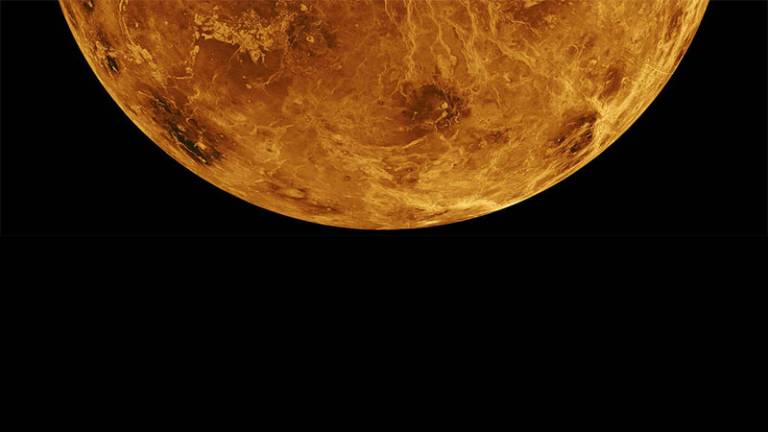
"caption": "Radar map of Venus's surface created by NASA's Magellan spacecraft. ",
"description": "Radar map of Venus' surface created by NASA's Magellan spacecraft. ",
"title": "venus-magellan-limb",
"credit": "NASA",
"status": "inherit",
"altTag": null,
"isLoading": false,
"fetchFailed": false
},
"science_1975449": {
"type": "attachments",
"id": "science_1975449",
"meta": {
"index": "attachments_1716263798",
"site": "science",
"id": "1975449",
"found": true
},
"parent": 1975443,
"imgSizes": {
"twentyfourteen-full-width": {
"file": "https://ww2.kqed.org/app/uploads/sites/35/2021/06/RS50018_GettyImages-1229318331-qut-1038x576.jpg",
"width": 1038,
"mimeType": "image/jpeg",
"height": 576
},
"thumbnail": {
"file": "https://ww2.kqed.org/app/uploads/sites/35/2021/06/RS50018_GettyImages-1229318331-qut-160x107.jpg",
"width": 160,
"mimeType": "image/jpeg",
"height": 107
},
"post-thumbnail": {
"file": "https://ww2.kqed.org/app/uploads/sites/35/2021/06/RS50018_GettyImages-1229318331-qut-672x372.jpg",
"width": 672,
"mimeType": "image/jpeg",
"height": 372
},
"kqedFullSize": {
"file": "https://ww2.kqed.org/app/uploads/sites/35/2021/06/RS50018_GettyImages-1229318331-qut.jpg",
"width": 1920,
"height": 1280
},
"large": {
"file": "https://ww2.kqed.org/app/uploads/sites/35/2021/06/RS50018_GettyImages-1229318331-qut-1020x680.jpg",
"width": 1020,
"mimeType": "image/jpeg",
"height": 680
},
"1536x1536": {
"file": "https://ww2.kqed.org/app/uploads/sites/35/2021/06/RS50018_GettyImages-1229318331-qut-1536x1024.jpg",
"width": 1536,
"mimeType": "image/jpeg",
"height": 1024
},
"medium": {
"file": "https://ww2.kqed.org/app/uploads/sites/35/2021/06/RS50018_GettyImages-1229318331-qut-800x533.jpg",
"width": 800,
"mimeType": "image/jpeg",
"height": 533
},
"medium_large": {
"file": "https://ww2.kqed.org/app/uploads/sites/35/2021/06/RS50018_GettyImages-1229318331-qut-768x512.jpg",
"width": 768,
"mimeType": "image/jpeg",
"height": 512
}
},
"publishDate": 1624037543,
"modified": 1624041218,
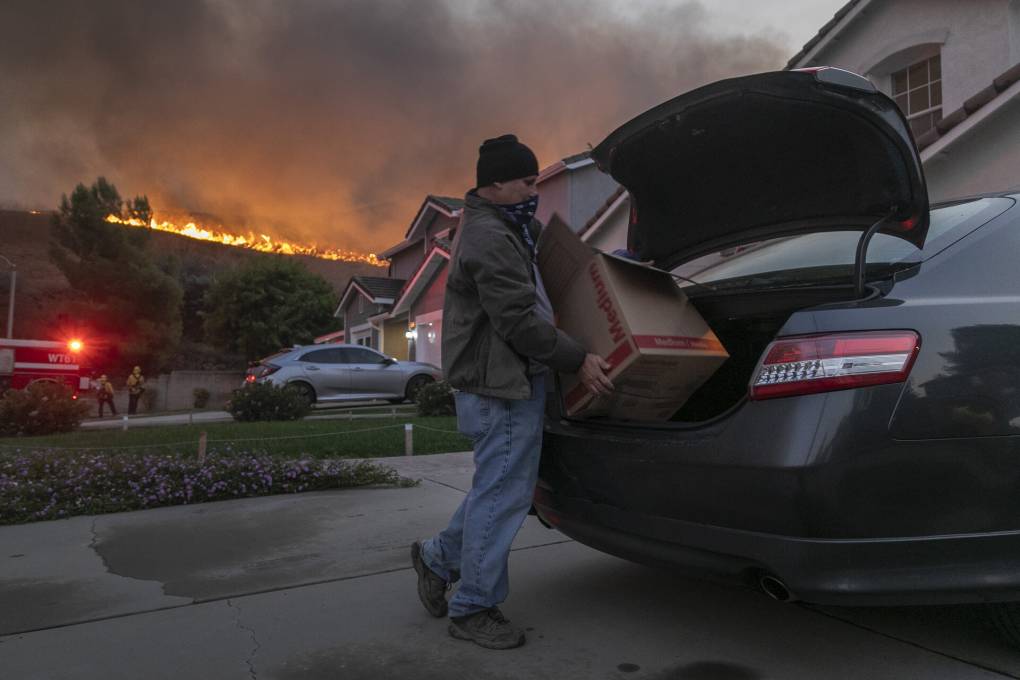
"caption": "A man evacuates as flames come close to houses during the Blue Ridge Fire on Oct. 27, 2020, in Chino Hills, California. ",
"description": null,
"title": "Silverado Fire In Orange Country, California Forces Evacuations",
"credit": "Photo by David McNew/Getty Images",
"status": "inherit",
"altTag": null,
"isLoading": false,
"fetchFailed": false
},
"science_1975477": {
"type": "attachments",
"id": "science_1975477",
"meta": {
"index": "attachments_1716263798",
"site": "science",
"id": "1975477",
"found": true
},
"parent": 1975476,
"imgSizes": {
"twentyfourteen-full-width": {
"file": "https://ww2.kqed.org/app/uploads/sites/35/2021/06/gettyimages-1233512800-ec5d82bddb20430c17d716d000d2adfa92dcef14-1038x576.jpg",
"width": 1038,
"mimeType": "image/jpeg",
"height": 576
},
"thumbnail": {
"file": "https://ww2.kqed.org/app/uploads/sites/35/2021/06/gettyimages-1233512800-ec5d82bddb20430c17d716d000d2adfa92dcef14-160x120.jpg",
"width": 160,
"mimeType": "image/jpeg",
"height": 120
},
"post-thumbnail": {
"file": "https://ww2.kqed.org/app/uploads/sites/35/2021/06/gettyimages-1233512800-ec5d82bddb20430c17d716d000d2adfa92dcef14-672x372.jpg",
"width": 672,
"mimeType": "image/jpeg",
"height": 372
},
"kqedFullSize": {
"file": "https://ww2.kqed.org/app/uploads/sites/35/2021/06/gettyimages-1233512800-ec5d82bddb20430c17d716d000d2adfa92dcef14-scaled.jpg",
"width": 2560,
"height": 1920
},
"2048x2048": {
"file": "https://ww2.kqed.org/app/uploads/sites/35/2021/06/gettyimages-1233512800-ec5d82bddb20430c17d716d000d2adfa92dcef14-2048x1536.jpg",
"width": 2048,
"mimeType": "image/jpeg",
"height": 1536
},
"large": {
"file": "https://ww2.kqed.org/app/uploads/sites/35/2021/06/gettyimages-1233512800-ec5d82bddb20430c17d716d000d2adfa92dcef14-1020x765.jpg",
"width": 1020,
"mimeType": "image/jpeg",
"height": 765
},
"1536x1536": {
"file": "https://ww2.kqed.org/app/uploads/sites/35/2021/06/gettyimages-1233512800-ec5d82bddb20430c17d716d000d2adfa92dcef14-1536x1152.jpg",
"width": 1536,
"mimeType": "image/jpeg",
"height": 1152
},
"full-width": {
"file": "https://ww2.kqed.org/app/uploads/sites/35/2021/06/gettyimages-1233512800-ec5d82bddb20430c17d716d000d2adfa92dcef14-1920x1440.jpg",
"width": 1920,
"mimeType": "image/jpeg",
"height": 1440
},
"medium": {
"file": "https://ww2.kqed.org/app/uploads/sites/35/2021/06/gettyimages-1233512800-ec5d82bddb20430c17d716d000d2adfa92dcef14-800x600.jpg",
"width": 800,
"mimeType": "image/jpeg",
"height": 600
},
"medium_large": {
"file": "https://ww2.kqed.org/app/uploads/sites/35/2021/06/gettyimages-1233512800-ec5d82bddb20430c17d716d000d2adfa92dcef14-768x576.jpg",
"width": 768,
"mimeType": "image/jpeg",
"height": 576
}
},
"publishDate": 1624297416,
"modified": 1624318648,
"caption": "Visitors feel the heat in California's Death Valley last week. ",
"description": null,
"title": "Visitors feel the heat in California's Death Valley earlier this week. This record-setting heat wave's remarkable power, reach and unusually early appearance is giving meteorologists yet more cause for concern about extreme weather in an era of climate change.",
"credit": "Patrick T. FallonAFP via Getty Images",
"status": "inherit",
"altTag": null,
"isLoading": false,
"fetchFailed": false
},
"science_1975431": {
"type": "attachments",
"id": "science_1975431",
"meta": {
"index": "attachments_1716263798",
"site": "science",
"id": "1975431",
"found": true
},
"parent": 1975422,
"imgSizes": {
"twentyfourteen-full-width": {
"file": "https://ww2.kqed.org/app/uploads/sites/35/2021/06/RS49272_027_NorthFairOaks_ClimateListening_05102021-qut-1038x576.jpg",
"width": 1038,
"mimeType": "image/jpeg",
"height": 576
},
"thumbnail": {
"file": "https://ww2.kqed.org/app/uploads/sites/35/2021/06/RS49272_027_NorthFairOaks_ClimateListening_05102021-qut-160x107.jpg",
"width": 160,
"mimeType": "image/jpeg",
"height": 107
},
"post-thumbnail": {
"file": "https://ww2.kqed.org/app/uploads/sites/35/2021/06/RS49272_027_NorthFairOaks_ClimateListening_05102021-qut-672x372.jpg",
"width": 672,
"mimeType": "image/jpeg",
"height": 372
},
"kqedFullSize": {
"file": "https://ww2.kqed.org/app/uploads/sites/35/2021/06/RS49272_027_NorthFairOaks_ClimateListening_05102021-qut.jpg",
"width": 1920,
"height": 1280
},
"large": {
"file": "https://ww2.kqed.org/app/uploads/sites/35/2021/06/RS49272_027_NorthFairOaks_ClimateListening_05102021-qut-1020x680.jpg",
"width": 1020,
"mimeType": "image/jpeg",
"height": 680
},
"1536x1536": {
"file": "https://ww2.kqed.org/app/uploads/sites/35/2021/06/RS49272_027_NorthFairOaks_ClimateListening_05102021-qut-1536x1024.jpg",
"width": 1536,
"mimeType": "image/jpeg",
"height": 1024
},
"medium": {
"file": "https://ww2.kqed.org/app/uploads/sites/35/2021/06/RS49272_027_NorthFairOaks_ClimateListening_05102021-qut-800x533.jpg",
"width": 800,
"mimeType": "image/jpeg",
"height": 533
},
"medium_large": {
"file": "https://ww2.kqed.org/app/uploads/sites/35/2021/06/RS49272_027_NorthFairOaks_ClimateListening_05102021-qut-768x512.jpg",
"width": 768,
"mimeType": "image/jpeg",
"height": 512
}
},
"publishDate": 1623963446,
"modified": 1624045778,
"caption": "Ever Rodriguez strikes a pose in front of a mural on Middlefield Road in North Fair Oaks on May 10, 2021. The mural was made by artist Jose Castro.",
"description": null,
"title": "RS49272_027_NorthFairOaks_ClimateListening_05102021-qut",
"credit": "Beth LaBerge/KQED",
"status": "inherit",
"altTag": null,
"isLoading": false,
"fetchFailed": false
},
"science_1975416": {
"type": "attachments",
"id": "science_1975416",
"meta": {
"index": "attachments_1716263798",
"site": "science",
"id": "1975416",
"found": true
},
"parent": 1975413,
"imgSizes": {
"twentyfourteen-full-width": {
"file": "https://ww2.kqed.org/app/uploads/sites/35/2021/06/RS49884_GettyImages-1322930060-qut-1038x576.jpg",
"width": 1038,
"mimeType": "image/jpeg",
"height": 576
},
"thumbnail": {
"file": "https://ww2.kqed.org/app/uploads/sites/35/2021/06/RS49884_GettyImages-1322930060-qut-160x105.jpg",
"width": 160,
"mimeType": "image/jpeg",
"height": 105
},
"post-thumbnail": {
"file": "https://ww2.kqed.org/app/uploads/sites/35/2021/06/RS49884_GettyImages-1322930060-qut-672x372.jpg",
"width": 672,
"mimeType": "image/jpeg",
"height": 372
},
"kqedFullSize": {
"file": "https://ww2.kqed.org/app/uploads/sites/35/2021/06/RS49884_GettyImages-1322930060-qut.jpg",
"width": 1920,
"height": 1260
},
"large": {
"file": "https://ww2.kqed.org/app/uploads/sites/35/2021/06/RS49884_GettyImages-1322930060-qut-1020x669.jpg",
"width": 1020,
"mimeType": "image/jpeg",
"height": 669
},
"1536x1536": {
"file": "https://ww2.kqed.org/app/uploads/sites/35/2021/06/RS49884_GettyImages-1322930060-qut-1536x1008.jpg",
"width": 1536,
"mimeType": "image/jpeg",
"height": 1008
},
"medium": {
"file": "https://ww2.kqed.org/app/uploads/sites/35/2021/06/RS49884_GettyImages-1322930060-qut-800x525.jpg",
"width": 800,
"mimeType": "image/jpeg",
"height": 525
},
"medium_large": {
"file": "https://ww2.kqed.org/app/uploads/sites/35/2021/06/RS49884_GettyImages-1322930060-qut-768x504.jpg",
"width": 768,
"mimeType": "image/jpeg",
"height": 504
}
},
"publishDate": 1623864694,
"modified": 1623876924,
"caption": "A sign advertises a free vaccination site set up inside Union Station in an effort to target commuters on June 10, 2021, in Los Angeles, California. The rate of coronavirus (COVID-19) vaccinations has dropped since peaking in April, putting in jeopardy the goal of having 70 percent of adults receive at least one dose of a coronavirus vaccine by July 4 set by U.S. President Joe Biden. Centers for Disease Control and Prevention (CDC) data shows 63.7 percent of Americans over the age of 18 have received a first dose of a vaccine and 53 percent have been fully vaccinated. ",
"description": null,
"title": "Vaccination Rates Sharply Decline As States Across Nation Try To Reach Herd Immunity",
"credit": "Mario Tama/Getty Images",
"status": "inherit",
"altTag": null,
"isLoading": false,
"fetchFailed": false
},
"science_1975378": {
"type": "attachments",
"id": "science_1975378",
"meta": {
"index": "attachments_1716263798",
"site": "science",
"id": "1975378",
"found": true
},
"parent": 1975362,
"imgSizes": {
"twentyfourteen-full-width": {
"file": "https://ww2.kqed.org/app/uploads/sites/35/2021/06/059_SanFrancisco_YouthClimateActivists_06142021-1038x576.jpg",
"width": 1038,
"mimeType": "image/jpeg",
"height": 576
},
"thumbnail": {
"file": "https://ww2.kqed.org/app/uploads/sites/35/2021/06/059_SanFrancisco_YouthClimateActivists_06142021-160x107.jpg",
"width": 160,
"mimeType": "image/jpeg",
"height": 107
},
"post-thumbnail": {
"file": "https://ww2.kqed.org/app/uploads/sites/35/2021/06/059_SanFrancisco_YouthClimateActivists_06142021-672x372.jpg",
"width": 672,
"mimeType": "image/jpeg",
"height": 372
},
"kqedFullSize": {
"file": "https://ww2.kqed.org/app/uploads/sites/35/2021/06/059_SanFrancisco_YouthClimateActivists_06142021.jpg",
"width": 1920,
"height": 1278
},
"large": {
"file": "https://ww2.kqed.org/app/uploads/sites/35/2021/06/059_SanFrancisco_YouthClimateActivists_06142021-1020x679.jpg",
"width": 1020,
"mimeType": "image/jpeg",
"height": 679
},
"1536x1536": {
"file": "https://ww2.kqed.org/app/uploads/sites/35/2021/06/059_SanFrancisco_YouthClimateActivists_06142021-1536x1022.jpg",
"width": 1536,
"mimeType": "image/jpeg",
"height": 1022
},
"medium": {
"file": "https://ww2.kqed.org/app/uploads/sites/35/2021/06/059_SanFrancisco_YouthClimateActivists_06142021-800x533.jpg",
"width": 800,
"mimeType": "image/jpeg",
"height": 533
},
"medium_large": {
"file": "https://ww2.kqed.org/app/uploads/sites/35/2021/06/059_SanFrancisco_YouthClimateActivists_06142021-768x511.jpg",
"width": 768,
"mimeType": "image/jpeg",
"height": 511
}
},
"publishDate": 1623718155,
"modified": 1623791189,
"caption": "Youth climate activists march across the Golden Gate Bridge in support of the Civilian Climate Corps on June 14, 2021.",
"description": null,
"title": "059_SanFrancisco_YouthClimateActivists_06142021",
"credit": "Beth LaBerge/KQED",
"status": "inherit",
"altTag": null,
"isLoading": false,
"fetchFailed": false
},
"science_1975297": {
"type": "attachments",
"id": "science_1975297",
"meta": {
"index": "attachments_1716263798",
"site": "science",
"id": "1975297",
"found": true
},
"parent": 1975185,
"imgSizes": {
"twentyfourteen-full-width": {
"file": "https://ww2.kqed.org/app/uploads/sites/35/2029/06/UFOphoto-1038x576.png",
"width": 1038,
"mimeType": "image/png",
"height": 576
},
"thumbnail": {
"file": "https://ww2.kqed.org/app/uploads/sites/35/2029/06/UFOphoto-160x101.png",
"width": 160,
"mimeType": "image/png",
"height": 101
},
"post-thumbnail": {
"file": "https://ww2.kqed.org/app/uploads/sites/35/2029/06/UFOphoto-672x372.png",
"width": 672,
"mimeType": "image/png",
"height": 372
},
"kqedFullSize": {
"file": "https://ww2.kqed.org/app/uploads/sites/35/2029/06/UFOphoto.png",
"width": 3140,
"height": 1978
},
"2048x2048": {
"file": "https://ww2.kqed.org/app/uploads/sites/35/2029/06/UFOphoto-2048x1290.png",
"width": 2048,
"mimeType": "image/png",
"height": 1290
},
"large": {
"file": "https://ww2.kqed.org/app/uploads/sites/35/2029/06/UFOphoto-1020x643.png",
"width": 1020,
"mimeType": "image/png",
"height": 643
},
"1536x1536": {
"file": "https://ww2.kqed.org/app/uploads/sites/35/2029/06/UFOphoto-1536x968.png",
"width": 1536,
"mimeType": "image/png",
"height": 968
},
"full-width": {
"file": "https://ww2.kqed.org/app/uploads/sites/35/2029/06/UFOphoto-1920x1209.png",
"width": 1920,
"mimeType": "image/png",
"height": 1209
},
"medium": {
"file": "https://ww2.kqed.org/app/uploads/sites/35/2029/06/UFOphoto-800x504.png",
"width": 800,
"mimeType": "image/png",
"height": 504
},
"medium_large": {
"file": "https://ww2.kqed.org/app/uploads/sites/35/2029/06/UFOphoto-768x484.png",
"width": 768,
"mimeType": "image/png",
"height": 484
}
},
"publishDate": 1623383686,
"modified": 1623456595,
"caption": "Photograph taken by U.S. Navy personnel off the Atlantic coast in 2019 shows a flying object that CBS' \"60 Minutes\" reported was unidentifiable by the Pentagon.",
"description": null,
"title": "UFOphoto",
"credit": "CBS",
"status": "inherit",
"altTag": null,
"isLoading": false,
"fetchFailed": false
},
"science_1975235": {
"type": "attachments",
"id": "science_1975235",
"meta": {
"index": "attachments_1716263798",
"site": "science",
"id": "1975235",
"found": true
},
"parent": 1975234,
"imgSizes": {
"twentyfourteen-full-width": {
"file": "https://ww2.kqed.org/app/uploads/sites/35/2021/06/ap19295518927022-f69c4255bd5280ce085db095311ec7edfde41efd-1038x576.jpg",
"width": 1038,
"mimeType": "image/jpeg",
"height": 576
},
"thumbnail": {
"file": "https://ww2.kqed.org/app/uploads/sites/35/2021/06/ap19295518927022-f69c4255bd5280ce085db095311ec7edfde41efd-160x120.jpg",
"width": 160,
"mimeType": "image/jpeg",
"height": 120
},
"post-thumbnail": {
"file": "https://ww2.kqed.org/app/uploads/sites/35/2021/06/ap19295518927022-f69c4255bd5280ce085db095311ec7edfde41efd-672x372.jpg",
"width": 672,
"mimeType": "image/jpeg",
"height": 372
},
"kqedFullSize": {
"file": "https://ww2.kqed.org/app/uploads/sites/35/2021/06/ap19295518927022-f69c4255bd5280ce085db095311ec7edfde41efd-scaled.jpg",
"width": 2560,
"height": 1920
},
"2048x2048": {
"file": "https://ww2.kqed.org/app/uploads/sites/35/2021/06/ap19295518927022-f69c4255bd5280ce085db095311ec7edfde41efd-2048x1536.jpg",
"width": 2048,
"mimeType": "image/jpeg",
"height": 1536
},
"large": {
"file": "https://ww2.kqed.org/app/uploads/sites/35/2021/06/ap19295518927022-f69c4255bd5280ce085db095311ec7edfde41efd-1020x765.jpg",
"width": 1020,
"mimeType": "image/jpeg",
"height": 765
},
"1536x1536": {
"file": "https://ww2.kqed.org/app/uploads/sites/35/2021/06/ap19295518927022-f69c4255bd5280ce085db095311ec7edfde41efd-1536x1152.jpg",
"width": 1536,
"mimeType": "image/jpeg",
"height": 1152
},
"full-width": {
"file": "https://ww2.kqed.org/app/uploads/sites/35/2021/06/ap19295518927022-f69c4255bd5280ce085db095311ec7edfde41efd-1920x1440.jpg",
"width": 1920,
"mimeType": "image/jpeg",
"height": 1440
},
"medium": {
"file": "https://ww2.kqed.org/app/uploads/sites/35/2021/06/ap19295518927022-f69c4255bd5280ce085db095311ec7edfde41efd-800x600.jpg",
"width": 800,
"mimeType": "image/jpeg",
"height": 600
},
"medium_large": {
"file": "https://ww2.kqed.org/app/uploads/sites/35/2021/06/ap19295518927022-f69c4255bd5280ce085db095311ec7edfde41efd-768x576.jpg",
"width": 768,
"mimeType": "image/jpeg",
"height": 576
}
},
"publishDate": 1623170448,
"modified": 1623191013,
"caption": "Dr. William Burke goes over a PET brain scan in 2018 at Banner Alzheimer's Institute in Phoenix, Arizona. The drug company Biogen has received federal approval for a medicine to treat early Alzheimer's disease.",
"description": null,
"title": null,
"credit": "AP Photo via NPR/Matt York",
"status": "inherit",
"altTag": null,
"isLoading": false,
"fetchFailed": false
},
"science_1975198": {
"type": "attachments",
"id": "science_1975198",
"meta": {
"index": "attachments_1716263798",
"site": "science",
"id": "1975198",
"found": true
},
"parent": 1975174,
"imgSizes": {
"twentyfourteen-full-width": {
"file": "https://ww2.kqed.org/app/uploads/sites/35/2021/06/RS49731_nft-qut-1038x576.jpg",
"width": 1038,
"mimeType": "image/jpeg",
"height": 576
},
"thumbnail": {
"file": "https://ww2.kqed.org/app/uploads/sites/35/2021/06/RS49731_nft-qut-160x160.jpg",
"width": 160,
"mimeType": "image/jpeg",
"height": 160
},
"post-thumbnail": {
"file": "https://ww2.kqed.org/app/uploads/sites/35/2021/06/RS49731_nft-qut-672x372.jpg",
"width": 672,
"mimeType": "image/jpeg",
"height": 372
},
"kqedFullSize": {
"file": "https://ww2.kqed.org/app/uploads/sites/35/2021/06/RS49731_nft-qut.jpg",
"width": 1920,
"height": 1920
},
"large": {
"file": "https://ww2.kqed.org/app/uploads/sites/35/2021/06/RS49731_nft-qut-1020x1020.jpg",
"width": 1020,
"mimeType": "image/jpeg",
"height": 1020
},
"1536x1536": {
"file": "https://ww2.kqed.org/app/uploads/sites/35/2021/06/RS49731_nft-qut-1536x1536.jpg",
"width": 1536,
"mimeType": "image/jpeg",
"height": 1536
},
"medium": {
"file": "https://ww2.kqed.org/app/uploads/sites/35/2021/06/RS49731_nft-qut-800x800.jpg",
"width": 800,
"mimeType": "image/jpeg",
"height": 800
},
"medium_large": {
"file": "https://ww2.kqed.org/app/uploads/sites/35/2021/06/RS49731_nft-qut-768x768.jpg",
"width": 768,
"mimeType": "image/jpeg",
"height": 768
}
},
"publishDate": 1623092798,
"modified": 1623100326,
"caption": "UC Berkeley's first research-oriented NFT artifact depicts documentation related to James P. Allison's immunotherapy research.",
"description": null,
"title": "RS49731_nft-qut",
"credit": "Courtesy of UC Berkeley",
"status": "inherit",
"altTag": null,
"isLoading": false,
"fetchFailed": false
},
"science_1975166": {
"type": "attachments",
"id": "science_1975166",
"meta": {
"index": "attachments_1716263798",
"site": "science",
"id": "1975166",
"found": true
},
"parent": 1975164,
"imgSizes": {
"twentyfourteen-full-width": {
"file": "https://ww2.kqed.org/app/uploads/sites/35/2021/06/RS49662_GettyImages-177068763-1-qut-1038x576.jpg",
"width": 1038,
"mimeType": "image/jpeg",
"height": 576
},
"thumbnail": {
"file": "https://ww2.kqed.org/app/uploads/sites/35/2021/06/RS49662_GettyImages-177068763-1-qut-160x107.jpg",
"width": 160,
"mimeType": "image/jpeg",
"height": 107
},
"post-thumbnail": {
"file": "https://ww2.kqed.org/app/uploads/sites/35/2021/06/RS49662_GettyImages-177068763-1-qut-672x372.jpg",
"width": 672,
"mimeType": "image/jpeg",
"height": 372
},
"kqedFullSize": {
"file": "https://ww2.kqed.org/app/uploads/sites/35/2021/06/RS49662_GettyImages-177068763-1-qut.jpg",
"width": 1920,
"height": 1281
},
"large": {
"file": "https://ww2.kqed.org/app/uploads/sites/35/2021/06/RS49662_GettyImages-177068763-1-qut-1020x681.jpg",
"width": 1020,
"mimeType": "image/jpeg",
"height": 681
},
"1536x1536": {
"file": "https://ww2.kqed.org/app/uploads/sites/35/2021/06/RS49662_GettyImages-177068763-1-qut-1536x1025.jpg",
"width": 1536,
"mimeType": "image/jpeg",
"height": 1025
},
"medium": {
"file": "https://ww2.kqed.org/app/uploads/sites/35/2021/06/RS49662_GettyImages-177068763-1-qut-800x534.jpg",
"width": 800,
"mimeType": "image/jpeg",
"height": 534
},
"medium_large": {
"file": "https://ww2.kqed.org/app/uploads/sites/35/2021/06/RS49662_GettyImages-177068763-1-qut-768x512.jpg",
"width": 768,
"mimeType": "image/jpeg",
"height": 512
}
},
"publishDate": 1622848786,
"modified": 1622848813,
"caption": "Thick coastal forests with redwood trees can store double the amount of carbon per acre compared to shrubbier, smaller forests in inland areas of California. ",
"description": null,
"title": "Sequoias And Coastal Redwoods Appear To Flourish Despite Climate Change",
"credit": "Justin Sullivan/Getty Images",
"status": "inherit",
"altTag": null,
"isLoading": false,
"fetchFailed": false
},
"science_1975079": {
"type": "attachments",
"id": "science_1975079",
"meta": {
"index": "attachments_1716263798",
"site": "science",
"id": "1975079",
"found": true
},
"parent": 1975078,
"imgSizes": {
"twentyfourteen-full-width": {
"file": "https://ww2.kqed.org/app/uploads/sites/35/2021/06/IMG_7972-1-966x576.jpg",
"width": 966,
"mimeType": "image/jpeg",
"height": 576
},
"thumbnail": {
"file": "https://ww2.kqed.org/app/uploads/sites/35/2021/06/IMG_7972-1-160x144.jpg",
"width": 160,
"mimeType": "image/jpeg",
"height": 144
},
"post-thumbnail": {
"file": "https://ww2.kqed.org/app/uploads/sites/35/2021/06/IMG_7972-1-672x372.jpg",
"width": 672,
"mimeType": "image/jpeg",
"height": 372
},
"kqedFullSize": {
"file": "https://ww2.kqed.org/app/uploads/sites/35/2021/06/IMG_7972-1.jpg",
"width": 966,
"height": 869
},
"medium": {
"file": "https://ww2.kqed.org/app/uploads/sites/35/2021/06/IMG_7972-1-800x720.jpg",
"width": 800,
"mimeType": "image/jpeg",
"height": 720
},
"medium_large": {
"file": "https://ww2.kqed.org/app/uploads/sites/35/2021/06/IMG_7972-1-768x691.jpg",
"width": 768,
"mimeType": "image/jpeg",
"height": 691
}
},
"publishDate": 1622748599,
"modified": 1623085042,
"caption": "Vince Crisostomo snaps a selfie of he and his father, Francsico Crisostomo, a few years before Francisco dies of COVID-19 alone in a hospital. ",
"description": null,
"title": "IMG_7972 (1)",
"credit": "Vince Crisostomo",
"status": "inherit",
"altTag": "Vince Crisostomo snaps a selfie of he and his father Francsico Crisostomo a few years before his Francisco dies of COVID-19 alone in a hospital.",
"isLoading": false,
"fetchFailed": false
},
"science_1975110": {
"type": "attachments",
"id": "science_1975110",
"meta": {
"index": "attachments_1716263798",
"site": "science",
"id": "1975110",
"found": true
},
"parent": 1975081,
"imgSizes": {
"twentyfourteen-full-width": {
"file": "https://ww2.kqed.org/app/uploads/sites/35/2029/06/UFO-video-screenshot-1038x576.png",
"width": 1038,
"mimeType": "image/png",
"height": 576
},
"thumbnail": {
"file": "https://ww2.kqed.org/app/uploads/sites/35/2029/06/UFO-video-screenshot-160x115.png",
"width": 160,
"mimeType": "image/png",
"height": 115
},
"post-thumbnail": {
"file": "https://ww2.kqed.org/app/uploads/sites/35/2029/06/UFO-video-screenshot-672x372.png",
"width": 672,
"mimeType": "image/png",
"height": 372
},
"kqedFullSize": {
"file": "https://ww2.kqed.org/app/uploads/sites/35/2029/06/UFO-video-screenshot-e1622766091392.png",
"width": 1920,
"height": 1374
},
"large": {
"file": "https://ww2.kqed.org/app/uploads/sites/35/2029/06/UFO-video-screenshot-1020x730.png",
"width": 1020,
"mimeType": "image/png",
"height": 730
},
"1536x1536": {
"file": "https://ww2.kqed.org/app/uploads/sites/35/2029/06/UFO-video-screenshot-1536x1100.png",
"width": 1536,
"mimeType": "image/png",
"height": 1100
},
"full-width": {
"file": "https://ww2.kqed.org/app/uploads/sites/35/2029/06/UFO-video-screenshot-1920x1374.png",
"width": 1920,
"mimeType": "image/png",
"height": 1374
},
"medium": {
"file": "https://ww2.kqed.org/app/uploads/sites/35/2029/06/UFO-video-screenshot-800x573.png",
"width": 800,
"mimeType": "image/png",
"height": 573
},
"medium_large": {
"file": "https://ww2.kqed.org/app/uploads/sites/35/2029/06/UFO-video-screenshot-768x550.png",
"width": 768,
"mimeType": "image/png",
"height": 550
}
},
"publishDate": 1622766064,
"modified": 1690404945,
"caption": "Screenshot of an unidentified flying object taken from a 2015 video made by an infrared camera on a Navy jet. This and other videos, as well as public accounts of former pilots who cannot explain what they often describe as the extremely advanced maneuverability and speed of the objects, has sparked renewed interest in the subject of UFOs as a legitimate field of study.",
"description": null,
"title": "UFO video screenshot",
"credit": "U.S. Navy",
"status": "inherit",
"altTag": "An image of an unidentified object. The image is in black and white.",
"isLoading": false,
"fetchFailed": false
}
},
"audioPlayerReducer": {
"postId": "stream_live",
"isPaused": true,
"isPlaying": false,
"pfsActive": false,
"pledgeModalIsOpen": true,
"playerDrawerIsOpen": false,
"liveAudioPlayStartedAt": 0,
"liveAudioPlayContext": ""
},
"authorsReducer": {
"byline_science_1975476": {
"type": "authors",
"id": "byline_science_1975476",
"meta": {
"override": true
},
"slug": "byline_science_1975476",
"name": "Eric Westervelt \u003cbr />NPR\u003cbr>",
"isLoading": false
},
"byline_science_1975413": {
"type": "authors",
"id": "byline_science_1975413",
"meta": {
"override": true
},
"slug": "byline_science_1975413",
"name": "Andrew Joseph \u003cbr />STAT",
"isLoading": false
},
"byline_science_1975234": {
"type": "authors",
"id": "byline_science_1975234",
"meta": {
"override": true
},
"slug": "byline_science_1975234",
"name": "Laurel Wamsley",
"isLoading": false
},
"jbrooks": {
"type": "authors",
"id": "80",
"meta": {
"index": "authors_1716337520",
"id": "80",
"found": true
},
"name": "Jon Brooks",
"firstName": "Jon",
"lastName": "Brooks",
"slug": "jbrooks",
"email": "jbrooks@kqed.org",
"display_author_email": true,
"staff_mastheads": [
"science"
],
"title": "Digital Editor",
"bio": "Jon Brooks is a former Digital Editor for KQED Science. He is the former editor of KQED’s daily news blog, News Fix. In 2014, he won a California Journalism Award for his coverage of ride services like Uber and Lyft and the taxi industry. A veteran blogger, he previously worked for Yahoo! in various news writing and editing roles. Jon is also a playwright whose work has been produced in San Francisco, New York, Italy, and around the U.S. He has written about film for his own blog and studied film at Boston University.",
"avatar": "https://secure.gravatar.com/avatar/98887f7ed1c876ed414d4c915e969584?s=600&d=blank&r=g",
"twitter": "jbrooksfoy",
"facebook": null,
"instagram": null,
"linkedin": null,
"sites": [
{
"site": "arts",
"roles": [
"Contributor",
"editor"
]
},
{
"site": "news",
"roles": [
"author"
]
},
{
"site": "futureofyou",
"roles": [
"administrator"
]
},
{
"site": "mindshift",
"roles": [
"editor"
]
},
{
"site": "stateofhealth",
"roles": [
"editor"
]
},
{
"site": "science",
"roles": [
"administrator"
]
},
{
"site": "quest",
"roles": [
"editor"
]
}
],
"headData": {
"title": "Jon Brooks | KQED",
"description": "Digital Editor",
"ogImgSrc": "https://secure.gravatar.com/avatar/98887f7ed1c876ed414d4c915e969584?s=600&d=blank&r=g",
"twImgSrc": "https://secure.gravatar.com/avatar/98887f7ed1c876ed414d4c915e969584?s=600&d=blank&r=g"
},
"isLoading": false,
"link": "/author/jbrooks"
},
"ben-burress": {
"type": "authors",
"id": "6180",
"meta": {
"index": "authors_1716337520",
"id": "6180",
"found": true
},
"name": "Ben Burress",
"firstName": "Ben",
"lastName": "Burress",
"slug": "ben-burress",
"email": "bburress@chabotspace.org",
"display_author_email": false,
"staff_mastheads": [],
"title": null,
"bio": "\u003cstrong>Benjamin Burress\u003c/strong> has been a staff astronomer at Chabot Space & Science Center since July 1999. He graduated from Sonoma State University in 1985 with a bachelor’s degree in physics (and minor in astronomy), after which he signed on for a two-year stint in the Peace Corps, where he taught physics and mathematics in the African nation of Cameroon. From 1989-96 he served on the crew of NASA’s Kuiper Airborne Observatory at Ames Research Center in Mountain View, CA. From 1996-99, he was Head Observer at the Naval Prototype Optical Interferometer program at Lowell Observatory in Flagstaff, AZ.\r\n\r\nRead his \u003ca href=\"http://science.kqed.org/quest/author/ben-burress/\">previous contributions\u003c/a> to \u003ca href=\"http://science.kqed.org/quest/\">QUEST\u003c/a>, a project dedicated to exploring the Science of Sustainability.",
"avatar": "https://secure.gravatar.com/avatar/8263bffa345b7e4923a0b8b9f0f6a161?s=600&d=blank&r=g",
"twitter": null,
"facebook": null,
"instagram": null,
"linkedin": null,
"sites": [
{
"site": "science",
"roles": [
"editor"
]
},
{
"site": "quest",
"roles": [
"subscriber"
]
}
],
"headData": {
"title": "Ben Burress | KQED",
"description": null,
"ogImgSrc": "https://secure.gravatar.com/avatar/8263bffa345b7e4923a0b8b9f0f6a161?s=600&d=blank&r=g",
"twImgSrc": "https://secure.gravatar.com/avatar/8263bffa345b7e4923a0b8b9f0f6a161?s=600&d=blank&r=g"
},
"isLoading": false,
"link": "/author/ben-burress"
},
"cveltman": {
"type": "authors",
"id": "8608",
"meta": {
"index": "authors_1716337520",
"id": "8608",
"found": true
},
"name": "Chloe Veltman",
"firstName": "Chloe",
"lastName": "Veltman",
"slug": "cveltman",
"email": "cveltman@kqed.org",
"display_author_email": true,
"staff_mastheads": [],
"title": "Arts and Culture Reporter",
"bio": "Chloe Veltman is a former arts and culture reporter for KQED. Prior to joining the organization, she launched and led the arts bureau at Colorado Public Radio, served as the Bay Area's culture columnist for the New York Times, and was the founder, host and executive producer of VoiceBox, a national award-winning weekly podcast/radio show and live events series all about the human voice. Chloe is the recipient of numerous prizes, grants and fellowships including a Webby Award for her work on interactive storytelling, both the John S Knight Journalism Fellowship and Humanities Center Fellowship at Stanford University, the Sundance Arts Writing Fellowship and a Library of Congress Research Fellowship. She is the author of the book \"On Acting\" and has appeared as a guest lecturer at Yale University and the San Francisco Conservatory of Music among other institutions. She holds a BA in english literature from King's College, Cambridge, and a Masters in Dramaturgy from the Central School of Speech and Drama/Harvard Institute for Advanced Theater Training.\r\n\u003ca href=\"https://www.chloeveltman.com\">www.chloeveltman.com\u003c/a>",
"avatar": "https://secure.gravatar.com/avatar/55403394b00a1ddab683952c2eb2cf85?s=600&d=blank&r=g",
"twitter": "chloeveltman",
"facebook": null,
"instagram": null,
"linkedin": null,
"sites": [
{
"site": "arts",
"roles": []
},
{
"site": "news",
"roles": [
"author"
]
},
{
"site": "pop",
"roles": [
"editor"
]
},
{
"site": "science",
"roles": []
}
],
"headData": {
"title": "Chloe Veltman | KQED",
"description": "Arts and Culture Reporter",
"ogImgSrc": "https://secure.gravatar.com/avatar/55403394b00a1ddab683952c2eb2cf85?s=600&d=blank&r=g",
"twImgSrc": "https://secure.gravatar.com/avatar/55403394b00a1ddab683952c2eb2cf85?s=600&d=blank&r=g"
},
"isLoading": false,
"link": "/author/cveltman"
},
"lesleymcclurg": {
"type": "authors",
"id": "11229",
"meta": {
"index": "authors_1716337520",
"id": "11229",
"found": true
},
"name": "Lesley McClurg",
"firstName": "Lesley",
"lastName": "McClurg",
"slug": "lesleymcclurg",
"email": "lmcclurg@KQED.org",
"display_author_email": false,
"staff_mastheads": [],
"title": "KQED Health Correspondent",
"bio": "Lesley McClurg is a health correspondent and fill-in host whose work is regularly rebroadcast on NPR and PBS programs. She’s earned multiple regional Emmy awards, a national and a regional Edward R. Murrow award, and was named Best Beat Reporter by the Association of Health Care Journalists. The Society of Professional Journalists has recognized her work several times, and the Society of Environmental Journalists spotlighted her coverage of California’s historic drought.\r\n\r\nBefore joining KQED in 2016, Lesley covered food and sustainability for Capital Public Radio, environmental issues for Colorado Public Radio, and reported for KUOW and KCTS 9 in Seattle. Away from the newsroom, she loves skiing with her daughter, mountain biking with her partner, and playing with Ollie, the family’s goldendoodle. On deadline, she runs almost entirely on chocolate chips.\r\n\r\n ",
"avatar": "https://secure.gravatar.com/avatar/bab49e972ea10c774fe0f5e29dba1722b158f7c0d58a360923d1389d380b2978?s=600&d=blank&r=g",
"twitter": "lesleywmcclurg",
"bluesky": null,
"facebook": null,
"instagram": null,
"linkedin": null,
"sites": [
{
"site": "arts",
"roles": [
"subscriber"
]
},
{
"site": "news",
"roles": [
"subscriber"
]
},
{
"site": "futureofyou",
"roles": [
"subscriber"
]
},
{
"site": "stateofhealth",
"roles": [
"subscriber"
]
},
{
"site": "science",
"roles": [
"subscriber"
]
},
{
"site": "quest",
"roles": [
"subscriber"
]
},
{
"site": "forum",
"roles": [
"subscriber"
]
},
{
"site": "liveblog",
"roles": [
"subscriber"
]
}
],
"headData": {
"title": "Lesley McClurg | KQED",
"description": "KQED Health Correspondent",
"ogImgSrc": "https://secure.gravatar.com/avatar/bab49e972ea10c774fe0f5e29dba1722b158f7c0d58a360923d1389d380b2978?s=600&d=blank&r=g",
"twImgSrc": "https://secure.gravatar.com/avatar/bab49e972ea10c774fe0f5e29dba1722b158f7c0d58a360923d1389d380b2978?s=600&d=blank&r=g"
},
"isLoading": false,
"link": "/author/lesleymcclurg"
},
"parcuni": {
"type": "authors",
"id": "11368",
"meta": {
"index": "authors_1716337520",
"id": "11368",
"found": true
},
"name": "Peter Arcuni",
"firstName": "Peter",
"lastName": "Arcuni",
"slug": "parcuni",
"email": "parcuni@KQED.org",
"display_author_email": false,
"staff_mastheads": [
"science"
],
"title": "Reporter",
"bio": "Peter reports radio and online stories for \u003cem>KQED Science\u003c/em>. His work has also appeared on the \u003cem>The California Report\u003c/em> morning show and \u003cem>KQED News\u003c/em>. His production credits include \u003cem>The California Report, The California Report Magazine\u003c/em> and KQED's local news podcast \u003cem>The Bay\u003c/em>. Other credits include NPR's \u003cem>All Things Considered\u003c/em>, WNYC's \u003cem>Science Friday\u003c/em>, WBUR's \u003cem>Here & Now\u003c/em>, WIRED and SFGate. Peter graduated from Brown University and earned a master's degree in journalism from Stanford. He's covered everything from homelessness to wildfires, health, the environment, arts and Thanksgiving in San Quentin prison. In other lives, he played rock n roll music and studied neuroscience. You can email him at: parcuni@kqed.org",
"avatar": "https://secure.gravatar.com/avatar/d5032f6f27199d478af34ad2e1d98732?s=600&d=blank&r=g",
"twitter": "peterarcuni",
"facebook": null,
"instagram": null,
"linkedin": null,
"sites": [
{
"site": "news",
"roles": [
"editor"
]
},
{
"site": "science",
"roles": [
"editor"
]
}
],
"headData": {
"title": "Peter Arcuni | KQED",
"description": "Reporter",
"ogImgSrc": "https://secure.gravatar.com/avatar/d5032f6f27199d478af34ad2e1d98732?s=600&d=blank&r=g",
"twImgSrc": "https://secure.gravatar.com/avatar/d5032f6f27199d478af34ad2e1d98732?s=600&d=blank&r=g"
},
"isLoading": false,
"link": "/author/parcuni"
},
"kevinstark": {
"type": "authors",
"id": "11608",
"meta": {
"index": "authors_1716337520",
"id": "11608",
"found": true
},
"name": "Kevin Stark",
"firstName": "Kevin",
"lastName": "Stark",
"slug": "kevinstark",
"email": "kstark@kqed.org",
"display_author_email": true,
"staff_mastheads": [
"science"
],
"title": "Senior Editor",
"bio": "Kevin is a senior editor for KQED Science, managing the station's health and climate desks. His journalism career began in the Pacific Northwest, and he later became a lead reporter for the San Francisco Public Press. His work has appeared in Pacific Standard magazine, the Energy News Network, the Center for Investigative Reporting's Reveal and WBEZ in Chicago. Kevin joined KQED in 2019, and has covered issues related to energy, wildfire, climate change and the environment.",
"avatar": "https://secure.gravatar.com/avatar/365aaa4b597d3a8374f67504ff0facd323d7906e8eb4be0a7efd2427408e802c?s=600&d=blank&r=g",
"twitter": "starkkev",
"bluesky": null,
"facebook": null,
"instagram": null,
"linkedin": null,
"sites": [
{
"site": "",
"roles": [
"editor"
]
},
{
"site": "news",
"roles": [
"editor"
]
},
{
"site": "science",
"roles": [
"administrator"
]
}
],
"headData": {
"title": "Kevin Stark | KQED",
"description": "Senior Editor",
"ogImgSrc": "https://secure.gravatar.com/avatar/365aaa4b597d3a8374f67504ff0facd323d7906e8eb4be0a7efd2427408e802c?s=600&d=blank&r=g",
"twImgSrc": "https://secure.gravatar.com/avatar/365aaa4b597d3a8374f67504ff0facd323d7906e8eb4be0a7efd2427408e802c?s=600&d=blank&r=g"
},
"isLoading": false,
"link": "/author/kevinstark"
},
"eromero": {
"type": "authors",
"id": "11746",
"meta": {
"index": "authors_1716337520",
"id": "11746",
"found": true
},
"name": "Ezra David Romero",
"firstName": "Ezra David",
"lastName": "Romero",
"slug": "eromero",
"email": "eromero@kqed.org",
"display_author_email": true,
"staff_mastheads": [
"news",
"science"
],
"title": "Climate Reporter",
"bio": "Ezra David Romero is a climate reporter for KQED News. He covers the absence and excess of water in the Bay Area — think sea level rise, flooding and drought. For nearly a decade he’s covered how warming temperatures are altering the lives of Californians. He’s reported on farmers worried their pistachio trees aren’t getting enough sleep, families desperate for water, scientists studying dying giant sequoias, and alongside firefighters containing wildfires. His work has appeared on local stations across California and nationally on public radio shows like Morning Edition, Here and Now, All Things Considered and Science Friday. ",
"avatar": "https://secure.gravatar.com/avatar/c76404d287c10ed40224227551ac36e24352c7306f106632caf6fead76f8801f?s=600&d=blank&r=g",
"twitter": "ezraromero",
"bluesky": null,
"facebook": null,
"instagram": null,
"linkedin": null,
"sites": [
{
"site": "arts",
"roles": [
"editor"
]
},
{
"site": "news",
"roles": [
"editor"
]
},
{
"site": "science",
"roles": [
"editor"
]
},
{
"site": "liveblog",
"roles": [
"author"
]
}
],
"headData": {
"title": "Ezra David Romero | KQED",
"description": "Climate Reporter",
"ogImgSrc": "https://secure.gravatar.com/avatar/c76404d287c10ed40224227551ac36e24352c7306f106632caf6fead76f8801f?s=600&d=blank&r=g",
"twImgSrc": "https://secure.gravatar.com/avatar/c76404d287c10ed40224227551ac36e24352c7306f106632caf6fead76f8801f?s=600&d=blank&r=g"
},
"isLoading": false,
"link": "/author/eromero"
}
},
"pagesReducer": {
"science_category_news": {
"type": "terms",
"id": "science_40",
"meta": {
"index": "terms_1716263798",
"site": "science",
"id": "40",
"score": 10.811016
},
"featImg": null,
"name": "News",
"description": null,
"taxonomy": "category",
"headData": {
"twImgId": null,
"twTitle": null,
"ogTitle": null,
"ogImgId": null,
"twDescription": null,
"description": null,
"title": "News Archives | KQED Science",
"ogDescription": null
},
"ttid": 42,
"slug": "news",
"isLoading": false,
"title": "News",
"pageMeta": {
"site": "science",
"WpPageTemplate": "page-topic-editorial",
"currentPage": 75
},
"blocks": [
{
"blockName": "kqed/post-list",
"attrs": {
"layout": "cardArticle2",
"query": "posts/science?category=news",
"seeMore": false,
"paginated": true,
"page": 75
}
},
{
"blockName": "kqed/ad"
}
]
}
},
"pfsSessionReducer": {},
"postsReducer": {
"stream_live": {
"type": "live",
"id": "stream_live",
"audioUrl": "https://hls.kqed.org/hls/kqed_app/playlist.m3u8",
"title": "Live Stream",
"excerpt": "Live Stream information currently unavailable.",
"link": "/radio",
"featImg": "",
"label": {
"name": "KQED Live",
"link": "/"
}
},
"stream_kqedNewscast": {
"type": "posts",
"id": "stream_kqedNewscast",
"audioUrl": "https://www.kqed.org/.stream/anon/radio/RDnews/newscast.mp3?_=1",
"title": "KQED Newscast",
"featImg": "",
"label": {
"name": "88.5 FM",
"link": "/"
}
},
"science_1975409": {
"type": "posts",
"id": "science_1975409",
"meta": {
"index": "posts_1716263798",
"site": "science",
"id": "1975409",
"score": null,
"sort": [
1624453242000
]
},
"parent": 0,
"labelTerm": {},
"blocks": [],
"publishDate": 1624453242,
"format": "standard",
"title": "NASA Prepares to Return to Venus for the First Time in Decades",
"headTitle": "NASA Prepares to Return to Venus for the First Time in Decades | KQED",
"content": "\u003cp>\u003cspan style=\"font-weight: 400\">Venus is back on the menu for space exploration! \u003c/span>\u003cspan style=\"font-weight: 400\">\u003cbr>\n\u003c/span>\u003cspan style=\"font-weight: 400\">\u003cbr>\n\u003c/span>\u003cspan style=\"font-weight: 400\">NASA \u003c/span>\u003ca href=\"https://www.nasa.gov/press-release/nasa-selects-2-missions-to-study-lost-habitable-world-of-venus\" target=\"_blank\" rel=\"noopener noreferrer\">\u003cspan style=\"font-weight: 400\">announced \u003c/span>\u003c/a>\u003cspan style=\"font-weight: 400\">the selection of not one, but two new missions to Earth’s closest planetary neighbor. \u003c/span>\u003c/p>\n\u003cp>\u003cspan style=\"font-weight: 400\">The first mission — Deep Atmosphere Venus Investigation of Noble gases, Chemistry, and Imaging, or just \u003c/span>\u003ca href=\"https://www.nasa.gov/feature/goddard/2020/nasa-goddard-team-selected-to-design-concept-for-probe-of-mysterious-venus-atmosphere\" target=\"_blank\" rel=\"noopener noreferrer\">\u003cspan style=\"font-weight: 400\">DAVINCI+\u003c/span>\u003c/a>\u003cspan style=\"font-weight: 400\"> — will investigate Venus’s atmosphere, and launch a probe into its thick, hot, acidic clouds to measure their composition and conditions directly. DAVINCI+ will also capture the highest resolution images ever taken of Venus’s surface, including an unusual feature called “tesserae.” Some scientists believe these “tesserae” might be a Venusian version of Earth’s continents, minus the bordering oceans that define them. \u003c/span>\u003c/p>\n\u003cfigure id=\"attachment_1975407\" class=\"wp-caption aligncenter\" style=\"max-width: 800px\">\u003cimg loading=\"lazy\" decoding=\"async\" class=\"size-medium wp-image-1975407\" src=\"https://ww2.kqed.org/app/uploads/sites/35/2021/06/20180113_uvi_20160723_084730_365_l2b_v10_PRGB_composite-JAXA-ISAS-DARTS-Damia-Bouic-800x838.jpg\" alt=\"\" width=\"800\" height=\"838\" srcset=\"https://cdn.kqed.org/wp-content/uploads/sites/35/2021/06/20180113_uvi_20160723_084730_365_l2b_v10_PRGB_composite-JAXA-ISAS-DARTS-Damia-Bouic-800x838.jpg 800w, https://cdn.kqed.org/wp-content/uploads/sites/35/2021/06/20180113_uvi_20160723_084730_365_l2b_v10_PRGB_composite-JAXA-ISAS-DARTS-Damia-Bouic-1020x1068.jpg 1020w, https://cdn.kqed.org/wp-content/uploads/sites/35/2021/06/20180113_uvi_20160723_084730_365_l2b_v10_PRGB_composite-JAXA-ISAS-DARTS-Damia-Bouic-160x168.jpg 160w, https://cdn.kqed.org/wp-content/uploads/sites/35/2021/06/20180113_uvi_20160723_084730_365_l2b_v10_PRGB_composite-JAXA-ISAS-DARTS-Damia-Bouic-768x804.jpg 768w, https://cdn.kqed.org/wp-content/uploads/sites/35/2021/06/20180113_uvi_20160723_084730_365_l2b_v10_PRGB_composite-JAXA-ISAS-DARTS-Damia-Bouic-1467x1536.jpg 1467w, https://cdn.kqed.org/wp-content/uploads/sites/35/2021/06/20180113_uvi_20160723_084730_365_l2b_v10_PRGB_composite-JAXA-ISAS-DARTS-Damia-Bouic.jpg 1478w\" sizes=\"(max-width: 800px) 100vw, 800px\">\u003cfigcaption class=\"wp-caption-text\">Composite image of Venus taken by JAXA’s Akatsuki spacecraft. \u003ccite>(JAXA/ISAS/DARTS/Damia Bouic)\u003c/cite>\u003c/figcaption>\u003c/figure>\n\u003cp>\u003cspan style=\"font-weight: 400\">The second mission — Venus Emissivity, Radio Science, inSAR, Topography, and Spectroscopy, or \u003c/span>\u003ca href=\"https://www.jpl.nasa.gov/news/veritas-exploring-the-deep-truths-of-venus\" target=\"_blank\" rel=\"noopener noreferrer\">\u003cspan style=\"font-weight: 400\">VERITAS\u003c/span>\u003c/a>\u003cspan style=\"font-weight: 400\"> — will examine Venus’s surface, using radar to penetrate the planet’s thick clouds and create a detailed global geologic map. VERITAS will search for active volcanoes, and investigate a long-standing mystery. Venus appears to have suffered a global cataclysmic event that completely reshaped its surface in the past, but we don’t yet know why or what happened. \u003c/span>\u003c/p>\n\u003cp>\u003ca href=\"https://www.nasa.gov/press-release/nasa-selects-2-missions-to-study-lost-habitable-world-of-venus\" target=\"_blank\" rel=\"noopener noreferrer\">\u003cspan style=\"font-weight: 400\">Both missions\u003c/span>\u003c/a>\u003cspan style=\"font-weight: 400\"> are expected to launch sometime around 2028 to 2030. \u003c/span>\u003c/p>\n\u003cp>\u003cb>A Long Awaited Return\u003c/b>\u003c/p>\n\u003cp>[ad fullwidth]\u003c/p>\n\u003cp>\u003cspan style=\"font-weight: 400\">The last mission NASA sent to Venus was \u003c/span>\u003ca href=\"https://solarsystem.nasa.gov/missions/magellan/in-depth/\" target=\"_blank\" rel=\"noopener noreferrer\">\u003cspan style=\"font-weight: 400\">Magellan\u003c/span>\u003c/a>\u003cspan style=\"font-weight: 400\">, over 30 years ago. Since that time, only spacecraft bound for other destinations, such as the Mercury explorer MESSENGER and the solar deep-dive Parker Solar Probe, have swung briefly by Venus, using the planet’s gravity to steer their course. \u003c/span>\u003c/p>\n\u003cfigure id=\"attachment_1975405\" class=\"wp-caption aligncenter\" style=\"max-width: 800px\">\u003cimg loading=\"lazy\" decoding=\"async\" class=\"size-full wp-image-1975405\" src=\"https://ww2.kqed.org/app/uploads/sites/35/2021/06/venus-magellan.jpg\" alt=\"\" width=\"800\" height=\"449\" srcset=\"https://cdn.kqed.org/wp-content/uploads/sites/35/2021/06/venus-magellan.jpg 800w, https://cdn.kqed.org/wp-content/uploads/sites/35/2021/06/venus-magellan-160x90.jpg 160w, https://cdn.kqed.org/wp-content/uploads/sites/35/2021/06/venus-magellan-768x431.jpg 768w\" sizes=\"(max-width: 800px) 100vw, 800px\">\u003cfigcaption class=\"wp-caption-text\">Digital model of a volcano on Venus’s surface created from radar measurements made by NASA’s Magellan spacecraft. \u003ccite>(NASA)\u003c/cite>\u003c/figcaption>\u003c/figure>\n\u003cp>\u003cspan style=\"font-weight: 400\">The intensely hot, high-pressure environment on Venus is one reason for the dearth of active exploration there. Also, researchers believed that it is not a world where they could hope to find life — unlike Mars, where the missions Curiosity and Perseverance are intensely examining that possibility. \u003c/span>\u003c/p>\n\u003cp>\u003ca href=\"https://solarsystem.nasa.gov/planets/venus/in-depth/\" target=\"_blank\" rel=\"noopener noreferrer\">\u003cspan style=\"font-weight: 400\">Venus \u003c/span>\u003c/a>\u003cspan style=\"font-weight: 400\">is a very different planet than Earth, and its harsh environment makes exploring its surface a huge technological challenge. Global surface temperatures hold constant around 470 degrees Celsius, hot enough to melt lead, and its atmospheric pressure is equal to the water pressure a kilometer deep under Earth’s oceans. The few spacecraft that have ever landed there did not last long before succumbing to the hellish conditions.\u003c/span>\u003c/p>\n\u003cfigure id=\"attachment_1975406\" class=\"wp-caption aligncenter\" style=\"max-width: 509px\">\u003cimg loading=\"lazy\" decoding=\"async\" class=\"size-full wp-image-1975406\" src=\"https://ww2.kqed.org/app/uploads/sites/35/2021/06/venera13surfacecomposite-Roscosmos.jpg\" alt=\"\" width=\"509\" height=\"337\" srcset=\"https://cdn.kqed.org/wp-content/uploads/sites/35/2021/06/venera13surfacecomposite-Roscosmos.jpg 509w, https://cdn.kqed.org/wp-content/uploads/sites/35/2021/06/venera13surfacecomposite-Roscosmos-160x106.jpg 160w\" sizes=\"(max-width: 509px) 100vw, 509px\">\u003cfigcaption class=\"wp-caption-text\">Image taken from the surface of Venus by the USSR’s Venera 13 spacecraft. This is one of the few images ever taken from Venus’s surface. \u003ccite>(Roscosmos)\u003c/cite>\u003c/figcaption>\u003c/figure>\n\u003cp>\u003cb>Is Venus Earth’s ‘Evil Twin’?\u003c/b>\u003c/p>\n\u003cp>\u003cspan style=\"font-weight: 400\">But there are striking similarities between Venus and Earth. Venus is almost the same size as Earth, unlike Mars, which has received so much attention from NASA and other space agencies over the decades even though it’s about half the size of Earth. \u003c/span>\u003cspan style=\"font-weight: 400\">\u003cbr>\n\u003c/span>\u003cspan style=\"font-weight: 400\">\u003cbr>\n\u003c/span>\u003cspan style=\"font-weight: 400\">And though Venus is closer to the sun, the extreme temperature of its atmosphere can be attributed in large part to a dominance of carbon dioxide, a greenhouse gas that traps solar energy in the form of heat. \u003c/span>\u003c/p>\n\u003cp>\u003cspan style=\"font-weight: 400\">Observations of Venus’s atmospheric chemistry have fueled a hypothesis that the hell-world of today may have once been more temperate, with a cooler atmosphere, oceans of water, and possibly life-friendly conditions. What happened to change Venus’s environment so profoundly is a question NASA hopes its two new missions will help answer. \u003c/span>\u003c/p>\n\u003cp>\u003cb>Was There Ever Life on Venus? Does Life Exist There Now?\u003c/b>\u003c/p>\n\u003cp>\u003cspan style=\"font-weight: 400\">The \u003c/span>\u003ca href=\"https://www.kqed.org/science/1969688/is-there-life-in-the-clouds-above-venus\" target=\"_blank\" rel=\"noopener noreferrer\">\u003cspan style=\"font-weight: 400\">detection of the molecule phosphine\u003c/span>\u003c/a>\u003cspan style=\"font-weight: 400\"> high in Venus’s atmosphere by a \u003c/span>\u003ca href=\"https://www.washington.edu/news/2021/01/27/phosphine-venus-so2/\">\u003cspan style=\"font-weight: 400\">team of researchers\u003c/span>\u003c/a>\u003cspan style=\"font-weight: 400\"> in the United Kingdom has raised new questions about the possibility of life on what was once thought to be an inhospitable world. \u003c/span>\u003c/p>\n\u003cp>\u003cspan style=\"font-weight: 400\">Phosphine is a chemical found on Earth in association with certain biological processes, such as some anaerobic microbes (ones that do not need oxygen to live), the decomposition of organic matter, as well as human industrial activity, so its presence on Venus is an eye-opening surprise. \u003c/span>\u003c/p>\n\u003cfigure id=\"attachment_1975403\" class=\"wp-caption aligncenter\" style=\"max-width: 800px\">\u003cimg loading=\"lazy\" decoding=\"async\" class=\"size-medium wp-image-1975403\" src=\"https://ww2.kqed.org/app/uploads/sites/35/2021/06/20180113_ir2_20161030_080333_226_l2b_v10_PRGB-JAXA-ISAS-DARTS-Damia-Bouic-800x800.jpg\" alt=\"\" width=\"800\" height=\"800\" srcset=\"https://cdn.kqed.org/wp-content/uploads/sites/35/2021/06/20180113_ir2_20161030_080333_226_l2b_v10_PRGB-JAXA-ISAS-DARTS-Damia-Bouic-800x800.jpg 800w, https://cdn.kqed.org/wp-content/uploads/sites/35/2021/06/20180113_ir2_20161030_080333_226_l2b_v10_PRGB-JAXA-ISAS-DARTS-Damia-Bouic-1020x1020.jpg 1020w, https://cdn.kqed.org/wp-content/uploads/sites/35/2021/06/20180113_ir2_20161030_080333_226_l2b_v10_PRGB-JAXA-ISAS-DARTS-Damia-Bouic-160x160.jpg 160w, https://cdn.kqed.org/wp-content/uploads/sites/35/2021/06/20180113_ir2_20161030_080333_226_l2b_v10_PRGB-JAXA-ISAS-DARTS-Damia-Bouic-768x768.jpg 768w, https://cdn.kqed.org/wp-content/uploads/sites/35/2021/06/20180113_ir2_20161030_080333_226_l2b_v10_PRGB-JAXA-ISAS-DARTS-Damia-Bouic.jpg 1024w\" sizes=\"(max-width: 800px) 100vw, 800px\">\u003cfigcaption class=\"wp-caption-text\">Infrared image of the night side of Venus, captured by JAXA’s Akatsuki spacecraft. \u003ccite>(JAXA/ISAS/DARTS/Damia Bouic)\u003c/cite>\u003c/figcaption>\u003c/figure>\n\u003cp>\u003cspan style=\"font-weight: 400\">Given Venus’s crushing surface pressure and roasting temperature, it’s hard to imagine any form of life existing there, but conditions at higher altitudes are more forgiving. At heights of 30 to 40 miles above Venus’s surface, the pressure and temperature in the atmosphere are similar to those on Earth’s surface. \u003c/span>\u003c/p>\n\u003cp>\u003cspan style=\"font-weight: 400\">If oceans once existed on Venus, they likely evaporated as temperatures soared. But what happened to turn up the heat? \u003c/span>\u003c/p>\n\u003cp>\u003cspan style=\"font-weight: 400\">Was there life on Earth’s closest sibling-planet? What was it like? Could life of some form still thrive there today, high up in the atmosphere, a safe distance away from Venus’s punishing surface? \u003c/span>\u003c/p>\n\u003cp>\u003c/p>\n\u003cp>\u003cspan style=\"font-weight: 400\">Venus holds many tantalizing mysteries, and NASA is doubling down on solving them. \u003c/span>\u003c/p>\n\n",
"stats": {
"hasVideo": false,
"hasChartOrMap": false,
"hasAudio": false,
"hasPolis": false,
"wordCount": 860,
"hasGoogleForm": false,
"hasGallery": false,
"hasHearkenModule": false,
"iframeSrcs": [],
"paragraphCount": 20
},
"modified": 1704846547,
"excerpt": "Venus is back on the menu for space exploration, with the announcement by NASA of two new missions to Earth’s closest planetary neighbor. ",
"headData": {
"twImgId": "",
"twTitle": "",
"ogTitle": "",
"ogImgId": "",
"twDescription": "",
"description": "Venus is back on the menu for space exploration, with the announcement by NASA of two new missions to Earth’s closest planetary neighbor. ",
"title": "NASA Prepares to Return to Venus for the First Time in Decades | KQED",
"ogDescription": "",
"schema": {
"@context": "https://schema.org",
"@type": "Article",
"headline": "NASA Prepares to Return to Venus for the First Time in Decades",
"datePublished": "2021-06-23T06:00:42-07:00",
"dateModified": "2024-01-09T16:29:07-08:00",
"image": "https://cdn.kqed.org/wp-content/uploads/2020/02/KQED-OG-Image@1x.png"
}
},
"guestAuthors": [],
"slug": "nasa-prepares-to-return-to-venus-for-the-first-time-in-decades",
"status": "publish",
"sticky": false,
"source": "Astronomy",
"path": "/science/1975409/nasa-prepares-to-return-to-venus-for-the-first-time-in-decades",
"audioTrackLength": null,
"parsedContent": [
{
"type": "contentString",
"content": "\u003cdiv class=\"post-body\">\u003cp>\u003cp>\u003cspan style=\"font-weight: 400\">Venus is back on the menu for space exploration! \u003c/span>\u003cspan style=\"font-weight: 400\">\u003cbr>\n\u003c/span>\u003cspan style=\"font-weight: 400\">\u003cbr>\n\u003c/span>\u003cspan style=\"font-weight: 400\">NASA \u003c/span>\u003ca href=\"https://www.nasa.gov/press-release/nasa-selects-2-missions-to-study-lost-habitable-world-of-venus\" target=\"_blank\" rel=\"noopener noreferrer\">\u003cspan style=\"font-weight: 400\">announced \u003c/span>\u003c/a>\u003cspan style=\"font-weight: 400\">the selection of not one, but two new missions to Earth’s closest planetary neighbor. \u003c/span>\u003c/p>\n\u003cp>\u003cspan style=\"font-weight: 400\">The first mission — Deep Atmosphere Venus Investigation of Noble gases, Chemistry, and Imaging, or just \u003c/span>\u003ca href=\"https://www.nasa.gov/feature/goddard/2020/nasa-goddard-team-selected-to-design-concept-for-probe-of-mysterious-venus-atmosphere\" target=\"_blank\" rel=\"noopener noreferrer\">\u003cspan style=\"font-weight: 400\">DAVINCI+\u003c/span>\u003c/a>\u003cspan style=\"font-weight: 400\"> — will investigate Venus’s atmosphere, and launch a probe into its thick, hot, acidic clouds to measure their composition and conditions directly. DAVINCI+ will also capture the highest resolution images ever taken of Venus’s surface, including an unusual feature called “tesserae.” Some scientists believe these “tesserae” might be a Venusian version of Earth’s continents, minus the bordering oceans that define them. \u003c/span>\u003c/p>\n\u003cfigure id=\"attachment_1975407\" class=\"wp-caption aligncenter\" style=\"max-width: 800px\">\u003cimg loading=\"lazy\" decoding=\"async\" class=\"size-medium wp-image-1975407\" src=\"https://ww2.kqed.org/app/uploads/sites/35/2021/06/20180113_uvi_20160723_084730_365_l2b_v10_PRGB_composite-JAXA-ISAS-DARTS-Damia-Bouic-800x838.jpg\" alt=\"\" width=\"800\" height=\"838\" srcset=\"https://cdn.kqed.org/wp-content/uploads/sites/35/2021/06/20180113_uvi_20160723_084730_365_l2b_v10_PRGB_composite-JAXA-ISAS-DARTS-Damia-Bouic-800x838.jpg 800w, https://cdn.kqed.org/wp-content/uploads/sites/35/2021/06/20180113_uvi_20160723_084730_365_l2b_v10_PRGB_composite-JAXA-ISAS-DARTS-Damia-Bouic-1020x1068.jpg 1020w, https://cdn.kqed.org/wp-content/uploads/sites/35/2021/06/20180113_uvi_20160723_084730_365_l2b_v10_PRGB_composite-JAXA-ISAS-DARTS-Damia-Bouic-160x168.jpg 160w, https://cdn.kqed.org/wp-content/uploads/sites/35/2021/06/20180113_uvi_20160723_084730_365_l2b_v10_PRGB_composite-JAXA-ISAS-DARTS-Damia-Bouic-768x804.jpg 768w, https://cdn.kqed.org/wp-content/uploads/sites/35/2021/06/20180113_uvi_20160723_084730_365_l2b_v10_PRGB_composite-JAXA-ISAS-DARTS-Damia-Bouic-1467x1536.jpg 1467w, https://cdn.kqed.org/wp-content/uploads/sites/35/2021/06/20180113_uvi_20160723_084730_365_l2b_v10_PRGB_composite-JAXA-ISAS-DARTS-Damia-Bouic.jpg 1478w\" sizes=\"(max-width: 800px) 100vw, 800px\">\u003cfigcaption class=\"wp-caption-text\">Composite image of Venus taken by JAXA’s Akatsuki spacecraft. \u003ccite>(JAXA/ISAS/DARTS/Damia Bouic)\u003c/cite>\u003c/figcaption>\u003c/figure>\n\u003cp>\u003cspan style=\"font-weight: 400\">The second mission — Venus Emissivity, Radio Science, inSAR, Topography, and Spectroscopy, or \u003c/span>\u003ca href=\"https://www.jpl.nasa.gov/news/veritas-exploring-the-deep-truths-of-venus\" target=\"_blank\" rel=\"noopener noreferrer\">\u003cspan style=\"font-weight: 400\">VERITAS\u003c/span>\u003c/a>\u003cspan style=\"font-weight: 400\"> — will examine Venus’s surface, using radar to penetrate the planet’s thick clouds and create a detailed global geologic map. VERITAS will search for active volcanoes, and investigate a long-standing mystery. Venus appears to have suffered a global cataclysmic event that completely reshaped its surface in the past, but we don’t yet know why or what happened. \u003c/span>\u003c/p>\n\u003cp>\u003ca href=\"https://www.nasa.gov/press-release/nasa-selects-2-missions-to-study-lost-habitable-world-of-venus\" target=\"_blank\" rel=\"noopener noreferrer\">\u003cspan style=\"font-weight: 400\">Both missions\u003c/span>\u003c/a>\u003cspan style=\"font-weight: 400\"> are expected to launch sometime around 2028 to 2030. \u003c/span>\u003c/p>\n\u003cp>\u003cb>A Long Awaited Return\u003c/b>\u003c/p>\n\u003cp>\u003c/p>\u003c/div>",
"attributes": {
"named": {},
"numeric": []
}
},
{
"type": "component",
"content": "",
"name": "ad",
"attributes": {
"named": {
"label": "fullwidth"
},
"numeric": [
"fullwidth"
]
}
},
{
"type": "contentString",
"content": "\u003cdiv class=\"post-body\">\u003cp>\u003c/p>\n\u003cp>\u003cspan style=\"font-weight: 400\">The last mission NASA sent to Venus was \u003c/span>\u003ca href=\"https://solarsystem.nasa.gov/missions/magellan/in-depth/\" target=\"_blank\" rel=\"noopener noreferrer\">\u003cspan style=\"font-weight: 400\">Magellan\u003c/span>\u003c/a>\u003cspan style=\"font-weight: 400\">, over 30 years ago. Since that time, only spacecraft bound for other destinations, such as the Mercury explorer MESSENGER and the solar deep-dive Parker Solar Probe, have swung briefly by Venus, using the planet’s gravity to steer their course. \u003c/span>\u003c/p>\n\u003cfigure id=\"attachment_1975405\" class=\"wp-caption aligncenter\" style=\"max-width: 800px\">\u003cimg loading=\"lazy\" decoding=\"async\" class=\"size-full wp-image-1975405\" src=\"https://ww2.kqed.org/app/uploads/sites/35/2021/06/venus-magellan.jpg\" alt=\"\" width=\"800\" height=\"449\" srcset=\"https://cdn.kqed.org/wp-content/uploads/sites/35/2021/06/venus-magellan.jpg 800w, https://cdn.kqed.org/wp-content/uploads/sites/35/2021/06/venus-magellan-160x90.jpg 160w, https://cdn.kqed.org/wp-content/uploads/sites/35/2021/06/venus-magellan-768x431.jpg 768w\" sizes=\"(max-width: 800px) 100vw, 800px\">\u003cfigcaption class=\"wp-caption-text\">Digital model of a volcano on Venus’s surface created from radar measurements made by NASA’s Magellan spacecraft. \u003ccite>(NASA)\u003c/cite>\u003c/figcaption>\u003c/figure>\n\u003cp>\u003cspan style=\"font-weight: 400\">The intensely hot, high-pressure environment on Venus is one reason for the dearth of active exploration there. Also, researchers believed that it is not a world where they could hope to find life — unlike Mars, where the missions Curiosity and Perseverance are intensely examining that possibility. \u003c/span>\u003c/p>\n\u003cp>\u003ca href=\"https://solarsystem.nasa.gov/planets/venus/in-depth/\" target=\"_blank\" rel=\"noopener noreferrer\">\u003cspan style=\"font-weight: 400\">Venus \u003c/span>\u003c/a>\u003cspan style=\"font-weight: 400\">is a very different planet than Earth, and its harsh environment makes exploring its surface a huge technological challenge. Global surface temperatures hold constant around 470 degrees Celsius, hot enough to melt lead, and its atmospheric pressure is equal to the water pressure a kilometer deep under Earth’s oceans. The few spacecraft that have ever landed there did not last long before succumbing to the hellish conditions.\u003c/span>\u003c/p>\n\u003cfigure id=\"attachment_1975406\" class=\"wp-caption aligncenter\" style=\"max-width: 509px\">\u003cimg loading=\"lazy\" decoding=\"async\" class=\"size-full wp-image-1975406\" src=\"https://ww2.kqed.org/app/uploads/sites/35/2021/06/venera13surfacecomposite-Roscosmos.jpg\" alt=\"\" width=\"509\" height=\"337\" srcset=\"https://cdn.kqed.org/wp-content/uploads/sites/35/2021/06/venera13surfacecomposite-Roscosmos.jpg 509w, https://cdn.kqed.org/wp-content/uploads/sites/35/2021/06/venera13surfacecomposite-Roscosmos-160x106.jpg 160w\" sizes=\"(max-width: 509px) 100vw, 509px\">\u003cfigcaption class=\"wp-caption-text\">Image taken from the surface of Venus by the USSR’s Venera 13 spacecraft. This is one of the few images ever taken from Venus’s surface. \u003ccite>(Roscosmos)\u003c/cite>\u003c/figcaption>\u003c/figure>\n\u003cp>\u003cb>Is Venus Earth’s ‘Evil Twin’?\u003c/b>\u003c/p>\n\u003cp>\u003cspan style=\"font-weight: 400\">But there are striking similarities between Venus and Earth. Venus is almost the same size as Earth, unlike Mars, which has received so much attention from NASA and other space agencies over the decades even though it’s about half the size of Earth. \u003c/span>\u003cspan style=\"font-weight: 400\">\u003cbr>\n\u003c/span>\u003cspan style=\"font-weight: 400\">\u003cbr>\n\u003c/span>\u003cspan style=\"font-weight: 400\">And though Venus is closer to the sun, the extreme temperature of its atmosphere can be attributed in large part to a dominance of carbon dioxide, a greenhouse gas that traps solar energy in the form of heat. \u003c/span>\u003c/p>\n\u003cp>\u003cspan style=\"font-weight: 400\">Observations of Venus’s atmospheric chemistry have fueled a hypothesis that the hell-world of today may have once been more temperate, with a cooler atmosphere, oceans of water, and possibly life-friendly conditions. What happened to change Venus’s environment so profoundly is a question NASA hopes its two new missions will help answer. \u003c/span>\u003c/p>\n\u003cp>\u003cb>Was There Ever Life on Venus? Does Life Exist There Now?\u003c/b>\u003c/p>\n\u003cp>\u003cspan style=\"font-weight: 400\">The \u003c/span>\u003ca href=\"https://www.kqed.org/science/1969688/is-there-life-in-the-clouds-above-venus\" target=\"_blank\" rel=\"noopener noreferrer\">\u003cspan style=\"font-weight: 400\">detection of the molecule phosphine\u003c/span>\u003c/a>\u003cspan style=\"font-weight: 400\"> high in Venus’s atmosphere by a \u003c/span>\u003ca href=\"https://www.washington.edu/news/2021/01/27/phosphine-venus-so2/\">\u003cspan style=\"font-weight: 400\">team of researchers\u003c/span>\u003c/a>\u003cspan style=\"font-weight: 400\"> in the United Kingdom has raised new questions about the possibility of life on what was once thought to be an inhospitable world. \u003c/span>\u003c/p>\n\u003cp>\u003cspan style=\"font-weight: 400\">Phosphine is a chemical found on Earth in association with certain biological processes, such as some anaerobic microbes (ones that do not need oxygen to live), the decomposition of organic matter, as well as human industrial activity, so its presence on Venus is an eye-opening surprise. \u003c/span>\u003c/p>\n\u003cfigure id=\"attachment_1975403\" class=\"wp-caption aligncenter\" style=\"max-width: 800px\">\u003cimg loading=\"lazy\" decoding=\"async\" class=\"size-medium wp-image-1975403\" src=\"https://ww2.kqed.org/app/uploads/sites/35/2021/06/20180113_ir2_20161030_080333_226_l2b_v10_PRGB-JAXA-ISAS-DARTS-Damia-Bouic-800x800.jpg\" alt=\"\" width=\"800\" height=\"800\" srcset=\"https://cdn.kqed.org/wp-content/uploads/sites/35/2021/06/20180113_ir2_20161030_080333_226_l2b_v10_PRGB-JAXA-ISAS-DARTS-Damia-Bouic-800x800.jpg 800w, https://cdn.kqed.org/wp-content/uploads/sites/35/2021/06/20180113_ir2_20161030_080333_226_l2b_v10_PRGB-JAXA-ISAS-DARTS-Damia-Bouic-1020x1020.jpg 1020w, https://cdn.kqed.org/wp-content/uploads/sites/35/2021/06/20180113_ir2_20161030_080333_226_l2b_v10_PRGB-JAXA-ISAS-DARTS-Damia-Bouic-160x160.jpg 160w, https://cdn.kqed.org/wp-content/uploads/sites/35/2021/06/20180113_ir2_20161030_080333_226_l2b_v10_PRGB-JAXA-ISAS-DARTS-Damia-Bouic-768x768.jpg 768w, https://cdn.kqed.org/wp-content/uploads/sites/35/2021/06/20180113_ir2_20161030_080333_226_l2b_v10_PRGB-JAXA-ISAS-DARTS-Damia-Bouic.jpg 1024w\" sizes=\"(max-width: 800px) 100vw, 800px\">\u003cfigcaption class=\"wp-caption-text\">Infrared image of the night side of Venus, captured by JAXA’s Akatsuki spacecraft. \u003ccite>(JAXA/ISAS/DARTS/Damia Bouic)\u003c/cite>\u003c/figcaption>\u003c/figure>\n\u003cp>\u003cspan style=\"font-weight: 400\">Given Venus’s crushing surface pressure and roasting temperature, it’s hard to imagine any form of life existing there, but conditions at higher altitudes are more forgiving. At heights of 30 to 40 miles above Venus’s surface, the pressure and temperature in the atmosphere are similar to those on Earth’s surface. \u003c/span>\u003c/p>\n\u003cp>\u003cspan style=\"font-weight: 400\">If oceans once existed on Venus, they likely evaporated as temperatures soared. But what happened to turn up the heat? \u003c/span>\u003c/p>\n\u003cp>\u003cspan style=\"font-weight: 400\">Was there life on Earth’s closest sibling-planet? What was it like? Could life of some form still thrive there today, high up in the atmosphere, a safe distance away from Venus’s punishing surface? \u003c/span>\u003c/p>\n\u003cp>\u003c/p>\n\u003cp>\u003cspan style=\"font-weight: 400\">Venus holds many tantalizing mysteries, and NASA is doubling down on solving them. \u003c/span>\u003c/p>\n\n\u003c/div>\u003c/p>",
"attributes": {
"named": {},
"numeric": []
}
}
],
"link": "/science/1975409/nasa-prepares-to-return-to-venus-for-the-first-time-in-decades",
"authors": [
"6180"
],
"categories": [
"science_28",
"science_40",
"science_4450"
],
"tags": [
"science_4414",
"science_5195"
],
"featImg": "science_1975404",
"label": "source_science_1975409"
},
"science_1975443": {
"type": "posts",
"id": "science_1975443",
"meta": {
"index": "posts_1716263798",
"site": "science",
"id": "1975443",
"score": null,
"sort": [
1624366875000
]
},
"guestAuthors": [],
"slug": "millions-of-calif-homes-are-in-fire-prone-areas-researchers-say-its-time-to-reimagine-where-they-live",
"title": "Millions of Calif. Homes Are in Fire-Prone Areas. Researchers Say It's Time To Reimagine Where People Live",
"publishDate": 1624366875,
"format": "standard",
"headTitle": "Millions of Calif. Homes Are in Fire-Prone Areas. Researchers Say It’s Time To Reimagine Where People Live | KQED",
"labelTerm": {},
"content": "\u003cp class=\"p1\">Millions of Californians are at risk of losing their homes to wildfire.\u003c/p>\n\u003cp>When tragedy strikes, people often rebuild in the same risky places, according to researchers at UC Berkeley and \u003ca href=\"https://www.next10.org/about\">\u003cspan class=\"s1\">Next 10,\u003c/span>\u003c/a> a nonprofit think tank, who are urging California policymakers to rethink how communities are rebuilt after destructive wildfires.\u003c/p>\n\u003cp>The academics want state policymakers to encourage rebuilding efforts away from fire-prone areas, many of which are increasingly risky places to live as warming temperatures bake forests across California, priming them to burn. \u003cspan class=\"Apple-converted-space\"> \u003c/span>\u003c/p>\n\u003cp class=\"p2\">“This is really important in a state where the focus has been on specific [wildfire] mitigation measures such as hardening homes, prescribed burns, fuel breaks, and not on land use planning, not on making more sustainable settlement patterns around the state,” said report co-author Karen Chapple, an \u003cspan class=\"s2\">urban planning professor and \u003c/span>director of UC Berkeley’s \u003ca href=\"https://communityinnovation.berkeley.edu/\">\u003cspan class=\"s1\">Center for Community Innovation\u003c/span>\u003c/a>. “It’s about thinking about what our post-fire communities look like before the fire happens.”\u003c/p>\n\u003cp class=\"p2\">More than 11 million Californians, roughly a quarter of the state’s population, live in high-risk wildfire areas known as the wildland-urban interface, or as its often referred to in academic circles, the WUI (pronounced woo-eee). Chapple says California’s housing crisis threatens to drive that number even higher.\u003c/p>\n\u003cp>[ad fullwidth]\u003c/p>\n\u003cp class=\"p2\">“We have a housing crisis that is pushing housing out to the periphery of our urban areas. We’re building on peripheral land, on exurban land,” she said, “And that’s putting much more housing at risk than we’ve ever had before.”\u003c/p>\n\u003cp class=\"p2\">Chapple adds that when wildfire hits, the state loses a portion of that housing stock, putting more pressure on the system.\u003c/p>\n\u003cp class=\"p2\">\u003cb>Alternatives to ‘Rebuilding as Usual’\u003c/b>\u003c/p>\n\u003cp class=\"p2\">\u003cspan class=\"Apple-converted-space\">In a \u003ca href=\"https://www.next10.org/publications/rebuilding-resilient\" target=\"_blank\" rel=\"noopener noreferrer\">\u003cspan class=\"s1\">new report\u003c/span>\u003c/a>, \u003c/span>Chapple and a group of Berkeley graduate students looked at rebuilding alternatives for three California communities that were hit hard by catastrophic fires over the last five years: Santa Rosa, Ventura and Paradise.\u003c/p>\n\u003cp class=\"p2\">Following the Tubbs Fire in 2017, Chapple says, Santa Rosa’s planning division mobilized to help homeowners rebuild the homes they lost. But, she said, “They helped them rebuild right in place, right back in the wildland-urban interface. And what if they had instead looked at building in an alternative way?”\u003c/p>\n\u003cp class=\"p2\">In one scenario, fire survivors would be given incentives to relocate to cities and other lower-risk areas (researchers call this “managed retreat”) and found it was the most effective way to pull people out of the path of destructive wildfires, potentially reducing the number of housing units in fire zones by more than 50% in Santa Rosa and Ventura, and to a lesser extent, Paradise.\u003c/p>\n\u003cp>A second scenario drives survivors toward\u003cspan class=\"Apple-converted-space\"> \u003c/span>pockets of development in rural areas with robust wildfire mitigation features, neighborhoods surrounded by defensible space to act as a fire break. Chapple describes these communities — what she calls “resilience nodes” — as mini villages or stand alone neighborhoods.\u003c/p>\n\u003cp class=\"p2\">“This is a scenario where you would rebuild partly in the exurban areas or in the suburban areas, in the wildland-urban interface. But you would build with more density,” she said. “You would create dense, walkable nodes with small protective green buffers around them so people wouldn’t have to move totally out of their areas and into downtown, which a lot of people don’t want to do.”\u003c/p>\n\u003cp class=\"p2\">Researchers compared these scenarios against what it labeled the typical “rebuilding as usual” strategy, noting that encouraging people to relocate to cities has added climate benefits.\u003cspan class=\"Apple-converted-space\"> \u003c/span>Urbanites typically drive less and consume less energy (not to mention, have lower costs for transportation, power and water).\u003c/p>\n\u003cp>Conserving forested areas is beneficial, too. Trees sequester carbon dioxide, a planet warming gas contributing to climate change, which is a \u003ca href=\"https://iopscience.iop.org/article/10.1088/1748-9326/ab83a7?ftag=MSF0951a18\" target=\"_blank\" rel=\"noopener noreferrer\">\u003cspan class=\"s1\">driver of extreme wildfire\u003c/span>\u003c/a>\u003cb>.\u003c/b>\u003c/p>\n\u003cp class=\"p2\">\u003cb>A Costly Problem\u003c/b>\u003c/p>\n\u003cp class=\"p2\">Building in fire-prone regions comes with financial risk. An analysis from \u003ca href=\"https://urbanfootprint.com/\">\u003cspan class=\"s1\">Urban Footprint\u003c/span>\u003c/a> , a sustainability-focussed urban planning site, estimates the cost of rebuilding all of the 1.4 million homes located in California’s highest-risk fire zones to be around $600 billion.\u003c/p>\n\u003cp class=\"p2\">These costs threaten to send insurance rates skyrocketing.\u003cspan class=\"Apple-converted-space\"> \u003c/span>\u003c/p>\n\u003cp class=\"p2\">“Ultimately, rates that adequately insure property that is endangered by wildfire will simply be too high for customers to pay, which means insurers may choose to get out of the market entirely, leaving homes in the WUI uninsurable,” Robert Olshansky, an urban and regional planning researcher at University of Illinois Urbana-Champaign, wrote in a statement. “If we continue with rebuilding as usual, it’s almost inevitable that a major insurance crisis lies ahead.”\u003c/p>\n\u003cp class=\"p3\">\u003cspan class=\"s3\">The \u003ca href=\"https://www.nytimes.com/2021/06/04/climate/climate-California-wildfires-insurance.html#click=https://t.co/JilE2jWg19\">\u003cspan class=\"s1\">New York Times\u003c/span>\u003c/a> reported earlier this month that California Insurance Commissioner Ricardo Lara \u003c/span>endorsed a list of \u003ca href=\"http://www.insurance.ca.gov/01-consumers/180-climate-change/upload/Draft-Climate-Insurance-Recommendations.pdf\">\u003cspan class=\"s1\">policy recommendations\u003c/span>\u003c/a>, floated by a state working group,\u003cbr>\naimed at curtailing development in wildfire hazard zones. Some insurers have already pulled out of regions prone to wildfire, making it harder for Californians to secure financial protection from potential home damage or loss.\u003c/p>\n\u003cp class=\"p2\">\u003cb>Rebuilding Safer With ‘Carrots and Sticks’\u003c/b>\u003c/p>\n\u003cp class=\"p2\">Imagining what alternative rebuilding strategies could look like is one thing, finding feasible ways to implement them is another. Officials also have to ask people who’ve just endured the trauma of losing their homes and possessions to move away from their communities, potentially disrupting jobs, school and family — and that’s all the more difficult if a person lost a childhood home or their dream house.\u003c/p>\n\u003cp class=\"p2\">Chapple says a couple solutions that might work could be a combination of new local zoning policies that would enable denser housing and statewide financial incentives to encourage residents to relocate. The state could also reserve funds to support subsidized housing when disaster strikes.\u003cspan class=\"Apple-converted-space\"> \u003c/span>\u003c/p>\n\u003cp class=\"p2\">She notes that renters, disadvantaged communities, communities of color and immigrants are more vulnerable to the displacement caused by wildfire; another set of policies could be necessary to support these people.\u003c/p>\n\u003cp class=\"p2\">“How do you rethink your hazard mitigation and fire recovery policies to help people so they’re not doubly vulnerable?” she said.\u003c/p>\n\u003cp class=\"p2\">The report recommends California policymakers discourage risky development, while incentivizing the development of more affordable housing in lower-risk areas. Prohibitively expensive fire insurance rates may also drive an exodus of people leaving forested, fire-prone areas.\u003c/p>\n\u003cp class=\"p2\">Jim Thorne, a UC Davis landscape ecologist with no connection to the new report, says the idea of managed retreat is gaining traction for another climate-related crisis the state is facing: sea level rise.\u003c/p>\n\u003cp class=\"p2\">“Many California cities are looking at that,” he said. “But this report is talking about managed retreat from areas in the WUI.”\u003c/p>\n\u003cp>He says the study could capture the attention of people who are living in these areas and “grappling with that insecurity of, ‘Wow, it’s really difficult to be sure that we’re going to be able maintain things here\u003ci>.’” \u003c/i>\u003c/p>\n\u003cp class=\"p2\">Incentivizing residents to relocate away from wildfire-prone areas could help, Thorne adds, but the lack of affordable housing in urban areas is still a concern.\u003c/p>\n\u003cp class=\"p2\">“If you moved 500,000 units out of the WUI, where are you going to move them?” he said. Some research suggests the most effective strategy would be the creation of more \u003ca href=\"https://www.sciencedirect.com/science/article/abs/pii/S0169204616301669\">\u003cspan class=\"s1\">infill housing\u003c/span>\u003c/a> units in urban areas around existing housing developments.\u003c/p>\n\u003cp class=\"p2\">Thorne calls resilience nodes a “great idea,” even if it might not be all together practical\u003cstrong>.\u003c/strong> A more realistic idea might be more akin to the ways in which the \u003cspan class=\"s4\">California Department of Forestry and Fire Protection\u003c/span> has begun prioritizing wildfire-prone communities for vegetation removal and fire breaks.\u003c/p>\n\u003cp class=\"p2\">“Even though those [areas] might not be planned as urban pods,” he said, “There’s already a recognition of, ‘hey, we need to do that.'”\u003c/p>\n\u003cp class=\"p2\">Thorne says there is no single, magic solution. Solving this problem will be a process, a policy combination of “some carrots and sticks” along with “some ways of moving people around.”\u003c/p>\n\u003cp>[ad floatright]\u003c/p>\n\u003cp class=\"p2\">“It won’t be a clean break where you just go, ‘Okay, now from here on out all the housing is going to go over here,'” he said. “We need to implement these types of resiliency measures, but how we go about it? That’s one of the current challenges.”\u003c/p>\n\n",
"blocks": [],
"excerpt": "More than 11 million Californians, roughly a quarter the state’s population, live in high-risk wildfire areas known as the wildland-urban interface.",
"status": "publish",
"parent": 0,
"modified": 1725577045,
"stats": {
"hasAudio": false,
"hasVideo": false,
"hasChartOrMap": false,
"iframeSrcs": [],
"hasGoogleForm": false,
"hasGallery": false,
"hasHearkenModule": false,
"hasPolis": false,
"paragraphCount": 7,
"wordCount": 1429
},
"headData": {
"title": "Millions of Calif. Homes Are in Fire-Prone Areas. Researchers Say It's Time To Reimagine Where People Live | KQED",
"description": "More than 11 million Californians, roughly a quarter the state’s population, live in high-risk wildfire areas known as the wildland-urban interface.",
"ogTitle": "",
"ogDescription": "",
"ogImgId": "",
"twTitle": "",
"twDescription": "",
"twImgId": "",
"schema": {
"@context": "https://schema.org",
"@type": "Article",
"headline": "Millions of Calif. Homes Are in Fire-Prone Areas. Researchers Say It's Time To Reimagine Where People Live",
"datePublished": "2021-06-22T06:01:15-07:00",
"dateModified": "2024-09-05T15:57:25-07:00",
"image": "https://cdn.kqed.org/wp-content/uploads/2020/02/KQED-OG-Image@1x.png"
}
},
"source": "Climate Change",
"sticky": false,
"path": "/science/1975443/millions-of-calif-homes-are-in-fire-prone-areas-researchers-say-its-time-to-reimagine-where-they-live",
"audioTrackLength": null,
"parsedContent": [
{
"type": "contentString",
"content": "\u003cdiv class=\"post-body\">\u003cp>\u003cp class=\"p1\">Millions of Californians are at risk of losing their homes to wildfire.\u003c/p>\n\u003cp>When tragedy strikes, people often rebuild in the same risky places, according to researchers at UC Berkeley and \u003ca href=\"https://www.next10.org/about\">\u003cspan class=\"s1\">Next 10,\u003c/span>\u003c/a> a nonprofit think tank, who are urging California policymakers to rethink how communities are rebuilt after destructive wildfires.\u003c/p>\n\u003cp>The academics want state policymakers to encourage rebuilding efforts away from fire-prone areas, many of which are increasingly risky places to live as warming temperatures bake forests across California, priming them to burn. \u003cspan class=\"Apple-converted-space\"> \u003c/span>\u003c/p>\n\u003cp class=\"p2\">“This is really important in a state where the focus has been on specific [wildfire] mitigation measures such as hardening homes, prescribed burns, fuel breaks, and not on land use planning, not on making more sustainable settlement patterns around the state,” said report co-author Karen Chapple, an \u003cspan class=\"s2\">urban planning professor and \u003c/span>director of UC Berkeley’s \u003ca href=\"https://communityinnovation.berkeley.edu/\">\u003cspan class=\"s1\">Center for Community Innovation\u003c/span>\u003c/a>. “It’s about thinking about what our post-fire communities look like before the fire happens.”\u003c/p>\n\u003cp class=\"p2\">More than 11 million Californians, roughly a quarter of the state’s population, live in high-risk wildfire areas known as the wildland-urban interface, or as its often referred to in academic circles, the WUI (pronounced woo-eee). Chapple says California’s housing crisis threatens to drive that number even higher.\u003c/p>\n\u003cp>\u003c/p>\u003c/div>",
"attributes": {
"named": {},
"numeric": []
}
},
{
"type": "component",
"content": "",
"name": "ad",
"attributes": {
"named": {
"label": "fullwidth"
},
"numeric": [
"fullwidth"
]
}
},
{
"type": "contentString",
"content": "\u003cdiv class=\"post-body\">\u003cp>\u003c/p>\n\u003cp class=\"p2\">“We have a housing crisis that is pushing housing out to the periphery of our urban areas. We’re building on peripheral land, on exurban land,” she said, “And that’s putting much more housing at risk than we’ve ever had before.”\u003c/p>\n\u003cp class=\"p2\">Chapple adds that when wildfire hits, the state loses a portion of that housing stock, putting more pressure on the system.\u003c/p>\n\u003cp class=\"p2\">\u003cb>Alternatives to ‘Rebuilding as Usual’\u003c/b>\u003c/p>\n\u003cp class=\"p2\">\u003cspan class=\"Apple-converted-space\">In a \u003ca href=\"https://www.next10.org/publications/rebuilding-resilient\" target=\"_blank\" rel=\"noopener noreferrer\">\u003cspan class=\"s1\">new report\u003c/span>\u003c/a>, \u003c/span>Chapple and a group of Berkeley graduate students looked at rebuilding alternatives for three California communities that were hit hard by catastrophic fires over the last five years: Santa Rosa, Ventura and Paradise.\u003c/p>\n\u003cp class=\"p2\">Following the Tubbs Fire in 2017, Chapple says, Santa Rosa’s planning division mobilized to help homeowners rebuild the homes they lost. But, she said, “They helped them rebuild right in place, right back in the wildland-urban interface. And what if they had instead looked at building in an alternative way?”\u003c/p>\n\u003cp class=\"p2\">In one scenario, fire survivors would be given incentives to relocate to cities and other lower-risk areas (researchers call this “managed retreat”) and found it was the most effective way to pull people out of the path of destructive wildfires, potentially reducing the number of housing units in fire zones by more than 50% in Santa Rosa and Ventura, and to a lesser extent, Paradise.\u003c/p>\n\u003cp>A second scenario drives survivors toward\u003cspan class=\"Apple-converted-space\"> \u003c/span>pockets of development in rural areas with robust wildfire mitigation features, neighborhoods surrounded by defensible space to act as a fire break. Chapple describes these communities — what she calls “resilience nodes” — as mini villages or stand alone neighborhoods.\u003c/p>\n\u003cp class=\"p2\">“This is a scenario where you would rebuild partly in the exurban areas or in the suburban areas, in the wildland-urban interface. But you would build with more density,” she said. “You would create dense, walkable nodes with small protective green buffers around them so people wouldn’t have to move totally out of their areas and into downtown, which a lot of people don’t want to do.”\u003c/p>\n\u003cp class=\"p2\">Researchers compared these scenarios against what it labeled the typical “rebuilding as usual” strategy, noting that encouraging people to relocate to cities has added climate benefits.\u003cspan class=\"Apple-converted-space\"> \u003c/span>Urbanites typically drive less and consume less energy (not to mention, have lower costs for transportation, power and water).\u003c/p>\n\u003cp>Conserving forested areas is beneficial, too. Trees sequester carbon dioxide, a planet warming gas contributing to climate change, which is a \u003ca href=\"https://iopscience.iop.org/article/10.1088/1748-9326/ab83a7?ftag=MSF0951a18\" target=\"_blank\" rel=\"noopener noreferrer\">\u003cspan class=\"s1\">driver of extreme wildfire\u003c/span>\u003c/a>\u003cb>.\u003c/b>\u003c/p>\n\u003cp class=\"p2\">\u003cb>A Costly Problem\u003c/b>\u003c/p>\n\u003cp class=\"p2\">Building in fire-prone regions comes with financial risk. An analysis from \u003ca href=\"https://urbanfootprint.com/\">\u003cspan class=\"s1\">Urban Footprint\u003c/span>\u003c/a> , a sustainability-focussed urban planning site, estimates the cost of rebuilding all of the 1.4 million homes located in California’s highest-risk fire zones to be around $600 billion.\u003c/p>\n\u003cp class=\"p2\">These costs threaten to send insurance rates skyrocketing.\u003cspan class=\"Apple-converted-space\"> \u003c/span>\u003c/p>\n\u003cp class=\"p2\">“Ultimately, rates that adequately insure property that is endangered by wildfire will simply be too high for customers to pay, which means insurers may choose to get out of the market entirely, leaving homes in the WUI uninsurable,” Robert Olshansky, an urban and regional planning researcher at University of Illinois Urbana-Champaign, wrote in a statement. “If we continue with rebuilding as usual, it’s almost inevitable that a major insurance crisis lies ahead.”\u003c/p>\n\u003cp class=\"p3\">\u003cspan class=\"s3\">The \u003ca href=\"https://www.nytimes.com/2021/06/04/climate/climate-California-wildfires-insurance.html#click=https://t.co/JilE2jWg19\">\u003cspan class=\"s1\">New York Times\u003c/span>\u003c/a> reported earlier this month that California Insurance Commissioner Ricardo Lara \u003c/span>endorsed a list of \u003ca href=\"http://www.insurance.ca.gov/01-consumers/180-climate-change/upload/Draft-Climate-Insurance-Recommendations.pdf\">\u003cspan class=\"s1\">policy recommendations\u003c/span>\u003c/a>, floated by a state working group,\u003cbr>\naimed at curtailing development in wildfire hazard zones. Some insurers have already pulled out of regions prone to wildfire, making it harder for Californians to secure financial protection from potential home damage or loss.\u003c/p>\n\u003cp class=\"p2\">\u003cb>Rebuilding Safer With ‘Carrots and Sticks’\u003c/b>\u003c/p>\n\u003cp class=\"p2\">Imagining what alternative rebuilding strategies could look like is one thing, finding feasible ways to implement them is another. Officials also have to ask people who’ve just endured the trauma of losing their homes and possessions to move away from their communities, potentially disrupting jobs, school and family — and that’s all the more difficult if a person lost a childhood home or their dream house.\u003c/p>\n\u003cp class=\"p2\">Chapple says a couple solutions that might work could be a combination of new local zoning policies that would enable denser housing and statewide financial incentives to encourage residents to relocate. The state could also reserve funds to support subsidized housing when disaster strikes.\u003cspan class=\"Apple-converted-space\"> \u003c/span>\u003c/p>\n\u003cp class=\"p2\">She notes that renters, disadvantaged communities, communities of color and immigrants are more vulnerable to the displacement caused by wildfire; another set of policies could be necessary to support these people.\u003c/p>\n\u003cp class=\"p2\">“How do you rethink your hazard mitigation and fire recovery policies to help people so they’re not doubly vulnerable?” she said.\u003c/p>\n\u003cp class=\"p2\">The report recommends California policymakers discourage risky development, while incentivizing the development of more affordable housing in lower-risk areas. Prohibitively expensive fire insurance rates may also drive an exodus of people leaving forested, fire-prone areas.\u003c/p>\n\u003cp class=\"p2\">Jim Thorne, a UC Davis landscape ecologist with no connection to the new report, says the idea of managed retreat is gaining traction for another climate-related crisis the state is facing: sea level rise.\u003c/p>\n\u003cp class=\"p2\">“Many California cities are looking at that,” he said. “But this report is talking about managed retreat from areas in the WUI.”\u003c/p>\n\u003cp>He says the study could capture the attention of people who are living in these areas and “grappling with that insecurity of, ‘Wow, it’s really difficult to be sure that we’re going to be able maintain things here\u003ci>.’” \u003c/i>\u003c/p>\n\u003cp class=\"p2\">Incentivizing residents to relocate away from wildfire-prone areas could help, Thorne adds, but the lack of affordable housing in urban areas is still a concern.\u003c/p>\n\u003cp class=\"p2\">“If you moved 500,000 units out of the WUI, where are you going to move them?” he said. Some research suggests the most effective strategy would be the creation of more \u003ca href=\"https://www.sciencedirect.com/science/article/abs/pii/S0169204616301669\">\u003cspan class=\"s1\">infill housing\u003c/span>\u003c/a> units in urban areas around existing housing developments.\u003c/p>\n\u003cp class=\"p2\">Thorne calls resilience nodes a “great idea,” even if it might not be all together practical\u003cstrong>.\u003c/strong> A more realistic idea might be more akin to the ways in which the \u003cspan class=\"s4\">California Department of Forestry and Fire Protection\u003c/span> has begun prioritizing wildfire-prone communities for vegetation removal and fire breaks.\u003c/p>\n\u003cp class=\"p2\">“Even though those [areas] might not be planned as urban pods,” he said, “There’s already a recognition of, ‘hey, we need to do that.'”\u003c/p>\n\u003cp class=\"p2\">Thorne says there is no single, magic solution. Solving this problem will be a process, a policy combination of “some carrots and sticks” along with “some ways of moving people around.”\u003c/p>\n\u003cp>\u003c/p>\u003c/div>",
"attributes": {
"named": {},
"numeric": []
}
},
{
"type": "component",
"content": "",
"name": "ad",
"attributes": {
"named": {
"label": "floatright"
},
"numeric": [
"floatright"
]
}
},
{
"type": "contentString",
"content": "\u003cdiv class=\"post-body\">\u003cp>\u003c/p>\n\u003cp class=\"p2\">“It won’t be a clean break where you just go, ‘Okay, now from here on out all the housing is going to go over here,'” he said. “We need to implement these types of resiliency measures, but how we go about it? That’s one of the current challenges.”\u003c/p>\n\n\u003c/div>\u003c/p>",
"attributes": {
"named": {},
"numeric": []
}
}
],
"link": "/science/1975443/millions-of-calif-homes-are-in-fire-prone-areas-researchers-say-its-time-to-reimagine-where-they-live",
"authors": [
"11368"
],
"categories": [
"science_31",
"science_35",
"science_40",
"science_4450",
"science_3730"
],
"tags": [
"science_194",
"science_4417",
"science_4414",
"science_113"
],
"featImg": "science_1975449",
"label": "source_science_1975443"
},
"science_1975476": {
"type": "posts",
"id": "science_1975476",
"meta": {
"index": "posts_1716263798",
"site": "science",
"id": "1975476",
"score": null,
"sort": [
1624308502000
]
},
"parent": 0,
"labelTerm": {},
"blocks": [],
"publishDate": 1624308502,
"format": "standard",
"title": "Sizzling June Heat Wave Raises Concern About Climate Change-Driven Extreme Weather",
"headTitle": "Sizzling June Heat Wave Raises Concern About Climate Change-Driven Extreme Weather | KQED",
"content": "\u003cp>It might be tempting to shrug at the scorching weather across large swaths of the West. This just in: It gets hot in the summer.\u003c/p>\n\u003cp>But this record-setting heat wave’s remarkable power, size and unusually early appearance is giving meteorologists and climate experts yet more cause for concern about the routinization of extreme weather in an era of climate change.\u003c/p>\n\u003cp>These sprawling, persistent high-pressure zones popularly called “heat domes” are relatively common in later summer months. This current system is different.\u003c/p>\n\u003cp>“It’s not only unusual for June, but it is pretty extreme even in absolute terms,” said Daniel Swain, climate scientist at the UCLA Institute of the Environment and Sustainability. “It would be a pretty extreme event for August,” Swain says, when these typically occur.\u003c/p>\n\u003cp>\u003cstrong>Even in Coastal California, Cities Are Setting Record Temps\u003c/strong>\u003c/p>\n\u003cp>[ad fullwidth]\u003c/p>\n\u003cp>This heat dome’s reach is remarkable, too: It has set record highs stretching from the Great Plains to coastal California. And these aren’t just records for that specific date or month, but in a few spots, they are records for the singularly hottest day in the entire period of record, sometimes stretching back 100 to 150 years. “That’s a pretty big deal,” Swain says.\u003c/p>\n\u003cp>“It’s unusual in that it’s more intense in terms of the maximum temperature,” said Alison Bridger, a professor in the Meteorology and Climate Science Department at San Jose State University. “And how widespread the impact is.”\u003c/p>\n\u003cp>For example, Palm Springs, California, recently hit 123 degrees, equaling its highest recorded temperature.\u003c/p>\n\u003cp>Las Vegas set a daily record of 114 degrees. Phoenix \u003ca href=\"https://twitter.com/NWSPhoenix/status/1405654514141589505\">reached a record 118\u003c/a> degrees, the earliest the city has hit that high a mark. It broke the previous record of 114 set in 2015.\u003c/p>\n\u003cp>Sacramento, California, set a new daily record of 109 degrees. The National Weather Service \u003ca href=\"https://twitter.com/NWSSacramento/status/1405989947912376326/photo/1\">extended its excessive heat warning through Sunday\u003c/a> night in the Central Valley and parts of Northern California.\u003c/p>\n\u003cp>Denver this week hit 100 for three straight days, the earliest date of such a streak on record, \u003ca href=\"https://twitter.com/bhensonweather/status/1405619186538139649\">tweeted meteorologist Bob Henson. \u003c/a>He noted that all of the 100-degree streaks in Denver’s 150 years of climate record keeping have occurred in the last three decades.\u003c/p>\n\u003cp>And in the Great Plains, several cities including Omaha, Nebraska, set records, including a daily \u003ca href=\"https://twitter.com/NWSOmaha/status/1405679809053614080\">record high of 105 degrees\u003c/a>. That breaks an Omaha daily record set in 1918.\u003c/p>\n\u003cp>Just last year, several cities in the West also hit record highs.\u003c/p>\n\u003cp>This current heat dome “fits with climate change ideas, global warming, meaning that it’s just a little bit warmer than it would have been last year,” Bridger says. “And if we have this next year, it’ll be just a little bit warmer again.”\u003c/p>\n\u003cp>\u003cstrong>The ‘Heat Dome’ is Making Droughts Even Worse\u003c/strong>\u003c/p>\n\u003cp>It’s also coinciding with and worsening record drought across big parts of the West. These two things, Swain says, are now making each other worse.\u003c/p>\n\u003cp>“The drought is leading to extremely low soil moisture, which is making it easier for these high pressure systems to generate extreme heat waves because more of the sun’s energy is going into heating the atmosphere rather than evaporating nonexistent water in the soil.”\u003c/p>\n\u003cp>And that is only making things hotter and drier.\u003c/p>\n\u003cp>“That’s sort of the vicious cycle of drought and extreme heat in a warming climate,” he says.\u003c/p>\n\u003cp>\u003cstrong>It’s More Evidence of Human-Caused Climate Change\u003c/strong>\u003c/p>\n\u003cp>The excessive heat and widening drought continues to \u003ca href=\"https://www.npr.org/2021/05/06/993172298/deepening-drought-holds-ominous-signs-for-wildfire-threat-in-the-west\">elevate wildfire risk across\u003c/a> much of the West. New federal data show that the number of new wildfires in the U.S. so far this year is at \u003ca href=\"https://www.nifc.gov/fire-information/nfn\">a 10-year high\u003c/a>, signaling a long, \u003ca href=\"https://www.npr.org/2021/06/17/1007784176/new-wildfires-10-year-high-western-u-s\">potentially dangerous summer and fall for wildfires.\u003c/a>\u003c/p>\n\u003cp>Experts say this current heat dome is yet more evidence of the impact of human-caused climate change.\u003c/p>\n\u003cp>Bridger at San Jose State says while that is most likely the case, “it takes a lot of work to figure that out. A lot of hard scientific work in order to be statistically sure that it’s associated with climate change,” she says.\u003c/p>\n\u003cp>Others are more certain.\u003c/p>\n\u003cp>“It’s just so clear at this point,” says climate scientist Swain, “when it comes to record-breaking heat events, the study has been run for event after event after event in region after region after region in year after year.”\u003c/p>\n\u003cp>And the answer is almost always the same, he says: “There’s a crystal clear human fingerprint on extreme heat and extreme heat events … climate change is making these sorts of things worse.”\u003c/p>\n\u003cp>And what was historically rare is now becoming almost commonplace: Forecasters say there’s a chance of yet another heat wave of similar magnitude in the West about 10 days from now.\u003c/p>\n\u003cp>\u003c/p>\n\u003cp>“That sounds crazy, except that last summer we saw like three to five of these, you know, ‘unprecedented events’ in different regions of the West,” Swain points out.\u003c/p>\n\u003cdiv class=\"fullattribution\">Copyright 2021 NPR. To see more, visit https://www.npr.org.\u003cimg decoding=\"async\" src=\"https://www.google-analytics.com/__utm.gif?utmac=UA-5828686-4&utmdt=The+Record+Temperatures+Enveloping+The+West+Are+Not+Your+Average+Heat+Wave&utme=8(APIKey)9(MDAxOTAwOTE4MDEyMTkxMDAzNjczZDljZA004)\">\u003c/div>\n\n",
"stats": {
"hasVideo": false,
"hasChartOrMap": false,
"hasAudio": false,
"hasPolis": false,
"wordCount": 887,
"hasGoogleForm": false,
"hasGallery": false,
"hasHearkenModule": false,
"iframeSrcs": [],
"paragraphCount": 30
},
"modified": 1704846550,
"excerpt": "From the Great Plains to the California coast, a powerful \"heat dome\" has set records. ",
"headData": {
"twImgId": "",
"twTitle": "",
"ogTitle": "",
"ogImgId": "",
"twDescription": "",
"description": "From the Great Plains to the California coast, a powerful "heat dome" has set records. ",
"title": "Sizzling June Heat Wave Raises Concern About Climate Change-Driven Extreme Weather | KQED",
"ogDescription": "",
"schema": {
"@context": "https://schema.org",
"@type": "Article",
"headline": "Sizzling June Heat Wave Raises Concern About Climate Change-Driven Extreme Weather",
"datePublished": "2021-06-21T13:48:22-07:00",
"dateModified": "2024-01-09T16:29:10-08:00",
"image": "https://cdn.kqed.org/wp-content/uploads/2020/02/KQED-OG-Image@1x.png"
}
},
"guestAuthors": [],
"slug": "sizzling-june-heat-wave-raises-concern-about-climate-change-driven-extreme-weather",
"status": "publish",
"nprApiLink": "http://api.npr.org/query?id=1008248475&apiKey=MDAxOTAwOTE4MDEyMTkxMDAzNjczZDljZA004",
"nprByline": "Eric Westervelt \u003cbr />NPR\u003cbr>",
"nprStoryDate": "Sat, 19 Jun 2021 06:01:11 -0400",
"nprLastModifiedDate": "Sat, 19 Jun 2021 13:48:10 -0400",
"sticky": false,
"nprHtmlLink": "https://www.npr.org/2021/06/19/1008248475/the-record-temperatures-enveloping-the-west-is-not-your-average-heat-wave?ft=nprml&f=1008248475",
"nprImageAgency": "AFP via Getty Images",
"nprImageCredit": "Patrick T. Fallon",
"source": "NPR",
"nprStoryId": "1008248475",
"nprRetrievedStory": "1",
"nprPubDate": "Sat, 19 Jun 2021 13:48:00 -0400",
"path": "/science/1975476/sizzling-june-heat-wave-raises-concern-about-climate-change-driven-extreme-weather",
"audioTrackLength": null,
"parsedContent": [
{
"type": "contentString",
"content": "\u003cdiv class=\"post-body\">\u003cp>\u003cp>It might be tempting to shrug at the scorching weather across large swaths of the West. This just in: It gets hot in the summer.\u003c/p>\n\u003cp>But this record-setting heat wave’s remarkable power, size and unusually early appearance is giving meteorologists and climate experts yet more cause for concern about the routinization of extreme weather in an era of climate change.\u003c/p>\n\u003cp>These sprawling, persistent high-pressure zones popularly called “heat domes” are relatively common in later summer months. This current system is different.\u003c/p>\n\u003cp>“It’s not only unusual for June, but it is pretty extreme even in absolute terms,” said Daniel Swain, climate scientist at the UCLA Institute of the Environment and Sustainability. “It would be a pretty extreme event for August,” Swain says, when these typically occur.\u003c/p>\n\u003cp>\u003cstrong>Even in Coastal California, Cities Are Setting Record Temps\u003c/strong>\u003c/p>\n\u003cp>\u003c/p>\u003c/div>",
"attributes": {
"named": {},
"numeric": []
}
},
{
"type": "component",
"content": "",
"name": "ad",
"attributes": {
"named": {
"label": "fullwidth"
},
"numeric": [
"fullwidth"
]
}
},
{
"type": "contentString",
"content": "\u003cdiv class=\"post-body\">\u003cp>\u003c/p>\n\u003cp>This heat dome’s reach is remarkable, too: It has set record highs stretching from the Great Plains to coastal California. And these aren’t just records for that specific date or month, but in a few spots, they are records for the singularly hottest day in the entire period of record, sometimes stretching back 100 to 150 years. “That’s a pretty big deal,” Swain says.\u003c/p>\n\u003cp>“It’s unusual in that it’s more intense in terms of the maximum temperature,” said Alison Bridger, a professor in the Meteorology and Climate Science Department at San Jose State University. “And how widespread the impact is.”\u003c/p>\n\u003cp>For example, Palm Springs, California, recently hit 123 degrees, equaling its highest recorded temperature.\u003c/p>\n\u003cp>Las Vegas set a daily record of 114 degrees. Phoenix \u003ca href=\"https://twitter.com/NWSPhoenix/status/1405654514141589505\">reached a record 118\u003c/a> degrees, the earliest the city has hit that high a mark. It broke the previous record of 114 set in 2015.\u003c/p>\n\u003cp>Sacramento, California, set a new daily record of 109 degrees. The National Weather Service \u003ca href=\"https://twitter.com/NWSSacramento/status/1405989947912376326/photo/1\">extended its excessive heat warning through Sunday\u003c/a> night in the Central Valley and parts of Northern California.\u003c/p>\n\u003cp>Denver this week hit 100 for three straight days, the earliest date of such a streak on record, \u003ca href=\"https://twitter.com/bhensonweather/status/1405619186538139649\">tweeted meteorologist Bob Henson. \u003c/a>He noted that all of the 100-degree streaks in Denver’s 150 years of climate record keeping have occurred in the last three decades.\u003c/p>\n\u003cp>And in the Great Plains, several cities including Omaha, Nebraska, set records, including a daily \u003ca href=\"https://twitter.com/NWSOmaha/status/1405679809053614080\">record high of 105 degrees\u003c/a>. That breaks an Omaha daily record set in 1918.\u003c/p>\n\u003cp>Just last year, several cities in the West also hit record highs.\u003c/p>\n\u003cp>This current heat dome “fits with climate change ideas, global warming, meaning that it’s just a little bit warmer than it would have been last year,” Bridger says. “And if we have this next year, it’ll be just a little bit warmer again.”\u003c/p>\n\u003cp>\u003cstrong>The ‘Heat Dome’ is Making Droughts Even Worse\u003c/strong>\u003c/p>\n\u003cp>It’s also coinciding with and worsening record drought across big parts of the West. These two things, Swain says, are now making each other worse.\u003c/p>\n\u003cp>“The drought is leading to extremely low soil moisture, which is making it easier for these high pressure systems to generate extreme heat waves because more of the sun’s energy is going into heating the atmosphere rather than evaporating nonexistent water in the soil.”\u003c/p>\n\u003cp>And that is only making things hotter and drier.\u003c/p>\n\u003cp>“That’s sort of the vicious cycle of drought and extreme heat in a warming climate,” he says.\u003c/p>\n\u003cp>\u003cstrong>It’s More Evidence of Human-Caused Climate Change\u003c/strong>\u003c/p>\n\u003cp>The excessive heat and widening drought continues to \u003ca href=\"https://www.npr.org/2021/05/06/993172298/deepening-drought-holds-ominous-signs-for-wildfire-threat-in-the-west\">elevate wildfire risk across\u003c/a> much of the West. New federal data show that the number of new wildfires in the U.S. so far this year is at \u003ca href=\"https://www.nifc.gov/fire-information/nfn\">a 10-year high\u003c/a>, signaling a long, \u003ca href=\"https://www.npr.org/2021/06/17/1007784176/new-wildfires-10-year-high-western-u-s\">potentially dangerous summer and fall for wildfires.\u003c/a>\u003c/p>\n\u003cp>Experts say this current heat dome is yet more evidence of the impact of human-caused climate change.\u003c/p>\n\u003cp>Bridger at San Jose State says while that is most likely the case, “it takes a lot of work to figure that out. A lot of hard scientific work in order to be statistically sure that it’s associated with climate change,” she says.\u003c/p>\n\u003cp>Others are more certain.\u003c/p>\n\u003cp>“It’s just so clear at this point,” says climate scientist Swain, “when it comes to record-breaking heat events, the study has been run for event after event after event in region after region after region in year after year.”\u003c/p>\n\u003cp>And the answer is almost always the same, he says: “There’s a crystal clear human fingerprint on extreme heat and extreme heat events … climate change is making these sorts of things worse.”\u003c/p>\n\u003cp>And what was historically rare is now becoming almost commonplace: Forecasters say there’s a chance of yet another heat wave of similar magnitude in the West about 10 days from now.\u003c/p>\n\u003cp>\u003c/p>\n\u003cp>“That sounds crazy, except that last summer we saw like three to five of these, you know, ‘unprecedented events’ in different regions of the West,” Swain points out.\u003c/p>\n\u003cdiv class=\"fullattribution\">Copyright 2021 NPR. To see more, visit https://www.npr.org.\u003cimg decoding=\"async\" src=\"https://www.google-analytics.com/__utm.gif?utmac=UA-5828686-4&utmdt=The+Record+Temperatures+Enveloping+The+West+Are+Not+Your+Average+Heat+Wave&utme=8(APIKey)9(MDAxOTAwOTE4MDEyMTkxMDAzNjczZDljZA004)\">\u003c/div>\n\n\u003c/div>\u003c/p>",
"attributes": {
"named": {},
"numeric": []
}
}
],
"link": "/science/1975476/sizzling-june-heat-wave-raises-concern-about-climate-change-driven-extreme-weather",
"authors": [
"byline_science_1975476"
],
"categories": [
"science_31",
"science_35",
"science_40",
"science_4450"
],
"tags": [
"science_194",
"science_572",
"science_2936"
],
"featImg": "science_1975477",
"label": "source_science_1975476"
},
"science_1975422": {
"type": "posts",
"id": "science_1975422",
"meta": {
"index": "posts_1716263798",
"site": "science",
"id": "1975422",
"score": null,
"sort": [
1624273256000
]
},
"parent": 0,
"labelTerm": {},
"blocks": [],
"publishDate": 1624273256,
"format": "standard",
"title": "'Communities Know Best': Climate Solutions in The South Bay Start With Listening",
"headTitle": "‘Communities Know Best’: Climate Solutions in The South Bay Start With Listening | KQED",
"content": "\u003cp>\u003cspan style=\"font-weight: 400\">As the South Bay grapples with the impacts of climate change, people there are creating solutions by relying on arguably the most fundamental element of conversation: listening.\u003cbr>\n\u003c/span>\u003c/p>\n\u003cp>\u003cspan style=\"font-weight: 400\">This process began in East Palo Alto, where community groups and scientists are helping residents understand how warming temperatures are raising water levels in the bay — already half the city lies in a federal flood zone. And the idea is now spreading to nearby communities like North Fair Oaks, a small unincorporated area of mostly neighborhoods. Soon, it will expand into a regional science project where hundreds of residents will document how climate change is altering their lives over the next five years. \u003c/span>\u003c/p>\n\u003cp>\u003cspan style=\"font-weight: 400\">The listening project is led by \u003c/span>\u003ca href=\"https://www.climatercommunities.org/staff\" target=\"_blank\" rel=\"noopener noreferrer\">\u003cspan style=\"font-weight: 400\">Violet Wulf-Saena,\u003c/span>\u003c/a> founder and executive director of the\u003cspan style=\"font-weight: 400\"> nonprofit \u003c/span>\u003ca href=\"https://www.climatercommunities.org/\">\u003cspan style=\"font-weight: 400\">Climate Resilient Communities\u003c/span>\u003c/a>\u003cspan style=\"font-weight: 400\">. Her group advocates for climate change solutions that integrate the communities most affected by warming temperatures in the Bay Area. \u003c/span>\u003c/p>\n\u003cp>\u003cspan style=\"font-weight: 400\">“There’s a lot of power in the community,” she said. “They are the ones who are being impacted. They’re the ones who live in East Palo Alto, they know more than me. They are the experts. … Success is really about bringing the community together and finding ways where they can also be part of the process.”\u003c/span>\u003c/p>\n\u003cp>\u003cspan style=\"font-weight: 400\">Too often, she says, climate change policies are top-down approaches that forgo meaningful exchanges with the people who are going to have to live with solutions created for \u003c/span>\u003cspan style=\"font-weight: 400\">them\u003c/span>\u003cspan style=\"font-weight: 400\">.\u003c/span>\u003c/p>\n\u003cp>[ad fullwidth]\u003c/p>\n\u003cp>\u003cspan style=\"font-weight: 400\">Wulf-Saena’s primary mode for closing that gap is conversation. It works, she says, because her team looks like the communities they work with. She’s from Samoa and emigrated to the U.S. to be closer to her husband’s family nearly two decades ago.\u003c/span>\u003c/p>\n\u003cp>\u003cspan style=\"font-weight: 400\">“It’s easier for me, because I’m a person of color and I do come from the island,” she said. “They see that: ‘Oh, yeah, she’s part of us.’”\u003c/span>\u003cspan style=\"font-weight: 400\">\u003cbr>\n\u003c/span>\u003c/p>\n\u003cp>\u003cspan style=\"font-weight: 400\">Last April, \u003ca href=\"https://www.kqed.org/science/1973805/climate-solutions-in-east-palo-alto\" target=\"_blank\" rel=\"noopener noreferrer\">I met Wulf-Saena while speaking with residents who came to East Palo Alto after fleeing flooding and sea level rise back home in the Pacific Islands\u003c/a>, only to find that in the coming decades they could be climate migrants for a second time. One of those residents is Appollonia Grey ‘Uhilamoelangi, known as Mama Dee.\u003c/span>\u003c/p>\n\u003cp>\u003cspan style=\"font-weight: 400\">“The last two floods over here, the question is, where was God?’ she said. “Don’t get me wrong. I believe in prayers. But I lived through so many disasters.”\u003c/span>\u003c/p>\n\u003cp>\u003cspan style=\"font-weight: 400\">I learned East Palo Alto is ahead of some other Bay Area cities in planning for rising tides — thanks in large part to the community activism of those who emigrated to this small city along the bay.\u003c/span>\u003c/p>\n\u003cfigure id=\"attachment_1975434\" class=\"wp-caption alignnone\" style=\"max-width: 800px\">\u003cimg loading=\"lazy\" decoding=\"async\" class=\"size-medium wp-image-1975434\" src=\"https://ww2.kqed.org/app/uploads/sites/35/2021/06/RS48316_043_EastPaloAlto_SeaLevelRise_03292021-qut-800x533.jpg\" alt=\"\" width=\"800\" height=\"533\" srcset=\"https://cdn.kqed.org/wp-content/uploads/sites/35/2021/06/RS48316_043_EastPaloAlto_SeaLevelRise_03292021-qut-800x533.jpg 800w, https://cdn.kqed.org/wp-content/uploads/sites/35/2021/06/RS48316_043_EastPaloAlto_SeaLevelRise_03292021-qut-1020x680.jpg 1020w, https://cdn.kqed.org/wp-content/uploads/sites/35/2021/06/RS48316_043_EastPaloAlto_SeaLevelRise_03292021-qut-160x107.jpg 160w, https://cdn.kqed.org/wp-content/uploads/sites/35/2021/06/RS48316_043_EastPaloAlto_SeaLevelRise_03292021-qut-768x512.jpg 768w, https://cdn.kqed.org/wp-content/uploads/sites/35/2021/06/RS48316_043_EastPaloAlto_SeaLevelRise_03292021-qut-1536x1024.jpg 1536w, https://cdn.kqed.org/wp-content/uploads/sites/35/2021/06/RS48316_043_EastPaloAlto_SeaLevelRise_03292021-qut.jpg 1920w\" sizes=\"(max-width: 800px) 100vw, 800px\">\u003cfigcaption class=\"wp-caption-text\">Appollonia Grey ‘Uhilamoelangi, known as “Mama Dee,” and her husband, Senita Uhila, at their home in East Palo Alto on March 29, 2021. \u003ccite>(Beth LaBerge/KQED)\u003c/cite>\u003c/figcaption>\u003c/figure>\n\u003cp>\u003cb>It Began in Samoa\u003c/b>\u003c/p>\n\u003cp>\u003cspan style=\"font-weight: 400\">This idea of listening isn’t new. People likely listened (or, \u003cem>didn’t\u003c/em> listen) \u003c/span>\u003cspan style=\"font-weight: 400\">before they even learned to write.\u003c/span>\u003cspan style=\"font-weight: 400\"> But Wulf-Saena experienced an epiphany about the power of listening when she was Samoa’s first climate change officer in the early 2000s.\u003c/span>\u003c/p>\n\u003cp>\u003cspan style=\"font-weight: 400\">The government she represented wanted to move the village of Saoluafata, located on the north side of the island Upolu, upland and away from an eroding shoreline — a problem that would be exacerbated as climate change pushed tide levels even higher. Already, residents reported waves washing away the land and encroaching on homes, according to a study titled \u003ca href=\"https://digitalcollections.sit.edu/cgi/viewcontent.cgi?article=2084&context=isp_collection\">“Seawalls in Samoa\u003c/a>.”\u003c/span>\u003c/p>\n\u003cp>\u003cspan style=\"font-weight: 400\">While drinking kava — usually sipped to mark important occasions within Samoan society — with elders of the village in Saoluafata, Wulf-Saena quickly learned they didn’t want to move inland.\u003c/span>\u003c/p>\n\u003cp>“Being able to stay on their ancestral land is more important than adapting or moving to another place where their families can be safe,” she explained. “In the end, we compromised.”\u003cspan style=\"font-weight: 400\">\u003cbr>\n\u003c/span>\u003cspan style=\"font-weight: 400\">\u003cbr>\n\u003c/span>\u003cspan style=\"font-weight: 400\">The solution? A \u003ca href=\"https://youtu.be/k9WcaStolhY\" target=\"_blank\" rel=\"noopener noreferrer\">seawall the length of 22 San Francisco city blocks constructed of boulders\u003c/a> piled on top of sand that allowed the villagers to stay. The coastline was revegetated, the village water tank was upgraded and residents were taught about coral gardening and how to protect the reef. Residents said in the survey that the seawall solved the erosion problem, and a study suggests it was a success because the “villagers made all of the decisions.”\u003c/span>\u003cspan style=\"font-weight: 400\">\u003cbr>\n\u003c/span>\u003cspan style=\"font-weight: 400\">\u003cbr>\n\u003c/span>\u003cspan style=\"font-weight: 400\">The big lesson for Wulf-Saena in Saoluafata was that engaging residents in climate change solutions opens the opportunity for them to thrive despite the ever-increasing climate emergency. \u003c/span>\u003c/p>\n\u003cp>\u003cspan style=\"font-weight: 400\">“It’s really about being in their shoes … trying to understand their situations, the conflicts, and the barriers that they’re facing. And also working with them to find a way forward,” she said. \u003c/span>\u003c/p>\n\u003cfigure id=\"attachment_1975435\" class=\"wp-caption alignnone\" style=\"max-width: 800px\">\u003cimg loading=\"lazy\" decoding=\"async\" class=\"size-medium wp-image-1975435\" src=\"https://ww2.kqed.org/app/uploads/sites/35/2021/06/RS48287_013_EastPaloAlto_SeaLevelRise_03292021-qut-800x533.jpg\" alt=\"\" width=\"800\" height=\"533\" srcset=\"https://cdn.kqed.org/wp-content/uploads/sites/35/2021/06/RS48287_013_EastPaloAlto_SeaLevelRise_03292021-qut-800x533.jpg 800w, https://cdn.kqed.org/wp-content/uploads/sites/35/2021/06/RS48287_013_EastPaloAlto_SeaLevelRise_03292021-qut-1020x680.jpg 1020w, https://cdn.kqed.org/wp-content/uploads/sites/35/2021/06/RS48287_013_EastPaloAlto_SeaLevelRise_03292021-qut-160x107.jpg 160w, https://cdn.kqed.org/wp-content/uploads/sites/35/2021/06/RS48287_013_EastPaloAlto_SeaLevelRise_03292021-qut-768x512.jpg 768w, https://cdn.kqed.org/wp-content/uploads/sites/35/2021/06/RS48287_013_EastPaloAlto_SeaLevelRise_03292021-qut-1536x1024.jpg 1536w, https://cdn.kqed.org/wp-content/uploads/sites/35/2021/06/RS48287_013_EastPaloAlto_SeaLevelRise_03292021-qut.jpg 1920w\" sizes=\"(max-width: 800px) 100vw, 800px\">\u003cfigcaption class=\"wp-caption-text\">Climate Resilient Communities Executive Director Violet Wulf-Saena at Cooley Landing Park in East Palo Alto on March 29, 2021. \u003ccite>(Beth LaBerge/KQED)\u003c/cite>\u003c/figcaption>\u003c/figure>\n\u003cp>\u003cb>Listening to People Around the Bay\u003c/b>\u003c/p>\n\u003cp>\u003cspan style=\"font-weight: 400\">Wulf-Saena moved to California in 2005. Shortly after she took what she learned in Samoa and began applying it to the community of East Palo Alto in San Mateo County, which out of all the Bay Area counties, is the most at risk from sea level rise. The city is one of the most vulnerable to climate-driven inundation. \u003c/span>\u003c/p>\n\u003cp>\u003cspan style=\"font-weight: 400\">About 2.5 square miles, the city is made up of mostly one-story homes. Scientists say in about a decade two-thirds of the city may regularly flood, and by 2050, those areas could be frequently underwater during high tides.\u003c/span>\u003c/p>\n\u003cp>\u003cspan style=\"font-weight: 400\">Wulf-Saena partnered with Stanford students on a door-to-door climate survey, and she learned that the community did not understand the link between increased flooding and warming temperatures. \u003c/span>\u003c/p>\n\u003cp>\u003cspan style=\"font-weight: 400\">“What I found was a lot of the community members didn’t know what climate change was,” she said. \u003c/span>\u003c/p>\n\u003cp>\u003cspan style=\"font-weight: 400\">Through community meetings and one-on-one peer counseling, local organizations and the county worked to help residents connect the dots. Her team fostered community buy-in for a levee project to protect against future flooding as the bay rises, much like the sea wall in Samoa. \u003c/span>\u003cspan style=\"font-weight: 400\">\u003cbr>\n\u003c/span>\u003cspan style=\"font-weight: 400\">\u003cbr>\n\u003c/span>\u003cspan style=\"font-weight: 400\">Still, she understands that there’s a large percentage of the population she hasn’t reached; working with other nonprofit groups, she hopes to “help residents plan and respond [to climate change].”\u003c/span>\u003c/p>\n\u003cfigure id=\"attachment_1975432\" class=\"wp-caption alignnone\" style=\"max-width: 800px\">\u003cimg loading=\"lazy\" decoding=\"async\" class=\"size-medium wp-image-1975432\" src=\"https://ww2.kqed.org/app/uploads/sites/35/2021/06/RS49260_015_NorthFairOaks_ClimateListening_05102021-qut-800x533.jpg\" alt=\"\" width=\"800\" height=\"533\" srcset=\"https://cdn.kqed.org/wp-content/uploads/sites/35/2021/06/RS49260_015_NorthFairOaks_ClimateListening_05102021-qut-800x533.jpg 800w, https://cdn.kqed.org/wp-content/uploads/sites/35/2021/06/RS49260_015_NorthFairOaks_ClimateListening_05102021-qut-1020x680.jpg 1020w, https://cdn.kqed.org/wp-content/uploads/sites/35/2021/06/RS49260_015_NorthFairOaks_ClimateListening_05102021-qut-160x107.jpg 160w, https://cdn.kqed.org/wp-content/uploads/sites/35/2021/06/RS49260_015_NorthFairOaks_ClimateListening_05102021-qut-768x512.jpg 768w, https://cdn.kqed.org/wp-content/uploads/sites/35/2021/06/RS49260_015_NorthFairOaks_ClimateListening_05102021-qut-1536x1024.jpg 1536w, https://cdn.kqed.org/wp-content/uploads/sites/35/2021/06/RS49260_015_NorthFairOaks_ClimateListening_05102021-qut.jpg 1920w\" sizes=\"(max-width: 800px) 100vw, 800px\">\u003cfigcaption class=\"wp-caption-text\">An apartment building in North Fair Oaks on May 10, 2021. \u003ccite>(Beth LaBerge/KQED)\u003c/cite>\u003c/figcaption>\u003c/figure>\n\u003cp>\u003cb>‘The Community Knows Best’\u003c/b>\u003c/p>\n\u003cp>\u003cspan style=\"font-weight: 400\">A similar listening session occurred 15 minutes north of East Palo Alto in the community of North Fair Oaks. In 2018, San Mateo County announced the community would receive a $50,000 grant to study climate change-related flooding impacts. The contract was finalized in 2019. \u003c/span>\u003c/p>\n\u003cp>\u003cspan style=\"font-weight: 400\">But when advocates and Stanford students once again went door to door, they were surprised with what residents like Linda Lopez, who moved to the community in 1959 when she was 9 years old, told them. \u003c/span>\u003cspan style=\"font-weight: 400\">\u003cbr>\n\u003c/span>\u003cspan style=\"font-weight: 400\">\u003cbr>\n\u003c/span>\u003cspan style=\"font-weight: 400\">Their climate concern? Heat and smoke from wildfires, not flooding.\u003c/span>\u003cspan style=\"font-weight: 400\">\u003cbr>\n\u003c/span>\u003c/p>\n\u003cp>\u003cspan style=\"font-weight: 400\">“I just wasn’t thinking about [sea level rise] because we’ve never had any degree of flooding,” she said. “We think we live far enough from the (San Francisco) Bay that if it did rise, it’s not going to affect us.”\u003c/span>\u003c/p>\n\u003cp>\u003cspan style=\"font-weight: 400\">Climate models show water encroaching only on the eastern edge of North Fair Oaks as the seas rise by mid-century. (Although, flooding could block roads and create other transportation problems, cutting off access to food.) \u003c/span>\u003c/p>\n\u003cp>\u003cspan style=\"font-weight: 400\">Smaller than a couple square miles and home to roughly 15,000 people, the main drag of North Fair Oaks is a predominantly Latino area, lined with taquerias, paleterias and joyerias. But what’s noticeably missing are trees, says Ever Rodriguez, chair of the volunteer \u003c/span>\u003ca href=\"http://dev.nfoc.nimbusdesign.com/about-north-fair-oaks/north-fair-oaks-community-council\">\u003cspan style=\"font-weight: 400\">North Fair Oaks Community Council.\u003c/span>\u003c/a>\u003cspan style=\"font-weight: 400\"> \u003c/span>\u003c/p>\n\u003cp>\u003cspan style=\"font-weight: 400\">North Fair Oaks borders Menlo Park to the south, which he describes as a “more affluent area” with many “beautiful oaks” and other trees.\u003c/span>\u003c/p>\n\u003cp>“Here on this side, there aren’t any trees, really. Just all cement and asphalt,” he said.\u003c/p>\n\u003cp>\u003cspan style=\"font-weight: 400\">This is where that fundamental part of conversation comes in again. The organizers realized they had to listen. \u003c/span>\u003c/p>\n\u003cp>\u003cspan style=\"font-weight: 400\">Early research questions were centered around flooding, but the community insisted that the blistering heat was the more imminent problem. Organizers say the community feedback helped them convince the county that the most immediate climate risk for North Fair Oaks was heat. \u003c/span>\u003c/p>\n\u003cp>\u003cspan style=\"font-weight: 400\">Community leaders and the county began working with \u003c/span>\u003ca href=\"https://canopy.org/\">\u003cspan style=\"font-weight: 400\">Canopy\u003c/span>\u003c/a>\u003cspan style=\"font-weight: 400\">, a nonprofit, to reduce temperatures by planting free trees in people’s yards. Temps in North Fair Oaks, a heat island, are higher than surrounding areas.\u003c/span>\u003c/p>\n\u003cp>\u003cspan style=\"font-weight: 400\">With little shade from sparse greenery, black asphalt streets and cement sidewalks absorb sunlight, radiating heat out into the neighborhoods.\u003cbr>\n\u003c/span>\u003c/p>\n\u003cp>\u003cspan style=\"font-weight: 400\">“The community knows best and I think all public servants need to be guided by listening,” Rodriguez said. \u003c/span>\u003c/p>\n\u003cp>\u003cspan style=\"font-weight: 400\">Rodriguez is in the process of helping organize climate change ambassadors on each block of North Fair Oaks. He wants every resident to be prepared for when the effects of climate change — fire, floods, drought, smoke — inevitably worsen. \u003c/span>\u003c/p>\n\u003cfigure id=\"attachment_1975438\" class=\"wp-caption alignnone\" style=\"max-width: 800px\">\u003cimg loading=\"lazy\" decoding=\"async\" class=\"wp-image-1975438 size-medium\" src=\"https://ww2.kqed.org/app/uploads/sites/35/2021/06/RS49270_025_NorthFairOaks_ClimateListening_05102021-qut-800x533.jpg\" alt=\"\" width=\"800\" height=\"533\" srcset=\"https://cdn.kqed.org/wp-content/uploads/sites/35/2021/06/RS49270_025_NorthFairOaks_ClimateListening_05102021-qut-800x533.jpg 800w, https://cdn.kqed.org/wp-content/uploads/sites/35/2021/06/RS49270_025_NorthFairOaks_ClimateListening_05102021-qut-1020x680.jpg 1020w, https://cdn.kqed.org/wp-content/uploads/sites/35/2021/06/RS49270_025_NorthFairOaks_ClimateListening_05102021-qut-160x107.jpg 160w, https://cdn.kqed.org/wp-content/uploads/sites/35/2021/06/RS49270_025_NorthFairOaks_ClimateListening_05102021-qut-768x512.jpg 768w, https://cdn.kqed.org/wp-content/uploads/sites/35/2021/06/RS49270_025_NorthFairOaks_ClimateListening_05102021-qut-1536x1024.jpg 1536w, https://cdn.kqed.org/wp-content/uploads/sites/35/2021/06/RS49270_025_NorthFairOaks_ClimateListening_05102021-qut.jpg 1920w\" sizes=\"(max-width: 800px) 100vw, 800px\">\u003cfigcaption class=\"wp-caption-text\">A new tree planted in front of a home in North Fair Oaks on May 10, 2021. The tree was provided by the not-for-profit Canopy, which plants trees in urban environments in the mid-Peninsula region. (Beth LeBerge/KQED)\u003c/figcaption>\u003c/figure>\n\u003cp>\u003cb>‘Partly a Problem of Consent’\u003c/b>\u003c/p>\n\u003cp>\u003cspan style=\"font-weight: 400\">But why is it important for scientists and government leaders to listen to communities while creating climate solutions? \u003c/span>\u003c/p>\n\u003cp>\u003ca href=\"https://www.brittwray.com/\">\u003cspan style=\"font-weight: 400\">Britt Wray\u003c/span>\u003c/a>\u003cspan style=\"font-weight: 400\"> says listening replaces the mindset that the government or scientists know best. She studies the mental health impacts of climate change as a postdoc at Stanford University and the London School of Hygiene & Tropical Medicine. \u003c/span>\u003c/p>\n\u003cp>\u003cspan style=\"font-weight: 400\">Wray says listening to people is about moving past the “dark legacies” that have shaped the climate crisis and figuring out “why it hurts some people more than others,” referring to the world’s dependence on fossil fuels, corporations valuing wealth over people’s health, and how \u003ca href=\"https://www.nationalgeographic.com/environment/article/-in-california-extreme-heat-and-ozone-pollution-hit-poor-communities-hardest\">low-income people are more negatively affected by a changing climate\u003c/a>. \u003c/span>\u003c/p>\n\u003cp>“Domination is the predominant force in this crisis, as compared with true partnership that centers around human values like reciprocity, trust, dignity and respect,” she said.\u003c/p>\n\u003cp>\u003cspan style=\"font-weight: 400\">Wray says listening empowers people to come up with climate solutions that better life at the neighborhood level. \u003c/span>\u003c/p>\n\u003cp>\u003cspan style=\"font-weight: 400\">“We can actually start moving towards the world that isn’t the one we’ve been living in, but the one that we want to live in,” she said. “We can’t do that without listening deeply to the people who are most affected.”\u003c/span>\u003cspan style=\"font-weight: 400\">\u003cbr>\n\u003c/span>\u003c/p>\n\u003cp>\u003cspan style=\"font-weight: 400\">For \u003c/span>\u003ca href=\"https://seas.umich.edu/research/faculty/kyle-whyte\">\u003cspan style=\"font-weight: 400\">Kyle Powys Whyte\u003c/span>\u003c/a>\u003cspan style=\"font-weight: 400\">, listening to people is about restoring consent. He’s an \u003c/span>\u003cspan style=\"font-weight: 400\">enrolled member of the Citizen Potawatomi Nation in Oklahoma, and \u003c/span>\u003cspan style=\"font-weight: 400\">as a University of Michigan professor, he studies the moral and political issues around climate policy, and Indigenous people.\u003c/span>\u003c/p>\n\u003cp>\u003cspan style=\"font-weight: 400\">He says the issue of climate change in the country’s history “was created not just because people were addicted to the benefits of fossil fuels, but they were also addicted to getting away with taking advantage of Indigenous people and other groups without those people’s consent.”\u003c/span>\u003c/p>\n\u003cp>\u003cspan style=\"font-weight: 400\">He says the consent issue hasn’t improved and he’s concerned “that we actually haven’t gotten out of the situation that got us into the climate crisis, and it’s partly a problem of consent,” he said. \u003c/span>\u003c/p>\n\u003cp>\u003cspan style=\"font-weight: 400\">Whyte is on the \u003c/span>\u003ca href=\"https://www.whitehouse.gov/ceq/news-updates/2021/03/29/white-house-announces-environmental-justice-advisory-council-members/\" target=\"_blank\" rel=\"noopener noreferrer\">\u003cspan style=\"font-weight: 400\">White House Environmental Justice Advisory Council\u003c/span>\u003c/a>\u003cspan style=\"font-weight: 400\"> advising the administration on the \u003c/span>\u003ca href=\"https://www.whitehouse.gov/briefing-room/statements-releases/2021/03/31/fact-sheet-the-american-jobs-plan/\" target=\"_blank\" rel=\"noopener noreferrer\">\u003cspan style=\"font-weight: 400\">American Jobs Plan\u003c/span>\u003c/a>\u003cspan style=\"font-weight: 400\">, which calls for 40% of the proposal’s benefits to go to communities affected by environmental justice. He says his role is to remind the team that these projects will take longer to implement because these communities already have an infrastructure deficit because of a lack of federal investment — like, inadequate roads, housing and transmission lines. \u003c/span>\u003c/p>\n\u003cp>\u003cspan style=\"font-weight: 400\">“People haven’t listened to tribes for years and they don’t understand the current infrastructure situation that tribes are in,” he said. “They’re about to consider spending billions of dollars and it could just be wasted if our policymakers and legislators aren’t listening to what tribes are going to actually need to be able to use and benefit from the renewable energy and clean water infrastructure being advocated for right now in Washington.”\u003c/span>\u003c/p>\n\u003cfigure id=\"attachment_1975436\" class=\"wp-caption alignnone\" style=\"max-width: 800px\">\u003cimg loading=\"lazy\" decoding=\"async\" class=\"size-medium wp-image-1975436\" src=\"https://ww2.kqed.org/app/uploads/sites/35/2021/06/RS48282_008_EastPaloAlto_SeaLevelRise_03292021-qut-800x533.jpg\" alt=\"\" width=\"800\" height=\"533\" srcset=\"https://cdn.kqed.org/wp-content/uploads/sites/35/2021/06/RS48282_008_EastPaloAlto_SeaLevelRise_03292021-qut-800x533.jpg 800w, https://cdn.kqed.org/wp-content/uploads/sites/35/2021/06/RS48282_008_EastPaloAlto_SeaLevelRise_03292021-qut-1020x680.jpg 1020w, https://cdn.kqed.org/wp-content/uploads/sites/35/2021/06/RS48282_008_EastPaloAlto_SeaLevelRise_03292021-qut-160x107.jpg 160w, https://cdn.kqed.org/wp-content/uploads/sites/35/2021/06/RS48282_008_EastPaloAlto_SeaLevelRise_03292021-qut-768x512.jpg 768w, https://cdn.kqed.org/wp-content/uploads/sites/35/2021/06/RS48282_008_EastPaloAlto_SeaLevelRise_03292021-qut-1536x1024.jpg 1536w, https://cdn.kqed.org/wp-content/uploads/sites/35/2021/06/RS48282_008_EastPaloAlto_SeaLevelRise_03292021-qut.jpg 1920w\" sizes=\"(max-width: 800px) 100vw, 800px\">\u003cfigcaption class=\"wp-caption-text\">A family looks out into the bay from Cooley Landing Park in East Palo Alto on March 29, 2021. \u003ccite>(Beth LaBerge/KQED)\u003c/cite>\u003c/figcaption>\u003c/figure>\n\u003cp>\u003cb>The Wake-Up Call\u003c/b>\u003c/p>\n\u003cp>\u003cspan style=\"font-weight: 400\">Wulf-Saena and Stanford lecturer \u003c/span>\u003ca href=\"https://profiles.stanford.edu/derek-ouyang\">\u003cspan style=\"font-weight: 400\">Derek Ouyang\u003c/span>\u003c/a>\u003cspan style=\"font-weight: 400\"> will soon start recruiting 500 families for a big listening project over the next five years in Redwood City, East Palo Alto, Palo Alto, and Alviso in San Jose. They’ll routinely check in with participants to see how climate change is challenging their lives. Participants have the option to be contacted through an app, over the phone or in-person. \u003c/span>\u003c/p>\n\u003cp>\u003cspan style=\"font-weight: 400\">Ouyang had a major realization several years ago that if his research doesn’t help regular people he feels like it’s worthless. \u003c/span>\u003c/p>\n\u003cp>\u003cspan style=\"font-weight: 400\">“Listening from the bottom up ensures that you’re identifying the most important challenges that communities are facing and the most feasible, and holistic solution,” he said. \u003c/span>\u003c/p>\n\u003cp>\u003cspan style=\"font-weight: 400\">He hopes the study illuminates blind spots to exactly what impacts floods, heat waves and wildfires can have on the most housing insecure.\u003c/span>\u003c/p>\n\u003cp>\u003cspan style=\"font-weight: 400\">“The only way to really understand the deep underlying challenges households face is if you can really follow them for the next few years, until those events inevitably occur,” he said.\u003c/span>\u003c/p>\n\u003cp>\u003cspan style=\"font-weight: 400\">The team of scientists, students and community organizers will lead the five-year study to examine the social and psychological effects of climate exposure, while building relationships with the families as warming alters their lives. The goal is to come up with the best solutions with the families involved.\u003c/span>\u003cspan style=\"font-weight: 400\">\u003cbr>\n\u003c/span>\u003cspan style=\"font-weight: 400\">\u003cbr>\n\u003c/span>\u003cspan style=\"font-weight: 400\">“Our hypothesis is that we’ll find that the things that work are exactly the kinds of things that organizations like Climate Resilient Communities are best poised to offer,” he said. “Because they look like the neighborhood, they’re more trusted and have built those networks already.”\u003c/span>\u003cspan style=\"font-weight: 400\">\u003cbr>\n\u003c/span>\u003cspan style=\"font-weight: 400\">\u003cbr>\n\u003c/span>\u003cspan style=\"font-weight: 400\">He thinks that the impacts of climate change are being felt “much deeper than we like to admit right now” and could “look like [families] increasingly foregoing healthy food and the kinds of care you want to provide for your children,” he said. \u003c/span>\u003cspan style=\"font-weight: 400\">\u003cbr>\n\u003c/span>\u003cspan style=\"font-weight: 400\">\u003cbr>\n\u003c/span>\u003cspan style=\"font-weight: 400\">Ouyang wants to examine how vulnerable communities in the South Bay really are, and if they need greater access to mental health services, sandbags for flood times, ventilators for smoky times, and cooling centers for hot times. \u003c/span>\u003cspan style=\"font-weight: 400\">\u003cbr>\n\u003c/span>\u003cspan style=\"font-weight: 400\">\u003cbr>\n\u003c/span>\u003cspan style=\"font-weight: 400\">Wulf-Saena says that she’s involved because she believes it will lead to solutions for people.\u003c/span>\u003c/p>\n\u003cp>“I’m also on the other side protecting the interests of the communities,” she said. “I’m there thinking, ‘Okay, Stanford, this is not just a study.’ Whatever the outcome of this project will be, let’s have something that will give back to the communities that we’re going to work with.”\u003c/p>\n\u003cp>[ad floatright]\u003c/p>\n\u003cp> \u003c/p>\n\n",
"stats": {
"hasVideo": false,
"hasChartOrMap": false,
"hasAudio": false,
"hasPolis": false,
"wordCount": 2637,
"hasGoogleForm": false,
"hasGallery": false,
"hasHearkenModule": false,
"iframeSrcs": [],
"paragraphCount": 58
},
"modified": 1704846552,
"excerpt": "Leaders in the South Bay are trying out a radical new approach to designing climate solutions. ",
"headData": {
"twImgId": "",
"twTitle": "",
"ogTitle": "",
"ogImgId": "",
"twDescription": "",
"description": "Leaders in the South Bay are trying out a radical new approach to designing climate solutions. ",
"title": "'Communities Know Best': Climate Solutions in The South Bay Start With Listening | KQED",
"ogDescription": "",
"schema": {
"@context": "https://schema.org",
"@type": "Article",
"headline": "'Communities Know Best': Climate Solutions in The South Bay Start With Listening",
"datePublished": "2021-06-21T04:00:56-07:00",
"dateModified": "2024-01-09T16:29:12-08:00",
"image": "https://cdn.kqed.org/wp-content/uploads/2020/02/KQED-OG-Image@1x.png"
}
},
"guestAuthors": [],
"slug": "communities-know-best-climate-solutions-in-the-south-bay-start-with-listening",
"status": "publish",
"audioUrl": "https://traffic.omny.fm/d/clips/0af137ef-751e-4b19-a055-aaef00d2d578/ffca7e9f-6831-41c5-bcaf-aaef00f5a073/d9e30b76-8ac0-4495-8134-ad4e01292d89/audio.mp3",
"sticky": false,
"source": "Climate Change",
"path": "/science/1975422/communities-know-best-climate-solutions-in-the-south-bay-start-with-listening",
"audioTrackLength": null,
"parsedContent": [
{
"type": "contentString",
"content": "\u003cdiv class=\"post-body\">\u003cp>\u003cp>\u003cspan style=\"font-weight: 400\">As the South Bay grapples with the impacts of climate change, people there are creating solutions by relying on arguably the most fundamental element of conversation: listening.\u003cbr>\n\u003c/span>\u003c/p>\n\u003cp>\u003cspan style=\"font-weight: 400\">This process began in East Palo Alto, where community groups and scientists are helping residents understand how warming temperatures are raising water levels in the bay — already half the city lies in a federal flood zone. And the idea is now spreading to nearby communities like North Fair Oaks, a small unincorporated area of mostly neighborhoods. Soon, it will expand into a regional science project where hundreds of residents will document how climate change is altering their lives over the next five years. \u003c/span>\u003c/p>\n\u003cp>\u003cspan style=\"font-weight: 400\">The listening project is led by \u003c/span>\u003ca href=\"https://www.climatercommunities.org/staff\" target=\"_blank\" rel=\"noopener noreferrer\">\u003cspan style=\"font-weight: 400\">Violet Wulf-Saena,\u003c/span>\u003c/a> founder and executive director of the\u003cspan style=\"font-weight: 400\"> nonprofit \u003c/span>\u003ca href=\"https://www.climatercommunities.org/\">\u003cspan style=\"font-weight: 400\">Climate Resilient Communities\u003c/span>\u003c/a>\u003cspan style=\"font-weight: 400\">. Her group advocates for climate change solutions that integrate the communities most affected by warming temperatures in the Bay Area. \u003c/span>\u003c/p>\n\u003cp>\u003cspan style=\"font-weight: 400\">“There’s a lot of power in the community,” she said. “They are the ones who are being impacted. They’re the ones who live in East Palo Alto, they know more than me. They are the experts. … Success is really about bringing the community together and finding ways where they can also be part of the process.”\u003c/span>\u003c/p>\n\u003cp>\u003cspan style=\"font-weight: 400\">Too often, she says, climate change policies are top-down approaches that forgo meaningful exchanges with the people who are going to have to live with solutions created for \u003c/span>\u003cspan style=\"font-weight: 400\">them\u003c/span>\u003cspan style=\"font-weight: 400\">.\u003c/span>\u003c/p>\n\u003cp>\u003c/p>\u003c/div>",
"attributes": {
"named": {},
"numeric": []
}
},
{
"type": "component",
"content": "",
"name": "ad",
"attributes": {
"named": {
"label": "fullwidth"
},
"numeric": [
"fullwidth"
]
}
},
{
"type": "contentString",
"content": "\u003cdiv class=\"post-body\">\u003cp>\u003c/p>\n\u003cp>\u003cspan style=\"font-weight: 400\">Wulf-Saena’s primary mode for closing that gap is conversation. It works, she says, because her team looks like the communities they work with. She’s from Samoa and emigrated to the U.S. to be closer to her husband’s family nearly two decades ago.\u003c/span>\u003c/p>\n\u003cp>\u003cspan style=\"font-weight: 400\">“It’s easier for me, because I’m a person of color and I do come from the island,” she said. “They see that: ‘Oh, yeah, she’s part of us.’”\u003c/span>\u003cspan style=\"font-weight: 400\">\u003cbr>\n\u003c/span>\u003c/p>\n\u003cp>\u003cspan style=\"font-weight: 400\">Last April, \u003ca href=\"https://www.kqed.org/science/1973805/climate-solutions-in-east-palo-alto\" target=\"_blank\" rel=\"noopener noreferrer\">I met Wulf-Saena while speaking with residents who came to East Palo Alto after fleeing flooding and sea level rise back home in the Pacific Islands\u003c/a>, only to find that in the coming decades they could be climate migrants for a second time. One of those residents is Appollonia Grey ‘Uhilamoelangi, known as Mama Dee.\u003c/span>\u003c/p>\n\u003cp>\u003cspan style=\"font-weight: 400\">“The last two floods over here, the question is, where was God?’ she said. “Don’t get me wrong. I believe in prayers. But I lived through so many disasters.”\u003c/span>\u003c/p>\n\u003cp>\u003cspan style=\"font-weight: 400\">I learned East Palo Alto is ahead of some other Bay Area cities in planning for rising tides — thanks in large part to the community activism of those who emigrated to this small city along the bay.\u003c/span>\u003c/p>\n\u003cfigure id=\"attachment_1975434\" class=\"wp-caption alignnone\" style=\"max-width: 800px\">\u003cimg loading=\"lazy\" decoding=\"async\" class=\"size-medium wp-image-1975434\" src=\"https://ww2.kqed.org/app/uploads/sites/35/2021/06/RS48316_043_EastPaloAlto_SeaLevelRise_03292021-qut-800x533.jpg\" alt=\"\" width=\"800\" height=\"533\" srcset=\"https://cdn.kqed.org/wp-content/uploads/sites/35/2021/06/RS48316_043_EastPaloAlto_SeaLevelRise_03292021-qut-800x533.jpg 800w, https://cdn.kqed.org/wp-content/uploads/sites/35/2021/06/RS48316_043_EastPaloAlto_SeaLevelRise_03292021-qut-1020x680.jpg 1020w, https://cdn.kqed.org/wp-content/uploads/sites/35/2021/06/RS48316_043_EastPaloAlto_SeaLevelRise_03292021-qut-160x107.jpg 160w, https://cdn.kqed.org/wp-content/uploads/sites/35/2021/06/RS48316_043_EastPaloAlto_SeaLevelRise_03292021-qut-768x512.jpg 768w, https://cdn.kqed.org/wp-content/uploads/sites/35/2021/06/RS48316_043_EastPaloAlto_SeaLevelRise_03292021-qut-1536x1024.jpg 1536w, https://cdn.kqed.org/wp-content/uploads/sites/35/2021/06/RS48316_043_EastPaloAlto_SeaLevelRise_03292021-qut.jpg 1920w\" sizes=\"(max-width: 800px) 100vw, 800px\">\u003cfigcaption class=\"wp-caption-text\">Appollonia Grey ‘Uhilamoelangi, known as “Mama Dee,” and her husband, Senita Uhila, at their home in East Palo Alto on March 29, 2021. \u003ccite>(Beth LaBerge/KQED)\u003c/cite>\u003c/figcaption>\u003c/figure>\n\u003cp>\u003cb>It Began in Samoa\u003c/b>\u003c/p>\n\u003cp>\u003cspan style=\"font-weight: 400\">This idea of listening isn’t new. People likely listened (or, \u003cem>didn’t\u003c/em> listen) \u003c/span>\u003cspan style=\"font-weight: 400\">before they even learned to write.\u003c/span>\u003cspan style=\"font-weight: 400\"> But Wulf-Saena experienced an epiphany about the power of listening when she was Samoa’s first climate change officer in the early 2000s.\u003c/span>\u003c/p>\n\u003cp>\u003cspan style=\"font-weight: 400\">The government she represented wanted to move the village of Saoluafata, located on the north side of the island Upolu, upland and away from an eroding shoreline — a problem that would be exacerbated as climate change pushed tide levels even higher. Already, residents reported waves washing away the land and encroaching on homes, according to a study titled \u003ca href=\"https://digitalcollections.sit.edu/cgi/viewcontent.cgi?article=2084&context=isp_collection\">“Seawalls in Samoa\u003c/a>.”\u003c/span>\u003c/p>\n\u003cp>\u003cspan style=\"font-weight: 400\">While drinking kava — usually sipped to mark important occasions within Samoan society — with elders of the village in Saoluafata, Wulf-Saena quickly learned they didn’t want to move inland.\u003c/span>\u003c/p>\n\u003cp>“Being able to stay on their ancestral land is more important than adapting or moving to another place where their families can be safe,” she explained. “In the end, we compromised.”\u003cspan style=\"font-weight: 400\">\u003cbr>\n\u003c/span>\u003cspan style=\"font-weight: 400\">\u003cbr>\n\u003c/span>\u003cspan style=\"font-weight: 400\">The solution? A \u003ca href=\"https://youtu.be/k9WcaStolhY\" target=\"_blank\" rel=\"noopener noreferrer\">seawall the length of 22 San Francisco city blocks constructed of boulders\u003c/a> piled on top of sand that allowed the villagers to stay. The coastline was revegetated, the village water tank was upgraded and residents were taught about coral gardening and how to protect the reef. Residents said in the survey that the seawall solved the erosion problem, and a study suggests it was a success because the “villagers made all of the decisions.”\u003c/span>\u003cspan style=\"font-weight: 400\">\u003cbr>\n\u003c/span>\u003cspan style=\"font-weight: 400\">\u003cbr>\n\u003c/span>\u003cspan style=\"font-weight: 400\">The big lesson for Wulf-Saena in Saoluafata was that engaging residents in climate change solutions opens the opportunity for them to thrive despite the ever-increasing climate emergency. \u003c/span>\u003c/p>\n\u003cp>\u003cspan style=\"font-weight: 400\">“It’s really about being in their shoes … trying to understand their situations, the conflicts, and the barriers that they’re facing. And also working with them to find a way forward,” she said. \u003c/span>\u003c/p>\n\u003cfigure id=\"attachment_1975435\" class=\"wp-caption alignnone\" style=\"max-width: 800px\">\u003cimg loading=\"lazy\" decoding=\"async\" class=\"size-medium wp-image-1975435\" src=\"https://ww2.kqed.org/app/uploads/sites/35/2021/06/RS48287_013_EastPaloAlto_SeaLevelRise_03292021-qut-800x533.jpg\" alt=\"\" width=\"800\" height=\"533\" srcset=\"https://cdn.kqed.org/wp-content/uploads/sites/35/2021/06/RS48287_013_EastPaloAlto_SeaLevelRise_03292021-qut-800x533.jpg 800w, https://cdn.kqed.org/wp-content/uploads/sites/35/2021/06/RS48287_013_EastPaloAlto_SeaLevelRise_03292021-qut-1020x680.jpg 1020w, https://cdn.kqed.org/wp-content/uploads/sites/35/2021/06/RS48287_013_EastPaloAlto_SeaLevelRise_03292021-qut-160x107.jpg 160w, https://cdn.kqed.org/wp-content/uploads/sites/35/2021/06/RS48287_013_EastPaloAlto_SeaLevelRise_03292021-qut-768x512.jpg 768w, https://cdn.kqed.org/wp-content/uploads/sites/35/2021/06/RS48287_013_EastPaloAlto_SeaLevelRise_03292021-qut-1536x1024.jpg 1536w, https://cdn.kqed.org/wp-content/uploads/sites/35/2021/06/RS48287_013_EastPaloAlto_SeaLevelRise_03292021-qut.jpg 1920w\" sizes=\"(max-width: 800px) 100vw, 800px\">\u003cfigcaption class=\"wp-caption-text\">Climate Resilient Communities Executive Director Violet Wulf-Saena at Cooley Landing Park in East Palo Alto on March 29, 2021. \u003ccite>(Beth LaBerge/KQED)\u003c/cite>\u003c/figcaption>\u003c/figure>\n\u003cp>\u003cb>Listening to People Around the Bay\u003c/b>\u003c/p>\n\u003cp>\u003cspan style=\"font-weight: 400\">Wulf-Saena moved to California in 2005. Shortly after she took what she learned in Samoa and began applying it to the community of East Palo Alto in San Mateo County, which out of all the Bay Area counties, is the most at risk from sea level rise. The city is one of the most vulnerable to climate-driven inundation. \u003c/span>\u003c/p>\n\u003cp>\u003cspan style=\"font-weight: 400\">About 2.5 square miles, the city is made up of mostly one-story homes. Scientists say in about a decade two-thirds of the city may regularly flood, and by 2050, those areas could be frequently underwater during high tides.\u003c/span>\u003c/p>\n\u003cp>\u003cspan style=\"font-weight: 400\">Wulf-Saena partnered with Stanford students on a door-to-door climate survey, and she learned that the community did not understand the link between increased flooding and warming temperatures. \u003c/span>\u003c/p>\n\u003cp>\u003cspan style=\"font-weight: 400\">“What I found was a lot of the community members didn’t know what climate change was,” she said. \u003c/span>\u003c/p>\n\u003cp>\u003cspan style=\"font-weight: 400\">Through community meetings and one-on-one peer counseling, local organizations and the county worked to help residents connect the dots. Her team fostered community buy-in for a levee project to protect against future flooding as the bay rises, much like the sea wall in Samoa. \u003c/span>\u003cspan style=\"font-weight: 400\">\u003cbr>\n\u003c/span>\u003cspan style=\"font-weight: 400\">\u003cbr>\n\u003c/span>\u003cspan style=\"font-weight: 400\">Still, she understands that there’s a large percentage of the population she hasn’t reached; working with other nonprofit groups, she hopes to “help residents plan and respond [to climate change].”\u003c/span>\u003c/p>\n\u003cfigure id=\"attachment_1975432\" class=\"wp-caption alignnone\" style=\"max-width: 800px\">\u003cimg loading=\"lazy\" decoding=\"async\" class=\"size-medium wp-image-1975432\" src=\"https://ww2.kqed.org/app/uploads/sites/35/2021/06/RS49260_015_NorthFairOaks_ClimateListening_05102021-qut-800x533.jpg\" alt=\"\" width=\"800\" height=\"533\" srcset=\"https://cdn.kqed.org/wp-content/uploads/sites/35/2021/06/RS49260_015_NorthFairOaks_ClimateListening_05102021-qut-800x533.jpg 800w, https://cdn.kqed.org/wp-content/uploads/sites/35/2021/06/RS49260_015_NorthFairOaks_ClimateListening_05102021-qut-1020x680.jpg 1020w, https://cdn.kqed.org/wp-content/uploads/sites/35/2021/06/RS49260_015_NorthFairOaks_ClimateListening_05102021-qut-160x107.jpg 160w, https://cdn.kqed.org/wp-content/uploads/sites/35/2021/06/RS49260_015_NorthFairOaks_ClimateListening_05102021-qut-768x512.jpg 768w, https://cdn.kqed.org/wp-content/uploads/sites/35/2021/06/RS49260_015_NorthFairOaks_ClimateListening_05102021-qut-1536x1024.jpg 1536w, https://cdn.kqed.org/wp-content/uploads/sites/35/2021/06/RS49260_015_NorthFairOaks_ClimateListening_05102021-qut.jpg 1920w\" sizes=\"(max-width: 800px) 100vw, 800px\">\u003cfigcaption class=\"wp-caption-text\">An apartment building in North Fair Oaks on May 10, 2021. \u003ccite>(Beth LaBerge/KQED)\u003c/cite>\u003c/figcaption>\u003c/figure>\n\u003cp>\u003cb>‘The Community Knows Best’\u003c/b>\u003c/p>\n\u003cp>\u003cspan style=\"font-weight: 400\">A similar listening session occurred 15 minutes north of East Palo Alto in the community of North Fair Oaks. In 2018, San Mateo County announced the community would receive a $50,000 grant to study climate change-related flooding impacts. The contract was finalized in 2019. \u003c/span>\u003c/p>\n\u003cp>\u003cspan style=\"font-weight: 400\">But when advocates and Stanford students once again went door to door, they were surprised with what residents like Linda Lopez, who moved to the community in 1959 when she was 9 years old, told them. \u003c/span>\u003cspan style=\"font-weight: 400\">\u003cbr>\n\u003c/span>\u003cspan style=\"font-weight: 400\">\u003cbr>\n\u003c/span>\u003cspan style=\"font-weight: 400\">Their climate concern? Heat and smoke from wildfires, not flooding.\u003c/span>\u003cspan style=\"font-weight: 400\">\u003cbr>\n\u003c/span>\u003c/p>\n\u003cp>\u003cspan style=\"font-weight: 400\">“I just wasn’t thinking about [sea level rise] because we’ve never had any degree of flooding,” she said. “We think we live far enough from the (San Francisco) Bay that if it did rise, it’s not going to affect us.”\u003c/span>\u003c/p>\n\u003cp>\u003cspan style=\"font-weight: 400\">Climate models show water encroaching only on the eastern edge of North Fair Oaks as the seas rise by mid-century. (Although, flooding could block roads and create other transportation problems, cutting off access to food.) \u003c/span>\u003c/p>\n\u003cp>\u003cspan style=\"font-weight: 400\">Smaller than a couple square miles and home to roughly 15,000 people, the main drag of North Fair Oaks is a predominantly Latino area, lined with taquerias, paleterias and joyerias. But what’s noticeably missing are trees, says Ever Rodriguez, chair of the volunteer \u003c/span>\u003ca href=\"http://dev.nfoc.nimbusdesign.com/about-north-fair-oaks/north-fair-oaks-community-council\">\u003cspan style=\"font-weight: 400\">North Fair Oaks Community Council.\u003c/span>\u003c/a>\u003cspan style=\"font-weight: 400\"> \u003c/span>\u003c/p>\n\u003cp>\u003cspan style=\"font-weight: 400\">North Fair Oaks borders Menlo Park to the south, which he describes as a “more affluent area” with many “beautiful oaks” and other trees.\u003c/span>\u003c/p>\n\u003cp>“Here on this side, there aren’t any trees, really. Just all cement and asphalt,” he said.\u003c/p>\n\u003cp>\u003cspan style=\"font-weight: 400\">This is where that fundamental part of conversation comes in again. The organizers realized they had to listen. \u003c/span>\u003c/p>\n\u003cp>\u003cspan style=\"font-weight: 400\">Early research questions were centered around flooding, but the community insisted that the blistering heat was the more imminent problem. Organizers say the community feedback helped them convince the county that the most immediate climate risk for North Fair Oaks was heat. \u003c/span>\u003c/p>\n\u003cp>\u003cspan style=\"font-weight: 400\">Community leaders and the county began working with \u003c/span>\u003ca href=\"https://canopy.org/\">\u003cspan style=\"font-weight: 400\">Canopy\u003c/span>\u003c/a>\u003cspan style=\"font-weight: 400\">, a nonprofit, to reduce temperatures by planting free trees in people’s yards. Temps in North Fair Oaks, a heat island, are higher than surrounding areas.\u003c/span>\u003c/p>\n\u003cp>\u003cspan style=\"font-weight: 400\">With little shade from sparse greenery, black asphalt streets and cement sidewalks absorb sunlight, radiating heat out into the neighborhoods.\u003cbr>\n\u003c/span>\u003c/p>\n\u003cp>\u003cspan style=\"font-weight: 400\">“The community knows best and I think all public servants need to be guided by listening,” Rodriguez said. \u003c/span>\u003c/p>\n\u003cp>\u003cspan style=\"font-weight: 400\">Rodriguez is in the process of helping organize climate change ambassadors on each block of North Fair Oaks. He wants every resident to be prepared for when the effects of climate change — fire, floods, drought, smoke — inevitably worsen. \u003c/span>\u003c/p>\n\u003cfigure id=\"attachment_1975438\" class=\"wp-caption alignnone\" style=\"max-width: 800px\">\u003cimg loading=\"lazy\" decoding=\"async\" class=\"wp-image-1975438 size-medium\" src=\"https://ww2.kqed.org/app/uploads/sites/35/2021/06/RS49270_025_NorthFairOaks_ClimateListening_05102021-qut-800x533.jpg\" alt=\"\" width=\"800\" height=\"533\" srcset=\"https://cdn.kqed.org/wp-content/uploads/sites/35/2021/06/RS49270_025_NorthFairOaks_ClimateListening_05102021-qut-800x533.jpg 800w, https://cdn.kqed.org/wp-content/uploads/sites/35/2021/06/RS49270_025_NorthFairOaks_ClimateListening_05102021-qut-1020x680.jpg 1020w, https://cdn.kqed.org/wp-content/uploads/sites/35/2021/06/RS49270_025_NorthFairOaks_ClimateListening_05102021-qut-160x107.jpg 160w, https://cdn.kqed.org/wp-content/uploads/sites/35/2021/06/RS49270_025_NorthFairOaks_ClimateListening_05102021-qut-768x512.jpg 768w, https://cdn.kqed.org/wp-content/uploads/sites/35/2021/06/RS49270_025_NorthFairOaks_ClimateListening_05102021-qut-1536x1024.jpg 1536w, https://cdn.kqed.org/wp-content/uploads/sites/35/2021/06/RS49270_025_NorthFairOaks_ClimateListening_05102021-qut.jpg 1920w\" sizes=\"(max-width: 800px) 100vw, 800px\">\u003cfigcaption class=\"wp-caption-text\">A new tree planted in front of a home in North Fair Oaks on May 10, 2021. The tree was provided by the not-for-profit Canopy, which plants trees in urban environments in the mid-Peninsula region. (Beth LeBerge/KQED)\u003c/figcaption>\u003c/figure>\n\u003cp>\u003cb>‘Partly a Problem of Consent’\u003c/b>\u003c/p>\n\u003cp>\u003cspan style=\"font-weight: 400\">But why is it important for scientists and government leaders to listen to communities while creating climate solutions? \u003c/span>\u003c/p>\n\u003cp>\u003ca href=\"https://www.brittwray.com/\">\u003cspan style=\"font-weight: 400\">Britt Wray\u003c/span>\u003c/a>\u003cspan style=\"font-weight: 400\"> says listening replaces the mindset that the government or scientists know best. She studies the mental health impacts of climate change as a postdoc at Stanford University and the London School of Hygiene & Tropical Medicine. \u003c/span>\u003c/p>\n\u003cp>\u003cspan style=\"font-weight: 400\">Wray says listening to people is about moving past the “dark legacies” that have shaped the climate crisis and figuring out “why it hurts some people more than others,” referring to the world’s dependence on fossil fuels, corporations valuing wealth over people’s health, and how \u003ca href=\"https://www.nationalgeographic.com/environment/article/-in-california-extreme-heat-and-ozone-pollution-hit-poor-communities-hardest\">low-income people are more negatively affected by a changing climate\u003c/a>. \u003c/span>\u003c/p>\n\u003cp>“Domination is the predominant force in this crisis, as compared with true partnership that centers around human values like reciprocity, trust, dignity and respect,” she said.\u003c/p>\n\u003cp>\u003cspan style=\"font-weight: 400\">Wray says listening empowers people to come up with climate solutions that better life at the neighborhood level. \u003c/span>\u003c/p>\n\u003cp>\u003cspan style=\"font-weight: 400\">“We can actually start moving towards the world that isn’t the one we’ve been living in, but the one that we want to live in,” she said. “We can’t do that without listening deeply to the people who are most affected.”\u003c/span>\u003cspan style=\"font-weight: 400\">\u003cbr>\n\u003c/span>\u003c/p>\n\u003cp>\u003cspan style=\"font-weight: 400\">For \u003c/span>\u003ca href=\"https://seas.umich.edu/research/faculty/kyle-whyte\">\u003cspan style=\"font-weight: 400\">Kyle Powys Whyte\u003c/span>\u003c/a>\u003cspan style=\"font-weight: 400\">, listening to people is about restoring consent. He’s an \u003c/span>\u003cspan style=\"font-weight: 400\">enrolled member of the Citizen Potawatomi Nation in Oklahoma, and \u003c/span>\u003cspan style=\"font-weight: 400\">as a University of Michigan professor, he studies the moral and political issues around climate policy, and Indigenous people.\u003c/span>\u003c/p>\n\u003cp>\u003cspan style=\"font-weight: 400\">He says the issue of climate change in the country’s history “was created not just because people were addicted to the benefits of fossil fuels, but they were also addicted to getting away with taking advantage of Indigenous people and other groups without those people’s consent.”\u003c/span>\u003c/p>\n\u003cp>\u003cspan style=\"font-weight: 400\">He says the consent issue hasn’t improved and he’s concerned “that we actually haven’t gotten out of the situation that got us into the climate crisis, and it’s partly a problem of consent,” he said. \u003c/span>\u003c/p>\n\u003cp>\u003cspan style=\"font-weight: 400\">Whyte is on the \u003c/span>\u003ca href=\"https://www.whitehouse.gov/ceq/news-updates/2021/03/29/white-house-announces-environmental-justice-advisory-council-members/\" target=\"_blank\" rel=\"noopener noreferrer\">\u003cspan style=\"font-weight: 400\">White House Environmental Justice Advisory Council\u003c/span>\u003c/a>\u003cspan style=\"font-weight: 400\"> advising the administration on the \u003c/span>\u003ca href=\"https://www.whitehouse.gov/briefing-room/statements-releases/2021/03/31/fact-sheet-the-american-jobs-plan/\" target=\"_blank\" rel=\"noopener noreferrer\">\u003cspan style=\"font-weight: 400\">American Jobs Plan\u003c/span>\u003c/a>\u003cspan style=\"font-weight: 400\">, which calls for 40% of the proposal’s benefits to go to communities affected by environmental justice. He says his role is to remind the team that these projects will take longer to implement because these communities already have an infrastructure deficit because of a lack of federal investment — like, inadequate roads, housing and transmission lines. \u003c/span>\u003c/p>\n\u003cp>\u003cspan style=\"font-weight: 400\">“People haven’t listened to tribes for years and they don’t understand the current infrastructure situation that tribes are in,” he said. “They’re about to consider spending billions of dollars and it could just be wasted if our policymakers and legislators aren’t listening to what tribes are going to actually need to be able to use and benefit from the renewable energy and clean water infrastructure being advocated for right now in Washington.”\u003c/span>\u003c/p>\n\u003cfigure id=\"attachment_1975436\" class=\"wp-caption alignnone\" style=\"max-width: 800px\">\u003cimg loading=\"lazy\" decoding=\"async\" class=\"size-medium wp-image-1975436\" src=\"https://ww2.kqed.org/app/uploads/sites/35/2021/06/RS48282_008_EastPaloAlto_SeaLevelRise_03292021-qut-800x533.jpg\" alt=\"\" width=\"800\" height=\"533\" srcset=\"https://cdn.kqed.org/wp-content/uploads/sites/35/2021/06/RS48282_008_EastPaloAlto_SeaLevelRise_03292021-qut-800x533.jpg 800w, https://cdn.kqed.org/wp-content/uploads/sites/35/2021/06/RS48282_008_EastPaloAlto_SeaLevelRise_03292021-qut-1020x680.jpg 1020w, https://cdn.kqed.org/wp-content/uploads/sites/35/2021/06/RS48282_008_EastPaloAlto_SeaLevelRise_03292021-qut-160x107.jpg 160w, https://cdn.kqed.org/wp-content/uploads/sites/35/2021/06/RS48282_008_EastPaloAlto_SeaLevelRise_03292021-qut-768x512.jpg 768w, https://cdn.kqed.org/wp-content/uploads/sites/35/2021/06/RS48282_008_EastPaloAlto_SeaLevelRise_03292021-qut-1536x1024.jpg 1536w, https://cdn.kqed.org/wp-content/uploads/sites/35/2021/06/RS48282_008_EastPaloAlto_SeaLevelRise_03292021-qut.jpg 1920w\" sizes=\"(max-width: 800px) 100vw, 800px\">\u003cfigcaption class=\"wp-caption-text\">A family looks out into the bay from Cooley Landing Park in East Palo Alto on March 29, 2021. \u003ccite>(Beth LaBerge/KQED)\u003c/cite>\u003c/figcaption>\u003c/figure>\n\u003cp>\u003cb>The Wake-Up Call\u003c/b>\u003c/p>\n\u003cp>\u003cspan style=\"font-weight: 400\">Wulf-Saena and Stanford lecturer \u003c/span>\u003ca href=\"https://profiles.stanford.edu/derek-ouyang\">\u003cspan style=\"font-weight: 400\">Derek Ouyang\u003c/span>\u003c/a>\u003cspan style=\"font-weight: 400\"> will soon start recruiting 500 families for a big listening project over the next five years in Redwood City, East Palo Alto, Palo Alto, and Alviso in San Jose. They’ll routinely check in with participants to see how climate change is challenging their lives. Participants have the option to be contacted through an app, over the phone or in-person. \u003c/span>\u003c/p>\n\u003cp>\u003cspan style=\"font-weight: 400\">Ouyang had a major realization several years ago that if his research doesn’t help regular people he feels like it’s worthless. \u003c/span>\u003c/p>\n\u003cp>\u003cspan style=\"font-weight: 400\">“Listening from the bottom up ensures that you’re identifying the most important challenges that communities are facing and the most feasible, and holistic solution,” he said. \u003c/span>\u003c/p>\n\u003cp>\u003cspan style=\"font-weight: 400\">He hopes the study illuminates blind spots to exactly what impacts floods, heat waves and wildfires can have on the most housing insecure.\u003c/span>\u003c/p>\n\u003cp>\u003cspan style=\"font-weight: 400\">“The only way to really understand the deep underlying challenges households face is if you can really follow them for the next few years, until those events inevitably occur,” he said.\u003c/span>\u003c/p>\n\u003cp>\u003cspan style=\"font-weight: 400\">The team of scientists, students and community organizers will lead the five-year study to examine the social and psychological effects of climate exposure, while building relationships with the families as warming alters their lives. The goal is to come up with the best solutions with the families involved.\u003c/span>\u003cspan style=\"font-weight: 400\">\u003cbr>\n\u003c/span>\u003cspan style=\"font-weight: 400\">\u003cbr>\n\u003c/span>\u003cspan style=\"font-weight: 400\">“Our hypothesis is that we’ll find that the things that work are exactly the kinds of things that organizations like Climate Resilient Communities are best poised to offer,” he said. “Because they look like the neighborhood, they’re more trusted and have built those networks already.”\u003c/span>\u003cspan style=\"font-weight: 400\">\u003cbr>\n\u003c/span>\u003cspan style=\"font-weight: 400\">\u003cbr>\n\u003c/span>\u003cspan style=\"font-weight: 400\">He thinks that the impacts of climate change are being felt “much deeper than we like to admit right now” and could “look like [families] increasingly foregoing healthy food and the kinds of care you want to provide for your children,” he said. \u003c/span>\u003cspan style=\"font-weight: 400\">\u003cbr>\n\u003c/span>\u003cspan style=\"font-weight: 400\">\u003cbr>\n\u003c/span>\u003cspan style=\"font-weight: 400\">Ouyang wants to examine how vulnerable communities in the South Bay really are, and if they need greater access to mental health services, sandbags for flood times, ventilators for smoky times, and cooling centers for hot times. \u003c/span>\u003cspan style=\"font-weight: 400\">\u003cbr>\n\u003c/span>\u003cspan style=\"font-weight: 400\">\u003cbr>\n\u003c/span>\u003cspan style=\"font-weight: 400\">Wulf-Saena says that she’s involved because she believes it will lead to solutions for people.\u003c/span>\u003c/p>\n\u003cp>“I’m also on the other side protecting the interests of the communities,” she said. “I’m there thinking, ‘Okay, Stanford, this is not just a study.’ Whatever the outcome of this project will be, let’s have something that will give back to the communities that we’re going to work with.”\u003c/p>\n\u003cp>\u003c/p>\u003c/div>",
"attributes": {
"named": {},
"numeric": []
}
},
{
"type": "component",
"content": "",
"name": "ad",
"attributes": {
"named": {
"label": "floatright"
},
"numeric": [
"floatright"
]
}
},
{
"type": "contentString",
"content": "\u003cdiv class=\"post-body\">\u003cp>\u003c/p>\n\u003cp> \u003c/p>\n\n\u003c/div>\u003c/p>",
"attributes": {
"named": {},
"numeric": []
}
}
],
"link": "/science/1975422/communities-know-best-climate-solutions-in-the-south-bay-start-with-listening",
"authors": [
"11746"
],
"categories": [
"science_31",
"science_35",
"science_40",
"science_4450",
"science_98"
],
"tags": [
"science_194",
"science_4417",
"science_4414"
],
"featImg": "science_1975431",
"label": "source_science_1975422"
},
"science_1975413": {
"type": "posts",
"id": "science_1975413",
"meta": {
"index": "posts_1716263798",
"site": "science",
"id": "1975413",
"score": null,
"sort": [
1623874557000
]
},
"parent": 0,
"labelTerm": {},
"blocks": [],
"publishDate": 1623874557,
"format": "standard",
"title": "Here's What You Need to Know About the More Transmissible Delta Variant",
"headTitle": "Here’s What You Need to Know About the More Transmissible Delta Variant | KQED",
"content": "\u003cp class=\"p1\">\u003cspan class=\"big-cap-wrap\">\u003cspan class=\"big-cap\">I\u003c/span>\u003c/span>t’s getting even riskier to remain unvaccinated.\u003c/p>\n\u003cp class=\"p1\">The United States, as a whole, is still in good shape for the summer of reunions and revived activities. But for those who haven’t been immunized against COVID-19, there is a new concern: the emergence of yet another coronavirus variant, one with a nasty combination of features that makes it even more dangerous than the other strains that have caused global alarms.\u003c/p>\n\u003cp class=\"p1\">The variant, known as Delta, was first spotted in India and helped power that country’s recent explosive outbreaks. Also called B.1.617.2, it seems to be the most transmissible version of the coronavirus seen thus far, but also carries some ability to get around the body’s immune protection generated after vaccination or an initial infection. (There’s also some evidence that it is more likely to cause severe disease, though researchers are still trying to confirm that.)\u003c/p>\n\u003cp class=\"p1\">“It’s really like the worst of both worlds,” said epidemiologist Nathan Grubaugh of the Yale School of Public Health.\u003c/p>\n\u003cp class=\"p1\">Globally, the variant’s march around the world could ignite major epidemics, \u003ca href=\"https://apnews.com/article/uganda-south-africa-cape-town-africa-coronavirus-pandemic-c5d7c2b0f927c8bd4d8d91fbf2cda1ea\" target=\"_blank\" rel=\"noopener noreferrer\">\u003cspan class=\"s1\">given vaccine shortages\u003c/span>\u003c/a> in many nations. In unvaccinated populations, experts generally have greater fears about more transmissible variants than ones that are, say, just deadlier, because by causing more cases than would have occurred otherwise, the faster spreading strains can result in greater hospitalizations and deaths overall. Delta appears to be able to do that and more.\u003c/p>\n\u003cp>[ad fullwidth]\u003c/p>\n\u003cp>“Taken all together, this is something which is really, really anxiety-inducing from a global health perspective,” said epidemiologist William Hanage of Harvard’s T.H. Chan School of Public Health.\u003c/p>\n\u003cp class=\"p1\">In the United States, Delta accounts for just 6% of sequenced cases, federal health officials said this week, though its prevalence is building.\u003c/p>\n\u003cp class=\"p1\">On an individual level, people who have had their full vaccine regimens — a figure that this week in the U.S. \u003ca href=\"https://covid.cdc.gov/covid-data-tracker/#vaccinations\" target=\"_blank\" rel=\"noopener noreferrer\">\u003cspan class=\"s1\">crossed\u003c/span>\u003c/a> 50% among those 12 and older — don’t need to be particularly worried about Delta. The COVID-19 immunizations retain the large bulk of their effectiveness against the variant, though with different vaccines used in different parts of the world, scientists are still parsing how each of them fare. Experts so far have been particularly impressed with how strongly the two-dose mRNA vaccines from Moderna and Pfizer-BioNTech, which account for the bulk of shots delivered in the U.S., stand up to different versions of the virus.\u003c/p>\n\u003cp class=\"p1\">But it’s not as if the SARS-CoV-2 virus has disappeared from the United States. It’s been clear that it would continue to circulate among unvaccinated people going forward. Now, any clusters that emerge and are driven by Delta will grow bigger and faster. And for those who do contract it — with some evidence from England indicating that people infected with Delta are more likely to be hospitalized — “it’s going to be worse for them,” Hanage said.\u003c/p>\n\u003cp class=\"p1\">With so many people vaccinated, whatever outbreaks occur likely won’t lead to huge spikes that inundate hospitals — but they will lead to some people dying.\u003c/p>\n\u003cp class=\"p1\">Nationwide, cases have plunged from where they were just months ago, though the pace of decline has slowed. Study after study has shown the vaccines aren’t just protecting people from COVID-19, but are blunting transmission.\u003c/p>\n\u003cp class=\"p1\">That wall of protection will benefit people who are unvaccinated as well, as will other factors that could be contributing to lower transmission rates, including immunity levels from natural infection and seasonal factors that seem to put some brake on spread.\u003c/p>\n\u003cp class=\"p1\">But some unvaccinated people remain more vulnerable than others.\u003c/p>\n\u003cp class=\"p1\">The story of the pandemic — both globally and within the United States — has been one of hot spots and areas that are better protected. Now, states where immunization rates are lagging — like Idaho, Wyoming, Louisiana, Alabama, Tennessee and Mississippi — are going to be more susceptible to ongoing outbreaks than states like those in the Northeast, where vaccine uptake has been much higher, particularly as communities slough off remaining countermeasures.\u003c/p>\n\u003cp class=\"p1\">Plus, more transmissible variants like Delta require a higher level of population immunity to be slowed.\u003c/p>\n\u003cp>https://twitter.com/POTUS/status/1402321777200611336?s=20\u003c/p>\n\u003cp class=\"p1\">The silver lining of the appearance of different variants is that, for whatever twists evolution has thrown our way, \u003ca href=\"https://www.statnews.com/2021/05/13/vaccines-work-variants-complicated/\">\u003cspan class=\"s1\">the vaccines have largely been able to withstand them\u003c/span>\u003c/a>. Variants that have some capability to “escape” the immune response elicited by vaccines might cause breakthrough infections at higher rates, and their transmission might not be slowed as quickly. The shots, however, have maintained their incredibly robust ability to prevent sickness and severe outcomes from COVID-19.\u003c/p>\n\u003cp class=\"p1\">But research into Delta has also underscored the importance of getting both shots of the two-dose vaccines. \u003ca href=\"https://www.gov.uk/government/news/vaccines-highly-effective-against-b-1-617-2-variant-after-2-doses\" target=\"_blank\" rel=\"noopener noreferrer\">\u003cspan class=\"s1\">A study\u003c/span>\u003c/a> from Public Health England last month showed the Pfizer regimen was 88% effective at protecting against symptomatic illness from the variant, and the AstraZeneca vaccine was 60% effective — just slight drops in performance compared to other forms of the virus. But after just one shot, those figures plummeted to 33% for both vaccines. (The AstraZeneca vaccine has not been authorized in the United States.)\u003c/p>\n\u003cp class=\"p1\">“After the second dose, we see the amount of antibody in a person’s blood is even higher than after the first dose, and therefore more people will be above a threshold,” Wendy Barclay, a virologist at Imperial College London, said at a press briefing Wednesday. “There’s a certain level of antibody and immunity you need to be protected. We know that’s a certain level for the Alpha variant, and there will be a slightly higher level required to protect against Delta variant.”\u003c/p>\n\u003cp class=\"p1\">The Alpha variant Barclay referenced is also known as B.1.1.7 and first appeared last fall in the United Kingdom. Before Delta, it was the most transmissible variant and became dominant in a number of countries, including the United States, but does not have any meaningful immune escape prowess.\u003c/p>\n\u003cp class=\"p1\">Scientists have estimated that Delta is perhaps 60% even more transmissible than Alpha. And in the U.K., it’s overtaken Alpha in frequency — which some experts have speculated could happen in the United States as well. \u003ca href=\"https://covid.cdc.gov/covid-data-tracker/#variant-proportions\" target=\"_blank\" rel=\"noopener noreferrer\">\u003cspan class=\"s1\">The latest U.S. data\u003c/span>\u003c/a> indicate Alpha accounted for nearly 70% of sequenced cases, but Delta is amassing.\u003c/p>\n\u003cp class=\"p1\">The urgency, then, is to get as many people immunized as quickly as possible, so more people are protected and there are fewer infections overall, as Delta increasingly accounts for more of the country’s cases.\u003c/p>\n\u003cp class=\"p1\">“If you’ve had your first dose, make sure you get that second dose, and for those who have been not vaccinated yet, please, get vaccinated,” Dr. Anthony Fauci, the director of the National Institute of Allergy and Infectious Diseases, said at a White House briefing Tuesday, where he highlighted the threat of Delta.\u003c/p>\n\u003cp class=\"p1\">There are several factors that appear to give Delta its transmission boost over Alpha. For one, Delta “can transmit more easily in a vaccinated population than the Alpha variant can,” epidemiologist Neil Ferguson of Imperial College London told reporters Wednesday. That advantage will become particularly noticeable in countries with higher vaccination coverage, like the United Kingdom and the United States, because Alpha will encounter greater barriers as it tries to spread. (It’s not that Delta can run rampant through vaccinated populations; it’s a matter that it can transmit comparatively more efficiently because of its immune escape capability.)\u003c/p>\n\u003cp class=\"p1\">In fact, some experts anticipate that in the United States, variants like Delta, Beta and Gamma could start to claw away at Alpha’s dominance because they have greater abilities to spread among vaccinated populations, though the likelihood of that will depend on how many people remain unvaccinated. (Beta, or B.1.351, first appeared in South Africa, while Gamma, or P.1, emerged in Brazil.)\u003c/p>\n\u003cp class=\"p1\">But Delta also appears to have some other advantages. “The virus itself is fitter in human airway cells,” Barclay said about what early research indicates. That means that an infected person will likely emit more virus into the air, and that the virus is more adept at infecting cells, so people need to be exposed to less of it to contract it.\u003c/p>\n\u003cp>[ad floatright]\u003c/p>\n\u003cp>\u003cem>This \u003ca href=\"https://www.statnews.com/2021/06/10/more-transmissible-variant-covid-19-vaccinations-even-more-crucial/\" target=\"_blank\" rel=\"noopener noreferrer\">story\u003c/a> was originally published by \u003ca href=\"https://www.statnews.com/\" target=\"_blank\" rel=\"noopener noreferrer\">STAT\u003c/a>, an online publication of Boston Globe Media that covers health, medicine, and scientific discovery.\u003c/em>\u003c/p>\n\n",
"stats": {
"hasVideo": false,
"hasChartOrMap": false,
"hasAudio": false,
"hasPolis": false,
"wordCount": 1449,
"hasGoogleForm": false,
"hasGallery": false,
"hasHearkenModule": false,
"iframeSrcs": [],
"paragraphCount": 4
},
"modified": 1704846554,
"excerpt": "For those who haven’t been immunized against COVID-19, there is a new concern: the emergence of yet another coronavirus variant.",
"headData": {
"twImgId": "",
"twTitle": "",
"ogTitle": "",
"ogImgId": "",
"twDescription": "",
"description": "For those who haven’t been immunized against COVID-19, there is a new concern: the emergence of yet another coronavirus variant.",
"title": "Here's What You Need to Know About the More Transmissible Delta Variant | KQED",
"ogDescription": "",
"schema": {
"@context": "https://schema.org",
"@type": "Article",
"headline": "Here's What You Need to Know About the More Transmissible Delta Variant",
"datePublished": "2021-06-16T13:15:57-07:00",
"dateModified": "2024-01-09T16:29:14-08:00",
"image": "https://cdn.kqed.org/wp-content/uploads/2020/02/KQED-OG-Image@1x.png"
}
},
"guestAuthors": [],
"slug": "heres-what-you-need-to-know-about-the-more-transmissible-delta-variant",
"status": "publish",
"nprByline": "Andrew Joseph \u003cbr />STAT",
"sticky": false,
"source": "STAT",
"path": "/science/1975413/heres-what-you-need-to-know-about-the-more-transmissible-delta-variant",
"audioTrackLength": null,
"parsedContent": [
{
"type": "contentString",
"content": "\u003cdiv class=\"post-body\">\u003cp>\u003cp class=\"p1\">\u003cspan class=\"big-cap-wrap\">\u003cspan class=\"big-cap\">I\u003c/span>\u003c/span>t’s getting even riskier to remain unvaccinated.\u003c/p>\n\u003cp class=\"p1\">The United States, as a whole, is still in good shape for the summer of reunions and revived activities. But for those who haven’t been immunized against COVID-19, there is a new concern: the emergence of yet another coronavirus variant, one with a nasty combination of features that makes it even more dangerous than the other strains that have caused global alarms.\u003c/p>\n\u003cp class=\"p1\">The variant, known as Delta, was first spotted in India and helped power that country’s recent explosive outbreaks. Also called B.1.617.2, it seems to be the most transmissible version of the coronavirus seen thus far, but also carries some ability to get around the body’s immune protection generated after vaccination or an initial infection. (There’s also some evidence that it is more likely to cause severe disease, though researchers are still trying to confirm that.)\u003c/p>\n\u003cp class=\"p1\">“It’s really like the worst of both worlds,” said epidemiologist Nathan Grubaugh of the Yale School of Public Health.\u003c/p>\n\u003cp class=\"p1\">Globally, the variant’s march around the world could ignite major epidemics, \u003ca href=\"https://apnews.com/article/uganda-south-africa-cape-town-africa-coronavirus-pandemic-c5d7c2b0f927c8bd4d8d91fbf2cda1ea\" target=\"_blank\" rel=\"noopener noreferrer\">\u003cspan class=\"s1\">given vaccine shortages\u003c/span>\u003c/a> in many nations. In unvaccinated populations, experts generally have greater fears about more transmissible variants than ones that are, say, just deadlier, because by causing more cases than would have occurred otherwise, the faster spreading strains can result in greater hospitalizations and deaths overall. Delta appears to be able to do that and more.\u003c/p>\n\u003cp>\u003c/p>\u003c/div>",
"attributes": {
"named": {},
"numeric": []
}
},
{
"type": "component",
"content": "",
"name": "ad",
"attributes": {
"named": {
"label": "fullwidth"
},
"numeric": [
"fullwidth"
]
}
},
{
"type": "contentString",
"content": "\u003cdiv class=\"post-body\">\u003cp>\u003c/p>\n\u003cp>“Taken all together, this is something which is really, really anxiety-inducing from a global health perspective,” said epidemiologist William Hanage of Harvard’s T.H. Chan School of Public Health.\u003c/p>\n\u003cp class=\"p1\">In the United States, Delta accounts for just 6% of sequenced cases, federal health officials said this week, though its prevalence is building.\u003c/p>\n\u003cp class=\"p1\">On an individual level, people who have had their full vaccine regimens — a figure that this week in the U.S. \u003ca href=\"https://covid.cdc.gov/covid-data-tracker/#vaccinations\" target=\"_blank\" rel=\"noopener noreferrer\">\u003cspan class=\"s1\">crossed\u003c/span>\u003c/a> 50% among those 12 and older — don’t need to be particularly worried about Delta. The COVID-19 immunizations retain the large bulk of their effectiveness against the variant, though with different vaccines used in different parts of the world, scientists are still parsing how each of them fare. Experts so far have been particularly impressed with how strongly the two-dose mRNA vaccines from Moderna and Pfizer-BioNTech, which account for the bulk of shots delivered in the U.S., stand up to different versions of the virus.\u003c/p>\n\u003cp class=\"p1\">But it’s not as if the SARS-CoV-2 virus has disappeared from the United States. It’s been clear that it would continue to circulate among unvaccinated people going forward. Now, any clusters that emerge and are driven by Delta will grow bigger and faster. And for those who do contract it — with some evidence from England indicating that people infected with Delta are more likely to be hospitalized — “it’s going to be worse for them,” Hanage said.\u003c/p>\n\u003cp class=\"p1\">With so many people vaccinated, whatever outbreaks occur likely won’t lead to huge spikes that inundate hospitals — but they will lead to some people dying.\u003c/p>\n\u003cp class=\"p1\">Nationwide, cases have plunged from where they were just months ago, though the pace of decline has slowed. Study after study has shown the vaccines aren’t just protecting people from COVID-19, but are blunting transmission.\u003c/p>\n\u003cp class=\"p1\">That wall of protection will benefit people who are unvaccinated as well, as will other factors that could be contributing to lower transmission rates, including immunity levels from natural infection and seasonal factors that seem to put some brake on spread.\u003c/p>\n\u003cp class=\"p1\">But some unvaccinated people remain more vulnerable than others.\u003c/p>\n\u003cp class=\"p1\">The story of the pandemic — both globally and within the United States — has been one of hot spots and areas that are better protected. Now, states where immunization rates are lagging — like Idaho, Wyoming, Louisiana, Alabama, Tennessee and Mississippi — are going to be more susceptible to ongoing outbreaks than states like those in the Northeast, where vaccine uptake has been much higher, particularly as communities slough off remaining countermeasures.\u003c/p>\n\u003cp class=\"p1\">Plus, more transmissible variants like Delta require a higher level of population immunity to be slowed.\u003c/p>\u003c/p>\u003c/div>",
"attributes": {
"named": {},
"numeric": []
}
},
{
"type": "component",
"content": "",
"name": "singleTwitterStatus",
"attributes": {
"named": {
"id": "1402321777200611336"
},
"numeric": []
}
},
{
"type": "contentString",
"content": "\u003cdiv class=\"post-body\">\u003cp>\n\u003cp class=\"p1\">The silver lining of the appearance of different variants is that, for whatever twists evolution has thrown our way, \u003ca href=\"https://www.statnews.com/2021/05/13/vaccines-work-variants-complicated/\">\u003cspan class=\"s1\">the vaccines have largely been able to withstand them\u003c/span>\u003c/a>. Variants that have some capability to “escape” the immune response elicited by vaccines might cause breakthrough infections at higher rates, and their transmission might not be slowed as quickly. The shots, however, have maintained their incredibly robust ability to prevent sickness and severe outcomes from COVID-19.\u003c/p>\n\u003cp class=\"p1\">But research into Delta has also underscored the importance of getting both shots of the two-dose vaccines. \u003ca href=\"https://www.gov.uk/government/news/vaccines-highly-effective-against-b-1-617-2-variant-after-2-doses\" target=\"_blank\" rel=\"noopener noreferrer\">\u003cspan class=\"s1\">A study\u003c/span>\u003c/a> from Public Health England last month showed the Pfizer regimen was 88% effective at protecting against symptomatic illness from the variant, and the AstraZeneca vaccine was 60% effective — just slight drops in performance compared to other forms of the virus. But after just one shot, those figures plummeted to 33% for both vaccines. (The AstraZeneca vaccine has not been authorized in the United States.)\u003c/p>\n\u003cp class=\"p1\">“After the second dose, we see the amount of antibody in a person’s blood is even higher than after the first dose, and therefore more people will be above a threshold,” Wendy Barclay, a virologist at Imperial College London, said at a press briefing Wednesday. “There’s a certain level of antibody and immunity you need to be protected. We know that’s a certain level for the Alpha variant, and there will be a slightly higher level required to protect against Delta variant.”\u003c/p>\n\u003cp class=\"p1\">The Alpha variant Barclay referenced is also known as B.1.1.7 and first appeared last fall in the United Kingdom. Before Delta, it was the most transmissible variant and became dominant in a number of countries, including the United States, but does not have any meaningful immune escape prowess.\u003c/p>\n\u003cp class=\"p1\">Scientists have estimated that Delta is perhaps 60% even more transmissible than Alpha. And in the U.K., it’s overtaken Alpha in frequency — which some experts have speculated could happen in the United States as well. \u003ca href=\"https://covid.cdc.gov/covid-data-tracker/#variant-proportions\" target=\"_blank\" rel=\"noopener noreferrer\">\u003cspan class=\"s1\">The latest U.S. data\u003c/span>\u003c/a> indicate Alpha accounted for nearly 70% of sequenced cases, but Delta is amassing.\u003c/p>\n\u003cp class=\"p1\">The urgency, then, is to get as many people immunized as quickly as possible, so more people are protected and there are fewer infections overall, as Delta increasingly accounts for more of the country’s cases.\u003c/p>\n\u003cp class=\"p1\">“If you’ve had your first dose, make sure you get that second dose, and for those who have been not vaccinated yet, please, get vaccinated,” Dr. Anthony Fauci, the director of the National Institute of Allergy and Infectious Diseases, said at a White House briefing Tuesday, where he highlighted the threat of Delta.\u003c/p>\n\u003cp class=\"p1\">There are several factors that appear to give Delta its transmission boost over Alpha. For one, Delta “can transmit more easily in a vaccinated population than the Alpha variant can,” epidemiologist Neil Ferguson of Imperial College London told reporters Wednesday. That advantage will become particularly noticeable in countries with higher vaccination coverage, like the United Kingdom and the United States, because Alpha will encounter greater barriers as it tries to spread. (It’s not that Delta can run rampant through vaccinated populations; it’s a matter that it can transmit comparatively more efficiently because of its immune escape capability.)\u003c/p>\n\u003cp class=\"p1\">In fact, some experts anticipate that in the United States, variants like Delta, Beta and Gamma could start to claw away at Alpha’s dominance because they have greater abilities to spread among vaccinated populations, though the likelihood of that will depend on how many people remain unvaccinated. (Beta, or B.1.351, first appeared in South Africa, while Gamma, or P.1, emerged in Brazil.)\u003c/p>\n\u003cp class=\"p1\">But Delta also appears to have some other advantages. “The virus itself is fitter in human airway cells,” Barclay said about what early research indicates. That means that an infected person will likely emit more virus into the air, and that the virus is more adept at infecting cells, so people need to be exposed to less of it to contract it.\u003c/p>\n\u003cp>\u003c/p>\u003c/div>",
"attributes": {
"named": {},
"numeric": []
}
},
{
"type": "component",
"content": "",
"name": "ad",
"attributes": {
"named": {
"label": "floatright"
},
"numeric": [
"floatright"
]
}
},
{
"type": "contentString",
"content": "\u003cdiv class=\"post-body\">\u003cp>\u003c/p>\n\u003cp>\u003cem>This \u003ca href=\"https://www.statnews.com/2021/06/10/more-transmissible-variant-covid-19-vaccinations-even-more-crucial/\" target=\"_blank\" rel=\"noopener noreferrer\">story\u003c/a> was originally published by \u003ca href=\"https://www.statnews.com/\" target=\"_blank\" rel=\"noopener noreferrer\">STAT\u003c/a>, an online publication of Boston Globe Media that covers health, medicine, and scientific discovery.\u003c/em>\u003c/p>\n\n\u003c/div>\u003c/p>",
"attributes": {
"named": {},
"numeric": []
}
}
],
"link": "/science/1975413/heres-what-you-need-to-know-about-the-more-transmissible-delta-variant",
"authors": [
"byline_science_1975413"
],
"categories": [
"science_3890",
"science_40",
"science_4450"
],
"tags": [
"science_4329",
"science_4368",
"science_4414",
"science_3977"
],
"featImg": "science_1975416",
"label": "source_science_1975413"
},
"science_1975362": {
"type": "posts",
"id": "science_1975362",
"meta": {
"index": "posts_1716263798",
"site": "science",
"id": "1975362",
"score": null,
"sort": [
1623778145000
]
},
"guestAuthors": [],
"slug": "young-activists-march-from-paradise-to-sf-in-100-degree-heat-to-protest-climate-crisis",
"title": "Young Activists March From Paradise to SF in 100 Degree Heat to Protest Climate Crisis",
"publishDate": 1623778145,
"format": "audio",
"headTitle": "Young Activists March From Paradise to SF in 100 Degree Heat to Protest Climate Crisis | KQED",
"labelTerm": {},
"content": "\u003cp>A climate justice march led by a small group of young activists that began in Paradise ended in San Francisco on Monday, after more than 100 climate activists from the youth-led Sunrise Movement marched across the Golden Gate Bridge.\u003c/p>\n\u003cp>The young activists are calling on California lawmakers to support the “most progressive version possible” of President Biden’s plan to retool former President Franklin Roosevelt’s Civilian Conservation Corps, a Great Depression-era program that created jobs by putting people to work building roads and bridges, installing telephone lines and establishing campgrounds.\u003c/p>\n\u003cp>The Biden administration has proposed a $10 billion revamp called the \u003ca href=\"https://www.npr.org/2021/05/11/993976948/reaching-back-to-the-new-deal-biden-proposes-a-civilian-climate-corps\" target=\"_blank\" rel=\"noopener noreferrer\">Civilian Climate Corps,\u003c/a> a program geared toward fighting climate change by employing people to restore wetlands and remove invasive species.\u003c/p>\n\u003cfigure id=\"attachment_1975380\" class=\"wp-caption alignnone\" style=\"max-width: 800px\">\u003cimg loading=\"lazy\" decoding=\"async\" class=\"size-medium wp-image-1975380\" src=\"https://ww2.kqed.org/app/uploads/sites/35/2021/06/048_SanFrancisco_YouthClimateActivists_06142021-800x533.jpg\" alt=\"\" width=\"800\" height=\"533\" srcset=\"https://cdn.kqed.org/wp-content/uploads/sites/35/2021/06/048_SanFrancisco_YouthClimateActivists_06142021-800x533.jpg 800w, https://cdn.kqed.org/wp-content/uploads/sites/35/2021/06/048_SanFrancisco_YouthClimateActivists_06142021-1020x680.jpg 1020w, https://cdn.kqed.org/wp-content/uploads/sites/35/2021/06/048_SanFrancisco_YouthClimateActivists_06142021-160x107.jpg 160w, https://cdn.kqed.org/wp-content/uploads/sites/35/2021/06/048_SanFrancisco_YouthClimateActivists_06142021-768x512.jpg 768w, https://cdn.kqed.org/wp-content/uploads/sites/35/2021/06/048_SanFrancisco_YouthClimateActivists_06142021-1536x1024.jpg 1536w, https://cdn.kqed.org/wp-content/uploads/sites/35/2021/06/048_SanFrancisco_YouthClimateActivists_06142021.jpg 1920w\" sizes=\"(max-width: 800px) 100vw, 800px\">\u003cfigcaption class=\"wp-caption-text\">Climate activists on the final leg of a march from Paradise to San Francisco on June 14, 2021. \u003ccite>(Beth LaBerge/KQED)\u003c/cite>\u003c/figcaption>\u003c/figure>\n\u003cp>Seven of the marchers began walking the 266-mile stretch \u003ca href=\"https://www.kqed.org/news/11875863/a-266-mile-walk-youth-climate-activists-march-from-paradise-to-san-francisco\">\u003cspan class=\"s1\">last month\u003c/span>\u003c/a> as part of a national campaign called \u003ca href=\"https://www.sunrisemovement.org/campaign/generation-on-fire/\">Generation on Fire\u003c/a>.\u003c/p>\n\u003cp>Their ranks swelled to more than 20 last week, with dozens more joining for the final leg, many of them beating drums and singing as they crossed from Marin to San Francisco over the iconic bridge.\u003c/p>\n\u003cp>[ad fullwidth]\u003c/p>\n\u003cp>One of the marchers, Ema Govea, a 17-year-old high school student from Santa Rosa, spoke with KQED’s Brian Watt last week. The following has been lightly edited for length and clarity.\u003c/p>\n\u003cfigure id=\"attachment_1975377\" class=\"wp-caption alignnone\" style=\"max-width: 800px\">\u003cimg loading=\"lazy\" decoding=\"async\" class=\"size-medium wp-image-1975377\" src=\"https://ww2.kqed.org/app/uploads/sites/35/2021/06/029_SanFrancisco_YouthClimateActivists_06142021-800x533.jpg\" alt=\"\" width=\"800\" height=\"533\" srcset=\"https://cdn.kqed.org/wp-content/uploads/sites/35/2021/06/029_SanFrancisco_YouthClimateActivists_06142021-800x533.jpg 800w, https://cdn.kqed.org/wp-content/uploads/sites/35/2021/06/029_SanFrancisco_YouthClimateActivists_06142021-1020x680.jpg 1020w, https://cdn.kqed.org/wp-content/uploads/sites/35/2021/06/029_SanFrancisco_YouthClimateActivists_06142021-160x107.jpg 160w, https://cdn.kqed.org/wp-content/uploads/sites/35/2021/06/029_SanFrancisco_YouthClimateActivists_06142021-768x512.jpg 768w, https://cdn.kqed.org/wp-content/uploads/sites/35/2021/06/029_SanFrancisco_YouthClimateActivists_06142021-1536x1024.jpg 1536w, https://cdn.kqed.org/wp-content/uploads/sites/35/2021/06/029_SanFrancisco_YouthClimateActivists_06142021.jpg 1920w\" sizes=\"(max-width: 800px) 100vw, 800px\">\u003cfigcaption class=\"wp-caption-text\">Santa Rosa resident Ema Govea,17, speaks before the marchers by the Golden Gate Bridge on June 14, 2021. \u003ccite>(Beth LaBerge/KQED)\u003c/cite>\u003c/figcaption>\u003c/figure>\n\u003cp>\u003cb>How did this idea come together? You’re walking from Paradise? \u003c/b>\u003c/p>\n\u003cp>\u003cem>Ema Govea:\u003c/em> We are really excited to have started in Paradise because it’s such a flashpoint for all the [conversations around] fire in California. And this idea really came together out of an urgency of really wanting to do something as big as we can. I was really excited to organize this march and participate in it. We walked so far because we have an opportunity right now politically, and as young people at this moment.\u003c/p>\n\u003cp>\u003cb>Paradise is a very important place to start a march like this. But I’m thinking about your feet. How are you feeling at this moment after all this walking?\u003c/b>\u003c/p>\n\u003cp>\u003cem>Govea:\u003c/em> The first week was over 100 degrees and I had a lot of blisters. I was really feeling it. At this point, my legs have gotten used to it. And thinking about what we’re fighting for, plans that we have for the future, and future actions has kept me going. It honestly doesn’t matter if my legs are sore or if my feet hurt, at this point.\u003c/p>\n\u003cfigure id=\"attachment_1975381\" class=\"wp-caption alignnone\" style=\"max-width: 800px\">\u003cimg loading=\"lazy\" decoding=\"async\" class=\"size-medium wp-image-1975381\" src=\"https://ww2.kqed.org/app/uploads/sites/35/2021/06/006_SanFrancisco_YouthClimateActivists_06142021-800x533.jpg\" alt=\"\" width=\"800\" height=\"533\" srcset=\"https://cdn.kqed.org/wp-content/uploads/sites/35/2021/06/006_SanFrancisco_YouthClimateActivists_06142021-800x533.jpg 800w, https://cdn.kqed.org/wp-content/uploads/sites/35/2021/06/006_SanFrancisco_YouthClimateActivists_06142021-1020x679.jpg 1020w, https://cdn.kqed.org/wp-content/uploads/sites/35/2021/06/006_SanFrancisco_YouthClimateActivists_06142021-160x107.jpg 160w, https://cdn.kqed.org/wp-content/uploads/sites/35/2021/06/006_SanFrancisco_YouthClimateActivists_06142021-768x511.jpg 768w, https://cdn.kqed.org/wp-content/uploads/sites/35/2021/06/006_SanFrancisco_YouthClimateActivists_06142021-1536x1022.jpg 1536w, https://cdn.kqed.org/wp-content/uploads/sites/35/2021/06/006_SanFrancisco_YouthClimateActivists_06142021.jpg 1920w\" sizes=\"(max-width: 800px) 100vw, 800px\">\u003cfigcaption class=\"wp-caption-text\">Students from Analy High School in Sebastopol sit at the Golden Gate Bridge Vista Point. \u003ccite>(Beth LaBerge/KQED)\u003c/cite>\u003c/figcaption>\u003c/figure>\n\u003cp>\u003cb>I imagine you’ve done some travels like this through California by car on a freeway. What did you notice about the landscape as you walked?\u003c/b>\u003c/p>\n\u003cp>\u003cem>Govea:\u003c/em> One thing that was especially amazing was talking to people in towns who I would have never met before. We walked through some of the reddest parts of the state and had really amazing conversations with a lot of people. Also, we passed hills that had burned, trees that were all black and didn’t have any growth on them — it really brought home what is at stake.\u003c/p>\n\u003cp>\u003cb>When you say walking through and meeting people in some of the reddest parts of the state, I think I know what you mean. But what kinds of feedback did you get on your march from the people you met?\u003c/b>\u003c/p>\n\u003cp>\u003cem>Govea:\u003c/em> We would walk by and we have these big flags. People would ask us: “What are you doing?” We would say: “We’re marching to San Francisco and we’re demanding good jobs to stop the climate crisis.”\u003c/p>\n\u003cp>And that would start a conversation with a lot of people. And we would talk to them about what jobs are like in their areas. A lot of times the job opportunities are not great. A lot of people, regardless of political affiliation, were really supportive of the cause.\u003c/p>\n\u003cfigure id=\"attachment_1975382\" class=\"wp-caption alignnone\" style=\"max-width: 800px\">\u003cimg loading=\"lazy\" decoding=\"async\" class=\"wp-image-1975382 size-medium\" src=\"https://ww2.kqed.org/app/uploads/sites/35/2021/06/057_SanFrancisco_YouthClimateActivists_06142021-800x533.jpg\" alt=\"\" width=\"800\" height=\"533\" srcset=\"https://cdn.kqed.org/wp-content/uploads/sites/35/2021/06/057_SanFrancisco_YouthClimateActivists_06142021-800x533.jpg 800w, https://cdn.kqed.org/wp-content/uploads/sites/35/2021/06/057_SanFrancisco_YouthClimateActivists_06142021-1020x680.jpg 1020w, https://cdn.kqed.org/wp-content/uploads/sites/35/2021/06/057_SanFrancisco_YouthClimateActivists_06142021-160x107.jpg 160w, https://cdn.kqed.org/wp-content/uploads/sites/35/2021/06/057_SanFrancisco_YouthClimateActivists_06142021-768x512.jpg 768w, https://cdn.kqed.org/wp-content/uploads/sites/35/2021/06/057_SanFrancisco_YouthClimateActivists_06142021-1536x1024.jpg 1536w, https://cdn.kqed.org/wp-content/uploads/sites/35/2021/06/057_SanFrancisco_YouthClimateActivists_06142021.jpg 1920w\" sizes=\"(max-width: 800px) 100vw, 800px\">\u003cfigcaption class=\"wp-caption-text\">The rally was the culmination of a 266-mile march from Paradise, California, to San Francisco led by seven youth activists. (Beth LaBerge/KQED)\u003c/figcaption>\u003c/figure>\n\u003cp>\u003cb>You’re in this group of seven people who are around your age. And in what way does your experience growing up in California shape how you’re doing this work for climate justice?\u003c/b>\u003c/p>\n\u003cp>\u003cem>Govea:\u003c/em> I am really grateful for this group of seven people. And now, actually, as we’re speaking, there’s an even larger group of over 20 people who are now marching with us, who have joined us along the way.\u003c/p>\n\u003cp>\u003cb>Your group grew as you walked, is what you’re telling us?\u003c/b>\u003c/p>\n\u003cp>It started with a group of seven and now we’re around 30 people.\u003c/p>\n\u003cfigure id=\"attachment_1975383\" class=\"wp-caption alignnone\" style=\"max-width: 800px\">\u003cimg loading=\"lazy\" decoding=\"async\" class=\"wp-image-1975383 size-medium\" src=\"https://ww2.kqed.org/app/uploads/sites/35/2021/06/050_SanFrancisco_YouthClimateActivists_06142021-800x533.jpg\" alt=\"\" width=\"800\" height=\"533\" srcset=\"https://cdn.kqed.org/wp-content/uploads/sites/35/2021/06/050_SanFrancisco_YouthClimateActivists_06142021-800x533.jpg 800w, https://cdn.kqed.org/wp-content/uploads/sites/35/2021/06/050_SanFrancisco_YouthClimateActivists_06142021-1020x679.jpg 1020w, https://cdn.kqed.org/wp-content/uploads/sites/35/2021/06/050_SanFrancisco_YouthClimateActivists_06142021-160x107.jpg 160w, https://cdn.kqed.org/wp-content/uploads/sites/35/2021/06/050_SanFrancisco_YouthClimateActivists_06142021-768x511.jpg 768w, https://cdn.kqed.org/wp-content/uploads/sites/35/2021/06/050_SanFrancisco_YouthClimateActivists_06142021-1536x1022.jpg 1536w, https://cdn.kqed.org/wp-content/uploads/sites/35/2021/06/050_SanFrancisco_YouthClimateActivists_06142021.jpg 1920w\" sizes=\"(max-width: 800px) 100vw, 800px\">\u003cfigcaption class=\"wp-caption-text\">The young climate activists prepare to cross the Golden Gate Bridge. \u003ccite>(Beth LaBerge/KQED)\u003c/cite>\u003c/figcaption>\u003c/figure>\n\u003cp>\u003cb>You’re doing all of this while you are a high school student. I’m kind of curious how you were thinking about this issue during the pandemic?\u003c/b>\u003c/p>\n\u003cp>\u003cem>Govea:\u003c/em> The pandemic and the recession that has come along with it has really shown the inequalities people face in this county. I have talked to a lot of people who’ve lost their jobs and who have even more instability than they had before. And there’s a need right now for good paying jobs. And the Civilian Climate Corps would be one of those things that could provide really good paying union jobs that would also benefit society.\u003c/p>\n\u003cp>\u003cb>Now, you want to end this march, crossing the Golden Gate Bridge into San Francisco — all in support of the Civilian Climate Corps. What do you make of congressional action on the issue?\u003c/b>\u003c/p>\n\u003cp>\u003cem>Govea:\u003c/em> It’s been wholly inadequate. We’re demanding that our politicians step up and be brave and pass the boldest version of the Climate Corps possible.\u003c/p>\n\u003cp>[ad floatright]\u003c/p>\n\u003cp>\u003cem>House Speaker Nancy Pelosi’s office told KQED that “congressional Democrats support the goals of the Civilian Climate Corps and look forward to working with the administration to enact it in the jobs plan.”\u003c/em>\u003c/p>\n\n",
"blocks": [],
"excerpt": "A 266-mile climate justice march led by a small group of activists that began last month ended in San Francisco on Monday.",
"status": "publish",
"parent": 0,
"modified": 1725577047,
"stats": {
"hasAudio": false,
"hasVideo": false,
"hasChartOrMap": false,
"iframeSrcs": [],
"hasGoogleForm": false,
"hasGallery": false,
"hasHearkenModule": false,
"hasPolis": false,
"paragraphCount": 26,
"wordCount": 1071
},
"headData": {
"title": "Young Activists March From Paradise to SF in 100 Degree Heat to Protest Climate Crisis | KQED",
"description": "A 266-mile climate justice march led by a small group of activists that began last month ended in San Francisco on Monday.",
"ogTitle": "",
"ogDescription": "",
"ogImgId": "",
"twTitle": "",
"twDescription": "",
"twImgId": "",
"schema": {
"@context": "https://schema.org",
"@type": "Article",
"headline": "Young Activists March From Paradise to SF in 100 Degree Heat to Protest Climate Crisis",
"datePublished": "2021-06-15T10:29:05-07:00",
"dateModified": "2024-09-05T15:57:27-07:00",
"image": "https://cdn.kqed.org/wp-content/uploads/2020/02/KQED-OG-Image@1x.png"
}
},
"source": "Climate Change",
"audioUrl": "https://traffic.omny.fm/d/clips/0af137ef-751e-4b19-a055-aaef00d2d578/ffca7e9f-6831-41c5-bcaf-aaef00f5a073/5b11b88e-6273-4d44-b2c1-ad4701224375/audio.mp3",
"sticky": false,
"path": "/science/1975362/young-activists-march-from-paradise-to-sf-in-100-degree-heat-to-protest-climate-crisis",
"audioDuration": 191000,
"audioTrackLength": null,
"parsedContent": [
{
"type": "contentString",
"content": "\u003cdiv class=\"post-body\">\u003cp>\u003cp>A climate justice march led by a small group of young activists that began in Paradise ended in San Francisco on Monday, after more than 100 climate activists from the youth-led Sunrise Movement marched across the Golden Gate Bridge.\u003c/p>\n\u003cp>The young activists are calling on California lawmakers to support the “most progressive version possible” of President Biden’s plan to retool former President Franklin Roosevelt’s Civilian Conservation Corps, a Great Depression-era program that created jobs by putting people to work building roads and bridges, installing telephone lines and establishing campgrounds.\u003c/p>\n\u003cp>The Biden administration has proposed a $10 billion revamp called the \u003ca href=\"https://www.npr.org/2021/05/11/993976948/reaching-back-to-the-new-deal-biden-proposes-a-civilian-climate-corps\" target=\"_blank\" rel=\"noopener noreferrer\">Civilian Climate Corps,\u003c/a> a program geared toward fighting climate change by employing people to restore wetlands and remove invasive species.\u003c/p>\n\u003cfigure id=\"attachment_1975380\" class=\"wp-caption alignnone\" style=\"max-width: 800px\">\u003cimg loading=\"lazy\" decoding=\"async\" class=\"size-medium wp-image-1975380\" src=\"https://ww2.kqed.org/app/uploads/sites/35/2021/06/048_SanFrancisco_YouthClimateActivists_06142021-800x533.jpg\" alt=\"\" width=\"800\" height=\"533\" srcset=\"https://cdn.kqed.org/wp-content/uploads/sites/35/2021/06/048_SanFrancisco_YouthClimateActivists_06142021-800x533.jpg 800w, https://cdn.kqed.org/wp-content/uploads/sites/35/2021/06/048_SanFrancisco_YouthClimateActivists_06142021-1020x680.jpg 1020w, https://cdn.kqed.org/wp-content/uploads/sites/35/2021/06/048_SanFrancisco_YouthClimateActivists_06142021-160x107.jpg 160w, https://cdn.kqed.org/wp-content/uploads/sites/35/2021/06/048_SanFrancisco_YouthClimateActivists_06142021-768x512.jpg 768w, https://cdn.kqed.org/wp-content/uploads/sites/35/2021/06/048_SanFrancisco_YouthClimateActivists_06142021-1536x1024.jpg 1536w, https://cdn.kqed.org/wp-content/uploads/sites/35/2021/06/048_SanFrancisco_YouthClimateActivists_06142021.jpg 1920w\" sizes=\"(max-width: 800px) 100vw, 800px\">\u003cfigcaption class=\"wp-caption-text\">Climate activists on the final leg of a march from Paradise to San Francisco on June 14, 2021. \u003ccite>(Beth LaBerge/KQED)\u003c/cite>\u003c/figcaption>\u003c/figure>\n\u003cp>Seven of the marchers began walking the 266-mile stretch \u003ca href=\"https://www.kqed.org/news/11875863/a-266-mile-walk-youth-climate-activists-march-from-paradise-to-san-francisco\">\u003cspan class=\"s1\">last month\u003c/span>\u003c/a> as part of a national campaign called \u003ca href=\"https://www.sunrisemovement.org/campaign/generation-on-fire/\">Generation on Fire\u003c/a>.\u003c/p>\n\u003cp>Their ranks swelled to more than 20 last week, with dozens more joining for the final leg, many of them beating drums and singing as they crossed from Marin to San Francisco over the iconic bridge.\u003c/p>\n\u003cp>\u003c/p>\u003c/div>",
"attributes": {
"named": {},
"numeric": []
}
},
{
"type": "component",
"content": "",
"name": "ad",
"attributes": {
"named": {
"label": "fullwidth"
},
"numeric": [
"fullwidth"
]
}
},
{
"type": "contentString",
"content": "\u003cdiv class=\"post-body\">\u003cp>\u003c/p>\n\u003cp>One of the marchers, Ema Govea, a 17-year-old high school student from Santa Rosa, spoke with KQED’s Brian Watt last week. The following has been lightly edited for length and clarity.\u003c/p>\n\u003cfigure id=\"attachment_1975377\" class=\"wp-caption alignnone\" style=\"max-width: 800px\">\u003cimg loading=\"lazy\" decoding=\"async\" class=\"size-medium wp-image-1975377\" src=\"https://ww2.kqed.org/app/uploads/sites/35/2021/06/029_SanFrancisco_YouthClimateActivists_06142021-800x533.jpg\" alt=\"\" width=\"800\" height=\"533\" srcset=\"https://cdn.kqed.org/wp-content/uploads/sites/35/2021/06/029_SanFrancisco_YouthClimateActivists_06142021-800x533.jpg 800w, https://cdn.kqed.org/wp-content/uploads/sites/35/2021/06/029_SanFrancisco_YouthClimateActivists_06142021-1020x680.jpg 1020w, https://cdn.kqed.org/wp-content/uploads/sites/35/2021/06/029_SanFrancisco_YouthClimateActivists_06142021-160x107.jpg 160w, https://cdn.kqed.org/wp-content/uploads/sites/35/2021/06/029_SanFrancisco_YouthClimateActivists_06142021-768x512.jpg 768w, https://cdn.kqed.org/wp-content/uploads/sites/35/2021/06/029_SanFrancisco_YouthClimateActivists_06142021-1536x1024.jpg 1536w, https://cdn.kqed.org/wp-content/uploads/sites/35/2021/06/029_SanFrancisco_YouthClimateActivists_06142021.jpg 1920w\" sizes=\"(max-width: 800px) 100vw, 800px\">\u003cfigcaption class=\"wp-caption-text\">Santa Rosa resident Ema Govea,17, speaks before the marchers by the Golden Gate Bridge on June 14, 2021. \u003ccite>(Beth LaBerge/KQED)\u003c/cite>\u003c/figcaption>\u003c/figure>\n\u003cp>\u003cb>How did this idea come together? You’re walking from Paradise? \u003c/b>\u003c/p>\n\u003cp>\u003cem>Ema Govea:\u003c/em> We are really excited to have started in Paradise because it’s such a flashpoint for all the [conversations around] fire in California. And this idea really came together out of an urgency of really wanting to do something as big as we can. I was really excited to organize this march and participate in it. We walked so far because we have an opportunity right now politically, and as young people at this moment.\u003c/p>\n\u003cp>\u003cb>Paradise is a very important place to start a march like this. But I’m thinking about your feet. How are you feeling at this moment after all this walking?\u003c/b>\u003c/p>\n\u003cp>\u003cem>Govea:\u003c/em> The first week was over 100 degrees and I had a lot of blisters. I was really feeling it. At this point, my legs have gotten used to it. And thinking about what we’re fighting for, plans that we have for the future, and future actions has kept me going. It honestly doesn’t matter if my legs are sore or if my feet hurt, at this point.\u003c/p>\n\u003cfigure id=\"attachment_1975381\" class=\"wp-caption alignnone\" style=\"max-width: 800px\">\u003cimg loading=\"lazy\" decoding=\"async\" class=\"size-medium wp-image-1975381\" src=\"https://ww2.kqed.org/app/uploads/sites/35/2021/06/006_SanFrancisco_YouthClimateActivists_06142021-800x533.jpg\" alt=\"\" width=\"800\" height=\"533\" srcset=\"https://cdn.kqed.org/wp-content/uploads/sites/35/2021/06/006_SanFrancisco_YouthClimateActivists_06142021-800x533.jpg 800w, https://cdn.kqed.org/wp-content/uploads/sites/35/2021/06/006_SanFrancisco_YouthClimateActivists_06142021-1020x679.jpg 1020w, https://cdn.kqed.org/wp-content/uploads/sites/35/2021/06/006_SanFrancisco_YouthClimateActivists_06142021-160x107.jpg 160w, https://cdn.kqed.org/wp-content/uploads/sites/35/2021/06/006_SanFrancisco_YouthClimateActivists_06142021-768x511.jpg 768w, https://cdn.kqed.org/wp-content/uploads/sites/35/2021/06/006_SanFrancisco_YouthClimateActivists_06142021-1536x1022.jpg 1536w, https://cdn.kqed.org/wp-content/uploads/sites/35/2021/06/006_SanFrancisco_YouthClimateActivists_06142021.jpg 1920w\" sizes=\"(max-width: 800px) 100vw, 800px\">\u003cfigcaption class=\"wp-caption-text\">Students from Analy High School in Sebastopol sit at the Golden Gate Bridge Vista Point. \u003ccite>(Beth LaBerge/KQED)\u003c/cite>\u003c/figcaption>\u003c/figure>\n\u003cp>\u003cb>I imagine you’ve done some travels like this through California by car on a freeway. What did you notice about the landscape as you walked?\u003c/b>\u003c/p>\n\u003cp>\u003cem>Govea:\u003c/em> One thing that was especially amazing was talking to people in towns who I would have never met before. We walked through some of the reddest parts of the state and had really amazing conversations with a lot of people. Also, we passed hills that had burned, trees that were all black and didn’t have any growth on them — it really brought home what is at stake.\u003c/p>\n\u003cp>\u003cb>When you say walking through and meeting people in some of the reddest parts of the state, I think I know what you mean. But what kinds of feedback did you get on your march from the people you met?\u003c/b>\u003c/p>\n\u003cp>\u003cem>Govea:\u003c/em> We would walk by and we have these big flags. People would ask us: “What are you doing?” We would say: “We’re marching to San Francisco and we’re demanding good jobs to stop the climate crisis.”\u003c/p>\n\u003cp>And that would start a conversation with a lot of people. And we would talk to them about what jobs are like in their areas. A lot of times the job opportunities are not great. A lot of people, regardless of political affiliation, were really supportive of the cause.\u003c/p>\n\u003cfigure id=\"attachment_1975382\" class=\"wp-caption alignnone\" style=\"max-width: 800px\">\u003cimg loading=\"lazy\" decoding=\"async\" class=\"wp-image-1975382 size-medium\" src=\"https://ww2.kqed.org/app/uploads/sites/35/2021/06/057_SanFrancisco_YouthClimateActivists_06142021-800x533.jpg\" alt=\"\" width=\"800\" height=\"533\" srcset=\"https://cdn.kqed.org/wp-content/uploads/sites/35/2021/06/057_SanFrancisco_YouthClimateActivists_06142021-800x533.jpg 800w, https://cdn.kqed.org/wp-content/uploads/sites/35/2021/06/057_SanFrancisco_YouthClimateActivists_06142021-1020x680.jpg 1020w, https://cdn.kqed.org/wp-content/uploads/sites/35/2021/06/057_SanFrancisco_YouthClimateActivists_06142021-160x107.jpg 160w, https://cdn.kqed.org/wp-content/uploads/sites/35/2021/06/057_SanFrancisco_YouthClimateActivists_06142021-768x512.jpg 768w, https://cdn.kqed.org/wp-content/uploads/sites/35/2021/06/057_SanFrancisco_YouthClimateActivists_06142021-1536x1024.jpg 1536w, https://cdn.kqed.org/wp-content/uploads/sites/35/2021/06/057_SanFrancisco_YouthClimateActivists_06142021.jpg 1920w\" sizes=\"(max-width: 800px) 100vw, 800px\">\u003cfigcaption class=\"wp-caption-text\">The rally was the culmination of a 266-mile march from Paradise, California, to San Francisco led by seven youth activists. (Beth LaBerge/KQED)\u003c/figcaption>\u003c/figure>\n\u003cp>\u003cb>You’re in this group of seven people who are around your age. And in what way does your experience growing up in California shape how you’re doing this work for climate justice?\u003c/b>\u003c/p>\n\u003cp>\u003cem>Govea:\u003c/em> I am really grateful for this group of seven people. And now, actually, as we’re speaking, there’s an even larger group of over 20 people who are now marching with us, who have joined us along the way.\u003c/p>\n\u003cp>\u003cb>Your group grew as you walked, is what you’re telling us?\u003c/b>\u003c/p>\n\u003cp>It started with a group of seven and now we’re around 30 people.\u003c/p>\n\u003cfigure id=\"attachment_1975383\" class=\"wp-caption alignnone\" style=\"max-width: 800px\">\u003cimg loading=\"lazy\" decoding=\"async\" class=\"wp-image-1975383 size-medium\" src=\"https://ww2.kqed.org/app/uploads/sites/35/2021/06/050_SanFrancisco_YouthClimateActivists_06142021-800x533.jpg\" alt=\"\" width=\"800\" height=\"533\" srcset=\"https://cdn.kqed.org/wp-content/uploads/sites/35/2021/06/050_SanFrancisco_YouthClimateActivists_06142021-800x533.jpg 800w, https://cdn.kqed.org/wp-content/uploads/sites/35/2021/06/050_SanFrancisco_YouthClimateActivists_06142021-1020x679.jpg 1020w, https://cdn.kqed.org/wp-content/uploads/sites/35/2021/06/050_SanFrancisco_YouthClimateActivists_06142021-160x107.jpg 160w, https://cdn.kqed.org/wp-content/uploads/sites/35/2021/06/050_SanFrancisco_YouthClimateActivists_06142021-768x511.jpg 768w, https://cdn.kqed.org/wp-content/uploads/sites/35/2021/06/050_SanFrancisco_YouthClimateActivists_06142021-1536x1022.jpg 1536w, https://cdn.kqed.org/wp-content/uploads/sites/35/2021/06/050_SanFrancisco_YouthClimateActivists_06142021.jpg 1920w\" sizes=\"(max-width: 800px) 100vw, 800px\">\u003cfigcaption class=\"wp-caption-text\">The young climate activists prepare to cross the Golden Gate Bridge. \u003ccite>(Beth LaBerge/KQED)\u003c/cite>\u003c/figcaption>\u003c/figure>\n\u003cp>\u003cb>You’re doing all of this while you are a high school student. I’m kind of curious how you were thinking about this issue during the pandemic?\u003c/b>\u003c/p>\n\u003cp>\u003cem>Govea:\u003c/em> The pandemic and the recession that has come along with it has really shown the inequalities people face in this county. I have talked to a lot of people who’ve lost their jobs and who have even more instability than they had before. And there’s a need right now for good paying jobs. And the Civilian Climate Corps would be one of those things that could provide really good paying union jobs that would also benefit society.\u003c/p>\n\u003cp>\u003cb>Now, you want to end this march, crossing the Golden Gate Bridge into San Francisco — all in support of the Civilian Climate Corps. What do you make of congressional action on the issue?\u003c/b>\u003c/p>\n\u003cp>\u003cem>Govea:\u003c/em> It’s been wholly inadequate. We’re demanding that our politicians step up and be brave and pass the boldest version of the Climate Corps possible.\u003c/p>\n\u003cp>\u003c/p>\u003c/div>",
"attributes": {
"named": {},
"numeric": []
}
},
{
"type": "component",
"content": "",
"name": "ad",
"attributes": {
"named": {
"label": "floatright"
},
"numeric": [
"floatright"
]
}
},
{
"type": "contentString",
"content": "\u003cdiv class=\"post-body\">\u003cp>\u003c/p>\n\u003cp>\u003cem>House Speaker Nancy Pelosi’s office told KQED that “congressional Democrats support the goals of the Civilian Climate Corps and look forward to working with the administration to enact it in the jobs plan.”\u003c/em>\u003c/p>\n\n\u003c/div>\u003c/p>",
"attributes": {
"named": {},
"numeric": []
}
}
],
"link": "/science/1975362/young-activists-march-from-paradise-to-sf-in-100-degree-heat-to-protest-climate-crisis",
"authors": [
"11608"
],
"categories": [
"science_31",
"science_35",
"science_40",
"science_4450",
"science_3730"
],
"tags": [
"science_194",
"science_4414"
],
"featImg": "science_1975378",
"label": "source_science_1975362"
},
"science_1975185": {
"type": "posts",
"id": "science_1975185",
"meta": {
"index": "posts_1716263798",
"site": "science",
"id": "1975185",
"score": null,
"sort": [
1623675613000
]
},
"parent": 0,
"labelTerm": {},
"blocks": [],
"publishDate": 1623675613,
"format": "image",
"title": "UFOs: SETI Astronomer, Stanford Researcher, Aerospace Expert Weigh In",
"headTitle": "UFOs: SETI Astronomer, Stanford Researcher, Aerospace Expert Weigh In | KQED",
"content": "\u003cp>Sometime this month, military and intelligence officials will dip a toe down\u003ca href=\"https://www.kqed.org/science/1975081/what-should-we-make-of-the-highly-disorienting-ufo-story\" target=\"_blank\" rel=\"noopener noreferrer\"> the UFO rabbit hole\u003c/a> by releasing a report required by Congress to include every unclassified fact the government has gleaned about UFOs — now officially called UAPs, for unidentified aerial phenomena. The analysis was mandated last year after Sen. Marco Rubio included it in a bill to fund intelligence activities. The stipulation came on the heels of publicized encounters between U.S. Navy pilots and mysterious unidentifiable objects reported to maneuver well past the limits of present technology. According to stories from \u003ca href=\"https://www.nytimes.com/2021/06/03/us/politics/ufos-sighting-alien-spacecraft-pentagon.html\" target=\"_blank\" rel=\"noopener noreferrer\">The New York Times\u003c/a>, \u003ca href=\"https://www.washingtonpost.com/national-security/report-does-not-confirm-or-rule-out-ufos-in-unexplained-aerial-events/2021/06/03/87654f70-c4d3-11eb-8c34-f8095f2dc445_story.html\" target=\"_blank\" rel=\"noopener noreferrer\">The Washington Post\u003c/a> and \u003ca href=\"https://www.cnn.com/2021/06/03/politics/intelligence-officials-navy-pilot-ufo-encounters/index.html\" target=\"_blank\" rel=\"noopener noreferrer\">CNN\u003c/a>, officials who were briefed on the upcoming report said the findings are inconclusive about what these mysterious objects are, but that a much-theorized extraterrestrial origin was not specifically ruled out.\u003c/p>\n\u003cp>[pullquote]\u003c/p>\n\u003cul>\n\u003cli>\u003ca href=\"#shostak\">Seth Shostak, SETI astronomer\u003c/a>\u003c/li>\n\u003cli>\u003ca href=\"#nolan\">Garry Nolan, Stanford researcher\u003c/a>\u003c/li>\n\u003cli>\u003ca href=\"#cook\">Nick Cook, former aviation editor, Janes Defence Weekly\u003c/a>\u003c/li>\n\u003cli>\u003ca href=\"https://www.kqed.org/science/1975081/what-should-we-make-of-the-highly-disorienting-ufo-story\" target=\"_blank\" rel=\"noopener noreferrer\">What Should We Make of the Highly Disorienting UFO Story?\u003c/a>\u003c/li>\n\u003c/ul>\n\u003cp>[/pullquote]Below are three interviews about these strange developments with professionals from different fields who have different takes on what’s going on. \u003ca href=\"https://www.seti.org/our-scientists/seth-shostak\" target=\"_blank\" rel=\"noopener noreferrer\">Seth Shostak\u003c/a> is the senior astronomer for the \u003ca href=\"https://www.seti.org/\" target=\"_blank\" rel=\"noopener noreferrer\">SETI Institute\u003c/a>, located in Mountain View, which searches for signs of intelligent alien life by scanning for radio or light signals in space. \u003ca href=\"https://web.stanford.edu/group/nolan/\" target=\"_blank\" rel=\"noopener noreferrer\">Garry Nolan \u003c/a>is a professor of microbiology and pathology at Stanford who is currently analyzing alleged UFO artifacts. And \u003ca href=\"http://www.nickcook.works/about-nick-cook/\" target=\"_blank\" rel=\"noopener noreferrer\">Nick Cook\u003c/a> is the former longtime aviation editor of Janes Defence Weekly, who specialized in covering the Pentagon’s black budget programs and made a TV documentary examining the relationship between top secret aerospace projects and UFOs. \u003ca id=\"shostak\">\u003c/a>\u003c/p>\n\u003cp>The following have been edited for length and clarity.\u003c/p>\n\u003ch3>Seth Shostak, senior astronomer, SETI Institute\u003c/h3>\n\u003cp>\u003cstrong>Let’s proceed logically. First off, how much more likely do we think it is than, say, 30 years ago, that there’s life on other planets? \u003c/strong>\u003c/p>\n\u003cp>\u003cem>Seth Shostak\u003c/em>: When you think back 30 years, that’s more or less before the big discovery of exoplanets — planets around other stars.\u003c/p>\n\u003cp>But by 1995, there were articles appearing about finding planets around normal stars, and very quickly it became obvious that essentially all stars have planets. That’s the big change that’s happened in the last 30 years. This knowledge that habitable planets are probably as common as, you know, junk food. That doesn’t mean there are a lot of aliens. Given, say, a million planets like the Earth, how many of them will ever produce a species that can build a radio transmitter? We don’t know. But there are roughly a trillion planets in the Milky Way galaxy. Buy a trillion lottery tickets, you’re going to win.\u003c/p>\n\u003cp>\u003cstrong>Has this relatively recent development become part of the \u003ca href=\"https://exoplanets.nasa.gov/news/1350/are-we-alone-in-the-universe-revisiting-the-drake-equation/\" target=\"_blank\" rel=\"noopener noreferrer\">Drake equation\u003c/a> in terms of figuring out the odds of some extraterrestrial life-forms existing that have the brainpower of humans or greater?\u003c/strong>\u003c/p>\n\u003cp>Ever since the Drake equation was written down by Frank Drake in 1961, the only term in that equation where you actually have more data now is the fraction of planets. But, you know, they were very optimistic back then and figured probably 100% of stars like the sun have a planet like the Earth. That’s actually close to what we now think is the answer. So, the Drake equation still remains totally determined by unknown quantities, parameters like the lifetime of societies and what fraction of planets with life cook up intelligence. We don’t know anything more about that than we did then.\u003c/p>\n\u003cp>\u003cb>\u003c/b>But say, well, if the dinosaurs hadn’t been wiped out 66 million years ago, we wouldn’t be having this conversation, because there was no reason that the dinosaurs couldn’t have gone on essentially forever, because they were quite successful and they were adapting; you didn’t need brainy beings. So that that’s a big uncertainty. Just because you’ve got a million worlds with life doesn’t mean that you’ve got a lot of worlds with intelligence. But nobody knows.\u003c/p>\n\u003cp>\u003cstrong>How far away might the closest habitable planet be?\u003c/strong>\u003c/p>\n\u003cp>The nearest other star is Proxima Centauri, and it has a planet in the habitable zone. The \u003ca href=\"https://seti.berkeley.edu/listen/\" target=\"_blank\" rel=\"noopener noreferrer\">Breakthrough Listen\u003c/a> people at UC Berkeley found a signal coming from the direction of it. Its most likely interference, but if it turns out that it is a real signal, then the nearest cosmic companions are only four-and-a-half light years away.\u003c/p>\n\u003cp>\u003cstrong>At our present rate of space travel, how long would that take us?\u003c/strong>\u003c/p>\n\u003cp>NASA’s fastest rocket, the one that took the New Horizons spacecraft to Pluto, went about 10 miles a second, which means you could be here in Mountain View from where you are in San Francisco in three-and a-half seconds. To take that rocket and go to Proxima Centauri would take 75,000 years.\u003c/p>\n\u003cp>\u003cstrong>Okay, given all that, are you quite certain we haven’t been visited by aliens, at least in our lifetimes?\u003c/strong>\u003c/p>\n\u003cp>Personally I am. But you know, about one-third of the population simply disagrees with me. And it’s a highly emotional issue. I get emails every day from people who are having difficulties with aliens in their personal lives. Whether we’re being visited today, sure, a lot of people believe it’s true. But you have to ask, well, how good is the evidence? I mean, you could argue that it’s very difficult to do because of the time required for interstellar travel. Or you could also ask, why are they here now? Why didn’t they visit the Romans? On its face, it doesn’t strike me as a very reasonable assumption, but in the end, it depends on the evidence, and the evidence to me is not good.\u003c/p>\n\u003cp>\u003cstrong>That brings us to the present moment, where outlets like The New York Times, The New Yorker and “60 Minutes” have covered these sightings by Navy pilots. What do you make of the latest collection of evidence?\u003c/strong>\u003c/p>\n\u003cp>I watched “\u003ca href=\"https://www.youtube.com/watch?v=ZBtMbBPzqHY\" target=\"_blank\" rel=\"noopener noreferrer\">60 Minutes\u003c/a>,” and I thought it was very one-sided. I’ve looked at the videos. They’re certainly intriguing; you see something in these infrared camera scope displays and so forth. But I’ve talked to people about that and, for example, the \u003ca href=\"https://www.youtube.com/watch?v=1THwiaXZfzA\" target=\"_blank\" rel=\"noopener noreferrer\">Tic Tac video\u003c/a>, that could just be a twin-engine aircraft in front of the Navy jet. Because it’s an infrared camera, you’re looking at heat. So you’re looking up the tailpipes of a twin engine jet and it looks like a peanut from five miles away or whatever.\u003c/p>\n\u003cp>There are two things that you really have to watch out for playing out in the whole story of the Navy videos. One is \u003ca href=\"https://www.intelligentspeculation.com/blog/argument-from-authority\" target=\"_blank\" rel=\"noopener noreferrer\">argument from authority\u003c/a>: “This is true because these guys went to flight school,” so they know what alien spacecraft look like. That’s when they bring on, you know, the \u003ca href=\"https://www.intelligentspeculation.com/blog/argument-from-authority\" target=\"_blank\" rel=\"noopener noreferrer\">former defense minister of Canada\u003c/a> or \u003ca href=\"https://www.intelligentspeculation.com/blog/argument-from-authority\" target=\"_blank\" rel=\"noopener noreferrer\">Edgar Mitchell\u003c/a> [two believers of extraterrestrial visitations]. You know, “He went to the moon.” Argument from authorities doesn’t work in science. Just because somebody says it’s true doesn’t mean it’s true. Even if it’s Einstein. I mean, look, where are the data? Show me the data.\u003c/p>\n\u003cp>The other thing is \u003ca href=\"https://www.logicallyfallacious.com/logicalfallacies/Argument-from-Ignorance\">argument from ignorance\u003c/a>. They say, look, we haven’t convinced you guys, you guys being the science community, and you tick us off by saying it’s all rubbish. But we know there is compelling evidence, proof that you would accept, other than the fact it’s being hidden by the U.S. government. You should believe us because we can’t show you the evidence. That’s a pretty weak argument.\u003c/p>\n\u003cp>\u003cstrong>Is it irksome to you that your life is dedicated to using science to try to make this very important discovery, while what you deem to be poor argumentation and a lack of evidence is being put out there to claim it’s already been discovered?\u003c/strong>\u003c/p>\n\u003cp>No, maybe because I’m used to it. I mean, I hadn’t been at the institute for more than a couple of months when a TV crew from some Fox show wanted to interview me. And I said, well, let me talk to the the boss here, who was the local NASA guy. He said, yes, it’s OK, just don’t let them ask you anything about UFOs. He was obviously sensitive to the issue. So they said fine, we’re not going to ask you about UFOs. They came down and they shot about two hours, and I thought, OK, they never asked about UFOs. But then I happened to see the show, and they had a housewife from the Midwest. And she said, “I was abducted twice by aliens,” and then they cut to me saying, “Well, we’re looking into that.” So I’ve been dealing with this for a long time. They invite me all the time to these UFO conferences; I don’t, as a rule, go. But I have spoken at, for example, at an ancient aliens conference.\u003c/p>\n\u003cp>\u003cstrong>You must be very unpopular. Do you get booed?\u003c/strong>\u003c/p>\n\u003cp>There was one guy who would write me. He’s a well-known person, you can hear him on the radio and TV often. He threatened violence. It’s very emotional. I think that’s almost more interesting than the question of whether there are aliens teasing our Navy pilots.\u003c/p>\n\u003cp>\u003cstrong>Why do you think it is so emotional?\u003c/strong>\u003c/p>\n\u003cp>My answer to that is probably not very good, but I think it’s partially empowering that Mr. and Mrs. Front Porch know something that those pointy-headed guys down at the local university don’t. Maybe that’s it. I mean, it’s certainly an interesting thing to know; it’s important, if true.\u003c/p>\n\u003cp>\u003cstrong>Let’s say when this report from the director of national intelligence comes out, it says, “We think that we have been visited.” What would be your reaction?\u003c/strong>\u003c/p>\n\u003cp>I would be totally gobsmacked, as the British like to say. I mean, honestly, I would say, you know, why don’t we see them? We’ve got all 800 satellites looking down at the Earth all the time.\u003c/p>\n\u003cp>\u003ca id=\"nolan\">\u003c/a>I honestly think that if we were hosting aliens in our atmosphere, we would know it 10 different ways from Sunday, because it isn’t that nobody ever looks up. Or that there aren’t hundreds of thousands of amateur astronomers using their telescopes on every clear night. So it would be like saying to the chief Inca in 1533, “You think we’re being visited by Europeans?” Those guys \u003cem>knew\u003c/em> they were being visited. It wasn’t up for debate.\u003c/p>\n\u003cp>\u003ca href=\"https://www.kqed.org/science/1975081/what-should-we-make-of-the-highly-disorienting-ufo-story\" target=\"_blank\" rel=\"noopener noreferrer\">\u003cem>Read ‘What Should We Make of the Highly Disorienting UFO Story?’ from KQED\u003c/em>\u003c/a>\u003c/p>\n\u003ch3>Garry Nolan, professor of microbiology and pathology, Stanford University\u003c/h3>\n\u003cp>\u003cstrong>So how did you get involved working on UFOs?\u003c/strong>\u003c/p>\n\u003cp>\u003cem>Garry Nolan\u003c/em>: I was approached by some people representing the government and an aerospace corporation to help them understand the medical harm that had come to some individuals, related to supposed interactions with an anomalous craft. I had no expectation of this, but they came primarily because they were interested in the kinds of blood analysis that my lab can do.\u003c/p>\n\u003cp>\u003cstrong>What were your findings on that? \u003c/strong>\u003c/p>\n\u003cp>It turned out there couldn’t be any findings because some of the events had happened so long ago that the signal would be lost in the noise of time, and it just wasn’t worth going into.\u003c/p>\n\u003cp>\u003cstrong>You’re now looking into some alleged artifacts that came from UFOs, including a case from\u003ca href=\"https://en.wikipedia.org/wiki/Jacques_Vall%C3%A9e\" target=\"_blank\" rel=\"noopener noreferrer\"> Jacques Vallee\u003c/a>, perhaps the most famous UFO researcher. How’s that going?\u003c/strong>\u003c/p>\n\u003cp>You can think of it as almost like investigative forensics. Somebody claims something happened or didn’t happen. And so you use whatever psychological or scientific means to investigate and document the case. And in the case of some of these materials, they’re almost all metals that are claimed to have either been dropped by these UAPs, or somehow left behind. In the case of \u003ca href=\"https://www.amazon.com/TRINITY-Best-Kept-Jacques-F-Vall%C3%A9e/dp/B094ZQ1GW5/ref=sr_1_3?dchild=1&keywords=trinity&qid=1623437335&s=books&sr=1-3&asin=B094ZQ1GW5&revisionId=&format=4&depth=1\">Trinity\u003c/a>, two boys got into what they claimed is a craft and took a piece of it. And they’ve kept it since 1945. I come to it with no preconceptions. I come to it with, well, here’s how you do the analysis. Am I the best person to do the analysis? No. Absent an actual metallurgist stepping in, I’m willing to do the groundwork, to get preliminary results that might interest a sufficiently expert metallurgist to go the next step.\u003c/p>\n\u003cp>\u003cstrong>What can you say about the results of your analysis?\u003c/strong>\u003c/p>\n\u003cp>If people are expecting a spectacular smoking gun, this is not it. But the objective is to take even some of the most blasé cases and just create a pipeline of how this should be done, to demonstrate to people that you don’t need to come up with a spectacular answer. I mean, we don’t disprove anything with this case. It’s just not a case of this being an obvious piece of technology.\u003c/p>\n\u003cp>The things that interest me the most are the cases where there are claimed changes in the isotope ratios of given elements. The point I’ve always made is we don’t know why you would do that in the first place, because it’s expensive. And so if somebody is engineering isotope ratios for a practical purpose, I’d like to understand why, because that would be evidence of an understanding of material science that we don’t currently possess.\u003c/p>\n\u003cp>And so if you put together this idea of material science understanding that we don’t possess with some of the claimed observations of craft that do things that we don’t know how to do, it’s like catnip to somebody who likes to solve problems\u003c/p>\n\u003cp>If you come to a conclusion that is not supported by the facts or anecdotal, and start pushing an agenda, you’re only going to discredit yourself, because one of the things I’ve learned in looking at this area is that it’s way too complex to come to some Hollywood conclusion about aliens. As many people have said, the majority of the so-called sightings are likely to be mistakes. And so let’s get the mistakes off the table.\u003c/p>\n\u003cp>I’ve dealt with fake cases before. People brought me things that were clearly faked trying to make money. So it’s a fraught field.\u003c/p>\n\u003cp>\u003cstrong>How have your colleagues reacted to your work in this area?\u003c/strong>\u003c/p>\n\u003cp>A little bit the usual giggles, and some have said, “Garry, you’re going to ruin your reputation.” And my response is: I’m not making a conclusion. I’m just saying that there is data here that is anomalous and that somebody needs to explain. I’m willing to take the time to explain it. What scientist takes something off the table? If the explanation is sitting there right in front of you and you decide to throw it away before you even come to a conclusion, you can’t really claim to be a scientist — you’re a cultist.\u003c/p>\n\u003cp>I think the crux of the whole issue here is: Why are we afraid of talking about it? It’s interesting that suddenly in the last year this has come to national attention. We train these pilots for tens of millions of dollars, and we entrust them with multimillion dollar pieces of equipment. Now people are coming to me who kind of giggled in the past, and they’re saying, “Garry, it looks like you might have been right. I’m really interested in this. Can you tell me more?” It’s a little bit more open now, and that’s a good thing. And if it is disproven, ultimately, I’m perfectly fine with that.\u003c/p>\n\u003cp>\u003cstrong>Are you aware of any other scientists who are working on UFO issues? \u003c/strong>\u003c/p>\n\u003cp>Dozens. And there are probably others who just don’t want to step forward. I’m the only one perhaps foolish enough to be a bit more public about it. Part of the problem is that there is no funding, so people are doing it on a nickel and a dime, paying for it themselves in their spare time. And I think that when people say, well, there’s no real results, it’s because nobody’s funded the question properly to get the results. As many people know, science is on some level capitalist in nature in that it will follow the money. If there’s money in research grants and things to be done, people will start investigating.\u003c/p>\n\u003cp>\u003cstrong> It sounds like you think there is really something to this phenomenon.\u003c/strong>\u003c/p>\n\u003cp>I think there is genuinely something interesting there. How to explain it, I don’t know. As Jacques once said, the problem with coming to conclusions is if you can come up with one counter conclusion or one counter observation, your whole set of conclusions can fall apart. So maintain your distance until you have all of the data. All I’m saying is there is data that is interesting.\u003c/p>\n\u003cp>\u003cstrong>Is it fair to say that your open-mindedness about this issue is a minority position among the scientific community?\u003c/strong>\u003c/p>\n\u003cp>\u003ca id=\"cook\">\u003c/a>I think it’s a minority position. But in my science, I always consider everything. I’m very much, “Keep it on the table.” So it might be a low probability, a 0.1% chance. If I throw it away and consider it impossible, then I might be limiting myself. That’s how I’ve succeeded, at least in my field. Not everybody works that way, and I don’t think everybody needs to. We need the skeptics. They are, in a sense, peer review. As long as they’re not pathologically skeptical. There has to come a point at which we agree there’s a proof point. We can still be proven wrong later.\u003c/p>\n\u003ch3>Nick Cook, former aviation editor, Janes Defence Weekly, author of ‘The Hunt for Zero Point Energy’\u003c/h3>\n\u003cp>\u003cstrong>What are the possibilities we might see in the U.S. intelligence report due out this month? \u003c/strong>\u003c/p>\n\u003cp>\u003cem>Nick Cook\u003c/em>: Given that we haven’t seen the report yet, there are four possible options. The first is that it will largely fudge the issue and go for “nothing to see here, please move along.” The second is that there will be some declaration perhaps that this is classified U.S. technology that’s deeply secret. The third is that it could be Russian or Chinese, near-peer adversary technology that is streets ahead of anything that has been developed in the U.S. And the fourth is that it’s none of the above and that we are truly confronted by a bizarre explanation for these phenomena which defy rational explanation.\u003c/p>\n\u003cp>\u003cstrong>For that fourth possibility, what has been mentioned or at least hinted at is extraterrestrials. Is that what you’re talking about as well? \u003c/strong>\u003c/p>\n\u003cp>Well, let me couch that with a bit of a proviso, which is that there is a lot of skirting around what the fourth one is. So if it’s none of the above and the explanation as put to Congress is not accounted for as “this is a big nothing”; or this is classified U.S. technology that we’re not prepared to discuss; or this is stuff that China or Russia is doing, we are left with “something else.” No one really wants to say, well, it’s not from here, therefore it must be extraterrestrial. But extraterrestrial itself is kind of shorthand for a much more complex explanation.\u003c/p>\n\u003cp>If this were merely visitations from entities from another planet or other planetary systems, of course that would be extremely interesting. But it doesn’t really account for the facts that these craft that are witnessed by very professional witnesses, predominantly the U.S. military, still exhibit facets which don’t really conform to just an ET explanation, that they’ve come from light years away from other star systems to here. Given the frequency with which these things appear in our airspace, it seems extremely unlikely to me and actually to a lot of other people who are having to confront this phenomenon that ET is an explanation. Does it therefore have to delve into an even more complex scenario? So, that last explanation, which is that it’s not from anything or anyone here on Earth, is replete with all kinds of bear traps, booby traps and unfortunate corollaries that Congress would then have to deal with.\u003c/p>\n\u003cp>\u003cstrong>But wouldn’t you say, given there isn’t a more mundane explanation, that it’s much more likely that this is either secret U.S. technology or adversarial technology from right here on planet Earth?\u003c/strong>\u003c/p>\n\u003cp>If I’m to be absolutely honest, it would be much more convenient if the Pentagon and the intelligence community could come up with a relatively rational down-to-Earth, so to speak, explanation for these sightings. However, that flies in the face of a lot of the data that underpins the phenomenon. These sightings, at least in the modern era, go back to 1945, sort of the end of the Second World War period. So we have a 75-year window in which this data has presented itself to us and in which people, including the Pentagon and the intelligence community, have had a chance to examine it. In order to say this has been developed by us, America, or by China or Russia, you have to acknowledge that the technology has been in existence for the last 75 years, and that is patently impossible. That is even more irrational than the ET explanation.\u003c/p>\n\u003cp>\u003cstrong>So you don’t see a possible analogue to these craft in the stealth planes that were developed in the black and went into operation before they were revealed to the public?\u003c/strong>\u003c/p>\n\u003cp>Stealth came out of conventional physics. The algorithm from which you derive stealth technology, whether that’s radar-absorbent material or the shaping of the aircraft, that is down to basic albeit clever math. If you apply that same sort of thinking to these anomalous aircraft that the Navy is coming up against, they defy our understanding of math and physics. So whilst there are similarities to the stealth story, there are also great discrepancies as well, because stealth, as weird as it was back in the early 1980s, was borne of rational physics, and the stuff these people are seeing in the skies now defies rationality if you apply it to our current understanding of physics.\u003c/p>\n\u003cp>It’s tempting to say that this has all been developed in the black. It’s so ahead of its time that you would want to keep it beyond unacknowledged. I mean, stealth was unacknowledged and deeply secret, but this would be such a quantum leap in terms of capability, you’d want to keep this buried for decades more. If we saw this stuff appearing in 100 years time, it would be soon. So whilst that is tempting, you look at what these people say they see, and these are qualified witnesses, military witnesses, to my mind, it just doesn’t conform to our understanding of technology development.\u003c/p>\n\u003cp>Technology development, broadly speaking, follows a fairly ordered pathway. And there are clues in physics and in science and technology and research and development that give even outsiders like us hints to what may be being developed in the black world. There are no hints, or there are very few hints, despite attempts by people to try and develop breakthrough physics, that this could have been developed in the black to the degree that it’s developed a performing aerospace vehicle such as are reported by these very credible witnesses.\u003c/p>\n\u003cp>\u003cstrong>So what are the attributes that these objects have reportedly exhibited that are outside the bounds of what we think of as our current level of aircraft capability?\u003c/strong>\u003c/p>\n\u003cp>The most significant attribute, I think, is that these craft, as they seem to present themselves, have no visible means of propulsion. There’s no propeller-driven source of energy; there is no jet engine attached to it. So when you look at the propulsion side of it, you are confronted by craft that just don’t have any analogues in our world. You go beyond that into other attributes that they exhibit, such as stealth and cloaking — these things, whilst plotted on radar, often vanish from it. People who are watching them occasionally say they’ve vanished before their eyes. That would not be a characteristic that you could pin to a conventional kind of aircraft. They are also capable of phenomenal speeds, in excess of Mach 25, which is the orbital velocity that a rocket needs to escape the bounds of Earth’s orbit. And they’re capable of high maneuverability and stop-start motion, so they can literally stop on a dime and then accelerate to phenomenal speeds, all of which, of course, is not recognized by any aircraft designer. And even when you apply those attributes to the classical world, where we have seen some of those things develop, such as stealth, and there have been efforts at least in the last 25 year to try and instill cloaking through clever camouflage means to aircraft, it’s the totality of all of those things that just doesn’t add up to anything that has been or could have been developed over the last few decades.\u003c/p>\n\u003cp>\u003cstrong>Have all these attributes you mention been documented by instrumentation or credible eyewitness accounts, even outside the recent sightings described on “60 Minutes” by the airmen?\u003c/strong>\u003c/p>\n\u003cp>Within the last two decades, the U.S., particularly the Navy, has fielded a new generation of sensors, particularly in the radar field and in the infrared field, which may have accounted for an increase in the sightings data. The airborne, electronically scanned array \u003ca href=\"https://www.raytheon.com/capabilities/products/apg79aesa/fa18airdom\" target=\"_blank\" rel=\"noopener noreferrer\">AESA radars of these F/A-18s\u003c/a>, which have been going up against these craft, are relatively new. The technology itself is not that new, but they’ve been fielded within the last couple of decades. So it may be an attribute of the sensor systems that they’re picking up more evidence of these things. There are other sensors like infrared search and track systems. And then there’s the fusion of data that you get from within a fleet; that is all networked now. So even if your own radar on your F-18 is blinded or blindsided, to some degree, you can tap into offboard data from ships, from airborne early warning aircraft and even satellites, to give you a sort of fused picture of the battle space. And that may be eliciting more sightings data than we’ve had than before.\u003c/p>\n\u003cp>It’s quite interesting listening to Ryan Graves, one of the pilots who has come up against these things. He said even when he couldn’t pick them up on his own radar, he was fed off-board data from the rest of the fleet, either from an airborne early warning aircraft or a ship itself that suggested these things were out there in his airspace.\u003c/p>\n\u003cp>\u003cstrong>Have you talked with people in the defense industry about this phenomenon?\u003c/strong>\u003c/p>\n\u003cp>I’m no longer a journalist, but I’m a consultant in that field, and I’ve maintained a lot of links into the aerospace and defense world. So I talk to people a lot in and around the kinds of regimes where this sort of technology would be developed, if it were being developed. And they are predominantly as baffled as everyone else. So you have several bodies of people who should know about this stuff and who remain baffled — the pilots and the operational community, and the development community, insofar as I can speak to it. Even outfits known for the development of radical technology, like \u003ca href=\"https://www.lockheedmartin.com/en-us/who-we-are/business-areas/aeronautics/skunkworks.html\" target=\"_blank\" rel=\"noopener noreferrer\">Lockheed Martin Skunk Works\u003c/a>, appear to be baffled by this technology. Now, you have to caveat that with: It’s not impossible that this has been developed in the black. But on the balance of probabilities, when after you’ve spoken to all of those people who are all equally baffled by what is going on, and then you apply that to Congress, which should have, at least in some courses, some oversight of what is going on, and they are baffled, you’ve got to sort of shrug your shoulders and go, you know, whatever this is, it’s much more interesting than anything I’ve had an opportunity to examine in the course of a 30-odd year career in aerospace and defense.\u003c/p>\n\u003cp>\u003cstrong>So far, what we’ve heard from intelligence officials who have gone public with this, and from Sen. Marco Rubio, is that they worry about this phenomena as a threat. Is it a concern that these alleged incursions are being framed almost exclusively that way?\u003c/strong>\u003c/p>\n\u003cp>I think it is incredibly important that the military does not exclusively own this narrative, because it will begin to shape it to its own ends — the threat narrative will build and build. We’ve seen this before with Soviet bombers and Soviet ICBMs during the ’50s and ’60s, and you get a massive ramp-up in defense spending.\u003c/p>\n\u003cp>But there’s a corollary to that, which is that the intelligence community has a responsibility to examine threats. Are they right to sort of dwell on that unnaturally? No, I don’t think that is particularly helpful. But I think it is good to sort of bear in mind that when you have a quantum leap in technology and you don’t have it yourself, it behooves you to find out what this is, and in as much granular detail as possible.\u003c/p>\n\u003cp>\u003cstrong>Do you find this whole set of events disorienting at all? \u003c/strong>\u003c/p>\n\u003cp>Yeah, I will confess to feeling disoriented by it, even though I’ve written books on exotic propulsion, and I’ve investigated and reported on the periphery of this sort of world. I’ve looked at highly advanced aerospace technology, the kinds of technologies that are being developed in the black. That can be a fairly discombobulating world in and of itself. It’s a world of sort of smoke and mirrors. But this is something else. When you’ve got mainstream media publications like The New York Times and The Washington Post, and we’ve got them over here in the U.K., writing about this.\u003c/p>\n\u003cp>In days gone by, I could sort of look at this stuff, read up about it, even investigate it a little bit, but then I could put it back in a box, and I could get on with my day job, and the balance of my orderly life was restored. But with so much information now coming out in the mainstream media, which has traditionally absolutely abhorred any idea of covering this topic, to see it with regularity in the headlines of those news outlets means that I cannot leave my safe, closed Pandora’s box on the side, because every day it is being opened for me by the mainstream media. And there I am having to confront these dark potential secrets, and potentially destabilizing paradigms of physics, science and reality, such as I have known them for the best part of my life. So, yes, it is disconcerting and discombobulating. And, you know, I just don’t know anymore what tomorrow will bring in terms of new headlines.\u003c/p>\n\u003cp>[ad fullwidth]\u003c/p>\n\u003cp>[ad floatright]\u003c/p>\n",
"stats": {
"hasVideo": false,
"hasChartOrMap": false,
"hasAudio": false,
"hasPolis": false,
"wordCount": 5499,
"hasGoogleForm": false,
"hasGallery": false,
"hasHearkenModule": false,
"iframeSrcs": [],
"paragraphCount": 77
},
"modified": 1704846559,
"excerpt": "SETI Institute astronomer Seth Shostak, Stanford professor Garry Nolan; and former Janes Defence aviation editor Nick Cook on the much publicized encounters of U.S. Navy pilots with unidentifed flying objects. ",
"headData": {
"twImgId": "",
"twTitle": "",
"ogTitle": "",
"ogImgId": "",
"twDescription": "",
"description": "SETI Institute astronomer Seth Shostak, Stanford professor Garry Nolan; and former Janes Defence aviation editor Nick Cook on the much publicized encounters of U.S. Navy pilots with unidentifed flying objects. ",
"title": "UFOs: SETI Astronomer, Stanford Researcher, Aerospace Expert Weigh In | KQED",
"ogDescription": "",
"schema": {
"@context": "https://schema.org",
"@type": "Article",
"headline": "UFOs: SETI Astronomer, Stanford Researcher, Aerospace Expert Weigh In",
"datePublished": "2021-06-14T06:00:13-07:00",
"dateModified": "2024-01-09T16:29:19-08:00",
"image": "https://cdn.kqed.org/wp-content/uploads/2020/02/KQED-OG-Image@1x.png"
}
},
"guestAuthors": [],
"slug": "ufos-seti-astronomer-stanford-researcher-aerospace-expert-weigh-in",
"status": "publish",
"audioUrl": "https://traffic.omny.fm/d/clips/0af137ef-751e-4b19-a055-aaef00d2d578/ffca7e9f-6831-4[…]f-aaef00f5a073/0290179e-54db-4a45-a216-ad520132f90f/audio.mp3",
"sticky": false,
"source": "UFOs",
"path": "/science/1975185/ufos-seti-astronomer-stanford-researcher-aerospace-expert-weigh-in",
"audioTrackLength": null,
"parsedContent": [
{
"type": "contentString",
"content": "\u003cdiv class=\"post-body\">\u003cp>\u003cp>Sometime this month, military and intelligence officials will dip a toe down\u003ca href=\"https://www.kqed.org/science/1975081/what-should-we-make-of-the-highly-disorienting-ufo-story\" target=\"_blank\" rel=\"noopener noreferrer\"> the UFO rabbit hole\u003c/a> by releasing a report required by Congress to include every unclassified fact the government has gleaned about UFOs — now officially called UAPs, for unidentified aerial phenomena. The analysis was mandated last year after Sen. Marco Rubio included it in a bill to fund intelligence activities. The stipulation came on the heels of publicized encounters between U.S. Navy pilots and mysterious unidentifiable objects reported to maneuver well past the limits of present technology. According to stories from \u003ca href=\"https://www.nytimes.com/2021/06/03/us/politics/ufos-sighting-alien-spacecraft-pentagon.html\" target=\"_blank\" rel=\"noopener noreferrer\">The New York Times\u003c/a>, \u003ca href=\"https://www.washingtonpost.com/national-security/report-does-not-confirm-or-rule-out-ufos-in-unexplained-aerial-events/2021/06/03/87654f70-c4d3-11eb-8c34-f8095f2dc445_story.html\" target=\"_blank\" rel=\"noopener noreferrer\">The Washington Post\u003c/a> and \u003ca href=\"https://www.cnn.com/2021/06/03/politics/intelligence-officials-navy-pilot-ufo-encounters/index.html\" target=\"_blank\" rel=\"noopener noreferrer\">CNN\u003c/a>, officials who were briefed on the upcoming report said the findings are inconclusive about what these mysterious objects are, but that a much-theorized extraterrestrial origin was not specifically ruled out.\u003c/p>\n\u003cp>\u003c/p>\u003c/div>",
"attributes": {
"named": {},
"numeric": []
}
},
{
"type": "component",
"content": "\u003c/p>\n\u003cul>\n\u003cli>\u003ca href=\"#shostak\">Seth Shostak, SETI astronomer\u003c/a>\u003c/li>\n\u003cli>\u003ca href=\"#nolan\">Garry Nolan, Stanford researcher\u003c/a>\u003c/li>\n\u003cli>\u003ca href=\"#cook\">Nick Cook, former aviation editor, Janes Defence Weekly\u003c/a>\u003c/li>\n\u003cli>\u003ca href=\"https://www.kqed.org/science/1975081/what-should-we-make-of-the-highly-disorienting-ufo-story\" target=\"_blank\" rel=\"noopener noreferrer\">What Should We Make of the Highly Disorienting UFO Story?\u003c/a>\u003c/li>\n\u003c/ul>\n\u003cp>",
"name": "pullquote",
"attributes": {
"named": {
"label": ""
},
"numeric": []
}
},
{
"type": "contentString",
"content": "\u003cdiv class=\"post-body\">\u003cp>Below are three interviews about these strange developments with professionals from different fields who have different takes on what’s going on. \u003ca href=\"https://www.seti.org/our-scientists/seth-shostak\" target=\"_blank\" rel=\"noopener noreferrer\">Seth Shostak\u003c/a> is the senior astronomer for the \u003ca href=\"https://www.seti.org/\" target=\"_blank\" rel=\"noopener noreferrer\">SETI Institute\u003c/a>, located in Mountain View, which searches for signs of intelligent alien life by scanning for radio or light signals in space. \u003ca href=\"https://web.stanford.edu/group/nolan/\" target=\"_blank\" rel=\"noopener noreferrer\">Garry Nolan \u003c/a>is a professor of microbiology and pathology at Stanford who is currently analyzing alleged UFO artifacts. And \u003ca href=\"http://www.nickcook.works/about-nick-cook/\" target=\"_blank\" rel=\"noopener noreferrer\">Nick Cook\u003c/a> is the former longtime aviation editor of Janes Defence Weekly, who specialized in covering the Pentagon’s black budget programs and made a TV documentary examining the relationship between top secret aerospace projects and UFOs. \u003ca id=\"shostak\">\u003c/a>\u003c/p>\n\u003cp>The following have been edited for length and clarity.\u003c/p>\n\u003ch3>Seth Shostak, senior astronomer, SETI Institute\u003c/h3>\n\u003cp>\u003cstrong>Let’s proceed logically. First off, how much more likely do we think it is than, say, 30 years ago, that there’s life on other planets? \u003c/strong>\u003c/p>\n\u003cp>\u003cem>Seth Shostak\u003c/em>: When you think back 30 years, that’s more or less before the big discovery of exoplanets — planets around other stars.\u003c/p>\n\u003cp>But by 1995, there were articles appearing about finding planets around normal stars, and very quickly it became obvious that essentially all stars have planets. That’s the big change that’s happened in the last 30 years. This knowledge that habitable planets are probably as common as, you know, junk food. That doesn’t mean there are a lot of aliens. Given, say, a million planets like the Earth, how many of them will ever produce a species that can build a radio transmitter? We don’t know. But there are roughly a trillion planets in the Milky Way galaxy. Buy a trillion lottery tickets, you’re going to win.\u003c/p>\n\u003cp>\u003cstrong>Has this relatively recent development become part of the \u003ca href=\"https://exoplanets.nasa.gov/news/1350/are-we-alone-in-the-universe-revisiting-the-drake-equation/\" target=\"_blank\" rel=\"noopener noreferrer\">Drake equation\u003c/a> in terms of figuring out the odds of some extraterrestrial life-forms existing that have the brainpower of humans or greater?\u003c/strong>\u003c/p>\n\u003cp>Ever since the Drake equation was written down by Frank Drake in 1961, the only term in that equation where you actually have more data now is the fraction of planets. But, you know, they were very optimistic back then and figured probably 100% of stars like the sun have a planet like the Earth. That’s actually close to what we now think is the answer. So, the Drake equation still remains totally determined by unknown quantities, parameters like the lifetime of societies and what fraction of planets with life cook up intelligence. We don’t know anything more about that than we did then.\u003c/p>\n\u003cp>\u003cb>\u003c/b>But say, well, if the dinosaurs hadn’t been wiped out 66 million years ago, we wouldn’t be having this conversation, because there was no reason that the dinosaurs couldn’t have gone on essentially forever, because they were quite successful and they were adapting; you didn’t need brainy beings. So that that’s a big uncertainty. Just because you’ve got a million worlds with life doesn’t mean that you’ve got a lot of worlds with intelligence. But nobody knows.\u003c/p>\n\u003cp>\u003cstrong>How far away might the closest habitable planet be?\u003c/strong>\u003c/p>\n\u003cp>The nearest other star is Proxima Centauri, and it has a planet in the habitable zone. The \u003ca href=\"https://seti.berkeley.edu/listen/\" target=\"_blank\" rel=\"noopener noreferrer\">Breakthrough Listen\u003c/a> people at UC Berkeley found a signal coming from the direction of it. Its most likely interference, but if it turns out that it is a real signal, then the nearest cosmic companions are only four-and-a-half light years away.\u003c/p>\n\u003cp>\u003cstrong>At our present rate of space travel, how long would that take us?\u003c/strong>\u003c/p>\n\u003cp>NASA’s fastest rocket, the one that took the New Horizons spacecraft to Pluto, went about 10 miles a second, which means you could be here in Mountain View from where you are in San Francisco in three-and a-half seconds. To take that rocket and go to Proxima Centauri would take 75,000 years.\u003c/p>\n\u003cp>\u003cstrong>Okay, given all that, are you quite certain we haven’t been visited by aliens, at least in our lifetimes?\u003c/strong>\u003c/p>\n\u003cp>Personally I am. But you know, about one-third of the population simply disagrees with me. And it’s a highly emotional issue. I get emails every day from people who are having difficulties with aliens in their personal lives. Whether we’re being visited today, sure, a lot of people believe it’s true. But you have to ask, well, how good is the evidence? I mean, you could argue that it’s very difficult to do because of the time required for interstellar travel. Or you could also ask, why are they here now? Why didn’t they visit the Romans? On its face, it doesn’t strike me as a very reasonable assumption, but in the end, it depends on the evidence, and the evidence to me is not good.\u003c/p>\n\u003cp>\u003cstrong>That brings us to the present moment, where outlets like The New York Times, The New Yorker and “60 Minutes” have covered these sightings by Navy pilots. What do you make of the latest collection of evidence?\u003c/strong>\u003c/p>\n\u003cp>I watched “\u003ca href=\"https://www.youtube.com/watch?v=ZBtMbBPzqHY\" target=\"_blank\" rel=\"noopener noreferrer\">60 Minutes\u003c/a>,” and I thought it was very one-sided. I’ve looked at the videos. They’re certainly intriguing; you see something in these infrared camera scope displays and so forth. But I’ve talked to people about that and, for example, the \u003ca href=\"https://www.youtube.com/watch?v=1THwiaXZfzA\" target=\"_blank\" rel=\"noopener noreferrer\">Tic Tac video\u003c/a>, that could just be a twin-engine aircraft in front of the Navy jet. Because it’s an infrared camera, you’re looking at heat. So you’re looking up the tailpipes of a twin engine jet and it looks like a peanut from five miles away or whatever.\u003c/p>\n\u003cp>There are two things that you really have to watch out for playing out in the whole story of the Navy videos. One is \u003ca href=\"https://www.intelligentspeculation.com/blog/argument-from-authority\" target=\"_blank\" rel=\"noopener noreferrer\">argument from authority\u003c/a>: “This is true because these guys went to flight school,” so they know what alien spacecraft look like. That’s when they bring on, you know, the \u003ca href=\"https://www.intelligentspeculation.com/blog/argument-from-authority\" target=\"_blank\" rel=\"noopener noreferrer\">former defense minister of Canada\u003c/a> or \u003ca href=\"https://www.intelligentspeculation.com/blog/argument-from-authority\" target=\"_blank\" rel=\"noopener noreferrer\">Edgar Mitchell\u003c/a> [two believers of extraterrestrial visitations]. You know, “He went to the moon.” Argument from authorities doesn’t work in science. Just because somebody says it’s true doesn’t mean it’s true. Even if it’s Einstein. I mean, look, where are the data? Show me the data.\u003c/p>\n\u003cp>The other thing is \u003ca href=\"https://www.logicallyfallacious.com/logicalfallacies/Argument-from-Ignorance\">argument from ignorance\u003c/a>. They say, look, we haven’t convinced you guys, you guys being the science community, and you tick us off by saying it’s all rubbish. But we know there is compelling evidence, proof that you would accept, other than the fact it’s being hidden by the U.S. government. You should believe us because we can’t show you the evidence. That’s a pretty weak argument.\u003c/p>\n\u003cp>\u003cstrong>Is it irksome to you that your life is dedicated to using science to try to make this very important discovery, while what you deem to be poor argumentation and a lack of evidence is being put out there to claim it’s already been discovered?\u003c/strong>\u003c/p>\n\u003cp>No, maybe because I’m used to it. I mean, I hadn’t been at the institute for more than a couple of months when a TV crew from some Fox show wanted to interview me. And I said, well, let me talk to the the boss here, who was the local NASA guy. He said, yes, it’s OK, just don’t let them ask you anything about UFOs. He was obviously sensitive to the issue. So they said fine, we’re not going to ask you about UFOs. They came down and they shot about two hours, and I thought, OK, they never asked about UFOs. But then I happened to see the show, and they had a housewife from the Midwest. And she said, “I was abducted twice by aliens,” and then they cut to me saying, “Well, we’re looking into that.” So I’ve been dealing with this for a long time. They invite me all the time to these UFO conferences; I don’t, as a rule, go. But I have spoken at, for example, at an ancient aliens conference.\u003c/p>\n\u003cp>\u003cstrong>You must be very unpopular. Do you get booed?\u003c/strong>\u003c/p>\n\u003cp>There was one guy who would write me. He’s a well-known person, you can hear him on the radio and TV often. He threatened violence. It’s very emotional. I think that’s almost more interesting than the question of whether there are aliens teasing our Navy pilots.\u003c/p>\n\u003cp>\u003cstrong>Why do you think it is so emotional?\u003c/strong>\u003c/p>\n\u003cp>My answer to that is probably not very good, but I think it’s partially empowering that Mr. and Mrs. Front Porch know something that those pointy-headed guys down at the local university don’t. Maybe that’s it. I mean, it’s certainly an interesting thing to know; it’s important, if true.\u003c/p>\n\u003cp>\u003cstrong>Let’s say when this report from the director of national intelligence comes out, it says, “We think that we have been visited.” What would be your reaction?\u003c/strong>\u003c/p>\n\u003cp>I would be totally gobsmacked, as the British like to say. I mean, honestly, I would say, you know, why don’t we see them? We’ve got all 800 satellites looking down at the Earth all the time.\u003c/p>\n\u003cp>\u003ca id=\"nolan\">\u003c/a>I honestly think that if we were hosting aliens in our atmosphere, we would know it 10 different ways from Sunday, because it isn’t that nobody ever looks up. Or that there aren’t hundreds of thousands of amateur astronomers using their telescopes on every clear night. So it would be like saying to the chief Inca in 1533, “You think we’re being visited by Europeans?” Those guys \u003cem>knew\u003c/em> they were being visited. It wasn’t up for debate.\u003c/p>\n\u003cp>\u003ca href=\"https://www.kqed.org/science/1975081/what-should-we-make-of-the-highly-disorienting-ufo-story\" target=\"_blank\" rel=\"noopener noreferrer\">\u003cem>Read ‘What Should We Make of the Highly Disorienting UFO Story?’ from KQED\u003c/em>\u003c/a>\u003c/p>\n\u003ch3>Garry Nolan, professor of microbiology and pathology, Stanford University\u003c/h3>\n\u003cp>\u003cstrong>So how did you get involved working on UFOs?\u003c/strong>\u003c/p>\n\u003cp>\u003cem>Garry Nolan\u003c/em>: I was approached by some people representing the government and an aerospace corporation to help them understand the medical harm that had come to some individuals, related to supposed interactions with an anomalous craft. I had no expectation of this, but they came primarily because they were interested in the kinds of blood analysis that my lab can do.\u003c/p>\n\u003cp>\u003cstrong>What were your findings on that? \u003c/strong>\u003c/p>\n\u003cp>It turned out there couldn’t be any findings because some of the events had happened so long ago that the signal would be lost in the noise of time, and it just wasn’t worth going into.\u003c/p>\n\u003cp>\u003cstrong>You’re now looking into some alleged artifacts that came from UFOs, including a case from\u003ca href=\"https://en.wikipedia.org/wiki/Jacques_Vall%C3%A9e\" target=\"_blank\" rel=\"noopener noreferrer\"> Jacques Vallee\u003c/a>, perhaps the most famous UFO researcher. How’s that going?\u003c/strong>\u003c/p>\n\u003cp>You can think of it as almost like investigative forensics. Somebody claims something happened or didn’t happen. And so you use whatever psychological or scientific means to investigate and document the case. And in the case of some of these materials, they’re almost all metals that are claimed to have either been dropped by these UAPs, or somehow left behind. In the case of \u003ca href=\"https://www.amazon.com/TRINITY-Best-Kept-Jacques-F-Vall%C3%A9e/dp/B094ZQ1GW5/ref=sr_1_3?dchild=1&keywords=trinity&qid=1623437335&s=books&sr=1-3&asin=B094ZQ1GW5&revisionId=&format=4&depth=1\">Trinity\u003c/a>, two boys got into what they claimed is a craft and took a piece of it. And they’ve kept it since 1945. I come to it with no preconceptions. I come to it with, well, here’s how you do the analysis. Am I the best person to do the analysis? No. Absent an actual metallurgist stepping in, I’m willing to do the groundwork, to get preliminary results that might interest a sufficiently expert metallurgist to go the next step.\u003c/p>\n\u003cp>\u003cstrong>What can you say about the results of your analysis?\u003c/strong>\u003c/p>\n\u003cp>If people are expecting a spectacular smoking gun, this is not it. But the objective is to take even some of the most blasé cases and just create a pipeline of how this should be done, to demonstrate to people that you don’t need to come up with a spectacular answer. I mean, we don’t disprove anything with this case. It’s just not a case of this being an obvious piece of technology.\u003c/p>\n\u003cp>The things that interest me the most are the cases where there are claimed changes in the isotope ratios of given elements. The point I’ve always made is we don’t know why you would do that in the first place, because it’s expensive. And so if somebody is engineering isotope ratios for a practical purpose, I’d like to understand why, because that would be evidence of an understanding of material science that we don’t currently possess.\u003c/p>\n\u003cp>And so if you put together this idea of material science understanding that we don’t possess with some of the claimed observations of craft that do things that we don’t know how to do, it’s like catnip to somebody who likes to solve problems\u003c/p>\n\u003cp>If you come to a conclusion that is not supported by the facts or anecdotal, and start pushing an agenda, you’re only going to discredit yourself, because one of the things I’ve learned in looking at this area is that it’s way too complex to come to some Hollywood conclusion about aliens. As many people have said, the majority of the so-called sightings are likely to be mistakes. And so let’s get the mistakes off the table.\u003c/p>\n\u003cp>I’ve dealt with fake cases before. People brought me things that were clearly faked trying to make money. So it’s a fraught field.\u003c/p>\n\u003cp>\u003cstrong>How have your colleagues reacted to your work in this area?\u003c/strong>\u003c/p>\n\u003cp>A little bit the usual giggles, and some have said, “Garry, you’re going to ruin your reputation.” And my response is: I’m not making a conclusion. I’m just saying that there is data here that is anomalous and that somebody needs to explain. I’m willing to take the time to explain it. What scientist takes something off the table? If the explanation is sitting there right in front of you and you decide to throw it away before you even come to a conclusion, you can’t really claim to be a scientist — you’re a cultist.\u003c/p>\n\u003cp>I think the crux of the whole issue here is: Why are we afraid of talking about it? It’s interesting that suddenly in the last year this has come to national attention. We train these pilots for tens of millions of dollars, and we entrust them with multimillion dollar pieces of equipment. Now people are coming to me who kind of giggled in the past, and they’re saying, “Garry, it looks like you might have been right. I’m really interested in this. Can you tell me more?” It’s a little bit more open now, and that’s a good thing. And if it is disproven, ultimately, I’m perfectly fine with that.\u003c/p>\n\u003cp>\u003cstrong>Are you aware of any other scientists who are working on UFO issues? \u003c/strong>\u003c/p>\n\u003cp>Dozens. And there are probably others who just don’t want to step forward. I’m the only one perhaps foolish enough to be a bit more public about it. Part of the problem is that there is no funding, so people are doing it on a nickel and a dime, paying for it themselves in their spare time. And I think that when people say, well, there’s no real results, it’s because nobody’s funded the question properly to get the results. As many people know, science is on some level capitalist in nature in that it will follow the money. If there’s money in research grants and things to be done, people will start investigating.\u003c/p>\n\u003cp>\u003cstrong> It sounds like you think there is really something to this phenomenon.\u003c/strong>\u003c/p>\n\u003cp>I think there is genuinely something interesting there. How to explain it, I don’t know. As Jacques once said, the problem with coming to conclusions is if you can come up with one counter conclusion or one counter observation, your whole set of conclusions can fall apart. So maintain your distance until you have all of the data. All I’m saying is there is data that is interesting.\u003c/p>\n\u003cp>\u003cstrong>Is it fair to say that your open-mindedness about this issue is a minority position among the scientific community?\u003c/strong>\u003c/p>\n\u003cp>\u003ca id=\"cook\">\u003c/a>I think it’s a minority position. But in my science, I always consider everything. I’m very much, “Keep it on the table.” So it might be a low probability, a 0.1% chance. If I throw it away and consider it impossible, then I might be limiting myself. That’s how I’ve succeeded, at least in my field. Not everybody works that way, and I don’t think everybody needs to. We need the skeptics. They are, in a sense, peer review. As long as they’re not pathologically skeptical. There has to come a point at which we agree there’s a proof point. We can still be proven wrong later.\u003c/p>\n\u003ch3>Nick Cook, former aviation editor, Janes Defence Weekly, author of ‘The Hunt for Zero Point Energy’\u003c/h3>\n\u003cp>\u003cstrong>What are the possibilities we might see in the U.S. intelligence report due out this month? \u003c/strong>\u003c/p>\n\u003cp>\u003cem>Nick Cook\u003c/em>: Given that we haven’t seen the report yet, there are four possible options. The first is that it will largely fudge the issue and go for “nothing to see here, please move along.” The second is that there will be some declaration perhaps that this is classified U.S. technology that’s deeply secret. The third is that it could be Russian or Chinese, near-peer adversary technology that is streets ahead of anything that has been developed in the U.S. And the fourth is that it’s none of the above and that we are truly confronted by a bizarre explanation for these phenomena which defy rational explanation.\u003c/p>\n\u003cp>\u003cstrong>For that fourth possibility, what has been mentioned or at least hinted at is extraterrestrials. Is that what you’re talking about as well? \u003c/strong>\u003c/p>\n\u003cp>Well, let me couch that with a bit of a proviso, which is that there is a lot of skirting around what the fourth one is. So if it’s none of the above and the explanation as put to Congress is not accounted for as “this is a big nothing”; or this is classified U.S. technology that we’re not prepared to discuss; or this is stuff that China or Russia is doing, we are left with “something else.” No one really wants to say, well, it’s not from here, therefore it must be extraterrestrial. But extraterrestrial itself is kind of shorthand for a much more complex explanation.\u003c/p>\n\u003cp>If this were merely visitations from entities from another planet or other planetary systems, of course that would be extremely interesting. But it doesn’t really account for the facts that these craft that are witnessed by very professional witnesses, predominantly the U.S. military, still exhibit facets which don’t really conform to just an ET explanation, that they’ve come from light years away from other star systems to here. Given the frequency with which these things appear in our airspace, it seems extremely unlikely to me and actually to a lot of other people who are having to confront this phenomenon that ET is an explanation. Does it therefore have to delve into an even more complex scenario? So, that last explanation, which is that it’s not from anything or anyone here on Earth, is replete with all kinds of bear traps, booby traps and unfortunate corollaries that Congress would then have to deal with.\u003c/p>\n\u003cp>\u003cstrong>But wouldn’t you say, given there isn’t a more mundane explanation, that it’s much more likely that this is either secret U.S. technology or adversarial technology from right here on planet Earth?\u003c/strong>\u003c/p>\n\u003cp>If I’m to be absolutely honest, it would be much more convenient if the Pentagon and the intelligence community could come up with a relatively rational down-to-Earth, so to speak, explanation for these sightings. However, that flies in the face of a lot of the data that underpins the phenomenon. These sightings, at least in the modern era, go back to 1945, sort of the end of the Second World War period. So we have a 75-year window in which this data has presented itself to us and in which people, including the Pentagon and the intelligence community, have had a chance to examine it. In order to say this has been developed by us, America, or by China or Russia, you have to acknowledge that the technology has been in existence for the last 75 years, and that is patently impossible. That is even more irrational than the ET explanation.\u003c/p>\n\u003cp>\u003cstrong>So you don’t see a possible analogue to these craft in the stealth planes that were developed in the black and went into operation before they were revealed to the public?\u003c/strong>\u003c/p>\n\u003cp>Stealth came out of conventional physics. The algorithm from which you derive stealth technology, whether that’s radar-absorbent material or the shaping of the aircraft, that is down to basic albeit clever math. If you apply that same sort of thinking to these anomalous aircraft that the Navy is coming up against, they defy our understanding of math and physics. So whilst there are similarities to the stealth story, there are also great discrepancies as well, because stealth, as weird as it was back in the early 1980s, was borne of rational physics, and the stuff these people are seeing in the skies now defies rationality if you apply it to our current understanding of physics.\u003c/p>\n\u003cp>It’s tempting to say that this has all been developed in the black. It’s so ahead of its time that you would want to keep it beyond unacknowledged. I mean, stealth was unacknowledged and deeply secret, but this would be such a quantum leap in terms of capability, you’d want to keep this buried for decades more. If we saw this stuff appearing in 100 years time, it would be soon. So whilst that is tempting, you look at what these people say they see, and these are qualified witnesses, military witnesses, to my mind, it just doesn’t conform to our understanding of technology development.\u003c/p>\n\u003cp>Technology development, broadly speaking, follows a fairly ordered pathway. And there are clues in physics and in science and technology and research and development that give even outsiders like us hints to what may be being developed in the black world. There are no hints, or there are very few hints, despite attempts by people to try and develop breakthrough physics, that this could have been developed in the black to the degree that it’s developed a performing aerospace vehicle such as are reported by these very credible witnesses.\u003c/p>\n\u003cp>\u003cstrong>So what are the attributes that these objects have reportedly exhibited that are outside the bounds of what we think of as our current level of aircraft capability?\u003c/strong>\u003c/p>\n\u003cp>The most significant attribute, I think, is that these craft, as they seem to present themselves, have no visible means of propulsion. There’s no propeller-driven source of energy; there is no jet engine attached to it. So when you look at the propulsion side of it, you are confronted by craft that just don’t have any analogues in our world. You go beyond that into other attributes that they exhibit, such as stealth and cloaking — these things, whilst plotted on radar, often vanish from it. People who are watching them occasionally say they’ve vanished before their eyes. That would not be a characteristic that you could pin to a conventional kind of aircraft. They are also capable of phenomenal speeds, in excess of Mach 25, which is the orbital velocity that a rocket needs to escape the bounds of Earth’s orbit. And they’re capable of high maneuverability and stop-start motion, so they can literally stop on a dime and then accelerate to phenomenal speeds, all of which, of course, is not recognized by any aircraft designer. And even when you apply those attributes to the classical world, where we have seen some of those things develop, such as stealth, and there have been efforts at least in the last 25 year to try and instill cloaking through clever camouflage means to aircraft, it’s the totality of all of those things that just doesn’t add up to anything that has been or could have been developed over the last few decades.\u003c/p>\n\u003cp>\u003cstrong>Have all these attributes you mention been documented by instrumentation or credible eyewitness accounts, even outside the recent sightings described on “60 Minutes” by the airmen?\u003c/strong>\u003c/p>\n\u003cp>Within the last two decades, the U.S., particularly the Navy, has fielded a new generation of sensors, particularly in the radar field and in the infrared field, which may have accounted for an increase in the sightings data. The airborne, electronically scanned array \u003ca href=\"https://www.raytheon.com/capabilities/products/apg79aesa/fa18airdom\" target=\"_blank\" rel=\"noopener noreferrer\">AESA radars of these F/A-18s\u003c/a>, which have been going up against these craft, are relatively new. The technology itself is not that new, but they’ve been fielded within the last couple of decades. So it may be an attribute of the sensor systems that they’re picking up more evidence of these things. There are other sensors like infrared search and track systems. And then there’s the fusion of data that you get from within a fleet; that is all networked now. So even if your own radar on your F-18 is blinded or blindsided, to some degree, you can tap into offboard data from ships, from airborne early warning aircraft and even satellites, to give you a sort of fused picture of the battle space. And that may be eliciting more sightings data than we’ve had than before.\u003c/p>\n\u003cp>It’s quite interesting listening to Ryan Graves, one of the pilots who has come up against these things. He said even when he couldn’t pick them up on his own radar, he was fed off-board data from the rest of the fleet, either from an airborne early warning aircraft or a ship itself that suggested these things were out there in his airspace.\u003c/p>\n\u003cp>\u003cstrong>Have you talked with people in the defense industry about this phenomenon?\u003c/strong>\u003c/p>\n\u003cp>I’m no longer a journalist, but I’m a consultant in that field, and I’ve maintained a lot of links into the aerospace and defense world. So I talk to people a lot in and around the kinds of regimes where this sort of technology would be developed, if it were being developed. And they are predominantly as baffled as everyone else. So you have several bodies of people who should know about this stuff and who remain baffled — the pilots and the operational community, and the development community, insofar as I can speak to it. Even outfits known for the development of radical technology, like \u003ca href=\"https://www.lockheedmartin.com/en-us/who-we-are/business-areas/aeronautics/skunkworks.html\" target=\"_blank\" rel=\"noopener noreferrer\">Lockheed Martin Skunk Works\u003c/a>, appear to be baffled by this technology. Now, you have to caveat that with: It’s not impossible that this has been developed in the black. But on the balance of probabilities, when after you’ve spoken to all of those people who are all equally baffled by what is going on, and then you apply that to Congress, which should have, at least in some courses, some oversight of what is going on, and they are baffled, you’ve got to sort of shrug your shoulders and go, you know, whatever this is, it’s much more interesting than anything I’ve had an opportunity to examine in the course of a 30-odd year career in aerospace and defense.\u003c/p>\n\u003cp>\u003cstrong>So far, what we’ve heard from intelligence officials who have gone public with this, and from Sen. Marco Rubio, is that they worry about this phenomena as a threat. Is it a concern that these alleged incursions are being framed almost exclusively that way?\u003c/strong>\u003c/p>\n\u003cp>I think it is incredibly important that the military does not exclusively own this narrative, because it will begin to shape it to its own ends — the threat narrative will build and build. We’ve seen this before with Soviet bombers and Soviet ICBMs during the ’50s and ’60s, and you get a massive ramp-up in defense spending.\u003c/p>\n\u003cp>But there’s a corollary to that, which is that the intelligence community has a responsibility to examine threats. Are they right to sort of dwell on that unnaturally? No, I don’t think that is particularly helpful. But I think it is good to sort of bear in mind that when you have a quantum leap in technology and you don’t have it yourself, it behooves you to find out what this is, and in as much granular detail as possible.\u003c/p>\n\u003cp>\u003cstrong>Do you find this whole set of events disorienting at all? \u003c/strong>\u003c/p>\n\u003cp>Yeah, I will confess to feeling disoriented by it, even though I’ve written books on exotic propulsion, and I’ve investigated and reported on the periphery of this sort of world. I’ve looked at highly advanced aerospace technology, the kinds of technologies that are being developed in the black. That can be a fairly discombobulating world in and of itself. It’s a world of sort of smoke and mirrors. But this is something else. When you’ve got mainstream media publications like The New York Times and The Washington Post, and we’ve got them over here in the U.K., writing about this.\u003c/p>\n\u003cp>In days gone by, I could sort of look at this stuff, read up about it, even investigate it a little bit, but then I could put it back in a box, and I could get on with my day job, and the balance of my orderly life was restored. But with so much information now coming out in the mainstream media, which has traditionally absolutely abhorred any idea of covering this topic, to see it with regularity in the headlines of those news outlets means that I cannot leave my safe, closed Pandora’s box on the side, because every day it is being opened for me by the mainstream media. And there I am having to confront these dark potential secrets, and potentially destabilizing paradigms of physics, science and reality, such as I have known them for the best part of my life. So, yes, it is disconcerting and discombobulating. And, you know, I just don’t know anymore what tomorrow will bring in terms of new headlines.\u003c/p>\n\u003cp>\u003c/p>\u003c/div>",
"attributes": {
"named": {},
"numeric": []
}
},
{
"type": "component",
"content": "",
"name": "ad",
"attributes": {
"named": {
"label": "fullwidth"
},
"numeric": [
"fullwidth"
]
}
},
{
"type": "contentString",
"content": "\u003cdiv class=\"post-body\">\u003cp>\u003c/p>\n\u003cp>\u003c/p>\u003c/div>",
"attributes": {
"named": {},
"numeric": []
}
},
{
"type": "component",
"content": "",
"name": "ad",
"attributes": {
"named": {
"label": "floatright"
},
"numeric": [
"floatright"
]
}
},
{
"type": "contentString",
"content": "\u003cdiv class=\"post-body\">\u003cp>\u003c/p>\n\u003c/div>\u003c/p>",
"attributes": {
"named": {},
"numeric": []
}
}
],
"link": "/science/1975185/ufos-seti-astronomer-stanford-researcher-aerospace-expert-weigh-in",
"authors": [
"80"
],
"categories": [
"science_28",
"science_40",
"science_4450"
],
"tags": [
"science_4414"
],
"featImg": "science_1975297",
"label": "source_science_1975185"
},
"science_1975234": {
"type": "posts",
"id": "science_1975234",
"meta": {
"index": "posts_1716263798",
"site": "science",
"id": "1975234",
"score": null,
"sort": [
1623190065000
]
},
"parent": 0,
"labelTerm": {},
"blocks": [],
"publishDate": 1623190065,
"format": "standard",
"title": "The FDA's Controversial Approval of a New Alzheimer's Drug Explained",
"headTitle": "The FDA’s Controversial Approval of a New Alzheimer’s Drug Explained | KQED",
"content": "\u003cp>The Food and Drug Administration \u003ca href=\"https://www.fda.gov/drugs/news-events-human-drugs/fdas-decision-approve-new-treatment-alzheimers-disease\">approved\u003c/a> the drug \u003ca href=\"https://www.fda.gov/drugs/postmarket-drug-safety-information-patients-and-providers/aducanumab-marketed-aduhelm-information\">aducanumab\u003c/a> to treat patients with Alzheimer’s disease on Monday. It is the first new drug approved by the agency for Alzheimer’s disease since 2003.\u003c/p>\n\u003cp>The drug is the first to show significant progress against the sticky brain plaques that are the hallmark of Alzheimer’s disease.\u003c/p>\n\u003cp>The drug has proved highly effective at reducing the plaques, called beta-amyloid, that build up in the brains of people with Alzheimer’s.\u003c/p>\n\u003cp>But does the drug actually slow the progression of the disease when it reduces the plaques? It’s not yet clear. Two large studies offered conflicting evidence about whether the treatment slows declines in memory and thinking. A panel of expert advisers to the FDA \u003ca href=\"https://www.npr.org/2020/11/06/932215023/fda-advisory-panel-rejects-controversial-alzheimers-drug\">recommended in November\u003c/a> that the agency not approve the drug.\u003c/p>\n\u003cp>As a condition of approval, the FDA is requiring Biogen, the drug’s maker, to conduct another clinical study to confirm that the reduction of amyloid plaques results in clinical improvement for patients. If the subsequent study doesn’t show a clinical improvement, the agency could move to withdraw the approval.\u003c/p>\n\u003cp>[ad fullwidth]\u003c/p>\n\u003cp>There are also concerns that the FDA’s approval will make it difficult for Biogen and Eisai, the companies marketing the drug, to find enough patients to participate in its next clinical trials as patients might not want to risk getting the placebo and can get the drug without being in a study.\u003c/p>\n\u003cp>The medicine will be marketed under the trade name Aduhelm.\u003c/p>\n\u003cp>The FDA acknowledged the controversy and attention the drug’s approval has garnered from the Alzheimer’s patient community, elected officials and others.\u003c/p>\n\u003cp>The agency opted to put Aduhelm on the FDA’s accelerated approval pathway, which is meant to speed access to potentially valuable therapies for patients with serious diseases to serve an unmet need, and where a clinical benefit is expected — even if there is still some uncertainty about that benefit.\u003c/p>\n\u003cp>“[T]he Agency concluded that the benefits of Aduhelm for patients with Alzheimer’s disease outweighed the risks of the therapy,” Patrizia Cavazzoni, director of the FDA Center for Drug Evaluation and Research, said in a statement.\u003c/p>\n\u003cp>It could take several years to conclude the clinical trials the FDA is requiring. But in the meantime, Aduhelm will be available to patients.\u003c/p>\n\u003cp>Patients will receive the drug in monthly infusions. They will also need regular brain scans to detect a rare side effect: bleeding or swelling in the brain.\u003c/p>\n\u003cp>Biogen and Eisai said Monday that the annual wholesale cost for those taking maintenance doses \u003ca href=\"https://investors.biogen.com/news-releases/news-release-details/biogen-and-eisai-launch-multiple-initiatives-help-patients\">would be $56,000\u003c/a> a year for a patient of average U.S. weight with mild cognitive impairment or mild dementia. The net price could change based on discounts and rebates.\u003c/p>\n\u003cp>Trading in Biogen shares was halted due to the announcement. After trading resumed midafternoon, shares were up more than $110, or 39%.\u003c/p>\n\u003cp>The Alzheimer’s Association, which has been pushing for approval, applauded the news.\u003c/p>\n\u003cp>“This is the first drug that slows Alzheimer’s disease. And, this is the beginning of a completely new future for Alzheimer’s treatments,” the group said in a statement. “This is a new type of Alzheimer’s treatment; it addresses the disease in a way that has never been done before, compared to currently approved drugs.”\u003c/p>\n\u003cp>But others say the drugmakers have not yet proved that aducanumab’s benefits outweigh its risks.\u003c/p>\n\u003cp>In November, an FDA advisory committee of medical experts voted that the evidence did not show the drug to be effective at slowing Alzheimer’s. One major study found that aducanumab slowed down the progress of Alzheimer’s, while the other showed it didn’t.\u003c/p>\n\u003cp>“Usually, you need two big studies finding the same thing to approve a drug,” NPR \u003ca href=\"https://www.npr.org/2020/11/06/932215023/fda-advisory-panel-rejects-controversial-alzheimers-drug\">reported\u003c/a> after the vote last year. But at that meeting, “the FDA asked its experts to focus only on the positive study, and it also presented analysis of the data that was really very favorable to the drug. All of that did not go over well with these advisers. Some of them seemed to feel like they were being railroaded by the FDA.”\u003c/p>\n\u003cp>An independent think tank also assessed the two phase 3 clinical trials of aducanumab and \u003ca href=\"https://icer.org/wp-content/uploads/2020/10/ICER_ALZ_Draft_Evidence_Report_050521.pdf\">found\u003c/a> the evidence “insufficient to conclude that the clinical benefits of aducanumab outweigh its harms or, indeed, that it reduces progression” of Alzheimer’s disease.\u003c/p>\n\u003cp>Dr. \u003ca href=\"https://www.med.upenn.edu/apps/faculty/index.php/g275/p7909\">Jason Karlawish\u003c/a>, professor of medicine and medical ethics and an Alzheimer’s expert at the University of Pennsylvania’s Perelman School of Medicine, \u003ca href=\"https://www.statnews.com/2021/05/30/if-the-fda-approves-biogens-alzheimers-treatment-i-wont-prescribe-it/\">wrote last week\u003c/a> that he would not prescribe aducanumab to his patients even with FDA approval, due to risks of small bleeds in the brain, financial cost and unclear benefits.\u003c/p>\n\u003cp>\u003c/p>\n\u003cp>“[T]he data to make this case are murky and, even if they were clear, the drug’s benefits are ambiguous at best and not worth this cost. Putting it on the market will stress Medicare’s resources,” he wrote.\u003c/p>\n\u003cdiv class=\"fullattribution\">Copyright 2021 NPR. To see more, visit https://www.npr.org.\u003cimg decoding=\"async\" src=\"https://www.google-analytics.com/__utm.gif?utmac=UA-5828686-4&utmdt=The+FDA+Has+Approved+A+New+Alzheimer%27s+Drug+%E2%80%94+Here%27s+Why+That%27s+Controversial&utme=8(APIKey)9(MDAxOTAwOTE4MDEyMTkxMDAzNjczZDljZA004)\">\u003c/div>\n\n",
"stats": {
"hasVideo": false,
"hasChartOrMap": false,
"hasAudio": false,
"hasPolis": false,
"wordCount": 874,
"hasGoogleForm": false,
"hasGallery": false,
"hasHearkenModule": false,
"iframeSrcs": [],
"paragraphCount": 24
},
"modified": 1704846568,
"excerpt": "This is the first new drug approved for Alzheimer's disease since 2003. It's the first to show significant progress against the sticky brain plaques that are the hallmark of Alzheimer's disease.",
"headData": {
"twImgId": "",
"twTitle": "",
"ogTitle": "",
"ogImgId": "",
"twDescription": "",
"description": "This is the first new drug approved for Alzheimer's disease since 2003. It's the first to show significant progress against the sticky brain plaques that are the hallmark of Alzheimer's disease.",
"title": "The FDA's Controversial Approval of a New Alzheimer's Drug Explained | KQED",
"ogDescription": "",
"schema": {
"@context": "https://schema.org",
"@type": "Article",
"headline": "The FDA's Controversial Approval of a New Alzheimer's Drug Explained",
"datePublished": "2021-06-08T15:07:45-07:00",
"dateModified": "2024-01-09T16:29:28-08:00",
"image": "https://cdn.kqed.org/wp-content/uploads/2020/02/KQED-OG-Image@1x.png"
}
},
"guestAuthors": [],
"slug": "the-fdas-controversial-approval-of-a-new-alzheimers-drug-explained",
"status": "publish",
"nprApiLink": "http://api.npr.org/query?id=1003964235&apiKey=MDAxOTAwOTE4MDEyMTkxMDAzNjczZDljZA004",
"nprStoryDate": "Mon, 07 Jun 2021 11:28:00 -0400",
"nprLastModifiedDate": "Mon, 07 Jun 2021 20:57:08 -0400",
"nprHtmlLink": "https://www.npr.org/2021/06/07/1003964235/fda-approves-controversial-alzheimers-drug-aducanumab?ft=nprml&f=1003964235",
"nprAudio": "https://ondemand.npr.org/anon.npr-mp3/npr/atc/2021/06/20210607_atc_new_memory_drug.mp3?orgId=1&topicId=1128&d=228&p=2&story=1003964235&ft=nprml&f=1003964235",
"nprImageAgency": "AP",
"source": "Medical Science",
"nprAudioM3u": "http://api.npr.org/m3u/11004141650-da30f1.m3u?orgId=1&topicId=1128&d=228&p=2&story=1003964235&ft=nprml&f=1003964235",
"nprStoryId": "1003964235",
"nprByline": "Laurel Wamsley",
"sticky": false,
"nprImageCredit": "Matt York",
"nprRetrievedStory": "1",
"nprPubDate": "Mon, 07 Jun 2021 20:17:00 -0400",
"path": "/science/1975234/the-fdas-controversial-approval-of-a-new-alzheimers-drug-explained",
"audioUrl": "https://ondemand.npr.org/anon.npr-mp3/npr/atc/2021/06/20210607_atc_new_memory_drug.mp3?orgId=1&topicId=1128&d=228&p=2&story=1003964235&ft=nprml&f=1003964235",
"audioTrackLength": null,
"parsedContent": [
{
"type": "contentString",
"content": "\u003cdiv class=\"post-body\">\u003cp>\u003cp>The Food and Drug Administration \u003ca href=\"https://www.fda.gov/drugs/news-events-human-drugs/fdas-decision-approve-new-treatment-alzheimers-disease\">approved\u003c/a> the drug \u003ca href=\"https://www.fda.gov/drugs/postmarket-drug-safety-information-patients-and-providers/aducanumab-marketed-aduhelm-information\">aducanumab\u003c/a> to treat patients with Alzheimer’s disease on Monday. It is the first new drug approved by the agency for Alzheimer’s disease since 2003.\u003c/p>\n\u003cp>The drug is the first to show significant progress against the sticky brain plaques that are the hallmark of Alzheimer’s disease.\u003c/p>\n\u003cp>The drug has proved highly effective at reducing the plaques, called beta-amyloid, that build up in the brains of people with Alzheimer’s.\u003c/p>\n\u003cp>But does the drug actually slow the progression of the disease when it reduces the plaques? It’s not yet clear. Two large studies offered conflicting evidence about whether the treatment slows declines in memory and thinking. A panel of expert advisers to the FDA \u003ca href=\"https://www.npr.org/2020/11/06/932215023/fda-advisory-panel-rejects-controversial-alzheimers-drug\">recommended in November\u003c/a> that the agency not approve the drug.\u003c/p>\n\u003cp>As a condition of approval, the FDA is requiring Biogen, the drug’s maker, to conduct another clinical study to confirm that the reduction of amyloid plaques results in clinical improvement for patients. If the subsequent study doesn’t show a clinical improvement, the agency could move to withdraw the approval.\u003c/p>\n\u003cp>\u003c/p>\u003c/div>",
"attributes": {
"named": {},
"numeric": []
}
},
{
"type": "component",
"content": "",
"name": "ad",
"attributes": {
"named": {
"label": "fullwidth"
},
"numeric": [
"fullwidth"
]
}
},
{
"type": "contentString",
"content": "\u003cdiv class=\"post-body\">\u003cp>\u003c/p>\n\u003cp>There are also concerns that the FDA’s approval will make it difficult for Biogen and Eisai, the companies marketing the drug, to find enough patients to participate in its next clinical trials as patients might not want to risk getting the placebo and can get the drug without being in a study.\u003c/p>\n\u003cp>The medicine will be marketed under the trade name Aduhelm.\u003c/p>\n\u003cp>The FDA acknowledged the controversy and attention the drug’s approval has garnered from the Alzheimer’s patient community, elected officials and others.\u003c/p>\n\u003cp>The agency opted to put Aduhelm on the FDA’s accelerated approval pathway, which is meant to speed access to potentially valuable therapies for patients with serious diseases to serve an unmet need, and where a clinical benefit is expected — even if there is still some uncertainty about that benefit.\u003c/p>\n\u003cp>“[T]he Agency concluded that the benefits of Aduhelm for patients with Alzheimer’s disease outweighed the risks of the therapy,” Patrizia Cavazzoni, director of the FDA Center for Drug Evaluation and Research, said in a statement.\u003c/p>\n\u003cp>It could take several years to conclude the clinical trials the FDA is requiring. But in the meantime, Aduhelm will be available to patients.\u003c/p>\n\u003cp>Patients will receive the drug in monthly infusions. They will also need regular brain scans to detect a rare side effect: bleeding or swelling in the brain.\u003c/p>\n\u003cp>Biogen and Eisai said Monday that the annual wholesale cost for those taking maintenance doses \u003ca href=\"https://investors.biogen.com/news-releases/news-release-details/biogen-and-eisai-launch-multiple-initiatives-help-patients\">would be $56,000\u003c/a> a year for a patient of average U.S. weight with mild cognitive impairment or mild dementia. The net price could change based on discounts and rebates.\u003c/p>\n\u003cp>Trading in Biogen shares was halted due to the announcement. After trading resumed midafternoon, shares were up more than $110, or 39%.\u003c/p>\n\u003cp>The Alzheimer’s Association, which has been pushing for approval, applauded the news.\u003c/p>\n\u003cp>“This is the first drug that slows Alzheimer’s disease. And, this is the beginning of a completely new future for Alzheimer’s treatments,” the group said in a statement. “This is a new type of Alzheimer’s treatment; it addresses the disease in a way that has never been done before, compared to currently approved drugs.”\u003c/p>\n\u003cp>But others say the drugmakers have not yet proved that aducanumab’s benefits outweigh its risks.\u003c/p>\n\u003cp>In November, an FDA advisory committee of medical experts voted that the evidence did not show the drug to be effective at slowing Alzheimer’s. One major study found that aducanumab slowed down the progress of Alzheimer’s, while the other showed it didn’t.\u003c/p>\n\u003cp>“Usually, you need two big studies finding the same thing to approve a drug,” NPR \u003ca href=\"https://www.npr.org/2020/11/06/932215023/fda-advisory-panel-rejects-controversial-alzheimers-drug\">reported\u003c/a> after the vote last year. But at that meeting, “the FDA asked its experts to focus only on the positive study, and it also presented analysis of the data that was really very favorable to the drug. All of that did not go over well with these advisers. Some of them seemed to feel like they were being railroaded by the FDA.”\u003c/p>\n\u003cp>An independent think tank also assessed the two phase 3 clinical trials of aducanumab and \u003ca href=\"https://icer.org/wp-content/uploads/2020/10/ICER_ALZ_Draft_Evidence_Report_050521.pdf\">found\u003c/a> the evidence “insufficient to conclude that the clinical benefits of aducanumab outweigh its harms or, indeed, that it reduces progression” of Alzheimer’s disease.\u003c/p>\n\u003cp>Dr. \u003ca href=\"https://www.med.upenn.edu/apps/faculty/index.php/g275/p7909\">Jason Karlawish\u003c/a>, professor of medicine and medical ethics and an Alzheimer’s expert at the University of Pennsylvania’s Perelman School of Medicine, \u003ca href=\"https://www.statnews.com/2021/05/30/if-the-fda-approves-biogens-alzheimers-treatment-i-wont-prescribe-it/\">wrote last week\u003c/a> that he would not prescribe aducanumab to his patients even with FDA approval, due to risks of small bleeds in the brain, financial cost and unclear benefits.\u003c/p>\n\u003cp>\u003c/p>\n\u003cp>“[T]he data to make this case are murky and, even if they were clear, the drug’s benefits are ambiguous at best and not worth this cost. Putting it on the market will stress Medicare’s resources,” he wrote.\u003c/p>\n\u003cdiv class=\"fullattribution\">Copyright 2021 NPR. To see more, visit https://www.npr.org.\u003cimg decoding=\"async\" src=\"https://www.google-analytics.com/__utm.gif?utmac=UA-5828686-4&utmdt=The+FDA+Has+Approved+A+New+Alzheimer%27s+Drug+%E2%80%94+Here%27s+Why+That%27s+Controversial&utme=8(APIKey)9(MDAxOTAwOTE4MDEyMTkxMDAzNjczZDljZA004)\">\u003c/div>\n\n\u003c/div>\u003c/p>",
"attributes": {
"named": {},
"numeric": []
}
}
],
"link": "/science/1975234/the-fdas-controversial-approval-of-a-new-alzheimers-drug-explained",
"authors": [
"byline_science_1975234"
],
"categories": [
"science_39",
"science_3890",
"science_40",
"science_4450"
],
"tags": [
"science_235",
"science_309"
],
"featImg": "science_1975235",
"label": "source_science_1975234"
},
"science_1975174": {
"type": "posts",
"id": "science_1975174",
"meta": {
"index": "posts_1716263798",
"site": "science",
"id": "1975174",
"score": null,
"sort": [
1623101063000
]
},
"parent": 0,
"labelTerm": {
"site": "science"
},
"blocks": [],
"publishDate": 1623101063,
"format": "audio",
"title": "Science Behind UC Berkeley Nobel Discovery Sells for Nearly $55,000 at NFT Auction",
"headTitle": "Science Behind UC Berkeley Nobel Discovery Sells for Nearly $55,000 at NFT Auction | KQED",
"content": "\u003cp>\u003cstrong>Update, June 8, 2021, 1:24 p.m.:\u003c/strong> Bidding on UC Berkeley’s NFT auction of the science behind the Nobel Prize-winning invention of cancer immunotherapy closed Tuesday at 12:24 p.m., after a short bidding war spurred two separate 15-minute extensions before the close of the day-long auction.\u003c/p>\n\u003cp>The winning bid came in at 22 ETH, which is equal to $54,940.60. The bid was placed at 12:09 p.m. by a group of bidders that go by the handle \u003ca href=\"https://twitter.com/FiatLuxDAO/status/1401963799968681989\" target=\"_blank\" rel=\"noopener noreferrer\">FiatLuxDAO\u003c/a>, a group of dozens of individuals who describe themselves as a “collective of optimistic Cal Bears building the first Alumni DAO. Let there be light.”\u003c/p>\n\u003cp>The term DAO stands for “Decentralized Autonomous Organization.” A DAO is basically a set of blockchain rules that automatically execute certain actions on behalf of the group’s members without the need for a go-between.\u003c/p>\n\u003cp>University authorities say this DAO is the first with a membership made up entirely of university alumni.\u003c/p>\n\u003cp>The final bid came in way short of some predictions. Berkeley’s Mike Alvarez Cohen, director of innovation ecosystem development at UC Berkeley’s Office of Technology Licensing, told KQED in an email not long after the auction began: “Some are saying it could get near to $1M.”\u003c/p>\n\u003cp>[ad fullwidth]\u003c/p>\n\u003cp>A few days ahead of the auction, Cohen said he expected alums, donors, philanthropists, as well as DAOs, would vie for the digital asset related to groundbreaking cancer research conducted at the university during the 1990s.\u003c/p>\n\u003cp>Besides the FiatLuxDAO group, the auction attracted a couple of other bidders.\u003c/p>\n\u003cp>“I’m pleased we cleared the $50K threshold,” said Cohen. “We tried to not set expectations, but at the same time ‘think big.’”\u003c/p>\n\u003cp>He added that the Berkeley team would debrief on Tuesday’s auction and potentially plan for more in the future.\u003c/p>\n\u003cdiv class=\"_rp_Z4\">\u003cstrong>Original post: \u003c/strong>UC Berkeley says it is the first academic institution in the world to use a non-fungible token (NFT) to \u003ca href=\"https://news.berkeley.edu/story_jump/uc-berkeleys-nobel-nft-auction-set-for-noon-pdt-on-june-7/\" target=\"_blank\" rel=\"noopener noreferrer\">auction \u003c/a>off the science and correspondence behind a Nobel discovery.\u003c/div>\n\u003cp>Bidding began at 12:03 p.m. today on “The Fourth Pillar,” which includes the scientific findings behind James P. Allison’s invention of cancer immunotherapy.\u003c/p>\n\u003cp>The first bid was for 12.00 ETH (Ether), or just over $31,000.\u003c/p>\n\u003cp>The piece includes 10 pages of disclosure documents and related correspondence from 1995 detailing the invention of the cancer treatment developed by Allison, an immunologist who was then based at Berkeley.\u003c/p>\n\u003cp>\u003ca href=\"https://www.nobelprize.org/prizes/medicine/2018/press-release/\" target=\"_blank\" rel=\"noopener noreferrer\">Allison shared the 2018 Nobel Prize in medicine\u003c/a> for this work.\u003c/p>\n\u003cp>The digital artifact documents some of Allison’s first steps in developing the groundbreaking way to treat cancer.\u003c/p>\n\u003cp>“W\u003cb>\u003c/b>e titled this NFT ‘The Fourth Pillar’ based on Allison’s statement that this his invention is the fourth pillar against cancer,” said \u003ca href=\"https://ipira.berkeley.edu/bio-michael-cohen-uc-berkeley\" target=\"_blank\" rel=\"noopener noreferrer\">Mike Alvarez Cohen\u003c/a>, director of innovation ecosystem development at \u003ca href=\"https://ipira.berkeley.edu/about-us\" target=\"_blank\" rel=\"noopener noreferrer\">UC Berkeley’s Office of Technology Licensing\u003c/a>, and the person who first came up with the idea of auctioning off university research papers as NFTs about a month ago. “There’s surgery, there’s radiation and there’s chemo. And this is now the fourth area.”\u003c/p>\n\u003cp>Allison was the subject of the documentary, which came out in 2019.\u003c/p>\n\u003cp>\u003ciframe loading=\"lazy\" title=\"Jim Allison: Breakthrough Official Trailer (2019) -- Regal [HD]\" width=\"500\" height=\"281\" src=\"https://www.youtube.com/embed/KI9X1de_XsU?feature=oembed\" frameborder=\"0\" allow=\"accelerometer; autoplay; clipboard-write; encrypted-media; gyroscope; picture-in-picture; web-share\" allowfullscreen>\u003c/iframe>\u003c/p>\n\u003cp>\u003cstrong>Highlighting Groundbreaking Research and Innovation\u003c/strong>\u003c/p>\n\u003cp>Cohen said the auction is first and foremost about\u003cb>\u003c/b> driving awareness of UC Berkeley’s proud research history and ability to innovate. But he thinks these auctions could be a potential new revenue stream for funding future scientific research, as well as a new category in the burgeoning cryptocurrency marketplace.\u003c/p>\n\u003cp>“T\u003cb>\u003c/b>his is a grand experiment,” Cohen said. “And we’re not quite sure how much this will bring in.”\u003c/p>\n\u003cp>The university, which will spend \u003cspan style=\"font-weight: 400\">close to $1 billion this academic year on all of its “sponsored research,” a sum that includes federal, industry and foundation-sponsored research grants, \u003c/span>set a reserve price at 4 ETH (Ether) for the NFT auction — a sum roughly equivalent to $10,000. (One ETH is about $2,500.)\u003c/p>\n\u003cp>With setting the price, the university tried to “strike a balance between making it accessible for people to bid on, while not undervaluing the asset,” said \u003ca href=\"https://www.linkedin.com/in/medhakothari/\" target=\"_blank\" rel=\"noopener noreferrer\">Medha Kothari\u003c/a>, a crypto-focused software engineer and UC Berkeley alum, who worked with the university to set up the NFT along with \u003ca href=\"https://www.linkedin.com/in/justine-humenansky-cfa-b1036058/\" target=\"_blank\" rel=\"noopener noreferrer\">Justine Humenansky\u003c/a>, a fellow alum and venture capitalist.\u003c/p>\n\u003cp>“Some big donors might be interested,” Humenansky said. “NFT collectors … and Berkeley has a lot of alumni that work in the crypto industry. And so we wouldn’t be surprised if we saw some participation from them.\u003ci data-stringify-type=\"italic\">”\u003c/i>\u003c/p>\n\u003cp>Berkeley will get 85% of the proceeds from the NFT auction, with the hosting platform taking 15% in fees. Humenansky said the money will be spent on research and education, and to offset the carbon footprint associated with the auction. NFTs tend to consume a lot of electricity-gobbling computer power.\u003c/p>\n\u003cp>The university could benefit financially from the sale of the NFT beyond the auction. If the piece is later resold on the secondary market, Berkeley will receive 10% of that sale.\u003c/p>\n\u003cp>\u003ci>“\u003c/i>NFTs are a very effective way that organizations, individuals, charities and nonprofits are thinking about how to fundraise for themselves,” said San Francisco-based cryptocurrency venture capitalist \u003ca href=\"https://www.linkedin.com/in/mariashen/\" target=\"_blank\" rel=\"noopener noreferrer\">Maria Shen\u003c/a>. “Not only do they receive the funds when the entity is sold, every single time that the NFT is sold afterwards, these organizations and individuals and causes are going to be able to receive a fraction of the sales, capturing a part of that secondary sales in perpetuity.”\u003c/p>\n\u003cp>\u003cstrong>The Growing Marketplace for NFTs\u003c/strong>\u003c/p>\n\u003cp>NFTs, which have stolen global headlines in recent months, are unique, one-of-a-kind digital assets that reside on a blockchain platform (a digital ledger that enables transactions to be duplicated and distributed across the entire network of computer systems on the blockchain, making the transactions visible to all and very difficult to change or hack) and can be bought and sold using cryptocurrency (a type of digital currency).\u003c/p>\n\u003cp>NFTs typically represent digital graphics, photographs, videos and sound files. They have become associated with the digital art world, most prominently, the historic $69 million auction \u003ca href=\"https://www.nytimes.com/2021/03/11/arts/design/nft-auction-christies-beeple.html\" target=\"_blank\" rel=\"noopener noreferrer\">sale\u003c/a> in March of work by South Carolina artist Mike Winkelmann, also known as Beeple.\u003c/p>\n\u003cp>But lately, other types of digital assets are starting to sell for large sums on blockchain. Three of the most prominent such examples: the $2.9 million \u003ca href=\"https://www.bbc.com/news/business-56492358#:~:text=Twitter%20founder%20Jack%20Dorsey's%20first,by%20Mr%20Dorsey%20for%20charity.\" target=\"_blank\" rel=\"noopener noreferrer\">sale\u003c/a> of the very first tweet sent by Twitter founder Jack Dorsey, New York Times columnist Kevin Roose’s \u003ca href=\"https://www.nytimes.com/2021/03/26/technology/nft-sale.html\" target=\"_blank\" rel=\"noopener noreferrer\">sale\u003c/a> of an NFT depicting an article the journalist wrote about NFTs (which garnered $560,000 for the paper’s “\u003ca href=\"https://www.nytimes.com/column/neediest-cases\" target=\"_blank\" rel=\"noopener noreferrer\">Neediest Cases Fund\u003c/a>“), and former National Security Agency employee and whistleblower Edward Snowden’s $5.5 million NFT \u003ca href=\"https://www.engadget.com/edward-snowden-nft-sold-for-55-million-080508241.html\" target=\"_blank\" rel=\"noopener noreferrer\">sale\u003c/a> in support of the Freedom of the Press Foundation.\u003c/p>\n\u003cp>But while a growing number of individuals and nonprofits are starting to see NFTs as a potential revenue stream, they’re very new to the education landscape.\u003c/p>\n\u003cp>“UC Berkeley is really ahead of the curve,” said Shen.\u003c/p>\n\u003cp>Berkeley is one of the first academic institutions in the world to use an NFT to auction an asset related to research conducted within its walls.\u003c/p>\n\u003cp>\u003ca href=\"https://news.yale.edu/2021/06/04/non-fungible-token-honors-pioneering-yale-statistician\" target=\"_blank\" rel=\"noopener noreferrer\">Yale set up a similar, though much smaller, NFT auction\u003c/a> at around the same time. The university auctioned off a digital artifact — “Anscombe’s Quartet” — paying homage to a classic piece of research from the 1970s by statistician Frances Anscombe. At the time of writing this article, with just five hours to go in the 24-hour auction, the Yale NFT had \u003ca href=\"https://foundation.app/@YaleDataScience/anscombe-s-quartet-the-first-yale-s-ds-nft-41810\" target=\"_blank\" rel=\"noopener noreferrer\">garnered only one bid\u003c/a>, equivalent to less than $1,500.\u003c/p>\n\u003cp>\u003cstrong>The Genesis of Berkeley’s NFT Auction\u003c/strong>\u003c/p>\n\u003cp>Berkeley’s Cohen said he dreamed up the idea for UC Berkeley’s first research-driven NFT after hearing friends and family discuss the Walter Isaacson recently released nonfiction book \u003ca href=\"https://www.simonandschuster.com/books/The-Code-Breaker/Walter-Isaacson/9781982115852\" target=\"_blank\" rel=\"noopener noreferrer\">“The Code Breaker,”\u003c/a> about UC Berkeley biochemist Jennifer Doudna’s work in CRISPR gene editing, which also won a Nobel Prize.\u003c/p>\n\u003cp>“A lot of my friends and family told me, ‘Wow, we didn’t realize that this amazing gene editing technology, this potential invention of the decade or century, came from Berkeley,'” Cohen said. “\u003cb>\u003c/b>And so I thought, maybe we should do a better job of marketing and bringing awareness to that.”\u003c/p>\n\u003cp>Dorsey’s and the New York Times’s auctions, both of which benefitted nonprofit organizations, served as further inspiration, Cohen added.\u003c/p>\n\u003cp>Cohen and his colleagues decided to focus on documents related to Nobel Prize-winning research. They delved through case files to find invention disclosures for Allison’s immunotherapy breakthrough and the CRISPR gene editing discovery.\u003c/p>\n\u003cp>“And that’s when I realized, there is some amazing history here and we should make this public,” Cohen said.\u003c/p>\n\u003cp>He chose 10 pages from the immunotherapy files that he thought would be of the greatest public interest, including a \u003cb>\u003c/b>fax showing key data points along with Allison’s handwritten annotation.\u003c/p>\n\u003cp>Getting UC Berkeley’s auction up and running in a matter of weeks was a major challenge. In addition to getting buy-in at the very highest level of the administration, the university, which owns the copyright to the research documents, had to work through a variety of legal, marketing and technological issues.\u003c/p>\n\u003cp>“We had to turn the 150-year-old institution into a startup,” Cohen said.\u003c/p>\n\u003cp>Cohen said UC Berkeley worked with a designer to create the digital piece, which was minted on May 27 on the \u003ca href=\"https://ethereum.org/en/\" target=\"_blank\" rel=\"noopener noreferrer\">Ethereum blockchain\u003c/a>. The sale happened on the \u003ca href=\"https://foundation.app/\" target=\"_blank\" rel=\"noopener noreferrer\">Foundation platform, \u003c/a>an NFT auction marketplace that uses the Ether cryptocurrency. (Foundation has hosted some of the most prominent auctions in the space, such as Snowden’s.)\u003c/p>\n\u003cp>Cohen added that UC Berkeley plans to launch a second NFT auction of an artwork based on CRISPR documentation.\u003c/p>\n\u003cp>Allison, the scientist who came up with the immunotherapy breakthrough upon which Berkeley’s NFT artwork is based, said he was surprised and happy when the university approached him about turning his research into cryptocurrency auction material.\u003c/p>\n\u003cp>[ad floatright]\u003c/p>\n\u003cp>“Well, I’ve always kind of been a rule breaker,” said the 70-something immunologist, who currently serves as a professor at the University of Texas. “And so I am happy that they came up with this new way to do it. I have no qualms about it. In fact, I’m thinking about bidding on a future auction myself.”\u003c/p>\n\n",
"stats": {
"hasVideo": true,
"hasChartOrMap": false,
"hasAudio": false,
"hasPolis": false,
"wordCount": 1813,
"hasGoogleForm": false,
"hasGallery": false,
"hasHearkenModule": false,
"iframeSrcs": [],
"paragraphCount": 49
},
"modified": 1704846569,
"excerpt": "The 24-hour auction, which kicked off at noon on Monday, features documents detailing the invention of a cancer treatment developed by James P. Allison, an immunologist then-based at UC Berkeley. ",
"headData": {
"twImgId": "",
"twTitle": "",
"ogTitle": "",
"ogImgId": "",
"twDescription": "",
"description": "The 24-hour auction, which kicked off at noon on Monday, features documents detailing the invention of a cancer treatment developed by James P. Allison, an immunologist then-based at UC Berkeley. ",
"title": "Science Behind UC Berkeley Nobel Discovery Sells for Nearly $55,000 at NFT Auction | KQED",
"ogDescription": "",
"schema": {
"@context": "https://schema.org",
"@type": "Article",
"headline": "Science Behind UC Berkeley Nobel Discovery Sells for Nearly $55,000 at NFT Auction",
"datePublished": "2021-06-07T14:24:23-07:00",
"dateModified": "2024-01-09T16:29:29-08:00",
"image": "https://cdn.kqed.org/wp-content/uploads/2020/02/KQED-OG-Image@1x.png"
}
},
"guestAuthors": [],
"slug": "uc-berkeley-launches-nft-auction-of-nobel-prizewinning-cancer-research",
"status": "publish",
"audioUrl": "https://traffic.omny.fm/d/clips/0af137ef-751e-4b19-a055-aaef00d2d578/ffca7e9f-6831-4[…]f-aaef00f5a073/46643dd6-3a58-40cc-a2c5-ad410121d31c/audio.mp3",
"sticky": false,
"path": "/science/1975174/uc-berkeley-launches-nft-auction-of-nobel-prizewinning-cancer-research",
"audioDuration": 166000,
"audioTrackLength": null,
"parsedContent": [
{
"type": "contentString",
"content": "\u003cdiv class=\"post-body\">\u003cp>\u003cp>\u003cstrong>Update, June 8, 2021, 1:24 p.m.:\u003c/strong> Bidding on UC Berkeley’s NFT auction of the science behind the Nobel Prize-winning invention of cancer immunotherapy closed Tuesday at 12:24 p.m., after a short bidding war spurred two separate 15-minute extensions before the close of the day-long auction.\u003c/p>\n\u003cp>The winning bid came in at 22 ETH, which is equal to $54,940.60. The bid was placed at 12:09 p.m. by a group of bidders that go by the handle \u003ca href=\"https://twitter.com/FiatLuxDAO/status/1401963799968681989\" target=\"_blank\" rel=\"noopener noreferrer\">FiatLuxDAO\u003c/a>, a group of dozens of individuals who describe themselves as a “collective of optimistic Cal Bears building the first Alumni DAO. Let there be light.”\u003c/p>\n\u003cp>The term DAO stands for “Decentralized Autonomous Organization.” A DAO is basically a set of blockchain rules that automatically execute certain actions on behalf of the group’s members without the need for a go-between.\u003c/p>\n\u003cp>University authorities say this DAO is the first with a membership made up entirely of university alumni.\u003c/p>\n\u003cp>The final bid came in way short of some predictions. Berkeley’s Mike Alvarez Cohen, director of innovation ecosystem development at UC Berkeley’s Office of Technology Licensing, told KQED in an email not long after the auction began: “Some are saying it could get near to $1M.”\u003c/p>\n\u003cp>\u003c/p>\u003c/div>",
"attributes": {
"named": {},
"numeric": []
}
},
{
"type": "component",
"content": "",
"name": "ad",
"attributes": {
"named": {
"label": "fullwidth"
},
"numeric": [
"fullwidth"
]
}
},
{
"type": "contentString",
"content": "\u003cdiv class=\"post-body\">\u003cp>\u003c/p>\n\u003cp>A few days ahead of the auction, Cohen said he expected alums, donors, philanthropists, as well as DAOs, would vie for the digital asset related to groundbreaking cancer research conducted at the university during the 1990s.\u003c/p>\n\u003cp>Besides the FiatLuxDAO group, the auction attracted a couple of other bidders.\u003c/p>\n\u003cp>“I’m pleased we cleared the $50K threshold,” said Cohen. “We tried to not set expectations, but at the same time ‘think big.’”\u003c/p>\n\u003cp>He added that the Berkeley team would debrief on Tuesday’s auction and potentially plan for more in the future.\u003c/p>\n\u003cdiv class=\"_rp_Z4\">\u003cstrong>Original post: \u003c/strong>UC Berkeley says it is the first academic institution in the world to use a non-fungible token (NFT) to \u003ca href=\"https://news.berkeley.edu/story_jump/uc-berkeleys-nobel-nft-auction-set-for-noon-pdt-on-june-7/\" target=\"_blank\" rel=\"noopener noreferrer\">auction \u003c/a>off the science and correspondence behind a Nobel discovery.\u003c/div>\n\u003cp>Bidding began at 12:03 p.m. today on “The Fourth Pillar,” which includes the scientific findings behind James P. Allison’s invention of cancer immunotherapy.\u003c/p>\n\u003cp>The first bid was for 12.00 ETH (Ether), or just over $31,000.\u003c/p>\n\u003cp>The piece includes 10 pages of disclosure documents and related correspondence from 1995 detailing the invention of the cancer treatment developed by Allison, an immunologist who was then based at Berkeley.\u003c/p>\n\u003cp>\u003ca href=\"https://www.nobelprize.org/prizes/medicine/2018/press-release/\" target=\"_blank\" rel=\"noopener noreferrer\">Allison shared the 2018 Nobel Prize in medicine\u003c/a> for this work.\u003c/p>\n\u003cp>The digital artifact documents some of Allison’s first steps in developing the groundbreaking way to treat cancer.\u003c/p>\n\u003cp>“W\u003cb>\u003c/b>e titled this NFT ‘The Fourth Pillar’ based on Allison’s statement that this his invention is the fourth pillar against cancer,” said \u003ca href=\"https://ipira.berkeley.edu/bio-michael-cohen-uc-berkeley\" target=\"_blank\" rel=\"noopener noreferrer\">Mike Alvarez Cohen\u003c/a>, director of innovation ecosystem development at \u003ca href=\"https://ipira.berkeley.edu/about-us\" target=\"_blank\" rel=\"noopener noreferrer\">UC Berkeley’s Office of Technology Licensing\u003c/a>, and the person who first came up with the idea of auctioning off university research papers as NFTs about a month ago. “There’s surgery, there’s radiation and there’s chemo. And this is now the fourth area.”\u003c/p>\n\u003cp>Allison was the subject of the documentary, which came out in 2019.\u003c/p>\n\u003cp>\u003ciframe loading=\"lazy\" title=\"Jim Allison: Breakthrough Official Trailer (2019) -- Regal [HD]\" width=\"500\" height=\"281\" src=\"https://www.youtube.com/embed/KI9X1de_XsU?feature=oembed\" frameborder=\"0\" allow=\"accelerometer; autoplay; clipboard-write; encrypted-media; gyroscope; picture-in-picture; web-share\" allowfullscreen>\u003c/iframe>\u003c/p>\n\u003cp>\u003cstrong>Highlighting Groundbreaking Research and Innovation\u003c/strong>\u003c/p>\n\u003cp>Cohen said the auction is first and foremost about\u003cb>\u003c/b> driving awareness of UC Berkeley’s proud research history and ability to innovate. But he thinks these auctions could be a potential new revenue stream for funding future scientific research, as well as a new category in the burgeoning cryptocurrency marketplace.\u003c/p>\n\u003cp>“T\u003cb>\u003c/b>his is a grand experiment,” Cohen said. “And we’re not quite sure how much this will bring in.”\u003c/p>\n\u003cp>The university, which will spend \u003cspan style=\"font-weight: 400\">close to $1 billion this academic year on all of its “sponsored research,” a sum that includes federal, industry and foundation-sponsored research grants, \u003c/span>set a reserve price at 4 ETH (Ether) for the NFT auction — a sum roughly equivalent to $10,000. (One ETH is about $2,500.)\u003c/p>\n\u003cp>With setting the price, the university tried to “strike a balance between making it accessible for people to bid on, while not undervaluing the asset,” said \u003ca href=\"https://www.linkedin.com/in/medhakothari/\" target=\"_blank\" rel=\"noopener noreferrer\">Medha Kothari\u003c/a>, a crypto-focused software engineer and UC Berkeley alum, who worked with the university to set up the NFT along with \u003ca href=\"https://www.linkedin.com/in/justine-humenansky-cfa-b1036058/\" target=\"_blank\" rel=\"noopener noreferrer\">Justine Humenansky\u003c/a>, a fellow alum and venture capitalist.\u003c/p>\n\u003cp>“Some big donors might be interested,” Humenansky said. “NFT collectors … and Berkeley has a lot of alumni that work in the crypto industry. And so we wouldn’t be surprised if we saw some participation from them.\u003ci data-stringify-type=\"italic\">”\u003c/i>\u003c/p>\n\u003cp>Berkeley will get 85% of the proceeds from the NFT auction, with the hosting platform taking 15% in fees. Humenansky said the money will be spent on research and education, and to offset the carbon footprint associated with the auction. NFTs tend to consume a lot of electricity-gobbling computer power.\u003c/p>\n\u003cp>The university could benefit financially from the sale of the NFT beyond the auction. If the piece is later resold on the secondary market, Berkeley will receive 10% of that sale.\u003c/p>\n\u003cp>\u003ci>“\u003c/i>NFTs are a very effective way that organizations, individuals, charities and nonprofits are thinking about how to fundraise for themselves,” said San Francisco-based cryptocurrency venture capitalist \u003ca href=\"https://www.linkedin.com/in/mariashen/\" target=\"_blank\" rel=\"noopener noreferrer\">Maria Shen\u003c/a>. “Not only do they receive the funds when the entity is sold, every single time that the NFT is sold afterwards, these organizations and individuals and causes are going to be able to receive a fraction of the sales, capturing a part of that secondary sales in perpetuity.”\u003c/p>\n\u003cp>\u003cstrong>The Growing Marketplace for NFTs\u003c/strong>\u003c/p>\n\u003cp>NFTs, which have stolen global headlines in recent months, are unique, one-of-a-kind digital assets that reside on a blockchain platform (a digital ledger that enables transactions to be duplicated and distributed across the entire network of computer systems on the blockchain, making the transactions visible to all and very difficult to change or hack) and can be bought and sold using cryptocurrency (a type of digital currency).\u003c/p>\n\u003cp>NFTs typically represent digital graphics, photographs, videos and sound files. They have become associated with the digital art world, most prominently, the historic $69 million auction \u003ca href=\"https://www.nytimes.com/2021/03/11/arts/design/nft-auction-christies-beeple.html\" target=\"_blank\" rel=\"noopener noreferrer\">sale\u003c/a> in March of work by South Carolina artist Mike Winkelmann, also known as Beeple.\u003c/p>\n\u003cp>But lately, other types of digital assets are starting to sell for large sums on blockchain. Three of the most prominent such examples: the $2.9 million \u003ca href=\"https://www.bbc.com/news/business-56492358#:~:text=Twitter%20founder%20Jack%20Dorsey's%20first,by%20Mr%20Dorsey%20for%20charity.\" target=\"_blank\" rel=\"noopener noreferrer\">sale\u003c/a> of the very first tweet sent by Twitter founder Jack Dorsey, New York Times columnist Kevin Roose’s \u003ca href=\"https://www.nytimes.com/2021/03/26/technology/nft-sale.html\" target=\"_blank\" rel=\"noopener noreferrer\">sale\u003c/a> of an NFT depicting an article the journalist wrote about NFTs (which garnered $560,000 for the paper’s “\u003ca href=\"https://www.nytimes.com/column/neediest-cases\" target=\"_blank\" rel=\"noopener noreferrer\">Neediest Cases Fund\u003c/a>“), and former National Security Agency employee and whistleblower Edward Snowden’s $5.5 million NFT \u003ca href=\"https://www.engadget.com/edward-snowden-nft-sold-for-55-million-080508241.html\" target=\"_blank\" rel=\"noopener noreferrer\">sale\u003c/a> in support of the Freedom of the Press Foundation.\u003c/p>\n\u003cp>But while a growing number of individuals and nonprofits are starting to see NFTs as a potential revenue stream, they’re very new to the education landscape.\u003c/p>\n\u003cp>“UC Berkeley is really ahead of the curve,” said Shen.\u003c/p>\n\u003cp>Berkeley is one of the first academic institutions in the world to use an NFT to auction an asset related to research conducted within its walls.\u003c/p>\n\u003cp>\u003ca href=\"https://news.yale.edu/2021/06/04/non-fungible-token-honors-pioneering-yale-statistician\" target=\"_blank\" rel=\"noopener noreferrer\">Yale set up a similar, though much smaller, NFT auction\u003c/a> at around the same time. The university auctioned off a digital artifact — “Anscombe’s Quartet” — paying homage to a classic piece of research from the 1970s by statistician Frances Anscombe. At the time of writing this article, with just five hours to go in the 24-hour auction, the Yale NFT had \u003ca href=\"https://foundation.app/@YaleDataScience/anscombe-s-quartet-the-first-yale-s-ds-nft-41810\" target=\"_blank\" rel=\"noopener noreferrer\">garnered only one bid\u003c/a>, equivalent to less than $1,500.\u003c/p>\n\u003cp>\u003cstrong>The Genesis of Berkeley’s NFT Auction\u003c/strong>\u003c/p>\n\u003cp>Berkeley’s Cohen said he dreamed up the idea for UC Berkeley’s first research-driven NFT after hearing friends and family discuss the Walter Isaacson recently released nonfiction book \u003ca href=\"https://www.simonandschuster.com/books/The-Code-Breaker/Walter-Isaacson/9781982115852\" target=\"_blank\" rel=\"noopener noreferrer\">“The Code Breaker,”\u003c/a> about UC Berkeley biochemist Jennifer Doudna’s work in CRISPR gene editing, which also won a Nobel Prize.\u003c/p>\n\u003cp>“A lot of my friends and family told me, ‘Wow, we didn’t realize that this amazing gene editing technology, this potential invention of the decade or century, came from Berkeley,'” Cohen said. “\u003cb>\u003c/b>And so I thought, maybe we should do a better job of marketing and bringing awareness to that.”\u003c/p>\n\u003cp>Dorsey’s and the New York Times’s auctions, both of which benefitted nonprofit organizations, served as further inspiration, Cohen added.\u003c/p>\n\u003cp>Cohen and his colleagues decided to focus on documents related to Nobel Prize-winning research. They delved through case files to find invention disclosures for Allison’s immunotherapy breakthrough and the CRISPR gene editing discovery.\u003c/p>\n\u003cp>“And that’s when I realized, there is some amazing history here and we should make this public,” Cohen said.\u003c/p>\n\u003cp>He chose 10 pages from the immunotherapy files that he thought would be of the greatest public interest, including a \u003cb>\u003c/b>fax showing key data points along with Allison’s handwritten annotation.\u003c/p>\n\u003cp>Getting UC Berkeley’s auction up and running in a matter of weeks was a major challenge. In addition to getting buy-in at the very highest level of the administration, the university, which owns the copyright to the research documents, had to work through a variety of legal, marketing and technological issues.\u003c/p>\n\u003cp>“We had to turn the 150-year-old institution into a startup,” Cohen said.\u003c/p>\n\u003cp>Cohen said UC Berkeley worked with a designer to create the digital piece, which was minted on May 27 on the \u003ca href=\"https://ethereum.org/en/\" target=\"_blank\" rel=\"noopener noreferrer\">Ethereum blockchain\u003c/a>. The sale happened on the \u003ca href=\"https://foundation.app/\" target=\"_blank\" rel=\"noopener noreferrer\">Foundation platform, \u003c/a>an NFT auction marketplace that uses the Ether cryptocurrency. (Foundation has hosted some of the most prominent auctions in the space, such as Snowden’s.)\u003c/p>\n\u003cp>Cohen added that UC Berkeley plans to launch a second NFT auction of an artwork based on CRISPR documentation.\u003c/p>\n\u003cp>Allison, the scientist who came up with the immunotherapy breakthrough upon which Berkeley’s NFT artwork is based, said he was surprised and happy when the university approached him about turning his research into cryptocurrency auction material.\u003c/p>\n\u003cp>\u003c/p>\u003c/div>",
"attributes": {
"named": {},
"numeric": []
}
},
{
"type": "component",
"content": "",
"name": "ad",
"attributes": {
"named": {
"label": "floatright"
},
"numeric": [
"floatright"
]
}
},
{
"type": "contentString",
"content": "\u003cdiv class=\"post-body\">\u003cp>\u003c/p>\n\u003cp>“Well, I’ve always kind of been a rule breaker,” said the 70-something immunologist, who currently serves as a professor at the University of Texas. “And so I am happy that they came up with this new way to do it. I have no qualms about it. In fact, I’m thinking about bidding on a future auction myself.”\u003c/p>\n\n\u003c/div>\u003c/p>",
"attributes": {
"named": {},
"numeric": []
}
}
],
"link": "/science/1975174/uc-berkeley-launches-nft-auction-of-nobel-prizewinning-cancer-research",
"authors": [
"8608"
],
"categories": [
"science_40",
"science_4450"
],
"tags": [
"science_4414",
"science_190"
],
"featImg": "science_1975198",
"label": "science"
},
"science_1975164": {
"type": "posts",
"id": "science_1975164",
"meta": {
"index": "posts_1716263798",
"site": "science",
"id": "1975164",
"score": null,
"sort": [
1623063631000
]
},
"parent": 0,
"labelTerm": {},
"blocks": [],
"publishDate": 1623063631,
"format": "standard",
"title": "California Not Doing as Well as It Thinks in Reducing Carbon, Investigation Finds",
"headTitle": "California Not Doing as Well as It Thinks in Reducing Carbon, Investigation Finds | KQED",
"content": "\u003cp>In her latest investigation, Pulitzer Prize-winning investigative journalist Lisa Song \u003ca href=\"https://www.propublica.org/article/the-climate-solution-actually-adding-millions-of-tons-of-co2-into-the-atmosphere\">\u003cspan class=\"s2\">reports\u003c/span>\u003c/a> that millions of carbon credits generated by California’s cap-and-trade program do not represent real reductions in planet-warming gas emissions.\u003c/p>\n\u003cp>Song writes that these “ghost credits” allowed the industry to emit unaccounted for emissions that are the equivalent of adding millions of cars to the road.\u003c/p>\n\u003cp>“Those ghost credits represent nearly one-in-three credits issued through California’s primary forest offset program, highlighting systemic flaws in the rules and suggesting widespread gaming of the market,” Song writes.\u003c/p>\n\u003cp>The story, which was co-reported with James Temple of MIT Technology Review, relies on \u003ca href=\"https://carbonplan.org/research/forest-offsets-explainer\">\u003cspan class=\"s2\">data\u003c/span>\u003c/a> from the Bay Area nonprofit research group Carbon Plan.\u003c/p>\n\u003cp>The group’s calculations found that because of flaws in the rules, between 20 million and 39 million carbon credits awarded to landowners don’t achieve real climate benefits.\u003c/p>\n\u003cp>[ad fullwidth]\u003c/p>\n\u003cp>Danny Cullenward, Carbon Plan’s director, told Song that California’s forest offsets program is increasing greenhouse gas emissions “despite being a large part of the state’s strategy for reducing climate pollution.”\u003c/p>\n\u003cp>“The program creates the false appearance of progress when in fact it makes the climate problem worse,” Cullenward said.\u003c/p>\n\u003cp>In a \u003ca href=\"https://www.documentcloud.org/documents/20705679-response-propublica-05102021-sy-final\">\u003cspan class=\"s2\">response\u003c/span>\u003c/a> to the ProPublica story, the California Air Resources Board aggressively defended the program, writing that the carbon credits “represent real, quantifiable, permanent, verifiable, enforceable, and additional CO2 reductions.”\u003c/p>\n\u003cp>But the board did not ask ProPublica for any corrections, as Song and Temple note in their \u003ca href=\"https://www.propublica.org/article/the-california-air-resources-board-challenges-our-carbon-credits-investigations-we-respond\">\u003cspan class=\"s2\">response\u003c/span>\u003c/a> to CARB’s complaints.\u003c/p>\n\u003cp>KQED’s Brian Watt on Thursday interviewed Song about the investigation. The following has been lightly edited for length and clarity.\u003c/p>\n\u003cp>\u003cb>First, let’s just do a quick review of how cap and trade and the carbon credits work.\u003cbr>\n\u003c/b>\u003cbr>\nCap and trade is one of the main programs that California has for reducing its carbon emissions. Every year there’s a statewide limit on the CO2 emissions allowed from major industry. Companies in those industries have to buy permits to emit a certain amount of CO2. Companies can trade those permits with each other or buy and sell them. There is flexibility company-to-company as part of the program.\u003c/p>\n\u003cp>With carbon offsets, companies are allowed to pay somebody else, to reduce CO2 emissions somewhere else, instead of reducing the emissions themselves. There’s a limit to how many offsets each industry can buy per year. This is where the forest carbon offsets come in, because landowners anywhere in the country can start an offset project where they find ways to manage their forests to store or prevent carbon emissions and quantify the carbon savings from those projects. Then those polluters in California can buy those carbon offsets and use them, theoretically, to cancel out a ton of their real CO2 emissions.\u003cbr>\n\u003cb>\u003cbr>\nWhat part of this system is going wrong? \u003c/b>\u003c/p>\n\u003cp>The problem is that the way the rules are written in how the state of California quantifies the carbon offsets, there are flaws that are allowing these projects to generate far more carbon savings than they deserve. So they’re generating a bunch of empty carbon credits that aren’t actually canceling out the real tons of emissions coming out of these polluters.\u003c/p>\n\u003cp>\u003cb>You write that it isn’t that companies are actually cheating the system, it’s flaws within the system.\u003c/b>\u003c/p>\n\u003cp>The people who buy these carbon credits are major polluters in the state, like refineries and power plants. They are not the ones cheating the system. The problem is deeper and has to do with flaws in the rules as they were written.\u003c/p>\n\u003cp>\u003cb>What rules could have been written better to make this work?\u003c/b>\u003c/p>\n\u003cp>This gets to some pretty complicated science. But essentially the way you earn credits is if you’re a landowner, you can say, here’s a forest that I have and I was going to cut it down. But now, in exchange for carbon credits, I will save the forest or reduce logging so that it is preserving more carbon than it otherwise would have. As a landowner, you calculate how much carbon per acre is stored in your forest and you compare that to the amount of carbon per acre stored in a forest that is typical — that is, one that is similar to your forest.\u003c/p>\n\u003cp>These kinds of baseline forests are called regional averages, and the Air Resources Board calculates the regional averages for many different types of forests across the country. The problem is those regional average numbers are done using very coarse data that doesn’t take into account a lot of the nuances between different types of forests. And as a result, you are seeing a pattern where a lot of projects are being done in places where the trees hold so much more carbon than the regional average. It’s inflating the carbon savings generated.\u003c/p>\n\u003cp>\u003cstrong>State officials stand by the policy and do not agree with the conclusions of your report, noting that the research hasn’t been formally peer reviewed.\u003c/strong>\u003c/p>\n\u003cp>Knowing that the study was not peer reviewed, we put in place our own peer review system. When the first completed draft of the study was done, we took it from Carbon Plan and we sent it to several independent scientists in academia. These are all people who had not worked with Carbon Plan, who didn’t know Carbon Plan, and we were able to send them the studies and get their independent analysis to make sure the study was sound and the methodology was good. And only after we got that did we then fully take on the project and the story and fully confirm that we wanted to write this story.\u003c/p>\n\u003cp>\u003cb>The state notes that its program has protected hundreds of millions of trees, and Native American tribes have used proceeds from the program to buy back traditional tribal forests. These are good things, right? \u003c/b>\u003c/p>\n\u003cp>[ad floatright]\u003c/p>\n\u003cp>These are unquestionably good things. And the study and our reporting doesn’t criticize any of that. I think it’s important to point out that with this forest offset program you are trying to achieve carbon savings and help the climate. But in the process of doing that, you are also creating good benefits for forest conservation and for many Native American tribes. The story isn’t about how you can only have one thing or the other. Our story goes into great detail about these conservation and cultural co-benefits. The real question is: Should we be more honest about the actual carbon savings coming out of these projects? We have some folks in the story quoted who are saying that it’s absolutely worthwhile to fund these conservation goals and absolutely worthwhile to bring more resources to tribes so they can do things like buy back their ancestral land. But should that be tied to a flawed program where we’re overpromising the carbon savings achieved?\u003c/p>\n\n",
"stats": {
"hasVideo": false,
"hasChartOrMap": false,
"hasAudio": false,
"hasPolis": false,
"wordCount": 1195,
"hasGoogleForm": false,
"hasGallery": false,
"hasHearkenModule": false,
"iframeSrcs": [],
"paragraphCount": 24
},
"modified": 1704846571,
"excerpt": "New reporting from ProPublica questions the impact of a key component of one of California’s signature climate change policies, even as the state’s powerful Air Resource Board defends the program. ",
"headData": {
"twImgId": "",
"twTitle": "",
"ogTitle": "",
"ogImgId": "",
"twDescription": "",
"description": "New reporting from ProPublica questions the impact of a key component of one of California’s signature climate change policies, even as the state’s powerful Air Resource Board defends the program. ",
"title": "California Not Doing as Well as It Thinks in Reducing Carbon, Investigation Finds | KQED",
"ogDescription": "",
"schema": {
"@context": "https://schema.org",
"@type": "Article",
"headline": "California Not Doing as Well as It Thinks in Reducing Carbon, Investigation Finds",
"datePublished": "2021-06-07T04:00:31-07:00",
"dateModified": "2024-01-09T16:29:31-08:00",
"image": "https://cdn.kqed.org/wp-content/uploads/2020/02/KQED-OG-Image@1x.png"
}
},
"guestAuthors": [],
"slug": "california-not-doing-as-well-as-it-thinks-in-reducing-carbon-investigation-finds",
"status": "publish",
"sticky": false,
"source": "Climate Change",
"path": "/science/1975164/california-not-doing-as-well-as-it-thinks-in-reducing-carbon-investigation-finds",
"audioTrackLength": null,
"parsedContent": [
{
"type": "contentString",
"content": "\u003cdiv class=\"post-body\">\u003cp>\u003cp>In her latest investigation, Pulitzer Prize-winning investigative journalist Lisa Song \u003ca href=\"https://www.propublica.org/article/the-climate-solution-actually-adding-millions-of-tons-of-co2-into-the-atmosphere\">\u003cspan class=\"s2\">reports\u003c/span>\u003c/a> that millions of carbon credits generated by California’s cap-and-trade program do not represent real reductions in planet-warming gas emissions.\u003c/p>\n\u003cp>Song writes that these “ghost credits” allowed the industry to emit unaccounted for emissions that are the equivalent of adding millions of cars to the road.\u003c/p>\n\u003cp>“Those ghost credits represent nearly one-in-three credits issued through California’s primary forest offset program, highlighting systemic flaws in the rules and suggesting widespread gaming of the market,” Song writes.\u003c/p>\n\u003cp>The story, which was co-reported with James Temple of MIT Technology Review, relies on \u003ca href=\"https://carbonplan.org/research/forest-offsets-explainer\">\u003cspan class=\"s2\">data\u003c/span>\u003c/a> from the Bay Area nonprofit research group Carbon Plan.\u003c/p>\n\u003cp>The group’s calculations found that because of flaws in the rules, between 20 million and 39 million carbon credits awarded to landowners don’t achieve real climate benefits.\u003c/p>\n\u003cp>\u003c/p>\u003c/div>",
"attributes": {
"named": {},
"numeric": []
}
},
{
"type": "component",
"content": "",
"name": "ad",
"attributes": {
"named": {
"label": "fullwidth"
},
"numeric": [
"fullwidth"
]
}
},
{
"type": "contentString",
"content": "\u003cdiv class=\"post-body\">\u003cp>\u003c/p>\n\u003cp>Danny Cullenward, Carbon Plan’s director, told Song that California’s forest offsets program is increasing greenhouse gas emissions “despite being a large part of the state’s strategy for reducing climate pollution.”\u003c/p>\n\u003cp>“The program creates the false appearance of progress when in fact it makes the climate problem worse,” Cullenward said.\u003c/p>\n\u003cp>In a \u003ca href=\"https://www.documentcloud.org/documents/20705679-response-propublica-05102021-sy-final\">\u003cspan class=\"s2\">response\u003c/span>\u003c/a> to the ProPublica story, the California Air Resources Board aggressively defended the program, writing that the carbon credits “represent real, quantifiable, permanent, verifiable, enforceable, and additional CO2 reductions.”\u003c/p>\n\u003cp>But the board did not ask ProPublica for any corrections, as Song and Temple note in their \u003ca href=\"https://www.propublica.org/article/the-california-air-resources-board-challenges-our-carbon-credits-investigations-we-respond\">\u003cspan class=\"s2\">response\u003c/span>\u003c/a> to CARB’s complaints.\u003c/p>\n\u003cp>KQED’s Brian Watt on Thursday interviewed Song about the investigation. The following has been lightly edited for length and clarity.\u003c/p>\n\u003cp>\u003cb>First, let’s just do a quick review of how cap and trade and the carbon credits work.\u003cbr>\n\u003c/b>\u003cbr>\nCap and trade is one of the main programs that California has for reducing its carbon emissions. Every year there’s a statewide limit on the CO2 emissions allowed from major industry. Companies in those industries have to buy permits to emit a certain amount of CO2. Companies can trade those permits with each other or buy and sell them. There is flexibility company-to-company as part of the program.\u003c/p>\n\u003cp>With carbon offsets, companies are allowed to pay somebody else, to reduce CO2 emissions somewhere else, instead of reducing the emissions themselves. There’s a limit to how many offsets each industry can buy per year. This is where the forest carbon offsets come in, because landowners anywhere in the country can start an offset project where they find ways to manage their forests to store or prevent carbon emissions and quantify the carbon savings from those projects. Then those polluters in California can buy those carbon offsets and use them, theoretically, to cancel out a ton of their real CO2 emissions.\u003cbr>\n\u003cb>\u003cbr>\nWhat part of this system is going wrong? \u003c/b>\u003c/p>\n\u003cp>The problem is that the way the rules are written in how the state of California quantifies the carbon offsets, there are flaws that are allowing these projects to generate far more carbon savings than they deserve. So they’re generating a bunch of empty carbon credits that aren’t actually canceling out the real tons of emissions coming out of these polluters.\u003c/p>\n\u003cp>\u003cb>You write that it isn’t that companies are actually cheating the system, it’s flaws within the system.\u003c/b>\u003c/p>\n\u003cp>The people who buy these carbon credits are major polluters in the state, like refineries and power plants. They are not the ones cheating the system. The problem is deeper and has to do with flaws in the rules as they were written.\u003c/p>\n\u003cp>\u003cb>What rules could have been written better to make this work?\u003c/b>\u003c/p>\n\u003cp>This gets to some pretty complicated science. But essentially the way you earn credits is if you’re a landowner, you can say, here’s a forest that I have and I was going to cut it down. But now, in exchange for carbon credits, I will save the forest or reduce logging so that it is preserving more carbon than it otherwise would have. As a landowner, you calculate how much carbon per acre is stored in your forest and you compare that to the amount of carbon per acre stored in a forest that is typical — that is, one that is similar to your forest.\u003c/p>\n\u003cp>These kinds of baseline forests are called regional averages, and the Air Resources Board calculates the regional averages for many different types of forests across the country. The problem is those regional average numbers are done using very coarse data that doesn’t take into account a lot of the nuances between different types of forests. And as a result, you are seeing a pattern where a lot of projects are being done in places where the trees hold so much more carbon than the regional average. It’s inflating the carbon savings generated.\u003c/p>\n\u003cp>\u003cstrong>State officials stand by the policy and do not agree with the conclusions of your report, noting that the research hasn’t been formally peer reviewed.\u003c/strong>\u003c/p>\n\u003cp>Knowing that the study was not peer reviewed, we put in place our own peer review system. When the first completed draft of the study was done, we took it from Carbon Plan and we sent it to several independent scientists in academia. These are all people who had not worked with Carbon Plan, who didn’t know Carbon Plan, and we were able to send them the studies and get their independent analysis to make sure the study was sound and the methodology was good. And only after we got that did we then fully take on the project and the story and fully confirm that we wanted to write this story.\u003c/p>\n\u003cp>\u003cb>The state notes that its program has protected hundreds of millions of trees, and Native American tribes have used proceeds from the program to buy back traditional tribal forests. These are good things, right? \u003c/b>\u003c/p>\n\u003cp>\u003c/p>\u003c/div>",
"attributes": {
"named": {},
"numeric": []
}
},
{
"type": "component",
"content": "",
"name": "ad",
"attributes": {
"named": {
"label": "floatright"
},
"numeric": [
"floatright"
]
}
},
{
"type": "contentString",
"content": "\u003cdiv class=\"post-body\">\u003cp>\u003c/p>\n\u003cp>These are unquestionably good things. And the study and our reporting doesn’t criticize any of that. I think it’s important to point out that with this forest offset program you are trying to achieve carbon savings and help the climate. But in the process of doing that, you are also creating good benefits for forest conservation and for many Native American tribes. The story isn’t about how you can only have one thing or the other. Our story goes into great detail about these conservation and cultural co-benefits. The real question is: Should we be more honest about the actual carbon savings coming out of these projects? We have some folks in the story quoted who are saying that it’s absolutely worthwhile to fund these conservation goals and absolutely worthwhile to bring more resources to tribes so they can do things like buy back their ancestral land. But should that be tied to a flawed program where we’re overpromising the carbon savings achieved?\u003c/p>\n\n\u003c/div>\u003c/p>",
"attributes": {
"named": {},
"numeric": []
}
}
],
"link": "/science/1975164/california-not-doing-as-well-as-it-thinks-in-reducing-carbon-investigation-finds",
"authors": [
"11608"
],
"categories": [
"science_31",
"science_35",
"science_40",
"science_4450"
],
"tags": [
"science_121",
"science_194",
"science_4417",
"science_4414"
],
"featImg": "science_1975166",
"label": "source_science_1975164"
},
"science_1975078": {
"type": "posts",
"id": "science_1975078",
"meta": {
"index": "posts_1716263798",
"site": "science",
"id": "1975078",
"score": null,
"sort": [
1622847224000
]
},
"parent": 0,
"labelTerm": {},
"blocks": [],
"publishDate": 1622847224,
"format": "audio",
"title": "Audio: Lost My Lover to AIDS, My Father to COVID",
"headTitle": "Audio: Lost My Lover to AIDS, My Father to COVID | KQED",
"content": "\u003cp>\u003cspan style=\"font-weight: 400\">When COVID started spreading last spring it was frightening for all of us. But the deadly virus was particularly unnerving for those who lived through the AIDS crisis in the 1980s and ’90s. \u003c/span>\u003c/p>\n\u003cp>\u003cspan style=\"font-weight: 400\">“When this pandemic first hit and we went into shelter in place, I was like, this is so unfair,” said Vince Crisostomo, a 60-year-old HIV survivor living in San Francisco. “I can’t do this again.”\u003c/span>\u003c/p>\n\u003cp>\u003cspan style=\"font-weight: 400\">Crisostomo lost the love of his life, Jesse Solomon, to AIDS in 1991. Now, 30 years later, another deadly virus has killed his father. Last fall, Francisco Crisostomo caught COVID-19 inside a skilled nursing facility in Alameda County. He died the day before his 87th birthday on Sept. 16, 2021. Francisco was a retired veteran in the U.S. Air Force. He is survived by his two children, Vince and Francine. \u003c/span>\u003c/p>\n\u003cp>\u003cspan style=\"font-weight: 400\">“I lost the two most significant male figures in my life to epidemics,” said Vince, choking back tears. \u003c/span>\u003c/p>\n\u003cp>\u003cspan style=\"font-weight: 400\">In the audio above, \u003c/span>Crisostomo shares an intimate portrait of the final year of his father’s life and the painful visiting rules that kept the family apart. Listen by clicking on the arrow underneath the headline above.\u003c/p>\n\u003cp>[ad fullwidth]\u003c/p>\n\u003cp>\u003c/p>\n\u003cp> \u003c/p>\n\n",
"stats": {
"hasVideo": false,
"hasChartOrMap": false,
"hasAudio": false,
"hasPolis": false,
"wordCount": 214,
"hasGoogleForm": false,
"hasGallery": false,
"hasHearkenModule": false,
"iframeSrcs": [],
"paragraphCount": 7
},
"modified": 1704846573,
"excerpt": "When COVID started spreading last spring it was frightening for all of us. But the deadly virus was particularly unnerving for those who lived through the AIDS crisis in the 1980s and '90s. Listen to one man's audio diary sharing an intimate portrait of the final years of his father's life.",
"headData": {
"twImgId": "",
"twTitle": "",
"ogTitle": "",
"ogImgId": "",
"twDescription": "",
"description": "When COVID started spreading last spring it was frightening for all of us. But the deadly virus was particularly unnerving for those who lived through the AIDS crisis in the 1980s and '90s. Listen to one man's audio diary sharing an intimate portrait of the final years of his father's life.",
"title": "Audio: Lost My Lover to AIDS, My Father to COVID | KQED",
"ogDescription": "",
"schema": {
"@context": "https://schema.org",
"@type": "Article",
"headline": "Audio: Lost My Lover to AIDS, My Father to COVID",
"datePublished": "2021-06-04T15:53:44-07:00",
"dateModified": "2024-01-09T16:29:33-08:00",
"image": "https://cdn.kqed.org/wp-content/uploads/2020/02/KQED-OG-Image@1x.png"
}
},
"guestAuthors": [],
"slug": "audio-lost-my-lover-to-aids-my-father-to-covid",
"status": "publish",
"audioUrl": "https://traffic.omny.fm/d/clips/0af137ef-751e-4b19-a055-aaef00d2d578/ffca7e9f-6831-41c5-bcaf-aaef00f5a073/171db56b-b70d-41b8-bebe-ad3d016a4be9/audio.mp3",
"sticky": false,
"source": "Coronavirus",
"path": "/science/1975078/audio-lost-my-lover-to-aids-my-father-to-covid",
"audioDuration": 446000,
"audioTrackLength": null,
"parsedContent": [
{
"type": "contentString",
"content": "\u003cdiv class=\"post-body\">\u003cp>\u003cp>\u003cspan style=\"font-weight: 400\">When COVID started spreading last spring it was frightening for all of us. But the deadly virus was particularly unnerving for those who lived through the AIDS crisis in the 1980s and ’90s. \u003c/span>\u003c/p>\n\u003cp>\u003cspan style=\"font-weight: 400\">“When this pandemic first hit and we went into shelter in place, I was like, this is so unfair,” said Vince Crisostomo, a 60-year-old HIV survivor living in San Francisco. “I can’t do this again.”\u003c/span>\u003c/p>\n\u003cp>\u003cspan style=\"font-weight: 400\">Crisostomo lost the love of his life, Jesse Solomon, to AIDS in 1991. Now, 30 years later, another deadly virus has killed his father. Last fall, Francisco Crisostomo caught COVID-19 inside a skilled nursing facility in Alameda County. He died the day before his 87th birthday on Sept. 16, 2021. Francisco was a retired veteran in the U.S. Air Force. He is survived by his two children, Vince and Francine. \u003c/span>\u003c/p>\n\u003cp>\u003cspan style=\"font-weight: 400\">“I lost the two most significant male figures in my life to epidemics,” said Vince, choking back tears. \u003c/span>\u003c/p>\n\u003cp>\u003cspan style=\"font-weight: 400\">In the audio above, \u003c/span>Crisostomo shares an intimate portrait of the final year of his father’s life and the painful visiting rules that kept the family apart. Listen by clicking on the arrow underneath the headline above.\u003c/p>\n\u003cp>\u003c/p>\u003c/div>",
"attributes": {
"named": {},
"numeric": []
}
},
{
"type": "component",
"content": "",
"name": "ad",
"attributes": {
"named": {
"label": "fullwidth"
},
"numeric": [
"fullwidth"
]
}
},
{
"type": "contentString",
"content": "\u003cdiv class=\"post-body\">\u003cp>\u003c/p>\n\u003cp>\u003c/p>\n\u003cp> \u003c/p>\n\n\u003c/div>\u003c/p>",
"attributes": {
"named": {},
"numeric": []
}
}
],
"link": "/science/1975078/audio-lost-my-lover-to-aids-my-father-to-covid",
"authors": [
"11229"
],
"categories": [
"science_40",
"science_4450"
],
"featImg": "science_1975079",
"label": "source_science_1975078"
},
"science_1975081": {
"type": "posts",
"id": "science_1975081",
"meta": {
"index": "posts_1716263798",
"site": "science",
"id": "1975081",
"score": null,
"sort": [
1622769003000
]
},
"parent": 0,
"labelTerm": {},
"blocks": [],
"publishDate": 1622769003,
"format": "standard",
"title": "What Should We Make of the Highly Disorienting UFO Story?",
"headTitle": "What Should We Make of the Highly Disorienting UFO Story? | KQED",
"content": "\u003cp>[dropcap]B[/dropcap]e very careful about delving into the world of UFOs, because you’re not just in danger of stumbling down a rabbit hole, you might find yourself in free fall down a rabbit abyss, tumbling and flailing until you’re so dizzy and disoriented that finally splatting against the bottom might actually help you get your bearings.\u003c/p>\n\u003cp>Alien abductions, crashed saucers, ancient astronauts, government conspiracies, Martian monuments, hybrid extraterrestrial-human babies, crop circles, cattle mutilations, alien autopsies, good versus bad extraterrestrials — some of these stories can make QAnon seem like straight-up reportage.\u003c/p>\n\u003cp>[pullquote citation=\"President Barack Obama\"]‘But what is true, and I’m actually being serious here, is there’s footage and records of objects in the skies that we don’t know exactly what they are, we can’t explain how they move, their trajectory. They did not have an easily explainable pattern.”[/pullquote]However — and a pretty awesome \u003cem>however\u003c/em> it is — over the decades tantalizingly mysterious cases have cropped up with enough evidence behind them to keep skeptics working overtime.\u003c/p>\n\u003cp>Sometime this month, the director of national intelligence will dip a toe down the rabbit hole by releasing a report with the mandate to include every unclassified fact the government has gleaned about these flying objects, now officially called UAPs, for unidentified aerial phenomena. The analysis was mandated by Congress after Sen. Marco Rubio last year included it in a bill to fund intelligence activities. The request came on the heels of publicized encounters between U.S. Navy pilots and mysterious unidentifiable objects that appeared to maneuver well past the limits of present technology.\u003c/p>\n\u003cp>But according to stories published Thursday in \u003ca href=\"https://www.nytimes.com/2021/06/03/us/politics/ufos-sighting-alien-spacecraft-pentagon.html\" target=\"_blank\" rel=\"noopener noreferrer\">The New York Times\u003c/a>, \u003ca href=\"https://www.washingtonpost.com/national-security/report-does-not-confirm-or-rule-out-ufos-in-unexplained-aerial-events/2021/06/03/87654f70-c4d3-11eb-8c34-f8095f2dc445_story.html\" target=\"_blank\" rel=\"noopener noreferrer\">The Washington Post\u003c/a> and \u003ca href=\"https://www.cnn.com/2021/06/03/politics/intelligence-officials-navy-pilot-ufo-encounters/index.html\" target=\"_blank\" rel=\"noopener noreferrer\">CNN\u003c/a>, all of whom talked to officials briefed on the upcoming report, the findings are inconclusive about what these mysterious objects are. Headlines like the one from the Times, “U.S. Finds No Evidence of Alien Technology in Flying Objects, but Can’t Rule It Out, Either,” are sure to inflame further speculation and debate about just what the hell is going on here.\u003c/p>\n\u003cp>\u003cspan style=\"font-weight: 400;\">[pullquote citation=\"Nick Cook, former aviaton editor, Janes Defence\"]‘The less tenable position to take now is the one that this is not a phenomenon we should be paying attention to and we need to move on … because it flies in the face of the evidence.’[/pullquote]Nick Cook, the former longtime aviation editor for \u003ca href=\"https://shop.janes.com/Magazines/Janes-Defence-Weekly-IHS/\" target=\"_blank\" rel=\"noopener noreferrer\">Janes Defence Weekly\u003c/a>, who specialized in covering the Pentagon’s black budget programs, says he doesn’t think the government will be able to dodge what he believes is significant evidence that these unexplainable objects are real craft of a type that demand scrutiny. \u003c/span>\u003c/p>\n\u003cp>\u003cspan style=\"font-weight: 400;\">“The less tenable position to take now is the one that this is not a phenomenon we should be paying attention to and we need to move on … because it flies in the face of the evidence,” said Cook, who has made documentaries examining the relationship between black world aerospace projects and UFOs. \u003c/span>\u003c/p>\n\u003cp>[dropcap]Y[/dropcap]ou can probably thank The New Yorker and The New York Times, two arbiters of what we like to call the “national conversation,” for increasingly serious interest in a subject that has long been steeped in little-green-men ridicule.\u003c/p>\n\u003cp>The New Yorker’s May 10 issue featured \u003ca href=\"//www.newyorker.com/magazine/2021/05/10/how-the-pentagon-started-taking-ufos-seriously\" rel=\"noopener noreferrer\">a 13,000-word piece on the UFO phenomenon,\u003c/a> covering the entire modern history of the topic up until the present.\u003c/p>\n\u003cp>Much of the story recounts the work of journalist Leslie Kean, a veteran of Berkeley’s KPFA, who has spent more than two decades reporting on UFOs.\u003c/p>\n\u003cp>Kean is one of the reporters whose byline appeared in a now famous New York Times \u003ca href=\"https://www.nytimes.com/2017/12/16/us/politics/pentagon-program-ufo-harry-reid.html\" target=\"_blank\" rel=\"noopener noreferrer\">front-page article\u003c/a> in 2017 about the Defense Department’s $22 million Advanced Aerospace Threat Identification Program.\u003c/p>\n\u003cp>The Times reported the program, funded at the request of now-retired Sen. Harry Reid of Nevada, investigated reports of unidentified aerial phenomena and “produced documents that describe sightings of aircraft that seemed to move at very high velocities with no visible signs of propulsion, or that hovered with no apparent means of lift.”\u003c/p>\n\u003cp>In an \u003ca href=\"https://www.nytimes.com/2017/12/16/us/politics/unidentified-flying-object-navy.html\" target=\"_blank\" rel=\"noopener noreferrer\">accompanying story\u003c/a>, the newspaper reported the account of two Navy pilots who had been sent in November 2004 to investigate unidentified aircraft off the coast of San Diego. For the previous two weeks, the objects had been tracked by a Navy cruiser, as they appeared “suddenly at 80,000 feet, and then hurtled toward the sea, eventually stopping at 20,000 feet and hovering. Then they either dropped out of radar range or shot straight back up.”\u003c/p>\n\u003cp>\u003cspan style=\"font-weight: 400;\">[pullquote citation=\"Seth Shostak, senior astronomer, SETI Institute\"]‘Just because somebody says it’s true doesn’t mean it’s true. Even if it’s Einstein. I mean, you know, look, where are the data? Show me the data.’[/pullquote]When the two F/A-18 fighter jets closed in on one of the objects, it seemed to vanish from radar. One pilot spotted the object hovering close to the ocean surface and descended to meet the craft, only to have it climb toward him before racing away. “It accelerated like nothing I’ve ever seen,” he told the Times. \u003c/span>\u003c/p>\n\u003cp>\u003cspan style=\"font-weight: 400;\">In May 2019, the Times was back with a \u003ca href=\"https://www.nytimes.com/2019/05/26/us/politics/ufo-sightings-navy-pilots.html\" target=\"_blank\" rel=\"noopener noreferrer\">follow-up\u003c/a>. The same reporting team, which included the paper’s Pentagon correspondent, \u003c/span>\u003cspan style=\"font-weight: 400;\">spoke with\u003c/span>\u003cspan style=\"font-weight: 400;\"> five Navy pilots who had reported UFO encounters during training missions off the Atlantic coast. The objects displayed extraordinary flight characteristics, capable of hypersonic speeds and making sudden midair stops and turns, all with no apparent jet engine or exhaust plume. \u003c/span>\u003c/p>\n\u003cp>The Times stories included \u003ca href=\"https://www.youtube.com/watch?v=auITEKd4sjA\" target=\"_blank\" rel=\"noopener noreferrer\">videos\u003c/a> captured by the Navy jets’ onboard infrared cameras. One includes the pilots’ amazed chatter as they watched an object speed across the surface of the ocean.\u003c/p>\n\u003cp>But it was The New Yorker story that seemed to disintegrate the wall that has proved to be a reliable bulwark between UFOs and acceptable public discourse for the last 70 years, ever since a scientific panel, in the middle of the Cold War, recommended the government \u003ca href=\"https://fas.org/sgp/library/ciaufo.html\" target=\"_blank\" rel=\"noopener noreferrer\">discourage belief in the phenomenon\u003c/a>, not because of any evidence of something unexplainable, but because reports could potentially clog communications channels and induce mass panic.\u003c/p>\n\u003cp>Since The New Yorker story,\u003cspan style=\"font-weight: 400;\"> just about every mainstream media organization has taken a bite at the UFO apple: \u003c/span>\u003ca href=\"https://www.nbcnews.com/news/us-news/leaked-navy-video-appears-show-u-f-o-california-coast-n1267688\">\u003cspan style=\"font-weight: 400;\">NBC\u003c/span>\u003c/a>\u003cspan style=\"font-weight: 400;\">, \u003c/span>\u003ca href=\"https://www.cnn.com/2021/05/17/politics/ufo-pentagon-explainer/index.html\">\u003cspan style=\"font-weight: 400;\">CNN\u003c/span>\u003c/a>\u003cspan style=\"font-weight: 400;\">, \u003c/span>\u003ca href=\"https://www.youtube.com/watch?v=wmDDofO0Ph4\">\u003cspan style=\"font-weight: 400;\">CNBC\u003c/span>\u003c/a>\u003cspan style=\"font-weight: 400;\">, \u003c/span>\u003ca href=\"https://www.cbsnews.com/news/ufo-studies-and-the-possibility-of-alien-origin/\">\u003cspan style=\"font-weight: 400;\">CBS\u003c/span>\u003c/a>\u003cspan style=\"font-weight: 400;\">,\u003c/span> \u003ca href=\"https://abcnews.go.com/ThisWeek/video/navy-videos-potential-ufos-addressed-scientific-steve-ganyard-77859243\">\u003cspan style=\"font-weight: 400;\">ABC\u003c/span>\u003c/a>\u003cspan style=\"font-weight: 400;\">, \u003c/span>\u003ca href=\"https://www.usatoday.com/story/news/nation/2021/05/17/ufo-report-include-unexplainable-sightings-former-official-says/5127064001/\">\u003cspan style=\"font-weight: 400;\">USA Today\u003c/span>\u003c/a>\u003cspan style=\"font-weight: 400;\">, \u003c/span>\u003ca href=\"https://www.usatoday.com/restricted/?return=https%3A%2F%2Fwww.usatoday.com%2Fstory%2Fnews%2Fnation%2F2021%2F05%2F30%2Fufo-sightings-spark-concern-more-than-just-conspiracy-theorists%2F7479065002%2F\">\u003cspan style=\"font-weight: 400;\">USA Today\u003c/span>\u003c/a>\u003cspan style=\"font-weight: 400;\">, \u003c/span>\u003ca href=\"https://www.washingtonpost.com/nation/2021/05/17/ufo-sightings-navy-ryan-graves/\">\u003cspan style=\"font-weight: 400;\">The Washington Post\u003c/span>\u003c/a>, \u003ca href=\"https://www.washingtonpost.com/dc-md-va/2021/05/23/ufo-report-sightings-search/\">\u003cspan style=\"font-weight: 400;\">The Washington Post\u003c/span>\u003c/a>\u003cspan style=\"font-weight: 400;\">, \u003c/span>\u003ca href=\"https://www.washingtonpost.com/local/this-fighter-pilot-and-working-mom-saw-a-ufo-for-real/2021/05/24/07210234-bc93-11eb-b26e-53663e6be6ff_story.html\">\u003cspan style=\"font-weight: 400;\">The Washington Post,\u003c/span>\u003c/a> \u003ca href=\"https://www.washingtonpost.com/national-security/2021/03/23/ufo-report-covid-bill/\">\u003cspan style=\"font-weight: 400;\">The Washington Post\u003c/span>\u003c/a>\u003cspan style=\"font-weight: 400;\"> (and \u003c/span>\u003ca href=\"https://www.washingtonpost.com/nation/2021/05/17/ufo-sightings-navy-ryan-graves/\">\u003cspan style=\"font-weight: 400;\">The Washington Post\u003c/span>\u003c/a>\u003cspan style=\"font-weight: 400;\">) among them.\u003c/span>\u003c/p>\n\u003cp>\u003cspan style=\"font-weight: 400;\">A segment on “\u003c/span>\u003ca href=\"https://www.cbsnews.com/news/ufo-military-intelligence-60-minutes-2021-05-16/\">\u003cspan style=\"font-weight: 400;\">60 Minutes\u003c/span>\u003c/a>\u003cspan style=\"font-weight: 400;\">,” though, upped the ante when it featured the pilots from both the 2004 and 2015 incidents described earlier by the Times. \u003c/span>\u003c/p>\n\u003cp>\u003cspan style=\"font-weight: 400;\">One of the pilots, former Navy Lt. Ryan Graves, told show correspondent Bill Whitaker that his squadron had begun detecting these unaccountable objects in 2014 after a radar equipment upgrade. Graves said pilots training off the Atlantic coast saw objects like this with both their radar and new infrared cameras “every day for at least a couple years.” Graves’ best guess as to origin: The objects were part of a “threat observation program” by some other nation. \u003c/span>\u003c/p>\n\u003cp>\u003cspan style=\"font-weight: 400;\">Two pilots from the 2004 incident, Cmdr. Dave Fravor and Lt. Cmdr. Alex Dietrich, were also interviewed, describing a “little white Tic Tac-looking object” moving across the surface of the water plus some incomprehensible maneuvering. \u003c/span>\u003c/p>\n\u003cp>\u003cspan style=\"font-weight: 400;\">“I don’t know who’s building it, who’s got the technology, who’s got the brains,” Fravor said. “But there’s something out there that was better than our airplane.” \u003c/span>\u003c/p>\n\u003cp>\u003cspan style=\"font-weight: 400;\">The segment also featured Luis Elizondo, the former intelligence official who ran the Defense Department’s \u003c/span>\u003cspan style=\"font-weight: 400;\">Advanced Aerospace Threat Identification Program revealed by the Times in 2017.\u003c/span>\u003c/p>\n\u003cp>\u003cspan style=\"font-weight: 400;\">Elizondo\u003c/span>\u003cspan style=\"font-weight: 400;\"> had this to say: \u003c/span>\u003cspan style=\"font-weight: 400;\">“Imagine a technology that can do 6 to 700 G-forces, that can fly at 13,000 miles an hour, that can evade radar and that can fly through air and water and possibly space. And oh, by the way, has no obvious signs of propulsion, no wings, no control surfaces and yet still can defy the natural effects of Earth’s gravity. That’s precisely what we’re seeing.”\u003c/span>\u003c/p>\n\u003cp>https://www.youtube.com/watch?v=ZBtMbBPzqHY\u003c/p>\n\u003cp>\u003cspan style=\"font-weight: 400;\">All of this seemed to crescendo, bizarrely enough, on CBS’s “Late Late Show” with James Corden, where Barack Obama was asked about the issue. After cracking wise, Obama turned a tad somber: \u003c/span>\u003c/p>\n\u003cp>\u003cspan style=\"font-weight: 400;\">“But what is true, and I’m actually being serious here, is there’s footage and records of objects in the skies that we don’t know exactly what they are, we can’t explain how they move, their trajectory. They did not have an easily explainable pattern. And so I think that people still take seriously trying to investigate and figure out what that is.”\u003c/span>\u003c/p>\n\u003cp>https://youtu.be/xp6Ph5iTIgc?t=88\u003c/p>\n\u003cp class=\"p1\">For some\u003ca href=\"https://www.reddit.com/r/aliens/comments/nfrtr7/former_us_president_barack_obama_confirms_ufos/\">\u003cspan class=\"s1\"> UFO fans\u003c/span>\u003c/a>, Obama’s admission was the Big One. An actual former president providing vindication in front of a mass audience that their interest in a phenomenon that has long been relegated to supermarket tabloids and basic cable is actually worthy of serious investigation.\u003c/p>\n\u003cp>[dropcap]S[/dropcap]o, what are we looking at, here?\u003c/p>\n\u003cp>Christopher Mellon, a deputy assistant secretary of defense for intelligence under former Presidents Bill Clinton and George W. Bush, told “60 Minutes” he “has a very high degree of confidence” that the objects are not secret U.S. technology. On CNBC, he called the incidents “a massive intelligence failure.”\u003c/p>\n\u003cp>Nick Cook, the former Jane’s Defence Weekly aviation editor, said in an interview that it’s important the military “does not exclusively own this narrative because it will begin to shape it to its own ends. The threat narrative will build and build.”\u003c/p>\n\u003cp>I asked him if the most likely scenario wasn’t that this is secret military tech that is only now being revealed to the public, a situation analogous to how stealth jets were rolled out in the late 1980s and 1990s.\u003c/p>\n\u003cp>That comparison doesn’t apply, he says, because of the capabilities some of the unidentified craft have displayed.\u003c/p>\n\u003cp>“These things appear to exhibit antigravity, no visible forms of propulsion, and obviously to make transitional speeds from stationary to hypersonic in, you know, metaphorically the blink of an eye. There’s also invisibility and cloaking,” Cook said.\u003c/p>\n\u003cp>Stealth technology, he points out, is rooted in known physics. But these craft, if verified and understood, “would trigger a sort of tech and science revolution, much more akin to the development of the atom bomb in the ’30s and ’40s.”\u003c/p>\n\u003cp>The possibility that the unidentified objects encountered by Navy fliers and others is extraterrestial has most decidedly been in the conversation, although the pilots who have gone public have done their best to tamp down the belief that what they witnessed came from outer space.\u003c/p>\n\u003cp class=\"p1\">\u003cspan class=\"s1\">“\u003c/span>Just because I’m saying that we saw this unusual thing in 2004 I am in no way implying that it was extraterrestrial or alien technology or anything like that,” said Dietrich in a San Diego Union-Tribune \u003ca href=\"https://www.sandiegouniontribune.com/san-diego-news-fix\" target=\"_blank\" rel=\"noopener noreferrer\">podcast\u003c/a>.\u003c/p>\n\u003cp class=\"p1\">Skeptics, of course, have always said there are far more prosaic explanations for UFOs, and the objects shown on this current crop of videos are no exception.\u003c/p>\n\u003cp class=\"p1\">\u003cspan class=\"s1\">Mick West, \u003c/span>a former video game designer and \u003ca href=\"https://www.usgamer.net/articles/mick-west-from-tony-hawks-pro-skater-to-debunking-conspiracies\">\u003cspan class=\"s2\">debunker of conspiracy theories\u003c/span>\u003c/a>, is not buying any of it. West believes the strange attributes the Navy videos appear to show can be accounted for by lens glare, a nonstationary and fast-traveling camera, and high zoom rate, analyses he recently laid out for the \u003ca href=\"https://www.sandiegouniontribune.com/news/military/story/2021-05-29/navy-ufo-videos-skeptics\">\u003cspan class=\"s2\">Union Tribune\u003c/span>\u003c/a>.\u003c/p>\n\u003cp class=\"p1\">West argues that two of the three sensational and widely viewed Navy videos likely captured distant jet planes. He says the third, which inspired such childlike enthusiasm from elite Navy pilots, was very likely a weather balloon. In fact, West points out, that explanation is specifically listed on a Department of Defense form authorizing release of the videos.\u003c/p>\n\u003cp class=\"p1\">https://www.youtube.com/watch?v=PLyEO0jNt6M&t=325s\u003c/p>\n\u003cp class=\"p1\">Seth Shostak, senior astronomer at the SETI Institute, which searches for signs of intelligent alien life not by watching James Corden but by scanning the heavens for r\u003cspan class=\"s1\">adio or light signals, is also of the opinion there is \u003ca href=\"https://www.nbcnews.com/think/opinion/pentagon-s-ufo-footage-obama-s-curiosity-ratchet-expectations-big-ncna1268222\">\u003cspan class=\"s2\">nothing even close\u003c/span>\u003c/a> to a smoking gun here. \u003c/span>\u003c/p>\n\u003cp class=\"p3\">Shostak acknowledges the videos are “certainly intriguing. I mean, you see something in these infrared camera scope displays and so forth.”\u003c/p>\n\u003cp class=\"p3\">But, he said, at least in the case of the 2004 encounter, “those cameras are looking at heat. … So you’re looking up the tailpipes of a twin engine jet and it looks like a peanut from five miles away or whatever.”\u003c/p>\n\u003cp class=\"p3\">Other scientists have also \u003ca href=\"https://www.nytimes.com/2021/05/30/opinion/ufo-sightings-report.html\">\u003cspan class=\"s2\">started to speak out\u003c/span>\u003c/a> about the inconclusive nature of the videos and the pilots’ accounts.\u003c/p>\n\u003cp class=\"p1\">Cook says it’s a mistake to focus on the limitations of any one piece of evidence.\u003c/p>\n\u003cp class=\"p1\">For the last 20 years or so, he said, “military systems, like fighter jets, haven’t just relied on their own sensors, like their own onboard radar, their own infrared search and track system. They get data piped to them by offboard sensors like satellites and airborne early warning systems and also some people on the ground. And all of that data in the case of that Tic Tac encounter was coming from a multiplicity of different sensors across the fleet.”\u003c/p>\n\u003cp>[ad fullwidth]\u003cbr>\n\u003cb>If Your Mother Says She Loves You …\u003c/b>\u003c/p>\n\u003cp class=\"p1\">So … who do you believe? Who do you \u003cem>want\u003c/em> to believe\u003c/p>\n\u003cp class=\"p2\">A former managing editor of mine used to cite this journalistic aphorism: “If your mother says she loves you, better check it out.”\u003c/p>\n\u003cp class=\"p2\">The public might do the same in scrutinizing the perspectives of both true believers and rationalist skeptics.\u003c/p>\n\u003cp class=\"p2\">For those who have fallen headlong in love with the idea that we are either being visited by aliens, or that the U.S. or some foreign power is in possession of technology so advanced it might as well be alien, it may be wise to keep in mind that just because the media piles onto a particular story doesn’t necessarily mean it’s true. One might even imagine a scenario in which the 2021 boom in UFO stories looks more like the \u003ca href=\"https://www.theguardian.com/commentisfree/2018/jun/03/theranos-elizabeth-holmes-media-emperors-new-startup\">\u003cspan class=\"s1\">Theranos media debacle\u003c/span>\u003c/a> come 2022.\u003c/p>\n\u003cp class=\"p1\">For one thing, the story is currently driven by a few key people. First and foremost is the journalist and author Leslie Kean, who wrote what is considered the \u003ca href=\"https://www.amazon.com/UFOs-Generals-Pilots-Government-Officials/dp/0307717089?asin=0307717089&revisionId=&format=4&depth=1\" target=\"_blank\" rel=\"noopener noreferrer\">definitive compendium\u003c/a> of the best UFO cases on record, some of which are summarized in The New Yorker article. It was Kean who got the ball rolling when she brought the story about the Pentagon secretly studying unexplained aerial phenomenon to the Times.\u003c/p>\n\u003cp class=\"p1\">Buried in The New Yorker piece is this passage:\u003c/p>\n\u003cp class=\"p1\">“Kean is unwavering in her belief that she and an insider [Louis Elizondo] exposed something formidable, but a former Pentagon official recently suggested that the story was more complicated: the program she disclosed was of little consequence compared with the one she set in motion. Widespread fascination with the idea that the government cared about U.F.O.s had inspired the government at last to care about U.F.O.s.”\u003c/p>\n\u003cp class=\"p2\">\u003cspan class=\"s2\">Kean’s follow-up book, which drew less attention, was called “\u003c/span>Surviving Death: A Journalist Investigates Evidence for an Afterlife.” In that book, Kean looks at the evidence for reincarnation, near-death experiences, and contact with the dead through mediums, and judges it to be pretty robust. In one chapter she interprets certain events as clear messages from her deceased brother; she also claims to have made contact through a medium with her late friend Budd Hopkins, himself a controversial researcher of alleged alien abductions.\u003c/p>\n\u003cp class=\"p2\">While none of this means Kean isn’t a fine reporter, it does indicate she is perhaps more open than the average journalist to esoteric interpretations of certain experiences.\u003c/p>\n\u003cp class=\"p2\">Two other people who are prominent in the current wave of UFO stories are\u003cspan class=\"Apple-converted-space\"> \u003c/span>Christopher Mellon and Louis Elizondo, former defense intelligence officials. Both have worked with the To the Stars Academy, a UFO research organization co-founded by Tom DeLonge, the former frontman of the rock band Blink-182.\u003c/p>\n\u003cp class=\"p2\">That organization also has an entertainment division, which produced a 14-episode TV series called “Unidentified: Inside America’s UFO Investigation,” shot reality-TV style and featuring Elizondo and Mellon, listed as “\u003ca href=\"https://www.history.com/shows/unidentified-inside-americas-ufo-investigation\">\u003cspan class=\"s1\">cast\u003c/span>\u003c/a>” on the show’s website. Not necessarily the most sober vehicle for revealing paradigm-shifting material.\u003c/p>\n\u003cp class=\"p1\">The New Republic recently published a \u003cspan class=\"s1\">takedown of the building excitement over the story, called\u003c/span> “\u003ca href=\"https://web.archive.org/web/20210525203358/https://newrepublic.com/article/162457/government-embrace-ufos-bad-science\" target=\"_blank\" rel=\"noopener noreferrer\">How Washington Got Hooked on Flying Saucers\u003c/a>,” delineating the chain of events leading to our national UFO moment. The tale involves Kean, Mellon, Elizondo and Nevada hotel magnate, paranormal enthusiast and would-be space entrepreneur Robert Bigelow —\u003cspan class=\"Apple-converted-space\"> \u003c/span>the last of whom is reportedly a friend of former Sen. Harry Reid, who, you’ll recall, prevailed on the Pentagon to look into UFOs in the first place.\u003c/p>\n\u003cp class=\"p1\">Viewed in this light, one might understand why some see only a nexus of nonsense in the current reporting by many mainstream media organizations.\u003c/p>\n\u003cp class=\"p1\">[dropcap]A[/dropcap]nd yet, the topic of UFOs is more complex than debunkers reflexively insist. While UFO books may be shelved in your bookstore next to those on ghosts, astrology, cryptozoology and witchcraft, none of those subjects have roused enough interest to have been \u003ca href=\"https://www.esd.whs.mil/Portals/54/Documents/FOID/Reading%20Room/UFOsandUAPs/2d_af_1.pdf\">\u003cspan class=\"s1\">investigated by the Air Force\u003c/span>\u003c/a> for two decades, not including the more recent programs.\u003c/p>\n\u003cp class=\"p1\">It wasn’t a squadron of, say, ghosts that reportedly \u003ca href=\"https://www.nytimes.com/2018/08/03/science/UFO-sightings-USA.html\">\u003cspan class=\"s1\">entered restricted airspace over the White House\u003c/span>\u003c/a> in 1952, \u003ca href=\"https://washingtoncitypaper.com/article/260860/saucers-full-of-secrets/\">\u003cspan class=\"s1\">visible to both pilots and radar\u003c/span>\u003c/a>, prompting the Air Force to hold a subsequent \u003ca href=\"https://www.youtube.com/watch?v=4-MbGYAv7Cg&t=2s\">\u003cspan class=\"s1\">press conference\u003c/span>\u003c/a> to calm the public.\u003c/p>\n\u003cp class=\"p1\">It wasn’t the Loch Ness monster that a House minority leader and future president of the United States \u003ca href=\"https://www.fordlibrarymuseum.gov/library/document/0054/4525586.pdf\">\u003cspan class=\"s1\">urged Congress\u003c/span>\u003c/a> to hold hearings on.\u003c/p>\n\u003cp class=\"p1\">It wasn’t Bigfoot that a future chairman of the Joint Chiefs of Staff was discussing when he wrote a \u003ca href=\"http://www.roswellfiles.com/FOIA/twining.htm\">\u003cspan class=\"s1\">memo\u003c/span>\u003c/a> about a phenomenon he called “something real and not visionary or fictitious.”\u003c/p>\n\u003cp class=\"p1\">And it wasn’t Santa Claus and accompanying reindeer that one of our first astronauts had in mind when he \u003ca href=\"https://www.youtube.com/watch?v=nSsX9Knl7EY\">\u003cspan class=\"s1\">talked about \u003c/span>\u003c/a>encountering strange flying objects as a fighter pilot in Europe.\u003c/p>\n\u003cp class=\"p1\">And now, we have the current band of former military and intelligence officials — plus \u003ca href=\"https://www.youtube.com/watch?v=Nf7Od0FlEN0\">\u003cspan class=\"s1\">Harry Reid\u003c/span>\u003c/a> — floating the possibility of extraterrestrials in our midst. Reid appears to be all in — or at least three-quarters of the way — on a potential blockbuster of a conclusion.\u003c/p>\n\u003cp class=\"p2\">\u003cspan class=\"s2\">“\u003c/span>It’s unclear whether the UFOs we have encountered could have been built by foreign adversaries, whether our pilots’ visual perception during some encounters was somehow distorted, or whether we truly have credible evidence of extraterrestrial visitations,” he wrote in a recent \u003ca href=\"https://www.nytimes.com/2021/05/21/special-series/harry-reid-ufo.html\">\u003cspan class=\"s1\">New York Times op-ed\u003c/span>\u003c/a>.\u003c/p>\n\u003cp class=\"p2\">He’s not alone. Last year former CIA Director John O. Brennan \u003ca href=\"https://medium.com/conversations-with-tyler/john-o-brennan-tyler-cowen-cia-government-spy-ad9092d5a47b\">\u003cspan class=\"s1\">said on a podcast that \u003c/span>\u003c/a>the current crop of videos were “eyebrow-raising.”\u003c/p>\n\u003cp class=\"p3\">\u003cspan class=\"s3\"> “\u003c/span>I think some of the phenomena we’re going to be seeing continues to be unexplained and might, in fact, be some type of phenomenon that is the result of something that we don’t yet understand and that could involve some type of activity that some might say constitutes a different form of life,” he said.\u003c/p>\n\u003cp class=\"p3\">One of his predecessors at CIA, James Woolsey, also seemed more than willing to \u003cspan class=\"s1\">go there\u003c/span> recently. “I’m not as skeptical as I was a few years ago, to put it mildly. Something is going on that is surprising to a series of intelligent aircraft experienced pilots,” he said on a \u003ca href=\"https://youtu.be/_vQF4QzUX9M?t=2105\" target=\"_blank\" rel=\"noopener noreferrer\">podcast called The Black Vault\u003c/a>.\u003c/p>\n\u003cp class=\"p4\">\u003cspan class=\"s4\">Most of these instances are what astronomer Seth Shostak characterizes as examples of a logical fallacy he believes is rife in the world of UFOs: \u003ca href=\"https://www.intelligentspeculation.com/blog/argument-from-authority\">\u003cspan class=\"s1\">argument from authority\u003c/span>\u003c/a>, i\u003c/span>n which the credentials of witnesses or purveyors of a particular point of view trump the data. As Shostak said of the pilots’ accounts of unexplainable objects, “This is true because these guys went to flight school,” is not exactly dispositive.\u003c/p>\n\u003cp class=\"p5\">“Just because somebody says it’s true doesn’t mean it’s true,” he told me. “Even if it’s Einstein. I mean, you know, look, where are the data? Show me the data.”\u003c/p>\n\u003cp class=\"p2\">We might add to that the problematic nature of having the assessment of this phenomenon now resting solely in the hands of a U.S. military-intelligence apparatus that has itself proved capable of \u003ca href=\"https://fas.org/irp/congress/2004_rpt/ssci_iraq.pdf\">\u003cspan class=\"s1\">pushing the reality of certain threats\u003c/span>\u003c/a> beyond whatever data \u003cem>it\u003c/em> has, sometimes aided by a \u003ca href=\"https://www.pbs.org/moyers/journal/btw/watch.html\" target=\"_blank\" rel=\"noopener noreferrer\">\u003cspan class=\"s1\">compliant media\u003c/span>\u003c/a>.\u003c/p>\n\u003cp class=\"p2\">Journalism, of course, pretty much runs on argument from authority. On a topic like this, almost universally scoffed at by the scientific community, all we have to go on are the accounts and opinions of credible witnesses and the limited data that’s come to light.\u003c/p>\n\u003cp class=\"p6\">But while journalists may rely on argument from authority, scientists of course don’t. And right now, the scientific consensus is overwhelmingly that whatever people \u003ci>think\u003c/i> they may have seen in the sky, they’re mistaken. To those who are insistent, they would answer like Shostak: “Show me the data.“\u003c/p>\n\u003cp>[dropcap]O[/dropcap]ne scientist who \u003cem>is\u003c/em> looking at the data is Garry Nolan, a professor of microbiology and pathology at Stanford. Nolan and other scientists pissed off certain UFOlogists a few years back after \u003ca href=\"https://med.stanford.edu/news/all-news/2018/03/mysterious-skeleton-shows-molecular-complexity-of-bone-diseases.html\" target=\"_blank\" rel=\"noopener noreferrer\">sequencing the DNA\u003c/a> of a 6-inch tall skeleton with an elongated head found in the Chilean desert, \u003ca href=\"https://med.stanford.edu/news/all-news/2018/03/mysterious-skeleton-shows-molecular-complexity-of-bone-diseases.html\" target=\"_blank\" rel=\"noopener noreferrer\">debunking\u003c/a> the notion it was extraterrestrial.\u003c/p>\n\u003cp>Nolan told me he got interested in UFOs after individuals representing the government and an aerospace corporation approached him to analyze the medical conditions of people who had come into contact “with some sort of anomalous craft.”\u003c/p>\n\u003cp>He’s currently analyzing wreckage from an alleged UFO crash in 1945, provided to him by longtime UFO researcher Jacques Vallee. But if people are “expecting a spectacular smoking gun,” he said, they’re going to be disappointed.\u003c/p>\n\u003cp>“The objective is to take even some of the most blasé cases and just create a pipeline of how this should be done to demonstrate to people that you don’t need to come up with a spectacular answer,” he said.\u003c/p>\n\u003cp>Nolan says he knows of dozens of scientists around the country working on problems related to UFOs who don’t want to go public with their involvement.\u003c/p>\n\u003cp>“People are doing it on a nickel and a dime, on their spare time, paying for it themselves,” he said. “And I think that when people say, well, there’s no real results, it’s because nobody’s funded the question properly to get the results.”\u003c/p>\n\u003cp>Nolan says that although he hasn’t yet seen anything “incontrovertible” to prove the existence of something otherworldly, he believes there is “genuinely something interesting” to study here.\u003c/p>\n\u003cp>So … what do you believe? What do you \u003cem>want\u003c/em> to believe?\u003c/p>\n\u003cp>At the end of the \u003ca href=\"https://www.newyorker.com/podcast/the-new-yorker-radio-hour/are-ufos-a-national-security-threat\" target=\"_blank\" rel=\"noopener noreferrer\">New Yorker podcast\u003c/a> about the magazine’s massive UFO story, reporter Gideon Lewis-Kraus laments: “The vast majority of the time the experience of reporting describes a familiar arc, from near complete ignorance to at least the performance of some expertise on a subject. But my experience here has been the complete opposite. That I feel like the more I look into this, the less I know about it. The more people I talk to, the more confused I become. This is a subject that my experience in reporting this piece has not been that of clearing up a mystery, but of deepening it.”\u003c/p>\n\u003cp>What we have is a highly disorienting set of events to consider, presenting what could turn out to be an epistemological dilemma of immense proportions. I only know, so far, what I \u003cem>want\u003c/em> to believe.\u003c/p>\n\u003cp>Carl Sagan famously said “extraordinary claims require extraordinary evidence.” In this case, that would seem to be not only prudent but critical.\u003c/p>\n\u003cp>If the truth is out there, we don’t have it yet.\u003c/p>\n\u003cp>Where’s the data?\u003c/p>\n\u003cp>Perhaps we’’ll get it.\u003c/p>\n\u003cp>[ad floatright]\u003c/p>\n",
"stats": {
"hasVideo": true,
"hasChartOrMap": false,
"hasAudio": false,
"hasPolis": false,
"wordCount": 4204,
"hasGoogleForm": false,
"hasGallery": false,
"hasHearkenModule": false,
"iframeSrcs": [],
"paragraphCount": 50
},
"modified": 1704846574,
"excerpt": "Be careful about delving into the world of UFOs, because you’re not just in danger of stumbling down a rabbit hole, you might find yourself in freefall down a rabbit abyss. But the mainstream media, and soon maybe the U.S. government, is dipping more than a toe into these depths.",
"headData": {
"twImgId": "",
"twTitle": "",
"ogTitle": "",
"ogImgId": "",
"twDescription": "",
"description": "Be careful about delving into the world of UFOs, because you’re not just in danger of stumbling down a rabbit hole, you might find yourself in freefall down a rabbit abyss. But the mainstream media, and soon maybe the U.S. government, is dipping more than a toe into these depths.",
"title": "What Should We Make of the Highly Disorienting UFO Story? | KQED",
"ogDescription": "",
"schema": {
"@context": "https://schema.org",
"@type": "Article",
"headline": "What Should We Make of the Highly Disorienting UFO Story?",
"datePublished": "2021-06-03T18:10:03-07:00",
"dateModified": "2024-01-09T16:29:34-08:00",
"image": "https://cdn.kqed.org/wp-content/uploads/2020/02/KQED-OG-Image@1x.png"
}
},
"guestAuthors": [],
"slug": "what-should-we-make-of-the-highly-disorienting-ufo-story",
"status": "publish",
"excludeFromSiteSearch": "Include",
"sticky": false,
"source": "UFOs",
"path": "/science/1975081/what-should-we-make-of-the-highly-disorienting-ufo-story",
"audioTrackLength": null,
"parsedContent": [
{
"type": "contentString",
"content": "\u003cdiv class=\"post-body\">\u003cp>\u003cp>\u003c/p>\u003cp>\u003cspan class=\"utils-parseShortcode-shortcodes-__dropcapShortcode__dropcap\">B\u003c/span>\u003c/p>\u003cp>e very careful about delving into the world of UFOs, because you’re not just in danger of stumbling down a rabbit hole, you might find yourself in free fall down a rabbit abyss, tumbling and flailing until you’re so dizzy and disoriented that finally splatting against the bottom might actually help you get your bearings.\u003c/p>\n\u003cp>Alien abductions, crashed saucers, ancient astronauts, government conspiracies, Martian monuments, hybrid extraterrestrial-human babies, crop circles, cattle mutilations, alien autopsies, good versus bad extraterrestrials — some of these stories can make QAnon seem like straight-up reportage.\u003c/p>\n\u003cp>\u003c/p>\u003c/div>",
"attributes": {
"named": {},
"numeric": []
}
},
{
"type": "component",
"content": "‘But what is true, and I’m actually being serious here, is there’s footage and records of objects in the skies that we don’t know exactly what they are, we can’t explain how they move, their trajectory. They did not have an easily explainable pattern.”",
"name": "pullquote",
"attributes": {
"named": {
"citation": "President Barack Obama",
"label": ""
},
"numeric": []
}
},
{
"type": "contentString",
"content": "\u003cdiv class=\"post-body\">\u003cp>However — and a pretty awesome \u003cem>however\u003c/em> it is — over the decades tantalizingly mysterious cases have cropped up with enough evidence behind them to keep skeptics working overtime.\u003c/p>\n\u003cp>Sometime this month, the director of national intelligence will dip a toe down the rabbit hole by releasing a report with the mandate to include every unclassified fact the government has gleaned about these flying objects, now officially called UAPs, for unidentified aerial phenomena. The analysis was mandated by Congress after Sen. Marco Rubio last year included it in a bill to fund intelligence activities. The request came on the heels of publicized encounters between U.S. Navy pilots and mysterious unidentifiable objects that appeared to maneuver well past the limits of present technology.\u003c/p>\n\u003cp>But according to stories published Thursday in \u003ca href=\"https://www.nytimes.com/2021/06/03/us/politics/ufos-sighting-alien-spacecraft-pentagon.html\" target=\"_blank\" rel=\"noopener noreferrer\">The New York Times\u003c/a>, \u003ca href=\"https://www.washingtonpost.com/national-security/report-does-not-confirm-or-rule-out-ufos-in-unexplained-aerial-events/2021/06/03/87654f70-c4d3-11eb-8c34-f8095f2dc445_story.html\" target=\"_blank\" rel=\"noopener noreferrer\">The Washington Post\u003c/a> and \u003ca href=\"https://www.cnn.com/2021/06/03/politics/intelligence-officials-navy-pilot-ufo-encounters/index.html\" target=\"_blank\" rel=\"noopener noreferrer\">CNN\u003c/a>, all of whom talked to officials briefed on the upcoming report, the findings are inconclusive about what these mysterious objects are. Headlines like the one from the Times, “U.S. Finds No Evidence of Alien Technology in Flying Objects, but Can’t Rule It Out, Either,” are sure to inflame further speculation and debate about just what the hell is going on here.\u003c/p>\n\u003cp>\u003cspan style=\"font-weight: 400;\">\u003c/p>\u003c/div>",
"attributes": {
"named": {},
"numeric": []
}
},
{
"type": "component",
"content": "‘The less tenable position to take now is the one that this is not a phenomenon we should be paying attention to and we need to move on … because it flies in the face of the evidence.’",
"name": "pullquote",
"attributes": {
"named": {
"citation": "Nick Cook, former aviaton editor, Janes Defence",
"label": ""
},
"numeric": []
}
},
{
"type": "contentString",
"content": "\u003cdiv class=\"post-body\">\u003cp>Nick Cook, the former longtime aviation editor for \u003ca href=\"https://shop.janes.com/Magazines/Janes-Defence-Weekly-IHS/\" target=\"_blank\" rel=\"noopener noreferrer\">Janes Defence Weekly\u003c/a>, who specialized in covering the Pentagon’s black budget programs, says he doesn’t think the government will be able to dodge what he believes is significant evidence that these unexplainable objects are real craft of a type that demand scrutiny. \u003c/span>\u003c/p>\n\u003cp>\u003cspan style=\"font-weight: 400;\">“The less tenable position to take now is the one that this is not a phenomenon we should be paying attention to and we need to move on … because it flies in the face of the evidence,” said Cook, who has made documentaries examining the relationship between black world aerospace projects and UFOs. \u003c/span>\u003c/p>\n\u003cp>\u003c/p>\u003cp>\u003cspan class=\"utils-parseShortcode-shortcodes-__dropcapShortcode__dropcap\">Y\u003c/span>\u003c/p>\u003cp>ou can probably thank The New Yorker and The New York Times, two arbiters of what we like to call the “national conversation,” for increasingly serious interest in a subject that has long been steeped in little-green-men ridicule.\u003c/p>\n\u003cp>The New Yorker’s May 10 issue featured \u003ca href=\"//www.newyorker.com/magazine/2021/05/10/how-the-pentagon-started-taking-ufos-seriously\" rel=\"noopener noreferrer\">a 13,000-word piece on the UFO phenomenon,\u003c/a> covering the entire modern history of the topic up until the present.\u003c/p>\n\u003cp>Much of the story recounts the work of journalist Leslie Kean, a veteran of Berkeley’s KPFA, who has spent more than two decades reporting on UFOs.\u003c/p>\n\u003cp>Kean is one of the reporters whose byline appeared in a now famous New York Times \u003ca href=\"https://www.nytimes.com/2017/12/16/us/politics/pentagon-program-ufo-harry-reid.html\" target=\"_blank\" rel=\"noopener noreferrer\">front-page article\u003c/a> in 2017 about the Defense Department’s $22 million Advanced Aerospace Threat Identification Program.\u003c/p>\n\u003cp>The Times reported the program, funded at the request of now-retired Sen. Harry Reid of Nevada, investigated reports of unidentified aerial phenomena and “produced documents that describe sightings of aircraft that seemed to move at very high velocities with no visible signs of propulsion, or that hovered with no apparent means of lift.”\u003c/p>\n\u003cp>In an \u003ca href=\"https://www.nytimes.com/2017/12/16/us/politics/unidentified-flying-object-navy.html\" target=\"_blank\" rel=\"noopener noreferrer\">accompanying story\u003c/a>, the newspaper reported the account of two Navy pilots who had been sent in November 2004 to investigate unidentified aircraft off the coast of San Diego. For the previous two weeks, the objects had been tracked by a Navy cruiser, as they appeared “suddenly at 80,000 feet, and then hurtled toward the sea, eventually stopping at 20,000 feet and hovering. Then they either dropped out of radar range or shot straight back up.”\u003c/p>\n\u003cp>\u003cspan style=\"font-weight: 400;\">\u003c/p>\u003c/div>",
"attributes": {
"named": {},
"numeric": []
}
},
{
"type": "component",
"content": "‘Just because somebody says it’s true doesn’t mean it’s true. Even if it’s Einstein. I mean, you know, look, where are the data? Show me the data.’",
"name": "pullquote",
"attributes": {
"named": {
"citation": "Seth Shostak, senior astronomer, SETI Institute",
"label": ""
},
"numeric": []
}
},
{
"type": "contentString",
"content": "\u003cdiv class=\"post-body\">\u003cp>When the two F/A-18 fighter jets closed in on one of the objects, it seemed to vanish from radar. One pilot spotted the object hovering close to the ocean surface and descended to meet the craft, only to have it climb toward him before racing away. “It accelerated like nothing I’ve ever seen,” he told the Times. \u003c/span>\u003c/p>\n\u003cp>\u003cspan style=\"font-weight: 400;\">In May 2019, the Times was back with a \u003ca href=\"https://www.nytimes.com/2019/05/26/us/politics/ufo-sightings-navy-pilots.html\" target=\"_blank\" rel=\"noopener noreferrer\">follow-up\u003c/a>. The same reporting team, which included the paper’s Pentagon correspondent, \u003c/span>\u003cspan style=\"font-weight: 400;\">spoke with\u003c/span>\u003cspan style=\"font-weight: 400;\"> five Navy pilots who had reported UFO encounters during training missions off the Atlantic coast. The objects displayed extraordinary flight characteristics, capable of hypersonic speeds and making sudden midair stops and turns, all with no apparent jet engine or exhaust plume. \u003c/span>\u003c/p>\n\u003cp>The Times stories included \u003ca href=\"https://www.youtube.com/watch?v=auITEKd4sjA\" target=\"_blank\" rel=\"noopener noreferrer\">videos\u003c/a> captured by the Navy jets’ onboard infrared cameras. One includes the pilots’ amazed chatter as they watched an object speed across the surface of the ocean.\u003c/p>\n\u003cp>But it was The New Yorker story that seemed to disintegrate the wall that has proved to be a reliable bulwark between UFOs and acceptable public discourse for the last 70 years, ever since a scientific panel, in the middle of the Cold War, recommended the government \u003ca href=\"https://fas.org/sgp/library/ciaufo.html\" target=\"_blank\" rel=\"noopener noreferrer\">discourage belief in the phenomenon\u003c/a>, not because of any evidence of something unexplainable, but because reports could potentially clog communications channels and induce mass panic.\u003c/p>\n\u003cp>Since The New Yorker story,\u003cspan style=\"font-weight: 400;\"> just about every mainstream media organization has taken a bite at the UFO apple: \u003c/span>\u003ca href=\"https://www.nbcnews.com/news/us-news/leaked-navy-video-appears-show-u-f-o-california-coast-n1267688\">\u003cspan style=\"font-weight: 400;\">NBC\u003c/span>\u003c/a>\u003cspan style=\"font-weight: 400;\">, \u003c/span>\u003ca href=\"https://www.cnn.com/2021/05/17/politics/ufo-pentagon-explainer/index.html\">\u003cspan style=\"font-weight: 400;\">CNN\u003c/span>\u003c/a>\u003cspan style=\"font-weight: 400;\">, \u003c/span>\u003ca href=\"https://www.youtube.com/watch?v=wmDDofO0Ph4\">\u003cspan style=\"font-weight: 400;\">CNBC\u003c/span>\u003c/a>\u003cspan style=\"font-weight: 400;\">, \u003c/span>\u003ca href=\"https://www.cbsnews.com/news/ufo-studies-and-the-possibility-of-alien-origin/\">\u003cspan style=\"font-weight: 400;\">CBS\u003c/span>\u003c/a>\u003cspan style=\"font-weight: 400;\">,\u003c/span> \u003ca href=\"https://abcnews.go.com/ThisWeek/video/navy-videos-potential-ufos-addressed-scientific-steve-ganyard-77859243\">\u003cspan style=\"font-weight: 400;\">ABC\u003c/span>\u003c/a>\u003cspan style=\"font-weight: 400;\">, \u003c/span>\u003ca href=\"https://www.usatoday.com/story/news/nation/2021/05/17/ufo-report-include-unexplainable-sightings-former-official-says/5127064001/\">\u003cspan style=\"font-weight: 400;\">USA Today\u003c/span>\u003c/a>\u003cspan style=\"font-weight: 400;\">, \u003c/span>\u003ca href=\"https://www.usatoday.com/restricted/?return=https%3A%2F%2Fwww.usatoday.com%2Fstory%2Fnews%2Fnation%2F2021%2F05%2F30%2Fufo-sightings-spark-concern-more-than-just-conspiracy-theorists%2F7479065002%2F\">\u003cspan style=\"font-weight: 400;\">USA Today\u003c/span>\u003c/a>\u003cspan style=\"font-weight: 400;\">, \u003c/span>\u003ca href=\"https://www.washingtonpost.com/nation/2021/05/17/ufo-sightings-navy-ryan-graves/\">\u003cspan style=\"font-weight: 400;\">The Washington Post\u003c/span>\u003c/a>, \u003ca href=\"https://www.washingtonpost.com/dc-md-va/2021/05/23/ufo-report-sightings-search/\">\u003cspan style=\"font-weight: 400;\">The Washington Post\u003c/span>\u003c/a>\u003cspan style=\"font-weight: 400;\">, \u003c/span>\u003ca href=\"https://www.washingtonpost.com/local/this-fighter-pilot-and-working-mom-saw-a-ufo-for-real/2021/05/24/07210234-bc93-11eb-b26e-53663e6be6ff_story.html\">\u003cspan style=\"font-weight: 400;\">The Washington Post,\u003c/span>\u003c/a> \u003ca href=\"https://www.washingtonpost.com/national-security/2021/03/23/ufo-report-covid-bill/\">\u003cspan style=\"font-weight: 400;\">The Washington Post\u003c/span>\u003c/a>\u003cspan style=\"font-weight: 400;\"> (and \u003c/span>\u003ca href=\"https://www.washingtonpost.com/nation/2021/05/17/ufo-sightings-navy-ryan-graves/\">\u003cspan style=\"font-weight: 400;\">The Washington Post\u003c/span>\u003c/a>\u003cspan style=\"font-weight: 400;\">) among them.\u003c/span>\u003c/p>\n\u003cp>\u003cspan style=\"font-weight: 400;\">A segment on “\u003c/span>\u003ca href=\"https://www.cbsnews.com/news/ufo-military-intelligence-60-minutes-2021-05-16/\">\u003cspan style=\"font-weight: 400;\">60 Minutes\u003c/span>\u003c/a>\u003cspan style=\"font-weight: 400;\">,” though, upped the ante when it featured the pilots from both the 2004 and 2015 incidents described earlier by the Times. \u003c/span>\u003c/p>\n\u003cp>\u003cspan style=\"font-weight: 400;\">One of the pilots, former Navy Lt. Ryan Graves, told show correspondent Bill Whitaker that his squadron had begun detecting these unaccountable objects in 2014 after a radar equipment upgrade. Graves said pilots training off the Atlantic coast saw objects like this with both their radar and new infrared cameras “every day for at least a couple years.” Graves’ best guess as to origin: The objects were part of a “threat observation program” by some other nation. \u003c/span>\u003c/p>\n\u003cp>\u003cspan style=\"font-weight: 400;\">Two pilots from the 2004 incident, Cmdr. Dave Fravor and Lt. Cmdr. Alex Dietrich, were also interviewed, describing a “little white Tic Tac-looking object” moving across the surface of the water plus some incomprehensible maneuvering. \u003c/span>\u003c/p>\n\u003cp>\u003cspan style=\"font-weight: 400;\">“I don’t know who’s building it, who’s got the technology, who’s got the brains,” Fravor said. “But there’s something out there that was better than our airplane.” \u003c/span>\u003c/p>\n\u003cp>\u003cspan style=\"font-weight: 400;\">The segment also featured Luis Elizondo, the former intelligence official who ran the Defense Department’s \u003c/span>\u003cspan style=\"font-weight: 400;\">Advanced Aerospace Threat Identification Program revealed by the Times in 2017.\u003c/span>\u003c/p>\n\u003cp>\u003cspan style=\"font-weight: 400;\">Elizondo\u003c/span>\u003cspan style=\"font-weight: 400;\"> had this to say: \u003c/span>\u003cspan style=\"font-weight: 400;\">“Imagine a technology that can do 6 to 700 G-forces, that can fly at 13,000 miles an hour, that can evade radar and that can fly through air and water and possibly space. And oh, by the way, has no obvious signs of propulsion, no wings, no control surfaces and yet still can defy the natural effects of Earth’s gravity. That’s precisely what we’re seeing.”\u003c/span>\u003c/p>\u003c/p>\u003cp>\u003cspan class='utils-parseShortcode-shortcodes-__youtubeShortcode__embedYoutube'>\n \u003cspan class='utils-parseShortcode-shortcodes-__youtubeShortcode__embedYoutubeInside'>\n \u003ciframe\n loading='lazy'\n class='utils-parseShortcode-shortcodes-__youtubeShortcode__youtubePlayer'\n type='text/html'\n src='//www.youtube.com/embed/ZBtMbBPzqHY'\n title='//www.youtube.com/embed/ZBtMbBPzqHY'\n allowfullscreen='true'\n style='border:0;'>\u003c/iframe>\n \u003c/span>\n \u003c/span>\u003c/p>\u003cp>\u003cp>\u003cspan style=\"font-weight: 400;\">All of this seemed to crescendo, bizarrely enough, on CBS’s “Late Late Show” with James Corden, where Barack Obama was asked about the issue. After cracking wise, Obama turned a tad somber: \u003c/span>\u003c/p>\n\u003cp>\u003cspan style=\"font-weight: 400;\">“But what is true, and I’m actually being serious here, is there’s footage and records of objects in the skies that we don’t know exactly what they are, we can’t explain how they move, their trajectory. They did not have an easily explainable pattern. And so I think that people still take seriously trying to investigate and figure out what that is.”\u003c/span>\u003c/p>\u003c/p>\u003cp>\u003cspan class='utils-parseShortcode-shortcodes-__youtubeShortcode__embedYoutube'>\n \u003cspan class='utils-parseShortcode-shortcodes-__youtubeShortcode__embedYoutubeInside'>\n \u003ciframe\n loading='lazy'\n class='utils-parseShortcode-shortcodes-__youtubeShortcode__youtubePlayer'\n type='text/html'\n src='//www.youtube.com/embed/xp6Ph5iTIgc'\n title='//www.youtube.com/embed/xp6Ph5iTIgc'\n allowfullscreen='true'\n style='border:0;'>\u003c/iframe>\n \u003c/span>\n \u003c/span>\u003c/p>\u003cp>\u003cp class=\"p1\">For some\u003ca href=\"https://www.reddit.com/r/aliens/comments/nfrtr7/former_us_president_barack_obama_confirms_ufos/\">\u003cspan class=\"s1\"> UFO fans\u003c/span>\u003c/a>, Obama’s admission was the Big One. An actual former president providing vindication in front of a mass audience that their interest in a phenomenon that has long been relegated to supermarket tabloids and basic cable is actually worthy of serious investigation.\u003c/p>\n\u003cp>\u003c/p>\u003cp>\u003cspan class=\"utils-parseShortcode-shortcodes-__dropcapShortcode__dropcap\">S\u003c/span>\u003c/p>\u003cp>o, what are we looking at, here?\u003c/p>\n\u003cp>Christopher Mellon, a deputy assistant secretary of defense for intelligence under former Presidents Bill Clinton and George W. Bush, told “60 Minutes” he “has a very high degree of confidence” that the objects are not secret U.S. technology. On CNBC, he called the incidents “a massive intelligence failure.”\u003c/p>\n\u003cp>Nick Cook, the former Jane’s Defence Weekly aviation editor, said in an interview that it’s important the military “does not exclusively own this narrative because it will begin to shape it to its own ends. The threat narrative will build and build.”\u003c/p>\n\u003cp>I asked him if the most likely scenario wasn’t that this is secret military tech that is only now being revealed to the public, a situation analogous to how stealth jets were rolled out in the late 1980s and 1990s.\u003c/p>\n\u003cp>That comparison doesn’t apply, he says, because of the capabilities some of the unidentified craft have displayed.\u003c/p>\n\u003cp>“These things appear to exhibit antigravity, no visible forms of propulsion, and obviously to make transitional speeds from stationary to hypersonic in, you know, metaphorically the blink of an eye. There’s also invisibility and cloaking,” Cook said.\u003c/p>\n\u003cp>Stealth technology, he points out, is rooted in known physics. But these craft, if verified and understood, “would trigger a sort of tech and science revolution, much more akin to the development of the atom bomb in the ’30s and ’40s.”\u003c/p>\n\u003cp>The possibility that the unidentified objects encountered by Navy fliers and others is extraterrestial has most decidedly been in the conversation, although the pilots who have gone public have done their best to tamp down the belief that what they witnessed came from outer space.\u003c/p>\n\u003cp class=\"p1\">\u003cspan class=\"s1\">“\u003c/span>Just because I’m saying that we saw this unusual thing in 2004 I am in no way implying that it was extraterrestrial or alien technology or anything like that,” said Dietrich in a San Diego Union-Tribune \u003ca href=\"https://www.sandiegouniontribune.com/san-diego-news-fix\" target=\"_blank\" rel=\"noopener noreferrer\">podcast\u003c/a>.\u003c/p>\n\u003cp class=\"p1\">Skeptics, of course, have always said there are far more prosaic explanations for UFOs, and the objects shown on this current crop of videos are no exception.\u003c/p>\n\u003cp class=\"p1\">\u003cspan class=\"s1\">Mick West, \u003c/span>a former video game designer and \u003ca href=\"https://www.usgamer.net/articles/mick-west-from-tony-hawks-pro-skater-to-debunking-conspiracies\">\u003cspan class=\"s2\">debunker of conspiracy theories\u003c/span>\u003c/a>, is not buying any of it. West believes the strange attributes the Navy videos appear to show can be accounted for by lens glare, a nonstationary and fast-traveling camera, and high zoom rate, analyses he recently laid out for the \u003ca href=\"https://www.sandiegouniontribune.com/news/military/story/2021-05-29/navy-ufo-videos-skeptics\">\u003cspan class=\"s2\">Union Tribune\u003c/span>\u003c/a>.\u003c/p>\n\u003cp class=\"p1\">West argues that two of the three sensational and widely viewed Navy videos likely captured distant jet planes. He says the third, which inspired such childlike enthusiasm from elite Navy pilots, was very likely a weather balloon. In fact, West points out, that explanation is specifically listed on a Department of Defense form authorizing release of the videos.\u003c/p>\u003c/p>\u003cp>\u003cspan class='utils-parseShortcode-shortcodes-__youtubeShortcode__embedYoutube'>\n \u003cspan class='utils-parseShortcode-shortcodes-__youtubeShortcode__embedYoutubeInside'>\n \u003ciframe\n loading='lazy'\n class='utils-parseShortcode-shortcodes-__youtubeShortcode__youtubePlayer'\n type='text/html'\n src='//www.youtube.com/embed/PLyEO0jNt6M'\n title='//www.youtube.com/embed/PLyEO0jNt6M'\n allowfullscreen='true'\n style='border:0;'>\u003c/iframe>\n \u003c/span>\n \u003c/span>\u003c/p>\u003cp>\u003cp class=\"p1\">Seth Shostak, senior astronomer at the SETI Institute, which searches for signs of intelligent alien life not by watching James Corden but by scanning the heavens for r\u003cspan class=\"s1\">adio or light signals, is also of the opinion there is \u003ca href=\"https://www.nbcnews.com/think/opinion/pentagon-s-ufo-footage-obama-s-curiosity-ratchet-expectations-big-ncna1268222\">\u003cspan class=\"s2\">nothing even close\u003c/span>\u003c/a> to a smoking gun here. \u003c/span>\u003c/p>\n\u003cp class=\"p3\">Shostak acknowledges the videos are “certainly intriguing. I mean, you see something in these infrared camera scope displays and so forth.”\u003c/p>\n\u003cp class=\"p3\">But, he said, at least in the case of the 2004 encounter, “those cameras are looking at heat. … So you’re looking up the tailpipes of a twin engine jet and it looks like a peanut from five miles away or whatever.”\u003c/p>\n\u003cp class=\"p3\">Other scientists have also \u003ca href=\"https://www.nytimes.com/2021/05/30/opinion/ufo-sightings-report.html\">\u003cspan class=\"s2\">started to speak out\u003c/span>\u003c/a> about the inconclusive nature of the videos and the pilots’ accounts.\u003c/p>\n\u003cp class=\"p1\">Cook says it’s a mistake to focus on the limitations of any one piece of evidence.\u003c/p>\n\u003cp class=\"p1\">For the last 20 years or so, he said, “military systems, like fighter jets, haven’t just relied on their own sensors, like their own onboard radar, their own infrared search and track system. They get data piped to them by offboard sensors like satellites and airborne early warning systems and also some people on the ground. And all of that data in the case of that Tic Tac encounter was coming from a multiplicity of different sensors across the fleet.”\u003c/p>\n\u003cp>\u003c/p>\u003c/div>",
"attributes": {
"named": {},
"numeric": []
}
},
{
"type": "component",
"content": "",
"name": "ad",
"attributes": {
"named": {
"label": "fullwidth"
},
"numeric": [
"fullwidth"
]
}
},
{
"type": "contentString",
"content": "\u003cdiv class=\"post-body\">\u003cp>\u003cbr>\n\u003cb>If Your Mother Says She Loves You …\u003c/b>\u003c/p>\n\u003cp class=\"p1\">So … who do you believe? Who do you \u003cem>want\u003c/em> to believe\u003c/p>\n\u003cp class=\"p2\">A former managing editor of mine used to cite this journalistic aphorism: “If your mother says she loves you, better check it out.”\u003c/p>\n\u003cp class=\"p2\">The public might do the same in scrutinizing the perspectives of both true believers and rationalist skeptics.\u003c/p>\n\u003cp class=\"p2\">For those who have fallen headlong in love with the idea that we are either being visited by aliens, or that the U.S. or some foreign power is in possession of technology so advanced it might as well be alien, it may be wise to keep in mind that just because the media piles onto a particular story doesn’t necessarily mean it’s true. One might even imagine a scenario in which the 2021 boom in UFO stories looks more like the \u003ca href=\"https://www.theguardian.com/commentisfree/2018/jun/03/theranos-elizabeth-holmes-media-emperors-new-startup\">\u003cspan class=\"s1\">Theranos media debacle\u003c/span>\u003c/a> come 2022.\u003c/p>\n\u003cp class=\"p1\">For one thing, the story is currently driven by a few key people. First and foremost is the journalist and author Leslie Kean, who wrote what is considered the \u003ca href=\"https://www.amazon.com/UFOs-Generals-Pilots-Government-Officials/dp/0307717089?asin=0307717089&revisionId=&format=4&depth=1\" target=\"_blank\" rel=\"noopener noreferrer\">definitive compendium\u003c/a> of the best UFO cases on record, some of which are summarized in The New Yorker article. It was Kean who got the ball rolling when she brought the story about the Pentagon secretly studying unexplained aerial phenomenon to the Times.\u003c/p>\n\u003cp class=\"p1\">Buried in The New Yorker piece is this passage:\u003c/p>\n\u003cp class=\"p1\">“Kean is unwavering in her belief that she and an insider [Louis Elizondo] exposed something formidable, but a former Pentagon official recently suggested that the story was more complicated: the program she disclosed was of little consequence compared with the one she set in motion. Widespread fascination with the idea that the government cared about U.F.O.s had inspired the government at last to care about U.F.O.s.”\u003c/p>\n\u003cp class=\"p2\">\u003cspan class=\"s2\">Kean’s follow-up book, which drew less attention, was called “\u003c/span>Surviving Death: A Journalist Investigates Evidence for an Afterlife.” In that book, Kean looks at the evidence for reincarnation, near-death experiences, and contact with the dead through mediums, and judges it to be pretty robust. In one chapter she interprets certain events as clear messages from her deceased brother; she also claims to have made contact through a medium with her late friend Budd Hopkins, himself a controversial researcher of alleged alien abductions.\u003c/p>\n\u003cp class=\"p2\">While none of this means Kean isn’t a fine reporter, it does indicate she is perhaps more open than the average journalist to esoteric interpretations of certain experiences.\u003c/p>\n\u003cp class=\"p2\">Two other people who are prominent in the current wave of UFO stories are\u003cspan class=\"Apple-converted-space\"> \u003c/span>Christopher Mellon and Louis Elizondo, former defense intelligence officials. Both have worked with the To the Stars Academy, a UFO research organization co-founded by Tom DeLonge, the former frontman of the rock band Blink-182.\u003c/p>\n\u003cp class=\"p2\">That organization also has an entertainment division, which produced a 14-episode TV series called “Unidentified: Inside America’s UFO Investigation,” shot reality-TV style and featuring Elizondo and Mellon, listed as “\u003ca href=\"https://www.history.com/shows/unidentified-inside-americas-ufo-investigation\">\u003cspan class=\"s1\">cast\u003c/span>\u003c/a>” on the show’s website. Not necessarily the most sober vehicle for revealing paradigm-shifting material.\u003c/p>\n\u003cp class=\"p1\">The New Republic recently published a \u003cspan class=\"s1\">takedown of the building excitement over the story, called\u003c/span> “\u003ca href=\"https://web.archive.org/web/20210525203358/https://newrepublic.com/article/162457/government-embrace-ufos-bad-science\" target=\"_blank\" rel=\"noopener noreferrer\">How Washington Got Hooked on Flying Saucers\u003c/a>,” delineating the chain of events leading to our national UFO moment. The tale involves Kean, Mellon, Elizondo and Nevada hotel magnate, paranormal enthusiast and would-be space entrepreneur Robert Bigelow —\u003cspan class=\"Apple-converted-space\"> \u003c/span>the last of whom is reportedly a friend of former Sen. Harry Reid, who, you’ll recall, prevailed on the Pentagon to look into UFOs in the first place.\u003c/p>\n\u003cp class=\"p1\">Viewed in this light, one might understand why some see only a nexus of nonsense in the current reporting by many mainstream media organizations.\u003c/p>\n\u003cp class=\"p1\">\u003c/p>\u003cp>\u003cspan class=\"utils-parseShortcode-shortcodes-__dropcapShortcode__dropcap\">A\u003c/span>\u003c/p>\u003cp>nd yet, the topic of UFOs is more complex than debunkers reflexively insist. While UFO books may be shelved in your bookstore next to those on ghosts, astrology, cryptozoology and witchcraft, none of those subjects have roused enough interest to have been \u003ca href=\"https://www.esd.whs.mil/Portals/54/Documents/FOID/Reading%20Room/UFOsandUAPs/2d_af_1.pdf\">\u003cspan class=\"s1\">investigated by the Air Force\u003c/span>\u003c/a> for two decades, not including the more recent programs.\u003c/p>\n\u003cp class=\"p1\">It wasn’t a squadron of, say, ghosts that reportedly \u003ca href=\"https://www.nytimes.com/2018/08/03/science/UFO-sightings-USA.html\">\u003cspan class=\"s1\">entered restricted airspace over the White House\u003c/span>\u003c/a> in 1952, \u003ca href=\"https://washingtoncitypaper.com/article/260860/saucers-full-of-secrets/\">\u003cspan class=\"s1\">visible to both pilots and radar\u003c/span>\u003c/a>, prompting the Air Force to hold a subsequent \u003ca href=\"https://www.youtube.com/watch?v=4-MbGYAv7Cg&t=2s\">\u003cspan class=\"s1\">press conference\u003c/span>\u003c/a> to calm the public.\u003c/p>\n\u003cp class=\"p1\">It wasn’t the Loch Ness monster that a House minority leader and future president of the United States \u003ca href=\"https://www.fordlibrarymuseum.gov/library/document/0054/4525586.pdf\">\u003cspan class=\"s1\">urged Congress\u003c/span>\u003c/a> to hold hearings on.\u003c/p>\n\u003cp class=\"p1\">It wasn’t Bigfoot that a future chairman of the Joint Chiefs of Staff was discussing when he wrote a \u003ca href=\"http://www.roswellfiles.com/FOIA/twining.htm\">\u003cspan class=\"s1\">memo\u003c/span>\u003c/a> about a phenomenon he called “something real and not visionary or fictitious.”\u003c/p>\n\u003cp class=\"p1\">And it wasn’t Santa Claus and accompanying reindeer that one of our first astronauts had in mind when he \u003ca href=\"https://www.youtube.com/watch?v=nSsX9Knl7EY\">\u003cspan class=\"s1\">talked about \u003c/span>\u003c/a>encountering strange flying objects as a fighter pilot in Europe.\u003c/p>\n\u003cp class=\"p1\">And now, we have the current band of former military and intelligence officials — plus \u003ca href=\"https://www.youtube.com/watch?v=Nf7Od0FlEN0\">\u003cspan class=\"s1\">Harry Reid\u003c/span>\u003c/a> — floating the possibility of extraterrestrials in our midst. Reid appears to be all in — or at least three-quarters of the way — on a potential blockbuster of a conclusion.\u003c/p>\n\u003cp class=\"p2\">\u003cspan class=\"s2\">“\u003c/span>It’s unclear whether the UFOs we have encountered could have been built by foreign adversaries, whether our pilots’ visual perception during some encounters was somehow distorted, or whether we truly have credible evidence of extraterrestrial visitations,” he wrote in a recent \u003ca href=\"https://www.nytimes.com/2021/05/21/special-series/harry-reid-ufo.html\">\u003cspan class=\"s1\">New York Times op-ed\u003c/span>\u003c/a>.\u003c/p>\n\u003cp class=\"p2\">He’s not alone. Last year former CIA Director John O. Brennan \u003ca href=\"https://medium.com/conversations-with-tyler/john-o-brennan-tyler-cowen-cia-government-spy-ad9092d5a47b\">\u003cspan class=\"s1\">said on a podcast that \u003c/span>\u003c/a>the current crop of videos were “eyebrow-raising.”\u003c/p>\n\u003cp class=\"p3\">\u003cspan class=\"s3\"> “\u003c/span>I think some of the phenomena we’re going to be seeing continues to be unexplained and might, in fact, be some type of phenomenon that is the result of something that we don’t yet understand and that could involve some type of activity that some might say constitutes a different form of life,” he said.\u003c/p>\n\u003cp class=\"p3\">One of his predecessors at CIA, James Woolsey, also seemed more than willing to \u003cspan class=\"s1\">go there\u003c/span> recently. “I’m not as skeptical as I was a few years ago, to put it mildly. Something is going on that is surprising to a series of intelligent aircraft experienced pilots,” he said on a \u003ca href=\"https://youtu.be/_vQF4QzUX9M?t=2105\" target=\"_blank\" rel=\"noopener noreferrer\">podcast called The Black Vault\u003c/a>.\u003c/p>\n\u003cp class=\"p4\">\u003cspan class=\"s4\">Most of these instances are what astronomer Seth Shostak characterizes as examples of a logical fallacy he believes is rife in the world of UFOs: \u003ca href=\"https://www.intelligentspeculation.com/blog/argument-from-authority\">\u003cspan class=\"s1\">argument from authority\u003c/span>\u003c/a>, i\u003c/span>n which the credentials of witnesses or purveyors of a particular point of view trump the data. As Shostak said of the pilots’ accounts of unexplainable objects, “This is true because these guys went to flight school,” is not exactly dispositive.\u003c/p>\n\u003cp class=\"p5\">“Just because somebody says it’s true doesn’t mean it’s true,” he told me. “Even if it’s Einstein. I mean, you know, look, where are the data? Show me the data.”\u003c/p>\n\u003cp class=\"p2\">We might add to that the problematic nature of having the assessment of this phenomenon now resting solely in the hands of a U.S. military-intelligence apparatus that has itself proved capable of \u003ca href=\"https://fas.org/irp/congress/2004_rpt/ssci_iraq.pdf\">\u003cspan class=\"s1\">pushing the reality of certain threats\u003c/span>\u003c/a> beyond whatever data \u003cem>it\u003c/em> has, sometimes aided by a \u003ca href=\"https://www.pbs.org/moyers/journal/btw/watch.html\" target=\"_blank\" rel=\"noopener noreferrer\">\u003cspan class=\"s1\">compliant media\u003c/span>\u003c/a>.\u003c/p>\n\u003cp class=\"p2\">Journalism, of course, pretty much runs on argument from authority. On a topic like this, almost universally scoffed at by the scientific community, all we have to go on are the accounts and opinions of credible witnesses and the limited data that’s come to light.\u003c/p>\n\u003cp class=\"p6\">But while journalists may rely on argument from authority, scientists of course don’t. And right now, the scientific consensus is overwhelmingly that whatever people \u003ci>think\u003c/i> they may have seen in the sky, they’re mistaken. To those who are insistent, they would answer like Shostak: “Show me the data.“\u003c/p>\n\u003cp>\u003c/p>\u003cp>\u003cspan class=\"utils-parseShortcode-shortcodes-__dropcapShortcode__dropcap\">O\u003c/span>\u003c/p>\u003cp>ne scientist who \u003cem>is\u003c/em> looking at the data is Garry Nolan, a professor of microbiology and pathology at Stanford. Nolan and other scientists pissed off certain UFOlogists a few years back after \u003ca href=\"https://med.stanford.edu/news/all-news/2018/03/mysterious-skeleton-shows-molecular-complexity-of-bone-diseases.html\" target=\"_blank\" rel=\"noopener noreferrer\">sequencing the DNA\u003c/a> of a 6-inch tall skeleton with an elongated head found in the Chilean desert, \u003ca href=\"https://med.stanford.edu/news/all-news/2018/03/mysterious-skeleton-shows-molecular-complexity-of-bone-diseases.html\" target=\"_blank\" rel=\"noopener noreferrer\">debunking\u003c/a> the notion it was extraterrestrial.\u003c/p>\n\u003cp>Nolan told me he got interested in UFOs after individuals representing the government and an aerospace corporation approached him to analyze the medical conditions of people who had come into contact “with some sort of anomalous craft.”\u003c/p>\n\u003cp>He’s currently analyzing wreckage from an alleged UFO crash in 1945, provided to him by longtime UFO researcher Jacques Vallee. But if people are “expecting a spectacular smoking gun,” he said, they’re going to be disappointed.\u003c/p>\n\u003cp>“The objective is to take even some of the most blasé cases and just create a pipeline of how this should be done to demonstrate to people that you don’t need to come up with a spectacular answer,” he said.\u003c/p>\n\u003cp>Nolan says he knows of dozens of scientists around the country working on problems related to UFOs who don’t want to go public with their involvement.\u003c/p>\n\u003cp>“People are doing it on a nickel and a dime, on their spare time, paying for it themselves,” he said. “And I think that when people say, well, there’s no real results, it’s because nobody’s funded the question properly to get the results.”\u003c/p>\n\u003cp>Nolan says that although he hasn’t yet seen anything “incontrovertible” to prove the existence of something otherworldly, he believes there is “genuinely something interesting” to study here.\u003c/p>\n\u003cp>So … what do you believe? What do you \u003cem>want\u003c/em> to believe?\u003c/p>\n\u003cp>At the end of the \u003ca href=\"https://www.newyorker.com/podcast/the-new-yorker-radio-hour/are-ufos-a-national-security-threat\" target=\"_blank\" rel=\"noopener noreferrer\">New Yorker podcast\u003c/a> about the magazine’s massive UFO story, reporter Gideon Lewis-Kraus laments: “The vast majority of the time the experience of reporting describes a familiar arc, from near complete ignorance to at least the performance of some expertise on a subject. But my experience here has been the complete opposite. That I feel like the more I look into this, the less I know about it. The more people I talk to, the more confused I become. This is a subject that my experience in reporting this piece has not been that of clearing up a mystery, but of deepening it.”\u003c/p>\n\u003cp>What we have is a highly disorienting set of events to consider, presenting what could turn out to be an epistemological dilemma of immense proportions. I only know, so far, what I \u003cem>want\u003c/em> to believe.\u003c/p>\n\u003cp>Carl Sagan famously said “extraordinary claims require extraordinary evidence.” In this case, that would seem to be not only prudent but critical.\u003c/p>\n\u003cp>If the truth is out there, we don’t have it yet.\u003c/p>\n\u003cp>Where’s the data?\u003c/p>\n\u003cp>Perhaps we’’ll get it.\u003c/p>\n\u003cp>\u003c/p>\u003c/div>",
"attributes": {
"named": {},
"numeric": []
}
},
{
"type": "component",
"content": "",
"name": "ad",
"attributes": {
"named": {
"label": "floatright"
},
"numeric": [
"floatright"
]
}
},
{
"type": "contentString",
"content": "\u003cdiv class=\"post-body\">\u003cp>\u003c/p>\n\u003c/div>\u003c/p>",
"attributes": {
"named": {},
"numeric": []
}
}
],
"link": "/science/1975081/what-should-we-make-of-the-highly-disorienting-ufo-story",
"authors": [
"80"
],
"categories": [
"science_40",
"science_4450"
],
"tags": [
"science_4414"
],
"featImg": "science_1975110",
"label": "source_science_1975081"
}
},
"podcastsReducer": {
"isFetching": false,
"fetchFailed": false,
"hasFetched": false,
"podcasts": {}
},
"radioProgramsReducer": {
"isFetching": false,
"fetchFailed": false,
"hasFetched": false,
"radioPrograms": {}
},
"radioSearchSegmentsReducer": {},
"programsReducer": {
"all-things-considered": {
"id": "all-things-considered",
"title": "All Things Considered",
"info": "Every weekday, \u003cem>All Things Considered\u003c/em> hosts Robert Siegel, Audie Cornish, Ari Shapiro, and Kelly McEvers present the program's trademark mix of news, interviews, commentaries, reviews, and offbeat features. Michel Martin hosts on the weekends.",
"airtime": "MON-FRI 1pm-2pm, 4:30pm-6:30pm\u003cbr />SAT-SUN 5pm-6pm",
"imageSrc": "https://cdn.kqed.org/wp-content/uploads/2024/04/All-Things-Considered-Podcast-Tile-360x360-1.jpg",
"officialWebsiteLink": "https://www.npr.org/programs/all-things-considered/",
"meta": {
"site": "news",
"source": "npr"
},
"link": "/radio/program/all-things-considered"
},
"american-suburb-podcast": {
"id": "american-suburb-podcast",
"title": "American Suburb: The Podcast",
"tagline": "The flip side of gentrification, told through one town",
"info": "Gentrification is changing cities across America, forcing people from neighborhoods they have long called home. Call them the displaced. Now those priced out of the Bay Area are looking for a better life in an unlikely place. American Suburb follows this migration to one California town along the Delta, 45 miles from San Francisco. But is this once sleepy suburb ready for them?",
"imageSrc": "https://cdn.kqed.org/wp-content/uploads/2024/04/American-Suburb-Podcast-Tile-703x703-1.jpg",
"officialWebsiteLink": "/news/series/american-suburb-podcast",
"meta": {
"site": "news",
"source": "kqed",
"order": 19
},
"link": "/news/series/american-suburb-podcast/",
"subscribe": {
"npr": "https://rpb3r.app.goo.gl/RBrW",
"apple": "https://itunes.apple.com/WebObjects/MZStore.woa/wa/viewPodcast?mt=2&id=1287748328",
"tuneIn": "https://tunein.com/radio/American-Suburb-p1086805/",
"rss": "https://ww2.kqed.org/news/series/american-suburb-podcast/feed/podcast",
"google": "https://podcasts.google.com/feed/aHR0cHM6Ly9mZWVkcy5tZWdhcGhvbmUuZm0vS1FJTkMzMDExODgxNjA5"
}
},
"baycurious": {
"id": "baycurious",
"title": "Bay Curious",
"tagline": "Exploring the Bay Area, one question at a time",
"info": "KQED’s new podcast, Bay Curious, gets to the bottom of the mysteries — both profound and peculiar — that give the Bay Area its unique identity. And we’ll do it with your help! You ask the questions. You decide what Bay Curious investigates. And you join us on the journey to find the answers.",
"imageSrc": "https://cdn.kqed.org/wp-content/uploads/2024/04/Bay-Curious-Podcast-Tile-703x703-1.jpg",
"imageAlt": "KQED Bay Curious",
"officialWebsiteLink": "/news/series/baycurious",
"meta": {
"site": "news",
"source": "kqed",
"order": 3
},
"link": "/podcasts/baycurious",
"subscribe": {
"apple": "https://podcasts.apple.com/us/podcast/bay-curious/id1172473406",
"npr": "https://www.npr.org/podcasts/500557090/bay-curious",
"rss": "https://ww2.kqed.org/news/category/bay-curious-podcast/feed/podcast",
"amazon": "https://music.amazon.com/podcasts/9a90d476-aa04-455d-9a4c-0871ed6216d4/bay-curious",
"stitcher": "https://www.stitcher.com/podcast/kqed/bay-curious",
"spotify": "https://open.spotify.com/show/6O76IdmhixfijmhTZLIJ8k"
}
},
"bbc-world-service": {
"id": "bbc-world-service",
"title": "BBC World Service",
"info": "The day's top stories from BBC News compiled twice daily in the week, once at weekends.",
"airtime": "MON-FRI 9pm-10pm, TUE-FRI 1am-2am",
"imageSrc": "https://cdn.kqed.org/wp-content/uploads/2024/04/BBC-World-Service-Podcast-Tile-360x360-1.jpg",
"officialWebsiteLink": "https://www.bbc.co.uk/sounds/play/live:bbc_world_service",
"meta": {
"site": "news",
"source": "BBC World Service"
},
"link": "/radio/program/bbc-world-service",
"subscribe": {
"apple": "https://itunes.apple.com/us/podcast/global-news-podcast/id135067274?mt=2",
"tuneIn": "https://tunein.com/radio/BBC-World-Service-p455581/",
"rss": "https://podcasts.files.bbci.co.uk/p02nq0gn.rss"
}
},
"californiareport": {
"id": "californiareport",
"title": "The California Report",
"tagline": "California, day by day",
"info": "KQED’s statewide radio news program providing daily coverage of issues, trends and public policy decisions.",
"imageSrc": "https://cdn.kqed.org/wp-content/uploads/2024/04/The-California-Report-Podcast-Tile-703x703-1.jpg",
"imageAlt": "KQED The California Report",
"officialWebsiteLink": "/californiareport",
"meta": {
"site": "news",
"source": "kqed",
"order": 8
},
"link": "/californiareport",
"subscribe": {
"apple": "https://podcasts.apple.com/us/podcast/kqeds-the-california-report/id79681292",
"amazon": "https://music.amazon.com/podcasts/26099305-72af-4542-9dde-ac1807fe36d5/kqed-s-the-california-report",
"npr": "https://www.npr.org/podcasts/432285393/the-california-report",
"stitcher": "https://www.stitcher.com/podcast/kqedfm-kqeds-the-california-report-podcast-8838",
"rss": "https://ww2.kqed.org/news/tag/tcram/feed/podcast"
}
},
"californiareportmagazine": {
"id": "californiareportmagazine",
"title": "The California Report Magazine",
"tagline": "Your state, your stories",
"info": "Every week, The California Report Magazine takes you on a road trip for the ears: to visit the places and meet the people who make California unique. The in-depth storytelling podcast from the California Report.",
"airtime": "FRI 4:30pm-5pm, 6:30pm-7pm, 11pm-11:30pm",
"imageSrc": "https://cdn.kqed.org/wp-content/uploads/2024/04/The-California-Report-Magazine-Podcast-Tile-703x703-1.jpg",
"imageAlt": "KQED The California Report Magazine",
"officialWebsiteLink": "/californiareportmagazine",
"meta": {
"site": "news",
"source": "kqed",
"order": 10
},
"link": "/californiareportmagazine",
"subscribe": {
"apple": "https://podcasts.apple.com/us/podcast/the-california-report-magazine/id1314750545",
"google": "https://podcasts.google.com/feed/aHR0cHM6Ly9mZWVkcy5tZWdhcGhvbmUuZm0vS1FJTkM3NjkwNjk1OTAz",
"npr": "https://www.npr.org/podcasts/564733126/the-california-report-magazine",
"stitcher": "https://www.stitcher.com/podcast/kqed/the-california-report-magazine",
"rss": "https://ww2.kqed.org/news/tag/tcrmag/feed/podcast"
}
},
"city-arts": {
"id": "city-arts",
"title": "City Arts & Lectures",
"info": "A one-hour radio program to hear celebrated writers, artists and thinkers address contemporary ideas and values, often discussing the creative process. Please note: tapes or transcripts are not available",
"imageSrc": "https://ww2.kqed.org/radio/wp-content/uploads/sites/50/2018/05/cityartsandlecture-300x300.jpg",
"officialWebsiteLink": "https://www.cityarts.net/",
"airtime": "SUN 1pm-2pm, TUE 10pm, WED 1am",
"meta": {
"site": "news",
"source": "City Arts & Lectures"
},
"link": "https://www.cityarts.net",
"subscribe": {
"tuneIn": "https://tunein.com/radio/City-Arts-and-Lectures-p692/",
"rss": "https://www.cityarts.net/feed/"
}
},
"closealltabs": {
"id": "closealltabs",
"title": "Close All Tabs",
"tagline": "Your irreverent guide to the trends redefining our world",
"info": "Close All Tabs breaks down how digital culture shapes our world through thoughtful insights and irreverent humor.",
"imageSrc": "https://cdn.kqed.org/wp-content/uploads/2025/02/CAT_2_Tile-scaled.jpg",
"imageAlt": "KQED Close All Tabs",
"officialWebsiteLink": "/podcasts/closealltabs",
"meta": {
"site": "news",
"source": "kqed",
"order": 1
},
"link": "/podcasts/closealltabs",
"subscribe": {
"apple": "https://podcasts.apple.com/us/podcast/close-all-tabs/id214663465",
"rss": "https://feeds.megaphone.fm/KQINC6993880386",
"amazon": "https://music.amazon.com/podcasts/92d9d4ac-67a3-4eed-b10a-fb45d45b1ef2/close-all-tabs",
"spotify": "https://open.spotify.com/show/6LAJFHnGK1pYXYzv6SIol6?si=deb0cae19813417c"
}
},
"code-switch-life-kit": {
"id": "code-switch-life-kit",
"title": "Code Switch / Life Kit",
"info": "\u003cem>Code Switch\u003c/em>, which listeners will hear in the first part of the hour, has fearless and much-needed conversations about race. Hosted by journalists of color, the show tackles the subject of race head-on, exploring how it impacts every part of society — from politics and pop culture to history, sports and more.\u003cbr />\u003cbr />\u003cem>Life Kit\u003c/em>, which will be in the second part of the hour, guides you through spaces and feelings no one prepares you for — from finances to mental health, from workplace microaggressions to imposter syndrome, from relationships to parenting. The show features experts with real world experience and shares their knowledge. Because everyone needs a little help being human.\u003cbr />\u003cbr />\u003ca href=\"https://www.npr.org/podcasts/510312/codeswitch\">\u003cem>Code Switch\u003c/em> offical site and podcast\u003c/a>\u003cbr />\u003ca href=\"https://www.npr.org/lifekit\">\u003cem>Life Kit\u003c/em> offical site and podcast\u003c/a>\u003cbr />",
"airtime": "SUN 9pm-10pm",
"imageSrc": "https://cdn.kqed.org/wp-content/uploads/2024/04/Code-Switch-Life-Kit-Podcast-Tile-360x360-1.jpg",
"meta": {
"site": "radio",
"source": "npr"
},
"link": "/radio/program/code-switch-life-kit",
"subscribe": {
"apple": "https://podcasts.apple.com/podcast/1112190608?mt=2&at=11l79Y&ct=nprdirectory",
"google": "https://podcasts.google.com/feed/aHR0cHM6Ly93d3cubnByLm9yZy9yc3MvcG9kY2FzdC5waHA_aWQ9NTEwMzEy",
"spotify": "https://open.spotify.com/show/3bExJ9JQpkwNhoHvaIIuyV",
"rss": "https://feeds.npr.org/510312/podcast.xml"
}
},
"commonwealth-club": {
"id": "commonwealth-club",
"title": "Commonwealth Club of California Podcast",
"info": "The Commonwealth Club of California is the nation's oldest and largest public affairs forum. As a non-partisan forum, The Club brings to the public airwaves diverse viewpoints on important topics. The Club's weekly radio broadcast - the oldest in the U.S., dating back to 1924 - is carried across the nation on public radio stations and is now podcasting. Our website archive features audio of our recent programs, as well as selected speeches from our long and distinguished history. This podcast feed is usually updated twice a week and is always un-edited.",
"airtime": "THU 10pm, FRI 1am",
"imageSrc": "https://cdn.kqed.org/wp-content/uploads/2024/04/Commonwealth-Club-Podcast-Tile-360x360-1.jpg",
"officialWebsiteLink": "https://www.commonwealthclub.org/podcasts",
"meta": {
"site": "news",
"source": "Commonwealth Club of California"
},
"link": "/radio/program/commonwealth-club",
"subscribe": {
"apple": "https://itunes.apple.com/us/podcast/commonwealth-club-of-california-podcast/id976334034?mt=2",
"google": "https://podcasts.google.com/feed/aHR0cDovL3d3dy5jb21tb253ZWFsdGhjbHViLm9yZy9hdWRpby9wb2RjYXN0L3dlZWtseS54bWw",
"tuneIn": "https://tunein.com/radio/Commonwealth-Club-of-California-p1060/"
}
},
"forum": {
"id": "forum",
"title": "Forum",
"tagline": "The conversation starts here",
"info": "KQED’s live call-in program discussing local, state, national and international issues, as well as in-depth interviews.",
"airtime": "MON-FRI 9am-11am, 10pm-11pm",
"imageSrc": "https://cdn.kqed.org/wp-content/uploads/2024/04/Forum-Podcast-Tile-703x703-1.jpg",
"imageAlt": "KQED Forum with Mina Kim and Alexis Madrigal",
"officialWebsiteLink": "/forum",
"meta": {
"site": "news",
"source": "kqed",
"order": 9
},
"link": "/forum",
"subscribe": {
"apple": "https://podcasts.apple.com/us/podcast/kqeds-forum/id73329719",
"google": "https://podcasts.google.com/feed/aHR0cHM6Ly9mZWVkcy5tZWdhcGhvbmUuZm0vS1FJTkM5NTU3MzgxNjMz",
"npr": "https://www.npr.org/podcasts/432307980/forum",
"stitcher": "https://www.stitcher.com/podcast/kqedfm-kqeds-forum-podcast",
"rss": "https://feeds.megaphone.fm/KQINC9557381633"
}
},
"freakonomics-radio": {
"id": "freakonomics-radio",
"title": "Freakonomics Radio",
"info": "Freakonomics Radio is a one-hour award-winning podcast and public-radio project hosted by Stephen Dubner, with co-author Steve Levitt as a regular guest. It is produced in partnership with WNYC.",
"imageSrc": "https://ww2.kqed.org/news/wp-content/uploads/sites/10/2018/05/freakonomicsRadio.png",
"officialWebsiteLink": "http://freakonomics.com/",
"airtime": "SUN 1am-2am, SAT 3pm-4pm",
"meta": {
"site": "radio",
"source": "WNYC"
},
"link": "/radio/program/freakonomics-radio",
"subscribe": {
"npr": "https://rpb3r.app.goo.gl/4s8b",
"apple": "https://itunes.apple.com/us/podcast/freakonomics-radio/id354668519",
"tuneIn": "https://tunein.com/podcasts/WNYC-Podcasts/Freakonomics-Radio-p272293/",
"rss": "https://feeds.feedburner.com/freakonomicsradio"
}
},
"fresh-air": {
"id": "fresh-air",
"title": "Fresh Air",
"info": "Hosted by Terry Gross, \u003cem>Fresh Air from WHYY\u003c/em> is the Peabody Award-winning weekday magazine of contemporary arts and issues. One of public radio's most popular programs, Fresh Air features intimate conversations with today's biggest luminaries.",
"airtime": "MON-FRI 7pm-8pm",
"imageSrc": "https://cdn.kqed.org/wp-content/uploads/2024/04/Fresh-Air-Podcast-Tile-360x360-1.jpg",
"officialWebsiteLink": "https://www.npr.org/programs/fresh-air/",
"meta": {
"site": "radio",
"source": "npr"
},
"link": "/radio/program/fresh-air",
"subscribe": {
"npr": "https://rpb3r.app.goo.gl/4s8b",
"apple": "https://itunes.apple.com/WebObjects/MZStore.woa/wa/viewPodcast?s=143441&mt=2&id=214089682&at=11l79Y&ct=nprdirectory",
"tuneIn": "https://tunein.com/radio/Fresh-Air-p17/",
"rss": "https://feeds.npr.org/381444908/podcast.xml"
}
},
"here-and-now": {
"id": "here-and-now",
"title": "Here & Now",
"info": "A live production of NPR and WBUR Boston, in collaboration with stations across the country, Here & Now reflects the fluid world of news as it's happening in the middle of the day, with timely, in-depth news, interviews and conversation. Hosted by Robin Young, Jeremy Hobson and Tonya Mosley.",
"airtime": "MON-THU 11am-12pm",
"imageSrc": "https://cdn.kqed.org/wp-content/uploads/2024/04/Here-And-Now-Podcast-Tile-360x360-1.jpg",
"officialWebsiteLink": "http://www.wbur.org/hereandnow",
"meta": {
"site": "news",
"source": "npr"
},
"link": "/radio/program/here-and-now",
"subsdcribe": {
"apple": "https://itunes.apple.com/WebObjects/MZStore.woa/wa/viewPodcast?mt=2&id=426698661",
"tuneIn": "https://tunein.com/radio/Here--Now-p211/",
"rss": "https://feeds.npr.org/510051/podcast.xml"
}
},
"hidden-brain": {
"id": "hidden-brain",
"title": "Hidden Brain",
"info": "Shankar Vedantam uses science and storytelling to reveal the unconscious patterns that drive human behavior, shape our choices and direct our relationships.",
"imageSrc": "https://ww2.kqed.org/radio/wp-content/uploads/sites/50/2018/05/hiddenbrain.jpg",
"officialWebsiteLink": "https://www.npr.org/series/423302056/hidden-brain",
"airtime": "SUN 7pm-8pm",
"meta": {
"site": "news",
"source": "NPR"
},
"link": "/radio/program/hidden-brain",
"subscribe": {
"apple": "https://itunes.apple.com/us/podcast/hidden-brain/id1028908750?mt=2",
"tuneIn": "https://tunein.com/podcasts/Science-Podcasts/Hidden-Brain-p787503/",
"rss": "https://feeds.npr.org/510308/podcast.xml"
}
},
"how-i-built-this": {
"id": "how-i-built-this",
"title": "How I Built This with Guy Raz",
"info": "Guy Raz dives into the stories behind some of the world's best known companies. How I Built This weaves a narrative journey about innovators, entrepreneurs and idealists—and the movements they built.",
"imageSrc": "https://ww2.kqed.org/news/wp-content/uploads/sites/10/2018/05/howIBuiltThis.png",
"officialWebsiteLink": "https://www.npr.org/podcasts/510313/how-i-built-this",
"airtime": "SUN 7:30pm-8pm",
"meta": {
"site": "news",
"source": "npr"
},
"link": "/radio/program/how-i-built-this",
"subscribe": {
"npr": "https://rpb3r.app.goo.gl/3zxy",
"apple": "https://itunes.apple.com/us/podcast/how-i-built-this-with-guy-raz/id1150510297?mt=2",
"tuneIn": "https://tunein.com/podcasts/Arts--Culture-Podcasts/How-I-Built-This-p910896/",
"rss": "https://feeds.npr.org/510313/podcast.xml"
}
},
"hyphenacion": {
"id": "hyphenacion",
"title": "Hyphenación",
"tagline": "Where conversation and cultura meet",
"info": "What kind of no sabo word is Hyphenación? For us, it’s about living within a hyphenation. Like being a third-gen Mexican-American from the Texas border now living that Bay Area Chicano life. Like Xorje! Each week we bring together a couple of hyphenated Latinos to talk all about personal life choices: family, careers, relationships, belonging … everything is on the table. ",
"imageSrc": "https://cdn.kqed.org/wp-content/uploads/2025/03/Hyphenacion_FinalAssets_PodcastTile.png",
"imageAlt": "KQED Hyphenación",
"officialWebsiteLink": "/podcasts/hyphenacion",
"meta": {
"site": "news",
"source": "kqed",
"order": 15
},
"link": "/podcasts/hyphenacion",
"subscribe": {
"apple": "https://podcasts.apple.com/us/podcast/hyphenaci%C3%B3n/id1191591838",
"spotify": "https://open.spotify.com/show/2p3Fifq96nw9BPcmFdIq0o?si=39209f7b25774f38",
"youtube": "https://www.youtube.com/c/kqedarts",
"amazon": "https://music.amazon.com/podcasts/6c3dd23c-93fb-4aab-97ba-1725fa6315f1/hyphenaci%C3%B3n",
"rss": "https://feeds.megaphone.fm/KQINC2275451163"
}
},
"jerrybrown": {
"id": "jerrybrown",
"title": "The Political Mind of Jerry Brown",
"tagline": "Lessons from a lifetime in politics",
"info": "The Political Mind of Jerry Brown brings listeners the wisdom of the former Governor, Mayor, and presidential candidate. Scott Shafer interviewed Brown for more than 40 hours, covering the former governor's life and half-century in the political game – and Brown has some lessons he'd like to share. ",
"imageSrc": "https://cdn.kqed.org/wp-content/uploads/2024/04/The-Political-Mind-of-Jerry-Brown-Podcast-Tile-703x703-1.jpg",
"imageAlt": "KQED The Political Mind of Jerry Brown",
"officialWebsiteLink": "/podcasts/jerrybrown",
"meta": {
"site": "news",
"source": "kqed",
"order": 18
},
"link": "/podcasts/jerrybrown",
"subscribe": {
"npr": "https://www.npr.org/podcasts/790253322/the-political-mind-of-jerry-brown",
"apple": "https://itunes.apple.com/us/podcast/id1492194549",
"rss": "https://ww2.kqed.org/news/series/jerrybrown/feed/podcast/",
"tuneIn": "http://tun.in/pjGcK",
"stitcher": "https://www.stitcher.com/podcast/kqed/the-political-mind-of-jerry-brown",
"spotify": "https://open.spotify.com/show/54C1dmuyFyKMFttY6X2j6r?si=K8SgRCoISNK6ZbjpXrX5-w",
"amazon": "https://music.amazon.com/podcasts/44420f75-3b0e-4301-ab3b-16da6b09e543/the-political-mind-of-jerry-brown"
}
},
"latino-usa": {
"id": "latino-usa",
"title": "Latino USA",
"airtime": "MON 1am-2am, SUN 6pm-7pm",
"info": "Latino USA, the radio journal of news and culture, is the only national, English-language radio program produced from a Latino perspective.",
"imageSrc": "https://ww2.kqed.org/radio/wp-content/uploads/sites/50/2018/04/latinoUsa.jpg",
"officialWebsiteLink": "http://latinousa.org/",
"meta": {
"site": "news",
"source": "npr"
},
"link": "/radio/program/latino-usa",
"subscribe": {
"npr": "https://rpb3r.app.goo.gl/xtTd",
"apple": "https://itunes.apple.com/WebObjects/MZStore.woa/wa/viewPodcast?s=143441&mt=2&id=79681317&at=11l79Y&ct=nprdirectory",
"tuneIn": "https://tunein.com/radio/Latino-USA-p621/",
"rss": "https://feeds.npr.org/510016/podcast.xml"
}
},
"marketplace": {
"id": "marketplace",
"title": "Marketplace",
"info": "Our flagship program, helmed by Kai Ryssdal, examines what the day in money delivered, through stories, conversations, newsworthy numbers and more. Updated Monday through Friday at about 3:30 p.m. PT.",
"airtime": "MON-FRI 4pm-4:30pm, MON-WED 6:30pm-7pm",
"imageSrc": "https://cdn.kqed.org/wp-content/uploads/2024/04/Marketplace-Podcast-Tile-360x360-1.jpg",
"officialWebsiteLink": "https://www.marketplace.org/",
"meta": {
"site": "news",
"source": "American Public Media"
},
"link": "/radio/program/marketplace",
"subscribe": {
"apple": "https://itunes.apple.com/WebObjects/MZStore.woa/wa/viewPodcast?s=143441&mt=2&id=201853034&at=11l79Y&ct=nprdirectory",
"tuneIn": "https://tunein.com/radio/APM-Marketplace-p88/",
"rss": "https://feeds.publicradio.org/public_feeds/marketplace-pm/rss/rss"
}
},
"masters-of-scale": {
"id": "masters-of-scale",
"title": "Masters of Scale",
"info": "Masters of Scale is an original podcast in which LinkedIn co-founder and Greylock Partner Reid Hoffman sets out to describe and prove theories that explain how great entrepreneurs take their companies from zero to a gazillion in ingenious fashion.",
"airtime": "Every other Wednesday June 12 through October 16 at 8pm (repeats Thursdays at 2am)",
"imageSrc": "https://cdn.kqed.org/wp-content/uploads/2024/04/Masters-of-Scale-Podcast-Tile-360x360-1.jpg",
"officialWebsiteLink": "https://mastersofscale.com/",
"meta": {
"site": "radio",
"source": "WaitWhat"
},
"link": "/radio/program/masters-of-scale",
"subscribe": {
"apple": "http://mastersofscale.app.link/",
"rss": "https://rss.art19.com/masters-of-scale"
}
},
"mindshift": {
"id": "mindshift",
"title": "MindShift",
"tagline": "A podcast about the future of learning and how we raise our kids",
"info": "The MindShift podcast explores the innovations in education that are shaping how kids learn. Hosts Ki Sung and Katrina Schwartz introduce listeners to educators, researchers, parents and students who are developing effective ways to improve how kids learn. We cover topics like how fed-up administrators are developing surprising tactics to deal with classroom disruptions; how listening to podcasts are helping kids develop reading skills; the consequences of overparenting; and why interdisciplinary learning can engage students on all ends of the traditional achievement spectrum. This podcast is part of the MindShift education site, a division of KQED News. KQED is an NPR/PBS member station based in San Francisco. You can also visit the MindShift website for episodes and supplemental blog posts or tweet us \u003ca href=\"https://twitter.com/MindShiftKQED\">@MindShiftKQED\u003c/a> or visit us at \u003ca href=\"/mindshift\">MindShift.KQED.org\u003c/a>",
"imageSrc": "https://cdn.kqed.org/wp-content/uploads/2024/04/Mindshift-Podcast-Tile-703x703-1.jpg",
"imageAlt": "KQED MindShift: How We Will Learn",
"officialWebsiteLink": "/mindshift/",
"meta": {
"site": "news",
"source": "kqed",
"order": 12
},
"link": "/podcasts/mindshift",
"subscribe": {
"apple": "https://podcasts.apple.com/us/podcast/mindshift-podcast/id1078765985",
"google": "https://podcasts.google.com/feed/aHR0cHM6Ly9mZWVkcy5tZWdhcGhvbmUuZm0vS1FJTkM1NzY0NjAwNDI5",
"npr": "https://www.npr.org/podcasts/464615685/mind-shift-podcast",
"stitcher": "https://www.stitcher.com/podcast/kqed/stories-teachers-share",
"spotify": "https://open.spotify.com/show/0MxSpNYZKNprFLCl7eEtyx"
}
},
"morning-edition": {
"id": "morning-edition",
"title": "Morning Edition",
"info": "\u003cem>Morning Edition\u003c/em> takes listeners around the country and the world with multi-faceted stories and commentaries every weekday. Hosts Steve Inskeep, David Greene and Rachel Martin bring you the latest breaking news and features to prepare you for the day.",
"airtime": "MON-FRI 3am-9am",
"imageSrc": "https://cdn.kqed.org/wp-content/uploads/2024/04/Morning-Edition-Podcast-Tile-360x360-1.jpg",
"officialWebsiteLink": "https://www.npr.org/programs/morning-edition/",
"meta": {
"site": "news",
"source": "npr"
},
"link": "/radio/program/morning-edition"
},
"onourwatch": {
"id": "onourwatch",
"title": "On Our Watch",
"tagline": "Deeply-reported investigative journalism",
"info": "For decades, the process for how police police themselves has been inconsistent – if not opaque. In some states, like California, these proceedings were completely hidden. After a new police transparency law unsealed scores of internal affairs files, our reporters set out to examine these cases and the shadow world of police discipline. On Our Watch brings listeners into the rooms where officers are questioned and witnesses are interrogated to find out who this system is really protecting. Is it the officers, or the public they've sworn to serve?",
"imageSrc": "https://cdn.kqed.org/wp-content/uploads/2024/04/On-Our-Watch-Podcast-Tile-703x703-1.jpg",
"imageAlt": "On Our Watch from NPR and KQED",
"officialWebsiteLink": "/podcasts/onourwatch",
"meta": {
"site": "news",
"source": "kqed",
"order": 11
},
"link": "/podcasts/onourwatch",
"subscribe": {
"apple": "https://podcasts.apple.com/podcast/id1567098962",
"google": "https://podcasts.google.com/feed/aHR0cHM6Ly9mZWVkcy5ucHIub3JnLzUxMDM2MC9wb2RjYXN0LnhtbD9zYz1nb29nbGVwb2RjYXN0cw",
"npr": "https://rpb3r.app.goo.gl/onourwatch",
"spotify": "https://open.spotify.com/show/0OLWoyizopu6tY1XiuX70x",
"tuneIn": "https://tunein.com/radio/On-Our-Watch-p1436229/",
"stitcher": "https://www.stitcher.com/show/on-our-watch",
"rss": "https://feeds.npr.org/510360/podcast.xml"
}
},
"on-the-media": {
"id": "on-the-media",
"title": "On The Media",
"info": "Our weekly podcast explores how the media 'sausage' is made, casts an incisive eye on fluctuations in the marketplace of ideas, and examines threats to the freedom of information and expression in America and abroad. For one hour a week, the show tries to lift the veil from the process of \"making media,\" especially news media, because it's through that lens that we see the world and the world sees us",
"airtime": "SUN 2pm-3pm, MON 12am-1am",
"imageSrc": "https://ww2.kqed.org/radio/wp-content/uploads/sites/50/2018/04/onTheMedia.png",
"officialWebsiteLink": "https://www.wnycstudios.org/shows/otm",
"meta": {
"site": "news",
"source": "wnyc"
},
"link": "/radio/program/on-the-media",
"subscribe": {
"apple": "https://itunes.apple.com/us/podcast/on-the-media/id73330715?mt=2",
"tuneIn": "https://tunein.com/radio/On-the-Media-p69/",
"rss": "http://feeds.wnyc.org/onthemedia"
}
},
"pbs-newshour": {
"id": "pbs-newshour",
"title": "PBS NewsHour",
"info": "Analysis, background reports and updates from the PBS NewsHour putting today's news in context.",
"airtime": "MON-FRI 3pm-4pm",
"imageSrc": "https://cdn.kqed.org/wp-content/uploads/2024/04/PBS-News-Hour-Podcast-Tile-360x360-1.jpg",
"officialWebsiteLink": "https://www.pbs.org/newshour/",
"meta": {
"site": "news",
"source": "pbs"
},
"link": "/radio/program/pbs-newshour",
"subscribe": {
"apple": "https://itunes.apple.com/us/podcast/pbs-newshour-full-show/id394432287?mt=2",
"tuneIn": "https://tunein.com/radio/PBS-NewsHour---Full-Show-p425698/",
"rss": "https://www.pbs.org/newshour/feeds/rss/podcasts/show"
}
},
"perspectives": {
"id": "perspectives",
"title": "Perspectives",
"tagline": "KQED's series of daily listener commentaries since 1991",
"info": "KQED's series of daily listener commentaries since 1991.",
"imageSrc": "https://cdn.kqed.org/wp-content/uploads/2025/01/Perspectives_Tile_Final.jpg",
"imageAlt": "KQED Perspectives",
"officialWebsiteLink": "/perspectives/",
"meta": {
"site": "radio",
"source": "kqed",
"order": 14
},
"link": "/perspectives",
"subscribe": {
"apple": "https://podcasts.apple.com/us/podcast/id73801135",
"npr": "https://www.npr.org/podcasts/432309616/perspectives",
"rss": "https://ww2.kqed.org/perspectives/category/perspectives/feed/",
"google": "https://podcasts.google.com/feed/aHR0cHM6Ly93dzIua3FlZC5vcmcvcGVyc3BlY3RpdmVzL2NhdGVnb3J5L3BlcnNwZWN0aXZlcy9mZWVkLw"
}
},
"planet-money": {
"id": "planet-money",
"title": "Planet Money",
"info": "The economy explained. Imagine you could call up a friend and say, Meet me at the bar and tell me what's going on with the economy. Now imagine that's actually a fun evening.",
"airtime": "SUN 3pm-4pm",
"imageSrc": "https://ww2.kqed.org/radio/wp-content/uploads/sites/50/2018/04/planetmoney.jpg",
"officialWebsiteLink": "https://www.npr.org/sections/money/",
"meta": {
"site": "news",
"source": "npr"
},
"link": "/radio/program/planet-money",
"subscribe": {
"npr": "https://rpb3r.app.goo.gl/M4f5",
"apple": "https://itunes.apple.com/us/podcast/planet-money/id290783428?mt=2",
"tuneIn": "https://tunein.com/podcasts/Business--Economics-Podcasts/Planet-Money-p164680/",
"rss": "https://feeds.npr.org/510289/podcast.xml"
}
},
"politicalbreakdown": {
"id": "politicalbreakdown",
"title": "Political Breakdown",
"tagline": "Politics from a personal perspective",
"info": "Political Breakdown is a new series that explores the political intersection of California and the nation. Each week hosts Scott Shafer and Marisa Lagos are joined with a new special guest to unpack politics -- with personality — and offer an insider’s glimpse at how politics happens.",
"airtime": "THU 6:30pm-7pm",
"imageSrc": "https://cdn.kqed.org/wp-content/uploads/2024/04/Political-Breakdown-2024-Podcast-Tile-703x703-1.jpg",
"imageAlt": "KQED Political Breakdown",
"officialWebsiteLink": "/podcasts/politicalbreakdown",
"meta": {
"site": "radio",
"source": "kqed",
"order": 5
},
"link": "/podcasts/politicalbreakdown",
"subscribe": {
"apple": "https://podcasts.apple.com/us/podcast/political-breakdown/id1327641087",
"amazon": "https://music.amazon.com/podcasts/e0c2d153-ad36-4c8d-901d-f1da6a724824/political-breakdown",
"npr": "https://www.npr.org/podcasts/572155894/political-breakdown",
"stitcher": "https://www.stitcher.com/podcast/kqed/political-breakdown",
"spotify": "https://open.spotify.com/show/07RVyIjIdk2WDuVehvBMoN",
"rss": "https://ww2.kqed.org/news/tag/political-breakdown/feed/podcast"
}
},
"possible": {
"id": "possible",
"title": "Possible",
"info": "Possible is hosted by entrepreneur Reid Hoffman and writer Aria Finger. Together in Possible, Hoffman and Finger lead enlightening discussions about building a brighter collective future. The show features interviews with visionary guests like Trevor Noah, Sam Altman and Janette Sadik-Khan. Possible paints an optimistic portrait of the world we can create through science, policy, business, art and our shared humanity. It asks: What if everything goes right for once? How can we get there? Each episode also includes a short fiction story generated by advanced AI GPT-4, serving as a thought-provoking springboard to speculate how humanity could leverage technology for good.",
"airtime": "SUN 2pm",
"imageSrc": "https://cdn.kqed.org/wp-content/uploads/2024/04/Possible-Podcast-Tile-360x360-1.jpg",
"officialWebsiteLink": "https://www.possible.fm/",
"meta": {
"site": "news",
"source": "Possible"
},
"link": "/radio/program/possible",
"subscribe": {
"apple": "https://podcasts.apple.com/us/podcast/possible/id1677184070",
"spotify": "https://open.spotify.com/show/730YpdUSNlMyPQwNnyjp4k"
}
},
"pri-the-world": {
"id": "pri-the-world",
"title": "PRI's The World: Latest Edition",
"info": "Each weekday, host Marco Werman and his team of producers bring you the world's most interesting stories in an hour of radio that reminds us just how small our planet really is.",
"airtime": "MON-FRI 2pm-3pm",
"imageSrc": "https://cdn.kqed.org/wp-content/uploads/2024/04/The-World-Podcast-Tile-360x360-1.jpg",
"officialWebsiteLink": "https://www.pri.org/programs/the-world",
"meta": {
"site": "news",
"source": "PRI"
},
"link": "/radio/program/pri-the-world",
"subscribe": {
"apple": "https://itunes.apple.com/us/podcast/pris-the-world-latest-edition/id278196007?mt=2",
"tuneIn": "https://tunein.com/podcasts/News--Politics-Podcasts/PRIs-The-World-p24/",
"rss": "http://feeds.feedburner.com/pri/theworld"
}
},
"radiolab": {
"id": "radiolab",
"title": "Radiolab",
"info": "A two-time Peabody Award-winner, Radiolab is an investigation told through sounds and stories, and centered around one big idea. In the Radiolab world, information sounds like music and science and culture collide. Hosted by Jad Abumrad and Robert Krulwich, the show is designed for listeners who demand skepticism, but appreciate wonder. WNYC Studios is the producer of other leading podcasts including Freakonomics Radio, Death, Sex & Money, On the Media and many more.",
"airtime": "SUN 12am-1am, SAT 2pm-3pm",
"imageSrc": "https://ww2.kqed.org/radio/wp-content/uploads/sites/50/2018/04/radiolab1400.png",
"officialWebsiteLink": "https://www.wnycstudios.org/shows/radiolab/",
"meta": {
"site": "science",
"source": "WNYC"
},
"link": "/radio/program/radiolab",
"subscribe": {
"apple": "https://itunes.apple.com/us/podcast/radiolab/id152249110?mt=2",
"tuneIn": "https://tunein.com/radio/RadioLab-p68032/",
"rss": "https://feeds.wnyc.org/radiolab"
}
},
"reveal": {
"id": "reveal",
"title": "Reveal",
"info": "Created by The Center for Investigative Reporting and PRX, Reveal is public radios first one-hour weekly radio show and podcast dedicated to investigative reporting. Credible, fact based and without a partisan agenda, Reveal combines the power and artistry of driveway moment storytelling with data-rich reporting on critically important issues. The result is stories that inform and inspire, arming our listeners with information to right injustices, hold the powerful accountable and improve lives.Reveal is hosted by Al Letson and showcases the award-winning work of CIR and newsrooms large and small across the nation. In a radio and podcast market crowded with choices, Reveal focuses on important and often surprising stories that illuminate the world for our listeners.",
"airtime": "SAT 4pm-5pm",
"imageSrc": "https://ww2.kqed.org/radio/wp-content/uploads/sites/50/2018/04/reveal300px.png",
"officialWebsiteLink": "https://www.revealnews.org/episodes/",
"meta": {
"site": "news",
"source": "npr"
},
"link": "/radio/program/reveal",
"subscribe": {
"apple": "https://itunes.apple.com/us/podcast/reveal/id886009669",
"tuneIn": "https://tunein.com/radio/Reveal-p679597/",
"rss": "http://feeds.revealradio.org/revealpodcast"
}
},
"rightnowish": {
"id": "rightnowish",
"title": "Rightnowish",
"tagline": "Art is where you find it",
"info": "Rightnowish digs into life in the Bay Area right now… ish. Journalist Pendarvis Harshaw takes us to galleries painted on the sides of liquor stores in West Oakland. We'll dance in warehouses in the Bayview, make smoothies with kids in South Berkeley, and listen to classical music in a 1984 Cutlass Supreme in Richmond. Every week, Pen talks to movers and shakers about how the Bay Area shapes what they create, and how they shape the place we call home.",
"imageSrc": "https://cdn.kqed.org/wp-content/uploads/2024/04/Rightnowish-Podcast-Tile-500x500-1.jpg",
"imageAlt": "KQED Rightnowish with Pendarvis Harshaw",
"officialWebsiteLink": "/podcasts/rightnowish",
"meta": {
"site": "arts",
"source": "kqed",
"order": 16
},
"link": "/podcasts/rightnowish",
"subscribe": {
"npr": "https://www.npr.org/podcasts/721590300/rightnowish",
"rss": "https://ww2.kqed.org/arts/programs/rightnowish/feed/podcast",
"apple": "https://podcasts.apple.com/us/podcast/rightnowish/id1482187648",
"stitcher": "https://www.stitcher.com/podcast/kqed/rightnowish",
"google": "https://podcasts.google.com/feed/aHR0cHM6Ly9mZWVkcy5tZWdhcGhvbmUuZm0vS1FJTkMxMjU5MTY3NDc4",
"spotify": "https://open.spotify.com/show/7kEJuafTzTVan7B78ttz1I"
}
},
"science-friday": {
"id": "science-friday",
"title": "Science Friday",
"info": "Science Friday is a weekly science talk show, broadcast live over public radio stations nationwide. Each week, the show focuses on science topics that are in the news and tries to bring an educated, balanced discussion to bear on the scientific issues at hand. Panels of expert guests join host Ira Flatow, a veteran science journalist, to discuss science and to take questions from listeners during the call-in portion of the program.",
"airtime": "FRI 11am-1pm",
"imageSrc": "https://cdn.kqed.org/wp-content/uploads/2024/04/Science-Friday-Podcast-Tile-360x360-1.jpg",
"officialWebsiteLink": "https://www.wnycstudios.org/shows/science-friday",
"meta": {
"site": "news",
"source": "npr"
},
"link": "/radio/program/science-friday",
"subscribe": {
"apple": "https://itunes.apple.com/WebObjects/MZStore.woa/wa/viewPodcast?s=143441&mt=2&id=73329284&at=11l79Y&ct=nprdirectory",
"tuneIn": "https://tunein.com/radio/Science-Friday-p394/",
"rss": "http://feeds.wnyc.org/science-friday"
}
},
"snap-judgment": {
"id": "snap-judgment",
"title": "Snap Judgment",
"tagline": "Real stories with killer beats",
"info": "The Snap Judgment radio show and podcast mixes real stories with killer beats to produce cinematic, dramatic radio. Snap's musical brand of storytelling dares listeners to see the world through the eyes of another. This is storytelling... with a BEAT!! Snap first aired on public radio stations nationwide in July 2010. Today, Snap Judgment airs on over 450 public radio stations and is brought to the airwaves by KQED & PRX.",
"airtime": "SAT 1pm-2pm, 9pm-10pm",
"imageSrc": "https://cdn.kqed.org/wp-content/uploads/2024/05/Snap-Judgment-Podcast-Tile-703x703-1.jpg",
"imageAlt": "KQED Snap Judgment",
"officialWebsiteLink": "https://snapjudgment.org",
"meta": {
"site": "arts",
"source": "kqed",
"order": 4
},
"link": "https://snapjudgment.org",
"subscribe": {
"apple": "https://podcasts.apple.com/us/podcast/snap-judgment/id283657561",
"npr": "https://www.npr.org/podcasts/449018144/snap-judgment",
"stitcher": "https://www.pandora.com/podcast/snap-judgment/PC:241?source=stitcher-sunset",
"spotify": "https://open.spotify.com/show/3Cct7ZWmxHNAtLgBTqjC5v",
"rss": "https://snap.feed.snapjudgment.org/"
}
},
"soldout": {
"id": "soldout",
"title": "SOLD OUT: Rethinking Housing in America",
"tagline": "A new future for housing",
"info": "Sold Out: Rethinking Housing in America",
"imageSrc": "https://cdn.kqed.org/wp-content/uploads/2024/04/Sold-Out-Podcast-Tile-703x703-1.jpg",
"imageAlt": "KQED Sold Out: Rethinking Housing in America",
"officialWebsiteLink": "/podcasts/soldout",
"meta": {
"site": "news",
"source": "kqed",
"order": 13
},
"link": "/podcasts/soldout",
"subscribe": {
"npr": "https://www.npr.org/podcasts/911586047/s-o-l-d-o-u-t-a-new-future-for-housing",
"apple": "https://podcasts.apple.com/us/podcast/introducing-sold-out-rethinking-housing-in-america/id1531354937",
"rss": "https://feeds.megaphone.fm/soldout",
"spotify": "https://open.spotify.com/show/38dTBSk2ISFoPiyYNoKn1X",
"stitcher": "https://www.stitcher.com/podcast/kqed/sold-out-rethinking-housing-in-america",
"tunein": "https://tunein.com/radio/SOLD-OUT-Rethinking-Housing-in-America-p1365871/"
}
},
"spooked": {
"id": "spooked",
"title": "Spooked",
"tagline": "True-life supernatural stories",
"info": "",
"imageSrc": "https://cdn.kqed.org/wp-content/uploads/2024/10/Spooked-Podcast-Tile-703x703-1.jpg",
"imageAlt": "KQED Spooked",
"officialWebsiteLink": "https://spookedpodcast.org/",
"meta": {
"site": "news",
"source": "kqed",
"order": 7
},
"link": "https://spookedpodcast.org/",
"subscribe": {
"apple": "https://podcasts.apple.com/us/podcast/spooked/id1279361017",
"npr": "https://www.npr.org/podcasts/549547848/snap-judgment-presents-spooked",
"spotify": "https://open.spotify.com/show/76571Rfl3m7PLJQZKQIGCT",
"rss": "https://feeds.simplecast.com/TBotaapn"
}
},
"tech-nation": {
"id": "tech-nation",
"title": "Tech Nation Radio Podcast",
"info": "Tech Nation is a weekly public radio program, hosted by Dr. Moira Gunn. Founded in 1993, it has grown from a simple interview show to a multi-faceted production, featuring conversations with noted technology and science leaders, and a weekly science and technology-related commentary.",
"airtime": "FRI 10pm",
"imageSrc": "https://cdn.kqed.org/wp-content/uploads/2024/04/Tech-Nation-Radio-Podcast-Tile-360x360-1.jpg",
"officialWebsiteLink": "http://technation.podomatic.com/",
"meta": {
"site": "science",
"source": "Tech Nation Media"
},
"link": "/radio/program/tech-nation",
"subscribe": {
"rss": "https://technation.podomatic.com/rss2.xml"
}
},
"ted-radio-hour": {
"id": "ted-radio-hour",
"title": "TED Radio Hour",
"info": "The TED Radio Hour is a journey through fascinating ideas, astonishing inventions, fresh approaches to old problems, and new ways to think and create.",
"airtime": "SUN 3pm-4pm, SAT 10pm-11pm",
"imageSrc": "https://ww2.kqed.org/radio/wp-content/uploads/sites/50/2018/04/tedRadioHour.jpg",
"officialWebsiteLink": "https://www.npr.org/programs/ted-radio-hour/?showDate=2018-06-22",
"meta": {
"site": "news",
"source": "npr"
},
"link": "/radio/program/ted-radio-hour",
"subscribe": {
"npr": "https://rpb3r.app.goo.gl/8vsS",
"apple": "https://itunes.apple.com/WebObjects/MZStore.woa/wa/viewPodcast?s=143441&mt=2&id=523121474&at=11l79Y&ct=nprdirectory",
"tuneIn": "https://tunein.com/radio/TED-Radio-Hour-p418021/",
"rss": "https://feeds.npr.org/510298/podcast.xml"
}
},
"thebay": {
"id": "thebay",
"title": "The Bay",
"tagline": "Local news to keep you rooted",
"info": "Host Devin Katayama walks you through the biggest story of the day with reporters and newsmakers.",
"imageSrc": "https://cdn.kqed.org/wp-content/uploads/2024/04/The-Bay-Podcast-Tile-703x703-1.jpg",
"imageAlt": "KQED The Bay",
"officialWebsiteLink": "/podcasts/thebay",
"meta": {
"site": "radio",
"source": "kqed",
"order": 2
},
"link": "/podcasts/thebay",
"subscribe": {
"apple": "https://podcasts.apple.com/us/podcast/the-bay/id1350043452",
"amazon": "https://music.amazon.com/podcasts/d800ea4c-7a2c-42f2-b861-edaf78a5db0b/the-bay",
"npr": "https://www.npr.org/podcasts/586725995/the-bay",
"stitcher": "https://www.stitcher.com/podcast/kqed/the-bay",
"spotify": "https://open.spotify.com/show/4BIKBKIujizLHlIlBNaAqQ",
"rss": "https://feeds.megaphone.fm/KQINC8259786327"
}
},
"thelatest": {
"id": "thelatest",
"title": "The Latest",
"tagline": "Trusted local news in real time",
"info": "",
"imageSrc": "https://cdn.kqed.org/wp-content/uploads/2025/05/The-Latest-2025-Podcast-Tile-703x703-1.jpg",
"imageAlt": "KQED The Latest",
"officialWebsiteLink": "/thelatest",
"meta": {
"site": "news",
"source": "kqed",
"order": 6
},
"link": "/thelatest",
"subscribe": {
"apple": "https://podcasts.apple.com/us/podcast/the-latest-from-kqed/id1197721799",
"npr": "https://www.npr.org/podcasts/1257949365/the-latest-from-k-q-e-d",
"spotify": "https://open.spotify.com/show/5KIIXMgM9GTi5AepwOYvIZ?si=bd3053fec7244dba",
"rss": "https://feeds.megaphone.fm/KQINC9137121918"
}
},
"theleap": {
"id": "theleap",
"title": "The Leap",
"tagline": "What if you closed your eyes, and jumped?",
"info": "Stories about people making dramatic, risky changes, told by award-winning public radio reporter Judy Campbell.",
"imageSrc": "https://cdn.kqed.org/wp-content/uploads/2024/04/The-Leap-Podcast-Tile-703x703-1.jpg",
"imageAlt": "KQED The Leap",
"officialWebsiteLink": "/podcasts/theleap",
"meta": {
"site": "news",
"source": "kqed",
"order": 17
},
"link": "/podcasts/theleap",
"subscribe": {
"apple": "https://podcasts.apple.com/us/podcast/the-leap/id1046668171",
"npr": "https://www.npr.org/podcasts/447248267/the-leap",
"stitcher": "https://www.stitcher.com/podcast/kqed/the-leap",
"spotify": "https://open.spotify.com/show/3sSlVHHzU0ytLwuGs1SD1U",
"rss": "https://ww2.kqed.org/news/programs/the-leap/feed/podcast"
}
},
"the-moth-radio-hour": {
"id": "the-moth-radio-hour",
"title": "The Moth Radio Hour",
"info": "Since its launch in 1997, The Moth has presented thousands of true stories, told live and without notes, to standing-room-only crowds worldwide. Moth storytellers stand alone, under a spotlight, with only a microphone and a roomful of strangers. The storyteller and the audience embark on a high-wire act of shared experience which is both terrifying and exhilarating. Since 2008, The Moth podcast has featured many of our favorite stories told live on Moth stages around the country. For information on all of our programs and live events, visit themoth.org.",
"airtime": "SAT 8pm-9pm and SUN 11am-12pm",
"imageSrc": "https://ww2.kqed.org/radio/wp-content/uploads/sites/50/2018/04/theMoth.jpg",
"officialWebsiteLink": "https://themoth.org/",
"meta": {
"site": "arts",
"source": "prx"
},
"link": "/radio/program/the-moth-radio-hour",
"subscribe": {
"apple": "https://itunes.apple.com/us/podcast/the-moth-podcast/id275699983?mt=2",
"tuneIn": "https://tunein.com/radio/The-Moth-p273888/",
"rss": "http://feeds.themoth.org/themothpodcast"
}
},
"the-new-yorker-radio-hour": {
"id": "the-new-yorker-radio-hour",
"title": "The New Yorker Radio Hour",
"info": "The New Yorker Radio Hour is a weekly program presented by the magazine's editor, David Remnick, and produced by WNYC Studios and The New Yorker. Each episode features a diverse mix of interviews, profiles, storytelling, and an occasional burst of humor inspired by the magazine, and shaped by its writers, artists, and editors. This isn't a radio version of a magazine, but something all its own, reflecting the rich possibilities of audio storytelling and conversation. Theme music for the show was composed and performed by Merrill Garbus of tUnE-YArDs.",
"airtime": "SAT 10am-11am",
"imageSrc": "https://cdn.kqed.org/wp-content/uploads/2024/04/The-New-Yorker-Podcast-Tile-360x360-1.jpg",
"officialWebsiteLink": "https://www.wnycstudios.org/shows/tnyradiohour",
"meta": {
"site": "arts",
"source": "WNYC"
},
"link": "/radio/program/the-new-yorker-radio-hour",
"subscribe": {
"apple": "https://itunes.apple.com/us/podcast/id1050430296",
"tuneIn": "https://tunein.com/podcasts/WNYC-Podcasts/New-Yorker-Radio-Hour-p803804/",
"rss": "https://feeds.feedburner.com/newyorkerradiohour"
}
},
"the-sam-sanders-show": {
"id": "the-sam-sanders-show",
"title": "The Sam Sanders Show",
"info": "One of public radio's most dynamic voices, Sam Sanders helped launch The NPR Politics Podcast and hosted NPR's hit show It's Been A Minute. Now, the award-winning host returns with something brand new, The Sam Sanders Show. Every week, Sam Sanders and friends dig into the culture that shapes our lives: what's driving the biggest trends, how artists really think, and even the memes you can't stop scrolling past. Sam is beloved for his way of unpacking the world and bringing you up close to fresh currents and engaging conversations. The Sam Sanders Show is smart, funny and always a good time.",
"airtime": "FRI 12-1pm AND SAT 11am-12pm",
"imageSrc": "https://cdn.kqed.org/wp-content/uploads/2025/11/The-Sam-Sanders-Show-Podcast-Tile-400x400-1.jpg",
"officialWebsiteLink": "https://www.kcrw.com/shows/the-sam-sanders-show/latest",
"meta": {
"site": "arts",
"source": "KCRW"
},
"link": "https://www.kcrw.com/shows/the-sam-sanders-show/latest",
"subscribe": {
"rss": "https://feed.cdnstream1.com/zjb/feed/download/ac/28/59/ac28594c-e1d0-4231-8728-61865cdc80e8.xml"
}
},
"the-splendid-table": {
"id": "the-splendid-table",
"title": "The Splendid Table",
"info": "\u003cem>The Splendid Table\u003c/em> hosts our nation's conversations about cooking, sustainability and food culture.",
"imageSrc": "https://cdn.kqed.org/wp-content/uploads/2024/04/The-Splendid-Table-Podcast-Tile-360x360-1.jpg",
"officialWebsiteLink": "https://www.splendidtable.org/",
"airtime": "SUN 10-11 pm",
"meta": {
"site": "radio",
"source": "npr"
},
"link": "/radio/program/the-splendid-table"
},
"this-american-life": {
"id": "this-american-life",
"title": "This American Life",
"info": "This American Life is a weekly public radio show, heard by 2.2 million people on more than 500 stations. Another 2.5 million people download the weekly podcast. It is hosted by Ira Glass, produced in collaboration with Chicago Public Media, delivered to stations by PRX The Public Radio Exchange, and has won all of the major broadcasting awards.",
"airtime": "SAT 12pm-1pm, 7pm-8pm",
"imageSrc": "https://ww2.kqed.org/radio/wp-content/uploads/sites/50/2018/04/thisAmericanLife.png",
"officialWebsiteLink": "https://www.thisamericanlife.org/",
"meta": {
"site": "news",
"source": "wbez"
},
"link": "/radio/program/this-american-life",
"subscribe": {
"apple": "https://itunes.apple.com/WebObjects/MZStore.woa/wa/viewPodcast?s=143441&mt=2&id=201671138&at=11l79Y&ct=nprdirectory",
"rss": "https://www.thisamericanlife.org/podcast/rss.xml"
}
},
"tinydeskradio": {
"id": "tinydeskradio",
"title": "Tiny Desk Radio",
"info": "We're bringing the best of Tiny Desk to the airwaves, only on public radio.",
"airtime": "SUN 8pm and SAT 9pm",
"imageSrc": "https://cdn.kqed.org/wp-content/uploads/2025/04/300x300-For-Member-Station-Logo-Tiny-Desk-Radio-@2x.png",
"officialWebsiteLink": "https://www.npr.org/series/g-s1-52030/tiny-desk-radio",
"meta": {
"site": "news",
"source": "npr"
},
"link": "/radio/program/tinydeskradio",
"subscribe": {
"rss": "https://feeds.npr.org/g-s1-52030/rss.xml"
}
},
"wait-wait-dont-tell-me": {
"id": "wait-wait-dont-tell-me",
"title": "Wait Wait... Don't Tell Me!",
"info": "Peter Sagal and Bill Kurtis host the weekly NPR News quiz show alongside some of the best and brightest news and entertainment personalities.",
"airtime": "SUN 10am-11am, SAT 11am-12pm, SAT 6pm-7pm",
"imageSrc": "https://cdn.kqed.org/wp-content/uploads/2024/04/Wait-Wait-Podcast-Tile-300x300-1.jpg",
"officialWebsiteLink": "https://www.npr.org/programs/wait-wait-dont-tell-me/",
"meta": {
"site": "news",
"source": "npr"
},
"link": "/radio/program/wait-wait-dont-tell-me",
"subscribe": {
"npr": "https://rpb3r.app.goo.gl/Xogv",
"apple": "https://itunes.apple.com/WebObjects/MZStore.woa/wa/viewPodcast?s=143441&mt=2&id=121493804&at=11l79Y&ct=nprdirectory",
"tuneIn": "https://tunein.com/radio/Wait-Wait-Dont-Tell-Me-p46/",
"rss": "https://feeds.npr.org/344098539/podcast.xml"
}
},
"weekend-edition-saturday": {
"id": "weekend-edition-saturday",
"title": "Weekend Edition Saturday",
"info": "Weekend Edition Saturday wraps up the week's news and offers a mix of analysis and features on a wide range of topics, including arts, sports, entertainment, and human interest stories. The two-hour program is hosted by NPR's Peabody Award-winning Scott Simon.",
"airtime": "SAT 5am-10am",
"imageSrc": "https://cdn.kqed.org/wp-content/uploads/2024/04/Weekend-Edition-Podcast-Tile-360x360-1.jpg",
"officialWebsiteLink": "https://www.npr.org/programs/weekend-edition-saturday/",
"meta": {
"site": "news",
"source": "npr"
},
"link": "/radio/program/weekend-edition-saturday"
},
"weekend-edition-sunday": {
"id": "weekend-edition-sunday",
"title": "Weekend Edition Sunday",
"info": "Weekend Edition Sunday features interviews with newsmakers, artists, scientists, politicians, musicians, writers, theologians and historians. The program has covered news events from Nelson Mandela's 1990 release from a South African prison to the capture of Saddam Hussein.",
"airtime": "SUN 5am-10am",
"imageSrc": "https://cdn.kqed.org/wp-content/uploads/2024/04/Weekend-Edition-Podcast-Tile-360x360-1.jpg",
"officialWebsiteLink": "https://www.npr.org/programs/weekend-edition-sunday/",
"meta": {
"site": "news",
"source": "npr"
},
"link": "/radio/program/weekend-edition-sunday"
}
},
"racesReducer": {},
"racesGenElectionReducer": {},
"racesGenElection2026Reducer": {},
"racesGeneralEl2026Reducer": {},
"radioSchedulesReducer": {},
"listsReducer": {
"posts/science?category=news": {
"isFetching": false,
"latestQuery": {
"from": 888,
"size": 12
},
"vitalsOnly": false,
"totalRequested": 12,
"isLoading": false,
"isLoadingMore": true,
"total": {
"value": 3396,
"relation": "eq"
},
"items": [
"science_1975409",
"science_1975443",
"science_1975476",
"science_1975422",
"science_1975413",
"science_1975362",
"science_1975185",
"science_1975234",
"science_1975174",
"science_1975164",
"science_1975078",
"science_1975081"
],
"complete": true
}
},
"recallGuideReducer": {
"intros": {},
"policy": {},
"candidates": {}
},
"savedArticleReducer": {
"articles": [],
"status": {}
},
"newslettersReducer": {
"isFetching": false,
"fetchFailed": false,
"hasFetched": false,
"newsletters": {},
"isSubscribing": false,
"isUnsubscribing": false,
"subscribedNewsletters": {}
},
"termsReducer": {
"about": {
"name": "About",
"type": "terms",
"id": "about",
"slug": "about",
"link": "/about",
"taxonomy": "site"
},
"arts": {
"name": "Arts & Culture",
"grouping": [
"arts",
"pop",
"trulyca"
],
"description": "KQED Arts provides daily in-depth coverage of the Bay Area's music, art, film, performing arts, literature and arts news, as well as cultural commentary and criticism.",
"type": "terms",
"id": "arts",
"slug": "arts",
"link": "/arts",
"taxonomy": "site"
},
"artschool": {
"name": "Art School",
"parent": "arts",
"type": "terms",
"id": "artschool",
"slug": "artschool",
"link": "/artschool",
"taxonomy": "site"
},
"bayareabites": {
"name": "KQED food",
"grouping": [
"food",
"bayareabites",
"checkplease"
],
"parent": "food",
"type": "terms",
"id": "bayareabites",
"slug": "bayareabites",
"link": "/food",
"taxonomy": "site"
},
"bayareahiphop": {
"name": "Bay Area Hiphop",
"type": "terms",
"id": "bayareahiphop",
"slug": "bayareahiphop",
"link": "/bayareahiphop",
"taxonomy": "site"
},
"campaign21": {
"name": "Campaign 21",
"type": "terms",
"id": "campaign21",
"slug": "campaign21",
"link": "/campaign21",
"taxonomy": "site"
},
"careers": {
"name": "Careers",
"type": "terms",
"id": "careers",
"slug": "careers",
"link": "/careers",
"taxonomy": "site"
},
"checkplease": {
"name": "KQED food",
"grouping": [
"food",
"bayareabites",
"checkplease"
],
"parent": "food",
"type": "terms",
"id": "checkplease",
"slug": "checkplease",
"link": "/food",
"taxonomy": "site"
},
"education": {
"name": "Education",
"grouping": [
"education"
],
"type": "terms",
"id": "education",
"slug": "education",
"link": "/education",
"taxonomy": "site"
},
"elections": {
"name": "Elections",
"type": "terms",
"id": "elections",
"slug": "elections",
"link": "/elections",
"taxonomy": "site"
},
"events": {
"name": "Events",
"type": "terms",
"id": "events",
"slug": "events",
"link": "/events",
"taxonomy": "site"
},
"event": {
"name": "Event",
"alias": "events",
"type": "terms",
"id": "event",
"slug": "event",
"link": "/event",
"taxonomy": "site"
},
"filmschoolshorts": {
"name": "Film School Shorts",
"type": "terms",
"id": "filmschoolshorts",
"slug": "filmschoolshorts",
"link": "/filmschoolshorts",
"taxonomy": "site"
},
"food": {
"name": "KQED food",
"grouping": [
"food",
"bayareabites",
"checkplease"
],
"type": "terms",
"id": "food",
"slug": "food",
"link": "/food",
"taxonomy": "site"
},
"forum": {
"name": "Forum",
"relatedContentQuery": "posts/forum?",
"parent": "news",
"type": "terms",
"id": "forum",
"slug": "forum",
"link": "/forum",
"taxonomy": "site"
},
"futureofyou": {
"name": "Future of You",
"grouping": [
"science",
"futureofyou"
],
"parent": "science",
"type": "terms",
"id": "futureofyou",
"slug": "futureofyou",
"link": "/futureofyou",
"taxonomy": "site"
},
"jpepinheart": {
"name": "KQED food",
"relatedContentQuery": "posts/food,bayareabites,checkplease",
"parent": "food",
"type": "terms",
"id": "jpepinheart",
"slug": "jpepinheart",
"link": "/food",
"taxonomy": "site"
},
"liveblog": {
"name": "Live Blog",
"type": "terms",
"id": "liveblog",
"slug": "liveblog",
"link": "/liveblog",
"taxonomy": "site"
},
"livetv": {
"name": "Live TV",
"parent": "tv",
"type": "terms",
"id": "livetv",
"slug": "livetv",
"link": "/livetv",
"taxonomy": "site"
},
"lowdown": {
"name": "The Lowdown",
"relatedContentQuery": "posts/lowdown?",
"parent": "news",
"type": "terms",
"id": "lowdown",
"slug": "lowdown",
"link": "/lowdown",
"taxonomy": "site"
},
"mindshift": {
"name": "Mindshift",
"parent": "news",
"description": "MindShift explores the future of education by highlighting the innovative – and sometimes counterintuitive – ways educators and parents are helping all children succeed.",
"type": "terms",
"id": "mindshift",
"slug": "mindshift",
"link": "/mindshift",
"taxonomy": "site"
},
"news": {
"name": "News",
"grouping": [
"news",
"forum"
],
"type": "terms",
"id": "news",
"slug": "news",
"link": "/news",
"taxonomy": "site"
},
"newsletters": {
"name": "newsletters",
"type": "terms",
"id": "newsletters",
"slug": "newsletters",
"link": "/newsletters",
"taxonomy": "site"
},
"perspectives": {
"name": "Perspectives",
"parent": "radio",
"type": "terms",
"id": "perspectives",
"slug": "perspectives",
"link": "/perspectives",
"taxonomy": "site"
},
"podcasts": {
"name": "Podcasts",
"type": "terms",
"id": "podcasts",
"slug": "podcasts",
"link": "/podcasts",
"taxonomy": "site"
},
"pop": {
"name": "Pop",
"parent": "arts",
"type": "terms",
"id": "pop",
"slug": "pop",
"link": "/pop",
"taxonomy": "site"
},
"pressroom": {
"name": "Pressroom",
"type": "terms",
"id": "pressroom",
"slug": "pressroom",
"link": "/pressroom",
"taxonomy": "site"
},
"quest": {
"name": "Quest",
"parent": "science",
"type": "terms",
"id": "quest",
"slug": "quest",
"link": "/quest",
"taxonomy": "site"
},
"radio": {
"name": "Radio",
"grouping": [
"forum",
"perspectives"
],
"description": "Listen to KQED Public Radio – home of Forum and The California Report – on 88.5 FM in San Francisco, 89.3 FM in Sacramento, 88.3 FM in Santa Rosa and 88.1 FM in Martinez.",
"type": "terms",
"id": "radio",
"slug": "radio",
"link": "/radio",
"taxonomy": "site"
},
"root": {
"name": "KQED",
"image": "https://ww2.kqed.org/app/uploads/2020/02/KQED-OG-Image@1x.png",
"imageWidth": 1200,
"imageHeight": 630,
"headData": {
"title": "KQED | News, Radio, Podcasts, TV | Public Media for Northern California",
"description": "KQED provides public radio, television, and independent reporting on issues that matter to the Bay Area. We’re the NPR and PBS member station for Northern California."
},
"type": "terms",
"id": "root",
"slug": "root",
"link": "/root",
"taxonomy": "site"
},
"science": {
"name": "Science",
"grouping": [
"science",
"futureofyou"
],
"description": "KQED Science brings you award-winning science and environment coverage from the Bay Area and beyond.",
"type": "terms",
"id": "science",
"slug": "science",
"link": "/science",
"taxonomy": "site"
},
"stateofhealth": {
"name": "State of Health",
"parent": "science",
"type": "terms",
"id": "stateofhealth",
"slug": "stateofhealth",
"link": "/stateofhealth",
"taxonomy": "site"
},
"support": {
"name": "Support",
"type": "terms",
"id": "support",
"slug": "support",
"link": "/support",
"taxonomy": "site"
},
"thedolist": {
"name": "The Do List",
"parent": "arts",
"type": "terms",
"id": "thedolist",
"slug": "thedolist",
"link": "/thedolist",
"taxonomy": "site"
},
"trulyca": {
"name": "Truly CA",
"grouping": [
"arts",
"pop",
"trulyca"
],
"parent": "arts",
"type": "terms",
"id": "trulyca",
"slug": "trulyca",
"link": "/trulyca",
"taxonomy": "site"
},
"tv": {
"name": "TV",
"type": "terms",
"id": "tv",
"slug": "tv",
"link": "/tv",
"taxonomy": "site"
},
"voterguide": {
"name": "Voter Guide",
"parent": "elections",
"alias": "elections",
"type": "terms",
"id": "voterguide",
"slug": "voterguide",
"link": "/voterguide",
"taxonomy": "site"
},
"guiaelectoral": {
"name": "Guia Electoral",
"parent": "elections",
"alias": "elections",
"type": "terms",
"id": "guiaelectoral",
"slug": "guiaelectoral",
"link": "/guiaelectoral",
"taxonomy": "site"
},
"science_category_news": {
"isLoading": true
},
"science_40": {
"type": "terms",
"id": "science_40",
"meta": {
"index": "terms_1716263798",
"site": "science",
"id": "40",
"found": true
},
"relationships": {},
"featImg": null,
"name": "News",
"description": null,
"taxonomy": "category",
"headData": {
"twImgId": null,
"twTitle": null,
"ogTitle": null,
"ogImgId": null,
"twDescription": null,
"description": null,
"title": "News Archives | KQED Science",
"ogDescription": null
},
"ttid": 42,
"slug": "news",
"isLoading": false,
"link": "/science/category/news"
},
"source_science_1975409": {
"type": "terms",
"id": "source_science_1975409",
"meta": {
"override": true
},
"name": "Astronomy",
"isLoading": false
},
"source_science_1975443": {
"type": "terms",
"id": "source_science_1975443",
"meta": {
"override": true
},
"name": "Climate Change",
"isLoading": false
},
"source_science_1975476": {
"type": "terms",
"id": "source_science_1975476",
"meta": {
"override": true
},
"name": "NPR",
"isLoading": false
},
"source_science_1975422": {
"type": "terms",
"id": "source_science_1975422",
"meta": {
"override": true
},
"name": "Climate Change",
"isLoading": false
},
"source_science_1975413": {
"type": "terms",
"id": "source_science_1975413",
"meta": {
"override": true
},
"name": "STAT",
"isLoading": false
},
"source_science_1975362": {
"type": "terms",
"id": "source_science_1975362",
"meta": {
"override": true
},
"name": "Climate Change",
"isLoading": false
},
"source_science_1975185": {
"type": "terms",
"id": "source_science_1975185",
"meta": {
"override": true
},
"name": "UFOs",
"isLoading": false
},
"source_science_1975234": {
"type": "terms",
"id": "source_science_1975234",
"meta": {
"override": true
},
"name": "Medical Science",
"isLoading": false
},
"source_science_1975164": {
"type": "terms",
"id": "source_science_1975164",
"meta": {
"override": true
},
"name": "Climate Change",
"isLoading": false
},
"source_science_1975078": {
"type": "terms",
"id": "source_science_1975078",
"meta": {
"override": true
},
"name": "Coronavirus",
"isLoading": false
},
"source_science_1975081": {
"type": "terms",
"id": "source_science_1975081",
"meta": {
"override": true
},
"name": "UFOs",
"isLoading": false
},
"science_28": {
"type": "terms",
"id": "science_28",
"meta": {
"index": "terms_1716263798",
"site": "science",
"id": "28",
"found": true
},
"relationships": {},
"featImg": null,
"name": "Astronomy",
"description": "Explore the universe with KQED Science! Dive into the latest astronomy news, discover celestial events, and unravel the mysteries of outer space.",
"taxonomy": "category",
"headData": {
"twImgId": null,
"twTitle": null,
"ogTitle": null,
"ogImgId": null,
"twDescription": null,
"description": "Explore the universe with KQED Science! Dive into the latest astronomy news, discover celestial events, and unravel the mysteries of outer space.",
"title": "Astronomy Articles | KQED Science",
"ogDescription": null
},
"ttid": 30,
"slug": "astronomy",
"isLoading": false,
"link": "/science/category/astronomy"
},
"science_4450": {
"type": "terms",
"id": "science_4450",
"meta": {
"index": "terms_1716263798",
"site": "science",
"id": "4450",
"found": true
},
"relationships": {},
"featImg": null,
"name": "Science",
"description": null,
"taxonomy": "category",
"headData": {
"twImgId": null,
"twTitle": null,
"ogTitle": null,
"ogImgId": null,
"twDescription": null,
"description": null,
"title": "Science Archives | KQED Science",
"ogDescription": null
},
"ttid": 4450,
"slug": "science",
"isLoading": false,
"link": "/science/category/science"
},
"science_4414": {
"type": "terms",
"id": "science_4414",
"meta": {
"index": "terms_1716263798",
"site": "science",
"id": "4414",
"found": true
},
"relationships": {},
"featImg": null,
"name": "featured-science",
"description": null,
"taxonomy": "tag",
"headData": {
"twImgId": null,
"twTitle": null,
"ogTitle": null,
"ogImgId": null,
"twDescription": null,
"description": null,
"title": "featured-science Archives | KQED Science",
"ogDescription": null
},
"ttid": 4414,
"slug": "featured-science",
"isLoading": false,
"link": "/science/tag/featured-science"
},
"science_5195": {
"type": "terms",
"id": "science_5195",
"meta": {
"index": "terms_1716263798",
"site": "science",
"id": "5195",
"found": true
},
"relationships": {},
"featImg": null,
"name": "Venus",
"description": null,
"taxonomy": "tag",
"headData": {
"twImgId": null,
"twTitle": null,
"ogTitle": null,
"ogImgId": null,
"twDescription": null,
"description": null,
"title": "Venus Archives | KQED Science",
"ogDescription": null
},
"ttid": 5195,
"slug": "venus",
"isLoading": false,
"link": "/science/tag/venus"
},
"science_31": {
"type": "terms",
"id": "science_31",
"meta": {
"index": "terms_1716263798",
"site": "science",
"id": "31",
"found": true
},
"relationships": {},
"featImg": null,
"name": "Climate",
"description": null,
"taxonomy": "category",
"headData": {
"twImgId": null,
"twTitle": null,
"ogTitle": null,
"ogImgId": null,
"twDescription": null,
"description": null,
"title": "Climate Archives | KQED Science",
"ogDescription": null
},
"ttid": 33,
"slug": "climate",
"isLoading": false,
"link": "/science/category/climate"
},
"science_35": {
"type": "terms",
"id": "science_35",
"meta": {
"index": "terms_1716263798",
"site": "science",
"id": "35",
"found": true
},
"relationships": {},
"featImg": null,
"name": "Environment",
"description": null,
"taxonomy": "category",
"headData": {
"twImgId": null,
"twTitle": null,
"ogTitle": null,
"ogImgId": null,
"twDescription": null,
"description": null,
"title": "Environment Archives | KQED Science",
"ogDescription": null
},
"ttid": 37,
"slug": "environment",
"isLoading": false,
"link": "/science/category/environment"
},
"science_3730": {
"type": "terms",
"id": "science_3730",
"meta": {
"index": "terms_1716263798",
"site": "science",
"id": "3730",
"found": true
},
"relationships": {},
"featImg": null,
"name": "Wildfires",
"description": null,
"taxonomy": "category",
"headData": {
"twImgId": null,
"twTitle": null,
"ogTitle": null,
"ogImgId": null,
"twDescription": null,
"description": null,
"title": "Wildfires Archives | KQED Science",
"ogDescription": null
},
"ttid": 3730,
"slug": "wildfires",
"isLoading": false,
"link": "/science/category/wildfires"
},
"science_194": {
"type": "terms",
"id": "science_194",
"meta": {
"index": "terms_1716263798",
"site": "science",
"id": "194",
"found": true
},
"relationships": {},
"featImg": null,
"name": "climate change",
"description": null,
"taxonomy": "tag",
"headData": {
"twImgId": null,
"twTitle": null,
"ogTitle": null,
"ogImgId": null,
"twDescription": null,
"description": null,
"title": "climate change Archives | KQED Science",
"ogDescription": null
},
"ttid": 198,
"slug": "climate-change",
"isLoading": false,
"link": "/science/tag/climate-change"
},
"science_4417": {
"type": "terms",
"id": "science_4417",
"meta": {
"index": "terms_1716263798",
"site": "science",
"id": "4417",
"found": true
},
"relationships": {},
"featImg": null,
"name": "featured-news",
"description": null,
"taxonomy": "tag",
"headData": {
"twImgId": null,
"twTitle": null,
"ogTitle": null,
"ogImgId": null,
"twDescription": null,
"description": null,
"title": "featured-news Archives | KQED Science",
"ogDescription": null
},
"ttid": 4417,
"slug": "featured-news",
"isLoading": false,
"link": "/science/tag/featured-news"
},
"science_113": {
"type": "terms",
"id": "science_113",
"meta": {
"index": "terms_1716263798",
"site": "science",
"id": "113",
"found": true
},
"relationships": {},
"featImg": null,
"name": "wildfire",
"description": null,
"taxonomy": "tag",
"headData": {
"twImgId": null,
"twTitle": null,
"ogTitle": null,
"ogImgId": null,
"twDescription": null,
"description": null,
"title": "wildfire Archives | KQED Science",
"ogDescription": null
},
"ttid": 117,
"slug": "wildfire",
"isLoading": false,
"link": "/science/tag/wildfire"
},
"science_572": {
"type": "terms",
"id": "science_572",
"meta": {
"index": "terms_1716263798",
"site": "science",
"id": "572",
"found": true
},
"relationships": {},
"featImg": null,
"name": "drought",
"description": null,
"taxonomy": "tag",
"headData": {
"twImgId": null,
"twTitle": null,
"ogTitle": null,
"ogImgId": null,
"twDescription": null,
"description": null,
"title": "drought Archives | KQED Science",
"ogDescription": null
},
"ttid": 578,
"slug": "drought",
"isLoading": false,
"link": "/science/tag/drought"
},
"science_2936": {
"type": "terms",
"id": "science_2936",
"meta": {
"index": "terms_1716263798",
"site": "science",
"id": "2936",
"found": true
},
"relationships": {},
"featImg": null,
"name": "NPR",
"description": null,
"taxonomy": "tag",
"headData": {
"twImgId": null,
"twTitle": null,
"ogTitle": null,
"ogImgId": null,
"twDescription": null,
"description": null,
"title": "NPR Archives | KQED Science",
"ogDescription": null
},
"ttid": 2936,
"slug": "npr",
"isLoading": false,
"link": "/science/tag/npr"
},
"science_98": {
"type": "terms",
"id": "science_98",
"meta": {
"index": "terms_1716263798",
"site": "science",
"id": "98",
"found": true
},
"relationships": {},
"featImg": null,
"name": "Water",
"description": null,
"taxonomy": "category",
"headData": {
"twImgId": null,
"twTitle": null,
"ogTitle": null,
"ogImgId": null,
"twDescription": null,
"description": null,
"title": "Water Archives | KQED Science",
"ogDescription": null
},
"ttid": 102,
"slug": "water",
"isLoading": false,
"link": "/science/category/water"
},
"science_3890": {
"type": "terms",
"id": "science_3890",
"meta": {
"index": "terms_1716263798",
"site": "science",
"id": "3890",
"found": true
},
"relationships": {},
"featImg": null,
"name": "Medical Science",
"description": null,
"taxonomy": "category",
"headData": {
"twImgId": null,
"twTitle": null,
"ogTitle": null,
"ogImgId": null,
"twDescription": null,
"description": null,
"title": "Medical Science Archives | KQED Science",
"ogDescription": null
},
"ttid": 3890,
"slug": "medical-science",
"isLoading": false,
"link": "/science/category/medical-science"
},
"science_4329": {
"type": "terms",
"id": "science_4329",
"meta": {
"index": "terms_1716263798",
"site": "science",
"id": "4329",
"found": true
},
"relationships": {},
"featImg": null,
"name": "Coronavirus",
"description": null,
"taxonomy": "tag",
"headData": {
"twImgId": null,
"twTitle": null,
"ogTitle": null,
"ogImgId": null,
"twDescription": null,
"description": null,
"title": "Coronavirus Archives | KQED Science",
"ogDescription": null
},
"ttid": 4329,
"slug": "coronavirus",
"isLoading": false,
"link": "/science/tag/coronavirus"
},
"science_4368": {
"type": "terms",
"id": "science_4368",
"meta": {
"index": "terms_1716263798",
"site": "science",
"id": "4368",
"found": true
},
"relationships": {},
"featImg": null,
"name": "COVID-19",
"description": null,
"taxonomy": "tag",
"headData": {
"twImgId": null,
"twTitle": null,
"ogTitle": null,
"ogImgId": null,
"twDescription": null,
"description": null,
"title": "COVID-19 Archives | KQED Science",
"ogDescription": null
},
"ttid": 4368,
"slug": "covid-19",
"isLoading": false,
"link": "/science/tag/covid-19"
},
"science_3977": {
"type": "terms",
"id": "science_3977",
"meta": {
"index": "terms_1716263798",
"site": "science",
"id": "3977",
"found": true
},
"relationships": {},
"featImg": null,
"name": "STAT",
"description": null,
"taxonomy": "tag",
"headData": {
"twImgId": null,
"twTitle": null,
"ogTitle": null,
"ogImgId": null,
"twDescription": null,
"description": null,
"title": "STAT Archives | KQED Science",
"ogDescription": null
},
"ttid": 3977,
"slug": "stat",
"isLoading": false,
"link": "/science/tag/stat"
},
"science_39": {
"type": "terms",
"id": "science_39",
"meta": {
"index": "terms_1716263798",
"site": "science",
"id": "39",
"found": true
},
"relationships": {},
"featImg": null,
"name": "Health",
"description": null,
"taxonomy": "category",
"headData": {
"twImgId": null,
"twTitle": null,
"ogTitle": null,
"ogImgId": null,
"twDescription": null,
"description": null,
"title": "Health Archives | KQED Science",
"ogDescription": null
},
"ttid": 41,
"slug": "health",
"isLoading": false,
"link": "/science/category/health"
},
"science_235": {
"type": "terms",
"id": "science_235",
"meta": {
"index": "terms_1716263798",
"site": "science",
"id": "235",
"found": true
},
"relationships": {},
"featImg": null,
"name": "alzheimer's",
"description": null,
"taxonomy": "tag",
"headData": {
"twImgId": null,
"twTitle": null,
"ogTitle": null,
"ogImgId": null,
"twDescription": null,
"description": null,
"title": "alzheimer's Archives | KQED Science",
"ogDescription": null
},
"ttid": 239,
"slug": "alzheimers",
"isLoading": false,
"link": "/science/tag/alzheimers"
},
"science_309": {
"type": "terms",
"id": "science_309",
"meta": {
"index": "terms_1716263798",
"site": "science",
"id": "309",
"found": true
},
"relationships": {},
"featImg": null,
"name": "science",
"description": null,
"taxonomy": "tag",
"headData": {
"twImgId": null,
"twTitle": null,
"ogTitle": null,
"ogImgId": null,
"twDescription": null,
"description": null,
"title": "science Archives | KQED Science",
"ogDescription": null
},
"ttid": 314,
"slug": "science",
"isLoading": false,
"link": "/science/tag/science"
},
"science_190": {
"type": "terms",
"id": "science_190",
"meta": {
"index": "terms_1716263798",
"site": "science",
"id": "190",
"found": true
},
"relationships": {},
"featImg": null,
"name": "UC Berkeley",
"description": null,
"taxonomy": "tag",
"headData": {
"twImgId": null,
"twTitle": null,
"ogTitle": null,
"ogImgId": null,
"twDescription": null,
"description": null,
"title": "UC Berkeley Archives | KQED Science",
"ogDescription": null
},
"ttid": 194,
"slug": "uc-berkeley",
"isLoading": false,
"link": "/science/tag/uc-berkeley"
},
"science_121": {
"type": "terms",
"id": "science_121",
"meta": {
"index": "terms_1716263798",
"site": "science",
"id": "121",
"found": true
},
"relationships": {},
"featImg": null,
"name": "cap and trade",
"description": null,
"taxonomy": "tag",
"headData": {
"twImgId": null,
"twTitle": null,
"ogTitle": null,
"ogImgId": null,
"twDescription": null,
"description": null,
"title": "cap and trade Archives | KQED Science",
"ogDescription": null
},
"ttid": 125,
"slug": "cap-and-trade",
"isLoading": false,
"link": "/science/tag/cap-and-trade"
}
},
"userPermissionsReducer": {
"wpLoggedIn": false
},
"eventsReducer": {},
"fssReducer": {},
"tvDailyScheduleReducer": {},
"tvWeeklyScheduleReducer": {},
"tvPrimetimeScheduleReducer": {},
"tvMonthlyScheduleReducer": {},
"userAccountReducer": {
"user": {
"email": null,
"emailStatus": "EMAIL_UNVALIDATED",
"loggedStatus": "LOGGED_OUT",
"loggingChecked": false,
"articles": [],
"firstName": null,
"lastName": null,
"phoneNumber": null,
"fetchingMembership": false,
"membershipError": false,
"memberships": [
{
"id": null,
"startDate": null,
"firstName": null,
"lastName": null,
"familyNumber": null,
"memberNumber": null,
"memberSince": null,
"expirationDate": null,
"pfsEligible": false,
"isSustaining": false,
"membershipLevel": "Prospect",
"membershipStatus": "Non Member",
"lastGiftDate": null,
"renewalDate": null,
"lastDonationAmount": null
}
]
},
"authModal": {
"isOpen": false,
"view": "LANDING_VIEW"
},
"error": null
},
"youthMediaReducer": {},
"checkPleaseReducer": {
"filterData": {
"region": {
"key": "Restaurant Region",
"filters": [
"Any Region"
]
},
"cuisine": {
"key": "Restaurant Cuisine",
"filters": [
"Any Cuisine"
]
}
},
"restaurantDataById": {},
"restaurantIdsSorted": [],
"error": null
},
"userAgentReducer": {
"userAgent": "Mozilla/5.0 AppleWebKit/537.36 (KHTML, like Gecko; compatible; ClaudeBot/1.0; +claudebot@anthropic.com)",
"isBot": true
},
"requestOutcomesReducer": {
"notFound": []
},
"navPromosReducer": {
"isFetching": false,
"fetchFailed": false,
"hasFetched": true,
"promos": {
"news": {},
"podcasts-radio": {},
"video-tv": {},
"events": {},
"support": {
"name": "Shop exclusive Bay Area offers",
"link": "https://shop.kqed.org/",
"imageURL": "https://cdn.kqed.org/wp-content/uploads/2026/11/Nav-Support-KQED-Marketplace@2x-e29b8111.png",
"description": "100% of net proceeds go to support KQED’s mission."
}
}
}
}