window.__IS_SSR__=true
window.__INITIAL_STATE__={
"attachmentsReducer": {
"audio_0": {
"type": "attachments",
"id": "audio_0",
"imgSizes": {
"kqedFullSize": {
"file": "https://ww2.kqed.org/news/wp-content/themes/KQED-unified/img/audio_bgs/background0.jpg"
}
}
},
"audio_1": {
"type": "attachments",
"id": "audio_1",
"imgSizes": {
"kqedFullSize": {
"file": "https://ww2.kqed.org/news/wp-content/themes/KQED-unified/img/audio_bgs/background1.jpg"
}
}
},
"audio_2": {
"type": "attachments",
"id": "audio_2",
"imgSizes": {
"kqedFullSize": {
"file": "https://ww2.kqed.org/news/wp-content/themes/KQED-unified/img/audio_bgs/background2.jpg"
}
}
},
"audio_3": {
"type": "attachments",
"id": "audio_3",
"imgSizes": {
"kqedFullSize": {
"file": "https://ww2.kqed.org/news/wp-content/themes/KQED-unified/img/audio_bgs/background3.jpg"
}
}
},
"audio_4": {
"type": "attachments",
"id": "audio_4",
"imgSizes": {
"kqedFullSize": {
"file": "https://ww2.kqed.org/news/wp-content/themes/KQED-unified/img/audio_bgs/background4.jpg"
}
}
},
"placeholder": {
"type": "attachments",
"id": "placeholder",
"imgSizes": {
"thumbnail": {
"file": "https://cdn.kqed.org/wp-content/uploads/2024/12/KQED-Default-Image-816638274-2000x1333-1-160x107.jpg",
"width": 160,
"height": 107,
"mimeType": "image/jpeg"
},
"medium": {
"file": "https://cdn.kqed.org/wp-content/uploads/2024/12/KQED-Default-Image-816638274-2000x1333-1-800x533.jpg",
"width": 800,
"height": 533,
"mimeType": "image/jpeg"
},
"medium_large": {
"file": "https://cdn.kqed.org/wp-content/uploads/2024/12/KQED-Default-Image-816638274-2000x1333-1-768x512.jpg",
"width": 768,
"height": 512,
"mimeType": "image/jpeg"
},
"large": {
"file": "https://cdn.kqed.org/wp-content/uploads/2024/12/KQED-Default-Image-816638274-2000x1333-1-1020x680.jpg",
"width": 1020,
"height": 680,
"mimeType": "image/jpeg"
},
"1536x1536": {
"file": "https://cdn.kqed.org/wp-content/uploads/2024/12/KQED-Default-Image-816638274-2000x1333-1-1536x1024.jpg",
"width": 1536,
"height": 1024,
"mimeType": "image/jpeg"
},
"fd-lrg": {
"file": "https://cdn.kqed.org/wp-content/uploads/2024/12/KQED-Default-Image-816638274-2000x1333-1-1536x1024.jpg",
"width": 1536,
"height": 1024,
"mimeType": "image/jpeg"
},
"fd-med": {
"file": "https://cdn.kqed.org/wp-content/uploads/2024/12/KQED-Default-Image-816638274-2000x1333-1-1020x680.jpg",
"width": 1020,
"height": 680,
"mimeType": "image/jpeg"
},
"fd-sm": {
"file": "https://cdn.kqed.org/wp-content/uploads/2024/12/KQED-Default-Image-816638274-2000x1333-1-800x533.jpg",
"width": 800,
"height": 533,
"mimeType": "image/jpeg"
},
"post-thumbnail": {
"file": "https://cdn.kqed.org/wp-content/uploads/2024/12/KQED-Default-Image-816638274-2000x1333-1-672x372.jpg",
"width": 672,
"height": 372,
"mimeType": "image/jpeg"
},
"twentyfourteen-full-width": {
"file": "https://cdn.kqed.org/wp-content/uploads/2024/12/KQED-Default-Image-816638274-2000x1333-1-1038x576.jpg",
"width": 1038,
"height": 576,
"mimeType": "image/jpeg"
},
"xxsmall": {
"file": "https://cdn.kqed.org/wp-content/uploads/2024/12/KQED-Default-Image-816638274-2000x1333-1-160x107.jpg",
"width": 160,
"height": 107,
"mimeType": "image/jpeg"
},
"xsmall": {
"file": "https://cdn.kqed.org/wp-content/uploads/2024/12/KQED-Default-Image-816638274-2000x1333-1-672x372.jpg",
"width": 672,
"height": 372,
"mimeType": "image/jpeg"
},
"small": {
"file": "https://cdn.kqed.org/wp-content/uploads/2024/12/KQED-Default-Image-816638274-2000x1333-1-672x372.jpg",
"width": 672,
"height": 372,
"mimeType": "image/jpeg"
},
"xlarge": {
"file": "https://cdn.kqed.org/wp-content/uploads/2024/12/KQED-Default-Image-816638274-2000x1333-1-1020x680.jpg",
"width": 1020,
"height": 680,
"mimeType": "image/jpeg"
},
"full-width": {
"file": "https://cdn.kqed.org/wp-content/uploads/2024/12/KQED-Default-Image-816638274-2000x1333-1-1920x1280.jpg",
"width": 1920,
"height": 1280,
"mimeType": "image/jpeg"
},
"guest-author-32": {
"file": "https://cdn.kqed.org/wp-content/uploads/2025/01/KQED-Default-Image-816638274-1333x1333-1-160x160.jpg",
"width": 32,
"height": 32,
"mimeType": "image/jpeg"
},
"guest-author-50": {
"file": "https://cdn.kqed.org/wp-content/uploads/2025/01/KQED-Default-Image-816638274-1333x1333-1-160x160.jpg",
"width": 50,
"height": 50,
"mimeType": "image/jpeg"
},
"guest-author-64": {
"file": "https://cdn.kqed.org/wp-content/uploads/2025/01/KQED-Default-Image-816638274-1333x1333-1-160x160.jpg",
"width": 64,
"height": 64,
"mimeType": "image/jpeg"
},
"guest-author-96": {
"file": "https://cdn.kqed.org/wp-content/uploads/2025/01/KQED-Default-Image-816638274-1333x1333-1-160x160.jpg",
"width": 96,
"height": 96,
"mimeType": "image/jpeg"
},
"guest-author-128": {
"file": "https://cdn.kqed.org/wp-content/uploads/2025/01/KQED-Default-Image-816638274-1333x1333-1-160x160.jpg",
"width": 128,
"height": 128,
"mimeType": "image/jpeg"
},
"detail": {
"file": "https://cdn.kqed.org/wp-content/uploads/2025/01/KQED-Default-Image-816638274-1333x1333-1-160x160.jpg",
"width": 160,
"height": 160,
"mimeType": "image/jpeg"
},
"kqedFullSize": {
"file": "https://cdn.kqed.org/wp-content/uploads/2024/12/KQED-Default-Image-816638274-2000x1333-1.jpg",
"width": 2000,
"height": 1333
}
}
},
"science_17568": {
"type": "attachments",
"id": "science_17568",
"meta": {
"index": "attachments_1716263798",
"site": "science",
"id": "17568",
"found": true
},
"parent": 17553,
"imgSizes": {
"kqedFullSize": {
"file": "https://ww2.kqed.org/app/uploads/sites/35/2014/05/hose-featured.jpg",
"width": 640,
"height": 360
}
},
"publishDate": 1400276694,
"modified": 1400276694,
"caption": "Seasonal CalFire firefighters practice with hoses at a training center in Napa County. (Molly Samuel/KQED)",
"description": "Seasonal CalFire firefighters practice with hoses at a training center in Napa County. (Molly Samuel/KQED)",
"title": "hose-featured",
"credit": null,
"status": "inherit",
"isLoading": false,
"fetchFailed": false
},
"science_17455": {
"type": "attachments",
"id": "science_17455",
"meta": {
"index": "attachments_1716263798",
"site": "science",
"id": "17455",
"found": true
},
"parent": 17376,
"imgSizes": {
"kqedFullSize": {
"file": "https://ww2.kqed.org/app/uploads/sites/35/2014/05/skullsfeatured.jpg",
"width": 640,
"height": 360
}
},
"publishDate": 1399679740,
"modified": 1399679740,
"caption": "Ray Bandar’s collection of almost 2,000 California sea lion skulls is the largest in the world. (Lauren Sommer/KQED)",
"description": "Ray Bandar’s collection of almost 2,000 California sea lion skulls is the largest in the world. (Lauren Sommer/KQED)",
"title": "skullsfeatured",
"credit": null,
"status": "inherit",
"isLoading": false,
"fetchFailed": false
},
"science_17370": {
"type": "attachments",
"id": "science_17370",
"meta": {
"index": "attachments_1716263798",
"site": "science",
"id": "17370",
"found": true
},
"parent": 17312,
"imgSizes": {
"kqedFullSize": {
"file": "https://ww2.kqed.org/app/uploads/sites/35/2014/05/10308scr_a381d905d6002f3.jpg",
"width": 640,
"height": 360
}
},
"publishDate": 1399589428,
"modified": 1399589428,
"caption": "This solar desalination plant uses curved mirrors to capture the sun's energy and separate the salt from the water. (Alice Daniel/KQED) ",
"description": "This solar desalination plant uses curved mirrors to capture the sun's energy and separate the salt from the water. (Alice Daniel/KQED) ",
"title": "10308scr_a381d905d6002f3",
"credit": null,
"status": "inherit",
"isLoading": false,
"fetchFailed": false
},
"science_17245": {
"type": "attachments",
"id": "science_17245",
"meta": {
"index": "attachments_1716263798",
"site": "science",
"id": "17245",
"found": true
},
"parent": 17223,
"imgSizes": {
"kqedFullSize": {
"file": "https://ww2.kqed.org/app/uploads/sites/35/2014/05/pelicanrock_scale.jpg",
"width": 640,
"height": 360
}
},
"publishDate": 1399332130,
"modified": 1578702195,
"caption": "Pelican Rock marks the northern end of Martins Beach. ",
"description": "Pelican Rock marks the northern end of Martins Beach. (Amy Standen/KQED)",
"title": "pelicanrock_scale",
"credit": "Amy Standen/KQED",
"status": "inherit",
"isLoading": false,
"fetchFailed": false
},
"science_17367": {
"type": "attachments",
"id": "science_17367",
"meta": {
"index": "attachments_1716263798",
"site": "science",
"id": "17367",
"found": true
},
"parent": 17358,
"imgSizes": {
"kqedFullSize": {
"file": "https://ww2.kqed.org/app/uploads/sites/35/2014/05/1997_El_Nino_crop.jpg",
"width": 640,
"height": 360
}
},
"publishDate": 1399589034,
"modified": 1399589034,
"caption": "Heat map shows formation of the 1997-98 El Nino, which produced huge amounts of rain and snow in California. (NASA JPL)",
"description": null,
"title": "1997_El_Nino_crop",
"credit": null,
"status": "inherit",
"isLoading": false,
"fetchFailed": false
},
"science_13101": {
"type": "attachments",
"id": "science_13101",
"meta": {
"index": "attachments_1716263798",
"site": "science",
"id": "13101",
"found": true
},
"parent": 13080,
"imgSizes": {
"kqedFullSize": {
"file": "https://ww2.kqed.org/app/uploads/sites/35/2014/01/ER_undercanopy.jpg",
"width": 640,
"height": 334
}
},
"publishDate": 1389750484,
"modified": 1389750484,
"caption": "A kelp forest near Catalina Island. (Thomas Farrugia)",
"description": "A kelp forest near Catalina Island. (Thomas Farrugia)",
"title": "ER_undercanopy",
"credit": null,
"status": "inherit",
"isLoading": false,
"fetchFailed": false
},
"science_17299": {
"type": "attachments",
"id": "science_17299",
"meta": {
"index": "attachments_1716263798",
"site": "science",
"id": "17299",
"found": true
},
"parent": 17280,
"imgSizes": {
"kqedFullSize": {
"file": "https://ww2.kqed.org/app/uploads/sites/35/2014/05/condorscreengrab.jpg",
"width": 640,
"height": 360
}
},
"publishDate": 1399416890,
"modified": 1399416890,
"caption": "Condor #444 at the Oakland Zoo, where she's being treated for lead poisoning. (Oakland Zoo/YouTube)",
"description": "Condor #444 at the Oakland Zoo, where she's being treated for lead poisoning. (Oakland Zoo/YouTube)",
"title": "condorscreengrab",
"credit": null,
"status": "inherit",
"isLoading": false,
"fetchFailed": false
},
"science_17201": {
"type": "attachments",
"id": "science_17201",
"meta": {
"index": "attachments_1716263798",
"site": "science",
"id": "17201",
"found": true
},
"parent": 17133,
"imgSizes": {
"kqedFullSize": {
"file": "https://ww2.kqed.org/app/uploads/sites/35/2014/05/DNA-2.jpg",
"width": 640,
"height": 360
}
},
"publishDate": 1399065961,
"modified": 1399065961,
"caption": "A magnified strand of DNA. (Credit: Tomasz Wyszomirski)",
"description": "A magnified strand of DNA. (Credit: Tomasz Wyszomirski)",
"title": "DNA-2",
"credit": null,
"status": "inherit",
"isLoading": false,
"fetchFailed": false
},
"science_17060": {
"type": "attachments",
"id": "science_17060",
"meta": {
"index": "attachments_1716263798",
"site": "science",
"id": "17060",
"found": true
},
"parent": 17039,
"imgSizes": {
"kqedFullSize": {
"file": "https://ww2.kqed.org/app/uploads/sites/35/2014/04/auburn_dam_sketch2_crop_.jpg",
"width": 640,
"height": 360
}
},
"publishDate": 1398814747,
"modified": 1398814747,
"caption": "ADD CAPTION",
"description": null,
"title": "auburn_dam_sketch2_crop_",
"credit": null,
"status": "inherit",
"isLoading": false,
"fetchFailed": false
},
"science_16939": {
"type": "attachments",
"id": "science_16939",
"meta": {
"index": "attachments_1716263798",
"site": "science",
"id": "16939",
"found": true
},
"parent": 16936,
"imgSizes": {
"kqedFullSize": {
"file": "https://ww2.kqed.org/app/uploads/sites/35/2014/04/san-lorenzo-e1398471821383.jpg",
"width": 640,
"height": 360
}
},
"publishDate": 1398448405,
"modified": 1398448405,
"caption": "The San Lorenzo River is the main source of supply for Santa Cruz residents. (Amy Standen/KQED)",
"description": null,
"title": "san lorenzo",
"credit": null,
"status": "inherit",
"isLoading": false,
"fetchFailed": false
},
"science_17013": {
"type": "attachments",
"id": "science_17013",
"meta": {
"index": "attachments_1716263798",
"site": "science",
"id": "17013",
"found": true
},
"parent": 16963,
"imgSizes": {
"kqedFullSize": {
"file": "https://ww2.kqed.org/app/uploads/sites/35/2014/04/levee-e1398472388119.jpg",
"width": 696,
"height": 360
}
},
"publishDate": 1398472097,
"modified": 1398472097,
"caption": null,
"description": null,
"title": "levee",
"credit": null,
"status": "inherit",
"isLoading": false,
"fetchFailed": false
},
"science_16865": {
"type": "attachments",
"id": "science_16865",
"meta": {
"index": "attachments_1716263798",
"site": "science",
"id": "16865",
"found": true
},
"parent": 16861,
"imgSizes": {
"kqedFullSize": {
"file": "https://ww2.kqed.org/app/uploads/sites/35/2014/04/fire2.jpg",
"width": 1280,
"height": 720
}
},
"publishDate": 1398292350,
"modified": 1398292350,
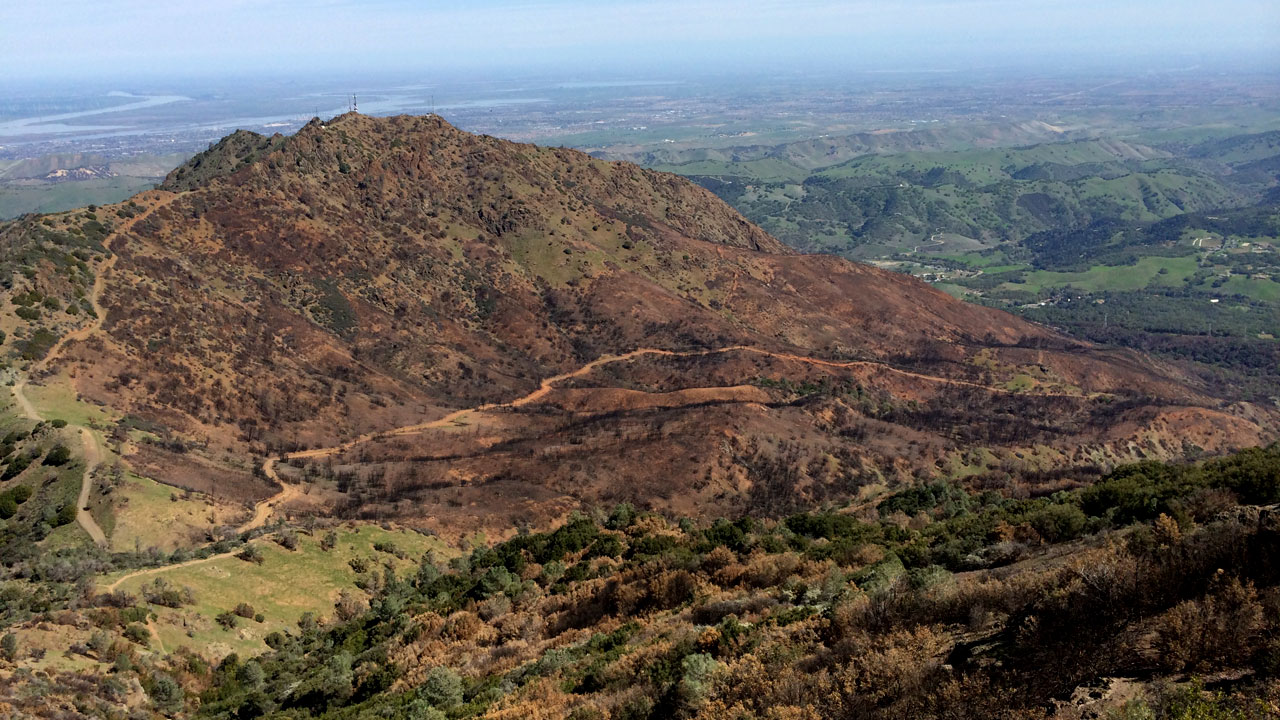
"caption": "Hikers are helping document landscape recovery after the Morgan Fire. (Lauren Sommer/KQED)",
"description": null,
"title": "fire2",
"credit": null,
"status": "inherit",
"isLoading": false,
"fetchFailed": false
}
},
"audioPlayerReducer": {
"postId": "stream_live",
"isPaused": true,
"isPlaying": false,
"pfsActive": false,
"pledgeModalIsOpen": true,
"playerDrawerIsOpen": false,
"liveAudioPlayStartedAt": 0,
"liveAudioPlayContext": ""
},
"authorsReducer": {
"mollysamuel": {
"type": "authors",
"id": "200",
"meta": {
"index": "authors_1716337520",
"id": "200",
"found": true
},
"name": "Molly Samuel",
"firstName": "Molly",
"lastName": "Samuel",
"slug": "mollysamuel",
"email": "msamuel@kqed.org",
"display_author_email": false,
"staff_mastheads": [],
"title": null,
"bio": "Molly Samuel joined KQED as an intern in 2007, and since then has worked here as a reporter, producer, director and blogger. Before becoming KQED Science’s Multimedia Producer, she was a producer for Climate Watch. Molly has also reported for NPR, KALW and High Country News, and has produced audio stories for The Encyclopedia of Life and the Oakland Museum of California. She was a fellow with the Middlebury Fellowships in Environmental Journalism and a journalist-in-residence at the National Evolutionary Synthesis Center. Molly has a degree in Ancient Greek from Oberlin College and is a co-founder of the record label True Panther Sounds.",
"avatar": "https://secure.gravatar.com/avatar/a6abd3b949a89fe5109fa9917631d0b6?s=600&d=blank&r=g",
"twitter": null,
"facebook": null,
"instagram": null,
"linkedin": null,
"sites": [
{
"site": "news",
"roles": [
"subscriber"
]
},
{
"site": "stateofhealth",
"roles": [
"subscriber"
]
},
{
"site": "science",
"roles": [
"subscriber"
]
},
{
"site": "quest",
"roles": [
"edit_users",
"subscriber"
]
}
],
"headData": {
"title": "Molly Samuel | KQED",
"description": null,
"ogImgSrc": "https://secure.gravatar.com/avatar/a6abd3b949a89fe5109fa9917631d0b6?s=600&d=blank&r=g",
"twImgSrc": "https://secure.gravatar.com/avatar/a6abd3b949a89fe5109fa9917631d0b6?s=600&d=blank&r=g"
},
"isLoading": false,
"link": "/author/mollysamuel"
},
"amystanden": {
"type": "authors",
"id": "210",
"meta": {
"index": "authors_1716337520",
"id": "210",
"found": true
},
"name": "Amy Standen",
"firstName": "Amy",
"lastName": "Standen",
"slug": "amystanden",
"email": "astanden@kqed.org",
"display_author_email": false,
"staff_mastheads": [],
"title": "KQED Contributor",
"bio": "Amy Standen (@amystanden) is co-host of #\u003ca href=\"https://ww2.kqed.org/news/programs/the-leap\">TheLeapPodcast\u003c/a> (subscribe on iTunes or Stitcher!) and host of KQED and PBSDigital Studios' science video series, \u003ca href=\"https://www.youtube.com/user/KQEDDeepLook\">Deep Look\u003c/a>. Her science radio stories appear on KQED and NPR.\r\n\r\nEmail her at astanden@kqed.org",
"avatar": "https://secure.gravatar.com/avatar/3d021b72de685a788b0487b059d0a6a1?s=600&d=blank&r=g",
"twitter": null,
"facebook": null,
"instagram": null,
"linkedin": null,
"sites": [
{
"site": "news",
"roles": [
"subscriber"
]
},
{
"site": "futureofyou",
"roles": [
"subscriber"
]
},
{
"site": "stateofhealth",
"roles": [
"subscriber"
]
},
{
"site": "science",
"roles": []
},
{
"site": "quest",
"roles": [
"subscriber"
]
}
],
"headData": {
"title": "Amy Standen | KQED",
"description": "KQED Contributor",
"ogImgSrc": "https://secure.gravatar.com/avatar/3d021b72de685a788b0487b059d0a6a1?s=600&d=blank&r=g",
"twImgSrc": "https://secure.gravatar.com/avatar/3d021b72de685a788b0487b059d0a6a1?s=600&d=blank&r=g"
},
"isLoading": false,
"link": "/author/amystanden"
},
"andrea-kissack": {
"type": "authors",
"id": "212",
"meta": {
"index": "authors_1716337520",
"id": "212",
"found": true
},
"name": "Andrea Kissack",
"firstName": "Andrea",
"lastName": "Kissack",
"slug": "andrea-kissack",
"email": "akissack@kqed.org",
"display_author_email": false,
"staff_mastheads": [],
"title": "KQED Contributor",
"bio": "Andrea has nearly three decades of experience working as a reporter, anchor, producer and editor for public radio, large market television news and CBS radio. In her current role as KQED’s Sr. Science Editor, Andrea helps lead a talented team covering science, technology, health and the environment for broadcast and digital platforms. Most recently she helped KQED launch a new, multimedia initiative covering the intersection of technology, health and medical science. She has earned a number of accolades for her work including awards from the Radio and Television News Directors Association, the National Academy of Television Arts and Sciences and the Associated Press. Her work can be seen, and heard, on a number of networks, Including NPR, PBS, CBS and the BBC.",
"avatar": "https://secure.gravatar.com/avatar/3eae7a251f0aee43b3c0137a636cb386?s=600&d=blank&r=g",
"twitter": "andreakissack",
"facebook": null,
"instagram": null,
"linkedin": null,
"sites": [
{
"site": "news",
"roles": [
"subscriber"
]
},
{
"site": "stateofhealth",
"roles": [
"subscriber"
]
},
{
"site": "science",
"roles": []
},
{
"site": "quest",
"roles": [
"add_users",
"create_users",
"edit_files",
"edit_users",
"level_10",
"level_8",
"level_9",
"promote_users",
"view_cimy_extra_fields",
"subscriber"
]
}
],
"headData": {
"title": "Andrea Kissack | KQED",
"description": "KQED Contributor",
"ogImgSrc": "https://secure.gravatar.com/avatar/3eae7a251f0aee43b3c0137a636cb386?s=600&d=blank&r=g",
"twImgSrc": "https://secure.gravatar.com/avatar/3eae7a251f0aee43b3c0137a636cb386?s=600&d=blank&r=g"
},
"isLoading": false,
"link": "/author/andrea-kissack"
},
"cmiller": {
"type": "authors",
"id": "221",
"meta": {
"index": "authors_1716337520",
"id": "221",
"found": true
},
"name": "Craig Miller",
"firstName": "Craig",
"lastName": "Miller",
"slug": "cmiller",
"email": "craig@voxterra.net",
"display_author_email": false,
"staff_mastheads": [
"science"
],
"title": "Editor Emeritus, Science",
"bio": "Craig is a former KQED Science editor, specializing in weather, climate, water & energy issues, with a little seismology thrown in just to shake things up. Prior to that, he launched and led the station's award-winning multimedia project, Climate Watch. Craig is also an accomplished writer/producer of television documentaries, with a focus on natural resource issues.",
"avatar": "https://secure.gravatar.com/avatar/b91661df645e001a9cafe0861fa685f9?s=600&d=blank&r=g",
"twitter": "voxterra",
"facebook": null,
"instagram": null,
"linkedin": null,
"sites": [
{
"site": "news",
"roles": [
"author"
]
},
{
"site": "futureofyou",
"roles": [
"editor"
]
},
{
"site": "stateofhealth",
"roles": [
"author"
]
},
{
"site": "science",
"roles": [
"editor"
]
},
{
"site": "quest",
"roles": [
"editor"
]
}
],
"headData": {
"title": "Craig Miller | KQED",
"description": "Editor Emeritus, Science",
"ogImgSrc": "https://secure.gravatar.com/avatar/b91661df645e001a9cafe0861fa685f9?s=600&d=blank&r=g",
"twImgSrc": "https://secure.gravatar.com/avatar/b91661df645e001a9cafe0861fa685f9?s=600&d=blank&r=g"
},
"isLoading": false,
"link": "/author/cmiller"
},
"laurensommer": {
"type": "authors",
"id": "239",
"meta": {
"index": "authors_1716337520",
"id": "239",
"found": true
},
"name": "Lauren Sommer",
"firstName": "Lauren",
"lastName": "Sommer",
"slug": "laurensommer",
"email": "lsommer@kqed.org",
"display_author_email": false,
"staff_mastheads": [],
"title": "KQED Contributor",
"bio": "Lauren is a radio reporter formerly covering environment, water, and energy for KQED Science. As part of her day job, she has scaled Sierra Nevada peaks, run from charging elephant seals, and desperately tried to get her sea legs - all in pursuit of good radio. Her work has appeared on Marketplace, Living on Earth, Science Friday and NPR's Morning Edition and All Things Considered. You can find her on Twitter at \u003ca href=\"https://twitter.com/lesommer\">@lesommer\u003c/a>.",
"avatar": "https://secure.gravatar.com/avatar/33aa3772bb86c6ad45b8aca6a238bbdf?s=600&d=blank&r=g",
"twitter": null,
"facebook": null,
"instagram": null,
"linkedin": null,
"sites": [
{
"site": "news",
"roles": [
"author"
]
},
{
"site": "science",
"roles": [
"editor",
"manage_content_types",
"manage_taxonomies"
]
},
{
"site": "quest",
"roles": [
"editor"
]
}
],
"headData": {
"title": "Lauren Sommer | KQED",
"description": "KQED Contributor",
"ogImgSrc": "https://secure.gravatar.com/avatar/33aa3772bb86c6ad45b8aca6a238bbdf?s=600&d=blank&r=g",
"twImgSrc": "https://secure.gravatar.com/avatar/33aa3772bb86c6ad45b8aca6a238bbdf?s=600&d=blank&r=g"
},
"isLoading": false,
"link": "/author/laurensommer"
},
"kqedscience": {
"type": "authors",
"id": "6387",
"meta": {
"index": "authors_1716337520",
"id": "6387",
"found": true
},
"name": "KQED Science",
"firstName": "KQED",
"lastName": "Science",
"slug": "kqedscience",
"email": "kqedscience@gmail.com",
"display_author_email": false,
"staff_mastheads": [],
"title": null,
"bio": "KQED Science brings you award-winning science and environment coverage from the Bay Area and beyond by the flagship Northern California PBS and NPR affiliate.",
"avatar": "https://secure.gravatar.com/avatar/5a295ff49cf82a8c0f30937d3f788b2f?s=600&d=blank&r=g",
"twitter": null,
"facebook": null,
"instagram": null,
"linkedin": null,
"sites": [
{
"site": "science",
"roles": [
"contributor"
]
},
{
"site": "quest",
"roles": [
"editor"
]
},
{
"site": "food",
"roles": [
"contributor"
]
}
],
"headData": {
"title": "KQED Science | KQED",
"description": null,
"ogImgSrc": "https://secure.gravatar.com/avatar/5a295ff49cf82a8c0f30937d3f788b2f?s=600&d=blank&r=g",
"twImgSrc": "https://secure.gravatar.com/avatar/5a295ff49cf82a8c0f30937d3f788b2f?s=600&d=blank&r=g"
},
"isLoading": false,
"link": "/author/kqedscience"
},
"stonn": {
"type": "authors",
"id": "6538",
"meta": {
"index": "authors_1716337520",
"id": "6538",
"found": true
},
"name": "Shara Tonn",
"firstName": "Shara",
"lastName": "Tonn",
"slug": "stonn",
"email": "stonn@KQED.org",
"display_author_email": false,
"staff_mastheads": [],
"title": null,
"bio": "Shara Tonn is a Master’s student at Stanford University in Earth Systems, an interdisciplinary environmental science degree. Her focus is science communication and education. She is a part of the environmental radio group on campus, GreenGrid Radio and also enjoys performing improv with the Stanford Improvisers (SIMPs). Born and raised in Tennessee, Shara loves to travel and has lived overseas in Italy, Japan and Australia.",
"avatar": "https://secure.gravatar.com/avatar/9968feeee672a136559a0d7b615ee13e?s=600&d=blank&r=g",
"twitter": null,
"facebook": null,
"instagram": null,
"linkedin": null,
"sites": [
{
"site": "science",
"roles": [
"editor"
]
}
],
"headData": {
"title": "Shara Tonn | KQED",
"description": null,
"ogImgSrc": "https://secure.gravatar.com/avatar/9968feeee672a136559a0d7b615ee13e?s=600&d=blank&r=g",
"twImgSrc": "https://secure.gravatar.com/avatar/9968feeee672a136559a0d7b615ee13e?s=600&d=blank&r=g"
},
"isLoading": false,
"link": "/author/stonn"
}
},
"pagesReducer": {
"science_category_news": {
"type": "terms",
"id": "science_40",
"meta": {
"index": "terms_1716263798",
"site": "science",
"id": "40",
"score": 10.814895
},
"featImg": null,
"name": "News",
"description": null,
"taxonomy": "category",
"headData": {
"twImgId": null,
"twTitle": null,
"ogTitle": null,
"ogImgId": null,
"twDescription": null,
"description": null,
"title": "News Archives | KQED Science",
"ogDescription": null
},
"ttid": 42,
"slug": "news",
"isLoading": false,
"title": "News",
"pageMeta": {
"site": "science",
"WpPageTemplate": "page-topic-editorial",
"currentPage": 265
},
"blocks": [
{
"blockName": "kqed/post-list",
"attrs": {
"layout": "cardArticle2",
"query": "posts/science?category=news",
"seeMore": false,
"paginated": true,
"page": 265
}
},
{
"blockName": "kqed/ad"
}
]
}
},
"pfsSessionReducer": {},
"postsReducer": {
"stream_live": {
"type": "live",
"id": "stream_live",
"audioUrl": "https://streams.kqed.org/kqedradio",
"title": "Live Stream",
"excerpt": "Live Stream information currently unavailable.",
"link": "/radio",
"featImg": "",
"label": {
"name": "KQED Live",
"link": "/"
}
},
"stream_kqedNewscast": {
"type": "posts",
"id": "stream_kqedNewscast",
"audioUrl": "https://www.kqed.org/.stream/anon/radio/RDnews/newscast.mp3?_=1",
"title": "KQED Newscast",
"featImg": "",
"label": {
"name": "88.5 FM",
"link": "/"
}
},
"science_17553": {
"type": "posts",
"id": "science_17553",
"meta": {
"index": "posts_1716263798",
"site": "science",
"id": "17553",
"score": null,
"sort": [
1400505667000
]
},
"parent": 0,
"labelTerm": {
"site": "science",
"term": 1151
},
"blocks": [],
"publishDate": 1400505667,
"format": "aside",
"title": "California Wildfires: Training for a Tough Season",
"headTitle": "California Wildfires: Training for a Tough Season | KQED",
"content": "\u003cdiv class=\"audio-wrap\">\n\u003ch2>Listen:\u003c/h2>\n\u003cp>http://www.kqed.org/.stream/anon/radio/science/2014/05/20140519science.mp3\u003c/p>\n\u003c/div>\n\u003cp>Firefighters in Southern California are still mopping up fires that raged last week, stoked by record-breaking heat and strong winds on top of the three-year drought.\u003c/p>\n\u003cp>Officials warn that Northern California is dry and ready to burn, too, and seasonal firefighters were brought on earlier than usual. In mid-May, newly hired CalFire firefighters were running through drills, climbing ladders and unfurling hoses at a training facility in rural Napa County.\u003c/p>\n\u003cfigure id=\"attachment_17575\" class=\"wp-caption aligncenter\" style=\"max-width: 640px\">\u003cimg loading=\"lazy\" decoding=\"async\" class=\"size-full wp-image-17575\" src=\"http://ww2.kqed.org/science/wp-content/uploads/sites/35/2014/05/ladders-web.jpg\" alt=\"CalFire firefighters running through drills at a training facility in Napa County. (Molly Samuel/KQED)\" width=\"640\" height=\"480\">\u003cfigcaption class=\"wp-caption-text\">CalFire firefighters running through drills at a training facility in Napa County. (Molly Samuel/KQED)\u003c/figcaption>\u003c/figure>\n\u003cp>“We do this every year,” said Jason Hill, who is starting his third season with CalFire. “Every fire season they say is going to be the worst, but this season I think will definitely be a good one.”\u003c/p>\n\u003caside class=\"pullquote alignleft\">‘We’ve already seen a significant increase in wildfire activity due to the drought.’\u003ccite>— Amy Head, CalFire\u003c/cite>\u003c/aside>\n\u003cp>By “good” he means what most people might consider “bad.”\u003c/p>\n\u003cp>“We’ve already seen a significant increase in wildfire activity due to the drought,” said Amy Head, a fire captain with CalFire. More fires have started in California this year than had started by this time last year.\u003c/p>\n\u003cp>[ad fullwidth]\u003c/p>\n\u003cp>“We did start hiring our seasonals as early as January, which is something I’ve never heard of,” Head said. “And Southern California never even saw an end to fire season.”\u003c/p>\n\u003cp>It was the same for the Forest Service. “We never really had an off season,” said Shawna Legarza, the regional fire and aviation director with the Forest Service in California. “Usually we get some time off during the holidays. We had fires right before Christmas. We had fires in Northern California in January. We had fires in Central and Southern California in February. We’ve been busy.”\u003c/p>\n\u003cp>Last year, more than 570,000 acres burned in wildfires in California. The Rim Fire, near Yosemite, was huge, but overall, total acres burned in the state was near average. \u003c/p>\n\u003caside class=\"pullquote alignleft\">‘A lot of the preparedness efforts we make cost money. We have to justify that with evidence.’\u003ccite>— Tom Knecht, CalFire\u003c/cite>\u003c/aside>\n\u003cp> This year, CalFire is preparing for a busy season by hiring extra staff — firefighters and also inspectors to check whether homeowners have cleared vegetation to create extra space around their houses, called “defensible space.”\u003c/p>\n\u003cp>\u003cstrong>Pre-Fire Science\u003c/strong>\u003c/p>\n\u003cp>“A lot of the preparedness efforts we make cost money. We have to justify that with evidence,” said Tom Knecht, a fire captain and pre-fire engineer with CalFire. His job includes collecting some of that evidence.\u003c/p>\n\u003cp>Because, though it may seem like common sense that it’s dry out there, there is a science to knowing how dry, and to knowing when the threat of fire is at its worst.\u003c/p>\n\u003cp>Knecht took me up a trail in the Las Posadas State Forest, about 20 miles northeast of Santa Rosa. The trail was lined on either side by a plant called chemise that grew higher than our heads. “It looks a lot like rosemary,” Knecht said, as he snipped twigs off the plant with a pair of garden shears and stuffed them into a plastic container shaped like a water bottle.\u003c/p>\n\u003cp>He weighs the chemise he collects, then dehydrates it and weighs it again. The difference between those two numbers tells him how much water is in the plant; this is called the live fuel moisture. (As opposed to dead fuel moisture, another measurement tracking the water content in dead trees and branches.)\u003c/p>\n\u003cfigure id=\"attachment_17581\" class=\"wp-caption alignleft\" style=\"max-width: 298px\">\u003cimg loading=\"lazy\" decoding=\"async\" class=\"wp-image-17581 \" src=\"http://ww2.kqed.org/science/wp-content/uploads/sites/35/2014/05/fuels-web-e1400278725917.jpg\" alt=\"Tom Knecht of CalFire collects chemise to find its fuel moisture. (Molly Samuel/KQED)\" width=\"298\" height=\"298\">\u003cfigcaption class=\"wp-caption-text\">Tom Knecht of CalFire collects chemise to find its fuel moisture. (Molly Samuel/KQED)\u003c/figcaption>\u003c/figure>\n\u003cp>At this point in the year, there’s still a good amount of water.\u003c/p>\n\u003cp>“We’re still seeing the plants taking on water,” Knecht said. “So they’re still getting moisture out of the ground. They’re still growing. You can see the new growth, they’re getting ready to flower. That whole time the plant is full of moisture.”\u003c/p>\n\u003cp>Eventually, the plants will begin to go dormant. That’s the moment Knecht is on the look out for.\u003c/p>\n\u003cp>“We really want to know when it turns the corner, when it stops taking on water and then starts to dry out,” he said. When the chemise is growing, it could burn, but the fire would be slower and less intense. Once the plant is dormant and dried out, its presence marks the places that could burn hot and fast.\u003c/p>\n\u003cp>Knecht said the plants look like they’ll be turning that corner sooner this year. “The plants, although they’re taking on moisture and have new growth, they’re behind where they were last year this time,” he said. “I expect to see them dry out earlier, turn the corner earlier, be dormant earlier.”\u003c/p>\n\u003cp>Knecht does these studies monthly, and sometimes more often than that. Fire officials look at the live fuel moisture measured in various plant species all around the state. And they feed that into a model along with the dead fuel moisture. Then they combine that with weather conditions to figure out the energy release component. That tells them, if a fire does catch, how intense it will be.\u003c/p>\n\u003cp>“We look at weather every day, and the topography — we know where there’s steep ridges and hills and so forth. But the fuel moistures change, and that’s one of the things we need situational awareness of, to be able to base our actions on current and expected fire behavior,” Knecht said. “That’s why I’m out here doing this.”\u003c/p>\n\u003cp>\u003cstrong>Putting the Data to Use\u003c/strong>\u003c/p>\n\u003caside class=\"pullquote alignleft\">‘We’re only in May and we’re seeing conditions that we would normally see in August.’\u003ccite>— Chief Ken Pimlott, CalFire\u003c/cite>\u003c/aside>\n\u003cp>Armed with that information, fire officials can work to ensure that firefighters and equipment like air tankers are moved to the right part of the state, and — in a year like this one — that they’re in place early as needed.\u003c/p>\n\u003cp>“We’re only in May and we’re seeing conditions that we would normally see in August,” said Chief Ken Pimlott, the director of CalFire. He said Governor Jerry Brown’s drought declaration in January put extra money toward firefighting. “He has made a very firm commitment that CalFire and our partners will have the resources and the funding it needs to combat this risk.”\u003c/p>\n\u003cp>CalFire has the budget for an extra 300 firefighters this season. Like CalFire, the U.S. Forest Service brought staff on earlier, too, and is prepared to bring firefighters in from other parts of the country.\u003c/p>\n\u003cp>So the firefighting agencies say they’re ready. What they can’t predict is when or how a fire will start.\u003c/p>\n\u003cp>“We can’t control the lightning, that’s out of control,” said Legarza. But the majority of wildfires, she points out, are human-caused. “So we can help give information to the public to help us prevent wildland fires.”\u003c/p>\n\u003cp>[ad floatright]\u003c/p>\n\u003cp>Like making sure brush and branches are cut back around your property, following rules about campfires and being careful with tools that might spark a flame. And as Smokey Bear’s been reminding us for decades, whatever you do, don’t throw that cigarette butt out the window.\u003c/p>\n\n",
"stats": {
"hasVideo": false,
"hasChartOrMap": false,
"hasAudio": true,
"hasPolis": false,
"wordCount": 1295,
"hasGoogleForm": false,
"hasGallery": false,
"hasHearkenModule": false,
"iframeSrcs": [],
"paragraphCount": 30
},
"modified": 1704933640,
"excerpt": "Seasonal firefighters started training months earlier than usual this year. It may seem like common sense that it's dry out there, but there is a science to knowing how dry, and to knowing when the threat of wildfire is at its worst.",
"headData": {
"twImgId": "",
"twTitle": "",
"ogTitle": "",
"ogImgId": "",
"twDescription": "",
"description": "Seasonal firefighters started training months earlier than usual this year. It may seem like common sense that it's dry out there, but there is a science to knowing how dry, and to knowing when the threat of wildfire is at its worst.",
"title": "California Wildfires: Training for a Tough Season | KQED",
"ogDescription": "",
"schema": {
"@context": "https://schema.org",
"@type": "Article",
"headline": "California Wildfires: Training for a Tough Season",
"datePublished": "2014-05-19T06:21:07-07:00",
"dateModified": "2024-01-10T16:40:40-08:00",
"image": "https://cdn.kqed.org/wp-content/uploads/2020/02/KQED-OG-Image@1x.png"
}
},
"guestAuthors": [],
"slug": "california-wildfires-training-for-a-tough-season",
"status": "publish",
"audioUrl": "http://www.kqed.org/.stream/anon/radio/science/2014/05/20140519science.mp3",
"sticky": false,
"path": "/science/17553/california-wildfires-training-for-a-tough-season",
"audioTrackLength": null,
"parsedContent": [
{
"type": "contentString",
"content": "\u003cdiv class=\"post-body\">\u003cp>\u003cdiv class=\"audio-wrap\">\n\u003ch2>Listen:\u003c/h2>\u003c/p>\u003c/div>",
"attributes": {
"named": {},
"numeric": []
}
},
{
"type": "component",
"content": "",
"name": "audioLink",
"attributes": {
"named": {
"src": "http://www.kqed.org/.stream/anon/radio/science/2014/05/20140519science.mp3"
},
"numeric": []
}
},
{
"type": "contentString",
"content": "\u003cdiv class=\"post-body\">\u003cp>\u003c/div>\n\u003cp>Firefighters in Southern California are still mopping up fires that raged last week, stoked by record-breaking heat and strong winds on top of the three-year drought.\u003c/p>\n\u003cp>Officials warn that Northern California is dry and ready to burn, too, and seasonal firefighters were brought on earlier than usual. In mid-May, newly hired CalFire firefighters were running through drills, climbing ladders and unfurling hoses at a training facility in rural Napa County.\u003c/p>\n\u003cfigure id=\"attachment_17575\" class=\"wp-caption aligncenter\" style=\"max-width: 640px\">\u003cimg loading=\"lazy\" decoding=\"async\" class=\"size-full wp-image-17575\" src=\"http://ww2.kqed.org/science/wp-content/uploads/sites/35/2014/05/ladders-web.jpg\" alt=\"CalFire firefighters running through drills at a training facility in Napa County. (Molly Samuel/KQED)\" width=\"640\" height=\"480\">\u003cfigcaption class=\"wp-caption-text\">CalFire firefighters running through drills at a training facility in Napa County. (Molly Samuel/KQED)\u003c/figcaption>\u003c/figure>\n\u003cp>“We do this every year,” said Jason Hill, who is starting his third season with CalFire. “Every fire season they say is going to be the worst, but this season I think will definitely be a good one.”\u003c/p>\n\u003caside class=\"pullquote alignleft\">‘We’ve already seen a significant increase in wildfire activity due to the drought.’\u003ccite>— Amy Head, CalFire\u003c/cite>\u003c/aside>\n\u003cp>By “good” he means what most people might consider “bad.”\u003c/p>\n\u003cp>“We’ve already seen a significant increase in wildfire activity due to the drought,” said Amy Head, a fire captain with CalFire. More fires have started in California this year than had started by this time last year.\u003c/p>\n\u003cp>\u003c/p>\u003c/div>",
"attributes": {
"named": {},
"numeric": []
}
},
{
"type": "component",
"content": "",
"name": "ad",
"attributes": {
"named": {
"label": "fullwidth"
},
"numeric": [
"fullwidth"
]
}
},
{
"type": "contentString",
"content": "\u003cdiv class=\"post-body\">\u003cp>\u003c/p>\n\u003cp>“We did start hiring our seasonals as early as January, which is something I’ve never heard of,” Head said. “And Southern California never even saw an end to fire season.”\u003c/p>\n\u003cp>It was the same for the Forest Service. “We never really had an off season,” said Shawna Legarza, the regional fire and aviation director with the Forest Service in California. “Usually we get some time off during the holidays. We had fires right before Christmas. We had fires in Northern California in January. We had fires in Central and Southern California in February. We’ve been busy.”\u003c/p>\n\u003cp>Last year, more than 570,000 acres burned in wildfires in California. The Rim Fire, near Yosemite, was huge, but overall, total acres burned in the state was near average. \u003c/p>\n\u003caside class=\"pullquote alignleft\">‘A lot of the preparedness efforts we make cost money. We have to justify that with evidence.’\u003ccite>— Tom Knecht, CalFire\u003c/cite>\u003c/aside>\n\u003cp> This year, CalFire is preparing for a busy season by hiring extra staff — firefighters and also inspectors to check whether homeowners have cleared vegetation to create extra space around their houses, called “defensible space.”\u003c/p>\n\u003cp>\u003cstrong>Pre-Fire Science\u003c/strong>\u003c/p>\n\u003cp>“A lot of the preparedness efforts we make cost money. We have to justify that with evidence,” said Tom Knecht, a fire captain and pre-fire engineer with CalFire. His job includes collecting some of that evidence.\u003c/p>\n\u003cp>Because, though it may seem like common sense that it’s dry out there, there is a science to knowing how dry, and to knowing when the threat of fire is at its worst.\u003c/p>\n\u003cp>Knecht took me up a trail in the Las Posadas State Forest, about 20 miles northeast of Santa Rosa. The trail was lined on either side by a plant called chemise that grew higher than our heads. “It looks a lot like rosemary,” Knecht said, as he snipped twigs off the plant with a pair of garden shears and stuffed them into a plastic container shaped like a water bottle.\u003c/p>\n\u003cp>He weighs the chemise he collects, then dehydrates it and weighs it again. The difference between those two numbers tells him how much water is in the plant; this is called the live fuel moisture. (As opposed to dead fuel moisture, another measurement tracking the water content in dead trees and branches.)\u003c/p>\n\u003cfigure id=\"attachment_17581\" class=\"wp-caption alignleft\" style=\"max-width: 298px\">\u003cimg loading=\"lazy\" decoding=\"async\" class=\"wp-image-17581 \" src=\"http://ww2.kqed.org/science/wp-content/uploads/sites/35/2014/05/fuels-web-e1400278725917.jpg\" alt=\"Tom Knecht of CalFire collects chemise to find its fuel moisture. (Molly Samuel/KQED)\" width=\"298\" height=\"298\">\u003cfigcaption class=\"wp-caption-text\">Tom Knecht of CalFire collects chemise to find its fuel moisture. (Molly Samuel/KQED)\u003c/figcaption>\u003c/figure>\n\u003cp>At this point in the year, there’s still a good amount of water.\u003c/p>\n\u003cp>“We’re still seeing the plants taking on water,” Knecht said. “So they’re still getting moisture out of the ground. They’re still growing. You can see the new growth, they’re getting ready to flower. That whole time the plant is full of moisture.”\u003c/p>\n\u003cp>Eventually, the plants will begin to go dormant. That’s the moment Knecht is on the look out for.\u003c/p>\n\u003cp>“We really want to know when it turns the corner, when it stops taking on water and then starts to dry out,” he said. When the chemise is growing, it could burn, but the fire would be slower and less intense. Once the plant is dormant and dried out, its presence marks the places that could burn hot and fast.\u003c/p>\n\u003cp>Knecht said the plants look like they’ll be turning that corner sooner this year. “The plants, although they’re taking on moisture and have new growth, they’re behind where they were last year this time,” he said. “I expect to see them dry out earlier, turn the corner earlier, be dormant earlier.”\u003c/p>\n\u003cp>Knecht does these studies monthly, and sometimes more often than that. Fire officials look at the live fuel moisture measured in various plant species all around the state. And they feed that into a model along with the dead fuel moisture. Then they combine that with weather conditions to figure out the energy release component. That tells them, if a fire does catch, how intense it will be.\u003c/p>\n\u003cp>“We look at weather every day, and the topography — we know where there’s steep ridges and hills and so forth. But the fuel moistures change, and that’s one of the things we need situational awareness of, to be able to base our actions on current and expected fire behavior,” Knecht said. “That’s why I’m out here doing this.”\u003c/p>\n\u003cp>\u003cstrong>Putting the Data to Use\u003c/strong>\u003c/p>\n\u003caside class=\"pullquote alignleft\">‘We’re only in May and we’re seeing conditions that we would normally see in August.’\u003ccite>— Chief Ken Pimlott, CalFire\u003c/cite>\u003c/aside>\n\u003cp>Armed with that information, fire officials can work to ensure that firefighters and equipment like air tankers are moved to the right part of the state, and — in a year like this one — that they’re in place early as needed.\u003c/p>\n\u003cp>“We’re only in May and we’re seeing conditions that we would normally see in August,” said Chief Ken Pimlott, the director of CalFire. He said Governor Jerry Brown’s drought declaration in January put extra money toward firefighting. “He has made a very firm commitment that CalFire and our partners will have the resources and the funding it needs to combat this risk.”\u003c/p>\n\u003cp>CalFire has the budget for an extra 300 firefighters this season. Like CalFire, the U.S. Forest Service brought staff on earlier, too, and is prepared to bring firefighters in from other parts of the country.\u003c/p>\n\u003cp>So the firefighting agencies say they’re ready. What they can’t predict is when or how a fire will start.\u003c/p>\n\u003cp>“We can’t control the lightning, that’s out of control,” said Legarza. But the majority of wildfires, she points out, are human-caused. “So we can help give information to the public to help us prevent wildland fires.”\u003c/p>\n\u003cp>\u003c/p>\u003c/div>",
"attributes": {
"named": {},
"numeric": []
}
},
{
"type": "component",
"content": "",
"name": "ad",
"attributes": {
"named": {
"label": "floatright"
},
"numeric": [
"floatright"
]
}
},
{
"type": "contentString",
"content": "\u003cdiv class=\"post-body\">\u003cp>\u003c/p>\n\u003cp>Like making sure brush and branches are cut back around your property, following rules about campfires and being careful with tools that might spark a flame. And as Smokey Bear’s been reminding us for decades, whatever you do, don’t throw that cigarette butt out the window.\u003c/p>\n\n\u003c/div>\u003c/p>",
"attributes": {
"named": {},
"numeric": []
}
}
],
"link": "/science/17553/california-wildfires-training-for-a-tough-season",
"authors": [
"200"
],
"series": [
"science_1151"
],
"categories": [
"science_46",
"science_35",
"science_40",
"science_43"
],
"tags": [
"science_5194",
"science_1596",
"science_763",
"science_113"
],
"featImg": "science_17568",
"label": "science_1151"
},
"science_17376": {
"type": "posts",
"id": "science_17376",
"meta": {
"index": "posts_1716263798",
"site": "science",
"id": "17376",
"score": null,
"sort": [
1399901445000
]
},
"parent": 0,
"labelTerm": {},
"blocks": [],
"publishDate": 1399901445,
"format": "audio",
"title": "For San Francisco Bone Collector, Skulls Are a Lifelong Love Affair",
"headTitle": "For San Francisco Bone Collector, Skulls Are a Lifelong Love Affair | KQED",
"content": "\u003cp>[UPDATE: Ray Bandar passed away in late December, 2017. His work lives on at the California Academy of Sciences.]\u003c/p>\n\u003cp>There are hobbies and then there are lifelong passions. Ray Bandar’s passion is finding and cleaning skulls.\u003c/p>\n\u003cp>For six decades, Bandar has been making a quiet contribution to science, harvesting the bones of dead animals on the California coast and amassing an impressive collection of skulls. On Friday the \u003ca href=\"http://www.calacademy.org/\">California Academy of Sciences\u003c/a> in San Francisco is opening a \u003ca href=\"http://www.calacademy.org/academy/exhibits/skulls/\">new exhibit of skulls\u003c/a> that features his work.\u003c/p>\n\u003cp>Bandar keeps his own collection in the basement of his San Francisco home. The “bone palace,” as he calls it, holds close to 7,000 skulls and skeletons, stacked floor to ceiling. He organizes the shelves by species, including seals, sea lions, leopards, cheetahs, horses, zebras, giraffes and dolphins.\u003c/p>\n\u003cp>“This is largest animal that lives and breeds in California,” Bandar says, holding up an elephant seal skull. “That’s an adult female.”\u003c/p>\n\u003cp>[ad fullwidth]\u003c/p>\n\u003cp>Bandar is a spritely 86-year-old with an encyclopedic knowledge of the bones. “Sixty years at Ocean Beach, I’ve been decapitating dead marine mammals,” he says.\u003c/p>\n\u003cfigure id=\"attachment_17387\" class=\"wp-caption aligncenter\" style=\"max-width: 1280px\">\u003ca href=\"http://ww2.kqed.org/science/wp-content/uploads/sites/35/2014/05/DSC01301-1024x576.jpg\">\u003cimg loading=\"lazy\" decoding=\"async\" class=\"wp-image-17387 size-full\" src=\"https://ww2.kqed.org/science/wp-content/uploads/sites/35/2014/05/DSC01301.jpg\" alt='Ray \"Bones\" Bandar has spent six decades finding and cleaning animal bones. (Lauren Sommer/KQED)' width=\"1280\" height=\"720\">\u003c/a>\u003cfigcaption class=\"wp-caption-text\">Ray ‘Bones’ Bandar has spent six decades finding dead animals and preparing their bones. (Lauren Sommer/KQED)\u003c/figcaption>\u003c/figure>\n\u003cp>For most of his life, Bandar searched local beaches for dead sea lions and seals and removed the heads. As a volunteer with the California Academy of Sciences, he worked under its scientific collection permit from the state. The more exotic animals in his collection came from local zoos after the animals died.\u003c/p>\n\u003cp>Cleaning skulls is not for the faint of heart. “I remove as much flesh as possible,” he says. “Put them in bucket of water. Put them in a warm spot and leave it to sit there for weeks and the bacterial action removes all the organic material.”\u003c/p>\n\u003cp>Bandar’s fascination with the natural world began as a kid growing up in San Francisco, when he collected snakes and frogs in Golden Gate Park and donated them to the Steinhart Aquarium.\u003c/p>\n\u003cp>He collected his first skull in his twenties, dragging the head of a harbor seal back to his parents’ house — on public transportation. He says he wondered to himself how he could get the meat off. “So I put it in a big pot. Said, ‘Well, I guess I’ll boil it.’ And boy did it stink up the house. When my parents came home, they weren’t too happy about that.”\u003c/p>\n\u003cfigure id=\"attachment_17390\" class=\"wp-caption aligncenter\" style=\"max-width: 1280px\">\u003ca href=\"http://ww2.kqed.org/science/wp-content/uploads/sites/35/2014/05/Basement1-1024x576.jpg\">\u003cimg loading=\"lazy\" decoding=\"async\" class=\"wp-image-17390 size-full\" src=\"https://ww2.kqed.org/science/wp-content/uploads/sites/35/2014/05/Basement1.jpg\" alt=\"Bandar has almost 7,000 skulls and skeletons in his San Francisco basement\" width=\"1280\" height=\"720\">\u003c/a>\u003cfigcaption class=\"wp-caption-text\">There are almost 7,000 skulls and skeletons in Bandar’s San Francisco basement. (Lauren Sommer/KQED)\u003c/figcaption>\u003c/figure>\n\u003cp>Over the years, Bandar attracted crowds of beachgoers as he harvested skulls. Occasionally, he attracted suspicion, like the time in Half Moon Bay when he was working on a 14-foot elephant seal carcass in front of the Ritz-Carlton.\u003c/p>\n\u003cp>“I’m sitting on his neck, cutting away, trying to sever the skull from the torso,” he recalls. “And I turn around and standing on the beach is three cops.”\u003c/p>\n\u003cp>The policemen eyed Bandar’s ratty field jacket, covered in rotting flesh. They’d gotten a number of phone calls, Bandar says. “More than one call is, ‘There’s this homeless guy. He’s trying to eat this dead elephant seal.”\u003c/p>\n\u003cp>Bandar’s wife of 60 years doesn’t mind his hobby. The two of them met in art school. On their honeymoon to New York City, they fell in love with the bone displays at the American Museum of Natural History.\u003c/p>\n\u003cp>Vertebrae hang next to his wife’s paintings in their living room. “To me,” Bandar says, “they’re beautiful pieces of sculpture.”\u003c/p>\n\u003cfigure id=\"attachment_17391\" class=\"wp-caption aligncenter\" style=\"max-width: 1280px\">\u003ca href=\"http://ww2.kqed.org/science/wp-content/uploads/sites/35/2014/05/Basement7-1024x576.jpg\">\u003cimg loading=\"lazy\" decoding=\"async\" class=\"wp-image-17391 size-full\" src=\"https://ww2.kqed.org/science/wp-content/uploads/sites/35/2014/05/Basement7.jpg\" alt=\"Bandar would often attract crowds of beachgoers as he worked, as well as the police. (Lauren Sommer/KQED)\" width=\"1280\" height=\"720\">\u003c/a>\u003cfigcaption class=\"wp-caption-text\">Bandar would often attract crowds of beachgoers as he worked, as well as, occasionally, the police. (Lauren Sommer/KQED)\u003c/figcaption>\u003c/figure>\n\u003cp>Bandar went on to teach biology for 32 years at Fremont High School in East Oakland, where dissection was a big part of the curriculum. “Even in medical school, the students do not get what they got in my classroom,” he says. “I still hear from my students.”\u003c/p>\n\u003cp>Bandar retired from collecting specimens last summer. The skulls in his basement will eventually go to the California Academy of Sciences, where his work will comprise one-fifth of the museum’s ornithology and mammalogy collection.\u003c/p>\n\u003cp>Cal Academy’s collection of skulls teaches the public, including thousands of school children who come to the museum each year, about wildlife and the natural world. One of the Academy’s collectors is curatorial assistant Sue Pemberton.\u003c/p>\n\u003cp>Inside the specimen preparation room, Pemberton describes the work she has in progress. “You’ll see over on the left here I have a young elephant seal skull,” she says.\u003c/p>\n\u003cp>The skull is crawling with dermestid beetles, which specialize in eating dead flesh. Pemberton uses them to clean skulls for the collection. She also uses large buckets of water, the same method Bandar employs.\u003c/p>\n\u003cp>Pemberton pulls a harbor seal skull out of a bucket, and a putrid odor fills the air. “Smells like the worst outhouse you can ever be in,” she says. “But that’s how it works. Everything kind of breaks down.”\u003c/p>\n\u003cfigure id=\"attachment_17395\" class=\"wp-caption aligncenter\" style=\"max-width: 1280px\">\u003ca href=\"http://ww2.kqed.org/science/wp-content/uploads/sites/35/2014/05/DSC01243-1024x576.jpg\">\u003cimg loading=\"lazy\" decoding=\"async\" class=\"wp-image-17395 size-full\" src=\"https://ww2.kqed.org/science/wp-content/uploads/sites/35/2014/05/DSC01243.jpg\" alt=\"Dermestid beetles clean a young elephant seal skull at the California Academy of Sciences. (Lauren Sommer/KQED)\" width=\"1280\" height=\"720\">\u003c/a>\u003cfigcaption class=\"wp-caption-text\">Dermestid beetles clean the flesh off a young elephant seal skull at the California Academy of Sciences. (Lauren Sommer/KQED)\u003c/figcaption>\u003c/figure>\n\u003cp>The skulls also help scientists learn how marine mammals are doing off the California coast. The bones reveal if the animals were sick and what they ate.\u003c/p>\n\u003cp>She pulls out a southern sea otter skull to illustrate. “Here you can see what color the teeth are. Bright purple, like the-color-of-grape-juice purple.”\u003c/p>\n\u003cp>The otter stained its teeth eating purple sea urchins. Other sea otters have completely different diets, which they learn from their mothers.\u003c/p>\n\u003cp>Pemberton heads out to the beach whenever a report comes in of a dead animal; she’s part of the \u003ca href=\"http://www.nmfs.noaa.gov/pr/health/networks.htm#westcoast\">Marine Mammal Stranding Network\u003c/a>, a group of wildlife centers and museums that responds to reports. Her whale kit is ready to go on the table: a dozen steak knives and an ax.\u003c/p>\n\u003cfigure id=\"attachment_17396\" class=\"wp-caption aligncenter\" style=\"max-width: 1280px\">\u003ca href=\"http://ww2.kqed.org/science/wp-content/uploads/sites/35/2014/05/DSC01248-1024x576.jpg\">\u003cimg loading=\"lazy\" decoding=\"async\" class=\"wp-image-17396 size-full\" src=\"https://ww2.kqed.org/science/wp-content/uploads/sites/35/2014/05/DSC01248.jpg\" alt=\"A southern sea otter skull has purple teeth, stained from the sea urchins that made up its diet. (Lauren Sommer/KQED)\" width=\"1280\" height=\"720\">\u003c/a>\u003cfigcaption class=\"wp-caption-text\">A southern sea otter skull with purple teeth, stained from the sea urchins that made up its diet. (Lauren Sommer/KQED)\u003c/figcaption>\u003c/figure>\n\u003cp>“Sometimes there’s a blubber layer that’s two feet thick,” she says. “So you’re having to get through that to get to what you think might be the cause of death.”\u003c/p>\n\u003cp>Pemberton and others have documented cases where ship strikes killed whales off the coast. The data actually helped change policy. Last year, federal officials \u003ca href=\"http://ww2.kqed.org/science/2013/06/04/san-francisco-bay-shipping-lanes-narrowed-to-protect-whales/\">put in new speed limits\u003c/a> for cargo ships coming into San Francisco Bay.\u003c/p>\n\u003cp>“It’s what you think about when you’re elbow-deep in rotted, dead whales,” she says. “And it’s not pleasant by any stretch. But to know that it’s actually helping with the conservation and protection of all the whales that come after that, it makes all really worthwhile.”\u003c/p>\n\u003cp>Cal Academy’s \u003ca href=\"http://www.calacademy.org/academy/exhibits/skulls/\">exhibit of skulls\u003c/a>, featuring Ray Bandar’s work, opens to the public on May 16.\u003c/p>\n\u003cfigure id=\"attachment_17401\" class=\"wp-caption aligncenter\" style=\"max-width: 1280px\">\u003ca href=\"http://ww2.kqed.org/science/wp-content/uploads/sites/35/2014/05/DSC01268-1024x576.jpg\">\u003cimg loading=\"lazy\" decoding=\"async\" class=\"wp-image-17401 size-full\" src=\"https://ww2.kqed.org/science/wp-content/uploads/sites/35/2014/05/DSC01268.jpg\" alt=\"DSC01268\" width=\"1280\" height=\"720\">\u003c/a>\u003cfigcaption class=\"wp-caption-text\">A box of monkey skulls in Bandar’s collection, with room for more. (Lauren Sommer/KQED)\u003c/figcaption>\u003c/figure>\n\u003cp>[ad floatright]\u003c/p>\n\u003cp>.\u003c/p>\n\n",
"stats": {
"hasVideo": false,
"hasChartOrMap": false,
"hasAudio": false,
"hasPolis": false,
"wordCount": 1258,
"hasGoogleForm": false,
"hasGallery": false,
"hasHearkenModule": false,
"iframeSrcs": [],
"paragraphCount": 32
},
"modified": 1704933681,
"excerpt": "San Francisco's California Academy of Sciences opens a skull exhibit this week, featuring the work of Ray Bandar, a man who has devoted 60 years to cleaning the skulls and bones of some of California's most beloved animals.",
"headData": {
"twImgId": "",
"twTitle": "",
"ogTitle": "",
"ogImgId": "",
"twDescription": "",
"description": "San Francisco's California Academy of Sciences opens a skull exhibit this week, featuring the work of Ray Bandar, a man who has devoted 60 years to cleaning the skulls and bones of some of California's most beloved animals.",
"title": "For San Francisco Bone Collector, Skulls Are a Lifelong Love Affair | KQED",
"ogDescription": "",
"schema": {
"@context": "https://schema.org",
"@type": "Article",
"headline": "For San Francisco Bone Collector, Skulls Are a Lifelong Love Affair",
"datePublished": "2014-05-12T06:30:45-07:00",
"dateModified": "2024-01-10T16:41:21-08:00",
"image": "https://cdn.kqed.org/wp-content/uploads/2020/02/KQED-OG-Image@1x.png"
}
},
"guestAuthors": [],
"slug": "for-san-francisco-bone-collector-skulls-are-a-lifelong-love-affair",
"status": "publish",
"sourceUrl": "https://ww2.kqed.org/science/",
"audioUrl": "http://www.kqed.org/.stream/anon/radio/science/2014/05/20140512science.mp3",
"sticky": false,
"source": "KQED Science",
"path": "/science/17376/for-san-francisco-bone-collector-skulls-are-a-lifelong-love-affair",
"audioDuration": null,
"audioTrackLength": null,
"parsedContent": [
{
"type": "contentString",
"content": "\u003cdiv class=\"post-body\">\u003cp>\u003cp>[UPDATE: Ray Bandar passed away in late December, 2017. His work lives on at the California Academy of Sciences.]\u003c/p>\n\u003cp>There are hobbies and then there are lifelong passions. Ray Bandar’s passion is finding and cleaning skulls.\u003c/p>\n\u003cp>For six decades, Bandar has been making a quiet contribution to science, harvesting the bones of dead animals on the California coast and amassing an impressive collection of skulls. On Friday the \u003ca href=\"http://www.calacademy.org/\">California Academy of Sciences\u003c/a> in San Francisco is opening a \u003ca href=\"http://www.calacademy.org/academy/exhibits/skulls/\">new exhibit of skulls\u003c/a> that features his work.\u003c/p>\n\u003cp>Bandar keeps his own collection in the basement of his San Francisco home. The “bone palace,” as he calls it, holds close to 7,000 skulls and skeletons, stacked floor to ceiling. He organizes the shelves by species, including seals, sea lions, leopards, cheetahs, horses, zebras, giraffes and dolphins.\u003c/p>\n\u003cp>“This is largest animal that lives and breeds in California,” Bandar says, holding up an elephant seal skull. “That’s an adult female.”\u003c/p>\n\u003cp>\u003c/p>\u003c/div>",
"attributes": {
"named": {},
"numeric": []
}
},
{
"type": "component",
"content": "",
"name": "ad",
"attributes": {
"named": {
"label": "fullwidth"
},
"numeric": [
"fullwidth"
]
}
},
{
"type": "contentString",
"content": "\u003cdiv class=\"post-body\">\u003cp>\u003c/p>\n\u003cp>Bandar is a spritely 86-year-old with an encyclopedic knowledge of the bones. “Sixty years at Ocean Beach, I’ve been decapitating dead marine mammals,” he says.\u003c/p>\n\u003cfigure id=\"attachment_17387\" class=\"wp-caption aligncenter\" style=\"max-width: 1280px\">\u003ca href=\"http://ww2.kqed.org/science/wp-content/uploads/sites/35/2014/05/DSC01301-1024x576.jpg\">\u003cimg loading=\"lazy\" decoding=\"async\" class=\"wp-image-17387 size-full\" src=\"https://ww2.kqed.org/science/wp-content/uploads/sites/35/2014/05/DSC01301.jpg\" alt='Ray \"Bones\" Bandar has spent six decades finding and cleaning animal bones. (Lauren Sommer/KQED)' width=\"1280\" height=\"720\">\u003c/a>\u003cfigcaption class=\"wp-caption-text\">Ray ‘Bones’ Bandar has spent six decades finding dead animals and preparing their bones. (Lauren Sommer/KQED)\u003c/figcaption>\u003c/figure>\n\u003cp>For most of his life, Bandar searched local beaches for dead sea lions and seals and removed the heads. As a volunteer with the California Academy of Sciences, he worked under its scientific collection permit from the state. The more exotic animals in his collection came from local zoos after the animals died.\u003c/p>\n\u003cp>Cleaning skulls is not for the faint of heart. “I remove as much flesh as possible,” he says. “Put them in bucket of water. Put them in a warm spot and leave it to sit there for weeks and the bacterial action removes all the organic material.”\u003c/p>\n\u003cp>Bandar’s fascination with the natural world began as a kid growing up in San Francisco, when he collected snakes and frogs in Golden Gate Park and donated them to the Steinhart Aquarium.\u003c/p>\n\u003cp>He collected his first skull in his twenties, dragging the head of a harbor seal back to his parents’ house — on public transportation. He says he wondered to himself how he could get the meat off. “So I put it in a big pot. Said, ‘Well, I guess I’ll boil it.’ And boy did it stink up the house. When my parents came home, they weren’t too happy about that.”\u003c/p>\n\u003cfigure id=\"attachment_17390\" class=\"wp-caption aligncenter\" style=\"max-width: 1280px\">\u003ca href=\"http://ww2.kqed.org/science/wp-content/uploads/sites/35/2014/05/Basement1-1024x576.jpg\">\u003cimg loading=\"lazy\" decoding=\"async\" class=\"wp-image-17390 size-full\" src=\"https://ww2.kqed.org/science/wp-content/uploads/sites/35/2014/05/Basement1.jpg\" alt=\"Bandar has almost 7,000 skulls and skeletons in his San Francisco basement\" width=\"1280\" height=\"720\">\u003c/a>\u003cfigcaption class=\"wp-caption-text\">There are almost 7,000 skulls and skeletons in Bandar’s San Francisco basement. (Lauren Sommer/KQED)\u003c/figcaption>\u003c/figure>\n\u003cp>Over the years, Bandar attracted crowds of beachgoers as he harvested skulls. Occasionally, he attracted suspicion, like the time in Half Moon Bay when he was working on a 14-foot elephant seal carcass in front of the Ritz-Carlton.\u003c/p>\n\u003cp>“I’m sitting on his neck, cutting away, trying to sever the skull from the torso,” he recalls. “And I turn around and standing on the beach is three cops.”\u003c/p>\n\u003cp>The policemen eyed Bandar’s ratty field jacket, covered in rotting flesh. They’d gotten a number of phone calls, Bandar says. “More than one call is, ‘There’s this homeless guy. He’s trying to eat this dead elephant seal.”\u003c/p>\n\u003cp>Bandar’s wife of 60 years doesn’t mind his hobby. The two of them met in art school. On their honeymoon to New York City, they fell in love with the bone displays at the American Museum of Natural History.\u003c/p>\n\u003cp>Vertebrae hang next to his wife’s paintings in their living room. “To me,” Bandar says, “they’re beautiful pieces of sculpture.”\u003c/p>\n\u003cfigure id=\"attachment_17391\" class=\"wp-caption aligncenter\" style=\"max-width: 1280px\">\u003ca href=\"http://ww2.kqed.org/science/wp-content/uploads/sites/35/2014/05/Basement7-1024x576.jpg\">\u003cimg loading=\"lazy\" decoding=\"async\" class=\"wp-image-17391 size-full\" src=\"https://ww2.kqed.org/science/wp-content/uploads/sites/35/2014/05/Basement7.jpg\" alt=\"Bandar would often attract crowds of beachgoers as he worked, as well as the police. (Lauren Sommer/KQED)\" width=\"1280\" height=\"720\">\u003c/a>\u003cfigcaption class=\"wp-caption-text\">Bandar would often attract crowds of beachgoers as he worked, as well as, occasionally, the police. (Lauren Sommer/KQED)\u003c/figcaption>\u003c/figure>\n\u003cp>Bandar went on to teach biology for 32 years at Fremont High School in East Oakland, where dissection was a big part of the curriculum. “Even in medical school, the students do not get what they got in my classroom,” he says. “I still hear from my students.”\u003c/p>\n\u003cp>Bandar retired from collecting specimens last summer. The skulls in his basement will eventually go to the California Academy of Sciences, where his work will comprise one-fifth of the museum’s ornithology and mammalogy collection.\u003c/p>\n\u003cp>Cal Academy’s collection of skulls teaches the public, including thousands of school children who come to the museum each year, about wildlife and the natural world. One of the Academy’s collectors is curatorial assistant Sue Pemberton.\u003c/p>\n\u003cp>Inside the specimen preparation room, Pemberton describes the work she has in progress. “You’ll see over on the left here I have a young elephant seal skull,” she says.\u003c/p>\n\u003cp>The skull is crawling with dermestid beetles, which specialize in eating dead flesh. Pemberton uses them to clean skulls for the collection. She also uses large buckets of water, the same method Bandar employs.\u003c/p>\n\u003cp>Pemberton pulls a harbor seal skull out of a bucket, and a putrid odor fills the air. “Smells like the worst outhouse you can ever be in,” she says. “But that’s how it works. Everything kind of breaks down.”\u003c/p>\n\u003cfigure id=\"attachment_17395\" class=\"wp-caption aligncenter\" style=\"max-width: 1280px\">\u003ca href=\"http://ww2.kqed.org/science/wp-content/uploads/sites/35/2014/05/DSC01243-1024x576.jpg\">\u003cimg loading=\"lazy\" decoding=\"async\" class=\"wp-image-17395 size-full\" src=\"https://ww2.kqed.org/science/wp-content/uploads/sites/35/2014/05/DSC01243.jpg\" alt=\"Dermestid beetles clean a young elephant seal skull at the California Academy of Sciences. (Lauren Sommer/KQED)\" width=\"1280\" height=\"720\">\u003c/a>\u003cfigcaption class=\"wp-caption-text\">Dermestid beetles clean the flesh off a young elephant seal skull at the California Academy of Sciences. (Lauren Sommer/KQED)\u003c/figcaption>\u003c/figure>\n\u003cp>The skulls also help scientists learn how marine mammals are doing off the California coast. The bones reveal if the animals were sick and what they ate.\u003c/p>\n\u003cp>She pulls out a southern sea otter skull to illustrate. “Here you can see what color the teeth are. Bright purple, like the-color-of-grape-juice purple.”\u003c/p>\n\u003cp>The otter stained its teeth eating purple sea urchins. Other sea otters have completely different diets, which they learn from their mothers.\u003c/p>\n\u003cp>Pemberton heads out to the beach whenever a report comes in of a dead animal; she’s part of the \u003ca href=\"http://www.nmfs.noaa.gov/pr/health/networks.htm#westcoast\">Marine Mammal Stranding Network\u003c/a>, a group of wildlife centers and museums that responds to reports. Her whale kit is ready to go on the table: a dozen steak knives and an ax.\u003c/p>\n\u003cfigure id=\"attachment_17396\" class=\"wp-caption aligncenter\" style=\"max-width: 1280px\">\u003ca href=\"http://ww2.kqed.org/science/wp-content/uploads/sites/35/2014/05/DSC01248-1024x576.jpg\">\u003cimg loading=\"lazy\" decoding=\"async\" class=\"wp-image-17396 size-full\" src=\"https://ww2.kqed.org/science/wp-content/uploads/sites/35/2014/05/DSC01248.jpg\" alt=\"A southern sea otter skull has purple teeth, stained from the sea urchins that made up its diet. (Lauren Sommer/KQED)\" width=\"1280\" height=\"720\">\u003c/a>\u003cfigcaption class=\"wp-caption-text\">A southern sea otter skull with purple teeth, stained from the sea urchins that made up its diet. (Lauren Sommer/KQED)\u003c/figcaption>\u003c/figure>\n\u003cp>“Sometimes there’s a blubber layer that’s two feet thick,” she says. “So you’re having to get through that to get to what you think might be the cause of death.”\u003c/p>\n\u003cp>Pemberton and others have documented cases where ship strikes killed whales off the coast. The data actually helped change policy. Last year, federal officials \u003ca href=\"http://ww2.kqed.org/science/2013/06/04/san-francisco-bay-shipping-lanes-narrowed-to-protect-whales/\">put in new speed limits\u003c/a> for cargo ships coming into San Francisco Bay.\u003c/p>\n\u003cp>“It’s what you think about when you’re elbow-deep in rotted, dead whales,” she says. “And it’s not pleasant by any stretch. But to know that it’s actually helping with the conservation and protection of all the whales that come after that, it makes all really worthwhile.”\u003c/p>\n\u003cp>Cal Academy’s \u003ca href=\"http://www.calacademy.org/academy/exhibits/skulls/\">exhibit of skulls\u003c/a>, featuring Ray Bandar’s work, opens to the public on May 16.\u003c/p>\n\u003cfigure id=\"attachment_17401\" class=\"wp-caption aligncenter\" style=\"max-width: 1280px\">\u003ca href=\"http://ww2.kqed.org/science/wp-content/uploads/sites/35/2014/05/DSC01268-1024x576.jpg\">\u003cimg loading=\"lazy\" decoding=\"async\" class=\"wp-image-17401 size-full\" src=\"https://ww2.kqed.org/science/wp-content/uploads/sites/35/2014/05/DSC01268.jpg\" alt=\"DSC01268\" width=\"1280\" height=\"720\">\u003c/a>\u003cfigcaption class=\"wp-caption-text\">A box of monkey skulls in Bandar’s collection, with room for more. (Lauren Sommer/KQED)\u003c/figcaption>\u003c/figure>\n\u003cp>\u003c/p>\u003c/div>",
"attributes": {
"named": {},
"numeric": []
}
},
{
"type": "component",
"content": "",
"name": "ad",
"attributes": {
"named": {
"label": "floatright"
},
"numeric": [
"floatright"
]
}
},
{
"type": "contentString",
"content": "\u003cdiv class=\"post-body\">\u003cp>\u003c/p>\n\u003cp>.\u003c/p>\n\n\u003c/div>\u003c/p>",
"attributes": {
"named": {},
"numeric": []
}
}
],
"link": "/science/17376/for-san-francisco-bone-collector-skulls-are-a-lifelong-love-affair",
"authors": [
"239"
],
"series": [
"science_2625"
],
"categories": [
"science_46",
"science_30",
"science_35",
"science_40",
"science_43"
],
"tags": [
"science_986",
"science_123",
"science_64",
"science_1396"
],
"featImg": "science_17455",
"label": "source_science_17376"
},
"science_17312": {
"type": "posts",
"id": "science_17312",
"meta": {
"index": "posts_1716263798",
"site": "science",
"id": "17312",
"score": null,
"sort": [
1399639809000
]
},
"parent": 0,
"labelTerm": {
"site": "science",
"term": 1151
},
"blocks": [],
"publishDate": 1399639809,
"format": "aside",
"title": "Drought Tech: How Solar Desalination Could Help Parched Farms",
"headTitle": "Drought Tech: How Solar Desalination Could Help Parched Farms | KQED",
"content": "\u003cp>\u003cstrong>By Alice Daniel \u003c/strong>\u003c/p>\n\u003cp>Farmers on the western side of the San Joaquin Valley can count on two things: sunshine and water that’s polluted and salty where minerals have built up in the soil. Now a Northern California entrepreneur is using one to clean up the other in the Panoche Water and Drainage District near the little town of Firebaugh, about 50 miles northwest of Fresno.\u003c/p>\n\u003cfigure id=\"attachment_17370\" class=\"wp-caption aligncenter\" style=\"max-width: 640px\">\u003cimg loading=\"lazy\" decoding=\"async\" class=\"size-full wp-image-17370\" src=\"http://ww2.kqed.org/science/wp-content/uploads/sites/35/2014/05/10308scr_a381d905d6002f3.jpg\" alt=\"This solar desalination plant uses curved mirrors to capture the sun's energy and separate the salt from the water. (Alice Daniel/KQED) \" width=\"640\" height=\"360\">\u003cfigcaption class=\"wp-caption-text\">This solar desalination plant uses curved mirrors to capture the sun’s energy and separate the salt from the water. (Alice Daniel/KQED)\u003c/figcaption>\u003c/figure>\n\u003cp>It’s called a “drainage district” because farms around here have to get rid of excess salty irrigation water, explains ranch manager Wayne Western (yes, that’s his name). An elaborate system of underground drains and pumps collects the runoff. The district then recycles that water on 6,000 acres of more salt-tolerant crops.\u003c/p>\n\u003cp>“These are pistachios right here, they’re 13 years old,” he says, walking through an orchard that’s getting some of the reclaimed water.\u003c/p>\n\u003cp>“The district is doing this for its growers because if they didn’t, at some point you’d have to retain your own runoff water,” says Western. “If you’ve got nowhere to go with it, after awhile, you’re not going to be growing anything in that ground.”\u003c/p>\n\u003caside class=\"pullquote alignleft\">‘Not in our wildest dreams did we ever think we could have revenue generated from this wastewater.’\u003c/aside>\n\u003cp>The residual water is laden with salts and other contaminants such as \u003ca href=\"http://water.epa.gov/drink/contaminants/basicinformation/selenium.cfm\">selenium\u003c/a>, which is toxic in high concentrations. The district reuses this water not only on pistachios, he says, but also on another salt-tolerant crop, Jose tall wheatgrass.\u003c/p>\n\u003cp>[ad fullwidth]\u003c/p>\n\u003cp>“Our whole goal here was to get rid of the wastewater,” says Dennis Falaschi, who runs the district. “Not in our wildest dreams did we ever think we could have revenue generated from this wastewater.”\u003c/p>\n\u003cp>The revenue comes from selling the wheatgrass, which is used for cattle feed, and the pistachios. As it turns out, cattle need a certain amount of selenium. But there’s still the problem of the brackish runoff from these salt-tolerant crops. By 2016, environmental regulations will put a stop to dumping it into the San Joaquin River. Falaschi says finding another solution is paramount, if tricky.\u003c/p>\n\u003cp>[contextly_sidebar id=”fb6ef5164fe5845c1c64a80b774e275b”]\u003c/p>\n\u003cp>“Over the course of the last 15 years, we must have tried out 20-to-25 different treatment processes and you know, you end up spending a lot of time and a lot of hours on something that just doesn’t work,” he says.\u003c/p>\n\u003cp>But now there’s one idea that’s starting to look a little brighter. Falaschi points to a row of curved mirrors that stretch out near a field of wheatgrass.\u003c/p>\n\u003cp>“The equipment that we’re looking at here — with the exception of the solar panels — is pretty much shelf-item stuff,” he says. “I mean, you know, you’re looking at a boiler, and then you have a plumbing system that actually runs through.”\u003c/p>\n\u003caside class=\"pullquote alignleft\">‘If we can treat this water, we’ve managed our drainage problem, but we’ve also created supplemental water.’\u003c/aside>\n\u003cp>It’s an experimental solar desalination plant, funded by the district with a million-dollar state grant. The project looks a bit like a spaceship on this vast expanse of land.\u003c/p>\n\u003cp>“If we can treat this water, we’ve managed our drainage problem, but we’ve also created supplemental water,” says Falaschi. “That’s why we’re excited.”\u003c/p>\n\u003cp>“It’s actually a lot like back when you were a kid and you would play with a magnifying glass on the sidewalk to burn things,” explains Aaron Mandell, the founder of \u003ca href=\"http://www.waterfx.co\">WaterFX\u003c/a>, which designed the solar plant. “We don’t actually burn things but it’s the same concept; you concentrate solar energy and you can generate very high temperatures.”\u003c/p>\n\u003cp>An absorption pump that Mandell and his team designed reduces by half the energy it takes to evaporate water. The project also uses a reflective mirror-like film to focus the sun on long tubes containing mineral oil. The heat from the oil is piped into evaporators to generate steam.\u003c/p>\n\u003cp>“So the heat that we generate from the sun basically separates water and salt,” he says. The process produces potable water which the company can then sell, along with some of the minerals distilled out, like selenium and even boron. The project is timely with California three years into a drought, but Mandell says, that wasn’t his motivation.\u003c/p>\n\u003caside class=\"pullquote alignleft\">‘Even if the drought were to end right now, we would still need desalination as a more reliable source of water going forward.’\u003c/aside>\n\u003cp>“Even if the drought were to end right now, we would still need desalination as a more reliable source of water going forward,” he says. “Because the real problem is that the water supply in California and many of the Western states is actually no longer reliable.”\u003c/p>\n\u003cp>WaterFX will soon build a much larger plant, this one funded by investors. It’s slated to treat about 2 million gallons a day. Mandell says it will cost about $450 to produce an acre-foot of water. That’s more than farmers here pay for surface water but about half the total operating costs of a conventional desalination plant that uses \u003ca href=\"http://science.howstuffworks.com/reverse-osmosis.htm\">reverse osmosis\u003c/a>.\u003c/p>\n\u003cp>Dennis Falaschi says his water district will provide the 75-acre site and probably be the main customer. Farmers this year received no water from the federal Central Valley Project, so the onus, he says, is on Water FX.\u003c/p>\n\u003cp>“You showed us the baby steps you can perform. Now go out and do the big steps,” says Falaschi. “And if you perform? That’s why the world goes around. I get water, you get money.”\u003c/p>\n\u003cp>\u003c!-- iframe plugin v.4.3 wordpress.org/plugins/iframe/ -->\u003cbr>\n\u003ciframe loading=\"lazy\" src=\"https://w.soundcloud.com/player/?url=https%3A//api.soundcloud.com/tracks/148721571&color=ff5500&auto_play=false&hide_related=false&show_artwork=true\" width=\"100%\" height=\"166\" frameborder=\"no\" scrolling=\"no\" class=\"iframe-class\">\u003c/iframe>\u003c/p>\n\u003cp>\u003c/p>\n\u003cp>\u003cem>Alice Daniel reports out of \u003c/em>The California Report’s \u003cem>Central Valley bureau. \u003c/em>\u003c/p>\n\n",
"stats": {
"hasVideo": false,
"hasChartOrMap": false,
"hasAudio": true,
"hasPolis": false,
"wordCount": 1044,
"hasGoogleForm": false,
"hasGallery": false,
"hasHearkenModule": false,
"iframeSrcs": [],
"paragraphCount": 25
},
"modified": 1704933698,
"excerpt": "While coastal communities debate the merits of desalting seawater as a drought solution, a new approach to desalination could be a boon to farmers far inland.",
"headData": {
"twImgId": "",
"twTitle": "",
"ogTitle": "",
"ogImgId": "",
"twDescription": "",
"description": "While coastal communities debate the merits of desalting seawater as a drought solution, a new approach to desalination could be a boon to farmers far inland.",
"title": "Drought Tech: How Solar Desalination Could Help Parched Farms | KQED",
"ogDescription": "",
"schema": {
"@context": "https://schema.org",
"@type": "Article",
"headline": "Drought Tech: How Solar Desalination Could Help Parched Farms",
"datePublished": "2014-05-09T05:50:09-07:00",
"dateModified": "2024-01-10T16:41:38-08:00",
"image": "https://cdn.kqed.org/wp-content/uploads/2020/02/KQED-OG-Image@1x.png"
}
},
"guestAuthors": [],
"slug": "drought-tech-how-solar-desalination-could-help-parched-farms",
"status": "publish",
"sticky": false,
"path": "/science/17312/drought-tech-how-solar-desalination-could-help-parched-farms",
"audioTrackLength": null,
"parsedContent": [
{
"type": "contentString",
"content": "\u003cdiv class=\"post-body\">\u003cp>\u003cp>\u003cstrong>By Alice Daniel \u003c/strong>\u003c/p>\n\u003cp>Farmers on the western side of the San Joaquin Valley can count on two things: sunshine and water that’s polluted and salty where minerals have built up in the soil. Now a Northern California entrepreneur is using one to clean up the other in the Panoche Water and Drainage District near the little town of Firebaugh, about 50 miles northwest of Fresno.\u003c/p>\n\u003cfigure id=\"attachment_17370\" class=\"wp-caption aligncenter\" style=\"max-width: 640px\">\u003cimg loading=\"lazy\" decoding=\"async\" class=\"size-full wp-image-17370\" src=\"http://ww2.kqed.org/science/wp-content/uploads/sites/35/2014/05/10308scr_a381d905d6002f3.jpg\" alt=\"This solar desalination plant uses curved mirrors to capture the sun's energy and separate the salt from the water. (Alice Daniel/KQED) \" width=\"640\" height=\"360\">\u003cfigcaption class=\"wp-caption-text\">This solar desalination plant uses curved mirrors to capture the sun’s energy and separate the salt from the water. (Alice Daniel/KQED)\u003c/figcaption>\u003c/figure>\n\u003cp>It’s called a “drainage district” because farms around here have to get rid of excess salty irrigation water, explains ranch manager Wayne Western (yes, that’s his name). An elaborate system of underground drains and pumps collects the runoff. The district then recycles that water on 6,000 acres of more salt-tolerant crops.\u003c/p>\n\u003cp>“These are pistachios right here, they’re 13 years old,” he says, walking through an orchard that’s getting some of the reclaimed water.\u003c/p>\n\u003cp>“The district is doing this for its growers because if they didn’t, at some point you’d have to retain your own runoff water,” says Western. “If you’ve got nowhere to go with it, after awhile, you’re not going to be growing anything in that ground.”\u003c/p>\n\u003caside class=\"pullquote alignleft\">‘Not in our wildest dreams did we ever think we could have revenue generated from this wastewater.’\u003c/aside>\n\u003cp>The residual water is laden with salts and other contaminants such as \u003ca href=\"http://water.epa.gov/drink/contaminants/basicinformation/selenium.cfm\">selenium\u003c/a>, which is toxic in high concentrations. The district reuses this water not only on pistachios, he says, but also on another salt-tolerant crop, Jose tall wheatgrass.\u003c/p>\n\u003cp>\u003c/p>\u003c/div>",
"attributes": {
"named": {},
"numeric": []
}
},
{
"type": "component",
"content": "",
"name": "ad",
"attributes": {
"named": {
"label": "fullwidth"
},
"numeric": [
"fullwidth"
]
}
},
{
"type": "contentString",
"content": "\u003cdiv class=\"post-body\">\u003cp>\u003c/p>\n\u003cp>“Our whole goal here was to get rid of the wastewater,” says Dennis Falaschi, who runs the district. “Not in our wildest dreams did we ever think we could have revenue generated from this wastewater.”\u003c/p>\n\u003cp>The revenue comes from selling the wheatgrass, which is used for cattle feed, and the pistachios. As it turns out, cattle need a certain amount of selenium. But there’s still the problem of the brackish runoff from these salt-tolerant crops. By 2016, environmental regulations will put a stop to dumping it into the San Joaquin River. Falaschi says finding another solution is paramount, if tricky.\u003c/p>\n\u003cp>\u003c/p>\u003cp>\u003c/p>\u003cp>\u003c/p>\n\u003cp>“Over the course of the last 15 years, we must have tried out 20-to-25 different treatment processes and you know, you end up spending a lot of time and a lot of hours on something that just doesn’t work,” he says.\u003c/p>\n\u003cp>But now there’s one idea that’s starting to look a little brighter. Falaschi points to a row of curved mirrors that stretch out near a field of wheatgrass.\u003c/p>\n\u003cp>“The equipment that we’re looking at here — with the exception of the solar panels — is pretty much shelf-item stuff,” he says. “I mean, you know, you’re looking at a boiler, and then you have a plumbing system that actually runs through.”\u003c/p>\n\u003caside class=\"pullquote alignleft\">‘If we can treat this water, we’ve managed our drainage problem, but we’ve also created supplemental water.’\u003c/aside>\n\u003cp>It’s an experimental solar desalination plant, funded by the district with a million-dollar state grant. The project looks a bit like a spaceship on this vast expanse of land.\u003c/p>\n\u003cp>“If we can treat this water, we’ve managed our drainage problem, but we’ve also created supplemental water,” says Falaschi. “That’s why we’re excited.”\u003c/p>\n\u003cp>“It’s actually a lot like back when you were a kid and you would play with a magnifying glass on the sidewalk to burn things,” explains Aaron Mandell, the founder of \u003ca href=\"http://www.waterfx.co\">WaterFX\u003c/a>, which designed the solar plant. “We don’t actually burn things but it’s the same concept; you concentrate solar energy and you can generate very high temperatures.”\u003c/p>\n\u003cp>An absorption pump that Mandell and his team designed reduces by half the energy it takes to evaporate water. The project also uses a reflective mirror-like film to focus the sun on long tubes containing mineral oil. The heat from the oil is piped into evaporators to generate steam.\u003c/p>\n\u003cp>“So the heat that we generate from the sun basically separates water and salt,” he says. The process produces potable water which the company can then sell, along with some of the minerals distilled out, like selenium and even boron. The project is timely with California three years into a drought, but Mandell says, that wasn’t his motivation.\u003c/p>\n\u003caside class=\"pullquote alignleft\">‘Even if the drought were to end right now, we would still need desalination as a more reliable source of water going forward.’\u003c/aside>\n\u003cp>“Even if the drought were to end right now, we would still need desalination as a more reliable source of water going forward,” he says. “Because the real problem is that the water supply in California and many of the Western states is actually no longer reliable.”\u003c/p>\n\u003cp>WaterFX will soon build a much larger plant, this one funded by investors. It’s slated to treat about 2 million gallons a day. Mandell says it will cost about $450 to produce an acre-foot of water. That’s more than farmers here pay for surface water but about half the total operating costs of a conventional desalination plant that uses \u003ca href=\"http://science.howstuffworks.com/reverse-osmosis.htm\">reverse osmosis\u003c/a>.\u003c/p>\n\u003cp>Dennis Falaschi says his water district will provide the 75-acre site and probably be the main customer. Farmers this year received no water from the federal Central Valley Project, so the onus, he says, is on Water FX.\u003c/p>\n\u003cp>“You showed us the baby steps you can perform. Now go out and do the big steps,” says Falaschi. “And if you perform? That’s why the world goes around. I get water, you get money.”\u003c/p>\n\u003cp>\u003c!-- iframe plugin v.4.3 wordpress.org/plugins/iframe/ -->\u003cbr>\n\u003ciframe loading=\"lazy\" src=\"https://w.soundcloud.com/player/?url=https%3A//api.soundcloud.com/tracks/148721571&color=ff5500&auto_play=false&hide_related=false&show_artwork=true\" width=\"100%\" height=\"166\" frameborder=\"no\" scrolling=\"no\" class=\"iframe-class\">\u003c/iframe>\u003c/p>\n\u003cp>\u003c/p>\n\u003cp>\u003cem>Alice Daniel reports out of \u003c/em>The California Report’s \u003cem>Central Valley bureau. \u003c/em>\u003c/p>\n\n\u003c/div>\u003c/p>",
"attributes": {
"named": {},
"numeric": []
}
}
],
"link": "/science/17312/drought-tech-how-solar-desalination-could-help-parched-farms",
"authors": [
"6387"
],
"series": [
"science_1151"
],
"categories": [
"science_29",
"science_89",
"science_40",
"science_98"
],
"tags": [
"science_392",
"science_1193",
"science_1487",
"science_1066"
],
"featImg": "science_17370",
"label": "science_1151"
},
"science_17223": {
"type": "posts",
"id": "science_17223",
"meta": {
"index": "posts_1716263798",
"site": "science",
"id": "17223",
"score": null,
"sort": [
1399593304000
]
},
"parent": 0,
"labelTerm": {
"site": "science"
},
"blocks": [],
"publishDate": 1399593304,
"format": "aside",
"title": "Judge Orders Silicon Valley Billionaire to Testify in Dispute Over Beach",
"headTitle": "Judge Orders Silicon Valley Billionaire to Testify in Dispute Over Beach | KQED",
"content": "\u003cfigure id=\"attachment_12954\" class=\"wp-caption aligncenter\" style=\"max-width: 640px\">\u003ca href=\"http://ww2.kqed.org/science/wp-content/uploads/sites/35/2014/01/P1140220-1024x768.jpg\" rel=\"attachment wp-att-12954\">\u003cimg loading=\"lazy\" decoding=\"async\" class=\"wp-image-12954\" src=\"http://ww2.kqed.org/science/wp-content/uploads/sites/35/2014/01/P1140220-1024x768.jpg\" alt=\"Martins Beach is home to the residents of about 45 small beach houses, all of whose leases expire in 2021. (Amy Standen/KQED)\" width=\"640\" height=\"480\">\u003c/a>\u003cfigcaption class=\"wp-caption-text\">Vinod Khosla, the Silicon Valley venture capitalist, bought the Martins Beach property for $37.5 million in 2008. (Amy Standen/KQED)\u003c/figcaption>\u003c/figure>\n\u003cp>\u003cstrong>Update, Thursday, May 8:\u003c/strong> A San Mateo County Superior Court judge has ordered tech billionaire Vinod Khosla to testify in a lawsuit challenging \u003ca href=\"http://ww2.kqed.org/science/audio/silicon-valley-billionaire-battles-surfers-over-beach-access/\" target=\"_blank\" rel=\"noopener\">his decision to shut down public access\u003c/a> to a popular beach. \u003c/p>\n\u003cp>As the trial opened Thursday, San Mateo County Superior Court Judge Barbara Mallach rejected a motion to quash a subpoena for Khosla (embedded at the bottom of this article), who paid $37.5 million to buy the disputed Martin’s Beach property in 2008. Defense attorneys said the subpoena amounted to harassment and argued that the manager of the property, not Khosla, was responsible for decisions like closing off access. \u003c/p>\n\u003cp>Khosla, a cofounder of Sun Microsystems, is expected to appear in court Monday. \u003c/p>\n\u003cp>Lawyers for the Surfrider Foundation said in opening arguments Thursday that Khosla violated the California Coastal Act when he blocked access to Martins Beach, just south of Half Moon Bay. \u003c/p>\n\u003cp>“The people of the state of California passed legislation in 1976 saying that the beaches are public property,” said Surfrider attorney Joe Cotchett outside court. “We now have an individual who steps up and says I’m going to challenge that, because under my constitutional rights, I can buy a beach and close it to the public.”\u003c/p>\n\u003cp>[ad fullwidth]\u003c/p>\n\u003cp>Defense attorney Jeffrey Essner argued that there’s no public right of access to the property because the previous owners routinely closed it for winter, private events and other occasions. \u003c/p>\n\u003cp>\u003cstrong>Original post (Monday, May 5): \u003c/strong>\u003c/p>\n\u003cp>Attorneys for Silicon Valley billionaire Vinod Khosla have asked that the venture capitalist be excused from testifying in a \u003ca href=\"http://ww2.kqed.org/science/audio/silicon-valley-billionaire-battles-surfers-over-beach-access/\">public access dispute\u003c/a> over a scenic stretch of San Mateo coastline.\u003c/p>\n\u003cp>Two companies owned by Khosla, Martins Beach 1, LLC and Martins Beach 2, LLC, bought the 100-acre Martins Beach property for $37.5 million in 2008. The new owners subsequently put up a gate on the main access road and blacked out a welcome sign on Highway 1.\u003c/p>\n\u003caside class=\"pullquote alignleft\">‘He wants to hide behind a wall of lawyers.’\u003c/aside>\n\u003cp>Lawyers representing the non-profit \u003ca href=\"http://www.surfrider.org/\">Surfrider Foundation\u003c/a> allege that the gate and other work on the property violate \u003ca href=\"http://www.coastal.ca.gov/ccatc.html\">California’s Coastal Act\u003c/a>.\u003c/p>\n\u003cp>On April 29, Khosla’s attorneys filed a motion to quash Khosla’s subpoena, which would prevent plaintiffs from calling him to the stand as a witness. (The motion is embedded at the bottom of this article.)\u003c/p>\n\u003cp>“He wants to hide behind a wall of lawyers instead of coming to court and explain what he’s done,” said Mark Massara, an attorney with the Surfrider Foundation.\u003c/p>\n\u003cp>Representatives for Khosla did not respond to an interview request. But the motion states that Khosla has no “unique knowledge” about the case and therefore should not be required to testify.\u003c/p>\n\u003caside class=\"pullquote alignleft\">‘Surfrider’ s efforts …. can only be explained by an improper motive to harass.’\u003c/aside>\n\u003cp>“The Surfrider’s efforts to force Mr. Khosla to testify at trial can only be explained by an improper motive to harass, annoy, or invade the privacy of Mr. Khosla, to create some perceived leverage, or to generate publicity,” reads the motion.\u003c/p>\n\u003cp>Khosla’s attorneys have also \u003ca href=\"http://www.scribd.com/doc/222194141/Motion-for-Site-Visit-by-the-Trial-Judge\">requested a site visit\u003c/a>, which would bring both legal teams, along with the judge, to see “the unique properties” of the beach.\u003c/p>\n\u003cp>A few dozen residents still live on the beach property, but their leases expire in 2021. Khosla hasn’t commented publicly about the dispute, or revealed what he plans to do with the property.\u003c/p>\n\u003cp>The Surfrider suit is one of several attempts to preserve public access to Martins Beach, a favorite spot among local surfers. Until 2008, the beach was owned by the Deeney family, which charged visitors a $10 fee to park near the beach.\u003c/p>\n\u003cp>The trial is expected to begin on Wednesday in front of California Superior Court Judge Barbara Mallach.\u003c/p>\n\u003cp>Jerry Hill, a Democratic state senator from San Mateo, is \u003ca href=\"http://sd13.senate.ca.gov/news/2014-02-06-hill-introduce-bill-restore-public-access-martin-s-beach-near-half-moon-bay\">proposing to use eminent domain\u003c/a> to allow public access to the beach.\u003c/p>\n\u003cp style=\"margin: 12px auto 6px auto;font-family: Helvetica,Arial,Sans-serif;font-style: normal;font-variant: normal;font-weight: normal;font-size: 14px;line-height: normal\">\u003ca style=\"text-decoration: underline\" title=\"View Motion to Quash Trial Subpoena to Khosla on Scribd\" href=\"http://www.scribd.com/doc/222194140/Motion-to-Quash-Trial-Subpoena-to-Khosla\">Motion to Quash Trial Subpoena to Khosla\u003c/a> by \u003ca style=\"text-decoration: underline\" title=\"View KQED News's profile on Scribd\" href=\"http://www.scribd.com/KQED_News\">KQED News\u003c/a>\u003c/p>\n\u003cp>\u003c/p>\n\u003cp>\u003c!-- iframe plugin v.4.3 wordpress.org/plugins/iframe/ -->\u003cbr>\n\u003ciframe loading=\"lazy\" id=\"doc_69598\" class=\"scribd_iframe_embed\" src=\"//www.scribd.com/embeds/222194140/content?start_page=1&view_mode=scroll&access_key=key-18gfqdttcr9luhx4nq0o&show_recommendations=true\" width=\"100%\" height=\"600\" frameborder=\"0\" scrolling=\"no\">\u003c/iframe>\u003c/p>\n\n",
"stats": {
"hasVideo": false,
"hasChartOrMap": true,
"hasAudio": false,
"hasPolis": false,
"wordCount": 704,
"hasGoogleForm": false,
"hasGallery": false,
"hasHearkenModule": false,
"iframeSrcs": [
"//www.scribd.com/embeds/222194140/content"
],
"paragraphCount": 22
},
"modified": 1704933700,
"excerpt": "Venture capitalist expected to appear Monday in case involving access to a popular local beach. ",
"headData": {
"twImgId": "",
"twTitle": "",
"ogTitle": "",
"ogImgId": "",
"twDescription": "",
"description": "Venture capitalist expected to appear Monday in case involving access to a popular local beach. ",
"title": "Judge Orders Silicon Valley Billionaire to Testify in Dispute Over Beach | KQED",
"ogDescription": "",
"schema": {
"@context": "https://schema.org",
"@type": "Article",
"headline": "Judge Orders Silicon Valley Billionaire to Testify in Dispute Over Beach",
"datePublished": "2014-05-08T16:55:04-07:00",
"dateModified": "2024-01-10T16:41:40-08:00",
"image": "https://cdn.kqed.org/wp-content/uploads/2020/02/KQED-OG-Image@1x.png"
}
},
"guestAuthors": [],
"slug": "silicon-valley-billionaire-moves-to-skip-court-appearance-over-disputed-beach",
"status": "publish",
"sticky": false,
"path": "/science/17223/silicon-valley-billionaire-moves-to-skip-court-appearance-over-disputed-beach",
"audioTrackLength": null,
"parsedContent": [
{
"type": "contentString",
"content": "\u003cdiv class=\"post-body\">\u003cp>\u003cfigure id=\"attachment_12954\" class=\"wp-caption aligncenter\" style=\"max-width: 640px\">\u003ca href=\"http://ww2.kqed.org/science/wp-content/uploads/sites/35/2014/01/P1140220-1024x768.jpg\" rel=\"attachment wp-att-12954\">\u003cimg loading=\"lazy\" decoding=\"async\" class=\"wp-image-12954\" src=\"http://ww2.kqed.org/science/wp-content/uploads/sites/35/2014/01/P1140220-1024x768.jpg\" alt=\"Martins Beach is home to the residents of about 45 small beach houses, all of whose leases expire in 2021. (Amy Standen/KQED)\" width=\"640\" height=\"480\">\u003c/a>\u003cfigcaption class=\"wp-caption-text\">Vinod Khosla, the Silicon Valley venture capitalist, bought the Martins Beach property for $37.5 million in 2008. (Amy Standen/KQED)\u003c/figcaption>\u003c/figure>\n\u003cp>\u003cstrong>Update, Thursday, May 8:\u003c/strong> A San Mateo County Superior Court judge has ordered tech billionaire Vinod Khosla to testify in a lawsuit challenging \u003ca href=\"http://ww2.kqed.org/science/audio/silicon-valley-billionaire-battles-surfers-over-beach-access/\" target=\"_blank\" rel=\"noopener\">his decision to shut down public access\u003c/a> to a popular beach. \u003c/p>\n\u003cp>As the trial opened Thursday, San Mateo County Superior Court Judge Barbara Mallach rejected a motion to quash a subpoena for Khosla (embedded at the bottom of this article), who paid $37.5 million to buy the disputed Martin’s Beach property in 2008. Defense attorneys said the subpoena amounted to harassment and argued that the manager of the property, not Khosla, was responsible for decisions like closing off access. \u003c/p>\n\u003cp>Khosla, a cofounder of Sun Microsystems, is expected to appear in court Monday. \u003c/p>\n\u003cp>Lawyers for the Surfrider Foundation said in opening arguments Thursday that Khosla violated the California Coastal Act when he blocked access to Martins Beach, just south of Half Moon Bay. \u003c/p>\n\u003cp>“The people of the state of California passed legislation in 1976 saying that the beaches are public property,” said Surfrider attorney Joe Cotchett outside court. “We now have an individual who steps up and says I’m going to challenge that, because under my constitutional rights, I can buy a beach and close it to the public.”\u003c/p>\n\u003cp>\u003c/p>\u003c/div>",
"attributes": {
"named": {},
"numeric": []
}
},
{
"type": "component",
"content": "",
"name": "ad",
"attributes": {
"named": {
"label": "fullwidth"
},
"numeric": [
"fullwidth"
]
}
},
{
"type": "contentString",
"content": "\u003cdiv class=\"post-body\">\u003cp>\u003c/p>\n\u003cp>Defense attorney Jeffrey Essner argued that there’s no public right of access to the property because the previous owners routinely closed it for winter, private events and other occasions. \u003c/p>\n\u003cp>\u003cstrong>Original post (Monday, May 5): \u003c/strong>\u003c/p>\n\u003cp>Attorneys for Silicon Valley billionaire Vinod Khosla have asked that the venture capitalist be excused from testifying in a \u003ca href=\"http://ww2.kqed.org/science/audio/silicon-valley-billionaire-battles-surfers-over-beach-access/\">public access dispute\u003c/a> over a scenic stretch of San Mateo coastline.\u003c/p>\n\u003cp>Two companies owned by Khosla, Martins Beach 1, LLC and Martins Beach 2, LLC, bought the 100-acre Martins Beach property for $37.5 million in 2008. The new owners subsequently put up a gate on the main access road and blacked out a welcome sign on Highway 1.\u003c/p>\n\u003caside class=\"pullquote alignleft\">‘He wants to hide behind a wall of lawyers.’\u003c/aside>\n\u003cp>Lawyers representing the non-profit \u003ca href=\"http://www.surfrider.org/\">Surfrider Foundation\u003c/a> allege that the gate and other work on the property violate \u003ca href=\"http://www.coastal.ca.gov/ccatc.html\">California’s Coastal Act\u003c/a>.\u003c/p>\n\u003cp>On April 29, Khosla’s attorneys filed a motion to quash Khosla’s subpoena, which would prevent plaintiffs from calling him to the stand as a witness. (The motion is embedded at the bottom of this article.)\u003c/p>\n\u003cp>“He wants to hide behind a wall of lawyers instead of coming to court and explain what he’s done,” said Mark Massara, an attorney with the Surfrider Foundation.\u003c/p>\n\u003cp>Representatives for Khosla did not respond to an interview request. But the motion states that Khosla has no “unique knowledge” about the case and therefore should not be required to testify.\u003c/p>\n\u003caside class=\"pullquote alignleft\">‘Surfrider’ s efforts …. can only be explained by an improper motive to harass.’\u003c/aside>\n\u003cp>“The Surfrider’s efforts to force Mr. Khosla to testify at trial can only be explained by an improper motive to harass, annoy, or invade the privacy of Mr. Khosla, to create some perceived leverage, or to generate publicity,” reads the motion.\u003c/p>\n\u003cp>Khosla’s attorneys have also \u003ca href=\"http://www.scribd.com/doc/222194141/Motion-for-Site-Visit-by-the-Trial-Judge\">requested a site visit\u003c/a>, which would bring both legal teams, along with the judge, to see “the unique properties” of the beach.\u003c/p>\n\u003cp>A few dozen residents still live on the beach property, but their leases expire in 2021. Khosla hasn’t commented publicly about the dispute, or revealed what he plans to do with the property.\u003c/p>\n\u003cp>The Surfrider suit is one of several attempts to preserve public access to Martins Beach, a favorite spot among local surfers. Until 2008, the beach was owned by the Deeney family, which charged visitors a $10 fee to park near the beach.\u003c/p>\n\u003cp>The trial is expected to begin on Wednesday in front of California Superior Court Judge Barbara Mallach.\u003c/p>\n\u003cp>Jerry Hill, a Democratic state senator from San Mateo, is \u003ca href=\"http://sd13.senate.ca.gov/news/2014-02-06-hill-introduce-bill-restore-public-access-martin-s-beach-near-half-moon-bay\">proposing to use eminent domain\u003c/a> to allow public access to the beach.\u003c/p>\n\u003cp style=\"margin: 12px auto 6px auto;font-family: Helvetica,Arial,Sans-serif;font-style: normal;font-variant: normal;font-weight: normal;font-size: 14px;line-height: normal\">\u003ca style=\"text-decoration: underline\" title=\"View Motion to Quash Trial Subpoena to Khosla on Scribd\" href=\"http://www.scribd.com/doc/222194140/Motion-to-Quash-Trial-Subpoena-to-Khosla\">Motion to Quash Trial Subpoena to Khosla\u003c/a> by \u003ca style=\"text-decoration: underline\" title=\"View KQED News's profile on Scribd\" href=\"http://www.scribd.com/KQED_News\">KQED News\u003c/a>\u003c/p>\n\u003cp>\u003c/p>\n\u003cp>\u003c!-- iframe plugin v.4.3 wordpress.org/plugins/iframe/ -->\u003cbr>\n\u003ciframe loading=\"lazy\" id=\"doc_69598\" class=\"scribd_iframe_embed\" src=\"//www.scribd.com/embeds/222194140/content?start_page=1&view_mode=scroll&access_key=key-18gfqdttcr9luhx4nq0o&show_recommendations=true\" width=\"100%\" height=\"600\" frameborder=\"0\" scrolling=\"no\">\u003c/iframe>\u003c/p>\n\n\u003c/div>\u003c/p>",
"attributes": {
"named": {},
"numeric": []
}
}
],
"link": "/science/17223/silicon-valley-billionaire-moves-to-skip-court-appearance-over-disputed-beach",
"authors": [
"210"
],
"categories": [
"science_35",
"science_40"
],
"tags": [
"science_1159",
"science_968"
],
"featImg": "science_17245",
"label": "science"
},
"science_17358": {
"type": "posts",
"id": "science_17358",
"meta": {
"index": "posts_1716263798",
"site": "science",
"id": "17358",
"score": null,
"sort": [
1399591275000
]
},
"parent": 0,
"labelTerm": {
"site": "science",
"term": 1151
},
"blocks": [],
"publishDate": 1399591275,
"format": "aside",
"title": "California Drought: Hopes Rising for El Niño",
"headTitle": "California Drought: Hopes Rising for El Niño | KQED",
"content": "\u003cp>Federal climatologists say it’s looking more likely that El Niño conditions will develop in the Pacific Ocean by this summer. It’s a combination of ocean conditions long associated with wet, stormy winters, though the connection can be tenuous — especially in Northern California.\u003c/p>\n\u003cfigure id=\"attachment_17367\" class=\"wp-caption aligncenter\" style=\"max-width: 640px\">\u003ca href=\"http://ww2.kqed.org/science/wp-content/uploads/sites/35/2014/05/1997_El_Nino_crop.jpg\" rel=\"attachment wp-att-17367\">\u003cimg loading=\"lazy\" decoding=\"async\" class=\"size-full wp-image-17367\" src=\"http://ww2.kqed.org/science/wp-content/uploads/sites/35/2014/05/1997_El_Nino_crop.jpg\" alt=\"Heat map shows formation of the 1997-98 El Nino, which produced huge amounts of rain and snow in California. (NASA JPL)\" width=\"640\" height=\"360\">\u003c/a>\u003cfigcaption class=\"wp-caption-text\">Heat map shows formation of the 1997-98 El Nino, which produced huge amounts of rain and snow in California. (NASA JPL)\u003c/figcaption>\u003c/figure>\n\u003cp>The \u003ca title=\"NOAA - CPC - ENSO\" href=\"http://www.cpc.ncep.noaa.gov/products/analysis_monitoring/enso_advisory/ensodisc.pdf\">latest report\u003c/a> from the NOAA \u003ca title=\"NOAA - CPC\" href=\"http://www.cpc.ncep.noaa.gov/\">Climate Prediction Center\u003c/a> puts the chance of a summer El Niño at better than 65 percent, based on observations that, “collectively indicate a continued evolution toward El Niño.” That’s when, in simplest terms, the usual trade winds ease, plowing less surface water westward, reducing upwelling of colder water below and allowing the surface water to warm up more than usual.\u003c/p>\n\u003cfigure id=\"attachment_17366\" class=\"wp-caption aligncenter\" style=\"max-width: 640px\">\u003ca href=\"http://ww2.kqed.org/science/wp-content/uploads/sites/35/2014/05/ENSO_NOAA_140430.jpg\" rel=\"attachment wp-att-17366\">\u003cimg loading=\"lazy\" decoding=\"async\" class=\"size-full wp-image-17366\" src=\"http://ww2.kqed.org/science/wp-content/uploads/sites/35/2014/05/ENSO_NOAA_140430.jpg\" alt=\"Surface temperatures trending at least 0.5 degrees above normal point to a likely summer El Nino. (NOAA)\" width=\"640\" height=\"360\">\u003c/a>\u003cfigcaption class=\"wp-caption-text\">Surface temperatures trending at least 0.5 degrees above normal point to a likely summer El Nino. (NOAA)\u003c/figcaption>\u003c/figure>\n\u003cp>Scientists caution — and history affirms — that having an El Niño is by no means a clear indicator of heavy precipitation, though some of California’s biggest soakings have coincided with that phase of the “oscillation,” as it’s known by meteorologists. In the El Niño winter of 1997-98, parts of California saw as much as double their normal amounts of precipitation.\u003c/p>\n\u003cp>[contextly_sidebar id=”7dc914854f606784e019dcd64b78bae8″]\u003c/p>\n\u003cp>The conventional pattern is for El Niño conditions to create wetter winters in the Southwest, drier in the Pacific Northwest, with the flip side of the oscillation, known as La Niña, favoring the opposite. But central and Northern California lie along a fuzzy dividing line, where often it can go either way.\u003c/p>\n\u003cp>[ad fullwidth]\u003c/p>\n\u003cp>The stronger the El Niño (the warmer the water), the more likely it is to produce stormy conditions and a wet winter throughout California. But, “It’s no sure thing,” says Mike Halpert, acting director of the Maryland-based CPC.\u003c/p>\n\u003cp>“For about the past ten years, the atmosphere and the whole climate system in the Pacific has favored more of the cold phase — the La Niña phase,” Halpert cautions. “It’s possibly one of the reasons why, back in 2012, we were at a 75 percent chance of El Nino, and it didn’t develop.”\u003c/p>\n\u003cp>Halpert says it’s definitely premature to mark “\u003ca title=\"Q-Sci - post\" href=\"http://ww2.kqed.org/news/2014/04/24/california-is-now-100-percent-in-drought/\">end of drought\u003c/a>” on your fall calendar.\u003c/p>\n\u003cp>\u003c/p>\n\u003cp>“One of the things I like to tell folks is that with a probabilistic forecast, you’re never really right or wrong.”\u003c/p>\n\n",
"stats": {
"hasVideo": false,
"hasChartOrMap": false,
"hasAudio": false,
"hasPolis": false,
"wordCount": 449,
"hasGoogleForm": false,
"hasGallery": false,
"hasHearkenModule": false,
"iframeSrcs": [],
"paragraphCount": 11
},
"modified": 1704933702,
"excerpt": "A strong summer El Niño could set the stage for a wet winter -- or not. Forecasters say it's still early in the game.",
"headData": {
"twImgId": "",
"twTitle": "",
"ogTitle": "",
"ogImgId": "",
"twDescription": "",
"description": "A strong summer El Niño could set the stage for a wet winter -- or not. Forecasters say it's still early in the game.",
"title": "California Drought: Hopes Rising for El Niño | KQED",
"ogDescription": "",
"schema": {
"@context": "https://schema.org",
"@type": "Article",
"headline": "California Drought: Hopes Rising for El Niño",
"datePublished": "2014-05-08T16:21:15-07:00",
"dateModified": "2024-01-10T16:41:42-08:00",
"image": "https://cdn.kqed.org/wp-content/uploads/2020/02/KQED-OG-Image@1x.png"
}
},
"guestAuthors": [],
"slug": "california-drought-hopes-rising-for-el-nino",
"status": "publish",
"sticky": false,
"path": "/science/17358/california-drought-hopes-rising-for-el-nino",
"audioTrackLength": null,
"parsedContent": [
{
"type": "contentString",
"content": "\u003cdiv class=\"post-body\">\u003cp>\u003cp>Federal climatologists say it’s looking more likely that El Niño conditions will develop in the Pacific Ocean by this summer. It’s a combination of ocean conditions long associated with wet, stormy winters, though the connection can be tenuous — especially in Northern California.\u003c/p>\n\u003cfigure id=\"attachment_17367\" class=\"wp-caption aligncenter\" style=\"max-width: 640px\">\u003ca href=\"http://ww2.kqed.org/science/wp-content/uploads/sites/35/2014/05/1997_El_Nino_crop.jpg\" rel=\"attachment wp-att-17367\">\u003cimg loading=\"lazy\" decoding=\"async\" class=\"size-full wp-image-17367\" src=\"http://ww2.kqed.org/science/wp-content/uploads/sites/35/2014/05/1997_El_Nino_crop.jpg\" alt=\"Heat map shows formation of the 1997-98 El Nino, which produced huge amounts of rain and snow in California. (NASA JPL)\" width=\"640\" height=\"360\">\u003c/a>\u003cfigcaption class=\"wp-caption-text\">Heat map shows formation of the 1997-98 El Nino, which produced huge amounts of rain and snow in California. (NASA JPL)\u003c/figcaption>\u003c/figure>\n\u003cp>The \u003ca title=\"NOAA - CPC - ENSO\" href=\"http://www.cpc.ncep.noaa.gov/products/analysis_monitoring/enso_advisory/ensodisc.pdf\">latest report\u003c/a> from the NOAA \u003ca title=\"NOAA - CPC\" href=\"http://www.cpc.ncep.noaa.gov/\">Climate Prediction Center\u003c/a> puts the chance of a summer El Niño at better than 65 percent, based on observations that, “collectively indicate a continued evolution toward El Niño.” That’s when, in simplest terms, the usual trade winds ease, plowing less surface water westward, reducing upwelling of colder water below and allowing the surface water to warm up more than usual.\u003c/p>\n\u003cfigure id=\"attachment_17366\" class=\"wp-caption aligncenter\" style=\"max-width: 640px\">\u003ca href=\"http://ww2.kqed.org/science/wp-content/uploads/sites/35/2014/05/ENSO_NOAA_140430.jpg\" rel=\"attachment wp-att-17366\">\u003cimg loading=\"lazy\" decoding=\"async\" class=\"size-full wp-image-17366\" src=\"http://ww2.kqed.org/science/wp-content/uploads/sites/35/2014/05/ENSO_NOAA_140430.jpg\" alt=\"Surface temperatures trending at least 0.5 degrees above normal point to a likely summer El Nino. (NOAA)\" width=\"640\" height=\"360\">\u003c/a>\u003cfigcaption class=\"wp-caption-text\">Surface temperatures trending at least 0.5 degrees above normal point to a likely summer El Nino. (NOAA)\u003c/figcaption>\u003c/figure>\n\u003cp>Scientists caution — and history affirms — that having an El Niño is by no means a clear indicator of heavy precipitation, though some of California’s biggest soakings have coincided with that phase of the “oscillation,” as it’s known by meteorologists. In the El Niño winter of 1997-98, parts of California saw as much as double their normal amounts of precipitation.\u003c/p>\n\u003cp>\u003c/p>\u003cp>\u003c/p>\u003cp>\u003c/p>\n\u003cp>The conventional pattern is for El Niño conditions to create wetter winters in the Southwest, drier in the Pacific Northwest, with the flip side of the oscillation, known as La Niña, favoring the opposite. But central and Northern California lie along a fuzzy dividing line, where often it can go either way.\u003c/p>\n\u003cp>\u003c/p>\u003c/div>",
"attributes": {
"named": {},
"numeric": []
}
},
{
"type": "component",
"content": "",
"name": "ad",
"attributes": {
"named": {
"label": "fullwidth"
},
"numeric": [
"fullwidth"
]
}
},
{
"type": "contentString",
"content": "\u003cdiv class=\"post-body\">\u003cp>\u003c/p>\n\u003cp>The stronger the El Niño (the warmer the water), the more likely it is to produce stormy conditions and a wet winter throughout California. But, “It’s no sure thing,” says Mike Halpert, acting director of the Maryland-based CPC.\u003c/p>\n\u003cp>“For about the past ten years, the atmosphere and the whole climate system in the Pacific has favored more of the cold phase — the La Niña phase,” Halpert cautions. “It’s possibly one of the reasons why, back in 2012, we were at a 75 percent chance of El Nino, and it didn’t develop.”\u003c/p>\n\u003cp>Halpert says it’s definitely premature to mark “\u003ca title=\"Q-Sci - post\" href=\"http://ww2.kqed.org/news/2014/04/24/california-is-now-100-percent-in-drought/\">end of drought\u003c/a>” on your fall calendar.\u003c/p>\n\u003cp>\u003c/p>\n\u003cp>“One of the things I like to tell folks is that with a probabilistic forecast, you’re never really right or wrong.”\u003c/p>\n\n\u003c/div>\u003c/p>",
"attributes": {
"named": {},
"numeric": []
}
}
],
"link": "/science/17358/california-drought-hopes-rising-for-el-nino",
"authors": [
"221"
],
"series": [
"science_1151"
],
"categories": [
"science_31",
"science_40",
"science_98"
],
"tags": [
"science_371",
"science_64",
"science_1155",
"science_1004"
],
"featImg": "science_17367",
"label": "science_1151"
},
"science_17316": {
"type": "posts",
"id": "science_17316",
"meta": {
"index": "posts_1716263798",
"site": "science",
"id": "17316",
"score": null,
"sort": [
1399512033000
]
},
"parent": 0,
"labelTerm": {
"site": "science"
},
"blocks": [],
"publishDate": 1399512033,
"format": "aside",
"title": "Fukushima Radiation: None Detected Yet on California Coast",
"headTitle": "Fukushima Radiation: None Detected Yet on California Coast | KQED",
"content": "\u003cfigure id=\"attachment_17318\" class=\"wp-caption aligncenter\" style=\"max-width: 640px\">\u003ca href=\"http://ww2.kqed.org/science/wp-content/uploads/sites/35/2014/05/kelp.jpg\">\u003cimg loading=\"lazy\" decoding=\"async\" class=\"size-full wp-image-17318\" src=\"http://ww2.kqed.org/science/wp-content/uploads/sites/35/2014/05/kelp.jpg\" alt=\"Steven Manley a marine biology professor at California State University, Long Beach, is one of the founders of Kelp Watch 2014. \" width=\"640\" height=\"427\">\u003c/a>\u003cfigcaption class=\"wp-caption-text\">Steven Manley, a marine biology professor at California State University, Long Beach, is one of the founders of Kelp Watch 2014. (CSU Long Beach)\u003c/figcaption>\u003c/figure>\n\u003cp>Radiation from the Fukushima nuclear power plant in Japan has not reached the California coastline, according to new results from tests on kelp. Scientists monitoring kelp forests on the West Coast announced the results on Wednesday.\u003c/p>\n\u003cp>Kelp forests in the ocean are like sponges. They suck up what’s in the water around them. So scientists with a project called \u003ca href=\"http://kelpwatch.berkeley.edu/\">Kelp Watch 2014\u003c/a> are testing kelp from Baja California up to Alaska for cesium-134, one of the radioactive isotopes from Fukushima.\u003c/p>\n\u003cp>And so far, says Kai Vetter, a nuclear scientist at the University of California, Berkeley and Lawrence Berkeley National Laboratory, there’s no cesium-134. He just got the results back from kelp collected in February and March.\u003c/p>\n\u003cp>“But the expectation is even if we find cesium or other isotopes that we can associate to Fukushima, the concentration we expect, again, will be extremely small,” he said.\u003c/p>\n\u003cp>In his tests, Vetter did find cesium-137, another radioactive isotope. That, he says, was left behind after atmospheric weapons tests. Scientists expect to eventually see cesium-137 from Fukushima, too, but that Cs-137 wouldn’t be here without the Cs-134, Vetter explained.\u003c/p>\n\u003cp>[ad fullwidth]\u003c/p>\n\u003cp>The Kelp Watch 2014 team will continue gathering kelp to test for radiation. In addition to being a public service, Vetter said, the study presents the possibility of learning more about ocean currents.\u003c/p>\n\u003cp>Vetter said once the radiation does get here, it will not pose a threat to people, plants or animals.\u003ca href=\"http://ww2.kqed.org/science/2014/02/24/fukushima-radiation-in-the-ocean-hasnt-drifted-to-california-yet/\"> Scientists expect\u003c/a> the radiation to arrive sometime this spring or summer.\u003c/p>\n\u003cp>\u003c/p>\n\u003cp>Vetter also posts \u003ca href=\"http://radwatch.berkeley.edu/airsampling\">air monitoring information\u003c/a> on radiation from sensors in Berkeley. And the Woods Hole Oceanographic Institute has a program to \u003ca href=\"http://www.ourradioactiveocean.org/\">test ocean water\u003c/a> for Fukushima radiation.\u003c/p>\n\n",
"stats": {
"hasVideo": false,
"hasChartOrMap": false,
"hasAudio": false,
"hasPolis": false,
"wordCount": 319,
"hasGoogleForm": false,
"hasGallery": false,
"hasHearkenModule": false,
"iframeSrcs": [],
"paragraphCount": 10
},
"modified": 1704933708,
"excerpt": "Radiation from the Fukushima nuclear power plant in Japan has not reached the California coastline. Scientists monitoring kelp forests on the West Coast announced their results on Wednesday.",
"headData": {
"twImgId": "",
"twTitle": "",
"ogTitle": "",
"ogImgId": "",
"twDescription": "",
"description": "Radiation from the Fukushima nuclear power plant in Japan has not reached the California coastline. Scientists monitoring kelp forests on the West Coast announced their results on Wednesday.",
"title": "Fukushima Radiation: None Detected Yet on California Coast | KQED",
"ogDescription": "",
"schema": {
"@context": "https://schema.org",
"@type": "Article",
"headline": "Fukushima Radiation: None Detected Yet on California Coast",
"datePublished": "2014-05-07T18:20:33-07:00",
"dateModified": "2024-01-10T16:41:48-08:00",
"image": "https://cdn.kqed.org/wp-content/uploads/2020/02/KQED-OG-Image@1x.png"
}
},
"guestAuthors": [],
"slug": "fukushima-radiation-none-detected-yet-on-california-coast",
"status": "publish",
"sticky": false,
"path": "/science/17316/fukushima-radiation-none-detected-yet-on-california-coast",
"audioTrackLength": null,
"parsedContent": [
{
"type": "contentString",
"content": "\u003cdiv class=\"post-body\">\u003cp>\u003cfigure id=\"attachment_17318\" class=\"wp-caption aligncenter\" style=\"max-width: 640px\">\u003ca href=\"http://ww2.kqed.org/science/wp-content/uploads/sites/35/2014/05/kelp.jpg\">\u003cimg loading=\"lazy\" decoding=\"async\" class=\"size-full wp-image-17318\" src=\"http://ww2.kqed.org/science/wp-content/uploads/sites/35/2014/05/kelp.jpg\" alt=\"Steven Manley a marine biology professor at California State University, Long Beach, is one of the founders of Kelp Watch 2014. \" width=\"640\" height=\"427\">\u003c/a>\u003cfigcaption class=\"wp-caption-text\">Steven Manley, a marine biology professor at California State University, Long Beach, is one of the founders of Kelp Watch 2014. (CSU Long Beach)\u003c/figcaption>\u003c/figure>\n\u003cp>Radiation from the Fukushima nuclear power plant in Japan has not reached the California coastline, according to new results from tests on kelp. Scientists monitoring kelp forests on the West Coast announced the results on Wednesday.\u003c/p>\n\u003cp>Kelp forests in the ocean are like sponges. They suck up what’s in the water around them. So scientists with a project called \u003ca href=\"http://kelpwatch.berkeley.edu/\">Kelp Watch 2014\u003c/a> are testing kelp from Baja California up to Alaska for cesium-134, one of the radioactive isotopes from Fukushima.\u003c/p>\n\u003cp>And so far, says Kai Vetter, a nuclear scientist at the University of California, Berkeley and Lawrence Berkeley National Laboratory, there’s no cesium-134. He just got the results back from kelp collected in February and March.\u003c/p>\n\u003cp>“But the expectation is even if we find cesium or other isotopes that we can associate to Fukushima, the concentration we expect, again, will be extremely small,” he said.\u003c/p>\n\u003cp>In his tests, Vetter did find cesium-137, another radioactive isotope. That, he says, was left behind after atmospheric weapons tests. Scientists expect to eventually see cesium-137 from Fukushima, too, but that Cs-137 wouldn’t be here without the Cs-134, Vetter explained.\u003c/p>\n\u003cp>\u003c/p>\u003c/div>",
"attributes": {
"named": {},
"numeric": []
}
},
{
"type": "component",
"content": "",
"name": "ad",
"attributes": {
"named": {
"label": "fullwidth"
},
"numeric": [
"fullwidth"
]
}
},
{
"type": "contentString",
"content": "\u003cdiv class=\"post-body\">\u003cp>\u003c/p>\n\u003cp>The Kelp Watch 2014 team will continue gathering kelp to test for radiation. In addition to being a public service, Vetter said, the study presents the possibility of learning more about ocean currents.\u003c/p>\n\u003cp>Vetter said once the radiation does get here, it will not pose a threat to people, plants or animals.\u003ca href=\"http://ww2.kqed.org/science/2014/02/24/fukushima-radiation-in-the-ocean-hasnt-drifted-to-california-yet/\"> Scientists expect\u003c/a> the radiation to arrive sometime this spring or summer.\u003c/p>\n\u003cp>\u003c/p>\n\u003cp>Vetter also posts \u003ca href=\"http://radwatch.berkeley.edu/airsampling\">air monitoring information\u003c/a> on radiation from sensors in Berkeley. And the Woods Hole Oceanographic Institute has a program to \u003ca href=\"http://www.ourradioactiveocean.org/\">test ocean water\u003c/a> for Fukushima radiation.\u003c/p>\n\n\u003c/div>\u003c/p>",
"attributes": {
"named": {},
"numeric": []
}
}
],
"link": "/science/17316/fukushima-radiation-none-detected-yet-on-california-coast",
"authors": [
"200"
],
"categories": [
"science_35",
"science_40",
"science_42"
],
"featImg": "science_13101",
"label": "science"
},
"science_17280": {
"type": "posts",
"id": "science_17280",
"meta": {
"index": "posts_1716263798",
"site": "science",
"id": "17280",
"score": null,
"sort": [
1399402163000
]
},
"guestAuthors": [],
"slug": "first-sick-california-condor-arrives-at-oakland-zoo-hospital",
"title": "First Sick California Condor Arrives at Oakland Zoo Hospital",
"publishDate": 1399402163,
"format": "aside",
"headTitle": "First Sick California Condor Arrives at Oakland Zoo Hospital | KQED",
"labelTerm": {
"site": "science"
},
"content": "\u003cp>A California condor is receiving treatment at the Oakland Zoo for lead poisoning. She’s the zoo’s first condor patient at their \u003ca href=\"http://www.kqed.org/news/story/2012/10/11/109306/oakland_zoo_opens_new_animal_hospital\">new(ish) animal hospital\u003c/a>. In fact, she’s the first condor to be treated in Northern California. Before the zoo opened its facility, the only place set up to care for wild condors was the Los Angeles Zoo.\u003c/p>\n\u003cp>“It’s kind of a bittersweet thing,” said Dr. Andrea Goodnight, the associate veterinarian at the Oakland Zoo. “We are really excited to be able to help and treat these birds, but on the same side we’re pretty sad that we still have to treat these birds.”\u003c/p>\n\u003cp>Here’s Condor #444 getting settled in at the zoo.\u003c/p>\n\u003cp>http://www.youtube.com/watch?v=OvDTeuVkmjE\u003c/p>\n\u003cp>Biologists trap wild condors twice a year to test them for lead poisoning. Last week, Condor #444 tested positive in Pinnacles National Park. Luckily, said Goodnight, she wasn’t showing any symptoms yet.\u003c/p>\n\u003cp>[ad fullwidth]\u003c/p>\n\u003cp>“Lead is a neurological toxin,” she said. “One of the things you see in wild animals is they just can’t hunt. They can’t function normally in their environment, so they’re more susceptible to predators, they can’t get their food, and slowly unfortunately that means they starve.”\u003c/p>\n\u003cp>Goodnight said once a bird does show clinical signs of lead poisoning, it’s unlikely to recover. In this condor’s case, she’s gone through one round of treatment, five daily injections that pull the lead out of the blood. Now, Goodnight says, she’s waiting on test results to see if the lead levels have gone down enough, or if the bird will need another round of injections.\u003c/p>\n\u003cfigure id=\"attachment_17297\" class=\"wp-caption alignright\" style=\"max-width: 305px\">\u003ca href=\"http://ww2.kqed.org/science/wp-content/uploads/sites/35/2014/05/DSC_2150.jpg\">\u003cimg loading=\"lazy\" decoding=\"async\" class=\" wp-image-17297\" src=\"http://ww2.kqed.org/science/wp-content/uploads/sites/35/2014/05/DSC_2150.jpg\" alt=\"Oakland Zoo Keeper Kristin Mealiffe holds the condor while Dr. Andrea Goodnight examines her. (Photo: Oakland Zoo)\" width=\"305\" height=\"203\">\u003c/a>\u003cfigcaption class=\"wp-caption-text\">Oakland Zoo Keeper Kristin Mealiffe holds the condor while Dr. Andrea Goodnight examines her. (Photo: Oakland Zoo)\u003c/figcaption>\u003c/figure>\n\u003cp>Visitors to the zoo can’t see the condor in person; since she’s wild, staff are trying to leave her alone as much as possible. But you can keep tabs on her with this \u003ca href=\"http://www.oaklandzoo.org/Condor_Cam.php?cam=Oakland_Zoo\">live web cam\u003c/a> in her enclosure.\u003c/p>\n\u003cp>Condor #444 hatched in the wild, which is still somewhat novel among the endangered birds. The Ventana Wildlife Society, a non-profit involved in California condor conservation and research, has a \u003ca href=\"http://mycondor.org/condorprofiles/condor444.html\">profile page\u003c/a> for the bird, who’s nicknamed “Ventana”:\u003c/p>\n\u003cblockquote>\u003cp>Ventana tends to spend most of her time at Pinnacles National Park. In 2012, biologists noticed that she started spending more time with Condor #340 at Pinnacles and in the spring of 2013, they had decidedly formed a pair bond when remote observations confirmed the presence of an egg in one of their favorite caves! The egg failed, but this is common for a young couple and it is much more likely that they will be successful parents next year.\u003c/p>\u003c/blockquote>\n\u003cp>The zoo will release the condor back into the wild once she’s well enough.\u003c/p>\n\u003cp>California condors were on the brink of extinction 30 years ago. While their population is scrambling back, \u003ca href=\"http://science.kqed.org/quest/audio/with-condors-on-the-brink-california-considers-a-lead-bullet-ban-for-hunters/\">scientists say lead bullets remain a problem\u003c/a> for them. That’s because when hunters leave a carcass with lead bullet fragments behind, a condor might be the creature that cleans it up.\u003c/p>\n\u003cp>\u003c/p>\n\u003cp>\u003ca href=\"http://ww2.kqed.org/science/wp-content/uploads/sites/35/2014/05/condor-biobox-1200.jpg\">\u003cimg loading=\"lazy\" decoding=\"async\" class=\"aligncenter size-large wp-image-17283\" src=\"http://ww2.kqed.org/science/wp-content/uploads/sites/35/2014/05/condor-biobox-1200-1024x731.jpg\" alt=\"condor-biobox-1200\" width=\"1024\" height=\"731\">\u003c/a>\u003c/p>\n\n",
"blocks": [],
"excerpt": "A California condor is receiving treatment at the Oakland Zoo for lead poisoning. She's the zoo's first condor patient at their animal hospital.",
"status": "publish",
"parent": 0,
"modified": 1721106777,
"stats": {
"hasAudio": false,
"hasVideo": false,
"hasChartOrMap": false,
"iframeSrcs": [],
"hasGoogleForm": false,
"hasGallery": false,
"hasHearkenModule": false,
"hasPolis": false,
"paragraphCount": 14,
"wordCount": 553
},
"headData": {
"title": "First Sick California Condor Arrives at Oakland Zoo Hospital | KQED",
"description": "A California condor is receiving treatment at the Oakland Zoo for lead poisoning. She's the zoo's first condor patient at their animal hospital.",
"ogTitle": "",
"ogDescription": "",
"ogImgId": "",
"twTitle": "",
"twDescription": "",
"twImgId": "",
"schema": {
"@context": "https://schema.org",
"@type": "Article",
"headline": "First Sick California Condor Arrives at Oakland Zoo Hospital",
"datePublished": "2014-05-06T11:49:23-07:00",
"dateModified": "2024-07-15T22:12:57-07:00",
"image": "https://cdn.kqed.org/wp-content/uploads/2020/02/KQED-OG-Image@1x.png"
}
},
"sticky": false,
"path": "/science/17280/first-sick-california-condor-arrives-at-oakland-zoo-hospital",
"audioTrackLength": null,
"parsedContent": [
{
"type": "contentString",
"content": "\u003cdiv class=\"post-body\">\u003cp>\u003cp>A California condor is receiving treatment at the Oakland Zoo for lead poisoning. She’s the zoo’s first condor patient at their \u003ca href=\"http://www.kqed.org/news/story/2012/10/11/109306/oakland_zoo_opens_new_animal_hospital\">new(ish) animal hospital\u003c/a>. In fact, she’s the first condor to be treated in Northern California. Before the zoo opened its facility, the only place set up to care for wild condors was the Los Angeles Zoo.\u003c/p>\n\u003cp>“It’s kind of a bittersweet thing,” said Dr. Andrea Goodnight, the associate veterinarian at the Oakland Zoo. “We are really excited to be able to help and treat these birds, but on the same side we’re pretty sad that we still have to treat these birds.”\u003c/p>\n\u003cp>Here’s Condor #444 getting settled in at the zoo.\u003c/p>\u003c/p>\u003cp>\u003cspan class='utils-parseShortcode-shortcodes-__youtubeShortcode__embedYoutube'>\n \u003cspan class='utils-parseShortcode-shortcodes-__youtubeShortcode__embedYoutubeInside'>\n \u003ciframe\n loading='lazy'\n class='utils-parseShortcode-shortcodes-__youtubeShortcode__youtubePlayer'\n type='text/html'\n src='//www.youtube.com/embed/OvDTeuVkmjE'\n title='//www.youtube.com/embed/OvDTeuVkmjE'\n allowfullscreen='true'\n style='border:0;'>\u003c/iframe>\n \u003c/span>\n \u003c/span>\u003c/p>\u003cp>\u003cp>Biologists trap wild condors twice a year to test them for lead poisoning. Last week, Condor #444 tested positive in Pinnacles National Park. Luckily, said Goodnight, she wasn’t showing any symptoms yet.\u003c/p>\n\u003cp>\u003c/p>\u003c/div>",
"attributes": {
"named": {},
"numeric": []
}
},
{
"type": "component",
"content": "",
"name": "ad",
"attributes": {
"named": {
"label": "fullwidth"
},
"numeric": [
"fullwidth"
]
}
},
{
"type": "contentString",
"content": "\u003cdiv class=\"post-body\">\u003cp>\u003c/p>\n\u003cp>“Lead is a neurological toxin,” she said. “One of the things you see in wild animals is they just can’t hunt. They can’t function normally in their environment, so they’re more susceptible to predators, they can’t get their food, and slowly unfortunately that means they starve.”\u003c/p>\n\u003cp>Goodnight said once a bird does show clinical signs of lead poisoning, it’s unlikely to recover. In this condor’s case, she’s gone through one round of treatment, five daily injections that pull the lead out of the blood. Now, Goodnight says, she’s waiting on test results to see if the lead levels have gone down enough, or if the bird will need another round of injections.\u003c/p>\n\u003cfigure id=\"attachment_17297\" class=\"wp-caption alignright\" style=\"max-width: 305px\">\u003ca href=\"http://ww2.kqed.org/science/wp-content/uploads/sites/35/2014/05/DSC_2150.jpg\">\u003cimg loading=\"lazy\" decoding=\"async\" class=\" wp-image-17297\" src=\"http://ww2.kqed.org/science/wp-content/uploads/sites/35/2014/05/DSC_2150.jpg\" alt=\"Oakland Zoo Keeper Kristin Mealiffe holds the condor while Dr. Andrea Goodnight examines her. (Photo: Oakland Zoo)\" width=\"305\" height=\"203\">\u003c/a>\u003cfigcaption class=\"wp-caption-text\">Oakland Zoo Keeper Kristin Mealiffe holds the condor while Dr. Andrea Goodnight examines her. (Photo: Oakland Zoo)\u003c/figcaption>\u003c/figure>\n\u003cp>Visitors to the zoo can’t see the condor in person; since she’s wild, staff are trying to leave her alone as much as possible. But you can keep tabs on her with this \u003ca href=\"http://www.oaklandzoo.org/Condor_Cam.php?cam=Oakland_Zoo\">live web cam\u003c/a> in her enclosure.\u003c/p>\n\u003cp>Condor #444 hatched in the wild, which is still somewhat novel among the endangered birds. The Ventana Wildlife Society, a non-profit involved in California condor conservation and research, has a \u003ca href=\"http://mycondor.org/condorprofiles/condor444.html\">profile page\u003c/a> for the bird, who’s nicknamed “Ventana”:\u003c/p>\n\u003cblockquote>\u003cp>Ventana tends to spend most of her time at Pinnacles National Park. In 2012, biologists noticed that she started spending more time with Condor #340 at Pinnacles and in the spring of 2013, they had decidedly formed a pair bond when remote observations confirmed the presence of an egg in one of their favorite caves! The egg failed, but this is common for a young couple and it is much more likely that they will be successful parents next year.\u003c/p>\u003c/blockquote>\n\u003cp>The zoo will release the condor back into the wild once she’s well enough.\u003c/p>\n\u003cp>California condors were on the brink of extinction 30 years ago. While their population is scrambling back, \u003ca href=\"http://science.kqed.org/quest/audio/with-condors-on-the-brink-california-considers-a-lead-bullet-ban-for-hunters/\">scientists say lead bullets remain a problem\u003c/a> for them. That’s because when hunters leave a carcass with lead bullet fragments behind, a condor might be the creature that cleans it up.\u003c/p>\n\u003cp>\u003c/p>\n\u003cp>\u003ca href=\"http://ww2.kqed.org/science/wp-content/uploads/sites/35/2014/05/condor-biobox-1200.jpg\">\u003cimg loading=\"lazy\" decoding=\"async\" class=\"aligncenter size-large wp-image-17283\" src=\"http://ww2.kqed.org/science/wp-content/uploads/sites/35/2014/05/condor-biobox-1200-1024x731.jpg\" alt=\"condor-biobox-1200\" width=\"1024\" height=\"731\">\u003c/a>\u003c/p>\n\n\u003c/div>\u003c/p>",
"attributes": {
"named": {},
"numeric": []
}
}
],
"link": "/science/17280/first-sick-california-condor-arrives-at-oakland-zoo-hospital",
"authors": [
"200"
],
"categories": [
"science_35",
"science_40"
],
"tags": [
"science_1574",
"science_5192"
],
"featImg": "science_17299",
"label": "science"
},
"science_17133": {
"type": "posts",
"id": "science_17133",
"meta": {
"index": "posts_1716263798",
"site": "science",
"id": "17133",
"score": null,
"sort": [
1399296641000
]
},
"parent": 0,
"labelTerm": {
"site": "science"
},
"blocks": [],
"publishDate": 1399296641,
"format": "aside",
"title": "Consumer Gene Tests Face Uncertain Future",
"headTitle": "Consumer Gene Tests Face Uncertain Future | KQED",
"content": "\u003cdiv class=\"audio-wrap\">\n\u003ch2>Listen:\u003c/h2>\n\u003cp>http://www.kqed.org/.stream/anon/radio/science/2014/05/20140505science.mp3\u003c/p>\n\u003c/div>\n\u003cfigure id=\"attachment_17201\" class=\"wp-caption aligncenter\" style=\"max-width: 640px\">\u003cimg loading=\"lazy\" decoding=\"async\" class=\"size-full wp-image-17201\" src=\"http://ww2.kqed.org/science/wp-content/uploads/sites/35/2014/05/DNA-2.jpg\" alt=\"A magnified strand of DNA. (Credit: Tomasz Wyszomirski)\" width=\"640\" height=\"360\">\u003cfigcaption class=\"wp-caption-text\">A magnified strand of DNA. (Tomasz Wyszomirski)\u003c/figcaption>\u003c/figure>\n\u003cp>Consumers who want to find out about their genetic health risks without going to the doctor and paying a hefty price may have to wait. For a while, personal genetic tests were becoming more affordable and informative. But the industry took a blow last year when the government cracked down on Mountain View company \u003ca href=\"https://www.23andme.com/\">23andMe\u003c/a>.\u003c/p>\n\u003cp>That was the last consumer gene testing company still offering health information after two years of federal efforts to regulate the industry. Unlike other companies, many of which folded or sold, 23andMe is working with regulators to come back to the consumer genetic health market.\u003c/p>\n\u003cp>\u003cstrong>A Passion for Consumer Genetics\u003c/strong>\u003c/p>\n\u003cp>On a recent Thursday evening at the \u003ca href=\"http://www.calacademy.org/\">California Academy of Sciences\u003c/a> in San Francisco, the star of the show was not the giant T-Rex skeleton in the lobby but a small-framed, energetic Silicon Valley entrepreneur speaking about personal genetics.\u003c/p>\n\u003caside class=\"pullquote alignleft\">‘One of the main things people think about when they think of their genetic information, is that they want the health interpretation.’\u003c/aside>\n\u003cp>“I want to ask this audience, how many people have ever had a genetic test?” said \u003ca href=\"https://www.23andme.com/about/board/\">Anne Wojcicki\u003c/a>, CEO of 23andMe.\u003c/p>\n\u003cp>[ad fullwidth]\u003c/p>\n\u003cp>Of about 150 people in the audience, some 30 people raised their hands.\u003c/p>\n\u003cp>“So my goal is in the next ten years that every single one of you would raise your hand,” Wojcicki said.\u003c/p>\n\u003cp>Wojcicki said since 2007, more than half a million customers have sent in a saliva sample and gotten information that included their risks for developing cardiac disease and breast cancer, as well genetic traits such as how fast they metabolize caffeine. But last November the FDA ordered 23andMe to stop sales of its $99 tests.\u003c/p>\n\u003cp>\u003cstrong>FDA to 23andMe: Stop Selling Gene Tests\u003c/strong>\u003c/p>\n\u003cp>\u003ca href=\"http://www.fda.gov/newsevents/testimony/ucm219925.htm\">The FDA said\u003c/a>, in a very public letter, that the company’s test kit was a medical device that needed to be regulated and that 23andMe failed to prove it was interpreting health results accurately.\u003c/p>\n\u003cfigure id=\"attachment_17192\" class=\"wp-caption alignleft\" style=\"max-width: 252px\">\u003cimg loading=\"lazy\" decoding=\"async\" class=\"wp-image-17192\" src=\"http://ww2.kqed.org/science/wp-content/uploads/sites/35/2014/05/Wojcicki-216x162.jpg\" alt=\"23andMe CEO Anne Wojcicki, speaking at the annual SXSW festival in Austin, Texas in March 2014. (Jenny Oh/KQED)\" width=\"252\" height=\"189\">\u003cfigcaption class=\"wp-caption-text\">23andMe CEO Anne Wojcicki, speaking at the annual SXSW festival in Austin, Texas in March 2014. (Jenny Oh/KQED)\u003c/figcaption>\u003c/figure>\n\u003cp>Wojcicki said the ruling has hit her company hard. “As a result, we have had to stop offering our healthcare service, and it’s had a significant impact because it’s one of the main things people think about when they think of their genetic information, is that they want the health interpretation.”\u003c/p>\n\u003cp>So now, 23andMe is working with the FDA in an effort to once again be able to offer health information. Meanwhile, the company can still provide ancestry information, which is already a crowded field.\u003c/p>\n\u003cp>Hank Greely directs the \u003ca href=\"https://www.law.stanford.edu/organizations/programs-and-centers/center-for-law-and-the-biosciences\">Center for Law and the Biosciences\u003c/a> at Stanford. He said dwindling sales will impact the company’s efforts to build a sizable research database—and that’s important to its business strategy.\u003c/p>\n\u003cp>“For those customers who agree to it by signing a somewhat opaque consent form,” Greely said, “they can sell that information to pharma and bio, but without lots of new customers coming in that service becomes less attractive to pharma and biotech.”\u003c/p>\n\u003cp>Some have criticized 23andme for considering selling anonymized data. But Wojcicki is unapologetic.\u003c/p>\n\u003cp>“23andMe partners with those companies because those are the people who are making therapies,” she said. “And if we want to get better therapies for breast cancer, and you want to get better therapies for asthma and migraines and all kinds of the other conditions that impact our lives, we have to work with pharma companies.”\u003cbr>\n\u003cstrong>\u003cbr>\nBig Data May Lead to Medical Breakthroughs\u003c/strong>\u003c/p>\n\u003cp>And here’s where consumer genetics isn’t just about the consumer. All that genetic information, or big data, can be used to run studies in search of medical breakthroughs. That means any company that wants to stay at the forefront has to keep up with the changing science.\u003c/p>\n\u003caside class=\"pullquote alignleft\">‘We know that the world has been quite focused on getting the so-called thousand-dollar genome.’\u003c/aside>\n\u003cp>In your human genome you have an entire set of 23 human chromosomes, made up of, among other things, DNA building blocks called base pairs. The human genome is composed of 3 billion base pairs.\u003c/p>\n\u003cp>Right now consumer gene tests take tiny snips of less than a million base pairs to look at one person’s unique genetic blueprint. Each of these unique variations is called a snp (yep, pronounced “snip”), for “single nucleotide polymorphism.”\u003c/p>\n\u003cp>\u003cstrong>The Future Lies in Sequencing the Whole Genome\u003c/strong>\u003c/p>\n\u003cp>But a snp is just a fraction of the entire genome. Scientists say the key to the future of genetics lies in sequencing the whole genome.\u003c/p>\n\u003cp>“We know that the world has been quite focused on getting the so-called thousand-dollar genome,” said Vance Vanier, vice president of reproductive and genetic health at San Diego-based \u003ca href=\"http://www.illumina.com/\">Illumina\u003c/a>. The company has just unveiled a system it claims can sequence a human genome for $1,000. That’s a big drop from the nearly $3 billion dollar price tag to sequence the first genome in 2003.\u003c/p>\n\u003cp>“I think the story of the next five years is to see that affordability spread more and more to broader segments of society and to clinical laboratories specifically,” said Vanier, who was CEO of an early consumer gene testing company called Navigenics.\u003c/p>\n\u003cp>And while he believes genetic testing will continue to be done primarily through medical professionals, he said he still sees a place for consumer gene tests. After all, Vanier said, there was a time home pregnancy tests had to be done in a doctor’s office. Now people can even buy over-the-counter HIV tests.\u003c/p>\n\u003cp>“I think the pattern you see,” Vanier said, “is as information gets better understood and as there are more social safeguards around it to protect from a misuse of it, then there is increasing comfort of how it can evolve into the consumer market.”\u003c/p>\n\u003cp>[ad floatright]\u003c/p>\n\u003cp>And so the debate continues between those that believe accessing your DNA has become a basic right and those who believe gene tests are better left to a doctor.\u003cbr>\n\u003cem>\u003cbr>\nSince this story published, 23andMe officials confirm they \u003ca href=\"http://www.reuters.com/article/2014/05/06/23andme-genetictesting-idUSL2N0NS0Y820140506?feedType=RSS\">are considering selling their gene tests in markets outside the U.S.\u003c/a> after facing hurdles with the FDA.\u003c/em>\u003c/p>\n\n",
"stats": {
"hasVideo": false,
"hasChartOrMap": false,
"hasAudio": true,
"hasPolis": false,
"wordCount": 1086,
"hasGoogleForm": false,
"hasGallery": false,
"hasHearkenModule": false,
"iframeSrcs": [],
"paragraphCount": 28
},
"modified": 1704933731,
"excerpt": "Personal genetics companies that offer health insights are working to satisfy federal regulators and keep up with changing science.",
"headData": {
"twImgId": "",
"twTitle": "",
"ogTitle": "",
"ogImgId": "",
"twDescription": "",
"description": "Personal genetics companies that offer health insights are working to satisfy federal regulators and keep up with changing science.",
"title": "Consumer Gene Tests Face Uncertain Future | KQED",
"ogDescription": "",
"schema": {
"@context": "https://schema.org",
"@type": "Article",
"headline": "Consumer Gene Tests Face Uncertain Future",
"datePublished": "2014-05-05T06:30:41-07:00",
"dateModified": "2024-01-10T16:42:11-08:00",
"image": "https://cdn.kqed.org/wp-content/uploads/2020/02/KQED-OG-Image@1x.png"
}
},
"guestAuthors": [],
"slug": "consumer-gene-tests-whats-the-future",
"status": "publish",
"audioUrl": "http://www.kqed.org/.stream/anon/radio/science/2014/05/20140505science.mp3",
"sticky": false,
"path": "/science/17133/consumer-gene-tests-whats-the-future",
"audioTrackLength": null,
"parsedContent": [
{
"type": "contentString",
"content": "\u003cdiv class=\"post-body\">\u003cp>\u003cdiv class=\"audio-wrap\">\n\u003ch2>Listen:\u003c/h2>\u003c/p>\u003c/div>",
"attributes": {
"named": {},
"numeric": []
}
},
{
"type": "component",
"content": "",
"name": "audioLink",
"attributes": {
"named": {
"src": "http://www.kqed.org/.stream/anon/radio/science/2014/05/20140505science.mp3"
},
"numeric": []
}
},
{
"type": "contentString",
"content": "\u003cdiv class=\"post-body\">\u003cp>\u003c/div>\n\u003cfigure id=\"attachment_17201\" class=\"wp-caption aligncenter\" style=\"max-width: 640px\">\u003cimg loading=\"lazy\" decoding=\"async\" class=\"size-full wp-image-17201\" src=\"http://ww2.kqed.org/science/wp-content/uploads/sites/35/2014/05/DNA-2.jpg\" alt=\"A magnified strand of DNA. (Credit: Tomasz Wyszomirski)\" width=\"640\" height=\"360\">\u003cfigcaption class=\"wp-caption-text\">A magnified strand of DNA. (Tomasz Wyszomirski)\u003c/figcaption>\u003c/figure>\n\u003cp>Consumers who want to find out about their genetic health risks without going to the doctor and paying a hefty price may have to wait. For a while, personal genetic tests were becoming more affordable and informative. But the industry took a blow last year when the government cracked down on Mountain View company \u003ca href=\"https://www.23andme.com/\">23andMe\u003c/a>.\u003c/p>\n\u003cp>That was the last consumer gene testing company still offering health information after two years of federal efforts to regulate the industry. Unlike other companies, many of which folded or sold, 23andMe is working with regulators to come back to the consumer genetic health market.\u003c/p>\n\u003cp>\u003cstrong>A Passion for Consumer Genetics\u003c/strong>\u003c/p>\n\u003cp>On a recent Thursday evening at the \u003ca href=\"http://www.calacademy.org/\">California Academy of Sciences\u003c/a> in San Francisco, the star of the show was not the giant T-Rex skeleton in the lobby but a small-framed, energetic Silicon Valley entrepreneur speaking about personal genetics.\u003c/p>\n\u003caside class=\"pullquote alignleft\">‘One of the main things people think about when they think of their genetic information, is that they want the health interpretation.’\u003c/aside>\n\u003cp>“I want to ask this audience, how many people have ever had a genetic test?” said \u003ca href=\"https://www.23andme.com/about/board/\">Anne Wojcicki\u003c/a>, CEO of 23andMe.\u003c/p>\n\u003cp>\u003c/p>\u003c/div>",
"attributes": {
"named": {},
"numeric": []
}
},
{
"type": "component",
"content": "",
"name": "ad",
"attributes": {
"named": {
"label": "fullwidth"
},
"numeric": [
"fullwidth"
]
}
},
{
"type": "contentString",
"content": "\u003cdiv class=\"post-body\">\u003cp>\u003c/p>\n\u003cp>Of about 150 people in the audience, some 30 people raised their hands.\u003c/p>\n\u003cp>“So my goal is in the next ten years that every single one of you would raise your hand,” Wojcicki said.\u003c/p>\n\u003cp>Wojcicki said since 2007, more than half a million customers have sent in a saliva sample and gotten information that included their risks for developing cardiac disease and breast cancer, as well genetic traits such as how fast they metabolize caffeine. But last November the FDA ordered 23andMe to stop sales of its $99 tests.\u003c/p>\n\u003cp>\u003cstrong>FDA to 23andMe: Stop Selling Gene Tests\u003c/strong>\u003c/p>\n\u003cp>\u003ca href=\"http://www.fda.gov/newsevents/testimony/ucm219925.htm\">The FDA said\u003c/a>, in a very public letter, that the company’s test kit was a medical device that needed to be regulated and that 23andMe failed to prove it was interpreting health results accurately.\u003c/p>\n\u003cfigure id=\"attachment_17192\" class=\"wp-caption alignleft\" style=\"max-width: 252px\">\u003cimg loading=\"lazy\" decoding=\"async\" class=\"wp-image-17192\" src=\"http://ww2.kqed.org/science/wp-content/uploads/sites/35/2014/05/Wojcicki-216x162.jpg\" alt=\"23andMe CEO Anne Wojcicki, speaking at the annual SXSW festival in Austin, Texas in March 2014. (Jenny Oh/KQED)\" width=\"252\" height=\"189\">\u003cfigcaption class=\"wp-caption-text\">23andMe CEO Anne Wojcicki, speaking at the annual SXSW festival in Austin, Texas in March 2014. (Jenny Oh/KQED)\u003c/figcaption>\u003c/figure>\n\u003cp>Wojcicki said the ruling has hit her company hard. “As a result, we have had to stop offering our healthcare service, and it’s had a significant impact because it’s one of the main things people think about when they think of their genetic information, is that they want the health interpretation.”\u003c/p>\n\u003cp>So now, 23andMe is working with the FDA in an effort to once again be able to offer health information. Meanwhile, the company can still provide ancestry information, which is already a crowded field.\u003c/p>\n\u003cp>Hank Greely directs the \u003ca href=\"https://www.law.stanford.edu/organizations/programs-and-centers/center-for-law-and-the-biosciences\">Center for Law and the Biosciences\u003c/a> at Stanford. He said dwindling sales will impact the company’s efforts to build a sizable research database—and that’s important to its business strategy.\u003c/p>\n\u003cp>“For those customers who agree to it by signing a somewhat opaque consent form,” Greely said, “they can sell that information to pharma and bio, but without lots of new customers coming in that service becomes less attractive to pharma and biotech.”\u003c/p>\n\u003cp>Some have criticized 23andme for considering selling anonymized data. But Wojcicki is unapologetic.\u003c/p>\n\u003cp>“23andMe partners with those companies because those are the people who are making therapies,” she said. “And if we want to get better therapies for breast cancer, and you want to get better therapies for asthma and migraines and all kinds of the other conditions that impact our lives, we have to work with pharma companies.”\u003cbr>\n\u003cstrong>\u003cbr>\nBig Data May Lead to Medical Breakthroughs\u003c/strong>\u003c/p>\n\u003cp>And here’s where consumer genetics isn’t just about the consumer. All that genetic information, or big data, can be used to run studies in search of medical breakthroughs. That means any company that wants to stay at the forefront has to keep up with the changing science.\u003c/p>\n\u003caside class=\"pullquote alignleft\">‘We know that the world has been quite focused on getting the so-called thousand-dollar genome.’\u003c/aside>\n\u003cp>In your human genome you have an entire set of 23 human chromosomes, made up of, among other things, DNA building blocks called base pairs. The human genome is composed of 3 billion base pairs.\u003c/p>\n\u003cp>Right now consumer gene tests take tiny snips of less than a million base pairs to look at one person’s unique genetic blueprint. Each of these unique variations is called a snp (yep, pronounced “snip”), for “single nucleotide polymorphism.”\u003c/p>\n\u003cp>\u003cstrong>The Future Lies in Sequencing the Whole Genome\u003c/strong>\u003c/p>\n\u003cp>But a snp is just a fraction of the entire genome. Scientists say the key to the future of genetics lies in sequencing the whole genome.\u003c/p>\n\u003cp>“We know that the world has been quite focused on getting the so-called thousand-dollar genome,” said Vance Vanier, vice president of reproductive and genetic health at San Diego-based \u003ca href=\"http://www.illumina.com/\">Illumina\u003c/a>. The company has just unveiled a system it claims can sequence a human genome for $1,000. That’s a big drop from the nearly $3 billion dollar price tag to sequence the first genome in 2003.\u003c/p>\n\u003cp>“I think the story of the next five years is to see that affordability spread more and more to broader segments of society and to clinical laboratories specifically,” said Vanier, who was CEO of an early consumer gene testing company called Navigenics.\u003c/p>\n\u003cp>And while he believes genetic testing will continue to be done primarily through medical professionals, he said he still sees a place for consumer gene tests. After all, Vanier said, there was a time home pregnancy tests had to be done in a doctor’s office. Now people can even buy over-the-counter HIV tests.\u003c/p>\n\u003cp>“I think the pattern you see,” Vanier said, “is as information gets better understood and as there are more social safeguards around it to protect from a misuse of it, then there is increasing comfort of how it can evolve into the consumer market.”\u003c/p>\n\u003cp>\u003c/p>\u003c/div>",
"attributes": {
"named": {},
"numeric": []
}
},
{
"type": "component",
"content": "",
"name": "ad",
"attributes": {
"named": {
"label": "floatright"
},
"numeric": [
"floatright"
]
}
},
{
"type": "contentString",
"content": "\u003cdiv class=\"post-body\">\u003cp>\u003c/p>\n\u003cp>And so the debate continues between those that believe accessing your DNA has become a basic right and those who believe gene tests are better left to a doctor.\u003cbr>\n\u003cem>\u003cbr>\nSince this story published, 23andMe officials confirm they \u003ca href=\"http://www.reuters.com/article/2014/05/06/23andme-genetictesting-idUSL2N0NS0Y820140506?feedType=RSS\">are considering selling their gene tests in markets outside the U.S.\u003c/a> after facing hurdles with the FDA.\u003c/em>\u003c/p>\n\n\u003c/div>\u003c/p>",
"attributes": {
"named": {},
"numeric": []
}
}
],
"link": "/science/17133/consumer-gene-tests-whats-the-future",
"authors": [
"212"
],
"categories": [
"science_46",
"science_30",
"science_29",
"science_39",
"science_40",
"science_43"
],
"tags": [
"science_304",
"science_1050",
"science_64",
"science_326"
],
"featImg": "science_17201",
"label": "science"
},
"science_17039": {
"type": "posts",
"id": "science_17039",
"meta": {
"index": "posts_1716263798",
"site": "science",
"id": "17039",
"score": null,
"sort": [
1398871207000
]
},
"parent": 0,
"labelTerm": {
"site": "science",
"term": 1151
},
"blocks": [],
"publishDate": 1398871207,
"format": "aside",
"title": "Auburn Dam: The Water Project That Won't Die",
"headTitle": "Auburn Dam: The Water Project That Won’t Die | KQED",
"content": "\u003cp>In California, it’s as dependable as the rainy season. Okay, more so. Whenever there’s too much water or not enough, \u003ca title=\"SacBee - post\" href=\"http://www.sacbee.com/2014/03/14/6235822/why-dont-we-build-the-auburn-dam.html\">people start talking\u003c/a> about \u003ca title=\"Wiki - Auburn Dam\" href=\"http://en.wikipedia.org/wiki/Auburn_Dam\">Auburn Dam\u003c/a>. It’s California’s biggest dam that has never been built — and probably never will be.\u003c/p>\n\u003cfigure id=\"attachment_17060\" class=\"wp-caption aligncenter\" style=\"max-width: 640px\">\u003cimg loading=\"lazy\" decoding=\"async\" class=\"size-full wp-image-17060\" src=\"http://ww2.kqed.org/science/wp-content/uploads/sites/35/2014/04/auburn_dam_sketch2_crop_.jpg\" alt=\"Auburn Dam\" width=\"640\" height=\"360\">\u003cfigcaption class=\"wp-caption-text\">An artist’s rendering of how the completed Auburn Dam would appear on the North Fork of the American River. (U.S. Army Corps of Engineers)\u003c/figcaption>\u003c/figure>\n\u003cp>The latest revival occurred at a recent show-and-tell for the \u003ca title=\"YouTube - Folsom Spillway\" href=\"https://www.youtube.com/watch?v=gn3eIlLNpr8\">new spillway under construction\u003c/a> at Folsom Dam. Congressman Tom McClintock, R-Auburn, seized the occasion — not so much for congratulations — but to decry recent releases of water from dams on the American River.\u003c/p>\n\u003cp>“It infuriates me that for the past three days, we have seen releases of water out of dams on the American River triple in order to meet environmental regulations that place the interests of fish above those of human beings.”\u003c/p>\n\u003cp>The congressman then pivoted and called for completion of Auburn Dam, a long-stagnant project on the North Fork of the American River originally green-lighted by Congress in 1965, near the end of what the late writer Marc Reisner called the “go-go years” of American dam building. McClintock’s colleague from across the aisle, Sacramento Democrat Doris Matsui, sat nearby, literally shaking her head.\u003c/p>\n\u003cp>McClintock told the assembled dignitaries that a brimming Auburn Lake reservoir upstream, “could fill and refill Folsom Lake nearly 2 1/2 times.” The current drought has left Folsom Lake at alarmingly low levels this spring.\u003c/p>\n\u003cp>[ad fullwidth]\u003c/p>\n\u003cp>Indeed, the project, designed by the U.S. Bureau of Reclamation, would create one of the state’s biggest reservoirs, with a capacity of more than 2 million acre-feet of water, about half the volume of Shasta Lake.\u003c/p>\n\u003cp>Then McClintock took aim at Governor Jerry Brown’s plan to construct \u003ca title=\"Q-Sci - post\" href=\"http://ww2.kqed.org/news/2013/03/14/california-to-release-chapters-of-plan-to-restore-delta/\">bypass tunnels\u003c/a> to carry water through the Sacramento-San Joaquin Delta.\u003c/p>\n\u003cp>“Even with the inflated costs we’re seeing today,” said McClintock, “[the dam project] could be done for much less than the current proposal to build a cross-Delta facility that produces zero additional water storage.” (According to Reclamation, there hasn’t been a reliable cost update on the project since 2006.)\u003c/p>\n\u003cp>He went on to extoll other potential advantages, such as, “power for a million homes” and “a major new recreational resource for our region.”\u003c/p>\n\u003cfigure id=\"attachment_17064\" class=\"wp-caption alignright\" style=\"max-width: 300px\">\u003cimg loading=\"lazy\" decoding=\"async\" class=\"size-full wp-image-17064\" src=\"http://ww2.kqed.org/science/wp-content/uploads/sites/35/2014/04/3405918292_99db0a4b41_b.jpg\" alt=\"ADD CAPTION (Alisha Vargas/Flickr)\" width=\"300\" height=\"400\">\u003cfigcaption class=\"wp-caption-text\">Excavations remain from where engineers began laying the foundations for Auburn Dam in the 1970s. (\u003ca href=\"https://www.flickr.com/photos/alishav/3405918292\">Alisha Vargas/Flickr\u003c/a>)\u003c/figcaption>\u003c/figure>\n\u003cp>Of course, those who enjoy (or profit from) rafting and paddling the scenic, frothy reaches of the North Fork have long taken a different view of the recreational potential, as those reaches would disappear under hundreds of feet of flat water.\u003c/p>\n\u003cp>Auburn Dam was never completed but it was started. Reminders are still there, the most obvious being the \u003ca title=\"SacBee - post\" href=\"http://www.sacbee.com/2014/04/16/6330719/foresthill-bridge-undergoes-a.html\">Forresthill Bridge\u003c/a>, a green metal and concrete ribbon that soars more than 700 feet above the American River, built to span a reservoir that never was. If you’re more ambitious and \u003ca title=\"EveryTrail - Auburn Dam\" href=\"http://www.everytrail.com/guide/base-of-auburn-dam\">hike down into the river canyon\u003c/a>, you can still see where it was carved out on both sides to anchor the concrete arch.\u003c/p>\n\u003cp>By 1975, taxpayers had already shelled out about $137 million for the project. But the following year, when a magnitude 5.7 quake occurred a little too close for comfort, Reclamation took a time-out to revisit the dam’s design and work has never resumed.\u003c/p>\n\u003cp>“The dam was redesigned to meet those seismic considerations,” McClintock told me in an interview after his remarks at the spillway. “So yes, that’s already been engineered around.”\u003c/p>\n\u003cp>“We did not go back and do a full engineering analysis,” said Drew Lessard, Reclamation’s area manager for central California, referring to an updated study by the Bureau in 2006. He says that in the late 1970s, Reclamation did “move the location slightly,” to minimize seismic impacts. Lessard says that moving forward now would require a full “reformulation study,” reassessing the project’s costs and priorities, and that such a study by itself would take years and cost millions of dollars.\u003c/p>\n\u003cp>“You know, that thing’s been studied over and over and over again,” said Matsui, in a separate interview. “And you know what? There’s no support for it.”\u003c/p>\n\u003cp>In 2008, the California State Water Resources Board revoked the water rights that had been set aside for the Bureau of Reclamation. Most water rights are a use-it-or-lose-it proposition in California, to prevent what the Board calls “cold storage,” which is to say sitting on water rights without actually using the water. Many believed that was the final nail in the project’s coffin.\u003c/p>\n\u003cp>\u003c/p>\n\u003cp>Well, apparently not everybody.\u003c/p>\n\u003cfigure id=\"attachment_18177\" class=\"wp-caption aligncenter\" style=\"max-width: 640px\">\u003ca href=\"http://ww2.kqed.org/science/wp-content/uploads/sites/35/2014/04/Auburn_1733.jpg\">\u003cimg loading=\"lazy\" decoding=\"async\" class=\"size-full wp-image-18177\" src=\"http://ww2.kqed.org/science/wp-content/uploads/sites/35/2014/04/Auburn_1733.jpg\" alt=\"An illustration from a USBR report shows the prospective size and location of Auburn Dam, compared to Folsom and Nimbus Dams, which were built. (USBR)\" width=\"640\" height=\"640\">\u003c/a>\u003cfigcaption class=\"wp-caption-text\">An illustration from a USBR report shows the prospective size and location of Auburn Dam and reservoir, compared to Folsom and Nimbus Dams, which were built. (USBR)\u003c/figcaption>\u003c/figure>\n\n",
"stats": {
"hasVideo": false,
"hasChartOrMap": false,
"hasAudio": false,
"hasPolis": false,
"wordCount": 866,
"hasGoogleForm": false,
"hasGallery": false,
"hasHearkenModule": false,
"iframeSrcs": [],
"paragraphCount": 19
},
"modified": 1704933748,
"excerpt": "The giant dam and reservoir remains on the radar, whether or not it has a future.",
"headData": {
"twImgId": "",
"twTitle": "",
"ogTitle": "",
"ogImgId": "",
"twDescription": "",
"description": "The giant dam and reservoir remains on the radar, whether or not it has a future.",
"title": "Auburn Dam: The Water Project That Won't Die | KQED",
"ogDescription": "",
"schema": {
"@context": "https://schema.org",
"@type": "Article",
"headline": "Auburn Dam: The Water Project That Won't Die",
"datePublished": "2014-04-30T08:20:07-07:00",
"dateModified": "2024-01-10T16:42:28-08:00",
"image": "https://cdn.kqed.org/wp-content/uploads/2020/02/KQED-OG-Image@1x.png"
}
},
"guestAuthors": [],
"slug": "auburn-dam-the-water-project-that-wont-die",
"status": "publish",
"sticky": false,
"path": "/science/17039/auburn-dam-the-water-project-that-wont-die",
"audioTrackLength": null,
"parsedContent": [
{
"type": "contentString",
"content": "\u003cdiv class=\"post-body\">\u003cp>\u003cp>In California, it’s as dependable as the rainy season. Okay, more so. Whenever there’s too much water or not enough, \u003ca title=\"SacBee - post\" href=\"http://www.sacbee.com/2014/03/14/6235822/why-dont-we-build-the-auburn-dam.html\">people start talking\u003c/a> about \u003ca title=\"Wiki - Auburn Dam\" href=\"http://en.wikipedia.org/wiki/Auburn_Dam\">Auburn Dam\u003c/a>. It’s California’s biggest dam that has never been built — and probably never will be.\u003c/p>\n\u003cfigure id=\"attachment_17060\" class=\"wp-caption aligncenter\" style=\"max-width: 640px\">\u003cimg loading=\"lazy\" decoding=\"async\" class=\"size-full wp-image-17060\" src=\"http://ww2.kqed.org/science/wp-content/uploads/sites/35/2014/04/auburn_dam_sketch2_crop_.jpg\" alt=\"Auburn Dam\" width=\"640\" height=\"360\">\u003cfigcaption class=\"wp-caption-text\">An artist’s rendering of how the completed Auburn Dam would appear on the North Fork of the American River. (U.S. Army Corps of Engineers)\u003c/figcaption>\u003c/figure>\n\u003cp>The latest revival occurred at a recent show-and-tell for the \u003ca title=\"YouTube - Folsom Spillway\" href=\"https://www.youtube.com/watch?v=gn3eIlLNpr8\">new spillway under construction\u003c/a> at Folsom Dam. Congressman Tom McClintock, R-Auburn, seized the occasion — not so much for congratulations — but to decry recent releases of water from dams on the American River.\u003c/p>\n\u003cp>“It infuriates me that for the past three days, we have seen releases of water out of dams on the American River triple in order to meet environmental regulations that place the interests of fish above those of human beings.”\u003c/p>\n\u003cp>The congressman then pivoted and called for completion of Auburn Dam, a long-stagnant project on the North Fork of the American River originally green-lighted by Congress in 1965, near the end of what the late writer Marc Reisner called the “go-go years” of American dam building. McClintock’s colleague from across the aisle, Sacramento Democrat Doris Matsui, sat nearby, literally shaking her head.\u003c/p>\n\u003cp>McClintock told the assembled dignitaries that a brimming Auburn Lake reservoir upstream, “could fill and refill Folsom Lake nearly 2 1/2 times.” The current drought has left Folsom Lake at alarmingly low levels this spring.\u003c/p>\n\u003cp>\u003c/p>\u003c/div>",
"attributes": {
"named": {},
"numeric": []
}
},
{
"type": "component",
"content": "",
"name": "ad",
"attributes": {
"named": {
"label": "fullwidth"
},
"numeric": [
"fullwidth"
]
}
},
{
"type": "contentString",
"content": "\u003cdiv class=\"post-body\">\u003cp>\u003c/p>\n\u003cp>Indeed, the project, designed by the U.S. Bureau of Reclamation, would create one of the state’s biggest reservoirs, with a capacity of more than 2 million acre-feet of water, about half the volume of Shasta Lake.\u003c/p>\n\u003cp>Then McClintock took aim at Governor Jerry Brown’s plan to construct \u003ca title=\"Q-Sci - post\" href=\"http://ww2.kqed.org/news/2013/03/14/california-to-release-chapters-of-plan-to-restore-delta/\">bypass tunnels\u003c/a> to carry water through the Sacramento-San Joaquin Delta.\u003c/p>\n\u003cp>“Even with the inflated costs we’re seeing today,” said McClintock, “[the dam project] could be done for much less than the current proposal to build a cross-Delta facility that produces zero additional water storage.” (According to Reclamation, there hasn’t been a reliable cost update on the project since 2006.)\u003c/p>\n\u003cp>He went on to extoll other potential advantages, such as, “power for a million homes” and “a major new recreational resource for our region.”\u003c/p>\n\u003cfigure id=\"attachment_17064\" class=\"wp-caption alignright\" style=\"max-width: 300px\">\u003cimg loading=\"lazy\" decoding=\"async\" class=\"size-full wp-image-17064\" src=\"http://ww2.kqed.org/science/wp-content/uploads/sites/35/2014/04/3405918292_99db0a4b41_b.jpg\" alt=\"ADD CAPTION (Alisha Vargas/Flickr)\" width=\"300\" height=\"400\">\u003cfigcaption class=\"wp-caption-text\">Excavations remain from where engineers began laying the foundations for Auburn Dam in the 1970s. (\u003ca href=\"https://www.flickr.com/photos/alishav/3405918292\">Alisha Vargas/Flickr\u003c/a>)\u003c/figcaption>\u003c/figure>\n\u003cp>Of course, those who enjoy (or profit from) rafting and paddling the scenic, frothy reaches of the North Fork have long taken a different view of the recreational potential, as those reaches would disappear under hundreds of feet of flat water.\u003c/p>\n\u003cp>Auburn Dam was never completed but it was started. Reminders are still there, the most obvious being the \u003ca title=\"SacBee - post\" href=\"http://www.sacbee.com/2014/04/16/6330719/foresthill-bridge-undergoes-a.html\">Forresthill Bridge\u003c/a>, a green metal and concrete ribbon that soars more than 700 feet above the American River, built to span a reservoir that never was. If you’re more ambitious and \u003ca title=\"EveryTrail - Auburn Dam\" href=\"http://www.everytrail.com/guide/base-of-auburn-dam\">hike down into the river canyon\u003c/a>, you can still see where it was carved out on both sides to anchor the concrete arch.\u003c/p>\n\u003cp>By 1975, taxpayers had already shelled out about $137 million for the project. But the following year, when a magnitude 5.7 quake occurred a little too close for comfort, Reclamation took a time-out to revisit the dam’s design and work has never resumed.\u003c/p>\n\u003cp>“The dam was redesigned to meet those seismic considerations,” McClintock told me in an interview after his remarks at the spillway. “So yes, that’s already been engineered around.”\u003c/p>\n\u003cp>“We did not go back and do a full engineering analysis,” said Drew Lessard, Reclamation’s area manager for central California, referring to an updated study by the Bureau in 2006. He says that in the late 1970s, Reclamation did “move the location slightly,” to minimize seismic impacts. Lessard says that moving forward now would require a full “reformulation study,” reassessing the project’s costs and priorities, and that such a study by itself would take years and cost millions of dollars.\u003c/p>\n\u003cp>“You know, that thing’s been studied over and over and over again,” said Matsui, in a separate interview. “And you know what? There’s no support for it.”\u003c/p>\n\u003cp>In 2008, the California State Water Resources Board revoked the water rights that had been set aside for the Bureau of Reclamation. Most water rights are a use-it-or-lose-it proposition in California, to prevent what the Board calls “cold storage,” which is to say sitting on water rights without actually using the water. Many believed that was the final nail in the project’s coffin.\u003c/p>\n\u003cp>\u003c/p>\n\u003cp>Well, apparently not everybody.\u003c/p>\n\u003cfigure id=\"attachment_18177\" class=\"wp-caption aligncenter\" style=\"max-width: 640px\">\u003ca href=\"http://ww2.kqed.org/science/wp-content/uploads/sites/35/2014/04/Auburn_1733.jpg\">\u003cimg loading=\"lazy\" decoding=\"async\" class=\"size-full wp-image-18177\" src=\"http://ww2.kqed.org/science/wp-content/uploads/sites/35/2014/04/Auburn_1733.jpg\" alt=\"An illustration from a USBR report shows the prospective size and location of Auburn Dam, compared to Folsom and Nimbus Dams, which were built. (USBR)\" width=\"640\" height=\"640\">\u003c/a>\u003cfigcaption class=\"wp-caption-text\">An illustration from a USBR report shows the prospective size and location of Auburn Dam and reservoir, compared to Folsom and Nimbus Dams, which were built. (USBR)\u003c/figcaption>\u003c/figure>\n\n\u003c/div>\u003c/p>",
"attributes": {
"named": {},
"numeric": []
}
}
],
"link": "/science/17039/auburn-dam-the-water-project-that-wont-die",
"authors": [
"221"
],
"series": [
"science_87",
"science_1151"
],
"categories": [
"science_31",
"science_33",
"science_89",
"science_38",
"science_40",
"science_98"
],
"tags": [
"science_1548"
],
"featImg": "science_17060",
"label": "science_1151"
},
"science_16936": {
"type": "posts",
"id": "science_16936",
"meta": {
"index": "posts_1716263798",
"site": "science",
"id": "16936",
"score": null,
"sort": [
1398691804000
]
},
"parent": 0,
"labelTerm": {
"site": "science",
"term": 1151
},
"blocks": [],
"publishDate": 1398691804,
"format": "aside",
"title": "True Water Restrictions Rare, Even in California's Record-Breaking Drought",
"headTitle": "True Water Restrictions Rare, Even in California’s Record-Breaking Drought | KQED",
"content": "\u003cdiv class=\"audio-wrap\">\n\u003ch2>Listen:\u003c/h2>\n\u003cp>http://www.kqed.org/.stream/anon/radio/science/2014/04/20140428science.mp3\u003c/p>\n\u003c/div>\n\u003cfigure id=\"attachment_16939\" class=\"wp-caption aligncenter\" style=\"max-width: 1024px\">\u003ca href=\"http://ww2.kqed.org/science/wp-content/uploads/sites/35/2014/04/san-lorenzo-1024x575.jpg\" rel=\"attachment wp-att-16939\">\u003cimg loading=\"lazy\" decoding=\"async\" class=\"size-large wp-image-16939\" src=\"http://ww2.kqed.org/science/wp-content/uploads/sites/35/2014/04/san-lorenzo-1024x575.jpg\" alt=\"The San Lorenzo River is the main source of supply for Santa Cruz residents. (Amy Standen/KQED)\" width=\"1024\" height=\"575\">\u003c/a>\u003cfigcaption class=\"wp-caption-text\">The San Lorenzo River is the main source of supply for Santa Cruz residents. (Amy Standen/KQED)\u003c/figcaption>\u003c/figure>\n\u003cp>May is fast approaching, and with it, the end of the rainy season. At least, what passed for a rainy season this year.\u003c/p>\n\u003cp>Much of California is still in an “extreme” or even “exceptional” state of drought, the highest designation offered by the federal government’s \u003ca href=\"http://droughtmonitor.unl.edu/\">U.S. Drought Monitor\u003c/a>.\u003c/p>\n\u003cp>So communities are cracking down on water wasters, right? Demanding that residents take shorter showers and stop watering their lawns?\u003c/p>\n\u003cp>Not exactly.\u003c/p>\n\u003cp>\u003ca href=\"http://www.acwa.com/content/drought-map\">Up and down the state\u003c/a>, water agencies use words like “emergency,” “critical” and “dire” but make only modest requests of their customers: voluntary ten percent cutbacks (a few toilet flushes’ worth) or supposedly “mandatory” restrictions that, upon closer inspection, are virtually unenforced.\u003c/p>\n\u003caside class=\"pullquote alignleft\">\n“There’s no place in California that should think they have enough water that wasteful or inefficient use can be condoned.”\u003c/aside>\n\u003cp>Take, for example, the East Bay Municipal Utility District, or East Bay MUD, which supplies 1.3 million residential customers from Oakland, Berkeley, Lafayette and other East Bay towns.\u003c/p>\n\u003cp>[ad fullwidth]\u003c/p>\n\u003cp>Last week, the utility’s Board of Directors summoned staff members to brief them on how much water is available in the system.\u003c/p>\n\u003cp>The picture presented by Eileen White, a Manager of Operations for the utility, was grim. Key reservoirs are at 50 and 60 percent capacity. Snowpack levels, which indicate how much fresh water is stored as snow in the Sierra, are less than 20 percent.\u003c/p>\n\u003cp>“It’s been a very dry winter,” White told the Board.\u003c/p>\n\u003cp>Armed with that information, the Board approved two staff proposals:\u003c/p>\n\u003cul>\n\u003cli>First, purchase water from the Sacramento River — for the first time ever — at a cost of $8 million.\u003c/li>\n\u003cli>Second, continue a request that customers trim water use by ten percent.\u003c/li>\n\u003c/ul>\n\u003cp>Despite one of the worst droughts in history, board members agreed that it wasn’t yet time for anything more strict.\u003c/p>\n\u003cp>\u003cstrong>Different Communities, Different Water Sources, Same Drought\u003c/strong>\u003c/p>\n\u003cp>There is no single source of water for California residents; nearly every community gets its supply from a different combination of sources. But the drought is affecting everyone.\u003c/p>\n\u003cp>“For us, it’s actually quite serious, says Frank Jahn, a Public Information Supervisor for the Alameda County Water District, which supplies water to residents of Fremont, Newark and Union City.\u003c/p>\n\u003cp>Jahn’s district relies on flows from the State Water Project, a vast network of pumps and canals that brings water from the wetter north of the state to the drier south.\u003c/p>\n\u003cp>In a normal year, says Jahn, his district would get about 40 percent of its supply – some 17 million gallons of water – from the State Water Project. This year, says Jahn, they’re expecting zero.\u003c/p>\n\u003cp>The town of Cloverdale is in similar straits, says city manager Paul Cayler. “I guess you could call it an emergency,” he says, referring to the town’s primary reservoir, Lake Mendocino, which is at half capacity.\u003c/p>\n\u003cp>Cayler says it’s enough water to get them through the season. “Our concern is what’s going to happen later this summer and into the fall.”\u003c/p>\n\u003cp>\u003cstrong>No ‘Water Cop’ to Enforce Restrictions\u003c/strong>\u003c/p>\n\u003cp>A \u003ca href=\"http://www.acwa.com/content/drought-map\">map\u003c/a> maintained by the Association of California Water Agencies shows several towns which have imposed mandatory restrictions on water for customers in their service area.\u003c/p>\n\u003caside class=\"pullquote alignleft\">“To my knowledge we have not sent out any warnings yet.”\u003c/aside>\n\u003cp>But few of these restrictions are enforced, or even enforceable, and water managers concede they’re relying on the honor system to ensure that customers actually cut back.\u003c/p>\n\u003cp>For example, in towns served by the Alameda County Water District, homeowners are now prohibited from watering their lawns more than once a week. Hosing down sidewalks and re-filling pools are prohibited entirely.\u003c/p>\n\u003cp>But customers who break the rules will probably get away with it.\u003c/p>\n\u003cp>“To my knowledge we have not sent out any warnings yet,” says Frank Jahn. “We have a lot of reports that have come in that we haven’t been able to substantiate.”\u003c/p>\n\u003cp>Few, if any, towns have the resources to hire teams of enforcement agents, so must rely on citizen complaints, followed up by site visits from department staff. District officials can’t issue tickets unless they see the violation in progress.\u003c/p>\n\u003cp>Cloverdale’s mandatory restrictions also rely on “community compliance,” said Holley. “We don’t have a water cop,” he explains.\u003c/p>\n\u003cp>In towns where water use is metered, one way to lean on water hogs is through monthly water bills, levying a penalty on customers who exceed a monthly allotment.\u003c/p>\n\u003cp>But despite one of the worst droughts in recorded history, water managers say it’s not yet time for such measures.\u003c/p>\n\u003cp>This is short-sighted, according to Peter Gleick, who heads the Pacific Institute, a non-profit water policy think tank in Oakland.\u003c/p>\n\u003cp>If 2014 or 2015 are as dry as last year, says Gleick, “we’re going to be sorry that we haven’t kept more water in our reservoirs for next year or the year after.”\u003c/p>\n\u003caside class=\"pullquote alignleft\">Water rationing gets customers “a lot more worked up.”\u003cbr>\n\u003c/aside>\n\u003cp>Even if the rains return, he says, water resources are finite. Over time, the pressures of population growth and climate change will only further squeeze water districts trying to supply their customers.\u003c/p>\n\u003cp>“The truth is there’s no place in California that should think they have enough water that wasteful or inefficient use can be condoned, or accepted.”\u003c/p>\n\u003cp>\u003cstrong>Reluctance to Ration Water\u003cbr>\n\u003c/strong>\u003c/p>\n\u003cp>What many managers really seem to fear is making their customers unhappy.\u003c/p>\n\u003cp>Asked why the utility seems so reluctant to crack down on customers who waste water, Doug Linney, an East Bay MUD board member representing Alameda and West Oakland, says rationing gets customers “a lot more worked up.”\u003c/p>\n\u003cp>“It can create some adversarial relationships,” says American Canyon’s Jason Holley.\u003c/p>\n\u003cp>“We’re in the service business,” said Paul Cayler of Cloverdale. “If we are able to meet our demands for our customers, that’s what we want to do.”\u003c/p>\n\u003cp>There are some places where cities are putting meaningful water rationing into place.\u003c/p>\n\u003cfigure id=\"attachment_16938\" class=\"wp-caption aligncenter\" style=\"max-width: 1024px\">\u003ca href=\"http://ww2.kqed.org/science/wp-content/uploads/sites/35/2014/04/goddard-1024x575.jpg\" rel=\"attachment wp-att-16938\">\u003cimg loading=\"lazy\" decoding=\"async\" class=\"size-large wp-image-16938\" src=\"http://ww2.kqed.org/science/wp-content/uploads/sites/35/2014/04/goddard-1024x575.jpg\" alt=\"Toby Goddard says he hopes resident cutbacks will make up for the low flows in the San Lorenzo River. (Amy Standen/KQED)\" width=\"1024\" height=\"575\">\u003c/a>\u003cfigcaption class=\"wp-caption-text\">Toby Goddard says he hopes resident cutbacks will make up for the low flows in the San Lorenzo River. (Amy Standen/KQED)\u003c/figcaption>\u003c/figure>\n\u003cp>Take Santa Cruz, where the drought has left water managers in particularly tight straits.\u003c/p>\n\u003cp>Santa Cruz hasn’t built a new reservoir in 50 years, largely because of environmental opposition. It imports no water from other parts of the state. Recent efforts to build a desalination facility were met with bitter opposition from environmentalists and some residents.\u003c/p>\n\u003cp>With the city’s primary source, the San Lorenzo River, running virtually at a trickle, the city has enacted some of the most restrictive water policies in the state.\u003c/p>\n\u003cp>Starting May 1, residents in most single-family homes will receive an allotment of 249 gallons a day. Use too much and the price-per-gallon jumps by a factor of ten. Customers who exceed their allotment could see bills climb to $500 a month, or more.\u003c/p>\n\u003caside class=\"pullquote alignleft\">Santa Cruz will lose $4 million as a result of asking customers to buy less water.\u003cbr>\n\u003c/aside>\n\u003cp>“It’s a big jump,” says Toby Goddard with the City of Santa Cruz’s Water Conservation Office. Goddard says local residents have already done a great deal to conserve water, even without expensive restrictions. But at a certain point, the requests aren’t enough.\u003c/p>\n\u003cp>“I’m not sure just a voluntary call is actually going to move many communities to do something differently,” Goddard says.\u003c/p>\n\u003cp>\u003cstrong>Selling Less Water Is Expensive\u003c/strong>\u003c/p>\n\u003cp>Goddard points out that these water restrictions will be a burden for his agency, which points to a harsh paradox in the water business: Selling less of it is expensive.\u003c/p>\n\u003cp>Goddard’s office is planning to hire up to 20 new staff members to run the program, respond to customer complaints and questions, and do outreach, Goddard says.\u003c/p>\n\u003cp>That’s $1 million on top of $3 million the agency expects to lose in revenue as a result of selling less water. The city plans to make up the deficit with surplus funds from previous years. But if the drought continues, Goddard says, those costs may have to be passed on to customers.\u003c/p>\n\u003cp>The Pacific Institute’s Peter Gleick says water agencies have a financial disincentive to encourage conservation among their customers.\u003c/p>\n\u003caside class=\"pullquote alignleft\">\nIf revenue drops, rates must go up, leaving customers paying more money for less water.\u003c/aside>\n\u003cp>“If their conservation programs are really successful, they sell less water and their revenues drop,” says Gleick. He points out that water agencies often have expensive construction costs and overhead. If revenue drops, rates must go up, leaving customers paying more money for less water.\u003c/p>\n\u003cp>Gleick says there are ways around this.\u003c/p>\n\u003cp>For example, electrical utilities, like PG&E, structure bills in such a way that they don’t need to sell lots of electricity in order to make a profit. Regulators call that “de-coupling.”\u003c/p>\n\u003cp>“We need to do the same thing with water,” says Gleick. “We should have done this many years ago.”\u003c/p>\n\u003cp>Standing on a bridge overlooking the San Lorenzo River, Toby Goddard says if the rains don’t come, the city could face some tough years ahead.\u003c/p>\n\u003cp>“But we’ll get through,” he says. “I’m sure the community will rally and do what it takes to save its water supply.”\u003c/p>\n\u003cp>And if they don’t, it’s going to cost them.\u003c/p>\n\u003cp>[ad floatright]\u003c/p>\n\u003cp> \u003c/p>\n\n",
"stats": {
"hasVideo": false,
"hasChartOrMap": false,
"hasAudio": true,
"hasPolis": false,
"wordCount": 1691,
"hasGoogleForm": false,
"hasGallery": false,
"hasHearkenModule": false,
"iframeSrcs": [],
"paragraphCount": 58
},
"modified": 1704933756,
"excerpt": "With California deep in a drought, communities are cracking down on water wasters, right? Demanding that residents take shorter showers and stop watering their lawns? Not exactly.",
"headData": {
"twImgId": "",
"twTitle": "",
"ogTitle": "",
"ogImgId": "",
"twDescription": "",
"description": "With California deep in a drought, communities are cracking down on water wasters, right? Demanding that residents take shorter showers and stop watering their lawns? Not exactly.",
"title": "True Water Restrictions Rare, Even in California's Record-Breaking Drought | KQED",
"ogDescription": "",
"schema": {
"@context": "https://schema.org",
"@type": "Article",
"headline": "True Water Restrictions Rare, Even in California's Record-Breaking Drought",
"datePublished": "2014-04-28T06:30:04-07:00",
"dateModified": "2024-01-10T16:42:36-08:00",
"image": "https://cdn.kqed.org/wp-content/uploads/2020/02/KQED-OG-Image@1x.png"
}
},
"guestAuthors": [],
"slug": "true-water-restrictions-rare-even-in-californias-record-breaking-drought-3",
"status": "publish",
"audioUrl": "http://www.kqed.org/.stream/anon/radio/science/2014/04/20140428science.mp3",
"sticky": false,
"path": "/science/16936/true-water-restrictions-rare-even-in-californias-record-breaking-drought-3",
"audioTrackLength": null,
"parsedContent": [
{
"type": "contentString",
"content": "\u003cdiv class=\"post-body\">\u003cp>\u003cdiv class=\"audio-wrap\">\n\u003ch2>Listen:\u003c/h2>\u003c/p>\u003c/div>",
"attributes": {
"named": {},
"numeric": []
}
},
{
"type": "component",
"content": "",
"name": "audioLink",
"attributes": {
"named": {
"src": "http://www.kqed.org/.stream/anon/radio/science/2014/04/20140428science.mp3"
},
"numeric": []
}
},
{
"type": "contentString",
"content": "\u003cdiv class=\"post-body\">\u003cp>\u003c/div>\n\u003cfigure id=\"attachment_16939\" class=\"wp-caption aligncenter\" style=\"max-width: 1024px\">\u003ca href=\"http://ww2.kqed.org/science/wp-content/uploads/sites/35/2014/04/san-lorenzo-1024x575.jpg\" rel=\"attachment wp-att-16939\">\u003cimg loading=\"lazy\" decoding=\"async\" class=\"size-large wp-image-16939\" src=\"http://ww2.kqed.org/science/wp-content/uploads/sites/35/2014/04/san-lorenzo-1024x575.jpg\" alt=\"The San Lorenzo River is the main source of supply for Santa Cruz residents. (Amy Standen/KQED)\" width=\"1024\" height=\"575\">\u003c/a>\u003cfigcaption class=\"wp-caption-text\">The San Lorenzo River is the main source of supply for Santa Cruz residents. (Amy Standen/KQED)\u003c/figcaption>\u003c/figure>\n\u003cp>May is fast approaching, and with it, the end of the rainy season. At least, what passed for a rainy season this year.\u003c/p>\n\u003cp>Much of California is still in an “extreme” or even “exceptional” state of drought, the highest designation offered by the federal government’s \u003ca href=\"http://droughtmonitor.unl.edu/\">U.S. Drought Monitor\u003c/a>.\u003c/p>\n\u003cp>So communities are cracking down on water wasters, right? Demanding that residents take shorter showers and stop watering their lawns?\u003c/p>\n\u003cp>Not exactly.\u003c/p>\n\u003cp>\u003ca href=\"http://www.acwa.com/content/drought-map\">Up and down the state\u003c/a>, water agencies use words like “emergency,” “critical” and “dire” but make only modest requests of their customers: voluntary ten percent cutbacks (a few toilet flushes’ worth) or supposedly “mandatory” restrictions that, upon closer inspection, are virtually unenforced.\u003c/p>\n\u003caside class=\"pullquote alignleft\">\n“There’s no place in California that should think they have enough water that wasteful or inefficient use can be condoned.”\u003c/aside>\n\u003cp>Take, for example, the East Bay Municipal Utility District, or East Bay MUD, which supplies 1.3 million residential customers from Oakland, Berkeley, Lafayette and other East Bay towns.\u003c/p>\n\u003cp>\u003c/p>\u003c/div>",
"attributes": {
"named": {},
"numeric": []
}
},
{
"type": "component",
"content": "",
"name": "ad",
"attributes": {
"named": {
"label": "fullwidth"
},
"numeric": [
"fullwidth"
]
}
},
{
"type": "contentString",
"content": "\u003cdiv class=\"post-body\">\u003cp>\u003c/p>\n\u003cp>Last week, the utility’s Board of Directors summoned staff members to brief them on how much water is available in the system.\u003c/p>\n\u003cp>The picture presented by Eileen White, a Manager of Operations for the utility, was grim. Key reservoirs are at 50 and 60 percent capacity. Snowpack levels, which indicate how much fresh water is stored as snow in the Sierra, are less than 20 percent.\u003c/p>\n\u003cp>“It’s been a very dry winter,” White told the Board.\u003c/p>\n\u003cp>Armed with that information, the Board approved two staff proposals:\u003c/p>\n\u003cul>\n\u003cli>First, purchase water from the Sacramento River — for the first time ever — at a cost of $8 million.\u003c/li>\n\u003cli>Second, continue a request that customers trim water use by ten percent.\u003c/li>\n\u003c/ul>\n\u003cp>Despite one of the worst droughts in history, board members agreed that it wasn’t yet time for anything more strict.\u003c/p>\n\u003cp>\u003cstrong>Different Communities, Different Water Sources, Same Drought\u003c/strong>\u003c/p>\n\u003cp>There is no single source of water for California residents; nearly every community gets its supply from a different combination of sources. But the drought is affecting everyone.\u003c/p>\n\u003cp>“For us, it’s actually quite serious, says Frank Jahn, a Public Information Supervisor for the Alameda County Water District, which supplies water to residents of Fremont, Newark and Union City.\u003c/p>\n\u003cp>Jahn’s district relies on flows from the State Water Project, a vast network of pumps and canals that brings water from the wetter north of the state to the drier south.\u003c/p>\n\u003cp>In a normal year, says Jahn, his district would get about 40 percent of its supply – some 17 million gallons of water – from the State Water Project. This year, says Jahn, they’re expecting zero.\u003c/p>\n\u003cp>The town of Cloverdale is in similar straits, says city manager Paul Cayler. “I guess you could call it an emergency,” he says, referring to the town’s primary reservoir, Lake Mendocino, which is at half capacity.\u003c/p>\n\u003cp>Cayler says it’s enough water to get them through the season. “Our concern is what’s going to happen later this summer and into the fall.”\u003c/p>\n\u003cp>\u003cstrong>No ‘Water Cop’ to Enforce Restrictions\u003c/strong>\u003c/p>\n\u003cp>A \u003ca href=\"http://www.acwa.com/content/drought-map\">map\u003c/a> maintained by the Association of California Water Agencies shows several towns which have imposed mandatory restrictions on water for customers in their service area.\u003c/p>\n\u003caside class=\"pullquote alignleft\">“To my knowledge we have not sent out any warnings yet.”\u003c/aside>\n\u003cp>But few of these restrictions are enforced, or even enforceable, and water managers concede they’re relying on the honor system to ensure that customers actually cut back.\u003c/p>\n\u003cp>For example, in towns served by the Alameda County Water District, homeowners are now prohibited from watering their lawns more than once a week. Hosing down sidewalks and re-filling pools are prohibited entirely.\u003c/p>\n\u003cp>But customers who break the rules will probably get away with it.\u003c/p>\n\u003cp>“To my knowledge we have not sent out any warnings yet,” says Frank Jahn. “We have a lot of reports that have come in that we haven’t been able to substantiate.”\u003c/p>\n\u003cp>Few, if any, towns have the resources to hire teams of enforcement agents, so must rely on citizen complaints, followed up by site visits from department staff. District officials can’t issue tickets unless they see the violation in progress.\u003c/p>\n\u003cp>Cloverdale’s mandatory restrictions also rely on “community compliance,” said Holley. “We don’t have a water cop,” he explains.\u003c/p>\n\u003cp>In towns where water use is metered, one way to lean on water hogs is through monthly water bills, levying a penalty on customers who exceed a monthly allotment.\u003c/p>\n\u003cp>But despite one of the worst droughts in recorded history, water managers say it’s not yet time for such measures.\u003c/p>\n\u003cp>This is short-sighted, according to Peter Gleick, who heads the Pacific Institute, a non-profit water policy think tank in Oakland.\u003c/p>\n\u003cp>If 2014 or 2015 are as dry as last year, says Gleick, “we’re going to be sorry that we haven’t kept more water in our reservoirs for next year or the year after.”\u003c/p>\n\u003caside class=\"pullquote alignleft\">Water rationing gets customers “a lot more worked up.”\u003cbr>\n\u003c/aside>\n\u003cp>Even if the rains return, he says, water resources are finite. Over time, the pressures of population growth and climate change will only further squeeze water districts trying to supply their customers.\u003c/p>\n\u003cp>“The truth is there’s no place in California that should think they have enough water that wasteful or inefficient use can be condoned, or accepted.”\u003c/p>\n\u003cp>\u003cstrong>Reluctance to Ration Water\u003cbr>\n\u003c/strong>\u003c/p>\n\u003cp>What many managers really seem to fear is making their customers unhappy.\u003c/p>\n\u003cp>Asked why the utility seems so reluctant to crack down on customers who waste water, Doug Linney, an East Bay MUD board member representing Alameda and West Oakland, says rationing gets customers “a lot more worked up.”\u003c/p>\n\u003cp>“It can create some adversarial relationships,” says American Canyon’s Jason Holley.\u003c/p>\n\u003cp>“We’re in the service business,” said Paul Cayler of Cloverdale. “If we are able to meet our demands for our customers, that’s what we want to do.”\u003c/p>\n\u003cp>There are some places where cities are putting meaningful water rationing into place.\u003c/p>\n\u003cfigure id=\"attachment_16938\" class=\"wp-caption aligncenter\" style=\"max-width: 1024px\">\u003ca href=\"http://ww2.kqed.org/science/wp-content/uploads/sites/35/2014/04/goddard-1024x575.jpg\" rel=\"attachment wp-att-16938\">\u003cimg loading=\"lazy\" decoding=\"async\" class=\"size-large wp-image-16938\" src=\"http://ww2.kqed.org/science/wp-content/uploads/sites/35/2014/04/goddard-1024x575.jpg\" alt=\"Toby Goddard says he hopes resident cutbacks will make up for the low flows in the San Lorenzo River. (Amy Standen/KQED)\" width=\"1024\" height=\"575\">\u003c/a>\u003cfigcaption class=\"wp-caption-text\">Toby Goddard says he hopes resident cutbacks will make up for the low flows in the San Lorenzo River. (Amy Standen/KQED)\u003c/figcaption>\u003c/figure>\n\u003cp>Take Santa Cruz, where the drought has left water managers in particularly tight straits.\u003c/p>\n\u003cp>Santa Cruz hasn’t built a new reservoir in 50 years, largely because of environmental opposition. It imports no water from other parts of the state. Recent efforts to build a desalination facility were met with bitter opposition from environmentalists and some residents.\u003c/p>\n\u003cp>With the city’s primary source, the San Lorenzo River, running virtually at a trickle, the city has enacted some of the most restrictive water policies in the state.\u003c/p>\n\u003cp>Starting May 1, residents in most single-family homes will receive an allotment of 249 gallons a day. Use too much and the price-per-gallon jumps by a factor of ten. Customers who exceed their allotment could see bills climb to $500 a month, or more.\u003c/p>\n\u003caside class=\"pullquote alignleft\">Santa Cruz will lose $4 million as a result of asking customers to buy less water.\u003cbr>\n\u003c/aside>\n\u003cp>“It’s a big jump,” says Toby Goddard with the City of Santa Cruz’s Water Conservation Office. Goddard says local residents have already done a great deal to conserve water, even without expensive restrictions. But at a certain point, the requests aren’t enough.\u003c/p>\n\u003cp>“I’m not sure just a voluntary call is actually going to move many communities to do something differently,” Goddard says.\u003c/p>\n\u003cp>\u003cstrong>Selling Less Water Is Expensive\u003c/strong>\u003c/p>\n\u003cp>Goddard points out that these water restrictions will be a burden for his agency, which points to a harsh paradox in the water business: Selling less of it is expensive.\u003c/p>\n\u003cp>Goddard’s office is planning to hire up to 20 new staff members to run the program, respond to customer complaints and questions, and do outreach, Goddard says.\u003c/p>\n\u003cp>That’s $1 million on top of $3 million the agency expects to lose in revenue as a result of selling less water. The city plans to make up the deficit with surplus funds from previous years. But if the drought continues, Goddard says, those costs may have to be passed on to customers.\u003c/p>\n\u003cp>The Pacific Institute’s Peter Gleick says water agencies have a financial disincentive to encourage conservation among their customers.\u003c/p>\n\u003caside class=\"pullquote alignleft\">\nIf revenue drops, rates must go up, leaving customers paying more money for less water.\u003c/aside>\n\u003cp>“If their conservation programs are really successful, they sell less water and their revenues drop,” says Gleick. He points out that water agencies often have expensive construction costs and overhead. If revenue drops, rates must go up, leaving customers paying more money for less water.\u003c/p>\n\u003cp>Gleick says there are ways around this.\u003c/p>\n\u003cp>For example, electrical utilities, like PG&E, structure bills in such a way that they don’t need to sell lots of electricity in order to make a profit. Regulators call that “de-coupling.”\u003c/p>\n\u003cp>“We need to do the same thing with water,” says Gleick. “We should have done this many years ago.”\u003c/p>\n\u003cp>Standing on a bridge overlooking the San Lorenzo River, Toby Goddard says if the rains don’t come, the city could face some tough years ahead.\u003c/p>\n\u003cp>“But we’ll get through,” he says. “I’m sure the community will rally and do what it takes to save its water supply.”\u003c/p>\n\u003cp>And if they don’t, it’s going to cost them.\u003c/p>\n\u003cp>\u003c/p>\u003c/div>",
"attributes": {
"named": {},
"numeric": []
}
},
{
"type": "component",
"content": "",
"name": "ad",
"attributes": {
"named": {
"label": "floatright"
},
"numeric": [
"floatright"
]
}
},
{
"type": "contentString",
"content": "\u003cdiv class=\"post-body\">\u003cp>\u003c/p>\n\u003cp> \u003c/p>\n\n\u003c/div>\u003c/p>",
"attributes": {
"named": {},
"numeric": []
}
}
],
"link": "/science/16936/true-water-restrictions-rare-even-in-californias-record-breaking-drought-3",
"authors": [
"210"
],
"series": [
"science_1151"
],
"categories": [
"science_46",
"science_31",
"science_40",
"science_43",
"science_98"
],
"tags": [
"science_572",
"science_201"
],
"featImg": "science_16939",
"label": "science_1151"
},
"science_16963": {
"type": "posts",
"id": "science_16963",
"meta": {
"index": "posts_1716263798",
"site": "science",
"id": "16963",
"score": null,
"sort": [
1398473158000
]
},
"parent": 0,
"labelTerm": {
"site": "science"
},
"blocks": [],
"publishDate": 1398473158,
"format": "aside",
"title": "With Levee Breached, Tides Return to Novato Wetland; Watch Video",
"headTitle": "With Levee Breached, Tides Return to Novato Wetland; Watch Video | KQED",
"content": "\u003cp>For more than two decades, environmental groups and numerous agencies have worked to restore the wetlands at the former Hamilton Army Airfield. On Friday, the project achieved a significant milestone. Officials removed the old salt levee in San Pablo Bay and allowed the tidal waters to flow into the newly restored salt marshes of Novato.\u003c/p>\n\u003cp>Check out the video, supplied by the California State Coastal Conservancy.\u003c/p>\n\u003cp>http://www.youtube.com/watch?v=dqzEQ0LBhKo?rel=0\u003c/p>\n\u003cp> \u003cbr>\n“It’s been a big project, lots of construction, lots of work. So we’re celebrating that,” said Tom Gandesbery the project manager with the Coastal Conservancy.\u003c/p>\n\u003cp>He said he’s looking forward to the return of several species that were close to the brink of extinction, and to new access to the area. The public will be able to enjoy the open space on the new 2.6 mile Bay Trail now that the wetlands are officially open.\u003c/p>\n\u003cp>[ad fullwidth]\u003c/p>\n\u003cp>“I feel great about getting this part done and especially about having the trail open so the public can come and see it,” said Gandesbery.\u003c/p>\n\u003cp>The \u003ca href=\"http://www.marinij.com/novato/ci_25240477/novato-marshland-at-hamilton-field-comes-back-life\">Marin Independent Journal describes\u003c/a> what was once lost and what visitors will soon be able to see:\u003c/p>\n\u003cblockquote>\u003cp>The habitat for legions of fish, the California clapper rail, the salt marsh harvest mouse, chinook salmon, snowy egrets and great blue herons were lost when this and other North Bay wetlands were diked and dried more than a century ago. The restoration project will give them a chance to flourish here again.\u003c/p>\u003c/blockquote>\n\u003cp>Check out the \u003ca href=\"http://www.marinij.com/novato/ci_25240477/novato-marshland-at-hamilton-field-comes-back-life\">full article\u003c/a> for more on the history of the area and the struggle to get it restored.\u003c/p>\n\u003cp>\u003c/p>\n\u003cp>Currently, efforts are underway to restore more than 26,000 of wetlands in the Bay Area.\u003c/p>\n\n",
"stats": {
"hasVideo": false,
"hasChartOrMap": false,
"hasAudio": false,
"hasPolis": false,
"wordCount": 297,
"hasGoogleForm": false,
"hasGallery": false,
"hasHearkenModule": false,
"iframeSrcs": [],
"paragraphCount": 10
},
"modified": 1704933764,
"excerpt": "For more than two decades, environmental groups and numerous agencies have worked to restore the wetlands at the former Hamilton Army Airfield. On Friday, the project achieved a significant milestone.",
"headData": {
"twImgId": "",
"twTitle": "",
"ogTitle": "",
"ogImgId": "",
"twDescription": "",
"description": "For more than two decades, environmental groups and numerous agencies have worked to restore the wetlands at the former Hamilton Army Airfield. On Friday, the project achieved a significant milestone.",
"title": "With Levee Breached, Tides Return to Novato Wetland; Watch Video | KQED",
"ogDescription": "",
"schema": {
"@context": "https://schema.org",
"@type": "Article",
"headline": "With Levee Breached, Tides Return to Novato Wetland; Watch Video",
"datePublished": "2014-04-25T17:45:58-07:00",
"dateModified": "2024-01-10T16:42:44-08:00",
"image": "https://cdn.kqed.org/wp-content/uploads/2020/02/KQED-OG-Image@1x.png"
}
},
"guestAuthors": [],
"slug": "with-levee-breached-tides-return-to-novato-wetland-watch-video",
"status": "publish",
"sticky": false,
"path": "/science/16963/with-levee-breached-tides-return-to-novato-wetland-watch-video",
"audioTrackLength": null,
"parsedContent": [
{
"type": "contentString",
"content": "\u003cdiv class=\"post-body\">\u003cp>\u003cp>For more than two decades, environmental groups and numerous agencies have worked to restore the wetlands at the former Hamilton Army Airfield. On Friday, the project achieved a significant milestone. Officials removed the old salt levee in San Pablo Bay and allowed the tidal waters to flow into the newly restored salt marshes of Novato.\u003c/p>\n\u003cp>Check out the video, supplied by the California State Coastal Conservancy.\u003c/p>\n\u003cp>http://www.youtube.com/watch?v=dqzEQ0LBhKo?rel=0\u003c/p>\n\u003cp> \u003cbr>\n“It’s been a big project, lots of construction, lots of work. So we’re celebrating that,” said Tom Gandesbery the project manager with the Coastal Conservancy.\u003c/p>\n\u003cp>He said he’s looking forward to the return of several species that were close to the brink of extinction, and to new access to the area. The public will be able to enjoy the open space on the new 2.6 mile Bay Trail now that the wetlands are officially open.\u003c/p>\n\u003cp>\u003c/p>\u003c/div>",
"attributes": {
"named": {},
"numeric": []
}
},
{
"type": "component",
"content": "",
"name": "ad",
"attributes": {
"named": {
"label": "fullwidth"
},
"numeric": [
"fullwidth"
]
}
},
{
"type": "contentString",
"content": "\u003cdiv class=\"post-body\">\u003cp>\u003c/p>\n\u003cp>“I feel great about getting this part done and especially about having the trail open so the public can come and see it,” said Gandesbery.\u003c/p>\n\u003cp>The \u003ca href=\"http://www.marinij.com/novato/ci_25240477/novato-marshland-at-hamilton-field-comes-back-life\">Marin Independent Journal describes\u003c/a> what was once lost and what visitors will soon be able to see:\u003c/p>\n\u003cblockquote>\u003cp>The habitat for legions of fish, the California clapper rail, the salt marsh harvest mouse, chinook salmon, snowy egrets and great blue herons were lost when this and other North Bay wetlands were diked and dried more than a century ago. The restoration project will give them a chance to flourish here again.\u003c/p>\u003c/blockquote>\n\u003cp>Check out the \u003ca href=\"http://www.marinij.com/novato/ci_25240477/novato-marshland-at-hamilton-field-comes-back-life\">full article\u003c/a> for more on the history of the area and the struggle to get it restored.\u003c/p>\n\u003cp>\u003c/p>\n\u003cp>Currently, efforts are underway to restore more than 26,000 of wetlands in the Bay Area.\u003c/p>\n\n\u003c/div>\u003c/p>",
"attributes": {
"named": {},
"numeric": []
}
}
],
"link": "/science/16963/with-levee-breached-tides-return-to-novato-wetland-watch-video",
"authors": [
"6538"
],
"categories": [
"science_35",
"science_40"
],
"tags": [
"science_670",
"science_207"
],
"featImg": "science_17013",
"label": "science"
},
"science_16861": {
"type": "posts",
"id": "science_16861",
"meta": {
"index": "posts_1716263798",
"site": "science",
"id": "16861",
"score": null,
"sort": [
1398364058000
]
},
"parent": 0,
"labelTerm": {
"site": "science"
},
"blocks": [],
"publishDate": 1398364058,
"format": "aside",
"title": "Hikers Use Smartphones to Capture Fire Recovery on Mt. Diablo",
"headTitle": "Hikers Use Smartphones to Capture Fire Recovery on Mt. Diablo | KQED",
"content": "\u003cfigure id=\"attachment_16865\" class=\"wp-caption alignleft\" style=\"max-width: 640px\">\u003ca href=\"http://ww2.kqed.org/science/wp-content/uploads/sites/35/2014/04/fire2-1024x576.jpg\">\u003cimg loading=\"lazy\" decoding=\"async\" class=\"size-large wp-image-16865\" src=\"http://ww2.kqed.org/science/wp-content/uploads/sites/35/2014/04/fire2-1024x576.jpg\" alt=\"Hikers are helping document landscape recovery after the Morgan Fire. (Lauren Sommer/KQED)\" width=\"640\" height=\"360\">\u003c/a>\u003cfigcaption class=\"wp-caption-text\">Hikers are using smartphones to document landscape recovery after the Morgan Fire. (Lauren Sommer/KQED)\u003c/figcaption>\u003c/figure>\n\u003cp>Mt. Diablo State Park is making a gradual recovery after the Morgan Fire burned more than 3,000 acres in the area last September. A citizen science group is asking local hikers to help document that recovery with their smartphones.\u003c/p>\n\u003cp>A huge burned swath still covers one side of the mountain, but green shoots are starting to come through.\u003c/p>\n\u003cp>“Things are starting to grow especially now that we’ve that little bit of rain,” says Dan Rademacher, a co-founder of \u003ca href=\"http://nerdsfornature.org/index.html\">Nerds for Nature\u003c/a>.\u003c/p>\n\u003cp>The all-volunteer group blends technology and the outdoors through projects like using drones to \u003ca href=\"http://nerdsfornature.org/bioblitz/\">document biodiversity\u003c/a> in Lake Merritt. They’ve posted \u003ca href=\"http://nerdsfornature.org/monitor-change/diablo.html\">a series of signs\u003c/a> along Mt. Diablo’s Summit Trail, designed to turn hikers into citizen scientists.\u003c/p>\n\u003cp>“I’ve been taking pictures,” says hiker Celia Mason of Danville, coming across the signs. “I came up here right up here after the fire and was just devastated.”\u003c/p>\n\u003cfigure id=\"attachment_16868\" class=\"wp-caption alignright\" style=\"max-width: 340px\">\u003ca href=\"http://ww2.kqed.org/science/wp-content/uploads/sites/35/2014/04/fire3.jpg\">\u003cimg loading=\"lazy\" decoding=\"async\" class=\"size-full wp-image-16868\" src=\"http://ww2.kqed.org/science/wp-content/uploads/sites/35/2014/04/fire3.jpg\" alt=\"Dan Rademacher of Nerds for Nature demonstrates how the citizen science project works on Mt. Diablo. (Lauren Sommer/KQED)\" width=\"340\" height=\"304\">\u003c/a>\u003cfigcaption class=\"wp-caption-text\">Dan Rademacher of Nerds for Nature demonstrates how the citizen science project works on Mt. Diablo. (Lauren Sommer/KQED)\u003c/figcaption>\u003c/figure>\n\u003cp>The signs have an L-shaped bracket where hikers can place their smartphones to snap a picture. That way all the photos of the burned area are taken from the same angle. Then, they upload the photos to Flickr, Twitter or Instagram with a special hashtag.\u003c/p>\n\u003cp>[ad fullwidth]\u003c/p>\n\u003cp>“Oh, it’s really cool and I’m really interested in the wildflowers that will be triggered by the fire,” says Mason.\u003c/p>\n\u003cp>Rademacher says they’re hoping to get hundreds of photos by the end of year to \u003ca href=\"http://nerdsfornature.org/monitor-change/diablo.html\">document the landscape’s recovery over time\u003c/a>.\u003c/p>\n\u003cp>“Basically the hikers on these trails become a sort of distributed remote sensing network to create a time lapse of fire recovery here,” he says.\u003c/p>\n\u003cp>The photos could also contribute to scientific studies being done on the recovery. A group of biologists and botanists has also volunteered to monitor the return of plants, mammals and reptiles in three ecosystems on Mt. Diablo.\u003c/p>\n\u003cp>“With fire suppression, fires aren’t as common as they should be naturally and people are excited when they can study what that natural cycle is,” says Anne Larsen, one of the volunteer botanists. “Months later, it’s green. It’s amazing to watch.”\u003c/p>\n\u003cfigure id=\"attachment_16871\" class=\"wp-caption alignleft\" style=\"max-width: 315px\">\u003ca href=\"http://ww2.kqed.org/science/wp-content/uploads/sites/35/2014/04/fire4.jpg\">\u003cimg loading=\"lazy\" decoding=\"async\" class=\"size-full wp-image-16871\" src=\"http://ww2.kqed.org/science/wp-content/uploads/sites/35/2014/04/fire4.jpg\" alt=\"Plants emerge in the remnants of the Morgan Fire. (Lauren Sommer/KQED)\" width=\"315\" height=\"309\">\u003c/a>\u003cfigcaption class=\"wp-caption-text\">Plants emerge in the remnants of the Morgan Fire. (Lauren Sommer/KQED)\u003c/figcaption>\u003c/figure>\n\u003cp>Larsen says she’s seeing annual plants like whispering bells, manroots and poppies emerging because of the light and nutrients created by the fire.\u003c/p>\n\u003cp>“What is cool about the camera-stand project is that it’s capturing what we’re doing but at a higher level,” she says.\u003c/p>\n\u003cp>“They can’t get out here every day,” Rademacher says. “There are hikers out here every day. So citizen science can supplement the professional science that’s going on.”\u003c/p>\n\u003cp>The project is just one example of how smartphones are becoming part of the scientific data collection process.\u003c/p>\n\u003cp>“More and more it’s species tracking or using social media to calculate the economic value of recreation in parks to help with quantifying climate change impact,” Rademacher says. “So there are a lot of different ways that mobile social media can turn into science.”\u003c/p>\n\u003cp>\u003c/p>\n\u003cp>\u003c!-- iframe plugin v.4.3 wordpress.org/plugins/iframe/ -->\u003cbr>\n\u003ciframe loading=\"lazy\" src=\"http://projects1.kqed.org/imageslider/diablosliders.html\" frameborder=\"0\" scrolling=\"no\" width=\"640\" height=\"520\" class=\"iframe-class\">\u003c/iframe>\u003cbr>\n\u003cem>Two photos taken in February and April at a citizen science monitoring station on Mt. Diablo show the fire recovery. (Images: Marie Cerda and Ken-ichi Ueda)\u003c/em>\u003c/p>\n\n",
"stats": {
"hasVideo": false,
"hasChartOrMap": true,
"hasAudio": false,
"hasPolis": false,
"wordCount": 607,
"hasGoogleForm": false,
"hasGallery": false,
"hasHearkenModule": false,
"iframeSrcs": [
"http://projects1.kqed.org/imageslider/diablosliders.html"
],
"paragraphCount": 19
},
"modified": 1704933782,
"excerpt": "A citizen science group is asking hikers to use their smartphones help study how Mt. Diablo State Park is recovering from last year's Morgan Fire.",
"headData": {
"twImgId": "",
"twTitle": "",
"ogTitle": "",
"ogImgId": "",
"twDescription": "",
"description": "A citizen science group is asking hikers to use their smartphones help study how Mt. Diablo State Park is recovering from last year's Morgan Fire.",
"title": "Hikers Use Smartphones to Capture Fire Recovery on Mt. Diablo | KQED",
"ogDescription": "",
"schema": {
"@context": "https://schema.org",
"@type": "Article",
"headline": "Hikers Use Smartphones to Capture Fire Recovery on Mt. Diablo",
"datePublished": "2014-04-24T11:27:38-07:00",
"dateModified": "2024-01-10T16:43:02-08:00",
"image": "https://cdn.kqed.org/wp-content/uploads/2020/02/KQED-OG-Image@1x.png"
}
},
"guestAuthors": [],
"slug": "hikers-use-smartphones-to-capture-fire-recovery-on-mt-diablo",
"status": "publish",
"sticky": false,
"path": "/science/16861/hikers-use-smartphones-to-capture-fire-recovery-on-mt-diablo",
"audioTrackLength": null,
"parsedContent": [
{
"type": "contentString",
"content": "\u003cdiv class=\"post-body\">\u003cp>\u003cfigure id=\"attachment_16865\" class=\"wp-caption alignleft\" style=\"max-width: 640px\">\u003ca href=\"http://ww2.kqed.org/science/wp-content/uploads/sites/35/2014/04/fire2-1024x576.jpg\">\u003cimg loading=\"lazy\" decoding=\"async\" class=\"size-large wp-image-16865\" src=\"http://ww2.kqed.org/science/wp-content/uploads/sites/35/2014/04/fire2-1024x576.jpg\" alt=\"Hikers are helping document landscape recovery after the Morgan Fire. (Lauren Sommer/KQED)\" width=\"640\" height=\"360\">\u003c/a>\u003cfigcaption class=\"wp-caption-text\">Hikers are using smartphones to document landscape recovery after the Morgan Fire. (Lauren Sommer/KQED)\u003c/figcaption>\u003c/figure>\n\u003cp>Mt. Diablo State Park is making a gradual recovery after the Morgan Fire burned more than 3,000 acres in the area last September. A citizen science group is asking local hikers to help document that recovery with their smartphones.\u003c/p>\n\u003cp>A huge burned swath still covers one side of the mountain, but green shoots are starting to come through.\u003c/p>\n\u003cp>“Things are starting to grow especially now that we’ve that little bit of rain,” says Dan Rademacher, a co-founder of \u003ca href=\"http://nerdsfornature.org/index.html\">Nerds for Nature\u003c/a>.\u003c/p>\n\u003cp>The all-volunteer group blends technology and the outdoors through projects like using drones to \u003ca href=\"http://nerdsfornature.org/bioblitz/\">document biodiversity\u003c/a> in Lake Merritt. They’ve posted \u003ca href=\"http://nerdsfornature.org/monitor-change/diablo.html\">a series of signs\u003c/a> along Mt. Diablo’s Summit Trail, designed to turn hikers into citizen scientists.\u003c/p>\n\u003cp>“I’ve been taking pictures,” says hiker Celia Mason of Danville, coming across the signs. “I came up here right up here after the fire and was just devastated.”\u003c/p>\n\u003cfigure id=\"attachment_16868\" class=\"wp-caption alignright\" style=\"max-width: 340px\">\u003ca href=\"http://ww2.kqed.org/science/wp-content/uploads/sites/35/2014/04/fire3.jpg\">\u003cimg loading=\"lazy\" decoding=\"async\" class=\"size-full wp-image-16868\" src=\"http://ww2.kqed.org/science/wp-content/uploads/sites/35/2014/04/fire3.jpg\" alt=\"Dan Rademacher of Nerds for Nature demonstrates how the citizen science project works on Mt. Diablo. (Lauren Sommer/KQED)\" width=\"340\" height=\"304\">\u003c/a>\u003cfigcaption class=\"wp-caption-text\">Dan Rademacher of Nerds for Nature demonstrates how the citizen science project works on Mt. Diablo. (Lauren Sommer/KQED)\u003c/figcaption>\u003c/figure>\n\u003cp>The signs have an L-shaped bracket where hikers can place their smartphones to snap a picture. That way all the photos of the burned area are taken from the same angle. Then, they upload the photos to Flickr, Twitter or Instagram with a special hashtag.\u003c/p>\n\u003cp>\u003c/p>\u003c/div>",
"attributes": {
"named": {},
"numeric": []
}
},
{
"type": "component",
"content": "",
"name": "ad",
"attributes": {
"named": {
"label": "fullwidth"
},
"numeric": [
"fullwidth"
]
}
},
{
"type": "contentString",
"content": "\u003cdiv class=\"post-body\">\u003cp>\u003c/p>\n\u003cp>“Oh, it’s really cool and I’m really interested in the wildflowers that will be triggered by the fire,” says Mason.\u003c/p>\n\u003cp>Rademacher says they’re hoping to get hundreds of photos by the end of year to \u003ca href=\"http://nerdsfornature.org/monitor-change/diablo.html\">document the landscape’s recovery over time\u003c/a>.\u003c/p>\n\u003cp>“Basically the hikers on these trails become a sort of distributed remote sensing network to create a time lapse of fire recovery here,” he says.\u003c/p>\n\u003cp>The photos could also contribute to scientific studies being done on the recovery. A group of biologists and botanists has also volunteered to monitor the return of plants, mammals and reptiles in three ecosystems on Mt. Diablo.\u003c/p>\n\u003cp>“With fire suppression, fires aren’t as common as they should be naturally and people are excited when they can study what that natural cycle is,” says Anne Larsen, one of the volunteer botanists. “Months later, it’s green. It’s amazing to watch.”\u003c/p>\n\u003cfigure id=\"attachment_16871\" class=\"wp-caption alignleft\" style=\"max-width: 315px\">\u003ca href=\"http://ww2.kqed.org/science/wp-content/uploads/sites/35/2014/04/fire4.jpg\">\u003cimg loading=\"lazy\" decoding=\"async\" class=\"size-full wp-image-16871\" src=\"http://ww2.kqed.org/science/wp-content/uploads/sites/35/2014/04/fire4.jpg\" alt=\"Plants emerge in the remnants of the Morgan Fire. (Lauren Sommer/KQED)\" width=\"315\" height=\"309\">\u003c/a>\u003cfigcaption class=\"wp-caption-text\">Plants emerge in the remnants of the Morgan Fire. (Lauren Sommer/KQED)\u003c/figcaption>\u003c/figure>\n\u003cp>Larsen says she’s seeing annual plants like whispering bells, manroots and poppies emerging because of the light and nutrients created by the fire.\u003c/p>\n\u003cp>“What is cool about the camera-stand project is that it’s capturing what we’re doing but at a higher level,” she says.\u003c/p>\n\u003cp>“They can’t get out here every day,” Rademacher says. “There are hikers out here every day. So citizen science can supplement the professional science that’s going on.”\u003c/p>\n\u003cp>The project is just one example of how smartphones are becoming part of the scientific data collection process.\u003c/p>\n\u003cp>“More and more it’s species tracking or using social media to calculate the economic value of recreation in parks to help with quantifying climate change impact,” Rademacher says. “So there are a lot of different ways that mobile social media can turn into science.”\u003c/p>\n\u003cp>\u003c/p>\n\u003cp>\u003c!-- iframe plugin v.4.3 wordpress.org/plugins/iframe/ -->\u003cbr>\n\u003ciframe loading=\"lazy\" src=\"http://projects1.kqed.org/imageslider/diablosliders.html\" frameborder=\"0\" scrolling=\"no\" width=\"640\" height=\"520\" class=\"iframe-class\">\u003c/iframe>\u003cbr>\n\u003cem>Two photos taken in February and April at a citizen science monitoring station on Mt. Diablo show the fire recovery. (Images: Marie Cerda and Ken-ichi Ueda)\u003c/em>\u003c/p>\n\n\u003c/div>\u003c/p>",
"attributes": {
"named": {},
"numeric": []
}
}
],
"link": "/science/16861/hikers-use-smartphones-to-capture-fire-recovery-on-mt-diablo",
"authors": [
"239"
],
"categories": [
"science_30",
"science_35",
"science_40"
],
"tags": [
"science_259",
"science_123",
"science_112",
"science_64",
"science_448"
],
"featImg": "science_16865",
"label": "science"
}
},
"podcastsReducer": {
"isFetching": false,
"fetchFailed": false,
"hasFetched": false,
"podcasts": {}
},
"radioProgramsReducer": {
"isFetching": false,
"fetchFailed": false,
"hasFetched": false,
"radioPrograms": {}
},
"radioSearchSegmentsReducer": {},
"programsReducer": {
"all-things-considered": {
"id": "all-things-considered",
"title": "All Things Considered",
"info": "Every weekday, \u003cem>All Things Considered\u003c/em> hosts Robert Siegel, Audie Cornish, Ari Shapiro, and Kelly McEvers present the program's trademark mix of news, interviews, commentaries, reviews, and offbeat features. Michel Martin hosts on the weekends.",
"airtime": "MON-FRI 1pm-2pm, 4:30pm-6:30pm\u003cbr />SAT-SUN 5pm-6pm",
"imageSrc": "https://cdn.kqed.org/wp-content/uploads/2024/04/All-Things-Considered-Podcast-Tile-360x360-1.jpg",
"officialWebsiteLink": "https://www.npr.org/programs/all-things-considered/",
"meta": {
"site": "news",
"source": "npr"
},
"link": "/radio/program/all-things-considered"
},
"american-suburb-podcast": {
"id": "american-suburb-podcast",
"title": "American Suburb: The Podcast",
"tagline": "The flip side of gentrification, told through one town",
"info": "Gentrification is changing cities across America, forcing people from neighborhoods they have long called home. Call them the displaced. Now those priced out of the Bay Area are looking for a better life in an unlikely place. American Suburb follows this migration to one California town along the Delta, 45 miles from San Francisco. But is this once sleepy suburb ready for them?",
"imageSrc": "https://cdn.kqed.org/wp-content/uploads/2024/04/American-Suburb-Podcast-Tile-703x703-1.jpg",
"officialWebsiteLink": "/news/series/american-suburb-podcast",
"meta": {
"site": "news",
"source": "kqed",
"order": 19
},
"link": "/news/series/american-suburb-podcast/",
"subscribe": {
"npr": "https://rpb3r.app.goo.gl/RBrW",
"apple": "https://itunes.apple.com/WebObjects/MZStore.woa/wa/viewPodcast?mt=2&id=1287748328",
"tuneIn": "https://tunein.com/radio/American-Suburb-p1086805/",
"rss": "https://ww2.kqed.org/news/series/american-suburb-podcast/feed/podcast",
"google": "https://podcasts.google.com/feed/aHR0cHM6Ly9mZWVkcy5tZWdhcGhvbmUuZm0vS1FJTkMzMDExODgxNjA5"
}
},
"baycurious": {
"id": "baycurious",
"title": "Bay Curious",
"tagline": "Exploring the Bay Area, one question at a time",
"info": "KQED’s new podcast, Bay Curious, gets to the bottom of the mysteries — both profound and peculiar — that give the Bay Area its unique identity. And we’ll do it with your help! You ask the questions. You decide what Bay Curious investigates. And you join us on the journey to find the answers.",
"imageSrc": "https://cdn.kqed.org/wp-content/uploads/2024/04/Bay-Curious-Podcast-Tile-703x703-1.jpg",
"imageAlt": "KQED Bay Curious",
"officialWebsiteLink": "/news/series/baycurious",
"meta": {
"site": "news",
"source": "kqed",
"order": 3
},
"link": "/podcasts/baycurious",
"subscribe": {
"apple": "https://podcasts.apple.com/us/podcast/bay-curious/id1172473406",
"npr": "https://www.npr.org/podcasts/500557090/bay-curious",
"rss": "https://ww2.kqed.org/news/category/bay-curious-podcast/feed/podcast",
"amazon": "https://music.amazon.com/podcasts/9a90d476-aa04-455d-9a4c-0871ed6216d4/bay-curious",
"stitcher": "https://www.stitcher.com/podcast/kqed/bay-curious",
"spotify": "https://open.spotify.com/show/6O76IdmhixfijmhTZLIJ8k"
}
},
"bbc-world-service": {
"id": "bbc-world-service",
"title": "BBC World Service",
"info": "The day's top stories from BBC News compiled twice daily in the week, once at weekends.",
"airtime": "MON-FRI 9pm-10pm, TUE-FRI 1am-2am",
"imageSrc": "https://cdn.kqed.org/wp-content/uploads/2024/04/BBC-World-Service-Podcast-Tile-360x360-1.jpg",
"officialWebsiteLink": "https://www.bbc.co.uk/sounds/play/live:bbc_world_service",
"meta": {
"site": "news",
"source": "BBC World Service"
},
"link": "/radio/program/bbc-world-service",
"subscribe": {
"apple": "https://itunes.apple.com/us/podcast/global-news-podcast/id135067274?mt=2",
"tuneIn": "https://tunein.com/radio/BBC-World-Service-p455581/",
"rss": "https://podcasts.files.bbci.co.uk/p02nq0gn.rss"
}
},
"californiareport": {
"id": "californiareport",
"title": "The California Report",
"tagline": "California, day by day",
"info": "KQED’s statewide radio news program providing daily coverage of issues, trends and public policy decisions.",
"imageSrc": "https://cdn.kqed.org/wp-content/uploads/2024/04/The-California-Report-Podcast-Tile-703x703-1.jpg",
"imageAlt": "KQED The California Report",
"officialWebsiteLink": "/californiareport",
"meta": {
"site": "news",
"source": "kqed",
"order": 8
},
"link": "/californiareport",
"subscribe": {
"apple": "https://podcasts.apple.com/us/podcast/kqeds-the-california-report/id79681292",
"amazon": "https://music.amazon.com/podcasts/26099305-72af-4542-9dde-ac1807fe36d5/kqed-s-the-california-report",
"npr": "https://www.npr.org/podcasts/432285393/the-california-report",
"stitcher": "https://www.stitcher.com/podcast/kqedfm-kqeds-the-california-report-podcast-8838",
"rss": "https://ww2.kqed.org/news/tag/tcram/feed/podcast"
}
},
"californiareportmagazine": {
"id": "californiareportmagazine",
"title": "The California Report Magazine",
"tagline": "Your state, your stories",
"info": "Every week, The California Report Magazine takes you on a road trip for the ears: to visit the places and meet the people who make California unique. The in-depth storytelling podcast from the California Report.",
"airtime": "FRI 4:30pm-5pm, 6:30pm-7pm, 11pm-11:30pm",
"imageSrc": "https://cdn.kqed.org/wp-content/uploads/2024/04/The-California-Report-Magazine-Podcast-Tile-703x703-1.jpg",
"imageAlt": "KQED The California Report Magazine",
"officialWebsiteLink": "/californiareportmagazine",
"meta": {
"site": "news",
"source": "kqed",
"order": 10
},
"link": "/californiareportmagazine",
"subscribe": {
"apple": "https://podcasts.apple.com/us/podcast/the-california-report-magazine/id1314750545",
"google": "https://podcasts.google.com/feed/aHR0cHM6Ly9mZWVkcy5tZWdhcGhvbmUuZm0vS1FJTkM3NjkwNjk1OTAz",
"npr": "https://www.npr.org/podcasts/564733126/the-california-report-magazine",
"stitcher": "https://www.stitcher.com/podcast/kqed/the-california-report-magazine",
"rss": "https://ww2.kqed.org/news/tag/tcrmag/feed/podcast"
}
},
"city-arts": {
"id": "city-arts",
"title": "City Arts & Lectures",
"info": "A one-hour radio program to hear celebrated writers, artists and thinkers address contemporary ideas and values, often discussing the creative process. Please note: tapes or transcripts are not available",
"imageSrc": "https://ww2.kqed.org/radio/wp-content/uploads/sites/50/2018/05/cityartsandlecture-300x300.jpg",
"officialWebsiteLink": "https://www.cityarts.net/",
"airtime": "SUN 1pm-2pm, TUE 10pm, WED 1am",
"meta": {
"site": "news",
"source": "City Arts & Lectures"
},
"link": "https://www.cityarts.net",
"subscribe": {
"tuneIn": "https://tunein.com/radio/City-Arts-and-Lectures-p692/",
"rss": "https://www.cityarts.net/feed/"
}
},
"closealltabs": {
"id": "closealltabs",
"title": "Close All Tabs",
"tagline": "Your irreverent guide to the trends redefining our world",
"info": "Close All Tabs breaks down how digital culture shapes our world through thoughtful insights and irreverent humor.",
"imageSrc": "https://cdn.kqed.org/wp-content/uploads/2025/02/CAT_2_Tile-scaled.jpg",
"imageAlt": "KQED Close All Tabs",
"officialWebsiteLink": "/podcasts/closealltabs",
"meta": {
"site": "news",
"source": "kqed",
"order": 1
},
"link": "/podcasts/closealltabs",
"subscribe": {
"apple": "https://podcasts.apple.com/us/podcast/close-all-tabs/id214663465",
"rss": "https://feeds.megaphone.fm/KQINC6993880386",
"amazon": "https://music.amazon.com/podcasts/92d9d4ac-67a3-4eed-b10a-fb45d45b1ef2/close-all-tabs",
"spotify": "https://open.spotify.com/show/6LAJFHnGK1pYXYzv6SIol6?si=deb0cae19813417c"
}
},
"code-switch-life-kit": {
"id": "code-switch-life-kit",
"title": "Code Switch / Life Kit",
"info": "\u003cem>Code Switch\u003c/em>, which listeners will hear in the first part of the hour, has fearless and much-needed conversations about race. Hosted by journalists of color, the show tackles the subject of race head-on, exploring how it impacts every part of society — from politics and pop culture to history, sports and more.\u003cbr />\u003cbr />\u003cem>Life Kit\u003c/em>, which will be in the second part of the hour, guides you through spaces and feelings no one prepares you for — from finances to mental health, from workplace microaggressions to imposter syndrome, from relationships to parenting. The show features experts with real world experience and shares their knowledge. Because everyone needs a little help being human.\u003cbr />\u003cbr />\u003ca href=\"https://www.npr.org/podcasts/510312/codeswitch\">\u003cem>Code Switch\u003c/em> offical site and podcast\u003c/a>\u003cbr />\u003ca href=\"https://www.npr.org/lifekit\">\u003cem>Life Kit\u003c/em> offical site and podcast\u003c/a>\u003cbr />",
"airtime": "SUN 9pm-10pm",
"imageSrc": "https://cdn.kqed.org/wp-content/uploads/2024/04/Code-Switch-Life-Kit-Podcast-Tile-360x360-1.jpg",
"meta": {
"site": "radio",
"source": "npr"
},
"link": "/radio/program/code-switch-life-kit",
"subscribe": {
"apple": "https://podcasts.apple.com/podcast/1112190608?mt=2&at=11l79Y&ct=nprdirectory",
"google": "https://podcasts.google.com/feed/aHR0cHM6Ly93d3cubnByLm9yZy9yc3MvcG9kY2FzdC5waHA_aWQ9NTEwMzEy",
"spotify": "https://open.spotify.com/show/3bExJ9JQpkwNhoHvaIIuyV",
"rss": "https://feeds.npr.org/510312/podcast.xml"
}
},
"commonwealth-club": {
"id": "commonwealth-club",
"title": "Commonwealth Club of California Podcast",
"info": "The Commonwealth Club of California is the nation's oldest and largest public affairs forum. As a non-partisan forum, The Club brings to the public airwaves diverse viewpoints on important topics. The Club's weekly radio broadcast - the oldest in the U.S., dating back to 1924 - is carried across the nation on public radio stations and is now podcasting. Our website archive features audio of our recent programs, as well as selected speeches from our long and distinguished history. This podcast feed is usually updated twice a week and is always un-edited.",
"airtime": "THU 10pm, FRI 1am",
"imageSrc": "https://cdn.kqed.org/wp-content/uploads/2024/04/Commonwealth-Club-Podcast-Tile-360x360-1.jpg",
"officialWebsiteLink": "https://www.commonwealthclub.org/podcasts",
"meta": {
"site": "news",
"source": "Commonwealth Club of California"
},
"link": "/radio/program/commonwealth-club",
"subscribe": {
"apple": "https://itunes.apple.com/us/podcast/commonwealth-club-of-california-podcast/id976334034?mt=2",
"google": "https://podcasts.google.com/feed/aHR0cDovL3d3dy5jb21tb253ZWFsdGhjbHViLm9yZy9hdWRpby9wb2RjYXN0L3dlZWtseS54bWw",
"tuneIn": "https://tunein.com/radio/Commonwealth-Club-of-California-p1060/"
}
},
"forum": {
"id": "forum",
"title": "Forum",
"tagline": "The conversation starts here",
"info": "KQED’s live call-in program discussing local, state, national and international issues, as well as in-depth interviews.",
"airtime": "MON-FRI 9am-11am, 10pm-11pm",
"imageSrc": "https://cdn.kqed.org/wp-content/uploads/2024/04/Forum-Podcast-Tile-703x703-1.jpg",
"imageAlt": "KQED Forum with Mina Kim and Alexis Madrigal",
"officialWebsiteLink": "/forum",
"meta": {
"site": "news",
"source": "kqed",
"order": 9
},
"link": "/forum",
"subscribe": {
"apple": "https://podcasts.apple.com/us/podcast/kqeds-forum/id73329719",
"google": "https://podcasts.google.com/feed/aHR0cHM6Ly9mZWVkcy5tZWdhcGhvbmUuZm0vS1FJTkM5NTU3MzgxNjMz",
"npr": "https://www.npr.org/podcasts/432307980/forum",
"stitcher": "https://www.stitcher.com/podcast/kqedfm-kqeds-forum-podcast",
"rss": "https://feeds.megaphone.fm/KQINC9557381633"
}
},
"freakonomics-radio": {
"id": "freakonomics-radio",
"title": "Freakonomics Radio",
"info": "Freakonomics Radio is a one-hour award-winning podcast and public-radio project hosted by Stephen Dubner, with co-author Steve Levitt as a regular guest. It is produced in partnership with WNYC.",
"imageSrc": "https://ww2.kqed.org/news/wp-content/uploads/sites/10/2018/05/freakonomicsRadio.png",
"officialWebsiteLink": "http://freakonomics.com/",
"airtime": "SUN 1am-2am, SAT 3pm-4pm",
"meta": {
"site": "radio",
"source": "WNYC"
},
"link": "/radio/program/freakonomics-radio",
"subscribe": {
"npr": "https://rpb3r.app.goo.gl/4s8b",
"apple": "https://itunes.apple.com/us/podcast/freakonomics-radio/id354668519",
"tuneIn": "https://tunein.com/podcasts/WNYC-Podcasts/Freakonomics-Radio-p272293/",
"rss": "https://feeds.feedburner.com/freakonomicsradio"
}
},
"fresh-air": {
"id": "fresh-air",
"title": "Fresh Air",
"info": "Hosted by Terry Gross, \u003cem>Fresh Air from WHYY\u003c/em> is the Peabody Award-winning weekday magazine of contemporary arts and issues. One of public radio's most popular programs, Fresh Air features intimate conversations with today's biggest luminaries.",
"airtime": "MON-FRI 7pm-8pm",
"imageSrc": "https://cdn.kqed.org/wp-content/uploads/2024/04/Fresh-Air-Podcast-Tile-360x360-1.jpg",
"officialWebsiteLink": "https://www.npr.org/programs/fresh-air/",
"meta": {
"site": "radio",
"source": "npr"
},
"link": "/radio/program/fresh-air",
"subscribe": {
"npr": "https://rpb3r.app.goo.gl/4s8b",
"apple": "https://itunes.apple.com/WebObjects/MZStore.woa/wa/viewPodcast?s=143441&mt=2&id=214089682&at=11l79Y&ct=nprdirectory",
"tuneIn": "https://tunein.com/radio/Fresh-Air-p17/",
"rss": "https://feeds.npr.org/381444908/podcast.xml"
}
},
"here-and-now": {
"id": "here-and-now",
"title": "Here & Now",
"info": "A live production of NPR and WBUR Boston, in collaboration with stations across the country, Here & Now reflects the fluid world of news as it's happening in the middle of the day, with timely, in-depth news, interviews and conversation. Hosted by Robin Young, Jeremy Hobson and Tonya Mosley.",
"airtime": "MON-THU 11am-12pm",
"imageSrc": "https://cdn.kqed.org/wp-content/uploads/2024/04/Here-And-Now-Podcast-Tile-360x360-1.jpg",
"officialWebsiteLink": "http://www.wbur.org/hereandnow",
"meta": {
"site": "news",
"source": "npr"
},
"link": "/radio/program/here-and-now",
"subsdcribe": {
"apple": "https://itunes.apple.com/WebObjects/MZStore.woa/wa/viewPodcast?mt=2&id=426698661",
"tuneIn": "https://tunein.com/radio/Here--Now-p211/",
"rss": "https://feeds.npr.org/510051/podcast.xml"
}
},
"hidden-brain": {
"id": "hidden-brain",
"title": "Hidden Brain",
"info": "Shankar Vedantam uses science and storytelling to reveal the unconscious patterns that drive human behavior, shape our choices and direct our relationships.",
"imageSrc": "https://ww2.kqed.org/radio/wp-content/uploads/sites/50/2018/05/hiddenbrain.jpg",
"officialWebsiteLink": "https://www.npr.org/series/423302056/hidden-brain",
"airtime": "SUN 7pm-8pm",
"meta": {
"site": "news",
"source": "NPR"
},
"link": "/radio/program/hidden-brain",
"subscribe": {
"apple": "https://itunes.apple.com/us/podcast/hidden-brain/id1028908750?mt=2",
"tuneIn": "https://tunein.com/podcasts/Science-Podcasts/Hidden-Brain-p787503/",
"rss": "https://feeds.npr.org/510308/podcast.xml"
}
},
"how-i-built-this": {
"id": "how-i-built-this",
"title": "How I Built This with Guy Raz",
"info": "Guy Raz dives into the stories behind some of the world's best known companies. How I Built This weaves a narrative journey about innovators, entrepreneurs and idealists—and the movements they built.",
"imageSrc": "https://ww2.kqed.org/news/wp-content/uploads/sites/10/2018/05/howIBuiltThis.png",
"officialWebsiteLink": "https://www.npr.org/podcasts/510313/how-i-built-this",
"airtime": "SUN 7:30pm-8pm",
"meta": {
"site": "news",
"source": "npr"
},
"link": "/radio/program/how-i-built-this",
"subscribe": {
"npr": "https://rpb3r.app.goo.gl/3zxy",
"apple": "https://itunes.apple.com/us/podcast/how-i-built-this-with-guy-raz/id1150510297?mt=2",
"tuneIn": "https://tunein.com/podcasts/Arts--Culture-Podcasts/How-I-Built-This-p910896/",
"rss": "https://feeds.npr.org/510313/podcast.xml"
}
},
"hyphenacion": {
"id": "hyphenacion",
"title": "Hyphenación",
"tagline": "Where conversation and cultura meet",
"info": "What kind of no sabo word is Hyphenación? For us, it’s about living within a hyphenation. Like being a third-gen Mexican-American from the Texas border now living that Bay Area Chicano life. Like Xorje! Each week we bring together a couple of hyphenated Latinos to talk all about personal life choices: family, careers, relationships, belonging … everything is on the table. ",
"imageSrc": "https://cdn.kqed.org/wp-content/uploads/2025/03/Hyphenacion_FinalAssets_PodcastTile.png",
"imageAlt": "KQED Hyphenación",
"officialWebsiteLink": "/podcasts/hyphenacion",
"meta": {
"site": "news",
"source": "kqed",
"order": 15
},
"link": "/podcasts/hyphenacion",
"subscribe": {
"apple": "https://podcasts.apple.com/us/podcast/hyphenaci%C3%B3n/id1191591838",
"spotify": "https://open.spotify.com/show/2p3Fifq96nw9BPcmFdIq0o?si=39209f7b25774f38",
"youtube": "https://www.youtube.com/c/kqedarts",
"amazon": "https://music.amazon.com/podcasts/6c3dd23c-93fb-4aab-97ba-1725fa6315f1/hyphenaci%C3%B3n",
"rss": "https://feeds.megaphone.fm/KQINC2275451163"
}
},
"jerrybrown": {
"id": "jerrybrown",
"title": "The Political Mind of Jerry Brown",
"tagline": "Lessons from a lifetime in politics",
"info": "The Political Mind of Jerry Brown brings listeners the wisdom of the former Governor, Mayor, and presidential candidate. Scott Shafer interviewed Brown for more than 40 hours, covering the former governor's life and half-century in the political game – and Brown has some lessons he'd like to share. ",
"imageSrc": "https://cdn.kqed.org/wp-content/uploads/2024/04/The-Political-Mind-of-Jerry-Brown-Podcast-Tile-703x703-1.jpg",
"imageAlt": "KQED The Political Mind of Jerry Brown",
"officialWebsiteLink": "/podcasts/jerrybrown",
"meta": {
"site": "news",
"source": "kqed",
"order": 18
},
"link": "/podcasts/jerrybrown",
"subscribe": {
"npr": "https://www.npr.org/podcasts/790253322/the-political-mind-of-jerry-brown",
"apple": "https://itunes.apple.com/us/podcast/id1492194549",
"rss": "https://ww2.kqed.org/news/series/jerrybrown/feed/podcast/",
"tuneIn": "http://tun.in/pjGcK",
"stitcher": "https://www.stitcher.com/podcast/kqed/the-political-mind-of-jerry-brown",
"spotify": "https://open.spotify.com/show/54C1dmuyFyKMFttY6X2j6r?si=K8SgRCoISNK6ZbjpXrX5-w",
"amazon": "https://music.amazon.com/podcasts/44420f75-3b0e-4301-ab3b-16da6b09e543/the-political-mind-of-jerry-brown"
}
},
"latino-usa": {
"id": "latino-usa",
"title": "Latino USA",
"airtime": "MON 1am-2am, SUN 6pm-7pm",
"info": "Latino USA, the radio journal of news and culture, is the only national, English-language radio program produced from a Latino perspective.",
"imageSrc": "https://ww2.kqed.org/radio/wp-content/uploads/sites/50/2018/04/latinoUsa.jpg",
"officialWebsiteLink": "http://latinousa.org/",
"meta": {
"site": "news",
"source": "npr"
},
"link": "/radio/program/latino-usa",
"subscribe": {
"npr": "https://rpb3r.app.goo.gl/xtTd",
"apple": "https://itunes.apple.com/WebObjects/MZStore.woa/wa/viewPodcast?s=143441&mt=2&id=79681317&at=11l79Y&ct=nprdirectory",
"tuneIn": "https://tunein.com/radio/Latino-USA-p621/",
"rss": "https://feeds.npr.org/510016/podcast.xml"
}
},
"marketplace": {
"id": "marketplace",
"title": "Marketplace",
"info": "Our flagship program, helmed by Kai Ryssdal, examines what the day in money delivered, through stories, conversations, newsworthy numbers and more. Updated Monday through Friday at about 3:30 p.m. PT.",
"airtime": "MON-FRI 4pm-4:30pm, MON-WED 6:30pm-7pm",
"imageSrc": "https://cdn.kqed.org/wp-content/uploads/2024/04/Marketplace-Podcast-Tile-360x360-1.jpg",
"officialWebsiteLink": "https://www.marketplace.org/",
"meta": {
"site": "news",
"source": "American Public Media"
},
"link": "/radio/program/marketplace",
"subscribe": {
"apple": "https://itunes.apple.com/WebObjects/MZStore.woa/wa/viewPodcast?s=143441&mt=2&id=201853034&at=11l79Y&ct=nprdirectory",
"tuneIn": "https://tunein.com/radio/APM-Marketplace-p88/",
"rss": "https://feeds.publicradio.org/public_feeds/marketplace-pm/rss/rss"
}
},
"masters-of-scale": {
"id": "masters-of-scale",
"title": "Masters of Scale",
"info": "Masters of Scale is an original podcast in which LinkedIn co-founder and Greylock Partner Reid Hoffman sets out to describe and prove theories that explain how great entrepreneurs take their companies from zero to a gazillion in ingenious fashion.",
"airtime": "Every other Wednesday June 12 through October 16 at 8pm (repeats Thursdays at 2am)",
"imageSrc": "https://cdn.kqed.org/wp-content/uploads/2024/04/Masters-of-Scale-Podcast-Tile-360x360-1.jpg",
"officialWebsiteLink": "https://mastersofscale.com/",
"meta": {
"site": "radio",
"source": "WaitWhat"
},
"link": "/radio/program/masters-of-scale",
"subscribe": {
"apple": "http://mastersofscale.app.link/",
"rss": "https://rss.art19.com/masters-of-scale"
}
},
"mindshift": {
"id": "mindshift",
"title": "MindShift",
"tagline": "A podcast about the future of learning and how we raise our kids",
"info": "The MindShift podcast explores the innovations in education that are shaping how kids learn. Hosts Ki Sung and Katrina Schwartz introduce listeners to educators, researchers, parents and students who are developing effective ways to improve how kids learn. We cover topics like how fed-up administrators are developing surprising tactics to deal with classroom disruptions; how listening to podcasts are helping kids develop reading skills; the consequences of overparenting; and why interdisciplinary learning can engage students on all ends of the traditional achievement spectrum. This podcast is part of the MindShift education site, a division of KQED News. KQED is an NPR/PBS member station based in San Francisco. You can also visit the MindShift website for episodes and supplemental blog posts or tweet us \u003ca href=\"https://twitter.com/MindShiftKQED\">@MindShiftKQED\u003c/a> or visit us at \u003ca href=\"/mindshift\">MindShift.KQED.org\u003c/a>",
"imageSrc": "https://cdn.kqed.org/wp-content/uploads/2024/04/Mindshift-Podcast-Tile-703x703-1.jpg",
"imageAlt": "KQED MindShift: How We Will Learn",
"officialWebsiteLink": "/mindshift/",
"meta": {
"site": "news",
"source": "kqed",
"order": 12
},
"link": "/podcasts/mindshift",
"subscribe": {
"apple": "https://podcasts.apple.com/us/podcast/mindshift-podcast/id1078765985",
"google": "https://podcasts.google.com/feed/aHR0cHM6Ly9mZWVkcy5tZWdhcGhvbmUuZm0vS1FJTkM1NzY0NjAwNDI5",
"npr": "https://www.npr.org/podcasts/464615685/mind-shift-podcast",
"stitcher": "https://www.stitcher.com/podcast/kqed/stories-teachers-share",
"spotify": "https://open.spotify.com/show/0MxSpNYZKNprFLCl7eEtyx"
}
},
"morning-edition": {
"id": "morning-edition",
"title": "Morning Edition",
"info": "\u003cem>Morning Edition\u003c/em> takes listeners around the country and the world with multi-faceted stories and commentaries every weekday. Hosts Steve Inskeep, David Greene and Rachel Martin bring you the latest breaking news and features to prepare you for the day.",
"airtime": "MON-FRI 3am-9am",
"imageSrc": "https://cdn.kqed.org/wp-content/uploads/2024/04/Morning-Edition-Podcast-Tile-360x360-1.jpg",
"officialWebsiteLink": "https://www.npr.org/programs/morning-edition/",
"meta": {
"site": "news",
"source": "npr"
},
"link": "/radio/program/morning-edition"
},
"onourwatch": {
"id": "onourwatch",
"title": "On Our Watch",
"tagline": "Deeply-reported investigative journalism",
"info": "For decades, the process for how police police themselves has been inconsistent – if not opaque. In some states, like California, these proceedings were completely hidden. After a new police transparency law unsealed scores of internal affairs files, our reporters set out to examine these cases and the shadow world of police discipline. On Our Watch brings listeners into the rooms where officers are questioned and witnesses are interrogated to find out who this system is really protecting. Is it the officers, or the public they've sworn to serve?",
"imageSrc": "https://cdn.kqed.org/wp-content/uploads/2024/04/On-Our-Watch-Podcast-Tile-703x703-1.jpg",
"imageAlt": "On Our Watch from NPR and KQED",
"officialWebsiteLink": "/podcasts/onourwatch",
"meta": {
"site": "news",
"source": "kqed",
"order": 11
},
"link": "/podcasts/onourwatch",
"subscribe": {
"apple": "https://podcasts.apple.com/podcast/id1567098962",
"google": "https://podcasts.google.com/feed/aHR0cHM6Ly9mZWVkcy5ucHIub3JnLzUxMDM2MC9wb2RjYXN0LnhtbD9zYz1nb29nbGVwb2RjYXN0cw",
"npr": "https://rpb3r.app.goo.gl/onourwatch",
"spotify": "https://open.spotify.com/show/0OLWoyizopu6tY1XiuX70x",
"tuneIn": "https://tunein.com/radio/On-Our-Watch-p1436229/",
"stitcher": "https://www.stitcher.com/show/on-our-watch",
"rss": "https://feeds.npr.org/510360/podcast.xml"
}
},
"on-the-media": {
"id": "on-the-media",
"title": "On The Media",
"info": "Our weekly podcast explores how the media 'sausage' is made, casts an incisive eye on fluctuations in the marketplace of ideas, and examines threats to the freedom of information and expression in America and abroad. For one hour a week, the show tries to lift the veil from the process of \"making media,\" especially news media, because it's through that lens that we see the world and the world sees us",
"airtime": "SUN 2pm-3pm, MON 12am-1am",
"imageSrc": "https://ww2.kqed.org/radio/wp-content/uploads/sites/50/2018/04/onTheMedia.png",
"officialWebsiteLink": "https://www.wnycstudios.org/shows/otm",
"meta": {
"site": "news",
"source": "wnyc"
},
"link": "/radio/program/on-the-media",
"subscribe": {
"apple": "https://itunes.apple.com/us/podcast/on-the-media/id73330715?mt=2",
"tuneIn": "https://tunein.com/radio/On-the-Media-p69/",
"rss": "http://feeds.wnyc.org/onthemedia"
}
},
"pbs-newshour": {
"id": "pbs-newshour",
"title": "PBS NewsHour",
"info": "Analysis, background reports and updates from the PBS NewsHour putting today's news in context.",
"airtime": "MON-FRI 3pm-4pm",
"imageSrc": "https://cdn.kqed.org/wp-content/uploads/2024/04/PBS-News-Hour-Podcast-Tile-360x360-1.jpg",
"officialWebsiteLink": "https://www.pbs.org/newshour/",
"meta": {
"site": "news",
"source": "pbs"
},
"link": "/radio/program/pbs-newshour",
"subscribe": {
"apple": "https://itunes.apple.com/us/podcast/pbs-newshour-full-show/id394432287?mt=2",
"tuneIn": "https://tunein.com/radio/PBS-NewsHour---Full-Show-p425698/",
"rss": "https://www.pbs.org/newshour/feeds/rss/podcasts/show"
}
},
"perspectives": {
"id": "perspectives",
"title": "Perspectives",
"tagline": "KQED's series of daily listener commentaries since 1991",
"info": "KQED's series of daily listener commentaries since 1991.",
"imageSrc": "https://cdn.kqed.org/wp-content/uploads/2025/01/Perspectives_Tile_Final.jpg",
"imageAlt": "KQED Perspectives",
"officialWebsiteLink": "/perspectives/",
"meta": {
"site": "radio",
"source": "kqed",
"order": 14
},
"link": "/perspectives",
"subscribe": {
"apple": "https://podcasts.apple.com/us/podcast/id73801135",
"npr": "https://www.npr.org/podcasts/432309616/perspectives",
"rss": "https://ww2.kqed.org/perspectives/category/perspectives/feed/",
"google": "https://podcasts.google.com/feed/aHR0cHM6Ly93dzIua3FlZC5vcmcvcGVyc3BlY3RpdmVzL2NhdGVnb3J5L3BlcnNwZWN0aXZlcy9mZWVkLw"
}
},
"planet-money": {
"id": "planet-money",
"title": "Planet Money",
"info": "The economy explained. Imagine you could call up a friend and say, Meet me at the bar and tell me what's going on with the economy. Now imagine that's actually a fun evening.",
"airtime": "SUN 3pm-4pm",
"imageSrc": "https://ww2.kqed.org/radio/wp-content/uploads/sites/50/2018/04/planetmoney.jpg",
"officialWebsiteLink": "https://www.npr.org/sections/money/",
"meta": {
"site": "news",
"source": "npr"
},
"link": "/radio/program/planet-money",
"subscribe": {
"npr": "https://rpb3r.app.goo.gl/M4f5",
"apple": "https://itunes.apple.com/us/podcast/planet-money/id290783428?mt=2",
"tuneIn": "https://tunein.com/podcasts/Business--Economics-Podcasts/Planet-Money-p164680/",
"rss": "https://feeds.npr.org/510289/podcast.xml"
}
},
"politicalbreakdown": {
"id": "politicalbreakdown",
"title": "Political Breakdown",
"tagline": "Politics from a personal perspective",
"info": "Political Breakdown is a new series that explores the political intersection of California and the nation. Each week hosts Scott Shafer and Marisa Lagos are joined with a new special guest to unpack politics -- with personality — and offer an insider’s glimpse at how politics happens.",
"airtime": "THU 6:30pm-7pm",
"imageSrc": "https://cdn.kqed.org/wp-content/uploads/2024/04/Political-Breakdown-2024-Podcast-Tile-703x703-1.jpg",
"imageAlt": "KQED Political Breakdown",
"officialWebsiteLink": "/podcasts/politicalbreakdown",
"meta": {
"site": "radio",
"source": "kqed",
"order": 5
},
"link": "/podcasts/politicalbreakdown",
"subscribe": {
"apple": "https://podcasts.apple.com/us/podcast/political-breakdown/id1327641087",
"amazon": "https://music.amazon.com/podcasts/e0c2d153-ad36-4c8d-901d-f1da6a724824/political-breakdown",
"npr": "https://www.npr.org/podcasts/572155894/political-breakdown",
"stitcher": "https://www.stitcher.com/podcast/kqed/political-breakdown",
"spotify": "https://open.spotify.com/show/07RVyIjIdk2WDuVehvBMoN",
"rss": "https://ww2.kqed.org/news/tag/political-breakdown/feed/podcast"
}
},
"possible": {
"id": "possible",
"title": "Possible",
"info": "Possible is hosted by entrepreneur Reid Hoffman and writer Aria Finger. Together in Possible, Hoffman and Finger lead enlightening discussions about building a brighter collective future. The show features interviews with visionary guests like Trevor Noah, Sam Altman and Janette Sadik-Khan. Possible paints an optimistic portrait of the world we can create through science, policy, business, art and our shared humanity. It asks: What if everything goes right for once? How can we get there? Each episode also includes a short fiction story generated by advanced AI GPT-4, serving as a thought-provoking springboard to speculate how humanity could leverage technology for good.",
"airtime": "SUN 2pm",
"imageSrc": "https://cdn.kqed.org/wp-content/uploads/2024/04/Possible-Podcast-Tile-360x360-1.jpg",
"officialWebsiteLink": "https://www.possible.fm/",
"meta": {
"site": "news",
"source": "Possible"
},
"link": "/radio/program/possible",
"subscribe": {
"apple": "https://podcasts.apple.com/us/podcast/possible/id1677184070",
"spotify": "https://open.spotify.com/show/730YpdUSNlMyPQwNnyjp4k"
}
},
"pri-the-world": {
"id": "pri-the-world",
"title": "PRI's The World: Latest Edition",
"info": "Each weekday, host Marco Werman and his team of producers bring you the world's most interesting stories in an hour of radio that reminds us just how small our planet really is.",
"airtime": "MON-FRI 2pm-3pm",
"imageSrc": "https://cdn.kqed.org/wp-content/uploads/2024/04/The-World-Podcast-Tile-360x360-1.jpg",
"officialWebsiteLink": "https://www.pri.org/programs/the-world",
"meta": {
"site": "news",
"source": "PRI"
},
"link": "/radio/program/pri-the-world",
"subscribe": {
"apple": "https://itunes.apple.com/us/podcast/pris-the-world-latest-edition/id278196007?mt=2",
"tuneIn": "https://tunein.com/podcasts/News--Politics-Podcasts/PRIs-The-World-p24/",
"rss": "http://feeds.feedburner.com/pri/theworld"
}
},
"radiolab": {
"id": "radiolab",
"title": "Radiolab",
"info": "A two-time Peabody Award-winner, Radiolab is an investigation told through sounds and stories, and centered around one big idea. In the Radiolab world, information sounds like music and science and culture collide. Hosted by Jad Abumrad and Robert Krulwich, the show is designed for listeners who demand skepticism, but appreciate wonder. WNYC Studios is the producer of other leading podcasts including Freakonomics Radio, Death, Sex & Money, On the Media and many more.",
"airtime": "SUN 12am-1am, SAT 2pm-3pm",
"imageSrc": "https://ww2.kqed.org/radio/wp-content/uploads/sites/50/2018/04/radiolab1400.png",
"officialWebsiteLink": "https://www.wnycstudios.org/shows/radiolab/",
"meta": {
"site": "science",
"source": "WNYC"
},
"link": "/radio/program/radiolab",
"subscribe": {
"apple": "https://itunes.apple.com/us/podcast/radiolab/id152249110?mt=2",
"tuneIn": "https://tunein.com/radio/RadioLab-p68032/",
"rss": "https://feeds.wnyc.org/radiolab"
}
},
"reveal": {
"id": "reveal",
"title": "Reveal",
"info": "Created by The Center for Investigative Reporting and PRX, Reveal is public radios first one-hour weekly radio show and podcast dedicated to investigative reporting. Credible, fact based and without a partisan agenda, Reveal combines the power and artistry of driveway moment storytelling with data-rich reporting on critically important issues. The result is stories that inform and inspire, arming our listeners with information to right injustices, hold the powerful accountable and improve lives.Reveal is hosted by Al Letson and showcases the award-winning work of CIR and newsrooms large and small across the nation. In a radio and podcast market crowded with choices, Reveal focuses on important and often surprising stories that illuminate the world for our listeners.",
"airtime": "SAT 4pm-5pm",
"imageSrc": "https://ww2.kqed.org/radio/wp-content/uploads/sites/50/2018/04/reveal300px.png",
"officialWebsiteLink": "https://www.revealnews.org/episodes/",
"meta": {
"site": "news",
"source": "npr"
},
"link": "/radio/program/reveal",
"subscribe": {
"apple": "https://itunes.apple.com/us/podcast/reveal/id886009669",
"tuneIn": "https://tunein.com/radio/Reveal-p679597/",
"rss": "http://feeds.revealradio.org/revealpodcast"
}
},
"rightnowish": {
"id": "rightnowish",
"title": "Rightnowish",
"tagline": "Art is where you find it",
"info": "Rightnowish digs into life in the Bay Area right now… ish. Journalist Pendarvis Harshaw takes us to galleries painted on the sides of liquor stores in West Oakland. We'll dance in warehouses in the Bayview, make smoothies with kids in South Berkeley, and listen to classical music in a 1984 Cutlass Supreme in Richmond. Every week, Pen talks to movers and shakers about how the Bay Area shapes what they create, and how they shape the place we call home.",
"imageSrc": "https://cdn.kqed.org/wp-content/uploads/2024/04/Rightnowish-Podcast-Tile-500x500-1.jpg",
"imageAlt": "KQED Rightnowish with Pendarvis Harshaw",
"officialWebsiteLink": "/podcasts/rightnowish",
"meta": {
"site": "arts",
"source": "kqed",
"order": 16
},
"link": "/podcasts/rightnowish",
"subscribe": {
"npr": "https://www.npr.org/podcasts/721590300/rightnowish",
"rss": "https://ww2.kqed.org/arts/programs/rightnowish/feed/podcast",
"apple": "https://podcasts.apple.com/us/podcast/rightnowish/id1482187648",
"stitcher": "https://www.stitcher.com/podcast/kqed/rightnowish",
"google": "https://podcasts.google.com/feed/aHR0cHM6Ly9mZWVkcy5tZWdhcGhvbmUuZm0vS1FJTkMxMjU5MTY3NDc4",
"spotify": "https://open.spotify.com/show/7kEJuafTzTVan7B78ttz1I"
}
},
"science-friday": {
"id": "science-friday",
"title": "Science Friday",
"info": "Science Friday is a weekly science talk show, broadcast live over public radio stations nationwide. Each week, the show focuses on science topics that are in the news and tries to bring an educated, balanced discussion to bear on the scientific issues at hand. Panels of expert guests join host Ira Flatow, a veteran science journalist, to discuss science and to take questions from listeners during the call-in portion of the program.",
"airtime": "FRI 11am-1pm",
"imageSrc": "https://cdn.kqed.org/wp-content/uploads/2024/04/Science-Friday-Podcast-Tile-360x360-1.jpg",
"officialWebsiteLink": "https://www.wnycstudios.org/shows/science-friday",
"meta": {
"site": "news",
"source": "npr"
},
"link": "/radio/program/science-friday",
"subscribe": {
"apple": "https://itunes.apple.com/WebObjects/MZStore.woa/wa/viewPodcast?s=143441&mt=2&id=73329284&at=11l79Y&ct=nprdirectory",
"tuneIn": "https://tunein.com/radio/Science-Friday-p394/",
"rss": "http://feeds.wnyc.org/science-friday"
}
},
"snap-judgment": {
"id": "snap-judgment",
"title": "Snap Judgment",
"tagline": "Real stories with killer beats",
"info": "The Snap Judgment radio show and podcast mixes real stories with killer beats to produce cinematic, dramatic radio. Snap's musical brand of storytelling dares listeners to see the world through the eyes of another. This is storytelling... with a BEAT!! Snap first aired on public radio stations nationwide in July 2010. Today, Snap Judgment airs on over 450 public radio stations and is brought to the airwaves by KQED & PRX.",
"airtime": "SAT 1pm-2pm, 9pm-10pm",
"imageSrc": "https://cdn.kqed.org/wp-content/uploads/2024/05/Snap-Judgment-Podcast-Tile-703x703-1.jpg",
"imageAlt": "KQED Snap Judgment",
"officialWebsiteLink": "https://snapjudgment.org",
"meta": {
"site": "arts",
"source": "kqed",
"order": 4
},
"link": "https://snapjudgment.org",
"subscribe": {
"apple": "https://podcasts.apple.com/us/podcast/snap-judgment/id283657561",
"npr": "https://www.npr.org/podcasts/449018144/snap-judgment",
"stitcher": "https://www.pandora.com/podcast/snap-judgment/PC:241?source=stitcher-sunset",
"spotify": "https://open.spotify.com/show/3Cct7ZWmxHNAtLgBTqjC5v",
"rss": "https://snap.feed.snapjudgment.org/"
}
},
"soldout": {
"id": "soldout",
"title": "SOLD OUT: Rethinking Housing in America",
"tagline": "A new future for housing",
"info": "Sold Out: Rethinking Housing in America",
"imageSrc": "https://cdn.kqed.org/wp-content/uploads/2024/04/Sold-Out-Podcast-Tile-703x703-1.jpg",
"imageAlt": "KQED Sold Out: Rethinking Housing in America",
"officialWebsiteLink": "/podcasts/soldout",
"meta": {
"site": "news",
"source": "kqed",
"order": 13
},
"link": "/podcasts/soldout",
"subscribe": {
"npr": "https://www.npr.org/podcasts/911586047/s-o-l-d-o-u-t-a-new-future-for-housing",
"apple": "https://podcasts.apple.com/us/podcast/introducing-sold-out-rethinking-housing-in-america/id1531354937",
"rss": "https://feeds.megaphone.fm/soldout",
"spotify": "https://open.spotify.com/show/38dTBSk2ISFoPiyYNoKn1X",
"stitcher": "https://www.stitcher.com/podcast/kqed/sold-out-rethinking-housing-in-america",
"tunein": "https://tunein.com/radio/SOLD-OUT-Rethinking-Housing-in-America-p1365871/"
}
},
"spooked": {
"id": "spooked",
"title": "Spooked",
"tagline": "True-life supernatural stories",
"info": "",
"imageSrc": "https://cdn.kqed.org/wp-content/uploads/2024/10/Spooked-Podcast-Tile-703x703-1.jpg",
"imageAlt": "KQED Spooked",
"officialWebsiteLink": "https://spookedpodcast.org/",
"meta": {
"site": "news",
"source": "kqed",
"order": 7
},
"link": "https://spookedpodcast.org/",
"subscribe": {
"apple": "https://podcasts.apple.com/us/podcast/spooked/id1279361017",
"npr": "https://www.npr.org/podcasts/549547848/snap-judgment-presents-spooked",
"spotify": "https://open.spotify.com/show/76571Rfl3m7PLJQZKQIGCT",
"rss": "https://feeds.simplecast.com/TBotaapn"
}
},
"tech-nation": {
"id": "tech-nation",
"title": "Tech Nation Radio Podcast",
"info": "Tech Nation is a weekly public radio program, hosted by Dr. Moira Gunn. Founded in 1993, it has grown from a simple interview show to a multi-faceted production, featuring conversations with noted technology and science leaders, and a weekly science and technology-related commentary.",
"airtime": "FRI 10pm",
"imageSrc": "https://cdn.kqed.org/wp-content/uploads/2024/04/Tech-Nation-Radio-Podcast-Tile-360x360-1.jpg",
"officialWebsiteLink": "http://technation.podomatic.com/",
"meta": {
"site": "science",
"source": "Tech Nation Media"
},
"link": "/radio/program/tech-nation",
"subscribe": {
"rss": "https://technation.podomatic.com/rss2.xml"
}
},
"ted-radio-hour": {
"id": "ted-radio-hour",
"title": "TED Radio Hour",
"info": "The TED Radio Hour is a journey through fascinating ideas, astonishing inventions, fresh approaches to old problems, and new ways to think and create.",
"airtime": "SUN 3pm-4pm, SAT 10pm-11pm",
"imageSrc": "https://ww2.kqed.org/radio/wp-content/uploads/sites/50/2018/04/tedRadioHour.jpg",
"officialWebsiteLink": "https://www.npr.org/programs/ted-radio-hour/?showDate=2018-06-22",
"meta": {
"site": "news",
"source": "npr"
},
"link": "/radio/program/ted-radio-hour",
"subscribe": {
"npr": "https://rpb3r.app.goo.gl/8vsS",
"apple": "https://itunes.apple.com/WebObjects/MZStore.woa/wa/viewPodcast?s=143441&mt=2&id=523121474&at=11l79Y&ct=nprdirectory",
"tuneIn": "https://tunein.com/radio/TED-Radio-Hour-p418021/",
"rss": "https://feeds.npr.org/510298/podcast.xml"
}
},
"thebay": {
"id": "thebay",
"title": "The Bay",
"tagline": "Local news to keep you rooted",
"info": "Host Devin Katayama walks you through the biggest story of the day with reporters and newsmakers.",
"imageSrc": "https://cdn.kqed.org/wp-content/uploads/2024/04/The-Bay-Podcast-Tile-703x703-1.jpg",
"imageAlt": "KQED The Bay",
"officialWebsiteLink": "/podcasts/thebay",
"meta": {
"site": "radio",
"source": "kqed",
"order": 2
},
"link": "/podcasts/thebay",
"subscribe": {
"apple": "https://podcasts.apple.com/us/podcast/the-bay/id1350043452",
"amazon": "https://music.amazon.com/podcasts/d800ea4c-7a2c-42f2-b861-edaf78a5db0b/the-bay",
"npr": "https://www.npr.org/podcasts/586725995/the-bay",
"stitcher": "https://www.stitcher.com/podcast/kqed/the-bay",
"spotify": "https://open.spotify.com/show/4BIKBKIujizLHlIlBNaAqQ",
"rss": "https://feeds.megaphone.fm/KQINC8259786327"
}
},
"thelatest": {
"id": "thelatest",
"title": "The Latest",
"tagline": "Trusted local news in real time",
"info": "",
"imageSrc": "https://cdn.kqed.org/wp-content/uploads/2025/05/The-Latest-2025-Podcast-Tile-703x703-1.jpg",
"imageAlt": "KQED The Latest",
"officialWebsiteLink": "/thelatest",
"meta": {
"site": "news",
"source": "kqed",
"order": 6
},
"link": "/thelatest",
"subscribe": {
"apple": "https://podcasts.apple.com/us/podcast/the-latest-from-kqed/id1197721799",
"npr": "https://www.npr.org/podcasts/1257949365/the-latest-from-k-q-e-d",
"spotify": "https://open.spotify.com/show/5KIIXMgM9GTi5AepwOYvIZ?si=bd3053fec7244dba",
"rss": "https://feeds.megaphone.fm/KQINC9137121918"
}
},
"theleap": {
"id": "theleap",
"title": "The Leap",
"tagline": "What if you closed your eyes, and jumped?",
"info": "Stories about people making dramatic, risky changes, told by award-winning public radio reporter Judy Campbell.",
"imageSrc": "https://cdn.kqed.org/wp-content/uploads/2024/04/The-Leap-Podcast-Tile-703x703-1.jpg",
"imageAlt": "KQED The Leap",
"officialWebsiteLink": "/podcasts/theleap",
"meta": {
"site": "news",
"source": "kqed",
"order": 17
},
"link": "/podcasts/theleap",
"subscribe": {
"apple": "https://podcasts.apple.com/us/podcast/the-leap/id1046668171",
"npr": "https://www.npr.org/podcasts/447248267/the-leap",
"stitcher": "https://www.stitcher.com/podcast/kqed/the-leap",
"spotify": "https://open.spotify.com/show/3sSlVHHzU0ytLwuGs1SD1U",
"rss": "https://ww2.kqed.org/news/programs/the-leap/feed/podcast"
}
},
"the-moth-radio-hour": {
"id": "the-moth-radio-hour",
"title": "The Moth Radio Hour",
"info": "Since its launch in 1997, The Moth has presented thousands of true stories, told live and without notes, to standing-room-only crowds worldwide. Moth storytellers stand alone, under a spotlight, with only a microphone and a roomful of strangers. The storyteller and the audience embark on a high-wire act of shared experience which is both terrifying and exhilarating. Since 2008, The Moth podcast has featured many of our favorite stories told live on Moth stages around the country. For information on all of our programs and live events, visit themoth.org.",
"airtime": "SAT 8pm-9pm and SUN 11am-12pm",
"imageSrc": "https://ww2.kqed.org/radio/wp-content/uploads/sites/50/2018/04/theMoth.jpg",
"officialWebsiteLink": "https://themoth.org/",
"meta": {
"site": "arts",
"source": "prx"
},
"link": "/radio/program/the-moth-radio-hour",
"subscribe": {
"apple": "https://itunes.apple.com/us/podcast/the-moth-podcast/id275699983?mt=2",
"tuneIn": "https://tunein.com/radio/The-Moth-p273888/",
"rss": "http://feeds.themoth.org/themothpodcast"
}
},
"the-new-yorker-radio-hour": {
"id": "the-new-yorker-radio-hour",
"title": "The New Yorker Radio Hour",
"info": "The New Yorker Radio Hour is a weekly program presented by the magazine's editor, David Remnick, and produced by WNYC Studios and The New Yorker. Each episode features a diverse mix of interviews, profiles, storytelling, and an occasional burst of humor inspired by the magazine, and shaped by its writers, artists, and editors. This isn't a radio version of a magazine, but something all its own, reflecting the rich possibilities of audio storytelling and conversation. Theme music for the show was composed and performed by Merrill Garbus of tUnE-YArDs.",
"airtime": "SAT 10am-11am",
"imageSrc": "https://cdn.kqed.org/wp-content/uploads/2024/04/The-New-Yorker-Podcast-Tile-360x360-1.jpg",
"officialWebsiteLink": "https://www.wnycstudios.org/shows/tnyradiohour",
"meta": {
"site": "arts",
"source": "WNYC"
},
"link": "/radio/program/the-new-yorker-radio-hour",
"subscribe": {
"apple": "https://itunes.apple.com/us/podcast/id1050430296",
"tuneIn": "https://tunein.com/podcasts/WNYC-Podcasts/New-Yorker-Radio-Hour-p803804/",
"rss": "https://feeds.feedburner.com/newyorkerradiohour"
}
},
"the-sam-sanders-show": {
"id": "the-sam-sanders-show",
"title": "The Sam Sanders Show",
"info": "One of public radio's most dynamic voices, Sam Sanders helped launch The NPR Politics Podcast and hosted NPR's hit show It's Been A Minute. Now, the award-winning host returns with something brand new, The Sam Sanders Show. Every week, Sam Sanders and friends dig into the culture that shapes our lives: what's driving the biggest trends, how artists really think, and even the memes you can't stop scrolling past. Sam is beloved for his way of unpacking the world and bringing you up close to fresh currents and engaging conversations. The Sam Sanders Show is smart, funny and always a good time.",
"airtime": "FRI 12-1pm AND SAT 11am-12pm",
"imageSrc": "https://cdn.kqed.org/wp-content/uploads/2025/11/The-Sam-Sanders-Show-Podcast-Tile-400x400-1.jpg",
"officialWebsiteLink": "https://www.kcrw.com/shows/the-sam-sanders-show/latest",
"meta": {
"site": "arts",
"source": "KCRW"
},
"link": "https://www.kcrw.com/shows/the-sam-sanders-show/latest",
"subscribe": {
"rss": "https://feed.cdnstream1.com/zjb/feed/download/ac/28/59/ac28594c-e1d0-4231-8728-61865cdc80e8.xml"
}
},
"the-splendid-table": {
"id": "the-splendid-table",
"title": "The Splendid Table",
"info": "\u003cem>The Splendid Table\u003c/em> hosts our nation's conversations about cooking, sustainability and food culture.",
"imageSrc": "https://cdn.kqed.org/wp-content/uploads/2024/04/The-Splendid-Table-Podcast-Tile-360x360-1.jpg",
"officialWebsiteLink": "https://www.splendidtable.org/",
"airtime": "SUN 10-11 pm",
"meta": {
"site": "radio",
"source": "npr"
},
"link": "/radio/program/the-splendid-table"
},
"this-american-life": {
"id": "this-american-life",
"title": "This American Life",
"info": "This American Life is a weekly public radio show, heard by 2.2 million people on more than 500 stations. Another 2.5 million people download the weekly podcast. It is hosted by Ira Glass, produced in collaboration with Chicago Public Media, delivered to stations by PRX The Public Radio Exchange, and has won all of the major broadcasting awards.",
"airtime": "SAT 12pm-1pm, 7pm-8pm",
"imageSrc": "https://ww2.kqed.org/radio/wp-content/uploads/sites/50/2018/04/thisAmericanLife.png",
"officialWebsiteLink": "https://www.thisamericanlife.org/",
"meta": {
"site": "news",
"source": "wbez"
},
"link": "/radio/program/this-american-life",
"subscribe": {
"apple": "https://itunes.apple.com/WebObjects/MZStore.woa/wa/viewPodcast?s=143441&mt=2&id=201671138&at=11l79Y&ct=nprdirectory",
"rss": "https://www.thisamericanlife.org/podcast/rss.xml"
}
},
"tinydeskradio": {
"id": "tinydeskradio",
"title": "Tiny Desk Radio",
"info": "We're bringing the best of Tiny Desk to the airwaves, only on public radio.",
"airtime": "SUN 8pm and SAT 9pm",
"imageSrc": "https://cdn.kqed.org/wp-content/uploads/2025/04/300x300-For-Member-Station-Logo-Tiny-Desk-Radio-@2x.png",
"officialWebsiteLink": "https://www.npr.org/series/g-s1-52030/tiny-desk-radio",
"meta": {
"site": "news",
"source": "npr"
},
"link": "/radio/program/tinydeskradio",
"subscribe": {
"rss": "https://feeds.npr.org/g-s1-52030/rss.xml"
}
},
"wait-wait-dont-tell-me": {
"id": "wait-wait-dont-tell-me",
"title": "Wait Wait... Don't Tell Me!",
"info": "Peter Sagal and Bill Kurtis host the weekly NPR News quiz show alongside some of the best and brightest news and entertainment personalities.",
"airtime": "SUN 10am-11am, SAT 11am-12pm, SAT 6pm-7pm",
"imageSrc": "https://cdn.kqed.org/wp-content/uploads/2024/04/Wait-Wait-Podcast-Tile-300x300-1.jpg",
"officialWebsiteLink": "https://www.npr.org/programs/wait-wait-dont-tell-me/",
"meta": {
"site": "news",
"source": "npr"
},
"link": "/radio/program/wait-wait-dont-tell-me",
"subscribe": {
"npr": "https://rpb3r.app.goo.gl/Xogv",
"apple": "https://itunes.apple.com/WebObjects/MZStore.woa/wa/viewPodcast?s=143441&mt=2&id=121493804&at=11l79Y&ct=nprdirectory",
"tuneIn": "https://tunein.com/radio/Wait-Wait-Dont-Tell-Me-p46/",
"rss": "https://feeds.npr.org/344098539/podcast.xml"
}
},
"weekend-edition-saturday": {
"id": "weekend-edition-saturday",
"title": "Weekend Edition Saturday",
"info": "Weekend Edition Saturday wraps up the week's news and offers a mix of analysis and features on a wide range of topics, including arts, sports, entertainment, and human interest stories. The two-hour program is hosted by NPR's Peabody Award-winning Scott Simon.",
"airtime": "SAT 5am-10am",
"imageSrc": "https://cdn.kqed.org/wp-content/uploads/2024/04/Weekend-Edition-Podcast-Tile-360x360-1.jpg",
"officialWebsiteLink": "https://www.npr.org/programs/weekend-edition-saturday/",
"meta": {
"site": "news",
"source": "npr"
},
"link": "/radio/program/weekend-edition-saturday"
},
"weekend-edition-sunday": {
"id": "weekend-edition-sunday",
"title": "Weekend Edition Sunday",
"info": "Weekend Edition Sunday features interviews with newsmakers, artists, scientists, politicians, musicians, writers, theologians and historians. The program has covered news events from Nelson Mandela's 1990 release from a South African prison to the capture of Saddam Hussein.",
"airtime": "SUN 5am-10am",
"imageSrc": "https://cdn.kqed.org/wp-content/uploads/2024/04/Weekend-Edition-Podcast-Tile-360x360-1.jpg",
"officialWebsiteLink": "https://www.npr.org/programs/weekend-edition-sunday/",
"meta": {
"site": "news",
"source": "npr"
},
"link": "/radio/program/weekend-edition-sunday"
}
},
"racesReducer": {},
"racesGenElectionReducer": {},
"racesGenElection2026Reducer": {},
"racesGenElection2026PresidentialReducer": {},
"radioSchedulesReducer": {},
"listsReducer": {
"posts/science?category=news": {
"isFetching": false,
"latestQuery": {
"from": 3168,
"size": 12
},
"vitalsOnly": false,
"totalRequested": 12,
"isLoading": false,
"isLoadingMore": true,
"total": {
"value": 3383,
"relation": "eq"
},
"items": [
"science_17553",
"science_17376",
"science_17312",
"science_17223",
"science_17358",
"science_17316",
"science_17280",
"science_17133",
"science_17039",
"science_16936",
"science_16963",
"science_16861"
],
"complete": true
}
},
"recallGuideReducer": {
"intros": {},
"policy": {},
"candidates": {}
},
"savedArticleReducer": {
"articles": [],
"status": {}
},
"newslettersReducer": {
"isFetching": false,
"fetchFailed": false,
"hasFetched": false,
"newsletters": {},
"isSubscribing": false,
"isUnsubscribing": false,
"subscribedNewsletters": {}
},
"termsReducer": {
"about": {
"name": "About",
"type": "terms",
"id": "about",
"slug": "about",
"link": "/about",
"taxonomy": "site"
},
"arts": {
"name": "Arts & Culture",
"grouping": [
"arts",
"pop",
"trulyca"
],
"description": "KQED Arts provides daily in-depth coverage of the Bay Area's music, art, film, performing arts, literature and arts news, as well as cultural commentary and criticism.",
"type": "terms",
"id": "arts",
"slug": "arts",
"link": "/arts",
"taxonomy": "site"
},
"artschool": {
"name": "Art School",
"parent": "arts",
"type": "terms",
"id": "artschool",
"slug": "artschool",
"link": "/artschool",
"taxonomy": "site"
},
"bayareabites": {
"name": "KQED food",
"grouping": [
"food",
"bayareabites",
"checkplease"
],
"parent": "food",
"type": "terms",
"id": "bayareabites",
"slug": "bayareabites",
"link": "/food",
"taxonomy": "site"
},
"bayareahiphop": {
"name": "Bay Area Hiphop",
"type": "terms",
"id": "bayareahiphop",
"slug": "bayareahiphop",
"link": "/bayareahiphop",
"taxonomy": "site"
},
"campaign21": {
"name": "Campaign 21",
"type": "terms",
"id": "campaign21",
"slug": "campaign21",
"link": "/campaign21",
"taxonomy": "site"
},
"careers": {
"name": "Careers",
"type": "terms",
"id": "careers",
"slug": "careers",
"link": "/careers",
"taxonomy": "site"
},
"checkplease": {
"name": "KQED food",
"grouping": [
"food",
"bayareabites",
"checkplease"
],
"parent": "food",
"type": "terms",
"id": "checkplease",
"slug": "checkplease",
"link": "/food",
"taxonomy": "site"
},
"education": {
"name": "Education",
"grouping": [
"education"
],
"type": "terms",
"id": "education",
"slug": "education",
"link": "/education",
"taxonomy": "site"
},
"elections": {
"name": "Elections",
"type": "terms",
"id": "elections",
"slug": "elections",
"link": "/elections",
"taxonomy": "site"
},
"events": {
"name": "Events",
"type": "terms",
"id": "events",
"slug": "events",
"link": "/events",
"taxonomy": "site"
},
"event": {
"name": "Event",
"alias": "events",
"type": "terms",
"id": "event",
"slug": "event",
"link": "/event",
"taxonomy": "site"
},
"filmschoolshorts": {
"name": "Film School Shorts",
"type": "terms",
"id": "filmschoolshorts",
"slug": "filmschoolshorts",
"link": "/filmschoolshorts",
"taxonomy": "site"
},
"food": {
"name": "KQED food",
"grouping": [
"food",
"bayareabites",
"checkplease"
],
"type": "terms",
"id": "food",
"slug": "food",
"link": "/food",
"taxonomy": "site"
},
"forum": {
"name": "Forum",
"relatedContentQuery": "posts/forum?",
"parent": "news",
"type": "terms",
"id": "forum",
"slug": "forum",
"link": "/forum",
"taxonomy": "site"
},
"futureofyou": {
"name": "Future of You",
"grouping": [
"science",
"futureofyou"
],
"parent": "science",
"type": "terms",
"id": "futureofyou",
"slug": "futureofyou",
"link": "/futureofyou",
"taxonomy": "site"
},
"jpepinheart": {
"name": "KQED food",
"relatedContentQuery": "posts/food,bayareabites,checkplease",
"parent": "food",
"type": "terms",
"id": "jpepinheart",
"slug": "jpepinheart",
"link": "/food",
"taxonomy": "site"
},
"liveblog": {
"name": "Live Blog",
"type": "terms",
"id": "liveblog",
"slug": "liveblog",
"link": "/liveblog",
"taxonomy": "site"
},
"livetv": {
"name": "Live TV",
"parent": "tv",
"type": "terms",
"id": "livetv",
"slug": "livetv",
"link": "/livetv",
"taxonomy": "site"
},
"lowdown": {
"name": "The Lowdown",
"relatedContentQuery": "posts/lowdown?",
"parent": "news",
"type": "terms",
"id": "lowdown",
"slug": "lowdown",
"link": "/lowdown",
"taxonomy": "site"
},
"mindshift": {
"name": "Mindshift",
"parent": "news",
"description": "MindShift explores the future of education by highlighting the innovative – and sometimes counterintuitive – ways educators and parents are helping all children succeed.",
"type": "terms",
"id": "mindshift",
"slug": "mindshift",
"link": "/mindshift",
"taxonomy": "site"
},
"news": {
"name": "News",
"grouping": [
"news",
"forum"
],
"type": "terms",
"id": "news",
"slug": "news",
"link": "/news",
"taxonomy": "site"
},
"newsletters": {
"name": "newsletters",
"type": "terms",
"id": "newsletters",
"slug": "newsletters",
"link": "/newsletters",
"taxonomy": "site"
},
"perspectives": {
"name": "Perspectives",
"parent": "radio",
"type": "terms",
"id": "perspectives",
"slug": "perspectives",
"link": "/perspectives",
"taxonomy": "site"
},
"podcasts": {
"name": "Podcasts",
"type": "terms",
"id": "podcasts",
"slug": "podcasts",
"link": "/podcasts",
"taxonomy": "site"
},
"pop": {
"name": "Pop",
"parent": "arts",
"type": "terms",
"id": "pop",
"slug": "pop",
"link": "/pop",
"taxonomy": "site"
},
"pressroom": {
"name": "Pressroom",
"type": "terms",
"id": "pressroom",
"slug": "pressroom",
"link": "/pressroom",
"taxonomy": "site"
},
"quest": {
"name": "Quest",
"parent": "science",
"type": "terms",
"id": "quest",
"slug": "quest",
"link": "/quest",
"taxonomy": "site"
},
"radio": {
"name": "Radio",
"grouping": [
"forum",
"perspectives"
],
"description": "Listen to KQED Public Radio – home of Forum and The California Report – on 88.5 FM in San Francisco, 89.3 FM in Sacramento, 88.3 FM in Santa Rosa and 88.1 FM in Martinez.",
"type": "terms",
"id": "radio",
"slug": "radio",
"link": "/radio",
"taxonomy": "site"
},
"root": {
"name": "KQED",
"image": "https://ww2.kqed.org/app/uploads/2020/02/KQED-OG-Image@1x.png",
"imageWidth": 1200,
"imageHeight": 630,
"headData": {
"title": "KQED | News, Radio, Podcasts, TV | Public Media for Northern California",
"description": "KQED provides public radio, television, and independent reporting on issues that matter to the Bay Area. We’re the NPR and PBS member station for Northern California."
},
"type": "terms",
"id": "root",
"slug": "root",
"link": "/root",
"taxonomy": "site"
},
"science": {
"name": "Science",
"grouping": [
"science",
"futureofyou"
],
"description": "KQED Science brings you award-winning science and environment coverage from the Bay Area and beyond.",
"type": "terms",
"id": "science",
"slug": "science",
"link": "/science",
"taxonomy": "site"
},
"stateofhealth": {
"name": "State of Health",
"parent": "science",
"type": "terms",
"id": "stateofhealth",
"slug": "stateofhealth",
"link": "/stateofhealth",
"taxonomy": "site"
},
"support": {
"name": "Support",
"type": "terms",
"id": "support",
"slug": "support",
"link": "/support",
"taxonomy": "site"
},
"thedolist": {
"name": "The Do List",
"parent": "arts",
"type": "terms",
"id": "thedolist",
"slug": "thedolist",
"link": "/thedolist",
"taxonomy": "site"
},
"trulyca": {
"name": "Truly CA",
"grouping": [
"arts",
"pop",
"trulyca"
],
"parent": "arts",
"type": "terms",
"id": "trulyca",
"slug": "trulyca",
"link": "/trulyca",
"taxonomy": "site"
},
"tv": {
"name": "TV",
"type": "terms",
"id": "tv",
"slug": "tv",
"link": "/tv",
"taxonomy": "site"
},
"voterguide": {
"name": "Voter Guide",
"parent": "elections",
"alias": "elections",
"type": "terms",
"id": "voterguide",
"slug": "voterguide",
"link": "/voterguide",
"taxonomy": "site"
},
"guiaelectoral": {
"name": "Guia Electoral",
"parent": "elections",
"alias": "elections",
"type": "terms",
"id": "guiaelectoral",
"slug": "guiaelectoral",
"link": "/guiaelectoral",
"taxonomy": "site"
},
"science_category_news": {
"isLoading": true
},
"science_40": {
"type": "terms",
"id": "science_40",
"meta": {
"index": "terms_1716263798",
"site": "science",
"id": "40",
"found": true
},
"relationships": {},
"featImg": null,
"name": "News",
"description": null,
"taxonomy": "category",
"headData": {
"twImgId": null,
"twTitle": null,
"ogTitle": null,
"ogImgId": null,
"twDescription": null,
"description": null,
"title": "News Archives | KQED Science",
"ogDescription": null
},
"ttid": 42,
"slug": "news",
"isLoading": false,
"link": "/science/category/news"
},
"source_science_17376": {
"type": "terms",
"id": "source_science_17376",
"meta": {
"override": true
},
"name": "KQED Science",
"link": "https://ww2.kqed.org/science/",
"isLoading": false
},
"science_1151": {
"type": "terms",
"id": "science_1151",
"meta": {
"index": "terms_1716263798",
"site": "science",
"id": "1151",
"found": true
},
"relationships": {},
"featImg": null,
"name": "Drought Watch",
"description": "\u003cem>What California's reservoirs look like right now (From KQED's \u003ca href=\"http://ww2.kqed.org/lowdown/\">The Lowdown\u003c/a>)\u003c/em>\r\n\r\n[iframe src=\"http://kroodsma.com/KQED/water-supply-master/public/map.html\" width=\"640\" height=\"720\" frameborder=\"0\" scrolling=\"no\"]\r\n\r\n\u003cem>We’re collecting all of our California drought coverage here, starting with the current state of the drought, then providing the \u003ca href=\"#background\">background\u003c/a> and rounding up \u003ca href=\"#river\">all the stories\u003c/a> we’ve produced.\u003c/em>\r\n\r\n\u003cstrong>Relief at Last\r\n\u003c/strong>\r\n\r\nIn early April, after more than five years of the most withering drought on record, California Governor Jerry Brown finally lifted the emergency drought order he issued in January of 2014. By that time, the record-setting winter of 2016-17 had removed all doubt that the drought was over, though concerns over depleted groundwater levels still remain. According to the \u003ca href=\"http://droughtmonitor.unl.edu/\" target=\"_blank\">U.S. Drought Monitor\u003c/a>, less than 10 percent of California remains in “moderate drought” — compared to nearly 100 percent of the state a year ago.\r\n\r\n[http_redir]",
"taxonomy": "series",
"headData": {
"twImgId": null,
"twTitle": null,
"ogTitle": null,
"ogImgId": null,
"twDescription": null,
"description": "What California's reservoirs look like right now (From KQED's The Lowdown) [iframe src=\"http://kroodsma.com/KQED/water-supply-master/public/map.html\" width=\"640\" height=\"720\" frameborder=\"0\" scrolling=\"no\"] We’re collecting all of our California drought coverage here, starting with the current state of the drought, then providing the background and rounding up all the stories we’ve produced. Relief at Last In early April, after more than five years of the most withering drought on record, California Governor Jerry Brown finally lifted the emergency drought order he issued in January of 2014. By that time, the record-setting winter of 2016-17 had removed all doubt that the drought was over, though concerns over depleted groundwater levels still remain. According to the U.S. Drought Monitor, less than 10 percent of California remains in “moderate drought” — compared to nearly 100 percent of the state a year ago. [http_redir]",
"title": "Drought Watch Archives | KQED Science",
"ogDescription": null
},
"ttid": 1160,
"slug": "california-drought-watch",
"isLoading": false,
"link": "/science/series/california-drought-watch"
},
"science_46": {
"type": "terms",
"id": "science_46",
"meta": {
"index": "terms_1716263798",
"site": "science",
"id": "46",
"found": true
},
"relationships": {},
"featImg": null,
"name": "Audio",
"description": null,
"taxonomy": "category",
"headData": {
"twImgId": null,
"twTitle": null,
"ogTitle": null,
"ogImgId": null,
"twDescription": null,
"description": null,
"title": "Audio Archives | KQED Science",
"ogDescription": null
},
"ttid": 48,
"slug": "audio",
"isLoading": false,
"link": "/science/category/audio"
},
"science_35": {
"type": "terms",
"id": "science_35",
"meta": {
"index": "terms_1716263798",
"site": "science",
"id": "35",
"found": true
},
"relationships": {},
"featImg": null,
"name": "Environment",
"description": null,
"taxonomy": "category",
"headData": {
"twImgId": null,
"twTitle": null,
"ogTitle": null,
"ogImgId": null,
"twDescription": null,
"description": null,
"title": "Environment Archives | KQED Science",
"ogDescription": null
},
"ttid": 37,
"slug": "environment",
"isLoading": false,
"link": "/science/category/environment"
},
"science_43": {
"type": "terms",
"id": "science_43",
"meta": {
"index": "terms_1716263798",
"site": "science",
"id": "43",
"found": true
},
"relationships": {},
"featImg": null,
"name": "Radio",
"description": null,
"taxonomy": "category",
"headData": {
"twImgId": null,
"twTitle": null,
"ogTitle": null,
"ogImgId": null,
"twDescription": null,
"description": null,
"title": "Radio Archives | KQED Science",
"ogDescription": null
},
"ttid": 45,
"slug": "radio",
"isLoading": false,
"link": "/science/category/radio"
},
"science_5194": {
"type": "terms",
"id": "science_5194",
"meta": {
"index": "terms_1716263798",
"site": "science",
"id": "5194",
"found": true
},
"relationships": {},
"featImg": null,
"name": "CAL FIRE",
"description": null,
"taxonomy": "tag",
"headData": {
"twImgId": null,
"twTitle": null,
"ogTitle": null,
"ogImgId": null,
"twDescription": null,
"description": null,
"title": "CAL FIRE Archives | KQED Science",
"ogDescription": null
},
"ttid": 5194,
"slug": "cal-fire",
"isLoading": false,
"link": "/science/tag/cal-fire"
},
"science_1596": {
"type": "terms",
"id": "science_1596",
"meta": {
"index": "terms_1716263798",
"site": "science",
"id": "1596",
"found": true
},
"relationships": {},
"featImg": null,
"name": "fire season",
"description": null,
"taxonomy": "tag",
"headData": {
"twImgId": null,
"twTitle": null,
"ogTitle": null,
"ogImgId": null,
"twDescription": null,
"description": null,
"title": "fire season Archives | KQED Science",
"ogDescription": null
},
"ttid": 1605,
"slug": "fire-season",
"isLoading": false,
"link": "/science/tag/fire-season"
},
"science_763": {
"type": "terms",
"id": "science_763",
"meta": {
"index": "terms_1716263798",
"site": "science",
"id": "763",
"found": true
},
"relationships": {},
"featImg": null,
"name": "forest service",
"description": null,
"taxonomy": "tag",
"headData": {
"twImgId": null,
"twTitle": null,
"ogTitle": null,
"ogImgId": null,
"twDescription": null,
"description": null,
"title": "forest service Archives | KQED Science",
"ogDescription": null
},
"ttid": 770,
"slug": "forest-service",
"isLoading": false,
"link": "/science/tag/forest-service"
},
"science_113": {
"type": "terms",
"id": "science_113",
"meta": {
"index": "terms_1716263798",
"site": "science",
"id": "113",
"found": true
},
"relationships": {},
"featImg": null,
"name": "wildfire",
"description": null,
"taxonomy": "tag",
"headData": {
"twImgId": null,
"twTitle": null,
"ogTitle": null,
"ogImgId": null,
"twDescription": null,
"description": null,
"title": "wildfire Archives | KQED Science",
"ogDescription": null
},
"ttid": 117,
"slug": "wildfire",
"isLoading": false,
"link": "/science/tag/wildfire"
},
"science_2625": {
"type": "terms",
"id": "science_2625",
"meta": {
"index": "terms_1716263798",
"site": "science",
"id": "2625",
"found": true
},
"relationships": {},
"featImg": null,
"name": "PBS and the BBC present 'Big Blue Live'",
"description": "[caption id=\"attachment_149123\" align=\"aligncenter\" width=\"800\"] (Craig Miller/KQED)[/caption]\r\n\r\nFrom breaching humpback whales to fuzzy sea otters, great white sharks, kelp forests and an underwater canyon deeper than the Grand Canyon, Monterey Bay is one of the world's most amazing ocean destinations. In an unprecedented collaboration, PBS and the BBC presented \"\u003ca href=\"http://www.pbs.org/big-blue-live/home/\">Big Blue Live\u003c/a>,\" a three-night live broadcast that aired on KQED 9 at 8 pm Aug. 31 to Sept. 2, 2015 and featured the majestic marine life of Monterey Bay. \r\n\r\nAnchored from open-air studios at the Monterey Bay Aquarium and aboard research ships on the bay, scientists, filmmakers and other experts came together to document the extraordinary rejuvenation of the once-endangered and now thriving ecosystem of the Monterey Bay National Marine Sanctuary for viewers in the United States and Europe. Over the past decade, KQED has told many of the stories of this remarkable area on television, radio and the web.\r\n\r\nAlthough the Big Blue Live event is now over, you can \u003ca href=\"http://video.kqed.org/program/big-blue-live/\">watch all 3 episodes online through the entire month of September\u003c/a>:\r\n\r\nFeatured Stories",
"taxonomy": "series",
"headData": {
"twImgId": null,
"twTitle": null,
"ogTitle": null,
"ogImgId": null,
"twDescription": null,
"description": "[caption id=\"attachment_149123\" align=\"aligncenter\" width=\"800\"] (Craig Miller/KQED)[/caption] From breaching humpback whales to fuzzy sea otters, great white sharks, kelp forests and an underwater canyon deeper than the Grand Canyon, Monterey Bay is one of the world's most amazing ocean destinations. In an unprecedented collaboration, PBS and the BBC presented \"Big Blue Live,\" a three-night live broadcast that aired on KQED 9 at 8 pm Aug. 31 to Sept. 2, 2015 and featured the majestic marine life of Monterey Bay. Anchored from open-air studios at the Monterey Bay Aquarium and aboard research ships on the bay, scientists, filmmakers and other experts came together to document the extraordinary rejuvenation of the once-endangered and now thriving ecosystem of the Monterey Bay National Marine Sanctuary for viewers in the United States and Europe. Over the past decade, KQED has told many of the stories of this remarkable area on television, radio and the web. Although the Big Blue Live event is now over, you can watch all 3 episodes online through the entire month of September: Featured Stories",
"title": "PBS and the BBC present 'Big Blue Live' Archives | KQED Science",
"ogDescription": null
},
"ttid": 2637,
"slug": "big-blue-live",
"isLoading": false,
"link": "/science/series/big-blue-live"
},
"science_30": {
"type": "terms",
"id": "science_30",
"meta": {
"index": "terms_1716263798",
"site": "science",
"id": "30",
"found": true
},
"relationships": {},
"featImg": null,
"name": "Biology",
"description": null,
"taxonomy": "category",
"headData": {
"twImgId": null,
"twTitle": null,
"ogTitle": null,
"ogImgId": null,
"twDescription": null,
"description": null,
"title": "Biology Archives | KQED Science",
"ogDescription": null
},
"ttid": 32,
"slug": "biology",
"isLoading": false,
"link": "/science/category/biology"
},
"science_986": {
"type": "terms",
"id": "science_986",
"meta": {
"index": "terms_1716263798",
"site": "science",
"id": "986",
"found": true
},
"relationships": {},
"featImg": null,
"name": "california academy of sciences",
"description": null,
"taxonomy": "tag",
"headData": {
"twImgId": null,
"twTitle": null,
"ogTitle": null,
"ogImgId": null,
"twDescription": null,
"description": null,
"title": "california academy of sciences Archives | KQED Science",
"ogDescription": null
},
"ttid": 993,
"slug": "california-academy-of-sciences",
"isLoading": false,
"link": "/science/tag/california-academy-of-sciences"
},
"science_123": {
"type": "terms",
"id": "science_123",
"meta": {
"index": "terms_1716263798",
"site": "science",
"id": "123",
"found": true
},
"relationships": {},
"featImg": null,
"name": "citizen science",
"description": null,
"taxonomy": "tag",
"headData": {
"twImgId": null,
"twTitle": null,
"ogTitle": null,
"ogImgId": null,
"twDescription": null,
"description": null,
"title": "citizen science Archives | KQED Science",
"ogDescription": null
},
"ttid": 127,
"slug": "citizen-science",
"isLoading": false,
"link": "/science/tag/citizen-science"
},
"science_64": {
"type": "terms",
"id": "science_64",
"meta": {
"index": "terms_1716263798",
"site": "science",
"id": "64",
"found": true
},
"relationships": {},
"featImg": null,
"name": "full-image",
"description": null,
"taxonomy": "tag",
"headData": {
"twImgId": null,
"twTitle": null,
"ogTitle": null,
"ogImgId": null,
"twDescription": null,
"description": null,
"title": "full-image Archives | KQED Science",
"ogDescription": null
},
"ttid": 67,
"slug": "full-image",
"isLoading": false,
"link": "/science/tag/full-image"
},
"science_1396": {
"type": "terms",
"id": "science_1396",
"meta": {
"index": "terms_1716263798",
"site": "science",
"id": "1396",
"found": true
},
"relationships": {},
"featImg": null,
"name": "marine mammals",
"description": null,
"taxonomy": "tag",
"headData": {
"twImgId": null,
"twTitle": null,
"ogTitle": null,
"ogImgId": null,
"twDescription": null,
"description": null,
"title": "marine mammals Archives | KQED Science",
"ogDescription": null
},
"ttid": 1405,
"slug": "marine-mammals",
"isLoading": false,
"link": "/science/tag/marine-mammals"
},
"science_29": {
"type": "terms",
"id": "science_29",
"meta": {
"index": "terms_1716263798",
"site": "science",
"id": "29",
"found": true
},
"relationships": {},
"featImg": null,
"name": "Chemistry",
"description": null,
"taxonomy": "category",
"headData": {
"twImgId": null,
"twTitle": null,
"ogTitle": null,
"ogImgId": null,
"twDescription": null,
"description": null,
"title": "Chemistry Archives | KQED Science",
"ogDescription": null
},
"ttid": 31,
"slug": "chemistry",
"isLoading": false,
"link": "/science/category/chemistry"
},
"science_89": {
"type": "terms",
"id": "science_89",
"meta": {
"index": "terms_1716263798",
"site": "science",
"id": "89",
"found": true
},
"relationships": {},
"featImg": null,
"name": "Engineering",
"description": null,
"taxonomy": "category",
"headData": {
"twImgId": null,
"twTitle": null,
"ogTitle": null,
"ogImgId": null,
"twDescription": null,
"description": null,
"title": "Engineering Archives | KQED Science",
"ogDescription": null
},
"ttid": 92,
"slug": "engineering",
"isLoading": false,
"link": "/science/category/engineering"
},
"science_98": {
"type": "terms",
"id": "science_98",
"meta": {
"index": "terms_1716263798",
"site": "science",
"id": "98",
"found": true
},
"relationships": {},
"featImg": null,
"name": "Water",
"description": null,
"taxonomy": "category",
"headData": {
"twImgId": null,
"twTitle": null,
"ogTitle": null,
"ogImgId": null,
"twDescription": null,
"description": null,
"title": "Water Archives | KQED Science",
"ogDescription": null
},
"ttid": 102,
"slug": "water",
"isLoading": false,
"link": "/science/category/water"
},
"science_392": {
"type": "terms",
"id": "science_392",
"meta": {
"index": "terms_1716263798",
"site": "science",
"id": "392",
"found": true
},
"relationships": {},
"featImg": null,
"name": "agriculture",
"description": null,
"taxonomy": "tag",
"headData": {
"twImgId": null,
"twTitle": null,
"ogTitle": null,
"ogImgId": null,
"twDescription": null,
"description": null,
"title": "agriculture Archives | KQED Science",
"ogDescription": null
},
"ttid": 398,
"slug": "agriculture",
"isLoading": false,
"link": "/science/tag/agriculture"
},
"science_1193": {
"type": "terms",
"id": "science_1193",
"meta": {
"index": "terms_1716263798",
"site": "science",
"id": "1193",
"found": true
},
"relationships": {},
"featImg": null,
"name": "desalination",
"description": null,
"taxonomy": "tag",
"headData": {
"twImgId": null,
"twTitle": null,
"ogTitle": null,
"ogImgId": null,
"twDescription": null,
"description": null,
"title": "desalination Archives | KQED Science",
"ogDescription": null
},
"ttid": 1202,
"slug": "desalination",
"isLoading": false,
"link": "/science/tag/desalination"
},
"science_1487": {
"type": "terms",
"id": "science_1487",
"meta": {
"index": "terms_1716263798",
"site": "science",
"id": "1487",
"found": true
},
"relationships": {},
"featImg": null,
"name": "San Joaquin Valley",
"description": null,
"taxonomy": "tag",
"headData": {
"twImgId": null,
"twTitle": null,
"ogTitle": null,
"ogImgId": null,
"twDescription": null,
"description": null,
"title": "San Joaquin Valley Archives | KQED Science",
"ogDescription": null
},
"ttid": 1496,
"slug": "san-joaquin-valley",
"isLoading": false,
"link": "/science/tag/san-joaquin-valley"
},
"science_1066": {
"type": "terms",
"id": "science_1066",
"meta": {
"index": "terms_1716263798",
"site": "science",
"id": "1066",
"found": true
},
"relationships": {},
"featImg": null,
"name": "solar energy",
"description": null,
"taxonomy": "tag",
"headData": {
"twImgId": null,
"twTitle": null,
"ogTitle": null,
"ogImgId": null,
"twDescription": null,
"description": null,
"title": "solar energy Archives | KQED Science",
"ogDescription": null
},
"ttid": 1074,
"slug": "solar-energy",
"isLoading": false,
"link": "/science/tag/solar-energy"
},
"science_1159": {
"type": "terms",
"id": "science_1159",
"meta": {
"index": "terms_1716263798",
"site": "science",
"id": "1159",
"found": true
},
"relationships": {},
"featImg": null,
"name": "martins beach",
"description": null,
"taxonomy": "tag",
"headData": {
"twImgId": null,
"twTitle": null,
"ogTitle": null,
"ogImgId": null,
"twDescription": null,
"description": null,
"title": "martins beach Archives | KQED Science",
"ogDescription": null
},
"ttid": 1168,
"slug": "martins-beach",
"isLoading": false,
"link": "/science/tag/martins-beach"
},
"science_968": {
"type": "terms",
"id": "science_968",
"meta": {
"index": "terms_1716263798",
"site": "science",
"id": "968",
"found": true
},
"relationships": {},
"featImg": null,
"name": "silicon valley",
"description": null,
"taxonomy": "tag",
"headData": {
"twImgId": null,
"twTitle": null,
"ogTitle": null,
"ogImgId": null,
"twDescription": null,
"description": null,
"title": "silicon valley Archives | KQED Science",
"ogDescription": null
},
"ttid": 975,
"slug": "silicon-valley",
"isLoading": false,
"link": "/science/tag/silicon-valley"
},
"science_31": {
"type": "terms",
"id": "science_31",
"meta": {
"index": "terms_1716263798",
"site": "science",
"id": "31",
"found": true
},
"relationships": {},
"featImg": null,
"name": "Climate",
"description": null,
"taxonomy": "category",
"headData": {
"twImgId": null,
"twTitle": null,
"ogTitle": null,
"ogImgId": null,
"twDescription": null,
"description": null,
"title": "Climate Archives | KQED Science",
"ogDescription": null
},
"ttid": 33,
"slug": "climate",
"isLoading": false,
"link": "/science/category/climate"
},
"science_371": {
"type": "terms",
"id": "science_371",
"meta": {
"index": "terms_1716263798",
"site": "science",
"id": "371",
"found": true
},
"relationships": {},
"featImg": null,
"name": "el nino",
"description": null,
"taxonomy": "tag",
"headData": {
"twImgId": null,
"twTitle": null,
"ogTitle": null,
"ogImgId": null,
"twDescription": null,
"description": null,
"title": "el nino Archives | KQED Science",
"ogDescription": null
},
"ttid": 377,
"slug": "el-nino",
"isLoading": false,
"link": "/science/tag/el-nino"
},
"science_1155": {
"type": "terms",
"id": "science_1155",
"meta": {
"index": "terms_1716263798",
"site": "science",
"id": "1155",
"found": true
},
"relationships": {},
"featImg": null,
"name": "pacific ocean",
"description": null,
"taxonomy": "tag",
"headData": {
"twImgId": null,
"twTitle": null,
"ogTitle": null,
"ogImgId": null,
"twDescription": null,
"description": null,
"title": "pacific ocean Archives | KQED Science",
"ogDescription": null
},
"ttid": 1164,
"slug": "pacific-ocean",
"isLoading": false,
"link": "/science/tag/pacific-ocean"
},
"science_1004": {
"type": "terms",
"id": "science_1004",
"meta": {
"index": "terms_1716263798",
"site": "science",
"id": "1004",
"found": true
},
"relationships": {},
"featImg": null,
"name": "precipitation",
"description": null,
"taxonomy": "tag",
"headData": {
"twImgId": null,
"twTitle": null,
"ogTitle": null,
"ogImgId": null,
"twDescription": null,
"description": null,
"title": "precipitation Archives | KQED Science",
"ogDescription": null
},
"ttid": 1012,
"slug": "precipitation",
"isLoading": false,
"link": "/science/tag/precipitation"
},
"science_42": {
"type": "terms",
"id": "science_42",
"meta": {
"index": "terms_1716263798",
"site": "science",
"id": "42",
"found": true
},
"relationships": {},
"featImg": null,
"name": "Physics",
"description": null,
"taxonomy": "category",
"headData": {
"twImgId": null,
"twTitle": null,
"ogTitle": null,
"ogImgId": null,
"twDescription": null,
"description": null,
"title": "Physics Archives | KQED Science",
"ogDescription": null
},
"ttid": 44,
"slug": "physics",
"isLoading": false,
"link": "/science/category/physics"
},
"science_1574": {
"type": "terms",
"id": "science_1574",
"meta": {
"index": "terms_1716263798",
"site": "science",
"id": "1574",
"found": true
},
"relationships": {},
"featImg": null,
"name": "california condor",
"description": null,
"taxonomy": "tag",
"headData": {
"twImgId": null,
"twTitle": null,
"ogTitle": null,
"ogImgId": null,
"twDescription": null,
"description": null,
"title": "california condor Archives | KQED Science",
"ogDescription": null
},
"ttid": 1583,
"slug": "california-condor",
"isLoading": false,
"link": "/science/tag/california-condor"
},
"science_5192": {
"type": "terms",
"id": "science_5192",
"meta": {
"index": "terms_1716263798",
"site": "science",
"id": "5192",
"found": true
},
"relationships": {},
"featImg": null,
"name": "Oakland Zoo",
"description": null,
"taxonomy": "tag",
"headData": {
"twImgId": null,
"twTitle": null,
"ogTitle": null,
"ogImgId": null,
"twDescription": null,
"description": null,
"title": "Oakland Zoo Archives | KQED Science",
"ogDescription": null
},
"ttid": 5192,
"slug": "oakland-zoo",
"isLoading": false,
"link": "/science/tag/oakland-zoo"
},
"science_39": {
"type": "terms",
"id": "science_39",
"meta": {
"index": "terms_1716263798",
"site": "science",
"id": "39",
"found": true
},
"relationships": {},
"featImg": null,
"name": "Health",
"description": null,
"taxonomy": "category",
"headData": {
"twImgId": null,
"twTitle": null,
"ogTitle": null,
"ogImgId": null,
"twDescription": null,
"description": null,
"title": "Health Archives | KQED Science",
"ogDescription": null
},
"ttid": 41,
"slug": "health",
"isLoading": false,
"link": "/science/category/health"
},
"science_304": {
"type": "terms",
"id": "science_304",
"meta": {
"index": "terms_1716263798",
"site": "science",
"id": "304",
"found": true
},
"relationships": {},
"featImg": null,
"name": "23andMe",
"description": null,
"taxonomy": "tag",
"headData": {
"twImgId": null,
"twTitle": null,
"ogTitle": null,
"ogImgId": null,
"twDescription": null,
"description": null,
"title": "23andMe Archives | KQED Science",
"ogDescription": null
},
"ttid": 309,
"slug": "23andme",
"isLoading": false,
"link": "/science/tag/23andme"
},
"science_1050": {
"type": "terms",
"id": "science_1050",
"meta": {
"index": "terms_1716263798",
"site": "science",
"id": "1050",
"found": true
},
"relationships": {},
"featImg": null,
"name": "FDA",
"description": null,
"taxonomy": "tag",
"headData": {
"twImgId": null,
"twTitle": null,
"ogTitle": null,
"ogImgId": null,
"twDescription": null,
"description": null,
"title": "FDA Archives | KQED Science",
"ogDescription": null
},
"ttid": 1058,
"slug": "fda",
"isLoading": false,
"link": "/science/tag/fda"
},
"science_326": {
"type": "terms",
"id": "science_326",
"meta": {
"index": "terms_1716263798",
"site": "science",
"id": "326",
"found": true
},
"relationships": {},
"featImg": null,
"name": "genome",
"description": null,
"taxonomy": "tag",
"headData": {
"twImgId": null,
"twTitle": null,
"ogTitle": null,
"ogImgId": null,
"twDescription": null,
"description": null,
"title": "genome Archives | KQED Science",
"ogDescription": null
},
"ttid": 332,
"slug": "genome",
"isLoading": false,
"link": "/science/tag/genome"
},
"science_87": {
"type": "terms",
"id": "science_87",
"meta": {
"index": "terms_1716263798",
"site": "science",
"id": "87",
"found": true
},
"relationships": {},
"featImg": null,
"name": "California's Sacramento-San Joaquin Delta",
"description": "\u003cp>[caption id=\"attachment_11894\" width=\"1180px\"]\u003cimg src=\"https://ww2.kqed.org/science/wp-content/uploads/sites/35/2013/12/deltadiablo.jpg\" alt=\"The Delta at sunset.\" align=\"none\" width=\"1180px\"/> The Delta at sunset. (\u003ca href=\"http://www.flickr.com/photos/artolog/315963076/\">Art Siegel/Flickr\u003c/a>)[/caption]\u003c/p>\r\n\r\n\r\n\u003cp>If you live in California, chances are that the Sacramento-San Joaquin Delta matters to you. It’s the hub for California’s water supply. Two-thirds of Californians get their water from the vast inland Delta, which lies east of San Francisco Bay, at the confluence of California's two largest rivers, the Sacramento and San Joaquin. The water reaches cities from Silicon Valley to San Diego, and supplies millions of acres of Central Valley farmland through sprawling infrastructure projects built over the past century.But the Delta’s natural ecosystem has declined and it's become ground zero for the state’s most contentious battles over water and endangered species.\u003c/p>\u003cstrong>The Problem\u003c/strong>\u003cp>The Delta is home to a number of threatened or endangered species, including Delta smelt and Chinook salmon. Biologists point to a number of reasons for their decline. After the gold rush, farms replaced what was once a rich network of tidal wetlands. About \u003ca href=\"http://science.kqed.org/quest/delta-map/\">95 percent of the Delta’s historic habitat\u003c/a> has been lost. Upstream dams have altered the rivers’ flow, and fish die when they’re drawn toward the large pumps that divert water to the Bay Area and Southern California.\u003c/p>\u003cstrong>The Latest\u003c/strong>\u003cp>To protect fish species, limits were placed on how much water could be pumped out of the Delta. Now, Governor Jerry Brown is proposing a $24.5 billion fix, known as the Bay Delta Conservation Plan. Two 35-mile water tunnels would cross the Delta, bypassing the ecosystem from below. More than 100,000 acres of habitat would be restored. The majority of the costs would be covered by the water users.Concerns remain about whether the plan would help the Delta’s ecosystem recover. Farmers and other residents in the Delta region fear permanent changes to their way of life. And water consumers south of the Delta are reluctant to pay for the project if it doesn’t include assurances that adequate volumes of water are delivered.\u003c/p> \r\n",
"taxonomy": "series",
"headData": {
"twImgId": null,
"twTitle": null,
"ogTitle": null,
"ogImgId": null,
"twDescription": null,
"description": "[caption id=\"attachment_11894\" width=\"1180px\"] The Delta at sunset. (Art Siegel/Flickr)[/caption] If you live in California, chances are that the Sacramento-San Joaquin Delta matters to you. It’s the hub for California’s water supply. Two-thirds of Californians get their water from the vast inland Delta, which lies east of San Francisco Bay, at the confluence of California's two largest rivers, the Sacramento and San Joaquin. The water reaches cities from Silicon Valley to San Diego, and supplies millions of acres of Central Valley farmland through sprawling infrastructure projects built over the past century.But the Delta’s natural ecosystem has declined and it's become ground zero for the state’s most contentious battles over water and endangered species.The ProblemThe Delta is home to a number of threatened or endangered species, including Delta smelt and Chinook salmon. Biologists point to a number of reasons for their decline. After the gold rush, farms replaced what was once a rich network of tidal wetlands. About 95 percent of the Delta’s historic habitat has been lost. Upstream dams have altered the rivers’ flow, and fish die when they’re drawn toward the large pumps that divert water to the Bay Area and Southern California.The LatestTo protect fish species, limits were placed on how much water could be pumped out of the Delta. Now, Governor Jerry Brown is proposing a $24.5 billion fix, known as the Bay Delta Conservation Plan. Two 35-mile water tunnels would cross the Delta, bypassing the ecosystem from below. More than 100,000 acres of habitat would be restored. The majority of the costs would be covered by the water users.Concerns remain about whether the plan would help the Delta’s ecosystem recover. Farmers and other residents in the Delta region fear permanent changes to their way of life. And water consumers south of the Delta are reluctant to pay for the project if it doesn’t include assurances that adequate volumes of water are delivered.",
"title": "California's Sacramento-San Joaquin Delta Archives | KQED Science",
"ogDescription": null
},
"ttid": 90,
"slug": "ca-delta",
"isLoading": false,
"link": "/science/series/ca-delta"
},
"science_33": {
"type": "terms",
"id": "science_33",
"meta": {
"index": "terms_1716263798",
"site": "science",
"id": "33",
"found": true
},
"relationships": {},
"featImg": null,
"name": "Energy",
"description": null,
"taxonomy": "category",
"headData": {
"twImgId": null,
"twTitle": null,
"ogTitle": null,
"ogImgId": null,
"twDescription": null,
"description": null,
"title": "Energy Archives | KQED Science",
"ogDescription": null
},
"ttid": 35,
"slug": "energy",
"isLoading": false,
"link": "/science/category/energy"
},
"science_38": {
"type": "terms",
"id": "science_38",
"meta": {
"index": "terms_1716263798",
"site": "science",
"id": "38",
"found": true
},
"relationships": {},
"featImg": null,
"name": "Geology",
"description": null,
"taxonomy": "category",
"headData": {
"twImgId": null,
"twTitle": null,
"ogTitle": null,
"ogImgId": null,
"twDescription": null,
"description": null,
"title": "Geology Archives | KQED Science",
"ogDescription": null
},
"ttid": 40,
"slug": "geology",
"isLoading": false,
"link": "/science/category/geology"
},
"science_1548": {
"type": "terms",
"id": "science_1548",
"meta": {
"index": "terms_1716263798",
"site": "science",
"id": "1548",
"found": true
},
"relationships": {},
"featImg": null,
"name": "flood control",
"description": null,
"taxonomy": "tag",
"headData": {
"twImgId": null,
"twTitle": null,
"ogTitle": null,
"ogImgId": null,
"twDescription": null,
"description": null,
"title": "flood control Archives | KQED Science",
"ogDescription": null
},
"ttid": 1557,
"slug": "flood-control",
"isLoading": false,
"link": "/science/tag/flood-control"
},
"science_572": {
"type": "terms",
"id": "science_572",
"meta": {
"index": "terms_1716263798",
"site": "science",
"id": "572",
"found": true
},
"relationships": {},
"featImg": null,
"name": "drought",
"description": null,
"taxonomy": "tag",
"headData": {
"twImgId": null,
"twTitle": null,
"ogTitle": null,
"ogImgId": null,
"twDescription": null,
"description": null,
"title": "drought Archives | KQED Science",
"ogDescription": null
},
"ttid": 578,
"slug": "drought",
"isLoading": false,
"link": "/science/tag/drought"
},
"science_201": {
"type": "terms",
"id": "science_201",
"meta": {
"index": "terms_1716263798",
"site": "science",
"id": "201",
"found": true
},
"relationships": {},
"featImg": null,
"name": "water",
"description": null,
"taxonomy": "tag",
"headData": {
"twImgId": null,
"twTitle": null,
"ogTitle": null,
"ogImgId": null,
"twDescription": null,
"description": null,
"title": "water Archives | KQED Science",
"ogDescription": null
},
"ttid": 205,
"slug": "water-2",
"isLoading": false,
"link": "/science/tag/water-2"
},
"science_670": {
"type": "terms",
"id": "science_670",
"meta": {
"index": "terms_1716263798",
"site": "science",
"id": "670",
"found": true
},
"relationships": {},
"featImg": null,
"name": "restoration",
"description": null,
"taxonomy": "tag",
"headData": {
"twImgId": null,
"twTitle": null,
"ogTitle": null,
"ogImgId": null,
"twDescription": null,
"description": null,
"title": "restoration Archives | KQED Science",
"ogDescription": null
},
"ttid": 676,
"slug": "restoration",
"isLoading": false,
"link": "/science/tag/restoration"
},
"science_207": {
"type": "terms",
"id": "science_207",
"meta": {
"index": "terms_1716263798",
"site": "science",
"id": "207",
"found": true
},
"relationships": {},
"featImg": null,
"name": "wetlands",
"description": null,
"taxonomy": "tag",
"headData": {
"twImgId": null,
"twTitle": null,
"ogTitle": null,
"ogImgId": null,
"twDescription": null,
"description": null,
"title": "wetlands Archives | KQED Science",
"ogDescription": null
},
"ttid": 211,
"slug": "wetlands",
"isLoading": false,
"link": "/science/tag/wetlands"
},
"science_259": {
"type": "terms",
"id": "science_259",
"meta": {
"index": "terms_1716263798",
"site": "science",
"id": "259",
"found": true
},
"relationships": {},
"featImg": null,
"name": "biodiversity",
"description": null,
"taxonomy": "tag",
"headData": {
"twImgId": null,
"twTitle": null,
"ogTitle": null,
"ogImgId": null,
"twDescription": null,
"description": null,
"title": "biodiversity Archives | KQED Science",
"ogDescription": null
},
"ttid": 263,
"slug": "biodiversity",
"isLoading": false,
"link": "/science/tag/biodiversity"
},
"science_112": {
"type": "terms",
"id": "science_112",
"meta": {
"index": "terms_1716263798",
"site": "science",
"id": "112",
"found": true
},
"relationships": {},
"featImg": null,
"name": "fire",
"description": null,
"taxonomy": "tag",
"headData": {
"twImgId": null,
"twTitle": null,
"ogTitle": null,
"ogImgId": null,
"twDescription": null,
"description": null,
"title": "fire Archives | KQED Science",
"ogDescription": null
},
"ttid": 116,
"slug": "fire",
"isLoading": false,
"link": "/science/tag/fire"
},
"science_448": {
"type": "terms",
"id": "science_448",
"meta": {
"index": "terms_1716263798",
"site": "science",
"id": "448",
"found": true
},
"relationships": {},
"featImg": null,
"name": "parks",
"description": null,
"taxonomy": "tag",
"headData": {
"twImgId": null,
"twTitle": null,
"ogTitle": null,
"ogImgId": null,
"twDescription": null,
"description": null,
"title": "parks Archives | KQED Science",
"ogDescription": null
},
"ttid": 454,
"slug": "parks",
"isLoading": false,
"link": "/science/tag/parks"
}
},
"userPermissionsReducer": {
"wpLoggedIn": false
},
"eventsReducer": {},
"fssReducer": {},
"tvDailyScheduleReducer": {},
"tvWeeklyScheduleReducer": {},
"tvPrimetimeScheduleReducer": {},
"tvMonthlyScheduleReducer": {},
"userAccountReducer": {
"user": {
"email": null,
"emailStatus": "EMAIL_UNVALIDATED",
"loggedStatus": "LOGGED_OUT",
"loggingChecked": false,
"articles": [],
"firstName": null,
"lastName": null,
"phoneNumber": null,
"fetchingMembership": false,
"membershipError": false,
"memberships": [
{
"id": null,
"startDate": null,
"firstName": null,
"lastName": null,
"familyNumber": null,
"memberNumber": null,
"memberSince": null,
"expirationDate": null,
"pfsEligible": false,
"isSustaining": false,
"membershipLevel": "Prospect",
"membershipStatus": "Non Member",
"lastGiftDate": null,
"renewalDate": null,
"lastDonationAmount": null
}
]
},
"authModal": {
"isOpen": false,
"view": "LANDING_VIEW"
},
"error": null
},
"youthMediaReducer": {},
"checkPleaseReducer": {
"filterData": {
"region": {
"key": "Restaurant Region",
"filters": [
"Any Region"
]
},
"cuisine": {
"key": "Restaurant Cuisine",
"filters": [
"Any Cuisine"
]
}
},
"restaurantDataById": {},
"restaurantIdsSorted": [],
"error": null
},
"userAgentReducer": {
"userAgent": "Mozilla/5.0 AppleWebKit/537.36 (KHTML, like Gecko; compatible; ClaudeBot/1.0; +claudebot@anthropic.com)",
"isBot": true
},
"requestOutcomesReducer": {
"notFound": []
}
}