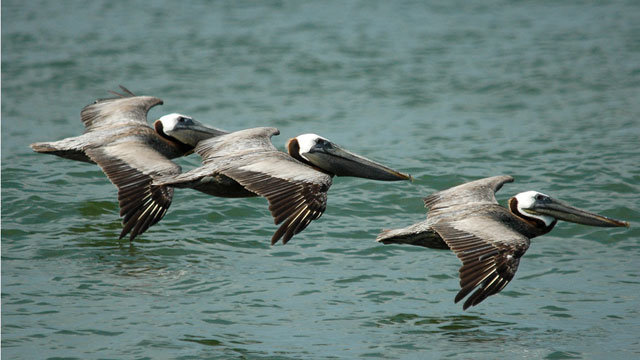
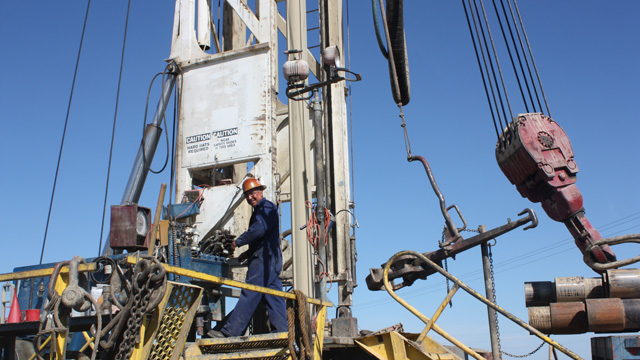
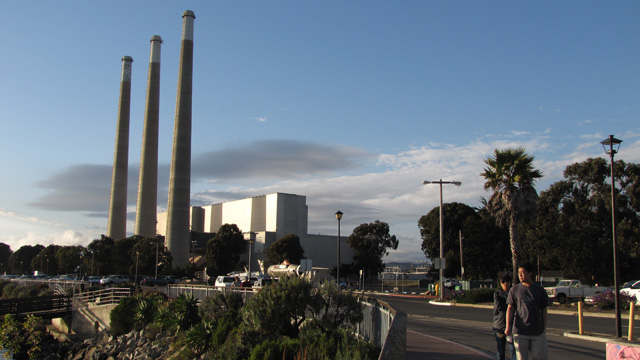
window.__IS_SSR__=true
window.__INITIAL_STATE__={
"attachmentsReducer": {
"audio_0": {
"type": "attachments",
"id": "audio_0",
"imgSizes": {
"kqedFullSize": {
"file": "https://ww2.kqed.org/news/wp-content/themes/KQED-unified/img/audio_bgs/background0.jpg"
}
}
},
"audio_1": {
"type": "attachments",
"id": "audio_1",
"imgSizes": {
"kqedFullSize": {
"file": "https://ww2.kqed.org/news/wp-content/themes/KQED-unified/img/audio_bgs/background1.jpg"
}
}
},
"audio_2": {
"type": "attachments",
"id": "audio_2",
"imgSizes": {
"kqedFullSize": {
"file": "https://ww2.kqed.org/news/wp-content/themes/KQED-unified/img/audio_bgs/background2.jpg"
}
}
},
"audio_3": {
"type": "attachments",
"id": "audio_3",
"imgSizes": {
"kqedFullSize": {
"file": "https://ww2.kqed.org/news/wp-content/themes/KQED-unified/img/audio_bgs/background3.jpg"
}
}
},
"audio_4": {
"type": "attachments",
"id": "audio_4",
"imgSizes": {
"kqedFullSize": {
"file": "https://ww2.kqed.org/news/wp-content/themes/KQED-unified/img/audio_bgs/background4.jpg"
}
}
},
"placeholder": {
"type": "attachments",
"id": "placeholder",
"imgSizes": {
"thumbnail": {
"file": "https://cdn.kqed.org/wp-content/uploads/2024/12/KQED-Default-Image-816638274-2000x1333-1-160x107.jpg",
"width": 160,
"height": 107,
"mimeType": "image/jpeg"
},
"medium": {
"file": "https://cdn.kqed.org/wp-content/uploads/2024/12/KQED-Default-Image-816638274-2000x1333-1-800x533.jpg",
"width": 800,
"height": 533,
"mimeType": "image/jpeg"
},
"medium_large": {
"file": "https://cdn.kqed.org/wp-content/uploads/2024/12/KQED-Default-Image-816638274-2000x1333-1-768x512.jpg",
"width": 768,
"height": 512,
"mimeType": "image/jpeg"
},
"large": {
"file": "https://cdn.kqed.org/wp-content/uploads/2024/12/KQED-Default-Image-816638274-2000x1333-1-1020x680.jpg",
"width": 1020,
"height": 680,
"mimeType": "image/jpeg"
},
"1536x1536": {
"file": "https://cdn.kqed.org/wp-content/uploads/2024/12/KQED-Default-Image-816638274-2000x1333-1-1536x1024.jpg",
"width": 1536,
"height": 1024,
"mimeType": "image/jpeg"
},
"fd-lrg": {
"file": "https://cdn.kqed.org/wp-content/uploads/2024/12/KQED-Default-Image-816638274-2000x1333-1-1536x1024.jpg",
"width": 1536,
"height": 1024,
"mimeType": "image/jpeg"
},
"fd-med": {
"file": "https://cdn.kqed.org/wp-content/uploads/2024/12/KQED-Default-Image-816638274-2000x1333-1-1020x680.jpg",
"width": 1020,
"height": 680,
"mimeType": "image/jpeg"
},
"fd-sm": {
"file": "https://cdn.kqed.org/wp-content/uploads/2024/12/KQED-Default-Image-816638274-2000x1333-1-800x533.jpg",
"width": 800,
"height": 533,
"mimeType": "image/jpeg"
},
"post-thumbnail": {
"file": "https://cdn.kqed.org/wp-content/uploads/2024/12/KQED-Default-Image-816638274-2000x1333-1-672x372.jpg",
"width": 672,
"height": 372,
"mimeType": "image/jpeg"
},
"twentyfourteen-full-width": {
"file": "https://cdn.kqed.org/wp-content/uploads/2024/12/KQED-Default-Image-816638274-2000x1333-1-1038x576.jpg",
"width": 1038,
"height": 576,
"mimeType": "image/jpeg"
},
"xxsmall": {
"file": "https://cdn.kqed.org/wp-content/uploads/2024/12/KQED-Default-Image-816638274-2000x1333-1-160x107.jpg",
"width": 160,
"height": 107,
"mimeType": "image/jpeg"
},
"xsmall": {
"file": "https://cdn.kqed.org/wp-content/uploads/2024/12/KQED-Default-Image-816638274-2000x1333-1-672x372.jpg",
"width": 672,
"height": 372,
"mimeType": "image/jpeg"
},
"small": {
"file": "https://cdn.kqed.org/wp-content/uploads/2024/12/KQED-Default-Image-816638274-2000x1333-1-672x372.jpg",
"width": 672,
"height": 372,
"mimeType": "image/jpeg"
},
"xlarge": {
"file": "https://cdn.kqed.org/wp-content/uploads/2024/12/KQED-Default-Image-816638274-2000x1333-1-1020x680.jpg",
"width": 1020,
"height": 680,
"mimeType": "image/jpeg"
},
"full-width": {
"file": "https://cdn.kqed.org/wp-content/uploads/2024/12/KQED-Default-Image-816638274-2000x1333-1-1920x1280.jpg",
"width": 1920,
"height": 1280,
"mimeType": "image/jpeg"
},
"guest-author-32": {
"file": "https://cdn.kqed.org/wp-content/uploads/2025/01/KQED-Default-Image-816638274-1333x1333-1-160x160.jpg",
"width": 32,
"height": 32,
"mimeType": "image/jpeg"
},
"guest-author-50": {
"file": "https://cdn.kqed.org/wp-content/uploads/2025/01/KQED-Default-Image-816638274-1333x1333-1-160x160.jpg",
"width": 50,
"height": 50,
"mimeType": "image/jpeg"
},
"guest-author-64": {
"file": "https://cdn.kqed.org/wp-content/uploads/2025/01/KQED-Default-Image-816638274-1333x1333-1-160x160.jpg",
"width": 64,
"height": 64,
"mimeType": "image/jpeg"
},
"guest-author-96": {
"file": "https://cdn.kqed.org/wp-content/uploads/2025/01/KQED-Default-Image-816638274-1333x1333-1-160x160.jpg",
"width": 96,
"height": 96,
"mimeType": "image/jpeg"
},
"guest-author-128": {
"file": "https://cdn.kqed.org/wp-content/uploads/2025/01/KQED-Default-Image-816638274-1333x1333-1-160x160.jpg",
"width": 128,
"height": 128,
"mimeType": "image/jpeg"
},
"detail": {
"file": "https://cdn.kqed.org/wp-content/uploads/2025/01/KQED-Default-Image-816638274-1333x1333-1-160x160.jpg",
"width": 160,
"height": 160,
"mimeType": "image/jpeg"
},
"kqedFullSize": {
"file": "https://cdn.kqed.org/wp-content/uploads/2024/12/KQED-Default-Image-816638274-2000x1333-1.jpg",
"width": 2000,
"height": 1333
}
}
},
"science_18058": {
"type": "attachments",
"id": "science_18058",
"meta": {
"index": "attachments_1716263798",
"site": "science",
"id": "18058",
"found": true
},
"parent": 18057,
"imgSizes": {
"kqedFullSize": {
"file": "https://ww2.kqed.org/app/uploads/sites/35/2014/06/OR7pups.jpg",
"width": 640,
"height": 360
}
},
"publishDate": 1401908669,
"modified": 1401908669,
"caption": "Wildlife officials confirm that OR7, a wolf that has visited California, has had two pups in southwest Oregon. (US Fish and Wildlife Service)",
"description": null,
"title": "OR7pups",
"credit": null,
"status": "inherit",
"isLoading": false,
"fetchFailed": false
},
"science_18053": {
"type": "attachments",
"id": "science_18053",
"meta": {
"index": "attachments_1716263798",
"site": "science",
"id": "18053",
"found": true
},
"parent": 18050,
"imgSizes": {
"kqedFullSize": {
"file": "https://ww2.kqed.org/app/uploads/sites/35/2014/06/pelicans.jpg",
"width": 640,
"height": 360
}
},
"publishDate": 1401904966,
"modified": 1401904966,
"caption": "Brown pelican populations rebounded after DDT was phased out. (MSMcCarthy Photography/Flickr)",
"description": "Brown pelican populations rebounded after DDT was phased out. (MSMcCarthy Photography/Flickr)",
"title": "pelicans",
"credit": null,
"status": "inherit",
"isLoading": false,
"fetchFailed": false
},
"science_18013": {
"type": "attachments",
"id": "science_18013",
"meta": {
"index": "attachments_1716263798",
"site": "science",
"id": "18013",
"found": true
},
"parent": 18000,
"imgSizes": {
"kqedFullSize": {
"file": "https://ww2.kqed.org/app/uploads/sites/35/2014/06/10592_transform.jpg",
"width": 640,
"height": 360
}
},
"publishDate": 1401751682,
"modified": 1401751682,
"caption": "(Justin Sullivan/Getty Images)",
"description": "SAN FRANCISCO, CA - JUNE 02: Apple Senior Vice President of Software Engineering Craig Federighi speaks during the Apple Worldwide Developers Conference at the Moscone West center on June 2, 2014 in San Francisco, California. Tim Cook kicked off the annual WWDC which is typically a showcase for upcoming updates to Apple hardware and software. The conference runs through June 6. (Photo by Justin Sullivan/Getty Images)",
"title": "Apple Hosts Its Worldwide Developers Conference",
"credit": null,
"status": "inherit",
"isLoading": false,
"fetchFailed": false
},
"science_17878": {
"type": "attachments",
"id": "science_17878",
"meta": {
"index": "attachments_1716263798",
"site": "science",
"id": "17878",
"found": true
},
"parent": 17873,
"imgSizes": {
"kqedFullSize": {
"file": "https://ww2.kqed.org/app/uploads/sites/35/2014/05/Rig_DeLaCruz_SK.jpg",
"width": 640,
"height": 360
}
},
"publishDate": 1401414173,
"modified": 1401414173,
"caption": null,
"description": "Juan de La Cruz operates a drilling rig probing 2,500 feet down for groundwater beneath Fresno County. (Sasha Khokha/KQED)",
"title": "Rig_DeLaCruz_SK",
"credit": null,
"status": "inherit",
"isLoading": false,
"fetchFailed": false
},
"science_17919": {
"type": "attachments",
"id": "science_17919",
"meta": {
"index": "attachments_1716263798",
"site": "science",
"id": "17919",
"found": true
},
"parent": 17914,
"imgSizes": {
"kqedFullSize": {
"file": "https://ww2.kqed.org/app/uploads/sites/35/2014/05/MorroBay_3600.jpg",
"width": 640,
"height": 360
}
},
"publishDate": 1401573762,
"modified": 1401573762,
"caption": "A natural gas-fired power plant in Morro Bay, on California's Central Coast. (Craig Miller)",
"description": null,
"title": "MorroBay_3600",
"credit": null,
"status": "inherit",
"isLoading": false,
"fetchFailed": false
},
"science_17792": {
"type": "attachments",
"id": "science_17792",
"meta": {
"index": "attachments_1716263798",
"site": "science",
"id": "17792",
"found": true
},
"parent": 17782,
"imgSizes": {
"kqedFullSize": {
"file": "https://ww2.kqed.org/app/uploads/sites/35/2014/05/IMG_1050_crop.jpg",
"width": 640,
"height": 360
}
},
"publishDate": 1401230100,
"modified": 1401230100,
"caption": "Siphons draw water to irrigate a wheat field in Reclamation District 108, northwest of Sacramento.",
"description": null,
"title": "IMG_1050_crop",
"credit": null,
"status": "inherit",
"isLoading": false,
"fetchFailed": false
},
"science_17777": {
"type": "attachments",
"id": "science_17777",
"meta": {
"index": "attachments_1716263798",
"site": "science",
"id": "17777",
"found": true
},
"parent": 17769,
"imgSizes": {
"kqedFullSize": {
"file": "https://ww2.kqed.org/app/uploads/sites/35/2014/05/1.jpg",
"width": 678,
"height": 381
}
},
"publishDate": 1401222067,
"modified": 1401222067,
"caption": null,
"description": null,
"title": "parvizi-brain",
"credit": null,
"status": "inherit",
"isLoading": false,
"fetchFailed": false
},
"science_17733": {
"type": "attachments",
"id": "science_17733",
"meta": {
"index": "attachments_1716263798",
"site": "science",
"id": "17733",
"found": true
},
"parent": 17726,
"imgSizes": {
"kqedFullSize": {
"file": "https://ww2.kqed.org/app/uploads/sites/35/2014/05/RS5913_foster.jpg",
"width": 640,
"height": 360
}
},
"publishDate": 1400876575,
"modified": 1400876575,
"caption": "Don Foster poses with a photo of himself from World War II. (Scott Shafer/KQED)",
"description": "Don Foster poses with a photo of himself from World War II. (Scott Shafer/KQED)",
"title": "RS5913_foster",
"credit": null,
"status": "inherit",
"isLoading": false,
"fetchFailed": false
},
"science_17719": {
"type": "attachments",
"id": "science_17719",
"meta": {
"index": "attachments_1716263798",
"site": "science",
"id": "17719",
"found": true
},
"parent": 17707,
"imgSizes": {
"kqedFullSize": {
"file": "https://ww2.kqed.org/app/uploads/sites/35/2014/05/pillarpoint.jpg",
"width": 640,
"height": 360
}
},
"publishDate": 1400805052,
"modified": 1400805052,
"caption": "Pillar Point Harbor in San Mateo County made Heal the Bay's 'Beach Bummer' list this year. (geoff dude/Flickr)",
"description": "Pillar Point Harbor in San Mateo County made Heal the Bay's 'Beach Bummer' list this year. (geoff dude/Flickr)",
"title": "pillarpoint",
"credit": null,
"status": "inherit",
"isLoading": false,
"fetchFailed": false
},
"science_17661": {
"type": "attachments",
"id": "science_17661",
"meta": {
"index": "attachments_1716263798",
"site": "science",
"id": "17661",
"found": true
},
"parent": 17659,
"imgSizes": {
"kqedFullSize": {
"file": "https://ww2.kqed.org/app/uploads/sites/35/2014/05/pumpjacks.jpg",
"width": 640,
"height": 360
}
},
"publishDate": 1400718605,
"modified": 1400718605,
"caption": "Pumpjacks draw oil out of the Monterey Shale near McKittrick, California. (David McNew/Getty Images)",
"description": null,
"title": "pumpjacks",
"credit": null,
"status": "inherit",
"isLoading": false,
"fetchFailed": false
},
"science_13657": {
"type": "attachments",
"id": "science_13657",
"meta": {
"index": "attachments_1716263798",
"site": "science",
"id": "13657",
"found": true
},
"parent": 0,
"imgSizes": {
"kqedFullSize": {
"file": "https://ww2.kqed.org/app/uploads/sites/35/2014/01/Fracking-main.jpg",
"width": 630,
"height": 473
}
},
"publishDate": 1391038158,
"modified": 1516898379,
"caption": "Just over 2,000 wells have been fracked in California, according to industry data. ",
"description": null,
"title": "Fracking-main",
"credit": "Craig Miller/KQED",
"status": "inherit",
"isLoading": false,
"fetchFailed": false
},
"science_10038": {
"type": "attachments",
"id": "science_10038",
"meta": {
"index": "attachments_1716263798",
"site": "science",
"id": "10038",
"found": true
},
"parent": 9996,
"imgSizes": {
"kqedFullSize": {
"file": "https://ww2.kqed.org/app/uploads/sites/35/2013/10/frackingprotest.jpg",
"width": 640,
"height": 360
}
},
"publishDate": 1381799651,
"modified": 1381799651,
"caption": "The group Californians Against Fracking staged a protest outside of California Gov. Jerry Brown's San Francisco offices demanding that Gov. Brown ban fracking in the state. (Justin Sullivan/Getty Images)",
"description": "SAN FRANCISCO, CA - MAY 30: Protestors stage a demonstration against fracking in California outside of the Hiram W. Johnson State Office Building on May 30, 2013 in San Francisco, California. Dozens of protesters with the group Californians Against Fracking staged a protest outside of California Gov. Jerry Brown's San Francisco offices demanding that Gov. Brown ban fracking in the state. (Photo by Justin Sullivan/Getty Images)",
"title": "169770907JS001_ACTIVISTS_PR",
"credit": null,
"status": "inherit",
"isLoading": false,
"fetchFailed": false
}
},
"audioPlayerReducer": {
"postId": "stream_live",
"isPaused": true,
"isPlaying": false,
"pfsActive": false,
"pledgeModalIsOpen": true,
"playerDrawerIsOpen": false,
"liveAudioPlayStartedAt": 0,
"liveAudioPlayContext": ""
},
"authorsReducer": {
"andrea-kissack": {
"type": "authors",
"id": "212",
"meta": {
"index": "authors_1716337520",
"id": "212",
"found": true
},
"name": "Andrea Kissack",
"firstName": "Andrea",
"lastName": "Kissack",
"slug": "andrea-kissack",
"email": "akissack@kqed.org",
"display_author_email": false,
"staff_mastheads": [],
"title": "KQED Contributor",
"bio": "Andrea has nearly three decades of experience working as a reporter, anchor, producer and editor for public radio, large market television news and CBS radio. In her current role as KQED’s Sr. Science Editor, Andrea helps lead a talented team covering science, technology, health and the environment for broadcast and digital platforms. Most recently she helped KQED launch a new, multimedia initiative covering the intersection of technology, health and medical science. She has earned a number of accolades for her work including awards from the Radio and Television News Directors Association, the National Academy of Television Arts and Sciences and the Associated Press. Her work can be seen, and heard, on a number of networks, Including NPR, PBS, CBS and the BBC.",
"avatar": "https://secure.gravatar.com/avatar/3eae7a251f0aee43b3c0137a636cb386?s=600&d=blank&r=g",
"twitter": "andreakissack",
"facebook": null,
"instagram": null,
"linkedin": null,
"sites": [
{
"site": "news",
"roles": [
"subscriber"
]
},
{
"site": "stateofhealth",
"roles": [
"subscriber"
]
},
{
"site": "science",
"roles": []
},
{
"site": "quest",
"roles": [
"add_users",
"create_users",
"edit_files",
"edit_users",
"level_10",
"level_8",
"level_9",
"promote_users",
"view_cimy_extra_fields",
"subscriber"
]
}
],
"headData": {
"title": "Andrea Kissack | KQED",
"description": "KQED Contributor",
"ogImgSrc": "https://secure.gravatar.com/avatar/3eae7a251f0aee43b3c0137a636cb386?s=600&d=blank&r=g",
"twImgSrc": "https://secure.gravatar.com/avatar/3eae7a251f0aee43b3c0137a636cb386?s=600&d=blank&r=g"
},
"isLoading": false,
"link": "/author/andrea-kissack"
},
"cmiller": {
"type": "authors",
"id": "221",
"meta": {
"index": "authors_1716337520",
"id": "221",
"found": true
},
"name": "Craig Miller",
"firstName": "Craig",
"lastName": "Miller",
"slug": "cmiller",
"email": "craig@voxterra.net",
"display_author_email": false,
"staff_mastheads": [
"science"
],
"title": "Editor Emeritus, Science",
"bio": "Craig is a former KQED Science editor, specializing in weather, climate, water & energy issues, with a little seismology thrown in just to shake things up. Prior to that, he launched and led the station's award-winning multimedia project, Climate Watch. Craig is also an accomplished writer/producer of television documentaries, with a focus on natural resource issues.",
"avatar": "https://secure.gravatar.com/avatar/b91661df645e001a9cafe0861fa685f9?s=600&d=blank&r=g",
"twitter": "voxterra",
"facebook": null,
"instagram": null,
"linkedin": null,
"sites": [
{
"site": "news",
"roles": [
"author"
]
},
{
"site": "futureofyou",
"roles": [
"editor"
]
},
{
"site": "stateofhealth",
"roles": [
"author"
]
},
{
"site": "science",
"roles": [
"editor"
]
},
{
"site": "quest",
"roles": [
"editor"
]
}
],
"headData": {
"title": "Craig Miller | KQED",
"description": "Editor Emeritus, Science",
"ogImgSrc": "https://secure.gravatar.com/avatar/b91661df645e001a9cafe0861fa685f9?s=600&d=blank&r=g",
"twImgSrc": "https://secure.gravatar.com/avatar/b91661df645e001a9cafe0861fa685f9?s=600&d=blank&r=g"
},
"isLoading": false,
"link": "/author/cmiller"
},
"laurensommer": {
"type": "authors",
"id": "239",
"meta": {
"index": "authors_1716337520",
"id": "239",
"found": true
},
"name": "Lauren Sommer",
"firstName": "Lauren",
"lastName": "Sommer",
"slug": "laurensommer",
"email": "lsommer@kqed.org",
"display_author_email": false,
"staff_mastheads": [],
"title": "KQED Contributor",
"bio": "Lauren is a radio reporter formerly covering environment, water, and energy for KQED Science. As part of her day job, she has scaled Sierra Nevada peaks, run from charging elephant seals, and desperately tried to get her sea legs - all in pursuit of good radio. Her work has appeared on Marketplace, Living on Earth, Science Friday and NPR's Morning Edition and All Things Considered. You can find her on Twitter at \u003ca href=\"https://twitter.com/lesommer\">@lesommer\u003c/a>.",
"avatar": "https://secure.gravatar.com/avatar/33aa3772bb86c6ad45b8aca6a238bbdf?s=600&d=blank&r=g",
"twitter": null,
"facebook": null,
"instagram": null,
"linkedin": null,
"sites": [
{
"site": "news",
"roles": [
"author"
]
},
{
"site": "science",
"roles": [
"editor",
"manage_content_types",
"manage_taxonomies"
]
},
{
"site": "quest",
"roles": [
"editor"
]
}
],
"headData": {
"title": "Lauren Sommer | KQED",
"description": "KQED Contributor",
"ogImgSrc": "https://secure.gravatar.com/avatar/33aa3772bb86c6ad45b8aca6a238bbdf?s=600&d=blank&r=g",
"twImgSrc": "https://secure.gravatar.com/avatar/33aa3772bb86c6ad45b8aca6a238bbdf?s=600&d=blank&r=g"
},
"isLoading": false,
"link": "/author/laurensommer"
},
"sasha-khokha": {
"type": "authors",
"id": "254",
"meta": {
"index": "authors_1716337520",
"id": "254",
"found": true
},
"name": "Sasha Khokha",
"firstName": "Sasha",
"lastName": "Khokha",
"slug": "sasha-khokha",
"email": "skhokha@kqed.org",
"display_author_email": true,
"staff_mastheads": [
"news"
],
"title": "Host, The California Report Magazine",
"bio": "Sasha Khokha is the host of \u003cem>The California Report's \u003c/em> weekly magazine program, which takes listeners on sound-rich excursions to meet the people that make the Golden State unique -- through audio documentaries and long-form stories. As \u003cem>The California Report's\u003c/em> Central Valley Bureau Chief based in Fresno for nearly a dozen years, Sasha brought the lives and concerns of rural Californians to listeners around the state. Her reporting helped expose the hidden price immigrant women janitors and farmworkers may pay to keep their jobs: sexual assault at work. It inspired two new California laws to protect them from sexual harassment. She was a key member of the reporting team for the Frontline film \u003cem>Rape on the Night Shift, \u003c/em>which was nominated for two national Emmys. Sasha has also won a national Edward R. Murrow and a national PRNDI award for investigative reporting, as well as multiple prizes from the Society for Professional Journalists. Sasha is a proud alum of the UC Berkeley Graduate School of Journalism and Brown University and a member of the South Asian Journalists Association.",
"avatar": "https://secure.gravatar.com/avatar/e4b5e1541aaeea2aa356aa1fb2a68950?s=600&d=blank&r=g",
"twitter": "KQEDSashaKhokha",
"facebook": null,
"instagram": null,
"linkedin": null,
"sites": [
{
"site": "news",
"roles": [
"editor"
]
},
{
"site": "stateofhealth",
"roles": [
"author"
]
},
{
"site": "science",
"roles": [
"author"
]
},
{
"site": "quest",
"roles": [
"subscriber"
]
}
],
"headData": {
"title": "Sasha Khokha | KQED",
"description": "Host, The California Report Magazine",
"ogImgSrc": "https://secure.gravatar.com/avatar/e4b5e1541aaeea2aa356aa1fb2a68950?s=600&d=blank&r=g",
"twImgSrc": "https://secure.gravatar.com/avatar/e4b5e1541aaeea2aa356aa1fb2a68950?s=600&d=blank&r=g"
},
"isLoading": false,
"link": "/author/sasha-khokha"
},
"scottshafer": {
"type": "authors",
"id": "255",
"meta": {
"index": "authors_1716337520",
"id": "255",
"found": true
},
"name": "Scott Shafer",
"firstName": "Scott",
"lastName": "Shafer",
"slug": "scottshafer",
"email": "sshafer@kqed.org",
"display_author_email": false,
"staff_mastheads": [
"news"
],
"title": "KQED Contributor",
"bio": "Scott Shafer is a senior editor with the KQED Politics and Government desk. He is co-host of Political Breakdown, the award-winning radio show and podcast with a personal take on the world of politics. Scott came to KQED in 1998 to host the statewide\u003cem> California Report\u003c/em>. Prior to that he had extended stints in politics and government\u003cem>.\u003c/em> He uses that inside experience at KQED in his, reporting, hosting and analysis for the politics desk. Scott collaborated \u003cem>Political Breakdown a\u003c/em>nd on \u003cem>The Political Mind of Jerry Brown, \u003c/em>an eight-part series about the life and extraordinary political career of the former governor. For fun, he plays water polo with the San Francisco Tsunami.",
"avatar": "https://secure.gravatar.com/avatar/a62ebae45b79d7aed1a39a0e3bf68104?s=600&d=blank&r=g",
"twitter": "scottshafer",
"bluesky": null,
"facebook": null,
"instagram": null,
"linkedin": null,
"sites": [
{
"site": "news",
"roles": [
"editor"
]
},
{
"site": "stateofhealth",
"roles": [
"author"
]
},
{
"site": "science",
"roles": [
"author"
]
},
{
"site": "forum",
"roles": [
"subscriber"
]
},
{
"site": "liveblog",
"roles": [
"author"
]
}
],
"headData": {
"title": "Scott Shafer | KQED",
"description": "KQED Contributor",
"ogImgSrc": "https://secure.gravatar.com/avatar/a62ebae45b79d7aed1a39a0e3bf68104?s=600&d=blank&r=g",
"twImgSrc": "https://secure.gravatar.com/avatar/a62ebae45b79d7aed1a39a0e3bf68104?s=600&d=blank&r=g"
},
"isLoading": false,
"link": "/author/scottshafer"
},
"kqedscience": {
"type": "authors",
"id": "6387",
"meta": {
"index": "authors_1716337520",
"id": "6387",
"found": true
},
"name": "KQED Science",
"firstName": "KQED",
"lastName": "Science",
"slug": "kqedscience",
"email": "kqedscience@gmail.com",
"display_author_email": false,
"staff_mastheads": [],
"title": null,
"bio": "KQED Science brings you award-winning science and environment coverage from the Bay Area and beyond by the flagship Northern California PBS and NPR affiliate.",
"avatar": "https://secure.gravatar.com/avatar/5a295ff49cf82a8c0f30937d3f788b2f?s=600&d=blank&r=g",
"twitter": null,
"facebook": null,
"instagram": null,
"linkedin": null,
"sites": [
{
"site": "science",
"roles": [
"contributor"
]
},
{
"site": "quest",
"roles": [
"editor"
]
},
{
"site": "food",
"roles": [
"contributor"
]
}
],
"headData": {
"title": "KQED Science | KQED",
"description": null,
"ogImgSrc": "https://secure.gravatar.com/avatar/5a295ff49cf82a8c0f30937d3f788b2f?s=600&d=blank&r=g",
"twImgSrc": "https://secure.gravatar.com/avatar/5a295ff49cf82a8c0f30937d3f788b2f?s=600&d=blank&r=g"
},
"isLoading": false,
"link": "/author/kqedscience"
},
"stonn": {
"type": "authors",
"id": "6538",
"meta": {
"index": "authors_1716337520",
"id": "6538",
"found": true
},
"name": "Shara Tonn",
"firstName": "Shara",
"lastName": "Tonn",
"slug": "stonn",
"email": "stonn@KQED.org",
"display_author_email": false,
"staff_mastheads": [],
"title": null,
"bio": "Shara Tonn is a Master’s student at Stanford University in Earth Systems, an interdisciplinary environmental science degree. Her focus is science communication and education. She is a part of the environmental radio group on campus, GreenGrid Radio and also enjoys performing improv with the Stanford Improvisers (SIMPs). Born and raised in Tennessee, Shara loves to travel and has lived overseas in Italy, Japan and Australia.",
"avatar": "https://secure.gravatar.com/avatar/9968feeee672a136559a0d7b615ee13e?s=600&d=blank&r=g",
"twitter": null,
"facebook": null,
"instagram": null,
"linkedin": null,
"sites": [
{
"site": "science",
"roles": [
"editor"
]
}
],
"headData": {
"title": "Shara Tonn | KQED",
"description": null,
"ogImgSrc": "https://secure.gravatar.com/avatar/9968feeee672a136559a0d7b615ee13e?s=600&d=blank&r=g",
"twImgSrc": "https://secure.gravatar.com/avatar/9968feeee672a136559a0d7b615ee13e?s=600&d=blank&r=g"
},
"isLoading": false,
"link": "/author/stonn"
}
},
"pagesReducer": {
"science_category_news": {
"type": "terms",
"id": "science_40",
"meta": {
"index": "terms_1716263798",
"site": "science",
"id": "40",
"score": 10.814895
},
"featImg": null,
"name": "News",
"description": null,
"taxonomy": "category",
"headData": {
"twImgId": null,
"twTitle": null,
"ogTitle": null,
"ogImgId": null,
"twDescription": null,
"description": null,
"title": "News Archives | KQED Science",
"ogDescription": null
},
"ttid": 42,
"slug": "news",
"isLoading": false,
"title": "News",
"pageMeta": {
"site": "science",
"WpPageTemplate": "page-topic-editorial",
"currentPage": 264
},
"blocks": [
{
"blockName": "kqed/post-list",
"attrs": {
"layout": "cardArticle2",
"query": "posts/science?category=news",
"seeMore": false,
"paginated": true,
"page": 264
}
},
{
"blockName": "kqed/ad"
}
]
}
},
"pfsSessionReducer": {},
"postsReducer": {
"stream_live": {
"type": "live",
"id": "stream_live",
"audioUrl": "https://streams.kqed.org/kqedradio",
"title": "Live Stream",
"excerpt": "Live Stream information currently unavailable.",
"link": "/radio",
"featImg": "",
"label": {
"name": "KQED Live",
"link": "/"
}
},
"stream_kqedNewscast": {
"type": "posts",
"id": "stream_kqedNewscast",
"audioUrl": "https://www.kqed.org/.stream/anon/radio/RDnews/newscast.mp3?_=1",
"title": "KQED Newscast",
"featImg": "",
"label": {
"name": "88.5 FM",
"link": "/"
}
},
"science_18057": {
"type": "posts",
"id": "science_18057",
"meta": {
"index": "posts_1716263798",
"site": "science",
"id": "18057",
"score": null,
"sort": [
1401910271000
]
},
"parent": 0,
"labelTerm": {
"site": "science"
},
"blocks": [],
"publishDate": 1401910271,
"format": "aside",
"title": "California to Protect Gray Wolves as Endangered Species",
"headTitle": "California to Protect Gray Wolves as Endangered Species | KQED",
"content": "\u003cfigure id=\"attachment_18058\" class=\"wp-caption alignleft\" style=\"max-width: 640px\">\u003ca href=\"http://ww2.kqed.org/science/wp-content/uploads/sites/35/2014/06/OR7pups.jpg\">\u003cimg loading=\"lazy\" decoding=\"async\" class=\"size-full wp-image-18058\" src=\"http://ww2.kqed.org/science/wp-content/uploads/sites/35/2014/06/OR7pups.jpg\" alt=\"Wildlife officials confirm that OR7, a wolf that has visited California, has had two pups in southwest Oregon. (U.S. Fish and Wildlife Service)\" width=\"640\" height=\"360\">\u003c/a>\u003cfigcaption class=\"wp-caption-text\">Wildlife officials confirm that OR7, a wolf that has visited California, has had two pups in southwest Oregon. (U.S. Fish and Wildlife Service)\u003c/figcaption>\u003c/figure>\n\u003cp>California wildlife officials voted on Wednesday to protect gray wolves as an endangered species in the state. The Fish and Game Commission approved the listing under California’s Endangered Species Act against the recommendations of the department’s staff.\u003c/p>\n\u003cp>While no wolves are known to be in California currently, the state was thrust into the debate when \u003ca href=\"http://science.kqed.org/quest/audio/lone-wolf%E2%80%99s-historic-trek-provokes-questions-and-concerns/\">a lone, radio-collared wolf known as OR7\u003c/a> wandered across the Oregon-California border in 2011, becoming California’s first wolf since the 1920s. OR7 has since returned to Oregon and earlier this year was spotted with a possible mate.\u003c/p>\n\u003cp>Just as public testimony ramped up at the commission meeting on Wednesday, the U.S. Fish and Wildlife Service confirmed that OR7 and a mate have produced at least two pups in southwest Oregon, the first litter observed since wolves returned to that area.\u003c/p>\n\u003caside class=\"pullquote alignleft\">‘Wolves are re-establishing themselves in California no matter what we do.’\u003ccite>— Michael Sutton, California Fish and Game Commission president\u003c/cite>\u003c/aside>\n\u003cp>The new pack raises the odds that wolves will expand into California.\u003c/p>\n\u003cp>“We expect that in a decade or less there will be wolf populations in California,” said Chuck Bonham, the director of the state Department of Fish and Wildlife. “That is nature taking its course. They are migrating across the West and from the Northwest, south.”\u003c/p>\n\u003cp>[ad fullwidth]\u003c/p>\n\u003cp>The debate centered around whether a species that’s recovering in neighboring states and isn’t currently found in California is eligible for protection under state law. Several commissioners rejected that argument.\u003c/p>\n\u003cp>“Wolves are re-establishing themselves in California no matter what we do,” Michael Sutton, the president of the commission, said. “We owe it to them, in my opinion, to do everything we can to help them recolonize their historic range in our state.”\u003c/p>\n\u003cp>Staff at the California Department of Fish and Wildlife had recommended that \u003ca href=\"http://www.fgc.ca.gov/meetings/2014/jun/060414docs.aspx\">wolves not be listed\u003c/a> as endangered. They argued that, given existing scientific information on wolves in California, listing wasn’t warranted based on current threats.\u003c/p>\n\u003cp>Instead, they recommended wolves be designated as a “species of special concern” and that the commissioners use existing authority to prohibit killing or “taking” of wolves in the state.\u003c/p>\n\u003cp>The department is also working on developing a \u003ca href=\"http://www.dfg.ca.gov/wildlife/nongame/wolf/\">California Wolf Plan\u003c/a> with a range of stakeholders. The plan, expected to be finalized by the end of the year, will include recommendations on how to manage wolves and potential human conflicts.\u003c/p>\n\u003cp>Gray wolves are protected under the federal Endangered Species Act, but the Obama Administration \u003ca href=\"http://www.latimes.com/science/sciencenow/la-sci-sn-wolf-science-attacked-20140207-story.html\">has proposed removing protections\u003c/a> for wolves in the lower 48 states.\u003c/p>\n\u003cp>\u003c/p>\n\u003cp>“We could not be more thrilled with the decision that the commission has made,” said Pam Flick of Defenders of Wildlife. “Gray wolves are just starting to recover in the Pacific Northwest states and this is one positive step toward a future of wolves on the California landscape.”\u003c/p>\n\n",
"stats": {
"hasVideo": false,
"hasChartOrMap": false,
"hasAudio": false,
"hasPolis": false,
"wordCount": 523,
"hasGoogleForm": false,
"hasGallery": false,
"hasHearkenModule": false,
"iframeSrcs": [],
"paragraphCount": 14
},
"modified": 1704933545,
"excerpt": "Though there are no wild wolves in California, state officials, expecting them to get here eventually, voted to protect them. ",
"headData": {
"twImgId": "",
"twTitle": "",
"ogTitle": "",
"ogImgId": "",
"twDescription": "",
"description": "Though there are no wild wolves in California, state officials, expecting them to get here eventually, voted to protect them. ",
"title": "California to Protect Gray Wolves as Endangered Species | KQED",
"ogDescription": "",
"schema": {
"@context": "https://schema.org",
"@type": "Article",
"headline": "California to Protect Gray Wolves as Endangered Species",
"datePublished": "2014-06-04T12:31:11-07:00",
"dateModified": "2024-01-10T16:39:05-08:00",
"image": "https://cdn.kqed.org/wp-content/uploads/2020/02/KQED-OG-Image@1x.png"
}
},
"guestAuthors": [],
"slug": "california-to-protect-gray-wolves-as-endangered-species",
"status": "publish",
"sticky": false,
"path": "/science/18057/california-to-protect-gray-wolves-as-endangered-species",
"audioTrackLength": null,
"parsedContent": [
{
"type": "contentString",
"content": "\u003cdiv class=\"post-body\">\u003cp>\u003cfigure id=\"attachment_18058\" class=\"wp-caption alignleft\" style=\"max-width: 640px\">\u003ca href=\"http://ww2.kqed.org/science/wp-content/uploads/sites/35/2014/06/OR7pups.jpg\">\u003cimg loading=\"lazy\" decoding=\"async\" class=\"size-full wp-image-18058\" src=\"http://ww2.kqed.org/science/wp-content/uploads/sites/35/2014/06/OR7pups.jpg\" alt=\"Wildlife officials confirm that OR7, a wolf that has visited California, has had two pups in southwest Oregon. (U.S. Fish and Wildlife Service)\" width=\"640\" height=\"360\">\u003c/a>\u003cfigcaption class=\"wp-caption-text\">Wildlife officials confirm that OR7, a wolf that has visited California, has had two pups in southwest Oregon. (U.S. Fish and Wildlife Service)\u003c/figcaption>\u003c/figure>\n\u003cp>California wildlife officials voted on Wednesday to protect gray wolves as an endangered species in the state. The Fish and Game Commission approved the listing under California’s Endangered Species Act against the recommendations of the department’s staff.\u003c/p>\n\u003cp>While no wolves are known to be in California currently, the state was thrust into the debate when \u003ca href=\"http://science.kqed.org/quest/audio/lone-wolf%E2%80%99s-historic-trek-provokes-questions-and-concerns/\">a lone, radio-collared wolf known as OR7\u003c/a> wandered across the Oregon-California border in 2011, becoming California’s first wolf since the 1920s. OR7 has since returned to Oregon and earlier this year was spotted with a possible mate.\u003c/p>\n\u003cp>Just as public testimony ramped up at the commission meeting on Wednesday, the U.S. Fish and Wildlife Service confirmed that OR7 and a mate have produced at least two pups in southwest Oregon, the first litter observed since wolves returned to that area.\u003c/p>\n\u003caside class=\"pullquote alignleft\">‘Wolves are re-establishing themselves in California no matter what we do.’\u003ccite>— Michael Sutton, California Fish and Game Commission president\u003c/cite>\u003c/aside>\n\u003cp>The new pack raises the odds that wolves will expand into California.\u003c/p>\n\u003cp>“We expect that in a decade or less there will be wolf populations in California,” said Chuck Bonham, the director of the state Department of Fish and Wildlife. “That is nature taking its course. They are migrating across the West and from the Northwest, south.”\u003c/p>\n\u003cp>\u003c/p>\u003c/div>",
"attributes": {
"named": {},
"numeric": []
}
},
{
"type": "component",
"content": "",
"name": "ad",
"attributes": {
"named": {
"label": "fullwidth"
},
"numeric": [
"fullwidth"
]
}
},
{
"type": "contentString",
"content": "\u003cdiv class=\"post-body\">\u003cp>\u003c/p>\n\u003cp>The debate centered around whether a species that’s recovering in neighboring states and isn’t currently found in California is eligible for protection under state law. Several commissioners rejected that argument.\u003c/p>\n\u003cp>“Wolves are re-establishing themselves in California no matter what we do,” Michael Sutton, the president of the commission, said. “We owe it to them, in my opinion, to do everything we can to help them recolonize their historic range in our state.”\u003c/p>\n\u003cp>Staff at the California Department of Fish and Wildlife had recommended that \u003ca href=\"http://www.fgc.ca.gov/meetings/2014/jun/060414docs.aspx\">wolves not be listed\u003c/a> as endangered. They argued that, given existing scientific information on wolves in California, listing wasn’t warranted based on current threats.\u003c/p>\n\u003cp>Instead, they recommended wolves be designated as a “species of special concern” and that the commissioners use existing authority to prohibit killing or “taking” of wolves in the state.\u003c/p>\n\u003cp>The department is also working on developing a \u003ca href=\"http://www.dfg.ca.gov/wildlife/nongame/wolf/\">California Wolf Plan\u003c/a> with a range of stakeholders. The plan, expected to be finalized by the end of the year, will include recommendations on how to manage wolves and potential human conflicts.\u003c/p>\n\u003cp>Gray wolves are protected under the federal Endangered Species Act, but the Obama Administration \u003ca href=\"http://www.latimes.com/science/sciencenow/la-sci-sn-wolf-science-attacked-20140207-story.html\">has proposed removing protections\u003c/a> for wolves in the lower 48 states.\u003c/p>\n\u003cp>\u003c/p>\n\u003cp>“We could not be more thrilled with the decision that the commission has made,” said Pam Flick of Defenders of Wildlife. “Gray wolves are just starting to recover in the Pacific Northwest states and this is one positive step toward a future of wolves on the California landscape.”\u003c/p>\n\n\u003c/div>\u003c/p>",
"attributes": {
"named": {},
"numeric": []
}
}
],
"link": "/science/18057/california-to-protect-gray-wolves-as-endangered-species",
"authors": [
"239"
],
"categories": [
"science_30",
"science_35",
"science_40"
],
"tags": [
"science_205",
"science_261",
"science_804"
],
"featImg": "science_18058",
"label": "science"
},
"science_18050": {
"type": "posts",
"id": "science_18050",
"meta": {
"index": "posts_1716263798",
"site": "science",
"id": "18050",
"score": null,
"sort": [
1401905408000
]
},
"parent": 0,
"labelTerm": {
"site": "science"
},
"blocks": [],
"publishDate": 1401905408,
"format": "aside",
"title": "Brown Pelican Population Plunges in California",
"headTitle": "Brown Pelican Population Plunges in California | KQED",
"content": "\u003cp>\u003cstrong>By Associated Press\u003c/strong>\u003c/p>\n\u003cfigure id=\"attachment_18053\" class=\"wp-caption aligncenter\" style=\"max-width: 640px\">\u003cimg loading=\"lazy\" decoding=\"async\" class=\"size-full wp-image-18053\" src=\"http://ww2.kqed.org/science/wp-content/uploads/sites/35/2014/06/pelicans.jpg\" alt=\"Brown pelican populations rebounded after DDT was phased out. (MSMcCarthy Photography/Flickr)\" width=\"640\" height=\"360\">\u003cfigcaption class=\"wp-caption-text\">Brown pelicans rebounded after DDT was phased out. (\u003ca href=\"https://www.flickr.com/photos/msmccarthyphotography/6027728528/in/photolist-abDFFW-eYp4eu-4HD3B3-aKaeqM-fG7RhD-xCpoi-aCNc7a-8XGr5D-UeW2N-6djABh-e4QEHj-eXM3Xu-72KTM7-5uvwBB-9ja1k9-9rRpds-72KTMf-9awpim-dvahHe-9xCnAA-du1UtF-cxDcH7-bSGP9X-5n8Ee1-9hRoeD-du1V3Z-9VmMwg-kTrdAX-6VuMeZ-9awrZs------cN2VFJ-5P1qq8-821FC4-756vSX-kAHrgD-5Actk8-gmcs7J-93Ndix-5Mgmsj-gm5DAi-7cH7WV-5ztTro-7CYw5W-cQFuzs-6cKBXr\">MSMcCarthy Photography\u003c/a>/Flickr)\u003c/figcaption>\u003c/figure>\n\u003cp>California\u003cspan class=\"apple-converted-space\"> \u003c/span>brown pelicans, which were driven to the brink of extinction in the last century, are in trouble again.\u003c/p>\n\u003cp>An annual survey completed last month found a drastic plunge in the population of breeding pairs, according to a statement released Friday by the University of California, Davis.\u003c/p>\n\u003cp>The survey in Mexico’s Gulf of California — where about 90 percent of the\u003cspan class=\"apple-converted-space\"> \u003c/span>pelicans\u003cspan class=\"apple-converted-space\"> \u003c/span>typically breed and raise their chicks — found that areas that typically host hundreds or thousands of nesting pairs held far fewer, and a few places were completely empty, the statement said.\u003c/p>\n\u003cp>“That’s what we call a failure, a bust. The bottom dropped out,” said Dan Anderson, a wildlife biologist and UC Davis professor emeritus who conducted the survey along with members of Mexico’s National Commission of Natural Protected Areas.\u003c/p>\n\u003cp>[ad fullwidth]\u003c/p>\n\u003cp>The reason for the decline could range from food supply shifts to changes in water temperature.\u003c/p>\n\u003cp>Many birds arrived late to the Mexico breeding grounds this spring and “of those who nested, many abandoned their nests when they could not find enough food to sustain their stay,” the UC Davis statement said.\u003c/p>\n\u003cp>The bird’s range extends from Mexico to Canada, according to the National Park Service.\u003c/p>\n\u003cp>Last month, thousands of California\u003cspan class=\"apple-converted-space\"> \u003c/span>brown pelicans\u003cspan class=\"apple-converted-space\"> \u003c/span>moved up the Southern California coast and even as far north as Washington, hunting their main prey of sardines and other fish.\u003c/p>\n\u003cp>Breeding population crashes of the\u003cspan class=\"apple-converted-space\"> \u003c/span>pelicans\u003cspan class=\"apple-converted-space\"> \u003c/span>often are associated with a warming of the central Pacific Ocean, known as El Niño, but that isn’t expected to begin until this summer and the drop also was much steeper.\u003c/p>\n\u003cp>“During most El Niño events we’ve seen, numbers of nesting attempts drop by at least half to two-thirds, and production goes down, too,” Anderson said, according to the UC Davis statement. “But it drops from thousands to hundreds, not to 10 or less.”\u003c/p>\n\u003cp>The California\u003cspan class=\"apple-converted-space\"> \u003c/span>brown pelican\u003cspan class=\"apple-converted-space\"> \u003c/span>was declared an endangered species in 1970 after its population was pushed to the brink of extinction by the pesticide DDT, which caused the bird’s eggshells to become so thin that they broke. After DDT was outlawed, the bird made a recovery and was taken off the list in 2009, when the West Coast population was 150,000.\u003c/p>\n\u003cp>However, the species has faced new challenges since then because of a decline in sardines.\u003c/p>\n\u003cp>In 2010, wildlife rescue centers in California were filled with emaciated\u003cspan class=\"apple-converted-space\"> \u003c/span>pelicans. The same year, young\u003cspan class=\"apple-converted-space\"> \u003c/span>pelicans\u003cspan class=\"apple-converted-space\"> \u003c/span>attacked murre nesting colonies in Oregon, shaking the chicks until they regurgitated fish, then eating the fish.\u003c/p>\n\u003cp>They did it again in 2011 and 2012.\u003c/p>\n\u003cp>\u003c/p>\n\u003cp>Last fall, scientists said they were concerned that a crash in the West Coast population of sardines might also be starving the\u003cspan class=\"apple-converted-space\"> \u003c/span>brown pelicans. The 2013 Northwest survey by the Oregon Coast National Wildlife Refuge Complex found 7,018\u003cspan class=\"apple-converted-space\"> \u003c/span>brown pelicans, half the average of the past decade, and the lowest number since 1999.\u003c/p>\n\n",
"stats": {
"hasVideo": false,
"hasChartOrMap": false,
"hasAudio": false,
"hasPolis": false,
"wordCount": 542,
"hasGoogleForm": false,
"hasGallery": false,
"hasHearkenModule": false,
"iframeSrcs": [],
"paragraphCount": 18
},
"modified": 1704933546,
"excerpt": "California brown pelicans, which were driven to the brink of extinction in the last century, are in trouble again. The reason for the decline could range from food supply shifts to changes in water temperature.",
"headData": {
"twImgId": "",
"twTitle": "",
"ogTitle": "",
"ogImgId": "",
"twDescription": "",
"description": "California brown pelicans, which were driven to the brink of extinction in the last century, are in trouble again. The reason for the decline could range from food supply shifts to changes in water temperature.",
"title": "Brown Pelican Population Plunges in California | KQED",
"ogDescription": "",
"schema": {
"@context": "https://schema.org",
"@type": "Article",
"headline": "Brown Pelican Population Plunges in California",
"datePublished": "2014-06-04T11:10:08-07:00",
"dateModified": "2024-01-10T16:39:06-08:00",
"image": "https://cdn.kqed.org/wp-content/uploads/2020/02/KQED-OG-Image@1x.png"
}
},
"guestAuthors": [],
"slug": "brown-pelican-population-plunges-in-california",
"status": "publish",
"sticky": false,
"path": "/science/18050/brown-pelican-population-plunges-in-california",
"audioTrackLength": null,
"parsedContent": [
{
"type": "contentString",
"content": "\u003cdiv class=\"post-body\">\u003cp>\u003cp>\u003cstrong>By Associated Press\u003c/strong>\u003c/p>\n\u003cfigure id=\"attachment_18053\" class=\"wp-caption aligncenter\" style=\"max-width: 640px\">\u003cimg loading=\"lazy\" decoding=\"async\" class=\"size-full wp-image-18053\" src=\"http://ww2.kqed.org/science/wp-content/uploads/sites/35/2014/06/pelicans.jpg\" alt=\"Brown pelican populations rebounded after DDT was phased out. (MSMcCarthy Photography/Flickr)\" width=\"640\" height=\"360\">\u003cfigcaption class=\"wp-caption-text\">Brown pelicans rebounded after DDT was phased out. (\u003ca href=\"https://www.flickr.com/photos/msmccarthyphotography/6027728528/in/photolist-abDFFW-eYp4eu-4HD3B3-aKaeqM-fG7RhD-xCpoi-aCNc7a-8XGr5D-UeW2N-6djABh-e4QEHj-eXM3Xu-72KTM7-5uvwBB-9ja1k9-9rRpds-72KTMf-9awpim-dvahHe-9xCnAA-du1UtF-cxDcH7-bSGP9X-5n8Ee1-9hRoeD-du1V3Z-9VmMwg-kTrdAX-6VuMeZ-9awrZs------cN2VFJ-5P1qq8-821FC4-756vSX-kAHrgD-5Actk8-gmcs7J-93Ndix-5Mgmsj-gm5DAi-7cH7WV-5ztTro-7CYw5W-cQFuzs-6cKBXr\">MSMcCarthy Photography\u003c/a>/Flickr)\u003c/figcaption>\u003c/figure>\n\u003cp>California\u003cspan class=\"apple-converted-space\"> \u003c/span>brown pelicans, which were driven to the brink of extinction in the last century, are in trouble again.\u003c/p>\n\u003cp>An annual survey completed last month found a drastic plunge in the population of breeding pairs, according to a statement released Friday by the University of California, Davis.\u003c/p>\n\u003cp>The survey in Mexico’s Gulf of California — where about 90 percent of the\u003cspan class=\"apple-converted-space\"> \u003c/span>pelicans\u003cspan class=\"apple-converted-space\"> \u003c/span>typically breed and raise their chicks — found that areas that typically host hundreds or thousands of nesting pairs held far fewer, and a few places were completely empty, the statement said.\u003c/p>\n\u003cp>“That’s what we call a failure, a bust. The bottom dropped out,” said Dan Anderson, a wildlife biologist and UC Davis professor emeritus who conducted the survey along with members of Mexico’s National Commission of Natural Protected Areas.\u003c/p>\n\u003cp>\u003c/p>\u003c/div>",
"attributes": {
"named": {},
"numeric": []
}
},
{
"type": "component",
"content": "",
"name": "ad",
"attributes": {
"named": {
"label": "fullwidth"
},
"numeric": [
"fullwidth"
]
}
},
{
"type": "contentString",
"content": "\u003cdiv class=\"post-body\">\u003cp>\u003c/p>\n\u003cp>The reason for the decline could range from food supply shifts to changes in water temperature.\u003c/p>\n\u003cp>Many birds arrived late to the Mexico breeding grounds this spring and “of those who nested, many abandoned their nests when they could not find enough food to sustain their stay,” the UC Davis statement said.\u003c/p>\n\u003cp>The bird’s range extends from Mexico to Canada, according to the National Park Service.\u003c/p>\n\u003cp>Last month, thousands of California\u003cspan class=\"apple-converted-space\"> \u003c/span>brown pelicans\u003cspan class=\"apple-converted-space\"> \u003c/span>moved up the Southern California coast and even as far north as Washington, hunting their main prey of sardines and other fish.\u003c/p>\n\u003cp>Breeding population crashes of the\u003cspan class=\"apple-converted-space\"> \u003c/span>pelicans\u003cspan class=\"apple-converted-space\"> \u003c/span>often are associated with a warming of the central Pacific Ocean, known as El Niño, but that isn’t expected to begin until this summer and the drop also was much steeper.\u003c/p>\n\u003cp>“During most El Niño events we’ve seen, numbers of nesting attempts drop by at least half to two-thirds, and production goes down, too,” Anderson said, according to the UC Davis statement. “But it drops from thousands to hundreds, not to 10 or less.”\u003c/p>\n\u003cp>The California\u003cspan class=\"apple-converted-space\"> \u003c/span>brown pelican\u003cspan class=\"apple-converted-space\"> \u003c/span>was declared an endangered species in 1970 after its population was pushed to the brink of extinction by the pesticide DDT, which caused the bird’s eggshells to become so thin that they broke. After DDT was outlawed, the bird made a recovery and was taken off the list in 2009, when the West Coast population was 150,000.\u003c/p>\n\u003cp>However, the species has faced new challenges since then because of a decline in sardines.\u003c/p>\n\u003cp>In 2010, wildlife rescue centers in California were filled with emaciated\u003cspan class=\"apple-converted-space\"> \u003c/span>pelicans. The same year, young\u003cspan class=\"apple-converted-space\"> \u003c/span>pelicans\u003cspan class=\"apple-converted-space\"> \u003c/span>attacked murre nesting colonies in Oregon, shaking the chicks until they regurgitated fish, then eating the fish.\u003c/p>\n\u003cp>They did it again in 2011 and 2012.\u003c/p>\n\u003cp>\u003c/p>\n\u003cp>Last fall, scientists said they were concerned that a crash in the West Coast population of sardines might also be starving the\u003cspan class=\"apple-converted-space\"> \u003c/span>brown pelicans. The 2013 Northwest survey by the Oregon Coast National Wildlife Refuge Complex found 7,018\u003cspan class=\"apple-converted-space\"> \u003c/span>brown pelicans, half the average of the past decade, and the lowest number since 1999.\u003c/p>\n\n\u003c/div>\u003c/p>",
"attributes": {
"named": {},
"numeric": []
}
}
],
"link": "/science/18050/brown-pelican-population-plunges-in-california",
"authors": [
"6387"
],
"categories": [
"science_30",
"science_35",
"science_40"
],
"tags": [
"science_163",
"science_371",
"science_64",
"science_527"
],
"featImg": "science_18053",
"label": "science"
},
"science_18000": {
"type": "posts",
"id": "science_18000",
"meta": {
"index": "posts_1716263798",
"site": "science",
"id": "18000",
"score": null,
"sort": [
1401755091000
]
},
"parent": 0,
"labelTerm": {
"site": "science"
},
"blocks": [],
"publishDate": 1401755091,
"format": "aside",
"title": "Apple Jumps Into Health and Fitness Market",
"headTitle": "Apple Jumps Into Health and Fitness Market | KQED",
"content": "\u003cfigure id=\"attachment_18016\" class=\"wp-caption alignleft\" style=\"max-width: 240px\">\u003ca href=\"http://ww2.kqed.org/science/wp-content/uploads/sites/35/2014/06/10592_transform-1.jpg\">\u003cimg loading=\"lazy\" decoding=\"async\" class=\"size-full wp-image-18016\" src=\"http://ww2.kqed.org/science/wp-content/uploads/sites/35/2014/06/10592_transform-1.jpg\" alt=\"alt here\" width=\"240\" height=\"400\">\u003c/a>\u003cfigcaption class=\"wp-caption-text\">Apple WWDC 2014. (Justin Sullivan/Getty Images)\u003c/figcaption>\u003c/figure>\n\u003cp>Apple has launched a new health platform called HealthKit. The announcement came at the company’s annual Developers Conference in San Francisco today.\u003c/p>\n\u003cp>Digital health is already a crowded field with more than forty thousand health apps and devices monitoring everything from your activity level and sleep to your weight. Apple’s new health application will pull in data from third-party apps and consolidate them into one health profile.\u003c/p>\n\u003cp>“For digital health this is a huge move to see the world’s largest tech company entering directly into this space,” says Malay Gandhi of Rock Health, a San Francisco-based research and start-up incubator.\u003c/p>\n\u003cp>HealthKit, says Gandhi, is an attempt “to clean up a fragmented ecosytem for consumers, as well as solve data-transport issues for the industry.”\u003c/p>\n\u003cp>A recent report from Rock Health finds that \u003ca href=\"http://rockhealth.com/2014/01/2013-digital-health-funding-report/\">funding for the mobile health market has doubled in the past year\u003c/a> to more than two billion dollars.\u003c/p>\n\u003cp>[ad fullwidth]\u003c/p>\n\u003cp>With HealthKit, Apple is also partnering with healthcare. The company has named the Mayo Clinic and Epic, a giant health record company, as early partners. “This platform really sits between the consumer’s view of the world, with all these devices and apps, and the healthcare system, which has all this clinical data that has never really been presented to consumers in a meaningful way,” says Gandhi.\u003c/p>\n\u003cp>\u003c/p>\n\u003cp>The new HealthKit could potentially interact with wearable devices like Apple’s much-anticipated iWatch.\u003c/p>\n\n",
"stats": {
"hasVideo": false,
"hasChartOrMap": false,
"hasAudio": false,
"hasPolis": false,
"wordCount": 258,
"hasGoogleForm": false,
"hasGallery": false,
"hasHearkenModule": false,
"iframeSrcs": [],
"paragraphCount": 9
},
"modified": 1704933556,
"excerpt": "With a new tool for consolidating health data, such as weight and sleep patterns, the company enters a $2 billion industry. ",
"headData": {
"twImgId": "",
"twTitle": "",
"ogTitle": "",
"ogImgId": "",
"twDescription": "",
"description": "With a new tool for consolidating health data, such as weight and sleep patterns, the company enters a $2 billion industry. ",
"title": "Apple Jumps Into Health and Fitness Market | KQED",
"ogDescription": "",
"schema": {
"@context": "https://schema.org",
"@type": "Article",
"headline": "Apple Jumps Into Health and Fitness Market",
"datePublished": "2014-06-02T17:24:51-07:00",
"dateModified": "2024-01-10T16:39:16-08:00",
"image": "https://cdn.kqed.org/wp-content/uploads/2020/02/KQED-OG-Image@1x.png"
}
},
"guestAuthors": [],
"slug": "apple-jumps-into-health-and-fitness-market",
"status": "publish",
"sticky": false,
"path": "/science/18000/apple-jumps-into-health-and-fitness-market",
"audioTrackLength": null,
"parsedContent": [
{
"type": "contentString",
"content": "\u003cdiv class=\"post-body\">\u003cp>\u003cfigure id=\"attachment_18016\" class=\"wp-caption alignleft\" style=\"max-width: 240px\">\u003ca href=\"http://ww2.kqed.org/science/wp-content/uploads/sites/35/2014/06/10592_transform-1.jpg\">\u003cimg loading=\"lazy\" decoding=\"async\" class=\"size-full wp-image-18016\" src=\"http://ww2.kqed.org/science/wp-content/uploads/sites/35/2014/06/10592_transform-1.jpg\" alt=\"alt here\" width=\"240\" height=\"400\">\u003c/a>\u003cfigcaption class=\"wp-caption-text\">Apple WWDC 2014. (Justin Sullivan/Getty Images)\u003c/figcaption>\u003c/figure>\n\u003cp>Apple has launched a new health platform called HealthKit. The announcement came at the company’s annual Developers Conference in San Francisco today.\u003c/p>\n\u003cp>Digital health is already a crowded field with more than forty thousand health apps and devices monitoring everything from your activity level and sleep to your weight. Apple’s new health application will pull in data from third-party apps and consolidate them into one health profile.\u003c/p>\n\u003cp>“For digital health this is a huge move to see the world’s largest tech company entering directly into this space,” says Malay Gandhi of Rock Health, a San Francisco-based research and start-up incubator.\u003c/p>\n\u003cp>HealthKit, says Gandhi, is an attempt “to clean up a fragmented ecosytem for consumers, as well as solve data-transport issues for the industry.”\u003c/p>\n\u003cp>A recent report from Rock Health finds that \u003ca href=\"http://rockhealth.com/2014/01/2013-digital-health-funding-report/\">funding for the mobile health market has doubled in the past year\u003c/a> to more than two billion dollars.\u003c/p>\n\u003cp>\u003c/p>\u003c/div>",
"attributes": {
"named": {},
"numeric": []
}
},
{
"type": "component",
"content": "",
"name": "ad",
"attributes": {
"named": {
"label": "fullwidth"
},
"numeric": [
"fullwidth"
]
}
},
{
"type": "contentString",
"content": "\u003cdiv class=\"post-body\">\u003cp>\u003c/p>\n\u003cp>With HealthKit, Apple is also partnering with healthcare. The company has named the Mayo Clinic and Epic, a giant health record company, as early partners. “This platform really sits between the consumer’s view of the world, with all these devices and apps, and the healthcare system, which has all this clinical data that has never really been presented to consumers in a meaningful way,” says Gandhi.\u003c/p>\n\u003cp>\u003c/p>\n\u003cp>The new HealthKit could potentially interact with wearable devices like Apple’s much-anticipated iWatch.\u003c/p>\n\n\u003c/div>\u003c/p>",
"attributes": {
"named": {},
"numeric": []
}
}
],
"link": "/science/18000/apple-jumps-into-health-and-fitness-market",
"authors": [
"212"
],
"categories": [
"science_89",
"science_39",
"science_40"
],
"tags": [
"science_1513",
"science_64",
"science_1504"
],
"featImg": "science_18013",
"label": "science"
},
"science_17873": {
"type": "posts",
"id": "science_17873",
"meta": {
"index": "posts_1716263798",
"site": "science",
"id": "17873",
"score": null,
"sort": [
1401714011000
]
},
"parent": 0,
"labelTerm": {
"site": "science",
"term": 1151
},
"blocks": [],
"publishDate": 1401714011,
"format": "aside",
"title": "Drought Drives Drilling Frenzy for Groundwater in California",
"headTitle": "Drought Drives Drilling Frenzy for Groundwater in California | KQED",
"content": "\u003cfigure id=\"attachment_17878\" class=\"wp-caption aligncenter\" style=\"max-width: 640px\">\u003ca href=\"http://ww2.kqed.org/science/wp-content/uploads/sites/35/2014/05/Rig_DeLaCruz_SK.jpg\" rel=\"attachment wp-att-17878\">\u003cimg loading=\"lazy\" decoding=\"async\" class=\"wp-image-17878 size-full\" src=\"http://ww2.kqed.org/science/wp-content/uploads/sites/35/2014/05/Rig_DeLaCruz_SK.jpg\" alt=\"Rig_DeLaCruz_SK\" width=\"640\" height=\"360\">\u003c/a>\u003cfigcaption class=\"wp-caption-text\">Juan de La Cruz operates a drilling rig probing for groundwater 2,500 feet beneath Fresno County. (Sasha Khokha/KQED)\u003c/figcaption>\u003c/figure>\n\u003cp>Steve Arthur practically lives out of his truck these days. But he’s not homeless. He runs one of Fresno’s busiest \u003ca href=\"http://www.arthurandorum.com/\">well drilling companies\u003c/a>.\u003c/p>\n\u003cp>“It’s officially getting crazy. We go and we go but it just seems like we can’t go fast enough,” he says, sitting behind the steering wheel as he hustles up and down Highway 99 to check on drilling rigs that run 24 hours a day, probing for water.\u003c/p>\n\u003cp>Some days, Arthur doesn’t even have time to stop for gas; he’s got an extra tank hooked up to the flatbed of his pickup. He says he’s lucky if he gets three hours of sleep a night.\u003c/p>\n\u003cp>“Toward the end of the week, I start to get run down pretty good,” he sighs. “On a Friday afternoon, you might see me parked on the side of the road taking a cat nap.”\u003c/p>\n\u003cp>Counties in the farm-rich Central Valley are issuing record numbers of permits for new water wells. Arthur says his company’s got an eight-month waiting list. Some of his competitors are backlogged more than a year. Drillers like Arthur say they’re even busier than they were\u003ca href=\"http://www.water.ca.gov/watertransfers/docs/9_drought-1976-77.pdf\"> during the drought of 1977, \u003c/a>when Californians drilled \u003ca href=\"http://www.water.ca.gov/groundwater/well_info_and_other/california_well_standards/b74-81chap1a.html\">28 thousand new wells. \u003c/a>\u003c/p>\n\u003caside class=\"pullquote alignleft\">‘It’s officially getting crazy. We go and we go but it just seems like we can’t go fast enough.’\u003ccite>— Steve Arthur, Owner, Arthur & Orum Well Drilling\u003c/cite>\u003c/aside>\n\u003cp>“This is off the scales, here,” says Arthur, shaking his head. “It’s just amazing, the amount of people that call and want wells. A customer called this morning and I’m supposed to do two for him, and he said, ‘Add 14 to the list.’”\u003c/p>\n\u003cp>[ad fullwidth]\u003c/p>\n\u003cp>\u003cem>“\u003c/em>You have to literally grab these guys and drag ‘em to your property and say ‘Please, please drill me a well!,’” laments citrus farmer Matt Fisher, who’s been \u003ca href=\"http://ww2.kqed.org/science/2014/04/08/cold-then-dry-dealing-california-citrus-farmers-a-double-punch/\">scrambling to keep his trees alive\u003c/a> after learning that he won’t get any water from federal reservoirs this year.\u003c/p>\n\u003cp>“I have even heard of drilling companies that won’t tell growers who’s in front of them, because guys are trying to buy the other guy’s spot in line,” says Fisher. “Its crazy, some of the things that are going on, but if you’re in our shoes, and you have to pay a guy $10,000 for his spot in line, that’s cheap compared to what you’re going to lose if you lose your whole orchard.”\u003c/p>\n\u003cp>It’s not always about \u003cem>losing\u003c/em> trees, though. Right where a brand new almond orchard will be planted in rural Fresno County, a 70-foot high drilling rig bores a hole in the earth 2,500 feet deep. This well will cost the farmer about a million dollars.\u003c/p>\n\u003cp>Juan de La Cruz works on this rig 12 hours a day, seven days a week, carefully guiding the drill bit. He’s standing in a little hut next to the drill hole that they call ‘the doghouse.’ It’s where workers keep a log of the layers of sand and clay they find, collecting samples every ten feet as the drill probes deeper.\u003c/p>\n\u003cfigure id=\"attachment_17880\" class=\"wp-caption aligncenter\" style=\"max-width: 640px\">\u003ca href=\"http://ww2.kqed.org/science/wp-content/uploads/sites/35/2014/05/DrillingSamples_SK.jpg\" rel=\"attachment wp-att-17880\">\u003cimg loading=\"lazy\" decoding=\"async\" class=\"size-full wp-image-17880\" src=\"http://ww2.kqed.org/science/wp-content/uploads/sites/35/2014/05/DrillingSamples_SK.jpg\" alt=\"Drillers collect samples from the bore hole for every 10 feet of depth. (Sasha Khokha/KQED)\" width=\"640\" height=\"360\">\u003c/a>\u003cfigcaption class=\"wp-caption-text\">Drillers collect samples from the bore hole for every 10 feet of depth — but the records of what they find are considered confidential and not available to the public. (Sasha Khokha/KQED)\u003c/figcaption>\u003c/figure>\n\u003cp>It’s also home to two other essential pieces of gear: a microwave and a fridge.\u003c/p>\n\u003cp>\u003cem>“\u003c/em>This is basically where we live while we’re working,” says De La Cruz in Spanish. “We’ve got some \u003cem>nopales\u003c/em> (cacti) and zucchinis in here to cook up. The farmers bring us cantaloupes, tomatoes, whatever we want. They are so grateful because when we’re done with this well, these fields will have water.”\u003c/p>\n\u003cp>Bob Zimmerer’s company,\u003ca href=\"http://www.zimwells.com/\"> Zim Industries,\u003c/a> owns this rig and a dozen others. He knows there’s a silver lining to the drought for well drillers this year. But he knows it can’t last forever.\u003c/p>\n\u003cp>“We can’t keep sustaining this amount of overdraft, we all know that,” says Zimmerer, standing on the platform next to the drill. “At this point in time, we don’t want to keep going on at this pace. It’s more of a temporary fix.”\u003c/p>\n\u003cp>That’s a sobering admission from a well driller.\u003c/p>\n\u003caside class=\"pullquote alignleft\">‘Groundwater is like a bank account. You can’t take out more than you put in on an ongoing basis.’\u003ccite>— Jerry Cadagan, water activist\u003c/cite>\u003c/aside>\n\u003cp>California’s aquifers supply 40 percent of the state’s water in normal years but in this drought year, it could be closer to 65 percent. That makes it our biggest water reserve –- bigger than the Sierra snowpack.\u003c/p>\n\u003cp>Scientists are already sounding alarm bells about pumping too much groundwater. State water managers estimate that water tables in some parts of the Valley have dropped 100 feet \u003ca href=\"http://www.californiawaterfoundation.org/uploads/1397858208-SUBSIDENCEFULLREPORT_FINAL.pdf\">below historical lows\u003c/a>. As water levels sink, \u003ca href=\"http://science.kqed.org/quest/audio/how-flooding-fields-could-alleviate-water-supply-stress/\">the land can sink, too\u003c/a> — in some places by about a foot per year. Groundwater pumping could also put \u003ca href=\"http://www.nature.com/nature/journal/v509/n7501/nature13275/metrics/news?message-global=remove\">more stress on the San Andreas Fault.\u003c/a>\u003c/p>\n\u003cp>That’s not the only seismic consequence.\u003c/p>\n\u003cp>“We are a one-way trajectory towards depletion. Toward running out of groundwater in the Central Valley,” warns Jay Famiglietti, \u003ca href=\"http://www.ess.uci.edu/~hydrogroup/\">a hydrologist at UC Irvine\u003c/a>. He points out that California is the only western state that doesn’t really monitor or regulate how much groundwater farmers and residents are using.\u003c/p>\n\u003cp>“If you own property, you can dig a well and you can pump as much groundwater as you a want,” says Famiglietti, “even if that means you are drawing water in from beneath your neighbor’s property into your well. So it’s not unlike having several straws in a glass, and everyone drinking at the same time, and no one really watching the level.”\u003c/p>\n\u003cfigure id=\"attachment_17881\" class=\"wp-caption aligncenter\" style=\"max-width: 640px\">\u003cimg loading=\"lazy\" decoding=\"async\" class=\"size-full wp-image-17881\" src=\"http://ww2.kqed.org/science/wp-content/uploads/sites/35/2014/05/FullRig_SK.jpg\" alt=\"Drillers are bringing in large rigs like this one from all over the west, to drill deeper wells in the quest for water. (Sasha Khokha/KQED)\" width=\"640\" height=\"360\">\u003cfigcaption class=\"wp-caption-text\">Drillers are bringing in large rigs like this one from all over the west, to drill deeper wells in the quest for water. (Sasha Khokha/KQED)\u003c/figcaption>\u003c/figure>\n\u003cp>That could change. \u003ca href=\"http://ww2.kqed.org/science/2014/04/22/california-edging-closer-to-regulating-groundwater-for-the-first-time/\">A bill\u003c/a> making its way through the state legislature could, for the first time ever, require local agencies to track, and in some cases, even restrict groundwater pumping. Some farmers oppose it, saying it’s a violation of their property rights.\u003c/p>\n\u003cp>But retired attorney and water activist Jerry Cadagan says counties should be thinking hard right now about the permits they’re giving to farmers to drill thousands of new wells.\u003c/p>\n\u003cp>“You’ve got to put reasonable restrictions so people are only pumping out a reasonable amount of water that underlies their land,” says Cadagan, who lives in Stanislaus County, and is \u003ca href=\"http://www.modbee.com/2014/04/28/3314605/jump-in-well-permits-in-stanislaus.html\">suing farmers there\u003c/a> for drilling wells without considering the environmental impact. “Groundwater is like a bank account. You can’t take out more than you put in on an ongoing basis.”\u003c/p>\n\u003cp>Farmers too, are starting to worry. In Merced County, farm leaders are trying to stop two private landowners from \u003ca href=\"http://www.fresnobee.com/2014/05/19/3934223/landowners-try-to-sell-groundwater.html\">selling as much as 7 billion gallons\u003c/a> of well water to farmers in another county. They call it “groundwater mining.”\u003c/p>\n\u003cp>[ad floatright]\u003c/p>\n\u003cp> \u003c/p>\n\n",
"stats": {
"hasVideo": false,
"hasChartOrMap": false,
"hasAudio": false,
"hasPolis": false,
"wordCount": 1292,
"hasGoogleForm": false,
"hasGallery": false,
"hasHearkenModule": false,
"iframeSrcs": [],
"paragraphCount": 26
},
"modified": 1704933560,
"excerpt": "The unrestrained race to drill new wells could put California's biggest water source in jeopardy.",
"headData": {
"twImgId": "",
"twTitle": "",
"ogTitle": "",
"ogImgId": "",
"twDescription": "",
"description": "The unrestrained race to drill new wells could put California's biggest water source in jeopardy.",
"title": "Drought Drives Drilling Frenzy for Groundwater in California | KQED",
"ogDescription": "",
"schema": {
"@context": "https://schema.org",
"@type": "Article",
"headline": "Drought Drives Drilling Frenzy for Groundwater in California",
"datePublished": "2014-06-02T06:00:11-07:00",
"dateModified": "2024-01-10T16:39:20-08:00",
"image": "https://cdn.kqed.org/wp-content/uploads/2020/02/KQED-OG-Image@1x.png"
}
},
"guestAuthors": [],
"slug": "drought-drives-drilling-frenzy-for-groundwater-in-california",
"status": "publish",
"audioUrl": "http://www.kqed.org/.stream/anon/radio/science/2014/05/20140602science.mp3",
"sticky": false,
"path": "/science/17873/drought-drives-drilling-frenzy-for-groundwater-in-california",
"audioTrackLength": null,
"parsedContent": [
{
"type": "contentString",
"content": "\u003cdiv class=\"post-body\">\u003cp>\u003cfigure id=\"attachment_17878\" class=\"wp-caption aligncenter\" style=\"max-width: 640px\">\u003ca href=\"http://ww2.kqed.org/science/wp-content/uploads/sites/35/2014/05/Rig_DeLaCruz_SK.jpg\" rel=\"attachment wp-att-17878\">\u003cimg loading=\"lazy\" decoding=\"async\" class=\"wp-image-17878 size-full\" src=\"http://ww2.kqed.org/science/wp-content/uploads/sites/35/2014/05/Rig_DeLaCruz_SK.jpg\" alt=\"Rig_DeLaCruz_SK\" width=\"640\" height=\"360\">\u003c/a>\u003cfigcaption class=\"wp-caption-text\">Juan de La Cruz operates a drilling rig probing for groundwater 2,500 feet beneath Fresno County. (Sasha Khokha/KQED)\u003c/figcaption>\u003c/figure>\n\u003cp>Steve Arthur practically lives out of his truck these days. But he’s not homeless. He runs one of Fresno’s busiest \u003ca href=\"http://www.arthurandorum.com/\">well drilling companies\u003c/a>.\u003c/p>\n\u003cp>“It’s officially getting crazy. We go and we go but it just seems like we can’t go fast enough,” he says, sitting behind the steering wheel as he hustles up and down Highway 99 to check on drilling rigs that run 24 hours a day, probing for water.\u003c/p>\n\u003cp>Some days, Arthur doesn’t even have time to stop for gas; he’s got an extra tank hooked up to the flatbed of his pickup. He says he’s lucky if he gets three hours of sleep a night.\u003c/p>\n\u003cp>“Toward the end of the week, I start to get run down pretty good,” he sighs. “On a Friday afternoon, you might see me parked on the side of the road taking a cat nap.”\u003c/p>\n\u003cp>Counties in the farm-rich Central Valley are issuing record numbers of permits for new water wells. Arthur says his company’s got an eight-month waiting list. Some of his competitors are backlogged more than a year. Drillers like Arthur say they’re even busier than they were\u003ca href=\"http://www.water.ca.gov/watertransfers/docs/9_drought-1976-77.pdf\"> during the drought of 1977, \u003c/a>when Californians drilled \u003ca href=\"http://www.water.ca.gov/groundwater/well_info_and_other/california_well_standards/b74-81chap1a.html\">28 thousand new wells. \u003c/a>\u003c/p>\n\u003caside class=\"pullquote alignleft\">‘It’s officially getting crazy. We go and we go but it just seems like we can’t go fast enough.’\u003ccite>— Steve Arthur, Owner, Arthur & Orum Well Drilling\u003c/cite>\u003c/aside>\n\u003cp>“This is off the scales, here,” says Arthur, shaking his head. “It’s just amazing, the amount of people that call and want wells. A customer called this morning and I’m supposed to do two for him, and he said, ‘Add 14 to the list.’”\u003c/p>\n\u003cp>\u003c/p>\u003c/div>",
"attributes": {
"named": {},
"numeric": []
}
},
{
"type": "component",
"content": "",
"name": "ad",
"attributes": {
"named": {
"label": "fullwidth"
},
"numeric": [
"fullwidth"
]
}
},
{
"type": "contentString",
"content": "\u003cdiv class=\"post-body\">\u003cp>\u003c/p>\n\u003cp>\u003cem>“\u003c/em>You have to literally grab these guys and drag ‘em to your property and say ‘Please, please drill me a well!,’” laments citrus farmer Matt Fisher, who’s been \u003ca href=\"http://ww2.kqed.org/science/2014/04/08/cold-then-dry-dealing-california-citrus-farmers-a-double-punch/\">scrambling to keep his trees alive\u003c/a> after learning that he won’t get any water from federal reservoirs this year.\u003c/p>\n\u003cp>“I have even heard of drilling companies that won’t tell growers who’s in front of them, because guys are trying to buy the other guy’s spot in line,” says Fisher. “Its crazy, some of the things that are going on, but if you’re in our shoes, and you have to pay a guy $10,000 for his spot in line, that’s cheap compared to what you’re going to lose if you lose your whole orchard.”\u003c/p>\n\u003cp>It’s not always about \u003cem>losing\u003c/em> trees, though. Right where a brand new almond orchard will be planted in rural Fresno County, a 70-foot high drilling rig bores a hole in the earth 2,500 feet deep. This well will cost the farmer about a million dollars.\u003c/p>\n\u003cp>Juan de La Cruz works on this rig 12 hours a day, seven days a week, carefully guiding the drill bit. He’s standing in a little hut next to the drill hole that they call ‘the doghouse.’ It’s where workers keep a log of the layers of sand and clay they find, collecting samples every ten feet as the drill probes deeper.\u003c/p>\n\u003cfigure id=\"attachment_17880\" class=\"wp-caption aligncenter\" style=\"max-width: 640px\">\u003ca href=\"http://ww2.kqed.org/science/wp-content/uploads/sites/35/2014/05/DrillingSamples_SK.jpg\" rel=\"attachment wp-att-17880\">\u003cimg loading=\"lazy\" decoding=\"async\" class=\"size-full wp-image-17880\" src=\"http://ww2.kqed.org/science/wp-content/uploads/sites/35/2014/05/DrillingSamples_SK.jpg\" alt=\"Drillers collect samples from the bore hole for every 10 feet of depth. (Sasha Khokha/KQED)\" width=\"640\" height=\"360\">\u003c/a>\u003cfigcaption class=\"wp-caption-text\">Drillers collect samples from the bore hole for every 10 feet of depth — but the records of what they find are considered confidential and not available to the public. (Sasha Khokha/KQED)\u003c/figcaption>\u003c/figure>\n\u003cp>It’s also home to two other essential pieces of gear: a microwave and a fridge.\u003c/p>\n\u003cp>\u003cem>“\u003c/em>This is basically where we live while we’re working,” says De La Cruz in Spanish. “We’ve got some \u003cem>nopales\u003c/em> (cacti) and zucchinis in here to cook up. The farmers bring us cantaloupes, tomatoes, whatever we want. They are so grateful because when we’re done with this well, these fields will have water.”\u003c/p>\n\u003cp>Bob Zimmerer’s company,\u003ca href=\"http://www.zimwells.com/\"> Zim Industries,\u003c/a> owns this rig and a dozen others. He knows there’s a silver lining to the drought for well drillers this year. But he knows it can’t last forever.\u003c/p>\n\u003cp>“We can’t keep sustaining this amount of overdraft, we all know that,” says Zimmerer, standing on the platform next to the drill. “At this point in time, we don’t want to keep going on at this pace. It’s more of a temporary fix.”\u003c/p>\n\u003cp>That’s a sobering admission from a well driller.\u003c/p>\n\u003caside class=\"pullquote alignleft\">‘Groundwater is like a bank account. You can’t take out more than you put in on an ongoing basis.’\u003ccite>— Jerry Cadagan, water activist\u003c/cite>\u003c/aside>\n\u003cp>California’s aquifers supply 40 percent of the state’s water in normal years but in this drought year, it could be closer to 65 percent. That makes it our biggest water reserve –- bigger than the Sierra snowpack.\u003c/p>\n\u003cp>Scientists are already sounding alarm bells about pumping too much groundwater. State water managers estimate that water tables in some parts of the Valley have dropped 100 feet \u003ca href=\"http://www.californiawaterfoundation.org/uploads/1397858208-SUBSIDENCEFULLREPORT_FINAL.pdf\">below historical lows\u003c/a>. As water levels sink, \u003ca href=\"http://science.kqed.org/quest/audio/how-flooding-fields-could-alleviate-water-supply-stress/\">the land can sink, too\u003c/a> — in some places by about a foot per year. Groundwater pumping could also put \u003ca href=\"http://www.nature.com/nature/journal/v509/n7501/nature13275/metrics/news?message-global=remove\">more stress on the San Andreas Fault.\u003c/a>\u003c/p>\n\u003cp>That’s not the only seismic consequence.\u003c/p>\n\u003cp>“We are a one-way trajectory towards depletion. Toward running out of groundwater in the Central Valley,” warns Jay Famiglietti, \u003ca href=\"http://www.ess.uci.edu/~hydrogroup/\">a hydrologist at UC Irvine\u003c/a>. He points out that California is the only western state that doesn’t really monitor or regulate how much groundwater farmers and residents are using.\u003c/p>\n\u003cp>“If you own property, you can dig a well and you can pump as much groundwater as you a want,” says Famiglietti, “even if that means you are drawing water in from beneath your neighbor’s property into your well. So it’s not unlike having several straws in a glass, and everyone drinking at the same time, and no one really watching the level.”\u003c/p>\n\u003cfigure id=\"attachment_17881\" class=\"wp-caption aligncenter\" style=\"max-width: 640px\">\u003cimg loading=\"lazy\" decoding=\"async\" class=\"size-full wp-image-17881\" src=\"http://ww2.kqed.org/science/wp-content/uploads/sites/35/2014/05/FullRig_SK.jpg\" alt=\"Drillers are bringing in large rigs like this one from all over the west, to drill deeper wells in the quest for water. (Sasha Khokha/KQED)\" width=\"640\" height=\"360\">\u003cfigcaption class=\"wp-caption-text\">Drillers are bringing in large rigs like this one from all over the west, to drill deeper wells in the quest for water. (Sasha Khokha/KQED)\u003c/figcaption>\u003c/figure>\n\u003cp>That could change. \u003ca href=\"http://ww2.kqed.org/science/2014/04/22/california-edging-closer-to-regulating-groundwater-for-the-first-time/\">A bill\u003c/a> making its way through the state legislature could, for the first time ever, require local agencies to track, and in some cases, even restrict groundwater pumping. Some farmers oppose it, saying it’s a violation of their property rights.\u003c/p>\n\u003cp>But retired attorney and water activist Jerry Cadagan says counties should be thinking hard right now about the permits they’re giving to farmers to drill thousands of new wells.\u003c/p>\n\u003cp>“You’ve got to put reasonable restrictions so people are only pumping out a reasonable amount of water that underlies their land,” says Cadagan, who lives in Stanislaus County, and is \u003ca href=\"http://www.modbee.com/2014/04/28/3314605/jump-in-well-permits-in-stanislaus.html\">suing farmers there\u003c/a> for drilling wells without considering the environmental impact. “Groundwater is like a bank account. You can’t take out more than you put in on an ongoing basis.”\u003c/p>\n\u003cp>Farmers too, are starting to worry. In Merced County, farm leaders are trying to stop two private landowners from \u003ca href=\"http://www.fresnobee.com/2014/05/19/3934223/landowners-try-to-sell-groundwater.html\">selling as much as 7 billion gallons\u003c/a> of well water to farmers in another county. They call it “groundwater mining.”\u003c/p>\n\u003cp>\u003c/p>\u003c/div>",
"attributes": {
"named": {},
"numeric": []
}
},
{
"type": "component",
"content": "",
"name": "ad",
"attributes": {
"named": {
"label": "floatright"
},
"numeric": [
"floatright"
]
}
},
{
"type": "contentString",
"content": "\u003cdiv class=\"post-body\">\u003cp>\u003c/p>\n\u003cp> \u003c/p>\n\n\u003c/div>\u003c/p>",
"attributes": {
"named": {},
"numeric": []
}
}
],
"link": "/science/17873/drought-drives-drilling-frenzy-for-groundwater-in-california",
"authors": [
"254"
],
"series": [
"science_1151"
],
"categories": [
"science_31",
"science_40",
"science_98"
],
"tags": [
"science_392",
"science_568",
"science_1622",
"science_64",
"science_490",
"science_1487",
"science_201"
],
"featImg": "science_17878",
"label": "science_1151"
},
"science_17914": {
"type": "posts",
"id": "science_17914",
"meta": {
"index": "posts_1716263798",
"site": "science",
"id": "17914",
"score": null,
"sort": [
1401660038000
]
},
"parent": 0,
"labelTerm": {
"site": "science"
},
"blocks": [],
"publishDate": 1401660038,
"format": "aside",
"title": "New Rules for Power Plants: What They Mean for California",
"headTitle": "New Rules for Power Plants: What They Mean for California | KQED",
"content": "\u003cfigure id=\"attachment_17919\" class=\"wp-caption aligncenter\" style=\"max-width: 640px\">\u003ca href=\"http://ww2.kqed.org/science/wp-content/uploads/sites/35/2014/05/MorroBay_3600.jpg\" rel=\"attachment wp-att-17919\">\u003cimg loading=\"lazy\" decoding=\"async\" class=\"size-full wp-image-17919\" src=\"http://ww2.kqed.org/science/wp-content/uploads/sites/35/2014/05/MorroBay_3600.jpg\" alt=\"A natural gas-fired power plant in Morro Bay, on California's Central Coast. (Craig Miller)\" width=\"640\" height=\"360\">\u003c/a>\u003cfigcaption class=\"wp-caption-text\">A natural gas-fired power plant looms over Morro Bay, on California’s Central Coast. (Craig Miller)\u003c/figcaption>\u003c/figure>\n\u003cp>\u003cem>UPDATED with post-announcement reaction and details\u003c/em>\u003c/p>\n\u003cp>Following Monday’s roll-out from the federal Environmental Protection Agency, there was optimism — if not clarity — over what \u003ca title=\"EPA - release\" href=\"http://yosemite.epa.gov/opa/admpress.nsf/bd4379a92ceceeac8525735900400c27/5bb6d20668b9a18485257ceb00490c98!OpenDocument\">proposed new regulation\u003c/a> of power plant carbon emissions would mean for California.\u003c/p>\n\u003cp>“The idea of setting higher standards to cut pollution at our power plants is not new,” President Barack Obama said in his weekly address, “It’s just time for Washington to catch up with the rest of the country.”\u003c/p>\n\u003cp>When the president refers to “the rest of the country,” California looms large, given the state’s aggressive moves to cut carbon emissions. Those include a power mix with 33 percent renewable energy by 2020, and the nation’s most ambitious cap-and-trade program to throttle industrial emissions of greenhouse gases. California put specific limits on global warming emissions from power plants back in 2006, with a law that Derek Walker of the Environmental Defense Fund calls, “a forerunner” of the new federal standard.\u003c/p>\n\u003cp>But the two use different measuring sticks. California’s broader climate strategy, also passed in 2006, aims to cut emissions back to 1990 levels by 2020. The new \u003ca title=\"EPA - Clean Power Plan\" href=\"http://www2.epa.gov/carbon-pollution-standards\">federal Clean Power Plan\u003c/a> would require a 30 percent cut from 2005 levels by 2030. Nonetheless, Derek Furstenwerth, senior director for environmental services at Calpine, a major power producer in California, told reporters that while Calpine is still sifting details of the plan, California’s program is “sufficiently stringent” so that it should meet the federal goal.\u003c/p>\n\u003cp>[ad fullwidth]\u003c/p>\n\u003cp>Hit hardest by the new rules will be the nation’s 600-or-so coal-fired power plants. States that depend heavily on coal power will have to find ways to reduce carbon emissions — but how they do it will likely be left largely to them. In her announcement, EPA Administrator Gina McCarthy said the proposed rule, “is not a one-size-fits-all solution.” Less coal-dependent states might comply simply by tightening energy efficiency standards. States could also develop more clean energy sources or put a price on carbon with programs similar to California’s cap-and-trade program. That, in turn, could lead to more cap-and-trade partners for the Golden State. Currently Quebec has the only carbon market directly linked to California’s.\u003c/p>\n\u003cfigure id=\"attachment_17925\" class=\"wp-caption aligncenter\" style=\"max-width: 640px\">\u003ca href=\"http://ww2.kqed.org/science/wp-content/uploads/sites/35/2014/06/epa-nsps-co2-sector-copy.jpg\" rel=\"attachment wp-att-17925\">\u003cimg loading=\"lazy\" decoding=\"async\" class=\"size-full wp-image-17925\" src=\"http://ww2.kqed.org/science/wp-content/uploads/sites/35/2014/06/epa-nsps-co2-sector-copy.jpg\" alt=\"A snapshot of U.S. carbon emissions in 2012. (EIA/C2ES)\" width=\"640\" height=\"372\">\u003c/a>\u003cfigcaption class=\"wp-caption-text\">A snapshot of U.S. carbon emissions in 2012. (EIA/C2ES)\u003c/figcaption>\u003c/figure>\n\u003cp>While California utilities have no coal-fired plants inside the state, they do import coal power from plants in neighboring states. As recently as 2005, those imported megawatts accounted for about 33 million metric tons of carbon emissions, a number that’s been dropping dramatically in recent years as utilities in the state have begun weaning themselves from coal power, replacing some of it with renewable energy sources such as wind and solar. (Total \u003ca title=\"CARB - CO2 emissions inventory\" href=\"http://www.arb.ca.gov/cc/inventory/data/data.htm\">carbon emissions in California\u003c/a> were about 459 million in 2012, the latest year tallied.)\u003c/p>\n\u003cp>On the other hand, the proportion of electricity that Californians get from natural gas has been rising. The \u003ca title=\"LAT - post\" href=\"http://www.latimes.com/business/la-fi-san-onofre-cost-20140510-story.html\">shutdown of a major nuclear power plant\u003c/a> in Southern California combined with reduced hydroelectricity from \u003ca title=\"Q-Sci - Drought Watch\" href=\"http://ww2.kqed.org/science/series/california-drought-watch/?=science_widget\">the ongoing drought\u003c/a> have forced power producers to replace that missing power with natural gas, pushing its proportion in the state’s power mix to about 70 percent. Though far less carbon-polluting than coal, natural gas is a fossil fuel and produces substantial warming emissions.\u003c/p>\n\u003cp>The Natural Resources Defense Council has done its own \u003ca title=\"NRDC - report\" href=\"http://www.nrdc.org/air/pollution-standards/state-benefits.asp\">tally of prospective benefits\u003c/a>, most of which would accrue to 13 “key states,” where energy is currently more carbon-intensive than in California. Of course, NRDC did its math before the actual rules were unveiled. Conversely (and in similarly speculative fashion), voices from the fossil fuel industry and some utilities have \u003ca title=\"SFBT - post\" href=\"http://www.bizjournals.com/bizjournals/washingtonbureau/2014/05/will-epa-limits-on-power-plant-emissions-kill-jobs.html?page=all\">decried the new regulation\u003c/a> as a job killer.\u003c/p>\n\u003cp>States have until at least 2016 to submit their plans to meet the new standard.\u003c/p>\n\u003cp>\u003c/p>\n\u003cp> \u003c/p>\n\n",
"stats": {
"hasVideo": false,
"hasChartOrMap": false,
"hasAudio": false,
"hasPolis": false,
"wordCount": 685,
"hasGoogleForm": false,
"hasGallery": false,
"hasHearkenModule": false,
"iframeSrcs": [],
"paragraphCount": 12
},
"modified": 1704933562,
"excerpt": "New rules for existing power plants could mean more partners for California's carbon market.",
"headData": {
"twImgId": "",
"twTitle": "",
"ogTitle": "",
"ogImgId": "",
"twDescription": "",
"description": "New rules for existing power plants could mean more partners for California's carbon market.",
"title": "New Rules for Power Plants: What They Mean for California | KQED",
"ogDescription": "",
"schema": {
"@context": "https://schema.org",
"@type": "Article",
"headline": "New Rules for Power Plants: What They Mean for California",
"datePublished": "2014-06-01T15:00:38-07:00",
"dateModified": "2024-01-10T16:39:22-08:00",
"image": "https://cdn.kqed.org/wp-content/uploads/2020/02/KQED-OG-Image@1x.png"
}
},
"guestAuthors": [],
"slug": "new-rules-for-power-plants-what-they-mean-for-california",
"status": "publish",
"sticky": false,
"path": "/science/17914/new-rules-for-power-plants-what-they-mean-for-california",
"audioTrackLength": null,
"parsedContent": [
{
"type": "contentString",
"content": "\u003cdiv class=\"post-body\">\u003cp>\u003cfigure id=\"attachment_17919\" class=\"wp-caption aligncenter\" style=\"max-width: 640px\">\u003ca href=\"http://ww2.kqed.org/science/wp-content/uploads/sites/35/2014/05/MorroBay_3600.jpg\" rel=\"attachment wp-att-17919\">\u003cimg loading=\"lazy\" decoding=\"async\" class=\"size-full wp-image-17919\" src=\"http://ww2.kqed.org/science/wp-content/uploads/sites/35/2014/05/MorroBay_3600.jpg\" alt=\"A natural gas-fired power plant in Morro Bay, on California's Central Coast. (Craig Miller)\" width=\"640\" height=\"360\">\u003c/a>\u003cfigcaption class=\"wp-caption-text\">A natural gas-fired power plant looms over Morro Bay, on California’s Central Coast. (Craig Miller)\u003c/figcaption>\u003c/figure>\n\u003cp>\u003cem>UPDATED with post-announcement reaction and details\u003c/em>\u003c/p>\n\u003cp>Following Monday’s roll-out from the federal Environmental Protection Agency, there was optimism — if not clarity — over what \u003ca title=\"EPA - release\" href=\"http://yosemite.epa.gov/opa/admpress.nsf/bd4379a92ceceeac8525735900400c27/5bb6d20668b9a18485257ceb00490c98!OpenDocument\">proposed new regulation\u003c/a> of power plant carbon emissions would mean for California.\u003c/p>\n\u003cp>“The idea of setting higher standards to cut pollution at our power plants is not new,” President Barack Obama said in his weekly address, “It’s just time for Washington to catch up with the rest of the country.”\u003c/p>\n\u003cp>When the president refers to “the rest of the country,” California looms large, given the state’s aggressive moves to cut carbon emissions. Those include a power mix with 33 percent renewable energy by 2020, and the nation’s most ambitious cap-and-trade program to throttle industrial emissions of greenhouse gases. California put specific limits on global warming emissions from power plants back in 2006, with a law that Derek Walker of the Environmental Defense Fund calls, “a forerunner” of the new federal standard.\u003c/p>\n\u003cp>But the two use different measuring sticks. California’s broader climate strategy, also passed in 2006, aims to cut emissions back to 1990 levels by 2020. The new \u003ca title=\"EPA - Clean Power Plan\" href=\"http://www2.epa.gov/carbon-pollution-standards\">federal Clean Power Plan\u003c/a> would require a 30 percent cut from 2005 levels by 2030. Nonetheless, Derek Furstenwerth, senior director for environmental services at Calpine, a major power producer in California, told reporters that while Calpine is still sifting details of the plan, California’s program is “sufficiently stringent” so that it should meet the federal goal.\u003c/p>\n\u003cp>\u003c/p>\u003c/div>",
"attributes": {
"named": {},
"numeric": []
}
},
{
"type": "component",
"content": "",
"name": "ad",
"attributes": {
"named": {
"label": "fullwidth"
},
"numeric": [
"fullwidth"
]
}
},
{
"type": "contentString",
"content": "\u003cdiv class=\"post-body\">\u003cp>\u003c/p>\n\u003cp>Hit hardest by the new rules will be the nation’s 600-or-so coal-fired power plants. States that depend heavily on coal power will have to find ways to reduce carbon emissions — but how they do it will likely be left largely to them. In her announcement, EPA Administrator Gina McCarthy said the proposed rule, “is not a one-size-fits-all solution.” Less coal-dependent states might comply simply by tightening energy efficiency standards. States could also develop more clean energy sources or put a price on carbon with programs similar to California’s cap-and-trade program. That, in turn, could lead to more cap-and-trade partners for the Golden State. Currently Quebec has the only carbon market directly linked to California’s.\u003c/p>\n\u003cfigure id=\"attachment_17925\" class=\"wp-caption aligncenter\" style=\"max-width: 640px\">\u003ca href=\"http://ww2.kqed.org/science/wp-content/uploads/sites/35/2014/06/epa-nsps-co2-sector-copy.jpg\" rel=\"attachment wp-att-17925\">\u003cimg loading=\"lazy\" decoding=\"async\" class=\"size-full wp-image-17925\" src=\"http://ww2.kqed.org/science/wp-content/uploads/sites/35/2014/06/epa-nsps-co2-sector-copy.jpg\" alt=\"A snapshot of U.S. carbon emissions in 2012. (EIA/C2ES)\" width=\"640\" height=\"372\">\u003c/a>\u003cfigcaption class=\"wp-caption-text\">A snapshot of U.S. carbon emissions in 2012. (EIA/C2ES)\u003c/figcaption>\u003c/figure>\n\u003cp>While California utilities have no coal-fired plants inside the state, they do import coal power from plants in neighboring states. As recently as 2005, those imported megawatts accounted for about 33 million metric tons of carbon emissions, a number that’s been dropping dramatically in recent years as utilities in the state have begun weaning themselves from coal power, replacing some of it with renewable energy sources such as wind and solar. (Total \u003ca title=\"CARB - CO2 emissions inventory\" href=\"http://www.arb.ca.gov/cc/inventory/data/data.htm\">carbon emissions in California\u003c/a> were about 459 million in 2012, the latest year tallied.)\u003c/p>\n\u003cp>On the other hand, the proportion of electricity that Californians get from natural gas has been rising. The \u003ca title=\"LAT - post\" href=\"http://www.latimes.com/business/la-fi-san-onofre-cost-20140510-story.html\">shutdown of a major nuclear power plant\u003c/a> in Southern California combined with reduced hydroelectricity from \u003ca title=\"Q-Sci - Drought Watch\" href=\"http://ww2.kqed.org/science/series/california-drought-watch/?=science_widget\">the ongoing drought\u003c/a> have forced power producers to replace that missing power with natural gas, pushing its proportion in the state’s power mix to about 70 percent. Though far less carbon-polluting than coal, natural gas is a fossil fuel and produces substantial warming emissions.\u003c/p>\n\u003cp>The Natural Resources Defense Council has done its own \u003ca title=\"NRDC - report\" href=\"http://www.nrdc.org/air/pollution-standards/state-benefits.asp\">tally of prospective benefits\u003c/a>, most of which would accrue to 13 “key states,” where energy is currently more carbon-intensive than in California. Of course, NRDC did its math before the actual rules were unveiled. Conversely (and in similarly speculative fashion), voices from the fossil fuel industry and some utilities have \u003ca title=\"SFBT - post\" href=\"http://www.bizjournals.com/bizjournals/washingtonbureau/2014/05/will-epa-limits-on-power-plant-emissions-kill-jobs.html?page=all\">decried the new regulation\u003c/a> as a job killer.\u003c/p>\n\u003cp>States have until at least 2016 to submit their plans to meet the new standard.\u003c/p>\n\u003cp>\u003c/p>\n\u003cp> \u003c/p>\n\n\u003c/div>\u003c/p>",
"attributes": {
"named": {},
"numeric": []
}
}
],
"link": "/science/17914/new-rules-for-power-plants-what-they-mean-for-california",
"authors": [
"221"
],
"categories": [
"science_31",
"science_33",
"science_35",
"science_40",
"science_98"
],
"tags": [
"science_121",
"science_1627",
"science_135",
"science_64",
"science_306"
],
"featImg": "science_17919",
"label": "science"
},
"science_17782": {
"type": "posts",
"id": "science_17782",
"meta": {
"index": "posts_1716263798",
"site": "science",
"id": "17782",
"score": null,
"sort": [
1401260535000
]
},
"parent": 0,
"labelTerm": {
"site": "science",
"term": 1151
},
"blocks": [],
"publishDate": 1401260535,
"format": "aside",
"title": "Despite Drought, Laws to Track California’s Biggest Water Users Ignored",
"headTitle": "Despite Drought, Laws to Track California’s Biggest Water Users Ignored | KQED",
"content": "\u003cp>\u003cstrong>By Katharine Mieszkowski\u003c/strong>\u003cbr>\n\u003cstrong>\u003ca title=\"CIR - main\" href=\"http://cironline.org/\">The Center for Investigative Reporting\u003c/a>\u003c/strong>\u003c/p>\n\u003cfigure id=\"attachment_17792\" class=\"wp-caption aligncenter\" style=\"max-width: 640px\">\u003ca href=\"http://ww2.kqed.org/science/wp-content/uploads/sites/35/2014/05/IMG_1050_crop.jpg\" rel=\"attachment wp-att-17792\">\u003cimg loading=\"lazy\" decoding=\"async\" class=\"size-full wp-image-17792\" src=\"http://ww2.kqed.org/science/wp-content/uploads/sites/35/2014/05/IMG_1050_crop.jpg\" alt=\"Siphons draw water to irrigate a wheat field in Reclamation District 108, northwest of Sacramento.\" width=\"640\" height=\"360\">\u003c/a>\u003cfigcaption class=\"wp-caption-text\">Siphons draw water to irrigate a wheat field in Reclamation District 108, northwest of Sacramento. (Katharine Mieszkowski/CIR)\u003c/figcaption>\u003c/figure>\n\u003cp>The last time California endured a drought, legislators set their sights on the state’s heaviest water users: farmers.\u003c/p>\n\u003cp>The state designed laws to push agricultural water districts to closely track their water flow and make the largest districts charge farmers based on how much they use. The economic theory is simple: If you aren’t paying for how much water you actually use, you have little incentive to try to consume less.\u003c/p>\n\u003cp>But those rules are widely being ignored as they come into effect in the midst of one of the state’s \u003ca title=\"Q-Sci - Drought Watch\" href=\"http://ww2.kqed.org/science/series/california-drought-watch/\">most severe droughts\u003c/a> on record.\u003c/p>\n\u003cp>All but the smallest agricultural water districts were required to track and report to the state how much water they deliver to customers as the result of a 2007 law. Only 20 percent – 48 of 242 districts – have filed those reports, according to \u003ca title=\"DWR - main\" href=\"http://www.water.ca.gov/\">California Department of Water Resources\u003c/a> data. They were due 10 months ago.\u003c/p>\n\u003cp>[ad fullwidth]\u003c/p>\n\u003cp>Under a 2009 law, the 55 largest agricultural water districts also are required to more precisely measure how much water each farmer is using. They’re then required to charge farmers – at least in part – on that basis.\u003c/p>\n\u003cp>The state doesn’t know how many suppliers are meeting this requirement or are even taking steps toward doing so, because almost half of them have failed to turn in the relevant reports, records show.\u003c/p>\n\u003cp>Charging for water based on use had been common in some agricultural areas where water is scarce, like the San Joaquin Valley. But now, it’s mandatory for large districts throughout California. These water management plans, which spell out how the districts will make the changes, were due at the end of 2012. Districts face few consequences for failing to comply.\u003c/p>\n\u003cp>By contrast, most residential water customers in California, whose use is metered, have long seen how much water they use reflected in the bills they receive.\u003c/p>\n\u003cp>“Throughout the state, people should be paying for water based on how much they use, and that will drive conservation,” said Peter Brostrom, program manager of water use efficiency for the Department of Water Resources.\u003c/p>\n\u003cp>Agriculture, which accounts for some 80 percent of the water that’s used in the state, has met the new rules with skepticism and indifference, as growers cope with the drought.\u003c/p>\n\u003cp>The Tulelake Irrigation District in Siskiyou and Modoc counties is not following the new rules. Earl Danosky, the district’s manager, said he has no plans to charge farmers for how much water they use individually. The district currently charges a flat per-acre fee once a year.\u003c/p>\n\u003cp>“I don’t believe it would save one drop of water,” Danosky said. He said he believes farmers there already are careful with the water they use out of necessity. “Too much water will damage the crop.”\u003c/p>\n\u003cp>Danosky said he didn’t realize he was supposed to be turning the reports in to the state. The district serves hundreds of family farms, which grow potatoes, onions, alfalfa and mint near the state’s northern border with Oregon.\u003c/p>\n\u003cfigure id=\"attachment_17794\" class=\"wp-caption aligncenter\" style=\"max-width: 640px\">\u003ca href=\"http://ww2.kqed.org/science/wp-content/uploads/sites/35/2014/05/AgWater_Dist108Measure_KM.jpg\" rel=\"attachment wp-att-17794\">\u003cimg loading=\"lazy\" decoding=\"async\" class=\"size-full wp-image-17794\" src=\"http://ww2.kqed.org/science/wp-content/uploads/sites/35/2014/05/AgWater_Dist108Measure_KM.jpg\" alt=\"Chad Navarrot, operations manager for Reclamation District 108, demonstrates measuring water sent to a field.\" width=\"640\" height=\"360\">\u003c/a>\u003cfigcaption class=\"wp-caption-text\">Chad Navarrot measures the flow of irrigation water with a velocity meter which transmits cellular data to his laptop. The costly technology has discouraged some districts from complying with reporting laws. (Katharine Mieszkowski/CIR)\u003c/figcaption>\u003c/figure>\n\u003cp>Down in the Sacramento Valley, Reclamation District 108 is on track to meet the state’s new requirements. Still, farmers there doubt the changes will inspire much water conservation in their area.\u003c/p>\n\u003cp>“It’s a one-size-fits-all for the state, and for us, it didn’t fit,” said Fritz Durst, the district’s board president, who grows rice, sunflowers, alfalfa and corn. “There’s probably areas where it would give people incentives to use less water, but with the way we manage our water here, there is no benefit.”\u003c/p>\n\u003cp>Water flows from the district’s system of canals through farm gates and into ditches next to the farmers’ fields, where it is used for irrigation. Rice especially relies on a lot of water. Growers flood the fields, allowing plants to sit in four inches of water. Water that drains off the fields is reused on other fields, accounting for about 40 percent of the total water the district delivers.\u003c/p>\n\u003cp>Local farmers voted to install a $2 million system to measure how much water comes out of these canals. Now, changing the district’s pricing to meet the regulations will require another vote. District officials hope to have the new pricing in place by the start of irrigation in spring 2016.\u003c/p>\n\u003cp>If Durst’s water bill goes way up, he said he likely won’t use less water. He said he’ll probably just grow a specialty rice that will fetch more on the market.\u003c/p>\n\u003cp>Districts’ failure to comply with the requirements troubles environmentalists who promote conservation as one tool for taking on the state’s water woes.\u003c/p>\n\u003cp>“Unless these districts start taking this seriously, it’s going to be their customers that suffer,” said Claire O’Connor, agricultural water policy analyst for the Natural Resources Defense Council.\u003c/p>\n\u003cp>The Department of Water Resources has had to rely on letters and workshops to try to cajole districts into complying. There’s no penalty for agricultural districts that don’t report how much water they’re delivering to farms.\u003c/p>\n\u003cp>Large districts that haven’t submitted their water management plans to the state have lost access to $472 million in state grants to encourage conservation and improve water management. But once they turn in their plans, they are eligible for funds again.\u003c/p>\n\u003cp>That money could be used to help farmers in their districts install more efficient irrigation systems, for instance.\u003c/p>\n\u003cp>A third party could sue districts for not fulfilling the requirements, but there’s little talk of this being in the works.\u003c/p>\n\u003cp>Farmers aren’t the only ones whose water use came under the legislative microscope during the last drought. The state is now trying to achieve a 20 percent reduction in urban per-capita water use by the end of 2020, based on the same law that targeted large agricultural districts.\u003c/p>\n\u003cp>\u003cem>This story was edited by Andrew Donohue. It was copy edited by Nikki Frick and Christine Lee.\u003c/em>\u003c/p>\n\u003cp>\u003cstrong>This story was produced by The Center for Investigative Reporting, an award-winning nonprofit news organization based in the San Francisco Bay Area. For more, visit cironline.org. Mieszkowski can be reached at kmieszkowski@cironline.org. Listen to the companion radio story on \u003ca title=\"TCR - main\" href=\"http://www.californiareport.org/\">The California Report\u003c/a>.\u003c/strong>\u003c/p>\n\u003cp>[ad floatright]\u003c/p>\n\u003cp> \u003c/p>\n\n",
"stats": {
"hasVideo": false,
"hasChartOrMap": false,
"hasAudio": false,
"hasPolis": false,
"wordCount": 1151,
"hasGoogleForm": false,
"hasGallery": false,
"hasHearkenModule": false,
"iframeSrcs": [],
"paragraphCount": 30
},
"modified": 1704933573,
"excerpt": "Some farm water districts are flouting requirements to measure and report water deliveries to customers.",
"headData": {
"twImgId": "",
"twTitle": "",
"ogTitle": "",
"ogImgId": "",
"twDescription": "",
"description": "Some farm water districts are flouting requirements to measure and report water deliveries to customers.",
"title": "Despite Drought, Laws to Track California’s Biggest Water Users Ignored | KQED",
"ogDescription": "",
"schema": {
"@context": "https://schema.org",
"@type": "Article",
"headline": "Despite Drought, Laws to Track California’s Biggest Water Users Ignored",
"datePublished": "2014-05-28T00:02:15-07:00",
"dateModified": "2024-01-10T16:39:33-08:00",
"image": "https://cdn.kqed.org/wp-content/uploads/2020/02/KQED-OG-Image@1x.png"
}
},
"guestAuthors": [],
"slug": "amid-drought-laws-to-track-californias-biggest-water-users-ignored",
"status": "publish",
"sticky": false,
"path": "/science/17782/amid-drought-laws-to-track-californias-biggest-water-users-ignored",
"audioTrackLength": null,
"parsedContent": [
{
"type": "contentString",
"content": "\u003cdiv class=\"post-body\">\u003cp>\u003cp>\u003cstrong>By Katharine Mieszkowski\u003c/strong>\u003cbr>\n\u003cstrong>\u003ca title=\"CIR - main\" href=\"http://cironline.org/\">The Center for Investigative Reporting\u003c/a>\u003c/strong>\u003c/p>\n\u003cfigure id=\"attachment_17792\" class=\"wp-caption aligncenter\" style=\"max-width: 640px\">\u003ca href=\"http://ww2.kqed.org/science/wp-content/uploads/sites/35/2014/05/IMG_1050_crop.jpg\" rel=\"attachment wp-att-17792\">\u003cimg loading=\"lazy\" decoding=\"async\" class=\"size-full wp-image-17792\" src=\"http://ww2.kqed.org/science/wp-content/uploads/sites/35/2014/05/IMG_1050_crop.jpg\" alt=\"Siphons draw water to irrigate a wheat field in Reclamation District 108, northwest of Sacramento.\" width=\"640\" height=\"360\">\u003c/a>\u003cfigcaption class=\"wp-caption-text\">Siphons draw water to irrigate a wheat field in Reclamation District 108, northwest of Sacramento. (Katharine Mieszkowski/CIR)\u003c/figcaption>\u003c/figure>\n\u003cp>The last time California endured a drought, legislators set their sights on the state’s heaviest water users: farmers.\u003c/p>\n\u003cp>The state designed laws to push agricultural water districts to closely track their water flow and make the largest districts charge farmers based on how much they use. The economic theory is simple: If you aren’t paying for how much water you actually use, you have little incentive to try to consume less.\u003c/p>\n\u003cp>But those rules are widely being ignored as they come into effect in the midst of one of the state’s \u003ca title=\"Q-Sci - Drought Watch\" href=\"http://ww2.kqed.org/science/series/california-drought-watch/\">most severe droughts\u003c/a> on record.\u003c/p>\n\u003cp>All but the smallest agricultural water districts were required to track and report to the state how much water they deliver to customers as the result of a 2007 law. Only 20 percent – 48 of 242 districts – have filed those reports, according to \u003ca title=\"DWR - main\" href=\"http://www.water.ca.gov/\">California Department of Water Resources\u003c/a> data. They were due 10 months ago.\u003c/p>\n\u003cp>\u003c/p>\u003c/div>",
"attributes": {
"named": {},
"numeric": []
}
},
{
"type": "component",
"content": "",
"name": "ad",
"attributes": {
"named": {
"label": "fullwidth"
},
"numeric": [
"fullwidth"
]
}
},
{
"type": "contentString",
"content": "\u003cdiv class=\"post-body\">\u003cp>\u003c/p>\n\u003cp>Under a 2009 law, the 55 largest agricultural water districts also are required to more precisely measure how much water each farmer is using. They’re then required to charge farmers – at least in part – on that basis.\u003c/p>\n\u003cp>The state doesn’t know how many suppliers are meeting this requirement or are even taking steps toward doing so, because almost half of them have failed to turn in the relevant reports, records show.\u003c/p>\n\u003cp>Charging for water based on use had been common in some agricultural areas where water is scarce, like the San Joaquin Valley. But now, it’s mandatory for large districts throughout California. These water management plans, which spell out how the districts will make the changes, were due at the end of 2012. Districts face few consequences for failing to comply.\u003c/p>\n\u003cp>By contrast, most residential water customers in California, whose use is metered, have long seen how much water they use reflected in the bills they receive.\u003c/p>\n\u003cp>“Throughout the state, people should be paying for water based on how much they use, and that will drive conservation,” said Peter Brostrom, program manager of water use efficiency for the Department of Water Resources.\u003c/p>\n\u003cp>Agriculture, which accounts for some 80 percent of the water that’s used in the state, has met the new rules with skepticism and indifference, as growers cope with the drought.\u003c/p>\n\u003cp>The Tulelake Irrigation District in Siskiyou and Modoc counties is not following the new rules. Earl Danosky, the district’s manager, said he has no plans to charge farmers for how much water they use individually. The district currently charges a flat per-acre fee once a year.\u003c/p>\n\u003cp>“I don’t believe it would save one drop of water,” Danosky said. He said he believes farmers there already are careful with the water they use out of necessity. “Too much water will damage the crop.”\u003c/p>\n\u003cp>Danosky said he didn’t realize he was supposed to be turning the reports in to the state. The district serves hundreds of family farms, which grow potatoes, onions, alfalfa and mint near the state’s northern border with Oregon.\u003c/p>\n\u003cfigure id=\"attachment_17794\" class=\"wp-caption aligncenter\" style=\"max-width: 640px\">\u003ca href=\"http://ww2.kqed.org/science/wp-content/uploads/sites/35/2014/05/AgWater_Dist108Measure_KM.jpg\" rel=\"attachment wp-att-17794\">\u003cimg loading=\"lazy\" decoding=\"async\" class=\"size-full wp-image-17794\" src=\"http://ww2.kqed.org/science/wp-content/uploads/sites/35/2014/05/AgWater_Dist108Measure_KM.jpg\" alt=\"Chad Navarrot, operations manager for Reclamation District 108, demonstrates measuring water sent to a field.\" width=\"640\" height=\"360\">\u003c/a>\u003cfigcaption class=\"wp-caption-text\">Chad Navarrot measures the flow of irrigation water with a velocity meter which transmits cellular data to his laptop. The costly technology has discouraged some districts from complying with reporting laws. (Katharine Mieszkowski/CIR)\u003c/figcaption>\u003c/figure>\n\u003cp>Down in the Sacramento Valley, Reclamation District 108 is on track to meet the state’s new requirements. Still, farmers there doubt the changes will inspire much water conservation in their area.\u003c/p>\n\u003cp>“It’s a one-size-fits-all for the state, and for us, it didn’t fit,” said Fritz Durst, the district’s board president, who grows rice, sunflowers, alfalfa and corn. “There’s probably areas where it would give people incentives to use less water, but with the way we manage our water here, there is no benefit.”\u003c/p>\n\u003cp>Water flows from the district’s system of canals through farm gates and into ditches next to the farmers’ fields, where it is used for irrigation. Rice especially relies on a lot of water. Growers flood the fields, allowing plants to sit in four inches of water. Water that drains off the fields is reused on other fields, accounting for about 40 percent of the total water the district delivers.\u003c/p>\n\u003cp>Local farmers voted to install a $2 million system to measure how much water comes out of these canals. Now, changing the district’s pricing to meet the regulations will require another vote. District officials hope to have the new pricing in place by the start of irrigation in spring 2016.\u003c/p>\n\u003cp>If Durst’s water bill goes way up, he said he likely won’t use less water. He said he’ll probably just grow a specialty rice that will fetch more on the market.\u003c/p>\n\u003cp>Districts’ failure to comply with the requirements troubles environmentalists who promote conservation as one tool for taking on the state’s water woes.\u003c/p>\n\u003cp>“Unless these districts start taking this seriously, it’s going to be their customers that suffer,” said Claire O’Connor, agricultural water policy analyst for the Natural Resources Defense Council.\u003c/p>\n\u003cp>The Department of Water Resources has had to rely on letters and workshops to try to cajole districts into complying. There’s no penalty for agricultural districts that don’t report how much water they’re delivering to farms.\u003c/p>\n\u003cp>Large districts that haven’t submitted their water management plans to the state have lost access to $472 million in state grants to encourage conservation and improve water management. But once they turn in their plans, they are eligible for funds again.\u003c/p>\n\u003cp>That money could be used to help farmers in their districts install more efficient irrigation systems, for instance.\u003c/p>\n\u003cp>A third party could sue districts for not fulfilling the requirements, but there’s little talk of this being in the works.\u003c/p>\n\u003cp>Farmers aren’t the only ones whose water use came under the legislative microscope during the last drought. The state is now trying to achieve a 20 percent reduction in urban per-capita water use by the end of 2020, based on the same law that targeted large agricultural districts.\u003c/p>\n\u003cp>\u003cem>This story was edited by Andrew Donohue. It was copy edited by Nikki Frick and Christine Lee.\u003c/em>\u003c/p>\n\u003cp>\u003cstrong>This story was produced by The Center for Investigative Reporting, an award-winning nonprofit news organization based in the San Francisco Bay Area. For more, visit cironline.org. Mieszkowski can be reached at kmieszkowski@cironline.org. Listen to the companion radio story on \u003ca title=\"TCR - main\" href=\"http://www.californiareport.org/\">The California Report\u003c/a>.\u003c/strong>\u003c/p>\n\u003cp>\u003c/p>\u003c/div>",
"attributes": {
"named": {},
"numeric": []
}
},
{
"type": "component",
"content": "",
"name": "ad",
"attributes": {
"named": {
"label": "floatright"
},
"numeric": [
"floatright"
]
}
},
{
"type": "contentString",
"content": "\u003cdiv class=\"post-body\">\u003cp>\u003c/p>\n\u003cp> \u003c/p>\n\n\u003c/div>\u003c/p>",
"attributes": {
"named": {},
"numeric": []
}
}
],
"link": "/science/17782/amid-drought-laws-to-track-californias-biggest-water-users-ignored",
"authors": [
"6387"
],
"series": [
"science_1151"
],
"categories": [
"science_40",
"science_98"
],
"tags": [
"science_392",
"science_572",
"science_64"
],
"featImg": "science_17792",
"label": "science_1151"
},
"science_17769": {
"type": "posts",
"id": "science_17769",
"meta": {
"index": "posts_1716263798",
"site": "science",
"id": "17769",
"score": null,
"sort": [
1401227419000
]
},
"parent": 0,
"labelTerm": {
"site": "science"
},
"blocks": [],
"publishDate": 1401227419,
"format": "aside",
"title": "Military Plans To Test Brain Implants To Fight Mental Disorders",
"headTitle": "Military Plans To Test Brain Implants To Fight Mental Disorders | KQED",
"content": "\u003cp>A team of neuroscientists at the University of California at San Francisco will receive $26 million dollars over the next five years from the Department of Defense to develop new “electroceuticals,” electricity-based treatments for depression, anxiety disorders, addiction and other mental disorders.\u003c/p>\n\u003cp>The work, which will also focus on veterans with PTSD, is part of President Obama’s Brain Initiative. At UCSF, neuroscientist and neurosurgeon Eddie Chang will lead a team studying volunteers who already have probes in their brains as part of treatment for epilepsy or Parkinson’s disease. \u003c/p>\n\u003cp>\u003cem>(See our coverage on the \u003ca href=\"http://ww2.kqed.org/science/audio/epilepsy-reveals-the-brain-in-action/\">role epilepsy patients play in brain science\u003c/a>)\u003c/em>\u003c/p>\n\u003cp>Chang and others will use these probes to look for the parts of the brain involved in depression and PTSD. Once the scientists have those clues, they’ll work with scientists at UC Berkeley and elsewhere to design tiny electronic implants that can stimulate the cells in faulty brain circuits and, they hope, fix those networks and alleviate symptoms. \u003c/p>\n\u003cdiv data-ajax=\"{'url':'http://www.npr.org/blogs/health/2014/05/27/316129491/military-plans-to-test-brain-implants-to-fight-mental-disorders','embed':'<a class=\\"embedly-card\\" href=\\"http://www.npr.org/blogs/health/2014/05/27/316129491/military-plans-to-test-brain-implants-to-fight-mental-disorders\\">Military Plans To Test Brain Implants To Fight Mental Disorders</a>'}\">\u003ca class=\"embedly-card\" href=\"http://www.npr.org/blogs/health/2014/05/27/316129491/military-plans-to-test-brain-implants-to-fight-mental-disorders\">Military Plans To Test Brain Implants To Fight Mental Disorders\u003c/a>\u003c/div>\n\u003cp>[ad fullwidth]\u003c/p>\u003cp>\u003c/p>\n",
"stats": {
"hasVideo": false,
"hasChartOrMap": false,
"hasAudio": false,
"hasPolis": false,
"wordCount": 179,
"hasGoogleForm": false,
"hasGallery": false,
"hasHearkenModule": false,
"iframeSrcs": [],
"paragraphCount": 6
},
"modified": 1704933575,
"excerpt": "A team of neuroscientists at the University of California at San Francisco is embarking on a $70 million project, funded by the Department of Defense, to develop treatment for depression, anxiety disorders, addiction and other mental disorders. ",
"headData": {
"twImgId": "",
"twTitle": "",
"ogTitle": "",
"ogImgId": "",
"twDescription": "",
"description": "A team of neuroscientists at the University of California at San Francisco is embarking on a $70 million project, funded by the Department of Defense, to develop treatment for depression, anxiety disorders, addiction and other mental disorders. ",
"title": "Military Plans To Test Brain Implants To Fight Mental Disorders | KQED",
"ogDescription": "",
"schema": {
"@context": "https://schema.org",
"@type": "Article",
"headline": "Military Plans To Test Brain Implants To Fight Mental Disorders",
"datePublished": "2014-05-27T14:50:19-07:00",
"dateModified": "2024-01-10T16:39:35-08:00",
"image": "https://cdn.kqed.org/wp-content/uploads/2020/02/KQED-OG-Image@1x.png"
}
},
"guestAuthors": [],
"slug": "military-plans-to-test-brain-implants-to-fight-mental-disorders",
"status": "publish",
"sticky": false,
"path": "/science/17769/military-plans-to-test-brain-implants-to-fight-mental-disorders",
"audioTrackLength": null,
"parsedContent": [
{
"type": "contentString",
"content": "\u003cdiv class=\"post-body\">\u003cp>\u003cp>A team of neuroscientists at the University of California at San Francisco will receive $26 million dollars over the next five years from the Department of Defense to develop new “electroceuticals,” electricity-based treatments for depression, anxiety disorders, addiction and other mental disorders.\u003c/p>\n\u003cp>The work, which will also focus on veterans with PTSD, is part of President Obama’s Brain Initiative. At UCSF, neuroscientist and neurosurgeon Eddie Chang will lead a team studying volunteers who already have probes in their brains as part of treatment for epilepsy or Parkinson’s disease. \u003c/p>\n\u003cp>\u003cem>(See our coverage on the \u003ca href=\"http://ww2.kqed.org/science/audio/epilepsy-reveals-the-brain-in-action/\">role epilepsy patients play in brain science\u003c/a>)\u003c/em>\u003c/p>\n\u003cp>Chang and others will use these probes to look for the parts of the brain involved in depression and PTSD. Once the scientists have those clues, they’ll work with scientists at UC Berkeley and elsewhere to design tiny electronic implants that can stimulate the cells in faulty brain circuits and, they hope, fix those networks and alleviate symptoms. \u003c/p>\n\u003cdiv data-ajax=\"{'url':'http://www.npr.org/blogs/health/2014/05/27/316129491/military-plans-to-test-brain-implants-to-fight-mental-disorders','embed':'<a class=\\"embedly-card\\" href=\\"http://www.npr.org/blogs/health/2014/05/27/316129491/military-plans-to-test-brain-implants-to-fight-mental-disorders\\">Military Plans To Test Brain Implants To Fight Mental Disorders</a>'}\">\u003ca class=\"embedly-card\" href=\"http://www.npr.org/blogs/health/2014/05/27/316129491/military-plans-to-test-brain-implants-to-fight-mental-disorders\">Military Plans To Test Brain Implants To Fight Mental Disorders\u003c/a>\u003c/div>\n\u003cp>\u003c/p>\u003c/div>",
"attributes": {
"named": {},
"numeric": []
}
},
{
"type": "component",
"content": "",
"name": "ad",
"attributes": {
"named": {
"label": "fullwidth"
},
"numeric": [
"fullwidth"
]
}
},
{
"type": "contentString",
"content": "\u003cdiv class=\"post-body\">\u003cp>\u003c/p>\u003cp>\u003c/p>\n\u003c/div>\u003c/p>",
"attributes": {
"named": {},
"numeric": []
}
}
],
"link": "/science/17769/military-plans-to-test-brain-implants-to-fight-mental-disorders",
"authors": [
"6387"
],
"categories": [
"science_39",
"science_40"
],
"tags": [
"science_64",
"science_5155"
],
"featImg": "science_17777",
"label": "science"
},
"science_17726": {
"type": "posts",
"id": "science_17726",
"meta": {
"index": "posts_1716263798",
"site": "science",
"id": "17726",
"score": null,
"sort": [
1401111045000
]
},
"parent": 0,
"labelTerm": {
"site": "science"
},
"blocks": [],
"publishDate": 1401111045,
"format": "aside",
"title": "Veterans of Long-Past Wars Find Hope in PTSD Diagnosis",
"headTitle": "Veterans of Long-Past Wars Find Hope in PTSD Diagnosis | KQED",
"content": "\u003cdiv class=\"audio-wrap\">\n\u003ch2>Listen:\u003c/h2>\n\u003cp>http://www.kqed.org/.stream/anon/radio/science/2014/05/20140526science.mp3\u003c/p>\n\u003c/div>\n\u003cp>\u003cem>This story originally aired on\u003c/em> \u003ca href=\"http://www.californiareport.org/archive/R201307260850/a?__utma=111150238.900526782.1397169073.1400791631.1400871590.12&__utmb=111150238.4.8.1400877197319&__utmc=111150238&__utmx=-&__utmz=111150238.1400871543.12.4.utmcsr=google%7Cutmccn=%28organic%29%7Cutmcmd=organic%7Cutmctr=%28not%20provided%29&__utmv=-&__utmk=40508258\">The California Report\u003c/a>\u003cem> as part of the \u003ca href=\"http://www.kqed.org/news/bayarea/lifeafterwar/?__utma=34673459.900526782.1397169073.1400791631.1400871590.12&__utmb=34673459.0.10.1400871593&__utmc=34673459&__utmx=-&__utmz=34673459.1400871543.12.4.utmcsr=google%7Cutmccn=%28organic%29%7Cutmcmd=organic%7Cutmctr=%28not%20provided%29&__utmv=-&__utmk=81495701\">“Life After War”\u003c/a> series.\u003c/em>\u003c/p>\n\u003cp>As a soldier in Japan, Donald Foster, an 86-year-old veteran of World War II, worked in a Japanese orphanage. He said it made him feel patriotic — at first.\u003c/p>\n\u003cp>“But when you see these little tykes dropping dead from aplastic anemia, and the burns on adults wandering around dazed before they died of radiation sickness, rather than make me more patriotic, I just felt — I just threw up,” Foster said.\u003c/p>\n\u003cfigure id=\"attachment_17734\" class=\"wp-caption alignright\" style=\"max-width: 335px\">\u003cimg loading=\"lazy\" decoding=\"async\" class=\" wp-image-17734\" src=\"http://ww2.kqed.org/science/wp-content/uploads/sites/35/2014/05/RS5810_Don-Foster-poses-with-a-photo-of-himself-from-WW-2.-scr.jpg\" alt=\"Don Foster poses with a photo of himself from World War II. (Scott Shafer/KQED)\" width=\"335\" height=\"447\">\u003cfigcaption class=\"wp-caption-text\">Don Foster poses with a photo of himself from World War II. (Scott Shafer/KQED)\u003c/figcaption>\u003c/figure>\n\u003cp>After he returned home, he married, had several children and began an impressive career. His work with the United Nations and World Bank took him to dozens of nations. He retired about five years ago.\u003c/p>\n\u003cp>All that globe-trotting helped mask his struggles with depression and anger, issues he never linked back to his military service. But two years ago, after a massive earthquake in Japan triggered a tsunami, the scenes of devastation brought back a flood of memories.\u003c/p>\n\u003cp>[ad fullwidth]\u003c/p>\n\u003cp>He had an urgent, almost desperate, need to find out what happened to the kids he saw on television.\u003c/p>\n\u003cp>That incident led him to Grass Valley psychologist Page Brown, who works with veterans. She said PTSD symptoms are very often triggered by scenes of war, violence or devastation.\u003c/p>\n\u003cp>Foster was diagnosed with PTSD about two years ago. He said he didn’t expect to learn that his symptoms were related to his military experience. Brown said that’s not an unusual reaction of older vets.\u003c/p>\n\u003cp>“It’s more common than not that they’re surprised that there’s a relationship,” Brown said. “They think they’re fine, and that the rest of the world is stupid.”\u003c/p>\n\u003cp>PTSD symptoms in older vets can also be triggered by life changes, like the loss of a spouse or retirement, Brown said.\u003c/p>\n\u003cp>Another one of her patients, Dan Renfro, served with the Marines in Vietnam between 1965 and 1967. Unlike Foster, he did see combat. Lots of it.\u003c/p>\n\u003cp>“I was shot down in three different disabled helicopters,” Renfro said. “The last was the worst. It took a couple days to get out.”\u003c/p>\n\u003cp>His transition to civilian life was a long slide into misery: divorce, drinking and the inability to hold a job.\u003c/p>\n\u003cp>He often gets bored, or fired, not uncommon symptoms for people with PTSD. Renfro said he has had 45 jobs since he got out of the Marines.\u003c/p>\n\u003cp>Renfro eventually remarried, quit drinking and managed to bring a semblance of order to his life. But in 1993, a horrible tragedy sent him into a downward spiral. His 19-year-old stepson was murdered, shot in the head after leaving a party near Sacramento.\u003c/p>\n\u003cp>[contextly_sidebar id=”fda8578fba39a56b43d27daeb3d1b14f”]\u003c/p>\n\u003cp>“The anger’s still there. It’s right here, all the time,” he said.\u003c/p>\n\u003cp>A few years ago, Renfro was diagnosed with PTSD and began getting help.\u003c/p>\n\u003cp>“PTSD sounds a lot better than idiot or A-hole,” Renfro said of his diagnosis.\u003c/p>\n\u003cp>Renfro is hardly alone. At the VA office in San Francisco, social worker Keith Armstrong heads up the PTSD program. His clients are mostly Vietnam-era vets now, but he has a few from World War II.\u003c/p>\n\u003cp>No matter how old the veteran is, a PTSD diagnosis can help bring new insights into mental health problems, Armstrong said.\u003c/p>\n\u003cp>“The pieces get put together in your mind about how to understand all of these erratic behaviors,” Armstrong said. “You find yourself irritable, you may be sleeping badly or that you get startled at loud noises, whether they be dump trucks or whatever — that I think for a number of people there’s relief.”\u003c/p>\n\u003cp>Fran, Foster’s wife of 64 years, said she agrees that a PTSD diagnosis is definitely better late than never.\u003c/p>\n\u003cp>“I and other family members would get really exasperated because you think, ‘Well, just control yourself, you know? What are you mad about?’” she said. “When you understand it probably wasn’t at all easy, that would explain it.”\u003c/p>\n\u003cp>Today, the VA is much more focused on PTSD, but the agency is overwhelmed with all the returning vets affected by it.\u003c/p>\n\u003cp>\u003c/p>\n\u003cp>Still, there’s hope that treating veterans’ symptoms before decades have passed will help mitigate the kind of suffering in silence that many veterans of earlier wars endured.\u003c/p>\n\n",
"stats": {
"hasVideo": false,
"hasChartOrMap": false,
"hasAudio": true,
"hasPolis": false,
"wordCount": 787,
"hasGoogleForm": false,
"hasGallery": false,
"hasHearkenModule": false,
"iframeSrcs": [],
"paragraphCount": 28
},
"modified": 1704933588,
"excerpt": "More than a quarter-million veterans of the wars in Iraq and Afghanistan have been treated for post-traumatic stress disorder, but younger vets aren't the only ones dealing with it. Even today, veterans from conflicts as far back as World War II struggle with symptoms.",
"headData": {
"twImgId": "",
"twTitle": "",
"ogTitle": "",
"ogImgId": "",
"twDescription": "",
"description": "More than a quarter-million veterans of the wars in Iraq and Afghanistan have been treated for post-traumatic stress disorder, but younger vets aren't the only ones dealing with it. Even today, veterans from conflicts as far back as World War II struggle with symptoms.",
"title": "Veterans of Long-Past Wars Find Hope in PTSD Diagnosis | KQED",
"ogDescription": "",
"schema": {
"@context": "https://schema.org",
"@type": "Article",
"headline": "Veterans of Long-Past Wars Find Hope in PTSD Diagnosis",
"datePublished": "2014-05-26T06:30:45-07:00",
"dateModified": "2024-01-10T16:39:48-08:00",
"image": "https://cdn.kqed.org/wp-content/uploads/2020/02/KQED-OG-Image@1x.png"
}
},
"guestAuthors": [],
"slug": "veterans-of-long-past-wars-find-hope-in-ptsd-diagnosis",
"status": "publish",
"audioUrl": "http://www.kqed.org/.stream/anon/radio/science/2014/05/20140526science.mp3",
"sticky": false,
"path": "/science/17726/veterans-of-long-past-wars-find-hope-in-ptsd-diagnosis",
"audioTrackLength": null,
"parsedContent": [
{
"type": "contentString",
"content": "\u003cdiv class=\"post-body\">\u003cp>\u003cdiv class=\"audio-wrap\">\n\u003ch2>Listen:\u003c/h2>\u003c/p>\u003c/div>",
"attributes": {
"named": {},
"numeric": []
}
},
{
"type": "component",
"content": "",
"name": "audioLink",
"attributes": {
"named": {
"src": "http://www.kqed.org/.stream/anon/radio/science/2014/05/20140526science.mp3"
},
"numeric": []
}
},
{
"type": "contentString",
"content": "\u003cdiv class=\"post-body\">\u003cp>\u003c/div>\n\u003cp>\u003cem>This story originally aired on\u003c/em> \u003ca href=\"http://www.californiareport.org/archive/R201307260850/a?__utma=111150238.900526782.1397169073.1400791631.1400871590.12&__utmb=111150238.4.8.1400877197319&__utmc=111150238&__utmx=-&__utmz=111150238.1400871543.12.4.utmcsr=google%7Cutmccn=%28organic%29%7Cutmcmd=organic%7Cutmctr=%28not%20provided%29&__utmv=-&__utmk=40508258\">The California Report\u003c/a>\u003cem> as part of the \u003ca href=\"http://www.kqed.org/news/bayarea/lifeafterwar/?__utma=34673459.900526782.1397169073.1400791631.1400871590.12&__utmb=34673459.0.10.1400871593&__utmc=34673459&__utmx=-&__utmz=34673459.1400871543.12.4.utmcsr=google%7Cutmccn=%28organic%29%7Cutmcmd=organic%7Cutmctr=%28not%20provided%29&__utmv=-&__utmk=81495701\">“Life After War”\u003c/a> series.\u003c/em>\u003c/p>\n\u003cp>As a soldier in Japan, Donald Foster, an 86-year-old veteran of World War II, worked in a Japanese orphanage. He said it made him feel patriotic — at first.\u003c/p>\n\u003cp>“But when you see these little tykes dropping dead from aplastic anemia, and the burns on adults wandering around dazed before they died of radiation sickness, rather than make me more patriotic, I just felt — I just threw up,” Foster said.\u003c/p>\n\u003cfigure id=\"attachment_17734\" class=\"wp-caption alignright\" style=\"max-width: 335px\">\u003cimg loading=\"lazy\" decoding=\"async\" class=\" wp-image-17734\" src=\"http://ww2.kqed.org/science/wp-content/uploads/sites/35/2014/05/RS5810_Don-Foster-poses-with-a-photo-of-himself-from-WW-2.-scr.jpg\" alt=\"Don Foster poses with a photo of himself from World War II. (Scott Shafer/KQED)\" width=\"335\" height=\"447\">\u003cfigcaption class=\"wp-caption-text\">Don Foster poses with a photo of himself from World War II. (Scott Shafer/KQED)\u003c/figcaption>\u003c/figure>\n\u003cp>After he returned home, he married, had several children and began an impressive career. His work with the United Nations and World Bank took him to dozens of nations. He retired about five years ago.\u003c/p>\n\u003cp>All that globe-trotting helped mask his struggles with depression and anger, issues he never linked back to his military service. But two years ago, after a massive earthquake in Japan triggered a tsunami, the scenes of devastation brought back a flood of memories.\u003c/p>\n\u003cp>\u003c/p>\u003c/div>",
"attributes": {
"named": {},
"numeric": []
}
},
{
"type": "component",
"content": "",
"name": "ad",
"attributes": {
"named": {
"label": "fullwidth"
},
"numeric": [
"fullwidth"
]
}
},
{
"type": "contentString",
"content": "\u003cdiv class=\"post-body\">\u003cp>\u003c/p>\n\u003cp>He had an urgent, almost desperate, need to find out what happened to the kids he saw on television.\u003c/p>\n\u003cp>That incident led him to Grass Valley psychologist Page Brown, who works with veterans. She said PTSD symptoms are very often triggered by scenes of war, violence or devastation.\u003c/p>\n\u003cp>Foster was diagnosed with PTSD about two years ago. He said he didn’t expect to learn that his symptoms were related to his military experience. Brown said that’s not an unusual reaction of older vets.\u003c/p>\n\u003cp>“It’s more common than not that they’re surprised that there’s a relationship,” Brown said. “They think they’re fine, and that the rest of the world is stupid.”\u003c/p>\n\u003cp>PTSD symptoms in older vets can also be triggered by life changes, like the loss of a spouse or retirement, Brown said.\u003c/p>\n\u003cp>Another one of her patients, Dan Renfro, served with the Marines in Vietnam between 1965 and 1967. Unlike Foster, he did see combat. Lots of it.\u003c/p>\n\u003cp>“I was shot down in three different disabled helicopters,” Renfro said. “The last was the worst. It took a couple days to get out.”\u003c/p>\n\u003cp>His transition to civilian life was a long slide into misery: divorce, drinking and the inability to hold a job.\u003c/p>\n\u003cp>He often gets bored, or fired, not uncommon symptoms for people with PTSD. Renfro said he has had 45 jobs since he got out of the Marines.\u003c/p>\n\u003cp>Renfro eventually remarried, quit drinking and managed to bring a semblance of order to his life. But in 1993, a horrible tragedy sent him into a downward spiral. His 19-year-old stepson was murdered, shot in the head after leaving a party near Sacramento.\u003c/p>\n\u003cp>\u003c/p>\u003cp>\u003c/p>\u003cp>\u003c/p>\n\u003cp>“The anger’s still there. It’s right here, all the time,” he said.\u003c/p>\n\u003cp>A few years ago, Renfro was diagnosed with PTSD and began getting help.\u003c/p>\n\u003cp>“PTSD sounds a lot better than idiot or A-hole,” Renfro said of his diagnosis.\u003c/p>\n\u003cp>Renfro is hardly alone. At the VA office in San Francisco, social worker Keith Armstrong heads up the PTSD program. His clients are mostly Vietnam-era vets now, but he has a few from World War II.\u003c/p>\n\u003cp>No matter how old the veteran is, a PTSD diagnosis can help bring new insights into mental health problems, Armstrong said.\u003c/p>\n\u003cp>“The pieces get put together in your mind about how to understand all of these erratic behaviors,” Armstrong said. “You find yourself irritable, you may be sleeping badly or that you get startled at loud noises, whether they be dump trucks or whatever — that I think for a number of people there’s relief.”\u003c/p>\n\u003cp>Fran, Foster’s wife of 64 years, said she agrees that a PTSD diagnosis is definitely better late than never.\u003c/p>\n\u003cp>“I and other family members would get really exasperated because you think, ‘Well, just control yourself, you know? What are you mad about?’” she said. “When you understand it probably wasn’t at all easy, that would explain it.”\u003c/p>\n\u003cp>Today, the VA is much more focused on PTSD, but the agency is overwhelmed with all the returning vets affected by it.\u003c/p>\n\u003cp>\u003c/p>\n\u003cp>Still, there’s hope that treating veterans’ symptoms before decades have passed will help mitigate the kind of suffering in silence that many veterans of earlier wars endured.\u003c/p>\n\n\u003c/div>\u003c/p>",
"attributes": {
"named": {},
"numeric": []
}
}
],
"link": "/science/17726/veterans-of-long-past-wars-find-hope-in-ptsd-diagnosis",
"authors": [
"255"
],
"categories": [
"science_39",
"science_40"
],
"tags": [
"science_64",
"science_5181"
],
"featImg": "science_17733",
"label": "science"
},
"science_17707": {
"type": "posts",
"id": "science_17707",
"meta": {
"index": "posts_1716263798",
"site": "science",
"id": "17707",
"score": null,
"sort": [
1400805242000
]
},
"parent": 0,
"labelTerm": {
"site": "science",
"term": 1151
},
"blocks": [],
"publishDate": 1400805242,
"format": "aside",
"title": "Seven of 10 of California's Most Polluted Beaches Are in Northern California",
"headTitle": "Seven of 10 of California’s Most Polluted Beaches Are in Northern California | KQED",
"content": "\u003cfigure id=\"attachment_17719\" class=\"wp-caption aligncenter\" style=\"max-width: 640px\">\u003cimg loading=\"lazy\" decoding=\"async\" class=\"size-full wp-image-17719\" src=\"http://ww2.kqed.org/science/wp-content/uploads/sites/35/2014/05/pillarpoint.jpg\" alt=\"Pillar Point Harbor in San Mateo County made Heal the Bay's 'Beach Bummer' list this year. (geoff dude/Flickr)\" width=\"640\" height=\"360\">\u003cfigcaption class=\"wp-caption-text\">Pillar Point Harbor in San Mateo County made Heal the Bay’s ‘Beach Bummer’ list this year. (geoff dude/\u003ca href=\"https://www.flickr.com/photos/geoffdude/14001274521/in/photolist-nkfc7R-nkfcSj-nni9Zt-nkfchG-nkfiMK-nkfeoK-nkyJJA-gAAAyv-5RY2rs-9fuHgC-d49f7J-5Nhsgo-6YzpPo-6YRvXj-5RY2BN-5Nd8Lg-6YMu9p-5Nhpuw-6YMu6H-cXWLB5-5RUeVt-wHm5s-5R8qGa-4feNcd-csmrbA-csmr6m-gCLuH3-doAPWL-5NdbUi-5Nhqo9-6XjKUs-5Nhrpy-5bCiM7-56NURQ-7zfCXr-6YRw1U-7ESnNU-6XfLHK-4UeVk1-5RY2iQ-6ep78w-dAXXWW-5Ra7pA-6YvU2Z-6YRw6y-6YRvQh-5Rcuu3-c6Em5S-c6EjB3-c6EnB7\">Flickr\u003c/a>)\u003c/figcaption>\u003c/figure>\n\u003cp>Seven out of 10 of the state’s most polluted beaches are in Northern California, according to environmental group Heal the Bay’s \u003ca href=\"http://www.healthebay.org/sites/default/files/pdf/BRC_2014_WEB_.pdf\">annual Beach Report Card,\u003c/a> released Thursday.\u003c/p>\n\u003cp>Each year, Heal the Bay ranks California beaches on water quality. They test for bacteria that signal the presence of microscopic critters that can make people sick. This year, 95 percent of beaches got clean A or B grades, a record. That’s thanks to the drought, explained Amanda Griesbach with Heal the Bay.\u003c/p>\n\u003cp>“There’s a lack of rainfall, urban runoff and pollutants and debris and everything that’s washed into the beach water and that elevates the level of bacteria,” she said. “So if there’s a drought we typically see better grades.”\u003c/p>\n\u003cp>But not everywhere. The polluted beaches that made the \u003ca href=\"http://www.healthebay.org/sites/default/files/pdf/BRC_2014_WEB_.pdf#page=11\">“Beach Bummers”\u003c/a> list below suffer from problems like poor circulation — enclosed beaches like Marina Lagoon in San Mateo don’t have enough water flow to break up bacteria — and outdated sewage systems that leak contaminated water like the corroded pipes at Santa Cruz’s Cowell Beach, explained Griesbach.\u003c/p>\n\u003cp>Here they are, listed from worst to, well, \u003cem>maybe\u003c/em> you’ll get a sinus infection.\u003c/p>\n\u003col>\n\u003cli>Cowell Beach, at the wharf (Santa Cruz County)\u003c/li>\n\u003cli>Marina Lagoon (San Mateo County)\u003c/li>\n\u003cli>Marina del Rey, Mother’s Beach (Los Angeles County)\u003c/li>\n\u003cli>Cabrillo Beach, Harborside (Los Angeles County)\u003c/li>\n\u003cli>Stillwater Cove (Monterey County)\u003c/li>\n\u003cli>Clam Beach County Park (Humboldt County)\u003c/li>\n\u003cli>Santa Monica Pier (Los Angeles County)\u003c/li>\n\u003cli>Pillar Point Harbor (San Mateo County)\u003c/li>\n\u003cli>Capitola Beach, West of jetty (Santa Cruz County)\u003c/li>\n\u003cli>Windsurfer Circle, Candlestick Point (San Francisco County)\u003c/li>\n\u003c/ol>\n\u003cp>Griesbach and other officials stressed that water quality can change from day-to-day especially after big rainstorms.\u003c/p>\n\u003cp>[ad fullwidth]\u003c/p>\n\u003cp>“When we have a big storm, even if it’s in May, stay away from the water, just for a few days,” said Deb Self, the excecutive director of \u003ca href=\"https://baykeeper.org/\">San Francisco Baykeeper\u003c/a>, an environmental group that fights sewage contamination. “Let the bacteria break up and let the beach get clean again.”\u003c/p>\n\u003cp>\u003c/p>\n\u003cp>Every Friday, beachgoers can check up-to-date water quality stats on Heal the Bay’s \u003ca href=\"http://brc.healthebay.org/\">Beach Report Card\u003c/a>.\u003c/p>\n\n",
"stats": {
"hasVideo": false,
"hasChartOrMap": false,
"hasAudio": false,
"hasPolis": false,
"wordCount": 403,
"hasGoogleForm": false,
"hasGallery": false,
"hasHearkenModule": false,
"iframeSrcs": [],
"paragraphCount": 10
},
"modified": 1704933601,
"excerpt": "The polluted beaches that made the 'Beach Bummers' list suffer from problems like poor circulation and outdated sewage systems. ",
"headData": {
"twImgId": "",
"twTitle": "",
"ogTitle": "",
"ogImgId": "",
"twDescription": "",
"description": "The polluted beaches that made the 'Beach Bummers' list suffer from problems like poor circulation and outdated sewage systems. ",
"title": "Seven of 10 of California's Most Polluted Beaches Are in Northern California | KQED",
"ogDescription": "",
"schema": {
"@context": "https://schema.org",
"@type": "Article",
"headline": "Seven of 10 of California's Most Polluted Beaches Are in Northern California",
"datePublished": "2014-05-22T17:34:02-07:00",
"dateModified": "2024-01-10T16:40:01-08:00",
"image": "https://cdn.kqed.org/wp-content/uploads/2020/02/KQED-OG-Image@1x.png"
}
},
"guestAuthors": [],
"slug": "seven-of-10-of-californias-most-polluted-beaches-are-in-northern-california",
"status": "publish",
"sticky": false,
"path": "/science/17707/seven-of-10-of-californias-most-polluted-beaches-are-in-northern-california",
"audioTrackLength": null,
"parsedContent": [
{
"type": "contentString",
"content": "\u003cdiv class=\"post-body\">\u003cp>\u003cfigure id=\"attachment_17719\" class=\"wp-caption aligncenter\" style=\"max-width: 640px\">\u003cimg loading=\"lazy\" decoding=\"async\" class=\"size-full wp-image-17719\" src=\"http://ww2.kqed.org/science/wp-content/uploads/sites/35/2014/05/pillarpoint.jpg\" alt=\"Pillar Point Harbor in San Mateo County made Heal the Bay's 'Beach Bummer' list this year. (geoff dude/Flickr)\" width=\"640\" height=\"360\">\u003cfigcaption class=\"wp-caption-text\">Pillar Point Harbor in San Mateo County made Heal the Bay’s ‘Beach Bummer’ list this year. (geoff dude/\u003ca href=\"https://www.flickr.com/photos/geoffdude/14001274521/in/photolist-nkfc7R-nkfcSj-nni9Zt-nkfchG-nkfiMK-nkfeoK-nkyJJA-gAAAyv-5RY2rs-9fuHgC-d49f7J-5Nhsgo-6YzpPo-6YRvXj-5RY2BN-5Nd8Lg-6YMu9p-5Nhpuw-6YMu6H-cXWLB5-5RUeVt-wHm5s-5R8qGa-4feNcd-csmrbA-csmr6m-gCLuH3-doAPWL-5NdbUi-5Nhqo9-6XjKUs-5Nhrpy-5bCiM7-56NURQ-7zfCXr-6YRw1U-7ESnNU-6XfLHK-4UeVk1-5RY2iQ-6ep78w-dAXXWW-5Ra7pA-6YvU2Z-6YRw6y-6YRvQh-5Rcuu3-c6Em5S-c6EjB3-c6EnB7\">Flickr\u003c/a>)\u003c/figcaption>\u003c/figure>\n\u003cp>Seven out of 10 of the state’s most polluted beaches are in Northern California, according to environmental group Heal the Bay’s \u003ca href=\"http://www.healthebay.org/sites/default/files/pdf/BRC_2014_WEB_.pdf\">annual Beach Report Card,\u003c/a> released Thursday.\u003c/p>\n\u003cp>Each year, Heal the Bay ranks California beaches on water quality. They test for bacteria that signal the presence of microscopic critters that can make people sick. This year, 95 percent of beaches got clean A or B grades, a record. That’s thanks to the drought, explained Amanda Griesbach with Heal the Bay.\u003c/p>\n\u003cp>“There’s a lack of rainfall, urban runoff and pollutants and debris and everything that’s washed into the beach water and that elevates the level of bacteria,” she said. “So if there’s a drought we typically see better grades.”\u003c/p>\n\u003cp>But not everywhere. The polluted beaches that made the \u003ca href=\"http://www.healthebay.org/sites/default/files/pdf/BRC_2014_WEB_.pdf#page=11\">“Beach Bummers”\u003c/a> list below suffer from problems like poor circulation — enclosed beaches like Marina Lagoon in San Mateo don’t have enough water flow to break up bacteria — and outdated sewage systems that leak contaminated water like the corroded pipes at Santa Cruz’s Cowell Beach, explained Griesbach.\u003c/p>\n\u003cp>Here they are, listed from worst to, well, \u003cem>maybe\u003c/em> you’ll get a sinus infection.\u003c/p>\n\u003col>\n\u003cli>Cowell Beach, at the wharf (Santa Cruz County)\u003c/li>\n\u003cli>Marina Lagoon (San Mateo County)\u003c/li>\n\u003cli>Marina del Rey, Mother’s Beach (Los Angeles County)\u003c/li>\n\u003cli>Cabrillo Beach, Harborside (Los Angeles County)\u003c/li>\n\u003cli>Stillwater Cove (Monterey County)\u003c/li>\n\u003cli>Clam Beach County Park (Humboldt County)\u003c/li>\n\u003cli>Santa Monica Pier (Los Angeles County)\u003c/li>\n\u003cli>Pillar Point Harbor (San Mateo County)\u003c/li>\n\u003cli>Capitola Beach, West of jetty (Santa Cruz County)\u003c/li>\n\u003cli>Windsurfer Circle, Candlestick Point (San Francisco County)\u003c/li>\n\u003c/ol>\n\u003cp>Griesbach and other officials stressed that water quality can change from day-to-day especially after big rainstorms.\u003c/p>\n\u003cp>\u003c/p>\u003c/div>",
"attributes": {
"named": {},
"numeric": []
}
},
{
"type": "component",
"content": "",
"name": "ad",
"attributes": {
"named": {
"label": "fullwidth"
},
"numeric": [
"fullwidth"
]
}
},
{
"type": "contentString",
"content": "\u003cdiv class=\"post-body\">\u003cp>\u003c/p>\n\u003cp>“When we have a big storm, even if it’s in May, stay away from the water, just for a few days,” said Deb Self, the excecutive director of \u003ca href=\"https://baykeeper.org/\">San Francisco Baykeeper\u003c/a>, an environmental group that fights sewage contamination. “Let the bacteria break up and let the beach get clean again.”\u003c/p>\n\u003cp>\u003c/p>\n\u003cp>Every Friday, beachgoers can check up-to-date water quality stats on Heal the Bay’s \u003ca href=\"http://brc.healthebay.org/\">Beach Report Card\u003c/a>.\u003c/p>\n\n\u003c/div>\u003c/p>",
"attributes": {
"named": {},
"numeric": []
}
}
],
"link": "/science/17707/seven-of-10-of-californias-most-polluted-beaches-are-in-northern-california",
"authors": [
"6538"
],
"series": [
"science_1151"
],
"categories": [
"science_35",
"science_40"
],
"tags": [
"science_1602",
"science_64",
"science_997"
],
"featImg": "science_17719",
"label": "science_1151"
},
"science_17659": {
"type": "posts",
"id": "science_17659",
"meta": {
"index": "posts_1716263798",
"site": "science",
"id": "17659",
"score": null,
"sort": [
1400724418000
]
},
"guestAuthors": [],
"slug": "californias-monterey-shale-bonanza-or-bust-nobody-really-knows",
"title": "California's Monterey Shale: Bonanza or Bust? Nobody Really Knows",
"publishDate": 1400724418,
"format": "aside",
"headTitle": "California’s Monterey Shale: Bonanza or Bust? Nobody Really Knows | KQED",
"labelTerm": {
"term": 1022,
"site": "science"
},
"content": "\u003cfigure id=\"attachment_17661\" class=\"wp-caption alignleft\" style=\"max-width: 640px\">\u003ca href=\"http://ww2.kqed.org/science/wp-content/uploads/sites/35/2014/05/pumpjacks.jpg\">\u003cimg loading=\"lazy\" decoding=\"async\" class=\"size-full wp-image-17661\" src=\"http://ww2.kqed.org/science/wp-content/uploads/sites/35/2014/05/pumpjacks.jpg\" alt=\"Pumpjacks draw oil out of the Monterey Shale near McKittrick, California. (Photo by David McNew/Getty Images)\" width=\"640\" height=\"360\">\u003c/a>\u003cfigcaption class=\"wp-caption-text\">Pumpjacks draw oil out of the Monterey Shale near McKittrick, California. (Photo by David McNew/Getty Images)\u003c/figcaption>\u003c/figure>\n\u003cp>The controversy over hydraulic fracturing in California has been largely centered around the Monterey Formation, the rock layer that was said to be the largest oil resource in the country and almost a sure bet for a drilling boom.\u003c/p>\n\u003cp>At least, until this week. Federal officials with the Energy Information Administration are \u003ca href=\"http://www.latimes.com/business/la-fi-oil-20140521-story.html\">reportedly downgrading their estimate\u003c/a> of how much oil could be pumped out of the formation. Just a few years ago, the agency projected that oil companies could retrieve 15 billion barrels of oil. Now, it’s down to 600 million.\u003c/p>\n\u003cp>Just to clarify: these numbers don’t reflect how much oil is underground in California. Most geologists agree that there’s still plenty down there. The EIA is attempting to estimate how much could be pumped out with current technology. As with other oil and gas reserves around the country, this number fluctuates quite a bit based on assumptions about the geology and what oil companies can accomplish.\u003c/p>\n\u003cp>“The total resource can be huge – just ridiculously large,” says Don Gautier, geologist emeritus with the U.S. Geological Survey. “What fraction of it can actually be recovered? That can be very uncertain.”\u003c/p>\n\u003cp>\u003cstrong>What’s Unknown About the Monterey Formation\u003c/strong>\u003c/p>\n\u003cp>[ad fullwidth]\u003c/p>\n\u003cp>So why the uncertainty around the Monterey Shale? It has to do with the lack of information about the rock formation.\u003c/p>\n\u003cp>The Monterey has already been incredibly productive in California. It’s been the source of most oil production in the state over the last century. The rock layer covers 1,700 square miles and can be several thousand feet thick in places. It was created millions of years ago, when dead microorganisms piled up on the bottom of an ancient sea.\u003c/p>\n\u003cfigure id=\"attachment_17668\" class=\"wp-caption alignright\" style=\"max-width: 311px\">\u003ca href=\"http://ww2.kqed.org/science/wp-content/uploads/sites/35/2014/05/NatGasSchematic2.jpg\">\u003cimg loading=\"lazy\" decoding=\"async\" class=\" wp-image-17668\" src=\"http://ww2.kqed.org/science/wp-content/uploads/sites/35/2014/05/NatGasSchematic2.jpg\" alt=\"Conventional drilling taps into reservoirs where oil and gas has pooled underground. Unconventional drilling goes deeper into the rock layers that generate oil.\" width=\"311\" height=\"376\">\u003c/a>\u003cfigcaption class=\"wp-caption-text\">Conventional drilling taps into reservoirs where oil and gas has pooled underground. Unconventional drilling goes deeper into the rock layers that generate oil.\u003c/figcaption>\u003c/figure>\n\u003cp>That organic material created oil-bearing rock and over the millennia, oil has seeped out and pooled in underground reservoirs. Finding and tapping these reservoirs, what’s known as “conventional” oil development, has made California the third-largest oil producer in the country.\u003c/p>\n\u003cp>The buzz these days, however, is over “unconventional” development. That’s where oil and gas companies drill down into the rock layers that produce the oil – known as “source rock.”\u003c/p>\n\u003cp>These rocks are dense and historically, haven’t been very productive – until hydraulic fracturing came along. When water and sand are injected underground at high pressure, they create tiny fractures in the rock that help release the oil.\u003c/p>\n\u003cp>Historically, oil companies in California haven’t had to tap into the source rock. There were plenty of conventional reservoirs to develop. But as the technology has improved and production in older reservoirs has declined, oil producers have started looking deeper, down to the Monterey Shale source rock.\u003c/p>\n\u003cp>\u003cstrong>Is the Oil Still There?\u003c/strong>\u003c/p>\n\u003cp>North Dakota has seen a massive oil boom in the source rock of its Bakken formation, due in large part to hydraulic fracturing. Fracking opened up source rock that was considered beyond reach just a few decades ago.\u003c/p>\n\u003cp>The question in the Monterey Shale is whether the source rock still holds lots of oil. California’s abundant seismic activity could have forced much of the oil to migrate out.\u003c/p>\n\u003cp>“These are very effective mechanisms that allow oil to be expelled from the source rock,” says Gautier. “Whereas up in the Bakken, the oil was generated 100 million years ago and has been sitting like a dead lump since.”\u003c/p>\n\u003cp>[contextly_sidebar id=”087bded8a228f2ed2d9be0d52ba4272a”]\u003c/p>\n\u003cp>Because of these unknowns, many believe there’s huge uncertainty about the amount of oil that can be recovered in the Monterey.\u003c/p>\n\u003cp>“We just don’t know,” says Gautier. “One of the possibilities is that most of the recoverable oil has already been expelled and migrated. So what’s left behind is residual oil that won’t really yield significant production. That isn’t to say there isn’t a whole lot of oil in the Monterey or even that there isn’t a lot of oil remaining in California.”\u003c/p>\n\u003cp>USGS is working on its own estimate of recoverable oil in the Monterey, expected early next year.\u003c/p>\n\u003cp>The seismically warped rock layers in California could also make it challenging to use the same fracking techniques that have been so effective in North Dakota. Oil wells are drilled horizontally for miles sometimes along a layer of rock. California’s roller-coaster rock layers could make horizontal drilling a challenge.\u003c/p>\n\u003cp>Oil companies are still in the early stages of drilling exploratory wells in the source rock. Until more of that data are available, the jury is still out on the Monterey Shale.\u003c/p>\n\u003cp>“The fact of the matter is there’ve only been a handful of wells that even intended to test the idea,” says Gautier.\u003c/p>\n\u003cp>\u003cstrong>What the Industry Is Saying\u003c/strong>\u003c/p>\n\u003cp>Despite the lackluster new estimate, the oil industry says the number has little effect on their efforts.\u003c/p>\n\u003caside class=\"pullquote alignleft\">‘Whether there are 15 billion barrels or 600 million barrels… it’s still a lot of oil.’\u003ccite>— Susan Hersberger, Aera Energy\u003c/cite>\u003c/aside>\n\u003cp>“The oil is still there,” says Catherine Reheis-Boyd of the Western States Petroleum Association, an industry group.\u003c/p>\n\u003cp>“It’s just a matter of technology and it’s a matter of the skill and experience and innovative spirit that we really believe the men and women of the petroleum industry possess,” she says. “And they will solve the puzzle and they will improve production rates from the Monterey Shale.”\u003c/p>\n\u003cp>Several oil companies say their exploratory wells are getting them closer to the answer.\u003c/p>\n\u003cp>“Preliminary data from our first exploration wells tells us the oil is there,” says Susan Hersberger of \u003ca href=\"http://aeraenergy.com/\">Aera Energy\u003c/a>, one of the largest oil production companies in California. “But this data has also confirmed that the Monterey Shale has some characteristics that warrant further study and testing, so that we might unlock its potential.”\u003c/p>\n\u003cp>“Similar to the decades-long exploration of the Bakken, the Monterey exploration process will also be a long and complex journey,” she says. “Whether there are 15 billion barrels or 600 million barrels or something in between, it’s still a lot of oil. We see potential and are in it for the long-term.”\u003c/p>\n\u003cp>\u003cstrong>Calls for a Fracking Moratorium\u003c/strong>\u003c/p>\n\u003cp>A collation of environmental and community groups called \u003ca href=\"http://www.californiansagainstfracking.org/\">Californians Against Fracking\u003c/a> is using the new estimate to raise concerns over groundwater contamination and environmental damage.\u003c/p>\n\u003cp>“This bombshell from the EIA gives you a new opportunity to make the right call and halt fracking,” they wrote in a letter to Governor Jerry Brown.\u003c/p>\n\u003cp>The group, which is calling for a moratorium on fracking, says the lower estimate of the Monterey’s potential means that economic benefits touted by the industry are inflated.\u003c/p>\n\u003cp>Governor Brown has resisted a moratorium, citing the state’s efforts to \u003ca href=\"http://ww2.kqed.org/science/2013/11/15/what-californias-new-fracking-rules-would-do-and-not-do/\">develop regulations for fracking this year\u003c/a> that require groundwater monitoring, new permitting requirements and notification of neighbors in the area.\u003c/p>\n\u003cp>[ad floatright]\u003c/p>\n\u003cp>\u003c!-- iframe plugin v.4.3 wordpress.org/plugins/iframe/ -->\u003cbr>\n\u003ciframe loading=\"lazy\" width=\"100%\" height=\"166\" scrolling=\"no\" frameborder=\"no\" src=\"https://w.soundcloud.com/player/?url=https%3A//api.soundcloud.com/tracks/150669396&color=ff5500&auto_play=false&hide_related=false&show_artwork=true\" class=\"iframe-class\">\u003c/iframe>\u003c/p>\n\n",
"blocks": [],
"excerpt": "There's more than meets the eye to the reported reassessment of the state's next big oil play.",
"status": "publish",
"parent": 0,
"modified": 1721106806,
"stats": {
"hasAudio": true,
"hasVideo": false,
"hasChartOrMap": false,
"iframeSrcs": [],
"hasGoogleForm": false,
"hasGallery": false,
"hasHearkenModule": false,
"hasPolis": false,
"paragraphCount": 37,
"wordCount": 1237
},
"headData": {
"title": "California's Monterey Shale: Bonanza or Bust? Nobody Really Knows | KQED",
"description": "There's more than meets the eye to the reported reassessment of the state's next big oil play.",
"ogTitle": "",
"ogDescription": "",
"ogImgId": "",
"twTitle": "",
"twDescription": "",
"twImgId": "",
"schema": {
"@context": "https://schema.org",
"@type": "Article",
"headline": "California's Monterey Shale: Bonanza or Bust? Nobody Really Knows",
"datePublished": "2014-05-21T19:06:58-07:00",
"dateModified": "2024-07-15T22:13:26-07:00",
"image": "https://cdn.kqed.org/wp-content/uploads/2020/02/KQED-OG-Image@1x.png"
}
},
"sticky": false,
"path": "/science/17659/californias-monterey-shale-bonanza-or-bust-nobody-really-knows",
"audioTrackLength": null,
"parsedContent": [
{
"type": "contentString",
"content": "\u003cdiv class=\"post-body\">\u003cp>\u003cfigure id=\"attachment_17661\" class=\"wp-caption alignleft\" style=\"max-width: 640px\">\u003ca href=\"http://ww2.kqed.org/science/wp-content/uploads/sites/35/2014/05/pumpjacks.jpg\">\u003cimg loading=\"lazy\" decoding=\"async\" class=\"size-full wp-image-17661\" src=\"http://ww2.kqed.org/science/wp-content/uploads/sites/35/2014/05/pumpjacks.jpg\" alt=\"Pumpjacks draw oil out of the Monterey Shale near McKittrick, California. (Photo by David McNew/Getty Images)\" width=\"640\" height=\"360\">\u003c/a>\u003cfigcaption class=\"wp-caption-text\">Pumpjacks draw oil out of the Monterey Shale near McKittrick, California. (Photo by David McNew/Getty Images)\u003c/figcaption>\u003c/figure>\n\u003cp>The controversy over hydraulic fracturing in California has been largely centered around the Monterey Formation, the rock layer that was said to be the largest oil resource in the country and almost a sure bet for a drilling boom.\u003c/p>\n\u003cp>At least, until this week. Federal officials with the Energy Information Administration are \u003ca href=\"http://www.latimes.com/business/la-fi-oil-20140521-story.html\">reportedly downgrading their estimate\u003c/a> of how much oil could be pumped out of the formation. Just a few years ago, the agency projected that oil companies could retrieve 15 billion barrels of oil. Now, it’s down to 600 million.\u003c/p>\n\u003cp>Just to clarify: these numbers don’t reflect how much oil is underground in California. Most geologists agree that there’s still plenty down there. The EIA is attempting to estimate how much could be pumped out with current technology. As with other oil and gas reserves around the country, this number fluctuates quite a bit based on assumptions about the geology and what oil companies can accomplish.\u003c/p>\n\u003cp>“The total resource can be huge – just ridiculously large,” says Don Gautier, geologist emeritus with the U.S. Geological Survey. “What fraction of it can actually be recovered? That can be very uncertain.”\u003c/p>\n\u003cp>\u003cstrong>What’s Unknown About the Monterey Formation\u003c/strong>\u003c/p>\n\u003cp>\u003c/p>\u003c/div>",
"attributes": {
"named": {},
"numeric": []
}
},
{
"type": "component",
"content": "",
"name": "ad",
"attributes": {
"named": {
"label": "fullwidth"
},
"numeric": [
"fullwidth"
]
}
},
{
"type": "contentString",
"content": "\u003cdiv class=\"post-body\">\u003cp>\u003c/p>\n\u003cp>So why the uncertainty around the Monterey Shale? It has to do with the lack of information about the rock formation.\u003c/p>\n\u003cp>The Monterey has already been incredibly productive in California. It’s been the source of most oil production in the state over the last century. The rock layer covers 1,700 square miles and can be several thousand feet thick in places. It was created millions of years ago, when dead microorganisms piled up on the bottom of an ancient sea.\u003c/p>\n\u003cfigure id=\"attachment_17668\" class=\"wp-caption alignright\" style=\"max-width: 311px\">\u003ca href=\"http://ww2.kqed.org/science/wp-content/uploads/sites/35/2014/05/NatGasSchematic2.jpg\">\u003cimg loading=\"lazy\" decoding=\"async\" class=\" wp-image-17668\" src=\"http://ww2.kqed.org/science/wp-content/uploads/sites/35/2014/05/NatGasSchematic2.jpg\" alt=\"Conventional drilling taps into reservoirs where oil and gas has pooled underground. Unconventional drilling goes deeper into the rock layers that generate oil.\" width=\"311\" height=\"376\">\u003c/a>\u003cfigcaption class=\"wp-caption-text\">Conventional drilling taps into reservoirs where oil and gas has pooled underground. Unconventional drilling goes deeper into the rock layers that generate oil.\u003c/figcaption>\u003c/figure>\n\u003cp>That organic material created oil-bearing rock and over the millennia, oil has seeped out and pooled in underground reservoirs. Finding and tapping these reservoirs, what’s known as “conventional” oil development, has made California the third-largest oil producer in the country.\u003c/p>\n\u003cp>The buzz these days, however, is over “unconventional” development. That’s where oil and gas companies drill down into the rock layers that produce the oil – known as “source rock.”\u003c/p>\n\u003cp>These rocks are dense and historically, haven’t been very productive – until hydraulic fracturing came along. When water and sand are injected underground at high pressure, they create tiny fractures in the rock that help release the oil.\u003c/p>\n\u003cp>Historically, oil companies in California haven’t had to tap into the source rock. There were plenty of conventional reservoirs to develop. But as the technology has improved and production in older reservoirs has declined, oil producers have started looking deeper, down to the Monterey Shale source rock.\u003c/p>\n\u003cp>\u003cstrong>Is the Oil Still There?\u003c/strong>\u003c/p>\n\u003cp>North Dakota has seen a massive oil boom in the source rock of its Bakken formation, due in large part to hydraulic fracturing. Fracking opened up source rock that was considered beyond reach just a few decades ago.\u003c/p>\n\u003cp>The question in the Monterey Shale is whether the source rock still holds lots of oil. California’s abundant seismic activity could have forced much of the oil to migrate out.\u003c/p>\n\u003cp>“These are very effective mechanisms that allow oil to be expelled from the source rock,” says Gautier. “Whereas up in the Bakken, the oil was generated 100 million years ago and has been sitting like a dead lump since.”\u003c/p>\n\u003cp>\u003c/p>\u003cp>\u003c/p>\u003cp>\u003c/p>\n\u003cp>Because of these unknowns, many believe there’s huge uncertainty about the amount of oil that can be recovered in the Monterey.\u003c/p>\n\u003cp>“We just don’t know,” says Gautier. “One of the possibilities is that most of the recoverable oil has already been expelled and migrated. So what’s left behind is residual oil that won’t really yield significant production. That isn’t to say there isn’t a whole lot of oil in the Monterey or even that there isn’t a lot of oil remaining in California.”\u003c/p>\n\u003cp>USGS is working on its own estimate of recoverable oil in the Monterey, expected early next year.\u003c/p>\n\u003cp>The seismically warped rock layers in California could also make it challenging to use the same fracking techniques that have been so effective in North Dakota. Oil wells are drilled horizontally for miles sometimes along a layer of rock. California’s roller-coaster rock layers could make horizontal drilling a challenge.\u003c/p>\n\u003cp>Oil companies are still in the early stages of drilling exploratory wells in the source rock. Until more of that data are available, the jury is still out on the Monterey Shale.\u003c/p>\n\u003cp>“The fact of the matter is there’ve only been a handful of wells that even intended to test the idea,” says Gautier.\u003c/p>\n\u003cp>\u003cstrong>What the Industry Is Saying\u003c/strong>\u003c/p>\n\u003cp>Despite the lackluster new estimate, the oil industry says the number has little effect on their efforts.\u003c/p>\n\u003caside class=\"pullquote alignleft\">‘Whether there are 15 billion barrels or 600 million barrels… it’s still a lot of oil.’\u003ccite>— Susan Hersberger, Aera Energy\u003c/cite>\u003c/aside>\n\u003cp>“The oil is still there,” says Catherine Reheis-Boyd of the Western States Petroleum Association, an industry group.\u003c/p>\n\u003cp>“It’s just a matter of technology and it’s a matter of the skill and experience and innovative spirit that we really believe the men and women of the petroleum industry possess,” she says. “And they will solve the puzzle and they will improve production rates from the Monterey Shale.”\u003c/p>\n\u003cp>Several oil companies say their exploratory wells are getting them closer to the answer.\u003c/p>\n\u003cp>“Preliminary data from our first exploration wells tells us the oil is there,” says Susan Hersberger of \u003ca href=\"http://aeraenergy.com/\">Aera Energy\u003c/a>, one of the largest oil production companies in California. “But this data has also confirmed that the Monterey Shale has some characteristics that warrant further study and testing, so that we might unlock its potential.”\u003c/p>\n\u003cp>“Similar to the decades-long exploration of the Bakken, the Monterey exploration process will also be a long and complex journey,” she says. “Whether there are 15 billion barrels or 600 million barrels or something in between, it’s still a lot of oil. We see potential and are in it for the long-term.”\u003c/p>\n\u003cp>\u003cstrong>Calls for a Fracking Moratorium\u003c/strong>\u003c/p>\n\u003cp>A collation of environmental and community groups called \u003ca href=\"http://www.californiansagainstfracking.org/\">Californians Against Fracking\u003c/a> is using the new estimate to raise concerns over groundwater contamination and environmental damage.\u003c/p>\n\u003cp>“This bombshell from the EIA gives you a new opportunity to make the right call and halt fracking,” they wrote in a letter to Governor Jerry Brown.\u003c/p>\n\u003cp>The group, which is calling for a moratorium on fracking, says the lower estimate of the Monterey’s potential means that economic benefits touted by the industry are inflated.\u003c/p>\n\u003cp>Governor Brown has resisted a moratorium, citing the state’s efforts to \u003ca href=\"http://ww2.kqed.org/science/2013/11/15/what-californias-new-fracking-rules-would-do-and-not-do/\">develop regulations for fracking this year\u003c/a> that require groundwater monitoring, new permitting requirements and notification of neighbors in the area.\u003c/p>\n\u003cp>\u003c/p>\u003c/div>",
"attributes": {
"named": {},
"numeric": []
}
},
{
"type": "component",
"content": "",
"name": "ad",
"attributes": {
"named": {
"label": "floatright"
},
"numeric": [
"floatright"
]
}
},
{
"type": "contentString",
"content": "\u003cdiv class=\"post-body\">\u003cp>\u003c/p>\n\u003cp>\u003c!-- iframe plugin v.4.3 wordpress.org/plugins/iframe/ -->\u003cbr>\n\u003ciframe loading=\"lazy\" width=\"100%\" height=\"166\" scrolling=\"no\" frameborder=\"no\" src=\"https://w.soundcloud.com/player/?url=https%3A//api.soundcloud.com/tracks/150669396&color=ff5500&auto_play=false&hide_related=false&show_artwork=true\" class=\"iframe-class\">\u003c/iframe>\u003c/p>\n\n\u003c/div>\u003c/p>",
"attributes": {
"named": {},
"numeric": []
}
}
],
"link": "/science/17659/californias-monterey-shale-bonanza-or-bust-nobody-really-knows",
"authors": [
"239"
],
"series": [
"science_1022"
],
"categories": [
"science_33",
"science_89",
"science_35",
"science_40"
],
"tags": [
"science_429",
"science_952"
],
"featImg": "science_17661",
"label": "science_1022"
},
"science_17648": {
"type": "posts",
"id": "science_17648",
"meta": {
"index": "posts_1716263798",
"site": "science",
"id": "17648",
"score": null,
"sort": [
1400697236000
]
},
"guestAuthors": [],
"slug": "estimate-of-recoverable-monterey-shale-oil-slashed-by-officials",
"title": "Estimate of Recoverable Monterey Shale Oil Slashed by Officials",
"publishDate": 1400697236,
"format": "aside",
"headTitle": "Estimate of Recoverable Monterey Shale Oil Slashed by Officials | KQED",
"labelTerm": {
"term": 1022,
"site": "science"
},
"content": "\u003cp>\u003cstrong>By Associated Press\u003c/strong>\u003c/p>\n\u003cp>The amount of oil that can be recovered from California’s vast Monterey Shale formation using existing technology is far less than thought.\u003c/p>\n\u003cp>That’s according to a new federal estimate that found just 600 million barrels of oil can be drawn from the Monterey Shale, a 1,750-square-mile area extending from the agricultural Central Valley to the Pacific Ocean. That’s less than the previous estimate of 13.7 billion barrels of recoverable oil.\u003c/p>\n\u003cp>[contextly_sidebar id=”cd9476f757d42595c4f78880fa4dd247″]\u003c/p>\n\u003cp>The \u003ca href=\"http://lat.ms/1ndwsx9\">Los Angeles Times\u003c/a> reports the new estimate by the U.S. Energy Information Administration is expected to be publicly released next month.\u003c/p>\n\u003cp>[ad fullwidth]\u003c/p>\n\u003cp>Oil companies have used hydraulic fracturing, or fracking, to unlock oil from the Monterey Shale with mixed success.\u003c/p>\n\u003cp>\u003c/p>\n\u003cp>The oil industry says it is hopeful new techniques will open up the formation.\u003c/p>\n\n",
"blocks": [],
"excerpt": "The amount of oil that can be recovered from California's vast Monterey Shale formation using existing technology is far less than thought.",
"status": "publish",
"parent": 0,
"modified": 1721106810,
"stats": {
"hasAudio": false,
"hasVideo": false,
"hasChartOrMap": false,
"iframeSrcs": [],
"hasGoogleForm": false,
"hasGallery": false,
"hasHearkenModule": false,
"hasPolis": false,
"paragraphCount": 9,
"wordCount": 145
},
"headData": {
"title": "Estimate of Recoverable Monterey Shale Oil Slashed by Officials | KQED",
"description": "The amount of oil that can be recovered from California's vast Monterey Shale formation using existing technology is far less than thought.",
"ogTitle": "",
"ogDescription": "",
"ogImgId": "",
"twTitle": "",
"twDescription": "",
"twImgId": "",
"schema": {
"@context": "https://schema.org",
"@type": "Article",
"headline": "Estimate of Recoverable Monterey Shale Oil Slashed by Officials",
"datePublished": "2014-05-21T11:33:56-07:00",
"dateModified": "2024-07-15T22:13:30-07:00",
"image": "https://cdn.kqed.org/wp-content/uploads/2020/02/KQED-OG-Image@1x.png"
}
},
"sticky": false,
"path": "/science/17648/estimate-of-recoverable-monterey-shale-oil-slashed-by-officials",
"audioTrackLength": null,
"parsedContent": [
{
"type": "contentString",
"content": "\u003cdiv class=\"post-body\">\u003cp>\u003cp>\u003cstrong>By Associated Press\u003c/strong>\u003c/p>\n\u003cp>The amount of oil that can be recovered from California’s vast Monterey Shale formation using existing technology is far less than thought.\u003c/p>\n\u003cp>That’s according to a new federal estimate that found just 600 million barrels of oil can be drawn from the Monterey Shale, a 1,750-square-mile area extending from the agricultural Central Valley to the Pacific Ocean. That’s less than the previous estimate of 13.7 billion barrels of recoverable oil.\u003c/p>\n\u003cp>\u003c/p>\u003cp>\u003c/p>\u003cp>\u003c/p>\n\u003cp>The \u003ca href=\"http://lat.ms/1ndwsx9\">Los Angeles Times\u003c/a> reports the new estimate by the U.S. Energy Information Administration is expected to be publicly released next month.\u003c/p>\n\u003cp>\u003c/p>\u003c/div>",
"attributes": {
"named": {},
"numeric": []
}
},
{
"type": "component",
"content": "",
"name": "ad",
"attributes": {
"named": {
"label": "fullwidth"
},
"numeric": [
"fullwidth"
]
}
},
{
"type": "contentString",
"content": "\u003cdiv class=\"post-body\">\u003cp>\u003c/p>\n\u003cp>Oil companies have used hydraulic fracturing, or fracking, to unlock oil from the Monterey Shale with mixed success.\u003c/p>\n\u003cp>\u003c/p>\n\u003cp>The oil industry says it is hopeful new techniques will open up the formation.\u003c/p>\n\n\u003c/div>\u003c/p>",
"attributes": {
"named": {},
"numeric": []
}
}
],
"link": "/science/17648/estimate-of-recoverable-monterey-shale-oil-slashed-by-officials",
"authors": [
"6387"
],
"series": [
"science_1022"
],
"categories": [
"science_33",
"science_40"
],
"tags": [
"science_429",
"science_64"
],
"featImg": "science_13657",
"label": "science_1022"
},
"science_17616": {
"type": "posts",
"id": "science_17616",
"meta": {
"index": "posts_1716263798",
"site": "science",
"id": "17616",
"score": null,
"sort": [
1400616404000
]
},
"parent": 0,
"labelTerm": {
"site": "science",
"term": 1022
},
"blocks": [],
"publishDate": 1400616404,
"format": "aside",
"title": "Santa Cruz Is First California County to Ban Fracking",
"headTitle": "Santa Cruz Is First California County to Ban Fracking | KQED",
"content": "\u003cp>\u003cstrong>By Peter Jon Shuler and Molly Samuel\u003c/strong>\u003c/p>\n\u003cfigure id=\"attachment_10038\" class=\"wp-caption aligncenter\" style=\"max-width: 640px\">\u003cimg loading=\"lazy\" decoding=\"async\" class=\"size-full wp-image-10038\" src=\"http://ww2.kqed.org/science/wp-content/uploads/sites/35/2013/10/frackingprotest.jpg\" alt=\"The group Californians Against Fracking protested outside the San Francisco office of Gov. Jerry Brown, demanding that he support a ban on hydraulic fracturing in oil and gas exploration. (Justin Sullivan/Getty Images)\" width=\"640\" height=\"360\">\u003cfigcaption class=\"wp-caption-text\">The group Californians Against Fracking protested outside the San Francisco office of Gov. Jerry Brown, demanding that he support a ban on hydraulic fracturing in oil and gas exploration. (Justin Sullivan/Getty Images)\u003c/figcaption>\u003c/figure>\n\u003cp>Santa Cruz County has become the first county in California to impose a “permanent” ban on fracking, as well as all other on-shore oil and gas development. Tuesday morning the Board of Supervisors unanimously approved the pre-emptive move against hydraulic fracturing, a technology that uses water and chemicals to unlock oil and gas underground.\u003c/p>\n\u003cp>“Some would say this is a symbolic gesture,” said Supervisor Bruce McPherson. “But I think it’s a message that needs to be sent out and listened to, especially on our quality of life and particularly about the impact it might have on our water supply, whether it occurs inside this county or in adjacent counties.”\u003c/p>\n\u003cp>[contextly_sidebar id=”76bba43104b6094f9b4efd10a78caeee”]\u003c/p>\n\u003cp>Butte and \u003ca href=\"http://www.mendocinobeacon.com/latest-local/ci_25722116/supervisors-working-fracking-ban\">Mendocino counties\u003c/a> are considering similar moves. And \u003ca href=\"http://ballotpedia.org/Butte_County_Fracking_Ban_Initiative_%28November_2014%29\">Butte\u003c/a>, \u003ca href=\"http://ballotpedia.org/San_Benito_County_Fracking_Ban_Initiative_%28November_2014%29\">San Benito\u003c/a> and \u003ca href=\"http://ballotpedia.org/Santa_Barbara_County_Fracking_Ban_Initiative_%28November_2014%29\">Santa Barbara\u003c/a> counties may all have fracking restrictions on the November ballot. A state bill that would \u003ca href=\"http://leginfo.legislature.ca.gov/faces/billNavClient.xhtml?bill_id=201320140SB1132\">ban fracking\u003c/a> until there is more scientific study is in limbo, having been relegated to the Appropriations Committee suspense file on Monday.\u003c/p>\n\u003cp>[ad fullwidth]\u003c/p>\n\u003cp>The oil industry insists that fracking is safe and has made the United States less dependent on foreign energy.\u003c/p>\n\u003cp style=\"margin: 12px auto 6px auto;font-family: Helvetica,Arial,Sans-serif;font-style: normal;font-variant: normal;font-weight: normal;font-size: 14px;line-height: normal\">\u003ca style=\"text-decoration: underline\" title=\"View Santa Cruz County Fracking Ban on Scribd\" href=\"http://www.scribd.com/doc/225318322/Santa-Cruz-County-Fracking-Ban\">Santa Cruz County Fracking Ban\u003c/a>\u003c/p>\n\u003cp>\u003c/p>\n\u003cp>\u003c!-- iframe plugin v.4.3 wordpress.org/plugins/iframe/ -->\u003cbr>\n\u003ciframe loading=\"lazy\" id=\"doc_18804\" class=\"scribd_iframe_embed\" src=\"//www.scribd.com/embeds/225318322/content?start_page=1&view_mode=scroll&show_recommendations=true\" width=\"100%\" height=\"600\" frameborder=\"0\" scrolling=\"no\">\u003c/iframe>\u003c/p>\n\n",
"stats": {
"hasVideo": false,
"hasChartOrMap": true,
"hasAudio": false,
"hasPolis": false,
"wordCount": 242,
"hasGoogleForm": false,
"hasGallery": false,
"hasHearkenModule": false,
"iframeSrcs": [
"//www.scribd.com/embeds/225318322/content"
],
"paragraphCount": 9
},
"modified": 1704933625,
"excerpt": "Tuesday morning the Board of Supervisors unanimously approved the pre-emptive move against hydraulic fracturing. A state bill that would ban fracking until there is more scientific study is in limbo.",
"headData": {
"twImgId": "",
"twTitle": "",
"ogTitle": "",
"ogImgId": "",
"twDescription": "",
"description": "Tuesday morning the Board of Supervisors unanimously approved the pre-emptive move against hydraulic fracturing. A state bill that would ban fracking until there is more scientific study is in limbo.",
"title": "Santa Cruz Is First California County to Ban Fracking | KQED",
"ogDescription": "",
"schema": {
"@context": "https://schema.org",
"@type": "Article",
"headline": "Santa Cruz Is First California County to Ban Fracking",
"datePublished": "2014-05-20T13:06:44-07:00",
"dateModified": "2024-01-10T16:40:25-08:00",
"image": "https://cdn.kqed.org/wp-content/uploads/2020/02/KQED-OG-Image@1x.png"
}
},
"guestAuthors": [],
"slug": "santa-cruz-is-first-california-county-to-ban-fracking",
"status": "publish",
"sticky": false,
"path": "/science/17616/santa-cruz-is-first-california-county-to-ban-fracking",
"audioTrackLength": null,
"parsedContent": [
{
"type": "contentString",
"content": "\u003cdiv class=\"post-body\">\u003cp>\u003cp>\u003cstrong>By Peter Jon Shuler and Molly Samuel\u003c/strong>\u003c/p>\n\u003cfigure id=\"attachment_10038\" class=\"wp-caption aligncenter\" style=\"max-width: 640px\">\u003cimg loading=\"lazy\" decoding=\"async\" class=\"size-full wp-image-10038\" src=\"http://ww2.kqed.org/science/wp-content/uploads/sites/35/2013/10/frackingprotest.jpg\" alt=\"The group Californians Against Fracking protested outside the San Francisco office of Gov. Jerry Brown, demanding that he support a ban on hydraulic fracturing in oil and gas exploration. (Justin Sullivan/Getty Images)\" width=\"640\" height=\"360\">\u003cfigcaption class=\"wp-caption-text\">The group Californians Against Fracking protested outside the San Francisco office of Gov. Jerry Brown, demanding that he support a ban on hydraulic fracturing in oil and gas exploration. (Justin Sullivan/Getty Images)\u003c/figcaption>\u003c/figure>\n\u003cp>Santa Cruz County has become the first county in California to impose a “permanent” ban on fracking, as well as all other on-shore oil and gas development. Tuesday morning the Board of Supervisors unanimously approved the pre-emptive move against hydraulic fracturing, a technology that uses water and chemicals to unlock oil and gas underground.\u003c/p>\n\u003cp>“Some would say this is a symbolic gesture,” said Supervisor Bruce McPherson. “But I think it’s a message that needs to be sent out and listened to, especially on our quality of life and particularly about the impact it might have on our water supply, whether it occurs inside this county or in adjacent counties.”\u003c/p>\n\u003cp>\u003c/p>\u003cp>\u003c/p>\u003cp>\u003c/p>\n\u003cp>Butte and \u003ca href=\"http://www.mendocinobeacon.com/latest-local/ci_25722116/supervisors-working-fracking-ban\">Mendocino counties\u003c/a> are considering similar moves. And \u003ca href=\"http://ballotpedia.org/Butte_County_Fracking_Ban_Initiative_%28November_2014%29\">Butte\u003c/a>, \u003ca href=\"http://ballotpedia.org/San_Benito_County_Fracking_Ban_Initiative_%28November_2014%29\">San Benito\u003c/a> and \u003ca href=\"http://ballotpedia.org/Santa_Barbara_County_Fracking_Ban_Initiative_%28November_2014%29\">Santa Barbara\u003c/a> counties may all have fracking restrictions on the November ballot. A state bill that would \u003ca href=\"http://leginfo.legislature.ca.gov/faces/billNavClient.xhtml?bill_id=201320140SB1132\">ban fracking\u003c/a> until there is more scientific study is in limbo, having been relegated to the Appropriations Committee suspense file on Monday.\u003c/p>\n\u003cp>\u003c/p>\u003c/div>",
"attributes": {
"named": {},
"numeric": []
}
},
{
"type": "component",
"content": "",
"name": "ad",
"attributes": {
"named": {
"label": "fullwidth"
},
"numeric": [
"fullwidth"
]
}
},
{
"type": "contentString",
"content": "\u003cdiv class=\"post-body\">\u003cp>\u003c/p>\n\u003cp>The oil industry insists that fracking is safe and has made the United States less dependent on foreign energy.\u003c/p>\n\u003cp style=\"margin: 12px auto 6px auto;font-family: Helvetica,Arial,Sans-serif;font-style: normal;font-variant: normal;font-weight: normal;font-size: 14px;line-height: normal\">\u003ca style=\"text-decoration: underline\" title=\"View Santa Cruz County Fracking Ban on Scribd\" href=\"http://www.scribd.com/doc/225318322/Santa-Cruz-County-Fracking-Ban\">Santa Cruz County Fracking Ban\u003c/a>\u003c/p>\n\u003cp>\u003c/p>\n\u003cp>\u003c!-- iframe plugin v.4.3 wordpress.org/plugins/iframe/ -->\u003cbr>\n\u003ciframe loading=\"lazy\" id=\"doc_18804\" class=\"scribd_iframe_embed\" src=\"//www.scribd.com/embeds/225318322/content?start_page=1&view_mode=scroll&show_recommendations=true\" width=\"100%\" height=\"600\" frameborder=\"0\" scrolling=\"no\">\u003c/iframe>\u003c/p>\n\n\u003c/div>\u003c/p>",
"attributes": {
"named": {},
"numeric": []
}
}
],
"link": "/science/17616/santa-cruz-is-first-california-county-to-ban-fracking",
"authors": [
"6387"
],
"series": [
"science_1022"
],
"categories": [
"science_33",
"science_35",
"science_40"
],
"tags": [
"science_429",
"science_64"
],
"featImg": "science_10038",
"label": "science_1022"
}
},
"podcastsReducer": {
"isFetching": false,
"fetchFailed": false,
"hasFetched": false,
"podcasts": {}
},
"radioProgramsReducer": {
"isFetching": false,
"fetchFailed": false,
"hasFetched": false,
"radioPrograms": {}
},
"radioSearchSegmentsReducer": {},
"programsReducer": {
"all-things-considered": {
"id": "all-things-considered",
"title": "All Things Considered",
"info": "Every weekday, \u003cem>All Things Considered\u003c/em> hosts Robert Siegel, Audie Cornish, Ari Shapiro, and Kelly McEvers present the program's trademark mix of news, interviews, commentaries, reviews, and offbeat features. Michel Martin hosts on the weekends.",
"airtime": "MON-FRI 1pm-2pm, 4:30pm-6:30pm\u003cbr />SAT-SUN 5pm-6pm",
"imageSrc": "https://cdn.kqed.org/wp-content/uploads/2024/04/All-Things-Considered-Podcast-Tile-360x360-1.jpg",
"officialWebsiteLink": "https://www.npr.org/programs/all-things-considered/",
"meta": {
"site": "news",
"source": "npr"
},
"link": "/radio/program/all-things-considered"
},
"american-suburb-podcast": {
"id": "american-suburb-podcast",
"title": "American Suburb: The Podcast",
"tagline": "The flip side of gentrification, told through one town",
"info": "Gentrification is changing cities across America, forcing people from neighborhoods they have long called home. Call them the displaced. Now those priced out of the Bay Area are looking for a better life in an unlikely place. American Suburb follows this migration to one California town along the Delta, 45 miles from San Francisco. But is this once sleepy suburb ready for them?",
"imageSrc": "https://cdn.kqed.org/wp-content/uploads/2024/04/American-Suburb-Podcast-Tile-703x703-1.jpg",
"officialWebsiteLink": "/news/series/american-suburb-podcast",
"meta": {
"site": "news",
"source": "kqed",
"order": 19
},
"link": "/news/series/american-suburb-podcast/",
"subscribe": {
"npr": "https://rpb3r.app.goo.gl/RBrW",
"apple": "https://itunes.apple.com/WebObjects/MZStore.woa/wa/viewPodcast?mt=2&id=1287748328",
"tuneIn": "https://tunein.com/radio/American-Suburb-p1086805/",
"rss": "https://ww2.kqed.org/news/series/american-suburb-podcast/feed/podcast",
"google": "https://podcasts.google.com/feed/aHR0cHM6Ly9mZWVkcy5tZWdhcGhvbmUuZm0vS1FJTkMzMDExODgxNjA5"
}
},
"baycurious": {
"id": "baycurious",
"title": "Bay Curious",
"tagline": "Exploring the Bay Area, one question at a time",
"info": "KQED’s new podcast, Bay Curious, gets to the bottom of the mysteries — both profound and peculiar — that give the Bay Area its unique identity. And we’ll do it with your help! You ask the questions. You decide what Bay Curious investigates. And you join us on the journey to find the answers.",
"imageSrc": "https://cdn.kqed.org/wp-content/uploads/2024/04/Bay-Curious-Podcast-Tile-703x703-1.jpg",
"imageAlt": "KQED Bay Curious",
"officialWebsiteLink": "/news/series/baycurious",
"meta": {
"site": "news",
"source": "kqed",
"order": 3
},
"link": "/podcasts/baycurious",
"subscribe": {
"apple": "https://podcasts.apple.com/us/podcast/bay-curious/id1172473406",
"npr": "https://www.npr.org/podcasts/500557090/bay-curious",
"rss": "https://ww2.kqed.org/news/category/bay-curious-podcast/feed/podcast",
"amazon": "https://music.amazon.com/podcasts/9a90d476-aa04-455d-9a4c-0871ed6216d4/bay-curious",
"stitcher": "https://www.stitcher.com/podcast/kqed/bay-curious",
"spotify": "https://open.spotify.com/show/6O76IdmhixfijmhTZLIJ8k"
}
},
"bbc-world-service": {
"id": "bbc-world-service",
"title": "BBC World Service",
"info": "The day's top stories from BBC News compiled twice daily in the week, once at weekends.",
"airtime": "MON-FRI 9pm-10pm, TUE-FRI 1am-2am",
"imageSrc": "https://cdn.kqed.org/wp-content/uploads/2024/04/BBC-World-Service-Podcast-Tile-360x360-1.jpg",
"officialWebsiteLink": "https://www.bbc.co.uk/sounds/play/live:bbc_world_service",
"meta": {
"site": "news",
"source": "BBC World Service"
},
"link": "/radio/program/bbc-world-service",
"subscribe": {
"apple": "https://itunes.apple.com/us/podcast/global-news-podcast/id135067274?mt=2",
"tuneIn": "https://tunein.com/radio/BBC-World-Service-p455581/",
"rss": "https://podcasts.files.bbci.co.uk/p02nq0gn.rss"
}
},
"californiareport": {
"id": "californiareport",
"title": "The California Report",
"tagline": "California, day by day",
"info": "KQED’s statewide radio news program providing daily coverage of issues, trends and public policy decisions.",
"imageSrc": "https://cdn.kqed.org/wp-content/uploads/2024/04/The-California-Report-Podcast-Tile-703x703-1.jpg",
"imageAlt": "KQED The California Report",
"officialWebsiteLink": "/californiareport",
"meta": {
"site": "news",
"source": "kqed",
"order": 8
},
"link": "/californiareport",
"subscribe": {
"apple": "https://podcasts.apple.com/us/podcast/kqeds-the-california-report/id79681292",
"amazon": "https://music.amazon.com/podcasts/26099305-72af-4542-9dde-ac1807fe36d5/kqed-s-the-california-report",
"npr": "https://www.npr.org/podcasts/432285393/the-california-report",
"stitcher": "https://www.stitcher.com/podcast/kqedfm-kqeds-the-california-report-podcast-8838",
"rss": "https://ww2.kqed.org/news/tag/tcram/feed/podcast"
}
},
"californiareportmagazine": {
"id": "californiareportmagazine",
"title": "The California Report Magazine",
"tagline": "Your state, your stories",
"info": "Every week, The California Report Magazine takes you on a road trip for the ears: to visit the places and meet the people who make California unique. The in-depth storytelling podcast from the California Report.",
"airtime": "FRI 4:30pm-5pm, 6:30pm-7pm, 11pm-11:30pm",
"imageSrc": "https://cdn.kqed.org/wp-content/uploads/2024/04/The-California-Report-Magazine-Podcast-Tile-703x703-1.jpg",
"imageAlt": "KQED The California Report Magazine",
"officialWebsiteLink": "/californiareportmagazine",
"meta": {
"site": "news",
"source": "kqed",
"order": 10
},
"link": "/californiareportmagazine",
"subscribe": {
"apple": "https://podcasts.apple.com/us/podcast/the-california-report-magazine/id1314750545",
"google": "https://podcasts.google.com/feed/aHR0cHM6Ly9mZWVkcy5tZWdhcGhvbmUuZm0vS1FJTkM3NjkwNjk1OTAz",
"npr": "https://www.npr.org/podcasts/564733126/the-california-report-magazine",
"stitcher": "https://www.stitcher.com/podcast/kqed/the-california-report-magazine",
"rss": "https://ww2.kqed.org/news/tag/tcrmag/feed/podcast"
}
},
"city-arts": {
"id": "city-arts",
"title": "City Arts & Lectures",
"info": "A one-hour radio program to hear celebrated writers, artists and thinkers address contemporary ideas and values, often discussing the creative process. Please note: tapes or transcripts are not available",
"imageSrc": "https://ww2.kqed.org/radio/wp-content/uploads/sites/50/2018/05/cityartsandlecture-300x300.jpg",
"officialWebsiteLink": "https://www.cityarts.net/",
"airtime": "SUN 1pm-2pm, TUE 10pm, WED 1am",
"meta": {
"site": "news",
"source": "City Arts & Lectures"
},
"link": "https://www.cityarts.net",
"subscribe": {
"tuneIn": "https://tunein.com/radio/City-Arts-and-Lectures-p692/",
"rss": "https://www.cityarts.net/feed/"
}
},
"closealltabs": {
"id": "closealltabs",
"title": "Close All Tabs",
"tagline": "Your irreverent guide to the trends redefining our world",
"info": "Close All Tabs breaks down how digital culture shapes our world through thoughtful insights and irreverent humor.",
"imageSrc": "https://cdn.kqed.org/wp-content/uploads/2025/02/CAT_2_Tile-scaled.jpg",
"imageAlt": "KQED Close All Tabs",
"officialWebsiteLink": "/podcasts/closealltabs",
"meta": {
"site": "news",
"source": "kqed",
"order": 1
},
"link": "/podcasts/closealltabs",
"subscribe": {
"apple": "https://podcasts.apple.com/us/podcast/close-all-tabs/id214663465",
"rss": "https://feeds.megaphone.fm/KQINC6993880386",
"amazon": "https://music.amazon.com/podcasts/92d9d4ac-67a3-4eed-b10a-fb45d45b1ef2/close-all-tabs",
"spotify": "https://open.spotify.com/show/6LAJFHnGK1pYXYzv6SIol6?si=deb0cae19813417c"
}
},
"code-switch-life-kit": {
"id": "code-switch-life-kit",
"title": "Code Switch / Life Kit",
"info": "\u003cem>Code Switch\u003c/em>, which listeners will hear in the first part of the hour, has fearless and much-needed conversations about race. Hosted by journalists of color, the show tackles the subject of race head-on, exploring how it impacts every part of society — from politics and pop culture to history, sports and more.\u003cbr />\u003cbr />\u003cem>Life Kit\u003c/em>, which will be in the second part of the hour, guides you through spaces and feelings no one prepares you for — from finances to mental health, from workplace microaggressions to imposter syndrome, from relationships to parenting. The show features experts with real world experience and shares their knowledge. Because everyone needs a little help being human.\u003cbr />\u003cbr />\u003ca href=\"https://www.npr.org/podcasts/510312/codeswitch\">\u003cem>Code Switch\u003c/em> offical site and podcast\u003c/a>\u003cbr />\u003ca href=\"https://www.npr.org/lifekit\">\u003cem>Life Kit\u003c/em> offical site and podcast\u003c/a>\u003cbr />",
"airtime": "SUN 9pm-10pm",
"imageSrc": "https://cdn.kqed.org/wp-content/uploads/2024/04/Code-Switch-Life-Kit-Podcast-Tile-360x360-1.jpg",
"meta": {
"site": "radio",
"source": "npr"
},
"link": "/radio/program/code-switch-life-kit",
"subscribe": {
"apple": "https://podcasts.apple.com/podcast/1112190608?mt=2&at=11l79Y&ct=nprdirectory",
"google": "https://podcasts.google.com/feed/aHR0cHM6Ly93d3cubnByLm9yZy9yc3MvcG9kY2FzdC5waHA_aWQ9NTEwMzEy",
"spotify": "https://open.spotify.com/show/3bExJ9JQpkwNhoHvaIIuyV",
"rss": "https://feeds.npr.org/510312/podcast.xml"
}
},
"commonwealth-club": {
"id": "commonwealth-club",
"title": "Commonwealth Club of California Podcast",
"info": "The Commonwealth Club of California is the nation's oldest and largest public affairs forum. As a non-partisan forum, The Club brings to the public airwaves diverse viewpoints on important topics. The Club's weekly radio broadcast - the oldest in the U.S., dating back to 1924 - is carried across the nation on public radio stations and is now podcasting. Our website archive features audio of our recent programs, as well as selected speeches from our long and distinguished history. This podcast feed is usually updated twice a week and is always un-edited.",
"airtime": "THU 10pm, FRI 1am",
"imageSrc": "https://cdn.kqed.org/wp-content/uploads/2024/04/Commonwealth-Club-Podcast-Tile-360x360-1.jpg",
"officialWebsiteLink": "https://www.commonwealthclub.org/podcasts",
"meta": {
"site": "news",
"source": "Commonwealth Club of California"
},
"link": "/radio/program/commonwealth-club",
"subscribe": {
"apple": "https://itunes.apple.com/us/podcast/commonwealth-club-of-california-podcast/id976334034?mt=2",
"google": "https://podcasts.google.com/feed/aHR0cDovL3d3dy5jb21tb253ZWFsdGhjbHViLm9yZy9hdWRpby9wb2RjYXN0L3dlZWtseS54bWw",
"tuneIn": "https://tunein.com/radio/Commonwealth-Club-of-California-p1060/"
}
},
"forum": {
"id": "forum",
"title": "Forum",
"tagline": "The conversation starts here",
"info": "KQED’s live call-in program discussing local, state, national and international issues, as well as in-depth interviews.",
"airtime": "MON-FRI 9am-11am, 10pm-11pm",
"imageSrc": "https://cdn.kqed.org/wp-content/uploads/2024/04/Forum-Podcast-Tile-703x703-1.jpg",
"imageAlt": "KQED Forum with Mina Kim and Alexis Madrigal",
"officialWebsiteLink": "/forum",
"meta": {
"site": "news",
"source": "kqed",
"order": 9
},
"link": "/forum",
"subscribe": {
"apple": "https://podcasts.apple.com/us/podcast/kqeds-forum/id73329719",
"google": "https://podcasts.google.com/feed/aHR0cHM6Ly9mZWVkcy5tZWdhcGhvbmUuZm0vS1FJTkM5NTU3MzgxNjMz",
"npr": "https://www.npr.org/podcasts/432307980/forum",
"stitcher": "https://www.stitcher.com/podcast/kqedfm-kqeds-forum-podcast",
"rss": "https://feeds.megaphone.fm/KQINC9557381633"
}
},
"freakonomics-radio": {
"id": "freakonomics-radio",
"title": "Freakonomics Radio",
"info": "Freakonomics Radio is a one-hour award-winning podcast and public-radio project hosted by Stephen Dubner, with co-author Steve Levitt as a regular guest. It is produced in partnership with WNYC.",
"imageSrc": "https://ww2.kqed.org/news/wp-content/uploads/sites/10/2018/05/freakonomicsRadio.png",
"officialWebsiteLink": "http://freakonomics.com/",
"airtime": "SUN 1am-2am, SAT 3pm-4pm",
"meta": {
"site": "radio",
"source": "WNYC"
},
"link": "/radio/program/freakonomics-radio",
"subscribe": {
"npr": "https://rpb3r.app.goo.gl/4s8b",
"apple": "https://itunes.apple.com/us/podcast/freakonomics-radio/id354668519",
"tuneIn": "https://tunein.com/podcasts/WNYC-Podcasts/Freakonomics-Radio-p272293/",
"rss": "https://feeds.feedburner.com/freakonomicsradio"
}
},
"fresh-air": {
"id": "fresh-air",
"title": "Fresh Air",
"info": "Hosted by Terry Gross, \u003cem>Fresh Air from WHYY\u003c/em> is the Peabody Award-winning weekday magazine of contemporary arts and issues. One of public radio's most popular programs, Fresh Air features intimate conversations with today's biggest luminaries.",
"airtime": "MON-FRI 7pm-8pm",
"imageSrc": "https://cdn.kqed.org/wp-content/uploads/2024/04/Fresh-Air-Podcast-Tile-360x360-1.jpg",
"officialWebsiteLink": "https://www.npr.org/programs/fresh-air/",
"meta": {
"site": "radio",
"source": "npr"
},
"link": "/radio/program/fresh-air",
"subscribe": {
"npr": "https://rpb3r.app.goo.gl/4s8b",
"apple": "https://itunes.apple.com/WebObjects/MZStore.woa/wa/viewPodcast?s=143441&mt=2&id=214089682&at=11l79Y&ct=nprdirectory",
"tuneIn": "https://tunein.com/radio/Fresh-Air-p17/",
"rss": "https://feeds.npr.org/381444908/podcast.xml"
}
},
"here-and-now": {
"id": "here-and-now",
"title": "Here & Now",
"info": "A live production of NPR and WBUR Boston, in collaboration with stations across the country, Here & Now reflects the fluid world of news as it's happening in the middle of the day, with timely, in-depth news, interviews and conversation. Hosted by Robin Young, Jeremy Hobson and Tonya Mosley.",
"airtime": "MON-THU 11am-12pm",
"imageSrc": "https://cdn.kqed.org/wp-content/uploads/2024/04/Here-And-Now-Podcast-Tile-360x360-1.jpg",
"officialWebsiteLink": "http://www.wbur.org/hereandnow",
"meta": {
"site": "news",
"source": "npr"
},
"link": "/radio/program/here-and-now",
"subsdcribe": {
"apple": "https://itunes.apple.com/WebObjects/MZStore.woa/wa/viewPodcast?mt=2&id=426698661",
"tuneIn": "https://tunein.com/radio/Here--Now-p211/",
"rss": "https://feeds.npr.org/510051/podcast.xml"
}
},
"hidden-brain": {
"id": "hidden-brain",
"title": "Hidden Brain",
"info": "Shankar Vedantam uses science and storytelling to reveal the unconscious patterns that drive human behavior, shape our choices and direct our relationships.",
"imageSrc": "https://ww2.kqed.org/radio/wp-content/uploads/sites/50/2018/05/hiddenbrain.jpg",
"officialWebsiteLink": "https://www.npr.org/series/423302056/hidden-brain",
"airtime": "SUN 7pm-8pm",
"meta": {
"site": "news",
"source": "NPR"
},
"link": "/radio/program/hidden-brain",
"subscribe": {
"apple": "https://itunes.apple.com/us/podcast/hidden-brain/id1028908750?mt=2",
"tuneIn": "https://tunein.com/podcasts/Science-Podcasts/Hidden-Brain-p787503/",
"rss": "https://feeds.npr.org/510308/podcast.xml"
}
},
"how-i-built-this": {
"id": "how-i-built-this",
"title": "How I Built This with Guy Raz",
"info": "Guy Raz dives into the stories behind some of the world's best known companies. How I Built This weaves a narrative journey about innovators, entrepreneurs and idealists—and the movements they built.",
"imageSrc": "https://ww2.kqed.org/news/wp-content/uploads/sites/10/2018/05/howIBuiltThis.png",
"officialWebsiteLink": "https://www.npr.org/podcasts/510313/how-i-built-this",
"airtime": "SUN 7:30pm-8pm",
"meta": {
"site": "news",
"source": "npr"
},
"link": "/radio/program/how-i-built-this",
"subscribe": {
"npr": "https://rpb3r.app.goo.gl/3zxy",
"apple": "https://itunes.apple.com/us/podcast/how-i-built-this-with-guy-raz/id1150510297?mt=2",
"tuneIn": "https://tunein.com/podcasts/Arts--Culture-Podcasts/How-I-Built-This-p910896/",
"rss": "https://feeds.npr.org/510313/podcast.xml"
}
},
"hyphenacion": {
"id": "hyphenacion",
"title": "Hyphenación",
"tagline": "Where conversation and cultura meet",
"info": "What kind of no sabo word is Hyphenación? For us, it’s about living within a hyphenation. Like being a third-gen Mexican-American from the Texas border now living that Bay Area Chicano life. Like Xorje! Each week we bring together a couple of hyphenated Latinos to talk all about personal life choices: family, careers, relationships, belonging … everything is on the table. ",
"imageSrc": "https://cdn.kqed.org/wp-content/uploads/2025/03/Hyphenacion_FinalAssets_PodcastTile.png",
"imageAlt": "KQED Hyphenación",
"officialWebsiteLink": "/podcasts/hyphenacion",
"meta": {
"site": "news",
"source": "kqed",
"order": 15
},
"link": "/podcasts/hyphenacion",
"subscribe": {
"apple": "https://podcasts.apple.com/us/podcast/hyphenaci%C3%B3n/id1191591838",
"spotify": "https://open.spotify.com/show/2p3Fifq96nw9BPcmFdIq0o?si=39209f7b25774f38",
"youtube": "https://www.youtube.com/c/kqedarts",
"amazon": "https://music.amazon.com/podcasts/6c3dd23c-93fb-4aab-97ba-1725fa6315f1/hyphenaci%C3%B3n",
"rss": "https://feeds.megaphone.fm/KQINC2275451163"
}
},
"jerrybrown": {
"id": "jerrybrown",
"title": "The Political Mind of Jerry Brown",
"tagline": "Lessons from a lifetime in politics",
"info": "The Political Mind of Jerry Brown brings listeners the wisdom of the former Governor, Mayor, and presidential candidate. Scott Shafer interviewed Brown for more than 40 hours, covering the former governor's life and half-century in the political game – and Brown has some lessons he'd like to share. ",
"imageSrc": "https://cdn.kqed.org/wp-content/uploads/2024/04/The-Political-Mind-of-Jerry-Brown-Podcast-Tile-703x703-1.jpg",
"imageAlt": "KQED The Political Mind of Jerry Brown",
"officialWebsiteLink": "/podcasts/jerrybrown",
"meta": {
"site": "news",
"source": "kqed",
"order": 18
},
"link": "/podcasts/jerrybrown",
"subscribe": {
"npr": "https://www.npr.org/podcasts/790253322/the-political-mind-of-jerry-brown",
"apple": "https://itunes.apple.com/us/podcast/id1492194549",
"rss": "https://ww2.kqed.org/news/series/jerrybrown/feed/podcast/",
"tuneIn": "http://tun.in/pjGcK",
"stitcher": "https://www.stitcher.com/podcast/kqed/the-political-mind-of-jerry-brown",
"spotify": "https://open.spotify.com/show/54C1dmuyFyKMFttY6X2j6r?si=K8SgRCoISNK6ZbjpXrX5-w",
"amazon": "https://music.amazon.com/podcasts/44420f75-3b0e-4301-ab3b-16da6b09e543/the-political-mind-of-jerry-brown"
}
},
"latino-usa": {
"id": "latino-usa",
"title": "Latino USA",
"airtime": "MON 1am-2am, SUN 6pm-7pm",
"info": "Latino USA, the radio journal of news and culture, is the only national, English-language radio program produced from a Latino perspective.",
"imageSrc": "https://ww2.kqed.org/radio/wp-content/uploads/sites/50/2018/04/latinoUsa.jpg",
"officialWebsiteLink": "http://latinousa.org/",
"meta": {
"site": "news",
"source": "npr"
},
"link": "/radio/program/latino-usa",
"subscribe": {
"npr": "https://rpb3r.app.goo.gl/xtTd",
"apple": "https://itunes.apple.com/WebObjects/MZStore.woa/wa/viewPodcast?s=143441&mt=2&id=79681317&at=11l79Y&ct=nprdirectory",
"tuneIn": "https://tunein.com/radio/Latino-USA-p621/",
"rss": "https://feeds.npr.org/510016/podcast.xml"
}
},
"marketplace": {
"id": "marketplace",
"title": "Marketplace",
"info": "Our flagship program, helmed by Kai Ryssdal, examines what the day in money delivered, through stories, conversations, newsworthy numbers and more. Updated Monday through Friday at about 3:30 p.m. PT.",
"airtime": "MON-FRI 4pm-4:30pm, MON-WED 6:30pm-7pm",
"imageSrc": "https://cdn.kqed.org/wp-content/uploads/2024/04/Marketplace-Podcast-Tile-360x360-1.jpg",
"officialWebsiteLink": "https://www.marketplace.org/",
"meta": {
"site": "news",
"source": "American Public Media"
},
"link": "/radio/program/marketplace",
"subscribe": {
"apple": "https://itunes.apple.com/WebObjects/MZStore.woa/wa/viewPodcast?s=143441&mt=2&id=201853034&at=11l79Y&ct=nprdirectory",
"tuneIn": "https://tunein.com/radio/APM-Marketplace-p88/",
"rss": "https://feeds.publicradio.org/public_feeds/marketplace-pm/rss/rss"
}
},
"masters-of-scale": {
"id": "masters-of-scale",
"title": "Masters of Scale",
"info": "Masters of Scale is an original podcast in which LinkedIn co-founder and Greylock Partner Reid Hoffman sets out to describe and prove theories that explain how great entrepreneurs take their companies from zero to a gazillion in ingenious fashion.",
"airtime": "Every other Wednesday June 12 through October 16 at 8pm (repeats Thursdays at 2am)",
"imageSrc": "https://cdn.kqed.org/wp-content/uploads/2024/04/Masters-of-Scale-Podcast-Tile-360x360-1.jpg",
"officialWebsiteLink": "https://mastersofscale.com/",
"meta": {
"site": "radio",
"source": "WaitWhat"
},
"link": "/radio/program/masters-of-scale",
"subscribe": {
"apple": "http://mastersofscale.app.link/",
"rss": "https://rss.art19.com/masters-of-scale"
}
},
"mindshift": {
"id": "mindshift",
"title": "MindShift",
"tagline": "A podcast about the future of learning and how we raise our kids",
"info": "The MindShift podcast explores the innovations in education that are shaping how kids learn. Hosts Ki Sung and Katrina Schwartz introduce listeners to educators, researchers, parents and students who are developing effective ways to improve how kids learn. We cover topics like how fed-up administrators are developing surprising tactics to deal with classroom disruptions; how listening to podcasts are helping kids develop reading skills; the consequences of overparenting; and why interdisciplinary learning can engage students on all ends of the traditional achievement spectrum. This podcast is part of the MindShift education site, a division of KQED News. KQED is an NPR/PBS member station based in San Francisco. You can also visit the MindShift website for episodes and supplemental blog posts or tweet us \u003ca href=\"https://twitter.com/MindShiftKQED\">@MindShiftKQED\u003c/a> or visit us at \u003ca href=\"/mindshift\">MindShift.KQED.org\u003c/a>",
"imageSrc": "https://cdn.kqed.org/wp-content/uploads/2024/04/Mindshift-Podcast-Tile-703x703-1.jpg",
"imageAlt": "KQED MindShift: How We Will Learn",
"officialWebsiteLink": "/mindshift/",
"meta": {
"site": "news",
"source": "kqed",
"order": 12
},
"link": "/podcasts/mindshift",
"subscribe": {
"apple": "https://podcasts.apple.com/us/podcast/mindshift-podcast/id1078765985",
"google": "https://podcasts.google.com/feed/aHR0cHM6Ly9mZWVkcy5tZWdhcGhvbmUuZm0vS1FJTkM1NzY0NjAwNDI5",
"npr": "https://www.npr.org/podcasts/464615685/mind-shift-podcast",
"stitcher": "https://www.stitcher.com/podcast/kqed/stories-teachers-share",
"spotify": "https://open.spotify.com/show/0MxSpNYZKNprFLCl7eEtyx"
}
},
"morning-edition": {
"id": "morning-edition",
"title": "Morning Edition",
"info": "\u003cem>Morning Edition\u003c/em> takes listeners around the country and the world with multi-faceted stories and commentaries every weekday. Hosts Steve Inskeep, David Greene and Rachel Martin bring you the latest breaking news and features to prepare you for the day.",
"airtime": "MON-FRI 3am-9am",
"imageSrc": "https://cdn.kqed.org/wp-content/uploads/2024/04/Morning-Edition-Podcast-Tile-360x360-1.jpg",
"officialWebsiteLink": "https://www.npr.org/programs/morning-edition/",
"meta": {
"site": "news",
"source": "npr"
},
"link": "/radio/program/morning-edition"
},
"onourwatch": {
"id": "onourwatch",
"title": "On Our Watch",
"tagline": "Deeply-reported investigative journalism",
"info": "For decades, the process for how police police themselves has been inconsistent – if not opaque. In some states, like California, these proceedings were completely hidden. After a new police transparency law unsealed scores of internal affairs files, our reporters set out to examine these cases and the shadow world of police discipline. On Our Watch brings listeners into the rooms where officers are questioned and witnesses are interrogated to find out who this system is really protecting. Is it the officers, or the public they've sworn to serve?",
"imageSrc": "https://cdn.kqed.org/wp-content/uploads/2024/04/On-Our-Watch-Podcast-Tile-703x703-1.jpg",
"imageAlt": "On Our Watch from NPR and KQED",
"officialWebsiteLink": "/podcasts/onourwatch",
"meta": {
"site": "news",
"source": "kqed",
"order": 11
},
"link": "/podcasts/onourwatch",
"subscribe": {
"apple": "https://podcasts.apple.com/podcast/id1567098962",
"google": "https://podcasts.google.com/feed/aHR0cHM6Ly9mZWVkcy5ucHIub3JnLzUxMDM2MC9wb2RjYXN0LnhtbD9zYz1nb29nbGVwb2RjYXN0cw",
"npr": "https://rpb3r.app.goo.gl/onourwatch",
"spotify": "https://open.spotify.com/show/0OLWoyizopu6tY1XiuX70x",
"tuneIn": "https://tunein.com/radio/On-Our-Watch-p1436229/",
"stitcher": "https://www.stitcher.com/show/on-our-watch",
"rss": "https://feeds.npr.org/510360/podcast.xml"
}
},
"on-the-media": {
"id": "on-the-media",
"title": "On The Media",
"info": "Our weekly podcast explores how the media 'sausage' is made, casts an incisive eye on fluctuations in the marketplace of ideas, and examines threats to the freedom of information and expression in America and abroad. For one hour a week, the show tries to lift the veil from the process of \"making media,\" especially news media, because it's through that lens that we see the world and the world sees us",
"airtime": "SUN 2pm-3pm, MON 12am-1am",
"imageSrc": "https://ww2.kqed.org/radio/wp-content/uploads/sites/50/2018/04/onTheMedia.png",
"officialWebsiteLink": "https://www.wnycstudios.org/shows/otm",
"meta": {
"site": "news",
"source": "wnyc"
},
"link": "/radio/program/on-the-media",
"subscribe": {
"apple": "https://itunes.apple.com/us/podcast/on-the-media/id73330715?mt=2",
"tuneIn": "https://tunein.com/radio/On-the-Media-p69/",
"rss": "http://feeds.wnyc.org/onthemedia"
}
},
"pbs-newshour": {
"id": "pbs-newshour",
"title": "PBS NewsHour",
"info": "Analysis, background reports and updates from the PBS NewsHour putting today's news in context.",
"airtime": "MON-FRI 3pm-4pm",
"imageSrc": "https://cdn.kqed.org/wp-content/uploads/2024/04/PBS-News-Hour-Podcast-Tile-360x360-1.jpg",
"officialWebsiteLink": "https://www.pbs.org/newshour/",
"meta": {
"site": "news",
"source": "pbs"
},
"link": "/radio/program/pbs-newshour",
"subscribe": {
"apple": "https://itunes.apple.com/us/podcast/pbs-newshour-full-show/id394432287?mt=2",
"tuneIn": "https://tunein.com/radio/PBS-NewsHour---Full-Show-p425698/",
"rss": "https://www.pbs.org/newshour/feeds/rss/podcasts/show"
}
},
"perspectives": {
"id": "perspectives",
"title": "Perspectives",
"tagline": "KQED's series of daily listener commentaries since 1991",
"info": "KQED's series of daily listener commentaries since 1991.",
"imageSrc": "https://cdn.kqed.org/wp-content/uploads/2025/01/Perspectives_Tile_Final.jpg",
"imageAlt": "KQED Perspectives",
"officialWebsiteLink": "/perspectives/",
"meta": {
"site": "radio",
"source": "kqed",
"order": 14
},
"link": "/perspectives",
"subscribe": {
"apple": "https://podcasts.apple.com/us/podcast/id73801135",
"npr": "https://www.npr.org/podcasts/432309616/perspectives",
"rss": "https://ww2.kqed.org/perspectives/category/perspectives/feed/",
"google": "https://podcasts.google.com/feed/aHR0cHM6Ly93dzIua3FlZC5vcmcvcGVyc3BlY3RpdmVzL2NhdGVnb3J5L3BlcnNwZWN0aXZlcy9mZWVkLw"
}
},
"planet-money": {
"id": "planet-money",
"title": "Planet Money",
"info": "The economy explained. Imagine you could call up a friend and say, Meet me at the bar and tell me what's going on with the economy. Now imagine that's actually a fun evening.",
"airtime": "SUN 3pm-4pm",
"imageSrc": "https://ww2.kqed.org/radio/wp-content/uploads/sites/50/2018/04/planetmoney.jpg",
"officialWebsiteLink": "https://www.npr.org/sections/money/",
"meta": {
"site": "news",
"source": "npr"
},
"link": "/radio/program/planet-money",
"subscribe": {
"npr": "https://rpb3r.app.goo.gl/M4f5",
"apple": "https://itunes.apple.com/us/podcast/planet-money/id290783428?mt=2",
"tuneIn": "https://tunein.com/podcasts/Business--Economics-Podcasts/Planet-Money-p164680/",
"rss": "https://feeds.npr.org/510289/podcast.xml"
}
},
"politicalbreakdown": {
"id": "politicalbreakdown",
"title": "Political Breakdown",
"tagline": "Politics from a personal perspective",
"info": "Political Breakdown is a new series that explores the political intersection of California and the nation. Each week hosts Scott Shafer and Marisa Lagos are joined with a new special guest to unpack politics -- with personality — and offer an insider’s glimpse at how politics happens.",
"airtime": "THU 6:30pm-7pm",
"imageSrc": "https://cdn.kqed.org/wp-content/uploads/2024/04/Political-Breakdown-2024-Podcast-Tile-703x703-1.jpg",
"imageAlt": "KQED Political Breakdown",
"officialWebsiteLink": "/podcasts/politicalbreakdown",
"meta": {
"site": "radio",
"source": "kqed",
"order": 5
},
"link": "/podcasts/politicalbreakdown",
"subscribe": {
"apple": "https://podcasts.apple.com/us/podcast/political-breakdown/id1327641087",
"amazon": "https://music.amazon.com/podcasts/e0c2d153-ad36-4c8d-901d-f1da6a724824/political-breakdown",
"npr": "https://www.npr.org/podcasts/572155894/political-breakdown",
"stitcher": "https://www.stitcher.com/podcast/kqed/political-breakdown",
"spotify": "https://open.spotify.com/show/07RVyIjIdk2WDuVehvBMoN",
"rss": "https://ww2.kqed.org/news/tag/political-breakdown/feed/podcast"
}
},
"possible": {
"id": "possible",
"title": "Possible",
"info": "Possible is hosted by entrepreneur Reid Hoffman and writer Aria Finger. Together in Possible, Hoffman and Finger lead enlightening discussions about building a brighter collective future. The show features interviews with visionary guests like Trevor Noah, Sam Altman and Janette Sadik-Khan. Possible paints an optimistic portrait of the world we can create through science, policy, business, art and our shared humanity. It asks: What if everything goes right for once? How can we get there? Each episode also includes a short fiction story generated by advanced AI GPT-4, serving as a thought-provoking springboard to speculate how humanity could leverage technology for good.",
"airtime": "SUN 2pm",
"imageSrc": "https://cdn.kqed.org/wp-content/uploads/2024/04/Possible-Podcast-Tile-360x360-1.jpg",
"officialWebsiteLink": "https://www.possible.fm/",
"meta": {
"site": "news",
"source": "Possible"
},
"link": "/radio/program/possible",
"subscribe": {
"apple": "https://podcasts.apple.com/us/podcast/possible/id1677184070",
"spotify": "https://open.spotify.com/show/730YpdUSNlMyPQwNnyjp4k"
}
},
"pri-the-world": {
"id": "pri-the-world",
"title": "PRI's The World: Latest Edition",
"info": "Each weekday, host Marco Werman and his team of producers bring you the world's most interesting stories in an hour of radio that reminds us just how small our planet really is.",
"airtime": "MON-FRI 2pm-3pm",
"imageSrc": "https://cdn.kqed.org/wp-content/uploads/2024/04/The-World-Podcast-Tile-360x360-1.jpg",
"officialWebsiteLink": "https://www.pri.org/programs/the-world",
"meta": {
"site": "news",
"source": "PRI"
},
"link": "/radio/program/pri-the-world",
"subscribe": {
"apple": "https://itunes.apple.com/us/podcast/pris-the-world-latest-edition/id278196007?mt=2",
"tuneIn": "https://tunein.com/podcasts/News--Politics-Podcasts/PRIs-The-World-p24/",
"rss": "http://feeds.feedburner.com/pri/theworld"
}
},
"radiolab": {
"id": "radiolab",
"title": "Radiolab",
"info": "A two-time Peabody Award-winner, Radiolab is an investigation told through sounds and stories, and centered around one big idea. In the Radiolab world, information sounds like music and science and culture collide. Hosted by Jad Abumrad and Robert Krulwich, the show is designed for listeners who demand skepticism, but appreciate wonder. WNYC Studios is the producer of other leading podcasts including Freakonomics Radio, Death, Sex & Money, On the Media and many more.",
"airtime": "SUN 12am-1am, SAT 2pm-3pm",
"imageSrc": "https://ww2.kqed.org/radio/wp-content/uploads/sites/50/2018/04/radiolab1400.png",
"officialWebsiteLink": "https://www.wnycstudios.org/shows/radiolab/",
"meta": {
"site": "science",
"source": "WNYC"
},
"link": "/radio/program/radiolab",
"subscribe": {
"apple": "https://itunes.apple.com/us/podcast/radiolab/id152249110?mt=2",
"tuneIn": "https://tunein.com/radio/RadioLab-p68032/",
"rss": "https://feeds.wnyc.org/radiolab"
}
},
"reveal": {
"id": "reveal",
"title": "Reveal",
"info": "Created by The Center for Investigative Reporting and PRX, Reveal is public radios first one-hour weekly radio show and podcast dedicated to investigative reporting. Credible, fact based and without a partisan agenda, Reveal combines the power and artistry of driveway moment storytelling with data-rich reporting on critically important issues. The result is stories that inform and inspire, arming our listeners with information to right injustices, hold the powerful accountable and improve lives.Reveal is hosted by Al Letson and showcases the award-winning work of CIR and newsrooms large and small across the nation. In a radio and podcast market crowded with choices, Reveal focuses on important and often surprising stories that illuminate the world for our listeners.",
"airtime": "SAT 4pm-5pm",
"imageSrc": "https://ww2.kqed.org/radio/wp-content/uploads/sites/50/2018/04/reveal300px.png",
"officialWebsiteLink": "https://www.revealnews.org/episodes/",
"meta": {
"site": "news",
"source": "npr"
},
"link": "/radio/program/reveal",
"subscribe": {
"apple": "https://itunes.apple.com/us/podcast/reveal/id886009669",
"tuneIn": "https://tunein.com/radio/Reveal-p679597/",
"rss": "http://feeds.revealradio.org/revealpodcast"
}
},
"rightnowish": {
"id": "rightnowish",
"title": "Rightnowish",
"tagline": "Art is where you find it",
"info": "Rightnowish digs into life in the Bay Area right now… ish. Journalist Pendarvis Harshaw takes us to galleries painted on the sides of liquor stores in West Oakland. We'll dance in warehouses in the Bayview, make smoothies with kids in South Berkeley, and listen to classical music in a 1984 Cutlass Supreme in Richmond. Every week, Pen talks to movers and shakers about how the Bay Area shapes what they create, and how they shape the place we call home.",
"imageSrc": "https://cdn.kqed.org/wp-content/uploads/2024/04/Rightnowish-Podcast-Tile-500x500-1.jpg",
"imageAlt": "KQED Rightnowish with Pendarvis Harshaw",
"officialWebsiteLink": "/podcasts/rightnowish",
"meta": {
"site": "arts",
"source": "kqed",
"order": 16
},
"link": "/podcasts/rightnowish",
"subscribe": {
"npr": "https://www.npr.org/podcasts/721590300/rightnowish",
"rss": "https://ww2.kqed.org/arts/programs/rightnowish/feed/podcast",
"apple": "https://podcasts.apple.com/us/podcast/rightnowish/id1482187648",
"stitcher": "https://www.stitcher.com/podcast/kqed/rightnowish",
"google": "https://podcasts.google.com/feed/aHR0cHM6Ly9mZWVkcy5tZWdhcGhvbmUuZm0vS1FJTkMxMjU5MTY3NDc4",
"spotify": "https://open.spotify.com/show/7kEJuafTzTVan7B78ttz1I"
}
},
"science-friday": {
"id": "science-friday",
"title": "Science Friday",
"info": "Science Friday is a weekly science talk show, broadcast live over public radio stations nationwide. Each week, the show focuses on science topics that are in the news and tries to bring an educated, balanced discussion to bear on the scientific issues at hand. Panels of expert guests join host Ira Flatow, a veteran science journalist, to discuss science and to take questions from listeners during the call-in portion of the program.",
"airtime": "FRI 11am-1pm",
"imageSrc": "https://cdn.kqed.org/wp-content/uploads/2024/04/Science-Friday-Podcast-Tile-360x360-1.jpg",
"officialWebsiteLink": "https://www.wnycstudios.org/shows/science-friday",
"meta": {
"site": "news",
"source": "npr"
},
"link": "/radio/program/science-friday",
"subscribe": {
"apple": "https://itunes.apple.com/WebObjects/MZStore.woa/wa/viewPodcast?s=143441&mt=2&id=73329284&at=11l79Y&ct=nprdirectory",
"tuneIn": "https://tunein.com/radio/Science-Friday-p394/",
"rss": "http://feeds.wnyc.org/science-friday"
}
},
"snap-judgment": {
"id": "snap-judgment",
"title": "Snap Judgment",
"tagline": "Real stories with killer beats",
"info": "The Snap Judgment radio show and podcast mixes real stories with killer beats to produce cinematic, dramatic radio. Snap's musical brand of storytelling dares listeners to see the world through the eyes of another. This is storytelling... with a BEAT!! Snap first aired on public radio stations nationwide in July 2010. Today, Snap Judgment airs on over 450 public radio stations and is brought to the airwaves by KQED & PRX.",
"airtime": "SAT 1pm-2pm, 9pm-10pm",
"imageSrc": "https://cdn.kqed.org/wp-content/uploads/2024/05/Snap-Judgment-Podcast-Tile-703x703-1.jpg",
"imageAlt": "KQED Snap Judgment",
"officialWebsiteLink": "https://snapjudgment.org",
"meta": {
"site": "arts",
"source": "kqed",
"order": 4
},
"link": "https://snapjudgment.org",
"subscribe": {
"apple": "https://podcasts.apple.com/us/podcast/snap-judgment/id283657561",
"npr": "https://www.npr.org/podcasts/449018144/snap-judgment",
"stitcher": "https://www.pandora.com/podcast/snap-judgment/PC:241?source=stitcher-sunset",
"spotify": "https://open.spotify.com/show/3Cct7ZWmxHNAtLgBTqjC5v",
"rss": "https://snap.feed.snapjudgment.org/"
}
},
"soldout": {
"id": "soldout",
"title": "SOLD OUT: Rethinking Housing in America",
"tagline": "A new future for housing",
"info": "Sold Out: Rethinking Housing in America",
"imageSrc": "https://cdn.kqed.org/wp-content/uploads/2024/04/Sold-Out-Podcast-Tile-703x703-1.jpg",
"imageAlt": "KQED Sold Out: Rethinking Housing in America",
"officialWebsiteLink": "/podcasts/soldout",
"meta": {
"site": "news",
"source": "kqed",
"order": 13
},
"link": "/podcasts/soldout",
"subscribe": {
"npr": "https://www.npr.org/podcasts/911586047/s-o-l-d-o-u-t-a-new-future-for-housing",
"apple": "https://podcasts.apple.com/us/podcast/introducing-sold-out-rethinking-housing-in-america/id1531354937",
"rss": "https://feeds.megaphone.fm/soldout",
"spotify": "https://open.spotify.com/show/38dTBSk2ISFoPiyYNoKn1X",
"stitcher": "https://www.stitcher.com/podcast/kqed/sold-out-rethinking-housing-in-america",
"tunein": "https://tunein.com/radio/SOLD-OUT-Rethinking-Housing-in-America-p1365871/"
}
},
"spooked": {
"id": "spooked",
"title": "Spooked",
"tagline": "True-life supernatural stories",
"info": "",
"imageSrc": "https://cdn.kqed.org/wp-content/uploads/2024/10/Spooked-Podcast-Tile-703x703-1.jpg",
"imageAlt": "KQED Spooked",
"officialWebsiteLink": "https://spookedpodcast.org/",
"meta": {
"site": "news",
"source": "kqed",
"order": 7
},
"link": "https://spookedpodcast.org/",
"subscribe": {
"apple": "https://podcasts.apple.com/us/podcast/spooked/id1279361017",
"npr": "https://www.npr.org/podcasts/549547848/snap-judgment-presents-spooked",
"spotify": "https://open.spotify.com/show/76571Rfl3m7PLJQZKQIGCT",
"rss": "https://feeds.simplecast.com/TBotaapn"
}
},
"tech-nation": {
"id": "tech-nation",
"title": "Tech Nation Radio Podcast",
"info": "Tech Nation is a weekly public radio program, hosted by Dr. Moira Gunn. Founded in 1993, it has grown from a simple interview show to a multi-faceted production, featuring conversations with noted technology and science leaders, and a weekly science and technology-related commentary.",
"airtime": "FRI 10pm",
"imageSrc": "https://cdn.kqed.org/wp-content/uploads/2024/04/Tech-Nation-Radio-Podcast-Tile-360x360-1.jpg",
"officialWebsiteLink": "http://technation.podomatic.com/",
"meta": {
"site": "science",
"source": "Tech Nation Media"
},
"link": "/radio/program/tech-nation",
"subscribe": {
"rss": "https://technation.podomatic.com/rss2.xml"
}
},
"ted-radio-hour": {
"id": "ted-radio-hour",
"title": "TED Radio Hour",
"info": "The TED Radio Hour is a journey through fascinating ideas, astonishing inventions, fresh approaches to old problems, and new ways to think and create.",
"airtime": "SUN 3pm-4pm, SAT 10pm-11pm",
"imageSrc": "https://ww2.kqed.org/radio/wp-content/uploads/sites/50/2018/04/tedRadioHour.jpg",
"officialWebsiteLink": "https://www.npr.org/programs/ted-radio-hour/?showDate=2018-06-22",
"meta": {
"site": "news",
"source": "npr"
},
"link": "/radio/program/ted-radio-hour",
"subscribe": {
"npr": "https://rpb3r.app.goo.gl/8vsS",
"apple": "https://itunes.apple.com/WebObjects/MZStore.woa/wa/viewPodcast?s=143441&mt=2&id=523121474&at=11l79Y&ct=nprdirectory",
"tuneIn": "https://tunein.com/radio/TED-Radio-Hour-p418021/",
"rss": "https://feeds.npr.org/510298/podcast.xml"
}
},
"thebay": {
"id": "thebay",
"title": "The Bay",
"tagline": "Local news to keep you rooted",
"info": "Host Devin Katayama walks you through the biggest story of the day with reporters and newsmakers.",
"imageSrc": "https://cdn.kqed.org/wp-content/uploads/2024/04/The-Bay-Podcast-Tile-703x703-1.jpg",
"imageAlt": "KQED The Bay",
"officialWebsiteLink": "/podcasts/thebay",
"meta": {
"site": "radio",
"source": "kqed",
"order": 2
},
"link": "/podcasts/thebay",
"subscribe": {
"apple": "https://podcasts.apple.com/us/podcast/the-bay/id1350043452",
"amazon": "https://music.amazon.com/podcasts/d800ea4c-7a2c-42f2-b861-edaf78a5db0b/the-bay",
"npr": "https://www.npr.org/podcasts/586725995/the-bay",
"stitcher": "https://www.stitcher.com/podcast/kqed/the-bay",
"spotify": "https://open.spotify.com/show/4BIKBKIujizLHlIlBNaAqQ",
"rss": "https://feeds.megaphone.fm/KQINC8259786327"
}
},
"thelatest": {
"id": "thelatest",
"title": "The Latest",
"tagline": "Trusted local news in real time",
"info": "",
"imageSrc": "https://cdn.kqed.org/wp-content/uploads/2025/05/The-Latest-2025-Podcast-Tile-703x703-1.jpg",
"imageAlt": "KQED The Latest",
"officialWebsiteLink": "/thelatest",
"meta": {
"site": "news",
"source": "kqed",
"order": 6
},
"link": "/thelatest",
"subscribe": {
"apple": "https://podcasts.apple.com/us/podcast/the-latest-from-kqed/id1197721799",
"npr": "https://www.npr.org/podcasts/1257949365/the-latest-from-k-q-e-d",
"spotify": "https://open.spotify.com/show/5KIIXMgM9GTi5AepwOYvIZ?si=bd3053fec7244dba",
"rss": "https://feeds.megaphone.fm/KQINC9137121918"
}
},
"theleap": {
"id": "theleap",
"title": "The Leap",
"tagline": "What if you closed your eyes, and jumped?",
"info": "Stories about people making dramatic, risky changes, told by award-winning public radio reporter Judy Campbell.",
"imageSrc": "https://cdn.kqed.org/wp-content/uploads/2024/04/The-Leap-Podcast-Tile-703x703-1.jpg",
"imageAlt": "KQED The Leap",
"officialWebsiteLink": "/podcasts/theleap",
"meta": {
"site": "news",
"source": "kqed",
"order": 17
},
"link": "/podcasts/theleap",
"subscribe": {
"apple": "https://podcasts.apple.com/us/podcast/the-leap/id1046668171",
"npr": "https://www.npr.org/podcasts/447248267/the-leap",
"stitcher": "https://www.stitcher.com/podcast/kqed/the-leap",
"spotify": "https://open.spotify.com/show/3sSlVHHzU0ytLwuGs1SD1U",
"rss": "https://ww2.kqed.org/news/programs/the-leap/feed/podcast"
}
},
"the-moth-radio-hour": {
"id": "the-moth-radio-hour",
"title": "The Moth Radio Hour",
"info": "Since its launch in 1997, The Moth has presented thousands of true stories, told live and without notes, to standing-room-only crowds worldwide. Moth storytellers stand alone, under a spotlight, with only a microphone and a roomful of strangers. The storyteller and the audience embark on a high-wire act of shared experience which is both terrifying and exhilarating. Since 2008, The Moth podcast has featured many of our favorite stories told live on Moth stages around the country. For information on all of our programs and live events, visit themoth.org.",
"airtime": "SAT 8pm-9pm and SUN 11am-12pm",
"imageSrc": "https://ww2.kqed.org/radio/wp-content/uploads/sites/50/2018/04/theMoth.jpg",
"officialWebsiteLink": "https://themoth.org/",
"meta": {
"site": "arts",
"source": "prx"
},
"link": "/radio/program/the-moth-radio-hour",
"subscribe": {
"apple": "https://itunes.apple.com/us/podcast/the-moth-podcast/id275699983?mt=2",
"tuneIn": "https://tunein.com/radio/The-Moth-p273888/",
"rss": "http://feeds.themoth.org/themothpodcast"
}
},
"the-new-yorker-radio-hour": {
"id": "the-new-yorker-radio-hour",
"title": "The New Yorker Radio Hour",
"info": "The New Yorker Radio Hour is a weekly program presented by the magazine's editor, David Remnick, and produced by WNYC Studios and The New Yorker. Each episode features a diverse mix of interviews, profiles, storytelling, and an occasional burst of humor inspired by the magazine, and shaped by its writers, artists, and editors. This isn't a radio version of a magazine, but something all its own, reflecting the rich possibilities of audio storytelling and conversation. Theme music for the show was composed and performed by Merrill Garbus of tUnE-YArDs.",
"airtime": "SAT 10am-11am",
"imageSrc": "https://cdn.kqed.org/wp-content/uploads/2024/04/The-New-Yorker-Podcast-Tile-360x360-1.jpg",
"officialWebsiteLink": "https://www.wnycstudios.org/shows/tnyradiohour",
"meta": {
"site": "arts",
"source": "WNYC"
},
"link": "/radio/program/the-new-yorker-radio-hour",
"subscribe": {
"apple": "https://itunes.apple.com/us/podcast/id1050430296",
"tuneIn": "https://tunein.com/podcasts/WNYC-Podcasts/New-Yorker-Radio-Hour-p803804/",
"rss": "https://feeds.feedburner.com/newyorkerradiohour"
}
},
"the-sam-sanders-show": {
"id": "the-sam-sanders-show",
"title": "The Sam Sanders Show",
"info": "One of public radio's most dynamic voices, Sam Sanders helped launch The NPR Politics Podcast and hosted NPR's hit show It's Been A Minute. Now, the award-winning host returns with something brand new, The Sam Sanders Show. Every week, Sam Sanders and friends dig into the culture that shapes our lives: what's driving the biggest trends, how artists really think, and even the memes you can't stop scrolling past. Sam is beloved for his way of unpacking the world and bringing you up close to fresh currents and engaging conversations. The Sam Sanders Show is smart, funny and always a good time.",
"airtime": "FRI 12-1pm AND SAT 11am-12pm",
"imageSrc": "https://cdn.kqed.org/wp-content/uploads/2025/11/The-Sam-Sanders-Show-Podcast-Tile-400x400-1.jpg",
"officialWebsiteLink": "https://www.kcrw.com/shows/the-sam-sanders-show/latest",
"meta": {
"site": "arts",
"source": "KCRW"
},
"link": "https://www.kcrw.com/shows/the-sam-sanders-show/latest",
"subscribe": {
"rss": "https://feed.cdnstream1.com/zjb/feed/download/ac/28/59/ac28594c-e1d0-4231-8728-61865cdc80e8.xml"
}
},
"the-splendid-table": {
"id": "the-splendid-table",
"title": "The Splendid Table",
"info": "\u003cem>The Splendid Table\u003c/em> hosts our nation's conversations about cooking, sustainability and food culture.",
"imageSrc": "https://cdn.kqed.org/wp-content/uploads/2024/04/The-Splendid-Table-Podcast-Tile-360x360-1.jpg",
"officialWebsiteLink": "https://www.splendidtable.org/",
"airtime": "SUN 10-11 pm",
"meta": {
"site": "radio",
"source": "npr"
},
"link": "/radio/program/the-splendid-table"
},
"this-american-life": {
"id": "this-american-life",
"title": "This American Life",
"info": "This American Life is a weekly public radio show, heard by 2.2 million people on more than 500 stations. Another 2.5 million people download the weekly podcast. It is hosted by Ira Glass, produced in collaboration with Chicago Public Media, delivered to stations by PRX The Public Radio Exchange, and has won all of the major broadcasting awards.",
"airtime": "SAT 12pm-1pm, 7pm-8pm",
"imageSrc": "https://ww2.kqed.org/radio/wp-content/uploads/sites/50/2018/04/thisAmericanLife.png",
"officialWebsiteLink": "https://www.thisamericanlife.org/",
"meta": {
"site": "news",
"source": "wbez"
},
"link": "/radio/program/this-american-life",
"subscribe": {
"apple": "https://itunes.apple.com/WebObjects/MZStore.woa/wa/viewPodcast?s=143441&mt=2&id=201671138&at=11l79Y&ct=nprdirectory",
"rss": "https://www.thisamericanlife.org/podcast/rss.xml"
}
},
"tinydeskradio": {
"id": "tinydeskradio",
"title": "Tiny Desk Radio",
"info": "We're bringing the best of Tiny Desk to the airwaves, only on public radio.",
"airtime": "SUN 8pm and SAT 9pm",
"imageSrc": "https://cdn.kqed.org/wp-content/uploads/2025/04/300x300-For-Member-Station-Logo-Tiny-Desk-Radio-@2x.png",
"officialWebsiteLink": "https://www.npr.org/series/g-s1-52030/tiny-desk-radio",
"meta": {
"site": "news",
"source": "npr"
},
"link": "/radio/program/tinydeskradio",
"subscribe": {
"rss": "https://feeds.npr.org/g-s1-52030/rss.xml"
}
},
"wait-wait-dont-tell-me": {
"id": "wait-wait-dont-tell-me",
"title": "Wait Wait... Don't Tell Me!",
"info": "Peter Sagal and Bill Kurtis host the weekly NPR News quiz show alongside some of the best and brightest news and entertainment personalities.",
"airtime": "SUN 10am-11am, SAT 11am-12pm, SAT 6pm-7pm",
"imageSrc": "https://cdn.kqed.org/wp-content/uploads/2024/04/Wait-Wait-Podcast-Tile-300x300-1.jpg",
"officialWebsiteLink": "https://www.npr.org/programs/wait-wait-dont-tell-me/",
"meta": {
"site": "news",
"source": "npr"
},
"link": "/radio/program/wait-wait-dont-tell-me",
"subscribe": {
"npr": "https://rpb3r.app.goo.gl/Xogv",
"apple": "https://itunes.apple.com/WebObjects/MZStore.woa/wa/viewPodcast?s=143441&mt=2&id=121493804&at=11l79Y&ct=nprdirectory",
"tuneIn": "https://tunein.com/radio/Wait-Wait-Dont-Tell-Me-p46/",
"rss": "https://feeds.npr.org/344098539/podcast.xml"
}
},
"weekend-edition-saturday": {
"id": "weekend-edition-saturday",
"title": "Weekend Edition Saturday",
"info": "Weekend Edition Saturday wraps up the week's news and offers a mix of analysis and features on a wide range of topics, including arts, sports, entertainment, and human interest stories. The two-hour program is hosted by NPR's Peabody Award-winning Scott Simon.",
"airtime": "SAT 5am-10am",
"imageSrc": "https://cdn.kqed.org/wp-content/uploads/2024/04/Weekend-Edition-Podcast-Tile-360x360-1.jpg",
"officialWebsiteLink": "https://www.npr.org/programs/weekend-edition-saturday/",
"meta": {
"site": "news",
"source": "npr"
},
"link": "/radio/program/weekend-edition-saturday"
},
"weekend-edition-sunday": {
"id": "weekend-edition-sunday",
"title": "Weekend Edition Sunday",
"info": "Weekend Edition Sunday features interviews with newsmakers, artists, scientists, politicians, musicians, writers, theologians and historians. The program has covered news events from Nelson Mandela's 1990 release from a South African prison to the capture of Saddam Hussein.",
"airtime": "SUN 5am-10am",
"imageSrc": "https://cdn.kqed.org/wp-content/uploads/2024/04/Weekend-Edition-Podcast-Tile-360x360-1.jpg",
"officialWebsiteLink": "https://www.npr.org/programs/weekend-edition-sunday/",
"meta": {
"site": "news",
"source": "npr"
},
"link": "/radio/program/weekend-edition-sunday"
}
},
"racesReducer": {},
"racesGenElectionReducer": {},
"racesGenElection2026Reducer": {},
"racesGenElection2026PresidentialReducer": {},
"radioSchedulesReducer": {},
"listsReducer": {
"posts/science?category=news": {
"isFetching": false,
"latestQuery": {
"from": 3156,
"size": 12
},
"vitalsOnly": false,
"totalRequested": 12,
"isLoading": false,
"isLoadingMore": true,
"total": {
"value": 3383,
"relation": "eq"
},
"items": [
"science_18057",
"science_18050",
"science_18000",
"science_17873",
"science_17914",
"science_17782",
"science_17769",
"science_17726",
"science_17707",
"science_17659",
"science_17648",
"science_17616"
],
"complete": true
}
},
"recallGuideReducer": {
"intros": {},
"policy": {},
"candidates": {}
},
"savedArticleReducer": {
"articles": [],
"status": {}
},
"newslettersReducer": {
"isFetching": false,
"fetchFailed": false,
"hasFetched": false,
"newsletters": {},
"isSubscribing": false,
"isUnsubscribing": false,
"subscribedNewsletters": {}
},
"termsReducer": {
"about": {
"name": "About",
"type": "terms",
"id": "about",
"slug": "about",
"link": "/about",
"taxonomy": "site"
},
"arts": {
"name": "Arts & Culture",
"grouping": [
"arts",
"pop",
"trulyca"
],
"description": "KQED Arts provides daily in-depth coverage of the Bay Area's music, art, film, performing arts, literature and arts news, as well as cultural commentary and criticism.",
"type": "terms",
"id": "arts",
"slug": "arts",
"link": "/arts",
"taxonomy": "site"
},
"artschool": {
"name": "Art School",
"parent": "arts",
"type": "terms",
"id": "artschool",
"slug": "artschool",
"link": "/artschool",
"taxonomy": "site"
},
"bayareabites": {
"name": "KQED food",
"grouping": [
"food",
"bayareabites",
"checkplease"
],
"parent": "food",
"type": "terms",
"id": "bayareabites",
"slug": "bayareabites",
"link": "/food",
"taxonomy": "site"
},
"bayareahiphop": {
"name": "Bay Area Hiphop",
"type": "terms",
"id": "bayareahiphop",
"slug": "bayareahiphop",
"link": "/bayareahiphop",
"taxonomy": "site"
},
"campaign21": {
"name": "Campaign 21",
"type": "terms",
"id": "campaign21",
"slug": "campaign21",
"link": "/campaign21",
"taxonomy": "site"
},
"careers": {
"name": "Careers",
"type": "terms",
"id": "careers",
"slug": "careers",
"link": "/careers",
"taxonomy": "site"
},
"checkplease": {
"name": "KQED food",
"grouping": [
"food",
"bayareabites",
"checkplease"
],
"parent": "food",
"type": "terms",
"id": "checkplease",
"slug": "checkplease",
"link": "/food",
"taxonomy": "site"
},
"education": {
"name": "Education",
"grouping": [
"education"
],
"type": "terms",
"id": "education",
"slug": "education",
"link": "/education",
"taxonomy": "site"
},
"elections": {
"name": "Elections",
"type": "terms",
"id": "elections",
"slug": "elections",
"link": "/elections",
"taxonomy": "site"
},
"events": {
"name": "Events",
"type": "terms",
"id": "events",
"slug": "events",
"link": "/events",
"taxonomy": "site"
},
"event": {
"name": "Event",
"alias": "events",
"type": "terms",
"id": "event",
"slug": "event",
"link": "/event",
"taxonomy": "site"
},
"filmschoolshorts": {
"name": "Film School Shorts",
"type": "terms",
"id": "filmschoolshorts",
"slug": "filmschoolshorts",
"link": "/filmschoolshorts",
"taxonomy": "site"
},
"food": {
"name": "KQED food",
"grouping": [
"food",
"bayareabites",
"checkplease"
],
"type": "terms",
"id": "food",
"slug": "food",
"link": "/food",
"taxonomy": "site"
},
"forum": {
"name": "Forum",
"relatedContentQuery": "posts/forum?",
"parent": "news",
"type": "terms",
"id": "forum",
"slug": "forum",
"link": "/forum",
"taxonomy": "site"
},
"futureofyou": {
"name": "Future of You",
"grouping": [
"science",
"futureofyou"
],
"parent": "science",
"type": "terms",
"id": "futureofyou",
"slug": "futureofyou",
"link": "/futureofyou",
"taxonomy": "site"
},
"jpepinheart": {
"name": "KQED food",
"relatedContentQuery": "posts/food,bayareabites,checkplease",
"parent": "food",
"type": "terms",
"id": "jpepinheart",
"slug": "jpepinheart",
"link": "/food",
"taxonomy": "site"
},
"liveblog": {
"name": "Live Blog",
"type": "terms",
"id": "liveblog",
"slug": "liveblog",
"link": "/liveblog",
"taxonomy": "site"
},
"livetv": {
"name": "Live TV",
"parent": "tv",
"type": "terms",
"id": "livetv",
"slug": "livetv",
"link": "/livetv",
"taxonomy": "site"
},
"lowdown": {
"name": "The Lowdown",
"relatedContentQuery": "posts/lowdown?",
"parent": "news",
"type": "terms",
"id": "lowdown",
"slug": "lowdown",
"link": "/lowdown",
"taxonomy": "site"
},
"mindshift": {
"name": "Mindshift",
"parent": "news",
"description": "MindShift explores the future of education by highlighting the innovative – and sometimes counterintuitive – ways educators and parents are helping all children succeed.",
"type": "terms",
"id": "mindshift",
"slug": "mindshift",
"link": "/mindshift",
"taxonomy": "site"
},
"news": {
"name": "News",
"grouping": [
"news",
"forum"
],
"type": "terms",
"id": "news",
"slug": "news",
"link": "/news",
"taxonomy": "site"
},
"newsletters": {
"name": "newsletters",
"type": "terms",
"id": "newsletters",
"slug": "newsletters",
"link": "/newsletters",
"taxonomy": "site"
},
"perspectives": {
"name": "Perspectives",
"parent": "radio",
"type": "terms",
"id": "perspectives",
"slug": "perspectives",
"link": "/perspectives",
"taxonomy": "site"
},
"podcasts": {
"name": "Podcasts",
"type": "terms",
"id": "podcasts",
"slug": "podcasts",
"link": "/podcasts",
"taxonomy": "site"
},
"pop": {
"name": "Pop",
"parent": "arts",
"type": "terms",
"id": "pop",
"slug": "pop",
"link": "/pop",
"taxonomy": "site"
},
"pressroom": {
"name": "Pressroom",
"type": "terms",
"id": "pressroom",
"slug": "pressroom",
"link": "/pressroom",
"taxonomy": "site"
},
"quest": {
"name": "Quest",
"parent": "science",
"type": "terms",
"id": "quest",
"slug": "quest",
"link": "/quest",
"taxonomy": "site"
},
"radio": {
"name": "Radio",
"grouping": [
"forum",
"perspectives"
],
"description": "Listen to KQED Public Radio – home of Forum and The California Report – on 88.5 FM in San Francisco, 89.3 FM in Sacramento, 88.3 FM in Santa Rosa and 88.1 FM in Martinez.",
"type": "terms",
"id": "radio",
"slug": "radio",
"link": "/radio",
"taxonomy": "site"
},
"root": {
"name": "KQED",
"image": "https://ww2.kqed.org/app/uploads/2020/02/KQED-OG-Image@1x.png",
"imageWidth": 1200,
"imageHeight": 630,
"headData": {
"title": "KQED | News, Radio, Podcasts, TV | Public Media for Northern California",
"description": "KQED provides public radio, television, and independent reporting on issues that matter to the Bay Area. We’re the NPR and PBS member station for Northern California."
},
"type": "terms",
"id": "root",
"slug": "root",
"link": "/root",
"taxonomy": "site"
},
"science": {
"name": "Science",
"grouping": [
"science",
"futureofyou"
],
"description": "KQED Science brings you award-winning science and environment coverage from the Bay Area and beyond.",
"type": "terms",
"id": "science",
"slug": "science",
"link": "/science",
"taxonomy": "site"
},
"stateofhealth": {
"name": "State of Health",
"parent": "science",
"type": "terms",
"id": "stateofhealth",
"slug": "stateofhealth",
"link": "/stateofhealth",
"taxonomy": "site"
},
"support": {
"name": "Support",
"type": "terms",
"id": "support",
"slug": "support",
"link": "/support",
"taxonomy": "site"
},
"thedolist": {
"name": "The Do List",
"parent": "arts",
"type": "terms",
"id": "thedolist",
"slug": "thedolist",
"link": "/thedolist",
"taxonomy": "site"
},
"trulyca": {
"name": "Truly CA",
"grouping": [
"arts",
"pop",
"trulyca"
],
"parent": "arts",
"type": "terms",
"id": "trulyca",
"slug": "trulyca",
"link": "/trulyca",
"taxonomy": "site"
},
"tv": {
"name": "TV",
"type": "terms",
"id": "tv",
"slug": "tv",
"link": "/tv",
"taxonomy": "site"
},
"voterguide": {
"name": "Voter Guide",
"parent": "elections",
"alias": "elections",
"type": "terms",
"id": "voterguide",
"slug": "voterguide",
"link": "/voterguide",
"taxonomy": "site"
},
"guiaelectoral": {
"name": "Guia Electoral",
"parent": "elections",
"alias": "elections",
"type": "terms",
"id": "guiaelectoral",
"slug": "guiaelectoral",
"link": "/guiaelectoral",
"taxonomy": "site"
},
"science_category_news": {
"isLoading": true
},
"science_40": {
"type": "terms",
"id": "science_40",
"meta": {
"index": "terms_1716263798",
"site": "science",
"id": "40",
"found": true
},
"relationships": {},
"featImg": null,
"name": "News",
"description": null,
"taxonomy": "category",
"headData": {
"twImgId": null,
"twTitle": null,
"ogTitle": null,
"ogImgId": null,
"twDescription": null,
"description": null,
"title": "News Archives | KQED Science",
"ogDescription": null
},
"ttid": 42,
"slug": "news",
"isLoading": false,
"link": "/science/category/news"
},
"science_30": {
"type": "terms",
"id": "science_30",
"meta": {
"index": "terms_1716263798",
"site": "science",
"id": "30",
"found": true
},
"relationships": {},
"featImg": null,
"name": "Biology",
"description": null,
"taxonomy": "category",
"headData": {
"twImgId": null,
"twTitle": null,
"ogTitle": null,
"ogImgId": null,
"twDescription": null,
"description": null,
"title": "Biology Archives | KQED Science",
"ogDescription": null
},
"ttid": 32,
"slug": "biology",
"isLoading": false,
"link": "/science/category/biology"
},
"science_35": {
"type": "terms",
"id": "science_35",
"meta": {
"index": "terms_1716263798",
"site": "science",
"id": "35",
"found": true
},
"relationships": {},
"featImg": null,
"name": "Environment",
"description": null,
"taxonomy": "category",
"headData": {
"twImgId": null,
"twTitle": null,
"ogTitle": null,
"ogImgId": null,
"twDescription": null,
"description": null,
"title": "Environment Archives | KQED Science",
"ogDescription": null
},
"ttid": 37,
"slug": "environment",
"isLoading": false,
"link": "/science/category/environment"
},
"science_205": {
"type": "terms",
"id": "science_205",
"meta": {
"index": "terms_1716263798",
"site": "science",
"id": "205",
"found": true
},
"relationships": {},
"featImg": null,
"name": "conservation",
"description": null,
"taxonomy": "tag",
"headData": {
"twImgId": null,
"twTitle": null,
"ogTitle": null,
"ogImgId": null,
"twDescription": null,
"description": null,
"title": "conservation Archives | KQED Science",
"ogDescription": null
},
"ttid": 209,
"slug": "conservation",
"isLoading": false,
"link": "/science/tag/conservation"
},
"science_261": {
"type": "terms",
"id": "science_261",
"meta": {
"index": "terms_1716263798",
"site": "science",
"id": "261",
"found": true
},
"relationships": {},
"featImg": null,
"name": "endangered species",
"description": null,
"taxonomy": "tag",
"headData": {
"twImgId": null,
"twTitle": null,
"ogTitle": null,
"ogImgId": null,
"twDescription": null,
"description": null,
"title": "endangered species Archives | KQED Science",
"ogDescription": null
},
"ttid": 265,
"slug": "endangered-species",
"isLoading": false,
"link": "/science/tag/endangered-species"
},
"science_804": {
"type": "terms",
"id": "science_804",
"meta": {
"index": "terms_1716263798",
"site": "science",
"id": "804",
"found": true
},
"relationships": {},
"featImg": null,
"name": "wildlife",
"description": null,
"taxonomy": "tag",
"headData": {
"twImgId": null,
"twTitle": null,
"ogTitle": null,
"ogImgId": null,
"twDescription": null,
"description": null,
"title": "wildlife Archives | KQED Science",
"ogDescription": null
},
"ttid": 811,
"slug": "wildlife",
"isLoading": false,
"link": "/science/tag/wildlife"
},
"science_163": {
"type": "terms",
"id": "science_163",
"meta": {
"index": "terms_1716263798",
"site": "science",
"id": "163",
"found": true
},
"relationships": {},
"featImg": null,
"name": "birds",
"description": null,
"taxonomy": "tag",
"headData": {
"twImgId": null,
"twTitle": null,
"ogTitle": null,
"ogImgId": null,
"twDescription": null,
"description": null,
"title": "birds Archives | KQED Science",
"ogDescription": null
},
"ttid": 167,
"slug": "birds",
"isLoading": false,
"link": "/science/tag/birds"
},
"science_371": {
"type": "terms",
"id": "science_371",
"meta": {
"index": "terms_1716263798",
"site": "science",
"id": "371",
"found": true
},
"relationships": {},
"featImg": null,
"name": "el nino",
"description": null,
"taxonomy": "tag",
"headData": {
"twImgId": null,
"twTitle": null,
"ogTitle": null,
"ogImgId": null,
"twDescription": null,
"description": null,
"title": "el nino Archives | KQED Science",
"ogDescription": null
},
"ttid": 377,
"slug": "el-nino",
"isLoading": false,
"link": "/science/tag/el-nino"
},
"science_64": {
"type": "terms",
"id": "science_64",
"meta": {
"index": "terms_1716263798",
"site": "science",
"id": "64",
"found": true
},
"relationships": {},
"featImg": null,
"name": "full-image",
"description": null,
"taxonomy": "tag",
"headData": {
"twImgId": null,
"twTitle": null,
"ogTitle": null,
"ogImgId": null,
"twDescription": null,
"description": null,
"title": "full-image Archives | KQED Science",
"ogDescription": null
},
"ttid": 67,
"slug": "full-image",
"isLoading": false,
"link": "/science/tag/full-image"
},
"science_527": {
"type": "terms",
"id": "science_527",
"meta": {
"index": "terms_1716263798",
"site": "science",
"id": "527",
"found": true
},
"relationships": {},
"featImg": null,
"name": "uc davis",
"description": null,
"taxonomy": "tag",
"headData": {
"twImgId": null,
"twTitle": null,
"ogTitle": null,
"ogImgId": null,
"twDescription": null,
"description": null,
"title": "uc davis Archives | KQED Science",
"ogDescription": null
},
"ttid": 533,
"slug": "uc-davis",
"isLoading": false,
"link": "/science/tag/uc-davis"
},
"science_89": {
"type": "terms",
"id": "science_89",
"meta": {
"index": "terms_1716263798",
"site": "science",
"id": "89",
"found": true
},
"relationships": {},
"featImg": null,
"name": "Engineering",
"description": null,
"taxonomy": "category",
"headData": {
"twImgId": null,
"twTitle": null,
"ogTitle": null,
"ogImgId": null,
"twDescription": null,
"description": null,
"title": "Engineering Archives | KQED Science",
"ogDescription": null
},
"ttid": 92,
"slug": "engineering",
"isLoading": false,
"link": "/science/category/engineering"
},
"science_39": {
"type": "terms",
"id": "science_39",
"meta": {
"index": "terms_1716263798",
"site": "science",
"id": "39",
"found": true
},
"relationships": {},
"featImg": null,
"name": "Health",
"description": null,
"taxonomy": "category",
"headData": {
"twImgId": null,
"twTitle": null,
"ogTitle": null,
"ogImgId": null,
"twDescription": null,
"description": null,
"title": "Health Archives | KQED Science",
"ogDescription": null
},
"ttid": 41,
"slug": "health",
"isLoading": false,
"link": "/science/category/health"
},
"science_1513": {
"type": "terms",
"id": "science_1513",
"meta": {
"index": "terms_1716263798",
"site": "science",
"id": "1513",
"found": true
},
"relationships": {},
"featImg": null,
"name": "digital health",
"description": null,
"taxonomy": "tag",
"headData": {
"twImgId": null,
"twTitle": null,
"ogTitle": null,
"ogImgId": null,
"twDescription": null,
"description": null,
"title": "digital health Archives | KQED Science",
"ogDescription": null
},
"ttid": 1522,
"slug": "digital-health",
"isLoading": false,
"link": "/science/tag/digital-health"
},
"science_1504": {
"type": "terms",
"id": "science_1504",
"meta": {
"index": "terms_1716263798",
"site": "science",
"id": "1504",
"found": true
},
"relationships": {},
"featImg": null,
"name": "wearables",
"description": null,
"taxonomy": "tag",
"headData": {
"twImgId": null,
"twTitle": null,
"ogTitle": null,
"ogImgId": null,
"twDescription": null,
"description": null,
"title": "wearables Archives | KQED Science",
"ogDescription": null
},
"ttid": 1513,
"slug": "wearables",
"isLoading": false,
"link": "/science/tag/wearables"
},
"science_1151": {
"type": "terms",
"id": "science_1151",
"meta": {
"index": "terms_1716263798",
"site": "science",
"id": "1151",
"found": true
},
"relationships": {},
"featImg": null,
"name": "Drought Watch",
"description": "\u003cem>What California's reservoirs look like right now (From KQED's \u003ca href=\"http://ww2.kqed.org/lowdown/\">The Lowdown\u003c/a>)\u003c/em>\r\n\r\n[iframe src=\"http://kroodsma.com/KQED/water-supply-master/public/map.html\" width=\"640\" height=\"720\" frameborder=\"0\" scrolling=\"no\"]\r\n\r\n\u003cem>We’re collecting all of our California drought coverage here, starting with the current state of the drought, then providing the \u003ca href=\"#background\">background\u003c/a> and rounding up \u003ca href=\"#river\">all the stories\u003c/a> we’ve produced.\u003c/em>\r\n\r\n\u003cstrong>Relief at Last\r\n\u003c/strong>\r\n\r\nIn early April, after more than five years of the most withering drought on record, California Governor Jerry Brown finally lifted the emergency drought order he issued in January of 2014. By that time, the record-setting winter of 2016-17 had removed all doubt that the drought was over, though concerns over depleted groundwater levels still remain. According to the \u003ca href=\"http://droughtmonitor.unl.edu/\" target=\"_blank\">U.S. Drought Monitor\u003c/a>, less than 10 percent of California remains in “moderate drought” — compared to nearly 100 percent of the state a year ago.\r\n\r\n[http_redir]",
"taxonomy": "series",
"headData": {
"twImgId": null,
"twTitle": null,
"ogTitle": null,
"ogImgId": null,
"twDescription": null,
"description": "What California's reservoirs look like right now (From KQED's The Lowdown) [iframe src=\"http://kroodsma.com/KQED/water-supply-master/public/map.html\" width=\"640\" height=\"720\" frameborder=\"0\" scrolling=\"no\"] We’re collecting all of our California drought coverage here, starting with the current state of the drought, then providing the background and rounding up all the stories we’ve produced. Relief at Last In early April, after more than five years of the most withering drought on record, California Governor Jerry Brown finally lifted the emergency drought order he issued in January of 2014. By that time, the record-setting winter of 2016-17 had removed all doubt that the drought was over, though concerns over depleted groundwater levels still remain. According to the U.S. Drought Monitor, less than 10 percent of California remains in “moderate drought” — compared to nearly 100 percent of the state a year ago. [http_redir]",
"title": "Drought Watch Archives | KQED Science",
"ogDescription": null
},
"ttid": 1160,
"slug": "california-drought-watch",
"isLoading": false,
"link": "/science/series/california-drought-watch"
},
"science_31": {
"type": "terms",
"id": "science_31",
"meta": {
"index": "terms_1716263798",
"site": "science",
"id": "31",
"found": true
},
"relationships": {},
"featImg": null,
"name": "Climate",
"description": null,
"taxonomy": "category",
"headData": {
"twImgId": null,
"twTitle": null,
"ogTitle": null,
"ogImgId": null,
"twDescription": null,
"description": null,
"title": "Climate Archives | KQED Science",
"ogDescription": null
},
"ttid": 33,
"slug": "climate",
"isLoading": false,
"link": "/science/category/climate"
},
"science_98": {
"type": "terms",
"id": "science_98",
"meta": {
"index": "terms_1716263798",
"site": "science",
"id": "98",
"found": true
},
"relationships": {},
"featImg": null,
"name": "Water",
"description": null,
"taxonomy": "category",
"headData": {
"twImgId": null,
"twTitle": null,
"ogTitle": null,
"ogImgId": null,
"twDescription": null,
"description": null,
"title": "Water Archives | KQED Science",
"ogDescription": null
},
"ttid": 102,
"slug": "water",
"isLoading": false,
"link": "/science/category/water"
},
"science_392": {
"type": "terms",
"id": "science_392",
"meta": {
"index": "terms_1716263798",
"site": "science",
"id": "392",
"found": true
},
"relationships": {},
"featImg": null,
"name": "agriculture",
"description": null,
"taxonomy": "tag",
"headData": {
"twImgId": null,
"twTitle": null,
"ogTitle": null,
"ogImgId": null,
"twDescription": null,
"description": null,
"title": "agriculture Archives | KQED Science",
"ogDescription": null
},
"ttid": 398,
"slug": "agriculture",
"isLoading": false,
"link": "/science/tag/agriculture"
},
"science_568": {
"type": "terms",
"id": "science_568",
"meta": {
"index": "terms_1716263798",
"site": "science",
"id": "568",
"found": true
},
"relationships": {},
"featImg": null,
"name": "aquifers",
"description": null,
"taxonomy": "tag",
"headData": {
"twImgId": null,
"twTitle": null,
"ogTitle": null,
"ogImgId": null,
"twDescription": null,
"description": null,
"title": "aquifers Archives | KQED Science",
"ogDescription": null
},
"ttid": 574,
"slug": "aquifers",
"isLoading": false,
"link": "/science/tag/aquifers"
},
"science_1622": {
"type": "terms",
"id": "science_1622",
"meta": {
"index": "terms_1716263798",
"site": "science",
"id": "1622",
"found": true
},
"relationships": {},
"featImg": null,
"name": "California drought",
"description": null,
"taxonomy": "tag",
"headData": {
"twImgId": null,
"twTitle": null,
"ogTitle": null,
"ogImgId": null,
"twDescription": null,
"description": null,
"title": "California drought Archives | KQED Science",
"ogDescription": null
},
"ttid": 1631,
"slug": "california-drought",
"isLoading": false,
"link": "/science/tag/california-drought"
},
"science_490": {
"type": "terms",
"id": "science_490",
"meta": {
"index": "terms_1716263798",
"site": "science",
"id": "490",
"found": true
},
"relationships": {},
"featImg": null,
"name": "groundwater",
"description": null,
"taxonomy": "tag",
"headData": {
"twImgId": null,
"twTitle": null,
"ogTitle": null,
"ogImgId": null,
"twDescription": null,
"description": null,
"title": "groundwater Archives | KQED Science",
"ogDescription": null
},
"ttid": 496,
"slug": "groundwater",
"isLoading": false,
"link": "/science/tag/groundwater"
},
"science_1487": {
"type": "terms",
"id": "science_1487",
"meta": {
"index": "terms_1716263798",
"site": "science",
"id": "1487",
"found": true
},
"relationships": {},
"featImg": null,
"name": "San Joaquin Valley",
"description": null,
"taxonomy": "tag",
"headData": {
"twImgId": null,
"twTitle": null,
"ogTitle": null,
"ogImgId": null,
"twDescription": null,
"description": null,
"title": "San Joaquin Valley Archives | KQED Science",
"ogDescription": null
},
"ttid": 1496,
"slug": "san-joaquin-valley",
"isLoading": false,
"link": "/science/tag/san-joaquin-valley"
},
"science_201": {
"type": "terms",
"id": "science_201",
"meta": {
"index": "terms_1716263798",
"site": "science",
"id": "201",
"found": true
},
"relationships": {},
"featImg": null,
"name": "water",
"description": null,
"taxonomy": "tag",
"headData": {
"twImgId": null,
"twTitle": null,
"ogTitle": null,
"ogImgId": null,
"twDescription": null,
"description": null,
"title": "water Archives | KQED Science",
"ogDescription": null
},
"ttid": 205,
"slug": "water-2",
"isLoading": false,
"link": "/science/tag/water-2"
},
"science_33": {
"type": "terms",
"id": "science_33",
"meta": {
"index": "terms_1716263798",
"site": "science",
"id": "33",
"found": true
},
"relationships": {},
"featImg": null,
"name": "Energy",
"description": null,
"taxonomy": "category",
"headData": {
"twImgId": null,
"twTitle": null,
"ogTitle": null,
"ogImgId": null,
"twDescription": null,
"description": null,
"title": "Energy Archives | KQED Science",
"ogDescription": null
},
"ttid": 35,
"slug": "energy",
"isLoading": false,
"link": "/science/category/energy"
},
"science_121": {
"type": "terms",
"id": "science_121",
"meta": {
"index": "terms_1716263798",
"site": "science",
"id": "121",
"found": true
},
"relationships": {},
"featImg": null,
"name": "cap and trade",
"description": null,
"taxonomy": "tag",
"headData": {
"twImgId": null,
"twTitle": null,
"ogTitle": null,
"ogImgId": null,
"twDescription": null,
"description": null,
"title": "cap and trade Archives | KQED Science",
"ogDescription": null
},
"ttid": 125,
"slug": "cap-and-trade",
"isLoading": false,
"link": "/science/tag/cap-and-trade"
},
"science_1627": {
"type": "terms",
"id": "science_1627",
"meta": {
"index": "terms_1716263798",
"site": "science",
"id": "1627",
"found": true
},
"relationships": {},
"featImg": null,
"name": "carbon emissions",
"description": null,
"taxonomy": "tag",
"headData": {
"twImgId": null,
"twTitle": null,
"ogTitle": null,
"ogImgId": null,
"twDescription": null,
"description": null,
"title": "carbon emissions Archives | KQED Science",
"ogDescription": null
},
"ttid": 1636,
"slug": "carbon-emissions",
"isLoading": false,
"link": "/science/tag/carbon-emissions"
},
"science_135": {
"type": "terms",
"id": "science_135",
"meta": {
"index": "terms_1716263798",
"site": "science",
"id": "135",
"found": true
},
"relationships": {},
"featImg": null,
"name": "electricity",
"description": null,
"taxonomy": "tag",
"headData": {
"twImgId": null,
"twTitle": null,
"ogTitle": null,
"ogImgId": null,
"twDescription": null,
"description": null,
"title": "electricity Archives | KQED Science",
"ogDescription": null
},
"ttid": 139,
"slug": "electricity",
"isLoading": false,
"link": "/science/tag/electricity"
},
"science_306": {
"type": "terms",
"id": "science_306",
"meta": {
"index": "terms_1716263798",
"site": "science",
"id": "306",
"found": true
},
"relationships": {},
"featImg": null,
"name": "greenhouse gases",
"description": null,
"taxonomy": "tag",
"headData": {
"twImgId": null,
"twTitle": null,
"ogTitle": null,
"ogImgId": null,
"twDescription": null,
"description": null,
"title": "greenhouse gases Archives | KQED Science",
"ogDescription": null
},
"ttid": 311,
"slug": "greenhouse-gases",
"isLoading": false,
"link": "/science/tag/greenhouse-gases"
},
"science_572": {
"type": "terms",
"id": "science_572",
"meta": {
"index": "terms_1716263798",
"site": "science",
"id": "572",
"found": true
},
"relationships": {},
"featImg": null,
"name": "drought",
"description": null,
"taxonomy": "tag",
"headData": {
"twImgId": null,
"twTitle": null,
"ogTitle": null,
"ogImgId": null,
"twDescription": null,
"description": null,
"title": "drought Archives | KQED Science",
"ogDescription": null
},
"ttid": 578,
"slug": "drought",
"isLoading": false,
"link": "/science/tag/drought"
},
"science_5155": {
"type": "terms",
"id": "science_5155",
"meta": {
"index": "terms_1716263798",
"site": "science",
"id": "5155",
"found": true
},
"relationships": {},
"featImg": null,
"name": "UCSF",
"description": null,
"taxonomy": "tag",
"headData": {
"twImgId": null,
"twTitle": null,
"ogTitle": null,
"ogImgId": null,
"twDescription": null,
"description": null,
"title": "UCSF Archives | KQED Science",
"ogDescription": null
},
"ttid": 5155,
"slug": "ucsf",
"isLoading": false,
"link": "/science/tag/ucsf"
},
"science_5181": {
"type": "terms",
"id": "science_5181",
"meta": {
"index": "terms_1716263798",
"site": "science",
"id": "5181",
"found": true
},
"relationships": {},
"featImg": null,
"name": "health",
"description": null,
"taxonomy": "tag",
"headData": {
"twImgId": null,
"twTitle": null,
"ogTitle": null,
"ogImgId": null,
"twDescription": null,
"description": null,
"title": "health Archives | KQED Science",
"ogDescription": null
},
"ttid": 5181,
"slug": "health",
"isLoading": false,
"link": "/science/tag/health"
},
"science_1602": {
"type": "terms",
"id": "science_1602",
"meta": {
"index": "terms_1716263798",
"site": "science",
"id": "1602",
"found": true
},
"relationships": {},
"featImg": null,
"name": "beach",
"description": null,
"taxonomy": "tag",
"headData": {
"twImgId": null,
"twTitle": null,
"ogTitle": null,
"ogImgId": null,
"twDescription": null,
"description": null,
"title": "beach Archives | KQED Science",
"ogDescription": null
},
"ttid": 1611,
"slug": "beach",
"isLoading": false,
"link": "/science/tag/beach"
},
"science_997": {
"type": "terms",
"id": "science_997",
"meta": {
"index": "terms_1716263798",
"site": "science",
"id": "997",
"found": true
},
"relationships": {},
"featImg": null,
"name": "water quality",
"description": null,
"taxonomy": "tag",
"headData": {
"twImgId": null,
"twTitle": null,
"ogTitle": null,
"ogImgId": null,
"twDescription": null,
"description": null,
"title": "water quality Archives | KQED Science",
"ogDescription": null
},
"ttid": 1005,
"slug": "water-quality",
"isLoading": false,
"link": "/science/tag/water-quality"
},
"science_1022": {
"type": "terms",
"id": "science_1022",
"meta": {
"index": "terms_1716263798",
"site": "science",
"id": "1022",
"found": true
},
"relationships": {},
"featImg": null,
"name": "Fracking in California",
"description": "[caption id=\"attachment_13657\" align=\"alignright\" width=\"351\"]\u003ca href=\"http://blogs.kqed.org/science/files/2014/01/Fracking-main.jpg\">\u003cimg class=\"size-full wp-image-13657\" src=\"https://ww2.kqed.org/science/files/2014/01/Fracking-main.jpg\" alt=\"Just over 2,000 wells have been fracked in California, according to industry data. (Craig Miller/KQED)\" width=\"351\" height=\"263\" />\u003c/a> Just over 2,000 wells have been fracked in California, according to industry data. (Craig Miller/KQED)[/caption]\r\n\r\nHydraulic fracturing, or fracking, has been used for more than 30 years in California, but it’s attracting attention and scrutiny because of renewed interest in the state’s large oil reserve, known as the \u003ca href=\"https://ww2.kqed.org/science/2014/05/21/californias-monterey-shale-bonanza-or-bust-nobody-really-knows/\">Monterey Shale\u003c/a>.\r\n\r\nIn California, fracking is done mainly for oil, while in other states with recent fracking booms, like Pennsylvania and Texas, it’s used largely for natural gas.\r\n\r\n\u003cstrong>What is it?\u003c/strong>\r\n\r\nFracking is just one phase of the process used to bring an oil or gas well into production. The technique is used to release oil from rocks deep underground. Water, mixed with sand and chemicals, is injected down the well bore at high pressure to create tiny fractures in the rock. \u003ca href=\"http://fracfocus.org/\">According to the oil industry\u003c/a>, more than 2,000 wells have been fracked in the state.\r\n\r\n\u003cstrong>Concerns\u003c/strong>\r\n\r\nEnvironmental groups have called for a moratorium on fracking until the state does a comprehensive review of potential impacts on both water and air quality. A chief concern is the chemicals used, some of which are carcinogens, and potential contamination of groundwater. Fracking also \u003ca href=\"http://blogs.kqed.org/science/audio/with-drought-new-scrutiny-over-frackings-water-use/\">uses large volumes of freshwater\u003c/a>. Industry sources say it uses less freshwater in California than is used in other states and no cases of groundwater contamination have been found.\r\n\r\n\u003cstrong>Where it Stands\r\n\u003c/strong>\r\n\r\nIn November 2013, state regulators \u003ca href=\"http://blogs.kqed.org/science/2013/11/15/what-californias-new-fracking-rules-would-do-and-not-do/\">released draft rules for fracking\u003c/a> that are now \u003ca href=\"http://blogs.kqed.org/science/2014/07/11/californias-new-fracking-regulations-delayed-half-a-year/\">expected to go into effect in July 2015\u003c/a>. They followed passage of \u003ca href=\"http://ww2.kqed.org/news/2013/09/11/110875/fracking-bill-caifornia-senate-vote\">SB 4\u003c/a>, a bill signed by Governor Jerry Brown, that spelled out what the regulations should cover.\r\n\r\nUnder the rules, oil and gas operators would be required to apply for a permit prior to fracking a well, and to provide written notice to nearby landowners. Operators would have to disclose what chemicals they use, but not the specific concentrations if they consider those a trade secret. State water regulators are also developing a groundwater monitoring program. The regulations are expected to be finalized by the end of 2014.",
"taxonomy": "series",
"headData": {
"twImgId": null,
"twTitle": null,
"ogTitle": null,
"ogImgId": null,
"twDescription": null,
"description": "[caption id=\"attachment_13657\" align=\"alignright\" width=\"351\"] Just over 2,000 wells have been fracked in California, according to industry data. (Craig Miller/KQED)[/caption] Hydraulic fracturing, or fracking, has been used for more than 30 years in California, but it’s attracting attention and scrutiny because of renewed interest in the state’s large oil reserve, known as the Monterey Shale. In California, fracking is done mainly for oil, while in other states with recent fracking booms, like Pennsylvania and Texas, it’s used largely for natural gas. What is it? Fracking is just one phase of the process used to bring an oil or gas well into production. The technique is used to release oil from rocks deep underground. Water, mixed with sand and chemicals, is injected down the well bore at high pressure to create tiny fractures in the rock. According to the oil industry, more than 2,000 wells have been fracked in the state. Concerns Environmental groups have called for a moratorium on fracking until the state does a comprehensive review of potential impacts on both water and air quality. A chief concern is the chemicals used, some of which are carcinogens, and potential contamination of groundwater. Fracking also uses large volumes of freshwater. Industry sources say it uses less freshwater in California than is used in other states and no cases of groundwater contamination have been found. Where it Stands In November 2013, state regulators released draft rules for fracking that are now expected to go into effect in July 2015. They followed passage of SB 4, a bill signed by Governor Jerry Brown, that spelled out what the regulations should cover. Under the rules, oil and gas operators would be required to apply for a permit prior to fracking a well, and to provide written notice to nearby landowners. Operators would have to disclose what chemicals they use, but not the specific concentrations if they consider those a trade secret. State water regulators are also developing a groundwater monitoring program. The regulations are expected to be finalized by the end of 2014.",
"title": "Fracking in California Archives | KQED Science",
"ogDescription": null
},
"ttid": 1030,
"slug": "fracking-california",
"isLoading": false,
"link": "/science/series/fracking-california"
},
"science_429": {
"type": "terms",
"id": "science_429",
"meta": {
"index": "terms_1716263798",
"site": "science",
"id": "429",
"found": true
},
"relationships": {},
"featImg": null,
"name": "fracking",
"description": null,
"taxonomy": "tag",
"headData": {
"twImgId": null,
"twTitle": null,
"ogTitle": null,
"ogImgId": null,
"twDescription": null,
"description": null,
"title": "fracking Archives | KQED Science",
"ogDescription": null
},
"ttid": 435,
"slug": "fracking",
"isLoading": false,
"link": "/science/tag/fracking"
},
"science_952": {
"type": "terms",
"id": "science_952",
"meta": {
"index": "terms_1716263798",
"site": "science",
"id": "952",
"found": true
},
"relationships": {},
"featImg": null,
"name": "oil",
"description": null,
"taxonomy": "tag",
"headData": {
"twImgId": null,
"twTitle": null,
"ogTitle": null,
"ogImgId": null,
"twDescription": null,
"description": null,
"title": "oil Archives | KQED Science",
"ogDescription": null
},
"ttid": 959,
"slug": "oil",
"isLoading": false,
"link": "/science/tag/oil"
}
},
"userPermissionsReducer": {
"wpLoggedIn": false
},
"eventsReducer": {},
"fssReducer": {},
"tvDailyScheduleReducer": {},
"tvWeeklyScheduleReducer": {},
"tvPrimetimeScheduleReducer": {},
"tvMonthlyScheduleReducer": {},
"userAccountReducer": {
"user": {
"email": null,
"emailStatus": "EMAIL_UNVALIDATED",
"loggedStatus": "LOGGED_OUT",
"loggingChecked": false,
"articles": [],
"firstName": null,
"lastName": null,
"phoneNumber": null,
"fetchingMembership": false,
"membershipError": false,
"memberships": [
{
"id": null,
"startDate": null,
"firstName": null,
"lastName": null,
"familyNumber": null,
"memberNumber": null,
"memberSince": null,
"expirationDate": null,
"pfsEligible": false,
"isSustaining": false,
"membershipLevel": "Prospect",
"membershipStatus": "Non Member",
"lastGiftDate": null,
"renewalDate": null,
"lastDonationAmount": null
}
]
},
"authModal": {
"isOpen": false,
"view": "LANDING_VIEW"
},
"error": null
},
"youthMediaReducer": {},
"checkPleaseReducer": {
"filterData": {
"region": {
"key": "Restaurant Region",
"filters": [
"Any Region"
]
},
"cuisine": {
"key": "Restaurant Cuisine",
"filters": [
"Any Cuisine"
]
}
},
"restaurantDataById": {},
"restaurantIdsSorted": [],
"error": null
},
"userAgentReducer": {
"userAgent": "Mozilla/5.0 AppleWebKit/537.36 (KHTML, like Gecko; compatible; ClaudeBot/1.0; +claudebot@anthropic.com)",
"isBot": true
},
"requestOutcomesReducer": {
"notFound": []
}
}