window.__IS_SSR__=true
window.__INITIAL_STATE__={
"attachmentsReducer": {
"audio_0": {
"type": "attachments",
"id": "audio_0",
"imgSizes": {
"kqedFullSize": {
"file": "https://ww2.kqed.org/news/wp-content/themes/KQED-unified/img/audio_bgs/background0.jpg"
}
}
},
"audio_1": {
"type": "attachments",
"id": "audio_1",
"imgSizes": {
"kqedFullSize": {
"file": "https://ww2.kqed.org/news/wp-content/themes/KQED-unified/img/audio_bgs/background1.jpg"
}
}
},
"audio_2": {
"type": "attachments",
"id": "audio_2",
"imgSizes": {
"kqedFullSize": {
"file": "https://ww2.kqed.org/news/wp-content/themes/KQED-unified/img/audio_bgs/background2.jpg"
}
}
},
"audio_3": {
"type": "attachments",
"id": "audio_3",
"imgSizes": {
"kqedFullSize": {
"file": "https://ww2.kqed.org/news/wp-content/themes/KQED-unified/img/audio_bgs/background3.jpg"
}
}
},
"audio_4": {
"type": "attachments",
"id": "audio_4",
"imgSizes": {
"kqedFullSize": {
"file": "https://ww2.kqed.org/news/wp-content/themes/KQED-unified/img/audio_bgs/background4.jpg"
}
}
},
"placeholder": {
"type": "attachments",
"id": "placeholder",
"imgSizes": {
"thumbnail": {
"file": "https://cdn.kqed.org/wp-content/uploads/2024/12/KQED-Default-Image-816638274-2000x1333-1-160x107.jpg",
"width": 160,
"height": 107,
"mimeType": "image/jpeg"
},
"medium": {
"file": "https://cdn.kqed.org/wp-content/uploads/2024/12/KQED-Default-Image-816638274-2000x1333-1-800x533.jpg",
"width": 800,
"height": 533,
"mimeType": "image/jpeg"
},
"medium_large": {
"file": "https://cdn.kqed.org/wp-content/uploads/2024/12/KQED-Default-Image-816638274-2000x1333-1-768x512.jpg",
"width": 768,
"height": 512,
"mimeType": "image/jpeg"
},
"large": {
"file": "https://cdn.kqed.org/wp-content/uploads/2024/12/KQED-Default-Image-816638274-2000x1333-1-1020x680.jpg",
"width": 1020,
"height": 680,
"mimeType": "image/jpeg"
},
"1536x1536": {
"file": "https://cdn.kqed.org/wp-content/uploads/2024/12/KQED-Default-Image-816638274-2000x1333-1-1536x1024.jpg",
"width": 1536,
"height": 1024,
"mimeType": "image/jpeg"
},
"fd-lrg": {
"file": "https://cdn.kqed.org/wp-content/uploads/2024/12/KQED-Default-Image-816638274-2000x1333-1-1536x1024.jpg",
"width": 1536,
"height": 1024,
"mimeType": "image/jpeg"
},
"fd-med": {
"file": "https://cdn.kqed.org/wp-content/uploads/2024/12/KQED-Default-Image-816638274-2000x1333-1-1020x680.jpg",
"width": 1020,
"height": 680,
"mimeType": "image/jpeg"
},
"fd-sm": {
"file": "https://cdn.kqed.org/wp-content/uploads/2024/12/KQED-Default-Image-816638274-2000x1333-1-800x533.jpg",
"width": 800,
"height": 533,
"mimeType": "image/jpeg"
},
"post-thumbnail": {
"file": "https://cdn.kqed.org/wp-content/uploads/2024/12/KQED-Default-Image-816638274-2000x1333-1-672x372.jpg",
"width": 672,
"height": 372,
"mimeType": "image/jpeg"
},
"twentyfourteen-full-width": {
"file": "https://cdn.kqed.org/wp-content/uploads/2024/12/KQED-Default-Image-816638274-2000x1333-1-1038x576.jpg",
"width": 1038,
"height": 576,
"mimeType": "image/jpeg"
},
"xxsmall": {
"file": "https://cdn.kqed.org/wp-content/uploads/2024/12/KQED-Default-Image-816638274-2000x1333-1-160x107.jpg",
"width": 160,
"height": 107,
"mimeType": "image/jpeg"
},
"xsmall": {
"file": "https://cdn.kqed.org/wp-content/uploads/2024/12/KQED-Default-Image-816638274-2000x1333-1-672x372.jpg",
"width": 672,
"height": 372,
"mimeType": "image/jpeg"
},
"small": {
"file": "https://cdn.kqed.org/wp-content/uploads/2024/12/KQED-Default-Image-816638274-2000x1333-1-672x372.jpg",
"width": 672,
"height": 372,
"mimeType": "image/jpeg"
},
"xlarge": {
"file": "https://cdn.kqed.org/wp-content/uploads/2024/12/KQED-Default-Image-816638274-2000x1333-1-1020x680.jpg",
"width": 1020,
"height": 680,
"mimeType": "image/jpeg"
},
"full-width": {
"file": "https://cdn.kqed.org/wp-content/uploads/2024/12/KQED-Default-Image-816638274-2000x1333-1-1920x1280.jpg",
"width": 1920,
"height": 1280,
"mimeType": "image/jpeg"
},
"guest-author-32": {
"file": "https://cdn.kqed.org/wp-content/uploads/2025/01/KQED-Default-Image-816638274-1333x1333-1-160x160.jpg",
"width": 32,
"height": 32,
"mimeType": "image/jpeg"
},
"guest-author-50": {
"file": "https://cdn.kqed.org/wp-content/uploads/2025/01/KQED-Default-Image-816638274-1333x1333-1-160x160.jpg",
"width": 50,
"height": 50,
"mimeType": "image/jpeg"
},
"guest-author-64": {
"file": "https://cdn.kqed.org/wp-content/uploads/2025/01/KQED-Default-Image-816638274-1333x1333-1-160x160.jpg",
"width": 64,
"height": 64,
"mimeType": "image/jpeg"
},
"guest-author-96": {
"file": "https://cdn.kqed.org/wp-content/uploads/2025/01/KQED-Default-Image-816638274-1333x1333-1-160x160.jpg",
"width": 96,
"height": 96,
"mimeType": "image/jpeg"
},
"guest-author-128": {
"file": "https://cdn.kqed.org/wp-content/uploads/2025/01/KQED-Default-Image-816638274-1333x1333-1-160x160.jpg",
"width": 128,
"height": 128,
"mimeType": "image/jpeg"
},
"detail": {
"file": "https://cdn.kqed.org/wp-content/uploads/2025/01/KQED-Default-Image-816638274-1333x1333-1-160x160.jpg",
"width": 160,
"height": 160,
"mimeType": "image/jpeg"
},
"kqedFullSize": {
"file": "https://cdn.kqed.org/wp-content/uploads/2024/12/KQED-Default-Image-816638274-2000x1333-1.jpg",
"width": 2000,
"height": 1333
}
}
},
"science_816763": {
"type": "attachments",
"id": "science_816763",
"meta": {
"index": "attachments_1716263798",
"site": "science",
"id": "816763",
"found": true
},
"parent": 816747,
"imgSizes": {
"twentyfourteen-full-width": {
"file": "https://ww2.kqed.org/app/uploads/sites/35/2016/07/StatueLightNight_NPS-1038x576.jpg",
"width": 1038,
"mimeType": "image/jpeg",
"height": 576
},
"thumbnail": {
"file": "https://ww2.kqed.org/app/uploads/sites/35/2016/07/StatueLightNight_NPS-400x253.jpg",
"width": 400,
"mimeType": "image/jpeg",
"height": 253
},
"fd-sm": {
"file": "https://ww2.kqed.org/app/uploads/sites/35/2016/07/StatueLightNight_NPS-960x606.jpg",
"width": 960,
"mimeType": "image/jpeg",
"height": 606
},
"post-thumbnail": {
"file": "https://ww2.kqed.org/app/uploads/sites/35/2016/07/StatueLightNight_NPS-672x372.jpg",
"width": 672,
"mimeType": "image/jpeg",
"height": 372
},
"kqedFullSize": {
"file": "https://ww2.kqed.org/app/uploads/sites/35/2016/07/StatueLightNight_NPS.jpg",
"width": 1197,
"height": 756
},
"guest-author-50": {
"file": "https://ww2.kqed.org/app/uploads/sites/35/2016/07/StatueLightNight_NPS-50x50.jpg",
"width": 50,
"mimeType": "image/jpeg",
"height": 50
},
"guest-author-96": {
"file": "https://ww2.kqed.org/app/uploads/sites/35/2016/07/StatueLightNight_NPS-96x96.jpg",
"width": 96,
"mimeType": "image/jpeg",
"height": 96
},
"medium": {
"file": "https://ww2.kqed.org/app/uploads/sites/35/2016/07/StatueLightNight_NPS-800x505.jpg",
"width": 800,
"mimeType": "image/jpeg",
"height": 505
},
"guest-author-64": {
"file": "https://ww2.kqed.org/app/uploads/sites/35/2016/07/StatueLightNight_NPS-64x64.jpg",
"width": 64,
"mimeType": "image/jpeg",
"height": 64
},
"guest-author-32": {
"file": "https://ww2.kqed.org/app/uploads/sites/35/2016/07/StatueLightNight_NPS-32x32.jpg",
"width": 32,
"mimeType": "image/jpeg",
"height": 32
},
"fd-med": {
"file": "https://ww2.kqed.org/app/uploads/sites/35/2016/07/StatueLightNight_NPS-1180x745.jpg",
"width": 1180,
"mimeType": "image/jpeg",
"height": 745
},
"detail": {
"file": "https://ww2.kqed.org/app/uploads/sites/35/2016/07/StatueLightNight_NPS-150x150.jpg",
"width": 150,
"mimeType": "image/jpeg",
"height": 150
},
"medium_large": {
"file": "https://ww2.kqed.org/app/uploads/sites/35/2016/07/StatueLightNight_NPS-768x485.jpg",
"width": 768,
"mimeType": "image/jpeg",
"height": 485
},
"guest-author-128": {
"file": "https://ww2.kqed.org/app/uploads/sites/35/2016/07/StatueLightNight_NPS-128x128.jpg",
"width": 128,
"mimeType": "image/jpeg",
"height": 128
}
},
"publishDate": 1467403510,
"modified": 1467403529,
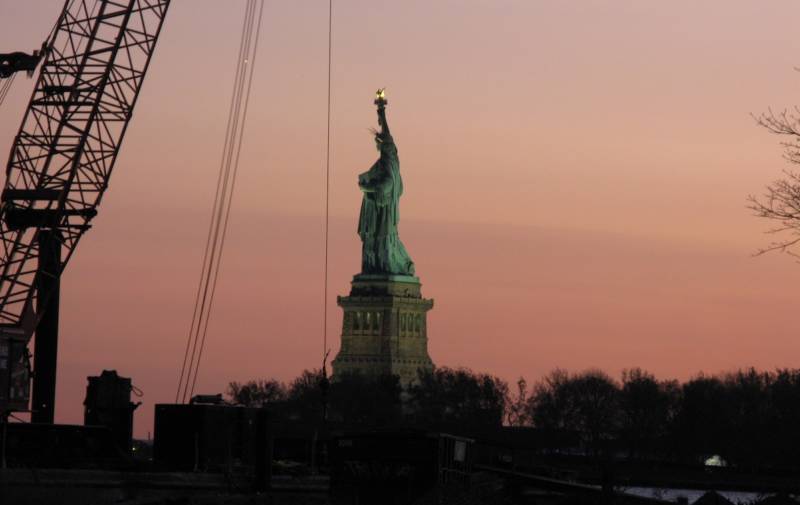
"caption": "The Statue of Liberty’s torch, relit for the first time a week after Hurricane Sandy. ",
"description": null,
"title": "StatueLightNight_NPS",
"credit": "National Park Service",
"status": "inherit",
"isLoading": false,
"fetchFailed": false
},
"science_759061": {
"type": "attachments",
"id": "science_759061",
"meta": {
"index": "attachments_1716263798",
"site": "science",
"id": "759061",
"found": true
},
"parent": 758960,
"imgSizes": {
"thumbnail": {
"file": "https://ww2.kqed.org/app/uploads/sites/35/2016/06/juno_at_jupiter-400x225.jpg",
"width": 400,
"mimeType": "image/jpeg",
"height": 225
},
"post-thumbnail": {
"file": "https://ww2.kqed.org/app/uploads/sites/35/2016/06/juno_at_jupiter-672x372.jpg",
"width": 672,
"mimeType": "image/jpeg",
"height": 372
},
"kqedFullSize": {
"file": "https://ww2.kqed.org/app/uploads/sites/35/2016/06/juno_at_jupiter.jpg",
"width": 800,
"height": 450
},
"guest-author-50": {
"file": "https://ww2.kqed.org/app/uploads/sites/35/2016/06/juno_at_jupiter-50x50.jpg",
"width": 50,
"mimeType": "image/jpeg",
"height": 50
},
"guest-author-96": {
"file": "https://ww2.kqed.org/app/uploads/sites/35/2016/06/juno_at_jupiter-96x96.jpg",
"width": 96,
"mimeType": "image/jpeg",
"height": 96
},
"medium": {
"file": "https://ww2.kqed.org/app/uploads/sites/35/2016/06/juno_at_jupiter-800x450.jpg",
"width": 800,
"mimeType": "image/jpeg",
"height": 450
},
"guest-author-64": {
"file": "https://ww2.kqed.org/app/uploads/sites/35/2016/06/juno_at_jupiter-64x64.jpg",
"width": 64,
"mimeType": "image/jpeg",
"height": 64
},
"detail": {
"file": "https://ww2.kqed.org/app/uploads/sites/35/2016/06/juno_at_jupiter-150x150.jpg",
"width": 150,
"mimeType": "image/jpeg",
"height": 150
},
"guest-author-32": {
"file": "https://ww2.kqed.org/app/uploads/sites/35/2016/06/juno_at_jupiter-32x32.jpg",
"width": 32,
"mimeType": "image/jpeg",
"height": 32
},
"medium_large": {
"file": "https://ww2.kqed.org/app/uploads/sites/35/2016/06/juno_at_jupiter-768x432.jpg",
"width": 768,
"mimeType": "image/jpeg",
"height": 432
},
"guest-author-128": {
"file": "https://ww2.kqed.org/app/uploads/sites/35/2016/06/juno_at_jupiter-128x128.jpg",
"width": 128,
"mimeType": "image/jpeg",
"height": 128
}
},
"publishDate": 1465407922,
"modified": 1465407974,
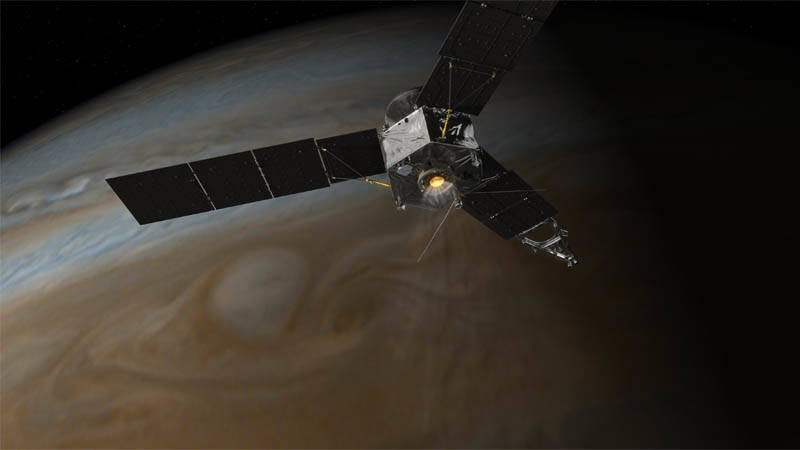
"caption": "Artist depiction of NASA's Juno spacecraft after it enters a close orbit around Jupiter on July 4th. ",
"description": "Artist depiction of NASA's Juno spacecraft after it enters a close orbit around Jupiter on July 4th. ",
"title": "juno_at_jupiter",
"credit": "Juno/NASA",
"status": "inherit",
"isLoading": false,
"fetchFailed": false
},
"science_814506": {
"type": "attachments",
"id": "science_814506",
"meta": {
"index": "attachments_1716263798",
"site": "science",
"id": "814506",
"found": true
},
"parent": 814503,
"imgSizes": {
"twentyfourteen-full-width": {
"file": "https://ww2.kqed.org/app/uploads/sites/35/2016/06/RS17823_GettyImages-492682162-qut-1038x576.jpg",
"width": 1038,
"mimeType": "image/jpeg",
"height": 576
},
"thumbnail": {
"file": "https://ww2.kqed.org/app/uploads/sites/35/2016/06/RS17823_GettyImages-492682162-qut-400x267.jpg",
"width": 400,
"mimeType": "image/jpeg",
"height": 267
},
"fd-sm": {
"file": "https://ww2.kqed.org/app/uploads/sites/35/2016/06/RS17823_GettyImages-492682162-qut-960x641.jpg",
"width": 960,
"mimeType": "image/jpeg",
"height": 641
},
"post-thumbnail": {
"file": "https://ww2.kqed.org/app/uploads/sites/35/2016/06/RS17823_GettyImages-492682162-qut-672x372.jpg",
"width": 672,
"mimeType": "image/jpeg",
"height": 372
},
"kqedFullSize": {
"file": "https://ww2.kqed.org/app/uploads/sites/35/2016/06/RS17823_GettyImages-492682162-qut.jpg",
"width": 1920,
"height": 1282
},
"large": {
"file": "https://ww2.kqed.org/app/uploads/sites/35/2016/06/RS17823_GettyImages-492682162-qut-1440x962.jpg",
"width": 1440,
"mimeType": "image/jpeg",
"height": 962
},
"guest-author-50": {
"file": "https://ww2.kqed.org/app/uploads/sites/35/2016/06/RS17823_GettyImages-492682162-qut-50x50.jpg",
"width": 50,
"mimeType": "image/jpeg",
"height": 50
},
"guest-author-96": {
"file": "https://ww2.kqed.org/app/uploads/sites/35/2016/06/RS17823_GettyImages-492682162-qut-96x96.jpg",
"width": 96,
"mimeType": "image/jpeg",
"height": 96
},
"medium": {
"file": "https://ww2.kqed.org/app/uploads/sites/35/2016/06/RS17823_GettyImages-492682162-qut-800x534.jpg",
"width": 800,
"mimeType": "image/jpeg",
"height": 534
},
"guest-author-64": {
"file": "https://ww2.kqed.org/app/uploads/sites/35/2016/06/RS17823_GettyImages-492682162-qut-64x64.jpg",
"width": 64,
"mimeType": "image/jpeg",
"height": 64
},
"guest-author-32": {
"file": "https://ww2.kqed.org/app/uploads/sites/35/2016/06/RS17823_GettyImages-492682162-qut-32x32.jpg",
"width": 32,
"mimeType": "image/jpeg",
"height": 32
},
"fd-lrg": {
"file": "https://ww2.kqed.org/app/uploads/sites/35/2016/06/RS17823_GettyImages-492682162-qut-1920x1282.jpg",
"width": 1920,
"mimeType": "image/jpeg",
"height": 1282
},
"fd-med": {
"file": "https://ww2.kqed.org/app/uploads/sites/35/2016/06/RS17823_GettyImages-492682162-qut-1180x788.jpg",
"width": 1180,
"mimeType": "image/jpeg",
"height": 788
},
"detail": {
"file": "https://ww2.kqed.org/app/uploads/sites/35/2016/06/RS17823_GettyImages-492682162-qut-150x150.jpg",
"width": 150,
"mimeType": "image/jpeg",
"height": 150
},
"medium_large": {
"file": "https://ww2.kqed.org/app/uploads/sites/35/2016/06/RS17823_GettyImages-492682162-qut-768x513.jpg",
"width": 768,
"mimeType": "image/jpeg",
"height": 513
},
"guest-author-128": {
"file": "https://ww2.kqed.org/app/uploads/sites/35/2016/06/RS17823_GettyImages-492682162-qut-128x128.jpg",
"width": 128,
"mimeType": "image/jpeg",
"height": 128
}
},
"publishDate": 1467323703,
"modified": 1467323728,
"caption": "A member of the media test drives a Tesla Motors Inc. Model S car equipped with Autopilot in Palo Alto.",
"description": null,
"title": "RS17823_GettyImages-492682162-qut",
"credit": "Bloomberg",
"status": "inherit",
"isLoading": false,
"fetchFailed": false
},
"science_814190": {
"type": "attachments",
"id": "science_814190",
"meta": {
"index": "attachments_1716263798",
"site": "science",
"id": "814190",
"found": true
},
"parent": 814087,
"imgSizes": {
"twentyfourteen-full-width": {
"file": "https://ww2.kqed.org/app/uploads/sites/35/2016/06/Ken-Lund_flickr-photo-1038x576.jpg",
"width": 1038,
"mimeType": "image/jpeg",
"height": 576
},
"thumbnail": {
"file": "https://ww2.kqed.org/app/uploads/sites/35/2016/06/Ken-Lund_flickr-photo-400x300.jpg",
"width": 400,
"mimeType": "image/jpeg",
"height": 300
},
"fd-sm": {
"file": "https://ww2.kqed.org/app/uploads/sites/35/2016/06/Ken-Lund_flickr-photo-960x720.jpg",
"width": 960,
"mimeType": "image/jpeg",
"height": 720
},
"post-thumbnail": {
"file": "https://ww2.kqed.org/app/uploads/sites/35/2016/06/Ken-Lund_flickr-photo-672x372.jpg",
"width": 672,
"mimeType": "image/jpeg",
"height": 372
},
"kqedFullSize": {
"file": "https://ww2.kqed.org/app/uploads/sites/35/2016/06/Ken-Lund_flickr-photo.jpg",
"width": 1280,
"height": 960
},
"guest-author-50": {
"file": "https://ww2.kqed.org/app/uploads/sites/35/2016/06/Ken-Lund_flickr-photo-50x50.jpg",
"width": 50,
"mimeType": "image/jpeg",
"height": 50
},
"guest-author-96": {
"file": "https://ww2.kqed.org/app/uploads/sites/35/2016/06/Ken-Lund_flickr-photo-96x96.jpg",
"width": 96,
"mimeType": "image/jpeg",
"height": 96
},
"medium": {
"file": "https://ww2.kqed.org/app/uploads/sites/35/2016/06/Ken-Lund_flickr-photo-800x600.jpg",
"width": 800,
"mimeType": "image/jpeg",
"height": 600
},
"guest-author-64": {
"file": "https://ww2.kqed.org/app/uploads/sites/35/2016/06/Ken-Lund_flickr-photo-64x64.jpg",
"width": 64,
"mimeType": "image/jpeg",
"height": 64
},
"guest-author-32": {
"file": "https://ww2.kqed.org/app/uploads/sites/35/2016/06/Ken-Lund_flickr-photo-32x32.jpg",
"width": 32,
"mimeType": "image/jpeg",
"height": 32
},
"fd-med": {
"file": "https://ww2.kqed.org/app/uploads/sites/35/2016/06/Ken-Lund_flickr-photo-1180x885.jpg",
"width": 1180,
"mimeType": "image/jpeg",
"height": 885
},
"detail": {
"file": "https://ww2.kqed.org/app/uploads/sites/35/2016/06/Ken-Lund_flickr-photo-150x150.jpg",
"width": 150,
"mimeType": "image/jpeg",
"height": 150
},
"medium_large": {
"file": "https://ww2.kqed.org/app/uploads/sites/35/2016/06/Ken-Lund_flickr-photo-768x576.jpg",
"width": 768,
"mimeType": "image/jpeg",
"height": 576
},
"guest-author-128": {
"file": "https://ww2.kqed.org/app/uploads/sites/35/2016/06/Ken-Lund_flickr-photo-128x128.jpg",
"width": 128,
"mimeType": "image/jpeg",
"height": 128
}
},
"publishDate": 1467311000,
"modified": 1467311191,
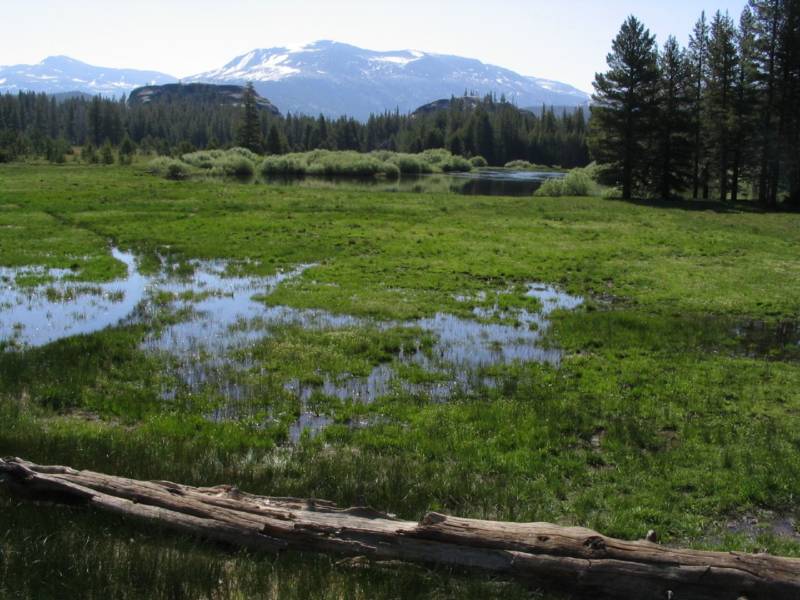
"caption": "Tuolumne Meadows in Yosemite National Park. ",
"description": null,
"title": "Ken Lund_flickr photo",
"credit": "Ken Lund/flickr",
"status": "inherit",
"isLoading": false,
"fetchFailed": false
},
"science_811710": {
"type": "attachments",
"id": "science_811710",
"meta": {
"index": "attachments_1716263798",
"site": "science",
"id": "811710",
"found": true
},
"parent": 811602,
"imgSizes": {
"twentyfourteen-full-width": {
"file": "https://ww2.kqed.org/app/uploads/sites/35/2016/06/CORAL_Still-1038x576.jpg",
"width": 1038,
"mimeType": "image/jpeg",
"height": 576
},
"thumbnail": {
"file": "https://ww2.kqed.org/app/uploads/sites/35/2016/06/CORAL_Still-400x225.jpg",
"width": 400,
"mimeType": "image/jpeg",
"height": 225
},
"fd-sm": {
"file": "https://ww2.kqed.org/app/uploads/sites/35/2016/06/CORAL_Still-960x540.jpg",
"width": 960,
"mimeType": "image/jpeg",
"height": 540
},
"post-thumbnail": {
"file": "https://ww2.kqed.org/app/uploads/sites/35/2016/06/CORAL_Still-672x372.jpg",
"width": 672,
"mimeType": "image/jpeg",
"height": 372
},
"kqedFullSize": {
"file": "https://ww2.kqed.org/app/uploads/sites/35/2016/06/CORAL_Still.jpg",
"width": 1920,
"height": 1080
},
"large": {
"file": "https://ww2.kqed.org/app/uploads/sites/35/2016/06/CORAL_Still-1440x810.jpg",
"width": 1440,
"mimeType": "image/jpeg",
"height": 810
},
"guest-author-50": {
"file": "https://ww2.kqed.org/app/uploads/sites/35/2016/06/CORAL_Still-50x50.jpg",
"width": 50,
"mimeType": "image/jpeg",
"height": 50
},
"guest-author-96": {
"file": "https://ww2.kqed.org/app/uploads/sites/35/2016/06/CORAL_Still-96x96.jpg",
"width": 96,
"mimeType": "image/jpeg",
"height": 96
},
"medium": {
"file": "https://ww2.kqed.org/app/uploads/sites/35/2016/06/CORAL_Still-800x450.jpg",
"width": 800,
"mimeType": "image/jpeg",
"height": 450
},
"guest-author-64": {
"file": "https://ww2.kqed.org/app/uploads/sites/35/2016/06/CORAL_Still-64x64.jpg",
"width": 64,
"mimeType": "image/jpeg",
"height": 64
},
"guest-author-32": {
"file": "https://ww2.kqed.org/app/uploads/sites/35/2016/06/CORAL_Still-32x32.jpg",
"width": 32,
"mimeType": "image/jpeg",
"height": 32
},
"fd-lrg": {
"file": "https://ww2.kqed.org/app/uploads/sites/35/2016/06/CORAL_Still-1920x1080.jpg",
"width": 1920,
"mimeType": "image/jpeg",
"height": 1080
},
"fd-med": {
"file": "https://ww2.kqed.org/app/uploads/sites/35/2016/06/CORAL_Still-1180x664.jpg",
"width": 1180,
"mimeType": "image/jpeg",
"height": 664
},
"detail": {
"file": "https://ww2.kqed.org/app/uploads/sites/35/2016/06/CORAL_Still-150x150.jpg",
"width": 150,
"mimeType": "image/jpeg",
"height": 150
},
"medium_large": {
"file": "https://ww2.kqed.org/app/uploads/sites/35/2016/06/CORAL_Still-768x432.jpg",
"width": 768,
"mimeType": "image/jpeg",
"height": 432
},
"guest-author-128": {
"file": "https://ww2.kqed.org/app/uploads/sites/35/2016/06/CORAL_Still-128x128.jpg",
"width": 128,
"mimeType": "image/jpeg",
"height": 128
}
},
"publishDate": 1467230495,
"modified": 1467230532,
"caption": null,
"description": null,
"title": "CORAL_Still",
"credit": "California Academy of Sciences",
"status": "inherit",
"isLoading": false,
"fetchFailed": false
},
"science_809382": {
"type": "attachments",
"id": "science_809382",
"meta": {
"index": "attachments_1716263798",
"site": "science",
"id": "809382",
"found": true
},
"parent": 808929,
"imgSizes": {
"twentyfourteen-full-width": {
"file": "https://ww2.kqed.org/app/uploads/sites/35/2016/06/13065124275_a371b12191_k-1038x576.jpg",
"width": 1038,
"mimeType": "image/jpeg",
"height": 576
},
"thumbnail": {
"file": "https://ww2.kqed.org/app/uploads/sites/35/2016/06/13065124275_a371b12191_k-400x265.jpg",
"width": 400,
"mimeType": "image/jpeg",
"height": 265
},
"fd-sm": {
"file": "https://ww2.kqed.org/app/uploads/sites/35/2016/06/13065124275_a371b12191_k-960x636.jpg",
"width": 960,
"mimeType": "image/jpeg",
"height": 636
},
"post-thumbnail": {
"file": "https://ww2.kqed.org/app/uploads/sites/35/2016/06/13065124275_a371b12191_k-672x372.jpg",
"width": 672,
"mimeType": "image/jpeg",
"height": 372
},
"kqedFullSize": {
"file": "https://ww2.kqed.org/app/uploads/sites/35/2016/06/13065124275_a371b12191_k.jpg",
"width": 2048,
"height": 1356
},
"large": {
"file": "https://ww2.kqed.org/app/uploads/sites/35/2016/06/13065124275_a371b12191_k-1440x953.jpg",
"width": 1440,
"mimeType": "image/jpeg",
"height": 953
},
"guest-author-50": {
"file": "https://ww2.kqed.org/app/uploads/sites/35/2016/06/13065124275_a371b12191_k-50x50.jpg",
"width": 50,
"mimeType": "image/jpeg",
"height": 50
},
"guest-author-96": {
"file": "https://ww2.kqed.org/app/uploads/sites/35/2016/06/13065124275_a371b12191_k-96x96.jpg",
"width": 96,
"mimeType": "image/jpeg",
"height": 96
},
"medium": {
"file": "https://ww2.kqed.org/app/uploads/sites/35/2016/06/13065124275_a371b12191_k-800x530.jpg",
"width": 800,
"mimeType": "image/jpeg",
"height": 530
},
"guest-author-64": {
"file": "https://ww2.kqed.org/app/uploads/sites/35/2016/06/13065124275_a371b12191_k-64x64.jpg",
"width": 64,
"mimeType": "image/jpeg",
"height": 64
},
"guest-author-32": {
"file": "https://ww2.kqed.org/app/uploads/sites/35/2016/06/13065124275_a371b12191_k-32x32.jpg",
"width": 32,
"mimeType": "image/jpeg",
"height": 32
},
"fd-lrg": {
"file": "https://ww2.kqed.org/app/uploads/sites/35/2016/06/13065124275_a371b12191_k-1920x1271.jpg",
"width": 1920,
"mimeType": "image/jpeg",
"height": 1271
},
"fd-med": {
"file": "https://ww2.kqed.org/app/uploads/sites/35/2016/06/13065124275_a371b12191_k-1180x781.jpg",
"width": 1180,
"mimeType": "image/jpeg",
"height": 781
},
"detail": {
"file": "https://ww2.kqed.org/app/uploads/sites/35/2016/06/13065124275_a371b12191_k-150x150.jpg",
"width": 150,
"mimeType": "image/jpeg",
"height": 150
},
"medium_large": {
"file": "https://ww2.kqed.org/app/uploads/sites/35/2016/06/13065124275_a371b12191_k-768x509.jpg",
"width": 768,
"mimeType": "image/jpeg",
"height": 509
},
"guest-author-128": {
"file": "https://ww2.kqed.org/app/uploads/sites/35/2016/06/13065124275_a371b12191_k-128x128.jpg",
"width": 128,
"mimeType": "image/jpeg",
"height": 128
}
},
"publishDate": 1467152682,
"modified": 1467220074,
"caption": "The study follows a previous report by the same author discussing children's exposure to BPA via school meals that often come from cans and other packaging.",
"description": null,
"title": "13065124275_a371b12191_k",
"credit": "\u003ca href=\"https://www.flickr.com/photos/usdagov/13065124275/in/photostream/\">Lance Cheung/USDA\u003c/a>",
"status": "inherit",
"isLoading": false,
"fetchFailed": false
},
"science_811378": {
"type": "attachments",
"id": "science_811378",
"meta": {
"index": "attachments_1716263798",
"site": "science",
"id": "811378",
"found": true
},
"parent": 811377,
"imgSizes": {
"twentyfourteen-full-width": {
"file": "https://ww2.kqed.org/app/uploads/sites/35/2016/06/jet_custom-fe81b85ebe34b08a08f072e102abc51fc2766ebf-1-1038x576.jpg",
"width": 1038,
"mimeType": "image/jpeg",
"height": 576
},
"thumbnail": {
"file": "https://ww2.kqed.org/app/uploads/sites/35/2016/06/jet_custom-fe81b85ebe34b08a08f072e102abc51fc2766ebf-1-400x272.jpg",
"width": 400,
"mimeType": "image/jpeg",
"height": 272
},
"fd-sm": {
"file": "https://ww2.kqed.org/app/uploads/sites/35/2016/06/jet_custom-fe81b85ebe34b08a08f072e102abc51fc2766ebf-1-960x652.jpg",
"width": 960,
"mimeType": "image/jpeg",
"height": 652
},
"post-thumbnail": {
"file": "https://ww2.kqed.org/app/uploads/sites/35/2016/06/jet_custom-fe81b85ebe34b08a08f072e102abc51fc2766ebf-1-672x372.jpg",
"width": 672,
"mimeType": "image/jpeg",
"height": 372
},
"kqedFullSize": {
"file": "https://ww2.kqed.org/app/uploads/sites/35/2016/06/jet_custom-fe81b85ebe34b08a08f072e102abc51fc2766ebf-1.jpg",
"width": 1241,
"height": 843
},
"guest-author-50": {
"file": "https://ww2.kqed.org/app/uploads/sites/35/2016/06/jet_custom-fe81b85ebe34b08a08f072e102abc51fc2766ebf-1-50x50.jpg",
"width": 50,
"mimeType": "image/jpeg",
"height": 50
},
"guest-author-96": {
"file": "https://ww2.kqed.org/app/uploads/sites/35/2016/06/jet_custom-fe81b85ebe34b08a08f072e102abc51fc2766ebf-1-96x96.jpg",
"width": 96,
"mimeType": "image/jpeg",
"height": 96
},
"medium": {
"file": "https://ww2.kqed.org/app/uploads/sites/35/2016/06/jet_custom-fe81b85ebe34b08a08f072e102abc51fc2766ebf-1-800x543.jpg",
"width": 800,
"mimeType": "image/jpeg",
"height": 543
},
"guest-author-64": {
"file": "https://ww2.kqed.org/app/uploads/sites/35/2016/06/jet_custom-fe81b85ebe34b08a08f072e102abc51fc2766ebf-1-64x64.jpg",
"width": 64,
"mimeType": "image/jpeg",
"height": 64
},
"guest-author-32": {
"file": "https://ww2.kqed.org/app/uploads/sites/35/2016/06/jet_custom-fe81b85ebe34b08a08f072e102abc51fc2766ebf-1-32x32.jpg",
"width": 32,
"mimeType": "image/jpeg",
"height": 32
},
"fd-med": {
"file": "https://ww2.kqed.org/app/uploads/sites/35/2016/06/jet_custom-fe81b85ebe34b08a08f072e102abc51fc2766ebf-1-1180x802.jpg",
"width": 1180,
"mimeType": "image/jpeg",
"height": 802
},
"detail": {
"file": "https://ww2.kqed.org/app/uploads/sites/35/2016/06/jet_custom-fe81b85ebe34b08a08f072e102abc51fc2766ebf-1-150x150.jpg",
"width": 150,
"mimeType": "image/jpeg",
"height": 150
},
"medium_large": {
"file": "https://ww2.kqed.org/app/uploads/sites/35/2016/06/jet_custom-fe81b85ebe34b08a08f072e102abc51fc2766ebf-1-768x522.jpg",
"width": 768,
"mimeType": "image/jpeg",
"height": 522
},
"guest-author-128": {
"file": "https://ww2.kqed.org/app/uploads/sites/35/2016/06/jet_custom-fe81b85ebe34b08a08f072e102abc51fc2766ebf-1-128x128.jpg",
"width": 128,
"mimeType": "image/jpeg",
"height": 128
}
},
"publishDate": 1467219001,
"modified": 1467219449,
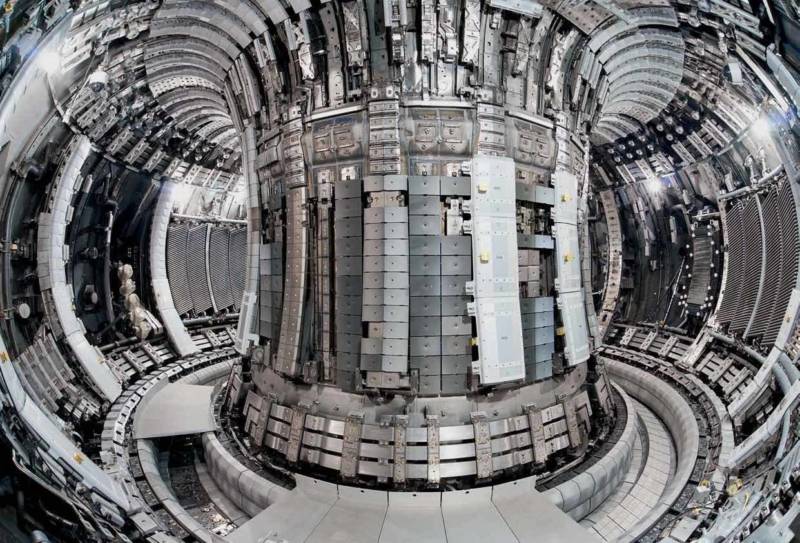
"caption": "The Joint European Torus, a European fusion project in the U.K., gets most of its funding from the EU. Brexit may change that, and the even larger ITER fusion project.",
"description": null,
"title": "The Joint European Torus, a European fusion project in the U.K., gets most of its funding from the EU. Brexit may change that, and the even larger ITER fusion project.",
"credit": "EUROfusion",
"status": "inherit",
"isLoading": false,
"fetchFailed": false
},
"science_806526": {
"type": "attachments",
"id": "science_806526",
"meta": {
"index": "attachments_1716263798",
"site": "science",
"id": "806526",
"found": true
},
"parent": 806524,
"imgSizes": {
"thumbnail": {
"file": "https://ww2.kqed.org/app/uploads/sites/35/2016/06/CC_Central_Valley_map-400x266.jpg",
"width": 400,
"mimeType": "image/jpeg",
"height": 266
},
"post-thumbnail": {
"file": "https://ww2.kqed.org/app/uploads/sites/35/2016/06/CC_Central_Valley_map-672x372.jpg",
"width": 672,
"mimeType": "image/jpeg",
"height": 372
},
"kqedFullSize": {
"file": "https://ww2.kqed.org/app/uploads/sites/35/2016/06/CC_Central_Valley_map.jpg",
"width": 720,
"height": 479
},
"guest-author-50": {
"file": "https://ww2.kqed.org/app/uploads/sites/35/2016/06/CC_Central_Valley_map-50x50.jpg",
"width": 50,
"mimeType": "image/jpeg",
"height": 50
},
"guest-author-96": {
"file": "https://ww2.kqed.org/app/uploads/sites/35/2016/06/CC_Central_Valley_map-96x96.jpg",
"width": 96,
"mimeType": "image/jpeg",
"height": 96
},
"guest-author-64": {
"file": "https://ww2.kqed.org/app/uploads/sites/35/2016/06/CC_Central_Valley_map-64x64.jpg",
"width": 64,
"mimeType": "image/jpeg",
"height": 64
},
"detail": {
"file": "https://ww2.kqed.org/app/uploads/sites/35/2016/06/CC_Central_Valley_map-150x150.jpg",
"width": 150,
"mimeType": "image/jpeg",
"height": 150
},
"guest-author-32": {
"file": "https://ww2.kqed.org/app/uploads/sites/35/2016/06/CC_Central_Valley_map-32x32.jpg",
"width": 32,
"mimeType": "image/jpeg",
"height": 32
},
"guest-author-128": {
"file": "https://ww2.kqed.org/app/uploads/sites/35/2016/06/CC_Central_Valley_map-128x128.jpg",
"width": 128,
"mimeType": "image/jpeg",
"height": 128
}
},
"publishDate": 1467056773,
"modified": 1467056805,
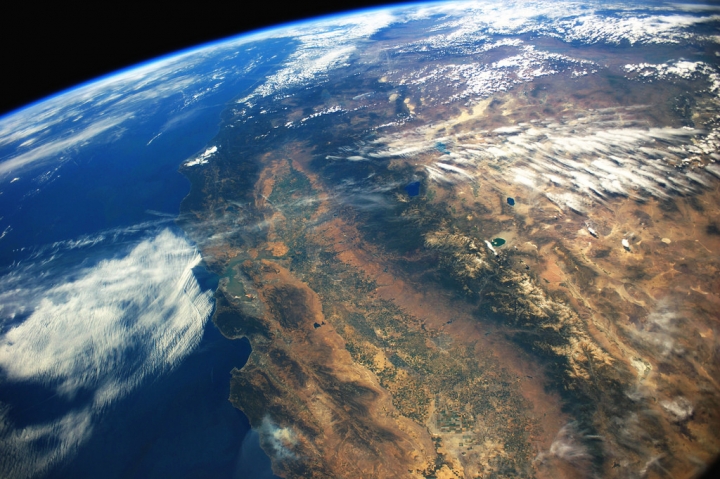
"caption": "California's parched Central Valley in 2014.\n",
"description": null,
"title": "CC_Central_Valley_map",
"credit": "Stuart Rankin/NASA/flickr",
"status": "inherit",
"isLoading": false,
"fetchFailed": false
},
"science_801697": {
"type": "attachments",
"id": "science_801697",
"meta": {
"index": "attachments_1716263798",
"site": "science",
"id": "801697",
"found": true
},
"parent": 801694,
"imgSizes": {
"twentyfourteen-full-width": {
"file": "https://ww2.kqed.org/app/uploads/sites/35/2016/06/Diablo-plant-1038x576.jpg",
"width": 1038,
"mimeType": "image/jpeg",
"height": 576
},
"thumbnail": {
"file": "https://ww2.kqed.org/app/uploads/sites/35/2016/06/Diablo-plant-400x207.jpg",
"width": 400,
"mimeType": "image/jpeg",
"height": 207
},
"fd-sm": {
"file": "https://ww2.kqed.org/app/uploads/sites/35/2016/06/Diablo-plant-960x497.jpg",
"width": 960,
"mimeType": "image/jpeg",
"height": 497
},
"post-thumbnail": {
"file": "https://ww2.kqed.org/app/uploads/sites/35/2016/06/Diablo-plant-672x372.jpg",
"width": 672,
"mimeType": "image/jpeg",
"height": 372
},
"kqedFullSize": {
"file": "https://ww2.kqed.org/app/uploads/sites/35/2016/06/Diablo-plant.jpg",
"width": 1920,
"height": 993
},
"large": {
"file": "https://ww2.kqed.org/app/uploads/sites/35/2016/06/Diablo-plant-1440x745.jpg",
"width": 1440,
"mimeType": "image/jpeg",
"height": 745
},
"guest-author-50": {
"file": "https://ww2.kqed.org/app/uploads/sites/35/2016/06/Diablo-plant-50x50.jpg",
"width": 50,
"mimeType": "image/jpeg",
"height": 50
},
"guest-author-96": {
"file": "https://ww2.kqed.org/app/uploads/sites/35/2016/06/Diablo-plant-96x96.jpg",
"width": 96,
"mimeType": "image/jpeg",
"height": 96
},
"medium": {
"file": "https://ww2.kqed.org/app/uploads/sites/35/2016/06/Diablo-plant-800x414.jpg",
"width": 800,
"mimeType": "image/jpeg",
"height": 414
},
"guest-author-64": {
"file": "https://ww2.kqed.org/app/uploads/sites/35/2016/06/Diablo-plant-64x64.jpg",
"width": 64,
"mimeType": "image/jpeg",
"height": 64
},
"guest-author-32": {
"file": "https://ww2.kqed.org/app/uploads/sites/35/2016/06/Diablo-plant-32x32.jpg",
"width": 32,
"mimeType": "image/jpeg",
"height": 32
},
"fd-lrg": {
"file": "https://ww2.kqed.org/app/uploads/sites/35/2016/06/Diablo-plant-1920x993.jpg",
"width": 1920,
"mimeType": "image/jpeg",
"height": 993
},
"fd-med": {
"file": "https://ww2.kqed.org/app/uploads/sites/35/2016/06/Diablo-plant-1180x610.jpg",
"width": 1180,
"mimeType": "image/jpeg",
"height": 610
},
"detail": {
"file": "https://ww2.kqed.org/app/uploads/sites/35/2016/06/Diablo-plant-150x150.jpg",
"width": 150,
"mimeType": "image/jpeg",
"height": 150
},
"medium_large": {
"file": "https://ww2.kqed.org/app/uploads/sites/35/2016/06/Diablo-plant-768x397.jpg",
"width": 768,
"mimeType": "image/jpeg",
"height": 397
},
"guest-author-128": {
"file": "https://ww2.kqed.org/app/uploads/sites/35/2016/06/Diablo-plant-128x128.jpg",
"width": 128,
"mimeType": "image/jpeg",
"height": 128
}
},
"publishDate": 1466888390,
"modified": 1466888431,
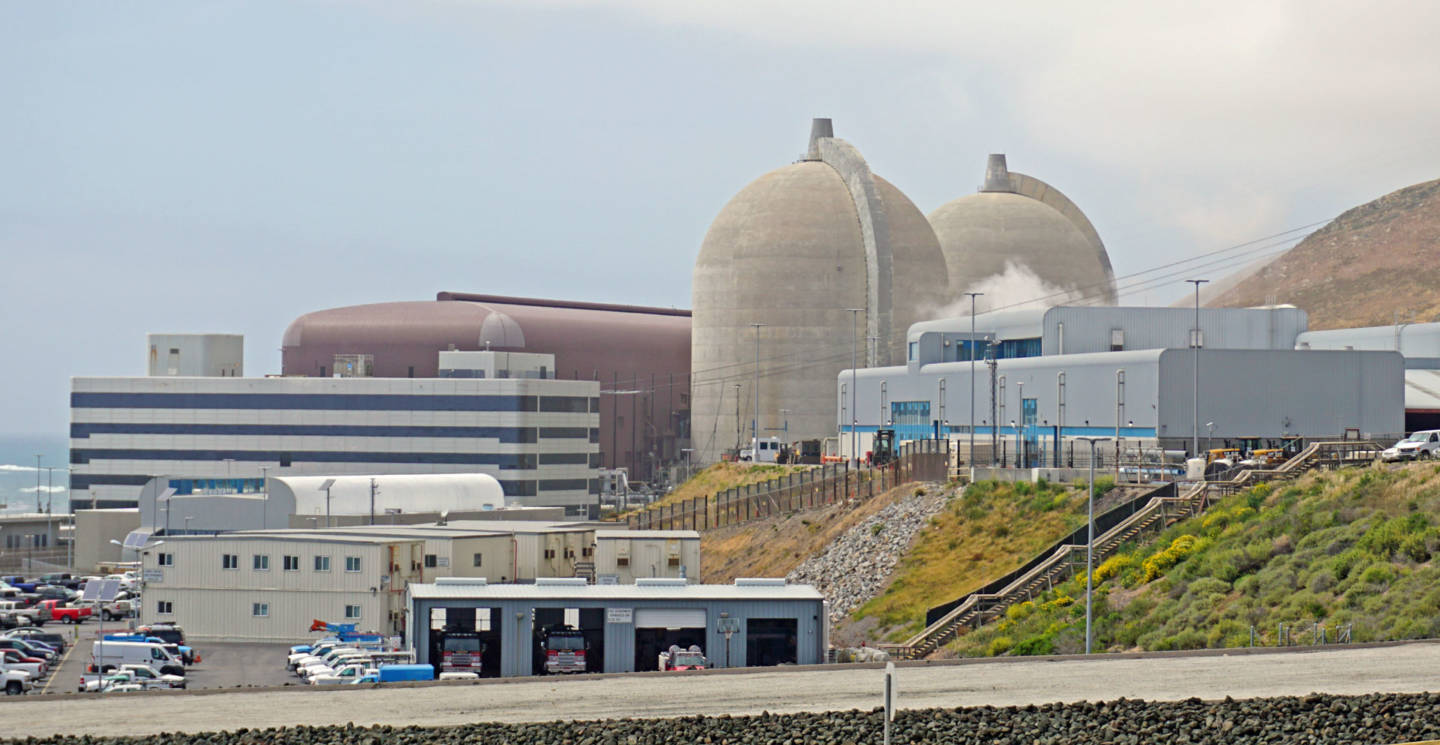
"caption": "PG&E says it will close Diablo Canyon's two nuclear reactors in 2024 and 2025.",
"description": null,
"title": "Diablo-plant",
"credit": "Lauren Sommer/KQED",
"status": "inherit",
"isLoading": false,
"fetchFailed": false
},
"science_791543": {
"type": "attachments",
"id": "science_791543",
"meta": {
"index": "attachments_1716263798",
"site": "science",
"id": "791543",
"found": true
},
"parent": 791538,
"imgSizes": {
"thumbnail": {
"file": "https://ww2.kqed.org/app/uploads/sites/35/2016/06/55cancri-e-400x225.jpg",
"width": 400,
"mimeType": "image/jpeg",
"height": 225
},
"post-thumbnail": {
"file": "https://ww2.kqed.org/app/uploads/sites/35/2016/06/55cancri-e-672x372.jpg",
"width": 672,
"mimeType": "image/jpeg",
"height": 372
},
"kqedFullSize": {
"file": "https://ww2.kqed.org/app/uploads/sites/35/2016/06/55cancri-e.jpg",
"width": 800,
"height": 450
},
"guest-author-50": {
"file": "https://ww2.kqed.org/app/uploads/sites/35/2016/06/55cancri-e-50x50.jpg",
"width": 50,
"mimeType": "image/jpeg",
"height": 50
},
"guest-author-96": {
"file": "https://ww2.kqed.org/app/uploads/sites/35/2016/06/55cancri-e-96x96.jpg",
"width": 96,
"mimeType": "image/jpeg",
"height": 96
},
"medium": {
"file": "https://ww2.kqed.org/app/uploads/sites/35/2016/06/55cancri-e-800x450.jpg",
"width": 800,
"mimeType": "image/jpeg",
"height": 450
},
"guest-author-64": {
"file": "https://ww2.kqed.org/app/uploads/sites/35/2016/06/55cancri-e-64x64.jpg",
"width": 64,
"mimeType": "image/jpeg",
"height": 64
},
"detail": {
"file": "https://ww2.kqed.org/app/uploads/sites/35/2016/06/55cancri-e-150x150.jpg",
"width": 150,
"mimeType": "image/jpeg",
"height": 150
},
"guest-author-32": {
"file": "https://ww2.kqed.org/app/uploads/sites/35/2016/06/55cancri-e-32x32.jpg",
"width": 32,
"mimeType": "image/jpeg",
"height": 32
},
"medium_large": {
"file": "https://ww2.kqed.org/app/uploads/sites/35/2016/06/55cancri-e-768x432.jpg",
"width": 768,
"mimeType": "image/jpeg",
"height": 432
},
"guest-author-128": {
"file": "https://ww2.kqed.org/app/uploads/sites/35/2016/06/55cancri-e-128x128.jpg",
"width": 128,
"mimeType": "image/jpeg",
"height": 128
}
},
"publishDate": 1466545782,
"modified": 1466545841,
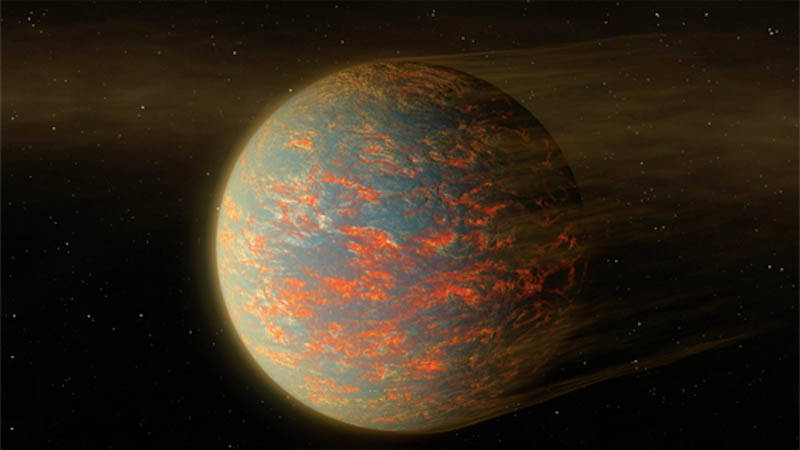
"caption": "Artist concept of the super-Earth exoplanet 55 Cancri e, which may be a world of molten lava seas. ",
"description": "Artist concept of the super-Earth exoplanet 55 Cancri e, which may be a world of molten lava seas. ",
"title": "55cancri-e",
"credit": "JPL-CalTech/NASA",
"status": "inherit",
"isLoading": false,
"fetchFailed": false
},
"science_796388": {
"type": "attachments",
"id": "science_796388",
"meta": {
"index": "attachments_1716263798",
"site": "science",
"id": "796388",
"found": true
},
"parent": 796281,
"imgSizes": {
"twentyfourteen-full-width": {
"file": "https://ww2.kqed.org/app/uploads/sites/35/2016/06/3540482311_1ef187d240_o-1024x576.jpg",
"width": 1024,
"mimeType": "image/jpeg",
"height": 576
},
"thumbnail": {
"file": "https://ww2.kqed.org/app/uploads/sites/35/2016/06/3540482311_1ef187d240_o-400x268.jpg",
"width": 400,
"mimeType": "image/jpeg",
"height": 268
},
"fd-sm": {
"file": "https://ww2.kqed.org/app/uploads/sites/35/2016/06/3540482311_1ef187d240_o-960x642.jpg",
"width": 960,
"mimeType": "image/jpeg",
"height": 642
},
"post-thumbnail": {
"file": "https://ww2.kqed.org/app/uploads/sites/35/2016/06/3540482311_1ef187d240_o-672x372.jpg",
"width": 672,
"mimeType": "image/jpeg",
"height": 372
},
"kqedFullSize": {
"file": "https://ww2.kqed.org/app/uploads/sites/35/2016/06/3540482311_1ef187d240_o.jpg",
"width": 1024,
"height": 685
},
"guest-author-50": {
"file": "https://ww2.kqed.org/app/uploads/sites/35/2016/06/3540482311_1ef187d240_o-50x50.jpg",
"width": 50,
"mimeType": "image/jpeg",
"height": 50
},
"guest-author-96": {
"file": "https://ww2.kqed.org/app/uploads/sites/35/2016/06/3540482311_1ef187d240_o-96x96.jpg",
"width": 96,
"mimeType": "image/jpeg",
"height": 96
},
"medium": {
"file": "https://ww2.kqed.org/app/uploads/sites/35/2016/06/3540482311_1ef187d240_o-800x535.jpg",
"width": 800,
"mimeType": "image/jpeg",
"height": 535
},
"guest-author-64": {
"file": "https://ww2.kqed.org/app/uploads/sites/35/2016/06/3540482311_1ef187d240_o-64x64.jpg",
"width": 64,
"mimeType": "image/jpeg",
"height": 64
},
"guest-author-32": {
"file": "https://ww2.kqed.org/app/uploads/sites/35/2016/06/3540482311_1ef187d240_o-32x32.jpg",
"width": 32,
"mimeType": "image/jpeg",
"height": 32
},
"detail": {
"file": "https://ww2.kqed.org/app/uploads/sites/35/2016/06/3540482311_1ef187d240_o-150x150.jpg",
"width": 150,
"mimeType": "image/jpeg",
"height": 150
},
"medium_large": {
"file": "https://ww2.kqed.org/app/uploads/sites/35/2016/06/3540482311_1ef187d240_o-768x514.jpg",
"width": 768,
"mimeType": "image/jpeg",
"height": 514
},
"guest-author-128": {
"file": "https://ww2.kqed.org/app/uploads/sites/35/2016/06/3540482311_1ef187d240_o-128x128.jpg",
"width": 128,
"mimeType": "image/jpeg",
"height": 128
}
},
"publishDate": 1466705820,
"modified": 1466706143,
"caption": "After a century of fire suppression, overgrown forests have encroached on Sierra meadows, harming their function as natural sponges that absorb and filter storm runoff.",
"description": null,
"title": "DSC_0030_2",
"credit": "Jason Goecke/flickr",
"status": "inherit",
"isLoading": false,
"fetchFailed": false
},
"science_796277": {
"type": "attachments",
"id": "science_796277",
"meta": {
"index": "attachments_1716263798",
"site": "science",
"id": "796277",
"found": true
},
"parent": 796263,
"imgSizes": {
"thumbnail": {
"file": "https://ww2.kqed.org/app/uploads/sites/35/2016/06/NPR_running-pic-400x266.jpg",
"width": 400,
"mimeType": "image/jpeg",
"height": 266
},
"post-thumbnail": {
"file": "https://ww2.kqed.org/app/uploads/sites/35/2016/06/NPR_running-pic-672x372.jpg",
"width": 672,
"mimeType": "image/jpeg",
"height": 372
},
"kqedFullSize": {
"file": "https://ww2.kqed.org/app/uploads/sites/35/2016/06/NPR_running-pic.jpg",
"width": 800,
"height": 532
},
"guest-author-50": {
"file": "https://ww2.kqed.org/app/uploads/sites/35/2016/06/NPR_running-pic-50x50.jpg",
"width": 50,
"mimeType": "image/jpeg",
"height": 50
},
"guest-author-96": {
"file": "https://ww2.kqed.org/app/uploads/sites/35/2016/06/NPR_running-pic-96x96.jpg",
"width": 96,
"mimeType": "image/jpeg",
"height": 96
},
"medium": {
"file": "https://ww2.kqed.org/app/uploads/sites/35/2016/06/NPR_running-pic-800x532.jpg",
"width": 800,
"mimeType": "image/jpeg",
"height": 532
},
"guest-author-64": {
"file": "https://ww2.kqed.org/app/uploads/sites/35/2016/06/NPR_running-pic-64x64.jpg",
"width": 64,
"mimeType": "image/jpeg",
"height": 64
},
"detail": {
"file": "https://ww2.kqed.org/app/uploads/sites/35/2016/06/NPR_running-pic-150x150.jpg",
"width": 150,
"mimeType": "image/jpeg",
"height": 150
},
"guest-author-32": {
"file": "https://ww2.kqed.org/app/uploads/sites/35/2016/06/NPR_running-pic-32x32.jpg",
"width": 32,
"mimeType": "image/jpeg",
"height": 32
},
"medium_large": {
"file": "https://ww2.kqed.org/app/uploads/sites/35/2016/06/NPR_running-pic-768x511.jpg",
"width": 768,
"mimeType": "image/jpeg",
"height": 511
},
"guest-author-128": {
"file": "https://ww2.kqed.org/app/uploads/sites/35/2016/06/NPR_running-pic-128x128.jpg",
"width": 128,
"mimeType": "image/jpeg",
"height": 128
}
},
"publishDate": 1466705105,
"modified": 1466705123,
"caption": "Researchers have long known that exercise is good for the brain. An enzyme produced by muscles might help explain why.\n",
"description": null,
"title": "NPR_running pic",
"credit": "Monalyn Gracia/Corbis/VCG/Getty Images",
"status": "inherit",
"isLoading": false,
"fetchFailed": false
}
},
"audioPlayerReducer": {
"postId": "stream_live",
"isPaused": true,
"isPlaying": false,
"pfsActive": false,
"pledgeModalIsOpen": true,
"playerDrawerIsOpen": false,
"liveAudioPlayStartedAt": 0,
"liveAudioPlayContext": ""
},
"authorsReducer": {
"byline_science_816747": {
"type": "authors",
"id": "byline_science_816747",
"meta": {
"override": true
},
"slug": "byline_science_816747",
"name": "Brian Kahn\u003c/br>Climate Central",
"isLoading": false
},
"byline_science_814503": {
"type": "authors",
"id": "byline_science_814503",
"meta": {
"override": true
},
"slug": "byline_science_814503",
"name": "Tom Krisher\u003c/br>Associated Press",
"isLoading": false
},
"byline_science_814087": {
"type": "authors",
"id": "byline_science_814087",
"meta": {
"override": true
},
"slug": "byline_science_814087",
"name": "Tara Lohan\u003c/br>Water Deeply",
"isLoading": false
},
"byline_science_811602": {
"type": "authors",
"id": "byline_science_811602",
"meta": {
"override": true
},
"slug": "byline_science_811602",
"name": "Biographic",
"isLoading": false
},
"byline_science_811377": {
"type": "authors",
"id": "byline_science_811377",
"meta": {
"override": true
},
"slug": "byline_science_811377",
"name": "Geoff Brumfiel\u003c/br>NPR",
"isLoading": false
},
"byline_science_806524": {
"type": "authors",
"id": "byline_science_806524",
"meta": {
"override": true
},
"slug": "byline_science_806524",
"name": "Bobby Magill\u003c/br>Climate Central",
"isLoading": false
},
"byline_science_796281": {
"type": "authors",
"id": "byline_science_796281",
"meta": {
"override": true
},
"slug": "byline_science_796281",
"name": "Matt Weiser\u003c/br>Water Deeply",
"isLoading": false
},
"byline_science_796263": {
"type": "authors",
"id": "byline_science_796263",
"meta": {
"override": true
},
"slug": "byline_science_796263",
"name": "Jon Hamilton\u003c/br>NPR",
"isLoading": false
},
"laurensommer": {
"type": "authors",
"id": "239",
"meta": {
"index": "authors_1716337520",
"id": "239",
"found": true
},
"name": "Lauren Sommer",
"firstName": "Lauren",
"lastName": "Sommer",
"slug": "laurensommer",
"email": "lsommer@kqed.org",
"display_author_email": false,
"staff_mastheads": [],
"title": "KQED Contributor",
"bio": "Lauren is a radio reporter formerly covering environment, water, and energy for KQED Science. As part of her day job, she has scaled Sierra Nevada peaks, run from charging elephant seals, and desperately tried to get her sea legs - all in pursuit of good radio. Her work has appeared on Marketplace, Living on Earth, Science Friday and NPR's Morning Edition and All Things Considered. You can find her on Twitter at \u003ca href=\"https://twitter.com/lesommer\">@lesommer\u003c/a>.",
"avatar": "https://secure.gravatar.com/avatar/33aa3772bb86c6ad45b8aca6a238bbdf?s=600&d=blank&r=g",
"twitter": null,
"facebook": null,
"instagram": null,
"linkedin": null,
"sites": [
{
"site": "news",
"roles": [
"author"
]
},
{
"site": "science",
"roles": [
"editor",
"manage_content_types",
"manage_taxonomies"
]
},
{
"site": "quest",
"roles": [
"editor"
]
}
],
"headData": {
"title": "Lauren Sommer | KQED",
"description": "KQED Contributor",
"ogImgSrc": "https://secure.gravatar.com/avatar/33aa3772bb86c6ad45b8aca6a238bbdf?s=600&d=blank&r=g",
"twImgSrc": "https://secure.gravatar.com/avatar/33aa3772bb86c6ad45b8aca6a238bbdf?s=600&d=blank&r=g"
},
"isLoading": false,
"link": "/author/laurensommer"
},
"lindseyhoshaw": {
"type": "authors",
"id": "5432",
"meta": {
"index": "authors_1716337520",
"id": "5432",
"found": true
},
"name": "Lindsey Hoshaw",
"firstName": "Lindsey",
"lastName": "Hoshaw",
"slug": "lindseyhoshaw",
"email": "lhoshaw@kqed.org",
"display_author_email": false,
"staff_mastheads": [],
"title": "KQED Contributor",
"bio": "Lindsey Hoshaw is a former interactive producer for KQED Science. Before joining KQED, Lindsey was a science correspondent for The New York Times, The Boston Globe, Forbes and Scientific American. On Twitter @lindseyhoshaw",
"avatar": "https://secure.gravatar.com/avatar/274b07694c998eaa8f26cfabaa941186?s=600&d=mm&r=g",
"twitter": "lindseyhoshaw",
"facebook": "lindsey.hoshaw.9",
"instagram": null,
"linkedin": null,
"sites": [
{
"site": "arts",
"roles": [
"author"
]
},
{
"site": "news",
"roles": [
"subscriber"
]
},
{
"site": "futureofyou",
"roles": [
"editor"
]
},
{
"site": "bayareabites",
"roles": [
"contributor"
]
},
{
"site": "stateofhealth",
"roles": [
"author"
]
},
{
"site": "science",
"roles": [
"edit_theme_options",
"subscriber"
]
},
{
"site": "quest",
"roles": [
"edit_post_subscriptions",
"edit_usergroups",
"unfiltered_html",
"unfiltered_upload",
"leadcoordinator",
"editor"
]
},
{
"site": "food",
"roles": []
}
],
"headData": {
"title": "Lindsey Hoshaw | KQED",
"description": "KQED Contributor",
"ogImgSrc": "https://secure.gravatar.com/avatar/274b07694c998eaa8f26cfabaa941186?s=600&d=mm&r=g",
"twImgSrc": "https://secure.gravatar.com/avatar/274b07694c998eaa8f26cfabaa941186?s=600&d=mm&r=g"
},
"isLoading": false,
"link": "/author/lindseyhoshaw"
},
"ben-burress": {
"type": "authors",
"id": "6180",
"meta": {
"index": "authors_1716337520",
"id": "6180",
"found": true
},
"name": "Ben Burress",
"firstName": "Ben",
"lastName": "Burress",
"slug": "ben-burress",
"email": "bburress@chabotspace.org",
"display_author_email": false,
"staff_mastheads": [],
"title": null,
"bio": "\u003cstrong>Benjamin Burress\u003c/strong> has been a staff astronomer at Chabot Space & Science Center since July 1999. He graduated from Sonoma State University in 1985 with a bachelor’s degree in physics (and minor in astronomy), after which he signed on for a two-year stint in the Peace Corps, where he taught physics and mathematics in the African nation of Cameroon. From 1989-96 he served on the crew of NASA’s Kuiper Airborne Observatory at Ames Research Center in Mountain View, CA. From 1996-99, he was Head Observer at the Naval Prototype Optical Interferometer program at Lowell Observatory in Flagstaff, AZ.\r\n\r\nRead his \u003ca href=\"http://science.kqed.org/quest/author/ben-burress/\">previous contributions\u003c/a> to \u003ca href=\"http://science.kqed.org/quest/\">QUEST\u003c/a>, a project dedicated to exploring the Science of Sustainability.",
"avatar": "https://secure.gravatar.com/avatar/8263bffa345b7e4923a0b8b9f0f6a161?s=600&d=blank&r=g",
"twitter": null,
"facebook": null,
"instagram": null,
"linkedin": null,
"sites": [
{
"site": "science",
"roles": [
"editor"
]
},
{
"site": "quest",
"roles": [
"subscriber"
]
}
],
"headData": {
"title": "Ben Burress | KQED",
"description": null,
"ogImgSrc": "https://secure.gravatar.com/avatar/8263bffa345b7e4923a0b8b9f0f6a161?s=600&d=blank&r=g",
"twImgSrc": "https://secure.gravatar.com/avatar/8263bffa345b7e4923a0b8b9f0f6a161?s=600&d=blank&r=g"
},
"isLoading": false,
"link": "/author/ben-burress"
}
},
"pagesReducer": {
"science_category_news": {
"type": "terms",
"id": "science_40",
"meta": {
"index": "terms_1716263798",
"site": "science",
"id": "40",
"score": 10.814472
},
"featImg": null,
"name": "News",
"description": null,
"taxonomy": "category",
"headData": {
"twImgId": null,
"twTitle": null,
"ogTitle": null,
"ogImgId": null,
"twDescription": null,
"description": null,
"title": "News Archives | KQED Science",
"ogDescription": null
},
"ttid": 42,
"slug": "news",
"isLoading": false,
"title": "News",
"pageMeta": {
"site": "science",
"WpPageTemplate": "page-topic-editorial",
"currentPage": 222
},
"blocks": [
{
"blockName": "kqed/post-list",
"attrs": {
"layout": "cardArticle2",
"query": "posts/science?category=news",
"seeMore": false,
"paginated": true,
"page": 222
}
},
{
"blockName": "kqed/ad"
}
]
}
},
"pfsSessionReducer": {},
"postsReducer": {
"stream_live": {
"type": "live",
"id": "stream_live",
"audioUrl": "https://streams.kqed.org/kqedradio",
"title": "Live Stream",
"excerpt": "Live Stream information currently unavailable.",
"link": "/radio",
"featImg": "",
"label": {
"name": "KQED Live",
"link": "/"
}
},
"stream_kqedNewscast": {
"type": "posts",
"id": "stream_kqedNewscast",
"audioUrl": "https://www.kqed.org/.stream/anon/radio/RDnews/newscast.mp3?_=1",
"title": "KQED Newscast",
"featImg": "",
"label": {
"name": "88.5 FM",
"link": "/"
}
},
"science_816747": {
"type": "posts",
"id": "science_816747",
"meta": {
"index": "posts_1716263798",
"site": "science",
"id": "816747",
"score": null,
"sort": [
1467464438000
]
},
"parent": 0,
"labelTerm": {},
"blocks": [],
"publishDate": 1467464438,
"format": "standard",
"title": "Sea Level Rise Could Wash Away Our Natural and Cultural History",
"headTitle": "Sea Level Rise Could Wash Away Our Natural and Cultural History | KQED",
"content": "\u003cp>A 50-minute subway ride connects downtown Manhattan with the Broad Channel neighborhood in outer Queens. On each end sits a National Park Service site that showcases the diversity of what parks can be and how they’re united in common challenges.\u003c/p>\n\u003cp>On the Manhattan end, the weathered green hue of the Statue of Liberty looms over the blue waters of New York Harbor, a beacon of hope to the world over. The hulking monument greeted more than 12 million immigrants who passed through its neighbor to the west, Ellis Island, from 1892-1954. The Statue of Liberty still serves as a reminder that we all strive for better days ahead, and for the more than 4 million annual visitors who make the pilgrimage to these iconic landmarks, it serves as the defining symbol of a country built almost entirely of immigrants.\u003c/p>\n\u003cp>At the other end of the A train’s twisting route through the city is a much quieter place. Gateway National Recreation Area is a sprawling natural oasis. In fact, it’s the only natural National Park Service site in the country you can reach by subway.\u003c/p>\n\u003cp>At the center of the park is Jamaica Bay, a nearly 20,000-acre stretch of water nestled between the Queens’ Rockaways neighborhood and Long Island. Manhattan’s skyline glitters in the distance, but Gateway couldn’t feel further from the 8.5 million people crammed into the city’s 305 square miles (to say nothing of the 20 million living in the larger metro area). Beaches and marshes provide respite for city dwellers as well as thousands of birds that call Gateway home or use it as a stopover on the Atlantic flyway that runs from Nova Scotia to Florida. Its waters teem with life, luring recreational fishermen to its shores, just miles from the hordes of tourists with selfie sticks in Times Square and bankers hustling along Wall Street.\u003c/p>\n\u003cp>Viewed separately, the Statue of Liberty and Gateway parks have little in common aside from a shared city. But they’re inextricably linked, being forced to deal with the impacts of climate change and sea level rise. Together, they’re growing threats that endanger the culture and history these parks were created to protect, not to mention billions of dollars in assets and the quality of life for millions.\u003c/p>\n\u003cp>[ad fullwidth]\u003c/p>\n\u003cp>How the National Park Service prepares for and deals with those threats is a step into an uncertain future, one that could reshape the landscape for parks and communities along the coast and across the country.\u003c/p>\n\u003cfigure id=\"attachment_816751\" class=\"wp-caption aligncenter\" style=\"max-width: 1598px\">\u003cimg loading=\"lazy\" decoding=\"async\" class=\"size-full wp-image-816751\" src=\"http://ww2.kqed.org/science/wp-content/uploads/sites/35/2016/07/StatueofLiberty_NPS.jpg\" alt=\"The Statue of Liberty and Ellis Island have stood as testaments to the promise of a better tomorrow. \" width=\"1598\" height=\"900\" srcset=\"https://cdn.kqed.org/wp-content/uploads/sites/35/2016/07/StatueofLiberty_NPS.jpg 1598w, https://cdn.kqed.org/wp-content/uploads/sites/35/2016/07/StatueofLiberty_NPS-400x225.jpg 400w, https://cdn.kqed.org/wp-content/uploads/sites/35/2016/07/StatueofLiberty_NPS-800x451.jpg 800w, https://cdn.kqed.org/wp-content/uploads/sites/35/2016/07/StatueofLiberty_NPS-768x433.jpg 768w, https://cdn.kqed.org/wp-content/uploads/sites/35/2016/07/StatueofLiberty_NPS-1440x811.jpg 1440w, https://cdn.kqed.org/wp-content/uploads/sites/35/2016/07/StatueofLiberty_NPS-1180x665.jpg 1180w, https://cdn.kqed.org/wp-content/uploads/sites/35/2016/07/StatueofLiberty_NPS-960x541.jpg 960w\" sizes=\"(max-width: 1598px) 100vw, 1598px\">\u003cfigcaption class=\"wp-caption-text\">The Statue of Liberty and Ellis Island have stood as testaments to the promise of a better tomorrow. \u003ccite>(National Park Service)\u003c/cite>\u003c/figcaption>\u003c/figure>\n\u003cp>\u003cstrong>A Test of the Human Spirit\u003c/strong>\u003c/p>\n\u003cp>The water was up to here,” Rob Parrish said, holding his hand up to his shoulder.\u003c/p>\n\u003cp>It should be noted that Parrish, the head of professional services at the Statue of Liberty, is a big dude, a former Marine standing well north of 6 feet. In the crowd buzzing around Ellis Island’s main building, he is head and shoulders above the fray, even without the construction hat perched atop his shaved head.\u003c/p>\n\u003cp>Drawing an imaginary line out from Parrish’s shoulders to the steps of the island’s main building, it’s clear that \u003ca href=\"http://www.climatecentral.org/news/statistics-show-just-how-intense-hurricane-sandy-was-15196\" target=\"_blank\" rel=\"noopener\">Hurricane Sandy’s storm surge\u003c/a> — the highest to hit New York Harbor on record — got within inches of creeping into the first floor.\u003c/p>\n\u003cp>Parrish arrived in the aftermath of Sandy to help assess the storm’s damage and build Ellis and Liberty Island back with an eye toward the future risks that climate change poses.\u003c/p>\n\u003cp>“For this and all future projects, climate change will be on the checklist items,” he said.\u003c/p>\n\u003cp>That fits with the bigger picture of how the National Park Service is responding to climate change, particularly along the coast.\u003c/p>\n\u003cp>“It’s a new model of if a park is impacted, be smart in how you replace and restore things,” said Rebecca Beavers, the climate change coordinator at the National Park Service’s Geologic Resources Division. “Do not rebuild in-kind, do not replace as was. Instead, we need to look at innovative ways to protect these places into the future.”\u003c/p>\n\u003cp>Rising 305 feet above New York Harbor, the Statue of Liberty is arguably the most recognizable landmark in the country. From its dedication in 1886 to today, it stands as a testament to freedom.\u003c/p>\n\u003cp>In 1984 when it was \u003ca href=\"http://whc.unesco.org/en/list/307\" target=\"_blank\" rel=\"noopener\">designated a World Heritage Site\u003c/a>, UNESCO lauded it not only as a “masterpiece of colossal statuary” but as a “masterpiece of the human spirit.”\u003c/p>\n\u003cp>There is no greater test of that human spirit than how we respond to climate change, and it’s no surprise that the National Park Service’s efforts to do so are so intensely focused at the statue and Ellis Island.\u003c/p>\n\u003cp>Waters in the harbor have \u003ca href=\"http://sealevel.climatecentral.org/\" target=\"_blank\" rel=\"noopener\">risen a foot\u003c/a> since the start of the Industrial Revolution. That rise is expected to \u003ca href=\"http://www.climatecentral.org/news/study-reveals-acceleration-of-sea-level-rise-20055\" target=\"_blank\" rel=\"noopener\">accelerate as the world warms\u003c/a>. They are projected to be more than 3 feet higher by 2100, though that figure\u003ca href=\"http://www.climatecentral.org/news/sea-levels-rise-20-feet-19211\" target=\"_blank\" rel=\"noopener\">could be significantly higher\u003c/a> if Antarctica’s massive stores of ice go into a major meltdown, something not out of the realm of possibility. Add in the likelihood of more\u003ca href=\"https://wwa.climatecentral.org/\" target=\"_blank\" rel=\"noopener\">extreme storms\u003c/a> combined with ever-rising storm surge, and the challenges for park managers are both long-term and acute.\u003c/p>\n\u003cp>Hurricane Sandy, which killed 147 and caused $75 billion in damage in 2012, laid bare what some of those challenges are and kickstarted the process for how to address them. The Statue of Liberty is at the center of the National Park Service’s rebuilding efforts, serving as a potential blueprint for how other parks can meet the challenges of rising seas.\u003c/p>\n\u003cp>Parrish’s job is to help take that model and make it a reality in New York Harbor. He knows the park’s geography intimately, from the new grass laid down (as it turns out, it’s the same turf you’ll find on an NFL field) to the location of the heating and cooling system components tucked in basements, and the threat sea level rise poses to all of them.\u003c/p>\n\u003cp>At the root of Parrish’s job is the tension of ensuring the park’s $1.5 billion in assets within 3 feet of the current sea level are protected in a seamless visitor experience. The latter means that when you visit Ellis Island or Liberty Island, the experience is the same as it always was.\u003c/p>\n\u003cp>“For a kid coming here today, we want them to bring their kid here 20 years later and have it look the exact same way,” he said.\u003c/p>\n\u003cp>For Parrish and the National Park Service, it’s the efforts that most visitors will never see that will make the park enjoyable today and for decades into the future.\u003c/p>\n\u003cp>One thing that quickly became clear behind the scenes after Sandy’s fury was that second-floor space for all the buildings on Liberty and Ellis islands was at a premium. While the areas accessible to visitors in the main building were spared from floodwaters, other parts of the building weren’t so lucky. Lower-lying structures were inundated. Waves lifted heavy wooden benches from the ground and smashed them into the swinging glass doors on the administration building lobby that had been refinished just two years prior to Sandy’s landfall, damage that’s still visible today.\u003c/p>\n\u003cp>The basement of Ellis Island’s main building completely filled with seawater and that’s where trouble really hit home. The basement and first floor of another building housed all the electrical, heating and cooling, and communication infrastructure that the park needs to remain open. Saltwater destroyed millions of dollars worth of boilers, transformers, switchboards, cooling pipes and other equipment essential for running Ellis Island.\u003c/p>\n\u003cp>On Liberty Island, it was a similar story, though on a smaller scale since the island itself has less built infrastructure and was “only” 75 percent inundated (as opposed to Ellis Island, which was fully submerged). The storm shuttered Ellis Island for a year and the Statue of Liberty for roughly 9 months. Nearly four years later, parts of both islands still resemble construction zones but progress has definitely been made.\u003c/p>\n\u003cp>“In the life of the park here, people can’t recall water overtopping the island. People never would’ve thought it was possible. That’s why the park was less prepared,” Parrish said, standing on a new stainless steel frame amidst the hum of machinery on Ellis Island. “Now we’re basically taking equipment to places that are higher up. This mezzanine was a response to Sandy.”\u003c/p>\n\u003cp>The steel platform houses much of heating, cooling, electrical and telephone equipment needed so that 4 million people can visit the park every year in relative comfort and safety.\u003c/p>\n\u003cp>There’s also a host of other improvements equally unsexy (think antimicrobial duct padding that can resist seawater damage, motors placed outside machinery for easy replacement and oil-filled transformers that can function even after being submerged under 10 feet of saltwater) that are part of a $53 million overhaul to the park’s infrastructure damaged by Sandy. Parrish even has to rethink the building materials used for the walls themselves, joking that “drywall is a four-letter word around here.”\u003c/p>\n\u003cp>“In terms of money invested for the future, I doubt if there is anywhere else in the U.S. park system that’s this far ahead in preparing for sea level rise,” said Adam Markham, director of the Union of Concerned Scientists’ special initiative on climate impacts.\u003c/p>\n\u003cp>The fixes may not inspire passionate paeans to perseverance, but as sea levels rise and storm surge becomes an ever greater concern, they’re what will keep these parks open.\u003c/p>\n\u003cp>“We’re not going to raise Ellis Island,” Parrish said. “Things come and things go. This may go, but I’m going to try my hardest. You have to hope mankind acts and you try your damnedest where you can to make a difference.”\u003c/p>\n\u003cfigure id=\"attachment_816755\" class=\"wp-caption aligncenter\" style=\"max-width: 1601px\">\u003cimg loading=\"lazy\" decoding=\"async\" class=\"size-full wp-image-816755\" src=\"http://ww2.kqed.org/science/wp-content/uploads/sites/35/2016/07/JamaicaBayHeader_NPS.jpg\" alt=\"Jamaica Bay may be just miles from the heart of downtown New York, but it's a world away. \" width=\"1601\" height=\"900\" srcset=\"https://cdn.kqed.org/wp-content/uploads/sites/35/2016/07/JamaicaBayHeader_NPS.jpg 1601w, https://cdn.kqed.org/wp-content/uploads/sites/35/2016/07/JamaicaBayHeader_NPS-400x225.jpg 400w, https://cdn.kqed.org/wp-content/uploads/sites/35/2016/07/JamaicaBayHeader_NPS-800x450.jpg 800w, https://cdn.kqed.org/wp-content/uploads/sites/35/2016/07/JamaicaBayHeader_NPS-768x432.jpg 768w, https://cdn.kqed.org/wp-content/uploads/sites/35/2016/07/JamaicaBayHeader_NPS-1440x809.jpg 1440w, https://cdn.kqed.org/wp-content/uploads/sites/35/2016/07/JamaicaBayHeader_NPS-1180x663.jpg 1180w, https://cdn.kqed.org/wp-content/uploads/sites/35/2016/07/JamaicaBayHeader_NPS-960x540.jpg 960w\" sizes=\"(max-width: 1601px) 100vw, 1601px\">\u003cfigcaption class=\"wp-caption-text\">Jamaica Bay may be just miles from the heart of downtown New York, but it’s a world away. \u003ccite>(Ryan Anderson/National Park Service)\u003c/cite>\u003c/figcaption>\u003c/figure>\n\u003cp>\u003cstrong>Rising Seas Put Gateway in the Balance\u003c/strong>\u003c/p>\n\u003cp>A park service boat skips across the slate gray water of Jamaica Bay, bouncing over waves and hitting the troughs with a leaden thunk. To a landlubber, it’s bone jarring. To Jolene Willis, it’s an easy ride.\u003c/p>\n\u003cp>Willis is an ecologist at Gateway National Recreation Area. She has the practiced squint of someone who spends their fair share of days on a boat. And that’s because she pretty much does, motoring around Jamaica Bay to monitor the marshes that are key components of the park’s ecosystem. The marshes provide habitat for 325 species of birds and teem with aquatic life.\u003c/p>\n\u003cfigure id=\"attachment_816761\" class=\"wp-caption aligncenter\" style=\"max-width: 1601px\">\u003cimg loading=\"lazy\" decoding=\"async\" class=\"size-full wp-image-816761\" src=\"http://ww2.kqed.org/science/wp-content/uploads/sites/35/2016/07/JoleneWillis_BK.jpg\" alt=\"Jolene Willis walks on West Elders Marsh, which is part of Gateway’s longest-running marsh restoration project. \" width=\"1601\" height=\"1067\" srcset=\"https://cdn.kqed.org/wp-content/uploads/sites/35/2016/07/JoleneWillis_BK.jpg 1601w, https://cdn.kqed.org/wp-content/uploads/sites/35/2016/07/JoleneWillis_BK-400x267.jpg 400w, https://cdn.kqed.org/wp-content/uploads/sites/35/2016/07/JoleneWillis_BK-800x533.jpg 800w, https://cdn.kqed.org/wp-content/uploads/sites/35/2016/07/JoleneWillis_BK-768x512.jpg 768w, https://cdn.kqed.org/wp-content/uploads/sites/35/2016/07/JoleneWillis_BK-1440x960.jpg 1440w, https://cdn.kqed.org/wp-content/uploads/sites/35/2016/07/JoleneWillis_BK-1180x786.jpg 1180w, https://cdn.kqed.org/wp-content/uploads/sites/35/2016/07/JoleneWillis_BK-960x640.jpg 960w\" sizes=\"(max-width: 1601px) 100vw, 1601px\">\u003cfigcaption class=\"wp-caption-text\">Jolene Willis walks on West Elders Marsh, which is part of Gateway’s longest-running marsh restoration project. \u003ccite>(Brian Kahn/climate Central)\u003c/cite>\u003c/figcaption>\u003c/figure>\n\u003cp>As the boat pulls up to West Elders Marsh, Willis puts on her waders and hops over the bow into thigh-deep water. Schools of mummichogs — small fish the size of a pinky finger — buzz the shallows and horseshoe crabs bump into her feet. “They’re attracted to waders for some reason,” she said, making sure the anchor lodged in the muck surrounding the marsh.\u003c/p>\n\u003cp>Sloshing to shore, Willis rattles off the birds nesting on the highland part of the marsh — cormorants, herring gulls, black-eyed gulls, snowy egret, ibises and black-crowned night herons with a pair osprey buzzing by for good measure.\u003c/p>\n\u003cfigure id=\"attachment_816757\" class=\"wp-caption aligncenter\" style=\"max-width: 720px\">\u003cimg loading=\"lazy\" decoding=\"async\" class=\"wp-image-816757 size-full\" src=\"http://ww2.kqed.org/science/wp-content/uploads/sites/35/2016/07/HorseshoeCrab2_BK.jpg\" alt=\"Life and death play out on West Elders Marsh. From left to right, mallard eggs, a dead horseshoe crab and laughing gull eggs. \" width=\"720\" height=\"480\" srcset=\"https://cdn.kqed.org/wp-content/uploads/sites/35/2016/07/HorseshoeCrab2_BK.jpg 720w, https://cdn.kqed.org/wp-content/uploads/sites/35/2016/07/HorseshoeCrab2_BK-400x267.jpg 400w\" sizes=\"(max-width: 720px) 100vw, 720px\">\u003cfigcaption class=\"wp-caption-text\">A dead horseshoe crab on West Elders Marsh. \u003ccite>(Brian Kahn/Climate Central)\u003c/cite>\u003c/figcaption>\u003c/figure>\n\u003cp>If you’re an angler or birder, it’s paradise. If you could block out the view of the Manhattan skyline that’s just 11 miles northwest, and the rumble of planes taking off from nearby John F. Kennedy Airport, you’d be forgiven for thinking you’re in wilds of New York before it became the Big Apple. The bay is one of three chunks of land and water that make up Gateway National Recreation Area, which also includes parts of Brooklyn, Staten Island and New Jersey.\u003c/p>\n\u003cp>West Elders Marsh may be overrun with natural life, but it’s a manmade creation. Decades of pollution had killed off or degraded much of Jamaica Bay’s marshes, prompting the park to undertake a multi-million dollar restoration in the mid-2000s, well before Sandy changed the conversation and provided another influx of funds for research and restoration. The bay has lost 70 percent of its marshland due to polluted waterways.\u003c/p>\n\u003cp>Healthy marshes can provide a stopover for some of the millions of birds that fly up and down the East Coast each year. But managing this bay is about more than just coastal habitat. It’s about protecting the residents who live along it shores.\u003c/p>\n\u003cp>“The point of the marsh is to absorb the impact of storms,” Willis said. “Everything we do helps reduce the impacts of climate change.”\u003c/p>\n\u003cp>Gateway is a microcosm of the challenges the entire East Coast faces from sea level rise. The park protects a wealth of natural treasures like Jamaica Bay. It’s also home to $2.7 billion in assets — buildings, historic forts, and other structures — within 3 feet of current sea levels. And while it’s far from the dense urban core of New York, there are still thousands who live in the neighborhoods on the fringes of the park. How Gateway responds to sea level rise has direct consequences for its neighbors.\u003c/p>\n\u003cp>Sandy laid bare the catastrophic risk storm surge poses. Because sea level has risen a foot since the start of the 20th century and there’s so much infrastructure along the coast, there’s also the growing threat of everyday flooding.\u003c/p>\n\u003cp>Sea level rise was on park managers’ minds well before Sandy, including a computer modeling effort that started in 2008.\u003c/p>\n\u003cp>“The park was not starting from zero,” said Rebecca Beavers, who coordinates much of the park service’s sea level rise work. “They have been looking at and studying these impacts for quite awhile.”\u003c/p>\n\u003cp>But Sandy took climate change out of the theoretical realm and into a real one. The funding that has since become available through the Hurricane Sandy Disaster Relief Supplemental Appropriations Act has also put the park’s adaptation plans on the fast track.\u003c/p>\n\u003cp>The lion’s share of the $150 million set aside for Gateway from Sandy funds has been used for construction around the park, including relocating a number of buildings in floodplains and rebuilding marinas so visitors can access the park by boat. But Sandy also offered an unprecedented opportunity to study how natural resources were impacted, what resource managers could do to prepare them for the next storm, and how the park service could help protect people along the shoreline.\u003c/p>\n\u003cp>“After Sandy and the damage, funds for resiliency have afforded us an opportunity to take that planning and put it into action,” Patricia Rafferty, head of the park’s resources division, said.\u003c/p>\n\u003cp>In Jamaica Bay, most of the focus has been on marshes, which provide crucial bird and aquatic species habitat as well as natural defenses against storm damage. Local pollution is in large part responsible for 70 percent of Jamaica Bay’s saltwater marshes disappearing over the past 60 years.\u003c/p>\n\u003cp>Now sea level rise is the next big threat to these marshes. So far it appears they are getting enough new sediment to stay a step ahead of rising tides. But with the rate of sea level rise expected to accelerate in the coming decades, it’s unclear if those same marshes will continue to keep pace.\u003c/p>\n\u003cp>“Sea level rise is pushing water higher but being in the heart of one of the most densely populated urban areas in the world means there are a ton of nutrients being pushed into the bay, too” Willis said, swinging herself back into the boat. “That’s too much for some marshes to handle and they could die off.”\u003c/p>\n\u003cp>Saltwater marshes are by their very nature resilient to change. They deal with daily influxes of water that can regularly submerge at least part of their territory. But rising seas mean even Gateway park’s healthiest natural marsh, Joco, is facing an uncertain future. Confounding the race is the impact of local pollution and runoff.\u003c/p>\n\u003cp>Pushing off from West Elders Marsh, Willis turns the boat east toward Joco. The red and green buoys are the only landmarks to guide Willis, and she uses the age-old sailor adage “red right returning” — keeping the red buoys to the right if you’re heading back to port (and green on your right on the way out, which doesn’t have the same ring) — to navigate through the bay.\u003c/p>\n\u003cp>When the watery trail arrives at Joco, however, there’s not much to see. High tide has rolled into the bay ahead of the new moon, temporarily submerging the marsh under its murky waters. The only signs of terra firma are white PVC pipes used to mark sample sites poking up from the water and an osprey nest improbably perched on a barrel that had somehow alighted upright on the marsh.\u003c/p>\n\u003cp>“I’ve never seen a tide like this,” Willis said. “This is fine once and awhile. When it becomes frequent, then we have problems. Eventually, it will always look this way.”\u003c/p>\n\u003cp>“Always looking that way” means the end of the marshes the park is working so hard to restore as well increasing issues for the people living on the shores of Jamaica Bay. Some of the neighborhoods there already see two nuisance floods a month. By mid-century, sea levels could be another foot higher and with that increase, nuisance flooding \u003ca href=\"http://blog.ucsusa.org/melanie-fitzpatrick/sea-level-rise-in-jamaica-bay-new-york-688\" target=\"_blank\" rel=\"noopener\">could increase tenfold\u003c/a>. The same fate awaits Joco and if it disappears, so could the plants and animals that need it to survive.\u003c/p>\n\u003cp>Losing Joco and other marshes would also have consequences for those onshore. Using Sandy recovery funds set aside by the Department of Interior, Gateway National Recreation Area has funded research to look at just how much protection wetlands can offer against future storm surge. The studies show that the main benefit of continuing to restore Gateway’s marshes would be to lessen the impact of waves, thereby lessening the destruction they cause. But the marshes are relatively ineffective at reducing flooding given the current configuration of the bay.\u003c/p>\n\u003cp>To reduce the threat of flooding, researchers found the best route forward is to fill in parts of a shipping channel that was cut into the bay in the 1910s and has been dredged ever since. Philip Orton, a researcher at the Stevens Institute for Technology who authored the research, said he and his team have put forward that option to Gateway managers for consideration.\u003c/p>\n\u003cp>“Not only is it a landscape that doesn’t have benefits for reducing flooding, it makes it worse,” Orton said, noting that the shipping channel essentially funnels more water into the bay.\u003c/p>\n\u003cp>The fate of these natural and human systems and how Gateway managers respond to climate change are closely intertwined. Beyond that, Gateway has a unique place in the National Park Service, providing a natural refuge in the largest metropolitan area in the U.S.\u003c/p>\n\u003cp>“Jamaica Bay is the largest open space in New York,” Rafferty said. “It’s a great way for people to experience nature in their own backyards, especially if they don’t have a backyard.”\u003c/p>\n\u003cp>[ad floatright]\u003c/p>\n\u003cp>\u003ca href=\"http://www.climatecentral.org/\">Climate Central\u003c/a> \u003cem>is an independent organization that researches and reports on climate change.\u003c/em>\u003c/p>\n\n",
"stats": {
"hasVideo": false,
"hasChartOrMap": false,
"hasAudio": false,
"hasPolis": false,
"wordCount": 3416,
"hasGoogleForm": false,
"hasGallery": false,
"hasHearkenModule": false,
"iframeSrcs": [],
"paragraphCount": 64
},
"modified": 1704929978,
"excerpt": "How the National Park Service prepares for sea level rise could reshape the landscape for parks and communities along the coast.",
"headData": {
"twImgId": "",
"twTitle": "",
"ogTitle": "",
"ogImgId": "",
"twDescription": "",
"description": "How the National Park Service prepares for sea level rise could reshape the landscape for parks and communities along the coast.",
"title": "Sea Level Rise Could Wash Away Our Natural and Cultural History | KQED",
"ogDescription": "",
"schema": {
"@context": "https://schema.org",
"@type": "Article",
"headline": "Sea Level Rise Could Wash Away Our Natural and Cultural History",
"datePublished": "2016-07-02T06:00:38-07:00",
"dateModified": "2024-01-10T15:39:38-08:00",
"image": "https://cdn.kqed.org/wp-content/uploads/2020/02/KQED-OG-Image@1x.png"
}
},
"guestAuthors": [],
"slug": "sea-level-rise-could-wash-away-our-natural-and-cultural-history",
"status": "publish",
"sourceUrl": "http://www.climatecentral.org/",
"nprByline": "Brian Kahn\u003c/br>Climate Central",
"sticky": false,
"source": "Climate Central",
"path": "/science/816747/sea-level-rise-could-wash-away-our-natural-and-cultural-history",
"audioTrackLength": null,
"parsedContent": [
{
"type": "contentString",
"content": "\u003cdiv class=\"post-body\">\u003cp>\u003cp>A 50-minute subway ride connects downtown Manhattan with the Broad Channel neighborhood in outer Queens. On each end sits a National Park Service site that showcases the diversity of what parks can be and how they’re united in common challenges.\u003c/p>\n\u003cp>On the Manhattan end, the weathered green hue of the Statue of Liberty looms over the blue waters of New York Harbor, a beacon of hope to the world over. The hulking monument greeted more than 12 million immigrants who passed through its neighbor to the west, Ellis Island, from 1892-1954. The Statue of Liberty still serves as a reminder that we all strive for better days ahead, and for the more than 4 million annual visitors who make the pilgrimage to these iconic landmarks, it serves as the defining symbol of a country built almost entirely of immigrants.\u003c/p>\n\u003cp>At the other end of the A train’s twisting route through the city is a much quieter place. Gateway National Recreation Area is a sprawling natural oasis. In fact, it’s the only natural National Park Service site in the country you can reach by subway.\u003c/p>\n\u003cp>At the center of the park is Jamaica Bay, a nearly 20,000-acre stretch of water nestled between the Queens’ Rockaways neighborhood and Long Island. Manhattan’s skyline glitters in the distance, but Gateway couldn’t feel further from the 8.5 million people crammed into the city’s 305 square miles (to say nothing of the 20 million living in the larger metro area). Beaches and marshes provide respite for city dwellers as well as thousands of birds that call Gateway home or use it as a stopover on the Atlantic flyway that runs from Nova Scotia to Florida. Its waters teem with life, luring recreational fishermen to its shores, just miles from the hordes of tourists with selfie sticks in Times Square and bankers hustling along Wall Street.\u003c/p>\n\u003cp>Viewed separately, the Statue of Liberty and Gateway parks have little in common aside from a shared city. But they’re inextricably linked, being forced to deal with the impacts of climate change and sea level rise. Together, they’re growing threats that endanger the culture and history these parks were created to protect, not to mention billions of dollars in assets and the quality of life for millions.\u003c/p>\n\u003cp>\u003c/p>\u003c/div>",
"attributes": {
"named": {},
"numeric": []
}
},
{
"type": "component",
"content": "",
"name": "ad",
"attributes": {
"named": {
"label": "fullwidth"
},
"numeric": [
"fullwidth"
]
}
},
{
"type": "contentString",
"content": "\u003cdiv class=\"post-body\">\u003cp>\u003c/p>\n\u003cp>How the National Park Service prepares for and deals with those threats is a step into an uncertain future, one that could reshape the landscape for parks and communities along the coast and across the country.\u003c/p>\n\u003cfigure id=\"attachment_816751\" class=\"wp-caption aligncenter\" style=\"max-width: 1598px\">\u003cimg loading=\"lazy\" decoding=\"async\" class=\"size-full wp-image-816751\" src=\"http://ww2.kqed.org/science/wp-content/uploads/sites/35/2016/07/StatueofLiberty_NPS.jpg\" alt=\"The Statue of Liberty and Ellis Island have stood as testaments to the promise of a better tomorrow. \" width=\"1598\" height=\"900\" srcset=\"https://cdn.kqed.org/wp-content/uploads/sites/35/2016/07/StatueofLiberty_NPS.jpg 1598w, https://cdn.kqed.org/wp-content/uploads/sites/35/2016/07/StatueofLiberty_NPS-400x225.jpg 400w, https://cdn.kqed.org/wp-content/uploads/sites/35/2016/07/StatueofLiberty_NPS-800x451.jpg 800w, https://cdn.kqed.org/wp-content/uploads/sites/35/2016/07/StatueofLiberty_NPS-768x433.jpg 768w, https://cdn.kqed.org/wp-content/uploads/sites/35/2016/07/StatueofLiberty_NPS-1440x811.jpg 1440w, https://cdn.kqed.org/wp-content/uploads/sites/35/2016/07/StatueofLiberty_NPS-1180x665.jpg 1180w, https://cdn.kqed.org/wp-content/uploads/sites/35/2016/07/StatueofLiberty_NPS-960x541.jpg 960w\" sizes=\"(max-width: 1598px) 100vw, 1598px\">\u003cfigcaption class=\"wp-caption-text\">The Statue of Liberty and Ellis Island have stood as testaments to the promise of a better tomorrow. \u003ccite>(National Park Service)\u003c/cite>\u003c/figcaption>\u003c/figure>\n\u003cp>\u003cstrong>A Test of the Human Spirit\u003c/strong>\u003c/p>\n\u003cp>The water was up to here,” Rob Parrish said, holding his hand up to his shoulder.\u003c/p>\n\u003cp>It should be noted that Parrish, the head of professional services at the Statue of Liberty, is a big dude, a former Marine standing well north of 6 feet. In the crowd buzzing around Ellis Island’s main building, he is head and shoulders above the fray, even without the construction hat perched atop his shaved head.\u003c/p>\n\u003cp>Drawing an imaginary line out from Parrish’s shoulders to the steps of the island’s main building, it’s clear that \u003ca href=\"http://www.climatecentral.org/news/statistics-show-just-how-intense-hurricane-sandy-was-15196\" target=\"_blank\" rel=\"noopener\">Hurricane Sandy’s storm surge\u003c/a> — the highest to hit New York Harbor on record — got within inches of creeping into the first floor.\u003c/p>\n\u003cp>Parrish arrived in the aftermath of Sandy to help assess the storm’s damage and build Ellis and Liberty Island back with an eye toward the future risks that climate change poses.\u003c/p>\n\u003cp>“For this and all future projects, climate change will be on the checklist items,” he said.\u003c/p>\n\u003cp>That fits with the bigger picture of how the National Park Service is responding to climate change, particularly along the coast.\u003c/p>\n\u003cp>“It’s a new model of if a park is impacted, be smart in how you replace and restore things,” said Rebecca Beavers, the climate change coordinator at the National Park Service’s Geologic Resources Division. “Do not rebuild in-kind, do not replace as was. Instead, we need to look at innovative ways to protect these places into the future.”\u003c/p>\n\u003cp>Rising 305 feet above New York Harbor, the Statue of Liberty is arguably the most recognizable landmark in the country. From its dedication in 1886 to today, it stands as a testament to freedom.\u003c/p>\n\u003cp>In 1984 when it was \u003ca href=\"http://whc.unesco.org/en/list/307\" target=\"_blank\" rel=\"noopener\">designated a World Heritage Site\u003c/a>, UNESCO lauded it not only as a “masterpiece of colossal statuary” but as a “masterpiece of the human spirit.”\u003c/p>\n\u003cp>There is no greater test of that human spirit than how we respond to climate change, and it’s no surprise that the National Park Service’s efforts to do so are so intensely focused at the statue and Ellis Island.\u003c/p>\n\u003cp>Waters in the harbor have \u003ca href=\"http://sealevel.climatecentral.org/\" target=\"_blank\" rel=\"noopener\">risen a foot\u003c/a> since the start of the Industrial Revolution. That rise is expected to \u003ca href=\"http://www.climatecentral.org/news/study-reveals-acceleration-of-sea-level-rise-20055\" target=\"_blank\" rel=\"noopener\">accelerate as the world warms\u003c/a>. They are projected to be more than 3 feet higher by 2100, though that figure\u003ca href=\"http://www.climatecentral.org/news/sea-levels-rise-20-feet-19211\" target=\"_blank\" rel=\"noopener\">could be significantly higher\u003c/a> if Antarctica’s massive stores of ice go into a major meltdown, something not out of the realm of possibility. Add in the likelihood of more\u003ca href=\"https://wwa.climatecentral.org/\" target=\"_blank\" rel=\"noopener\">extreme storms\u003c/a> combined with ever-rising storm surge, and the challenges for park managers are both long-term and acute.\u003c/p>\n\u003cp>Hurricane Sandy, which killed 147 and caused $75 billion in damage in 2012, laid bare what some of those challenges are and kickstarted the process for how to address them. The Statue of Liberty is at the center of the National Park Service’s rebuilding efforts, serving as a potential blueprint for how other parks can meet the challenges of rising seas.\u003c/p>\n\u003cp>Parrish’s job is to help take that model and make it a reality in New York Harbor. He knows the park’s geography intimately, from the new grass laid down (as it turns out, it’s the same turf you’ll find on an NFL field) to the location of the heating and cooling system components tucked in basements, and the threat sea level rise poses to all of them.\u003c/p>\n\u003cp>At the root of Parrish’s job is the tension of ensuring the park’s $1.5 billion in assets within 3 feet of the current sea level are protected in a seamless visitor experience. The latter means that when you visit Ellis Island or Liberty Island, the experience is the same as it always was.\u003c/p>\n\u003cp>“For a kid coming here today, we want them to bring their kid here 20 years later and have it look the exact same way,” he said.\u003c/p>\n\u003cp>For Parrish and the National Park Service, it’s the efforts that most visitors will never see that will make the park enjoyable today and for decades into the future.\u003c/p>\n\u003cp>One thing that quickly became clear behind the scenes after Sandy’s fury was that second-floor space for all the buildings on Liberty and Ellis islands was at a premium. While the areas accessible to visitors in the main building were spared from floodwaters, other parts of the building weren’t so lucky. Lower-lying structures were inundated. Waves lifted heavy wooden benches from the ground and smashed them into the swinging glass doors on the administration building lobby that had been refinished just two years prior to Sandy’s landfall, damage that’s still visible today.\u003c/p>\n\u003cp>The basement of Ellis Island’s main building completely filled with seawater and that’s where trouble really hit home. The basement and first floor of another building housed all the electrical, heating and cooling, and communication infrastructure that the park needs to remain open. Saltwater destroyed millions of dollars worth of boilers, transformers, switchboards, cooling pipes and other equipment essential for running Ellis Island.\u003c/p>\n\u003cp>On Liberty Island, it was a similar story, though on a smaller scale since the island itself has less built infrastructure and was “only” 75 percent inundated (as opposed to Ellis Island, which was fully submerged). The storm shuttered Ellis Island for a year and the Statue of Liberty for roughly 9 months. Nearly four years later, parts of both islands still resemble construction zones but progress has definitely been made.\u003c/p>\n\u003cp>“In the life of the park here, people can’t recall water overtopping the island. People never would’ve thought it was possible. That’s why the park was less prepared,” Parrish said, standing on a new stainless steel frame amidst the hum of machinery on Ellis Island. “Now we’re basically taking equipment to places that are higher up. This mezzanine was a response to Sandy.”\u003c/p>\n\u003cp>The steel platform houses much of heating, cooling, electrical and telephone equipment needed so that 4 million people can visit the park every year in relative comfort and safety.\u003c/p>\n\u003cp>There’s also a host of other improvements equally unsexy (think antimicrobial duct padding that can resist seawater damage, motors placed outside machinery for easy replacement and oil-filled transformers that can function even after being submerged under 10 feet of saltwater) that are part of a $53 million overhaul to the park’s infrastructure damaged by Sandy. Parrish even has to rethink the building materials used for the walls themselves, joking that “drywall is a four-letter word around here.”\u003c/p>\n\u003cp>“In terms of money invested for the future, I doubt if there is anywhere else in the U.S. park system that’s this far ahead in preparing for sea level rise,” said Adam Markham, director of the Union of Concerned Scientists’ special initiative on climate impacts.\u003c/p>\n\u003cp>The fixes may not inspire passionate paeans to perseverance, but as sea levels rise and storm surge becomes an ever greater concern, they’re what will keep these parks open.\u003c/p>\n\u003cp>“We’re not going to raise Ellis Island,” Parrish said. “Things come and things go. This may go, but I’m going to try my hardest. You have to hope mankind acts and you try your damnedest where you can to make a difference.”\u003c/p>\n\u003cfigure id=\"attachment_816755\" class=\"wp-caption aligncenter\" style=\"max-width: 1601px\">\u003cimg loading=\"lazy\" decoding=\"async\" class=\"size-full wp-image-816755\" src=\"http://ww2.kqed.org/science/wp-content/uploads/sites/35/2016/07/JamaicaBayHeader_NPS.jpg\" alt=\"Jamaica Bay may be just miles from the heart of downtown New York, but it's a world away. \" width=\"1601\" height=\"900\" srcset=\"https://cdn.kqed.org/wp-content/uploads/sites/35/2016/07/JamaicaBayHeader_NPS.jpg 1601w, https://cdn.kqed.org/wp-content/uploads/sites/35/2016/07/JamaicaBayHeader_NPS-400x225.jpg 400w, https://cdn.kqed.org/wp-content/uploads/sites/35/2016/07/JamaicaBayHeader_NPS-800x450.jpg 800w, https://cdn.kqed.org/wp-content/uploads/sites/35/2016/07/JamaicaBayHeader_NPS-768x432.jpg 768w, https://cdn.kqed.org/wp-content/uploads/sites/35/2016/07/JamaicaBayHeader_NPS-1440x809.jpg 1440w, https://cdn.kqed.org/wp-content/uploads/sites/35/2016/07/JamaicaBayHeader_NPS-1180x663.jpg 1180w, https://cdn.kqed.org/wp-content/uploads/sites/35/2016/07/JamaicaBayHeader_NPS-960x540.jpg 960w\" sizes=\"(max-width: 1601px) 100vw, 1601px\">\u003cfigcaption class=\"wp-caption-text\">Jamaica Bay may be just miles from the heart of downtown New York, but it’s a world away. \u003ccite>(Ryan Anderson/National Park Service)\u003c/cite>\u003c/figcaption>\u003c/figure>\n\u003cp>\u003cstrong>Rising Seas Put Gateway in the Balance\u003c/strong>\u003c/p>\n\u003cp>A park service boat skips across the slate gray water of Jamaica Bay, bouncing over waves and hitting the troughs with a leaden thunk. To a landlubber, it’s bone jarring. To Jolene Willis, it’s an easy ride.\u003c/p>\n\u003cp>Willis is an ecologist at Gateway National Recreation Area. She has the practiced squint of someone who spends their fair share of days on a boat. And that’s because she pretty much does, motoring around Jamaica Bay to monitor the marshes that are key components of the park’s ecosystem. The marshes provide habitat for 325 species of birds and teem with aquatic life.\u003c/p>\n\u003cfigure id=\"attachment_816761\" class=\"wp-caption aligncenter\" style=\"max-width: 1601px\">\u003cimg loading=\"lazy\" decoding=\"async\" class=\"size-full wp-image-816761\" src=\"http://ww2.kqed.org/science/wp-content/uploads/sites/35/2016/07/JoleneWillis_BK.jpg\" alt=\"Jolene Willis walks on West Elders Marsh, which is part of Gateway’s longest-running marsh restoration project. \" width=\"1601\" height=\"1067\" srcset=\"https://cdn.kqed.org/wp-content/uploads/sites/35/2016/07/JoleneWillis_BK.jpg 1601w, https://cdn.kqed.org/wp-content/uploads/sites/35/2016/07/JoleneWillis_BK-400x267.jpg 400w, https://cdn.kqed.org/wp-content/uploads/sites/35/2016/07/JoleneWillis_BK-800x533.jpg 800w, https://cdn.kqed.org/wp-content/uploads/sites/35/2016/07/JoleneWillis_BK-768x512.jpg 768w, https://cdn.kqed.org/wp-content/uploads/sites/35/2016/07/JoleneWillis_BK-1440x960.jpg 1440w, https://cdn.kqed.org/wp-content/uploads/sites/35/2016/07/JoleneWillis_BK-1180x786.jpg 1180w, https://cdn.kqed.org/wp-content/uploads/sites/35/2016/07/JoleneWillis_BK-960x640.jpg 960w\" sizes=\"(max-width: 1601px) 100vw, 1601px\">\u003cfigcaption class=\"wp-caption-text\">Jolene Willis walks on West Elders Marsh, which is part of Gateway’s longest-running marsh restoration project. \u003ccite>(Brian Kahn/climate Central)\u003c/cite>\u003c/figcaption>\u003c/figure>\n\u003cp>As the boat pulls up to West Elders Marsh, Willis puts on her waders and hops over the bow into thigh-deep water. Schools of mummichogs — small fish the size of a pinky finger — buzz the shallows and horseshoe crabs bump into her feet. “They’re attracted to waders for some reason,” she said, making sure the anchor lodged in the muck surrounding the marsh.\u003c/p>\n\u003cp>Sloshing to shore, Willis rattles off the birds nesting on the highland part of the marsh — cormorants, herring gulls, black-eyed gulls, snowy egret, ibises and black-crowned night herons with a pair osprey buzzing by for good measure.\u003c/p>\n\u003cfigure id=\"attachment_816757\" class=\"wp-caption aligncenter\" style=\"max-width: 720px\">\u003cimg loading=\"lazy\" decoding=\"async\" class=\"wp-image-816757 size-full\" src=\"http://ww2.kqed.org/science/wp-content/uploads/sites/35/2016/07/HorseshoeCrab2_BK.jpg\" alt=\"Life and death play out on West Elders Marsh. From left to right, mallard eggs, a dead horseshoe crab and laughing gull eggs. \" width=\"720\" height=\"480\" srcset=\"https://cdn.kqed.org/wp-content/uploads/sites/35/2016/07/HorseshoeCrab2_BK.jpg 720w, https://cdn.kqed.org/wp-content/uploads/sites/35/2016/07/HorseshoeCrab2_BK-400x267.jpg 400w\" sizes=\"(max-width: 720px) 100vw, 720px\">\u003cfigcaption class=\"wp-caption-text\">A dead horseshoe crab on West Elders Marsh. \u003ccite>(Brian Kahn/Climate Central)\u003c/cite>\u003c/figcaption>\u003c/figure>\n\u003cp>If you’re an angler or birder, it’s paradise. If you could block out the view of the Manhattan skyline that’s just 11 miles northwest, and the rumble of planes taking off from nearby John F. Kennedy Airport, you’d be forgiven for thinking you’re in wilds of New York before it became the Big Apple. The bay is one of three chunks of land and water that make up Gateway National Recreation Area, which also includes parts of Brooklyn, Staten Island and New Jersey.\u003c/p>\n\u003cp>West Elders Marsh may be overrun with natural life, but it’s a manmade creation. Decades of pollution had killed off or degraded much of Jamaica Bay’s marshes, prompting the park to undertake a multi-million dollar restoration in the mid-2000s, well before Sandy changed the conversation and provided another influx of funds for research and restoration. The bay has lost 70 percent of its marshland due to polluted waterways.\u003c/p>\n\u003cp>Healthy marshes can provide a stopover for some of the millions of birds that fly up and down the East Coast each year. But managing this bay is about more than just coastal habitat. It’s about protecting the residents who live along it shores.\u003c/p>\n\u003cp>“The point of the marsh is to absorb the impact of storms,” Willis said. “Everything we do helps reduce the impacts of climate change.”\u003c/p>\n\u003cp>Gateway is a microcosm of the challenges the entire East Coast faces from sea level rise. The park protects a wealth of natural treasures like Jamaica Bay. It’s also home to $2.7 billion in assets — buildings, historic forts, and other structures — within 3 feet of current sea levels. And while it’s far from the dense urban core of New York, there are still thousands who live in the neighborhoods on the fringes of the park. How Gateway responds to sea level rise has direct consequences for its neighbors.\u003c/p>\n\u003cp>Sandy laid bare the catastrophic risk storm surge poses. Because sea level has risen a foot since the start of the 20th century and there’s so much infrastructure along the coast, there’s also the growing threat of everyday flooding.\u003c/p>\n\u003cp>Sea level rise was on park managers’ minds well before Sandy, including a computer modeling effort that started in 2008.\u003c/p>\n\u003cp>“The park was not starting from zero,” said Rebecca Beavers, who coordinates much of the park service’s sea level rise work. “They have been looking at and studying these impacts for quite awhile.”\u003c/p>\n\u003cp>But Sandy took climate change out of the theoretical realm and into a real one. The funding that has since become available through the Hurricane Sandy Disaster Relief Supplemental Appropriations Act has also put the park’s adaptation plans on the fast track.\u003c/p>\n\u003cp>The lion’s share of the $150 million set aside for Gateway from Sandy funds has been used for construction around the park, including relocating a number of buildings in floodplains and rebuilding marinas so visitors can access the park by boat. But Sandy also offered an unprecedented opportunity to study how natural resources were impacted, what resource managers could do to prepare them for the next storm, and how the park service could help protect people along the shoreline.\u003c/p>\n\u003cp>“After Sandy and the damage, funds for resiliency have afforded us an opportunity to take that planning and put it into action,” Patricia Rafferty, head of the park’s resources division, said.\u003c/p>\n\u003cp>In Jamaica Bay, most of the focus has been on marshes, which provide crucial bird and aquatic species habitat as well as natural defenses against storm damage. Local pollution is in large part responsible for 70 percent of Jamaica Bay’s saltwater marshes disappearing over the past 60 years.\u003c/p>\n\u003cp>Now sea level rise is the next big threat to these marshes. So far it appears they are getting enough new sediment to stay a step ahead of rising tides. But with the rate of sea level rise expected to accelerate in the coming decades, it’s unclear if those same marshes will continue to keep pace.\u003c/p>\n\u003cp>“Sea level rise is pushing water higher but being in the heart of one of the most densely populated urban areas in the world means there are a ton of nutrients being pushed into the bay, too” Willis said, swinging herself back into the boat. “That’s too much for some marshes to handle and they could die off.”\u003c/p>\n\u003cp>Saltwater marshes are by their very nature resilient to change. They deal with daily influxes of water that can regularly submerge at least part of their territory. But rising seas mean even Gateway park’s healthiest natural marsh, Joco, is facing an uncertain future. Confounding the race is the impact of local pollution and runoff.\u003c/p>\n\u003cp>Pushing off from West Elders Marsh, Willis turns the boat east toward Joco. The red and green buoys are the only landmarks to guide Willis, and she uses the age-old sailor adage “red right returning” — keeping the red buoys to the right if you’re heading back to port (and green on your right on the way out, which doesn’t have the same ring) — to navigate through the bay.\u003c/p>\n\u003cp>When the watery trail arrives at Joco, however, there’s not much to see. High tide has rolled into the bay ahead of the new moon, temporarily submerging the marsh under its murky waters. The only signs of terra firma are white PVC pipes used to mark sample sites poking up from the water and an osprey nest improbably perched on a barrel that had somehow alighted upright on the marsh.\u003c/p>\n\u003cp>“I’ve never seen a tide like this,” Willis said. “This is fine once and awhile. When it becomes frequent, then we have problems. Eventually, it will always look this way.”\u003c/p>\n\u003cp>“Always looking that way” means the end of the marshes the park is working so hard to restore as well increasing issues for the people living on the shores of Jamaica Bay. Some of the neighborhoods there already see two nuisance floods a month. By mid-century, sea levels could be another foot higher and with that increase, nuisance flooding \u003ca href=\"http://blog.ucsusa.org/melanie-fitzpatrick/sea-level-rise-in-jamaica-bay-new-york-688\" target=\"_blank\" rel=\"noopener\">could increase tenfold\u003c/a>. The same fate awaits Joco and if it disappears, so could the plants and animals that need it to survive.\u003c/p>\n\u003cp>Losing Joco and other marshes would also have consequences for those onshore. Using Sandy recovery funds set aside by the Department of Interior, Gateway National Recreation Area has funded research to look at just how much protection wetlands can offer against future storm surge. The studies show that the main benefit of continuing to restore Gateway’s marshes would be to lessen the impact of waves, thereby lessening the destruction they cause. But the marshes are relatively ineffective at reducing flooding given the current configuration of the bay.\u003c/p>\n\u003cp>To reduce the threat of flooding, researchers found the best route forward is to fill in parts of a shipping channel that was cut into the bay in the 1910s and has been dredged ever since. Philip Orton, a researcher at the Stevens Institute for Technology who authored the research, said he and his team have put forward that option to Gateway managers for consideration.\u003c/p>\n\u003cp>“Not only is it a landscape that doesn’t have benefits for reducing flooding, it makes it worse,” Orton said, noting that the shipping channel essentially funnels more water into the bay.\u003c/p>\n\u003cp>The fate of these natural and human systems and how Gateway managers respond to climate change are closely intertwined. Beyond that, Gateway has a unique place in the National Park Service, providing a natural refuge in the largest metropolitan area in the U.S.\u003c/p>\n\u003cp>“Jamaica Bay is the largest open space in New York,” Rafferty said. “It’s a great way for people to experience nature in their own backyards, especially if they don’t have a backyard.”\u003c/p>\n\u003cp>\u003c/p>\u003c/div>",
"attributes": {
"named": {},
"numeric": []
}
},
{
"type": "component",
"content": "",
"name": "ad",
"attributes": {
"named": {
"label": "floatright"
},
"numeric": [
"floatright"
]
}
},
{
"type": "contentString",
"content": "\u003cdiv class=\"post-body\">\u003cp>\u003c/p>\n\u003cp>\u003ca href=\"http://www.climatecentral.org/\">Climate Central\u003c/a> \u003cem>is an independent organization that researches and reports on climate change.\u003c/em>\u003c/p>\n\n\u003c/div>\u003c/p>",
"attributes": {
"named": {},
"numeric": []
}
}
],
"link": "/science/816747/sea-level-rise-could-wash-away-our-natural-and-cultural-history",
"authors": [
"byline_science_816747"
],
"categories": [
"science_31",
"science_40"
],
"featImg": "science_816763",
"label": "source_science_816747"
},
"science_758960": {
"type": "posts",
"id": "science_758960",
"meta": {
"index": "posts_1716263798",
"site": "science",
"id": "758960",
"score": null,
"sort": [
1467378026000
]
},
"parent": 0,
"labelTerm": {
"site": "science"
},
"blocks": [],
"publishDate": 1467378026,
"format": "standard",
"title": "On July 4, Jupiter Gets Its Close-Up",
"headTitle": "On July 4, Jupiter Gets Its Close-Up | KQED",
"content": "\u003cp>NASA’s farthest-flung solar-powered robotic probe, Juno, has finally \u003ca href=\"http://www.jpl.nasa.gov/news/news.php?feature=6520\">crossed over into Jupiter territory\u003c/a>, where the gravitational attraction of the gas giant planet is stronger than the sun’s. Juno is now on the threshold of a mission that promises to solve many long-standing mysteries about our solar system’s largest planet.\u003c/p>\n\u003cp>On July 4, Juno will become only the second spacecraft to enter orbit around Jupiter, over twenty years after the end of the successful \u003ca href=\"http://www.jpl.nasa.gov/missions/galileo/\">Galileo mission\u003c/a>.\u003c/p>\n\u003cp>Equipped to observe not only the outward appearance and composition of Jupiter, Juno’s payload of instrumentation will allow scientists to probe deep beneath the planet’s surface and hopefully solve long standing puzzles about \u003ca href=\"https://www.youtube.com/watch?v=cMdjAKn_uXw&feature=youtu.be\">Jupiter’s structure, interior conditions\u003c/a> and even its origin.\u003c/p>\n\u003cp>Jupiter may be the largest planet, and the closest of the gas giant worlds in the outer solar system, but that does not mean its secrets have all been revealed to us. Most of Jupiter lies hidden beneath a veil of cloud, a shroud that ordinary cameras cannot see beyond.\u003c/p>\n\u003cfigure id=\"attachment_759064\" class=\"wp-caption alignleft\" style=\"max-width: 640px\">\u003cimg loading=\"lazy\" decoding=\"async\" class=\"size-full wp-image-759064\" src=\"http://ww2.kqed.org/science/wp-content/uploads/sites/35/2016/06/jupiter-magneticfield.jpg\" alt=\"Depiction of Jupiter's vast and powerful magnetic field enveloping its system of moons, and beyond. The red zone represents belts of radiation (high-speed electrically charged atoms) trapped within the magnetic field.\" width=\"640\" height=\"480\" srcset=\"https://cdn.kqed.org/wp-content/uploads/sites/35/2016/06/jupiter-magneticfield.jpg 640w, https://cdn.kqed.org/wp-content/uploads/sites/35/2016/06/jupiter-magneticfield-400x300.jpg 400w\" sizes=\"(max-width: 640px) 100vw, 640px\">\u003cfigcaption class=\"wp-caption-text\">Depiction of Jupiter’s vast and powerful magnetic field enveloping its system of moons, and beyond. The red zone represents belts of radiation (high-speed electrically charged atoms) trapped within the magnetic field. \u003ccite>(NASA)\u003c/cite>\u003c/figcaption>\u003c/figure>\n\u003cp>Past robotic missions and telescopic observations have told us a great deal about Jupiter’s cloud-banded outer face, its composition of mostly hydrogen and helium, and its powerful magnetic field — strongest of any planet — that exerts influences well beyond the realm of its more than 67 moons.\u003c/p>\n\u003cp>[ad fullwidth]\u003c/p>\n\u003cp>Jupiter’s moons as well — in particular the four large “Galilean” moons discovered by Galileo over 400 years ago — have been revealed as remarkably interesting and diverse worlds of their own. One of them, Io, is the most volcanically active object in the solar system, with nearly 400 active volcanoes spewing plumes of sulfur and sulfur dioxide. Another, Europa, likely hides an ocean of liquid water beneath its icy crust, perhaps as deep as 30 miles and containing more water than all of Earth’s oceans — making Europa one of the most exciting possibilities for finding some form of life.\u003c/p>\n\u003cp>But Juno’s primary mission is to investigate Jupiter itself — and not just its cloud-painted outward face, but the deep dark depths of its interior.\u003c/p>\n\u003cp>\u003ca href=\"http://spaceplace.nasa.gov/jupiter/en/\">What lies inside Jupiter\u003c/a>? Being a gas giant planet, it is believed that Jupiter is all or mostly atmosphere — or more accurately, fluid: a thick shell of ever-denser hydrogen and helium that the unimaginable pressures deep down force to behave in ways we don’t think of as “gas-like.”\u003c/p>\n\u003cfigure id=\"attachment_759063\" class=\"wp-caption alignright\" style=\"max-width: 488px\">\u003cimg loading=\"lazy\" decoding=\"async\" class=\"size-full wp-image-759063\" src=\"http://ww2.kqed.org/science/wp-content/uploads/sites/35/2016/06/jupiter-interior.jpg\" alt=\"Cutaway of Jupiter showing what scientists believe its interior may be like--a theoretical structure that the Juno mission may confirm or change.\" width=\"488\" height=\"288\" srcset=\"https://cdn.kqed.org/wp-content/uploads/sites/35/2016/06/jupiter-interior.jpg 488w, https://cdn.kqed.org/wp-content/uploads/sites/35/2016/06/jupiter-interior-400x236.jpg 400w\" sizes=\"(max-width: 488px) 100vw, 488px\">\u003cfigcaption class=\"wp-caption-text\">Cutaway of Jupiter showing what scientists believe its interior may be like–a theoretical structure that the Juno mission may confirm or change. \u003ccite>(NASA)\u003c/cite>\u003c/figcaption>\u003c/figure>\n\u003cp>At some depth, hydrogen should be compressed to the point where it would become “metallic,” or electrically conductive like a metal, though still fluid — maybe not unlike the liquid metal mercury, which is used in some thermometers. It is thought that Jupiter’s powerful magnetic field is generated by electrical currents within these metallic hydrogen layers.\u003c/p>\n\u003cp>There is plenty of other \u003ca href=\"http://science.nasa.gov/science-news/science-at-nasa/2011/29jul_juno2/\">“inside information” about Jupiter\u003c/a> that scientists want to get their hands on. Finding out how much water Jupiter contains may help determine where and how Jupiter originated long ago. Did it form where we find it today — about five times as far from the sun as Earth — or, as a competing theory suggests, did it form farther from the sun and migrate to its present location? Jupiter’s internal water content would be an indication of the environment that produced it, so Juno may help settle this long standing question.\u003c/p>\n\u003cp>What is the source of the great storm systems we see on Jupiter, including the famous “Great Red Spot,” a gargantuan anticyclone that has been swirling just south of Jupiter’s equator for at least 300 years? How deep do the influences that generate and sustain these storms go? That’s an easy question to answer on Earth, where the roots of weather systems don’t go much deeper than Earth’s solid and watery surface. But on a planet where the atmosphere may extend many tens of thousands of miles, this is an open question.\u003c/p>\n\u003cfigure id=\"attachment_759062\" class=\"wp-caption alignright\" style=\"max-width: 640px\">\u003cimg loading=\"lazy\" decoding=\"async\" class=\"size-full wp-image-759062\" src=\"http://ww2.kqed.org/science/wp-content/uploads/sites/35/2016/06/great-red-spot.jpg\" alt=\"Jupiter's "Great Red Spot," an anticyclone system that is at least 300 years old and large enough to fit three planet Earths.\" width=\"640\" height=\"539\" srcset=\"https://cdn.kqed.org/wp-content/uploads/sites/35/2016/06/great-red-spot.jpg 640w, https://cdn.kqed.org/wp-content/uploads/sites/35/2016/06/great-red-spot-400x337.jpg 400w\" sizes=\"(max-width: 640px) 100vw, 640px\">\u003cfigcaption class=\"wp-caption-text\">Jupiter’s “Great Red Spot,” an anticyclone system that is at least 300 years old and large enough to fit three planet Earths. \u003ccite>(Voyager/NASA)\u003c/cite>\u003c/figcaption>\u003c/figure>\n\u003cp>And what lies at Jupiter’s core? Is there a rocky or metallic core down there under all the hydrogen and helium? Has carbon been compressed over time into diamond crystals that have settled to Jupiter’s center, as some have suggested might be possible?\u003c/p>\n\u003cp>Juno will orbit Jupiter in a “polar” orbit, circling the planet in a north-south orientation that will carry it repeatedly over Jupiter’s geographic and magnetic polar regions. Juno will make detailed measurements of the powerful magnetic fields that extend into space from within Jupiter, as well as detect tiny fluctuations in Jupiter’s gravitational field authored by internal structures (a little like reading Jupiter’s interior in Braille).\u003c/p>\n\u003cp>While conventional cameras and telescopes cannot see beneath Jupiter’s cloud tops, just as your eyes cannot see through a thick window curtain, the magnetic energy and gravitational variations originating in the interior carry information that we can use to probe those depths.\u003c/p>\n\u003cp>\u003c/p>\n\u003cp>Juno will, in effect, probe beyond the planet’s surface appearance and give us a glimpse of what lies inside….\u003c/p>\n\n",
"stats": {
"hasVideo": false,
"hasChartOrMap": false,
"hasAudio": false,
"hasPolis": false,
"wordCount": 964,
"hasGoogleForm": false,
"hasGallery": false,
"hasHearkenModule": false,
"iframeSrcs": [],
"paragraphCount": 17
},
"modified": 1704929980,
"excerpt": "NASA's farthest-flung solar-powered robotic probe, Juno, has finally crossed over into Jupiter territory, where the gravitational attraction of the gas giant planet is stronger than the sun's. Juno is now on the threshold of a mission that promises to solve many long-standing mysteries about our solar system's largest planet.",
"headData": {
"twImgId": "",
"twTitle": "",
"ogTitle": "",
"ogImgId": "",
"twDescription": "",
"description": "NASA's farthest-flung solar-powered robotic probe, Juno, has finally crossed over into Jupiter territory, where the gravitational attraction of the gas giant planet is stronger than the sun's. Juno is now on the threshold of a mission that promises to solve many long-standing mysteries about our solar system's largest planet.",
"title": "On July 4, Jupiter Gets Its Close-Up | KQED",
"ogDescription": "",
"schema": {
"@context": "https://schema.org",
"@type": "Article",
"headline": "On July 4, Jupiter Gets Its Close-Up",
"datePublished": "2016-07-01T06:00:26-07:00",
"dateModified": "2024-01-10T15:39:40-08:00",
"image": "https://cdn.kqed.org/wp-content/uploads/2020/02/KQED-OG-Image@1x.png"
}
},
"guestAuthors": [],
"slug": "whats-inside-nasa-spacecraft-to-probe-beneath-jupiters-surface",
"status": "publish",
"sticky": false,
"path": "/science/758960/whats-inside-nasa-spacecraft-to-probe-beneath-jupiters-surface",
"audioTrackLength": null,
"parsedContent": [
{
"type": "contentString",
"content": "\u003cdiv class=\"post-body\">\u003cp>\u003cp>NASA’s farthest-flung solar-powered robotic probe, Juno, has finally \u003ca href=\"http://www.jpl.nasa.gov/news/news.php?feature=6520\">crossed over into Jupiter territory\u003c/a>, where the gravitational attraction of the gas giant planet is stronger than the sun’s. Juno is now on the threshold of a mission that promises to solve many long-standing mysteries about our solar system’s largest planet.\u003c/p>\n\u003cp>On July 4, Juno will become only the second spacecraft to enter orbit around Jupiter, over twenty years after the end of the successful \u003ca href=\"http://www.jpl.nasa.gov/missions/galileo/\">Galileo mission\u003c/a>.\u003c/p>\n\u003cp>Equipped to observe not only the outward appearance and composition of Jupiter, Juno’s payload of instrumentation will allow scientists to probe deep beneath the planet’s surface and hopefully solve long standing puzzles about \u003ca href=\"https://www.youtube.com/watch?v=cMdjAKn_uXw&feature=youtu.be\">Jupiter’s structure, interior conditions\u003c/a> and even its origin.\u003c/p>\n\u003cp>Jupiter may be the largest planet, and the closest of the gas giant worlds in the outer solar system, but that does not mean its secrets have all been revealed to us. Most of Jupiter lies hidden beneath a veil of cloud, a shroud that ordinary cameras cannot see beyond.\u003c/p>\n\u003cfigure id=\"attachment_759064\" class=\"wp-caption alignleft\" style=\"max-width: 640px\">\u003cimg loading=\"lazy\" decoding=\"async\" class=\"size-full wp-image-759064\" src=\"http://ww2.kqed.org/science/wp-content/uploads/sites/35/2016/06/jupiter-magneticfield.jpg\" alt=\"Depiction of Jupiter's vast and powerful magnetic field enveloping its system of moons, and beyond. The red zone represents belts of radiation (high-speed electrically charged atoms) trapped within the magnetic field.\" width=\"640\" height=\"480\" srcset=\"https://cdn.kqed.org/wp-content/uploads/sites/35/2016/06/jupiter-magneticfield.jpg 640w, https://cdn.kqed.org/wp-content/uploads/sites/35/2016/06/jupiter-magneticfield-400x300.jpg 400w\" sizes=\"(max-width: 640px) 100vw, 640px\">\u003cfigcaption class=\"wp-caption-text\">Depiction of Jupiter’s vast and powerful magnetic field enveloping its system of moons, and beyond. The red zone represents belts of radiation (high-speed electrically charged atoms) trapped within the magnetic field. \u003ccite>(NASA)\u003c/cite>\u003c/figcaption>\u003c/figure>\n\u003cp>Past robotic missions and telescopic observations have told us a great deal about Jupiter’s cloud-banded outer face, its composition of mostly hydrogen and helium, and its powerful magnetic field — strongest of any planet — that exerts influences well beyond the realm of its more than 67 moons.\u003c/p>\n\u003cp>\u003c/p>\u003c/div>",
"attributes": {
"named": {},
"numeric": []
}
},
{
"type": "component",
"content": "",
"name": "ad",
"attributes": {
"named": {
"label": "fullwidth"
},
"numeric": [
"fullwidth"
]
}
},
{
"type": "contentString",
"content": "\u003cdiv class=\"post-body\">\u003cp>\u003c/p>\n\u003cp>Jupiter’s moons as well — in particular the four large “Galilean” moons discovered by Galileo over 400 years ago — have been revealed as remarkably interesting and diverse worlds of their own. One of them, Io, is the most volcanically active object in the solar system, with nearly 400 active volcanoes spewing plumes of sulfur and sulfur dioxide. Another, Europa, likely hides an ocean of liquid water beneath its icy crust, perhaps as deep as 30 miles and containing more water than all of Earth’s oceans — making Europa one of the most exciting possibilities for finding some form of life.\u003c/p>\n\u003cp>But Juno’s primary mission is to investigate Jupiter itself — and not just its cloud-painted outward face, but the deep dark depths of its interior.\u003c/p>\n\u003cp>\u003ca href=\"http://spaceplace.nasa.gov/jupiter/en/\">What lies inside Jupiter\u003c/a>? Being a gas giant planet, it is believed that Jupiter is all or mostly atmosphere — or more accurately, fluid: a thick shell of ever-denser hydrogen and helium that the unimaginable pressures deep down force to behave in ways we don’t think of as “gas-like.”\u003c/p>\n\u003cfigure id=\"attachment_759063\" class=\"wp-caption alignright\" style=\"max-width: 488px\">\u003cimg loading=\"lazy\" decoding=\"async\" class=\"size-full wp-image-759063\" src=\"http://ww2.kqed.org/science/wp-content/uploads/sites/35/2016/06/jupiter-interior.jpg\" alt=\"Cutaway of Jupiter showing what scientists believe its interior may be like--a theoretical structure that the Juno mission may confirm or change.\" width=\"488\" height=\"288\" srcset=\"https://cdn.kqed.org/wp-content/uploads/sites/35/2016/06/jupiter-interior.jpg 488w, https://cdn.kqed.org/wp-content/uploads/sites/35/2016/06/jupiter-interior-400x236.jpg 400w\" sizes=\"(max-width: 488px) 100vw, 488px\">\u003cfigcaption class=\"wp-caption-text\">Cutaway of Jupiter showing what scientists believe its interior may be like–a theoretical structure that the Juno mission may confirm or change. \u003ccite>(NASA)\u003c/cite>\u003c/figcaption>\u003c/figure>\n\u003cp>At some depth, hydrogen should be compressed to the point where it would become “metallic,” or electrically conductive like a metal, though still fluid — maybe not unlike the liquid metal mercury, which is used in some thermometers. It is thought that Jupiter’s powerful magnetic field is generated by electrical currents within these metallic hydrogen layers.\u003c/p>\n\u003cp>There is plenty of other \u003ca href=\"http://science.nasa.gov/science-news/science-at-nasa/2011/29jul_juno2/\">“inside information” about Jupiter\u003c/a> that scientists want to get their hands on. Finding out how much water Jupiter contains may help determine where and how Jupiter originated long ago. Did it form where we find it today — about five times as far from the sun as Earth — or, as a competing theory suggests, did it form farther from the sun and migrate to its present location? Jupiter’s internal water content would be an indication of the environment that produced it, so Juno may help settle this long standing question.\u003c/p>\n\u003cp>What is the source of the great storm systems we see on Jupiter, including the famous “Great Red Spot,” a gargantuan anticyclone that has been swirling just south of Jupiter’s equator for at least 300 years? How deep do the influences that generate and sustain these storms go? That’s an easy question to answer on Earth, where the roots of weather systems don’t go much deeper than Earth’s solid and watery surface. But on a planet where the atmosphere may extend many tens of thousands of miles, this is an open question.\u003c/p>\n\u003cfigure id=\"attachment_759062\" class=\"wp-caption alignright\" style=\"max-width: 640px\">\u003cimg loading=\"lazy\" decoding=\"async\" class=\"size-full wp-image-759062\" src=\"http://ww2.kqed.org/science/wp-content/uploads/sites/35/2016/06/great-red-spot.jpg\" alt=\"Jupiter's "Great Red Spot," an anticyclone system that is at least 300 years old and large enough to fit three planet Earths.\" width=\"640\" height=\"539\" srcset=\"https://cdn.kqed.org/wp-content/uploads/sites/35/2016/06/great-red-spot.jpg 640w, https://cdn.kqed.org/wp-content/uploads/sites/35/2016/06/great-red-spot-400x337.jpg 400w\" sizes=\"(max-width: 640px) 100vw, 640px\">\u003cfigcaption class=\"wp-caption-text\">Jupiter’s “Great Red Spot,” an anticyclone system that is at least 300 years old and large enough to fit three planet Earths. \u003ccite>(Voyager/NASA)\u003c/cite>\u003c/figcaption>\u003c/figure>\n\u003cp>And what lies at Jupiter’s core? Is there a rocky or metallic core down there under all the hydrogen and helium? Has carbon been compressed over time into diamond crystals that have settled to Jupiter’s center, as some have suggested might be possible?\u003c/p>\n\u003cp>Juno will orbit Jupiter in a “polar” orbit, circling the planet in a north-south orientation that will carry it repeatedly over Jupiter’s geographic and magnetic polar regions. Juno will make detailed measurements of the powerful magnetic fields that extend into space from within Jupiter, as well as detect tiny fluctuations in Jupiter’s gravitational field authored by internal structures (a little like reading Jupiter’s interior in Braille).\u003c/p>\n\u003cp>While conventional cameras and telescopes cannot see beneath Jupiter’s cloud tops, just as your eyes cannot see through a thick window curtain, the magnetic energy and gravitational variations originating in the interior carry information that we can use to probe those depths.\u003c/p>\n\u003cp>\u003c/p>\n\u003cp>Juno will, in effect, probe beyond the planet’s surface appearance and give us a glimpse of what lies inside….\u003c/p>\n\n\u003c/div>\u003c/p>",
"attributes": {
"named": {},
"numeric": []
}
}
],
"link": "/science/758960/whats-inside-nasa-spacecraft-to-probe-beneath-jupiters-surface",
"authors": [
"6180"
],
"categories": [
"science_28",
"science_40"
],
"tags": [
"science_1064",
"science_1056",
"science_5180",
"science_5175"
],
"featImg": "science_759061",
"label": "science"
},
"science_814503": {
"type": "posts",
"id": "science_814503",
"meta": {
"index": "posts_1716263798",
"site": "science",
"id": "814503",
"score": null,
"sort": [
1467323900000
]
},
"parent": 0,
"labelTerm": {},
"blocks": [],
"publishDate": 1467323900,
"format": "standard",
"title": "Tesla Under Investigation for Driver Killed in Self-Driving Car",
"headTitle": "Tesla Under Investigation for Driver Killed in Self-Driving Car | KQED",
"content": "\u003cp>The first U.S. self-driving car fatality took place in May when the driver of a Tesla S sports car using the vehicle’s “autopilot” automated driving system died in a collision with a truck in Florida, federal officials said Thursday.\u003c/p>\n\u003cp>The government is investigating the design and performance of Tesla’s system.\u003c/p>\n\u003cp>Preliminary reports indicate the crash occurred when a tractor-trailer rig made a left turn in front of the Tesla at an intersection of a divided highway where there was no traffic light, the National Highway Traffic Safety Administration said. The Tesla driver died due to injuries sustained in the crash, which took place May 7 in Williston, Florida, the agency said. The city is southwest of Gainesville.\u003c/p>\n\u003cp>Tesla said on its website neither the driver nor the autopilot sensors noticed the white side of the trailer, which was perpendicular to the Model S, against the brightly lit sky, and neither applied the brakes.\u003c/p>\n\u003cp>“The high ride height of the trailer combined with its positioning across the road and the extremely rare circumstances of the impact caused the Model S to pass under the trailer,” the company said. The windshield of the Model S collided with the bottom of the trailer.\u003c/p>\n\u003cp>[ad fullwidth]\u003c/p>\n\u003cp>\u003c/p>\n\u003cp>The company said the accident led to the first known death in over 130 million miles of autopilot operation. It said the NHTSA investigation is a preliminary inquiry to determine whether the system worked as expected.\u003c/p>\n\n",
"stats": {
"hasVideo": false,
"hasChartOrMap": false,
"hasAudio": false,
"hasPolis": false,
"wordCount": 249,
"hasGoogleForm": false,
"hasGallery": false,
"hasHearkenModule": false,
"iframeSrcs": [],
"paragraphCount": 8
},
"modified": 1704929983,
"excerpt": "The National Highway Traffic Safety Administration is investigating Tesla for a death that happened in May.",
"headData": {
"twImgId": "",
"twTitle": "",
"ogTitle": "",
"ogImgId": "",
"twDescription": "",
"description": "The National Highway Traffic Safety Administration is investigating Tesla for a death that happened in May.",
"title": "Tesla Under Investigation for Driver Killed in Self-Driving Car | KQED",
"ogDescription": "",
"schema": {
"@context": "https://schema.org",
"@type": "Article",
"headline": "Tesla Under Investigation for Driver Killed in Self-Driving Car",
"datePublished": "2016-06-30T14:58:20-07:00",
"dateModified": "2024-01-10T15:39:43-08:00",
"image": "https://cdn.kqed.org/wp-content/uploads/2020/02/KQED-OG-Image@1x.png"
}
},
"guestAuthors": [],
"slug": "tesla-under-investigation-for-driver-killed-in-self-driving-car",
"status": "publish",
"nprByline": "Tom Krisher\u003c/br>Associated Press",
"sticky": false,
"source": "Associated Press",
"path": "/science/814503/tesla-under-investigation-for-driver-killed-in-self-driving-car",
"audioTrackLength": null,
"parsedContent": [
{
"type": "contentString",
"content": "\u003cdiv class=\"post-body\">\u003cp>\u003cp>The first U.S. self-driving car fatality took place in May when the driver of a Tesla S sports car using the vehicle’s “autopilot” automated driving system died in a collision with a truck in Florida, federal officials said Thursday.\u003c/p>\n\u003cp>The government is investigating the design and performance of Tesla’s system.\u003c/p>\n\u003cp>Preliminary reports indicate the crash occurred when a tractor-trailer rig made a left turn in front of the Tesla at an intersection of a divided highway where there was no traffic light, the National Highway Traffic Safety Administration said. The Tesla driver died due to injuries sustained in the crash, which took place May 7 in Williston, Florida, the agency said. The city is southwest of Gainesville.\u003c/p>\n\u003cp>Tesla said on its website neither the driver nor the autopilot sensors noticed the white side of the trailer, which was perpendicular to the Model S, against the brightly lit sky, and neither applied the brakes.\u003c/p>\n\u003cp>“The high ride height of the trailer combined with its positioning across the road and the extremely rare circumstances of the impact caused the Model S to pass under the trailer,” the company said. The windshield of the Model S collided with the bottom of the trailer.\u003c/p>\n\u003cp>\u003c/p>\u003c/div>",
"attributes": {
"named": {},
"numeric": []
}
},
{
"type": "component",
"content": "",
"name": "ad",
"attributes": {
"named": {
"label": "fullwidth"
},
"numeric": [
"fullwidth"
]
}
},
{
"type": "contentString",
"content": "\u003cdiv class=\"post-body\">\u003cp>\u003c/p>\n\u003cp>\u003c/p>\n\u003cp>The company said the accident led to the first known death in over 130 million miles of autopilot operation. It said the NHTSA investigation is a preliminary inquiry to determine whether the system worked as expected.\u003c/p>\n\n\u003c/div>\u003c/p>",
"attributes": {
"named": {},
"numeric": []
}
}
],
"link": "/science/814503/tesla-under-investigation-for-driver-killed-in-self-driving-car",
"authors": [
"byline_science_814503"
],
"categories": [
"science_40"
],
"featImg": "science_814506",
"label": "source_science_814503"
},
"science_814087": {
"type": "posts",
"id": "science_814087",
"meta": {
"index": "posts_1716263798",
"site": "science",
"id": "814087",
"score": null,
"sort": [
1467311441000
]
},
"parent": 0,
"labelTerm": {},
"blocks": [],
"publishDate": 1467311441,
"format": "standard",
"title": "California’s Groundwater Sustainability Challenge",
"headTitle": "California’s Groundwater Sustainability Challenge | KQED",
"content": "\u003cp>California took a needed and much overdue step in 2014 when it passed the Sustainable Groundwater Management Act (SGMA) to regulate groundwater. The law will take decades to implement, but the first steps of the process are already underway.\u003c/p>\n\u003cp>One of the key requirements of SGMA is better collection and sharing of groundwater data. Current efforts are inconsistent and sometimes nonexistent. This has led to overdrafted aquifers, land subsidence and water quality problems in wells throughout the state.\u003c/p>\n\u003cp>A \u003ca href=\"http://waterinthewest.stanford.edu/sites/default/files/GW-DataSurveyReport.pdf\" target=\"_blank\" rel=\"noopener\">report\u003c/a> released this month by researchers at Stanford’s \u003ca href=\"http://mandrillapp.com/track/click/30855492/waterinthewest.stanford.edu?p=eyJzIjoiLUc2XzNMdVZOazBXcXd5RVBtMHoyMWxPZmlBIiwidiI6MSwicCI6IntcInVcIjozMDg1NTQ5MixcInZcIjoxLFwidXJsXCI6XCJodHRwOlxcXC9cXFwvd2F0ZXJpbnRoZXdlc3Quc3RhbmZvcmQuZWR1XFxcL1wiLFwiaWRcIjpcImIyNWMzM2I0NjY4ODQ1MmRiNjk1NTI1NWM5YjIxMmJlXCIsXCJ1cmxfaWRzXCI6W1wiNDYwZWU1OGM2NmJmNjRhZmQ5MDVjZDVhMjhkZWRiNmEyNjE1M2E4YlwiXX0ifQ\" target=\"_blank\" rel=\"noopener\">Water in the West\u003c/a> program and the Gould Center for Conflict Resolution at the Stanford Law School surveyed those involved in groundwater management to better understand what kind of data were being collected and what data-related challenges existed related to the implementation of SGMA.\u003c/p>\n\u003cp>“A lot of the work we’ve done in the past has focused on what the legal or regulatory requirements have been around water and groundwater, and we didn’t have a lot of information about what was actually happening in locations in practice,” said Tara Moran, sustainable groundwater program lead at Water in the West, a joint program of the \u003ca href=\"http://mandrillapp.com/track/click/30855492/west.stanford.edu?p=eyJzIjoiOUpVcFlfQUZPV0VzMnFsaGZidHFYSVRuaElvIiwidiI6MSwicCI6IntcInVcIjozMDg1NTQ5MixcInZcIjoxLFwidXJsXCI6XCJodHRwOlxcXC9cXFwvd2VzdC5zdGFuZm9yZC5lZHVcXFwvXCIsXCJpZFwiOlwiYjI1YzMzYjQ2Njg4NDUyZGI2OTU1MjU1YzliMjEyYmVcIixcInVybF9pZHNcIjpbXCJhNWY5YTlmYzRlOWE3ZjczYzAwOGYwMjllODUwODk3OGMzOTI5ODQ1XCJdfSJ9\" target=\"_blank\" rel=\"noopener\">Bill Lane Center for the American West\u003c/a> and the\u003ca href=\"http://mandrillapp.com/track/click/30855492/woods.stanford.edu?p=eyJzIjoiTGVIQUdSZllYdjczR3NMSzlHYndjTnJPOG9zIiwidiI6MSwicCI6IntcInVcIjozMDg1NTQ5MixcInZcIjoxLFwidXJsXCI6XCJodHRwczpcXFwvXFxcL3dvb2RzLnN0YW5mb3JkLmVkdVxcXC9cIixcImlkXCI6XCJiMjVjMzNiNDY2ODg0NTJkYjY5NTUyNTVjOWIyMTJiZVwiLFwidXJsX2lkc1wiOltcImFkNTU2YzRlOTAyNWI4Yjk1MmFlZTU2NjBmOWY3MzNlYjY2MmNlNzZcIl19In0\" target=\"_blank\" rel=\"noopener\">Stanford Woods Institute for the Environment\u003c/a>.\u003c/p>\n\u003cp>Water Deeply spoke with Moran about what the researchers learned from their survey and what the biggest data challenges are when it comes to groundwater in California.\u003c/p>\n\u003ch2>Water Deeply: Since multiple agencies and stakeholders may be involved in groundwater issues, who did you send surveys to?\u003c/h2>\n\u003cp>Tara Moran: We distributed it through the Department of Water Resources. They have a Sustainable Groundwater Management Program and we sent it through their listserv, as well as the Groundwater Resources Association of California.\u003c/p>\n\u003cp>[ad fullwidth]\u003c/p>\n\u003cp>The idea was that we would reach local agencies that were already thinking about SGMA, involved in SGMA or likely to be involved, as well as groundwater consultants.\u003c/p>\n\u003ch2>Water Deeply: What did you find out about the kind of data being collected now?\u003c/h2>\n\u003cp>Moran: There’s a lot of data being collected. Groundwater level data, water quality data, information related to calculations for sustainable yields, but it drops off from there. There is information being collected about groundwater-dependent ecosystems and land subsidence, but that is not collected as consistently.\u003c/p>\n\u003ch2>Water Deeply: Your research also found that more than half of the respondents reported that even though they were collecting data on groundwater levels, it wasn’t adequate for decision-making purposes. What do you attribute that to?\u003c/h2>\n\u003cp>Moran: That was a very big finding. I think there are numerous reasons. Firstly, they may just be collecting data that isn’t high enough quality. Maybe they just aren’t collecting it at a high enough spatial or temporal frequency.\u003c/p>\n\u003cp>Or one of the things you hear a lot about in California is fragmented jurisdictions. Essentially, you can have 30 or 40 different agencies all working in the same groundwater basin, so maybe you are collecting really good data within your basin, but you still don’t feel like you can make decisions about the basin because you’re collecting data on a small scale.\u003c/p>\n\u003cp>One of the recommendations we make in the report is that agencies should use the authority that they are given under SGMA to access private production wells to monitor. It comes back to this idea where an agency might cover a large area and they may have a bunch of their own monitoring wells, but there may be huge portions of their jurisdictional area where there is only private land and they can’t monitor production wells on there.\u003c/p>\n\u003ch2>Water Deeply: What’s the gap between where most agencies are now in the kinds of data they collect and what’s going to be required of them with SGMA?\u003c/h2>\n\u003cp>Moran: It depends. Some basins are in really good shape, a lot are somewhat in the middle where they are going to struggle mostly with coordinating data that are already there and coming up with integrated conceptual models across their basins. There are some basins that are really lacking a lot of information. A lot of the data that are called out under SGMA are either missing right now or highly uncertain. For a lot of basins it will be a long-term process.\u003c/p>\n\u003ch2>Water Deeply: What was your most significant finding?\u003c/h2>\n\u003cp>Moran: One of the really big things that came out of the survey for us was that people really felt that they needed more standardization of methods and a common data-sharing platform. They really felt that this exchange of information was happening and they weren’t able to do it and as a result they weren’t able to manage.\u003c/p>\n\u003cp>That was huge.\u003c/p>\n\u003ch2>Water Deeply: One of the goals of SGMA is shared data, right?\u003c/h2>\n\u003cp>Moran: Yes, it’s a requirement at the basin scale. That’s a huge step forward. But I think we need to take the next step forward and have it happen across the state.\u003c/p>\n\u003cp>The way the legislation and the regulations have been written means there is going to be a huge step forward in the amount of data being collected, the characterization of basins across the state, and access to the data that’s being collected and actually reported. But there will still be a lot of data that aren’t necessarily reported to the state that we won’t have access to.\u003c/p>\n\u003ch2>Water Deeply: Was there anything in your findings that concerned you?\u003c/h2>\n\u003cp>Moran: One concern was the lack of dedicated monitoring wells. You would typically have a production well, which could be screened across multiple aquifers and so if you’re monitoring exclusively in production wells, you may not be able to get groundwater levels in each different aquifer system.\u003c/p>\n\u003cp>Also, when you take groundwater levels, you’re supposed to do it under static conditions, which means you have to have turned off the production well and have it come to some equilibrium again and it’s not always clear how long that will take.\u003c/p>\n\u003ch2>Water Deeply: But a dedicated monitoring well would solve both those problems?\u003c/h2>\n\u003cp>Moran: Yes, with a dedicated monitoring well, if you had three aquifers in your system, you’d have three separate wells that all were screened in just one aquifer for water level or water quality – so you can measure the health of each of those aquifers instead of the combined. And because you’re not pumping from it, it’s more likely to be under static conditions.\u003c/p>\n\u003ch2>Water Deeply: And your surveys found very few areas have these?\u003c/h2>\n\u003cp>Moran: There is a distinct lack of those – they are expensive to drill and to get the easements required. But in the long term we need to see more of those to make sure the data we’re getting are of high enough quality.\u003c/p>\n\u003ch2>Water Deeply: Your research also found that there was very little monitoring of subsidence and groundwater-surface water interactions, both of which seem very important.\u003c/h2>\n\u003cp>Moran: Subsidence is gaining quite a bit of concern more recently. But it’s expensive data to collect often. Unless you’re seeing direct impacts, it’s hard to raise concern about it. The state is committed to providing large-scale subsidence data for these local agencies. Then local agencies can make a decision about how they monitor it moving forward.\u003c/p>\n\u003cp>Groundwater-surface water interaction is the same thing – it’s a hugely important data set, but agencies don’t have the technical or financial means to collect data.\u003c/p>\n\u003ch2>Water Deeply: What’s the importance of monitoring surface and groundwater interaction? Is it mostly because groundwater wells can often pull surface water, so you can unknowingly affect surface water levels?\u003c/h2>\n\u003cp>Moran: Within SGMA there is an undesirable result around impacts to surface water users, so that’s a motivator. The other one is groundwater-dependent ecosystems. If you’re pulling too much water from a stream you can cause it to dry up earlier or you could cause it to dry up entirely, which could result in a loss of ecosystems supported by that river or wetland or other groundwater-dependent ecosystems if you start to draw down groundwater too close to a stream.\u003c/p>\n\u003ch2>Water Deeply: What’s next for your research on this?\u003c/h2>\n\u003cp>Moran: We will continue to do the survey. It would be nice to track this over time and see what’s changing, where the problem spots continue to be, where people see opportunities to improve.\u003c/p>\n\u003cp>This was really focused on data, but it would be nice to add a governance piece, as well. I work with a post-doc who does a lot on water governance and the role of collaboration, so that would be a nice piece to tie in.\u003c/p>\n\u003cp>[ad floatright]\u003c/p>\n\u003cp>\u003cem>“This article originally appeared on\u003c/em>\u003cem> \u003ca href=\"https://www.newsdeeply.com/water\">Water Deeply\u003c/a>, and you can find \u003c/em>\u003cem>it \u003ca href=\"https://www.newsdeeply.com/water/articles/2016/06/30/californias-groundwater-sustainability-challenge\">here\u003c/a>.\u003c/em>\u003cem> For important news about the California drought, you can \u003ca href=\"http://waterdeeply.us5.list-manage.com/subscribe?u=8b78e9a34ff7443ec1e8c62c6&id=2947becb78\">sign up\u003c/a> to the Water Deeply email list.”\u003c/em>\u003c/p>\n\n",
"stats": {
"hasVideo": false,
"hasChartOrMap": false,
"hasAudio": false,
"hasPolis": false,
"wordCount": 1542,
"hasGoogleForm": false,
"hasGallery": false,
"hasHearkenModule": false,
"iframeSrcs": [],
"paragraphCount": 28
},
"modified": 1704929986,
"excerpt": "Researchers from Stanford surveyed groundwater professionals to better understand the biggest data challenges to implementing California’s groundwater law. We talk with the report’s lead author, Tara Moran, about the findings.",
"headData": {
"twImgId": "",
"twTitle": "",
"ogTitle": "",
"ogImgId": "",
"twDescription": "",
"description": "Researchers from Stanford surveyed groundwater professionals to better understand the biggest data challenges to implementing California’s groundwater law. We talk with the report’s lead author, Tara Moran, about the findings.",
"title": "California’s Groundwater Sustainability Challenge | KQED",
"ogDescription": "",
"schema": {
"@context": "https://schema.org",
"@type": "Article",
"headline": "California’s Groundwater Sustainability Challenge",
"datePublished": "2016-06-30T11:30:41-07:00",
"dateModified": "2024-01-10T15:39:46-08:00",
"image": "https://cdn.kqed.org/wp-content/uploads/2020/02/KQED-OG-Image@1x.png"
}
},
"guestAuthors": [],
"slug": "californias-groundwater-sustainability-challenge",
"status": "publish",
"sourceUrl": "https://www.newsdeeply.com/",
"nprByline": "Tara Lohan\u003c/br>Water Deeply",
"sticky": false,
"source": "Water Deeply",
"path": "/science/814087/californias-groundwater-sustainability-challenge",
"audioTrackLength": null,
"parsedContent": [
{
"type": "contentString",
"content": "\u003cdiv class=\"post-body\">\u003cp>\u003cp>California took a needed and much overdue step in 2014 when it passed the Sustainable Groundwater Management Act (SGMA) to regulate groundwater. The law will take decades to implement, but the first steps of the process are already underway.\u003c/p>\n\u003cp>One of the key requirements of SGMA is better collection and sharing of groundwater data. Current efforts are inconsistent and sometimes nonexistent. This has led to overdrafted aquifers, land subsidence and water quality problems in wells throughout the state.\u003c/p>\n\u003cp>A \u003ca href=\"http://waterinthewest.stanford.edu/sites/default/files/GW-DataSurveyReport.pdf\" target=\"_blank\" rel=\"noopener\">report\u003c/a> released this month by researchers at Stanford’s \u003ca href=\"http://mandrillapp.com/track/click/30855492/waterinthewest.stanford.edu?p=eyJzIjoiLUc2XzNMdVZOazBXcXd5RVBtMHoyMWxPZmlBIiwidiI6MSwicCI6IntcInVcIjozMDg1NTQ5MixcInZcIjoxLFwidXJsXCI6XCJodHRwOlxcXC9cXFwvd2F0ZXJpbnRoZXdlc3Quc3RhbmZvcmQuZWR1XFxcL1wiLFwiaWRcIjpcImIyNWMzM2I0NjY4ODQ1MmRiNjk1NTI1NWM5YjIxMmJlXCIsXCJ1cmxfaWRzXCI6W1wiNDYwZWU1OGM2NmJmNjRhZmQ5MDVjZDVhMjhkZWRiNmEyNjE1M2E4YlwiXX0ifQ\" target=\"_blank\" rel=\"noopener\">Water in the West\u003c/a> program and the Gould Center for Conflict Resolution at the Stanford Law School surveyed those involved in groundwater management to better understand what kind of data were being collected and what data-related challenges existed related to the implementation of SGMA.\u003c/p>\n\u003cp>“A lot of the work we’ve done in the past has focused on what the legal or regulatory requirements have been around water and groundwater, and we didn’t have a lot of information about what was actually happening in locations in practice,” said Tara Moran, sustainable groundwater program lead at Water in the West, a joint program of the \u003ca href=\"http://mandrillapp.com/track/click/30855492/west.stanford.edu?p=eyJzIjoiOUpVcFlfQUZPV0VzMnFsaGZidHFYSVRuaElvIiwidiI6MSwicCI6IntcInVcIjozMDg1NTQ5MixcInZcIjoxLFwidXJsXCI6XCJodHRwOlxcXC9cXFwvd2VzdC5zdGFuZm9yZC5lZHVcXFwvXCIsXCJpZFwiOlwiYjI1YzMzYjQ2Njg4NDUyZGI2OTU1MjU1YzliMjEyYmVcIixcInVybF9pZHNcIjpbXCJhNWY5YTlmYzRlOWE3ZjczYzAwOGYwMjllODUwODk3OGMzOTI5ODQ1XCJdfSJ9\" target=\"_blank\" rel=\"noopener\">Bill Lane Center for the American West\u003c/a> and the\u003ca href=\"http://mandrillapp.com/track/click/30855492/woods.stanford.edu?p=eyJzIjoiTGVIQUdSZllYdjczR3NMSzlHYndjTnJPOG9zIiwidiI6MSwicCI6IntcInVcIjozMDg1NTQ5MixcInZcIjoxLFwidXJsXCI6XCJodHRwczpcXFwvXFxcL3dvb2RzLnN0YW5mb3JkLmVkdVxcXC9cIixcImlkXCI6XCJiMjVjMzNiNDY2ODg0NTJkYjY5NTUyNTVjOWIyMTJiZVwiLFwidXJsX2lkc1wiOltcImFkNTU2YzRlOTAyNWI4Yjk1MmFlZTU2NjBmOWY3MzNlYjY2MmNlNzZcIl19In0\" target=\"_blank\" rel=\"noopener\">Stanford Woods Institute for the Environment\u003c/a>.\u003c/p>\n\u003cp>Water Deeply spoke with Moran about what the researchers learned from their survey and what the biggest data challenges are when it comes to groundwater in California.\u003c/p>\n\u003ch2>Water Deeply: Since multiple agencies and stakeholders may be involved in groundwater issues, who did you send surveys to?\u003c/h2>\n\u003cp>Tara Moran: We distributed it through the Department of Water Resources. They have a Sustainable Groundwater Management Program and we sent it through their listserv, as well as the Groundwater Resources Association of California.\u003c/p>\n\u003cp>\u003c/p>\u003c/div>",
"attributes": {
"named": {},
"numeric": []
}
},
{
"type": "component",
"content": "",
"name": "ad",
"attributes": {
"named": {
"label": "fullwidth"
},
"numeric": [
"fullwidth"
]
}
},
{
"type": "contentString",
"content": "\u003cdiv class=\"post-body\">\u003cp>\u003c/p>\n\u003cp>The idea was that we would reach local agencies that were already thinking about SGMA, involved in SGMA or likely to be involved, as well as groundwater consultants.\u003c/p>\n\u003ch2>Water Deeply: What did you find out about the kind of data being collected now?\u003c/h2>\n\u003cp>Moran: There’s a lot of data being collected. Groundwater level data, water quality data, information related to calculations for sustainable yields, but it drops off from there. There is information being collected about groundwater-dependent ecosystems and land subsidence, but that is not collected as consistently.\u003c/p>\n\u003ch2>Water Deeply: Your research also found that more than half of the respondents reported that even though they were collecting data on groundwater levels, it wasn’t adequate for decision-making purposes. What do you attribute that to?\u003c/h2>\n\u003cp>Moran: That was a very big finding. I think there are numerous reasons. Firstly, they may just be collecting data that isn’t high enough quality. Maybe they just aren’t collecting it at a high enough spatial or temporal frequency.\u003c/p>\n\u003cp>Or one of the things you hear a lot about in California is fragmented jurisdictions. Essentially, you can have 30 or 40 different agencies all working in the same groundwater basin, so maybe you are collecting really good data within your basin, but you still don’t feel like you can make decisions about the basin because you’re collecting data on a small scale.\u003c/p>\n\u003cp>One of the recommendations we make in the report is that agencies should use the authority that they are given under SGMA to access private production wells to monitor. It comes back to this idea where an agency might cover a large area and they may have a bunch of their own monitoring wells, but there may be huge portions of their jurisdictional area where there is only private land and they can’t monitor production wells on there.\u003c/p>\n\u003ch2>Water Deeply: What’s the gap between where most agencies are now in the kinds of data they collect and what’s going to be required of them with SGMA?\u003c/h2>\n\u003cp>Moran: It depends. Some basins are in really good shape, a lot are somewhat in the middle where they are going to struggle mostly with coordinating data that are already there and coming up with integrated conceptual models across their basins. There are some basins that are really lacking a lot of information. A lot of the data that are called out under SGMA are either missing right now or highly uncertain. For a lot of basins it will be a long-term process.\u003c/p>\n\u003ch2>Water Deeply: What was your most significant finding?\u003c/h2>\n\u003cp>Moran: One of the really big things that came out of the survey for us was that people really felt that they needed more standardization of methods and a common data-sharing platform. They really felt that this exchange of information was happening and they weren’t able to do it and as a result they weren’t able to manage.\u003c/p>\n\u003cp>That was huge.\u003c/p>\n\u003ch2>Water Deeply: One of the goals of SGMA is shared data, right?\u003c/h2>\n\u003cp>Moran: Yes, it’s a requirement at the basin scale. That’s a huge step forward. But I think we need to take the next step forward and have it happen across the state.\u003c/p>\n\u003cp>The way the legislation and the regulations have been written means there is going to be a huge step forward in the amount of data being collected, the characterization of basins across the state, and access to the data that’s being collected and actually reported. But there will still be a lot of data that aren’t necessarily reported to the state that we won’t have access to.\u003c/p>\n\u003ch2>Water Deeply: Was there anything in your findings that concerned you?\u003c/h2>\n\u003cp>Moran: One concern was the lack of dedicated monitoring wells. You would typically have a production well, which could be screened across multiple aquifers and so if you’re monitoring exclusively in production wells, you may not be able to get groundwater levels in each different aquifer system.\u003c/p>\n\u003cp>Also, when you take groundwater levels, you’re supposed to do it under static conditions, which means you have to have turned off the production well and have it come to some equilibrium again and it’s not always clear how long that will take.\u003c/p>\n\u003ch2>Water Deeply: But a dedicated monitoring well would solve both those problems?\u003c/h2>\n\u003cp>Moran: Yes, with a dedicated monitoring well, if you had three aquifers in your system, you’d have three separate wells that all were screened in just one aquifer for water level or water quality – so you can measure the health of each of those aquifers instead of the combined. And because you’re not pumping from it, it’s more likely to be under static conditions.\u003c/p>\n\u003ch2>Water Deeply: And your surveys found very few areas have these?\u003c/h2>\n\u003cp>Moran: There is a distinct lack of those – they are expensive to drill and to get the easements required. But in the long term we need to see more of those to make sure the data we’re getting are of high enough quality.\u003c/p>\n\u003ch2>Water Deeply: Your research also found that there was very little monitoring of subsidence and groundwater-surface water interactions, both of which seem very important.\u003c/h2>\n\u003cp>Moran: Subsidence is gaining quite a bit of concern more recently. But it’s expensive data to collect often. Unless you’re seeing direct impacts, it’s hard to raise concern about it. The state is committed to providing large-scale subsidence data for these local agencies. Then local agencies can make a decision about how they monitor it moving forward.\u003c/p>\n\u003cp>Groundwater-surface water interaction is the same thing – it’s a hugely important data set, but agencies don’t have the technical or financial means to collect data.\u003c/p>\n\u003ch2>Water Deeply: What’s the importance of monitoring surface and groundwater interaction? Is it mostly because groundwater wells can often pull surface water, so you can unknowingly affect surface water levels?\u003c/h2>\n\u003cp>Moran: Within SGMA there is an undesirable result around impacts to surface water users, so that’s a motivator. The other one is groundwater-dependent ecosystems. If you’re pulling too much water from a stream you can cause it to dry up earlier or you could cause it to dry up entirely, which could result in a loss of ecosystems supported by that river or wetland or other groundwater-dependent ecosystems if you start to draw down groundwater too close to a stream.\u003c/p>\n\u003ch2>Water Deeply: What’s next for your research on this?\u003c/h2>\n\u003cp>Moran: We will continue to do the survey. It would be nice to track this over time and see what’s changing, where the problem spots continue to be, where people see opportunities to improve.\u003c/p>\n\u003cp>This was really focused on data, but it would be nice to add a governance piece, as well. I work with a post-doc who does a lot on water governance and the role of collaboration, so that would be a nice piece to tie in.\u003c/p>\n\u003cp>\u003c/p>\u003c/div>",
"attributes": {
"named": {},
"numeric": []
}
},
{
"type": "component",
"content": "",
"name": "ad",
"attributes": {
"named": {
"label": "floatright"
},
"numeric": [
"floatright"
]
}
},
{
"type": "contentString",
"content": "\u003cdiv class=\"post-body\">\u003cp>\u003c/p>\n\u003cp>\u003cem>“This article originally appeared on\u003c/em>\u003cem> \u003ca href=\"https://www.newsdeeply.com/water\">Water Deeply\u003c/a>, and you can find \u003c/em>\u003cem>it \u003ca href=\"https://www.newsdeeply.com/water/articles/2016/06/30/californias-groundwater-sustainability-challenge\">here\u003c/a>.\u003c/em>\u003cem> For important news about the California drought, you can \u003ca href=\"http://waterdeeply.us5.list-manage.com/subscribe?u=8b78e9a34ff7443ec1e8c62c6&id=2947becb78\">sign up\u003c/a> to the Water Deeply email list.”\u003c/em>\u003c/p>\n\n\u003c/div>\u003c/p>",
"attributes": {
"named": {},
"numeric": []
}
}
],
"link": "/science/814087/californias-groundwater-sustainability-challenge",
"authors": [
"byline_science_814087"
],
"categories": [
"science_40",
"science_98"
],
"featImg": "science_814190",
"label": "source_science_814087"
},
"science_811602": {
"type": "posts",
"id": "science_811602",
"meta": {
"index": "posts_1716263798",
"site": "science",
"id": "811602",
"score": null,
"sort": [
1467230810000
]
},
"parent": 0,
"labelTerm": {},
"blocks": [],
"publishDate": 1467230810,
"format": "video",
"title": "Watch Corals Flip Over and Attack Each Other",
"headTitle": "Watch Corals Flip Over and Attack Each Other | KQED",
"content": "\u003cp>Viewed from the human perspective and in the time frame of our active daily lives, corals look like little more than underwater landscape—a kind of passive ocean decoration.\u003c/p>\n\u003cp>Most people don’t think of corals as organisms. But they are indeed animals—dynamic colonies of creatures with distinctive, complex, and highly active lives. Among the thousands of known coral species, there’s a tremendous range of diverse behaviors, from locomotion and reproduction to territorial aggression.\u003c/p>\n\u003cp>But because these activities often occur too slowly for us to see in real time—not to mention underwater, where even an observant scuba diver’s time is limited—most have never been documented or studied, especially along the ocean’s deepest reefs.\u003c/p>\n\u003cp>Scientists are now using time-lapse photography to lift the veil on these mysterious creatures, hoping to gain a new level of understanding that will foster greater interest in corals and, by extension, better coral stewardship and conservation.\u003c/p>\n\u003cp>\u003cem>This story comes from \u003ca href=\"http://biographic.com/\">Biographic\u003c/a>, an online magazine published by San Francisco’s \u003ca href=\"http://www.calacademy.org/\">California Academy of Sciences\u003c/a>.\u003c/em>\u003c/p>\n\u003cp>[ad fullwidth]\u003c/p>\u003cp>\u003c/p>\n",
"stats": {
"hasVideo": false,
"hasChartOrMap": false,
"hasAudio": false,
"hasPolis": false,
"wordCount": 186,
"hasGoogleForm": false,
"hasGallery": false,
"hasHearkenModule": false,
"iframeSrcs": [],
"paragraphCount": 7
},
"modified": 1704929991,
"excerpt": "Corals occupy their own time dimension, but if given enough time, they reveal a surprising array of behaviors that give them an edge deep below the ocean's surface.",
"headData": {
"twImgId": "",
"twTitle": "",
"ogTitle": "",
"ogImgId": "",
"twDescription": "",
"description": "Corals occupy their own time dimension, but if given enough time, they reveal a surprising array of behaviors that give them an edge deep below the ocean's surface.",
"title": "Watch Corals Flip Over and Attack Each Other | KQED",
"ogDescription": "",
"schema": {
"@context": "https://schema.org",
"@type": "Article",
"headline": "Watch Corals Flip Over and Attack Each Other",
"datePublished": "2016-06-29T13:06:50-07:00",
"dateModified": "2024-01-10T15:39:51-08:00",
"image": "https://cdn.kqed.org/wp-content/uploads/2020/02/KQED-OG-Image@1x.png"
}
},
"guestAuthors": [],
"slug": "watch-corals-flip-over-and-attack-each-other",
"status": "publish",
"sourceUrl": "http://biographic.com/",
"videoEmbed": "https://www.youtube.com/embed/nHNO2L1qcOU",
"nprByline": "Biographic",
"sticky": false,
"source": "Biographic",
"path": "/science/811602/watch-corals-flip-over-and-attack-each-other",
"audioTrackLength": null,
"parsedContent": [
{
"type": "contentString",
"content": "\u003cdiv class=\"post-body\">\u003cp>\u003cp>Viewed from the human perspective and in the time frame of our active daily lives, corals look like little more than underwater landscape—a kind of passive ocean decoration.\u003c/p>\n\u003cp>Most people don’t think of corals as organisms. But they are indeed animals—dynamic colonies of creatures with distinctive, complex, and highly active lives. Among the thousands of known coral species, there’s a tremendous range of diverse behaviors, from locomotion and reproduction to territorial aggression.\u003c/p>\n\u003cp>But because these activities often occur too slowly for us to see in real time—not to mention underwater, where even an observant scuba diver’s time is limited—most have never been documented or studied, especially along the ocean’s deepest reefs.\u003c/p>\n\u003cp>Scientists are now using time-lapse photography to lift the veil on these mysterious creatures, hoping to gain a new level of understanding that will foster greater interest in corals and, by extension, better coral stewardship and conservation.\u003c/p>\n\u003cp>\u003cem>This story comes from \u003ca href=\"http://biographic.com/\">Biographic\u003c/a>, an online magazine published by San Francisco’s \u003ca href=\"http://www.calacademy.org/\">California Academy of Sciences\u003c/a>.\u003c/em>\u003c/p>\n\u003cp>\u003c/p>\u003c/div>",
"attributes": {
"named": {},
"numeric": []
}
},
{
"type": "component",
"content": "",
"name": "ad",
"attributes": {
"named": {
"label": "fullwidth"
},
"numeric": [
"fullwidth"
]
}
},
{
"type": "contentString",
"content": "\u003cdiv class=\"post-body\">\u003cp>\u003c/p>\u003cp>\u003c/p>\n\u003c/div>\u003c/p>",
"attributes": {
"named": {},
"numeric": []
}
}
],
"link": "/science/811602/watch-corals-flip-over-and-attack-each-other",
"authors": [
"byline_science_811602"
],
"categories": [
"science_2874",
"science_40",
"science_2873"
],
"featImg": "science_811710",
"label": "source_science_811602"
},
"science_808929": {
"type": "posts",
"id": "science_808929",
"meta": {
"index": "posts_1716263798",
"site": "science",
"id": "808929",
"score": null,
"sort": [
1467220180000
]
},
"parent": 0,
"labelTerm": {
"site": "science"
},
"blocks": [],
"publishDate": 1467220180,
"format": "standard",
"title": "Canned Food Increases Exposure to Toxic Chemical BPA, Study Finds",
"headTitle": "Canned Food Increases Exposure to Toxic Chemical BPA, Study Finds | KQED",
"content": "\u003cp>If you’re already agonizing over your grocery shopping list, this study might not help.\u003c/p>\n\u003cp>\u003ca href=\"http://www.sciencedirect.com/science/article/pii/S0013935116302407\">New research\u003c/a> from \u003ca href=\"https://www.stanford.edu/\">Stanford University\u003c/a> and \u003ca href=\"https://www.jhu.edu/\">Johns Hopkins University\u003c/a> suggests a direct link between eating canned foods and levels of the chemical BPA found in the body.\u003c/p>\n\u003cp>[contextly_sidebar id=”ujv2GLH2jNgj4YtbDnKm1MbQbqX7geb9″]BPA or Bisphenol A is an industrial chemical used to make certain plastics and resins, like the lining that prevents bacteria from entering through dented cans. Small amounts of BPA in food packaging can transfer to food and drinks, which has raised concerns among \u003ca href=\"http://www.mayoclinic.org/healthy-lifestyle/nutrition-and-healthy-eating/expert-answers/bpa/faq-20058331\">health\u003c/a> and \u003ca href=\"http://www.ewg.org/research/bpa-canned-food\">environmental\u003c/a> groups since the chemical is a known hormone disruptor.\u003c/p>\n\u003cp>In 2012, the U.S. Food and Drug Administration \u003ca href=\"http://www.fda.gov/Food/IngredientsPackagingLabeling/FoodAdditivesIngredients/ucm355155.htm\">banned BPA\u003c/a> from baby bottles and children’s drinking cups. The following year, it banned BPA from infant formula packaging, though the administration’s current position is that BPA is “\u003ca href=\"http://www.fda.gov/Food/IngredientsPackagingLabeling/FoodAdditivesIngredients/ucm355155.htm\">safe\u003c/a>” for the “for the currently approved uses in food containers and packaging.”\u003c/p>\n\u003cp>Since diet is the main source of BPA, Stanford medical research fellow \u003ca href=\"https://med.stanford.edu/profiles/jennifer-hartle\">Jennifer Hartle\u003c/a> wanted to see just how much BPA in food packaging could end up in our bodies.\u003c/p>\n\u003cp>[ad fullwidth]\u003c/p>\n\u003cp>The study she led included more than 6,000 children and adults. The individuals are part of the Centers for Disease Control and Prevention’s \u003ca href=\"http://www.cdc.gov/nchs/nhanes/\">ongoing health survey\u003c/a>, which is intended to be representative of the entire U.S. population.\u003c/p>\n\u003cp>The study found that subjects who ate canned food within the past 24 hours had higher levels of urinary BPA than those who did not. And the more canned food people ate, the more BPA showed up in their urine.\u003c/p>\n\u003cp>People who ate the most canned food (two or more items per day) had up to 54 percent more BPA in their urine than those who ate less or no canned food at all.\u003c/p>\n\u003cp>It also found that not all foods are created equal. Eating canned soup led to higher BPA levels than eating fruits, possibly because cans for fruit have the lowest BPA concentrations.\u003c/p>\n\u003cp>“Of all the different kinds of BPA exposure that people can have, I didn’t know that I’d find the clear relationship between canned food and urinary BPA.”\u003c/p>\n\u003cp>Rene Vinas, a toxicologist with the Grocery Manufacturers Association, a food industry trade group, says eliminating BPA from all packaging will time.\u003c/p>\n\u003cp>“There is a lot of work being done for BPA in metal cans,” says Vinas. “There are some alternatives which our members are using, like acrylic, but the transition away from BPA isn’t complete. It requires numerous levels of testing.”\u003c/p>\n\u003cp>Some companies including Amy’s Kitchen, Muir Glen and Eden Organic use BPA-free linings, but the alternatives are not necessarily healthier. Substitutes include acrylic, polyester and polyvinyl chloride which is \u003ca href=\"https://www3.epa.gov/airtoxics/hlthef/vinylchl.html\">a known carcinogen\u003c/a>.\u003c/p>\n\u003cp>Hartle’s study didn’t examine whether the amount of BPA consumed exceeded the FDA’s daily recommended dose.\u003c/p>\n\u003cp>But she pointed out that, “even very low doses can have a health effect.”\u003c/p>\n\u003cp>\u003ca href=\"http://biology.missouri.edu/people/?person=97#section-2\">In animals tests\u003c/a>, the chemical has affected fetal development and led to an increased risk for cancer.\u003c/p>\n\u003cp>Most Americans have some levels of BPA, from their diets and the environment, though they may not know it.\u003c/p>\n\u003cp>A 2008 \u003ca href=\"http://www.ncbi.nlm.nih.gov/pmc/articles/PMC2199288/\">Centers for Disease Control and Prevention study\u003c/a> found 92 percent of Americans contain traces of BPA in their urine.\u003c/p>\n\u003cp>Hartle concedes that counseling consumers to avoid canned food all together could be a tough sell.\u003c/p>\n\u003cp>“A lot of people live on canned food because it is very affordable and it is non-perishable so it’s a bigger picture problem than to just tell people not to eat canned food.”\u003c/p>\n\u003cp>\u003c/p>\n\u003cp>She said more research needs to be conducted on the long-term effects of BPA, which are not yet fully understood.\u003c/p>\n\n",
"stats": {
"hasVideo": false,
"hasChartOrMap": false,
"hasAudio": false,
"hasPolis": false,
"wordCount": 664,
"hasGoogleForm": false,
"hasGallery": false,
"hasHearkenModule": false,
"iframeSrcs": [],
"paragraphCount": 23
},
"modified": 1704929992,
"excerpt": "A new Stanford University study suggests a direct link between eating canned foods and levels of the chemical BPA found in the body.",
"headData": {
"twImgId": "",
"twTitle": "",
"ogTitle": "",
"ogImgId": "",
"twDescription": "",
"description": "A new Stanford University study suggests a direct link between eating canned foods and levels of the chemical BPA found in the body.",
"title": "Canned Food Increases Exposure to Toxic Chemical BPA, Study Finds | KQED",
"ogDescription": "",
"schema": {
"@context": "https://schema.org",
"@type": "Article",
"headline": "Canned Food Increases Exposure to Toxic Chemical BPA, Study Finds",
"datePublished": "2016-06-29T10:09:40-07:00",
"dateModified": "2024-01-10T15:39:52-08:00",
"image": "https://cdn.kqed.org/wp-content/uploads/2020/02/KQED-OG-Image@1x.png"
}
},
"guestAuthors": [],
"slug": "canned-food-increases-exposure-to-toxic-chemical-bpa-study-finds",
"status": "publish",
"sticky": false,
"path": "/science/808929/canned-food-increases-exposure-to-toxic-chemical-bpa-study-finds",
"audioTrackLength": null,
"parsedContent": [
{
"type": "contentString",
"content": "\u003cdiv class=\"post-body\">\u003cp>\u003cp>If you’re already agonizing over your grocery shopping list, this study might not help.\u003c/p>\n\u003cp>\u003ca href=\"http://www.sciencedirect.com/science/article/pii/S0013935116302407\">New research\u003c/a> from \u003ca href=\"https://www.stanford.edu/\">Stanford University\u003c/a> and \u003ca href=\"https://www.jhu.edu/\">Johns Hopkins University\u003c/a> suggests a direct link between eating canned foods and levels of the chemical BPA found in the body.\u003c/p>\n\u003cp>\u003c/p>\u003cp>\u003c/p>\u003cp>BPA or Bisphenol A is an industrial chemical used to make certain plastics and resins, like the lining that prevents bacteria from entering through dented cans. Small amounts of BPA in food packaging can transfer to food and drinks, which has raised concerns among \u003ca href=\"http://www.mayoclinic.org/healthy-lifestyle/nutrition-and-healthy-eating/expert-answers/bpa/faq-20058331\">health\u003c/a> and \u003ca href=\"http://www.ewg.org/research/bpa-canned-food\">environmental\u003c/a> groups since the chemical is a known hormone disruptor.\u003c/p>\n\u003cp>In 2012, the U.S. Food and Drug Administration \u003ca href=\"http://www.fda.gov/Food/IngredientsPackagingLabeling/FoodAdditivesIngredients/ucm355155.htm\">banned BPA\u003c/a> from baby bottles and children’s drinking cups. The following year, it banned BPA from infant formula packaging, though the administration’s current position is that BPA is “\u003ca href=\"http://www.fda.gov/Food/IngredientsPackagingLabeling/FoodAdditivesIngredients/ucm355155.htm\">safe\u003c/a>” for the “for the currently approved uses in food containers and packaging.”\u003c/p>\n\u003cp>Since diet is the main source of BPA, Stanford medical research fellow \u003ca href=\"https://med.stanford.edu/profiles/jennifer-hartle\">Jennifer Hartle\u003c/a> wanted to see just how much BPA in food packaging could end up in our bodies.\u003c/p>\n\u003cp>\u003c/p>\u003c/div>",
"attributes": {
"named": {},
"numeric": []
}
},
{
"type": "component",
"content": "",
"name": "ad",
"attributes": {
"named": {
"label": "fullwidth"
},
"numeric": [
"fullwidth"
]
}
},
{
"type": "contentString",
"content": "\u003cdiv class=\"post-body\">\u003cp>\u003c/p>\n\u003cp>The study she led included more than 6,000 children and adults. The individuals are part of the Centers for Disease Control and Prevention’s \u003ca href=\"http://www.cdc.gov/nchs/nhanes/\">ongoing health survey\u003c/a>, which is intended to be representative of the entire U.S. population.\u003c/p>\n\u003cp>The study found that subjects who ate canned food within the past 24 hours had higher levels of urinary BPA than those who did not. And the more canned food people ate, the more BPA showed up in their urine.\u003c/p>\n\u003cp>People who ate the most canned food (two or more items per day) had up to 54 percent more BPA in their urine than those who ate less or no canned food at all.\u003c/p>\n\u003cp>It also found that not all foods are created equal. Eating canned soup led to higher BPA levels than eating fruits, possibly because cans for fruit have the lowest BPA concentrations.\u003c/p>\n\u003cp>“Of all the different kinds of BPA exposure that people can have, I didn’t know that I’d find the clear relationship between canned food and urinary BPA.”\u003c/p>\n\u003cp>Rene Vinas, a toxicologist with the Grocery Manufacturers Association, a food industry trade group, says eliminating BPA from all packaging will time.\u003c/p>\n\u003cp>“There is a lot of work being done for BPA in metal cans,” says Vinas. “There are some alternatives which our members are using, like acrylic, but the transition away from BPA isn’t complete. It requires numerous levels of testing.”\u003c/p>\n\u003cp>Some companies including Amy’s Kitchen, Muir Glen and Eden Organic use BPA-free linings, but the alternatives are not necessarily healthier. Substitutes include acrylic, polyester and polyvinyl chloride which is \u003ca href=\"https://www3.epa.gov/airtoxics/hlthef/vinylchl.html\">a known carcinogen\u003c/a>.\u003c/p>\n\u003cp>Hartle’s study didn’t examine whether the amount of BPA consumed exceeded the FDA’s daily recommended dose.\u003c/p>\n\u003cp>But she pointed out that, “even very low doses can have a health effect.”\u003c/p>\n\u003cp>\u003ca href=\"http://biology.missouri.edu/people/?person=97#section-2\">In animals tests\u003c/a>, the chemical has affected fetal development and led to an increased risk for cancer.\u003c/p>\n\u003cp>Most Americans have some levels of BPA, from their diets and the environment, though they may not know it.\u003c/p>\n\u003cp>A 2008 \u003ca href=\"http://www.ncbi.nlm.nih.gov/pmc/articles/PMC2199288/\">Centers for Disease Control and Prevention study\u003c/a> found 92 percent of Americans contain traces of BPA in their urine.\u003c/p>\n\u003cp>Hartle concedes that counseling consumers to avoid canned food all together could be a tough sell.\u003c/p>\n\u003cp>“A lot of people live on canned food because it is very affordable and it is non-perishable so it’s a bigger picture problem than to just tell people not to eat canned food.”\u003c/p>\n\u003cp>\u003c/p>\n\u003cp>She said more research needs to be conducted on the long-term effects of BPA, which are not yet fully understood.\u003c/p>\n\n\u003c/div>\u003c/p>",
"attributes": {
"named": {},
"numeric": []
}
}
],
"link": "/science/808929/canned-food-increases-exposure-to-toxic-chemical-bpa-study-finds",
"authors": [
"5432"
],
"categories": [
"science_29",
"science_39",
"science_40"
],
"featImg": "science_809382",
"label": "science"
},
"science_811377": {
"type": "posts",
"id": "science_811377",
"meta": {
"index": "posts_1716263798",
"site": "science",
"id": "811377",
"score": null,
"sort": [
1467219615000
]
},
"parent": 0,
"labelTerm": {},
"blocks": [],
"publishDate": 1467219615,
"format": "standard",
"title": "Deep Space to Nuclear Fusion: Brexit's Impact Stretches Far and Wide",
"headTitle": "Deep Space to Nuclear Fusion: Brexit’s Impact Stretches Far and Wide | KQED",
"content": "\u003cp>The U.K.’s fraught decision to exit the European Union was motivated by everyday issues such as trade and immigration. But its impact could soon be felt in some of Europe’s most esoteric locales — like particle accelerators.\u003c/p>\n\u003cp>That’s because scientists in Europe pool their resources to build everything from massive telescopes to deep space probes. And the U.K. is a major scientific player. Britain’s vote to depart the European Union won’t totally upend scientific cooperation, but “scientists are nonetheless worried,” says \u003ca href=\"http://www.stfc.ac.uk/about-us/how-we-are-governed/our-structure/professor-john-womersley/\">John Womersley\u003c/a>, the head of the U.K.’s Science and Technology Facilities Council, which oversees participation in large projects.\u003c/p>\n\u003cp>The biggest experiment affected is a nuclear fusion reactor being built in the south of France. Known as \u003ca href=\"http://www.iter.org/\">ITER\u003c/a>, the roughly $20 billion project is designed to produce energy through the fusion of light atoms of hydrogen. It’s an unprecedented technical endeavor that involves seven international partners, including the European Union, which is shouldering some 46 percent of its construction cost.\u003c/p>\n\u003cfigure id=\"attachment_811382\" class=\"wp-caption aligncenter\" style=\"max-width: 800px\">\u003cimg loading=\"lazy\" decoding=\"async\" class=\"size-medium wp-image-811382\" src=\"http://ww2.kqed.org/science/wp-content/uploads/sites/35/2016/06/exomars_rover_201403_orig-22b264e95bdd6efebe6d59dc7eff4c92baba7d02-1-800x600.jpg\" alt=\"The ExoMars rover, a joint European-Russian mission, is to be assembled by the U.K. arm of the European aerospace giant Airbus. The Brexit could cause export-control problems or other industrial snags that might affect they way it's built.\" width=\"800\" height=\"600\" srcset=\"https://cdn.kqed.org/wp-content/uploads/sites/35/2016/06/exomars_rover_201403_orig-22b264e95bdd6efebe6d59dc7eff4c92baba7d02-1-800x600.jpg 800w, https://cdn.kqed.org/wp-content/uploads/sites/35/2016/06/exomars_rover_201403_orig-22b264e95bdd6efebe6d59dc7eff4c92baba7d02-1-400x300.jpg 400w, https://cdn.kqed.org/wp-content/uploads/sites/35/2016/06/exomars_rover_201403_orig-22b264e95bdd6efebe6d59dc7eff4c92baba7d02-1-768x576.jpg 768w, https://cdn.kqed.org/wp-content/uploads/sites/35/2016/06/exomars_rover_201403_orig-22b264e95bdd6efebe6d59dc7eff4c92baba7d02-1-1440x1079.jpg 1440w, https://cdn.kqed.org/wp-content/uploads/sites/35/2016/06/exomars_rover_201403_orig-22b264e95bdd6efebe6d59dc7eff4c92baba7d02-1-1920x1439.jpg 1920w, https://cdn.kqed.org/wp-content/uploads/sites/35/2016/06/exomars_rover_201403_orig-22b264e95bdd6efebe6d59dc7eff4c92baba7d02-1-1180x885.jpg 1180w, https://cdn.kqed.org/wp-content/uploads/sites/35/2016/06/exomars_rover_201403_orig-22b264e95bdd6efebe6d59dc7eff4c92baba7d02-1-960x720.jpg 960w\" sizes=\"(max-width: 800px) 100vw, 800px\">\u003cfigcaption class=\"wp-caption-text\">The ExoMars rover, a joint European-Russian mission, is to be assembled by the U.K. arm of the European aerospace giant Airbus. The Brexit could cause export-control problems or other industrial snags that might affect they way it’s built. \u003ccite>(ESA)\u003c/cite>\u003c/figcaption>\u003c/figure>\n\u003cp>The project is already suffering from massive cost overruns and schedule delays, and Brexit is just adding to the worries. Although a complete U.K. withdrawal from the project is unlikely, there is no plan in place for post-Brexit participation, says Steven Cowley, who heads the U.K.’s \u003ca href=\"http://www.ccfe.ac.uk/\">Culham Center for Fusion Energy\u003c/a>, which is a major center for ITER R&D. “We are rudderless at the moment,” he says.\u003c/p>\n\u003cp>U.K. cooperation in other projects is more clearly defined. Many scientific organizations, such as high-energy physics laboratory CERN, based in Switzerland, and the European Space Agency (ESA), were actually formed before the European Union. British membership in these organizations would not be directly affected, but its role could change.\u003c/p>\n\u003cp>[ad fullwidth]\u003c/p>\n\u003cp>Take the ExoMars rover, a joint European-Russian mission scheduled for launch in 2020. The academic side of the project is protected because the U.K.’s participation in ESA is separate from its EU membership. “The only possible problems I can imagine are associated with paperwork,” says Andrew Coates, a researcher at University College London, who is working on a sensor for ExoMars.\u003c/p>\n\u003cp>But Coates warns that there could be changes to way the project is actually built. The U.K. wing of the pan-European aerospace company, Airbus, is putting ExoMars together. Brexit could cause export-control problems or other industrial snags.\u003c/p>\n\u003cp>In an extreme case, Womersley frets, Airbus could even decide to move a portion of its U.K. manufacturing facilities to Europe, though it’s unlikely to happen quickly.\u003c/p>\n\u003cp>Womersley adds that Britain may end up paying more for scientific projects because its financial contributions to European organizations are paid in pounds. The pound has dropped by 10 percent against the U.S. dollar since the June 23 vote.\u003c/p>\n\u003cp>In the case of Geneva-based CERN, the lab that holds the world’s most powerful particle accelerator, tiny shifts in the exchange rate between the pound and the Swiss franc can lead to huge changes in financial support. “Every 1 percent shift in the value of the pound against the franc is one million pounds that the Treasury has to find,” Womersley says.\u003c/p>\n\u003cp>But perhaps the biggest problems will come for the scientists themselves. More than 150 top U.K. scientists, \u003ca href=\"http://www.telegraph.co.uk/news/worldnews/europe/12189587/Stephen-Hawking-leads-150-Royal-Society-scientists-against-Brexit.html\">including Stephen Hawking\u003c/a>, warned back in March that a Brexit would be a “disaster for U.K. science and universities.” A \u003ca href=\"http://scientistsforeu.uk/wp-content/uploads/2016/02/SfEU_factsheet_12-2-2016.pdf\">pro-Remain group of scientists\u003c/a> estimates that 21 percent of Britain’s science and math academic workforce is made up of EU immigrants.\u003c/p>\n\u003cp>\u003c/p>\n\u003cp>The free mobility of scientists is a “worry” in the post-Brexit world, says Richard Hook, a spokesperson for the \u003ca href=\"http://www.eso.org/public/\">European Southern Observatory\u003c/a>, which oversees massive European telescopes in South America. “Collaboration is an essential component of how science works,” he says, “and this should know no borders.”\u003c/p>\n\u003cdiv class=\"fullattribution\">Copyright 2016 NPR. To see more, visit http://www.npr.org/.\u003cimg decoding=\"async\" src=\"http://www.google-analytics.com/__utm.gif?utmac=UA-5828686-4&utmdt=Brexit%27s+Impact+Stretches+From+Deep+Space+To+Nuclear+Fusion&utme=8(APIKey)9(MDAxOTAwOTE4MDEyMTkxMDAzNjczZDljZA004)\">\u003c/div>\n\n",
"stats": {
"hasVideo": false,
"hasChartOrMap": false,
"hasAudio": false,
"hasPolis": false,
"wordCount": 726,
"hasGoogleForm": false,
"hasGallery": false,
"hasHearkenModule": false,
"iframeSrcs": [],
"paragraphCount": 14
},
"modified": 1704929994,
"excerpt": "Scientists are worried about how Britain's departure from the European Union would hurt the continent's mega-projects and its researchers. Scientific collaboration \"should know no borders,\" says one.",
"headData": {
"twImgId": "",
"twTitle": "",
"ogTitle": "",
"ogImgId": "",
"twDescription": "",
"description": "Scientists are worried about how Britain's departure from the European Union would hurt the continent's mega-projects and its researchers. Scientific collaboration "should know no borders," says one.",
"title": "Deep Space to Nuclear Fusion: Brexit's Impact Stretches Far and Wide | KQED",
"ogDescription": "",
"schema": {
"@context": "https://schema.org",
"@type": "Article",
"headline": "Deep Space to Nuclear Fusion: Brexit's Impact Stretches Far and Wide",
"datePublished": "2016-06-29T10:00:15-07:00",
"dateModified": "2024-01-10T15:39:54-08:00",
"image": "https://cdn.kqed.org/wp-content/uploads/2020/02/KQED-OG-Image@1x.png"
}
},
"guestAuthors": [],
"slug": "deep-space-to-nuclear-fusion-brexits-impact-stretches-far-and-wide",
"status": "publish",
"sourceUrl": "http://www.npr.org/",
"nprApiLink": "http://api.npr.org/query?id=484004457&apiKey=MDAxOTAwOTE4MDEyMTkxMDAzNjczZDljZA004",
"nprByline": "Geoff Brumfiel\u003c/br>NPR",
"nprStoryDate": "Wed, 29 Jun 2016 12:34:54 -0400",
"nprLastModifiedDate": "Wed, 29 Jun 2016 12:34:54 -0400",
"sticky": false,
"nprHtmlLink": "http://www.npr.org/sections/parallels/2016/06/29/484004457/brexit-s-impact-stretches-from-deep-space-to-nuclear-fusion?ft=nprml&f=484004457",
"nprImageAgency": "EUROfusion",
"source": "NPR",
"nprStoryId": "484004457",
"nprRetrievedStory": "1",
"nprPubDate": "Wed, 29 Jun 2016 12:34:00 -0400",
"path": "/science/811377/deep-space-to-nuclear-fusion-brexits-impact-stretches-far-and-wide",
"audioTrackLength": null,
"parsedContent": [
{
"type": "contentString",
"content": "\u003cdiv class=\"post-body\">\u003cp>\u003cp>The U.K.’s fraught decision to exit the European Union was motivated by everyday issues such as trade and immigration. But its impact could soon be felt in some of Europe’s most esoteric locales — like particle accelerators.\u003c/p>\n\u003cp>That’s because scientists in Europe pool their resources to build everything from massive telescopes to deep space probes. And the U.K. is a major scientific player. Britain’s vote to depart the European Union won’t totally upend scientific cooperation, but “scientists are nonetheless worried,” says \u003ca href=\"http://www.stfc.ac.uk/about-us/how-we-are-governed/our-structure/professor-john-womersley/\">John Womersley\u003c/a>, the head of the U.K.’s Science and Technology Facilities Council, which oversees participation in large projects.\u003c/p>\n\u003cp>The biggest experiment affected is a nuclear fusion reactor being built in the south of France. Known as \u003ca href=\"http://www.iter.org/\">ITER\u003c/a>, the roughly $20 billion project is designed to produce energy through the fusion of light atoms of hydrogen. It’s an unprecedented technical endeavor that involves seven international partners, including the European Union, which is shouldering some 46 percent of its construction cost.\u003c/p>\n\u003cfigure id=\"attachment_811382\" class=\"wp-caption aligncenter\" style=\"max-width: 800px\">\u003cimg loading=\"lazy\" decoding=\"async\" class=\"size-medium wp-image-811382\" src=\"http://ww2.kqed.org/science/wp-content/uploads/sites/35/2016/06/exomars_rover_201403_orig-22b264e95bdd6efebe6d59dc7eff4c92baba7d02-1-800x600.jpg\" alt=\"The ExoMars rover, a joint European-Russian mission, is to be assembled by the U.K. arm of the European aerospace giant Airbus. The Brexit could cause export-control problems or other industrial snags that might affect they way it's built.\" width=\"800\" height=\"600\" srcset=\"https://cdn.kqed.org/wp-content/uploads/sites/35/2016/06/exomars_rover_201403_orig-22b264e95bdd6efebe6d59dc7eff4c92baba7d02-1-800x600.jpg 800w, https://cdn.kqed.org/wp-content/uploads/sites/35/2016/06/exomars_rover_201403_orig-22b264e95bdd6efebe6d59dc7eff4c92baba7d02-1-400x300.jpg 400w, https://cdn.kqed.org/wp-content/uploads/sites/35/2016/06/exomars_rover_201403_orig-22b264e95bdd6efebe6d59dc7eff4c92baba7d02-1-768x576.jpg 768w, https://cdn.kqed.org/wp-content/uploads/sites/35/2016/06/exomars_rover_201403_orig-22b264e95bdd6efebe6d59dc7eff4c92baba7d02-1-1440x1079.jpg 1440w, https://cdn.kqed.org/wp-content/uploads/sites/35/2016/06/exomars_rover_201403_orig-22b264e95bdd6efebe6d59dc7eff4c92baba7d02-1-1920x1439.jpg 1920w, https://cdn.kqed.org/wp-content/uploads/sites/35/2016/06/exomars_rover_201403_orig-22b264e95bdd6efebe6d59dc7eff4c92baba7d02-1-1180x885.jpg 1180w, https://cdn.kqed.org/wp-content/uploads/sites/35/2016/06/exomars_rover_201403_orig-22b264e95bdd6efebe6d59dc7eff4c92baba7d02-1-960x720.jpg 960w\" sizes=\"(max-width: 800px) 100vw, 800px\">\u003cfigcaption class=\"wp-caption-text\">The ExoMars rover, a joint European-Russian mission, is to be assembled by the U.K. arm of the European aerospace giant Airbus. The Brexit could cause export-control problems or other industrial snags that might affect they way it’s built. \u003ccite>(ESA)\u003c/cite>\u003c/figcaption>\u003c/figure>\n\u003cp>The project is already suffering from massive cost overruns and schedule delays, and Brexit is just adding to the worries. Although a complete U.K. withdrawal from the project is unlikely, there is no plan in place for post-Brexit participation, says Steven Cowley, who heads the U.K.’s \u003ca href=\"http://www.ccfe.ac.uk/\">Culham Center for Fusion Energy\u003c/a>, which is a major center for ITER R&D. “We are rudderless at the moment,” he says.\u003c/p>\n\u003cp>U.K. cooperation in other projects is more clearly defined. Many scientific organizations, such as high-energy physics laboratory CERN, based in Switzerland, and the European Space Agency (ESA), were actually formed before the European Union. British membership in these organizations would not be directly affected, but its role could change.\u003c/p>\n\u003cp>\u003c/p>\u003c/div>",
"attributes": {
"named": {},
"numeric": []
}
},
{
"type": "component",
"content": "",
"name": "ad",
"attributes": {
"named": {
"label": "fullwidth"
},
"numeric": [
"fullwidth"
]
}
},
{
"type": "contentString",
"content": "\u003cdiv class=\"post-body\">\u003cp>\u003c/p>\n\u003cp>Take the ExoMars rover, a joint European-Russian mission scheduled for launch in 2020. The academic side of the project is protected because the U.K.’s participation in ESA is separate from its EU membership. “The only possible problems I can imagine are associated with paperwork,” says Andrew Coates, a researcher at University College London, who is working on a sensor for ExoMars.\u003c/p>\n\u003cp>But Coates warns that there could be changes to way the project is actually built. The U.K. wing of the pan-European aerospace company, Airbus, is putting ExoMars together. Brexit could cause export-control problems or other industrial snags.\u003c/p>\n\u003cp>In an extreme case, Womersley frets, Airbus could even decide to move a portion of its U.K. manufacturing facilities to Europe, though it’s unlikely to happen quickly.\u003c/p>\n\u003cp>Womersley adds that Britain may end up paying more for scientific projects because its financial contributions to European organizations are paid in pounds. The pound has dropped by 10 percent against the U.S. dollar since the June 23 vote.\u003c/p>\n\u003cp>In the case of Geneva-based CERN, the lab that holds the world’s most powerful particle accelerator, tiny shifts in the exchange rate between the pound and the Swiss franc can lead to huge changes in financial support. “Every 1 percent shift in the value of the pound against the franc is one million pounds that the Treasury has to find,” Womersley says.\u003c/p>\n\u003cp>But perhaps the biggest problems will come for the scientists themselves. More than 150 top U.K. scientists, \u003ca href=\"http://www.telegraph.co.uk/news/worldnews/europe/12189587/Stephen-Hawking-leads-150-Royal-Society-scientists-against-Brexit.html\">including Stephen Hawking\u003c/a>, warned back in March that a Brexit would be a “disaster for U.K. science and universities.” A \u003ca href=\"http://scientistsforeu.uk/wp-content/uploads/2016/02/SfEU_factsheet_12-2-2016.pdf\">pro-Remain group of scientists\u003c/a> estimates that 21 percent of Britain’s science and math academic workforce is made up of EU immigrants.\u003c/p>\n\u003cp>\u003c/p>\n\u003cp>The free mobility of scientists is a “worry” in the post-Brexit world, says Richard Hook, a spokesperson for the \u003ca href=\"http://www.eso.org/public/\">European Southern Observatory\u003c/a>, which oversees massive European telescopes in South America. “Collaboration is an essential component of how science works,” he says, “and this should know no borders.”\u003c/p>\n\u003cdiv class=\"fullattribution\">Copyright 2016 NPR. To see more, visit http://www.npr.org/.\u003cimg decoding=\"async\" src=\"http://www.google-analytics.com/__utm.gif?utmac=UA-5828686-4&utmdt=Brexit%27s+Impact+Stretches+From+Deep+Space+To+Nuclear+Fusion&utme=8(APIKey)9(MDAxOTAwOTE4MDEyMTkxMDAzNjczZDljZA004)\">\u003c/div>\n\n\u003c/div>\u003c/p>",
"attributes": {
"named": {},
"numeric": []
}
}
],
"link": "/science/811377/deep-space-to-nuclear-fusion-brexits-impact-stretches-far-and-wide",
"authors": [
"byline_science_811377"
],
"categories": [
"science_40",
"science_42"
],
"featImg": "science_811378",
"label": "source_science_811377"
},
"science_806524": {
"type": "posts",
"id": "science_806524",
"meta": {
"index": "posts_1716263798",
"site": "science",
"id": "806524",
"score": null,
"sort": [
1467057144000
]
},
"parent": 0,
"labelTerm": {},
"blocks": [],
"publishDate": 1467057144,
"format": "standard",
"title": "‘Water Windfall’ Found in Drought-Stricken California",
"headTitle": "‘Water Windfall’ Found in Drought-Stricken California | KQED",
"content": "\u003cp>California’s Central Valley has three times more freshwater in underground aquifers than previously thought, drinking water that could help the state weather future drought and fortify itself against a changing climate, according to a new Stanford University \u003ca href=\"http://www.pnas.org/cgi/doi/10.1073/pnas.1600400113\">study\u003c/a>.\u003c/p>\n\u003cp>But tapping that water, locked thousands of feet beneath the ground, will be expensive and comes with an enormous risk — it could cause the valley floor to sink, according to the study, published Monday in the Proceedings of the National Academy of Sciences. Sinking land in the Central Valley is threatening roads, homes and other infrastructure, and reduces the amount of water some aquifers can hold.\u003c/p>\n\u003cp>[contextly_sidebar id=”72P76I8tIuQzRZWDlAPOl130H3QbhPQJ”]“It’s not often that you find a ‘water windfall,’ but we just did,” said study co-author \u003ca href=\"https://earth.stanford.edu/rob-jackson\">Rob Jackson\u003c/a>, an earth system science professor at Stanford University. “California’s already using an increasing amount of groundwater from deeper than 1,000 feet. Our goal was to estimate how much water is potentially available.”\u003c/p>\n\u003cp>Climate change is \u003ca href=\"http://www.climatecentral.org/news/weird-weather-entrenched-californias-drought-20438\">exposing the state\u003c/a> to a greater threat of drought, reducing the amount of water available for farming and drinking as higher temperatures evaporate reservoirs. More precipitation is expected to fall as rain instead of snow in California as the world warms, forcing the state to find new ways to store rain water for municipal and agricultural use.\u003c/p>\n\u003cp>To stave off losses during its four-year \u003ca href=\"http://www.climatecentral.org/news/climate-change-bully-california-drought-19354\">drought\u003c/a>, California has relied on groundwater to irrigate its farm fields. So much groundwater is being used that the water table has \u003ca href=\"http://www.sfchronicle.com/bayarea/article/Amid-El-Ni-o-a-push-to-save-California-s-6764490.php\">fallen by 50 feet\u003c/a> in some places in the Central Valley, and the valley floor is sinking, or subsiding, as aquifers are depleted.\u003c/p>\n\u003cp>[ad fullwidth]\u003c/p>\n\u003cp>Land subsidence, which has been occurring in the valley for decades because of groundwater pumping, has accelerated to two inches per month in some places, \u003ca href=\"http://www.jpl.nasa.gov/news/news.php?feature=4693\">according to NASA\u003c/a>. Sinking land threatens roads, bridges, aqueducts, buildings and other infrastructure as the land collapses beneath them.\u003c/p>\n\u003cp>Most of the groundwater comes from aquifers less than 1,000 feet deep. Deeper aquifers are usually considered too salty to be used for drinking or irrigation, requiring costly desalination and drilling operations to access them.\u003c/p>\n\u003cp>Analyzing water data gathered from oil and gas wells across eight Central Valley counties, the Stanford researchers show that there are about 2,700 cubic kilometers of accessible fresh or brackish water locked in the Central Valley’s deep underground aquifers. That’s almost triple the 1,020 cubic kilometers of freshwater that had been previously estimated.\u003c/p>\n\u003cp>Farming in California consumes between 25 million and 33 million acre-feet of water annually, or between 31 and 40 cubic kilometers of water, according to a 2015 Congressional Research Service \u003ca href=\"https://www.fas.org/sgp/crs/misc/R44093.pdf\">report\u003c/a>. A cubic kilometer of water is roughly equivalent to 1.3 times Los Angeles’ annual water use.\u003c/p>\n\u003cp>Some of the water that Jackson’s team found is considered brackish — containing low levels of salt — but it could be affordably desalinated, the study says.\u003c/p>\n\u003cp>“States such as Texas and Florida, and countries, including China and Australia, are already desalinating brackish water to meet their growing water demands,” the study says. “Accounting for deep but relatively fresh groundwater can substantially expand California’s groundwater resources, which is critical given the state’s current water shortages.”\u003c/p>\n\u003cp>Additional research is needed to determine how much tapping the water would cause the valley floor to sink and how oil and gas development, which is common in those deep aquifers, could contaminate the water, especially from fracking, according to the study.\u003c/p>\n\u003cp>“We’re not advocating running out and drilling lots more groundwater wells,” Jackson said. “The Central Valley’s been in denial about groundwater overdrafts for years. We need to consider ground subsidence. We also need to think about oil and gas activities directly in and around freshwater aquifers. Is that the best use of the resource long term?”\u003c/p>\n\u003cp>California’s water agency, the State Department of Water Resources, is concerned about the long-term implications of possibly using — and using up — a newly found reserve of freshwater.\u003c/p>\n\u003cp>“Understanding the total aquifer capacity is valuable from a technical standpoint, but a more useful estimate would be how much of the aquifer can we truly utilize before we experience significant impacts to surrounding agricultural, urban and domestic water users, to public infrastructures, to the environment and to the aquifers’ ability to recharge in a reasonable time frame,” said Lauren Hersh, spokeswoman for the California Department of Water Resources’ Sustainable Groundwater Management \u003ca href=\"http://www.water.ca.gov/groundwater/sgm/\">Program\u003c/a>.\u003c/p>\n\u003cp>\u003ca href=\"https://profile.usgs.gov/lkonikow\">Leonard Konikow\u003c/a>, an emeritus U.S. Geological Survey groundwater scientist and author of a 2013 federal government report on groundwater depletion in the U.S., said deep underground freshwater may be too expensive for many in California to access.\u003c/p>\n\u003cp>“In a severe drought, such deep drilling for water might be justified for municipal or industrial supplies, but I can’t imagine that the cost would ever be justified for agricultural purposes,” he said.\u003c/p>\n\u003cp>But Jackson said deep freshwater is a largely untapped and little-understood resource.\u003c/p>\n\u003cp>“It’s a huge pool of water,” Jackson said. “Some companies and towns are already pumping deep groundwater. It’s a little more expensive to use because of the pumping costs, but people are already doing it. Remember, too, that private landholders often have few restrictions on what they can pump.”\u003c/p>\n\u003cp>\u003c/p>\n\u003cp>\u003ca href=\"http://www.climatecentral.org/\">Climate Central\u003c/a> \u003cem>is an independent organization that researches and reports on climate change.\u003c/em>\u003c/p>\n\n",
"stats": {
"hasVideo": false,
"hasChartOrMap": false,
"hasAudio": false,
"hasPolis": false,
"wordCount": 941,
"hasGoogleForm": false,
"hasGallery": false,
"hasHearkenModule": false,
"iframeSrcs": [],
"paragraphCount": 22
},
"modified": 1704930000,
"excerpt": "California’s Central Valley has three times more freshwater in underground aquifers than previously thought.",
"headData": {
"twImgId": "",
"twTitle": "",
"ogTitle": "",
"ogImgId": "",
"twDescription": "",
"description": "California’s Central Valley has three times more freshwater in underground aquifers than previously thought.",
"title": "‘Water Windfall’ Found in Drought-Stricken California | KQED",
"ogDescription": "",
"schema": {
"@context": "https://schema.org",
"@type": "Article",
"headline": "‘Water Windfall’ Found in Drought-Stricken California",
"datePublished": "2016-06-27T12:52:24-07:00",
"dateModified": "2024-01-10T15:40:00-08:00",
"image": "https://cdn.kqed.org/wp-content/uploads/2020/02/KQED-OG-Image@1x.png"
}
},
"guestAuthors": [],
"slug": "water-windfall-found-in-drought-stricken-california",
"status": "publish",
"sourceUrl": "http://www.climatecentral.org/",
"nprByline": "Bobby Magill\u003c/br>Climate Central",
"sticky": false,
"source": "Climate Central",
"path": "/science/806524/water-windfall-found-in-drought-stricken-california",
"audioTrackLength": null,
"parsedContent": [
{
"type": "contentString",
"content": "\u003cdiv class=\"post-body\">\u003cp>\u003cp>California’s Central Valley has three times more freshwater in underground aquifers than previously thought, drinking water that could help the state weather future drought and fortify itself against a changing climate, according to a new Stanford University \u003ca href=\"http://www.pnas.org/cgi/doi/10.1073/pnas.1600400113\">study\u003c/a>.\u003c/p>\n\u003cp>But tapping that water, locked thousands of feet beneath the ground, will be expensive and comes with an enormous risk — it could cause the valley floor to sink, according to the study, published Monday in the Proceedings of the National Academy of Sciences. Sinking land in the Central Valley is threatening roads, homes and other infrastructure, and reduces the amount of water some aquifers can hold.\u003c/p>\n\u003cp>\u003c/p>\u003cp>\u003c/p>\u003cp>“It’s not often that you find a ‘water windfall,’ but we just did,” said study co-author \u003ca href=\"https://earth.stanford.edu/rob-jackson\">Rob Jackson\u003c/a>, an earth system science professor at Stanford University. “California’s already using an increasing amount of groundwater from deeper than 1,000 feet. Our goal was to estimate how much water is potentially available.”\u003c/p>\n\u003cp>Climate change is \u003ca href=\"http://www.climatecentral.org/news/weird-weather-entrenched-californias-drought-20438\">exposing the state\u003c/a> to a greater threat of drought, reducing the amount of water available for farming and drinking as higher temperatures evaporate reservoirs. More precipitation is expected to fall as rain instead of snow in California as the world warms, forcing the state to find new ways to store rain water for municipal and agricultural use.\u003c/p>\n\u003cp>To stave off losses during its four-year \u003ca href=\"http://www.climatecentral.org/news/climate-change-bully-california-drought-19354\">drought\u003c/a>, California has relied on groundwater to irrigate its farm fields. So much groundwater is being used that the water table has \u003ca href=\"http://www.sfchronicle.com/bayarea/article/Amid-El-Ni-o-a-push-to-save-California-s-6764490.php\">fallen by 50 feet\u003c/a> in some places in the Central Valley, and the valley floor is sinking, or subsiding, as aquifers are depleted.\u003c/p>\n\u003cp>\u003c/p>\u003c/div>",
"attributes": {
"named": {},
"numeric": []
}
},
{
"type": "component",
"content": "",
"name": "ad",
"attributes": {
"named": {
"label": "fullwidth"
},
"numeric": [
"fullwidth"
]
}
},
{
"type": "contentString",
"content": "\u003cdiv class=\"post-body\">\u003cp>\u003c/p>\n\u003cp>Land subsidence, which has been occurring in the valley for decades because of groundwater pumping, has accelerated to two inches per month in some places, \u003ca href=\"http://www.jpl.nasa.gov/news/news.php?feature=4693\">according to NASA\u003c/a>. Sinking land threatens roads, bridges, aqueducts, buildings and other infrastructure as the land collapses beneath them.\u003c/p>\n\u003cp>Most of the groundwater comes from aquifers less than 1,000 feet deep. Deeper aquifers are usually considered too salty to be used for drinking or irrigation, requiring costly desalination and drilling operations to access them.\u003c/p>\n\u003cp>Analyzing water data gathered from oil and gas wells across eight Central Valley counties, the Stanford researchers show that there are about 2,700 cubic kilometers of accessible fresh or brackish water locked in the Central Valley’s deep underground aquifers. That’s almost triple the 1,020 cubic kilometers of freshwater that had been previously estimated.\u003c/p>\n\u003cp>Farming in California consumes between 25 million and 33 million acre-feet of water annually, or between 31 and 40 cubic kilometers of water, according to a 2015 Congressional Research Service \u003ca href=\"https://www.fas.org/sgp/crs/misc/R44093.pdf\">report\u003c/a>. A cubic kilometer of water is roughly equivalent to 1.3 times Los Angeles’ annual water use.\u003c/p>\n\u003cp>Some of the water that Jackson’s team found is considered brackish — containing low levels of salt — but it could be affordably desalinated, the study says.\u003c/p>\n\u003cp>“States such as Texas and Florida, and countries, including China and Australia, are already desalinating brackish water to meet their growing water demands,” the study says. “Accounting for deep but relatively fresh groundwater can substantially expand California’s groundwater resources, which is critical given the state’s current water shortages.”\u003c/p>\n\u003cp>Additional research is needed to determine how much tapping the water would cause the valley floor to sink and how oil and gas development, which is common in those deep aquifers, could contaminate the water, especially from fracking, according to the study.\u003c/p>\n\u003cp>“We’re not advocating running out and drilling lots more groundwater wells,” Jackson said. “The Central Valley’s been in denial about groundwater overdrafts for years. We need to consider ground subsidence. We also need to think about oil and gas activities directly in and around freshwater aquifers. Is that the best use of the resource long term?”\u003c/p>\n\u003cp>California’s water agency, the State Department of Water Resources, is concerned about the long-term implications of possibly using — and using up — a newly found reserve of freshwater.\u003c/p>\n\u003cp>“Understanding the total aquifer capacity is valuable from a technical standpoint, but a more useful estimate would be how much of the aquifer can we truly utilize before we experience significant impacts to surrounding agricultural, urban and domestic water users, to public infrastructures, to the environment and to the aquifers’ ability to recharge in a reasonable time frame,” said Lauren Hersh, spokeswoman for the California Department of Water Resources’ Sustainable Groundwater Management \u003ca href=\"http://www.water.ca.gov/groundwater/sgm/\">Program\u003c/a>.\u003c/p>\n\u003cp>\u003ca href=\"https://profile.usgs.gov/lkonikow\">Leonard Konikow\u003c/a>, an emeritus U.S. Geological Survey groundwater scientist and author of a 2013 federal government report on groundwater depletion in the U.S., said deep underground freshwater may be too expensive for many in California to access.\u003c/p>\n\u003cp>“In a severe drought, such deep drilling for water might be justified for municipal or industrial supplies, but I can’t imagine that the cost would ever be justified for agricultural purposes,” he said.\u003c/p>\n\u003cp>But Jackson said deep freshwater is a largely untapped and little-understood resource.\u003c/p>\n\u003cp>“It’s a huge pool of water,” Jackson said. “Some companies and towns are already pumping deep groundwater. It’s a little more expensive to use because of the pumping costs, but people are already doing it. Remember, too, that private landholders often have few restrictions on what they can pump.”\u003c/p>\n\u003cp>\u003c/p>\n\u003cp>\u003ca href=\"http://www.climatecentral.org/\">Climate Central\u003c/a> \u003cem>is an independent organization that researches and reports on climate change.\u003c/em>\u003c/p>\n\n\u003c/div>\u003c/p>",
"attributes": {
"named": {},
"numeric": []
}
}
],
"link": "/science/806524/water-windfall-found-in-drought-stricken-california",
"authors": [
"byline_science_806524"
],
"categories": [
"science_35",
"science_40",
"science_98"
],
"featImg": "science_806526",
"label": "source_science_806524"
},
"science_801694": {
"type": "posts",
"id": "science_801694",
"meta": {
"index": "posts_1716263798",
"site": "science",
"id": "801694",
"score": null,
"sort": [
1467043258000
]
},
"parent": 0,
"labelTerm": {
"site": "science"
},
"blocks": [],
"publishDate": 1467043258,
"format": "standard",
"title": "Why Plans to Replace Diablo Canyon With 100 Percent Clean Energy Could Fall Short",
"headTitle": "Why Plans to Replace Diablo Canyon With 100 Percent Clean Energy Could Fall Short | KQED",
"content": "\u003cp>When PG&E announced plans to close California’s last remaining nuclear plant last week, it also \u003ca href=\"https://www.pge.com/en/about/newsroom/newsdetails/index.page?title=20160621_in_step_with_californias_evolving_energy_policy_pge_labor_and_environmental_groups_announce_proposal_to_increase_energy_efficiency_renewables_and_storage_while_phasing_out_nuclear_power_over_the_next_decade\" target=\"_blank\" rel=\"noopener\">announced a historic plan\u003c/a> to replace it with clean energy, like solar or wind, and energy efficiency gains.\u003c/p>\n\u003cp>That way, the Diablo Canyon nuclear plant, which doesn’t put out carbon emissions, won’t be replaced with something that does, like natural gas, the utility said.\u003c/p>\n\u003cp>But a 100 percent clean energy transition is less certain than it sounds.\u003c/p>\n\u003cp>Some say that natural gas power plants could also play a role in replacing Diablo Canyon, because of the challenges of adding large amounts of renewable energy to the grid.\u003c/p>\n\u003caside class=\"pullquote alignright\">‘It’s going to be up to everybody to hold them accountable.’\u003ccite>Laura Wisland, Union of Concerned Scientists\u003c/cite>\u003c/aside>\n\u003cp>Solar and wind power \u003ca href=\"http://ww2.kqed.org/science/2016/04/04/what-will-california-do-with-too-much-solar/\" target=\"_blank\" rel=\"noopener\">fluctuate based on the weather conditions \u003c/a>and time of day. Natural gas plants are kept running to fill in the gaps.\u003c/p>\n\u003cp>[ad fullwidth]\u003c/p>\n\u003cp>In the short term, some say closing Diablo Canyon could actually boost greenhouse gas emissions, because there may not be enough renewable energy to cover the loss of the nuclear plant in the first few years after it retires.\u003c/p>\n\u003cp>PG&E says it’s committed to a greenhouse-gas free solution. Whether that happens will depend on how the utility and regulators at the California Public Utilities Commission put that plan in motion.\u003c/p>\n\u003cp>\u003cstrong>A Shrinking Gap?\u003cbr>\n\u003c/strong>\u003c/p>\n\u003cp>Today, Diablo Canyon produces about 20 percent of PG&E’s electricity. That’s a lot of megawatts to replace. PG&E says not all of them be replaced, though, thanks to California’s “changing energy landscape.”\u003c/p>\n\u003cp>“You don’t need it,” said Geisha Williams, president of PG&E Electric. “There’s been so much energy efficiency. There’s been so much power that’s been generated by customers on their own private solar rooftop.”\u003c/p>\n\u003cp>California must double its energy efficiency by 2030 under a state law passed last year, SB 350, which means PG&E’s customers will need less electricity from their utility. \u003ca href=\"http://ww2.kqed.org/science/2016/01/28/california-preserves-solar-incentives-in-defeat-for-utilities/\" target=\"_blank\" rel=\"noopener\">Home solar systems are booming\u003c/a>, which reduces the need for large power plants. Customers in Marin and Sonoma Counties, for example, have left PG&E and are forming their own local utilities, a process known as community choice aggregation.\u003c/p>\n\u003cp>In addition, PG&E is required to get more of its power from renewable sources, like solar and wind, in order to meet the state’s goal of 50 percent renewable power by 2030.\u003cbr>\n\u003c!-- iframe plugin v.4.3 wordpress.org/plugins/iframe/ -->\u003cbr>\n\u003ciframe loading=\"lazy\" id=\"datawrapper-chart-wHtHc\" src=\"//datawrapper.dwcdn.net/wHtHc/5/\" frameborder=\"0\" allowtransparency=\"true\" allowfullscreen=\"allowfullscreen\" webkitallowfullscreen=\"webkitallowfullscreen\" mozallowfullscreen=\"mozallowfullscreen\" oallowfullscreen=\"oallowfullscreen\" msallowfullscreen=\"msallowfullscreen\" width=\"100%\" height=\"330\" scrolling=\"yes\" class=\"iframe-class\">\u003c/iframe>\u003c/p>\n\u003cp>Add all that up and PG&E says it would only need to run Diablo Canyon at half-power in the future, which makes it financially infeasible to keep open.\u003c/p>\n\u003cp>When Diablo retires, PG&E will need to replace roughly 9,000 gigawatt-hours of electricity. (In California, it takes around 6,000 gigawatt-hours to power one million households for a year). Through improved energy efficiency, PG&E expects demand to fall by 2,000 gigawatt-hours by 2025.\u003c/p>\n\u003cp>That leaves a gap of roughly 7,000 gigawatt-hours to make up for the year that Diablo’s reactors go offline.\u003c/p>\n\u003cp>To bridge that gap, PG&E plans to significantly boost the renewable energy it uses by 2031. By six years after Diablo’s retirement, PG&E says it plans to be generating 55 percent renewable power, system-wide.\u003c/p>\n\u003cp>Even considering PG&E’s rapid renewable energy growth, some energy analysts say PG&E may need to turn to natural gas for the first few years after Diablo Canyon’s retirement, a move that could add to California’s greenhouse gas emissions.\u003c/p>\n\u003cp>\u003cstrong>Natural Gas as a ‘Bridge Fuel’\u003cbr>\n\u003c/strong>\u003c/p>\n\u003cp>“They actually increase their dependence on gas-fired generation over a short time frame because that’s really the only option that’s available to them,” said Morris Greenberg, Managing Director of North American Power at \u003ca href=\"http://www.pira.com/\" target=\"_blank\" rel=\"noopener\">PIRA Energy Group\u003c/a>, an energy market research firm.\u003c/p>\n\u003cp>PIRA ran an analysis of the Western electric grid and found that while the use of natural gas is currently declining in Northern California, it could rise around 34 percent from 2023 to 2026 because of Diablo’s closure.\u003c/p>\n\u003cfigure id=\"attachment_610986\" class=\"wp-caption alignright\" style=\"max-width: 640px\">\u003cimg loading=\"lazy\" decoding=\"async\" class=\"wp-image-610986 size-full\" src=\"http://ww2.kqed.org/science/wp-content/uploads/sites/35/2016/04/CAISO2.jpg\" alt=\"Grid operators balance California's transmission system on a minute-by-minute basis at the Independent System Operator.\" width=\"640\" height=\"448\" srcset=\"https://cdn.kqed.org/wp-content/uploads/sites/35/2016/04/CAISO2.jpg 640w, https://cdn.kqed.org/wp-content/uploads/sites/35/2016/04/CAISO2-400x280.jpg 400w\" sizes=\"(max-width: 640px) 100vw, 640px\">\u003cfigcaption class=\"wp-caption-text\">Grid operators balance California’s transmission system on a minute-by-minute basis at the Independent System Operator. \u003ccite>(Lauren Sommer/KQED)\u003c/cite>\u003c/figcaption>\u003c/figure>\n\u003cp>Greenberg says the analysis takes into account PG&E renewable energy goals, but not the exact specifics of the plan announced last week.\u003c/p>\n\u003cp>PG&E says there’s a reason it hasn’t spelled out exactly how it will replace Diablo’s power: it’s hard to predict how energy technology will change.\u003c/p>\n\u003cp>“If I try to write down megawatt-hour by megawatt-hour what fills that gap in 2025 right now, that’s actually a losing strategy,” said Todd Strauss, PG&E’s senior director of energy policy planning.\u003c/p>\n\u003cp>“The proposal clearly recognizes there’s lots of other things that need to be done, but we shouldn’t specify it today,” he said. “We’re committed to having Diablo Canyon’s retirement not result in an increase in greenhouse gas emissions,” Strauss said.\u003c/p>\n\u003cp>Several of the environmental groups that signed on to PG&E’s closure plan say there is a risk of turning to natural gas.\u003c/p>\n\u003cp>“We’re determined to avoid that,” said Ralph Cavanagh of the Natural Resources Defense Council. He says there are alternatives like using energy efficiency programs.\u003c/p>\n\u003cp>“We’re all going to work together to ensure that the fears of our adversaries are not realized: that anytime you lose a nuclear plant you automatically get an uptick in fossil fuels and pollution,” he said.\u003c/p>\n\u003cp>\u003cstrong>Ups and Downs of Renewables\u003c/strong>\u003c/p>\n\u003cp>The solar and wind power that will eventually replace Diablo Canyon is carbon-free, but they only work when the sun is out and the wind is blowing.\u003c/p>\n\u003cp>[contextly_sidebar id=”UDvFW0KjwXA2qzfZs2eJlC9ioUH62sa1″]As clouds cover the sun or the wind dies down, the power supply drops, creating fluctuations on the electric grid. To prevent widespread outages, the state’s grid operator, the \u003ca href=\"http://www.caiso.com/Pages/default.aspx\" target=\"_blank\" rel=\"noopener\">California Independent System Operator\u003c/a> (ISO), has to have another source of energy ready to fill in the gap immediately.\u003c/p>\n\u003cp>Generally, it’s been natural gas power plants, which can be turned up and down as needed. That means gas plants have to be run at the same time as renewables, because once turned off, they can take hours to turn back on.\u003c/p>\n\u003cp>But as more renewable energy comes online, running renewables, natural gas and other power sources all together sometimes creates more power than the state needs. At those times, the California ISO has to \u003ca href=\"http://ww2.kqed.org/science/2016/04/04/what-will-california-do-with-too-much-solar/\" target=\"_blank\" rel=\"noopener\">switch off solar farms\u003c/a> to avoid overloading the grid.\u003c/p>\n\u003cp>Retiring Diablo Canyon could help with that problem. The nuclear plant is designed to run at a steady, constant level. Nuclear advocates have argued that the state needs this kind of “baseload” power. Others say shutting down Diablo could actually improve grid management.\u003c/p>\n\u003cp>“It will reduce the need to curtail our solar power plants,” said Cavanagh. “The nuclear plant can’t be ramped up and down, so it’s occupying space on the grid that solar farms could occupy at much lower cost.”\u003c/p>\n\u003ch2>TOO MUCH RENEWABLE POWER\u003c/h2>\n\u003cp>\u003cb> On a sunny day in March, some solar farms had to shut down because there was more power on the grid than Californians were using. \u003c/b>\u003c/p>\n\u003cdiv class=\"sharedaddy show-for-medium-up\">\n\u003cfigure id=\"attachment_611449\" class=\"wp-caption aligncenter\" style=\"max-width: 1730px\">\u003cimg loading=\"lazy\" decoding=\"async\" class=\"size-full wp-image-611449\" src=\"http://ww2.kqed.org/science/wp-content/uploads/sites/35/2016/04/Solar_-Grid_Desktop.png\" alt=\"SOURCE: California ISO. \" width=\"1730\" height=\"1000\">\u003cfigcaption class=\"wp-caption-text\">SOURCE: California ISO. \u003ccite>(Teodros Hailye/KQED)\u003c/cite>\u003c/figcaption>\u003c/figure>\n\u003c/div>\n\u003cdiv class=\"show-for-small-only\">\n\u003cfigure id=\"attachment_611442\" class=\"wp-caption aligncenter\" style=\"max-width: 750px\">\u003cimg loading=\"lazy\" decoding=\"async\" class=\"wp-image-611442 size-full\" src=\"http://ww2.kqed.org/science/wp-content/uploads/sites/35/2016/04/Solar_Grid_Mobile.png\" alt=\"SOURCE: California ISO\" width=\"750\" height=\"1334\">\u003cfigcaption class=\"wp-caption-text\">SOURCE: California ISO\u003c/figcaption>\u003c/figure>\n\u003c/div>\n\u003cp>\u003cstrong>Natural Gas At the Ready\u003c/strong>\u003c/p>\n\u003cp>But as California approaches the legislative mandate of getting half its electricity from renewable sources, the grid will need more backup power ready to fill in when solar and wind power fluctuate.\u003c/p>\n\u003cp>“We could be at risk of running the gas fleet higher than we would otherwise run it,” said Laura Wisland of the Union of Concerned Scientists.\u003c/p>\n\u003cp>Wisland says there are a number of strategies to avoid that. Spreading solar and wind farms across a wide geographic area would prevent localized weather conditions, like cloud cover or lack of wind, from creating such large fluctuations on the grid.\u003c/p>\n\u003cp>Some solar farms and natural gas plants are also less flexible than they could be, because their contracts limit how often they can be turned down or turned off. Wisland says having fewer limits on that would make it easier for the grid operator to balance the ups and downs of renewable energy.\u003c/p>\n\u003cp>PG&E says it plans to negotiate more flexible contracts with both new renewable projects and older ones whose contracts are expiring soon.\u003c/p>\n\u003cp>\u003ca href=\"http://ww2.kqed.org/science/2016/04/11/too-much-solar-in-california-not-if-you-bottle-it/\" target=\"_blank\" rel=\"noopener\">Energy storage projects\u003c/a>, like large batteries, can also provide power to balance out solar and wind, so natural gas wouldn’t be needed as much.\u003c/p>\n\u003cp>California is also looking at \u003ca href=\"http://ww2.kqed.org/science/2016/04/04/what-will-california-do-with-too-much-solar/\">joining its electric grid to other Western states\u003c/a>, so power can be shared more efficiently throughout the West. Instead of turning on more natural gas plants here, California could hypothetically look for clean power from other states instead.\u003c/p>\n\u003cp>PG&E says it’s interested in those strategies, but state regulators must ultimately approve the decisions.\u003c/p>\n\u003cp>There remains “a lot that is actually beyond PG&E, to be worked out at the California Public Utilities Commission, California ISO, and other California discussions,” says PG&E’s Strauss.\u003c/p>\n\u003cp>“If action occurs too late, then there may be some challenge to the reliability of the system,” he says. “But with a planned, deliberate approach with plenty of foresight, we’re going get reliability in the system.”\u003c/p>\n\u003cp>“When they do sign up more renewables,” Wisland cautions, “they’re going to have to be much more aware of the integration challenges and be much more careful choosing renewables to minimize those challenges.”\u003c/p>\n\u003cp>[ad floatright]\u003c/p>\n\u003cp>PG&E says it will bring its plan to retire Diablo Canyon and replace it with clean energy before regulators later this year. When that happens, Wisland says, “It’s going to be up to everybody to hold them accountable.”\u003c/p>\n\n",
"stats": {
"hasVideo": false,
"hasChartOrMap": true,
"hasAudio": false,
"hasPolis": false,
"wordCount": 1734,
"hasGoogleForm": false,
"hasGallery": false,
"hasHearkenModule": false,
"iframeSrcs": [
"//datawrapper.dwcdn.net/wHtHc/5/"
],
"paragraphCount": 50
},
"modified": 1704930004,
"excerpt": "PG&E says it will replace the nuclear plant with renewable energy, but it's not as easy as it sounds.",
"headData": {
"twImgId": "",
"twTitle": "",
"ogTitle": "",
"ogImgId": "",
"twDescription": "",
"description": "PG&E says it will replace the nuclear plant with renewable energy, but it's not as easy as it sounds.",
"title": "Why Plans to Replace Diablo Canyon With 100 Percent Clean Energy Could Fall Short | KQED",
"ogDescription": "",
"schema": {
"@context": "https://schema.org",
"@type": "Article",
"headline": "Why Plans to Replace Diablo Canyon With 100 Percent Clean Energy Could Fall Short",
"datePublished": "2016-06-27T09:00:58-07:00",
"dateModified": "2024-01-10T15:40:04-08:00",
"image": "https://cdn.kqed.org/wp-content/uploads/2020/02/KQED-OG-Image@1x.png"
}
},
"guestAuthors": [],
"slug": "why-plans-to-replace-diablo-canyon-with-100-percent-clean-energy-could-fall-short",
"status": "publish",
"sticky": false,
"path": "/science/801694/why-plans-to-replace-diablo-canyon-with-100-percent-clean-energy-could-fall-short",
"audioTrackLength": null,
"parsedContent": [
{
"type": "contentString",
"content": "\u003cdiv class=\"post-body\">\u003cp>\u003cp>When PG&E announced plans to close California’s last remaining nuclear plant last week, it also \u003ca href=\"https://www.pge.com/en/about/newsroom/newsdetails/index.page?title=20160621_in_step_with_californias_evolving_energy_policy_pge_labor_and_environmental_groups_announce_proposal_to_increase_energy_efficiency_renewables_and_storage_while_phasing_out_nuclear_power_over_the_next_decade\" target=\"_blank\" rel=\"noopener\">announced a historic plan\u003c/a> to replace it with clean energy, like solar or wind, and energy efficiency gains.\u003c/p>\n\u003cp>That way, the Diablo Canyon nuclear plant, which doesn’t put out carbon emissions, won’t be replaced with something that does, like natural gas, the utility said.\u003c/p>\n\u003cp>But a 100 percent clean energy transition is less certain than it sounds.\u003c/p>\n\u003cp>Some say that natural gas power plants could also play a role in replacing Diablo Canyon, because of the challenges of adding large amounts of renewable energy to the grid.\u003c/p>\n\u003caside class=\"pullquote alignright\">‘It’s going to be up to everybody to hold them accountable.’\u003ccite>Laura Wisland, Union of Concerned Scientists\u003c/cite>\u003c/aside>\n\u003cp>Solar and wind power \u003ca href=\"http://ww2.kqed.org/science/2016/04/04/what-will-california-do-with-too-much-solar/\" target=\"_blank\" rel=\"noopener\">fluctuate based on the weather conditions \u003c/a>and time of day. Natural gas plants are kept running to fill in the gaps.\u003c/p>\n\u003cp>\u003c/p>\u003c/div>",
"attributes": {
"named": {},
"numeric": []
}
},
{
"type": "component",
"content": "",
"name": "ad",
"attributes": {
"named": {
"label": "fullwidth"
},
"numeric": [
"fullwidth"
]
}
},
{
"type": "contentString",
"content": "\u003cdiv class=\"post-body\">\u003cp>\u003c/p>\n\u003cp>In the short term, some say closing Diablo Canyon could actually boost greenhouse gas emissions, because there may not be enough renewable energy to cover the loss of the nuclear plant in the first few years after it retires.\u003c/p>\n\u003cp>PG&E says it’s committed to a greenhouse-gas free solution. Whether that happens will depend on how the utility and regulators at the California Public Utilities Commission put that plan in motion.\u003c/p>\n\u003cp>\u003cstrong>A Shrinking Gap?\u003cbr>\n\u003c/strong>\u003c/p>\n\u003cp>Today, Diablo Canyon produces about 20 percent of PG&E’s electricity. That’s a lot of megawatts to replace. PG&E says not all of them be replaced, though, thanks to California’s “changing energy landscape.”\u003c/p>\n\u003cp>“You don’t need it,” said Geisha Williams, president of PG&E Electric. “There’s been so much energy efficiency. There’s been so much power that’s been generated by customers on their own private solar rooftop.”\u003c/p>\n\u003cp>California must double its energy efficiency by 2030 under a state law passed last year, SB 350, which means PG&E’s customers will need less electricity from their utility. \u003ca href=\"http://ww2.kqed.org/science/2016/01/28/california-preserves-solar-incentives-in-defeat-for-utilities/\" target=\"_blank\" rel=\"noopener\">Home solar systems are booming\u003c/a>, which reduces the need for large power plants. Customers in Marin and Sonoma Counties, for example, have left PG&E and are forming their own local utilities, a process known as community choice aggregation.\u003c/p>\n\u003cp>In addition, PG&E is required to get more of its power from renewable sources, like solar and wind, in order to meet the state’s goal of 50 percent renewable power by 2030.\u003cbr>\n\u003c!-- iframe plugin v.4.3 wordpress.org/plugins/iframe/ -->\u003cbr>\n\u003ciframe loading=\"lazy\" id=\"datawrapper-chart-wHtHc\" src=\"//datawrapper.dwcdn.net/wHtHc/5/\" frameborder=\"0\" allowtransparency=\"true\" allowfullscreen=\"allowfullscreen\" webkitallowfullscreen=\"webkitallowfullscreen\" mozallowfullscreen=\"mozallowfullscreen\" oallowfullscreen=\"oallowfullscreen\" msallowfullscreen=\"msallowfullscreen\" width=\"100%\" height=\"330\" scrolling=\"yes\" class=\"iframe-class\">\u003c/iframe>\u003c/p>\n\u003cp>Add all that up and PG&E says it would only need to run Diablo Canyon at half-power in the future, which makes it financially infeasible to keep open.\u003c/p>\n\u003cp>When Diablo retires, PG&E will need to replace roughly 9,000 gigawatt-hours of electricity. (In California, it takes around 6,000 gigawatt-hours to power one million households for a year). Through improved energy efficiency, PG&E expects demand to fall by 2,000 gigawatt-hours by 2025.\u003c/p>\n\u003cp>That leaves a gap of roughly 7,000 gigawatt-hours to make up for the year that Diablo’s reactors go offline.\u003c/p>\n\u003cp>To bridge that gap, PG&E plans to significantly boost the renewable energy it uses by 2031. By six years after Diablo’s retirement, PG&E says it plans to be generating 55 percent renewable power, system-wide.\u003c/p>\n\u003cp>Even considering PG&E’s rapid renewable energy growth, some energy analysts say PG&E may need to turn to natural gas for the first few years after Diablo Canyon’s retirement, a move that could add to California’s greenhouse gas emissions.\u003c/p>\n\u003cp>\u003cstrong>Natural Gas as a ‘Bridge Fuel’\u003cbr>\n\u003c/strong>\u003c/p>\n\u003cp>“They actually increase their dependence on gas-fired generation over a short time frame because that’s really the only option that’s available to them,” said Morris Greenberg, Managing Director of North American Power at \u003ca href=\"http://www.pira.com/\" target=\"_blank\" rel=\"noopener\">PIRA Energy Group\u003c/a>, an energy market research firm.\u003c/p>\n\u003cp>PIRA ran an analysis of the Western electric grid and found that while the use of natural gas is currently declining in Northern California, it could rise around 34 percent from 2023 to 2026 because of Diablo’s closure.\u003c/p>\n\u003cfigure id=\"attachment_610986\" class=\"wp-caption alignright\" style=\"max-width: 640px\">\u003cimg loading=\"lazy\" decoding=\"async\" class=\"wp-image-610986 size-full\" src=\"http://ww2.kqed.org/science/wp-content/uploads/sites/35/2016/04/CAISO2.jpg\" alt=\"Grid operators balance California's transmission system on a minute-by-minute basis at the Independent System Operator.\" width=\"640\" height=\"448\" srcset=\"https://cdn.kqed.org/wp-content/uploads/sites/35/2016/04/CAISO2.jpg 640w, https://cdn.kqed.org/wp-content/uploads/sites/35/2016/04/CAISO2-400x280.jpg 400w\" sizes=\"(max-width: 640px) 100vw, 640px\">\u003cfigcaption class=\"wp-caption-text\">Grid operators balance California’s transmission system on a minute-by-minute basis at the Independent System Operator. \u003ccite>(Lauren Sommer/KQED)\u003c/cite>\u003c/figcaption>\u003c/figure>\n\u003cp>Greenberg says the analysis takes into account PG&E renewable energy goals, but not the exact specifics of the plan announced last week.\u003c/p>\n\u003cp>PG&E says there’s a reason it hasn’t spelled out exactly how it will replace Diablo’s power: it’s hard to predict how energy technology will change.\u003c/p>\n\u003cp>“If I try to write down megawatt-hour by megawatt-hour what fills that gap in 2025 right now, that’s actually a losing strategy,” said Todd Strauss, PG&E’s senior director of energy policy planning.\u003c/p>\n\u003cp>“The proposal clearly recognizes there’s lots of other things that need to be done, but we shouldn’t specify it today,” he said. “We’re committed to having Diablo Canyon’s retirement not result in an increase in greenhouse gas emissions,” Strauss said.\u003c/p>\n\u003cp>Several of the environmental groups that signed on to PG&E’s closure plan say there is a risk of turning to natural gas.\u003c/p>\n\u003cp>“We’re determined to avoid that,” said Ralph Cavanagh of the Natural Resources Defense Council. He says there are alternatives like using energy efficiency programs.\u003c/p>\n\u003cp>“We’re all going to work together to ensure that the fears of our adversaries are not realized: that anytime you lose a nuclear plant you automatically get an uptick in fossil fuels and pollution,” he said.\u003c/p>\n\u003cp>\u003cstrong>Ups and Downs of Renewables\u003c/strong>\u003c/p>\n\u003cp>The solar and wind power that will eventually replace Diablo Canyon is carbon-free, but they only work when the sun is out and the wind is blowing.\u003c/p>\n\u003cp>\u003c/p>\u003cp>\u003c/p>\u003cp>As clouds cover the sun or the wind dies down, the power supply drops, creating fluctuations on the electric grid. To prevent widespread outages, the state’s grid operator, the \u003ca href=\"http://www.caiso.com/Pages/default.aspx\" target=\"_blank\" rel=\"noopener\">California Independent System Operator\u003c/a> (ISO), has to have another source of energy ready to fill in the gap immediately.\u003c/p>\n\u003cp>Generally, it’s been natural gas power plants, which can be turned up and down as needed. That means gas plants have to be run at the same time as renewables, because once turned off, they can take hours to turn back on.\u003c/p>\n\u003cp>But as more renewable energy comes online, running renewables, natural gas and other power sources all together sometimes creates more power than the state needs. At those times, the California ISO has to \u003ca href=\"http://ww2.kqed.org/science/2016/04/04/what-will-california-do-with-too-much-solar/\" target=\"_blank\" rel=\"noopener\">switch off solar farms\u003c/a> to avoid overloading the grid.\u003c/p>\n\u003cp>Retiring Diablo Canyon could help with that problem. The nuclear plant is designed to run at a steady, constant level. Nuclear advocates have argued that the state needs this kind of “baseload” power. Others say shutting down Diablo could actually improve grid management.\u003c/p>\n\u003cp>“It will reduce the need to curtail our solar power plants,” said Cavanagh. “The nuclear plant can’t be ramped up and down, so it’s occupying space on the grid that solar farms could occupy at much lower cost.”\u003c/p>\n\u003ch2>TOO MUCH RENEWABLE POWER\u003c/h2>\n\u003cp>\u003cb> On a sunny day in March, some solar farms had to shut down because there was more power on the grid than Californians were using. \u003c/b>\u003c/p>\n\u003cdiv class=\"sharedaddy show-for-medium-up\">\n\u003cfigure id=\"attachment_611449\" class=\"wp-caption aligncenter\" style=\"max-width: 1730px\">\u003cimg loading=\"lazy\" decoding=\"async\" class=\"size-full wp-image-611449\" src=\"http://ww2.kqed.org/science/wp-content/uploads/sites/35/2016/04/Solar_-Grid_Desktop.png\" alt=\"SOURCE: California ISO. \" width=\"1730\" height=\"1000\">\u003cfigcaption class=\"wp-caption-text\">SOURCE: California ISO. \u003ccite>(Teodros Hailye/KQED)\u003c/cite>\u003c/figcaption>\u003c/figure>\n\u003c/div>\n\u003cdiv class=\"show-for-small-only\">\n\u003cfigure id=\"attachment_611442\" class=\"wp-caption aligncenter\" style=\"max-width: 750px\">\u003cimg loading=\"lazy\" decoding=\"async\" class=\"wp-image-611442 size-full\" src=\"http://ww2.kqed.org/science/wp-content/uploads/sites/35/2016/04/Solar_Grid_Mobile.png\" alt=\"SOURCE: California ISO\" width=\"750\" height=\"1334\">\u003cfigcaption class=\"wp-caption-text\">SOURCE: California ISO\u003c/figcaption>\u003c/figure>\n\u003c/div>\n\u003cp>\u003cstrong>Natural Gas At the Ready\u003c/strong>\u003c/p>\n\u003cp>But as California approaches the legislative mandate of getting half its electricity from renewable sources, the grid will need more backup power ready to fill in when solar and wind power fluctuate.\u003c/p>\n\u003cp>“We could be at risk of running the gas fleet higher than we would otherwise run it,” said Laura Wisland of the Union of Concerned Scientists.\u003c/p>\n\u003cp>Wisland says there are a number of strategies to avoid that. Spreading solar and wind farms across a wide geographic area would prevent localized weather conditions, like cloud cover or lack of wind, from creating such large fluctuations on the grid.\u003c/p>\n\u003cp>Some solar farms and natural gas plants are also less flexible than they could be, because their contracts limit how often they can be turned down or turned off. Wisland says having fewer limits on that would make it easier for the grid operator to balance the ups and downs of renewable energy.\u003c/p>\n\u003cp>PG&E says it plans to negotiate more flexible contracts with both new renewable projects and older ones whose contracts are expiring soon.\u003c/p>\n\u003cp>\u003ca href=\"http://ww2.kqed.org/science/2016/04/11/too-much-solar-in-california-not-if-you-bottle-it/\" target=\"_blank\" rel=\"noopener\">Energy storage projects\u003c/a>, like large batteries, can also provide power to balance out solar and wind, so natural gas wouldn’t be needed as much.\u003c/p>\n\u003cp>California is also looking at \u003ca href=\"http://ww2.kqed.org/science/2016/04/04/what-will-california-do-with-too-much-solar/\">joining its electric grid to other Western states\u003c/a>, so power can be shared more efficiently throughout the West. Instead of turning on more natural gas plants here, California could hypothetically look for clean power from other states instead.\u003c/p>\n\u003cp>PG&E says it’s interested in those strategies, but state regulators must ultimately approve the decisions.\u003c/p>\n\u003cp>There remains “a lot that is actually beyond PG&E, to be worked out at the California Public Utilities Commission, California ISO, and other California discussions,” says PG&E’s Strauss.\u003c/p>\n\u003cp>“If action occurs too late, then there may be some challenge to the reliability of the system,” he says. “But with a planned, deliberate approach with plenty of foresight, we’re going get reliability in the system.”\u003c/p>\n\u003cp>“When they do sign up more renewables,” Wisland cautions, “they’re going to have to be much more aware of the integration challenges and be much more careful choosing renewables to minimize those challenges.”\u003c/p>\n\u003cp>\u003c/p>\u003c/div>",
"attributes": {
"named": {},
"numeric": []
}
},
{
"type": "component",
"content": "",
"name": "ad",
"attributes": {
"named": {
"label": "floatright"
},
"numeric": [
"floatright"
]
}
},
{
"type": "contentString",
"content": "\u003cdiv class=\"post-body\">\u003cp>\u003c/p>\n\u003cp>PG&E says it will bring its plan to retire Diablo Canyon and replace it with clean energy before regulators later this year. When that happens, Wisland says, “It’s going to be up to everybody to hold them accountable.”\u003c/p>\n\n\u003c/div>\u003c/p>",
"attributes": {
"named": {},
"numeric": []
}
}
],
"link": "/science/801694/why-plans-to-replace-diablo-canyon-with-100-percent-clean-energy-could-fall-short",
"authors": [
"239"
],
"categories": [
"science_31",
"science_33",
"science_35",
"science_40"
],
"tags": [
"science_136",
"science_283",
"science_140"
],
"featImg": "science_801697",
"label": "science"
},
"science_791538": {
"type": "posts",
"id": "science_791538",
"meta": {
"index": "posts_1716263798",
"site": "science",
"id": "791538",
"score": null,
"sort": [
1466788530000
]
},
"parent": 0,
"labelTerm": {
"site": "science"
},
"blocks": [],
"publishDate": 1466788530,
"format": "standard",
"title": "On This 4,400 Degree Exoplanet, It’s Always Day and Always Night",
"headTitle": "On This 4,400 Degree Exoplanet, It’s Always Day and Always Night | KQED",
"content": "\u003cp>NASA’s \u003ca href=\"http://www.spitzer.caltech.edu/\">Spitzer Space Telescope\u003c/a> has recently mapped the surface temperatures of a “super-Earth,” giving us a rare glimpse into the environmental and weather conditions on a distant extrasolar planet.\u003c/p>\n\u003cp>The exoplanet in question is called “55 Cancri e”— one of five exoplanets discovered orbiting the star 55 Cancri, about 40 light years away in the constellation Cancer. Of the five, “e” is the smallest — though still weighs in at about 8 times the mass of the Earth, and twice the diameter.\u003c/p>\n\u003cp>55 Cancri e is about 25 times closer to its star than Mercury is to our sun. At this tight distance it takes less than 18 hours to revolve once around its star — so, 55 Cancri e’s year is shorter than a day on Earth!\u003c/p>\n\u003cfigure id=\"attachment_791544\" class=\"wp-caption alignright\" style=\"max-width: 1280px\">\u003cimg loading=\"lazy\" decoding=\"async\" class=\"size-full wp-image-791544\" src=\"http://ww2.kqed.org/science/wp-content/uploads/sites/35/2016/06/ESA-Hubble-M.-Kornmesser.jpg\" alt=\"Artist concept of the super-Earth 55 Cancri e, which is about 25 times closer to its star than Mercury is from our sun. \" width=\"1280\" height=\"870\" srcset=\"https://cdn.kqed.org/wp-content/uploads/sites/35/2016/06/ESA-Hubble-M.-Kornmesser.jpg 1280w, https://cdn.kqed.org/wp-content/uploads/sites/35/2016/06/ESA-Hubble-M.-Kornmesser-400x272.jpg 400w, https://cdn.kqed.org/wp-content/uploads/sites/35/2016/06/ESA-Hubble-M.-Kornmesser-800x544.jpg 800w, https://cdn.kqed.org/wp-content/uploads/sites/35/2016/06/ESA-Hubble-M.-Kornmesser-768x522.jpg 768w, https://cdn.kqed.org/wp-content/uploads/sites/35/2016/06/ESA-Hubble-M.-Kornmesser-1180x802.jpg 1180w, https://cdn.kqed.org/wp-content/uploads/sites/35/2016/06/ESA-Hubble-M.-Kornmesser-960x653.jpg 960w\" sizes=\"(max-width: 1280px) 100vw, 1280px\">\u003cfigcaption class=\"wp-caption-text\">Artist concept of the super-Earth 55 Cancri e, which is about 25 times closer to its star than Mercury is from our sun. \u003ccite>(ESA, Hubble/M. Kornmesser)\u003c/cite>\u003c/figcaption>\u003c/figure>\n\u003cp>Since the planet is so close to its star, its rotation is most likely “locked” by gravitational tidal forces, so that the same side always faces the star — not unlike how the Moon is tidally locked to the Earth, always presenting the same face to us.\u003c/p>\n\u003cp>\u003ca href=\"http://www.spitzer.caltech.edu/news/1869-ssc2016-01-NASA-s-Spitzer-Maps-Climate-Patterns-on-a-Super-Earth\">Spitzer made observations of the super-Earth \u003c/a>over several revolutions, which has allowed it to map heat variations over the entire surface (night side and day side) multiple times. This map has revealed some remarkable things about 55 Cancri e.\u003c/p>\n\u003cp>[ad fullwidth]\u003c/p>\n\u003cp>For one, the permanently day-lit side of the planet has a peak temperature of about 4,400 degrees Fahrenheit — hot enough to melt lead, iron, silicon and many other substances. By contrast, temperatures on the hemisphere of never-ending night drop sharply to lows of only 2,060 degrees Fahrenheit — not exactly chilly, but low enough for lava to “freeze” into solid rock.\u003c/p>\n\u003cp>The huge difference in temperature between the day and night sides of 55 Cancri e tells us that the planet does not have an atmosphere capable of spreading heat evenly around the globe — which could mean little or no atmosphere, or an atmosphere that isn’t great at globally transporting heat.\u003c/p>\n\u003cp>By contrast, Venus possesses a super-thick atmosphere of carbon dioxide gas, which spreads heat with great efficiency to give Venus about the same (hot) temperature across its entire surface — day side, night side, equatorial zone and polar regions alike.\u003c/p>\n\u003cfigure id=\"attachment_791545\" class=\"wp-caption aligncenter\" style=\"max-width: 1200px\">\u003cimg loading=\"lazy\" decoding=\"async\" class=\"size-full wp-image-791545\" src=\"http://ww2.kqed.org/science/wp-content/uploads/sites/35/2016/06/NASA-JPL-Caltech-University-of-Cambridge.jpg\" alt=\"Graph of the Spitzer Space Telescope's thermal map of the surface of exoplanet 55 Cancri e, revealing enormous temperature differences from day to night, and hot spot variations across its surface. \" width=\"1200\" height=\"813\" srcset=\"https://cdn.kqed.org/wp-content/uploads/sites/35/2016/06/NASA-JPL-Caltech-University-of-Cambridge.jpg 1200w, https://cdn.kqed.org/wp-content/uploads/sites/35/2016/06/NASA-JPL-Caltech-University-of-Cambridge-400x271.jpg 400w, https://cdn.kqed.org/wp-content/uploads/sites/35/2016/06/NASA-JPL-Caltech-University-of-Cambridge-800x542.jpg 800w, https://cdn.kqed.org/wp-content/uploads/sites/35/2016/06/NASA-JPL-Caltech-University-of-Cambridge-768x520.jpg 768w, https://cdn.kqed.org/wp-content/uploads/sites/35/2016/06/NASA-JPL-Caltech-University-of-Cambridge-1180x799.jpg 1180w, https://cdn.kqed.org/wp-content/uploads/sites/35/2016/06/NASA-JPL-Caltech-University-of-Cambridge-960x650.jpg 960w\" sizes=\"(max-width: 1200px) 100vw, 1200px\">\u003cfigcaption class=\"wp-caption-text\">Graph of the Spitzer Space Telescope’s thermal map of the surface of exoplanet 55 Cancri e, revealing enormous temperature differences from day to night, and hot spot variations across its surface. \u003ccite>( JPL-Caltech, University of Cambridge/NASA)\u003c/cite>\u003c/figcaption>\u003c/figure>\n\u003cp>The Spitzer heat map also tells us that the day-side surface is likely to be inundated with rivers and large pools of molten lava — lava that under the extreme temperatures may behave in a “super-fluid” state, flowing more like the water in Earth’s oceans than the sluggish toothpaste crawl of much cooler Earthly lavas.\u003c/p>\n\u003cp>On the flip-side of the planet, where it is “chilly” enough for lava to solidify, we can envision a hot, dark landscape of solid lava rock—maybe under a brilliant starry sky, depending on the nature of any atmosphere 55 Cancri e may possess.\u003c/p>\n\u003cp>We may also imagine a twilight zone between the two extreme hemispheres. Could we find landscape forms of solid rock and liquid lava, maybe a super-Earth, super-heated version of Norway’s fjords? Whatever the case, 55 Cancri e is definitely an imagination-teaser!\u003c/p>\n\u003cp>\u003c/p>\n\u003cp>Further investigation by NASA’s up and coming \u003ca href=\"http://Graph%20of%20the%20Spitzer%20Space%20Telescope's%20thermal%20map%20of%20the%20surface%20of%20exoplanet%2055%20Cancri%20e,%20revealing%20enormous%20temperature%20differences%20from%20day%20to%20night,%20and%20hot%20spot%20variations%20across%20its%20surface.\">James Webb Space Telescope\u003c/a>, which will be larger than Hubble or Spitzer and make observations at infrared wavelengths, will reveal even more about this, and other, fascinating extrasolar worlds.\u003c/p>\n\n",
"stats": {
"hasVideo": false,
"hasChartOrMap": false,
"hasAudio": false,
"hasPolis": false,
"wordCount": 659,
"hasGoogleForm": false,
"hasGallery": false,
"hasHearkenModule": false,
"iframeSrcs": [],
"paragraphCount": 14
},
"modified": 1704930014,
"excerpt": "NASA's Spitzer Space Telescope has mapped the surface temperatures of a \"Super-Earth,\" giving us a rare glimpse into the environmental and weather conditions on a distant extrasolar planet. ",
"headData": {
"twImgId": "",
"twTitle": "",
"ogTitle": "",
"ogImgId": "",
"twDescription": "",
"description": "NASA's Spitzer Space Telescope has mapped the surface temperatures of a "Super-Earth," giving us a rare glimpse into the environmental and weather conditions on a distant extrasolar planet. ",
"title": "On This 4,400 Degree Exoplanet, It’s Always Day and Always Night | KQED",
"ogDescription": "",
"schema": {
"@context": "https://schema.org",
"@type": "Article",
"headline": "On This 4,400 Degree Exoplanet, It’s Always Day and Always Night",
"datePublished": "2016-06-24T10:15:30-07:00",
"dateModified": "2024-01-10T15:40:14-08:00",
"image": "https://cdn.kqed.org/wp-content/uploads/2020/02/KQED-OG-Image@1x.png"
}
},
"guestAuthors": [],
"slug": "on-this-4400-degree-exoplanet-its-always-day-and-always-night",
"status": "publish",
"sticky": false,
"path": "/science/791538/on-this-4400-degree-exoplanet-its-always-day-and-always-night",
"audioTrackLength": null,
"parsedContent": [
{
"type": "contentString",
"content": "\u003cdiv class=\"post-body\">\u003cp>\u003cp>NASA’s \u003ca href=\"http://www.spitzer.caltech.edu/\">Spitzer Space Telescope\u003c/a> has recently mapped the surface temperatures of a “super-Earth,” giving us a rare glimpse into the environmental and weather conditions on a distant extrasolar planet.\u003c/p>\n\u003cp>The exoplanet in question is called “55 Cancri e”— one of five exoplanets discovered orbiting the star 55 Cancri, about 40 light years away in the constellation Cancer. Of the five, “e” is the smallest — though still weighs in at about 8 times the mass of the Earth, and twice the diameter.\u003c/p>\n\u003cp>55 Cancri e is about 25 times closer to its star than Mercury is to our sun. At this tight distance it takes less than 18 hours to revolve once around its star — so, 55 Cancri e’s year is shorter than a day on Earth!\u003c/p>\n\u003cfigure id=\"attachment_791544\" class=\"wp-caption alignright\" style=\"max-width: 1280px\">\u003cimg loading=\"lazy\" decoding=\"async\" class=\"size-full wp-image-791544\" src=\"http://ww2.kqed.org/science/wp-content/uploads/sites/35/2016/06/ESA-Hubble-M.-Kornmesser.jpg\" alt=\"Artist concept of the super-Earth 55 Cancri e, which is about 25 times closer to its star than Mercury is from our sun. \" width=\"1280\" height=\"870\" srcset=\"https://cdn.kqed.org/wp-content/uploads/sites/35/2016/06/ESA-Hubble-M.-Kornmesser.jpg 1280w, https://cdn.kqed.org/wp-content/uploads/sites/35/2016/06/ESA-Hubble-M.-Kornmesser-400x272.jpg 400w, https://cdn.kqed.org/wp-content/uploads/sites/35/2016/06/ESA-Hubble-M.-Kornmesser-800x544.jpg 800w, https://cdn.kqed.org/wp-content/uploads/sites/35/2016/06/ESA-Hubble-M.-Kornmesser-768x522.jpg 768w, https://cdn.kqed.org/wp-content/uploads/sites/35/2016/06/ESA-Hubble-M.-Kornmesser-1180x802.jpg 1180w, https://cdn.kqed.org/wp-content/uploads/sites/35/2016/06/ESA-Hubble-M.-Kornmesser-960x653.jpg 960w\" sizes=\"(max-width: 1280px) 100vw, 1280px\">\u003cfigcaption class=\"wp-caption-text\">Artist concept of the super-Earth 55 Cancri e, which is about 25 times closer to its star than Mercury is from our sun. \u003ccite>(ESA, Hubble/M. Kornmesser)\u003c/cite>\u003c/figcaption>\u003c/figure>\n\u003cp>Since the planet is so close to its star, its rotation is most likely “locked” by gravitational tidal forces, so that the same side always faces the star — not unlike how the Moon is tidally locked to the Earth, always presenting the same face to us.\u003c/p>\n\u003cp>\u003ca href=\"http://www.spitzer.caltech.edu/news/1869-ssc2016-01-NASA-s-Spitzer-Maps-Climate-Patterns-on-a-Super-Earth\">Spitzer made observations of the super-Earth \u003c/a>over several revolutions, which has allowed it to map heat variations over the entire surface (night side and day side) multiple times. This map has revealed some remarkable things about 55 Cancri e.\u003c/p>\n\u003cp>\u003c/p>\u003c/div>",
"attributes": {
"named": {},
"numeric": []
}
},
{
"type": "component",
"content": "",
"name": "ad",
"attributes": {
"named": {
"label": "fullwidth"
},
"numeric": [
"fullwidth"
]
}
},
{
"type": "contentString",
"content": "\u003cdiv class=\"post-body\">\u003cp>\u003c/p>\n\u003cp>For one, the permanently day-lit side of the planet has a peak temperature of about 4,400 degrees Fahrenheit — hot enough to melt lead, iron, silicon and many other substances. By contrast, temperatures on the hemisphere of never-ending night drop sharply to lows of only 2,060 degrees Fahrenheit — not exactly chilly, but low enough for lava to “freeze” into solid rock.\u003c/p>\n\u003cp>The huge difference in temperature between the day and night sides of 55 Cancri e tells us that the planet does not have an atmosphere capable of spreading heat evenly around the globe — which could mean little or no atmosphere, or an atmosphere that isn’t great at globally transporting heat.\u003c/p>\n\u003cp>By contrast, Venus possesses a super-thick atmosphere of carbon dioxide gas, which spreads heat with great efficiency to give Venus about the same (hot) temperature across its entire surface — day side, night side, equatorial zone and polar regions alike.\u003c/p>\n\u003cfigure id=\"attachment_791545\" class=\"wp-caption aligncenter\" style=\"max-width: 1200px\">\u003cimg loading=\"lazy\" decoding=\"async\" class=\"size-full wp-image-791545\" src=\"http://ww2.kqed.org/science/wp-content/uploads/sites/35/2016/06/NASA-JPL-Caltech-University-of-Cambridge.jpg\" alt=\"Graph of the Spitzer Space Telescope's thermal map of the surface of exoplanet 55 Cancri e, revealing enormous temperature differences from day to night, and hot spot variations across its surface. \" width=\"1200\" height=\"813\" srcset=\"https://cdn.kqed.org/wp-content/uploads/sites/35/2016/06/NASA-JPL-Caltech-University-of-Cambridge.jpg 1200w, https://cdn.kqed.org/wp-content/uploads/sites/35/2016/06/NASA-JPL-Caltech-University-of-Cambridge-400x271.jpg 400w, https://cdn.kqed.org/wp-content/uploads/sites/35/2016/06/NASA-JPL-Caltech-University-of-Cambridge-800x542.jpg 800w, https://cdn.kqed.org/wp-content/uploads/sites/35/2016/06/NASA-JPL-Caltech-University-of-Cambridge-768x520.jpg 768w, https://cdn.kqed.org/wp-content/uploads/sites/35/2016/06/NASA-JPL-Caltech-University-of-Cambridge-1180x799.jpg 1180w, https://cdn.kqed.org/wp-content/uploads/sites/35/2016/06/NASA-JPL-Caltech-University-of-Cambridge-960x650.jpg 960w\" sizes=\"(max-width: 1200px) 100vw, 1200px\">\u003cfigcaption class=\"wp-caption-text\">Graph of the Spitzer Space Telescope’s thermal map of the surface of exoplanet 55 Cancri e, revealing enormous temperature differences from day to night, and hot spot variations across its surface. \u003ccite>( JPL-Caltech, University of Cambridge/NASA)\u003c/cite>\u003c/figcaption>\u003c/figure>\n\u003cp>The Spitzer heat map also tells us that the day-side surface is likely to be inundated with rivers and large pools of molten lava — lava that under the extreme temperatures may behave in a “super-fluid” state, flowing more like the water in Earth’s oceans than the sluggish toothpaste crawl of much cooler Earthly lavas.\u003c/p>\n\u003cp>On the flip-side of the planet, where it is “chilly” enough for lava to solidify, we can envision a hot, dark landscape of solid lava rock—maybe under a brilliant starry sky, depending on the nature of any atmosphere 55 Cancri e may possess.\u003c/p>\n\u003cp>We may also imagine a twilight zone between the two extreme hemispheres. Could we find landscape forms of solid rock and liquid lava, maybe a super-Earth, super-heated version of Norway’s fjords? Whatever the case, 55 Cancri e is definitely an imagination-teaser!\u003c/p>\n\u003cp>\u003c/p>\n\u003cp>Further investigation by NASA’s up and coming \u003ca href=\"http://Graph%20of%20the%20Spitzer%20Space%20Telescope's%20thermal%20map%20of%20the%20surface%20of%20exoplanet%2055%20Cancri%20e,%20revealing%20enormous%20temperature%20differences%20from%20day%20to%20night,%20and%20hot%20spot%20variations%20across%20its%20surface.\">James Webb Space Telescope\u003c/a>, which will be larger than Hubble or Spitzer and make observations at infrared wavelengths, will reveal even more about this, and other, fascinating extrasolar worlds.\u003c/p>\n\n\u003c/div>\u003c/p>",
"attributes": {
"named": {},
"numeric": []
}
}
],
"link": "/science/791538/on-this-4400-degree-exoplanet-its-always-day-and-always-night",
"authors": [
"6180"
],
"categories": [
"science_28",
"science_40"
],
"tags": [
"science_19",
"science_584",
"science_5175"
],
"featImg": "science_791543",
"label": "science"
},
"science_796281": {
"type": "posts",
"id": "science_796281",
"meta": {
"index": "posts_1716263798",
"site": "science",
"id": "796281",
"score": null,
"sort": [
1466706159000
]
},
"parent": 0,
"labelTerm": {},
"blocks": [],
"publishDate": 1466706159,
"format": "standard",
"title": "California Bill Would Improve Water Supply by Restoring Forests",
"headTitle": "California Bill Would Improve Water Supply by Restoring Forests | KQED",
"content": "\u003cp>It has been estimated that more than 60 percent of California’s freshwater comes from mountain storm runoff and snowmelt. Yet these mountain watersheds have never been officially recognized for their role in delivering and filtering this enormous share of the state’s vital water supply.\u003c/p>\n\u003cp>\u003cspan class=\"s1\">That may change soon. A bill in the state Legislature, \u003ca href=\"http://leginfo.legislature.ca.gov/faces/billTextClient.xhtml?bill_id=201520160AB2480\" target=\"_blank\" rel=\"noopener\">\u003cspan class=\"s2\">AB 2480\u003c/span>\u003c/a>(authored by Richard Bloom, D-Santa Monica), would officially recognize five critical Sierra Nevada and Cascade watersheds as important pieces of the state’s water infrastructure. It would enshrine in state policy the importance of restoring forests, meadows and streams in these watersheds, and make such projects eligible for state water-project grant funding.\u003c/span>\u003c/p>\n\u003cp>\u003cspan class=\"s1\">The bill was approved in the Assembly on June 2. Next up is a\u003ca href=\"http://sntr.senate.ca.gov/agenda\" target=\"_blank\" rel=\"noopener\">\u003cspan class=\"s2\">hearing on June 28\u003c/span>\u003c/a> in the Senate Natural Resources and Water Committee.\u003c/span>\u003c/p>\n\u003cp>\u003cspan class=\"s1\">“It’s never been acknowledged before that watersheds are this important,” said Laurie Wayburn, president of \u003ca href=\"https://www.pacificforest.org/\" target=\"_blank\" rel=\"noopener\">\u003cspan class=\"s2\">Pacific Forest Trust\u003c/span>\u003c/a>, a nonprofit that works to preserve privately owned forest lands and a sponsor of the bill. “Fundamentally, we have not been looking at our source watersheds for what they are, which is integral infrastructure for our water system.”\u003c/span>\u003c/p>\n\u003cp>\u003cspan class=\"s1\">It has been recognized for several decades that \u003ca href=\"http://www.sierranevada.ca.gov/our-work/state-of-the-sierra\" target=\"_blank\" rel=\"noopener\">\u003cspan class=\"s2\">Sierra forests are in trouble\u003c/span>\u003c/a>. A century of fire suppression has left forests overcrowded with trees. Many of those trees are approximately the same age, an unnatural condition resulting from clearcut logging practices. Greater forest density not only poses more fire risk, but it also means more water consumption by trees.\u003c/span>\u003c/p>\n\u003cp>[ad fullwidth]\u003c/p>\n\u003cp>\u003cspan class=\"s1\">The overgrown forests have encroached on the Sierra’s meadows, harming their function as natural sponges that absorb and filter storm runoff. Many meadows have also been degraded by livestock grazing. As a result, rainfall and snowmelt run off too quickly, resulting in erosion, diminished water quality and reduced groundwater recharge.\u003c/span>\u003c/p>\n\u003cp>\u003cspan class=\"s1\">Because of these and other factors, runoff from the Upper Feather River Watershed, \u003c/span>according to \u003cspan class=\"s2\">\u003ca href=\"https://docs.google.com/document/d/1rixrR_jRCwJ8AmLMnKnFYrlVfb-4Iy1-H8AnPKCa4zQ/edit?usp=sharing\" target=\"_blank\" rel=\"noopener\">one estimate\u003c/a>,\u003c/span> has been reduced by 400,000 acre-feet (493 million cubic meters) annually. That’s more than 10 percent of the capacity of Lake Oroville downstream, and enough water to serve nearly 1 million households for a year.\u003c/p>\n\u003cp>\u003cspan class=\"s1\">The Feather River is one of five watersheds that would get special attention under AB 2480 because it feeds the state’s two largest reservoirs: Shasta and Oroville. Others are the Trinity, Pitt, McCloud and Sacramento rivers. In total, said Wayburn, these watersheds encompass some 7 million acres (2.8 million hectares), about 62 percent of which is publicly owned, mainly by the U.S. Forest Service and Bureau of Land Management.\u003c/span>\u003c/p>\n\u003cp>\u003cspan class=\"s1\">“There’s a real synergy where we can do good things for forests, and also do really vital things for watershed function,” Wayburn said.\u003c/span>\u003c/p>\n\u003cp>\u003cspan class=\"s1\">The bill states that projects in these watersheds may be eligible for state funding if they engage in vegetation management, meadow restoration, road removal and repair, and stream channel restoration.\u003c/span>\u003c/p>\n\u003cp>\u003cspan class=\"s1\">It also states that purchasing conservation easements to preserve private forest lands may be eligible for state funding to prevent “conversion and degradation” of these lands.\u003c/span>\u003c/p>\n\u003cp>\u003cspan class=\"s1\">The bill has officially been supported by several conservation groups, including Audubon California, the California League of Conservation Voters, Defenders of Wildlife, Trust for Public Land and the Mono Lake Committee.\u003c/span>\u003c/p>\n\u003cp>\u003cspan class=\"s1\">Others have expressed concern about the bill, although they have not yet announced any formal opposition.\u003c/span>\u003c/p>\n\u003cp>\u003cspan class=\"s1\">Among them is Jonathan Kusel, executive director of the \u003ca href=\"http://sierrainstitute.us/\" target=\"_blank\" rel=\"noopener\">\u003cspan class=\"s2\">Sierra Institute for Community and Environment\u003c/span>\u003c/a>, which is based in the Feather River watershed. The bill’s emphasis on conservation easements causes him to worry that landowners will be paid to manage their forests for water supplies to the exclusion of other issues, such as wildlife habitat, greenhouse gas emissions and forest health.\u003c/span>\u003c/p>\n\u003cp>\u003cspan class=\"s1\">He would like to see the bill include prescriptions for forest management that would boost overall ecosystem health.\u003c/span>\u003c/p>\n\u003cp>\u003cspan class=\"s1\">“Trying to manage just for water is as stupid as trying to manage for any other single output,” Kusel said. “We simply are not going to solve the problem and, in fact, we might do worse if what we do is only utilize conservation easements.”\u003c/span>\u003c/p>\n\u003cp>\u003cspan class=\"s1\">Katherine Evatt, president of the \u003ca href=\"http://www.foothillconservancy.org/\" target=\"_blank\" rel=\"noopener\">\u003cspan class=\"s2\">Foothill Conservancy\u003c/span>\u003c/a>, shares this concern. She also noted that the bill \u003c/span>states projects may be eligible for funding if they show “a demonstrated likelihood of increasing conditions for water and snow attraction, retention and release.” This, she said, is a pretty weak test.\u003c/p>\n\u003cp>For example, some studies have suggested the Sierra could deliver more water if forested areas were cleared to create open space. The reasoning is that these areas would accumulate snowpack that would otherwise evaporate from the tree canopy. But the science on this is not robust, and it doesn’t take into consideration other effects on the ecosystem. Clearcuts also cause snow to melt too fast, because they are exposed to the sun, thereby generating more erosion. They also disturb wildlife habitat.\u003c/p>\n\u003cp>\u003cspan class=\"s1\">“W\u003c/span>e don’t think the state should fund these projects until there is more evidence they can be done in an ecologically sound way,” she said.\u003c/p>\n\u003cp>\u003cspan class=\"s1\">John Buckley, executive director of the \u003ca href=\"http://www.cserc.org/\" target=\"_blank\" rel=\"noopener\">\u003cspan class=\"s2\">Central Sierra Environmental Resource Center\u003c/span>\u003c/a>, said the bill should be broadened to allow state funding of other Sierra watersheds, besides those that feed the Shasta and Oroville reservoirs. Several other rivers also serve millions of Californians and their watersheds could be considered equally important, including the Mokelumne, Tuolumne and Stanislaus rivers.\u003c/span>\u003c/p>\n\u003cp>\u003cspan class=\"s1\">Buckley also noted the legislation does not earmark any specific funding amounts for watershed projects, nor does it change any state policies to reform how forests are managed.\u003c/span>\u003c/p>\n\u003cp>\u003cspan class=\"s3\">“\u003c/span>\u003cspan class=\"s1\">Although there is a very positive intent made clear in the bill for source watersheds to be better managed, the actual wording simply makes it a state policy that source watersheds should be ‘considered’ for financing to do positive maintenance and repair,” he said.\u003c/span>\u003c/p>\n\u003cp>\u003cspan class=\"s1\">Wayburn said she is open to refinements in the bill as it moves forward. But she also defended it as written. In particular, she said the focus on conservation easements is appropriate, and the details will follow practices now common in the state for such easements, which require an emphasis on preserving social and environmental benefits.\u003c/span>\u003c/p>\n\u003cp>\u003cspan class=\"s4\">“\u003c/span>\u003cspan class=\"s1\">The goals are pretty clear in the bill that it’s to enhance and to maintain watersheds,” she said. “You’re not looking at trying to support otherwise commercial activities.”\u003c/span>\u003c/p>\n\u003cp>\u003cspan class=\"s1\">The move to begin protecting Sierra watersheds got a boost last year when the Association of California Water Agencies (ACWA) released an important \u003ca href=\"http://www.acwa.com/Headwaters\" target=\"_blank\" rel=\"noopener\">\u003cspan class=\"s2\">policy document\u003c/span>\u003c/a>. It recognizes the importance of mountain headwaters to the state, and calls for focused restoration efforts. The report is significant, because ACWA represents hundreds of water agencies that deliver 90 percent of California’s urban and agricultural water supplies.\u003c/span>\u003c/p>\n\u003cp>\u003cspan class=\"s1\">Critics of AB 2480 are pleased to see the bill take this recognition a step further. But they’d like to see it do a bit more.\u003c/span>\u003c/p>\n\u003cp>\u003cspan class=\"s1\">“It is perhaps one small mini-step for the California Assembly to recognize forests and watersheds as important components of the state’s overall water supply system,” Buckley said. “However, most 4th and 5th graders already learn that in elementary school. What is urgently needed … is significant mandated funding to actually achieve the desired source watershed enhancement.”\u003c/span>\u003c/p>\n\u003cp>[ad floatright]\u003c/p>\n\u003cp>\u003cem>This article originally appeared on \u003ca href=\"http://waterdeeply.org/\">Water Deeply\u003c/a>, and you can find the original \u003ca href=\"https://www.newsdeeply.com/water/articles/2016/06/23/bill-to-aid-water-supply-by-restoring-watersheds\">here\u003c/a>. For important news about the California drought, you can \u003ca href=\"http://nwsdp.ly/waterlist\">sign up to the Water Deeply email list\u003c/a>.\u003c/em>\u003c/p>\n\n",
"stats": {
"hasVideo": false,
"hasChartOrMap": false,
"hasAudio": false,
"hasPolis": false,
"wordCount": 1283,
"hasGoogleForm": false,
"hasGallery": false,
"hasHearkenModule": false,
"iframeSrcs": [],
"paragraphCount": 30
},
"modified": 1704930023,
"excerpt": "A bill in the California Legislature aims to improve water supplies by restoring key watersheds in the Sierra Nevada and Cascade ranges. Critics say that’s an important step, but the bill needs to go further.",
"headData": {
"twImgId": "",
"twTitle": "",
"ogTitle": "",
"ogImgId": "",
"twDescription": "",
"description": "A bill in the California Legislature aims to improve water supplies by restoring key watersheds in the Sierra Nevada and Cascade ranges. Critics say that’s an important step, but the bill needs to go further.",
"title": "California Bill Would Improve Water Supply by Restoring Forests | KQED",
"ogDescription": "",
"schema": {
"@context": "https://schema.org",
"@type": "Article",
"headline": "California Bill Would Improve Water Supply by Restoring Forests",
"datePublished": "2016-06-23T11:22:39-07:00",
"dateModified": "2024-01-10T15:40:23-08:00",
"image": "https://cdn.kqed.org/wp-content/uploads/2020/02/KQED-OG-Image@1x.png"
}
},
"guestAuthors": [],
"slug": "california-bill-would-improve-water-supply-by-restoring-forests",
"status": "publish",
"sourceUrl": "https://www.newsdeeply.com/water/",
"nprByline": "Matt Weiser\u003c/br>Water Deeply",
"sticky": false,
"source": "Water Deeply",
"path": "/science/796281/california-bill-would-improve-water-supply-by-restoring-forests",
"audioTrackLength": null,
"parsedContent": [
{
"type": "contentString",
"content": "\u003cdiv class=\"post-body\">\u003cp>\u003cp>It has been estimated that more than 60 percent of California’s freshwater comes from mountain storm runoff and snowmelt. Yet these mountain watersheds have never been officially recognized for their role in delivering and filtering this enormous share of the state’s vital water supply.\u003c/p>\n\u003cp>\u003cspan class=\"s1\">That may change soon. A bill in the state Legislature, \u003ca href=\"http://leginfo.legislature.ca.gov/faces/billTextClient.xhtml?bill_id=201520160AB2480\" target=\"_blank\" rel=\"noopener\">\u003cspan class=\"s2\">AB 2480\u003c/span>\u003c/a>(authored by Richard Bloom, D-Santa Monica), would officially recognize five critical Sierra Nevada and Cascade watersheds as important pieces of the state’s water infrastructure. It would enshrine in state policy the importance of restoring forests, meadows and streams in these watersheds, and make such projects eligible for state water-project grant funding.\u003c/span>\u003c/p>\n\u003cp>\u003cspan class=\"s1\">The bill was approved in the Assembly on June 2. Next up is a\u003ca href=\"http://sntr.senate.ca.gov/agenda\" target=\"_blank\" rel=\"noopener\">\u003cspan class=\"s2\">hearing on June 28\u003c/span>\u003c/a> in the Senate Natural Resources and Water Committee.\u003c/span>\u003c/p>\n\u003cp>\u003cspan class=\"s1\">“It’s never been acknowledged before that watersheds are this important,” said Laurie Wayburn, president of \u003ca href=\"https://www.pacificforest.org/\" target=\"_blank\" rel=\"noopener\">\u003cspan class=\"s2\">Pacific Forest Trust\u003c/span>\u003c/a>, a nonprofit that works to preserve privately owned forest lands and a sponsor of the bill. “Fundamentally, we have not been looking at our source watersheds for what they are, which is integral infrastructure for our water system.”\u003c/span>\u003c/p>\n\u003cp>\u003cspan class=\"s1\">It has been recognized for several decades that \u003ca href=\"http://www.sierranevada.ca.gov/our-work/state-of-the-sierra\" target=\"_blank\" rel=\"noopener\">\u003cspan class=\"s2\">Sierra forests are in trouble\u003c/span>\u003c/a>. A century of fire suppression has left forests overcrowded with trees. Many of those trees are approximately the same age, an unnatural condition resulting from clearcut logging practices. Greater forest density not only poses more fire risk, but it also means more water consumption by trees.\u003c/span>\u003c/p>\n\u003cp>\u003c/p>\u003c/div>",
"attributes": {
"named": {},
"numeric": []
}
},
{
"type": "component",
"content": "",
"name": "ad",
"attributes": {
"named": {
"label": "fullwidth"
},
"numeric": [
"fullwidth"
]
}
},
{
"type": "contentString",
"content": "\u003cdiv class=\"post-body\">\u003cp>\u003c/p>\n\u003cp>\u003cspan class=\"s1\">The overgrown forests have encroached on the Sierra’s meadows, harming their function as natural sponges that absorb and filter storm runoff. Many meadows have also been degraded by livestock grazing. As a result, rainfall and snowmelt run off too quickly, resulting in erosion, diminished water quality and reduced groundwater recharge.\u003c/span>\u003c/p>\n\u003cp>\u003cspan class=\"s1\">Because of these and other factors, runoff from the Upper Feather River Watershed, \u003c/span>according to \u003cspan class=\"s2\">\u003ca href=\"https://docs.google.com/document/d/1rixrR_jRCwJ8AmLMnKnFYrlVfb-4Iy1-H8AnPKCa4zQ/edit?usp=sharing\" target=\"_blank\" rel=\"noopener\">one estimate\u003c/a>,\u003c/span> has been reduced by 400,000 acre-feet (493 million cubic meters) annually. That’s more than 10 percent of the capacity of Lake Oroville downstream, and enough water to serve nearly 1 million households for a year.\u003c/p>\n\u003cp>\u003cspan class=\"s1\">The Feather River is one of five watersheds that would get special attention under AB 2480 because it feeds the state’s two largest reservoirs: Shasta and Oroville. Others are the Trinity, Pitt, McCloud and Sacramento rivers. In total, said Wayburn, these watersheds encompass some 7 million acres (2.8 million hectares), about 62 percent of which is publicly owned, mainly by the U.S. Forest Service and Bureau of Land Management.\u003c/span>\u003c/p>\n\u003cp>\u003cspan class=\"s1\">“There’s a real synergy where we can do good things for forests, and also do really vital things for watershed function,” Wayburn said.\u003c/span>\u003c/p>\n\u003cp>\u003cspan class=\"s1\">The bill states that projects in these watersheds may be eligible for state funding if they engage in vegetation management, meadow restoration, road removal and repair, and stream channel restoration.\u003c/span>\u003c/p>\n\u003cp>\u003cspan class=\"s1\">It also states that purchasing conservation easements to preserve private forest lands may be eligible for state funding to prevent “conversion and degradation” of these lands.\u003c/span>\u003c/p>\n\u003cp>\u003cspan class=\"s1\">The bill has officially been supported by several conservation groups, including Audubon California, the California League of Conservation Voters, Defenders of Wildlife, Trust for Public Land and the Mono Lake Committee.\u003c/span>\u003c/p>\n\u003cp>\u003cspan class=\"s1\">Others have expressed concern about the bill, although they have not yet announced any formal opposition.\u003c/span>\u003c/p>\n\u003cp>\u003cspan class=\"s1\">Among them is Jonathan Kusel, executive director of the \u003ca href=\"http://sierrainstitute.us/\" target=\"_blank\" rel=\"noopener\">\u003cspan class=\"s2\">Sierra Institute for Community and Environment\u003c/span>\u003c/a>, which is based in the Feather River watershed. The bill’s emphasis on conservation easements causes him to worry that landowners will be paid to manage their forests for water supplies to the exclusion of other issues, such as wildlife habitat, greenhouse gas emissions and forest health.\u003c/span>\u003c/p>\n\u003cp>\u003cspan class=\"s1\">He would like to see the bill include prescriptions for forest management that would boost overall ecosystem health.\u003c/span>\u003c/p>\n\u003cp>\u003cspan class=\"s1\">“Trying to manage just for water is as stupid as trying to manage for any other single output,” Kusel said. “We simply are not going to solve the problem and, in fact, we might do worse if what we do is only utilize conservation easements.”\u003c/span>\u003c/p>\n\u003cp>\u003cspan class=\"s1\">Katherine Evatt, president of the \u003ca href=\"http://www.foothillconservancy.org/\" target=\"_blank\" rel=\"noopener\">\u003cspan class=\"s2\">Foothill Conservancy\u003c/span>\u003c/a>, shares this concern. She also noted that the bill \u003c/span>states projects may be eligible for funding if they show “a demonstrated likelihood of increasing conditions for water and snow attraction, retention and release.” This, she said, is a pretty weak test.\u003c/p>\n\u003cp>For example, some studies have suggested the Sierra could deliver more water if forested areas were cleared to create open space. The reasoning is that these areas would accumulate snowpack that would otherwise evaporate from the tree canopy. But the science on this is not robust, and it doesn’t take into consideration other effects on the ecosystem. Clearcuts also cause snow to melt too fast, because they are exposed to the sun, thereby generating more erosion. They also disturb wildlife habitat.\u003c/p>\n\u003cp>\u003cspan class=\"s1\">“W\u003c/span>e don’t think the state should fund these projects until there is more evidence they can be done in an ecologically sound way,” she said.\u003c/p>\n\u003cp>\u003cspan class=\"s1\">John Buckley, executive director of the \u003ca href=\"http://www.cserc.org/\" target=\"_blank\" rel=\"noopener\">\u003cspan class=\"s2\">Central Sierra Environmental Resource Center\u003c/span>\u003c/a>, said the bill should be broadened to allow state funding of other Sierra watersheds, besides those that feed the Shasta and Oroville reservoirs. Several other rivers also serve millions of Californians and their watersheds could be considered equally important, including the Mokelumne, Tuolumne and Stanislaus rivers.\u003c/span>\u003c/p>\n\u003cp>\u003cspan class=\"s1\">Buckley also noted the legislation does not earmark any specific funding amounts for watershed projects, nor does it change any state policies to reform how forests are managed.\u003c/span>\u003c/p>\n\u003cp>\u003cspan class=\"s3\">“\u003c/span>\u003cspan class=\"s1\">Although there is a very positive intent made clear in the bill for source watersheds to be better managed, the actual wording simply makes it a state policy that source watersheds should be ‘considered’ for financing to do positive maintenance and repair,” he said.\u003c/span>\u003c/p>\n\u003cp>\u003cspan class=\"s1\">Wayburn said she is open to refinements in the bill as it moves forward. But she also defended it as written. In particular, she said the focus on conservation easements is appropriate, and the details will follow practices now common in the state for such easements, which require an emphasis on preserving social and environmental benefits.\u003c/span>\u003c/p>\n\u003cp>\u003cspan class=\"s4\">“\u003c/span>\u003cspan class=\"s1\">The goals are pretty clear in the bill that it’s to enhance and to maintain watersheds,” she said. “You’re not looking at trying to support otherwise commercial activities.”\u003c/span>\u003c/p>\n\u003cp>\u003cspan class=\"s1\">The move to begin protecting Sierra watersheds got a boost last year when the Association of California Water Agencies (ACWA) released an important \u003ca href=\"http://www.acwa.com/Headwaters\" target=\"_blank\" rel=\"noopener\">\u003cspan class=\"s2\">policy document\u003c/span>\u003c/a>. It recognizes the importance of mountain headwaters to the state, and calls for focused restoration efforts. The report is significant, because ACWA represents hundreds of water agencies that deliver 90 percent of California’s urban and agricultural water supplies.\u003c/span>\u003c/p>\n\u003cp>\u003cspan class=\"s1\">Critics of AB 2480 are pleased to see the bill take this recognition a step further. But they’d like to see it do a bit more.\u003c/span>\u003c/p>\n\u003cp>\u003cspan class=\"s1\">“It is perhaps one small mini-step for the California Assembly to recognize forests and watersheds as important components of the state’s overall water supply system,” Buckley said. “However, most 4th and 5th graders already learn that in elementary school. What is urgently needed … is significant mandated funding to actually achieve the desired source watershed enhancement.”\u003c/span>\u003c/p>\n\u003cp>\u003c/p>\u003c/div>",
"attributes": {
"named": {},
"numeric": []
}
},
{
"type": "component",
"content": "",
"name": "ad",
"attributes": {
"named": {
"label": "floatright"
},
"numeric": [
"floatright"
]
}
},
{
"type": "contentString",
"content": "\u003cdiv class=\"post-body\">\u003cp>\u003c/p>\n\u003cp>\u003cem>This article originally appeared on \u003ca href=\"http://waterdeeply.org/\">Water Deeply\u003c/a>, and you can find the original \u003ca href=\"https://www.newsdeeply.com/water/articles/2016/06/23/bill-to-aid-water-supply-by-restoring-watersheds\">here\u003c/a>. For important news about the California drought, you can \u003ca href=\"http://nwsdp.ly/waterlist\">sign up to the Water Deeply email list\u003c/a>.\u003c/em>\u003c/p>\n\n\u003c/div>\u003c/p>",
"attributes": {
"named": {},
"numeric": []
}
}
],
"link": "/science/796281/california-bill-would-improve-water-supply-by-restoring-forests",
"authors": [
"byline_science_796281"
],
"categories": [
"science_40",
"science_98"
],
"featImg": "science_796388",
"label": "source_science_796281"
},
"science_796263": {
"type": "posts",
"id": "science_796263",
"meta": {
"index": "posts_1716263798",
"site": "science",
"id": "796263",
"score": null,
"sort": [
1466705225000
]
},
"parent": 0,
"labelTerm": {},
"blocks": [],
"publishDate": 1466705225,
"format": "standard",
"title": "A Protein That Moves From Muscle to Brain May Tie Exercise to Memory",
"headTitle": "A Protein That Moves From Muscle to Brain May Tie Exercise to Memory | KQED",
"content": "\u003cp>Researchers have identified a substance in muscles that helps explain the \u003ca href=\"http://www.ncbi.nlm.nih.gov/pmc/articles/PMC3786463/\">connection\u003c/a> between a fit body and a sharp mind.\u003c/p>\n\u003cp>When muscles work, they release a protein that appears to generate new cells and connections in a part of the brain that is critical to memory, a team \u003ca href=\"http://www.cell.com/cell-metabolism/fulltext/S1550-4131(16)30247-9\">reports\u003c/a> Thursday in the journal \u003cem>Cell Metabolism.\u003c/em>\u003c/p>\n\u003cp>The finding “provides another piece to the puzzle,” says \u003ca href=\"https://neuroscience.nih.gov/Faculty/Profile/henriette-van-praag.aspx\">Henriette van Praag\u003c/a>, an author of the study and an investigator in brain science at the National Institute on Aging. Previous research, she says, had revealed factors in the brain itself that responded to exercise.\u003c/p>\n\u003cp>The discovery came after van Praag and a team of researchers decided to “cast a wide net” in searching for factors that could explain the well-known link between fitness and memory.\u003c/p>\n\u003cp>They began by looking for substances produced by muscle cells in response to exercise. That search turned up cathepsin B, a protein best known for its association with cell death and some diseases.\u003c/p>\n\u003cp>[ad fullwidth]\u003c/p>\n\u003cp>Experiments showed that blood levels of cathepsin B rose in mice that spent a lot of time on their exercise wheels. What’s more, as levels of the protein rose, the mice did better on a memory test in which they had to swim to a platform hidden just beneath the surface of a small pool.\u003c/p>\n\u003cp>The team also found evidence that, in mice, cathepsin B was causing the growth of new cells and connections in the hippocampus, an area of the brain that is central to memory.\u003c/p>\n\u003cp>But the researchers needed to know whether the substance worked the same way in other species. So they tested monkeys, and found that exercise did, indeed, raise circulating levels of cathepsin in the blood.\u003c/p>\n\u003cp>Next, they studied 43 people who hadn’t been getting much exercise.\u003c/p>\n\u003cp>“The people were university students that were couch potatoes — they didn’t exercise much,” says \u003ca href=\"https://www.dzne.de/en/sites/magdeburg/research-groups/duezel.html\">Dr. Emrah Duzel\u003c/a>, a neurologist and team member from the German Center for Neurodegenerative Diseases.\u003c/p>\n\u003cp>Half the students remained sedentary. The other half began a regimen of tough treadmill workouts several times a week.\u003c/p>\n\u003cp>“Within four months we really made them fit,” Duzel says.\u003c/p>\n\u003cp>And, just like mice, the students who exercised saw their cathepsin B levels rise as their fitness improved. They also got better at a memory task: reproducing a geometric pattern they’d seen several minutes earlier.\u003c/p>\n\u003cp>But the clincher was the link between memory improvement and cathepsin levels, Duzel says.\u003c/p>\n\u003cp>“Those individuals that showed the largest gains in memory also were those that had the largest increase in cathepsin,” he says.\u003c/p>\n\u003cp>Of course, cathepsin is probably just one of several factors linking exercise and brain function, van Praag says.\u003c/p>\n\u003cp>“I don’t think we have fully explained how exercise improves memory,” she says, “but I think we’ve made a significant step forward.”\u003c/p>\n\u003cp>Also, cathepsin has a dark side. It’s produced by tumor cells and has been linked to the brain plaques associated with Alzheimer’s. So, trying to artificially raise levels might not be a good idea, van Praag says.\u003c/p>\n\u003cp>However van Praag says she’s trying to keep her own cathepsin levels up naturally by jogging — when she can.\u003c/p>\n\u003cp>\u003c/p>\n\u003cp>“It takes a lot of time and effort to do all this research,” she says. “So sometimes the exercise regimen suffers a little bit.”\u003c/p>\n\u003cdiv class=\"fullattribution\">Copyright 2016 NPR. To see more, visit http://www.npr.org/.\u003cimg decoding=\"async\" src=\"http://www.google-analytics.com/__utm.gif?utmac=UA-5828686-4&utmdt=A+Protein+That+Moves+From+Muscle+To+Brain+May+Tie+Exercise+To+Memory&utme=8(APIKey)9(MDAxOTAwOTE4MDEyMTkxMDAzNjczZDljZA004)\">\u003c/div>\n\n",
"stats": {
"hasVideo": false,
"hasChartOrMap": false,
"hasAudio": false,
"hasPolis": false,
"wordCount": 595,
"hasGoogleForm": false,
"hasGallery": false,
"hasHearkenModule": false,
"iframeSrcs": [],
"paragraphCount": 22
},
"modified": 1704930024,
"excerpt": "In mice, monkeys and people, exercise releases a protein called cathepsin B. And as blood and brain levels of this protein rise, memory gets better. But the protein has a dark side, too.",
"headData": {
"twImgId": "",
"twTitle": "",
"ogTitle": "",
"ogImgId": "",
"twDescription": "",
"description": "In mice, monkeys and people, exercise releases a protein called cathepsin B. And as blood and brain levels of this protein rise, memory gets better. But the protein has a dark side, too.",
"title": "A Protein That Moves From Muscle to Brain May Tie Exercise to Memory | KQED",
"ogDescription": "",
"schema": {
"@context": "https://schema.org",
"@type": "Article",
"headline": "A Protein That Moves From Muscle to Brain May Tie Exercise to Memory",
"datePublished": "2016-06-23T11:07:05-07:00",
"dateModified": "2024-01-10T15:40:24-08:00",
"image": "https://cdn.kqed.org/wp-content/uploads/2020/02/KQED-OG-Image@1x.png"
}
},
"guestAuthors": [],
"slug": "a-protein-that-moves-from-muscle-to-brain-may-tie-exercise-to-memory",
"status": "publish",
"sourceUrl": "http://www.npr.org/",
"nprApiLink": "http://api.npr.org/query?id=483245084&apiKey=MDAxOTAwOTE4MDEyMTkxMDAzNjczZDljZA004",
"nprByline": "Jon Hamilton\u003c/br>NPR",
"nprStoryDate": "Thu, 23 Jun 2016 13:33:00 -0400",
"nprLastModifiedDate": "Thu, 23 Jun 2016 13:36:21 -0400",
"sticky": false,
"nprHtmlLink": "http://www.npr.org/sections/health-shots/2016/06/23/483245084/a-protein-that-moves-from-muscle-to-brain-may-tie-exercise-to-memory?ft=nprml&f=483245084",
"source": "NPR",
"nprStoryId": "483245084",
"nprRetrievedStory": "1",
"nprPubDate": "Thu, 23 Jun 2016 13:36:00 -0400",
"path": "/science/796263/a-protein-that-moves-from-muscle-to-brain-may-tie-exercise-to-memory",
"audioTrackLength": null,
"parsedContent": [
{
"type": "contentString",
"content": "\u003cdiv class=\"post-body\">\u003cp>\u003cp>Researchers have identified a substance in muscles that helps explain the \u003ca href=\"http://www.ncbi.nlm.nih.gov/pmc/articles/PMC3786463/\">connection\u003c/a> between a fit body and a sharp mind.\u003c/p>\n\u003cp>When muscles work, they release a protein that appears to generate new cells and connections in a part of the brain that is critical to memory, a team \u003ca href=\"http://www.cell.com/cell-metabolism/fulltext/S1550-4131(16)30247-9\">reports\u003c/a> Thursday in the journal \u003cem>Cell Metabolism.\u003c/em>\u003c/p>\n\u003cp>The finding “provides another piece to the puzzle,” says \u003ca href=\"https://neuroscience.nih.gov/Faculty/Profile/henriette-van-praag.aspx\">Henriette van Praag\u003c/a>, an author of the study and an investigator in brain science at the National Institute on Aging. Previous research, she says, had revealed factors in the brain itself that responded to exercise.\u003c/p>\n\u003cp>The discovery came after van Praag and a team of researchers decided to “cast a wide net” in searching for factors that could explain the well-known link between fitness and memory.\u003c/p>\n\u003cp>They began by looking for substances produced by muscle cells in response to exercise. That search turned up cathepsin B, a protein best known for its association with cell death and some diseases.\u003c/p>\n\u003cp>\u003c/p>\u003c/div>",
"attributes": {
"named": {},
"numeric": []
}
},
{
"type": "component",
"content": "",
"name": "ad",
"attributes": {
"named": {
"label": "fullwidth"
},
"numeric": [
"fullwidth"
]
}
},
{
"type": "contentString",
"content": "\u003cdiv class=\"post-body\">\u003cp>\u003c/p>\n\u003cp>Experiments showed that blood levels of cathepsin B rose in mice that spent a lot of time on their exercise wheels. What’s more, as levels of the protein rose, the mice did better on a memory test in which they had to swim to a platform hidden just beneath the surface of a small pool.\u003c/p>\n\u003cp>The team also found evidence that, in mice, cathepsin B was causing the growth of new cells and connections in the hippocampus, an area of the brain that is central to memory.\u003c/p>\n\u003cp>But the researchers needed to know whether the substance worked the same way in other species. So they tested monkeys, and found that exercise did, indeed, raise circulating levels of cathepsin in the blood.\u003c/p>\n\u003cp>Next, they studied 43 people who hadn’t been getting much exercise.\u003c/p>\n\u003cp>“The people were university students that were couch potatoes — they didn’t exercise much,” says \u003ca href=\"https://www.dzne.de/en/sites/magdeburg/research-groups/duezel.html\">Dr. Emrah Duzel\u003c/a>, a neurologist and team member from the German Center for Neurodegenerative Diseases.\u003c/p>\n\u003cp>Half the students remained sedentary. The other half began a regimen of tough treadmill workouts several times a week.\u003c/p>\n\u003cp>“Within four months we really made them fit,” Duzel says.\u003c/p>\n\u003cp>And, just like mice, the students who exercised saw their cathepsin B levels rise as their fitness improved. They also got better at a memory task: reproducing a geometric pattern they’d seen several minutes earlier.\u003c/p>\n\u003cp>But the clincher was the link between memory improvement and cathepsin levels, Duzel says.\u003c/p>\n\u003cp>“Those individuals that showed the largest gains in memory also were those that had the largest increase in cathepsin,” he says.\u003c/p>\n\u003cp>Of course, cathepsin is probably just one of several factors linking exercise and brain function, van Praag says.\u003c/p>\n\u003cp>“I don’t think we have fully explained how exercise improves memory,” she says, “but I think we’ve made a significant step forward.”\u003c/p>\n\u003cp>Also, cathepsin has a dark side. It’s produced by tumor cells and has been linked to the brain plaques associated with Alzheimer’s. So, trying to artificially raise levels might not be a good idea, van Praag says.\u003c/p>\n\u003cp>However van Praag says she’s trying to keep her own cathepsin levels up naturally by jogging — when she can.\u003c/p>\n\u003cp>\u003c/p>\n\u003cp>“It takes a lot of time and effort to do all this research,” she says. “So sometimes the exercise regimen suffers a little bit.”\u003c/p>\n\u003cdiv class=\"fullattribution\">Copyright 2016 NPR. To see more, visit http://www.npr.org/.\u003cimg decoding=\"async\" src=\"http://www.google-analytics.com/__utm.gif?utmac=UA-5828686-4&utmdt=A+Protein+That+Moves+From+Muscle+To+Brain+May+Tie+Exercise+To+Memory&utme=8(APIKey)9(MDAxOTAwOTE4MDEyMTkxMDAzNjczZDljZA004)\">\u003c/div>\n\n\u003c/div>\u003c/p>",
"attributes": {
"named": {},
"numeric": []
}
}
],
"link": "/science/796263/a-protein-that-moves-from-muscle-to-brain-may-tie-exercise-to-memory",
"authors": [
"byline_science_796263"
],
"categories": [
"science_39",
"science_40"
],
"featImg": "science_796277",
"label": "source_science_796263"
}
},
"podcastsReducer": {
"isFetching": false,
"fetchFailed": false,
"hasFetched": false,
"podcasts": {}
},
"radioProgramsReducer": {
"isFetching": false,
"fetchFailed": false,
"hasFetched": false,
"radioPrograms": {}
},
"radioSearchSegmentsReducer": {},
"programsReducer": {
"all-things-considered": {
"id": "all-things-considered",
"title": "All Things Considered",
"info": "Every weekday, \u003cem>All Things Considered\u003c/em> hosts Robert Siegel, Audie Cornish, Ari Shapiro, and Kelly McEvers present the program's trademark mix of news, interviews, commentaries, reviews, and offbeat features. Michel Martin hosts on the weekends.",
"airtime": "MON-FRI 1pm-2pm, 4:30pm-6:30pm\u003cbr />SAT-SUN 5pm-6pm",
"imageSrc": "https://cdn.kqed.org/wp-content/uploads/2024/04/All-Things-Considered-Podcast-Tile-360x360-1.jpg",
"officialWebsiteLink": "https://www.npr.org/programs/all-things-considered/",
"meta": {
"site": "news",
"source": "npr"
},
"link": "/radio/program/all-things-considered"
},
"american-suburb-podcast": {
"id": "american-suburb-podcast",
"title": "American Suburb: The Podcast",
"tagline": "The flip side of gentrification, told through one town",
"info": "Gentrification is changing cities across America, forcing people from neighborhoods they have long called home. Call them the displaced. Now those priced out of the Bay Area are looking for a better life in an unlikely place. American Suburb follows this migration to one California town along the Delta, 45 miles from San Francisco. But is this once sleepy suburb ready for them?",
"imageSrc": "https://cdn.kqed.org/wp-content/uploads/2024/04/American-Suburb-Podcast-Tile-703x703-1.jpg",
"officialWebsiteLink": "/news/series/american-suburb-podcast",
"meta": {
"site": "news",
"source": "kqed",
"order": 19
},
"link": "/news/series/american-suburb-podcast/",
"subscribe": {
"npr": "https://rpb3r.app.goo.gl/RBrW",
"apple": "https://itunes.apple.com/WebObjects/MZStore.woa/wa/viewPodcast?mt=2&id=1287748328",
"tuneIn": "https://tunein.com/radio/American-Suburb-p1086805/",
"rss": "https://ww2.kqed.org/news/series/american-suburb-podcast/feed/podcast",
"google": "https://podcasts.google.com/feed/aHR0cHM6Ly9mZWVkcy5tZWdhcGhvbmUuZm0vS1FJTkMzMDExODgxNjA5"
}
},
"baycurious": {
"id": "baycurious",
"title": "Bay Curious",
"tagline": "Exploring the Bay Area, one question at a time",
"info": "KQED’s new podcast, Bay Curious, gets to the bottom of the mysteries — both profound and peculiar — that give the Bay Area its unique identity. And we’ll do it with your help! You ask the questions. You decide what Bay Curious investigates. And you join us on the journey to find the answers.",
"imageSrc": "https://cdn.kqed.org/wp-content/uploads/2024/04/Bay-Curious-Podcast-Tile-703x703-1.jpg",
"imageAlt": "KQED Bay Curious",
"officialWebsiteLink": "/news/series/baycurious",
"meta": {
"site": "news",
"source": "kqed",
"order": 3
},
"link": "/podcasts/baycurious",
"subscribe": {
"apple": "https://podcasts.apple.com/us/podcast/bay-curious/id1172473406",
"npr": "https://www.npr.org/podcasts/500557090/bay-curious",
"rss": "https://ww2.kqed.org/news/category/bay-curious-podcast/feed/podcast",
"amazon": "https://music.amazon.com/podcasts/9a90d476-aa04-455d-9a4c-0871ed6216d4/bay-curious",
"stitcher": "https://www.stitcher.com/podcast/kqed/bay-curious",
"spotify": "https://open.spotify.com/show/6O76IdmhixfijmhTZLIJ8k"
}
},
"bbc-world-service": {
"id": "bbc-world-service",
"title": "BBC World Service",
"info": "The day's top stories from BBC News compiled twice daily in the week, once at weekends.",
"airtime": "MON-FRI 9pm-10pm, TUE-FRI 1am-2am",
"imageSrc": "https://cdn.kqed.org/wp-content/uploads/2024/04/BBC-World-Service-Podcast-Tile-360x360-1.jpg",
"officialWebsiteLink": "https://www.bbc.co.uk/sounds/play/live:bbc_world_service",
"meta": {
"site": "news",
"source": "BBC World Service"
},
"link": "/radio/program/bbc-world-service",
"subscribe": {
"apple": "https://itunes.apple.com/us/podcast/global-news-podcast/id135067274?mt=2",
"tuneIn": "https://tunein.com/radio/BBC-World-Service-p455581/",
"rss": "https://podcasts.files.bbci.co.uk/p02nq0gn.rss"
}
},
"californiareport": {
"id": "californiareport",
"title": "The California Report",
"tagline": "California, day by day",
"info": "KQED’s statewide radio news program providing daily coverage of issues, trends and public policy decisions.",
"imageSrc": "https://cdn.kqed.org/wp-content/uploads/2024/04/The-California-Report-Podcast-Tile-703x703-1.jpg",
"imageAlt": "KQED The California Report",
"officialWebsiteLink": "/californiareport",
"meta": {
"site": "news",
"source": "kqed",
"order": 8
},
"link": "/californiareport",
"subscribe": {
"apple": "https://podcasts.apple.com/us/podcast/kqeds-the-california-report/id79681292",
"amazon": "https://music.amazon.com/podcasts/26099305-72af-4542-9dde-ac1807fe36d5/kqed-s-the-california-report",
"npr": "https://www.npr.org/podcasts/432285393/the-california-report",
"stitcher": "https://www.stitcher.com/podcast/kqedfm-kqeds-the-california-report-podcast-8838",
"rss": "https://ww2.kqed.org/news/tag/tcram/feed/podcast"
}
},
"californiareportmagazine": {
"id": "californiareportmagazine",
"title": "The California Report Magazine",
"tagline": "Your state, your stories",
"info": "Every week, The California Report Magazine takes you on a road trip for the ears: to visit the places and meet the people who make California unique. The in-depth storytelling podcast from the California Report.",
"airtime": "FRI 4:30pm-5pm, 6:30pm-7pm, 11pm-11:30pm",
"imageSrc": "https://cdn.kqed.org/wp-content/uploads/2024/04/The-California-Report-Magazine-Podcast-Tile-703x703-1.jpg",
"imageAlt": "KQED The California Report Magazine",
"officialWebsiteLink": "/californiareportmagazine",
"meta": {
"site": "news",
"source": "kqed",
"order": 10
},
"link": "/californiareportmagazine",
"subscribe": {
"apple": "https://podcasts.apple.com/us/podcast/the-california-report-magazine/id1314750545",
"google": "https://podcasts.google.com/feed/aHR0cHM6Ly9mZWVkcy5tZWdhcGhvbmUuZm0vS1FJTkM3NjkwNjk1OTAz",
"npr": "https://www.npr.org/podcasts/564733126/the-california-report-magazine",
"stitcher": "https://www.stitcher.com/podcast/kqed/the-california-report-magazine",
"rss": "https://ww2.kqed.org/news/tag/tcrmag/feed/podcast"
}
},
"city-arts": {
"id": "city-arts",
"title": "City Arts & Lectures",
"info": "A one-hour radio program to hear celebrated writers, artists and thinkers address contemporary ideas and values, often discussing the creative process. Please note: tapes or transcripts are not available",
"imageSrc": "https://ww2.kqed.org/radio/wp-content/uploads/sites/50/2018/05/cityartsandlecture-300x300.jpg",
"officialWebsiteLink": "https://www.cityarts.net/",
"airtime": "SUN 1pm-2pm, TUE 10pm, WED 1am",
"meta": {
"site": "news",
"source": "City Arts & Lectures"
},
"link": "https://www.cityarts.net",
"subscribe": {
"tuneIn": "https://tunein.com/radio/City-Arts-and-Lectures-p692/",
"rss": "https://www.cityarts.net/feed/"
}
},
"closealltabs": {
"id": "closealltabs",
"title": "Close All Tabs",
"tagline": "Your irreverent guide to the trends redefining our world",
"info": "Close All Tabs breaks down how digital culture shapes our world through thoughtful insights and irreverent humor.",
"imageSrc": "https://cdn.kqed.org/wp-content/uploads/2025/02/CAT_2_Tile-scaled.jpg",
"imageAlt": "KQED Close All Tabs",
"officialWebsiteLink": "/podcasts/closealltabs",
"meta": {
"site": "news",
"source": "kqed",
"order": 1
},
"link": "/podcasts/closealltabs",
"subscribe": {
"apple": "https://podcasts.apple.com/us/podcast/close-all-tabs/id214663465",
"rss": "https://feeds.megaphone.fm/KQINC6993880386",
"amazon": "https://music.amazon.com/podcasts/92d9d4ac-67a3-4eed-b10a-fb45d45b1ef2/close-all-tabs",
"spotify": "https://open.spotify.com/show/6LAJFHnGK1pYXYzv6SIol6?si=deb0cae19813417c"
}
},
"code-switch-life-kit": {
"id": "code-switch-life-kit",
"title": "Code Switch / Life Kit",
"info": "\u003cem>Code Switch\u003c/em>, which listeners will hear in the first part of the hour, has fearless and much-needed conversations about race. Hosted by journalists of color, the show tackles the subject of race head-on, exploring how it impacts every part of society — from politics and pop culture to history, sports and more.\u003cbr />\u003cbr />\u003cem>Life Kit\u003c/em>, which will be in the second part of the hour, guides you through spaces and feelings no one prepares you for — from finances to mental health, from workplace microaggressions to imposter syndrome, from relationships to parenting. The show features experts with real world experience and shares their knowledge. Because everyone needs a little help being human.\u003cbr />\u003cbr />\u003ca href=\"https://www.npr.org/podcasts/510312/codeswitch\">\u003cem>Code Switch\u003c/em> offical site and podcast\u003c/a>\u003cbr />\u003ca href=\"https://www.npr.org/lifekit\">\u003cem>Life Kit\u003c/em> offical site and podcast\u003c/a>\u003cbr />",
"airtime": "SUN 9pm-10pm",
"imageSrc": "https://cdn.kqed.org/wp-content/uploads/2024/04/Code-Switch-Life-Kit-Podcast-Tile-360x360-1.jpg",
"meta": {
"site": "radio",
"source": "npr"
},
"link": "/radio/program/code-switch-life-kit",
"subscribe": {
"apple": "https://podcasts.apple.com/podcast/1112190608?mt=2&at=11l79Y&ct=nprdirectory",
"google": "https://podcasts.google.com/feed/aHR0cHM6Ly93d3cubnByLm9yZy9yc3MvcG9kY2FzdC5waHA_aWQ9NTEwMzEy",
"spotify": "https://open.spotify.com/show/3bExJ9JQpkwNhoHvaIIuyV",
"rss": "https://feeds.npr.org/510312/podcast.xml"
}
},
"commonwealth-club": {
"id": "commonwealth-club",
"title": "Commonwealth Club of California Podcast",
"info": "The Commonwealth Club of California is the nation's oldest and largest public affairs forum. As a non-partisan forum, The Club brings to the public airwaves diverse viewpoints on important topics. The Club's weekly radio broadcast - the oldest in the U.S., dating back to 1924 - is carried across the nation on public radio stations and is now podcasting. Our website archive features audio of our recent programs, as well as selected speeches from our long and distinguished history. This podcast feed is usually updated twice a week and is always un-edited.",
"airtime": "THU 10pm, FRI 1am",
"imageSrc": "https://cdn.kqed.org/wp-content/uploads/2024/04/Commonwealth-Club-Podcast-Tile-360x360-1.jpg",
"officialWebsiteLink": "https://www.commonwealthclub.org/podcasts",
"meta": {
"site": "news",
"source": "Commonwealth Club of California"
},
"link": "/radio/program/commonwealth-club",
"subscribe": {
"apple": "https://itunes.apple.com/us/podcast/commonwealth-club-of-california-podcast/id976334034?mt=2",
"google": "https://podcasts.google.com/feed/aHR0cDovL3d3dy5jb21tb253ZWFsdGhjbHViLm9yZy9hdWRpby9wb2RjYXN0L3dlZWtseS54bWw",
"tuneIn": "https://tunein.com/radio/Commonwealth-Club-of-California-p1060/"
}
},
"forum": {
"id": "forum",
"title": "Forum",
"tagline": "The conversation starts here",
"info": "KQED’s live call-in program discussing local, state, national and international issues, as well as in-depth interviews.",
"airtime": "MON-FRI 9am-11am, 10pm-11pm",
"imageSrc": "https://cdn.kqed.org/wp-content/uploads/2024/04/Forum-Podcast-Tile-703x703-1.jpg",
"imageAlt": "KQED Forum with Mina Kim and Alexis Madrigal",
"officialWebsiteLink": "/forum",
"meta": {
"site": "news",
"source": "kqed",
"order": 9
},
"link": "/forum",
"subscribe": {
"apple": "https://podcasts.apple.com/us/podcast/kqeds-forum/id73329719",
"google": "https://podcasts.google.com/feed/aHR0cHM6Ly9mZWVkcy5tZWdhcGhvbmUuZm0vS1FJTkM5NTU3MzgxNjMz",
"npr": "https://www.npr.org/podcasts/432307980/forum",
"stitcher": "https://www.stitcher.com/podcast/kqedfm-kqeds-forum-podcast",
"rss": "https://feeds.megaphone.fm/KQINC9557381633"
}
},
"freakonomics-radio": {
"id": "freakonomics-radio",
"title": "Freakonomics Radio",
"info": "Freakonomics Radio is a one-hour award-winning podcast and public-radio project hosted by Stephen Dubner, with co-author Steve Levitt as a regular guest. It is produced in partnership with WNYC.",
"imageSrc": "https://ww2.kqed.org/news/wp-content/uploads/sites/10/2018/05/freakonomicsRadio.png",
"officialWebsiteLink": "http://freakonomics.com/",
"airtime": "SUN 1am-2am, SAT 3pm-4pm",
"meta": {
"site": "radio",
"source": "WNYC"
},
"link": "/radio/program/freakonomics-radio",
"subscribe": {
"npr": "https://rpb3r.app.goo.gl/4s8b",
"apple": "https://itunes.apple.com/us/podcast/freakonomics-radio/id354668519",
"tuneIn": "https://tunein.com/podcasts/WNYC-Podcasts/Freakonomics-Radio-p272293/",
"rss": "https://feeds.feedburner.com/freakonomicsradio"
}
},
"fresh-air": {
"id": "fresh-air",
"title": "Fresh Air",
"info": "Hosted by Terry Gross, \u003cem>Fresh Air from WHYY\u003c/em> is the Peabody Award-winning weekday magazine of contemporary arts and issues. One of public radio's most popular programs, Fresh Air features intimate conversations with today's biggest luminaries.",
"airtime": "MON-FRI 7pm-8pm",
"imageSrc": "https://cdn.kqed.org/wp-content/uploads/2024/04/Fresh-Air-Podcast-Tile-360x360-1.jpg",
"officialWebsiteLink": "https://www.npr.org/programs/fresh-air/",
"meta": {
"site": "radio",
"source": "npr"
},
"link": "/radio/program/fresh-air",
"subscribe": {
"npr": "https://rpb3r.app.goo.gl/4s8b",
"apple": "https://itunes.apple.com/WebObjects/MZStore.woa/wa/viewPodcast?s=143441&mt=2&id=214089682&at=11l79Y&ct=nprdirectory",
"tuneIn": "https://tunein.com/radio/Fresh-Air-p17/",
"rss": "https://feeds.npr.org/381444908/podcast.xml"
}
},
"here-and-now": {
"id": "here-and-now",
"title": "Here & Now",
"info": "A live production of NPR and WBUR Boston, in collaboration with stations across the country, Here & Now reflects the fluid world of news as it's happening in the middle of the day, with timely, in-depth news, interviews and conversation. Hosted by Robin Young, Jeremy Hobson and Tonya Mosley.",
"airtime": "MON-THU 11am-12pm",
"imageSrc": "https://cdn.kqed.org/wp-content/uploads/2024/04/Here-And-Now-Podcast-Tile-360x360-1.jpg",
"officialWebsiteLink": "http://www.wbur.org/hereandnow",
"meta": {
"site": "news",
"source": "npr"
},
"link": "/radio/program/here-and-now",
"subsdcribe": {
"apple": "https://itunes.apple.com/WebObjects/MZStore.woa/wa/viewPodcast?mt=2&id=426698661",
"tuneIn": "https://tunein.com/radio/Here--Now-p211/",
"rss": "https://feeds.npr.org/510051/podcast.xml"
}
},
"hidden-brain": {
"id": "hidden-brain",
"title": "Hidden Brain",
"info": "Shankar Vedantam uses science and storytelling to reveal the unconscious patterns that drive human behavior, shape our choices and direct our relationships.",
"imageSrc": "https://ww2.kqed.org/radio/wp-content/uploads/sites/50/2018/05/hiddenbrain.jpg",
"officialWebsiteLink": "https://www.npr.org/series/423302056/hidden-brain",
"airtime": "SUN 7pm-8pm",
"meta": {
"site": "news",
"source": "NPR"
},
"link": "/radio/program/hidden-brain",
"subscribe": {
"apple": "https://itunes.apple.com/us/podcast/hidden-brain/id1028908750?mt=2",
"tuneIn": "https://tunein.com/podcasts/Science-Podcasts/Hidden-Brain-p787503/",
"rss": "https://feeds.npr.org/510308/podcast.xml"
}
},
"how-i-built-this": {
"id": "how-i-built-this",
"title": "How I Built This with Guy Raz",
"info": "Guy Raz dives into the stories behind some of the world's best known companies. How I Built This weaves a narrative journey about innovators, entrepreneurs and idealists—and the movements they built.",
"imageSrc": "https://ww2.kqed.org/news/wp-content/uploads/sites/10/2018/05/howIBuiltThis.png",
"officialWebsiteLink": "https://www.npr.org/podcasts/510313/how-i-built-this",
"airtime": "SUN 7:30pm-8pm",
"meta": {
"site": "news",
"source": "npr"
},
"link": "/radio/program/how-i-built-this",
"subscribe": {
"npr": "https://rpb3r.app.goo.gl/3zxy",
"apple": "https://itunes.apple.com/us/podcast/how-i-built-this-with-guy-raz/id1150510297?mt=2",
"tuneIn": "https://tunein.com/podcasts/Arts--Culture-Podcasts/How-I-Built-This-p910896/",
"rss": "https://feeds.npr.org/510313/podcast.xml"
}
},
"hyphenacion": {
"id": "hyphenacion",
"title": "Hyphenación",
"tagline": "Where conversation and cultura meet",
"info": "What kind of no sabo word is Hyphenación? For us, it’s about living within a hyphenation. Like being a third-gen Mexican-American from the Texas border now living that Bay Area Chicano life. Like Xorje! Each week we bring together a couple of hyphenated Latinos to talk all about personal life choices: family, careers, relationships, belonging … everything is on the table. ",
"imageSrc": "https://cdn.kqed.org/wp-content/uploads/2025/03/Hyphenacion_FinalAssets_PodcastTile.png",
"imageAlt": "KQED Hyphenación",
"officialWebsiteLink": "/podcasts/hyphenacion",
"meta": {
"site": "news",
"source": "kqed",
"order": 15
},
"link": "/podcasts/hyphenacion",
"subscribe": {
"apple": "https://podcasts.apple.com/us/podcast/hyphenaci%C3%B3n/id1191591838",
"spotify": "https://open.spotify.com/show/2p3Fifq96nw9BPcmFdIq0o?si=39209f7b25774f38",
"youtube": "https://www.youtube.com/c/kqedarts",
"amazon": "https://music.amazon.com/podcasts/6c3dd23c-93fb-4aab-97ba-1725fa6315f1/hyphenaci%C3%B3n",
"rss": "https://feeds.megaphone.fm/KQINC2275451163"
}
},
"jerrybrown": {
"id": "jerrybrown",
"title": "The Political Mind of Jerry Brown",
"tagline": "Lessons from a lifetime in politics",
"info": "The Political Mind of Jerry Brown brings listeners the wisdom of the former Governor, Mayor, and presidential candidate. Scott Shafer interviewed Brown for more than 40 hours, covering the former governor's life and half-century in the political game – and Brown has some lessons he'd like to share. ",
"imageSrc": "https://cdn.kqed.org/wp-content/uploads/2024/04/The-Political-Mind-of-Jerry-Brown-Podcast-Tile-703x703-1.jpg",
"imageAlt": "KQED The Political Mind of Jerry Brown",
"officialWebsiteLink": "/podcasts/jerrybrown",
"meta": {
"site": "news",
"source": "kqed",
"order": 18
},
"link": "/podcasts/jerrybrown",
"subscribe": {
"npr": "https://www.npr.org/podcasts/790253322/the-political-mind-of-jerry-brown",
"apple": "https://itunes.apple.com/us/podcast/id1492194549",
"rss": "https://ww2.kqed.org/news/series/jerrybrown/feed/podcast/",
"tuneIn": "http://tun.in/pjGcK",
"stitcher": "https://www.stitcher.com/podcast/kqed/the-political-mind-of-jerry-brown",
"spotify": "https://open.spotify.com/show/54C1dmuyFyKMFttY6X2j6r?si=K8SgRCoISNK6ZbjpXrX5-w",
"amazon": "https://music.amazon.com/podcasts/44420f75-3b0e-4301-ab3b-16da6b09e543/the-political-mind-of-jerry-brown"
}
},
"latino-usa": {
"id": "latino-usa",
"title": "Latino USA",
"airtime": "MON 1am-2am, SUN 6pm-7pm",
"info": "Latino USA, the radio journal of news and culture, is the only national, English-language radio program produced from a Latino perspective.",
"imageSrc": "https://ww2.kqed.org/radio/wp-content/uploads/sites/50/2018/04/latinoUsa.jpg",
"officialWebsiteLink": "http://latinousa.org/",
"meta": {
"site": "news",
"source": "npr"
},
"link": "/radio/program/latino-usa",
"subscribe": {
"npr": "https://rpb3r.app.goo.gl/xtTd",
"apple": "https://itunes.apple.com/WebObjects/MZStore.woa/wa/viewPodcast?s=143441&mt=2&id=79681317&at=11l79Y&ct=nprdirectory",
"tuneIn": "https://tunein.com/radio/Latino-USA-p621/",
"rss": "https://feeds.npr.org/510016/podcast.xml"
}
},
"marketplace": {
"id": "marketplace",
"title": "Marketplace",
"info": "Our flagship program, helmed by Kai Ryssdal, examines what the day in money delivered, through stories, conversations, newsworthy numbers and more. Updated Monday through Friday at about 3:30 p.m. PT.",
"airtime": "MON-FRI 4pm-4:30pm, MON-WED 6:30pm-7pm",
"imageSrc": "https://cdn.kqed.org/wp-content/uploads/2024/04/Marketplace-Podcast-Tile-360x360-1.jpg",
"officialWebsiteLink": "https://www.marketplace.org/",
"meta": {
"site": "news",
"source": "American Public Media"
},
"link": "/radio/program/marketplace",
"subscribe": {
"apple": "https://itunes.apple.com/WebObjects/MZStore.woa/wa/viewPodcast?s=143441&mt=2&id=201853034&at=11l79Y&ct=nprdirectory",
"tuneIn": "https://tunein.com/radio/APM-Marketplace-p88/",
"rss": "https://feeds.publicradio.org/public_feeds/marketplace-pm/rss/rss"
}
},
"masters-of-scale": {
"id": "masters-of-scale",
"title": "Masters of Scale",
"info": "Masters of Scale is an original podcast in which LinkedIn co-founder and Greylock Partner Reid Hoffman sets out to describe and prove theories that explain how great entrepreneurs take their companies from zero to a gazillion in ingenious fashion.",
"airtime": "Every other Wednesday June 12 through October 16 at 8pm (repeats Thursdays at 2am)",
"imageSrc": "https://cdn.kqed.org/wp-content/uploads/2024/04/Masters-of-Scale-Podcast-Tile-360x360-1.jpg",
"officialWebsiteLink": "https://mastersofscale.com/",
"meta": {
"site": "radio",
"source": "WaitWhat"
},
"link": "/radio/program/masters-of-scale",
"subscribe": {
"apple": "http://mastersofscale.app.link/",
"rss": "https://rss.art19.com/masters-of-scale"
}
},
"mindshift": {
"id": "mindshift",
"title": "MindShift",
"tagline": "A podcast about the future of learning and how we raise our kids",
"info": "The MindShift podcast explores the innovations in education that are shaping how kids learn. Hosts Ki Sung and Katrina Schwartz introduce listeners to educators, researchers, parents and students who are developing effective ways to improve how kids learn. We cover topics like how fed-up administrators are developing surprising tactics to deal with classroom disruptions; how listening to podcasts are helping kids develop reading skills; the consequences of overparenting; and why interdisciplinary learning can engage students on all ends of the traditional achievement spectrum. This podcast is part of the MindShift education site, a division of KQED News. KQED is an NPR/PBS member station based in San Francisco. You can also visit the MindShift website for episodes and supplemental blog posts or tweet us \u003ca href=\"https://twitter.com/MindShiftKQED\">@MindShiftKQED\u003c/a> or visit us at \u003ca href=\"/mindshift\">MindShift.KQED.org\u003c/a>",
"imageSrc": "https://cdn.kqed.org/wp-content/uploads/2024/04/Mindshift-Podcast-Tile-703x703-1.jpg",
"imageAlt": "KQED MindShift: How We Will Learn",
"officialWebsiteLink": "/mindshift/",
"meta": {
"site": "news",
"source": "kqed",
"order": 12
},
"link": "/podcasts/mindshift",
"subscribe": {
"apple": "https://podcasts.apple.com/us/podcast/mindshift-podcast/id1078765985",
"google": "https://podcasts.google.com/feed/aHR0cHM6Ly9mZWVkcy5tZWdhcGhvbmUuZm0vS1FJTkM1NzY0NjAwNDI5",
"npr": "https://www.npr.org/podcasts/464615685/mind-shift-podcast",
"stitcher": "https://www.stitcher.com/podcast/kqed/stories-teachers-share",
"spotify": "https://open.spotify.com/show/0MxSpNYZKNprFLCl7eEtyx"
}
},
"morning-edition": {
"id": "morning-edition",
"title": "Morning Edition",
"info": "\u003cem>Morning Edition\u003c/em> takes listeners around the country and the world with multi-faceted stories and commentaries every weekday. Hosts Steve Inskeep, David Greene and Rachel Martin bring you the latest breaking news and features to prepare you for the day.",
"airtime": "MON-FRI 3am-9am",
"imageSrc": "https://cdn.kqed.org/wp-content/uploads/2024/04/Morning-Edition-Podcast-Tile-360x360-1.jpg",
"officialWebsiteLink": "https://www.npr.org/programs/morning-edition/",
"meta": {
"site": "news",
"source": "npr"
},
"link": "/radio/program/morning-edition"
},
"onourwatch": {
"id": "onourwatch",
"title": "On Our Watch",
"tagline": "Deeply-reported investigative journalism",
"info": "For decades, the process for how police police themselves has been inconsistent – if not opaque. In some states, like California, these proceedings were completely hidden. After a new police transparency law unsealed scores of internal affairs files, our reporters set out to examine these cases and the shadow world of police discipline. On Our Watch brings listeners into the rooms where officers are questioned and witnesses are interrogated to find out who this system is really protecting. Is it the officers, or the public they've sworn to serve?",
"imageSrc": "https://cdn.kqed.org/wp-content/uploads/2024/04/On-Our-Watch-Podcast-Tile-703x703-1.jpg",
"imageAlt": "On Our Watch from NPR and KQED",
"officialWebsiteLink": "/podcasts/onourwatch",
"meta": {
"site": "news",
"source": "kqed",
"order": 11
},
"link": "/podcasts/onourwatch",
"subscribe": {
"apple": "https://podcasts.apple.com/podcast/id1567098962",
"google": "https://podcasts.google.com/feed/aHR0cHM6Ly9mZWVkcy5ucHIub3JnLzUxMDM2MC9wb2RjYXN0LnhtbD9zYz1nb29nbGVwb2RjYXN0cw",
"npr": "https://rpb3r.app.goo.gl/onourwatch",
"spotify": "https://open.spotify.com/show/0OLWoyizopu6tY1XiuX70x",
"tuneIn": "https://tunein.com/radio/On-Our-Watch-p1436229/",
"stitcher": "https://www.stitcher.com/show/on-our-watch",
"rss": "https://feeds.npr.org/510360/podcast.xml"
}
},
"on-the-media": {
"id": "on-the-media",
"title": "On The Media",
"info": "Our weekly podcast explores how the media 'sausage' is made, casts an incisive eye on fluctuations in the marketplace of ideas, and examines threats to the freedom of information and expression in America and abroad. For one hour a week, the show tries to lift the veil from the process of \"making media,\" especially news media, because it's through that lens that we see the world and the world sees us",
"airtime": "SUN 2pm-3pm, MON 12am-1am",
"imageSrc": "https://ww2.kqed.org/radio/wp-content/uploads/sites/50/2018/04/onTheMedia.png",
"officialWebsiteLink": "https://www.wnycstudios.org/shows/otm",
"meta": {
"site": "news",
"source": "wnyc"
},
"link": "/radio/program/on-the-media",
"subscribe": {
"apple": "https://itunes.apple.com/us/podcast/on-the-media/id73330715?mt=2",
"tuneIn": "https://tunein.com/radio/On-the-Media-p69/",
"rss": "http://feeds.wnyc.org/onthemedia"
}
},
"pbs-newshour": {
"id": "pbs-newshour",
"title": "PBS NewsHour",
"info": "Analysis, background reports and updates from the PBS NewsHour putting today's news in context.",
"airtime": "MON-FRI 3pm-4pm",
"imageSrc": "https://cdn.kqed.org/wp-content/uploads/2024/04/PBS-News-Hour-Podcast-Tile-360x360-1.jpg",
"officialWebsiteLink": "https://www.pbs.org/newshour/",
"meta": {
"site": "news",
"source": "pbs"
},
"link": "/radio/program/pbs-newshour",
"subscribe": {
"apple": "https://itunes.apple.com/us/podcast/pbs-newshour-full-show/id394432287?mt=2",
"tuneIn": "https://tunein.com/radio/PBS-NewsHour---Full-Show-p425698/",
"rss": "https://www.pbs.org/newshour/feeds/rss/podcasts/show"
}
},
"perspectives": {
"id": "perspectives",
"title": "Perspectives",
"tagline": "KQED's series of daily listener commentaries since 1991",
"info": "KQED's series of daily listener commentaries since 1991.",
"imageSrc": "https://cdn.kqed.org/wp-content/uploads/2025/01/Perspectives_Tile_Final.jpg",
"imageAlt": "KQED Perspectives",
"officialWebsiteLink": "/perspectives/",
"meta": {
"site": "radio",
"source": "kqed",
"order": 14
},
"link": "/perspectives",
"subscribe": {
"apple": "https://podcasts.apple.com/us/podcast/id73801135",
"npr": "https://www.npr.org/podcasts/432309616/perspectives",
"rss": "https://ww2.kqed.org/perspectives/category/perspectives/feed/",
"google": "https://podcasts.google.com/feed/aHR0cHM6Ly93dzIua3FlZC5vcmcvcGVyc3BlY3RpdmVzL2NhdGVnb3J5L3BlcnNwZWN0aXZlcy9mZWVkLw"
}
},
"planet-money": {
"id": "planet-money",
"title": "Planet Money",
"info": "The economy explained. Imagine you could call up a friend and say, Meet me at the bar and tell me what's going on with the economy. Now imagine that's actually a fun evening.",
"airtime": "SUN 3pm-4pm",
"imageSrc": "https://ww2.kqed.org/radio/wp-content/uploads/sites/50/2018/04/planetmoney.jpg",
"officialWebsiteLink": "https://www.npr.org/sections/money/",
"meta": {
"site": "news",
"source": "npr"
},
"link": "/radio/program/planet-money",
"subscribe": {
"npr": "https://rpb3r.app.goo.gl/M4f5",
"apple": "https://itunes.apple.com/us/podcast/planet-money/id290783428?mt=2",
"tuneIn": "https://tunein.com/podcasts/Business--Economics-Podcasts/Planet-Money-p164680/",
"rss": "https://feeds.npr.org/510289/podcast.xml"
}
},
"politicalbreakdown": {
"id": "politicalbreakdown",
"title": "Political Breakdown",
"tagline": "Politics from a personal perspective",
"info": "Political Breakdown is a new series that explores the political intersection of California and the nation. Each week hosts Scott Shafer and Marisa Lagos are joined with a new special guest to unpack politics -- with personality — and offer an insider’s glimpse at how politics happens.",
"airtime": "THU 6:30pm-7pm",
"imageSrc": "https://cdn.kqed.org/wp-content/uploads/2024/04/Political-Breakdown-2024-Podcast-Tile-703x703-1.jpg",
"imageAlt": "KQED Political Breakdown",
"officialWebsiteLink": "/podcasts/politicalbreakdown",
"meta": {
"site": "radio",
"source": "kqed",
"order": 5
},
"link": "/podcasts/politicalbreakdown",
"subscribe": {
"apple": "https://podcasts.apple.com/us/podcast/political-breakdown/id1327641087",
"amazon": "https://music.amazon.com/podcasts/e0c2d153-ad36-4c8d-901d-f1da6a724824/political-breakdown",
"npr": "https://www.npr.org/podcasts/572155894/political-breakdown",
"stitcher": "https://www.stitcher.com/podcast/kqed/political-breakdown",
"spotify": "https://open.spotify.com/show/07RVyIjIdk2WDuVehvBMoN",
"rss": "https://ww2.kqed.org/news/tag/political-breakdown/feed/podcast"
}
},
"possible": {
"id": "possible",
"title": "Possible",
"info": "Possible is hosted by entrepreneur Reid Hoffman and writer Aria Finger. Together in Possible, Hoffman and Finger lead enlightening discussions about building a brighter collective future. The show features interviews with visionary guests like Trevor Noah, Sam Altman and Janette Sadik-Khan. Possible paints an optimistic portrait of the world we can create through science, policy, business, art and our shared humanity. It asks: What if everything goes right for once? How can we get there? Each episode also includes a short fiction story generated by advanced AI GPT-4, serving as a thought-provoking springboard to speculate how humanity could leverage technology for good.",
"airtime": "SUN 2pm",
"imageSrc": "https://cdn.kqed.org/wp-content/uploads/2024/04/Possible-Podcast-Tile-360x360-1.jpg",
"officialWebsiteLink": "https://www.possible.fm/",
"meta": {
"site": "news",
"source": "Possible"
},
"link": "/radio/program/possible",
"subscribe": {
"apple": "https://podcasts.apple.com/us/podcast/possible/id1677184070",
"spotify": "https://open.spotify.com/show/730YpdUSNlMyPQwNnyjp4k"
}
},
"pri-the-world": {
"id": "pri-the-world",
"title": "PRI's The World: Latest Edition",
"info": "Each weekday, host Marco Werman and his team of producers bring you the world's most interesting stories in an hour of radio that reminds us just how small our planet really is.",
"airtime": "MON-FRI 2pm-3pm",
"imageSrc": "https://cdn.kqed.org/wp-content/uploads/2024/04/The-World-Podcast-Tile-360x360-1.jpg",
"officialWebsiteLink": "https://www.pri.org/programs/the-world",
"meta": {
"site": "news",
"source": "PRI"
},
"link": "/radio/program/pri-the-world",
"subscribe": {
"apple": "https://itunes.apple.com/us/podcast/pris-the-world-latest-edition/id278196007?mt=2",
"tuneIn": "https://tunein.com/podcasts/News--Politics-Podcasts/PRIs-The-World-p24/",
"rss": "http://feeds.feedburner.com/pri/theworld"
}
},
"radiolab": {
"id": "radiolab",
"title": "Radiolab",
"info": "A two-time Peabody Award-winner, Radiolab is an investigation told through sounds and stories, and centered around one big idea. In the Radiolab world, information sounds like music and science and culture collide. Hosted by Jad Abumrad and Robert Krulwich, the show is designed for listeners who demand skepticism, but appreciate wonder. WNYC Studios is the producer of other leading podcasts including Freakonomics Radio, Death, Sex & Money, On the Media and many more.",
"airtime": "SUN 12am-1am, SAT 2pm-3pm",
"imageSrc": "https://ww2.kqed.org/radio/wp-content/uploads/sites/50/2018/04/radiolab1400.png",
"officialWebsiteLink": "https://www.wnycstudios.org/shows/radiolab/",
"meta": {
"site": "science",
"source": "WNYC"
},
"link": "/radio/program/radiolab",
"subscribe": {
"apple": "https://itunes.apple.com/us/podcast/radiolab/id152249110?mt=2",
"tuneIn": "https://tunein.com/radio/RadioLab-p68032/",
"rss": "https://feeds.wnyc.org/radiolab"
}
},
"reveal": {
"id": "reveal",
"title": "Reveal",
"info": "Created by The Center for Investigative Reporting and PRX, Reveal is public radios first one-hour weekly radio show and podcast dedicated to investigative reporting. Credible, fact based and without a partisan agenda, Reveal combines the power and artistry of driveway moment storytelling with data-rich reporting on critically important issues. The result is stories that inform and inspire, arming our listeners with information to right injustices, hold the powerful accountable and improve lives.Reveal is hosted by Al Letson and showcases the award-winning work of CIR and newsrooms large and small across the nation. In a radio and podcast market crowded with choices, Reveal focuses on important and often surprising stories that illuminate the world for our listeners.",
"airtime": "SAT 4pm-5pm",
"imageSrc": "https://ww2.kqed.org/radio/wp-content/uploads/sites/50/2018/04/reveal300px.png",
"officialWebsiteLink": "https://www.revealnews.org/episodes/",
"meta": {
"site": "news",
"source": "npr"
},
"link": "/radio/program/reveal",
"subscribe": {
"apple": "https://itunes.apple.com/us/podcast/reveal/id886009669",
"tuneIn": "https://tunein.com/radio/Reveal-p679597/",
"rss": "http://feeds.revealradio.org/revealpodcast"
}
},
"rightnowish": {
"id": "rightnowish",
"title": "Rightnowish",
"tagline": "Art is where you find it",
"info": "Rightnowish digs into life in the Bay Area right now… ish. Journalist Pendarvis Harshaw takes us to galleries painted on the sides of liquor stores in West Oakland. We'll dance in warehouses in the Bayview, make smoothies with kids in South Berkeley, and listen to classical music in a 1984 Cutlass Supreme in Richmond. Every week, Pen talks to movers and shakers about how the Bay Area shapes what they create, and how they shape the place we call home.",
"imageSrc": "https://cdn.kqed.org/wp-content/uploads/2024/04/Rightnowish-Podcast-Tile-500x500-1.jpg",
"imageAlt": "KQED Rightnowish with Pendarvis Harshaw",
"officialWebsiteLink": "/podcasts/rightnowish",
"meta": {
"site": "arts",
"source": "kqed",
"order": 16
},
"link": "/podcasts/rightnowish",
"subscribe": {
"npr": "https://www.npr.org/podcasts/721590300/rightnowish",
"rss": "https://ww2.kqed.org/arts/programs/rightnowish/feed/podcast",
"apple": "https://podcasts.apple.com/us/podcast/rightnowish/id1482187648",
"stitcher": "https://www.stitcher.com/podcast/kqed/rightnowish",
"google": "https://podcasts.google.com/feed/aHR0cHM6Ly9mZWVkcy5tZWdhcGhvbmUuZm0vS1FJTkMxMjU5MTY3NDc4",
"spotify": "https://open.spotify.com/show/7kEJuafTzTVan7B78ttz1I"
}
},
"science-friday": {
"id": "science-friday",
"title": "Science Friday",
"info": "Science Friday is a weekly science talk show, broadcast live over public radio stations nationwide. Each week, the show focuses on science topics that are in the news and tries to bring an educated, balanced discussion to bear on the scientific issues at hand. Panels of expert guests join host Ira Flatow, a veteran science journalist, to discuss science and to take questions from listeners during the call-in portion of the program.",
"airtime": "FRI 11am-1pm",
"imageSrc": "https://cdn.kqed.org/wp-content/uploads/2024/04/Science-Friday-Podcast-Tile-360x360-1.jpg",
"officialWebsiteLink": "https://www.wnycstudios.org/shows/science-friday",
"meta": {
"site": "news",
"source": "npr"
},
"link": "/radio/program/science-friday",
"subscribe": {
"apple": "https://itunes.apple.com/WebObjects/MZStore.woa/wa/viewPodcast?s=143441&mt=2&id=73329284&at=11l79Y&ct=nprdirectory",
"tuneIn": "https://tunein.com/radio/Science-Friday-p394/",
"rss": "http://feeds.wnyc.org/science-friday"
}
},
"snap-judgment": {
"id": "snap-judgment",
"title": "Snap Judgment",
"tagline": "Real stories with killer beats",
"info": "The Snap Judgment radio show and podcast mixes real stories with killer beats to produce cinematic, dramatic radio. Snap's musical brand of storytelling dares listeners to see the world through the eyes of another. This is storytelling... with a BEAT!! Snap first aired on public radio stations nationwide in July 2010. Today, Snap Judgment airs on over 450 public radio stations and is brought to the airwaves by KQED & PRX.",
"airtime": "SAT 1pm-2pm, 9pm-10pm",
"imageSrc": "https://cdn.kqed.org/wp-content/uploads/2024/05/Snap-Judgment-Podcast-Tile-703x703-1.jpg",
"imageAlt": "KQED Snap Judgment",
"officialWebsiteLink": "https://snapjudgment.org",
"meta": {
"site": "arts",
"source": "kqed",
"order": 4
},
"link": "https://snapjudgment.org",
"subscribe": {
"apple": "https://podcasts.apple.com/us/podcast/snap-judgment/id283657561",
"npr": "https://www.npr.org/podcasts/449018144/snap-judgment",
"stitcher": "https://www.pandora.com/podcast/snap-judgment/PC:241?source=stitcher-sunset",
"spotify": "https://open.spotify.com/show/3Cct7ZWmxHNAtLgBTqjC5v",
"rss": "https://snap.feed.snapjudgment.org/"
}
},
"soldout": {
"id": "soldout",
"title": "SOLD OUT: Rethinking Housing in America",
"tagline": "A new future for housing",
"info": "Sold Out: Rethinking Housing in America",
"imageSrc": "https://cdn.kqed.org/wp-content/uploads/2024/04/Sold-Out-Podcast-Tile-703x703-1.jpg",
"imageAlt": "KQED Sold Out: Rethinking Housing in America",
"officialWebsiteLink": "/podcasts/soldout",
"meta": {
"site": "news",
"source": "kqed",
"order": 13
},
"link": "/podcasts/soldout",
"subscribe": {
"npr": "https://www.npr.org/podcasts/911586047/s-o-l-d-o-u-t-a-new-future-for-housing",
"apple": "https://podcasts.apple.com/us/podcast/introducing-sold-out-rethinking-housing-in-america/id1531354937",
"rss": "https://feeds.megaphone.fm/soldout",
"spotify": "https://open.spotify.com/show/38dTBSk2ISFoPiyYNoKn1X",
"stitcher": "https://www.stitcher.com/podcast/kqed/sold-out-rethinking-housing-in-america",
"tunein": "https://tunein.com/radio/SOLD-OUT-Rethinking-Housing-in-America-p1365871/"
}
},
"spooked": {
"id": "spooked",
"title": "Spooked",
"tagline": "True-life supernatural stories",
"info": "",
"imageSrc": "https://cdn.kqed.org/wp-content/uploads/2024/10/Spooked-Podcast-Tile-703x703-1.jpg",
"imageAlt": "KQED Spooked",
"officialWebsiteLink": "https://spookedpodcast.org/",
"meta": {
"site": "news",
"source": "kqed",
"order": 7
},
"link": "https://spookedpodcast.org/",
"subscribe": {
"apple": "https://podcasts.apple.com/us/podcast/spooked/id1279361017",
"npr": "https://www.npr.org/podcasts/549547848/snap-judgment-presents-spooked",
"spotify": "https://open.spotify.com/show/76571Rfl3m7PLJQZKQIGCT",
"rss": "https://feeds.simplecast.com/TBotaapn"
}
},
"tech-nation": {
"id": "tech-nation",
"title": "Tech Nation Radio Podcast",
"info": "Tech Nation is a weekly public radio program, hosted by Dr. Moira Gunn. Founded in 1993, it has grown from a simple interview show to a multi-faceted production, featuring conversations with noted technology and science leaders, and a weekly science and technology-related commentary.",
"airtime": "FRI 10pm",
"imageSrc": "https://cdn.kqed.org/wp-content/uploads/2024/04/Tech-Nation-Radio-Podcast-Tile-360x360-1.jpg",
"officialWebsiteLink": "http://technation.podomatic.com/",
"meta": {
"site": "science",
"source": "Tech Nation Media"
},
"link": "/radio/program/tech-nation",
"subscribe": {
"rss": "https://technation.podomatic.com/rss2.xml"
}
},
"ted-radio-hour": {
"id": "ted-radio-hour",
"title": "TED Radio Hour",
"info": "The TED Radio Hour is a journey through fascinating ideas, astonishing inventions, fresh approaches to old problems, and new ways to think and create.",
"airtime": "SUN 3pm-4pm, SAT 10pm-11pm",
"imageSrc": "https://ww2.kqed.org/radio/wp-content/uploads/sites/50/2018/04/tedRadioHour.jpg",
"officialWebsiteLink": "https://www.npr.org/programs/ted-radio-hour/?showDate=2018-06-22",
"meta": {
"site": "news",
"source": "npr"
},
"link": "/radio/program/ted-radio-hour",
"subscribe": {
"npr": "https://rpb3r.app.goo.gl/8vsS",
"apple": "https://itunes.apple.com/WebObjects/MZStore.woa/wa/viewPodcast?s=143441&mt=2&id=523121474&at=11l79Y&ct=nprdirectory",
"tuneIn": "https://tunein.com/radio/TED-Radio-Hour-p418021/",
"rss": "https://feeds.npr.org/510298/podcast.xml"
}
},
"thebay": {
"id": "thebay",
"title": "The Bay",
"tagline": "Local news to keep you rooted",
"info": "Host Devin Katayama walks you through the biggest story of the day with reporters and newsmakers.",
"imageSrc": "https://cdn.kqed.org/wp-content/uploads/2024/04/The-Bay-Podcast-Tile-703x703-1.jpg",
"imageAlt": "KQED The Bay",
"officialWebsiteLink": "/podcasts/thebay",
"meta": {
"site": "radio",
"source": "kqed",
"order": 2
},
"link": "/podcasts/thebay",
"subscribe": {
"apple": "https://podcasts.apple.com/us/podcast/the-bay/id1350043452",
"amazon": "https://music.amazon.com/podcasts/d800ea4c-7a2c-42f2-b861-edaf78a5db0b/the-bay",
"npr": "https://www.npr.org/podcasts/586725995/the-bay",
"stitcher": "https://www.stitcher.com/podcast/kqed/the-bay",
"spotify": "https://open.spotify.com/show/4BIKBKIujizLHlIlBNaAqQ",
"rss": "https://feeds.megaphone.fm/KQINC8259786327"
}
},
"thelatest": {
"id": "thelatest",
"title": "The Latest",
"tagline": "Trusted local news in real time",
"info": "",
"imageSrc": "https://cdn.kqed.org/wp-content/uploads/2025/05/The-Latest-2025-Podcast-Tile-703x703-1.jpg",
"imageAlt": "KQED The Latest",
"officialWebsiteLink": "/thelatest",
"meta": {
"site": "news",
"source": "kqed",
"order": 6
},
"link": "/thelatest",
"subscribe": {
"apple": "https://podcasts.apple.com/us/podcast/the-latest-from-kqed/id1197721799",
"npr": "https://www.npr.org/podcasts/1257949365/the-latest-from-k-q-e-d",
"spotify": "https://open.spotify.com/show/5KIIXMgM9GTi5AepwOYvIZ?si=bd3053fec7244dba",
"rss": "https://feeds.megaphone.fm/KQINC9137121918"
}
},
"theleap": {
"id": "theleap",
"title": "The Leap",
"tagline": "What if you closed your eyes, and jumped?",
"info": "Stories about people making dramatic, risky changes, told by award-winning public radio reporter Judy Campbell.",
"imageSrc": "https://cdn.kqed.org/wp-content/uploads/2024/04/The-Leap-Podcast-Tile-703x703-1.jpg",
"imageAlt": "KQED The Leap",
"officialWebsiteLink": "/podcasts/theleap",
"meta": {
"site": "news",
"source": "kqed",
"order": 17
},
"link": "/podcasts/theleap",
"subscribe": {
"apple": "https://podcasts.apple.com/us/podcast/the-leap/id1046668171",
"npr": "https://www.npr.org/podcasts/447248267/the-leap",
"stitcher": "https://www.stitcher.com/podcast/kqed/the-leap",
"spotify": "https://open.spotify.com/show/3sSlVHHzU0ytLwuGs1SD1U",
"rss": "https://ww2.kqed.org/news/programs/the-leap/feed/podcast"
}
},
"the-moth-radio-hour": {
"id": "the-moth-radio-hour",
"title": "The Moth Radio Hour",
"info": "Since its launch in 1997, The Moth has presented thousands of true stories, told live and without notes, to standing-room-only crowds worldwide. Moth storytellers stand alone, under a spotlight, with only a microphone and a roomful of strangers. The storyteller and the audience embark on a high-wire act of shared experience which is both terrifying and exhilarating. Since 2008, The Moth podcast has featured many of our favorite stories told live on Moth stages around the country. For information on all of our programs and live events, visit themoth.org.",
"airtime": "SAT 8pm-9pm and SUN 11am-12pm",
"imageSrc": "https://ww2.kqed.org/radio/wp-content/uploads/sites/50/2018/04/theMoth.jpg",
"officialWebsiteLink": "https://themoth.org/",
"meta": {
"site": "arts",
"source": "prx"
},
"link": "/radio/program/the-moth-radio-hour",
"subscribe": {
"apple": "https://itunes.apple.com/us/podcast/the-moth-podcast/id275699983?mt=2",
"tuneIn": "https://tunein.com/radio/The-Moth-p273888/",
"rss": "http://feeds.themoth.org/themothpodcast"
}
},
"the-new-yorker-radio-hour": {
"id": "the-new-yorker-radio-hour",
"title": "The New Yorker Radio Hour",
"info": "The New Yorker Radio Hour is a weekly program presented by the magazine's editor, David Remnick, and produced by WNYC Studios and The New Yorker. Each episode features a diverse mix of interviews, profiles, storytelling, and an occasional burst of humor inspired by the magazine, and shaped by its writers, artists, and editors. This isn't a radio version of a magazine, but something all its own, reflecting the rich possibilities of audio storytelling and conversation. Theme music for the show was composed and performed by Merrill Garbus of tUnE-YArDs.",
"airtime": "SAT 10am-11am",
"imageSrc": "https://cdn.kqed.org/wp-content/uploads/2024/04/The-New-Yorker-Podcast-Tile-360x360-1.jpg",
"officialWebsiteLink": "https://www.wnycstudios.org/shows/tnyradiohour",
"meta": {
"site": "arts",
"source": "WNYC"
},
"link": "/radio/program/the-new-yorker-radio-hour",
"subscribe": {
"apple": "https://itunes.apple.com/us/podcast/id1050430296",
"tuneIn": "https://tunein.com/podcasts/WNYC-Podcasts/New-Yorker-Radio-Hour-p803804/",
"rss": "https://feeds.feedburner.com/newyorkerradiohour"
}
},
"the-sam-sanders-show": {
"id": "the-sam-sanders-show",
"title": "The Sam Sanders Show",
"info": "One of public radio's most dynamic voices, Sam Sanders helped launch The NPR Politics Podcast and hosted NPR's hit show It's Been A Minute. Now, the award-winning host returns with something brand new, The Sam Sanders Show. Every week, Sam Sanders and friends dig into the culture that shapes our lives: what's driving the biggest trends, how artists really think, and even the memes you can't stop scrolling past. Sam is beloved for his way of unpacking the world and bringing you up close to fresh currents and engaging conversations. The Sam Sanders Show is smart, funny and always a good time.",
"airtime": "FRI 12-1pm AND SAT 11am-12pm",
"imageSrc": "https://cdn.kqed.org/wp-content/uploads/2025/11/The-Sam-Sanders-Show-Podcast-Tile-400x400-1.jpg",
"officialWebsiteLink": "https://www.kcrw.com/shows/the-sam-sanders-show/latest",
"meta": {
"site": "arts",
"source": "KCRW"
},
"link": "https://www.kcrw.com/shows/the-sam-sanders-show/latest",
"subscribe": {
"rss": "https://feed.cdnstream1.com/zjb/feed/download/ac/28/59/ac28594c-e1d0-4231-8728-61865cdc80e8.xml"
}
},
"the-splendid-table": {
"id": "the-splendid-table",
"title": "The Splendid Table",
"info": "\u003cem>The Splendid Table\u003c/em> hosts our nation's conversations about cooking, sustainability and food culture.",
"imageSrc": "https://cdn.kqed.org/wp-content/uploads/2024/04/The-Splendid-Table-Podcast-Tile-360x360-1.jpg",
"officialWebsiteLink": "https://www.splendidtable.org/",
"airtime": "SUN 10-11 pm",
"meta": {
"site": "radio",
"source": "npr"
},
"link": "/radio/program/the-splendid-table"
},
"this-american-life": {
"id": "this-american-life",
"title": "This American Life",
"info": "This American Life is a weekly public radio show, heard by 2.2 million people on more than 500 stations. Another 2.5 million people download the weekly podcast. It is hosted by Ira Glass, produced in collaboration with Chicago Public Media, delivered to stations by PRX The Public Radio Exchange, and has won all of the major broadcasting awards.",
"airtime": "SAT 12pm-1pm, 7pm-8pm",
"imageSrc": "https://ww2.kqed.org/radio/wp-content/uploads/sites/50/2018/04/thisAmericanLife.png",
"officialWebsiteLink": "https://www.thisamericanlife.org/",
"meta": {
"site": "news",
"source": "wbez"
},
"link": "/radio/program/this-american-life",
"subscribe": {
"apple": "https://itunes.apple.com/WebObjects/MZStore.woa/wa/viewPodcast?s=143441&mt=2&id=201671138&at=11l79Y&ct=nprdirectory",
"rss": "https://www.thisamericanlife.org/podcast/rss.xml"
}
},
"tinydeskradio": {
"id": "tinydeskradio",
"title": "Tiny Desk Radio",
"info": "We're bringing the best of Tiny Desk to the airwaves, only on public radio.",
"airtime": "SUN 8pm and SAT 9pm",
"imageSrc": "https://cdn.kqed.org/wp-content/uploads/2025/04/300x300-For-Member-Station-Logo-Tiny-Desk-Radio-@2x.png",
"officialWebsiteLink": "https://www.npr.org/series/g-s1-52030/tiny-desk-radio",
"meta": {
"site": "news",
"source": "npr"
},
"link": "/radio/program/tinydeskradio",
"subscribe": {
"rss": "https://feeds.npr.org/g-s1-52030/rss.xml"
}
},
"wait-wait-dont-tell-me": {
"id": "wait-wait-dont-tell-me",
"title": "Wait Wait... Don't Tell Me!",
"info": "Peter Sagal and Bill Kurtis host the weekly NPR News quiz show alongside some of the best and brightest news and entertainment personalities.",
"airtime": "SUN 10am-11am, SAT 11am-12pm, SAT 6pm-7pm",
"imageSrc": "https://cdn.kqed.org/wp-content/uploads/2024/04/Wait-Wait-Podcast-Tile-300x300-1.jpg",
"officialWebsiteLink": "https://www.npr.org/programs/wait-wait-dont-tell-me/",
"meta": {
"site": "news",
"source": "npr"
},
"link": "/radio/program/wait-wait-dont-tell-me",
"subscribe": {
"npr": "https://rpb3r.app.goo.gl/Xogv",
"apple": "https://itunes.apple.com/WebObjects/MZStore.woa/wa/viewPodcast?s=143441&mt=2&id=121493804&at=11l79Y&ct=nprdirectory",
"tuneIn": "https://tunein.com/radio/Wait-Wait-Dont-Tell-Me-p46/",
"rss": "https://feeds.npr.org/344098539/podcast.xml"
}
},
"weekend-edition-saturday": {
"id": "weekend-edition-saturday",
"title": "Weekend Edition Saturday",
"info": "Weekend Edition Saturday wraps up the week's news and offers a mix of analysis and features on a wide range of topics, including arts, sports, entertainment, and human interest stories. The two-hour program is hosted by NPR's Peabody Award-winning Scott Simon.",
"airtime": "SAT 5am-10am",
"imageSrc": "https://cdn.kqed.org/wp-content/uploads/2024/04/Weekend-Edition-Podcast-Tile-360x360-1.jpg",
"officialWebsiteLink": "https://www.npr.org/programs/weekend-edition-saturday/",
"meta": {
"site": "news",
"source": "npr"
},
"link": "/radio/program/weekend-edition-saturday"
},
"weekend-edition-sunday": {
"id": "weekend-edition-sunday",
"title": "Weekend Edition Sunday",
"info": "Weekend Edition Sunday features interviews with newsmakers, artists, scientists, politicians, musicians, writers, theologians and historians. The program has covered news events from Nelson Mandela's 1990 release from a South African prison to the capture of Saddam Hussein.",
"airtime": "SUN 5am-10am",
"imageSrc": "https://cdn.kqed.org/wp-content/uploads/2024/04/Weekend-Edition-Podcast-Tile-360x360-1.jpg",
"officialWebsiteLink": "https://www.npr.org/programs/weekend-edition-sunday/",
"meta": {
"site": "news",
"source": "npr"
},
"link": "/radio/program/weekend-edition-sunday"
}
},
"racesReducer": {},
"racesGenElectionReducer": {},
"racesGenElection2026Reducer": {},
"racesGenElection2026PresidentialReducer": {},
"radioSchedulesReducer": {},
"listsReducer": {
"posts/science?category=news": {
"isFetching": false,
"latestQuery": {
"from": 2652,
"size": 12
},
"vitalsOnly": false,
"totalRequested": 12,
"isLoading": false,
"isLoadingMore": true,
"total": {
"value": 3383,
"relation": "eq"
},
"items": [
"science_816747",
"science_758960",
"science_814503",
"science_814087",
"science_811602",
"science_808929",
"science_811377",
"science_806524",
"science_801694",
"science_791538",
"science_796281",
"science_796263"
],
"complete": true
}
},
"recallGuideReducer": {
"intros": {},
"policy": {},
"candidates": {}
},
"savedArticleReducer": {
"articles": [],
"status": {}
},
"newslettersReducer": {
"isFetching": false,
"fetchFailed": false,
"hasFetched": false,
"newsletters": {},
"isSubscribing": false,
"isUnsubscribing": false,
"subscribedNewsletters": {}
},
"termsReducer": {
"about": {
"name": "About",
"type": "terms",
"id": "about",
"slug": "about",
"link": "/about",
"taxonomy": "site"
},
"arts": {
"name": "Arts & Culture",
"grouping": [
"arts",
"pop",
"trulyca"
],
"description": "KQED Arts provides daily in-depth coverage of the Bay Area's music, art, film, performing arts, literature and arts news, as well as cultural commentary and criticism.",
"type": "terms",
"id": "arts",
"slug": "arts",
"link": "/arts",
"taxonomy": "site"
},
"artschool": {
"name": "Art School",
"parent": "arts",
"type": "terms",
"id": "artschool",
"slug": "artschool",
"link": "/artschool",
"taxonomy": "site"
},
"bayareabites": {
"name": "KQED food",
"grouping": [
"food",
"bayareabites",
"checkplease"
],
"parent": "food",
"type": "terms",
"id": "bayareabites",
"slug": "bayareabites",
"link": "/food",
"taxonomy": "site"
},
"bayareahiphop": {
"name": "Bay Area Hiphop",
"type": "terms",
"id": "bayareahiphop",
"slug": "bayareahiphop",
"link": "/bayareahiphop",
"taxonomy": "site"
},
"campaign21": {
"name": "Campaign 21",
"type": "terms",
"id": "campaign21",
"slug": "campaign21",
"link": "/campaign21",
"taxonomy": "site"
},
"careers": {
"name": "Careers",
"type": "terms",
"id": "careers",
"slug": "careers",
"link": "/careers",
"taxonomy": "site"
},
"checkplease": {
"name": "KQED food",
"grouping": [
"food",
"bayareabites",
"checkplease"
],
"parent": "food",
"type": "terms",
"id": "checkplease",
"slug": "checkplease",
"link": "/food",
"taxonomy": "site"
},
"education": {
"name": "Education",
"grouping": [
"education"
],
"type": "terms",
"id": "education",
"slug": "education",
"link": "/education",
"taxonomy": "site"
},
"elections": {
"name": "Elections",
"type": "terms",
"id": "elections",
"slug": "elections",
"link": "/elections",
"taxonomy": "site"
},
"events": {
"name": "Events",
"type": "terms",
"id": "events",
"slug": "events",
"link": "/events",
"taxonomy": "site"
},
"event": {
"name": "Event",
"alias": "events",
"type": "terms",
"id": "event",
"slug": "event",
"link": "/event",
"taxonomy": "site"
},
"filmschoolshorts": {
"name": "Film School Shorts",
"type": "terms",
"id": "filmschoolshorts",
"slug": "filmschoolshorts",
"link": "/filmschoolshorts",
"taxonomy": "site"
},
"food": {
"name": "KQED food",
"grouping": [
"food",
"bayareabites",
"checkplease"
],
"type": "terms",
"id": "food",
"slug": "food",
"link": "/food",
"taxonomy": "site"
},
"forum": {
"name": "Forum",
"relatedContentQuery": "posts/forum?",
"parent": "news",
"type": "terms",
"id": "forum",
"slug": "forum",
"link": "/forum",
"taxonomy": "site"
},
"futureofyou": {
"name": "Future of You",
"grouping": [
"science",
"futureofyou"
],
"parent": "science",
"type": "terms",
"id": "futureofyou",
"slug": "futureofyou",
"link": "/futureofyou",
"taxonomy": "site"
},
"jpepinheart": {
"name": "KQED food",
"relatedContentQuery": "posts/food,bayareabites,checkplease",
"parent": "food",
"type": "terms",
"id": "jpepinheart",
"slug": "jpepinheart",
"link": "/food",
"taxonomy": "site"
},
"liveblog": {
"name": "Live Blog",
"type": "terms",
"id": "liveblog",
"slug": "liveblog",
"link": "/liveblog",
"taxonomy": "site"
},
"livetv": {
"name": "Live TV",
"parent": "tv",
"type": "terms",
"id": "livetv",
"slug": "livetv",
"link": "/livetv",
"taxonomy": "site"
},
"lowdown": {
"name": "The Lowdown",
"relatedContentQuery": "posts/lowdown?",
"parent": "news",
"type": "terms",
"id": "lowdown",
"slug": "lowdown",
"link": "/lowdown",
"taxonomy": "site"
},
"mindshift": {
"name": "Mindshift",
"parent": "news",
"description": "MindShift explores the future of education by highlighting the innovative – and sometimes counterintuitive – ways educators and parents are helping all children succeed.",
"type": "terms",
"id": "mindshift",
"slug": "mindshift",
"link": "/mindshift",
"taxonomy": "site"
},
"news": {
"name": "News",
"grouping": [
"news",
"forum"
],
"type": "terms",
"id": "news",
"slug": "news",
"link": "/news",
"taxonomy": "site"
},
"newsletters": {
"name": "newsletters",
"type": "terms",
"id": "newsletters",
"slug": "newsletters",
"link": "/newsletters",
"taxonomy": "site"
},
"perspectives": {
"name": "Perspectives",
"parent": "radio",
"type": "terms",
"id": "perspectives",
"slug": "perspectives",
"link": "/perspectives",
"taxonomy": "site"
},
"podcasts": {
"name": "Podcasts",
"type": "terms",
"id": "podcasts",
"slug": "podcasts",
"link": "/podcasts",
"taxonomy": "site"
},
"pop": {
"name": "Pop",
"parent": "arts",
"type": "terms",
"id": "pop",
"slug": "pop",
"link": "/pop",
"taxonomy": "site"
},
"pressroom": {
"name": "Pressroom",
"type": "terms",
"id": "pressroom",
"slug": "pressroom",
"link": "/pressroom",
"taxonomy": "site"
},
"quest": {
"name": "Quest",
"parent": "science",
"type": "terms",
"id": "quest",
"slug": "quest",
"link": "/quest",
"taxonomy": "site"
},
"radio": {
"name": "Radio",
"grouping": [
"forum",
"perspectives"
],
"description": "Listen to KQED Public Radio – home of Forum and The California Report – on 88.5 FM in San Francisco, 89.3 FM in Sacramento, 88.3 FM in Santa Rosa and 88.1 FM in Martinez.",
"type": "terms",
"id": "radio",
"slug": "radio",
"link": "/radio",
"taxonomy": "site"
},
"root": {
"name": "KQED",
"image": "https://ww2.kqed.org/app/uploads/2020/02/KQED-OG-Image@1x.png",
"imageWidth": 1200,
"imageHeight": 630,
"headData": {
"title": "KQED | News, Radio, Podcasts, TV | Public Media for Northern California",
"description": "KQED provides public radio, television, and independent reporting on issues that matter to the Bay Area. We’re the NPR and PBS member station for Northern California."
},
"type": "terms",
"id": "root",
"slug": "root",
"link": "/root",
"taxonomy": "site"
},
"science": {
"name": "Science",
"grouping": [
"science",
"futureofyou"
],
"description": "KQED Science brings you award-winning science and environment coverage from the Bay Area and beyond.",
"type": "terms",
"id": "science",
"slug": "science",
"link": "/science",
"taxonomy": "site"
},
"stateofhealth": {
"name": "State of Health",
"parent": "science",
"type": "terms",
"id": "stateofhealth",
"slug": "stateofhealth",
"link": "/stateofhealth",
"taxonomy": "site"
},
"support": {
"name": "Support",
"type": "terms",
"id": "support",
"slug": "support",
"link": "/support",
"taxonomy": "site"
},
"thedolist": {
"name": "The Do List",
"parent": "arts",
"type": "terms",
"id": "thedolist",
"slug": "thedolist",
"link": "/thedolist",
"taxonomy": "site"
},
"trulyca": {
"name": "Truly CA",
"grouping": [
"arts",
"pop",
"trulyca"
],
"parent": "arts",
"type": "terms",
"id": "trulyca",
"slug": "trulyca",
"link": "/trulyca",
"taxonomy": "site"
},
"tv": {
"name": "TV",
"type": "terms",
"id": "tv",
"slug": "tv",
"link": "/tv",
"taxonomy": "site"
},
"voterguide": {
"name": "Voter Guide",
"parent": "elections",
"alias": "elections",
"type": "terms",
"id": "voterguide",
"slug": "voterguide",
"link": "/voterguide",
"taxonomy": "site"
},
"guiaelectoral": {
"name": "Guia Electoral",
"parent": "elections",
"alias": "elections",
"type": "terms",
"id": "guiaelectoral",
"slug": "guiaelectoral",
"link": "/guiaelectoral",
"taxonomy": "site"
},
"science_category_news": {
"isLoading": true
},
"science_40": {
"type": "terms",
"id": "science_40",
"meta": {
"index": "terms_1716263798",
"site": "science",
"id": "40",
"found": true
},
"relationships": {},
"featImg": null,
"name": "News",
"description": null,
"taxonomy": "category",
"headData": {
"twImgId": null,
"twTitle": null,
"ogTitle": null,
"ogImgId": null,
"twDescription": null,
"description": null,
"title": "News Archives | KQED Science",
"ogDescription": null
},
"ttid": 42,
"slug": "news",
"isLoading": false,
"link": "/science/category/news"
},
"source_science_816747": {
"type": "terms",
"id": "source_science_816747",
"meta": {
"override": true
},
"name": "Climate Central",
"link": "http://www.climatecentral.org/",
"isLoading": false
},
"source_science_814503": {
"type": "terms",
"id": "source_science_814503",
"meta": {
"override": true
},
"name": "Associated Press",
"isLoading": false
},
"source_science_814087": {
"type": "terms",
"id": "source_science_814087",
"meta": {
"override": true
},
"name": "Water Deeply",
"link": "https://www.newsdeeply.com/",
"isLoading": false
},
"source_science_811602": {
"type": "terms",
"id": "source_science_811602",
"meta": {
"override": true
},
"name": "Biographic",
"link": "http://biographic.com/",
"isLoading": false
},
"source_science_811377": {
"type": "terms",
"id": "source_science_811377",
"meta": {
"override": true
},
"name": "NPR",
"link": "http://www.npr.org/",
"isLoading": false
},
"source_science_806524": {
"type": "terms",
"id": "source_science_806524",
"meta": {
"override": true
},
"name": "Climate Central",
"link": "http://www.climatecentral.org/",
"isLoading": false
},
"source_science_796281": {
"type": "terms",
"id": "source_science_796281",
"meta": {
"override": true
},
"name": "Water Deeply",
"link": "https://www.newsdeeply.com/water/",
"isLoading": false
},
"source_science_796263": {
"type": "terms",
"id": "source_science_796263",
"meta": {
"override": true
},
"name": "NPR",
"link": "http://www.npr.org/",
"isLoading": false
},
"science_31": {
"type": "terms",
"id": "science_31",
"meta": {
"index": "terms_1716263798",
"site": "science",
"id": "31",
"found": true
},
"relationships": {},
"featImg": null,
"name": "Climate",
"description": null,
"taxonomy": "category",
"headData": {
"twImgId": null,
"twTitle": null,
"ogTitle": null,
"ogImgId": null,
"twDescription": null,
"description": null,
"title": "Climate Archives | KQED Science",
"ogDescription": null
},
"ttid": 33,
"slug": "climate",
"isLoading": false,
"link": "/science/category/climate"
},
"science_28": {
"type": "terms",
"id": "science_28",
"meta": {
"index": "terms_1716263798",
"site": "science",
"id": "28",
"found": true
},
"relationships": {},
"featImg": null,
"name": "Astronomy",
"description": "Explore the universe with KQED Science! Dive into the latest astronomy news, discover celestial events, and unravel the mysteries of outer space.",
"taxonomy": "category",
"headData": {
"twImgId": null,
"twTitle": null,
"ogTitle": null,
"ogImgId": null,
"twDescription": null,
"description": "Explore the universe with KQED Science! Dive into the latest astronomy news, discover celestial events, and unravel the mysteries of outer space.",
"title": "Astronomy Articles | KQED Science",
"ogDescription": null
},
"ttid": 30,
"slug": "astronomy",
"isLoading": false,
"link": "/science/category/astronomy"
},
"science_1064": {
"type": "terms",
"id": "science_1064",
"meta": {
"index": "terms_1716263798",
"site": "science",
"id": "1064",
"found": true
},
"relationships": {},
"featImg": null,
"name": "Europa",
"description": null,
"taxonomy": "tag",
"headData": {
"twImgId": null,
"twTitle": null,
"ogTitle": null,
"ogImgId": null,
"twDescription": null,
"description": null,
"title": "Europa Archives | KQED Science",
"ogDescription": null
},
"ttid": 1072,
"slug": "europa",
"isLoading": false,
"link": "/science/tag/europa"
},
"science_1056": {
"type": "terms",
"id": "science_1056",
"meta": {
"index": "terms_1716263798",
"site": "science",
"id": "1056",
"found": true
},
"relationships": {},
"featImg": null,
"name": "juno",
"description": null,
"taxonomy": "tag",
"headData": {
"twImgId": null,
"twTitle": null,
"ogTitle": null,
"ogImgId": null,
"twDescription": null,
"description": null,
"title": "juno Archives | KQED Science",
"ogDescription": null
},
"ttid": 1064,
"slug": "juno",
"isLoading": false,
"link": "/science/tag/juno"
},
"science_5180": {
"type": "terms",
"id": "science_5180",
"meta": {
"index": "terms_1716263798",
"site": "science",
"id": "5180",
"found": true
},
"relationships": {},
"featImg": null,
"name": "Jupiter",
"description": null,
"taxonomy": "tag",
"headData": {
"twImgId": null,
"twTitle": null,
"ogTitle": null,
"ogImgId": null,
"twDescription": null,
"description": null,
"title": "Jupiter Archives | KQED Science",
"ogDescription": null
},
"ttid": 5180,
"slug": "jupiter",
"isLoading": false,
"link": "/science/tag/jupiter"
},
"science_5175": {
"type": "terms",
"id": "science_5175",
"meta": {
"index": "terms_1716263798",
"site": "science",
"id": "5175",
"found": true
},
"relationships": {},
"featImg": null,
"name": "NASA",
"description": null,
"taxonomy": "tag",
"headData": {
"twImgId": null,
"twTitle": null,
"ogTitle": null,
"ogImgId": null,
"twDescription": null,
"description": null,
"title": "NASA Archives | KQED Science",
"ogDescription": null
},
"ttid": 5175,
"slug": "nasa",
"isLoading": false,
"link": "/science/tag/nasa"
},
"science_98": {
"type": "terms",
"id": "science_98",
"meta": {
"index": "terms_1716263798",
"site": "science",
"id": "98",
"found": true
},
"relationships": {},
"featImg": null,
"name": "Water",
"description": null,
"taxonomy": "category",
"headData": {
"twImgId": null,
"twTitle": null,
"ogTitle": null,
"ogImgId": null,
"twDescription": null,
"description": null,
"title": "Water Archives | KQED Science",
"ogDescription": null
},
"ttid": 102,
"slug": "water",
"isLoading": false,
"link": "/science/category/water"
},
"science_2874": {
"type": "terms",
"id": "science_2874",
"meta": {
"index": "terms_1716263798",
"site": "science",
"id": "2874",
"found": true
},
"relationships": {},
"featImg": null,
"name": "Animals",
"description": null,
"taxonomy": "category",
"headData": {
"twImgId": null,
"twTitle": null,
"ogTitle": null,
"ogImgId": null,
"twDescription": null,
"description": null,
"title": "Animals Archives | KQED Science",
"ogDescription": null
},
"ttid": 2874,
"slug": "animals",
"isLoading": false,
"link": "/science/category/animals"
},
"science_2873": {
"type": "terms",
"id": "science_2873",
"meta": {
"index": "terms_1716263798",
"site": "science",
"id": "2873",
"found": true
},
"relationships": {},
"featImg": null,
"name": "Oceans",
"description": null,
"taxonomy": "category",
"headData": {
"twImgId": null,
"twTitle": null,
"ogTitle": null,
"ogImgId": null,
"twDescription": null,
"description": null,
"title": "Oceans Archives | KQED Science",
"ogDescription": null
},
"ttid": 2873,
"slug": "oceans",
"isLoading": false,
"link": "/science/category/oceans"
},
"science_29": {
"type": "terms",
"id": "science_29",
"meta": {
"index": "terms_1716263798",
"site": "science",
"id": "29",
"found": true
},
"relationships": {},
"featImg": null,
"name": "Chemistry",
"description": null,
"taxonomy": "category",
"headData": {
"twImgId": null,
"twTitle": null,
"ogTitle": null,
"ogImgId": null,
"twDescription": null,
"description": null,
"title": "Chemistry Archives | KQED Science",
"ogDescription": null
},
"ttid": 31,
"slug": "chemistry",
"isLoading": false,
"link": "/science/category/chemistry"
},
"science_39": {
"type": "terms",
"id": "science_39",
"meta": {
"index": "terms_1716263798",
"site": "science",
"id": "39",
"found": true
},
"relationships": {},
"featImg": null,
"name": "Health",
"description": null,
"taxonomy": "category",
"headData": {
"twImgId": null,
"twTitle": null,
"ogTitle": null,
"ogImgId": null,
"twDescription": null,
"description": null,
"title": "Health Archives | KQED Science",
"ogDescription": null
},
"ttid": 41,
"slug": "health",
"isLoading": false,
"link": "/science/category/health"
},
"science_42": {
"type": "terms",
"id": "science_42",
"meta": {
"index": "terms_1716263798",
"site": "science",
"id": "42",
"found": true
},
"relationships": {},
"featImg": null,
"name": "Physics",
"description": null,
"taxonomy": "category",
"headData": {
"twImgId": null,
"twTitle": null,
"ogTitle": null,
"ogImgId": null,
"twDescription": null,
"description": null,
"title": "Physics Archives | KQED Science",
"ogDescription": null
},
"ttid": 44,
"slug": "physics",
"isLoading": false,
"link": "/science/category/physics"
},
"science_35": {
"type": "terms",
"id": "science_35",
"meta": {
"index": "terms_1716263798",
"site": "science",
"id": "35",
"found": true
},
"relationships": {},
"featImg": null,
"name": "Environment",
"description": null,
"taxonomy": "category",
"headData": {
"twImgId": null,
"twTitle": null,
"ogTitle": null,
"ogImgId": null,
"twDescription": null,
"description": null,
"title": "Environment Archives | KQED Science",
"ogDescription": null
},
"ttid": 37,
"slug": "environment",
"isLoading": false,
"link": "/science/category/environment"
},
"science_33": {
"type": "terms",
"id": "science_33",
"meta": {
"index": "terms_1716263798",
"site": "science",
"id": "33",
"found": true
},
"relationships": {},
"featImg": null,
"name": "Energy",
"description": null,
"taxonomy": "category",
"headData": {
"twImgId": null,
"twTitle": null,
"ogTitle": null,
"ogImgId": null,
"twDescription": null,
"description": null,
"title": "Energy Archives | KQED Science",
"ogDescription": null
},
"ttid": 35,
"slug": "energy",
"isLoading": false,
"link": "/science/category/energy"
},
"science_136": {
"type": "terms",
"id": "science_136",
"meta": {
"index": "terms_1716263798",
"site": "science",
"id": "136",
"found": true
},
"relationships": {},
"featImg": null,
"name": "PG&E",
"description": null,
"taxonomy": "tag",
"headData": {
"twImgId": null,
"twTitle": null,
"ogTitle": null,
"ogImgId": null,
"twDescription": null,
"description": null,
"title": "PG&E Archives | KQED Science",
"ogDescription": null
},
"ttid": 140,
"slug": "pge",
"isLoading": false,
"link": "/science/tag/pge"
},
"science_283": {
"type": "terms",
"id": "science_283",
"meta": {
"index": "terms_1716263798",
"site": "science",
"id": "283",
"found": true
},
"relationships": {},
"featImg": null,
"name": "power grid",
"description": null,
"taxonomy": "tag",
"headData": {
"twImgId": null,
"twTitle": null,
"ogTitle": null,
"ogImgId": null,
"twDescription": null,
"description": null,
"title": "power grid Archives | KQED Science",
"ogDescription": null
},
"ttid": 288,
"slug": "power-grid",
"isLoading": false,
"link": "/science/tag/power-grid"
},
"science_140": {
"type": "terms",
"id": "science_140",
"meta": {
"index": "terms_1716263798",
"site": "science",
"id": "140",
"found": true
},
"relationships": {},
"featImg": null,
"name": "renewable energy",
"description": null,
"taxonomy": "tag",
"headData": {
"twImgId": null,
"twTitle": null,
"ogTitle": null,
"ogImgId": null,
"twDescription": null,
"description": null,
"title": "renewable energy Archives | KQED Science",
"ogDescription": null
},
"ttid": 144,
"slug": "renewable-energy",
"isLoading": false,
"link": "/science/tag/renewable-energy"
},
"science_19": {
"type": "terms",
"id": "science_19",
"meta": {
"index": "terms_1716263798",
"site": "science",
"id": "19",
"found": true
},
"relationships": {},
"featImg": null,
"name": "exoplanet",
"description": null,
"taxonomy": "tag",
"headData": {
"twImgId": null,
"twTitle": null,
"ogTitle": null,
"ogImgId": null,
"twDescription": null,
"description": null,
"title": "exoplanet Archives | KQED Science",
"ogDescription": null
},
"ttid": 20,
"slug": "exoplanet",
"isLoading": false,
"link": "/science/tag/exoplanet"
},
"science_584": {
"type": "terms",
"id": "science_584",
"meta": {
"index": "terms_1716263798",
"site": "science",
"id": "584",
"found": true
},
"relationships": {},
"featImg": null,
"name": "extrasolar planet",
"description": null,
"taxonomy": "tag",
"headData": {
"twImgId": null,
"twTitle": null,
"ogTitle": null,
"ogImgId": null,
"twDescription": null,
"description": null,
"title": "extrasolar planet Archives | KQED Science",
"ogDescription": null
},
"ttid": 590,
"slug": "extrasolar-planet",
"isLoading": false,
"link": "/science/tag/extrasolar-planet"
}
},
"userPermissionsReducer": {
"wpLoggedIn": false
},
"eventsReducer": {},
"fssReducer": {},
"tvDailyScheduleReducer": {},
"tvWeeklyScheduleReducer": {},
"tvPrimetimeScheduleReducer": {},
"tvMonthlyScheduleReducer": {},
"userAccountReducer": {
"user": {
"email": null,
"emailStatus": "EMAIL_UNVALIDATED",
"loggedStatus": "LOGGED_OUT",
"loggingChecked": false,
"articles": [],
"firstName": null,
"lastName": null,
"phoneNumber": null,
"fetchingMembership": false,
"membershipError": false,
"memberships": [
{
"id": null,
"startDate": null,
"firstName": null,
"lastName": null,
"familyNumber": null,
"memberNumber": null,
"memberSince": null,
"expirationDate": null,
"pfsEligible": false,
"isSustaining": false,
"membershipLevel": "Prospect",
"membershipStatus": "Non Member",
"lastGiftDate": null,
"renewalDate": null,
"lastDonationAmount": null
}
]
},
"authModal": {
"isOpen": false,
"view": "LANDING_VIEW"
},
"error": null
},
"youthMediaReducer": {},
"checkPleaseReducer": {
"filterData": {
"region": {
"key": "Restaurant Region",
"filters": [
"Any Region"
]
},
"cuisine": {
"key": "Restaurant Cuisine",
"filters": [
"Any Cuisine"
]
}
},
"restaurantDataById": {},
"restaurantIdsSorted": [],
"error": null
},
"userAgentReducer": {
"userAgent": "Mozilla/5.0 AppleWebKit/537.36 (KHTML, like Gecko; compatible; ClaudeBot/1.0; +claudebot@anthropic.com)",
"isBot": true
},
"requestOutcomesReducer": {
"notFound": []
}
}