window.__IS_SSR__=true
window.__INITIAL_STATE__={
"attachmentsReducer": {
"audio_0": {
"type": "attachments",
"id": "audio_0",
"imgSizes": {
"kqedFullSize": {
"file": "https://ww2.kqed.org/news/wp-content/themes/KQED-unified/img/audio_bgs/background0.jpg"
}
}
},
"audio_1": {
"type": "attachments",
"id": "audio_1",
"imgSizes": {
"kqedFullSize": {
"file": "https://ww2.kqed.org/news/wp-content/themes/KQED-unified/img/audio_bgs/background1.jpg"
}
}
},
"audio_2": {
"type": "attachments",
"id": "audio_2",
"imgSizes": {
"kqedFullSize": {
"file": "https://ww2.kqed.org/news/wp-content/themes/KQED-unified/img/audio_bgs/background2.jpg"
}
}
},
"audio_3": {
"type": "attachments",
"id": "audio_3",
"imgSizes": {
"kqedFullSize": {
"file": "https://ww2.kqed.org/news/wp-content/themes/KQED-unified/img/audio_bgs/background3.jpg"
}
}
},
"audio_4": {
"type": "attachments",
"id": "audio_4",
"imgSizes": {
"kqedFullSize": {
"file": "https://ww2.kqed.org/news/wp-content/themes/KQED-unified/img/audio_bgs/background4.jpg"
}
}
},
"placeholder": {
"type": "attachments",
"id": "placeholder",
"imgSizes": {
"thumbnail": {
"file": "https://cdn.kqed.org/wp-content/uploads/2024/12/KQED-Default-Image-816638274-2000x1333-1-160x107.jpg",
"width": 160,
"height": 107,
"mimeType": "image/jpeg"
},
"medium": {
"file": "https://cdn.kqed.org/wp-content/uploads/2024/12/KQED-Default-Image-816638274-2000x1333-1-800x533.jpg",
"width": 800,
"height": 533,
"mimeType": "image/jpeg"
},
"medium_large": {
"file": "https://cdn.kqed.org/wp-content/uploads/2024/12/KQED-Default-Image-816638274-2000x1333-1-768x512.jpg",
"width": 768,
"height": 512,
"mimeType": "image/jpeg"
},
"large": {
"file": "https://cdn.kqed.org/wp-content/uploads/2024/12/KQED-Default-Image-816638274-2000x1333-1-1020x680.jpg",
"width": 1020,
"height": 680,
"mimeType": "image/jpeg"
},
"1536x1536": {
"file": "https://cdn.kqed.org/wp-content/uploads/2024/12/KQED-Default-Image-816638274-2000x1333-1-1536x1024.jpg",
"width": 1536,
"height": 1024,
"mimeType": "image/jpeg"
},
"fd-lrg": {
"file": "https://cdn.kqed.org/wp-content/uploads/2024/12/KQED-Default-Image-816638274-2000x1333-1-1536x1024.jpg",
"width": 1536,
"height": 1024,
"mimeType": "image/jpeg"
},
"fd-med": {
"file": "https://cdn.kqed.org/wp-content/uploads/2024/12/KQED-Default-Image-816638274-2000x1333-1-1020x680.jpg",
"width": 1020,
"height": 680,
"mimeType": "image/jpeg"
},
"fd-sm": {
"file": "https://cdn.kqed.org/wp-content/uploads/2024/12/KQED-Default-Image-816638274-2000x1333-1-800x533.jpg",
"width": 800,
"height": 533,
"mimeType": "image/jpeg"
},
"post-thumbnail": {
"file": "https://cdn.kqed.org/wp-content/uploads/2024/12/KQED-Default-Image-816638274-2000x1333-1-672x372.jpg",
"width": 672,
"height": 372,
"mimeType": "image/jpeg"
},
"twentyfourteen-full-width": {
"file": "https://cdn.kqed.org/wp-content/uploads/2024/12/KQED-Default-Image-816638274-2000x1333-1-1038x576.jpg",
"width": 1038,
"height": 576,
"mimeType": "image/jpeg"
},
"xxsmall": {
"file": "https://cdn.kqed.org/wp-content/uploads/2024/12/KQED-Default-Image-816638274-2000x1333-1-160x107.jpg",
"width": 160,
"height": 107,
"mimeType": "image/jpeg"
},
"xsmall": {
"file": "https://cdn.kqed.org/wp-content/uploads/2024/12/KQED-Default-Image-816638274-2000x1333-1-672x372.jpg",
"width": 672,
"height": 372,
"mimeType": "image/jpeg"
},
"small": {
"file": "https://cdn.kqed.org/wp-content/uploads/2024/12/KQED-Default-Image-816638274-2000x1333-1-672x372.jpg",
"width": 672,
"height": 372,
"mimeType": "image/jpeg"
},
"xlarge": {
"file": "https://cdn.kqed.org/wp-content/uploads/2024/12/KQED-Default-Image-816638274-2000x1333-1-1020x680.jpg",
"width": 1020,
"height": 680,
"mimeType": "image/jpeg"
},
"full-width": {
"file": "https://cdn.kqed.org/wp-content/uploads/2024/12/KQED-Default-Image-816638274-2000x1333-1-1920x1280.jpg",
"width": 1920,
"height": 1280,
"mimeType": "image/jpeg"
},
"guest-author-32": {
"file": "https://cdn.kqed.org/wp-content/uploads/2025/01/KQED-Default-Image-816638274-1333x1333-1-160x160.jpg",
"width": 32,
"height": 32,
"mimeType": "image/jpeg"
},
"guest-author-50": {
"file": "https://cdn.kqed.org/wp-content/uploads/2025/01/KQED-Default-Image-816638274-1333x1333-1-160x160.jpg",
"width": 50,
"height": 50,
"mimeType": "image/jpeg"
},
"guest-author-64": {
"file": "https://cdn.kqed.org/wp-content/uploads/2025/01/KQED-Default-Image-816638274-1333x1333-1-160x160.jpg",
"width": 64,
"height": 64,
"mimeType": "image/jpeg"
},
"guest-author-96": {
"file": "https://cdn.kqed.org/wp-content/uploads/2025/01/KQED-Default-Image-816638274-1333x1333-1-160x160.jpg",
"width": 96,
"height": 96,
"mimeType": "image/jpeg"
},
"guest-author-128": {
"file": "https://cdn.kqed.org/wp-content/uploads/2025/01/KQED-Default-Image-816638274-1333x1333-1-160x160.jpg",
"width": 128,
"height": 128,
"mimeType": "image/jpeg"
},
"detail": {
"file": "https://cdn.kqed.org/wp-content/uploads/2025/01/KQED-Default-Image-816638274-1333x1333-1-160x160.jpg",
"width": 160,
"height": 160,
"mimeType": "image/jpeg"
},
"kqedFullSize": {
"file": "https://cdn.kqed.org/wp-content/uploads/2024/12/KQED-Default-Image-816638274-2000x1333-1.jpg",
"width": 2000,
"height": 1333
}
}
},
"science_1586253": {
"type": "attachments",
"id": "science_1586253",
"meta": {
"index": "attachments_1716263798",
"site": "science",
"id": "1586253",
"found": true
},
"parent": 1586143,
"imgSizes": {
"small": {
"file": "https://ww2.kqed.org/app/uploads/sites/35/2017/04/cassini-going-in-520x293.jpg",
"width": 520,
"mimeType": "image/jpeg",
"height": 293
},
"thumbnail": {
"file": "https://ww2.kqed.org/app/uploads/sites/35/2017/04/cassini-going-in-160x90.jpg",
"width": 160,
"mimeType": "image/jpeg",
"height": 90
},
"post-thumbnail": {
"file": "https://ww2.kqed.org/app/uploads/sites/35/2017/04/cassini-going-in-672x372.jpg",
"width": 672,
"mimeType": "image/jpeg",
"height": 372
},
"xsmall": {
"file": "https://ww2.kqed.org/app/uploads/sites/35/2017/04/cassini-going-in-375x211.jpg",
"width": 375,
"mimeType": "image/jpeg",
"height": 211
},
"kqedFullSize": {
"file": "https://ww2.kqed.org/app/uploads/sites/35/2017/04/cassini-going-in.jpg",
"width": 800,
"height": 450
},
"guest-author-50": {
"file": "https://ww2.kqed.org/app/uploads/sites/35/2017/04/cassini-going-in-50x50.jpg",
"width": 50,
"mimeType": "image/jpeg",
"height": 50
},
"guest-author-96": {
"file": "https://ww2.kqed.org/app/uploads/sites/35/2017/04/cassini-going-in-96x96.jpg",
"width": 96,
"mimeType": "image/jpeg",
"height": 96
},
"medium": {
"file": "https://ww2.kqed.org/app/uploads/sites/35/2017/04/cassini-going-in-800x450.jpg",
"width": 800,
"mimeType": "image/jpeg",
"height": 450
},
"guest-author-64": {
"file": "https://ww2.kqed.org/app/uploads/sites/35/2017/04/cassini-going-in-64x64.jpg",
"width": 64,
"mimeType": "image/jpeg",
"height": 64
},
"guest-author-32": {
"file": "https://ww2.kqed.org/app/uploads/sites/35/2017/04/cassini-going-in-32x32.jpg",
"width": 32,
"mimeType": "image/jpeg",
"height": 32
},
"detail": {
"file": "https://ww2.kqed.org/app/uploads/sites/35/2017/04/cassini-going-in-150x150.jpg",
"width": 150,
"mimeType": "image/jpeg",
"height": 150
},
"medium_large": {
"file": "https://ww2.kqed.org/app/uploads/sites/35/2017/04/cassini-going-in-768x432.jpg",
"width": 768,
"mimeType": "image/jpeg",
"height": 432
},
"guest-author-128": {
"file": "https://ww2.kqed.org/app/uploads/sites/35/2017/04/cassini-going-in-128x128.jpg",
"width": 128,
"mimeType": "image/jpeg",
"height": 128
},
"xxsmall": {
"file": "https://ww2.kqed.org/app/uploads/sites/35/2017/04/cassini-going-in-240x135.jpg",
"width": 240,
"mimeType": "image/jpeg",
"height": 135
}
},
"publishDate": 1493137623,
"modified": 1493137695,
"caption": "NASA's veteran explorer Cassini prepares to take a final, daring dive between Saturn and its rings.",
"description": "NASA's veteran explorer Cassini prepares to take a final, daring dive between Saturn and its rings.",
"title": "cassini-going-in",
"credit": "NASA/JPL-CalTech",
"status": "inherit",
"isLoading": false,
"fetchFailed": false
},
"science_1579311": {
"type": "attachments",
"id": "science_1579311",
"meta": {
"index": "attachments_1716263798",
"site": "science",
"id": "1579311",
"found": true
},
"parent": 1579303,
"imgSizes": {
"small": {
"file": "https://ww2.kqed.org/app/uploads/sites/35/2017/04/imwithher-520x444.jpg",
"width": 520,
"mimeType": "image/jpeg",
"height": 444
},
"twentyfourteen-full-width": {
"file": "https://ww2.kqed.org/app/uploads/sites/35/2017/04/imwithher-1038x576.jpg",
"width": 1038,
"mimeType": "image/jpeg",
"height": 576
},
"thumbnail": {
"file": "https://ww2.kqed.org/app/uploads/sites/35/2017/04/imwithher-160x136.jpg",
"width": 160,
"mimeType": "image/jpeg",
"height": 136
},
"fd-sm": {
"file": "https://ww2.kqed.org/app/uploads/sites/35/2017/04/imwithher-960x819.jpg",
"width": 960,
"mimeType": "image/jpeg",
"height": 819
},
"post-thumbnail": {
"file": "https://ww2.kqed.org/app/uploads/sites/35/2017/04/imwithher-672x372.jpg",
"width": 672,
"mimeType": "image/jpeg",
"height": 372
},
"xsmall": {
"file": "https://ww2.kqed.org/app/uploads/sites/35/2017/04/imwithher-375x320.jpg",
"width": 375,
"mimeType": "image/jpeg",
"height": 320
},
"kqedFullSize": {
"file": "https://ww2.kqed.org/app/uploads/sites/35/2017/04/imwithher.jpg",
"width": 2877,
"height": 2454
},
"large": {
"file": "https://ww2.kqed.org/app/uploads/sites/35/2017/04/imwithher-1020x870.jpg",
"width": 1020,
"mimeType": "image/jpeg",
"height": 870
},
"xlarge": {
"file": "https://ww2.kqed.org/app/uploads/sites/35/2017/04/imwithher-1180x1007.jpg",
"width": 1180,
"mimeType": "image/jpeg",
"height": 1007
},
"guest-author-50": {
"file": "https://ww2.kqed.org/app/uploads/sites/35/2017/04/imwithher-50x50.jpg",
"width": 50,
"mimeType": "image/jpeg",
"height": 50
},
"guest-author-96": {
"file": "https://ww2.kqed.org/app/uploads/sites/35/2017/04/imwithher-96x96.jpg",
"width": 96,
"mimeType": "image/jpeg",
"height": 96
},
"medium": {
"file": "https://ww2.kqed.org/app/uploads/sites/35/2017/04/imwithher-800x682.jpg",
"width": 800,
"mimeType": "image/jpeg",
"height": 682
},
"guest-author-64": {
"file": "https://ww2.kqed.org/app/uploads/sites/35/2017/04/imwithher-64x64.jpg",
"width": 64,
"mimeType": "image/jpeg",
"height": 64
},
"guest-author-32": {
"file": "https://ww2.kqed.org/app/uploads/sites/35/2017/04/imwithher-32x32.jpg",
"width": 32,
"mimeType": "image/jpeg",
"height": 32
},
"fd-lrg": {
"file": "https://ww2.kqed.org/app/uploads/sites/35/2017/04/imwithher-1920x1638.jpg",
"width": 1920,
"mimeType": "image/jpeg",
"height": 1638
},
"fd-med": {
"file": "https://ww2.kqed.org/app/uploads/sites/35/2017/04/imwithher-1180x1007.jpg",
"width": 1180,
"mimeType": "image/jpeg",
"height": 1007
},
"full-width": {
"file": "https://ww2.kqed.org/app/uploads/sites/35/2017/04/imwithher-1920x1638.jpg",
"width": 1920,
"mimeType": "image/jpeg",
"height": 1638
},
"detail": {
"file": "https://ww2.kqed.org/app/uploads/sites/35/2017/04/imwithher-150x150.jpg",
"width": 150,
"mimeType": "image/jpeg",
"height": 150
},
"medium_large": {
"file": "https://ww2.kqed.org/app/uploads/sites/35/2017/04/imwithher-768x655.jpg",
"width": 768,
"mimeType": "image/jpeg",
"height": 655
},
"guest-author-128": {
"file": "https://ww2.kqed.org/app/uploads/sites/35/2017/04/imwithher-128x128.jpg",
"width": 128,
"mimeType": "image/jpeg",
"height": 128
},
"xxsmall": {
"file": "https://ww2.kqed.org/app/uploads/sites/35/2017/04/imwithher-240x205.jpg",
"width": 240,
"mimeType": "image/jpeg",
"height": 205
}
},
"publishDate": 1492903525,
"modified": 1492904408,
"caption": "Two girls participating in the March for Science in San Jose.",
"description": null,
"title": "imwithher",
"credit": "Alison van Diggelen",
"status": "inherit",
"isLoading": false,
"fetchFailed": false
},
"science_1579300": {
"type": "attachments",
"id": "science_1579300",
"meta": {
"index": "attachments_1716263798",
"site": "science",
"id": "1579300",
"found": true
},
"parent": 1573523,
"imgSizes": {
"small": {
"file": "https://ww2.kqed.org/app/uploads/sites/35/2017/04/RS25024_RS25023_GettyImages-671619990-qut-qut-520x351.jpg",
"width": 520,
"mimeType": "image/jpeg",
"height": 351
},
"twentyfourteen-full-width": {
"file": "https://ww2.kqed.org/app/uploads/sites/35/2017/04/RS25024_RS25023_GettyImages-671619990-qut-qut-1038x576.jpg",
"width": 1038,
"mimeType": "image/jpeg",
"height": 576
},
"thumbnail": {
"file": "https://ww2.kqed.org/app/uploads/sites/35/2017/04/RS25024_RS25023_GettyImages-671619990-qut-qut-160x108.jpg",
"width": 160,
"mimeType": "image/jpeg",
"height": 108
},
"fd-sm": {
"file": "https://ww2.kqed.org/app/uploads/sites/35/2017/04/RS25024_RS25023_GettyImages-671619990-qut-qut-960x648.jpg",
"width": 960,
"mimeType": "image/jpeg",
"height": 648
},
"post-thumbnail": {
"file": "https://ww2.kqed.org/app/uploads/sites/35/2017/04/RS25024_RS25023_GettyImages-671619990-qut-qut-672x372.jpg",
"width": 672,
"mimeType": "image/jpeg",
"height": 372
},
"xsmall": {
"file": "https://ww2.kqed.org/app/uploads/sites/35/2017/04/RS25024_RS25023_GettyImages-671619990-qut-qut-375x253.jpg",
"width": 375,
"mimeType": "image/jpeg",
"height": 253
},
"kqedFullSize": {
"file": "https://ww2.kqed.org/app/uploads/sites/35/2017/04/RS25024_RS25023_GettyImages-671619990-qut-qut.jpg",
"width": 1920,
"height": 1296
},
"large": {
"file": "https://ww2.kqed.org/app/uploads/sites/35/2017/04/RS25024_RS25023_GettyImages-671619990-qut-qut-1020x689.jpg",
"width": 1020,
"mimeType": "image/jpeg",
"height": 689
},
"xlarge": {
"file": "https://ww2.kqed.org/app/uploads/sites/35/2017/04/RS25024_RS25023_GettyImages-671619990-qut-qut-1180x797.jpg",
"width": 1180,
"mimeType": "image/jpeg",
"height": 797
},
"guest-author-50": {
"file": "https://ww2.kqed.org/app/uploads/sites/35/2017/04/RS25024_RS25023_GettyImages-671619990-qut-qut-50x50.jpg",
"width": 50,
"mimeType": "image/jpeg",
"height": 50
},
"guest-author-96": {
"file": "https://ww2.kqed.org/app/uploads/sites/35/2017/04/RS25024_RS25023_GettyImages-671619990-qut-qut-96x96.jpg",
"width": 96,
"mimeType": "image/jpeg",
"height": 96
},
"medium": {
"file": "https://ww2.kqed.org/app/uploads/sites/35/2017/04/RS25024_RS25023_GettyImages-671619990-qut-qut-800x540.jpg",
"width": 800,
"mimeType": "image/jpeg",
"height": 540
},
"guest-author-64": {
"file": "https://ww2.kqed.org/app/uploads/sites/35/2017/04/RS25024_RS25023_GettyImages-671619990-qut-qut-64x64.jpg",
"width": 64,
"mimeType": "image/jpeg",
"height": 64
},
"guest-author-32": {
"file": "https://ww2.kqed.org/app/uploads/sites/35/2017/04/RS25024_RS25023_GettyImages-671619990-qut-qut-32x32.jpg",
"width": 32,
"mimeType": "image/jpeg",
"height": 32
},
"fd-lrg": {
"file": "https://ww2.kqed.org/app/uploads/sites/35/2017/04/RS25024_RS25023_GettyImages-671619990-qut-qut-1920x1296.jpg",
"width": 1920,
"mimeType": "image/jpeg",
"height": 1296
},
"fd-med": {
"file": "https://ww2.kqed.org/app/uploads/sites/35/2017/04/RS25024_RS25023_GettyImages-671619990-qut-qut-1180x797.jpg",
"width": 1180,
"mimeType": "image/jpeg",
"height": 797
},
"full-width": {
"file": "https://ww2.kqed.org/app/uploads/sites/35/2017/04/RS25024_RS25023_GettyImages-671619990-qut-qut-1920x1296.jpg",
"width": 1920,
"mimeType": "image/jpeg",
"height": 1296
},
"detail": {
"file": "https://ww2.kqed.org/app/uploads/sites/35/2017/04/RS25024_RS25023_GettyImages-671619990-qut-qut-150x150.jpg",
"width": 150,
"mimeType": "image/jpeg",
"height": 150
},
"medium_large": {
"file": "https://ww2.kqed.org/app/uploads/sites/35/2017/04/RS25024_RS25023_GettyImages-671619990-qut-qut-768x518.jpg",
"width": 768,
"mimeType": "image/jpeg",
"height": 518
},
"guest-author-128": {
"file": "https://ww2.kqed.org/app/uploads/sites/35/2017/04/RS25024_RS25023_GettyImages-671619990-qut-qut-128x128.jpg",
"width": 128,
"mimeType": "image/jpeg",
"height": 128
},
"xxsmall": {
"file": "https://ww2.kqed.org/app/uploads/sites/35/2017/04/RS25024_RS25023_GettyImages-671619990-qut-qut-240x162.jpg",
"width": 240,
"mimeType": "image/jpeg",
"height": 162
}
},
"publishDate": 1492902999,
"modified": 1492903049,
"caption": "People holds up signs during the March for Science in San Francisco, California on April 22, 2017. \nThousands of people joined a global March for Science to fight back against what many see as an \"assault on facts\" by populist politicians. ",
"description": null,
"title": "US-ENVIRONMENT-SCIENCE-PEOPLE-POLITICS",
"credit": "JOSH EDELSON/AFP/Getty Images",
"status": "inherit",
"isLoading": false,
"fetchFailed": false
},
"science_1570702": {
"type": "attachments",
"id": "science_1570702",
"meta": {
"index": "attachments_1716263798",
"site": "science",
"id": "1570702",
"found": true
},
"parent": 1566517,
"imgSizes": {
"small": {
"file": "https://ww2.kqed.org/app/uploads/sites/35/2017/04/kid_science_braing-_hat-520x293.jpg",
"width": 520,
"mimeType": "image/jpeg",
"height": 293
},
"twentyfourteen-full-width": {
"file": "https://ww2.kqed.org/app/uploads/sites/35/2017/04/kid_science_braing-_hat-1038x576.jpg",
"width": 1038,
"mimeType": "image/jpeg",
"height": 576
},
"thumbnail": {
"file": "https://ww2.kqed.org/app/uploads/sites/35/2017/04/kid_science_braing-_hat-160x90.jpg",
"width": 160,
"mimeType": "image/jpeg",
"height": 90
},
"fd-sm": {
"file": "https://ww2.kqed.org/app/uploads/sites/35/2017/04/kid_science_braing-_hat-960x540.jpg",
"width": 960,
"mimeType": "image/jpeg",
"height": 540
},
"post-thumbnail": {
"file": "https://ww2.kqed.org/app/uploads/sites/35/2017/04/kid_science_braing-_hat-672x372.jpg",
"width": 672,
"mimeType": "image/jpeg",
"height": 372
},
"xsmall": {
"file": "https://ww2.kqed.org/app/uploads/sites/35/2017/04/kid_science_braing-_hat-375x211.jpg",
"width": 375,
"mimeType": "image/jpeg",
"height": 211
},
"kqedFullSize": {
"file": "https://ww2.kqed.org/app/uploads/sites/35/2017/04/kid_science_braing-_hat.jpg",
"width": 1920,
"height": 1080
},
"large": {
"file": "https://ww2.kqed.org/app/uploads/sites/35/2017/04/kid_science_braing-_hat-1020x574.jpg",
"width": 1020,
"mimeType": "image/jpeg",
"height": 574
},
"xlarge": {
"file": "https://ww2.kqed.org/app/uploads/sites/35/2017/04/kid_science_braing-_hat-1180x664.jpg",
"width": 1180,
"mimeType": "image/jpeg",
"height": 664
},
"guest-author-50": {
"file": "https://ww2.kqed.org/app/uploads/sites/35/2017/04/kid_science_braing-_hat-50x50.jpg",
"width": 50,
"mimeType": "image/jpeg",
"height": 50
},
"guest-author-96": {
"file": "https://ww2.kqed.org/app/uploads/sites/35/2017/04/kid_science_braing-_hat-96x96.jpg",
"width": 96,
"mimeType": "image/jpeg",
"height": 96
},
"medium": {
"file": "https://ww2.kqed.org/app/uploads/sites/35/2017/04/kid_science_braing-_hat-800x450.jpg",
"width": 800,
"mimeType": "image/jpeg",
"height": 450
},
"guest-author-64": {
"file": "https://ww2.kqed.org/app/uploads/sites/35/2017/04/kid_science_braing-_hat-64x64.jpg",
"width": 64,
"mimeType": "image/jpeg",
"height": 64
},
"guest-author-32": {
"file": "https://ww2.kqed.org/app/uploads/sites/35/2017/04/kid_science_braing-_hat-32x32.jpg",
"width": 32,
"mimeType": "image/jpeg",
"height": 32
},
"fd-lrg": {
"file": "https://ww2.kqed.org/app/uploads/sites/35/2017/04/kid_science_braing-_hat-1920x1080.jpg",
"width": 1920,
"mimeType": "image/jpeg",
"height": 1080
},
"fd-med": {
"file": "https://ww2.kqed.org/app/uploads/sites/35/2017/04/kid_science_braing-_hat-1180x664.jpg",
"width": 1180,
"mimeType": "image/jpeg",
"height": 664
},
"full-width": {
"file": "https://ww2.kqed.org/app/uploads/sites/35/2017/04/kid_science_braing-_hat-1920x1080.jpg",
"width": 1920,
"mimeType": "image/jpeg",
"height": 1080
},
"detail": {
"file": "https://ww2.kqed.org/app/uploads/sites/35/2017/04/kid_science_braing-_hat-150x150.jpg",
"width": 150,
"mimeType": "image/jpeg",
"height": 150
},
"medium_large": {
"file": "https://ww2.kqed.org/app/uploads/sites/35/2017/04/kid_science_braing-_hat-768x432.jpg",
"width": 768,
"mimeType": "image/jpeg",
"height": 432
},
"guest-author-128": {
"file": "https://ww2.kqed.org/app/uploads/sites/35/2017/04/kid_science_braing-_hat-128x128.jpg",
"width": 128,
"mimeType": "image/jpeg",
"height": 128
},
"xxsmall": {
"file": "https://ww2.kqed.org/app/uploads/sites/35/2017/04/kid_science_braing-_hat-240x135.jpg",
"width": 240,
"mimeType": "image/jpeg",
"height": 135
}
},
"publishDate": 1492621036,
"modified": 1492624404,
"caption": "Cal State University East Bay graduate student Zhengkun Hu poses with the \"brain hat\" he made during a Brain Hat Workshop at Hayward's Main Public Library before Hayward's upcoming Science March.",
"description": null,
"title": "kid_science_braing _hat",
"credit": "Courtesy Hayward Public Library",
"status": "inherit",
"isLoading": false,
"fetchFailed": false
},
"science_1555930": {
"type": "attachments",
"id": "science_1555930",
"meta": {
"index": "attachments_1716263798",
"site": "science",
"id": "1555930",
"found": true
},
"parent": 1555922,
"imgSizes": {
"small": {
"file": "https://ww2.kqed.org/app/uploads/sites/35/2017/04/annmariestuart-at-Neenach-CA-520x520.jpg",
"width": 520,
"mimeType": "image/jpeg",
"height": 520
},
"twentyfourteen-full-width": {
"file": "https://ww2.kqed.org/app/uploads/sites/35/2017/04/annmariestuart-at-Neenach-CA-1038x576.jpg",
"width": 1038,
"mimeType": "image/jpeg",
"height": 576
},
"thumbnail": {
"file": "https://ww2.kqed.org/app/uploads/sites/35/2017/04/annmariestuart-at-Neenach-CA-160x160.jpg",
"width": 160,
"mimeType": "image/jpeg",
"height": 160
},
"fd-sm": {
"file": "https://ww2.kqed.org/app/uploads/sites/35/2017/04/annmariestuart-at-Neenach-CA-960x960.jpg",
"width": 960,
"mimeType": "image/jpeg",
"height": 960
},
"post-thumbnail": {
"file": "https://ww2.kqed.org/app/uploads/sites/35/2017/04/annmariestuart-at-Neenach-CA-672x372.jpg",
"width": 672,
"mimeType": "image/jpeg",
"height": 372
},
"xsmall": {
"file": "https://ww2.kqed.org/app/uploads/sites/35/2017/04/annmariestuart-at-Neenach-CA-375x375.jpg",
"width": 375,
"mimeType": "image/jpeg",
"height": 375
},
"kqedFullSize": {
"file": "https://ww2.kqed.org/app/uploads/sites/35/2017/04/annmariestuart-at-Neenach-CA.jpg",
"width": 1080,
"height": 1080
},
"large": {
"file": "https://ww2.kqed.org/app/uploads/sites/35/2017/04/annmariestuart-at-Neenach-CA-1020x1020.jpg",
"width": 1020,
"mimeType": "image/jpeg",
"height": 1020
},
"guest-author-50": {
"file": "https://ww2.kqed.org/app/uploads/sites/35/2017/04/annmariestuart-at-Neenach-CA-50x50.jpg",
"width": 50,
"mimeType": "image/jpeg",
"height": 50
},
"guest-author-96": {
"file": "https://ww2.kqed.org/app/uploads/sites/35/2017/04/annmariestuart-at-Neenach-CA-96x96.jpg",
"width": 96,
"mimeType": "image/jpeg",
"height": 96
},
"medium": {
"file": "https://ww2.kqed.org/app/uploads/sites/35/2017/04/annmariestuart-at-Neenach-CA-800x800.jpg",
"width": 800,
"mimeType": "image/jpeg",
"height": 800
},
"guest-author-64": {
"file": "https://ww2.kqed.org/app/uploads/sites/35/2017/04/annmariestuart-at-Neenach-CA-64x64.jpg",
"width": 64,
"mimeType": "image/jpeg",
"height": 64
},
"guest-author-32": {
"file": "https://ww2.kqed.org/app/uploads/sites/35/2017/04/annmariestuart-at-Neenach-CA-32x32.jpg",
"width": 32,
"mimeType": "image/jpeg",
"height": 32
},
"detail": {
"file": "https://ww2.kqed.org/app/uploads/sites/35/2017/04/annmariestuart-at-Neenach-CA-150x150.jpg",
"width": 150,
"mimeType": "image/jpeg",
"height": 150
},
"medium_large": {
"file": "https://ww2.kqed.org/app/uploads/sites/35/2017/04/annmariestuart-at-Neenach-CA-768x768.jpg",
"width": 768,
"mimeType": "image/jpeg",
"height": 768
},
"guest-author-128": {
"file": "https://ww2.kqed.org/app/uploads/sites/35/2017/04/annmariestuart-at-Neenach-CA-128x128.jpg",
"width": 128,
"mimeType": "image/jpeg",
"height": 128
},
"xxsmall": {
"file": "https://ww2.kqed.org/app/uploads/sites/35/2017/04/annmariestuart-at-Neenach-CA-240x240.jpg",
"width": 240,
"mimeType": "image/jpeg",
"height": 240
}
},
"publishDate": 1492120646,
"modified": 1492120673,
"caption": "Neenach, CA",
"description": null,
"title": "annmariestuart at Neenach CA",
"credit": "From @annmariestuart, via Instagram",
"status": "inherit",
"isLoading": false,
"fetchFailed": false
},
"science_1550353": {
"type": "attachments",
"id": "science_1550353",
"meta": {
"index": "attachments_1716263798",
"site": "science",
"id": "1550353",
"found": true
},
"parent": 1550232,
"imgSizes": {
"small": {
"file": "https://ww2.kqed.org/app/uploads/sites/35/2017/04/asteroid20161103-16-1-520x293.jpg",
"width": 520,
"mimeType": "image/jpeg",
"height": 293
},
"thumbnail": {
"file": "https://ww2.kqed.org/app/uploads/sites/35/2017/04/asteroid20161103-16-1-160x90.jpg",
"width": 160,
"mimeType": "image/jpeg",
"height": 90
},
"post-thumbnail": {
"file": "https://ww2.kqed.org/app/uploads/sites/35/2017/04/asteroid20161103-16-1-672x372.jpg",
"width": 672,
"mimeType": "image/jpeg",
"height": 372
},
"xsmall": {
"file": "https://ww2.kqed.org/app/uploads/sites/35/2017/04/asteroid20161103-16-1-375x211.jpg",
"width": 375,
"mimeType": "image/jpeg",
"height": 211
},
"kqedFullSize": {
"file": "https://ww2.kqed.org/app/uploads/sites/35/2017/04/asteroid20161103-16-1.jpg",
"width": 800,
"height": 450
},
"guest-author-50": {
"file": "https://ww2.kqed.org/app/uploads/sites/35/2017/04/asteroid20161103-16-1-50x50.jpg",
"width": 50,
"mimeType": "image/jpeg",
"height": 50
},
"guest-author-96": {
"file": "https://ww2.kqed.org/app/uploads/sites/35/2017/04/asteroid20161103-16-1-96x96.jpg",
"width": 96,
"mimeType": "image/jpeg",
"height": 96
},
"medium": {
"file": "https://ww2.kqed.org/app/uploads/sites/35/2017/04/asteroid20161103-16-1-800x450.jpg",
"width": 800,
"mimeType": "image/jpeg",
"height": 450
},
"guest-author-64": {
"file": "https://ww2.kqed.org/app/uploads/sites/35/2017/04/asteroid20161103-16-1-64x64.jpg",
"width": 64,
"mimeType": "image/jpeg",
"height": 64
},
"guest-author-32": {
"file": "https://ww2.kqed.org/app/uploads/sites/35/2017/04/asteroid20161103-16-1-32x32.jpg",
"width": 32,
"mimeType": "image/jpeg",
"height": 32
},
"detail": {
"file": "https://ww2.kqed.org/app/uploads/sites/35/2017/04/asteroid20161103-16-1-150x150.jpg",
"width": 150,
"mimeType": "image/jpeg",
"height": 150
},
"medium_large": {
"file": "https://ww2.kqed.org/app/uploads/sites/35/2017/04/asteroid20161103-16-1-768x432.jpg",
"width": 768,
"mimeType": "image/jpeg",
"height": 432
},
"guest-author-128": {
"file": "https://ww2.kqed.org/app/uploads/sites/35/2017/04/asteroid20161103-16-1-128x128.jpg",
"width": 128,
"mimeType": "image/jpeg",
"height": 128
},
"xxsmall": {
"file": "https://ww2.kqed.org/app/uploads/sites/35/2017/04/asteroid20161103-16-1-240x135.jpg",
"width": 240,
"mimeType": "image/jpeg",
"height": 135
}
},
"publishDate": 1491932237,
"modified": 1491932259,
"caption": "Artist concept of a Near-Earth Asteroid.",
"description": "Artist concept of a Near-Earth Asteroid.",
"title": "asteroid20161103-16",
"credit": "NASA",
"status": "inherit",
"isLoading": false,
"fetchFailed": false
},
"science_1540495": {
"type": "attachments",
"id": "science_1540495",
"meta": {
"index": "attachments_1716263798",
"site": "science",
"id": "1540495",
"found": true
},
"parent": 1537797,
"imgSizes": {
"small": {
"file": "https://ww2.kqed.org/app/uploads/sites/35/2017/04/Main_feature_sized_for_web-520x292.png",
"width": 520,
"mimeType": "image/png",
"height": 292
},
"twentyfourteen-full-width": {
"file": "https://ww2.kqed.org/app/uploads/sites/35/2017/04/Main_feature_sized_for_web-1038x576.png",
"width": 1038,
"mimeType": "image/png",
"height": 576
},
"thumbnail": {
"file": "https://ww2.kqed.org/app/uploads/sites/35/2017/04/Main_feature_sized_for_web-160x90.png",
"width": 160,
"mimeType": "image/png",
"height": 90
},
"fd-sm": {
"file": "https://ww2.kqed.org/app/uploads/sites/35/2017/04/Main_feature_sized_for_web-960x540.png",
"width": 960,
"mimeType": "image/png",
"height": 540
},
"post-thumbnail": {
"file": "https://ww2.kqed.org/app/uploads/sites/35/2017/04/Main_feature_sized_for_web-672x372.png",
"width": 672,
"mimeType": "image/png",
"height": 372
},
"xsmall": {
"file": "https://ww2.kqed.org/app/uploads/sites/35/2017/04/Main_feature_sized_for_web-375x211.png",
"width": 375,
"mimeType": "image/png",
"height": 211
},
"kqedFullSize": {
"file": "https://ww2.kqed.org/app/uploads/sites/35/2017/04/Main_feature_sized_for_web.png",
"width": 1892,
"height": 1064
},
"large": {
"file": "https://ww2.kqed.org/app/uploads/sites/35/2017/04/Main_feature_sized_for_web-1020x574.png",
"width": 1020,
"mimeType": "image/png",
"height": 574
},
"xlarge": {
"file": "https://ww2.kqed.org/app/uploads/sites/35/2017/04/Main_feature_sized_for_web-1180x664.png",
"width": 1180,
"mimeType": "image/png",
"height": 664
},
"guest-author-50": {
"file": "https://ww2.kqed.org/app/uploads/sites/35/2017/04/Main_feature_sized_for_web-50x50.png",
"width": 50,
"mimeType": "image/png",
"height": 50
},
"guest-author-96": {
"file": "https://ww2.kqed.org/app/uploads/sites/35/2017/04/Main_feature_sized_for_web-96x96.png",
"width": 96,
"mimeType": "image/png",
"height": 96
},
"medium": {
"file": "https://ww2.kqed.org/app/uploads/sites/35/2017/04/Main_feature_sized_for_web-800x450.png",
"width": 800,
"mimeType": "image/png",
"height": 450
},
"guest-author-64": {
"file": "https://ww2.kqed.org/app/uploads/sites/35/2017/04/Main_feature_sized_for_web-64x64.png",
"width": 64,
"mimeType": "image/png",
"height": 64
},
"guest-author-32": {
"file": "https://ww2.kqed.org/app/uploads/sites/35/2017/04/Main_feature_sized_for_web-32x32.png",
"width": 32,
"mimeType": "image/png",
"height": 32
},
"fd-med": {
"file": "https://ww2.kqed.org/app/uploads/sites/35/2017/04/Main_feature_sized_for_web-1180x664.png",
"width": 1180,
"mimeType": "image/png",
"height": 664
},
"detail": {
"file": "https://ww2.kqed.org/app/uploads/sites/35/2017/04/Main_feature_sized_for_web-150x150.png",
"width": 150,
"mimeType": "image/png",
"height": 150
},
"medium_large": {
"file": "https://ww2.kqed.org/app/uploads/sites/35/2017/04/Main_feature_sized_for_web-768x432.png",
"width": 768,
"mimeType": "image/png",
"height": 432
},
"guest-author-128": {
"file": "https://ww2.kqed.org/app/uploads/sites/35/2017/04/Main_feature_sized_for_web-128x128.png",
"width": 128,
"mimeType": "image/png",
"height": 128
},
"xxsmall": {
"file": "https://ww2.kqed.org/app/uploads/sites/35/2017/04/Main_feature_sized_for_web-240x135.png",
"width": 240,
"mimeType": "image/png",
"height": 135
}
},
"publishDate": 1491612194,
"modified": 1491612287,
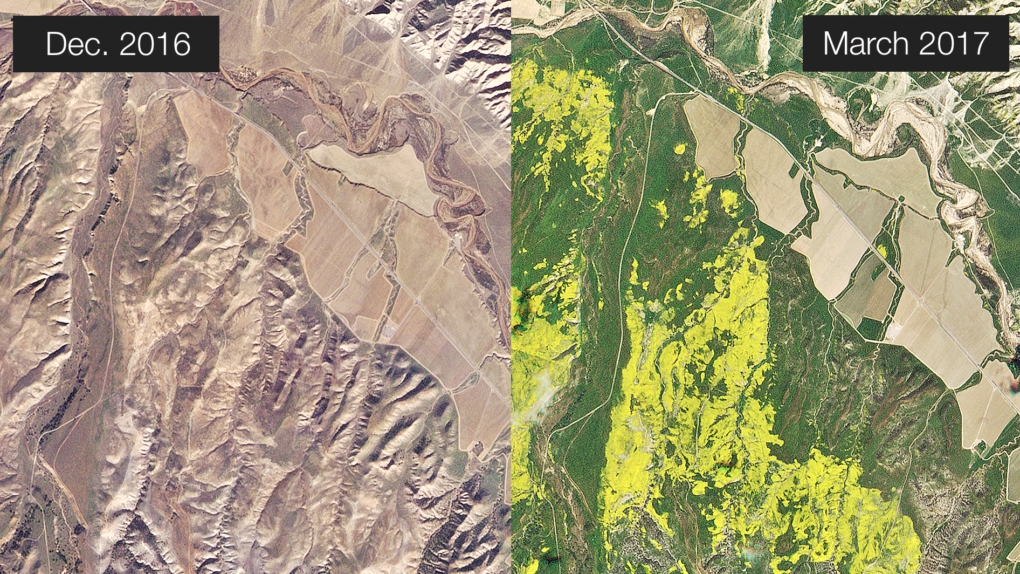
"caption": "Wildflowers north of Los Padres National Forest in early December 2016 (before the winter rains) and in late March during the wildflower super bloom.",
"description": null,
"title": "Main_feature_sized_for_web",
"credit": "Images provided by \u003ca href=\"https://www.planet.com/\" target=\"_blank\">Planet Labs\u003c/a>",
"status": "inherit",
"isLoading": false,
"fetchFailed": false
},
"science_1540136": {
"type": "attachments",
"id": "science_1540136",
"meta": {
"index": "attachments_1716263798",
"site": "science",
"id": "1540136",
"found": true
},
"parent": 1537071,
"imgSizes": {
"small": {
"file": "https://ww2.kqed.org/app/uploads/sites/35/2017/04/ORO_FI_06-520x293.jpg",
"width": 520,
"mimeType": "image/jpeg",
"height": 293
},
"twentyfourteen-full-width": {
"file": "https://ww2.kqed.org/app/uploads/sites/35/2017/04/ORO_FI_06-1038x576.jpg",
"width": 1038,
"mimeType": "image/jpeg",
"height": 576
},
"thumbnail": {
"file": "https://ww2.kqed.org/app/uploads/sites/35/2017/04/ORO_FI_06-160x90.jpg",
"width": 160,
"mimeType": "image/jpeg",
"height": 90
},
"fd-sm": {
"file": "https://ww2.kqed.org/app/uploads/sites/35/2017/04/ORO_FI_06-960x540.jpg",
"width": 960,
"mimeType": "image/jpeg",
"height": 540
},
"post-thumbnail": {
"file": "https://ww2.kqed.org/app/uploads/sites/35/2017/04/ORO_FI_06-672x372.jpg",
"width": 672,
"mimeType": "image/jpeg",
"height": 372
},
"xsmall": {
"file": "https://ww2.kqed.org/app/uploads/sites/35/2017/04/ORO_FI_06-375x211.jpg",
"width": 375,
"mimeType": "image/jpeg",
"height": 211
},
"kqedFullSize": {
"file": "https://ww2.kqed.org/app/uploads/sites/35/2017/04/ORO_FI_06.jpg",
"width": 1920,
"height": 1080
},
"large": {
"file": "https://ww2.kqed.org/app/uploads/sites/35/2017/04/ORO_FI_06-1020x574.jpg",
"width": 1020,
"mimeType": "image/jpeg",
"height": 574
},
"xlarge": {
"file": "https://ww2.kqed.org/app/uploads/sites/35/2017/04/ORO_FI_06-1180x664.jpg",
"width": 1180,
"mimeType": "image/jpeg",
"height": 664
},
"guest-author-50": {
"file": "https://ww2.kqed.org/app/uploads/sites/35/2017/04/ORO_FI_06-50x50.jpg",
"width": 50,
"mimeType": "image/jpeg",
"height": 50
},
"guest-author-96": {
"file": "https://ww2.kqed.org/app/uploads/sites/35/2017/04/ORO_FI_06-96x96.jpg",
"width": 96,
"mimeType": "image/jpeg",
"height": 96
},
"medium": {
"file": "https://ww2.kqed.org/app/uploads/sites/35/2017/04/ORO_FI_06-800x450.jpg",
"width": 800,
"mimeType": "image/jpeg",
"height": 450
},
"guest-author-64": {
"file": "https://ww2.kqed.org/app/uploads/sites/35/2017/04/ORO_FI_06-64x64.jpg",
"width": 64,
"mimeType": "image/jpeg",
"height": 64
},
"guest-author-32": {
"file": "https://ww2.kqed.org/app/uploads/sites/35/2017/04/ORO_FI_06-32x32.jpg",
"width": 32,
"mimeType": "image/jpeg",
"height": 32
},
"fd-lrg": {
"file": "https://ww2.kqed.org/app/uploads/sites/35/2017/04/ORO_FI_06-1920x1080.jpg",
"width": 1920,
"mimeType": "image/jpeg",
"height": 1080
},
"fd-med": {
"file": "https://ww2.kqed.org/app/uploads/sites/35/2017/04/ORO_FI_06-1180x664.jpg",
"width": 1180,
"mimeType": "image/jpeg",
"height": 664
},
"full-width": {
"file": "https://ww2.kqed.org/app/uploads/sites/35/2017/04/ORO_FI_06-1920x1080.jpg",
"width": 1920,
"mimeType": "image/jpeg",
"height": 1080
},
"detail": {
"file": "https://ww2.kqed.org/app/uploads/sites/35/2017/04/ORO_FI_06-150x150.jpg",
"width": 150,
"mimeType": "image/jpeg",
"height": 150
},
"medium_large": {
"file": "https://ww2.kqed.org/app/uploads/sites/35/2017/04/ORO_FI_06-768x432.jpg",
"width": 768,
"mimeType": "image/jpeg",
"height": 432
},
"guest-author-128": {
"file": "https://ww2.kqed.org/app/uploads/sites/35/2017/04/ORO_FI_06-128x128.jpg",
"width": 128,
"mimeType": "image/jpeg",
"height": 128
},
"xxsmall": {
"file": "https://ww2.kqed.org/app/uploads/sites/35/2017/04/ORO_FI_06-240x135.jpg",
"width": 240,
"mimeType": "image/jpeg",
"height": 135
}
},
"publishDate": 1491601736,
"modified": 1491616186,
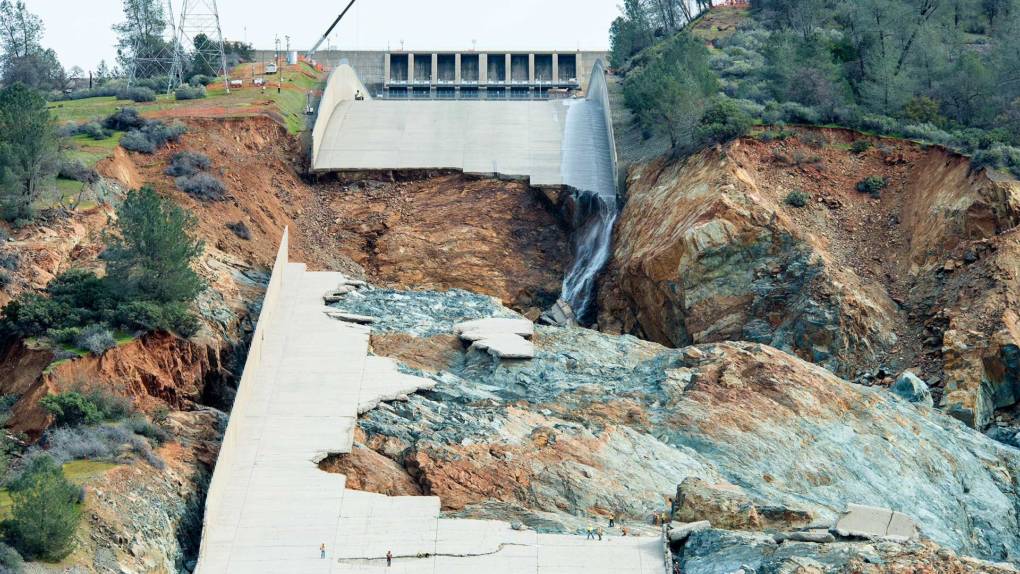
"caption": "Ruins of the main spillway at Oroville Dam reveal a blend of \"fresh\" (blue-gray) rock and \"weathered\" (reddish-brown) rock underneath.",
"description": "Ruins of the main spillway at Oroville Dam reveal a blend of \"fresh\" (blue-gray) rock and \"weathered\" (reddish-brown) rock underneath.",
"title": "ORO_FI_06",
"credit": "Calif. Dept. of Water Resources",
"status": "inherit",
"isLoading": false,
"fetchFailed": false
},
"science_1539661": {
"type": "attachments",
"id": "science_1539661",
"meta": {
"index": "attachments_1716263798",
"site": "science",
"id": "1539661",
"found": true
},
"parent": 1539654,
"imgSizes": {
"small": {
"file": "https://ww2.kqed.org/app/uploads/sites/35/2017/04/water-520x346.jpeg",
"width": 520,
"mimeType": "image/jpeg",
"height": 346
},
"twentyfourteen-full-width": {
"file": "https://ww2.kqed.org/app/uploads/sites/35/2017/04/water-1038x576.jpeg",
"width": 1038,
"mimeType": "image/jpeg",
"height": 576
},
"thumbnail": {
"file": "https://ww2.kqed.org/app/uploads/sites/35/2017/04/water-160x106.jpeg",
"width": 160,
"mimeType": "image/jpeg",
"height": 106
},
"fd-sm": {
"file": "https://ww2.kqed.org/app/uploads/sites/35/2017/04/water-960x638.jpeg",
"width": 960,
"mimeType": "image/jpeg",
"height": 638
},
"post-thumbnail": {
"file": "https://ww2.kqed.org/app/uploads/sites/35/2017/04/water-672x372.jpeg",
"width": 672,
"mimeType": "image/jpeg",
"height": 372
},
"xsmall": {
"file": "https://ww2.kqed.org/app/uploads/sites/35/2017/04/water-375x249.jpeg",
"width": 375,
"mimeType": "image/jpeg",
"height": 249
},
"kqedFullSize": {
"file": "https://ww2.kqed.org/app/uploads/sites/35/2017/04/water.jpeg",
"width": 1526,
"height": 1014
},
"large": {
"file": "https://ww2.kqed.org/app/uploads/sites/35/2017/04/water-1020x678.jpeg",
"width": 1020,
"mimeType": "image/jpeg",
"height": 678
},
"xlarge": {
"file": "https://ww2.kqed.org/app/uploads/sites/35/2017/04/water-1180x784.jpeg",
"width": 1180,
"mimeType": "image/jpeg",
"height": 784
},
"guest-author-50": {
"file": "https://ww2.kqed.org/app/uploads/sites/35/2017/04/water-50x50.jpeg",
"width": 50,
"mimeType": "image/jpeg",
"height": 50
},
"guest-author-96": {
"file": "https://ww2.kqed.org/app/uploads/sites/35/2017/04/water-96x96.jpeg",
"width": 96,
"mimeType": "image/jpeg",
"height": 96
},
"medium": {
"file": "https://ww2.kqed.org/app/uploads/sites/35/2017/04/water-800x532.jpeg",
"width": 800,
"mimeType": "image/jpeg",
"height": 532
},
"guest-author-64": {
"file": "https://ww2.kqed.org/app/uploads/sites/35/2017/04/water-64x64.jpeg",
"width": 64,
"mimeType": "image/jpeg",
"height": 64
},
"guest-author-32": {
"file": "https://ww2.kqed.org/app/uploads/sites/35/2017/04/water-32x32.jpeg",
"width": 32,
"mimeType": "image/jpeg",
"height": 32
},
"fd-med": {
"file": "https://ww2.kqed.org/app/uploads/sites/35/2017/04/water-1180x784.jpeg",
"width": 1180,
"mimeType": "image/jpeg",
"height": 784
},
"detail": {
"file": "https://ww2.kqed.org/app/uploads/sites/35/2017/04/water-150x150.jpeg",
"width": 150,
"mimeType": "image/jpeg",
"height": 150
},
"medium_large": {
"file": "https://ww2.kqed.org/app/uploads/sites/35/2017/04/water-768x510.jpeg",
"width": 768,
"mimeType": "image/jpeg",
"height": 510
},
"guest-author-128": {
"file": "https://ww2.kqed.org/app/uploads/sites/35/2017/04/water-128x128.jpeg",
"width": 128,
"mimeType": "image/jpeg",
"height": 128
},
"xxsmall": {
"file": "https://ww2.kqed.org/app/uploads/sites/35/2017/04/water-240x159.jpeg",
"width": 240,
"mimeType": "image/jpeg",
"height": 159
}
},
"publishDate": 1491588116,
"modified": 1491588576,
"caption": "A stream at Table Mountain, a basaltic plateau near Oroville, California. \n",
"description": null,
"title": "water",
"credit": "Florence Low/California Department of Water Resources",
"status": "inherit",
"isLoading": false,
"fetchFailed": false
},
"science_1537547": {
"type": "attachments",
"id": "science_1537547",
"meta": {
"index": "attachments_1716263798",
"site": "science",
"id": "1537547",
"found": true
},
"parent": 1537417,
"imgSizes": {
"small": {
"file": "https://ww2.kqed.org/app/uploads/sites/35/2017/04/iStock-183325980-520x345.jpg",
"width": 520,
"mimeType": "image/jpeg",
"height": 345
},
"twentyfourteen-full-width": {
"file": "https://ww2.kqed.org/app/uploads/sites/35/2017/04/iStock-183325980-1038x576.jpg",
"width": 1038,
"mimeType": "image/jpeg",
"height": 576
},
"thumbnail": {
"file": "https://ww2.kqed.org/app/uploads/sites/35/2017/04/iStock-183325980-160x106.jpg",
"width": 160,
"mimeType": "image/jpeg",
"height": 106
},
"fd-sm": {
"file": "https://ww2.kqed.org/app/uploads/sites/35/2017/04/iStock-183325980-960x638.jpg",
"width": 960,
"mimeType": "image/jpeg",
"height": 638
},
"post-thumbnail": {
"file": "https://ww2.kqed.org/app/uploads/sites/35/2017/04/iStock-183325980-672x372.jpg",
"width": 672,
"mimeType": "image/jpeg",
"height": 372
},
"xsmall": {
"file": "https://ww2.kqed.org/app/uploads/sites/35/2017/04/iStock-183325980-375x249.jpg",
"width": 375,
"mimeType": "image/jpeg",
"height": 249
},
"kqedFullSize": {
"file": "https://ww2.kqed.org/app/uploads/sites/35/2017/04/iStock-183325980-e1491523058969.jpg",
"width": 2000,
"height": 1329
},
"large": {
"file": "https://ww2.kqed.org/app/uploads/sites/35/2017/04/iStock-183325980-1020x678.jpg",
"width": 1020,
"mimeType": "image/jpeg",
"height": 678
},
"xlarge": {
"file": "https://ww2.kqed.org/app/uploads/sites/35/2017/04/iStock-183325980-1180x784.jpg",
"width": 1180,
"mimeType": "image/jpeg",
"height": 784
},
"guest-author-50": {
"file": "https://ww2.kqed.org/app/uploads/sites/35/2017/04/iStock-183325980-50x50.jpg",
"width": 50,
"mimeType": "image/jpeg",
"height": 50
},
"guest-author-96": {
"file": "https://ww2.kqed.org/app/uploads/sites/35/2017/04/iStock-183325980-96x96.jpg",
"width": 96,
"mimeType": "image/jpeg",
"height": 96
},
"medium": {
"file": "https://ww2.kqed.org/app/uploads/sites/35/2017/04/iStock-183325980-800x531.jpg",
"width": 800,
"mimeType": "image/jpeg",
"height": 531
},
"guest-author-64": {
"file": "https://ww2.kqed.org/app/uploads/sites/35/2017/04/iStock-183325980-64x64.jpg",
"width": 64,
"mimeType": "image/jpeg",
"height": 64
},
"guest-author-32": {
"file": "https://ww2.kqed.org/app/uploads/sites/35/2017/04/iStock-183325980-32x32.jpg",
"width": 32,
"mimeType": "image/jpeg",
"height": 32
},
"fd-lrg": {
"file": "https://ww2.kqed.org/app/uploads/sites/35/2017/04/iStock-183325980-1920x1276.jpg",
"width": 1920,
"mimeType": "image/jpeg",
"height": 1276
},
"fd-med": {
"file": "https://ww2.kqed.org/app/uploads/sites/35/2017/04/iStock-183325980-1180x784.jpg",
"width": 1180,
"mimeType": "image/jpeg",
"height": 784
},
"full-width": {
"file": "https://ww2.kqed.org/app/uploads/sites/35/2017/04/iStock-183325980-1920x1276.jpg",
"width": 1920,
"mimeType": "image/jpeg",
"height": 1276
},
"detail": {
"file": "https://ww2.kqed.org/app/uploads/sites/35/2017/04/iStock-183325980-150x150.jpg",
"width": 150,
"mimeType": "image/jpeg",
"height": 150
},
"medium_large": {
"file": "https://ww2.kqed.org/app/uploads/sites/35/2017/04/iStock-183325980-768x510.jpg",
"width": 768,
"mimeType": "image/jpeg",
"height": 510
},
"guest-author-128": {
"file": "https://ww2.kqed.org/app/uploads/sites/35/2017/04/iStock-183325980-128x128.jpg",
"width": 128,
"mimeType": "image/jpeg",
"height": 128
},
"xxsmall": {
"file": "https://ww2.kqed.org/app/uploads/sites/35/2017/04/iStock-183325980-240x159.jpg",
"width": 240,
"mimeType": "image/jpeg",
"height": 159
}
},
"publishDate": 1491523009,
"modified": 1491523588,
"caption": null,
"description": null,
"title": "Refinery",
"credit": "iStock",
"status": "inherit",
"isLoading": false,
"fetchFailed": false
},
"science_1518364": {
"type": "attachments",
"id": "science_1518364",
"meta": {
"index": "attachments_1716263798",
"site": "science",
"id": "1518364",
"found": true
},
"parent": 1518249,
"imgSizes": {
"small": {
"file": "https://ww2.kqed.org/app/uploads/sites/35/2017/03/resistor-hats-520x347.jpg",
"width": 520,
"mimeType": "image/jpeg",
"height": 347
},
"thumbnail": {
"file": "https://ww2.kqed.org/app/uploads/sites/35/2017/03/resistor-hats-160x107.jpg",
"width": 160,
"mimeType": "image/jpeg",
"height": 107
},
"post-thumbnail": {
"file": "https://ww2.kqed.org/app/uploads/sites/35/2017/03/resistor-hats-672x372.jpg",
"width": 672,
"mimeType": "image/jpeg",
"height": 372
},
"xsmall": {
"file": "https://ww2.kqed.org/app/uploads/sites/35/2017/03/resistor-hats-375x250.jpg",
"width": 375,
"mimeType": "image/jpeg",
"height": 250
},
"kqedFullSize": {
"file": "https://ww2.kqed.org/app/uploads/sites/35/2017/03/resistor-hats.jpg",
"width": 795,
"height": 530
},
"guest-author-50": {
"file": "https://ww2.kqed.org/app/uploads/sites/35/2017/03/resistor-hats-50x50.jpg",
"width": 50,
"mimeType": "image/jpeg",
"height": 50
},
"guest-author-96": {
"file": "https://ww2.kqed.org/app/uploads/sites/35/2017/03/resistor-hats-96x96.jpg",
"width": 96,
"mimeType": "image/jpeg",
"height": 96
},
"guest-author-64": {
"file": "https://ww2.kqed.org/app/uploads/sites/35/2017/03/resistor-hats-64x64.jpg",
"width": 64,
"mimeType": "image/jpeg",
"height": 64
},
"guest-author-32": {
"file": "https://ww2.kqed.org/app/uploads/sites/35/2017/03/resistor-hats-32x32.jpg",
"width": 32,
"mimeType": "image/jpeg",
"height": 32
},
"detail": {
"file": "https://ww2.kqed.org/app/uploads/sites/35/2017/03/resistor-hats-150x150.jpg",
"width": 150,
"mimeType": "image/jpeg",
"height": 150
},
"medium_large": {
"file": "https://ww2.kqed.org/app/uploads/sites/35/2017/03/resistor-hats-768x512.jpg",
"width": 768,
"mimeType": "image/jpeg",
"height": 512
},
"guest-author-128": {
"file": "https://ww2.kqed.org/app/uploads/sites/35/2017/03/resistor-hats-128x128.jpg",
"width": 128,
"mimeType": "image/jpeg",
"height": 128
},
"xxsmall": {
"file": "https://ww2.kqed.org/app/uploads/sites/35/2017/03/resistor-hats-240x160.jpg",
"width": 240,
"mimeType": "image/jpeg",
"height": 160
}
},
"publishDate": 1490912570,
"modified": 1490990209,
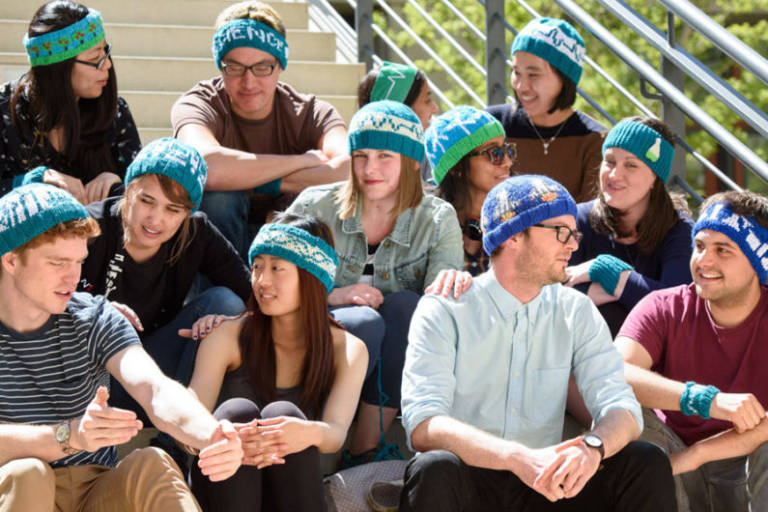
"caption": "Stanford students wearing knitted hats created for the March for Science, to be held April 22. Designs feature a DNA double helix, lab glassware, a circuit with a battery and three resistors, a space shuttle, wind turbines and others. ",
"description": null,
"title": "resistor hats",
"credit": "L.A. Cicero",
"status": "inherit",
"isLoading": false,
"fetchFailed": false
},
"science_1520881": {
"type": "attachments",
"id": "science_1520881",
"meta": {
"index": "attachments_1716263798",
"site": "science",
"id": "1520881",
"found": true
},
"parent": 1518365,
"imgSizes": {
"small": {
"file": "https://ww2.kqed.org/app/uploads/sites/35/2017/03/iStock-506401472-520x332.jpg",
"width": 520,
"mimeType": "image/jpeg",
"height": 332
},
"twentyfourteen-full-width": {
"file": "https://ww2.kqed.org/app/uploads/sites/35/2017/03/iStock-506401472-1038x576.jpg",
"width": 1038,
"mimeType": "image/jpeg",
"height": 576
},
"thumbnail": {
"file": "https://ww2.kqed.org/app/uploads/sites/35/2017/03/iStock-506401472-160x102.jpg",
"width": 160,
"mimeType": "image/jpeg",
"height": 102
},
"fd-sm": {
"file": "https://ww2.kqed.org/app/uploads/sites/35/2017/03/iStock-506401472-960x612.jpg",
"width": 960,
"mimeType": "image/jpeg",
"height": 612
},
"post-thumbnail": {
"file": "https://ww2.kqed.org/app/uploads/sites/35/2017/03/iStock-506401472-672x372.jpg",
"width": 672,
"mimeType": "image/jpeg",
"height": 372
},
"xsmall": {
"file": "https://ww2.kqed.org/app/uploads/sites/35/2017/03/iStock-506401472-375x239.jpg",
"width": 375,
"mimeType": "image/jpeg",
"height": 239
},
"kqedFullSize": {
"file": "https://ww2.kqed.org/app/uploads/sites/35/2017/03/iStock-506401472-e1490995725774.jpg",
"width": 1920,
"height": 1225
},
"large": {
"file": "https://ww2.kqed.org/app/uploads/sites/35/2017/03/iStock-506401472-1020x651.jpg",
"width": 1020,
"mimeType": "image/jpeg",
"height": 651
},
"xlarge": {
"file": "https://ww2.kqed.org/app/uploads/sites/35/2017/03/iStock-506401472-1180x753.jpg",
"width": 1180,
"mimeType": "image/jpeg",
"height": 753
},
"guest-author-50": {
"file": "https://ww2.kqed.org/app/uploads/sites/35/2017/03/iStock-506401472-50x50.jpg",
"width": 50,
"mimeType": "image/jpeg",
"height": 50
},
"guest-author-96": {
"file": "https://ww2.kqed.org/app/uploads/sites/35/2017/03/iStock-506401472-96x96.jpg",
"width": 96,
"mimeType": "image/jpeg",
"height": 96
},
"medium": {
"file": "https://ww2.kqed.org/app/uploads/sites/35/2017/03/iStock-506401472-800x510.jpg",
"width": 800,
"mimeType": "image/jpeg",
"height": 510
},
"guest-author-64": {
"file": "https://ww2.kqed.org/app/uploads/sites/35/2017/03/iStock-506401472-64x64.jpg",
"width": 64,
"mimeType": "image/jpeg",
"height": 64
},
"guest-author-32": {
"file": "https://ww2.kqed.org/app/uploads/sites/35/2017/03/iStock-506401472-32x32.jpg",
"width": 32,
"mimeType": "image/jpeg",
"height": 32
},
"fd-lrg": {
"file": "https://ww2.kqed.org/app/uploads/sites/35/2017/03/iStock-506401472-1920x1225.jpg",
"width": 1920,
"mimeType": "image/jpeg",
"height": 1225
},
"fd-med": {
"file": "https://ww2.kqed.org/app/uploads/sites/35/2017/03/iStock-506401472-1180x753.jpg",
"width": 1180,
"mimeType": "image/jpeg",
"height": 753
},
"full-width": {
"file": "https://ww2.kqed.org/app/uploads/sites/35/2017/03/iStock-506401472-1920x1225.jpg",
"width": 1920,
"mimeType": "image/jpeg",
"height": 1225
},
"detail": {
"file": "https://ww2.kqed.org/app/uploads/sites/35/2017/03/iStock-506401472-150x150.jpg",
"width": 150,
"mimeType": "image/jpeg",
"height": 150
},
"medium_large": {
"file": "https://ww2.kqed.org/app/uploads/sites/35/2017/03/iStock-506401472-768x490.jpg",
"width": 768,
"mimeType": "image/jpeg",
"height": 490
},
"guest-author-128": {
"file": "https://ww2.kqed.org/app/uploads/sites/35/2017/03/iStock-506401472-128x128.jpg",
"width": 128,
"mimeType": "image/jpeg",
"height": 128
},
"xxsmall": {
"file": "https://ww2.kqed.org/app/uploads/sites/35/2017/03/iStock-506401472-240x153.jpg",
"width": 240,
"mimeType": "image/jpeg",
"height": 153
}
},
"publishDate": 1490994159,
"modified": 1490994305,
"caption": "The 2016 Chevrolet Bolt electric car has a 200-mile range.",
"description": null,
"title": "Best of CES - Chevy Bolt EV",
"credit": "Woodkern",
"status": "inherit",
"isLoading": false,
"fetchFailed": false
}
},
"audioPlayerReducer": {
"postId": "stream_live",
"isPaused": true,
"isPlaying": false,
"pfsActive": false,
"pledgeModalIsOpen": true,
"playerDrawerIsOpen": false,
"liveAudioPlayStartedAt": 0,
"liveAudioPlayContext": ""
},
"authorsReducer": {
"byline_science_1539654": {
"type": "authors",
"id": "byline_science_1539654",
"meta": {
"override": true
},
"slug": "byline_science_1539654",
"name": "Associated Press",
"isLoading": false
},
"byline_science_1537417": {
"type": "authors",
"id": "byline_science_1537417",
"meta": {
"override": true
},
"slug": "byline_science_1537417",
"name": "Associated Press and KQED Science",
"isLoading": false
},
"byline_science_1518365": {
"type": "authors",
"id": "byline_science_1518365",
"meta": {
"override": true
},
"slug": "byline_science_1518365",
"name": "KQED Science",
"isLoading": false
},
"cmiller": {
"type": "authors",
"id": "221",
"meta": {
"index": "authors_1716337520",
"id": "221",
"found": true
},
"name": "Craig Miller",
"firstName": "Craig",
"lastName": "Miller",
"slug": "cmiller",
"email": "craig@voxterra.net",
"display_author_email": false,
"staff_mastheads": [
"science"
],
"title": "Editor Emeritus, Science",
"bio": "Craig is a former KQED Science editor, specializing in weather, climate, water & energy issues, with a little seismology thrown in just to shake things up. Prior to that, he launched and led the station's award-winning multimedia project, Climate Watch. Craig is also an accomplished writer/producer of television documentaries, with a focus on natural resource issues.",
"avatar": "https://secure.gravatar.com/avatar/b91661df645e001a9cafe0861fa685f9?s=600&d=blank&r=g",
"twitter": "voxterra",
"facebook": null,
"instagram": null,
"linkedin": null,
"sites": [
{
"site": "news",
"roles": [
"author"
]
},
{
"site": "futureofyou",
"roles": [
"editor"
]
},
{
"site": "stateofhealth",
"roles": [
"author"
]
},
{
"site": "science",
"roles": [
"editor"
]
},
{
"site": "quest",
"roles": [
"editor"
]
}
],
"headData": {
"title": "Craig Miller | KQED",
"description": "Editor Emeritus, Science",
"ogImgSrc": "https://secure.gravatar.com/avatar/b91661df645e001a9cafe0861fa685f9?s=600&d=blank&r=g",
"twImgSrc": "https://secure.gravatar.com/avatar/b91661df645e001a9cafe0861fa685f9?s=600&d=blank&r=g"
},
"isLoading": false,
"link": "/author/cmiller"
},
"lindseyhoshaw": {
"type": "authors",
"id": "5432",
"meta": {
"index": "authors_1716337520",
"id": "5432",
"found": true
},
"name": "Lindsey Hoshaw",
"firstName": "Lindsey",
"lastName": "Hoshaw",
"slug": "lindseyhoshaw",
"email": "lhoshaw@kqed.org",
"display_author_email": false,
"staff_mastheads": [],
"title": "KQED Contributor",
"bio": "Lindsey Hoshaw is a former interactive producer for KQED Science. Before joining KQED, Lindsey was a science correspondent for The New York Times, The Boston Globe, Forbes and Scientific American. On Twitter @lindseyhoshaw",
"avatar": "https://secure.gravatar.com/avatar/274b07694c998eaa8f26cfabaa941186?s=600&d=mm&r=g",
"twitter": "lindseyhoshaw",
"facebook": "lindsey.hoshaw.9",
"instagram": null,
"linkedin": null,
"sites": [
{
"site": "arts",
"roles": [
"author"
]
},
{
"site": "news",
"roles": [
"subscriber"
]
},
{
"site": "futureofyou",
"roles": [
"editor"
]
},
{
"site": "bayareabites",
"roles": [
"contributor"
]
},
{
"site": "stateofhealth",
"roles": [
"author"
]
},
{
"site": "science",
"roles": [
"edit_theme_options",
"subscriber"
]
},
{
"site": "quest",
"roles": [
"edit_post_subscriptions",
"edit_usergroups",
"unfiltered_html",
"unfiltered_upload",
"leadcoordinator",
"editor"
]
},
{
"site": "food",
"roles": []
}
],
"headData": {
"title": "Lindsey Hoshaw | KQED",
"description": "KQED Contributor",
"ogImgSrc": "https://secure.gravatar.com/avatar/274b07694c998eaa8f26cfabaa941186?s=600&d=mm&r=g",
"twImgSrc": "https://secure.gravatar.com/avatar/274b07694c998eaa8f26cfabaa941186?s=600&d=mm&r=g"
},
"isLoading": false,
"link": "/author/lindseyhoshaw"
},
"ben-burress": {
"type": "authors",
"id": "6180",
"meta": {
"index": "authors_1716337520",
"id": "6180",
"found": true
},
"name": "Ben Burress",
"firstName": "Ben",
"lastName": "Burress",
"slug": "ben-burress",
"email": "bburress@chabotspace.org",
"display_author_email": false,
"staff_mastheads": [],
"title": null,
"bio": "\u003cstrong>Benjamin Burress\u003c/strong> has been a staff astronomer at Chabot Space & Science Center since July 1999. He graduated from Sonoma State University in 1985 with a bachelor’s degree in physics (and minor in astronomy), after which he signed on for a two-year stint in the Peace Corps, where he taught physics and mathematics in the African nation of Cameroon. From 1989-96 he served on the crew of NASA’s Kuiper Airborne Observatory at Ames Research Center in Mountain View, CA. From 1996-99, he was Head Observer at the Naval Prototype Optical Interferometer program at Lowell Observatory in Flagstaff, AZ.\r\n\r\nRead his \u003ca href=\"http://science.kqed.org/quest/author/ben-burress/\">previous contributions\u003c/a> to \u003ca href=\"http://science.kqed.org/quest/\">QUEST\u003c/a>, a project dedicated to exploring the Science of Sustainability.",
"avatar": "https://secure.gravatar.com/avatar/8263bffa345b7e4923a0b8b9f0f6a161?s=600&d=blank&r=g",
"twitter": null,
"facebook": null,
"instagram": null,
"linkedin": null,
"sites": [
{
"site": "science",
"roles": [
"editor"
]
},
{
"site": "quest",
"roles": [
"subscriber"
]
}
],
"headData": {
"title": "Ben Burress | KQED",
"description": null,
"ogImgSrc": "https://secure.gravatar.com/avatar/8263bffa345b7e4923a0b8b9f0f6a161?s=600&d=blank&r=g",
"twImgSrc": "https://secure.gravatar.com/avatar/8263bffa345b7e4923a0b8b9f0f6a161?s=600&d=blank&r=g"
},
"isLoading": false,
"link": "/author/ben-burress"
},
"kqedscience": {
"type": "authors",
"id": "6387",
"meta": {
"index": "authors_1716337520",
"id": "6387",
"found": true
},
"name": "KQED Science",
"firstName": "KQED",
"lastName": "Science",
"slug": "kqedscience",
"email": "kqedscience@gmail.com",
"display_author_email": false,
"staff_mastheads": [],
"title": null,
"bio": "KQED Science brings you award-winning science and environment coverage from the Bay Area and beyond by the flagship Northern California PBS and NPR affiliate.",
"avatar": "https://secure.gravatar.com/avatar/5a295ff49cf82a8c0f30937d3f788b2f?s=600&d=blank&r=g",
"twitter": null,
"facebook": null,
"instagram": null,
"linkedin": null,
"sites": [
{
"site": "science",
"roles": [
"contributor"
]
},
{
"site": "quest",
"roles": [
"editor"
]
},
{
"site": "food",
"roles": [
"contributor"
]
}
],
"headData": {
"title": "KQED Science | KQED",
"description": null,
"ogImgSrc": "https://secure.gravatar.com/avatar/5a295ff49cf82a8c0f30937d3f788b2f?s=600&d=blank&r=g",
"twImgSrc": "https://secure.gravatar.com/avatar/5a295ff49cf82a8c0f30937d3f788b2f?s=600&d=blank&r=g"
},
"isLoading": false,
"link": "/author/kqedscience"
},
"ecruzguevarra": {
"type": "authors",
"id": "8654",
"meta": {
"index": "authors_1716337520",
"id": "8654",
"found": true
},
"name": "Ericka Cruz Guevarra",
"firstName": "Ericka",
"lastName": "Cruz Guevarra",
"slug": "ecruzguevarra",
"email": "ecruzguevarra@kqed.org",
"display_author_email": true,
"staff_mastheads": [
"news"
],
"title": "Producer, The Bay Podcast",
"bio": "Ericka Cruz Guevarra is host of \u003ca href=\"https://www.kqed.org/podcasts/thebay\">\u003cem>The Bay\u003c/em>\u003c/a> podcast at KQED. Before host, she was the show’s producer. Her work in that capacity includes a three-part reported series on policing in Vallejo, which won a 2020 excellence in journalism award from the Society of Professional Journalists. Ericka has worked as a breaking news reporter at Oregon Public Broadcasting, helped produce the Code Switch podcast, and was KQED’s inaugural Raul Ramirez Diversity Fund intern. She’s also an alumna of NPR’s Next Generation Radio program. Send her an email if you have strong feelings about whether Fairfield and Suisun City are the Bay. Ericka is represented by SAG-AFTRA.",
"avatar": "https://secure.gravatar.com/avatar/accefc1de4bafc7e234b69bcb9b6f6536c130fd84709bc3069ef11a78787e1bb?s=600&d=blank&r=g",
"twitter": "NotoriousECG",
"bluesky": null,
"facebook": null,
"instagram": null,
"linkedin": null,
"sites": [
{
"site": "arts",
"roles": [
"subscriber"
]
},
{
"site": "news",
"roles": [
"editor",
"manage_categories"
]
},
{
"site": "futureofyou",
"roles": [
"subscriber"
]
},
{
"site": "stateofhealth",
"roles": [
"subscriber"
]
},
{
"site": "science",
"roles": [
"editor"
]
},
{
"site": "forum",
"roles": [
"subscriber"
]
}
],
"headData": {
"title": "Ericka Cruz Guevarra | KQED",
"description": "Producer, The Bay Podcast",
"ogImgSrc": "https://secure.gravatar.com/avatar/accefc1de4bafc7e234b69bcb9b6f6536c130fd84709bc3069ef11a78787e1bb?s=600&d=blank&r=g",
"twImgSrc": "https://secure.gravatar.com/avatar/accefc1de4bafc7e234b69bcb9b6f6536c130fd84709bc3069ef11a78787e1bb?s=600&d=blank&r=g"
},
"isLoading": false,
"link": "/author/ecruzguevarra"
},
"jbrady": {
"type": "authors",
"id": "8677",
"meta": {
"index": "authors_1716337520",
"id": "8677",
"found": true
},
"name": "Jennifer Brady",
"firstName": "Jennifer",
"lastName": "Brady",
"slug": "jbrady",
"email": "jbrady@kqed.org",
"display_author_email": false,
"staff_mastheads": [],
"title": null,
"bio": null,
"avatar": "https://secure.gravatar.com/avatar/198de5446ee0cdc4ba690e374b76c295?s=600&d=blank&r=g",
"twitter": null,
"facebook": null,
"instagram": null,
"linkedin": null,
"sites": [
{
"site": "futureofyou",
"roles": [
"editor"
]
},
{
"site": "about",
"roles": [
"editor"
]
},
{
"site": "science",
"roles": [
"editor"
]
},
{
"site": "quest",
"roles": [
"editor"
]
},
{
"site": "pressroom",
"roles": [
"editor"
]
}
],
"headData": {
"title": "Jennifer Brady | KQED",
"description": null,
"ogImgSrc": "https://secure.gravatar.com/avatar/198de5446ee0cdc4ba690e374b76c295?s=600&d=blank&r=g",
"twImgSrc": "https://secure.gravatar.com/avatar/198de5446ee0cdc4ba690e374b76c295?s=600&d=blank&r=g"
},
"isLoading": false,
"link": "/author/jbrady"
},
"lesleymcclurg": {
"type": "authors",
"id": "11229",
"meta": {
"index": "authors_1716337520",
"id": "11229",
"found": true
},
"name": "Lesley McClurg",
"firstName": "Lesley",
"lastName": "McClurg",
"slug": "lesleymcclurg",
"email": "lmcclurg@KQED.org",
"display_author_email": false,
"staff_mastheads": [
"news",
"science"
],
"title": "KQED Health Correspondent",
"bio": "Lesley McClurg is a health correspondent and fill-in host whose work is regularly rebroadcast on NPR and PBS programs. She’s earned multiple regional Emmy awards, a national and a regional Edward R. Murrow award, and was named Best Beat Reporter by the Association of Health Care Journalists. The Society of Professional Journalists has recognized her work several times, and the Society of Environmental Journalists spotlighted her coverage of California’s historic drought.\r\n\r\nBefore joining KQED in 2016, Lesley covered food and sustainability for Capital Public Radio, environmental issues for Colorado Public Radio, and reported for KUOW and KCTS 9 in Seattle. Away from the newsroom, she loves skiing with her daughter, mountain biking with her partner, and playing with Ollie, the family’s goldendoodle. On deadline, she runs almost entirely on chocolate chips.\r\n\r\n ",
"avatar": "https://secure.gravatar.com/avatar/bab49e972ea10c774fe0f5e29dba1722b158f7c0d58a360923d1389d380b2978?s=600&d=blank&r=g",
"twitter": "lesleywmcclurg",
"bluesky": null,
"facebook": null,
"instagram": null,
"linkedin": null,
"sites": [
{
"site": "arts",
"roles": [
"author"
]
},
{
"site": "news",
"roles": [
"editor"
]
},
{
"site": "futureofyou",
"roles": [
"editor"
]
},
{
"site": "stateofhealth",
"roles": [
"author"
]
},
{
"site": "science",
"roles": [
"editor"
]
},
{
"site": "quest",
"roles": [
"subscriber"
]
},
{
"site": "forum",
"roles": [
"administrator"
]
},
{
"site": "liveblog",
"roles": [
"author"
]
}
],
"headData": {
"title": "Lesley McClurg | KQED",
"description": "KQED Health Correspondent",
"ogImgSrc": "https://secure.gravatar.com/avatar/bab49e972ea10c774fe0f5e29dba1722b158f7c0d58a360923d1389d380b2978?s=600&d=blank&r=g",
"twImgSrc": "https://secure.gravatar.com/avatar/bab49e972ea10c774fe0f5e29dba1722b158f7c0d58a360923d1389d380b2978?s=600&d=blank&r=g"
},
"isLoading": false,
"link": "/author/lesleymcclurg"
}
},
"pagesReducer": {
"science_category_news": {
"type": "terms",
"id": "science_40",
"meta": {
"index": "terms_1716263798",
"site": "science",
"id": "40",
"score": 10.814472
},
"featImg": null,
"name": "News",
"description": null,
"taxonomy": "category",
"headData": {
"twImgId": null,
"twTitle": null,
"ogTitle": null,
"ogImgId": null,
"twDescription": null,
"description": null,
"title": "News Archives | KQED Science",
"ogDescription": null
},
"ttid": 42,
"slug": "news",
"isLoading": false,
"title": "News",
"pageMeta": {
"site": "science",
"WpPageTemplate": "page-topic-editorial",
"currentPage": 202
},
"blocks": [
{
"blockName": "kqed/post-list",
"attrs": {
"layout": "cardArticle2",
"query": "posts/science?category=news",
"seeMore": false,
"paginated": true,
"page": 202
}
},
{
"blockName": "kqed/ad"
}
]
}
},
"pfsSessionReducer": {},
"postsReducer": {
"stream_live": {
"type": "live",
"id": "stream_live",
"audioUrl": "https://streams.kqed.org/kqedradio",
"title": "Live Stream",
"excerpt": "Live Stream information currently unavailable.",
"link": "/radio",
"featImg": "",
"label": {
"name": "KQED Live",
"link": "/"
}
},
"stream_kqedNewscast": {
"type": "posts",
"id": "stream_kqedNewscast",
"audioUrl": "https://www.kqed.org/.stream/anon/radio/RDnews/newscast.mp3?_=1",
"title": "KQED Newscast",
"featImg": "",
"label": {
"name": "88.5 FM",
"link": "/"
}
},
"science_1586143": {
"type": "posts",
"id": "science_1586143",
"meta": {
"index": "posts_1716263798",
"site": "science",
"id": "1586143",
"score": null,
"sort": [
1493395257000
]
},
"parent": 0,
"labelTerm": {
"site": "science"
},
"blocks": [],
"publishDate": 1493395257,
"format": "standard",
"title": "On the Eve of Retirement, Cassini to Deliver Final Images of Saturn",
"headTitle": "On the Eve of Retirement, Cassini to Deliver Final Images of Saturn | KQED",
"content": "\u003cp>Between \u003ca href=\"https://saturn.jpl.nasa.gov/mission/grand-finale/overview/\">now and September\u003c/a>, NASA’s \u003ca href=\"https://saturn.jpl.nasa.gov/\" target=\"_blank\" rel=\"noopener\">Cassini spacecraft\u003c/a> will engage in its most daring and breathtaking flybys of Saturn and its rings yet, passing between the rings’ inner edge and the cloud tops of Saturn.\u003c/p>\n\u003cp>Last month, Cassini made blockbuster news when NASA scientists announced the detection of life-nourishing chemicals in plumes of water vapor erupting from within the tiny moon \u003ca href=\"https://saturn.jpl.nasa.gov/science/enceladus/\">Enceladus\u003c/a>. It comes 13 years after the robot started an epic career exploring the Saturn system.\u003c/p>\n\u003cp>Since early in Cassini’s tour, a billion miles from the sun, evidence of liquid water on Enceladus has tantalized our curiosity. In 2005, Cassini discovered plumes of water vapor erupting from crevasses in the icy crust of the tiny moon.\u003c/p>\n\u003cp>Later, Cassini passed through one of the geyser plumes and detected traces of ammonia, which provided more hints of what’s going on below the outer icy crust.\u003c/p>\n\u003cfigure id=\"attachment_1586254\" class=\"wp-caption alignright\" style=\"max-width: 487px\">\u003cimg loading=\"lazy\" decoding=\"async\" class=\"wp-image-1586254 \" src=\"https://ww2.kqed.org/science/wp-content/uploads/sites/35/2017/04/enceladus-ocean-nasa-jpl-caltech-sri-800x1035.jpg\" alt=\"Chemical analysis by Cassini of Enceladus' water vapor plumes indicates strongly that there may be hydrothermal vents on the moon's ocean floor. \" width=\"487\" height=\"630\" srcset=\"https://cdn.kqed.org/wp-content/uploads/sites/35/2017/04/enceladus-ocean-nasa-jpl-caltech-sri-800x1035.jpg 800w, https://cdn.kqed.org/wp-content/uploads/sites/35/2017/04/enceladus-ocean-nasa-jpl-caltech-sri-160x207.jpg 160w, https://cdn.kqed.org/wp-content/uploads/sites/35/2017/04/enceladus-ocean-nasa-jpl-caltech-sri-768x994.jpg 768w, https://cdn.kqed.org/wp-content/uploads/sites/35/2017/04/enceladus-ocean-nasa-jpl-caltech-sri-1020x1320.jpg 1020w, https://cdn.kqed.org/wp-content/uploads/sites/35/2017/04/enceladus-ocean-nasa-jpl-caltech-sri-1180x1527.jpg 1180w, https://cdn.kqed.org/wp-content/uploads/sites/35/2017/04/enceladus-ocean-nasa-jpl-caltech-sri-960x1243.jpg 960w, https://cdn.kqed.org/wp-content/uploads/sites/35/2017/04/enceladus-ocean-nasa-jpl-caltech-sri-240x311.jpg 240w, https://cdn.kqed.org/wp-content/uploads/sites/35/2017/04/enceladus-ocean-nasa-jpl-caltech-sri-375x485.jpg 375w, https://cdn.kqed.org/wp-content/uploads/sites/35/2017/04/enceladus-ocean-nasa-jpl-caltech-sri-520x673.jpg 520w, https://cdn.kqed.org/wp-content/uploads/sites/35/2017/04/enceladus-ocean-nasa-jpl-caltech-sri.jpg 1400w\" sizes=\"(max-width: 487px) 100vw, 487px\">\u003cfigcaption class=\"wp-caption-text\">Cassini’s chemical analysis of Enceladus’ water vapor plumes strongly suggests there may be hydrothermal vents on the moon’s ocean floor. \u003ccite>(NASA/JPL-CalTech/SRI)\u003c/cite>\u003c/figcaption>\u003c/figure>\n\u003cp>Further measurements suggest that the source of Enceladus’ chemical-tainted “geysers” is probably a hidden ocean.\u003c/p>\n\u003cp>[ad fullwidth]\u003c/p>\n\u003cp>And now, the detection of molecular hydrogen in the plumes points to the likelihood that there are hydrothermal vents on the ocean floor, spewing out heat and chemicals from the moon’s deeper interior.\u003c/p>\n\u003cp>Enceladus is too small to have retained molecular hydrogen from its formation in its outermost layers of ice and water, so the source likely comes from supplies trapped deeper within.\u003c/p>\n\u003cp>Hydrothermal vents on the cold, dark floor of Earth’s ocean supply the heat and chemical fuel for thriving communities of lifeforms, so Cassini’s discovery increases the chances that Enceladus might support life.\u003c/p>\n\u003cp>\u003cstrong>Cassini’s Swan Song?\u003c/strong>\u003c/p>\n\u003cp>The news of life-nourishing chemicals on Enceladus comes after Cassini’s final close flyby of the moon, as Cassini steers into a trajectory that brings it daringly close to Saturn and its rings, and toward a planned burn-up in the gas giant’s atmosphere in September.\u003c/p>\n\u003cp>Why is NASA deliberately driving its flagship planet-exploring robot toward a fiery end-of-mission incineration? The answer, in short, is that Cassini’s rocket fuel is almost depleted. Once its fuel tanks run dry, NASA will no longer be able to control the spacecraft’s trajectory, and it would become a derelict, bearing radioactive Plutonium-238 in its electrical generator system.\u003c/p>\n\u003cfigure id=\"attachment_1586255\" class=\"wp-caption aligncenter\" style=\"max-width: 800px\">\u003cimg loading=\"lazy\" decoding=\"async\" class=\"size-medium wp-image-1586255\" src=\"https://ww2.kqed.org/science/wp-content/uploads/sites/35/2017/04/enceladus-tigerstripes-nasa-jpl-caltech-ssi-lpi-800x533.jpg\" alt=\"Long, deep crevasses at Enceladus' southern polar region--dubbed "Tiger Stripes"--are the site where water vapor plumes erupt through the moon's icy crust.\" width=\"800\" height=\"533\" srcset=\"https://cdn.kqed.org/wp-content/uploads/sites/35/2017/04/enceladus-tigerstripes-nasa-jpl-caltech-ssi-lpi-800x533.jpg 800w, https://cdn.kqed.org/wp-content/uploads/sites/35/2017/04/enceladus-tigerstripes-nasa-jpl-caltech-ssi-lpi-160x107.jpg 160w, https://cdn.kqed.org/wp-content/uploads/sites/35/2017/04/enceladus-tigerstripes-nasa-jpl-caltech-ssi-lpi-768x512.jpg 768w, https://cdn.kqed.org/wp-content/uploads/sites/35/2017/04/enceladus-tigerstripes-nasa-jpl-caltech-ssi-lpi-1020x680.jpg 1020w, https://cdn.kqed.org/wp-content/uploads/sites/35/2017/04/enceladus-tigerstripes-nasa-jpl-caltech-ssi-lpi-1180x787.jpg 1180w, https://cdn.kqed.org/wp-content/uploads/sites/35/2017/04/enceladus-tigerstripes-nasa-jpl-caltech-ssi-lpi-960x640.jpg 960w, https://cdn.kqed.org/wp-content/uploads/sites/35/2017/04/enceladus-tigerstripes-nasa-jpl-caltech-ssi-lpi-240x160.jpg 240w, https://cdn.kqed.org/wp-content/uploads/sites/35/2017/04/enceladus-tigerstripes-nasa-jpl-caltech-ssi-lpi-375x250.jpg 375w, https://cdn.kqed.org/wp-content/uploads/sites/35/2017/04/enceladus-tigerstripes-nasa-jpl-caltech-ssi-lpi-520x347.jpg 520w, https://cdn.kqed.org/wp-content/uploads/sites/35/2017/04/enceladus-tigerstripes-nasa-jpl-caltech-ssi-lpi.jpg 1200w\" sizes=\"(max-width: 800px) 100vw, 800px\">\u003cfigcaption class=\"wp-caption-text\">Long, deep crevasses at Enceladus’ southern polar region–dubbed “Tiger Stripes”–are the site where water vapor plumes erupt through the moon’s icy crust. \u003ccite>(NASA/JPL-CalTech/SSI/LPI)\u003c/cite>\u003c/figcaption>\u003c/figure>\n\u003cp>With the possibility that some form of life exists on at least one of Saturn’s moons, NASA is opting to safely destroy Cassini rather than risk it crashing onto a life-bearing world.\u003c/p>\n\u003cp>In fact, Cassini’s initial launch from Earth about 20 years ago raised protests from some, who felt that the risk of a launch explosion that would spread Plutonium through Earth’s atmosphere was unacceptable.\u003c/p>\n\u003cp>Fortunately the launch was a success. Now, two decades later, a burn-up on Saturn will close this chapter of space exploration that includes a plethora of breathtaking discoveries.\u003c/p>\n\u003cp>\u003cstrong>Highlights of Cassini-Huygens’ Discoveries\u003c/strong>\u003c/p>\n\u003cp>Finding water and signs of a life-friendly environment on Enceladus are not the only things \u003ca href=\"https://saturn.jpl.nasa.gov/mission/grand-finale/why-cassini-matters/\">Cassini revealed in the Saturn system\u003c/a>.\u003c/p>\n\u003cfigure id=\"attachment_1586257\" class=\"wp-caption alignright\" style=\"max-width: 421px\">\u003cimg loading=\"lazy\" decoding=\"async\" class=\" wp-image-1586257\" src=\"https://ww2.kqed.org/science/wp-content/uploads/sites/35/2017/04/ligiea-mare-800x763.jpg\" alt=\"Ligiea Mare, one of Titan's liquid methane seas. \" width=\"421\" height=\"402\" srcset=\"https://cdn.kqed.org/wp-content/uploads/sites/35/2017/04/ligiea-mare-800x763.jpg 800w, https://cdn.kqed.org/wp-content/uploads/sites/35/2017/04/ligiea-mare-160x153.jpg 160w, https://cdn.kqed.org/wp-content/uploads/sites/35/2017/04/ligiea-mare-768x732.jpg 768w, https://cdn.kqed.org/wp-content/uploads/sites/35/2017/04/ligiea-mare-1020x972.jpg 1020w, https://cdn.kqed.org/wp-content/uploads/sites/35/2017/04/ligiea-mare-1180x1125.jpg 1180w, https://cdn.kqed.org/wp-content/uploads/sites/35/2017/04/ligiea-mare-960x915.jpg 960w, https://cdn.kqed.org/wp-content/uploads/sites/35/2017/04/ligiea-mare-240x229.jpg 240w, https://cdn.kqed.org/wp-content/uploads/sites/35/2017/04/ligiea-mare-375x357.jpg 375w, https://cdn.kqed.org/wp-content/uploads/sites/35/2017/04/ligiea-mare-520x496.jpg 520w, https://cdn.kqed.org/wp-content/uploads/sites/35/2017/04/ligiea-mare-32x32.jpg 32w, https://cdn.kqed.org/wp-content/uploads/sites/35/2017/04/ligiea-mare.jpg 1581w\" sizes=\"(max-width: 421px) 100vw, 421px\">\u003cfigcaption class=\"wp-caption-text\">Ligiea Mare, one of Titan’s liquid methane seas. \u003ccite>(NASA/JPL-CalTech/ASI/Cornell)\u003c/cite>\u003c/figcaption>\u003c/figure>\n\u003cp>Early in its mission, in 2005, Cassini deposited the European probe Huygens onto Saturn’s largest moon, \u003ca href=\"https://saturn.jpl.nasa.gov/science/titan/\">Titan\u003c/a>, the first—and so far only—landing on a moon other than Earth’s.\u003c/p>\n\u003cp>From the atmospheric data collected by Huygens, and optical and infrared pictures taken by Cassini during flybys, Titan has been revealed as a fascinating world. Though its surface and atmosphere are cold in the extreme, Titan possesses an atmosphere of mostly nitrogen that is thicker than our own, with a dense shroud of methane and ethane “smog.”\u003c/p>\n\u003cp>Even more incredible—Titan’s atmosphere supports a cryogenic liquid cycle analogous to Earth’s water cycle, but with rain, rivers and lakes composed of liquid methane. And, deep under Titan’s solid crust there may be an ocean of liquid water. Cassini made its \u003ca href=\"https://www.jpl.nasa.gov/news/news.php?feature=6825&utm_source=iContact&utm_medium=email&utm_campaign=NASAJPL&utm_content=daily20170424-1\">last close flyby of Titan\u003c/a> on April 22.\u003c/p>\n\u003cp>Cassini’s other accomplishments include investigating Saturn’s varied and unique moons, the complex patterns and icy dust composition of its ring system, and exploring the gas giant Saturn itself.\u003c/p>\n\u003cp>Saturn’s atmosphere is a dazzling and complex environment of swirling storm systems, cloud belts, aurora activity, and an enigmatic hexagonal cloud cell centered on its pole.\u003c/p>\n\u003cfigure id=\"attachment_1586256\" class=\"wp-caption aligncenter\" style=\"max-width: 700px\">\u003cimg loading=\"lazy\" decoding=\"async\" class=\"size-full wp-image-1586256\" src=\"https://ww2.kqed.org/science/wp-content/uploads/sites/35/2017/04/saturn_pole_nasa-jpl-caltech-ssi.jpg\" alt=\"Saturn's pole is encircled by an enigmatic hexagonal cloud system, punctuated at the center by a circular "eye".\" width=\"700\" height=\"600\" srcset=\"https://cdn.kqed.org/wp-content/uploads/sites/35/2017/04/saturn_pole_nasa-jpl-caltech-ssi.jpg 700w, https://cdn.kqed.org/wp-content/uploads/sites/35/2017/04/saturn_pole_nasa-jpl-caltech-ssi-160x137.jpg 160w, https://cdn.kqed.org/wp-content/uploads/sites/35/2017/04/saturn_pole_nasa-jpl-caltech-ssi-240x206.jpg 240w, https://cdn.kqed.org/wp-content/uploads/sites/35/2017/04/saturn_pole_nasa-jpl-caltech-ssi-375x321.jpg 375w, https://cdn.kqed.org/wp-content/uploads/sites/35/2017/04/saturn_pole_nasa-jpl-caltech-ssi-520x446.jpg 520w\" sizes=\"(max-width: 700px) 100vw, 700px\">\u003cfigcaption class=\"wp-caption-text\">Saturn’s pole is encircled by an enigmatic hexagonal cloud system, punctuated at the center by a circular “eye”. \u003ccite>(NASA/JPL-CalTech/SSI)\u003c/cite>\u003c/figcaption>\u003c/figure>\n\u003cp>\u003cstrong>Rich Rewards for the Daring\u003c/strong>\u003c/p>\n\u003cp>As Cassini enters its final orbits that will carry it within the ring system, through Saturn’s upper atmosphere, and then finally to its terminal plunge through Saturn’s skies, the spacecraft will collect and transmit data to Earth about the rings and atmosphere that could never be achieved from wider, less risky trajectories.\u003c/p>\n\u003cp>Scientists hope to learn more about Saturn’s magnetic and gravitational fields, which can give insights into Saturn’s interior structure and dynamics.\u003c/p>\n\u003cp>Closer inspection of the rings will give us a better assessment of how much material they contain, and stronger clues to how they originally formed.\u003c/p>\n\u003cp>\u003c/p>\n\u003cp>And, we’ll get to see the clouds and storm systems of Saturn’s atmosphere closer than ever before. Who knows what we may see…\u003c/p>\n\n",
"stats": {
"hasVideo": false,
"hasChartOrMap": false,
"hasAudio": false,
"hasPolis": false,
"wordCount": 993,
"hasGoogleForm": false,
"hasGallery": false,
"hasHearkenModule": false,
"iframeSrcs": [],
"paragraphCount": 28
},
"modified": 1704928797,
"excerpt": "This year, NASA's Cassini spacecraft will engage in its most daring and breathtaking flybys yet.",
"headData": {
"twImgId": "",
"twTitle": "",
"ogTitle": "",
"ogImgId": "",
"twDescription": "",
"description": "This year, NASA's Cassini spacecraft will engage in its most daring and breathtaking flybys yet.",
"title": "On the Eve of Retirement, Cassini to Deliver Final Images of Saturn | KQED",
"ogDescription": "",
"schema": {
"@context": "https://schema.org",
"@type": "Article",
"headline": "On the Eve of Retirement, Cassini to Deliver Final Images of Saturn",
"datePublished": "2017-04-28T09:00:57-07:00",
"dateModified": "2024-01-10T15:19:57-08:00",
"image": "https://cdn.kqed.org/wp-content/uploads/2020/02/KQED-OG-Image@1x.png"
}
},
"guestAuthors": [],
"slug": "on-the-eve-of-retirement-cassini-to-deliver-final-images-of-saturn",
"status": "publish",
"sticky": false,
"path": "/science/1586143/on-the-eve-of-retirement-cassini-to-deliver-final-images-of-saturn",
"audioTrackLength": null,
"parsedContent": [
{
"type": "contentString",
"content": "\u003cdiv class=\"post-body\">\u003cp>\u003cp>Between \u003ca href=\"https://saturn.jpl.nasa.gov/mission/grand-finale/overview/\">now and September\u003c/a>, NASA’s \u003ca href=\"https://saturn.jpl.nasa.gov/\" target=\"_blank\" rel=\"noopener\">Cassini spacecraft\u003c/a> will engage in its most daring and breathtaking flybys of Saturn and its rings yet, passing between the rings’ inner edge and the cloud tops of Saturn.\u003c/p>\n\u003cp>Last month, Cassini made blockbuster news when NASA scientists announced the detection of life-nourishing chemicals in plumes of water vapor erupting from within the tiny moon \u003ca href=\"https://saturn.jpl.nasa.gov/science/enceladus/\">Enceladus\u003c/a>. It comes 13 years after the robot started an epic career exploring the Saturn system.\u003c/p>\n\u003cp>Since early in Cassini’s tour, a billion miles from the sun, evidence of liquid water on Enceladus has tantalized our curiosity. In 2005, Cassini discovered plumes of water vapor erupting from crevasses in the icy crust of the tiny moon.\u003c/p>\n\u003cp>Later, Cassini passed through one of the geyser plumes and detected traces of ammonia, which provided more hints of what’s going on below the outer icy crust.\u003c/p>\n\u003cfigure id=\"attachment_1586254\" class=\"wp-caption alignright\" style=\"max-width: 487px\">\u003cimg loading=\"lazy\" decoding=\"async\" class=\"wp-image-1586254 \" src=\"https://ww2.kqed.org/science/wp-content/uploads/sites/35/2017/04/enceladus-ocean-nasa-jpl-caltech-sri-800x1035.jpg\" alt=\"Chemical analysis by Cassini of Enceladus' water vapor plumes indicates strongly that there may be hydrothermal vents on the moon's ocean floor. \" width=\"487\" height=\"630\" srcset=\"https://cdn.kqed.org/wp-content/uploads/sites/35/2017/04/enceladus-ocean-nasa-jpl-caltech-sri-800x1035.jpg 800w, https://cdn.kqed.org/wp-content/uploads/sites/35/2017/04/enceladus-ocean-nasa-jpl-caltech-sri-160x207.jpg 160w, https://cdn.kqed.org/wp-content/uploads/sites/35/2017/04/enceladus-ocean-nasa-jpl-caltech-sri-768x994.jpg 768w, https://cdn.kqed.org/wp-content/uploads/sites/35/2017/04/enceladus-ocean-nasa-jpl-caltech-sri-1020x1320.jpg 1020w, https://cdn.kqed.org/wp-content/uploads/sites/35/2017/04/enceladus-ocean-nasa-jpl-caltech-sri-1180x1527.jpg 1180w, https://cdn.kqed.org/wp-content/uploads/sites/35/2017/04/enceladus-ocean-nasa-jpl-caltech-sri-960x1243.jpg 960w, https://cdn.kqed.org/wp-content/uploads/sites/35/2017/04/enceladus-ocean-nasa-jpl-caltech-sri-240x311.jpg 240w, https://cdn.kqed.org/wp-content/uploads/sites/35/2017/04/enceladus-ocean-nasa-jpl-caltech-sri-375x485.jpg 375w, https://cdn.kqed.org/wp-content/uploads/sites/35/2017/04/enceladus-ocean-nasa-jpl-caltech-sri-520x673.jpg 520w, https://cdn.kqed.org/wp-content/uploads/sites/35/2017/04/enceladus-ocean-nasa-jpl-caltech-sri.jpg 1400w\" sizes=\"(max-width: 487px) 100vw, 487px\">\u003cfigcaption class=\"wp-caption-text\">Cassini’s chemical analysis of Enceladus’ water vapor plumes strongly suggests there may be hydrothermal vents on the moon’s ocean floor. \u003ccite>(NASA/JPL-CalTech/SRI)\u003c/cite>\u003c/figcaption>\u003c/figure>\n\u003cp>Further measurements suggest that the source of Enceladus’ chemical-tainted “geysers” is probably a hidden ocean.\u003c/p>\n\u003cp>\u003c/p>\u003c/div>",
"attributes": {
"named": {},
"numeric": []
}
},
{
"type": "component",
"content": "",
"name": "ad",
"attributes": {
"named": {
"label": "fullwidth"
},
"numeric": [
"fullwidth"
]
}
},
{
"type": "contentString",
"content": "\u003cdiv class=\"post-body\">\u003cp>\u003c/p>\n\u003cp>And now, the detection of molecular hydrogen in the plumes points to the likelihood that there are hydrothermal vents on the ocean floor, spewing out heat and chemicals from the moon’s deeper interior.\u003c/p>\n\u003cp>Enceladus is too small to have retained molecular hydrogen from its formation in its outermost layers of ice and water, so the source likely comes from supplies trapped deeper within.\u003c/p>\n\u003cp>Hydrothermal vents on the cold, dark floor of Earth’s ocean supply the heat and chemical fuel for thriving communities of lifeforms, so Cassini’s discovery increases the chances that Enceladus might support life.\u003c/p>\n\u003cp>\u003cstrong>Cassini’s Swan Song?\u003c/strong>\u003c/p>\n\u003cp>The news of life-nourishing chemicals on Enceladus comes after Cassini’s final close flyby of the moon, as Cassini steers into a trajectory that brings it daringly close to Saturn and its rings, and toward a planned burn-up in the gas giant’s atmosphere in September.\u003c/p>\n\u003cp>Why is NASA deliberately driving its flagship planet-exploring robot toward a fiery end-of-mission incineration? The answer, in short, is that Cassini’s rocket fuel is almost depleted. Once its fuel tanks run dry, NASA will no longer be able to control the spacecraft’s trajectory, and it would become a derelict, bearing radioactive Plutonium-238 in its electrical generator system.\u003c/p>\n\u003cfigure id=\"attachment_1586255\" class=\"wp-caption aligncenter\" style=\"max-width: 800px\">\u003cimg loading=\"lazy\" decoding=\"async\" class=\"size-medium wp-image-1586255\" src=\"https://ww2.kqed.org/science/wp-content/uploads/sites/35/2017/04/enceladus-tigerstripes-nasa-jpl-caltech-ssi-lpi-800x533.jpg\" alt=\"Long, deep crevasses at Enceladus' southern polar region--dubbed "Tiger Stripes"--are the site where water vapor plumes erupt through the moon's icy crust.\" width=\"800\" height=\"533\" srcset=\"https://cdn.kqed.org/wp-content/uploads/sites/35/2017/04/enceladus-tigerstripes-nasa-jpl-caltech-ssi-lpi-800x533.jpg 800w, https://cdn.kqed.org/wp-content/uploads/sites/35/2017/04/enceladus-tigerstripes-nasa-jpl-caltech-ssi-lpi-160x107.jpg 160w, https://cdn.kqed.org/wp-content/uploads/sites/35/2017/04/enceladus-tigerstripes-nasa-jpl-caltech-ssi-lpi-768x512.jpg 768w, https://cdn.kqed.org/wp-content/uploads/sites/35/2017/04/enceladus-tigerstripes-nasa-jpl-caltech-ssi-lpi-1020x680.jpg 1020w, https://cdn.kqed.org/wp-content/uploads/sites/35/2017/04/enceladus-tigerstripes-nasa-jpl-caltech-ssi-lpi-1180x787.jpg 1180w, https://cdn.kqed.org/wp-content/uploads/sites/35/2017/04/enceladus-tigerstripes-nasa-jpl-caltech-ssi-lpi-960x640.jpg 960w, https://cdn.kqed.org/wp-content/uploads/sites/35/2017/04/enceladus-tigerstripes-nasa-jpl-caltech-ssi-lpi-240x160.jpg 240w, https://cdn.kqed.org/wp-content/uploads/sites/35/2017/04/enceladus-tigerstripes-nasa-jpl-caltech-ssi-lpi-375x250.jpg 375w, https://cdn.kqed.org/wp-content/uploads/sites/35/2017/04/enceladus-tigerstripes-nasa-jpl-caltech-ssi-lpi-520x347.jpg 520w, https://cdn.kqed.org/wp-content/uploads/sites/35/2017/04/enceladus-tigerstripes-nasa-jpl-caltech-ssi-lpi.jpg 1200w\" sizes=\"(max-width: 800px) 100vw, 800px\">\u003cfigcaption class=\"wp-caption-text\">Long, deep crevasses at Enceladus’ southern polar region–dubbed “Tiger Stripes”–are the site where water vapor plumes erupt through the moon’s icy crust. \u003ccite>(NASA/JPL-CalTech/SSI/LPI)\u003c/cite>\u003c/figcaption>\u003c/figure>\n\u003cp>With the possibility that some form of life exists on at least one of Saturn’s moons, NASA is opting to safely destroy Cassini rather than risk it crashing onto a life-bearing world.\u003c/p>\n\u003cp>In fact, Cassini’s initial launch from Earth about 20 years ago raised protests from some, who felt that the risk of a launch explosion that would spread Plutonium through Earth’s atmosphere was unacceptable.\u003c/p>\n\u003cp>Fortunately the launch was a success. Now, two decades later, a burn-up on Saturn will close this chapter of space exploration that includes a plethora of breathtaking discoveries.\u003c/p>\n\u003cp>\u003cstrong>Highlights of Cassini-Huygens’ Discoveries\u003c/strong>\u003c/p>\n\u003cp>Finding water and signs of a life-friendly environment on Enceladus are not the only things \u003ca href=\"https://saturn.jpl.nasa.gov/mission/grand-finale/why-cassini-matters/\">Cassini revealed in the Saturn system\u003c/a>.\u003c/p>\n\u003cfigure id=\"attachment_1586257\" class=\"wp-caption alignright\" style=\"max-width: 421px\">\u003cimg loading=\"lazy\" decoding=\"async\" class=\" wp-image-1586257\" src=\"https://ww2.kqed.org/science/wp-content/uploads/sites/35/2017/04/ligiea-mare-800x763.jpg\" alt=\"Ligiea Mare, one of Titan's liquid methane seas. \" width=\"421\" height=\"402\" srcset=\"https://cdn.kqed.org/wp-content/uploads/sites/35/2017/04/ligiea-mare-800x763.jpg 800w, https://cdn.kqed.org/wp-content/uploads/sites/35/2017/04/ligiea-mare-160x153.jpg 160w, https://cdn.kqed.org/wp-content/uploads/sites/35/2017/04/ligiea-mare-768x732.jpg 768w, https://cdn.kqed.org/wp-content/uploads/sites/35/2017/04/ligiea-mare-1020x972.jpg 1020w, https://cdn.kqed.org/wp-content/uploads/sites/35/2017/04/ligiea-mare-1180x1125.jpg 1180w, https://cdn.kqed.org/wp-content/uploads/sites/35/2017/04/ligiea-mare-960x915.jpg 960w, https://cdn.kqed.org/wp-content/uploads/sites/35/2017/04/ligiea-mare-240x229.jpg 240w, https://cdn.kqed.org/wp-content/uploads/sites/35/2017/04/ligiea-mare-375x357.jpg 375w, https://cdn.kqed.org/wp-content/uploads/sites/35/2017/04/ligiea-mare-520x496.jpg 520w, https://cdn.kqed.org/wp-content/uploads/sites/35/2017/04/ligiea-mare-32x32.jpg 32w, https://cdn.kqed.org/wp-content/uploads/sites/35/2017/04/ligiea-mare.jpg 1581w\" sizes=\"(max-width: 421px) 100vw, 421px\">\u003cfigcaption class=\"wp-caption-text\">Ligiea Mare, one of Titan’s liquid methane seas. \u003ccite>(NASA/JPL-CalTech/ASI/Cornell)\u003c/cite>\u003c/figcaption>\u003c/figure>\n\u003cp>Early in its mission, in 2005, Cassini deposited the European probe Huygens onto Saturn’s largest moon, \u003ca href=\"https://saturn.jpl.nasa.gov/science/titan/\">Titan\u003c/a>, the first—and so far only—landing on a moon other than Earth’s.\u003c/p>\n\u003cp>From the atmospheric data collected by Huygens, and optical and infrared pictures taken by Cassini during flybys, Titan has been revealed as a fascinating world. Though its surface and atmosphere are cold in the extreme, Titan possesses an atmosphere of mostly nitrogen that is thicker than our own, with a dense shroud of methane and ethane “smog.”\u003c/p>\n\u003cp>Even more incredible—Titan’s atmosphere supports a cryogenic liquid cycle analogous to Earth’s water cycle, but with rain, rivers and lakes composed of liquid methane. And, deep under Titan’s solid crust there may be an ocean of liquid water. Cassini made its \u003ca href=\"https://www.jpl.nasa.gov/news/news.php?feature=6825&utm_source=iContact&utm_medium=email&utm_campaign=NASAJPL&utm_content=daily20170424-1\">last close flyby of Titan\u003c/a> on April 22.\u003c/p>\n\u003cp>Cassini’s other accomplishments include investigating Saturn’s varied and unique moons, the complex patterns and icy dust composition of its ring system, and exploring the gas giant Saturn itself.\u003c/p>\n\u003cp>Saturn’s atmosphere is a dazzling and complex environment of swirling storm systems, cloud belts, aurora activity, and an enigmatic hexagonal cloud cell centered on its pole.\u003c/p>\n\u003cfigure id=\"attachment_1586256\" class=\"wp-caption aligncenter\" style=\"max-width: 700px\">\u003cimg loading=\"lazy\" decoding=\"async\" class=\"size-full wp-image-1586256\" src=\"https://ww2.kqed.org/science/wp-content/uploads/sites/35/2017/04/saturn_pole_nasa-jpl-caltech-ssi.jpg\" alt=\"Saturn's pole is encircled by an enigmatic hexagonal cloud system, punctuated at the center by a circular "eye".\" width=\"700\" height=\"600\" srcset=\"https://cdn.kqed.org/wp-content/uploads/sites/35/2017/04/saturn_pole_nasa-jpl-caltech-ssi.jpg 700w, https://cdn.kqed.org/wp-content/uploads/sites/35/2017/04/saturn_pole_nasa-jpl-caltech-ssi-160x137.jpg 160w, https://cdn.kqed.org/wp-content/uploads/sites/35/2017/04/saturn_pole_nasa-jpl-caltech-ssi-240x206.jpg 240w, https://cdn.kqed.org/wp-content/uploads/sites/35/2017/04/saturn_pole_nasa-jpl-caltech-ssi-375x321.jpg 375w, https://cdn.kqed.org/wp-content/uploads/sites/35/2017/04/saturn_pole_nasa-jpl-caltech-ssi-520x446.jpg 520w\" sizes=\"(max-width: 700px) 100vw, 700px\">\u003cfigcaption class=\"wp-caption-text\">Saturn’s pole is encircled by an enigmatic hexagonal cloud system, punctuated at the center by a circular “eye”. \u003ccite>(NASA/JPL-CalTech/SSI)\u003c/cite>\u003c/figcaption>\u003c/figure>\n\u003cp>\u003cstrong>Rich Rewards for the Daring\u003c/strong>\u003c/p>\n\u003cp>As Cassini enters its final orbits that will carry it within the ring system, through Saturn’s upper atmosphere, and then finally to its terminal plunge through Saturn’s skies, the spacecraft will collect and transmit data to Earth about the rings and atmosphere that could never be achieved from wider, less risky trajectories.\u003c/p>\n\u003cp>Scientists hope to learn more about Saturn’s magnetic and gravitational fields, which can give insights into Saturn’s interior structure and dynamics.\u003c/p>\n\u003cp>Closer inspection of the rings will give us a better assessment of how much material they contain, and stronger clues to how they originally formed.\u003c/p>\n\u003cp>\u003c/p>\n\u003cp>And, we’ll get to see the clouds and storm systems of Saturn’s atmosphere closer than ever before. Who knows what we may see…\u003c/p>\n\n\u003c/div>\u003c/p>",
"attributes": {
"named": {},
"numeric": []
}
}
],
"link": "/science/1586143/on-the-eve-of-retirement-cassini-to-deliver-final-images-of-saturn",
"authors": [
"6180"
],
"categories": [
"science_28",
"science_40"
],
"tags": [
"science_498",
"science_503",
"science_1216",
"science_499",
"science_5175",
"science_502"
],
"featImg": "science_1586253",
"label": "science"
},
"science_1579303": {
"type": "posts",
"id": "science_1579303",
"meta": {
"index": "posts_1716263798",
"site": "science",
"id": "1579303",
"score": null,
"sort": [
1492906462000
]
},
"guestAuthors": [],
"slug": "photos-the-best-and-nerdiest-signs-from-the-marchforscience",
"title": "PHOTOS: The Best -- and Nerdiest -- Signs from the #MarchForScience",
"publishDate": 1492906462,
"format": "standard",
"headTitle": "PHOTOS: The Best — and Nerdiest — Signs from the #MarchForScience | KQED",
"labelTerm": {
"site": "science"
},
"content": "\u003cp>Thousands of people joined the March for Science in the Bay Area on Saturday. We’ve already done some \u003ca href=\"https://ww2.kqed.org/science/2017/04/22/live-san-francisco-march-for-science/\">extensive coverage\u003c/a> of the marches, but we thought we’d dedicate a post to something there was just no hiding from: Those really gnarly signs.\u003c/p>\n\u003cp>Some were as simple as a piece of paper with the words “Facts Matter!” Others were just plain nerdy. In case anyone forgot what demonstrators were marching for, look no further than the sign that read “More mitosis, less division.”\u003c/p>\n\u003cp>Here are photos of some of our favorite signs.\u003c/p>\n\u003cfigure id=\"attachment_1579310\" class=\"wp-caption aligncenter\" style=\"max-width: 640px\">\u003cimg loading=\"lazy\" decoding=\"async\" class=\"wp-image-1579310 size-large\" src=\"https://ww2.kqed.org/science/wp-content/uploads/sites/35/2017/04/GettyImages-671624858-1020x1544.jpg\" alt=\"A woman marches on Market Street.\" width=\"640\" height=\"969\" srcset=\"https://cdn.kqed.org/wp-content/uploads/sites/35/2017/04/GettyImages-671624858-1020x1544.jpg 1020w, https://cdn.kqed.org/wp-content/uploads/sites/35/2017/04/GettyImages-671624858-160x242.jpg 160w, https://cdn.kqed.org/wp-content/uploads/sites/35/2017/04/GettyImages-671624858-800x1211.jpg 800w, https://cdn.kqed.org/wp-content/uploads/sites/35/2017/04/GettyImages-671624858-768x1162.jpg 768w, https://cdn.kqed.org/wp-content/uploads/sites/35/2017/04/GettyImages-671624858-1180x1786.jpg 1180w, https://cdn.kqed.org/wp-content/uploads/sites/35/2017/04/GettyImages-671624858-960x1453.jpg 960w, https://cdn.kqed.org/wp-content/uploads/sites/35/2017/04/GettyImages-671624858-240x363.jpg 240w, https://cdn.kqed.org/wp-content/uploads/sites/35/2017/04/GettyImages-671624858-375x567.jpg 375w, https://cdn.kqed.org/wp-content/uploads/sites/35/2017/04/GettyImages-671624858-520x787.jpg 520w, https://cdn.kqed.org/wp-content/uploads/sites/35/2017/04/GettyImages-671624858.jpg 1847w\" sizes=\"(max-width: 640px) 100vw, 640px\">\u003cfigcaption class=\"wp-caption-text\">A woman marches on Market Street in San Francisco. \u003ccite>(Josh Edelson/AFP/Getty Images)\u003c/cite>\u003c/figcaption>\u003c/figure>\n\u003cfigure id=\"attachment_1578627\" class=\"wp-caption aligncenter\" style=\"max-width: 640px\">\u003cimg loading=\"lazy\" decoding=\"async\" class=\"wp-image-1578627 size-large\" src=\"https://ww2.kqed.org/science/wp-content/uploads/sites/35/2017/04/IMG_5203-1020x765.jpg\" alt=\"Creative signs abound at the San Francisco March for Science.\" width=\"640\" height=\"480\" srcset=\"https://cdn.kqed.org/wp-content/uploads/sites/35/2017/04/IMG_5203-1020x765.jpg 1020w, https://cdn.kqed.org/wp-content/uploads/sites/35/2017/04/IMG_5203-160x120.jpg 160w, https://cdn.kqed.org/wp-content/uploads/sites/35/2017/04/IMG_5203-800x600.jpg 800w, https://cdn.kqed.org/wp-content/uploads/sites/35/2017/04/IMG_5203-768x576.jpg 768w, https://cdn.kqed.org/wp-content/uploads/sites/35/2017/04/IMG_5203-1180x885.jpg 1180w, https://cdn.kqed.org/wp-content/uploads/sites/35/2017/04/IMG_5203-960x720.jpg 960w, https://cdn.kqed.org/wp-content/uploads/sites/35/2017/04/IMG_5203-240x180.jpg 240w, https://cdn.kqed.org/wp-content/uploads/sites/35/2017/04/IMG_5203-375x281.jpg 375w, https://cdn.kqed.org/wp-content/uploads/sites/35/2017/04/IMG_5203-520x390.jpg 520w, https://cdn.kqed.org/wp-content/uploads/sites/35/2017/04/IMG_5203.jpg 1632w\" sizes=\"(max-width: 640px) 100vw, 640px\">\u003cfigcaption class=\"wp-caption-text\">Creative signs abound at Justin Herman Plaza near Pier 39. \u003ccite>(Lindsey Hoshaw/KQED Science)\u003c/cite>\u003c/figcaption>\u003c/figure>\n\u003cfigure id=\"attachment_1579307\" class=\"wp-caption aligncenter\" style=\"max-width: 640px\">\u003cimg loading=\"lazy\" decoding=\"async\" class=\"wp-image-1579307 size-large\" src=\"https://ww2.kqed.org/science/wp-content/uploads/sites/35/2017/04/GettyImages-671621052-1020x707.jpg\" alt='A woman carries her \"sine.\"' width=\"640\" height=\"444\" srcset=\"https://cdn.kqed.org/wp-content/uploads/sites/35/2017/04/GettyImages-671621052-1020x707.jpg 1020w, https://cdn.kqed.org/wp-content/uploads/sites/35/2017/04/GettyImages-671621052-160x111.jpg 160w, https://cdn.kqed.org/wp-content/uploads/sites/35/2017/04/GettyImages-671621052-800x555.jpg 800w, https://cdn.kqed.org/wp-content/uploads/sites/35/2017/04/GettyImages-671621052-768x532.jpg 768w, https://cdn.kqed.org/wp-content/uploads/sites/35/2017/04/GettyImages-671621052-1920x1331.jpg 1920w, https://cdn.kqed.org/wp-content/uploads/sites/35/2017/04/GettyImages-671621052-1180x818.jpg 1180w, https://cdn.kqed.org/wp-content/uploads/sites/35/2017/04/GettyImages-671621052-960x666.jpg 960w, https://cdn.kqed.org/wp-content/uploads/sites/35/2017/04/GettyImages-671621052-240x166.jpg 240w, https://cdn.kqed.org/wp-content/uploads/sites/35/2017/04/GettyImages-671621052-375x260.jpg 375w, https://cdn.kqed.org/wp-content/uploads/sites/35/2017/04/GettyImages-671621052-520x361.jpg 520w\" sizes=\"(max-width: 640px) 100vw, 640px\">\u003cfigcaption class=\"wp-caption-text\">A woman carries her “sine” as she walks through Market Street in San Francisco. \u003ccite>(Josh Edelson/AFP/Getty Images)\u003c/cite>\u003c/figcaption>\u003c/figure>\n\u003cfigure id=\"attachment_1579309\" class=\"wp-caption aligncenter\" style=\"max-width: 640px\">\u003cimg loading=\"lazy\" decoding=\"async\" class=\"size-large wp-image-1579309\" src=\"https://ww2.kqed.org/science/wp-content/uploads/sites/35/2017/04/GettyImages-671621428-1020x1400.jpg\" alt=\"A woman's sign references controversial videotape of President Donald Trump conversing with Access Hollywood host Billy Bush about women on the set of Days of Our Lives.\" width=\"640\" height=\"878\" srcset=\"https://cdn.kqed.org/wp-content/uploads/sites/35/2017/04/GettyImages-671621428-1020x1400.jpg 1020w, https://cdn.kqed.org/wp-content/uploads/sites/35/2017/04/GettyImages-671621428-160x220.jpg 160w, https://cdn.kqed.org/wp-content/uploads/sites/35/2017/04/GettyImages-671621428-800x1098.jpg 800w, https://cdn.kqed.org/wp-content/uploads/sites/35/2017/04/GettyImages-671621428-768x1054.jpg 768w, https://cdn.kqed.org/wp-content/uploads/sites/35/2017/04/GettyImages-671621428-1920x2636.jpg 1920w, https://cdn.kqed.org/wp-content/uploads/sites/35/2017/04/GettyImages-671621428-1180x1620.jpg 1180w, https://cdn.kqed.org/wp-content/uploads/sites/35/2017/04/GettyImages-671621428-960x1318.jpg 960w, https://cdn.kqed.org/wp-content/uploads/sites/35/2017/04/GettyImages-671621428-240x329.jpg 240w, https://cdn.kqed.org/wp-content/uploads/sites/35/2017/04/GettyImages-671621428-375x515.jpg 375w, https://cdn.kqed.org/wp-content/uploads/sites/35/2017/04/GettyImages-671621428-520x714.jpg 520w\" sizes=\"(max-width: 640px) 100vw, 640px\">\u003cfigcaption class=\"wp-caption-text\">A woman’s sign references controversial videotape of President Donald Trump conversing with Access Hollywood host Billy Bush about women on the set of Days of Our Lives. \u003ccite>(Josh Edelson/AFP/Getty Images)\u003c/cite>\u003c/figcaption>\u003c/figure>\n\u003cfigure id=\"attachment_1579070\" class=\"wp-caption aligncenter\" style=\"max-width: 640px\">\u003cimg loading=\"lazy\" decoding=\"async\" class=\"size-large wp-image-1579070\" src=\"https://ww2.kqed.org/science/wp-content/uploads/sites/35/2017/04/RS25017_IMG_5361-1-qut-1020x765.jpg\" alt=\"Mountain View resident James Balkite says his daughter Parker loves the owls she sees in their neighborhood.\" width=\"640\" height=\"480\" srcset=\"https://cdn.kqed.org/wp-content/uploads/sites/35/2017/04/RS25017_IMG_5361-1-qut-1020x765.jpg 1020w, https://cdn.kqed.org/wp-content/uploads/sites/35/2017/04/RS25017_IMG_5361-1-qut-160x120.jpg 160w, https://cdn.kqed.org/wp-content/uploads/sites/35/2017/04/RS25017_IMG_5361-1-qut-800x600.jpg 800w, https://cdn.kqed.org/wp-content/uploads/sites/35/2017/04/RS25017_IMG_5361-1-qut-768x576.jpg 768w, https://cdn.kqed.org/wp-content/uploads/sites/35/2017/04/RS25017_IMG_5361-1-qut-1180x885.jpg 1180w, https://cdn.kqed.org/wp-content/uploads/sites/35/2017/04/RS25017_IMG_5361-1-qut-960x720.jpg 960w, https://cdn.kqed.org/wp-content/uploads/sites/35/2017/04/RS25017_IMG_5361-1-qut-240x180.jpg 240w, https://cdn.kqed.org/wp-content/uploads/sites/35/2017/04/RS25017_IMG_5361-1-qut-375x281.jpg 375w, https://cdn.kqed.org/wp-content/uploads/sites/35/2017/04/RS25017_IMG_5361-1-qut-520x390.jpg 520w, https://cdn.kqed.org/wp-content/uploads/sites/35/2017/04/RS25017_IMG_5361-1-qut.jpg 1632w\" sizes=\"(max-width: 640px) 100vw, 640px\">\u003cfigcaption class=\"wp-caption-text\">Mountain View resident James Balkite says his daughter Parker loves the owls she sees in their neighborhood. \u003ccite>(Lindsey Hoshaw/KQED Science)\u003c/cite>\u003c/figcaption>\u003c/figure>\n\u003cfigure id=\"attachment_1579319\" class=\"wp-caption aligncenter\" style=\"max-width: 640px\">\u003cimg loading=\"lazy\" decoding=\"async\" class=\"wp-image-1579319 size-large\" src=\"https://ww2.kqed.org/science/wp-content/uploads/sites/35/2017/04/GettyImages-671620592-1020x656.jpg\" alt=\"His message was simple.\" width=\"640\" height=\"412\" srcset=\"https://cdn.kqed.org/wp-content/uploads/sites/35/2017/04/GettyImages-671620592-1020x656.jpg 1020w, https://cdn.kqed.org/wp-content/uploads/sites/35/2017/04/GettyImages-671620592-160x103.jpg 160w, https://cdn.kqed.org/wp-content/uploads/sites/35/2017/04/GettyImages-671620592-800x515.jpg 800w, https://cdn.kqed.org/wp-content/uploads/sites/35/2017/04/GettyImages-671620592-768x494.jpg 768w, https://cdn.kqed.org/wp-content/uploads/sites/35/2017/04/GettyImages-671620592-1920x1235.jpg 1920w, https://cdn.kqed.org/wp-content/uploads/sites/35/2017/04/GettyImages-671620592-1180x759.jpg 1180w, https://cdn.kqed.org/wp-content/uploads/sites/35/2017/04/GettyImages-671620592-960x618.jpg 960w, https://cdn.kqed.org/wp-content/uploads/sites/35/2017/04/GettyImages-671620592-240x154.jpg 240w, https://cdn.kqed.org/wp-content/uploads/sites/35/2017/04/GettyImages-671620592-375x241.jpg 375w, https://cdn.kqed.org/wp-content/uploads/sites/35/2017/04/GettyImages-671620592-520x335.jpg 520w\" sizes=\"(max-width: 640px) 100vw, 640px\">\u003cfigcaption class=\"wp-caption-text\">A man participating in the march in San Francisco. \u003ccite>(Josh Edelson/AFP/Getty Image)\u003c/cite>\u003c/figcaption>\u003c/figure>\n\u003cfigure id=\"attachment_1579318\" class=\"wp-caption aligncenter\" style=\"max-width: 520px\">\u003cimg loading=\"lazy\" decoding=\"async\" class=\"size-full wp-image-1579318\" src=\"https://ww2.kqed.org/science/wp-content/uploads/sites/35/2017/04/IMG_5365-e1492895381846-520x693.jpg\" alt=\"A man holds a sign in Downtown San Francisco that says “More mitosis less division.”\" width=\"520\" height=\"693\" srcset=\"https://cdn.kqed.org/wp-content/uploads/sites/35/2017/04/IMG_5365-e1492895381846-520x693.jpg 520w, https://cdn.kqed.org/wp-content/uploads/sites/35/2017/04/IMG_5365-e1492895381846-520x693-160x213.jpg 160w, https://cdn.kqed.org/wp-content/uploads/sites/35/2017/04/IMG_5365-e1492895381846-520x693-240x320.jpg 240w, https://cdn.kqed.org/wp-content/uploads/sites/35/2017/04/IMG_5365-e1492895381846-520x693-375x500.jpg 375w\" sizes=\"(max-width: 520px) 100vw, 520px\">\u003cfigcaption class=\"wp-caption-text\">A man holds a sign in Downtown San Francisco that says “More mitosis less division.” \u003ccite>(Lindsey Hoshaw/KQED)\u003c/cite>\u003c/figcaption>\u003c/figure>\n\u003cfigure id=\"attachment_1579321\" class=\"wp-caption aligncenter\" style=\"max-width: 640px\">\u003cimg loading=\"lazy\" decoding=\"async\" class=\"size-large wp-image-1579321\" src=\"https://ww2.kqed.org/science/wp-content/uploads/sites/35/2017/04/GettyImages-671617320-1020x695.jpg\" alt=\"Liz Darner holds up a sign while participating in the March for Science in San Francisco.\" width=\"640\" height=\"436\" srcset=\"https://cdn.kqed.org/wp-content/uploads/sites/35/2017/04/GettyImages-671617320-1020x695.jpg 1020w, https://cdn.kqed.org/wp-content/uploads/sites/35/2017/04/GettyImages-671617320-160x109.jpg 160w, https://cdn.kqed.org/wp-content/uploads/sites/35/2017/04/GettyImages-671617320-800x545.jpg 800w, https://cdn.kqed.org/wp-content/uploads/sites/35/2017/04/GettyImages-671617320-768x523.jpg 768w, https://cdn.kqed.org/wp-content/uploads/sites/35/2017/04/GettyImages-671617320-1920x1308.jpg 1920w, https://cdn.kqed.org/wp-content/uploads/sites/35/2017/04/GettyImages-671617320-1180x804.jpg 1180w, https://cdn.kqed.org/wp-content/uploads/sites/35/2017/04/GettyImages-671617320-960x654.jpg 960w, https://cdn.kqed.org/wp-content/uploads/sites/35/2017/04/GettyImages-671617320-240x164.jpg 240w, https://cdn.kqed.org/wp-content/uploads/sites/35/2017/04/GettyImages-671617320-375x256.jpg 375w, https://cdn.kqed.org/wp-content/uploads/sites/35/2017/04/GettyImages-671617320-520x354.jpg 520w\" sizes=\"(max-width: 640px) 100vw, 640px\">\u003cfigcaption class=\"wp-caption-text\">Liz Darner holds up a sign while participating in the March for Science in San Francisco. \u003ccite>(Josh Edelson/AFP/Getty Image)\u003c/cite>\u003c/figcaption>\u003c/figure>\n\u003cp>[ad fullwidth]\u003c/p>\u003cp>\u003c/p>\n",
"blocks": [],
"excerpt": "Some were as simple as a piece of paper with the words 'Facts Matter!' Others were just plain nerdy, reading things like: 'More mitosis, less division.'",
"status": "publish",
"parent": 0,
"modified": 1721152581,
"stats": {
"hasAudio": false,
"hasVideo": false,
"hasChartOrMap": false,
"iframeSrcs": [],
"hasGoogleForm": false,
"hasGallery": false,
"hasHearkenModule": false,
"hasPolis": false,
"paragraphCount": 5,
"wordCount": 261
},
"headData": {
"title": "PHOTOS: The Best -- and Nerdiest -- Signs from the #MarchForScience | KQED",
"description": "Some were as simple as a piece of paper with the words 'Facts Matter!' Others were just plain nerdy, reading things like: 'More mitosis, less division.'",
"ogTitle": "",
"ogDescription": "",
"ogImgId": "",
"twTitle": "",
"twDescription": "",
"twImgId": "",
"schema": {
"@context": "https://schema.org",
"@type": "Article",
"headline": "PHOTOS: The Best -- and Nerdiest -- Signs from the #MarchForScience",
"datePublished": "2017-04-22T17:14:22-07:00",
"dateModified": "2024-07-16T10:56:21-07:00",
"image": "https://cdn.kqed.org/wp-content/uploads/2020/02/KQED-OG-Image@1x.png"
}
},
"sticky": false,
"path": "/science/1579303/photos-the-best-and-nerdiest-signs-from-the-marchforscience",
"audioTrackLength": null,
"parsedContent": [
{
"type": "contentString",
"content": "\u003cdiv class=\"post-body\">\u003cp>\u003cp>Thousands of people joined the March for Science in the Bay Area on Saturday. We’ve already done some \u003ca href=\"https://ww2.kqed.org/science/2017/04/22/live-san-francisco-march-for-science/\">extensive coverage\u003c/a> of the marches, but we thought we’d dedicate a post to something there was just no hiding from: Those really gnarly signs.\u003c/p>\n\u003cp>Some were as simple as a piece of paper with the words “Facts Matter!” Others were just plain nerdy. In case anyone forgot what demonstrators were marching for, look no further than the sign that read “More mitosis, less division.”\u003c/p>\n\u003cp>Here are photos of some of our favorite signs.\u003c/p>\n\u003cfigure id=\"attachment_1579310\" class=\"wp-caption aligncenter\" style=\"max-width: 640px\">\u003cimg loading=\"lazy\" decoding=\"async\" class=\"wp-image-1579310 size-large\" src=\"https://ww2.kqed.org/science/wp-content/uploads/sites/35/2017/04/GettyImages-671624858-1020x1544.jpg\" alt=\"A woman marches on Market Street.\" width=\"640\" height=\"969\" srcset=\"https://cdn.kqed.org/wp-content/uploads/sites/35/2017/04/GettyImages-671624858-1020x1544.jpg 1020w, https://cdn.kqed.org/wp-content/uploads/sites/35/2017/04/GettyImages-671624858-160x242.jpg 160w, https://cdn.kqed.org/wp-content/uploads/sites/35/2017/04/GettyImages-671624858-800x1211.jpg 800w, https://cdn.kqed.org/wp-content/uploads/sites/35/2017/04/GettyImages-671624858-768x1162.jpg 768w, https://cdn.kqed.org/wp-content/uploads/sites/35/2017/04/GettyImages-671624858-1180x1786.jpg 1180w, https://cdn.kqed.org/wp-content/uploads/sites/35/2017/04/GettyImages-671624858-960x1453.jpg 960w, https://cdn.kqed.org/wp-content/uploads/sites/35/2017/04/GettyImages-671624858-240x363.jpg 240w, https://cdn.kqed.org/wp-content/uploads/sites/35/2017/04/GettyImages-671624858-375x567.jpg 375w, https://cdn.kqed.org/wp-content/uploads/sites/35/2017/04/GettyImages-671624858-520x787.jpg 520w, https://cdn.kqed.org/wp-content/uploads/sites/35/2017/04/GettyImages-671624858.jpg 1847w\" sizes=\"(max-width: 640px) 100vw, 640px\">\u003cfigcaption class=\"wp-caption-text\">A woman marches on Market Street in San Francisco. \u003ccite>(Josh Edelson/AFP/Getty Images)\u003c/cite>\u003c/figcaption>\u003c/figure>\n\u003cfigure id=\"attachment_1578627\" class=\"wp-caption aligncenter\" style=\"max-width: 640px\">\u003cimg loading=\"lazy\" decoding=\"async\" class=\"wp-image-1578627 size-large\" src=\"https://ww2.kqed.org/science/wp-content/uploads/sites/35/2017/04/IMG_5203-1020x765.jpg\" alt=\"Creative signs abound at the San Francisco March for Science.\" width=\"640\" height=\"480\" srcset=\"https://cdn.kqed.org/wp-content/uploads/sites/35/2017/04/IMG_5203-1020x765.jpg 1020w, https://cdn.kqed.org/wp-content/uploads/sites/35/2017/04/IMG_5203-160x120.jpg 160w, https://cdn.kqed.org/wp-content/uploads/sites/35/2017/04/IMG_5203-800x600.jpg 800w, https://cdn.kqed.org/wp-content/uploads/sites/35/2017/04/IMG_5203-768x576.jpg 768w, https://cdn.kqed.org/wp-content/uploads/sites/35/2017/04/IMG_5203-1180x885.jpg 1180w, https://cdn.kqed.org/wp-content/uploads/sites/35/2017/04/IMG_5203-960x720.jpg 960w, https://cdn.kqed.org/wp-content/uploads/sites/35/2017/04/IMG_5203-240x180.jpg 240w, https://cdn.kqed.org/wp-content/uploads/sites/35/2017/04/IMG_5203-375x281.jpg 375w, https://cdn.kqed.org/wp-content/uploads/sites/35/2017/04/IMG_5203-520x390.jpg 520w, https://cdn.kqed.org/wp-content/uploads/sites/35/2017/04/IMG_5203.jpg 1632w\" sizes=\"(max-width: 640px) 100vw, 640px\">\u003cfigcaption class=\"wp-caption-text\">Creative signs abound at Justin Herman Plaza near Pier 39. \u003ccite>(Lindsey Hoshaw/KQED Science)\u003c/cite>\u003c/figcaption>\u003c/figure>\n\u003cfigure id=\"attachment_1579307\" class=\"wp-caption aligncenter\" style=\"max-width: 640px\">\u003cimg loading=\"lazy\" decoding=\"async\" class=\"wp-image-1579307 size-large\" src=\"https://ww2.kqed.org/science/wp-content/uploads/sites/35/2017/04/GettyImages-671621052-1020x707.jpg\" alt='A woman carries her \"sine.\"' width=\"640\" height=\"444\" srcset=\"https://cdn.kqed.org/wp-content/uploads/sites/35/2017/04/GettyImages-671621052-1020x707.jpg 1020w, https://cdn.kqed.org/wp-content/uploads/sites/35/2017/04/GettyImages-671621052-160x111.jpg 160w, https://cdn.kqed.org/wp-content/uploads/sites/35/2017/04/GettyImages-671621052-800x555.jpg 800w, https://cdn.kqed.org/wp-content/uploads/sites/35/2017/04/GettyImages-671621052-768x532.jpg 768w, https://cdn.kqed.org/wp-content/uploads/sites/35/2017/04/GettyImages-671621052-1920x1331.jpg 1920w, https://cdn.kqed.org/wp-content/uploads/sites/35/2017/04/GettyImages-671621052-1180x818.jpg 1180w, https://cdn.kqed.org/wp-content/uploads/sites/35/2017/04/GettyImages-671621052-960x666.jpg 960w, https://cdn.kqed.org/wp-content/uploads/sites/35/2017/04/GettyImages-671621052-240x166.jpg 240w, https://cdn.kqed.org/wp-content/uploads/sites/35/2017/04/GettyImages-671621052-375x260.jpg 375w, https://cdn.kqed.org/wp-content/uploads/sites/35/2017/04/GettyImages-671621052-520x361.jpg 520w\" sizes=\"(max-width: 640px) 100vw, 640px\">\u003cfigcaption class=\"wp-caption-text\">A woman carries her “sine” as she walks through Market Street in San Francisco. \u003ccite>(Josh Edelson/AFP/Getty Images)\u003c/cite>\u003c/figcaption>\u003c/figure>\n\u003cfigure id=\"attachment_1579309\" class=\"wp-caption aligncenter\" style=\"max-width: 640px\">\u003cimg loading=\"lazy\" decoding=\"async\" class=\"size-large wp-image-1579309\" src=\"https://ww2.kqed.org/science/wp-content/uploads/sites/35/2017/04/GettyImages-671621428-1020x1400.jpg\" alt=\"A woman's sign references controversial videotape of President Donald Trump conversing with Access Hollywood host Billy Bush about women on the set of Days of Our Lives.\" width=\"640\" height=\"878\" srcset=\"https://cdn.kqed.org/wp-content/uploads/sites/35/2017/04/GettyImages-671621428-1020x1400.jpg 1020w, https://cdn.kqed.org/wp-content/uploads/sites/35/2017/04/GettyImages-671621428-160x220.jpg 160w, https://cdn.kqed.org/wp-content/uploads/sites/35/2017/04/GettyImages-671621428-800x1098.jpg 800w, https://cdn.kqed.org/wp-content/uploads/sites/35/2017/04/GettyImages-671621428-768x1054.jpg 768w, https://cdn.kqed.org/wp-content/uploads/sites/35/2017/04/GettyImages-671621428-1920x2636.jpg 1920w, https://cdn.kqed.org/wp-content/uploads/sites/35/2017/04/GettyImages-671621428-1180x1620.jpg 1180w, https://cdn.kqed.org/wp-content/uploads/sites/35/2017/04/GettyImages-671621428-960x1318.jpg 960w, https://cdn.kqed.org/wp-content/uploads/sites/35/2017/04/GettyImages-671621428-240x329.jpg 240w, https://cdn.kqed.org/wp-content/uploads/sites/35/2017/04/GettyImages-671621428-375x515.jpg 375w, https://cdn.kqed.org/wp-content/uploads/sites/35/2017/04/GettyImages-671621428-520x714.jpg 520w\" sizes=\"(max-width: 640px) 100vw, 640px\">\u003cfigcaption class=\"wp-caption-text\">A woman’s sign references controversial videotape of President Donald Trump conversing with Access Hollywood host Billy Bush about women on the set of Days of Our Lives. \u003ccite>(Josh Edelson/AFP/Getty Images)\u003c/cite>\u003c/figcaption>\u003c/figure>\n\u003cfigure id=\"attachment_1579070\" class=\"wp-caption aligncenter\" style=\"max-width: 640px\">\u003cimg loading=\"lazy\" decoding=\"async\" class=\"size-large wp-image-1579070\" src=\"https://ww2.kqed.org/science/wp-content/uploads/sites/35/2017/04/RS25017_IMG_5361-1-qut-1020x765.jpg\" alt=\"Mountain View resident James Balkite says his daughter Parker loves the owls she sees in their neighborhood.\" width=\"640\" height=\"480\" srcset=\"https://cdn.kqed.org/wp-content/uploads/sites/35/2017/04/RS25017_IMG_5361-1-qut-1020x765.jpg 1020w, https://cdn.kqed.org/wp-content/uploads/sites/35/2017/04/RS25017_IMG_5361-1-qut-160x120.jpg 160w, https://cdn.kqed.org/wp-content/uploads/sites/35/2017/04/RS25017_IMG_5361-1-qut-800x600.jpg 800w, https://cdn.kqed.org/wp-content/uploads/sites/35/2017/04/RS25017_IMG_5361-1-qut-768x576.jpg 768w, https://cdn.kqed.org/wp-content/uploads/sites/35/2017/04/RS25017_IMG_5361-1-qut-1180x885.jpg 1180w, https://cdn.kqed.org/wp-content/uploads/sites/35/2017/04/RS25017_IMG_5361-1-qut-960x720.jpg 960w, https://cdn.kqed.org/wp-content/uploads/sites/35/2017/04/RS25017_IMG_5361-1-qut-240x180.jpg 240w, https://cdn.kqed.org/wp-content/uploads/sites/35/2017/04/RS25017_IMG_5361-1-qut-375x281.jpg 375w, https://cdn.kqed.org/wp-content/uploads/sites/35/2017/04/RS25017_IMG_5361-1-qut-520x390.jpg 520w, https://cdn.kqed.org/wp-content/uploads/sites/35/2017/04/RS25017_IMG_5361-1-qut.jpg 1632w\" sizes=\"(max-width: 640px) 100vw, 640px\">\u003cfigcaption class=\"wp-caption-text\">Mountain View resident James Balkite says his daughter Parker loves the owls she sees in their neighborhood. \u003ccite>(Lindsey Hoshaw/KQED Science)\u003c/cite>\u003c/figcaption>\u003c/figure>\n\u003cfigure id=\"attachment_1579319\" class=\"wp-caption aligncenter\" style=\"max-width: 640px\">\u003cimg loading=\"lazy\" decoding=\"async\" class=\"wp-image-1579319 size-large\" src=\"https://ww2.kqed.org/science/wp-content/uploads/sites/35/2017/04/GettyImages-671620592-1020x656.jpg\" alt=\"His message was simple.\" width=\"640\" height=\"412\" srcset=\"https://cdn.kqed.org/wp-content/uploads/sites/35/2017/04/GettyImages-671620592-1020x656.jpg 1020w, https://cdn.kqed.org/wp-content/uploads/sites/35/2017/04/GettyImages-671620592-160x103.jpg 160w, https://cdn.kqed.org/wp-content/uploads/sites/35/2017/04/GettyImages-671620592-800x515.jpg 800w, https://cdn.kqed.org/wp-content/uploads/sites/35/2017/04/GettyImages-671620592-768x494.jpg 768w, https://cdn.kqed.org/wp-content/uploads/sites/35/2017/04/GettyImages-671620592-1920x1235.jpg 1920w, https://cdn.kqed.org/wp-content/uploads/sites/35/2017/04/GettyImages-671620592-1180x759.jpg 1180w, https://cdn.kqed.org/wp-content/uploads/sites/35/2017/04/GettyImages-671620592-960x618.jpg 960w, https://cdn.kqed.org/wp-content/uploads/sites/35/2017/04/GettyImages-671620592-240x154.jpg 240w, https://cdn.kqed.org/wp-content/uploads/sites/35/2017/04/GettyImages-671620592-375x241.jpg 375w, https://cdn.kqed.org/wp-content/uploads/sites/35/2017/04/GettyImages-671620592-520x335.jpg 520w\" sizes=\"(max-width: 640px) 100vw, 640px\">\u003cfigcaption class=\"wp-caption-text\">A man participating in the march in San Francisco. \u003ccite>(Josh Edelson/AFP/Getty Image)\u003c/cite>\u003c/figcaption>\u003c/figure>\n\u003cfigure id=\"attachment_1579318\" class=\"wp-caption aligncenter\" style=\"max-width: 520px\">\u003cimg loading=\"lazy\" decoding=\"async\" class=\"size-full wp-image-1579318\" src=\"https://ww2.kqed.org/science/wp-content/uploads/sites/35/2017/04/IMG_5365-e1492895381846-520x693.jpg\" alt=\"A man holds a sign in Downtown San Francisco that says “More mitosis less division.”\" width=\"520\" height=\"693\" srcset=\"https://cdn.kqed.org/wp-content/uploads/sites/35/2017/04/IMG_5365-e1492895381846-520x693.jpg 520w, https://cdn.kqed.org/wp-content/uploads/sites/35/2017/04/IMG_5365-e1492895381846-520x693-160x213.jpg 160w, https://cdn.kqed.org/wp-content/uploads/sites/35/2017/04/IMG_5365-e1492895381846-520x693-240x320.jpg 240w, https://cdn.kqed.org/wp-content/uploads/sites/35/2017/04/IMG_5365-e1492895381846-520x693-375x500.jpg 375w\" sizes=\"(max-width: 520px) 100vw, 520px\">\u003cfigcaption class=\"wp-caption-text\">A man holds a sign in Downtown San Francisco that says “More mitosis less division.” \u003ccite>(Lindsey Hoshaw/KQED)\u003c/cite>\u003c/figcaption>\u003c/figure>\n\u003cfigure id=\"attachment_1579321\" class=\"wp-caption aligncenter\" style=\"max-width: 640px\">\u003cimg loading=\"lazy\" decoding=\"async\" class=\"size-large wp-image-1579321\" src=\"https://ww2.kqed.org/science/wp-content/uploads/sites/35/2017/04/GettyImages-671617320-1020x695.jpg\" alt=\"Liz Darner holds up a sign while participating in the March for Science in San Francisco.\" width=\"640\" height=\"436\" srcset=\"https://cdn.kqed.org/wp-content/uploads/sites/35/2017/04/GettyImages-671617320-1020x695.jpg 1020w, https://cdn.kqed.org/wp-content/uploads/sites/35/2017/04/GettyImages-671617320-160x109.jpg 160w, https://cdn.kqed.org/wp-content/uploads/sites/35/2017/04/GettyImages-671617320-800x545.jpg 800w, https://cdn.kqed.org/wp-content/uploads/sites/35/2017/04/GettyImages-671617320-768x523.jpg 768w, https://cdn.kqed.org/wp-content/uploads/sites/35/2017/04/GettyImages-671617320-1920x1308.jpg 1920w, https://cdn.kqed.org/wp-content/uploads/sites/35/2017/04/GettyImages-671617320-1180x804.jpg 1180w, https://cdn.kqed.org/wp-content/uploads/sites/35/2017/04/GettyImages-671617320-960x654.jpg 960w, https://cdn.kqed.org/wp-content/uploads/sites/35/2017/04/GettyImages-671617320-240x164.jpg 240w, https://cdn.kqed.org/wp-content/uploads/sites/35/2017/04/GettyImages-671617320-375x256.jpg 375w, https://cdn.kqed.org/wp-content/uploads/sites/35/2017/04/GettyImages-671617320-520x354.jpg 520w\" sizes=\"(max-width: 640px) 100vw, 640px\">\u003cfigcaption class=\"wp-caption-text\">Liz Darner holds up a sign while participating in the March for Science in San Francisco. \u003ccite>(Josh Edelson/AFP/Getty Image)\u003c/cite>\u003c/figcaption>\u003c/figure>\n\u003cp>\u003c/p>\u003c/div>",
"attributes": {
"named": {},
"numeric": []
}
},
{
"type": "component",
"content": "",
"name": "ad",
"attributes": {
"named": {
"label": "fullwidth"
},
"numeric": [
"fullwidth"
]
}
},
{
"type": "contentString",
"content": "\u003cdiv class=\"post-body\">\u003cp>\u003c/p>\u003cp>\u003c/p>\n\u003c/div>\u003c/p>",
"attributes": {
"named": {},
"numeric": []
}
}
],
"link": "/science/1579303/photos-the-best-and-nerdiest-signs-from-the-marchforscience",
"authors": [
"8654"
],
"categories": [
"science_37",
"science_40"
],
"featImg": "science_1579311",
"label": "science"
},
"science_1573523": {
"type": "posts",
"id": "science_1573523",
"meta": {
"index": "posts_1716263798",
"site": "science",
"id": "1573523",
"score": null,
"sort": [
1492883630000
]
},
"parent": 0,
"labelTerm": {
"site": "science"
},
"blocks": [],
"publishDate": 1492883630,
"format": "standard",
"title": "Voices From Science Marches in California and the Nation",
"headTitle": "Voices From Science Marches in California and the Nation | KQED",
"content": "\u003cp>\u003cstrong>Update, 4 p.m.:\u003c/strong> We’re signing off of our live coverage of the San Francisco March for Science and other marches around the state and country. \u003c/p>\n\u003cp>If you missed our live one-hour radio special, you can listen below. Hosts Scott Shafer and Craig Miller talked with reporters and scientists in California and across the country to capture the feeling of today’s marches.\u003cbr>\n[audio src=\"http://www.kqed.org/.stream/anon/radio/RDnews/2017/04/TCRScienceMarchSpecial.mp3\" Image=\"https://ww2.kqed.org/science/wp-content/uploads/sites/35/2017/04/IMG_5203.jpg\" Title=\"March for Science Special\" program=\"KQED Science\"]\u003c/p>\n\u003cp>And check out the best photos and \u003ca href=\"https://ww2.kqed.org/news/2017/04/22/photos-marchforscience-takes-off-in-san-francisco/\" target=\"_blank\" rel=\"noopener\">most creative signs\u003c/a> from today’s march in San Francisco.\u003c/p>\n\u003cp>\u003cstrong>Update, 3:45 p.m.:\u003c/strong> Thousands of people of all ages are taking part in marches for science across the state today.\u003c/p>\n\u003cp>James Balkite brought his daughter Parker to the San Francisco march. He is one of many people who’s worried about the federal government’s attitude toward science.\u003c/p>\n\u003cp>[ad fullwidth]\u003c/p>\n\u003cp>“I’m hopeful that the current administration will take science more seriously, more seriously than it has so far,” he said.\u003c/p>\n\u003cfigure id=\"attachment_1579070\" class=\"wp-caption aligncenter\" style=\"max-width: 800px\">\u003cimg loading=\"lazy\" decoding=\"async\" class=\"size-medium wp-image-1579070\" src=\"https://ww2.kqed.org/science/wp-content/uploads/sites/35/2017/04/RS25017_IMG_5361-1-qut-800x600.jpg\" alt=\"James Balkite and his daughter Parker at the San Francisco March for Science.\" width=\"800\" height=\"600\" srcset=\"https://cdn.kqed.org/wp-content/uploads/sites/35/2017/04/RS25017_IMG_5361-1-qut-800x600.jpg 800w, https://cdn.kqed.org/wp-content/uploads/sites/35/2017/04/RS25017_IMG_5361-1-qut-160x120.jpg 160w, https://cdn.kqed.org/wp-content/uploads/sites/35/2017/04/RS25017_IMG_5361-1-qut-768x576.jpg 768w, https://cdn.kqed.org/wp-content/uploads/sites/35/2017/04/RS25017_IMG_5361-1-qut-1020x765.jpg 1020w, https://cdn.kqed.org/wp-content/uploads/sites/35/2017/04/RS25017_IMG_5361-1-qut-1180x885.jpg 1180w, https://cdn.kqed.org/wp-content/uploads/sites/35/2017/04/RS25017_IMG_5361-1-qut-960x720.jpg 960w, https://cdn.kqed.org/wp-content/uploads/sites/35/2017/04/RS25017_IMG_5361-1-qut-240x180.jpg 240w, https://cdn.kqed.org/wp-content/uploads/sites/35/2017/04/RS25017_IMG_5361-1-qut-375x281.jpg 375w, https://cdn.kqed.org/wp-content/uploads/sites/35/2017/04/RS25017_IMG_5361-1-qut-520x390.jpg 520w, https://cdn.kqed.org/wp-content/uploads/sites/35/2017/04/RS25017_IMG_5361-1-qut.jpg 1632w\" sizes=\"(max-width: 800px) 100vw, 800px\">\u003cfigcaption class=\"wp-caption-text\">James Balkite and his daughter Parker at the San Francisco March for Science. \u003ccite>(Lindsey Hoshaw/KQED Science)\u003c/cite>\u003c/figcaption>\u003c/figure>\n\u003cp>Parker wants to make sure the burrowing owls she sees at home in Mountain View are protected.\u003c/p>\n\u003cp>Christina Nosek is one of many educators taking part in marches. She teaches fifth grade in Palo Alto, and she says she and other teachers are worried about the impact this could have on their students.\u003c/p>\n\u003cp>“Being teachers it’s kind of personal because we’re teaching kids to make decisions based on evidence, not talk,” Nosek says.\u003c/p>\n\u003cfigure id=\"attachment_1579071\" class=\"wp-caption aligncenter\" style=\"max-width: 800px\">\u003cimg loading=\"lazy\" decoding=\"async\" class=\"size-medium wp-image-1579071\" src=\"https://ww2.kqed.org/science/wp-content/uploads/sites/35/2017/04/RS25018_Photo-Apr-222c-11-01-04-AM-1-qut-800x600.jpg\" alt=\"Christina Nosek (left), Chloe Coponen (center) and Marie Legrand at the March for Science in San Jose. Nosek and Legrand teach in Palo Alto and Coponen is a 2nd grader in Palo Alto.\" width=\"800\" height=\"600\" srcset=\"https://cdn.kqed.org/wp-content/uploads/sites/35/2017/04/RS25018_Photo-Apr-222c-11-01-04-AM-1-qut-800x600.jpg 800w, https://cdn.kqed.org/wp-content/uploads/sites/35/2017/04/RS25018_Photo-Apr-222c-11-01-04-AM-1-qut-160x120.jpg 160w, https://cdn.kqed.org/wp-content/uploads/sites/35/2017/04/RS25018_Photo-Apr-222c-11-01-04-AM-1-qut-768x576.jpg 768w, https://cdn.kqed.org/wp-content/uploads/sites/35/2017/04/RS25018_Photo-Apr-222c-11-01-04-AM-1-qut-1020x765.jpg 1020w, https://cdn.kqed.org/wp-content/uploads/sites/35/2017/04/RS25018_Photo-Apr-222c-11-01-04-AM-1-qut.jpg 1920w, https://cdn.kqed.org/wp-content/uploads/sites/35/2017/04/RS25018_Photo-Apr-222c-11-01-04-AM-1-qut-1180x885.jpg 1180w, https://cdn.kqed.org/wp-content/uploads/sites/35/2017/04/RS25018_Photo-Apr-222c-11-01-04-AM-1-qut-960x720.jpg 960w, https://cdn.kqed.org/wp-content/uploads/sites/35/2017/04/RS25018_Photo-Apr-222c-11-01-04-AM-1-qut-240x180.jpg 240w, https://cdn.kqed.org/wp-content/uploads/sites/35/2017/04/RS25018_Photo-Apr-222c-11-01-04-AM-1-qut-375x281.jpg 375w, https://cdn.kqed.org/wp-content/uploads/sites/35/2017/04/RS25018_Photo-Apr-222c-11-01-04-AM-1-qut-520x390.jpg 520w\" sizes=\"(max-width: 800px) 100vw, 800px\">\u003cfigcaption class=\"wp-caption-text\">Christina Nosek (left), Chloe Coponen (center) and Marie Legrand at the March for Science in San Jose. Nosek and Legrand teach in Palo Alto and Coponen is a 2nd grader in Palo Alto. \u003ccite>(Rachael Myrow/KQED)\u003c/cite>\u003c/figcaption>\u003c/figure>\n\u003cp>KQED Learning’s \u003ca href=\"https://ww2.kqed.org/learning/collections/above-the-noise/\" target=\"_blank\" rel=\"noopener\">Above the Noise\u003c/a> team was also at the march in San Francisco talking to young people about what science means to them and why they felt the drive to come out and march.\u003c/p>\n\u003cp>“I’m here because I like science experiments and support science,” said Jadyn Washington of Parkway Heights Middle School.\u003c/p>\n\u003cfigure id=\"attachment_1579189\" class=\"wp-caption aligncenter\" style=\"max-width: 800px\">\u003cimg loading=\"lazy\" decoding=\"async\" src=\"https://ww2.kqed.org/science/wp-content/uploads/sites/35/2017/04/image1-5-800x797.jpg\" alt=\"Above the Noise host Myles Bess (right) talks to middle schooler Jadyn Washington.\" width=\"800\" height=\"797\" class=\"size-medium wp-image-1579189\" srcset=\"https://cdn.kqed.org/wp-content/uploads/sites/35/2017/04/image1-5-800x797.jpg 800w, https://cdn.kqed.org/wp-content/uploads/sites/35/2017/04/image1-5-160x159.jpg 160w, https://cdn.kqed.org/wp-content/uploads/sites/35/2017/04/image1-5-768x765.jpg 768w, https://cdn.kqed.org/wp-content/uploads/sites/35/2017/04/image1-5-1020x1016.jpg 1020w, https://cdn.kqed.org/wp-content/uploads/sites/35/2017/04/image1-5-1180x1175.jpg 1180w, https://cdn.kqed.org/wp-content/uploads/sites/35/2017/04/image1-5-960x956.jpg 960w, https://cdn.kqed.org/wp-content/uploads/sites/35/2017/04/image1-5-240x239.jpg 240w, https://cdn.kqed.org/wp-content/uploads/sites/35/2017/04/image1-5-375x374.jpg 375w, https://cdn.kqed.org/wp-content/uploads/sites/35/2017/04/image1-5-520x518.jpg 520w, https://cdn.kqed.org/wp-content/uploads/sites/35/2017/04/image1-5-32x32.jpg 32w, https://cdn.kqed.org/wp-content/uploads/sites/35/2017/04/image1-5-50x50.jpg 50w, https://cdn.kqed.org/wp-content/uploads/sites/35/2017/04/image1-5-64x64.jpg 64w, https://cdn.kqed.org/wp-content/uploads/sites/35/2017/04/image1-5-96x96.jpg 96w, https://cdn.kqed.org/wp-content/uploads/sites/35/2017/04/image1-5-128x128.jpg 128w, https://cdn.kqed.org/wp-content/uploads/sites/35/2017/04/image1-5-150x150.jpg 150w, https://cdn.kqed.org/wp-content/uploads/sites/35/2017/04/image1-5.jpg 1517w\" sizes=\"(max-width: 800px) 100vw, 800px\">\u003cfigcaption class=\"wp-caption-text\">Above the Noise host Myles Bess (right) talks to middle schooler Jadyn Washington. \u003ccite>(Annelise Wunderlich/KQED Learning)\u003c/cite>\u003c/figcaption>\u003c/figure>\n\u003cp>John Barron showed up to the march in San Francisco in his United States Geological Survey (USGS) t-shirt. He recently retired after working for the USGS for 40 years working on historical records of climate change. He’s worried that the work he’s dedicated his life to will be under threat and funding could be cut off to the scientists continuing his research.\u003c/p>\n\u003cfigure id=\"attachment_1579072\" class=\"wp-caption alignleft\" style=\"max-width: 800px\">\u003cimg loading=\"lazy\" decoding=\"async\" class=\"size-medium wp-image-1579072\" src=\"https://ww2.kqed.org/science/wp-content/uploads/sites/35/2017/04/RS25019_alt_575-800x1067.jpg\" alt=\"Larnie Fox, an artist who lives in Benicia, at the March for Science in San Francisco.\" width=\"800\" height=\"1067\" srcset=\"https://cdn.kqed.org/wp-content/uploads/sites/35/2017/04/RS25019_alt_575-800x1067.jpg 800w, https://cdn.kqed.org/wp-content/uploads/sites/35/2017/04/RS25019_alt_575-160x213.jpg 160w, https://cdn.kqed.org/wp-content/uploads/sites/35/2017/04/RS25019_alt_575-768x1024.jpg 768w, https://cdn.kqed.org/wp-content/uploads/sites/35/2017/04/RS25019_alt_575-1020x1360.jpg 1020w, https://cdn.kqed.org/wp-content/uploads/sites/35/2017/04/RS25019_alt_575-1180x1573.jpg 1180w, https://cdn.kqed.org/wp-content/uploads/sites/35/2017/04/RS25019_alt_575-960x1280.jpg 960w, https://cdn.kqed.org/wp-content/uploads/sites/35/2017/04/RS25019_alt_575-240x320.jpg 240w, https://cdn.kqed.org/wp-content/uploads/sites/35/2017/04/RS25019_alt_575-375x500.jpg 375w, https://cdn.kqed.org/wp-content/uploads/sites/35/2017/04/RS25019_alt_575-520x693.jpg 520w, https://cdn.kqed.org/wp-content/uploads/sites/35/2017/04/RS25019_alt_575.jpg 1224w\" sizes=\"(max-width: 800px) 100vw, 800px\">\u003cfigcaption class=\"wp-caption-text\">Larnie Fox, an artist who lives in Benicia, at the March for Science in San Francisco. \u003ccite>(Lindsey Hoshaw/KQED Science)\u003c/cite>\u003c/figcaption>\u003c/figure>\n\u003cp>“Science is very clear that there is a human effect on climate warming,” Barron said.\u003c/p>\n\u003cp>The Comic Con fans in San Jose weren’t the only ones getting dressed up for the marches today. Larnie Fox, an artist from Benicia, says he came to the San Francisco march to defend human rights.\u003c/p>\n\u003cp>“Information is precious and anyone who tries to deny it is messing with one of humankind’s basic rights,” Fox said.\u003c/p>\n\u003cp>Many of those taking to the streets are doing so because of the direct impact science has had on their lives. Lori Mandell is a lawyer and cancer survivor from Alameda.\u003c/p>\n\u003cp>“I wouldn’t be alive without science,” she says.\u003c/p>\n\u003cfigure id=\"attachment_1579185\" class=\"wp-caption aligncenter\" style=\"max-width: 800px\">\u003cimg loading=\"lazy\" decoding=\"async\" class=\"wp-image-1579185 size-medium\" src=\"https://ww2.kqed.org/science/wp-content/uploads/sites/35/2017/04/RS25020_alt_576-800x1067.jpg\" alt=\"Cancer survivor Lori Mandell at the San Francisco March for Science.\" width=\"800\" height=\"1067\" srcset=\"https://cdn.kqed.org/wp-content/uploads/sites/35/2017/04/RS25020_alt_576-800x1067.jpg 800w, https://cdn.kqed.org/wp-content/uploads/sites/35/2017/04/RS25020_alt_576-160x213.jpg 160w, https://cdn.kqed.org/wp-content/uploads/sites/35/2017/04/RS25020_alt_576-768x1024.jpg 768w, https://cdn.kqed.org/wp-content/uploads/sites/35/2017/04/RS25020_alt_576-1020x1360.jpg 1020w, https://cdn.kqed.org/wp-content/uploads/sites/35/2017/04/RS25020_alt_576-1180x1573.jpg 1180w, https://cdn.kqed.org/wp-content/uploads/sites/35/2017/04/RS25020_alt_576-960x1280.jpg 960w, https://cdn.kqed.org/wp-content/uploads/sites/35/2017/04/RS25020_alt_576-240x320.jpg 240w, https://cdn.kqed.org/wp-content/uploads/sites/35/2017/04/RS25020_alt_576-375x500.jpg 375w, https://cdn.kqed.org/wp-content/uploads/sites/35/2017/04/RS25020_alt_576-520x693.jpg 520w, https://cdn.kqed.org/wp-content/uploads/sites/35/2017/04/RS25020_alt_576.jpg 1224w\" sizes=\"(max-width: 800px) 100vw, 800px\">\u003cfigcaption class=\"wp-caption-text\">Cancer survivor Lori Mandell at the San Francisco March for Science. \u003ccite>(Lindsey Hoshaw/KQED Science)\u003c/cite>\u003c/figcaption>\u003c/figure>\n\u003cp>\u003cstrong>Update, 3:30 p.m.:\u003c/strong> Also in Washington D.C. today, scientists gathered at the Smithsonian Institution’s Earth Optimism Summit, to share stories about where science is working to solve problems around the planet.\u003c/p>\n\u003cp>One of the speakers was Steve Palumbi, director of the Hopkins Marine Station in Pacific Grove, who shared the story of the recovery of Monterey Bay. One of his favorite stories from the day is an effort called Pristine Seas to protect some of the last wild places in the oceans.\u003c/p>\n\u003cp>“Fabulously wonderful places full of corals and kelp and fish and mammals,” he says.\u003c/p>\n\u003cp>A National Geographic crew conducts research and makes documentary films of these locations, then shows them to the governments that have jurisdiction over them. So far, Pristine Seas has protected 4.5 million square kilometers of ocean.\u003c/p>\n\u003cfigure id=\"attachment_1579192\" class=\"wp-caption aligncenter\" style=\"max-width: 800px\">\u003cimg loading=\"lazy\" decoding=\"async\" src=\"https://ww2.kqed.org/science/wp-content/uploads/sites/35/2017/04/GettyImages-671574736-800x533.jpg\" alt=\"Bill Nye the Science Guy arrives to lead scientists and supporters down Constitution Avenue during the March for Science on April 22, 2017 in Washington, DC. The event is being described as a call to support and safeguard the scientific community. \" width=\"800\" height=\"533\" class=\"size-medium wp-image-1579192\" srcset=\"https://cdn.kqed.org/wp-content/uploads/sites/35/2017/04/GettyImages-671574736-800x533.jpg 800w, https://cdn.kqed.org/wp-content/uploads/sites/35/2017/04/GettyImages-671574736-160x107.jpg 160w, https://cdn.kqed.org/wp-content/uploads/sites/35/2017/04/GettyImages-671574736-768x512.jpg 768w, https://cdn.kqed.org/wp-content/uploads/sites/35/2017/04/GettyImages-671574736-1020x680.jpg 1020w, https://cdn.kqed.org/wp-content/uploads/sites/35/2017/04/GettyImages-671574736-1920x1280.jpg 1920w, https://cdn.kqed.org/wp-content/uploads/sites/35/2017/04/GettyImages-671574736-1180x787.jpg 1180w, https://cdn.kqed.org/wp-content/uploads/sites/35/2017/04/GettyImages-671574736-960x640.jpg 960w, https://cdn.kqed.org/wp-content/uploads/sites/35/2017/04/GettyImages-671574736-240x160.jpg 240w, https://cdn.kqed.org/wp-content/uploads/sites/35/2017/04/GettyImages-671574736-375x250.jpg 375w, https://cdn.kqed.org/wp-content/uploads/sites/35/2017/04/GettyImages-671574736-520x347.jpg 520w\" sizes=\"(max-width: 800px) 100vw, 800px\">\u003cfigcaption class=\"wp-caption-text\">Bill Nye the Science Guy arrives to lead scientists and supporters down Constitution Avenue during the March for Science on April 22, 2017 in Washington, DC. The event is being described as a call to support and safeguard the scientific community. \u003ccite>(Photo by Jessica Kourkounis/Getty Images)\u003c/cite>\u003c/figcaption>\u003c/figure>\n\u003cp>“Bit by bit by bit,” Palumbi says “they’re racking up these successes just by showing people what they already have.”\u003c/p>\n\u003cp>He says one reason people don’t seem to value environmental science is that scientists haven’t done a good job explaining why it’s helpful.\u003c/p>\n\u003cp>“No one thinks of a cancer scientist and says, well you’re just doing it in order to get grants,” he says. “Everybody understands that when it comes to biomedical breakthroughs, that science is working for all of us.”\u003c/p>\n\u003cp>By contrast, he says, in a lot of cases environmental science is used to define the problem.\u003c/p>\n\u003cp>“What’s really the problem is that environmental science doesn’t take that next step to show what the solution is and how everybody gets better because of it,” he says. “I think that’s what people are imagining when they’re saying, ‘Well, you’re doing this for our good but we don’t feel like you’re helping.’”\u003c/p>\n\u003cp>That’s where scientists have to do a better job at communicating solutions, Palumbi says.\u003c/p>\n\u003cp>\u003cstrong>Update, 2:30 p.m.:\u003c/strong> Outside of San Francisco, other marches in support of science are also happening across the state, country and \u003ca href=\"https://www.pri.org/stories/2017-04-22/photos-march-science-truly-global-affair\" target=\"_blank\" rel=\"noopener\">world\u003c/a>.\u003c/p>\n\u003cp>In San Jose, the March for Science Silicon Valley is taking place right next door to Silicon Valley’s Comic Con. Organizers say more the crowd totals more than 5,000 people.\u003c/p>\n\u003cfigure id=\"attachment_1578852\" class=\"wp-caption aligncenter\" style=\"max-width: 800px\">\u003cimg loading=\"lazy\" decoding=\"async\" class=\"size-medium wp-image-1578852\" src=\"https://ww2.kqed.org/science/wp-content/uploads/sites/35/2017/04/SJ-Photo-One-800x549.jpg\" alt=\"Science fiction and science mix freely on signs at the March for Science Silicon Valley which took place next door to Silicon Valley Comic Con.\" width=\"800\" height=\"549\" srcset=\"https://cdn.kqed.org/wp-content/uploads/sites/35/2017/04/SJ-Photo-One-800x549.jpg 800w, https://cdn.kqed.org/wp-content/uploads/sites/35/2017/04/SJ-Photo-One-160x110.jpg 160w, https://cdn.kqed.org/wp-content/uploads/sites/35/2017/04/SJ-Photo-One-768x527.jpg 768w, https://cdn.kqed.org/wp-content/uploads/sites/35/2017/04/SJ-Photo-One-1020x700.jpg 1020w, https://cdn.kqed.org/wp-content/uploads/sites/35/2017/04/SJ-Photo-One-1920x1318.jpg 1920w, https://cdn.kqed.org/wp-content/uploads/sites/35/2017/04/SJ-Photo-One-1180x810.jpg 1180w, https://cdn.kqed.org/wp-content/uploads/sites/35/2017/04/SJ-Photo-One-960x659.jpg 960w, https://cdn.kqed.org/wp-content/uploads/sites/35/2017/04/SJ-Photo-One-240x165.jpg 240w, https://cdn.kqed.org/wp-content/uploads/sites/35/2017/04/SJ-Photo-One-375x258.jpg 375w, https://cdn.kqed.org/wp-content/uploads/sites/35/2017/04/SJ-Photo-One-520x357.jpg 520w\" sizes=\"(max-width: 800px) 100vw, 800px\">\u003cfigcaption class=\"wp-caption-text\">Science fiction and science mix freely on signs at the March for Science Silicon Valley which took place next door to Silicon Valley Comic Con. \u003ccite>(Photo by Alison van Diggelen)\u003c/cite>\u003c/figcaption>\u003c/figure>\n\u003cp>“It’s a wonderful scene,” said Tim Ritchie, founder and CEO of The Tech Museum of Innovation in San Jose, as he walked through crowds of people in March for Science shirts and Star Trek uniforms. “It’s a real celebration of all things geeky.”\u003c/p>\n\u003cp>Ritchie echoed other speakers from across the state today on the dangers that face society like pandemics, natural disasters and climate change that he says can only be tackled by scientists from around the world working together. He said Silicon Valley, a community built upon and around science technology, needs to lead the way in defending science and using technology for “the global good.”\u003c/p>\n\u003cp>“I think we need to turn to our technologies that benefit humanity and that are globally good,” he said. “There’s lots of talent here that might be turned to more superficial and ephemeral things, but there’s a whole world that needs the brilliance of Silicon Valley to use technologies to create economic opportunity to alleviate suffering as opposed to building the next music app.”\u003c/p>\n\u003cp>There’s even some science-themed musical performances entertaining marchers in San Jose:\u003c/p>\n\u003cp>https://www.youtube.com/watch?v=pj-YdFQ4hRc\u003c/p>\n\u003cp>Michelle Duennes, an organizer of today’s march in Riverside, says she’s coming down from her research site in Yosemite National Park to demonstrate how science matters for people everyday. Duennes tracks native bumblebees around Sierra meadows, to find out whether they’re getting the nutrition they need from local flowers. These are the bumblebees that pollinate tomatoes, blueberries, and many of the fruits and vegetables on Americans’ dinner tables.\u003c/p>\n\u003cp>“Does that plant have all the protein and fats the bees need?” Duennes asks. “Maybe it doesn’t. That’s not really great if it’s the only plant for them.”\u003c/p>\n\u003cp>The main March for Science is taking place in Washington D.C. where Jonathan Foley, the executive director of the California Academy of Science was one of the featured speakers. He said thousands of people brought a positive energy to the rain-soaked streets of Washington D.C. to defend science.\u003c/p>\n\u003cp>https://twitter.com/GlobalEcoGuy/status/855872838330458113/photo/1\u003c/p>\n\u003cp>“This is something different,” Foley said of the Trump administration’s attitude towards science. “What we’re seeing now is a deliberate attack on the science that keeps us from harm: science that deals with our health, our safety and the environment. And that’s really dangerous for all Americans.”\u003c/p>\n\u003cp>He said it’s taken this striking attitude toward science that’s made scientists — a group Foley called “a pretty introverted bunch of folks” — stand up and take to the streets. He had strong words for the scientists who feel that marches like the one’s taking place today are a mistake and risk politicizing science.\u003c/p>\n\u003cp>“I have no patience for scientists who are saying, ‘No, we shouldn’t get political, let’s hide out in our laboratories.’ Well, give up your damn research grants, then, because you aren’t serving the Americans who are paying your salary. You aren’t doing your job,” Foley said.\u003c/p>\n\u003cp>While he was participating in the main march in Washington D.C., he said people are looking to California and the Bay Area in particular to lead on science issues.\u003c/p>\n\u003cp>“I think people are looking less at Washington as a leader but more as an obstacle,” Foley said, “and the Bay Area as a true leader with a clarion call for science serving the world.”\u003c/p>\n\u003cp>Check out our \u003ca href=\"https://ww2.kqed.org/news/2017/04/22/photos-marchforscience-takes-off-in-san-francisco/\" target=\"_blank\" rel=\"noopener\">photo essay\u003c/a> of images from the San Francisco march. Here are some more photos from marches across the state and country:\u003c/p>\n\u003cfigure id=\"attachment_1579067\" class=\"wp-caption aligncenter\" style=\"max-width: 800px\">\u003cimg loading=\"lazy\" decoding=\"async\" class=\"size-medium wp-image-1579067\" src=\"https://ww2.kqed.org/science/wp-content/uploads/sites/35/2017/04/RS25016_IMG_0773-1-qut-800x600.jpg\" alt=\"Two women show off their sciences as they march in Cambria, California.\" width=\"800\" height=\"600\" srcset=\"https://cdn.kqed.org/wp-content/uploads/sites/35/2017/04/RS25016_IMG_0773-1-qut-800x600.jpg 800w, https://cdn.kqed.org/wp-content/uploads/sites/35/2017/04/RS25016_IMG_0773-1-qut-160x120.jpg 160w, https://cdn.kqed.org/wp-content/uploads/sites/35/2017/04/RS25016_IMG_0773-1-qut-768x576.jpg 768w, https://cdn.kqed.org/wp-content/uploads/sites/35/2017/04/RS25016_IMG_0773-1-qut-1020x765.jpg 1020w, https://cdn.kqed.org/wp-content/uploads/sites/35/2017/04/RS25016_IMG_0773-1-qut.jpg 1920w, https://cdn.kqed.org/wp-content/uploads/sites/35/2017/04/RS25016_IMG_0773-1-qut-1180x885.jpg 1180w, https://cdn.kqed.org/wp-content/uploads/sites/35/2017/04/RS25016_IMG_0773-1-qut-960x720.jpg 960w, https://cdn.kqed.org/wp-content/uploads/sites/35/2017/04/RS25016_IMG_0773-1-qut-240x180.jpg 240w, https://cdn.kqed.org/wp-content/uploads/sites/35/2017/04/RS25016_IMG_0773-1-qut-375x281.jpg 375w, https://cdn.kqed.org/wp-content/uploads/sites/35/2017/04/RS25016_IMG_0773-1-qut-520x390.jpg 520w\" sizes=\"(max-width: 800px) 100vw, 800px\">\u003cfigcaption class=\"wp-caption-text\">Two women show off their sciences as they march in Cambria, California. \u003ccite>(Photo by Greta Mart)\u003c/cite>\u003c/figcaption>\u003c/figure>\n\u003cfigure id=\"attachment_1579066\" class=\"wp-caption aligncenter\" style=\"max-width: 777px\">\u003cimg loading=\"lazy\" decoding=\"async\" class=\"size-full wp-image-1579066\" src=\"https://ww2.kqed.org/science/wp-content/uploads/sites/35/2017/04/RS25014_8march_for_science-qut.jpg\" alt=\"Carnegie Mellon University mechanical engineering graduate student Bereket Abraham, 25, says his entire life has been inspired by science.\" width=\"777\" height=\"583\" srcset=\"https://cdn.kqed.org/wp-content/uploads/sites/35/2017/04/RS25014_8march_for_science-qut.jpg 777w, https://cdn.kqed.org/wp-content/uploads/sites/35/2017/04/RS25014_8march_for_science-qut-160x120.jpg 160w, https://cdn.kqed.org/wp-content/uploads/sites/35/2017/04/RS25014_8march_for_science-qut-768x576.jpg 768w, https://cdn.kqed.org/wp-content/uploads/sites/35/2017/04/RS25014_8march_for_science-qut-240x180.jpg 240w, https://cdn.kqed.org/wp-content/uploads/sites/35/2017/04/RS25014_8march_for_science-qut-375x281.jpg 375w, https://cdn.kqed.org/wp-content/uploads/sites/35/2017/04/RS25014_8march_for_science-qut-520x390.jpg 520w\" sizes=\"(max-width: 777px) 100vw, 777px\">\u003cfigcaption class=\"wp-caption-text\">Carnegie Mellon University mechanical engineering graduate student Bereket Abraham, 25, says his entire life has been inspired by science. \u003ccite>(Photo by Liz Reid)\u003c/cite>\u003c/figcaption>\u003c/figure>\n\u003cfigure id=\"attachment_1579065\" class=\"wp-caption aligncenter\" style=\"max-width: 777px\">\u003cimg loading=\"lazy\" decoding=\"async\" class=\"size-full wp-image-1579065\" src=\"https://ww2.kqed.org/science/wp-content/uploads/sites/35/2017/04/RS25015_12march_for_science-qut.jpg\" alt=\"Mary Connell (left), 9, and Mia Coriolan, 9, at the March for Science in Pittsburgh, Pennsylvania.\" width=\"777\" height=\"583\" srcset=\"https://cdn.kqed.org/wp-content/uploads/sites/35/2017/04/RS25015_12march_for_science-qut.jpg 777w, https://cdn.kqed.org/wp-content/uploads/sites/35/2017/04/RS25015_12march_for_science-qut-160x120.jpg 160w, https://cdn.kqed.org/wp-content/uploads/sites/35/2017/04/RS25015_12march_for_science-qut-768x576.jpg 768w, https://cdn.kqed.org/wp-content/uploads/sites/35/2017/04/RS25015_12march_for_science-qut-240x180.jpg 240w, https://cdn.kqed.org/wp-content/uploads/sites/35/2017/04/RS25015_12march_for_science-qut-375x281.jpg 375w, https://cdn.kqed.org/wp-content/uploads/sites/35/2017/04/RS25015_12march_for_science-qut-520x390.jpg 520w\" sizes=\"(max-width: 777px) 100vw, 777px\">\u003cfigcaption class=\"wp-caption-text\">Mary Connell (left), 9, and Mia Coriolan, 9, at the March for Science in Pittsburgh, Pennsylvania. \u003ccite>(Photo by Liz Reid)\u003c/cite>\u003c/figcaption>\u003c/figure>\n\u003cfigure id=\"attachment_1579306\" class=\"wp-caption aligncenter\" style=\"max-width: 800px\">\u003cimg loading=\"lazy\" decoding=\"async\" src=\"https://ww2.kqed.org/science/wp-content/uploads/sites/35/2017/04/RS25021_IMG_2783-qut-800x600.jpg\" alt=\"Two women stand along the side of the route of the Atlanta March for Science.\" width=\"800\" height=\"600\" class=\"size-medium wp-image-1579306\" srcset=\"https://cdn.kqed.org/wp-content/uploads/sites/35/2017/04/RS25021_IMG_2783-qut-800x600.jpg 800w, https://cdn.kqed.org/wp-content/uploads/sites/35/2017/04/RS25021_IMG_2783-qut-160x120.jpg 160w, https://cdn.kqed.org/wp-content/uploads/sites/35/2017/04/RS25021_IMG_2783-qut-768x576.jpg 768w, https://cdn.kqed.org/wp-content/uploads/sites/35/2017/04/RS25021_IMG_2783-qut-1020x765.jpg 1020w, https://cdn.kqed.org/wp-content/uploads/sites/35/2017/04/RS25021_IMG_2783-qut.jpg 1920w, https://cdn.kqed.org/wp-content/uploads/sites/35/2017/04/RS25021_IMG_2783-qut-1180x885.jpg 1180w, https://cdn.kqed.org/wp-content/uploads/sites/35/2017/04/RS25021_IMG_2783-qut-960x720.jpg 960w, https://cdn.kqed.org/wp-content/uploads/sites/35/2017/04/RS25021_IMG_2783-qut-240x180.jpg 240w, https://cdn.kqed.org/wp-content/uploads/sites/35/2017/04/RS25021_IMG_2783-qut-375x281.jpg 375w, https://cdn.kqed.org/wp-content/uploads/sites/35/2017/04/RS25021_IMG_2783-qut-520x390.jpg 520w\" sizes=\"(max-width: 800px) 100vw, 800px\">\u003cfigcaption class=\"wp-caption-text\">Two women along the side of the route of the Atlanta March for Science. \u003ccite>(Photo by Lisa Hagen)\u003c/cite>\u003c/figcaption>\u003c/figure>\n\u003cp>\u003cstrong>Update, 1 p.m.:\u003c/strong> Tune in now as The California Report and KQED host a \u003ca href=\"http://www.kqed.org/radio/listen/\" target=\"_blank\" rel=\"noopener\">live statewide radio special\u003c/a> on 88.5 FM. Hosts \u003ca href=\"https://ww2.kqed.org/news/author/scottshafer/\" target=\"_blank\" rel=\"noopener\">Scott Shafer\u003c/a> and \u003ca href=\"https://ww2.kqed.org/science/author/cmiller/\" target=\"_blank\" rel=\"noopener\">Craig Miller\u003c/a> will check in with reporters and scientists around the state and in Washington D.C. on what’s happening and why scientists are marching.\u003c/p>\n\u003cp>\u003cstrong>Update, 12:30 p.m.:\u003c/strong> Speeches are underway at the San Francisco March for Science. MythBusters host Adam Savage has just taken the stage to speak to the thousands assembled at Justin Herman Plaza.\u003c/p>\n\u003cp>His first words to the crowd?\u003c/p>\n\u003cp>“Seriously, I can’t believe we have to do this.”\u003c/p>\n\u003cp>Speakers have focused on the threats that the scientific community — and American society as a whole — face if fact-based science is disregarded.\u003c/p>\n\u003cp>“Rare diseases don’t wait,” said DJ Patil, former U.S. chief data scientist. “Finding cures requires investments in all science.”\u003c/p>\n\u003cp>https://twitter.com/ScienceMarchSF/status/855855190100004865/photo/1\u003c/p>\n\u003cp>Kathy Setian, a retired project manager at the Environmental Protection Agency (EPA), warned the crowd about what she says are the dangers of politicians and corporate interests having an undue influence on science, specifically calling out current EPA administrator Scott Pruitt.\u003c/p>\n\u003cp>“We are marching to defend and expand our hard won protections and in solidarity with others who remain resolved and organized against these threats,” Setian says.\u003c/p>\n\u003cp>In response, the crowd took up a chant of, “Science, not silence!”\u003c/p>\n\u003cp>https://twitter.com/KQEDscience/status/855869257850265602/photo/1\u003c/p>\n\u003cp>Chris Field is the director of the Woods Institute at Stanford University, but he’s attending the march as a private citizen concerned about what will happen if the world stops seeking out and relying on fact-based evidence.\u003c/p>\n\u003cp>“If we have a society that’s based on a careful evaluation on the information that’s available, we’re going to be a better society,” Field says. “We’re going to make better decisions and better choices about the issues of our era.”\u003c/p>\n\u003cp>https://twitter.com/lindseyhoshaw/status/855850325122490368/photo/1\u003c/p>\n\u003cp>\u003cstrong>Update, 11 a.m.:\u003c/strong> More than 1,000 people have made their way to Justin Herman Plaza in San Francisco for the city’s \u003ca href=\"https://marchforsciencesf.com/\" target=\"_blank\" rel=\"noopener\">March for Science\u003c/a>. You can watch a live feed of the speeches taking place on our \u003ca href=\"https://www.facebook.com/kqedscience/?hc_ref=PAGES_TIMELINE\" target=\"_blank\" rel=\"noopener\">Facebook page\u003c/a>.\u003c/p>\n\u003cp>Many of them are toting creative signs that display their motivations for taking to the streets to support science today.\u003c/p>\n\u003cp>https://www.instagram.com/p/BTMRmUNDFod/?tagged=sciencemarchsf\u003c/p>\n\u003cp>https://www.instagram.com/p/BTMiIE3A8th/?tagged=sciencemarchsf\u003c/p>\n\u003cp>https://www.instagram.com/p/BTMdwHwFlhU/?tagged=sciencemarchsf\u003c/p>\n\u003cp>People of all ages are out in force preparing to defend science.\u003c/p>\n\u003cp>https://twitter.com/lesommer/status/855845831131320320\u003c/p>\n\u003cp>\u003cstrong>Original post:\u003c/strong>\u003c/p>\n\u003cp>By 10 a.m. this morning, several hundred people were already gathered in San Francisco’s \u003ca href=\"https://www.google.com/maps/place/Justin+Herman+Plaza/@37.7951195,-122.3952007,15z/data=!4m5!3m4!1s0x0:0xf2d161dc05b7c8ad!8m2!3d37.7951195!4d-122.3952007\" target=\"_blank\" rel=\"noopener\">Justin Herman Plaza\u003c/a> in solidarity with the nationwide \u003ca href=\"https://www.marchforscience.com/\" target=\"_blank\" rel=\"noopener\">March for Science\u003c/a>. More than 40 rallies are expected throughout California today.\u003c/p>\n\u003cp>The San Francisco march officially starts at 11 a.m. and KQED will be live blogging the event on this page, broadcasting via \u003ca href=\"https://www.facebook.com/kqedscience/\" target=\"_blank\" rel=\"noopener\">Facebook\u003c/a> live and creating an \u003ca href=\"https://www.instagram.com/kqedscience/\" target=\"_blank\" rel=\"noopener\">Instragram story\u003c/a> live from the march. You can also follow our coverage on Twitter at \u003ca href=\"https://twitter.com/KQEDScience\">@KQEDScience\u003c/a>.\u003c/p>\n\u003cp>Keep checking this page as we post photos, quotes and more.\u003c/p>\n\u003cp>[ad floatright]\u003c/p>\n\u003cp>From 1 p.m. to 2 p.m. you can also find our \u003ca href=\"http://www.kqed.org/radio/listen/\" target=\"_blank\" rel=\"noopener\">live radio coverage\u003c/a> on 88.5 FM as KQED hosts \u003ca href=\"https://ww2.kqed.org/news/author/scottshafer/\" target=\"_blank\" rel=\"noopener\">Scott Shafer\u003c/a> and \u003ca href=\"https://ww2.kqed.org/science/author/cmiller/\" target=\"_blank\" rel=\"noopener\">Craig Miller\u003c/a> check in with reporters and scientists around the state and in Washington D.C. on what’s happening and why scientists are marching.\u003c/p>\n\n",
"stats": {
"hasVideo": true,
"hasChartOrMap": false,
"hasAudio": true,
"hasPolis": false,
"wordCount": 2455,
"hasGoogleForm": false,
"hasGallery": false,
"hasHearkenModule": false,
"iframeSrcs": [],
"paragraphCount": 63
},
"modified": 1704928822,
"excerpt": "Scientists and defenders of fact-based policies took to the streets with some wacky signs and passionate opinions.",
"headData": {
"twImgId": "",
"twTitle": "",
"ogTitle": "",
"ogImgId": "",
"twDescription": "",
"description": "Scientists and defenders of fact-based policies took to the streets with some wacky signs and passionate opinions.",
"title": "Voices From Science Marches in California and the Nation | KQED",
"ogDescription": "",
"schema": {
"@context": "https://schema.org",
"@type": "Article",
"headline": "Voices From Science Marches in California and the Nation",
"datePublished": "2017-04-22T10:53:50-07:00",
"dateModified": "2024-01-10T15:20:22-08:00",
"image": "https://cdn.kqed.org/wp-content/uploads/2020/02/KQED-OG-Image@1x.png"
}
},
"guestAuthors": [],
"slug": "live-san-francisco-march-for-science",
"status": "publish",
"sticky": false,
"path": "/science/1573523/live-san-francisco-march-for-science",
"audioTrackLength": null,
"parsedContent": [
{
"type": "contentString",
"content": "\u003cdiv class=\"post-body\">\u003cp>\u003cp>\u003cstrong>Update, 4 p.m.:\u003c/strong> We’re signing off of our live coverage of the San Francisco March for Science and other marches around the state and country. \u003c/p>\n\u003cp>If you missed our live one-hour radio special, you can listen below. Hosts Scott Shafer and Craig Miller talked with reporters and scientists in California and across the country to capture the feeling of today’s marches.\u003cbr>\n\u003c/p>\u003c/div>",
"attributes": {
"named": {},
"numeric": []
}
},
{
"type": "component",
"content": "",
"name": "audio",
"attributes": {
"named": {
"src": "http://www.kqed.org/.stream/anon/radio/RDnews/2017/04/TCRScienceMarchSpecial.mp3",
"image": "https://ww2.kqed.org/science/wp-content/uploads/sites/35/2017/04/IMG_5203.jpg",
"title": "March for Science Special",
"program": "KQED Science",
"label": ""
},
"numeric": []
}
},
{
"type": "contentString",
"content": "\u003cdiv class=\"post-body\">\u003cp>\u003c/p>\n\u003cp>And check out the best photos and \u003ca href=\"https://ww2.kqed.org/news/2017/04/22/photos-marchforscience-takes-off-in-san-francisco/\" target=\"_blank\" rel=\"noopener\">most creative signs\u003c/a> from today’s march in San Francisco.\u003c/p>\n\u003cp>\u003cstrong>Update, 3:45 p.m.:\u003c/strong> Thousands of people of all ages are taking part in marches for science across the state today.\u003c/p>\n\u003cp>James Balkite brought his daughter Parker to the San Francisco march. He is one of many people who’s worried about the federal government’s attitude toward science.\u003c/p>\n\u003cp>\u003c/p>\u003c/div>",
"attributes": {
"named": {},
"numeric": []
}
},
{
"type": "component",
"content": "",
"name": "ad",
"attributes": {
"named": {
"label": "fullwidth"
},
"numeric": [
"fullwidth"
]
}
},
{
"type": "contentString",
"content": "\u003cdiv class=\"post-body\">\u003cp>\u003c/p>\n\u003cp>“I’m hopeful that the current administration will take science more seriously, more seriously than it has so far,” he said.\u003c/p>\n\u003cfigure id=\"attachment_1579070\" class=\"wp-caption aligncenter\" style=\"max-width: 800px\">\u003cimg loading=\"lazy\" decoding=\"async\" class=\"size-medium wp-image-1579070\" src=\"https://ww2.kqed.org/science/wp-content/uploads/sites/35/2017/04/RS25017_IMG_5361-1-qut-800x600.jpg\" alt=\"James Balkite and his daughter Parker at the San Francisco March for Science.\" width=\"800\" height=\"600\" srcset=\"https://cdn.kqed.org/wp-content/uploads/sites/35/2017/04/RS25017_IMG_5361-1-qut-800x600.jpg 800w, https://cdn.kqed.org/wp-content/uploads/sites/35/2017/04/RS25017_IMG_5361-1-qut-160x120.jpg 160w, https://cdn.kqed.org/wp-content/uploads/sites/35/2017/04/RS25017_IMG_5361-1-qut-768x576.jpg 768w, https://cdn.kqed.org/wp-content/uploads/sites/35/2017/04/RS25017_IMG_5361-1-qut-1020x765.jpg 1020w, https://cdn.kqed.org/wp-content/uploads/sites/35/2017/04/RS25017_IMG_5361-1-qut-1180x885.jpg 1180w, https://cdn.kqed.org/wp-content/uploads/sites/35/2017/04/RS25017_IMG_5361-1-qut-960x720.jpg 960w, https://cdn.kqed.org/wp-content/uploads/sites/35/2017/04/RS25017_IMG_5361-1-qut-240x180.jpg 240w, https://cdn.kqed.org/wp-content/uploads/sites/35/2017/04/RS25017_IMG_5361-1-qut-375x281.jpg 375w, https://cdn.kqed.org/wp-content/uploads/sites/35/2017/04/RS25017_IMG_5361-1-qut-520x390.jpg 520w, https://cdn.kqed.org/wp-content/uploads/sites/35/2017/04/RS25017_IMG_5361-1-qut.jpg 1632w\" sizes=\"(max-width: 800px) 100vw, 800px\">\u003cfigcaption class=\"wp-caption-text\">James Balkite and his daughter Parker at the San Francisco March for Science. \u003ccite>(Lindsey Hoshaw/KQED Science)\u003c/cite>\u003c/figcaption>\u003c/figure>\n\u003cp>Parker wants to make sure the burrowing owls she sees at home in Mountain View are protected.\u003c/p>\n\u003cp>Christina Nosek is one of many educators taking part in marches. She teaches fifth grade in Palo Alto, and she says she and other teachers are worried about the impact this could have on their students.\u003c/p>\n\u003cp>“Being teachers it’s kind of personal because we’re teaching kids to make decisions based on evidence, not talk,” Nosek says.\u003c/p>\n\u003cfigure id=\"attachment_1579071\" class=\"wp-caption aligncenter\" style=\"max-width: 800px\">\u003cimg loading=\"lazy\" decoding=\"async\" class=\"size-medium wp-image-1579071\" src=\"https://ww2.kqed.org/science/wp-content/uploads/sites/35/2017/04/RS25018_Photo-Apr-222c-11-01-04-AM-1-qut-800x600.jpg\" alt=\"Christina Nosek (left), Chloe Coponen (center) and Marie Legrand at the March for Science in San Jose. Nosek and Legrand teach in Palo Alto and Coponen is a 2nd grader in Palo Alto.\" width=\"800\" height=\"600\" srcset=\"https://cdn.kqed.org/wp-content/uploads/sites/35/2017/04/RS25018_Photo-Apr-222c-11-01-04-AM-1-qut-800x600.jpg 800w, https://cdn.kqed.org/wp-content/uploads/sites/35/2017/04/RS25018_Photo-Apr-222c-11-01-04-AM-1-qut-160x120.jpg 160w, https://cdn.kqed.org/wp-content/uploads/sites/35/2017/04/RS25018_Photo-Apr-222c-11-01-04-AM-1-qut-768x576.jpg 768w, https://cdn.kqed.org/wp-content/uploads/sites/35/2017/04/RS25018_Photo-Apr-222c-11-01-04-AM-1-qut-1020x765.jpg 1020w, https://cdn.kqed.org/wp-content/uploads/sites/35/2017/04/RS25018_Photo-Apr-222c-11-01-04-AM-1-qut.jpg 1920w, https://cdn.kqed.org/wp-content/uploads/sites/35/2017/04/RS25018_Photo-Apr-222c-11-01-04-AM-1-qut-1180x885.jpg 1180w, https://cdn.kqed.org/wp-content/uploads/sites/35/2017/04/RS25018_Photo-Apr-222c-11-01-04-AM-1-qut-960x720.jpg 960w, https://cdn.kqed.org/wp-content/uploads/sites/35/2017/04/RS25018_Photo-Apr-222c-11-01-04-AM-1-qut-240x180.jpg 240w, https://cdn.kqed.org/wp-content/uploads/sites/35/2017/04/RS25018_Photo-Apr-222c-11-01-04-AM-1-qut-375x281.jpg 375w, https://cdn.kqed.org/wp-content/uploads/sites/35/2017/04/RS25018_Photo-Apr-222c-11-01-04-AM-1-qut-520x390.jpg 520w\" sizes=\"(max-width: 800px) 100vw, 800px\">\u003cfigcaption class=\"wp-caption-text\">Christina Nosek (left), Chloe Coponen (center) and Marie Legrand at the March for Science in San Jose. Nosek and Legrand teach in Palo Alto and Coponen is a 2nd grader in Palo Alto. \u003ccite>(Rachael Myrow/KQED)\u003c/cite>\u003c/figcaption>\u003c/figure>\n\u003cp>KQED Learning’s \u003ca href=\"https://ww2.kqed.org/learning/collections/above-the-noise/\" target=\"_blank\" rel=\"noopener\">Above the Noise\u003c/a> team was also at the march in San Francisco talking to young people about what science means to them and why they felt the drive to come out and march.\u003c/p>\n\u003cp>“I’m here because I like science experiments and support science,” said Jadyn Washington of Parkway Heights Middle School.\u003c/p>\n\u003cfigure id=\"attachment_1579189\" class=\"wp-caption aligncenter\" style=\"max-width: 800px\">\u003cimg loading=\"lazy\" decoding=\"async\" src=\"https://ww2.kqed.org/science/wp-content/uploads/sites/35/2017/04/image1-5-800x797.jpg\" alt=\"Above the Noise host Myles Bess (right) talks to middle schooler Jadyn Washington.\" width=\"800\" height=\"797\" class=\"size-medium wp-image-1579189\" srcset=\"https://cdn.kqed.org/wp-content/uploads/sites/35/2017/04/image1-5-800x797.jpg 800w, https://cdn.kqed.org/wp-content/uploads/sites/35/2017/04/image1-5-160x159.jpg 160w, https://cdn.kqed.org/wp-content/uploads/sites/35/2017/04/image1-5-768x765.jpg 768w, https://cdn.kqed.org/wp-content/uploads/sites/35/2017/04/image1-5-1020x1016.jpg 1020w, https://cdn.kqed.org/wp-content/uploads/sites/35/2017/04/image1-5-1180x1175.jpg 1180w, https://cdn.kqed.org/wp-content/uploads/sites/35/2017/04/image1-5-960x956.jpg 960w, https://cdn.kqed.org/wp-content/uploads/sites/35/2017/04/image1-5-240x239.jpg 240w, https://cdn.kqed.org/wp-content/uploads/sites/35/2017/04/image1-5-375x374.jpg 375w, https://cdn.kqed.org/wp-content/uploads/sites/35/2017/04/image1-5-520x518.jpg 520w, https://cdn.kqed.org/wp-content/uploads/sites/35/2017/04/image1-5-32x32.jpg 32w, https://cdn.kqed.org/wp-content/uploads/sites/35/2017/04/image1-5-50x50.jpg 50w, https://cdn.kqed.org/wp-content/uploads/sites/35/2017/04/image1-5-64x64.jpg 64w, https://cdn.kqed.org/wp-content/uploads/sites/35/2017/04/image1-5-96x96.jpg 96w, https://cdn.kqed.org/wp-content/uploads/sites/35/2017/04/image1-5-128x128.jpg 128w, https://cdn.kqed.org/wp-content/uploads/sites/35/2017/04/image1-5-150x150.jpg 150w, https://cdn.kqed.org/wp-content/uploads/sites/35/2017/04/image1-5.jpg 1517w\" sizes=\"(max-width: 800px) 100vw, 800px\">\u003cfigcaption class=\"wp-caption-text\">Above the Noise host Myles Bess (right) talks to middle schooler Jadyn Washington. \u003ccite>(Annelise Wunderlich/KQED Learning)\u003c/cite>\u003c/figcaption>\u003c/figure>\n\u003cp>John Barron showed up to the march in San Francisco in his United States Geological Survey (USGS) t-shirt. He recently retired after working for the USGS for 40 years working on historical records of climate change. He’s worried that the work he’s dedicated his life to will be under threat and funding could be cut off to the scientists continuing his research.\u003c/p>\n\u003cfigure id=\"attachment_1579072\" class=\"wp-caption alignleft\" style=\"max-width: 800px\">\u003cimg loading=\"lazy\" decoding=\"async\" class=\"size-medium wp-image-1579072\" src=\"https://ww2.kqed.org/science/wp-content/uploads/sites/35/2017/04/RS25019_alt_575-800x1067.jpg\" alt=\"Larnie Fox, an artist who lives in Benicia, at the March for Science in San Francisco.\" width=\"800\" height=\"1067\" srcset=\"https://cdn.kqed.org/wp-content/uploads/sites/35/2017/04/RS25019_alt_575-800x1067.jpg 800w, https://cdn.kqed.org/wp-content/uploads/sites/35/2017/04/RS25019_alt_575-160x213.jpg 160w, https://cdn.kqed.org/wp-content/uploads/sites/35/2017/04/RS25019_alt_575-768x1024.jpg 768w, https://cdn.kqed.org/wp-content/uploads/sites/35/2017/04/RS25019_alt_575-1020x1360.jpg 1020w, https://cdn.kqed.org/wp-content/uploads/sites/35/2017/04/RS25019_alt_575-1180x1573.jpg 1180w, https://cdn.kqed.org/wp-content/uploads/sites/35/2017/04/RS25019_alt_575-960x1280.jpg 960w, https://cdn.kqed.org/wp-content/uploads/sites/35/2017/04/RS25019_alt_575-240x320.jpg 240w, https://cdn.kqed.org/wp-content/uploads/sites/35/2017/04/RS25019_alt_575-375x500.jpg 375w, https://cdn.kqed.org/wp-content/uploads/sites/35/2017/04/RS25019_alt_575-520x693.jpg 520w, https://cdn.kqed.org/wp-content/uploads/sites/35/2017/04/RS25019_alt_575.jpg 1224w\" sizes=\"(max-width: 800px) 100vw, 800px\">\u003cfigcaption class=\"wp-caption-text\">Larnie Fox, an artist who lives in Benicia, at the March for Science in San Francisco. \u003ccite>(Lindsey Hoshaw/KQED Science)\u003c/cite>\u003c/figcaption>\u003c/figure>\n\u003cp>“Science is very clear that there is a human effect on climate warming,” Barron said.\u003c/p>\n\u003cp>The Comic Con fans in San Jose weren’t the only ones getting dressed up for the marches today. Larnie Fox, an artist from Benicia, says he came to the San Francisco march to defend human rights.\u003c/p>\n\u003cp>“Information is precious and anyone who tries to deny it is messing with one of humankind’s basic rights,” Fox said.\u003c/p>\n\u003cp>Many of those taking to the streets are doing so because of the direct impact science has had on their lives. Lori Mandell is a lawyer and cancer survivor from Alameda.\u003c/p>\n\u003cp>“I wouldn’t be alive without science,” she says.\u003c/p>\n\u003cfigure id=\"attachment_1579185\" class=\"wp-caption aligncenter\" style=\"max-width: 800px\">\u003cimg loading=\"lazy\" decoding=\"async\" class=\"wp-image-1579185 size-medium\" src=\"https://ww2.kqed.org/science/wp-content/uploads/sites/35/2017/04/RS25020_alt_576-800x1067.jpg\" alt=\"Cancer survivor Lori Mandell at the San Francisco March for Science.\" width=\"800\" height=\"1067\" srcset=\"https://cdn.kqed.org/wp-content/uploads/sites/35/2017/04/RS25020_alt_576-800x1067.jpg 800w, https://cdn.kqed.org/wp-content/uploads/sites/35/2017/04/RS25020_alt_576-160x213.jpg 160w, https://cdn.kqed.org/wp-content/uploads/sites/35/2017/04/RS25020_alt_576-768x1024.jpg 768w, https://cdn.kqed.org/wp-content/uploads/sites/35/2017/04/RS25020_alt_576-1020x1360.jpg 1020w, https://cdn.kqed.org/wp-content/uploads/sites/35/2017/04/RS25020_alt_576-1180x1573.jpg 1180w, https://cdn.kqed.org/wp-content/uploads/sites/35/2017/04/RS25020_alt_576-960x1280.jpg 960w, https://cdn.kqed.org/wp-content/uploads/sites/35/2017/04/RS25020_alt_576-240x320.jpg 240w, https://cdn.kqed.org/wp-content/uploads/sites/35/2017/04/RS25020_alt_576-375x500.jpg 375w, https://cdn.kqed.org/wp-content/uploads/sites/35/2017/04/RS25020_alt_576-520x693.jpg 520w, https://cdn.kqed.org/wp-content/uploads/sites/35/2017/04/RS25020_alt_576.jpg 1224w\" sizes=\"(max-width: 800px) 100vw, 800px\">\u003cfigcaption class=\"wp-caption-text\">Cancer survivor Lori Mandell at the San Francisco March for Science. \u003ccite>(Lindsey Hoshaw/KQED Science)\u003c/cite>\u003c/figcaption>\u003c/figure>\n\u003cp>\u003cstrong>Update, 3:30 p.m.:\u003c/strong> Also in Washington D.C. today, scientists gathered at the Smithsonian Institution’s Earth Optimism Summit, to share stories about where science is working to solve problems around the planet.\u003c/p>\n\u003cp>One of the speakers was Steve Palumbi, director of the Hopkins Marine Station in Pacific Grove, who shared the story of the recovery of Monterey Bay. One of his favorite stories from the day is an effort called Pristine Seas to protect some of the last wild places in the oceans.\u003c/p>\n\u003cp>“Fabulously wonderful places full of corals and kelp and fish and mammals,” he says.\u003c/p>\n\u003cp>A National Geographic crew conducts research and makes documentary films of these locations, then shows them to the governments that have jurisdiction over them. So far, Pristine Seas has protected 4.5 million square kilometers of ocean.\u003c/p>\n\u003cfigure id=\"attachment_1579192\" class=\"wp-caption aligncenter\" style=\"max-width: 800px\">\u003cimg loading=\"lazy\" decoding=\"async\" src=\"https://ww2.kqed.org/science/wp-content/uploads/sites/35/2017/04/GettyImages-671574736-800x533.jpg\" alt=\"Bill Nye the Science Guy arrives to lead scientists and supporters down Constitution Avenue during the March for Science on April 22, 2017 in Washington, DC. The event is being described as a call to support and safeguard the scientific community. \" width=\"800\" height=\"533\" class=\"size-medium wp-image-1579192\" srcset=\"https://cdn.kqed.org/wp-content/uploads/sites/35/2017/04/GettyImages-671574736-800x533.jpg 800w, https://cdn.kqed.org/wp-content/uploads/sites/35/2017/04/GettyImages-671574736-160x107.jpg 160w, https://cdn.kqed.org/wp-content/uploads/sites/35/2017/04/GettyImages-671574736-768x512.jpg 768w, https://cdn.kqed.org/wp-content/uploads/sites/35/2017/04/GettyImages-671574736-1020x680.jpg 1020w, https://cdn.kqed.org/wp-content/uploads/sites/35/2017/04/GettyImages-671574736-1920x1280.jpg 1920w, https://cdn.kqed.org/wp-content/uploads/sites/35/2017/04/GettyImages-671574736-1180x787.jpg 1180w, https://cdn.kqed.org/wp-content/uploads/sites/35/2017/04/GettyImages-671574736-960x640.jpg 960w, https://cdn.kqed.org/wp-content/uploads/sites/35/2017/04/GettyImages-671574736-240x160.jpg 240w, https://cdn.kqed.org/wp-content/uploads/sites/35/2017/04/GettyImages-671574736-375x250.jpg 375w, https://cdn.kqed.org/wp-content/uploads/sites/35/2017/04/GettyImages-671574736-520x347.jpg 520w\" sizes=\"(max-width: 800px) 100vw, 800px\">\u003cfigcaption class=\"wp-caption-text\">Bill Nye the Science Guy arrives to lead scientists and supporters down Constitution Avenue during the March for Science on April 22, 2017 in Washington, DC. The event is being described as a call to support and safeguard the scientific community. \u003ccite>(Photo by Jessica Kourkounis/Getty Images)\u003c/cite>\u003c/figcaption>\u003c/figure>\n\u003cp>“Bit by bit by bit,” Palumbi says “they’re racking up these successes just by showing people what they already have.”\u003c/p>\n\u003cp>He says one reason people don’t seem to value environmental science is that scientists haven’t done a good job explaining why it’s helpful.\u003c/p>\n\u003cp>“No one thinks of a cancer scientist and says, well you’re just doing it in order to get grants,” he says. “Everybody understands that when it comes to biomedical breakthroughs, that science is working for all of us.”\u003c/p>\n\u003cp>By contrast, he says, in a lot of cases environmental science is used to define the problem.\u003c/p>\n\u003cp>“What’s really the problem is that environmental science doesn’t take that next step to show what the solution is and how everybody gets better because of it,” he says. “I think that’s what people are imagining when they’re saying, ‘Well, you’re doing this for our good but we don’t feel like you’re helping.’”\u003c/p>\n\u003cp>That’s where scientists have to do a better job at communicating solutions, Palumbi says.\u003c/p>\n\u003cp>\u003cstrong>Update, 2:30 p.m.:\u003c/strong> Outside of San Francisco, other marches in support of science are also happening across the state, country and \u003ca href=\"https://www.pri.org/stories/2017-04-22/photos-march-science-truly-global-affair\" target=\"_blank\" rel=\"noopener\">world\u003c/a>.\u003c/p>\n\u003cp>In San Jose, the March for Science Silicon Valley is taking place right next door to Silicon Valley’s Comic Con. Organizers say more the crowd totals more than 5,000 people.\u003c/p>\n\u003cfigure id=\"attachment_1578852\" class=\"wp-caption aligncenter\" style=\"max-width: 800px\">\u003cimg loading=\"lazy\" decoding=\"async\" class=\"size-medium wp-image-1578852\" src=\"https://ww2.kqed.org/science/wp-content/uploads/sites/35/2017/04/SJ-Photo-One-800x549.jpg\" alt=\"Science fiction and science mix freely on signs at the March for Science Silicon Valley which took place next door to Silicon Valley Comic Con.\" width=\"800\" height=\"549\" srcset=\"https://cdn.kqed.org/wp-content/uploads/sites/35/2017/04/SJ-Photo-One-800x549.jpg 800w, https://cdn.kqed.org/wp-content/uploads/sites/35/2017/04/SJ-Photo-One-160x110.jpg 160w, https://cdn.kqed.org/wp-content/uploads/sites/35/2017/04/SJ-Photo-One-768x527.jpg 768w, https://cdn.kqed.org/wp-content/uploads/sites/35/2017/04/SJ-Photo-One-1020x700.jpg 1020w, https://cdn.kqed.org/wp-content/uploads/sites/35/2017/04/SJ-Photo-One-1920x1318.jpg 1920w, https://cdn.kqed.org/wp-content/uploads/sites/35/2017/04/SJ-Photo-One-1180x810.jpg 1180w, https://cdn.kqed.org/wp-content/uploads/sites/35/2017/04/SJ-Photo-One-960x659.jpg 960w, https://cdn.kqed.org/wp-content/uploads/sites/35/2017/04/SJ-Photo-One-240x165.jpg 240w, https://cdn.kqed.org/wp-content/uploads/sites/35/2017/04/SJ-Photo-One-375x258.jpg 375w, https://cdn.kqed.org/wp-content/uploads/sites/35/2017/04/SJ-Photo-One-520x357.jpg 520w\" sizes=\"(max-width: 800px) 100vw, 800px\">\u003cfigcaption class=\"wp-caption-text\">Science fiction and science mix freely on signs at the March for Science Silicon Valley which took place next door to Silicon Valley Comic Con. \u003ccite>(Photo by Alison van Diggelen)\u003c/cite>\u003c/figcaption>\u003c/figure>\n\u003cp>“It’s a wonderful scene,” said Tim Ritchie, founder and CEO of The Tech Museum of Innovation in San Jose, as he walked through crowds of people in March for Science shirts and Star Trek uniforms. “It’s a real celebration of all things geeky.”\u003c/p>\n\u003cp>Ritchie echoed other speakers from across the state today on the dangers that face society like pandemics, natural disasters and climate change that he says can only be tackled by scientists from around the world working together. He said Silicon Valley, a community built upon and around science technology, needs to lead the way in defending science and using technology for “the global good.”\u003c/p>\n\u003cp>“I think we need to turn to our technologies that benefit humanity and that are globally good,” he said. “There’s lots of talent here that might be turned to more superficial and ephemeral things, but there’s a whole world that needs the brilliance of Silicon Valley to use technologies to create economic opportunity to alleviate suffering as opposed to building the next music app.”\u003c/p>\n\u003cp>There’s even some science-themed musical performances entertaining marchers in San Jose:\u003c/p>\u003c/p>\u003cp>\u003cspan class='utils-parseShortcode-shortcodes-__youtubeShortcode__embedYoutube'>\n \u003cspan class='utils-parseShortcode-shortcodes-__youtubeShortcode__embedYoutubeInside'>\n \u003ciframe\n loading='lazy'\n class='utils-parseShortcode-shortcodes-__youtubeShortcode__youtubePlayer'\n type='text/html'\n src='//www.youtube.com/embed/pj-YdFQ4hRc'\n title='//www.youtube.com/embed/pj-YdFQ4hRc'\n allowfullscreen='true'\n style='border:0;'>\u003c/iframe>\n \u003c/span>\n \u003c/span>\u003c/p>\u003cp>\u003cp>Michelle Duennes, an organizer of today’s march in Riverside, says she’s coming down from her research site in Yosemite National Park to demonstrate how science matters for people everyday. Duennes tracks native bumblebees around Sierra meadows, to find out whether they’re getting the nutrition they need from local flowers. These are the bumblebees that pollinate tomatoes, blueberries, and many of the fruits and vegetables on Americans’ dinner tables.\u003c/p>\n\u003cp>“Does that plant have all the protein and fats the bees need?” Duennes asks. “Maybe it doesn’t. That’s not really great if it’s the only plant for them.”\u003c/p>\n\u003cp>The main March for Science is taking place in Washington D.C. where Jonathan Foley, the executive director of the California Academy of Science was one of the featured speakers. He said thousands of people brought a positive energy to the rain-soaked streets of Washington D.C. to defend science.\u003c/p>\u003c/p>\u003c/div>",
"attributes": {
"named": {},
"numeric": []
}
},
{
"type": "component",
"content": "",
"name": "singleTwitterStatus",
"attributes": {
"named": {
"id": "855872838330458113"
},
"numeric": []
}
},
{
"type": "contentString",
"content": "\u003cdiv class=\"post-body\">\u003cp>/photo/1\u003c/p>\n\u003cp>“This is something different,” Foley said of the Trump administration’s attitude towards science. “What we’re seeing now is a deliberate attack on the science that keeps us from harm: science that deals with our health, our safety and the environment. And that’s really dangerous for all Americans.”\u003c/p>\n\u003cp>He said it’s taken this striking attitude toward science that’s made scientists — a group Foley called “a pretty introverted bunch of folks” — stand up and take to the streets. He had strong words for the scientists who feel that marches like the one’s taking place today are a mistake and risk politicizing science.\u003c/p>\n\u003cp>“I have no patience for scientists who are saying, ‘No, we shouldn’t get political, let’s hide out in our laboratories.’ Well, give up your damn research grants, then, because you aren’t serving the Americans who are paying your salary. You aren’t doing your job,” Foley said.\u003c/p>\n\u003cp>While he was participating in the main march in Washington D.C., he said people are looking to California and the Bay Area in particular to lead on science issues.\u003c/p>\n\u003cp>“I think people are looking less at Washington as a leader but more as an obstacle,” Foley said, “and the Bay Area as a true leader with a clarion call for science serving the world.”\u003c/p>\n\u003cp>Check out our \u003ca href=\"https://ww2.kqed.org/news/2017/04/22/photos-marchforscience-takes-off-in-san-francisco/\" target=\"_blank\" rel=\"noopener\">photo essay\u003c/a> of images from the San Francisco march. Here are some more photos from marches across the state and country:\u003c/p>\n\u003cfigure id=\"attachment_1579067\" class=\"wp-caption aligncenter\" style=\"max-width: 800px\">\u003cimg loading=\"lazy\" decoding=\"async\" class=\"size-medium wp-image-1579067\" src=\"https://ww2.kqed.org/science/wp-content/uploads/sites/35/2017/04/RS25016_IMG_0773-1-qut-800x600.jpg\" alt=\"Two women show off their sciences as they march in Cambria, California.\" width=\"800\" height=\"600\" srcset=\"https://cdn.kqed.org/wp-content/uploads/sites/35/2017/04/RS25016_IMG_0773-1-qut-800x600.jpg 800w, https://cdn.kqed.org/wp-content/uploads/sites/35/2017/04/RS25016_IMG_0773-1-qut-160x120.jpg 160w, https://cdn.kqed.org/wp-content/uploads/sites/35/2017/04/RS25016_IMG_0773-1-qut-768x576.jpg 768w, https://cdn.kqed.org/wp-content/uploads/sites/35/2017/04/RS25016_IMG_0773-1-qut-1020x765.jpg 1020w, https://cdn.kqed.org/wp-content/uploads/sites/35/2017/04/RS25016_IMG_0773-1-qut.jpg 1920w, https://cdn.kqed.org/wp-content/uploads/sites/35/2017/04/RS25016_IMG_0773-1-qut-1180x885.jpg 1180w, https://cdn.kqed.org/wp-content/uploads/sites/35/2017/04/RS25016_IMG_0773-1-qut-960x720.jpg 960w, https://cdn.kqed.org/wp-content/uploads/sites/35/2017/04/RS25016_IMG_0773-1-qut-240x180.jpg 240w, https://cdn.kqed.org/wp-content/uploads/sites/35/2017/04/RS25016_IMG_0773-1-qut-375x281.jpg 375w, https://cdn.kqed.org/wp-content/uploads/sites/35/2017/04/RS25016_IMG_0773-1-qut-520x390.jpg 520w\" sizes=\"(max-width: 800px) 100vw, 800px\">\u003cfigcaption class=\"wp-caption-text\">Two women show off their sciences as they march in Cambria, California. \u003ccite>(Photo by Greta Mart)\u003c/cite>\u003c/figcaption>\u003c/figure>\n\u003cfigure id=\"attachment_1579066\" class=\"wp-caption aligncenter\" style=\"max-width: 777px\">\u003cimg loading=\"lazy\" decoding=\"async\" class=\"size-full wp-image-1579066\" src=\"https://ww2.kqed.org/science/wp-content/uploads/sites/35/2017/04/RS25014_8march_for_science-qut.jpg\" alt=\"Carnegie Mellon University mechanical engineering graduate student Bereket Abraham, 25, says his entire life has been inspired by science.\" width=\"777\" height=\"583\" srcset=\"https://cdn.kqed.org/wp-content/uploads/sites/35/2017/04/RS25014_8march_for_science-qut.jpg 777w, https://cdn.kqed.org/wp-content/uploads/sites/35/2017/04/RS25014_8march_for_science-qut-160x120.jpg 160w, https://cdn.kqed.org/wp-content/uploads/sites/35/2017/04/RS25014_8march_for_science-qut-768x576.jpg 768w, https://cdn.kqed.org/wp-content/uploads/sites/35/2017/04/RS25014_8march_for_science-qut-240x180.jpg 240w, https://cdn.kqed.org/wp-content/uploads/sites/35/2017/04/RS25014_8march_for_science-qut-375x281.jpg 375w, https://cdn.kqed.org/wp-content/uploads/sites/35/2017/04/RS25014_8march_for_science-qut-520x390.jpg 520w\" sizes=\"(max-width: 777px) 100vw, 777px\">\u003cfigcaption class=\"wp-caption-text\">Carnegie Mellon University mechanical engineering graduate student Bereket Abraham, 25, says his entire life has been inspired by science. \u003ccite>(Photo by Liz Reid)\u003c/cite>\u003c/figcaption>\u003c/figure>\n\u003cfigure id=\"attachment_1579065\" class=\"wp-caption aligncenter\" style=\"max-width: 777px\">\u003cimg loading=\"lazy\" decoding=\"async\" class=\"size-full wp-image-1579065\" src=\"https://ww2.kqed.org/science/wp-content/uploads/sites/35/2017/04/RS25015_12march_for_science-qut.jpg\" alt=\"Mary Connell (left), 9, and Mia Coriolan, 9, at the March for Science in Pittsburgh, Pennsylvania.\" width=\"777\" height=\"583\" srcset=\"https://cdn.kqed.org/wp-content/uploads/sites/35/2017/04/RS25015_12march_for_science-qut.jpg 777w, https://cdn.kqed.org/wp-content/uploads/sites/35/2017/04/RS25015_12march_for_science-qut-160x120.jpg 160w, https://cdn.kqed.org/wp-content/uploads/sites/35/2017/04/RS25015_12march_for_science-qut-768x576.jpg 768w, https://cdn.kqed.org/wp-content/uploads/sites/35/2017/04/RS25015_12march_for_science-qut-240x180.jpg 240w, https://cdn.kqed.org/wp-content/uploads/sites/35/2017/04/RS25015_12march_for_science-qut-375x281.jpg 375w, https://cdn.kqed.org/wp-content/uploads/sites/35/2017/04/RS25015_12march_for_science-qut-520x390.jpg 520w\" sizes=\"(max-width: 777px) 100vw, 777px\">\u003cfigcaption class=\"wp-caption-text\">Mary Connell (left), 9, and Mia Coriolan, 9, at the March for Science in Pittsburgh, Pennsylvania. \u003ccite>(Photo by Liz Reid)\u003c/cite>\u003c/figcaption>\u003c/figure>\n\u003cfigure id=\"attachment_1579306\" class=\"wp-caption aligncenter\" style=\"max-width: 800px\">\u003cimg loading=\"lazy\" decoding=\"async\" src=\"https://ww2.kqed.org/science/wp-content/uploads/sites/35/2017/04/RS25021_IMG_2783-qut-800x600.jpg\" alt=\"Two women stand along the side of the route of the Atlanta March for Science.\" width=\"800\" height=\"600\" class=\"size-medium wp-image-1579306\" srcset=\"https://cdn.kqed.org/wp-content/uploads/sites/35/2017/04/RS25021_IMG_2783-qut-800x600.jpg 800w, https://cdn.kqed.org/wp-content/uploads/sites/35/2017/04/RS25021_IMG_2783-qut-160x120.jpg 160w, https://cdn.kqed.org/wp-content/uploads/sites/35/2017/04/RS25021_IMG_2783-qut-768x576.jpg 768w, https://cdn.kqed.org/wp-content/uploads/sites/35/2017/04/RS25021_IMG_2783-qut-1020x765.jpg 1020w, https://cdn.kqed.org/wp-content/uploads/sites/35/2017/04/RS25021_IMG_2783-qut.jpg 1920w, https://cdn.kqed.org/wp-content/uploads/sites/35/2017/04/RS25021_IMG_2783-qut-1180x885.jpg 1180w, https://cdn.kqed.org/wp-content/uploads/sites/35/2017/04/RS25021_IMG_2783-qut-960x720.jpg 960w, https://cdn.kqed.org/wp-content/uploads/sites/35/2017/04/RS25021_IMG_2783-qut-240x180.jpg 240w, https://cdn.kqed.org/wp-content/uploads/sites/35/2017/04/RS25021_IMG_2783-qut-375x281.jpg 375w, https://cdn.kqed.org/wp-content/uploads/sites/35/2017/04/RS25021_IMG_2783-qut-520x390.jpg 520w\" sizes=\"(max-width: 800px) 100vw, 800px\">\u003cfigcaption class=\"wp-caption-text\">Two women along the side of the route of the Atlanta March for Science. \u003ccite>(Photo by Lisa Hagen)\u003c/cite>\u003c/figcaption>\u003c/figure>\n\u003cp>\u003cstrong>Update, 1 p.m.:\u003c/strong> Tune in now as The California Report and KQED host a \u003ca href=\"http://www.kqed.org/radio/listen/\" target=\"_blank\" rel=\"noopener\">live statewide radio special\u003c/a> on 88.5 FM. Hosts \u003ca href=\"https://ww2.kqed.org/news/author/scottshafer/\" target=\"_blank\" rel=\"noopener\">Scott Shafer\u003c/a> and \u003ca href=\"https://ww2.kqed.org/science/author/cmiller/\" target=\"_blank\" rel=\"noopener\">Craig Miller\u003c/a> will check in with reporters and scientists around the state and in Washington D.C. on what’s happening and why scientists are marching.\u003c/p>\n\u003cp>\u003cstrong>Update, 12:30 p.m.:\u003c/strong> Speeches are underway at the San Francisco March for Science. MythBusters host Adam Savage has just taken the stage to speak to the thousands assembled at Justin Herman Plaza.\u003c/p>\n\u003cp>His first words to the crowd?\u003c/p>\n\u003cp>“Seriously, I can’t believe we have to do this.”\u003c/p>\n\u003cp>Speakers have focused on the threats that the scientific community — and American society as a whole — face if fact-based science is disregarded.\u003c/p>\n\u003cp>“Rare diseases don’t wait,” said DJ Patil, former U.S. chief data scientist. “Finding cures requires investments in all science.”\u003c/p>\u003c/p>\u003c/div>",
"attributes": {
"named": {},
"numeric": []
}
},
{
"type": "component",
"content": "",
"name": "singleTwitterStatus",
"attributes": {
"named": {
"id": "855855190100004865"
},
"numeric": []
}
},
{
"type": "contentString",
"content": "\u003cdiv class=\"post-body\">\u003cp>/photo/1\u003c/p>\n\u003cp>Kathy Setian, a retired project manager at the Environmental Protection Agency (EPA), warned the crowd about what she says are the dangers of politicians and corporate interests having an undue influence on science, specifically calling out current EPA administrator Scott Pruitt.\u003c/p>\n\u003cp>“We are marching to defend and expand our hard won protections and in solidarity with others who remain resolved and organized against these threats,” Setian says.\u003c/p>\n\u003cp>In response, the crowd took up a chant of, “Science, not silence!”\u003c/p>\u003c/p>\u003c/div>",
"attributes": {
"named": {},
"numeric": []
}
},
{
"type": "component",
"content": "",
"name": "singleTwitterStatus",
"attributes": {
"named": {
"id": "855869257850265602"
},
"numeric": []
}
},
{
"type": "contentString",
"content": "\u003cdiv class=\"post-body\">\u003cp>/photo/1\u003c/p>\n\u003cp>Chris Field is the director of the Woods Institute at Stanford University, but he’s attending the march as a private citizen concerned about what will happen if the world stops seeking out and relying on fact-based evidence.\u003c/p>\n\u003cp>“If we have a society that’s based on a careful evaluation on the information that’s available, we’re going to be a better society,” Field says. “We’re going to make better decisions and better choices about the issues of our era.”\u003c/p>\u003c/p>\u003c/div>",
"attributes": {
"named": {},
"numeric": []
}
},
{
"type": "component",
"content": "",
"name": "singleTwitterStatus",
"attributes": {
"named": {
"id": "855850325122490368"
},
"numeric": []
}
},
{
"type": "contentString",
"content": "\u003cdiv class=\"post-body\">\u003cp>/photo/1\u003c/p>\n\u003cp>\u003cstrong>Update, 11 a.m.:\u003c/strong> More than 1,000 people have made their way to Justin Herman Plaza in San Francisco for the city’s \u003ca href=\"https://marchforsciencesf.com/\" target=\"_blank\" rel=\"noopener\">March for Science\u003c/a>. You can watch a live feed of the speeches taking place on our \u003ca href=\"https://www.facebook.com/kqedscience/?hc_ref=PAGES_TIMELINE\" target=\"_blank\" rel=\"noopener\">Facebook page\u003c/a>.\u003c/p>\n\u003cp>Many of them are toting creative signs that display their motivations for taking to the streets to support science today.\u003c/p>\u003c/p>\u003c/div>",
"attributes": {
"named": {},
"numeric": []
}
},
{
"type": "component",
"content": "",
"name": "instagramLink",
"attributes": {
"named": {
"instagramUrl": "https://www.instagram.com/p/BTMRmUNDFod/?tagged=sciencemarchsf"
},
"numeric": []
}
},
{
"type": "contentString",
"content": "\u003cdiv class=\"post-body\">\u003cp>\u003cp>https://www.instagram.com/p/BTMiIE3A8th/?tagged=sciencemarchsf\u003c/p>\u003c/p>\u003c/div>",
"attributes": {
"named": {},
"numeric": []
}
},
{
"type": "component",
"content": "",
"name": "instagramLink",
"attributes": {
"named": {
"instagramUrl": "https://www.instagram.com/p/BTMdwHwFlhU/?tagged=sciencemarchsf"
},
"numeric": []
}
},
{
"type": "contentString",
"content": "\u003cdiv class=\"post-body\">\u003cp>\u003cp>People of all ages are out in force preparing to defend science.\u003c/p>\u003c/p>\u003c/div>",
"attributes": {
"named": {},
"numeric": []
}
},
{
"type": "component",
"content": "",
"name": "singleTwitterStatus",
"attributes": {
"named": {
"id": "855845831131320320"
},
"numeric": []
}
},
{
"type": "contentString",
"content": "\u003cdiv class=\"post-body\">\u003cp>\n\u003cp>\u003cstrong>Original post:\u003c/strong>\u003c/p>\n\u003cp>By 10 a.m. this morning, several hundred people were already gathered in San Francisco’s \u003ca href=\"https://www.google.com/maps/place/Justin+Herman+Plaza/@37.7951195,-122.3952007,15z/data=!4m5!3m4!1s0x0:0xf2d161dc05b7c8ad!8m2!3d37.7951195!4d-122.3952007\" target=\"_blank\" rel=\"noopener\">Justin Herman Plaza\u003c/a> in solidarity with the nationwide \u003ca href=\"https://www.marchforscience.com/\" target=\"_blank\" rel=\"noopener\">March for Science\u003c/a>. More than 40 rallies are expected throughout California today.\u003c/p>\n\u003cp>The San Francisco march officially starts at 11 a.m. and KQED will be live blogging the event on this page, broadcasting via \u003ca href=\"https://www.facebook.com/kqedscience/\" target=\"_blank\" rel=\"noopener\">Facebook\u003c/a> live and creating an \u003ca href=\"https://www.instagram.com/kqedscience/\" target=\"_blank\" rel=\"noopener\">Instragram story\u003c/a> live from the march. You can also follow our coverage on Twitter at \u003ca href=\"https://twitter.com/KQEDScience\">@KQEDScience\u003c/a>.\u003c/p>\n\u003cp>Keep checking this page as we post photos, quotes and more.\u003c/p>\n\u003cp>\u003c/p>\u003c/div>",
"attributes": {
"named": {},
"numeric": []
}
},
{
"type": "component",
"content": "",
"name": "ad",
"attributes": {
"named": {
"label": "floatright"
},
"numeric": [
"floatright"
]
}
},
{
"type": "contentString",
"content": "\u003cdiv class=\"post-body\">\u003cp>\u003c/p>\n\u003cp>From 1 p.m. to 2 p.m. you can also find our \u003ca href=\"http://www.kqed.org/radio/listen/\" target=\"_blank\" rel=\"noopener\">live radio coverage\u003c/a> on 88.5 FM as KQED hosts \u003ca href=\"https://ww2.kqed.org/news/author/scottshafer/\" target=\"_blank\" rel=\"noopener\">Scott Shafer\u003c/a> and \u003ca href=\"https://ww2.kqed.org/science/author/cmiller/\" target=\"_blank\" rel=\"noopener\">Craig Miller\u003c/a> check in with reporters and scientists around the state and in Washington D.C. on what’s happening and why scientists are marching.\u003c/p>\n\n\u003c/div>\u003c/p>",
"attributes": {
"named": {},
"numeric": []
}
}
],
"link": "/science/1573523/live-san-francisco-march-for-science",
"authors": [
"6387"
],
"categories": [
"science_31",
"science_35",
"science_37",
"science_40"
],
"tags": [
"science_194"
],
"featImg": "science_1579300",
"label": "science"
},
"science_1566517": {
"type": "posts",
"id": "science_1566517",
"meta": {
"index": "posts_1716263798",
"site": "science",
"id": "1566517",
"score": null,
"sort": [
1492646105000
]
},
"parent": 0,
"labelTerm": {
"site": "science"
},
"blocks": [],
"publishDate": 1492646105,
"format": "standard",
"title": "Scientists Take to California Streets This Saturday (And Ask You to Join Them)",
"headTitle": "Scientists Take to California Streets This Saturday (And Ask You to Join Them) | KQED",
"content": "\u003cp>Scientists, teachers, students—even pre-school kids—have been creating signs, banners and \u003ca href=\"https://ww2.kqed.org/science/2017/04/03/pussyhat-inspires-protest-beanie-for-science-march/\" target=\"_blank\" rel=\"noopener noreferrer\">protest hats\u003c/a> in preparation for this weekend’s March for Science happening on Earth Day, Saturday April 22. (To find the march closest to you visit:\u003cstrong> \u003ca href=\"https://www.marchforscience.com/satellite-marches/\" target=\"_blank\" rel=\"noopener noreferrer\">March for Science\u003c/a>\u003c/strong>.)\u003c/p>\n\u003caside class=\"alignright\">\n\u003ch2>KQED Live Coverage of Science March\u003c/h2>\n\u003cp>\u003cstrong> RADIO:\u003c/strong>\u003c/p>\n\u003cul>\n\u003cli style=\"list-style-type: none\">\n\u003cul>11:04 a.m. — News from San Francisco’s March\u003c/ul>\n\u003c/li>\n\u003c/ul>\n\u003cul>\n\u003cli style=\"list-style-type: none\">\n\u003cul>1 to 2 p.m. — KQED Hosts Scott Shafer and Craig Miller will check in with reporters and scientists around the state and in Washington D.C. on what’s happening and why scientists are marching. We’ll also talk with scientists around the country about what’s at stake for U.S. climate change policy.\u003c/ul>\n\u003c/li>\n\u003c/ul>\n\u003cp>\u003cstrong>ONLINE:\u003c/strong>\u003c/p>\n\u003cp>11 a.m. to 4 p.m. — Come back here for live coverage with photos, interviews and tweets from the march. Follow us also on Facebook and Instagram with Facebook live interviews and Instagram stories.\u003c/p>\n\u003c/aside>\n\u003cp>Organizers say the purpose of the March for Science is to celebrate and stand up for scientific research and promote the use of evidence-based science in public policy.\u003c/p>\n\u003cp>It’s not often that scientists turn into activists, but \u003ca href=\"http://www.calacademy.org/\" target=\"_blank\" rel=\"noopener noreferrer\">Jon Foley\u003c/a>\u003cem>, \u003c/em>executive director of the California Academy of Sciences\u003cem>, \u003c/em>says “this might be the darkest moment for scientists in America.”\u003c/p>\n\u003cp>“Science, and fact-based decision making, is \u003ca href=\"https://www.washingtonpost.com/national/protesters-rally-in-boston-against-trumps-anti-science-rhetoric/2017/02/19/1c5aaf82-f6eb-11e6-be05-1a3817ac21a5_story.html?utm_term=.f288abdffaa5\" target=\"_blank\" rel=\"noopener noreferrer\">being attacked\u003c/a> in this country like never before, and that’s dangerous for all Americans,” says Foley. “It’s dangerous because it compromises our health, our safety, our security, and our economy—all for a few special interests. That’s not just anti-science, it’s unamerican.”\u003c/p>\n\u003cp>Besides the main march on Washington D.C.’s National Mall on April 22, there are more than 500 marches planned nationwide–41 of them local marches scheduled in California. \u003ca href=\"https://www.marchforscience.com/national-committee/\" target=\"_blank\" rel=\"noopener noreferrer\">Kishore Hari\u003c/a>, who is coordinating logistics for marches globally, says he expects hundreds of thousands of people to turn up in cities and towns throughout California.\u003c/p>\n\u003cp>[ad fullwidth]\u003c/p>\n\u003cp>The biggest California rallies are planned for San Francisco, San Diego, and Los Angeles. But Hari says he expects a good turnout for smaller local marches including those in Northern California planned for Modesto, Redding and Hayward.\u003c/p>\n\u003cp>[contextly_sidebar id=”8cPu99jtclNCT49fm1CNmcmi57c9xmEN”]”I’m personally more excited about the marches in smaller towns— something really special about those,” says Hari.\u003c/p>\n\u003cp>The Silicon Valley event in San Jose is expected one of the best attended in the Bay Area, partly because the march ends ends where \u003ca href=\"http://ctt.marketwire.com/?release=11G135457-001&id=11470048&type=0&url=http%3a%2f%2fsvcomiccon.com%2f\" target=\"_blank\" rel=\"nofollow noopener noreferrer\">Silicon Valley Comic Con\u003c/a> is hosting a free outdoor festival, complete with costumed astronauts, mad scientists and aliens.\u003c/p>\n\u003cp>\u003cstrong>Three of the Biggest Bay Area Marches:\u003c/strong>\u003c/p>\n\u003cp>1. \u003ca href=\"https://marchforsciencesf.com/\" target=\"_blank\" rel=\"noopener noreferrer\">\u003cstrong>San Francisco\u003c/strong>\u003c/a>\u003cbr>\n\u003cstrong>11:00 a.m. Rally at Justin Herman Plaza\u003c/strong>\u003cbr>\nThe rally starts at Justin Herman Plaza across from the Ferry Building where several speakers will talk before the march moves down Market Street and ends at Civic Center. Adam Savage, the host of Mythbusters and DJ Patil, the former U.S. Chief Data Scientist under Obama, are both scheduled to speak.\u003c/p>\n\u003cp>2. \u003cstrong>\u003ca href=\"https://marchforsciencesv.com/\" target=\"_blank\" rel=\"noopener noreferrer\">San Jose\u003c/a>\u003c/strong>\u003cbr>\n\u003cstrong>11:00 a.m. March from San Jose City Hall\u003c/strong>\u003cbr>\nThe march begins at city hall and travels down 4th Street to San Fernando, then ends at Plaza de Cesar Chavez. There Big Bang Theory actress Mayim Bialik, who also has a neuroscience PhD, will speak alongside Kimberly Bryant, the founder of Black Girls Code and chemist William Moerner who is a Nobel Laureate. The rally will share space with the annual Silicon Valley Comic Con’s outdoor festival.\u003c/p>\n\u003cp>3. \u003cstrong>\u003ca href=\"https://www.facebook.com/events/1788453908141585/\" target=\"_blank\" rel=\"noopener noreferrer\">Sacramento\u003c/a>\u003c/strong>\u003cbr>\n\u003cstrong>10:00 a.m. March from South Side Park\u003c/strong>\u003cbr>\nFor the first two hours there will be musical performances and a protest song sing-along at the park’s amphitheater before the march moves toward the Capitol at noon. At the Capitol there will be music and an interactive, all-ages science exploration zone at 9th and N Street. Speakers include Anthony Barnosky,Executive Director of Stanford’s Jasper Ridge Biological Preserve and Elizabeth Patterson, Mayor of the City of Benicia.\u003c/p>\n\u003cp>\u003cstrong>Local Science Marches Have Grassroots Ethos\u003c/strong>\u003c/p>\n\u003cp>Organizers are hoping for an unprecedented turnout by scientists on Saturday. They’re also expecting people from all walks of life to participate in protest of the administration’s plans to roll back environmental protections and undercut climate change science. On the first Earth Day almost 50 years ago this spring, some twenty million people marched in events around the country.\u003c/p>\n\u003cp>Nina Haft, a\u003cb> \u003c/b>\u003cspan style=\"font-weight: 400\">dance professor at California State University East Bay who lives in Hayward says she plans to participate in the \u003ca href=\"https://www.eventbrite.com/e/march-the-hayward-shoreline-tickets-32877017043\" target=\"_blank\" rel=\"noopener noreferrer\">Hayward Shoreline March \u003c/a>with some of her students.\u003c/span>\u003c/p>\n\u003cp>“With the current presidential administration being so hostile and antagonistic toward the EPA, I’m very concerned as a citizen of the planet that our environment will be so degraded that it won’t matter who gets elected after this,” says Hart.\u003c/p>\n\u003cp>[gallery type=\"rectangular\" size=\"medium\" ids=\"1568966,1568965,1568964,1568858,1568857,1568856,1568844,1568738\"]\u003c/p>\n\u003cp>“There are points past which there’s no returning,” says Haft about the urgency of combating global warming, “and we’re not far from those points when it comes to climate change.”\u003c/p>\n\u003cp>Haft says she sees art as a way to reach and communicate with people about the environment and climate change, and she often incorporates science and the environment into her choreography.\u003c/p>\n\u003cp>“I don’t see art and science as being different worlds—they’re both really creative processes of posing questions and exploring the world with a really open mind,” says Haft.\u003c/p>\n\u003cp>Juan Vazquez is also excited about the march on Saturday and is helping organize the Modesto rally, just north of where he lives in Ceres.\u003c/p>\n\u003cfigure id=\"attachment_1569507\" class=\"wp-caption alignright\" style=\"max-width: 310px\">\u003cimg loading=\"lazy\" decoding=\"async\" class=\" wp-image-1569507\" src=\"https://ww2.kqed.org/science/wp-content/uploads/sites/35/2017/04/mary-son-2.jpg\" alt=\"Hayes Morehouse and his two-year-old son Sylvan Morehouse at Hayward's Sun Gallery. The gallery hosted a poster-making session in anticipation of the city's upcoming March for Science.\" width=\"310\" height=\"413\" srcset=\"https://cdn.kqed.org/wp-content/uploads/sites/35/2017/04/mary-son-2.jpg 768w, https://cdn.kqed.org/wp-content/uploads/sites/35/2017/04/mary-son-2-160x213.jpg 160w, https://cdn.kqed.org/wp-content/uploads/sites/35/2017/04/mary-son-2-240x320.jpg 240w, https://cdn.kqed.org/wp-content/uploads/sites/35/2017/04/mary-son-2-375x500.jpg 375w, https://cdn.kqed.org/wp-content/uploads/sites/35/2017/04/mary-son-2-520x693.jpg 520w\" sizes=\"(max-width: 310px) 100vw, 310px\">\u003cfigcaption class=\"wp-caption-text\">Hayes Morehouse and his two-year-old son Sylvan Morehouse at Hayward’s Sun Gallery. The gallery hosted a poster-making session in anticipation of the city’s upcoming March for Science. \u003ccite>(Courtesy of Hayward's Sun Gallery)\u003c/cite>\u003c/figcaption>\u003c/figure>\n\u003cp>Vazquez says he expects about 300 people to show up for the Modesto march which starts at 10 a.m. at Modesto Junior College and ends at 12pm. Students and teachers from CSU Stanislaus are scheduled to speak before the rally moves southeast toward Graceada Park where there will be an Earth Day Festival.\u003c/p>\n\u003cp>\u003cspan style=\"font-weight: 400\">“I decided to organize it and get involved because I personally support the scientific community,” says Vazquez.\u003c/span>\u003c/p>\n\u003cp>Vazquez studied agriculture in college at CSU Stanislaus and worked in the dairy and agricultural industry before getting into green technology. In a few weeks he’ll start work on the production line at Tesla’s Fremont factory.\u003c/p>\n\u003cp>\u003cspan style=\"font-weight: 400\">“With all the cuts that are being proposed from NASA to the Department of Energy, I feel like \u003c/span>\u003cspan style=\"font-weight: 400\">I need to be a part of this and make a difference.”\u003c/span>\u003c/p>\n\u003cp>Vazquez says he’s confident that despite the Trump administration’s moves, California will stand firm on climate change and developing green energy alternatives.\u003c/p>\n\u003cp>[ad floatright]\u003c/p>\n\u003cp>“I come from a farming community and you can see that even the farming community is installing solar panels. This might be a glitch on the road but I don’t think California will turn back, I think California will lead the nation.”\u003c/p>\n\n",
"stats": {
"hasVideo": false,
"hasChartOrMap": false,
"hasAudio": false,
"hasPolis": false,
"wordCount": 1261,
"hasGoogleForm": false,
"hasGallery": true,
"hasHearkenModule": false,
"iframeSrcs": [],
"paragraphCount": 32
},
"modified": 1704928838,
"excerpt": "More than 40 Science Marches through California are scheduled for this Saturday to coincide with Earth Day and the main Science March in Washington D.C.",
"headData": {
"twImgId": "",
"twTitle": "",
"ogTitle": "",
"ogImgId": "",
"twDescription": "",
"description": "More than 40 Science Marches through California are scheduled for this Saturday to coincide with Earth Day and the main Science March in Washington D.C.",
"title": "Scientists Take to California Streets This Saturday (And Ask You to Join Them) | KQED",
"ogDescription": "",
"schema": {
"@context": "https://schema.org",
"@type": "Article",
"headline": "Scientists Take to California Streets This Saturday (And Ask You to Join Them)",
"datePublished": "2017-04-19T16:55:05-07:00",
"dateModified": "2024-01-10T15:20:38-08:00",
"image": "https://cdn.kqed.org/wp-content/uploads/2020/02/KQED-OG-Image@1x.png"
}
},
"guestAuthors": [],
"slug": "scientists-take-to-california-streets-this-saturday-and-ask-you-to-join-them",
"status": "publish",
"sticky": false,
"path": "/science/1566517/scientists-take-to-california-streets-this-saturday-and-ask-you-to-join-them",
"audioTrackLength": null,
"parsedContent": [
{
"type": "contentString",
"content": "\u003cdiv class=\"post-body\">\u003cp>\u003cp>Scientists, teachers, students—even pre-school kids—have been creating signs, banners and \u003ca href=\"https://ww2.kqed.org/science/2017/04/03/pussyhat-inspires-protest-beanie-for-science-march/\" target=\"_blank\" rel=\"noopener noreferrer\">protest hats\u003c/a> in preparation for this weekend’s March for Science happening on Earth Day, Saturday April 22. (To find the march closest to you visit:\u003cstrong> \u003ca href=\"https://www.marchforscience.com/satellite-marches/\" target=\"_blank\" rel=\"noopener noreferrer\">March for Science\u003c/a>\u003c/strong>.)\u003c/p>\n\u003caside class=\"alignright\">\n\u003ch2>KQED Live Coverage of Science March\u003c/h2>\n\u003cp>\u003cstrong> RADIO:\u003c/strong>\u003c/p>\n\u003cul>\n\u003cli style=\"list-style-type: none\">\n\u003cul>11:04 a.m. — News from San Francisco’s March\u003c/ul>\n\u003c/li>\n\u003c/ul>\n\u003cul>\n\u003cli style=\"list-style-type: none\">\n\u003cul>1 to 2 p.m. — KQED Hosts Scott Shafer and Craig Miller will check in with reporters and scientists around the state and in Washington D.C. on what’s happening and why scientists are marching. We’ll also talk with scientists around the country about what’s at stake for U.S. climate change policy.\u003c/ul>\n\u003c/li>\n\u003c/ul>\n\u003cp>\u003cstrong>ONLINE:\u003c/strong>\u003c/p>\n\u003cp>11 a.m. to 4 p.m. — Come back here for live coverage with photos, interviews and tweets from the march. Follow us also on Facebook and Instagram with Facebook live interviews and Instagram stories.\u003c/p>\n\u003c/aside>\n\u003cp>Organizers say the purpose of the March for Science is to celebrate and stand up for scientific research and promote the use of evidence-based science in public policy.\u003c/p>\n\u003cp>It’s not often that scientists turn into activists, but \u003ca href=\"http://www.calacademy.org/\" target=\"_blank\" rel=\"noopener noreferrer\">Jon Foley\u003c/a>\u003cem>, \u003c/em>executive director of the California Academy of Sciences\u003cem>, \u003c/em>says “this might be the darkest moment for scientists in America.”\u003c/p>\n\u003cp>“Science, and fact-based decision making, is \u003ca href=\"https://www.washingtonpost.com/national/protesters-rally-in-boston-against-trumps-anti-science-rhetoric/2017/02/19/1c5aaf82-f6eb-11e6-be05-1a3817ac21a5_story.html?utm_term=.f288abdffaa5\" target=\"_blank\" rel=\"noopener noreferrer\">being attacked\u003c/a> in this country like never before, and that’s dangerous for all Americans,” says Foley. “It’s dangerous because it compromises our health, our safety, our security, and our economy—all for a few special interests. That’s not just anti-science, it’s unamerican.”\u003c/p>\n\u003cp>Besides the main march on Washington D.C.’s National Mall on April 22, there are more than 500 marches planned nationwide–41 of them local marches scheduled in California. \u003ca href=\"https://www.marchforscience.com/national-committee/\" target=\"_blank\" rel=\"noopener noreferrer\">Kishore Hari\u003c/a>, who is coordinating logistics for marches globally, says he expects hundreds of thousands of people to turn up in cities and towns throughout California.\u003c/p>\n\u003cp>\u003c/p>\u003c/div>",
"attributes": {
"named": {},
"numeric": []
}
},
{
"type": "component",
"content": "",
"name": "ad",
"attributes": {
"named": {
"label": "fullwidth"
},
"numeric": [
"fullwidth"
]
}
},
{
"type": "contentString",
"content": "\u003cdiv class=\"post-body\">\u003cp>\u003c/p>\n\u003cp>The biggest California rallies are planned for San Francisco, San Diego, and Los Angeles. But Hari says he expects a good turnout for smaller local marches including those in Northern California planned for Modesto, Redding and Hayward.\u003c/p>\n\u003cp>\u003c/p>\u003cp>\u003c/p>\u003cp>”I’m personally more excited about the marches in smaller towns— something really special about those,” says Hari.\u003c/p>\n\u003cp>The Silicon Valley event in San Jose is expected one of the best attended in the Bay Area, partly because the march ends ends where \u003ca href=\"http://ctt.marketwire.com/?release=11G135457-001&id=11470048&type=0&url=http%3a%2f%2fsvcomiccon.com%2f\" target=\"_blank\" rel=\"nofollow noopener noreferrer\">Silicon Valley Comic Con\u003c/a> is hosting a free outdoor festival, complete with costumed astronauts, mad scientists and aliens.\u003c/p>\n\u003cp>\u003cstrong>Three of the Biggest Bay Area Marches:\u003c/strong>\u003c/p>\n\u003cp>1. \u003ca href=\"https://marchforsciencesf.com/\" target=\"_blank\" rel=\"noopener noreferrer\">\u003cstrong>San Francisco\u003c/strong>\u003c/a>\u003cbr>\n\u003cstrong>11:00 a.m. Rally at Justin Herman Plaza\u003c/strong>\u003cbr>\nThe rally starts at Justin Herman Plaza across from the Ferry Building where several speakers will talk before the march moves down Market Street and ends at Civic Center. Adam Savage, the host of Mythbusters and DJ Patil, the former U.S. Chief Data Scientist under Obama, are both scheduled to speak.\u003c/p>\n\u003cp>2. \u003cstrong>\u003ca href=\"https://marchforsciencesv.com/\" target=\"_blank\" rel=\"noopener noreferrer\">San Jose\u003c/a>\u003c/strong>\u003cbr>\n\u003cstrong>11:00 a.m. March from San Jose City Hall\u003c/strong>\u003cbr>\nThe march begins at city hall and travels down 4th Street to San Fernando, then ends at Plaza de Cesar Chavez. There Big Bang Theory actress Mayim Bialik, who also has a neuroscience PhD, will speak alongside Kimberly Bryant, the founder of Black Girls Code and chemist William Moerner who is a Nobel Laureate. The rally will share space with the annual Silicon Valley Comic Con’s outdoor festival.\u003c/p>\n\u003cp>3. \u003cstrong>\u003ca href=\"https://www.facebook.com/events/1788453908141585/\" target=\"_blank\" rel=\"noopener noreferrer\">Sacramento\u003c/a>\u003c/strong>\u003cbr>\n\u003cstrong>10:00 a.m. March from South Side Park\u003c/strong>\u003cbr>\nFor the first two hours there will be musical performances and a protest song sing-along at the park’s amphitheater before the march moves toward the Capitol at noon. At the Capitol there will be music and an interactive, all-ages science exploration zone at 9th and N Street. Speakers include Anthony Barnosky,Executive Director of Stanford’s Jasper Ridge Biological Preserve and Elizabeth Patterson, Mayor of the City of Benicia.\u003c/p>\n\u003cp>\u003cstrong>Local Science Marches Have Grassroots Ethos\u003c/strong>\u003c/p>\n\u003cp>Organizers are hoping for an unprecedented turnout by scientists on Saturday. They’re also expecting people from all walks of life to participate in protest of the administration’s plans to roll back environmental protections and undercut climate change science. On the first Earth Day almost 50 years ago this spring, some twenty million people marched in events around the country.\u003c/p>\n\u003cp>Nina Haft, a\u003cb> \u003c/b>\u003cspan style=\"font-weight: 400\">dance professor at California State University East Bay who lives in Hayward says she plans to participate in the \u003ca href=\"https://www.eventbrite.com/e/march-the-hayward-shoreline-tickets-32877017043\" target=\"_blank\" rel=\"noopener noreferrer\">Hayward Shoreline March \u003c/a>with some of her students.\u003c/span>\u003c/p>\n\u003cp>“With the current presidential administration being so hostile and antagonistic toward the EPA, I’m very concerned as a citizen of the planet that our environment will be so degraded that it won’t matter who gets elected after this,” says Hart.\u003c/p>\n\u003cp>\u003c/p>\u003c/div>",
"attributes": {
"named": {},
"numeric": []
}
},
{
"type": "component",
"content": "",
"name": "gallery",
"attributes": {
"named": {
"type": "rectangular",
"size": "medium",
"ids": "1568966,1568965,1568964,1568858,1568857,1568856,1568844,1568738",
"label": ""
},
"numeric": []
}
},
{
"type": "contentString",
"content": "\u003cdiv class=\"post-body\">\u003cp>\u003c/p>\n\u003cp>“There are points past which there’s no returning,” says Haft about the urgency of combating global warming, “and we’re not far from those points when it comes to climate change.”\u003c/p>\n\u003cp>Haft says she sees art as a way to reach and communicate with people about the environment and climate change, and she often incorporates science and the environment into her choreography.\u003c/p>\n\u003cp>“I don’t see art and science as being different worlds—they’re both really creative processes of posing questions and exploring the world with a really open mind,” says Haft.\u003c/p>\n\u003cp>Juan Vazquez is also excited about the march on Saturday and is helping organize the Modesto rally, just north of where he lives in Ceres.\u003c/p>\n\u003cfigure id=\"attachment_1569507\" class=\"wp-caption alignright\" style=\"max-width: 310px\">\u003cimg loading=\"lazy\" decoding=\"async\" class=\" wp-image-1569507\" src=\"https://ww2.kqed.org/science/wp-content/uploads/sites/35/2017/04/mary-son-2.jpg\" alt=\"Hayes Morehouse and his two-year-old son Sylvan Morehouse at Hayward's Sun Gallery. The gallery hosted a poster-making session in anticipation of the city's upcoming March for Science.\" width=\"310\" height=\"413\" srcset=\"https://cdn.kqed.org/wp-content/uploads/sites/35/2017/04/mary-son-2.jpg 768w, https://cdn.kqed.org/wp-content/uploads/sites/35/2017/04/mary-son-2-160x213.jpg 160w, https://cdn.kqed.org/wp-content/uploads/sites/35/2017/04/mary-son-2-240x320.jpg 240w, https://cdn.kqed.org/wp-content/uploads/sites/35/2017/04/mary-son-2-375x500.jpg 375w, https://cdn.kqed.org/wp-content/uploads/sites/35/2017/04/mary-son-2-520x693.jpg 520w\" sizes=\"(max-width: 310px) 100vw, 310px\">\u003cfigcaption class=\"wp-caption-text\">Hayes Morehouse and his two-year-old son Sylvan Morehouse at Hayward’s Sun Gallery. The gallery hosted a poster-making session in anticipation of the city’s upcoming March for Science. \u003ccite>(Courtesy of Hayward's Sun Gallery)\u003c/cite>\u003c/figcaption>\u003c/figure>\n\u003cp>Vazquez says he expects about 300 people to show up for the Modesto march which starts at 10 a.m. at Modesto Junior College and ends at 12pm. Students and teachers from CSU Stanislaus are scheduled to speak before the rally moves southeast toward Graceada Park where there will be an Earth Day Festival.\u003c/p>\n\u003cp>\u003cspan style=\"font-weight: 400\">“I decided to organize it and get involved because I personally support the scientific community,” says Vazquez.\u003c/span>\u003c/p>\n\u003cp>Vazquez studied agriculture in college at CSU Stanislaus and worked in the dairy and agricultural industry before getting into green technology. In a few weeks he’ll start work on the production line at Tesla’s Fremont factory.\u003c/p>\n\u003cp>\u003cspan style=\"font-weight: 400\">“With all the cuts that are being proposed from NASA to the Department of Energy, I feel like \u003c/span>\u003cspan style=\"font-weight: 400\">I need to be a part of this and make a difference.”\u003c/span>\u003c/p>\n\u003cp>Vazquez says he’s confident that despite the Trump administration’s moves, California will stand firm on climate change and developing green energy alternatives.\u003c/p>\n\u003cp>\u003c/p>\u003c/div>",
"attributes": {
"named": {},
"numeric": []
}
},
{
"type": "component",
"content": "",
"name": "ad",
"attributes": {
"named": {
"label": "floatright"
},
"numeric": [
"floatright"
]
}
},
{
"type": "contentString",
"content": "\u003cdiv class=\"post-body\">\u003cp>\u003c/p>\n\u003cp>“I come from a farming community and you can see that even the farming community is installing solar panels. This might be a glitch on the road but I don’t think California will turn back, I think California will lead the nation.”\u003c/p>\n\n\u003c/div>\u003c/p>",
"attributes": {
"named": {},
"numeric": []
}
}
],
"link": "/science/1566517/scientists-take-to-california-streets-this-saturday-and-ask-you-to-join-them",
"authors": [
"5432"
],
"categories": [
"science_31",
"science_37",
"science_40"
],
"tags": [
"science_194"
],
"featImg": "science_1570702",
"label": "science"
},
"science_1555922": {
"type": "posts",
"id": "science_1555922",
"meta": {
"index": "posts_1716263798",
"site": "science",
"id": "1555922",
"score": null,
"sort": [
1492189217000
]
},
"parent": 0,
"labelTerm": {
"site": "science"
},
"blocks": [],
"publishDate": 1492189217,
"format": "image",
"title": "PHOTOS: Your Pics of California's 'Super Bloom'",
"headTitle": "PHOTOS: Your Pics of California’s ‘Super Bloom’ | KQED",
"content": "\u003cp>It’s a fantastic year for wildflower lovers, who’ve been flocking to fields of poppies, lupine and golden brush to witness California’s ‘Super Bloom.’ We asked our social media fans for your photos of the spectacle, and you delivered! Here’s a sampling of the \u003ca href=\"https://www.instagram.com/explore/tags/casuperbloom/\" target=\"_blank\" rel=\"noopener\">#CASuperBloom.\u003c/a>\u003c/p>\n\u003cp>You can also see the \u003ca href=\"https://ww2.kqed.org/science/2017/04/10/heres-what-californias-wildflower-super-bloom-looks-like-from-space/\">‘Super Bloom’ from space\u003c/a>, and find out \u003ca href=\"https://ww2.kqed.org/news/2017/03/31/desert-creatures-thriving-on-wildflower-superbloom/\">what it means for desert creatures.\u003c/a> Park ranger Steve Bier says anyone who wants to see this spectacle of nature had better get there before those sphinx moth caterpillars \u003ca href=\"https://ww2.kqed.org/news/2017/03/18/california-deserts-in-super-bloom-thanks-to-a-wet-winter/\">eat up all the flowers\u003c/a>.\u003c/p>\n\u003cp>Don’t forget your camera, sunscreen and water. Please stay on the trail and \u003ca href=\"https://ww2.kqed.org/news/2017/04/04/overly-enthusiastic-visitors-trample-wildflowers/\">don’t trample the flowers\u003c/a> just to get the picture.\u003c/p>\n\u003cfigure id=\"attachment_1555925\" class=\"wp-caption alignnone\" style=\"max-width: 800px\">\u003cimg loading=\"lazy\" decoding=\"async\" class=\"size-medium wp-image-1555925\" src=\"https://ww2.kqed.org/science/wp-content/uploads/sites/35/2017/04/Nicole_Camarda-carrizo-plain-800x600.jpg\" alt=\"Carrizo Plain.\" width=\"800\" height=\"600\" srcset=\"https://cdn.kqed.org/wp-content/uploads/sites/35/2017/04/Nicole_Camarda-carrizo-plain-800x600.jpg 800w, https://cdn.kqed.org/wp-content/uploads/sites/35/2017/04/Nicole_Camarda-carrizo-plain-160x120.jpg 160w, https://cdn.kqed.org/wp-content/uploads/sites/35/2017/04/Nicole_Camarda-carrizo-plain-768x576.jpg 768w, https://cdn.kqed.org/wp-content/uploads/sites/35/2017/04/Nicole_Camarda-carrizo-plain-1020x765.jpg 1020w, https://cdn.kqed.org/wp-content/uploads/sites/35/2017/04/Nicole_Camarda-carrizo-plain-960x720.jpg 960w, https://cdn.kqed.org/wp-content/uploads/sites/35/2017/04/Nicole_Camarda-carrizo-plain-240x180.jpg 240w, https://cdn.kqed.org/wp-content/uploads/sites/35/2017/04/Nicole_Camarda-carrizo-plain-375x281.jpg 375w, https://cdn.kqed.org/wp-content/uploads/sites/35/2017/04/Nicole_Camarda-carrizo-plain-520x390.jpg 520w, https://cdn.kqed.org/wp-content/uploads/sites/35/2017/04/Nicole_Camarda-carrizo-plain.jpg 1024w\" sizes=\"(max-width: 800px) 100vw, 800px\">\u003cfigcaption class=\"wp-caption-text\">Carrizo Plain \u003ccite>(From @Nicole_Camarda, via Twitter )\u003c/cite>\u003c/figcaption>\u003c/figure>\n\u003cfigure id=\"attachment_1555929\" class=\"wp-caption alignnone\" style=\"max-width: 800px\">\u003cimg loading=\"lazy\" decoding=\"async\" class=\"size-medium wp-image-1555929\" src=\"https://ww2.kqed.org/science/wp-content/uploads/sites/35/2017/04/abhijith.c-at-Antelope-Valley-800x800.jpg\" alt=\"Antelope Valley\" width=\"800\" height=\"800\" srcset=\"https://cdn.kqed.org/wp-content/uploads/sites/35/2017/04/abhijith.c-at-Antelope-Valley-800x800.jpg 800w, https://cdn.kqed.org/wp-content/uploads/sites/35/2017/04/abhijith.c-at-Antelope-Valley-160x160.jpg 160w, https://cdn.kqed.org/wp-content/uploads/sites/35/2017/04/abhijith.c-at-Antelope-Valley-768x768.jpg 768w, https://cdn.kqed.org/wp-content/uploads/sites/35/2017/04/abhijith.c-at-Antelope-Valley-1020x1020.jpg 1020w, https://cdn.kqed.org/wp-content/uploads/sites/35/2017/04/abhijith.c-at-Antelope-Valley-960x960.jpg 960w, https://cdn.kqed.org/wp-content/uploads/sites/35/2017/04/abhijith.c-at-Antelope-Valley-240x240.jpg 240w, https://cdn.kqed.org/wp-content/uploads/sites/35/2017/04/abhijith.c-at-Antelope-Valley-375x375.jpg 375w, https://cdn.kqed.org/wp-content/uploads/sites/35/2017/04/abhijith.c-at-Antelope-Valley-520x520.jpg 520w, https://cdn.kqed.org/wp-content/uploads/sites/35/2017/04/abhijith.c-at-Antelope-Valley-32x32.jpg 32w, https://cdn.kqed.org/wp-content/uploads/sites/35/2017/04/abhijith.c-at-Antelope-Valley-50x50.jpg 50w, https://cdn.kqed.org/wp-content/uploads/sites/35/2017/04/abhijith.c-at-Antelope-Valley-64x64.jpg 64w, https://cdn.kqed.org/wp-content/uploads/sites/35/2017/04/abhijith.c-at-Antelope-Valley-96x96.jpg 96w, https://cdn.kqed.org/wp-content/uploads/sites/35/2017/04/abhijith.c-at-Antelope-Valley-128x128.jpg 128w, https://cdn.kqed.org/wp-content/uploads/sites/35/2017/04/abhijith.c-at-Antelope-Valley-150x150.jpg 150w, https://cdn.kqed.org/wp-content/uploads/sites/35/2017/04/abhijith.c-at-Antelope-Valley.jpg 1080w\" sizes=\"(max-width: 800px) 100vw, 800px\">\u003cfigcaption class=\"wp-caption-text\">Antelope Valley \u003ccite>(From @abhijith.c, via Instagram)\u003c/cite>\u003c/figcaption>\u003c/figure>\n\u003cfigure id=\"attachment_1555930\" class=\"wp-caption alignnone\" style=\"max-width: 800px\">\u003cimg loading=\"lazy\" decoding=\"async\" class=\"size-medium wp-image-1555930\" src=\"https://ww2.kqed.org/science/wp-content/uploads/sites/35/2017/04/annmariestuart-at-Neenach-CA-800x800.jpg\" alt=\"Neenach, CA\" width=\"800\" height=\"800\" srcset=\"https://cdn.kqed.org/wp-content/uploads/sites/35/2017/04/annmariestuart-at-Neenach-CA-800x800.jpg 800w, https://cdn.kqed.org/wp-content/uploads/sites/35/2017/04/annmariestuart-at-Neenach-CA-160x160.jpg 160w, https://cdn.kqed.org/wp-content/uploads/sites/35/2017/04/annmariestuart-at-Neenach-CA-768x768.jpg 768w, https://cdn.kqed.org/wp-content/uploads/sites/35/2017/04/annmariestuart-at-Neenach-CA-1020x1020.jpg 1020w, https://cdn.kqed.org/wp-content/uploads/sites/35/2017/04/annmariestuart-at-Neenach-CA-960x960.jpg 960w, https://cdn.kqed.org/wp-content/uploads/sites/35/2017/04/annmariestuart-at-Neenach-CA-240x240.jpg 240w, https://cdn.kqed.org/wp-content/uploads/sites/35/2017/04/annmariestuart-at-Neenach-CA-375x375.jpg 375w, https://cdn.kqed.org/wp-content/uploads/sites/35/2017/04/annmariestuart-at-Neenach-CA-520x520.jpg 520w, https://cdn.kqed.org/wp-content/uploads/sites/35/2017/04/annmariestuart-at-Neenach-CA-32x32.jpg 32w, https://cdn.kqed.org/wp-content/uploads/sites/35/2017/04/annmariestuart-at-Neenach-CA-50x50.jpg 50w, https://cdn.kqed.org/wp-content/uploads/sites/35/2017/04/annmariestuart-at-Neenach-CA-64x64.jpg 64w, https://cdn.kqed.org/wp-content/uploads/sites/35/2017/04/annmariestuart-at-Neenach-CA-96x96.jpg 96w, https://cdn.kqed.org/wp-content/uploads/sites/35/2017/04/annmariestuart-at-Neenach-CA-128x128.jpg 128w, https://cdn.kqed.org/wp-content/uploads/sites/35/2017/04/annmariestuart-at-Neenach-CA-150x150.jpg 150w, https://cdn.kqed.org/wp-content/uploads/sites/35/2017/04/annmariestuart-at-Neenach-CA.jpg 1080w\" sizes=\"(max-width: 800px) 100vw, 800px\">\u003cfigcaption class=\"wp-caption-text\">Neenach, CA \u003ccite>(From @annmariestuart, via Instagram)\u003c/cite>\u003c/figcaption>\u003c/figure>\n\u003cfigure id=\"attachment_1555931\" class=\"wp-caption alignnone\" style=\"max-width: 750px\">\u003cimg loading=\"lazy\" decoding=\"async\" class=\"size-full wp-image-1555931\" src=\"https://ww2.kqed.org/science/wp-content/uploads/sites/35/2017/04/aov_photo-at-Joshua-Tree.jpg\" alt=\"Joshua Tree National Park\" width=\"750\" height=\"937\" srcset=\"https://cdn.kqed.org/wp-content/uploads/sites/35/2017/04/aov_photo-at-Joshua-Tree.jpg 750w, https://cdn.kqed.org/wp-content/uploads/sites/35/2017/04/aov_photo-at-Joshua-Tree-160x200.jpg 160w, https://cdn.kqed.org/wp-content/uploads/sites/35/2017/04/aov_photo-at-Joshua-Tree-240x300.jpg 240w, https://cdn.kqed.org/wp-content/uploads/sites/35/2017/04/aov_photo-at-Joshua-Tree-375x469.jpg 375w, https://cdn.kqed.org/wp-content/uploads/sites/35/2017/04/aov_photo-at-Joshua-Tree-520x650.jpg 520w\" sizes=\"(max-width: 750px) 100vw, 750px\">\u003cfigcaption class=\"wp-caption-text\">Joshua Tree National Park \u003ccite>(From @aov_photo, via Instagram)\u003c/cite>\u003c/figcaption>\u003c/figure>\n\u003cfigure id=\"attachment_1555932\" class=\"wp-caption alignnone\" style=\"max-width: 800px\">\u003cimg loading=\"lazy\" decoding=\"async\" class=\"size-medium wp-image-1555932\" src=\"https://ww2.kqed.org/science/wp-content/uploads/sites/35/2017/04/bobthedog_marley-at-Anthony-Chabot-Regional-Park-800x800.jpg\" alt=\"Anthony Chabot Regional Park\" width=\"800\" height=\"800\" srcset=\"https://cdn.kqed.org/wp-content/uploads/sites/35/2017/04/bobthedog_marley-at-Anthony-Chabot-Regional-Park-800x800.jpg 800w, https://cdn.kqed.org/wp-content/uploads/sites/35/2017/04/bobthedog_marley-at-Anthony-Chabot-Regional-Park-160x160.jpg 160w, https://cdn.kqed.org/wp-content/uploads/sites/35/2017/04/bobthedog_marley-at-Anthony-Chabot-Regional-Park-768x768.jpg 768w, https://cdn.kqed.org/wp-content/uploads/sites/35/2017/04/bobthedog_marley-at-Anthony-Chabot-Regional-Park-1020x1020.jpg 1020w, https://cdn.kqed.org/wp-content/uploads/sites/35/2017/04/bobthedog_marley-at-Anthony-Chabot-Regional-Park-960x960.jpg 960w, https://cdn.kqed.org/wp-content/uploads/sites/35/2017/04/bobthedog_marley-at-Anthony-Chabot-Regional-Park-240x240.jpg 240w, https://cdn.kqed.org/wp-content/uploads/sites/35/2017/04/bobthedog_marley-at-Anthony-Chabot-Regional-Park-375x375.jpg 375w, https://cdn.kqed.org/wp-content/uploads/sites/35/2017/04/bobthedog_marley-at-Anthony-Chabot-Regional-Park-520x520.jpg 520w, https://cdn.kqed.org/wp-content/uploads/sites/35/2017/04/bobthedog_marley-at-Anthony-Chabot-Regional-Park-32x32.jpg 32w, https://cdn.kqed.org/wp-content/uploads/sites/35/2017/04/bobthedog_marley-at-Anthony-Chabot-Regional-Park-50x50.jpg 50w, https://cdn.kqed.org/wp-content/uploads/sites/35/2017/04/bobthedog_marley-at-Anthony-Chabot-Regional-Park-64x64.jpg 64w, https://cdn.kqed.org/wp-content/uploads/sites/35/2017/04/bobthedog_marley-at-Anthony-Chabot-Regional-Park-96x96.jpg 96w, https://cdn.kqed.org/wp-content/uploads/sites/35/2017/04/bobthedog_marley-at-Anthony-Chabot-Regional-Park-128x128.jpg 128w, https://cdn.kqed.org/wp-content/uploads/sites/35/2017/04/bobthedog_marley-at-Anthony-Chabot-Regional-Park-150x150.jpg 150w, https://cdn.kqed.org/wp-content/uploads/sites/35/2017/04/bobthedog_marley-at-Anthony-Chabot-Regional-Park.jpg 1080w\" sizes=\"(max-width: 800px) 100vw, 800px\">\u003cfigcaption class=\"wp-caption-text\">Anthony Chabot Regional Park \u003ccite>(From @bobthedog_marley, via Instagram)\u003c/cite>\u003c/figcaption>\u003c/figure>\n\u003cfigure id=\"attachment_1555934\" class=\"wp-caption alignnone\" style=\"max-width: 800px\">\u003cimg loading=\"lazy\" decoding=\"async\" class=\"size-medium wp-image-1555934\" src=\"https://ww2.kqed.org/science/wp-content/uploads/sites/35/2017/04/briankphotography-at-Walker-Canyon-800x599.jpg\" alt=\"Walker Canyon\" width=\"800\" height=\"599\" srcset=\"https://cdn.kqed.org/wp-content/uploads/sites/35/2017/04/briankphotography-at-Walker-Canyon-800x599.jpg 800w, https://cdn.kqed.org/wp-content/uploads/sites/35/2017/04/briankphotography-at-Walker-Canyon-160x120.jpg 160w, https://cdn.kqed.org/wp-content/uploads/sites/35/2017/04/briankphotography-at-Walker-Canyon-768x575.jpg 768w, https://cdn.kqed.org/wp-content/uploads/sites/35/2017/04/briankphotography-at-Walker-Canyon-1020x764.jpg 1020w, https://cdn.kqed.org/wp-content/uploads/sites/35/2017/04/briankphotography-at-Walker-Canyon-960x719.jpg 960w, https://cdn.kqed.org/wp-content/uploads/sites/35/2017/04/briankphotography-at-Walker-Canyon-240x180.jpg 240w, https://cdn.kqed.org/wp-content/uploads/sites/35/2017/04/briankphotography-at-Walker-Canyon-375x281.jpg 375w, https://cdn.kqed.org/wp-content/uploads/sites/35/2017/04/briankphotography-at-Walker-Canyon-520x390.jpg 520w, https://cdn.kqed.org/wp-content/uploads/sites/35/2017/04/briankphotography-at-Walker-Canyon.jpg 1080w\" sizes=\"(max-width: 800px) 100vw, 800px\">\u003cfigcaption class=\"wp-caption-text\">Walker Canyon \u003ccite>(From @briankphotography, via Instagram)\u003c/cite>\u003c/figcaption>\u003c/figure>\n\u003cfigure id=\"attachment_1555937\" class=\"wp-caption alignnone\" style=\"max-width: 800px\">\u003cimg loading=\"lazy\" decoding=\"async\" class=\"size-medium wp-image-1555937\" src=\"https://ww2.kqed.org/science/wp-content/uploads/sites/35/2017/04/john_dirm-at-Trabuco-Creek-Santiago-Truck-Trail-800x800.jpg\" alt=\"Trabuco Creek Santiago Truck Trail\" width=\"800\" height=\"800\" srcset=\"https://cdn.kqed.org/wp-content/uploads/sites/35/2017/04/john_dirm-at-Trabuco-Creek-Santiago-Truck-Trail-800x800.jpg 800w, https://cdn.kqed.org/wp-content/uploads/sites/35/2017/04/john_dirm-at-Trabuco-Creek-Santiago-Truck-Trail-160x160.jpg 160w, https://cdn.kqed.org/wp-content/uploads/sites/35/2017/04/john_dirm-at-Trabuco-Creek-Santiago-Truck-Trail-768x768.jpg 768w, https://cdn.kqed.org/wp-content/uploads/sites/35/2017/04/john_dirm-at-Trabuco-Creek-Santiago-Truck-Trail-1020x1020.jpg 1020w, https://cdn.kqed.org/wp-content/uploads/sites/35/2017/04/john_dirm-at-Trabuco-Creek-Santiago-Truck-Trail-960x960.jpg 960w, https://cdn.kqed.org/wp-content/uploads/sites/35/2017/04/john_dirm-at-Trabuco-Creek-Santiago-Truck-Trail-240x240.jpg 240w, https://cdn.kqed.org/wp-content/uploads/sites/35/2017/04/john_dirm-at-Trabuco-Creek-Santiago-Truck-Trail-375x375.jpg 375w, https://cdn.kqed.org/wp-content/uploads/sites/35/2017/04/john_dirm-at-Trabuco-Creek-Santiago-Truck-Trail-520x520.jpg 520w, https://cdn.kqed.org/wp-content/uploads/sites/35/2017/04/john_dirm-at-Trabuco-Creek-Santiago-Truck-Trail-32x32.jpg 32w, https://cdn.kqed.org/wp-content/uploads/sites/35/2017/04/john_dirm-at-Trabuco-Creek-Santiago-Truck-Trail-50x50.jpg 50w, https://cdn.kqed.org/wp-content/uploads/sites/35/2017/04/john_dirm-at-Trabuco-Creek-Santiago-Truck-Trail-64x64.jpg 64w, https://cdn.kqed.org/wp-content/uploads/sites/35/2017/04/john_dirm-at-Trabuco-Creek-Santiago-Truck-Trail-96x96.jpg 96w, https://cdn.kqed.org/wp-content/uploads/sites/35/2017/04/john_dirm-at-Trabuco-Creek-Santiago-Truck-Trail-128x128.jpg 128w, https://cdn.kqed.org/wp-content/uploads/sites/35/2017/04/john_dirm-at-Trabuco-Creek-Santiago-Truck-Trail-150x150.jpg 150w, https://cdn.kqed.org/wp-content/uploads/sites/35/2017/04/john_dirm-at-Trabuco-Creek-Santiago-Truck-Trail.jpg 1080w\" sizes=\"(max-width: 800px) 100vw, 800px\">\u003cfigcaption class=\"wp-caption-text\">Trabuco Creek Santiago Truck Trail \u003ccite>(From @john_dirm, via Instagram)\u003c/cite>\u003c/figcaption>\u003c/figure>\n\u003cfigure id=\"attachment_1555938\" class=\"wp-caption alignnone\" style=\"max-width: 800px\">\u003cimg loading=\"lazy\" decoding=\"async\" class=\"size-medium wp-image-1555938\" src=\"https://ww2.kqed.org/science/wp-content/uploads/sites/35/2017/04/mamawooste-at-Joshua-Tree-800x800.jpg\" alt=\"Joshua Tree National Park\" width=\"800\" height=\"800\" srcset=\"https://cdn.kqed.org/wp-content/uploads/sites/35/2017/04/mamawooste-at-Joshua-Tree-800x800.jpg 800w, https://cdn.kqed.org/wp-content/uploads/sites/35/2017/04/mamawooste-at-Joshua-Tree-160x160.jpg 160w, https://cdn.kqed.org/wp-content/uploads/sites/35/2017/04/mamawooste-at-Joshua-Tree-768x768.jpg 768w, https://cdn.kqed.org/wp-content/uploads/sites/35/2017/04/mamawooste-at-Joshua-Tree-1020x1020.jpg 1020w, https://cdn.kqed.org/wp-content/uploads/sites/35/2017/04/mamawooste-at-Joshua-Tree-960x960.jpg 960w, https://cdn.kqed.org/wp-content/uploads/sites/35/2017/04/mamawooste-at-Joshua-Tree-240x240.jpg 240w, https://cdn.kqed.org/wp-content/uploads/sites/35/2017/04/mamawooste-at-Joshua-Tree-375x375.jpg 375w, https://cdn.kqed.org/wp-content/uploads/sites/35/2017/04/mamawooste-at-Joshua-Tree-520x520.jpg 520w, https://cdn.kqed.org/wp-content/uploads/sites/35/2017/04/mamawooste-at-Joshua-Tree-32x32.jpg 32w, https://cdn.kqed.org/wp-content/uploads/sites/35/2017/04/mamawooste-at-Joshua-Tree-50x50.jpg 50w, https://cdn.kqed.org/wp-content/uploads/sites/35/2017/04/mamawooste-at-Joshua-Tree-64x64.jpg 64w, https://cdn.kqed.org/wp-content/uploads/sites/35/2017/04/mamawooste-at-Joshua-Tree-96x96.jpg 96w, https://cdn.kqed.org/wp-content/uploads/sites/35/2017/04/mamawooste-at-Joshua-Tree-128x128.jpg 128w, https://cdn.kqed.org/wp-content/uploads/sites/35/2017/04/mamawooste-at-Joshua-Tree-150x150.jpg 150w, https://cdn.kqed.org/wp-content/uploads/sites/35/2017/04/mamawooste-at-Joshua-Tree.jpg 1080w\" sizes=\"(max-width: 800px) 100vw, 800px\">\u003cfigcaption class=\"wp-caption-text\">Joshua Tree National Park \u003ccite>(From @mamawooste, via Instagram)\u003c/cite>\u003c/figcaption>\u003c/figure>\n\u003cfigure id=\"attachment_1555939\" class=\"wp-caption alignnone\" style=\"max-width: 800px\">\u003cimg loading=\"lazy\" decoding=\"async\" class=\"size-medium wp-image-1555939\" src=\"https://ww2.kqed.org/science/wp-content/uploads/sites/35/2017/04/onalilrampage-at-Carrizo-Plain-800x419.jpg\" alt=\"Carrizo Plain\" width=\"800\" height=\"419\" srcset=\"https://cdn.kqed.org/wp-content/uploads/sites/35/2017/04/onalilrampage-at-Carrizo-Plain-800x419.jpg 800w, https://cdn.kqed.org/wp-content/uploads/sites/35/2017/04/onalilrampage-at-Carrizo-Plain-160x84.jpg 160w, https://cdn.kqed.org/wp-content/uploads/sites/35/2017/04/onalilrampage-at-Carrizo-Plain-768x402.jpg 768w, https://cdn.kqed.org/wp-content/uploads/sites/35/2017/04/onalilrampage-at-Carrizo-Plain-1020x534.jpg 1020w, https://cdn.kqed.org/wp-content/uploads/sites/35/2017/04/onalilrampage-at-Carrizo-Plain-960x502.jpg 960w, https://cdn.kqed.org/wp-content/uploads/sites/35/2017/04/onalilrampage-at-Carrizo-Plain-240x126.jpg 240w, https://cdn.kqed.org/wp-content/uploads/sites/35/2017/04/onalilrampage-at-Carrizo-Plain-375x196.jpg 375w, https://cdn.kqed.org/wp-content/uploads/sites/35/2017/04/onalilrampage-at-Carrizo-Plain-520x272.jpg 520w, https://cdn.kqed.org/wp-content/uploads/sites/35/2017/04/onalilrampage-at-Carrizo-Plain.jpg 1080w\" sizes=\"(max-width: 800px) 100vw, 800px\">\u003cfigcaption class=\"wp-caption-text\">Carrizo Plain \u003ccite>(From @onalilrampage, via Instagram)\u003c/cite>\u003c/figcaption>\u003c/figure>\n\u003cfigure id=\"attachment_1555940\" class=\"wp-caption alignnone\" style=\"max-width: 640px\">\u003cimg loading=\"lazy\" decoding=\"async\" class=\"size-full wp-image-1555940\" src=\"https://ww2.kqed.org/science/wp-content/uploads/sites/35/2017/04/tamararyanbrody-at-Carrizo-Plain.jpg\" alt=\"Carrizo Plain\" width=\"640\" height=\"640\" srcset=\"https://cdn.kqed.org/wp-content/uploads/sites/35/2017/04/tamararyanbrody-at-Carrizo-Plain.jpg 640w, https://cdn.kqed.org/wp-content/uploads/sites/35/2017/04/tamararyanbrody-at-Carrizo-Plain-160x160.jpg 160w, https://cdn.kqed.org/wp-content/uploads/sites/35/2017/04/tamararyanbrody-at-Carrizo-Plain-240x240.jpg 240w, https://cdn.kqed.org/wp-content/uploads/sites/35/2017/04/tamararyanbrody-at-Carrizo-Plain-375x375.jpg 375w, https://cdn.kqed.org/wp-content/uploads/sites/35/2017/04/tamararyanbrody-at-Carrizo-Plain-520x520.jpg 520w, https://cdn.kqed.org/wp-content/uploads/sites/35/2017/04/tamararyanbrody-at-Carrizo-Plain-32x32.jpg 32w, https://cdn.kqed.org/wp-content/uploads/sites/35/2017/04/tamararyanbrody-at-Carrizo-Plain-50x50.jpg 50w, https://cdn.kqed.org/wp-content/uploads/sites/35/2017/04/tamararyanbrody-at-Carrizo-Plain-64x64.jpg 64w, https://cdn.kqed.org/wp-content/uploads/sites/35/2017/04/tamararyanbrody-at-Carrizo-Plain-96x96.jpg 96w, https://cdn.kqed.org/wp-content/uploads/sites/35/2017/04/tamararyanbrody-at-Carrizo-Plain-128x128.jpg 128w, https://cdn.kqed.org/wp-content/uploads/sites/35/2017/04/tamararyanbrody-at-Carrizo-Plain-150x150.jpg 150w\" sizes=\"(max-width: 640px) 100vw, 640px\">\u003cfigcaption class=\"wp-caption-text\">Carrizo Plain \u003ccite>(From @tamararyanbrody, via Instagram)\u003c/cite>\u003c/figcaption>\u003c/figure>\n\u003cfigure id=\"attachment_1556278\" class=\"wp-caption alignnone\" style=\"max-width: 800px\">\u003cimg loading=\"lazy\" decoding=\"async\" src=\"https://ww2.kqed.org/science/wp-content/uploads/sites/35/2017/04/spjika-shell-beach-sonoma-coast-800x534.jpg\" alt=\"Shell Beach, Sonoma Coast\" width=\"800\" height=\"534\" class=\"size-medium wp-image-1556278\" srcset=\"https://cdn.kqed.org/wp-content/uploads/sites/35/2017/04/spjika-shell-beach-sonoma-coast-800x534.jpg 800w, https://cdn.kqed.org/wp-content/uploads/sites/35/2017/04/spjika-shell-beach-sonoma-coast-160x107.jpg 160w, https://cdn.kqed.org/wp-content/uploads/sites/35/2017/04/spjika-shell-beach-sonoma-coast-768x513.jpg 768w, https://cdn.kqed.org/wp-content/uploads/sites/35/2017/04/spjika-shell-beach-sonoma-coast-960x641.jpg 960w, https://cdn.kqed.org/wp-content/uploads/sites/35/2017/04/spjika-shell-beach-sonoma-coast-240x160.jpg 240w, https://cdn.kqed.org/wp-content/uploads/sites/35/2017/04/spjika-shell-beach-sonoma-coast-375x251.jpg 375w, https://cdn.kqed.org/wp-content/uploads/sites/35/2017/04/spjika-shell-beach-sonoma-coast-520x347.jpg 520w, https://cdn.kqed.org/wp-content/uploads/sites/35/2017/04/spjika-shell-beach-sonoma-coast.jpg 1000w\" sizes=\"(max-width: 800px) 100vw, 800px\">\u003cfigcaption class=\"wp-caption-text\">Shell Beach, Sonoma Coast \u003ccite>(From @spjika, via Twitter)\u003c/cite>\u003c/figcaption>\u003c/figure>\n\u003cfigure id=\"attachment_1555928\" class=\"wp-caption alignnone\" style=\"max-width: 800px\">\u003cimg loading=\"lazy\" decoding=\"async\" class=\"size-medium wp-image-1555928\" src=\"https://ww2.kqed.org/science/wp-content/uploads/sites/35/2017/04/centralcoastfoodie-AnzaBorregoPark--800x600.jpg\" alt=\"Anza Borrego Park \" width=\"800\" height=\"600\" srcset=\"https://cdn.kqed.org/wp-content/uploads/sites/35/2017/04/centralcoastfoodie-AnzaBorregoPark--800x600.jpg 800w, https://cdn.kqed.org/wp-content/uploads/sites/35/2017/04/centralcoastfoodie-AnzaBorregoPark--160x120.jpg 160w, https://cdn.kqed.org/wp-content/uploads/sites/35/2017/04/centralcoastfoodie-AnzaBorregoPark--768x576.jpg 768w, https://cdn.kqed.org/wp-content/uploads/sites/35/2017/04/centralcoastfoodie-AnzaBorregoPark--960x720.jpg 960w, https://cdn.kqed.org/wp-content/uploads/sites/35/2017/04/centralcoastfoodie-AnzaBorregoPark--240x180.jpg 240w, https://cdn.kqed.org/wp-content/uploads/sites/35/2017/04/centralcoastfoodie-AnzaBorregoPark--375x281.jpg 375w, https://cdn.kqed.org/wp-content/uploads/sites/35/2017/04/centralcoastfoodie-AnzaBorregoPark--520x390.jpg 520w, https://cdn.kqed.org/wp-content/uploads/sites/35/2017/04/centralcoastfoodie-AnzaBorregoPark-.jpg 1000w\" sizes=\"(max-width: 800px) 100vw, 800px\">\u003cfigcaption class=\"wp-caption-text\">Anza Borrego Park \u003ccite>(From @centralcoastfoodie, via Twitter)\u003c/cite>\u003c/figcaption>\u003c/figure>\n\u003cp>[ad fullwidth]\u003c/p>\u003cp>\u003c/p>\n",
"stats": {
"hasVideo": false,
"hasChartOrMap": false,
"hasAudio": false,
"hasPolis": false,
"wordCount": 215,
"hasGoogleForm": false,
"hasGallery": false,
"hasHearkenModule": false,
"iframeSrcs": [],
"paragraphCount": 5
},
"modified": 1704928854,
"excerpt": "It’s a fantastic year for wildflower lovers, who’ve been flocking to fields of poppies, lupine and golden brush to witness California's 'Super Bloom.' We asked our social media fans for your photos of the spectacle, and you delivered!",
"headData": {
"twImgId": "",
"twTitle": "",
"ogTitle": "",
"ogImgId": "",
"twDescription": "",
"description": "It’s a fantastic year for wildflower lovers, who’ve been flocking to fields of poppies, lupine and golden brush to witness California's 'Super Bloom.' We asked our social media fans for your photos of the spectacle, and you delivered!",
"title": "PHOTOS: Your Pics of California's 'Super Bloom' | KQED",
"ogDescription": "",
"schema": {
"@context": "https://schema.org",
"@type": "Article",
"headline": "PHOTOS: Your Pics of California's 'Super Bloom'",
"datePublished": "2017-04-14T10:00:17-07:00",
"dateModified": "2024-01-10T15:20:54-08:00",
"image": "https://cdn.kqed.org/wp-content/uploads/2020/02/KQED-OG-Image@1x.png"
}
},
"guestAuthors": [],
"slug": "photos-your-pics-of-californias-super-bloom",
"status": "publish",
"sticky": false,
"path": "/science/1555922/photos-your-pics-of-californias-super-bloom",
"audioTrackLength": null,
"parsedContent": [
{
"type": "contentString",
"content": "\u003cdiv class=\"post-body\">\u003cp>\u003cp>It’s a fantastic year for wildflower lovers, who’ve been flocking to fields of poppies, lupine and golden brush to witness California’s ‘Super Bloom.’ We asked our social media fans for your photos of the spectacle, and you delivered! Here’s a sampling of the \u003ca href=\"https://www.instagram.com/explore/tags/casuperbloom/\" target=\"_blank\" rel=\"noopener\">#CASuperBloom.\u003c/a>\u003c/p>\n\u003cp>You can also see the \u003ca href=\"https://ww2.kqed.org/science/2017/04/10/heres-what-californias-wildflower-super-bloom-looks-like-from-space/\">‘Super Bloom’ from space\u003c/a>, and find out \u003ca href=\"https://ww2.kqed.org/news/2017/03/31/desert-creatures-thriving-on-wildflower-superbloom/\">what it means for desert creatures.\u003c/a> Park ranger Steve Bier says anyone who wants to see this spectacle of nature had better get there before those sphinx moth caterpillars \u003ca href=\"https://ww2.kqed.org/news/2017/03/18/california-deserts-in-super-bloom-thanks-to-a-wet-winter/\">eat up all the flowers\u003c/a>.\u003c/p>\n\u003cp>Don’t forget your camera, sunscreen and water. Please stay on the trail and \u003ca href=\"https://ww2.kqed.org/news/2017/04/04/overly-enthusiastic-visitors-trample-wildflowers/\">don’t trample the flowers\u003c/a> just to get the picture.\u003c/p>\n\u003cfigure id=\"attachment_1555925\" class=\"wp-caption alignnone\" style=\"max-width: 800px\">\u003cimg loading=\"lazy\" decoding=\"async\" class=\"size-medium wp-image-1555925\" src=\"https://ww2.kqed.org/science/wp-content/uploads/sites/35/2017/04/Nicole_Camarda-carrizo-plain-800x600.jpg\" alt=\"Carrizo Plain.\" width=\"800\" height=\"600\" srcset=\"https://cdn.kqed.org/wp-content/uploads/sites/35/2017/04/Nicole_Camarda-carrizo-plain-800x600.jpg 800w, https://cdn.kqed.org/wp-content/uploads/sites/35/2017/04/Nicole_Camarda-carrizo-plain-160x120.jpg 160w, https://cdn.kqed.org/wp-content/uploads/sites/35/2017/04/Nicole_Camarda-carrizo-plain-768x576.jpg 768w, https://cdn.kqed.org/wp-content/uploads/sites/35/2017/04/Nicole_Camarda-carrizo-plain-1020x765.jpg 1020w, https://cdn.kqed.org/wp-content/uploads/sites/35/2017/04/Nicole_Camarda-carrizo-plain-960x720.jpg 960w, https://cdn.kqed.org/wp-content/uploads/sites/35/2017/04/Nicole_Camarda-carrizo-plain-240x180.jpg 240w, https://cdn.kqed.org/wp-content/uploads/sites/35/2017/04/Nicole_Camarda-carrizo-plain-375x281.jpg 375w, https://cdn.kqed.org/wp-content/uploads/sites/35/2017/04/Nicole_Camarda-carrizo-plain-520x390.jpg 520w, https://cdn.kqed.org/wp-content/uploads/sites/35/2017/04/Nicole_Camarda-carrizo-plain.jpg 1024w\" sizes=\"(max-width: 800px) 100vw, 800px\">\u003cfigcaption class=\"wp-caption-text\">Carrizo Plain \u003ccite>(From @Nicole_Camarda, via Twitter )\u003c/cite>\u003c/figcaption>\u003c/figure>\n\u003cfigure id=\"attachment_1555929\" class=\"wp-caption alignnone\" style=\"max-width: 800px\">\u003cimg loading=\"lazy\" decoding=\"async\" class=\"size-medium wp-image-1555929\" src=\"https://ww2.kqed.org/science/wp-content/uploads/sites/35/2017/04/abhijith.c-at-Antelope-Valley-800x800.jpg\" alt=\"Antelope Valley\" width=\"800\" height=\"800\" srcset=\"https://cdn.kqed.org/wp-content/uploads/sites/35/2017/04/abhijith.c-at-Antelope-Valley-800x800.jpg 800w, https://cdn.kqed.org/wp-content/uploads/sites/35/2017/04/abhijith.c-at-Antelope-Valley-160x160.jpg 160w, https://cdn.kqed.org/wp-content/uploads/sites/35/2017/04/abhijith.c-at-Antelope-Valley-768x768.jpg 768w, https://cdn.kqed.org/wp-content/uploads/sites/35/2017/04/abhijith.c-at-Antelope-Valley-1020x1020.jpg 1020w, https://cdn.kqed.org/wp-content/uploads/sites/35/2017/04/abhijith.c-at-Antelope-Valley-960x960.jpg 960w, https://cdn.kqed.org/wp-content/uploads/sites/35/2017/04/abhijith.c-at-Antelope-Valley-240x240.jpg 240w, https://cdn.kqed.org/wp-content/uploads/sites/35/2017/04/abhijith.c-at-Antelope-Valley-375x375.jpg 375w, https://cdn.kqed.org/wp-content/uploads/sites/35/2017/04/abhijith.c-at-Antelope-Valley-520x520.jpg 520w, https://cdn.kqed.org/wp-content/uploads/sites/35/2017/04/abhijith.c-at-Antelope-Valley-32x32.jpg 32w, https://cdn.kqed.org/wp-content/uploads/sites/35/2017/04/abhijith.c-at-Antelope-Valley-50x50.jpg 50w, https://cdn.kqed.org/wp-content/uploads/sites/35/2017/04/abhijith.c-at-Antelope-Valley-64x64.jpg 64w, https://cdn.kqed.org/wp-content/uploads/sites/35/2017/04/abhijith.c-at-Antelope-Valley-96x96.jpg 96w, https://cdn.kqed.org/wp-content/uploads/sites/35/2017/04/abhijith.c-at-Antelope-Valley-128x128.jpg 128w, https://cdn.kqed.org/wp-content/uploads/sites/35/2017/04/abhijith.c-at-Antelope-Valley-150x150.jpg 150w, https://cdn.kqed.org/wp-content/uploads/sites/35/2017/04/abhijith.c-at-Antelope-Valley.jpg 1080w\" sizes=\"(max-width: 800px) 100vw, 800px\">\u003cfigcaption class=\"wp-caption-text\">Antelope Valley \u003ccite>(From @abhijith.c, via Instagram)\u003c/cite>\u003c/figcaption>\u003c/figure>\n\u003cfigure id=\"attachment_1555930\" class=\"wp-caption alignnone\" style=\"max-width: 800px\">\u003cimg loading=\"lazy\" decoding=\"async\" class=\"size-medium wp-image-1555930\" src=\"https://ww2.kqed.org/science/wp-content/uploads/sites/35/2017/04/annmariestuart-at-Neenach-CA-800x800.jpg\" alt=\"Neenach, CA\" width=\"800\" height=\"800\" srcset=\"https://cdn.kqed.org/wp-content/uploads/sites/35/2017/04/annmariestuart-at-Neenach-CA-800x800.jpg 800w, https://cdn.kqed.org/wp-content/uploads/sites/35/2017/04/annmariestuart-at-Neenach-CA-160x160.jpg 160w, https://cdn.kqed.org/wp-content/uploads/sites/35/2017/04/annmariestuart-at-Neenach-CA-768x768.jpg 768w, https://cdn.kqed.org/wp-content/uploads/sites/35/2017/04/annmariestuart-at-Neenach-CA-1020x1020.jpg 1020w, https://cdn.kqed.org/wp-content/uploads/sites/35/2017/04/annmariestuart-at-Neenach-CA-960x960.jpg 960w, https://cdn.kqed.org/wp-content/uploads/sites/35/2017/04/annmariestuart-at-Neenach-CA-240x240.jpg 240w, https://cdn.kqed.org/wp-content/uploads/sites/35/2017/04/annmariestuart-at-Neenach-CA-375x375.jpg 375w, https://cdn.kqed.org/wp-content/uploads/sites/35/2017/04/annmariestuart-at-Neenach-CA-520x520.jpg 520w, https://cdn.kqed.org/wp-content/uploads/sites/35/2017/04/annmariestuart-at-Neenach-CA-32x32.jpg 32w, https://cdn.kqed.org/wp-content/uploads/sites/35/2017/04/annmariestuart-at-Neenach-CA-50x50.jpg 50w, https://cdn.kqed.org/wp-content/uploads/sites/35/2017/04/annmariestuart-at-Neenach-CA-64x64.jpg 64w, https://cdn.kqed.org/wp-content/uploads/sites/35/2017/04/annmariestuart-at-Neenach-CA-96x96.jpg 96w, https://cdn.kqed.org/wp-content/uploads/sites/35/2017/04/annmariestuart-at-Neenach-CA-128x128.jpg 128w, https://cdn.kqed.org/wp-content/uploads/sites/35/2017/04/annmariestuart-at-Neenach-CA-150x150.jpg 150w, https://cdn.kqed.org/wp-content/uploads/sites/35/2017/04/annmariestuart-at-Neenach-CA.jpg 1080w\" sizes=\"(max-width: 800px) 100vw, 800px\">\u003cfigcaption class=\"wp-caption-text\">Neenach, CA \u003ccite>(From @annmariestuart, via Instagram)\u003c/cite>\u003c/figcaption>\u003c/figure>\n\u003cfigure id=\"attachment_1555931\" class=\"wp-caption alignnone\" style=\"max-width: 750px\">\u003cimg loading=\"lazy\" decoding=\"async\" class=\"size-full wp-image-1555931\" src=\"https://ww2.kqed.org/science/wp-content/uploads/sites/35/2017/04/aov_photo-at-Joshua-Tree.jpg\" alt=\"Joshua Tree National Park\" width=\"750\" height=\"937\" srcset=\"https://cdn.kqed.org/wp-content/uploads/sites/35/2017/04/aov_photo-at-Joshua-Tree.jpg 750w, https://cdn.kqed.org/wp-content/uploads/sites/35/2017/04/aov_photo-at-Joshua-Tree-160x200.jpg 160w, https://cdn.kqed.org/wp-content/uploads/sites/35/2017/04/aov_photo-at-Joshua-Tree-240x300.jpg 240w, https://cdn.kqed.org/wp-content/uploads/sites/35/2017/04/aov_photo-at-Joshua-Tree-375x469.jpg 375w, https://cdn.kqed.org/wp-content/uploads/sites/35/2017/04/aov_photo-at-Joshua-Tree-520x650.jpg 520w\" sizes=\"(max-width: 750px) 100vw, 750px\">\u003cfigcaption class=\"wp-caption-text\">Joshua Tree National Park \u003ccite>(From @aov_photo, via Instagram)\u003c/cite>\u003c/figcaption>\u003c/figure>\n\u003cfigure id=\"attachment_1555932\" class=\"wp-caption alignnone\" style=\"max-width: 800px\">\u003cimg loading=\"lazy\" decoding=\"async\" class=\"size-medium wp-image-1555932\" src=\"https://ww2.kqed.org/science/wp-content/uploads/sites/35/2017/04/bobthedog_marley-at-Anthony-Chabot-Regional-Park-800x800.jpg\" alt=\"Anthony Chabot Regional Park\" width=\"800\" height=\"800\" srcset=\"https://cdn.kqed.org/wp-content/uploads/sites/35/2017/04/bobthedog_marley-at-Anthony-Chabot-Regional-Park-800x800.jpg 800w, https://cdn.kqed.org/wp-content/uploads/sites/35/2017/04/bobthedog_marley-at-Anthony-Chabot-Regional-Park-160x160.jpg 160w, https://cdn.kqed.org/wp-content/uploads/sites/35/2017/04/bobthedog_marley-at-Anthony-Chabot-Regional-Park-768x768.jpg 768w, https://cdn.kqed.org/wp-content/uploads/sites/35/2017/04/bobthedog_marley-at-Anthony-Chabot-Regional-Park-1020x1020.jpg 1020w, https://cdn.kqed.org/wp-content/uploads/sites/35/2017/04/bobthedog_marley-at-Anthony-Chabot-Regional-Park-960x960.jpg 960w, https://cdn.kqed.org/wp-content/uploads/sites/35/2017/04/bobthedog_marley-at-Anthony-Chabot-Regional-Park-240x240.jpg 240w, https://cdn.kqed.org/wp-content/uploads/sites/35/2017/04/bobthedog_marley-at-Anthony-Chabot-Regional-Park-375x375.jpg 375w, https://cdn.kqed.org/wp-content/uploads/sites/35/2017/04/bobthedog_marley-at-Anthony-Chabot-Regional-Park-520x520.jpg 520w, https://cdn.kqed.org/wp-content/uploads/sites/35/2017/04/bobthedog_marley-at-Anthony-Chabot-Regional-Park-32x32.jpg 32w, https://cdn.kqed.org/wp-content/uploads/sites/35/2017/04/bobthedog_marley-at-Anthony-Chabot-Regional-Park-50x50.jpg 50w, https://cdn.kqed.org/wp-content/uploads/sites/35/2017/04/bobthedog_marley-at-Anthony-Chabot-Regional-Park-64x64.jpg 64w, https://cdn.kqed.org/wp-content/uploads/sites/35/2017/04/bobthedog_marley-at-Anthony-Chabot-Regional-Park-96x96.jpg 96w, https://cdn.kqed.org/wp-content/uploads/sites/35/2017/04/bobthedog_marley-at-Anthony-Chabot-Regional-Park-128x128.jpg 128w, https://cdn.kqed.org/wp-content/uploads/sites/35/2017/04/bobthedog_marley-at-Anthony-Chabot-Regional-Park-150x150.jpg 150w, https://cdn.kqed.org/wp-content/uploads/sites/35/2017/04/bobthedog_marley-at-Anthony-Chabot-Regional-Park.jpg 1080w\" sizes=\"(max-width: 800px) 100vw, 800px\">\u003cfigcaption class=\"wp-caption-text\">Anthony Chabot Regional Park \u003ccite>(From @bobthedog_marley, via Instagram)\u003c/cite>\u003c/figcaption>\u003c/figure>\n\u003cfigure id=\"attachment_1555934\" class=\"wp-caption alignnone\" style=\"max-width: 800px\">\u003cimg loading=\"lazy\" decoding=\"async\" class=\"size-medium wp-image-1555934\" src=\"https://ww2.kqed.org/science/wp-content/uploads/sites/35/2017/04/briankphotography-at-Walker-Canyon-800x599.jpg\" alt=\"Walker Canyon\" width=\"800\" height=\"599\" srcset=\"https://cdn.kqed.org/wp-content/uploads/sites/35/2017/04/briankphotography-at-Walker-Canyon-800x599.jpg 800w, https://cdn.kqed.org/wp-content/uploads/sites/35/2017/04/briankphotography-at-Walker-Canyon-160x120.jpg 160w, https://cdn.kqed.org/wp-content/uploads/sites/35/2017/04/briankphotography-at-Walker-Canyon-768x575.jpg 768w, https://cdn.kqed.org/wp-content/uploads/sites/35/2017/04/briankphotography-at-Walker-Canyon-1020x764.jpg 1020w, https://cdn.kqed.org/wp-content/uploads/sites/35/2017/04/briankphotography-at-Walker-Canyon-960x719.jpg 960w, https://cdn.kqed.org/wp-content/uploads/sites/35/2017/04/briankphotography-at-Walker-Canyon-240x180.jpg 240w, https://cdn.kqed.org/wp-content/uploads/sites/35/2017/04/briankphotography-at-Walker-Canyon-375x281.jpg 375w, https://cdn.kqed.org/wp-content/uploads/sites/35/2017/04/briankphotography-at-Walker-Canyon-520x390.jpg 520w, https://cdn.kqed.org/wp-content/uploads/sites/35/2017/04/briankphotography-at-Walker-Canyon.jpg 1080w\" sizes=\"(max-width: 800px) 100vw, 800px\">\u003cfigcaption class=\"wp-caption-text\">Walker Canyon \u003ccite>(From @briankphotography, via Instagram)\u003c/cite>\u003c/figcaption>\u003c/figure>\n\u003cfigure id=\"attachment_1555937\" class=\"wp-caption alignnone\" style=\"max-width: 800px\">\u003cimg loading=\"lazy\" decoding=\"async\" class=\"size-medium wp-image-1555937\" src=\"https://ww2.kqed.org/science/wp-content/uploads/sites/35/2017/04/john_dirm-at-Trabuco-Creek-Santiago-Truck-Trail-800x800.jpg\" alt=\"Trabuco Creek Santiago Truck Trail\" width=\"800\" height=\"800\" srcset=\"https://cdn.kqed.org/wp-content/uploads/sites/35/2017/04/john_dirm-at-Trabuco-Creek-Santiago-Truck-Trail-800x800.jpg 800w, https://cdn.kqed.org/wp-content/uploads/sites/35/2017/04/john_dirm-at-Trabuco-Creek-Santiago-Truck-Trail-160x160.jpg 160w, https://cdn.kqed.org/wp-content/uploads/sites/35/2017/04/john_dirm-at-Trabuco-Creek-Santiago-Truck-Trail-768x768.jpg 768w, https://cdn.kqed.org/wp-content/uploads/sites/35/2017/04/john_dirm-at-Trabuco-Creek-Santiago-Truck-Trail-1020x1020.jpg 1020w, https://cdn.kqed.org/wp-content/uploads/sites/35/2017/04/john_dirm-at-Trabuco-Creek-Santiago-Truck-Trail-960x960.jpg 960w, https://cdn.kqed.org/wp-content/uploads/sites/35/2017/04/john_dirm-at-Trabuco-Creek-Santiago-Truck-Trail-240x240.jpg 240w, https://cdn.kqed.org/wp-content/uploads/sites/35/2017/04/john_dirm-at-Trabuco-Creek-Santiago-Truck-Trail-375x375.jpg 375w, https://cdn.kqed.org/wp-content/uploads/sites/35/2017/04/john_dirm-at-Trabuco-Creek-Santiago-Truck-Trail-520x520.jpg 520w, https://cdn.kqed.org/wp-content/uploads/sites/35/2017/04/john_dirm-at-Trabuco-Creek-Santiago-Truck-Trail-32x32.jpg 32w, https://cdn.kqed.org/wp-content/uploads/sites/35/2017/04/john_dirm-at-Trabuco-Creek-Santiago-Truck-Trail-50x50.jpg 50w, https://cdn.kqed.org/wp-content/uploads/sites/35/2017/04/john_dirm-at-Trabuco-Creek-Santiago-Truck-Trail-64x64.jpg 64w, https://cdn.kqed.org/wp-content/uploads/sites/35/2017/04/john_dirm-at-Trabuco-Creek-Santiago-Truck-Trail-96x96.jpg 96w, https://cdn.kqed.org/wp-content/uploads/sites/35/2017/04/john_dirm-at-Trabuco-Creek-Santiago-Truck-Trail-128x128.jpg 128w, https://cdn.kqed.org/wp-content/uploads/sites/35/2017/04/john_dirm-at-Trabuco-Creek-Santiago-Truck-Trail-150x150.jpg 150w, https://cdn.kqed.org/wp-content/uploads/sites/35/2017/04/john_dirm-at-Trabuco-Creek-Santiago-Truck-Trail.jpg 1080w\" sizes=\"(max-width: 800px) 100vw, 800px\">\u003cfigcaption class=\"wp-caption-text\">Trabuco Creek Santiago Truck Trail \u003ccite>(From @john_dirm, via Instagram)\u003c/cite>\u003c/figcaption>\u003c/figure>\n\u003cfigure id=\"attachment_1555938\" class=\"wp-caption alignnone\" style=\"max-width: 800px\">\u003cimg loading=\"lazy\" decoding=\"async\" class=\"size-medium wp-image-1555938\" src=\"https://ww2.kqed.org/science/wp-content/uploads/sites/35/2017/04/mamawooste-at-Joshua-Tree-800x800.jpg\" alt=\"Joshua Tree National Park\" width=\"800\" height=\"800\" srcset=\"https://cdn.kqed.org/wp-content/uploads/sites/35/2017/04/mamawooste-at-Joshua-Tree-800x800.jpg 800w, https://cdn.kqed.org/wp-content/uploads/sites/35/2017/04/mamawooste-at-Joshua-Tree-160x160.jpg 160w, https://cdn.kqed.org/wp-content/uploads/sites/35/2017/04/mamawooste-at-Joshua-Tree-768x768.jpg 768w, https://cdn.kqed.org/wp-content/uploads/sites/35/2017/04/mamawooste-at-Joshua-Tree-1020x1020.jpg 1020w, https://cdn.kqed.org/wp-content/uploads/sites/35/2017/04/mamawooste-at-Joshua-Tree-960x960.jpg 960w, https://cdn.kqed.org/wp-content/uploads/sites/35/2017/04/mamawooste-at-Joshua-Tree-240x240.jpg 240w, https://cdn.kqed.org/wp-content/uploads/sites/35/2017/04/mamawooste-at-Joshua-Tree-375x375.jpg 375w, https://cdn.kqed.org/wp-content/uploads/sites/35/2017/04/mamawooste-at-Joshua-Tree-520x520.jpg 520w, https://cdn.kqed.org/wp-content/uploads/sites/35/2017/04/mamawooste-at-Joshua-Tree-32x32.jpg 32w, https://cdn.kqed.org/wp-content/uploads/sites/35/2017/04/mamawooste-at-Joshua-Tree-50x50.jpg 50w, https://cdn.kqed.org/wp-content/uploads/sites/35/2017/04/mamawooste-at-Joshua-Tree-64x64.jpg 64w, https://cdn.kqed.org/wp-content/uploads/sites/35/2017/04/mamawooste-at-Joshua-Tree-96x96.jpg 96w, https://cdn.kqed.org/wp-content/uploads/sites/35/2017/04/mamawooste-at-Joshua-Tree-128x128.jpg 128w, https://cdn.kqed.org/wp-content/uploads/sites/35/2017/04/mamawooste-at-Joshua-Tree-150x150.jpg 150w, https://cdn.kqed.org/wp-content/uploads/sites/35/2017/04/mamawooste-at-Joshua-Tree.jpg 1080w\" sizes=\"(max-width: 800px) 100vw, 800px\">\u003cfigcaption class=\"wp-caption-text\">Joshua Tree National Park \u003ccite>(From @mamawooste, via Instagram)\u003c/cite>\u003c/figcaption>\u003c/figure>\n\u003cfigure id=\"attachment_1555939\" class=\"wp-caption alignnone\" style=\"max-width: 800px\">\u003cimg loading=\"lazy\" decoding=\"async\" class=\"size-medium wp-image-1555939\" src=\"https://ww2.kqed.org/science/wp-content/uploads/sites/35/2017/04/onalilrampage-at-Carrizo-Plain-800x419.jpg\" alt=\"Carrizo Plain\" width=\"800\" height=\"419\" srcset=\"https://cdn.kqed.org/wp-content/uploads/sites/35/2017/04/onalilrampage-at-Carrizo-Plain-800x419.jpg 800w, https://cdn.kqed.org/wp-content/uploads/sites/35/2017/04/onalilrampage-at-Carrizo-Plain-160x84.jpg 160w, https://cdn.kqed.org/wp-content/uploads/sites/35/2017/04/onalilrampage-at-Carrizo-Plain-768x402.jpg 768w, https://cdn.kqed.org/wp-content/uploads/sites/35/2017/04/onalilrampage-at-Carrizo-Plain-1020x534.jpg 1020w, https://cdn.kqed.org/wp-content/uploads/sites/35/2017/04/onalilrampage-at-Carrizo-Plain-960x502.jpg 960w, https://cdn.kqed.org/wp-content/uploads/sites/35/2017/04/onalilrampage-at-Carrizo-Plain-240x126.jpg 240w, https://cdn.kqed.org/wp-content/uploads/sites/35/2017/04/onalilrampage-at-Carrizo-Plain-375x196.jpg 375w, https://cdn.kqed.org/wp-content/uploads/sites/35/2017/04/onalilrampage-at-Carrizo-Plain-520x272.jpg 520w, https://cdn.kqed.org/wp-content/uploads/sites/35/2017/04/onalilrampage-at-Carrizo-Plain.jpg 1080w\" sizes=\"(max-width: 800px) 100vw, 800px\">\u003cfigcaption class=\"wp-caption-text\">Carrizo Plain \u003ccite>(From @onalilrampage, via Instagram)\u003c/cite>\u003c/figcaption>\u003c/figure>\n\u003cfigure id=\"attachment_1555940\" class=\"wp-caption alignnone\" style=\"max-width: 640px\">\u003cimg loading=\"lazy\" decoding=\"async\" class=\"size-full wp-image-1555940\" src=\"https://ww2.kqed.org/science/wp-content/uploads/sites/35/2017/04/tamararyanbrody-at-Carrizo-Plain.jpg\" alt=\"Carrizo Plain\" width=\"640\" height=\"640\" srcset=\"https://cdn.kqed.org/wp-content/uploads/sites/35/2017/04/tamararyanbrody-at-Carrizo-Plain.jpg 640w, https://cdn.kqed.org/wp-content/uploads/sites/35/2017/04/tamararyanbrody-at-Carrizo-Plain-160x160.jpg 160w, https://cdn.kqed.org/wp-content/uploads/sites/35/2017/04/tamararyanbrody-at-Carrizo-Plain-240x240.jpg 240w, https://cdn.kqed.org/wp-content/uploads/sites/35/2017/04/tamararyanbrody-at-Carrizo-Plain-375x375.jpg 375w, https://cdn.kqed.org/wp-content/uploads/sites/35/2017/04/tamararyanbrody-at-Carrizo-Plain-520x520.jpg 520w, https://cdn.kqed.org/wp-content/uploads/sites/35/2017/04/tamararyanbrody-at-Carrizo-Plain-32x32.jpg 32w, https://cdn.kqed.org/wp-content/uploads/sites/35/2017/04/tamararyanbrody-at-Carrizo-Plain-50x50.jpg 50w, https://cdn.kqed.org/wp-content/uploads/sites/35/2017/04/tamararyanbrody-at-Carrizo-Plain-64x64.jpg 64w, https://cdn.kqed.org/wp-content/uploads/sites/35/2017/04/tamararyanbrody-at-Carrizo-Plain-96x96.jpg 96w, https://cdn.kqed.org/wp-content/uploads/sites/35/2017/04/tamararyanbrody-at-Carrizo-Plain-128x128.jpg 128w, https://cdn.kqed.org/wp-content/uploads/sites/35/2017/04/tamararyanbrody-at-Carrizo-Plain-150x150.jpg 150w\" sizes=\"(max-width: 640px) 100vw, 640px\">\u003cfigcaption class=\"wp-caption-text\">Carrizo Plain \u003ccite>(From @tamararyanbrody, via Instagram)\u003c/cite>\u003c/figcaption>\u003c/figure>\n\u003cfigure id=\"attachment_1556278\" class=\"wp-caption alignnone\" style=\"max-width: 800px\">\u003cimg loading=\"lazy\" decoding=\"async\" src=\"https://ww2.kqed.org/science/wp-content/uploads/sites/35/2017/04/spjika-shell-beach-sonoma-coast-800x534.jpg\" alt=\"Shell Beach, Sonoma Coast\" width=\"800\" height=\"534\" class=\"size-medium wp-image-1556278\" srcset=\"https://cdn.kqed.org/wp-content/uploads/sites/35/2017/04/spjika-shell-beach-sonoma-coast-800x534.jpg 800w, https://cdn.kqed.org/wp-content/uploads/sites/35/2017/04/spjika-shell-beach-sonoma-coast-160x107.jpg 160w, https://cdn.kqed.org/wp-content/uploads/sites/35/2017/04/spjika-shell-beach-sonoma-coast-768x513.jpg 768w, https://cdn.kqed.org/wp-content/uploads/sites/35/2017/04/spjika-shell-beach-sonoma-coast-960x641.jpg 960w, https://cdn.kqed.org/wp-content/uploads/sites/35/2017/04/spjika-shell-beach-sonoma-coast-240x160.jpg 240w, https://cdn.kqed.org/wp-content/uploads/sites/35/2017/04/spjika-shell-beach-sonoma-coast-375x251.jpg 375w, https://cdn.kqed.org/wp-content/uploads/sites/35/2017/04/spjika-shell-beach-sonoma-coast-520x347.jpg 520w, https://cdn.kqed.org/wp-content/uploads/sites/35/2017/04/spjika-shell-beach-sonoma-coast.jpg 1000w\" sizes=\"(max-width: 800px) 100vw, 800px\">\u003cfigcaption class=\"wp-caption-text\">Shell Beach, Sonoma Coast \u003ccite>(From @spjika, via Twitter)\u003c/cite>\u003c/figcaption>\u003c/figure>\n\u003cfigure id=\"attachment_1555928\" class=\"wp-caption alignnone\" style=\"max-width: 800px\">\u003cimg loading=\"lazy\" decoding=\"async\" class=\"size-medium wp-image-1555928\" src=\"https://ww2.kqed.org/science/wp-content/uploads/sites/35/2017/04/centralcoastfoodie-AnzaBorregoPark--800x600.jpg\" alt=\"Anza Borrego Park \" width=\"800\" height=\"600\" srcset=\"https://cdn.kqed.org/wp-content/uploads/sites/35/2017/04/centralcoastfoodie-AnzaBorregoPark--800x600.jpg 800w, https://cdn.kqed.org/wp-content/uploads/sites/35/2017/04/centralcoastfoodie-AnzaBorregoPark--160x120.jpg 160w, https://cdn.kqed.org/wp-content/uploads/sites/35/2017/04/centralcoastfoodie-AnzaBorregoPark--768x576.jpg 768w, https://cdn.kqed.org/wp-content/uploads/sites/35/2017/04/centralcoastfoodie-AnzaBorregoPark--960x720.jpg 960w, https://cdn.kqed.org/wp-content/uploads/sites/35/2017/04/centralcoastfoodie-AnzaBorregoPark--240x180.jpg 240w, https://cdn.kqed.org/wp-content/uploads/sites/35/2017/04/centralcoastfoodie-AnzaBorregoPark--375x281.jpg 375w, https://cdn.kqed.org/wp-content/uploads/sites/35/2017/04/centralcoastfoodie-AnzaBorregoPark--520x390.jpg 520w, https://cdn.kqed.org/wp-content/uploads/sites/35/2017/04/centralcoastfoodie-AnzaBorregoPark-.jpg 1000w\" sizes=\"(max-width: 800px) 100vw, 800px\">\u003cfigcaption class=\"wp-caption-text\">Anza Borrego Park \u003ccite>(From @centralcoastfoodie, via Twitter)\u003c/cite>\u003c/figcaption>\u003c/figure>\n\u003cp>\u003c/p>\u003c/div>",
"attributes": {
"named": {},
"numeric": []
}
},
{
"type": "component",
"content": "",
"name": "ad",
"attributes": {
"named": {
"label": "fullwidth"
},
"numeric": [
"fullwidth"
]
}
},
{
"type": "contentString",
"content": "\u003cdiv class=\"post-body\">\u003cp>\u003c/p>\u003cp>\u003c/p>\n\u003c/div>\u003c/p>",
"attributes": {
"named": {},
"numeric": []
}
}
],
"link": "/science/1555922/photos-your-pics-of-californias-super-bloom",
"authors": [
"8677"
],
"categories": [
"science_30",
"science_31",
"science_35",
"science_40"
],
"tags": [
"science_192",
"science_2377",
"science_1349",
"science_179",
"science_3338",
"science_2371"
],
"featImg": "science_1555930",
"label": "science"
},
"science_1550232": {
"type": "posts",
"id": "science_1550232",
"meta": {
"index": "posts_1716263798",
"site": "science",
"id": "1550232",
"score": null,
"sort": [
1492182018000
]
},
"parent": 0,
"labelTerm": {
"site": "science"
},
"blocks": [],
"publishDate": 1492182018,
"format": "standard",
"title": "Giant Asteroid Will Fly By Earth Next Week",
"headTitle": "Giant Asteroid Will Fly By Earth Next Week | KQED",
"content": "\u003cp>On April 19, a 2,000-foot-wide asteroid named \u003ca href=\"https://www.jpl.nasa.gov/news/news.php?feature=6807\">2014 JO25 will pass\u003c/a> within 1.1 million miles of Earth. That’s about four and a half times the distance between the Earth and the moon. It’s a comfortable distance for a big space rock to fly by our planet—but like a black cat crossing our path, it may make many of us uneasy. Large objects have collided with the Earth in the past, and will again.\u003c/p>\n\u003cp>The passage of 2014 JO25 isn’t just a reminder that we should keep our eyes open when it comes to “Near Earth Objects.” It is an opportunity for observers—institutional and amateur alike—to study it up close.\u003c/p>\n\u003cp>NASA will be pinging it with radar and scanning it with telescopes to learn as much as possible, and even enthusiasts with small telescopes will have an opportunity to spot a faint dot moving swiftly through the constellation Coma Berenices, high in the southern sky. The asteroid will become visible to small telescopes on April 19, and should remain so for a day or two afterward.\u003c/p>\n\u003cfigure id=\"attachment_1550346\" class=\"wp-caption aligncenter\" style=\"max-width: 800px\">\u003cimg loading=\"lazy\" decoding=\"async\" class=\"size-medium wp-image-1550346\" src=\"https://ww2.kqed.org/science/wp-content/uploads/sites/35/2017/04/asteroid20170406-16-800x450.jpg\" alt=\"On April 19, Near Earth Asteroid 2014 JO25 will pass safely by Earth at a closest distance of about 1.1 million miles. \" width=\"800\" height=\"450\" srcset=\"https://cdn.kqed.org/wp-content/uploads/sites/35/2017/04/asteroid20170406-16-800x450.jpg 800w, https://cdn.kqed.org/wp-content/uploads/sites/35/2017/04/asteroid20170406-16-160x90.jpg 160w, https://cdn.kqed.org/wp-content/uploads/sites/35/2017/04/asteroid20170406-16-768x432.jpg 768w, https://cdn.kqed.org/wp-content/uploads/sites/35/2017/04/asteroid20170406-16-960x540.jpg 960w, https://cdn.kqed.org/wp-content/uploads/sites/35/2017/04/asteroid20170406-16-240x135.jpg 240w, https://cdn.kqed.org/wp-content/uploads/sites/35/2017/04/asteroid20170406-16-375x211.jpg 375w, https://cdn.kqed.org/wp-content/uploads/sites/35/2017/04/asteroid20170406-16-520x292.jpg 520w, https://cdn.kqed.org/wp-content/uploads/sites/35/2017/04/asteroid20170406-16.jpg 1007w\" sizes=\"(max-width: 800px) 100vw, 800px\">\u003cfigcaption class=\"wp-caption-text\">On April 19, Near Earth Asteroid 2014 JO25 will pass safely by Earth at a closest distance of about 1.1 million miles. \u003ccite>(NASA)\u003c/cite>\u003c/figcaption>\u003c/figure>\n\u003cp>The asteroid was discovered in May 2014 by researchers from the Catalina Sky Survey in Arizona, part of \u003ca href=\"https://neo.jpl.nasa.gov/\">NASA’s Near-Earth Object (NEO) Observations Program\u003c/a>, which seeks to find and track big rocks that come close to Earth’s orbital path.\u003c/p>\n\u003cp>Measurements made by \u003ca href=\"https://www.nasa.gov/mission_pages/neowise/main/index.html\">NASA’s WISE spacecraft\u003c/a> have gleaned more details about the rock, such as its size and the fact that its surface is twice as reflective as the moon.\u003c/p>\n\u003cp>[ad fullwidth]\u003c/p>\n\u003cp>Asteroid 2014 JO25 is not only a Near-Earth Object, but is classified as a \u003ca href=\"http://www.minorplanetcenter.net/iau/lists/Dangerous.html\">potentially hazardous asteroid\u003c/a> because it can cross Earth’s orbit, making a collision possible. Because it’s over a third of a mile across, the rock spells disaster for any region it hits.\u003c/p>\n\u003cp>But no need to panic. Though the April 19 flyby will bring asteroid 2014 JO25 closer to Earth than it’s been in 400 years, it won’t be this close again for 500 years or more.\u003c/p>\n\u003cfigure id=\"attachment_1550238\" class=\"wp-caption alignright\" style=\"max-width: 324px\">\u003cimg loading=\"lazy\" decoding=\"async\" class=\"size-full wp-image-1550238\" src=\"https://ww2.kqed.org/science/wp-content/uploads/sites/35/2017/04/Toutatis_from_Change_2.jpg\" alt=\"The Potentially Hazardous Asteroid 4179 Toutatis, which passed within 4 lunar distances of Earth in 2004. This picture was captured by the Chinese lunar probe Chang'e 2 in 2012. \" width=\"324\" height=\"308\" srcset=\"https://cdn.kqed.org/wp-content/uploads/sites/35/2017/04/Toutatis_from_Change_2.jpg 324w, https://cdn.kqed.org/wp-content/uploads/sites/35/2017/04/Toutatis_from_Change_2-160x152.jpg 160w, https://cdn.kqed.org/wp-content/uploads/sites/35/2017/04/Toutatis_from_Change_2-240x228.jpg 240w\" sizes=\"(max-width: 324px) 100vw, 324px\">\u003cfigcaption class=\"wp-caption-text\">The Potentially Hazardous Asteroid 4179 Toutatis, which passed within four lunar distances of Earth in 2004. This picture was captured by the Chinese lunar probe Chang’e 2 in 2012. \u003ccite>(CNSA)\u003c/cite>\u003c/figcaption>\u003c/figure>\n\u003cp>But close encounters with space rocks happen more often than you think.\u003c/p>\n\u003cp>Earth orbits the sun amidst a host of Near Earth Objects, many of which cross our orbit and are potential hazards. Since the beginning of this year, 13 asteroids are known to have passed inside of our moon’s orbit, less than 240,000 miles from Earth—though none of these have been larger than 100 feet across.\u003c/p>\n\u003cp>The next predicted passage of a large asteroid will be in 2027, when the half-mile-sized asteroid 1999 AN10 will make its closest flyby at 236,000 miles—roughly the distance from Earth to the moon.\u003c/p>\n\u003cp>\u003cstrong>What Happens If an Asteroid Hits Earth?\u003c/strong>\u003c/p>\n\u003cp>We don’t need to speculate about what a major asteroid collision would do. \u003ca href=\"https://www.jpl.nasa.gov/news/news.php?feature=4380\">Asteroids and comets have struck the Earth\u003c/a>, in the distant past and \u003ca href=\"http://www.geert.io/the-frequency-of-large-meteoroids.html\">in recent times\u003c/a>. If you’ve visited the 50,000-year-old “Meteor Crater” near Winslow, Arizona, you’ve seen with your own eyes the impact scar a 160-foot asteroid can inflict: a crater three-quarters of a mile across and 600 feet deep!\u003c/p>\n\u003cfigure id=\"attachment_1550349\" class=\"wp-caption aligncenter\" style=\"max-width: 800px\">\u003cimg loading=\"lazy\" decoding=\"async\" class=\"size-medium wp-image-1550349\" src=\"https://ww2.kqed.org/science/wp-content/uploads/sites/35/2017/04/800px-Meteor_Crater_Arizona-800x533.jpg\" alt='\"Meteor Crater\" (also called Barringer Crater) near Winslow, Arizona. This three-quarter-mile-wide, 600-foot deep crater was formed by the impact of a 160-foot sized asteroid 50,000 years ago. ' width=\"800\" height=\"533\" srcset=\"https://cdn.kqed.org/wp-content/uploads/sites/35/2017/04/800px-Meteor_Crater_Arizona.jpg 800w, https://cdn.kqed.org/wp-content/uploads/sites/35/2017/04/800px-Meteor_Crater_Arizona-160x107.jpg 160w, https://cdn.kqed.org/wp-content/uploads/sites/35/2017/04/800px-Meteor_Crater_Arizona-768x512.jpg 768w, https://cdn.kqed.org/wp-content/uploads/sites/35/2017/04/800px-Meteor_Crater_Arizona-240x160.jpg 240w, https://cdn.kqed.org/wp-content/uploads/sites/35/2017/04/800px-Meteor_Crater_Arizona-375x250.jpg 375w, https://cdn.kqed.org/wp-content/uploads/sites/35/2017/04/800px-Meteor_Crater_Arizona-520x346.jpg 520w\" sizes=\"(max-width: 800px) 100vw, 800px\">\u003cfigcaption class=\"wp-caption-text\">“Meteor Crater” (also called Barringer Crater) near Winslow, Arizona. This three-quarter-mile-wide, 600-foot deep crater was formed by the impact of a 160-foot sized asteroid 50,000 years ago. \u003ccite>(Kevin Walsh)\u003c/cite>\u003c/figcaption>\u003c/figure>\n\u003cp>On average, an asteroid larger than 300 feet across strikes the Earth every 10,000 years. An impact of this size will devastate a local region, and can produce tsunamis that would wipe out coastal areas farther away.\u003c/p>\n\u003cp>In 1908, a comet or asteroid estimated between 200 and 620 feet across \u003ca href=\"https://science.nasa.gov/science-news/science-at-nasa/2008/30jun_tunguska\">exploded in the atmosphere over Siberia\u003c/a>, near the Stony Tunguska River. The aerial explosion flattened 770 square miles of forest (an area the size of Alameda County) and produced shock waves that were detected by seismographs in England. It was fortunate that the Tunguska event occurred in a sparsely populated area.\u003c/p>\n\u003cfigure id=\"attachment_1550350\" class=\"wp-caption alignright\" style=\"max-width: 800px\">\u003cimg loading=\"lazy\" decoding=\"async\" class=\"size-medium wp-image-1550350\" src=\"https://ww2.kqed.org/science/wp-content/uploads/sites/35/2017/04/Tunguska_event_fallen_trees-800x503.jpg\" alt=\"Trees toppled by the 1908 aerial explosion over Siberia that flattened 770 square miles of forest. \" width=\"800\" height=\"503\" srcset=\"https://cdn.kqed.org/wp-content/uploads/sites/35/2017/04/Tunguska_event_fallen_trees-800x503.jpg 800w, https://cdn.kqed.org/wp-content/uploads/sites/35/2017/04/Tunguska_event_fallen_trees-160x101.jpg 160w, https://cdn.kqed.org/wp-content/uploads/sites/35/2017/04/Tunguska_event_fallen_trees-768x483.jpg 768w, https://cdn.kqed.org/wp-content/uploads/sites/35/2017/04/Tunguska_event_fallen_trees-1020x642.jpg 1020w, https://cdn.kqed.org/wp-content/uploads/sites/35/2017/04/Tunguska_event_fallen_trees-1920x1208.jpg 1920w, https://cdn.kqed.org/wp-content/uploads/sites/35/2017/04/Tunguska_event_fallen_trees-1180x742.jpg 1180w, https://cdn.kqed.org/wp-content/uploads/sites/35/2017/04/Tunguska_event_fallen_trees-960x604.jpg 960w, https://cdn.kqed.org/wp-content/uploads/sites/35/2017/04/Tunguska_event_fallen_trees-240x151.jpg 240w, https://cdn.kqed.org/wp-content/uploads/sites/35/2017/04/Tunguska_event_fallen_trees-375x236.jpg 375w, https://cdn.kqed.org/wp-content/uploads/sites/35/2017/04/Tunguska_event_fallen_trees-520x327.jpg 520w\" sizes=\"(max-width: 800px) 100vw, 800px\">\u003cfigcaption class=\"wp-caption-text\">Trees toppled by the 1908 aerial explosion over Siberia that flattened 770 square miles of forest. \u003ccite>(Evgeny Leonidovich Krinov)\u003c/cite>\u003c/figcaption>\u003c/figure>\n\u003cp>More recently, in 2013 a 60-foot object \u003ca href=\"https://www.youtube.com/watch?v=svzB0QYNIWI\">exploded over Chelyabinsk, Russia\u003c/a>, producing a burst of light as bright as the sun and an atmospheric shock wave that leveled some buildings and broke windows over a wide area.\u003c/p>\n\u003cp>Every several hundred thousand years a bigger object, half a mile across or larger, collides with the Earth, causing devastation of global proportions. Material is blasted into the atmosphere around the planet, choking off sunlight, producing acid rains, and even sparking firestorms by the intense heat of material reentering the atmosphere. Several ancient impact craters—also called “astroblemes”, or “star wounds”—attest to these past collisions.\u003c/p>\n\u003cp>The asteroid implicated in the extinction of the dinosaurs 65 million years ago was six miles across. The “astrobleme” it left behind is a hundred miles wide, though barely discernible today under forest and sea-floor sediments spanning the northern Yucatan Peninsula coastline. Impacts of this size happen on average every hundred million years.\u003c/p>\n\u003cfigure id=\"attachment_1555916\" class=\"wp-caption aligncenter\" style=\"max-width: 800px\">\u003cimg loading=\"lazy\" decoding=\"async\" class=\"size-medium wp-image-1555916\" src=\"https://ww2.kqed.org/science/wp-content/uploads/sites/35/2017/04/asteroid-chicxulub-crater-800x688.png\" alt=\"The perimeter of Chicxulub Crater (red circle), the impact basin caused by the 6-mile-wide asteroid believed to have caused the extinction of the dinosaurs 65 million years ago, is about 100 miles across--the distance between Houston and Austin, Texas. \" width=\"800\" height=\"688\" srcset=\"https://cdn.kqed.org/wp-content/uploads/sites/35/2017/04/asteroid-chicxulub-crater-800x688.png 800w, https://cdn.kqed.org/wp-content/uploads/sites/35/2017/04/asteroid-chicxulub-crater-160x138.png 160w, https://cdn.kqed.org/wp-content/uploads/sites/35/2017/04/asteroid-chicxulub-crater-768x660.png 768w, https://cdn.kqed.org/wp-content/uploads/sites/35/2017/04/asteroid-chicxulub-crater-240x206.png 240w, https://cdn.kqed.org/wp-content/uploads/sites/35/2017/04/asteroid-chicxulub-crater-375x322.png 375w, https://cdn.kqed.org/wp-content/uploads/sites/35/2017/04/asteroid-chicxulub-crater-520x447.png 520w, https://cdn.kqed.org/wp-content/uploads/sites/35/2017/04/asteroid-chicxulub-crater.png 857w\" sizes=\"(max-width: 800px) 100vw, 800px\">\u003cfigcaption class=\"wp-caption-text\">The perimeter of Chicxulub Crater (red circle), the impact basin caused by the 6-mile-wide asteroid believed to have caused the extinction of the dinosaurs 65 million years ago, is about 100 miles across–the distance between Houston and Austin, Texas. \u003ccite>(NASA)\u003c/cite>\u003c/figcaption>\u003c/figure>\n\u003cp>Today, for the first time in the history of our planet, our ability to detect asteroids and predict future impact probabilities makes it possible for us to do something to prevent a disaster. Through efforts like NASA’s Near-Earth Object Observations Program, scientists have identified and plotted the orbital trajectories of all NEOs of “planet-killer” size—and the good news is that none of these are projected to hit us into the foreseeable future.\u003c/p>\n\u003cp>As for the smaller asteroids, which are far more numerous and much more difficult to detect, observers acquire more information every time one appears and whizzes by our planet—sometimes with only hours of warning.\u003c/p>\n\u003cp>\u003c/p>\n\u003cp>But we’re learning more about them all the time.\u003c/p>\n\n",
"stats": {
"hasVideo": false,
"hasChartOrMap": false,
"hasAudio": false,
"hasPolis": false,
"wordCount": 1109,
"hasGoogleForm": false,
"hasGallery": false,
"hasHearkenModule": false,
"iframeSrcs": [],
"paragraphCount": 22
},
"modified": 1704928855,
"excerpt": "On April 19, an asteroid as big as six football fields, named 2014 JO25 will pass 'near' Earth.\r\n",
"headData": {
"twImgId": "",
"twTitle": "",
"ogTitle": "",
"ogImgId": "",
"twDescription": "",
"description": "On April 19, an asteroid as big as six football fields, named 2014 JO25 will pass 'near' Earth.\r\n",
"title": "Giant Asteroid Will Fly By Earth Next Week | KQED",
"ogDescription": "",
"schema": {
"@context": "https://schema.org",
"@type": "Article",
"headline": "Giant Asteroid Will Fly By Earth Next Week",
"datePublished": "2017-04-14T08:00:18-07:00",
"dateModified": "2024-01-10T15:20:55-08:00",
"image": "https://cdn.kqed.org/wp-content/uploads/2020/02/KQED-OG-Image@1x.png"
}
},
"guestAuthors": [],
"slug": "giant-asteroid-will-fly-by-earth-next-week",
"status": "publish",
"sticky": false,
"path": "/science/1550232/giant-asteroid-will-fly-by-earth-next-week",
"audioTrackLength": null,
"parsedContent": [
{
"type": "contentString",
"content": "\u003cdiv class=\"post-body\">\u003cp>\u003cp>On April 19, a 2,000-foot-wide asteroid named \u003ca href=\"https://www.jpl.nasa.gov/news/news.php?feature=6807\">2014 JO25 will pass\u003c/a> within 1.1 million miles of Earth. That’s about four and a half times the distance between the Earth and the moon. It’s a comfortable distance for a big space rock to fly by our planet—but like a black cat crossing our path, it may make many of us uneasy. Large objects have collided with the Earth in the past, and will again.\u003c/p>\n\u003cp>The passage of 2014 JO25 isn’t just a reminder that we should keep our eyes open when it comes to “Near Earth Objects.” It is an opportunity for observers—institutional and amateur alike—to study it up close.\u003c/p>\n\u003cp>NASA will be pinging it with radar and scanning it with telescopes to learn as much as possible, and even enthusiasts with small telescopes will have an opportunity to spot a faint dot moving swiftly through the constellation Coma Berenices, high in the southern sky. The asteroid will become visible to small telescopes on April 19, and should remain so for a day or two afterward.\u003c/p>\n\u003cfigure id=\"attachment_1550346\" class=\"wp-caption aligncenter\" style=\"max-width: 800px\">\u003cimg loading=\"lazy\" decoding=\"async\" class=\"size-medium wp-image-1550346\" src=\"https://ww2.kqed.org/science/wp-content/uploads/sites/35/2017/04/asteroid20170406-16-800x450.jpg\" alt=\"On April 19, Near Earth Asteroid 2014 JO25 will pass safely by Earth at a closest distance of about 1.1 million miles. \" width=\"800\" height=\"450\" srcset=\"https://cdn.kqed.org/wp-content/uploads/sites/35/2017/04/asteroid20170406-16-800x450.jpg 800w, https://cdn.kqed.org/wp-content/uploads/sites/35/2017/04/asteroid20170406-16-160x90.jpg 160w, https://cdn.kqed.org/wp-content/uploads/sites/35/2017/04/asteroid20170406-16-768x432.jpg 768w, https://cdn.kqed.org/wp-content/uploads/sites/35/2017/04/asteroid20170406-16-960x540.jpg 960w, https://cdn.kqed.org/wp-content/uploads/sites/35/2017/04/asteroid20170406-16-240x135.jpg 240w, https://cdn.kqed.org/wp-content/uploads/sites/35/2017/04/asteroid20170406-16-375x211.jpg 375w, https://cdn.kqed.org/wp-content/uploads/sites/35/2017/04/asteroid20170406-16-520x292.jpg 520w, https://cdn.kqed.org/wp-content/uploads/sites/35/2017/04/asteroid20170406-16.jpg 1007w\" sizes=\"(max-width: 800px) 100vw, 800px\">\u003cfigcaption class=\"wp-caption-text\">On April 19, Near Earth Asteroid 2014 JO25 will pass safely by Earth at a closest distance of about 1.1 million miles. \u003ccite>(NASA)\u003c/cite>\u003c/figcaption>\u003c/figure>\n\u003cp>The asteroid was discovered in May 2014 by researchers from the Catalina Sky Survey in Arizona, part of \u003ca href=\"https://neo.jpl.nasa.gov/\">NASA’s Near-Earth Object (NEO) Observations Program\u003c/a>, which seeks to find and track big rocks that come close to Earth’s orbital path.\u003c/p>\n\u003cp>Measurements made by \u003ca href=\"https://www.nasa.gov/mission_pages/neowise/main/index.html\">NASA’s WISE spacecraft\u003c/a> have gleaned more details about the rock, such as its size and the fact that its surface is twice as reflective as the moon.\u003c/p>\n\u003cp>\u003c/p>\u003c/div>",
"attributes": {
"named": {},
"numeric": []
}
},
{
"type": "component",
"content": "",
"name": "ad",
"attributes": {
"named": {
"label": "fullwidth"
},
"numeric": [
"fullwidth"
]
}
},
{
"type": "contentString",
"content": "\u003cdiv class=\"post-body\">\u003cp>\u003c/p>\n\u003cp>Asteroid 2014 JO25 is not only a Near-Earth Object, but is classified as a \u003ca href=\"http://www.minorplanetcenter.net/iau/lists/Dangerous.html\">potentially hazardous asteroid\u003c/a> because it can cross Earth’s orbit, making a collision possible. Because it’s over a third of a mile across, the rock spells disaster for any region it hits.\u003c/p>\n\u003cp>But no need to panic. Though the April 19 flyby will bring asteroid 2014 JO25 closer to Earth than it’s been in 400 years, it won’t be this close again for 500 years or more.\u003c/p>\n\u003cfigure id=\"attachment_1550238\" class=\"wp-caption alignright\" style=\"max-width: 324px\">\u003cimg loading=\"lazy\" decoding=\"async\" class=\"size-full wp-image-1550238\" src=\"https://ww2.kqed.org/science/wp-content/uploads/sites/35/2017/04/Toutatis_from_Change_2.jpg\" alt=\"The Potentially Hazardous Asteroid 4179 Toutatis, which passed within 4 lunar distances of Earth in 2004. This picture was captured by the Chinese lunar probe Chang'e 2 in 2012. \" width=\"324\" height=\"308\" srcset=\"https://cdn.kqed.org/wp-content/uploads/sites/35/2017/04/Toutatis_from_Change_2.jpg 324w, https://cdn.kqed.org/wp-content/uploads/sites/35/2017/04/Toutatis_from_Change_2-160x152.jpg 160w, https://cdn.kqed.org/wp-content/uploads/sites/35/2017/04/Toutatis_from_Change_2-240x228.jpg 240w\" sizes=\"(max-width: 324px) 100vw, 324px\">\u003cfigcaption class=\"wp-caption-text\">The Potentially Hazardous Asteroid 4179 Toutatis, which passed within four lunar distances of Earth in 2004. This picture was captured by the Chinese lunar probe Chang’e 2 in 2012. \u003ccite>(CNSA)\u003c/cite>\u003c/figcaption>\u003c/figure>\n\u003cp>But close encounters with space rocks happen more often than you think.\u003c/p>\n\u003cp>Earth orbits the sun amidst a host of Near Earth Objects, many of which cross our orbit and are potential hazards. Since the beginning of this year, 13 asteroids are known to have passed inside of our moon’s orbit, less than 240,000 miles from Earth—though none of these have been larger than 100 feet across.\u003c/p>\n\u003cp>The next predicted passage of a large asteroid will be in 2027, when the half-mile-sized asteroid 1999 AN10 will make its closest flyby at 236,000 miles—roughly the distance from Earth to the moon.\u003c/p>\n\u003cp>\u003cstrong>What Happens If an Asteroid Hits Earth?\u003c/strong>\u003c/p>\n\u003cp>We don’t need to speculate about what a major asteroid collision would do. \u003ca href=\"https://www.jpl.nasa.gov/news/news.php?feature=4380\">Asteroids and comets have struck the Earth\u003c/a>, in the distant past and \u003ca href=\"http://www.geert.io/the-frequency-of-large-meteoroids.html\">in recent times\u003c/a>. If you’ve visited the 50,000-year-old “Meteor Crater” near Winslow, Arizona, you’ve seen with your own eyes the impact scar a 160-foot asteroid can inflict: a crater three-quarters of a mile across and 600 feet deep!\u003c/p>\n\u003cfigure id=\"attachment_1550349\" class=\"wp-caption aligncenter\" style=\"max-width: 800px\">\u003cimg loading=\"lazy\" decoding=\"async\" class=\"size-medium wp-image-1550349\" src=\"https://ww2.kqed.org/science/wp-content/uploads/sites/35/2017/04/800px-Meteor_Crater_Arizona-800x533.jpg\" alt='\"Meteor Crater\" (also called Barringer Crater) near Winslow, Arizona. This three-quarter-mile-wide, 600-foot deep crater was formed by the impact of a 160-foot sized asteroid 50,000 years ago. ' width=\"800\" height=\"533\" srcset=\"https://cdn.kqed.org/wp-content/uploads/sites/35/2017/04/800px-Meteor_Crater_Arizona.jpg 800w, https://cdn.kqed.org/wp-content/uploads/sites/35/2017/04/800px-Meteor_Crater_Arizona-160x107.jpg 160w, https://cdn.kqed.org/wp-content/uploads/sites/35/2017/04/800px-Meteor_Crater_Arizona-768x512.jpg 768w, https://cdn.kqed.org/wp-content/uploads/sites/35/2017/04/800px-Meteor_Crater_Arizona-240x160.jpg 240w, https://cdn.kqed.org/wp-content/uploads/sites/35/2017/04/800px-Meteor_Crater_Arizona-375x250.jpg 375w, https://cdn.kqed.org/wp-content/uploads/sites/35/2017/04/800px-Meteor_Crater_Arizona-520x346.jpg 520w\" sizes=\"(max-width: 800px) 100vw, 800px\">\u003cfigcaption class=\"wp-caption-text\">“Meteor Crater” (also called Barringer Crater) near Winslow, Arizona. This three-quarter-mile-wide, 600-foot deep crater was formed by the impact of a 160-foot sized asteroid 50,000 years ago. \u003ccite>(Kevin Walsh)\u003c/cite>\u003c/figcaption>\u003c/figure>\n\u003cp>On average, an asteroid larger than 300 feet across strikes the Earth every 10,000 years. An impact of this size will devastate a local region, and can produce tsunamis that would wipe out coastal areas farther away.\u003c/p>\n\u003cp>In 1908, a comet or asteroid estimated between 200 and 620 feet across \u003ca href=\"https://science.nasa.gov/science-news/science-at-nasa/2008/30jun_tunguska\">exploded in the atmosphere over Siberia\u003c/a>, near the Stony Tunguska River. The aerial explosion flattened 770 square miles of forest (an area the size of Alameda County) and produced shock waves that were detected by seismographs in England. It was fortunate that the Tunguska event occurred in a sparsely populated area.\u003c/p>\n\u003cfigure id=\"attachment_1550350\" class=\"wp-caption alignright\" style=\"max-width: 800px\">\u003cimg loading=\"lazy\" decoding=\"async\" class=\"size-medium wp-image-1550350\" src=\"https://ww2.kqed.org/science/wp-content/uploads/sites/35/2017/04/Tunguska_event_fallen_trees-800x503.jpg\" alt=\"Trees toppled by the 1908 aerial explosion over Siberia that flattened 770 square miles of forest. \" width=\"800\" height=\"503\" srcset=\"https://cdn.kqed.org/wp-content/uploads/sites/35/2017/04/Tunguska_event_fallen_trees-800x503.jpg 800w, https://cdn.kqed.org/wp-content/uploads/sites/35/2017/04/Tunguska_event_fallen_trees-160x101.jpg 160w, https://cdn.kqed.org/wp-content/uploads/sites/35/2017/04/Tunguska_event_fallen_trees-768x483.jpg 768w, https://cdn.kqed.org/wp-content/uploads/sites/35/2017/04/Tunguska_event_fallen_trees-1020x642.jpg 1020w, https://cdn.kqed.org/wp-content/uploads/sites/35/2017/04/Tunguska_event_fallen_trees-1920x1208.jpg 1920w, https://cdn.kqed.org/wp-content/uploads/sites/35/2017/04/Tunguska_event_fallen_trees-1180x742.jpg 1180w, https://cdn.kqed.org/wp-content/uploads/sites/35/2017/04/Tunguska_event_fallen_trees-960x604.jpg 960w, https://cdn.kqed.org/wp-content/uploads/sites/35/2017/04/Tunguska_event_fallen_trees-240x151.jpg 240w, https://cdn.kqed.org/wp-content/uploads/sites/35/2017/04/Tunguska_event_fallen_trees-375x236.jpg 375w, https://cdn.kqed.org/wp-content/uploads/sites/35/2017/04/Tunguska_event_fallen_trees-520x327.jpg 520w\" sizes=\"(max-width: 800px) 100vw, 800px\">\u003cfigcaption class=\"wp-caption-text\">Trees toppled by the 1908 aerial explosion over Siberia that flattened 770 square miles of forest. \u003ccite>(Evgeny Leonidovich Krinov)\u003c/cite>\u003c/figcaption>\u003c/figure>\n\u003cp>More recently, in 2013 a 60-foot object \u003ca href=\"https://www.youtube.com/watch?v=svzB0QYNIWI\">exploded over Chelyabinsk, Russia\u003c/a>, producing a burst of light as bright as the sun and an atmospheric shock wave that leveled some buildings and broke windows over a wide area.\u003c/p>\n\u003cp>Every several hundred thousand years a bigger object, half a mile across or larger, collides with the Earth, causing devastation of global proportions. Material is blasted into the atmosphere around the planet, choking off sunlight, producing acid rains, and even sparking firestorms by the intense heat of material reentering the atmosphere. Several ancient impact craters—also called “astroblemes”, or “star wounds”—attest to these past collisions.\u003c/p>\n\u003cp>The asteroid implicated in the extinction of the dinosaurs 65 million years ago was six miles across. The “astrobleme” it left behind is a hundred miles wide, though barely discernible today under forest and sea-floor sediments spanning the northern Yucatan Peninsula coastline. Impacts of this size happen on average every hundred million years.\u003c/p>\n\u003cfigure id=\"attachment_1555916\" class=\"wp-caption aligncenter\" style=\"max-width: 800px\">\u003cimg loading=\"lazy\" decoding=\"async\" class=\"size-medium wp-image-1555916\" src=\"https://ww2.kqed.org/science/wp-content/uploads/sites/35/2017/04/asteroid-chicxulub-crater-800x688.png\" alt=\"The perimeter of Chicxulub Crater (red circle), the impact basin caused by the 6-mile-wide asteroid believed to have caused the extinction of the dinosaurs 65 million years ago, is about 100 miles across--the distance between Houston and Austin, Texas. \" width=\"800\" height=\"688\" srcset=\"https://cdn.kqed.org/wp-content/uploads/sites/35/2017/04/asteroid-chicxulub-crater-800x688.png 800w, https://cdn.kqed.org/wp-content/uploads/sites/35/2017/04/asteroid-chicxulub-crater-160x138.png 160w, https://cdn.kqed.org/wp-content/uploads/sites/35/2017/04/asteroid-chicxulub-crater-768x660.png 768w, https://cdn.kqed.org/wp-content/uploads/sites/35/2017/04/asteroid-chicxulub-crater-240x206.png 240w, https://cdn.kqed.org/wp-content/uploads/sites/35/2017/04/asteroid-chicxulub-crater-375x322.png 375w, https://cdn.kqed.org/wp-content/uploads/sites/35/2017/04/asteroid-chicxulub-crater-520x447.png 520w, https://cdn.kqed.org/wp-content/uploads/sites/35/2017/04/asteroid-chicxulub-crater.png 857w\" sizes=\"(max-width: 800px) 100vw, 800px\">\u003cfigcaption class=\"wp-caption-text\">The perimeter of Chicxulub Crater (red circle), the impact basin caused by the 6-mile-wide asteroid believed to have caused the extinction of the dinosaurs 65 million years ago, is about 100 miles across–the distance between Houston and Austin, Texas. \u003ccite>(NASA)\u003c/cite>\u003c/figcaption>\u003c/figure>\n\u003cp>Today, for the first time in the history of our planet, our ability to detect asteroids and predict future impact probabilities makes it possible for us to do something to prevent a disaster. Through efforts like NASA’s Near-Earth Object Observations Program, scientists have identified and plotted the orbital trajectories of all NEOs of “planet-killer” size—and the good news is that none of these are projected to hit us into the foreseeable future.\u003c/p>\n\u003cp>As for the smaller asteroids, which are far more numerous and much more difficult to detect, observers acquire more information every time one appears and whizzes by our planet—sometimes with only hours of warning.\u003c/p>\n\u003cp>\u003c/p>\n\u003cp>But we’re learning more about them all the time.\u003c/p>\n\n\u003c/div>\u003c/p>",
"attributes": {
"named": {},
"numeric": []
}
}
],
"link": "/science/1550232/giant-asteroid-will-fly-by-earth-next-week",
"authors": [
"6180"
],
"categories": [
"science_28",
"science_40"
],
"tags": [
"science_144",
"science_5175",
"science_147",
"science_146"
],
"featImg": "science_1550353",
"label": "science"
},
"science_1537797": {
"type": "posts",
"id": "science_1537797",
"meta": {
"index": "posts_1716263798",
"site": "science",
"id": "1537797",
"score": null,
"sort": [
1491838236000
]
},
"parent": 0,
"labelTerm": {
"site": "science"
},
"blocks": [],
"publishDate": 1491838236,
"format": "standard",
"title": "Here's What California's Wildflower 'Super Bloom' Looks Like From Space",
"headTitle": "Here’s What California’s Wildflower ‘Super Bloom’ Looks Like From Space | KQED",
"content": "\u003cp>It’s a fantastic year for wildflower lovers, who’ve been \u003ca href=\"https://www.flickr.com/photos/blmcalifornia/33688792841/in/album-72157628100900985/\" target=\"_blank\" rel=\"noopener\">flocking\u003c/a> to fields of poppies, lupine and golden brush. The orange, purple and yellow blooms are already populating the warmer climes of southern California and the Central Valley thanks to above average winter rainfall following five years of drought.\u003c/p>\n\u003cfigure id=\"attachment_1547687\" class=\"wp-caption alignright\" style=\"max-width: 310px\">\u003cimg loading=\"lazy\" decoding=\"async\" class=\" wp-image-1547687\" src=\"https://ww2.kqed.org/science/wp-content/uploads/sites/35/2017/04/Carrizo_plain_yellow_flowers_for_web-800x1067.jpg\" alt=\"Carrizo Plain National Monument is bursting with flowers after one of the wettest winters in years. \" width=\"310\" height=\"413\" srcset=\"https://cdn.kqed.org/wp-content/uploads/sites/35/2017/04/Carrizo_plain_yellow_flowers_for_web-800x1067.jpg 800w, https://cdn.kqed.org/wp-content/uploads/sites/35/2017/04/Carrizo_plain_yellow_flowers_for_web-160x213.jpg 160w, https://cdn.kqed.org/wp-content/uploads/sites/35/2017/04/Carrizo_plain_yellow_flowers_for_web-768x1024.jpg 768w, https://cdn.kqed.org/wp-content/uploads/sites/35/2017/04/Carrizo_plain_yellow_flowers_for_web-1020x1360.jpg 1020w, https://cdn.kqed.org/wp-content/uploads/sites/35/2017/04/Carrizo_plain_yellow_flowers_for_web-1920x2560.jpg 1920w, https://cdn.kqed.org/wp-content/uploads/sites/35/2017/04/Carrizo_plain_yellow_flowers_for_web-1180x1573.jpg 1180w, https://cdn.kqed.org/wp-content/uploads/sites/35/2017/04/Carrizo_plain_yellow_flowers_for_web-960x1280.jpg 960w, https://cdn.kqed.org/wp-content/uploads/sites/35/2017/04/Carrizo_plain_yellow_flowers_for_web-240x320.jpg 240w, https://cdn.kqed.org/wp-content/uploads/sites/35/2017/04/Carrizo_plain_yellow_flowers_for_web-375x500.jpg 375w, https://cdn.kqed.org/wp-content/uploads/sites/35/2017/04/Carrizo_plain_yellow_flowers_for_web-520x693.jpg 520w, https://cdn.kqed.org/wp-content/uploads/sites/35/2017/04/Carrizo_plain_yellow_flowers_for_web.jpg 1989w\" sizes=\"(max-width: 310px) 100vw, 310px\">\u003cfigcaption class=\"wp-caption-text\">Carrizo Plain National Monument is bursting with flowers after one of the wettest winters in years. \u003ccite>(Bob Wick/BLM)\u003c/cite>\u003c/figcaption>\u003c/figure>\n\u003cp>Hundreds of wildflower species blossom in California between March and July.\u003c/p>\n\u003cp>The bloom is just beginning in coastal areas of Northern California, but some areas, like \u003ca href=\"http://www.visitcalifornia.com/attraction/californias-spring-2017-wildflower-forecast\" target=\"_blank\" rel=\"noopener\">Lassen Volcanic National Park\u003c/a>, won’t see snowmelt until June or July, so there are plenty more opportunities to catch upcoming wildflowers this summer.\u003c/p>\n\u003cp>At \u003ca href=\"https://ww2.kqed.org/\" target=\"_blank\" rel=\"noopener\">KQED\u003c/a>, we were curious about the size of the early spring Southern California blooms and whether or not you could see them from space. The answer: absolutely. The view from on high is spectacular.\u003c/p>\n\u003cp>Using high resolution satellite imagery from \u003ca href=\"https://www.planet.com/\" target=\"_blank\" rel=\"noopener\">Planet Labs\u003c/a>—a start-up founded by three ex-NASA engineers—we can see vast carpets of wildflowers in \u003ca href=\"https://www.blm.gov/nlcs_web/sites/ca/st/en/prog/nlcs/Carrizo_Plain_NM.html\" target=\"_blank\" rel=\"noopener\">Carrizo Plain National Monument\u003c/a>, \u003ca href=\"https://www.fws.gov/refuge/bitter_creek/\" target=\"_blank\" rel=\"noopener\">Bitter Creek National Wildlife Refuge\u003c/a> and just north of \u003ca href=\"https://www.fs.usda.gov/lpnf/\" target=\"_blank\" rel=\"noopener\">Los Padres National Forest\u003c/a>.\u003c/p>\n\u003cp>[ad fullwidth]\u003c/p>\n\u003cp>\u003cem>Use the vertical slider to compare side-by-side images.\u003c/em>\u003c/p>\n\u003cp>\u003cstrong>Near Los Padres National Forest\u003c/strong>\u003cbr>\n\u003c!-- iframe plugin v.4.3 wordpress.org/plugins/iframe/ -->\u003cbr>\n\u003ciframe loading=\"lazy\" frameborder=\"0\" class=\"juxtapose\" width=\"100%\" height=\"500\" src=\"https://cdn.knightlab.com/libs/juxtapose/latest/embed/index.html?uid=06aa487c-1b45-11e7-9577-0edaf8f81e27\" scrolling=\"yes\">\u003c/iframe>\u003c/p>\n\u003cp>\u003cstrong>Carrizo Plain National Monument\u003c/strong>\u003cbr>\n\u003c!-- iframe plugin v.4.3 wordpress.org/plugins/iframe/ -->\u003cbr>\n\u003ciframe loading=\"lazy\" frameborder=\"0\" class=\"juxtapose\" width=\"100%\" height=\"500\" src=\"https://cdn.knightlab.com/libs/juxtapose/latest/embed/index.html?uid=65d2d17a-1bf9-11e7-9577-0edaf8f81e27\" scrolling=\"yes\">\u003c/iframe>\u003c/p>\n\u003cp>\u003cstrong>Bitter Creek National Wildlife Refuge \u003c/strong>\u003cbr>\n\u003c!-- iframe plugin v.4.3 wordpress.org/plugins/iframe/ -->\u003cbr>\n\u003ciframe loading=\"lazy\" frameborder=\"0\" class=\"juxtapose\" width=\"100%\" height=\"500\" src=\"https://cdn.knightlab.com/libs/juxtapose/latest/embed/index.html?uid=cea3a7be-1bfa-11e7-9577-0edaf8f81e27\" scrolling=\"yes\">\u003c/iframe>\u003c/p>\n\u003cp>Satellites captured the images in late March, at the height of the bloom, and in most of those places, the wildflowers are now gone. Lush green and yellow is replaced by reddish browns as the flowers opened up for just a few weeks to become pollinated before dying off.\u003c/p>\n\u003cp>But you can still see vibrant colors in the satellite images on this page. Move the white scroll bar in the middle of each photo from left to right to see a before and after comparison.\u003c/p>\n\u003cp>\u003c/p>\n\u003cp>And if you’re looking to see wildflowers in person, \u003ca href=\"http://www.visitcalifornia.com/attraction/californias-spring-2017-wildflower-forecast\" target=\"_blank\" rel=\"noopener\">Visit California\u003c/a>, created a \u003ca href=\"http://www.visitcalifornia.com/attraction/californias-spring-2017-wildflower-forecast\" target=\"_blank\" rel=\"noopener\">list\u003c/a> of when different California regions will see peak blooms.\u003c/p>\n\n",
"stats": {
"hasVideo": false,
"hasChartOrMap": true,
"hasAudio": false,
"hasPolis": false,
"wordCount": 345,
"hasGoogleForm": false,
"hasGallery": false,
"hasHearkenModule": false,
"iframeSrcs": [
"https://cdn.knightlab.com/libs/juxtapose/latest/embed/index.html"
],
"paragraphCount": 14
},
"modified": 1704928878,
"excerpt": "Satellite imagery reveals dense and colorful wildflower fields in Southern California after epic winter rains.",
"headData": {
"twImgId": "",
"twTitle": "",
"ogTitle": "",
"ogImgId": "",
"twDescription": "",
"description": "Satellite imagery reveals dense and colorful wildflower fields in Southern California after epic winter rains.",
"title": "Here's What California's Wildflower 'Super Bloom' Looks Like From Space | KQED",
"ogDescription": "",
"schema": {
"@context": "https://schema.org",
"@type": "Article",
"headline": "Here's What California's Wildflower 'Super Bloom' Looks Like From Space",
"datePublished": "2017-04-10T08:30:36-07:00",
"dateModified": "2024-01-10T15:21:18-08:00",
"image": "https://cdn.kqed.org/wp-content/uploads/2020/02/KQED-OG-Image@1x.png"
}
},
"guestAuthors": [],
"slug": "heres-what-californias-wildflower-super-bloom-looks-like-from-space",
"status": "publish",
"sticky": false,
"path": "/science/1537797/heres-what-californias-wildflower-super-bloom-looks-like-from-space",
"audioTrackLength": null,
"parsedContent": [
{
"type": "contentString",
"content": "\u003cdiv class=\"post-body\">\u003cp>\u003cp>It’s a fantastic year for wildflower lovers, who’ve been \u003ca href=\"https://www.flickr.com/photos/blmcalifornia/33688792841/in/album-72157628100900985/\" target=\"_blank\" rel=\"noopener\">flocking\u003c/a> to fields of poppies, lupine and golden brush. The orange, purple and yellow blooms are already populating the warmer climes of southern California and the Central Valley thanks to above average winter rainfall following five years of drought.\u003c/p>\n\u003cfigure id=\"attachment_1547687\" class=\"wp-caption alignright\" style=\"max-width: 310px\">\u003cimg loading=\"lazy\" decoding=\"async\" class=\" wp-image-1547687\" src=\"https://ww2.kqed.org/science/wp-content/uploads/sites/35/2017/04/Carrizo_plain_yellow_flowers_for_web-800x1067.jpg\" alt=\"Carrizo Plain National Monument is bursting with flowers after one of the wettest winters in years. \" width=\"310\" height=\"413\" srcset=\"https://cdn.kqed.org/wp-content/uploads/sites/35/2017/04/Carrizo_plain_yellow_flowers_for_web-800x1067.jpg 800w, https://cdn.kqed.org/wp-content/uploads/sites/35/2017/04/Carrizo_plain_yellow_flowers_for_web-160x213.jpg 160w, https://cdn.kqed.org/wp-content/uploads/sites/35/2017/04/Carrizo_plain_yellow_flowers_for_web-768x1024.jpg 768w, https://cdn.kqed.org/wp-content/uploads/sites/35/2017/04/Carrizo_plain_yellow_flowers_for_web-1020x1360.jpg 1020w, https://cdn.kqed.org/wp-content/uploads/sites/35/2017/04/Carrizo_plain_yellow_flowers_for_web-1920x2560.jpg 1920w, https://cdn.kqed.org/wp-content/uploads/sites/35/2017/04/Carrizo_plain_yellow_flowers_for_web-1180x1573.jpg 1180w, https://cdn.kqed.org/wp-content/uploads/sites/35/2017/04/Carrizo_plain_yellow_flowers_for_web-960x1280.jpg 960w, https://cdn.kqed.org/wp-content/uploads/sites/35/2017/04/Carrizo_plain_yellow_flowers_for_web-240x320.jpg 240w, https://cdn.kqed.org/wp-content/uploads/sites/35/2017/04/Carrizo_plain_yellow_flowers_for_web-375x500.jpg 375w, https://cdn.kqed.org/wp-content/uploads/sites/35/2017/04/Carrizo_plain_yellow_flowers_for_web-520x693.jpg 520w, https://cdn.kqed.org/wp-content/uploads/sites/35/2017/04/Carrizo_plain_yellow_flowers_for_web.jpg 1989w\" sizes=\"(max-width: 310px) 100vw, 310px\">\u003cfigcaption class=\"wp-caption-text\">Carrizo Plain National Monument is bursting with flowers after one of the wettest winters in years. \u003ccite>(Bob Wick/BLM)\u003c/cite>\u003c/figcaption>\u003c/figure>\n\u003cp>Hundreds of wildflower species blossom in California between March and July.\u003c/p>\n\u003cp>The bloom is just beginning in coastal areas of Northern California, but some areas, like \u003ca href=\"http://www.visitcalifornia.com/attraction/californias-spring-2017-wildflower-forecast\" target=\"_blank\" rel=\"noopener\">Lassen Volcanic National Park\u003c/a>, won’t see snowmelt until June or July, so there are plenty more opportunities to catch upcoming wildflowers this summer.\u003c/p>\n\u003cp>At \u003ca href=\"https://ww2.kqed.org/\" target=\"_blank\" rel=\"noopener\">KQED\u003c/a>, we were curious about the size of the early spring Southern California blooms and whether or not you could see them from space. The answer: absolutely. The view from on high is spectacular.\u003c/p>\n\u003cp>Using high resolution satellite imagery from \u003ca href=\"https://www.planet.com/\" target=\"_blank\" rel=\"noopener\">Planet Labs\u003c/a>—a start-up founded by three ex-NASA engineers—we can see vast carpets of wildflowers in \u003ca href=\"https://www.blm.gov/nlcs_web/sites/ca/st/en/prog/nlcs/Carrizo_Plain_NM.html\" target=\"_blank\" rel=\"noopener\">Carrizo Plain National Monument\u003c/a>, \u003ca href=\"https://www.fws.gov/refuge/bitter_creek/\" target=\"_blank\" rel=\"noopener\">Bitter Creek National Wildlife Refuge\u003c/a> and just north of \u003ca href=\"https://www.fs.usda.gov/lpnf/\" target=\"_blank\" rel=\"noopener\">Los Padres National Forest\u003c/a>.\u003c/p>\n\u003cp>\u003c/p>\u003c/div>",
"attributes": {
"named": {},
"numeric": []
}
},
{
"type": "component",
"content": "",
"name": "ad",
"attributes": {
"named": {
"label": "fullwidth"
},
"numeric": [
"fullwidth"
]
}
},
{
"type": "contentString",
"content": "\u003cdiv class=\"post-body\">\u003cp>\u003c/p>\n\u003cp>\u003cem>Use the vertical slider to compare side-by-side images.\u003c/em>\u003c/p>\n\u003cp>\u003cstrong>Near Los Padres National Forest\u003c/strong>\u003cbr>\n\u003c!-- iframe plugin v.4.3 wordpress.org/plugins/iframe/ -->\u003cbr>\n\u003ciframe loading=\"lazy\" frameborder=\"0\" class=\"juxtapose\" width=\"100%\" height=\"500\" src=\"https://cdn.knightlab.com/libs/juxtapose/latest/embed/index.html?uid=06aa487c-1b45-11e7-9577-0edaf8f81e27\" scrolling=\"yes\">\u003c/iframe>\u003c/p>\n\u003cp>\u003cstrong>Carrizo Plain National Monument\u003c/strong>\u003cbr>\n\u003c!-- iframe plugin v.4.3 wordpress.org/plugins/iframe/ -->\u003cbr>\n\u003ciframe loading=\"lazy\" frameborder=\"0\" class=\"juxtapose\" width=\"100%\" height=\"500\" src=\"https://cdn.knightlab.com/libs/juxtapose/latest/embed/index.html?uid=65d2d17a-1bf9-11e7-9577-0edaf8f81e27\" scrolling=\"yes\">\u003c/iframe>\u003c/p>\n\u003cp>\u003cstrong>Bitter Creek National Wildlife Refuge \u003c/strong>\u003cbr>\n\u003c!-- iframe plugin v.4.3 wordpress.org/plugins/iframe/ -->\u003cbr>\n\u003ciframe loading=\"lazy\" frameborder=\"0\" class=\"juxtapose\" width=\"100%\" height=\"500\" src=\"https://cdn.knightlab.com/libs/juxtapose/latest/embed/index.html?uid=cea3a7be-1bfa-11e7-9577-0edaf8f81e27\" scrolling=\"yes\">\u003c/iframe>\u003c/p>\n\u003cp>Satellites captured the images in late March, at the height of the bloom, and in most of those places, the wildflowers are now gone. Lush green and yellow is replaced by reddish browns as the flowers opened up for just a few weeks to become pollinated before dying off.\u003c/p>\n\u003cp>But you can still see vibrant colors in the satellite images on this page. Move the white scroll bar in the middle of each photo from left to right to see a before and after comparison.\u003c/p>\n\u003cp>\u003c/p>\n\u003cp>And if you’re looking to see wildflowers in person, \u003ca href=\"http://www.visitcalifornia.com/attraction/californias-spring-2017-wildflower-forecast\" target=\"_blank\" rel=\"noopener\">Visit California\u003c/a>, created a \u003ca href=\"http://www.visitcalifornia.com/attraction/californias-spring-2017-wildflower-forecast\" target=\"_blank\" rel=\"noopener\">list\u003c/a> of when different California regions will see peak blooms.\u003c/p>\n\n\u003c/div>\u003c/p>",
"attributes": {
"named": {},
"numeric": []
}
}
],
"link": "/science/1537797/heres-what-californias-wildflower-super-bloom-looks-like-from-space",
"authors": [
"5432"
],
"categories": [
"science_35",
"science_40"
],
"tags": [
"science_2377",
"science_3338",
"science_2371"
],
"featImg": "science_1540495",
"label": "science"
},
"science_1537071": {
"type": "posts",
"id": "science_1537071",
"meta": {
"index": "posts_1716263798",
"site": "science",
"id": "1537071",
"score": null,
"sort": [
1491608798000
]
},
"parent": 0,
"labelTerm": {
"site": "science"
},
"blocks": [],
"publishDate": 1491608798,
"format": "image",
"title": "How 'Incompetent Rock' Led to the Oroville Dam Crisis",
"headTitle": "How ‘Incompetent Rock’ Led to the Oroville Dam Crisis | KQED",
"content": "\u003cp>UPDATE: California’s Dept. of Water Resources is promising to complete by this fall a “forensic” study of February’s near-catastrophic collapse of two spillways at Oroville Dam in Butte County.\u003c/p>\n\u003cp>DWR is embarking on a fast-track plan to replace the \u003ca href=\"https://ww2.kqed.org/news/2017/02/28/photo-gallery-whats-left-of-oroville-dams-shattered-spillway/\" target=\"_blank\" rel=\"noopener\">shattered spillways at Oroville Dam\u003c/a> — at least partially — by November 1, when the rainy season is expected to resume.\u003c/p>\n\u003cp>Engineers have largely completed geotechnical studies, hoping to better understand what led to the failures. And while DWR has declined to release those studies, citing national security concerns, an \u003ca href=\"https://ww2.kqed.org/news/2017/04/18/report-design-building-and-upkeep-flaws-led-to-oroville-spillway-failure/\">independent review\u003c/a> corroborates conclusions in this story that the underlying geology of the site was at least partly to blame.\u003c/p>\n\u003cp>“They did not anchor the spillway in fresh rock,” says \u003ca href=\"https://en.wikipedia.org/wiki/Eldridge_M._Moores\" target=\"_blank\" rel=\"noopener\">Eldridge Moores\u003c/a>, an eminent geologist and one of the world’s leading experts on the geology of the Sierra Nevada. (He’s the central figure in John McPhee’s 1993 book, \u003ca href=\"http://www.nytimes.com/books/98/07/05/specials/mcphee-california.html\" target=\"_blank\" rel=\"noopener\">Assembling California\u003c/a>.)\u003c/p>\n\u003cp>“Fresh” is the term geologists use for rock that is fully intact and has not yet begun to break down. It is typically smooth and highly resistant to erosion.\u003c/p>\n\u003cp>[ad fullwidth]\u003c/p>\n\u003cp>\u003cstrong>Listen to the radio story:\u003c/strong>\u003cbr>\nhttp://www.kqed.org/.stream/anon/radio//2017/04/OrovilleGeologyWEBMiller170410.mp3\u003c/p>\n\u003cp>But much of the rock those spillways relied upon is “weathered,” the more fractured rock that is decomposing from long exposure to the elements.\u003c/p>\n\u003cp>“The fresh rock has been combined with the atmosphere,” explains Moores, and when that happens, you get this chemical change and you produce this softer sort of rock that’s falling apart.”\u003c/p>\n\u003cp>\u003cstrong>Incompetent Rock\u003c/strong>\u003c/p>\n\u003cp>Engineers call that “incompetent rock.” And that, says Moores, is what Oroville’s main concrete spillway was built on and what the emergency spillway was made of. In February, as intense storms filled the reservoir, \u003ca href=\"https://ww2.kqed.org/news/2017/02/07/engineers-assess-spillway-problem-at-oroville-dam/\">both began disintegrating\u003c/a> under the force of billions of gallons of water cascading over them.\u003c/p>\n\u003cp>https://youtu.be/hoPb8GrhWSM\u003c/p>\n\u003cp>A few miles from Oroville, Moores demonstrates by taking a rock hammer to two rocks that sit side-by-side at a spot along the Yuba River — one fresh, one in an advanced stage of weathering.\u003c/p>\n\u003cp>“Hear that?” he asks, as his hammer bounces off the smooth, bluish-gray fresh sample with a distinctive “tink.” Then he thumps the reddish-brown weathered rock with a series of dull thuds, which sounds less like stone than rotting wood.\u003c/p>\n\u003cp>“That [fresh] rock is resistant to water pouring over it,” he notes. “This is not. It’s on its way to becoming dirt. if you dump your overflow into rocks like this, of course you’re going to erode them.”\u003c/p>\n\u003cdiv class=\"sharedaddy show-for-medium-up\">\u003ca href=\"https://ww2.kqed.org/science/wp-content/uploads/sites/35/2017/04/Geology_Desktop_R2_170405.jpeg\">\u003cimg loading=\"lazy\" decoding=\"async\" class=\"aligncenter wp-image-1540250 size-full\" src=\"https://ww2.kqed.org/science/wp-content/uploads/sites/35/2017/04/Geology_Desktop_R2_170405.jpeg\" alt=\"Geology_Desktop_R2_170405\" width=\"1449\" height=\"815\" srcset=\"https://cdn.kqed.org/wp-content/uploads/sites/35/2017/04/Geology_Desktop_R2_170405.jpeg 1449w, https://cdn.kqed.org/wp-content/uploads/sites/35/2017/04/Geology_Desktop_R2_170405-160x90.jpeg 160w, https://cdn.kqed.org/wp-content/uploads/sites/35/2017/04/Geology_Desktop_R2_170405-800x450.jpeg 800w, https://cdn.kqed.org/wp-content/uploads/sites/35/2017/04/Geology_Desktop_R2_170405-768x432.jpeg 768w, https://cdn.kqed.org/wp-content/uploads/sites/35/2017/04/Geology_Desktop_R2_170405-1020x574.jpeg 1020w, https://cdn.kqed.org/wp-content/uploads/sites/35/2017/04/Geology_Desktop_R2_170405-1180x664.jpeg 1180w, https://cdn.kqed.org/wp-content/uploads/sites/35/2017/04/Geology_Desktop_R2_170405-960x540.jpeg 960w, https://cdn.kqed.org/wp-content/uploads/sites/35/2017/04/Geology_Desktop_R2_170405-240x135.jpeg 240w, https://cdn.kqed.org/wp-content/uploads/sites/35/2017/04/Geology_Desktop_R2_170405-375x211.jpeg 375w, https://cdn.kqed.org/wp-content/uploads/sites/35/2017/04/Geology_Desktop_R2_170405-520x292.jpeg 520w\" sizes=\"(max-width: 1449px) 100vw, 1449px\">\u003c/a>\u003c/div>\n\u003cdiv class=\"show-for-small-only\">\u003cimg loading=\"lazy\" decoding=\"async\" class=\"aligncenter size-full wp-image-1540251\" src=\"https://ww2.kqed.org/science/wp-content/uploads/sites/35/2017/04/Geology_Mobile_R2_170405.jpeg\" alt=\"Geology_Mobile_R2_170405\" width=\"721\" height=\"1281\" srcset=\"https://cdn.kqed.org/wp-content/uploads/sites/35/2017/04/Geology_Mobile_R2_170405.jpeg 721w, https://cdn.kqed.org/wp-content/uploads/sites/35/2017/04/Geology_Mobile_R2_170405-160x284.jpeg 160w, https://cdn.kqed.org/wp-content/uploads/sites/35/2017/04/Geology_Mobile_R2_170405-240x426.jpeg 240w, https://cdn.kqed.org/wp-content/uploads/sites/35/2017/04/Geology_Mobile_R2_170405-375x666.jpeg 375w, https://cdn.kqed.org/wp-content/uploads/sites/35/2017/04/Geology_Mobile_R2_170405-520x924.jpeg 520w\" sizes=\"(max-width: 721px) 100vw, 721px\">\u003c/div>\n\u003cp> \u003c/p>\n\u003cp>\u003cstrong>Murky Past\u003c/strong>\u003c/p>\n\u003cp>A 1961 planning document for Oroville Dam says the site is “blessed with a geologic structure and foundation rock which are suitable for the foundation.” It also suggests excavating down 18 feet to clear away “soil and weathered rock” for the main body of the dam. So it’s clear that builders working for the state were aware of the “incompetent” rock that’s prevalent at the site, but it’s less clear that similar excavations were suggested, let alone required for the spillways, which sit off to the side of the main dam.\u003c/p>\n\u003cfigure id=\"attachment_1540132\" class=\"wp-caption aligncenter\" style=\"max-width: 474px\">\u003cimg loading=\"lazy\" decoding=\"async\" class=\"size-full wp-image-1540132\" src=\"https://ww2.kqed.org/science/wp-content/uploads/sites/35/2017/04/SpillwayTest1_Graded.jpeg\" alt=\"In the 1960s, engineers built scale models of spillways to test them with various water flows and design features.\" width=\"474\" height=\"391\" srcset=\"https://cdn.kqed.org/wp-content/uploads/sites/35/2017/04/SpillwayTest1_Graded.jpeg 474w, https://cdn.kqed.org/wp-content/uploads/sites/35/2017/04/SpillwayTest1_Graded-160x132.jpeg 160w, https://cdn.kqed.org/wp-content/uploads/sites/35/2017/04/SpillwayTest1_Graded-240x198.jpeg 240w, https://cdn.kqed.org/wp-content/uploads/sites/35/2017/04/SpillwayTest1_Graded-375x309.jpeg 375w\" sizes=\"(max-width: 474px) 100vw, 474px\">\u003cfigcaption class=\"wp-caption-text\">In the 1960s, engineers built scale models of spillways to test them with various water flows and design features. \u003ccite>(Federal Energy Regulatory Commission)\u003c/cite>\u003c/figcaption>\u003c/figure>\n\u003cp>Though the dam was completed nearly 50 years ago, Moores says the rock at the site would have already been substantially decomposed, as the weathering process takes place over hundreds or thousands of years.\u003c/p>\n\u003cp>“It was not any different when they built the dam,” he says.\u003cstrong>\u003cbr>\n\u003c/strong>\u003c/p>\n\u003cp>It was sheer good fortune that dam operators never had to use the earthen emergency spillway until this year. But in February, with the main concrete spillway already crippled, they couldn’t empty the dam fast enough to keep pace with winter storms. The lake level rose quickly and rushed over the concrete lip, or “weir” of the emergency spillway. The earthen slope below the weir quickly disintegrated with water tumbling over it at 12,500 cubic feet per second, though design documents from the 1960s show that it could have to handle flows of 20-to-30 times that.\u003c/p>\n\u003cp>“I find that astounding that they would rate it like that,” says Moores. “It seems to me that even a student of geology could have told them that they were going to have an erosion problem here.”\u003c/p>\n\u003cp>Despite several requests, DWR did not provide an interview for this story. In a statement, it said only that the dam and spillway “met the design and construction standards of its time half a century ago.”\u003c/p>\n\u003cfigure id=\"attachment_1540133\" class=\"wp-caption aligncenter\" style=\"max-width: 1280px\">\u003cimg loading=\"lazy\" decoding=\"async\" class=\"wp-image-1540133 size-full\" src=\"https://ww2.kqed.org/science/wp-content/uploads/sites/35/2017/04/Spillwaydrawing1_Graded.jpeg\" alt=\"Detail from original drawings for Oroville Dam and spillways. The emergency spillway is shown to the left as the "1750' ungated overflow spillway."\" width=\"1280\" height=\"858\" srcset=\"https://cdn.kqed.org/wp-content/uploads/sites/35/2017/04/Spillwaydrawing1_Graded.jpeg 1280w, https://cdn.kqed.org/wp-content/uploads/sites/35/2017/04/Spillwaydrawing1_Graded-160x107.jpeg 160w, https://cdn.kqed.org/wp-content/uploads/sites/35/2017/04/Spillwaydrawing1_Graded-800x536.jpeg 800w, https://cdn.kqed.org/wp-content/uploads/sites/35/2017/04/Spillwaydrawing1_Graded-768x515.jpeg 768w, https://cdn.kqed.org/wp-content/uploads/sites/35/2017/04/Spillwaydrawing1_Graded-1020x684.jpeg 1020w, https://cdn.kqed.org/wp-content/uploads/sites/35/2017/04/Spillwaydrawing1_Graded-1180x791.jpeg 1180w, https://cdn.kqed.org/wp-content/uploads/sites/35/2017/04/Spillwaydrawing1_Graded-960x644.jpeg 960w, https://cdn.kqed.org/wp-content/uploads/sites/35/2017/04/Spillwaydrawing1_Graded-240x161.jpeg 240w, https://cdn.kqed.org/wp-content/uploads/sites/35/2017/04/Spillwaydrawing1_Graded-375x251.jpeg 375w, https://cdn.kqed.org/wp-content/uploads/sites/35/2017/04/Spillwaydrawing1_Graded-520x349.jpeg 520w\" sizes=\"(max-width: 1280px) 100vw, 1280px\">\u003cfigcaption class=\"wp-caption-text\">Detail from original drawings for Oroville Dam and spillways. The emergency spillway is shown in the upper left as the “1750′ ungated overflow spillway.” \u003ccite>(Federal Energy Regulatory Commission)\u003c/cite>\u003c/figcaption>\u003c/figure>\n\u003cp>Knowing what he does about the geology of the Sierra, I asked Moores what it tells him about other dams around the state of similar design and siting.\u003c/p>\n\u003cp>“I worry,” he said. “That’s what it tells me about the rest of the dams.”\u003c/p>\n\u003cp>In late February, Gov. Jerry Brown ordered new, detailed inspections of state dams with spillways similar to Oroville’s. Those must be completed before the next flood season and must include “geologic assessments.”\u003c/p>\n\u003cp>On Thursday, acting DWR engineering chief Jeanne Kuttel told reporters that the new main spillway, when completed in two years, will be able to carry nearly twice the volume of water that the original concrete chute was ever called upon to do. She added that the new emergency spillway will be bolstered with retaining walls and channels made of erosion-resistant roller-compacted concrete — just in case.\u003c/p>\n\u003cp>\u003c/p>\n\u003cp>“Our intent is to not to have to use the emergency spillway ever again,” said Kuttel. “However, we know that Mother Nature throws a lot at us, so we’re gonna be ready.”\u003c/p>\n\n",
"stats": {
"hasVideo": false,
"hasChartOrMap": false,
"hasAudio": true,
"hasPolis": false,
"wordCount": 1046,
"hasGoogleForm": false,
"hasGallery": false,
"hasHearkenModule": false,
"iframeSrcs": [],
"paragraphCount": 27
},
"modified": 1704928881,
"excerpt": "Amidst the Sierra's jumbled geology, a leading expert says Oroville's spillways were not built on the most solid rock.",
"headData": {
"twImgId": "",
"twTitle": "",
"ogTitle": "",
"ogImgId": "",
"twDescription": "",
"description": "Amidst the Sierra's jumbled geology, a leading expert says Oroville's spillways were not built on the most solid rock.",
"title": "How 'Incompetent Rock' Led to the Oroville Dam Crisis | KQED",
"ogDescription": "",
"schema": {
"@context": "https://schema.org",
"@type": "Article",
"headline": "How 'Incompetent Rock' Led to the Oroville Dam Crisis",
"datePublished": "2017-04-07T16:46:38-07:00",
"dateModified": "2024-01-10T15:21:21-08:00",
"image": "https://cdn.kqed.org/wp-content/uploads/2020/02/KQED-OG-Image@1x.png"
}
},
"guestAuthors": [],
"slug": "how-incompetent-rock-led-to-the-oroville-dam-crisis",
"status": "publish",
"sticky": false,
"path": "/science/1537071/how-incompetent-rock-led-to-the-oroville-dam-crisis",
"audioTrackLength": null,
"parsedContent": [
{
"type": "contentString",
"content": "\u003cdiv class=\"post-body\">\u003cp>\u003cp>UPDATE: California’s Dept. of Water Resources is promising to complete by this fall a “forensic” study of February’s near-catastrophic collapse of two spillways at Oroville Dam in Butte County.\u003c/p>\n\u003cp>DWR is embarking on a fast-track plan to replace the \u003ca href=\"https://ww2.kqed.org/news/2017/02/28/photo-gallery-whats-left-of-oroville-dams-shattered-spillway/\" target=\"_blank\" rel=\"noopener\">shattered spillways at Oroville Dam\u003c/a> — at least partially — by November 1, when the rainy season is expected to resume.\u003c/p>\n\u003cp>Engineers have largely completed geotechnical studies, hoping to better understand what led to the failures. And while DWR has declined to release those studies, citing national security concerns, an \u003ca href=\"https://ww2.kqed.org/news/2017/04/18/report-design-building-and-upkeep-flaws-led-to-oroville-spillway-failure/\">independent review\u003c/a> corroborates conclusions in this story that the underlying geology of the site was at least partly to blame.\u003c/p>\n\u003cp>“They did not anchor the spillway in fresh rock,” says \u003ca href=\"https://en.wikipedia.org/wiki/Eldridge_M._Moores\" target=\"_blank\" rel=\"noopener\">Eldridge Moores\u003c/a>, an eminent geologist and one of the world’s leading experts on the geology of the Sierra Nevada. (He’s the central figure in John McPhee’s 1993 book, \u003ca href=\"http://www.nytimes.com/books/98/07/05/specials/mcphee-california.html\" target=\"_blank\" rel=\"noopener\">Assembling California\u003c/a>.)\u003c/p>\n\u003cp>“Fresh” is the term geologists use for rock that is fully intact and has not yet begun to break down. It is typically smooth and highly resistant to erosion.\u003c/p>\n\u003cp>\u003c/p>\u003c/div>",
"attributes": {
"named": {},
"numeric": []
}
},
{
"type": "component",
"content": "",
"name": "ad",
"attributes": {
"named": {
"label": "fullwidth"
},
"numeric": [
"fullwidth"
]
}
},
{
"type": "contentString",
"content": "\u003cdiv class=\"post-body\">\u003cp>\u003c/p>\n\u003cp>\u003cstrong>Listen to the radio story:\u003c/strong>\u003cbr>\u003c/p>\u003c/div>",
"attributes": {
"named": {},
"numeric": []
}
},
{
"type": "component",
"content": "",
"name": "audioLink",
"attributes": {
"named": {
"src": "http://www.kqed.org/.stream/anon/radio//2017/04/OrovilleGeologyWEBMiller170410.mp3"
},
"numeric": []
}
},
{
"type": "contentString",
"content": "\u003cdiv class=\"post-body\">\u003cp>\u003cp>But much of the rock those spillways relied upon is “weathered,” the more fractured rock that is decomposing from long exposure to the elements.\u003c/p>\n\u003cp>“The fresh rock has been combined with the atmosphere,” explains Moores, and when that happens, you get this chemical change and you produce this softer sort of rock that’s falling apart.”\u003c/p>\n\u003cp>\u003cstrong>Incompetent Rock\u003c/strong>\u003c/p>\n\u003cp>Engineers call that “incompetent rock.” And that, says Moores, is what Oroville’s main concrete spillway was built on and what the emergency spillway was made of. In February, as intense storms filled the reservoir, \u003ca href=\"https://ww2.kqed.org/news/2017/02/07/engineers-assess-spillway-problem-at-oroville-dam/\">both began disintegrating\u003c/a> under the force of billions of gallons of water cascading over them.\u003c/p>\u003c/p>\u003cp>\u003cspan class='utils-parseShortcode-shortcodes-__youtubeShortcode__embedYoutube'>\n \u003cspan class='utils-parseShortcode-shortcodes-__youtubeShortcode__embedYoutubeInside'>\n \u003ciframe\n loading='lazy'\n class='utils-parseShortcode-shortcodes-__youtubeShortcode__youtubePlayer'\n type='text/html'\n src='//www.youtube.com/embed/hoPb8GrhWSM'\n title='//www.youtube.com/embed/hoPb8GrhWSM'\n allowfullscreen='true'\n style='border:0;'>\u003c/iframe>\n \u003c/span>\n \u003c/span>\u003c/p>\u003cp>\u003cp>A few miles from Oroville, Moores demonstrates by taking a rock hammer to two rocks that sit side-by-side at a spot along the Yuba River — one fresh, one in an advanced stage of weathering.\u003c/p>\n\u003cp>“Hear that?” he asks, as his hammer bounces off the smooth, bluish-gray fresh sample with a distinctive “tink.” Then he thumps the reddish-brown weathered rock with a series of dull thuds, which sounds less like stone than rotting wood.\u003c/p>\n\u003cp>“That [fresh] rock is resistant to water pouring over it,” he notes. “This is not. It’s on its way to becoming dirt. if you dump your overflow into rocks like this, of course you’re going to erode them.”\u003c/p>\n\u003cdiv class=\"sharedaddy show-for-medium-up\">\u003ca href=\"https://ww2.kqed.org/science/wp-content/uploads/sites/35/2017/04/Geology_Desktop_R2_170405.jpeg\">\u003cimg loading=\"lazy\" decoding=\"async\" class=\"aligncenter wp-image-1540250 size-full\" src=\"https://ww2.kqed.org/science/wp-content/uploads/sites/35/2017/04/Geology_Desktop_R2_170405.jpeg\" alt=\"Geology_Desktop_R2_170405\" width=\"1449\" height=\"815\" srcset=\"https://cdn.kqed.org/wp-content/uploads/sites/35/2017/04/Geology_Desktop_R2_170405.jpeg 1449w, https://cdn.kqed.org/wp-content/uploads/sites/35/2017/04/Geology_Desktop_R2_170405-160x90.jpeg 160w, https://cdn.kqed.org/wp-content/uploads/sites/35/2017/04/Geology_Desktop_R2_170405-800x450.jpeg 800w, https://cdn.kqed.org/wp-content/uploads/sites/35/2017/04/Geology_Desktop_R2_170405-768x432.jpeg 768w, https://cdn.kqed.org/wp-content/uploads/sites/35/2017/04/Geology_Desktop_R2_170405-1020x574.jpeg 1020w, https://cdn.kqed.org/wp-content/uploads/sites/35/2017/04/Geology_Desktop_R2_170405-1180x664.jpeg 1180w, https://cdn.kqed.org/wp-content/uploads/sites/35/2017/04/Geology_Desktop_R2_170405-960x540.jpeg 960w, https://cdn.kqed.org/wp-content/uploads/sites/35/2017/04/Geology_Desktop_R2_170405-240x135.jpeg 240w, https://cdn.kqed.org/wp-content/uploads/sites/35/2017/04/Geology_Desktop_R2_170405-375x211.jpeg 375w, https://cdn.kqed.org/wp-content/uploads/sites/35/2017/04/Geology_Desktop_R2_170405-520x292.jpeg 520w\" sizes=\"(max-width: 1449px) 100vw, 1449px\">\u003c/a>\u003c/div>\n\u003cdiv class=\"show-for-small-only\">\u003cimg loading=\"lazy\" decoding=\"async\" class=\"aligncenter size-full wp-image-1540251\" src=\"https://ww2.kqed.org/science/wp-content/uploads/sites/35/2017/04/Geology_Mobile_R2_170405.jpeg\" alt=\"Geology_Mobile_R2_170405\" width=\"721\" height=\"1281\" srcset=\"https://cdn.kqed.org/wp-content/uploads/sites/35/2017/04/Geology_Mobile_R2_170405.jpeg 721w, https://cdn.kqed.org/wp-content/uploads/sites/35/2017/04/Geology_Mobile_R2_170405-160x284.jpeg 160w, https://cdn.kqed.org/wp-content/uploads/sites/35/2017/04/Geology_Mobile_R2_170405-240x426.jpeg 240w, https://cdn.kqed.org/wp-content/uploads/sites/35/2017/04/Geology_Mobile_R2_170405-375x666.jpeg 375w, https://cdn.kqed.org/wp-content/uploads/sites/35/2017/04/Geology_Mobile_R2_170405-520x924.jpeg 520w\" sizes=\"(max-width: 721px) 100vw, 721px\">\u003c/div>\n\u003cp> \u003c/p>\n\u003cp>\u003cstrong>Murky Past\u003c/strong>\u003c/p>\n\u003cp>A 1961 planning document for Oroville Dam says the site is “blessed with a geologic structure and foundation rock which are suitable for the foundation.” It also suggests excavating down 18 feet to clear away “soil and weathered rock” for the main body of the dam. So it’s clear that builders working for the state were aware of the “incompetent” rock that’s prevalent at the site, but it’s less clear that similar excavations were suggested, let alone required for the spillways, which sit off to the side of the main dam.\u003c/p>\n\u003cfigure id=\"attachment_1540132\" class=\"wp-caption aligncenter\" style=\"max-width: 474px\">\u003cimg loading=\"lazy\" decoding=\"async\" class=\"size-full wp-image-1540132\" src=\"https://ww2.kqed.org/science/wp-content/uploads/sites/35/2017/04/SpillwayTest1_Graded.jpeg\" alt=\"In the 1960s, engineers built scale models of spillways to test them with various water flows and design features.\" width=\"474\" height=\"391\" srcset=\"https://cdn.kqed.org/wp-content/uploads/sites/35/2017/04/SpillwayTest1_Graded.jpeg 474w, https://cdn.kqed.org/wp-content/uploads/sites/35/2017/04/SpillwayTest1_Graded-160x132.jpeg 160w, https://cdn.kqed.org/wp-content/uploads/sites/35/2017/04/SpillwayTest1_Graded-240x198.jpeg 240w, https://cdn.kqed.org/wp-content/uploads/sites/35/2017/04/SpillwayTest1_Graded-375x309.jpeg 375w\" sizes=\"(max-width: 474px) 100vw, 474px\">\u003cfigcaption class=\"wp-caption-text\">In the 1960s, engineers built scale models of spillways to test them with various water flows and design features. \u003ccite>(Federal Energy Regulatory Commission)\u003c/cite>\u003c/figcaption>\u003c/figure>\n\u003cp>Though the dam was completed nearly 50 years ago, Moores says the rock at the site would have already been substantially decomposed, as the weathering process takes place over hundreds or thousands of years.\u003c/p>\n\u003cp>“It was not any different when they built the dam,” he says.\u003cstrong>\u003cbr>\n\u003c/strong>\u003c/p>\n\u003cp>It was sheer good fortune that dam operators never had to use the earthen emergency spillway until this year. But in February, with the main concrete spillway already crippled, they couldn’t empty the dam fast enough to keep pace with winter storms. The lake level rose quickly and rushed over the concrete lip, or “weir” of the emergency spillway. The earthen slope below the weir quickly disintegrated with water tumbling over it at 12,500 cubic feet per second, though design documents from the 1960s show that it could have to handle flows of 20-to-30 times that.\u003c/p>\n\u003cp>“I find that astounding that they would rate it like that,” says Moores. “It seems to me that even a student of geology could have told them that they were going to have an erosion problem here.”\u003c/p>\n\u003cp>Despite several requests, DWR did not provide an interview for this story. In a statement, it said only that the dam and spillway “met the design and construction standards of its time half a century ago.”\u003c/p>\n\u003cfigure id=\"attachment_1540133\" class=\"wp-caption aligncenter\" style=\"max-width: 1280px\">\u003cimg loading=\"lazy\" decoding=\"async\" class=\"wp-image-1540133 size-full\" src=\"https://ww2.kqed.org/science/wp-content/uploads/sites/35/2017/04/Spillwaydrawing1_Graded.jpeg\" alt=\"Detail from original drawings for Oroville Dam and spillways. The emergency spillway is shown to the left as the "1750' ungated overflow spillway."\" width=\"1280\" height=\"858\" srcset=\"https://cdn.kqed.org/wp-content/uploads/sites/35/2017/04/Spillwaydrawing1_Graded.jpeg 1280w, https://cdn.kqed.org/wp-content/uploads/sites/35/2017/04/Spillwaydrawing1_Graded-160x107.jpeg 160w, https://cdn.kqed.org/wp-content/uploads/sites/35/2017/04/Spillwaydrawing1_Graded-800x536.jpeg 800w, https://cdn.kqed.org/wp-content/uploads/sites/35/2017/04/Spillwaydrawing1_Graded-768x515.jpeg 768w, https://cdn.kqed.org/wp-content/uploads/sites/35/2017/04/Spillwaydrawing1_Graded-1020x684.jpeg 1020w, https://cdn.kqed.org/wp-content/uploads/sites/35/2017/04/Spillwaydrawing1_Graded-1180x791.jpeg 1180w, https://cdn.kqed.org/wp-content/uploads/sites/35/2017/04/Spillwaydrawing1_Graded-960x644.jpeg 960w, https://cdn.kqed.org/wp-content/uploads/sites/35/2017/04/Spillwaydrawing1_Graded-240x161.jpeg 240w, https://cdn.kqed.org/wp-content/uploads/sites/35/2017/04/Spillwaydrawing1_Graded-375x251.jpeg 375w, https://cdn.kqed.org/wp-content/uploads/sites/35/2017/04/Spillwaydrawing1_Graded-520x349.jpeg 520w\" sizes=\"(max-width: 1280px) 100vw, 1280px\">\u003cfigcaption class=\"wp-caption-text\">Detail from original drawings for Oroville Dam and spillways. The emergency spillway is shown in the upper left as the “1750′ ungated overflow spillway.” \u003ccite>(Federal Energy Regulatory Commission)\u003c/cite>\u003c/figcaption>\u003c/figure>\n\u003cp>Knowing what he does about the geology of the Sierra, I asked Moores what it tells him about other dams around the state of similar design and siting.\u003c/p>\n\u003cp>“I worry,” he said. “That’s what it tells me about the rest of the dams.”\u003c/p>\n\u003cp>In late February, Gov. Jerry Brown ordered new, detailed inspections of state dams with spillways similar to Oroville’s. Those must be completed before the next flood season and must include “geologic assessments.”\u003c/p>\n\u003cp>On Thursday, acting DWR engineering chief Jeanne Kuttel told reporters that the new main spillway, when completed in two years, will be able to carry nearly twice the volume of water that the original concrete chute was ever called upon to do. She added that the new emergency spillway will be bolstered with retaining walls and channels made of erosion-resistant roller-compacted concrete — just in case.\u003c/p>\n\u003cp>\u003c/p>\n\u003cp>“Our intent is to not to have to use the emergency spillway ever again,” said Kuttel. “However, we know that Mother Nature throws a lot at us, so we’re gonna be ready.”\u003c/p>\n\n\u003c/div>\u003c/p>",
"attributes": {
"named": {},
"numeric": []
}
}
],
"link": "/science/1537071/how-incompetent-rock-led-to-the-oroville-dam-crisis",
"authors": [
"221"
],
"categories": [
"science_46",
"science_89",
"science_38",
"science_40",
"science_98"
],
"tags": [
"science_3273"
],
"featImg": "science_1540136",
"label": "science"
},
"science_1539654": {
"type": "posts",
"id": "science_1539654",
"meta": {
"index": "posts_1716263798",
"site": "science",
"id": "1539654",
"score": null,
"sort": [
1491588183000
]
},
"parent": 0,
"labelTerm": {},
"blocks": [],
"publishDate": 1491588183,
"format": "image",
"title": "Governor Brown Declares End to California Drought Emergency",
"headTitle": "Governor Brown Declares End to California Drought Emergency | KQED",
"content": "\u003cp>Gov. Jerry Brown declared an end to California’s historic drought Friday, lifting emergency orders that had forced residents to stop running sprinklers as often and encouraged them to rip out thirsty lawns during the state’s driest four-year period on record.\u003c/p>\n\u003cp>The drought strained native fish that migrate up rivers and forced farmers in the nation’s leading agricultural state to rely heavily on groundwater, with some tearing out orchards. It also dried up wells, forcing hundreds of families in rural areas to drink bottled water and bathe from buckets.\u003c/p>\n\u003cp>Brown declared the drought emergency in 2014, and officials later ordered mandatory conservation for the first time in state history. Regulators last year relaxed the rules after a rainfall was close to normal.\u003c/p>\n\u003cp>But monster storms this winter erased nearly all signs of drought, blanketing the Sierra Nevada with deep snow, California’s key water source, and boosting reservoirs.\u003c/p>\n\u003cp>“This drought emergency is over, but the next drought could be around the corner,” Brown said in a statement. “Conservation must remain a way of life.”\u003c/p>\n\u003cp>[ad fullwidth]\u003c/p>\n\u003cp>[contextly_sidebar id=”xRmLYGtmBkFqIfhAfuySEYmKIqw23iuh”]Executive Order B-40-17 lifts the drought emergency in all California counties except Fresno, Kings, Tulare and Tuolumne, where emergency drinking water projects will continue because of depleted groundwater.\u003c/p>\n\u003cp>Water conservation will become a way of life in the nation’s most populated state, said Felicia Marcus, chairwoman of the \u003ca href=\"http://www.swrcb.ca.gov/\" target=\"_blank\" rel=\"noopener\">State Water Resources Control Board\u003c/a>, who led conservation planning. Officials already have started charting long-term rules to make California more resilient as climate change makes weather patterns more severe.\u003c/p>\n\u003cp>“There’s a greater appreciation of just how precious water is,” she said. “We’ve got to plan for longer droughts.”\u003c/p>\n\u003cp>Cities and water districts throughout the state will be required to continue reporting their water use each month, said the governor order, which also bans wasteful practices.\u003c/p>\n\u003cp>New rules are expected to permanently ban wasteful practices, such as hosing off sidewalks and watering landscapes in the days after it rains. Officials say they will work aggressively to stop leaks that waste water.\u003c/p>\n\u003cp>Susan Atkins of the charity \u003ca href=\"http://www.selfhelpenterprises.org/\" target=\"_blank\" rel=\"noopener\">Self-Help Enterprises\u003c/a> said the drought is not over for more than 900 families who have large water tanks in their yards because their wells dried up during the years long drought.\u003c/p>\n\u003cp>Most of them are in Tulare County, a farming powerhouse in central California’s San Joaquin Valley. Atkins said she still receives calls from people whose wells are running dry and need a tank and bottled water.\u003c/p>\n\u003cp>\u003c/p>\n\u003cp>“In no way is it over,” she said of the drought. “We will run out of money before we run out of people that need help.”\u003c/p>\n\n",
"stats": {
"hasVideo": false,
"hasChartOrMap": false,
"hasAudio": false,
"hasPolis": false,
"wordCount": 468,
"hasGoogleForm": false,
"hasGallery": false,
"hasHearkenModule": false,
"iframeSrcs": [],
"paragraphCount": 15
},
"modified": 1704928884,
"excerpt": "On Friday, Gov. Jerry Brown lifted California's drought emergency after one of the state's wettest winters in years.",
"headData": {
"twImgId": "",
"twTitle": "",
"ogTitle": "",
"ogImgId": "",
"twDescription": "",
"description": "On Friday, Gov. Jerry Brown lifted California's drought emergency after one of the state's wettest winters in years.",
"title": "Governor Brown Declares End to California Drought Emergency | KQED",
"ogDescription": "",
"schema": {
"@context": "https://schema.org",
"@type": "Article",
"headline": "Governor Brown Declares End to California Drought Emergency",
"datePublished": "2017-04-07T11:03:03-07:00",
"dateModified": "2024-01-10T15:21:24-08:00",
"image": "https://cdn.kqed.org/wp-content/uploads/2020/02/KQED-OG-Image@1x.png"
}
},
"guestAuthors": [],
"slug": "governor-brown-declares-end-to-california-drought-emergency",
"status": "publish",
"sourceUrl": "https://www.ap.org/en-us/",
"nprByline": "Associated Press",
"sticky": false,
"source": "Associated Press",
"path": "/science/1539654/governor-brown-declares-end-to-california-drought-emergency",
"audioTrackLength": null,
"parsedContent": [
{
"type": "contentString",
"content": "\u003cdiv class=\"post-body\">\u003cp>\u003cp>Gov. Jerry Brown declared an end to California’s historic drought Friday, lifting emergency orders that had forced residents to stop running sprinklers as often and encouraged them to rip out thirsty lawns during the state’s driest four-year period on record.\u003c/p>\n\u003cp>The drought strained native fish that migrate up rivers and forced farmers in the nation’s leading agricultural state to rely heavily on groundwater, with some tearing out orchards. It also dried up wells, forcing hundreds of families in rural areas to drink bottled water and bathe from buckets.\u003c/p>\n\u003cp>Brown declared the drought emergency in 2014, and officials later ordered mandatory conservation for the first time in state history. Regulators last year relaxed the rules after a rainfall was close to normal.\u003c/p>\n\u003cp>But monster storms this winter erased nearly all signs of drought, blanketing the Sierra Nevada with deep snow, California’s key water source, and boosting reservoirs.\u003c/p>\n\u003cp>“This drought emergency is over, but the next drought could be around the corner,” Brown said in a statement. “Conservation must remain a way of life.”\u003c/p>\n\u003cp>\u003c/p>\u003c/div>",
"attributes": {
"named": {},
"numeric": []
}
},
{
"type": "component",
"content": "",
"name": "ad",
"attributes": {
"named": {
"label": "fullwidth"
},
"numeric": [
"fullwidth"
]
}
},
{
"type": "contentString",
"content": "\u003cdiv class=\"post-body\">\u003cp>\u003c/p>\n\u003cp>\u003c/p>\u003cp>\u003c/p>\u003cp>Executive Order B-40-17 lifts the drought emergency in all California counties except Fresno, Kings, Tulare and Tuolumne, where emergency drinking water projects will continue because of depleted groundwater.\u003c/p>\n\u003cp>Water conservation will become a way of life in the nation’s most populated state, said Felicia Marcus, chairwoman of the \u003ca href=\"http://www.swrcb.ca.gov/\" target=\"_blank\" rel=\"noopener\">State Water Resources Control Board\u003c/a>, who led conservation planning. Officials already have started charting long-term rules to make California more resilient as climate change makes weather patterns more severe.\u003c/p>\n\u003cp>“There’s a greater appreciation of just how precious water is,” she said. “We’ve got to plan for longer droughts.”\u003c/p>\n\u003cp>Cities and water districts throughout the state will be required to continue reporting their water use each month, said the governor order, which also bans wasteful practices.\u003c/p>\n\u003cp>New rules are expected to permanently ban wasteful practices, such as hosing off sidewalks and watering landscapes in the days after it rains. Officials say they will work aggressively to stop leaks that waste water.\u003c/p>\n\u003cp>Susan Atkins of the charity \u003ca href=\"http://www.selfhelpenterprises.org/\" target=\"_blank\" rel=\"noopener\">Self-Help Enterprises\u003c/a> said the drought is not over for more than 900 families who have large water tanks in their yards because their wells dried up during the years long drought.\u003c/p>\n\u003cp>Most of them are in Tulare County, a farming powerhouse in central California’s San Joaquin Valley. Atkins said she still receives calls from people whose wells are running dry and need a tank and bottled water.\u003c/p>\n\u003cp>\u003c/p>\n\u003cp>“In no way is it over,” she said of the drought. “We will run out of money before we run out of people that need help.”\u003c/p>\n\n\u003c/div>\u003c/p>",
"attributes": {
"named": {},
"numeric": []
}
}
],
"link": "/science/1539654/governor-brown-declares-end-to-california-drought-emergency",
"authors": [
"byline_science_1539654"
],
"categories": [
"science_31",
"science_35",
"science_40",
"science_98"
],
"featImg": "science_1539661",
"label": "source_science_1539654"
},
"science_1537417": {
"type": "posts",
"id": "science_1537417",
"meta": {
"index": "posts_1716263798",
"site": "science",
"id": "1537417",
"score": null,
"sort": [
1491526338000
]
},
"parent": 0,
"labelTerm": {
"site": "science"
},
"blocks": [],
"publishDate": 1491526338,
"format": "standard",
"title": "Appeals Court Upholds California's Cap and Trade Plan",
"headTitle": "Appeals Court Upholds California’s Cap and Trade Plan | KQED",
"content": "\u003cp>A state appeals court panel has upheld California’s fee for carbon pollution — a central piece of the state’s landmark efforts to fight climate change that requires companies to buy credits if they exceed pollution limits. The cap-and-trade law limits carbon emissions and auctions off permits that allow companies to release excess greenhouse gases into the atmosphere.\u003c/p>\n\u003cp>The California Court of Appeal sided Thursday with Gov. Jerry Brown’s administration and environmental groups in a 2-1 decision.\u003c/p>\n\u003cp>Businesses and the California Chamber of Commerce had separately sued to invalidate the auction sales, arguing that a 2006 law underlying the cap-and-trade program never authorized California to conduct an auction for carbon credits. Even if the legislation allowed an auction, they argued, it amounts to a tax increase that would require approval of two-thirds of the Legislature under the state constitution.\u003c/p>\n\u003cp>Third District Associate Justice Elena Duarte said in the ruling that the cap-and-trade regulations don’t force anybody to buy carbon permits and give the buyers a valuable commodity — namely, the “privilege to pollute,” so they don’t constitute a tax.\u003c/p>\n\u003cp>California Air Resources Board Chairwoman Mary Nichols said the ruling “provides additional certainty for California to continue with this keystone program that puts a price on carbon and supports all the other approaches California has underway to fight climate change.”\u003c/p>\n\u003cp>[ad fullwidth]\u003c/p>\n\u003cp>Cap-and-trade auctions are a key component of how California expects to meet its targets of reducing carbon emissions to 1990 levels by 2020, and 40 percent below 1990 levels by 2030.\u003c/p>\n\u003cp>Uncertainty surrounding the case has been a major factor in upending the market for pollution permits, which consistently raised hundreds of millions of dollars a year until demand plummeted in 2016. Besides the case, demand for pollution permits has been affected by questions about whether the law authorized cap-and-trade beyond 2020. Governor Brown, who has urged leaders around the world to adopt carbon regulations, has called for the Legislature to muster a two-thirds vote to explicitly authorize carbon auctions after 2020.\u003c/p>\n\u003cp>\u003c/p>\n\u003cp>The California Chamber of Commerce and the businesses who sued both said they were evaluating their next steps. Lawyers for both sides in the suit have previously said they would appeal if they lost.\u003c/p>\n\n",
"stats": {
"hasVideo": false,
"hasChartOrMap": false,
"hasAudio": false,
"hasPolis": false,
"wordCount": 396,
"hasGoogleForm": false,
"hasGallery": false,
"hasHearkenModule": false,
"iframeSrcs": [],
"paragraphCount": 10
},
"modified": 1704928889,
"excerpt": "In a closely watched case, a key component of California's plan to fight climate change wins an important legal victory.",
"headData": {
"twImgId": "",
"twTitle": "",
"ogTitle": "",
"ogImgId": "",
"twDescription": "",
"description": "In a closely watched case, a key component of California's plan to fight climate change wins an important legal victory.",
"title": "Appeals Court Upholds California's Cap and Trade Plan | KQED",
"ogDescription": "",
"schema": {
"@context": "https://schema.org",
"@type": "Article",
"headline": "Appeals Court Upholds California's Cap and Trade Plan",
"datePublished": "2017-04-06T17:52:18-07:00",
"dateModified": "2024-01-10T15:21:29-08:00",
"image": "https://cdn.kqed.org/wp-content/uploads/2020/02/KQED-OG-Image@1x.png"
}
},
"guestAuthors": [],
"slug": "appeals-court-upholds-californias-cap-trade-plan",
"status": "publish",
"nprByline": "Associated Press and KQED Science",
"sticky": false,
"path": "/science/1537417/appeals-court-upholds-californias-cap-trade-plan",
"audioTrackLength": null,
"parsedContent": [
{
"type": "contentString",
"content": "\u003cdiv class=\"post-body\">\u003cp>\u003cp>A state appeals court panel has upheld California’s fee for carbon pollution — a central piece of the state’s landmark efforts to fight climate change that requires companies to buy credits if they exceed pollution limits. The cap-and-trade law limits carbon emissions and auctions off permits that allow companies to release excess greenhouse gases into the atmosphere.\u003c/p>\n\u003cp>The California Court of Appeal sided Thursday with Gov. Jerry Brown’s administration and environmental groups in a 2-1 decision.\u003c/p>\n\u003cp>Businesses and the California Chamber of Commerce had separately sued to invalidate the auction sales, arguing that a 2006 law underlying the cap-and-trade program never authorized California to conduct an auction for carbon credits. Even if the legislation allowed an auction, they argued, it amounts to a tax increase that would require approval of two-thirds of the Legislature under the state constitution.\u003c/p>\n\u003cp>Third District Associate Justice Elena Duarte said in the ruling that the cap-and-trade regulations don’t force anybody to buy carbon permits and give the buyers a valuable commodity — namely, the “privilege to pollute,” so they don’t constitute a tax.\u003c/p>\n\u003cp>California Air Resources Board Chairwoman Mary Nichols said the ruling “provides additional certainty for California to continue with this keystone program that puts a price on carbon and supports all the other approaches California has underway to fight climate change.”\u003c/p>\n\u003cp>\u003c/p>\u003c/div>",
"attributes": {
"named": {},
"numeric": []
}
},
{
"type": "component",
"content": "",
"name": "ad",
"attributes": {
"named": {
"label": "fullwidth"
},
"numeric": [
"fullwidth"
]
}
},
{
"type": "contentString",
"content": "\u003cdiv class=\"post-body\">\u003cp>\u003c/p>\n\u003cp>Cap-and-trade auctions are a key component of how California expects to meet its targets of reducing carbon emissions to 1990 levels by 2020, and 40 percent below 1990 levels by 2030.\u003c/p>\n\u003cp>Uncertainty surrounding the case has been a major factor in upending the market for pollution permits, which consistently raised hundreds of millions of dollars a year until demand plummeted in 2016. Besides the case, demand for pollution permits has been affected by questions about whether the law authorized cap-and-trade beyond 2020. Governor Brown, who has urged leaders around the world to adopt carbon regulations, has called for the Legislature to muster a two-thirds vote to explicitly authorize carbon auctions after 2020.\u003c/p>\n\u003cp>\u003c/p>\n\u003cp>The California Chamber of Commerce and the businesses who sued both said they were evaluating their next steps. Lawyers for both sides in the suit have previously said they would appeal if they lost.\u003c/p>\n\n\u003c/div>\u003c/p>",
"attributes": {
"named": {},
"numeric": []
}
}
],
"link": "/science/1537417/appeals-court-upholds-californias-cap-trade-plan",
"authors": [
"byline_science_1537417"
],
"categories": [
"science_31",
"science_33",
"science_35",
"science_40"
],
"featImg": "science_1537547",
"label": "science"
},
"science_1518249": {
"type": "posts",
"id": "science_1518249",
"meta": {
"index": "posts_1716263798",
"site": "science",
"id": "1518249",
"score": null,
"sort": [
1491234353000
]
},
"parent": 0,
"labelTerm": {
"site": "science"
},
"blocks": [],
"publishDate": 1491234353,
"format": "standard",
"title": "Pussy Hat Inspires Protest 'Resistor Hat' for Science March",
"headTitle": "Pussy Hat Inspires Protest ‘Resistor Hat’ for Science March | KQED",
"content": "\u003cp>Later this month, scientists will \u003ca href=\"https://www.marchforscience.com/\" target=\"_blank\" rel=\"noopener\">march\u003c/a> in San Francisco and across the country to protest the Trump administration’s rejection of scientific facts and data.\u003c/p>\n\u003cp>The event may be marked by a unifying splash of color similar to the hot pink pussy hats worn at the Women’s March in January.\u003c/p>\n\u003cp>A Bay Area researcher, and avid knitter, has designed a turquoise \u003cem>resistor\u003c/em> hat for scientists, and made \u003ca href=\"http://www.craftimism.com/p/march-for-science-project-thinking-cap.html\" target=\"_blank\" rel=\"noopener\">the pattern\u003c/a> free online.\u003c/p>\n\u003cp>Heidi Arjes, a microbiologist at Stanford University, never cared about politics until recently. “I’ve been very complicit to just come into lab, work really long hours and collect as much as data as I can, she says.”\u003c/p>\n\u003cfigure id=\"attachment_1518496\" class=\"wp-caption alignright\" style=\"max-width: 800px\">\u003cimg loading=\"lazy\" decoding=\"async\" class=\"wp-image-1518496 size-medium\" src=\"https://ww2.kqed.org/science/wp-content/uploads/sites/35/2017/03/ResistorHat_watermark-3-e1490917360192-800x465.jpg\" alt=\"Microbiologist Heidi Arjes in a lab at Stanford University wearing her turquoise resistor hat.\" width=\"800\" height=\"465\" srcset=\"https://cdn.kqed.org/wp-content/uploads/sites/35/2017/03/ResistorHat_watermark-3-e1490917360192-800x465.jpg 800w, https://cdn.kqed.org/wp-content/uploads/sites/35/2017/03/ResistorHat_watermark-3-e1490917360192-160x93.jpg 160w, https://cdn.kqed.org/wp-content/uploads/sites/35/2017/03/ResistorHat_watermark-3-e1490917360192-768x447.jpg 768w, https://cdn.kqed.org/wp-content/uploads/sites/35/2017/03/ResistorHat_watermark-3-e1490917360192-1020x593.jpg 1020w, https://cdn.kqed.org/wp-content/uploads/sites/35/2017/03/ResistorHat_watermark-3-e1490917360192-1920x1117.jpg 1920w, https://cdn.kqed.org/wp-content/uploads/sites/35/2017/03/ResistorHat_watermark-3-e1490917360192-1180x686.jpg 1180w, https://cdn.kqed.org/wp-content/uploads/sites/35/2017/03/ResistorHat_watermark-3-e1490917360192-960x558.jpg 960w, https://cdn.kqed.org/wp-content/uploads/sites/35/2017/03/ResistorHat_watermark-3-e1490917360192-240x140.jpg 240w, https://cdn.kqed.org/wp-content/uploads/sites/35/2017/03/ResistorHat_watermark-3-e1490917360192-375x218.jpg 375w, https://cdn.kqed.org/wp-content/uploads/sites/35/2017/03/ResistorHat_watermark-3-e1490917360192-520x302.jpg 520w\" sizes=\"(max-width: 800px) 100vw, 800px\">\u003cfigcaption class=\"wp-caption-text\">Microbiologist Heidi Arjes in a lab at Stanford University wearing her turquoise resistor hat. \u003ccite>(Andres Aranda Diaz)\u003c/cite>\u003c/figcaption>\u003c/figure>\n\u003cp>Arjes remembers when things changed. She was on the phone with her parents, who live in rural Iowa, about a week after the election. She complained to her mom about the state of the country and her grievances fell on deaf ears.\u003c/p>\n\u003cp>[ad fullwidth]\u003c/p>\n\u003cp>“She told me, ‘You can’t change the world Heidi.’ That riled me up,” says Arjes. “I answered, ‘Well I can’t if I don’t try, Mom.’”\u003c/p>\n\u003cp>Arjes picked up her knitting needles and turned her longtime hobby into a political act. Her latest creation is the double entendre resistor hat. It’s a bright turquoise and white beanie with a simple circuit diagram depicting a battery and three resistors.\u003c/p>\n\u003cp>\u003cspan style=\"color: #000000\">In an electrical circuit, a resistor applies, you guessed it, resistance. \u003c/span>On Arjes’ hat, the resistors are strategically lined up in a row because, set up this way, they would slow down the electrical current in a real circuit. Arjes hopes\u003cspan style=\"color: #000000\"> pressure from prot\u003c/span>esters will slow down funding cuts to the Environmental Protection Agency (EPA) and the National Institutes of Health (NIH).\u003c/p>\n\u003cp>https://www.youtube.com/watch?v=leIZjIDM03c&t=45s\u003cbr>\n“People are painting science in a bad light and trying to ignore facts!” exclaims Arjes. “And, that’s just really painful.”\u003c/p>\n\u003cp>Arjes has posted her patterns \u003ca href=\"http://www.craftimism.com/p/march-for-science-project-thinking-cap.html\" target=\"_blank\" rel=\"noopener\">online\u003c/a> along with her other designs featuring a double helix, a space shuttle and wind turbines. She hopes marchers will come out in droves wearing knitted caps in a few weeks at the San Francisco march on April 22, Earth Day. Arjes will also be passing out fabric headband versions at the event.\u003c/p>\n\u003cp>\u003c/p>\n\u003cp>The San Francisco march is one of more than 400 satellite marches inspired by the main March for Science in Washington, D.C.\u003c/p>\n\n",
"stats": {
"hasVideo": true,
"hasChartOrMap": false,
"hasAudio": false,
"hasPolis": false,
"wordCount": 443,
"hasGoogleForm": false,
"hasGallery": false,
"hasHearkenModule": false,
"iframeSrcs": [],
"paragraphCount": 12
},
"modified": 1704928899,
"excerpt": "When scientists march in a few weeks many will wear turquoise hats as a protest against the new administration. ",
"headData": {
"twImgId": "",
"twTitle": "",
"ogTitle": "",
"ogImgId": "",
"twDescription": "",
"description": "When scientists march in a few weeks many will wear turquoise hats as a protest against the new administration. ",
"title": "Pussy Hat Inspires Protest 'Resistor Hat' for Science March | KQED",
"ogDescription": "",
"schema": {
"@context": "https://schema.org",
"@type": "Article",
"headline": "Pussy Hat Inspires Protest 'Resistor Hat' for Science March",
"datePublished": "2017-04-03T08:45:53-07:00",
"dateModified": "2024-01-10T15:21:39-08:00",
"image": "https://cdn.kqed.org/wp-content/uploads/2020/02/KQED-OG-Image@1x.png"
}
},
"guestAuthors": [],
"slug": "pussyhat-inspires-protest-beanie-for-science-march",
"status": "publish",
"sticky": false,
"path": "/science/1518249/pussyhat-inspires-protest-beanie-for-science-march",
"audioTrackLength": null,
"parsedContent": [
{
"type": "contentString",
"content": "\u003cdiv class=\"post-body\">\u003cp>\u003cp>Later this month, scientists will \u003ca href=\"https://www.marchforscience.com/\" target=\"_blank\" rel=\"noopener\">march\u003c/a> in San Francisco and across the country to protest the Trump administration’s rejection of scientific facts and data.\u003c/p>\n\u003cp>The event may be marked by a unifying splash of color similar to the hot pink pussy hats worn at the Women’s March in January.\u003c/p>\n\u003cp>A Bay Area researcher, and avid knitter, has designed a turquoise \u003cem>resistor\u003c/em> hat for scientists, and made \u003ca href=\"http://www.craftimism.com/p/march-for-science-project-thinking-cap.html\" target=\"_blank\" rel=\"noopener\">the pattern\u003c/a> free online.\u003c/p>\n\u003cp>Heidi Arjes, a microbiologist at Stanford University, never cared about politics until recently. “I’ve been very complicit to just come into lab, work really long hours and collect as much as data as I can, she says.”\u003c/p>\n\u003cfigure id=\"attachment_1518496\" class=\"wp-caption alignright\" style=\"max-width: 800px\">\u003cimg loading=\"lazy\" decoding=\"async\" class=\"wp-image-1518496 size-medium\" src=\"https://ww2.kqed.org/science/wp-content/uploads/sites/35/2017/03/ResistorHat_watermark-3-e1490917360192-800x465.jpg\" alt=\"Microbiologist Heidi Arjes in a lab at Stanford University wearing her turquoise resistor hat.\" width=\"800\" height=\"465\" srcset=\"https://cdn.kqed.org/wp-content/uploads/sites/35/2017/03/ResistorHat_watermark-3-e1490917360192-800x465.jpg 800w, https://cdn.kqed.org/wp-content/uploads/sites/35/2017/03/ResistorHat_watermark-3-e1490917360192-160x93.jpg 160w, https://cdn.kqed.org/wp-content/uploads/sites/35/2017/03/ResistorHat_watermark-3-e1490917360192-768x447.jpg 768w, https://cdn.kqed.org/wp-content/uploads/sites/35/2017/03/ResistorHat_watermark-3-e1490917360192-1020x593.jpg 1020w, https://cdn.kqed.org/wp-content/uploads/sites/35/2017/03/ResistorHat_watermark-3-e1490917360192-1920x1117.jpg 1920w, https://cdn.kqed.org/wp-content/uploads/sites/35/2017/03/ResistorHat_watermark-3-e1490917360192-1180x686.jpg 1180w, https://cdn.kqed.org/wp-content/uploads/sites/35/2017/03/ResistorHat_watermark-3-e1490917360192-960x558.jpg 960w, https://cdn.kqed.org/wp-content/uploads/sites/35/2017/03/ResistorHat_watermark-3-e1490917360192-240x140.jpg 240w, https://cdn.kqed.org/wp-content/uploads/sites/35/2017/03/ResistorHat_watermark-3-e1490917360192-375x218.jpg 375w, https://cdn.kqed.org/wp-content/uploads/sites/35/2017/03/ResistorHat_watermark-3-e1490917360192-520x302.jpg 520w\" sizes=\"(max-width: 800px) 100vw, 800px\">\u003cfigcaption class=\"wp-caption-text\">Microbiologist Heidi Arjes in a lab at Stanford University wearing her turquoise resistor hat. \u003ccite>(Andres Aranda Diaz)\u003c/cite>\u003c/figcaption>\u003c/figure>\n\u003cp>Arjes remembers when things changed. She was on the phone with her parents, who live in rural Iowa, about a week after the election. She complained to her mom about the state of the country and her grievances fell on deaf ears.\u003c/p>\n\u003cp>\u003c/p>\u003c/div>",
"attributes": {
"named": {},
"numeric": []
}
},
{
"type": "component",
"content": "",
"name": "ad",
"attributes": {
"named": {
"label": "fullwidth"
},
"numeric": [
"fullwidth"
]
}
},
{
"type": "contentString",
"content": "\u003cdiv class=\"post-body\">\u003cp>\u003c/p>\n\u003cp>“She told me, ‘You can’t change the world Heidi.’ That riled me up,” says Arjes. “I answered, ‘Well I can’t if I don’t try, Mom.’”\u003c/p>\n\u003cp>Arjes picked up her knitting needles and turned her longtime hobby into a political act. Her latest creation is the double entendre resistor hat. It’s a bright turquoise and white beanie with a simple circuit diagram depicting a battery and three resistors.\u003c/p>\n\u003cp>\u003cspan style=\"color: #000000\">In an electrical circuit, a resistor applies, you guessed it, resistance. \u003c/span>On Arjes’ hat, the resistors are strategically lined up in a row because, set up this way, they would slow down the electrical current in a real circuit. Arjes hopes\u003cspan style=\"color: #000000\"> pressure from prot\u003c/span>esters will slow down funding cuts to the Environmental Protection Agency (EPA) and the National Institutes of Health (NIH).\u003c/p>\n\u003cp>https://www.youtube.com/watch?v=leIZjIDM03c&t=45s\u003cbr>\n“People are painting science in a bad light and trying to ignore facts!” exclaims Arjes. “And, that’s just really painful.”\u003c/p>\n\u003cp>Arjes has posted her patterns \u003ca href=\"http://www.craftimism.com/p/march-for-science-project-thinking-cap.html\" target=\"_blank\" rel=\"noopener\">online\u003c/a> along with her other designs featuring a double helix, a space shuttle and wind turbines. She hopes marchers will come out in droves wearing knitted caps in a few weeks at the San Francisco march on April 22, Earth Day. Arjes will also be passing out fabric headband versions at the event.\u003c/p>\n\u003cp>\u003c/p>\n\u003cp>The San Francisco march is one of more than 400 satellite marches inspired by the main March for Science in Washington, D.C.\u003c/p>\n\n\u003c/div>\u003c/p>",
"attributes": {
"named": {},
"numeric": []
}
}
],
"link": "/science/1518249/pussyhat-inspires-protest-beanie-for-science-march",
"authors": [
"11229"
],
"categories": [
"science_35",
"science_40"
],
"tags": [
"science_5197",
"science_3322"
],
"featImg": "science_1518364",
"label": "science"
},
"science_1518365": {
"type": "posts",
"id": "science_1518365",
"meta": {
"index": "posts_1716263798",
"site": "science",
"id": "1518365",
"score": null,
"sort": [
1491229822000
]
},
"parent": 0,
"labelTerm": {
"site": "science"
},
"blocks": [],
"publishDate": 1491229822,
"format": "audio",
"title": "A 50 MPG Car May Be in Your Future No Matter What Trump Does",
"headTitle": "A 50 MPG Car May Be in Your Future No Matter What Trump Does | KQED",
"content": "\u003cp>California is forging ahead with strict climate change goals, despite the Trump Administration’s efforts to ease regulations on many fronts. One area of possible conflict is on auto emissions standards.\u003c/p>\n\u003cp>The state \u003ca href=\"https://www.arb.ca.gov/homepage.htm\" target=\"_blank\" rel=\"noopener\">Air Resources Board\u003c/a> recently voted to reaffirm California’s emissions standards for vehicles sold between 2022 and 2025. Right now, federal and state standards are the same, but President Trump last month ordered a review of the federal standards, telling automakers in Detroit he wants to loosen regulations.\u003c/p>\n\u003cp>KQED’s Brian Watt spoke with \u003ca href=\"http://greencarinstitute.org/about-us/\" target=\"_blank\" rel=\"noopener\">Ron Cogan\u003c/a>, president of the \u003ca href=\"http://greencarinstitute.org/\" target=\"_blank\" rel=\"noopener\">Green Car Institute\u003c/a> in San Luis Obispo, for his perspective on the issue. Here’s an edited transcript of that conversation.\u003c/p>\n\u003cp>\u003cstrong>Watt: These standards would mean an average of about 54 miles per gallon across all vehicle types. What does that mean the auto industry needs to do?\u003c/strong>\u003c/p>\n\u003caside class=\"pullquote alignright\">‘We have always said that even though we understand the automakers and they have to make a profit, I still feel you have to keep automakers’ feet to the fire.’\u003ccite>Ron Cogan President, Green Car Institute\u003c/cite>\u003c/aside>\n\u003cp>Cogan: Automakers have to do a lot. That’s a very, very high number for fuel efficiency. It’s not that it can’t be achieved, it’s just going to cost a lot of money to get there and a lot of R&D.\u003c/p>\n\u003cp>[ad fullwidth]\u003c/p>\n\u003cp>\u003cstrong>Watt: You say it’s a lot. But the auto industry has had five years to prepare for these standards. They still don’t go into effect for another five years. So what is so hard about doing this for the industry?\u003c/strong>\u003c/p>\n\u003cp>Cogan: Cars, for the longest time, were getting 15 miles a gallon, 20 miles a gallon. Then we started seeing cars over 30 miles a gallon. You have hybrids that can get 50 miles a gallon. But most cars cannot. To get to that point, it takes a lot of advanced technology; a lot of advanced materials. So when you say they have five years to do it, well that may be, but in five years, to do that is going to absolutely require a lot of electrification, plug in hybrids and battery electric cars and so on. But the cost is significant and that’s the core issue.\u003c/p>\n\u003cfigure id=\"attachment_1520765\" class=\"wp-caption alignright\" style=\"max-width: 327px\">\u003cimg loading=\"lazy\" decoding=\"async\" class=\"wp-image-1520765 \" src=\"https://ww2.kqed.org/science/wp-content/uploads/sites/35/2017/03/Ron-Cogan-Capitol-Hill-1020x1400.jpg\" alt=\"Ron Cogan \" width=\"327\" height=\"446\">\u003cfigcaption class=\"wp-caption-text\">Ron Cogan\u003c/figcaption>\u003c/figure>\n\u003cp>You have to convince buyers to spend $800 to $1200 more for a vehicle purchase with the thought they are going to save money in the long run. And that’s not an easy path. So it’s easy to point that out. It is not so easy to change consumer behaviors and encourage them to buy those fuel efficient cars at a much greater cost.\u003c/p>\n\u003cp>\u003cstrong>Watt: Last week at the state air board hearing, Steve Douglas with the \u003ca href=\"https://autoalliance.org/\" target=\"_blank\" rel=\"noopener\">Alliance of Automobile Manufacturers\u003c/a> testified. He’s the group’s senior director of energy and environment. He said consumers aren’t buying enough electric cars for them to meet the standards [and sales would have to triple to meet the regulations]. So you mention that it’s tough to convince a consumer to spend $800 to $1,200 per car. But why aren’t consumers more interested in electric cars, period?\u003c/strong>\u003c/p>\n\u003cp>Cogan: A battery electric car is quite expensive to make. Batteries are very expensive. It’s the same issue electric cars had in the 90s. They’ve come a long way since then. And now we have plug-in hybrids that give you some battery range. We have battery electric cars that can give you 80 or 110 miles. The Chevy Bolt EV can give you 238 miles. Those are all good moves. But cars—electric cars—are more expensive than conventional cars. And many of them have limited driving ranges. So when it’s said that not that many are stepping up compared to conventional vehicles, absolutely true. Because at this point, electric vehicles don’t fit the needs of everyone.\u003c/p>\n\u003cp>If someone needs a car for commuting, and they have an electric car that gives them an 80 mile range, they may not feel comfortable with their daily commute in that car. Some may, if they’re only commuting 20 miles—it’s perfect for them. But for so many others, they don’t want to have a car so limited, which is again why plug-in hybrids are so important. You drive maybe 15, 30 miles on electric power and then you’re driving a hybrid after that with no limit.\u003c/p>\n\u003cp>\u003cstrong>Watt: Is it possible that vehicles could become cleaner without these regulations?\u003c/strong>\u003c/p>\n\u003cp>Cogan: We have always said that even though we understand the automakers and they have to make a profit, I still feel you have to keep automakers’ feet to the fire.\u003c/p>\n\u003cp>In the absence of that, research and development will slow in that area. Automakers will, as a matter of course, look for vehicles that deliver a profit. But they also have to be competitive, which means fuel efficiency is important to a lot of buyers. They will have to continue to make better and better vehicles, that get higher and higher fuel efficiency.\u003c/p>\n\u003cp>Without requirements, though, the pace will slow. So, we will eventually get there, but the federal regulations and the state regulations are driving this on a faster timeline.\u003c/p>\n\u003cp>\u003c/p>\n\u003cp>\u003cem>Ron Cogan is president of the \u003ca href=\"http://greencarinstitute.org/\" target=\"_blank\" rel=\"noopener\">Green Car Institute\u003c/a>, which educates consumers, the media and the industry on the benefits of environmentally conscious vehicles and technologies.\u003c/em>\u003c/p>\n\n",
"stats": {
"hasVideo": false,
"hasChartOrMap": false,
"hasAudio": false,
"hasPolis": false,
"wordCount": 934,
"hasGoogleForm": false,
"hasGallery": false,
"hasHearkenModule": false,
"iframeSrcs": [],
"paragraphCount": 18
},
"modified": 1704928901,
"excerpt": "Green car expert Ron Cogan says automakers can meet tough new fuel economy standards by 2025 if their feet are held to the fire.",
"headData": {
"twImgId": "",
"twTitle": "",
"ogTitle": "",
"ogImgId": "",
"twDescription": "",
"description": "Green car expert Ron Cogan says automakers can meet tough new fuel economy standards by 2025 if their feet are held to the fire.",
"title": "A 50 MPG Car May Be in Your Future No Matter What Trump Does | KQED",
"ogDescription": "",
"schema": {
"@context": "https://schema.org",
"@type": "Article",
"headline": "A 50 MPG Car May Be in Your Future No Matter What Trump Does",
"datePublished": "2017-04-03T07:30:22-07:00",
"dateModified": "2024-01-10T15:21:41-08:00",
"image": "https://cdn.kqed.org/wp-content/uploads/2020/02/KQED-OG-Image@1x.png"
}
},
"guestAuthors": [],
"slug": "fuel-economy-standards-pushing-auto-makers-to-greener-cars",
"status": "publish",
"audioUrl": "http://www.kqed.org/.stream/anon/radio//2017/03/WEBEmissions2WayCogan170403.mp3",
"nprByline": "KQED Science",
"sticky": false,
"path": "/science/1518365/fuel-economy-standards-pushing-auto-makers-to-greener-cars",
"audioTrackLength": null,
"parsedContent": [
{
"type": "contentString",
"content": "\u003cdiv class=\"post-body\">\u003cp>\u003cp>California is forging ahead with strict climate change goals, despite the Trump Administration’s efforts to ease regulations on many fronts. One area of possible conflict is on auto emissions standards.\u003c/p>\n\u003cp>The state \u003ca href=\"https://www.arb.ca.gov/homepage.htm\" target=\"_blank\" rel=\"noopener\">Air Resources Board\u003c/a> recently voted to reaffirm California’s emissions standards for vehicles sold between 2022 and 2025. Right now, federal and state standards are the same, but President Trump last month ordered a review of the federal standards, telling automakers in Detroit he wants to loosen regulations.\u003c/p>\n\u003cp>KQED’s Brian Watt spoke with \u003ca href=\"http://greencarinstitute.org/about-us/\" target=\"_blank\" rel=\"noopener\">Ron Cogan\u003c/a>, president of the \u003ca href=\"http://greencarinstitute.org/\" target=\"_blank\" rel=\"noopener\">Green Car Institute\u003c/a> in San Luis Obispo, for his perspective on the issue. Here’s an edited transcript of that conversation.\u003c/p>\n\u003cp>\u003cstrong>Watt: These standards would mean an average of about 54 miles per gallon across all vehicle types. What does that mean the auto industry needs to do?\u003c/strong>\u003c/p>\n\u003caside class=\"pullquote alignright\">‘We have always said that even though we understand the automakers and they have to make a profit, I still feel you have to keep automakers’ feet to the fire.’\u003ccite>Ron Cogan President, Green Car Institute\u003c/cite>\u003c/aside>\n\u003cp>Cogan: Automakers have to do a lot. That’s a very, very high number for fuel efficiency. It’s not that it can’t be achieved, it’s just going to cost a lot of money to get there and a lot of R&D.\u003c/p>\n\u003cp>\u003c/p>\u003c/div>",
"attributes": {
"named": {},
"numeric": []
}
},
{
"type": "component",
"content": "",
"name": "ad",
"attributes": {
"named": {
"label": "fullwidth"
},
"numeric": [
"fullwidth"
]
}
},
{
"type": "contentString",
"content": "\u003cdiv class=\"post-body\">\u003cp>\u003c/p>\n\u003cp>\u003cstrong>Watt: You say it’s a lot. But the auto industry has had five years to prepare for these standards. They still don’t go into effect for another five years. So what is so hard about doing this for the industry?\u003c/strong>\u003c/p>\n\u003cp>Cogan: Cars, for the longest time, were getting 15 miles a gallon, 20 miles a gallon. Then we started seeing cars over 30 miles a gallon. You have hybrids that can get 50 miles a gallon. But most cars cannot. To get to that point, it takes a lot of advanced technology; a lot of advanced materials. So when you say they have five years to do it, well that may be, but in five years, to do that is going to absolutely require a lot of electrification, plug in hybrids and battery electric cars and so on. But the cost is significant and that’s the core issue.\u003c/p>\n\u003cfigure id=\"attachment_1520765\" class=\"wp-caption alignright\" style=\"max-width: 327px\">\u003cimg loading=\"lazy\" decoding=\"async\" class=\"wp-image-1520765 \" src=\"https://ww2.kqed.org/science/wp-content/uploads/sites/35/2017/03/Ron-Cogan-Capitol-Hill-1020x1400.jpg\" alt=\"Ron Cogan \" width=\"327\" height=\"446\">\u003cfigcaption class=\"wp-caption-text\">Ron Cogan\u003c/figcaption>\u003c/figure>\n\u003cp>You have to convince buyers to spend $800 to $1200 more for a vehicle purchase with the thought they are going to save money in the long run. And that’s not an easy path. So it’s easy to point that out. It is not so easy to change consumer behaviors and encourage them to buy those fuel efficient cars at a much greater cost.\u003c/p>\n\u003cp>\u003cstrong>Watt: Last week at the state air board hearing, Steve Douglas with the \u003ca href=\"https://autoalliance.org/\" target=\"_blank\" rel=\"noopener\">Alliance of Automobile Manufacturers\u003c/a> testified. He’s the group’s senior director of energy and environment. He said consumers aren’t buying enough electric cars for them to meet the standards [and sales would have to triple to meet the regulations]. So you mention that it’s tough to convince a consumer to spend $800 to $1,200 per car. But why aren’t consumers more interested in electric cars, period?\u003c/strong>\u003c/p>\n\u003cp>Cogan: A battery electric car is quite expensive to make. Batteries are very expensive. It’s the same issue electric cars had in the 90s. They’ve come a long way since then. And now we have plug-in hybrids that give you some battery range. We have battery electric cars that can give you 80 or 110 miles. The Chevy Bolt EV can give you 238 miles. Those are all good moves. But cars—electric cars—are more expensive than conventional cars. And many of them have limited driving ranges. So when it’s said that not that many are stepping up compared to conventional vehicles, absolutely true. Because at this point, electric vehicles don’t fit the needs of everyone.\u003c/p>\n\u003cp>If someone needs a car for commuting, and they have an electric car that gives them an 80 mile range, they may not feel comfortable with their daily commute in that car. Some may, if they’re only commuting 20 miles—it’s perfect for them. But for so many others, they don’t want to have a car so limited, which is again why plug-in hybrids are so important. You drive maybe 15, 30 miles on electric power and then you’re driving a hybrid after that with no limit.\u003c/p>\n\u003cp>\u003cstrong>Watt: Is it possible that vehicles could become cleaner without these regulations?\u003c/strong>\u003c/p>\n\u003cp>Cogan: We have always said that even though we understand the automakers and they have to make a profit, I still feel you have to keep automakers’ feet to the fire.\u003c/p>\n\u003cp>In the absence of that, research and development will slow in that area. Automakers will, as a matter of course, look for vehicles that deliver a profit. But they also have to be competitive, which means fuel efficiency is important to a lot of buyers. They will have to continue to make better and better vehicles, that get higher and higher fuel efficiency.\u003c/p>\n\u003cp>Without requirements, though, the pace will slow. So, we will eventually get there, but the federal regulations and the state regulations are driving this on a faster timeline.\u003c/p>\n\u003cp>\u003c/p>\n\u003cp>\u003cem>Ron Cogan is president of the \u003ca href=\"http://greencarinstitute.org/\" target=\"_blank\" rel=\"noopener\">Green Car Institute\u003c/a>, which educates consumers, the media and the industry on the benefits of environmentally conscious vehicles and technologies.\u003c/em>\u003c/p>\n\n\u003c/div>\u003c/p>",
"attributes": {
"named": {},
"numeric": []
}
}
],
"link": "/science/1518365/fuel-economy-standards-pushing-auto-makers-to-greener-cars",
"authors": [
"byline_science_1518365"
],
"categories": [
"science_31",
"science_33",
"science_89",
"science_35",
"science_40"
],
"tags": [
"science_845",
"science_3329"
],
"featImg": "science_1520881",
"label": "science"
}
},
"podcastsReducer": {
"isFetching": false,
"fetchFailed": false,
"hasFetched": false,
"podcasts": {}
},
"radioProgramsReducer": {
"isFetching": false,
"fetchFailed": false,
"hasFetched": false,
"radioPrograms": {}
},
"radioSearchSegmentsReducer": {},
"programsReducer": {
"all-things-considered": {
"id": "all-things-considered",
"title": "All Things Considered",
"info": "Every weekday, \u003cem>All Things Considered\u003c/em> hosts Robert Siegel, Audie Cornish, Ari Shapiro, and Kelly McEvers present the program's trademark mix of news, interviews, commentaries, reviews, and offbeat features. Michel Martin hosts on the weekends.",
"airtime": "MON-FRI 1pm-2pm, 4:30pm-6:30pm\u003cbr />SAT-SUN 5pm-6pm",
"imageSrc": "https://cdn.kqed.org/wp-content/uploads/2024/04/All-Things-Considered-Podcast-Tile-360x360-1.jpg",
"officialWebsiteLink": "https://www.npr.org/programs/all-things-considered/",
"meta": {
"site": "news",
"source": "npr"
},
"link": "/radio/program/all-things-considered"
},
"american-suburb-podcast": {
"id": "american-suburb-podcast",
"title": "American Suburb: The Podcast",
"tagline": "The flip side of gentrification, told through one town",
"info": "Gentrification is changing cities across America, forcing people from neighborhoods they have long called home. Call them the displaced. Now those priced out of the Bay Area are looking for a better life in an unlikely place. American Suburb follows this migration to one California town along the Delta, 45 miles from San Francisco. But is this once sleepy suburb ready for them?",
"imageSrc": "https://cdn.kqed.org/wp-content/uploads/2024/04/American-Suburb-Podcast-Tile-703x703-1.jpg",
"officialWebsiteLink": "/news/series/american-suburb-podcast",
"meta": {
"site": "news",
"source": "kqed",
"order": 19
},
"link": "/news/series/american-suburb-podcast/",
"subscribe": {
"npr": "https://rpb3r.app.goo.gl/RBrW",
"apple": "https://itunes.apple.com/WebObjects/MZStore.woa/wa/viewPodcast?mt=2&id=1287748328",
"tuneIn": "https://tunein.com/radio/American-Suburb-p1086805/",
"rss": "https://ww2.kqed.org/news/series/american-suburb-podcast/feed/podcast",
"google": "https://podcasts.google.com/feed/aHR0cHM6Ly9mZWVkcy5tZWdhcGhvbmUuZm0vS1FJTkMzMDExODgxNjA5"
}
},
"baycurious": {
"id": "baycurious",
"title": "Bay Curious",
"tagline": "Exploring the Bay Area, one question at a time",
"info": "KQED’s new podcast, Bay Curious, gets to the bottom of the mysteries — both profound and peculiar — that give the Bay Area its unique identity. And we’ll do it with your help! You ask the questions. You decide what Bay Curious investigates. And you join us on the journey to find the answers.",
"imageSrc": "https://cdn.kqed.org/wp-content/uploads/2024/04/Bay-Curious-Podcast-Tile-703x703-1.jpg",
"imageAlt": "KQED Bay Curious",
"officialWebsiteLink": "/news/series/baycurious",
"meta": {
"site": "news",
"source": "kqed",
"order": 3
},
"link": "/podcasts/baycurious",
"subscribe": {
"apple": "https://podcasts.apple.com/us/podcast/bay-curious/id1172473406",
"npr": "https://www.npr.org/podcasts/500557090/bay-curious",
"rss": "https://ww2.kqed.org/news/category/bay-curious-podcast/feed/podcast",
"amazon": "https://music.amazon.com/podcasts/9a90d476-aa04-455d-9a4c-0871ed6216d4/bay-curious",
"stitcher": "https://www.stitcher.com/podcast/kqed/bay-curious",
"spotify": "https://open.spotify.com/show/6O76IdmhixfijmhTZLIJ8k"
}
},
"bbc-world-service": {
"id": "bbc-world-service",
"title": "BBC World Service",
"info": "The day's top stories from BBC News compiled twice daily in the week, once at weekends.",
"airtime": "MON-FRI 9pm-10pm, TUE-FRI 1am-2am",
"imageSrc": "https://cdn.kqed.org/wp-content/uploads/2024/04/BBC-World-Service-Podcast-Tile-360x360-1.jpg",
"officialWebsiteLink": "https://www.bbc.co.uk/sounds/play/live:bbc_world_service",
"meta": {
"site": "news",
"source": "BBC World Service"
},
"link": "/radio/program/bbc-world-service",
"subscribe": {
"apple": "https://itunes.apple.com/us/podcast/global-news-podcast/id135067274?mt=2",
"tuneIn": "https://tunein.com/radio/BBC-World-Service-p455581/",
"rss": "https://podcasts.files.bbci.co.uk/p02nq0gn.rss"
}
},
"californiareport": {
"id": "californiareport",
"title": "The California Report",
"tagline": "California, day by day",
"info": "KQED’s statewide radio news program providing daily coverage of issues, trends and public policy decisions.",
"imageSrc": "https://cdn.kqed.org/wp-content/uploads/2024/04/The-California-Report-Podcast-Tile-703x703-1.jpg",
"imageAlt": "KQED The California Report",
"officialWebsiteLink": "/californiareport",
"meta": {
"site": "news",
"source": "kqed",
"order": 8
},
"link": "/californiareport",
"subscribe": {
"apple": "https://podcasts.apple.com/us/podcast/kqeds-the-california-report/id79681292",
"amazon": "https://music.amazon.com/podcasts/26099305-72af-4542-9dde-ac1807fe36d5/kqed-s-the-california-report",
"npr": "https://www.npr.org/podcasts/432285393/the-california-report",
"stitcher": "https://www.stitcher.com/podcast/kqedfm-kqeds-the-california-report-podcast-8838",
"rss": "https://ww2.kqed.org/news/tag/tcram/feed/podcast"
}
},
"californiareportmagazine": {
"id": "californiareportmagazine",
"title": "The California Report Magazine",
"tagline": "Your state, your stories",
"info": "Every week, The California Report Magazine takes you on a road trip for the ears: to visit the places and meet the people who make California unique. The in-depth storytelling podcast from the California Report.",
"airtime": "FRI 4:30pm-5pm, 6:30pm-7pm, 11pm-11:30pm",
"imageSrc": "https://cdn.kqed.org/wp-content/uploads/2024/04/The-California-Report-Magazine-Podcast-Tile-703x703-1.jpg",
"imageAlt": "KQED The California Report Magazine",
"officialWebsiteLink": "/californiareportmagazine",
"meta": {
"site": "news",
"source": "kqed",
"order": 10
},
"link": "/californiareportmagazine",
"subscribe": {
"apple": "https://podcasts.apple.com/us/podcast/the-california-report-magazine/id1314750545",
"google": "https://podcasts.google.com/feed/aHR0cHM6Ly9mZWVkcy5tZWdhcGhvbmUuZm0vS1FJTkM3NjkwNjk1OTAz",
"npr": "https://www.npr.org/podcasts/564733126/the-california-report-magazine",
"stitcher": "https://www.stitcher.com/podcast/kqed/the-california-report-magazine",
"rss": "https://ww2.kqed.org/news/tag/tcrmag/feed/podcast"
}
},
"city-arts": {
"id": "city-arts",
"title": "City Arts & Lectures",
"info": "A one-hour radio program to hear celebrated writers, artists and thinkers address contemporary ideas and values, often discussing the creative process. Please note: tapes or transcripts are not available",
"imageSrc": "https://ww2.kqed.org/radio/wp-content/uploads/sites/50/2018/05/cityartsandlecture-300x300.jpg",
"officialWebsiteLink": "https://www.cityarts.net/",
"airtime": "SUN 1pm-2pm, TUE 10pm, WED 1am",
"meta": {
"site": "news",
"source": "City Arts & Lectures"
},
"link": "https://www.cityarts.net",
"subscribe": {
"tuneIn": "https://tunein.com/radio/City-Arts-and-Lectures-p692/",
"rss": "https://www.cityarts.net/feed/"
}
},
"closealltabs": {
"id": "closealltabs",
"title": "Close All Tabs",
"tagline": "Your irreverent guide to the trends redefining our world",
"info": "Close All Tabs breaks down how digital culture shapes our world through thoughtful insights and irreverent humor.",
"imageSrc": "https://cdn.kqed.org/wp-content/uploads/2025/02/CAT_2_Tile-scaled.jpg",
"imageAlt": "KQED Close All Tabs",
"officialWebsiteLink": "/podcasts/closealltabs",
"meta": {
"site": "news",
"source": "kqed",
"order": 1
},
"link": "/podcasts/closealltabs",
"subscribe": {
"apple": "https://podcasts.apple.com/us/podcast/close-all-tabs/id214663465",
"rss": "https://feeds.megaphone.fm/KQINC6993880386",
"amazon": "https://music.amazon.com/podcasts/92d9d4ac-67a3-4eed-b10a-fb45d45b1ef2/close-all-tabs",
"spotify": "https://open.spotify.com/show/6LAJFHnGK1pYXYzv6SIol6?si=deb0cae19813417c"
}
},
"code-switch-life-kit": {
"id": "code-switch-life-kit",
"title": "Code Switch / Life Kit",
"info": "\u003cem>Code Switch\u003c/em>, which listeners will hear in the first part of the hour, has fearless and much-needed conversations about race. Hosted by journalists of color, the show tackles the subject of race head-on, exploring how it impacts every part of society — from politics and pop culture to history, sports and more.\u003cbr />\u003cbr />\u003cem>Life Kit\u003c/em>, which will be in the second part of the hour, guides you through spaces and feelings no one prepares you for — from finances to mental health, from workplace microaggressions to imposter syndrome, from relationships to parenting. The show features experts with real world experience and shares their knowledge. Because everyone needs a little help being human.\u003cbr />\u003cbr />\u003ca href=\"https://www.npr.org/podcasts/510312/codeswitch\">\u003cem>Code Switch\u003c/em> offical site and podcast\u003c/a>\u003cbr />\u003ca href=\"https://www.npr.org/lifekit\">\u003cem>Life Kit\u003c/em> offical site and podcast\u003c/a>\u003cbr />",
"airtime": "SUN 9pm-10pm",
"imageSrc": "https://cdn.kqed.org/wp-content/uploads/2024/04/Code-Switch-Life-Kit-Podcast-Tile-360x360-1.jpg",
"meta": {
"site": "radio",
"source": "npr"
},
"link": "/radio/program/code-switch-life-kit",
"subscribe": {
"apple": "https://podcasts.apple.com/podcast/1112190608?mt=2&at=11l79Y&ct=nprdirectory",
"google": "https://podcasts.google.com/feed/aHR0cHM6Ly93d3cubnByLm9yZy9yc3MvcG9kY2FzdC5waHA_aWQ9NTEwMzEy",
"spotify": "https://open.spotify.com/show/3bExJ9JQpkwNhoHvaIIuyV",
"rss": "https://feeds.npr.org/510312/podcast.xml"
}
},
"commonwealth-club": {
"id": "commonwealth-club",
"title": "Commonwealth Club of California Podcast",
"info": "The Commonwealth Club of California is the nation's oldest and largest public affairs forum. As a non-partisan forum, The Club brings to the public airwaves diverse viewpoints on important topics. The Club's weekly radio broadcast - the oldest in the U.S., dating back to 1924 - is carried across the nation on public radio stations and is now podcasting. Our website archive features audio of our recent programs, as well as selected speeches from our long and distinguished history. This podcast feed is usually updated twice a week and is always un-edited.",
"airtime": "THU 10pm, FRI 1am",
"imageSrc": "https://cdn.kqed.org/wp-content/uploads/2024/04/Commonwealth-Club-Podcast-Tile-360x360-1.jpg",
"officialWebsiteLink": "https://www.commonwealthclub.org/podcasts",
"meta": {
"site": "news",
"source": "Commonwealth Club of California"
},
"link": "/radio/program/commonwealth-club",
"subscribe": {
"apple": "https://itunes.apple.com/us/podcast/commonwealth-club-of-california-podcast/id976334034?mt=2",
"google": "https://podcasts.google.com/feed/aHR0cDovL3d3dy5jb21tb253ZWFsdGhjbHViLm9yZy9hdWRpby9wb2RjYXN0L3dlZWtseS54bWw",
"tuneIn": "https://tunein.com/radio/Commonwealth-Club-of-California-p1060/"
}
},
"forum": {
"id": "forum",
"title": "Forum",
"tagline": "The conversation starts here",
"info": "KQED’s live call-in program discussing local, state, national and international issues, as well as in-depth interviews.",
"airtime": "MON-FRI 9am-11am, 10pm-11pm",
"imageSrc": "https://cdn.kqed.org/wp-content/uploads/2024/04/Forum-Podcast-Tile-703x703-1.jpg",
"imageAlt": "KQED Forum with Mina Kim and Alexis Madrigal",
"officialWebsiteLink": "/forum",
"meta": {
"site": "news",
"source": "kqed",
"order": 9
},
"link": "/forum",
"subscribe": {
"apple": "https://podcasts.apple.com/us/podcast/kqeds-forum/id73329719",
"google": "https://podcasts.google.com/feed/aHR0cHM6Ly9mZWVkcy5tZWdhcGhvbmUuZm0vS1FJTkM5NTU3MzgxNjMz",
"npr": "https://www.npr.org/podcasts/432307980/forum",
"stitcher": "https://www.stitcher.com/podcast/kqedfm-kqeds-forum-podcast",
"rss": "https://feeds.megaphone.fm/KQINC9557381633"
}
},
"freakonomics-radio": {
"id": "freakonomics-radio",
"title": "Freakonomics Radio",
"info": "Freakonomics Radio is a one-hour award-winning podcast and public-radio project hosted by Stephen Dubner, with co-author Steve Levitt as a regular guest. It is produced in partnership with WNYC.",
"imageSrc": "https://ww2.kqed.org/news/wp-content/uploads/sites/10/2018/05/freakonomicsRadio.png",
"officialWebsiteLink": "http://freakonomics.com/",
"airtime": "SUN 1am-2am, SAT 3pm-4pm",
"meta": {
"site": "radio",
"source": "WNYC"
},
"link": "/radio/program/freakonomics-radio",
"subscribe": {
"npr": "https://rpb3r.app.goo.gl/4s8b",
"apple": "https://itunes.apple.com/us/podcast/freakonomics-radio/id354668519",
"tuneIn": "https://tunein.com/podcasts/WNYC-Podcasts/Freakonomics-Radio-p272293/",
"rss": "https://feeds.feedburner.com/freakonomicsradio"
}
},
"fresh-air": {
"id": "fresh-air",
"title": "Fresh Air",
"info": "Hosted by Terry Gross, \u003cem>Fresh Air from WHYY\u003c/em> is the Peabody Award-winning weekday magazine of contemporary arts and issues. One of public radio's most popular programs, Fresh Air features intimate conversations with today's biggest luminaries.",
"airtime": "MON-FRI 7pm-8pm",
"imageSrc": "https://cdn.kqed.org/wp-content/uploads/2024/04/Fresh-Air-Podcast-Tile-360x360-1.jpg",
"officialWebsiteLink": "https://www.npr.org/programs/fresh-air/",
"meta": {
"site": "radio",
"source": "npr"
},
"link": "/radio/program/fresh-air",
"subscribe": {
"npr": "https://rpb3r.app.goo.gl/4s8b",
"apple": "https://itunes.apple.com/WebObjects/MZStore.woa/wa/viewPodcast?s=143441&mt=2&id=214089682&at=11l79Y&ct=nprdirectory",
"tuneIn": "https://tunein.com/radio/Fresh-Air-p17/",
"rss": "https://feeds.npr.org/381444908/podcast.xml"
}
},
"here-and-now": {
"id": "here-and-now",
"title": "Here & Now",
"info": "A live production of NPR and WBUR Boston, in collaboration with stations across the country, Here & Now reflects the fluid world of news as it's happening in the middle of the day, with timely, in-depth news, interviews and conversation. Hosted by Robin Young, Jeremy Hobson and Tonya Mosley.",
"airtime": "MON-THU 11am-12pm",
"imageSrc": "https://cdn.kqed.org/wp-content/uploads/2024/04/Here-And-Now-Podcast-Tile-360x360-1.jpg",
"officialWebsiteLink": "http://www.wbur.org/hereandnow",
"meta": {
"site": "news",
"source": "npr"
},
"link": "/radio/program/here-and-now",
"subsdcribe": {
"apple": "https://itunes.apple.com/WebObjects/MZStore.woa/wa/viewPodcast?mt=2&id=426698661",
"tuneIn": "https://tunein.com/radio/Here--Now-p211/",
"rss": "https://feeds.npr.org/510051/podcast.xml"
}
},
"hidden-brain": {
"id": "hidden-brain",
"title": "Hidden Brain",
"info": "Shankar Vedantam uses science and storytelling to reveal the unconscious patterns that drive human behavior, shape our choices and direct our relationships.",
"imageSrc": "https://ww2.kqed.org/radio/wp-content/uploads/sites/50/2018/05/hiddenbrain.jpg",
"officialWebsiteLink": "https://www.npr.org/series/423302056/hidden-brain",
"airtime": "SUN 7pm-8pm",
"meta": {
"site": "news",
"source": "NPR"
},
"link": "/radio/program/hidden-brain",
"subscribe": {
"apple": "https://itunes.apple.com/us/podcast/hidden-brain/id1028908750?mt=2",
"tuneIn": "https://tunein.com/podcasts/Science-Podcasts/Hidden-Brain-p787503/",
"rss": "https://feeds.npr.org/510308/podcast.xml"
}
},
"how-i-built-this": {
"id": "how-i-built-this",
"title": "How I Built This with Guy Raz",
"info": "Guy Raz dives into the stories behind some of the world's best known companies. How I Built This weaves a narrative journey about innovators, entrepreneurs and idealists—and the movements they built.",
"imageSrc": "https://ww2.kqed.org/news/wp-content/uploads/sites/10/2018/05/howIBuiltThis.png",
"officialWebsiteLink": "https://www.npr.org/podcasts/510313/how-i-built-this",
"airtime": "SUN 7:30pm-8pm",
"meta": {
"site": "news",
"source": "npr"
},
"link": "/radio/program/how-i-built-this",
"subscribe": {
"npr": "https://rpb3r.app.goo.gl/3zxy",
"apple": "https://itunes.apple.com/us/podcast/how-i-built-this-with-guy-raz/id1150510297?mt=2",
"tuneIn": "https://tunein.com/podcasts/Arts--Culture-Podcasts/How-I-Built-This-p910896/",
"rss": "https://feeds.npr.org/510313/podcast.xml"
}
},
"hyphenacion": {
"id": "hyphenacion",
"title": "Hyphenación",
"tagline": "Where conversation and cultura meet",
"info": "What kind of no sabo word is Hyphenación? For us, it’s about living within a hyphenation. Like being a third-gen Mexican-American from the Texas border now living that Bay Area Chicano life. Like Xorje! Each week we bring together a couple of hyphenated Latinos to talk all about personal life choices: family, careers, relationships, belonging … everything is on the table. ",
"imageSrc": "https://cdn.kqed.org/wp-content/uploads/2025/03/Hyphenacion_FinalAssets_PodcastTile.png",
"imageAlt": "KQED Hyphenación",
"officialWebsiteLink": "/podcasts/hyphenacion",
"meta": {
"site": "news",
"source": "kqed",
"order": 15
},
"link": "/podcasts/hyphenacion",
"subscribe": {
"apple": "https://podcasts.apple.com/us/podcast/hyphenaci%C3%B3n/id1191591838",
"spotify": "https://open.spotify.com/show/2p3Fifq96nw9BPcmFdIq0o?si=39209f7b25774f38",
"youtube": "https://www.youtube.com/c/kqedarts",
"amazon": "https://music.amazon.com/podcasts/6c3dd23c-93fb-4aab-97ba-1725fa6315f1/hyphenaci%C3%B3n",
"rss": "https://feeds.megaphone.fm/KQINC2275451163"
}
},
"jerrybrown": {
"id": "jerrybrown",
"title": "The Political Mind of Jerry Brown",
"tagline": "Lessons from a lifetime in politics",
"info": "The Political Mind of Jerry Brown brings listeners the wisdom of the former Governor, Mayor, and presidential candidate. Scott Shafer interviewed Brown for more than 40 hours, covering the former governor's life and half-century in the political game – and Brown has some lessons he'd like to share. ",
"imageSrc": "https://cdn.kqed.org/wp-content/uploads/2024/04/The-Political-Mind-of-Jerry-Brown-Podcast-Tile-703x703-1.jpg",
"imageAlt": "KQED The Political Mind of Jerry Brown",
"officialWebsiteLink": "/podcasts/jerrybrown",
"meta": {
"site": "news",
"source": "kqed",
"order": 18
},
"link": "/podcasts/jerrybrown",
"subscribe": {
"npr": "https://www.npr.org/podcasts/790253322/the-political-mind-of-jerry-brown",
"apple": "https://itunes.apple.com/us/podcast/id1492194549",
"rss": "https://ww2.kqed.org/news/series/jerrybrown/feed/podcast/",
"tuneIn": "http://tun.in/pjGcK",
"stitcher": "https://www.stitcher.com/podcast/kqed/the-political-mind-of-jerry-brown",
"spotify": "https://open.spotify.com/show/54C1dmuyFyKMFttY6X2j6r?si=K8SgRCoISNK6ZbjpXrX5-w",
"amazon": "https://music.amazon.com/podcasts/44420f75-3b0e-4301-ab3b-16da6b09e543/the-political-mind-of-jerry-brown"
}
},
"latino-usa": {
"id": "latino-usa",
"title": "Latino USA",
"airtime": "MON 1am-2am, SUN 6pm-7pm",
"info": "Latino USA, the radio journal of news and culture, is the only national, English-language radio program produced from a Latino perspective.",
"imageSrc": "https://ww2.kqed.org/radio/wp-content/uploads/sites/50/2018/04/latinoUsa.jpg",
"officialWebsiteLink": "http://latinousa.org/",
"meta": {
"site": "news",
"source": "npr"
},
"link": "/radio/program/latino-usa",
"subscribe": {
"npr": "https://rpb3r.app.goo.gl/xtTd",
"apple": "https://itunes.apple.com/WebObjects/MZStore.woa/wa/viewPodcast?s=143441&mt=2&id=79681317&at=11l79Y&ct=nprdirectory",
"tuneIn": "https://tunein.com/radio/Latino-USA-p621/",
"rss": "https://feeds.npr.org/510016/podcast.xml"
}
},
"marketplace": {
"id": "marketplace",
"title": "Marketplace",
"info": "Our flagship program, helmed by Kai Ryssdal, examines what the day in money delivered, through stories, conversations, newsworthy numbers and more. Updated Monday through Friday at about 3:30 p.m. PT.",
"airtime": "MON-FRI 4pm-4:30pm, MON-WED 6:30pm-7pm",
"imageSrc": "https://cdn.kqed.org/wp-content/uploads/2024/04/Marketplace-Podcast-Tile-360x360-1.jpg",
"officialWebsiteLink": "https://www.marketplace.org/",
"meta": {
"site": "news",
"source": "American Public Media"
},
"link": "/radio/program/marketplace",
"subscribe": {
"apple": "https://itunes.apple.com/WebObjects/MZStore.woa/wa/viewPodcast?s=143441&mt=2&id=201853034&at=11l79Y&ct=nprdirectory",
"tuneIn": "https://tunein.com/radio/APM-Marketplace-p88/",
"rss": "https://feeds.publicradio.org/public_feeds/marketplace-pm/rss/rss"
}
},
"masters-of-scale": {
"id": "masters-of-scale",
"title": "Masters of Scale",
"info": "Masters of Scale is an original podcast in which LinkedIn co-founder and Greylock Partner Reid Hoffman sets out to describe and prove theories that explain how great entrepreneurs take their companies from zero to a gazillion in ingenious fashion.",
"airtime": "Every other Wednesday June 12 through October 16 at 8pm (repeats Thursdays at 2am)",
"imageSrc": "https://cdn.kqed.org/wp-content/uploads/2024/04/Masters-of-Scale-Podcast-Tile-360x360-1.jpg",
"officialWebsiteLink": "https://mastersofscale.com/",
"meta": {
"site": "radio",
"source": "WaitWhat"
},
"link": "/radio/program/masters-of-scale",
"subscribe": {
"apple": "http://mastersofscale.app.link/",
"rss": "https://rss.art19.com/masters-of-scale"
}
},
"mindshift": {
"id": "mindshift",
"title": "MindShift",
"tagline": "A podcast about the future of learning and how we raise our kids",
"info": "The MindShift podcast explores the innovations in education that are shaping how kids learn. Hosts Ki Sung and Katrina Schwartz introduce listeners to educators, researchers, parents and students who are developing effective ways to improve how kids learn. We cover topics like how fed-up administrators are developing surprising tactics to deal with classroom disruptions; how listening to podcasts are helping kids develop reading skills; the consequences of overparenting; and why interdisciplinary learning can engage students on all ends of the traditional achievement spectrum. This podcast is part of the MindShift education site, a division of KQED News. KQED is an NPR/PBS member station based in San Francisco. You can also visit the MindShift website for episodes and supplemental blog posts or tweet us \u003ca href=\"https://twitter.com/MindShiftKQED\">@MindShiftKQED\u003c/a> or visit us at \u003ca href=\"/mindshift\">MindShift.KQED.org\u003c/a>",
"imageSrc": "https://cdn.kqed.org/wp-content/uploads/2024/04/Mindshift-Podcast-Tile-703x703-1.jpg",
"imageAlt": "KQED MindShift: How We Will Learn",
"officialWebsiteLink": "/mindshift/",
"meta": {
"site": "news",
"source": "kqed",
"order": 12
},
"link": "/podcasts/mindshift",
"subscribe": {
"apple": "https://podcasts.apple.com/us/podcast/mindshift-podcast/id1078765985",
"google": "https://podcasts.google.com/feed/aHR0cHM6Ly9mZWVkcy5tZWdhcGhvbmUuZm0vS1FJTkM1NzY0NjAwNDI5",
"npr": "https://www.npr.org/podcasts/464615685/mind-shift-podcast",
"stitcher": "https://www.stitcher.com/podcast/kqed/stories-teachers-share",
"spotify": "https://open.spotify.com/show/0MxSpNYZKNprFLCl7eEtyx"
}
},
"morning-edition": {
"id": "morning-edition",
"title": "Morning Edition",
"info": "\u003cem>Morning Edition\u003c/em> takes listeners around the country and the world with multi-faceted stories and commentaries every weekday. Hosts Steve Inskeep, David Greene and Rachel Martin bring you the latest breaking news and features to prepare you for the day.",
"airtime": "MON-FRI 3am-9am",
"imageSrc": "https://cdn.kqed.org/wp-content/uploads/2024/04/Morning-Edition-Podcast-Tile-360x360-1.jpg",
"officialWebsiteLink": "https://www.npr.org/programs/morning-edition/",
"meta": {
"site": "news",
"source": "npr"
},
"link": "/radio/program/morning-edition"
},
"onourwatch": {
"id": "onourwatch",
"title": "On Our Watch",
"tagline": "Deeply-reported investigative journalism",
"info": "For decades, the process for how police police themselves has been inconsistent – if not opaque. In some states, like California, these proceedings were completely hidden. After a new police transparency law unsealed scores of internal affairs files, our reporters set out to examine these cases and the shadow world of police discipline. On Our Watch brings listeners into the rooms where officers are questioned and witnesses are interrogated to find out who this system is really protecting. Is it the officers, or the public they've sworn to serve?",
"imageSrc": "https://cdn.kqed.org/wp-content/uploads/2024/04/On-Our-Watch-Podcast-Tile-703x703-1.jpg",
"imageAlt": "On Our Watch from NPR and KQED",
"officialWebsiteLink": "/podcasts/onourwatch",
"meta": {
"site": "news",
"source": "kqed",
"order": 11
},
"link": "/podcasts/onourwatch",
"subscribe": {
"apple": "https://podcasts.apple.com/podcast/id1567098962",
"google": "https://podcasts.google.com/feed/aHR0cHM6Ly9mZWVkcy5ucHIub3JnLzUxMDM2MC9wb2RjYXN0LnhtbD9zYz1nb29nbGVwb2RjYXN0cw",
"npr": "https://rpb3r.app.goo.gl/onourwatch",
"spotify": "https://open.spotify.com/show/0OLWoyizopu6tY1XiuX70x",
"tuneIn": "https://tunein.com/radio/On-Our-Watch-p1436229/",
"stitcher": "https://www.stitcher.com/show/on-our-watch",
"rss": "https://feeds.npr.org/510360/podcast.xml"
}
},
"on-the-media": {
"id": "on-the-media",
"title": "On The Media",
"info": "Our weekly podcast explores how the media 'sausage' is made, casts an incisive eye on fluctuations in the marketplace of ideas, and examines threats to the freedom of information and expression in America and abroad. For one hour a week, the show tries to lift the veil from the process of \"making media,\" especially news media, because it's through that lens that we see the world and the world sees us",
"airtime": "SUN 2pm-3pm, MON 12am-1am",
"imageSrc": "https://ww2.kqed.org/radio/wp-content/uploads/sites/50/2018/04/onTheMedia.png",
"officialWebsiteLink": "https://www.wnycstudios.org/shows/otm",
"meta": {
"site": "news",
"source": "wnyc"
},
"link": "/radio/program/on-the-media",
"subscribe": {
"apple": "https://itunes.apple.com/us/podcast/on-the-media/id73330715?mt=2",
"tuneIn": "https://tunein.com/radio/On-the-Media-p69/",
"rss": "http://feeds.wnyc.org/onthemedia"
}
},
"pbs-newshour": {
"id": "pbs-newshour",
"title": "PBS NewsHour",
"info": "Analysis, background reports and updates from the PBS NewsHour putting today's news in context.",
"airtime": "MON-FRI 3pm-4pm",
"imageSrc": "https://cdn.kqed.org/wp-content/uploads/2024/04/PBS-News-Hour-Podcast-Tile-360x360-1.jpg",
"officialWebsiteLink": "https://www.pbs.org/newshour/",
"meta": {
"site": "news",
"source": "pbs"
},
"link": "/radio/program/pbs-newshour",
"subscribe": {
"apple": "https://itunes.apple.com/us/podcast/pbs-newshour-full-show/id394432287?mt=2",
"tuneIn": "https://tunein.com/radio/PBS-NewsHour---Full-Show-p425698/",
"rss": "https://www.pbs.org/newshour/feeds/rss/podcasts/show"
}
},
"perspectives": {
"id": "perspectives",
"title": "Perspectives",
"tagline": "KQED's series of daily listener commentaries since 1991",
"info": "KQED's series of daily listener commentaries since 1991.",
"imageSrc": "https://cdn.kqed.org/wp-content/uploads/2025/01/Perspectives_Tile_Final.jpg",
"imageAlt": "KQED Perspectives",
"officialWebsiteLink": "/perspectives/",
"meta": {
"site": "radio",
"source": "kqed",
"order": 14
},
"link": "/perspectives",
"subscribe": {
"apple": "https://podcasts.apple.com/us/podcast/id73801135",
"npr": "https://www.npr.org/podcasts/432309616/perspectives",
"rss": "https://ww2.kqed.org/perspectives/category/perspectives/feed/",
"google": "https://podcasts.google.com/feed/aHR0cHM6Ly93dzIua3FlZC5vcmcvcGVyc3BlY3RpdmVzL2NhdGVnb3J5L3BlcnNwZWN0aXZlcy9mZWVkLw"
}
},
"planet-money": {
"id": "planet-money",
"title": "Planet Money",
"info": "The economy explained. Imagine you could call up a friend and say, Meet me at the bar and tell me what's going on with the economy. Now imagine that's actually a fun evening.",
"airtime": "SUN 3pm-4pm",
"imageSrc": "https://ww2.kqed.org/radio/wp-content/uploads/sites/50/2018/04/planetmoney.jpg",
"officialWebsiteLink": "https://www.npr.org/sections/money/",
"meta": {
"site": "news",
"source": "npr"
},
"link": "/radio/program/planet-money",
"subscribe": {
"npr": "https://rpb3r.app.goo.gl/M4f5",
"apple": "https://itunes.apple.com/us/podcast/planet-money/id290783428?mt=2",
"tuneIn": "https://tunein.com/podcasts/Business--Economics-Podcasts/Planet-Money-p164680/",
"rss": "https://feeds.npr.org/510289/podcast.xml"
}
},
"politicalbreakdown": {
"id": "politicalbreakdown",
"title": "Political Breakdown",
"tagline": "Politics from a personal perspective",
"info": "Political Breakdown is a new series that explores the political intersection of California and the nation. Each week hosts Scott Shafer and Marisa Lagos are joined with a new special guest to unpack politics -- with personality — and offer an insider’s glimpse at how politics happens.",
"airtime": "THU 6:30pm-7pm",
"imageSrc": "https://cdn.kqed.org/wp-content/uploads/2024/04/Political-Breakdown-2024-Podcast-Tile-703x703-1.jpg",
"imageAlt": "KQED Political Breakdown",
"officialWebsiteLink": "/podcasts/politicalbreakdown",
"meta": {
"site": "radio",
"source": "kqed",
"order": 5
},
"link": "/podcasts/politicalbreakdown",
"subscribe": {
"apple": "https://podcasts.apple.com/us/podcast/political-breakdown/id1327641087",
"amazon": "https://music.amazon.com/podcasts/e0c2d153-ad36-4c8d-901d-f1da6a724824/political-breakdown",
"npr": "https://www.npr.org/podcasts/572155894/political-breakdown",
"stitcher": "https://www.stitcher.com/podcast/kqed/political-breakdown",
"spotify": "https://open.spotify.com/show/07RVyIjIdk2WDuVehvBMoN",
"rss": "https://ww2.kqed.org/news/tag/political-breakdown/feed/podcast"
}
},
"possible": {
"id": "possible",
"title": "Possible",
"info": "Possible is hosted by entrepreneur Reid Hoffman and writer Aria Finger. Together in Possible, Hoffman and Finger lead enlightening discussions about building a brighter collective future. The show features interviews with visionary guests like Trevor Noah, Sam Altman and Janette Sadik-Khan. Possible paints an optimistic portrait of the world we can create through science, policy, business, art and our shared humanity. It asks: What if everything goes right for once? How can we get there? Each episode also includes a short fiction story generated by advanced AI GPT-4, serving as a thought-provoking springboard to speculate how humanity could leverage technology for good.",
"airtime": "SUN 2pm",
"imageSrc": "https://cdn.kqed.org/wp-content/uploads/2024/04/Possible-Podcast-Tile-360x360-1.jpg",
"officialWebsiteLink": "https://www.possible.fm/",
"meta": {
"site": "news",
"source": "Possible"
},
"link": "/radio/program/possible",
"subscribe": {
"apple": "https://podcasts.apple.com/us/podcast/possible/id1677184070",
"spotify": "https://open.spotify.com/show/730YpdUSNlMyPQwNnyjp4k"
}
},
"pri-the-world": {
"id": "pri-the-world",
"title": "PRI's The World: Latest Edition",
"info": "Each weekday, host Marco Werman and his team of producers bring you the world's most interesting stories in an hour of radio that reminds us just how small our planet really is.",
"airtime": "MON-FRI 2pm-3pm",
"imageSrc": "https://cdn.kqed.org/wp-content/uploads/2024/04/The-World-Podcast-Tile-360x360-1.jpg",
"officialWebsiteLink": "https://www.pri.org/programs/the-world",
"meta": {
"site": "news",
"source": "PRI"
},
"link": "/radio/program/pri-the-world",
"subscribe": {
"apple": "https://itunes.apple.com/us/podcast/pris-the-world-latest-edition/id278196007?mt=2",
"tuneIn": "https://tunein.com/podcasts/News--Politics-Podcasts/PRIs-The-World-p24/",
"rss": "http://feeds.feedburner.com/pri/theworld"
}
},
"radiolab": {
"id": "radiolab",
"title": "Radiolab",
"info": "A two-time Peabody Award-winner, Radiolab is an investigation told through sounds and stories, and centered around one big idea. In the Radiolab world, information sounds like music and science and culture collide. Hosted by Jad Abumrad and Robert Krulwich, the show is designed for listeners who demand skepticism, but appreciate wonder. WNYC Studios is the producer of other leading podcasts including Freakonomics Radio, Death, Sex & Money, On the Media and many more.",
"airtime": "SUN 12am-1am, SAT 2pm-3pm",
"imageSrc": "https://ww2.kqed.org/radio/wp-content/uploads/sites/50/2018/04/radiolab1400.png",
"officialWebsiteLink": "https://www.wnycstudios.org/shows/radiolab/",
"meta": {
"site": "science",
"source": "WNYC"
},
"link": "/radio/program/radiolab",
"subscribe": {
"apple": "https://itunes.apple.com/us/podcast/radiolab/id152249110?mt=2",
"tuneIn": "https://tunein.com/radio/RadioLab-p68032/",
"rss": "https://feeds.wnyc.org/radiolab"
}
},
"reveal": {
"id": "reveal",
"title": "Reveal",
"info": "Created by The Center for Investigative Reporting and PRX, Reveal is public radios first one-hour weekly radio show and podcast dedicated to investigative reporting. Credible, fact based and without a partisan agenda, Reveal combines the power and artistry of driveway moment storytelling with data-rich reporting on critically important issues. The result is stories that inform and inspire, arming our listeners with information to right injustices, hold the powerful accountable and improve lives.Reveal is hosted by Al Letson and showcases the award-winning work of CIR and newsrooms large and small across the nation. In a radio and podcast market crowded with choices, Reveal focuses on important and often surprising stories that illuminate the world for our listeners.",
"airtime": "SAT 4pm-5pm",
"imageSrc": "https://ww2.kqed.org/radio/wp-content/uploads/sites/50/2018/04/reveal300px.png",
"officialWebsiteLink": "https://www.revealnews.org/episodes/",
"meta": {
"site": "news",
"source": "npr"
},
"link": "/radio/program/reveal",
"subscribe": {
"apple": "https://itunes.apple.com/us/podcast/reveal/id886009669",
"tuneIn": "https://tunein.com/radio/Reveal-p679597/",
"rss": "http://feeds.revealradio.org/revealpodcast"
}
},
"rightnowish": {
"id": "rightnowish",
"title": "Rightnowish",
"tagline": "Art is where you find it",
"info": "Rightnowish digs into life in the Bay Area right now… ish. Journalist Pendarvis Harshaw takes us to galleries painted on the sides of liquor stores in West Oakland. We'll dance in warehouses in the Bayview, make smoothies with kids in South Berkeley, and listen to classical music in a 1984 Cutlass Supreme in Richmond. Every week, Pen talks to movers and shakers about how the Bay Area shapes what they create, and how they shape the place we call home.",
"imageSrc": "https://cdn.kqed.org/wp-content/uploads/2024/04/Rightnowish-Podcast-Tile-500x500-1.jpg",
"imageAlt": "KQED Rightnowish with Pendarvis Harshaw",
"officialWebsiteLink": "/podcasts/rightnowish",
"meta": {
"site": "arts",
"source": "kqed",
"order": 16
},
"link": "/podcasts/rightnowish",
"subscribe": {
"npr": "https://www.npr.org/podcasts/721590300/rightnowish",
"rss": "https://ww2.kqed.org/arts/programs/rightnowish/feed/podcast",
"apple": "https://podcasts.apple.com/us/podcast/rightnowish/id1482187648",
"stitcher": "https://www.stitcher.com/podcast/kqed/rightnowish",
"google": "https://podcasts.google.com/feed/aHR0cHM6Ly9mZWVkcy5tZWdhcGhvbmUuZm0vS1FJTkMxMjU5MTY3NDc4",
"spotify": "https://open.spotify.com/show/7kEJuafTzTVan7B78ttz1I"
}
},
"science-friday": {
"id": "science-friday",
"title": "Science Friday",
"info": "Science Friday is a weekly science talk show, broadcast live over public radio stations nationwide. Each week, the show focuses on science topics that are in the news and tries to bring an educated, balanced discussion to bear on the scientific issues at hand. Panels of expert guests join host Ira Flatow, a veteran science journalist, to discuss science and to take questions from listeners during the call-in portion of the program.",
"airtime": "FRI 11am-1pm",
"imageSrc": "https://cdn.kqed.org/wp-content/uploads/2024/04/Science-Friday-Podcast-Tile-360x360-1.jpg",
"officialWebsiteLink": "https://www.wnycstudios.org/shows/science-friday",
"meta": {
"site": "news",
"source": "npr"
},
"link": "/radio/program/science-friday",
"subscribe": {
"apple": "https://itunes.apple.com/WebObjects/MZStore.woa/wa/viewPodcast?s=143441&mt=2&id=73329284&at=11l79Y&ct=nprdirectory",
"tuneIn": "https://tunein.com/radio/Science-Friday-p394/",
"rss": "http://feeds.wnyc.org/science-friday"
}
},
"snap-judgment": {
"id": "snap-judgment",
"title": "Snap Judgment",
"tagline": "Real stories with killer beats",
"info": "The Snap Judgment radio show and podcast mixes real stories with killer beats to produce cinematic, dramatic radio. Snap's musical brand of storytelling dares listeners to see the world through the eyes of another. This is storytelling... with a BEAT!! Snap first aired on public radio stations nationwide in July 2010. Today, Snap Judgment airs on over 450 public radio stations and is brought to the airwaves by KQED & PRX.",
"airtime": "SAT 1pm-2pm, 9pm-10pm",
"imageSrc": "https://cdn.kqed.org/wp-content/uploads/2024/05/Snap-Judgment-Podcast-Tile-703x703-1.jpg",
"imageAlt": "KQED Snap Judgment",
"officialWebsiteLink": "https://snapjudgment.org",
"meta": {
"site": "arts",
"source": "kqed",
"order": 4
},
"link": "https://snapjudgment.org",
"subscribe": {
"apple": "https://podcasts.apple.com/us/podcast/snap-judgment/id283657561",
"npr": "https://www.npr.org/podcasts/449018144/snap-judgment",
"stitcher": "https://www.pandora.com/podcast/snap-judgment/PC:241?source=stitcher-sunset",
"spotify": "https://open.spotify.com/show/3Cct7ZWmxHNAtLgBTqjC5v",
"rss": "https://snap.feed.snapjudgment.org/"
}
},
"soldout": {
"id": "soldout",
"title": "SOLD OUT: Rethinking Housing in America",
"tagline": "A new future for housing",
"info": "Sold Out: Rethinking Housing in America",
"imageSrc": "https://cdn.kqed.org/wp-content/uploads/2024/04/Sold-Out-Podcast-Tile-703x703-1.jpg",
"imageAlt": "KQED Sold Out: Rethinking Housing in America",
"officialWebsiteLink": "/podcasts/soldout",
"meta": {
"site": "news",
"source": "kqed",
"order": 13
},
"link": "/podcasts/soldout",
"subscribe": {
"npr": "https://www.npr.org/podcasts/911586047/s-o-l-d-o-u-t-a-new-future-for-housing",
"apple": "https://podcasts.apple.com/us/podcast/introducing-sold-out-rethinking-housing-in-america/id1531354937",
"rss": "https://feeds.megaphone.fm/soldout",
"spotify": "https://open.spotify.com/show/38dTBSk2ISFoPiyYNoKn1X",
"stitcher": "https://www.stitcher.com/podcast/kqed/sold-out-rethinking-housing-in-america",
"tunein": "https://tunein.com/radio/SOLD-OUT-Rethinking-Housing-in-America-p1365871/"
}
},
"spooked": {
"id": "spooked",
"title": "Spooked",
"tagline": "True-life supernatural stories",
"info": "",
"imageSrc": "https://cdn.kqed.org/wp-content/uploads/2024/10/Spooked-Podcast-Tile-703x703-1.jpg",
"imageAlt": "KQED Spooked",
"officialWebsiteLink": "https://spookedpodcast.org/",
"meta": {
"site": "news",
"source": "kqed",
"order": 7
},
"link": "https://spookedpodcast.org/",
"subscribe": {
"apple": "https://podcasts.apple.com/us/podcast/spooked/id1279361017",
"npr": "https://www.npr.org/podcasts/549547848/snap-judgment-presents-spooked",
"spotify": "https://open.spotify.com/show/76571Rfl3m7PLJQZKQIGCT",
"rss": "https://feeds.simplecast.com/TBotaapn"
}
},
"tech-nation": {
"id": "tech-nation",
"title": "Tech Nation Radio Podcast",
"info": "Tech Nation is a weekly public radio program, hosted by Dr. Moira Gunn. Founded in 1993, it has grown from a simple interview show to a multi-faceted production, featuring conversations with noted technology and science leaders, and a weekly science and technology-related commentary.",
"airtime": "FRI 10pm",
"imageSrc": "https://cdn.kqed.org/wp-content/uploads/2024/04/Tech-Nation-Radio-Podcast-Tile-360x360-1.jpg",
"officialWebsiteLink": "http://technation.podomatic.com/",
"meta": {
"site": "science",
"source": "Tech Nation Media"
},
"link": "/radio/program/tech-nation",
"subscribe": {
"rss": "https://technation.podomatic.com/rss2.xml"
}
},
"ted-radio-hour": {
"id": "ted-radio-hour",
"title": "TED Radio Hour",
"info": "The TED Radio Hour is a journey through fascinating ideas, astonishing inventions, fresh approaches to old problems, and new ways to think and create.",
"airtime": "SUN 3pm-4pm, SAT 10pm-11pm",
"imageSrc": "https://ww2.kqed.org/radio/wp-content/uploads/sites/50/2018/04/tedRadioHour.jpg",
"officialWebsiteLink": "https://www.npr.org/programs/ted-radio-hour/?showDate=2018-06-22",
"meta": {
"site": "news",
"source": "npr"
},
"link": "/radio/program/ted-radio-hour",
"subscribe": {
"npr": "https://rpb3r.app.goo.gl/8vsS",
"apple": "https://itunes.apple.com/WebObjects/MZStore.woa/wa/viewPodcast?s=143441&mt=2&id=523121474&at=11l79Y&ct=nprdirectory",
"tuneIn": "https://tunein.com/radio/TED-Radio-Hour-p418021/",
"rss": "https://feeds.npr.org/510298/podcast.xml"
}
},
"thebay": {
"id": "thebay",
"title": "The Bay",
"tagline": "Local news to keep you rooted",
"info": "Host Devin Katayama walks you through the biggest story of the day with reporters and newsmakers.",
"imageSrc": "https://cdn.kqed.org/wp-content/uploads/2024/04/The-Bay-Podcast-Tile-703x703-1.jpg",
"imageAlt": "KQED The Bay",
"officialWebsiteLink": "/podcasts/thebay",
"meta": {
"site": "radio",
"source": "kqed",
"order": 2
},
"link": "/podcasts/thebay",
"subscribe": {
"apple": "https://podcasts.apple.com/us/podcast/the-bay/id1350043452",
"amazon": "https://music.amazon.com/podcasts/d800ea4c-7a2c-42f2-b861-edaf78a5db0b/the-bay",
"npr": "https://www.npr.org/podcasts/586725995/the-bay",
"stitcher": "https://www.stitcher.com/podcast/kqed/the-bay",
"spotify": "https://open.spotify.com/show/4BIKBKIujizLHlIlBNaAqQ",
"rss": "https://feeds.megaphone.fm/KQINC8259786327"
}
},
"thelatest": {
"id": "thelatest",
"title": "The Latest",
"tagline": "Trusted local news in real time",
"info": "",
"imageSrc": "https://cdn.kqed.org/wp-content/uploads/2025/05/The-Latest-2025-Podcast-Tile-703x703-1.jpg",
"imageAlt": "KQED The Latest",
"officialWebsiteLink": "/thelatest",
"meta": {
"site": "news",
"source": "kqed",
"order": 6
},
"link": "/thelatest",
"subscribe": {
"apple": "https://podcasts.apple.com/us/podcast/the-latest-from-kqed/id1197721799",
"npr": "https://www.npr.org/podcasts/1257949365/the-latest-from-k-q-e-d",
"spotify": "https://open.spotify.com/show/5KIIXMgM9GTi5AepwOYvIZ?si=bd3053fec7244dba",
"rss": "https://feeds.megaphone.fm/KQINC9137121918"
}
},
"theleap": {
"id": "theleap",
"title": "The Leap",
"tagline": "What if you closed your eyes, and jumped?",
"info": "Stories about people making dramatic, risky changes, told by award-winning public radio reporter Judy Campbell.",
"imageSrc": "https://cdn.kqed.org/wp-content/uploads/2024/04/The-Leap-Podcast-Tile-703x703-1.jpg",
"imageAlt": "KQED The Leap",
"officialWebsiteLink": "/podcasts/theleap",
"meta": {
"site": "news",
"source": "kqed",
"order": 17
},
"link": "/podcasts/theleap",
"subscribe": {
"apple": "https://podcasts.apple.com/us/podcast/the-leap/id1046668171",
"npr": "https://www.npr.org/podcasts/447248267/the-leap",
"stitcher": "https://www.stitcher.com/podcast/kqed/the-leap",
"spotify": "https://open.spotify.com/show/3sSlVHHzU0ytLwuGs1SD1U",
"rss": "https://ww2.kqed.org/news/programs/the-leap/feed/podcast"
}
},
"the-moth-radio-hour": {
"id": "the-moth-radio-hour",
"title": "The Moth Radio Hour",
"info": "Since its launch in 1997, The Moth has presented thousands of true stories, told live and without notes, to standing-room-only crowds worldwide. Moth storytellers stand alone, under a spotlight, with only a microphone and a roomful of strangers. The storyteller and the audience embark on a high-wire act of shared experience which is both terrifying and exhilarating. Since 2008, The Moth podcast has featured many of our favorite stories told live on Moth stages around the country. For information on all of our programs and live events, visit themoth.org.",
"airtime": "SAT 8pm-9pm and SUN 11am-12pm",
"imageSrc": "https://ww2.kqed.org/radio/wp-content/uploads/sites/50/2018/04/theMoth.jpg",
"officialWebsiteLink": "https://themoth.org/",
"meta": {
"site": "arts",
"source": "prx"
},
"link": "/radio/program/the-moth-radio-hour",
"subscribe": {
"apple": "https://itunes.apple.com/us/podcast/the-moth-podcast/id275699983?mt=2",
"tuneIn": "https://tunein.com/radio/The-Moth-p273888/",
"rss": "http://feeds.themoth.org/themothpodcast"
}
},
"the-new-yorker-radio-hour": {
"id": "the-new-yorker-radio-hour",
"title": "The New Yorker Radio Hour",
"info": "The New Yorker Radio Hour is a weekly program presented by the magazine's editor, David Remnick, and produced by WNYC Studios and The New Yorker. Each episode features a diverse mix of interviews, profiles, storytelling, and an occasional burst of humor inspired by the magazine, and shaped by its writers, artists, and editors. This isn't a radio version of a magazine, but something all its own, reflecting the rich possibilities of audio storytelling and conversation. Theme music for the show was composed and performed by Merrill Garbus of tUnE-YArDs.",
"airtime": "SAT 10am-11am",
"imageSrc": "https://cdn.kqed.org/wp-content/uploads/2024/04/The-New-Yorker-Podcast-Tile-360x360-1.jpg",
"officialWebsiteLink": "https://www.wnycstudios.org/shows/tnyradiohour",
"meta": {
"site": "arts",
"source": "WNYC"
},
"link": "/radio/program/the-new-yorker-radio-hour",
"subscribe": {
"apple": "https://itunes.apple.com/us/podcast/id1050430296",
"tuneIn": "https://tunein.com/podcasts/WNYC-Podcasts/New-Yorker-Radio-Hour-p803804/",
"rss": "https://feeds.feedburner.com/newyorkerradiohour"
}
},
"the-sam-sanders-show": {
"id": "the-sam-sanders-show",
"title": "The Sam Sanders Show",
"info": "One of public radio's most dynamic voices, Sam Sanders helped launch The NPR Politics Podcast and hosted NPR's hit show It's Been A Minute. Now, the award-winning host returns with something brand new, The Sam Sanders Show. Every week, Sam Sanders and friends dig into the culture that shapes our lives: what's driving the biggest trends, how artists really think, and even the memes you can't stop scrolling past. Sam is beloved for his way of unpacking the world and bringing you up close to fresh currents and engaging conversations. The Sam Sanders Show is smart, funny and always a good time.",
"airtime": "FRI 12-1pm AND SAT 11am-12pm",
"imageSrc": "https://cdn.kqed.org/wp-content/uploads/2025/11/The-Sam-Sanders-Show-Podcast-Tile-400x400-1.jpg",
"officialWebsiteLink": "https://www.kcrw.com/shows/the-sam-sanders-show/latest",
"meta": {
"site": "arts",
"source": "KCRW"
},
"link": "https://www.kcrw.com/shows/the-sam-sanders-show/latest",
"subscribe": {
"rss": "https://feed.cdnstream1.com/zjb/feed/download/ac/28/59/ac28594c-e1d0-4231-8728-61865cdc80e8.xml"
}
},
"the-splendid-table": {
"id": "the-splendid-table",
"title": "The Splendid Table",
"info": "\u003cem>The Splendid Table\u003c/em> hosts our nation's conversations about cooking, sustainability and food culture.",
"imageSrc": "https://cdn.kqed.org/wp-content/uploads/2024/04/The-Splendid-Table-Podcast-Tile-360x360-1.jpg",
"officialWebsiteLink": "https://www.splendidtable.org/",
"airtime": "SUN 10-11 pm",
"meta": {
"site": "radio",
"source": "npr"
},
"link": "/radio/program/the-splendid-table"
},
"this-american-life": {
"id": "this-american-life",
"title": "This American Life",
"info": "This American Life is a weekly public radio show, heard by 2.2 million people on more than 500 stations. Another 2.5 million people download the weekly podcast. It is hosted by Ira Glass, produced in collaboration with Chicago Public Media, delivered to stations by PRX The Public Radio Exchange, and has won all of the major broadcasting awards.",
"airtime": "SAT 12pm-1pm, 7pm-8pm",
"imageSrc": "https://ww2.kqed.org/radio/wp-content/uploads/sites/50/2018/04/thisAmericanLife.png",
"officialWebsiteLink": "https://www.thisamericanlife.org/",
"meta": {
"site": "news",
"source": "wbez"
},
"link": "/radio/program/this-american-life",
"subscribe": {
"apple": "https://itunes.apple.com/WebObjects/MZStore.woa/wa/viewPodcast?s=143441&mt=2&id=201671138&at=11l79Y&ct=nprdirectory",
"rss": "https://www.thisamericanlife.org/podcast/rss.xml"
}
},
"tinydeskradio": {
"id": "tinydeskradio",
"title": "Tiny Desk Radio",
"info": "We're bringing the best of Tiny Desk to the airwaves, only on public radio.",
"airtime": "SUN 8pm and SAT 9pm",
"imageSrc": "https://cdn.kqed.org/wp-content/uploads/2025/04/300x300-For-Member-Station-Logo-Tiny-Desk-Radio-@2x.png",
"officialWebsiteLink": "https://www.npr.org/series/g-s1-52030/tiny-desk-radio",
"meta": {
"site": "news",
"source": "npr"
},
"link": "/radio/program/tinydeskradio",
"subscribe": {
"rss": "https://feeds.npr.org/g-s1-52030/rss.xml"
}
},
"wait-wait-dont-tell-me": {
"id": "wait-wait-dont-tell-me",
"title": "Wait Wait... Don't Tell Me!",
"info": "Peter Sagal and Bill Kurtis host the weekly NPR News quiz show alongside some of the best and brightest news and entertainment personalities.",
"airtime": "SUN 10am-11am, SAT 11am-12pm, SAT 6pm-7pm",
"imageSrc": "https://cdn.kqed.org/wp-content/uploads/2024/04/Wait-Wait-Podcast-Tile-300x300-1.jpg",
"officialWebsiteLink": "https://www.npr.org/programs/wait-wait-dont-tell-me/",
"meta": {
"site": "news",
"source": "npr"
},
"link": "/radio/program/wait-wait-dont-tell-me",
"subscribe": {
"npr": "https://rpb3r.app.goo.gl/Xogv",
"apple": "https://itunes.apple.com/WebObjects/MZStore.woa/wa/viewPodcast?s=143441&mt=2&id=121493804&at=11l79Y&ct=nprdirectory",
"tuneIn": "https://tunein.com/radio/Wait-Wait-Dont-Tell-Me-p46/",
"rss": "https://feeds.npr.org/344098539/podcast.xml"
}
},
"weekend-edition-saturday": {
"id": "weekend-edition-saturday",
"title": "Weekend Edition Saturday",
"info": "Weekend Edition Saturday wraps up the week's news and offers a mix of analysis and features on a wide range of topics, including arts, sports, entertainment, and human interest stories. The two-hour program is hosted by NPR's Peabody Award-winning Scott Simon.",
"airtime": "SAT 5am-10am",
"imageSrc": "https://cdn.kqed.org/wp-content/uploads/2024/04/Weekend-Edition-Podcast-Tile-360x360-1.jpg",
"officialWebsiteLink": "https://www.npr.org/programs/weekend-edition-saturday/",
"meta": {
"site": "news",
"source": "npr"
},
"link": "/radio/program/weekend-edition-saturday"
},
"weekend-edition-sunday": {
"id": "weekend-edition-sunday",
"title": "Weekend Edition Sunday",
"info": "Weekend Edition Sunday features interviews with newsmakers, artists, scientists, politicians, musicians, writers, theologians and historians. The program has covered news events from Nelson Mandela's 1990 release from a South African prison to the capture of Saddam Hussein.",
"airtime": "SUN 5am-10am",
"imageSrc": "https://cdn.kqed.org/wp-content/uploads/2024/04/Weekend-Edition-Podcast-Tile-360x360-1.jpg",
"officialWebsiteLink": "https://www.npr.org/programs/weekend-edition-sunday/",
"meta": {
"site": "news",
"source": "npr"
},
"link": "/radio/program/weekend-edition-sunday"
}
},
"racesReducer": {},
"racesGenElectionReducer": {},
"racesGenElection2026Reducer": {},
"racesGenElection2026PresidentialReducer": {},
"radioSchedulesReducer": {},
"listsReducer": {
"posts/science?category=news": {
"isFetching": false,
"latestQuery": {
"from": 2412,
"size": 12
},
"vitalsOnly": false,
"totalRequested": 12,
"isLoading": false,
"isLoadingMore": true,
"total": {
"value": 3382,
"relation": "eq"
},
"items": [
"science_1586143",
"science_1579303",
"science_1573523",
"science_1566517",
"science_1555922",
"science_1550232",
"science_1537797",
"science_1537071",
"science_1539654",
"science_1537417",
"science_1518249",
"science_1518365"
],
"complete": true
}
},
"recallGuideReducer": {
"intros": {},
"policy": {},
"candidates": {}
},
"savedArticleReducer": {
"articles": [],
"status": {}
},
"newslettersReducer": {
"isFetching": false,
"fetchFailed": false,
"hasFetched": false,
"newsletters": {},
"isSubscribing": false,
"isUnsubscribing": false,
"subscribedNewsletters": {}
},
"termsReducer": {
"about": {
"name": "About",
"type": "terms",
"id": "about",
"slug": "about",
"link": "/about",
"taxonomy": "site"
},
"arts": {
"name": "Arts & Culture",
"grouping": [
"arts",
"pop",
"trulyca"
],
"description": "KQED Arts provides daily in-depth coverage of the Bay Area's music, art, film, performing arts, literature and arts news, as well as cultural commentary and criticism.",
"type": "terms",
"id": "arts",
"slug": "arts",
"link": "/arts",
"taxonomy": "site"
},
"artschool": {
"name": "Art School",
"parent": "arts",
"type": "terms",
"id": "artschool",
"slug": "artschool",
"link": "/artschool",
"taxonomy": "site"
},
"bayareabites": {
"name": "KQED food",
"grouping": [
"food",
"bayareabites",
"checkplease"
],
"parent": "food",
"type": "terms",
"id": "bayareabites",
"slug": "bayareabites",
"link": "/food",
"taxonomy": "site"
},
"bayareahiphop": {
"name": "Bay Area Hiphop",
"type": "terms",
"id": "bayareahiphop",
"slug": "bayareahiphop",
"link": "/bayareahiphop",
"taxonomy": "site"
},
"campaign21": {
"name": "Campaign 21",
"type": "terms",
"id": "campaign21",
"slug": "campaign21",
"link": "/campaign21",
"taxonomy": "site"
},
"careers": {
"name": "Careers",
"type": "terms",
"id": "careers",
"slug": "careers",
"link": "/careers",
"taxonomy": "site"
},
"checkplease": {
"name": "KQED food",
"grouping": [
"food",
"bayareabites",
"checkplease"
],
"parent": "food",
"type": "terms",
"id": "checkplease",
"slug": "checkplease",
"link": "/food",
"taxonomy": "site"
},
"education": {
"name": "Education",
"grouping": [
"education"
],
"type": "terms",
"id": "education",
"slug": "education",
"link": "/education",
"taxonomy": "site"
},
"elections": {
"name": "Elections",
"type": "terms",
"id": "elections",
"slug": "elections",
"link": "/elections",
"taxonomy": "site"
},
"events": {
"name": "Events",
"type": "terms",
"id": "events",
"slug": "events",
"link": "/events",
"taxonomy": "site"
},
"event": {
"name": "Event",
"alias": "events",
"type": "terms",
"id": "event",
"slug": "event",
"link": "/event",
"taxonomy": "site"
},
"filmschoolshorts": {
"name": "Film School Shorts",
"type": "terms",
"id": "filmschoolshorts",
"slug": "filmschoolshorts",
"link": "/filmschoolshorts",
"taxonomy": "site"
},
"food": {
"name": "KQED food",
"grouping": [
"food",
"bayareabites",
"checkplease"
],
"type": "terms",
"id": "food",
"slug": "food",
"link": "/food",
"taxonomy": "site"
},
"forum": {
"name": "Forum",
"relatedContentQuery": "posts/forum?",
"parent": "news",
"type": "terms",
"id": "forum",
"slug": "forum",
"link": "/forum",
"taxonomy": "site"
},
"futureofyou": {
"name": "Future of You",
"grouping": [
"science",
"futureofyou"
],
"parent": "science",
"type": "terms",
"id": "futureofyou",
"slug": "futureofyou",
"link": "/futureofyou",
"taxonomy": "site"
},
"jpepinheart": {
"name": "KQED food",
"relatedContentQuery": "posts/food,bayareabites,checkplease",
"parent": "food",
"type": "terms",
"id": "jpepinheart",
"slug": "jpepinheart",
"link": "/food",
"taxonomy": "site"
},
"liveblog": {
"name": "Live Blog",
"type": "terms",
"id": "liveblog",
"slug": "liveblog",
"link": "/liveblog",
"taxonomy": "site"
},
"livetv": {
"name": "Live TV",
"parent": "tv",
"type": "terms",
"id": "livetv",
"slug": "livetv",
"link": "/livetv",
"taxonomy": "site"
},
"lowdown": {
"name": "The Lowdown",
"relatedContentQuery": "posts/lowdown?",
"parent": "news",
"type": "terms",
"id": "lowdown",
"slug": "lowdown",
"link": "/lowdown",
"taxonomy": "site"
},
"mindshift": {
"name": "Mindshift",
"parent": "news",
"description": "MindShift explores the future of education by highlighting the innovative – and sometimes counterintuitive – ways educators and parents are helping all children succeed.",
"type": "terms",
"id": "mindshift",
"slug": "mindshift",
"link": "/mindshift",
"taxonomy": "site"
},
"news": {
"name": "News",
"grouping": [
"news",
"forum"
],
"type": "terms",
"id": "news",
"slug": "news",
"link": "/news",
"taxonomy": "site"
},
"newsletters": {
"name": "newsletters",
"type": "terms",
"id": "newsletters",
"slug": "newsletters",
"link": "/newsletters",
"taxonomy": "site"
},
"perspectives": {
"name": "Perspectives",
"parent": "radio",
"type": "terms",
"id": "perspectives",
"slug": "perspectives",
"link": "/perspectives",
"taxonomy": "site"
},
"podcasts": {
"name": "Podcasts",
"type": "terms",
"id": "podcasts",
"slug": "podcasts",
"link": "/podcasts",
"taxonomy": "site"
},
"pop": {
"name": "Pop",
"parent": "arts",
"type": "terms",
"id": "pop",
"slug": "pop",
"link": "/pop",
"taxonomy": "site"
},
"pressroom": {
"name": "Pressroom",
"type": "terms",
"id": "pressroom",
"slug": "pressroom",
"link": "/pressroom",
"taxonomy": "site"
},
"quest": {
"name": "Quest",
"parent": "science",
"type": "terms",
"id": "quest",
"slug": "quest",
"link": "/quest",
"taxonomy": "site"
},
"radio": {
"name": "Radio",
"grouping": [
"forum",
"perspectives"
],
"description": "Listen to KQED Public Radio – home of Forum and The California Report – on 88.5 FM in San Francisco, 89.3 FM in Sacramento, 88.3 FM in Santa Rosa and 88.1 FM in Martinez.",
"type": "terms",
"id": "radio",
"slug": "radio",
"link": "/radio",
"taxonomy": "site"
},
"root": {
"name": "KQED",
"image": "https://ww2.kqed.org/app/uploads/2020/02/KQED-OG-Image@1x.png",
"imageWidth": 1200,
"imageHeight": 630,
"headData": {
"title": "KQED | News, Radio, Podcasts, TV | Public Media for Northern California",
"description": "KQED provides public radio, television, and independent reporting on issues that matter to the Bay Area. We’re the NPR and PBS member station for Northern California."
},
"type": "terms",
"id": "root",
"slug": "root",
"link": "/root",
"taxonomy": "site"
},
"science": {
"name": "Science",
"grouping": [
"science",
"futureofyou"
],
"description": "KQED Science brings you award-winning science and environment coverage from the Bay Area and beyond.",
"type": "terms",
"id": "science",
"slug": "science",
"link": "/science",
"taxonomy": "site"
},
"stateofhealth": {
"name": "State of Health",
"parent": "science",
"type": "terms",
"id": "stateofhealth",
"slug": "stateofhealth",
"link": "/stateofhealth",
"taxonomy": "site"
},
"support": {
"name": "Support",
"type": "terms",
"id": "support",
"slug": "support",
"link": "/support",
"taxonomy": "site"
},
"thedolist": {
"name": "The Do List",
"parent": "arts",
"type": "terms",
"id": "thedolist",
"slug": "thedolist",
"link": "/thedolist",
"taxonomy": "site"
},
"trulyca": {
"name": "Truly CA",
"grouping": [
"arts",
"pop",
"trulyca"
],
"parent": "arts",
"type": "terms",
"id": "trulyca",
"slug": "trulyca",
"link": "/trulyca",
"taxonomy": "site"
},
"tv": {
"name": "TV",
"type": "terms",
"id": "tv",
"slug": "tv",
"link": "/tv",
"taxonomy": "site"
},
"voterguide": {
"name": "Voter Guide",
"parent": "elections",
"alias": "elections",
"type": "terms",
"id": "voterguide",
"slug": "voterguide",
"link": "/voterguide",
"taxonomy": "site"
},
"guiaelectoral": {
"name": "Guia Electoral",
"parent": "elections",
"alias": "elections",
"type": "terms",
"id": "guiaelectoral",
"slug": "guiaelectoral",
"link": "/guiaelectoral",
"taxonomy": "site"
},
"science_category_news": {
"isLoading": true
},
"science_40": {
"type": "terms",
"id": "science_40",
"meta": {
"index": "terms_1716263798",
"site": "science",
"id": "40",
"found": true
},
"relationships": {},
"featImg": null,
"name": "News",
"description": null,
"taxonomy": "category",
"headData": {
"twImgId": null,
"twTitle": null,
"ogTitle": null,
"ogImgId": null,
"twDescription": null,
"description": null,
"title": "News Archives | KQED Science",
"ogDescription": null
},
"ttid": 42,
"slug": "news",
"isLoading": false,
"link": "/science/category/news"
},
"source_science_1539654": {
"type": "terms",
"id": "source_science_1539654",
"meta": {
"override": true
},
"name": "Associated Press",
"link": "https://www.ap.org/en-us/",
"isLoading": false
},
"science_28": {
"type": "terms",
"id": "science_28",
"meta": {
"index": "terms_1716263798",
"site": "science",
"id": "28",
"found": true
},
"relationships": {},
"featImg": null,
"name": "Astronomy",
"description": "Explore the universe with KQED Science! Dive into the latest astronomy news, discover celestial events, and unravel the mysteries of outer space.",
"taxonomy": "category",
"headData": {
"twImgId": null,
"twTitle": null,
"ogTitle": null,
"ogImgId": null,
"twDescription": null,
"description": "Explore the universe with KQED Science! Dive into the latest astronomy news, discover celestial events, and unravel the mysteries of outer space.",
"title": "Astronomy Articles | KQED Science",
"ogDescription": null
},
"ttid": 30,
"slug": "astronomy",
"isLoading": false,
"link": "/science/category/astronomy"
},
"science_498": {
"type": "terms",
"id": "science_498",
"meta": {
"index": "terms_1716263798",
"site": "science",
"id": "498",
"found": true
},
"relationships": {},
"featImg": null,
"name": "cassini",
"description": null,
"taxonomy": "tag",
"headData": {
"twImgId": null,
"twTitle": null,
"ogTitle": null,
"ogImgId": null,
"twDescription": null,
"description": null,
"title": "cassini Archives | KQED Science",
"ogDescription": null
},
"ttid": 504,
"slug": "cassini",
"isLoading": false,
"link": "/science/tag/cassini"
},
"science_503": {
"type": "terms",
"id": "science_503",
"meta": {
"index": "terms_1716263798",
"site": "science",
"id": "503",
"found": true
},
"relationships": {},
"featImg": null,
"name": "enceladus",
"description": null,
"taxonomy": "tag",
"headData": {
"twImgId": null,
"twTitle": null,
"ogTitle": null,
"ogImgId": null,
"twDescription": null,
"description": null,
"title": "enceladus Archives | KQED Science",
"ogDescription": null
},
"ttid": 509,
"slug": "enceladus",
"isLoading": false,
"link": "/science/tag/enceladus"
},
"science_1216": {
"type": "terms",
"id": "science_1216",
"meta": {
"index": "terms_1716263798",
"site": "science",
"id": "1216",
"found": true
},
"relationships": {},
"featImg": null,
"name": "esa",
"description": null,
"taxonomy": "tag",
"headData": {
"twImgId": null,
"twTitle": null,
"ogTitle": null,
"ogImgId": null,
"twDescription": null,
"description": null,
"title": "esa Archives | KQED Science",
"ogDescription": null
},
"ttid": 1225,
"slug": "esa",
"isLoading": false,
"link": "/science/tag/esa"
},
"science_499": {
"type": "terms",
"id": "science_499",
"meta": {
"index": "terms_1716263798",
"site": "science",
"id": "499",
"found": true
},
"relationships": {},
"featImg": null,
"name": "huygens",
"description": null,
"taxonomy": "tag",
"headData": {
"twImgId": null,
"twTitle": null,
"ogTitle": null,
"ogImgId": null,
"twDescription": null,
"description": null,
"title": "huygens Archives | KQED Science",
"ogDescription": null
},
"ttid": 505,
"slug": "huygens",
"isLoading": false,
"link": "/science/tag/huygens"
},
"science_5175": {
"type": "terms",
"id": "science_5175",
"meta": {
"index": "terms_1716263798",
"site": "science",
"id": "5175",
"found": true
},
"relationships": {},
"featImg": null,
"name": "NASA",
"description": null,
"taxonomy": "tag",
"headData": {
"twImgId": null,
"twTitle": null,
"ogTitle": null,
"ogImgId": null,
"twDescription": null,
"description": null,
"title": "NASA Archives | KQED Science",
"ogDescription": null
},
"ttid": 5175,
"slug": "nasa",
"isLoading": false,
"link": "/science/tag/nasa"
},
"science_502": {
"type": "terms",
"id": "science_502",
"meta": {
"index": "terms_1716263798",
"site": "science",
"id": "502",
"found": true
},
"relationships": {},
"featImg": null,
"name": "titan",
"description": null,
"taxonomy": "tag",
"headData": {
"twImgId": null,
"twTitle": null,
"ogTitle": null,
"ogImgId": null,
"twDescription": null,
"description": null,
"title": "titan Archives | KQED Science",
"ogDescription": null
},
"ttid": 508,
"slug": "titan",
"isLoading": false,
"link": "/science/tag/titan"
},
"science_37": {
"type": "terms",
"id": "science_37",
"meta": {
"index": "terms_1716263798",
"site": "science",
"id": "37",
"found": true
},
"relationships": {},
"featImg": null,
"name": "Events",
"description": null,
"taxonomy": "category",
"headData": {
"twImgId": null,
"twTitle": null,
"ogTitle": null,
"ogImgId": null,
"twDescription": null,
"description": null,
"title": "Events Archives | KQED Science",
"ogDescription": null
},
"ttid": 39,
"slug": "events",
"isLoading": false,
"link": "/science/category/events"
},
"science_31": {
"type": "terms",
"id": "science_31",
"meta": {
"index": "terms_1716263798",
"site": "science",
"id": "31",
"found": true
},
"relationships": {},
"featImg": null,
"name": "Climate",
"description": null,
"taxonomy": "category",
"headData": {
"twImgId": null,
"twTitle": null,
"ogTitle": null,
"ogImgId": null,
"twDescription": null,
"description": null,
"title": "Climate Archives | KQED Science",
"ogDescription": null
},
"ttid": 33,
"slug": "climate",
"isLoading": false,
"link": "/science/category/climate"
},
"science_35": {
"type": "terms",
"id": "science_35",
"meta": {
"index": "terms_1716263798",
"site": "science",
"id": "35",
"found": true
},
"relationships": {},
"featImg": null,
"name": "Environment",
"description": null,
"taxonomy": "category",
"headData": {
"twImgId": null,
"twTitle": null,
"ogTitle": null,
"ogImgId": null,
"twDescription": null,
"description": null,
"title": "Environment Archives | KQED Science",
"ogDescription": null
},
"ttid": 37,
"slug": "environment",
"isLoading": false,
"link": "/science/category/environment"
},
"science_194": {
"type": "terms",
"id": "science_194",
"meta": {
"index": "terms_1716263798",
"site": "science",
"id": "194",
"found": true
},
"relationships": {},
"featImg": null,
"name": "climate change",
"description": null,
"taxonomy": "tag",
"headData": {
"twImgId": null,
"twTitle": null,
"ogTitle": null,
"ogImgId": null,
"twDescription": null,
"description": null,
"title": "climate change Archives | KQED Science",
"ogDescription": null
},
"ttid": 198,
"slug": "climate-change",
"isLoading": false,
"link": "/science/tag/climate-change"
},
"science_30": {
"type": "terms",
"id": "science_30",
"meta": {
"index": "terms_1716263798",
"site": "science",
"id": "30",
"found": true
},
"relationships": {},
"featImg": null,
"name": "Biology",
"description": null,
"taxonomy": "category",
"headData": {
"twImgId": null,
"twTitle": null,
"ogTitle": null,
"ogImgId": null,
"twDescription": null,
"description": null,
"title": "Biology Archives | KQED Science",
"ogDescription": null
},
"ttid": 32,
"slug": "biology",
"isLoading": false,
"link": "/science/category/biology"
},
"science_192": {
"type": "terms",
"id": "science_192",
"meta": {
"index": "terms_1716263798",
"site": "science",
"id": "192",
"found": true
},
"relationships": {},
"featImg": null,
"name": "environment",
"description": null,
"taxonomy": "tag",
"headData": {
"twImgId": null,
"twTitle": null,
"ogTitle": null,
"ogImgId": null,
"twDescription": null,
"description": null,
"title": "environment Archives | KQED Science",
"ogDescription": null
},
"ttid": 196,
"slug": "environment-2",
"isLoading": false,
"link": "/science/tag/environment-2"
},
"science_2377": {
"type": "terms",
"id": "science_2377",
"meta": {
"index": "terms_1716263798",
"site": "science",
"id": "2377",
"found": true
},
"relationships": {},
"featImg": null,
"name": "flowers",
"description": null,
"taxonomy": "tag",
"headData": {
"twImgId": null,
"twTitle": null,
"ogTitle": null,
"ogImgId": null,
"twDescription": null,
"description": null,
"title": "flowers Archives | KQED Science",
"ogDescription": null
},
"ttid": 2389,
"slug": "flowers",
"isLoading": false,
"link": "/science/tag/flowers"
},
"science_1349": {
"type": "terms",
"id": "science_1349",
"meta": {
"index": "terms_1716263798",
"site": "science",
"id": "1349",
"found": true
},
"relationships": {},
"featImg": null,
"name": "national parks",
"description": null,
"taxonomy": "tag",
"headData": {
"twImgId": null,
"twTitle": null,
"ogTitle": null,
"ogImgId": null,
"twDescription": null,
"description": null,
"title": "national parks Archives | KQED Science",
"ogDescription": null
},
"ttid": 1358,
"slug": "national-parks",
"isLoading": false,
"link": "/science/tag/national-parks"
},
"science_179": {
"type": "terms",
"id": "science_179",
"meta": {
"index": "terms_1716263798",
"site": "science",
"id": "179",
"found": true
},
"relationships": {},
"featImg": null,
"name": "nature",
"description": null,
"taxonomy": "tag",
"headData": {
"twImgId": null,
"twTitle": null,
"ogTitle": null,
"ogImgId": null,
"twDescription": null,
"description": null,
"title": "nature Archives | KQED Science",
"ogDescription": null
},
"ttid": 183,
"slug": "nature",
"isLoading": false,
"link": "/science/tag/nature"
},
"science_3338": {
"type": "terms",
"id": "science_3338",
"meta": {
"index": "terms_1716263798",
"site": "science",
"id": "3338",
"found": true
},
"relationships": {},
"featImg": null,
"name": "superbloom",
"description": null,
"taxonomy": "tag",
"headData": {
"twImgId": null,
"twTitle": null,
"ogTitle": null,
"ogImgId": null,
"twDescription": null,
"description": null,
"title": "superbloom Archives | KQED Science",
"ogDescription": null
},
"ttid": 3338,
"slug": "superbloom",
"isLoading": false,
"link": "/science/tag/superbloom"
},
"science_2371": {
"type": "terms",
"id": "science_2371",
"meta": {
"index": "terms_1716263798",
"site": "science",
"id": "2371",
"found": true
},
"relationships": {},
"featImg": null,
"name": "wildflowers",
"description": null,
"taxonomy": "tag",
"headData": {
"twImgId": null,
"twTitle": null,
"ogTitle": null,
"ogImgId": null,
"twDescription": null,
"description": null,
"title": "wildflowers Archives | KQED Science",
"ogDescription": null
},
"ttid": 2383,
"slug": "wildflowers",
"isLoading": false,
"link": "/science/tag/wildflowers"
},
"science_144": {
"type": "terms",
"id": "science_144",
"meta": {
"index": "terms_1716263798",
"site": "science",
"id": "144",
"found": true
},
"relationships": {},
"featImg": null,
"name": "asteroid",
"description": null,
"taxonomy": "tag",
"headData": {
"twImgId": null,
"twTitle": null,
"ogTitle": null,
"ogImgId": null,
"twDescription": null,
"description": null,
"title": "asteroid Archives | KQED Science",
"ogDescription": null
},
"ttid": 148,
"slug": "asteroid",
"isLoading": false,
"link": "/science/tag/asteroid"
},
"science_147": {
"type": "terms",
"id": "science_147",
"meta": {
"index": "terms_1716263798",
"site": "science",
"id": "147",
"found": true
},
"relationships": {},
"featImg": null,
"name": "near earth object",
"description": null,
"taxonomy": "tag",
"headData": {
"twImgId": null,
"twTitle": null,
"ogTitle": null,
"ogImgId": null,
"twDescription": null,
"description": null,
"title": "near earth object Archives | KQED Science",
"ogDescription": null
},
"ttid": 151,
"slug": "near-earth-object",
"isLoading": false,
"link": "/science/tag/near-earth-object"
},
"science_146": {
"type": "terms",
"id": "science_146",
"meta": {
"index": "terms_1716263798",
"site": "science",
"id": "146",
"found": true
},
"relationships": {},
"featImg": null,
"name": "neo",
"description": null,
"taxonomy": "tag",
"headData": {
"twImgId": null,
"twTitle": null,
"ogTitle": null,
"ogImgId": null,
"twDescription": null,
"description": null,
"title": "neo Archives | KQED Science",
"ogDescription": null
},
"ttid": 150,
"slug": "neo",
"isLoading": false,
"link": "/science/tag/neo"
},
"science_46": {
"type": "terms",
"id": "science_46",
"meta": {
"index": "terms_1716263798",
"site": "science",
"id": "46",
"found": true
},
"relationships": {},
"featImg": null,
"name": "Audio",
"description": null,
"taxonomy": "category",
"headData": {
"twImgId": null,
"twTitle": null,
"ogTitle": null,
"ogImgId": null,
"twDescription": null,
"description": null,
"title": "Audio Archives | KQED Science",
"ogDescription": null
},
"ttid": 48,
"slug": "audio",
"isLoading": false,
"link": "/science/category/audio"
},
"science_89": {
"type": "terms",
"id": "science_89",
"meta": {
"index": "terms_1716263798",
"site": "science",
"id": "89",
"found": true
},
"relationships": {},
"featImg": null,
"name": "Engineering",
"description": null,
"taxonomy": "category",
"headData": {
"twImgId": null,
"twTitle": null,
"ogTitle": null,
"ogImgId": null,
"twDescription": null,
"description": null,
"title": "Engineering Archives | KQED Science",
"ogDescription": null
},
"ttid": 92,
"slug": "engineering",
"isLoading": false,
"link": "/science/category/engineering"
},
"science_38": {
"type": "terms",
"id": "science_38",
"meta": {
"index": "terms_1716263798",
"site": "science",
"id": "38",
"found": true
},
"relationships": {},
"featImg": null,
"name": "Geology",
"description": null,
"taxonomy": "category",
"headData": {
"twImgId": null,
"twTitle": null,
"ogTitle": null,
"ogImgId": null,
"twDescription": null,
"description": null,
"title": "Geology Archives | KQED Science",
"ogDescription": null
},
"ttid": 40,
"slug": "geology",
"isLoading": false,
"link": "/science/category/geology"
},
"science_98": {
"type": "terms",
"id": "science_98",
"meta": {
"index": "terms_1716263798",
"site": "science",
"id": "98",
"found": true
},
"relationships": {},
"featImg": null,
"name": "Water",
"description": null,
"taxonomy": "category",
"headData": {
"twImgId": null,
"twTitle": null,
"ogTitle": null,
"ogImgId": null,
"twDescription": null,
"description": null,
"title": "Water Archives | KQED Science",
"ogDescription": null
},
"ttid": 102,
"slug": "water",
"isLoading": false,
"link": "/science/category/water"
},
"science_3273": {
"type": "terms",
"id": "science_3273",
"meta": {
"index": "terms_1716263798",
"site": "science",
"id": "3273",
"found": true
},
"relationships": {},
"featImg": null,
"name": "Oroville dam",
"description": null,
"taxonomy": "tag",
"headData": {
"twImgId": null,
"twTitle": null,
"ogTitle": null,
"ogImgId": null,
"twDescription": null,
"description": null,
"title": "Oroville dam Archives | KQED Science",
"ogDescription": null
},
"ttid": 3273,
"slug": "oroville-dam",
"isLoading": false,
"link": "/science/tag/oroville-dam"
},
"science_33": {
"type": "terms",
"id": "science_33",
"meta": {
"index": "terms_1716263798",
"site": "science",
"id": "33",
"found": true
},
"relationships": {},
"featImg": null,
"name": "Energy",
"description": null,
"taxonomy": "category",
"headData": {
"twImgId": null,
"twTitle": null,
"ogTitle": null,
"ogImgId": null,
"twDescription": null,
"description": null,
"title": "Energy Archives | KQED Science",
"ogDescription": null
},
"ttid": 35,
"slug": "energy",
"isLoading": false,
"link": "/science/category/energy"
},
"science_5197": {
"type": "terms",
"id": "science_5197",
"meta": {
"index": "terms_1716263798",
"site": "science",
"id": "5197",
"found": true
},
"relationships": {},
"featImg": null,
"name": "arts",
"description": null,
"taxonomy": "tag",
"headData": {
"twImgId": null,
"twTitle": null,
"ogTitle": null,
"ogImgId": null,
"twDescription": null,
"description": null,
"title": "arts Archives | KQED Science",
"ogDescription": null
},
"ttid": 5197,
"slug": "arts",
"isLoading": false,
"link": "/science/tag/arts"
},
"science_3322": {
"type": "terms",
"id": "science_3322",
"meta": {
"index": "terms_1716263798",
"site": "science",
"id": "3322",
"found": true
},
"relationships": {},
"featImg": null,
"name": "Trump",
"description": null,
"taxonomy": "tag",
"headData": {
"twImgId": null,
"twTitle": null,
"ogTitle": null,
"ogImgId": null,
"twDescription": null,
"description": null,
"title": "Trump Archives | KQED Science",
"ogDescription": null
},
"ttid": 3322,
"slug": "trump",
"isLoading": false,
"link": "/science/tag/trump"
},
"science_845": {
"type": "terms",
"id": "science_845",
"meta": {
"index": "terms_1716263798",
"site": "science",
"id": "845",
"found": true
},
"relationships": {},
"featImg": null,
"name": "electric cars",
"description": null,
"taxonomy": "tag",
"headData": {
"twImgId": null,
"twTitle": null,
"ogTitle": null,
"ogImgId": null,
"twDescription": null,
"description": null,
"title": "electric cars Archives | KQED Science",
"ogDescription": null
},
"ttid": 851,
"slug": "electric-cars",
"isLoading": false,
"link": "/science/tag/electric-cars"
},
"science_3329": {
"type": "terms",
"id": "science_3329",
"meta": {
"index": "terms_1716263798",
"site": "science",
"id": "3329",
"found": true
},
"relationships": {},
"featImg": null,
"name": "fuel efficiency",
"description": null,
"taxonomy": "tag",
"headData": {
"twImgId": null,
"twTitle": null,
"ogTitle": null,
"ogImgId": null,
"twDescription": null,
"description": null,
"title": "fuel efficiency Archives | KQED Science",
"ogDescription": null
},
"ttid": 3329,
"slug": "fuel-efficiency",
"isLoading": false,
"link": "/science/tag/fuel-efficiency"
}
},
"userPermissionsReducer": {
"wpLoggedIn": false
},
"eventsReducer": {},
"fssReducer": {},
"tvDailyScheduleReducer": {},
"tvWeeklyScheduleReducer": {},
"tvPrimetimeScheduleReducer": {},
"tvMonthlyScheduleReducer": {},
"userAccountReducer": {
"user": {
"email": null,
"emailStatus": "EMAIL_UNVALIDATED",
"loggedStatus": "LOGGED_OUT",
"loggingChecked": false,
"articles": [],
"firstName": null,
"lastName": null,
"phoneNumber": null,
"fetchingMembership": false,
"membershipError": false,
"memberships": [
{
"id": null,
"startDate": null,
"firstName": null,
"lastName": null,
"familyNumber": null,
"memberNumber": null,
"memberSince": null,
"expirationDate": null,
"pfsEligible": false,
"isSustaining": false,
"membershipLevel": "Prospect",
"membershipStatus": "Non Member",
"lastGiftDate": null,
"renewalDate": null,
"lastDonationAmount": null
}
]
},
"authModal": {
"isOpen": false,
"view": "LANDING_VIEW"
},
"error": null
},
"youthMediaReducer": {},
"checkPleaseReducer": {
"filterData": {
"region": {
"key": "Restaurant Region",
"filters": [
"Any Region"
]
},
"cuisine": {
"key": "Restaurant Cuisine",
"filters": [
"Any Cuisine"
]
}
},
"restaurantDataById": {},
"restaurantIdsSorted": [],
"error": null
},
"userAgentReducer": {
"userAgent": "Mozilla/5.0 AppleWebKit/537.36 (KHTML, like Gecko; compatible; ClaudeBot/1.0; +claudebot@anthropic.com)",
"isBot": true
},
"requestOutcomesReducer": {
"notFound": []
}
}