window.__IS_SSR__=true
window.__INITIAL_STATE__={
"attachmentsReducer": {
"audio_0": {
"type": "attachments",
"id": "audio_0",
"imgSizes": {
"kqedFullSize": {
"file": "https://ww2.kqed.org/news/wp-content/themes/KQED-unified/img/audio_bgs/background0.jpg"
}
}
},
"audio_1": {
"type": "attachments",
"id": "audio_1",
"imgSizes": {
"kqedFullSize": {
"file": "https://ww2.kqed.org/news/wp-content/themes/KQED-unified/img/audio_bgs/background1.jpg"
}
}
},
"audio_2": {
"type": "attachments",
"id": "audio_2",
"imgSizes": {
"kqedFullSize": {
"file": "https://ww2.kqed.org/news/wp-content/themes/KQED-unified/img/audio_bgs/background2.jpg"
}
}
},
"audio_3": {
"type": "attachments",
"id": "audio_3",
"imgSizes": {
"kqedFullSize": {
"file": "https://ww2.kqed.org/news/wp-content/themes/KQED-unified/img/audio_bgs/background3.jpg"
}
}
},
"audio_4": {
"type": "attachments",
"id": "audio_4",
"imgSizes": {
"kqedFullSize": {
"file": "https://ww2.kqed.org/news/wp-content/themes/KQED-unified/img/audio_bgs/background4.jpg"
}
}
},
"placeholder": {
"type": "attachments",
"id": "placeholder",
"imgSizes": {
"thumbnail": {
"file": "https://cdn.kqed.org/wp-content/uploads/2024/12/KQED-Default-Image-816638274-2000x1333-1-160x107.jpg",
"width": 160,
"height": 107,
"mimeType": "image/jpeg"
},
"medium": {
"file": "https://cdn.kqed.org/wp-content/uploads/2024/12/KQED-Default-Image-816638274-2000x1333-1-800x533.jpg",
"width": 800,
"height": 533,
"mimeType": "image/jpeg"
},
"medium_large": {
"file": "https://cdn.kqed.org/wp-content/uploads/2024/12/KQED-Default-Image-816638274-2000x1333-1-768x512.jpg",
"width": 768,
"height": 512,
"mimeType": "image/jpeg"
},
"large": {
"file": "https://cdn.kqed.org/wp-content/uploads/2024/12/KQED-Default-Image-816638274-2000x1333-1-1020x680.jpg",
"width": 1020,
"height": 680,
"mimeType": "image/jpeg"
},
"1536x1536": {
"file": "https://cdn.kqed.org/wp-content/uploads/2024/12/KQED-Default-Image-816638274-2000x1333-1-1536x1024.jpg",
"width": 1536,
"height": 1024,
"mimeType": "image/jpeg"
},
"fd-lrg": {
"file": "https://cdn.kqed.org/wp-content/uploads/2024/12/KQED-Default-Image-816638274-2000x1333-1-1536x1024.jpg",
"width": 1536,
"height": 1024,
"mimeType": "image/jpeg"
},
"fd-med": {
"file": "https://cdn.kqed.org/wp-content/uploads/2024/12/KQED-Default-Image-816638274-2000x1333-1-1020x680.jpg",
"width": 1020,
"height": 680,
"mimeType": "image/jpeg"
},
"fd-sm": {
"file": "https://cdn.kqed.org/wp-content/uploads/2024/12/KQED-Default-Image-816638274-2000x1333-1-800x533.jpg",
"width": 800,
"height": 533,
"mimeType": "image/jpeg"
},
"post-thumbnail": {
"file": "https://cdn.kqed.org/wp-content/uploads/2024/12/KQED-Default-Image-816638274-2000x1333-1-672x372.jpg",
"width": 672,
"height": 372,
"mimeType": "image/jpeg"
},
"twentyfourteen-full-width": {
"file": "https://cdn.kqed.org/wp-content/uploads/2024/12/KQED-Default-Image-816638274-2000x1333-1-1038x576.jpg",
"width": 1038,
"height": 576,
"mimeType": "image/jpeg"
},
"xxsmall": {
"file": "https://cdn.kqed.org/wp-content/uploads/2024/12/KQED-Default-Image-816638274-2000x1333-1-160x107.jpg",
"width": 160,
"height": 107,
"mimeType": "image/jpeg"
},
"xsmall": {
"file": "https://cdn.kqed.org/wp-content/uploads/2024/12/KQED-Default-Image-816638274-2000x1333-1-672x372.jpg",
"width": 672,
"height": 372,
"mimeType": "image/jpeg"
},
"small": {
"file": "https://cdn.kqed.org/wp-content/uploads/2024/12/KQED-Default-Image-816638274-2000x1333-1-672x372.jpg",
"width": 672,
"height": 372,
"mimeType": "image/jpeg"
},
"xlarge": {
"file": "https://cdn.kqed.org/wp-content/uploads/2024/12/KQED-Default-Image-816638274-2000x1333-1-1020x680.jpg",
"width": 1020,
"height": 680,
"mimeType": "image/jpeg"
},
"full-width": {
"file": "https://cdn.kqed.org/wp-content/uploads/2024/12/KQED-Default-Image-816638274-2000x1333-1-1920x1280.jpg",
"width": 1920,
"height": 1280,
"mimeType": "image/jpeg"
},
"guest-author-32": {
"file": "https://cdn.kqed.org/wp-content/uploads/2025/01/KQED-Default-Image-816638274-1333x1333-1-160x160.jpg",
"width": 32,
"height": 32,
"mimeType": "image/jpeg"
},
"guest-author-50": {
"file": "https://cdn.kqed.org/wp-content/uploads/2025/01/KQED-Default-Image-816638274-1333x1333-1-160x160.jpg",
"width": 50,
"height": 50,
"mimeType": "image/jpeg"
},
"guest-author-64": {
"file": "https://cdn.kqed.org/wp-content/uploads/2025/01/KQED-Default-Image-816638274-1333x1333-1-160x160.jpg",
"width": 64,
"height": 64,
"mimeType": "image/jpeg"
},
"guest-author-96": {
"file": "https://cdn.kqed.org/wp-content/uploads/2025/01/KQED-Default-Image-816638274-1333x1333-1-160x160.jpg",
"width": 96,
"height": 96,
"mimeType": "image/jpeg"
},
"guest-author-128": {
"file": "https://cdn.kqed.org/wp-content/uploads/2025/01/KQED-Default-Image-816638274-1333x1333-1-160x160.jpg",
"width": 128,
"height": 128,
"mimeType": "image/jpeg"
},
"detail": {
"file": "https://cdn.kqed.org/wp-content/uploads/2025/01/KQED-Default-Image-816638274-1333x1333-1-160x160.jpg",
"width": 160,
"height": 160,
"mimeType": "image/jpeg"
},
"kqedFullSize": {
"file": "https://cdn.kqed.org/wp-content/uploads/2024/12/KQED-Default-Image-816638274-2000x1333-1.jpg",
"width": 2000,
"height": 1333
}
}
},
"science_1806819": {
"type": "attachments",
"id": "science_1806819",
"meta": {
"index": "attachments_1716263798",
"site": "science",
"id": "1806819",
"found": true
},
"parent": 1806818,
"imgSizes": {
"small": {
"file": "https://ww2.kqed.org/app/uploads/sites/35/2017/07/gettyimages-603966130_wide-eefa9902b5c673d66dd251468fe9361013d6b46a-520x293.jpg",
"width": 520,
"mimeType": "image/jpeg",
"height": 293
},
"twentyfourteen-full-width": {
"file": "https://ww2.kqed.org/app/uploads/sites/35/2017/07/gettyimages-603966130_wide-eefa9902b5c673d66dd251468fe9361013d6b46a-1038x576.jpg",
"width": 1038,
"mimeType": "image/jpeg",
"height": 576
},
"thumbnail": {
"file": "https://ww2.kqed.org/app/uploads/sites/35/2017/07/gettyimages-603966130_wide-eefa9902b5c673d66dd251468fe9361013d6b46a-160x90.jpg",
"width": 160,
"mimeType": "image/jpeg",
"height": 90
},
"fd-sm": {
"file": "https://ww2.kqed.org/app/uploads/sites/35/2017/07/gettyimages-603966130_wide-eefa9902b5c673d66dd251468fe9361013d6b46a-960x540.jpg",
"width": 960,
"mimeType": "image/jpeg",
"height": 540
},
"post-thumbnail": {
"file": "https://ww2.kqed.org/app/uploads/sites/35/2017/07/gettyimages-603966130_wide-eefa9902b5c673d66dd251468fe9361013d6b46a-672x372.jpg",
"width": 672,
"mimeType": "image/jpeg",
"height": 372
},
"xsmall": {
"file": "https://ww2.kqed.org/app/uploads/sites/35/2017/07/gettyimages-603966130_wide-eefa9902b5c673d66dd251468fe9361013d6b46a-375x211.jpg",
"width": 375,
"mimeType": "image/jpeg",
"height": 211
},
"kqedFullSize": {
"file": "https://ww2.kqed.org/app/uploads/sites/35/2017/07/gettyimages-603966130_wide-eefa9902b5c673d66dd251468fe9361013d6b46a-e1499289186581.jpg",
"width": 1920,
"height": 1080
},
"large": {
"file": "https://ww2.kqed.org/app/uploads/sites/35/2017/07/gettyimages-603966130_wide-eefa9902b5c673d66dd251468fe9361013d6b46a-1020x574.jpg",
"width": 1020,
"mimeType": "image/jpeg",
"height": 574
},
"xlarge": {
"file": "https://ww2.kqed.org/app/uploads/sites/35/2017/07/gettyimages-603966130_wide-eefa9902b5c673d66dd251468fe9361013d6b46a-1180x664.jpg",
"width": 1180,
"mimeType": "image/jpeg",
"height": 664
},
"guest-author-50": {
"file": "https://ww2.kqed.org/app/uploads/sites/35/2017/07/gettyimages-603966130_wide-eefa9902b5c673d66dd251468fe9361013d6b46a-50x50.jpg",
"width": 50,
"mimeType": "image/jpeg",
"height": 50
},
"guest-author-96": {
"file": "https://ww2.kqed.org/app/uploads/sites/35/2017/07/gettyimages-603966130_wide-eefa9902b5c673d66dd251468fe9361013d6b46a-96x96.jpg",
"width": 96,
"mimeType": "image/jpeg",
"height": 96
},
"medium": {
"file": "https://ww2.kqed.org/app/uploads/sites/35/2017/07/gettyimages-603966130_wide-eefa9902b5c673d66dd251468fe9361013d6b46a-800x450.jpg",
"width": 800,
"mimeType": "image/jpeg",
"height": 450
},
"guest-author-64": {
"file": "https://ww2.kqed.org/app/uploads/sites/35/2017/07/gettyimages-603966130_wide-eefa9902b5c673d66dd251468fe9361013d6b46a-64x64.jpg",
"width": 64,
"mimeType": "image/jpeg",
"height": 64
},
"guest-author-32": {
"file": "https://ww2.kqed.org/app/uploads/sites/35/2017/07/gettyimages-603966130_wide-eefa9902b5c673d66dd251468fe9361013d6b46a-32x32.jpg",
"width": 32,
"mimeType": "image/jpeg",
"height": 32
},
"fd-lrg": {
"file": "https://ww2.kqed.org/app/uploads/sites/35/2017/07/gettyimages-603966130_wide-eefa9902b5c673d66dd251468fe9361013d6b46a-1920x1080.jpg",
"width": 1920,
"mimeType": "image/jpeg",
"height": 1080
},
"fd-med": {
"file": "https://ww2.kqed.org/app/uploads/sites/35/2017/07/gettyimages-603966130_wide-eefa9902b5c673d66dd251468fe9361013d6b46a-1180x664.jpg",
"width": 1180,
"mimeType": "image/jpeg",
"height": 664
},
"full-width": {
"file": "https://ww2.kqed.org/app/uploads/sites/35/2017/07/gettyimages-603966130_wide-eefa9902b5c673d66dd251468fe9361013d6b46a-1920x1080.jpg",
"width": 1920,
"mimeType": "image/jpeg",
"height": 1080
},
"detail": {
"file": "https://ww2.kqed.org/app/uploads/sites/35/2017/07/gettyimages-603966130_wide-eefa9902b5c673d66dd251468fe9361013d6b46a-150x150.jpg",
"width": 150,
"mimeType": "image/jpeg",
"height": 150
},
"medium_large": {
"file": "https://ww2.kqed.org/app/uploads/sites/35/2017/07/gettyimages-603966130_wide-eefa9902b5c673d66dd251468fe9361013d6b46a-768x432.jpg",
"width": 768,
"mimeType": "image/jpeg",
"height": 432
},
"guest-author-128": {
"file": "https://ww2.kqed.org/app/uploads/sites/35/2017/07/gettyimages-603966130_wide-eefa9902b5c673d66dd251468fe9361013d6b46a-128x128.jpg",
"width": 128,
"mimeType": "image/jpeg",
"height": 128
},
"xxsmall": {
"file": "https://ww2.kqed.org/app/uploads/sites/35/2017/07/gettyimages-603966130_wide-eefa9902b5c673d66dd251468fe9361013d6b46a-240x135.jpg",
"width": 240,
"mimeType": "image/jpeg",
"height": 135
}
},
"publishDate": 1499279786,
"modified": 1499289165,
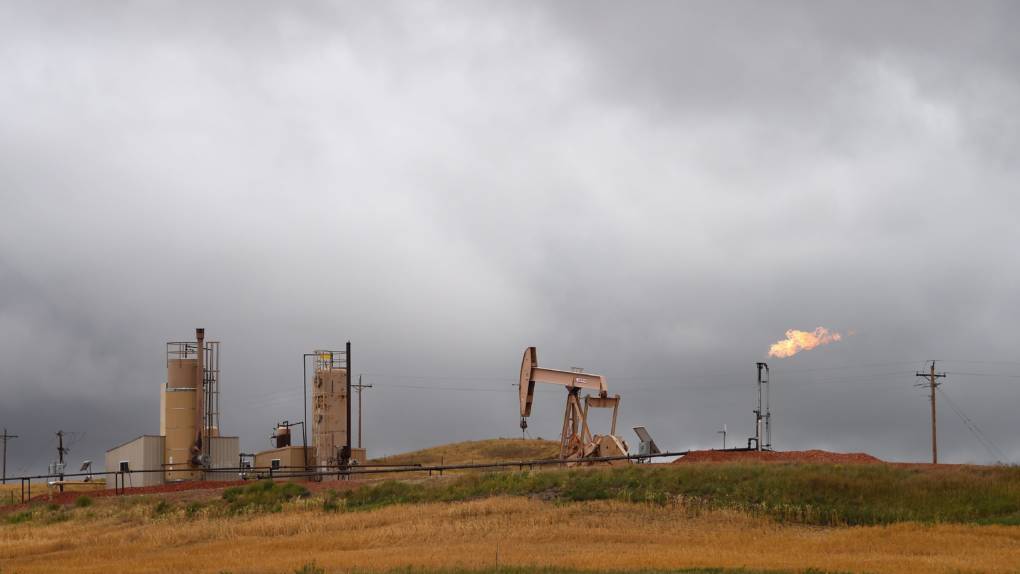
"caption": "Pump jacks and a gas flare are seen near Williston, N.D., in 2016",
"description": "Pump jacks and a gas flare are seen near Williston, N.D., in 2016",
"title": "Pump jacks and a gas flare are seen near Williston, N.D., in 2016.",
"credit": "Robyn Beck/AFP/Getty Images",
"status": "inherit",
"isLoading": false,
"fetchFailed": false
},
"science_1804767": {
"type": "attachments",
"id": "science_1804767",
"meta": {
"index": "attachments_1716263798",
"site": "science",
"id": "1804767",
"found": true
},
"parent": 1799736,
"imgSizes": {
"small": {
"file": "https://ww2.kqed.org/app/uploads/sites/35/2017/07/Hawking_edited-520x390.jpg",
"width": 520,
"mimeType": "image/jpeg",
"height": 390
},
"twentyfourteen-full-width": {
"file": "https://ww2.kqed.org/app/uploads/sites/35/2017/07/Hawking_edited-768x576.jpg",
"width": 768,
"mimeType": "image/jpeg",
"height": 576
},
"thumbnail": {
"file": "https://ww2.kqed.org/app/uploads/sites/35/2017/07/Hawking_edited-160x120.jpg",
"width": 160,
"mimeType": "image/jpeg",
"height": 120
},
"post-thumbnail": {
"file": "https://ww2.kqed.org/app/uploads/sites/35/2017/07/Hawking_edited-672x372.jpg",
"width": 672,
"mimeType": "image/jpeg",
"height": 372
},
"xsmall": {
"file": "https://ww2.kqed.org/app/uploads/sites/35/2017/07/Hawking_edited-375x281.jpg",
"width": 375,
"mimeType": "image/jpeg",
"height": 281
},
"kqedFullSize": {
"file": "https://ww2.kqed.org/app/uploads/sites/35/2017/07/Hawking_edited.jpg",
"width": 768,
"height": 576
},
"guest-author-50": {
"file": "https://ww2.kqed.org/app/uploads/sites/35/2017/07/Hawking_edited-50x50.jpg",
"width": 50,
"mimeType": "image/jpeg",
"height": 50
},
"guest-author-96": {
"file": "https://ww2.kqed.org/app/uploads/sites/35/2017/07/Hawking_edited-96x96.jpg",
"width": 96,
"mimeType": "image/jpeg",
"height": 96
},
"guest-author-64": {
"file": "https://ww2.kqed.org/app/uploads/sites/35/2017/07/Hawking_edited-64x64.jpg",
"width": 64,
"mimeType": "image/jpeg",
"height": 64
},
"guest-author-32": {
"file": "https://ww2.kqed.org/app/uploads/sites/35/2017/07/Hawking_edited-32x32.jpg",
"width": 32,
"mimeType": "image/jpeg",
"height": 32
},
"detail": {
"file": "https://ww2.kqed.org/app/uploads/sites/35/2017/07/Hawking_edited-150x150.jpg",
"width": 150,
"mimeType": "image/jpeg",
"height": 150
},
"medium_large": {
"file": "https://ww2.kqed.org/app/uploads/sites/35/2017/07/Hawking_edited-768x576.jpg",
"width": 768,
"mimeType": "image/jpeg",
"height": 576
},
"guest-author-128": {
"file": "https://ww2.kqed.org/app/uploads/sites/35/2017/07/Hawking_edited-128x128.jpg",
"width": 128,
"mimeType": "image/jpeg",
"height": 128
},
"xxsmall": {
"file": "https://ww2.kqed.org/app/uploads/sites/35/2017/07/Hawking_edited-240x180.jpg",
"width": 240,
"mimeType": "image/jpeg",
"height": 180
}
},
"publishDate": 1499237424,
"modified": 1499237439,
"caption": "Stephen Hawking, shown here in April 2016 during the announcement in New York of a new space exploration project called Breakthrough Starshot, is one of 150 top U.K. scientists who've warned that Brexit would be a \"disaster for science.\"",
"description": null,
"title": "Hawking_edited",
"credit": null,
"status": "inherit",
"isLoading": false,
"fetchFailed": false
},
"science_1783059": {
"type": "attachments",
"id": "science_1783059",
"meta": {
"index": "attachments_1716263798",
"site": "science",
"id": "1783059",
"found": true
},
"parent": 1783056,
"imgSizes": {
"kqedFullSize": {
"file": "https://ww2.kqed.org/app/uploads/sites/35/2017/06/pathfinder_full-e1498774095260.jpg",
"width": 1038,
"height": 690
}
},
"publishDate": 1498773047,
"modified": 1498773186,
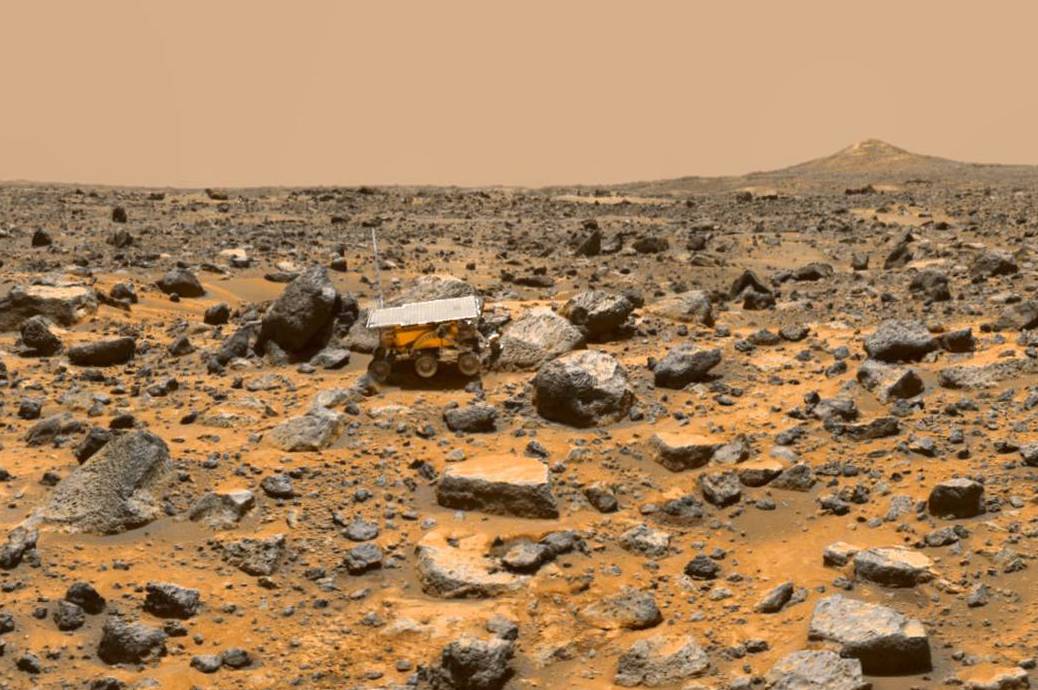
"caption": "The Pathfinder rover, Sojourner, is shown snuggled against a rock nicknamed Moe. The south peak of two hills, known as Twin Peaks, can be seen on the horizon. The rocky surface is comprised of materials washed down from the highlands and deposited in this ancient outflow channel by a catastrophic flood.",
"description": null,
"title": "pathfinder_full",
"credit": "NASA/JPL",
"status": "inherit",
"isLoading": false,
"fetchFailed": false
},
"science_1787233": {
"type": "attachments",
"id": "science_1787233",
"meta": {
"index": "attachments_1716263798",
"site": "science",
"id": "1787233",
"found": true
},
"parent": 1786970,
"imgSizes": {
"small": {
"file": "https://ww2.kqed.org/app/uploads/sites/35/2017/06/RJohnson_Tidepooling_FitzgeraldMarineReserve_2016-520x390.jpg",
"width": 520,
"mimeType": "image/jpeg",
"height": 390
},
"twentyfourteen-full-width": {
"file": "https://ww2.kqed.org/app/uploads/sites/35/2017/06/RJohnson_Tidepooling_FitzgeraldMarineReserve_2016-1038x576.jpg",
"width": 1038,
"mimeType": "image/jpeg",
"height": 576
},
"thumbnail": {
"file": "https://ww2.kqed.org/app/uploads/sites/35/2017/06/RJohnson_Tidepooling_FitzgeraldMarineReserve_2016-160x120.jpg",
"width": 160,
"mimeType": "image/jpeg",
"height": 120
},
"fd-sm": {
"file": "https://ww2.kqed.org/app/uploads/sites/35/2017/06/RJohnson_Tidepooling_FitzgeraldMarineReserve_2016-960x720.jpg",
"width": 960,
"mimeType": "image/jpeg",
"height": 720
},
"post-thumbnail": {
"file": "https://ww2.kqed.org/app/uploads/sites/35/2017/06/RJohnson_Tidepooling_FitzgeraldMarineReserve_2016-672x372.jpg",
"width": 672,
"mimeType": "image/jpeg",
"height": 372
},
"xsmall": {
"file": "https://ww2.kqed.org/app/uploads/sites/35/2017/06/RJohnson_Tidepooling_FitzgeraldMarineReserve_2016-375x281.jpg",
"width": 375,
"mimeType": "image/jpeg",
"height": 281
},
"kqedFullSize": {
"file": "https://ww2.kqed.org/app/uploads/sites/35/2017/06/RJohnson_Tidepooling_FitzgeraldMarineReserve_2016.jpg",
"width": 2016,
"height": 1512
},
"large": {
"file": "https://ww2.kqed.org/app/uploads/sites/35/2017/06/RJohnson_Tidepooling_FitzgeraldMarineReserve_2016-1020x765.jpg",
"width": 1020,
"mimeType": "image/jpeg",
"height": 765
},
"xlarge": {
"file": "https://ww2.kqed.org/app/uploads/sites/35/2017/06/RJohnson_Tidepooling_FitzgeraldMarineReserve_2016-1180x885.jpg",
"width": 1180,
"mimeType": "image/jpeg",
"height": 885
},
"guest-author-50": {
"file": "https://ww2.kqed.org/app/uploads/sites/35/2017/06/RJohnson_Tidepooling_FitzgeraldMarineReserve_2016-50x50.jpg",
"width": 50,
"mimeType": "image/jpeg",
"height": 50
},
"guest-author-96": {
"file": "https://ww2.kqed.org/app/uploads/sites/35/2017/06/RJohnson_Tidepooling_FitzgeraldMarineReserve_2016-96x96.jpg",
"width": 96,
"mimeType": "image/jpeg",
"height": 96
},
"medium": {
"file": "https://ww2.kqed.org/app/uploads/sites/35/2017/06/RJohnson_Tidepooling_FitzgeraldMarineReserve_2016-800x600.jpg",
"width": 800,
"mimeType": "image/jpeg",
"height": 600
},
"guest-author-64": {
"file": "https://ww2.kqed.org/app/uploads/sites/35/2017/06/RJohnson_Tidepooling_FitzgeraldMarineReserve_2016-64x64.jpg",
"width": 64,
"mimeType": "image/jpeg",
"height": 64
},
"guest-author-32": {
"file": "https://ww2.kqed.org/app/uploads/sites/35/2017/06/RJohnson_Tidepooling_FitzgeraldMarineReserve_2016-32x32.jpg",
"width": 32,
"mimeType": "image/jpeg",
"height": 32
},
"fd-lrg": {
"file": "https://ww2.kqed.org/app/uploads/sites/35/2017/06/RJohnson_Tidepooling_FitzgeraldMarineReserve_2016-1920x1440.jpg",
"width": 1920,
"mimeType": "image/jpeg",
"height": 1440
},
"fd-med": {
"file": "https://ww2.kqed.org/app/uploads/sites/35/2017/06/RJohnson_Tidepooling_FitzgeraldMarineReserve_2016-1180x885.jpg",
"width": 1180,
"mimeType": "image/jpeg",
"height": 885
},
"full-width": {
"file": "https://ww2.kqed.org/app/uploads/sites/35/2017/06/RJohnson_Tidepooling_FitzgeraldMarineReserve_2016-1920x1440.jpg",
"width": 1920,
"mimeType": "image/jpeg",
"height": 1440
},
"detail": {
"file": "https://ww2.kqed.org/app/uploads/sites/35/2017/06/RJohnson_Tidepooling_FitzgeraldMarineReserve_2016-150x150.jpg",
"width": 150,
"mimeType": "image/jpeg",
"height": 150
},
"medium_large": {
"file": "https://ww2.kqed.org/app/uploads/sites/35/2017/06/RJohnson_Tidepooling_FitzgeraldMarineReserve_2016-768x576.jpg",
"width": 768,
"mimeType": "image/jpeg",
"height": 576
},
"guest-author-128": {
"file": "https://ww2.kqed.org/app/uploads/sites/35/2017/06/RJohnson_Tidepooling_FitzgeraldMarineReserve_2016-128x128.jpg",
"width": 128,
"mimeType": "image/jpeg",
"height": 128
},
"xxsmall": {
"file": "https://ww2.kqed.org/app/uploads/sites/35/2017/06/RJohnson_Tidepooling_FitzgeraldMarineReserve_2016-240x180.jpg",
"width": 240,
"mimeType": "image/jpeg",
"height": 180
}
},
"publishDate": 1498861758,
"modified": 1499097694,
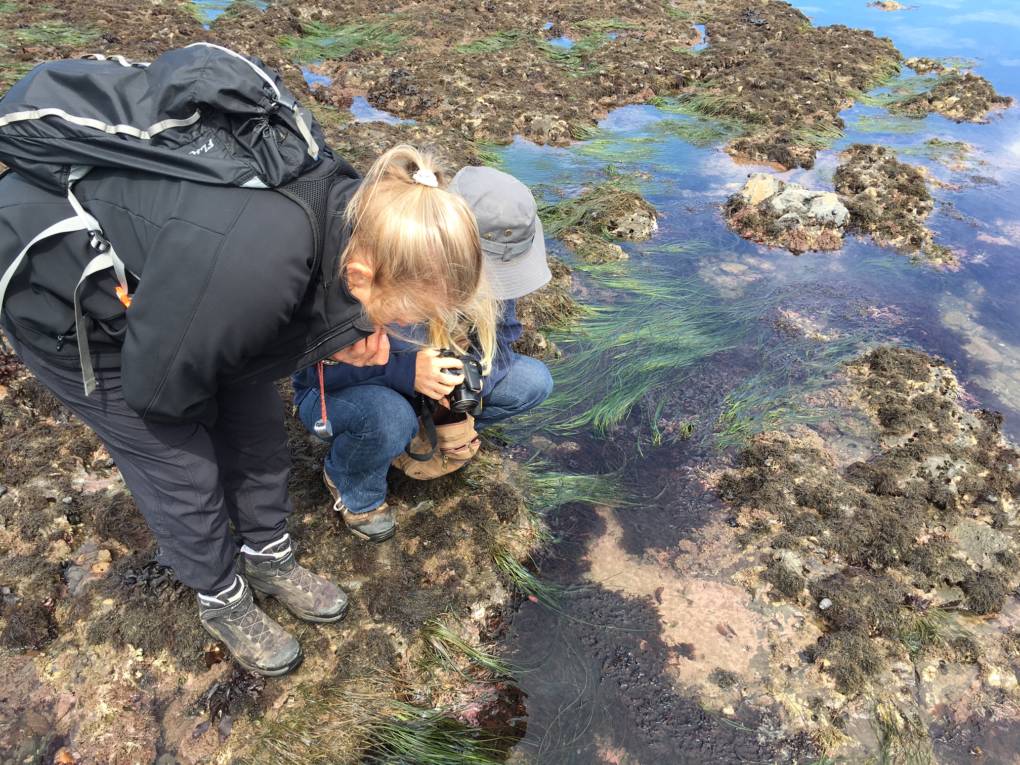
"caption": "Tidepooling at the Fitzgerald Marine Reserve during last year's bio-blitz.",
"description": null,
"title": "RJohnson_Tidepooling_FitzgeraldMarineReserve_2016",
"credit": "Rebecca Johnson/California Academy of Sciences",
"status": "inherit",
"isLoading": false,
"fetchFailed": false
},
"science_1786977": {
"type": "attachments",
"id": "science_1786977",
"meta": {
"index": "attachments_1716263798",
"site": "science",
"id": "1786977",
"found": true
},
"parent": 1786975,
"imgSizes": {
"small": {
"file": "https://ww2.kqed.org/app/uploads/sites/35/2017/06/climate-data_enl-ff40c5f4d3e8458dfe0ffe205d3a06e8b605229b-520x275.jpg",
"width": 520,
"mimeType": "image/jpeg",
"height": 275
},
"twentyfourteen-full-width": {
"file": "https://ww2.kqed.org/app/uploads/sites/35/2017/06/climate-data_enl-ff40c5f4d3e8458dfe0ffe205d3a06e8b605229b-1038x576.jpg",
"width": 1038,
"mimeType": "image/jpeg",
"height": 576
},
"thumbnail": {
"file": "https://ww2.kqed.org/app/uploads/sites/35/2017/06/climate-data_enl-ff40c5f4d3e8458dfe0ffe205d3a06e8b605229b-160x85.jpg",
"width": 160,
"mimeType": "image/jpeg",
"height": 85
},
"fd-sm": {
"file": "https://ww2.kqed.org/app/uploads/sites/35/2017/06/climate-data_enl-ff40c5f4d3e8458dfe0ffe205d3a06e8b605229b-960x507.jpg",
"width": 960,
"mimeType": "image/jpeg",
"height": 507
},
"post-thumbnail": {
"file": "https://ww2.kqed.org/app/uploads/sites/35/2017/06/climate-data_enl-ff40c5f4d3e8458dfe0ffe205d3a06e8b605229b-672x372.jpg",
"width": 672,
"mimeType": "image/jpeg",
"height": 372
},
"xsmall": {
"file": "https://ww2.kqed.org/app/uploads/sites/35/2017/06/climate-data_enl-ff40c5f4d3e8458dfe0ffe205d3a06e8b605229b-375x198.jpg",
"width": 375,
"mimeType": "image/jpeg",
"height": 198
},
"kqedFullSize": {
"file": "https://ww2.kqed.org/app/uploads/sites/35/2017/06/climate-data_enl-ff40c5f4d3e8458dfe0ffe205d3a06e8b605229b.jpg",
"width": 2000,
"height": 1057
},
"large": {
"file": "https://ww2.kqed.org/app/uploads/sites/35/2017/06/climate-data_enl-ff40c5f4d3e8458dfe0ffe205d3a06e8b605229b-1020x539.jpg",
"width": 1020,
"mimeType": "image/jpeg",
"height": 539
},
"xlarge": {
"file": "https://ww2.kqed.org/app/uploads/sites/35/2017/06/climate-data_enl-ff40c5f4d3e8458dfe0ffe205d3a06e8b605229b-1180x624.jpg",
"width": 1180,
"mimeType": "image/jpeg",
"height": 624
},
"guest-author-50": {
"file": "https://ww2.kqed.org/app/uploads/sites/35/2017/06/climate-data_enl-ff40c5f4d3e8458dfe0ffe205d3a06e8b605229b-50x50.jpg",
"width": 50,
"mimeType": "image/jpeg",
"height": 50
},
"guest-author-96": {
"file": "https://ww2.kqed.org/app/uploads/sites/35/2017/06/climate-data_enl-ff40c5f4d3e8458dfe0ffe205d3a06e8b605229b-96x96.jpg",
"width": 96,
"mimeType": "image/jpeg",
"height": 96
},
"medium": {
"file": "https://ww2.kqed.org/app/uploads/sites/35/2017/06/climate-data_enl-ff40c5f4d3e8458dfe0ffe205d3a06e8b605229b-800x423.jpg",
"width": 800,
"mimeType": "image/jpeg",
"height": 423
},
"guest-author-64": {
"file": "https://ww2.kqed.org/app/uploads/sites/35/2017/06/climate-data_enl-ff40c5f4d3e8458dfe0ffe205d3a06e8b605229b-64x64.jpg",
"width": 64,
"mimeType": "image/jpeg",
"height": 64
},
"guest-author-32": {
"file": "https://ww2.kqed.org/app/uploads/sites/35/2017/06/climate-data_enl-ff40c5f4d3e8458dfe0ffe205d3a06e8b605229b-32x32.jpg",
"width": 32,
"mimeType": "image/jpeg",
"height": 32
},
"fd-lrg": {
"file": "https://ww2.kqed.org/app/uploads/sites/35/2017/06/climate-data_enl-ff40c5f4d3e8458dfe0ffe205d3a06e8b605229b-1920x1015.jpg",
"width": 1920,
"mimeType": "image/jpeg",
"height": 1015
},
"fd-med": {
"file": "https://ww2.kqed.org/app/uploads/sites/35/2017/06/climate-data_enl-ff40c5f4d3e8458dfe0ffe205d3a06e8b605229b-1180x624.jpg",
"width": 1180,
"mimeType": "image/jpeg",
"height": 624
},
"full-width": {
"file": "https://ww2.kqed.org/app/uploads/sites/35/2017/06/climate-data_enl-ff40c5f4d3e8458dfe0ffe205d3a06e8b605229b-1920x1015.jpg",
"width": 1920,
"mimeType": "image/jpeg",
"height": 1015
},
"detail": {
"file": "https://ww2.kqed.org/app/uploads/sites/35/2017/06/climate-data_enl-ff40c5f4d3e8458dfe0ffe205d3a06e8b605229b-150x150.jpg",
"width": 150,
"mimeType": "image/jpeg",
"height": 150
},
"medium_large": {
"file": "https://ww2.kqed.org/app/uploads/sites/35/2017/06/climate-data_enl-ff40c5f4d3e8458dfe0ffe205d3a06e8b605229b-768x406.jpg",
"width": 768,
"mimeType": "image/jpeg",
"height": 406
},
"guest-author-128": {
"file": "https://ww2.kqed.org/app/uploads/sites/35/2017/06/climate-data_enl-ff40c5f4d3e8458dfe0ffe205d3a06e8b605229b-128x128.jpg",
"width": 128,
"mimeType": "image/jpeg",
"height": 128
},
"xxsmall": {
"file": "https://ww2.kqed.org/app/uploads/sites/35/2017/06/climate-data_enl-ff40c5f4d3e8458dfe0ffe205d3a06e8b605229b-240x127.jpg",
"width": 240,
"mimeType": "image/jpeg",
"height": 127
}
},
"publishDate": 1498854803,
"modified": 1498859464,
"caption": null,
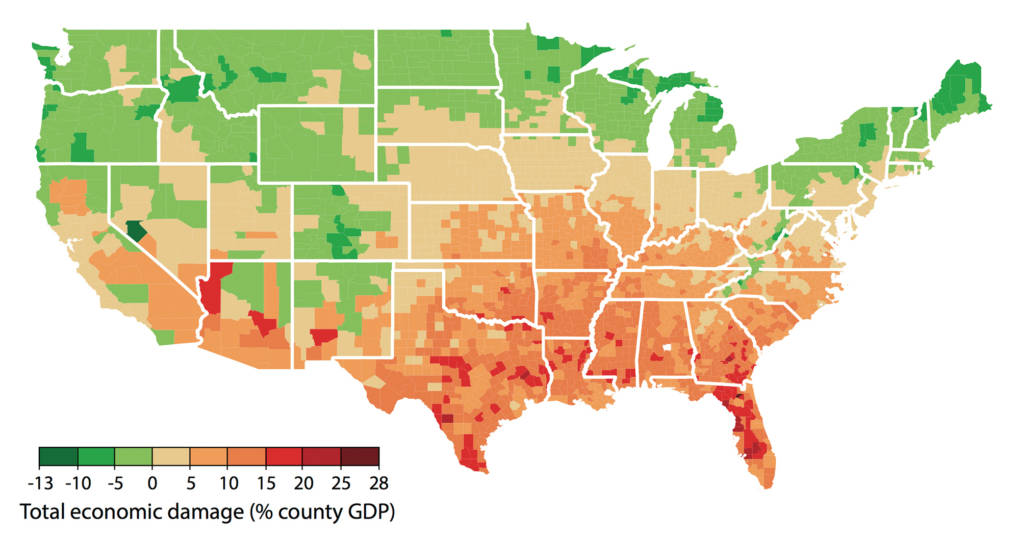
"description": "Potential economic damages are shown at the county level in a scenario in which emissions of greenhouse gases continue at current rates. Green indicates areas that could see economic benefits. To see an interactive version of this map, click \u003ca href=\"http://www.impactlab.org/map/\">here\u003c/a>.",
"title": "climate map",
"credit": "Hsiang, Kopp, Jina, Rising, et al./Science",
"status": "inherit",
"isLoading": false,
"fetchFailed": false
},
"science_7534": {
"type": "attachments",
"id": "science_7534",
"meta": {
"index": "attachments_1716263798",
"site": "science",
"id": "7534",
"found": true
},
"parent": 7468,
"imgSizes": {
"kqedFullSize": {
"file": "https://ww2.kqed.org/app/uploads/sites/35/2013/08/smokestacks-featured.jpg",
"width": 640,
"height": 360
}
},
"publishDate": 1377293892,
"modified": 1538983564,
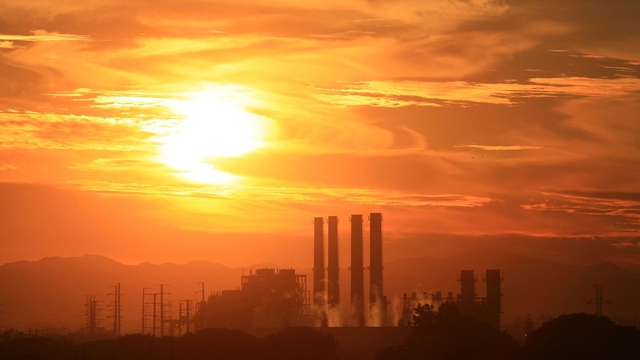
"caption": "San Fernando Valley Generating Station, Sun Valley, California. A United Nations science report released on Sunday says limiting global warming by an extra degree could be a matter of life or death for people and ecosystems.",
"description": "SUN VALLEY, CA - DECEMBER 11: The Department of Water and Power (DWP) San Fernando Valley Generating Station is seen December 11, 2008 in Sun Valley, California. Under a new climate plan before state regulators, California would take major steps toward cutting greenhouse gas emissions. If adopted by the California Air Resources Board, it would be the most ambitious global warming prevention plan in the nation, outlining for the first time how businesses and the public would meet the 2006 law that made the state a leader on global climate change. The action would lead to the creation of a carbon-credit market to make it cheaper for the biggest polluters to cut emissions, and change the ways utilities generate power, businesses use electricity, and personal transportation (Photo by David McNew/Getty Images)",
"title": "smokestacks-featured",
"credit": "Photo by David McNew/Getty Images",
"status": "inherit",
"isLoading": false,
"fetchFailed": false
},
"science_1754416": {
"type": "attachments",
"id": "science_1754416",
"meta": {
"index": "attachments_1716263798",
"site": "science",
"id": "1754416",
"found": true
},
"parent": 1754411,
"imgSizes": {
"small": {
"file": "https://ww2.kqed.org/app/uploads/sites/35/2017/06/Squaw-Chicken-520x390.jpg",
"width": 520,
"mimeType": "image/jpeg",
"height": 390
},
"twentyfourteen-full-width": {
"file": "https://ww2.kqed.org/app/uploads/sites/35/2017/06/Squaw-Chicken-1024x576.jpg",
"width": 1024,
"mimeType": "image/jpeg",
"height": 576
},
"thumbnail": {
"file": "https://ww2.kqed.org/app/uploads/sites/35/2017/06/Squaw-Chicken-160x120.jpg",
"width": 160,
"mimeType": "image/jpeg",
"height": 120
},
"fd-sm": {
"file": "https://ww2.kqed.org/app/uploads/sites/35/2017/06/Squaw-Chicken-960x720.jpg",
"width": 960,
"mimeType": "image/jpeg",
"height": 720
},
"post-thumbnail": {
"file": "https://ww2.kqed.org/app/uploads/sites/35/2017/06/Squaw-Chicken-672x372.jpg",
"width": 672,
"mimeType": "image/jpeg",
"height": 372
},
"xsmall": {
"file": "https://ww2.kqed.org/app/uploads/sites/35/2017/06/Squaw-Chicken-375x281.jpg",
"width": 375,
"mimeType": "image/jpeg",
"height": 281
},
"kqedFullSize": {
"file": "https://ww2.kqed.org/app/uploads/sites/35/2017/06/Squaw-Chicken.jpg",
"width": 1024,
"height": 768
},
"large": {
"file": "https://ww2.kqed.org/app/uploads/sites/35/2017/06/Squaw-Chicken-1020x765.jpg",
"width": 1020,
"mimeType": "image/jpeg",
"height": 765
},
"guest-author-50": {
"file": "https://ww2.kqed.org/app/uploads/sites/35/2017/06/Squaw-Chicken-50x50.jpg",
"width": 50,
"mimeType": "image/jpeg",
"height": 50
},
"guest-author-96": {
"file": "https://ww2.kqed.org/app/uploads/sites/35/2017/06/Squaw-Chicken-96x96.jpg",
"width": 96,
"mimeType": "image/jpeg",
"height": 96
},
"medium": {
"file": "https://ww2.kqed.org/app/uploads/sites/35/2017/06/Squaw-Chicken-800x600.jpg",
"width": 800,
"mimeType": "image/jpeg",
"height": 600
},
"guest-author-64": {
"file": "https://ww2.kqed.org/app/uploads/sites/35/2017/06/Squaw-Chicken-64x64.jpg",
"width": 64,
"mimeType": "image/jpeg",
"height": 64
},
"guest-author-32": {
"file": "https://ww2.kqed.org/app/uploads/sites/35/2017/06/Squaw-Chicken-32x32.jpg",
"width": 32,
"mimeType": "image/jpeg",
"height": 32
},
"detail": {
"file": "https://ww2.kqed.org/app/uploads/sites/35/2017/06/Squaw-Chicken-150x150.jpg",
"width": 150,
"mimeType": "image/jpeg",
"height": 150
},
"medium_large": {
"file": "https://ww2.kqed.org/app/uploads/sites/35/2017/06/Squaw-Chicken-768x576.jpg",
"width": 768,
"mimeType": "image/jpeg",
"height": 576
},
"guest-author-128": {
"file": "https://ww2.kqed.org/app/uploads/sites/35/2017/06/Squaw-Chicken-128x128.jpg",
"width": 128,
"mimeType": "image/jpeg",
"height": 128
},
"xxsmall": {
"file": "https://ww2.kqed.org/app/uploads/sites/35/2017/06/Squaw-Chicken-240x180.jpg",
"width": 240,
"mimeType": "image/jpeg",
"height": 180
}
},
"publishDate": 1498161978,
"modified": 1498520769,
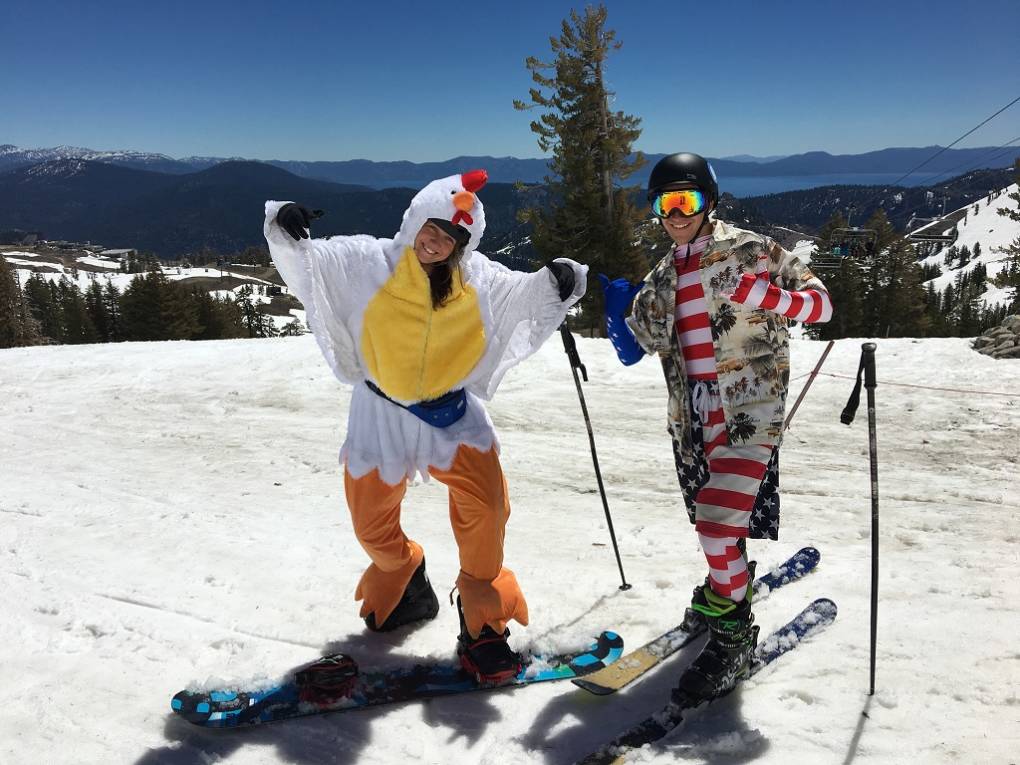
"caption": "Chelsea Chestnut (L) and Will Mathews (R) pose at the top of Squaw Valley on an 80-degree day. ",
"description": null,
"title": "Squaw Chicken",
"credit": "Lesley McClurg/ KQED",
"status": "inherit",
"isLoading": false,
"fetchFailed": false
},
"science_1746582": {
"type": "attachments",
"id": "science_1746582",
"meta": {
"index": "attachments_1716263798",
"site": "science",
"id": "1746582",
"found": true
},
"parent": 1746474,
"imgSizes": {
"small": {
"file": "https://ww2.kqed.org/app/uploads/sites/35/2017/06/neowise-520x293.jpg",
"width": 520,
"mimeType": "image/jpeg",
"height": 293
},
"thumbnail": {
"file": "https://ww2.kqed.org/app/uploads/sites/35/2017/06/neowise-160x90.jpg",
"width": 160,
"mimeType": "image/jpeg",
"height": 90
},
"post-thumbnail": {
"file": "https://ww2.kqed.org/app/uploads/sites/35/2017/06/neowise-672x372.jpg",
"width": 672,
"mimeType": "image/jpeg",
"height": 372
},
"xsmall": {
"file": "https://ww2.kqed.org/app/uploads/sites/35/2017/06/neowise-375x211.jpg",
"width": 375,
"mimeType": "image/jpeg",
"height": 211
},
"kqedFullSize": {
"file": "https://ww2.kqed.org/app/uploads/sites/35/2017/06/neowise.jpg",
"width": 800,
"height": 450
},
"guest-author-50": {
"file": "https://ww2.kqed.org/app/uploads/sites/35/2017/06/neowise-50x50.jpg",
"width": 50,
"mimeType": "image/jpeg",
"height": 50
},
"guest-author-96": {
"file": "https://ww2.kqed.org/app/uploads/sites/35/2017/06/neowise-96x96.jpg",
"width": 96,
"mimeType": "image/jpeg",
"height": 96
},
"medium": {
"file": "https://ww2.kqed.org/app/uploads/sites/35/2017/06/neowise-800x450.jpg",
"width": 800,
"mimeType": "image/jpeg",
"height": 450
},
"guest-author-64": {
"file": "https://ww2.kqed.org/app/uploads/sites/35/2017/06/neowise-64x64.jpg",
"width": 64,
"mimeType": "image/jpeg",
"height": 64
},
"guest-author-32": {
"file": "https://ww2.kqed.org/app/uploads/sites/35/2017/06/neowise-32x32.jpg",
"width": 32,
"mimeType": "image/jpeg",
"height": 32
},
"detail": {
"file": "https://ww2.kqed.org/app/uploads/sites/35/2017/06/neowise-150x150.jpg",
"width": 150,
"mimeType": "image/jpeg",
"height": 150
},
"medium_large": {
"file": "https://ww2.kqed.org/app/uploads/sites/35/2017/06/neowise-768x432.jpg",
"width": 768,
"mimeType": "image/jpeg",
"height": 432
},
"guest-author-128": {
"file": "https://ww2.kqed.org/app/uploads/sites/35/2017/06/neowise-128x128.jpg",
"width": 128,
"mimeType": "image/jpeg",
"height": 128
},
"xxsmall": {
"file": "https://ww2.kqed.org/app/uploads/sites/35/2017/06/neowise-240x135.jpg",
"width": 240,
"mimeType": "image/jpeg",
"height": 135
}
},
"publishDate": 1497995559,
"modified": 1497995681,
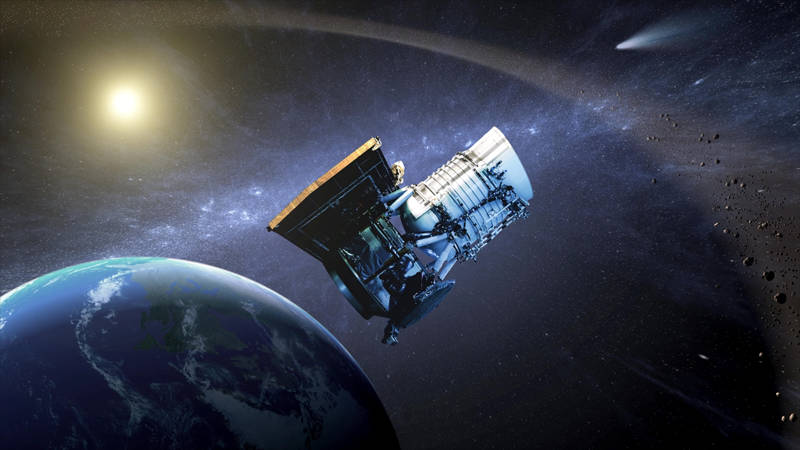
"caption": "Artist concept of NASA's Wide-field Infrared Survey Explorer (WISE) spacecraft, reborn in 2013 as \"NEOWISE\" on a mission to discover and study Near Earth Objects. ",
"description": "Artist concept of NASA's Wide-field Infrared Survey Explorer (WISE) spacecraft, reborn in 2013 as \"NEOWISE\" on a mission to discover and study Near Earth Objects. ",
"title": "neowise",
"credit": "IPAC-Caltech",
"status": "inherit",
"isLoading": false,
"fetchFailed": false
},
"science_1728705": {
"type": "attachments",
"id": "science_1728705",
"meta": {
"index": "attachments_1716263798",
"site": "science",
"id": "1728705",
"found": true
},
"parent": 1728704,
"imgSizes": {
"small": {
"file": "https://ww2.kqed.org/app/uploads/sites/35/2017/06/TSE2012PhilHart_6999_900px-520x520.jpg",
"width": 520,
"mimeType": "image/jpeg",
"height": 520
},
"twentyfourteen-full-width": {
"file": "https://ww2.kqed.org/app/uploads/sites/35/2017/06/TSE2012PhilHart_6999_900px-900x576.jpg",
"width": 900,
"mimeType": "image/jpeg",
"height": 576
},
"thumbnail": {
"file": "https://ww2.kqed.org/app/uploads/sites/35/2017/06/TSE2012PhilHart_6999_900px-160x160.jpg",
"width": 160,
"mimeType": "image/jpeg",
"height": 160
},
"post-thumbnail": {
"file": "https://ww2.kqed.org/app/uploads/sites/35/2017/06/TSE2012PhilHart_6999_900px-672x372.jpg",
"width": 672,
"mimeType": "image/jpeg",
"height": 372
},
"xsmall": {
"file": "https://ww2.kqed.org/app/uploads/sites/35/2017/06/TSE2012PhilHart_6999_900px-375x375.jpg",
"width": 375,
"mimeType": "image/jpeg",
"height": 375
},
"kqedFullSize": {
"file": "https://ww2.kqed.org/app/uploads/sites/35/2017/06/TSE2012PhilHart_6999_900px.jpg",
"width": 900,
"height": 900
},
"guest-author-50": {
"file": "https://ww2.kqed.org/app/uploads/sites/35/2017/06/TSE2012PhilHart_6999_900px-50x50.jpg",
"width": 50,
"mimeType": "image/jpeg",
"height": 50
},
"guest-author-96": {
"file": "https://ww2.kqed.org/app/uploads/sites/35/2017/06/TSE2012PhilHart_6999_900px-96x96.jpg",
"width": 96,
"mimeType": "image/jpeg",
"height": 96
},
"medium": {
"file": "https://ww2.kqed.org/app/uploads/sites/35/2017/06/TSE2012PhilHart_6999_900px-800x800.jpg",
"width": 800,
"mimeType": "image/jpeg",
"height": 800
},
"guest-author-64": {
"file": "https://ww2.kqed.org/app/uploads/sites/35/2017/06/TSE2012PhilHart_6999_900px-64x64.jpg",
"width": 64,
"mimeType": "image/jpeg",
"height": 64
},
"guest-author-32": {
"file": "https://ww2.kqed.org/app/uploads/sites/35/2017/06/TSE2012PhilHart_6999_900px-32x32.jpg",
"width": 32,
"mimeType": "image/jpeg",
"height": 32
},
"detail": {
"file": "https://ww2.kqed.org/app/uploads/sites/35/2017/06/TSE2012PhilHart_6999_900px-150x150.jpg",
"width": 150,
"mimeType": "image/jpeg",
"height": 150
},
"medium_large": {
"file": "https://ww2.kqed.org/app/uploads/sites/35/2017/06/TSE2012PhilHart_6999_900px-768x768.jpg",
"width": 768,
"mimeType": "image/jpeg",
"height": 768
},
"guest-author-128": {
"file": "https://ww2.kqed.org/app/uploads/sites/35/2017/06/TSE2012PhilHart_6999_900px-128x128.jpg",
"width": 128,
"mimeType": "image/jpeg",
"height": 128
},
"xxsmall": {
"file": "https://ww2.kqed.org/app/uploads/sites/35/2017/06/TSE2012PhilHart_6999_900px-240x240.jpg",
"width": 240,
"mimeType": "image/jpeg",
"height": 240
}
},
"publishDate": 1497618543,
"modified": 1497918826,
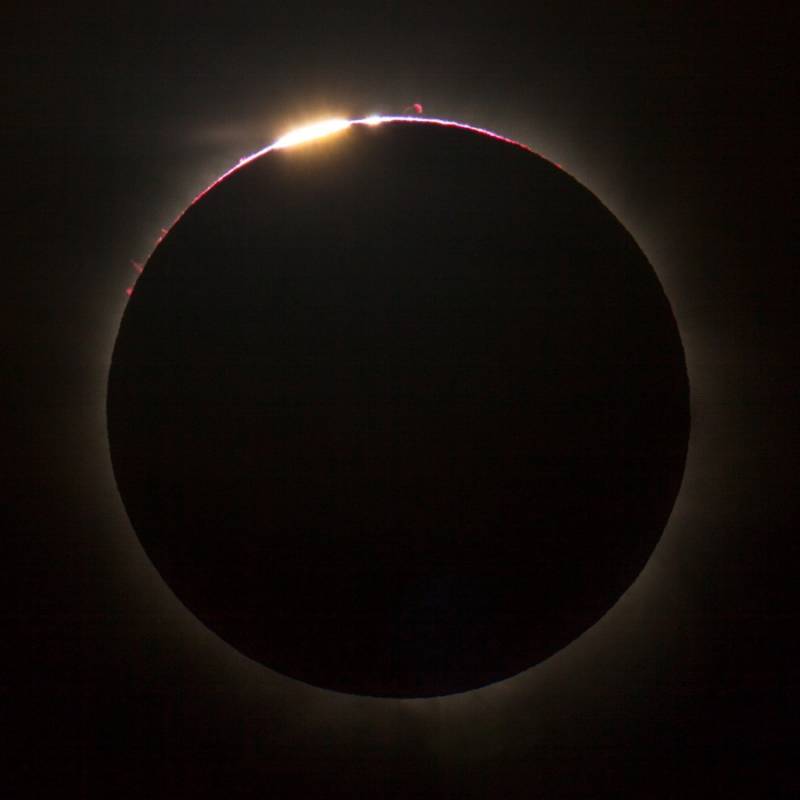
"caption": "Total solar eclipse over Queensland, Australia. A tiny portion of the Sun's disk peeks behind the moon, which is surrounded by the halo of a the solar corona.",
"description": null,
"title": "TSE2012PhilHart_6999_900px",
"credit": "\u003ca href=\"http://philhart.com/content/solar-eclipse-queensland-14th-november-2012\">Phil Hart\u003c/a>",
"status": "inherit",
"isLoading": false,
"fetchFailed": false
},
"science_1680330": {
"type": "attachments",
"id": "science_1680330",
"meta": {
"index": "attachments_1716263798",
"site": "science",
"id": "1680330",
"found": true
},
"parent": 1664694,
"imgSizes": {
"small": {
"file": "https://ww2.kqed.org/app/uploads/sites/35/2017/06/DL412-phead.1-520x293.png",
"width": 520,
"mimeType": "image/png",
"height": 293
},
"twentyfourteen-full-width": {
"file": "https://ww2.kqed.org/app/uploads/sites/35/2017/06/DL412-phead.1-1038x576.png",
"width": 1038,
"mimeType": "image/png",
"height": 576
},
"thumbnail": {
"file": "https://ww2.kqed.org/app/uploads/sites/35/2017/06/DL412-phead.1-160x90.png",
"width": 160,
"mimeType": "image/png",
"height": 90
},
"fd-sm": {
"file": "https://ww2.kqed.org/app/uploads/sites/35/2017/06/DL412-phead.1-960x540.png",
"width": 960,
"mimeType": "image/png",
"height": 540
},
"post-thumbnail": {
"file": "https://ww2.kqed.org/app/uploads/sites/35/2017/06/DL412-phead.1-672x372.png",
"width": 672,
"mimeType": "image/png",
"height": 372
},
"xsmall": {
"file": "https://ww2.kqed.org/app/uploads/sites/35/2017/06/DL412-phead.1-375x211.png",
"width": 375,
"mimeType": "image/png",
"height": 211
},
"kqedFullSize": {
"file": "https://ww2.kqed.org/app/uploads/sites/35/2017/06/DL412-phead.1.png",
"width": 1920,
"height": 1080
},
"large": {
"file": "https://ww2.kqed.org/app/uploads/sites/35/2017/06/DL412-phead.1-1020x574.png",
"width": 1020,
"mimeType": "image/png",
"height": 574
},
"xlarge": {
"file": "https://ww2.kqed.org/app/uploads/sites/35/2017/06/DL412-phead.1-1180x664.png",
"width": 1180,
"mimeType": "image/png",
"height": 664
},
"guest-author-50": {
"file": "https://ww2.kqed.org/app/uploads/sites/35/2017/06/DL412-phead.1-50x50.png",
"width": 50,
"mimeType": "image/png",
"height": 50
},
"guest-author-96": {
"file": "https://ww2.kqed.org/app/uploads/sites/35/2017/06/DL412-phead.1-96x96.png",
"width": 96,
"mimeType": "image/png",
"height": 96
},
"medium": {
"file": "https://ww2.kqed.org/app/uploads/sites/35/2017/06/DL412-phead.1-800x450.png",
"width": 800,
"mimeType": "image/png",
"height": 450
},
"guest-author-64": {
"file": "https://ww2.kqed.org/app/uploads/sites/35/2017/06/DL412-phead.1-64x64.png",
"width": 64,
"mimeType": "image/png",
"height": 64
},
"guest-author-32": {
"file": "https://ww2.kqed.org/app/uploads/sites/35/2017/06/DL412-phead.1-32x32.png",
"width": 32,
"mimeType": "image/png",
"height": 32
},
"fd-lrg": {
"file": "https://ww2.kqed.org/app/uploads/sites/35/2017/06/DL412-phead.1-1920x1080.png",
"width": 1920,
"mimeType": "image/png",
"height": 1080
},
"fd-med": {
"file": "https://ww2.kqed.org/app/uploads/sites/35/2017/06/DL412-phead.1-1180x664.png",
"width": 1180,
"mimeType": "image/png",
"height": 664
},
"full-width": {
"file": "https://ww2.kqed.org/app/uploads/sites/35/2017/06/DL412-phead.1-1920x1080.png",
"width": 1920,
"mimeType": "image/png",
"height": 1080
},
"detail": {
"file": "https://ww2.kqed.org/app/uploads/sites/35/2017/06/DL412-phead.1-150x150.png",
"width": 150,
"mimeType": "image/png",
"height": 150
},
"medium_large": {
"file": "https://ww2.kqed.org/app/uploads/sites/35/2017/06/DL412-phead.1-768x432.png",
"width": 768,
"mimeType": "image/png",
"height": 432
},
"guest-author-128": {
"file": "https://ww2.kqed.org/app/uploads/sites/35/2017/06/DL412-phead.1-128x128.png",
"width": 128,
"mimeType": "image/png",
"height": 128
},
"xxsmall": {
"file": "https://ww2.kqed.org/app/uploads/sites/35/2017/06/DL412-phead.1-240x135.png",
"width": 240,
"mimeType": "image/png",
"height": 135
}
},
"publishDate": 1496179503,
"modified": 1496179503,
"caption": null,
"description": null,
"title": "DL412 phead.1",
"credit": null,
"status": "inherit",
"isLoading": false,
"fetchFailed": false
},
"science_1722791": {
"type": "attachments",
"id": "science_1722791",
"meta": {
"index": "attachments_1716263798",
"site": "science",
"id": "1722791",
"found": true
},
"parent": 1718182,
"imgSizes": {
"small": {
"file": "https://ww2.kqed.org/app/uploads/sites/35/2017/06/Minarets_vista-520x390.jpeg",
"width": 520,
"mimeType": "image/jpeg",
"height": 390
},
"twentyfourteen-full-width": {
"file": "https://ww2.kqed.org/app/uploads/sites/35/2017/06/Minarets_vista-1038x576.jpeg",
"width": 1038,
"mimeType": "image/jpeg",
"height": 576
},
"thumbnail": {
"file": "https://ww2.kqed.org/app/uploads/sites/35/2017/06/Minarets_vista-160x120.jpeg",
"width": 160,
"mimeType": "image/jpeg",
"height": 120
},
"fd-sm": {
"file": "https://ww2.kqed.org/app/uploads/sites/35/2017/06/Minarets_vista-960x720.jpeg",
"width": 960,
"mimeType": "image/jpeg",
"height": 720
},
"post-thumbnail": {
"file": "https://ww2.kqed.org/app/uploads/sites/35/2017/06/Minarets_vista-672x372.jpeg",
"width": 672,
"mimeType": "image/jpeg",
"height": 372
},
"xsmall": {
"file": "https://ww2.kqed.org/app/uploads/sites/35/2017/06/Minarets_vista-375x281.jpeg",
"width": 375,
"mimeType": "image/jpeg",
"height": 281
},
"kqedFullSize": {
"file": "https://ww2.kqed.org/app/uploads/sites/35/2017/06/Minarets_vista.jpeg",
"width": 2000,
"height": 1500
},
"large": {
"file": "https://ww2.kqed.org/app/uploads/sites/35/2017/06/Minarets_vista-1020x765.jpeg",
"width": 1020,
"mimeType": "image/jpeg",
"height": 765
},
"xlarge": {
"file": "https://ww2.kqed.org/app/uploads/sites/35/2017/06/Minarets_vista-1180x885.jpeg",
"width": 1180,
"mimeType": "image/jpeg",
"height": 885
},
"guest-author-50": {
"file": "https://ww2.kqed.org/app/uploads/sites/35/2017/06/Minarets_vista-50x50.jpeg",
"width": 50,
"mimeType": "image/jpeg",
"height": 50
},
"guest-author-96": {
"file": "https://ww2.kqed.org/app/uploads/sites/35/2017/06/Minarets_vista-96x96.jpeg",
"width": 96,
"mimeType": "image/jpeg",
"height": 96
},
"medium": {
"file": "https://ww2.kqed.org/app/uploads/sites/35/2017/06/Minarets_vista-800x600.jpeg",
"width": 800,
"mimeType": "image/jpeg",
"height": 600
},
"guest-author-64": {
"file": "https://ww2.kqed.org/app/uploads/sites/35/2017/06/Minarets_vista-64x64.jpeg",
"width": 64,
"mimeType": "image/jpeg",
"height": 64
},
"guest-author-32": {
"file": "https://ww2.kqed.org/app/uploads/sites/35/2017/06/Minarets_vista-32x32.jpeg",
"width": 32,
"mimeType": "image/jpeg",
"height": 32
},
"fd-lrg": {
"file": "https://ww2.kqed.org/app/uploads/sites/35/2017/06/Minarets_vista-1920x1440.jpeg",
"width": 1920,
"mimeType": "image/jpeg",
"height": 1440
},
"fd-med": {
"file": "https://ww2.kqed.org/app/uploads/sites/35/2017/06/Minarets_vista-1180x885.jpeg",
"width": 1180,
"mimeType": "image/jpeg",
"height": 885
},
"full-width": {
"file": "https://ww2.kqed.org/app/uploads/sites/35/2017/06/Minarets_vista-1920x1440.jpeg",
"width": 1920,
"mimeType": "image/jpeg",
"height": 1440
},
"detail": {
"file": "https://ww2.kqed.org/app/uploads/sites/35/2017/06/Minarets_vista-150x150.jpeg",
"width": 150,
"mimeType": "image/jpeg",
"height": 150
},
"medium_large": {
"file": "https://ww2.kqed.org/app/uploads/sites/35/2017/06/Minarets_vista-768x576.jpeg",
"width": 768,
"mimeType": "image/jpeg",
"height": 576
},
"guest-author-128": {
"file": "https://ww2.kqed.org/app/uploads/sites/35/2017/06/Minarets_vista-128x128.jpeg",
"width": 128,
"mimeType": "image/jpeg",
"height": 128
},
"xxsmall": {
"file": "https://ww2.kqed.org/app/uploads/sites/35/2017/06/Minarets_vista-240x180.jpeg",
"width": 240,
"mimeType": "image/jpeg",
"height": 180
}
},
"publishDate": 1497486198,
"modified": 1497486278,
"caption": "The Minarets in the central Sierra Nevada after record snows in January.",
"description": "The Minarets in the central Sierra Nevada after record snows in January.",
"title": "Minarets_vista",
"credit": "Tom Painter/NASA",
"status": "inherit",
"isLoading": false,
"fetchFailed": false
},
"science_1718656": {
"type": "attachments",
"id": "science_1718656",
"meta": {
"index": "attachments_1716263798",
"site": "science",
"id": "1718656",
"found": true
},
"parent": 1718654,
"imgSizes": {
"small": {
"file": "https://ww2.kqed.org/app/uploads/sites/35/2017/06/mcculloch_san-francisco-mnhp_k03.7.068.3p-e1497401282169-520x442.jpg",
"width": 520,
"mimeType": "image/jpeg",
"height": 442
},
"twentyfourteen-full-width": {
"file": "https://ww2.kqed.org/app/uploads/sites/35/2017/06/mcculloch_san-francisco-mnhp_k03.7.068.3p-e1497401282169-1038x576.jpg",
"width": 1038,
"mimeType": "image/jpeg",
"height": 576
},
"thumbnail": {
"file": "https://ww2.kqed.org/app/uploads/sites/35/2017/06/mcculloch_san-francisco-mnhp_k03.7.068.3p-e1497401282169-160x136.jpg",
"width": 160,
"mimeType": "image/jpeg",
"height": 136
},
"fd-sm": {
"file": "https://ww2.kqed.org/app/uploads/sites/35/2017/06/mcculloch_san-francisco-mnhp_k03.7.068.3p-e1497401282169-960x817.jpg",
"width": 960,
"mimeType": "image/jpeg",
"height": 817
},
"post-thumbnail": {
"file": "https://ww2.kqed.org/app/uploads/sites/35/2017/06/mcculloch_san-francisco-mnhp_k03.7.068.3p-e1497401282169-672x372.jpg",
"width": 672,
"mimeType": "image/jpeg",
"height": 372
},
"xsmall": {
"file": "https://ww2.kqed.org/app/uploads/sites/35/2017/06/mcculloch_san-francisco-mnhp_k03.7.068.3p-e1497401282169-375x319.jpg",
"width": 375,
"mimeType": "image/jpeg",
"height": 319
},
"kqedFullSize": {
"file": "https://ww2.kqed.org/app/uploads/sites/35/2017/06/mcculloch_san-francisco-mnhp_k03.7.068.3p-e1497401282169.jpg",
"width": 4617,
"height": 3927
},
"large": {
"file": "https://ww2.kqed.org/app/uploads/sites/35/2017/06/mcculloch_san-francisco-mnhp_k03.7.068.3p-e1497401282169-1020x868.jpg",
"width": 1020,
"mimeType": "image/jpeg",
"height": 868
},
"xlarge": {
"file": "https://ww2.kqed.org/app/uploads/sites/35/2017/06/mcculloch_san-francisco-mnhp_k03.7.068.3p-e1497401282169-1180x1004.jpg",
"width": 1180,
"mimeType": "image/jpeg",
"height": 1004
},
"guest-author-50": {
"file": "https://ww2.kqed.org/app/uploads/sites/35/2017/06/mcculloch_san-francisco-mnhp_k03.7.068.3p-e1497401282169-50x50.jpg",
"width": 50,
"mimeType": "image/jpeg",
"height": 50
},
"guest-author-96": {
"file": "https://ww2.kqed.org/app/uploads/sites/35/2017/06/mcculloch_san-francisco-mnhp_k03.7.068.3p-e1497401282169-96x96.jpg",
"width": 96,
"mimeType": "image/jpeg",
"height": 96
},
"medium": {
"file": "https://ww2.kqed.org/app/uploads/sites/35/2017/06/mcculloch_san-francisco-mnhp_k03.7.068.3p-e1497401282169-800x680.jpg",
"width": 800,
"mimeType": "image/jpeg",
"height": 680
},
"guest-author-64": {
"file": "https://ww2.kqed.org/app/uploads/sites/35/2017/06/mcculloch_san-francisco-mnhp_k03.7.068.3p-e1497401282169-64x64.jpg",
"width": 64,
"mimeType": "image/jpeg",
"height": 64
},
"guest-author-32": {
"file": "https://ww2.kqed.org/app/uploads/sites/35/2017/06/mcculloch_san-francisco-mnhp_k03.7.068.3p-e1497401282169-32x32.jpg",
"width": 32,
"mimeType": "image/jpeg",
"height": 32
},
"fd-lrg": {
"file": "https://ww2.kqed.org/app/uploads/sites/35/2017/06/mcculloch_san-francisco-mnhp_k03.7.068.3p-e1497401282169-1920x1633.jpg",
"width": 1920,
"mimeType": "image/jpeg",
"height": 1633
},
"fd-med": {
"file": "https://ww2.kqed.org/app/uploads/sites/35/2017/06/mcculloch_san-francisco-mnhp_k03.7.068.3p-e1497401282169-1180x1004.jpg",
"width": 1180,
"mimeType": "image/jpeg",
"height": 1004
},
"full-width": {
"file": "https://ww2.kqed.org/app/uploads/sites/35/2017/06/mcculloch_san-francisco-mnhp_k03.7.068.3p-e1497401282169-1920x1633.jpg",
"width": 1920,
"mimeType": "image/jpeg",
"height": 1633
},
"detail": {
"file": "https://ww2.kqed.org/app/uploads/sites/35/2017/06/mcculloch_san-francisco-mnhp_k03.7.068.3p-e1497401282169-150x150.jpg",
"width": 150,
"mimeType": "image/jpeg",
"height": 150
},
"medium_large": {
"file": "https://ww2.kqed.org/app/uploads/sites/35/2017/06/mcculloch_san-francisco-mnhp_k03.7.068.3p-e1497401282169-768x653.jpg",
"width": 768,
"mimeType": "image/jpeg",
"height": 653
},
"guest-author-128": {
"file": "https://ww2.kqed.org/app/uploads/sites/35/2017/06/mcculloch_san-francisco-mnhp_k03.7.068.3p-e1497401282169-128x128.jpg",
"width": 128,
"mimeType": "image/jpeg",
"height": 128
},
"xxsmall": {
"file": "https://ww2.kqed.org/app/uploads/sites/35/2017/06/mcculloch_san-francisco-mnhp_k03.7.068.3p-e1497401282169-240x204.jpg",
"width": 240,
"mimeType": "image/jpeg",
"height": 204
}
},
"publishDate": 1497400962,
"modified": 1497406791,
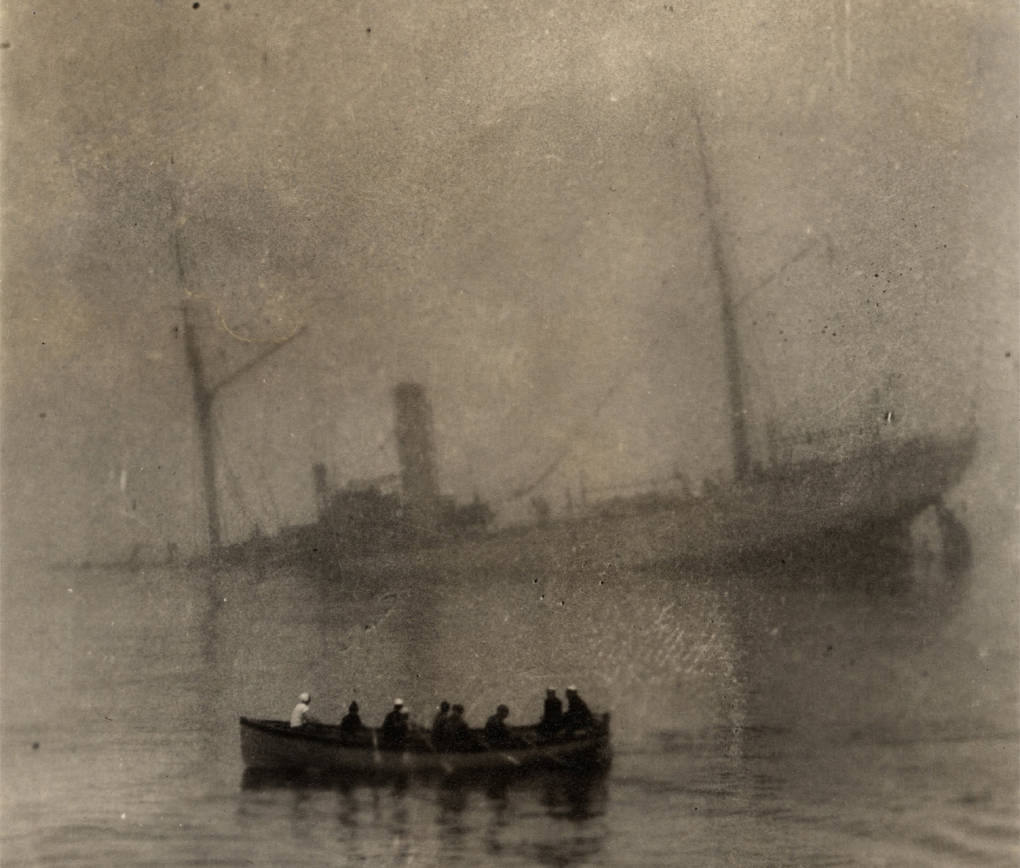
"caption": "\"At 8:06 a.m., about twenty minutes after the collision, the McCulloch suddenly up-ended and, with colors flying, sank in 60 fathoms of water.” Captain John C. Cantwell, commander.",
"description": "\"At 8:06 A.M., about twenty minutes after the collision, the ‘McCulloch’ with colors flying, suddenly up-ended and sank in 60 fathoms of water.” Captain John C. Cantwell, Commanding, USCG Cutter McCulloch. ",
"title": "mcculloch_san-francisco-mnhp_k03.7.068.3p",
"credit": "San Francisco Maritime National Historical Park",
"status": "inherit",
"isLoading": false,
"fetchFailed": false
}
},
"audioPlayerReducer": {
"postId": "stream_live",
"isPaused": true,
"isPlaying": false,
"pfsActive": false,
"pledgeModalIsOpen": true,
"playerDrawerIsOpen": false,
"liveAudioPlayStartedAt": 0,
"liveAudioPlayContext": ""
},
"authorsReducer": {
"byline_science_1806818": {
"type": "authors",
"id": "byline_science_1806818",
"meta": {
"override": true
},
"slug": "byline_science_1806818",
"name": "Camila Domonoske\u003c/br>NPR",
"isLoading": false
},
"byline_science_1799736": {
"type": "authors",
"id": "byline_science_1799736",
"meta": {
"override": true
},
"slug": "byline_science_1799736",
"name": "Scott Neuman",
"isLoading": false
},
"byline_science_1786975": {
"type": "authors",
"id": "byline_science_1786975",
"meta": {
"override": true
},
"slug": "byline_science_1786975",
"name": "\u003cstrong>Christopher Joyce, NPR\u003c/strong>",
"isLoading": false
},
"byline_science_1779764": {
"type": "authors",
"id": "byline_science_1779764",
"meta": {
"override": true
},
"slug": "byline_science_1779764",
"name": "Associated Press",
"isLoading": false
},
"cmiller": {
"type": "authors",
"id": "221",
"meta": {
"index": "authors_1716337520",
"id": "221",
"found": true
},
"name": "Craig Miller",
"firstName": "Craig",
"lastName": "Miller",
"slug": "cmiller",
"email": "craig@voxterra.net",
"display_author_email": false,
"staff_mastheads": [
"science"
],
"title": "Editor Emeritus, Science",
"bio": "Craig is a former KQED Science editor, specializing in weather, climate, water & energy issues, with a little seismology thrown in just to shake things up. Prior to that, he launched and led the station's award-winning multimedia project, Climate Watch. Craig is also an accomplished writer/producer of television documentaries, with a focus on natural resource issues.",
"avatar": "https://secure.gravatar.com/avatar/b91661df645e001a9cafe0861fa685f9?s=600&d=blank&r=g",
"twitter": "voxterra",
"facebook": null,
"instagram": null,
"linkedin": null,
"sites": [
{
"site": "news",
"roles": [
"author"
]
},
{
"site": "futureofyou",
"roles": [
"editor"
]
},
{
"site": "stateofhealth",
"roles": [
"author"
]
},
{
"site": "science",
"roles": [
"editor"
]
},
{
"site": "quest",
"roles": [
"editor"
]
}
],
"headData": {
"title": "Craig Miller | KQED",
"description": "Editor Emeritus, Science",
"ogImgSrc": "https://secure.gravatar.com/avatar/b91661df645e001a9cafe0861fa685f9?s=600&d=blank&r=g",
"twImgSrc": "https://secure.gravatar.com/avatar/b91661df645e001a9cafe0861fa685f9?s=600&d=blank&r=g"
},
"isLoading": false,
"link": "/author/cmiller"
},
"ben-burress": {
"type": "authors",
"id": "6180",
"meta": {
"index": "authors_1716337520",
"id": "6180",
"found": true
},
"name": "Ben Burress",
"firstName": "Ben",
"lastName": "Burress",
"slug": "ben-burress",
"email": "bburress@chabotspace.org",
"display_author_email": false,
"staff_mastheads": [],
"title": null,
"bio": "\u003cstrong>Benjamin Burress\u003c/strong> has been a staff astronomer at Chabot Space & Science Center since July 1999. He graduated from Sonoma State University in 1985 with a bachelor’s degree in physics (and minor in astronomy), after which he signed on for a two-year stint in the Peace Corps, where he taught physics and mathematics in the African nation of Cameroon. From 1989-96 he served on the crew of NASA’s Kuiper Airborne Observatory at Ames Research Center in Mountain View, CA. From 1996-99, he was Head Observer at the Naval Prototype Optical Interferometer program at Lowell Observatory in Flagstaff, AZ.\r\n\r\nRead his \u003ca href=\"http://science.kqed.org/quest/author/ben-burress/\">previous contributions\u003c/a> to \u003ca href=\"http://science.kqed.org/quest/\">QUEST\u003c/a>, a project dedicated to exploring the Science of Sustainability.",
"avatar": "https://secure.gravatar.com/avatar/8263bffa345b7e4923a0b8b9f0f6a161?s=600&d=blank&r=g",
"twitter": null,
"facebook": null,
"instagram": null,
"linkedin": null,
"sites": [
{
"site": "science",
"roles": [
"editor"
]
},
{
"site": "quest",
"roles": [
"subscriber"
]
}
],
"headData": {
"title": "Ben Burress | KQED",
"description": null,
"ogImgSrc": "https://secure.gravatar.com/avatar/8263bffa345b7e4923a0b8b9f0f6a161?s=600&d=blank&r=g",
"twImgSrc": "https://secure.gravatar.com/avatar/8263bffa345b7e4923a0b8b9f0f6a161?s=600&d=blank&r=g"
},
"isLoading": false,
"link": "/author/ben-burress"
},
"dventon": {
"type": "authors",
"id": "11088",
"meta": {
"index": "authors_1716337520",
"id": "11088",
"found": true
},
"name": "Danielle Venton",
"firstName": "Danielle",
"lastName": "Venton",
"slug": "dventon",
"email": "dventon@kqed.org",
"display_author_email": true,
"staff_mastheads": [
"science"
],
"title": "Science reporter",
"bio": "Danielle Venton is a reporter for KQED Science. She covers wildfires, space and oceans (though she is prone to sea sickness).\r\n\r\nBefore joining KQED in 2015, Danielle was a staff reporter at KRCB in Sonoma County and a freelancer. She studied science communication at UC Santa Cruz and formerly worked at CERN in Geneva, Switzerland where she wrote about computing. She lives in Sonoma County and enjoys backpacking.",
"avatar": "https://secure.gravatar.com/avatar/37b292b5c40c8d93959c4f48d73b5286f41b7abd8588277e941905a3ed4c801c?s=600&d=blank&r=g",
"twitter": "DanielleVenton",
"bluesky": null,
"facebook": null,
"instagram": null,
"linkedin": null,
"sites": [
{
"site": "arts",
"roles": [
"contributor"
]
},
{
"site": "news",
"roles": [
"editor"
]
},
{
"site": "futureofyou",
"roles": [
"editor"
]
},
{
"site": "science",
"roles": [
"editor"
]
},
{
"site": "liveblog",
"roles": [
"contributor"
]
}
],
"headData": {
"title": "Danielle Venton | KQED",
"description": "Science reporter",
"ogImgSrc": "https://secure.gravatar.com/avatar/37b292b5c40c8d93959c4f48d73b5286f41b7abd8588277e941905a3ed4c801c?s=600&d=blank&r=g",
"twImgSrc": "https://secure.gravatar.com/avatar/37b292b5c40c8d93959c4f48d73b5286f41b7abd8588277e941905a3ed4c801c?s=600&d=blank&r=g"
},
"isLoading": false,
"link": "/author/dventon"
},
"ekennerson": {
"type": "authors",
"id": "11090",
"meta": {
"index": "authors_1716337520",
"id": "11090",
"found": true
},
"name": "Elliott Kennerson",
"firstName": "Elliott",
"lastName": "Kennerson",
"slug": "ekennerson",
"email": "ekennerson@kqed.org",
"display_author_email": false,
"staff_mastheads": [],
"title": null,
"bio": "Elliott Kennerson joined KQED Science as a Digital Media Producer in 2015. Before joining KQED, he produced the Kickstarter-funded series “Animal R&R” for KPBS in San Diego. Elliott received his M.F.A. training in wildlife documentary at Montana State in Bozeman and holds a B.A. from Yale in archaeology. In his former life as an actor, he was an associate artist with LightBox Theater Company in New York. Elliott is the recipient of a 2017 Regional Emmy for his work as a producer on “Deep Look.\"",
"avatar": "https://secure.gravatar.com/avatar/90ebfa58055409e54c8f8a4c120ecf91?s=600&d=blank&r=g",
"twitter": "edorank",
"facebook": null,
"instagram": null,
"linkedin": null,
"sites": [
{
"site": "science",
"roles": [
"editor"
]
}
],
"headData": {
"title": "Elliott Kennerson | KQED",
"description": null,
"ogImgSrc": "https://secure.gravatar.com/avatar/90ebfa58055409e54c8f8a4c120ecf91?s=600&d=blank&r=g",
"twImgSrc": "https://secure.gravatar.com/avatar/90ebfa58055409e54c8f8a4c120ecf91?s=600&d=blank&r=g"
},
"isLoading": false,
"link": "/author/ekennerson"
},
"lesleymcclurg": {
"type": "authors",
"id": "11229",
"meta": {
"index": "authors_1716337520",
"id": "11229",
"found": true
},
"name": "Lesley McClurg",
"firstName": "Lesley",
"lastName": "McClurg",
"slug": "lesleymcclurg",
"email": "lmcclurg@KQED.org",
"display_author_email": false,
"staff_mastheads": [
"news",
"science"
],
"title": "KQED Health Correspondent",
"bio": "Lesley McClurg is a health correspondent and fill-in host whose work is regularly rebroadcast on NPR and PBS programs. She’s earned multiple regional Emmy awards, a national and a regional Edward R. Murrow award, and was named Best Beat Reporter by the Association of Health Care Journalists. The Society of Professional Journalists has recognized her work several times, and the Society of Environmental Journalists spotlighted her coverage of California’s historic drought.\r\n\r\nBefore joining KQED in 2016, Lesley covered food and sustainability for Capital Public Radio, environmental issues for Colorado Public Radio, and reported for KUOW and KCTS 9 in Seattle. Away from the newsroom, she loves skiing with her daughter, mountain biking with her partner, and playing with Ollie, the family’s goldendoodle. On deadline, she runs almost entirely on chocolate chips.\r\n\r\n ",
"avatar": "https://secure.gravatar.com/avatar/bab49e972ea10c774fe0f5e29dba1722b158f7c0d58a360923d1389d380b2978?s=600&d=blank&r=g",
"twitter": "lesleywmcclurg",
"bluesky": null,
"facebook": null,
"instagram": null,
"linkedin": null,
"sites": [
{
"site": "arts",
"roles": [
"author"
]
},
{
"site": "news",
"roles": [
"editor"
]
},
{
"site": "futureofyou",
"roles": [
"editor"
]
},
{
"site": "stateofhealth",
"roles": [
"author"
]
},
{
"site": "science",
"roles": [
"editor"
]
},
{
"site": "quest",
"roles": [
"subscriber"
]
},
{
"site": "forum",
"roles": [
"administrator"
]
},
{
"site": "liveblog",
"roles": [
"author"
]
}
],
"headData": {
"title": "Lesley McClurg | KQED",
"description": "KQED Health Correspondent",
"ogImgSrc": "https://secure.gravatar.com/avatar/bab49e972ea10c774fe0f5e29dba1722b158f7c0d58a360923d1389d380b2978?s=600&d=blank&r=g",
"twImgSrc": "https://secure.gravatar.com/avatar/bab49e972ea10c774fe0f5e29dba1722b158f7c0d58a360923d1389d380b2978?s=600&d=blank&r=g"
},
"isLoading": false,
"link": "/author/lesleymcclurg"
},
"akusmer": {
"type": "authors",
"id": "11361",
"meta": {
"index": "authors_1716337520",
"id": "11361",
"found": true
},
"name": "Anna Kusmer",
"firstName": "Anna",
"lastName": "Kusmer",
"slug": "akusmer",
"email": "akusmer@kqed.org",
"display_author_email": false,
"staff_mastheads": [],
"title": "News Intern",
"bio": "Anna Kusmer was a 2018 KQED News intern. She has worked as an ecologist and a hamburger flipper. She is also a freelance writer with stories appearing in NPR and PBS.",
"avatar": "https://secure.gravatar.com/avatar/307ee2fc39d2a9dffeaad0482e616c80?s=600&d=blank&r=g",
"twitter": "askusmer",
"facebook": null,
"instagram": null,
"linkedin": null,
"sites": [
{
"site": "news",
"roles": [
"subscriber"
]
},
{
"site": "futureofyou",
"roles": [
"editor"
]
},
{
"site": "science",
"roles": []
}
],
"headData": {
"title": "Anna Kusmer | KQED",
"description": "News Intern",
"ogImgSrc": "https://secure.gravatar.com/avatar/307ee2fc39d2a9dffeaad0482e616c80?s=600&d=blank&r=g",
"twImgSrc": "https://secure.gravatar.com/avatar/307ee2fc39d2a9dffeaad0482e616c80?s=600&d=blank&r=g"
},
"isLoading": false,
"link": "/author/akusmer"
}
},
"pagesReducer": {
"science_category_news": {
"type": "terms",
"id": "science_40",
"meta": {
"index": "terms_1716263798",
"site": "science",
"id": "40",
"score": 10.81443
},
"featImg": null,
"name": "News",
"description": null,
"taxonomy": "category",
"headData": {
"twImgId": null,
"twTitle": null,
"ogTitle": null,
"ogImgId": null,
"twDescription": null,
"description": null,
"title": "News Archives | KQED Science",
"ogDescription": null
},
"ttid": 42,
"slug": "news",
"isLoading": false,
"title": "News",
"pageMeta": {
"site": "science",
"WpPageTemplate": "page-topic-editorial",
"currentPage": 199
},
"blocks": [
{
"blockName": "kqed/post-list",
"attrs": {
"layout": "cardArticle2",
"query": "posts/science?category=news",
"seeMore": false,
"paginated": true,
"page": 199
}
},
{
"blockName": "kqed/ad"
}
]
}
},
"pfsSessionReducer": {},
"postsReducer": {
"stream_live": {
"type": "live",
"id": "stream_live",
"audioUrl": "https://streams.kqed.org/kqedradio",
"title": "Live Stream",
"excerpt": "Live Stream information currently unavailable.",
"link": "/radio",
"featImg": "",
"label": {
"name": "KQED Live",
"link": "/"
}
},
"stream_kqedNewscast": {
"type": "posts",
"id": "stream_kqedNewscast",
"audioUrl": "https://www.kqed.org/.stream/anon/radio/RDnews/newscast.mp3?_=1",
"title": "KQED Newscast",
"featImg": "",
"label": {
"name": "88.5 FM",
"link": "/"
}
},
"science_1806818": {
"type": "posts",
"id": "science_1806818",
"meta": {
"index": "posts_1716263798",
"site": "science",
"id": "1806818",
"score": null,
"sort": [
1499280103000
]
},
"parent": 0,
"labelTerm": {
"site": "science"
},
"blocks": [],
"publishDate": 1499280103,
"format": "standard",
"title": "EPA Can't Keep Delaying Obama-Era Methane Rules, Says Appeals Court",
"headTitle": "EPA Can’t Keep Delaying Obama-Era Methane Rules, Says Appeals Court | KQED",
"content": "\u003cp>An appeals court in Washington, D.C., has blocked an attempt by the Environmental Protection Agency to delay Obama-era methane regulations, rejecting claims by the EPA that the oil and gas industry wasn’t allowed to comment on the rules.\u003c/p>\n\u003cp>The agency could choose to rewrite the rules, but it overstepped in trying to delay them for years, the U.S. Court of Appeals for the D.C. Circuit decided.\u003c/p>\n\u003cp>The regulations in question are designed to prevent leaks at oil and gas facilities. Methane, which is released in natural gas leaks, is a \u003ca href=\"http://www.npr.org/2017/01/02/507100296/methanes-on-the-rise-but-regulations-to-stop-gas-leaks-still-debated\">potent greenhouse gas\u003c/a>, contributing to global warming; other leaked substances are \u003ca href=\"https://www.epa.gov/controlling-air-pollution-oil-and-natural-gas-industry/basic-information-about-oil-and-natural-gas\">harmful for human health\u003c/a>.\u003c/p>\n\u003cp>During the Obama administration, the EPA crafted new rules, and the first deadlines for reporting and compliance were set for this summer. But then the Trump administration announced a \u003ca href=\"https://www.epa.gov/controlling-air-pollution-oil-and-natural-gas-industry/actions-and-notices-about-oil-and-natural-gas\">temporary stay\u003c/a> on the rules — first for 90 days, then for two years.\u003c/p>\n\u003cp>[contextly_sidebar id=”dIiNBwfnjN5A4JLfH72IoQl1bIGVRBjZ”]Scott Pruitt, the administrator of the EPA, has \u003ca href=\"http://www.npr.org/sections/thetwo-way/2017/03/09/519425866/epa-chief-scott-pruitt-questions-basic-facts-about-climate-change\">expressed doubt\u003c/a> over fundamental facts about climate change, like the central role that greenhouse gas emissions play in global warming. Before being confirmed, he promised to aggressively roll back regulations at the agency, and observers say he’s been \u003ca href=\"https://www.nytimes.com/2017/07/01/us/politics/trump-epa-chief-pruitt-regulations-climate-change.html\">effective in fulfilling that promise\u003c/a>.\u003c/p>\n\u003cp>[ad fullwidth]\u003c/p>\n\u003cp>But the judges in the D.C. Court of Appeals ruled 2-1 that this time, Pruitt’s rollback was erroneous.\u003c/p>\n\u003cp>The EPA claimed that the stay was necessary because the oil and gas industry hadn’t been given the opportunity to have input on some elements of the rules changes.\u003c/p>\n\u003cp>Several environmental nonprofits disagreed, and sued.\u003c/p>\n\u003cp>\u003ca href=\"https://www.cadc.uscourts.gov/internet/opinions.nsf/A86B20D79BEB893E85258152005CA1B2/%24file/17-1145-1682465.pdf\">The judges ruled\u003c/a> that oil and gas companies could have commented on the provisions in question — in fact, that they \u003cem>had \u003c/em>commented about them, in writing, at the Obama-era EPA’s request.\u003c/p>\n\u003cp>In one case, the Trump administration pointed to an option for exempting pumps from regulation. Like the other provisions the EPA challenged, it hadn’t appeared in the proposed rule but did appear in the final rule, which meant the oil and gas industry didn’t get the chance to have any input on it, Pruitt’s agency argued.\u003c/p>\n\u003cp>The appeals court pointed out that the provision was actually suggested by the American Petroleum Institute, during the Obama administration’s comment process … which is why it didn’t show up in the first proposal.\u003c/p>\n\u003cp>“Even a brief scan of the record demonstrates the inaccuracy of EPA’s statements,” the judges wrote.\u003c/p>\n\u003cp>The agency also said that because it wasn’t a final decision on the rule — just a two-year stay while the EPA “reconsidered” the regulation — there was nothing a court could do about it. The judges weren’t persuaded, saying that such a lengthy delay is “tantamount to amending or revoking a rule.”\u003c/p>\n\u003cp>Another set of federal methane regulations — covering emissions on federal or tribal lands — \u003ca href=\"http://www.npr.org/sections/thetwo-way/2017/05/10/527786637/senators-reject-effort-to-roll-back-greenhouse-gas-emissions-rule\">narrowly survived a challenge in the Senate\u003c/a> in May. An effort to roll back the regulations failed 49-51, with Republican Sens. John McCain, Lindsey Graham and Susan Collins joining Democrats to keep the methane measure in place.\u003c/p>\n\u003cp>As NPR’s Christopher Joyce \u003ca href=\"http://www.npr.org/2017/01/02/507100296/methanes-on-the-rise-but-regulations-to-stop-gas-leaks-still-debated\">reported earlier this year\u003c/a>, the concentration of methane gas in the atmosphere was relatively constant for years but has been increasing noticeably within the last decade.\u003c/p>\n\u003cp>There are multiple sources: sewers, manure pits, livestock, rice fields, natural wetlands. The oil and gas industry emphasizes that the biggest sources are agricultural and natural — while environmental scientist Rob Jackson told NPR that the contributions from fossil fuel industry appear to be rising.\u003c/p>\n\u003cp>\u003c/p>\n\u003cp>Industry representatives note that there are voluntary efforts to reduce leaks as well. After all, it’s not just greenhouses gas emissions or air quality that’s at stake. “Methane is a commodity,” Christopher notes, “and leaked methane is money lost.”\u003c/p>\n\u003cdiv class=\"fullattribution\">Copyright 2017 NPR. To see more, visit http://www.npr.org/.\u003cimg decoding=\"async\" src=\"https://www.google-analytics.com/__utm.gif?utmac=UA-5828686-4&utmdt=Appeals+Court+Says+EPA+Can%27t+Keep+Delaying+Obama-Era+Methane+Rules&utme=8(APIKey)9(MDAxOTAwOTE4MDEyMTkxMDAzNjczZDljZA004)\">\u003c/div>\n\n",
"stats": {
"hasVideo": false,
"hasChartOrMap": false,
"hasAudio": false,
"hasPolis": false,
"wordCount": 678,
"hasGoogleForm": false,
"hasGallery": false,
"hasHearkenModule": false,
"iframeSrcs": [],
"paragraphCount": 19
},
"modified": 1704928577,
"excerpt": "The U.S. Court of Appeals for D.C. notes the EPA can choose to rewrite a rule designed to prevent leaks from natural gas facilities. But it can't just put it off for two years, the judges decided.",
"headData": {
"twImgId": "",
"twTitle": "",
"ogTitle": "",
"ogImgId": "",
"twDescription": "",
"description": "The U.S. Court of Appeals for D.C. notes the EPA can choose to rewrite a rule designed to prevent leaks from natural gas facilities. But it can't just put it off for two years, the judges decided.",
"title": "EPA Can't Keep Delaying Obama-Era Methane Rules, Says Appeals Court | KQED",
"ogDescription": "",
"schema": {
"@context": "https://schema.org",
"@type": "Article",
"headline": "EPA Can't Keep Delaying Obama-Era Methane Rules, Says Appeals Court",
"datePublished": "2017-07-05T11:41:43-07:00",
"dateModified": "2024-01-10T15:16:17-08:00",
"image": "https://cdn.kqed.org/wp-content/uploads/2020/02/KQED-OG-Image@1x.png"
}
},
"guestAuthors": [],
"slug": "epa-cant-keep-delaying-obama-era-methane-rules-says-appeals-court",
"status": "publish",
"nprApiLink": "http://api.npr.org/query?id=535509920&apiKey=MDAxOTAwOTE4MDEyMTkxMDAzNjczZDljZA004",
"nprByline": "Camila Domonoske\u003c/br>NPR",
"nprStoryDate": "Tue, 04 Jul 2017 14:55:00 -0400",
"nprLastModifiedDate": "Tue, 04 Jul 2017 14:56:00 -0400",
"sticky": false,
"nprHtmlLink": "http://www.npr.org/sections/thetwo-way/2017/07/04/535509920/appeals-court-says-epa-cant-keep-delaying-obama-era-methane-rules?ft=nprml&f=535509920",
"nprImageAgency": "AFP/Getty Images",
"nprImageCredit": "Robyn Beck",
"nprStoryId": "535509920",
"nprRetrievedStory": "1",
"nprPubDate": "Tue, 04 Jul 2017 14:55:00 -0400",
"path": "/science/1806818/epa-cant-keep-delaying-obama-era-methane-rules-says-appeals-court",
"audioTrackLength": null,
"parsedContent": [
{
"type": "contentString",
"content": "\u003cdiv class=\"post-body\">\u003cp>\u003cp>An appeals court in Washington, D.C., has blocked an attempt by the Environmental Protection Agency to delay Obama-era methane regulations, rejecting claims by the EPA that the oil and gas industry wasn’t allowed to comment on the rules.\u003c/p>\n\u003cp>The agency could choose to rewrite the rules, but it overstepped in trying to delay them for years, the U.S. Court of Appeals for the D.C. Circuit decided.\u003c/p>\n\u003cp>The regulations in question are designed to prevent leaks at oil and gas facilities. Methane, which is released in natural gas leaks, is a \u003ca href=\"http://www.npr.org/2017/01/02/507100296/methanes-on-the-rise-but-regulations-to-stop-gas-leaks-still-debated\">potent greenhouse gas\u003c/a>, contributing to global warming; other leaked substances are \u003ca href=\"https://www.epa.gov/controlling-air-pollution-oil-and-natural-gas-industry/basic-information-about-oil-and-natural-gas\">harmful for human health\u003c/a>.\u003c/p>\n\u003cp>During the Obama administration, the EPA crafted new rules, and the first deadlines for reporting and compliance were set for this summer. But then the Trump administration announced a \u003ca href=\"https://www.epa.gov/controlling-air-pollution-oil-and-natural-gas-industry/actions-and-notices-about-oil-and-natural-gas\">temporary stay\u003c/a> on the rules — first for 90 days, then for two years.\u003c/p>\n\u003cp>\u003c/p>\u003cp>\u003c/p>\u003cp>Scott Pruitt, the administrator of the EPA, has \u003ca href=\"http://www.npr.org/sections/thetwo-way/2017/03/09/519425866/epa-chief-scott-pruitt-questions-basic-facts-about-climate-change\">expressed doubt\u003c/a> over fundamental facts about climate change, like the central role that greenhouse gas emissions play in global warming. Before being confirmed, he promised to aggressively roll back regulations at the agency, and observers say he’s been \u003ca href=\"https://www.nytimes.com/2017/07/01/us/politics/trump-epa-chief-pruitt-regulations-climate-change.html\">effective in fulfilling that promise\u003c/a>.\u003c/p>\n\u003cp>\u003c/p>\u003c/div>",
"attributes": {
"named": {},
"numeric": []
}
},
{
"type": "component",
"content": "",
"name": "ad",
"attributes": {
"named": {
"label": "fullwidth"
},
"numeric": [
"fullwidth"
]
}
},
{
"type": "contentString",
"content": "\u003cdiv class=\"post-body\">\u003cp>\u003c/p>\n\u003cp>But the judges in the D.C. Court of Appeals ruled 2-1 that this time, Pruitt’s rollback was erroneous.\u003c/p>\n\u003cp>The EPA claimed that the stay was necessary because the oil and gas industry hadn’t been given the opportunity to have input on some elements of the rules changes.\u003c/p>\n\u003cp>Several environmental nonprofits disagreed, and sued.\u003c/p>\n\u003cp>\u003ca href=\"https://www.cadc.uscourts.gov/internet/opinions.nsf/A86B20D79BEB893E85258152005CA1B2/%24file/17-1145-1682465.pdf\">The judges ruled\u003c/a> that oil and gas companies could have commented on the provisions in question — in fact, that they \u003cem>had \u003c/em>commented about them, in writing, at the Obama-era EPA’s request.\u003c/p>\n\u003cp>In one case, the Trump administration pointed to an option for exempting pumps from regulation. Like the other provisions the EPA challenged, it hadn’t appeared in the proposed rule but did appear in the final rule, which meant the oil and gas industry didn’t get the chance to have any input on it, Pruitt’s agency argued.\u003c/p>\n\u003cp>The appeals court pointed out that the provision was actually suggested by the American Petroleum Institute, during the Obama administration’s comment process … which is why it didn’t show up in the first proposal.\u003c/p>\n\u003cp>“Even a brief scan of the record demonstrates the inaccuracy of EPA’s statements,” the judges wrote.\u003c/p>\n\u003cp>The agency also said that because it wasn’t a final decision on the rule — just a two-year stay while the EPA “reconsidered” the regulation — there was nothing a court could do about it. The judges weren’t persuaded, saying that such a lengthy delay is “tantamount to amending or revoking a rule.”\u003c/p>\n\u003cp>Another set of federal methane regulations — covering emissions on federal or tribal lands — \u003ca href=\"http://www.npr.org/sections/thetwo-way/2017/05/10/527786637/senators-reject-effort-to-roll-back-greenhouse-gas-emissions-rule\">narrowly survived a challenge in the Senate\u003c/a> in May. An effort to roll back the regulations failed 49-51, with Republican Sens. John McCain, Lindsey Graham and Susan Collins joining Democrats to keep the methane measure in place.\u003c/p>\n\u003cp>As NPR’s Christopher Joyce \u003ca href=\"http://www.npr.org/2017/01/02/507100296/methanes-on-the-rise-but-regulations-to-stop-gas-leaks-still-debated\">reported earlier this year\u003c/a>, the concentration of methane gas in the atmosphere was relatively constant for years but has been increasing noticeably within the last decade.\u003c/p>\n\u003cp>There are multiple sources: sewers, manure pits, livestock, rice fields, natural wetlands. The oil and gas industry emphasizes that the biggest sources are agricultural and natural — while environmental scientist Rob Jackson told NPR that the contributions from fossil fuel industry appear to be rising.\u003c/p>\n\u003cp>\u003c/p>\n\u003cp>Industry representatives note that there are voluntary efforts to reduce leaks as well. After all, it’s not just greenhouses gas emissions or air quality that’s at stake. “Methane is a commodity,” Christopher notes, “and leaked methane is money lost.”\u003c/p>\n\u003cdiv class=\"fullattribution\">Copyright 2017 NPR. To see more, visit http://www.npr.org/.\u003cimg decoding=\"async\" src=\"https://www.google-analytics.com/__utm.gif?utmac=UA-5828686-4&utmdt=Appeals+Court+Says+EPA+Can%27t+Keep+Delaying+Obama-Era+Methane+Rules&utme=8(APIKey)9(MDAxOTAwOTE4MDEyMTkxMDAzNjczZDljZA004)\">\u003c/div>\n\n\u003c/div>\u003c/p>",
"attributes": {
"named": {},
"numeric": []
}
}
],
"link": "/science/1806818/epa-cant-keep-delaying-obama-era-methane-rules-says-appeals-court",
"authors": [
"byline_science_1806818"
],
"categories": [
"science_31",
"science_33",
"science_35",
"science_40"
],
"tags": [
"science_505",
"science_194",
"science_2080",
"science_784",
"science_1712"
],
"featImg": "science_1806819",
"label": "science"
},
"science_1799736": {
"type": "posts",
"id": "science_1799736",
"meta": {
"index": "posts_1716263798",
"site": "science",
"id": "1799736",
"score": null,
"sort": [
1499131730000
]
},
"parent": 0,
"labelTerm": {
"site": "science"
},
"blocks": [],
"publishDate": 1499131730,
"format": "standard",
"title": "Stephen Hawking: Trump Is Pushing Earth's Climate 'Over The Brink'",
"headTitle": "Stephen Hawking: Trump Is Pushing Earth’s Climate ‘Over The Brink’ | KQED",
"content": "\u003cp>The world’s best-known living physicist, Stephen Hawking, says that President Trump’s decision to pull out of the Paris climate change accord could lead humanity to a tipping point, “turning the Earth into Venus.”\u003c/p>\n\u003cp>The Cambridge professor and renowned cosmologist made the remarks in \u003ca href=\"http://www.bbc.com/news/science-environment-40461726\">an interview with the BBC\u003c/a> that aired Sunday.\u003c/p>\n\u003cp>“We are close to the tipping point where global warming becomes irreversible,” Hawking told the BBC. “Trump’s action could push the Earth over the brink, to become like Venus, with a temperature of 250 degrees, and raining sulphuric acid.”\u003c/p>\n\u003cp>Hawking, who is best known for his discoveries about black holes, called climate change “one of the great dangers we face, and it’s one we can prevent if we act now.\u003c/p>\n\u003cp>“By denying the evidence for climate change, and pulling out of the Paris Climate Agreement, Donald Trump will cause avoidable environmental damage to our beautiful planet, endangering the natural world, for us and our children,” Hawking told the BBC.\u003c/p>\n\u003cp>[ad fullwidth]\u003c/p>\n\u003cp>\u003c/p>\n\u003cp>It’s not the first time that Hawking has blurred the lines between science and politics in his public pronouncements. In December, for example, he \u003ca href=\"https://www.theguardian.com/commentisfree/2016/dec/01/stephen-hawking-dangerous-time-planet-inequality\">wrote in an editorial in The Guardian\u003c/a> newspaper that Brexit and the election of Donald Trump were “a cry of anger” aimed at the elites, such as himself, in both America and Britain. He said that we are “at the most dangerous moment in the development of humanity.”\u003c/p>\n\u003cdiv class=\"fullattribution\">Copyright 2017 NPR. To see more, visit http://www.npr.org/.\u003cimg decoding=\"async\" src=\"https://www.google-analytics.com/__utm.gif?utmac=UA-5828686-4&utmdt=Stephen+Hawking%3A+Trump+Pushing+Earth%27s+Climate+%27Over+The+Brink%27&utme=8(APIKey)9(MDAxOTAwOTE4MDEyMTkxMDAzNjczZDljZA004)\">\u003c/div>\n\n",
"stats": {
"hasVideo": false,
"hasChartOrMap": false,
"hasAudio": false,
"hasPolis": false,
"wordCount": 269,
"hasGoogleForm": false,
"hasGallery": false,
"hasHearkenModule": false,
"iframeSrcs": [],
"paragraphCount": 8
},
"modified": 1704928581,
"excerpt": "The renowned physicist and cosmologist says the U.S. pulling out of the Paris climate change accord could turn our planet into another Venus.",
"headData": {
"twImgId": "",
"twTitle": "",
"ogTitle": "",
"ogImgId": "",
"twDescription": "",
"description": "The renowned physicist and cosmologist says the U.S. pulling out of the Paris climate change accord could turn our planet into another Venus.",
"title": "Stephen Hawking: Trump Is Pushing Earth's Climate 'Over The Brink' | KQED",
"ogDescription": "",
"schema": {
"@context": "https://schema.org",
"@type": "Article",
"headline": "Stephen Hawking: Trump Is Pushing Earth's Climate 'Over The Brink'",
"datePublished": "2017-07-03T18:28:50-07:00",
"dateModified": "2024-01-10T15:16:21-08:00",
"image": "https://cdn.kqed.org/wp-content/uploads/2020/02/KQED-OG-Image@1x.png"
}
},
"guestAuthors": [],
"slug": "stephen-hawking-trump-is-pushing-earths-climate-over-the-brink",
"status": "publish",
"nprApiLink": "http://api.npr.org/query?id=535377270&apiKey=MDAxOTAwOTE4MDEyMTkxMDAzNjczZDljZA004",
"nprByline": "Scott Neuman",
"nprStoryDate": "Mon, 03 Jul 2017 13:18:00 -0400",
"nprLastModifiedDate": "Mon, 03 Jul 2017 13:18:26 -0400",
"sticky": false,
"nprHtmlLink": "http://www.npr.org/sections/thetwo-way/2017/07/03/535377270/stephen-hawking-trump-pushing-earths-climate-over-the-brink?ft=nprml&f=535377270",
"nprImageAgency": "AP",
"nprImageCredit": "Matt Dunham",
"nprStoryId": "535377270",
"nprRetrievedStory": "1",
"nprPubDate": "Mon, 03 Jul 2017 13:18:00 -0400",
"path": "/science/1799736/stephen-hawking-trump-is-pushing-earths-climate-over-the-brink",
"audioTrackLength": null,
"parsedContent": [
{
"type": "contentString",
"content": "\u003cdiv class=\"post-body\">\u003cp>\u003cp>The world’s best-known living physicist, Stephen Hawking, says that President Trump’s decision to pull out of the Paris climate change accord could lead humanity to a tipping point, “turning the Earth into Venus.”\u003c/p>\n\u003cp>The Cambridge professor and renowned cosmologist made the remarks in \u003ca href=\"http://www.bbc.com/news/science-environment-40461726\">an interview with the BBC\u003c/a> that aired Sunday.\u003c/p>\n\u003cp>“We are close to the tipping point where global warming becomes irreversible,” Hawking told the BBC. “Trump’s action could push the Earth over the brink, to become like Venus, with a temperature of 250 degrees, and raining sulphuric acid.”\u003c/p>\n\u003cp>Hawking, who is best known for his discoveries about black holes, called climate change “one of the great dangers we face, and it’s one we can prevent if we act now.\u003c/p>\n\u003cp>“By denying the evidence for climate change, and pulling out of the Paris Climate Agreement, Donald Trump will cause avoidable environmental damage to our beautiful planet, endangering the natural world, for us and our children,” Hawking told the BBC.\u003c/p>\n\u003cp>\u003c/p>\u003c/div>",
"attributes": {
"named": {},
"numeric": []
}
},
{
"type": "component",
"content": "",
"name": "ad",
"attributes": {
"named": {
"label": "fullwidth"
},
"numeric": [
"fullwidth"
]
}
},
{
"type": "contentString",
"content": "\u003cdiv class=\"post-body\">\u003cp>\u003c/p>\n\u003cp>\u003c/p>\n\u003cp>It’s not the first time that Hawking has blurred the lines between science and politics in his public pronouncements. In December, for example, he \u003ca href=\"https://www.theguardian.com/commentisfree/2016/dec/01/stephen-hawking-dangerous-time-planet-inequality\">wrote in an editorial in The Guardian\u003c/a> newspaper that Brexit and the election of Donald Trump were “a cry of anger” aimed at the elites, such as himself, in both America and Britain. He said that we are “at the most dangerous moment in the development of humanity.”\u003c/p>\n\u003cdiv class=\"fullattribution\">Copyright 2017 NPR. To see more, visit http://www.npr.org/.\u003cimg decoding=\"async\" src=\"https://www.google-analytics.com/__utm.gif?utmac=UA-5828686-4&utmdt=Stephen+Hawking%3A+Trump+Pushing+Earth%27s+Climate+%27Over+The+Brink%27&utme=8(APIKey)9(MDAxOTAwOTE4MDEyMTkxMDAzNjczZDljZA004)\">\u003c/div>\n\n\u003c/div>\u003c/p>",
"attributes": {
"named": {},
"numeric": []
}
}
],
"link": "/science/1799736/stephen-hawking-trump-is-pushing-earths-climate-over-the-brink",
"authors": [
"byline_science_1799736"
],
"categories": [
"science_31",
"science_40"
],
"tags": [
"science_194"
],
"featImg": "science_1804767",
"label": "science"
},
"science_1783056": {
"type": "posts",
"id": "science_1783056",
"meta": {
"index": "posts_1716263798",
"site": "science",
"id": "1783056",
"score": null,
"sort": [
1499092246000
]
},
"guestAuthors": [],
"slug": "on-the-fourth-of-july-20-years-ago-nasa-landed-the-first-rover-on-mars",
"title": "On the Fourth of July 20 Years Ago, NASA Landed the First Rover on Mars",
"publishDate": 1499092246,
"format": "audio",
"headTitle": "On the Fourth of July 20 Years Ago, NASA Landed the First Rover on Mars | KQED",
"labelTerm": {},
"content": "\u003cp>On July 4th, 1997 as Americans were stoking their barbecues, a NASA spacecraft touched down on Mars and bounced like a beach ball. The Pathfinder mission was an unlikely and stunning success that marked the beginning of a roaming robotic presence on the red planet.\u003c/p>\n\u003cp>The successful feat surprised everyone—including the team behind the mission, a mission that didn’t have the best reputation in the beginning.\u003c/p>\n\u003cp>Jennifer Trosper applied to work at NASA in the nineties. “And I got a phone call,” Trosper says. “He [the recruiter] said, ‘Well, we got this project out here. Nobody really wants to work on it, because nobody thinks it’s going to work.’”\u003c/p>\n\u003cp>NASA was trying something new: space travel for a bargain price. Pathfinder’s mantra was \u003cem>cheaper, faster, \u003c/em>\u003cem>better\u003c/em>. The goal was to cut down on red tape and dream of solutions no one had else had thought of.\u003c/p>\n\u003cp>“Be crazy and bold and innovative,” says Pathfinder’s chief engineer Rob Manning.\u003c/p>\n\u003cp>[ad fullwidth]\u003c/p>\n\u003cp>\u003cstrong>‘Cheaper, Faster, Better’\u003c/strong>\u003c/p>\n\u003cp>When Trosper arrived in Los Angeles, she joined a team of scrappy aerospace engineers at the \u003ca href=\"https://www.jpl.nasa.gov/\">Jet Propulsion Laboratory\u003c/a> (JPL) willing to work on a lean budget and try something revolutionary.\u003c/p>\n\u003cp>“We didn’t follow all the rules. We had some good leadership, but it was a very small team,” Trosper says, “And we were landing on the surface of Mars with air bags!”\u003c/p>\n\u003cp>\u003ciframe loading=\"lazy\" title=\"NASA at Mars: 20 years of 24/7 exploration\" width=\"640\" height=\"360\" src=\"https://www.youtube.com/embed/JXZa8cmab1g?list=PLTiv_XWHnOZpzQKYC6nLf6M9AuBbng_O8\" frameborder=\"0\" allow=\"accelerometer; autoplay; clipboard-write; encrypted-media; gyroscope; picture-in-picture; web-share\" referrerpolicy=\"strict-origin-when-cross-origin\" allowfullscreen>\u003c/iframe>\u003c/p>\n\u003cp>The airbags were designed to cushion Pathfinder’s landing. Touching down on Mars can be tricky because the atmosphere is so thin. That’s one reason no other country had had a successful landing for twenty years. NASA’s last success was the Viking 1 and Viking 2 orbiter-lander in 1975.\u003c/p>\n\u003cp>\u003cstrong>Low Budget Inspires Innovation\u003c/strong>\u003c/p>\n\u003cp>Manning says the team settled on a parachute to slow the spacecraft down as it hurtled through the Martian atmosphere. The engineers also wrapped the machine in a cocoon to protect it when it touched down on the rocky landscape—kind of like a beach ball.\u003c/p>\n\u003cp>[contextly_sidebar id=”ydG3BtuLQBhWZAiZ4ojhjUkOgqckWcSE”]Manning says the idea was that the ball “would bounce and roll on the surface. And finally open up like a flower and have a little rover drive off.”\u003c/p>\n\u003cp>If successful, the tiny rover—about the size of a microwave—would become the first wheeled vehicle to explore the surface of another planet. NASA named it Sojourner.\u003c/p>\n\u003cp>Seven months after the launch, NASA engineers monitored the spacecraft’s status as it neared its icy destination. A nervous tension filled the control room at JPL. And then at the exact moment Pathfinder was expected to bounce down, a faint signal sounded, back on Earth. The room erupted with loud applause and cheering.\u003c/p>\n\u003cp>“By late afternoon for us we were getting our first picture,” Manning says, smiling.\u003c/p>\n\u003cp>Miraculously, Pathfinder had traveled millions of miles and landed upright on the red planet.\u003c/p>\n\u003cfigure id=\"attachment_1783060\" class=\"wp-caption aligncenter\" style=\"max-width: 800px\">\u003cimg loading=\"lazy\" decoding=\"async\" class=\"wp-image-1783060 size-medium\" src=\"https://ww2.kqed.org/science/wp-content/uploads/sites/35/2017/06/marspath_81696-e1498774365552-800x616.jpg\" alt=\"\" width=\"800\" height=\"616\" srcset=\"https://cdn.kqed.org/wp-content/uploads/sites/35/2017/06/marspath_81696-e1498774365552-800x616.jpg 800w, https://cdn.kqed.org/wp-content/uploads/sites/35/2017/06/marspath_81696-e1498774365552-160x123.jpg 160w, https://cdn.kqed.org/wp-content/uploads/sites/35/2017/06/marspath_81696-e1498774365552-768x591.jpg 768w, https://cdn.kqed.org/wp-content/uploads/sites/35/2017/06/marspath_81696-e1498774365552-1020x785.jpg 1020w, https://cdn.kqed.org/wp-content/uploads/sites/35/2017/06/marspath_81696-e1498774365552-1180x908.jpg 1180w, https://cdn.kqed.org/wp-content/uploads/sites/35/2017/06/marspath_81696-e1498774365552-960x739.jpg 960w, https://cdn.kqed.org/wp-content/uploads/sites/35/2017/06/marspath_81696-e1498774365552-240x185.jpg 240w, https://cdn.kqed.org/wp-content/uploads/sites/35/2017/06/marspath_81696-e1498774365552-375x289.jpg 375w, https://cdn.kqed.org/wp-content/uploads/sites/35/2017/06/marspath_81696-e1498774365552-520x400.jpg 520w, https://cdn.kqed.org/wp-content/uploads/sites/35/2017/06/marspath_81696-e1498774365552.jpg 1476w\" sizes=\"(max-width: 800px) 100vw, 800px\">\u003cfigcaption class=\"wp-caption-text\">The Sojourner Rover at the Yogi rock on Mars. \u003ccite>(Mars Pathfinder Project )\u003c/cite>\u003c/figcaption>\u003c/figure>\n\u003cp>NASA uploaded the images to a new realm known as the World Wide Web. Jon Brooks, a science editor at KQED, remembers the moment vividly.\u003c/p>\n\u003cp>“You could see a little more, a little more, a little more,” Brooks says, “and the anticipation was truly great because you were going to catch a glimpse of Mars for the first time. You actually saw the barren landscape and the red color.”\u003c/p>\n\u003cp>\u003cstrong>The Most Important Question\u003c/strong>\u003c/p>\n\u003cp>Sojourner was expected to take pictures for one week before its batteries died. Instead, the little spacecraft weathered the frigid climate for nearly three months. Pathfinder beamed thousands of pictures back to Earth, says Manning, to help his team answer one central question:\u003c/p>\n\u003cp>“Was Mars at some point in its past a place with lakes and an atmosphere and places where presumably life could actually get started?”\u003c/p>\n\u003cp>The quest to find an answer has inspired three more NASA rovers after Pathfinder. The latest, \u003ca href=\"https://www.nasa.gov/mission_pages/msl/index.html\">Curiosity\u003c/a>, is the size of an SUV and has been driving around Mars for nearly five years looking for clues about how and when the red planet went from warm and wet to cold and dry.\u003c/p>\n\u003cp>Astronomers are still searching for signs of life, but they have confirmed the presence of water. Observations suggest that habitable lakes and streams likely existed in the ancient past.\u003c/p>\n\u003cp>“Doesn’t say anything about whether there was life there,” Manning says. “But it does say this planet is much more interesting than we ever dreamed.”\u003c/p>\n\u003cp>Mars is the only planet inhabited solely by robots (as far as we know). Next year the U.S. will send the \u003ca href=\"https://www.nasa.gov/insight/\" target=\"_blank\" rel=\"noopener noreferrer\">InSight\u003c/a> lander to Mars, and the \u003ca href=\"https://www.nasa.gov/mars2020/\">Mars 2020 \u003c/a>wil\u003ca href=\"https://www.nasa.gov/mars2020/\">l \u003c/a>follow. NASA hopes to land a human on the red planet within the \u003cem>next\u003c/em> twenty years.\u003c/p>\n\u003cp> \u003c/p>\n\u003cp>\u003c/p>\n\u003cp> \u003c/p>\n\n",
"blocks": [],
"excerpt": "As Americans light sparkers for the Fourth of July holiday, NASA celebrates two decades of Mars exploration. ",
"status": "publish",
"parent": 0,
"modified": 1727135837,
"stats": {
"hasAudio": false,
"hasVideo": true,
"hasChartOrMap": false,
"iframeSrcs": [],
"hasGoogleForm": false,
"hasGallery": false,
"hasHearkenModule": false,
"hasPolis": false,
"paragraphCount": 28,
"wordCount": 838
},
"headData": {
"title": "On the Fourth of July 20 Years Ago, NASA Landed the First Rover on Mars | KQED",
"description": "As Americans light sparkers for the Fourth of July holiday, NASA celebrates two decades of Mars exploration. ",
"ogTitle": "",
"ogDescription": "",
"ogImgId": "",
"twTitle": "",
"twDescription": "",
"twImgId": "",
"schema": {
"@context": "https://schema.org",
"@type": "Article",
"headline": "On the Fourth of July 20 Years Ago, NASA Landed the First Rover on Mars",
"datePublished": "2017-07-03T07:30:46-07:00",
"dateModified": "2024-09-23T16:57:17-07:00",
"image": "https://cdn.kqed.org/wp-content/uploads/2020/02/KQED-OG-Image@1x.png"
}
},
"source": "Astronomy",
"audioUrl": "https://www.kqed.org/.stream/anon/radio/science/2017/07/ScienceMarsRover.mp3",
"sticky": false,
"path": "/science/1783056/on-the-fourth-of-july-20-years-ago-nasa-landed-the-first-rover-on-mars",
"audioDuration": 272000,
"audioTrackLength": null,
"parsedContent": [
{
"type": "contentString",
"content": "\u003cdiv class=\"post-body\">\u003cp>\u003cp>On July 4th, 1997 as Americans were stoking their barbecues, a NASA spacecraft touched down on Mars and bounced like a beach ball. The Pathfinder mission was an unlikely and stunning success that marked the beginning of a roaming robotic presence on the red planet.\u003c/p>\n\u003cp>The successful feat surprised everyone—including the team behind the mission, a mission that didn’t have the best reputation in the beginning.\u003c/p>\n\u003cp>Jennifer Trosper applied to work at NASA in the nineties. “And I got a phone call,” Trosper says. “He [the recruiter] said, ‘Well, we got this project out here. Nobody really wants to work on it, because nobody thinks it’s going to work.’”\u003c/p>\n\u003cp>NASA was trying something new: space travel for a bargain price. Pathfinder’s mantra was \u003cem>cheaper, faster, \u003c/em>\u003cem>better\u003c/em>. The goal was to cut down on red tape and dream of solutions no one had else had thought of.\u003c/p>\n\u003cp>“Be crazy and bold and innovative,” says Pathfinder’s chief engineer Rob Manning.\u003c/p>\n\u003cp>\u003c/p>\u003c/div>",
"attributes": {
"named": {},
"numeric": []
}
},
{
"type": "component",
"content": "",
"name": "ad",
"attributes": {
"named": {
"label": "fullwidth"
},
"numeric": [
"fullwidth"
]
}
},
{
"type": "contentString",
"content": "\u003cdiv class=\"post-body\">\u003cp>\u003c/p>\n\u003cp>\u003cstrong>‘Cheaper, Faster, Better’\u003c/strong>\u003c/p>\n\u003cp>When Trosper arrived in Los Angeles, she joined a team of scrappy aerospace engineers at the \u003ca href=\"https://www.jpl.nasa.gov/\">Jet Propulsion Laboratory\u003c/a> (JPL) willing to work on a lean budget and try something revolutionary.\u003c/p>\n\u003cp>“We didn’t follow all the rules. We had some good leadership, but it was a very small team,” Trosper says, “And we were landing on the surface of Mars with air bags!”\u003c/p>\n\u003cp>\u003ciframe loading=\"lazy\" title=\"NASA at Mars: 20 years of 24/7 exploration\" width=\"640\" height=\"360\" src=\"https://www.youtube.com/embed/JXZa8cmab1g?list=PLTiv_XWHnOZpzQKYC6nLf6M9AuBbng_O8\" frameborder=\"0\" allow=\"accelerometer; autoplay; clipboard-write; encrypted-media; gyroscope; picture-in-picture; web-share\" referrerpolicy=\"strict-origin-when-cross-origin\" allowfullscreen>\u003c/iframe>\u003c/p>\n\u003cp>The airbags were designed to cushion Pathfinder’s landing. Touching down on Mars can be tricky because the atmosphere is so thin. That’s one reason no other country had had a successful landing for twenty years. NASA’s last success was the Viking 1 and Viking 2 orbiter-lander in 1975.\u003c/p>\n\u003cp>\u003cstrong>Low Budget Inspires Innovation\u003c/strong>\u003c/p>\n\u003cp>Manning says the team settled on a parachute to slow the spacecraft down as it hurtled through the Martian atmosphere. The engineers also wrapped the machine in a cocoon to protect it when it touched down on the rocky landscape—kind of like a beach ball.\u003c/p>\n\u003cp>\u003c/p>\u003cp>\u003c/p>\u003cp>Manning says the idea was that the ball “would bounce and roll on the surface. And finally open up like a flower and have a little rover drive off.”\u003c/p>\n\u003cp>If successful, the tiny rover—about the size of a microwave—would become the first wheeled vehicle to explore the surface of another planet. NASA named it Sojourner.\u003c/p>\n\u003cp>Seven months after the launch, NASA engineers monitored the spacecraft’s status as it neared its icy destination. A nervous tension filled the control room at JPL. And then at the exact moment Pathfinder was expected to bounce down, a faint signal sounded, back on Earth. The room erupted with loud applause and cheering.\u003c/p>\n\u003cp>“By late afternoon for us we were getting our first picture,” Manning says, smiling.\u003c/p>\n\u003cp>Miraculously, Pathfinder had traveled millions of miles and landed upright on the red planet.\u003c/p>\n\u003cfigure id=\"attachment_1783060\" class=\"wp-caption aligncenter\" style=\"max-width: 800px\">\u003cimg loading=\"lazy\" decoding=\"async\" class=\"wp-image-1783060 size-medium\" src=\"https://ww2.kqed.org/science/wp-content/uploads/sites/35/2017/06/marspath_81696-e1498774365552-800x616.jpg\" alt=\"\" width=\"800\" height=\"616\" srcset=\"https://cdn.kqed.org/wp-content/uploads/sites/35/2017/06/marspath_81696-e1498774365552-800x616.jpg 800w, https://cdn.kqed.org/wp-content/uploads/sites/35/2017/06/marspath_81696-e1498774365552-160x123.jpg 160w, https://cdn.kqed.org/wp-content/uploads/sites/35/2017/06/marspath_81696-e1498774365552-768x591.jpg 768w, https://cdn.kqed.org/wp-content/uploads/sites/35/2017/06/marspath_81696-e1498774365552-1020x785.jpg 1020w, https://cdn.kqed.org/wp-content/uploads/sites/35/2017/06/marspath_81696-e1498774365552-1180x908.jpg 1180w, https://cdn.kqed.org/wp-content/uploads/sites/35/2017/06/marspath_81696-e1498774365552-960x739.jpg 960w, https://cdn.kqed.org/wp-content/uploads/sites/35/2017/06/marspath_81696-e1498774365552-240x185.jpg 240w, https://cdn.kqed.org/wp-content/uploads/sites/35/2017/06/marspath_81696-e1498774365552-375x289.jpg 375w, https://cdn.kqed.org/wp-content/uploads/sites/35/2017/06/marspath_81696-e1498774365552-520x400.jpg 520w, https://cdn.kqed.org/wp-content/uploads/sites/35/2017/06/marspath_81696-e1498774365552.jpg 1476w\" sizes=\"(max-width: 800px) 100vw, 800px\">\u003cfigcaption class=\"wp-caption-text\">The Sojourner Rover at the Yogi rock on Mars. \u003ccite>(Mars Pathfinder Project )\u003c/cite>\u003c/figcaption>\u003c/figure>\n\u003cp>NASA uploaded the images to a new realm known as the World Wide Web. Jon Brooks, a science editor at KQED, remembers the moment vividly.\u003c/p>\n\u003cp>“You could see a little more, a little more, a little more,” Brooks says, “and the anticipation was truly great because you were going to catch a glimpse of Mars for the first time. You actually saw the barren landscape and the red color.”\u003c/p>\n\u003cp>\u003cstrong>The Most Important Question\u003c/strong>\u003c/p>\n\u003cp>Sojourner was expected to take pictures for one week before its batteries died. Instead, the little spacecraft weathered the frigid climate for nearly three months. Pathfinder beamed thousands of pictures back to Earth, says Manning, to help his team answer one central question:\u003c/p>\n\u003cp>“Was Mars at some point in its past a place with lakes and an atmosphere and places where presumably life could actually get started?”\u003c/p>\n\u003cp>The quest to find an answer has inspired three more NASA rovers after Pathfinder. The latest, \u003ca href=\"https://www.nasa.gov/mission_pages/msl/index.html\">Curiosity\u003c/a>, is the size of an SUV and has been driving around Mars for nearly five years looking for clues about how and when the red planet went from warm and wet to cold and dry.\u003c/p>\n\u003cp>Astronomers are still searching for signs of life, but they have confirmed the presence of water. Observations suggest that habitable lakes and streams likely existed in the ancient past.\u003c/p>\n\u003cp>“Doesn’t say anything about whether there was life there,” Manning says. “But it does say this planet is much more interesting than we ever dreamed.”\u003c/p>\n\u003cp>Mars is the only planet inhabited solely by robots (as far as we know). Next year the U.S. will send the \u003ca href=\"https://www.nasa.gov/insight/\" target=\"_blank\" rel=\"noopener noreferrer\">InSight\u003c/a> lander to Mars, and the \u003ca href=\"https://www.nasa.gov/mars2020/\">Mars 2020 \u003c/a>wil\u003ca href=\"https://www.nasa.gov/mars2020/\">l \u003c/a>follow. NASA hopes to land a human on the red planet within the \u003cem>next\u003c/em> twenty years.\u003c/p>\n\u003cp> \u003c/p>\n\u003cp>\u003c/p>\n\u003cp> \u003c/p>\n\n\u003c/div>\u003c/p>",
"attributes": {
"named": {},
"numeric": []
}
}
],
"link": "/science/1783056/on-the-fourth-of-july-20-years-ago-nasa-landed-the-first-rover-on-mars",
"authors": [
"11229"
],
"programs": [
"science_5376"
],
"categories": [
"science_28",
"science_46",
"science_37",
"science_40",
"science_5141",
"science_3423"
],
"tags": [
"science_3370",
"science_5179",
"science_420"
],
"featImg": "science_1783059",
"label": "source_science_1783056"
},
"science_1786970": {
"type": "posts",
"id": "science_1786970",
"meta": {
"index": "posts_1716263798",
"site": "science",
"id": "1786970",
"score": null,
"sort": [
1498867306000
]
},
"parent": 0,
"labelTerm": {
"site": "science"
},
"blocks": [],
"publishDate": 1498867306,
"format": "standard",
"title": "Science for the People: Grab Your Phone and Help Snap Pictures of Coastal Biodiversity",
"headTitle": "Science for the People: Grab Your Phone and Help Snap Pictures of Coastal Biodiversity | KQED",
"content": "\u003cp>Your moments peering into tide pools, gazing at spiny starfish, or eyeing bashful anemones can be more than just moments. They’re observations, and scientists can learn from them about what’s happening on California’s coastline. Thousands of observations, added together—that’s valuable data.\u003c/p>\n\u003caside class=\"pullquote alignright\">‘It’s a way for people to witness global change in a real way.’\u003ccite>Dr. Rebecca Johnson,\u003cbr>\nCalifornia Academy of Sciences\u003c/cite>\u003c/aside>\n\u003cp>This weekend, Californians who love marine ecosystems can head to the bay or the beach, take pictures of all the animals they can see, upload them to the cell phone app iNaturalist, and take part in a statewide campaign to catalog the biodiversity of the state’s coast.\u003c/p>\n\u003cp>\u003ca href=\"http://www.calacademy.org/\" target=\"_blank\" rel=\"noopener noreferrer\">California Academy of Sciences\u003c/a> and the \u003ca href=\"http://www.mpacollaborative.org/\" target=\"_blank\" rel=\"noopener noreferrer\">Marine Protected Area Collaborative Network\u003c/a> are hosting \u003ca href=\"https://www.calacademy.org/citizen-science/snapshot-cal-coast\" target=\"_blank\" rel=\"noopener noreferrer\">Snapshot Cal Coast\u003c/a>, an annual coastal “bio-blitz” that started June 23 and wraps up on Sunday, July 2.\u003c/p>\n\u003cp>“No matter what kind of science it is—it starts with an observation,” says Dr. Rebecca Johnson, citizen science research coordinator at the Cal Academy. “We’re providing a way for people to share those observations and then we can look for patterns and ask more questions.”\u003c/p>\n\u003cfigure id=\"attachment_1787229\" class=\"wp-caption alignright\" style=\"max-width: 800px\">\u003ca href=\"https://ww2.kqed.org/science/wp-content/uploads/sites/35/2017/06/Calla_Allison_PhotoTakingforSnapshotCalCoast.jpg\">\u003cimg loading=\"lazy\" decoding=\"async\" class=\"size-medium wp-image-1787229\" src=\"https://ww2.kqed.org/science/wp-content/uploads/sites/35/2017/06/Calla_Allison_PhotoTakingforSnapshotCalCoast-800x533.jpg\" alt=\"\" width=\"800\" height=\"533\" srcset=\"https://cdn.kqed.org/wp-content/uploads/sites/35/2017/06/Calla_Allison_PhotoTakingforSnapshotCalCoast-800x533.jpg 800w, https://cdn.kqed.org/wp-content/uploads/sites/35/2017/06/Calla_Allison_PhotoTakingforSnapshotCalCoast-160x107.jpg 160w, https://cdn.kqed.org/wp-content/uploads/sites/35/2017/06/Calla_Allison_PhotoTakingforSnapshotCalCoast-768x512.jpg 768w, https://cdn.kqed.org/wp-content/uploads/sites/35/2017/06/Calla_Allison_PhotoTakingforSnapshotCalCoast-1020x680.jpg 1020w, https://cdn.kqed.org/wp-content/uploads/sites/35/2017/06/Calla_Allison_PhotoTakingforSnapshotCalCoast.jpg 1920w, https://cdn.kqed.org/wp-content/uploads/sites/35/2017/06/Calla_Allison_PhotoTakingforSnapshotCalCoast-1180x787.jpg 1180w, https://cdn.kqed.org/wp-content/uploads/sites/35/2017/06/Calla_Allison_PhotoTakingforSnapshotCalCoast-960x640.jpg 960w, https://cdn.kqed.org/wp-content/uploads/sites/35/2017/06/Calla_Allison_PhotoTakingforSnapshotCalCoast-240x160.jpg 240w, https://cdn.kqed.org/wp-content/uploads/sites/35/2017/06/Calla_Allison_PhotoTakingforSnapshotCalCoast-375x250.jpg 375w, https://cdn.kqed.org/wp-content/uploads/sites/35/2017/06/Calla_Allison_PhotoTakingforSnapshotCalCoast-520x347.jpg 520w\" sizes=\"(max-width: 800px) 100vw, 800px\">\u003c/a>\u003cfigcaption class=\"wp-caption-text\">Snapping a photo of a sea anemone, to upload to the iNaturalist app for Snapshot Cal Coast. \u003ccite>(Calla Allison/Marine Protected Areas Collaborative Network)\u003c/cite>\u003c/figcaption>\u003c/figure>\n\u003cp>Cal Academy and other organizations are holding cataloging parties up and down the California coastline this weekend, to encourage people to get together and collect observations. In the Bay Area, families or individuals can head down to Ocean Beach on Sunday morning to join a team for free community \u003ca href=\"http://www.inaturalist.org/projects/snapshot-cal-coast-2017-ocean-beach-bioblitz\" target=\"_blank\" rel=\"noopener noreferrer\">event\u003c/a>.\u003c/p>\n\u003cp>[ad fullwidth]\u003c/p>\n\u003cp>\u003cstrong>A Snapshot of Biodiversity \u003c/strong>\u003c/p>\n\u003cp>“If we can get observations all along the coast at the same time of year, every year,” Johnson says, “we can get a snapshot of biodiversity, and the ranges of individual species.”\u003c/p>\n\u003cp>This is the project’s second year, and there are plans to make it an annual event.\u003c/p>\n\u003cp>“If we do this every year, we can see how species’ ranges are changing,” says Johnson.\u003c/p>\n\u003cp>A coastal animal’s range can change for a variety of reasons such as invasive species, diseases such as \u003ca href=\"https://www.eeb.ucsc.edu/pacificrockyintertidal/data-products/sea-star-wasting/\" target=\"_blank\" rel=\"noopener noreferrer\">sea star wasting syndrome\u003c/a>, and warming waters due to climate change. Biodiversity data is also essential in order to answer questions about the efficacy of marine protected areas and other conservation measures.\u003c/p>\n\u003cfigure id=\"attachment_1787232\" class=\"wp-caption aligncenter\" style=\"max-width: 800px\">\u003ca href=\"https://ww2.kqed.org/science/wp-content/uploads/sites/35/2017/06/RJohnson_PillarPoint_Tidepoolers_2017.jpg\">\u003cimg loading=\"lazy\" decoding=\"async\" class=\"size-medium wp-image-1787232\" src=\"https://ww2.kqed.org/science/wp-content/uploads/sites/35/2017/06/RJohnson_PillarPoint_Tidepoolers_2017-800x600.jpg\" alt=\"\" width=\"800\" height=\"600\" srcset=\"https://cdn.kqed.org/wp-content/uploads/sites/35/2017/06/RJohnson_PillarPoint_Tidepoolers_2017-800x600.jpg 800w, https://cdn.kqed.org/wp-content/uploads/sites/35/2017/06/RJohnson_PillarPoint_Tidepoolers_2017-160x120.jpg 160w, https://cdn.kqed.org/wp-content/uploads/sites/35/2017/06/RJohnson_PillarPoint_Tidepoolers_2017-768x576.jpg 768w, https://cdn.kqed.org/wp-content/uploads/sites/35/2017/06/RJohnson_PillarPoint_Tidepoolers_2017-1020x765.jpg 1020w, https://cdn.kqed.org/wp-content/uploads/sites/35/2017/06/RJohnson_PillarPoint_Tidepoolers_2017-1920x1440.jpg 1920w, https://cdn.kqed.org/wp-content/uploads/sites/35/2017/06/RJohnson_PillarPoint_Tidepoolers_2017-1180x885.jpg 1180w, https://cdn.kqed.org/wp-content/uploads/sites/35/2017/06/RJohnson_PillarPoint_Tidepoolers_2017-960x720.jpg 960w, https://cdn.kqed.org/wp-content/uploads/sites/35/2017/06/RJohnson_PillarPoint_Tidepoolers_2017-240x180.jpg 240w, https://cdn.kqed.org/wp-content/uploads/sites/35/2017/06/RJohnson_PillarPoint_Tidepoolers_2017-375x281.jpg 375w, https://cdn.kqed.org/wp-content/uploads/sites/35/2017/06/RJohnson_PillarPoint_Tidepoolers_2017-520x390.jpg 520w, https://cdn.kqed.org/wp-content/uploads/sites/35/2017/06/RJohnson_PillarPoint_Tidepoolers_2017.jpg 2016w\" sizes=\"(max-width: 800px) 100vw, 800px\">\u003c/a>\u003cfigcaption class=\"wp-caption-text\">Tidepoolers at Pillar Point look for marine life to photograph, during this year’s bio-blitz. \u003ccite>(Rebecca Johnson/California Academy of Sciences)\u003c/cite>\u003c/figcaption>\u003c/figure>\n\u003cp>iNaturalist is an phone app and website that aggregates geo-located photos of species. And you don’t have to be an expert to use it. Users can either enter identify their observations themselves or tag something as ‘unknown.’\u003c/p>\n\u003cp>“You don’t have to know what you’re looking at,” says Johnson, “you just have to take good enough pictures that someone else can identify it.”\u003c/p>\n\u003cp>Snapshot Cal Coast is also a way for amateur naturalists, who know a lot about one place, to contribute to a larger-scale observation.\u003c/p>\n\u003cp>[contextly_sidebar id=”pY10qOhKQ34943XDliZmrOLeBjHYgS6z”]Over the last week, 400 participants have uploaded 8,000 observations of coastal organisms, representing close to 900 species.\u003c/p>\n\u003cp>Smart phones with great cameras, and apps like iNaturalist, make a model of citizen science possible that was never possible before. And Johnson says using a phone outdoors doesn’t have to distract from relaxing and observing natural spaces.\u003c/p>\n\u003cp>“Technology and looking at a screen gets a bad rap for disconnecting people from each other,” she says. “Through the work that we do, we have really been able to use that technology to build community and connect people to nature and each other.”\u003c/p>\n\u003cp>\u003cstrong>Demystifying Science \u003c/strong>\u003c/p>\n\u003cp>Some of the greatest beneficiaries of Snapshot Cal Coast are the citizen scientists themselves. By participating in an annual observation, people can start to see their local ecosystems with new eyes, and get hands-on experience with the scientific process.\u003c/p>\n\u003cfigure id=\"attachment_1787231\" class=\"wp-caption alignright\" style=\"max-width: 800px\">\u003ca href=\"https://ww2.kqed.org/science/wp-content/uploads/sites/35/2017/06/Rjohnson_BeachDiscoveries_DoranBeach_Sonoma_County_2017_2.jpg\">\u003cimg loading=\"lazy\" decoding=\"async\" class=\"size-medium wp-image-1787231\" src=\"https://ww2.kqed.org/science/wp-content/uploads/sites/35/2017/06/Rjohnson_BeachDiscoveries_DoranBeach_Sonoma_County_2017_2-800x600.jpg\" alt=\"\" width=\"800\" height=\"600\" srcset=\"https://cdn.kqed.org/wp-content/uploads/sites/35/2017/06/Rjohnson_BeachDiscoveries_DoranBeach_Sonoma_County_2017_2-800x600.jpg 800w, https://cdn.kqed.org/wp-content/uploads/sites/35/2017/06/Rjohnson_BeachDiscoveries_DoranBeach_Sonoma_County_2017_2-160x120.jpg 160w, https://cdn.kqed.org/wp-content/uploads/sites/35/2017/06/Rjohnson_BeachDiscoveries_DoranBeach_Sonoma_County_2017_2-768x576.jpg 768w, https://cdn.kqed.org/wp-content/uploads/sites/35/2017/06/Rjohnson_BeachDiscoveries_DoranBeach_Sonoma_County_2017_2-1020x765.jpg 1020w, https://cdn.kqed.org/wp-content/uploads/sites/35/2017/06/Rjohnson_BeachDiscoveries_DoranBeach_Sonoma_County_2017_2-1920x1440.jpg 1920w, https://cdn.kqed.org/wp-content/uploads/sites/35/2017/06/Rjohnson_BeachDiscoveries_DoranBeach_Sonoma_County_2017_2-1180x885.jpg 1180w, https://cdn.kqed.org/wp-content/uploads/sites/35/2017/06/Rjohnson_BeachDiscoveries_DoranBeach_Sonoma_County_2017_2-960x720.jpg 960w, https://cdn.kqed.org/wp-content/uploads/sites/35/2017/06/Rjohnson_BeachDiscoveries_DoranBeach_Sonoma_County_2017_2-240x180.jpg 240w, https://cdn.kqed.org/wp-content/uploads/sites/35/2017/06/Rjohnson_BeachDiscoveries_DoranBeach_Sonoma_County_2017_2-375x281.jpg 375w, https://cdn.kqed.org/wp-content/uploads/sites/35/2017/06/Rjohnson_BeachDiscoveries_DoranBeach_Sonoma_County_2017_2-520x390.jpg 520w, https://cdn.kqed.org/wp-content/uploads/sites/35/2017/06/Rjohnson_BeachDiscoveries_DoranBeach_Sonoma_County_2017_2.jpg 2016w\" sizes=\"(max-width: 800px) 100vw, 800px\">\u003c/a>\u003cfigcaption class=\"wp-caption-text\">Looking for marine life at Doran Beach in Sonoma County, earlier this week. \u003ccite>(Rebecca Johnson/California Academy of Sciences)\u003c/cite>\u003c/figcaption>\u003c/figure>\n\u003cp>When participants observe changes in species biodiversity from year-to-year, these changes may prompt them to ask questions about why they’re seeing what they’re seeing.\u003c/p>\n\u003cp>“It’s a way for people to witness global change in a real way,” Johnson says.\u003c/p>\n\u003cp>When people see it with their own eyes, they can feel empowered by their own experience and senses.\u003c/p>\n\u003cp>There are a lot of environmental threats to the rich biodiversity of the California coast—problems such as climate change and marine pollution—and the scale of the problems can be overwhelming to people. Working together on a project like this can, “help people have some power in a situation that seems powerless,” says Johnson, “and experience the joy of discovering something together.”\u003c/p>\n\u003cp>Interested? If you’re in the Bay Area, check out a Snapshot Cal Coast event this Sunday, July 2, 9am at Ocean Beach. Click \u003ca href=\"http://www.inaturalist.org/projects/snapshot-cal-coast-2017-ocean-beach-bioblitz\" target=\"_blank\" rel=\"noopener noreferrer\">here\u003c/a> for more information.\u003c/p>\n\u003cp>\u003c/p>\n\u003cp>\u003cstrong> \u003c/strong>\u003c/p>\n\n",
"stats": {
"hasVideo": false,
"hasChartOrMap": false,
"hasAudio": false,
"hasPolis": false,
"wordCount": 878,
"hasGoogleForm": false,
"hasGallery": false,
"hasHearkenModule": false,
"iframeSrcs": [],
"paragraphCount": 25
},
"modified": 1704928586,
"excerpt": "You don't have to be an expert at the annual Snapshot Cal Coast, with family fun at events up and down the coastline. ",
"headData": {
"twImgId": "",
"twTitle": "",
"ogTitle": "",
"ogImgId": "",
"twDescription": "",
"description": "You don't have to be an expert at the annual Snapshot Cal Coast, with family fun at events up and down the coastline. ",
"title": "Science for the People: Grab Your Phone and Help Snap Pictures of Coastal Biodiversity | KQED",
"ogDescription": "",
"schema": {
"@context": "https://schema.org",
"@type": "Article",
"headline": "Science for the People: Grab Your Phone and Help Snap Pictures of Coastal Biodiversity",
"datePublished": "2017-06-30T17:01:46-07:00",
"dateModified": "2024-01-10T15:16:26-08:00",
"image": "https://cdn.kqed.org/wp-content/uploads/2020/02/KQED-OG-Image@1x.png"
}
},
"guestAuthors": [],
"slug": "science-for-the-people-grab-your-phone-and-help-snap-pictures-of-coastal-biodiversity",
"status": "publish",
"sticky": false,
"path": "/science/1786970/science-for-the-people-grab-your-phone-and-help-snap-pictures-of-coastal-biodiversity",
"audioTrackLength": null,
"parsedContent": [
{
"type": "contentString",
"content": "\u003cdiv class=\"post-body\">\u003cp>\u003cp>Your moments peering into tide pools, gazing at spiny starfish, or eyeing bashful anemones can be more than just moments. They’re observations, and scientists can learn from them about what’s happening on California’s coastline. Thousands of observations, added together—that’s valuable data.\u003c/p>\n\u003caside class=\"pullquote alignright\">‘It’s a way for people to witness global change in a real way.’\u003ccite>Dr. Rebecca Johnson,\u003cbr>\nCalifornia Academy of Sciences\u003c/cite>\u003c/aside>\n\u003cp>This weekend, Californians who love marine ecosystems can head to the bay or the beach, take pictures of all the animals they can see, upload them to the cell phone app iNaturalist, and take part in a statewide campaign to catalog the biodiversity of the state’s coast.\u003c/p>\n\u003cp>\u003ca href=\"http://www.calacademy.org/\" target=\"_blank\" rel=\"noopener noreferrer\">California Academy of Sciences\u003c/a> and the \u003ca href=\"http://www.mpacollaborative.org/\" target=\"_blank\" rel=\"noopener noreferrer\">Marine Protected Area Collaborative Network\u003c/a> are hosting \u003ca href=\"https://www.calacademy.org/citizen-science/snapshot-cal-coast\" target=\"_blank\" rel=\"noopener noreferrer\">Snapshot Cal Coast\u003c/a>, an annual coastal “bio-blitz” that started June 23 and wraps up on Sunday, July 2.\u003c/p>\n\u003cp>“No matter what kind of science it is—it starts with an observation,” says Dr. Rebecca Johnson, citizen science research coordinator at the Cal Academy. “We’re providing a way for people to share those observations and then we can look for patterns and ask more questions.”\u003c/p>\n\u003cfigure id=\"attachment_1787229\" class=\"wp-caption alignright\" style=\"max-width: 800px\">\u003ca href=\"https://ww2.kqed.org/science/wp-content/uploads/sites/35/2017/06/Calla_Allison_PhotoTakingforSnapshotCalCoast.jpg\">\u003cimg loading=\"lazy\" decoding=\"async\" class=\"size-medium wp-image-1787229\" src=\"https://ww2.kqed.org/science/wp-content/uploads/sites/35/2017/06/Calla_Allison_PhotoTakingforSnapshotCalCoast-800x533.jpg\" alt=\"\" width=\"800\" height=\"533\" srcset=\"https://cdn.kqed.org/wp-content/uploads/sites/35/2017/06/Calla_Allison_PhotoTakingforSnapshotCalCoast-800x533.jpg 800w, https://cdn.kqed.org/wp-content/uploads/sites/35/2017/06/Calla_Allison_PhotoTakingforSnapshotCalCoast-160x107.jpg 160w, https://cdn.kqed.org/wp-content/uploads/sites/35/2017/06/Calla_Allison_PhotoTakingforSnapshotCalCoast-768x512.jpg 768w, https://cdn.kqed.org/wp-content/uploads/sites/35/2017/06/Calla_Allison_PhotoTakingforSnapshotCalCoast-1020x680.jpg 1020w, https://cdn.kqed.org/wp-content/uploads/sites/35/2017/06/Calla_Allison_PhotoTakingforSnapshotCalCoast.jpg 1920w, https://cdn.kqed.org/wp-content/uploads/sites/35/2017/06/Calla_Allison_PhotoTakingforSnapshotCalCoast-1180x787.jpg 1180w, https://cdn.kqed.org/wp-content/uploads/sites/35/2017/06/Calla_Allison_PhotoTakingforSnapshotCalCoast-960x640.jpg 960w, https://cdn.kqed.org/wp-content/uploads/sites/35/2017/06/Calla_Allison_PhotoTakingforSnapshotCalCoast-240x160.jpg 240w, https://cdn.kqed.org/wp-content/uploads/sites/35/2017/06/Calla_Allison_PhotoTakingforSnapshotCalCoast-375x250.jpg 375w, https://cdn.kqed.org/wp-content/uploads/sites/35/2017/06/Calla_Allison_PhotoTakingforSnapshotCalCoast-520x347.jpg 520w\" sizes=\"(max-width: 800px) 100vw, 800px\">\u003c/a>\u003cfigcaption class=\"wp-caption-text\">Snapping a photo of a sea anemone, to upload to the iNaturalist app for Snapshot Cal Coast. \u003ccite>(Calla Allison/Marine Protected Areas Collaborative Network)\u003c/cite>\u003c/figcaption>\u003c/figure>\n\u003cp>Cal Academy and other organizations are holding cataloging parties up and down the California coastline this weekend, to encourage people to get together and collect observations. In the Bay Area, families or individuals can head down to Ocean Beach on Sunday morning to join a team for free community \u003ca href=\"http://www.inaturalist.org/projects/snapshot-cal-coast-2017-ocean-beach-bioblitz\" target=\"_blank\" rel=\"noopener noreferrer\">event\u003c/a>.\u003c/p>\n\u003cp>\u003c/p>\u003c/div>",
"attributes": {
"named": {},
"numeric": []
}
},
{
"type": "component",
"content": "",
"name": "ad",
"attributes": {
"named": {
"label": "fullwidth"
},
"numeric": [
"fullwidth"
]
}
},
{
"type": "contentString",
"content": "\u003cdiv class=\"post-body\">\u003cp>\u003c/p>\n\u003cp>\u003cstrong>A Snapshot of Biodiversity \u003c/strong>\u003c/p>\n\u003cp>“If we can get observations all along the coast at the same time of year, every year,” Johnson says, “we can get a snapshot of biodiversity, and the ranges of individual species.”\u003c/p>\n\u003cp>This is the project’s second year, and there are plans to make it an annual event.\u003c/p>\n\u003cp>“If we do this every year, we can see how species’ ranges are changing,” says Johnson.\u003c/p>\n\u003cp>A coastal animal’s range can change for a variety of reasons such as invasive species, diseases such as \u003ca href=\"https://www.eeb.ucsc.edu/pacificrockyintertidal/data-products/sea-star-wasting/\" target=\"_blank\" rel=\"noopener noreferrer\">sea star wasting syndrome\u003c/a>, and warming waters due to climate change. Biodiversity data is also essential in order to answer questions about the efficacy of marine protected areas and other conservation measures.\u003c/p>\n\u003cfigure id=\"attachment_1787232\" class=\"wp-caption aligncenter\" style=\"max-width: 800px\">\u003ca href=\"https://ww2.kqed.org/science/wp-content/uploads/sites/35/2017/06/RJohnson_PillarPoint_Tidepoolers_2017.jpg\">\u003cimg loading=\"lazy\" decoding=\"async\" class=\"size-medium wp-image-1787232\" src=\"https://ww2.kqed.org/science/wp-content/uploads/sites/35/2017/06/RJohnson_PillarPoint_Tidepoolers_2017-800x600.jpg\" alt=\"\" width=\"800\" height=\"600\" srcset=\"https://cdn.kqed.org/wp-content/uploads/sites/35/2017/06/RJohnson_PillarPoint_Tidepoolers_2017-800x600.jpg 800w, https://cdn.kqed.org/wp-content/uploads/sites/35/2017/06/RJohnson_PillarPoint_Tidepoolers_2017-160x120.jpg 160w, https://cdn.kqed.org/wp-content/uploads/sites/35/2017/06/RJohnson_PillarPoint_Tidepoolers_2017-768x576.jpg 768w, https://cdn.kqed.org/wp-content/uploads/sites/35/2017/06/RJohnson_PillarPoint_Tidepoolers_2017-1020x765.jpg 1020w, https://cdn.kqed.org/wp-content/uploads/sites/35/2017/06/RJohnson_PillarPoint_Tidepoolers_2017-1920x1440.jpg 1920w, https://cdn.kqed.org/wp-content/uploads/sites/35/2017/06/RJohnson_PillarPoint_Tidepoolers_2017-1180x885.jpg 1180w, https://cdn.kqed.org/wp-content/uploads/sites/35/2017/06/RJohnson_PillarPoint_Tidepoolers_2017-960x720.jpg 960w, https://cdn.kqed.org/wp-content/uploads/sites/35/2017/06/RJohnson_PillarPoint_Tidepoolers_2017-240x180.jpg 240w, https://cdn.kqed.org/wp-content/uploads/sites/35/2017/06/RJohnson_PillarPoint_Tidepoolers_2017-375x281.jpg 375w, https://cdn.kqed.org/wp-content/uploads/sites/35/2017/06/RJohnson_PillarPoint_Tidepoolers_2017-520x390.jpg 520w, https://cdn.kqed.org/wp-content/uploads/sites/35/2017/06/RJohnson_PillarPoint_Tidepoolers_2017.jpg 2016w\" sizes=\"(max-width: 800px) 100vw, 800px\">\u003c/a>\u003cfigcaption class=\"wp-caption-text\">Tidepoolers at Pillar Point look for marine life to photograph, during this year’s bio-blitz. \u003ccite>(Rebecca Johnson/California Academy of Sciences)\u003c/cite>\u003c/figcaption>\u003c/figure>\n\u003cp>iNaturalist is an phone app and website that aggregates geo-located photos of species. And you don’t have to be an expert to use it. Users can either enter identify their observations themselves or tag something as ‘unknown.’\u003c/p>\n\u003cp>“You don’t have to know what you’re looking at,” says Johnson, “you just have to take good enough pictures that someone else can identify it.”\u003c/p>\n\u003cp>Snapshot Cal Coast is also a way for amateur naturalists, who know a lot about one place, to contribute to a larger-scale observation.\u003c/p>\n\u003cp>\u003c/p>\u003cp>\u003c/p>\u003cp>Over the last week, 400 participants have uploaded 8,000 observations of coastal organisms, representing close to 900 species.\u003c/p>\n\u003cp>Smart phones with great cameras, and apps like iNaturalist, make a model of citizen science possible that was never possible before. And Johnson says using a phone outdoors doesn’t have to distract from relaxing and observing natural spaces.\u003c/p>\n\u003cp>“Technology and looking at a screen gets a bad rap for disconnecting people from each other,” she says. “Through the work that we do, we have really been able to use that technology to build community and connect people to nature and each other.”\u003c/p>\n\u003cp>\u003cstrong>Demystifying Science \u003c/strong>\u003c/p>\n\u003cp>Some of the greatest beneficiaries of Snapshot Cal Coast are the citizen scientists themselves. By participating in an annual observation, people can start to see their local ecosystems with new eyes, and get hands-on experience with the scientific process.\u003c/p>\n\u003cfigure id=\"attachment_1787231\" class=\"wp-caption alignright\" style=\"max-width: 800px\">\u003ca href=\"https://ww2.kqed.org/science/wp-content/uploads/sites/35/2017/06/Rjohnson_BeachDiscoveries_DoranBeach_Sonoma_County_2017_2.jpg\">\u003cimg loading=\"lazy\" decoding=\"async\" class=\"size-medium wp-image-1787231\" src=\"https://ww2.kqed.org/science/wp-content/uploads/sites/35/2017/06/Rjohnson_BeachDiscoveries_DoranBeach_Sonoma_County_2017_2-800x600.jpg\" alt=\"\" width=\"800\" height=\"600\" srcset=\"https://cdn.kqed.org/wp-content/uploads/sites/35/2017/06/Rjohnson_BeachDiscoveries_DoranBeach_Sonoma_County_2017_2-800x600.jpg 800w, https://cdn.kqed.org/wp-content/uploads/sites/35/2017/06/Rjohnson_BeachDiscoveries_DoranBeach_Sonoma_County_2017_2-160x120.jpg 160w, https://cdn.kqed.org/wp-content/uploads/sites/35/2017/06/Rjohnson_BeachDiscoveries_DoranBeach_Sonoma_County_2017_2-768x576.jpg 768w, https://cdn.kqed.org/wp-content/uploads/sites/35/2017/06/Rjohnson_BeachDiscoveries_DoranBeach_Sonoma_County_2017_2-1020x765.jpg 1020w, https://cdn.kqed.org/wp-content/uploads/sites/35/2017/06/Rjohnson_BeachDiscoveries_DoranBeach_Sonoma_County_2017_2-1920x1440.jpg 1920w, https://cdn.kqed.org/wp-content/uploads/sites/35/2017/06/Rjohnson_BeachDiscoveries_DoranBeach_Sonoma_County_2017_2-1180x885.jpg 1180w, https://cdn.kqed.org/wp-content/uploads/sites/35/2017/06/Rjohnson_BeachDiscoveries_DoranBeach_Sonoma_County_2017_2-960x720.jpg 960w, https://cdn.kqed.org/wp-content/uploads/sites/35/2017/06/Rjohnson_BeachDiscoveries_DoranBeach_Sonoma_County_2017_2-240x180.jpg 240w, https://cdn.kqed.org/wp-content/uploads/sites/35/2017/06/Rjohnson_BeachDiscoveries_DoranBeach_Sonoma_County_2017_2-375x281.jpg 375w, https://cdn.kqed.org/wp-content/uploads/sites/35/2017/06/Rjohnson_BeachDiscoveries_DoranBeach_Sonoma_County_2017_2-520x390.jpg 520w, https://cdn.kqed.org/wp-content/uploads/sites/35/2017/06/Rjohnson_BeachDiscoveries_DoranBeach_Sonoma_County_2017_2.jpg 2016w\" sizes=\"(max-width: 800px) 100vw, 800px\">\u003c/a>\u003cfigcaption class=\"wp-caption-text\">Looking for marine life at Doran Beach in Sonoma County, earlier this week. \u003ccite>(Rebecca Johnson/California Academy of Sciences)\u003c/cite>\u003c/figcaption>\u003c/figure>\n\u003cp>When participants observe changes in species biodiversity from year-to-year, these changes may prompt them to ask questions about why they’re seeing what they’re seeing.\u003c/p>\n\u003cp>“It’s a way for people to witness global change in a real way,” Johnson says.\u003c/p>\n\u003cp>When people see it with their own eyes, they can feel empowered by their own experience and senses.\u003c/p>\n\u003cp>There are a lot of environmental threats to the rich biodiversity of the California coast—problems such as climate change and marine pollution—and the scale of the problems can be overwhelming to people. Working together on a project like this can, “help people have some power in a situation that seems powerless,” says Johnson, “and experience the joy of discovering something together.”\u003c/p>\n\u003cp>Interested? If you’re in the Bay Area, check out a Snapshot Cal Coast event this Sunday, July 2, 9am at Ocean Beach. Click \u003ca href=\"http://www.inaturalist.org/projects/snapshot-cal-coast-2017-ocean-beach-bioblitz\" target=\"_blank\" rel=\"noopener noreferrer\">here\u003c/a> for more information.\u003c/p>\n\u003cp>\u003c/p>\n\u003cp>\u003cstrong> \u003c/strong>\u003c/p>\n\n\u003c/div>\u003c/p>",
"attributes": {
"named": {},
"numeric": []
}
}
],
"link": "/science/1786970/science-for-the-people-grab-your-phone-and-help-snap-pictures-of-coastal-biodiversity",
"authors": [
"11361"
],
"categories": [
"science_32",
"science_35",
"science_37",
"science_40",
"science_2873"
],
"tags": [
"science_259",
"science_986",
"science_123",
"science_3370",
"science_2549"
],
"featImg": "science_1787233",
"label": "science"
},
"science_1786975": {
"type": "posts",
"id": "science_1786975",
"meta": {
"index": "posts_1716263798",
"site": "science",
"id": "1786975",
"score": null,
"sort": [
1498860102000
]
},
"guestAuthors": [],
"slug": "mapping-the-potential-economic-effects-of-climate-change",
"title": "Mapping The Potential Economic Effects Of Climate Change",
"publishDate": 1498860102,
"format": "standard",
"headTitle": "Mapping The Potential Economic Effects Of Climate Change | KQED",
"labelTerm": {
"site": "science"
},
"content": "\u003cp>Climate scientists agree that this century is getting much warmer and that such warming will likely bring economic pain to the U.S., but economists aren’t sure how much. Now, a team of scientists and economists, writing in the upcoming issue of the journal \u003cem>Science\u003c/em>, says it can at least tell which parts of the country are likely to suffer the most.\u003c/p>\n\u003cp>The researchers started with history: How have heat waves and drought affected the economy in the past? Then they applied that metric to a range of future warming scenarios — from minor to extreme — and mapped the effects, county by county across the U.S. They found that if warming continues at recent rates, it could shave 3 to 6 percentage points off of the country’s gross domestic product by century’s end — the warmer it gets, the bigger the hit to the economy.\u003c/p>\n\u003cp>Lead researcher Solomon Hsiang acknowledges that the numbers are uncertain by scientific standards but that they aren’t really the bottom line. “I think the takeaway message that is most striking is that the effects of climate change on the U.S. are not the same everywhere,” says Hsiang, an economist at the University of California, Berkeley. “Where you are in the country really matters.”\u003c/p>\n\u003cp>Colder places like New England might see an economic upturn — for example, from lower heating bills. But places that are already hot, like the South and Midwest, could see huge damage to their local economies, due to enormous electric bills, dying crops or mass migration away from the area.\u003c/p>\n\u003cp>Maybe that is not so surprising, but Hsiang takes it a step further: Climate change will redistribute wealth by driving workers, businesses and agriculture away from those hard-hit regions and move them mostly toward the north and west of the country. Again, Hsiang says exactly how much is hard to predict. But he says that is actually part of the new study’s findings: “When you start changing the climate,” he says, “it starts affecting all these aspects of the economy, and it makes the future world harder to predict.”\u003c/p>\n\u003cp>[ad fullwidth]\u003c/p>\n\u003cp>Things that are somewhat easier to predict include how many more people die as heat waves get hotter, which has an economic cost associated with it. But it’s much harder to envision what new technologies might emerge to help people adapt to climate change, generate cleaner electricity or remove carbon from the atmosphere.\u003c/p>\n\u003cp>With so many uncertainties, why do this kind of exercise? Even if it’s accurate, a climate change cost of 6 percentage points or even more in the national GDP will be dwarfed by an economy that will grow many times over by 2100.\u003c/p>\n\u003cp>“Over a century, that could make up for all the losses from anthropogenic global warming and then some,” says Ted Nordhaus, an analyst with the energy and environment group The Breakthrough Institute. “For citizens of wealthy societies, there is too much infrastructure and technical capacity to see a dramatic decline in living standards.” He says the downside of predictions so far into the future is that they scare people unnecessarily.\u003c/p>\n\u003cp>But economist Billy Pizer at Duke University says research like this at least brings a distant threat into focus. “It’s important to figure out: Are we talking about something the size of a bread box or the size of an elephant or the size of a mouse?” he says. “And I think getting those sorts of magnitudes right, I think is really important, and I think that’s what this paper does.”\u003c/p>\n\u003cp>And it continues a long-standing effort to determine something called “the social cost of carbon” (carbon dioxide being the major greenhouse gas). What’s a ton of carbon pollution going to do to the economy, and should polluters pay that cost now?\u003c/p>\n\u003cp>The administrations of George W. Bush and Barack Obama endeavored to figure out the social cost of carbon, with an eye toward charging polluters for every ton of carbon they emit.\u003c/p>\n\u003cp>\u003c/p>\n\u003cp>However, the administration of Donald Trump says it’s not interested in the social cost of carbon or moving away from carbon-based fuels, arguing that doing so would hurt the economy. Climate economist Chris Field at Stanford University says yes, decarbonizing the economy would be expensive, but he compares it to the space program in the 1960s. “It cost a lot,” he says, “but it also unleashed a huge amount of creativity and innovation and really launched the United States on a trajectory to being ready for the 21st century.”\u003c/p>\n\u003cdiv class=\"fullattribution\">Copyright 2017 NPR. To see more, visit http://www.npr.org/.\u003cimg decoding=\"async\" src=\"https://www.google-analytics.com/__utm.gif?utmac=UA-5828686-4&utmdt=Mapping+The+Potential+Economic+Effects+Of+Climate+Change+&utme=8(APIKey)9(MDAxOTAwOTE4MDEyMTkxMDAzNjczZDljZA004)\">\u003c/div>\n\n",
"blocks": [],
"excerpt": "Scientists and economists predict what parts of the U.S. may get hit hardest by climate change. A new study goes county by county to gauge the potential cost of global warming.",
"status": "publish",
"parent": 0,
"modified": 1725578230,
"stats": {
"hasAudio": false,
"hasVideo": false,
"hasChartOrMap": false,
"iframeSrcs": [],
"hasGoogleForm": false,
"hasGallery": false,
"hasHearkenModule": false,
"hasPolis": false,
"paragraphCount": 14,
"wordCount": 808
},
"headData": {
"title": "Mapping The Potential Economic Effects Of Climate Change | KQED",
"description": "Scientists and economists predict what parts of the U.S. may get hit hardest by climate change. A new study goes county by county to gauge the potential cost of global warming.",
"ogTitle": "",
"ogDescription": "",
"ogImgId": "",
"twTitle": "",
"twDescription": "",
"twImgId": "",
"schema": {
"@context": "https://schema.org",
"@type": "Article",
"headline": "Mapping The Potential Economic Effects Of Climate Change",
"datePublished": "2017-06-30T15:01:42-07:00",
"dateModified": "2024-09-05T16:17:10-07:00",
"image": "https://cdn.kqed.org/wp-content/uploads/2020/02/KQED-OG-Image@1x.png"
}
},
"sticky": false,
"nprByline": "\u003cstrong>Christopher Joyce, NPR\u003c/strong>",
"nprImageAgency": "Hsiang, Kopp, Jina, Rising, et al./Science",
"nprStoryId": "534896130",
"nprApiLink": "http://api.npr.org/query?id=534896130&apiKey=MDAxOTAwOTE4MDEyMTkxMDAzNjczZDljZA004",
"nprHtmlLink": "http://www.npr.org/sections/thetwo-way/2017/06/29/534896130/mapping-the-potential-economic-effects-of-climate-change?ft=nprml&f=534896130",
"nprRetrievedStory": "1",
"nprPubDate": "Thu, 29 Jun 2017 18:16:00 -0400",
"nprStoryDate": "Thu, 29 Jun 2017 14:43:00 -0400",
"nprLastModifiedDate": "Thu, 29 Jun 2017 18:30:32 -0400",
"path": "/science/1786975/mapping-the-potential-economic-effects-of-climate-change",
"audioTrackLength": null,
"parsedContent": [
{
"type": "contentString",
"content": "\u003cdiv class=\"post-body\">\u003cp>\u003cp>Climate scientists agree that this century is getting much warmer and that such warming will likely bring economic pain to the U.S., but economists aren’t sure how much. Now, a team of scientists and economists, writing in the upcoming issue of the journal \u003cem>Science\u003c/em>, says it can at least tell which parts of the country are likely to suffer the most.\u003c/p>\n\u003cp>The researchers started with history: How have heat waves and drought affected the economy in the past? Then they applied that metric to a range of future warming scenarios — from minor to extreme — and mapped the effects, county by county across the U.S. They found that if warming continues at recent rates, it could shave 3 to 6 percentage points off of the country’s gross domestic product by century’s end — the warmer it gets, the bigger the hit to the economy.\u003c/p>\n\u003cp>Lead researcher Solomon Hsiang acknowledges that the numbers are uncertain by scientific standards but that they aren’t really the bottom line. “I think the takeaway message that is most striking is that the effects of climate change on the U.S. are not the same everywhere,” says Hsiang, an economist at the University of California, Berkeley. “Where you are in the country really matters.”\u003c/p>\n\u003cp>Colder places like New England might see an economic upturn — for example, from lower heating bills. But places that are already hot, like the South and Midwest, could see huge damage to their local economies, due to enormous electric bills, dying crops or mass migration away from the area.\u003c/p>\n\u003cp>Maybe that is not so surprising, but Hsiang takes it a step further: Climate change will redistribute wealth by driving workers, businesses and agriculture away from those hard-hit regions and move them mostly toward the north and west of the country. Again, Hsiang says exactly how much is hard to predict. But he says that is actually part of the new study’s findings: “When you start changing the climate,” he says, “it starts affecting all these aspects of the economy, and it makes the future world harder to predict.”\u003c/p>\n\u003cp>\u003c/p>\u003c/div>",
"attributes": {
"named": {},
"numeric": []
}
},
{
"type": "component",
"content": "",
"name": "ad",
"attributes": {
"named": {
"label": "fullwidth"
},
"numeric": [
"fullwidth"
]
}
},
{
"type": "contentString",
"content": "\u003cdiv class=\"post-body\">\u003cp>\u003c/p>\n\u003cp>Things that are somewhat easier to predict include how many more people die as heat waves get hotter, which has an economic cost associated with it. But it’s much harder to envision what new technologies might emerge to help people adapt to climate change, generate cleaner electricity or remove carbon from the atmosphere.\u003c/p>\n\u003cp>With so many uncertainties, why do this kind of exercise? Even if it’s accurate, a climate change cost of 6 percentage points or even more in the national GDP will be dwarfed by an economy that will grow many times over by 2100.\u003c/p>\n\u003cp>“Over a century, that could make up for all the losses from anthropogenic global warming and then some,” says Ted Nordhaus, an analyst with the energy and environment group The Breakthrough Institute. “For citizens of wealthy societies, there is too much infrastructure and technical capacity to see a dramatic decline in living standards.” He says the downside of predictions so far into the future is that they scare people unnecessarily.\u003c/p>\n\u003cp>But economist Billy Pizer at Duke University says research like this at least brings a distant threat into focus. “It’s important to figure out: Are we talking about something the size of a bread box or the size of an elephant or the size of a mouse?” he says. “And I think getting those sorts of magnitudes right, I think is really important, and I think that’s what this paper does.”\u003c/p>\n\u003cp>And it continues a long-standing effort to determine something called “the social cost of carbon” (carbon dioxide being the major greenhouse gas). What’s a ton of carbon pollution going to do to the economy, and should polluters pay that cost now?\u003c/p>\n\u003cp>The administrations of George W. Bush and Barack Obama endeavored to figure out the social cost of carbon, with an eye toward charging polluters for every ton of carbon they emit.\u003c/p>\n\u003cp>\u003c/p>\n\u003cp>However, the administration of Donald Trump says it’s not interested in the social cost of carbon or moving away from carbon-based fuels, arguing that doing so would hurt the economy. Climate economist Chris Field at Stanford University says yes, decarbonizing the economy would be expensive, but he compares it to the space program in the 1960s. “It cost a lot,” he says, “but it also unleashed a huge amount of creativity and innovation and really launched the United States on a trajectory to being ready for the 21st century.”\u003c/p>\n\u003cdiv class=\"fullattribution\">Copyright 2017 NPR. To see more, visit http://www.npr.org/.\u003cimg decoding=\"async\" src=\"https://www.google-analytics.com/__utm.gif?utmac=UA-5828686-4&utmdt=Mapping+The+Potential+Economic+Effects+Of+Climate+Change+&utme=8(APIKey)9(MDAxOTAwOTE4MDEyMTkxMDAzNjczZDljZA004)\">\u003c/div>\n\n\u003c/div>\u003c/p>",
"attributes": {
"named": {},
"numeric": []
}
}
],
"link": "/science/1786975/mapping-the-potential-economic-effects-of-climate-change",
"authors": [
"byline_science_1786975"
],
"categories": [
"science_31",
"science_40"
],
"tags": [
"science_194",
"science_3370",
"science_2773"
],
"featImg": "science_1786977",
"label": "science"
},
"science_1779764": {
"type": "posts",
"id": "science_1779764",
"meta": {
"index": "posts_1716263798",
"site": "science",
"id": "1779764",
"score": null,
"sort": [
1498693617000
]
},
"parent": 0,
"labelTerm": {
"site": "science"
},
"blocks": [],
"publishDate": 1498693617,
"format": "standard",
"title": "California Supreme Court Won't Take Carbon Auction Case",
"headTitle": "California Supreme Court Won’t Take Carbon Auction Case | KQED",
"content": "\u003cp>SACRAMENTO, Calif. — The California Supreme Court is declining to take a case that seeks to invalidate a key component of California’s effort to combat climate change.\u003c/p>\n\u003cp>The high court’s decision on Wednesday leaves in place a ruling by the California Court of Appeal. The lower court sided with Gov. Jerry Brown’s administration in a 2-1 ruling that says state regulators can auction permits that allow companies to release greenhouse gases.\u003c/p>\n\u003cp>[contextly_sidebar id=”OEVxkHlw3VAjSYTGKoleKg8xcHCfPWCr”]Businesses and the California Chamber of Commerce appealed the ruling. They contend the auctions are an illegal tax.\u003c/p>\n\u003cp>The auctions are part of California’s cap-and-trade program and have raised billions of dollars for high-speed rail, green-energy programs, electric-vehicle incentives and other efforts to combat greenhouse gas emissions.\u003c/p>\n\u003cp>Brown is looking to extend the cap-and-trade program beyond its expiration in 2020.\u003c/p>\n\u003cp>[ad fullwidth]\u003c/p>\u003cp>\u003c/p>\n",
"stats": {
"hasVideo": false,
"hasChartOrMap": false,
"hasAudio": false,
"hasPolis": false,
"wordCount": 154,
"hasGoogleForm": false,
"hasGallery": false,
"hasHearkenModule": false,
"iframeSrcs": [],
"paragraphCount": 7
},
"modified": 1704928597,
"excerpt": "The California Supreme Court is declining to take a case that seeks to invalidate California's cap-and-trade effort.",
"headData": {
"twImgId": "",
"twTitle": "",
"ogTitle": "",
"ogImgId": "",
"twDescription": "",
"description": "The California Supreme Court is declining to take a case that seeks to invalidate California's cap-and-trade effort.",
"title": "California Supreme Court Won't Take Carbon Auction Case | KQED",
"ogDescription": "",
"schema": {
"@context": "https://schema.org",
"@type": "Article",
"headline": "California Supreme Court Won't Take Carbon Auction Case",
"datePublished": "2017-06-28T16:46:57-07:00",
"dateModified": "2024-01-10T15:16:37-08:00",
"image": "https://cdn.kqed.org/wp-content/uploads/2020/02/KQED-OG-Image@1x.png"
}
},
"guestAuthors": [],
"slug": "california-supreme-court-wont-take-carbon-auction-case",
"status": "publish",
"nprByline": "Associated Press",
"sticky": false,
"path": "/science/1779764/california-supreme-court-wont-take-carbon-auction-case",
"audioTrackLength": null,
"parsedContent": [
{
"type": "contentString",
"content": "\u003cdiv class=\"post-body\">\u003cp>\u003cp>SACRAMENTO, Calif. — The California Supreme Court is declining to take a case that seeks to invalidate a key component of California’s effort to combat climate change.\u003c/p>\n\u003cp>The high court’s decision on Wednesday leaves in place a ruling by the California Court of Appeal. The lower court sided with Gov. Jerry Brown’s administration in a 2-1 ruling that says state regulators can auction permits that allow companies to release greenhouse gases.\u003c/p>\n\u003cp>\u003c/p>\u003cp>\u003c/p>\u003cp>Businesses and the California Chamber of Commerce appealed the ruling. They contend the auctions are an illegal tax.\u003c/p>\n\u003cp>The auctions are part of California’s cap-and-trade program and have raised billions of dollars for high-speed rail, green-energy programs, electric-vehicle incentives and other efforts to combat greenhouse gas emissions.\u003c/p>\n\u003cp>Brown is looking to extend the cap-and-trade program beyond its expiration in 2020.\u003c/p>\n\u003cp>\u003c/p>\u003c/div>",
"attributes": {
"named": {},
"numeric": []
}
},
{
"type": "component",
"content": "",
"name": "ad",
"attributes": {
"named": {
"label": "fullwidth"
},
"numeric": [
"fullwidth"
]
}
},
{
"type": "contentString",
"content": "\u003cdiv class=\"post-body\">\u003cp>\u003c/p>\u003cp>\u003c/p>\n\u003c/div>\u003c/p>",
"attributes": {
"named": {},
"numeric": []
}
}
],
"link": "/science/1779764/california-supreme-court-wont-take-carbon-auction-case",
"authors": [
"byline_science_1779764"
],
"categories": [
"science_31",
"science_40"
],
"tags": [
"science_121",
"science_1627",
"science_2025"
],
"featImg": "science_7534",
"label": "science"
},
"science_1754411": {
"type": "posts",
"id": "science_1754411",
"meta": {
"index": "posts_1716263798",
"site": "science",
"id": "1754411",
"score": null,
"sort": [
1498487411000
]
},
"guestAuthors": [],
"slug": "californians-will-ski-on-the-fourth-of-july",
"title": "Californians Will Ski on the Fourth of July",
"publishDate": 1498487411,
"format": "standard",
"headTitle": "Californians Will Ski on the Fourth of July | KQED",
"labelTerm": {
"term": 5376,
"site": "science"
},
"content": "\u003cp>You can celebrate America’s birthday in the surf or the snow this year.\u003c/p>\n\u003cp>Two California ski resorts are still open. It is the fourth time \u003ca href=\"http://squawalpine.com/\" target=\"_blank\" rel=\"noopener noreferrer\">Squaw Valley Alpine Meadows\u003c/a> has had enough snow for Fourth of July turns since the resort opened in 1949. \u003ca href=\"https://www.mammothmountain.com/winter\" target=\"_blank\" rel=\"noopener noreferrer\">Mammoth Mountain\u003c/a> predicts there may be enough snow to stay open through August.\u003c/p>\n\u003caside class=\"pullquote alignright\">‘It’s a little like water skiing. But it’s great coverage so you can’t complain.’\u003ccite>Michael Visconti\u003c/cite>\u003c/aside>\n\u003cp>On a recent 80-degree Sunday, a stream of skiers and snowboarders in board shorts and tank tops tumbled out of the gondola at Squaw Valley. Nearby, a waterfall poured through a gap in the cliffs as the hot skies penetrated the snow.\u003c/p>\n\u003cp>Clearly the bluebird skies are the highlight rather than the conditions. Skiers say the wet snow feels like gooey oatmeal, mashed potatoes or ice cream.\u003c/p>\n\u003cp>As San Francisco resident Michael Visconti carved turns in the slush, a fan of water sprayed out from underneath his skis. “It’s a little like water skiing. But it’s great coverage so you can’t complain.”\u003c/p>\n\u003cp>[ad fullwidth]\u003c/p>\n\u003cp>\u003cstrong>Bikinis and Costumes\u003c/strong>\u003c/p>\n\u003cp>Peopled posed for photos on the slopes with Lake Tahoe’s turquoise waters glimmering in the distance. Women were dressed in slinky bikinis, black lingerie and red booty shorts, yet it was Visconti’s outfit that stole the show.\u003c/p>\n\u003cfigure id=\"attachment_1754418\" class=\"wp-caption aligncenter\" style=\"max-width: 800px\">\u003cimg loading=\"lazy\" decoding=\"async\" class=\"wp-image-1754418 size-medium\" src=\"https://ww2.kqed.org/science/wp-content/uploads/sites/35/2017/06/Visconti-e1498174012974-800x635.jpg\" alt=\"\" width=\"800\" height=\"635\" srcset=\"https://cdn.kqed.org/wp-content/uploads/sites/35/2017/06/Visconti-e1498174012974-800x635.jpg 800w, https://cdn.kqed.org/wp-content/uploads/sites/35/2017/06/Visconti-e1498174012974-160x127.jpg 160w, https://cdn.kqed.org/wp-content/uploads/sites/35/2017/06/Visconti-e1498174012974-768x609.jpg 768w, https://cdn.kqed.org/wp-content/uploads/sites/35/2017/06/Visconti-e1498174012974-240x190.jpg 240w, https://cdn.kqed.org/wp-content/uploads/sites/35/2017/06/Visconti-e1498174012974-375x298.jpg 375w, https://cdn.kqed.org/wp-content/uploads/sites/35/2017/06/Visconti-e1498174012974-520x413.jpg 520w, https://cdn.kqed.org/wp-content/uploads/sites/35/2017/06/Visconti-e1498174012974.jpg 842w\" sizes=\"(max-width: 800px) 100vw, 800px\">\u003cfigcaption class=\"wp-caption-text\">Michael (L) and Katherine Visconti are skiing as many days as possible this summer. \u003ccite>(Lesley McClurg/KQED)\u003c/cite>\u003c/figcaption>\u003c/figure>\n\u003cp>“I’ve got my signature zebra pants,” said Visconti. “I’ve got this monster hat with light up eyes and pink fur. It seems to be incredibly popular with the five-year-old crowd who want to know what kind of monster I am.”\u003c/p>\n\u003cp>\u003cstrong>Dangerous Waters\u003cbr>\n\u003c/strong>\u003c/p>\n\u003cp>All the liquid running off the mountain has lifted water levels in Lake Tahoe to capacity. Water managers are releasing as much runoff as possible through the Lake Tahoe Dam at the mouth of the Truckee River. Usually the upper river is knee-deep flat water that families raft in inner tubes, but it’s currently a frothy beast closed for swimming.\u003c/p>\n\u003cp>“It’s too high to be rafting right now,” said local raft guide Richard Saffo. “The bridges, you can’t go under them. So it’s very dangerous. Whether it’s decapitation or a gnarly concussion — either will definitely ruin your vacation.”\u003c/p>\n\u003cp>[audio src=\"https://www.kqed.org/.stream/anon/radio/science/2017/06/McClurgFourthSkiing2.mp3\" title=\"Californians Will Ski on the Fourth of July\" program=\"KQED Science\" image=\"https://ww2.kqed.org/science/wp-content/uploads/sites/35/2017/05/SciencePlayer_BG.jpeg\"]\u003c/p>\n\u003cp>Tributary Waters, the company Saffo works for, offers trips down a safer section of the Truckee River closer to Reno. This year Saffo warns his clients to hold on tight because if they fall in they could spend a long time in the icy waters.\u003c/p>\n\u003cp>“Those rapids come alive,” said Saffo. “The water is so high and swift you might swim for two miles.”\u003c/p>\n\u003cp>In fact it could be lethal. The Associated Press is \u003ca href=\"http://hosted.ap.org/dynamic/stories/U/US_RAGING_RIVERS_WEST_CAOL-?SITE=AP&SECTION=HOME&TEMPLATE=DEFAULT&CTIME=2017-06-12-16-17-36\" target=\"_blank\" rel=\"noopener noreferrer\">reporting\u003c/a> that western rivers have claimed at least 14 lives so far this year.\u003c/p>\n\u003cp>\u003cstrong>From the Mountain to the Sea\u003c/strong>\u003c/p>\n\u003cp>Fresh water from the Sierra is rushing all the way across the Central Valley and pouring into the San Francisco Bay. The runoff is so powerful, it’s pushing back the salty ocean water all the way to the Golden Gate Bridge, which is much different than what happened during California’s recent drought when runoff barely trickled into the Bay.\u003c/p>\n\u003cp>Even though the snowpack on April first was \u003ca href=\"https://ww2.kqed.org/science/2017/03/30/see-how-one-years-snowpack-buried-the-california-drought/\" target=\"_blank\" rel=\"noopener noreferrer\">164 percent of normal\u003c/a> and the winter was one of the state’s \u003ca href=\"https://ww2.kqed.org/news/2017/04/13/northern-sierra-8-station-index-sets-new-record/\" target=\"_blank\" rel=\"noopener noreferrer\">wettest on record\u003c/a>, it wasn’t as cold as previous generations. Jeffrey Mount, a water expert for the \u003ca href=\"http://www.ppic.org/water/\" target=\"_blank\" rel=\"noopener noreferrer\">Public Policy Institute of California\u003c/a>, says that’s a sign of climate change. [contextly_sidebar id=”vpkwyaXJlYR183eqwbwy3AvUlU0Ufxp5″]\u003c/p>\n\u003cp>“What we forget is this year is still part of our long term trend that started back in the early 1980’s — warmer than average winters,” said Mount. “So as we continue to warm, there’s a lot of consequences.”\u003c/p>\n\u003cp>\u003c/p>\n\u003cp>Warmer temperatures mean melting snow evaporates quicker, trees bloom earlier and soils dry up faster. Though Mount says that doesn’t add up to another drought — at least not in the near term. He cautiously predicts California is likely to have another snowy winter because wet years tend to cluster together. Though he says he wouldn’t put money on it.\u003c/p>\n\n",
"blocks": [],
"excerpt": "Last year's never-ending winter will allow two California ski resorts to stay open through the holiday weekend. ",
"status": "publish",
"parent": 0,
"modified": 1727135839,
"stats": {
"hasAudio": true,
"hasVideo": false,
"hasChartOrMap": false,
"iframeSrcs": [],
"hasGoogleForm": false,
"hasGallery": false,
"hasHearkenModule": false,
"hasPolis": false,
"paragraphCount": 21,
"wordCount": 796
},
"headData": {
"title": "Californians Will Ski on the Fourth of July | KQED",
"description": "Last year's never-ending winter will allow two California ski resorts to stay open through the holiday weekend. ",
"ogTitle": "",
"ogDescription": "",
"ogImgId": "",
"twTitle": "",
"twDescription": "",
"twImgId": "",
"schema": {
"@context": "https://schema.org",
"@type": "Article",
"headline": "Californians Will Ski on the Fourth of July",
"datePublished": "2017-06-26T07:30:11-07:00",
"dateModified": "2024-09-23T16:57:19-07:00",
"image": "https://cdn.kqed.org/wp-content/uploads/2020/02/KQED-OG-Image@1x.png"
}
},
"sticky": false,
"path": "/science/1754411/californians-will-ski-on-the-fourth-of-july",
"audioUrl": "https://www.kqed.org/.stream/anon/radio/science/2017/06/McClurgFourthSkiing2.mp3",
"audioDuration": 255000,
"audioTrackLength": null,
"parsedContent": [
{
"type": "contentString",
"content": "\u003cdiv class=\"post-body\">\u003cp>\u003cp>You can celebrate America’s birthday in the surf or the snow this year.\u003c/p>\n\u003cp>Two California ski resorts are still open. It is the fourth time \u003ca href=\"http://squawalpine.com/\" target=\"_blank\" rel=\"noopener noreferrer\">Squaw Valley Alpine Meadows\u003c/a> has had enough snow for Fourth of July turns since the resort opened in 1949. \u003ca href=\"https://www.mammothmountain.com/winter\" target=\"_blank\" rel=\"noopener noreferrer\">Mammoth Mountain\u003c/a> predicts there may be enough snow to stay open through August.\u003c/p>\n\u003caside class=\"pullquote alignright\">‘It’s a little like water skiing. But it’s great coverage so you can’t complain.’\u003ccite>Michael Visconti\u003c/cite>\u003c/aside>\n\u003cp>On a recent 80-degree Sunday, a stream of skiers and snowboarders in board shorts and tank tops tumbled out of the gondola at Squaw Valley. Nearby, a waterfall poured through a gap in the cliffs as the hot skies penetrated the snow.\u003c/p>\n\u003cp>Clearly the bluebird skies are the highlight rather than the conditions. Skiers say the wet snow feels like gooey oatmeal, mashed potatoes or ice cream.\u003c/p>\n\u003cp>As San Francisco resident Michael Visconti carved turns in the slush, a fan of water sprayed out from underneath his skis. “It’s a little like water skiing. But it’s great coverage so you can’t complain.”\u003c/p>\n\u003cp>\u003c/p>\u003c/div>",
"attributes": {
"named": {},
"numeric": []
}
},
{
"type": "component",
"content": "",
"name": "ad",
"attributes": {
"named": {
"label": "fullwidth"
},
"numeric": [
"fullwidth"
]
}
},
{
"type": "contentString",
"content": "\u003cdiv class=\"post-body\">\u003cp>\u003c/p>\n\u003cp>\u003cstrong>Bikinis and Costumes\u003c/strong>\u003c/p>\n\u003cp>Peopled posed for photos on the slopes with Lake Tahoe’s turquoise waters glimmering in the distance. Women were dressed in slinky bikinis, black lingerie and red booty shorts, yet it was Visconti’s outfit that stole the show.\u003c/p>\n\u003cfigure id=\"attachment_1754418\" class=\"wp-caption aligncenter\" style=\"max-width: 800px\">\u003cimg loading=\"lazy\" decoding=\"async\" class=\"wp-image-1754418 size-medium\" src=\"https://ww2.kqed.org/science/wp-content/uploads/sites/35/2017/06/Visconti-e1498174012974-800x635.jpg\" alt=\"\" width=\"800\" height=\"635\" srcset=\"https://cdn.kqed.org/wp-content/uploads/sites/35/2017/06/Visconti-e1498174012974-800x635.jpg 800w, https://cdn.kqed.org/wp-content/uploads/sites/35/2017/06/Visconti-e1498174012974-160x127.jpg 160w, https://cdn.kqed.org/wp-content/uploads/sites/35/2017/06/Visconti-e1498174012974-768x609.jpg 768w, https://cdn.kqed.org/wp-content/uploads/sites/35/2017/06/Visconti-e1498174012974-240x190.jpg 240w, https://cdn.kqed.org/wp-content/uploads/sites/35/2017/06/Visconti-e1498174012974-375x298.jpg 375w, https://cdn.kqed.org/wp-content/uploads/sites/35/2017/06/Visconti-e1498174012974-520x413.jpg 520w, https://cdn.kqed.org/wp-content/uploads/sites/35/2017/06/Visconti-e1498174012974.jpg 842w\" sizes=\"(max-width: 800px) 100vw, 800px\">\u003cfigcaption class=\"wp-caption-text\">Michael (L) and Katherine Visconti are skiing as many days as possible this summer. \u003ccite>(Lesley McClurg/KQED)\u003c/cite>\u003c/figcaption>\u003c/figure>\n\u003cp>“I’ve got my signature zebra pants,” said Visconti. “I’ve got this monster hat with light up eyes and pink fur. It seems to be incredibly popular with the five-year-old crowd who want to know what kind of monster I am.”\u003c/p>\n\u003cp>\u003cstrong>Dangerous Waters\u003cbr>\n\u003c/strong>\u003c/p>\n\u003cp>All the liquid running off the mountain has lifted water levels in Lake Tahoe to capacity. Water managers are releasing as much runoff as possible through the Lake Tahoe Dam at the mouth of the Truckee River. Usually the upper river is knee-deep flat water that families raft in inner tubes, but it’s currently a frothy beast closed for swimming.\u003c/p>\n\u003cp>“It’s too high to be rafting right now,” said local raft guide Richard Saffo. “The bridges, you can’t go under them. So it’s very dangerous. Whether it’s decapitation or a gnarly concussion — either will definitely ruin your vacation.”\u003c/p>\n\u003cp>\u003c/p>\u003c/div>",
"attributes": {
"named": {},
"numeric": []
}
},
{
"type": "component",
"content": "",
"name": "audio",
"attributes": {
"named": {
"src": "https://www.kqed.org/.stream/anon/radio/science/2017/06/McClurgFourthSkiing2.mp3",
"title": "Californians Will Ski on the Fourth of July",
"program": "KQED Science",
"image": "https://ww2.kqed.org/science/wp-content/uploads/sites/35/2017/05/SciencePlayer_BG.jpeg",
"label": ""
},
"numeric": []
}
},
{
"type": "contentString",
"content": "\u003cdiv class=\"post-body\">\u003cp>\u003c/p>\n\u003cp>Tributary Waters, the company Saffo works for, offers trips down a safer section of the Truckee River closer to Reno. This year Saffo warns his clients to hold on tight because if they fall in they could spend a long time in the icy waters.\u003c/p>\n\u003cp>“Those rapids come alive,” said Saffo. “The water is so high and swift you might swim for two miles.”\u003c/p>\n\u003cp>In fact it could be lethal. The Associated Press is \u003ca href=\"http://hosted.ap.org/dynamic/stories/U/US_RAGING_RIVERS_WEST_CAOL-?SITE=AP&SECTION=HOME&TEMPLATE=DEFAULT&CTIME=2017-06-12-16-17-36\" target=\"_blank\" rel=\"noopener noreferrer\">reporting\u003c/a> that western rivers have claimed at least 14 lives so far this year.\u003c/p>\n\u003cp>\u003cstrong>From the Mountain to the Sea\u003c/strong>\u003c/p>\n\u003cp>Fresh water from the Sierra is rushing all the way across the Central Valley and pouring into the San Francisco Bay. The runoff is so powerful, it’s pushing back the salty ocean water all the way to the Golden Gate Bridge, which is much different than what happened during California’s recent drought when runoff barely trickled into the Bay.\u003c/p>\n\u003cp>Even though the snowpack on April first was \u003ca href=\"https://ww2.kqed.org/science/2017/03/30/see-how-one-years-snowpack-buried-the-california-drought/\" target=\"_blank\" rel=\"noopener noreferrer\">164 percent of normal\u003c/a> and the winter was one of the state’s \u003ca href=\"https://ww2.kqed.org/news/2017/04/13/northern-sierra-8-station-index-sets-new-record/\" target=\"_blank\" rel=\"noopener noreferrer\">wettest on record\u003c/a>, it wasn’t as cold as previous generations. Jeffrey Mount, a water expert for the \u003ca href=\"http://www.ppic.org/water/\" target=\"_blank\" rel=\"noopener noreferrer\">Public Policy Institute of California\u003c/a>, says that’s a sign of climate change. \u003c/p>\u003cp>\u003c/p>\u003cp>\u003c/p>\n\u003cp>“What we forget is this year is still part of our long term trend that started back in the early 1980’s — warmer than average winters,” said Mount. “So as we continue to warm, there’s a lot of consequences.”\u003c/p>\n\u003cp>\u003c/p>\n\u003cp>Warmer temperatures mean melting snow evaporates quicker, trees bloom earlier and soils dry up faster. Though Mount says that doesn’t add up to another drought — at least not in the near term. He cautiously predicts California is likely to have another snowy winter because wet years tend to cluster together. Though he says he wouldn’t put money on it.\u003c/p>\n\n\u003c/div>\u003c/p>",
"attributes": {
"named": {},
"numeric": []
}
}
],
"link": "/science/1754411/californians-will-ski-on-the-fourth-of-july",
"authors": [
"11229"
],
"programs": [
"science_5376"
],
"categories": [
"science_46",
"science_31",
"science_35",
"science_40",
"science_5141",
"science_3423",
"science_98"
],
"tags": [
"science_1622",
"science_194",
"science_3370",
"science_5185",
"science_1462"
],
"featImg": "science_1754416",
"label": "science_5376"
},
"science_1746474": {
"type": "posts",
"id": "science_1746474",
"meta": {
"index": "posts_1716263798",
"site": "science",
"id": "1746474",
"score": null,
"sort": [
1498228227000
]
},
"parent": 0,
"labelTerm": {
"site": "science"
},
"blocks": [],
"publishDate": 1498228227,
"format": "standard",
"title": "Newly-Found Asteroids and Meteoroids Could Pose Collision Threat: NASA",
"headTitle": "Newly-Found Asteroids and Meteoroids Could Pose Collision Threat: NASA | KQED",
"content": "\u003cp>After a three-year mission hunting for near-Earth asteroids and comets, NASA’s \u003ca href=\"http://neowise.ipac.caltech.edu\" target=\"_blank\" rel=\"noopener noreferrer\">NEOWISE\u003c/a> program has delivered a fresh batch of discoveries. In the past year alone, \u003ca href=\"https://www.jpl.nasa.gov/news/news.php?feature=6864\">NEOWISE has detected\u003c/a> 97 previously unknown solar system objects, 28 of which are Near-Earth Objects (NEOs) that come close to or cross Earth’s orbit, and can pose a potential collision threat.\u003c/p>\n\u003cp>In the past three years, NEOWISE has revealed the characteristics of 693 Near-Earth Objects, 114 of which are new discoveries. In the past year alone, it discovered ten \u003ca href=\"https://cneos.jpl.nasa.gov/about/neo_groups.html\">potentially hazardous objects\u003c/a>. An object is classified as ‘potentially hazardous’ if its minimum distance from Earth is 4,647,790 miles — or less.\u003c/p>\n\u003cp>\u003ca href=\"https://www.jpl.nasa.gov/missions/neowise/\">NEOWISE \u003c/a>is a reinvention of \u003ca href=\"http://wise.ssl.berkeley.edu/\">NASA’s Wide-field Infrared Survey Explorer (WISE) \u003c/a>mission, which was launched back in December 2009. WISE’s goal was to map the entire sky with its 16-inch telescope looking for sources of infrared light, which it accomplished in six months of observation.\u003c/p>\n\u003cfigure id=\"attachment_1746746\" class=\"wp-caption aligncenter\" style=\"max-width: 800px\">\u003cimg loading=\"lazy\" decoding=\"async\" class=\"size-medium wp-image-1746746\" src=\"https://ww2.kqed.org/science/wp-content/uploads/sites/35/2017/06/PIA15481-800x402.jpg\" alt=\"An all-sky map produced by NASA's WISE spacecraft over six months of observation, dominated by the glow of the Milky Way galaxy. Four infrared wavelengths are represented. Cyan indicates the emissions mostly by stars and distant galaxies, while green and red represent emissions mostly by dust. \" width=\"800\" height=\"402\" srcset=\"https://cdn.kqed.org/wp-content/uploads/sites/35/2017/06/PIA15481-800x402.jpg 800w, https://cdn.kqed.org/wp-content/uploads/sites/35/2017/06/PIA15481-160x80.jpg 160w, https://cdn.kqed.org/wp-content/uploads/sites/35/2017/06/PIA15481-768x386.jpg 768w, https://cdn.kqed.org/wp-content/uploads/sites/35/2017/06/PIA15481-1020x513.jpg 1020w, https://cdn.kqed.org/wp-content/uploads/sites/35/2017/06/PIA15481-1920x966.jpg 1920w, https://cdn.kqed.org/wp-content/uploads/sites/35/2017/06/PIA15481-1180x594.jpg 1180w, https://cdn.kqed.org/wp-content/uploads/sites/35/2017/06/PIA15481-960x483.jpg 960w, https://cdn.kqed.org/wp-content/uploads/sites/35/2017/06/PIA15481-240x121.jpg 240w, https://cdn.kqed.org/wp-content/uploads/sites/35/2017/06/PIA15481-375x189.jpg 375w, https://cdn.kqed.org/wp-content/uploads/sites/35/2017/06/PIA15481-520x262.jpg 520w\" sizes=\"(max-width: 800px) 100vw, 800px\">\u003cfigcaption class=\"wp-caption-text\">An all-sky map produced by NASA’s WISE spacecraft over six months of observation, dominated by the glow of the Milky Way galaxy. Four infrared wavelengths are represented. Cyan indicates the emissions mostly by stars and distant galaxies, while green and red represent emissions mostly by dust. \u003ccite>(NASA/JPL-CalTech)\u003c/cite>\u003c/figcaption>\u003c/figure>\n\u003cp>With extreme sensitivity to infrared radiation at four different wavelengths, WISE detected faint celestial heat sources across the cosmos — such as galaxies billions of light years away, objects within the Milky Way such as black holes, forming star systems and cool brown dwarf stars, and asteroids and comets within our solar system.\u003c/p>\n\u003cp>Just within our solar system WISE observed about 154,000 objects, including 33,500 new asteroid and comet discoveries.\u003c/p>\n\u003cp>[ad fullwidth]\u003c/p>\n\u003cp>\u003cstrong>Being NEO-wise\u003cbr>\n\u003c/strong>\u003c/p>\n\u003cp>In October 2010, WISE’s primary mission ended. Then, in September 2013, NASA reactivated the spacecraft and re-purposed it to begin a new mission, focused on the hunt for asteroids and comets, with particular interest in Near-Earth Objects that could be potentially hazardous to us. The NEOWISE mission was born.\u003c/p>\n\u003cfigure id=\"attachment_1754415\" class=\"wp-caption aligncenter\" style=\"max-width: 800px\">\u003cimg loading=\"lazy\" decoding=\"async\" class=\"size-medium wp-image-1754415\" src=\"https://ww2.kqed.org/science/wp-content/uploads/sites/35/2017/06/PIA21653_hires-800x800.jpg\" alt=\"Cross section of Near Earth Object discoveries by NEOWISE, as of September 2014. The blue circles represent the orbits of Mercury, Venus, and Mars, the cyan circle is Earth's orbit. Green dots represent NEOs that come within 1.3 astronomical units (the Earth-Sun distance) of Earth. Yellow squares are comets. White and gray dots are all other asteroid detections. \" width=\"800\" height=\"800\" srcset=\"https://cdn.kqed.org/wp-content/uploads/sites/35/2017/06/PIA21653_hires-800x800.jpg 800w, https://cdn.kqed.org/wp-content/uploads/sites/35/2017/06/PIA21653_hires-160x160.jpg 160w, https://cdn.kqed.org/wp-content/uploads/sites/35/2017/06/PIA21653_hires-768x768.jpg 768w, https://cdn.kqed.org/wp-content/uploads/sites/35/2017/06/PIA21653_hires-1020x1020.jpg 1020w, https://cdn.kqed.org/wp-content/uploads/sites/35/2017/06/PIA21653_hires-960x960.jpg 960w, https://cdn.kqed.org/wp-content/uploads/sites/35/2017/06/PIA21653_hires-240x240.jpg 240w, https://cdn.kqed.org/wp-content/uploads/sites/35/2017/06/PIA21653_hires-375x375.jpg 375w, https://cdn.kqed.org/wp-content/uploads/sites/35/2017/06/PIA21653_hires-520x520.jpg 520w, https://cdn.kqed.org/wp-content/uploads/sites/35/2017/06/PIA21653_hires-32x32.jpg 32w, https://cdn.kqed.org/wp-content/uploads/sites/35/2017/06/PIA21653_hires-50x50.jpg 50w, https://cdn.kqed.org/wp-content/uploads/sites/35/2017/06/PIA21653_hires-64x64.jpg 64w, https://cdn.kqed.org/wp-content/uploads/sites/35/2017/06/PIA21653_hires-96x96.jpg 96w, https://cdn.kqed.org/wp-content/uploads/sites/35/2017/06/PIA21653_hires-128x128.jpg 128w, https://cdn.kqed.org/wp-content/uploads/sites/35/2017/06/PIA21653_hires-150x150.jpg 150w, https://cdn.kqed.org/wp-content/uploads/sites/35/2017/06/PIA21653_hires.jpg 1024w\" sizes=\"(max-width: 800px) 100vw, 800px\">\u003cfigcaption class=\"wp-caption-text\">Cross section of Near Earth Object discoveries by NEOWISE, as of September 2014. The blue circles represent the orbits of Mercury, Venus, and Mars, the cyan circle is Earth’s orbit. Green dots represent NEOs that come within 1.3 astronomical units (the Earth-Sun distance) of Earth. Yellow squares are comets. White and gray dots are all other asteroid detections. \u003ccite>(NASA/JPL-CalTech/PSI)\u003c/cite>\u003c/figcaption>\u003c/figure>\n\u003cp>Knowing about a threat is the first step in avoiding it. In the case of Near-Earth Objects and potentially hazardous asteroids, which occasionally collide with the Earth to cause local or global mayhem, the more we know, the better our chances of predicting a future impact with enough warning to do \u003ca href=\"https://cneos.jpl.nasa.gov/pd/\">something to prevent it\u003c/a>.\u003c/p>\n\u003cfigure id=\"attachment_1746585\" class=\"wp-caption aligncenter\" style=\"max-width: 800px\">\u003cimg loading=\"lazy\" decoding=\"async\" class=\"size-medium wp-image-1746585\" src=\"https://ww2.kqed.org/science/wp-content/uploads/sites/35/2017/06/PIA20043-16_Asteroid-2015_-TB145_NASAJPL-Caltech-GSSR-NRAO-AUI-NSF-800x450.jpg\" alt=\"Radar images of Asteroid 2015 TB145 during a close flyby of Earth in October 2015. \" width=\"800\" height=\"450\" srcset=\"https://cdn.kqed.org/wp-content/uploads/sites/35/2017/06/PIA20043-16_Asteroid-2015_-TB145_NASAJPL-Caltech-GSSR-NRAO-AUI-NSF-800x450.jpg 800w, https://cdn.kqed.org/wp-content/uploads/sites/35/2017/06/PIA20043-16_Asteroid-2015_-TB145_NASAJPL-Caltech-GSSR-NRAO-AUI-NSF-160x90.jpg 160w, https://cdn.kqed.org/wp-content/uploads/sites/35/2017/06/PIA20043-16_Asteroid-2015_-TB145_NASAJPL-Caltech-GSSR-NRAO-AUI-NSF-768x432.jpg 768w, https://cdn.kqed.org/wp-content/uploads/sites/35/2017/06/PIA20043-16_Asteroid-2015_-TB145_NASAJPL-Caltech-GSSR-NRAO-AUI-NSF-1020x574.jpg 1020w, https://cdn.kqed.org/wp-content/uploads/sites/35/2017/06/PIA20043-16_Asteroid-2015_-TB145_NASAJPL-Caltech-GSSR-NRAO-AUI-NSF-1180x664.jpg 1180w, https://cdn.kqed.org/wp-content/uploads/sites/35/2017/06/PIA20043-16_Asteroid-2015_-TB145_NASAJPL-Caltech-GSSR-NRAO-AUI-NSF-960x540.jpg 960w, https://cdn.kqed.org/wp-content/uploads/sites/35/2017/06/PIA20043-16_Asteroid-2015_-TB145_NASAJPL-Caltech-GSSR-NRAO-AUI-NSF-240x135.jpg 240w, https://cdn.kqed.org/wp-content/uploads/sites/35/2017/06/PIA20043-16_Asteroid-2015_-TB145_NASAJPL-Caltech-GSSR-NRAO-AUI-NSF-375x211.jpg 375w, https://cdn.kqed.org/wp-content/uploads/sites/35/2017/06/PIA20043-16_Asteroid-2015_-TB145_NASAJPL-Caltech-GSSR-NRAO-AUI-NSF-520x293.jpg 520w, https://cdn.kqed.org/wp-content/uploads/sites/35/2017/06/PIA20043-16_Asteroid-2015_-TB145_NASAJPL-Caltech-GSSR-NRAO-AUI-NSF.jpg 1600w\" sizes=\"(max-width: 800px) 100vw, 800px\">\u003cfigcaption class=\"wp-caption-text\">Radar images of Asteroid 2015 TB145 during a close flyby of Earth in October 2015. \u003ccite>(NASA/JPL-Caltech/GSSR/NRAO/AUI/NSF)\u003c/cite>\u003c/figcaption>\u003c/figure>\n\u003cp>In fact, due to the group efforts of NEOWISE and professional and amateur astronomers around the world, as of June 2017 we know of the existence of 16,294 Near Earth Objects of all categories (meteoroids, asteroids, and comets that come close to or cross Earth’s orbit). Of these, 1,806 are classified as “potentially hazardous”—that is, have the potential to come close to the Earth, and are large enough to cause significant damage should they impact us.\u003c/p>\n\u003cp>If these numbers cause you concern, there are some other numbers you can check out for a little reassurance that the sky is probably not falling anytime soon. The \u003ca href=\"https://cneos.jpl.nasa.gov/sentry/\">Center for Near-Earth Object Studies (CNEOS)\u003c/a> at NASA’s Jet Propulsion Laboratory posts on their Sentry site an automatically calculated list of the most significant risks of impact by potentially hazardous objects.\u003c/p>\n\u003cp>You can dig into the numbers if you have the time or statistical inclination, but perhaps the biggest takeaway from those probabilities is that we are exposed to numerous Earthly risks every day–traffic accidents, disease, slipping in the shower — that rate much higher danger than any threats from these NEOs.\u003c/p>\n\u003cp>\u003c/p>\n\u003cp>Friday, June 30th is International Asteroid Day, a day of awareness of the risk of asteroid impacts, and for support of efforts to devise a defense against them.\u003c/p>\n\n",
"stats": {
"hasVideo": false,
"hasChartOrMap": false,
"hasAudio": false,
"hasPolis": false,
"wordCount": 724,
"hasGoogleForm": false,
"hasGallery": false,
"hasHearkenModule": false,
"iframeSrcs": [],
"paragraphCount": 14
},
"modified": 1704928608,
"excerpt": "NASA recently detected 97 previously unknown solar system objects, 28 of which are Near-Earth Objects that come close enough to Earth's orbit to pose a potential collision threat. ",
"headData": {
"twImgId": "",
"twTitle": "",
"ogTitle": "",
"ogImgId": "",
"twDescription": "",
"description": "NASA recently detected 97 previously unknown solar system objects, 28 of which are Near-Earth Objects that come close enough to Earth's orbit to pose a potential collision threat. ",
"title": "Newly-Found Asteroids and Meteoroids Could Pose Collision Threat: NASA | KQED",
"ogDescription": "",
"schema": {
"@context": "https://schema.org",
"@type": "Article",
"headline": "Newly-Found Asteroids and Meteoroids Could Pose Collision Threat: NASA",
"datePublished": "2017-06-23T07:30:27-07:00",
"dateModified": "2024-01-10T15:16:48-08:00",
"image": "https://cdn.kqed.org/wp-content/uploads/2020/02/KQED-OG-Image@1x.png"
}
},
"guestAuthors": [],
"slug": "newly-found-asteroids-and-meteoroids-could-pose-collision-threat-nasa",
"status": "publish",
"sticky": false,
"path": "/science/1746474/newly-found-asteroids-and-meteoroids-could-pose-collision-threat-nasa",
"audioTrackLength": null,
"parsedContent": [
{
"type": "contentString",
"content": "\u003cdiv class=\"post-body\">\u003cp>\u003cp>After a three-year mission hunting for near-Earth asteroids and comets, NASA’s \u003ca href=\"http://neowise.ipac.caltech.edu\" target=\"_blank\" rel=\"noopener noreferrer\">NEOWISE\u003c/a> program has delivered a fresh batch of discoveries. In the past year alone, \u003ca href=\"https://www.jpl.nasa.gov/news/news.php?feature=6864\">NEOWISE has detected\u003c/a> 97 previously unknown solar system objects, 28 of which are Near-Earth Objects (NEOs) that come close to or cross Earth’s orbit, and can pose a potential collision threat.\u003c/p>\n\u003cp>In the past three years, NEOWISE has revealed the characteristics of 693 Near-Earth Objects, 114 of which are new discoveries. In the past year alone, it discovered ten \u003ca href=\"https://cneos.jpl.nasa.gov/about/neo_groups.html\">potentially hazardous objects\u003c/a>. An object is classified as ‘potentially hazardous’ if its minimum distance from Earth is 4,647,790 miles — or less.\u003c/p>\n\u003cp>\u003ca href=\"https://www.jpl.nasa.gov/missions/neowise/\">NEOWISE \u003c/a>is a reinvention of \u003ca href=\"http://wise.ssl.berkeley.edu/\">NASA’s Wide-field Infrared Survey Explorer (WISE) \u003c/a>mission, which was launched back in December 2009. WISE’s goal was to map the entire sky with its 16-inch telescope looking for sources of infrared light, which it accomplished in six months of observation.\u003c/p>\n\u003cfigure id=\"attachment_1746746\" class=\"wp-caption aligncenter\" style=\"max-width: 800px\">\u003cimg loading=\"lazy\" decoding=\"async\" class=\"size-medium wp-image-1746746\" src=\"https://ww2.kqed.org/science/wp-content/uploads/sites/35/2017/06/PIA15481-800x402.jpg\" alt=\"An all-sky map produced by NASA's WISE spacecraft over six months of observation, dominated by the glow of the Milky Way galaxy. Four infrared wavelengths are represented. Cyan indicates the emissions mostly by stars and distant galaxies, while green and red represent emissions mostly by dust. \" width=\"800\" height=\"402\" srcset=\"https://cdn.kqed.org/wp-content/uploads/sites/35/2017/06/PIA15481-800x402.jpg 800w, https://cdn.kqed.org/wp-content/uploads/sites/35/2017/06/PIA15481-160x80.jpg 160w, https://cdn.kqed.org/wp-content/uploads/sites/35/2017/06/PIA15481-768x386.jpg 768w, https://cdn.kqed.org/wp-content/uploads/sites/35/2017/06/PIA15481-1020x513.jpg 1020w, https://cdn.kqed.org/wp-content/uploads/sites/35/2017/06/PIA15481-1920x966.jpg 1920w, https://cdn.kqed.org/wp-content/uploads/sites/35/2017/06/PIA15481-1180x594.jpg 1180w, https://cdn.kqed.org/wp-content/uploads/sites/35/2017/06/PIA15481-960x483.jpg 960w, https://cdn.kqed.org/wp-content/uploads/sites/35/2017/06/PIA15481-240x121.jpg 240w, https://cdn.kqed.org/wp-content/uploads/sites/35/2017/06/PIA15481-375x189.jpg 375w, https://cdn.kqed.org/wp-content/uploads/sites/35/2017/06/PIA15481-520x262.jpg 520w\" sizes=\"(max-width: 800px) 100vw, 800px\">\u003cfigcaption class=\"wp-caption-text\">An all-sky map produced by NASA’s WISE spacecraft over six months of observation, dominated by the glow of the Milky Way galaxy. Four infrared wavelengths are represented. Cyan indicates the emissions mostly by stars and distant galaxies, while green and red represent emissions mostly by dust. \u003ccite>(NASA/JPL-CalTech)\u003c/cite>\u003c/figcaption>\u003c/figure>\n\u003cp>With extreme sensitivity to infrared radiation at four different wavelengths, WISE detected faint celestial heat sources across the cosmos — such as galaxies billions of light years away, objects within the Milky Way such as black holes, forming star systems and cool brown dwarf stars, and asteroids and comets within our solar system.\u003c/p>\n\u003cp>Just within our solar system WISE observed about 154,000 objects, including 33,500 new asteroid and comet discoveries.\u003c/p>\n\u003cp>\u003c/p>\u003c/div>",
"attributes": {
"named": {},
"numeric": []
}
},
{
"type": "component",
"content": "",
"name": "ad",
"attributes": {
"named": {
"label": "fullwidth"
},
"numeric": [
"fullwidth"
]
}
},
{
"type": "contentString",
"content": "\u003cdiv class=\"post-body\">\u003cp>\u003c/p>\n\u003cp>\u003cstrong>Being NEO-wise\u003cbr>\n\u003c/strong>\u003c/p>\n\u003cp>In October 2010, WISE’s primary mission ended. Then, in September 2013, NASA reactivated the spacecraft and re-purposed it to begin a new mission, focused on the hunt for asteroids and comets, with particular interest in Near-Earth Objects that could be potentially hazardous to us. The NEOWISE mission was born.\u003c/p>\n\u003cfigure id=\"attachment_1754415\" class=\"wp-caption aligncenter\" style=\"max-width: 800px\">\u003cimg loading=\"lazy\" decoding=\"async\" class=\"size-medium wp-image-1754415\" src=\"https://ww2.kqed.org/science/wp-content/uploads/sites/35/2017/06/PIA21653_hires-800x800.jpg\" alt=\"Cross section of Near Earth Object discoveries by NEOWISE, as of September 2014. The blue circles represent the orbits of Mercury, Venus, and Mars, the cyan circle is Earth's orbit. Green dots represent NEOs that come within 1.3 astronomical units (the Earth-Sun distance) of Earth. Yellow squares are comets. White and gray dots are all other asteroid detections. \" width=\"800\" height=\"800\" srcset=\"https://cdn.kqed.org/wp-content/uploads/sites/35/2017/06/PIA21653_hires-800x800.jpg 800w, https://cdn.kqed.org/wp-content/uploads/sites/35/2017/06/PIA21653_hires-160x160.jpg 160w, https://cdn.kqed.org/wp-content/uploads/sites/35/2017/06/PIA21653_hires-768x768.jpg 768w, https://cdn.kqed.org/wp-content/uploads/sites/35/2017/06/PIA21653_hires-1020x1020.jpg 1020w, https://cdn.kqed.org/wp-content/uploads/sites/35/2017/06/PIA21653_hires-960x960.jpg 960w, https://cdn.kqed.org/wp-content/uploads/sites/35/2017/06/PIA21653_hires-240x240.jpg 240w, https://cdn.kqed.org/wp-content/uploads/sites/35/2017/06/PIA21653_hires-375x375.jpg 375w, https://cdn.kqed.org/wp-content/uploads/sites/35/2017/06/PIA21653_hires-520x520.jpg 520w, https://cdn.kqed.org/wp-content/uploads/sites/35/2017/06/PIA21653_hires-32x32.jpg 32w, https://cdn.kqed.org/wp-content/uploads/sites/35/2017/06/PIA21653_hires-50x50.jpg 50w, https://cdn.kqed.org/wp-content/uploads/sites/35/2017/06/PIA21653_hires-64x64.jpg 64w, https://cdn.kqed.org/wp-content/uploads/sites/35/2017/06/PIA21653_hires-96x96.jpg 96w, https://cdn.kqed.org/wp-content/uploads/sites/35/2017/06/PIA21653_hires-128x128.jpg 128w, https://cdn.kqed.org/wp-content/uploads/sites/35/2017/06/PIA21653_hires-150x150.jpg 150w, https://cdn.kqed.org/wp-content/uploads/sites/35/2017/06/PIA21653_hires.jpg 1024w\" sizes=\"(max-width: 800px) 100vw, 800px\">\u003cfigcaption class=\"wp-caption-text\">Cross section of Near Earth Object discoveries by NEOWISE, as of September 2014. The blue circles represent the orbits of Mercury, Venus, and Mars, the cyan circle is Earth’s orbit. Green dots represent NEOs that come within 1.3 astronomical units (the Earth-Sun distance) of Earth. Yellow squares are comets. White and gray dots are all other asteroid detections. \u003ccite>(NASA/JPL-CalTech/PSI)\u003c/cite>\u003c/figcaption>\u003c/figure>\n\u003cp>Knowing about a threat is the first step in avoiding it. In the case of Near-Earth Objects and potentially hazardous asteroids, which occasionally collide with the Earth to cause local or global mayhem, the more we know, the better our chances of predicting a future impact with enough warning to do \u003ca href=\"https://cneos.jpl.nasa.gov/pd/\">something to prevent it\u003c/a>.\u003c/p>\n\u003cfigure id=\"attachment_1746585\" class=\"wp-caption aligncenter\" style=\"max-width: 800px\">\u003cimg loading=\"lazy\" decoding=\"async\" class=\"size-medium wp-image-1746585\" src=\"https://ww2.kqed.org/science/wp-content/uploads/sites/35/2017/06/PIA20043-16_Asteroid-2015_-TB145_NASAJPL-Caltech-GSSR-NRAO-AUI-NSF-800x450.jpg\" alt=\"Radar images of Asteroid 2015 TB145 during a close flyby of Earth in October 2015. \" width=\"800\" height=\"450\" srcset=\"https://cdn.kqed.org/wp-content/uploads/sites/35/2017/06/PIA20043-16_Asteroid-2015_-TB145_NASAJPL-Caltech-GSSR-NRAO-AUI-NSF-800x450.jpg 800w, https://cdn.kqed.org/wp-content/uploads/sites/35/2017/06/PIA20043-16_Asteroid-2015_-TB145_NASAJPL-Caltech-GSSR-NRAO-AUI-NSF-160x90.jpg 160w, https://cdn.kqed.org/wp-content/uploads/sites/35/2017/06/PIA20043-16_Asteroid-2015_-TB145_NASAJPL-Caltech-GSSR-NRAO-AUI-NSF-768x432.jpg 768w, https://cdn.kqed.org/wp-content/uploads/sites/35/2017/06/PIA20043-16_Asteroid-2015_-TB145_NASAJPL-Caltech-GSSR-NRAO-AUI-NSF-1020x574.jpg 1020w, https://cdn.kqed.org/wp-content/uploads/sites/35/2017/06/PIA20043-16_Asteroid-2015_-TB145_NASAJPL-Caltech-GSSR-NRAO-AUI-NSF-1180x664.jpg 1180w, https://cdn.kqed.org/wp-content/uploads/sites/35/2017/06/PIA20043-16_Asteroid-2015_-TB145_NASAJPL-Caltech-GSSR-NRAO-AUI-NSF-960x540.jpg 960w, https://cdn.kqed.org/wp-content/uploads/sites/35/2017/06/PIA20043-16_Asteroid-2015_-TB145_NASAJPL-Caltech-GSSR-NRAO-AUI-NSF-240x135.jpg 240w, https://cdn.kqed.org/wp-content/uploads/sites/35/2017/06/PIA20043-16_Asteroid-2015_-TB145_NASAJPL-Caltech-GSSR-NRAO-AUI-NSF-375x211.jpg 375w, https://cdn.kqed.org/wp-content/uploads/sites/35/2017/06/PIA20043-16_Asteroid-2015_-TB145_NASAJPL-Caltech-GSSR-NRAO-AUI-NSF-520x293.jpg 520w, https://cdn.kqed.org/wp-content/uploads/sites/35/2017/06/PIA20043-16_Asteroid-2015_-TB145_NASAJPL-Caltech-GSSR-NRAO-AUI-NSF.jpg 1600w\" sizes=\"(max-width: 800px) 100vw, 800px\">\u003cfigcaption class=\"wp-caption-text\">Radar images of Asteroid 2015 TB145 during a close flyby of Earth in October 2015. \u003ccite>(NASA/JPL-Caltech/GSSR/NRAO/AUI/NSF)\u003c/cite>\u003c/figcaption>\u003c/figure>\n\u003cp>In fact, due to the group efforts of NEOWISE and professional and amateur astronomers around the world, as of June 2017 we know of the existence of 16,294 Near Earth Objects of all categories (meteoroids, asteroids, and comets that come close to or cross Earth’s orbit). Of these, 1,806 are classified as “potentially hazardous”—that is, have the potential to come close to the Earth, and are large enough to cause significant damage should they impact us.\u003c/p>\n\u003cp>If these numbers cause you concern, there are some other numbers you can check out for a little reassurance that the sky is probably not falling anytime soon. The \u003ca href=\"https://cneos.jpl.nasa.gov/sentry/\">Center for Near-Earth Object Studies (CNEOS)\u003c/a> at NASA’s Jet Propulsion Laboratory posts on their Sentry site an automatically calculated list of the most significant risks of impact by potentially hazardous objects.\u003c/p>\n\u003cp>You can dig into the numbers if you have the time or statistical inclination, but perhaps the biggest takeaway from those probabilities is that we are exposed to numerous Earthly risks every day–traffic accidents, disease, slipping in the shower — that rate much higher danger than any threats from these NEOs.\u003c/p>\n\u003cp>\u003c/p>\n\u003cp>Friday, June 30th is International Asteroid Day, a day of awareness of the risk of asteroid impacts, and for support of efforts to devise a defense against them.\u003c/p>\n\n\u003c/div>\u003c/p>",
"attributes": {
"named": {},
"numeric": []
}
}
],
"link": "/science/1746474/newly-found-asteroids-and-meteoroids-could-pose-collision-threat-nasa",
"authors": [
"6180"
],
"categories": [
"science_28",
"science_40"
],
"tags": [
"science_144",
"science_3370",
"science_5175",
"science_147",
"science_146"
],
"featImg": "science_1746582",
"label": "science"
},
"science_1728704": {
"type": "posts",
"id": "science_1728704",
"meta": {
"index": "posts_1716263798",
"site": "science",
"id": "1728704",
"score": null,
"sort": [
1497972062000
]
},
"guestAuthors": [],
"slug": "you-know-about-this-summers-spectacular-solar-eclipse-right",
"title": "You Know About This Summer's Spectacular Solar Eclipse, Right?",
"publishDate": 1497972062,
"format": "standard",
"headTitle": "You Know About This Summer’s Spectacular Solar Eclipse, Right? | KQED",
"labelTerm": {},
"content": "\u003cp>Save the date: August 21st. On that Monday, across the United States, millions of people will be granted a rare chance to see a total solar eclipse. The last time a total solar eclipse crossed the contiguous U.S., Jimmy Carter was president (1979). It has been nearly a century since an eclipse swept the country from coast to coast (1918).\u003c/p>\n\u003cp>“It’s not often that celestial events favor our own country in such a way,” says \u003ca href=\"http://www.seti.org/users/sshostak\" target=\"_blank\" rel=\"noopener noreferrer\">Seth Shostak\u003c/a>, senior astronomer at the \u003ca href=\"http://www.seti.org/\" target=\"_blank\" rel=\"noopener noreferrer\">SETI Institute\u003c/a>. “And this gives the opportunity to a lot of people to see something that really shouldn’t be missed.”\u003c/p>\n\u003cp>The eclipse will first be visible by land at Lincoln Beach, Oregon. At 8:04 a.m. the moon will begin to edge in on the sun, taking a tiny chip out of it.\u003c/p>\n\u003cfigure id=\"attachment_1745905\" class=\"wp-caption alignright\" style=\"max-width: 375px\">\u003cimg loading=\"lazy\" decoding=\"async\" class=\"wp-image-1745905 size-full\" src=\"https://ww2.kqed.org/science/wp-content/uploads/sites/35/2017/06/Eclipse_V04B_170620.jpg\" alt=\"\" width=\"375\" height=\"668\" srcset=\"https://cdn.kqed.org/wp-content/uploads/sites/35/2017/06/Eclipse_V04B_170620.jpg 375w, https://cdn.kqed.org/wp-content/uploads/sites/35/2017/06/Eclipse_V04B_170620-160x285.jpg 160w, https://cdn.kqed.org/wp-content/uploads/sites/35/2017/06/Eclipse_V04B_170620-240x428.jpg 240w\" sizes=\"(max-width: 375px) 100vw, 375px\">\u003cfigcaption class=\"wp-caption-text\">Eclipses are possible thanks to a happy coincidence: The Sun is 400 times the diameter of the moon, while also being 400 times farther away from Earth. To us, both the moon and the Sun appear to be the same size allowing the moon to block light from the sun during solar eclipses.\u003c/figcaption>\u003c/figure>\n\u003cp>As the 70 million million million metric tons of rock that we know as our moon slide across the solar disc, darkness will descend, sweeping in from the west. The temperature will drop. Birds may cease singing, squirrels may give up their foraging. The stars will come out.\u003c/p>\n\u003cp>Observers of past eclipses say life seems suspended in animation, as the shadow of the moon sweeps over them. Looking up they see a “hole in the sky” surrounded by flowing flames. Or, “a black sunflower with the most delicate of silver petals,” as Frank Close writes in \u003cem>\u003ca href=\"http://www.bluewillowbookshop.com/book/9780198795490\" target=\"_blank\" rel=\"noopener noreferrer\">Eclipse: Journeys to the Dark Side of the Moon\u003c/a>.\u003c/em>\u003c/p>\n\u003cp>[ad fullwidth]\u003c/p>\n\u003cp>These ‘petals’ are the sun’s corona. Curiously, this outer atmosphere of the sun is far, far hotter (up to 450 times hotter) than the surface of the sun. But why this is so is still a mystery.\u003c/p>\n\u003cp>The stage where the corona is visible to the naked eye is the moment of total eclipse, called “totality.” You will see the total eclipse only if you are inside the 50-mile wide band marked out on the map below, a path that will sweep across the country stretching from just west of Salem, Oregon to Charleston, South Carolina. (Check out the \u003ca href=\"https://eclipsemega.movie/\" target=\"_blank\" rel=\"noopener noreferrer\">Eclipse Megamovie Project\u003c/a>, a joint project of Google and UC Berkeley. Type a location into their \u003ca href=\"https://eclipsemega.movie/simulator\" target=\"_blank\" rel=\"noopener noreferrer\">simulator \u003c/a>to see what the eclipse will look like from there.)\u003c/p>\n\u003cp>https://www.youtube.com/watch?v=zgZnha_S9BQ\u003c/p>\n\u003cp>A word on safety: Don’t look directly at the sun. Ever.\u003c/p>\n\u003cp>For the first hour of the eclipse, the moon with be sliding over the disc of the sun taking, as Shostak says, “bigger and bigger cookie bites.”\u003c/p>\n\u003cp>Even if it is partially blocked, if you look into the sun it may be the last thing you’ll ever see. You can, however, watch with eclipse glasses, which are equipped with protective film. Or, cut a hole in a piece of paper or cardboard and project the eclipse onto a surface, such as the ground or a wall. Once the moon has completely blocked out the sun (during totality) it is okay to look up. In fact, don’t miss looking up! You can even take a peek through your binoculars or telescope.\u003c/p>\n\u003cp>https://dts.podtrac.com/redirect.mp3/www.kqed.org/.stream/mp3splice/radio/science/2017/06/Eclipse_170619.mp3\u003c/p>\n\u003cp>Shostak recommends Oregon as the most practical locale for Californians to view the eclipse, if they’re willing to travel. “You might think ‘Gosh! That’s a long trip for two minutes of celestial fireworks,'” says Shostak. “But I can assure you, seeing the moon get in front of the sun is something you will always remember.”\u003c/p>\n\u003cp>Read more KQED eclipse coverage:\u003c/p>\n\u003cp>\u003c/p>\n\u003cp>\u003ca href=\"https://ww2.kqed.org/forum/2017/07/26/americans-prepare-for-first-total-solar-eclipse-in-century/\" target=\"_blank\" rel=\"noopener noreferrer\">Americans Prepare for First Coast-to-Coast Total Solar Eclipse in Century\u003c/a> (\u003cem>KQED Forum\u003c/em>)\u003cbr>\n\u003ca href=\"https://ww2.kqed.org/science/2017/07/24/dont-be-in-the-dark-answers-to-your-burning-questions-about-the-august-eclipse/\" target=\"_blank\" rel=\"noopener noreferrer\">Don’t Be in the Dark: Answers To Your Burning Questions About the August Eclipse\u003c/a>\u003cbr>\n\u003ca href=\"https://ww2.kqed.org/science/2017/08/11/help-make-history-eclipse-projects-for-citizen-scientists/\" target=\"_blank\" rel=\"noopener noreferrer\">Help Make History: Eclipse Projects for Citizen Scientists\u003c/a>\u003c/p>\n\n",
"blocks": [],
"excerpt": "It's a bit of a drive, but not that far to go, if you want to see the total eclipse in August.",
"status": "publish",
"parent": 0,
"modified": 1727135841,
"stats": {
"hasAudio": false,
"hasVideo": true,
"hasChartOrMap": false,
"iframeSrcs": [],
"hasGoogleForm": false,
"hasGallery": false,
"hasHearkenModule": false,
"hasPolis": false,
"paragraphCount": 15,
"wordCount": 725
},
"headData": {
"title": "You Know About This Summer's Spectacular Solar Eclipse, Right? | KQED",
"description": "It's a bit of a drive, but not that far to go, if you want to see the total eclipse in August.",
"ogTitle": "",
"ogDescription": "",
"ogImgId": "",
"twTitle": "",
"twDescription": "",
"twImgId": "",
"schema": {
"@context": "https://schema.org",
"@type": "Article",
"headline": "You Know About This Summer's Spectacular Solar Eclipse, Right?",
"datePublished": "2017-06-20T08:21:02-07:00",
"dateModified": "2024-09-23T16:57:21-07:00",
"image": "https://cdn.kqed.org/wp-content/uploads/2020/02/KQED-OG-Image@1x.png"
}
},
"source": "Astronomy",
"sticky": false,
"path": "/science/1728704/you-know-about-this-summers-spectacular-solar-eclipse-right",
"audioUrl": "https://www.kqed.org/.stream/mp3splice/radio/science/2017/06/Eclipse_170619.mp3",
"audioDuration": 436000,
"audioTrackLength": null,
"parsedContent": [
{
"type": "contentString",
"content": "\u003cdiv class=\"post-body\">\u003cp>\u003cp>Save the date: August 21st. On that Monday, across the United States, millions of people will be granted a rare chance to see a total solar eclipse. The last time a total solar eclipse crossed the contiguous U.S., Jimmy Carter was president (1979). It has been nearly a century since an eclipse swept the country from coast to coast (1918).\u003c/p>\n\u003cp>“It’s not often that celestial events favor our own country in such a way,” says \u003ca href=\"http://www.seti.org/users/sshostak\" target=\"_blank\" rel=\"noopener noreferrer\">Seth Shostak\u003c/a>, senior astronomer at the \u003ca href=\"http://www.seti.org/\" target=\"_blank\" rel=\"noopener noreferrer\">SETI Institute\u003c/a>. “And this gives the opportunity to a lot of people to see something that really shouldn’t be missed.”\u003c/p>\n\u003cp>The eclipse will first be visible by land at Lincoln Beach, Oregon. At 8:04 a.m. the moon will begin to edge in on the sun, taking a tiny chip out of it.\u003c/p>\n\u003cfigure id=\"attachment_1745905\" class=\"wp-caption alignright\" style=\"max-width: 375px\">\u003cimg loading=\"lazy\" decoding=\"async\" class=\"wp-image-1745905 size-full\" src=\"https://ww2.kqed.org/science/wp-content/uploads/sites/35/2017/06/Eclipse_V04B_170620.jpg\" alt=\"\" width=\"375\" height=\"668\" srcset=\"https://cdn.kqed.org/wp-content/uploads/sites/35/2017/06/Eclipse_V04B_170620.jpg 375w, https://cdn.kqed.org/wp-content/uploads/sites/35/2017/06/Eclipse_V04B_170620-160x285.jpg 160w, https://cdn.kqed.org/wp-content/uploads/sites/35/2017/06/Eclipse_V04B_170620-240x428.jpg 240w\" sizes=\"(max-width: 375px) 100vw, 375px\">\u003cfigcaption class=\"wp-caption-text\">Eclipses are possible thanks to a happy coincidence: The Sun is 400 times the diameter of the moon, while also being 400 times farther away from Earth. To us, both the moon and the Sun appear to be the same size allowing the moon to block light from the sun during solar eclipses.\u003c/figcaption>\u003c/figure>\n\u003cp>As the 70 million million million metric tons of rock that we know as our moon slide across the solar disc, darkness will descend, sweeping in from the west. The temperature will drop. Birds may cease singing, squirrels may give up their foraging. The stars will come out.\u003c/p>\n\u003cp>Observers of past eclipses say life seems suspended in animation, as the shadow of the moon sweeps over them. Looking up they see a “hole in the sky” surrounded by flowing flames. Or, “a black sunflower with the most delicate of silver petals,” as Frank Close writes in \u003cem>\u003ca href=\"http://www.bluewillowbookshop.com/book/9780198795490\" target=\"_blank\" rel=\"noopener noreferrer\">Eclipse: Journeys to the Dark Side of the Moon\u003c/a>.\u003c/em>\u003c/p>\n\u003cp>\u003c/p>\u003c/div>",
"attributes": {
"named": {},
"numeric": []
}
},
{
"type": "component",
"content": "",
"name": "ad",
"attributes": {
"named": {
"label": "fullwidth"
},
"numeric": [
"fullwidth"
]
}
},
{
"type": "contentString",
"content": "\u003cdiv class=\"post-body\">\u003cp>\u003c/p>\n\u003cp>These ‘petals’ are the sun’s corona. Curiously, this outer atmosphere of the sun is far, far hotter (up to 450 times hotter) than the surface of the sun. But why this is so is still a mystery.\u003c/p>\n\u003cp>The stage where the corona is visible to the naked eye is the moment of total eclipse, called “totality.” You will see the total eclipse only if you are inside the 50-mile wide band marked out on the map below, a path that will sweep across the country stretching from just west of Salem, Oregon to Charleston, South Carolina. (Check out the \u003ca href=\"https://eclipsemega.movie/\" target=\"_blank\" rel=\"noopener noreferrer\">Eclipse Megamovie Project\u003c/a>, a joint project of Google and UC Berkeley. Type a location into their \u003ca href=\"https://eclipsemega.movie/simulator\" target=\"_blank\" rel=\"noopener noreferrer\">simulator \u003c/a>to see what the eclipse will look like from there.)\u003c/p>\u003c/p>\u003cp>\u003cspan class='utils-parseShortcode-shortcodes-__youtubeShortcode__embedYoutube'>\n \u003cspan class='utils-parseShortcode-shortcodes-__youtubeShortcode__embedYoutubeInside'>\n \u003ciframe\n loading='lazy'\n class='utils-parseShortcode-shortcodes-__youtubeShortcode__youtubePlayer'\n type='text/html'\n src='//www.youtube.com/embed/zgZnha_S9BQ'\n title='//www.youtube.com/embed/zgZnha_S9BQ'\n allowfullscreen='true'\n style='border:0;'>\u003c/iframe>\n \u003c/span>\n \u003c/span>\u003c/p>\u003cp>\u003cp>A word on safety: Don’t look directly at the sun. Ever.\u003c/p>\n\u003cp>For the first hour of the eclipse, the moon with be sliding over the disc of the sun taking, as Shostak says, “bigger and bigger cookie bites.”\u003c/p>\n\u003cp>Even if it is partially blocked, if you look into the sun it may be the last thing you’ll ever see. You can, however, watch with eclipse glasses, which are equipped with protective film. Or, cut a hole in a piece of paper or cardboard and project the eclipse onto a surface, such as the ground or a wall. Once the moon has completely blocked out the sun (during totality) it is okay to look up. In fact, don’t miss looking up! You can even take a peek through your binoculars or telescope.\u003c/p>\n\u003cp>https://dts.podtrac.com/redirect.mp3/www.kqed.org/.stream/mp3splice/radio/science/2017/06/Eclipse_170619.mp3\u003c/p>\n\u003cp>Shostak recommends Oregon as the most practical locale for Californians to view the eclipse, if they’re willing to travel. “You might think ‘Gosh! That’s a long trip for two minutes of celestial fireworks,'” says Shostak. “But I can assure you, seeing the moon get in front of the sun is something you will always remember.”\u003c/p>\n\u003cp>Read more KQED eclipse coverage:\u003c/p>\n\u003cp>\u003c/p>\n\u003cp>\u003ca href=\"https://ww2.kqed.org/forum/2017/07/26/americans-prepare-for-first-total-solar-eclipse-in-century/\" target=\"_blank\" rel=\"noopener noreferrer\">Americans Prepare for First Coast-to-Coast Total Solar Eclipse in Century\u003c/a> (\u003cem>KQED Forum\u003c/em>)\u003cbr>\n\u003ca href=\"https://ww2.kqed.org/science/2017/07/24/dont-be-in-the-dark-answers-to-your-burning-questions-about-the-august-eclipse/\" target=\"_blank\" rel=\"noopener noreferrer\">Don’t Be in the Dark: Answers To Your Burning Questions About the August Eclipse\u003c/a>\u003cbr>\n\u003ca href=\"https://ww2.kqed.org/science/2017/08/11/help-make-history-eclipse-projects-for-citizen-scientists/\" target=\"_blank\" rel=\"noopener noreferrer\">Help Make History: Eclipse Projects for Citizen Scientists\u003c/a>\u003c/p>\n\n\u003c/div>\u003c/p>",
"attributes": {
"named": {},
"numeric": []
}
}
],
"link": "/science/1728704/you-know-about-this-summers-spectacular-solar-eclipse-right",
"authors": [
"11088"
],
"programs": [
"science_5376"
],
"series": [
"science_3390"
],
"categories": [
"science_28",
"science_46",
"science_37",
"science_39",
"science_40",
"science_5141",
"science_3423"
],
"tags": [
"science_3370",
"science_1975"
],
"featImg": "science_1728705",
"label": "source_science_1728704"
},
"science_1664694": {
"type": "posts",
"id": "science_1664694",
"meta": {
"index": "posts_1716263798",
"site": "science",
"id": "1664694",
"score": null,
"sort": [
1497963608000
]
},
"guestAuthors": [],
"slug": "a-real-alien-invasion-is-coming-to-a-palm-tree-near-you",
"title": "A Real Alien Invasion Is Coming to a Palm Tree Near You",
"publishDate": 1497963608,
"format": "video",
"headTitle": "A Real Alien Invasion Is Coming to a Palm Tree Near You | KQED",
"labelTerm": {
"term": 1935,
"site": "science"
},
"content": "\u003cp>[dl_subscribe]Summer means vacation time, and nothing says, “Welcome to paradise!” quite like a palm tree. From Waikiki to Mar-a-Lago, the trees’ iconic fronds instantly signal luxury, glamor and the good life.\u003c/p>\n\u003cp>Though it’s home to only one native species, California has nonetheless adopted the palm as one of its quintessential icons. Just turn on “La La Land” and start counting how many you see on screen.\u003c/p>\n\u003cfigure id=\"attachment_1680204\" class=\"wp-caption aligncenter\" style=\"max-width: 800px\">\u003ca href=\"https://ww2.kqed.org/science/wp-content/uploads/sites/35/2017/06/DL412-canary-top-CC.jpg\">\u003cimg loading=\"lazy\" decoding=\"async\" class=\"size-medium wp-image-1680204\" src=\"https://ww2.kqed.org/science/wp-content/uploads/sites/35/2017/06/DL412-canary-top-CC-800x450.jpg\" alt=\"\" width=\"800\" height=\"450\" srcset=\"https://cdn.kqed.org/wp-content/uploads/sites/35/2017/06/DL412-canary-top-CC-800x450.jpg 800w, https://cdn.kqed.org/wp-content/uploads/sites/35/2017/06/DL412-canary-top-CC-160x90.jpg 160w, https://cdn.kqed.org/wp-content/uploads/sites/35/2017/06/DL412-canary-top-CC-768x432.jpg 768w, https://cdn.kqed.org/wp-content/uploads/sites/35/2017/06/DL412-canary-top-CC-1020x574.jpg 1020w, https://cdn.kqed.org/wp-content/uploads/sites/35/2017/06/DL412-canary-top-CC-1920x1080.jpg 1920w, https://cdn.kqed.org/wp-content/uploads/sites/35/2017/06/DL412-canary-top-CC-1180x664.jpg 1180w, https://cdn.kqed.org/wp-content/uploads/sites/35/2017/06/DL412-canary-top-CC-960x540.jpg 960w, https://cdn.kqed.org/wp-content/uploads/sites/35/2017/06/DL412-canary-top-CC-240x135.jpg 240w, https://cdn.kqed.org/wp-content/uploads/sites/35/2017/06/DL412-canary-top-CC-375x211.jpg 375w, https://cdn.kqed.org/wp-content/uploads/sites/35/2017/06/DL412-canary-top-CC-520x293.jpg 520w\" sizes=\"auto, (max-width: 800px) 100vw, 800px\">\u003c/a>\u003cfigcaption class=\"wp-caption-text\">The Canary Island date palm is one of the more iconic features of the California landscape. \u003ccite>(Mark Hoddle/UC Riverside)\u003c/cite>\u003c/figcaption>\u003c/figure>\n\u003cp>But a new snake in California’s palm tree-lined garden may soon put all that myth-making to the test. Dozens of palms in San Diego’s Sweetwater Summit Regional Park, about 10 miles from the U.S.- Mexico border, are looking more like sad, upside-down umbrellas than the usual bursts of botanical joy.\u003c/p>\n\u003cp>“They just look like brown starfish,” said Mark Hoddle, a biologist at the University of California, Riverside’s Center for Invasive Species Research.\u003c/p>\n\u003cp>The offender is the South American palm weevil, a recent arrival to the U.S. that’s long been widespread in the tropics. Large, black, shiny and possessed of an impressive proboscis (nose), the weevil prefers the king of palms, the Canary Island date palm, also known as the “pineapple palm” for the distinctive way it’s often pruned.\u003c/p>\n\u003cfigure id=\"attachment_1680207\" class=\"wp-caption aligncenter\" style=\"max-width: 800px\">\u003ca href=\"https://ww2.kqed.org/science/wp-content/uploads/sites/35/2017/06/DL412-weevil-snout-CC.jpg\">\u003cimg loading=\"lazy\" decoding=\"async\" class=\"size-medium wp-image-1680207\" src=\"https://ww2.kqed.org/science/wp-content/uploads/sites/35/2017/06/DL412-weevil-snout-CC-800x450.jpg\" alt=\"\" width=\"800\" height=\"450\" srcset=\"https://cdn.kqed.org/wp-content/uploads/sites/35/2017/06/DL412-weevil-snout-CC-800x450.jpg 800w, https://cdn.kqed.org/wp-content/uploads/sites/35/2017/06/DL412-weevil-snout-CC-160x90.jpg 160w, https://cdn.kqed.org/wp-content/uploads/sites/35/2017/06/DL412-weevil-snout-CC-768x432.jpg 768w, https://cdn.kqed.org/wp-content/uploads/sites/35/2017/06/DL412-weevil-snout-CC-1020x574.jpg 1020w, https://cdn.kqed.org/wp-content/uploads/sites/35/2017/06/DL412-weevil-snout-CC-1920x1080.jpg 1920w, https://cdn.kqed.org/wp-content/uploads/sites/35/2017/06/DL412-weevil-snout-CC-1180x664.jpg 1180w, https://cdn.kqed.org/wp-content/uploads/sites/35/2017/06/DL412-weevil-snout-CC-960x540.jpg 960w, https://cdn.kqed.org/wp-content/uploads/sites/35/2017/06/DL412-weevil-snout-CC-240x135.jpg 240w, https://cdn.kqed.org/wp-content/uploads/sites/35/2017/06/DL412-weevil-snout-CC-375x211.jpg 375w, https://cdn.kqed.org/wp-content/uploads/sites/35/2017/06/DL412-weevil-snout-CC-520x293.jpg 520w\" sizes=\"auto, (max-width: 800px) 100vw, 800px\">\u003c/a>\u003cfigcaption class=\"wp-caption-text\">The South American palm weevil has recently appeared in San Diego. \u003ccite>(Josh Cassidy/KQED)\u003c/cite>\u003c/figcaption>\u003c/figure>\n\u003cp>A palm tree is basically a gigantic cake-pop, an enormous ball of veggie goodness on a stick. The adult female palm weevil uses her long snout to drill tunnels into that goodness—known to science as the “apical meristem” and to your grocer as the “heart” of palm—where she lays her eggs.\u003c/p>\n\u003cp>[ad fullwidth]\u003c/p>\n\u003cp>When her larvae hatch, their food surrounds them. And they start to eat.\u003c/p>\n\u003cp>“They turn the inside of the tree to mush, and the mush ferments, and it stinks,” Hoddle said, adding colorfully, “It smells like baby diarrhea.”\u003c/p>\n\u003cp>As its leaf-sprouting heart shrivels, the ailing tree takes on the characteristic wilt that Hoddle has observed in the Sweetwater palms. Inside, the weevil larvae grow into pupae, mature inside cocoons and depart on the wing to a fresh host.\u003c/p>\n\u003cp>Left half alive, the palm can never regain its splendorous form.\u003c/p>\n\u003cfigure id=\"attachment_1680208\" class=\"wp-caption aligncenter\" style=\"max-width: 800px\">\u003ca href=\"https://ww2.kqed.org/science/wp-content/uploads/sites/35/2017/06/DL412-larva-fingertips-CC.jpg\">\u003cimg loading=\"lazy\" decoding=\"async\" class=\"size-medium wp-image-1680208\" src=\"https://ww2.kqed.org/science/wp-content/uploads/sites/35/2017/06/DL412-larva-fingertips-CC-800x450.jpg\" alt=\"\" width=\"800\" height=\"450\" srcset=\"https://cdn.kqed.org/wp-content/uploads/sites/35/2017/06/DL412-larva-fingertips-CC-800x450.jpg 800w, https://cdn.kqed.org/wp-content/uploads/sites/35/2017/06/DL412-larva-fingertips-CC-160x90.jpg 160w, https://cdn.kqed.org/wp-content/uploads/sites/35/2017/06/DL412-larva-fingertips-CC-768x432.jpg 768w, https://cdn.kqed.org/wp-content/uploads/sites/35/2017/06/DL412-larva-fingertips-CC-1020x574.jpg 1020w, https://cdn.kqed.org/wp-content/uploads/sites/35/2017/06/DL412-larva-fingertips-CC-1920x1080.jpg 1920w, https://cdn.kqed.org/wp-content/uploads/sites/35/2017/06/DL412-larva-fingertips-CC-1180x664.jpg 1180w, https://cdn.kqed.org/wp-content/uploads/sites/35/2017/06/DL412-larva-fingertips-CC-960x540.jpg 960w, https://cdn.kqed.org/wp-content/uploads/sites/35/2017/06/DL412-larva-fingertips-CC-240x135.jpg 240w, https://cdn.kqed.org/wp-content/uploads/sites/35/2017/06/DL412-larva-fingertips-CC-375x211.jpg 375w, https://cdn.kqed.org/wp-content/uploads/sites/35/2017/06/DL412-larva-fingertips-CC-520x293.jpg 520w\" sizes=\"auto, (max-width: 800px) 100vw, 800px\">\u003c/a>\u003cfigcaption class=\"wp-caption-text\">The red-headed larvae of the South American palm weevil eat the trees from the inside out. \u003ccite>(Josh Cassidy/KQED)\u003c/cite>\u003c/figcaption>\u003c/figure>\n\u003cp>From aerial surveys conducted by drone, Hoddle estimates that more than 50 trees have been hit in Sweetwater Summit Regional Park. Other suspected infestation zones in San Diego, including the extensive Otay Valley Regional Park seven miles south, and the county’s innumerable streets, parks and golf courses, remain unsurveyed. The total number may be closer to 150.\u003c/p>\n\u003cp>South American palm weevils are vulnerable to pesticides, but once the eggs and larvae are inside the tree, they’re just about impossible to find. Pesticides work better as a preventative measure sprayed on neighboring trees to keep the adults away.\u003c/p>\n\u003cp>Mark and his research partner (and spouse) Christina Hoddle have seen it happen before. In 2010, an arborist removing an unsightly palm in Laguna Beach, California, discovered beetles and larvae in the tree litter. The adults were distinctive, even beautiful, for their red markings. Three months later, a beetle was found on another sickly tree less than a tenth of a mile away.\u003c/p>\n\u003cp>The beetles in Laguna turned out to be the red palm weevil, a separate species related to the current San Diego invader.\u003c/p>\n\u003cp>“It’s the world’s most devastating pest to palm trees,” said Hoddle.\u003c/p>\n\u003cfigure id=\"attachment_1680209\" class=\"wp-caption aligncenter\" style=\"max-width: 800px\">\u003ca href=\"https://ww2.kqed.org/science/wp-content/uploads/sites/35/2017/06/DL412-drone-dead-palms-CC.jpg\">\u003cimg loading=\"lazy\" decoding=\"async\" class=\"size-medium wp-image-1680209\" src=\"https://ww2.kqed.org/science/wp-content/uploads/sites/35/2017/06/DL412-drone-dead-palms-CC-800x450.jpg\" alt=\"\" width=\"800\" height=\"450\" srcset=\"https://cdn.kqed.org/wp-content/uploads/sites/35/2017/06/DL412-drone-dead-palms-CC-800x450.jpg 800w, https://cdn.kqed.org/wp-content/uploads/sites/35/2017/06/DL412-drone-dead-palms-CC-160x90.jpg 160w, https://cdn.kqed.org/wp-content/uploads/sites/35/2017/06/DL412-drone-dead-palms-CC-768x432.jpg 768w, https://cdn.kqed.org/wp-content/uploads/sites/35/2017/06/DL412-drone-dead-palms-CC-1020x574.jpg 1020w, https://cdn.kqed.org/wp-content/uploads/sites/35/2017/06/DL412-drone-dead-palms-CC-1920x1080.jpg 1920w, https://cdn.kqed.org/wp-content/uploads/sites/35/2017/06/DL412-drone-dead-palms-CC-1180x664.jpg 1180w, https://cdn.kqed.org/wp-content/uploads/sites/35/2017/06/DL412-drone-dead-palms-CC-960x540.jpg 960w, https://cdn.kqed.org/wp-content/uploads/sites/35/2017/06/DL412-drone-dead-palms-CC-240x135.jpg 240w, https://cdn.kqed.org/wp-content/uploads/sites/35/2017/06/DL412-drone-dead-palms-CC-375x211.jpg 375w, https://cdn.kqed.org/wp-content/uploads/sites/35/2017/06/DL412-drone-dead-palms-CC-520x293.jpg 520w\" sizes=\"auto, (max-width: 800px) 100vw, 800px\">\u003c/a>\u003cfigcaption class=\"wp-caption-text\">Footage taken by drone shows numerous weevil-infested trees in one San Diego park. \u003ccite>(Mark Hoddle/UC Riverside)\u003c/cite>\u003c/figcaption>\u003c/figure>\n\u003cp>How that weevil got to Laguna remains a mystery. The nearest population is in Bali, an impossible distance for a weevil to travel on its own. So it had help getting here—possibly onboard an imported palm, though the FDA has had a ban on such imports in recent years.\u003c/p>\n\u003cp>The Hoddles suspect that Laguna’s red palm weevil may have been brought in deliberately by other means—such as in a suitcase, possibly as a food source. Around the world, the yellow-bodied, red-headed larvae of many weevil species are a culinary delicacy harvested from afflicted wild palms.\u003c/p>\n\u003cp>Laguna was lucky. As an isolated outbreak, the infestation was containable. The city’s $1 million eradication program included two tree removals, and preemptive chemical spraying on thirteen more. The plan took three years to be declared a success, when no new weevils turned up in that time.\u003c/p>\n\u003cp>Also lucky in the Laguna infestation was California’s $34 million date industry, centered in Indio, not to mention the much larger ornamental trade, valued at $70 million.\u003c/p>\n\u003cp>With this new weevil threat in San Diego however, that luck may be running out. Rather than an isolated appearance, this outbreak marks the leading edge of a probably irreversible expansion by the weevil. The Hoddles believe that it’s hopscotching north, from tree to transplanted tree, on its own wings.\u003c/p>\n\u003cp>“Human activity has basically provided corridors of food though habitat that would have acted as a natural barrier,” Mark Hoddle said. “And that’s allowed it to creep its way all the way up to San Diego from its native range.”\u003c/p>\n\u003cfigure id=\"attachment_1680210\" class=\"wp-caption aligncenter\" style=\"max-width: 800px\">\u003ca href=\"https://ww2.kqed.org/science/wp-content/uploads/sites/35/2017/06/DL412-pupa-xcu-CC.jpg\">\u003cimg loading=\"lazy\" decoding=\"async\" class=\"size-medium wp-image-1680210\" src=\"https://ww2.kqed.org/science/wp-content/uploads/sites/35/2017/06/DL412-pupa-xcu-CC-800x450.jpg\" alt=\"\" width=\"800\" height=\"450\" srcset=\"https://cdn.kqed.org/wp-content/uploads/sites/35/2017/06/DL412-pupa-xcu-CC-800x450.jpg 800w, https://cdn.kqed.org/wp-content/uploads/sites/35/2017/06/DL412-pupa-xcu-CC-160x90.jpg 160w, https://cdn.kqed.org/wp-content/uploads/sites/35/2017/06/DL412-pupa-xcu-CC-768x432.jpg 768w, https://cdn.kqed.org/wp-content/uploads/sites/35/2017/06/DL412-pupa-xcu-CC-1020x574.jpg 1020w, https://cdn.kqed.org/wp-content/uploads/sites/35/2017/06/DL412-pupa-xcu-CC-1920x1080.jpg 1920w, https://cdn.kqed.org/wp-content/uploads/sites/35/2017/06/DL412-pupa-xcu-CC-1180x664.jpg 1180w, https://cdn.kqed.org/wp-content/uploads/sites/35/2017/06/DL412-pupa-xcu-CC-960x540.jpg 960w, https://cdn.kqed.org/wp-content/uploads/sites/35/2017/06/DL412-pupa-xcu-CC-240x135.jpg 240w, https://cdn.kqed.org/wp-content/uploads/sites/35/2017/06/DL412-pupa-xcu-CC-375x211.jpg 375w, https://cdn.kqed.org/wp-content/uploads/sites/35/2017/06/DL412-pupa-xcu-CC-520x293.jpg 520w\" sizes=\"auto, (max-width: 800px) 100vw, 800px\">\u003c/a>\u003cfigcaption class=\"wp-caption-text\">The South American palm weevil pupa gestates in a cocoon. \u003ccite>(Josh Cassidy/KQED)\u003c/cite>\u003c/figcaption>\u003c/figure>\n\u003cp>If the South American palm weevil consolidates its foothold in California, then the worst might still be to come. While these weevils generally stick to the Canary Island palms, they can harbor a parasitic worm that causes red ring disease—a fatal infection that can strike almost any palm, including the state’s precious native, the California fan, as well as more commercially valuable trees. So far, no red ring disease has shown up in California.\u003c/p>\n\u003cp>Just across the border, Tijuana is already in the shadow of the South American palm weevil’s spread. Last year Mark Hoddle took an informal survey of Tijuana’s streets by car and found a chilling view of the future. In eight hours he counted 140 dead trees, some with only a scant few grey fronds, others so long dead and dry that they’d caught fire.\u003c/p>\n\u003cp>At the moment, no eradication efforts are underway in San Diego, though the Hoddles continue to monitor the situation while conducting research on how far and fast the weevils spread. Their preliminary data suggests that the adult weevils can fly between two and 15 miles a day.\u003c/p>\n\u003cp>[ad floatright]\u003c/p>\n\u003cp>That means, from the current infestation sites, most of San Diego is an easy leap for them. “It may only occur when they have killed everything locally and need to disperse to new pastures,” Hoddle said.\u003c/p>\n\n",
"blocks": [],
"excerpt": "The South American palm weevil has made it to California, which could mean the end of a cherished icon.",
"status": "publish",
"parent": 0,
"modified": 1738875177,
"stats": {
"hasAudio": false,
"hasVideo": false,
"hasChartOrMap": false,
"iframeSrcs": [],
"hasGoogleForm": false,
"hasGallery": false,
"hasHearkenModule": false,
"hasPolis": false,
"paragraphCount": 27,
"wordCount": 1183
},
"headData": {
"title": "A Real Alien Invasion Is Coming to a Palm Tree Near You | KQED",
"description": "The South American palm weevil has made it to California, which could mean the end of a cherished icon.",
"ogTitle": "",
"ogDescription": "",
"ogImgId": "",
"twTitle": "",
"twDescription": "",
"twImgId": "",
"schema": {
"@context": "https://schema.org",
"@type": "Article",
"headline": "A Real Alien Invasion Is Coming to a Palm Tree Near You",
"datePublished": "2017-06-20T06:00:08-07:00",
"dateModified": "2025-02-06T12:52:57-08:00",
"image": "https://cdn.kqed.org/wp-content/uploads/2020/02/KQED-OG-Image@1x.png"
}
},
"videoEmbed": "https://youtu.be/S6a3Q5DzeBM",
"pbsMediaId": "3004004221",
"sticky": false,
"excludeFromSiteSearch": "Include",
"articleAge": "0",
"path": "/science/1664694/a-real-alien-invasion-is-coming-to-a-palm-tree-near-you",
"audioTrackLength": null,
"parsedContent": [
{
"type": "contentString",
"content": "\u003cdiv class=\"post-body\">\u003cp>\u003cp>\u003c/p>\u003c/div>",
"attributes": {
"named": {},
"numeric": []
}
},
{
"type": "component",
"content": "",
"name": "dl_subscribe",
"attributes": {
"named": {
"label": ""
},
"numeric": []
}
},
{
"type": "contentString",
"content": "\u003cdiv class=\"post-body\">\u003cp>Summer means vacation time, and nothing says, “Welcome to paradise!” quite like a palm tree. From Waikiki to Mar-a-Lago, the trees’ iconic fronds instantly signal luxury, glamor and the good life.\u003c/p>\n\u003cp>Though it’s home to only one native species, California has nonetheless adopted the palm as one of its quintessential icons. Just turn on “La La Land” and start counting how many you see on screen.\u003c/p>\n\u003cfigure id=\"attachment_1680204\" class=\"wp-caption aligncenter\" style=\"max-width: 800px\">\u003ca href=\"https://ww2.kqed.org/science/wp-content/uploads/sites/35/2017/06/DL412-canary-top-CC.jpg\">\u003cimg loading=\"lazy\" decoding=\"async\" class=\"size-medium wp-image-1680204\" src=\"https://ww2.kqed.org/science/wp-content/uploads/sites/35/2017/06/DL412-canary-top-CC-800x450.jpg\" alt=\"\" width=\"800\" height=\"450\" srcset=\"https://cdn.kqed.org/wp-content/uploads/sites/35/2017/06/DL412-canary-top-CC-800x450.jpg 800w, https://cdn.kqed.org/wp-content/uploads/sites/35/2017/06/DL412-canary-top-CC-160x90.jpg 160w, https://cdn.kqed.org/wp-content/uploads/sites/35/2017/06/DL412-canary-top-CC-768x432.jpg 768w, https://cdn.kqed.org/wp-content/uploads/sites/35/2017/06/DL412-canary-top-CC-1020x574.jpg 1020w, https://cdn.kqed.org/wp-content/uploads/sites/35/2017/06/DL412-canary-top-CC-1920x1080.jpg 1920w, https://cdn.kqed.org/wp-content/uploads/sites/35/2017/06/DL412-canary-top-CC-1180x664.jpg 1180w, https://cdn.kqed.org/wp-content/uploads/sites/35/2017/06/DL412-canary-top-CC-960x540.jpg 960w, https://cdn.kqed.org/wp-content/uploads/sites/35/2017/06/DL412-canary-top-CC-240x135.jpg 240w, https://cdn.kqed.org/wp-content/uploads/sites/35/2017/06/DL412-canary-top-CC-375x211.jpg 375w, https://cdn.kqed.org/wp-content/uploads/sites/35/2017/06/DL412-canary-top-CC-520x293.jpg 520w\" sizes=\"auto, (max-width: 800px) 100vw, 800px\">\u003c/a>\u003cfigcaption class=\"wp-caption-text\">The Canary Island date palm is one of the more iconic features of the California landscape. \u003ccite>(Mark Hoddle/UC Riverside)\u003c/cite>\u003c/figcaption>\u003c/figure>\n\u003cp>But a new snake in California’s palm tree-lined garden may soon put all that myth-making to the test. Dozens of palms in San Diego’s Sweetwater Summit Regional Park, about 10 miles from the U.S.- Mexico border, are looking more like sad, upside-down umbrellas than the usual bursts of botanical joy.\u003c/p>\n\u003cp>“They just look like brown starfish,” said Mark Hoddle, a biologist at the University of California, Riverside’s Center for Invasive Species Research.\u003c/p>\n\u003cp>The offender is the South American palm weevil, a recent arrival to the U.S. that’s long been widespread in the tropics. Large, black, shiny and possessed of an impressive proboscis (nose), the weevil prefers the king of palms, the Canary Island date palm, also known as the “pineapple palm” for the distinctive way it’s often pruned.\u003c/p>\n\u003cfigure id=\"attachment_1680207\" class=\"wp-caption aligncenter\" style=\"max-width: 800px\">\u003ca href=\"https://ww2.kqed.org/science/wp-content/uploads/sites/35/2017/06/DL412-weevil-snout-CC.jpg\">\u003cimg loading=\"lazy\" decoding=\"async\" class=\"size-medium wp-image-1680207\" src=\"https://ww2.kqed.org/science/wp-content/uploads/sites/35/2017/06/DL412-weevil-snout-CC-800x450.jpg\" alt=\"\" width=\"800\" height=\"450\" srcset=\"https://cdn.kqed.org/wp-content/uploads/sites/35/2017/06/DL412-weevil-snout-CC-800x450.jpg 800w, https://cdn.kqed.org/wp-content/uploads/sites/35/2017/06/DL412-weevil-snout-CC-160x90.jpg 160w, https://cdn.kqed.org/wp-content/uploads/sites/35/2017/06/DL412-weevil-snout-CC-768x432.jpg 768w, https://cdn.kqed.org/wp-content/uploads/sites/35/2017/06/DL412-weevil-snout-CC-1020x574.jpg 1020w, https://cdn.kqed.org/wp-content/uploads/sites/35/2017/06/DL412-weevil-snout-CC-1920x1080.jpg 1920w, https://cdn.kqed.org/wp-content/uploads/sites/35/2017/06/DL412-weevil-snout-CC-1180x664.jpg 1180w, https://cdn.kqed.org/wp-content/uploads/sites/35/2017/06/DL412-weevil-snout-CC-960x540.jpg 960w, https://cdn.kqed.org/wp-content/uploads/sites/35/2017/06/DL412-weevil-snout-CC-240x135.jpg 240w, https://cdn.kqed.org/wp-content/uploads/sites/35/2017/06/DL412-weevil-snout-CC-375x211.jpg 375w, https://cdn.kqed.org/wp-content/uploads/sites/35/2017/06/DL412-weevil-snout-CC-520x293.jpg 520w\" sizes=\"auto, (max-width: 800px) 100vw, 800px\">\u003c/a>\u003cfigcaption class=\"wp-caption-text\">The South American palm weevil has recently appeared in San Diego. \u003ccite>(Josh Cassidy/KQED)\u003c/cite>\u003c/figcaption>\u003c/figure>\n\u003cp>A palm tree is basically a gigantic cake-pop, an enormous ball of veggie goodness on a stick. The adult female palm weevil uses her long snout to drill tunnels into that goodness—known to science as the “apical meristem” and to your grocer as the “heart” of palm—where she lays her eggs.\u003c/p>\n\u003cp>\u003c/p>\u003c/div>",
"attributes": {
"named": {},
"numeric": []
}
},
{
"type": "component",
"content": "",
"name": "ad",
"attributes": {
"named": {
"label": "fullwidth"
},
"numeric": [
"fullwidth"
]
}
},
{
"type": "contentString",
"content": "\u003cdiv class=\"post-body\">\u003cp>\u003c/p>\n\u003cp>When her larvae hatch, their food surrounds them. And they start to eat.\u003c/p>\n\u003cp>“They turn the inside of the tree to mush, and the mush ferments, and it stinks,” Hoddle said, adding colorfully, “It smells like baby diarrhea.”\u003c/p>\n\u003cp>As its leaf-sprouting heart shrivels, the ailing tree takes on the characteristic wilt that Hoddle has observed in the Sweetwater palms. Inside, the weevil larvae grow into pupae, mature inside cocoons and depart on the wing to a fresh host.\u003c/p>\n\u003cp>Left half alive, the palm can never regain its splendorous form.\u003c/p>\n\u003cfigure id=\"attachment_1680208\" class=\"wp-caption aligncenter\" style=\"max-width: 800px\">\u003ca href=\"https://ww2.kqed.org/science/wp-content/uploads/sites/35/2017/06/DL412-larva-fingertips-CC.jpg\">\u003cimg loading=\"lazy\" decoding=\"async\" class=\"size-medium wp-image-1680208\" src=\"https://ww2.kqed.org/science/wp-content/uploads/sites/35/2017/06/DL412-larva-fingertips-CC-800x450.jpg\" alt=\"\" width=\"800\" height=\"450\" srcset=\"https://cdn.kqed.org/wp-content/uploads/sites/35/2017/06/DL412-larva-fingertips-CC-800x450.jpg 800w, https://cdn.kqed.org/wp-content/uploads/sites/35/2017/06/DL412-larva-fingertips-CC-160x90.jpg 160w, https://cdn.kqed.org/wp-content/uploads/sites/35/2017/06/DL412-larva-fingertips-CC-768x432.jpg 768w, https://cdn.kqed.org/wp-content/uploads/sites/35/2017/06/DL412-larva-fingertips-CC-1020x574.jpg 1020w, https://cdn.kqed.org/wp-content/uploads/sites/35/2017/06/DL412-larva-fingertips-CC-1920x1080.jpg 1920w, https://cdn.kqed.org/wp-content/uploads/sites/35/2017/06/DL412-larva-fingertips-CC-1180x664.jpg 1180w, https://cdn.kqed.org/wp-content/uploads/sites/35/2017/06/DL412-larva-fingertips-CC-960x540.jpg 960w, https://cdn.kqed.org/wp-content/uploads/sites/35/2017/06/DL412-larva-fingertips-CC-240x135.jpg 240w, https://cdn.kqed.org/wp-content/uploads/sites/35/2017/06/DL412-larva-fingertips-CC-375x211.jpg 375w, https://cdn.kqed.org/wp-content/uploads/sites/35/2017/06/DL412-larva-fingertips-CC-520x293.jpg 520w\" sizes=\"auto, (max-width: 800px) 100vw, 800px\">\u003c/a>\u003cfigcaption class=\"wp-caption-text\">The red-headed larvae of the South American palm weevil eat the trees from the inside out. \u003ccite>(Josh Cassidy/KQED)\u003c/cite>\u003c/figcaption>\u003c/figure>\n\u003cp>From aerial surveys conducted by drone, Hoddle estimates that more than 50 trees have been hit in Sweetwater Summit Regional Park. Other suspected infestation zones in San Diego, including the extensive Otay Valley Regional Park seven miles south, and the county’s innumerable streets, parks and golf courses, remain unsurveyed. The total number may be closer to 150.\u003c/p>\n\u003cp>South American palm weevils are vulnerable to pesticides, but once the eggs and larvae are inside the tree, they’re just about impossible to find. Pesticides work better as a preventative measure sprayed on neighboring trees to keep the adults away.\u003c/p>\n\u003cp>Mark and his research partner (and spouse) Christina Hoddle have seen it happen before. In 2010, an arborist removing an unsightly palm in Laguna Beach, California, discovered beetles and larvae in the tree litter. The adults were distinctive, even beautiful, for their red markings. Three months later, a beetle was found on another sickly tree less than a tenth of a mile away.\u003c/p>\n\u003cp>The beetles in Laguna turned out to be the red palm weevil, a separate species related to the current San Diego invader.\u003c/p>\n\u003cp>“It’s the world’s most devastating pest to palm trees,” said Hoddle.\u003c/p>\n\u003cfigure id=\"attachment_1680209\" class=\"wp-caption aligncenter\" style=\"max-width: 800px\">\u003ca href=\"https://ww2.kqed.org/science/wp-content/uploads/sites/35/2017/06/DL412-drone-dead-palms-CC.jpg\">\u003cimg loading=\"lazy\" decoding=\"async\" class=\"size-medium wp-image-1680209\" src=\"https://ww2.kqed.org/science/wp-content/uploads/sites/35/2017/06/DL412-drone-dead-palms-CC-800x450.jpg\" alt=\"\" width=\"800\" height=\"450\" srcset=\"https://cdn.kqed.org/wp-content/uploads/sites/35/2017/06/DL412-drone-dead-palms-CC-800x450.jpg 800w, https://cdn.kqed.org/wp-content/uploads/sites/35/2017/06/DL412-drone-dead-palms-CC-160x90.jpg 160w, https://cdn.kqed.org/wp-content/uploads/sites/35/2017/06/DL412-drone-dead-palms-CC-768x432.jpg 768w, https://cdn.kqed.org/wp-content/uploads/sites/35/2017/06/DL412-drone-dead-palms-CC-1020x574.jpg 1020w, https://cdn.kqed.org/wp-content/uploads/sites/35/2017/06/DL412-drone-dead-palms-CC-1920x1080.jpg 1920w, https://cdn.kqed.org/wp-content/uploads/sites/35/2017/06/DL412-drone-dead-palms-CC-1180x664.jpg 1180w, https://cdn.kqed.org/wp-content/uploads/sites/35/2017/06/DL412-drone-dead-palms-CC-960x540.jpg 960w, https://cdn.kqed.org/wp-content/uploads/sites/35/2017/06/DL412-drone-dead-palms-CC-240x135.jpg 240w, https://cdn.kqed.org/wp-content/uploads/sites/35/2017/06/DL412-drone-dead-palms-CC-375x211.jpg 375w, https://cdn.kqed.org/wp-content/uploads/sites/35/2017/06/DL412-drone-dead-palms-CC-520x293.jpg 520w\" sizes=\"auto, (max-width: 800px) 100vw, 800px\">\u003c/a>\u003cfigcaption class=\"wp-caption-text\">Footage taken by drone shows numerous weevil-infested trees in one San Diego park. \u003ccite>(Mark Hoddle/UC Riverside)\u003c/cite>\u003c/figcaption>\u003c/figure>\n\u003cp>How that weevil got to Laguna remains a mystery. The nearest population is in Bali, an impossible distance for a weevil to travel on its own. So it had help getting here—possibly onboard an imported palm, though the FDA has had a ban on such imports in recent years.\u003c/p>\n\u003cp>The Hoddles suspect that Laguna’s red palm weevil may have been brought in deliberately by other means—such as in a suitcase, possibly as a food source. Around the world, the yellow-bodied, red-headed larvae of many weevil species are a culinary delicacy harvested from afflicted wild palms.\u003c/p>\n\u003cp>Laguna was lucky. As an isolated outbreak, the infestation was containable. The city’s $1 million eradication program included two tree removals, and preemptive chemical spraying on thirteen more. The plan took three years to be declared a success, when no new weevils turned up in that time.\u003c/p>\n\u003cp>Also lucky in the Laguna infestation was California’s $34 million date industry, centered in Indio, not to mention the much larger ornamental trade, valued at $70 million.\u003c/p>\n\u003cp>With this new weevil threat in San Diego however, that luck may be running out. Rather than an isolated appearance, this outbreak marks the leading edge of a probably irreversible expansion by the weevil. The Hoddles believe that it’s hopscotching north, from tree to transplanted tree, on its own wings.\u003c/p>\n\u003cp>“Human activity has basically provided corridors of food though habitat that would have acted as a natural barrier,” Mark Hoddle said. “And that’s allowed it to creep its way all the way up to San Diego from its native range.”\u003c/p>\n\u003cfigure id=\"attachment_1680210\" class=\"wp-caption aligncenter\" style=\"max-width: 800px\">\u003ca href=\"https://ww2.kqed.org/science/wp-content/uploads/sites/35/2017/06/DL412-pupa-xcu-CC.jpg\">\u003cimg loading=\"lazy\" decoding=\"async\" class=\"size-medium wp-image-1680210\" src=\"https://ww2.kqed.org/science/wp-content/uploads/sites/35/2017/06/DL412-pupa-xcu-CC-800x450.jpg\" alt=\"\" width=\"800\" height=\"450\" srcset=\"https://cdn.kqed.org/wp-content/uploads/sites/35/2017/06/DL412-pupa-xcu-CC-800x450.jpg 800w, https://cdn.kqed.org/wp-content/uploads/sites/35/2017/06/DL412-pupa-xcu-CC-160x90.jpg 160w, https://cdn.kqed.org/wp-content/uploads/sites/35/2017/06/DL412-pupa-xcu-CC-768x432.jpg 768w, https://cdn.kqed.org/wp-content/uploads/sites/35/2017/06/DL412-pupa-xcu-CC-1020x574.jpg 1020w, https://cdn.kqed.org/wp-content/uploads/sites/35/2017/06/DL412-pupa-xcu-CC-1920x1080.jpg 1920w, https://cdn.kqed.org/wp-content/uploads/sites/35/2017/06/DL412-pupa-xcu-CC-1180x664.jpg 1180w, https://cdn.kqed.org/wp-content/uploads/sites/35/2017/06/DL412-pupa-xcu-CC-960x540.jpg 960w, https://cdn.kqed.org/wp-content/uploads/sites/35/2017/06/DL412-pupa-xcu-CC-240x135.jpg 240w, https://cdn.kqed.org/wp-content/uploads/sites/35/2017/06/DL412-pupa-xcu-CC-375x211.jpg 375w, https://cdn.kqed.org/wp-content/uploads/sites/35/2017/06/DL412-pupa-xcu-CC-520x293.jpg 520w\" sizes=\"auto, (max-width: 800px) 100vw, 800px\">\u003c/a>\u003cfigcaption class=\"wp-caption-text\">The South American palm weevil pupa gestates in a cocoon. \u003ccite>(Josh Cassidy/KQED)\u003c/cite>\u003c/figcaption>\u003c/figure>\n\u003cp>If the South American palm weevil consolidates its foothold in California, then the worst might still be to come. While these weevils generally stick to the Canary Island palms, they can harbor a parasitic worm that causes red ring disease—a fatal infection that can strike almost any palm, including the state’s precious native, the California fan, as well as more commercially valuable trees. So far, no red ring disease has shown up in California.\u003c/p>\n\u003cp>Just across the border, Tijuana is already in the shadow of the South American palm weevil’s spread. Last year Mark Hoddle took an informal survey of Tijuana’s streets by car and found a chilling view of the future. In eight hours he counted 140 dead trees, some with only a scant few grey fronds, others so long dead and dry that they’d caught fire.\u003c/p>\n\u003cp>At the moment, no eradication efforts are underway in San Diego, though the Hoddles continue to monitor the situation while conducting research on how far and fast the weevils spread. Their preliminary data suggests that the adult weevils can fly between two and 15 miles a day.\u003c/p>\n\u003cp>\u003c/p>\u003c/div>",
"attributes": {
"named": {},
"numeric": []
}
},
{
"type": "component",
"content": "",
"name": "ad",
"attributes": {
"named": {
"label": "floatright"
},
"numeric": [
"floatright"
]
}
},
{
"type": "contentString",
"content": "\u003cdiv class=\"post-body\">\u003cp>\u003c/p>\n\u003cp>That means, from the current infestation sites, most of San Diego is an easy leap for them. “It may only occur when they have killed everything locally and need to disperse to new pastures,” Hoddle said.\u003c/p>\n\n\u003c/div>\u003c/p>",
"attributes": {
"named": {},
"numeric": []
}
}
],
"link": "/science/1664694/a-real-alien-invasion-is-coming-to-a-palm-tree-near-you",
"authors": [
"11090"
],
"series": [
"science_1935"
],
"categories": [
"science_2874",
"science_30",
"science_35",
"science_40",
"science_86"
],
"featImg": "science_1680330",
"label": "science_1935"
},
"science_1718182": {
"type": "posts",
"id": "science_1718182",
"meta": {
"index": "posts_1716263798",
"site": "science",
"id": "1718182",
"score": null,
"sort": [
1497549624000
]
},
"parent": 0,
"labelTerm": {
"site": "science"
},
"blocks": [],
"publishDate": 1497549624,
"format": "image",
"title": "Something You Probably Didn't Expect From the Huge Sierra Snowpack: Earthquakes",
"headTitle": "Something You Probably Didn’t Expect From the Huge Sierra Snowpack: Earthquakes | KQED",
"content": "\u003cp>The importance of the mountain snowpack to California’s water supply is legendary. But according to \u003ca href=\"http://science.sciencemag.org/content/356/6343/1161\">a new study\u003c/a>, its impact reaches far below the Earth’s surface to the state’s tectonic foundations. And that impact can be measured and to some degree, even predicted.\u003c/p>\n\u003cp>Scientists at the \u003ca href=\"http://seismo.berkeley.edu/\">Berkeley Seismological Laboratory\u003c/a> have made some new revelations about the link between snowfall and earthquakes in California. But it’s not the snow itself that triggers earthquakes, it’s what happens \u003ca href=\"https://ww2.kqed.org/science/2017/05/01/epic-norcal-snowpack-melting-in-warm-spring-temperatures/\">when that snow melts away.\u003c/a> The result is a bit like compressing a spring and then letting it go.\u003c/p>\n\u003cp>\u003cstrong>The Weight of Water\u003c/strong>\u003c/p>\n\u003cp>“The redistribution of water on the Earth’s surface in the form of snow, groundwater, surface water ultimately adds stresses to the Earth,” explains \u003ca href=\"http://www.berkeley.edu/\" target=\"_blank\" rel=\"noopener noreferrer\">UC Berkeley\u003c/a> geophysicist Roland Bürgmann. “It flexes the Earth ever so slightly. And that flexing changes stresses everywhere on the Earth, including on faults.”\u003c/p>\n\u003cp>[youtube https://www.youtube.com/watch?v=s-BwPwj9QYc&w=640&h=360]\u003c/p>\n\u003cp>\u003cem>Animation shows how stress on California’s seismic faults changes as the mass of mountain snow and surface water is redistributed by season.\u003c/em>\u003c/p>\n\u003cp>[ad fullwidth]\u003c/p>\n\u003cp>To measure these stresses, Bürgmann and graduate student Chris Johnson used GPS and other data to track tiny movements (we’re talking fractions of an inch) in the state’s topography, then mapped them against nine years of seismic activity throughout California. What they found, among other things, was not one general effect but a whole panoply.\u003c/p>\n\u003cp>“It depends on the fault,” says Bürgmann. For example, on California’s most infamous fault, the San Andreas, the snow load in the Sierra “adds compression” to the fault, in effect squeezing together the tectonic plates on either side, so the fault is “slightly less likely to go.” But in the spring, when that snow melts and its weight is redistributed into rivers, reservoirs and soils below, that loading is reversed and the fault is somewhat more likely to slip before the snow returns.\u003c/p>\n\u003cp>“The emphasis is always on the ‘little bit,” cautions Bürgmann. “We’re not saying that the San Andreas only has earthquakes in the fall.” A little event in 1906 that you might’ve heard of would seem to confirm that, though Bürgmann says over time, the San Andreas has been a bit more active during the autumn months.\u003c/p>\n\u003cp>\u003cstrong>No ‘Quake Season’\u003c/strong>\u003c/p>\n\u003cp>Nor are the researchers declaring an “earthquake season” for California.\u003c/p>\n\u003cp>“It’s not necessarily that every fault is experiencing the same stress that would encourage it to slip at the same time,” says Johnson.\u003c/p>\n\u003cp>“Every fault has its own orientation,” adds Bürgmann. “It’s at a different stage in its earthquake cycle, and so one really has to consider all those details to make the connection.”\u003c/p>\n\u003cp>The scientists’ study period did not include the effects of this year’s record-setting snow volume, but did include the large snowpack from 2011.\u003c/p>\n\u003cp>Bürgmann and Johnson say the data from their work illustrates how stressed California’s faults are, so that very small changes in stress can pull the trigger on them.\u003c/p>\n\u003cp>As Johnson puts it, “It is advancing the clock on these different faults.” The authors say the work could eventually be factored into forecasting models, to make attempts at earthquake prediction less vague. But connecting single events to shifts in water weight is not in their sights.\u003c/p>\n\u003cp>In 1975, barely six years after Oroville Dam was finished and its huge reservoir flooded with water, a series of quakes culminating with a magnitude 5.7 temblor shook the area. Did the weight of more than 4 million acre-feet of water and its subsequent rapid release from the reservoir tip the tectonic scale enough to cause the quake? It’s been on the list of suspects for years, but the answer is still a definite “maybe.” The same goes for the 2014 South Napa earthquake, according to Bürgmann, which struck in late summer, as one might expect from the stress model.\u003c/p>\n\u003cp>“For any individual earthquake, we never know.”\u003c/p>\n\u003cp>\u003c/p>\n\u003cp>Bürgmann and Johnson’s study was \u003ca href=\"http://science.sciencemag.org/content/356/6343/1161\">published on Thursday\u003c/a> in the journal Science.\u003c/p>\n\n",
"stats": {
"hasVideo": true,
"hasChartOrMap": false,
"hasAudio": false,
"hasPolis": false,
"wordCount": 752,
"hasGoogleForm": false,
"hasGallery": false,
"hasHearkenModule": false,
"iframeSrcs": [],
"paragraphCount": 21
},
"modified": 1704928632,
"excerpt": "As mountain snows and surface water shift around the state, their changing mass can make mischief with seismic faults.",
"headData": {
"twImgId": "",
"twTitle": "",
"ogTitle": "",
"ogImgId": "",
"twDescription": "",
"description": "As mountain snows and surface water shift around the state, their changing mass can make mischief with seismic faults.",
"title": "Something You Probably Didn't Expect From the Huge Sierra Snowpack: Earthquakes | KQED",
"ogDescription": "",
"schema": {
"@context": "https://schema.org",
"@type": "Article",
"headline": "Something You Probably Didn't Expect From the Huge Sierra Snowpack: Earthquakes",
"datePublished": "2017-06-15T11:00:24-07:00",
"dateModified": "2024-01-10T15:17:12-08:00",
"image": "https://cdn.kqed.org/wp-content/uploads/2020/02/KQED-OG-Image@1x.png"
}
},
"guestAuthors": [],
"slug": "something-you-probably-didnt-expect-from-the-huge-sierra-snowpack-earthquakes",
"status": "publish",
"sticky": false,
"path": "/science/1718182/something-you-probably-didnt-expect-from-the-huge-sierra-snowpack-earthquakes",
"audioTrackLength": null,
"parsedContent": [
{
"type": "contentString",
"content": "\u003cdiv class=\"post-body\">\u003cp>\u003cp>The importance of the mountain snowpack to California’s water supply is legendary. But according to \u003ca href=\"http://science.sciencemag.org/content/356/6343/1161\">a new study\u003c/a>, its impact reaches far below the Earth’s surface to the state’s tectonic foundations. And that impact can be measured and to some degree, even predicted.\u003c/p>\n\u003cp>Scientists at the \u003ca href=\"http://seismo.berkeley.edu/\">Berkeley Seismological Laboratory\u003c/a> have made some new revelations about the link between snowfall and earthquakes in California. But it’s not the snow itself that triggers earthquakes, it’s what happens \u003ca href=\"https://ww2.kqed.org/science/2017/05/01/epic-norcal-snowpack-melting-in-warm-spring-temperatures/\">when that snow melts away.\u003c/a> The result is a bit like compressing a spring and then letting it go.\u003c/p>\n\u003cp>\u003cstrong>The Weight of Water\u003c/strong>\u003c/p>\n\u003cp>“The redistribution of water on the Earth’s surface in the form of snow, groundwater, surface water ultimately adds stresses to the Earth,” explains \u003ca href=\"http://www.berkeley.edu/\" target=\"_blank\" rel=\"noopener noreferrer\">UC Berkeley\u003c/a> geophysicist Roland Bürgmann. “It flexes the Earth ever so slightly. And that flexing changes stresses everywhere on the Earth, including on faults.”\u003c/p>\n\u003cp>\u003c/p>\u003cp>\u003cspan class='utils-parseShortcode-shortcodes-__youtubeShortcode__embedYoutube'>\n \u003cspan class='utils-parseShortcode-shortcodes-__youtubeShortcode__embedYoutubeInside'>\n \u003ciframe\n loading='lazy'\n class='utils-parseShortcode-shortcodes-__youtubeShortcode__youtubePlayer'\n type='text/html'\n src='//www.youtube.com/embed/s-BwPwj9QYc'\n title='//www.youtube.com/embed/s-BwPwj9QYc'\n allowfullscreen='true'\n style='border:0;'>\u003c/iframe>\n \u003c/span>\n \u003c/span>\u003c/p>\u003cp>\u003c/p>\n\u003cp>\u003cem>Animation shows how stress on California’s seismic faults changes as the mass of mountain snow and surface water is redistributed by season.\u003c/em>\u003c/p>\n\u003cp>\u003c/p>\u003c/div>",
"attributes": {
"named": {},
"numeric": []
}
},
{
"type": "component",
"content": "",
"name": "ad",
"attributes": {
"named": {
"label": "fullwidth"
},
"numeric": [
"fullwidth"
]
}
},
{
"type": "contentString",
"content": "\u003cdiv class=\"post-body\">\u003cp>\u003c/p>\n\u003cp>To measure these stresses, Bürgmann and graduate student Chris Johnson used GPS and other data to track tiny movements (we’re talking fractions of an inch) in the state’s topography, then mapped them against nine years of seismic activity throughout California. What they found, among other things, was not one general effect but a whole panoply.\u003c/p>\n\u003cp>“It depends on the fault,” says Bürgmann. For example, on California’s most infamous fault, the San Andreas, the snow load in the Sierra “adds compression” to the fault, in effect squeezing together the tectonic plates on either side, so the fault is “slightly less likely to go.” But in the spring, when that snow melts and its weight is redistributed into rivers, reservoirs and soils below, that loading is reversed and the fault is somewhat more likely to slip before the snow returns.\u003c/p>\n\u003cp>“The emphasis is always on the ‘little bit,” cautions Bürgmann. “We’re not saying that the San Andreas only has earthquakes in the fall.” A little event in 1906 that you might’ve heard of would seem to confirm that, though Bürgmann says over time, the San Andreas has been a bit more active during the autumn months.\u003c/p>\n\u003cp>\u003cstrong>No ‘Quake Season’\u003c/strong>\u003c/p>\n\u003cp>Nor are the researchers declaring an “earthquake season” for California.\u003c/p>\n\u003cp>“It’s not necessarily that every fault is experiencing the same stress that would encourage it to slip at the same time,” says Johnson.\u003c/p>\n\u003cp>“Every fault has its own orientation,” adds Bürgmann. “It’s at a different stage in its earthquake cycle, and so one really has to consider all those details to make the connection.”\u003c/p>\n\u003cp>The scientists’ study period did not include the effects of this year’s record-setting snow volume, but did include the large snowpack from 2011.\u003c/p>\n\u003cp>Bürgmann and Johnson say the data from their work illustrates how stressed California’s faults are, so that very small changes in stress can pull the trigger on them.\u003c/p>\n\u003cp>As Johnson puts it, “It is advancing the clock on these different faults.” The authors say the work could eventually be factored into forecasting models, to make attempts at earthquake prediction less vague. But connecting single events to shifts in water weight is not in their sights.\u003c/p>\n\u003cp>In 1975, barely six years after Oroville Dam was finished and its huge reservoir flooded with water, a series of quakes culminating with a magnitude 5.7 temblor shook the area. Did the weight of more than 4 million acre-feet of water and its subsequent rapid release from the reservoir tip the tectonic scale enough to cause the quake? It’s been on the list of suspects for years, but the answer is still a definite “maybe.” The same goes for the 2014 South Napa earthquake, according to Bürgmann, which struck in late summer, as one might expect from the stress model.\u003c/p>\n\u003cp>“For any individual earthquake, we never know.”\u003c/p>\n\u003cp>\u003c/p>\n\u003cp>Bürgmann and Johnson’s study was \u003ca href=\"http://science.sciencemag.org/content/356/6343/1161\">published on Thursday\u003c/a> in the journal Science.\u003c/p>\n\n\u003c/div>\u003c/p>",
"attributes": {
"named": {},
"numeric": []
}
}
],
"link": "/science/1718182/something-you-probably-didnt-expect-from-the-huge-sierra-snowpack-earthquakes",
"authors": [
"221"
],
"categories": [
"science_38",
"science_40",
"science_98"
],
"tags": [
"science_257",
"science_3370",
"science_1864",
"science_1127"
],
"featImg": "science_1722791",
"label": "science"
},
"science_1718654": {
"type": "posts",
"id": "science_1718654",
"meta": {
"index": "posts_1716263798",
"site": "science",
"id": "1718654",
"score": null,
"sort": [
1497451908000
]
},
"guestAuthors": [],
"slug": "historic-shipwreck-found-a-century-after-sinking-off-california-coast",
"title": "Historic Shipwreck Found a Century After Sinking Off California Coast",
"publishDate": 1497451908,
"format": "standard",
"headTitle": "Historic Shipwreck Found a Century After Sinking Off California Coast | KQED",
"labelTerm": {
"site": "science"
},
"content": "\u003cp>One hundred years ago this week, the Coast Guard cutter McCulloch, a world-traveled vessel stationed in San Francisco, collided with a passenger ship in the fog and sank to the ocean floor off the coast of Southern California. For almost a century, the ship was lost.\u003c/p>\n\u003cp>On Tuesday, the U.S. Coast Guard and the National Oceanic and Atmospheric Administration (NOAA) announced that the \u003ca href=\"http://sanctuaries.noaa.gov/shipwrecks/mcculloch/\">McCulloch had been found\u003c/a>, four miles off Pt. Conception, west of Santa Barbara.\u003c/p>\n\u003cp>\u003cstrong>Searching in the Deep\u003c/strong>\u003c/p>\n\u003cp>“It’s been decades in the works,” says Robert Schwemmer, the West Coast Regional Maritime Heritage Coordinator for NOAA. “To put the first eyes on the ship on the eve of its 100-year anniversary was very moving.”\u003c/p>\n\u003cp>A historian and archeologist, Schwemmer has been studying the McCulloch for three decades and always hoped to find the remains.\u003c/p>\n\u003caside class=\"pullquote alignright\">‘The coast of California is a graveyard of the Pacific, a maritime history museum.’\u003ccite>Robert Schwemmer, NOAA\u003c/cite>\u003c/aside>\n\u003cp>In 2013, maritime historian and shipwreck researcher \u003ca href=\"http://www.bathymetricresearch.com/about/\">Gary Fabian\u003c/a> located a mass on the ocean floor using sonar. Suspecting that it might be the lost wreck, Fabian contacted Schwemmer with his hunch.\u003c/p>\n\u003cp>[ad fullwidth]\u003c/p>\n\u003cp>Years later, Schwemmer took the research vessel Shearwater over the potential wreck site. Using sonar, he saw high-relief images of the sea floor and a mass that could potentially be a wreck — but more importantly, he saw lots of fish.\u003c/p>\n\u003cp>“Fish are an indicator of habitat, and shipwrecks are great habitat,” he said.\u003c/p>\n\u003cp>By now, Schwemmer felt confident that there was indeed a wreck. But with its strong currents and heavy winds, Pt. Conception had always been a common place for shipwrecks. There was still a chance that the murky image was a wreck, but not the one Schwemmer was looking for. Optimistically, he contacted the Coast Guard and told them that he suspected he had found the cutter.\u003c/p>\n\u003cfigure id=\"attachment_1718660\" class=\"wp-caption alignright\" style=\"max-width: 800px\">\u003ca href=\"https://ww2.kqed.org/science/wp-content/uploads/sites/35/2017/06/triple-expansion-engine-top-cylinder_noaa-uscg-videoray.jpg\">\u003cimg loading=\"lazy\" decoding=\"async\" class=\"wp-image-1718660 size-medium\" src=\"https://ww2.kqed.org/science/wp-content/uploads/sites/35/2017/06/triple-expansion-engine-top-cylinder_noaa-uscg-videoray-800x454.jpg\" alt=\"The wreck provides habitat for various species of marine life, including vermillion rockfish. Here, they swim around the steam engine, a 2400 horsepower engine, indicating McCulloch’s cruising speed was 17 knots.\" width=\"800\" height=\"454\" srcset=\"https://cdn.kqed.org/wp-content/uploads/sites/35/2017/06/triple-expansion-engine-top-cylinder_noaa-uscg-videoray-800x454.jpg 800w, https://cdn.kqed.org/wp-content/uploads/sites/35/2017/06/triple-expansion-engine-top-cylinder_noaa-uscg-videoray-160x91.jpg 160w, https://cdn.kqed.org/wp-content/uploads/sites/35/2017/06/triple-expansion-engine-top-cylinder_noaa-uscg-videoray-768x436.jpg 768w, https://cdn.kqed.org/wp-content/uploads/sites/35/2017/06/triple-expansion-engine-top-cylinder_noaa-uscg-videoray-1020x579.jpg 1020w, https://cdn.kqed.org/wp-content/uploads/sites/35/2017/06/triple-expansion-engine-top-cylinder_noaa-uscg-videoray-1920x1090.jpg 1920w, https://cdn.kqed.org/wp-content/uploads/sites/35/2017/06/triple-expansion-engine-top-cylinder_noaa-uscg-videoray-1180x670.jpg 1180w, https://cdn.kqed.org/wp-content/uploads/sites/35/2017/06/triple-expansion-engine-top-cylinder_noaa-uscg-videoray-960x545.jpg 960w, https://cdn.kqed.org/wp-content/uploads/sites/35/2017/06/triple-expansion-engine-top-cylinder_noaa-uscg-videoray-240x136.jpg 240w, https://cdn.kqed.org/wp-content/uploads/sites/35/2017/06/triple-expansion-engine-top-cylinder_noaa-uscg-videoray-375x213.jpg 375w, https://cdn.kqed.org/wp-content/uploads/sites/35/2017/06/triple-expansion-engine-top-cylinder_noaa-uscg-videoray-520x295.jpg 520w\" sizes=\"(max-width: 800px) 100vw, 800px\">\u003c/a>\u003cfigcaption class=\"wp-caption-text\">The wreck provides habitat for various species of marine life, including vermillion rockfish. Here, they swim around the steam engine, a 2400 horsepower engine, indicating McCulloch’s cruising speed was 17 knots. \u003ccite>(NOAA/USCG/VideoRay)\u003c/cite>\u003c/figcaption>\u003c/figure>\n\u003cp>Finally, in October 2016, Schwemmer, along with a NOAA research team and a local branch of the Coast Guard, devoted an annual reconnaissance cruise to looking for the McCulloch.\u003c/p>\n\u003cp>They teamed up with \u003ca href=\"http://www.videoray.com/\">Video Ray\u003c/a>, a technology firm that provided a small and robust underwater ROV to inspect the site.\u003c/p>\n\u003cp>When the ROV footage revealed a 14-foot bronze torpedo launcher mounted on the bow of the vessel — a feature unique to the McCulloch — Schwemmer was sure that the long-lost cutter was found.\u003c/p>\n\u003cp>\u003cstrong>A Storied Past\u003c/strong>\u003c/p>\n\u003cp>The McCulloch spent its short life traversing the world and watching history unfold. Commissioned in 1897, the cutter traveled from its original location in Philadelphia to its home port in San Francisco via the Suez Canal and East Asia.\u003c/p>\n\u003cp>[contextly_sidebar id=”o4A5sjiEIhled0uXrvibem3YPrJDWoIL”]After stopping in Singapore in 1898, McCulloch did service in the Spanish-American war as part of Commodore George Dewey’s Asiatic Squadron in the Battle of Manila Bay.\u003c/p>\n\u003cp>McCulloch passed its later years patrolling the Pacific coast from Mexico up to the Arctic. It spent time in remote regions of Alaska enforcing regulations on fur seal hunters, and briefly served as a floating courtroom as part of the Bering Sea Patrol.\u003c/p>\n\u003cp>\u003cstrong>McCulloch’s Watery Grave\u003c/strong>\u003c/p>\n\u003cp>McCulloch had a promising future as a military vessel, and in 1917, plans were made to re-fit the ship with increased armaments for the first world war. However, these plans were cut short.\u003c/p>\n\u003cp>On its way up the coast of California on a foggy morning in June, the McCulloch was struck by the passenger steamship SS Governor off Pt. Conception. Within 30 minutes, its crew had abandoned ship.\u003c/p>\n\u003cp>“When the boats were clear of the ship, Chief Engineer Glover in charge of the gig, came alongside and advised me to leave the ship as she was sinking faster every minute and nothing more could be done to save her,” the McCulloch’s captain recalled.\u003c/p>\n\u003cp>His crew stood at attention on lifeboats and wept as they watched the cutter disappear beneath the waves. One crewman died of injuries sustained in the incident.\u003c/p>\n\u003cfigure id=\"attachment_1718663\" class=\"wp-caption alignright\" style=\"max-width: 800px\">\u003ca href=\"https://ww2.kqed.org/science/wp-content/uploads/sites/35/2017/06/torpedo-tube-bow_noaa-uscg-videoray.jpg\">\u003cimg loading=\"lazy\" decoding=\"async\" class=\"wp-image-1718663 size-medium\" src=\"https://ww2.kqed.org/science/wp-content/uploads/sites/35/2017/06/torpedo-tube-bow_noaa-uscg-videoray-800x454.jpg\" alt=\"When NOAA historian Robert Schwemmer saw this 15-inch torpedo tube molded into the bow stem, he felt sure he'd located the USCG Cutter McCulloch. Metridium anemones drape the bow stem and are found on other sections of the wreck where there is exposure to prevailing currents.\" width=\"800\" height=\"454\" srcset=\"https://cdn.kqed.org/wp-content/uploads/sites/35/2017/06/torpedo-tube-bow_noaa-uscg-videoray-800x454.jpg 800w, https://cdn.kqed.org/wp-content/uploads/sites/35/2017/06/torpedo-tube-bow_noaa-uscg-videoray-160x91.jpg 160w, https://cdn.kqed.org/wp-content/uploads/sites/35/2017/06/torpedo-tube-bow_noaa-uscg-videoray-768x436.jpg 768w, https://cdn.kqed.org/wp-content/uploads/sites/35/2017/06/torpedo-tube-bow_noaa-uscg-videoray-1020x579.jpg 1020w, https://cdn.kqed.org/wp-content/uploads/sites/35/2017/06/torpedo-tube-bow_noaa-uscg-videoray-1920x1091.jpg 1920w, https://cdn.kqed.org/wp-content/uploads/sites/35/2017/06/torpedo-tube-bow_noaa-uscg-videoray-1180x670.jpg 1180w, https://cdn.kqed.org/wp-content/uploads/sites/35/2017/06/torpedo-tube-bow_noaa-uscg-videoray-960x545.jpg 960w, https://cdn.kqed.org/wp-content/uploads/sites/35/2017/06/torpedo-tube-bow_noaa-uscg-videoray-240x136.jpg 240w, https://cdn.kqed.org/wp-content/uploads/sites/35/2017/06/torpedo-tube-bow_noaa-uscg-videoray-375x213.jpg 375w, https://cdn.kqed.org/wp-content/uploads/sites/35/2017/06/torpedo-tube-bow_noaa-uscg-videoray-520x295.jpg 520w\" sizes=\"(max-width: 800px) 100vw, 800px\">\u003c/a>\u003cfigcaption class=\"wp-caption-text\">When NOAA historian Robert Schwemmer saw this 15-inch torpedo tube molded into the bow stem, he felt sure he’d located the USCG Cutter McCulloch. Metridium anemones drape the bow stem and are found on other sections of the wreck where there is exposure to prevailing currents. \u003ccite>(NOAA/USCG/VideoRay)\u003c/cite>\u003c/figcaption>\u003c/figure>\n\u003cp>The McCulloch rests on its port side in 300 feet of water, and now serves as habitat to a great diversity of marine life. The ROV exploration footage shows that the exposed bow of the cutter is covered in bright white Metridium anemones, filter feeders that thrive where the current is strong.\u003c/p>\n\u003cp>The wreck is also home to species such as wolf eels, ling cod, vermillion and copper rockfish. This diverse ecosystem is what Schwemmer saw on the sonar images in 2015, that first clue to the wreck.\u003c/p>\n\u003cp>The McCulloch is federally protected by the \u003ca href=\"https://www.history.navy.mil/research/underwater-archaeology/policy-and-resource-management/sunken-military-craft-act.html\">Sunken Military Craft Act\u003c/a>. That and its fragile state prevent Schwemmer or other researchers from disrupting the site.\u003c/p>\n\u003cp>Shipwrecks like this one connect Californians to the rich history of their waters. The Pacific coast is a particular hotspot, and each sunken wreck tells its own story.\u003c/p>\n\u003cp>\u003c/p>\n\u003cp>“There are millions of shipwrecks in the world and likely thousands off the Pacific coast,” Schwemmer reflects. “The coast of California is a graveyard of the Pacific –a maritime history museum.”\u003c/p>\n\n",
"blocks": [],
"excerpt": "After decades of searching, a lost Coast Guard cutter finally re-appears in the deep ocean murk off Santa Barbara.",
"status": "publish",
"parent": 0,
"modified": 1721152998,
"stats": {
"hasAudio": false,
"hasVideo": false,
"hasChartOrMap": false,
"iframeSrcs": [],
"hasGoogleForm": false,
"hasGallery": false,
"hasHearkenModule": false,
"hasPolis": false,
"paragraphCount": 28,
"wordCount": 943
},
"headData": {
"title": "Historic Shipwreck Found a Century After Sinking Off California Coast | KQED",
"description": "After decades of searching, a lost Coast Guard cutter finally re-appears in the deep ocean murk off Santa Barbara.",
"ogTitle": "",
"ogDescription": "",
"ogImgId": "",
"twTitle": "",
"twDescription": "",
"twImgId": "",
"schema": {
"@context": "https://schema.org",
"@type": "Article",
"headline": "Historic Shipwreck Found a Century After Sinking Off California Coast",
"datePublished": "2017-06-14T07:51:48-07:00",
"dateModified": "2024-07-16T11:03:18-07:00",
"image": "https://cdn.kqed.org/wp-content/uploads/2020/02/KQED-OG-Image@1x.png"
}
},
"sticky": false,
"path": "/science/1718654/historic-shipwreck-found-a-century-after-sinking-off-california-coast",
"audioTrackLength": null,
"parsedContent": [
{
"type": "contentString",
"content": "\u003cdiv class=\"post-body\">\u003cp>\u003cp>One hundred years ago this week, the Coast Guard cutter McCulloch, a world-traveled vessel stationed in San Francisco, collided with a passenger ship in the fog and sank to the ocean floor off the coast of Southern California. For almost a century, the ship was lost.\u003c/p>\n\u003cp>On Tuesday, the U.S. Coast Guard and the National Oceanic and Atmospheric Administration (NOAA) announced that the \u003ca href=\"http://sanctuaries.noaa.gov/shipwrecks/mcculloch/\">McCulloch had been found\u003c/a>, four miles off Pt. Conception, west of Santa Barbara.\u003c/p>\n\u003cp>\u003cstrong>Searching in the Deep\u003c/strong>\u003c/p>\n\u003cp>“It’s been decades in the works,” says Robert Schwemmer, the West Coast Regional Maritime Heritage Coordinator for NOAA. “To put the first eyes on the ship on the eve of its 100-year anniversary was very moving.”\u003c/p>\n\u003cp>A historian and archeologist, Schwemmer has been studying the McCulloch for three decades and always hoped to find the remains.\u003c/p>\n\u003caside class=\"pullquote alignright\">‘The coast of California is a graveyard of the Pacific, a maritime history museum.’\u003ccite>Robert Schwemmer, NOAA\u003c/cite>\u003c/aside>\n\u003cp>In 2013, maritime historian and shipwreck researcher \u003ca href=\"http://www.bathymetricresearch.com/about/\">Gary Fabian\u003c/a> located a mass on the ocean floor using sonar. Suspecting that it might be the lost wreck, Fabian contacted Schwemmer with his hunch.\u003c/p>\n\u003cp>\u003c/p>\u003c/div>",
"attributes": {
"named": {},
"numeric": []
}
},
{
"type": "component",
"content": "",
"name": "ad",
"attributes": {
"named": {
"label": "fullwidth"
},
"numeric": [
"fullwidth"
]
}
},
{
"type": "contentString",
"content": "\u003cdiv class=\"post-body\">\u003cp>\u003c/p>\n\u003cp>Years later, Schwemmer took the research vessel Shearwater over the potential wreck site. Using sonar, he saw high-relief images of the sea floor and a mass that could potentially be a wreck — but more importantly, he saw lots of fish.\u003c/p>\n\u003cp>“Fish are an indicator of habitat, and shipwrecks are great habitat,” he said.\u003c/p>\n\u003cp>By now, Schwemmer felt confident that there was indeed a wreck. But with its strong currents and heavy winds, Pt. Conception had always been a common place for shipwrecks. There was still a chance that the murky image was a wreck, but not the one Schwemmer was looking for. Optimistically, he contacted the Coast Guard and told them that he suspected he had found the cutter.\u003c/p>\n\u003cfigure id=\"attachment_1718660\" class=\"wp-caption alignright\" style=\"max-width: 800px\">\u003ca href=\"https://ww2.kqed.org/science/wp-content/uploads/sites/35/2017/06/triple-expansion-engine-top-cylinder_noaa-uscg-videoray.jpg\">\u003cimg loading=\"lazy\" decoding=\"async\" class=\"wp-image-1718660 size-medium\" src=\"https://ww2.kqed.org/science/wp-content/uploads/sites/35/2017/06/triple-expansion-engine-top-cylinder_noaa-uscg-videoray-800x454.jpg\" alt=\"The wreck provides habitat for various species of marine life, including vermillion rockfish. Here, they swim around the steam engine, a 2400 horsepower engine, indicating McCulloch’s cruising speed was 17 knots.\" width=\"800\" height=\"454\" srcset=\"https://cdn.kqed.org/wp-content/uploads/sites/35/2017/06/triple-expansion-engine-top-cylinder_noaa-uscg-videoray-800x454.jpg 800w, https://cdn.kqed.org/wp-content/uploads/sites/35/2017/06/triple-expansion-engine-top-cylinder_noaa-uscg-videoray-160x91.jpg 160w, https://cdn.kqed.org/wp-content/uploads/sites/35/2017/06/triple-expansion-engine-top-cylinder_noaa-uscg-videoray-768x436.jpg 768w, https://cdn.kqed.org/wp-content/uploads/sites/35/2017/06/triple-expansion-engine-top-cylinder_noaa-uscg-videoray-1020x579.jpg 1020w, https://cdn.kqed.org/wp-content/uploads/sites/35/2017/06/triple-expansion-engine-top-cylinder_noaa-uscg-videoray-1920x1090.jpg 1920w, https://cdn.kqed.org/wp-content/uploads/sites/35/2017/06/triple-expansion-engine-top-cylinder_noaa-uscg-videoray-1180x670.jpg 1180w, https://cdn.kqed.org/wp-content/uploads/sites/35/2017/06/triple-expansion-engine-top-cylinder_noaa-uscg-videoray-960x545.jpg 960w, https://cdn.kqed.org/wp-content/uploads/sites/35/2017/06/triple-expansion-engine-top-cylinder_noaa-uscg-videoray-240x136.jpg 240w, https://cdn.kqed.org/wp-content/uploads/sites/35/2017/06/triple-expansion-engine-top-cylinder_noaa-uscg-videoray-375x213.jpg 375w, https://cdn.kqed.org/wp-content/uploads/sites/35/2017/06/triple-expansion-engine-top-cylinder_noaa-uscg-videoray-520x295.jpg 520w\" sizes=\"(max-width: 800px) 100vw, 800px\">\u003c/a>\u003cfigcaption class=\"wp-caption-text\">The wreck provides habitat for various species of marine life, including vermillion rockfish. Here, they swim around the steam engine, a 2400 horsepower engine, indicating McCulloch’s cruising speed was 17 knots. \u003ccite>(NOAA/USCG/VideoRay)\u003c/cite>\u003c/figcaption>\u003c/figure>\n\u003cp>Finally, in October 2016, Schwemmer, along with a NOAA research team and a local branch of the Coast Guard, devoted an annual reconnaissance cruise to looking for the McCulloch.\u003c/p>\n\u003cp>They teamed up with \u003ca href=\"http://www.videoray.com/\">Video Ray\u003c/a>, a technology firm that provided a small and robust underwater ROV to inspect the site.\u003c/p>\n\u003cp>When the ROV footage revealed a 14-foot bronze torpedo launcher mounted on the bow of the vessel — a feature unique to the McCulloch — Schwemmer was sure that the long-lost cutter was found.\u003c/p>\n\u003cp>\u003cstrong>A Storied Past\u003c/strong>\u003c/p>\n\u003cp>The McCulloch spent its short life traversing the world and watching history unfold. Commissioned in 1897, the cutter traveled from its original location in Philadelphia to its home port in San Francisco via the Suez Canal and East Asia.\u003c/p>\n\u003cp>\u003c/p>\u003cp>\u003c/p>\u003cp>After stopping in Singapore in 1898, McCulloch did service in the Spanish-American war as part of Commodore George Dewey’s Asiatic Squadron in the Battle of Manila Bay.\u003c/p>\n\u003cp>McCulloch passed its later years patrolling the Pacific coast from Mexico up to the Arctic. It spent time in remote regions of Alaska enforcing regulations on fur seal hunters, and briefly served as a floating courtroom as part of the Bering Sea Patrol.\u003c/p>\n\u003cp>\u003cstrong>McCulloch’s Watery Grave\u003c/strong>\u003c/p>\n\u003cp>McCulloch had a promising future as a military vessel, and in 1917, plans were made to re-fit the ship with increased armaments for the first world war. However, these plans were cut short.\u003c/p>\n\u003cp>On its way up the coast of California on a foggy morning in June, the McCulloch was struck by the passenger steamship SS Governor off Pt. Conception. Within 30 minutes, its crew had abandoned ship.\u003c/p>\n\u003cp>“When the boats were clear of the ship, Chief Engineer Glover in charge of the gig, came alongside and advised me to leave the ship as she was sinking faster every minute and nothing more could be done to save her,” the McCulloch’s captain recalled.\u003c/p>\n\u003cp>His crew stood at attention on lifeboats and wept as they watched the cutter disappear beneath the waves. One crewman died of injuries sustained in the incident.\u003c/p>\n\u003cfigure id=\"attachment_1718663\" class=\"wp-caption alignright\" style=\"max-width: 800px\">\u003ca href=\"https://ww2.kqed.org/science/wp-content/uploads/sites/35/2017/06/torpedo-tube-bow_noaa-uscg-videoray.jpg\">\u003cimg loading=\"lazy\" decoding=\"async\" class=\"wp-image-1718663 size-medium\" src=\"https://ww2.kqed.org/science/wp-content/uploads/sites/35/2017/06/torpedo-tube-bow_noaa-uscg-videoray-800x454.jpg\" alt=\"When NOAA historian Robert Schwemmer saw this 15-inch torpedo tube molded into the bow stem, he felt sure he'd located the USCG Cutter McCulloch. Metridium anemones drape the bow stem and are found on other sections of the wreck where there is exposure to prevailing currents.\" width=\"800\" height=\"454\" srcset=\"https://cdn.kqed.org/wp-content/uploads/sites/35/2017/06/torpedo-tube-bow_noaa-uscg-videoray-800x454.jpg 800w, https://cdn.kqed.org/wp-content/uploads/sites/35/2017/06/torpedo-tube-bow_noaa-uscg-videoray-160x91.jpg 160w, https://cdn.kqed.org/wp-content/uploads/sites/35/2017/06/torpedo-tube-bow_noaa-uscg-videoray-768x436.jpg 768w, https://cdn.kqed.org/wp-content/uploads/sites/35/2017/06/torpedo-tube-bow_noaa-uscg-videoray-1020x579.jpg 1020w, https://cdn.kqed.org/wp-content/uploads/sites/35/2017/06/torpedo-tube-bow_noaa-uscg-videoray-1920x1091.jpg 1920w, https://cdn.kqed.org/wp-content/uploads/sites/35/2017/06/torpedo-tube-bow_noaa-uscg-videoray-1180x670.jpg 1180w, https://cdn.kqed.org/wp-content/uploads/sites/35/2017/06/torpedo-tube-bow_noaa-uscg-videoray-960x545.jpg 960w, https://cdn.kqed.org/wp-content/uploads/sites/35/2017/06/torpedo-tube-bow_noaa-uscg-videoray-240x136.jpg 240w, https://cdn.kqed.org/wp-content/uploads/sites/35/2017/06/torpedo-tube-bow_noaa-uscg-videoray-375x213.jpg 375w, https://cdn.kqed.org/wp-content/uploads/sites/35/2017/06/torpedo-tube-bow_noaa-uscg-videoray-520x295.jpg 520w\" sizes=\"(max-width: 800px) 100vw, 800px\">\u003c/a>\u003cfigcaption class=\"wp-caption-text\">When NOAA historian Robert Schwemmer saw this 15-inch torpedo tube molded into the bow stem, he felt sure he’d located the USCG Cutter McCulloch. Metridium anemones drape the bow stem and are found on other sections of the wreck where there is exposure to prevailing currents. \u003ccite>(NOAA/USCG/VideoRay)\u003c/cite>\u003c/figcaption>\u003c/figure>\n\u003cp>The McCulloch rests on its port side in 300 feet of water, and now serves as habitat to a great diversity of marine life. The ROV exploration footage shows that the exposed bow of the cutter is covered in bright white Metridium anemones, filter feeders that thrive where the current is strong.\u003c/p>\n\u003cp>The wreck is also home to species such as wolf eels, ling cod, vermillion and copper rockfish. This diverse ecosystem is what Schwemmer saw on the sonar images in 2015, that first clue to the wreck.\u003c/p>\n\u003cp>The McCulloch is federally protected by the \u003ca href=\"https://www.history.navy.mil/research/underwater-archaeology/policy-and-resource-management/sunken-military-craft-act.html\">Sunken Military Craft Act\u003c/a>. That and its fragile state prevent Schwemmer or other researchers from disrupting the site.\u003c/p>\n\u003cp>Shipwrecks like this one connect Californians to the rich history of their waters. The Pacific coast is a particular hotspot, and each sunken wreck tells its own story.\u003c/p>\n\u003cp>\u003c/p>\n\u003cp>“There are millions of shipwrecks in the world and likely thousands off the Pacific coast,” Schwemmer reflects. “The coast of California is a graveyard of the Pacific –a maritime history museum.”\u003c/p>\n\n\u003c/div>\u003c/p>",
"attributes": {
"named": {},
"numeric": []
}
}
],
"link": "/science/1718654/historic-shipwreck-found-a-century-after-sinking-off-california-coast",
"authors": [
"11361"
],
"categories": [
"science_32",
"science_37",
"science_40",
"science_2873"
],
"tags": [
"science_3370",
"science_813"
],
"featImg": "science_1718656",
"label": "science"
}
},
"podcastsReducer": {
"isFetching": false,
"fetchFailed": false,
"hasFetched": false,
"podcasts": {}
},
"radioProgramsReducer": {
"isFetching": false,
"fetchFailed": false,
"hasFetched": false,
"radioPrograms": {}
},
"radioSearchSegmentsReducer": {},
"programsReducer": {
"all-things-considered": {
"id": "all-things-considered",
"title": "All Things Considered",
"info": "Every weekday, \u003cem>All Things Considered\u003c/em> hosts Robert Siegel, Audie Cornish, Ari Shapiro, and Kelly McEvers present the program's trademark mix of news, interviews, commentaries, reviews, and offbeat features. Michel Martin hosts on the weekends.",
"airtime": "MON-FRI 1pm-2pm, 4:30pm-6:30pm\u003cbr />SAT-SUN 5pm-6pm",
"imageSrc": "https://cdn.kqed.org/wp-content/uploads/2024/04/All-Things-Considered-Podcast-Tile-360x360-1.jpg",
"officialWebsiteLink": "https://www.npr.org/programs/all-things-considered/",
"meta": {
"site": "news",
"source": "npr"
},
"link": "/radio/program/all-things-considered"
},
"american-suburb-podcast": {
"id": "american-suburb-podcast",
"title": "American Suburb: The Podcast",
"tagline": "The flip side of gentrification, told through one town",
"info": "Gentrification is changing cities across America, forcing people from neighborhoods they have long called home. Call them the displaced. Now those priced out of the Bay Area are looking for a better life in an unlikely place. American Suburb follows this migration to one California town along the Delta, 45 miles from San Francisco. But is this once sleepy suburb ready for them?",
"imageSrc": "https://cdn.kqed.org/wp-content/uploads/2024/04/American-Suburb-Podcast-Tile-703x703-1.jpg",
"officialWebsiteLink": "/news/series/american-suburb-podcast",
"meta": {
"site": "news",
"source": "kqed",
"order": 19
},
"link": "/news/series/american-suburb-podcast/",
"subscribe": {
"npr": "https://rpb3r.app.goo.gl/RBrW",
"apple": "https://itunes.apple.com/WebObjects/MZStore.woa/wa/viewPodcast?mt=2&id=1287748328",
"tuneIn": "https://tunein.com/radio/American-Suburb-p1086805/",
"rss": "https://ww2.kqed.org/news/series/american-suburb-podcast/feed/podcast",
"google": "https://podcasts.google.com/feed/aHR0cHM6Ly9mZWVkcy5tZWdhcGhvbmUuZm0vS1FJTkMzMDExODgxNjA5"
}
},
"baycurious": {
"id": "baycurious",
"title": "Bay Curious",
"tagline": "Exploring the Bay Area, one question at a time",
"info": "KQED’s new podcast, Bay Curious, gets to the bottom of the mysteries — both profound and peculiar — that give the Bay Area its unique identity. And we’ll do it with your help! You ask the questions. You decide what Bay Curious investigates. And you join us on the journey to find the answers.",
"imageSrc": "https://cdn.kqed.org/wp-content/uploads/2024/04/Bay-Curious-Podcast-Tile-703x703-1.jpg",
"imageAlt": "KQED Bay Curious",
"officialWebsiteLink": "/news/series/baycurious",
"meta": {
"site": "news",
"source": "kqed",
"order": 3
},
"link": "/podcasts/baycurious",
"subscribe": {
"apple": "https://podcasts.apple.com/us/podcast/bay-curious/id1172473406",
"npr": "https://www.npr.org/podcasts/500557090/bay-curious",
"rss": "https://ww2.kqed.org/news/category/bay-curious-podcast/feed/podcast",
"amazon": "https://music.amazon.com/podcasts/9a90d476-aa04-455d-9a4c-0871ed6216d4/bay-curious",
"stitcher": "https://www.stitcher.com/podcast/kqed/bay-curious",
"spotify": "https://open.spotify.com/show/6O76IdmhixfijmhTZLIJ8k"
}
},
"bbc-world-service": {
"id": "bbc-world-service",
"title": "BBC World Service",
"info": "The day's top stories from BBC News compiled twice daily in the week, once at weekends.",
"airtime": "MON-FRI 9pm-10pm, TUE-FRI 1am-2am",
"imageSrc": "https://cdn.kqed.org/wp-content/uploads/2024/04/BBC-World-Service-Podcast-Tile-360x360-1.jpg",
"officialWebsiteLink": "https://www.bbc.co.uk/sounds/play/live:bbc_world_service",
"meta": {
"site": "news",
"source": "BBC World Service"
},
"link": "/radio/program/bbc-world-service",
"subscribe": {
"apple": "https://itunes.apple.com/us/podcast/global-news-podcast/id135067274?mt=2",
"tuneIn": "https://tunein.com/radio/BBC-World-Service-p455581/",
"rss": "https://podcasts.files.bbci.co.uk/p02nq0gn.rss"
}
},
"californiareport": {
"id": "californiareport",
"title": "The California Report",
"tagline": "California, day by day",
"info": "KQED’s statewide radio news program providing daily coverage of issues, trends and public policy decisions.",
"imageSrc": "https://cdn.kqed.org/wp-content/uploads/2024/04/The-California-Report-Podcast-Tile-703x703-1.jpg",
"imageAlt": "KQED The California Report",
"officialWebsiteLink": "/californiareport",
"meta": {
"site": "news",
"source": "kqed",
"order": 8
},
"link": "/californiareport",
"subscribe": {
"apple": "https://podcasts.apple.com/us/podcast/kqeds-the-california-report/id79681292",
"amazon": "https://music.amazon.com/podcasts/26099305-72af-4542-9dde-ac1807fe36d5/kqed-s-the-california-report",
"npr": "https://www.npr.org/podcasts/432285393/the-california-report",
"stitcher": "https://www.stitcher.com/podcast/kqedfm-kqeds-the-california-report-podcast-8838",
"rss": "https://ww2.kqed.org/news/tag/tcram/feed/podcast"
}
},
"californiareportmagazine": {
"id": "californiareportmagazine",
"title": "The California Report Magazine",
"tagline": "Your state, your stories",
"info": "Every week, The California Report Magazine takes you on a road trip for the ears: to visit the places and meet the people who make California unique. The in-depth storytelling podcast from the California Report.",
"airtime": "FRI 4:30pm-5pm, 6:30pm-7pm, 11pm-11:30pm",
"imageSrc": "https://cdn.kqed.org/wp-content/uploads/2024/04/The-California-Report-Magazine-Podcast-Tile-703x703-1.jpg",
"imageAlt": "KQED The California Report Magazine",
"officialWebsiteLink": "/californiareportmagazine",
"meta": {
"site": "news",
"source": "kqed",
"order": 10
},
"link": "/californiareportmagazine",
"subscribe": {
"apple": "https://podcasts.apple.com/us/podcast/the-california-report-magazine/id1314750545",
"google": "https://podcasts.google.com/feed/aHR0cHM6Ly9mZWVkcy5tZWdhcGhvbmUuZm0vS1FJTkM3NjkwNjk1OTAz",
"npr": "https://www.npr.org/podcasts/564733126/the-california-report-magazine",
"stitcher": "https://www.stitcher.com/podcast/kqed/the-california-report-magazine",
"rss": "https://ww2.kqed.org/news/tag/tcrmag/feed/podcast"
}
},
"city-arts": {
"id": "city-arts",
"title": "City Arts & Lectures",
"info": "A one-hour radio program to hear celebrated writers, artists and thinkers address contemporary ideas and values, often discussing the creative process. Please note: tapes or transcripts are not available",
"imageSrc": "https://ww2.kqed.org/radio/wp-content/uploads/sites/50/2018/05/cityartsandlecture-300x300.jpg",
"officialWebsiteLink": "https://www.cityarts.net/",
"airtime": "SUN 1pm-2pm, TUE 10pm, WED 1am",
"meta": {
"site": "news",
"source": "City Arts & Lectures"
},
"link": "https://www.cityarts.net",
"subscribe": {
"tuneIn": "https://tunein.com/radio/City-Arts-and-Lectures-p692/",
"rss": "https://www.cityarts.net/feed/"
}
},
"closealltabs": {
"id": "closealltabs",
"title": "Close All Tabs",
"tagline": "Your irreverent guide to the trends redefining our world",
"info": "Close All Tabs breaks down how digital culture shapes our world through thoughtful insights and irreverent humor.",
"imageSrc": "https://cdn.kqed.org/wp-content/uploads/2025/02/CAT_2_Tile-scaled.jpg",
"imageAlt": "KQED Close All Tabs",
"officialWebsiteLink": "/podcasts/closealltabs",
"meta": {
"site": "news",
"source": "kqed",
"order": 1
},
"link": "/podcasts/closealltabs",
"subscribe": {
"apple": "https://podcasts.apple.com/us/podcast/close-all-tabs/id214663465",
"rss": "https://feeds.megaphone.fm/KQINC6993880386",
"amazon": "https://music.amazon.com/podcasts/92d9d4ac-67a3-4eed-b10a-fb45d45b1ef2/close-all-tabs",
"spotify": "https://open.spotify.com/show/6LAJFHnGK1pYXYzv6SIol6?si=deb0cae19813417c"
}
},
"code-switch-life-kit": {
"id": "code-switch-life-kit",
"title": "Code Switch / Life Kit",
"info": "\u003cem>Code Switch\u003c/em>, which listeners will hear in the first part of the hour, has fearless and much-needed conversations about race. Hosted by journalists of color, the show tackles the subject of race head-on, exploring how it impacts every part of society — from politics and pop culture to history, sports and more.\u003cbr />\u003cbr />\u003cem>Life Kit\u003c/em>, which will be in the second part of the hour, guides you through spaces and feelings no one prepares you for — from finances to mental health, from workplace microaggressions to imposter syndrome, from relationships to parenting. The show features experts with real world experience and shares their knowledge. Because everyone needs a little help being human.\u003cbr />\u003cbr />\u003ca href=\"https://www.npr.org/podcasts/510312/codeswitch\">\u003cem>Code Switch\u003c/em> offical site and podcast\u003c/a>\u003cbr />\u003ca href=\"https://www.npr.org/lifekit\">\u003cem>Life Kit\u003c/em> offical site and podcast\u003c/a>\u003cbr />",
"airtime": "SUN 9pm-10pm",
"imageSrc": "https://cdn.kqed.org/wp-content/uploads/2024/04/Code-Switch-Life-Kit-Podcast-Tile-360x360-1.jpg",
"meta": {
"site": "radio",
"source": "npr"
},
"link": "/radio/program/code-switch-life-kit",
"subscribe": {
"apple": "https://podcasts.apple.com/podcast/1112190608?mt=2&at=11l79Y&ct=nprdirectory",
"google": "https://podcasts.google.com/feed/aHR0cHM6Ly93d3cubnByLm9yZy9yc3MvcG9kY2FzdC5waHA_aWQ9NTEwMzEy",
"spotify": "https://open.spotify.com/show/3bExJ9JQpkwNhoHvaIIuyV",
"rss": "https://feeds.npr.org/510312/podcast.xml"
}
},
"commonwealth-club": {
"id": "commonwealth-club",
"title": "Commonwealth Club of California Podcast",
"info": "The Commonwealth Club of California is the nation's oldest and largest public affairs forum. As a non-partisan forum, The Club brings to the public airwaves diverse viewpoints on important topics. The Club's weekly radio broadcast - the oldest in the U.S., dating back to 1924 - is carried across the nation on public radio stations and is now podcasting. Our website archive features audio of our recent programs, as well as selected speeches from our long and distinguished history. This podcast feed is usually updated twice a week and is always un-edited.",
"airtime": "THU 10pm, FRI 1am",
"imageSrc": "https://cdn.kqed.org/wp-content/uploads/2024/04/Commonwealth-Club-Podcast-Tile-360x360-1.jpg",
"officialWebsiteLink": "https://www.commonwealthclub.org/podcasts",
"meta": {
"site": "news",
"source": "Commonwealth Club of California"
},
"link": "/radio/program/commonwealth-club",
"subscribe": {
"apple": "https://itunes.apple.com/us/podcast/commonwealth-club-of-california-podcast/id976334034?mt=2",
"google": "https://podcasts.google.com/feed/aHR0cDovL3d3dy5jb21tb253ZWFsdGhjbHViLm9yZy9hdWRpby9wb2RjYXN0L3dlZWtseS54bWw",
"tuneIn": "https://tunein.com/radio/Commonwealth-Club-of-California-p1060/"
}
},
"forum": {
"id": "forum",
"title": "Forum",
"tagline": "The conversation starts here",
"info": "KQED’s live call-in program discussing local, state, national and international issues, as well as in-depth interviews.",
"airtime": "MON-FRI 9am-11am, 10pm-11pm",
"imageSrc": "https://cdn.kqed.org/wp-content/uploads/2024/04/Forum-Podcast-Tile-703x703-1.jpg",
"imageAlt": "KQED Forum with Mina Kim and Alexis Madrigal",
"officialWebsiteLink": "/forum",
"meta": {
"site": "news",
"source": "kqed",
"order": 9
},
"link": "/forum",
"subscribe": {
"apple": "https://podcasts.apple.com/us/podcast/kqeds-forum/id73329719",
"google": "https://podcasts.google.com/feed/aHR0cHM6Ly9mZWVkcy5tZWdhcGhvbmUuZm0vS1FJTkM5NTU3MzgxNjMz",
"npr": "https://www.npr.org/podcasts/432307980/forum",
"stitcher": "https://www.stitcher.com/podcast/kqedfm-kqeds-forum-podcast",
"rss": "https://feeds.megaphone.fm/KQINC9557381633"
}
},
"freakonomics-radio": {
"id": "freakonomics-radio",
"title": "Freakonomics Radio",
"info": "Freakonomics Radio is a one-hour award-winning podcast and public-radio project hosted by Stephen Dubner, with co-author Steve Levitt as a regular guest. It is produced in partnership with WNYC.",
"imageSrc": "https://ww2.kqed.org/news/wp-content/uploads/sites/10/2018/05/freakonomicsRadio.png",
"officialWebsiteLink": "http://freakonomics.com/",
"airtime": "SUN 1am-2am, SAT 3pm-4pm",
"meta": {
"site": "radio",
"source": "WNYC"
},
"link": "/radio/program/freakonomics-radio",
"subscribe": {
"npr": "https://rpb3r.app.goo.gl/4s8b",
"apple": "https://itunes.apple.com/us/podcast/freakonomics-radio/id354668519",
"tuneIn": "https://tunein.com/podcasts/WNYC-Podcasts/Freakonomics-Radio-p272293/",
"rss": "https://feeds.feedburner.com/freakonomicsradio"
}
},
"fresh-air": {
"id": "fresh-air",
"title": "Fresh Air",
"info": "Hosted by Terry Gross, \u003cem>Fresh Air from WHYY\u003c/em> is the Peabody Award-winning weekday magazine of contemporary arts and issues. One of public radio's most popular programs, Fresh Air features intimate conversations with today's biggest luminaries.",
"airtime": "MON-FRI 7pm-8pm",
"imageSrc": "https://cdn.kqed.org/wp-content/uploads/2024/04/Fresh-Air-Podcast-Tile-360x360-1.jpg",
"officialWebsiteLink": "https://www.npr.org/programs/fresh-air/",
"meta": {
"site": "radio",
"source": "npr"
},
"link": "/radio/program/fresh-air",
"subscribe": {
"npr": "https://rpb3r.app.goo.gl/4s8b",
"apple": "https://itunes.apple.com/WebObjects/MZStore.woa/wa/viewPodcast?s=143441&mt=2&id=214089682&at=11l79Y&ct=nprdirectory",
"tuneIn": "https://tunein.com/radio/Fresh-Air-p17/",
"rss": "https://feeds.npr.org/381444908/podcast.xml"
}
},
"here-and-now": {
"id": "here-and-now",
"title": "Here & Now",
"info": "A live production of NPR and WBUR Boston, in collaboration with stations across the country, Here & Now reflects the fluid world of news as it's happening in the middle of the day, with timely, in-depth news, interviews and conversation. Hosted by Robin Young, Jeremy Hobson and Tonya Mosley.",
"airtime": "MON-THU 11am-12pm",
"imageSrc": "https://cdn.kqed.org/wp-content/uploads/2024/04/Here-And-Now-Podcast-Tile-360x360-1.jpg",
"officialWebsiteLink": "http://www.wbur.org/hereandnow",
"meta": {
"site": "news",
"source": "npr"
},
"link": "/radio/program/here-and-now",
"subsdcribe": {
"apple": "https://itunes.apple.com/WebObjects/MZStore.woa/wa/viewPodcast?mt=2&id=426698661",
"tuneIn": "https://tunein.com/radio/Here--Now-p211/",
"rss": "https://feeds.npr.org/510051/podcast.xml"
}
},
"hidden-brain": {
"id": "hidden-brain",
"title": "Hidden Brain",
"info": "Shankar Vedantam uses science and storytelling to reveal the unconscious patterns that drive human behavior, shape our choices and direct our relationships.",
"imageSrc": "https://ww2.kqed.org/radio/wp-content/uploads/sites/50/2018/05/hiddenbrain.jpg",
"officialWebsiteLink": "https://www.npr.org/series/423302056/hidden-brain",
"airtime": "SUN 7pm-8pm",
"meta": {
"site": "news",
"source": "NPR"
},
"link": "/radio/program/hidden-brain",
"subscribe": {
"apple": "https://itunes.apple.com/us/podcast/hidden-brain/id1028908750?mt=2",
"tuneIn": "https://tunein.com/podcasts/Science-Podcasts/Hidden-Brain-p787503/",
"rss": "https://feeds.npr.org/510308/podcast.xml"
}
},
"how-i-built-this": {
"id": "how-i-built-this",
"title": "How I Built This with Guy Raz",
"info": "Guy Raz dives into the stories behind some of the world's best known companies. How I Built This weaves a narrative journey about innovators, entrepreneurs and idealists—and the movements they built.",
"imageSrc": "https://ww2.kqed.org/news/wp-content/uploads/sites/10/2018/05/howIBuiltThis.png",
"officialWebsiteLink": "https://www.npr.org/podcasts/510313/how-i-built-this",
"airtime": "SUN 7:30pm-8pm",
"meta": {
"site": "news",
"source": "npr"
},
"link": "/radio/program/how-i-built-this",
"subscribe": {
"npr": "https://rpb3r.app.goo.gl/3zxy",
"apple": "https://itunes.apple.com/us/podcast/how-i-built-this-with-guy-raz/id1150510297?mt=2",
"tuneIn": "https://tunein.com/podcasts/Arts--Culture-Podcasts/How-I-Built-This-p910896/",
"rss": "https://feeds.npr.org/510313/podcast.xml"
}
},
"hyphenacion": {
"id": "hyphenacion",
"title": "Hyphenación",
"tagline": "Where conversation and cultura meet",
"info": "What kind of no sabo word is Hyphenación? For us, it’s about living within a hyphenation. Like being a third-gen Mexican-American from the Texas border now living that Bay Area Chicano life. Like Xorje! Each week we bring together a couple of hyphenated Latinos to talk all about personal life choices: family, careers, relationships, belonging … everything is on the table. ",
"imageSrc": "https://cdn.kqed.org/wp-content/uploads/2025/03/Hyphenacion_FinalAssets_PodcastTile.png",
"imageAlt": "KQED Hyphenación",
"officialWebsiteLink": "/podcasts/hyphenacion",
"meta": {
"site": "news",
"source": "kqed",
"order": 15
},
"link": "/podcasts/hyphenacion",
"subscribe": {
"apple": "https://podcasts.apple.com/us/podcast/hyphenaci%C3%B3n/id1191591838",
"spotify": "https://open.spotify.com/show/2p3Fifq96nw9BPcmFdIq0o?si=39209f7b25774f38",
"youtube": "https://www.youtube.com/c/kqedarts",
"amazon": "https://music.amazon.com/podcasts/6c3dd23c-93fb-4aab-97ba-1725fa6315f1/hyphenaci%C3%B3n",
"rss": "https://feeds.megaphone.fm/KQINC2275451163"
}
},
"jerrybrown": {
"id": "jerrybrown",
"title": "The Political Mind of Jerry Brown",
"tagline": "Lessons from a lifetime in politics",
"info": "The Political Mind of Jerry Brown brings listeners the wisdom of the former Governor, Mayor, and presidential candidate. Scott Shafer interviewed Brown for more than 40 hours, covering the former governor's life and half-century in the political game – and Brown has some lessons he'd like to share. ",
"imageSrc": "https://cdn.kqed.org/wp-content/uploads/2024/04/The-Political-Mind-of-Jerry-Brown-Podcast-Tile-703x703-1.jpg",
"imageAlt": "KQED The Political Mind of Jerry Brown",
"officialWebsiteLink": "/podcasts/jerrybrown",
"meta": {
"site": "news",
"source": "kqed",
"order": 18
},
"link": "/podcasts/jerrybrown",
"subscribe": {
"npr": "https://www.npr.org/podcasts/790253322/the-political-mind-of-jerry-brown",
"apple": "https://itunes.apple.com/us/podcast/id1492194549",
"rss": "https://ww2.kqed.org/news/series/jerrybrown/feed/podcast/",
"tuneIn": "http://tun.in/pjGcK",
"stitcher": "https://www.stitcher.com/podcast/kqed/the-political-mind-of-jerry-brown",
"spotify": "https://open.spotify.com/show/54C1dmuyFyKMFttY6X2j6r?si=K8SgRCoISNK6ZbjpXrX5-w",
"amazon": "https://music.amazon.com/podcasts/44420f75-3b0e-4301-ab3b-16da6b09e543/the-political-mind-of-jerry-brown"
}
},
"latino-usa": {
"id": "latino-usa",
"title": "Latino USA",
"airtime": "MON 1am-2am, SUN 6pm-7pm",
"info": "Latino USA, the radio journal of news and culture, is the only national, English-language radio program produced from a Latino perspective.",
"imageSrc": "https://ww2.kqed.org/radio/wp-content/uploads/sites/50/2018/04/latinoUsa.jpg",
"officialWebsiteLink": "http://latinousa.org/",
"meta": {
"site": "news",
"source": "npr"
},
"link": "/radio/program/latino-usa",
"subscribe": {
"npr": "https://rpb3r.app.goo.gl/xtTd",
"apple": "https://itunes.apple.com/WebObjects/MZStore.woa/wa/viewPodcast?s=143441&mt=2&id=79681317&at=11l79Y&ct=nprdirectory",
"tuneIn": "https://tunein.com/radio/Latino-USA-p621/",
"rss": "https://feeds.npr.org/510016/podcast.xml"
}
},
"marketplace": {
"id": "marketplace",
"title": "Marketplace",
"info": "Our flagship program, helmed by Kai Ryssdal, examines what the day in money delivered, through stories, conversations, newsworthy numbers and more. Updated Monday through Friday at about 3:30 p.m. PT.",
"airtime": "MON-FRI 4pm-4:30pm, MON-WED 6:30pm-7pm",
"imageSrc": "https://cdn.kqed.org/wp-content/uploads/2024/04/Marketplace-Podcast-Tile-360x360-1.jpg",
"officialWebsiteLink": "https://www.marketplace.org/",
"meta": {
"site": "news",
"source": "American Public Media"
},
"link": "/radio/program/marketplace",
"subscribe": {
"apple": "https://itunes.apple.com/WebObjects/MZStore.woa/wa/viewPodcast?s=143441&mt=2&id=201853034&at=11l79Y&ct=nprdirectory",
"tuneIn": "https://tunein.com/radio/APM-Marketplace-p88/",
"rss": "https://feeds.publicradio.org/public_feeds/marketplace-pm/rss/rss"
}
},
"masters-of-scale": {
"id": "masters-of-scale",
"title": "Masters of Scale",
"info": "Masters of Scale is an original podcast in which LinkedIn co-founder and Greylock Partner Reid Hoffman sets out to describe and prove theories that explain how great entrepreneurs take their companies from zero to a gazillion in ingenious fashion.",
"airtime": "Every other Wednesday June 12 through October 16 at 8pm (repeats Thursdays at 2am)",
"imageSrc": "https://cdn.kqed.org/wp-content/uploads/2024/04/Masters-of-Scale-Podcast-Tile-360x360-1.jpg",
"officialWebsiteLink": "https://mastersofscale.com/",
"meta": {
"site": "radio",
"source": "WaitWhat"
},
"link": "/radio/program/masters-of-scale",
"subscribe": {
"apple": "http://mastersofscale.app.link/",
"rss": "https://rss.art19.com/masters-of-scale"
}
},
"mindshift": {
"id": "mindshift",
"title": "MindShift",
"tagline": "A podcast about the future of learning and how we raise our kids",
"info": "The MindShift podcast explores the innovations in education that are shaping how kids learn. Hosts Ki Sung and Katrina Schwartz introduce listeners to educators, researchers, parents and students who are developing effective ways to improve how kids learn. We cover topics like how fed-up administrators are developing surprising tactics to deal with classroom disruptions; how listening to podcasts are helping kids develop reading skills; the consequences of overparenting; and why interdisciplinary learning can engage students on all ends of the traditional achievement spectrum. This podcast is part of the MindShift education site, a division of KQED News. KQED is an NPR/PBS member station based in San Francisco. You can also visit the MindShift website for episodes and supplemental blog posts or tweet us \u003ca href=\"https://twitter.com/MindShiftKQED\">@MindShiftKQED\u003c/a> or visit us at \u003ca href=\"/mindshift\">MindShift.KQED.org\u003c/a>",
"imageSrc": "https://cdn.kqed.org/wp-content/uploads/2024/04/Mindshift-Podcast-Tile-703x703-1.jpg",
"imageAlt": "KQED MindShift: How We Will Learn",
"officialWebsiteLink": "/mindshift/",
"meta": {
"site": "news",
"source": "kqed",
"order": 12
},
"link": "/podcasts/mindshift",
"subscribe": {
"apple": "https://podcasts.apple.com/us/podcast/mindshift-podcast/id1078765985",
"google": "https://podcasts.google.com/feed/aHR0cHM6Ly9mZWVkcy5tZWdhcGhvbmUuZm0vS1FJTkM1NzY0NjAwNDI5",
"npr": "https://www.npr.org/podcasts/464615685/mind-shift-podcast",
"stitcher": "https://www.stitcher.com/podcast/kqed/stories-teachers-share",
"spotify": "https://open.spotify.com/show/0MxSpNYZKNprFLCl7eEtyx"
}
},
"morning-edition": {
"id": "morning-edition",
"title": "Morning Edition",
"info": "\u003cem>Morning Edition\u003c/em> takes listeners around the country and the world with multi-faceted stories and commentaries every weekday. Hosts Steve Inskeep, David Greene and Rachel Martin bring you the latest breaking news and features to prepare you for the day.",
"airtime": "MON-FRI 3am-9am",
"imageSrc": "https://cdn.kqed.org/wp-content/uploads/2024/04/Morning-Edition-Podcast-Tile-360x360-1.jpg",
"officialWebsiteLink": "https://www.npr.org/programs/morning-edition/",
"meta": {
"site": "news",
"source": "npr"
},
"link": "/radio/program/morning-edition"
},
"onourwatch": {
"id": "onourwatch",
"title": "On Our Watch",
"tagline": "Deeply-reported investigative journalism",
"info": "For decades, the process for how police police themselves has been inconsistent – if not opaque. In some states, like California, these proceedings were completely hidden. After a new police transparency law unsealed scores of internal affairs files, our reporters set out to examine these cases and the shadow world of police discipline. On Our Watch brings listeners into the rooms where officers are questioned and witnesses are interrogated to find out who this system is really protecting. Is it the officers, or the public they've sworn to serve?",
"imageSrc": "https://cdn.kqed.org/wp-content/uploads/2024/04/On-Our-Watch-Podcast-Tile-703x703-1.jpg",
"imageAlt": "On Our Watch from NPR and KQED",
"officialWebsiteLink": "/podcasts/onourwatch",
"meta": {
"site": "news",
"source": "kqed",
"order": 11
},
"link": "/podcasts/onourwatch",
"subscribe": {
"apple": "https://podcasts.apple.com/podcast/id1567098962",
"google": "https://podcasts.google.com/feed/aHR0cHM6Ly9mZWVkcy5ucHIub3JnLzUxMDM2MC9wb2RjYXN0LnhtbD9zYz1nb29nbGVwb2RjYXN0cw",
"npr": "https://rpb3r.app.goo.gl/onourwatch",
"spotify": "https://open.spotify.com/show/0OLWoyizopu6tY1XiuX70x",
"tuneIn": "https://tunein.com/radio/On-Our-Watch-p1436229/",
"stitcher": "https://www.stitcher.com/show/on-our-watch",
"rss": "https://feeds.npr.org/510360/podcast.xml"
}
},
"on-the-media": {
"id": "on-the-media",
"title": "On The Media",
"info": "Our weekly podcast explores how the media 'sausage' is made, casts an incisive eye on fluctuations in the marketplace of ideas, and examines threats to the freedom of information and expression in America and abroad. For one hour a week, the show tries to lift the veil from the process of \"making media,\" especially news media, because it's through that lens that we see the world and the world sees us",
"airtime": "SUN 2pm-3pm, MON 12am-1am",
"imageSrc": "https://ww2.kqed.org/radio/wp-content/uploads/sites/50/2018/04/onTheMedia.png",
"officialWebsiteLink": "https://www.wnycstudios.org/shows/otm",
"meta": {
"site": "news",
"source": "wnyc"
},
"link": "/radio/program/on-the-media",
"subscribe": {
"apple": "https://itunes.apple.com/us/podcast/on-the-media/id73330715?mt=2",
"tuneIn": "https://tunein.com/radio/On-the-Media-p69/",
"rss": "http://feeds.wnyc.org/onthemedia"
}
},
"pbs-newshour": {
"id": "pbs-newshour",
"title": "PBS NewsHour",
"info": "Analysis, background reports and updates from the PBS NewsHour putting today's news in context.",
"airtime": "MON-FRI 3pm-4pm",
"imageSrc": "https://cdn.kqed.org/wp-content/uploads/2024/04/PBS-News-Hour-Podcast-Tile-360x360-1.jpg",
"officialWebsiteLink": "https://www.pbs.org/newshour/",
"meta": {
"site": "news",
"source": "pbs"
},
"link": "/radio/program/pbs-newshour",
"subscribe": {
"apple": "https://itunes.apple.com/us/podcast/pbs-newshour-full-show/id394432287?mt=2",
"tuneIn": "https://tunein.com/radio/PBS-NewsHour---Full-Show-p425698/",
"rss": "https://www.pbs.org/newshour/feeds/rss/podcasts/show"
}
},
"perspectives": {
"id": "perspectives",
"title": "Perspectives",
"tagline": "KQED's series of daily listener commentaries since 1991",
"info": "KQED's series of daily listener commentaries since 1991.",
"imageSrc": "https://cdn.kqed.org/wp-content/uploads/2025/01/Perspectives_Tile_Final.jpg",
"imageAlt": "KQED Perspectives",
"officialWebsiteLink": "/perspectives/",
"meta": {
"site": "radio",
"source": "kqed",
"order": 14
},
"link": "/perspectives",
"subscribe": {
"apple": "https://podcasts.apple.com/us/podcast/id73801135",
"npr": "https://www.npr.org/podcasts/432309616/perspectives",
"rss": "https://ww2.kqed.org/perspectives/category/perspectives/feed/",
"google": "https://podcasts.google.com/feed/aHR0cHM6Ly93dzIua3FlZC5vcmcvcGVyc3BlY3RpdmVzL2NhdGVnb3J5L3BlcnNwZWN0aXZlcy9mZWVkLw"
}
},
"planet-money": {
"id": "planet-money",
"title": "Planet Money",
"info": "The economy explained. Imagine you could call up a friend and say, Meet me at the bar and tell me what's going on with the economy. Now imagine that's actually a fun evening.",
"airtime": "SUN 3pm-4pm",
"imageSrc": "https://ww2.kqed.org/radio/wp-content/uploads/sites/50/2018/04/planetmoney.jpg",
"officialWebsiteLink": "https://www.npr.org/sections/money/",
"meta": {
"site": "news",
"source": "npr"
},
"link": "/radio/program/planet-money",
"subscribe": {
"npr": "https://rpb3r.app.goo.gl/M4f5",
"apple": "https://itunes.apple.com/us/podcast/planet-money/id290783428?mt=2",
"tuneIn": "https://tunein.com/podcasts/Business--Economics-Podcasts/Planet-Money-p164680/",
"rss": "https://feeds.npr.org/510289/podcast.xml"
}
},
"politicalbreakdown": {
"id": "politicalbreakdown",
"title": "Political Breakdown",
"tagline": "Politics from a personal perspective",
"info": "Political Breakdown is a new series that explores the political intersection of California and the nation. Each week hosts Scott Shafer and Marisa Lagos are joined with a new special guest to unpack politics -- with personality — and offer an insider’s glimpse at how politics happens.",
"airtime": "THU 6:30pm-7pm",
"imageSrc": "https://cdn.kqed.org/wp-content/uploads/2024/04/Political-Breakdown-2024-Podcast-Tile-703x703-1.jpg",
"imageAlt": "KQED Political Breakdown",
"officialWebsiteLink": "/podcasts/politicalbreakdown",
"meta": {
"site": "radio",
"source": "kqed",
"order": 5
},
"link": "/podcasts/politicalbreakdown",
"subscribe": {
"apple": "https://podcasts.apple.com/us/podcast/political-breakdown/id1327641087",
"amazon": "https://music.amazon.com/podcasts/e0c2d153-ad36-4c8d-901d-f1da6a724824/political-breakdown",
"npr": "https://www.npr.org/podcasts/572155894/political-breakdown",
"stitcher": "https://www.stitcher.com/podcast/kqed/political-breakdown",
"spotify": "https://open.spotify.com/show/07RVyIjIdk2WDuVehvBMoN",
"rss": "https://ww2.kqed.org/news/tag/political-breakdown/feed/podcast"
}
},
"possible": {
"id": "possible",
"title": "Possible",
"info": "Possible is hosted by entrepreneur Reid Hoffman and writer Aria Finger. Together in Possible, Hoffman and Finger lead enlightening discussions about building a brighter collective future. The show features interviews with visionary guests like Trevor Noah, Sam Altman and Janette Sadik-Khan. Possible paints an optimistic portrait of the world we can create through science, policy, business, art and our shared humanity. It asks: What if everything goes right for once? How can we get there? Each episode also includes a short fiction story generated by advanced AI GPT-4, serving as a thought-provoking springboard to speculate how humanity could leverage technology for good.",
"airtime": "SUN 2pm",
"imageSrc": "https://cdn.kqed.org/wp-content/uploads/2024/04/Possible-Podcast-Tile-360x360-1.jpg",
"officialWebsiteLink": "https://www.possible.fm/",
"meta": {
"site": "news",
"source": "Possible"
},
"link": "/radio/program/possible",
"subscribe": {
"apple": "https://podcasts.apple.com/us/podcast/possible/id1677184070",
"spotify": "https://open.spotify.com/show/730YpdUSNlMyPQwNnyjp4k"
}
},
"pri-the-world": {
"id": "pri-the-world",
"title": "PRI's The World: Latest Edition",
"info": "Each weekday, host Marco Werman and his team of producers bring you the world's most interesting stories in an hour of radio that reminds us just how small our planet really is.",
"airtime": "MON-FRI 2pm-3pm",
"imageSrc": "https://cdn.kqed.org/wp-content/uploads/2024/04/The-World-Podcast-Tile-360x360-1.jpg",
"officialWebsiteLink": "https://www.pri.org/programs/the-world",
"meta": {
"site": "news",
"source": "PRI"
},
"link": "/radio/program/pri-the-world",
"subscribe": {
"apple": "https://itunes.apple.com/us/podcast/pris-the-world-latest-edition/id278196007?mt=2",
"tuneIn": "https://tunein.com/podcasts/News--Politics-Podcasts/PRIs-The-World-p24/",
"rss": "http://feeds.feedburner.com/pri/theworld"
}
},
"radiolab": {
"id": "radiolab",
"title": "Radiolab",
"info": "A two-time Peabody Award-winner, Radiolab is an investigation told through sounds and stories, and centered around one big idea. In the Radiolab world, information sounds like music and science and culture collide. Hosted by Jad Abumrad and Robert Krulwich, the show is designed for listeners who demand skepticism, but appreciate wonder. WNYC Studios is the producer of other leading podcasts including Freakonomics Radio, Death, Sex & Money, On the Media and many more.",
"airtime": "SUN 12am-1am, SAT 2pm-3pm",
"imageSrc": "https://ww2.kqed.org/radio/wp-content/uploads/sites/50/2018/04/radiolab1400.png",
"officialWebsiteLink": "https://www.wnycstudios.org/shows/radiolab/",
"meta": {
"site": "science",
"source": "WNYC"
},
"link": "/radio/program/radiolab",
"subscribe": {
"apple": "https://itunes.apple.com/us/podcast/radiolab/id152249110?mt=2",
"tuneIn": "https://tunein.com/radio/RadioLab-p68032/",
"rss": "https://feeds.wnyc.org/radiolab"
}
},
"reveal": {
"id": "reveal",
"title": "Reveal",
"info": "Created by The Center for Investigative Reporting and PRX, Reveal is public radios first one-hour weekly radio show and podcast dedicated to investigative reporting. Credible, fact based and without a partisan agenda, Reveal combines the power and artistry of driveway moment storytelling with data-rich reporting on critically important issues. The result is stories that inform and inspire, arming our listeners with information to right injustices, hold the powerful accountable and improve lives.Reveal is hosted by Al Letson and showcases the award-winning work of CIR and newsrooms large and small across the nation. In a radio and podcast market crowded with choices, Reveal focuses on important and often surprising stories that illuminate the world for our listeners.",
"airtime": "SAT 4pm-5pm",
"imageSrc": "https://ww2.kqed.org/radio/wp-content/uploads/sites/50/2018/04/reveal300px.png",
"officialWebsiteLink": "https://www.revealnews.org/episodes/",
"meta": {
"site": "news",
"source": "npr"
},
"link": "/radio/program/reveal",
"subscribe": {
"apple": "https://itunes.apple.com/us/podcast/reveal/id886009669",
"tuneIn": "https://tunein.com/radio/Reveal-p679597/",
"rss": "http://feeds.revealradio.org/revealpodcast"
}
},
"rightnowish": {
"id": "rightnowish",
"title": "Rightnowish",
"tagline": "Art is where you find it",
"info": "Rightnowish digs into life in the Bay Area right now… ish. Journalist Pendarvis Harshaw takes us to galleries painted on the sides of liquor stores in West Oakland. We'll dance in warehouses in the Bayview, make smoothies with kids in South Berkeley, and listen to classical music in a 1984 Cutlass Supreme in Richmond. Every week, Pen talks to movers and shakers about how the Bay Area shapes what they create, and how they shape the place we call home.",
"imageSrc": "https://cdn.kqed.org/wp-content/uploads/2024/04/Rightnowish-Podcast-Tile-500x500-1.jpg",
"imageAlt": "KQED Rightnowish with Pendarvis Harshaw",
"officialWebsiteLink": "/podcasts/rightnowish",
"meta": {
"site": "arts",
"source": "kqed",
"order": 16
},
"link": "/podcasts/rightnowish",
"subscribe": {
"npr": "https://www.npr.org/podcasts/721590300/rightnowish",
"rss": "https://ww2.kqed.org/arts/programs/rightnowish/feed/podcast",
"apple": "https://podcasts.apple.com/us/podcast/rightnowish/id1482187648",
"stitcher": "https://www.stitcher.com/podcast/kqed/rightnowish",
"google": "https://podcasts.google.com/feed/aHR0cHM6Ly9mZWVkcy5tZWdhcGhvbmUuZm0vS1FJTkMxMjU5MTY3NDc4",
"spotify": "https://open.spotify.com/show/7kEJuafTzTVan7B78ttz1I"
}
},
"science-friday": {
"id": "science-friday",
"title": "Science Friday",
"info": "Science Friday is a weekly science talk show, broadcast live over public radio stations nationwide. Each week, the show focuses on science topics that are in the news and tries to bring an educated, balanced discussion to bear on the scientific issues at hand. Panels of expert guests join host Ira Flatow, a veteran science journalist, to discuss science and to take questions from listeners during the call-in portion of the program.",
"airtime": "FRI 11am-1pm",
"imageSrc": "https://cdn.kqed.org/wp-content/uploads/2024/04/Science-Friday-Podcast-Tile-360x360-1.jpg",
"officialWebsiteLink": "https://www.wnycstudios.org/shows/science-friday",
"meta": {
"site": "news",
"source": "npr"
},
"link": "/radio/program/science-friday",
"subscribe": {
"apple": "https://itunes.apple.com/WebObjects/MZStore.woa/wa/viewPodcast?s=143441&mt=2&id=73329284&at=11l79Y&ct=nprdirectory",
"tuneIn": "https://tunein.com/radio/Science-Friday-p394/",
"rss": "http://feeds.wnyc.org/science-friday"
}
},
"snap-judgment": {
"id": "snap-judgment",
"title": "Snap Judgment",
"tagline": "Real stories with killer beats",
"info": "The Snap Judgment radio show and podcast mixes real stories with killer beats to produce cinematic, dramatic radio. Snap's musical brand of storytelling dares listeners to see the world through the eyes of another. This is storytelling... with a BEAT!! Snap first aired on public radio stations nationwide in July 2010. Today, Snap Judgment airs on over 450 public radio stations and is brought to the airwaves by KQED & PRX.",
"airtime": "SAT 1pm-2pm, 9pm-10pm",
"imageSrc": "https://cdn.kqed.org/wp-content/uploads/2024/05/Snap-Judgment-Podcast-Tile-703x703-1.jpg",
"imageAlt": "KQED Snap Judgment",
"officialWebsiteLink": "https://snapjudgment.org",
"meta": {
"site": "arts",
"source": "kqed",
"order": 4
},
"link": "https://snapjudgment.org",
"subscribe": {
"apple": "https://podcasts.apple.com/us/podcast/snap-judgment/id283657561",
"npr": "https://www.npr.org/podcasts/449018144/snap-judgment",
"stitcher": "https://www.pandora.com/podcast/snap-judgment/PC:241?source=stitcher-sunset",
"spotify": "https://open.spotify.com/show/3Cct7ZWmxHNAtLgBTqjC5v",
"rss": "https://snap.feed.snapjudgment.org/"
}
},
"soldout": {
"id": "soldout",
"title": "SOLD OUT: Rethinking Housing in America",
"tagline": "A new future for housing",
"info": "Sold Out: Rethinking Housing in America",
"imageSrc": "https://cdn.kqed.org/wp-content/uploads/2024/04/Sold-Out-Podcast-Tile-703x703-1.jpg",
"imageAlt": "KQED Sold Out: Rethinking Housing in America",
"officialWebsiteLink": "/podcasts/soldout",
"meta": {
"site": "news",
"source": "kqed",
"order": 13
},
"link": "/podcasts/soldout",
"subscribe": {
"npr": "https://www.npr.org/podcasts/911586047/s-o-l-d-o-u-t-a-new-future-for-housing",
"apple": "https://podcasts.apple.com/us/podcast/introducing-sold-out-rethinking-housing-in-america/id1531354937",
"rss": "https://feeds.megaphone.fm/soldout",
"spotify": "https://open.spotify.com/show/38dTBSk2ISFoPiyYNoKn1X",
"stitcher": "https://www.stitcher.com/podcast/kqed/sold-out-rethinking-housing-in-america",
"tunein": "https://tunein.com/radio/SOLD-OUT-Rethinking-Housing-in-America-p1365871/"
}
},
"spooked": {
"id": "spooked",
"title": "Spooked",
"tagline": "True-life supernatural stories",
"info": "",
"imageSrc": "https://cdn.kqed.org/wp-content/uploads/2024/10/Spooked-Podcast-Tile-703x703-1.jpg",
"imageAlt": "KQED Spooked",
"officialWebsiteLink": "https://spookedpodcast.org/",
"meta": {
"site": "news",
"source": "kqed",
"order": 7
},
"link": "https://spookedpodcast.org/",
"subscribe": {
"apple": "https://podcasts.apple.com/us/podcast/spooked/id1279361017",
"npr": "https://www.npr.org/podcasts/549547848/snap-judgment-presents-spooked",
"spotify": "https://open.spotify.com/show/76571Rfl3m7PLJQZKQIGCT",
"rss": "https://feeds.simplecast.com/TBotaapn"
}
},
"tech-nation": {
"id": "tech-nation",
"title": "Tech Nation Radio Podcast",
"info": "Tech Nation is a weekly public radio program, hosted by Dr. Moira Gunn. Founded in 1993, it has grown from a simple interview show to a multi-faceted production, featuring conversations with noted technology and science leaders, and a weekly science and technology-related commentary.",
"airtime": "FRI 10pm",
"imageSrc": "https://cdn.kqed.org/wp-content/uploads/2024/04/Tech-Nation-Radio-Podcast-Tile-360x360-1.jpg",
"officialWebsiteLink": "http://technation.podomatic.com/",
"meta": {
"site": "science",
"source": "Tech Nation Media"
},
"link": "/radio/program/tech-nation",
"subscribe": {
"rss": "https://technation.podomatic.com/rss2.xml"
}
},
"ted-radio-hour": {
"id": "ted-radio-hour",
"title": "TED Radio Hour",
"info": "The TED Radio Hour is a journey through fascinating ideas, astonishing inventions, fresh approaches to old problems, and new ways to think and create.",
"airtime": "SUN 3pm-4pm, SAT 10pm-11pm",
"imageSrc": "https://ww2.kqed.org/radio/wp-content/uploads/sites/50/2018/04/tedRadioHour.jpg",
"officialWebsiteLink": "https://www.npr.org/programs/ted-radio-hour/?showDate=2018-06-22",
"meta": {
"site": "news",
"source": "npr"
},
"link": "/radio/program/ted-radio-hour",
"subscribe": {
"npr": "https://rpb3r.app.goo.gl/8vsS",
"apple": "https://itunes.apple.com/WebObjects/MZStore.woa/wa/viewPodcast?s=143441&mt=2&id=523121474&at=11l79Y&ct=nprdirectory",
"tuneIn": "https://tunein.com/radio/TED-Radio-Hour-p418021/",
"rss": "https://feeds.npr.org/510298/podcast.xml"
}
},
"thebay": {
"id": "thebay",
"title": "The Bay",
"tagline": "Local news to keep you rooted",
"info": "Host Devin Katayama walks you through the biggest story of the day with reporters and newsmakers.",
"imageSrc": "https://cdn.kqed.org/wp-content/uploads/2024/04/The-Bay-Podcast-Tile-703x703-1.jpg",
"imageAlt": "KQED The Bay",
"officialWebsiteLink": "/podcasts/thebay",
"meta": {
"site": "radio",
"source": "kqed",
"order": 2
},
"link": "/podcasts/thebay",
"subscribe": {
"apple": "https://podcasts.apple.com/us/podcast/the-bay/id1350043452",
"amazon": "https://music.amazon.com/podcasts/d800ea4c-7a2c-42f2-b861-edaf78a5db0b/the-bay",
"npr": "https://www.npr.org/podcasts/586725995/the-bay",
"stitcher": "https://www.stitcher.com/podcast/kqed/the-bay",
"spotify": "https://open.spotify.com/show/4BIKBKIujizLHlIlBNaAqQ",
"rss": "https://feeds.megaphone.fm/KQINC8259786327"
}
},
"thelatest": {
"id": "thelatest",
"title": "The Latest",
"tagline": "Trusted local news in real time",
"info": "",
"imageSrc": "https://cdn.kqed.org/wp-content/uploads/2025/05/The-Latest-2025-Podcast-Tile-703x703-1.jpg",
"imageAlt": "KQED The Latest",
"officialWebsiteLink": "/thelatest",
"meta": {
"site": "news",
"source": "kqed",
"order": 6
},
"link": "/thelatest",
"subscribe": {
"apple": "https://podcasts.apple.com/us/podcast/the-latest-from-kqed/id1197721799",
"npr": "https://www.npr.org/podcasts/1257949365/the-latest-from-k-q-e-d",
"spotify": "https://open.spotify.com/show/5KIIXMgM9GTi5AepwOYvIZ?si=bd3053fec7244dba",
"rss": "https://feeds.megaphone.fm/KQINC9137121918"
}
},
"theleap": {
"id": "theleap",
"title": "The Leap",
"tagline": "What if you closed your eyes, and jumped?",
"info": "Stories about people making dramatic, risky changes, told by award-winning public radio reporter Judy Campbell.",
"imageSrc": "https://cdn.kqed.org/wp-content/uploads/2024/04/The-Leap-Podcast-Tile-703x703-1.jpg",
"imageAlt": "KQED The Leap",
"officialWebsiteLink": "/podcasts/theleap",
"meta": {
"site": "news",
"source": "kqed",
"order": 17
},
"link": "/podcasts/theleap",
"subscribe": {
"apple": "https://podcasts.apple.com/us/podcast/the-leap/id1046668171",
"npr": "https://www.npr.org/podcasts/447248267/the-leap",
"stitcher": "https://www.stitcher.com/podcast/kqed/the-leap",
"spotify": "https://open.spotify.com/show/3sSlVHHzU0ytLwuGs1SD1U",
"rss": "https://ww2.kqed.org/news/programs/the-leap/feed/podcast"
}
},
"the-moth-radio-hour": {
"id": "the-moth-radio-hour",
"title": "The Moth Radio Hour",
"info": "Since its launch in 1997, The Moth has presented thousands of true stories, told live and without notes, to standing-room-only crowds worldwide. Moth storytellers stand alone, under a spotlight, with only a microphone and a roomful of strangers. The storyteller and the audience embark on a high-wire act of shared experience which is both terrifying and exhilarating. Since 2008, The Moth podcast has featured many of our favorite stories told live on Moth stages around the country. For information on all of our programs and live events, visit themoth.org.",
"airtime": "SAT 8pm-9pm and SUN 11am-12pm",
"imageSrc": "https://ww2.kqed.org/radio/wp-content/uploads/sites/50/2018/04/theMoth.jpg",
"officialWebsiteLink": "https://themoth.org/",
"meta": {
"site": "arts",
"source": "prx"
},
"link": "/radio/program/the-moth-radio-hour",
"subscribe": {
"apple": "https://itunes.apple.com/us/podcast/the-moth-podcast/id275699983?mt=2",
"tuneIn": "https://tunein.com/radio/The-Moth-p273888/",
"rss": "http://feeds.themoth.org/themothpodcast"
}
},
"the-new-yorker-radio-hour": {
"id": "the-new-yorker-radio-hour",
"title": "The New Yorker Radio Hour",
"info": "The New Yorker Radio Hour is a weekly program presented by the magazine's editor, David Remnick, and produced by WNYC Studios and The New Yorker. Each episode features a diverse mix of interviews, profiles, storytelling, and an occasional burst of humor inspired by the magazine, and shaped by its writers, artists, and editors. This isn't a radio version of a magazine, but something all its own, reflecting the rich possibilities of audio storytelling and conversation. Theme music for the show was composed and performed by Merrill Garbus of tUnE-YArDs.",
"airtime": "SAT 10am-11am",
"imageSrc": "https://cdn.kqed.org/wp-content/uploads/2024/04/The-New-Yorker-Podcast-Tile-360x360-1.jpg",
"officialWebsiteLink": "https://www.wnycstudios.org/shows/tnyradiohour",
"meta": {
"site": "arts",
"source": "WNYC"
},
"link": "/radio/program/the-new-yorker-radio-hour",
"subscribe": {
"apple": "https://itunes.apple.com/us/podcast/id1050430296",
"tuneIn": "https://tunein.com/podcasts/WNYC-Podcasts/New-Yorker-Radio-Hour-p803804/",
"rss": "https://feeds.feedburner.com/newyorkerradiohour"
}
},
"the-sam-sanders-show": {
"id": "the-sam-sanders-show",
"title": "The Sam Sanders Show",
"info": "One of public radio's most dynamic voices, Sam Sanders helped launch The NPR Politics Podcast and hosted NPR's hit show It's Been A Minute. Now, the award-winning host returns with something brand new, The Sam Sanders Show. Every week, Sam Sanders and friends dig into the culture that shapes our lives: what's driving the biggest trends, how artists really think, and even the memes you can't stop scrolling past. Sam is beloved for his way of unpacking the world and bringing you up close to fresh currents and engaging conversations. The Sam Sanders Show is smart, funny and always a good time.",
"airtime": "FRI 12-1pm AND SAT 11am-12pm",
"imageSrc": "https://cdn.kqed.org/wp-content/uploads/2025/11/The-Sam-Sanders-Show-Podcast-Tile-400x400-1.jpg",
"officialWebsiteLink": "https://www.kcrw.com/shows/the-sam-sanders-show/latest",
"meta": {
"site": "arts",
"source": "KCRW"
},
"link": "https://www.kcrw.com/shows/the-sam-sanders-show/latest",
"subscribe": {
"rss": "https://feed.cdnstream1.com/zjb/feed/download/ac/28/59/ac28594c-e1d0-4231-8728-61865cdc80e8.xml"
}
},
"the-splendid-table": {
"id": "the-splendid-table",
"title": "The Splendid Table",
"info": "\u003cem>The Splendid Table\u003c/em> hosts our nation's conversations about cooking, sustainability and food culture.",
"imageSrc": "https://cdn.kqed.org/wp-content/uploads/2024/04/The-Splendid-Table-Podcast-Tile-360x360-1.jpg",
"officialWebsiteLink": "https://www.splendidtable.org/",
"airtime": "SUN 10-11 pm",
"meta": {
"site": "radio",
"source": "npr"
},
"link": "/radio/program/the-splendid-table"
},
"this-american-life": {
"id": "this-american-life",
"title": "This American Life",
"info": "This American Life is a weekly public radio show, heard by 2.2 million people on more than 500 stations. Another 2.5 million people download the weekly podcast. It is hosted by Ira Glass, produced in collaboration with Chicago Public Media, delivered to stations by PRX The Public Radio Exchange, and has won all of the major broadcasting awards.",
"airtime": "SAT 12pm-1pm, 7pm-8pm",
"imageSrc": "https://ww2.kqed.org/radio/wp-content/uploads/sites/50/2018/04/thisAmericanLife.png",
"officialWebsiteLink": "https://www.thisamericanlife.org/",
"meta": {
"site": "news",
"source": "wbez"
},
"link": "/radio/program/this-american-life",
"subscribe": {
"apple": "https://itunes.apple.com/WebObjects/MZStore.woa/wa/viewPodcast?s=143441&mt=2&id=201671138&at=11l79Y&ct=nprdirectory",
"rss": "https://www.thisamericanlife.org/podcast/rss.xml"
}
},
"tinydeskradio": {
"id": "tinydeskradio",
"title": "Tiny Desk Radio",
"info": "We're bringing the best of Tiny Desk to the airwaves, only on public radio.",
"airtime": "SUN 8pm and SAT 9pm",
"imageSrc": "https://cdn.kqed.org/wp-content/uploads/2025/04/300x300-For-Member-Station-Logo-Tiny-Desk-Radio-@2x.png",
"officialWebsiteLink": "https://www.npr.org/series/g-s1-52030/tiny-desk-radio",
"meta": {
"site": "news",
"source": "npr"
},
"link": "/radio/program/tinydeskradio",
"subscribe": {
"rss": "https://feeds.npr.org/g-s1-52030/rss.xml"
}
},
"wait-wait-dont-tell-me": {
"id": "wait-wait-dont-tell-me",
"title": "Wait Wait... Don't Tell Me!",
"info": "Peter Sagal and Bill Kurtis host the weekly NPR News quiz show alongside some of the best and brightest news and entertainment personalities.",
"airtime": "SUN 10am-11am, SAT 11am-12pm, SAT 6pm-7pm",
"imageSrc": "https://cdn.kqed.org/wp-content/uploads/2024/04/Wait-Wait-Podcast-Tile-300x300-1.jpg",
"officialWebsiteLink": "https://www.npr.org/programs/wait-wait-dont-tell-me/",
"meta": {
"site": "news",
"source": "npr"
},
"link": "/radio/program/wait-wait-dont-tell-me",
"subscribe": {
"npr": "https://rpb3r.app.goo.gl/Xogv",
"apple": "https://itunes.apple.com/WebObjects/MZStore.woa/wa/viewPodcast?s=143441&mt=2&id=121493804&at=11l79Y&ct=nprdirectory",
"tuneIn": "https://tunein.com/radio/Wait-Wait-Dont-Tell-Me-p46/",
"rss": "https://feeds.npr.org/344098539/podcast.xml"
}
},
"weekend-edition-saturday": {
"id": "weekend-edition-saturday",
"title": "Weekend Edition Saturday",
"info": "Weekend Edition Saturday wraps up the week's news and offers a mix of analysis and features on a wide range of topics, including arts, sports, entertainment, and human interest stories. The two-hour program is hosted by NPR's Peabody Award-winning Scott Simon.",
"airtime": "SAT 5am-10am",
"imageSrc": "https://cdn.kqed.org/wp-content/uploads/2024/04/Weekend-Edition-Podcast-Tile-360x360-1.jpg",
"officialWebsiteLink": "https://www.npr.org/programs/weekend-edition-saturday/",
"meta": {
"site": "news",
"source": "npr"
},
"link": "/radio/program/weekend-edition-saturday"
},
"weekend-edition-sunday": {
"id": "weekend-edition-sunday",
"title": "Weekend Edition Sunday",
"info": "Weekend Edition Sunday features interviews with newsmakers, artists, scientists, politicians, musicians, writers, theologians and historians. The program has covered news events from Nelson Mandela's 1990 release from a South African prison to the capture of Saddam Hussein.",
"airtime": "SUN 5am-10am",
"imageSrc": "https://cdn.kqed.org/wp-content/uploads/2024/04/Weekend-Edition-Podcast-Tile-360x360-1.jpg",
"officialWebsiteLink": "https://www.npr.org/programs/weekend-edition-sunday/",
"meta": {
"site": "news",
"source": "npr"
},
"link": "/radio/program/weekend-edition-sunday"
}
},
"racesReducer": {},
"racesGenElectionReducer": {},
"racesGenElection2026Reducer": {},
"racesGenElection2026PresidentialReducer": {},
"radioSchedulesReducer": {},
"listsReducer": {
"posts/science?category=news": {
"isFetching": false,
"latestQuery": {
"from": 2376,
"size": 12
},
"vitalsOnly": false,
"totalRequested": 12,
"isLoading": false,
"isLoadingMore": true,
"total": {
"value": 3382,
"relation": "eq"
},
"items": [
"science_1806818",
"science_1799736",
"science_1783056",
"science_1786970",
"science_1786975",
"science_1779764",
"science_1754411",
"science_1746474",
"science_1728704",
"science_1664694",
"science_1718182",
"science_1718654"
],
"complete": true
}
},
"recallGuideReducer": {
"intros": {},
"policy": {},
"candidates": {}
},
"savedArticleReducer": {
"articles": [],
"status": {}
},
"newslettersReducer": {
"isFetching": false,
"fetchFailed": false,
"hasFetched": false,
"newsletters": {},
"isSubscribing": false,
"isUnsubscribing": false,
"subscribedNewsletters": {}
},
"termsReducer": {
"about": {
"name": "About",
"type": "terms",
"id": "about",
"slug": "about",
"link": "/about",
"taxonomy": "site"
},
"arts": {
"name": "Arts & Culture",
"grouping": [
"arts",
"pop",
"trulyca"
],
"description": "KQED Arts provides daily in-depth coverage of the Bay Area's music, art, film, performing arts, literature and arts news, as well as cultural commentary and criticism.",
"type": "terms",
"id": "arts",
"slug": "arts",
"link": "/arts",
"taxonomy": "site"
},
"artschool": {
"name": "Art School",
"parent": "arts",
"type": "terms",
"id": "artschool",
"slug": "artschool",
"link": "/artschool",
"taxonomy": "site"
},
"bayareabites": {
"name": "KQED food",
"grouping": [
"food",
"bayareabites",
"checkplease"
],
"parent": "food",
"type": "terms",
"id": "bayareabites",
"slug": "bayareabites",
"link": "/food",
"taxonomy": "site"
},
"bayareahiphop": {
"name": "Bay Area Hiphop",
"type": "terms",
"id": "bayareahiphop",
"slug": "bayareahiphop",
"link": "/bayareahiphop",
"taxonomy": "site"
},
"campaign21": {
"name": "Campaign 21",
"type": "terms",
"id": "campaign21",
"slug": "campaign21",
"link": "/campaign21",
"taxonomy": "site"
},
"careers": {
"name": "Careers",
"type": "terms",
"id": "careers",
"slug": "careers",
"link": "/careers",
"taxonomy": "site"
},
"checkplease": {
"name": "KQED food",
"grouping": [
"food",
"bayareabites",
"checkplease"
],
"parent": "food",
"type": "terms",
"id": "checkplease",
"slug": "checkplease",
"link": "/food",
"taxonomy": "site"
},
"education": {
"name": "Education",
"grouping": [
"education"
],
"type": "terms",
"id": "education",
"slug": "education",
"link": "/education",
"taxonomy": "site"
},
"elections": {
"name": "Elections",
"type": "terms",
"id": "elections",
"slug": "elections",
"link": "/elections",
"taxonomy": "site"
},
"events": {
"name": "Events",
"type": "terms",
"id": "events",
"slug": "events",
"link": "/events",
"taxonomy": "site"
},
"event": {
"name": "Event",
"alias": "events",
"type": "terms",
"id": "event",
"slug": "event",
"link": "/event",
"taxonomy": "site"
},
"filmschoolshorts": {
"name": "Film School Shorts",
"type": "terms",
"id": "filmschoolshorts",
"slug": "filmschoolshorts",
"link": "/filmschoolshorts",
"taxonomy": "site"
},
"food": {
"name": "KQED food",
"grouping": [
"food",
"bayareabites",
"checkplease"
],
"type": "terms",
"id": "food",
"slug": "food",
"link": "/food",
"taxonomy": "site"
},
"forum": {
"name": "Forum",
"relatedContentQuery": "posts/forum?",
"parent": "news",
"type": "terms",
"id": "forum",
"slug": "forum",
"link": "/forum",
"taxonomy": "site"
},
"futureofyou": {
"name": "Future of You",
"grouping": [
"science",
"futureofyou"
],
"parent": "science",
"type": "terms",
"id": "futureofyou",
"slug": "futureofyou",
"link": "/futureofyou",
"taxonomy": "site"
},
"jpepinheart": {
"name": "KQED food",
"relatedContentQuery": "posts/food,bayareabites,checkplease",
"parent": "food",
"type": "terms",
"id": "jpepinheart",
"slug": "jpepinheart",
"link": "/food",
"taxonomy": "site"
},
"liveblog": {
"name": "Live Blog",
"type": "terms",
"id": "liveblog",
"slug": "liveblog",
"link": "/liveblog",
"taxonomy": "site"
},
"livetv": {
"name": "Live TV",
"parent": "tv",
"type": "terms",
"id": "livetv",
"slug": "livetv",
"link": "/livetv",
"taxonomy": "site"
},
"lowdown": {
"name": "The Lowdown",
"relatedContentQuery": "posts/lowdown?",
"parent": "news",
"type": "terms",
"id": "lowdown",
"slug": "lowdown",
"link": "/lowdown",
"taxonomy": "site"
},
"mindshift": {
"name": "Mindshift",
"parent": "news",
"description": "MindShift explores the future of education by highlighting the innovative – and sometimes counterintuitive – ways educators and parents are helping all children succeed.",
"type": "terms",
"id": "mindshift",
"slug": "mindshift",
"link": "/mindshift",
"taxonomy": "site"
},
"news": {
"name": "News",
"grouping": [
"news",
"forum"
],
"type": "terms",
"id": "news",
"slug": "news",
"link": "/news",
"taxonomy": "site"
},
"newsletters": {
"name": "newsletters",
"type": "terms",
"id": "newsletters",
"slug": "newsletters",
"link": "/newsletters",
"taxonomy": "site"
},
"perspectives": {
"name": "Perspectives",
"parent": "radio",
"type": "terms",
"id": "perspectives",
"slug": "perspectives",
"link": "/perspectives",
"taxonomy": "site"
},
"podcasts": {
"name": "Podcasts",
"type": "terms",
"id": "podcasts",
"slug": "podcasts",
"link": "/podcasts",
"taxonomy": "site"
},
"pop": {
"name": "Pop",
"parent": "arts",
"type": "terms",
"id": "pop",
"slug": "pop",
"link": "/pop",
"taxonomy": "site"
},
"pressroom": {
"name": "Pressroom",
"type": "terms",
"id": "pressroom",
"slug": "pressroom",
"link": "/pressroom",
"taxonomy": "site"
},
"quest": {
"name": "Quest",
"parent": "science",
"type": "terms",
"id": "quest",
"slug": "quest",
"link": "/quest",
"taxonomy": "site"
},
"radio": {
"name": "Radio",
"grouping": [
"forum",
"perspectives"
],
"description": "Listen to KQED Public Radio – home of Forum and The California Report – on 88.5 FM in San Francisco, 89.3 FM in Sacramento, 88.3 FM in Santa Rosa and 88.1 FM in Martinez.",
"type": "terms",
"id": "radio",
"slug": "radio",
"link": "/radio",
"taxonomy": "site"
},
"root": {
"name": "KQED",
"image": "https://ww2.kqed.org/app/uploads/2020/02/KQED-OG-Image@1x.png",
"imageWidth": 1200,
"imageHeight": 630,
"headData": {
"title": "KQED | News, Radio, Podcasts, TV | Public Media for Northern California",
"description": "KQED provides public radio, television, and independent reporting on issues that matter to the Bay Area. We’re the NPR and PBS member station for Northern California."
},
"type": "terms",
"id": "root",
"slug": "root",
"link": "/root",
"taxonomy": "site"
},
"science": {
"name": "Science",
"grouping": [
"science",
"futureofyou"
],
"description": "KQED Science brings you award-winning science and environment coverage from the Bay Area and beyond.",
"type": "terms",
"id": "science",
"slug": "science",
"link": "/science",
"taxonomy": "site"
},
"stateofhealth": {
"name": "State of Health",
"parent": "science",
"type": "terms",
"id": "stateofhealth",
"slug": "stateofhealth",
"link": "/stateofhealth",
"taxonomy": "site"
},
"support": {
"name": "Support",
"type": "terms",
"id": "support",
"slug": "support",
"link": "/support",
"taxonomy": "site"
},
"thedolist": {
"name": "The Do List",
"parent": "arts",
"type": "terms",
"id": "thedolist",
"slug": "thedolist",
"link": "/thedolist",
"taxonomy": "site"
},
"trulyca": {
"name": "Truly CA",
"grouping": [
"arts",
"pop",
"trulyca"
],
"parent": "arts",
"type": "terms",
"id": "trulyca",
"slug": "trulyca",
"link": "/trulyca",
"taxonomy": "site"
},
"tv": {
"name": "TV",
"type": "terms",
"id": "tv",
"slug": "tv",
"link": "/tv",
"taxonomy": "site"
},
"voterguide": {
"name": "Voter Guide",
"parent": "elections",
"alias": "elections",
"type": "terms",
"id": "voterguide",
"slug": "voterguide",
"link": "/voterguide",
"taxonomy": "site"
},
"guiaelectoral": {
"name": "Guia Electoral",
"parent": "elections",
"alias": "elections",
"type": "terms",
"id": "guiaelectoral",
"slug": "guiaelectoral",
"link": "/guiaelectoral",
"taxonomy": "site"
},
"science_category_news": {
"isLoading": true
},
"science_40": {
"type": "terms",
"id": "science_40",
"meta": {
"index": "terms_1716263798",
"site": "science",
"id": "40",
"found": true
},
"relationships": {},
"featImg": null,
"name": "News",
"description": null,
"taxonomy": "category",
"headData": {
"twImgId": null,
"twTitle": null,
"ogTitle": null,
"ogImgId": null,
"twDescription": null,
"description": null,
"title": "News Archives | KQED Science",
"ogDescription": null
},
"ttid": 42,
"slug": "news",
"isLoading": false,
"link": "/science/category/news"
},
"source_science_1783056": {
"type": "terms",
"id": "source_science_1783056",
"meta": {
"override": true
},
"name": "Astronomy",
"isLoading": false
},
"source_science_1728704": {
"type": "terms",
"id": "source_science_1728704",
"meta": {
"override": true
},
"name": "Astronomy",
"isLoading": false
},
"science_31": {
"type": "terms",
"id": "science_31",
"meta": {
"index": "terms_1716263798",
"site": "science",
"id": "31",
"found": true
},
"relationships": {},
"featImg": null,
"name": "Climate",
"description": null,
"taxonomy": "category",
"headData": {
"twImgId": null,
"twTitle": null,
"ogTitle": null,
"ogImgId": null,
"twDescription": null,
"description": null,
"title": "Climate Archives | KQED Science",
"ogDescription": null
},
"ttid": 33,
"slug": "climate",
"isLoading": false,
"link": "/science/category/climate"
},
"science_33": {
"type": "terms",
"id": "science_33",
"meta": {
"index": "terms_1716263798",
"site": "science",
"id": "33",
"found": true
},
"relationships": {},
"featImg": null,
"name": "Energy",
"description": null,
"taxonomy": "category",
"headData": {
"twImgId": null,
"twTitle": null,
"ogTitle": null,
"ogImgId": null,
"twDescription": null,
"description": null,
"title": "Energy Archives | KQED Science",
"ogDescription": null
},
"ttid": 35,
"slug": "energy",
"isLoading": false,
"link": "/science/category/energy"
},
"science_35": {
"type": "terms",
"id": "science_35",
"meta": {
"index": "terms_1716263798",
"site": "science",
"id": "35",
"found": true
},
"relationships": {},
"featImg": null,
"name": "Environment",
"description": null,
"taxonomy": "category",
"headData": {
"twImgId": null,
"twTitle": null,
"ogTitle": null,
"ogImgId": null,
"twDescription": null,
"description": null,
"title": "Environment Archives | KQED Science",
"ogDescription": null
},
"ttid": 37,
"slug": "environment",
"isLoading": false,
"link": "/science/category/environment"
},
"science_505": {
"type": "terms",
"id": "science_505",
"meta": {
"index": "terms_1716263798",
"site": "science",
"id": "505",
"found": true
},
"relationships": {},
"featImg": null,
"name": "air pollution",
"description": null,
"taxonomy": "tag",
"headData": {
"twImgId": null,
"twTitle": null,
"ogTitle": null,
"ogImgId": null,
"twDescription": null,
"description": null,
"title": "air pollution Archives | KQED Science",
"ogDescription": null
},
"ttid": 511,
"slug": "air-pollution",
"isLoading": false,
"link": "/science/tag/air-pollution"
},
"science_194": {
"type": "terms",
"id": "science_194",
"meta": {
"index": "terms_1716263798",
"site": "science",
"id": "194",
"found": true
},
"relationships": {},
"featImg": null,
"name": "climate change",
"description": null,
"taxonomy": "tag",
"headData": {
"twImgId": null,
"twTitle": null,
"ogTitle": null,
"ogImgId": null,
"twDescription": null,
"description": null,
"title": "climate change Archives | KQED Science",
"ogDescription": null
},
"ttid": 198,
"slug": "climate-change",
"isLoading": false,
"link": "/science/tag/climate-change"
},
"science_2080": {
"type": "terms",
"id": "science_2080",
"meta": {
"index": "terms_1716263798",
"site": "science",
"id": "2080",
"found": true
},
"relationships": {},
"featImg": null,
"name": "EPA",
"description": null,
"taxonomy": "tag",
"headData": {
"twImgId": null,
"twTitle": null,
"ogTitle": null,
"ogImgId": null,
"twDescription": null,
"description": null,
"title": "EPA Archives | KQED Science",
"ogDescription": null
},
"ttid": 2091,
"slug": "epa",
"isLoading": false,
"link": "/science/tag/epa"
},
"science_784": {
"type": "terms",
"id": "science_784",
"meta": {
"index": "terms_1716263798",
"site": "science",
"id": "784",
"found": true
},
"relationships": {},
"featImg": null,
"name": "methane",
"description": null,
"taxonomy": "tag",
"headData": {
"twImgId": null,
"twTitle": null,
"ogTitle": null,
"ogImgId": null,
"twDescription": null,
"description": null,
"title": "methane Archives | KQED Science",
"ogDescription": null
},
"ttid": 791,
"slug": "methane",
"isLoading": false,
"link": "/science/tag/methane"
},
"science_1712": {
"type": "terms",
"id": "science_1712",
"meta": {
"index": "terms_1716263798",
"site": "science",
"id": "1712",
"found": true
},
"relationships": {},
"featImg": null,
"name": "oil and gas production",
"description": null,
"taxonomy": "tag",
"headData": {
"twImgId": null,
"twTitle": null,
"ogTitle": null,
"ogImgId": null,
"twDescription": null,
"description": null,
"title": "oil and gas production Archives | KQED Science",
"ogDescription": null
},
"ttid": 1722,
"slug": "oil-and-gas-production",
"isLoading": false,
"link": "/science/tag/oil-and-gas-production"
},
"science_5376": {
"type": "terms",
"id": "science_5376",
"meta": {
"index": "terms_1716263798",
"site": "science",
"id": "5376",
"found": true
},
"relationships": {},
"name": "Science Podcast",
"slug": "science-podcast",
"taxonomy": "program",
"description": null,
"featImg": null,
"headData": {
"title": "Science Podcast | KQED Science",
"description": null,
"ogTitle": null,
"ogDescription": null,
"ogImgId": null,
"twTitle": null,
"twDescription": null,
"twImgId": null
},
"ttid": 5376,
"isLoading": false,
"link": "/science/program/science-podcast"
},
"science_28": {
"type": "terms",
"id": "science_28",
"meta": {
"index": "terms_1716263798",
"site": "science",
"id": "28",
"found": true
},
"relationships": {},
"featImg": null,
"name": "Astronomy",
"description": "Explore the universe with KQED Science! Dive into the latest astronomy news, discover celestial events, and unravel the mysteries of outer space.",
"taxonomy": "category",
"headData": {
"twImgId": null,
"twTitle": null,
"ogTitle": null,
"ogImgId": null,
"twDescription": null,
"description": "Explore the universe with KQED Science! Dive into the latest astronomy news, discover celestial events, and unravel the mysteries of outer space.",
"title": "Astronomy Articles | KQED Science",
"ogDescription": null
},
"ttid": 30,
"slug": "astronomy",
"isLoading": false,
"link": "/science/category/astronomy"
},
"science_46": {
"type": "terms",
"id": "science_46",
"meta": {
"index": "terms_1716263798",
"site": "science",
"id": "46",
"found": true
},
"relationships": {},
"featImg": null,
"name": "Audio",
"description": null,
"taxonomy": "category",
"headData": {
"twImgId": null,
"twTitle": null,
"ogTitle": null,
"ogImgId": null,
"twDescription": null,
"description": null,
"title": "Audio Archives | KQED Science",
"ogDescription": null
},
"ttid": 48,
"slug": "audio",
"isLoading": false,
"link": "/science/category/audio"
},
"science_37": {
"type": "terms",
"id": "science_37",
"meta": {
"index": "terms_1716263798",
"site": "science",
"id": "37",
"found": true
},
"relationships": {},
"featImg": null,
"name": "Events",
"description": null,
"taxonomy": "category",
"headData": {
"twImgId": null,
"twTitle": null,
"ogTitle": null,
"ogImgId": null,
"twDescription": null,
"description": null,
"title": "Events Archives | KQED Science",
"ogDescription": null
},
"ttid": 39,
"slug": "events",
"isLoading": false,
"link": "/science/category/events"
},
"science_5141": {
"type": "terms",
"id": "science_5141",
"meta": {
"index": "terms_1716263798",
"site": "science",
"id": "5141",
"found": true
},
"relationships": {},
"featImg": null,
"name": "Podcast",
"description": null,
"taxonomy": "category",
"headData": {
"twImgId": null,
"twTitle": null,
"ogTitle": null,
"ogImgId": null,
"twDescription": null,
"description": null,
"title": "Podcast Archives | KQED Science",
"ogDescription": null
},
"ttid": 5141,
"slug": "podcast",
"isLoading": false,
"link": "/science/category/podcast"
},
"science_3423": {
"type": "terms",
"id": "science_3423",
"meta": {
"index": "terms_1716263798",
"site": "science",
"id": "3423",
"found": true
},
"relationships": {},
"featImg": null,
"name": "Science Podcast",
"description": null,
"taxonomy": "category",
"headData": {
"twImgId": null,
"twTitle": null,
"socialTitle": "Bay Area Science: Stories & Insights with KQED's Science Podcasts",
"ogTitle": null,
"ogImgId": null,
"twDescription": null,
"description": "Our captivating podcasts take you on a journey through the Bay Area's vibrant scientific landscape. Discover groundbreaking research & hear expert insights.",
"title": "Bay Area Science: Stories & Insights with KQED's Science Podcasts",
"ogDescription": null
},
"ttid": 3423,
"slug": "science-podcast",
"isLoading": false,
"link": "/science/category/science-podcast"
},
"science_3370": {
"type": "terms",
"id": "science_3370",
"meta": {
"index": "terms_1716263798",
"site": "science",
"id": "3370",
"found": true
},
"relationships": {},
"featImg": null,
"name": "featured",
"description": null,
"taxonomy": "tag",
"headData": {
"twImgId": null,
"twTitle": null,
"ogTitle": null,
"ogImgId": null,
"twDescription": null,
"description": null,
"title": "featured Archives | KQED Science",
"ogDescription": null
},
"ttid": 3370,
"slug": "featured",
"isLoading": false,
"link": "/science/tag/featured"
},
"science_5179": {
"type": "terms",
"id": "science_5179",
"meta": {
"index": "terms_1716263798",
"site": "science",
"id": "5179",
"found": true
},
"relationships": {},
"featImg": null,
"name": "Mars",
"description": null,
"taxonomy": "tag",
"headData": {
"twImgId": null,
"twTitle": null,
"ogTitle": null,
"ogImgId": null,
"twDescription": null,
"description": null,
"title": "Mars Archives | KQED Science",
"ogDescription": null
},
"ttid": 5179,
"slug": "mars",
"isLoading": false,
"link": "/science/tag/mars"
},
"science_420": {
"type": "terms",
"id": "science_420",
"meta": {
"index": "terms_1716263798",
"site": "science",
"id": "420",
"found": true
},
"relationships": {},
"featImg": null,
"name": "rover",
"description": null,
"taxonomy": "tag",
"headData": {
"twImgId": null,
"twTitle": null,
"ogTitle": null,
"ogImgId": null,
"twDescription": null,
"description": null,
"title": "rover Archives | KQED Science",
"ogDescription": null
},
"ttid": 426,
"slug": "rover",
"isLoading": false,
"link": "/science/tag/rover"
},
"science_32": {
"type": "terms",
"id": "science_32",
"meta": {
"index": "terms_1716263798",
"site": "science",
"id": "32",
"found": true
},
"relationships": {},
"featImg": null,
"name": "Education",
"description": null,
"taxonomy": "category",
"headData": {
"twImgId": null,
"twTitle": null,
"ogTitle": null,
"ogImgId": null,
"twDescription": null,
"description": null,
"title": "Education Archives | KQED Science",
"ogDescription": null
},
"ttid": 34,
"slug": "education",
"isLoading": false,
"link": "/science/category/education"
},
"science_2873": {
"type": "terms",
"id": "science_2873",
"meta": {
"index": "terms_1716263798",
"site": "science",
"id": "2873",
"found": true
},
"relationships": {},
"featImg": null,
"name": "Oceans",
"description": null,
"taxonomy": "category",
"headData": {
"twImgId": null,
"twTitle": null,
"ogTitle": null,
"ogImgId": null,
"twDescription": null,
"description": null,
"title": "Oceans Archives | KQED Science",
"ogDescription": null
},
"ttid": 2873,
"slug": "oceans",
"isLoading": false,
"link": "/science/category/oceans"
},
"science_259": {
"type": "terms",
"id": "science_259",
"meta": {
"index": "terms_1716263798",
"site": "science",
"id": "259",
"found": true
},
"relationships": {},
"featImg": null,
"name": "biodiversity",
"description": null,
"taxonomy": "tag",
"headData": {
"twImgId": null,
"twTitle": null,
"ogTitle": null,
"ogImgId": null,
"twDescription": null,
"description": null,
"title": "biodiversity Archives | KQED Science",
"ogDescription": null
},
"ttid": 263,
"slug": "biodiversity",
"isLoading": false,
"link": "/science/tag/biodiversity"
},
"science_986": {
"type": "terms",
"id": "science_986",
"meta": {
"index": "terms_1716263798",
"site": "science",
"id": "986",
"found": true
},
"relationships": {},
"featImg": null,
"name": "california academy of sciences",
"description": null,
"taxonomy": "tag",
"headData": {
"twImgId": null,
"twTitle": null,
"ogTitle": null,
"ogImgId": null,
"twDescription": null,
"description": null,
"title": "california academy of sciences Archives | KQED Science",
"ogDescription": null
},
"ttid": 993,
"slug": "california-academy-of-sciences",
"isLoading": false,
"link": "/science/tag/california-academy-of-sciences"
},
"science_123": {
"type": "terms",
"id": "science_123",
"meta": {
"index": "terms_1716263798",
"site": "science",
"id": "123",
"found": true
},
"relationships": {},
"featImg": null,
"name": "citizen science",
"description": null,
"taxonomy": "tag",
"headData": {
"twImgId": null,
"twTitle": null,
"ogTitle": null,
"ogImgId": null,
"twDescription": null,
"description": null,
"title": "citizen science Archives | KQED Science",
"ogDescription": null
},
"ttid": 127,
"slug": "citizen-science",
"isLoading": false,
"link": "/science/tag/citizen-science"
},
"science_2549": {
"type": "terms",
"id": "science_2549",
"meta": {
"index": "terms_1716263798",
"site": "science",
"id": "2549",
"found": true
},
"relationships": {},
"featImg": null,
"name": "marine animals",
"description": null,
"taxonomy": "tag",
"headData": {
"twImgId": null,
"twTitle": null,
"ogTitle": null,
"ogImgId": null,
"twDescription": null,
"description": null,
"title": "marine animals Archives | KQED Science",
"ogDescription": null
},
"ttid": 2561,
"slug": "marine-animals",
"isLoading": false,
"link": "/science/tag/marine-animals"
},
"science_2773": {
"type": "terms",
"id": "science_2773",
"meta": {
"index": "terms_1716263798",
"site": "science",
"id": "2773",
"found": true
},
"relationships": {},
"featImg": null,
"name": "map",
"description": null,
"taxonomy": "tag",
"headData": {
"twImgId": null,
"twTitle": null,
"ogTitle": null,
"ogImgId": null,
"twDescription": null,
"description": null,
"title": "map Archives | KQED Science",
"ogDescription": null
},
"ttid": 2773,
"slug": "map",
"isLoading": false,
"link": "/science/tag/map"
},
"science_121": {
"type": "terms",
"id": "science_121",
"meta": {
"index": "terms_1716263798",
"site": "science",
"id": "121",
"found": true
},
"relationships": {},
"featImg": null,
"name": "cap and trade",
"description": null,
"taxonomy": "tag",
"headData": {
"twImgId": null,
"twTitle": null,
"ogTitle": null,
"ogImgId": null,
"twDescription": null,
"description": null,
"title": "cap and trade Archives | KQED Science",
"ogDescription": null
},
"ttid": 125,
"slug": "cap-and-trade",
"isLoading": false,
"link": "/science/tag/cap-and-trade"
},
"science_1627": {
"type": "terms",
"id": "science_1627",
"meta": {
"index": "terms_1716263798",
"site": "science",
"id": "1627",
"found": true
},
"relationships": {},
"featImg": null,
"name": "carbon emissions",
"description": null,
"taxonomy": "tag",
"headData": {
"twImgId": null,
"twTitle": null,
"ogTitle": null,
"ogImgId": null,
"twDescription": null,
"description": null,
"title": "carbon emissions Archives | KQED Science",
"ogDescription": null
},
"ttid": 1636,
"slug": "carbon-emissions",
"isLoading": false,
"link": "/science/tag/carbon-emissions"
},
"science_2025": {
"type": "terms",
"id": "science_2025",
"meta": {
"index": "terms_1716263798",
"site": "science",
"id": "2025",
"found": true
},
"relationships": {},
"featImg": null,
"name": "court case",
"description": null,
"taxonomy": "tag",
"headData": {
"twImgId": null,
"twTitle": null,
"ogTitle": null,
"ogImgId": null,
"twDescription": null,
"description": null,
"title": "court case Archives | KQED Science",
"ogDescription": null
},
"ttid": 2036,
"slug": "court-case",
"isLoading": false,
"link": "/science/tag/court-case"
},
"science_98": {
"type": "terms",
"id": "science_98",
"meta": {
"index": "terms_1716263798",
"site": "science",
"id": "98",
"found": true
},
"relationships": {},
"featImg": null,
"name": "Water",
"description": null,
"taxonomy": "category",
"headData": {
"twImgId": null,
"twTitle": null,
"ogTitle": null,
"ogImgId": null,
"twDescription": null,
"description": null,
"title": "Water Archives | KQED Science",
"ogDescription": null
},
"ttid": 102,
"slug": "water",
"isLoading": false,
"link": "/science/category/water"
},
"science_1622": {
"type": "terms",
"id": "science_1622",
"meta": {
"index": "terms_1716263798",
"site": "science",
"id": "1622",
"found": true
},
"relationships": {},
"featImg": null,
"name": "California drought",
"description": null,
"taxonomy": "tag",
"headData": {
"twImgId": null,
"twTitle": null,
"ogTitle": null,
"ogImgId": null,
"twDescription": null,
"description": null,
"title": "California drought Archives | KQED Science",
"ogDescription": null
},
"ttid": 1631,
"slug": "california-drought",
"isLoading": false,
"link": "/science/tag/california-drought"
},
"science_5185": {
"type": "terms",
"id": "science_5185",
"meta": {
"index": "terms_1716263798",
"site": "science",
"id": "5185",
"found": true
},
"relationships": {},
"featImg": null,
"name": "Lake Tahoe",
"description": null,
"taxonomy": "tag",
"headData": {
"twImgId": null,
"twTitle": null,
"ogTitle": null,
"ogImgId": null,
"twDescription": null,
"description": null,
"title": "Lake Tahoe Archives | KQED Science",
"ogDescription": null
},
"ttid": 5185,
"slug": "lake-tahoe",
"isLoading": false,
"link": "/science/tag/lake-tahoe"
},
"science_1462": {
"type": "terms",
"id": "science_1462",
"meta": {
"index": "terms_1716263798",
"site": "science",
"id": "1462",
"found": true
},
"relationships": {},
"featImg": null,
"name": "Sierra snowpack",
"description": null,
"taxonomy": "tag",
"headData": {
"twImgId": null,
"twTitle": null,
"ogTitle": null,
"ogImgId": null,
"twDescription": null,
"description": null,
"title": "Sierra snowpack Archives | KQED Science",
"ogDescription": null
},
"ttid": 1471,
"slug": "sierra-snowpack",
"isLoading": false,
"link": "/science/tag/sierra-snowpack"
},
"science_144": {
"type": "terms",
"id": "science_144",
"meta": {
"index": "terms_1716263798",
"site": "science",
"id": "144",
"found": true
},
"relationships": {},
"featImg": null,
"name": "asteroid",
"description": null,
"taxonomy": "tag",
"headData": {
"twImgId": null,
"twTitle": null,
"ogTitle": null,
"ogImgId": null,
"twDescription": null,
"description": null,
"title": "asteroid Archives | KQED Science",
"ogDescription": null
},
"ttid": 148,
"slug": "asteroid",
"isLoading": false,
"link": "/science/tag/asteroid"
},
"science_5175": {
"type": "terms",
"id": "science_5175",
"meta": {
"index": "terms_1716263798",
"site": "science",
"id": "5175",
"found": true
},
"relationships": {},
"featImg": null,
"name": "NASA",
"description": null,
"taxonomy": "tag",
"headData": {
"twImgId": null,
"twTitle": null,
"ogTitle": null,
"ogImgId": null,
"twDescription": null,
"description": null,
"title": "NASA Archives | KQED Science",
"ogDescription": null
},
"ttid": 5175,
"slug": "nasa",
"isLoading": false,
"link": "/science/tag/nasa"
},
"science_147": {
"type": "terms",
"id": "science_147",
"meta": {
"index": "terms_1716263798",
"site": "science",
"id": "147",
"found": true
},
"relationships": {},
"featImg": null,
"name": "near earth object",
"description": null,
"taxonomy": "tag",
"headData": {
"twImgId": null,
"twTitle": null,
"ogTitle": null,
"ogImgId": null,
"twDescription": null,
"description": null,
"title": "near earth object Archives | KQED Science",
"ogDescription": null
},
"ttid": 151,
"slug": "near-earth-object",
"isLoading": false,
"link": "/science/tag/near-earth-object"
},
"science_146": {
"type": "terms",
"id": "science_146",
"meta": {
"index": "terms_1716263798",
"site": "science",
"id": "146",
"found": true
},
"relationships": {},
"featImg": null,
"name": "neo",
"description": null,
"taxonomy": "tag",
"headData": {
"twImgId": null,
"twTitle": null,
"ogTitle": null,
"ogImgId": null,
"twDescription": null,
"description": null,
"title": "neo Archives | KQED Science",
"ogDescription": null
},
"ttid": 150,
"slug": "neo",
"isLoading": false,
"link": "/science/tag/neo"
},
"science_3390": {
"type": "terms",
"id": "science_3390",
"meta": {
"index": "terms_1716263798",
"site": "science",
"id": "3390",
"found": true
},
"relationships": {},
"featImg": null,
"name": "The Great American Solar Eclipse",
"description": "On Monday, August 21, Americans will celebrate the first total solar eclipse in 99 years to cross the U.S. from coast to coast. Don’t miss KQED’s live blog coverage, plus live radio reports at 6:22 AM and 8:22 AM from Oregon and Idaho, right here! ",
"taxonomy": "series",
"headData": {
"twImgId": null,
"twTitle": null,
"ogTitle": null,
"ogImgId": null,
"twDescription": null,
"description": "On Monday, August 21, Americans will celebrate the first total solar eclipse in 99 years to cross the U.S. from coast to coast. Don’t miss KQED’s live blog coverage, plus live radio reports at 6:22 AM and 8:22 AM from Oregon and Idaho, right here!",
"title": "The Great American Solar Eclipse Archives | KQED Science",
"ogDescription": null
},
"ttid": 3390,
"slug": "eclipse",
"isLoading": false,
"link": "/science/series/eclipse"
},
"science_39": {
"type": "terms",
"id": "science_39",
"meta": {
"index": "terms_1716263798",
"site": "science",
"id": "39",
"found": true
},
"relationships": {},
"featImg": null,
"name": "Health",
"description": null,
"taxonomy": "category",
"headData": {
"twImgId": null,
"twTitle": null,
"ogTitle": null,
"ogImgId": null,
"twDescription": null,
"description": null,
"title": "Health Archives | KQED Science",
"ogDescription": null
},
"ttid": 41,
"slug": "health",
"isLoading": false,
"link": "/science/category/health"
},
"science_1975": {
"type": "terms",
"id": "science_1975",
"meta": {
"index": "terms_1716263798",
"site": "science",
"id": "1975",
"found": true
},
"relationships": {},
"featImg": null,
"name": "solar eclipse",
"description": null,
"taxonomy": "tag",
"headData": {
"twImgId": null,
"twTitle": null,
"ogTitle": null,
"ogImgId": null,
"twDescription": null,
"description": null,
"title": "solar eclipse Archives | KQED Science",
"ogDescription": null
},
"ttid": 1986,
"slug": "solar-eclipse",
"isLoading": false,
"link": "/science/tag/solar-eclipse"
},
"science_1935": {
"type": "terms",
"id": "science_1935",
"meta": {
"index": "terms_1716263798",
"site": "science",
"id": "1935",
"found": true
},
"relationships": {},
"featImg": null,
"name": "Deep Look",
"description": "[youtube https://www.youtube.com/watch?v=mpAc7SyETD4?rel=0&w=640&h=360]\r\n\r\n\u003cbr/>\r\n\r\n\u003ch2>About Deep Look\u003c/h2>\r\n\r\n[dl_subscribe]\r\n\r\n\u003cp>See the unseen at the very edge of our visible world. Get a new perspective on our place in the universe and meet extraordinary new friends. Explore big scientific mysteries by going incredibly small with Deep Look, a new ultra-HD (4K) short video series created by KQED San Francisco and presented by PBS Digital Studios.\u003c/p>\r\n\r\n\u003cp>Don't miss an episode! \u003ca href=\"http://goo.gl/8NwXqt\">SUBSCRIBE to Deep Look on YouTube.\u003c/a>\u003c/p>\r\n",
"taxonomy": "series",
"headData": {
"twImgId": null,
"twTitle": null,
"ogTitle": null,
"ogImgId": null,
"twDescription": null,
"description": "[youtube https://www.youtube.com/watch?v=mpAc7SyETD4?rel=0&w=640&h=360] About Deep Look [dl_subscribe] See the unseen at the very edge of our visible world. Get a new perspective on our place in the universe and meet extraordinary new friends. Explore big scientific mysteries by going incredibly small with Deep Look, a new ultra-HD (4K) short video series created by KQED San Francisco and presented by PBS Digital Studios. Don't miss an episode! SUBSCRIBE to Deep Look on YouTube.",
"title": "Deep Look Archives | KQED Science",
"ogDescription": null
},
"ttid": 1946,
"slug": "deep-look",
"isLoading": false,
"link": "/science/series/deep-look"
},
"science_2874": {
"type": "terms",
"id": "science_2874",
"meta": {
"index": "terms_1716263798",
"site": "science",
"id": "2874",
"found": true
},
"relationships": {},
"featImg": null,
"name": "Animals",
"description": null,
"taxonomy": "category",
"headData": {
"twImgId": null,
"twTitle": null,
"ogTitle": null,
"ogImgId": null,
"twDescription": null,
"description": null,
"title": "Animals Archives | KQED Science",
"ogDescription": null
},
"ttid": 2874,
"slug": "animals",
"isLoading": false,
"link": "/science/category/animals"
},
"science_30": {
"type": "terms",
"id": "science_30",
"meta": {
"index": "terms_1716263798",
"site": "science",
"id": "30",
"found": true
},
"relationships": {},
"featImg": null,
"name": "Biology",
"description": null,
"taxonomy": "category",
"headData": {
"twImgId": null,
"twTitle": null,
"ogTitle": null,
"ogImgId": null,
"twDescription": null,
"description": null,
"title": "Biology Archives | KQED Science",
"ogDescription": null
},
"ttid": 32,
"slug": "biology",
"isLoading": false,
"link": "/science/category/biology"
},
"science_86": {
"type": "terms",
"id": "science_86",
"meta": {
"index": "terms_1716263798",
"site": "science",
"id": "86",
"found": true
},
"relationships": {},
"featImg": null,
"name": "Video",
"description": null,
"taxonomy": "category",
"headData": {
"twImgId": null,
"twTitle": null,
"ogTitle": null,
"ogImgId": null,
"twDescription": null,
"description": null,
"title": "Video Archives | KQED Science",
"ogDescription": null
},
"ttid": 89,
"slug": "video",
"isLoading": false,
"link": "/science/category/video"
},
"science_38": {
"type": "terms",
"id": "science_38",
"meta": {
"index": "terms_1716263798",
"site": "science",
"id": "38",
"found": true
},
"relationships": {},
"featImg": null,
"name": "Geology",
"description": null,
"taxonomy": "category",
"headData": {
"twImgId": null,
"twTitle": null,
"ogTitle": null,
"ogImgId": null,
"twDescription": null,
"description": null,
"title": "Geology Archives | KQED Science",
"ogDescription": null
},
"ttid": 40,
"slug": "geology",
"isLoading": false,
"link": "/science/category/geology"
},
"science_257": {
"type": "terms",
"id": "science_257",
"meta": {
"index": "terms_1716263798",
"site": "science",
"id": "257",
"found": true
},
"relationships": {},
"featImg": null,
"name": "earthquake",
"description": null,
"taxonomy": "tag",
"headData": {
"twImgId": null,
"twTitle": null,
"ogTitle": null,
"ogImgId": null,
"twDescription": null,
"description": null,
"title": "earthquake Archives | KQED Science",
"ogDescription": null
},
"ttid": 261,
"slug": "earthquake",
"isLoading": false,
"link": "/science/tag/earthquake"
},
"science_1864": {
"type": "terms",
"id": "science_1864",
"meta": {
"index": "terms_1716263798",
"site": "science",
"id": "1864",
"found": true
},
"relationships": {},
"featImg": null,
"name": "seismic",
"description": null,
"taxonomy": "tag",
"headData": {
"twImgId": null,
"twTitle": null,
"ogTitle": null,
"ogImgId": null,
"twDescription": null,
"description": null,
"title": "seismic Archives | KQED Science",
"ogDescription": null
},
"ttid": 1875,
"slug": "seismic",
"isLoading": false,
"link": "/science/tag/seismic"
},
"science_1127": {
"type": "terms",
"id": "science_1127",
"meta": {
"index": "terms_1716263798",
"site": "science",
"id": "1127",
"found": true
},
"relationships": {},
"featImg": null,
"name": "snowpack",
"description": null,
"taxonomy": "tag",
"headData": {
"twImgId": null,
"twTitle": null,
"ogTitle": null,
"ogImgId": null,
"twDescription": null,
"description": null,
"title": "snowpack Archives | KQED Science",
"ogDescription": null
},
"ttid": 1135,
"slug": "snowpack",
"isLoading": false,
"link": "/science/tag/snowpack"
},
"science_813": {
"type": "terms",
"id": "science_813",
"meta": {
"index": "terms_1716263798",
"site": "science",
"id": "813",
"found": true
},
"relationships": {},
"featImg": null,
"name": "news",
"description": null,
"taxonomy": "tag",
"headData": {
"twImgId": null,
"twTitle": null,
"ogTitle": null,
"ogImgId": null,
"twDescription": null,
"description": null,
"title": "news Archives | KQED Science",
"ogDescription": null
},
"ttid": 820,
"slug": "news-2",
"isLoading": false,
"link": "/science/tag/news-2"
}
},
"userPermissionsReducer": {
"wpLoggedIn": false
},
"eventsReducer": {},
"fssReducer": {},
"tvDailyScheduleReducer": {},
"tvWeeklyScheduleReducer": {},
"tvPrimetimeScheduleReducer": {},
"tvMonthlyScheduleReducer": {},
"userAccountReducer": {
"user": {
"email": null,
"emailStatus": "EMAIL_UNVALIDATED",
"loggedStatus": "LOGGED_OUT",
"loggingChecked": false,
"articles": [],
"firstName": null,
"lastName": null,
"phoneNumber": null,
"fetchingMembership": false,
"membershipError": false,
"memberships": [
{
"id": null,
"startDate": null,
"firstName": null,
"lastName": null,
"familyNumber": null,
"memberNumber": null,
"memberSince": null,
"expirationDate": null,
"pfsEligible": false,
"isSustaining": false,
"membershipLevel": "Prospect",
"membershipStatus": "Non Member",
"lastGiftDate": null,
"renewalDate": null,
"lastDonationAmount": null
}
]
},
"authModal": {
"isOpen": false,
"view": "LANDING_VIEW"
},
"error": null
},
"youthMediaReducer": {},
"checkPleaseReducer": {
"filterData": {
"region": {
"key": "Restaurant Region",
"filters": [
"Any Region"
]
},
"cuisine": {
"key": "Restaurant Cuisine",
"filters": [
"Any Cuisine"
]
}
},
"restaurantDataById": {},
"restaurantIdsSorted": [],
"error": null
},
"userAgentReducer": {
"userAgent": "Mozilla/5.0 AppleWebKit/537.36 (KHTML, like Gecko; compatible; ClaudeBot/1.0; +claudebot@anthropic.com)",
"isBot": true
},
"requestOutcomesReducer": {
"notFound": []
}
}