window.__IS_SSR__=true
window.__INITIAL_STATE__={
"attachmentsReducer": {
"audio_0": {
"type": "attachments",
"id": "audio_0",
"imgSizes": {
"kqedFullSize": {
"file": "https://ww2.kqed.org/news/wp-content/themes/KQED-unified/img/audio_bgs/background0.jpg"
}
}
},
"audio_1": {
"type": "attachments",
"id": "audio_1",
"imgSizes": {
"kqedFullSize": {
"file": "https://ww2.kqed.org/news/wp-content/themes/KQED-unified/img/audio_bgs/background1.jpg"
}
}
},
"audio_2": {
"type": "attachments",
"id": "audio_2",
"imgSizes": {
"kqedFullSize": {
"file": "https://ww2.kqed.org/news/wp-content/themes/KQED-unified/img/audio_bgs/background2.jpg"
}
}
},
"audio_3": {
"type": "attachments",
"id": "audio_3",
"imgSizes": {
"kqedFullSize": {
"file": "https://ww2.kqed.org/news/wp-content/themes/KQED-unified/img/audio_bgs/background3.jpg"
}
}
},
"audio_4": {
"type": "attachments",
"id": "audio_4",
"imgSizes": {
"kqedFullSize": {
"file": "https://ww2.kqed.org/news/wp-content/themes/KQED-unified/img/audio_bgs/background4.jpg"
}
}
},
"placeholder": {
"type": "attachments",
"id": "placeholder",
"imgSizes": {
"thumbnail": {
"file": "https://cdn.kqed.org/wp-content/uploads/2024/12/KQED-Default-Image-816638274-2000x1333-1-160x107.jpg",
"width": 160,
"height": 107,
"mimeType": "image/jpeg"
},
"medium": {
"file": "https://cdn.kqed.org/wp-content/uploads/2024/12/KQED-Default-Image-816638274-2000x1333-1-800x533.jpg",
"width": 800,
"height": 533,
"mimeType": "image/jpeg"
},
"medium_large": {
"file": "https://cdn.kqed.org/wp-content/uploads/2024/12/KQED-Default-Image-816638274-2000x1333-1-768x512.jpg",
"width": 768,
"height": 512,
"mimeType": "image/jpeg"
},
"large": {
"file": "https://cdn.kqed.org/wp-content/uploads/2024/12/KQED-Default-Image-816638274-2000x1333-1-1020x680.jpg",
"width": 1020,
"height": 680,
"mimeType": "image/jpeg"
},
"1536x1536": {
"file": "https://cdn.kqed.org/wp-content/uploads/2024/12/KQED-Default-Image-816638274-2000x1333-1-1536x1024.jpg",
"width": 1536,
"height": 1024,
"mimeType": "image/jpeg"
},
"fd-lrg": {
"file": "https://cdn.kqed.org/wp-content/uploads/2024/12/KQED-Default-Image-816638274-2000x1333-1-1536x1024.jpg",
"width": 1536,
"height": 1024,
"mimeType": "image/jpeg"
},
"fd-med": {
"file": "https://cdn.kqed.org/wp-content/uploads/2024/12/KQED-Default-Image-816638274-2000x1333-1-1020x680.jpg",
"width": 1020,
"height": 680,
"mimeType": "image/jpeg"
},
"fd-sm": {
"file": "https://cdn.kqed.org/wp-content/uploads/2024/12/KQED-Default-Image-816638274-2000x1333-1-800x533.jpg",
"width": 800,
"height": 533,
"mimeType": "image/jpeg"
},
"post-thumbnail": {
"file": "https://cdn.kqed.org/wp-content/uploads/2024/12/KQED-Default-Image-816638274-2000x1333-1-672x372.jpg",
"width": 672,
"height": 372,
"mimeType": "image/jpeg"
},
"twentyfourteen-full-width": {
"file": "https://cdn.kqed.org/wp-content/uploads/2024/12/KQED-Default-Image-816638274-2000x1333-1-1038x576.jpg",
"width": 1038,
"height": 576,
"mimeType": "image/jpeg"
},
"xxsmall": {
"file": "https://cdn.kqed.org/wp-content/uploads/2024/12/KQED-Default-Image-816638274-2000x1333-1-160x107.jpg",
"width": 160,
"height": 107,
"mimeType": "image/jpeg"
},
"xsmall": {
"file": "https://cdn.kqed.org/wp-content/uploads/2024/12/KQED-Default-Image-816638274-2000x1333-1-672x372.jpg",
"width": 672,
"height": 372,
"mimeType": "image/jpeg"
},
"small": {
"file": "https://cdn.kqed.org/wp-content/uploads/2024/12/KQED-Default-Image-816638274-2000x1333-1-672x372.jpg",
"width": 672,
"height": 372,
"mimeType": "image/jpeg"
},
"xlarge": {
"file": "https://cdn.kqed.org/wp-content/uploads/2024/12/KQED-Default-Image-816638274-2000x1333-1-1020x680.jpg",
"width": 1020,
"height": 680,
"mimeType": "image/jpeg"
},
"full-width": {
"file": "https://cdn.kqed.org/wp-content/uploads/2024/12/KQED-Default-Image-816638274-2000x1333-1-1920x1280.jpg",
"width": 1920,
"height": 1280,
"mimeType": "image/jpeg"
},
"guest-author-32": {
"file": "https://cdn.kqed.org/wp-content/uploads/2025/01/KQED-Default-Image-816638274-1333x1333-1-160x160.jpg",
"width": 32,
"height": 32,
"mimeType": "image/jpeg"
},
"guest-author-50": {
"file": "https://cdn.kqed.org/wp-content/uploads/2025/01/KQED-Default-Image-816638274-1333x1333-1-160x160.jpg",
"width": 50,
"height": 50,
"mimeType": "image/jpeg"
},
"guest-author-64": {
"file": "https://cdn.kqed.org/wp-content/uploads/2025/01/KQED-Default-Image-816638274-1333x1333-1-160x160.jpg",
"width": 64,
"height": 64,
"mimeType": "image/jpeg"
},
"guest-author-96": {
"file": "https://cdn.kqed.org/wp-content/uploads/2025/01/KQED-Default-Image-816638274-1333x1333-1-160x160.jpg",
"width": 96,
"height": 96,
"mimeType": "image/jpeg"
},
"guest-author-128": {
"file": "https://cdn.kqed.org/wp-content/uploads/2025/01/KQED-Default-Image-816638274-1333x1333-1-160x160.jpg",
"width": 128,
"height": 128,
"mimeType": "image/jpeg"
},
"detail": {
"file": "https://cdn.kqed.org/wp-content/uploads/2025/01/KQED-Default-Image-816638274-1333x1333-1-160x160.jpg",
"width": 160,
"height": 160,
"mimeType": "image/jpeg"
},
"kqedFullSize": {
"file": "https://cdn.kqed.org/wp-content/uploads/2024/12/KQED-Default-Image-816638274-2000x1333-1.jpg",
"width": 2000,
"height": 1333
}
}
},
"science_1957091": {
"type": "attachments",
"id": "science_1957091",
"meta": {
"index": "attachments_1716263798",
"site": "science",
"id": "1957091",
"found": true
},
"parent": 1957088,
"imgSizes": {
"twentyfourteen-full-width": {
"file": "https://ww2.kqed.org/app/uploads/sites/35/2020/02/RS41336_GettyImages-1206306306-qut-1038x576.jpg",
"width": 1038,
"mimeType": "image/jpeg",
"height": 576
},
"thumbnail": {
"file": "https://ww2.kqed.org/app/uploads/sites/35/2020/02/RS41336_GettyImages-1206306306-qut-160x107.jpg",
"width": 160,
"mimeType": "image/jpeg",
"height": 107
},
"post-thumbnail": {
"file": "https://ww2.kqed.org/app/uploads/sites/35/2020/02/RS41336_GettyImages-1206306306-qut-672x372.jpg",
"width": 672,
"mimeType": "image/jpeg",
"height": 372
},
"kqedFullSize": {
"file": "https://ww2.kqed.org/app/uploads/sites/35/2020/02/RS41336_GettyImages-1206306306-qut.jpg",
"width": 1920,
"height": 1280
},
"large": {
"file": "https://ww2.kqed.org/app/uploads/sites/35/2020/02/RS41336_GettyImages-1206306306-qut-1020x680.jpg",
"width": 1020,
"mimeType": "image/jpeg",
"height": 680
},
"full-width": {
"file": "https://ww2.kqed.org/app/uploads/sites/35/2020/02/RS41336_GettyImages-1206306306-qut-1920x1280.jpg",
"width": 1920,
"mimeType": "image/jpeg",
"height": 1280
},
"medium": {
"file": "https://ww2.kqed.org/app/uploads/sites/35/2020/02/RS41336_GettyImages-1206306306-qut-800x533.jpg",
"width": 800,
"mimeType": "image/jpeg",
"height": 533
},
"medium_large": {
"file": "https://ww2.kqed.org/app/uploads/sites/35/2020/02/RS41336_GettyImages-1206306306-qut-768x512.jpg",
"width": 768,
"mimeType": "image/jpeg",
"height": 512
}
},
"publishDate": 1581715706,
"modified": 1582002720,
"caption": "U.S. President Donald Trump delivers remarks to members of the National Border Patrol Council in the South Court Auditorium in the Eisenhower Executive Office Building Feb.14, 2020, in Washington, DC. ",
"description": null,
"title": "RS41336_GettyImages-1206306306-qut",
"credit": "Photo by Chip Somodevilla/Getty Images",
"status": "inherit",
"isLoading": false,
"fetchFailed": false
},
"science_1957032": {
"type": "attachments",
"id": "science_1957032",
"meta": {
"index": "attachments_1716263798",
"site": "science",
"id": "1957032",
"found": true
},
"parent": 1956946,
"imgSizes": {
"twentyfourteen-full-width": {
"file": "https://ww2.kqed.org/app/uploads/sites/35/2020/02/Wuhan-United-Image-3-1038x576.jpg",
"width": 1038,
"mimeType": "image/jpeg",
"height": 576
},
"thumbnail": {
"file": "https://ww2.kqed.org/app/uploads/sites/35/2020/02/Wuhan-United-Image-3-160x120.jpg",
"width": 160,
"mimeType": "image/jpeg",
"height": 120
},
"post-thumbnail": {
"file": "https://ww2.kqed.org/app/uploads/sites/35/2020/02/Wuhan-United-Image-3-672x372.jpg",
"width": 672,
"mimeType": "image/jpeg",
"height": 372
},
"kqedFullSize": {
"file": "https://ww2.kqed.org/app/uploads/sites/35/2020/02/Wuhan-United-Image-3.jpg",
"width": 1440,
"height": 1080
},
"large": {
"file": "https://ww2.kqed.org/app/uploads/sites/35/2020/02/Wuhan-United-Image-3-1020x765.jpg",
"width": 1020,
"mimeType": "image/jpeg",
"height": 765
},
"medium": {
"file": "https://ww2.kqed.org/app/uploads/sites/35/2020/02/Wuhan-United-Image-3-800x600.jpg",
"width": 800,
"mimeType": "image/jpeg",
"height": 600
},
"medium_large": {
"file": "https://ww2.kqed.org/app/uploads/sites/35/2020/02/Wuhan-United-Image-3-768x576.jpg",
"width": 768,
"mimeType": "image/jpeg",
"height": 576
}
},
"publishDate": 1581697132,
"modified": 1581708722,
"caption": "Doctors, nurses and volunteers pictured after receiving a delivery of supplies at Wuhan Union Hospital on Jan. 31, 2020. The shipment included 200,000 surgical masks, 27,500 medical gloves, and 4,000 protective suits.",
"description": null,
"title": "Wuhan United Image 3",
"credit": "Courtesy of Wuhan United",
"status": "inherit",
"isLoading": false,
"fetchFailed": false
},
"science_1956941": {
"type": "attachments",
"id": "science_1956941",
"meta": {
"index": "attachments_1716263798",
"site": "science",
"id": "1956941",
"found": true
},
"parent": 1956936,
"imgSizes": {
"twentyfourteen-full-width": {
"file": "https://ww2.kqed.org/app/uploads/sites/35/2020/02/IMG_6156-1038x576.jpg",
"width": 1038,
"mimeType": "image/jpeg",
"height": 576
},
"thumbnail": {
"file": "https://ww2.kqed.org/app/uploads/sites/35/2020/02/IMG_6156-160x120.jpg",
"width": 160,
"mimeType": "image/jpeg",
"height": 120
},
"post-thumbnail": {
"file": "https://ww2.kqed.org/app/uploads/sites/35/2020/02/IMG_6156-672x372.jpg",
"width": 672,
"mimeType": "image/jpeg",
"height": 372
},
"kqedFullSize": {
"file": "https://ww2.kqed.org/app/uploads/sites/35/2020/02/IMG_6156.jpg",
"width": 2016,
"height": 1512
},
"large": {
"file": "https://ww2.kqed.org/app/uploads/sites/35/2020/02/IMG_6156-1020x765.jpg",
"width": 1020,
"mimeType": "image/jpeg",
"height": 765
},
"full-width": {
"file": "https://ww2.kqed.org/app/uploads/sites/35/2020/02/IMG_6156-1920x1440.jpg",
"width": 1920,
"mimeType": "image/jpeg",
"height": 1440
},
"medium": {
"file": "https://ww2.kqed.org/app/uploads/sites/35/2020/02/IMG_6156-800x600.jpg",
"width": 800,
"mimeType": "image/jpeg",
"height": 600
},
"medium_large": {
"file": "https://ww2.kqed.org/app/uploads/sites/35/2020/02/IMG_6156-768x576.jpg",
"width": 768,
"mimeType": "image/jpeg",
"height": 576
}
},
"publishDate": 1581632567,
"modified": 1581632769,
"caption": "Dr. Melanie Ott, senior investigator with the Gladstone Institutes, speaks at a panel on the 2019 novel coronavirus on Feb. 6, 2020.",
"description": null,
"title": "IMG_6156",
"credit": "Peter Arcuni/KQED Science",
"status": "inherit",
"isLoading": false,
"fetchFailed": false
},
"science_1956856": {
"type": "attachments",
"id": "science_1956856",
"meta": {
"index": "attachments_1716263798",
"site": "science",
"id": "1956856",
"found": true
},
"parent": 1956855,
"imgSizes": {
"twentyfourteen-full-width": {
"file": "https://ww2.kqed.org/app/uploads/sites/35/2020/02/RS41317_GettyImages-512019574-qut-1038x576.jpg",
"width": 1038,
"mimeType": "image/jpeg",
"height": 576
},
"thumbnail": {
"file": "https://ww2.kqed.org/app/uploads/sites/35/2020/02/RS41317_GettyImages-512019574-qut-160x112.jpg",
"width": 160,
"mimeType": "image/jpeg",
"height": 112
},
"post-thumbnail": {
"file": "https://ww2.kqed.org/app/uploads/sites/35/2020/02/RS41317_GettyImages-512019574-qut-672x372.jpg",
"width": 672,
"mimeType": "image/jpeg",
"height": 372
},
"kqedFullSize": {
"file": "https://ww2.kqed.org/app/uploads/sites/35/2020/02/RS41317_GettyImages-512019574-qut.jpg",
"width": 1920,
"height": 1344
},
"large": {
"file": "https://ww2.kqed.org/app/uploads/sites/35/2020/02/RS41317_GettyImages-512019574-qut-1020x714.jpg",
"width": 1020,
"mimeType": "image/jpeg",
"height": 714
},
"full-width": {
"file": "https://ww2.kqed.org/app/uploads/sites/35/2020/02/RS41317_GettyImages-512019574-qut-1920x1344.jpg",
"width": 1920,
"mimeType": "image/jpeg",
"height": 1344
},
"medium": {
"file": "https://ww2.kqed.org/app/uploads/sites/35/2020/02/RS41317_GettyImages-512019574-qut-800x560.jpg",
"width": 800,
"mimeType": "image/jpeg",
"height": 560
},
"medium_large": {
"file": "https://ww2.kqed.org/app/uploads/sites/35/2020/02/RS41317_GettyImages-512019574-qut-768x538.jpg",
"width": 768,
"mimeType": "image/jpeg",
"height": 538
}
},
"publishDate": 1581539693,
"modified": 1594426179,
"caption": "Dr. Anthony Fauci. ",
"description": null,
"title": "US-POLITICS-HEALTH-ZIKA",
"credit": "Saul Loeb/AFP via Getty Images",
"status": "inherit",
"isLoading": false,
"fetchFailed": false
},
"science_1956727": {
"type": "attachments",
"id": "science_1956727",
"meta": {
"index": "attachments_1716263798",
"site": "science",
"id": "1956727",
"found": true
},
"parent": 1956546,
"imgSizes": {
"twentyfourteen-full-width": {
"file": "https://ww2.kqed.org/app/uploads/sites/35/2020/02/GettyImages-74126234-1038x576.jpg",
"width": 1038,
"mimeType": "image/jpeg",
"height": 576
},
"thumbnail": {
"file": "https://ww2.kqed.org/app/uploads/sites/35/2020/02/GettyImages-74126234-160x147.jpg",
"width": 160,
"mimeType": "image/jpeg",
"height": 147
},
"post-thumbnail": {
"file": "https://ww2.kqed.org/app/uploads/sites/35/2020/02/GettyImages-74126234-672x372.jpg",
"width": 672,
"mimeType": "image/jpeg",
"height": 372
},
"kqedFullSize": {
"file": "https://ww2.kqed.org/app/uploads/sites/35/2020/02/GettyImages-74126234-e1581129163697.jpg",
"width": 1920,
"height": 1770
},
"large": {
"file": "https://ww2.kqed.org/app/uploads/sites/35/2020/02/GettyImages-74126234-1020x940.jpg",
"width": 1020,
"mimeType": "image/jpeg",
"height": 940
},
"full-width": {
"file": "https://ww2.kqed.org/app/uploads/sites/35/2020/02/GettyImages-74126234-1920x1770.jpg",
"width": 1920,
"mimeType": "image/jpeg",
"height": 1770
},
"medium": {
"file": "https://ww2.kqed.org/app/uploads/sites/35/2020/02/GettyImages-74126234-800x737.jpg",
"width": 800,
"mimeType": "image/jpeg",
"height": 737
},
"medium_large": {
"file": "https://ww2.kqed.org/app/uploads/sites/35/2020/02/GettyImages-74126234-768x708.jpg",
"width": 768,
"mimeType": "image/jpeg",
"height": 708
}
},
"publishDate": 1581129121,
"modified": 1581129370,
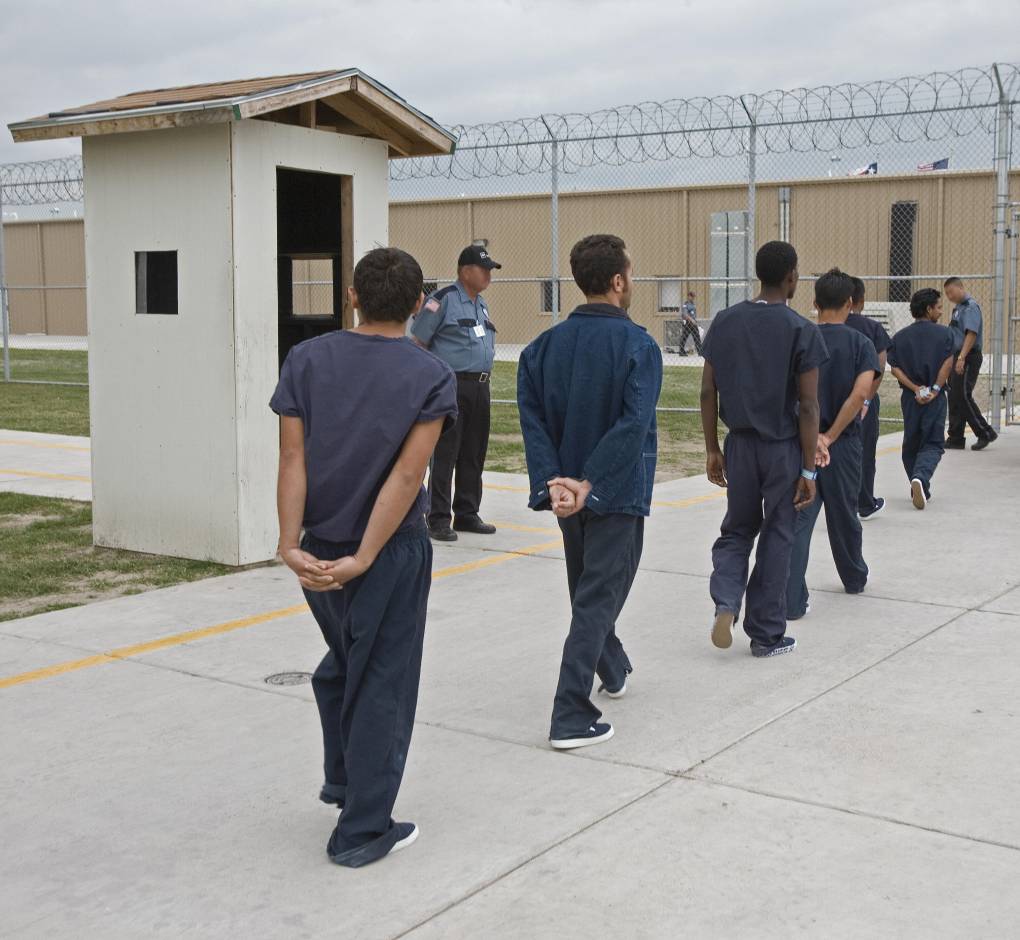
"caption": "Male detainees walk to a gate inside Homeland Security's Willacy Detention Center, a facility in Raymondville, Texas. ",
"description": null,
"title": "Male detainees walk to a gate inside Hom",
"credit": "PAUL J. RICHARDS/AFP via Getty Images",
"status": "inherit",
"isLoading": false,
"fetchFailed": false
},
"science_1956721": {
"type": "attachments",
"id": "science_1956721",
"meta": {
"index": "attachments_1716263798",
"site": "science",
"id": "1956721",
"found": true
},
"parent": 1956693,
"imgSizes": {
"twentyfourteen-full-width": {
"file": "https://ww2.kqed.org/app/uploads/sites/35/2020/02/MDMA1-1038x576.png",
"width": 1038,
"mimeType": "image/png",
"height": 576
},
"thumbnail": {
"file": "https://ww2.kqed.org/app/uploads/sites/35/2020/02/MDMA1-160x90.png",
"width": 160,
"mimeType": "image/png",
"height": 90
},
"post-thumbnail": {
"file": "https://ww2.kqed.org/app/uploads/sites/35/2020/02/MDMA1-672x372.png",
"width": 672,
"mimeType": "image/png",
"height": 372
},
"kqedFullSize": {
"file": "https://ww2.kqed.org/app/uploads/sites/35/2020/02/MDMA1.png",
"width": 1367,
"height": 770
},
"large": {
"file": "https://ww2.kqed.org/app/uploads/sites/35/2020/02/MDMA1-1020x575.png",
"width": 1020,
"mimeType": "image/png",
"height": 575
},
"medium": {
"file": "https://ww2.kqed.org/app/uploads/sites/35/2020/02/MDMA1-800x451.png",
"width": 800,
"mimeType": "image/png",
"height": 451
},
"medium_large": {
"file": "https://ww2.kqed.org/app/uploads/sites/35/2020/02/MDMA1-768x433.png",
"width": 768,
"mimeType": "image/png",
"height": 433
}
},
"publishDate": 1581120554,
"modified": 1581120614,
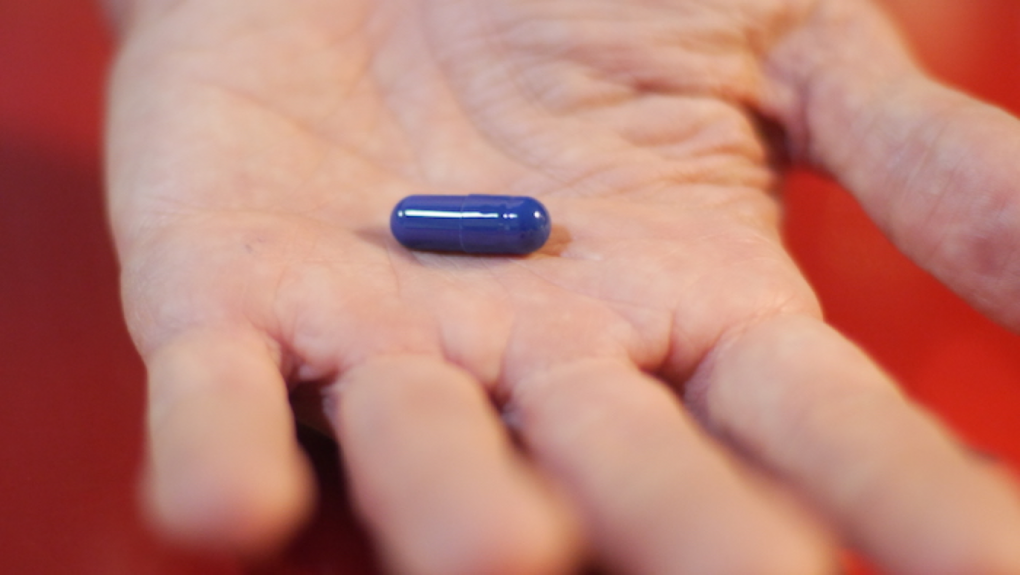
"caption": "The drug MDMA, to be used in MDMA-assisted therapy.",
"description": "The drug MDMA, to be used in MDMA-assisted therapy.",
"title": "MDMA1",
"credit": "Courtesy MAPS",
"status": "inherit",
"isLoading": false,
"fetchFailed": false
},
"science_1956607": {
"type": "attachments",
"id": "science_1956607",
"meta": {
"index": "attachments_1716263798",
"site": "science",
"id": "1956607",
"found": true
},
"parent": 1956560,
"imgSizes": {
"twentyfourteen-full-width": {
"file": "https://ww2.kqed.org/app/uploads/sites/35/2020/02/iStock-509850436-1038x576.jpg",
"width": 1038,
"mimeType": "image/jpeg",
"height": 576
},
"thumbnail": {
"file": "https://ww2.kqed.org/app/uploads/sites/35/2020/02/iStock-509850436-160x106.jpg",
"width": 160,
"mimeType": "image/jpeg",
"height": 106
},
"post-thumbnail": {
"file": "https://ww2.kqed.org/app/uploads/sites/35/2020/02/iStock-509850436-672x372.jpg",
"width": 672,
"mimeType": "image/jpeg",
"height": 372
},
"kqedFullSize": {
"file": "https://ww2.kqed.org/app/uploads/sites/35/2020/02/iStock-509850436.jpg",
"width": 1258,
"height": 833
},
"large": {
"file": "https://ww2.kqed.org/app/uploads/sites/35/2020/02/iStock-509850436-1020x675.jpg",
"width": 1020,
"mimeType": "image/jpeg",
"height": 675
},
"medium": {
"file": "https://ww2.kqed.org/app/uploads/sites/35/2020/02/iStock-509850436-800x530.jpg",
"width": 800,
"mimeType": "image/jpeg",
"height": 530
},
"medium_large": {
"file": "https://ww2.kqed.org/app/uploads/sites/35/2020/02/iStock-509850436-768x509.jpg",
"width": 768,
"mimeType": "image/jpeg",
"height": 509
}
},
"publishDate": 1581015595,
"modified": 1581015762,
"caption": "San Francisco's Chinatown district is one of the oldest Chinatowns in the United States.",
"description": null,
"title": "Oakland bay bridge from Chinatown, San Francisco",
"credit": "iStock",
"status": "inherit",
"isLoading": false,
"fetchFailed": false
},
"science_1956452": {
"type": "attachments",
"id": "science_1956452",
"meta": {
"index": "attachments_1716263798",
"site": "science",
"id": "1956452",
"found": true
},
"parent": 1956446,
"imgSizes": {
"twentyfourteen-full-width": {
"file": "https://ww2.kqed.org/app/uploads/sites/35/2020/02/N3-Ranch-_-Photography-67-1280x852-1038x576.jpeg",
"width": 1038,
"mimeType": "image/jpeg",
"height": 576
},
"thumbnail": {
"file": "https://ww2.kqed.org/app/uploads/sites/35/2020/02/N3-Ranch-_-Photography-67-1280x852-160x107.jpeg",
"width": 160,
"mimeType": "image/jpeg",
"height": 107
},
"post-thumbnail": {
"file": "https://ww2.kqed.org/app/uploads/sites/35/2020/02/N3-Ranch-_-Photography-67-1280x852-672x372.jpeg",
"width": 672,
"mimeType": "image/jpeg",
"height": 372
},
"kqedFullSize": {
"file": "https://ww2.kqed.org/app/uploads/sites/35/2020/02/N3-Ranch-_-Photography-67-1280x852.jpeg",
"width": 1280,
"height": 852
},
"large": {
"file": "https://ww2.kqed.org/app/uploads/sites/35/2020/02/N3-Ranch-_-Photography-67-1280x852-1020x679.jpeg",
"width": 1020,
"mimeType": "image/jpeg",
"height": 679
},
"medium": {
"file": "https://ww2.kqed.org/app/uploads/sites/35/2020/02/N3-Ranch-_-Photography-67-1280x852-800x533.jpeg",
"width": 800,
"mimeType": "image/jpeg",
"height": 533
},
"medium_large": {
"file": "https://ww2.kqed.org/app/uploads/sites/35/2020/02/N3-Ranch-_-Photography-67-1280x852-768x511.jpeg",
"width": 768,
"mimeType": "image/jpeg",
"height": 511
}
},
"publishDate": 1580774505,
"modified": 1589590145,
"caption": "The N3 Cattle Company Ranch in Livermore, 45 miles east of San Francisco, is a possible location for the first new state park in a decade.",
"description": null,
"title": "N3-Ranch-_-Photography-67-1280x852",
"credit": "California Outdoor Properties",
"status": "inherit",
"isLoading": false,
"fetchFailed": false
},
"science_1956329": {
"type": "attachments",
"id": "science_1956329",
"meta": {
"index": "attachments_1716263798",
"site": "science",
"id": "1956329",
"found": true
},
"parent": 1956289,
"imgSizes": {
"twentyfourteen-full-width": {
"file": "https://ww2.kqed.org/app/uploads/sites/35/2020/01/GettyImages-159249318-1038x576.jpg",
"width": 1038,
"mimeType": "image/jpeg",
"height": 576
},
"thumbnail": {
"file": "https://ww2.kqed.org/app/uploads/sites/35/2020/01/GettyImages-159249318-160x126.jpg",
"width": 160,
"mimeType": "image/jpeg",
"height": 126
},
"post-thumbnail": {
"file": "https://ww2.kqed.org/app/uploads/sites/35/2020/01/GettyImages-159249318-672x372.jpg",
"width": 672,
"mimeType": "image/jpeg",
"height": 372
},
"kqedFullSize": {
"file": "https://ww2.kqed.org/app/uploads/sites/35/2020/01/GettyImages-159249318.jpg",
"width": 3100,
"height": 2446
},
"large": {
"file": "https://ww2.kqed.org/app/uploads/sites/35/2020/01/GettyImages-159249318-1020x805.jpg",
"width": 1020,
"mimeType": "image/jpeg",
"height": 805
},
"full-width": {
"file": "https://ww2.kqed.org/app/uploads/sites/35/2020/01/GettyImages-159249318-1920x1515.jpg",
"width": 1920,
"mimeType": "image/jpeg",
"height": 1515
},
"medium": {
"file": "https://ww2.kqed.org/app/uploads/sites/35/2020/01/GettyImages-159249318-800x631.jpg",
"width": 800,
"mimeType": "image/jpeg",
"height": 631
},
"medium_large": {
"file": "https://ww2.kqed.org/app/uploads/sites/35/2020/01/GettyImages-159249318-768x606.jpg",
"width": 768,
"mimeType": "image/jpeg",
"height": 606
}
},
"publishDate": 1580413286,
"modified": 1580413620,
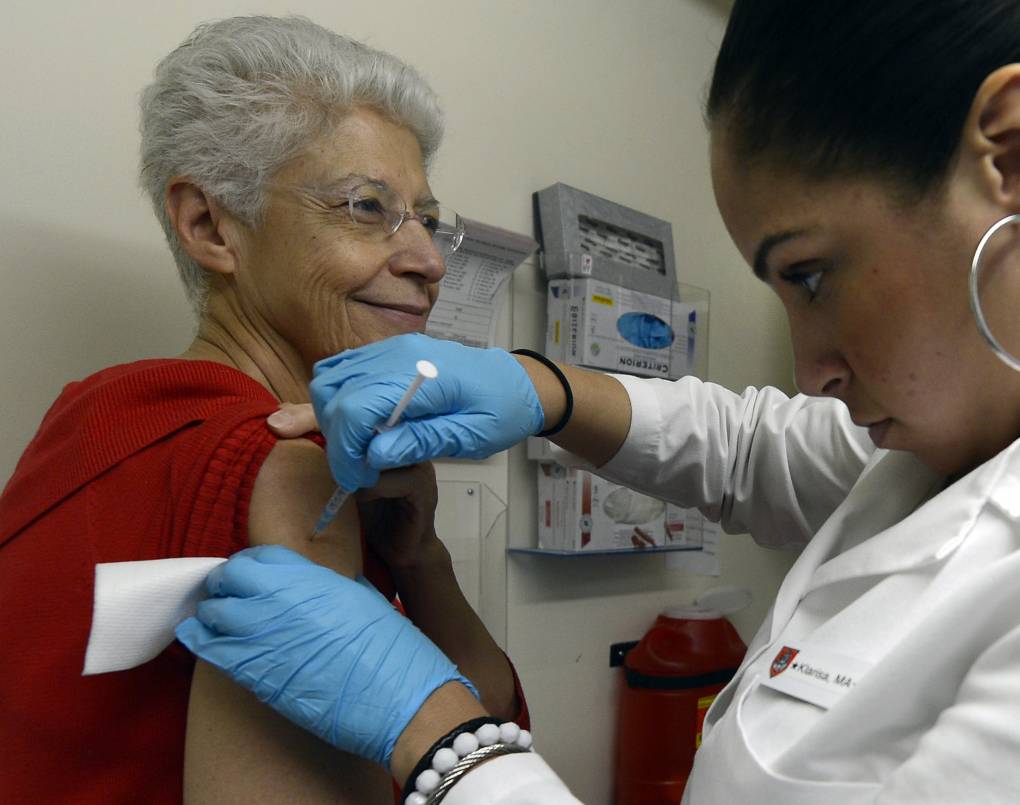
"caption": "The federal Centers for Disease Control and Prevention has said that for now, it's smart to take precautions against this year's flu strain.",
"description": null,
"title": "US-HEALTH-FLU OUTBREAK-NYC",
"credit": "Timothy A. Clary/AFP via Getty Images",
"status": "inherit",
"isLoading": false,
"fetchFailed": false
},
"science_1958240": {
"type": "attachments",
"id": "science_1958240",
"meta": {
"index": "attachments_1716263798",
"site": "science",
"id": "1958240",
"found": true
},
"parent": 1956004,
"imgSizes": {
"twentyfourteen-full-width": {
"file": "https://ww2.kqed.org/app/uploads/sites/35/2020/01/DEEP_702_A-Tsetse-Fly-Births-One-Enormous-Milk-Fed-Baby_shield-1038x576.jpg",
"width": 1038,
"mimeType": "image/jpeg",
"height": 576
},
"thumbnail": {
"file": "https://ww2.kqed.org/app/uploads/sites/35/2020/01/DEEP_702_A-Tsetse-Fly-Births-One-Enormous-Milk-Fed-Baby_shield-160x90.jpg",
"width": 160,
"mimeType": "image/jpeg",
"height": 90
},
"post-thumbnail": {
"file": "https://ww2.kqed.org/app/uploads/sites/35/2020/01/DEEP_702_A-Tsetse-Fly-Births-One-Enormous-Milk-Fed-Baby_shield-672x372.jpg",
"width": 672,
"mimeType": "image/jpeg",
"height": 372
},
"kqedFullSize": {
"file": "https://ww2.kqed.org/app/uploads/sites/35/2020/01/DEEP_702_A-Tsetse-Fly-Births-One-Enormous-Milk-Fed-Baby_shield.jpg",
"width": 3841,
"height": 2161
},
"large": {
"file": "https://ww2.kqed.org/app/uploads/sites/35/2020/01/DEEP_702_A-Tsetse-Fly-Births-One-Enormous-Milk-Fed-Baby_shield-1020x574.jpg",
"width": 1020,
"mimeType": "image/jpeg",
"height": 574
},
"full-width": {
"file": "https://ww2.kqed.org/app/uploads/sites/35/2020/01/DEEP_702_A-Tsetse-Fly-Births-One-Enormous-Milk-Fed-Baby_shield-1920x1080.jpg",
"width": 1920,
"mimeType": "image/jpeg",
"height": 1080
},
"medium": {
"file": "https://ww2.kqed.org/app/uploads/sites/35/2020/01/DEEP_702_A-Tsetse-Fly-Births-One-Enormous-Milk-Fed-Baby_shield-800x450.jpg",
"width": 800,
"mimeType": "image/jpeg",
"height": 450
},
"medium_large": {
"file": "https://ww2.kqed.org/app/uploads/sites/35/2020/01/DEEP_702_A-Tsetse-Fly-Births-One-Enormous-Milk-Fed-Baby_shield-768x432.jpg",
"width": 768,
"mimeType": "image/jpeg",
"height": 432
}
},
"publishDate": 1583526417,
"modified": 1583526417,
"caption": null,
"description": null,
"title": "DEEP_702_A-Tsetse-Fly-Births-One-Enormous-Milk-Fed-Baby_shield",
"credit": null,
"status": "inherit",
"isLoading": false,
"fetchFailed": false
},
"science_1956228": {
"type": "attachments",
"id": "science_1956228",
"meta": {
"index": "attachments_1716263798",
"site": "science",
"id": "1956228",
"found": true
},
"parent": 1956225,
"imgSizes": {
"twentyfourteen-full-width": {
"file": "https://ww2.kqed.org/app/uploads/sites/35/2020/01/RS40936_GettyImages-1196684248-qut-1038x576.jpg",
"width": 1038,
"mimeType": "image/jpeg",
"height": 576
},
"thumbnail": {
"file": "https://ww2.kqed.org/app/uploads/sites/35/2020/01/RS40936_GettyImages-1196684248-qut-160x107.jpg",
"width": 160,
"mimeType": "image/jpeg",
"height": 107
},
"post-thumbnail": {
"file": "https://ww2.kqed.org/app/uploads/sites/35/2020/01/RS40936_GettyImages-1196684248-qut-672x372.jpg",
"width": 672,
"mimeType": "image/jpeg",
"height": 372
},
"kqedFullSize": {
"file": "https://ww2.kqed.org/app/uploads/sites/35/2020/01/RS40936_GettyImages-1196684248-qut.jpg",
"width": 1920,
"height": 1280
},
"large": {
"file": "https://ww2.kqed.org/app/uploads/sites/35/2020/01/RS40936_GettyImages-1196684248-qut-1020x680.jpg",
"width": 1020,
"mimeType": "image/jpeg",
"height": 680
},
"full-width": {
"file": "https://ww2.kqed.org/app/uploads/sites/35/2020/01/RS40936_GettyImages-1196684248-qut-1920x1280.jpg",
"width": 1920,
"mimeType": "image/jpeg",
"height": 1280
},
"medium": {
"file": "https://ww2.kqed.org/app/uploads/sites/35/2020/01/RS40936_GettyImages-1196684248-qut-800x533.jpg",
"width": 800,
"mimeType": "image/jpeg",
"height": 533
},
"medium_large": {
"file": "https://ww2.kqed.org/app/uploads/sites/35/2020/01/RS40936_GettyImages-1196684248-qut-768x512.jpg",
"width": 768,
"mimeType": "image/jpeg",
"height": 512
}
},
"publishDate": 1580149448,
"modified": 1580149479,
"caption": "Pedestrians wearing face masks cross a road during a Lunar New Year of the Rat public holiday in Hong Kong on January 27, 2020, as a preventative measure following a coronavirus outbreak which began in the Chinese city of Wuhan.",
"description": null,
"title": "RS40936_GettyImages-1196684248-qut",
"credit": " ANTHONY WALLACE/AFP via Getty Images",
"status": "inherit",
"isLoading": false,
"fetchFailed": false
}
},
"audioPlayerReducer": {
"postId": "stream_live",
"isPaused": true,
"isPlaying": false,
"pfsActive": false,
"pledgeModalIsOpen": true,
"playerDrawerIsOpen": false,
"liveAudioPlayStartedAt": 0,
"liveAudioPlayContext": ""
},
"authorsReducer": {
"byline_science_1957088": {
"type": "authors",
"id": "byline_science_1957088",
"meta": {
"override": true
},
"slug": "byline_science_1957088",
"name": "Marianne Lavelle\u003cbr />InsideClimate News\u003cbr>",
"isLoading": false
},
"byline_science_1956855": {
"type": "authors",
"id": "byline_science_1956855",
"meta": {
"override": true
},
"slug": "byline_science_1956855",
"name": "Nicholas Florko \u003cbr />STAT\u003cBR>",
"isLoading": false
},
"byline_science_1956225": {
"type": "authors",
"id": "byline_science_1956225",
"meta": {
"override": true
},
"slug": "byline_science_1956225",
"name": "Helen Branswell \u003cbr />STAT News\u003cbr>",
"isLoading": false
},
"gabriela-quiros": {
"type": "authors",
"id": "6186",
"meta": {
"index": "authors_1716337520",
"id": "6186",
"found": true
},
"name": "Gabriela Quirós",
"firstName": "Gabriela",
"lastName": "Quirós",
"slug": "gabriela-quiros",
"email": "gquiros@kqed.org",
"display_author_email": false,
"staff_mastheads": [],
"title": "Supervising Producer",
"bio": "Gabriela Quirós is the \u003cstrong>supervising producer for KQED's web science video series \u003ca href=\"https://www.kqed.org/deeplook\">Deep Look\u003c/a>\u003c/strong>. She joined KQED as a TV producer when its science series QUEST started in 2006 and has covered everything from Alzheimer’s to bee die-offs to dark energy.\r\n\r\nShe won a 2022 AAAS Kavli Science Journalism Award with a team of her Deep Look colleagues. She has won six regional Emmys as a video producer and has shared eight more as the coordinating producer of Deep Look. The episode she produced about \u003ca href=\"https://www.kqed.org/science/728086/how-mosquitoes-use-six-needles-to-suck-your-blood\">How Mosquitoes Use Six Needles to Suck Your Blood\u003c/a> won a Webby \"People's Voice\" award. She has also earned awards from the Jackson Hole Wildlife Film Festival, the Society of Professional Journalists and the Society of Environmental Journalists.\r\n\r\nHer videos for KQED have also aired on NOVA scienceNOW and the PBS NewsHour, and appeared on NPR.org.\r\n\r\nAs an independent filmmaker, she produced and directed the hour-long documentary \u003ca href=\"http://lpbp.org/beautiful-sin-qa-with-producer-gabriela-quiros/\">\u003cem>Beautiful Sin\u003c/em>\u003c/a>, about the surprising story of how Costa Rica became the only country in the world to outlaw in vitro fertilization. The film aired in 2015 on public television stations throughout the U.S., and in Costa Rica.\r\n\r\nShe started her journalism career as a newspaper reporter in Costa Rica, where she grew up. She won the National Science Journalism Award there for a series of articles about organic agriculture, and developed a life-long interest in health reporting. She moved to the Bay Area in 1996 to study documentary filmmaking at the University of California, Berkeley, where she received master’s degrees in journalism and Latin American studies.",
"avatar": "https://secure.gravatar.com/avatar/6d82c20152affd1b434c31a904c40809?s=600&d=blank&r=g",
"twitter": "gabrielaquirosr",
"facebook": null,
"instagram": null,
"linkedin": null,
"sites": [
{
"site": "science",
"roles": []
},
{
"site": "quest",
"roles": [
"ef_view_calendar",
"ef_view_story_budget"
]
}
],
"headData": {
"title": "Gabriela Quirós | KQED",
"description": "Supervising Producer",
"ogImgSrc": "https://secure.gravatar.com/avatar/6d82c20152affd1b434c31a904c40809?s=600&d=blank&r=g",
"twImgSrc": "https://secure.gravatar.com/avatar/6d82c20152affd1b434c31a904c40809?s=600&d=blank&r=g"
},
"isLoading": false,
"link": "/author/gabriela-quiros"
},
"lklivans": {
"type": "authors",
"id": "8648",
"meta": {
"index": "authors_1716337520",
"id": "8648",
"found": true
},
"name": "Laura Klivans",
"firstName": "Laura",
"lastName": "Klivans",
"slug": "lklivans",
"email": "lklivans@kqed.org",
"display_author_email": true,
"staff_mastheads": [
"news",
"science"
],
"title": "Reporter",
"bio": "Laura Klivans is an award-winning science reporter for KQED News, where she covers climate change with an eye on both groundbreaking progress and gaps in action. She is the former host of KQED's blockbuster video series about tiny, amazing animals, \u003cem>Deep Look\u003c/em>. Her work reaches national audiences through NPR, \u003cem>Here & Now, \u003c/em>PRI, and other major outlets. \r\n\r\nLaura’s won five Northern California Area Emmy Awards for Deep Look and First Place in the Greater Bay Area Journalism Awards for a podcast exploring how one Oakland neighborhood teamed up to reduce planet-heating pollution.\r\n\r\nBeyond her reporting, she hosts and moderates events. In the past, she taught audio storytelling at the UC Berkeley Graduate School of Journalism, led international education programs, worked with immigrants and refugees along the Thai-Burmese border, taught high schoolers sex ed, and was an actress. \r\n\r\nShe's a former UC Berkeley Human Rights Fellow, USC Center for Health Journalism's California Fellow and Coro Fellow in Public Affairs. Laura has a master’s in journalism from UC Berkeley, a master’s in education from Harvard, and an undergraduate degree from Northwestern University.\r\n\r\nShe loves trying to riddle the meaning out of vanity license plates.",
"avatar": "https://secure.gravatar.com/avatar/2d2ecd1550a494cc10ad4a503406965585902124739e775a9b3817eebf1d88be?s=600&d=blank&r=g",
"twitter": "lauraklivans",
"bluesky": null,
"facebook": null,
"instagram": null,
"linkedin": null,
"sites": [
{
"site": "news",
"roles": [
"editor"
]
},
{
"site": "stateofhealth",
"roles": [
"contributor",
"editor"
]
},
{
"site": "science",
"roles": [
"editor"
]
},
{
"site": "forum",
"roles": [
"editor"
]
}
],
"headData": {
"title": "Laura Klivans | KQED",
"description": "Reporter",
"ogImgSrc": "https://secure.gravatar.com/avatar/2d2ecd1550a494cc10ad4a503406965585902124739e775a9b3817eebf1d88be?s=600&d=blank&r=g",
"twImgSrc": "https://secure.gravatar.com/avatar/2d2ecd1550a494cc10ad4a503406965585902124739e775a9b3817eebf1d88be?s=600&d=blank&r=g"
},
"isLoading": false,
"link": "/author/lklivans"
},
"lesleymcclurg": {
"type": "authors",
"id": "11229",
"meta": {
"index": "authors_1716337520",
"id": "11229",
"found": true
},
"name": "Lesley McClurg",
"firstName": "Lesley",
"lastName": "McClurg",
"slug": "lesleymcclurg",
"email": "lmcclurg@KQED.org",
"display_author_email": false,
"staff_mastheads": [
"news",
"science"
],
"title": "KQED Health Correspondent",
"bio": "Lesley McClurg is a health correspondent and fill-in host whose work is regularly rebroadcast on NPR and PBS programs. She’s earned multiple regional Emmy awards, a national and a regional Edward R. Murrow award, and was named Best Beat Reporter by the Association of Health Care Journalists. The Society of Professional Journalists has recognized her work several times, and the Society of Environmental Journalists spotlighted her coverage of California’s historic drought.\r\n\r\nBefore joining KQED in 2016, Lesley covered food and sustainability for Capital Public Radio, environmental issues for Colorado Public Radio, and reported for KUOW and KCTS 9 in Seattle. Away from the newsroom, she loves skiing with her daughter, mountain biking with her partner, and playing with Ollie, the family’s goldendoodle. On deadline, she runs almost entirely on chocolate chips.\r\n\r\n ",
"avatar": "https://secure.gravatar.com/avatar/bab49e972ea10c774fe0f5e29dba1722b158f7c0d58a360923d1389d380b2978?s=600&d=blank&r=g",
"twitter": "lesleywmcclurg",
"bluesky": null,
"facebook": null,
"instagram": null,
"linkedin": null,
"sites": [
{
"site": "arts",
"roles": [
"author"
]
},
{
"site": "news",
"roles": [
"editor"
]
},
{
"site": "futureofyou",
"roles": [
"editor"
]
},
{
"site": "stateofhealth",
"roles": [
"author"
]
},
{
"site": "science",
"roles": [
"editor"
]
},
{
"site": "quest",
"roles": [
"subscriber"
]
},
{
"site": "forum",
"roles": [
"administrator"
]
},
{
"site": "liveblog",
"roles": [
"author"
]
}
],
"headData": {
"title": "Lesley McClurg | KQED",
"description": "KQED Health Correspondent",
"ogImgSrc": "https://secure.gravatar.com/avatar/bab49e972ea10c774fe0f5e29dba1722b158f7c0d58a360923d1389d380b2978?s=600&d=blank&r=g",
"twImgSrc": "https://secure.gravatar.com/avatar/bab49e972ea10c774fe0f5e29dba1722b158f7c0d58a360923d1389d380b2978?s=600&d=blank&r=g"
},
"isLoading": false,
"link": "/author/lesleymcclurg"
},
"parcuni": {
"type": "authors",
"id": "11368",
"meta": {
"index": "authors_1716337520",
"id": "11368",
"found": true
},
"name": "Peter Arcuni",
"firstName": "Peter",
"lastName": "Arcuni",
"slug": "parcuni",
"email": "parcuni@KQED.org",
"display_author_email": false,
"staff_mastheads": [
"science"
],
"title": "Reporter",
"bio": "Peter reports radio and online stories for \u003cem>KQED Science\u003c/em>. His work has also appeared on the \u003cem>The California Report\u003c/em> morning show and \u003cem>KQED News\u003c/em>. His production credits include \u003cem>The California Report, The California Report Magazine\u003c/em> and KQED's local news podcast \u003cem>The Bay\u003c/em>. Other credits include NPR's \u003cem>All Things Considered\u003c/em>, WNYC's \u003cem>Science Friday\u003c/em>, WBUR's \u003cem>Here & Now\u003c/em>, WIRED and SFGate. Peter graduated from Brown University and earned a master's degree in journalism from Stanford. He's covered everything from homelessness to wildfires, health, the environment, arts and Thanksgiving in San Quentin prison. In other lives, he played rock n roll music and studied neuroscience. You can email him at: parcuni@kqed.org",
"avatar": "https://secure.gravatar.com/avatar/d5032f6f27199d478af34ad2e1d98732?s=600&d=blank&r=g",
"twitter": "peterarcuni",
"facebook": null,
"instagram": null,
"linkedin": null,
"sites": [
{
"site": "news",
"roles": [
"editor"
]
},
{
"site": "science",
"roles": [
"editor"
]
}
],
"headData": {
"title": "Peter Arcuni | KQED",
"description": "Reporter",
"ogImgSrc": "https://secure.gravatar.com/avatar/d5032f6f27199d478af34ad2e1d98732?s=600&d=blank&r=g",
"twImgSrc": "https://secure.gravatar.com/avatar/d5032f6f27199d478af34ad2e1d98732?s=600&d=blank&r=g"
},
"isLoading": false,
"link": "/author/parcuni"
},
"rdillon": {
"type": "authors",
"id": "11495",
"meta": {
"index": "authors_1716337520",
"id": "11495",
"found": true
},
"name": "Raquel Maria Dillon",
"firstName": "Raquel Maria",
"lastName": "Dillon",
"slug": "rdillon",
"email": "rdillon@kqed.org",
"display_author_email": false,
"staff_mastheads": [],
"title": null,
"bio": "Raquel Maria Dillon was a reporter and host for KQED News. Previously, she produced the daily statewide California Report, edited newscasts, and covered health and education stories. Before returning to the Bay Area in 2016, she worked in Los Angeles as a wire reporter and one-woman-band video journalist for the Associated Press, where she shot, edited and reported breaking news and features across the West. Her work has appeared online and in print around the globe, and also on NPR’s Morning Edition, All Things Considered, Here and Now, Marketplace, On The Media, and Studio 360. She previously edited and mentored up-and-coming reporters at KALW, produced social videos for Timeline.com, and was a local TV news videographer for KTVU and digital producer for KNTV. She got her start as a Radio News Trainee at KQED, produced a weekly public affairs roundtable show for OPB, and covered health and politics at New Hampshire Public Radio. She has a BA in political science from Barnard College and a MA in video journalism from UC Berkeley, where she was awarded the Faith Fancher Scholarship and a Student Emmy. She has received numerous local awards from the Associated Press and the Society of Professional Journalists.",
"avatar": "https://secure.gravatar.com/avatar/b8e02ae982913d0950df605910267c1b?s=600&d=blank&r=g",
"twitter": "RaquelMDillon",
"facebook": null,
"instagram": null,
"linkedin": null,
"sites": [
{
"site": "news",
"roles": [
"subscriber"
]
},
{
"site": "stateofhealth",
"roles": [
"editor"
]
},
{
"site": "science",
"roles": [
"editor"
]
},
{
"site": "forum",
"roles": [
"editor"
]
}
],
"headData": {
"title": "Raquel Maria Dillon | KQED",
"description": null,
"ogImgSrc": "https://secure.gravatar.com/avatar/b8e02ae982913d0950df605910267c1b?s=600&d=blank&r=g",
"twImgSrc": "https://secure.gravatar.com/avatar/b8e02ae982913d0950df605910267c1b?s=600&d=blank&r=g"
},
"isLoading": false,
"link": "/author/rdillon"
},
"kevinstark": {
"type": "authors",
"id": "11608",
"meta": {
"index": "authors_1716337520",
"id": "11608",
"found": true
},
"name": "Kevin Stark",
"firstName": "Kevin",
"lastName": "Stark",
"slug": "kevinstark",
"email": "kstark@kqed.org",
"display_author_email": true,
"staff_mastheads": [
"science"
],
"title": "Senior Editor",
"bio": "Kevin is a senior editor for KQED Science, managing the station's health and climate desks. His journalism career began in the Pacific Northwest, and he later became a lead reporter for the San Francisco Public Press. His work has appeared in Pacific Standard magazine, the Energy News Network, the Center for Investigative Reporting's Reveal and WBEZ in Chicago. Kevin joined KQED in 2019, and has covered issues related to energy, wildfire, climate change and the environment.",
"avatar": "https://secure.gravatar.com/avatar/365aaa4b597d3a8374f67504ff0facd323d7906e8eb4be0a7efd2427408e802c?s=600&d=blank&r=g",
"twitter": "starkkev",
"bluesky": null,
"facebook": null,
"instagram": null,
"linkedin": null,
"sites": [
{
"site": "",
"roles": [
"editor"
]
},
{
"site": "news",
"roles": [
"editor"
]
},
{
"site": "science",
"roles": [
"administrator"
]
}
],
"headData": {
"title": "Kevin Stark | KQED",
"description": "Senior Editor",
"ogImgSrc": "https://secure.gravatar.com/avatar/365aaa4b597d3a8374f67504ff0facd323d7906e8eb4be0a7efd2427408e802c?s=600&d=blank&r=g",
"twImgSrc": "https://secure.gravatar.com/avatar/365aaa4b597d3a8374f67504ff0facd323d7906e8eb4be0a7efd2427408e802c?s=600&d=blank&r=g"
},
"isLoading": false,
"link": "/author/kevinstark"
}
},
"pagesReducer": {
"science_category_health": {
"type": "terms",
"id": "science_39",
"meta": {
"index": "terms_1716263798",
"site": "science",
"id": "39",
"score": 10.889519
},
"featImg": null,
"name": "Health",
"description": null,
"taxonomy": "category",
"headData": {
"twImgId": null,
"twTitle": null,
"ogTitle": null,
"ogImgId": null,
"twDescription": null,
"description": null,
"title": "Health Archives | KQED Science",
"ogDescription": null
},
"ttid": 41,
"slug": "health",
"isLoading": false,
"title": "Health",
"pageMeta": {
"site": "science",
"WpPageTemplate": "page-topic-editorial",
"currentPage": 34
},
"blocks": [
{
"blockName": "kqed/post-list",
"attrs": {
"layout": "cardArticle2",
"query": "posts/science?category=health",
"seeMore": false,
"paginated": true,
"page": 34
}
},
{
"blockName": "kqed/ad"
}
]
}
},
"pfsSessionReducer": {},
"postsReducer": {
"stream_live": {
"type": "live",
"id": "stream_live",
"audioUrl": "https://streams.kqed.org/kqedradio",
"title": "Live Stream",
"excerpt": "Live Stream information currently unavailable.",
"link": "/radio",
"featImg": "",
"label": {
"name": "KQED Live",
"link": "/"
}
},
"stream_kqedNewscast": {
"type": "posts",
"id": "stream_kqedNewscast",
"audioUrl": "https://www.kqed.org/.stream/anon/radio/RDnews/newscast.mp3?_=1",
"title": "KQED Newscast",
"featImg": "",
"label": {
"name": "88.5 FM",
"link": "/"
}
},
"science_1957088": {
"type": "posts",
"id": "science_1957088",
"meta": {
"index": "posts_1716263798",
"site": "science",
"id": "1957088",
"score": null,
"sort": [
1582012880000
]
},
"parent": 0,
"labelTerm": {},
"blocks": [],
"publishDate": 1582012880,
"format": "standard",
"title": "Donald Trump Climate Profile: This President Is All About Fossil Fuels",
"headTitle": "Donald Trump Climate Profile: This President Is All About Fossil Fuels | KQED",
"content": "\u003cp>\u003cem>‘This is the start of a new era in American energy production and job creation. We will eliminate federal overreach, restore economic freedom and allow workers and companies to play on a level playing field for the first time in a long time, a long time. We’re going to have clean coal, really clean coal.’\u003cbr>\n—\u003c/em>Donald Trump, \u003ca href=\"https://insideclimatenews.org/news/28032017/trump-executive-order-climate-change-paris-climate-agreement-clean-power-plan-pruitt\" target=\"_blank\" rel=\"noopener noreferrer\">March 2017\u003c/a>\u003c/p>\n\u003cp>\u003cstrong>Been There\u003c/strong>\u003cbr>\n[pullquote align=\"right\" size=\"medium\"]Analysis: The Candidates on Climate Change\u003c/p>\n\u003cul>\n\u003cli>\u003ca href=\"https://www.kqed.org/science/1956430/joe-biden-climate-profile-surprising-embrace-of-green-new-deal\" target=\"_blank\" rel=\"noopener noreferrer\">Joe Biden\u003c/a>\u003c/li>\n\u003cli>\u003ca href=\"https://www.kqed.org/science/1956501/michael-bloomberg-climate-profile-shutting-down-coal-modest-federal-spending%22\" target=\"_blank\" rel=\"noopener noreferrer\">Michael Bloomberg\u003c/a>\u003c/li>\n\u003cli>\u003ca href=\"https://www.kqed.org/science/1956514/pete-buttigieg-climate-profile-making-u-s-the-worlds-clean-tech-leader\" target=\"_blank\" rel=\"noopener noreferrer\">Pete Buttigieg\u003c/a>\u003c/li>\n\u003cli>\u003ca href=\"https://www.kqed.org/science/1956525/amy-klobuchar-climate-profile-using-presidency-to-restore-clean-energy-policies\" target=\"_blank\" rel=\"noopener noreferrer\">Amy Klobuchar\u003c/a>\u003c/li>\n\u003cli>\u003ca href=\"https://www.kqed.org/science/1956421/bernie-sanders-climate-profile-16-trillion-in-spending-for-most-ambitious-plan-yet\" target=\"_blank\" rel=\"noopener noreferrer\">Bernie Sanders\u003c/a>\u003c/li>\n\u003cli>\u003ca href=\"https://www.kqed.org/science/1957439/tom-steyer-climate-profile-a-justice-centered-plan\" target=\"_blank\" rel=\"noopener noreferrer\">Tom Steyer\u003c/a>\u003c/li>\n\u003cli>\u003ca href=\"https://www.kqed.org/science/1956437/elizabeth-warren-climate-profile-taking-up-mantle-of-former-climate-candidate-inslee\" target=\"_blank\" rel=\"noopener noreferrer\">Elizabeth Warren\u003c/a>\u003c/li>\n\u003c/ul>\n\u003cp>[/pullquote]When U.S. government scientists released their latest volume of the \u003ca href=\"https://science2017.globalchange.gov/\" target=\"_blank\" rel=\"noopener noreferrer\">National Climate Assessment\u003c/a>, it revealed much about the robust, sobering scientific consensus on climate change. It also revealed the striking disconnect between President Donald Trump and essentially every authoritative institution on the threat of global warming. The president rejected the assessment’s central findings — based on thousands of climate studies and involving 13 federal agencies — that emissions of carbon dioxide are caused by human activities, are already causing lasting economic damage, and have to be brought rapidly to zero.\u003c/p>\n\u003cp style=\"font-weight: 400;\">“I don’t believe it. No, no, I don’t believe it,” Trump said. Immediately, his cabinet members \u003ca href=\"https://insideclimatenews.org/news/30112018/fact-check-trump-climate-science-denial-national-assessment-sanders-global-warming\" target=\"_blank\" rel=\"noopener noreferrer\">launched attacks on the report\u003c/a>, portraying it as “alarmist” and clinging to Trump’s agenda of fossil fuel energy expansion that the science says is at the root of the problem.\u003c/p>\n\u003cp>\u003cstrong>Done That\u003c/strong>\u003c/p>\n\u003cp style=\"font-weight: 400;\">When Trump delivered his \u003ca href=\"https://insideclimatenews.org/news/27052016/donald-trump-republican-party-election-fossil-fuels-coal-oil-gas-fracking-climate-change-paris\" target=\"_blank\" rel=\"noopener noreferrer\">first major energy speech in the fracking fields of North Dakota\u003c/a> as a candidate in May 2016, he called for American domination of global energy supplies. To make that happen, he wanted an end to all of President Barack Obama’s executive actions involving greenhouse gas emissions.\u003c/p>\n\u003cp style=\"font-weight: 400;\">“We are going to turn everything around,” Trump declared. “And quickly, very quickly.”\u003c/p>\n\u003cp style=\"font-weight: 400;\">As president, he has rolled back regulations on energy suppliers at a rapid clip slowed only at times\u003ca href=\"https://insideclimatenews.org/news/29082019/methane-regulation-oil-gas-storage-pipelines-epa-rollback-trump-wheeler\" target=\"_blank\" rel=\"noopener noreferrer\"> by the courts,\u003c/a> while auctioning off millions of acres of new drilling leases on public land. Last year, domestic oil production hit a record high. The result of this, among other things, was the \u003ca href=\"https://rhg.com/research/preliminary-us-emissions-estimates-for-2018/\" target=\"_blank\" rel=\"noopener noreferrer\">reversal of three consecutive years of declining U.S. carbon emissions\u003c/a>.\u003c/p>\n\u003cp>Trump began the process of \u003ca href=\"https://insideclimatenews.org/news/04112019/trump-pull-out-paris-climate-agreement-timing-rules\" target=\"_blank\" rel=\"noopener noreferrer\">withdrawing the U.S.\u003c/a> from the Paris climate treaty, the agreement signed by nearly all nations to reduce fossil fuel emissions. He \u003ca href=\"https://insideclimatenews.org/news/19062019/trump-clean-power-plan-climate-emissions-rule-replacement-coal-decline\" target=\"_blank\" rel=\"noopener noreferrer\">replaced Obama’s Clean Power Plan\u003c/a>, intended to sharply reduce emissions from U.S. power plants. He took the first step to weaken \u003ca href=\"https://insideclimatenews.org/news/02082018/trump-fuel-efficiency-standards-rollback-climate-change-epa\" target=\"_blank\" rel=\"noopener noreferrer\">fuel economy standards for cars\u003c/a>, the single most important effort for reining in the largest driver of U.S. emissions.\u003c/p>\n\u003cp>His administration has undone or delayed — or tried to — most regulatory and executive actions related to climate change, while proposing new ones to accelerate fossil fuel development. Columbia University’s Sabin Center for Climate Change Law counts \u003ca href=\"https://climate.law.columbia.edu/climate-deregulation-tracker\" target=\"_blank\" rel=\"noopener noreferrer\">131 actions\u003c/a> toward federal climate deregulation since Trump took office. In the absence of any comprehensive national climate law, those moves have led to an erosion of the federal government’s main regulatory levers for cutting global warming emissions.\u003c/p>\n\u003cp>Several of those actions, including rollbacks of significant rules on \u003ca href=\"https://www.cnbc.com/2018/02/23/court-hands-trump-defeat-in-bid-to-block-methane-emissions-rule.html\" target=\"_blank\" rel=\"noopener noreferrer\">methane\u003c/a>\u003cu>,\u003c/u> \u003ca href=\"https://insideclimatenews.org/news/02102019/cross-border-smog-ruling-coal-power-trump-obama-clean-air-act\" target=\"_blank\" rel=\"noopener noreferrer\">cross-state air pollution\u003c/a> regulations and \u003ca href=\"https://policyintegrity.org/trump-court-roundup\" target=\"_blank\" rel=\"noopener noreferrer\">energy efficiency\u003c/a>, have been blocked or delayed by judges who have questioned the administration’s broad view of its legal authority. Some of those setbacks may be temporary, though, and the courts have yet to rule on the most consequential deregulatory actions. According to the administration’s \u003ca href=\"https://www.reginfo.gov/public/do/eAgendaMain\" target=\"_blank\" rel=\"noopener noreferrer\">agenda for 2020\u003c/a>, the president will try to fast-track as many more as possible before the end of his first term.\u003c/p>\n\u003cp>[ad fullwidth]\u003c/p>\n\u003cp>\u003cstrong>Getting Specific\u003c/strong>\u003c/p>\n\u003cp>• \u003cstrong>Promoting unfettered oil, natural gas and coal development \u003c/strong>\u003cbr>\nRight out of the gate, Trump greased the wheels for fossil fuel development. He \u003ca href=\"https://insideclimatenews.org/news/28032017/trump-executive-order-climate-change-paris-climate-agreement-clean-power-plan-pruitt\" target=\"_blank\" rel=\"noopener noreferrer\">issued a sweeping executive order\u003c/a> directing all departments to target for elimination\u003ci>\u003cem> any \u003c/em>\u003c/i>rules that restrict U.S. production of energy. He set guidance to make it more difficult to put future regulations on fossil fuel industries, and he moved to discard the use of a rigorous “social cost of carbon,” a regulatory measurement that puts a price on the future damage society will pay for every ton of carbon dioxide emitted. He swiftly signed memorandums to \u003ca href=\"https://insideclimatenews.org/news/24012017/keystone-xl-dakota-pipeline-donald-trump-executive-order\" target=\"_blank\" rel=\"noopener noreferrer\">revive the Keystone XL and Dakota Access pipelines\u003c/a>, projects blocked by Obama. And later, with the Keystone XL still stalled, he issued executive orders aimed at \u003ca href=\"https://insideclimatenews.org/news/11042019/trump-pipeline-executive-order-environmental-review-keystone-xl-clean-water-act-states-rights\" target=\"_blank\" rel=\"noopener noreferrer\">speeding approval and construction of fossil fuel projects\u003c/a> by limiting state environmental reviews.\u003c/p>\n\u003cp>Fossil fuel infrastructure adds to greenhouse gas emissions, in part by leaking methane into the atmosphere. Trump’s administration ordered the Environmental Protection Agency to \u003ca href=\"https://insideclimatenews.org/news/03032017/scott-pruitt-environmental-protection-agency-methane-greenhouse-gas-climate-change\">stop gathering data from oil and gas companies\u003c/a> needed to rein in leaks of this potent short-lived climate pollutant. It later \u003ca href=\"https://insideclimatenews.org/news/11092018/methane-flaring-rules-oil-gas-industry-climate-change-obama-trump-epa-rollback\">loosened methane regulations\u003c/a> for projects on public and private land, despite the support for them among the industry’s biggest companies. It sought drilling in pristine areas where oil companies have long sought to drill. The administration \u003ca href=\"https://insideclimatenews.org/news/28042017/doanld-trump-arctic-offshore-drilling-ban-obama-executive-order\">moved to lift Obama’s offshore Arctic drilling ban\u003c/a> and \u003ca href=\"https://insideclimatenews.org/news/13072017/arctic-offshore-drilling-trump-approved-eni-boem-alaska\">approved \u003c/a>a plan to drill wells there. It pushed to drill in the previously off-limits \u003ca href=\"https://insideclimatenews.org/news/29032018/arctic-offshore-drilling-oil-lease-sale-beaufort-sea-alaska-trump-boem-2019\">Beaufort Sea\u003c/a>, in 1.6 million acres of the pristine \u003ca href=\"https://insideclimatenews.org/news/12092019/congress-arctic-wildlife-refuge-oil-gas-drilling-offshore-trump-lease-sale-anwr\">Arctic National Wildlife Refuge\u003c/a>, and in nearly all of the \u003ca href=\"https://insideclimatenews.org/news/10012018/trump-offshore-oil-drilling-leases-florida-legal-questions-zinke-california-new-york-oregon\">Outer Continental Shelf\u003c/a>. It proposed to \u003ca href=\"https://climate.law.columbia.edu/content/usfs-proposes-regulations-streamline-oil-and-gas-permitting-national-forests-0\">expedite oil and gas permits on national forest lands\u003c/a>, and it has limited how climate change can be used in \u003ca href=\"https://insideclimatenews.org/news/13082019/climate-change-endangered-species-act-arctic-trump-changes-polar-bears-wildlife\">determining endangered status for species\u003c/a>, further opening doors to drilling in sensitive areas.\u003c/p>\n\u003cp>• \u003cstrong>Trying to restore King Coal to its throne \u003c/strong>\u003cbr>\nMany of Trump’s regulations have been tailored to favor the coal industry, often at the expense of cheaper, cleaner energy. \u003ca href=\"https://insideclimatenews.org/news/11102017/climate-denial-coal-industry-global-warming-robert-murray-energy\" target=\"_blank\" rel=\"noopener noreferrer\">Robert Murray\u003c/a>, founder of the \u003ca href=\"https://www.google.com/url?sa=t&rct=j&q=&esrc=s&source=web&cd=2&cad=rja&uact=8&ved=2ahUKEwjQsc3r95nmAhUOTt8KHRUBDY8QFjABegQIBxAG&url=https%3A%2F%2Finsideclimatenews.org%2Fnews%2F29102019%2Fcoal-bankruptcy-bob-murray-energy-chapter-11-trump-regulations-rollback&usg=AOvVaw3hV8KEcoTw-zXHhcV1dbAu\" target=\"_blank\" rel=\"noopener noreferrer\">now-bankrupt coal company Murray Energy\u003c/a> and one of Trump’s closest industry allies, gave the president a “wish list” early on that has become of virtual template for the administration’s rollback of regulations. The administration swiftly lifted an Obama moratorium on new coal leases on federal lands. It \u003ca href=\"https://insideclimatenews.org/news/16022017/coal-mining-environment-stream-rule-donald-trump-mussels-species\" target=\"_blank\" rel=\"noopener noreferrer\">rolled back a stream protection rule\u003c/a> designed to reduce the environmental and climate impact of mountaintop removal coal mining, and it has proposed allowing coal plants to emit much more CO2 by \u003ca href=\"https://climate.law.columbia.edu/content/epa-proposes-less-stringent-emission-standards-new-coal-plants-0\" target=\"_blank\" rel=\"noopener noreferrer\">weakening New Source Review\u003c/a>, which requires big emitters to modernize pollution controls when they make major modifications to their facilities. It pushed a coal bailout rule that would have rewarded electric companies for keeping big stockpiles of fuel on hand. (\u003ca href=\"https://insideclimatenews.org/news/08012018/ferc-regulators-reject-paying-coal-power-plants-nuclear-extra-trump-administration-perry-plan\" target=\"_blank\" rel=\"noopener noreferrer\">U.S. regulators rejected it\u003c/a>.) It also\u003ca href=\"https://insideclimatenews.org/news/04112019/coal-ash-rules-rollback-trump-obama-water-pollution-power-plant-ponds\" target=\"_blank\" rel=\"noopener noreferrer\"> further relaxed coal ash rules\u003c/a>, allowing coal utilities to keep unlined coal ash ponds open for years, making it less expensive to burn coal to produce electricity.\u003c/p>\n\u003cp>• \u003cstrong>Suppressing climate and related science\u003c/strong>\u003cbr>\nIn almost every agency overseeing energy, the environment and health, Trump selected top officials who dispute the mainstream consensus on the urgency of climate action. People with little scientific background, or strong ties to industries they would be regulating, were appointed to scientific leadership positions. One of the administration’s first actions was to order scientists and other employees at EPA and other agencies to halt public communications. Several federal scientists working on climate change have said they were silenced, sidelined or demoted. At least three—a senior employee at the \u003ca href=\"https://insideclimatenews.org/news/20072017/whistleblower-trump-intimidation-abuse-power-climate-scientists-joel-clement-zinke\" target=\"_blank\" rel=\"noopener noreferrer\">Department of Interior\u003c/a>, one at the \u003ca href=\"https://insideclimatenews.org/news/16082019/cdc-scientist-whistleblower-complaint-climate-health-research-trump-usda-epa\" target=\"_blank\" rel=\"noopener noreferrer\">Centers for Disease Control and Prevention\u003c/a> and another at the National Park Service—invoked whistleblower protections. Independent science advisors, such as members of the EPA’s \u003ca href=\"https://insideclimatenews.org/news/08052017/epa-science-advisory-board-dismissed-scott-pruitt-donald-trump\" target=\"_blank\" rel=\"noopener noreferrer\">Board of Scientific Counselors\u003c/a>, have also been sidelined. Scientific content on government websites has been altered and the public’s access to data reduced. Climate data from the government’s open portal website was removed. So was the EPA’s climate change website. The words “climate change” have been purged from government reports, and other reports have been buried\u003ca href=\"https://www.politico.com/story/2019/06/23/agriculture-department-climate-change-1376413\">,\u003c/a> including by \u003ca href=\"https://www.politico.com/story/2019/06/23/agriculture-department-climate-change-1376413\" target=\"_blank\" rel=\"noopener noreferrer\">officials at the Department of Agriculture.\u003c/a> The administration even edited a major \u003ca href=\"https://www.washingtonpost.com/news/energy-environment/wp/2018/05/10/pentagon-revised-obama-era-report-to-remove-risks-from-climate-change/?utm_term=.1174b4bd9f55\" target=\"_blank\" rel=\"noopener noreferrer\">Defense Department report\u003c/a> to downplay its climate findings. Through speeches and tweets, the president has repeatedly spread misinformation to the public through his climate denial and denigration of renewable energy.\u003c/p>\n\u003cp>EPA, meanwhile, is working to finalize its proposal to \u003ca href=\"https://insideclimatenews.org/news/22032018/epa-air-pollution-soot-rules-scott-pruitt-secret-science-policy-health-regulations\" target=\"_blank\" rel=\"noopener noreferrer\">suppress the types of scientific evidence\u003c/a> the agency can use in writing its rules. This includes prohibiting the use of well-established, long-term scientific studies underpinning the nation’s air pollution rules, a change the fossil fuel industry had sought for years. Known as the “secret science” rule, it has been \u003ca href=\"https://science.sciencemag.org/content/early/2019/11/25/science.aba3197\" target=\"_blank\" rel=\"noopener noreferrer\">lambasted by scientists and health experts worldwide\u003c/a>. Related, the White House \u003ca href=\"https://insideclimatenews.org/news/25042019/trump-omb-secret-science-policy-memo-pollution-health-studies-heritage-foundation-vought\">issued a memo\u003c/a> offering new ways for fossil fuel and other industries to challenge science-based policies.\u003c/p>\n\u003cp>• \u003cstrong>Undermining clean energy development and energy efficiency\u003c/strong>\u003cbr>\nIn its \u003ca href=\"https://insideclimatenews.org/news/12032019/trump-budget-cuts-renewable-energy-efficiency-electric-vehicle-tax-credit-deficit\" target=\"_blank\" rel=\"noopener noreferrer\">budget proposals\u003c/a>, the Trump administration has made clear its resolve to retreat from a federal role in advancing a clean energy economy and maintaining global leadership in the technology. It has proposed repeatedly to radically \u003ca href=\"https://insideclimatenews.org/news/02042019/trump-budget-cuts-national-labs-clean-energy-leadership-solar-wind-electric-vehicles-climate-change\" target=\"_blank\" rel=\"noopener noreferrer\">slash funding\u003c/a> for the Department of Energy’s Office of Energy Efficiency and Renewable Energy (EERE), a move that would cripple support for novel and promising technologies for advanced wind turbines, high-tech materials, energy-efficient buildings and more. He has tried to eliminate tax credits for electric vehicles and made several attempts to eliminate the Advanced Research Projects Agency-Energy (ARPA-E) program, an incubator for cutting-edge energy research and development. Congress has largely rebuffed this scale of funding cut.\u003c/p>\n\u003cp>The administration issued in 2019 its final rule to dramatically weaken energy-efficient light bulb standards that Congress voted to phase in a decade ago. The standards would have eliminated inefficient light bulbs nationwide, saving some 1.5 trillion kilowatt-hours by 2030 and hundreds of millions tons of CO2. And it delayed for three years standards to substantially cut the energy that household and commercial appliances consume, moving to enact them only after \u003ca href=\"https://law.justia.com/cases/federal/appellate-courts/ca9/18-15380/18-15380-2019-10-10.html\" target=\"_blank\" rel=\"noopener noreferrer\">a federal appeals court ruled \u003c/a>the hold was illegal.\u003c/p>\n\u003cp>• \u003cstrong>Trying to undercut California’s world-leading climate progress\u003c/strong>\u003cbr>\nAfter \u003ca href=\"https://insideclimatenews.org/news/02082018/trump-fuel-efficiency-standards-rollback-climate-change-epa\" target=\"_blank\" rel=\"noopener noreferrer\">freezing Obama’s national fuel-economy improvements\u003c/a>, the administration stripped California of its legal authority to enact the nation’s toughest fuel-efficiency standards, a move that could squelch the nascent U.S. market for zero-emission vehicles at a critical time. It sued the state over its cap-and-trade agreement with Quebec to lower fossil fuel emissions, arguing that California exceeded its authority when it launched. It has threatened action against California on air and water pollution. Those moves run counter to the administration’s hands-off approach and deregulatory agenda. Because of that—and because California has among the best compliance records in the nation on water pollution and has invested billions to improve air quality—former federal officials have said the efforts reek of political score-settling.\u003c/p>\n\u003cp>\u003cstrong>ICN’s Take\u003c/strong>\u003cbr>\nIn the Trump administration’s early days, climate policy optimists gamely sifted through the president’s statements, his administration’s actions, and other nations’ reactions for grains of hope. Perhaps Trump would be persuaded to maintain the United States’ seat at the table in international climate negotiations. Perhaps the \u003ca href=\"https://www.washingtonpost.com/national/health-science/epas-pruitt-praised-for-effectiveness-hits-bumps-in-his-rollback-campaign/2018/05/20/c6ca13d8-53b3-11e8-abd8-265bd07a9859_story.html?noredirect=on\" target=\"_blank\" rel=\"noopener noreferrer\">efforts\u003c/a> of his early, scandal-plagued cabinet members to erase climate regulation would fail. Or perhaps \u003ca href=\"https://time.com/4800747/china-climate-change-paris-agreement-trump/\" target=\"_blank\" rel=\"noopener noreferrer\">other nations would step up\u003c/a> to fill the climate leadership void created by Trump, and the world would forge ahead with the action needed to address the climate crisis, leaving the United States behind.\u003c/p>\n\u003cp style=\"font-weight: 400;\">All such hopes have been in vain. Although Trump occasionally feigns concern about climate—”\u003ca href=\"https://www.washingtonpost.com/politics/2019/12/03/its-possible-that-trump-doesnt-actually-know-what-climate-change-is/\" target=\"_blank\" rel=\"noopener noreferrer\">I think about it all the time,\u003c/a>” he once said—his policy has been an unmitigated and relentless drive toward fossil energy development. The missteps of his former EPA administrator, Scott Pruitt, and others in the first round of appointees, have been erased by seasoned Washington bureaucrats and lobbyists who now are at the helm of the environmental agencies. And instead of racing to grasp the leadership baton dropped by Trump, China, the European Union and other large carbon polluters are \u003ca href=\"https://www.nytimes.com/2019/12/15/climate/cop25-un-climate-talks-madrid.html\" target=\"_blank\" rel=\"noopener noreferrer\">falling behind both in their own ambition and in support\u003c/a> for the nations most vulnerable to climate change.\u003c/p>\n\u003cp style=\"font-weight: 400;\">Trump’s intentions, and his administration’s deleterious impact on global climate progress, will be evident to voters in 2020 in a way that many failed to grasp four years earlier. The only question is whether those who care about the planet’s future can unite as a political force in a way that eluded them in 2016.\u003c/p>\n\u003cp style=\"font-weight: 400;\">\n\u003c/p>\u003cp>[ad floatright]\u003c/p>\n",
"stats": {
"hasVideo": false,
"hasChartOrMap": false,
"hasAudio": false,
"hasPolis": false,
"wordCount": 2202,
"hasGoogleForm": false,
"hasGallery": false,
"hasHearkenModule": false,
"iframeSrcs": [],
"paragraphCount": 19
},
"modified": 1704847769,
"excerpt": "Trump's first term has been a relentless drive for unfettered fossil fuel energy development. ",
"headData": {
"twImgId": "",
"twTitle": "",
"ogTitle": "",
"ogImgId": "",
"twDescription": "",
"description": "Trump's first term has been a relentless drive for unfettered fossil fuel energy development. ",
"title": "Donald Trump Climate Profile: This President Is All About Fossil Fuels | KQED",
"ogDescription": "",
"schema": {
"@context": "https://schema.org",
"@type": "Article",
"headline": "Donald Trump Climate Profile: This President Is All About Fossil Fuels",
"datePublished": "2020-02-18T00:01:20-08:00",
"dateModified": "2024-01-09T16:49:29-08:00",
"image": "https://cdn.kqed.org/wp-content/uploads/2020/02/KQED-OG-Image@1x.png"
}
},
"guestAuthors": [],
"slug": "donald-trump-climate-profile-this-president-is-all-about-fossil-fuels",
"status": "publish",
"nprByline": "Marianne Lavelle\u003cbr />InsideClimate News\u003cbr>",
"sticky": false,
"source": "InsideClimate News",
"path": "/science/1957088/donald-trump-climate-profile-this-president-is-all-about-fossil-fuels",
"audioTrackLength": null,
"parsedContent": [
{
"type": "contentString",
"content": "\u003cdiv class=\"post-body\">\u003cp>\u003cp>\u003cem>‘This is the start of a new era in American energy production and job creation. We will eliminate federal overreach, restore economic freedom and allow workers and companies to play on a level playing field for the first time in a long time, a long time. We’re going to have clean coal, really clean coal.’\u003cbr>\n—\u003c/em>Donald Trump, \u003ca href=\"https://insideclimatenews.org/news/28032017/trump-executive-order-climate-change-paris-climate-agreement-clean-power-plan-pruitt\" target=\"_blank\" rel=\"noopener noreferrer\">March 2017\u003c/a>\u003c/p>\n\u003cp>\u003cstrong>Been There\u003c/strong>\u003cbr>\n\u003c/p>\u003c/div>",
"attributes": {
"named": {},
"numeric": []
}
},
{
"type": "component",
"content": "Analysis: The Candidates on Climate Change\u003c/p>\n\u003cul>\n\u003cli>\u003ca href=\"https://www.kqed.org/science/1956430/joe-biden-climate-profile-surprising-embrace-of-green-new-deal\" target=\"_blank\" rel=\"noopener noreferrer\">Joe Biden\u003c/a>\u003c/li>\n\u003cli>\u003ca href=\"https://www.kqed.org/science/1956501/michael-bloomberg-climate-profile-shutting-down-coal-modest-federal-spending%22\" target=\"_blank\" rel=\"noopener noreferrer\">Michael Bloomberg\u003c/a>\u003c/li>\n\u003cli>\u003ca href=\"https://www.kqed.org/science/1956514/pete-buttigieg-climate-profile-making-u-s-the-worlds-clean-tech-leader\" target=\"_blank\" rel=\"noopener noreferrer\">Pete Buttigieg\u003c/a>\u003c/li>\n\u003cli>\u003ca href=\"https://www.kqed.org/science/1956525/amy-klobuchar-climate-profile-using-presidency-to-restore-clean-energy-policies\" target=\"_blank\" rel=\"noopener noreferrer\">Amy Klobuchar\u003c/a>\u003c/li>\n\u003cli>\u003ca href=\"https://www.kqed.org/science/1956421/bernie-sanders-climate-profile-16-trillion-in-spending-for-most-ambitious-plan-yet\" target=\"_blank\" rel=\"noopener noreferrer\">Bernie Sanders\u003c/a>\u003c/li>\n\u003cli>\u003ca href=\"https://www.kqed.org/science/1957439/tom-steyer-climate-profile-a-justice-centered-plan\" target=\"_blank\" rel=\"noopener noreferrer\">Tom Steyer\u003c/a>\u003c/li>\n\u003cli>\u003ca href=\"https://www.kqed.org/science/1956437/elizabeth-warren-climate-profile-taking-up-mantle-of-former-climate-candidate-inslee\" target=\"_blank\" rel=\"noopener noreferrer\">Elizabeth Warren\u003c/a>\u003c/li>\n\u003c/ul>\n\u003cp>",
"name": "pullquote",
"attributes": {
"named": {
"align": "right",
"size": "medium",
"label": ""
},
"numeric": []
}
},
{
"type": "contentString",
"content": "\u003cdiv class=\"post-body\">\u003cp>When U.S. government scientists released their latest volume of the \u003ca href=\"https://science2017.globalchange.gov/\" target=\"_blank\" rel=\"noopener noreferrer\">National Climate Assessment\u003c/a>, it revealed much about the robust, sobering scientific consensus on climate change. It also revealed the striking disconnect between President Donald Trump and essentially every authoritative institution on the threat of global warming. The president rejected the assessment’s central findings — based on thousands of climate studies and involving 13 federal agencies — that emissions of carbon dioxide are caused by human activities, are already causing lasting economic damage, and have to be brought rapidly to zero.\u003c/p>\n\u003cp style=\"font-weight: 400;\">“I don’t believe it. No, no, I don’t believe it,” Trump said. Immediately, his cabinet members \u003ca href=\"https://insideclimatenews.org/news/30112018/fact-check-trump-climate-science-denial-national-assessment-sanders-global-warming\" target=\"_blank\" rel=\"noopener noreferrer\">launched attacks on the report\u003c/a>, portraying it as “alarmist” and clinging to Trump’s agenda of fossil fuel energy expansion that the science says is at the root of the problem.\u003c/p>\n\u003cp>\u003cstrong>Done That\u003c/strong>\u003c/p>\n\u003cp style=\"font-weight: 400;\">When Trump delivered his \u003ca href=\"https://insideclimatenews.org/news/27052016/donald-trump-republican-party-election-fossil-fuels-coal-oil-gas-fracking-climate-change-paris\" target=\"_blank\" rel=\"noopener noreferrer\">first major energy speech in the fracking fields of North Dakota\u003c/a> as a candidate in May 2016, he called for American domination of global energy supplies. To make that happen, he wanted an end to all of President Barack Obama’s executive actions involving greenhouse gas emissions.\u003c/p>\n\u003cp style=\"font-weight: 400;\">“We are going to turn everything around,” Trump declared. “And quickly, very quickly.”\u003c/p>\n\u003cp style=\"font-weight: 400;\">As president, he has rolled back regulations on energy suppliers at a rapid clip slowed only at times\u003ca href=\"https://insideclimatenews.org/news/29082019/methane-regulation-oil-gas-storage-pipelines-epa-rollback-trump-wheeler\" target=\"_blank\" rel=\"noopener noreferrer\"> by the courts,\u003c/a> while auctioning off millions of acres of new drilling leases on public land. Last year, domestic oil production hit a record high. The result of this, among other things, was the \u003ca href=\"https://rhg.com/research/preliminary-us-emissions-estimates-for-2018/\" target=\"_blank\" rel=\"noopener noreferrer\">reversal of three consecutive years of declining U.S. carbon emissions\u003c/a>.\u003c/p>\n\u003cp>Trump began the process of \u003ca href=\"https://insideclimatenews.org/news/04112019/trump-pull-out-paris-climate-agreement-timing-rules\" target=\"_blank\" rel=\"noopener noreferrer\">withdrawing the U.S.\u003c/a> from the Paris climate treaty, the agreement signed by nearly all nations to reduce fossil fuel emissions. He \u003ca href=\"https://insideclimatenews.org/news/19062019/trump-clean-power-plan-climate-emissions-rule-replacement-coal-decline\" target=\"_blank\" rel=\"noopener noreferrer\">replaced Obama’s Clean Power Plan\u003c/a>, intended to sharply reduce emissions from U.S. power plants. He took the first step to weaken \u003ca href=\"https://insideclimatenews.org/news/02082018/trump-fuel-efficiency-standards-rollback-climate-change-epa\" target=\"_blank\" rel=\"noopener noreferrer\">fuel economy standards for cars\u003c/a>, the single most important effort for reining in the largest driver of U.S. emissions.\u003c/p>\n\u003cp>His administration has undone or delayed — or tried to — most regulatory and executive actions related to climate change, while proposing new ones to accelerate fossil fuel development. Columbia University’s Sabin Center for Climate Change Law counts \u003ca href=\"https://climate.law.columbia.edu/climate-deregulation-tracker\" target=\"_blank\" rel=\"noopener noreferrer\">131 actions\u003c/a> toward federal climate deregulation since Trump took office. In the absence of any comprehensive national climate law, those moves have led to an erosion of the federal government’s main regulatory levers for cutting global warming emissions.\u003c/p>\n\u003cp>Several of those actions, including rollbacks of significant rules on \u003ca href=\"https://www.cnbc.com/2018/02/23/court-hands-trump-defeat-in-bid-to-block-methane-emissions-rule.html\" target=\"_blank\" rel=\"noopener noreferrer\">methane\u003c/a>\u003cu>,\u003c/u> \u003ca href=\"https://insideclimatenews.org/news/02102019/cross-border-smog-ruling-coal-power-trump-obama-clean-air-act\" target=\"_blank\" rel=\"noopener noreferrer\">cross-state air pollution\u003c/a> regulations and \u003ca href=\"https://policyintegrity.org/trump-court-roundup\" target=\"_blank\" rel=\"noopener noreferrer\">energy efficiency\u003c/a>, have been blocked or delayed by judges who have questioned the administration’s broad view of its legal authority. Some of those setbacks may be temporary, though, and the courts have yet to rule on the most consequential deregulatory actions. According to the administration’s \u003ca href=\"https://www.reginfo.gov/public/do/eAgendaMain\" target=\"_blank\" rel=\"noopener noreferrer\">agenda for 2020\u003c/a>, the president will try to fast-track as many more as possible before the end of his first term.\u003c/p>\n\u003cp>\u003c/p>\u003c/div>",
"attributes": {
"named": {},
"numeric": []
}
},
{
"type": "component",
"content": "",
"name": "ad",
"attributes": {
"named": {
"label": "fullwidth"
},
"numeric": [
"fullwidth"
]
}
},
{
"type": "contentString",
"content": "\u003cdiv class=\"post-body\">\u003cp>\u003c/p>\n\u003cp>\u003cstrong>Getting Specific\u003c/strong>\u003c/p>\n\u003cp>• \u003cstrong>Promoting unfettered oil, natural gas and coal development \u003c/strong>\u003cbr>\nRight out of the gate, Trump greased the wheels for fossil fuel development. He \u003ca href=\"https://insideclimatenews.org/news/28032017/trump-executive-order-climate-change-paris-climate-agreement-clean-power-plan-pruitt\" target=\"_blank\" rel=\"noopener noreferrer\">issued a sweeping executive order\u003c/a> directing all departments to target for elimination\u003ci>\u003cem> any \u003c/em>\u003c/i>rules that restrict U.S. production of energy. He set guidance to make it more difficult to put future regulations on fossil fuel industries, and he moved to discard the use of a rigorous “social cost of carbon,” a regulatory measurement that puts a price on the future damage society will pay for every ton of carbon dioxide emitted. He swiftly signed memorandums to \u003ca href=\"https://insideclimatenews.org/news/24012017/keystone-xl-dakota-pipeline-donald-trump-executive-order\" target=\"_blank\" rel=\"noopener noreferrer\">revive the Keystone XL and Dakota Access pipelines\u003c/a>, projects blocked by Obama. And later, with the Keystone XL still stalled, he issued executive orders aimed at \u003ca href=\"https://insideclimatenews.org/news/11042019/trump-pipeline-executive-order-environmental-review-keystone-xl-clean-water-act-states-rights\" target=\"_blank\" rel=\"noopener noreferrer\">speeding approval and construction of fossil fuel projects\u003c/a> by limiting state environmental reviews.\u003c/p>\n\u003cp>Fossil fuel infrastructure adds to greenhouse gas emissions, in part by leaking methane into the atmosphere. Trump’s administration ordered the Environmental Protection Agency to \u003ca href=\"https://insideclimatenews.org/news/03032017/scott-pruitt-environmental-protection-agency-methane-greenhouse-gas-climate-change\">stop gathering data from oil and gas companies\u003c/a> needed to rein in leaks of this potent short-lived climate pollutant. It later \u003ca href=\"https://insideclimatenews.org/news/11092018/methane-flaring-rules-oil-gas-industry-climate-change-obama-trump-epa-rollback\">loosened methane regulations\u003c/a> for projects on public and private land, despite the support for them among the industry’s biggest companies. It sought drilling in pristine areas where oil companies have long sought to drill. The administration \u003ca href=\"https://insideclimatenews.org/news/28042017/doanld-trump-arctic-offshore-drilling-ban-obama-executive-order\">moved to lift Obama’s offshore Arctic drilling ban\u003c/a> and \u003ca href=\"https://insideclimatenews.org/news/13072017/arctic-offshore-drilling-trump-approved-eni-boem-alaska\">approved \u003c/a>a plan to drill wells there. It pushed to drill in the previously off-limits \u003ca href=\"https://insideclimatenews.org/news/29032018/arctic-offshore-drilling-oil-lease-sale-beaufort-sea-alaska-trump-boem-2019\">Beaufort Sea\u003c/a>, in 1.6 million acres of the pristine \u003ca href=\"https://insideclimatenews.org/news/12092019/congress-arctic-wildlife-refuge-oil-gas-drilling-offshore-trump-lease-sale-anwr\">Arctic National Wildlife Refuge\u003c/a>, and in nearly all of the \u003ca href=\"https://insideclimatenews.org/news/10012018/trump-offshore-oil-drilling-leases-florida-legal-questions-zinke-california-new-york-oregon\">Outer Continental Shelf\u003c/a>. It proposed to \u003ca href=\"https://climate.law.columbia.edu/content/usfs-proposes-regulations-streamline-oil-and-gas-permitting-national-forests-0\">expedite oil and gas permits on national forest lands\u003c/a>, and it has limited how climate change can be used in \u003ca href=\"https://insideclimatenews.org/news/13082019/climate-change-endangered-species-act-arctic-trump-changes-polar-bears-wildlife\">determining endangered status for species\u003c/a>, further opening doors to drilling in sensitive areas.\u003c/p>\n\u003cp>• \u003cstrong>Trying to restore King Coal to its throne \u003c/strong>\u003cbr>\nMany of Trump’s regulations have been tailored to favor the coal industry, often at the expense of cheaper, cleaner energy. \u003ca href=\"https://insideclimatenews.org/news/11102017/climate-denial-coal-industry-global-warming-robert-murray-energy\" target=\"_blank\" rel=\"noopener noreferrer\">Robert Murray\u003c/a>, founder of the \u003ca href=\"https://www.google.com/url?sa=t&rct=j&q=&esrc=s&source=web&cd=2&cad=rja&uact=8&ved=2ahUKEwjQsc3r95nmAhUOTt8KHRUBDY8QFjABegQIBxAG&url=https%3A%2F%2Finsideclimatenews.org%2Fnews%2F29102019%2Fcoal-bankruptcy-bob-murray-energy-chapter-11-trump-regulations-rollback&usg=AOvVaw3hV8KEcoTw-zXHhcV1dbAu\" target=\"_blank\" rel=\"noopener noreferrer\">now-bankrupt coal company Murray Energy\u003c/a> and one of Trump’s closest industry allies, gave the president a “wish list” early on that has become of virtual template for the administration’s rollback of regulations. The administration swiftly lifted an Obama moratorium on new coal leases on federal lands. It \u003ca href=\"https://insideclimatenews.org/news/16022017/coal-mining-environment-stream-rule-donald-trump-mussels-species\" target=\"_blank\" rel=\"noopener noreferrer\">rolled back a stream protection rule\u003c/a> designed to reduce the environmental and climate impact of mountaintop removal coal mining, and it has proposed allowing coal plants to emit much more CO2 by \u003ca href=\"https://climate.law.columbia.edu/content/epa-proposes-less-stringent-emission-standards-new-coal-plants-0\" target=\"_blank\" rel=\"noopener noreferrer\">weakening New Source Review\u003c/a>, which requires big emitters to modernize pollution controls when they make major modifications to their facilities. It pushed a coal bailout rule that would have rewarded electric companies for keeping big stockpiles of fuel on hand. (\u003ca href=\"https://insideclimatenews.org/news/08012018/ferc-regulators-reject-paying-coal-power-plants-nuclear-extra-trump-administration-perry-plan\" target=\"_blank\" rel=\"noopener noreferrer\">U.S. regulators rejected it\u003c/a>.) It also\u003ca href=\"https://insideclimatenews.org/news/04112019/coal-ash-rules-rollback-trump-obama-water-pollution-power-plant-ponds\" target=\"_blank\" rel=\"noopener noreferrer\"> further relaxed coal ash rules\u003c/a>, allowing coal utilities to keep unlined coal ash ponds open for years, making it less expensive to burn coal to produce electricity.\u003c/p>\n\u003cp>• \u003cstrong>Suppressing climate and related science\u003c/strong>\u003cbr>\nIn almost every agency overseeing energy, the environment and health, Trump selected top officials who dispute the mainstream consensus on the urgency of climate action. People with little scientific background, or strong ties to industries they would be regulating, were appointed to scientific leadership positions. One of the administration’s first actions was to order scientists and other employees at EPA and other agencies to halt public communications. Several federal scientists working on climate change have said they were silenced, sidelined or demoted. At least three—a senior employee at the \u003ca href=\"https://insideclimatenews.org/news/20072017/whistleblower-trump-intimidation-abuse-power-climate-scientists-joel-clement-zinke\" target=\"_blank\" rel=\"noopener noreferrer\">Department of Interior\u003c/a>, one at the \u003ca href=\"https://insideclimatenews.org/news/16082019/cdc-scientist-whistleblower-complaint-climate-health-research-trump-usda-epa\" target=\"_blank\" rel=\"noopener noreferrer\">Centers for Disease Control and Prevention\u003c/a> and another at the National Park Service—invoked whistleblower protections. Independent science advisors, such as members of the EPA’s \u003ca href=\"https://insideclimatenews.org/news/08052017/epa-science-advisory-board-dismissed-scott-pruitt-donald-trump\" target=\"_blank\" rel=\"noopener noreferrer\">Board of Scientific Counselors\u003c/a>, have also been sidelined. Scientific content on government websites has been altered and the public’s access to data reduced. Climate data from the government’s open portal website was removed. So was the EPA’s climate change website. The words “climate change” have been purged from government reports, and other reports have been buried\u003ca href=\"https://www.politico.com/story/2019/06/23/agriculture-department-climate-change-1376413\">,\u003c/a> including by \u003ca href=\"https://www.politico.com/story/2019/06/23/agriculture-department-climate-change-1376413\" target=\"_blank\" rel=\"noopener noreferrer\">officials at the Department of Agriculture.\u003c/a> The administration even edited a major \u003ca href=\"https://www.washingtonpost.com/news/energy-environment/wp/2018/05/10/pentagon-revised-obama-era-report-to-remove-risks-from-climate-change/?utm_term=.1174b4bd9f55\" target=\"_blank\" rel=\"noopener noreferrer\">Defense Department report\u003c/a> to downplay its climate findings. Through speeches and tweets, the president has repeatedly spread misinformation to the public through his climate denial and denigration of renewable energy.\u003c/p>\n\u003cp>EPA, meanwhile, is working to finalize its proposal to \u003ca href=\"https://insideclimatenews.org/news/22032018/epa-air-pollution-soot-rules-scott-pruitt-secret-science-policy-health-regulations\" target=\"_blank\" rel=\"noopener noreferrer\">suppress the types of scientific evidence\u003c/a> the agency can use in writing its rules. This includes prohibiting the use of well-established, long-term scientific studies underpinning the nation’s air pollution rules, a change the fossil fuel industry had sought for years. Known as the “secret science” rule, it has been \u003ca href=\"https://science.sciencemag.org/content/early/2019/11/25/science.aba3197\" target=\"_blank\" rel=\"noopener noreferrer\">lambasted by scientists and health experts worldwide\u003c/a>. Related, the White House \u003ca href=\"https://insideclimatenews.org/news/25042019/trump-omb-secret-science-policy-memo-pollution-health-studies-heritage-foundation-vought\">issued a memo\u003c/a> offering new ways for fossil fuel and other industries to challenge science-based policies.\u003c/p>\n\u003cp>• \u003cstrong>Undermining clean energy development and energy efficiency\u003c/strong>\u003cbr>\nIn its \u003ca href=\"https://insideclimatenews.org/news/12032019/trump-budget-cuts-renewable-energy-efficiency-electric-vehicle-tax-credit-deficit\" target=\"_blank\" rel=\"noopener noreferrer\">budget proposals\u003c/a>, the Trump administration has made clear its resolve to retreat from a federal role in advancing a clean energy economy and maintaining global leadership in the technology. It has proposed repeatedly to radically \u003ca href=\"https://insideclimatenews.org/news/02042019/trump-budget-cuts-national-labs-clean-energy-leadership-solar-wind-electric-vehicles-climate-change\" target=\"_blank\" rel=\"noopener noreferrer\">slash funding\u003c/a> for the Department of Energy’s Office of Energy Efficiency and Renewable Energy (EERE), a move that would cripple support for novel and promising technologies for advanced wind turbines, high-tech materials, energy-efficient buildings and more. He has tried to eliminate tax credits for electric vehicles and made several attempts to eliminate the Advanced Research Projects Agency-Energy (ARPA-E) program, an incubator for cutting-edge energy research and development. Congress has largely rebuffed this scale of funding cut.\u003c/p>\n\u003cp>The administration issued in 2019 its final rule to dramatically weaken energy-efficient light bulb standards that Congress voted to phase in a decade ago. The standards would have eliminated inefficient light bulbs nationwide, saving some 1.5 trillion kilowatt-hours by 2030 and hundreds of millions tons of CO2. And it delayed for three years standards to substantially cut the energy that household and commercial appliances consume, moving to enact them only after \u003ca href=\"https://law.justia.com/cases/federal/appellate-courts/ca9/18-15380/18-15380-2019-10-10.html\" target=\"_blank\" rel=\"noopener noreferrer\">a federal appeals court ruled \u003c/a>the hold was illegal.\u003c/p>\n\u003cp>• \u003cstrong>Trying to undercut California’s world-leading climate progress\u003c/strong>\u003cbr>\nAfter \u003ca href=\"https://insideclimatenews.org/news/02082018/trump-fuel-efficiency-standards-rollback-climate-change-epa\" target=\"_blank\" rel=\"noopener noreferrer\">freezing Obama’s national fuel-economy improvements\u003c/a>, the administration stripped California of its legal authority to enact the nation’s toughest fuel-efficiency standards, a move that could squelch the nascent U.S. market for zero-emission vehicles at a critical time. It sued the state over its cap-and-trade agreement with Quebec to lower fossil fuel emissions, arguing that California exceeded its authority when it launched. It has threatened action against California on air and water pollution. Those moves run counter to the administration’s hands-off approach and deregulatory agenda. Because of that—and because California has among the best compliance records in the nation on water pollution and has invested billions to improve air quality—former federal officials have said the efforts reek of political score-settling.\u003c/p>\n\u003cp>\u003cstrong>ICN’s Take\u003c/strong>\u003cbr>\nIn the Trump administration’s early days, climate policy optimists gamely sifted through the president’s statements, his administration’s actions, and other nations’ reactions for grains of hope. Perhaps Trump would be persuaded to maintain the United States’ seat at the table in international climate negotiations. Perhaps the \u003ca href=\"https://www.washingtonpost.com/national/health-science/epas-pruitt-praised-for-effectiveness-hits-bumps-in-his-rollback-campaign/2018/05/20/c6ca13d8-53b3-11e8-abd8-265bd07a9859_story.html?noredirect=on\" target=\"_blank\" rel=\"noopener noreferrer\">efforts\u003c/a> of his early, scandal-plagued cabinet members to erase climate regulation would fail. Or perhaps \u003ca href=\"https://time.com/4800747/china-climate-change-paris-agreement-trump/\" target=\"_blank\" rel=\"noopener noreferrer\">other nations would step up\u003c/a> to fill the climate leadership void created by Trump, and the world would forge ahead with the action needed to address the climate crisis, leaving the United States behind.\u003c/p>\n\u003cp style=\"font-weight: 400;\">All such hopes have been in vain. Although Trump occasionally feigns concern about climate—”\u003ca href=\"https://www.washingtonpost.com/politics/2019/12/03/its-possible-that-trump-doesnt-actually-know-what-climate-change-is/\" target=\"_blank\" rel=\"noopener noreferrer\">I think about it all the time,\u003c/a>” he once said—his policy has been an unmitigated and relentless drive toward fossil energy development. The missteps of his former EPA administrator, Scott Pruitt, and others in the first round of appointees, have been erased by seasoned Washington bureaucrats and lobbyists who now are at the helm of the environmental agencies. And instead of racing to grasp the leadership baton dropped by Trump, China, the European Union and other large carbon polluters are \u003ca href=\"https://www.nytimes.com/2019/12/15/climate/cop25-un-climate-talks-madrid.html\" target=\"_blank\" rel=\"noopener noreferrer\">falling behind both in their own ambition and in support\u003c/a> for the nations most vulnerable to climate change.\u003c/p>\n\u003cp style=\"font-weight: 400;\">Trump’s intentions, and his administration’s deleterious impact on global climate progress, will be evident to voters in 2020 in a way that many failed to grasp four years earlier. The only question is whether those who care about the planet’s future can unite as a political force in a way that eluded them in 2016.\u003c/p>\n\u003cp style=\"font-weight: 400;\">\n\u003c/p>\u003cp>\u003c/p>\u003c/div>",
"attributes": {
"named": {},
"numeric": []
}
},
{
"type": "component",
"content": "",
"name": "ad",
"attributes": {
"named": {
"label": "floatright"
},
"numeric": [
"floatright"
]
}
},
{
"type": "contentString",
"content": "\u003cdiv class=\"post-body\">\u003cp>\u003c/p>\n\u003c/div>\u003c/p>",
"attributes": {
"named": {},
"numeric": []
}
}
],
"link": "/science/1957088/donald-trump-climate-profile-this-president-is-all-about-fossil-fuels",
"authors": [
"byline_science_1957088"
],
"categories": [
"science_31",
"science_33",
"science_35",
"science_39",
"science_40",
"science_2873",
"science_3730"
],
"tags": [
"science_194",
"science_3221",
"science_3838",
"science_4122"
],
"featImg": "science_1957091",
"label": "source_science_1957088"
},
"science_1956946": {
"type": "posts",
"id": "science_1956946",
"meta": {
"index": "posts_1716263798",
"site": "science",
"id": "1956946",
"score": null,
"sort": [
1581712778000
]
},
"parent": 0,
"labelTerm": {},
"blocks": [],
"publishDate": 1581712778,
"format": "standard",
"title": "Wuhan Natives Living in the Bay Area Organize Long-Distance Coronavirus Relief",
"headTitle": "Wuhan Natives Living in the Bay Area Organize Long-Distance Coronavirus Relief | KQED",
"content": "\u003cp>There are 15 confirmed cases of the \u003ca href=\"https://www.who.int/emergencies/diseases/novel-coronavirus-2019/\" target=\"_blank\" rel=\"noopener noreferrer\">new coronavirus\u003c/a> in the United States, compared with more than 40,000 in China, where the virus first surfaced in Wuhan City. There are also thousands of graduates from Wuhan-based universities who call the Bay Area home.\u003c/p>\n\u003cp>So on January 23, when Chinese officials locked down the city in an effort to contain the COVID-19 virus, Tom Gong sprung into action in the South Bay.\u003c/p>\n\u003cp>Gong, who attended university in Wuhan and now lives in San Jose, connected online with fellow alumni and others with ties to the city of 11 million people to figure out how to help.\u003c/p>\n\u003cp>“The lockdown really sent a signal to us that [the] situation is very, very bad,” Gong said, “So we acted quickly.”\u003c/p>\n\u003cp>Gong says the the group, now called \u003ca href=\"https://wuhanunited.org/\" target=\"_blank\" rel=\"noopener noreferrer\">Wuhan United\u003c/a>, began as four or five individuals and expanded to more than 30 people in a week.[pullquote citation='Zongchao Li, of Wuhan United']“It’s our hometown. You know, we care. And we just want to do what we can to help them.” [/pullquote]\u003c/p>\n\u003cp>“We need to work together to send much needed medical supplies from [the] U.S. to China to help the hospitals in Wuhan,” he said.\u003c/p>\n\u003cp>The team, which often discusses plans over WeChat or Zoom video, mostly includes graduates from two universities: \u003ca class=\"name-subtitle\" href=\"http://www.hust.edu.cn\" target=\"_blank\" rel=\"noopener noreferrer\">Huazhong University of Science and Technology,\u003c/a> where Gong studied, and \u003ca href=\"https://en.whu.edu.cn/\" target=\"_blank\" rel=\"noopener noreferrer\">Wuhan University\u003c/a>.\u003c/p>\n\u003cp>Zongchao Li, who handles communications for Wuhan United, said the group kept hearing reports from family and friends in Wuhan about nurses and doctors working around the clock with little rest and dwindling supplies.\u003c/p>\n\u003cp>“It gets very emotional for everybody,” Li said. “And it’s our hometown. You know, we care. And we just want to do what we can to help them.”\u003c/p>\n\u003cfigure id=\"attachment_1957053\" class=\"wp-caption alignright\" style=\"max-width: 800px\">\u003cimg loading=\"lazy\" decoding=\"async\" class=\"size-medium wp-image-1957053\" src=\"https://ww2.kqed.org/app/uploads/sites/35/2020/02/Wuhan-United-Image-4-copy-800x600.jpg\" alt=\"\" width=\"800\" height=\"600\" srcset=\"https://cdn.kqed.org/wp-content/uploads/sites/35/2020/02/Wuhan-United-Image-4-copy-800x600.jpg 800w, https://cdn.kqed.org/wp-content/uploads/sites/35/2020/02/Wuhan-United-Image-4-copy-160x120.jpg 160w, https://cdn.kqed.org/wp-content/uploads/sites/35/2020/02/Wuhan-United-Image-4-copy-768x576.jpg 768w, https://cdn.kqed.org/wp-content/uploads/sites/35/2020/02/Wuhan-United-Image-4-copy-1020x765.jpg 1020w, https://cdn.kqed.org/wp-content/uploads/sites/35/2020/02/Wuhan-United-Image-4-copy-1920x1440.jpg 1920w\" sizes=\"(max-width: 800px) 100vw, 800px\">\u003cfigcaption class=\"wp-caption-text\">29 pallets of medical supplies, weighing more than three tons, were delivered to Wuhan’s Tongji Hospital on Feb. 11, 2020. \u003ccite>(Courtesy of Wuhan United)\u003c/cite>\u003c/figcaption>\u003c/figure>\n\u003cp>Wuhan United partners with nonprofits like \u003ca href=\"https://www.directrelief.org/\" target=\"_blank\" rel=\"noopener noreferrer\">Direct Relief\u003c/a> to deliver protective gear like gloves and masks to hospitals treating patients and working to containing the outbreak.\u003c/p>\n\u003cp>Gong said these relief organizations have the supplies, but need help navigating the logistics of making sure these shipments from the U.S. get into the hands of health workers in Wuhan.\u003c/p>\n\u003cp>That’s where Wuhan United comes in.\u003c/p>\n\u003cp>The group helps with paperwork like customs forms and legal documents that donors need to sign in order for hospitals to receive the supplies.\u003c/p>\n\u003cp>Gong said his experience doing business in China, along with the group’s contacts in Wuhan’s government, industry and health care sectors, has helped make their work possible.\u003c/p>\n\u003cp>Once the shipments arrive in China via FedEx, Li said, the group’s network of family and friends in Wuhan help coordinate delivery to hospitals in the area.\u003c/p>\n\u003cp>The first shipment arranged by Wuhan United contained 17 pallets of medical supplies that weighed about about 2.5 tons. It arrived at Wuhan Union Hospital on January 31, just over a week after the group first rallied online.\u003c/p>\n\u003cp>In several shipments, Gong estimated they’ve delivered more than 1 million items of protective equipment. The team is preparing another scheduled to depart on Monday.\u003c/p>\n\u003cp>Gong, who was born in Wuhan, said the effects of the Wuhan coronavirus will likely “trickle down to all corners of society.” He has brothers still living in the city and his wife has sisters working in hospitals there.\u003c/p>\n\u003cp>“No one is prepared to handle this kind of situation,” he said. “People in Wuhan are suffering. We really appreciate [if] you can understand more about their life and help them as much as you can.”\u003c/p>\n\u003cp>[ad fullwidth]\u003c/p>\n\u003cp>\u003c/p>\n",
"stats": {
"hasVideo": false,
"hasChartOrMap": false,
"hasAudio": false,
"hasPolis": false,
"wordCount": 640,
"hasGoogleForm": false,
"hasGallery": false,
"hasHearkenModule": false,
"iframeSrcs": [],
"paragraphCount": 21
},
"modified": 1704847772,
"excerpt": "A group of Wuhan natives living in the Bay Area have rallied to help deliver medical supplies to hospitals in China.",
"headData": {
"twImgId": "",
"twTitle": "",
"ogTitle": "",
"ogImgId": "",
"twDescription": "",
"description": "A group of Wuhan natives living in the Bay Area have rallied to help deliver medical supplies to hospitals in China.",
"title": "Wuhan Natives Living in the Bay Area Organize Long-Distance Coronavirus Relief | KQED",
"ogDescription": "",
"schema": {
"@context": "https://schema.org",
"@type": "Article",
"headline": "Wuhan Natives Living in the Bay Area Organize Long-Distance Coronavirus Relief",
"datePublished": "2020-02-14T12:39:38-08:00",
"dateModified": "2024-01-09T16:49:32-08:00",
"image": "https://cdn.kqed.org/wp-content/uploads/2020/02/KQED-OG-Image@1x.png"
}
},
"guestAuthors": [],
"slug": "wuhan-natives-living-in-the-bay-area-organize-long-distance-coronavirus-relief",
"status": "publish",
"audioUrl": "https://traffic.omny.fm/d/clips/0af137ef-751e-4b19-a055-aaef00d2d578/ffca7e9f-6831-41c5-bcaf-aaef00f5a073/561375e7-3c19-45ab-9d11-ab610144af88/audio.mp3",
"sticky": false,
"source": "Public Health",
"path": "/science/1956946/wuhan-natives-living-in-the-bay-area-organize-long-distance-coronavirus-relief",
"audioTrackLength": null,
"parsedContent": [
{
"type": "contentString",
"content": "\u003cdiv class=\"post-body\">\u003cp>\u003cp>There are 15 confirmed cases of the \u003ca href=\"https://www.who.int/emergencies/diseases/novel-coronavirus-2019/\" target=\"_blank\" rel=\"noopener noreferrer\">new coronavirus\u003c/a> in the United States, compared with more than 40,000 in China, where the virus first surfaced in Wuhan City. There are also thousands of graduates from Wuhan-based universities who call the Bay Area home.\u003c/p>\n\u003cp>So on January 23, when Chinese officials locked down the city in an effort to contain the COVID-19 virus, Tom Gong sprung into action in the South Bay.\u003c/p>\n\u003cp>Gong, who attended university in Wuhan and now lives in San Jose, connected online with fellow alumni and others with ties to the city of 11 million people to figure out how to help.\u003c/p>\n\u003cp>“The lockdown really sent a signal to us that [the] situation is very, very bad,” Gong said, “So we acted quickly.”\u003c/p>\n\u003cp>Gong says the the group, now called \u003ca href=\"https://wuhanunited.org/\" target=\"_blank\" rel=\"noopener noreferrer\">Wuhan United\u003c/a>, began as four or five individuals and expanded to more than 30 people in a week.\u003c/p>\u003c/div>",
"attributes": {
"named": {},
"numeric": []
}
},
{
"type": "component",
"content": "“It’s our hometown. You know, we care. And we just want to do what we can to help them.” ",
"name": "pullquote",
"attributes": {
"named": {
"citation": "Zongchao Li, of Wuhan United",
"label": ""
},
"numeric": []
}
},
{
"type": "contentString",
"content": "\u003cdiv class=\"post-body\">\u003cp>\u003c/p>\n\u003cp>“We need to work together to send much needed medical supplies from [the] U.S. to China to help the hospitals in Wuhan,” he said.\u003c/p>\n\u003cp>The team, which often discusses plans over WeChat or Zoom video, mostly includes graduates from two universities: \u003ca class=\"name-subtitle\" href=\"http://www.hust.edu.cn\" target=\"_blank\" rel=\"noopener noreferrer\">Huazhong University of Science and Technology,\u003c/a> where Gong studied, and \u003ca href=\"https://en.whu.edu.cn/\" target=\"_blank\" rel=\"noopener noreferrer\">Wuhan University\u003c/a>.\u003c/p>\n\u003cp>Zongchao Li, who handles communications for Wuhan United, said the group kept hearing reports from family and friends in Wuhan about nurses and doctors working around the clock with little rest and dwindling supplies.\u003c/p>\n\u003cp>“It gets very emotional for everybody,” Li said. “And it’s our hometown. You know, we care. And we just want to do what we can to help them.”\u003c/p>\n\u003cfigure id=\"attachment_1957053\" class=\"wp-caption alignright\" style=\"max-width: 800px\">\u003cimg loading=\"lazy\" decoding=\"async\" class=\"size-medium wp-image-1957053\" src=\"https://ww2.kqed.org/app/uploads/sites/35/2020/02/Wuhan-United-Image-4-copy-800x600.jpg\" alt=\"\" width=\"800\" height=\"600\" srcset=\"https://cdn.kqed.org/wp-content/uploads/sites/35/2020/02/Wuhan-United-Image-4-copy-800x600.jpg 800w, https://cdn.kqed.org/wp-content/uploads/sites/35/2020/02/Wuhan-United-Image-4-copy-160x120.jpg 160w, https://cdn.kqed.org/wp-content/uploads/sites/35/2020/02/Wuhan-United-Image-4-copy-768x576.jpg 768w, https://cdn.kqed.org/wp-content/uploads/sites/35/2020/02/Wuhan-United-Image-4-copy-1020x765.jpg 1020w, https://cdn.kqed.org/wp-content/uploads/sites/35/2020/02/Wuhan-United-Image-4-copy-1920x1440.jpg 1920w\" sizes=\"(max-width: 800px) 100vw, 800px\">\u003cfigcaption class=\"wp-caption-text\">29 pallets of medical supplies, weighing more than three tons, were delivered to Wuhan’s Tongji Hospital on Feb. 11, 2020. \u003ccite>(Courtesy of Wuhan United)\u003c/cite>\u003c/figcaption>\u003c/figure>\n\u003cp>Wuhan United partners with nonprofits like \u003ca href=\"https://www.directrelief.org/\" target=\"_blank\" rel=\"noopener noreferrer\">Direct Relief\u003c/a> to deliver protective gear like gloves and masks to hospitals treating patients and working to containing the outbreak.\u003c/p>\n\u003cp>Gong said these relief organizations have the supplies, but need help navigating the logistics of making sure these shipments from the U.S. get into the hands of health workers in Wuhan.\u003c/p>\n\u003cp>That’s where Wuhan United comes in.\u003c/p>\n\u003cp>The group helps with paperwork like customs forms and legal documents that donors need to sign in order for hospitals to receive the supplies.\u003c/p>\n\u003cp>Gong said his experience doing business in China, along with the group’s contacts in Wuhan’s government, industry and health care sectors, has helped make their work possible.\u003c/p>\n\u003cp>Once the shipments arrive in China via FedEx, Li said, the group’s network of family and friends in Wuhan help coordinate delivery to hospitals in the area.\u003c/p>\n\u003cp>The first shipment arranged by Wuhan United contained 17 pallets of medical supplies that weighed about about 2.5 tons. It arrived at Wuhan Union Hospital on January 31, just over a week after the group first rallied online.\u003c/p>\n\u003cp>In several shipments, Gong estimated they’ve delivered more than 1 million items of protective equipment. The team is preparing another scheduled to depart on Monday.\u003c/p>\n\u003cp>Gong, who was born in Wuhan, said the effects of the Wuhan coronavirus will likely “trickle down to all corners of society.” He has brothers still living in the city and his wife has sisters working in hospitals there.\u003c/p>\n\u003cp>“No one is prepared to handle this kind of situation,” he said. “People in Wuhan are suffering. We really appreciate [if] you can understand more about their life and help them as much as you can.”\u003c/p>\n\u003cp>\u003c/p>\u003c/div>",
"attributes": {
"named": {},
"numeric": []
}
},
{
"type": "component",
"content": "",
"name": "ad",
"attributes": {
"named": {
"label": "fullwidth"
},
"numeric": [
"fullwidth"
]
}
},
{
"type": "contentString",
"content": "\u003cdiv class=\"post-body\">\u003cp>\u003c/p>\n\u003cp>\u003c/p>\n\u003c/div>\u003c/p>",
"attributes": {
"named": {},
"numeric": []
}
}
],
"link": "/science/1956946/wuhan-natives-living-in-the-bay-area-organize-long-distance-coronavirus-relief",
"authors": [
"11368",
"11495"
],
"categories": [
"science_39",
"science_3890",
"science_40"
],
"tags": [
"science_4329",
"science_4368"
],
"featImg": "science_1957032",
"label": "source_science_1956946"
},
"science_1956936": {
"type": "posts",
"id": "science_1956936",
"meta": {
"index": "posts_1716263798",
"site": "science",
"id": "1956936",
"score": null,
"sort": [
1581634200000
]
},
"parent": 0,
"labelTerm": {},
"blocks": [],
"publishDate": 1581634200,
"format": "aside",
"title": "Bay Area Doctors Talk Coronavirus Risks and Prevention",
"headTitle": "Bay Area Doctors Talk Coronavirus Risks and Prevention | KQED",
"content": "\u003cfigure id=\"attachment_1956941\" class=\"wp-caption alignright\" style=\"max-width: 800px\">\u003cimg loading=\"lazy\" decoding=\"async\" class=\"size-medium wp-image-1956941\" src=\"https://ww2.kqed.org/app/uploads/sites/35/2020/02/IMG_6156-800x600.jpg\" alt=\"\" width=\"800\" height=\"600\" srcset=\"https://cdn.kqed.org/wp-content/uploads/sites/35/2020/02/IMG_6156-800x600.jpg 800w, https://cdn.kqed.org/wp-content/uploads/sites/35/2020/02/IMG_6156-160x120.jpg 160w, https://cdn.kqed.org/wp-content/uploads/sites/35/2020/02/IMG_6156-768x576.jpg 768w, https://cdn.kqed.org/wp-content/uploads/sites/35/2020/02/IMG_6156-1020x765.jpg 1020w, https://cdn.kqed.org/wp-content/uploads/sites/35/2020/02/IMG_6156-1920x1440.jpg 1920w, https://cdn.kqed.org/wp-content/uploads/sites/35/2020/02/IMG_6156.jpg 2016w\" sizes=\"(max-width: 800px) 100vw, 800px\">\u003cfigcaption class=\"wp-caption-text\">Dr. Melanie Ott, senior investigator with the Gladstone Institutes, speaks at a panel on the 2019 novel coronavirus on Feb. 6, 2020. \u003ccite>(Peter Arcuni/KQED Science)\u003c/cite>\u003c/figcaption>\u003c/figure>\n\u003cp>\u003ci>Virus experts from the University of California, San Francisco and the Gladstone Institutes research organization gathered recently to update the public about the risks associated with the \u003c/i>\u003ca href=\"https://www.cdc.gov/coronavirus/2019-nCoV/summary.html\" target=\"_blank\" rel=\"noopener noreferrer\">\u003ci>2019 novel coronavirus\u003c/i>\u003c/a>\u003ci> that first surfaced in Wuhan City, China and has infected tens of thousands of people worldwide.\u003c/i>\u003c/p>\n\u003cp>\u003ci>The panel discussion, called “Understanding the Wuhan Coronavirus,” was held Thursday, Feb. 6 at Gladstone’s San Francisco headquarters. Here are some the COVID-19 basics the panelists addressed at the event.\u003c/i>\u003c/p>\n\u003cp>\u003cb>Part of a Large Family of Viruses\u003c/b>\u003c/p>\n\u003cp>While the term “coronavirus” may be new to people in the United States, this strain belongs to a large family of viruses that include the common cold and more serious diseases like \u003ca href=\"https://www.who.int/emergencies/mers-cov/en/\" target=\"_blank\" rel=\"noopener noreferrer\">Middle East Respiratory Syndrome (MERS)\u003c/a> and\u003ca href=\"https://www.who.int/csr/sars/en/\" target=\"_blank\" rel=\"noopener noreferrer\"> Severe Acute Respiratory Syndrome (SARS)\u003c/a>.\u003c/p>\n\u003cp>Dr. Warner Greene, director of Gladstone’s Center for HIV Cure Research, said, “10 to 30 percent of colds are caused by one form or another of a coronavirus\u003ci>.\u003c/i>”\u003c/p>\n\u003cp>[ad fullwidth]\u003c/p>\n\u003cp>He said the preliminary research shows that this virus may spread more easily among humans than SARS or MERS, but it appears to be less lethal. Researchers estimate the mortality rate of COVID-19 at about 2 percent, compared with about 9 percent for SARS and more than 30 percent for MERS.\u003c/p>\n\u003cp>Greene added that it’s still too early to know this for sure because the data are “rapidly evolving.”\u003c/p>\n\u003cp>\u003ci>“\u003c/i>My message,” he said, “is that this is an outbreak. It’s not an epidemic.”\u003c/p>\n\u003cp>He and other panelists said \u003ca href=\"https://www.cdc.gov/flu/about/viruses/index.htm\" target=\"_blank\" rel=\"noopener noreferrer\">influenza\u003c/a> poses a greater threat to public health compared to this novel coronavirus.\u003c/p>\n\u003cp>“In general, around 35,000 people die every year of the seasonal flu,” Greene said.\u003c/p>\n\u003cp>So far this flu season, the federal \u003ca href=\"https://www.cdc.gov/flu/about/burden/preliminary-in-season-estimates.htm\" target=\"_blank\" rel=\"noopener noreferrer\">Centers for Disease Control and Prevention estimates\u003c/a> that more than 20 million people in the United States have contracted influenza, and more than 10,000 have died.\u003c/p>\n\u003cp>Only 15 people in the U.S. have so far tested positive for COVID-19.\u003c/p>\n\u003cp>\u003cb>Tracking the Virus\u003c/b>\u003c/p>\n\u003cp>Researchers have traced COVID-19, and viruses like it, to bats. Animal-to-human transmission, however, typically occurs through a secondary host. Scientists have traced the MERS outbreak to palm civets (a cat-like mammal), and SARS to camels.\u003c/p>\n\u003cp>Greene said public health experts don’t yet know the secondary host for this strain of coronavirus, but they believe the outbreak began at a seafood market.\u003c/p>\n\u003cp>Dr. Charles Chiu, director of the UCSF-Abbott Viral Diagnostics and Discovery Center, said the initial animal-to-human transmission likely occurred in late November or early December of 2019.\u003c/p>\n\u003cp>“Since then, there’s been no evidence of ongoing animal-to-human transmission events. All of the outbreak has essentially been sustained by human to human transmission,” Chiu said.\u003c/p>\n\u003cp>Panelists said a shortage of samples has limited their research. Chiu said scientists do have access to at least 60 genome sequences of the strain from different patients. From these sequences, scientists have discovered only seven mutations.\u003c/p>\n\u003cp>“The virus, in general, is not regarded as a very fast mutating virus. This is unlike other viruses that we have that can adapt very fast,” said Dr. Melanie Ott, a senior investigator with the Gladstone Institutes.\u003c/p>\n\u003cp>That may be a boon to researchers working on vaccines and treatments.\u003c/p>\n\u003cp>\u003cb>Containing the Outbreak\u003c/b>\u003c/p>\n\u003cp>At present there is no cure or vaccine specific to COVID-19.\u003c/p>\n\u003cp>Ott said at least three companies have publicly announced the development of a vaccine.\u003c/p>\n\u003cp>“Interest in making a vaccine is very high currently,” she said, “… either with a DNA and RNA, or with a nanoparticle vaccine.”\u003c/p>\n\u003cp>Ott added that physicians are in the process of testing antiviral drugs for the flu, HIV, MERS and ebola in patients with COVID-19.\u003c/p>\n\u003cp>Researchers with the National Institutes of Health’s \u003ca href=\"https://www.nih.gov/news-events/news-releases/nih-officials-discuss-novel-coronavirus-recently-emerged-china\" target=\"_blank\" rel=\"noopener noreferrer\">National Institute of Allergy and Infectious Diseases\u003c/a> say vaccine candidates could be available for human testing in about three months. But it will likely take about a year to complete validation and safety evaluations.\u003c/p>\n\u003cp>Greene said public health measures hold the key to containing the outbreak.\u003c/p>\n\u003cp>“SARS was not controlled by medicines or a vaccine. It was controlled by public health interventions, tracking infections, limiting contact of infected individuals with others. And certainly in the absence of appropriate vaccines and and highly active drugs, that’s exactly what will be undertaken here,” Greene said.\u003c/p>\n\u003cp>He added that a strain on resources is the big challenge for health officials in China.\u003c/p>\n\u003cp>“We now see or are hearing reports that in Wuhan that there are sick individuals who are wandering from hospital to hospital trying to get care. They’re running out of supplies. The medical system is completely stressed,” Greene said.\u003c/p>\n\u003cp>But unlike the the more pervasive flu, he said, this novel coronavirus doesn’t have “the same type of seasonality,” meaning, once contained, it likely won’t resurface each year.\u003c/p>\n\u003cp>\u003cb>Masks Not Generally Recommended\u003c/b>\u003c/p>\n\u003cp>The CDC doesn’t recommend masks for most people.\u003c/p>\n\u003cp>“Medical personnel in close contact caring for patients with chronic viruses should take all precautions. But in terms of day-to-day interactions, hand-washing is far more effective,” Greene said.\u003c/p>\n\u003cp>The CDC does recommend masks for patients with the virus, people in their households and hospital staff treating them.\u003c/p>\n\u003cp>\u003c/p>\n\u003cp>\u003ci>“\u003c/i>The final message I think we want,” Greene said, “is we should be watchful…we should follow this outbreak, but we should be secure in the fact that the apocalypse is not upon us. This is a viral outbreak that is running its course now.”\u003c/p>\n\n",
"stats": {
"hasVideo": false,
"hasChartOrMap": false,
"hasAudio": false,
"hasPolis": false,
"wordCount": 986,
"hasGoogleForm": false,
"hasGallery": false,
"hasHearkenModule": false,
"iframeSrcs": [],
"paragraphCount": 38
},
"modified": 1704847777,
"excerpt": "Virus experts from the University of California, San Francisco and the Gladstone Institutes gathered recently to update the public about the risks associated with the 2019 novel coronavirus.",
"headData": {
"twImgId": "",
"twTitle": "",
"ogTitle": "",
"ogImgId": "",
"twDescription": "",
"description": "Virus experts from the University of California, San Francisco and the Gladstone Institutes gathered recently to update the public about the risks associated with the 2019 novel coronavirus.",
"title": "Bay Area Doctors Talk Coronavirus Risks and Prevention | KQED",
"ogDescription": "",
"schema": {
"@context": "https://schema.org",
"@type": "Article",
"headline": "Bay Area Doctors Talk Coronavirus Risks and Prevention",
"datePublished": "2020-02-13T14:50:00-08:00",
"dateModified": "2024-01-09T16:49:37-08:00",
"image": "https://cdn.kqed.org/wp-content/uploads/2020/02/KQED-OG-Image@1x.png"
}
},
"guestAuthors": [],
"slug": "an-outbreak-not-an-epidemic-bay-area-doctors-talk-coronavirus-risks-and-prevention",
"status": "publish",
"sticky": false,
"source": "Public Health",
"path": "/science/1956936/an-outbreak-not-an-epidemic-bay-area-doctors-talk-coronavirus-risks-and-prevention",
"audioTrackLength": null,
"parsedContent": [
{
"type": "contentString",
"content": "\u003cdiv class=\"post-body\">\u003cp>\u003cfigure id=\"attachment_1956941\" class=\"wp-caption alignright\" style=\"max-width: 800px\">\u003cimg loading=\"lazy\" decoding=\"async\" class=\"size-medium wp-image-1956941\" src=\"https://ww2.kqed.org/app/uploads/sites/35/2020/02/IMG_6156-800x600.jpg\" alt=\"\" width=\"800\" height=\"600\" srcset=\"https://cdn.kqed.org/wp-content/uploads/sites/35/2020/02/IMG_6156-800x600.jpg 800w, https://cdn.kqed.org/wp-content/uploads/sites/35/2020/02/IMG_6156-160x120.jpg 160w, https://cdn.kqed.org/wp-content/uploads/sites/35/2020/02/IMG_6156-768x576.jpg 768w, https://cdn.kqed.org/wp-content/uploads/sites/35/2020/02/IMG_6156-1020x765.jpg 1020w, https://cdn.kqed.org/wp-content/uploads/sites/35/2020/02/IMG_6156-1920x1440.jpg 1920w, https://cdn.kqed.org/wp-content/uploads/sites/35/2020/02/IMG_6156.jpg 2016w\" sizes=\"(max-width: 800px) 100vw, 800px\">\u003cfigcaption class=\"wp-caption-text\">Dr. Melanie Ott, senior investigator with the Gladstone Institutes, speaks at a panel on the 2019 novel coronavirus on Feb. 6, 2020. \u003ccite>(Peter Arcuni/KQED Science)\u003c/cite>\u003c/figcaption>\u003c/figure>\n\u003cp>\u003ci>Virus experts from the University of California, San Francisco and the Gladstone Institutes research organization gathered recently to update the public about the risks associated with the \u003c/i>\u003ca href=\"https://www.cdc.gov/coronavirus/2019-nCoV/summary.html\" target=\"_blank\" rel=\"noopener noreferrer\">\u003ci>2019 novel coronavirus\u003c/i>\u003c/a>\u003ci> that first surfaced in Wuhan City, China and has infected tens of thousands of people worldwide.\u003c/i>\u003c/p>\n\u003cp>\u003ci>The panel discussion, called “Understanding the Wuhan Coronavirus,” was held Thursday, Feb. 6 at Gladstone’s San Francisco headquarters. Here are some the COVID-19 basics the panelists addressed at the event.\u003c/i>\u003c/p>\n\u003cp>\u003cb>Part of a Large Family of Viruses\u003c/b>\u003c/p>\n\u003cp>While the term “coronavirus” may be new to people in the United States, this strain belongs to a large family of viruses that include the common cold and more serious diseases like \u003ca href=\"https://www.who.int/emergencies/mers-cov/en/\" target=\"_blank\" rel=\"noopener noreferrer\">Middle East Respiratory Syndrome (MERS)\u003c/a> and\u003ca href=\"https://www.who.int/csr/sars/en/\" target=\"_blank\" rel=\"noopener noreferrer\"> Severe Acute Respiratory Syndrome (SARS)\u003c/a>.\u003c/p>\n\u003cp>Dr. Warner Greene, director of Gladstone’s Center for HIV Cure Research, said, “10 to 30 percent of colds are caused by one form or another of a coronavirus\u003ci>.\u003c/i>”\u003c/p>\n\u003cp>\u003c/p>\u003c/div>",
"attributes": {
"named": {},
"numeric": []
}
},
{
"type": "component",
"content": "",
"name": "ad",
"attributes": {
"named": {
"label": "fullwidth"
},
"numeric": [
"fullwidth"
]
}
},
{
"type": "contentString",
"content": "\u003cdiv class=\"post-body\">\u003cp>\u003c/p>\n\u003cp>He said the preliminary research shows that this virus may spread more easily among humans than SARS or MERS, but it appears to be less lethal. Researchers estimate the mortality rate of COVID-19 at about 2 percent, compared with about 9 percent for SARS and more than 30 percent for MERS.\u003c/p>\n\u003cp>Greene added that it’s still too early to know this for sure because the data are “rapidly evolving.”\u003c/p>\n\u003cp>\u003ci>“\u003c/i>My message,” he said, “is that this is an outbreak. It’s not an epidemic.”\u003c/p>\n\u003cp>He and other panelists said \u003ca href=\"https://www.cdc.gov/flu/about/viruses/index.htm\" target=\"_blank\" rel=\"noopener noreferrer\">influenza\u003c/a> poses a greater threat to public health compared to this novel coronavirus.\u003c/p>\n\u003cp>“In general, around 35,000 people die every year of the seasonal flu,” Greene said.\u003c/p>\n\u003cp>So far this flu season, the federal \u003ca href=\"https://www.cdc.gov/flu/about/burden/preliminary-in-season-estimates.htm\" target=\"_blank\" rel=\"noopener noreferrer\">Centers for Disease Control and Prevention estimates\u003c/a> that more than 20 million people in the United States have contracted influenza, and more than 10,000 have died.\u003c/p>\n\u003cp>Only 15 people in the U.S. have so far tested positive for COVID-19.\u003c/p>\n\u003cp>\u003cb>Tracking the Virus\u003c/b>\u003c/p>\n\u003cp>Researchers have traced COVID-19, and viruses like it, to bats. Animal-to-human transmission, however, typically occurs through a secondary host. Scientists have traced the MERS outbreak to palm civets (a cat-like mammal), and SARS to camels.\u003c/p>\n\u003cp>Greene said public health experts don’t yet know the secondary host for this strain of coronavirus, but they believe the outbreak began at a seafood market.\u003c/p>\n\u003cp>Dr. Charles Chiu, director of the UCSF-Abbott Viral Diagnostics and Discovery Center, said the initial animal-to-human transmission likely occurred in late November or early December of 2019.\u003c/p>\n\u003cp>“Since then, there’s been no evidence of ongoing animal-to-human transmission events. All of the outbreak has essentially been sustained by human to human transmission,” Chiu said.\u003c/p>\n\u003cp>Panelists said a shortage of samples has limited their research. Chiu said scientists do have access to at least 60 genome sequences of the strain from different patients. From these sequences, scientists have discovered only seven mutations.\u003c/p>\n\u003cp>“The virus, in general, is not regarded as a very fast mutating virus. This is unlike other viruses that we have that can adapt very fast,” said Dr. Melanie Ott, a senior investigator with the Gladstone Institutes.\u003c/p>\n\u003cp>That may be a boon to researchers working on vaccines and treatments.\u003c/p>\n\u003cp>\u003cb>Containing the Outbreak\u003c/b>\u003c/p>\n\u003cp>At present there is no cure or vaccine specific to COVID-19.\u003c/p>\n\u003cp>Ott said at least three companies have publicly announced the development of a vaccine.\u003c/p>\n\u003cp>“Interest in making a vaccine is very high currently,” she said, “… either with a DNA and RNA, or with a nanoparticle vaccine.”\u003c/p>\n\u003cp>Ott added that physicians are in the process of testing antiviral drugs for the flu, HIV, MERS and ebola in patients with COVID-19.\u003c/p>\n\u003cp>Researchers with the National Institutes of Health’s \u003ca href=\"https://www.nih.gov/news-events/news-releases/nih-officials-discuss-novel-coronavirus-recently-emerged-china\" target=\"_blank\" rel=\"noopener noreferrer\">National Institute of Allergy and Infectious Diseases\u003c/a> say vaccine candidates could be available for human testing in about three months. But it will likely take about a year to complete validation and safety evaluations.\u003c/p>\n\u003cp>Greene said public health measures hold the key to containing the outbreak.\u003c/p>\n\u003cp>“SARS was not controlled by medicines or a vaccine. It was controlled by public health interventions, tracking infections, limiting contact of infected individuals with others. And certainly in the absence of appropriate vaccines and and highly active drugs, that’s exactly what will be undertaken here,” Greene said.\u003c/p>\n\u003cp>He added that a strain on resources is the big challenge for health officials in China.\u003c/p>\n\u003cp>“We now see or are hearing reports that in Wuhan that there are sick individuals who are wandering from hospital to hospital trying to get care. They’re running out of supplies. The medical system is completely stressed,” Greene said.\u003c/p>\n\u003cp>But unlike the the more pervasive flu, he said, this novel coronavirus doesn’t have “the same type of seasonality,” meaning, once contained, it likely won’t resurface each year.\u003c/p>\n\u003cp>\u003cb>Masks Not Generally Recommended\u003c/b>\u003c/p>\n\u003cp>The CDC doesn’t recommend masks for most people.\u003c/p>\n\u003cp>“Medical personnel in close contact caring for patients with chronic viruses should take all precautions. But in terms of day-to-day interactions, hand-washing is far more effective,” Greene said.\u003c/p>\n\u003cp>The CDC does recommend masks for patients with the virus, people in their households and hospital staff treating them.\u003c/p>\n\u003cp>\u003c/p>\n\u003cp>\u003ci>“\u003c/i>The final message I think we want,” Greene said, “is we should be watchful…we should follow this outbreak, but we should be secure in the fact that the apocalypse is not upon us. This is a viral outbreak that is running its course now.”\u003c/p>\n\n\u003c/div>\u003c/p>",
"attributes": {
"named": {},
"numeric": []
}
}
],
"link": "/science/1956936/an-outbreak-not-an-epidemic-bay-area-doctors-talk-coronavirus-risks-and-prevention",
"authors": [
"11368"
],
"categories": [
"science_30",
"science_39",
"science_3890",
"science_40"
],
"tags": [
"science_4329",
"science_4368",
"science_3370",
"science_4277",
"science_5155"
],
"featImg": "science_1956941",
"label": "source_science_1956936"
},
"science_1956855": {
"type": "posts",
"id": "science_1956855",
"meta": {
"index": "posts_1716263798",
"site": "science",
"id": "1956855",
"score": null,
"sort": [
1581553449000
]
},
"parent": 0,
"labelTerm": {},
"blocks": [],
"publishDate": 1581553449,
"format": "standard",
"title": "Coronavirus Vaccine at Least a Year Away: NIH Official",
"headTitle": "Coronavirus Vaccine at Least a Year Away: NIH Official | KQED",
"content": "\u003cp>No major pharmaceutical company has come forward to say it would manufacture a novel coronavirus vaccine, currently being developed by the National Institutes of Health, a top U.S. official acknowledged Tuesday, a reality that he called “very difficult and very frustrating.”\u003c/p>\n\u003cp>The comments by Dr. Anthony Fauci, director of the National Institute of Allergy and Infectious Diseases, highlight how challenging it could be to translate the NIH’s work, being undertaken in partnership with the biotech company Moderna Therapeutics, into a vaccine that could be marketed. Fauci described the circumstances as challenging. “Companies that have the skill to be able to do it are not going to just sit around and have a warm facility, ready to go for when you need it,” Fauci said, speaking on a panel Tuesday hosted by the Aspen Institute and moderated by STAT’s Helen Branswell.\u003c/p>\n\u003cp>Fauci said it would be at least a year before a coronavirus vaccine would be available. However, that timeline assumes a large pharmaceutical manufacturer does step up to help make the product.\u003c/p>\n\u003cp>The vaccine being developed by the NIH and Moderna uses mRNA technology and is being funded by the Oslo, Norway-based Coalition for Epidemic Preparedness Innovations. CEPI is funding three other efforts to develop a vaccine for the novel coronavirus. None of those partners, however, have the kind of commercial facilities that major pharmaceutical makers have and that would be capable of making the product in bulk.\u003c/p>\n\u003cp>Johnson & Johnson has announced it is interested in developing its own coronavirus vaccine. On Tuesday, the company’s vaccine division, Janssen, said it would partner with the Biomedical Advanced Research and Development Authority, an agency of the Department of Health and Human Services to develop that vaccine.\u003c/p>\n\u003cp>[ad fullwidth]\u003c/p>\n\u003cp>In a statement, the agency’s director, Rick Bright, said “speed is crucial to saving lives and reducing further spread of the virus. Janssen is a proven partner with a flexible, rapid, vaccine platform.”\u003c/p>\n\u003cp>Major drug makers, including Merck and GlaxoSmithKline, have stepped in to manufacture vaccines for previous public health emergencies. The vaccine against Ebola recently approved by the Food and Drug Administration and European regulators was manufactured by Merck.\u003c/p>\n\u003cp>At other times, however, companies have responded in public health crises to develop vaccines, only to have those crises fade and to \u003ca href=\"https://www.statnews.com/2018/01/11/vaccines-drug-makers/\">be left with the enormous sunk costs\u003c/a> of having to develop products for which there was no longer a market.\u003c/p>\n\u003cp>“When we were doing this with Ebola, it was a major vaccine company that got burned who’s now pulling out of that,” Fauci added, without naming the company. “It is going to be a challenge to be able to get a major company to do that.”\u003c/p>\n\u003cp>https://www.youtube.com/watch?v=5faOFdMfti8&feature=youtu.be\u003c/p>\n\u003cp>Speaking alongside Fauci at the event was Ron Klain, who served as Ebola czar in the Obama administration and who echoed concerns that drug makers may be wary of getting involved again.\u003c/p>\n\u003cp>“I don’t work for the companies, I’m not like a drug company fan,” Klain said, “but there’s no question that a lot of them lost a lot of money trying to produce an Ebola vaccine.”\u003c/p>\n\u003cp>\u003c/p>\n\u003cp>\u003cem>This story was originally published by STAT, an online publication of Boston Globe Media that covers health, medicine, and scientific discovery.\u003c/em>\u003c/p>\n\n",
"stats": {
"hasVideo": true,
"hasChartOrMap": false,
"hasAudio": false,
"hasPolis": false,
"wordCount": 578,
"hasGoogleForm": false,
"hasGallery": false,
"hasHearkenModule": false,
"iframeSrcs": [],
"paragraphCount": 14
},
"modified": 1704847779,
"excerpt": "U.S. officials are frustrated with the pharmaceutical industry, which is not stepping up to manufacture a vaccine for the novel coronavirus. ",
"headData": {
"twImgId": "",
"twTitle": "",
"ogTitle": "",
"ogImgId": "",
"twDescription": "",
"description": "U.S. officials are frustrated with the pharmaceutical industry, which is not stepping up to manufacture a vaccine for the novel coronavirus. ",
"title": "Coronavirus Vaccine at Least a Year Away: NIH Official | KQED",
"ogDescription": "",
"schema": {
"@context": "https://schema.org",
"@type": "Article",
"headline": "Coronavirus Vaccine at Least a Year Away: NIH Official",
"datePublished": "2020-02-12T16:24:09-08:00",
"dateModified": "2024-01-09T16:49:39-08:00",
"image": "https://cdn.kqed.org/wp-content/uploads/2020/02/KQED-OG-Image@1x.png"
}
},
"guestAuthors": [],
"slug": "corona-virus-vaccine-at-least-a-year-away-says-nih-official",
"status": "publish",
"nprByline": "Nicholas Florko \u003cbr />STAT\u003cBR>",
"sticky": false,
"source": "STAT",
"path": "/science/1956855/corona-virus-vaccine-at-least-a-year-away-says-nih-official",
"audioTrackLength": null,
"parsedContent": [
{
"type": "contentString",
"content": "\u003cdiv class=\"post-body\">\u003cp>\u003cp>No major pharmaceutical company has come forward to say it would manufacture a novel coronavirus vaccine, currently being developed by the National Institutes of Health, a top U.S. official acknowledged Tuesday, a reality that he called “very difficult and very frustrating.”\u003c/p>\n\u003cp>The comments by Dr. Anthony Fauci, director of the National Institute of Allergy and Infectious Diseases, highlight how challenging it could be to translate the NIH’s work, being undertaken in partnership with the biotech company Moderna Therapeutics, into a vaccine that could be marketed. Fauci described the circumstances as challenging. “Companies that have the skill to be able to do it are not going to just sit around and have a warm facility, ready to go for when you need it,” Fauci said, speaking on a panel Tuesday hosted by the Aspen Institute and moderated by STAT’s Helen Branswell.\u003c/p>\n\u003cp>Fauci said it would be at least a year before a coronavirus vaccine would be available. However, that timeline assumes a large pharmaceutical manufacturer does step up to help make the product.\u003c/p>\n\u003cp>The vaccine being developed by the NIH and Moderna uses mRNA technology and is being funded by the Oslo, Norway-based Coalition for Epidemic Preparedness Innovations. CEPI is funding three other efforts to develop a vaccine for the novel coronavirus. None of those partners, however, have the kind of commercial facilities that major pharmaceutical makers have and that would be capable of making the product in bulk.\u003c/p>\n\u003cp>Johnson & Johnson has announced it is interested in developing its own coronavirus vaccine. On Tuesday, the company’s vaccine division, Janssen, said it would partner with the Biomedical Advanced Research and Development Authority, an agency of the Department of Health and Human Services to develop that vaccine.\u003c/p>\n\u003cp>\u003c/p>\u003c/div>",
"attributes": {
"named": {},
"numeric": []
}
},
{
"type": "component",
"content": "",
"name": "ad",
"attributes": {
"named": {
"label": "fullwidth"
},
"numeric": [
"fullwidth"
]
}
},
{
"type": "contentString",
"content": "\u003cdiv class=\"post-body\">\u003cp>\u003c/p>\n\u003cp>In a statement, the agency’s director, Rick Bright, said “speed is crucial to saving lives and reducing further spread of the virus. Janssen is a proven partner with a flexible, rapid, vaccine platform.”\u003c/p>\n\u003cp>Major drug makers, including Merck and GlaxoSmithKline, have stepped in to manufacture vaccines for previous public health emergencies. The vaccine against Ebola recently approved by the Food and Drug Administration and European regulators was manufactured by Merck.\u003c/p>\n\u003cp>At other times, however, companies have responded in public health crises to develop vaccines, only to have those crises fade and to \u003ca href=\"https://www.statnews.com/2018/01/11/vaccines-drug-makers/\">be left with the enormous sunk costs\u003c/a> of having to develop products for which there was no longer a market.\u003c/p>\n\u003cp>“When we were doing this with Ebola, it was a major vaccine company that got burned who’s now pulling out of that,” Fauci added, without naming the company. “It is going to be a challenge to be able to get a major company to do that.”\u003c/p>\u003c/p>\u003cp>\u003cspan class='utils-parseShortcode-shortcodes-__youtubeShortcode__embedYoutube'>\n \u003cspan class='utils-parseShortcode-shortcodes-__youtubeShortcode__embedYoutubeInside'>\n \u003ciframe\n loading='lazy'\n class='utils-parseShortcode-shortcodes-__youtubeShortcode__youtubePlayer'\n type='text/html'\n src='//www.youtube.com/embed/5faOFdMfti8'\n title='//www.youtube.com/embed/5faOFdMfti8'\n allowfullscreen='true'\n style='border:0;'>\u003c/iframe>\n \u003c/span>\n \u003c/span>\u003c/p>\u003cp>\u003cp>Speaking alongside Fauci at the event was Ron Klain, who served as Ebola czar in the Obama administration and who echoed concerns that drug makers may be wary of getting involved again.\u003c/p>\n\u003cp>“I don’t work for the companies, I’m not like a drug company fan,” Klain said, “but there’s no question that a lot of them lost a lot of money trying to produce an Ebola vaccine.”\u003c/p>\n\u003cp>\u003c/p>\n\u003cp>\u003cem>This story was originally published by STAT, an online publication of Boston Globe Media that covers health, medicine, and scientific discovery.\u003c/em>\u003c/p>\n\n\u003c/div>\u003c/p>",
"attributes": {
"named": {},
"numeric": []
}
}
],
"link": "/science/1956855/corona-virus-vaccine-at-least-a-year-away-says-nih-official",
"authors": [
"byline_science_1956855"
],
"categories": [
"science_39",
"science_40"
],
"tags": [
"science_4329",
"science_3838",
"science_3977"
],
"featImg": "science_1956856",
"label": "source_science_1956855"
},
"science_1956816": {
"type": "posts",
"id": "science_1956816",
"meta": {
"index": "posts_1716263798",
"site": "science",
"id": "1956816",
"score": null,
"sort": [
1581471214000
]
},
"parent": 0,
"labelTerm": {},
"blocks": [],
"publishDate": 1581471214,
"format": "standard",
"title": "Faulty Kits Cause Delays in Local Coronavirus Testing",
"headTitle": "Faulty Kits Cause Delays in Local Coronavirus Testing | KQED",
"content": "\u003cp>\u003cstrong>Update, Wednesday, Feb. 12: \u003c/strong>The federal Centers for Disease Control and Prevention announced at a news conference today that preliminary trials of the COVID-19 diagnostic testing kits it sent to some states produced inconclusive results.\u003c/p>\n\u003cp>The California Department of Public Health had previously stated that diagnostic testing for COVID-19 at California labs could begin as early as Wednesday, Feb. 12. The agency will delay that testing until the state receives new materials from the CDC.\u003c/p>\n\u003cp>In an email to KQED Science, CDPH representatives said:\u003c/p>\n\u003cp>\u003cem>“The California Department of Public Health has been informed that after consultation and agreement with the FDA, the CDC is manufacturing a replacement component of the test kit to better ensure quality control. The California Department of Public Health remains poised to start testing for 2019 novel coronavirus upon receiving those materials.”\u003c/em>\u003c/p>\n\u003cp>\u003cstrong>Original Post, Tuesday, Feb. 11:\u003c/strong> State health officials say labs throughout California will soon begin testing for the 2019 novel coronavirus the World Health Organization recently named COVID-19. So far, seven people in California have been diagnosed with the flu-like disease.\u003c/p>\n\u003cp>[ad fullwidth]\u003c/p>\n\u003cp>The \u003ca href=\"https://www.cdph.ca.gov/Programs/OPA/Pages/NR20-004.aspx\" target=\"_blank\" rel=\"noopener noreferrer\">California Department of Public Health\u003c/a> announced that 16 labs are receiving the testing kits developed by the federal \u003ca href=\"https://www.cdc.gov/coronavirus/2019-nCoV/summary.html\" target=\"_blank\" rel=\"noopener noreferrer\">Centers for Disease Control and Prevention\u003c/a>.\u003c/p>\n\u003cp>Until now, hospitals throughout the U.S., in collaboration with state and local health departments, shipped samples to the CDC’s laboratory in Atlanta for testing. Results could take up to a week to confirm.\u003c/p>\n\u003cp>The CDPH says it expects results from local testing within two days.\u003c/p>\n\u003cp>“Testing here will allow us to get results faster for patient care and protecting public health,” Dr. Sonia Angell, California Department of Public Health Director, said in a video posted online Friday.\u003c/p>\n\u003cp>https://twitter.com/CAPublicHealth/status/1225968747246043143\u003c/p>\n\u003cp>CDPH’s \u003ca href=\"https://www.cdph.ca.gov/Programs/CID/DCDC/Pages/VRDL.aspx\" target=\"_blank\" rel=\"noopener noreferrer\">Viral and Rickettsial Disease Laboratory\u003c/a> in Richmond, California is one of the labs getting ready to begin testing. A spokesperson confirmed that the Richmond lab will have the capacity to run about 40 to 50 COVID-19 diagnostic tests a day.\u003c/p>\n\u003cp>The CDC-developed test is a real-time reverse transcription polymerase chain reaction, or RRT-PCR, test that’s similar to others performed in the state’s labs.\u003c/p>\n\u003cp>\u003c/p>\n\u003cp>In a \u003ca href=\"https://www.cdph.ca.gov/Programs/OPA/Pages/NR20-004.aspx\" target=\"_blank\" rel=\"noopener noreferrer\">press release\u003c/a>, CDPH said the agency’s local partners expect to start testing within a couple of weeks.\u003c/p>\n\n",
"stats": {
"hasVideo": false,
"hasChartOrMap": false,
"hasAudio": false,
"hasPolis": false,
"wordCount": 393,
"hasGoogleForm": false,
"hasGallery": false,
"hasHearkenModule": false,
"iframeSrcs": [],
"paragraphCount": 14
},
"modified": 1704847781,
"excerpt": "Preliminary trials of the COVID-19 diagnostic testing kits have produced inconclusive results.",
"headData": {
"twImgId": "",
"twTitle": "",
"ogTitle": "",
"ogImgId": "",
"twDescription": "",
"description": "Preliminary trials of the COVID-19 diagnostic testing kits have produced inconclusive results.",
"title": "Faulty Kits Cause Delays in Local Coronavirus Testing | KQED",
"ogDescription": "",
"schema": {
"@context": "https://schema.org",
"@type": "Article",
"headline": "Faulty Kits Cause Delays in Local Coronavirus Testing",
"datePublished": "2020-02-11T17:33:34-08:00",
"dateModified": "2024-01-09T16:49:41-08:00",
"image": "https://cdn.kqed.org/wp-content/uploads/2020/02/KQED-OG-Image@1x.png"
}
},
"guestAuthors": [],
"slug": "california-labs-will-begin-testing-for-novel-coronavirus",
"status": "publish",
"sticky": false,
"source": "Public Health",
"path": "/science/1956816/california-labs-will-begin-testing-for-novel-coronavirus",
"audioTrackLength": null,
"parsedContent": [
{
"type": "contentString",
"content": "\u003cdiv class=\"post-body\">\u003cp>\u003cp>\u003cstrong>Update, Wednesday, Feb. 12: \u003c/strong>The federal Centers for Disease Control and Prevention announced at a news conference today that preliminary trials of the COVID-19 diagnostic testing kits it sent to some states produced inconclusive results.\u003c/p>\n\u003cp>The California Department of Public Health had previously stated that diagnostic testing for COVID-19 at California labs could begin as early as Wednesday, Feb. 12. The agency will delay that testing until the state receives new materials from the CDC.\u003c/p>\n\u003cp>In an email to KQED Science, CDPH representatives said:\u003c/p>\n\u003cp>\u003cem>“The California Department of Public Health has been informed that after consultation and agreement with the FDA, the CDC is manufacturing a replacement component of the test kit to better ensure quality control. The California Department of Public Health remains poised to start testing for 2019 novel coronavirus upon receiving those materials.”\u003c/em>\u003c/p>\n\u003cp>\u003cstrong>Original Post, Tuesday, Feb. 11:\u003c/strong> State health officials say labs throughout California will soon begin testing for the 2019 novel coronavirus the World Health Organization recently named COVID-19. So far, seven people in California have been diagnosed with the flu-like disease.\u003c/p>\n\u003cp>\u003c/p>\u003c/div>",
"attributes": {
"named": {},
"numeric": []
}
},
{
"type": "component",
"content": "",
"name": "ad",
"attributes": {
"named": {
"label": "fullwidth"
},
"numeric": [
"fullwidth"
]
}
},
{
"type": "contentString",
"content": "\u003cdiv class=\"post-body\">\u003cp>\u003c/p>\n\u003cp>The \u003ca href=\"https://www.cdph.ca.gov/Programs/OPA/Pages/NR20-004.aspx\" target=\"_blank\" rel=\"noopener noreferrer\">California Department of Public Health\u003c/a> announced that 16 labs are receiving the testing kits developed by the federal \u003ca href=\"https://www.cdc.gov/coronavirus/2019-nCoV/summary.html\" target=\"_blank\" rel=\"noopener noreferrer\">Centers for Disease Control and Prevention\u003c/a>.\u003c/p>\n\u003cp>Until now, hospitals throughout the U.S., in collaboration with state and local health departments, shipped samples to the CDC’s laboratory in Atlanta for testing. Results could take up to a week to confirm.\u003c/p>\n\u003cp>The CDPH says it expects results from local testing within two days.\u003c/p>\n\u003cp>“Testing here will allow us to get results faster for patient care and protecting public health,” Dr. Sonia Angell, California Department of Public Health Director, said in a video posted online Friday.\u003c/p>\u003c/p>\u003c/div>",
"attributes": {
"named": {},
"numeric": []
}
},
{
"type": "component",
"content": "",
"name": "singleTwitterStatus",
"attributes": {
"named": {
"id": "1225968747246043143"
},
"numeric": []
}
},
{
"type": "contentString",
"content": "\u003cdiv class=\"post-body\">\u003cp>\n\u003cp>CDPH’s \u003ca href=\"https://www.cdph.ca.gov/Programs/CID/DCDC/Pages/VRDL.aspx\" target=\"_blank\" rel=\"noopener noreferrer\">Viral and Rickettsial Disease Laboratory\u003c/a> in Richmond, California is one of the labs getting ready to begin testing. A spokesperson confirmed that the Richmond lab will have the capacity to run about 40 to 50 COVID-19 diagnostic tests a day.\u003c/p>\n\u003cp>The CDC-developed test is a real-time reverse transcription polymerase chain reaction, or RRT-PCR, test that’s similar to others performed in the state’s labs.\u003c/p>\n\u003cp>\u003c/p>\n\u003cp>In a \u003ca href=\"https://www.cdph.ca.gov/Programs/OPA/Pages/NR20-004.aspx\" target=\"_blank\" rel=\"noopener noreferrer\">press release\u003c/a>, CDPH said the agency’s local partners expect to start testing within a couple of weeks.\u003c/p>\n\n\u003c/div>\u003c/p>",
"attributes": {
"named": {},
"numeric": []
}
}
],
"link": "/science/1956816/california-labs-will-begin-testing-for-novel-coronavirus",
"authors": [
"11368"
],
"categories": [
"science_39",
"science_3890",
"science_40"
],
"tags": [
"science_4329",
"science_3370",
"science_5181"
],
"label": "source_science_1956816"
},
"science_1956546": {
"type": "posts",
"id": "science_1956546",
"meta": {
"index": "posts_1716263798",
"site": "science",
"id": "1956546",
"score": null,
"sort": [
1581356463000
]
},
"guestAuthors": [],
"slug": "government-plans-to-expand-dna-collection-from-migrant-detainees",
"title": "Government Plans to Expand DNA Collection From Migrant Detainees",
"publishDate": 1581356463,
"format": "standard",
"headTitle": "Government Plans to Expand DNA Collection From Migrant Detainees | KQED",
"labelTerm": {},
"content": "\u003cp>The Trump administration has launched a \u003ca href=\"https://www.federalregister.gov/documents/2019/10/22/2019-22877/dna-sample-collection-from-immigration-detainees\" target=\"_blank\" rel=\"noopener noreferrer\">pilot program\u003c/a> to collect DNA samples from migrants in two locations with plans to expand nationwide. The data is sent to the FBI and entered into a criminal database.\u003c/p>\n\u003cp>\u003cspan style=\"font-weight: 400\">A \u003ca href=\"https://www.dhs.gov/sites/default/files/publications/privacy-pia-dhs080-detaineedna-january2020.pdf\" target=\"_blank\" rel=\"noopener noreferrer\">memo\u003c/a> from the federal Department of Homeland Security says, “prompt DNA-sample collection could be essential to the detection and solution of crimes [aliens] may have committed or may commit in the United States.” \u003c/span>\u003c/p>\n\u003cp>\u003cspan style=\"font-weight: 400\">The Trump administration also argues collecting DNA will stop migrant adults from smuggling children across the border and falsely posing as their parents. \u003c/span>\u003c/p>\n\u003cp>Immigrant advocates counter that the program will not reduce criminal activity or help solve crimes because \u003ca href=\"https://www.npr.org/2018/05/02/607652253/studies-say-illegal-immigration-does-not-increase-violent-crime\">multiple studies\u003c/a> show that illegal immigration does not result in more lawlessness.\u003c/p>\n\u003cp>\u003cspan style=\"font-weight: 400\">The U.S. Border Patrol agents are learning how to collect DNA from a training video provided by the FBI. People who refuse to submit samples could face misdemeanor charges. \u003c/span>\u003c/p>\n\u003cp>\u003cstrong>Whose DNA is Collected? \u003c/strong>\u003c/p>\n\u003cp>\u003cspan style=\"font-weight: 400\">Federal agents are collecting cheek swabs from people as young as 14 who are in immigration custody at two U.S. locations: at the Canadian border in and around Detroit, and at the official port of entry in Eagle Pass, Texas.\u003c/span>\u003c/p>\n\u003cp>Legal permanent residents and those planning to enter the country legally will not be required to submit samples.\u003c/p>\n\u003cp>\u003cspan style=\"font-weight: 400\">The pilot program began on Jan. 6 and will continue for 90 days. The government plans to expand the program nationwide. \u003c/span>\u003cspan style=\"font-weight: 400\">At present, more than 40,000 people are in medium or long term detention. About a million people circulate through immigration custody each year. \u003c/span>\u003c/p>\n\u003cp>[pullquote]“It casts Latinos as would-be criminals. The racial profiling of this program is unconscionable.” Charleen Adams, geneticist[/pullquote]\u003c/p>\n\u003cp>\u003cspan style=\"font-weight: 400\">People land in detention for a variety of reasons: crossing the border illegally, seeking asylum, work site raids, or overstaying a visa. Most \u003c/span>\u003cspan style=\"font-weight: 400\">detainees have \u003ca href=\"https://trac.syr.edu/immigration/reports/583/\" target=\"_blank\" rel=\"noopener noreferrer\">no criminal record\u003c/a>. However, migrants’ DNA\u003c/span>\u003cspan style=\"font-weight: 400\"> samples are registered and held in perpetuity in the FBI criminal database, the Combined Index Data System (CODIS). Historically, that archive has housed genetic information from people who have been arrested, charged or convicted in relation to serious crimes.\u003c/span>\u003c/p>\n\u003cp>\u003cb>Privacy Concerns\u003c/b>\u003c/p>\n\u003cp>\u003cspan style=\"font-weight: 400\">Civil rights advocates worry the expanded genetic testing compromises the privacy of people in detention and their families. Some scientists fear the information could wrongfully target a vulnerable population and lead to false criminal convictions.\u003c/span>\u003c/p>\n\u003cp>\u003cspan style=\"font-weight: 400\">Vera Eidelman, a staff lawyer with the American Civil Liberties Union’s Speech, Privacy, and Technology Project, calls the program population surveillance. She said the government could use the genetic information to locate family members or even deny people health insurance because DNA is much more powerful than a fingerprint. \u003c/span>\u003c/p>\n\u003cp>“It does not simply identify me as Vera,” Eidelman said. “It also says Vera is related to x, y and z other people. By the way, she also has the BRCA gene or other propensities for medical conditions. It is not simply about identity.”\u003c/p>\n\u003cp>However, Hank Greely, a bioethicist at Stanford University, worries less than Eidelman about these potential uses. Although it is not explicitly clear what genetic information the government will catalog, experts assume it’s the 20 markers that make up the typical DNA profile in the FBI database. This is not a detailed analysis. It’s much less information than a 23andMe or Ancestry.com test.\u003c/p>\n\u003cp>“If you had a kid at the border and wanted to know whether its father was in the CODIS database,” Greely said in an email, “you would likely get hundreds of hits, whether or not the father actually was in the database. That’s not very helpful.”\u003c/p>\n\u003cp>Greely said the government’s efforts to collect DNA are a waste of money because, in his opinion, it’s unlikely the current administration will allow many of the detainees into the country so the likelihood they’ll commit crimes here is also limited.\u003c/p>\n\u003cp>“If there is no good reason to collect personal data, including DNA data, and it isn’t being done voluntarily, then it’s unethical: some risk for no gain is not ethical,” he said.\u003c/p>\n\u003cp>\u003cstrong>\u003cspan style=\"font-weight: 400\">This is not the first time DNA collection efforts have alarmed civil rights advocates. California and other states already collect samples from anyone \u003cem>arrested\u003c/em> for a felony offense. That has helped to solve crimes, but the practice is also \u003ca href=\"https://www.governing.com/topics/public-justice-safety/tns-california-dna-supreme-court.html\" target=\"_blank\" rel=\"noopener noreferrer\">controversial\u003c/a>. \u003c/span>\u003c/strong>\u003c/p>\n\u003cp>\u003cb>Possible Wrongful Convictions\u003c/b>\u003c/p>\n\u003cp>Some scientists fear the program could put the wrong people behind bars because DNA is not foolproof. Someone’s DNA could end up at a crime scene they’ve never visited.\u003c/p>\n\u003cp>\u003cspan style=\"font-weight: 400\">“We pick it [DNA] up and we do transfer it,” said Greg Hampikian, a forensic geneticist at Boise State University. “It’s in the hair we leave behind. It’s on our clothing, cups and utensils.”\u003c/span>\u003c/p>\n\u003cp>\u003cspan style=\"font-weight: 400\">DNA can pass between people at a public laundromat, on a toilet seat or even in a bag of donated clothes, and it can last for decades. \u003c/span>\u003c/p>\n\u003cp>\u003cspan style=\"font-weight: 400\">“DNA is really excellent at identifying people,” Hampikian said. “It is really poor at telling us how it got there.”\u003c/span>\u003c/p>\n\u003cp>The infamous Amanda Knox trial is an example of how DNA can snare innocent people. In 2007 in Perugia, Italy the 20-year-old American college student was accused of stabbing her UK housemate to death. Some of Knox’s DNA was found on the handle of a kitchen knife. A speck of the victim’s DNA was on the blade. Knox spent four years in prison before an appeals court released her, only to be found guilty again. Finally in 2015, after Italian DNA experts reviewed the case Knox was pronounced not guilty.\u003c/p>\n\u003cp>Most Americans find DNA evidence strongly persuasive. A 2015 \u003ca href=\"https://news.gallup.com/poll/1603/crime.aspx\" target=\"_blank\" rel=\"noopener noreferrer\">Gallup poll\u003c/a> showed that 85 percent of Americans consider DNA evidence to be very or completely convincing. Once a DNA sample is entered into a trial as evidence it is very difficult to convince a jury the accused is innocent.\u003c/p>\n\u003cp>\u003cb>Future Implications\u003c/b>\u003c/p>\n\u003cp>\u003cspan style=\"font-weight: 400\">Charleen Adams, a geneticist at City of Hope National Medical Center in Duarte, Calif., \u003c/span>worries the program sets people up to distrust researchers. She\u003cspan style=\"font-weight: 400\"> \u003c/span>noted that people who are forced to relinquish their genetic information at the border may later refuse to volunteer for studies that could directly benefit them, like research on breast cancer in Latinas.\u003c/p>\n\u003cp>\u003cspan style=\"font-weight: 400\">“I feel appalled that that this would slip through without discussion because it is dangerous,” Adams said. “It casts Latinos as would-be criminals. The racial profiling of this program is unconscionable.”\u003c/span>\u003c/p>\n\u003cp>Cybersecurity, she added, is never guaranteed. If the data were to be hacked, they could be used to deny a person employment. Adams also worries about sampling errors at the border, or lab mix-ups that could lead to false negatives or false positives.\u003c/p>\n\u003cp>[ad fullwidth]\u003c/p>\n\u003cp>[ad floatright]\u003c/p>\n",
"blocks": [],
"excerpt": "Expanded genetic-testing raises concerns about privacy and potential wrongful convictions.",
"status": "publish",
"parent": 0,
"modified": 1721155419,
"stats": {
"hasAudio": false,
"hasVideo": false,
"hasChartOrMap": false,
"iframeSrcs": [],
"hasGoogleForm": false,
"hasGallery": false,
"hasHearkenModule": false,
"hasPolis": false,
"paragraphCount": 33,
"wordCount": 1162
},
"headData": {
"title": "Government Plans to Expand DNA Collection From Migrant Detainees | KQED",
"description": "Expanded genetic-testing raises concerns about privacy and potential wrongful convictions.",
"ogTitle": "",
"ogDescription": "",
"ogImgId": "",
"twTitle": "",
"twDescription": "",
"twImgId": "",
"schema": {
"@context": "https://schema.org",
"@type": "Article",
"headline": "Government Plans to Expand DNA Collection From Migrant Detainees",
"datePublished": "2020-02-10T09:41:03-08:00",
"dateModified": "2024-07-16T11:43:39-07:00",
"image": "https://cdn.kqed.org/wp-content/uploads/2020/02/KQED-OG-Image@1x.png"
}
},
"source": "Genetic Testing",
"audioUrl": "https://www.kqed.org/.stream/anon/radio/RDnews/2020/02/McCLurgDNABorder.mp3",
"sticky": false,
"path": "/science/1956546/government-plans-to-expand-dna-collection-from-migrant-detainees",
"audioDuration": 247000,
"audioTrackLength": null,
"parsedContent": [
{
"type": "contentString",
"content": "\u003cdiv class=\"post-body\">\u003cp>\u003cp>The Trump administration has launched a \u003ca href=\"https://www.federalregister.gov/documents/2019/10/22/2019-22877/dna-sample-collection-from-immigration-detainees\" target=\"_blank\" rel=\"noopener noreferrer\">pilot program\u003c/a> to collect DNA samples from migrants in two locations with plans to expand nationwide. The data is sent to the FBI and entered into a criminal database.\u003c/p>\n\u003cp>\u003cspan style=\"font-weight: 400\">A \u003ca href=\"https://www.dhs.gov/sites/default/files/publications/privacy-pia-dhs080-detaineedna-january2020.pdf\" target=\"_blank\" rel=\"noopener noreferrer\">memo\u003c/a> from the federal Department of Homeland Security says, “prompt DNA-sample collection could be essential to the detection and solution of crimes [aliens] may have committed or may commit in the United States.” \u003c/span>\u003c/p>\n\u003cp>\u003cspan style=\"font-weight: 400\">The Trump administration also argues collecting DNA will stop migrant adults from smuggling children across the border and falsely posing as their parents. \u003c/span>\u003c/p>\n\u003cp>Immigrant advocates counter that the program will not reduce criminal activity or help solve crimes because \u003ca href=\"https://www.npr.org/2018/05/02/607652253/studies-say-illegal-immigration-does-not-increase-violent-crime\">multiple studies\u003c/a> show that illegal immigration does not result in more lawlessness.\u003c/p>\n\u003cp>\u003cspan style=\"font-weight: 400\">The U.S. Border Patrol agents are learning how to collect DNA from a training video provided by the FBI. People who refuse to submit samples could face misdemeanor charges. \u003c/span>\u003c/p>\n\u003cp>\u003cstrong>Whose DNA is Collected? \u003c/strong>\u003c/p>\n\u003cp>\u003cspan style=\"font-weight: 400\">Federal agents are collecting cheek swabs from people as young as 14 who are in immigration custody at two U.S. locations: at the Canadian border in and around Detroit, and at the official port of entry in Eagle Pass, Texas.\u003c/span>\u003c/p>\n\u003cp>Legal permanent residents and those planning to enter the country legally will not be required to submit samples.\u003c/p>\n\u003cp>\u003cspan style=\"font-weight: 400\">The pilot program began on Jan. 6 and will continue for 90 days. The government plans to expand the program nationwide. \u003c/span>\u003cspan style=\"font-weight: 400\">At present, more than 40,000 people are in medium or long term detention. About a million people circulate through immigration custody each year. \u003c/span>\u003c/p>\n\u003cp>\u003c/p>\u003c/div>",
"attributes": {
"named": {},
"numeric": []
}
},
{
"type": "component",
"content": "“It casts Latinos as would-be criminals. The racial profiling of this program is unconscionable.” Charleen Adams, geneticist",
"name": "pullquote",
"attributes": {
"named": {
"label": ""
},
"numeric": []
}
},
{
"type": "contentString",
"content": "\u003cdiv class=\"post-body\">\u003cp>\u003c/p>\n\u003cp>\u003cspan style=\"font-weight: 400\">People land in detention for a variety of reasons: crossing the border illegally, seeking asylum, work site raids, or overstaying a visa. Most \u003c/span>\u003cspan style=\"font-weight: 400\">detainees have \u003ca href=\"https://trac.syr.edu/immigration/reports/583/\" target=\"_blank\" rel=\"noopener noreferrer\">no criminal record\u003c/a>. However, migrants’ DNA\u003c/span>\u003cspan style=\"font-weight: 400\"> samples are registered and held in perpetuity in the FBI criminal database, the Combined Index Data System (CODIS). Historically, that archive has housed genetic information from people who have been arrested, charged or convicted in relation to serious crimes.\u003c/span>\u003c/p>\n\u003cp>\u003cb>Privacy Concerns\u003c/b>\u003c/p>\n\u003cp>\u003cspan style=\"font-weight: 400\">Civil rights advocates worry the expanded genetic testing compromises the privacy of people in detention and their families. Some scientists fear the information could wrongfully target a vulnerable population and lead to false criminal convictions.\u003c/span>\u003c/p>\n\u003cp>\u003cspan style=\"font-weight: 400\">Vera Eidelman, a staff lawyer with the American Civil Liberties Union’s Speech, Privacy, and Technology Project, calls the program population surveillance. She said the government could use the genetic information to locate family members or even deny people health insurance because DNA is much more powerful than a fingerprint. \u003c/span>\u003c/p>\n\u003cp>“It does not simply identify me as Vera,” Eidelman said. “It also says Vera is related to x, y and z other people. By the way, she also has the BRCA gene or other propensities for medical conditions. It is not simply about identity.”\u003c/p>\n\u003cp>However, Hank Greely, a bioethicist at Stanford University, worries less than Eidelman about these potential uses. Although it is not explicitly clear what genetic information the government will catalog, experts assume it’s the 20 markers that make up the typical DNA profile in the FBI database. This is not a detailed analysis. It’s much less information than a 23andMe or Ancestry.com test.\u003c/p>\n\u003cp>“If you had a kid at the border and wanted to know whether its father was in the CODIS database,” Greely said in an email, “you would likely get hundreds of hits, whether or not the father actually was in the database. That’s not very helpful.”\u003c/p>\n\u003cp>Greely said the government’s efforts to collect DNA are a waste of money because, in his opinion, it’s unlikely the current administration will allow many of the detainees into the country so the likelihood they’ll commit crimes here is also limited.\u003c/p>\n\u003cp>“If there is no good reason to collect personal data, including DNA data, and it isn’t being done voluntarily, then it’s unethical: some risk for no gain is not ethical,” he said.\u003c/p>\n\u003cp>\u003cstrong>\u003cspan style=\"font-weight: 400\">This is not the first time DNA collection efforts have alarmed civil rights advocates. California and other states already collect samples from anyone \u003cem>arrested\u003c/em> for a felony offense. That has helped to solve crimes, but the practice is also \u003ca href=\"https://www.governing.com/topics/public-justice-safety/tns-california-dna-supreme-court.html\" target=\"_blank\" rel=\"noopener noreferrer\">controversial\u003c/a>. \u003c/span>\u003c/strong>\u003c/p>\n\u003cp>\u003cb>Possible Wrongful Convictions\u003c/b>\u003c/p>\n\u003cp>Some scientists fear the program could put the wrong people behind bars because DNA is not foolproof. Someone’s DNA could end up at a crime scene they’ve never visited.\u003c/p>\n\u003cp>\u003cspan style=\"font-weight: 400\">“We pick it [DNA] up and we do transfer it,” said Greg Hampikian, a forensic geneticist at Boise State University. “It’s in the hair we leave behind. It’s on our clothing, cups and utensils.”\u003c/span>\u003c/p>\n\u003cp>\u003cspan style=\"font-weight: 400\">DNA can pass between people at a public laundromat, on a toilet seat or even in a bag of donated clothes, and it can last for decades. \u003c/span>\u003c/p>\n\u003cp>\u003cspan style=\"font-weight: 400\">“DNA is really excellent at identifying people,” Hampikian said. “It is really poor at telling us how it got there.”\u003c/span>\u003c/p>\n\u003cp>The infamous Amanda Knox trial is an example of how DNA can snare innocent people. In 2007 in Perugia, Italy the 20-year-old American college student was accused of stabbing her UK housemate to death. Some of Knox’s DNA was found on the handle of a kitchen knife. A speck of the victim’s DNA was on the blade. Knox spent four years in prison before an appeals court released her, only to be found guilty again. Finally in 2015, after Italian DNA experts reviewed the case Knox was pronounced not guilty.\u003c/p>\n\u003cp>Most Americans find DNA evidence strongly persuasive. A 2015 \u003ca href=\"https://news.gallup.com/poll/1603/crime.aspx\" target=\"_blank\" rel=\"noopener noreferrer\">Gallup poll\u003c/a> showed that 85 percent of Americans consider DNA evidence to be very or completely convincing. Once a DNA sample is entered into a trial as evidence it is very difficult to convince a jury the accused is innocent.\u003c/p>\n\u003cp>\u003cb>Future Implications\u003c/b>\u003c/p>\n\u003cp>\u003cspan style=\"font-weight: 400\">Charleen Adams, a geneticist at City of Hope National Medical Center in Duarte, Calif., \u003c/span>worries the program sets people up to distrust researchers. She\u003cspan style=\"font-weight: 400\"> \u003c/span>noted that people who are forced to relinquish their genetic information at the border may later refuse to volunteer for studies that could directly benefit them, like research on breast cancer in Latinas.\u003c/p>\n\u003cp>\u003cspan style=\"font-weight: 400\">“I feel appalled that that this would slip through without discussion because it is dangerous,” Adams said. “It casts Latinos as would-be criminals. The racial profiling of this program is unconscionable.”\u003c/span>\u003c/p>\n\u003cp>Cybersecurity, she added, is never guaranteed. If the data were to be hacked, they could be used to deny a person employment. Adams also worries about sampling errors at the border, or lab mix-ups that could lead to false negatives or false positives.\u003c/p>\n\u003cp>\u003c/p>\u003c/div>",
"attributes": {
"named": {},
"numeric": []
}
},
{
"type": "component",
"content": "",
"name": "ad",
"attributes": {
"named": {
"label": "fullwidth"
},
"numeric": [
"fullwidth"
]
}
},
{
"type": "contentString",
"content": "\u003cdiv class=\"post-body\">\u003cp>\u003c/p>\n\u003cp>\u003c/p>\u003c/div>",
"attributes": {
"named": {},
"numeric": []
}
},
{
"type": "component",
"content": "",
"name": "ad",
"attributes": {
"named": {
"label": "floatright"
},
"numeric": [
"floatright"
]
}
},
{
"type": "contentString",
"content": "\u003cdiv class=\"post-body\">\u003cp>\u003c/p>\n\u003c/div>\u003c/p>",
"attributes": {
"named": {},
"numeric": []
}
}
],
"link": "/science/1956546/government-plans-to-expand-dna-collection-from-migrant-detainees",
"authors": [
"11229"
],
"categories": [
"science_39",
"science_3890",
"science_40"
],
"tags": [
"science_305",
"science_3370",
"science_3514"
],
"featImg": "science_1956727",
"label": "source_science_1956546"
},
"science_1956693": {
"type": "posts",
"id": "science_1956693",
"meta": {
"index": "posts_1716263798",
"site": "science",
"id": "1956693",
"score": null,
"sort": [
1581354143000
]
},
"guestAuthors": [],
"slug": "psychedelic-therapy-available-to-more-people-before-clinical-trials-end",
"title": "Psychedelic Therapy Available to More People During Clinical Trials",
"publishDate": 1581354143,
"format": "audio",
"headTitle": "Psychedelic Therapy Available to More People During Clinical Trials | KQED",
"labelTerm": {},
"content": "\u003cp>When Army Sergeant Jonathan Lubecky returned to the U.S. from Iraq more than a decade ago, simple activities, like family trips to theme parks or the county fair, overwhelmed him.\u003c/p>\n\u003cp>He recalls “panic attacks, intrusive thoughts. I’d get auditory and olfactory flashbacks.” Along with an “intense fear that bad things were about to happen.”\u003c/p>\n\u003cp>He’d spent some of his deployment at a base in Iraq that caught mortar fire thousands of times, he says. One mortar even landed next to a porta-potty while he was inside.\u003c/p>\n\u003cp>After his return home, doctors diagnosed him with a traumatic brain injury and post-traumatic stress disorder, or PTSD.\u003c/p>\n\u003cp>Lubecky could not find mental and emotional relief. He tried all kinds of treatment: talk therapy, cognitive behavioral therapy, and multiple medications. None of them worked. Suicidal thoughts plagued him for eight years. He says he tried to kill himself five times.\u003c/p>\n\u003cp>Out of options, he enrolled in a clinical trial that used psychedelic-assisted therapy. The drug was MDMA — also known as Ecstasy or Molly. Lubecky says it worked.\u003c/p>\n\u003cp>“I literally went from being in a VA facility inpatient [program] to being Senator Rand Paul’s national veterans director in his presidential campaign in two years because of this therapy,” he says.\u003c/p>\n\u003cfigure id=\"attachment_1956707\" class=\"wp-caption aligncenter\" style=\"max-width: 800px\">\u003cimg loading=\"lazy\" decoding=\"async\" class=\"wp-image-1956707 size-medium\" src=\"https://ww2.kqed.org/app/uploads/sites/35/2020/02/RS41243_alt_983-e1581109029589-800x636.jpg\" alt=\"Jonathan Lubecky and stepson Joey Monteleone in Washington, D.C. before visiting the White House in 2019.\" width=\"800\" height=\"636\" srcset=\"https://cdn.kqed.org/wp-content/uploads/sites/35/2020/02/RS41243_alt_983-e1581109029589-800x636.jpg 800w, https://cdn.kqed.org/wp-content/uploads/sites/35/2020/02/RS41243_alt_983-e1581109029589-160x127.jpg 160w, https://cdn.kqed.org/wp-content/uploads/sites/35/2020/02/RS41243_alt_983-e1581109029589-768x610.jpg 768w, https://cdn.kqed.org/wp-content/uploads/sites/35/2020/02/RS41243_alt_983-e1581109029589-1020x810.jpg 1020w, https://cdn.kqed.org/wp-content/uploads/sites/35/2020/02/RS41243_alt_983-e1581109029589-1920x1525.jpg 1920w\" sizes=\"(max-width: 800px) 100vw, 800px\">\u003cfigcaption class=\"wp-caption-text\">Jonathan Lubecky and stepson Joey Monteleone in Washington, D.C. before visiting the White House in 2019. \u003ccite>(Courtesy of Jonathan Lubecky)\u003c/cite>\u003c/figcaption>\u003c/figure>\n\u003cp>Until recently, only participants in clinical trials could qualify for MDMA-assisted therapy. Now the federal Food and Drug Administration has granted researchers what it calls “expanded access.” That means people who can’t find relief other ways — who are “treatment-resistant” — can get this therapy before the FDA approves it.\u003c/p>\n\u003cp>Rick Doblin established and runs the \u003ca href=\"https://maps.org/\" target=\"_blank\" rel=\"noopener noreferrer\">Multidisciplinary Associations for Psychedelic Studies (MAPS)\u003c/a>, the nonprofit conducting the MDMA-assisted therapy trials in the U.S., Canada, and Israel.\u003c/p>\n\u003cp>Doblin said the FDA’s move is “a sign that we’re getting over ‘the psychedelic 60s’ — that the FDA is really more science over politics now.\u003c/p>\n\u003cp>“The FDA is recognizing that there’s a humanitarian crisis with many, many millions of people that have treatment-resistant PTSD,” Doblin says. The U.S. Department of Veterans Affairs estimates that \u003ca href=\"https://www.ptsd.va.gov/understand/common/common_adults.asp\" target=\"_blank\" rel=\"noopener noreferrer\">8 million adults have PTSD\u003c/a>.\u003c/p>\n\u003cp>That disorder results from combat, Doblin says, but also from sexual assault and other trauma.\u003c/p>\n\u003cp>For those treated with MDMA, \u003ca href=\"https://link.springer.com/article/10.1007/s00213-019-05249-5\" target=\"_blank\" rel=\"noopener noreferrer\">54% no longer had PTSD symptoms\u003c/a> after therapy. Researchers found that number increased to 68% a year after treatment.\u003c/p>\n\u003cp>The federal Controlled Substances Act classifies MDMA as an illegal Schedule 1 drug. While the FDA is expanding access to just 50 people beyond the clinical trial, Doblin and his team hope to increase that number, and to see the FDA approve the treatment by 2022.\u003c/p>\n\u003cp>Lubecky, the Army veteran, now works for MAPS as its Veterans and Governmental Affairs Liaison. He says making this treatment available to even a small number of people could mean the difference between life and death.\u003c/p>\n\u003cp>“The MDMA-assisted therapy,” he says, “is the reason that my stepson Joey has a father instead of a folded flag.”\u003c/p>\n\u003cp>[ad fullwidth]\u003c/p>\n\u003cp>\u003c/p>\n",
"blocks": [],
"excerpt": "The FDA has granted researchers “expanded access” to help people with treatment-resistent PTSD.",
"status": "publish",
"parent": 0,
"modified": 1727135514,
"stats": {
"hasAudio": false,
"hasVideo": false,
"hasChartOrMap": false,
"iframeSrcs": [],
"hasGoogleForm": false,
"hasGallery": false,
"hasHearkenModule": false,
"hasPolis": false,
"paragraphCount": 18,
"wordCount": 551
},
"headData": {
"title": "Psychedelic Therapy Available to More People During Clinical Trials | KQED",
"description": "The FDA has granted researchers “expanded access” to help people with treatment-resistent PTSD.",
"ogTitle": "",
"ogDescription": "",
"ogImgId": "",
"twTitle": "",
"twDescription": "",
"twImgId": "",
"schema": {
"@context": "https://schema.org",
"@type": "Article",
"headline": "Psychedelic Therapy Available to More People During Clinical Trials",
"datePublished": "2020-02-10T09:02:23-08:00",
"dateModified": "2024-09-23T16:51:54-07:00",
"image": "https://cdn.kqed.org/wp-content/uploads/2020/02/KQED-OG-Image@1x.png"
}
},
"source": "Medical Science",
"audioUrl": "https://www.kqed.org/.stream/anon/radio/science/2020/02/KlivansMDMATherapy.mp3",
"sticky": false,
"path": "/science/1956693/psychedelic-therapy-available-to-more-people-before-clinical-trials-end",
"audioDuration": 165000,
"audioTrackLength": null,
"parsedContent": [
{
"type": "contentString",
"content": "\u003cdiv class=\"post-body\">\u003cp>\u003cp>When Army Sergeant Jonathan Lubecky returned to the U.S. from Iraq more than a decade ago, simple activities, like family trips to theme parks or the county fair, overwhelmed him.\u003c/p>\n\u003cp>He recalls “panic attacks, intrusive thoughts. I’d get auditory and olfactory flashbacks.” Along with an “intense fear that bad things were about to happen.”\u003c/p>\n\u003cp>He’d spent some of his deployment at a base in Iraq that caught mortar fire thousands of times, he says. One mortar even landed next to a porta-potty while he was inside.\u003c/p>\n\u003cp>After his return home, doctors diagnosed him with a traumatic brain injury and post-traumatic stress disorder, or PTSD.\u003c/p>\n\u003cp>Lubecky could not find mental and emotional relief. He tried all kinds of treatment: talk therapy, cognitive behavioral therapy, and multiple medications. None of them worked. Suicidal thoughts plagued him for eight years. He says he tried to kill himself five times.\u003c/p>\n\u003cp>Out of options, he enrolled in a clinical trial that used psychedelic-assisted therapy. The drug was MDMA — also known as Ecstasy or Molly. Lubecky says it worked.\u003c/p>\n\u003cp>“I literally went from being in a VA facility inpatient [program] to being Senator Rand Paul’s national veterans director in his presidential campaign in two years because of this therapy,” he says.\u003c/p>\n\u003cfigure id=\"attachment_1956707\" class=\"wp-caption aligncenter\" style=\"max-width: 800px\">\u003cimg loading=\"lazy\" decoding=\"async\" class=\"wp-image-1956707 size-medium\" src=\"https://ww2.kqed.org/app/uploads/sites/35/2020/02/RS41243_alt_983-e1581109029589-800x636.jpg\" alt=\"Jonathan Lubecky and stepson Joey Monteleone in Washington, D.C. before visiting the White House in 2019.\" width=\"800\" height=\"636\" srcset=\"https://cdn.kqed.org/wp-content/uploads/sites/35/2020/02/RS41243_alt_983-e1581109029589-800x636.jpg 800w, https://cdn.kqed.org/wp-content/uploads/sites/35/2020/02/RS41243_alt_983-e1581109029589-160x127.jpg 160w, https://cdn.kqed.org/wp-content/uploads/sites/35/2020/02/RS41243_alt_983-e1581109029589-768x610.jpg 768w, https://cdn.kqed.org/wp-content/uploads/sites/35/2020/02/RS41243_alt_983-e1581109029589-1020x810.jpg 1020w, https://cdn.kqed.org/wp-content/uploads/sites/35/2020/02/RS41243_alt_983-e1581109029589-1920x1525.jpg 1920w\" sizes=\"(max-width: 800px) 100vw, 800px\">\u003cfigcaption class=\"wp-caption-text\">Jonathan Lubecky and stepson Joey Monteleone in Washington, D.C. before visiting the White House in 2019. \u003ccite>(Courtesy of Jonathan Lubecky)\u003c/cite>\u003c/figcaption>\u003c/figure>\n\u003cp>Until recently, only participants in clinical trials could qualify for MDMA-assisted therapy. Now the federal Food and Drug Administration has granted researchers what it calls “expanded access.” That means people who can’t find relief other ways — who are “treatment-resistant” — can get this therapy before the FDA approves it.\u003c/p>\n\u003cp>Rick Doblin established and runs the \u003ca href=\"https://maps.org/\" target=\"_blank\" rel=\"noopener noreferrer\">Multidisciplinary Associations for Psychedelic Studies (MAPS)\u003c/a>, the nonprofit conducting the MDMA-assisted therapy trials in the U.S., Canada, and Israel.\u003c/p>\n\u003cp>Doblin said the FDA’s move is “a sign that we’re getting over ‘the psychedelic 60s’ — that the FDA is really more science over politics now.\u003c/p>\n\u003cp>“The FDA is recognizing that there’s a humanitarian crisis with many, many millions of people that have treatment-resistant PTSD,” Doblin says. The U.S. Department of Veterans Affairs estimates that \u003ca href=\"https://www.ptsd.va.gov/understand/common/common_adults.asp\" target=\"_blank\" rel=\"noopener noreferrer\">8 million adults have PTSD\u003c/a>.\u003c/p>\n\u003cp>That disorder results from combat, Doblin says, but also from sexual assault and other trauma.\u003c/p>\n\u003cp>For those treated with MDMA, \u003ca href=\"https://link.springer.com/article/10.1007/s00213-019-05249-5\" target=\"_blank\" rel=\"noopener noreferrer\">54% no longer had PTSD symptoms\u003c/a> after therapy. Researchers found that number increased to 68% a year after treatment.\u003c/p>\n\u003cp>The federal Controlled Substances Act classifies MDMA as an illegal Schedule 1 drug. While the FDA is expanding access to just 50 people beyond the clinical trial, Doblin and his team hope to increase that number, and to see the FDA approve the treatment by 2022.\u003c/p>\n\u003cp>Lubecky, the Army veteran, now works for MAPS as its Veterans and Governmental Affairs Liaison. He says making this treatment available to even a small number of people could mean the difference between life and death.\u003c/p>\n\u003cp>“The MDMA-assisted therapy,” he says, “is the reason that my stepson Joey has a father instead of a folded flag.”\u003c/p>\n\u003cp>\u003c/p>\u003c/div>",
"attributes": {
"named": {},
"numeric": []
}
},
{
"type": "component",
"content": "",
"name": "ad",
"attributes": {
"named": {
"label": "fullwidth"
},
"numeric": [
"fullwidth"
]
}
},
{
"type": "contentString",
"content": "\u003cdiv class=\"post-body\">\u003cp>\u003c/p>\n\u003cp>\u003c/p>\n\u003c/div>\u003c/p>",
"attributes": {
"named": {},
"numeric": []
}
}
],
"link": "/science/1956693/psychedelic-therapy-available-to-more-people-before-clinical-trials-end",
"authors": [
"8648"
],
"programs": [
"science_5376"
],
"categories": [
"science_39",
"science_3890",
"science_40",
"science_5141",
"science_3423"
],
"tags": [
"science_3370",
"science_249"
],
"featImg": "science_1956721",
"label": "source_science_1956693"
},
"science_1956560": {
"type": "posts",
"id": "science_1956560",
"meta": {
"index": "posts_1716263798",
"site": "science",
"id": "1956560",
"score": null,
"sort": [
1581016773000
]
},
"parent": 0,
"labelTerm": {},
"blocks": [],
"publishDate": 1581016773,
"format": "standard",
"title": "SF Public Health Officials, Chinese-Language Media Try to Ease Coronavirus Fears",
"headTitle": "SF Public Health Officials, Chinese-Language Media Try to Ease Coronavirus Fears | KQED",
"content": "\u003cp>Public health officials say people in the Bay Area run a low risk of falling ill from the novel coronavirus. Fewer than five people in the nine-county region are being treated for the flu-like disease.\u003c/p>\n\u003cp>The \u003ca href=\"https://www.sfdph.org/dph/default.asp\" target=\"_blank\" rel=\"noopener noreferrer\">San Francisco Department of Public Health\u003c/a> is working to spread that message to Cantonese and Mandarin speakers.\u003c/p>\n\u003cp>Dr. Sunny Pak, acting medical director of the \u003ca href=\"https://www.sfdph.org/dph/comupg/oservices/medSvs/hlthCtrs/ChinatownHlthCtr.asp\" target=\"_blank\" rel=\"noopener noreferrer\">Chinatown Public Health Center\u003c/a>, said many of his patients rely on social media apps for news about the outbreaks.\u003c/p>\n\u003cp>“Unlike what happened with SARS 17 years ago, right now the spreading of information, whether true or false, is even faster,” Pak said.\u003c/p>\n\u003cp>That, Pak said, can lead to panic, especially among people with family and friends in China and other countries more directly affected by the virus.\u003c/p>\n\u003cp>[ad fullwidth]\u003c/p>\n\u003cp>“Because they’re getting a lot of information via WeChat and/or WhatsApp, they’re literally instantaneously getting information that hasn’t been vetted and it’s unfortunate,” he said.\u003c/p>\n\u003cp>The federal \u003ca href=\"https://www.cdc.gov/coronavirus/2019-ncov/summary.html#situation-in-us\" target=\"_blank\" rel=\"noopener noreferrer\">Centers for Disease Control and Prevention\u003c/a> reports that China has confirmed tens of thousands of cases, compared with a dozen in the United States.\u003c/p>\n\u003cp>Last week, Pak and other San Francisco public health officials met with reporters from local ethnic-language media outlets — including \u003ca href=\"https://www.ktsf.com/\" target=\"_blank\" rel=\"noopener noreferrer\">KTSF\u003c/a> Channel 26 television, the Sing Tao \u003ca href=\"https://www.singtaousa.com/\" target=\"_blank\" rel=\"noopener noreferrer\">newspaper \u003c/a>and \u003ca href=\"http://www.chineseradio.com/main/\" target=\"_blank\" rel=\"noopener noreferrer\">radio station\u003c/a> and the \u003ca href=\"https://www.worldjournal.com/\" target=\"_blank\" rel=\"noopener noreferrer\">World Journal\u003c/a> — to help convey the most accurate information from the CDC. That effort includes informational packets translated into Chinese.\u003c/p>\n\u003cp>Chinese-language radio and television stations in the Bay Area are broadcasting reports in Cantonese and Mandarin, depending on the program.\u003c/p>\n\u003cp>Flora Xu, a senior reporter with Sing Tao Daily, said the Chinatown-based paper is committed to sharing trustworthy news about the outbreak.\u003c/p>\n\u003cp>She said the paper urges readers “to believe the city’s information, the accurate information, and don’t believe the rumors.”\u003c/p>\n\u003cp>“I also just encourage the Chinese community, believe the government [about] how to protect yourself,” Xu said.\u003c/p>\n\u003cp>She added that many Chinese Americans are less panicked about getting the disease than they are concerned about loved ones in China dealing with the virus and its economic fallout there.\u003c/p>\n\u003cp>https://twitter.com/SF_emergency/status/1225123524857094145\u003c/p>\n\u003cp>Pak said he hopes accurate, up-to-date information can help Chinese Americans stay calm.\u003c/p>\n\u003cp>“At this point in the United States and definitely in San Francisco since there are no confirmed cases of any novel coronavirus, the risk of transmission or contracting the virus is still low,” Pak said. “But at the same time we still should be vigilant.”\u003c/p>\n\u003cp>The level of concern, he noted, should be similar to the flu — a much more present virus in this area.\u003c/p>\n\u003cp>San Francisco’s public health agency offers this message on its website:\u003c/p>\n\u003cp>\u003ci>“There are zero confirmed cases of novel coronavirus in San Francisco, and the risk to the general public is low. If a case is confirmed in San Francisco we will announce it right here. … Proper handwashing is the most effective way to prevent illness. This means washing your hands often with soap and water for at least 20 seconds.”\u003c/i>\u003c/p>\n\u003cp>In addition to handwashing, Pak said that covering your mouth when coughing and staying isolated if you’re feeling sick (you can call your health provider from home), are two important ways to protect against the potential spread of coronavirus or other illness.\u003c/p>\n\u003cp>San Francisco public health and emergency management officials met with neighborhood leaders at City College’s Chinatown/North Beach Center campus to address concerns and provide information on how to protect against the potential spread of novel coronavirus.\u003c/p>\n\u003cp>\u003c/p>\n\u003cp>Pak said that outreach to other San Francisco neighborhoods with large Chinese American populations, like the Richmond, Sunset and the Excelsior District, is also a priority for public health officials.\u003c/p>\n\n",
"stats": {
"hasVideo": false,
"hasChartOrMap": false,
"hasAudio": false,
"hasPolis": false,
"wordCount": 651,
"hasGoogleForm": false,
"hasGallery": false,
"hasHearkenModule": false,
"iframeSrcs": [],
"paragraphCount": 23
},
"modified": 1704847815,
"excerpt": "Public health officials say the risk of contracting coronavirus in the Bay Area is still low. They are working to spread that message to local Chinese American communities.",
"headData": {
"twImgId": "",
"twTitle": "",
"ogTitle": "",
"ogImgId": "",
"twDescription": "",
"description": "Public health officials say the risk of contracting coronavirus in the Bay Area is still low. They are working to spread that message to local Chinese American communities.",
"title": "SF Public Health Officials, Chinese-Language Media Try to Ease Coronavirus Fears | KQED",
"ogDescription": "",
"schema": {
"@context": "https://schema.org",
"@type": "Article",
"headline": "SF Public Health Officials, Chinese-Language Media Try to Ease Coronavirus Fears",
"datePublished": "2020-02-06T11:19:33-08:00",
"dateModified": "2024-01-09T16:50:15-08:00",
"image": "https://cdn.kqed.org/wp-content/uploads/2020/02/KQED-OG-Image@1x.png"
}
},
"guestAuthors": [],
"slug": "sf-public-health-officials-chinese-language-media-try-to-ease-coronavirus-fears",
"status": "publish",
"audioUrl": "https://www.kqed.org/.stream/anon/radio/forum/2020/02/ArcuniVirusRumorControl.mp3",
"sticky": false,
"source": "Public Health",
"path": "/science/1956560/sf-public-health-officials-chinese-language-media-try-to-ease-coronavirus-fears",
"audioTrackLength": null,
"parsedContent": [
{
"type": "contentString",
"content": "\u003cdiv class=\"post-body\">\u003cp>\u003cp>Public health officials say people in the Bay Area run a low risk of falling ill from the novel coronavirus. Fewer than five people in the nine-county region are being treated for the flu-like disease.\u003c/p>\n\u003cp>The \u003ca href=\"https://www.sfdph.org/dph/default.asp\" target=\"_blank\" rel=\"noopener noreferrer\">San Francisco Department of Public Health\u003c/a> is working to spread that message to Cantonese and Mandarin speakers.\u003c/p>\n\u003cp>Dr. Sunny Pak, acting medical director of the \u003ca href=\"https://www.sfdph.org/dph/comupg/oservices/medSvs/hlthCtrs/ChinatownHlthCtr.asp\" target=\"_blank\" rel=\"noopener noreferrer\">Chinatown Public Health Center\u003c/a>, said many of his patients rely on social media apps for news about the outbreaks.\u003c/p>\n\u003cp>“Unlike what happened with SARS 17 years ago, right now the spreading of information, whether true or false, is even faster,” Pak said.\u003c/p>\n\u003cp>That, Pak said, can lead to panic, especially among people with family and friends in China and other countries more directly affected by the virus.\u003c/p>\n\u003cp>\u003c/p>\u003c/div>",
"attributes": {
"named": {},
"numeric": []
}
},
{
"type": "component",
"content": "",
"name": "ad",
"attributes": {
"named": {
"label": "fullwidth"
},
"numeric": [
"fullwidth"
]
}
},
{
"type": "contentString",
"content": "\u003cdiv class=\"post-body\">\u003cp>\u003c/p>\n\u003cp>“Because they’re getting a lot of information via WeChat and/or WhatsApp, they’re literally instantaneously getting information that hasn’t been vetted and it’s unfortunate,” he said.\u003c/p>\n\u003cp>The federal \u003ca href=\"https://www.cdc.gov/coronavirus/2019-ncov/summary.html#situation-in-us\" target=\"_blank\" rel=\"noopener noreferrer\">Centers for Disease Control and Prevention\u003c/a> reports that China has confirmed tens of thousands of cases, compared with a dozen in the United States.\u003c/p>\n\u003cp>Last week, Pak and other San Francisco public health officials met with reporters from local ethnic-language media outlets — including \u003ca href=\"https://www.ktsf.com/\" target=\"_blank\" rel=\"noopener noreferrer\">KTSF\u003c/a> Channel 26 television, the Sing Tao \u003ca href=\"https://www.singtaousa.com/\" target=\"_blank\" rel=\"noopener noreferrer\">newspaper \u003c/a>and \u003ca href=\"http://www.chineseradio.com/main/\" target=\"_blank\" rel=\"noopener noreferrer\">radio station\u003c/a> and the \u003ca href=\"https://www.worldjournal.com/\" target=\"_blank\" rel=\"noopener noreferrer\">World Journal\u003c/a> — to help convey the most accurate information from the CDC. That effort includes informational packets translated into Chinese.\u003c/p>\n\u003cp>Chinese-language radio and television stations in the Bay Area are broadcasting reports in Cantonese and Mandarin, depending on the program.\u003c/p>\n\u003cp>Flora Xu, a senior reporter with Sing Tao Daily, said the Chinatown-based paper is committed to sharing trustworthy news about the outbreak.\u003c/p>\n\u003cp>She said the paper urges readers “to believe the city’s information, the accurate information, and don’t believe the rumors.”\u003c/p>\n\u003cp>“I also just encourage the Chinese community, believe the government [about] how to protect yourself,” Xu said.\u003c/p>\n\u003cp>She added that many Chinese Americans are less panicked about getting the disease than they are concerned about loved ones in China dealing with the virus and its economic fallout there.\u003c/p>\u003c/p>\u003c/div>",
"attributes": {
"named": {},
"numeric": []
}
},
{
"type": "component",
"content": "",
"name": "singleTwitterStatus",
"attributes": {
"named": {
"id": "1225123524857094145"
},
"numeric": []
}
},
{
"type": "contentString",
"content": "\u003cdiv class=\"post-body\">\u003cp>\n\u003cp>Pak said he hopes accurate, up-to-date information can help Chinese Americans stay calm.\u003c/p>\n\u003cp>“At this point in the United States and definitely in San Francisco since there are no confirmed cases of any novel coronavirus, the risk of transmission or contracting the virus is still low,” Pak said. “But at the same time we still should be vigilant.”\u003c/p>\n\u003cp>The level of concern, he noted, should be similar to the flu — a much more present virus in this area.\u003c/p>\n\u003cp>San Francisco’s public health agency offers this message on its website:\u003c/p>\n\u003cp>\u003ci>“There are zero confirmed cases of novel coronavirus in San Francisco, and the risk to the general public is low. If a case is confirmed in San Francisco we will announce it right here. … Proper handwashing is the most effective way to prevent illness. This means washing your hands often with soap and water for at least 20 seconds.”\u003c/i>\u003c/p>\n\u003cp>In addition to handwashing, Pak said that covering your mouth when coughing and staying isolated if you’re feeling sick (you can call your health provider from home), are two important ways to protect against the potential spread of coronavirus or other illness.\u003c/p>\n\u003cp>San Francisco public health and emergency management officials met with neighborhood leaders at City College’s Chinatown/North Beach Center campus to address concerns and provide information on how to protect against the potential spread of novel coronavirus.\u003c/p>\n\u003cp>\u003c/p>\n\u003cp>Pak said that outreach to other San Francisco neighborhoods with large Chinese American populations, like the Richmond, Sunset and the Excelsior District, is also a priority for public health officials.\u003c/p>\n\n\u003c/div>\u003c/p>",
"attributes": {
"named": {},
"numeric": []
}
}
],
"link": "/science/1956560/sf-public-health-officials-chinese-language-media-try-to-ease-coronavirus-fears",
"authors": [
"11368"
],
"categories": [
"science_39",
"science_3890",
"science_40",
"science_43"
],
"tags": [
"science_3643",
"science_4329",
"science_4277"
],
"featImg": "science_1956607",
"label": "source_science_1956560"
},
"science_1956446": {
"type": "posts",
"id": "science_1956446",
"meta": {
"index": "posts_1716263798",
"site": "science",
"id": "1956446",
"score": null,
"sort": [
1580846272000
]
},
"parent": 0,
"labelTerm": {},
"blocks": [],
"publishDate": 1580846272,
"format": "standard",
"title": "State Park Plan Is Conservationist's Dream. But Reformers Want Focus on Neglected Neighborhoods",
"headTitle": "State Park Plan Is Conservationist’s Dream. But Reformers Want Focus on Neglected Neighborhoods | KQED",
"content": "\u003ch4>California Gov. Gavin Newsom’s budget proposal includes millions to buy land for a new state park, as well as an equal amount to increase park access for “underserved populations.” Together, the funds address both traditional conservation priorities and those of a new generation of reformers.\u003c/h4>\n\u003cp>[dropcap]W[/dropcap]hen Gov. Gavin Newsom outlined his budget proposal last month, he included a tease for conservationists: a $20 million line item, stemming from a one-time budget surplus, to help pay for a new state park, a tantalizing prospect in an era when just one new park has been added to the system over the last 20 years.\u003c/p>\n\u003cp>Newsom hasn’t indicated where the park would be; he said the cost of the land might go up if he shared specific information. But the $20 million figure is exactly what a group of Bay Area lawmakers \u003ca href=\"https://sd07.senate.ca.gov/news/2020-01-08-17-bay-area-caucus-members-urge-governor-legislative-leaders-provide-funding-acquire\" target=\"_blank\" rel=\"noopener noreferrer\">asked\u003c/a> the governor to allocate toward the purchase of a sprawling 50,000-acre \u003ca href=\"https://www.californiaoutdoorproperties.com/listing/n3-cattle-company\" target=\"_blank\" rel=\"noopener noreferrer\">ranch\u003c/a> for sale, spanning Santa Clara, Alameda, San Joaquin and Stanislaus counties.\u003c/p>\n\u003cp>[pullquote align='right' citation='Mike Lynch, California State Park Rangers Association.']‘If this thing goes, then the state is getting back in the park business again. We’ve had a huge, tremendous drought in new parks since the Great Recession.’[/pullquote]The Nature Conservancy and the Trust for Public Lands, two of the largest conservation organizations in the U.S., have secured $30 million to pay for the property in addition to the state’s proposed earmark.\u003c/p>\n\u003cp>The undeveloped land, owned by the N3 Cattle Company of Livermore, is a backpacker’s dream, but given that those 80 square miles abut \u003ca href=\"https://www.parks.ca.gov/?page_id=537\" target=\"_blank\" rel=\"noopener noreferrer\">Lake Del Valle State Recreation Area\u003c/a>, a park with meandering hiking trails and bucolic swimming holes, the location will do little to expand access for the “park poor,” those without a convenient and quick way to get to a major public green area, which is a priority for reformers in the conservation movement.\u003c/p>\n\u003cp>[pullquote align='right' citation='Ramya Sivasubramanian, NRDC']‘We need some of those closer-to-home opportunities … Otherwise we’re not redressing the inequities that exist in the current distribution of our system.’[/pullquote]However, Newsom’s proposal also includes a separate $20 million for a grant program \u003ca href=\"https://leginfo.legislature.ca.gov/faces/billTextClient.xhtml?bill_id=201920200AB209\" target=\"_blank\" rel=\"noopener noreferrer\">established\u003c/a> last year to “improve park access for underserved populations.” That would include investing in transportation and other programs to allow for more diverse groups of people to “participate in outdoor environmental educational experiences at state parks.”\u003c/p>\n\u003cp>The governor’s plan also includes $11.8 million to expand technological and physical access, as well as “culturally inclusive” programs and exhibits, at existing parks.\u003c/p>\n\u003cp>With these different line items, the governor is gingerly balancing the interests of two groups of environmentalists who hold competing visions for the state’s park system and are separated by geography, age and race.\u003c/p>\n\u003cp>On the one hand, the state’s older and whiter backpack-toting conservation groups value parks, in part, for their natural beauty, and they dearly want California to expand wilderness protections.\u003c/p>\n\u003cp>They say the Livermore ranch is an incredible opportunity that the state should seize.\u003c/p>\n\u003cp>But there’s a new generation of conservation advocates who value the public health benefits of easily accessible nature over big-ticket parks like the acquisition of the ranch would represent. These younger and more racially diverse proponents assess the desirability of areas targeted for public access in part by their impact on community life. They favor cleaning up polluted areas and restoring smaller neighborhood parks and other local open spaces, and they generally do not advocate for the headline-grabbing establishment of large public parcels of land.\u003c/p>\n\u003cp>Many of these reform-minded advocates are Los Angeles-based veterans of a successful $4 billion ballot \u003ca href=\"https://ballotpedia.org/California_Proposition_68,_Parks,_Environment,_and_Water_Bond_(June_2018)\" target=\"_blank\" rel=\"noopener noreferrer\">proposition\u003c/a> in 2018 to improve smaller parks and green spaces, among other environmental projects, in mostly urban and suburban areas, with a portion of the funds earmarked for lower-income communities.\u003c/p>\n\u003cp>That measure, Proposition 68, appeared on the ballot two years after a Los Angeles County “parks and recreation needs” \u003ca href=\"https://lacountyparkneeds.org/wp-content/uploads/2016/06/ParksNeedsAssessmentSummary_English.pdf\" target=\"_blank\" rel=\"noopener noreferrer\">assessment\u003c/a> found that 51% of residents lived more than a half-mile away from a local or regional park, too far to make an impact, according to some research. More than 80% of these residents were located in neighborhoods of color, and advocates \u003ca href=\"https://www.advancementprojectca.org/blog/la-county-park-equity-groups-fight-to-turn-park-poor-communities-red-to-green\" target=\"_blank\" rel=\"noopener noreferrer\">argue\u003c/a> the disparity resulted from decades of unequal land-use decisions that led to public neglect and disinvestment in nonwhite neighborhoods.\u003c/p>\n\u003cp>[ad fullwidth]\u003c/p>\n\u003cp>\u003cstrong>Competing Visions\u003c/strong>\u003c/p>\n\u003cp>California last created a state park in Monterey County in 2009, when the state transformed a 4-mile sandy curve of the coastline donated by the U.S. Army into \u003ca href=\"https://www.parks.ca.gov/?page_id=580\" target=\"_blank\" rel=\"noopener noreferrer\">Fort Ord Dunes State Park\u003c/a>.\u003c/p>\n\u003cp>The 10 years leading up to the park’s opening marked the longest time without an addition to the state system since California created its parks department in 1927, according to \u003ca href=\"https://www.mercurynews.com/2019/05/12/state-parks-standstill-why-california-hasnt-opened-a-new-state-park-in-10-years/\" target=\"_blank\" rel=\"noopener noreferrer\">data\u003c/a> reviewed by the Mercury News. The current drought of new parkland has surpassed that period.\u003c/p>\n\u003cp>So Newsom’s proposal is enough to stir the dormant passion of Mike Lynch, president of the California State Park Rangers Association.\u003c/p>\n\u003cp>“If this thing goes, then the state is getting back in the park business again,” said Lynch. “We’ve had a huge, tremendous drought in new parks since the Great Recession.”\u003c/p>\n\u003cp>Lynch doesn’t disagree with efforts to increase access for park-poor communities. But even though the ranch doesn’t fit that bill, he sees it as an opportunity that the state needs to jump on.\u003c/p>\n\u003cp>“Opportunities are of the moment, right?” he said. “You can either take it or leave it. But it’s up for sale now.”\u003c/p>\n\u003cp>Sen. Bob Wieckowski, D-Fremont, called the available land a “once-in-a-generation” opportunity, providing accessible backcountry wilderness and protecting a watershed.\u003c/p>\n\u003cp>Newsom’s budget \u003ca href=\"http://www.ebudget.ca.gov/2020-21/pdf/BudgetSummary/FullBudgetSummary.pdf\" target=\"_blank\" rel=\"noopener noreferrer\">summary\u003c/a> acknowledges the gap in park access by framing the proposed millions of dollars of investment in the Department of Parks and Recreation as a “Parks for All” initiative. “Many Californians lack access to parks, open spaces, and natural and cultural amenities,” the section begins.\u003c/p>\n\u003cp>The initiative has been \u003ca href=\"https://twitter.com/JenSiebelNewsom/status/1215804374921838592?s=20\" target=\"_blank\" rel=\"noopener noreferrer\">championed\u003c/a> by Jennifer Siebel Newsom, California’s \u003ca href=\"https://www.gov.ca.gov/first-partner/\" target=\"_blank\" rel=\"noopener noreferrer\">first partner\u003c/a> and the governor’s wife.\u003c/p>\n\u003cp>But José González, founder of \u003ca href=\"https://latinooutdoors.org/about-us/\" target=\"_blank\" rel=\"noopener noreferrer\">Latino Outdoors\u003c/a>, a group that advocates for diversifying parks, argues that California should prioritize creating parks around low-income communities of color whom the state has neglected in the past. He says public funding should “ensure that the parks do not perpetuate historical inequities.”\u003c/p>\n\u003cp>González says he values the “conservation opportunity” of the ranch and appreciates that the proposed budget includes equitable funding for park access. But he says the state should bring “diverse communities into the decision-making process.”\u003c/p>\n\u003cp>“The fact is that those who have held the land will continue to benefit through these deals,” he said. “These are not black and brown families that are getting millions of dollars” in state money, he said.\u003c/p>\n\u003cp>\u003cstrong>Urban Initiatives\u003c/strong>\u003c/p>\n\u003cp>Ramya Sivasubramanian, deputy director of the \u003ca href=\"https://www.nrdc.org/about/healthy-people-thriving-communities\" target=\"_blank\" rel=\"noopener noreferrer\">Environmental Justice, Healthy People & Thriving Communities Program\u003c/a> for the Natural Resources Defense Council, says that initiatives like the ones included in the governor’s budget to increase park access do provide good opportunities to “connect people in park poor communities to state parks.” But she said these alone are “insufficient.”\u003c/p>\n\u003cp>“We need some of those closer-to-home opportunities as well. Otherwise we’re not redressing the inequities that exist in the current distribution of our system\u003cem>.\u003c/em>”\u003c/p>\n\u003cp>Sivasubramanian pointed to several locations around Los Angeles that advocates would like California to purchase and run as a state park. The proposed areas include neglected 28-acre \u003ca href=\"https://www.cityprojectca.org/blog/archives/722\" target=\"_blank\" rel=\"noopener noreferrer\">Griffith Park \u003c/a>along the Los Angeles River, a concrete-slab that’s partially cordoned off with a chain-link fence and is covered in construction debris.\u003c/p>\n\u003cp>In Redondo Beach, a city of 68,000 in the L.A. area, Mayor Bill Brand’s two\u003ca href=\"https://www.latimes.com/environment/story/2019-12-12/california-clean-energy-gas-plants\">–\u003c/a>decade \u003ca href=\"https://www.latimes.com/environment/story/2019-12-12/california-clean-energy-gas-plants\" target=\"_blank\" rel=\"noopener noreferrer\">crusade\u003c/a> to transform a waterfront power plant into a public park has hit a snag. The plant, surrounded by one of the most densely populated neighborhoods along the entire coast, was set to close at the end of this year. But in November the California Public Utilities Commission \u003ca href=\"https://www.sandiegouniontribune.com/business/energy-green/story/2019-11-07/concerned-about-future-power-shortages-utilities-commission-bumps-up-resource-requirements\" target=\"_blank\" rel=\"noopener noreferrer\">voted\u003c/a> to keep the plant running through 2022 amid concerns over the reliability of the state’s power supply.\u003c/p>\n\u003cp>Sivasubramanian says advocates want the state to intervene in order to get the park built.\u003c/p>\n\u003cp>“There’s an even broader opportunity, too, which is not just looking at these places in a vacuum, but at where we can leverage park funds, affordable housing funds and other funds to meet multiple needs in a community,” she said.\u003c/p>\n\u003cp>\u003cstrong>Accessibility to Quality Parks\u003c/strong>\u003c/p>\n\u003cp>Advocates like Sivasubramanian argue that California should evaluate park projects in terms of public health.\u003c/p>\n\u003cp>Researchers have found strong evidence for quality-of-life benefits from spending time in nature. This is especially true for children, who score better on tests, exhibit improved emotional well-being and self-discipline, and are more attentive and physically active when they live within a half-mile of a park and spend a couple of hours a week there, one \u003ca href=\"https://www.niehs.nih.gov/research/supported/translational/peph/webinars/green_spaces/urban_green_space_disparities_and_health_508.pdf\" target=\"_blank\" rel=\"noopener noreferrer\">study\u003c/a> out of the University of Southern California found.\u003c/p>\n\u003cp>Other research in recent years has \u003ca href=\"https://www.sciencedirect.com/science/article/pii/S0169204616300846\" target=\"_blank\" rel=\"noopener noreferrer\">illuminated\u003c/a> a disparity in the quality of parks in different neighborhoods.\u003c/p>\n\u003cp>While low-income people of color may have access to nearby parks, those green spaces tend to be smaller, dirtier, more crowded and in worse condition. They are also subject to more criminal activity than parks in affluent white neighborhoods.\u003c/p>\n\u003cp>One \u003ca href=\"https://www.sciencedirect.com/science/article/pii/S0169204618304316\" target=\"_blank\" rel=\"noopener noreferrer\">study\u003c/a> that looked at urban parks across the U.S. found that “inequities also emerged for park coverage, park spending per person, and park facilities, with majority-Latino cities being particularly disadvantaged.”\u003c/p>\n\u003cp>As the Wilderness Society’s Urban to Wild director, Yvette Lopez-Ledesma says her job is partly to build a bridge between “nontraditional conservationists” concerned with these type of inequities and “traditional conservation groups.”\u003c/p>\n\u003cp>“The experience of the nontraditional conservationists hasn’t been valued,” she said. “But people are starting to listen. We are getting closer to — not a middle ground yet — but an awareness that we have to do something. We can’t just be the same conservation movement.”\u003c/p>\n\u003cp>\u003cstrong>The Ranch Land\u003c/strong>\u003c/p>\n\u003cp>Though the N3 ranch isn’t in the center of an urban area, it is within driving distance from most major cities in the Bay Area, which a slickly produced video presentation of the property highlights.\u003c/p>\n\u003cp>https://www.youtube.com/watch?v=l_Y1RHS0jN0\u003c/p>\n\u003cp>California Outdoor Properties \u003ca href=\"https://www.californiaoutdoorproperties.com/listing/n3-cattle-company\" target=\"_blank\" rel=\"noopener noreferrer\">lists\u003c/a> the property for sale at a cost of $72 million.\u003c/p>\n\u003cp>Broker Todd Renfrew said he’s been inundated with calls from reporters asking about the ranch, a property larger than the city of San Francisco.\u003c/p>\n\u003cp>“A piece of land for sale that’s more than 50,000 acres so close to the Bay Area is unheard of,” said Renfrew. “It is really unique.”\u003c/p>\n\u003cp>The largely untouched land is habitat for tule elk, deer, quail and other animals, as well as, evergreen and native oak trees, bay laurel, California buckeye, and gray and coulter pine, according to the listing.\u003c/p>\n\u003cp>The property also includes 200 miles of private roads that could be used for hiking and mountain biking, and 14 hunting camps with cabins that could be transformed into backpacking huts.\u003c/p>\n\u003cp>“Having partners like the Trust for Public Lands is the kind of thing that makes projects like this work,” Lynch said. “Most new parks must have this kind of collaborative approach.”\u003c/p>\n\u003cp>Latino Outdoor’s González said the ranch is “an opportunity to protect and preserve as much of the ecological diversity of the landscape… and that’s fantastic.”\u003c/p>\n\u003cp>“We have an opportunity for a transition period,” he said. “As we continue to do traditional — quote unquote — land acquisition deals. It can’t be the same process of 50 years ago. What’s different now is what does this mean in the lens of equity.”\u003c/p>\n\u003cp>[ad floatright]\u003c/p>\n",
"stats": {
"hasVideo": true,
"hasChartOrMap": false,
"hasAudio": false,
"hasPolis": false,
"wordCount": 2092,
"hasGoogleForm": false,
"hasGallery": false,
"hasHearkenModule": false,
"iframeSrcs": [],
"paragraphCount": 52
},
"modified": 1704847830,
"excerpt": "A new generation of conservation advocates values the health and community benefits of nature that is near 'park-poor' neighborhoods over traditional big-ticket park expansion. ",
"headData": {
"twImgId": "",
"twTitle": "",
"ogTitle": "",
"ogImgId": "",
"twDescription": "",
"description": "A new generation of conservation advocates values the health and community benefits of nature that is near 'park-poor' neighborhoods over traditional big-ticket park expansion. ",
"title": "State Park Plan Is Conservationist's Dream. But Reformers Want Focus on Neglected Neighborhoods | KQED",
"ogDescription": "",
"schema": {
"@context": "https://schema.org",
"@type": "Article",
"headline": "State Park Plan Is Conservationist's Dream. But Reformers Want Focus on Neglected Neighborhoods",
"datePublished": "2020-02-04T11:57:52-08:00",
"dateModified": "2024-01-09T16:50:30-08:00",
"image": "https://cdn.kqed.org/wp-content/uploads/2020/02/KQED-OG-Image@1x.png"
}
},
"guestAuthors": [],
"slug": "state-park-plan-is-conservationists-dream-but-reformers-want-focus-on-park-poor-neighborhoods",
"status": "publish",
"sticky": false,
"source": "Parks",
"path": "/science/1956446/state-park-plan-is-conservationists-dream-but-reformers-want-focus-on-park-poor-neighborhoods",
"audioTrackLength": null,
"parsedContent": [
{
"type": "contentString",
"content": "\u003cdiv class=\"post-body\">\u003cp>\u003ch4>California Gov. Gavin Newsom’s budget proposal includes millions to buy land for a new state park, as well as an equal amount to increase park access for “underserved populations.” Together, the funds address both traditional conservation priorities and those of a new generation of reformers.\u003c/h4>\n\u003cp>\u003c/p>\u003cp>\u003cspan class=\"utils-parseShortcode-shortcodes-__dropcapShortcode__dropcap\">W\u003c/span>\u003c/p>\u003cp>hen Gov. Gavin Newsom outlined his budget proposal last month, he included a tease for conservationists: a $20 million line item, stemming from a one-time budget surplus, to help pay for a new state park, a tantalizing prospect in an era when just one new park has been added to the system over the last 20 years.\u003c/p>\n\u003cp>Newsom hasn’t indicated where the park would be; he said the cost of the land might go up if he shared specific information. But the $20 million figure is exactly what a group of Bay Area lawmakers \u003ca href=\"https://sd07.senate.ca.gov/news/2020-01-08-17-bay-area-caucus-members-urge-governor-legislative-leaders-provide-funding-acquire\" target=\"_blank\" rel=\"noopener noreferrer\">asked\u003c/a> the governor to allocate toward the purchase of a sprawling 50,000-acre \u003ca href=\"https://www.californiaoutdoorproperties.com/listing/n3-cattle-company\" target=\"_blank\" rel=\"noopener noreferrer\">ranch\u003c/a> for sale, spanning Santa Clara, Alameda, San Joaquin and Stanislaus counties.\u003c/p>\n\u003cp>\u003c/p>\u003c/div>",
"attributes": {
"named": {},
"numeric": []
}
},
{
"type": "component",
"content": "‘If this thing goes, then the state is getting back in the park business again. We’ve had a huge, tremendous drought in new parks since the Great Recession.’",
"name": "pullquote",
"attributes": {
"named": {
"align": "right",
"citation": "Mike Lynch, California State Park Rangers Association.",
"label": ""
},
"numeric": []
}
},
{
"type": "contentString",
"content": "\u003cdiv class=\"post-body\">\u003cp>The Nature Conservancy and the Trust for Public Lands, two of the largest conservation organizations in the U.S., have secured $30 million to pay for the property in addition to the state’s proposed earmark.\u003c/p>\n\u003cp>The undeveloped land, owned by the N3 Cattle Company of Livermore, is a backpacker’s dream, but given that those 80 square miles abut \u003ca href=\"https://www.parks.ca.gov/?page_id=537\" target=\"_blank\" rel=\"noopener noreferrer\">Lake Del Valle State Recreation Area\u003c/a>, a park with meandering hiking trails and bucolic swimming holes, the location will do little to expand access for the “park poor,” those without a convenient and quick way to get to a major public green area, which is a priority for reformers in the conservation movement.\u003c/p>\n\u003cp>\u003c/p>\u003c/div>",
"attributes": {
"named": {},
"numeric": []
}
},
{
"type": "component",
"content": "‘We need some of those closer-to-home opportunities … Otherwise we’re not redressing the inequities that exist in the current distribution of our system.’",
"name": "pullquote",
"attributes": {
"named": {
"align": "right",
"citation": "Ramya Sivasubramanian, NRDC",
"label": ""
},
"numeric": []
}
},
{
"type": "contentString",
"content": "\u003cdiv class=\"post-body\">\u003cp>However, Newsom’s proposal also includes a separate $20 million for a grant program \u003ca href=\"https://leginfo.legislature.ca.gov/faces/billTextClient.xhtml?bill_id=201920200AB209\" target=\"_blank\" rel=\"noopener noreferrer\">established\u003c/a> last year to “improve park access for underserved populations.” That would include investing in transportation and other programs to allow for more diverse groups of people to “participate in outdoor environmental educational experiences at state parks.”\u003c/p>\n\u003cp>The governor’s plan also includes $11.8 million to expand technological and physical access, as well as “culturally inclusive” programs and exhibits, at existing parks.\u003c/p>\n\u003cp>With these different line items, the governor is gingerly balancing the interests of two groups of environmentalists who hold competing visions for the state’s park system and are separated by geography, age and race.\u003c/p>\n\u003cp>On the one hand, the state’s older and whiter backpack-toting conservation groups value parks, in part, for their natural beauty, and they dearly want California to expand wilderness protections.\u003c/p>\n\u003cp>They say the Livermore ranch is an incredible opportunity that the state should seize.\u003c/p>\n\u003cp>But there’s a new generation of conservation advocates who value the public health benefits of easily accessible nature over big-ticket parks like the acquisition of the ranch would represent. These younger and more racially diverse proponents assess the desirability of areas targeted for public access in part by their impact on community life. They favor cleaning up polluted areas and restoring smaller neighborhood parks and other local open spaces, and they generally do not advocate for the headline-grabbing establishment of large public parcels of land.\u003c/p>\n\u003cp>Many of these reform-minded advocates are Los Angeles-based veterans of a successful $4 billion ballot \u003ca href=\"https://ballotpedia.org/California_Proposition_68,_Parks,_Environment,_and_Water_Bond_(June_2018)\" target=\"_blank\" rel=\"noopener noreferrer\">proposition\u003c/a> in 2018 to improve smaller parks and green spaces, among other environmental projects, in mostly urban and suburban areas, with a portion of the funds earmarked for lower-income communities.\u003c/p>\n\u003cp>That measure, Proposition 68, appeared on the ballot two years after a Los Angeles County “parks and recreation needs” \u003ca href=\"https://lacountyparkneeds.org/wp-content/uploads/2016/06/ParksNeedsAssessmentSummary_English.pdf\" target=\"_blank\" rel=\"noopener noreferrer\">assessment\u003c/a> found that 51% of residents lived more than a half-mile away from a local or regional park, too far to make an impact, according to some research. More than 80% of these residents were located in neighborhoods of color, and advocates \u003ca href=\"https://www.advancementprojectca.org/blog/la-county-park-equity-groups-fight-to-turn-park-poor-communities-red-to-green\" target=\"_blank\" rel=\"noopener noreferrer\">argue\u003c/a> the disparity resulted from decades of unequal land-use decisions that led to public neglect and disinvestment in nonwhite neighborhoods.\u003c/p>\n\u003cp>\u003c/p>\u003c/div>",
"attributes": {
"named": {},
"numeric": []
}
},
{
"type": "component",
"content": "",
"name": "ad",
"attributes": {
"named": {
"label": "fullwidth"
},
"numeric": [
"fullwidth"
]
}
},
{
"type": "contentString",
"content": "\u003cdiv class=\"post-body\">\u003cp>\u003c/p>\n\u003cp>\u003cstrong>Competing Visions\u003c/strong>\u003c/p>\n\u003cp>California last created a state park in Monterey County in 2009, when the state transformed a 4-mile sandy curve of the coastline donated by the U.S. Army into \u003ca href=\"https://www.parks.ca.gov/?page_id=580\" target=\"_blank\" rel=\"noopener noreferrer\">Fort Ord Dunes State Park\u003c/a>.\u003c/p>\n\u003cp>The 10 years leading up to the park’s opening marked the longest time without an addition to the state system since California created its parks department in 1927, according to \u003ca href=\"https://www.mercurynews.com/2019/05/12/state-parks-standstill-why-california-hasnt-opened-a-new-state-park-in-10-years/\" target=\"_blank\" rel=\"noopener noreferrer\">data\u003c/a> reviewed by the Mercury News. The current drought of new parkland has surpassed that period.\u003c/p>\n\u003cp>So Newsom’s proposal is enough to stir the dormant passion of Mike Lynch, president of the California State Park Rangers Association.\u003c/p>\n\u003cp>“If this thing goes, then the state is getting back in the park business again,” said Lynch. “We’ve had a huge, tremendous drought in new parks since the Great Recession.”\u003c/p>\n\u003cp>Lynch doesn’t disagree with efforts to increase access for park-poor communities. But even though the ranch doesn’t fit that bill, he sees it as an opportunity that the state needs to jump on.\u003c/p>\n\u003cp>“Opportunities are of the moment, right?” he said. “You can either take it or leave it. But it’s up for sale now.”\u003c/p>\n\u003cp>Sen. Bob Wieckowski, D-Fremont, called the available land a “once-in-a-generation” opportunity, providing accessible backcountry wilderness and protecting a watershed.\u003c/p>\n\u003cp>Newsom’s budget \u003ca href=\"http://www.ebudget.ca.gov/2020-21/pdf/BudgetSummary/FullBudgetSummary.pdf\" target=\"_blank\" rel=\"noopener noreferrer\">summary\u003c/a> acknowledges the gap in park access by framing the proposed millions of dollars of investment in the Department of Parks and Recreation as a “Parks for All” initiative. “Many Californians lack access to parks, open spaces, and natural and cultural amenities,” the section begins.\u003c/p>\n\u003cp>The initiative has been \u003ca href=\"https://twitter.com/JenSiebelNewsom/status/1215804374921838592?s=20\" target=\"_blank\" rel=\"noopener noreferrer\">championed\u003c/a> by Jennifer Siebel Newsom, California’s \u003ca href=\"https://www.gov.ca.gov/first-partner/\" target=\"_blank\" rel=\"noopener noreferrer\">first partner\u003c/a> and the governor’s wife.\u003c/p>\n\u003cp>But José González, founder of \u003ca href=\"https://latinooutdoors.org/about-us/\" target=\"_blank\" rel=\"noopener noreferrer\">Latino Outdoors\u003c/a>, a group that advocates for diversifying parks, argues that California should prioritize creating parks around low-income communities of color whom the state has neglected in the past. He says public funding should “ensure that the parks do not perpetuate historical inequities.”\u003c/p>\n\u003cp>González says he values the “conservation opportunity” of the ranch and appreciates that the proposed budget includes equitable funding for park access. But he says the state should bring “diverse communities into the decision-making process.”\u003c/p>\n\u003cp>“The fact is that those who have held the land will continue to benefit through these deals,” he said. “These are not black and brown families that are getting millions of dollars” in state money, he said.\u003c/p>\n\u003cp>\u003cstrong>Urban Initiatives\u003c/strong>\u003c/p>\n\u003cp>Ramya Sivasubramanian, deputy director of the \u003ca href=\"https://www.nrdc.org/about/healthy-people-thriving-communities\" target=\"_blank\" rel=\"noopener noreferrer\">Environmental Justice, Healthy People & Thriving Communities Program\u003c/a> for the Natural Resources Defense Council, says that initiatives like the ones included in the governor’s budget to increase park access do provide good opportunities to “connect people in park poor communities to state parks.” But she said these alone are “insufficient.”\u003c/p>\n\u003cp>“We need some of those closer-to-home opportunities as well. Otherwise we’re not redressing the inequities that exist in the current distribution of our system\u003cem>.\u003c/em>”\u003c/p>\n\u003cp>Sivasubramanian pointed to several locations around Los Angeles that advocates would like California to purchase and run as a state park. The proposed areas include neglected 28-acre \u003ca href=\"https://www.cityprojectca.org/blog/archives/722\" target=\"_blank\" rel=\"noopener noreferrer\">Griffith Park \u003c/a>along the Los Angeles River, a concrete-slab that’s partially cordoned off with a chain-link fence and is covered in construction debris.\u003c/p>\n\u003cp>In Redondo Beach, a city of 68,000 in the L.A. area, Mayor Bill Brand’s two\u003ca href=\"https://www.latimes.com/environment/story/2019-12-12/california-clean-energy-gas-plants\">–\u003c/a>decade \u003ca href=\"https://www.latimes.com/environment/story/2019-12-12/california-clean-energy-gas-plants\" target=\"_blank\" rel=\"noopener noreferrer\">crusade\u003c/a> to transform a waterfront power plant into a public park has hit a snag. The plant, surrounded by one of the most densely populated neighborhoods along the entire coast, was set to close at the end of this year. But in November the California Public Utilities Commission \u003ca href=\"https://www.sandiegouniontribune.com/business/energy-green/story/2019-11-07/concerned-about-future-power-shortages-utilities-commission-bumps-up-resource-requirements\" target=\"_blank\" rel=\"noopener noreferrer\">voted\u003c/a> to keep the plant running through 2022 amid concerns over the reliability of the state’s power supply.\u003c/p>\n\u003cp>Sivasubramanian says advocates want the state to intervene in order to get the park built.\u003c/p>\n\u003cp>“There’s an even broader opportunity, too, which is not just looking at these places in a vacuum, but at where we can leverage park funds, affordable housing funds and other funds to meet multiple needs in a community,” she said.\u003c/p>\n\u003cp>\u003cstrong>Accessibility to Quality Parks\u003c/strong>\u003c/p>\n\u003cp>Advocates like Sivasubramanian argue that California should evaluate park projects in terms of public health.\u003c/p>\n\u003cp>Researchers have found strong evidence for quality-of-life benefits from spending time in nature. This is especially true for children, who score better on tests, exhibit improved emotional well-being and self-discipline, and are more attentive and physically active when they live within a half-mile of a park and spend a couple of hours a week there, one \u003ca href=\"https://www.niehs.nih.gov/research/supported/translational/peph/webinars/green_spaces/urban_green_space_disparities_and_health_508.pdf\" target=\"_blank\" rel=\"noopener noreferrer\">study\u003c/a> out of the University of Southern California found.\u003c/p>\n\u003cp>Other research in recent years has \u003ca href=\"https://www.sciencedirect.com/science/article/pii/S0169204616300846\" target=\"_blank\" rel=\"noopener noreferrer\">illuminated\u003c/a> a disparity in the quality of parks in different neighborhoods.\u003c/p>\n\u003cp>While low-income people of color may have access to nearby parks, those green spaces tend to be smaller, dirtier, more crowded and in worse condition. They are also subject to more criminal activity than parks in affluent white neighborhoods.\u003c/p>\n\u003cp>One \u003ca href=\"https://www.sciencedirect.com/science/article/pii/S0169204618304316\" target=\"_blank\" rel=\"noopener noreferrer\">study\u003c/a> that looked at urban parks across the U.S. found that “inequities also emerged for park coverage, park spending per person, and park facilities, with majority-Latino cities being particularly disadvantaged.”\u003c/p>\n\u003cp>As the Wilderness Society’s Urban to Wild director, Yvette Lopez-Ledesma says her job is partly to build a bridge between “nontraditional conservationists” concerned with these type of inequities and “traditional conservation groups.”\u003c/p>\n\u003cp>“The experience of the nontraditional conservationists hasn’t been valued,” she said. “But people are starting to listen. We are getting closer to — not a middle ground yet — but an awareness that we have to do something. We can’t just be the same conservation movement.”\u003c/p>\n\u003cp>\u003cstrong>The Ranch Land\u003c/strong>\u003c/p>\n\u003cp>Though the N3 ranch isn’t in the center of an urban area, it is within driving distance from most major cities in the Bay Area, which a slickly produced video presentation of the property highlights.\u003c/p>\u003c/p>\u003cp>\u003cspan class='utils-parseShortcode-shortcodes-__youtubeShortcode__embedYoutube'>\n \u003cspan class='utils-parseShortcode-shortcodes-__youtubeShortcode__embedYoutubeInside'>\n \u003ciframe\n loading='lazy'\n class='utils-parseShortcode-shortcodes-__youtubeShortcode__youtubePlayer'\n type='text/html'\n src='//www.youtube.com/embed/l_Y1RHS0jN0'\n title='//www.youtube.com/embed/l_Y1RHS0jN0'\n allowfullscreen='true'\n style='border:0;'>\u003c/iframe>\n \u003c/span>\n \u003c/span>\u003c/p>\u003cp>\u003cp>California Outdoor Properties \u003ca href=\"https://www.californiaoutdoorproperties.com/listing/n3-cattle-company\" target=\"_blank\" rel=\"noopener noreferrer\">lists\u003c/a> the property for sale at a cost of $72 million.\u003c/p>\n\u003cp>Broker Todd Renfrew said he’s been inundated with calls from reporters asking about the ranch, a property larger than the city of San Francisco.\u003c/p>\n\u003cp>“A piece of land for sale that’s more than 50,000 acres so close to the Bay Area is unheard of,” said Renfrew. “It is really unique.”\u003c/p>\n\u003cp>The largely untouched land is habitat for tule elk, deer, quail and other animals, as well as, evergreen and native oak trees, bay laurel, California buckeye, and gray and coulter pine, according to the listing.\u003c/p>\n\u003cp>The property also includes 200 miles of private roads that could be used for hiking and mountain biking, and 14 hunting camps with cabins that could be transformed into backpacking huts.\u003c/p>\n\u003cp>“Having partners like the Trust for Public Lands is the kind of thing that makes projects like this work,” Lynch said. “Most new parks must have this kind of collaborative approach.”\u003c/p>\n\u003cp>Latino Outdoor’s González said the ranch is “an opportunity to protect and preserve as much of the ecological diversity of the landscape… and that’s fantastic.”\u003c/p>\n\u003cp>“We have an opportunity for a transition period,” he said. “As we continue to do traditional — quote unquote — land acquisition deals. It can’t be the same process of 50 years ago. What’s different now is what does this mean in the lens of equity.”\u003c/p>\n\u003cp>\u003c/p>\u003c/div>",
"attributes": {
"named": {},
"numeric": []
}
},
{
"type": "component",
"content": "",
"name": "ad",
"attributes": {
"named": {
"label": "floatright"
},
"numeric": [
"floatright"
]
}
},
{
"type": "contentString",
"content": "\u003cdiv class=\"post-body\">\u003cp>\u003c/p>\n\u003c/div>\u003c/p>",
"attributes": {
"named": {},
"numeric": []
}
}
],
"link": "/science/1956446/state-park-plan-is-conservationists-dream-but-reformers-want-focus-on-park-poor-neighborhoods",
"authors": [
"11608"
],
"categories": [
"science_35",
"science_39",
"science_40"
],
"tags": [
"science_3370",
"science_4008",
"science_448"
],
"featImg": "science_1956452",
"label": "source_science_1956446"
},
"science_1956289": {
"type": "posts",
"id": "science_1956289",
"meta": {
"index": "posts_1716263798",
"site": "science",
"id": "1956289",
"score": null,
"sort": [
1580339654000
]
},
"guestAuthors": [],
"slug": "the-flu-is-a-bigger-health-threat-in-the-u-s-than-novel-coronavirus",
"title": "The Flu Is Still a Bigger Health Threat in the U.S. than Novel Coronavirus",
"publishDate": 1580339654,
"format": "standard",
"headTitle": "The Flu Is Still a Bigger Health Threat in the U.S. than Novel Coronavirus | KQED",
"labelTerm": {
"term": 5376,
"site": "science"
},
"content": "\u003cp>\u003cem>\u003cspan style=\"font-weight: 400\">Editor’s Note: Story updated February 27, 2020. \u003c/span>\u003c/em>\u003c/p>\n\u003cp>\u003cspan style=\"font-weight: 400\">I’m worried that coronavirus caused the tickle in my throat. I’ve wondered whether I have reason to be. \u003c/span>\u003c/p>\n\u003cp>\u003cspan style=\"font-weight: 400\">Last week I talked with more than a dozen people who had just left the epicenter of the Chinese outbreak. They were passengers on the last direct flight between Wuhan, China and San Francisco International Airport. \u003c/span>\u003cspan style=\"font-weight: 400\">Fortunately, public health workers screened all of them to ensure they were not infected. \u003c/span>\u003c/p>\n\u003cp>\u003cspan style=\"font-weight: 400\">The disease (2019-nCoV), thought to originate in Wuhan, has sickened more than 80,000 people in 46 countries and killed 2,794 people. \u003c/span>\u003c/p>\n\u003cp>\u003cspan style=\"font-weight: 400\">That sounds terrifying, and it is. \u003cem>In China\u003c/em>. \u003c/span>\u003c/p>\n\u003cp>[ad fullwidth]\u003c/p>\n\u003cp>\u003cspan style=\"font-weight: 400\">In the U.S., the real threat to my health and yours is this year’s flu. \u003c/span>\u003c/p>\n\u003cp>\u003cspan style=\"font-weight: 400\">The federal Centers for Disease Control and Prevention \u003ca href=\"https://www.cdc.gov/flu/weekly/index.htm\" target=\"_blank\" rel=\"noopener noreferrer\">estimates\u003c/a> influenza has caused hospitalizations and 16,000 deaths in the U.S. this season. The fatalities include 105 children.\u003c/span>\u003c/p>\n\u003cp>\u003cb>\u003c/b>“This new coronavirus is mysterious,” said Dr. William Schaffner, \u003cspan style=\"font-weight: 400\"> infectious disease specialist at Vanderbilt University.\u003c/span>\u003cb>\u003c/b>\u003cem> “\u003c/em>\u003cspan data-pm-slice='1 1 [\"paragraph-wrapper\",null,\"paragraph\",null]'>The experts don’t know very much about this virus yet and what it does. An\u003c/span>d so it’s it’s not surprising that here in the United States we have an outbreak of coronavirus anxiety.”\u003c/p>\n\u003cp>\u003cspan style=\"font-weight: 400\">As of this writing, health authorities have confirmed 60 cases of novel coronavirus in the U.S. \u003c/span>\u003c/p>\n\u003cp>\u003cb>How Deadly is the Flu?\u003c/b>\u003c/p>\n\u003cp>\u003cspan style=\"font-weight: 400\">The \u003ca href=\"https://www.cdc.gov/flu/pandemic-resources/1918-pandemic-h1n1.html\" target=\"_blank\" rel=\"noopener noreferrer\">1918 influenza pandemic\u003c/a> infected one-third of the world’s population and killed close to 50 million people. A century ago, public health was very different. These days the flu kills, on average, 10-40,000 Americans a year. Usually the risk is greatest for older people or anyone with a preexisting condition. Kids appear to be especially sensitive to this year’s flu.\u003c/span>\u003c/p>\n\u003cp>“We in infectious diseases regard influenza with great seriousness,” Schaffner said. “And that’s why, of course, we urge vaccination.”\u003c/p>\n\u003cp>\u003cspan style=\"font-weight: 400\">He highly recommends regular hand washing. Public health experts do not recommend wearing a mask to ward off either the flu or the coronavirus. \u003c/span>\u003c/p>\n\u003cp>\u003cstrong>How Contagious is the Novel Coronavirus?\u003c/strong>\u003c/p>\n\u003cp>The novel coronavirus is thought to have originated in a seafood market in Wuhan, the political, cultural and economic hub of central China. Scientists have not yet identified the animal host, or the way the virus spread to humans. Now it passes from \u003ca href=\"https://www.thelancet.com/journals/lancet/article/PIIS0140-6736(20)30183-5/fulltext\" target=\"_blank\" rel=\"noopener noreferrer\">person to person\u003c/a> through respiratory droplets from coughs or sneezes, pretty much like the flu and the common cold.\u003c/p>\n\u003cp>\u003cspan style=\"font-weight: 400\">There are no confirmed cases in northern California. If that changes, public health officials in the region say they’re ready. \u003c/span>\u003c/p>\n\u003cp>“We have physicians staffing call lines 24 hours a day all week,” said \u003cspan style=\"font-weight: 400\">Dr. Susan Philip at the San Francisco Department of Public Health’s emergency command center. “\u003c/span>And we are able to communicate and advise providers and emergency departments about how to proceed.”\u003c/p>\n\u003cp>\u003cspan style=\"font-weight: 400\">Philip urges anyone who has recently traveled to China to see a doctor if they experience flu-like symptoms like a cough, shortness of breath, or fever. \u003c/span>\u003c/p>\n\u003cp>\u003cb>How Lethal is the Novel Coronavirus?\u003c/b>\u003c/p>\n\u003cp>\u003cspan style=\"font-weight: 400\">It’s very difficult to know how deadly the novel coronavirus is because it’s still very early in the outbreak. According to statistics published Feb 24 in \u003cem>JAMA, \u003c/em>2.3% of infected patients have died. Half of the fatalities have occurred in patients 70 and older. That’s worse than the seasonal flu, and better than two earlier coronaviruses you may have heard about. \u003c/span>\u003c/p>\n\u003cp>\u003cspan style=\"font-weight: 400\">In 2003 \u003c/span>\u003ca href=\"https://www.cdc.gov/sars/index.html\" target=\"_blank\" rel=\"noopener noreferrer\">Severe Acute Respiratory Syndrome\u003c/a> (SARS)\u003cspan style=\"font-weight: 400\"> killed 774 people. That virus originated in civets, a mammal native to tropical Asia and Africa. It killed about one in ten people who were infected. The \u003ca href=\"https://www.who.int/emergencies/mers-cov/en/\" target=\"_blank\" rel=\"noopener noreferrer\">Middle East Respiratory Syndrome\u003c/a> (MERS), which originated in camels, has killed 858 people since 2012. About one in three people who contract MERS die. \u003c/span>\u003c/p>\n\u003cp>\u003cspan style=\"font-weight: 400\">Dr. Charles Chiu, an infectious disease specialist at UCSF, said the novel coronavirus will change as it evolves in humans. \u003c/span>\u003cb>\u003c/b>“It will continue to mutate and continue to circulate as long as there are infections ongoing. There is a potential that the virus could mutate into a form that may be more or less transmissible, or more or less virulent.\u003ci>“\u003c/i>\u003c/p>\n\u003cp> \u003c/p>\n\u003cp> \u003c/p>\n\u003cp> \u003c/p>\n\u003cp>\u003c/p>\n\u003cp> \u003c/p>\n\n",
"blocks": [],
"excerpt": "This season the flu has killed more 8,200 people in the U.S., including 54 children. ",
"status": "publish",
"parent": 0,
"modified": 1727135518,
"stats": {
"hasAudio": false,
"hasVideo": false,
"hasChartOrMap": false,
"iframeSrcs": [],
"hasGoogleForm": false,
"hasGallery": false,
"hasHearkenModule": false,
"hasPolis": false,
"paragraphCount": 24,
"wordCount": 740
},
"headData": {
"title": "The Flu Is Still a Bigger Health Threat in the U.S. than Novel Coronavirus | KQED",
"description": "This season the flu has killed more 8,200 people in the U.S., including 54 children. ",
"ogTitle": "",
"ogDescription": "",
"ogImgId": "",
"twTitle": "",
"twDescription": "",
"twImgId": "",
"schema": {
"@context": "https://schema.org",
"@type": "Article",
"headline": "The Flu Is Still a Bigger Health Threat in the U.S. than Novel Coronavirus",
"datePublished": "2020-01-29T15:14:14-08:00",
"dateModified": "2024-09-23T16:51:58-07:00",
"image": "https://cdn.kqed.org/wp-content/uploads/2020/02/KQED-OG-Image@1x.png"
}
},
"audioUrl": "https://traffic.omny.fm/d/clips/0af137ef-751e-4b19-a055-aaef00d2d578/ffca7e9f-6831-41c5-bcaf-aaef00f5a073/4b7e34bf-b496-4398-8e0d-ab5201312d69/audio.mp3",
"sticky": false,
"templateType": "standard",
"featuredImageType": "standard",
"path": "/science/1956289/the-flu-is-a-bigger-health-threat-in-the-u-s-than-novel-coronavirus",
"audioTrackLength": null,
"parsedContent": [
{
"type": "contentString",
"content": "\u003cdiv class=\"post-body\">\u003cp>\u003cp>\u003cem>\u003cspan style=\"font-weight: 400\">Editor’s Note: Story updated February 27, 2020. \u003c/span>\u003c/em>\u003c/p>\n\u003cp>\u003cspan style=\"font-weight: 400\">I’m worried that coronavirus caused the tickle in my throat. I’ve wondered whether I have reason to be. \u003c/span>\u003c/p>\n\u003cp>\u003cspan style=\"font-weight: 400\">Last week I talked with more than a dozen people who had just left the epicenter of the Chinese outbreak. They were passengers on the last direct flight between Wuhan, China and San Francisco International Airport. \u003c/span>\u003cspan style=\"font-weight: 400\">Fortunately, public health workers screened all of them to ensure they were not infected. \u003c/span>\u003c/p>\n\u003cp>\u003cspan style=\"font-weight: 400\">The disease (2019-nCoV), thought to originate in Wuhan, has sickened more than 80,000 people in 46 countries and killed 2,794 people. \u003c/span>\u003c/p>\n\u003cp>\u003cspan style=\"font-weight: 400\">That sounds terrifying, and it is. \u003cem>In China\u003c/em>. \u003c/span>\u003c/p>\n\u003cp>\u003c/p>\u003c/div>",
"attributes": {
"named": {},
"numeric": []
}
},
{
"type": "component",
"content": "",
"name": "ad",
"attributes": {
"named": {
"label": "fullwidth"
},
"numeric": [
"fullwidth"
]
}
},
{
"type": "contentString",
"content": "\u003cdiv class=\"post-body\">\u003cp>\u003c/p>\n\u003cp>\u003cspan style=\"font-weight: 400\">In the U.S., the real threat to my health and yours is this year’s flu. \u003c/span>\u003c/p>\n\u003cp>\u003cspan style=\"font-weight: 400\">The federal Centers for Disease Control and Prevention \u003ca href=\"https://www.cdc.gov/flu/weekly/index.htm\" target=\"_blank\" rel=\"noopener noreferrer\">estimates\u003c/a> influenza has caused hospitalizations and 16,000 deaths in the U.S. this season. The fatalities include 105 children.\u003c/span>\u003c/p>\n\u003cp>\u003cb>\u003c/b>“This new coronavirus is mysterious,” said Dr. William Schaffner, \u003cspan style=\"font-weight: 400\"> infectious disease specialist at Vanderbilt University.\u003c/span>\u003cb>\u003c/b>\u003cem> “\u003c/em>\u003cspan data-pm-slice='1 1 [\"paragraph-wrapper\",null,\"paragraph\",null]'>The experts don’t know very much about this virus yet and what it does. An\u003c/span>d so it’s it’s not surprising that here in the United States we have an outbreak of coronavirus anxiety.”\u003c/p>\n\u003cp>\u003cspan style=\"font-weight: 400\">As of this writing, health authorities have confirmed 60 cases of novel coronavirus in the U.S. \u003c/span>\u003c/p>\n\u003cp>\u003cb>How Deadly is the Flu?\u003c/b>\u003c/p>\n\u003cp>\u003cspan style=\"font-weight: 400\">The \u003ca href=\"https://www.cdc.gov/flu/pandemic-resources/1918-pandemic-h1n1.html\" target=\"_blank\" rel=\"noopener noreferrer\">1918 influenza pandemic\u003c/a> infected one-third of the world’s population and killed close to 50 million people. A century ago, public health was very different. These days the flu kills, on average, 10-40,000 Americans a year. Usually the risk is greatest for older people or anyone with a preexisting condition. Kids appear to be especially sensitive to this year’s flu.\u003c/span>\u003c/p>\n\u003cp>“We in infectious diseases regard influenza with great seriousness,” Schaffner said. “And that’s why, of course, we urge vaccination.”\u003c/p>\n\u003cp>\u003cspan style=\"font-weight: 400\">He highly recommends regular hand washing. Public health experts do not recommend wearing a mask to ward off either the flu or the coronavirus. \u003c/span>\u003c/p>\n\u003cp>\u003cstrong>How Contagious is the Novel Coronavirus?\u003c/strong>\u003c/p>\n\u003cp>The novel coronavirus is thought to have originated in a seafood market in Wuhan, the political, cultural and economic hub of central China. Scientists have not yet identified the animal host, or the way the virus spread to humans. Now it passes from \u003ca href=\"https://www.thelancet.com/journals/lancet/article/PIIS0140-6736(20)30183-5/fulltext\" target=\"_blank\" rel=\"noopener noreferrer\">person to person\u003c/a> through respiratory droplets from coughs or sneezes, pretty much like the flu and the common cold.\u003c/p>\n\u003cp>\u003cspan style=\"font-weight: 400\">There are no confirmed cases in northern California. If that changes, public health officials in the region say they’re ready. \u003c/span>\u003c/p>\n\u003cp>“We have physicians staffing call lines 24 hours a day all week,” said \u003cspan style=\"font-weight: 400\">Dr. Susan Philip at the San Francisco Department of Public Health’s emergency command center. “\u003c/span>And we are able to communicate and advise providers and emergency departments about how to proceed.”\u003c/p>\n\u003cp>\u003cspan style=\"font-weight: 400\">Philip urges anyone who has recently traveled to China to see a doctor if they experience flu-like symptoms like a cough, shortness of breath, or fever. \u003c/span>\u003c/p>\n\u003cp>\u003cb>How Lethal is the Novel Coronavirus?\u003c/b>\u003c/p>\n\u003cp>\u003cspan style=\"font-weight: 400\">It’s very difficult to know how deadly the novel coronavirus is because it’s still very early in the outbreak. According to statistics published Feb 24 in \u003cem>JAMA, \u003c/em>2.3% of infected patients have died. Half of the fatalities have occurred in patients 70 and older. That’s worse than the seasonal flu, and better than two earlier coronaviruses you may have heard about. \u003c/span>\u003c/p>\n\u003cp>\u003cspan style=\"font-weight: 400\">In 2003 \u003c/span>\u003ca href=\"https://www.cdc.gov/sars/index.html\" target=\"_blank\" rel=\"noopener noreferrer\">Severe Acute Respiratory Syndrome\u003c/a> (SARS)\u003cspan style=\"font-weight: 400\"> killed 774 people. That virus originated in civets, a mammal native to tropical Asia and Africa. It killed about one in ten people who were infected. The \u003ca href=\"https://www.who.int/emergencies/mers-cov/en/\" target=\"_blank\" rel=\"noopener noreferrer\">Middle East Respiratory Syndrome\u003c/a> (MERS), which originated in camels, has killed 858 people since 2012. About one in three people who contract MERS die. \u003c/span>\u003c/p>\n\u003cp>\u003cspan style=\"font-weight: 400\">Dr. Charles Chiu, an infectious disease specialist at UCSF, said the novel coronavirus will change as it evolves in humans. \u003c/span>\u003cb>\u003c/b>“It will continue to mutate and continue to circulate as long as there are infections ongoing. There is a potential that the virus could mutate into a form that may be more or less transmissible, or more or less virulent.\u003ci>“\u003c/i>\u003c/p>\n\u003cp> \u003c/p>\n\u003cp> \u003c/p>\n\u003cp> \u003c/p>\n\u003cp>\u003c/p>\n\u003cp> \u003c/p>\n\n\u003c/div>\u003c/p>",
"attributes": {
"named": {},
"numeric": []
}
}
],
"link": "/science/1956289/the-flu-is-a-bigger-health-threat-in-the-u-s-than-novel-coronavirus",
"authors": [
"11229"
],
"programs": [
"science_5376"
],
"categories": [
"science_30",
"science_39",
"science_40",
"science_5141",
"science_3423"
],
"tags": [
"science_4329",
"science_664",
"science_3370",
"science_4277"
],
"featImg": "science_1956329",
"label": "science_5376"
},
"science_1956004": {
"type": "posts",
"id": "science_1956004",
"meta": {
"index": "posts_1716263798",
"site": "science",
"id": "1956004",
"score": null,
"sort": [
1580220031000
]
},
"guestAuthors": [],
"slug": "a-tsetse-fly-births-one-enormous-milk-fed-baby",
"title": "A Tsetse Fly Births One Enormous Milk-Fed Baby",
"publishDate": 1580220031,
"format": "video",
"headTitle": "A Tsetse Fly Births One Enormous Milk-Fed Baby | KQED",
"labelTerm": {
"term": 1935,
"site": "science"
},
"content": "\u003cp>[dl_subscribe]Mammalian moms aren’t the only ones to deliver babies and feed them milk. Tsetse flies, the insects best known for transmitting sleeping sickness, do it too.\u003c/p>\n\u003cp>A researcher at the University of California, Davis is trying to understand in detail the unusual way in which these flies reproduce in order to find new ways to combat the disease, which has a crippling effect on a huge swath of Africa.\u003c/p>\n\u003cp>When it’s time to give birth, a female tsetse fly takes less than a minute to push out a squiggly yellowish larva almost as big as itself. The first time he watched a larva emerge from its mother, UC Davis medical entomologist \u003ca href=\"http://attardo-lab.com/\">Geoff Attardo\u003c/a> was reminded of a clown car.\u003c/p>\n\u003cfigure id=\"attachment_1956183\" class=\"wp-caption aligncenter\" style=\"max-width: 500px\">\u003ca href=\"https://ww2.kqed.org/app/uploads/sites/35/2020/01/DL702_tsetse_fly_birth.gif\">\u003cimg loading=\"lazy\" decoding=\"async\" src=\"https://ww2.kqed.org/app/uploads/sites/35/2020/01/DL702_tsetse_fly_birth.gif\" alt=\"\" width=\"500\" height=\"281\" class=\"size-full wp-image-1956183\">\u003c/a>\u003cfigcaption class=\"wp-caption-text\">A tsetse fly gives birth to a larva at the University of California, Davis. \u003ccite>(Josh Cassidy/KQED)\u003c/cite>\u003c/figcaption>\u003c/figure>\n\u003cp>“There’s too much coming out of it to be able to fit inside,” he recalled thinking. “The fact that they can do it eight times in their lifetime is kind of amazing to me.”\u003c/p>\n\u003cp>Tsetse flies can live four to five months in a lab and they deliver those eight offspring one at a time. While the larva is growing inside them, they feed it milk. This reproductive strategy is extremely rare in the insect world, where survival usually depends on laying hundreds or thousands of eggs. Only a few other insects – deer keds, sheep keds and bat flies – are known to grow larvae that they feed with milk.\u003c/p>\n\u003cfigure id=\"attachment_1956209\" class=\"wp-caption aligncenter\" style=\"max-width: 1920px\">\u003ca href=\"https://ww2.kqed.org/app/uploads/sites/35/2020/01/DL702_tsetse_fly_larva_3_1920.jpg\">\u003cimg loading=\"lazy\" decoding=\"async\" src=\"https://ww2.kqed.org/app/uploads/sites/35/2020/01/DL702_tsetse_fly_larva_3_1920.jpg\" alt=\"\" width=\"1920\" height=\"1080\" class=\"size-full wp-image-1956209\" srcset=\"https://cdn.kqed.org/wp-content/uploads/sites/35/2020/01/DL702_tsetse_fly_larva_3_1920.jpg 1920w, https://cdn.kqed.org/wp-content/uploads/sites/35/2020/01/DL702_tsetse_fly_larva_3_1920-160x90.jpg 160w, https://cdn.kqed.org/wp-content/uploads/sites/35/2020/01/DL702_tsetse_fly_larva_3_1920-800x450.jpg 800w, https://cdn.kqed.org/wp-content/uploads/sites/35/2020/01/DL702_tsetse_fly_larva_3_1920-768x432.jpg 768w, https://cdn.kqed.org/wp-content/uploads/sites/35/2020/01/DL702_tsetse_fly_larva_3_1920-1020x574.jpg 1020w\" sizes=\"auto, (max-width: 1920px) 100vw, 1920px\">\u003c/a>\u003cfigcaption class=\"wp-caption-text\">A tsetse fly larva right after being born. \u003ccite>(Josh Cassidy/KQED)\u003c/cite>\u003c/figcaption>\u003c/figure>\n\u003cp>Attardo said he believes that tsetses’ rare reproductive strategy might have started with the threat that parasites posed to them millions of years ago.\u003c/p>\n\u003cp>[ad fullwidth]\u003c/p>\n\u003cp>“Either the larvae or the adults were under very heavy parasitoid pressure,” he said. “Maybe by keeping the larva with the mother longer, it reduced the chances of the offspring being parasitized.”\u003c/p>\n\u003cfigure id=\"attachment_1956185\" class=\"wp-caption aligncenter\" style=\"max-width: 500px\">\u003ca href=\"https://ww2.kqed.org/app/uploads/sites/35/2020/01/DL702_tsetse_larva_burrows_2.gif\">\u003cimg loading=\"lazy\" decoding=\"async\" src=\"https://ww2.kqed.org/app/uploads/sites/35/2020/01/DL702_tsetse_larva_burrows_2.gif\" alt=\"\" width=\"500\" height=\"281\" class=\"size-full wp-image-1956185\">\u003c/a>\u003cfigcaption class=\"wp-caption-text\">Tsetse larvae burrow under the ground immediately after coming out of their mothers to hide from predators. \u003ccite>(Josh Cassidy/KQED)\u003c/cite>\u003c/figcaption>\u003c/figure>\n\u003cp>Tsetse flies, which are only found in Africa, feed exclusively on the blood of humans and other domestic and wild animals. As they feed, they can transmit microscopic parasites called trypanosomes, which cause sleeping sickness in humans and a version of the disease known as nagana in cattle and other livestock. \u003c/p>\n\u003cfigure id=\"attachment_1956184\" class=\"wp-caption aligncenter\" style=\"max-width: 500px\">\u003ca href=\"https://ww2.kqed.org/app/uploads/sites/35/2020/01/DL702_tsetse_fly_feeds.gif\">\u003cimg loading=\"lazy\" decoding=\"async\" src=\"https://ww2.kqed.org/app/uploads/sites/35/2020/01/DL702_tsetse_fly_feeds.gif\" alt=\"\" width=\"500\" height=\"281\" class=\"size-full wp-image-1956184\">\u003c/a>\u003cfigcaption class=\"wp-caption-text\">A tsetse fly pulls out its mouthpart after drinking blood from a human arm. \u003ccite>(Josh Cassidy/KQED)\u003c/cite>\u003c/figcaption>\u003c/figure>\n\u003cp>Nagana makes it so that cattle can’t be raised efficiently in a region across the middle of Africa that’s about the size of the United States. It means less meat and milk is available to feed the population and fewer animals to help farmers plow their fields. According to the World Health Organization (WHO), the disease in cattle is “a major obstacle to the economic development of affected rural areas.” The losses are estimated to be between $1 billion and $5 billion per year.\u003c/p>\n\u003cfigure id=\"attachment_1956178\" class=\"wp-caption aligncenter\" style=\"max-width: 1920px\">\u003ca href=\"https://ww2.kqed.org/app/uploads/sites/35/2020/01/DL702_tsetse_fly_map_1920.jpg\">\u003cimg loading=\"lazy\" decoding=\"async\" src=\"https://ww2.kqed.org/app/uploads/sites/35/2020/01/DL702_tsetse_fly_map_1920.jpg\" alt=\"\" width=\"1920\" height=\"1080\" class=\"size-full wp-image-1956178\" srcset=\"https://cdn.kqed.org/wp-content/uploads/sites/35/2020/01/DL702_tsetse_fly_map_1920.jpg 1920w, https://cdn.kqed.org/wp-content/uploads/sites/35/2020/01/DL702_tsetse_fly_map_1920-160x90.jpg 160w, https://cdn.kqed.org/wp-content/uploads/sites/35/2020/01/DL702_tsetse_fly_map_1920-800x450.jpg 800w, https://cdn.kqed.org/wp-content/uploads/sites/35/2020/01/DL702_tsetse_fly_map_1920-768x432.jpg 768w, https://cdn.kqed.org/wp-content/uploads/sites/35/2020/01/DL702_tsetse_fly_map_1920-1020x574.jpg 1020w\" sizes=\"auto, (max-width: 1920px) 100vw, 1920px\">\u003c/a>\u003cfigcaption class=\"wp-caption-text\">Tsetse flies live in the area colored green, where they can transmit a type of sleeping sickness to livestock that makes it difficult to raise cattle in this huge swath of Africa. \u003ccite>(Kia Simon/KQED and Peter Hermes Furian/Shutterstock.com. Tsetse distribution information from “Training Manual for Tsetse Control Personnel, volume 1,” edited by J.N. Pollock, reprinted in 1992.)\u003c/cite>\u003c/figcaption>\u003c/figure>\n\u003cp>In humans the disease starts with fatigue, anemia and headaches. It is treatable with medication, but if trypanosomes invade the central nervous system they can cause sleep disruptions and hallucinations and eventually make patients fall into a coma and die. \u003c/p>\n\u003cp>Spraying insecticides and setting traps to kill the flies has helped reduce the number of people who develop sleeping sickness. While 40,000 cases were reported in 1998, fewer than 1,000 cases were recorded in 2018, according to the WHO.\u003c/p>\n\u003cp>Countries have also experimented with air-dropping male tsetse flies that have been irradiated to make them sterile. That way, when they breed with females, no new flies are born. But even more tools are needed, Attardo said, and he would like to figure out a way to make female flies unable to reproduce also.\u003c/p>\n\u003cp>To do this, he is investigating the intricacies of tsetse fly reproduction.\u003c/p>\n\u003cfigure id=\"attachment_1956180\" class=\"wp-caption aligncenter\" style=\"max-width: 1920px\">\u003ca href=\"https://ww2.kqed.org/app/uploads/sites/35/2020/01/DL702_tsetse_fly_pregnant_1_1920.jpg\">\u003cimg loading=\"lazy\" decoding=\"async\" src=\"https://ww2.kqed.org/app/uploads/sites/35/2020/01/DL702_tsetse_fly_pregnant_1_1920.jpg\" alt=\"\" width=\"1920\" height=\"1080\" class=\"size-full wp-image-1956180\" srcset=\"https://cdn.kqed.org/wp-content/uploads/sites/35/2020/01/DL702_tsetse_fly_pregnant_1_1920.jpg 1920w, https://cdn.kqed.org/wp-content/uploads/sites/35/2020/01/DL702_tsetse_fly_pregnant_1_1920-160x90.jpg 160w, https://cdn.kqed.org/wp-content/uploads/sites/35/2020/01/DL702_tsetse_fly_pregnant_1_1920-800x450.jpg 800w, https://cdn.kqed.org/wp-content/uploads/sites/35/2020/01/DL702_tsetse_fly_pregnant_1_1920-768x432.jpg 768w, https://cdn.kqed.org/wp-content/uploads/sites/35/2020/01/DL702_tsetse_fly_pregnant_1_1920-1020x574.jpg 1020w\" sizes=\"auto, (max-width: 1920px) 100vw, 1920px\">\u003c/a>\u003cfigcaption class=\"wp-caption-text\">A pregnant tsetse fly is ready to give birth to its larva. \u003ccite>(Josh Cassidy/KQED)\u003c/cite>\u003c/figcaption>\u003c/figure>\n\u003cp>At UC Davis he studies one of 35 species of tsetses, a fly called \u003cem>Glossina morsitans morsitans\u003c/em> that can feed on humans but prefers cattle. In the lab, he feeds them warmed cow’s blood that they sip through a silicone membrane with their mouthpart. \u003c/p>\n\u003cp>“They’re designed for puncturing cattle hide,” he said. “They’re pretty tough.”\u003c/p>\n\u003cp>A female tsetse fly eats the most right after she mates. During the hour-long encounter, she receives and stores inside her all the sperm she needs to make all the offspring she’ll birth in her lifetime. She never needs to mate again, and the male makes sure she doesn’t by also delivering a substance that makes her lose interest in sex.\u003c/p>\n\u003cfigure id=\"attachment_1956182\" class=\"wp-caption aligncenter\" style=\"max-width: 500px\">\u003ca href=\"https://ww2.kqed.org/app/uploads/sites/35/2020/01/DL702_tsetse_flies_mate_3.gif\">\u003cimg loading=\"lazy\" decoding=\"async\" src=\"https://ww2.kqed.org/app/uploads/sites/35/2020/01/DL702_tsetse_flies_mate_3.gif\" alt=\"\" width=\"500\" height=\"281\" class=\"size-full wp-image-1956182\">\u003c/a>\u003cfigcaption class=\"wp-caption-text\">Tsetse flies can mate for as long as an hour. \u003ccite>(Josh Cassidy/KQED)\u003c/cite>\u003c/figcaption>\u003c/figure>\n\u003cp>If he can figure out what that substance is, Attardo could see bottling it and spraying it on flies. This could be a successful control strategy because females are known to be able to prevent males from mating with them.\u003c/p>\n\u003cp>“The females definitely are making the decisions,” said Attardo. “She’ll sort of tuck her abdomen underneath her body to prevent him from gaining access, and buzz her wings and knock him off.” \u003c/p>\n\u003cp>If females could be made to permanently lose interest in mating, they’d become what Attardo calls “a reproductive dead end.” \u003c/p>\n\u003cp>Researchers are also investigating exactly what happens to a female when she does mate and grow a larva inside her. \u003c/p>\n\u003cp>Tsetses don’t use breasts to lactate, though an illustration of the inside of a pregnant tsetse created by Attardo looks curiously similar to a cross section of the inside of a human breast. Tiny tubes wind around, carrying milk to the developing larva, which sucks it up with two straw-like tubes on its head. Tsetse milk has proteins and fats with the same functions as proteins and fats in human breast milk.\u003c/p>\n\u003cfigure id=\"attachment_1956177\" class=\"wp-caption aligncenter\" style=\"max-width: 1920px\">\u003ca href=\"https://ww2.kqed.org/app/uploads/sites/35/2020/01/DL702_tsetse_fly_illustration_1920.jpg\">\u003cimg loading=\"lazy\" decoding=\"async\" src=\"https://ww2.kqed.org/app/uploads/sites/35/2020/01/DL702_tsetse_fly_illustration_1920.jpg\" alt=\"\" width=\"1920\" height=\"1080\" class=\"size-full wp-image-1956177\" srcset=\"https://cdn.kqed.org/wp-content/uploads/sites/35/2020/01/DL702_tsetse_fly_illustration_1920.jpg 1920w, https://cdn.kqed.org/wp-content/uploads/sites/35/2020/01/DL702_tsetse_fly_illustration_1920-160x90.jpg 160w, https://cdn.kqed.org/wp-content/uploads/sites/35/2020/01/DL702_tsetse_fly_illustration_1920-800x450.jpg 800w, https://cdn.kqed.org/wp-content/uploads/sites/35/2020/01/DL702_tsetse_fly_illustration_1920-768x432.jpg 768w, https://cdn.kqed.org/wp-content/uploads/sites/35/2020/01/DL702_tsetse_fly_illustration_1920-1020x574.jpg 1020w\" sizes=\"auto, (max-width: 1920px) 100vw, 1920px\">\u003c/a>\u003cfigcaption class=\"wp-caption-text\">An illustration of a cross section of the inside of a pregnant tsetse fly shows tubes carrying milk to the larva. \u003ccite>(Geoff Attardo/University of California, Davis)\u003c/cite>\u003c/figcaption>\u003c/figure>\n\u003cp>Milk production is taxing for fly mothers.\u003c/p>\n\u003cp>“They have to produce more than their body weight in milk,” he said. “To do that they need really large amounts of protein, so they blood-feed very frequently, and that requirement to do all that blood feeding makes them a good vector.”\u003c/p>\n\u003cfigure id=\"attachment_1956175\" class=\"wp-caption aligncenter\" style=\"max-width: 1920px\">\u003ca href=\"https://ww2.kqed.org/app/uploads/sites/35/2020/01/DL702_tsetse_fly_1_1920.jpg\">\u003cimg loading=\"lazy\" decoding=\"async\" src=\"https://ww2.kqed.org/app/uploads/sites/35/2020/01/DL702_tsetse_fly_1_1920.jpg\" alt=\"\" width=\"1920\" height=\"1080\" class=\"size-full wp-image-1956175\" srcset=\"https://cdn.kqed.org/wp-content/uploads/sites/35/2020/01/DL702_tsetse_fly_1_1920.jpg 1920w, https://cdn.kqed.org/wp-content/uploads/sites/35/2020/01/DL702_tsetse_fly_1_1920-160x90.jpg 160w, https://cdn.kqed.org/wp-content/uploads/sites/35/2020/01/DL702_tsetse_fly_1_1920-800x450.jpg 800w, https://cdn.kqed.org/wp-content/uploads/sites/35/2020/01/DL702_tsetse_fly_1_1920-768x432.jpg 768w, https://cdn.kqed.org/wp-content/uploads/sites/35/2020/01/DL702_tsetse_fly_1_1920-1020x574.jpg 1020w\" sizes=\"auto, (max-width: 1920px) 100vw, 1920px\">\u003c/a>\u003cfigcaption class=\"wp-caption-text\">A female tsetse fly feeds on a human arm. \u003ccite>(Josh Cassidy/KQED)\u003c/cite>\u003c/figcaption>\u003c/figure>\n\u003cp>Researchers have found that tsetse females have a bacterium called \u003cem>Wigglesworthia glossinidia\u003c/em> growing inside them. When they kill the bacteria with antibiotics, female flies are no longer able to grow a larva. Young larvae stop growing inside their mothers and are aborted. The results of an experiment by Attardo, which he hasn’t published yet, suggest that this happens because flies without the bacteria have trouble making milk.\u003c/p>\n\u003cp>“These flies, they become almost obese,” he said. “So their fat storage organs are just filled with fat, but they don’t seem to be able to actually move it from the storage organ into the milk glands where it needs to go to make the milk.” \u003c/p>\n\u003cp>Translating that finding into a treatment could be tricky, however.\u003c/p>\n\u003cfigure id=\"attachment_1956174\" class=\"wp-caption aligncenter\" style=\"max-width: 1920px\">\u003ca href=\"https://ww2.kqed.org/app/uploads/sites/35/2020/01/DL702_Geoff_Attardo_1920.jpg\">\u003cimg loading=\"lazy\" decoding=\"async\" src=\"https://ww2.kqed.org/app/uploads/sites/35/2020/01/DL702_Geoff_Attardo_1920.jpg\" alt=\"\" width=\"1920\" height=\"1080\" class=\"size-full wp-image-1956174\" srcset=\"https://cdn.kqed.org/wp-content/uploads/sites/35/2020/01/DL702_Geoff_Attardo_1920.jpg 1920w, https://cdn.kqed.org/wp-content/uploads/sites/35/2020/01/DL702_Geoff_Attardo_1920-160x90.jpg 160w, https://cdn.kqed.org/wp-content/uploads/sites/35/2020/01/DL702_Geoff_Attardo_1920-800x450.jpg 800w, https://cdn.kqed.org/wp-content/uploads/sites/35/2020/01/DL702_Geoff_Attardo_1920-768x432.jpg 768w, https://cdn.kqed.org/wp-content/uploads/sites/35/2020/01/DL702_Geoff_Attardo_1920-1020x574.jpg 1020w\" sizes=\"auto, (max-width: 1920px) 100vw, 1920px\">\u003c/a>\u003cfigcaption class=\"wp-caption-text\">Geoff Attardo examines a cage full of tsetse flies at the University of California, Davis, where he researches their reproduction. \u003ccite>(Josh Cassidy/KQED)\u003c/cite>\u003c/figcaption>\u003c/figure>\n\u003cp>“You could probably pump livestock full of antibiotics,” he said. “But it’s not a good idea to be just throwing antibiotics out around the environment, because that tends to generate antibiotic-resistant microbes.”\u003c/p>\n\u003cp>A tsetse fly’s reproductive system seems “like the kind of process where there are lots of places you could throw a wrench in and disrupt it,” said Attardo. \u003c/p>\n\u003cp>[ad floatright]\u003c/p>\n\u003cp>And so his search for a wrench continues.\u003c/p>\n\n",
"blocks": [],
"excerpt": "A researcher at the University of California, Davis is studying the unique way in which these flies reproduce to find new ways to combat sleeping sickness.",
"status": "publish",
"parent": 0,
"modified": 1738910760,
"stats": {
"hasAudio": false,
"hasVideo": false,
"hasChartOrMap": false,
"iframeSrcs": [],
"hasGoogleForm": false,
"hasGallery": false,
"hasHearkenModule": false,
"hasPolis": false,
"paragraphCount": 31,
"wordCount": 1405
},
"headData": {
"title": "A Tsetse Fly Births One Enormous Milk-Fed Baby | KQED",
"description": "A researcher at the University of California, Davis is studying the unique way in which these flies reproduce to find new ways to combat sleeping sickness.",
"ogTitle": "",
"ogDescription": "",
"ogImgId": "",
"twTitle": "",
"twDescription": "",
"twImgId": "",
"schema": {
"@context": "https://schema.org",
"@type": "Article",
"headline": "A Tsetse Fly Births One Enormous Milk-Fed Baby",
"datePublished": "2020-01-28T06:00:31-08:00",
"dateModified": "2025-02-06T22:46:00-08:00",
"image": "https://cdn.kqed.org/wp-content/uploads/2020/02/KQED-OG-Image@1x.png"
}
},
"videoEmbed": "https://www.youtube.com/watch?v=odCtCote9U0",
"pbsMediaId": "3045523996",
"sticky": false,
"excludeFromSiteSearch": "Include",
"articleAge": "0",
"path": "/science/1956004/a-tsetse-fly-births-one-enormous-milk-fed-baby",
"audioTrackLength": null,
"parsedContent": [
{
"type": "contentString",
"content": "\u003cdiv class=\"post-body\">\u003cp>\u003cp>\u003c/p>\u003c/div>",
"attributes": {
"named": {},
"numeric": []
}
},
{
"type": "component",
"content": "",
"name": "dl_subscribe",
"attributes": {
"named": {
"label": ""
},
"numeric": []
}
},
{
"type": "contentString",
"content": "\u003cdiv class=\"post-body\">\u003cp>Mammalian moms aren’t the only ones to deliver babies and feed them milk. Tsetse flies, the insects best known for transmitting sleeping sickness, do it too.\u003c/p>\n\u003cp>A researcher at the University of California, Davis is trying to understand in detail the unusual way in which these flies reproduce in order to find new ways to combat the disease, which has a crippling effect on a huge swath of Africa.\u003c/p>\n\u003cp>When it’s time to give birth, a female tsetse fly takes less than a minute to push out a squiggly yellowish larva almost as big as itself. The first time he watched a larva emerge from its mother, UC Davis medical entomologist \u003ca href=\"http://attardo-lab.com/\">Geoff Attardo\u003c/a> was reminded of a clown car.\u003c/p>\n\u003cfigure id=\"attachment_1956183\" class=\"wp-caption aligncenter\" style=\"max-width: 500px\">\u003ca href=\"https://ww2.kqed.org/app/uploads/sites/35/2020/01/DL702_tsetse_fly_birth.gif\">\u003cimg loading=\"lazy\" decoding=\"async\" src=\"https://ww2.kqed.org/app/uploads/sites/35/2020/01/DL702_tsetse_fly_birth.gif\" alt=\"\" width=\"500\" height=\"281\" class=\"size-full wp-image-1956183\">\u003c/a>\u003cfigcaption class=\"wp-caption-text\">A tsetse fly gives birth to a larva at the University of California, Davis. \u003ccite>(Josh Cassidy/KQED)\u003c/cite>\u003c/figcaption>\u003c/figure>\n\u003cp>“There’s too much coming out of it to be able to fit inside,” he recalled thinking. “The fact that they can do it eight times in their lifetime is kind of amazing to me.”\u003c/p>\n\u003cp>Tsetse flies can live four to five months in a lab and they deliver those eight offspring one at a time. While the larva is growing inside them, they feed it milk. This reproductive strategy is extremely rare in the insect world, where survival usually depends on laying hundreds or thousands of eggs. Only a few other insects – deer keds, sheep keds and bat flies – are known to grow larvae that they feed with milk.\u003c/p>\n\u003cfigure id=\"attachment_1956209\" class=\"wp-caption aligncenter\" style=\"max-width: 1920px\">\u003ca href=\"https://ww2.kqed.org/app/uploads/sites/35/2020/01/DL702_tsetse_fly_larva_3_1920.jpg\">\u003cimg loading=\"lazy\" decoding=\"async\" src=\"https://ww2.kqed.org/app/uploads/sites/35/2020/01/DL702_tsetse_fly_larva_3_1920.jpg\" alt=\"\" width=\"1920\" height=\"1080\" class=\"size-full wp-image-1956209\" srcset=\"https://cdn.kqed.org/wp-content/uploads/sites/35/2020/01/DL702_tsetse_fly_larva_3_1920.jpg 1920w, https://cdn.kqed.org/wp-content/uploads/sites/35/2020/01/DL702_tsetse_fly_larva_3_1920-160x90.jpg 160w, https://cdn.kqed.org/wp-content/uploads/sites/35/2020/01/DL702_tsetse_fly_larva_3_1920-800x450.jpg 800w, https://cdn.kqed.org/wp-content/uploads/sites/35/2020/01/DL702_tsetse_fly_larva_3_1920-768x432.jpg 768w, https://cdn.kqed.org/wp-content/uploads/sites/35/2020/01/DL702_tsetse_fly_larva_3_1920-1020x574.jpg 1020w\" sizes=\"auto, (max-width: 1920px) 100vw, 1920px\">\u003c/a>\u003cfigcaption class=\"wp-caption-text\">A tsetse fly larva right after being born. \u003ccite>(Josh Cassidy/KQED)\u003c/cite>\u003c/figcaption>\u003c/figure>\n\u003cp>Attardo said he believes that tsetses’ rare reproductive strategy might have started with the threat that parasites posed to them millions of years ago.\u003c/p>\n\u003cp>\u003c/p>\u003c/div>",
"attributes": {
"named": {},
"numeric": []
}
},
{
"type": "component",
"content": "",
"name": "ad",
"attributes": {
"named": {
"label": "fullwidth"
},
"numeric": [
"fullwidth"
]
}
},
{
"type": "contentString",
"content": "\u003cdiv class=\"post-body\">\u003cp>\u003c/p>\n\u003cp>“Either the larvae or the adults were under very heavy parasitoid pressure,” he said. “Maybe by keeping the larva with the mother longer, it reduced the chances of the offspring being parasitized.”\u003c/p>\n\u003cfigure id=\"attachment_1956185\" class=\"wp-caption aligncenter\" style=\"max-width: 500px\">\u003ca href=\"https://ww2.kqed.org/app/uploads/sites/35/2020/01/DL702_tsetse_larva_burrows_2.gif\">\u003cimg loading=\"lazy\" decoding=\"async\" src=\"https://ww2.kqed.org/app/uploads/sites/35/2020/01/DL702_tsetse_larva_burrows_2.gif\" alt=\"\" width=\"500\" height=\"281\" class=\"size-full wp-image-1956185\">\u003c/a>\u003cfigcaption class=\"wp-caption-text\">Tsetse larvae burrow under the ground immediately after coming out of their mothers to hide from predators. \u003ccite>(Josh Cassidy/KQED)\u003c/cite>\u003c/figcaption>\u003c/figure>\n\u003cp>Tsetse flies, which are only found in Africa, feed exclusively on the blood of humans and other domestic and wild animals. As they feed, they can transmit microscopic parasites called trypanosomes, which cause sleeping sickness in humans and a version of the disease known as nagana in cattle and other livestock. \u003c/p>\n\u003cfigure id=\"attachment_1956184\" class=\"wp-caption aligncenter\" style=\"max-width: 500px\">\u003ca href=\"https://ww2.kqed.org/app/uploads/sites/35/2020/01/DL702_tsetse_fly_feeds.gif\">\u003cimg loading=\"lazy\" decoding=\"async\" src=\"https://ww2.kqed.org/app/uploads/sites/35/2020/01/DL702_tsetse_fly_feeds.gif\" alt=\"\" width=\"500\" height=\"281\" class=\"size-full wp-image-1956184\">\u003c/a>\u003cfigcaption class=\"wp-caption-text\">A tsetse fly pulls out its mouthpart after drinking blood from a human arm. \u003ccite>(Josh Cassidy/KQED)\u003c/cite>\u003c/figcaption>\u003c/figure>\n\u003cp>Nagana makes it so that cattle can’t be raised efficiently in a region across the middle of Africa that’s about the size of the United States. It means less meat and milk is available to feed the population and fewer animals to help farmers plow their fields. According to the World Health Organization (WHO), the disease in cattle is “a major obstacle to the economic development of affected rural areas.” The losses are estimated to be between $1 billion and $5 billion per year.\u003c/p>\n\u003cfigure id=\"attachment_1956178\" class=\"wp-caption aligncenter\" style=\"max-width: 1920px\">\u003ca href=\"https://ww2.kqed.org/app/uploads/sites/35/2020/01/DL702_tsetse_fly_map_1920.jpg\">\u003cimg loading=\"lazy\" decoding=\"async\" src=\"https://ww2.kqed.org/app/uploads/sites/35/2020/01/DL702_tsetse_fly_map_1920.jpg\" alt=\"\" width=\"1920\" height=\"1080\" class=\"size-full wp-image-1956178\" srcset=\"https://cdn.kqed.org/wp-content/uploads/sites/35/2020/01/DL702_tsetse_fly_map_1920.jpg 1920w, https://cdn.kqed.org/wp-content/uploads/sites/35/2020/01/DL702_tsetse_fly_map_1920-160x90.jpg 160w, https://cdn.kqed.org/wp-content/uploads/sites/35/2020/01/DL702_tsetse_fly_map_1920-800x450.jpg 800w, https://cdn.kqed.org/wp-content/uploads/sites/35/2020/01/DL702_tsetse_fly_map_1920-768x432.jpg 768w, https://cdn.kqed.org/wp-content/uploads/sites/35/2020/01/DL702_tsetse_fly_map_1920-1020x574.jpg 1020w\" sizes=\"auto, (max-width: 1920px) 100vw, 1920px\">\u003c/a>\u003cfigcaption class=\"wp-caption-text\">Tsetse flies live in the area colored green, where they can transmit a type of sleeping sickness to livestock that makes it difficult to raise cattle in this huge swath of Africa. \u003ccite>(Kia Simon/KQED and Peter Hermes Furian/Shutterstock.com. Tsetse distribution information from “Training Manual for Tsetse Control Personnel, volume 1,” edited by J.N. Pollock, reprinted in 1992.)\u003c/cite>\u003c/figcaption>\u003c/figure>\n\u003cp>In humans the disease starts with fatigue, anemia and headaches. It is treatable with medication, but if trypanosomes invade the central nervous system they can cause sleep disruptions and hallucinations and eventually make patients fall into a coma and die. \u003c/p>\n\u003cp>Spraying insecticides and setting traps to kill the flies has helped reduce the number of people who develop sleeping sickness. While 40,000 cases were reported in 1998, fewer than 1,000 cases were recorded in 2018, according to the WHO.\u003c/p>\n\u003cp>Countries have also experimented with air-dropping male tsetse flies that have been irradiated to make them sterile. That way, when they breed with females, no new flies are born. But even more tools are needed, Attardo said, and he would like to figure out a way to make female flies unable to reproduce also.\u003c/p>\n\u003cp>To do this, he is investigating the intricacies of tsetse fly reproduction.\u003c/p>\n\u003cfigure id=\"attachment_1956180\" class=\"wp-caption aligncenter\" style=\"max-width: 1920px\">\u003ca href=\"https://ww2.kqed.org/app/uploads/sites/35/2020/01/DL702_tsetse_fly_pregnant_1_1920.jpg\">\u003cimg loading=\"lazy\" decoding=\"async\" src=\"https://ww2.kqed.org/app/uploads/sites/35/2020/01/DL702_tsetse_fly_pregnant_1_1920.jpg\" alt=\"\" width=\"1920\" height=\"1080\" class=\"size-full wp-image-1956180\" srcset=\"https://cdn.kqed.org/wp-content/uploads/sites/35/2020/01/DL702_tsetse_fly_pregnant_1_1920.jpg 1920w, https://cdn.kqed.org/wp-content/uploads/sites/35/2020/01/DL702_tsetse_fly_pregnant_1_1920-160x90.jpg 160w, https://cdn.kqed.org/wp-content/uploads/sites/35/2020/01/DL702_tsetse_fly_pregnant_1_1920-800x450.jpg 800w, https://cdn.kqed.org/wp-content/uploads/sites/35/2020/01/DL702_tsetse_fly_pregnant_1_1920-768x432.jpg 768w, https://cdn.kqed.org/wp-content/uploads/sites/35/2020/01/DL702_tsetse_fly_pregnant_1_1920-1020x574.jpg 1020w\" sizes=\"auto, (max-width: 1920px) 100vw, 1920px\">\u003c/a>\u003cfigcaption class=\"wp-caption-text\">A pregnant tsetse fly is ready to give birth to its larva. \u003ccite>(Josh Cassidy/KQED)\u003c/cite>\u003c/figcaption>\u003c/figure>\n\u003cp>At UC Davis he studies one of 35 species of tsetses, a fly called \u003cem>Glossina morsitans morsitans\u003c/em> that can feed on humans but prefers cattle. In the lab, he feeds them warmed cow’s blood that they sip through a silicone membrane with their mouthpart. \u003c/p>\n\u003cp>“They’re designed for puncturing cattle hide,” he said. “They’re pretty tough.”\u003c/p>\n\u003cp>A female tsetse fly eats the most right after she mates. During the hour-long encounter, she receives and stores inside her all the sperm she needs to make all the offspring she’ll birth in her lifetime. She never needs to mate again, and the male makes sure she doesn’t by also delivering a substance that makes her lose interest in sex.\u003c/p>\n\u003cfigure id=\"attachment_1956182\" class=\"wp-caption aligncenter\" style=\"max-width: 500px\">\u003ca href=\"https://ww2.kqed.org/app/uploads/sites/35/2020/01/DL702_tsetse_flies_mate_3.gif\">\u003cimg loading=\"lazy\" decoding=\"async\" src=\"https://ww2.kqed.org/app/uploads/sites/35/2020/01/DL702_tsetse_flies_mate_3.gif\" alt=\"\" width=\"500\" height=\"281\" class=\"size-full wp-image-1956182\">\u003c/a>\u003cfigcaption class=\"wp-caption-text\">Tsetse flies can mate for as long as an hour. \u003ccite>(Josh Cassidy/KQED)\u003c/cite>\u003c/figcaption>\u003c/figure>\n\u003cp>If he can figure out what that substance is, Attardo could see bottling it and spraying it on flies. This could be a successful control strategy because females are known to be able to prevent males from mating with them.\u003c/p>\n\u003cp>“The females definitely are making the decisions,” said Attardo. “She’ll sort of tuck her abdomen underneath her body to prevent him from gaining access, and buzz her wings and knock him off.” \u003c/p>\n\u003cp>If females could be made to permanently lose interest in mating, they’d become what Attardo calls “a reproductive dead end.” \u003c/p>\n\u003cp>Researchers are also investigating exactly what happens to a female when she does mate and grow a larva inside her. \u003c/p>\n\u003cp>Tsetses don’t use breasts to lactate, though an illustration of the inside of a pregnant tsetse created by Attardo looks curiously similar to a cross section of the inside of a human breast. Tiny tubes wind around, carrying milk to the developing larva, which sucks it up with two straw-like tubes on its head. Tsetse milk has proteins and fats with the same functions as proteins and fats in human breast milk.\u003c/p>\n\u003cfigure id=\"attachment_1956177\" class=\"wp-caption aligncenter\" style=\"max-width: 1920px\">\u003ca href=\"https://ww2.kqed.org/app/uploads/sites/35/2020/01/DL702_tsetse_fly_illustration_1920.jpg\">\u003cimg loading=\"lazy\" decoding=\"async\" src=\"https://ww2.kqed.org/app/uploads/sites/35/2020/01/DL702_tsetse_fly_illustration_1920.jpg\" alt=\"\" width=\"1920\" height=\"1080\" class=\"size-full wp-image-1956177\" srcset=\"https://cdn.kqed.org/wp-content/uploads/sites/35/2020/01/DL702_tsetse_fly_illustration_1920.jpg 1920w, https://cdn.kqed.org/wp-content/uploads/sites/35/2020/01/DL702_tsetse_fly_illustration_1920-160x90.jpg 160w, https://cdn.kqed.org/wp-content/uploads/sites/35/2020/01/DL702_tsetse_fly_illustration_1920-800x450.jpg 800w, https://cdn.kqed.org/wp-content/uploads/sites/35/2020/01/DL702_tsetse_fly_illustration_1920-768x432.jpg 768w, https://cdn.kqed.org/wp-content/uploads/sites/35/2020/01/DL702_tsetse_fly_illustration_1920-1020x574.jpg 1020w\" sizes=\"auto, (max-width: 1920px) 100vw, 1920px\">\u003c/a>\u003cfigcaption class=\"wp-caption-text\">An illustration of a cross section of the inside of a pregnant tsetse fly shows tubes carrying milk to the larva. \u003ccite>(Geoff Attardo/University of California, Davis)\u003c/cite>\u003c/figcaption>\u003c/figure>\n\u003cp>Milk production is taxing for fly mothers.\u003c/p>\n\u003cp>“They have to produce more than their body weight in milk,” he said. “To do that they need really large amounts of protein, so they blood-feed very frequently, and that requirement to do all that blood feeding makes them a good vector.”\u003c/p>\n\u003cfigure id=\"attachment_1956175\" class=\"wp-caption aligncenter\" style=\"max-width: 1920px\">\u003ca href=\"https://ww2.kqed.org/app/uploads/sites/35/2020/01/DL702_tsetse_fly_1_1920.jpg\">\u003cimg loading=\"lazy\" decoding=\"async\" src=\"https://ww2.kqed.org/app/uploads/sites/35/2020/01/DL702_tsetse_fly_1_1920.jpg\" alt=\"\" width=\"1920\" height=\"1080\" class=\"size-full wp-image-1956175\" srcset=\"https://cdn.kqed.org/wp-content/uploads/sites/35/2020/01/DL702_tsetse_fly_1_1920.jpg 1920w, https://cdn.kqed.org/wp-content/uploads/sites/35/2020/01/DL702_tsetse_fly_1_1920-160x90.jpg 160w, https://cdn.kqed.org/wp-content/uploads/sites/35/2020/01/DL702_tsetse_fly_1_1920-800x450.jpg 800w, https://cdn.kqed.org/wp-content/uploads/sites/35/2020/01/DL702_tsetse_fly_1_1920-768x432.jpg 768w, https://cdn.kqed.org/wp-content/uploads/sites/35/2020/01/DL702_tsetse_fly_1_1920-1020x574.jpg 1020w\" sizes=\"auto, (max-width: 1920px) 100vw, 1920px\">\u003c/a>\u003cfigcaption class=\"wp-caption-text\">A female tsetse fly feeds on a human arm. \u003ccite>(Josh Cassidy/KQED)\u003c/cite>\u003c/figcaption>\u003c/figure>\n\u003cp>Researchers have found that tsetse females have a bacterium called \u003cem>Wigglesworthia glossinidia\u003c/em> growing inside them. When they kill the bacteria with antibiotics, female flies are no longer able to grow a larva. Young larvae stop growing inside their mothers and are aborted. The results of an experiment by Attardo, which he hasn’t published yet, suggest that this happens because flies without the bacteria have trouble making milk.\u003c/p>\n\u003cp>“These flies, they become almost obese,” he said. “So their fat storage organs are just filled with fat, but they don’t seem to be able to actually move it from the storage organ into the milk glands where it needs to go to make the milk.” \u003c/p>\n\u003cp>Translating that finding into a treatment could be tricky, however.\u003c/p>\n\u003cfigure id=\"attachment_1956174\" class=\"wp-caption aligncenter\" style=\"max-width: 1920px\">\u003ca href=\"https://ww2.kqed.org/app/uploads/sites/35/2020/01/DL702_Geoff_Attardo_1920.jpg\">\u003cimg loading=\"lazy\" decoding=\"async\" src=\"https://ww2.kqed.org/app/uploads/sites/35/2020/01/DL702_Geoff_Attardo_1920.jpg\" alt=\"\" width=\"1920\" height=\"1080\" class=\"size-full wp-image-1956174\" srcset=\"https://cdn.kqed.org/wp-content/uploads/sites/35/2020/01/DL702_Geoff_Attardo_1920.jpg 1920w, https://cdn.kqed.org/wp-content/uploads/sites/35/2020/01/DL702_Geoff_Attardo_1920-160x90.jpg 160w, https://cdn.kqed.org/wp-content/uploads/sites/35/2020/01/DL702_Geoff_Attardo_1920-800x450.jpg 800w, https://cdn.kqed.org/wp-content/uploads/sites/35/2020/01/DL702_Geoff_Attardo_1920-768x432.jpg 768w, https://cdn.kqed.org/wp-content/uploads/sites/35/2020/01/DL702_Geoff_Attardo_1920-1020x574.jpg 1020w\" sizes=\"auto, (max-width: 1920px) 100vw, 1920px\">\u003c/a>\u003cfigcaption class=\"wp-caption-text\">Geoff Attardo examines a cage full of tsetse flies at the University of California, Davis, where he researches their reproduction. \u003ccite>(Josh Cassidy/KQED)\u003c/cite>\u003c/figcaption>\u003c/figure>\n\u003cp>“You could probably pump livestock full of antibiotics,” he said. “But it’s not a good idea to be just throwing antibiotics out around the environment, because that tends to generate antibiotic-resistant microbes.”\u003c/p>\n\u003cp>A tsetse fly’s reproductive system seems “like the kind of process where there are lots of places you could throw a wrench in and disrupt it,” said Attardo. \u003c/p>\n\u003cp>\u003c/p>\u003c/div>",
"attributes": {
"named": {},
"numeric": []
}
},
{
"type": "component",
"content": "",
"name": "ad",
"attributes": {
"named": {
"label": "floatright"
},
"numeric": [
"floatright"
]
}
},
{
"type": "contentString",
"content": "\u003cdiv class=\"post-body\">\u003cp>\u003c/p>\n\u003cp>And so his search for a wrench continues.\u003c/p>\n\n\u003c/div>\u003c/p>",
"attributes": {
"named": {},
"numeric": []
}
}
],
"link": "/science/1956004/a-tsetse-fly-births-one-enormous-milk-fed-baby",
"authors": [
"6186"
],
"series": [
"science_1935"
],
"categories": [
"science_30",
"science_39",
"science_40",
"science_86"
],
"tags": [
"science_1970"
],
"featImg": "science_1958240",
"label": "science_1935"
},
"science_1956225": {
"type": "posts",
"id": "science_1956225",
"meta": {
"index": "posts_1716263798",
"site": "science",
"id": "1956225",
"score": null,
"sort": [
1580150511000
]
},
"parent": 0,
"labelTerm": {},
"blocks": [],
"publishDate": 1580150511,
"format": "standard",
"title": "Experts Warn Containing Global Spread of Coronavirus May No Longer Be Feasible",
"headTitle": "Experts Warn Containing Global Spread of Coronavirus May No Longer Be Feasible | KQED",
"content": "\u003cp>Some infectious disease experts are warning that it may no longer be feasible to contain the \u003ca href=\"https://www.statnews.com/2020/01/24/dna-sleuths-read-coronavirus-genome-tracing-origins-and-mutations/\">new coronavirus circulating in China\u003c/a>. Failure to stop it there could see the virus spread in a sustained way around the world and even perhaps join the ranks of respiratory viruses that regularly infect people.\u003c/p>\n\u003cp>“The more we learn about it, the greater the possibility is that transmission will not be able to be controlled with public health measures,” said Dr. Allison McGeer, a Toronto-based infectious disease specialist who contracted SARS in 2003 and who helped Saudi Arabia control several hospital-based outbreaks of MERS.\u003c/p>\n\u003cp>If that’s the case, she said, “we’re living with a new human virus, and we’re going to find out if it will spread around the globe.” McGeer cautioned that because the true severity of the outbreak isn’t yet known, it’s impossible to predict what the impact of that spread would be, though she noted it would likely pose significant challenges to health care facilities.\u003cstrong> \u003c/strong>\u003c/p>\n\u003cp>The pessimistic assessment comes from both researchers studying the dynamics of the outbreak — the rate at which cases are rising in and emerging from China — and infectious diseases experts who are parsing the first published studies describing cases to see if public health tools such as isolation and quarantine could as effective in this outbreak as they were in the 2003 SARS epidemic.\u003c/p>\n\u003cp>And the warnings come as the United States reported over the weekend finding three more cases, the country’s third, fourth, and fifth. Two were diagnosed in California. One is a traveler from Wuhan, where the outbreak is believed to have started, who was diagnosed in Orange County. The other is someone who visited Wuhan who was diagnosed in Los Angeles County. The fifth case was diagnosed in Arizona and is a student at Arizona State University; the person had also traveled to Wuhan.\u003c/p>\n\u003cp>[ad fullwidth]\u003c/p>\n\u003cp>Confirmed infections within China climbed to nearly 2,750 and the death toll rose to 80.\u003c/p>\n\u003cp>China’s health minister, Ma Xiaowei, warned Sunday that the virus seems to be becoming more transmissible and the country — which has taken unprecedentedly draconian steps to control the virus — was entering a “crucial stage.”\u003c/p>\n\u003cp>China’s actions — which include shutting off flights and trains from some affected cities and effectively putting tens of millions of people into quarantine — may not be enough to stop the virus, experts said.\u003c/p>\n\u003cp>“Despite the enormous and admirable efforts in China and around the world, we need to plan for the possibility containment of this epidemic isn’t possible,” said Neil Ferguson, an infectious diseases epidemiology at Imperial College London who has issued \u003ca href=\"https://www.imperial.ac.uk/mrc-global-infectious-disease-analysis/news--wuhan-coronavirus/\" target=\"_blank\" rel=\"noopener noreferrer\">a series of modeling studies\u003c/a> on the outbreak.\u003c/p>\n\u003cp>There may be as many as 100,000 cases already in China, Ferguson \u003ca href=\"https://www.theguardian.com/science/2020/jan/26/coronavirus-could-infect-100000-globally-experts-warn\" target=\"_blank\" rel=\"noopener noreferrer\">told The Guardian newspaper\u003c/a> on Sunday, adding the model suggests the number could be between 30,000 and 200,000 cases. “Almost certainly many tens of thousands of people are infected,” he told the British newspaper.\u003c/p>\n\u003cp>The Bill and Melinda Gates Foundation announced Sunday it is donating $10 million to the response to the virus. Half the money will be given to Chinese groups to help them in containment efforts. The other half will be given to the African Center for Disease Control to fund its efforts to help African countries prepare to have to cope with the new infection.\u003c/p>\n\u003cp>Also on Sunday, World Health Organization Director-General Tedros Adhanom Ghebreyesus \u003ca href=\"https://twitter.com/DrTedros/status/1221479565043912705\" target=\"_blank\" rel=\"noopener noreferrer\">tweeted\u003c/a> that he is traveling to Beijing to meet with Chinese authorities to offer support and to learn more about the outbreak.\u003c/p>\n\u003cp>The WHO so far has not declared the outbreak a global health emergency, though Tedros, as he is know, has said the spread of the new virus is a crisis for China and a risk to countries beyond it. The WHO declined to label the outbreak a global health emergency of international concern on the advice of a panel of experts who met Wednesday and Thursday, though those experts were split on whether a PHEIC should be declared.\u003c/p>\n\u003cp>This outbreak is caused by a virus — \u003ca href=\"https://www.statnews.com/2020/01/23/its-been-sequenced-its-spread-across-borders-now-the-new-pneumonia-causing-virus-needs-a-name/\">currently known as 2019-nCoV\u003c/a> — that belongs to the same family as the viruses that caused the SARS outbreak and which cause sporadic flare-ups of cases of MERS on the Arabian Peninsula.\u003c/p>\n\u003cp>The SARS virus caused an explosive outbreak in late 2002 and early 2003, infecting more than 8,000 people around the globe and killing nearly 800 before it was contained. MERS has never caused a sustain global outbreak, though a number of large hospital-based outbreaks — including one in South Korea sparked by a businessman who contracted the virus in the Middle East — have been recorded.\u003c/p>\n\u003cp>One of the luckiest breaks the world got with the SARS outbreak was the fact that the virus did not transmit before people developed symptoms.\u003c/p>\n\u003cp>With some diseases, like influenza and measles, people who are infected but who are not yet feeling sick — people who are still going to work or school, taking public transit, shopping in malls, or going to movies — can pass the viruses to others.\u003c/p>\n\u003cp>Tools like quarantine and isolation — which were key to controlling SARS — are unlikely stop spread of a virus that can transmit during the period from infection to symptoms, experts say.\u003c/p>\n\u003cp>Dr. Nancy Messonnier, director of National Center for Immunization and Respiratory Diseases at the Centers for Disease Control and Prevention, said the agency knows transmission of the virus within the United States may be on the horizon.\u003c/p>\n\u003cp>“We’re leaning far forward. And we have been every step of the way with an aggressive stance to everything we can do in the U.S.,” she told STAT. “And yet those of us who have been around long enough know that everything we do might not be enough to stop this from spreading in the U.S.”\u003c/p>\n\u003cp>To date, at least 14 countries and territories outside of mainland China have reported nearly 60 cases. There have been no reports yet of unchecked spreading from those imported cases to others.\u003c/p>\n\u003cp>“In hours where I’m feeling optimistic I think about the fact that none of the other countries, including the U.S., have seen significant sustained chains of transmission,” Messonnier said. “But that doesn’t mean that it’s not coming.”\u003c/p>\n\u003cp>It also appears that the incubation time — the time from infection to the development of symptoms — may be a bit shorter than that of SARS, McGeer said, citing a \u003ca href=\"https://www.thelancet.com/journals/lancet/article/PIIS0140-6736(20)30154-9/fulltext\" target=\"_blank\" rel=\"noopener noreferrer\">paper published Friday\u003c/a> that described transmission within a family in Hong Kong. With SARS, most people developed symptoms about four or five days after infection, she said.\u003c/p>\n\u003cp>A short incubation period gives health authorities less time to track down and quarantine people who have been exposed to the virus and who are en route to becoming infectious.\u003c/p>\n\u003cp>Scientists who have been studying the \u003ca href=\"https://www.statnews.com/2020/01/24/dna-sleuths-read-coronavirus-genome-tracing-origins-and-mutations/\">genetic sequences\u003c/a> of viruses from China and a few other of the countries that have recorded cases have calculated what is known as the reproductive rate of this outbreak — the number of people, on average, that each case will infect.\u003c/p>\n\u003cp>An outbreak with a reproductive number of below 1 will peter out. But a number of groups have calculated a reproductive rate for this current outbreak — known by the term R-naught or R0 — in the range of 2 to 3 or beyond.\u003c/p>\n\u003cp>Trevor Bedford, a computational biologist at the Fred Hutchinson Cancer Research Center in Seattle, suggested the estimates are sobering and point to continued spread.\u003c/p>\n\u003cp>“If it’s not contained shortly, I think we are looking at a pandemic,” Bedford said, though he cautioned that it’s impossible to know at this point how severe that type of event would be.\u003c/p>\n\u003cp>Dr. Tom Inglesby, director of the Center for Health Security at Johns Hopkins School of Public Health, \u003ca href=\"https://twitter.com/T_Inglesby/status/1221434570714669056?s=20\" target=\"_blank\" rel=\"noopener noreferrer\">urged countries\u003c/a> to start planning to deal with global spread of the new virus. Such plans need to include far more aggressive efforts to develop a vaccine than have already been announced, he suggested.\u003c/p>\n\u003cp>“I’m not making a prediction that it’s going to happen,” Inglesby said, though he noted the mathematical modeling, the statements from Chinese authorities, and the sharply rising infection numbers make a case for this possible outcome. “I think just based on those pieces of limited information, it’s important for us to begin some planning around the possibility that this won’t be contained.”\u003c/p>\n\u003cp>[ad floatright]\u003c/p>\n\u003cp>\u003cem>This \u003ca href=\"https://www.statnews.com/2020/01/26/containing-new-coronavirus-may-not-be-feasible-experts-say/?utm_source=STAT+Newsletters&utm_campaign=b4213b1d3b-MR_COPY_02&utm_medium=email&utm_term=0_8cab1d7961-b4213b1d3b-149648249\" target=\"_blank\" rel=\"noopener noreferrer\">story\u003c/a> was originally published by \u003ca href=\"https://www.statnews.com/\">STAT\u003c/a>, an online publication of Boston Globe Media that covers health, medicine, and scientific discovery.\u003c/em>\u003c/p>\n\n",
"stats": {
"hasVideo": false,
"hasChartOrMap": false,
"hasAudio": false,
"hasPolis": false,
"wordCount": 1507,
"hasGoogleForm": false,
"hasGallery": false,
"hasHearkenModule": false,
"iframeSrcs": [],
"paragraphCount": 33
},
"modified": 1704847858,
"excerpt": "\"We’re living with a new human virus,\" one expert said. ",
"headData": {
"twImgId": "",
"twTitle": "",
"ogTitle": "",
"ogImgId": "",
"twDescription": "",
"description": ""We’re living with a new human virus," one expert said. ",
"title": "Experts Warn Containing Global Spread of Coronavirus May No Longer Be Feasible | KQED",
"ogDescription": "",
"schema": {
"@context": "https://schema.org",
"@type": "Article",
"headline": "Experts Warn Containing Global Spread of Coronavirus May No Longer Be Feasible",
"datePublished": "2020-01-27T10:41:51-08:00",
"dateModified": "2024-01-09T16:50:58-08:00",
"image": "https://cdn.kqed.org/wp-content/uploads/2020/02/KQED-OG-Image@1x.png"
}
},
"guestAuthors": [],
"slug": "experts-warn-containing-global-spread-of-coronavirus-may-no-longer-be-feasible",
"status": "publish",
"nprByline": "Helen Branswell \u003cbr />STAT News\u003cbr>",
"sticky": false,
"source": "STAT ",
"path": "/science/1956225/experts-warn-containing-global-spread-of-coronavirus-may-no-longer-be-feasible",
"audioTrackLength": null,
"parsedContent": [
{
"type": "contentString",
"content": "\u003cdiv class=\"post-body\">\u003cp>\u003cp>Some infectious disease experts are warning that it may no longer be feasible to contain the \u003ca href=\"https://www.statnews.com/2020/01/24/dna-sleuths-read-coronavirus-genome-tracing-origins-and-mutations/\">new coronavirus circulating in China\u003c/a>. Failure to stop it there could see the virus spread in a sustained way around the world and even perhaps join the ranks of respiratory viruses that regularly infect people.\u003c/p>\n\u003cp>“The more we learn about it, the greater the possibility is that transmission will not be able to be controlled with public health measures,” said Dr. Allison McGeer, a Toronto-based infectious disease specialist who contracted SARS in 2003 and who helped Saudi Arabia control several hospital-based outbreaks of MERS.\u003c/p>\n\u003cp>If that’s the case, she said, “we’re living with a new human virus, and we’re going to find out if it will spread around the globe.” McGeer cautioned that because the true severity of the outbreak isn’t yet known, it’s impossible to predict what the impact of that spread would be, though she noted it would likely pose significant challenges to health care facilities.\u003cstrong> \u003c/strong>\u003c/p>\n\u003cp>The pessimistic assessment comes from both researchers studying the dynamics of the outbreak — the rate at which cases are rising in and emerging from China — and infectious diseases experts who are parsing the first published studies describing cases to see if public health tools such as isolation and quarantine could as effective in this outbreak as they were in the 2003 SARS epidemic.\u003c/p>\n\u003cp>And the warnings come as the United States reported over the weekend finding three more cases, the country’s third, fourth, and fifth. Two were diagnosed in California. One is a traveler from Wuhan, where the outbreak is believed to have started, who was diagnosed in Orange County. The other is someone who visited Wuhan who was diagnosed in Los Angeles County. The fifth case was diagnosed in Arizona and is a student at Arizona State University; the person had also traveled to Wuhan.\u003c/p>\n\u003cp>\u003c/p>\u003c/div>",
"attributes": {
"named": {},
"numeric": []
}
},
{
"type": "component",
"content": "",
"name": "ad",
"attributes": {
"named": {
"label": "fullwidth"
},
"numeric": [
"fullwidth"
]
}
},
{
"type": "contentString",
"content": "\u003cdiv class=\"post-body\">\u003cp>\u003c/p>\n\u003cp>Confirmed infections within China climbed to nearly 2,750 and the death toll rose to 80.\u003c/p>\n\u003cp>China’s health minister, Ma Xiaowei, warned Sunday that the virus seems to be becoming more transmissible and the country — which has taken unprecedentedly draconian steps to control the virus — was entering a “crucial stage.”\u003c/p>\n\u003cp>China’s actions — which include shutting off flights and trains from some affected cities and effectively putting tens of millions of people into quarantine — may not be enough to stop the virus, experts said.\u003c/p>\n\u003cp>“Despite the enormous and admirable efforts in China and around the world, we need to plan for the possibility containment of this epidemic isn’t possible,” said Neil Ferguson, an infectious diseases epidemiology at Imperial College London who has issued \u003ca href=\"https://www.imperial.ac.uk/mrc-global-infectious-disease-analysis/news--wuhan-coronavirus/\" target=\"_blank\" rel=\"noopener noreferrer\">a series of modeling studies\u003c/a> on the outbreak.\u003c/p>\n\u003cp>There may be as many as 100,000 cases already in China, Ferguson \u003ca href=\"https://www.theguardian.com/science/2020/jan/26/coronavirus-could-infect-100000-globally-experts-warn\" target=\"_blank\" rel=\"noopener noreferrer\">told The Guardian newspaper\u003c/a> on Sunday, adding the model suggests the number could be between 30,000 and 200,000 cases. “Almost certainly many tens of thousands of people are infected,” he told the British newspaper.\u003c/p>\n\u003cp>The Bill and Melinda Gates Foundation announced Sunday it is donating $10 million to the response to the virus. Half the money will be given to Chinese groups to help them in containment efforts. The other half will be given to the African Center for Disease Control to fund its efforts to help African countries prepare to have to cope with the new infection.\u003c/p>\n\u003cp>Also on Sunday, World Health Organization Director-General Tedros Adhanom Ghebreyesus \u003ca href=\"https://twitter.com/DrTedros/status/1221479565043912705\" target=\"_blank\" rel=\"noopener noreferrer\">tweeted\u003c/a> that he is traveling to Beijing to meet with Chinese authorities to offer support and to learn more about the outbreak.\u003c/p>\n\u003cp>The WHO so far has not declared the outbreak a global health emergency, though Tedros, as he is know, has said the spread of the new virus is a crisis for China and a risk to countries beyond it. The WHO declined to label the outbreak a global health emergency of international concern on the advice of a panel of experts who met Wednesday and Thursday, though those experts were split on whether a PHEIC should be declared.\u003c/p>\n\u003cp>This outbreak is caused by a virus — \u003ca href=\"https://www.statnews.com/2020/01/23/its-been-sequenced-its-spread-across-borders-now-the-new-pneumonia-causing-virus-needs-a-name/\">currently known as 2019-nCoV\u003c/a> — that belongs to the same family as the viruses that caused the SARS outbreak and which cause sporadic flare-ups of cases of MERS on the Arabian Peninsula.\u003c/p>\n\u003cp>The SARS virus caused an explosive outbreak in late 2002 and early 2003, infecting more than 8,000 people around the globe and killing nearly 800 before it was contained. MERS has never caused a sustain global outbreak, though a number of large hospital-based outbreaks — including one in South Korea sparked by a businessman who contracted the virus in the Middle East — have been recorded.\u003c/p>\n\u003cp>One of the luckiest breaks the world got with the SARS outbreak was the fact that the virus did not transmit before people developed symptoms.\u003c/p>\n\u003cp>With some diseases, like influenza and measles, people who are infected but who are not yet feeling sick — people who are still going to work or school, taking public transit, shopping in malls, or going to movies — can pass the viruses to others.\u003c/p>\n\u003cp>Tools like quarantine and isolation — which were key to controlling SARS — are unlikely stop spread of a virus that can transmit during the period from infection to symptoms, experts say.\u003c/p>\n\u003cp>Dr. Nancy Messonnier, director of National Center for Immunization and Respiratory Diseases at the Centers for Disease Control and Prevention, said the agency knows transmission of the virus within the United States may be on the horizon.\u003c/p>\n\u003cp>“We’re leaning far forward. And we have been every step of the way with an aggressive stance to everything we can do in the U.S.,” she told STAT. “And yet those of us who have been around long enough know that everything we do might not be enough to stop this from spreading in the U.S.”\u003c/p>\n\u003cp>To date, at least 14 countries and territories outside of mainland China have reported nearly 60 cases. There have been no reports yet of unchecked spreading from those imported cases to others.\u003c/p>\n\u003cp>“In hours where I’m feeling optimistic I think about the fact that none of the other countries, including the U.S., have seen significant sustained chains of transmission,” Messonnier said. “But that doesn’t mean that it’s not coming.”\u003c/p>\n\u003cp>It also appears that the incubation time — the time from infection to the development of symptoms — may be a bit shorter than that of SARS, McGeer said, citing a \u003ca href=\"https://www.thelancet.com/journals/lancet/article/PIIS0140-6736(20)30154-9/fulltext\" target=\"_blank\" rel=\"noopener noreferrer\">paper published Friday\u003c/a> that described transmission within a family in Hong Kong. With SARS, most people developed symptoms about four or five days after infection, she said.\u003c/p>\n\u003cp>A short incubation period gives health authorities less time to track down and quarantine people who have been exposed to the virus and who are en route to becoming infectious.\u003c/p>\n\u003cp>Scientists who have been studying the \u003ca href=\"https://www.statnews.com/2020/01/24/dna-sleuths-read-coronavirus-genome-tracing-origins-and-mutations/\">genetic sequences\u003c/a> of viruses from China and a few other of the countries that have recorded cases have calculated what is known as the reproductive rate of this outbreak — the number of people, on average, that each case will infect.\u003c/p>\n\u003cp>An outbreak with a reproductive number of below 1 will peter out. But a number of groups have calculated a reproductive rate for this current outbreak — known by the term R-naught or R0 — in the range of 2 to 3 or beyond.\u003c/p>\n\u003cp>Trevor Bedford, a computational biologist at the Fred Hutchinson Cancer Research Center in Seattle, suggested the estimates are sobering and point to continued spread.\u003c/p>\n\u003cp>“If it’s not contained shortly, I think we are looking at a pandemic,” Bedford said, though he cautioned that it’s impossible to know at this point how severe that type of event would be.\u003c/p>\n\u003cp>Dr. Tom Inglesby, director of the Center for Health Security at Johns Hopkins School of Public Health, \u003ca href=\"https://twitter.com/T_Inglesby/status/1221434570714669056?s=20\" target=\"_blank\" rel=\"noopener noreferrer\">urged countries\u003c/a> to start planning to deal with global spread of the new virus. Such plans need to include far more aggressive efforts to develop a vaccine than have already been announced, he suggested.\u003c/p>\n\u003cp>“I’m not making a prediction that it’s going to happen,” Inglesby said, though he noted the mathematical modeling, the statements from Chinese authorities, and the sharply rising infection numbers make a case for this possible outcome. “I think just based on those pieces of limited information, it’s important for us to begin some planning around the possibility that this won’t be contained.”\u003c/p>\n\u003cp>\u003c/p>\u003c/div>",
"attributes": {
"named": {},
"numeric": []
}
},
{
"type": "component",
"content": "",
"name": "ad",
"attributes": {
"named": {
"label": "floatright"
},
"numeric": [
"floatright"
]
}
},
{
"type": "contentString",
"content": "\u003cdiv class=\"post-body\">\u003cp>\u003c/p>\n\u003cp>\u003cem>This \u003ca href=\"https://www.statnews.com/2020/01/26/containing-new-coronavirus-may-not-be-feasible-experts-say/?utm_source=STAT+Newsletters&utm_campaign=b4213b1d3b-MR_COPY_02&utm_medium=email&utm_term=0_8cab1d7961-b4213b1d3b-149648249\" target=\"_blank\" rel=\"noopener noreferrer\">story\u003c/a> was originally published by \u003ca href=\"https://www.statnews.com/\">STAT\u003c/a>, an online publication of Boston Globe Media that covers health, medicine, and scientific discovery.\u003c/em>\u003c/p>\n\n\u003c/div>\u003c/p>",
"attributes": {
"named": {},
"numeric": []
}
}
],
"link": "/science/1956225/experts-warn-containing-global-spread-of-coronavirus-may-no-longer-be-feasible",
"authors": [
"byline_science_1956225"
],
"categories": [
"science_39",
"science_3890",
"science_40"
],
"tags": [
"science_3591",
"science_4329",
"science_3838",
"science_4277"
],
"featImg": "science_1956228",
"label": "source_science_1956225"
}
},
"podcastsReducer": {
"isFetching": false,
"fetchFailed": false,
"hasFetched": false,
"podcasts": {}
},
"radioProgramsReducer": {
"isFetching": false,
"fetchFailed": false,
"hasFetched": false,
"radioPrograms": {}
},
"radioSearchSegmentsReducer": {},
"programsReducer": {
"all-things-considered": {
"id": "all-things-considered",
"title": "All Things Considered",
"info": "Every weekday, \u003cem>All Things Considered\u003c/em> hosts Robert Siegel, Audie Cornish, Ari Shapiro, and Kelly McEvers present the program's trademark mix of news, interviews, commentaries, reviews, and offbeat features. Michel Martin hosts on the weekends.",
"airtime": "MON-FRI 1pm-2pm, 4:30pm-6:30pm\u003cbr />SAT-SUN 5pm-6pm",
"imageSrc": "https://cdn.kqed.org/wp-content/uploads/2024/04/All-Things-Considered-Podcast-Tile-360x360-1.jpg",
"officialWebsiteLink": "https://www.npr.org/programs/all-things-considered/",
"meta": {
"site": "news",
"source": "npr"
},
"link": "/radio/program/all-things-considered"
},
"american-suburb-podcast": {
"id": "american-suburb-podcast",
"title": "American Suburb: The Podcast",
"tagline": "The flip side of gentrification, told through one town",
"info": "Gentrification is changing cities across America, forcing people from neighborhoods they have long called home. Call them the displaced. Now those priced out of the Bay Area are looking for a better life in an unlikely place. American Suburb follows this migration to one California town along the Delta, 45 miles from San Francisco. But is this once sleepy suburb ready for them?",
"imageSrc": "https://cdn.kqed.org/wp-content/uploads/2024/04/American-Suburb-Podcast-Tile-703x703-1.jpg",
"officialWebsiteLink": "/news/series/american-suburb-podcast",
"meta": {
"site": "news",
"source": "kqed",
"order": 19
},
"link": "/news/series/american-suburb-podcast/",
"subscribe": {
"npr": "https://rpb3r.app.goo.gl/RBrW",
"apple": "https://itunes.apple.com/WebObjects/MZStore.woa/wa/viewPodcast?mt=2&id=1287748328",
"tuneIn": "https://tunein.com/radio/American-Suburb-p1086805/",
"rss": "https://ww2.kqed.org/news/series/american-suburb-podcast/feed/podcast",
"google": "https://podcasts.google.com/feed/aHR0cHM6Ly9mZWVkcy5tZWdhcGhvbmUuZm0vS1FJTkMzMDExODgxNjA5"
}
},
"baycurious": {
"id": "baycurious",
"title": "Bay Curious",
"tagline": "Exploring the Bay Area, one question at a time",
"info": "KQED’s new podcast, Bay Curious, gets to the bottom of the mysteries — both profound and peculiar — that give the Bay Area its unique identity. And we’ll do it with your help! You ask the questions. You decide what Bay Curious investigates. And you join us on the journey to find the answers.",
"imageSrc": "https://cdn.kqed.org/wp-content/uploads/2024/04/Bay-Curious-Podcast-Tile-703x703-1.jpg",
"imageAlt": "KQED Bay Curious",
"officialWebsiteLink": "/news/series/baycurious",
"meta": {
"site": "news",
"source": "kqed",
"order": 3
},
"link": "/podcasts/baycurious",
"subscribe": {
"apple": "https://podcasts.apple.com/us/podcast/bay-curious/id1172473406",
"npr": "https://www.npr.org/podcasts/500557090/bay-curious",
"rss": "https://ww2.kqed.org/news/category/bay-curious-podcast/feed/podcast",
"amazon": "https://music.amazon.com/podcasts/9a90d476-aa04-455d-9a4c-0871ed6216d4/bay-curious",
"stitcher": "https://www.stitcher.com/podcast/kqed/bay-curious",
"spotify": "https://open.spotify.com/show/6O76IdmhixfijmhTZLIJ8k"
}
},
"bbc-world-service": {
"id": "bbc-world-service",
"title": "BBC World Service",
"info": "The day's top stories from BBC News compiled twice daily in the week, once at weekends.",
"airtime": "MON-FRI 9pm-10pm, TUE-FRI 1am-2am",
"imageSrc": "https://cdn.kqed.org/wp-content/uploads/2024/04/BBC-World-Service-Podcast-Tile-360x360-1.jpg",
"officialWebsiteLink": "https://www.bbc.co.uk/sounds/play/live:bbc_world_service",
"meta": {
"site": "news",
"source": "BBC World Service"
},
"link": "/radio/program/bbc-world-service",
"subscribe": {
"apple": "https://itunes.apple.com/us/podcast/global-news-podcast/id135067274?mt=2",
"tuneIn": "https://tunein.com/radio/BBC-World-Service-p455581/",
"rss": "https://podcasts.files.bbci.co.uk/p02nq0gn.rss"
}
},
"californiareport": {
"id": "californiareport",
"title": "The California Report",
"tagline": "California, day by day",
"info": "KQED’s statewide radio news program providing daily coverage of issues, trends and public policy decisions.",
"imageSrc": "https://cdn.kqed.org/wp-content/uploads/2024/04/The-California-Report-Podcast-Tile-703x703-1.jpg",
"imageAlt": "KQED The California Report",
"officialWebsiteLink": "/californiareport",
"meta": {
"site": "news",
"source": "kqed",
"order": 8
},
"link": "/californiareport",
"subscribe": {
"apple": "https://podcasts.apple.com/us/podcast/kqeds-the-california-report/id79681292",
"amazon": "https://music.amazon.com/podcasts/26099305-72af-4542-9dde-ac1807fe36d5/kqed-s-the-california-report",
"npr": "https://www.npr.org/podcasts/432285393/the-california-report",
"stitcher": "https://www.stitcher.com/podcast/kqedfm-kqeds-the-california-report-podcast-8838",
"rss": "https://ww2.kqed.org/news/tag/tcram/feed/podcast"
}
},
"californiareportmagazine": {
"id": "californiareportmagazine",
"title": "The California Report Magazine",
"tagline": "Your state, your stories",
"info": "Every week, The California Report Magazine takes you on a road trip for the ears: to visit the places and meet the people who make California unique. The in-depth storytelling podcast from the California Report.",
"airtime": "FRI 4:30pm-5pm, 6:30pm-7pm, 11pm-11:30pm",
"imageSrc": "https://cdn.kqed.org/wp-content/uploads/2024/04/The-California-Report-Magazine-Podcast-Tile-703x703-1.jpg",
"imageAlt": "KQED The California Report Magazine",
"officialWebsiteLink": "/californiareportmagazine",
"meta": {
"site": "news",
"source": "kqed",
"order": 10
},
"link": "/californiareportmagazine",
"subscribe": {
"apple": "https://podcasts.apple.com/us/podcast/the-california-report-magazine/id1314750545",
"google": "https://podcasts.google.com/feed/aHR0cHM6Ly9mZWVkcy5tZWdhcGhvbmUuZm0vS1FJTkM3NjkwNjk1OTAz",
"npr": "https://www.npr.org/podcasts/564733126/the-california-report-magazine",
"stitcher": "https://www.stitcher.com/podcast/kqed/the-california-report-magazine",
"rss": "https://ww2.kqed.org/news/tag/tcrmag/feed/podcast"
}
},
"city-arts": {
"id": "city-arts",
"title": "City Arts & Lectures",
"info": "A one-hour radio program to hear celebrated writers, artists and thinkers address contemporary ideas and values, often discussing the creative process. Please note: tapes or transcripts are not available",
"imageSrc": "https://ww2.kqed.org/radio/wp-content/uploads/sites/50/2018/05/cityartsandlecture-300x300.jpg",
"officialWebsiteLink": "https://www.cityarts.net/",
"airtime": "SUN 1pm-2pm, TUE 10pm, WED 1am",
"meta": {
"site": "news",
"source": "City Arts & Lectures"
},
"link": "https://www.cityarts.net",
"subscribe": {
"tuneIn": "https://tunein.com/radio/City-Arts-and-Lectures-p692/",
"rss": "https://www.cityarts.net/feed/"
}
},
"closealltabs": {
"id": "closealltabs",
"title": "Close All Tabs",
"tagline": "Your irreverent guide to the trends redefining our world",
"info": "Close All Tabs breaks down how digital culture shapes our world through thoughtful insights and irreverent humor.",
"imageSrc": "https://cdn.kqed.org/wp-content/uploads/2025/02/CAT_2_Tile-scaled.jpg",
"imageAlt": "KQED Close All Tabs",
"officialWebsiteLink": "/podcasts/closealltabs",
"meta": {
"site": "news",
"source": "kqed",
"order": 1
},
"link": "/podcasts/closealltabs",
"subscribe": {
"apple": "https://podcasts.apple.com/us/podcast/close-all-tabs/id214663465",
"rss": "https://feeds.megaphone.fm/KQINC6993880386",
"amazon": "https://music.amazon.com/podcasts/92d9d4ac-67a3-4eed-b10a-fb45d45b1ef2/close-all-tabs",
"spotify": "https://open.spotify.com/show/6LAJFHnGK1pYXYzv6SIol6?si=deb0cae19813417c"
}
},
"code-switch-life-kit": {
"id": "code-switch-life-kit",
"title": "Code Switch / Life Kit",
"info": "\u003cem>Code Switch\u003c/em>, which listeners will hear in the first part of the hour, has fearless and much-needed conversations about race. Hosted by journalists of color, the show tackles the subject of race head-on, exploring how it impacts every part of society — from politics and pop culture to history, sports and more.\u003cbr />\u003cbr />\u003cem>Life Kit\u003c/em>, which will be in the second part of the hour, guides you through spaces and feelings no one prepares you for — from finances to mental health, from workplace microaggressions to imposter syndrome, from relationships to parenting. The show features experts with real world experience and shares their knowledge. Because everyone needs a little help being human.\u003cbr />\u003cbr />\u003ca href=\"https://www.npr.org/podcasts/510312/codeswitch\">\u003cem>Code Switch\u003c/em> offical site and podcast\u003c/a>\u003cbr />\u003ca href=\"https://www.npr.org/lifekit\">\u003cem>Life Kit\u003c/em> offical site and podcast\u003c/a>\u003cbr />",
"airtime": "SUN 9pm-10pm",
"imageSrc": "https://cdn.kqed.org/wp-content/uploads/2024/04/Code-Switch-Life-Kit-Podcast-Tile-360x360-1.jpg",
"meta": {
"site": "radio",
"source": "npr"
},
"link": "/radio/program/code-switch-life-kit",
"subscribe": {
"apple": "https://podcasts.apple.com/podcast/1112190608?mt=2&at=11l79Y&ct=nprdirectory",
"google": "https://podcasts.google.com/feed/aHR0cHM6Ly93d3cubnByLm9yZy9yc3MvcG9kY2FzdC5waHA_aWQ9NTEwMzEy",
"spotify": "https://open.spotify.com/show/3bExJ9JQpkwNhoHvaIIuyV",
"rss": "https://feeds.npr.org/510312/podcast.xml"
}
},
"commonwealth-club": {
"id": "commonwealth-club",
"title": "Commonwealth Club of California Podcast",
"info": "The Commonwealth Club of California is the nation's oldest and largest public affairs forum. As a non-partisan forum, The Club brings to the public airwaves diverse viewpoints on important topics. The Club's weekly radio broadcast - the oldest in the U.S., dating back to 1924 - is carried across the nation on public radio stations and is now podcasting. Our website archive features audio of our recent programs, as well as selected speeches from our long and distinguished history. This podcast feed is usually updated twice a week and is always un-edited.",
"airtime": "THU 10pm, FRI 1am",
"imageSrc": "https://cdn.kqed.org/wp-content/uploads/2024/04/Commonwealth-Club-Podcast-Tile-360x360-1.jpg",
"officialWebsiteLink": "https://www.commonwealthclub.org/podcasts",
"meta": {
"site": "news",
"source": "Commonwealth Club of California"
},
"link": "/radio/program/commonwealth-club",
"subscribe": {
"apple": "https://itunes.apple.com/us/podcast/commonwealth-club-of-california-podcast/id976334034?mt=2",
"google": "https://podcasts.google.com/feed/aHR0cDovL3d3dy5jb21tb253ZWFsdGhjbHViLm9yZy9hdWRpby9wb2RjYXN0L3dlZWtseS54bWw",
"tuneIn": "https://tunein.com/radio/Commonwealth-Club-of-California-p1060/"
}
},
"forum": {
"id": "forum",
"title": "Forum",
"tagline": "The conversation starts here",
"info": "KQED’s live call-in program discussing local, state, national and international issues, as well as in-depth interviews.",
"airtime": "MON-FRI 9am-11am, 10pm-11pm",
"imageSrc": "https://cdn.kqed.org/wp-content/uploads/2024/04/Forum-Podcast-Tile-703x703-1.jpg",
"imageAlt": "KQED Forum with Mina Kim and Alexis Madrigal",
"officialWebsiteLink": "/forum",
"meta": {
"site": "news",
"source": "kqed",
"order": 9
},
"link": "/forum",
"subscribe": {
"apple": "https://podcasts.apple.com/us/podcast/kqeds-forum/id73329719",
"google": "https://podcasts.google.com/feed/aHR0cHM6Ly9mZWVkcy5tZWdhcGhvbmUuZm0vS1FJTkM5NTU3MzgxNjMz",
"npr": "https://www.npr.org/podcasts/432307980/forum",
"stitcher": "https://www.stitcher.com/podcast/kqedfm-kqeds-forum-podcast",
"rss": "https://feeds.megaphone.fm/KQINC9557381633"
}
},
"freakonomics-radio": {
"id": "freakonomics-radio",
"title": "Freakonomics Radio",
"info": "Freakonomics Radio is a one-hour award-winning podcast and public-radio project hosted by Stephen Dubner, with co-author Steve Levitt as a regular guest. It is produced in partnership with WNYC.",
"imageSrc": "https://ww2.kqed.org/news/wp-content/uploads/sites/10/2018/05/freakonomicsRadio.png",
"officialWebsiteLink": "http://freakonomics.com/",
"airtime": "SUN 1am-2am, SAT 3pm-4pm",
"meta": {
"site": "radio",
"source": "WNYC"
},
"link": "/radio/program/freakonomics-radio",
"subscribe": {
"npr": "https://rpb3r.app.goo.gl/4s8b",
"apple": "https://itunes.apple.com/us/podcast/freakonomics-radio/id354668519",
"tuneIn": "https://tunein.com/podcasts/WNYC-Podcasts/Freakonomics-Radio-p272293/",
"rss": "https://feeds.feedburner.com/freakonomicsradio"
}
},
"fresh-air": {
"id": "fresh-air",
"title": "Fresh Air",
"info": "Hosted by Terry Gross, \u003cem>Fresh Air from WHYY\u003c/em> is the Peabody Award-winning weekday magazine of contemporary arts and issues. One of public radio's most popular programs, Fresh Air features intimate conversations with today's biggest luminaries.",
"airtime": "MON-FRI 7pm-8pm",
"imageSrc": "https://cdn.kqed.org/wp-content/uploads/2024/04/Fresh-Air-Podcast-Tile-360x360-1.jpg",
"officialWebsiteLink": "https://www.npr.org/programs/fresh-air/",
"meta": {
"site": "radio",
"source": "npr"
},
"link": "/radio/program/fresh-air",
"subscribe": {
"npr": "https://rpb3r.app.goo.gl/4s8b",
"apple": "https://itunes.apple.com/WebObjects/MZStore.woa/wa/viewPodcast?s=143441&mt=2&id=214089682&at=11l79Y&ct=nprdirectory",
"tuneIn": "https://tunein.com/radio/Fresh-Air-p17/",
"rss": "https://feeds.npr.org/381444908/podcast.xml"
}
},
"here-and-now": {
"id": "here-and-now",
"title": "Here & Now",
"info": "A live production of NPR and WBUR Boston, in collaboration with stations across the country, Here & Now reflects the fluid world of news as it's happening in the middle of the day, with timely, in-depth news, interviews and conversation. Hosted by Robin Young, Jeremy Hobson and Tonya Mosley.",
"airtime": "MON-THU 11am-12pm",
"imageSrc": "https://cdn.kqed.org/wp-content/uploads/2024/04/Here-And-Now-Podcast-Tile-360x360-1.jpg",
"officialWebsiteLink": "http://www.wbur.org/hereandnow",
"meta": {
"site": "news",
"source": "npr"
},
"link": "/radio/program/here-and-now",
"subsdcribe": {
"apple": "https://itunes.apple.com/WebObjects/MZStore.woa/wa/viewPodcast?mt=2&id=426698661",
"tuneIn": "https://tunein.com/radio/Here--Now-p211/",
"rss": "https://feeds.npr.org/510051/podcast.xml"
}
},
"hidden-brain": {
"id": "hidden-brain",
"title": "Hidden Brain",
"info": "Shankar Vedantam uses science and storytelling to reveal the unconscious patterns that drive human behavior, shape our choices and direct our relationships.",
"imageSrc": "https://ww2.kqed.org/radio/wp-content/uploads/sites/50/2018/05/hiddenbrain.jpg",
"officialWebsiteLink": "https://www.npr.org/series/423302056/hidden-brain",
"airtime": "SUN 7pm-8pm",
"meta": {
"site": "news",
"source": "NPR"
},
"link": "/radio/program/hidden-brain",
"subscribe": {
"apple": "https://itunes.apple.com/us/podcast/hidden-brain/id1028908750?mt=2",
"tuneIn": "https://tunein.com/podcasts/Science-Podcasts/Hidden-Brain-p787503/",
"rss": "https://feeds.npr.org/510308/podcast.xml"
}
},
"how-i-built-this": {
"id": "how-i-built-this",
"title": "How I Built This with Guy Raz",
"info": "Guy Raz dives into the stories behind some of the world's best known companies. How I Built This weaves a narrative journey about innovators, entrepreneurs and idealists—and the movements they built.",
"imageSrc": "https://ww2.kqed.org/news/wp-content/uploads/sites/10/2018/05/howIBuiltThis.png",
"officialWebsiteLink": "https://www.npr.org/podcasts/510313/how-i-built-this",
"airtime": "SUN 7:30pm-8pm",
"meta": {
"site": "news",
"source": "npr"
},
"link": "/radio/program/how-i-built-this",
"subscribe": {
"npr": "https://rpb3r.app.goo.gl/3zxy",
"apple": "https://itunes.apple.com/us/podcast/how-i-built-this-with-guy-raz/id1150510297?mt=2",
"tuneIn": "https://tunein.com/podcasts/Arts--Culture-Podcasts/How-I-Built-This-p910896/",
"rss": "https://feeds.npr.org/510313/podcast.xml"
}
},
"hyphenacion": {
"id": "hyphenacion",
"title": "Hyphenación",
"tagline": "Where conversation and cultura meet",
"info": "What kind of no sabo word is Hyphenación? For us, it’s about living within a hyphenation. Like being a third-gen Mexican-American from the Texas border now living that Bay Area Chicano life. Like Xorje! Each week we bring together a couple of hyphenated Latinos to talk all about personal life choices: family, careers, relationships, belonging … everything is on the table. ",
"imageSrc": "https://cdn.kqed.org/wp-content/uploads/2025/03/Hyphenacion_FinalAssets_PodcastTile.png",
"imageAlt": "KQED Hyphenación",
"officialWebsiteLink": "/podcasts/hyphenacion",
"meta": {
"site": "news",
"source": "kqed",
"order": 15
},
"link": "/podcasts/hyphenacion",
"subscribe": {
"apple": "https://podcasts.apple.com/us/podcast/hyphenaci%C3%B3n/id1191591838",
"spotify": "https://open.spotify.com/show/2p3Fifq96nw9BPcmFdIq0o?si=39209f7b25774f38",
"youtube": "https://www.youtube.com/c/kqedarts",
"amazon": "https://music.amazon.com/podcasts/6c3dd23c-93fb-4aab-97ba-1725fa6315f1/hyphenaci%C3%B3n",
"rss": "https://feeds.megaphone.fm/KQINC2275451163"
}
},
"jerrybrown": {
"id": "jerrybrown",
"title": "The Political Mind of Jerry Brown",
"tagline": "Lessons from a lifetime in politics",
"info": "The Political Mind of Jerry Brown brings listeners the wisdom of the former Governor, Mayor, and presidential candidate. Scott Shafer interviewed Brown for more than 40 hours, covering the former governor's life and half-century in the political game – and Brown has some lessons he'd like to share. ",
"imageSrc": "https://cdn.kqed.org/wp-content/uploads/2024/04/The-Political-Mind-of-Jerry-Brown-Podcast-Tile-703x703-1.jpg",
"imageAlt": "KQED The Political Mind of Jerry Brown",
"officialWebsiteLink": "/podcasts/jerrybrown",
"meta": {
"site": "news",
"source": "kqed",
"order": 18
},
"link": "/podcasts/jerrybrown",
"subscribe": {
"npr": "https://www.npr.org/podcasts/790253322/the-political-mind-of-jerry-brown",
"apple": "https://itunes.apple.com/us/podcast/id1492194549",
"rss": "https://ww2.kqed.org/news/series/jerrybrown/feed/podcast/",
"tuneIn": "http://tun.in/pjGcK",
"stitcher": "https://www.stitcher.com/podcast/kqed/the-political-mind-of-jerry-brown",
"spotify": "https://open.spotify.com/show/54C1dmuyFyKMFttY6X2j6r?si=K8SgRCoISNK6ZbjpXrX5-w",
"amazon": "https://music.amazon.com/podcasts/44420f75-3b0e-4301-ab3b-16da6b09e543/the-political-mind-of-jerry-brown"
}
},
"latino-usa": {
"id": "latino-usa",
"title": "Latino USA",
"airtime": "MON 1am-2am, SUN 6pm-7pm",
"info": "Latino USA, the radio journal of news and culture, is the only national, English-language radio program produced from a Latino perspective.",
"imageSrc": "https://ww2.kqed.org/radio/wp-content/uploads/sites/50/2018/04/latinoUsa.jpg",
"officialWebsiteLink": "http://latinousa.org/",
"meta": {
"site": "news",
"source": "npr"
},
"link": "/radio/program/latino-usa",
"subscribe": {
"npr": "https://rpb3r.app.goo.gl/xtTd",
"apple": "https://itunes.apple.com/WebObjects/MZStore.woa/wa/viewPodcast?s=143441&mt=2&id=79681317&at=11l79Y&ct=nprdirectory",
"tuneIn": "https://tunein.com/radio/Latino-USA-p621/",
"rss": "https://feeds.npr.org/510016/podcast.xml"
}
},
"marketplace": {
"id": "marketplace",
"title": "Marketplace",
"info": "Our flagship program, helmed by Kai Ryssdal, examines what the day in money delivered, through stories, conversations, newsworthy numbers and more. Updated Monday through Friday at about 3:30 p.m. PT.",
"airtime": "MON-FRI 4pm-4:30pm, MON-WED 6:30pm-7pm",
"imageSrc": "https://cdn.kqed.org/wp-content/uploads/2024/04/Marketplace-Podcast-Tile-360x360-1.jpg",
"officialWebsiteLink": "https://www.marketplace.org/",
"meta": {
"site": "news",
"source": "American Public Media"
},
"link": "/radio/program/marketplace",
"subscribe": {
"apple": "https://itunes.apple.com/WebObjects/MZStore.woa/wa/viewPodcast?s=143441&mt=2&id=201853034&at=11l79Y&ct=nprdirectory",
"tuneIn": "https://tunein.com/radio/APM-Marketplace-p88/",
"rss": "https://feeds.publicradio.org/public_feeds/marketplace-pm/rss/rss"
}
},
"masters-of-scale": {
"id": "masters-of-scale",
"title": "Masters of Scale",
"info": "Masters of Scale is an original podcast in which LinkedIn co-founder and Greylock Partner Reid Hoffman sets out to describe and prove theories that explain how great entrepreneurs take their companies from zero to a gazillion in ingenious fashion.",
"airtime": "Every other Wednesday June 12 through October 16 at 8pm (repeats Thursdays at 2am)",
"imageSrc": "https://cdn.kqed.org/wp-content/uploads/2024/04/Masters-of-Scale-Podcast-Tile-360x360-1.jpg",
"officialWebsiteLink": "https://mastersofscale.com/",
"meta": {
"site": "radio",
"source": "WaitWhat"
},
"link": "/radio/program/masters-of-scale",
"subscribe": {
"apple": "http://mastersofscale.app.link/",
"rss": "https://rss.art19.com/masters-of-scale"
}
},
"mindshift": {
"id": "mindshift",
"title": "MindShift",
"tagline": "A podcast about the future of learning and how we raise our kids",
"info": "The MindShift podcast explores the innovations in education that are shaping how kids learn. Hosts Ki Sung and Katrina Schwartz introduce listeners to educators, researchers, parents and students who are developing effective ways to improve how kids learn. We cover topics like how fed-up administrators are developing surprising tactics to deal with classroom disruptions; how listening to podcasts are helping kids develop reading skills; the consequences of overparenting; and why interdisciplinary learning can engage students on all ends of the traditional achievement spectrum. This podcast is part of the MindShift education site, a division of KQED News. KQED is an NPR/PBS member station based in San Francisco. You can also visit the MindShift website for episodes and supplemental blog posts or tweet us \u003ca href=\"https://twitter.com/MindShiftKQED\">@MindShiftKQED\u003c/a> or visit us at \u003ca href=\"/mindshift\">MindShift.KQED.org\u003c/a>",
"imageSrc": "https://cdn.kqed.org/wp-content/uploads/2024/04/Mindshift-Podcast-Tile-703x703-1.jpg",
"imageAlt": "KQED MindShift: How We Will Learn",
"officialWebsiteLink": "/mindshift/",
"meta": {
"site": "news",
"source": "kqed",
"order": 12
},
"link": "/podcasts/mindshift",
"subscribe": {
"apple": "https://podcasts.apple.com/us/podcast/mindshift-podcast/id1078765985",
"google": "https://podcasts.google.com/feed/aHR0cHM6Ly9mZWVkcy5tZWdhcGhvbmUuZm0vS1FJTkM1NzY0NjAwNDI5",
"npr": "https://www.npr.org/podcasts/464615685/mind-shift-podcast",
"stitcher": "https://www.stitcher.com/podcast/kqed/stories-teachers-share",
"spotify": "https://open.spotify.com/show/0MxSpNYZKNprFLCl7eEtyx"
}
},
"morning-edition": {
"id": "morning-edition",
"title": "Morning Edition",
"info": "\u003cem>Morning Edition\u003c/em> takes listeners around the country and the world with multi-faceted stories and commentaries every weekday. Hosts Steve Inskeep, David Greene and Rachel Martin bring you the latest breaking news and features to prepare you for the day.",
"airtime": "MON-FRI 3am-9am",
"imageSrc": "https://cdn.kqed.org/wp-content/uploads/2024/04/Morning-Edition-Podcast-Tile-360x360-1.jpg",
"officialWebsiteLink": "https://www.npr.org/programs/morning-edition/",
"meta": {
"site": "news",
"source": "npr"
},
"link": "/radio/program/morning-edition"
},
"onourwatch": {
"id": "onourwatch",
"title": "On Our Watch",
"tagline": "Deeply-reported investigative journalism",
"info": "For decades, the process for how police police themselves has been inconsistent – if not opaque. In some states, like California, these proceedings were completely hidden. After a new police transparency law unsealed scores of internal affairs files, our reporters set out to examine these cases and the shadow world of police discipline. On Our Watch brings listeners into the rooms where officers are questioned and witnesses are interrogated to find out who this system is really protecting. Is it the officers, or the public they've sworn to serve?",
"imageSrc": "https://cdn.kqed.org/wp-content/uploads/2024/04/On-Our-Watch-Podcast-Tile-703x703-1.jpg",
"imageAlt": "On Our Watch from NPR and KQED",
"officialWebsiteLink": "/podcasts/onourwatch",
"meta": {
"site": "news",
"source": "kqed",
"order": 11
},
"link": "/podcasts/onourwatch",
"subscribe": {
"apple": "https://podcasts.apple.com/podcast/id1567098962",
"google": "https://podcasts.google.com/feed/aHR0cHM6Ly9mZWVkcy5ucHIub3JnLzUxMDM2MC9wb2RjYXN0LnhtbD9zYz1nb29nbGVwb2RjYXN0cw",
"npr": "https://rpb3r.app.goo.gl/onourwatch",
"spotify": "https://open.spotify.com/show/0OLWoyizopu6tY1XiuX70x",
"tuneIn": "https://tunein.com/radio/On-Our-Watch-p1436229/",
"stitcher": "https://www.stitcher.com/show/on-our-watch",
"rss": "https://feeds.npr.org/510360/podcast.xml"
}
},
"on-the-media": {
"id": "on-the-media",
"title": "On The Media",
"info": "Our weekly podcast explores how the media 'sausage' is made, casts an incisive eye on fluctuations in the marketplace of ideas, and examines threats to the freedom of information and expression in America and abroad. For one hour a week, the show tries to lift the veil from the process of \"making media,\" especially news media, because it's through that lens that we see the world and the world sees us",
"airtime": "SUN 2pm-3pm, MON 12am-1am",
"imageSrc": "https://ww2.kqed.org/radio/wp-content/uploads/sites/50/2018/04/onTheMedia.png",
"officialWebsiteLink": "https://www.wnycstudios.org/shows/otm",
"meta": {
"site": "news",
"source": "wnyc"
},
"link": "/radio/program/on-the-media",
"subscribe": {
"apple": "https://itunes.apple.com/us/podcast/on-the-media/id73330715?mt=2",
"tuneIn": "https://tunein.com/radio/On-the-Media-p69/",
"rss": "http://feeds.wnyc.org/onthemedia"
}
},
"pbs-newshour": {
"id": "pbs-newshour",
"title": "PBS NewsHour",
"info": "Analysis, background reports and updates from the PBS NewsHour putting today's news in context.",
"airtime": "MON-FRI 3pm-4pm",
"imageSrc": "https://cdn.kqed.org/wp-content/uploads/2024/04/PBS-News-Hour-Podcast-Tile-360x360-1.jpg",
"officialWebsiteLink": "https://www.pbs.org/newshour/",
"meta": {
"site": "news",
"source": "pbs"
},
"link": "/radio/program/pbs-newshour",
"subscribe": {
"apple": "https://itunes.apple.com/us/podcast/pbs-newshour-full-show/id394432287?mt=2",
"tuneIn": "https://tunein.com/radio/PBS-NewsHour---Full-Show-p425698/",
"rss": "https://www.pbs.org/newshour/feeds/rss/podcasts/show"
}
},
"perspectives": {
"id": "perspectives",
"title": "Perspectives",
"tagline": "KQED's series of daily listener commentaries since 1991",
"info": "KQED's series of daily listener commentaries since 1991.",
"imageSrc": "https://cdn.kqed.org/wp-content/uploads/2025/01/Perspectives_Tile_Final.jpg",
"imageAlt": "KQED Perspectives",
"officialWebsiteLink": "/perspectives/",
"meta": {
"site": "radio",
"source": "kqed",
"order": 14
},
"link": "/perspectives",
"subscribe": {
"apple": "https://podcasts.apple.com/us/podcast/id73801135",
"npr": "https://www.npr.org/podcasts/432309616/perspectives",
"rss": "https://ww2.kqed.org/perspectives/category/perspectives/feed/",
"google": "https://podcasts.google.com/feed/aHR0cHM6Ly93dzIua3FlZC5vcmcvcGVyc3BlY3RpdmVzL2NhdGVnb3J5L3BlcnNwZWN0aXZlcy9mZWVkLw"
}
},
"planet-money": {
"id": "planet-money",
"title": "Planet Money",
"info": "The economy explained. Imagine you could call up a friend and say, Meet me at the bar and tell me what's going on with the economy. Now imagine that's actually a fun evening.",
"airtime": "SUN 3pm-4pm",
"imageSrc": "https://ww2.kqed.org/radio/wp-content/uploads/sites/50/2018/04/planetmoney.jpg",
"officialWebsiteLink": "https://www.npr.org/sections/money/",
"meta": {
"site": "news",
"source": "npr"
},
"link": "/radio/program/planet-money",
"subscribe": {
"npr": "https://rpb3r.app.goo.gl/M4f5",
"apple": "https://itunes.apple.com/us/podcast/planet-money/id290783428?mt=2",
"tuneIn": "https://tunein.com/podcasts/Business--Economics-Podcasts/Planet-Money-p164680/",
"rss": "https://feeds.npr.org/510289/podcast.xml"
}
},
"politicalbreakdown": {
"id": "politicalbreakdown",
"title": "Political Breakdown",
"tagline": "Politics from a personal perspective",
"info": "Political Breakdown is a new series that explores the political intersection of California and the nation. Each week hosts Scott Shafer and Marisa Lagos are joined with a new special guest to unpack politics -- with personality — and offer an insider’s glimpse at how politics happens.",
"airtime": "THU 6:30pm-7pm",
"imageSrc": "https://cdn.kqed.org/wp-content/uploads/2024/04/Political-Breakdown-2024-Podcast-Tile-703x703-1.jpg",
"imageAlt": "KQED Political Breakdown",
"officialWebsiteLink": "/podcasts/politicalbreakdown",
"meta": {
"site": "radio",
"source": "kqed",
"order": 5
},
"link": "/podcasts/politicalbreakdown",
"subscribe": {
"apple": "https://podcasts.apple.com/us/podcast/political-breakdown/id1327641087",
"amazon": "https://music.amazon.com/podcasts/e0c2d153-ad36-4c8d-901d-f1da6a724824/political-breakdown",
"npr": "https://www.npr.org/podcasts/572155894/political-breakdown",
"stitcher": "https://www.stitcher.com/podcast/kqed/political-breakdown",
"spotify": "https://open.spotify.com/show/07RVyIjIdk2WDuVehvBMoN",
"rss": "https://ww2.kqed.org/news/tag/political-breakdown/feed/podcast"
}
},
"possible": {
"id": "possible",
"title": "Possible",
"info": "Possible is hosted by entrepreneur Reid Hoffman and writer Aria Finger. Together in Possible, Hoffman and Finger lead enlightening discussions about building a brighter collective future. The show features interviews with visionary guests like Trevor Noah, Sam Altman and Janette Sadik-Khan. Possible paints an optimistic portrait of the world we can create through science, policy, business, art and our shared humanity. It asks: What if everything goes right for once? How can we get there? Each episode also includes a short fiction story generated by advanced AI GPT-4, serving as a thought-provoking springboard to speculate how humanity could leverage technology for good.",
"airtime": "SUN 2pm",
"imageSrc": "https://cdn.kqed.org/wp-content/uploads/2024/04/Possible-Podcast-Tile-360x360-1.jpg",
"officialWebsiteLink": "https://www.possible.fm/",
"meta": {
"site": "news",
"source": "Possible"
},
"link": "/radio/program/possible",
"subscribe": {
"apple": "https://podcasts.apple.com/us/podcast/possible/id1677184070",
"spotify": "https://open.spotify.com/show/730YpdUSNlMyPQwNnyjp4k"
}
},
"pri-the-world": {
"id": "pri-the-world",
"title": "PRI's The World: Latest Edition",
"info": "Each weekday, host Marco Werman and his team of producers bring you the world's most interesting stories in an hour of radio that reminds us just how small our planet really is.",
"airtime": "MON-FRI 2pm-3pm",
"imageSrc": "https://cdn.kqed.org/wp-content/uploads/2024/04/The-World-Podcast-Tile-360x360-1.jpg",
"officialWebsiteLink": "https://www.pri.org/programs/the-world",
"meta": {
"site": "news",
"source": "PRI"
},
"link": "/radio/program/pri-the-world",
"subscribe": {
"apple": "https://itunes.apple.com/us/podcast/pris-the-world-latest-edition/id278196007?mt=2",
"tuneIn": "https://tunein.com/podcasts/News--Politics-Podcasts/PRIs-The-World-p24/",
"rss": "http://feeds.feedburner.com/pri/theworld"
}
},
"radiolab": {
"id": "radiolab",
"title": "Radiolab",
"info": "A two-time Peabody Award-winner, Radiolab is an investigation told through sounds and stories, and centered around one big idea. In the Radiolab world, information sounds like music and science and culture collide. Hosted by Jad Abumrad and Robert Krulwich, the show is designed for listeners who demand skepticism, but appreciate wonder. WNYC Studios is the producer of other leading podcasts including Freakonomics Radio, Death, Sex & Money, On the Media and many more.",
"airtime": "SUN 12am-1am, SAT 2pm-3pm",
"imageSrc": "https://ww2.kqed.org/radio/wp-content/uploads/sites/50/2018/04/radiolab1400.png",
"officialWebsiteLink": "https://www.wnycstudios.org/shows/radiolab/",
"meta": {
"site": "science",
"source": "WNYC"
},
"link": "/radio/program/radiolab",
"subscribe": {
"apple": "https://itunes.apple.com/us/podcast/radiolab/id152249110?mt=2",
"tuneIn": "https://tunein.com/radio/RadioLab-p68032/",
"rss": "https://feeds.wnyc.org/radiolab"
}
},
"reveal": {
"id": "reveal",
"title": "Reveal",
"info": "Created by The Center for Investigative Reporting and PRX, Reveal is public radios first one-hour weekly radio show and podcast dedicated to investigative reporting. Credible, fact based and without a partisan agenda, Reveal combines the power and artistry of driveway moment storytelling with data-rich reporting on critically important issues. The result is stories that inform and inspire, arming our listeners with information to right injustices, hold the powerful accountable and improve lives.Reveal is hosted by Al Letson and showcases the award-winning work of CIR and newsrooms large and small across the nation. In a radio and podcast market crowded with choices, Reveal focuses on important and often surprising stories that illuminate the world for our listeners.",
"airtime": "SAT 4pm-5pm",
"imageSrc": "https://ww2.kqed.org/radio/wp-content/uploads/sites/50/2018/04/reveal300px.png",
"officialWebsiteLink": "https://www.revealnews.org/episodes/",
"meta": {
"site": "news",
"source": "npr"
},
"link": "/radio/program/reveal",
"subscribe": {
"apple": "https://itunes.apple.com/us/podcast/reveal/id886009669",
"tuneIn": "https://tunein.com/radio/Reveal-p679597/",
"rss": "http://feeds.revealradio.org/revealpodcast"
}
},
"rightnowish": {
"id": "rightnowish",
"title": "Rightnowish",
"tagline": "Art is where you find it",
"info": "Rightnowish digs into life in the Bay Area right now… ish. Journalist Pendarvis Harshaw takes us to galleries painted on the sides of liquor stores in West Oakland. We'll dance in warehouses in the Bayview, make smoothies with kids in South Berkeley, and listen to classical music in a 1984 Cutlass Supreme in Richmond. Every week, Pen talks to movers and shakers about how the Bay Area shapes what they create, and how they shape the place we call home.",
"imageSrc": "https://cdn.kqed.org/wp-content/uploads/2024/04/Rightnowish-Podcast-Tile-500x500-1.jpg",
"imageAlt": "KQED Rightnowish with Pendarvis Harshaw",
"officialWebsiteLink": "/podcasts/rightnowish",
"meta": {
"site": "arts",
"source": "kqed",
"order": 16
},
"link": "/podcasts/rightnowish",
"subscribe": {
"npr": "https://www.npr.org/podcasts/721590300/rightnowish",
"rss": "https://ww2.kqed.org/arts/programs/rightnowish/feed/podcast",
"apple": "https://podcasts.apple.com/us/podcast/rightnowish/id1482187648",
"stitcher": "https://www.stitcher.com/podcast/kqed/rightnowish",
"google": "https://podcasts.google.com/feed/aHR0cHM6Ly9mZWVkcy5tZWdhcGhvbmUuZm0vS1FJTkMxMjU5MTY3NDc4",
"spotify": "https://open.spotify.com/show/7kEJuafTzTVan7B78ttz1I"
}
},
"science-friday": {
"id": "science-friday",
"title": "Science Friday",
"info": "Science Friday is a weekly science talk show, broadcast live over public radio stations nationwide. Each week, the show focuses on science topics that are in the news and tries to bring an educated, balanced discussion to bear on the scientific issues at hand. Panels of expert guests join host Ira Flatow, a veteran science journalist, to discuss science and to take questions from listeners during the call-in portion of the program.",
"airtime": "FRI 11am-1pm",
"imageSrc": "https://cdn.kqed.org/wp-content/uploads/2024/04/Science-Friday-Podcast-Tile-360x360-1.jpg",
"officialWebsiteLink": "https://www.wnycstudios.org/shows/science-friday",
"meta": {
"site": "news",
"source": "npr"
},
"link": "/radio/program/science-friday",
"subscribe": {
"apple": "https://itunes.apple.com/WebObjects/MZStore.woa/wa/viewPodcast?s=143441&mt=2&id=73329284&at=11l79Y&ct=nprdirectory",
"tuneIn": "https://tunein.com/radio/Science-Friday-p394/",
"rss": "http://feeds.wnyc.org/science-friday"
}
},
"snap-judgment": {
"id": "snap-judgment",
"title": "Snap Judgment",
"tagline": "Real stories with killer beats",
"info": "The Snap Judgment radio show and podcast mixes real stories with killer beats to produce cinematic, dramatic radio. Snap's musical brand of storytelling dares listeners to see the world through the eyes of another. This is storytelling... with a BEAT!! Snap first aired on public radio stations nationwide in July 2010. Today, Snap Judgment airs on over 450 public radio stations and is brought to the airwaves by KQED & PRX.",
"airtime": "SAT 1pm-2pm, 9pm-10pm",
"imageSrc": "https://cdn.kqed.org/wp-content/uploads/2024/05/Snap-Judgment-Podcast-Tile-703x703-1.jpg",
"imageAlt": "KQED Snap Judgment",
"officialWebsiteLink": "https://snapjudgment.org",
"meta": {
"site": "arts",
"source": "kqed",
"order": 4
},
"link": "https://snapjudgment.org",
"subscribe": {
"apple": "https://podcasts.apple.com/us/podcast/snap-judgment/id283657561",
"npr": "https://www.npr.org/podcasts/449018144/snap-judgment",
"stitcher": "https://www.pandora.com/podcast/snap-judgment/PC:241?source=stitcher-sunset",
"spotify": "https://open.spotify.com/show/3Cct7ZWmxHNAtLgBTqjC5v",
"rss": "https://snap.feed.snapjudgment.org/"
}
},
"soldout": {
"id": "soldout",
"title": "SOLD OUT: Rethinking Housing in America",
"tagline": "A new future for housing",
"info": "Sold Out: Rethinking Housing in America",
"imageSrc": "https://cdn.kqed.org/wp-content/uploads/2024/04/Sold-Out-Podcast-Tile-703x703-1.jpg",
"imageAlt": "KQED Sold Out: Rethinking Housing in America",
"officialWebsiteLink": "/podcasts/soldout",
"meta": {
"site": "news",
"source": "kqed",
"order": 13
},
"link": "/podcasts/soldout",
"subscribe": {
"npr": "https://www.npr.org/podcasts/911586047/s-o-l-d-o-u-t-a-new-future-for-housing",
"apple": "https://podcasts.apple.com/us/podcast/introducing-sold-out-rethinking-housing-in-america/id1531354937",
"rss": "https://feeds.megaphone.fm/soldout",
"spotify": "https://open.spotify.com/show/38dTBSk2ISFoPiyYNoKn1X",
"stitcher": "https://www.stitcher.com/podcast/kqed/sold-out-rethinking-housing-in-america",
"tunein": "https://tunein.com/radio/SOLD-OUT-Rethinking-Housing-in-America-p1365871/"
}
},
"spooked": {
"id": "spooked",
"title": "Spooked",
"tagline": "True-life supernatural stories",
"info": "",
"imageSrc": "https://cdn.kqed.org/wp-content/uploads/2024/10/Spooked-Podcast-Tile-703x703-1.jpg",
"imageAlt": "KQED Spooked",
"officialWebsiteLink": "https://spookedpodcast.org/",
"meta": {
"site": "news",
"source": "kqed",
"order": 7
},
"link": "https://spookedpodcast.org/",
"subscribe": {
"apple": "https://podcasts.apple.com/us/podcast/spooked/id1279361017",
"npr": "https://www.npr.org/podcasts/549547848/snap-judgment-presents-spooked",
"spotify": "https://open.spotify.com/show/76571Rfl3m7PLJQZKQIGCT",
"rss": "https://feeds.simplecast.com/TBotaapn"
}
},
"tech-nation": {
"id": "tech-nation",
"title": "Tech Nation Radio Podcast",
"info": "Tech Nation is a weekly public radio program, hosted by Dr. Moira Gunn. Founded in 1993, it has grown from a simple interview show to a multi-faceted production, featuring conversations with noted technology and science leaders, and a weekly science and technology-related commentary.",
"airtime": "FRI 10pm",
"imageSrc": "https://cdn.kqed.org/wp-content/uploads/2024/04/Tech-Nation-Radio-Podcast-Tile-360x360-1.jpg",
"officialWebsiteLink": "http://technation.podomatic.com/",
"meta": {
"site": "science",
"source": "Tech Nation Media"
},
"link": "/radio/program/tech-nation",
"subscribe": {
"rss": "https://technation.podomatic.com/rss2.xml"
}
},
"ted-radio-hour": {
"id": "ted-radio-hour",
"title": "TED Radio Hour",
"info": "The TED Radio Hour is a journey through fascinating ideas, astonishing inventions, fresh approaches to old problems, and new ways to think and create.",
"airtime": "SUN 3pm-4pm, SAT 10pm-11pm",
"imageSrc": "https://ww2.kqed.org/radio/wp-content/uploads/sites/50/2018/04/tedRadioHour.jpg",
"officialWebsiteLink": "https://www.npr.org/programs/ted-radio-hour/?showDate=2018-06-22",
"meta": {
"site": "news",
"source": "npr"
},
"link": "/radio/program/ted-radio-hour",
"subscribe": {
"npr": "https://rpb3r.app.goo.gl/8vsS",
"apple": "https://itunes.apple.com/WebObjects/MZStore.woa/wa/viewPodcast?s=143441&mt=2&id=523121474&at=11l79Y&ct=nprdirectory",
"tuneIn": "https://tunein.com/radio/TED-Radio-Hour-p418021/",
"rss": "https://feeds.npr.org/510298/podcast.xml"
}
},
"thebay": {
"id": "thebay",
"title": "The Bay",
"tagline": "Local news to keep you rooted",
"info": "Host Devin Katayama walks you through the biggest story of the day with reporters and newsmakers.",
"imageSrc": "https://cdn.kqed.org/wp-content/uploads/2024/04/The-Bay-Podcast-Tile-703x703-1.jpg",
"imageAlt": "KQED The Bay",
"officialWebsiteLink": "/podcasts/thebay",
"meta": {
"site": "radio",
"source": "kqed",
"order": 2
},
"link": "/podcasts/thebay",
"subscribe": {
"apple": "https://podcasts.apple.com/us/podcast/the-bay/id1350043452",
"amazon": "https://music.amazon.com/podcasts/d800ea4c-7a2c-42f2-b861-edaf78a5db0b/the-bay",
"npr": "https://www.npr.org/podcasts/586725995/the-bay",
"stitcher": "https://www.stitcher.com/podcast/kqed/the-bay",
"spotify": "https://open.spotify.com/show/4BIKBKIujizLHlIlBNaAqQ",
"rss": "https://feeds.megaphone.fm/KQINC8259786327"
}
},
"thelatest": {
"id": "thelatest",
"title": "The Latest",
"tagline": "Trusted local news in real time",
"info": "",
"imageSrc": "https://cdn.kqed.org/wp-content/uploads/2025/05/The-Latest-2025-Podcast-Tile-703x703-1.jpg",
"imageAlt": "KQED The Latest",
"officialWebsiteLink": "/thelatest",
"meta": {
"site": "news",
"source": "kqed",
"order": 6
},
"link": "/thelatest",
"subscribe": {
"apple": "https://podcasts.apple.com/us/podcast/the-latest-from-kqed/id1197721799",
"npr": "https://www.npr.org/podcasts/1257949365/the-latest-from-k-q-e-d",
"spotify": "https://open.spotify.com/show/5KIIXMgM9GTi5AepwOYvIZ?si=bd3053fec7244dba",
"rss": "https://feeds.megaphone.fm/KQINC9137121918"
}
},
"theleap": {
"id": "theleap",
"title": "The Leap",
"tagline": "What if you closed your eyes, and jumped?",
"info": "Stories about people making dramatic, risky changes, told by award-winning public radio reporter Judy Campbell.",
"imageSrc": "https://cdn.kqed.org/wp-content/uploads/2024/04/The-Leap-Podcast-Tile-703x703-1.jpg",
"imageAlt": "KQED The Leap",
"officialWebsiteLink": "/podcasts/theleap",
"meta": {
"site": "news",
"source": "kqed",
"order": 17
},
"link": "/podcasts/theleap",
"subscribe": {
"apple": "https://podcasts.apple.com/us/podcast/the-leap/id1046668171",
"npr": "https://www.npr.org/podcasts/447248267/the-leap",
"stitcher": "https://www.stitcher.com/podcast/kqed/the-leap",
"spotify": "https://open.spotify.com/show/3sSlVHHzU0ytLwuGs1SD1U",
"rss": "https://ww2.kqed.org/news/programs/the-leap/feed/podcast"
}
},
"the-moth-radio-hour": {
"id": "the-moth-radio-hour",
"title": "The Moth Radio Hour",
"info": "Since its launch in 1997, The Moth has presented thousands of true stories, told live and without notes, to standing-room-only crowds worldwide. Moth storytellers stand alone, under a spotlight, with only a microphone and a roomful of strangers. The storyteller and the audience embark on a high-wire act of shared experience which is both terrifying and exhilarating. Since 2008, The Moth podcast has featured many of our favorite stories told live on Moth stages around the country. For information on all of our programs and live events, visit themoth.org.",
"airtime": "SAT 8pm-9pm and SUN 11am-12pm",
"imageSrc": "https://ww2.kqed.org/radio/wp-content/uploads/sites/50/2018/04/theMoth.jpg",
"officialWebsiteLink": "https://themoth.org/",
"meta": {
"site": "arts",
"source": "prx"
},
"link": "/radio/program/the-moth-radio-hour",
"subscribe": {
"apple": "https://itunes.apple.com/us/podcast/the-moth-podcast/id275699983?mt=2",
"tuneIn": "https://tunein.com/radio/The-Moth-p273888/",
"rss": "http://feeds.themoth.org/themothpodcast"
}
},
"the-new-yorker-radio-hour": {
"id": "the-new-yorker-radio-hour",
"title": "The New Yorker Radio Hour",
"info": "The New Yorker Radio Hour is a weekly program presented by the magazine's editor, David Remnick, and produced by WNYC Studios and The New Yorker. Each episode features a diverse mix of interviews, profiles, storytelling, and an occasional burst of humor inspired by the magazine, and shaped by its writers, artists, and editors. This isn't a radio version of a magazine, but something all its own, reflecting the rich possibilities of audio storytelling and conversation. Theme music for the show was composed and performed by Merrill Garbus of tUnE-YArDs.",
"airtime": "SAT 10am-11am",
"imageSrc": "https://cdn.kqed.org/wp-content/uploads/2024/04/The-New-Yorker-Podcast-Tile-360x360-1.jpg",
"officialWebsiteLink": "https://www.wnycstudios.org/shows/tnyradiohour",
"meta": {
"site": "arts",
"source": "WNYC"
},
"link": "/radio/program/the-new-yorker-radio-hour",
"subscribe": {
"apple": "https://itunes.apple.com/us/podcast/id1050430296",
"tuneIn": "https://tunein.com/podcasts/WNYC-Podcasts/New-Yorker-Radio-Hour-p803804/",
"rss": "https://feeds.feedburner.com/newyorkerradiohour"
}
},
"the-sam-sanders-show": {
"id": "the-sam-sanders-show",
"title": "The Sam Sanders Show",
"info": "One of public radio's most dynamic voices, Sam Sanders helped launch The NPR Politics Podcast and hosted NPR's hit show It's Been A Minute. Now, the award-winning host returns with something brand new, The Sam Sanders Show. Every week, Sam Sanders and friends dig into the culture that shapes our lives: what's driving the biggest trends, how artists really think, and even the memes you can't stop scrolling past. Sam is beloved for his way of unpacking the world and bringing you up close to fresh currents and engaging conversations. The Sam Sanders Show is smart, funny and always a good time.",
"airtime": "FRI 12-1pm AND SAT 11am-12pm",
"imageSrc": "https://cdn.kqed.org/wp-content/uploads/2025/11/The-Sam-Sanders-Show-Podcast-Tile-400x400-1.jpg",
"officialWebsiteLink": "https://www.kcrw.com/shows/the-sam-sanders-show/latest",
"meta": {
"site": "arts",
"source": "KCRW"
},
"link": "https://www.kcrw.com/shows/the-sam-sanders-show/latest",
"subscribe": {
"rss": "https://feed.cdnstream1.com/zjb/feed/download/ac/28/59/ac28594c-e1d0-4231-8728-61865cdc80e8.xml"
}
},
"the-splendid-table": {
"id": "the-splendid-table",
"title": "The Splendid Table",
"info": "\u003cem>The Splendid Table\u003c/em> hosts our nation's conversations about cooking, sustainability and food culture.",
"imageSrc": "https://cdn.kqed.org/wp-content/uploads/2024/04/The-Splendid-Table-Podcast-Tile-360x360-1.jpg",
"officialWebsiteLink": "https://www.splendidtable.org/",
"airtime": "SUN 10-11 pm",
"meta": {
"site": "radio",
"source": "npr"
},
"link": "/radio/program/the-splendid-table"
},
"this-american-life": {
"id": "this-american-life",
"title": "This American Life",
"info": "This American Life is a weekly public radio show, heard by 2.2 million people on more than 500 stations. Another 2.5 million people download the weekly podcast. It is hosted by Ira Glass, produced in collaboration with Chicago Public Media, delivered to stations by PRX The Public Radio Exchange, and has won all of the major broadcasting awards.",
"airtime": "SAT 12pm-1pm, 7pm-8pm",
"imageSrc": "https://ww2.kqed.org/radio/wp-content/uploads/sites/50/2018/04/thisAmericanLife.png",
"officialWebsiteLink": "https://www.thisamericanlife.org/",
"meta": {
"site": "news",
"source": "wbez"
},
"link": "/radio/program/this-american-life",
"subscribe": {
"apple": "https://itunes.apple.com/WebObjects/MZStore.woa/wa/viewPodcast?s=143441&mt=2&id=201671138&at=11l79Y&ct=nprdirectory",
"rss": "https://www.thisamericanlife.org/podcast/rss.xml"
}
},
"tinydeskradio": {
"id": "tinydeskradio",
"title": "Tiny Desk Radio",
"info": "We're bringing the best of Tiny Desk to the airwaves, only on public radio.",
"airtime": "SUN 8pm and SAT 9pm",
"imageSrc": "https://cdn.kqed.org/wp-content/uploads/2025/04/300x300-For-Member-Station-Logo-Tiny-Desk-Radio-@2x.png",
"officialWebsiteLink": "https://www.npr.org/series/g-s1-52030/tiny-desk-radio",
"meta": {
"site": "news",
"source": "npr"
},
"link": "/radio/program/tinydeskradio",
"subscribe": {
"rss": "https://feeds.npr.org/g-s1-52030/rss.xml"
}
},
"wait-wait-dont-tell-me": {
"id": "wait-wait-dont-tell-me",
"title": "Wait Wait... Don't Tell Me!",
"info": "Peter Sagal and Bill Kurtis host the weekly NPR News quiz show alongside some of the best and brightest news and entertainment personalities.",
"airtime": "SUN 10am-11am, SAT 11am-12pm, SAT 6pm-7pm",
"imageSrc": "https://cdn.kqed.org/wp-content/uploads/2024/04/Wait-Wait-Podcast-Tile-300x300-1.jpg",
"officialWebsiteLink": "https://www.npr.org/programs/wait-wait-dont-tell-me/",
"meta": {
"site": "news",
"source": "npr"
},
"link": "/radio/program/wait-wait-dont-tell-me",
"subscribe": {
"npr": "https://rpb3r.app.goo.gl/Xogv",
"apple": "https://itunes.apple.com/WebObjects/MZStore.woa/wa/viewPodcast?s=143441&mt=2&id=121493804&at=11l79Y&ct=nprdirectory",
"tuneIn": "https://tunein.com/radio/Wait-Wait-Dont-Tell-Me-p46/",
"rss": "https://feeds.npr.org/344098539/podcast.xml"
}
},
"weekend-edition-saturday": {
"id": "weekend-edition-saturday",
"title": "Weekend Edition Saturday",
"info": "Weekend Edition Saturday wraps up the week's news and offers a mix of analysis and features on a wide range of topics, including arts, sports, entertainment, and human interest stories. The two-hour program is hosted by NPR's Peabody Award-winning Scott Simon.",
"airtime": "SAT 5am-10am",
"imageSrc": "https://cdn.kqed.org/wp-content/uploads/2024/04/Weekend-Edition-Podcast-Tile-360x360-1.jpg",
"officialWebsiteLink": "https://www.npr.org/programs/weekend-edition-saturday/",
"meta": {
"site": "news",
"source": "npr"
},
"link": "/radio/program/weekend-edition-saturday"
},
"weekend-edition-sunday": {
"id": "weekend-edition-sunday",
"title": "Weekend Edition Sunday",
"info": "Weekend Edition Sunday features interviews with newsmakers, artists, scientists, politicians, musicians, writers, theologians and historians. The program has covered news events from Nelson Mandela's 1990 release from a South African prison to the capture of Saddam Hussein.",
"airtime": "SUN 5am-10am",
"imageSrc": "https://cdn.kqed.org/wp-content/uploads/2024/04/Weekend-Edition-Podcast-Tile-360x360-1.jpg",
"officialWebsiteLink": "https://www.npr.org/programs/weekend-edition-sunday/",
"meta": {
"site": "news",
"source": "npr"
},
"link": "/radio/program/weekend-edition-sunday"
}
},
"racesReducer": {},
"racesGenElectionReducer": {},
"racesGenElection2026Reducer": {},
"radioSchedulesReducer": {},
"listsReducer": {
"posts/science?category=health": {
"isFetching": false,
"latestQuery": {
"from": 396,
"size": 12
},
"vitalsOnly": false,
"totalRequested": 12,
"isLoading": false,
"isLoadingMore": true,
"total": {
"value": 1299,
"relation": "eq"
},
"items": [
"science_1957088",
"science_1956946",
"science_1956936",
"science_1956855",
"science_1956816",
"science_1956546",
"science_1956693",
"science_1956560",
"science_1956446",
"science_1956289",
"science_1956004",
"science_1956225"
],
"complete": true
}
},
"recallGuideReducer": {
"intros": {},
"policy": {},
"candidates": {}
},
"savedArticleReducer": {
"articles": [],
"status": {}
},
"newslettersReducer": {
"isFetching": false,
"fetchFailed": false,
"hasFetched": false,
"newsletters": {},
"isSubscribing": false,
"isUnsubscribing": false,
"subscribedNewsletters": {}
},
"termsReducer": {
"about": {
"name": "About",
"type": "terms",
"id": "about",
"slug": "about",
"link": "/about",
"taxonomy": "site"
},
"arts": {
"name": "Arts & Culture",
"grouping": [
"arts",
"pop",
"trulyca"
],
"description": "KQED Arts provides daily in-depth coverage of the Bay Area's music, art, film, performing arts, literature and arts news, as well as cultural commentary and criticism.",
"type": "terms",
"id": "arts",
"slug": "arts",
"link": "/arts",
"taxonomy": "site"
},
"artschool": {
"name": "Art School",
"parent": "arts",
"type": "terms",
"id": "artschool",
"slug": "artschool",
"link": "/artschool",
"taxonomy": "site"
},
"bayareabites": {
"name": "KQED food",
"grouping": [
"food",
"bayareabites",
"checkplease"
],
"parent": "food",
"type": "terms",
"id": "bayareabites",
"slug": "bayareabites",
"link": "/food",
"taxonomy": "site"
},
"bayareahiphop": {
"name": "Bay Area Hiphop",
"type": "terms",
"id": "bayareahiphop",
"slug": "bayareahiphop",
"link": "/bayareahiphop",
"taxonomy": "site"
},
"campaign21": {
"name": "Campaign 21",
"type": "terms",
"id": "campaign21",
"slug": "campaign21",
"link": "/campaign21",
"taxonomy": "site"
},
"careers": {
"name": "Careers",
"type": "terms",
"id": "careers",
"slug": "careers",
"link": "/careers",
"taxonomy": "site"
},
"checkplease": {
"name": "KQED food",
"grouping": [
"food",
"bayareabites",
"checkplease"
],
"parent": "food",
"type": "terms",
"id": "checkplease",
"slug": "checkplease",
"link": "/food",
"taxonomy": "site"
},
"education": {
"name": "Education",
"grouping": [
"education"
],
"type": "terms",
"id": "education",
"slug": "education",
"link": "/education",
"taxonomy": "site"
},
"elections": {
"name": "Elections",
"type": "terms",
"id": "elections",
"slug": "elections",
"link": "/elections",
"taxonomy": "site"
},
"events": {
"name": "Events",
"type": "terms",
"id": "events",
"slug": "events",
"link": "/events",
"taxonomy": "site"
},
"event": {
"name": "Event",
"alias": "events",
"type": "terms",
"id": "event",
"slug": "event",
"link": "/event",
"taxonomy": "site"
},
"filmschoolshorts": {
"name": "Film School Shorts",
"type": "terms",
"id": "filmschoolshorts",
"slug": "filmschoolshorts",
"link": "/filmschoolshorts",
"taxonomy": "site"
},
"food": {
"name": "KQED food",
"grouping": [
"food",
"bayareabites",
"checkplease"
],
"type": "terms",
"id": "food",
"slug": "food",
"link": "/food",
"taxonomy": "site"
},
"forum": {
"name": "Forum",
"relatedContentQuery": "posts/forum?",
"parent": "news",
"type": "terms",
"id": "forum",
"slug": "forum",
"link": "/forum",
"taxonomy": "site"
},
"futureofyou": {
"name": "Future of You",
"grouping": [
"science",
"futureofyou"
],
"parent": "science",
"type": "terms",
"id": "futureofyou",
"slug": "futureofyou",
"link": "/futureofyou",
"taxonomy": "site"
},
"jpepinheart": {
"name": "KQED food",
"relatedContentQuery": "posts/food,bayareabites,checkplease",
"parent": "food",
"type": "terms",
"id": "jpepinheart",
"slug": "jpepinheart",
"link": "/food",
"taxonomy": "site"
},
"liveblog": {
"name": "Live Blog",
"type": "terms",
"id": "liveblog",
"slug": "liveblog",
"link": "/liveblog",
"taxonomy": "site"
},
"livetv": {
"name": "Live TV",
"parent": "tv",
"type": "terms",
"id": "livetv",
"slug": "livetv",
"link": "/livetv",
"taxonomy": "site"
},
"lowdown": {
"name": "The Lowdown",
"relatedContentQuery": "posts/lowdown?",
"parent": "news",
"type": "terms",
"id": "lowdown",
"slug": "lowdown",
"link": "/lowdown",
"taxonomy": "site"
},
"mindshift": {
"name": "Mindshift",
"parent": "news",
"description": "MindShift explores the future of education by highlighting the innovative – and sometimes counterintuitive – ways educators and parents are helping all children succeed.",
"type": "terms",
"id": "mindshift",
"slug": "mindshift",
"link": "/mindshift",
"taxonomy": "site"
},
"news": {
"name": "News",
"grouping": [
"news",
"forum"
],
"type": "terms",
"id": "news",
"slug": "news",
"link": "/news",
"taxonomy": "site"
},
"newsletters": {
"name": "newsletters",
"type": "terms",
"id": "newsletters",
"slug": "newsletters",
"link": "/newsletters",
"taxonomy": "site"
},
"perspectives": {
"name": "Perspectives",
"parent": "radio",
"type": "terms",
"id": "perspectives",
"slug": "perspectives",
"link": "/perspectives",
"taxonomy": "site"
},
"podcasts": {
"name": "Podcasts",
"type": "terms",
"id": "podcasts",
"slug": "podcasts",
"link": "/podcasts",
"taxonomy": "site"
},
"pop": {
"name": "Pop",
"parent": "arts",
"type": "terms",
"id": "pop",
"slug": "pop",
"link": "/pop",
"taxonomy": "site"
},
"pressroom": {
"name": "Pressroom",
"type": "terms",
"id": "pressroom",
"slug": "pressroom",
"link": "/pressroom",
"taxonomy": "site"
},
"quest": {
"name": "Quest",
"parent": "science",
"type": "terms",
"id": "quest",
"slug": "quest",
"link": "/quest",
"taxonomy": "site"
},
"radio": {
"name": "Radio",
"grouping": [
"forum",
"perspectives"
],
"description": "Listen to KQED Public Radio – home of Forum and The California Report – on 88.5 FM in San Francisco, 89.3 FM in Sacramento, 88.3 FM in Santa Rosa and 88.1 FM in Martinez.",
"type": "terms",
"id": "radio",
"slug": "radio",
"link": "/radio",
"taxonomy": "site"
},
"root": {
"name": "KQED",
"image": "https://ww2.kqed.org/app/uploads/2020/02/KQED-OG-Image@1x.png",
"imageWidth": 1200,
"imageHeight": 630,
"headData": {
"title": "KQED | News, Radio, Podcasts, TV | Public Media for Northern California",
"description": "KQED provides public radio, television, and independent reporting on issues that matter to the Bay Area. We’re the NPR and PBS member station for Northern California."
},
"type": "terms",
"id": "root",
"slug": "root",
"link": "/root",
"taxonomy": "site"
},
"science": {
"name": "Science",
"grouping": [
"science",
"futureofyou"
],
"description": "KQED Science brings you award-winning science and environment coverage from the Bay Area and beyond.",
"type": "terms",
"id": "science",
"slug": "science",
"link": "/science",
"taxonomy": "site"
},
"stateofhealth": {
"name": "State of Health",
"parent": "science",
"type": "terms",
"id": "stateofhealth",
"slug": "stateofhealth",
"link": "/stateofhealth",
"taxonomy": "site"
},
"support": {
"name": "Support",
"type": "terms",
"id": "support",
"slug": "support",
"link": "/support",
"taxonomy": "site"
},
"thedolist": {
"name": "The Do List",
"parent": "arts",
"type": "terms",
"id": "thedolist",
"slug": "thedolist",
"link": "/thedolist",
"taxonomy": "site"
},
"trulyca": {
"name": "Truly CA",
"grouping": [
"arts",
"pop",
"trulyca"
],
"parent": "arts",
"type": "terms",
"id": "trulyca",
"slug": "trulyca",
"link": "/trulyca",
"taxonomy": "site"
},
"tv": {
"name": "TV",
"type": "terms",
"id": "tv",
"slug": "tv",
"link": "/tv",
"taxonomy": "site"
},
"voterguide": {
"name": "Voter Guide",
"parent": "elections",
"alias": "elections",
"type": "terms",
"id": "voterguide",
"slug": "voterguide",
"link": "/voterguide",
"taxonomy": "site"
},
"guiaelectoral": {
"name": "Guia Electoral",
"parent": "elections",
"alias": "elections",
"type": "terms",
"id": "guiaelectoral",
"slug": "guiaelectoral",
"link": "/guiaelectoral",
"taxonomy": "site"
},
"science_category_health": {
"isLoading": true
},
"science_39": {
"type": "terms",
"id": "science_39",
"meta": {
"index": "terms_1716263798",
"site": "science",
"id": "39",
"found": true
},
"relationships": {},
"featImg": null,
"name": "Health",
"description": null,
"taxonomy": "category",
"headData": {
"twImgId": null,
"twTitle": null,
"ogTitle": null,
"ogImgId": null,
"twDescription": null,
"description": null,
"title": "Health Archives | KQED Science",
"ogDescription": null
},
"ttid": 41,
"slug": "health",
"isLoading": false,
"link": "/science/category/health"
},
"source_science_1957088": {
"type": "terms",
"id": "source_science_1957088",
"meta": {
"override": true
},
"name": "InsideClimate News",
"isLoading": false
},
"source_science_1956946": {
"type": "terms",
"id": "source_science_1956946",
"meta": {
"override": true
},
"name": "Public Health",
"isLoading": false
},
"source_science_1956936": {
"type": "terms",
"id": "source_science_1956936",
"meta": {
"override": true
},
"name": "Public Health",
"isLoading": false
},
"source_science_1956855": {
"type": "terms",
"id": "source_science_1956855",
"meta": {
"override": true
},
"name": "STAT",
"isLoading": false
},
"source_science_1956816": {
"type": "terms",
"id": "source_science_1956816",
"meta": {
"override": true
},
"name": "Public Health",
"isLoading": false
},
"source_science_1956546": {
"type": "terms",
"id": "source_science_1956546",
"meta": {
"override": true
},
"name": "Genetic Testing",
"isLoading": false
},
"source_science_1956693": {
"type": "terms",
"id": "source_science_1956693",
"meta": {
"override": true
},
"name": "Medical Science",
"isLoading": false
},
"source_science_1956560": {
"type": "terms",
"id": "source_science_1956560",
"meta": {
"override": true
},
"name": "Public Health",
"isLoading": false
},
"source_science_1956446": {
"type": "terms",
"id": "source_science_1956446",
"meta": {
"override": true
},
"name": "Parks",
"isLoading": false
},
"source_science_1956225": {
"type": "terms",
"id": "source_science_1956225",
"meta": {
"override": true
},
"name": "STAT ",
"isLoading": false
},
"science_31": {
"type": "terms",
"id": "science_31",
"meta": {
"index": "terms_1716263798",
"site": "science",
"id": "31",
"found": true
},
"relationships": {},
"featImg": null,
"name": "Climate",
"description": null,
"taxonomy": "category",
"headData": {
"twImgId": null,
"twTitle": null,
"ogTitle": null,
"ogImgId": null,
"twDescription": null,
"description": null,
"title": "Climate Archives | KQED Science",
"ogDescription": null
},
"ttid": 33,
"slug": "climate",
"isLoading": false,
"link": "/science/category/climate"
},
"science_33": {
"type": "terms",
"id": "science_33",
"meta": {
"index": "terms_1716263798",
"site": "science",
"id": "33",
"found": true
},
"relationships": {},
"featImg": null,
"name": "Energy",
"description": null,
"taxonomy": "category",
"headData": {
"twImgId": null,
"twTitle": null,
"ogTitle": null,
"ogImgId": null,
"twDescription": null,
"description": null,
"title": "Energy Archives | KQED Science",
"ogDescription": null
},
"ttid": 35,
"slug": "energy",
"isLoading": false,
"link": "/science/category/energy"
},
"science_35": {
"type": "terms",
"id": "science_35",
"meta": {
"index": "terms_1716263798",
"site": "science",
"id": "35",
"found": true
},
"relationships": {},
"featImg": null,
"name": "Environment",
"description": null,
"taxonomy": "category",
"headData": {
"twImgId": null,
"twTitle": null,
"ogTitle": null,
"ogImgId": null,
"twDescription": null,
"description": null,
"title": "Environment Archives | KQED Science",
"ogDescription": null
},
"ttid": 37,
"slug": "environment",
"isLoading": false,
"link": "/science/category/environment"
},
"science_40": {
"type": "terms",
"id": "science_40",
"meta": {
"index": "terms_1716263798",
"site": "science",
"id": "40",
"found": true
},
"relationships": {},
"featImg": null,
"name": "News",
"description": null,
"taxonomy": "category",
"headData": {
"twImgId": null,
"twTitle": null,
"ogTitle": null,
"ogImgId": null,
"twDescription": null,
"description": null,
"title": "News Archives | KQED Science",
"ogDescription": null
},
"ttid": 42,
"slug": "news",
"isLoading": false,
"link": "/science/category/news"
},
"science_2873": {
"type": "terms",
"id": "science_2873",
"meta": {
"index": "terms_1716263798",
"site": "science",
"id": "2873",
"found": true
},
"relationships": {},
"featImg": null,
"name": "Oceans",
"description": null,
"taxonomy": "category",
"headData": {
"twImgId": null,
"twTitle": null,
"ogTitle": null,
"ogImgId": null,
"twDescription": null,
"description": null,
"title": "Oceans Archives | KQED Science",
"ogDescription": null
},
"ttid": 2873,
"slug": "oceans",
"isLoading": false,
"link": "/science/category/oceans"
},
"science_3730": {
"type": "terms",
"id": "science_3730",
"meta": {
"index": "terms_1716263798",
"site": "science",
"id": "3730",
"found": true
},
"relationships": {},
"featImg": null,
"name": "Wildfires",
"description": null,
"taxonomy": "category",
"headData": {
"twImgId": null,
"twTitle": null,
"ogTitle": null,
"ogImgId": null,
"twDescription": null,
"description": null,
"title": "Wildfires Archives | KQED Science",
"ogDescription": null
},
"ttid": 3730,
"slug": "wildfires",
"isLoading": false,
"link": "/science/category/wildfires"
},
"science_194": {
"type": "terms",
"id": "science_194",
"meta": {
"index": "terms_1716263798",
"site": "science",
"id": "194",
"found": true
},
"relationships": {},
"featImg": null,
"name": "climate change",
"description": null,
"taxonomy": "tag",
"headData": {
"twImgId": null,
"twTitle": null,
"ogTitle": null,
"ogImgId": null,
"twDescription": null,
"description": null,
"title": "climate change Archives | KQED Science",
"ogDescription": null
},
"ttid": 198,
"slug": "climate-change",
"isLoading": false,
"link": "/science/tag/climate-change"
},
"science_3221": {
"type": "terms",
"id": "science_3221",
"meta": {
"index": "terms_1716263798",
"site": "science",
"id": "3221",
"found": true
},
"relationships": {},
"featImg": null,
"name": "Donald Trump",
"description": null,
"taxonomy": "tag",
"headData": {
"twImgId": null,
"twTitle": null,
"ogTitle": null,
"ogImgId": null,
"twDescription": null,
"description": null,
"title": "Donald Trump Archives | KQED Science",
"ogDescription": null
},
"ttid": 3221,
"slug": "donald-trump",
"isLoading": false,
"link": "/science/tag/donald-trump"
},
"science_3838": {
"type": "terms",
"id": "science_3838",
"meta": {
"index": "terms_1716263798",
"site": "science",
"id": "3838",
"found": true
},
"relationships": {},
"featImg": null,
"name": "ingest",
"description": null,
"taxonomy": "tag",
"headData": {
"twImgId": null,
"twTitle": null,
"ogTitle": null,
"ogImgId": null,
"twDescription": null,
"description": null,
"title": "ingest Archives | KQED Science",
"ogDescription": null
},
"ttid": 3838,
"slug": "ingest",
"isLoading": false,
"link": "/science/tag/ingest"
},
"science_4122": {
"type": "terms",
"id": "science_4122",
"meta": {
"index": "terms_1716263798",
"site": "science",
"id": "4122",
"found": true
},
"relationships": {},
"featImg": null,
"name": "InsideClimate News",
"description": null,
"taxonomy": "tag",
"headData": {
"twImgId": null,
"twTitle": null,
"ogTitle": null,
"ogImgId": null,
"twDescription": null,
"description": null,
"title": "InsideClimate News Archives | KQED Science",
"ogDescription": null
},
"ttid": 4122,
"slug": "insideclimate-news",
"isLoading": false,
"link": "/science/tag/insideclimate-news"
},
"science_3890": {
"type": "terms",
"id": "science_3890",
"meta": {
"index": "terms_1716263798",
"site": "science",
"id": "3890",
"found": true
},
"relationships": {},
"featImg": null,
"name": "Medical Science",
"description": null,
"taxonomy": "category",
"headData": {
"twImgId": null,
"twTitle": null,
"ogTitle": null,
"ogImgId": null,
"twDescription": null,
"description": null,
"title": "Medical Science Archives | KQED Science",
"ogDescription": null
},
"ttid": 3890,
"slug": "medical-science",
"isLoading": false,
"link": "/science/category/medical-science"
},
"science_4329": {
"type": "terms",
"id": "science_4329",
"meta": {
"index": "terms_1716263798",
"site": "science",
"id": "4329",
"found": true
},
"relationships": {},
"featImg": null,
"name": "Coronavirus",
"description": null,
"taxonomy": "tag",
"headData": {
"twImgId": null,
"twTitle": null,
"ogTitle": null,
"ogImgId": null,
"twDescription": null,
"description": null,
"title": "Coronavirus Archives | KQED Science",
"ogDescription": null
},
"ttid": 4329,
"slug": "coronavirus",
"isLoading": false,
"link": "/science/tag/coronavirus"
},
"science_4368": {
"type": "terms",
"id": "science_4368",
"meta": {
"index": "terms_1716263798",
"site": "science",
"id": "4368",
"found": true
},
"relationships": {},
"featImg": null,
"name": "COVID-19",
"description": null,
"taxonomy": "tag",
"headData": {
"twImgId": null,
"twTitle": null,
"ogTitle": null,
"ogImgId": null,
"twDescription": null,
"description": null,
"title": "COVID-19 Archives | KQED Science",
"ogDescription": null
},
"ttid": 4368,
"slug": "covid-19",
"isLoading": false,
"link": "/science/tag/covid-19"
},
"science_30": {
"type": "terms",
"id": "science_30",
"meta": {
"index": "terms_1716263798",
"site": "science",
"id": "30",
"found": true
},
"relationships": {},
"featImg": null,
"name": "Biology",
"description": null,
"taxonomy": "category",
"headData": {
"twImgId": null,
"twTitle": null,
"ogTitle": null,
"ogImgId": null,
"twDescription": null,
"description": null,
"title": "Biology Archives | KQED Science",
"ogDescription": null
},
"ttid": 32,
"slug": "biology",
"isLoading": false,
"link": "/science/category/biology"
},
"science_3370": {
"type": "terms",
"id": "science_3370",
"meta": {
"index": "terms_1716263798",
"site": "science",
"id": "3370",
"found": true
},
"relationships": {},
"featImg": null,
"name": "featured",
"description": null,
"taxonomy": "tag",
"headData": {
"twImgId": null,
"twTitle": null,
"ogTitle": null,
"ogImgId": null,
"twDescription": null,
"description": null,
"title": "featured Archives | KQED Science",
"ogDescription": null
},
"ttid": 3370,
"slug": "featured",
"isLoading": false,
"link": "/science/tag/featured"
},
"science_4277": {
"type": "terms",
"id": "science_4277",
"meta": {
"index": "terms_1716263798",
"site": "science",
"id": "4277",
"found": true
},
"relationships": {},
"featImg": null,
"name": "Public health",
"description": null,
"taxonomy": "tag",
"headData": {
"twImgId": null,
"twTitle": null,
"ogTitle": null,
"ogImgId": null,
"twDescription": null,
"description": null,
"title": "Public health Archives | KQED Science",
"ogDescription": null
},
"ttid": 4277,
"slug": "public-health",
"isLoading": false,
"link": "/science/tag/public-health"
},
"science_5155": {
"type": "terms",
"id": "science_5155",
"meta": {
"index": "terms_1716263798",
"site": "science",
"id": "5155",
"found": true
},
"relationships": {},
"featImg": null,
"name": "UCSF",
"description": null,
"taxonomy": "tag",
"headData": {
"twImgId": null,
"twTitle": null,
"ogTitle": null,
"ogImgId": null,
"twDescription": null,
"description": null,
"title": "UCSF Archives | KQED Science",
"ogDescription": null
},
"ttid": 5155,
"slug": "ucsf",
"isLoading": false,
"link": "/science/tag/ucsf"
},
"science_3977": {
"type": "terms",
"id": "science_3977",
"meta": {
"index": "terms_1716263798",
"site": "science",
"id": "3977",
"found": true
},
"relationships": {},
"featImg": null,
"name": "STAT",
"description": null,
"taxonomy": "tag",
"headData": {
"twImgId": null,
"twTitle": null,
"ogTitle": null,
"ogImgId": null,
"twDescription": null,
"description": null,
"title": "STAT Archives | KQED Science",
"ogDescription": null
},
"ttid": 3977,
"slug": "stat",
"isLoading": false,
"link": "/science/tag/stat"
},
"science_5181": {
"type": "terms",
"id": "science_5181",
"meta": {
"index": "terms_1716263798",
"site": "science",
"id": "5181",
"found": true
},
"relationships": {},
"featImg": null,
"name": "health",
"description": null,
"taxonomy": "tag",
"headData": {
"twImgId": null,
"twTitle": null,
"ogTitle": null,
"ogImgId": null,
"twDescription": null,
"description": null,
"title": "health Archives | KQED Science",
"ogDescription": null
},
"ttid": 5181,
"slug": "health",
"isLoading": false,
"link": "/science/tag/health"
},
"science_305": {
"type": "terms",
"id": "science_305",
"meta": {
"index": "terms_1716263798",
"site": "science",
"id": "305",
"found": true
},
"relationships": {},
"featImg": null,
"name": "DNA",
"description": null,
"taxonomy": "tag",
"headData": {
"twImgId": null,
"twTitle": null,
"ogTitle": null,
"ogImgId": null,
"twDescription": null,
"description": null,
"title": "DNA Archives | KQED Science",
"ogDescription": null
},
"ttid": 310,
"slug": "dna",
"isLoading": false,
"link": "/science/tag/dna"
},
"science_3514": {
"type": "terms",
"id": "science_3514",
"meta": {
"index": "terms_1716263798",
"site": "science",
"id": "3514",
"found": true
},
"relationships": {},
"featImg": null,
"name": "Trump Administration",
"description": null,
"taxonomy": "tag",
"headData": {
"twImgId": null,
"twTitle": null,
"ogTitle": null,
"ogImgId": null,
"twDescription": null,
"description": null,
"title": "Trump Administration Archives | KQED Science",
"ogDescription": null
},
"ttid": 3514,
"slug": "trump-administration",
"isLoading": false,
"link": "/science/tag/trump-administration"
},
"science_5376": {
"type": "terms",
"id": "science_5376",
"meta": {
"index": "terms_1716263798",
"site": "science",
"id": "5376",
"found": true
},
"relationships": {},
"name": "Science Podcast",
"slug": "science-podcast",
"taxonomy": "program",
"description": null,
"featImg": null,
"headData": {
"title": "Science Podcast | KQED Science",
"description": null,
"ogTitle": null,
"ogDescription": null,
"ogImgId": null,
"twTitle": null,
"twDescription": null,
"twImgId": null
},
"ttid": 5376,
"isLoading": false,
"link": "/science/program/science-podcast"
},
"science_5141": {
"type": "terms",
"id": "science_5141",
"meta": {
"index": "terms_1716263798",
"site": "science",
"id": "5141",
"found": true
},
"relationships": {},
"featImg": null,
"name": "Podcast",
"description": null,
"taxonomy": "category",
"headData": {
"twImgId": null,
"twTitle": null,
"ogTitle": null,
"ogImgId": null,
"twDescription": null,
"description": null,
"title": "Podcast Archives | KQED Science",
"ogDescription": null
},
"ttid": 5141,
"slug": "podcast",
"isLoading": false,
"link": "/science/category/podcast"
},
"science_3423": {
"type": "terms",
"id": "science_3423",
"meta": {
"index": "terms_1716263798",
"site": "science",
"id": "3423",
"found": true
},
"relationships": {},
"featImg": null,
"name": "Science Podcast",
"description": null,
"taxonomy": "category",
"headData": {
"twImgId": null,
"twTitle": null,
"socialTitle": "Bay Area Science: Stories & Insights with KQED's Science Podcasts",
"ogTitle": null,
"ogImgId": null,
"twDescription": null,
"description": "Our captivating podcasts take you on a journey through the Bay Area's vibrant scientific landscape. Discover groundbreaking research & hear expert insights.",
"title": "Bay Area Science: Stories & Insights with KQED's Science Podcasts",
"ogDescription": null
},
"ttid": 3423,
"slug": "science-podcast",
"isLoading": false,
"link": "/science/category/science-podcast"
},
"science_249": {
"type": "terms",
"id": "science_249",
"meta": {
"index": "terms_1716263798",
"site": "science",
"id": "249",
"found": true
},
"relationships": {},
"featImg": null,
"name": "mental health",
"description": null,
"taxonomy": "tag",
"headData": {
"twImgId": null,
"twTitle": null,
"ogTitle": null,
"ogImgId": null,
"twDescription": null,
"description": null,
"title": "mental health Archives | KQED Science",
"ogDescription": null
},
"ttid": 253,
"slug": "mental-health",
"isLoading": false,
"link": "/science/tag/mental-health"
},
"science_43": {
"type": "terms",
"id": "science_43",
"meta": {
"index": "terms_1716263798",
"site": "science",
"id": "43",
"found": true
},
"relationships": {},
"featImg": null,
"name": "Radio",
"description": null,
"taxonomy": "category",
"headData": {
"twImgId": null,
"twTitle": null,
"ogTitle": null,
"ogImgId": null,
"twDescription": null,
"description": null,
"title": "Radio Archives | KQED Science",
"ogDescription": null
},
"ttid": 45,
"slug": "radio",
"isLoading": false,
"link": "/science/category/radio"
},
"science_3643": {
"type": "terms",
"id": "science_3643",
"meta": {
"index": "terms_1716263798",
"site": "science",
"id": "3643",
"found": true
},
"relationships": {},
"featImg": null,
"name": "CDC",
"description": null,
"taxonomy": "tag",
"headData": {
"twImgId": null,
"twTitle": null,
"ogTitle": null,
"ogImgId": null,
"twDescription": null,
"description": null,
"title": "CDC Archives | KQED Science",
"ogDescription": null
},
"ttid": 3643,
"slug": "cdc",
"isLoading": false,
"link": "/science/tag/cdc"
},
"science_4008": {
"type": "terms",
"id": "science_4008",
"meta": {
"index": "terms_1716263798",
"site": "science",
"id": "4008",
"found": true
},
"relationships": {},
"featImg": null,
"name": "Gov. Gavin Newsom",
"description": null,
"taxonomy": "tag",
"headData": {
"twImgId": null,
"twTitle": null,
"ogTitle": null,
"ogImgId": null,
"twDescription": null,
"description": null,
"title": "Gov. Gavin Newsom Archives | KQED Science",
"ogDescription": null
},
"ttid": 4008,
"slug": "gov-gavin-newsom",
"isLoading": false,
"link": "/science/tag/gov-gavin-newsom"
},
"science_448": {
"type": "terms",
"id": "science_448",
"meta": {
"index": "terms_1716263798",
"site": "science",
"id": "448",
"found": true
},
"relationships": {},
"featImg": null,
"name": "parks",
"description": null,
"taxonomy": "tag",
"headData": {
"twImgId": null,
"twTitle": null,
"ogTitle": null,
"ogImgId": null,
"twDescription": null,
"description": null,
"title": "parks Archives | KQED Science",
"ogDescription": null
},
"ttid": 454,
"slug": "parks",
"isLoading": false,
"link": "/science/tag/parks"
},
"science_664": {
"type": "terms",
"id": "science_664",
"meta": {
"index": "terms_1716263798",
"site": "science",
"id": "664",
"found": true
},
"relationships": {},
"featImg": null,
"name": "disease",
"description": null,
"taxonomy": "tag",
"headData": {
"twImgId": null,
"twTitle": null,
"ogTitle": null,
"ogImgId": null,
"twDescription": null,
"description": null,
"title": "disease Archives | KQED Science",
"ogDescription": null
},
"ttid": 670,
"slug": "disease",
"isLoading": false,
"link": "/science/tag/disease"
},
"science_1935": {
"type": "terms",
"id": "science_1935",
"meta": {
"index": "terms_1716263798",
"site": "science",
"id": "1935",
"found": true
},
"relationships": {},
"featImg": null,
"name": "Deep Look",
"description": "[youtube https://www.youtube.com/watch?v=mpAc7SyETD4?rel=0&w=640&h=360]\r\n\r\n\u003cbr/>\r\n\r\n\u003ch2>About Deep Look\u003c/h2>\r\n\r\n[dl_subscribe]\r\n\r\n\u003cp>See the unseen at the very edge of our visible world. Get a new perspective on our place in the universe and meet extraordinary new friends. Explore big scientific mysteries by going incredibly small with Deep Look, a new ultra-HD (4K) short video series created by KQED San Francisco and presented by PBS Digital Studios.\u003c/p>\r\n\r\n\u003cp>Don't miss an episode! \u003ca href=\"http://goo.gl/8NwXqt\">SUBSCRIBE to Deep Look on YouTube.\u003c/a>\u003c/p>\r\n",
"taxonomy": "series",
"headData": {
"twImgId": null,
"twTitle": null,
"ogTitle": null,
"ogImgId": null,
"twDescription": null,
"description": "[youtube https://www.youtube.com/watch?v=mpAc7SyETD4?rel=0&w=640&h=360] About Deep Look [dl_subscribe] See the unseen at the very edge of our visible world. Get a new perspective on our place in the universe and meet extraordinary new friends. Explore big scientific mysteries by going incredibly small with Deep Look, a new ultra-HD (4K) short video series created by KQED San Francisco and presented by PBS Digital Studios. Don't miss an episode! SUBSCRIBE to Deep Look on YouTube.",
"title": "Deep Look Archives | KQED Science",
"ogDescription": null
},
"ttid": 1946,
"slug": "deep-look",
"isLoading": false,
"link": "/science/series/deep-look"
},
"science_86": {
"type": "terms",
"id": "science_86",
"meta": {
"index": "terms_1716263798",
"site": "science",
"id": "86",
"found": true
},
"relationships": {},
"featImg": null,
"name": "Video",
"description": null,
"taxonomy": "category",
"headData": {
"twImgId": null,
"twTitle": null,
"ogTitle": null,
"ogImgId": null,
"twDescription": null,
"description": null,
"title": "Video Archives | KQED Science",
"ogDescription": null
},
"ttid": 89,
"slug": "video",
"isLoading": false,
"link": "/science/category/video"
},
"science_1970": {
"type": "terms",
"id": "science_1970",
"meta": {
"index": "terms_1716263798",
"site": "science",
"id": "1970",
"found": true
},
"relationships": {},
"featImg": null,
"name": "deep look",
"description": null,
"taxonomy": "tag",
"headData": {
"twImgId": null,
"twTitle": null,
"ogTitle": null,
"ogImgId": null,
"twDescription": null,
"description": null,
"title": "deep look Archives | KQED Science",
"ogDescription": null
},
"ttid": 1981,
"slug": "deep-look-2",
"isLoading": false,
"link": "/science/tag/deep-look-2"
},
"science_3591": {
"type": "terms",
"id": "science_3591",
"meta": {
"index": "terms_1716263798",
"site": "science",
"id": "3591",
"found": true
},
"relationships": {},
"featImg": null,
"name": "china",
"description": null,
"taxonomy": "tag",
"headData": {
"twImgId": null,
"twTitle": null,
"ogTitle": null,
"ogImgId": null,
"twDescription": null,
"description": null,
"title": "china Archives | KQED Science",
"ogDescription": null
},
"ttid": 3591,
"slug": "china",
"isLoading": false,
"link": "/science/tag/china"
}
},
"userPermissionsReducer": {
"wpLoggedIn": false
},
"eventsReducer": {},
"fssReducer": {},
"tvDailyScheduleReducer": {},
"tvWeeklyScheduleReducer": {},
"tvPrimetimeScheduleReducer": {},
"tvMonthlyScheduleReducer": {},
"userAccountReducer": {
"user": {
"email": null,
"emailStatus": "EMAIL_UNVALIDATED",
"loggedStatus": "LOGGED_OUT",
"loggingChecked": false,
"articles": [],
"firstName": null,
"lastName": null,
"phoneNumber": null,
"fetchingMembership": false,
"membershipError": false,
"memberships": [
{
"id": null,
"startDate": null,
"firstName": null,
"lastName": null,
"familyNumber": null,
"memberNumber": null,
"memberSince": null,
"expirationDate": null,
"pfsEligible": false,
"isSustaining": false,
"membershipLevel": "Prospect",
"membershipStatus": "Non Member",
"lastGiftDate": null,
"renewalDate": null,
"lastDonationAmount": null
}
]
},
"authModal": {
"isOpen": false,
"view": "LANDING_VIEW"
},
"error": null
},
"youthMediaReducer": {},
"checkPleaseReducer": {
"filterData": {
"region": {
"key": "Restaurant Region",
"filters": [
"Any Region"
]
},
"cuisine": {
"key": "Restaurant Cuisine",
"filters": [
"Any Cuisine"
]
}
},
"restaurantDataById": {},
"restaurantIdsSorted": [],
"error": null
},
"userAgentReducer": {
"userAgent": "Mozilla/5.0 AppleWebKit/537.36 (KHTML, like Gecko; compatible; ClaudeBot/1.0; +claudebot@anthropic.com)",
"isBot": true
},
"requestOutcomesReducer": {
"notFound": []
}
}