window.__IS_SSR__=true
window.__INITIAL_STATE__={
"attachmentsReducer": {
"audio_0": {
"type": "attachments",
"id": "audio_0",
"imgSizes": {
"kqedFullSize": {
"file": "https://ww2.kqed.org/news/wp-content/themes/KQED-unified/img/audio_bgs/background0.jpg"
}
}
},
"audio_1": {
"type": "attachments",
"id": "audio_1",
"imgSizes": {
"kqedFullSize": {
"file": "https://ww2.kqed.org/news/wp-content/themes/KQED-unified/img/audio_bgs/background1.jpg"
}
}
},
"audio_2": {
"type": "attachments",
"id": "audio_2",
"imgSizes": {
"kqedFullSize": {
"file": "https://ww2.kqed.org/news/wp-content/themes/KQED-unified/img/audio_bgs/background2.jpg"
}
}
},
"audio_3": {
"type": "attachments",
"id": "audio_3",
"imgSizes": {
"kqedFullSize": {
"file": "https://ww2.kqed.org/news/wp-content/themes/KQED-unified/img/audio_bgs/background3.jpg"
}
}
},
"audio_4": {
"type": "attachments",
"id": "audio_4",
"imgSizes": {
"kqedFullSize": {
"file": "https://ww2.kqed.org/news/wp-content/themes/KQED-unified/img/audio_bgs/background4.jpg"
}
}
},
"placeholder": {
"type": "attachments",
"id": "placeholder",
"imgSizes": {
"thumbnail": {
"file": "https://cdn.kqed.org/wp-content/uploads/2024/12/KQED-Default-Image-816638274-2000x1333-1-160x107.jpg",
"width": 160,
"height": 107,
"mimeType": "image/jpeg"
},
"medium": {
"file": "https://cdn.kqed.org/wp-content/uploads/2024/12/KQED-Default-Image-816638274-2000x1333-1-800x533.jpg",
"width": 800,
"height": 533,
"mimeType": "image/jpeg"
},
"medium_large": {
"file": "https://cdn.kqed.org/wp-content/uploads/2024/12/KQED-Default-Image-816638274-2000x1333-1-768x512.jpg",
"width": 768,
"height": 512,
"mimeType": "image/jpeg"
},
"large": {
"file": "https://cdn.kqed.org/wp-content/uploads/2024/12/KQED-Default-Image-816638274-2000x1333-1-1020x680.jpg",
"width": 1020,
"height": 680,
"mimeType": "image/jpeg"
},
"1536x1536": {
"file": "https://cdn.kqed.org/wp-content/uploads/2024/12/KQED-Default-Image-816638274-2000x1333-1-1536x1024.jpg",
"width": 1536,
"height": 1024,
"mimeType": "image/jpeg"
},
"fd-lrg": {
"file": "https://cdn.kqed.org/wp-content/uploads/2024/12/KQED-Default-Image-816638274-2000x1333-1-1536x1024.jpg",
"width": 1536,
"height": 1024,
"mimeType": "image/jpeg"
},
"fd-med": {
"file": "https://cdn.kqed.org/wp-content/uploads/2024/12/KQED-Default-Image-816638274-2000x1333-1-1020x680.jpg",
"width": 1020,
"height": 680,
"mimeType": "image/jpeg"
},
"fd-sm": {
"file": "https://cdn.kqed.org/wp-content/uploads/2024/12/KQED-Default-Image-816638274-2000x1333-1-800x533.jpg",
"width": 800,
"height": 533,
"mimeType": "image/jpeg"
},
"post-thumbnail": {
"file": "https://cdn.kqed.org/wp-content/uploads/2024/12/KQED-Default-Image-816638274-2000x1333-1-672x372.jpg",
"width": 672,
"height": 372,
"mimeType": "image/jpeg"
},
"twentyfourteen-full-width": {
"file": "https://cdn.kqed.org/wp-content/uploads/2024/12/KQED-Default-Image-816638274-2000x1333-1-1038x576.jpg",
"width": 1038,
"height": 576,
"mimeType": "image/jpeg"
},
"xxsmall": {
"file": "https://cdn.kqed.org/wp-content/uploads/2024/12/KQED-Default-Image-816638274-2000x1333-1-160x107.jpg",
"width": 160,
"height": 107,
"mimeType": "image/jpeg"
},
"xsmall": {
"file": "https://cdn.kqed.org/wp-content/uploads/2024/12/KQED-Default-Image-816638274-2000x1333-1-672x372.jpg",
"width": 672,
"height": 372,
"mimeType": "image/jpeg"
},
"small": {
"file": "https://cdn.kqed.org/wp-content/uploads/2024/12/KQED-Default-Image-816638274-2000x1333-1-672x372.jpg",
"width": 672,
"height": 372,
"mimeType": "image/jpeg"
},
"xlarge": {
"file": "https://cdn.kqed.org/wp-content/uploads/2024/12/KQED-Default-Image-816638274-2000x1333-1-1020x680.jpg",
"width": 1020,
"height": 680,
"mimeType": "image/jpeg"
},
"full-width": {
"file": "https://cdn.kqed.org/wp-content/uploads/2024/12/KQED-Default-Image-816638274-2000x1333-1-1920x1280.jpg",
"width": 1920,
"height": 1280,
"mimeType": "image/jpeg"
},
"guest-author-32": {
"file": "https://cdn.kqed.org/wp-content/uploads/2025/01/KQED-Default-Image-816638274-1333x1333-1-160x160.jpg",
"width": 32,
"height": 32,
"mimeType": "image/jpeg"
},
"guest-author-50": {
"file": "https://cdn.kqed.org/wp-content/uploads/2025/01/KQED-Default-Image-816638274-1333x1333-1-160x160.jpg",
"width": 50,
"height": 50,
"mimeType": "image/jpeg"
},
"guest-author-64": {
"file": "https://cdn.kqed.org/wp-content/uploads/2025/01/KQED-Default-Image-816638274-1333x1333-1-160x160.jpg",
"width": 64,
"height": 64,
"mimeType": "image/jpeg"
},
"guest-author-96": {
"file": "https://cdn.kqed.org/wp-content/uploads/2025/01/KQED-Default-Image-816638274-1333x1333-1-160x160.jpg",
"width": 96,
"height": 96,
"mimeType": "image/jpeg"
},
"guest-author-128": {
"file": "https://cdn.kqed.org/wp-content/uploads/2025/01/KQED-Default-Image-816638274-1333x1333-1-160x160.jpg",
"width": 128,
"height": 128,
"mimeType": "image/jpeg"
},
"detail": {
"file": "https://cdn.kqed.org/wp-content/uploads/2025/01/KQED-Default-Image-816638274-1333x1333-1-160x160.jpg",
"width": 160,
"height": 160,
"mimeType": "image/jpeg"
},
"kqedFullSize": {
"file": "https://cdn.kqed.org/wp-content/uploads/2024/12/KQED-Default-Image-816638274-2000x1333-1.jpg",
"width": 2000,
"height": 1333
}
}
},
"science_1962834": {
"type": "attachments",
"id": "science_1962834",
"meta": {
"index": "attachments_1716263798",
"site": "science",
"id": "1962834",
"found": true
},
"parent": 1962833,
"imgSizes": {
"thumbnail": {
"file": "https://ww2.kqed.org/app/uploads/sites/35/2020/04/nylon_custom-2e711e2b42ccc6aac6bd410581371f0b31b3cadd-160x97.jpg",
"width": 160,
"mimeType": "image/jpeg",
"height": 97
},
"post-thumbnail": {
"file": "https://ww2.kqed.org/app/uploads/sites/35/2020/04/nylon_custom-2e711e2b42ccc6aac6bd410581371f0b31b3cadd-672x372.jpg",
"width": 672,
"mimeType": "image/jpeg",
"height": 372
},
"kqedFullSize": {
"file": "https://ww2.kqed.org/app/uploads/sites/35/2020/04/nylon_custom-2e711e2b42ccc6aac6bd410581371f0b31b3cadd.jpg",
"width": 880,
"height": 534
},
"medium": {
"file": "https://ww2.kqed.org/app/uploads/sites/35/2020/04/nylon_custom-2e711e2b42ccc6aac6bd410581371f0b31b3cadd-800x485.jpg",
"width": 800,
"mimeType": "image/jpeg",
"height": 485
},
"medium_large": {
"file": "https://ww2.kqed.org/app/uploads/sites/35/2020/04/nylon_custom-2e711e2b42ccc6aac6bd410581371f0b31b3cadd-768x466.jpg",
"width": 768,
"mimeType": "image/jpeg",
"height": 466
}
},
"publishDate": 1587661078,
"modified": 1587661078,
"caption": null,
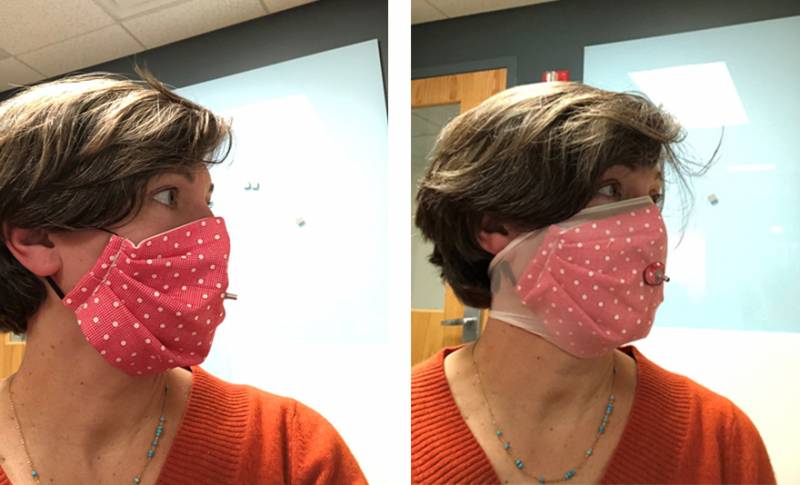
"description": "Researcher Loretta Fernandez of Northeastern University wears a homemade face mask without and with an extra outer layer made from nylon stockings (right). The added nylon outer layer significantly boosted masks' ability to filter out small particles, her research found.",
"title": "Researcher Loretta Fernandez of Northeastern University wears a homemade face mask without and with an extra outer layer made from nylon stockings (right). The added nylon outer layer significantly boosted masks' ability to filter out small particles, her research found.",
"credit": null,
"status": "inherit",
"isLoading": false,
"fetchFailed": false
},
"science_1962785": {
"type": "attachments",
"id": "science_1962785",
"meta": {
"index": "attachments_1716263798",
"site": "science",
"id": "1962785",
"found": true
},
"parent": 1962784,
"imgSizes": {
"twentyfourteen-full-width": {
"file": "https://ww2.kqed.org/app/uploads/sites/35/2020/04/RS42878_GettyImages-1209096261-qut-1038x576.jpg",
"width": 1038,
"mimeType": "image/jpeg",
"height": 576
},
"thumbnail": {
"file": "https://ww2.kqed.org/app/uploads/sites/35/2020/04/RS42878_GettyImages-1209096261-qut-160x107.jpg",
"width": 160,
"mimeType": "image/jpeg",
"height": 107
},
"post-thumbnail": {
"file": "https://ww2.kqed.org/app/uploads/sites/35/2020/04/RS42878_GettyImages-1209096261-qut-672x372.jpg",
"width": 672,
"mimeType": "image/jpeg",
"height": 372
},
"kqedFullSize": {
"file": "https://ww2.kqed.org/app/uploads/sites/35/2020/04/RS42878_GettyImages-1209096261-qut.jpg",
"width": 1920,
"height": 1280
},
"large": {
"file": "https://ww2.kqed.org/app/uploads/sites/35/2020/04/RS42878_GettyImages-1209096261-qut-1020x680.jpg",
"width": 1020,
"mimeType": "image/jpeg",
"height": 680
},
"full-width": {
"file": "https://ww2.kqed.org/app/uploads/sites/35/2020/04/RS42878_GettyImages-1209096261-qut-1920x1280.jpg",
"width": 1920,
"mimeType": "image/jpeg",
"height": 1280
},
"medium": {
"file": "https://ww2.kqed.org/app/uploads/sites/35/2020/04/RS42878_GettyImages-1209096261-qut-800x533.jpg",
"width": 800,
"mimeType": "image/jpeg",
"height": 533
},
"medium_large": {
"file": "https://ww2.kqed.org/app/uploads/sites/35/2020/04/RS42878_GettyImages-1209096261-qut-768x512.jpg",
"width": 768,
"mimeType": "image/jpeg",
"height": 512
}
},
"publishDate": 1587591810,
"modified": 1587591843,
"caption": "California Gov. Gavin Newsom speaks during a news conference at the California Department of Public Health on February 27, 2020 in Sacramento, California. ",
"description": null,
"title": "RS42878_GettyImages-1209096261-qut",
"credit": "Photo by Justin Sullivan/Getty Images",
"status": "inherit",
"isLoading": false,
"fetchFailed": false
},
"science_1958853": {
"type": "attachments",
"id": "science_1958853",
"meta": {
"index": "attachments_1716263798",
"site": "science",
"id": "1958853",
"found": true
},
"parent": 1958850,
"imgSizes": {
"thumbnail": {
"file": "https://ww2.kqed.org/app/uploads/sites/35/2020/03/Coronavirus-800x450-800x450-160x90.jpg",
"width": 160,
"mimeType": "image/jpeg",
"height": 90
},
"post-thumbnail": {
"file": "https://ww2.kqed.org/app/uploads/sites/35/2020/03/Coronavirus-800x450-800x450-672x372.jpg",
"width": 672,
"mimeType": "image/jpeg",
"height": 372
},
"kqedFullSize": {
"file": "https://ww2.kqed.org/app/uploads/sites/35/2020/03/Coronavirus-800x450-800x450.jpg",
"width": 800,
"height": 450
},
"medium": {
"file": "https://ww2.kqed.org/app/uploads/sites/35/2020/03/Coronavirus-800x450-800x450-800x450.jpg",
"width": 800,
"mimeType": "image/jpeg",
"height": 450
},
"medium_large": {
"file": "https://ww2.kqed.org/app/uploads/sites/35/2020/03/Coronavirus-800x450-800x450-768x432.jpg",
"width": 768,
"mimeType": "image/jpeg",
"height": 432
}
},
"publishDate": 1584069322,
"modified": 1584069322,
"caption": null,
"description": null,
"title": "Coronavirus-800x450-800x450.jpg",
"credit": null,
"status": "inherit",
"isLoading": false,
"fetchFailed": false
},
"science_1951196": {
"type": "attachments",
"id": "science_1951196",
"meta": {
"index": "attachments_1716263798",
"site": "science",
"id": "1951196",
"found": true
},
"parent": 1951190,
"imgSizes": {
"twentyfourteen-full-width": {
"file": "https://ww2.kqed.org/app/uploads/sites/35/2029/12/Blue-Marble-Apollo-Earth-1038x576.jpg",
"width": 1038,
"mimeType": "image/jpeg",
"height": 576
},
"thumbnail": {
"file": "https://ww2.kqed.org/app/uploads/sites/35/2029/12/Blue-Marble-Apollo-Earth-160x160.jpg",
"width": 160,
"mimeType": "image/jpeg",
"height": 160
},
"post-thumbnail": {
"file": "https://ww2.kqed.org/app/uploads/sites/35/2029/12/Blue-Marble-Apollo-Earth-672x372.jpg",
"width": 672,
"mimeType": "image/jpeg",
"height": 372
},
"kqedFullSize": {
"file": "https://ww2.kqed.org/app/uploads/sites/35/2029/12/Blue-Marble-Apollo-Earth-e1575419529895.jpg",
"width": 1920,
"height": 1921
},
"large": {
"file": "https://ww2.kqed.org/app/uploads/sites/35/2029/12/Blue-Marble-Apollo-Earth-1020x1021.jpg",
"width": 1020,
"mimeType": "image/jpeg",
"height": 1021
},
"complete_open_graph": {
"file": "https://ww2.kqed.org/app/uploads/sites/35/2029/12/Blue-Marble-Apollo-Earth-1200x1200.jpg",
"width": 1200,
"mimeType": "image/jpeg",
"height": 1200
},
"full-width": {
"file": "https://ww2.kqed.org/app/uploads/sites/35/2029/12/Blue-Marble-Apollo-Earth-1920x1921.jpg",
"width": 1920,
"mimeType": "image/jpeg",
"height": 1921
},
"medium": {
"file": "https://ww2.kqed.org/app/uploads/sites/35/2029/12/Blue-Marble-Apollo-Earth-800x801.jpg",
"width": 800,
"mimeType": "image/jpeg",
"height": 801
},
"medium_large": {
"file": "https://ww2.kqed.org/app/uploads/sites/35/2029/12/Blue-Marble-Apollo-Earth-768x769.jpg",
"width": 768,
"mimeType": "image/jpeg",
"height": 769
}
},
"publishDate": 1575419504,
"modified": 1587578764,
"caption": "View of the Earth as seen by the Apollo 17 crew in 1972.",
"description": null,
"title": "Blue Marble Apollo Earth",
"credit": "NASA",
"status": "inherit",
"isLoading": false,
"fetchFailed": false
},
"science_1956388": {
"type": "attachments",
"id": "science_1956388",
"meta": {
"index": "attachments_1716263798",
"site": "science",
"id": "1956388",
"found": true
},
"parent": 1956386,
"imgSizes": {
"thumbnail": {
"file": "https://ww2.kqed.org/app/uploads/sites/35/2020/01/Coronavirus-800x450-160x90.jpg",
"width": 160,
"mimeType": "image/jpeg",
"height": 90
},
"post-thumbnail": {
"file": "https://ww2.kqed.org/app/uploads/sites/35/2020/01/Coronavirus-800x450-672x372.jpg",
"width": 672,
"mimeType": "image/jpeg",
"height": 372
},
"kqedFullSize": {
"file": "https://ww2.kqed.org/app/uploads/sites/35/2020/01/Coronavirus-800x450.jpg",
"width": 800,
"height": 450
},
"medium": {
"file": "https://ww2.kqed.org/app/uploads/sites/35/2020/01/Coronavirus-800x450-800x450.jpg",
"width": 800,
"mimeType": "image/jpeg",
"height": 450
},
"medium_large": {
"file": "https://ww2.kqed.org/app/uploads/sites/35/2020/01/Coronavirus-800x450-768x432.jpg",
"width": 768,
"mimeType": "image/jpeg",
"height": 432
}
},
"publishDate": 1580514341,
"modified": 1582998132,
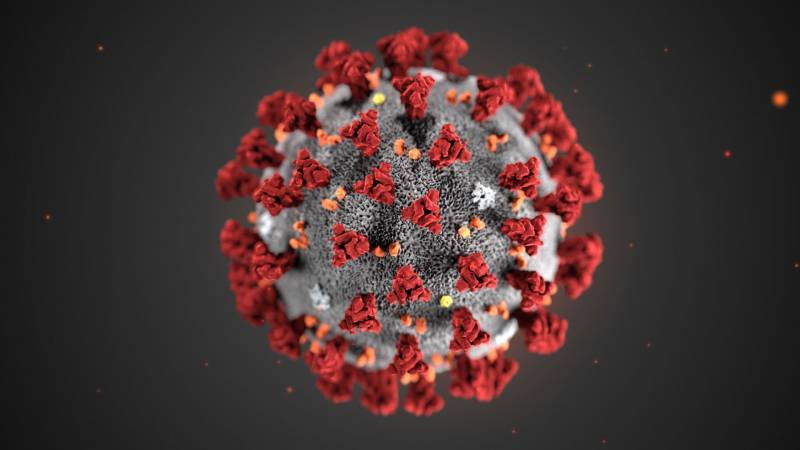
"caption": "An illustration of the 2019 novel coronavirus.",
"description": null,
"title": "Coronavirus-800x450.jpg",
"credit": "Courtesy of CDC",
"status": "inherit",
"isLoading": false,
"fetchFailed": false
},
"science_1962688": {
"type": "attachments",
"id": "science_1962688",
"meta": {
"index": "attachments_1716263798",
"site": "science",
"id": "1962688",
"found": true
},
"parent": 1962524,
"imgSizes": {
"twentyfourteen-full-width": {
"file": "https://ww2.kqed.org/app/uploads/sites/35/2024/04/coronavirus-climate-change-1038x576.jpg",
"width": 1038,
"mimeType": "image/jpeg",
"height": 576
},
"thumbnail": {
"file": "https://ww2.kqed.org/app/uploads/sites/35/2024/04/coronavirus-climate-change-160x107.jpg",
"width": 160,
"mimeType": "image/jpeg",
"height": 107
},
"post-thumbnail": {
"file": "https://ww2.kqed.org/app/uploads/sites/35/2024/04/coronavirus-climate-change-672x372.jpg",
"width": 672,
"mimeType": "image/jpeg",
"height": 372
},
"kqedFullSize": {
"file": "https://ww2.kqed.org/app/uploads/sites/35/2024/04/coronavirus-climate-change.jpg",
"width": 1920,
"height": 1280
},
"large": {
"file": "https://ww2.kqed.org/app/uploads/sites/35/2024/04/coronavirus-climate-change-1020x680.jpg",
"width": 1020,
"mimeType": "image/jpeg",
"height": 680
},
"full-width": {
"file": "https://ww2.kqed.org/app/uploads/sites/35/2024/04/coronavirus-climate-change-1920x1280.jpg",
"width": 1920,
"mimeType": "image/jpeg",
"height": 1280
},
"medium": {
"file": "https://ww2.kqed.org/app/uploads/sites/35/2024/04/coronavirus-climate-change-800x533.jpg",
"width": 800,
"mimeType": "image/jpeg",
"height": 533
},
"medium_large": {
"file": "https://ww2.kqed.org/app/uploads/sites/35/2024/04/coronavirus-climate-change-768x512.jpg",
"width": 768,
"mimeType": "image/jpeg",
"height": 512
}
},
"publishDate": 1587507867,
"modified": 1587507993,
"caption": "An aerial view from a drone shows an empty Interstate 280 on March 26, 2020 leading into San Francisco. The entire state of California has been ordered to stay at home except to perform essential tasks. ",
"description": null,
"title": "Coronavirus Pandemic Causes Climate Of Anxiety And Changing Routines In America",
"credit": "Justin Sullivan/Getty Images",
"status": "inherit",
"isLoading": false,
"fetchFailed": false
},
"science_1962600": {
"type": "attachments",
"id": "science_1962600",
"meta": {
"index": "attachments_1716263798",
"site": "science",
"id": "1962600",
"found": true
},
"parent": 1962559,
"imgSizes": {
"twentyfourteen-full-width": {
"file": "https://ww2.kqed.org/app/uploads/sites/35/2020/04/IMG_3590-1038x576.jpg",
"width": 1038,
"mimeType": "image/jpeg",
"height": 576
},
"thumbnail": {
"file": "https://ww2.kqed.org/app/uploads/sites/35/2020/04/IMG_3590-160x120.jpg",
"width": 160,
"mimeType": "image/jpeg",
"height": 120
},
"post-thumbnail": {
"file": "https://ww2.kqed.org/app/uploads/sites/35/2020/04/IMG_3590-672x372.jpg",
"width": 672,
"mimeType": "image/jpeg",
"height": 372
},
"kqedFullSize": {
"file": "https://ww2.kqed.org/app/uploads/sites/35/2020/04/IMG_3590.jpg",
"width": 1440,
"height": 1080
},
"large": {
"file": "https://ww2.kqed.org/app/uploads/sites/35/2020/04/IMG_3590-1020x765.jpg",
"width": 1020,
"mimeType": "image/jpeg",
"height": 765
},
"medium": {
"file": "https://ww2.kqed.org/app/uploads/sites/35/2020/04/IMG_3590-800x600.jpg",
"width": 800,
"mimeType": "image/jpeg",
"height": 600
},
"medium_large": {
"file": "https://ww2.kqed.org/app/uploads/sites/35/2020/04/IMG_3590-768x576.jpg",
"width": 768,
"mimeType": "image/jpeg",
"height": 576
}
},
"publishDate": 1587453782,
"modified": 1588276920,
"caption": "More than 250 skilled nursing facilities, including Garden Crest Rehabilitation Center in the Silver Lake neighborhood of Los Angeles, reported outbreaks of COVID-19 as of April 20, 2020. ",
"description": null,
"title": "IMG_3590",
"credit": "KQED/Molly Peterson",
"status": "inherit",
"isLoading": false,
"fetchFailed": false
},
"science_1962369": {
"type": "attachments",
"id": "science_1962369",
"meta": {
"index": "attachments_1716263798",
"site": "science",
"id": "1962369",
"found": true
},
"parent": 1962364,
"imgSizes": {
"twentyfourteen-full-width": {
"file": "https://ww2.kqed.org/app/uploads/sites/35/2020/04/masks-calfire-1038x576.jpg",
"width": 1038,
"mimeType": "image/jpeg",
"height": 576
},
"thumbnail": {
"file": "https://ww2.kqed.org/app/uploads/sites/35/2020/04/masks-calfire-160x124.jpg",
"width": 160,
"mimeType": "image/jpeg",
"height": 124
},
"post-thumbnail": {
"file": "https://ww2.kqed.org/app/uploads/sites/35/2020/04/masks-calfire-672x372.jpg",
"width": 672,
"mimeType": "image/jpeg",
"height": 372
},
"kqedFullSize": {
"file": "https://ww2.kqed.org/app/uploads/sites/35/2020/04/masks-calfire.jpg",
"width": 1067,
"height": 825
},
"large": {
"file": "https://ww2.kqed.org/app/uploads/sites/35/2020/04/masks-calfire-1020x789.jpg",
"width": 1020,
"mimeType": "image/jpeg",
"height": 789
},
"medium": {
"file": "https://ww2.kqed.org/app/uploads/sites/35/2020/04/masks-calfire-800x619.jpg",
"width": 800,
"mimeType": "image/jpeg",
"height": 619
},
"medium_large": {
"file": "https://ww2.kqed.org/app/uploads/sites/35/2020/04/masks-calfire-768x594.jpg",
"width": 768,
"mimeType": "image/jpeg",
"height": 594
}
},
"publishDate": 1587164772,
"modified": 1587164911,
"caption": "CAL FIRE personnel in personal protective equipment due to the COVID-19 pandemic.",
"description": "CAL FIRE personnel in personal protective equipment due to the COVID-19 pandemic.",
"title": "masks-calfire",
"credit": "CAL FIRE",
"status": "inherit",
"isLoading": false,
"fetchFailed": false
},
"science_1962320": {
"type": "attachments",
"id": "science_1962320",
"meta": {
"index": "attachments_1716263798",
"site": "science",
"id": "1962320",
"found": true
},
"parent": 1962318,
"imgSizes": {
"twentyfourteen-full-width": {
"file": "https://ww2.kqed.org/app/uploads/sites/35/2020/04/RS42815_GettyImages-1208916339-qut-1038x576.jpg",
"width": 1038,
"mimeType": "image/jpeg",
"height": 576
},
"thumbnail": {
"file": "https://ww2.kqed.org/app/uploads/sites/35/2020/04/RS42815_GettyImages-1208916339-qut-160x107.jpg",
"width": 160,
"mimeType": "image/jpeg",
"height": 107
},
"post-thumbnail": {
"file": "https://ww2.kqed.org/app/uploads/sites/35/2020/04/RS42815_GettyImages-1208916339-qut-672x372.jpg",
"width": 672,
"mimeType": "image/jpeg",
"height": 372
},
"kqedFullSize": {
"file": "https://ww2.kqed.org/app/uploads/sites/35/2020/04/RS42815_GettyImages-1208916339-qut.jpg",
"width": 1920,
"height": 1280
},
"large": {
"file": "https://ww2.kqed.org/app/uploads/sites/35/2020/04/RS42815_GettyImages-1208916339-qut-1020x680.jpg",
"width": 1020,
"mimeType": "image/jpeg",
"height": 680
},
"full-width": {
"file": "https://ww2.kqed.org/app/uploads/sites/35/2020/04/RS42815_GettyImages-1208916339-qut-1920x1280.jpg",
"width": 1920,
"mimeType": "image/jpeg",
"height": 1280
},
"medium": {
"file": "https://ww2.kqed.org/app/uploads/sites/35/2020/04/RS42815_GettyImages-1208916339-qut-800x533.jpg",
"width": 800,
"mimeType": "image/jpeg",
"height": 533
},
"medium_large": {
"file": "https://ww2.kqed.org/app/uploads/sites/35/2020/04/RS42815_GettyImages-1208916339-qut-768x512.jpg",
"width": 768,
"mimeType": "image/jpeg",
"height": 512
}
},
"publishDate": 1587143982,
"modified": 1587144021,
"caption": "President Donald Trump speaks at the beginning of a new conference with members of the coronavirus task force, including Vice President Mike Pence in the Brady Press Briefing Room at the White House February 26, 2020 in Washington, DC. ",
"description": null,
"title": "RS42815_GettyImages-1208916339-qut",
"credit": "Tasos Katopodis/Getty Images",
"status": "inherit",
"isLoading": false,
"fetchFailed": false
},
"science_1962232": {
"type": "attachments",
"id": "science_1962232",
"meta": {
"index": "attachments_1716263798",
"site": "science",
"id": "1962232",
"found": true
},
"parent": 1962231,
"imgSizes": {
"twentyfourteen-full-width": {
"file": "https://ww2.kqed.org/app/uploads/sites/35/2020/04/gettyimages-1206945741_custom-ec9d913697cebcbf5cd3cf2820d47aee5f723e03-1038x576.jpg",
"width": 1038,
"mimeType": "image/jpeg",
"height": 576
},
"thumbnail": {
"file": "https://ww2.kqed.org/app/uploads/sites/35/2020/04/gettyimages-1206945741_custom-ec9d913697cebcbf5cd3cf2820d47aee5f723e03-160x104.jpg",
"width": 160,
"mimeType": "image/jpeg",
"height": 104
},
"post-thumbnail": {
"file": "https://ww2.kqed.org/app/uploads/sites/35/2020/04/gettyimages-1206945741_custom-ec9d913697cebcbf5cd3cf2820d47aee5f723e03-672x372.jpg",
"width": 672,
"mimeType": "image/jpeg",
"height": 372
},
"kqedFullSize": {
"file": "https://ww2.kqed.org/app/uploads/sites/35/2020/04/gettyimages-1206945741_custom-ec9d913697cebcbf5cd3cf2820d47aee5f723e03.jpg",
"width": 2994,
"height": 1944
},
"large": {
"file": "https://ww2.kqed.org/app/uploads/sites/35/2020/04/gettyimages-1206945741_custom-ec9d913697cebcbf5cd3cf2820d47aee5f723e03-1020x662.jpg",
"width": 1020,
"mimeType": "image/jpeg",
"height": 662
},
"full-width": {
"file": "https://ww2.kqed.org/app/uploads/sites/35/2020/04/gettyimages-1206945741_custom-ec9d913697cebcbf5cd3cf2820d47aee5f723e03-1920x1247.jpg",
"width": 1920,
"mimeType": "image/jpeg",
"height": 1247
},
"medium": {
"file": "https://ww2.kqed.org/app/uploads/sites/35/2020/04/gettyimages-1206945741_custom-ec9d913697cebcbf5cd3cf2820d47aee5f723e03-800x519.jpg",
"width": 800,
"mimeType": "image/jpeg",
"height": 519
},
"medium_large": {
"file": "https://ww2.kqed.org/app/uploads/sites/35/2020/04/gettyimages-1206945741_custom-ec9d913697cebcbf5cd3cf2820d47aee5f723e03-768x499.jpg",
"width": 768,
"mimeType": "image/jpeg",
"height": 499
}
},
"publishDate": 1587069881,
"modified": 1587069881,
"caption": null,
"description": "Contact tracing involves a painstaking process of identifying and reaching out to all of a COVID-19 patient's recent contacts. In Ireland, Irish Army cadets assist with the contact tracing work in Dublin.",
"title": "Contact tracing involves a painstaking process of identifying and reaching out to all of a COVID-19 patient's recent contacts. In Ireland, Irish Army cadets assist with the contact tracing work in Dublin.",
"credit": null,
"status": "inherit",
"isLoading": false,
"fetchFailed": false
},
"science_1962250": {
"type": "attachments",
"id": "science_1962250",
"meta": {
"index": "attachments_1716263798",
"site": "science",
"id": "1962250",
"found": true
},
"parent": 1962249,
"imgSizes": {
"twentyfourteen-full-width": {
"file": "https://ww2.kqed.org/app/uploads/sites/35/2020/04/gettyimages-1210107153_wide-65b3352b0c2ef49075c3ed460fa517fd33ccd28a-1038x576.jpg",
"width": 1038,
"mimeType": "image/jpeg",
"height": 576
},
"thumbnail": {
"file": "https://ww2.kqed.org/app/uploads/sites/35/2020/04/gettyimages-1210107153_wide-65b3352b0c2ef49075c3ed460fa517fd33ccd28a-160x90.jpg",
"width": 160,
"mimeType": "image/jpeg",
"height": 90
},
"post-thumbnail": {
"file": "https://ww2.kqed.org/app/uploads/sites/35/2020/04/gettyimages-1210107153_wide-65b3352b0c2ef49075c3ed460fa517fd33ccd28a-672x372.jpg",
"width": 672,
"mimeType": "image/jpeg",
"height": 372
},
"kqedFullSize": {
"file": "https://ww2.kqed.org/app/uploads/sites/35/2020/04/gettyimages-1210107153_wide-65b3352b0c2ef49075c3ed460fa517fd33ccd28a.jpg",
"width": 4326,
"height": 2437
},
"large": {
"file": "https://ww2.kqed.org/app/uploads/sites/35/2020/04/gettyimages-1210107153_wide-65b3352b0c2ef49075c3ed460fa517fd33ccd28a-1020x575.jpg",
"width": 1020,
"mimeType": "image/jpeg",
"height": 575
},
"full-width": {
"file": "https://ww2.kqed.org/app/uploads/sites/35/2020/04/gettyimages-1210107153_wide-65b3352b0c2ef49075c3ed460fa517fd33ccd28a-1920x1082.jpg",
"width": 1920,
"mimeType": "image/jpeg",
"height": 1082
},
"medium": {
"file": "https://ww2.kqed.org/app/uploads/sites/35/2020/04/gettyimages-1210107153_wide-65b3352b0c2ef49075c3ed460fa517fd33ccd28a-800x451.jpg",
"width": 800,
"mimeType": "image/jpeg",
"height": 451
},
"medium_large": {
"file": "https://ww2.kqed.org/app/uploads/sites/35/2020/04/gettyimages-1210107153_wide-65b3352b0c2ef49075c3ed460fa517fd33ccd28a-768x433.jpg",
"width": 768,
"mimeType": "image/jpeg",
"height": 433
}
},
"publishDate": 1587074311,
"modified": 1587074311,
"caption": null,
"description": "A mailman wearing a mask and gloves to protect himself and others from the coronavirus loads a postal truck with packages in Washington, D.C., Thursday.",
"title": "A mailman wearing a mask and gloves to protect himself and others from the coronavirus loads a postal truck with packages in Washington, D.C., Thursday.",
"credit": null,
"status": "inherit",
"isLoading": false,
"fetchFailed": false
},
"science_1962193": {
"type": "attachments",
"id": "science_1962193",
"meta": {
"index": "attachments_1716263798",
"site": "science",
"id": "1962193",
"found": true
},
"parent": 1962153,
"imgSizes": {
"twentyfourteen-full-width": {
"file": "https://ww2.kqed.org/app/uploads/sites/35/2020/10/Oceana-Web-959x576.jpg",
"width": 959,
"mimeType": "image/jpeg",
"height": 576
},
"thumbnail": {
"file": "https://ww2.kqed.org/app/uploads/sites/35/2020/10/Oceana-Web-160x121.jpg",
"width": 160,
"mimeType": "image/jpeg",
"height": 121
},
"post-thumbnail": {
"file": "https://ww2.kqed.org/app/uploads/sites/35/2020/10/Oceana-Web-672x372.jpg",
"width": 672,
"mimeType": "image/jpeg",
"height": 372
},
"kqedFullSize": {
"file": "https://ww2.kqed.org/app/uploads/sites/35/2020/10/Oceana-Web.jpg",
"width": 959,
"height": 726
},
"medium": {
"file": "https://ww2.kqed.org/app/uploads/sites/35/2020/10/Oceana-Web-800x606.jpg",
"width": 800,
"mimeType": "image/jpeg",
"height": 606
},
"medium_large": {
"file": "https://ww2.kqed.org/app/uploads/sites/35/2020/10/Oceana-Web-768x581.jpg",
"width": 768,
"mimeType": "image/jpeg",
"height": 581
}
},
"publishDate": 1587060027,
"modified": 1587061524,
"caption": "Eureka-based fisherman Harrison Ibach started selling fish off his boat, the 42-foot Oceana, to make up for losses due to the coronavirus pandemic.",
"description": null,
"title": "Oceana Web",
"credit": "Courtesy of Oceana Hooknline Seafood",
"status": "inherit",
"isLoading": false,
"fetchFailed": false
}
},
"audioPlayerReducer": {
"postId": "stream_live",
"isPaused": true,
"isPlaying": false,
"pfsActive": false,
"pledgeModalIsOpen": true,
"playerDrawerIsOpen": false,
"liveAudioPlayStartedAt": 0,
"liveAudioPlayContext": ""
},
"authorsReducer": {
"byline_science_1962833": {
"type": "authors",
"id": "byline_science_1962833",
"meta": {
"override": true
},
"slug": "byline_science_1962833",
"name": "Maria Godoy \u003cbr />NPR\u003cbr>",
"isLoading": false
},
"byline_science_1957877": {
"type": "authors",
"id": "byline_science_1957877",
"meta": {
"override": true
},
"slug": "byline_science_1957877",
"name": "KQED ",
"isLoading": false
},
"byline_science_1962559": {
"type": "authors",
"id": "byline_science_1962559",
"meta": {
"override": true
},
"slug": "byline_science_1962559",
"name": "Molly Peterson",
"isLoading": false
},
"byline_science_1962318": {
"type": "authors",
"id": "byline_science_1962318",
"meta": {
"override": true
},
"slug": "byline_science_1962318",
"name": "Sharon Begley \u003cbr />STAT\u003cbr>",
"isLoading": false
},
"byline_science_1962231": {
"type": "authors",
"id": "byline_science_1962231",
"meta": {
"override": true
},
"slug": "byline_science_1962231",
"name": "Selena Simmons-Duffin, NPR",
"isLoading": false
},
"byline_science_1962249": {
"type": "authors",
"id": "byline_science_1962249",
"meta": {
"override": true
},
"slug": "byline_science_1962249",
"name": "EKE MILLER, ALAN SUDERMAN, and KEVIN FREKING\u003cbr /> Associated Press",
"isLoading": false
},
"kqedscience": {
"type": "authors",
"id": "6387",
"meta": {
"index": "authors_1716337520",
"id": "6387",
"found": true
},
"name": "KQED Science",
"firstName": "KQED",
"lastName": "Science",
"slug": "kqedscience",
"email": "kqedscience@gmail.com",
"display_author_email": false,
"staff_mastheads": [],
"title": null,
"bio": "KQED Science brings you award-winning science and environment coverage from the Bay Area and beyond by the flagship Northern California PBS and NPR affiliate.",
"avatar": "https://secure.gravatar.com/avatar/5a295ff49cf82a8c0f30937d3f788b2f?s=600&d=blank&r=g",
"twitter": null,
"facebook": null,
"instagram": null,
"linkedin": null,
"sites": [
{
"site": "science",
"roles": [
"contributor"
]
},
{
"site": "quest",
"roles": [
"editor"
]
},
{
"site": "food",
"roles": [
"contributor"
]
}
],
"headData": {
"title": "KQED Science | KQED",
"description": null,
"ogImgSrc": "https://secure.gravatar.com/avatar/5a295ff49cf82a8c0f30937d3f788b2f?s=600&d=blank&r=g",
"twImgSrc": "https://secure.gravatar.com/avatar/5a295ff49cf82a8c0f30937d3f788b2f?s=600&d=blank&r=g"
},
"isLoading": false,
"link": "/author/kqedscience"
},
"dventon": {
"type": "authors",
"id": "11088",
"meta": {
"index": "authors_1716337520",
"id": "11088",
"found": true
},
"name": "Danielle Venton",
"firstName": "Danielle",
"lastName": "Venton",
"slug": "dventon",
"email": "dventon@kqed.org",
"display_author_email": true,
"staff_mastheads": [
"science"
],
"title": "Science reporter",
"bio": "Danielle Venton is a reporter for KQED Science. She covers wildfires, space and oceans (though she is prone to sea sickness).\r\n\r\nBefore joining KQED in 2015, Danielle was a staff reporter at KRCB in Sonoma County and a freelancer. She studied science communication at UC Santa Cruz and formerly worked at CERN in Geneva, Switzerland where she wrote about computing. She lives in Sonoma County and enjoys backpacking.",
"avatar": "https://secure.gravatar.com/avatar/37b292b5c40c8d93959c4f48d73b5286f41b7abd8588277e941905a3ed4c801c?s=600&d=blank&r=g",
"twitter": "DanielleVenton",
"bluesky": null,
"facebook": null,
"instagram": null,
"linkedin": null,
"sites": [
{
"site": "arts",
"roles": [
"contributor"
]
},
{
"site": "news",
"roles": [
"editor"
]
},
{
"site": "futureofyou",
"roles": [
"editor"
]
},
{
"site": "science",
"roles": [
"editor"
]
},
{
"site": "liveblog",
"roles": [
"contributor"
]
}
],
"headData": {
"title": "Danielle Venton | KQED",
"description": "Science reporter",
"ogImgSrc": "https://secure.gravatar.com/avatar/37b292b5c40c8d93959c4f48d73b5286f41b7abd8588277e941905a3ed4c801c?s=600&d=blank&r=g",
"twImgSrc": "https://secure.gravatar.com/avatar/37b292b5c40c8d93959c4f48d73b5286f41b7abd8588277e941905a3ed4c801c?s=600&d=blank&r=g"
},
"isLoading": false,
"link": "/author/dventon"
},
"lesleymcclurg": {
"type": "authors",
"id": "11229",
"meta": {
"index": "authors_1716337520",
"id": "11229",
"found": true
},
"name": "Lesley McClurg",
"firstName": "Lesley",
"lastName": "McClurg",
"slug": "lesleymcclurg",
"email": "lmcclurg@KQED.org",
"display_author_email": false,
"staff_mastheads": [
"news",
"science"
],
"title": "KQED Health Correspondent",
"bio": "Lesley McClurg is a health correspondent and fill-in host whose work is regularly rebroadcast on NPR and PBS programs. She’s earned multiple regional Emmy awards, a national and a regional Edward R. Murrow award, and was named Best Beat Reporter by the Association of Health Care Journalists. The Society of Professional Journalists has recognized her work several times, and the Society of Environmental Journalists spotlighted her coverage of California’s historic drought.\r\n\r\nBefore joining KQED in 2016, Lesley covered food and sustainability for Capital Public Radio, environmental issues for Colorado Public Radio, and reported for KUOW and KCTS 9 in Seattle. Away from the newsroom, she loves skiing with her daughter, mountain biking with her partner, and playing with Ollie, the family’s goldendoodle. On deadline, she runs almost entirely on chocolate chips.\r\n\r\n ",
"avatar": "https://secure.gravatar.com/avatar/bab49e972ea10c774fe0f5e29dba1722b158f7c0d58a360923d1389d380b2978?s=600&d=blank&r=g",
"twitter": "lesleywmcclurg",
"bluesky": null,
"facebook": null,
"instagram": null,
"linkedin": null,
"sites": [
{
"site": "arts",
"roles": [
"author"
]
},
{
"site": "news",
"roles": [
"editor"
]
},
{
"site": "futureofyou",
"roles": [
"editor"
]
},
{
"site": "stateofhealth",
"roles": [
"author"
]
},
{
"site": "science",
"roles": [
"editor"
]
},
{
"site": "quest",
"roles": [
"subscriber"
]
},
{
"site": "forum",
"roles": [
"administrator"
]
},
{
"site": "liveblog",
"roles": [
"author"
]
}
],
"headData": {
"title": "Lesley McClurg | KQED",
"description": "KQED Health Correspondent",
"ogImgSrc": "https://secure.gravatar.com/avatar/bab49e972ea10c774fe0f5e29dba1722b158f7c0d58a360923d1389d380b2978?s=600&d=blank&r=g",
"twImgSrc": "https://secure.gravatar.com/avatar/bab49e972ea10c774fe0f5e29dba1722b158f7c0d58a360923d1389d380b2978?s=600&d=blank&r=g"
},
"isLoading": false,
"link": "/author/lesleymcclurg"
},
"parcuni": {
"type": "authors",
"id": "11368",
"meta": {
"index": "authors_1716337520",
"id": "11368",
"found": true
},
"name": "Peter Arcuni",
"firstName": "Peter",
"lastName": "Arcuni",
"slug": "parcuni",
"email": "parcuni@KQED.org",
"display_author_email": false,
"staff_mastheads": [
"science"
],
"title": "Reporter",
"bio": "Peter reports radio and online stories for \u003cem>KQED Science\u003c/em>. His work has also appeared on the \u003cem>The California Report\u003c/em> morning show and \u003cem>KQED News\u003c/em>. His production credits include \u003cem>The California Report, The California Report Magazine\u003c/em> and KQED's local news podcast \u003cem>The Bay\u003c/em>. Other credits include NPR's \u003cem>All Things Considered\u003c/em>, WNYC's \u003cem>Science Friday\u003c/em>, WBUR's \u003cem>Here & Now\u003c/em>, WIRED and SFGate. Peter graduated from Brown University and earned a master's degree in journalism from Stanford. He's covered everything from homelessness to wildfires, health, the environment, arts and Thanksgiving in San Quentin prison. In other lives, he played rock n roll music and studied neuroscience. You can email him at: parcuni@kqed.org",
"avatar": "https://secure.gravatar.com/avatar/d5032f6f27199d478af34ad2e1d98732?s=600&d=blank&r=g",
"twitter": "peterarcuni",
"facebook": null,
"instagram": null,
"linkedin": null,
"sites": [
{
"site": "news",
"roles": [
"editor"
]
},
{
"site": "science",
"roles": [
"editor"
]
}
],
"headData": {
"title": "Peter Arcuni | KQED",
"description": "Reporter",
"ogImgSrc": "https://secure.gravatar.com/avatar/d5032f6f27199d478af34ad2e1d98732?s=600&d=blank&r=g",
"twImgSrc": "https://secure.gravatar.com/avatar/d5032f6f27199d478af34ad2e1d98732?s=600&d=blank&r=g"
},
"isLoading": false,
"link": "/author/parcuni"
},
"kevinstark": {
"type": "authors",
"id": "11608",
"meta": {
"index": "authors_1716337520",
"id": "11608",
"found": true
},
"name": "Kevin Stark",
"firstName": "Kevin",
"lastName": "Stark",
"slug": "kevinstark",
"email": "kstark@kqed.org",
"display_author_email": true,
"staff_mastheads": [
"science"
],
"title": "Senior Editor",
"bio": "Kevin is a senior editor for KQED Science, managing the station's health and climate desks. His journalism career began in the Pacific Northwest, and he later became a lead reporter for the San Francisco Public Press. His work has appeared in Pacific Standard magazine, the Energy News Network, the Center for Investigative Reporting's Reveal and WBEZ in Chicago. Kevin joined KQED in 2019, and has covered issues related to energy, wildfire, climate change and the environment.",
"avatar": "https://secure.gravatar.com/avatar/365aaa4b597d3a8374f67504ff0facd323d7906e8eb4be0a7efd2427408e802c?s=600&d=blank&r=g",
"twitter": "starkkev",
"bluesky": null,
"facebook": null,
"instagram": null,
"linkedin": null,
"sites": [
{
"site": "",
"roles": [
"editor"
]
},
{
"site": "news",
"roles": [
"editor"
]
},
{
"site": "science",
"roles": [
"administrator"
]
}
],
"headData": {
"title": "Kevin Stark | KQED",
"description": "Senior Editor",
"ogImgSrc": "https://secure.gravatar.com/avatar/365aaa4b597d3a8374f67504ff0facd323d7906e8eb4be0a7efd2427408e802c?s=600&d=blank&r=g",
"twImgSrc": "https://secure.gravatar.com/avatar/365aaa4b597d3a8374f67504ff0facd323d7906e8eb4be0a7efd2427408e802c?s=600&d=blank&r=g"
},
"isLoading": false,
"link": "/author/kevinstark"
}
},
"pagesReducer": {
"science_category_health": {
"type": "terms",
"id": "science_39",
"meta": {
"index": "terms_1716263798",
"site": "science",
"id": "39",
"score": 10.889519
},
"featImg": null,
"name": "Health",
"description": null,
"taxonomy": "category",
"headData": {
"twImgId": null,
"twTitle": null,
"ogTitle": null,
"ogImgId": null,
"twDescription": null,
"description": null,
"title": "Health Archives | KQED Science",
"ogDescription": null
},
"ttid": 41,
"slug": "health",
"isLoading": false,
"title": "Health",
"pageMeta": {
"site": "science",
"WpPageTemplate": "page-topic-editorial",
"currentPage": 27
},
"blocks": [
{
"blockName": "kqed/post-list",
"attrs": {
"layout": "cardArticle2",
"query": "posts/science?category=health",
"seeMore": false,
"paginated": true,
"page": 27
}
},
{
"blockName": "kqed/ad"
}
]
}
},
"pfsSessionReducer": {},
"postsReducer": {
"stream_live": {
"type": "live",
"id": "stream_live",
"audioUrl": "https://streams.kqed.org/kqedradio",
"title": "Live Stream",
"excerpt": "Live Stream information currently unavailable.",
"link": "/radio",
"featImg": "",
"label": {
"name": "KQED Live",
"link": "/"
}
},
"stream_kqedNewscast": {
"type": "posts",
"id": "stream_kqedNewscast",
"audioUrl": "https://www.kqed.org/.stream/anon/radio/RDnews/newscast.mp3?_=1",
"title": "KQED Newscast",
"featImg": "",
"label": {
"name": "88.5 FM",
"link": "/"
}
},
"science_1962833": {
"type": "posts",
"id": "science_1962833",
"meta": {
"index": "posts_1716263798",
"site": "science",
"id": "1962833",
"score": null,
"sort": [
1587662685000
]
},
"parent": 0,
"labelTerm": {},
"blocks": [],
"publishDate": 1587662685,
"format": "standard",
"title": "Researchers Say Adding a Nylon Pantyhose Layer to Your Cloth Mask Could Make it Work Better",
"headTitle": "Researchers Say Adding a Nylon Pantyhose Layer to Your Cloth Mask Could Make it Work Better | KQED",
"content": "\u003cp>During World War II, nylon stockings disappeared from store shelves as the valuable synthetic material \u003ca href=\"https://www.smithsonianmag.com/arts-culture/stocking-series-part-1-wartime-rationing-and-nylon-riots-25391066/\" target=\"_blank\" rel=\"noopener noreferrer\">was diverted to make critical wartime supplies\u003c/a> such as parachutes, flak jackets and aircraft fuel tanks. Now, new research suggests that nylon stockings could once again play a critical role in a national battle — this time by making homemade cloth masks significantly more protective.\u003c/p>\n\u003cp>Researchers at Northeastern University have found that adding an outer layer made from nylon stockings to a homemade face covering can boost its ability to filter out small particles in the air by creating a tighter seal between the mask and the wearer’s face. In some cases, that extra nylon layer helped homemade cloth masks match or exceed the filtering capability of medical-grade surgical masks.\u003c/p>\n\u003cp>“It really improved the performance of all of the masks, and it brought several of them up and over the baseline mask we were using, which was a 3M surgical-type mask,” says \u003ca href=\"https://coe.northeastern.edu/people/fernandez-loretta/\" target=\"_blank\" rel=\"noopener noreferrer\">Loretta Fernandez\u003c/a>, an assistant professor of civil and environmental engineering at Northeastern University and one of the scientists who conducted the research.\u003c/p>\n\u003cp>Even the surgical mask performed better with stockings in their study: Testing showed that it went from blocking out 75% of small particles to 90% with the addition of a pantyhose overlayer. An N95 respirator, by comparison, is designed to block out at least 95% of small particles when worn properly.\u003c/p>\n\u003cp>“Adding a layer that keeps the mask tight to the face is going to improve the function of any of these masks,” Fernandez explains, “because how well they protect us is not only a matter of what material we’re using to do the filtering but also how well [the mask] seals to the face, so that we’re trying to avoid air making it around the mask into our breathing zone.” The pantyhose layer, she says, helps creates a tighter seal around the face to reduce how much air leaks around loose edges — similar to the seal on an N95 respirator.\u003c/p>\n\u003cp>[ad fullwidth]\u003c/p>\n\u003cp>The findings come at a time when the Centers for Disease Control and Prevention is recommending that Americans wear \u003ca href=\"https://www.cdc.gov/coronavirus/2019-ncov/prevent-getting-sick/diy-cloth-face-coverings.html\" target=\"_blank\" rel=\"noopener noreferrer\">cloth face coverings\u003c/a> in public to help reduce the transmission of the coronavirus, but without offering much guidance on the best practices for making such coverings.\u003c/p>\n\u003cp>The research has not yet been peer-reviewed, but it was\u003ca href=\"https://www.medrxiv.org/content/10.1101/2020.04.17.20069567v1\" target=\"_blank\" rel=\"noopener noreferrer\"> posted\u003c/a> Wednesday on the scientific preprint site medRxiv and on\u003ca href=\"https://www.northeastern.edu/envsensorslab/wp-content/uploads/2020/04/FernandezMueller_PreliminaryReportFacemaskTestingProtocol_2020-04-17.pdf\" target=\"_blank\" rel=\"noopener noreferrer\"> the university’s website\u003c/a> in the interest of sharing information quickly in the midst of a pandemic. Scientists who reviewed the study at NPR’s request praised it as vitally needed work.\u003c/p>\n\u003cp>“I think it’s really a very important study,” says \u003ca href=\"https://sph.hku.hk/en/about-us/faculty-and-staff/academic-staff/cowling,-benjamin-john\" target=\"_blank\" rel=\"noopener noreferrer\">Ben Cowling\u003c/a>, a professor of infectious disease epidemiology at the University of Hong Kong who has studied the efficacy of face masks. “We need better information on what kind of homemade masks, what kind of fabric masks, are the best and how we can improve or upgrade basic masks to make them better.”\u003c/p>\n\u003cp>The CDC guidelines on cloth face coverings are intended to protect other people \u003cem>from\u003c/em> the wearer, since evidence shows that people can spread the coronavirus before they’re even showing symptoms of infection. However, the new research shows that with the added nylon layer, homemade masks may also offer lots more benefit \u003cem>for\u003c/em> the wearer.\u003c/p>\n\u003cp>“Cloth masks,” Cowling says, “most likely provide some protection, maybe not as good as surgical masks” — which are constructed with nonwoven fabrics made from plastics. “But if we can upgrade [cloth masks] with nylon wrapping around the outside or some other special components, then perhaps we can get a cloth mask which is just as good or even better than a surgical mask.”\u003c/p>\n\u003cp>“It’s a good design feature that they’ve come up with,” says \u003ca href=\"https://research.unsw.edu.au/people/professor-raina-macintyre\" target=\"_blank\" rel=\"noopener noreferrer\">Raina MacIntyre\u003c/a>, a biosecurity researcher at the University of New South Wales in Australia and the author of \u003ca href=\"https://www.researchgate.net/publication/275360639_A_cluster_randomised_trial_of_cloth_masks_compared_with_medical_masks_in_healthcare_workers\" target=\"_blank\" rel=\"noopener noreferrer\">one of the few studies\u003c/a> comparing the effectiveness of cloth face coverings with surgical masks. The current shortage of medical-grade masks, she notes, is spurring a new wave of research into creating more effective homemade masks. “There’s some really good solutions out there, some really promising ideas. And this looks like one of them.”\u003c/p>\n\u003cp>As part of the research, Fernandez and her colleagues solicited homemade masks from volunteers who were making them to donate to Boston-area hospitals. To test the various masks’ filtration capabilities, they used an instrument called a PortaCount — which is normally used to \u003ca href=\"https://tsi.com/products/respirator-fit-testers/\" target=\"_blank\" rel=\"noopener noreferrer\">fit-test\u003c/a> the filtering capabilities of medical-grade masks like N95 respirators — to measure the ability to block out particles ranging from 20 nanometers to 1,000 nanometers. (The coronavirus that causes COVID-19 is \u003ca href=\"https://www.ncbi.nlm.nih.gov/books/NBK554776/\" target=\"_blank\" rel=\"noopener noreferrer\">approximately 60 to 140 nanometers\u003c/a> in diameter — far too small to be visible to the human eye.)\u003c/p>\n\u003cp>The device measured the number of particles immediately outside and inside each mask while someone was wearing it. A surgical mask was also tested as a baseline measurement; it blocked out 75% of the particles on average, which is in line with other testing that has suggested that surgical masks filter out between 60% and 80% of small particles in a lab setting.\u003c/p>\n\u003cp>Then, the researchers added to the masks a nylon stocking overlayer made by cutting a ring of material, about 8 to 10 inches top to bottom, from one leg on a pair of pantyhose. “I would recommend perhaps a queen-sized [pair of pantyhose] just to make breathing easier,” Fernandez says. The wearer puts the ring over their head like a headband, then pulls it down on top of the cloth mask, creating a tight fit to the face. This forces particles that might have otherwise gone around the loose edges of the mask and been inhaled to instead go through the mask, which can filter them out, Fernandez explains.\u003c/p>\n\u003cp>When worn alone, the homemade masks’ abilities to filter varied widely, with some blocking fewer than 30% of particles. But adding the pantyhose layer boosted all the masks’ performance by anywhere from 15% to 50%, the study found. Tights should also work, as long as they offer a snug fit, says Fernandez, who plans to include tights in future testing.\u003c/p>\n\u003cp>Fernandez says the idea to try stockings came from a colleague at Northeastern who had previously studied how to make effective homemade masks in the early 1980s, in the wake of the 1979 Three Mile Island nuclear accident in Pennsylvania. “And what they found in the ’80s was that if you just put a section of pantyhose over your face and stuffed anything in there, that would do a pretty good job of keeping the fallout particles out,” she says.\u003c/p>\n\u003cp>The homemade cloth masks that performed best in the testing were all made of a tightly woven cotton, the kind used for quilting, and they all contained a filter of some kind — either organic cotton batting or what’s known as \u003ca href=\"https://en.wikipedia.org/wiki/Interfacing\" target=\"_blank\" rel=\"noopener noreferrer\">interfacing\u003c/a>, a lightweight, gauzy textile used to stiffen fabrics, such as shirt collars.\u003c/p>\n\u003cp>MacIntyre notes that more research needs to be done, such as how many washings the delicate nylon hosiery can withstand before it loses effectiveness. But in principle, she says, it makes sense that people who are donning homemade masks start snipping away at pantyhose and adding it as an extra layer now. Cowling agrees that it “could be an important aspect of everybody wearing face masks.”\u003c/p>\n\u003cp>As research into homemade masks grows, “we’d like to see recommendations from the CDC or elsewhere in the world, from other public health authorities, on what are the best ways to do it,” he says.\u003c/p>\n\u003cp>That said, Cowling stresses that masks alone won’t be enough to manage the transmission of the coronavirus as the world begins to contemplate how to emerge from lockdowns. But in combination with other strategies, such as enhanced testing, contact tracing for confirmed cases and continued social distancing measures, masks could help keep transmission of the virus at a low level.\u003c/p>\n\u003chr>\n\u003ch3>So what should I use to make my homemade mask?\u003c/h3>\n\u003cp>While getting a pair of nylons is pretty easy (for now), questions remain in the public’s mind about the best material for a homemade mask. Here are some tips from mask researchers:\u003c/p>\n\u003cp>\u003cstrong>Use a thick-weave cotton: \u003c/strong>In general, thicker, high-grade cotton masks tend to do a better job of filtering out small particles, says \u003ca href=\"https://school.wakehealth.edu/Faculty/S/B-Scott-Segal\">Dr. Scott Segal\u003c/a>, a professor and chair of anesthesiology at Wake Forest School of Medicine who has been putting various cloth masks to the test since March. His rule of thumb: Hold up the fabric to a bright light or to the sun. If “you can see the light outlining the individual fibers in the fabric, it’s probably not a good filter. And if you can’t, it’s probably going to filter better.” Thin T-shirt material didn’t do a great job in his testing, though “probably anything is better than nothing,” he says. Thicker, heavier-weight T-shirts would probably be better filters, he adds.\u003c/p>\n\u003cp>[ad floatright]\u003c/p>\n\u003cp>\u003cstrong>Layer your fabric:\u003c/strong> Cloth masks made from multiple layers seem to do a better job than single-layer ones, says \u003ca href=\"https://people.mst.edu/faculty/wangy3/index.html\">Yang Wang\u003c/a>, an assistant professor of environmental engineering at Missouri University of Science and Technology who studies how fine particles like aerosols are transmitted and has been testing how various household items hold up as mask materials. A single-layer mask made from a 400-thread-count pillowcase had a filtration efficiency of around 10%, but if you bumped it up to four layers of cloth, the efficiency went up to around 20%. “It’s not ideal, but by using more layers, you can bump up the filtration efficiency,” Wang says — just make sure not to use so many layers that you can’t breathe.\u003c/p>\n\u003cdiv class=\"fullattribution\">Copyright 2020 NPR. To see more, visit https://www.npr.org.\u003cimg decoding=\"async\" src=\"https://www.google-analytics.com/__utm.gif?utmac=UA-5828686-4&utmdt=Adding+A+Nylon+Stocking+Layer+Could+Boost+Protection+From+Cloth+Masks%2C+Study+Finds&utme=8(APIKey)9(MDAxOTAwOTE4MDEyMTkxMDAzNjczZDljZA004)\">\u003c/div>\n\n",
"stats": {
"hasVideo": false,
"hasChartOrMap": false,
"hasAudio": false,
"hasPolis": false,
"wordCount": 1707,
"hasGoogleForm": false,
"hasGallery": false,
"hasHearkenModule": false,
"iframeSrcs": [],
"paragraphCount": 25
},
"modified": 1704847536,
"excerpt": "Scientists who tested a variety of cloth face masks found that a nylon overlay significantly boosted how well they work. Researchers not involved in the study praised the finding.",
"headData": {
"twImgId": "",
"twTitle": "",
"ogTitle": "",
"ogImgId": "",
"twDescription": "",
"description": "Scientists who tested a variety of cloth face masks found that a nylon overlay significantly boosted how well they work. Researchers not involved in the study praised the finding.",
"title": "Researchers Say Adding a Nylon Pantyhose Layer to Your Cloth Mask Could Make it Work Better | KQED",
"ogDescription": "",
"schema": {
"@context": "https://schema.org",
"@type": "Article",
"headline": "Researchers Say Adding a Nylon Pantyhose Layer to Your Cloth Mask Could Make it Work Better",
"datePublished": "2020-04-23T10:24:45-07:00",
"dateModified": "2024-01-09T16:45:36-08:00",
"image": "https://cdn.kqed.org/wp-content/uploads/2020/02/KQED-OG-Image@1x.png"
}
},
"guestAuthors": [],
"slug": "researchers-say-adding-a-nylon-pantyhose-layer-to-your-cloth-mask-could-make-it-work-better",
"status": "publish",
"nprApiLink": "http://api.npr.org/query?id=840146830&apiKey=MDAxOTAwOTE4MDEyMTkxMDAzNjczZDljZA004",
"nprByline": "Maria Godoy \u003cbr />NPR\u003cbr>",
"nprStoryDate": "Wed, 22 Apr 2020 13:34:26 -0400",
"nprLastModifiedDate": "Wed, 22 Apr 2020 18:36:25 -0400",
"sticky": false,
"nprHtmlLink": "https://www.npr.org/sections/goatsandsoda/2020/04/22/840146830/adding-a-nylon-stocking-layer-could-boost-protection-from-cloth-masks-study-find?ft=nprml&f=840146830",
"nprImageAgency": "Loretta Fernandez",
"source": "NPR",
"nprStoryId": "840146830",
"nprRetrievedStory": "1",
"nprPubDate": "Wed, 22 Apr 2020 18:36:00 -0400",
"path": "/science/1962833/researchers-say-adding-a-nylon-pantyhose-layer-to-your-cloth-mask-could-make-it-work-better",
"audioTrackLength": null,
"parsedContent": [
{
"type": "contentString",
"content": "\u003cdiv class=\"post-body\">\u003cp>\u003cp>During World War II, nylon stockings disappeared from store shelves as the valuable synthetic material \u003ca href=\"https://www.smithsonianmag.com/arts-culture/stocking-series-part-1-wartime-rationing-and-nylon-riots-25391066/\" target=\"_blank\" rel=\"noopener noreferrer\">was diverted to make critical wartime supplies\u003c/a> such as parachutes, flak jackets and aircraft fuel tanks. Now, new research suggests that nylon stockings could once again play a critical role in a national battle — this time by making homemade cloth masks significantly more protective.\u003c/p>\n\u003cp>Researchers at Northeastern University have found that adding an outer layer made from nylon stockings to a homemade face covering can boost its ability to filter out small particles in the air by creating a tighter seal between the mask and the wearer’s face. In some cases, that extra nylon layer helped homemade cloth masks match or exceed the filtering capability of medical-grade surgical masks.\u003c/p>\n\u003cp>“It really improved the performance of all of the masks, and it brought several of them up and over the baseline mask we were using, which was a 3M surgical-type mask,” says \u003ca href=\"https://coe.northeastern.edu/people/fernandez-loretta/\" target=\"_blank\" rel=\"noopener noreferrer\">Loretta Fernandez\u003c/a>, an assistant professor of civil and environmental engineering at Northeastern University and one of the scientists who conducted the research.\u003c/p>\n\u003cp>Even the surgical mask performed better with stockings in their study: Testing showed that it went from blocking out 75% of small particles to 90% with the addition of a pantyhose overlayer. An N95 respirator, by comparison, is designed to block out at least 95% of small particles when worn properly.\u003c/p>\n\u003cp>“Adding a layer that keeps the mask tight to the face is going to improve the function of any of these masks,” Fernandez explains, “because how well they protect us is not only a matter of what material we’re using to do the filtering but also how well [the mask] seals to the face, so that we’re trying to avoid air making it around the mask into our breathing zone.” The pantyhose layer, she says, helps creates a tighter seal around the face to reduce how much air leaks around loose edges — similar to the seal on an N95 respirator.\u003c/p>\n\u003cp>\u003c/p>\u003c/div>",
"attributes": {
"named": {},
"numeric": []
}
},
{
"type": "component",
"content": "",
"name": "ad",
"attributes": {
"named": {
"label": "fullwidth"
},
"numeric": [
"fullwidth"
]
}
},
{
"type": "contentString",
"content": "\u003cdiv class=\"post-body\">\u003cp>\u003c/p>\n\u003cp>The findings come at a time when the Centers for Disease Control and Prevention is recommending that Americans wear \u003ca href=\"https://www.cdc.gov/coronavirus/2019-ncov/prevent-getting-sick/diy-cloth-face-coverings.html\" target=\"_blank\" rel=\"noopener noreferrer\">cloth face coverings\u003c/a> in public to help reduce the transmission of the coronavirus, but without offering much guidance on the best practices for making such coverings.\u003c/p>\n\u003cp>The research has not yet been peer-reviewed, but it was\u003ca href=\"https://www.medrxiv.org/content/10.1101/2020.04.17.20069567v1\" target=\"_blank\" rel=\"noopener noreferrer\"> posted\u003c/a> Wednesday on the scientific preprint site medRxiv and on\u003ca href=\"https://www.northeastern.edu/envsensorslab/wp-content/uploads/2020/04/FernandezMueller_PreliminaryReportFacemaskTestingProtocol_2020-04-17.pdf\" target=\"_blank\" rel=\"noopener noreferrer\"> the university’s website\u003c/a> in the interest of sharing information quickly in the midst of a pandemic. Scientists who reviewed the study at NPR’s request praised it as vitally needed work.\u003c/p>\n\u003cp>“I think it’s really a very important study,” says \u003ca href=\"https://sph.hku.hk/en/about-us/faculty-and-staff/academic-staff/cowling,-benjamin-john\" target=\"_blank\" rel=\"noopener noreferrer\">Ben Cowling\u003c/a>, a professor of infectious disease epidemiology at the University of Hong Kong who has studied the efficacy of face masks. “We need better information on what kind of homemade masks, what kind of fabric masks, are the best and how we can improve or upgrade basic masks to make them better.”\u003c/p>\n\u003cp>The CDC guidelines on cloth face coverings are intended to protect other people \u003cem>from\u003c/em> the wearer, since evidence shows that people can spread the coronavirus before they’re even showing symptoms of infection. However, the new research shows that with the added nylon layer, homemade masks may also offer lots more benefit \u003cem>for\u003c/em> the wearer.\u003c/p>\n\u003cp>“Cloth masks,” Cowling says, “most likely provide some protection, maybe not as good as surgical masks” — which are constructed with nonwoven fabrics made from plastics. “But if we can upgrade [cloth masks] with nylon wrapping around the outside or some other special components, then perhaps we can get a cloth mask which is just as good or even better than a surgical mask.”\u003c/p>\n\u003cp>“It’s a good design feature that they’ve come up with,” says \u003ca href=\"https://research.unsw.edu.au/people/professor-raina-macintyre\" target=\"_blank\" rel=\"noopener noreferrer\">Raina MacIntyre\u003c/a>, a biosecurity researcher at the University of New South Wales in Australia and the author of \u003ca href=\"https://www.researchgate.net/publication/275360639_A_cluster_randomised_trial_of_cloth_masks_compared_with_medical_masks_in_healthcare_workers\" target=\"_blank\" rel=\"noopener noreferrer\">one of the few studies\u003c/a> comparing the effectiveness of cloth face coverings with surgical masks. The current shortage of medical-grade masks, she notes, is spurring a new wave of research into creating more effective homemade masks. “There’s some really good solutions out there, some really promising ideas. And this looks like one of them.”\u003c/p>\n\u003cp>As part of the research, Fernandez and her colleagues solicited homemade masks from volunteers who were making them to donate to Boston-area hospitals. To test the various masks’ filtration capabilities, they used an instrument called a PortaCount — which is normally used to \u003ca href=\"https://tsi.com/products/respirator-fit-testers/\" target=\"_blank\" rel=\"noopener noreferrer\">fit-test\u003c/a> the filtering capabilities of medical-grade masks like N95 respirators — to measure the ability to block out particles ranging from 20 nanometers to 1,000 nanometers. (The coronavirus that causes COVID-19 is \u003ca href=\"https://www.ncbi.nlm.nih.gov/books/NBK554776/\" target=\"_blank\" rel=\"noopener noreferrer\">approximately 60 to 140 nanometers\u003c/a> in diameter — far too small to be visible to the human eye.)\u003c/p>\n\u003cp>The device measured the number of particles immediately outside and inside each mask while someone was wearing it. A surgical mask was also tested as a baseline measurement; it blocked out 75% of the particles on average, which is in line with other testing that has suggested that surgical masks filter out between 60% and 80% of small particles in a lab setting.\u003c/p>\n\u003cp>Then, the researchers added to the masks a nylon stocking overlayer made by cutting a ring of material, about 8 to 10 inches top to bottom, from one leg on a pair of pantyhose. “I would recommend perhaps a queen-sized [pair of pantyhose] just to make breathing easier,” Fernandez says. The wearer puts the ring over their head like a headband, then pulls it down on top of the cloth mask, creating a tight fit to the face. This forces particles that might have otherwise gone around the loose edges of the mask and been inhaled to instead go through the mask, which can filter them out, Fernandez explains.\u003c/p>\n\u003cp>When worn alone, the homemade masks’ abilities to filter varied widely, with some blocking fewer than 30% of particles. But adding the pantyhose layer boosted all the masks’ performance by anywhere from 15% to 50%, the study found. Tights should also work, as long as they offer a snug fit, says Fernandez, who plans to include tights in future testing.\u003c/p>\n\u003cp>Fernandez says the idea to try stockings came from a colleague at Northeastern who had previously studied how to make effective homemade masks in the early 1980s, in the wake of the 1979 Three Mile Island nuclear accident in Pennsylvania. “And what they found in the ’80s was that if you just put a section of pantyhose over your face and stuffed anything in there, that would do a pretty good job of keeping the fallout particles out,” she says.\u003c/p>\n\u003cp>The homemade cloth masks that performed best in the testing were all made of a tightly woven cotton, the kind used for quilting, and they all contained a filter of some kind — either organic cotton batting or what’s known as \u003ca href=\"https://en.wikipedia.org/wiki/Interfacing\" target=\"_blank\" rel=\"noopener noreferrer\">interfacing\u003c/a>, a lightweight, gauzy textile used to stiffen fabrics, such as shirt collars.\u003c/p>\n\u003cp>MacIntyre notes that more research needs to be done, such as how many washings the delicate nylon hosiery can withstand before it loses effectiveness. But in principle, she says, it makes sense that people who are donning homemade masks start snipping away at pantyhose and adding it as an extra layer now. Cowling agrees that it “could be an important aspect of everybody wearing face masks.”\u003c/p>\n\u003cp>As research into homemade masks grows, “we’d like to see recommendations from the CDC or elsewhere in the world, from other public health authorities, on what are the best ways to do it,” he says.\u003c/p>\n\u003cp>That said, Cowling stresses that masks alone won’t be enough to manage the transmission of the coronavirus as the world begins to contemplate how to emerge from lockdowns. But in combination with other strategies, such as enhanced testing, contact tracing for confirmed cases and continued social distancing measures, masks could help keep transmission of the virus at a low level.\u003c/p>\n\u003chr>\n\u003ch3>So what should I use to make my homemade mask?\u003c/h3>\n\u003cp>While getting a pair of nylons is pretty easy (for now), questions remain in the public’s mind about the best material for a homemade mask. Here are some tips from mask researchers:\u003c/p>\n\u003cp>\u003cstrong>Use a thick-weave cotton: \u003c/strong>In general, thicker, high-grade cotton masks tend to do a better job of filtering out small particles, says \u003ca href=\"https://school.wakehealth.edu/Faculty/S/B-Scott-Segal\">Dr. Scott Segal\u003c/a>, a professor and chair of anesthesiology at Wake Forest School of Medicine who has been putting various cloth masks to the test since March. His rule of thumb: Hold up the fabric to a bright light or to the sun. If “you can see the light outlining the individual fibers in the fabric, it’s probably not a good filter. And if you can’t, it’s probably going to filter better.” Thin T-shirt material didn’t do a great job in his testing, though “probably anything is better than nothing,” he says. Thicker, heavier-weight T-shirts would probably be better filters, he adds.\u003c/p>\n\u003cp>\u003c/p>\u003c/div>",
"attributes": {
"named": {},
"numeric": []
}
},
{
"type": "component",
"content": "",
"name": "ad",
"attributes": {
"named": {
"label": "floatright"
},
"numeric": [
"floatright"
]
}
},
{
"type": "contentString",
"content": "\u003cdiv class=\"post-body\">\u003cp>\u003c/p>\n\u003cp>\u003cstrong>Layer your fabric:\u003c/strong> Cloth masks made from multiple layers seem to do a better job than single-layer ones, says \u003ca href=\"https://people.mst.edu/faculty/wangy3/index.html\">Yang Wang\u003c/a>, an assistant professor of environmental engineering at Missouri University of Science and Technology who studies how fine particles like aerosols are transmitted and has been testing how various household items hold up as mask materials. A single-layer mask made from a 400-thread-count pillowcase had a filtration efficiency of around 10%, but if you bumped it up to four layers of cloth, the efficiency went up to around 20%. “It’s not ideal, but by using more layers, you can bump up the filtration efficiency,” Wang says — just make sure not to use so many layers that you can’t breathe.\u003c/p>\n\u003cdiv class=\"fullattribution\">Copyright 2020 NPR. To see more, visit https://www.npr.org.\u003cimg decoding=\"async\" src=\"https://www.google-analytics.com/__utm.gif?utmac=UA-5828686-4&utmdt=Adding+A+Nylon+Stocking+Layer+Could+Boost+Protection+From+Cloth+Masks%2C+Study+Finds&utme=8(APIKey)9(MDAxOTAwOTE4MDEyMTkxMDAzNjczZDljZA004)\">\u003c/div>\n\n\u003c/div>\u003c/p>",
"attributes": {
"named": {},
"numeric": []
}
}
],
"link": "/science/1962833/researchers-say-adding-a-nylon-pantyhose-layer-to-your-cloth-mask-could-make-it-work-better",
"authors": [
"byline_science_1962833"
],
"categories": [
"science_39",
"science_3890",
"science_40",
"science_4450"
],
"tags": [
"science_4329",
"science_5181",
"science_3838",
"science_2936"
],
"featImg": "science_1962834",
"label": "source_science_1962833"
},
"science_1962784": {
"type": "posts",
"id": "science_1962784",
"meta": {
"index": "posts_1716263798",
"site": "science",
"id": "1962784",
"score": null,
"sort": [
1587594895000
]
},
"parent": 0,
"labelTerm": {},
"blocks": [],
"publishDate": 1587594895,
"format": "standard",
"title": "Newsom Coronavirus Briefing Goes Deep On Testing; Calif. ‘Not Prepared’ to Open Up Yet",
"headTitle": "Newsom Coronavirus Briefing Goes Deep On Testing; Calif. ‘Not Prepared’ to Open Up Yet | KQED",
"content": "\u003cp class=\"p1\">Gov. Gavin Newsom said today that at least 465,327 Californians have been tested for this coronavirus so far, but he acknowledged that the state’s testing capacity is still coming online and remains inadequate to lift a statewide stay-at-home order and other social distancing restrictions.\u003c/p>\n\u003cp class=\"p1\">\u003ci>“\u003c/i>We’re not prepared to do that today,” he said. “I very much look forward to making those announcements. And we won’t wait week-to-week to make those announcements. When we’re ready, we’ll make those announcements in real time.”\u003c/p>\n\u003cp class=\"p1\">He used his daily noon coronavirus \u003ca href=\"https://www.facebook.com/GavinNewsom/\" target=\"_blank\" rel=\"noopener noreferrer\">briefing\u003c/a> to take a deep dive into the state’s still lagging capacity to test people for COVID-19.\u003c/p>\n\u003cp>California can currently test around 16,000 people each day for the coronavirus, but Newsom said the state must be able to conduct far more tests than that — between 60,000 and 80,000 per day — before he’d begin talking about lifting the stay-at-home order.\u003c/p>\n\u003cp>\u003cb>Testing Logjams\u003c/b>\u003c/p>\n\u003cp>[ad fullwidth]\u003c/p>\n\u003cp class=\"p1\">California lacks enough swabs and other vital supplies necessary to perform all the COVID-19 tests it requires.\u003c/p>\n\u003cp>Newsom said he spoke with President Donald Trump, who promised to send California a minimum of 100,000 swabs this week, followed by an additional 250,000 next week.\u003c/p>\n\u003cp>“He said the third week to expect to see a substantial increase above the 250,000,” Newsom said. “That was a very good phone call.\u003ci>”\u003c/i>\u003c/p>\n\u003cp>For weeks, both Democratic and Republic governors have publicly \u003ca href=\"https://www.nytimes.com/2020/04/19/us/coronavirus-governors-trump-tests.html\" target=\"_blank\" rel=\"noopener noreferrer\">\u003cspan class=\"s1\">chided\u003c/span>\u003c/a> the Trump administration for a slow rollout of tests and bristled at claims that the test supply was enough to move toward restarting the economy.\u003c/p>\n\u003cp class=\"p1\">Newsom also acknowledged another shortfall in California. The state has “struggled” to provide testing to communities spread out across the vast expanse of rural California and to people of color, who live in dense urban areas.\u003c/p>\n\u003cp>He called the issue “vexing and frustrating” and announced plans to open 86 centers to service people who are living in what he called “testing deserts.” COVID-19 has disproportionately affected African Americans and Latinos in the state.\u003c/p>\n\u003cp>\u003cb>Training an “Army” of Contact Tracers\u003c/b>\u003c/p>\n\u003cp>Public health officials and hospitals are also preparing to train what Newsom called an “army” of 10,000 “contact tracers,” who will play a vital role after the state is reopened in identifying, and following, any future coronavirus outbreaks.\u003c/p>\n\u003cp>That’s a major lift, albeit one health officials say is necessary. On April 10 — a mere two weeks ago — the Association of State and Territorial Health Officials sent a \u003ca href=\"https://www.astho.org/Federal-Government-Relations/Correspondence/ASTHO-Issues-Contact-Tracing-Memo-to-Congress/\">\u003cspan class=\"s1\">letter\u003c/span>\u003c/a> to Congress saying there are 2,200 contact tracers across the entire U.S.\u003c/p>\n\u003cp>He said the state will launch an online academy to help train the contact tracers.\u003c/p>\n\u003cp>After an individual tests positive for COVID-19, contact tracers perform the labor-intensive work of calling all of the person’s friends, co-workers, relatives or even servers they may have interacted with at a restaurant to see if they are sick and recommend testing.\u003cspan class=\"Apple-converted-space\"> \u003c/span>\u003c/p>\n\u003cp>Public health officials say a larger, trained network of contact tracers will be absolutely vital after the statewide stay-at-home order is lifted. Without a vaccine or reliable therapy, officials say, the risk of a “second wave” of coronavirus infections remains a grave threat.\u003c/p>\n\u003cp>Newsom also announced certain elective surgeries will begin again in hospitals statewide. Some individual hospitals — like UCSF — began performing limited surgeries recently.\u003c/p>\n\u003cp>Newsom said California will now resume procedures and preventative care services that were delayed because of the pandemic, including heart valve replacements, colonoscopies, angioplasty and tumor removals.\u003c/p>\n\u003cp>The governor’s announcement that all of California’s hospital systems now have the green light to perform these operations is the first easing of COVID-19 restrictions since they were put in place back in March. Also, he said that hospitalizations and the number of new people entering intensive care both dipped yesterday.\u003c/p>\n\u003cp>\u003c/p>\n\u003cp>Newsom said all of these signs point to state “flattening the curve,” but that he is using science and a ‘health-first’ framework to approach any modification of current stay-at-home orders.\u003c/p>\n\n",
"stats": {
"hasVideo": false,
"hasChartOrMap": false,
"hasAudio": false,
"hasPolis": false,
"wordCount": 727,
"hasGoogleForm": false,
"hasGallery": false,
"hasHearkenModule": false,
"iframeSrcs": [],
"paragraphCount": 18
},
"modified": 1704847538,
"excerpt": "Newsom said the state must expand its testing capacity before lifting social distancing restrictions. ",
"headData": {
"twImgId": "",
"twTitle": "",
"ogTitle": "",
"ogImgId": "",
"twDescription": "",
"description": "Newsom said the state must expand its testing capacity before lifting social distancing restrictions. ",
"title": "Newsom Coronavirus Briefing Goes Deep On Testing; Calif. ‘Not Prepared’ to Open Up Yet | KQED",
"ogDescription": "",
"schema": {
"@context": "https://schema.org",
"@type": "Article",
"headline": "Newsom Coronavirus Briefing Goes Deep On Testing; Calif. ‘Not Prepared’ to Open Up Yet",
"datePublished": "2020-04-22T15:34:55-07:00",
"dateModified": "2024-01-09T16:45:38-08:00",
"image": "https://cdn.kqed.org/wp-content/uploads/2020/02/KQED-OG-Image@1x.png"
}
},
"guestAuthors": [],
"slug": "newsom-coronavirus-briefing-goes-deep-on-testing-calif-not-prepared-to-open-up-yet",
"status": "publish",
"sticky": false,
"source": "Coronavirus",
"path": "/science/1962784/newsom-coronavirus-briefing-goes-deep-on-testing-calif-not-prepared-to-open-up-yet",
"audioTrackLength": null,
"parsedContent": [
{
"type": "contentString",
"content": "\u003cdiv class=\"post-body\">\u003cp>\u003cp class=\"p1\">Gov. Gavin Newsom said today that at least 465,327 Californians have been tested for this coronavirus so far, but he acknowledged that the state’s testing capacity is still coming online and remains inadequate to lift a statewide stay-at-home order and other social distancing restrictions.\u003c/p>\n\u003cp class=\"p1\">\u003ci>“\u003c/i>We’re not prepared to do that today,” he said. “I very much look forward to making those announcements. And we won’t wait week-to-week to make those announcements. When we’re ready, we’ll make those announcements in real time.”\u003c/p>\n\u003cp class=\"p1\">He used his daily noon coronavirus \u003ca href=\"https://www.facebook.com/GavinNewsom/\" target=\"_blank\" rel=\"noopener noreferrer\">briefing\u003c/a> to take a deep dive into the state’s still lagging capacity to test people for COVID-19.\u003c/p>\n\u003cp>California can currently test around 16,000 people each day for the coronavirus, but Newsom said the state must be able to conduct far more tests than that — between 60,000 and 80,000 per day — before he’d begin talking about lifting the stay-at-home order.\u003c/p>\n\u003cp>\u003cb>Testing Logjams\u003c/b>\u003c/p>\n\u003cp>\u003c/p>\u003c/div>",
"attributes": {
"named": {},
"numeric": []
}
},
{
"type": "component",
"content": "",
"name": "ad",
"attributes": {
"named": {
"label": "fullwidth"
},
"numeric": [
"fullwidth"
]
}
},
{
"type": "contentString",
"content": "\u003cdiv class=\"post-body\">\u003cp>\u003c/p>\n\u003cp class=\"p1\">California lacks enough swabs and other vital supplies necessary to perform all the COVID-19 tests it requires.\u003c/p>\n\u003cp>Newsom said he spoke with President Donald Trump, who promised to send California a minimum of 100,000 swabs this week, followed by an additional 250,000 next week.\u003c/p>\n\u003cp>“He said the third week to expect to see a substantial increase above the 250,000,” Newsom said. “That was a very good phone call.\u003ci>”\u003c/i>\u003c/p>\n\u003cp>For weeks, both Democratic and Republic governors have publicly \u003ca href=\"https://www.nytimes.com/2020/04/19/us/coronavirus-governors-trump-tests.html\" target=\"_blank\" rel=\"noopener noreferrer\">\u003cspan class=\"s1\">chided\u003c/span>\u003c/a> the Trump administration for a slow rollout of tests and bristled at claims that the test supply was enough to move toward restarting the economy.\u003c/p>\n\u003cp class=\"p1\">Newsom also acknowledged another shortfall in California. The state has “struggled” to provide testing to communities spread out across the vast expanse of rural California and to people of color, who live in dense urban areas.\u003c/p>\n\u003cp>He called the issue “vexing and frustrating” and announced plans to open 86 centers to service people who are living in what he called “testing deserts.” COVID-19 has disproportionately affected African Americans and Latinos in the state.\u003c/p>\n\u003cp>\u003cb>Training an “Army” of Contact Tracers\u003c/b>\u003c/p>\n\u003cp>Public health officials and hospitals are also preparing to train what Newsom called an “army” of 10,000 “contact tracers,” who will play a vital role after the state is reopened in identifying, and following, any future coronavirus outbreaks.\u003c/p>\n\u003cp>That’s a major lift, albeit one health officials say is necessary. On April 10 — a mere two weeks ago — the Association of State and Territorial Health Officials sent a \u003ca href=\"https://www.astho.org/Federal-Government-Relations/Correspondence/ASTHO-Issues-Contact-Tracing-Memo-to-Congress/\">\u003cspan class=\"s1\">letter\u003c/span>\u003c/a> to Congress saying there are 2,200 contact tracers across the entire U.S.\u003c/p>\n\u003cp>He said the state will launch an online academy to help train the contact tracers.\u003c/p>\n\u003cp>After an individual tests positive for COVID-19, contact tracers perform the labor-intensive work of calling all of the person’s friends, co-workers, relatives or even servers they may have interacted with at a restaurant to see if they are sick and recommend testing.\u003cspan class=\"Apple-converted-space\"> \u003c/span>\u003c/p>\n\u003cp>Public health officials say a larger, trained network of contact tracers will be absolutely vital after the statewide stay-at-home order is lifted. Without a vaccine or reliable therapy, officials say, the risk of a “second wave” of coronavirus infections remains a grave threat.\u003c/p>\n\u003cp>Newsom also announced certain elective surgeries will begin again in hospitals statewide. Some individual hospitals — like UCSF — began performing limited surgeries recently.\u003c/p>\n\u003cp>Newsom said California will now resume procedures and preventative care services that were delayed because of the pandemic, including heart valve replacements, colonoscopies, angioplasty and tumor removals.\u003c/p>\n\u003cp>The governor’s announcement that all of California’s hospital systems now have the green light to perform these operations is the first easing of COVID-19 restrictions since they were put in place back in March. Also, he said that hospitalizations and the number of new people entering intensive care both dipped yesterday.\u003c/p>\n\u003cp>\u003c/p>\n\u003cp>Newsom said all of these signs point to state “flattening the curve,” but that he is using science and a ‘health-first’ framework to approach any modification of current stay-at-home orders.\u003c/p>\n\n\u003c/div>\u003c/p>",
"attributes": {
"named": {},
"numeric": []
}
}
],
"link": "/science/1962784/newsom-coronavirus-briefing-goes-deep-on-testing-calif-not-prepared-to-open-up-yet",
"authors": [
"11608"
],
"categories": [
"science_39",
"science_3890",
"science_40"
],
"tags": [
"science_4329",
"science_4417"
],
"featImg": "science_1962785",
"label": "source_science_1962784"
},
"science_1962739": {
"type": "posts",
"id": "science_1962739",
"meta": {
"index": "posts_1716263798",
"site": "science",
"id": "1962739",
"score": null,
"sort": [
1587587425000
]
},
"parent": 0,
"labelTerm": {},
"blocks": [],
"publishDate": 1587587425,
"format": "aside",
"title": "COVID-19 Circulated in Bay Area -- and U.S. -- Considerably Earlier Than Thought",
"headTitle": "COVID-19 Circulated in Bay Area — and U.S. — Considerably Earlier Than Thought | KQED",
"content": "\u003cp>The coronavirus likely circulated in the Bay Area considerably earlier than previously thought.\u003c/p>\n\u003cp>Three autopsies in Santa Clara County have revealed COVID-19 killed two people in February and one in early March. Until now, a death in Washington state on Feb. 29 was believed to be the first \u003ca href=\"https://www.cdc.gov/media/releases/2020/s0229-COVID-19-first-death.html\">fatality related to COVID-19 \u003c/a>in the United States.\u003c/p>\n\u003cp>\u003cspan style=\"font-weight: 400;\">But according to the Santa Clara health department, a 57-year-old woman died on Feb. 6 and a \u003c/span>\u003cspan style=\"font-weight: 400;\">69-year-old man on Feb. 17 from COVID-19. On March 6, a \u003c/span>\u003cspan style=\"font-weight: 400;\">70-year-old man expired. All three individuals passed away at home. \u003c/span>\u003c/p>\n\u003cp>“\u003cb>\u003c/b>What these deaths tell us is that we had the community transmission probably to a significant degree far earlier than we had known,” said \u003cspan style=\"font-weight: 400;\">Dr. Sara Cody, Santa Clara Health Officer. \u003c/span>\u003c/p>\n\u003cp>The Santa Clara County medical examiner-coroner suspected the individuals, who exhibited flu-like symptoms, may have contracted the coronavirus even though they had not traveled to a country with an outbreak. The examiner sent autopsy tissue to the CDC for definitive testing, and yesterday those results arrived.\u003c/p>\n\u003cp>[ad fullwidth]\u003c/p>\n\u003cp>\u003cspan style=\"font-weight: 400;\">During the early outbreaks in the U.S., it was difficult for doctors to differentiate flu patients from cases of coronavirus because tests were restricted to those with a travel history, exhibited specific symptoms or had contact with confirmed cases. The U.S. Centers for Disease Control and Prevention set those guidelines and at the time did all the testing. Now, tests are more widely available in the Bay Area. \u003c/span>\u003c/p>\n\u003cp>\u003c/p>\n\u003cp>There were \u003ca href=\"https://www.sccgov.org/sites/covid19/Pages/dashboard.aspx#cases\">1,962 cases of COVID-19\u003c/a> and 94 deaths in Santa Clara County as of April 22.\u003cb>\u003c/b>\u003c/p>\n\n",
"stats": {
"hasVideo": false,
"hasChartOrMap": false,
"hasAudio": false,
"hasPolis": false,
"wordCount": 280,
"hasGoogleForm": false,
"hasGallery": false,
"hasHearkenModule": false,
"iframeSrcs": [],
"paragraphCount": 9
},
"modified": 1704847541,
"excerpt": "Three autopsies in Santa Clara County have revealed COVID-19 killed two people in February and one in early March. ",
"headData": {
"twImgId": "",
"twTitle": "",
"ogTitle": "",
"ogImgId": "",
"twDescription": "",
"description": "Three autopsies in Santa Clara County have revealed COVID-19 killed two people in February and one in early March. ",
"title": "COVID-19 Circulated in Bay Area -- and U.S. -- Considerably Earlier Than Thought | KQED",
"ogDescription": "",
"schema": {
"@context": "https://schema.org",
"@type": "Article",
"headline": "COVID-19 Circulated in Bay Area -- and U.S. -- Considerably Earlier Than Thought",
"datePublished": "2020-04-22T13:30:25-07:00",
"dateModified": "2024-01-09T16:45:41-08:00",
"image": "https://cdn.kqed.org/wp-content/uploads/2020/02/KQED-OG-Image@1x.png"
}
},
"guestAuthors": [],
"slug": "autopsies-reveal-covid-19-circulating-in-bay-area-considerably-earlier-than-thought",
"status": "publish",
"sticky": false,
"source": "Coronavirus",
"path": "/science/1962739/autopsies-reveal-covid-19-circulating-in-bay-area-considerably-earlier-than-thought",
"audioTrackLength": null,
"parsedContent": [
{
"type": "contentString",
"content": "\u003cdiv class=\"post-body\">\u003cp>\u003cp>The coronavirus likely circulated in the Bay Area considerably earlier than previously thought.\u003c/p>\n\u003cp>Three autopsies in Santa Clara County have revealed COVID-19 killed two people in February and one in early March. Until now, a death in Washington state on Feb. 29 was believed to be the first \u003ca href=\"https://www.cdc.gov/media/releases/2020/s0229-COVID-19-first-death.html\">fatality related to COVID-19 \u003c/a>in the United States.\u003c/p>\n\u003cp>\u003cspan style=\"font-weight: 400;\">But according to the Santa Clara health department, a 57-year-old woman died on Feb. 6 and a \u003c/span>\u003cspan style=\"font-weight: 400;\">69-year-old man on Feb. 17 from COVID-19. On March 6, a \u003c/span>\u003cspan style=\"font-weight: 400;\">70-year-old man expired. All three individuals passed away at home. \u003c/span>\u003c/p>\n\u003cp>“\u003cb>\u003c/b>What these deaths tell us is that we had the community transmission probably to a significant degree far earlier than we had known,” said \u003cspan style=\"font-weight: 400;\">Dr. Sara Cody, Santa Clara Health Officer. \u003c/span>\u003c/p>\n\u003cp>The Santa Clara County medical examiner-coroner suspected the individuals, who exhibited flu-like symptoms, may have contracted the coronavirus even though they had not traveled to a country with an outbreak. The examiner sent autopsy tissue to the CDC for definitive testing, and yesterday those results arrived.\u003c/p>\n\u003cp>\u003c/p>\u003c/div>",
"attributes": {
"named": {},
"numeric": []
}
},
{
"type": "component",
"content": "",
"name": "ad",
"attributes": {
"named": {
"label": "fullwidth"
},
"numeric": [
"fullwidth"
]
}
},
{
"type": "contentString",
"content": "\u003cdiv class=\"post-body\">\u003cp>\u003c/p>\n\u003cp>\u003cspan style=\"font-weight: 400;\">During the early outbreaks in the U.S., it was difficult for doctors to differentiate flu patients from cases of coronavirus because tests were restricted to those with a travel history, exhibited specific symptoms or had contact with confirmed cases. The U.S. Centers for Disease Control and Prevention set those guidelines and at the time did all the testing. Now, tests are more widely available in the Bay Area. \u003c/span>\u003c/p>\n\u003cp>\u003c/p>\n\u003cp>There were \u003ca href=\"https://www.sccgov.org/sites/covid19/Pages/dashboard.aspx#cases\">1,962 cases of COVID-19\u003c/a> and 94 deaths in Santa Clara County as of April 22.\u003cb>\u003c/b>\u003c/p>\n\n\u003c/div>\u003c/p>",
"attributes": {
"named": {},
"numeric": []
}
}
],
"link": "/science/1962739/autopsies-reveal-covid-19-circulating-in-bay-area-considerably-earlier-than-thought",
"authors": [
"11229"
],
"categories": [
"science_39",
"science_3890",
"science_4450"
],
"tags": [
"science_4329",
"science_5181",
"science_2003"
],
"featImg": "science_1958853",
"label": "source_science_1962739"
},
"science_1962618": {
"type": "posts",
"id": "science_1962618",
"meta": {
"index": "posts_1716263798",
"site": "science",
"id": "1962618",
"score": null,
"sort": [
1587578553000
]
},
"parent": 0,
"labelTerm": {},
"blocks": [],
"publishDate": 1587578553,
"format": "aside",
"title": "Has Earth Day Had Any Impact? California Environmental Chief Weighs In",
"headTitle": "Has Earth Day Had Any Impact? California Environmental Chief Weighs In | KQED",
"content": "\u003cfigure id=\"attachment_1951196\" class=\"wp-caption alignright\" style=\"max-width: 640px\">\u003cimg loading=\"lazy\" decoding=\"async\" class=\"size-large wp-image-1951196\" src=\"https://ww2.kqed.org/app/uploads/sites/35/2029/12/Blue-Marble-Apollo-Earth-1020x1021.jpg\" alt=\"Apollo Earth photo\" width=\"640\" height=\"641\">\u003cfigcaption class=\"wp-caption-text\">View of the Earth as seen by the Apollo 17 crew in 1972. \u003ccite>(NASA)\u003c/cite>\u003c/figcaption>\u003c/figure>\n\u003cp>California’s Environmental Protection Agency is carrying an extra burden these days.\u003c/p>\n\u003cp>In late March, its federal counterpart said that it would essentially \u003ca href=\"https://www.theguardian.com/environment/2020/mar/27/trump-pollution-laws-epa-allows-companies-pollute-without-penalty-during-coronavirus\">stop enforcing\u003c/a> environmental regulations for the time being. Couched as a “temporary enforcement discretion policy,” the move was announced as a relief measure for businesses working under contraints forced by the coronavirus pandemic. EPA did not establish a timeline for the stand-down but said \u003ca href=\"https://www.epa.gov/newsreleases/epa-announces-enforcement-discretion-policy-covid-19-pandemic\">in its announcement\u003c/a> that it would “assess the continued need for and scope of this temporary policy on a regular basis.”\u003c/p>\n\u003cp>Reaction among enviromentalists and some former EPA officials was stunned disbelief, with former EPA administrator Gina McCarthy calling it an “\u003ca href=\"https://insideclimatenews.org/news/27032020/coronavirus-covid-19-EPA-API-environmental-enforcement\">open license to pollute\u003c/a>.”\u003c/p>\n\u003cp>On this 50th Earth Day, KQED’s Craig Miller spoke with \u003cstrong>CalEPA chief \u003ca href=\"https://calepa.ca.gov/about/bios/blumenfeld/\" target=\"_blank\" rel=\"noopener noreferrer\">Jared Blumenfeld \u003c/a>\u003c/strong>about the EPA’s move and about the relevance of Earth Day, which is 50 years old today. The following has been edited for length and clarity.\u003c/p>\n\u003cp>\u003cstrong>Looking back over the last 50 years, what impact do you think Earth Day has had?\u003c/strong>\u003c/p>\n\u003cp>I do think that it has had a major impact on policy. Back in 1970, we didn’t have the Clean Air Act, we didn’t have the Clean Water Act, we didn’t have any federal legislation, really, relating to the environment. And people went out on the streets, made their voices heard. And I think it became for the first time a political issue. And it continues to be. At the time it was really bipartisan. So Republican President Nixon signed into law the creation of the Environmental Protection Agency, all these landmark laws that protect water and land. And it really was a factor. Politically, people were worried if they didn’t take action on the environment, they’d be booted out of office.\u003c/p>\n\u003cp>And since 1970, I think Earth Day continues to galvanize people and build on that belief that we’re all in this together, and especially now during COVID-19, I mean, we \u003cem>really are\u003c/em> all in this together. And what we can do individually, collectively as school kids or corporations or government, we all have a part to play. I think Earth Day reminds us of that fact.\u003c/p>\n\u003cp>\u003cstrong>On balance, would you say we’re better or worse off in terms of environmental progress?\u003c/strong>\u003c/p>\n\u003cp>On the political front. I think we are going, unfortunately, backwards. It’s become a very bipartisan issue at a time where we all realize we’re in this together, and yet it’s been divisive. It’s been used as a wedge issue. So if I had one hope for Earth Day it’s that we really bring people back together.\u003c/p>\n\u003cp>[ad fullwidth]\u003c/p>\n\u003cp>\u003cstrong>Do you see the EPA stand-down as an abdication of its responsibilities?\u003c/strong>\u003c/p>\n\u003cp>\u003cem>Jared Blumenfeld:\u003c/em> I think the federal government did abdicate its responsibility. It really walked away from the enforcement obligations that Congress gave them. And there aren’t really very good reasons for doing that in this case. If there was a specific hardship that an industry could point to, let’s say the restaurant industry has been particularly hurt or retail. I think on a case-by-case basis there’s a reason for looking at that, working with them collaboratively. But to paint with broad brush strokes, exemptions for industry in general makes no sense and is actually damaging to public health and the environment at the very time we need to be bolstering our resilience to cope with COVID-19.\u003c/p>\n\u003cp>EPA basically caved immediately to pressure from extractive industries and polluters and said, ‘We’re not going to levy fines, we’re not really going to do enforcement.’\u003c/p>\n\u003cp>I think there’s now \u003ca href=\"https://www.nytimes.com/interactive/2019/climate/trump-environment-rollbacks.html\">more than 90 initiatives\u003c/a> that the Trump administration has taken to roll back protections and standards for human health.\u003c/p>\n\u003cp>California is not looking for a fight. We really want to work together where we can, and COVID-19’s, a great example of where we’ve been able to collaborate.\u003c/p>\n\u003cp>\u003cstrong>Your agency has pledged to pick up the slack during EPA’s hiatus. Is that an additional burden, especially during a pandemic?\u003c/strong>\u003c/p>\n\u003cp>Well, we already do. California and local agencies do about 130,000 inspections a year. And the federal government probably does in the in the range of 500 inspections a year.\u003c/p>\n\u003cp>One example, for instance, is inspecting hazardous facilities like oil refineries. We’re going to work with locals and others to make sure that for those facilities that would pose a larger risk to human health and the environment, we continue to inspect those.\u003c/p>\n\u003cp>\u003cem>Craig Miller is a contributing science editor to KQED, specializing in climate and Earth sciences.\u003c/em>\u003c/p>\n\u003cp>\u003c/p>\n",
"stats": {
"hasVideo": false,
"hasChartOrMap": false,
"hasAudio": false,
"hasPolis": false,
"wordCount": 823,
"hasGoogleForm": false,
"hasGallery": false,
"hasHearkenModule": false,
"iframeSrcs": [],
"paragraphCount": 20
},
"modified": 1704847543,
"excerpt": "In an interview with KQED, California Environmental Protection Agency head Jared Blumenfeld talks about the relevance of Earth Day and the federal EPA's halt to enforcing environmental regulations.",
"headData": {
"twImgId": "",
"twTitle": "",
"ogTitle": "",
"ogImgId": "",
"twDescription": "",
"description": "In an interview with KQED, California Environmental Protection Agency head Jared Blumenfeld talks about the relevance of Earth Day and the federal EPA's halt to enforcing environmental regulations.",
"title": "Has Earth Day Had Any Impact? California Environmental Chief Weighs In | KQED",
"ogDescription": "",
"schema": {
"@context": "https://schema.org",
"@type": "Article",
"headline": "Has Earth Day Had Any Impact? California Environmental Chief Weighs In",
"datePublished": "2020-04-22T11:02:33-07:00",
"dateModified": "2024-01-09T16:45:43-08:00",
"image": "https://cdn.kqed.org/wp-content/uploads/2020/02/KQED-OG-Image@1x.png"
}
},
"guestAuthors": [],
"slug": "has-earth-day-had-any-impact-california-environmental-chief-weighs-in",
"status": "publish",
"sticky": false,
"source": "Earth Day",
"path": "/science/1962618/has-earth-day-had-any-impact-california-environmental-chief-weighs-in",
"audioTrackLength": null,
"parsedContent": [
{
"type": "contentString",
"content": "\u003cdiv class=\"post-body\">\u003cp>\u003cfigure id=\"attachment_1951196\" class=\"wp-caption alignright\" style=\"max-width: 640px\">\u003cimg loading=\"lazy\" decoding=\"async\" class=\"size-large wp-image-1951196\" src=\"https://ww2.kqed.org/app/uploads/sites/35/2029/12/Blue-Marble-Apollo-Earth-1020x1021.jpg\" alt=\"Apollo Earth photo\" width=\"640\" height=\"641\">\u003cfigcaption class=\"wp-caption-text\">View of the Earth as seen by the Apollo 17 crew in 1972. \u003ccite>(NASA)\u003c/cite>\u003c/figcaption>\u003c/figure>\n\u003cp>California’s Environmental Protection Agency is carrying an extra burden these days.\u003c/p>\n\u003cp>In late March, its federal counterpart said that it would essentially \u003ca href=\"https://www.theguardian.com/environment/2020/mar/27/trump-pollution-laws-epa-allows-companies-pollute-without-penalty-during-coronavirus\">stop enforcing\u003c/a> environmental regulations for the time being. Couched as a “temporary enforcement discretion policy,” the move was announced as a relief measure for businesses working under contraints forced by the coronavirus pandemic. EPA did not establish a timeline for the stand-down but said \u003ca href=\"https://www.epa.gov/newsreleases/epa-announces-enforcement-discretion-policy-covid-19-pandemic\">in its announcement\u003c/a> that it would “assess the continued need for and scope of this temporary policy on a regular basis.”\u003c/p>\n\u003cp>Reaction among enviromentalists and some former EPA officials was stunned disbelief, with former EPA administrator Gina McCarthy calling it an “\u003ca href=\"https://insideclimatenews.org/news/27032020/coronavirus-covid-19-EPA-API-environmental-enforcement\">open license to pollute\u003c/a>.”\u003c/p>\n\u003cp>On this 50th Earth Day, KQED’s Craig Miller spoke with \u003cstrong>CalEPA chief \u003ca href=\"https://calepa.ca.gov/about/bios/blumenfeld/\" target=\"_blank\" rel=\"noopener noreferrer\">Jared Blumenfeld \u003c/a>\u003c/strong>about the EPA’s move and about the relevance of Earth Day, which is 50 years old today. The following has been edited for length and clarity.\u003c/p>\n\u003cp>\u003cstrong>Looking back over the last 50 years, what impact do you think Earth Day has had?\u003c/strong>\u003c/p>\n\u003cp>I do think that it has had a major impact on policy. Back in 1970, we didn’t have the Clean Air Act, we didn’t have the Clean Water Act, we didn’t have any federal legislation, really, relating to the environment. And people went out on the streets, made their voices heard. And I think it became for the first time a political issue. And it continues to be. At the time it was really bipartisan. So Republican President Nixon signed into law the creation of the Environmental Protection Agency, all these landmark laws that protect water and land. And it really was a factor. Politically, people were worried if they didn’t take action on the environment, they’d be booted out of office.\u003c/p>\n\u003cp>And since 1970, I think Earth Day continues to galvanize people and build on that belief that we’re all in this together, and especially now during COVID-19, I mean, we \u003cem>really are\u003c/em> all in this together. And what we can do individually, collectively as school kids or corporations or government, we all have a part to play. I think Earth Day reminds us of that fact.\u003c/p>\n\u003cp>\u003cstrong>On balance, would you say we’re better or worse off in terms of environmental progress?\u003c/strong>\u003c/p>\n\u003cp>On the political front. I think we are going, unfortunately, backwards. It’s become a very bipartisan issue at a time where we all realize we’re in this together, and yet it’s been divisive. It’s been used as a wedge issue. So if I had one hope for Earth Day it’s that we really bring people back together.\u003c/p>\n\u003cp>\u003c/p>\u003c/div>",
"attributes": {
"named": {},
"numeric": []
}
},
{
"type": "component",
"content": "",
"name": "ad",
"attributes": {
"named": {
"label": "fullwidth"
},
"numeric": [
"fullwidth"
]
}
},
{
"type": "contentString",
"content": "\u003cdiv class=\"post-body\">\u003cp>\u003c/p>\n\u003cp>\u003cstrong>Do you see the EPA stand-down as an abdication of its responsibilities?\u003c/strong>\u003c/p>\n\u003cp>\u003cem>Jared Blumenfeld:\u003c/em> I think the federal government did abdicate its responsibility. It really walked away from the enforcement obligations that Congress gave them. And there aren’t really very good reasons for doing that in this case. If there was a specific hardship that an industry could point to, let’s say the restaurant industry has been particularly hurt or retail. I think on a case-by-case basis there’s a reason for looking at that, working with them collaboratively. But to paint with broad brush strokes, exemptions for industry in general makes no sense and is actually damaging to public health and the environment at the very time we need to be bolstering our resilience to cope with COVID-19.\u003c/p>\n\u003cp>EPA basically caved immediately to pressure from extractive industries and polluters and said, ‘We’re not going to levy fines, we’re not really going to do enforcement.’\u003c/p>\n\u003cp>I think there’s now \u003ca href=\"https://www.nytimes.com/interactive/2019/climate/trump-environment-rollbacks.html\">more than 90 initiatives\u003c/a> that the Trump administration has taken to roll back protections and standards for human health.\u003c/p>\n\u003cp>California is not looking for a fight. We really want to work together where we can, and COVID-19’s, a great example of where we’ve been able to collaborate.\u003c/p>\n\u003cp>\u003cstrong>Your agency has pledged to pick up the slack during EPA’s hiatus. Is that an additional burden, especially during a pandemic?\u003c/strong>\u003c/p>\n\u003cp>Well, we already do. California and local agencies do about 130,000 inspections a year. And the federal government probably does in the in the range of 500 inspections a year.\u003c/p>\n\u003cp>One example, for instance, is inspecting hazardous facilities like oil refineries. We’re going to work with locals and others to make sure that for those facilities that would pose a larger risk to human health and the environment, we continue to inspect those.\u003c/p>\n\u003cp>\u003cem>Craig Miller is a contributing science editor to KQED, specializing in climate and Earth sciences.\u003c/em>\u003c/p>\n\u003cp>\u003c/p>\n\u003c/div>\u003c/p>",
"attributes": {
"named": {},
"numeric": []
}
}
],
"link": "/science/1962618/has-earth-day-had-any-impact-california-environmental-chief-weighs-in",
"authors": [
"6387"
],
"categories": [
"science_35",
"science_39",
"science_40",
"science_4450"
],
"tags": [
"science_2080"
],
"featImg": "science_1951196",
"label": "source_science_1962618"
},
"science_1957877": {
"type": "posts",
"id": "science_1957877",
"meta": {
"index": "posts_1716263798",
"site": "science",
"id": "1957877",
"score": null,
"sort": [
1587560436000
]
},
"parent": 0,
"labelTerm": {},
"blocks": [],
"publishDate": 1587560436,
"format": "aside",
"title": "Live Updates: COVID-19 Spread In Bay Area Far Earlier Than Thought",
"headTitle": "Live Updates: COVID-19 Spread In Bay Area Far Earlier Than Thought | KQED",
"content": "\u003cp>\u003cem>\u003cstrong>Latest\u003c/strong>\u003c/em>: The first known COVID-19 deaths in the U.S. happened in Santa Clara County, in early February…Five Bay Area Counties are now enforcing face coverings…CHP outlaws rallies at the state Capitol…San Francisco expands free coronavirus testing…More below…\u003c/p>\n\u003caside class=\"aligncenter\">\n\u003ch4>Coronavirus in the Bay Area: Rolling updates\u003c/h4>\n\u003cp>\u003ca href=\"#0422contact\">WEDNESDAY: California Will Train An ‘Army’ of Contact Tracers\u003c/a>\u003cbr>\n\u003ca href=\"#0422testing\">WEDNESDAY: San Francisco Expands Free Testing For Workers and Residents\u003c/a>\u003cbr>\n\u003ca href=\"#0422surgeries\">WEDNESDAY: Hospitals Can Resume Scheduling Essential Surgeries\u003c/a>\u003cbr>\n\u003ca href=\"#0422nylon\">WEDNESDAY: Adding a Nylon Stocking Layer Could Boost Protection From Cloth Masks: Study\u003c/a>\u003cbr>\n\u003ca href=\"#0422rallies\">WEDNESDAY: California Highway Patrol Bans Rallies Due to Coronavirus\u003c/a>\u003cbr>\n\u003ca href=\"#0422masks\">WEDNESDAY: Five Bay Area Counties Begin Enforcing Face Coverings\u003c/a>\u003cbr>\n\u003ca href=\"#0422prisoners\">WEDNESDAY: Recently Released State Prisoners Are Testing Positive for COVID-19\u003c/a>\u003cbr>\n\u003ca href=\"#0422spread\">WEDNESDAY: First COVID-19 Deaths in the U.S. Happened in Santa Clara County, Autopsies Reveal\u003c/a>\u003cbr>\n\u003ca href=\"#0421slowstreets\">TUESDAY: San Francisco Rolls Out ‘Slow-Streets’ Program\u003c/a>\u003c/p>\n\u003c/aside>\n\u003chr>\n\u003cp>\u003ca id=\"0422contact\">\u003c/a>\u003cstrong>California Will Train An ‘Army’ of Contact Tracers\u003c/strong> \u003cem>(Wednesday, April 22, 3:33 p.m.)\u003c/em>\u003c/p>\n\u003cp>California public health officials and hospitals are preparing to train what Gov. Gavin Newsom called an “army” of 10,000 “contact tracers,” he announced at a press conference on Wednesday. They will play a vital role after the state is reopened in identifying, and following, any future coronavirus outbreaks.\u003c/p>\n\u003cp>That’s a major lift, albeit one health officials say is necessary. On April 10 — a mere two weeks ago — the Association of State and Territorial Health Officials sent a\u003ca href=\"https://www.astho.org/Federal-Government-Relations/Correspondence/ASTHO-Issues-Contact-Tracing-Memo-to-Congress/\"> letter\u003c/a> to Congress saying there are 2,200 contact tracers across the entire U.S.\u003c/p>\n\u003cp>After an individual tests positive for COVID-19, contact tracers perform the labor-intensive work of calling all of the person’s friends, co-workers, relatives or even servers they may have interacted with at a restaurant to see if they are sick and recommend testing.\u003c/p>\n\u003cp>Public health officials say a larger, trained network of contact tracers will be absolutely vital after the statewide stay-at-home order is lifted. Without a vaccine or reliable therapy, officials say, the risk of a “second wave” of coronavirus infections remains a grave threat.\u003c/p>\n\u003cp>\u003cem>–Kevin Stark (@starkkev)\u003c/em>\u003c/p>\n\u003chr>\n\u003cp>\u003ca id=\"0422testing\">\u003c/a>\u003cstrong>San Francisco Expands Free Testing For Workers and Residents\u003c/strong> \u003cem>(Wednesday, April 22, 3:15 p.m.)\u003c/em>\u003c/p>\n\u003cp>San Francisco Mayor London Breed has made coronavirus testing more widely available to thousands of local residents and workers.\u003c/p>\n\u003cp>At a press conference on Wednesday, she teamed up with Public Health Director Dr. Grant Colfax to announce that a city-run test site on Piers 30-32 will now be open to all essential workers who are experiencing symptoms of COVID-19, as well as any resident who has no access to testing elsewhere.\u003c/p>\n\u003cp>“Your immigration status or lack of insurance: nothing should be a barrier to you getting tested,” said Mayor Breed. She added that the category of essential workers “Does only mean people who work in the health care industry or in public safety — it also means our grocery store clerks, our janitors.”\u003c/p>\n\u003cp>San Francisco has made testing available to city-employed workers for several weeks. A growing number of community clinics have also been opening to neighborhood residents who require testing. There are 26 testing sites open across the city, according to Dr. Colfax. But testing supplies remain scarce, and not everyone who requests a test can get one.\u003c/p>\n\u003cp>“My vision is that everyone in San Francisco has universal access to testing,” he said on Wednesday. “Today, anyone with any symptom consistent with COVID-19, or anyone in close contact with a COVID-19 case, even if they do not have symptoms, will be eligible for testing.”\u003c/p>\n\u003cp>According to city officials, symptoms of COVID-19 are defined as fever, unexplained cough, sore throat, shortness of breath, chills, headache, body aches, fatigue, diarrhea, runny nose, congestion, and loss of sense of smell or taste.\u003c/p>\n\u003cp>Call 311 to be screened for testing.\u003c/p>\n\u003cp>\u003cem>–Julia Scott (@juliascribe)\u003c/em>\u003c/p>\n\u003chr>\n\u003cp>\u003ca id=\"0422surgeries\">\u003c/a>\u003cstrong>Hospitals Can Resume Scheduling Essential Surgeries\u003c/strong> \u003cem>(Wednesday, April 22, 12:59 p.m.)\u003c/em>\u003c/p>\n\u003cp>In a modest move to relax statewide shelter-in-place orders, California Gov. Gavin Newsom announced Wednesday that hospitals can resume scheduling essential surgeries.\u003c/p>\n\u003cp>He defined essential surgeries as scheduled surgeries that are needed for serious health problems, like heart valve repairs.\u003c/p>\n\u003cp>“These are not surgeries that are cosmetic,” Newsom said. “These are important medical procedures that, if not attended to, become crises, and ultimately burden the rest of the healthcare system.”\u003c/p>\n\u003cp>The governor said his decision was based upon an assessment of the ability of the hospital and health systems to handle surges.\u003c/p>\n\u003cp>“California has been hard at work to build up sufficient surge capacity to handle an increase in hospitalizations. Because of this progress, we are encouraging hospitals and health care systems to begin to reintroduce medical care delayed due to #COVID19,” Newsom’s office tweeted.\u003c/p>\n\u003cp>The governor also said he has directed the Santa Clara county coroner’s office to review autopsy records as far back as December to determine whether there were earlier deaths related to COVID-19. This comes on the heels of \u003ca href=\"https://www.kqed.org/science/1957877/live-updates-coronavirus-in-the-san-francisco-bay-area#0422prisoners\">a report\u003c/a> that the first known coronavirus deaths in the U.S. occurred on Feb. 6 in Santa Clara County, several weeks earlier than first thought.\u003c/p>\n\u003cp>\u003cem>— Monica Lam (@monicazlam)\u003c/em>\u003c/p>\n\u003chr>\n\u003cp>\u003ca id=\"0422nylon\">\u003c/a>\u003cstrong>Adding a Nylon Stocking Layer Could Boost Protection From Cloth Masks: Study\u003c/strong> \u003cem>(Wednesday, April 22, 12:44 p.m.)\u003c/em>\u003c/p>\n\u003cp>Researchers at Northeastern University have found that adding an outer layer made from nylon stockings to a homemade face covering can boost its ability to filter out small particles in the air by creating a tighter seal between the mask and the wearer’s face. In some cases, that extra nylon layer helped homemade cloth masks match or exceed the filtering capability of medical-grade surgical masks.\u003c/p>\n\u003cp>“It really improved the performance of all of the masks, and it brought several of them up and over the baseline mask we were using, which was a 3M surgical type mask,” says \u003ca href=\"https://coe.northeastern.edu/people/fernandez-loretta/\">Loretta Fernandez\u003c/a>, an assistant professor of civil and environmental engineering at Northeastern University, one of the scientists who conducted the research.\u003c/p>\n\u003cfigure id=\"attachment_1962751\" class=\"wp-caption aligncenter\" style=\"max-width: 880px\">\u003cimg loading=\"lazy\" decoding=\"async\" class=\"size-full wp-image-1962751\" src=\"https://ww2.kqed.org/app/uploads/sites/35/2020/04/nylon_custom-2e711e2b42ccc6aac6bd410581371f0b31b3cadd-s1500-c85.jpg\" alt=\"\" width=\"880\" height=\"534\" srcset=\"https://cdn.kqed.org/wp-content/uploads/sites/35/2020/04/nylon_custom-2e711e2b42ccc6aac6bd410581371f0b31b3cadd-s1500-c85.jpg 880w, https://cdn.kqed.org/wp-content/uploads/sites/35/2020/04/nylon_custom-2e711e2b42ccc6aac6bd410581371f0b31b3cadd-s1500-c85-160x97.jpg 160w, https://cdn.kqed.org/wp-content/uploads/sites/35/2020/04/nylon_custom-2e711e2b42ccc6aac6bd410581371f0b31b3cadd-s1500-c85-800x485.jpg 800w, https://cdn.kqed.org/wp-content/uploads/sites/35/2020/04/nylon_custom-2e711e2b42ccc6aac6bd410581371f0b31b3cadd-s1500-c85-768x466.jpg 768w\" sizes=\"(max-width: 880px) 100vw, 880px\">\u003cfigcaption class=\"wp-caption-text\">Researcher Loretta Fernandez of Northeastern University wears a homemade face mask without and with an extra outer layer made from nylon stockings (right). The added nylon outer layer significantly boosted masks’ ability to filter out small particles, her research found. \u003ccite>(Loretta Fernandez via NPR)\u003c/cite>\u003c/figcaption>\u003c/figure>\n\u003caside id=\"ad-backstage-wrap\" aria-label=\"advertisement\">\u003c/aside>\n\u003cp>Even the surgical mask performed better in their study: Testing showed it went from blocking out 75% of small particles to 90% with the addition of a pantyhose overlayer. An N95 respirator, by comparison, is designed to block out at least 95 percent of small particles when worn properly.\u003c/p>\n\u003cp>“Adding a layer that keeps the mask tight to the face is going to improve the function of any of these masks,” Fernandez explains, “because how well they protect us is not only a matter of what material we’re using to do the filtering but also how well [the mask] seals to the face, so that we’re trying to avoid air making it around the mask into our breathing zone.” The pantyhose layer, she says, helps creates a tighter seal around the face to reduce how much air leaks around loose edges — similar to the seal on an N95 respirator.\u003c/p>\n\u003cp>The research has not yet been peer-reviewed, but it was\u003ca href=\"https://www.medrxiv.org/content/10.1101/2020.04.17.20069567v1\"> posted\u003c/a> Wednesday on the scientific preprint site medRxiv and o\u003ca href=\"https://www.northeastern.edu/envsensorslab/wp-content/uploads/2020/04/FernandezMueller_PreliminaryReportFacemaskTestingProtocol_2020-04-17.pdf\">n the university’s website\u003c/a> in the interest of sharing information quickly. Scientists who reviewed the study at NPR’s request praised it as vitally needed work.\u003c/p>\n\u003cp>\u003ca href=\"https://www.npr.org/sections/goatsandsoda/2020/04/22/840146830/adding-a-nylon-stocking-layer-could-boost-protection-from-cloth-masks-study-find\">Read the full story\u003c/a> on NPR’s Goats and Soda blog.\u003c/p>\n\u003cp>\u003cem>–Julia Scott (@juliascribe)\u003c/em>\u003c/p>\n\u003chr>\n\u003cp>\u003ca id=\"0422rallies\">\u003c/a>\u003cstrong>California Highway Patrol Bans Rallies Due to Coronavirus\u003c/strong> \u003cem>(Wednesday, April 22, 11:40 a.m.)\u003c/em>\u003c/p>\n\u003cp>The California Highway Patrol said Wednesday that it is temporarily banning rallies at the state Capitol in Sacramento and other state facilities because of the pandemic.\u003c/p>\n\u003cp>The change in policy came after hundreds of protesters gathered on the Capitol grounds in Sacramento on Monday, many without wearing masks or following recommendations to remain more than six feet apart to slow the spread of the coronavirus.\u003c/p>\n\u003cp>The same group had planned additional rallies in coming days against Gov. Gavin Newsom’s orders that people remain at home except for essential activities. Additional similar rallies have been happening across California and the nation, with more planned.\u003c/p>\n\u003cp>“In the interest of public safety and the health of all Californians during the COVID-19 pandemic, effective immediately the California Highway Patrol will deny any permit requests for events or activities at all state facilities, to include the State Capitol, until public health officials have determined it is safe to gather again,” the CHP said in a statement.\u003c/p>\n\u003cp>The CHP said it was caught by surprise when protesters ignored public safety recommendations.\u003c/p>\n\u003cp>The event permit “was issued with the understanding that the protest would be conducted in a manner consistent with the state’s public health guidance. That is not what occurred, and CHP will take this experience into account when considering permits for this or any other group,” it said.\u003c/p>\n\u003cp>At least 100 vehicles circled the Capitol, but another 200 or more protesters marched together.\u003c/p>\n\u003cp>The protest was organized by a group called Freedom Angels, which did not immediately respond to a request for comment.\u003c/p>\n\u003cp>\u003cem> — The Associated Press\u003c/em>\u003c/p>\n\u003chr>\n\u003cp>\u003ca id=\"0422masks\">\u003c/a>\u003cstrong>Five Bay Area Counties Begin Enforcing Face Coverings\u003c/strong> \u003cem>(Wednesday, April 22, 10:40 a.m.)\u003c/em>\u003c/p>\n\u003cp>Five Bay Area counties began enforcing the use of face coverings in essential businesses and on public transit Wednesday. In Alameda, Contra Costa, Marin, San Francisco, and San Mateo counties, people can be refused service or even cited for not covering their nose and mouth with a mask or cloth when conducting essential business. [emailsignup newslettername='science' align='right']\u003c/p>\n\u003cp>Children under the age of 12 are exempt from wearing a mask, while children under 2 years old are advised not to wear masks because of the risk of suffocation.\u003c/p>\n\u003cp>Sonoma County’s face mask order went into effect last Friday.\u003c/p>\n\u003cp>Last week, California Gov. Gavin Newsom indicated that he is considering a statewide order to wear face masks, but has yet to issue a directive.\u003c/p>\n\u003cp>\u003cem> — Monica Lam (@monicazlam)\u003c/em>\u003c/p>\n\u003chr>\n\u003cp>\u003ca id=\"0422prisoners\">\u003c/a>\u003cstrong>Recently Released State Prisoners Are Testing Positive for COVID-19\u003c/strong> \u003cem>(Wednesday, April 22, 9:45 a.m.)\u003c/em>\u003c/p>\n\u003cp>At least three former prison inmates have tested positive for COVID-19 soon after they were released from the California Institution for Men (CIM) in San Bernardino County, raising concerns that the largest outbreak in a state prison could spread to the communities where people return upon release.\u003c/p>\n\u003cp>CIM in San Bernardino has consistently housed the largest number of confirmed COVID-19 cases, with 64 inmates testing positive as of Tuesday. Over 1,200 inmates at the prison are in quarantine after being exposed to someone who tested positive for COVID-19, according to a status report filed in federal court.\u003c/p>\n\u003cp>The virus has also spread to 23 staff at the prison.\u003c/p>\n\u003cp>News of the three cases emerged within days of CDCR announcing the first inmate to die from COVID-19 on Sunday.\u003c/p>\n\u003cp>The 60-year-old man, who also has not been identified, was also incarcerated at CIM.\u003c/p>\n\u003cp>Roughly 700 state prisoners have been tested, a small fraction of the more than 110,000 people currently incarcerated around the state. Of those, 151 were found to have COVID-19.\u003c/p>\n\u003cp>Read the full story from KQED’s Julie Small \u003ca href=\"https://www.kqed.org/news/11813393/recently-released-state-prisoners-are-testing-positive-for-covid-19\">here\u003c/a>.\u003c/p>\n\u003cp>\u003cem>–Julia Scott (@juliascribe)\u003c/em>\u003c/p>\n\u003chr>\n\u003cp>\u003ca id=\"0422spread\">\u003c/a>\u003cstrong>First COVID-19 Deaths in the U.S. Happened in Santa Clara County, Autopsies Reveal\u003c/strong> \u003cem>(Wednesday, April 22, 8:32 a.m.)\u003c/em>\u003c/p>\n\u003cp>The first known COVID-19 deaths in the United States occurred in Santa Clara County, and far earlier than thought, according to autopsy reports released by officials late Tuesday.\u003c/p>\n\u003cp>In a statement, Santa Clara County Public Health said the first known COVID-19-associated death in the country happened on Feb. 6. Up to this point, it was believed that the first reported COVID-19 death in the United States occurred in Washington State on Feb. 29.\u003c/p>\n\u003cp>The newly identified cases occurred before what was initially thought to be the first reported death in the county on March 9.\u003c/p>\n\u003cp>County officials performed autopsies on the two Santa Clara County individuals who died in February and sent tissue samples from both cases to the Centers for Disease Control and Prevention. Confirmation from the CDC that the samples were positive for the coronavirus, which causes COVID-19, came back Tuesday.\u003c/p>\n\u003cp>County officials said the people died at a time when testing for COVID-19 was restricted to those with a history of travel or who went to the doctor for specific symptoms. They had no known travel history to China, suggesting that they had contracted the coronavirus through community transmission. This suggests the virus was circulating in California far earlier than experts thought.\u003c/p>\n\u003cp>\u003cem>— KQED and wires\u003c/em>\u003c/p>\n\u003chr>\n\u003cp>\u003ca id=\"0421slowstreets\">\u003c/a>\u003cstrong>San Francisco Launches a Slow-Streets Program to Support Social Distancing\u003c/strong> \u003cem>(Tuesday, April 21, 4:09 p.m.)\u003c/em>\u003c/p>\n\u003cp>San Francisco is the latest Bay Area city aiming to reduce traffic on some streets — and make more room for walkers and runners — under the current stay-at-home orders.\u003c/p>\n\u003cp>San Francisco Municipal Transportation Agency (SFMTA) Director Jeffrey Tumlin says the “Slow Streets” program is designed to help pedestrians follow current coronavirus health guidelines.\u003c/p>\n\u003cp>“We identified some low-volume, residential streets that we could quickly transform…to make sure that people can walk or jog safely, while also maintaining social distance,” explains Tumlin.\u003c/p>\n\u003cfigure id=\"attachment_1962679\" class=\"wp-caption alignright\" style=\"max-width: 1200px\">\u003cimg loading=\"lazy\" decoding=\"async\" class=\"size-full wp-image-1962679\" src=\"https://ww2.kqed.org/app/uploads/sites/35/2020/04/san_francisco_slow_streets_april_2020.jpg\" alt=\"\" width=\"1200\" height=\"1090\" srcset=\"https://cdn.kqed.org/wp-content/uploads/sites/35/2020/04/san_francisco_slow_streets_april_2020.jpg 1200w, https://cdn.kqed.org/wp-content/uploads/sites/35/2020/04/san_francisco_slow_streets_april_2020-160x145.jpg 160w, https://cdn.kqed.org/wp-content/uploads/sites/35/2020/04/san_francisco_slow_streets_april_2020-800x727.jpg 800w, https://cdn.kqed.org/wp-content/uploads/sites/35/2020/04/san_francisco_slow_streets_april_2020-768x698.jpg 768w, https://cdn.kqed.org/wp-content/uploads/sites/35/2020/04/san_francisco_slow_streets_april_2020-1020x927.jpg 1020w\" sizes=\"(max-width: 1200px) 100vw, 1200px\">\u003cfigcaption class=\"wp-caption-text\">A map of San Francisco’s new “Slow Streets” program. \u003ccite>(Courtesy of the San Francisco MTA)\u003c/cite>\u003c/figcaption>\u003c/figure>\n\u003cp>The project will begin later this week on short segments of 41st Ave. in the Sunset neighborhood, and Page St. in the Haight-Ashbury district. Unlike the car-free Market Street transition a few months ago, this program will allow continued residential and delivery traffic at low speed.\u003c/p>\n\u003cp>“While traffic congestion has dropped, it is still difficult for people to maintain physical distance on many sidewalks,” wrote Mayor London Breed in a statement. “The most important thing that people can do right now is to remain inside as much as possible. But when they do have to go outside for essential trips, this program will help people keep six feet of distance from others.”\u003c/p>\n\u003cp>Oakland is currently expanding a \u003ca href=\"https://www.kqed.org/news/11811879/oakland-to-close-74-miles-of-streets-to-cars-starting-saturday\">similar effort\u003c/a> launched earlier this month.\u003c/p>\n\u003cp>\u003cem>— Annie Berman\u003c/em>\u003c/p>\n\u003chr>\n\u003cp>\u003ca id=\"0421ice\">\u003c/a>\u003cstrong> SF Public Defender Will Take ICE to Court Over Crowded Detention Centers Amid Pandemic\u003c/strong> \u003cem>(Tuesday, April 21, 3:20 p.m.)\u003c/em>\u003c/p>\n\u003cp>Immigrant advocates and San Francisco’s public defender \u003ca href=\"https://sfpublicdefender.org/news/2020/04/detained-immigrants-file-class-action-lawsuit-against-ice-demand-immediate-releases-from-extremely-unsafe-conditions-during-global-pandemic/\">are suing\u003c/a> U.S. Immigration and Customs Enforcement to substantially reduce the population at two detention centers in California, saying it’s the only way of protecting detainees from coronavirus.\u003c/p>\n\u003cp>This is the first class action lawsuit filed on behalf of the more than 400 people detained by ICE at the Yuba County Jail and a facility in Bakersfield.\u003c/p>\n\u003cp>None has yet been diagnosed with COVID-19, but advocates say that — unless ICE can reduce crowding — it’s just a matter of time.\u003c/p>\n\u003cp>“Despite consensus among public health experts that these conditions will lead to an outbreak of the deadly coronavirus, ICE has consistently failed to take necessary steps to protect the health of the people detained,” said San Francisco Public Defender Mano Raju in a press release. “We cannot sit and watch our clients suffer in these outrageous conditions — we have to use whatever legal tools we have to protect them.”\u003c/p>\n\u003cp>More than 200 ICE detainees have tested positive across the country.\u003c/p>\n\u003cp>The lawsuit comes just \u003ca href=\"https://www.kqed.org/news/11813298/federal-judge-orders-ice-to-consider-releasing-detainees-at-high-risk-for-covid-19\">a day after a federal judge\u003c/a> in Los Angeles ordered ICE to consider releasing every high-risk person in its custody nationally.\u003c/p>\n\u003cp>ICE did not immediately respond to a request for comment.\u003c/p>\n\u003cp>\u003cem>— Tyche Hendricks (@TycheHendricks)\u003c/em>\u003c/p>\n\u003chr>\n\u003cp>\u003ca id=\"0421newsom\">\u003c/a>\u003cstrong>State Officials Call on Healthy Californians to ‘Meet the Moment’ By Volunteering\u003c/strong> \u003cem>(Tuesday, April 21, 1:29 p.m.)\u003c/em>\u003c/p>\n\u003cp>Officials are calling on healthy California residents to go out and volunteer in their community — including making masks, answering 211 calls and giving blood.\u003c/p>\n\u003cp>[emailsignup newslettername='science' align='right']\u003c/p>\n\u003cp>The program, called \u003ca href=\"https://californiavolunteers.ca.gov/get-involved/covid-19/\">Californians For All\u003c/a>, is aimed to help connect residents with volunteer opportunities that meet their preferences. It was created with a statewide coalition of nonprofits, including the American Red Cross and the California Association of Food Banks.\u003c/p>\n\u003cp>“If you’re healthy, and you can make a difference in your community, we need you at food banks, we need you giving blood, we need you delivering meals, and we need you joining us,” said Josh Fryday, California’s Chief Service Officer, who is leading the initiative. “If you want to stay at home to be safe, you can still make an enormous difference.”\u003c/p>\n\u003cp>The state saw a 7.4% increase of positive daily cases as of Monday, and 5% increase in the total number of deaths.\u003c/p>\n\u003cp>Newsom also noted that over 2,634 hotel reservations have been made to allow caregivers to allow them “to shower, to change, to decompress” before returning home. Newsom said these reservations allow workers to keep their families safe as they do this essential work.\u003c/p>\n\u003cp>The governor said he would provide more information about testing — particularly among the homeless population — and increased testing sites at Wednesday’s briefing.\u003c/p>\n\u003cp>\u003cstrong>Localities Reopening\u003c/strong>\u003c/p>\n\u003cp>In response to some local governments reopening portions of their cities and counties, Newsom said localities are allowed to reopen spaces so long as they don’t convene large groups. He said the state is trying to create more clarity in the process, but cautions local officials not to open things up too soon.\u003c/p>\n\u003cp>“Practicing physical distancing has worked to keep those [case] numbers relatively modest, in terms of growth,” said Newsom. “But if we pull back too quickly, those numbers will go through the roof.”\u003c/p>\n\u003cp>\u003cstrong>Hospitals Holding PPE\u003c/strong>\u003c/p>\n\u003cp>The California Nurses Association has alleged that hospitals are stockpiling personal protective equipment (PPE) in case of a massive influx of cases — resulting in nurses being improperly protected.\u003c/p>\n\u003cp>Newsom said he’s heard those allegations.\u003c/p>\n\u003cp>“Give me the CEO’s cell phone,” he said. “and I’ll call, because that is an outrage.”\u003c/p>\n\u003cp>The governor said he’s hopeful that the state will see millions more units of PPE, and can distribute it soon.\u003c/p>\n\u003cp>\u003cem>— Michelle Wiley (@MichelleEWiley)\u003c/em>\u003c/p>\n\u003chr>\n\u003cp>\u003ca id=\"0421spelling\">\u003c/a>\u003cstrong>Scripps National Spelling Bee Finals Are Canceled Due To Coronavirus\u003c/strong> \u003cem>(Tuesday, April 21, 11:31 a.m.) \u003c/em>\u003c/p>\n\u003cp>The Scripps National Spelling Bee will not hold its popular finals event this year, calling off a showdown of the country’s best young spellers due to the COVID-19 pandemic. It’s the first time the spelling bee has been canceled since World War II.\u003c/p>\n\u003cp>The finals had originally been scheduled to be held in Maryland in late May, but organizers postponed the event last month, saying they hoped to reschedule the showcase event for later this year.\u003c/p>\n\u003cp>“The Bee has determined there is no clear path to safely set a new date in 2020,” \u003ca href=\"http://spellingbee.com/updates\">organizers said in an update\u003c/a> Tuesday.\u003c/p>\n\u003cp>Spelling bee officials say there is still too much uncertainty about when public gatherings can safely resume in the U.S., which is reporting far more coronavirus cases than any country in the world.\u003c/p>\n\u003cp>Read the \u003ca href=\"https://www.npr.org/sections/coronavirus-live-updates#id840011030\">full story\u003c/a> from Bill Chappell at NPR News.\u003c/p>\n\u003chr>\n\u003cp>\u003ca id=\"0421nursing\">\u003c/a>\u003cstrong>State Lists Don’t Reveal All the Senior Care Homes With COVID-19 Outbreaks\u003c/strong> \u003cem>(UPDATED Tuesday, April 21, 10:44 a.m.)\u003c/em>\u003c/p>\n\u003cp>Over the past few days, Santa Clara County \u003ca href=\"https://www.sccgov.org/sites/covid19/Pages/dashboard.aspx#LTCF\">began to publish\u003c/a> counts of cases, hospitalizations and deaths related to four kinds of group-living situations: nursing homes, assisted living, independent living and board and care homes. According to health officials, residents are more vulnerable to disease and death in those places.\u003c/p>\n\u003cp>Almost all of the county’s cases have happened in skilled nursing facilities — where the sickest patients live. And of those nursing homes, about 40% countywide are reporting outbreaks. No other Bay Area county is currently publishing this much detail about care homes. However, Santa Clara does not report the names of facilities seeing outbreaks of COVID-19\u003c/p>\n\u003cp>This comes as more than 21 percent of nursing homes in California are now reporting cases of COVID-19, according to new lists state officials made public Monday, following a promise by the governor. The California Department of Social Services released some limited information about cases and deaths at adult and residential care facilities. Together, the lists — among the most comprehensive in the nation — still offer only a partial picture of institutional outbreaks of the coronavirus.\u003c/p>\n\u003cp>Among more than 7,400 assisted living facilities, the \u003ca href=\"https://www.cdss.ca.gov/Portals/9/CCLD/COVID/COVID-19PositiveCases-RCFE-and-ARFs-4.19.2020_V12.pdf\">newest list\u003c/a> includes information only for facilities with more than six residents.\u003c/p>\n\u003cp>Among 1,244 skilled nursing facilities statewide, \u003ca href=\"https://www.cdph.ca.gov/Programs/CID/DCDC/Pages/COVID-19/SNFsCOVID_19.aspx\">a list\u003c/a> released over the weekend shows cases, but not deaths. Characterized as “a point-in-time snapshot,” it includes only nursing homes who reported cases within one 24-hour period. No facilities from Fresno or Kern counties appear on it, even though each of their health departments report that cases are surging countywide.\u003c/p>\n\u003cp>Read the full story from KQED’s Molly Peterson \u003ca href=\"https://www.kqed.org/science/1962559/state-lists-dont-reveal-all-the-senior-care-homes-with-covid-19-outbreaks\">here\u003c/a>.\u003c/p>\n\u003chr>\n\u003cp>\u003ca id=\"0421colleges\">\u003c/a>\u003cstrong>Cal State Fullerton Announces Plans For A Virtual Fall. Will Other Colleges Follow?\u003c/strong> \u003cem>(Tuesday, April 21, 9:35 a.m.)\u003c/em>\u003c/p>\n\u003cp>On Monday, California State University, Fullerton announced it was planning to begin the fall 2020 semester online, making it one of the first colleges to disclose contingency plans for prolonged coronavirus disruptions.\u003c/p>\n\u003cp>“Our plan is to enter [the fall] virtually,” said Pamella Oliver, the schools provost, \u003ca href=\"https://www.youtube.com/watch?v=QA_uBCVNC-U\">at a virtual town hall\u003c/a>. “Of course that could change depending on the situation, depending on what happens with COVID-19. But at this point that’s what we’re thinking.”\u003c/p>\n\u003cp>The public institution in Southern California also \u003ca href=\"https://www.ocregister.com/2020/04/20/cal-state-fullerton-announces-plans-to-start-fall-semester-with-virtual-classrooms/\">said it hopes to resume in-person learning when it’s safe to do so\u003c/a>.\u003c/p>\n\u003cp>Oliver asked faculty to start planning for fall virtual classes now, citing the pain felt this spring when the university was forced to transition to online classes. “Having to jump quickly, without having in-depth plans,” she said, “added to the difficulty.”\u003c/p>\n\u003cp>Colleges and universities moved spring classes online, and many also closed campuses in response to the coronavirus pandemic. Schools are now grappling with how long the disruptions will last, and what the fall semester will look like, but many have been hesitant to announce their fall plans publicly.\u003c/p>\n\u003cp>\u003ca href=\"https://www.npr.org/2019/12/16/787909495/fewer-students-are-going-to-college-heres-why-that-matters\">College enrollment was already on a downward trend before the pandemic\u003c/a>, making it a competitive field for college recruiters — every student they sign up counts. The big question is: Will students still enroll if college is all online? And will colleges that were already in dire financial straits survive the outbreak?\u003c/p>\n\u003cp>\u003cem>— NPR News\u003c/em>\u003c/p>\n\u003chr>\n\u003cp>\u003ca id=\"0421aproundup\">\u003c/a>\u003cstrong>What You Need to Know Today About the Virus Outbreak\u003c/strong> \u003cem>(Tuesday, April 21, 9:03 a.m.) \u003c/em>\u003c/p>\n\u003cp class=\"Component-root-0-2-147 Component-p-0-2-139\">WHAT’S HAPPENING TODAY:\u003c/p>\n\u003cp class=\"Component-root-0-2-147 Component-p-0-2-139\">— Countries across Europe and beyond — joined in the U.S. by a cascade of states — moved to \u003ca class=\"\" href=\"https://apnews.com/1cc36093d3e2f97689da56f4d1e0820f\">gradually reopen amid warnings that acting too quickly could enable the virus to come back\u003c/a> with a vengeance. That includes Spain soon to allow children out of their homes for brief periods and the planned reopening of the Copenhagen amusement park that inspired Walt Disney.\u003c/p>\n\u003cp class=\"Component-root-0-2-147 Component-p-0-2-139\">— Senate Democratic Leader Chuck Schumer says agreement has been reached on \u003ca class=\"\" href=\"https://apnews.com/347c3791a921a62cd5c0782ebd6cf2af\"> major elements of a nearly $500 billion coronavirus aid package for small businesses,\u003c/a> including additional help for hospitals and virus testing. Schumer said the breakthrough came after post-midnight talks among Democratic and Republican leaders, along with Trump administration officials that included White House Chief of Staff Mark Meadows.\u003c/p>\n\u003cp class=\"Component-root-0-2-147 Component-p-0-2-139\">— An Associated Press investigation has found companies with thousands of employees, past penalties from government investigations and risks of financial failure even before the coronavirus walloped the economy were among those \u003ca class=\"\" href=\"https://apnews.com/6c5942eec36cc43b25ad5df5afebcfbd?utm_source=piano&utm_medium=email&utm_campaign=morningwire&pnespid=jfFhp6IFX1WNoMsLZRXqPwYXNJt2CL_xgN_kHsZv\">receiving millions of dollars from a relief fund that Congress created to help small businesses through the crisis\u003c/a>. The Paycheck Protection Program was supposed to infuse small businesses with $349 billion in emergency loans that could help keep workers on the job and bills paid on time. But the AP found that at least 75 companies that received the aid were publicly traded and some had market values well over $100 million.\u003c/p>\n\u003cp class=\"Component-root-0-2-147 Component-p-0-2-139\">— \u003ca class=\"\" href=\"https://apnews.com/10b113862577df9a46241bf1e6c93259\">Oil’s chaotic collapse deepened, and stocks around the world dropped \u003c/a> as markets remain upside down amid concern that global economy incapacitated by the virus outbreak doesn’t need to burn as much fuel. The S&P 500 was down nearly 1.5% after the first half hour of trading, following larger losses across Europe and Asia.\u003c/p>\n\u003cp class=\"Component-root-0-2-147 Component-p-0-2-139\">— \u003ca class=\"\" href=\"https://apnews.com/f0ee8bb62257d0d6a5e96183e1d62658\"> U.S. sales of existing homes cratered 8.5% in March\u003c/a>, according to the National Association of Realtors. The decrease was the steepest since November 2015.\u003c/p>\n\u003cp>Read the \u003ca href=\"https://apnews.com/eee4961245c29ceec8301db4d54af81e\">full roundup\u003c/a> from Associated Press.\u003c/p>\n\u003chr>\n\u003cp>\u003ca id=\"0420protest\">\u003c/a>\u003cstrong>Anti-Lockdown Protests Spreading as Crowds Converge on State Capitol\u003c/strong>\u003cem>(Monday, April 20, 7:57 p.m.) \u003c/em>\u003c/p>\n\u003cp>Hundreds of protesters lobbying to ease Gov. Gavin Newsom’s tight stay-at-home orders rallied around the California Capitol on Monday, even as Newsom continued to urge restraint, saying the worst thing state leaders could do is “make a decision that’s based on politics and frustration.”\u003c/p>\n\u003cp>He outlined his approval for some counties to gradually relax some restrictions aimed at slowing the spread of the coronavirus.\u003c/p>\n\u003cp>Newsom said he approved a plan by Ventura County in Southern California to reopen golf courses and parks, which on Monday prompted the top health official in neighboring Los Angeles County to implore residents not to flood those locations as warmer temperatures arrive this week and bring with them the lure of parks, beaches and other outdoor places.\u003c/p>\n\u003cp>“There is a cap in terms of the loosening,” Newsom said, praising Ventura County officials for consulting with his office before their announcement. “They do not go beyond those state orders.”\u003c/p>\n\u003cp>Read the \u003ca href=\"https://www.kqed.org/news/11813190/newsom-urges-caution-as-protesters-push-to-reopen-california\" target=\"_blank\" rel=\"noopener noreferrer\">full story\u003c/a> from KQED and AP.\u003c/p>\n\u003chr>\n\u003cp>\u003ca id=\"0420map\">\u003c/a>\u003cstrong>Map Tracks San Francisco COVID-19 Cases by Zip Codes\u003c/strong> \u003cem>(Monday, April 20, 3:55 p.m.)\u003c/em>\u003c/p>\n\u003cp>San Francisco officials today unveiled a new way to track COVID-19 across the county.\u003c/p>\n\u003cp>The San Francisco COVID-19 Data Tracker website now has a \u003ca class=\"c-link\" href=\"https://slack-redir.net/link?url=https%3A%2F%2Fdata.sfgov.org%2Fstories%2Fs%2Ffjki-2fab%3Ffbclid%3DIwAR2hoVy_eRwftje5TGGdE3rGCltnBVgtH1PfdZa98Fqt64eXlZdmau-wDT4%23map-of-cases-by-zip-code&v=3\" target=\"_blank\" rel=\"noopener noreferrer\" aria-describedby=\"slack-kit-tooltip\">new map\u003c/a>, which shows where the highest infection rates have been, according to \u003ca class=\"c-link\" href=\"https://slack-redir.net/link?url=https%3A%2F%2Fsfmayor.org%2Farticle%2Fsan-francisco-releases-map-coronavirus-impact-zip-code&v=3\" target=\"_blank\" rel=\"noopener noreferrer\" aria-describedby=\"slack-kit-tooltip\">zip code\u003c/a>.\u003c/p>\n\u003cp>So far the areas with the highest number of cases include the South of Market Street (SOMA) neighborhood and Bayview/Hunter’s Point.\u003c/p>\n\u003cfigure id=\"attachment_1962516\" class=\"wp-caption aligncenter\" style=\"max-width: 808px\">\u003ca href=\"https://ww2.kqed.org/app/uploads/sites/35/2020/04/SF_C19Tracker-2020-04-20.png\">\u003cimg loading=\"lazy\" decoding=\"async\" class=\"size-full wp-image-1962516\" src=\"https://ww2.kqed.org/app/uploads/sites/35/2020/04/SF_C19Tracker-2020-04-20.png\" alt=\"Screen shot: SF C-19 Tracker map\" width=\"808\" height=\"611\" srcset=\"https://cdn.kqed.org/wp-content/uploads/sites/35/2020/04/SF_C19Tracker-2020-04-20.png 808w, https://cdn.kqed.org/wp-content/uploads/sites/35/2020/04/SF_C19Tracker-2020-04-20-160x121.png 160w, https://cdn.kqed.org/wp-content/uploads/sites/35/2020/04/SF_C19Tracker-2020-04-20-800x605.png 800w, https://cdn.kqed.org/wp-content/uploads/sites/35/2020/04/SF_C19Tracker-2020-04-20-768x581.png 768w\" sizes=\"(max-width: 808px) 100vw, 808px\">\u003c/a>\u003cfigcaption class=\"wp-caption-text\">San Francisco has released a map showing the city’s COVID-19 infections by zip code. \u003ccite>(San Francisco Dept. of Public Health)\u003c/cite>\u003c/figcaption>\u003c/figure>\n\u003cp>“This virus has woven an exceptionally cruel path through our city’s most vulnerable,” said Sheryl Evans Davis, executive director of the city’s Human Rights Commission. But the city’s director of public health, Dr. Grant Colfax, said the hotspots on the map tend to track predictable risk factors such as crowded conditions or neighborhoods where residents tend to have “insufficient support.”\u003c/p>\n\u003cp>He hastened to point out that despite the varied rates of infection shown on the map, “no zip code or neighborhood is inherently safer than another.” As an example, Colfax pointed to the 94107 zip code, which shows a high infection rate largely because of one homeless shelter where a large outbreak occurred.\u003c/p>\n\u003cp>To see COVID-19 cases by county, check out KQED’s California \u003ca href=\"https://www.kqed.org/news/11809760/how-many-california-coronavirus-cases-see-latest-numbers-by-county\">COVID-19 tracker\u003c/a>.\u003c/p>\n\u003cp>Police chief William Scott said while San Franciscans have been “largely compliant” with the public health order to shelter at home, police have issued 16 citations to repeat-offenders, as well as 67 “formal admonitions,” meaning warnings in which a incident reports were filed.\u003c/p>\n\u003cp>\u003cem>— Michelle Wiley\u003c/em>\u003c/p>\n\u003chr>\n\u003cp>\u003ca id=\"0420breed\">\u003c/a>\u003cstrong>Watch Latest From SF Mayor London Breed\u003c/strong> \u003cem>(Monday, April 20, 1:03 p.m.)\u003c/em>\u003c/p>\n\u003cp>[youtube https://www.youtube.com/watch?v=A48WNDbcj9Y&w=560&h=315]\u003c/p>\n\u003chr>\n\u003cp>\u003ca id=\"0420newsom\">\u003c/a>\u003cstrong>State, Businesses Attack ‘Digital Divide’ for Housebound Students\u003c/strong> \u003cem>(Monday, April 20, 12:50 p.m.)\u003c/em>\u003c/p>\n\u003cp>During his Monday press conference, Gov. Gavin Newsom said Californians are beginning to flatten the viral curve, but clarified that “we’re not seeing that downward trend that we need” to begin easing physical-distancing orders.\u003c/p>\n\u003cp>With 42 deaths in the past 24 hours, he said California has lost 1,208 lives since the pandemic began. Hospitalizations increased by 1.9% and the state saw a 2.8% increase in ICU intakes in the last day reported.\u003c/p>\n\u003cp>In response to protests that have been taking place demanding the state be reopened, Newsom said he understands the anxieties of all Californians but the state “must have a health-first focus if we’re gonna come back economically.”\u003c/p>\n\u003cp>“We share exactly the same desires and goals to reopen the economy,” said Newsom. But “science, health must be the determination,” rather than politics.\u003c/p>\n\u003cp>Newsom said he would provide more clarity about how Californians could begin to exit isolation during his briefing on Wednesday, with a particular focus on testing progress, tracing and tracking the virus and isolation and quarantine.\u003c/p>\n\u003cp>\u003cstrong>Disparities in Care\u003c/strong>\u003c/p>\n\u003cp>To address disparities, particularly along racial and ethnic lines, Director of the Department of Public Health Dr. Sonia Angell said that the state is working closely with urban areas to understand the impact.\u003c/p>\n\u003cp>“We know that these communities have a higher burden of illness,” said Angell. “That’s a reflection of poverty and racism and other things that we know have resulted in an inequitable distribution of disease.”\u003c/p>\n\u003cp>Angell said the state is looking closely at every step — from testing to care — to determine where the disparities lie.\u003c/p>\n\u003cp>The governor said he will be meeting with the Black Caucus and the African-American advisory committee this afternoon to discuss the issue and find more strategies to address it.\u003c/p>\n\u003cp>\u003cstrong>Digital Divide\u003c/strong>\u003c/p>\n\u003cp>First partner Jennifer Siebel Newsom also announced that 70,000 students across the state will receive laptops and tablets starting this week to help bridge the “digital divide.” Those tools are a result of business partnerships that help parents across the state address challenges with distance learning.\u003c/p>\n\u003cp>“We all know that education is fundamental to opportunity. And so our mission will not end until every child in California has what they need to continue learning while physically distanced,” said Siebel Newsom.\u003c/p>\n\u003cp>Gov. Newsom also announced that $25 million would be provided to create wifi hotspots to support digital learning. State Superintendent Tony Thurmond announced a new statewide task force aimed at closing the digital divide would meet soon. Meanwhile the city of Sacramento will be equipping seven school buses as mobile hotspots to provide more widespread access. Newsom said if that program is successful, it could be rolled out statewide.\u003c/p>\n\u003cp>Read \u003ca href=\"https://www.kqed.org/news/11813045/no-home-wifi-no-virtual-classroom-how-low-income-students-lose-out-during-a-pandemic\" target=\"_blank\" rel=\"noopener noreferrer\">more on the digital divide\u003c/a> from KQED’s Julia McEvoy.\u003c/p>\n\u003cp>\u003cem>— Michelle Wiley (@MichelleEWiley)\u003c/em>\u003c/p>\n\u003chr>\n\u003cp>\u003ca id=\"0420racedata\">\u003c/a>\u003cstrong>White House: Data On COVID-19 And Race Still Weeks Away\u003c/strong> \u003cem>(Monday, April 20, 11:00 a.m.) \u003c/em>\u003c/p>\n\u003cp>The Trump administration is having to backtrack on when it can provide data on the race of COVID-19 patients.\u003c/p>\n\u003cp>Right now, there’s no clear national picture of how the coronavirus is affecting people of different races. Some states are releasing this information, and there’s some data from the Centers for Disease Control and Prevention. What little data there are is concerning. For one, African Americans represent a third of all deaths from COVID-19, even though they represent only 13% of the national population.\u003c/p>\n\u003cp>A fuller national picture of how COVID-19 affecting people of different races was promised by the Trump administration at the press briefing of the White House Coronavirus Task Force on April 7, specifically from the Centers for Medicare and Medicaid Services, or CMS.\u003c/p>\n\u003cp>THE PRESIDENT: Why is it that the African American community is so much, you know, numerous times more than everybody else? And we want to find the reason to it. And Dr. Fauci, [CMS Administrator] Seema [Verma], both of them and others are working on this, and they’re going to have very good — I would say over the next — in less than a week —\u003c/p>\n\u003cp>THE VICE PRESIDENT: Two days.\u003c/p>\n\u003cp>THE PRESIDENT: — I think you’re going to have very good statistics.\u003c/p>\n\u003cp>THE VICE PRESIDENT: Two days.\u003c/p>\n\u003cp>THE PRESIDENT: Couple of days.\u003c/p>\n\u003cp>Now, CMS Administrator Verma says those data won’t be released until early May. She spoke on a teleconference with reporters on Monday.\u003c/p>\n\u003cp>Her explanation? COVID-19 only got its own claims code on April 1, and the administration need a month’s worth of claims data to provide a meaningful look at the race of COVID patients.\u003c/p>\n\u003cp>She said that with health care providers — especially those who are currently overwhelmed — there is often a lag between when they treat the patient and when they submit claims. “We are just starting to get that information in,” Verma said. “What we saw in the first week wasn’t significant enough or we think it would have been misleading to put that data out.”\u003c/p>\n\u003cp>But, she added, “you’ll be seeing a comprehensive analysis of our claims data starting in early May, based on the first month of claims data that we do have.”\u003c/p>\n\u003cp>\u003cem>— NPR News\u003c/em>\u003c/p>\n\u003chr>\n\u003cp>\u003ca id=\"0420singapore\">\u003c/a>\u003cstrong>Singapore Sees Surge in COVID-19 Cases, Now Has Highest Number In Southeast Asia\u003c/strong> \u003cem>(Monday, April 20, 10:44 a.m.) \u003c/em>\u003c/p>\n\u003cp>Singapore today recorded 1,426 new COVID-19 infections, bringing its total to more than 8,000 in a population of nearly 6 million people. It now has the highest number of reported cases in Southeast Asia.\u003c/p>\n\u003cp>[emailsignup newslettername='science' align='right']\u003c/p>\n\u003cp>A little over a month ago, the prosperous city-state won praise as a model of how \u003ca href=\"https://www.npr.org/sections/goatsandsoda/2020/03/12/814522489/singapore-wins-praise-for-its-covid-19-strategy-the-u-s-does-not\">to control the spread of the virus\u003c/a> without lockdowns. Mass testing, quick hospitalization of those infected, aggressive tracing and quarantining of those in contact with infected people helped keep numbers down.\u003c/p>\n\u003cp>In mid-March, infections started increasing. The city responded by tightening entry restrictions and imposed a partial lockdown and\u003ca href=\"https://time.com/5811161/singapore-coronavirus-stand-too-close-jail/\"> strict edicts\u003c/a> on social distancing.\u003c/p>\n\u003cp>While the number of infections among Singaporean citizens or residents remains low, there has been a surge in transmission among foreign workers over the past two weeks.\u003c/p>\n\u003cp>Last week, authorities announced they would put all dormitories housing foreign workers — some 300,000 people, mostly from Bangladesh, China and India — \u003ca href=\"https://sg.news.yahoo.com/covid-19-all-foreign-worker-dormitories-to-be-effectively-in-lockdown-josephine-teo-111750968.html?ncid=other_sgnewstele_ecrrmd5rec8\">under near-total lockdown.\u003c/a> In the days that followed, Singapore reported 728 new cases —\u003ca href=\"https://www.theguardian.com/world/2020/apr/17/singapores-cramped-migrant-worker-dorms-hide-covid-19-surge-risk\">almost all of them migrant workers\u003c/a>.\u003c/p>\n\u003cp>Over the weekend, the numbers kept climbing. Among the cases reported Monday, \u003ca href=\"https://www.reuters.com/article/us-health-coronavirus-singapore/singapore-confirms-record-jump-of-1426-covid-19-cases-idUSKBN2220R5\">18 are Singaporeans or permanent residents, \u003c/a>according to Reuters.\u003c/p>\n\u003cp>Read the \u003ca href=\"https://www.npr.org/sections/coronavirus-live-updates\" target=\"_blank\" rel=\"noopener noreferrer\">full story\u003c/a> from NPR’s Michael Sullivan.\u003c/p>\n\u003chr>\n\u003cp>\u003ca id=\"04200420fireseason\">\u003c/a>\u003cstrong>How Can California Fight Wildfires in the Middle of a Pandemic? In a Few Months, We’ll Likely Find Out\u003c/strong> \u003cem>(Monday, April 20, 9:59 a.m.) \u003c/em>\u003c/p>\n\u003cp>No one knows exactly how this coming fire season will shake out, but experts and fire officials agree the COVID-19 pandemic will make an already hard job much tougher.\u003c/p>\n\u003cp>Fire agencies and emergency managers are now planning how they’ll fight wildfires, issue evacuation orders, set up shelters and handle power shutoffs in the face of the massive challenge of simultaneously coping with a highly infectious disease.\u003c/p>\n\u003cp>“We’ve never fought fire in a pandemic,” said \u003ca href=\"https://www.incident-services.com/jim.html\" target=\"_blank\" rel=\"noopener noreferrer\">\u003cspan class=\"s1\">Jim Whittington\u003c/span>\u003c/a>, an expert in wildland fire response. “We don’t have any sort of lessons from [the flu pandemic of] 1918. So this is going to be a learning experience, and we’re going to have to err on the side of firefighter and public safety. And we recognize that there’s probably going to be some Catch-22s in our future.”\u003c/p>\n\u003cp class=\"p1\">One of the biggest impacts could be a strain on the mutual aid system. In normal times, agencies provide support to each other during disasters. But when the crisis is so widespread, that system could become strained.\u003c/p>\n\u003cp>Read the \u003ca href=\"https://www.kqed.org/science/1962364/how-can-california-fight-wildfires-in-the-middle-of-a-pandemic-in-a-few-months-well-likely-find-out\" target=\"_blank\" rel=\"noopener noreferrer\">full story\u003c/a> from KQED’s Danielle Venton.\u003c/p>\n\u003chr>\n\u003cp>\u003ca id=\"0420aproundup\">\u003c/a>\u003cstrong>What You Need to Know Today About the Virus Outbreak\u003c/strong> \u003cem>(Monday, April 20, 9:11 a.m.) \u003c/em>\u003c/p>\n\u003cp class=\"Component-root-0-2-147 Component-p-0-2-139\">The Trump administration is finally \u003ca class=\"\" href=\"https://apnews.com/1ebcb6d67bb42879bf5ca2fbb7bc4a5d\">acknowledging the plea of governors for help\u003c/a>. Vice President Mike Pence leads a teleconference with the nation’s governors in response to calls for a national testing strategy to help secure in-demand supplies like testing swabs and chemical reagents.\u003c/p>\n\u003cp class=\"Component-root-0-2-147 Component-p-0-2-139\">Stocks fell in early trading on Wall Street, with \u003ca class=\"\" href=\"https://apnews.com/ce1c170194fe7803c498a72389ae5dfa\">energy stocks hammered\u003c/a> by the latest collapse in the price of oil. The S&P 500 was down 1% after the first 15 minutes of trading, ahead of a busy week where dozens of CEOs at the biggest U.S. companies are scheduled to show investors how badly the coronavirus outbreak hurt profits in the first three months of the year.\u003c/p>\n\u003cp class=\"Component-root-0-2-147 Component-p-0-2-139\">Nations around the world are taking advantage of their flattening coronavirus infection curves to \u003ca class=\"\" href=\"https://apnews.com/34b48ffba057099eaee794342bce448e\">tentatively ease lockdowns\u003c/a>, offering plenty of options for U.S. lawmakers and communities to consider. The plan is to open up while maintaining enough social social distancing to prevent new flareups of the virus.\u003c/p>\n\u003cp>Read the \u003ca href=\"https://apnews.com/d6a1d976b15441aa0bffc71df437cfff\" target=\"_blank\" rel=\"noopener noreferrer\">full roundup\u003c/a> from Associated Press.\u003c/p>\n\u003chr>\n\u003cp>\u003ca id=\"0419handsanitizer\">\u003c/a>\u003cstrong> Hand Sanitizer for the People: The Allyship of an Actor and PhD Student \u003c/strong> \u003cem>(Sunday, April 19, 6:45 p.m.) \u003c/em>\u003c/p>\n\u003cp>Jamal Trulove and Elina Kostyanovskaya were both working in different ways to serve marginalized communities in the Bay Area before the coronavirus hit.\u003c/p>\n\u003cp>Trulove, an actor, activist, and S.F. resident notable for his role in “The Last Black Man in San Francisco,” is focused on the criminal justice system: he spent over six years in prison before being acquitted in a 2015 retrial. (He received a $13.1 million settlement for being framed by police for murder.)\u003c/p>\n\u003cp>Kostyanovskaya, a PhD candidate in the Developmental and Stem Cell Biology at UCSF, has worked as an organizer on issues of housing and justice.\u003c/p>\n\u003cp>The dire need for supplies like masks and hand sanitizer has now forged an alliance between the two. They, along with a group of volunteers, have been producing and distributing hand sanitizer to incarcerated people and low-income neighborhoods in the Bay Area since mid-March, working to get crucial supplies to those who need them the most.\u003c/p>\n\u003cp>Trulove said at the beginning of the crisis, he looked for hand sanitizer and face masks in many local stores without any success. For many low-income people, he said, there’s a lot more to worry about with coronavirus. (\u003ca href=\"https://www.kqed.org/news/11813091/hand-sanitizer-for-the-people-the-allyship-of-an-actor-and-phd-student\">Full Story\u003c/a>)\u003c/p>\n\u003cp>\u003cem>–Lakshmi Sarah\u003c/em>\u003c/p>\n\u003chr>\n\u003cp>\u003ca id=\"0419nursinghomes\">\u003c/a>\u003cstrong> 21 percent of the state’s nursing homes are reporting cases of COVID-19 \u003c/strong> \u003cem>(Sunday, April 19, 6:00 p.m.) \u003c/em>\u003c/p>\n\u003cp>More than 21 percent of the state’s nursing homes are reporting cases of COVID-19, according to a new list released by the California Department of Public Health on April 18. Coronavirus has sickened thousands of workers and residents at care facilities around the state.\u003c/p>\n\u003cp>Advocates have sought to know where those hotspots are because they said people need to make informed choices. Attorney Mike Dark with California Advocates for Nursing Home Reform says the newly released list is likely very incomplete. Fresno and Kern counties do not appear on it — though other big cities all report outbreaks, and the numbers are self-reported. Dark says state regulators have cut back on in-person visits to call facilities instead.\u003c/p>\n\u003cp>“One reason why these numbers that the state has aggregated are so unreliable is that there is literally no one else to confirm just how high the toll of the sick and the dying really is,” Dark said. Hundreds of thousands more Californians are in assisted living facilities: those outbreaks aren’t included on this list.\u003c/p>\n\u003cp>\u003cem>–Molly Peterson\u003c/em>\u003c/p>\n\u003chr>\n\u003cp>\u003ca id=\"0419slowspread\">\u003c/a>\u003cstrong> Fast Decisions in Bay Area Helped Slow Virus Spread \u003c/strong> \u003cem>(Sunday, April 19, 4:00 p.m.) \u003c/em>\u003c/p>\n\u003cp>On the morning of March 15, as Italy became the epicenter of the global coronavirus pandemic, a half dozen high-ranking California health officials held an emergency conference call to discuss efforts to contain the spread of the virus in the San Francisco Bay Area.\u003c/p>\n\u003cp>The tight-knit group of Bay Area doctors organized the call to discuss a consistent policy on public gatherings for the region’s 7 million people, which then had fewer than 280 cases and just three deaths. Soon, though, the conversation focused on the potentially catastrophic emergency on their hands and how stay-at-home orders could slow the advance of the virus.\u003c/p>\n\u003cp>Many factors have fueled the speed of the disease spread throughout the world. But that three-hour call and the bold decisions to come out of it were central to helping California avoid the kind of devastation the virus wrought in parts of Europe and New York City, experts say.\u003c/p>\n\u003cp>“It was obviously spreading like wildfire under our noses and literally every minute we did not take aggressive action was going to mean more and more death,” said Dr. Scott Morrow, health director for San Mateo County, just south of San Francisco and home to Facebook.\u003c/p>\n\u003cp>The doctors who met that day are members of the Association of Bay Area Health Officers, a group born out of the AIDS epidemic that ravaged San Francisco in the 1980s. The group usually meets a half-dozen times a year and has tackled other global threats such as Ebola and swine flu.\u003c/p>\n\u003cp>It’s impossible to quantify how much those orders helped or truly compare states or countries because of other potential factors such as population density, international travel and the number of tests being conducted in each place. However, experts in disease control say the Bay Area’s early intervention clearly played a significant role in slowing the speed of infection throughout California.\u003c/p>\n\u003cp>On March 15, California reported 335 cases and six deaths. As of Sunday morning, the state had confirmed more than 30,800 cases and nearly 1,150 deaths. The slowing rate of infection, at 73 per 100,000 residents as of Friday, and deaths is one one of the reasons Newsom says the state can contemplate reopening businesses.\u003c/p>\n\u003cp>The area is now reaping the benefit of putting stringent recommendations in place “very, very early,” said Robyn Gershon, a clinical professor of epidemiology at New York University’s School of Global Public Health.\u003c/p>\n\u003cp>“In New York, by the time social distancing came we already had many, many people sick. Without tests, without a vaccine, your only tool is having people not contact each other,” Gershon said.\u003c/p>\n\u003cp>Officials have contemplated why San Francisco Bay Area residents have largely complied.\u003c/p>\n\u003cp>San Francisco residents generally are willing to comply with such things “when shown the science, when shown the data about what can be accomplished,” said Dr. Susan Philip, director of disease prevention and control at the San Francisco Department of Public Health.\u003c/p>\n\u003cp>In the month since, Bay Area residents have largely continued to heed the mandate, quickly understanding the concept of “flattening the curve” to slow the rate of infection and avoid overwhelming hospitals.\u003c/p>\n\u003cp>“The timing of instituting the stay-at-home order is very, very critical in blunting the epidemic,” said Lee Riley, a professor of epidemiology and infectious diseases at the University of California Berkeley. He warned, though, that complacency could ruin any initial success, noting “we need to remain vigilant.”\u003c/p>\n\u003cp>Still, a challenge looms for the Bay Area doctors who continue to talk to each other twice a week: How to lift the shelter-in-place orders without creating a second surge.\u003c/p>\n\u003cp>“We’re going to be relying on the same kind of partnership that we relied upon for the first stage of this to help us through,” Willis said.\u003c/p>\n\u003cp>\u003cem>–The Associated Press\u003c/em>\u003c/p>\n\u003chr>\n\u003cp>\u003ca id=\"0418sexassault\">\u003c/a>\u003cstrong> Some Sexual Assault Victims Collect Own Evidence Amid Pandemic \u003c/strong> \u003cem>(Saturday, April 18, 5:00 p.m.) \u003c/em>\u003c/p>\n\u003cp>Fears of getting infected with the coronavirus have prompted authorities in Northern California to allow some sexual assault victims to collect evidence with a nurse directing them in the hours long process through a video call.\u003c/p>\n\u003cp>The temporary measure put in place in Monterey County after shelter-in-place orders were issued last month to stop the spread of the virus raises issues of evidence contamination and other problems that would be challenged in court, defense attorneys said.\u003c/p>\n\u003cp>Monterey County Deputy District Attorney Lana Nassoura said Thursday the temporary measure doesn’t apply to victims of sexual assault who are children or who have been injured and is allowed when the victim is comfortable and able to conduct the forensic examination on themselves.\u003c/p>\n\u003cp>“The last thing we want is a victim not reporting the assault to law enforcement because they’re worried about getting sick, so we wanted to give them an option to be able to do that without those concerns,” Nassoura said.\u003c/p>\n\u003cp>She said the measure also aims to protect the nurses who normally conduct the prolonged examinations in small rooms and who lack the proper equipment to protect them from exposure to the virus.\u003c/p>\n\u003cp>So far two sexual assault victims have collected the evidence in their cases, one on April 5 and the other one Monday, Nassoura said.\u003c/p>\n\u003cp>In one of the cases, the victim was exhibiting COVID-19 symptoms. The victim hadn’t yet received results from their coronavirus test, and officials offered the victim the virtual self-examination to protect personnel.\u003c/p>\n\u003cp>The examination was done through a Zoom video call “because of concerns that the victim might be infected and to not postpone the examination because it’s best to collect evidence as close in time to the assault as possible,” Nossoura said.\u003c/p>\n\u003cp>Nossoura said the “temporary protocol” starts when a police officer drops off a rape test kit outside the victim’s residence and then waits in his patrol car. Once the victim retrieves the kit and goes inside, they both join a Zoom video call along with a forensic nurse and a victim advocate.\u003c/p>\n\u003cp>As it’s done during a normal examination, the nurse interviews the victim and after the officer takes the victim’s statement, the officer and the advocate leave the call. The nurse then directs the victim on how and what evidence to collect.\u003c/p>\n\u003cp>After the victim places the kit outside their door, the officer collects it and takes it to a forensic lab for analysis. The nurse then offers the victim to do a video call with just the victim advocate, who can offer counseling.\u003c/p>\n\u003cp>The way the evidence is collected could lead to cross-contamination and would raise reasonable doubt, criminal defense attorney Mark Reichel said.\u003c/p>\n\u003cp>“It is absolutely fraught with danger because when you have a dispassionate law enforcement officer collecting evidence and replace that with the victim who then manufactures the most critical evidence, that’s going to cause reasonable doubt,” Reichel said.\u003c/p>\n\u003cp>“If you want to frame someone, it’s easy to get their DNA onto a swab where you do a sex assault kit, and say, ‘Oh, look, here’s their DNA,’ ” he added.\u003c/p>\n\u003cp>Nossoura disagreed and said the chain-of-custody protocols are in place throughout the process and the collection of evidence is observed by a nurse in real time.\u003c/p>\n\u003cp>“This isn’t a situation where someone goes to a pharmacy and picks up a kit, goes home and does it themselves and then drops it off at the police station,” she added.\u003c/p>\n\u003cp>\u003cem>–The Associated Press\u003c/em>\u003c/p>\n\u003chr>\n\u003cp>\u003ca id=\"0418agdefend\">\u003c/a>\u003cstrong> California’s Attorney General Defends Virus Shutdowns \u003c/strong> \u003cem>(Saturday, April 18, 2:30 p.m.) \u003c/em>\u003c/p>\n\u003cp>What would normally be broad constitutional protections for freedoms of assembly, religion — even buying guns — may be curtailed when they endanger others during the coronavirus pandemic, California’s top law enforcement officer said in an interview.\u003c/p>\n\u003cp>The state has been sued over all three during its shutdown as government officials pick winners and losers in deciding which businesses and activities can operate and which can’t.\u003c/p>\n\u003cp>But in an interview with The Associated Press on Thursday, Attorney General Xavier Becerra said officials have broad authority to do what they think is necessary to slow the spread during the virus pandemic, even if that trumps normal fundamental freedoms.\u003c/p>\n\u003cp>“The Constitution remains in place,” Becerra said. “The Constitution — U.S. and our state constitution — has provisions in it that address emergencies like this. And so I don’t think there’s any doubt that for the protection of people’s not just their health but their lives, our government must take actions which protect our communities and the individuals in those communities.”\u003c/p>\n\u003cp>Three Southern California churches this week sued Gov. Gavin Newsom and other officials including Becerra, saying the state’s social distancing orders violate the First Amendment right to freedom of religion and assembly.\u003c/p>\n\u003cp>A lawsuit last month by libertarian economist and actor Ben Stein argues that California’s unprecedented stay-at-home orders have effectively created a “soft police state” that put 40 million residents under the equivalent of indefinite house arrest, violating guarantees of freedom of assembly.\u003c/p>\n\u003cp>And several groups representing gun owners or buyers have filed multiple lawsuits alleging that some officials are restricting Second Amendment and other constitutional rights.\u003c/p>\n\u003cp>People still have the right to practice their religion, Becerra said, but “no one is entitled to endanger the life of someone else simply so that he can extend the exercise of his or her religion beyond means that would now start to imperil the health and life of another person.”\u003c/p>\n\u003cp>Attorney Harmeet K. Dhillon, a Republican Party official and chief executive of the nonprofit Center for American Liberty that filed the religious freedom lawsuit, said officials could require congregants to wear masks and stay a safe distance apart, the same as for other essential activities such as shopping for groceries.\u003c/p>\n\u003cp>But they can’t halt such gatherings entirely, she said.\u003c/p>\n\u003cp>“It’s a disappointingly shallow response to a very complex question involving a fundamental right,” she said of Becerra’s reasoning. ”It’s not his place to tell us how to worship.”\u003c/p>\n\u003cp>\u003cem>–The Associated Press\u003c/em>\u003c/p>\n\u003chr>\n\u003cp>\u003ca id=\"0418newsom\">\u003c/a>\u003cstrong> Gov. Gavin Newsom Says ‘Project Roomkey’ Making Progress\u003c/strong> \u003cem>(Saturday, April 18, 1:30 p.m.) \u003c/em>\u003c/p>\n\u003cp>Flanked by San Jose Mayor Sam Liccardo and Santa Clara Supervisor Cindy Chavez, Gov. Gavin Newsom announced that the state has made significant progress on its plan to help house homeless individuals during the COVID-19 crisis.\u003c/p>\n\u003cp>Dubbed “Project Roomkey,” Newsom said the state has recently procured 5,025 rooms in 19 counties in partnership with hotel chain Motel 6. This brings the total amount of rooms available for the homeless to 16,000, above the plan’s intended goal.\u003c/p>\n\u003cp>The governor said that the rooms will be prioritized for those who have tested positive for coronavirus, who have been living close to individuals who’ve tested positive, the elderly and those with immunocompromised.\u003c/p>\n\u003cp>Earlier this week, San Francisco’s largest homeless shelter, MSC South Navigation Center, saw a large COVID-19 outbreak. Ninety-five guests and 10 staff have tested positive, which represents nearly 10% of the city’s total cases.\u003c/p>\n\u003cp>The Motel 6 rooms are being paid for by the Federal Emergency Management Agency (FEMA), according to Newsom, since many city governments are \u003ca href=\"https://www.kqed.org/news/11810126/sf-mayor-breed-explains-extending-shelter-in-place-order-discusses-laguna-honda-hospital\" target=\"_blank\" rel=\"noopener noreferrer\">struggling with their own budgets\u003c/a>.\u003c/p>\n\u003cp>Newsom, Liccardo and Chavez also suggested that the state could utilize “Project Roomkey” spaces after the COVID-19 pandemic is over to help combat homelessness.\u003c/p>\n\u003cp>“We should take advantage of this effort and look at the prospect of potentially procuring these sites into the future,” Newsom said. “We have organized, with Motel 6, some language that would allow, beyond this pandemic, to consider these sites as a broader portfolio to provide some permanency to those in need.”\u003c/p>\n\u003cp>\u003cem>–Gabriel Greschler (\u003ca href=\"https://twitter.com/ggreschler\" target=\"_blank\" rel=\"noopener noreferrer\">@ggreschler\u003c/a>)\u003c/em>\u003c/p>\n\u003chr>\n\u003cp>\u003ca id=\"0417stanford\">\u003c/a>\u003cstrong>Stanford Study Suggests COVID-19 Is Much More Widespread Than We Realize\u003c/strong> \u003cem>(Friday, April 17, 5:30 p.m.) \u003c/em>\u003c/p>\n\u003cp>Preliminary results from a Stanford University study suggest a large number of coronavirus cases have gone undetected.\u003c/p>\n\u003cp>Researchers at Stanford recently tested more than 3,000 Santa Clara County residents for COVID-19 antibodies. COVID-19 antibody tests can reveal people who have had the virus, even if they didn’t have symptoms or couldn’t get tested. [emailsignup newslettername='science' align='right']\u003c/p>\n\u003cp>Based on the test results, the study projects that the number of infections in Santa Clara County could be 50 to 85 times greater than the number of confirmed cases. In population terms, this means somewhere between 2.5% to 4% of Santa Clara County residents have been infected with the coronavirus.\u003c/p>\n\u003cp>The new study — which was conducted using skin-prick blood tests — has yet to be peer-reviewed. But the authors say this type of testing can give a more accurate picture of how widespread infection actually is in a community, and help officials make decisions about social distancing policy going forward.\u003c/p>\n\u003cp>Similar studies are underway, or in the works, in Los Angeles, Solano County and one in \u003ca href=\"https://www.npr.org/sections/coronavirus-live-updates/2020/04/15/834946026/major-league-baseball-joins-the-fight-against-coronavirus-in-a-big-way\">Major League Baseball\u003c/a>.\u003c/p>\n\u003cp>\u003cem>–Peter Arcuni (@peterarcuni)\u003c/em>\u003c/p>\n\u003chr>\n\u003cp>\u003ca id=\"0417remdesivir\">\u003c/a>\u003cstrong>UC Davis Study Adds to Hope for Remdesivir\u003c/strong> \u003cem>(Friday, April 17, 5:15 p.m.) \u003c/em>\u003c/p>\n\u003cp>A majority of severely ill patients hospitalized with COVID-19 improved after receiving the antiviral medicine remdesivir, UC Davis Health found during a short clinical study, the results of which were announced on Friday.\u003c/p>\n\u003cp>The study included 53 COVID-19 patients aged 23 to 82 who were admitted to hospitals in the U.S., Europe, Canada, and Japan from January 25 through March 7.\u003c/p>\n\u003cp>Each patient received a 10-day course of remdesivir on a compassionate-use basis (in which a new, unapproved drug is used to treat a seriously ill patient when no other treatment is available). Data was collected on follow-up care through March 30.\u003c/p>\n\u003cp>The preliminary results, which were published April 10 in the \u003ca href=\"https://www.nejm.org/doi/pdf/10.1056/NEJMoa2007016?articleTools=true\">New England Journal of Medicine\u003c/a>, found that 18 days after receiving the first dose of remdesivir, more than half of the patients who were on ventilators were taken off the machines, and nearly half of all patients, were discharged from the hospital. After 28 days, 84% had been discharged or shown marked improvement.\u003c/p>\n\u003cp>However, 13% of the patients — seven out of 53 — died after completing remdesivir treatment due to the severity of their disease.\u003c/p>\n\u003cp>The findings echoed similar results this week in another clinical study conducted by the University of Chicago. That study also suggested rapid recoveries from COVID-19 fever and respiratory symptoms, \u003ca href=\"https://www.kqed.org/science/1962229/patients-are-responding-to-coronavirus-treatment-early-trial-data-shows\">STAT found\u003c/a>.\u003c/p>\n\u003cp>Patients who required invasive breathing devices, such as a ventilator, improved less than those who received oxygen support with a face mask or another noninvasive approach. Patients aged 70 and older also showed less improvement compared to patients younger than 50. Risk of death was also higher among older patients.\u003c/p>\n\u003cp>“While the overall results are promising, remdesivir is not yet licensed or approved anywhere globally… We await the results of [a] larger randomized clinical trial that is underway,” said UC Davis professor and chief of infections diseases Stuart Cohen in a statement.\u003c/p>\n\u003cp>\u003cem>— Monica Lam (@monicazlam)\u003c/em>\u003c/p>\n\u003chr>\n\u003cp>\u003ca id=\"0417taskforce\">\u003c/a>\u003cstrong>Oakland Will Lead COVID-19 Racial Disparities Task Force\u003c/strong> \u003cem>(Friday, April 17, 4:55 p.m.) \u003c/em>\u003c/p>\n\u003cp>The coronavirus may infect people from all walks of life… but it affects some communities and racial groups more profoundly than others.\u003c/p>\n\u003cp>Recent data from the California Department of Public Health shows that black Californians are dying of COVID-19 at twice the rate of other groups, relative to the size of the black community in the state.\u003c/p>\n\u003cp>Now Oakland Mayor Libby Schaaf is leading a task force to address health disparities revealed by the coronavirus pandemic in vulnerable communities of color.\u003c/p>\n\u003cp>The COVID-19 Racial Disparities Task Force will look for ways strategically target prevention programs in vulnerable Bay Area communities of color that are most at risk of contracting the disease, and develop culturally-appropriate long-term policy and legislative solutions.\u003c/p>\n\u003cp>Schaaf is co-chairing the task force with Alameda County Supervisor Wilma Chan, Assemblymember Rob Bonta (D-Oakland), and Dr. Tony Iton, Senior Vice President for Healthy Communities at The California Endowment.\u003c/p>\n\u003cp>“This [task force] is the result of the absence of good policy that could protect folks and do a better job of not making them so socially vulnerable. Not only have we seen it before, but we will see it again,” he told KQED.\u003c/p>\n\u003cp>\u003cem>–Karishma Patadia, with reporting from Julia Scott\u003c/em>\u003c/p>\n\u003chr>\n\u003cp>\u003ca id=\"0417toll\">\u003c/a>\u003cstrong>California Death Toll From Coronavirus Rises Above 1,000\u003c/strong> \u003cem>(Friday, April 17, 3:20 p.m.) \u003c/em>\u003c/p>\n\u003cp>California hit more than 1,000 deaths linked to the coronavirus on Friday, according to a tally by Johns Hopkins University.\u003c/p>\n\u003cp>Los Angeles County has had the most deaths with 457. The state has continued to see new virus hot spots, despite the governor’s proclamation that California has bent the “curve” of new cases. [pullquote]\u003cbr>\nConfirmed cases in California: 29,175 including 1,041 deaths\u003cbr>\nConfirmed cases in U.S.: 681,727 including 31,647 deaths\u003cbr>\nConfirmed cases worldwide: 2,240,191\u003cbr>\nConfirmed deaths worldwide: 153,822\u003cbr>\n— As of April 17\u003cbr>\n[/pullquote]\u003c/p>\n\u003cp>Gov. Gavin Newsom has said the state won’t ease a stay-at-home order until he sees consecutive weeks of declining hospitalizations related to COVID-19 and testing is widespread. He wants to be able to test over 25,000 people a day, but the state has lagged behind in establishing a robust testing operation.\u003c/p>\n\u003cp>Officials say it is unlikely large gatherings of hundreds and thousands of people can resume before a vaccine is available. Newsom has said restaurants will likely reopen with smaller occupancies, and face coverings might be routine in public once the state starts allowing nonessential businesses to reopen.\u003c/p>\n\u003cp>To reopen public life, testing would need to be easily accessible to all individuals showing symptoms and for people who come in contact with positive cases, Newsom said.\u003c/p>\n\u003cp>For most people, the new coronavirus causes mild or moderate symptoms, such as fever and cough that clear up in two to three weeks. For some, especially older adults and people with existing health problems, it can cause more severe illness, including pneumonia, and death.\u003c/p>\n\u003cp>\u003cem>–The Associated Press\u003c/em>\u003c/p>\n\u003chr>\n\u003cp>\u003ca id=\"0417breed\">\u003c/a>\u003cstrong>New SF Discount Ride Program Helps Seniors and Taxi Drivers, Too\u003c/strong> \u003cem>(Friday, April 17, 3:00 p.m.) \u003c/em>\u003c/p>\n\u003cp>On Friday, San Francisco officials took some steps toward addressing the unintended impacts of lost Muni service on all of the neighborhoods affected by the Municipal Transportation Agency’s \u003ca href=\"https://www.kqed.org/news/11810783/as-coronavirus-crisis-deepens-s-f-muni-forced-to-cancel-service-on-most-lines\">decision earlier this month\u003c/a> to suspend service on a number of bus lines.\u003c/p>\n\u003cp>“We know we left parts the city behind,” said Jeffrey Tumlin, Director of Transportation for SFMTA, at a press conference.\u003c/p>\n\u003cp>Specifically, seniors and people with disabilities who used to count on Muni to access essential services. On Friday, Tumlin and Mayor London Breed announced a new “essential trip” card that works like a debit card and will give qualifying residents an 80% discount on all taxi rides to reach the grocery store, pharmacy and other essential services.\u003c/p>\n\u003cp>The discount card will also be helpful to taxi drivers “who have been hit hard by this crisis,” said Tumlin. He said the city had partered with San Francisco’s taxi fleet on the service, and will make sure that taxi drivers have masks and access to a cleaning service to disinfect their cars.\u003c/p>\n\u003cp>Residents over 65 and those with disabilities can visit \u003ca href=\"https://www.sfmta.com/getting-around/accessibility/paratransit/essential-trip-card\">SFMTA/covid\u003c/a> or call 311 to enroll in the program.\u003c/p>\n\u003cp>Tumlin also described new “passenger caps” on Muni buses to ensure physical distancing, which heavily limits the number of riders at one time. For 30-foot buses, the limit is 15 passengers; for 40-foot buses, the limit is 20 passengers; and for 60-foot buses, the limit is 30 passengers at a time.\u003c/p>\n\u003cp>Teams of MTA workers in yellow vest are fanning out to the city’s most popular bus stops to ensure passengers are standing six feet apart as they wait for the bus… and to make sure they’re wearing face coverings, per San Francisco’s new directive on Friday.\u003c/p>\n\u003cp>“What this means is you may be passed up by our drivers if the bus is already full. It may also mean you may be passed up if you’re not wearing a face covering,” said Tumlin. “Please be patient and wait for the next one.”\u003c/p>\n\u003cp>Other news on Friday:\u003c/p>\n\u003cul>\n\u003cli>San Francisco has 1,058 confirmed cases of coronavirus, and 20 deaths.\u003c/li>\n\u003cli>At MSC-South, the city’s largest homeless shelter which is coping with a serious COVID-19 outbreak, 95 guests and 10 staff have now tested positive.\u003c/li>\n\u003cli>At Laguna Honda, 19 people have tested positive — 15 staff members and four residents.\u003c/li>\n\u003c/ul>\n\u003cp>\u003cem>–Julia Scott (@juliascribe)\u003c/em>\u003c/p>\n\u003chr>\n\u003cp>\u003ca id=\"0417newsom\">\u003c/a>\u003cstrong>Tom Steyer to Lead California Economic Recovery Task Force\u003c/strong> \u003cem>(Friday, April 17, 2:10 p.m.) \u003c/em>\u003c/p>\n\u003cp>California Gov. Gavin Newsom announced Friday the formation of a new task force to guide the state’s eventual economic recovery from the coronavirus pandemic. Its co-chair will be Tom Steyer, the billionaire and environmental activist who ran an unsuccessful presidential campaign against President Trump.\u003c/p>\n\u003cp>The governor’s Task Force on Business and Jobs Recovery will include four former governors, Democrats Gray Davis and Jerry Brown and Republicans Arnold Schwarzenegger and Pete Wilson. The task force’s approximately 80 members also include former chair of the Federal Reserve Janet Yellen, the international president of labor union SEIU Mary Kay Henry, and California Community Foundation’s CEO Antonia Hernandez.\u003c/p>\n\u003cp>At Friday’s press conference, Steyer emphasized the need to focus recovery efforts in communities that have been most affected by COVID-19’s economic impacts. [emailsignup newslettername='science' align='right']\u003c/p>\n\u003cp>“Resource-starved communities have been hit the hardest by this and are suffering the most, and disproportionately,” Steyer said. “Any equitable recovery plan is going to have to put those communities front and center.”\u003c/p>\n\u003cp>Another member of the task force, PolicyLink founder Angela Glover Blackwell, added that the recovery effort is an opportunity to examine economic and racial inequality and close the income gap.\u003c/p>\n\u003cp>“We cannot go forward as a nation divided between the haves and have nots,” she said. “We need to demonstrate for the nation that it is possible to have a recovery that is transformative and imaginative and radical.”\u003c/p>\n\u003cp>Still, the task force boasts a hefty line-up of corporate names, including Disney’s executive chairman Bob Iger, Apple CEO Tim Cook, and Salesforce CEO Marc Benioff.\u003c/p>\n\u003cp>At the press conference, Iger said, “At the Walt Disney Company we really have two priorities: getting our people back to work — as thousands have been furloughed by this business shutdown — and offering our guests and customers great entertainment experiences.”\u003c/p>\n\u003cp>“I agreed to join this commission to contribute what we at Disney have learned and what we will be doing, but also to learn from others to help Disney get back to business,” Iger added.\u003c/p>\n\u003cp>The governor warned that any “reset” of the economy would put public health and safety considerations at the forefront.\u003c/p>\n\u003cp>“We’re going to do this thoughtfully and judiciously,” Newsom said, adding that his decisions would be based on health and science data. “We’re not going to get ahead of ourselves.”\u003c/p>\n\u003cp>Newsom said that the task force would soon convene meetings.\u003c/p>\n\u003cp>\u003cem>— Monica Lam (@monicazlam)\u003c/em>\u003c/p>\n\u003chr>\n\u003cp>\u003ca id=\"0417unemployment\">\u003c/a>\u003cstrong>California Unemployment Rate Soars, But Worst Is Yet to Come\u003c/strong> \u003cem>(Friday, April 17, 12:54 p.m.) \u003c/em>\u003c/p>\n\u003cp>California lost nearly 100,000 jobs in March, signaling a sudden end to a record 10-year streak of job growth because of a coronavirus outbreak that has shuttered nonessential businesses and sent more than 2.7 million residents to the unemployment office.\u003c/p>\n\u003cp>The unemployment rate in the nation’s most populous state is now 5.3%, a 1.4 percentage point increase that is the largest rate increase on record since 1976, when state officials began using the current formula for tracking job losses.\u003c/p>\n\u003cp>Still, the numbers are just a glimpse of the pain people are already suffering. The job losses were based on a survey taken the week that included March 12. That was one day after the NBA suspended its season and Gov. Gavin Newsom banned gathering of more than 250 people, prompting the closure of Disneyland and other California icons.\u003c/p>\n\u003cp>Most of the state’s job losses occurred after that date, accelerating once Newsom ordered bars and restaurants to close their dining halls and told everyone to stay at home except for buying groceries or other essential tasks.\u003c/p>\n\u003cp>Michael Bernick, an employment attorney at the law firm Duane Morris and a former director of the state Employment Development Department, said it’s very likely California’s unemployment rate during the “Great Lockdown” will be well over 12.5% — which is the highest it ever got during the Great Recession last decade.\u003c/p>\n\u003cp>“These numbers indicate only a small part of the devastation,” Bernick said.\u003c/p>\n\u003cp>California posted job losses in six of the state’s 11 industry sectors. More than 67% of the losses came in the leisure and hospitality industry, which includes restaurants. Other services, which include things like mechanics and salons, lost 15,500 jobs while construction — which state officials had deemed an essential service exempt from the stay-at-home orders —- lost 11,600.\u003c/p>\n\u003cp>Friday’s jobs report from the state Employment Development Department mark the end of an historic run of job growth in the Golden State. Since 2010, California added more than 3.4 million jobs, accounting for 15% of the nation’s job growth as it emerged from the Great Recession.\u003c/p>\n\u003cp>\u003cem>–Adam Beam, The Associated Press\u003c/em>\u003c/p>\n\u003chr>\n\u003cp>\u003ca id=\"0417masks\">\u003c/a>\u003cstrong>San Francisco Mandates Face Coverings\u003c/strong> \u003cem>(Friday, April 17, 12:00 p.m.) \u003c/em>\u003c/p>\n\u003cp>San Francisco Mayor London Breed announced a new health order Friday that requires all city residents and employees to wear face coverings when they are visiting essential businesses, like grocery stores or medical offices, and on public transportation, like Muni.\u003c/p>\n\u003cp>Muni and BART workers who interact with the public will also be obliged to wear face coverings or masks, if they aren’t already.\u003c/p>\n\u003cp>Mayor Breed said the new measures, which take effect at midnight on Friday, will “help save lives.”\u003c/p>\n\u003cp>“Today’s order is part of our broader strategy to protect public health and slow the spread of the coronavirus in our community,” she said in a prepared statement. “As we look to a future in which we can begin to ease the stay home order, we know that face coverings will be part of that … and we want San Franciscans to become more comfortable with this new normal.”\u003c/p>\n\u003cp>On Friday, Marin, Alameda and Contra Costa counties issued similar face-covering mandates – also set to begin next Wednesday – and San Mateo County officials were expected to follow suit. The move comes after Sonoma County announced its face covering requirement earlier this week, which went into effect today. The city of Fremont on Thursday also began requiring customers and employees at essential business to cover their faces.\u003c/p>\n\u003cp>San Francisco started recommending the use of face coverings on April 2, and many residents are already in the habit of using them. But from now on, anyone out of compliance can be fined, according to the press release. And businesses will be obliged to refuse service to anyone not wearing one.\u003c/p>\n\u003cp>Enforcement of the order begins at 8:00 a.m. on Wednesday, April 22.\u003c/p>\n\u003cp>Residents are not obliged to wear face coverings when out exercising, but should keep one handy just in case they need to put it on. Friday’s order does not replace existing requirements to shelter in place and maintain physical distancing. Children under 12 are exempt from the health order.\u003c/p>\n\u003cp>Officials specified that an appropriate face covering can include a homemade cotton mask, a bandanna or a neck gaiter.\u003c/p>\n\u003cp>Read the full story from KQED’s Matthew Green \u003ca href=\"https://www.kqed.org/news/11812863/san-francisco-to-enforce-face-mask-requirement-as-bay-area-strengthens-mandates\">here\u003c/a>.\u003c/p>\n\u003cp>\u003cem>–Julia Scott (@juliascribe)\u003c/em>\u003c/p>\n\u003chr>\n\u003cp>\u003ca id=\"0417ICE\">\u003c/a>\u003cstrong>Senators Want to Know if ICE Detainees Were Pepper Sprayed After Requesting Masks\u003c/strong> \u003cem>(Friday, April 17, 10:17 a.m.) \u003c/em>\u003c/p>\n\u003cp>California Sens. Dianne Feinstein and Kamala Harris are calling for an investigation into reports that detained women at federal immigration facility Otay Mesa Detention Center in San Diego were pepper sprayed and handcuffed by guards after demanding protective masks to ward against the spread of coronavirus.\u003c/p>\n\u003cp>Immigrant advocates \u003ca href=\"https://www.kqed.org/news/11812701/senators-want-to-know-if-ice-detainees-were-pepper-sprayed-after-requesting-masks\">told KQED\u003c/a> that the incident allegedly began after some female detainees cut up T-shirts to use as improvised masks, and were then told by guards that they would have to sign liability release forms if they wanted real masks.\u003c/p>\n\u003cp>The form was provided in English only, and when one person translated its meaning, the women refused to sign, according to attorney Ian Seruelo, who represents one of the women. Seruelo said his client told him a commotion ensued. [pullquote]\u003cbr>\nConfirmed cases in California: 28,156 including 973 deaths\u003cbr>\nConfirmed cases in U.S.: 673,096 including 30,809 deaths\u003cbr>\nConfirmed cases worldwide: 2,196,109\u003cbr>\nConfirmed deaths worldwide: 149,024\u003cbr>\n— As of April 17\u003cbr>\n[/pullquote]\u003c/p>\n\u003cp>“That’s when they called in the male, stronger guards and pepper sprayed them,” said Seruelo. “[My client] said she was able to cover her face. She was handcuffed and taken to isolation. She saw two others handcuffed as well.”\u003c/p>\n\u003cp>The allegation comes amid mounting calls from public officials and advocates to release people from federal immigration detention facilities to help stem the spread of coronavirus.\u003c/p>\n\u003cp>Seventeen detainees at the Otay Mesa facility have already tested positive for COVID-19, along with 14 staff members from both U.S. Immigration and Customs Enforcement (ICE) and private prison operator CoreCivic — far more cases than at any other ICE facility.\u003c/p>\n\u003cp>CoreCivic denied that staff used force and said in a statement, “regarding the pepper spray claim, those allegations are patently false.” The company added that no signed waiver will be required to receive a mask, and that all detainees have been issued face masks.\u003c/p>\n\u003cp>Read the \u003ca href=\"https://www.kqed.org/news/11812701/senators-want-to-know-if-ice-detainees-were-pepper-sprayed-after-requesting-masks\">full story\u003c/a> by Tyche Hendricks.\u003c/p>\n\u003cp>\u003cem>— Monica Lam (@monicazlam)\u003c/em>\u003c/p>\n\u003chr>\n\u003cp>\u003ca id=\"0417spending\">\u003c/a>\u003cstrong>Newsom Projects $7B in Coronavirus Spending\u003c/strong> \u003cem>(Friday, April 17, 9:45 a.m.) \u003c/em>\u003c/p>\n\u003cp>California Gov. Gavin Newsom expects to spend up to $7 billion this year battling the coronavirus and the economic disruption it has unleashed as state budget experts warned lawmakers on Thursday to prepare for revenue loss akin to the Great Recession.\u003c/p>\n\u003cp>The news came Thursday as state lawmakers held their first oversight hearing of the more than $2 billion Newsom has already spent, questioning administration officials about a nearly $1 billion contract with a Chinese-owned company to provide up to 200 million masks per month.\u003c/p>\n\u003cp>Lawmakers from both political parties were upset the administration has yet to release details of the contract, with Republican state Sen. Jim Nielsen saying he was not confident the masks would ever arrive.\u003c/p>\n\u003cp>“We cannot just be throwing out a false hope to people,” he said.\u003c/p>\n\u003cp>Tina Curry, chief deputy director for the Governor’s Office of Emergency Services, said there is so much demand for the masks state officials are afraid their supply could be disrupted if they release too many details.\u003c/p>\n\u003cp>Unemployment data reflecting the coronavirus restrictions won’t be available until next month. But Legislative Analyst Gabriel Petek said the number of people who have filed for unemployment benefits — more than 2.7 million as of Wednesday — indicate between 12% and 15% of Californians have lost their jobs.\u003c/p>\n\u003cp>“The pace of job losses that we are seeing, caused by an abrupt halting of economic activity, make it clear the economy has entered a recession, and possibly a quite severe one,” he said, adding the experience could be similar to the Great Recession a decade ago and that the Legislature should prepare for a “very substantial” decline in revenue.\u003c/p>\n\u003cp>The $7 billion Newsom plans to spend does not include other increased costs for things like Medicaid and other social safety net programs that have been affected by the virus. So far, the money Newsom has spent came from an emergency reserve fund and $1 billion the state Legislature gave to him just before they recessed on March 16.\u003c/p>\n\u003cp>Vivek Viswanathan, chief deputy director for budget at the California Department of Finance, said they expect the federal government to reimburse up to 75% of the state’s coronavirus spending because of President Donald Trump’s major disaster declaration.\u003c/p>\n\u003cp>It’s unclear how Newsom wants to spend this money. Viswanathan said the administration would have more details when it updates its budget proposal next month.\u003c/p>\n\u003cp>\u003cem>–Adam Beam, The Associated Press\u003c/em>\u003c/p>\n\u003chr>\n\u003cp>\u003ca id=\"0417risk\">\u003c/a>\u003cstrong>Over 40% of California Workers Face Unemployment Risk: Study\u003c/strong> \u003cem>(Friday, April 17, 9:20 a.m.) \u003c/em>\u003c/p>\n\u003cp>More than 40% of California’s workforce — many of whom were already in precarious financial positions — are at high risk of unemployment due to the coronavirus pandemic.\u003c/p>\n\u003cp>That’s according to a \u003ca href=\"https://economicrt.org/publication/in-harms-way/\">new report\u003c/a> from the Economic Roundtable, a Los Angeles-based nonprofit group that profiled the state’s workforce using federal census and economic data.\u003c/p>\n\u003cp>The report underscores that the burden of unemployment is “unequally distributed,” resting most heavily on “young adults, Latinos and workers in restaurant, hotel, personal care and janitorial jobs.”\u003c/p>\n\u003cp>While these findings may come as little surprise given the staggering surge of new statewide \u003ca href=\"https://www.latimes.com/business/story/2020-04-02/california-unemployment-claims-surge\">unemployment claims\u003c/a> in the last month, the report is intended to serve as a kind of atlas to highlight where workers currently stand and help the state determine where to allocate resources, said Daniel Flaming, president of the Economic Roundtable and one of the report’s authors.\u003c/p>\n\u003cp>“The economic downturn has been so sudden that there’s a lot of chaos. There’s truly high levels of uncertainty of where it’s all going to lead and when it’s going to end and how far down the floor is,” Flaming explained. “So we’re not trying to make a prediction of how many jobs will be lost. But we think it’s important to understand who is most vulnerable and where we can find them.”\u003c/p>\n\u003cp>And things could get worse, the report’s authors caution, emphasizing that as “many more workers in high-risk jobs will become unemployed in the coming months as demand for goods and services by both businesses and workers continues to shrink.”\u003c/p>\n\u003cp>Read the full story by KQED’s Michelle Wiley \u003ca href=\"https://www.kqed.org/news/11812153/over-40-of-californias-workers-face-unemployment-risk-new-study-finds\">here\u003c/a>.\u003c/p>\n\u003cp>\u003cem>–Julia Scott (@juliascribe)\u003c/em>\u003c/p>\n\u003chr>\n\u003cp>\u003ca id=\"0416masks\">\u003c/a>\u003cstrong>Marin County Will Require Face Coverings\u003c/strong> \u003cem>(Thursday, April 16, 6:05 p.m.) \u003c/em>\u003c/p>\n\u003cp>Marin County health officials plan to issue an order on Friday requiring masks or face coverings to be worn when interacting with others in the community. The order will go into effect next Wednesday, April 22nd.\u003c/p>\n\u003cp>Marin County Health Officer Matt Willis says this will help prevent the spread of COVID-19 among people who may be contagious, but aren’t showing symptoms. [emailsignup newslettername='science' align='right']\u003c/p>\n\u003cp>“We really need to send the strongest possible signal that as we consider loosening some of the elements of shelter in place, we need to limit the spread of disease that might occur as we’re having more social interactions,” he told KQED.\u003c/p>\n\u003cp>Willis says scarves and handkerchiefs are appropriate face coverings. The more protective N95 masks should be reserved for medical workers.\u003c/p>\n\u003cp>The order does not apply to children under six, nor people who need to leave their face uncovered in order to communicate… or for medical reasons.\u003c/p>\n\u003cp>Sonoma County issued a similar order on Wednesday. Other Bay Area counties are expected to join in soon.\u003c/p>\n\u003cp>\u003cem>–Alice Woelfle (@turfstarwolf)\u003c/em>\u003c/p>\n\u003chr>\n\u003cp>\u003ca id=\"0416whitehouse\">\u003c/a>\u003cstrong>Trump Gives States Three-Phase Plan For Reopening Economy\u003c/strong> \u003cem>(Thursday, April 16, 4:28 p.m.) \u003c/em>\u003c/p>\n\u003cp>President Donald Trump gave governors a road map Thursday for recovering from the economic pain of the coronavirus pandemic, laying out a phased approach to restoring normal activity in places that have strong testing and are seeing a decrease in COVID-19 cases.\u003c/p>\n\u003cp>The new guidelines are aimed at easing restrictions in areas with low transmission of the coronavirus, while holding the line in harder-hit locations. They make clear that the return to normalcy will be a far longer process than Trump initially envisioned, with federal officials warning that some social distancing measures may need to remain in place through the end of the year to prevent a new outbreak.\u003c/p>\n\u003cp>\u003ca href=\"https://apps.npr.org/documents/document.html?id=6840714-Guidelines\">Read the guidlines here.\u003c/a>\u003c/p>\n\u003cp>Places with declining infections and strong testing would begin a three-phased gradual reopening of businesses and schools — each phase lasting at least 14 days — to ensure that infections don’t accelerate again.\u003c/p>\n\u003cp>In phase one, for instance, the plan recommends strict social distancing for all people in public. Gatherings larger than 10 people are to be avoided and nonessential travel is discouraged.\u003c/p>\n\u003cp>In phase two, people are encouraged to maximize social distancing where possible and limit gatherings to no more than 50 people unless precautionary measures are taken. Travel could resume.\u003c/p>\n\u003cp>Phase three envisions a return to normalcy for most Americans, with a focus on identification and isolation of any new infections.\u003c/p>\n\u003cp>Those most susceptible to the respiratory disease are advised to remain sheltered in place until their area enters the final phase — and even then are encouraged to take precautions to avoid close contact with other people.\u003c/p>\n\u003cp>Governors, for their part, have been moving ahead with their own plans for how to safely revive normal activity. Seven Midwestern governors announced Thursday they will coordinate on reopening their economies. Similar pacts were announced earlier in the week in the West and Northeast.\u003c/p>\n\u003cp>Two in three Americans expressed concerns that restrictions meant to slow the spread of the virus would be eased too quickly, according to a Pew Research Center survey released Thursday.\u003c/p>\n\u003cp>\u003cem>–The Associated Press\u003c/em>\u003c/p>\n\u003chr>\n\u003cp>\u003ca id=\"0416gilead\">\u003c/a>\u003cstrong>Gilead’s Trial Data Suggests Rapid Recovery in COVID-19 Patients\u003c/strong> \u003cem>(Thursday, April 16, 3:22 p.m.) \u003c/em>\u003c/p>\n\u003cp>A Chicago hospital treating severe COVID-19 patients with Foster City-based Gilead Sciences’ antiviral medicine remdesivir in a closely watched clinical trial is seeing rapid recoveries in fever and respiratory symptoms, with nearly all patients discharged in less than a week, STAT has learned.\u003c/p>\n\u003cp>\u003ca href=\"https://www.statnews.com/2020/03/16/remdesivir-surges-ahead-against-coronavirus/\">Remdesivir\u003c/a> was one of the first medicines identified as having the potential to impact SARS-CoV-2, the novel coronavirus that causes COVID-19, in lab tests. The entire world has been waiting for results from Gilead’s clinical trials, and positive results would likely lead to fast approvals by the Food and Drug Administration and other regulatory agencies. If safe and effective, it could become the first approved treatment against the disease.\u003c/p>\n\u003cp>University of Chicago Medicine recruited 125 people with COVID-19 into Gilead’s two Phase 3 clinical trials. Of those people, 113 had severe disease. All the patients have been treated with daily infusions of remdesivir.\u003c/p>\n\u003cp>“The best news is that most of our patients have already been discharged, which is great. We’ve only had two patients perish,” said Kathleen Mullane, the University of Chicago infectious disease specialist overseeing the remdesivir studies for the hospital.\u003c/p>\n\u003cp>The outcomes offer only a snapshot of remdesivir’s effectiveness. The same trials are being run concurrently at other institutions, and it’s impossible to determine the full study results with any certainty. Still, no other clinical data from the Gilead studies have been released to date, and excitement is high. Last month, President Donald Trump touted the potential for remdesivir — as he has for many still-unproven treatments — and said it “seems to have a very good result.”\u003c/p>\n\u003cp>In a statement Thursday, Gilead said: “What we can say at this stage is that we look forward to data from ongoing studies becoming available.”\u003c/p>\n\u003cp>Asked about the data, Eric Topol, director of the Scripps Research Translational Institute, described them as “encouraging.”\u003c/p>\n\u003cp>“The severely hit patients are at such high-risk of fatality. So if it’s true that many of the 113 patients were in this category and were discharged, it’s another positive signal that the drug has efficacy,” he said, adding that it will be important to see more data from randomized controlled studies.\u003c/p>\n\u003cp>Gilead’s severe COVID-19 study includes 2,400 participants from 152 different clinical trial sites all over the world. Its moderate COVID-19 study includes 1,600 patients in 169 different centers, also all over the world.\u003c/p>\n\u003cp>KQED has the full story from STAT \u003ca href=\"https://www.kqed.org/science/1962229/patients-are-responding-to-coronavirus-treatment-early-trial-data-shows\">here\u003c/a>.\u003c/p>\n\u003cp>\u003cem>–Julia Scott (@juliascribe)\u003c/em>\u003c/p>\n\u003chr>\n\u003cp>\u003ca id=\"0416sickleave\">\u003c/a>\u003cstrong>Newsom Announces 2 Weeks Paid Sick Leave For Food Chain Workers\u003c/strong> \u003cem>(Thursday, April 16, 2:37 p.m.) \u003c/em>\u003c/p>\n\u003cp>Gov. Gavin Newsom signed an \u003ca href=\"https://www.gov.ca.gov/2020/04/16/governor-newsom-announces-paid-sick-leave-benefits-for-food-sector-workers-impacted-by-covid-19-additional-protections-for-consumers/\">executive order\u003c/a> Thursday to mandate two weeks of supplemental paid sick leave for a broad swath of workers in the California food industry — from people who grow and harvest food to those who pack, deliver, cook and serve it.\u003c/p>\n\u003cp>“We don’t want you going to work if you’re sick,” Newsom said. “If you’re sick, it’s okay to acknowledge it. And it’s okay to let your employer know and still know that you’re going to get a supplemental paycheck for a minimum of two weeks.”\u003c/p>\n\u003cp>The additional sick leave would cover full-time and regular workers at companies with 500 or more employees if the worker is sick or needs to self-isolate because of COVID-19. [pullquote]\u003cbr>\nConfirmed cases in California: 27,634 including 951 deaths\u003cbr>\nConfirmed cases in U.S.: 662,441 including 30,365 deaths\u003cbr>\nConfirmed cases worldwide: 2 2,153,620\u003cbr>\nConfirmed deaths worldwide: 143,844\u003cbr>\n— As of April 16\u003cbr>\n[/pullquote]\u003c/p>\n\u003cp>In announcing the move, Newsom noted the importance of keeping California’s food chain intact.\u003c/p>\n\u003cp>“Grocery lines are also the front lines in this pandemic,” he said. The food sector “by definition is essential to our livelihoods and our capacity to meet just basic needs.”\u003c/p>\n\u003cp>The governor said he worked closely on the order with United Food and Commercial Workers, which represents many grocery workers, as well as the California Grocers Association.\u003c/p>\n\u003cp>“The top priority of every grocery store has always been the health and safety of our employees and our shoppers, which has taken on obviously an increased importance during this public health crisis,” said California Grocers Association President Ronald Fong during Thursday’s press conference.\u003c/p>\n\u003cp>The executive order also mandates that employees be allowed to wash their hands every 30 minutes, or more frequently, if needed.\u003c/p>\n\u003cp>\u003cem>— Monica Lam (@monicazlam)\u003c/em>\u003c/p>\n\u003chr>\n\u003cp>\u003ca id=\"0416surgery\">\u003c/a>\u003cstrong>Thousands of Bay Area Surgeries On Hold\u003c/strong> \u003cem>(Thursday, April 16, 1:59 p.m.)\u003c/em>\u003c/p>\n\u003cp>When COVID-19 started rapidly spreading, hospitals throughout the country canceled elective surgeries to free up hospital beds and conserve protective equipment like masks and gowns. Surgery departments canceled everything from cosmetic procedures like tummy tucks and gastric bypasses to brain surgeries and organ transplants. In the Bay Area, all in-person care is delayed for all but the most worrisome cases.\u003c/p>\n\u003cp>“We shut down the O.R. almost lock, stock and barrel,” said Dr. Philip Theodosopoulos, a UCSF neurosurgeon.\u003c/p>\n\u003cp>In mid-March, he says, nearly 2,000 procedures at UCSF medical center were canceled in order to prepare for a surge of COVID patients.\u003c/p>\n\u003cp>“These include cancer, aneurysms; include things that cause ischemia to the brain and to the body. This is not just brain surgery. This is all surgery.”\u003c/p>\n\u003cp>Sassy Outwater-Wright is one patient who has had to wait. A rare cancer, called retinoblastoma, attacked her eyesight when she was a baby, causing her to lose her vision. Today the Berkeley resident runs an advocacy organization for the blind and visually impaired. She goes to the doctor a lot.\u003c/p>\n\u003cp>“We’ve kind of been playing whack-a-mole with tumors for the past 12 years,” said Outwater-Wright, a tall, 37-year-old redhead. “They get one; the other one starts growing. The other one needs attention; they get that one.”\u003c/p>\n\u003cp>There’s another tumor in her head right now. She was scheduled to have it removed, until her doctors determined it wasn’t safe to open her skull during a pandemic. Outwater-Wright was told the infection risk was too high.\u003c/p>\n\u003cp>The procedure is on hold. Her tumor isn’t. She lies awake at night, weighing the risks.\u003c/p>\n\u003cp>“The threat to my life from a tumor that’s sitting in my head versus the threat from a virus that’s loose in a hospital,” she said. “And nobody can weigh those odds.”\u003c/p>\n\u003cp>Others will have to wait, as large medical facilities like Stanford Health and Kaiser Permanente have yet to start rescheduling elective surgical procedures.\u003c/p>\n\u003cp>Dr. Theodosopoulos of UCSF estimates it will take about six months for the surgery department to catch up on all the procedures that were put on hold. That’s assuming another wave of COVID-19 cases don’t emerge and create a further backlog.\u003c/p>\n\u003cp>KQED’s Lesley McClurg has the full story \u003ca href=\"https://www.kqed.org/science/1962104/thousands-of-bay-area-patients-wait-for-surgery-while-hospitals-brace-for-coronavirus-surge\">here\u003c/a>.\u003c/p>\n\u003cp>\u003cem>–Julia Scott (@juliascribe)\u003c/em>\u003c/p>\n\u003chr>\n\u003cp>\u003ca id=\"0416rapid\">\u003c/a>\u003cstrong>New UCSF COVID-19 Test Delivers Results In Under An Hour\u003c/strong> \u003cem>(Thursday, April 16, 1:19 p.m.)\u003c/em>\u003c/p>\n\u003cp>Scientists from UCSF and Mammoth Biosciences have developed a rapid COVID-19 test that can give results in under an hour.\u003c/p>\n\u003cp>The SARS-CoV-2 DETECTR, as it’s called, is among the first to use CRISPR gene-targeting technology to diagnose the novel coronavirus. The test hones in on two sequences in the virus’s genome to identify it. Results are ready in about 45 minutes.\u003c/p>\n\u003cp>UCSF says it can be performed in virtually any lab with off-the-shelf reagents — bypassing some of the supply chain problems that have plagued COVID-19 testing in the U.S.\u003c/p>\n\u003cp>Researchers at the university are currently in the process of submitting the test to the FDA, to get approval before widespread use. They hope the new test could help alleviate California’s testing backlog.\u003c/p>\n\u003cp>\u003cem>–Peter Arcuni (@peterarcuni)\u003c/em>\u003c/p>\n\u003chr>\n\u003cp>\u003ca id=\"0416traffic\">\u003c/a>\u003cstrong>California Traffic Collisions, Deaths Are Way Down\u003c/strong> \u003cem>(Thursday, April 16, 12:16 p.m.)\u003c/em>\u003c/p>\n\u003cp>Shelter-in-place orders have led to an extraordinary decrease in driver injuries and deaths across the state, according to a \u003ca href=\"https://roadecology.ucdavis.edu/files/content/projects/COVID_CHIPs_Impacts_updated_414.pdf\">new report\u003c/a> from the UC Davis Road Ecology Center.\u003c/p>\n\u003cp>Overall, collisions — especially injury and fatality collisions — are down by 50% across the state. In raw numbers, that amounts to roughly 15,000 fewer collisions per month and 6,000 fewer injuries or fatal accidents.[emailsignup newslettername='science' align='right']\u003c/p>\n\u003cp>The report, released Thursday, assessed state highways and major roads patrolled by the California Highway Patrol between February 27 and April 11.\u003c/p>\n\u003cp>“The reduction in traffic accidents is unparalleled,” says the report. “There is no equivalent in our recent transportation history to such large changes in vehicle movement on our state and local roads.”\u003c/p>\n\u003cp>The traffic and fatality reductions are actually a cost-saving measure for California. The changes save the state $40 million per day, or roughly $1 billion over the three weeks in question.\u003c/p>\n\u003cp>However, highway drivers are speeding a bit more — the report noted an increase of 4 MPH on urban highways.\u003c/p>\n\u003cp>\u003cem>–Julia Scott (@juliascribe)\u003c/em>\u003c/p>\n\u003chr>\n\u003cp>\u003ca id=\"0416claims\">\u003c/a>\u003cstrong>2.8 Million Californians Have Filed For Unemployment\u003c/strong> \u003cem>(Thursday, April 16, 10:32 a.m.)\u003c/em>\u003c/p>\n\u003cp>Some 660,000 Californians were among the 5.2 million Americans who filed unemployment claims last week, according to the U.S. Department of Labor’s most recent report. That pushes the total number of claims filed by Californians over the past month to over 2.8 million, as the economic toll of the coronavirus pandemic rocks the state.\u003c/p>\n\u003cp>The report, which covers the week ending April 11, shows the number of California’s claims to be far ahead of every other state. New York was a distant second, with about 396,000 unemployment claims filed last week.\u003c/p>\n\u003cp>\u003cem>–Monica Lam (@monicazlam)\u003c/em>\u003c/p>\n\u003chr>\n\u003cp>\u003ca id=\"0416ice\">\u003c/a>\u003cstrong>ICE Releases Hundreds As Coronavirus Spreads in Detention Centers\u003c/strong> \u003cem>(Thursday, April 16, 10:01 a.m.)\u003c/em>\u003c/p>\n\u003cp>Several hundred immigrants have been released from U.S. detention centers amid concerns that the coronavirus is spreading rapidly through some facilities.\u003c/p>\n\u003cp>Immigration and Customs Enforcement says it has released nearly 700 detainees after evaluating their “immigration history, criminal record, potential threat to public safety, flight risk, and national security concerns.”\u003c/p>\n\u003cp>Most detainees were released by ICE, often with electronic ankle monitors to make sure they show up to later court dates. Some were ordered released by federal courts after immigration attorneys filed a flurry of habeas corpus lawsuits. The suits allege it was unconstitutional to detain immigrants on civil violations during a pandemic. [pullquote]\u003cbr>\nConfirmed cases in California: 27,108 including 889 deaths\u003cbr>\nConfirmed cases in U.S.: 641,523 including 28,759 deaths\u003cbr>\nConfirmed cases worldwide: 2,101,164\u003cbr>\nConfirmed deaths worldwide: 140,773\u003cbr>\n— As of April 16\u003cbr>\n[/pullquote]\u003c/p>\n\u003cp>Nationally, there are about 90 confirmed cases of COVID-19 among ICE detainees and more than 20 cases among detention center employees, according to the agency.\u003c/p>\n\u003cp>ICE says it is taking safety precautions. To increase social distancing, detainees are locked in their cells for as long as 23 hours a day to reduce the amount of time they spend in communal areas. Those who are sick or who have been exposed to the virus are quarantined in separate units.\u003c/p>\n\u003cp>While the releases are notable, they fall short of what advocates and attorneys are demanding: the release of the vast majority, if not all, people in ICE custody.\u003c/p>\n\u003cp>John Sandweg, former acting director of ICE during the Obama administration, has said that ICE should parole any detainees who, based on their criminal history, do not pose a safety or flight risk.\u003c/p>\n\u003cp>Meanwhile, ICE says it is trying to reduce the population of all detention facilities. About 32,300 people are currently being held by ICE, the lowest number during the Trump administration.\u003c/p>\n\u003cp>\u003cem>–Matt Katz, NPR\u003c/em>\u003c/p>\n\u003chr>\n\u003cp>\u003ca id=\"0416fishing\">\u003c/a>\u003cstrong>California Freshwater Fishing Season May Be Delayed\u003c/strong> \u003cem>(Thursday, April 16, 9:36 a.m.)\u003c/em>\u003c/p>\n\u003cp>The California Fish and Game Commission adopted a regulation on Wednesdsay to give state wildlife officials the authority to delay sport and recreational fishing during the coronavirus pandemic, due to concerns that out-of-towners could spread the disease in rural areas.\u003c/p>\n\u003cp>The new regulation, pending state approval, would allow officials to delay recreational fishing through the end of May in counties or on waterways where crowds gather to fish.\u003c/p>\n\u003cp>Trout fishing in the Eastern Sierra was slated to begin on April 25th. The season opener can draw thousands to the region’s rivers. Which is why health officials from Mono, Inyo and Alpine counties, asked Fish and Game to consider delaying the season.\u003c/p>\n\u003cp>“We’re very concerned about people from other areas in California and other states bringing COVID-19 into Alpine County. At this time we only have one positive case and we’d like to keep it that way,” Nichole Williamson, with Alpine County’s Public Health Department, told the commission.\u003c/p>\n\u003cp>\u003cem>–Peter Arcuni (@peterarcuni)\u003c/em>\u003c/p>\n\u003chr>\n\u003cp>\u003ca id=\"0415nursing\">\u003c/a>\u003cstrong>Hayward Nursing Home Where 13 Died From Coronavirus Is Under Investigation\u003c/strong> \u003cem>(Wednesday, April 15, 6:56 p.m.)\u003c/em>\u003c/p>\n\u003cp>The Alameda County district attorney is investigating a Hayward nursing home where a fatal outbreak of coronavirus has sickened 67 people and killed 13.\u003c/p>\n\u003cp>A spokeswoman for the D.A. wouldn’t specify when the investigation into Gateway Care and Rehabilitation Center began, but word of the outbreak at the facility first came over a week ago.\u003c/p>\n\u003cp>Not long afterward, two men whose wives work at Gateway and had tested positive for COVID-19 \u003ca href=\"https://sanfrancisco.cbslocal.com/2020/04/08/coronavirus-gateway-hayward-positive-nursing-home-staffers-told-to-return-work/\" target=\"_blank\" rel=\"noopener noreferrer\">told a local television station\u003c/a> that their supervisors were pressuring them to continue to work.\u003c/p>\n\u003cp>County health officials have said they are advising Gateway on controlling the spread of the virus. The family of one of the residents who died, Costell Akrie, called for an inquiry into the nursing home earlier this week.\u003c/p>\n\u003cp>“The family is certainly encouraged that the district attorney is looking at Gateway and in particular the people who have been injured and hurt,” said Burris Law Group attorney Adante Pointer, who represents the Akrie family. “We believe based on the information that’s out there that Gateway operated with reckless disregard for the health and safety of the patients and its staff.”\u003c/p>\n\u003cp>Pointer noted that the number of cases and deaths at the nursing home continues to rise.\u003c/p>\n\u003cp>Gateway did not respond to multiple calls for comment.\u003c/p>\n\u003cp>\u003cem>–Molly Peterson (\u003ca href=\"https://twitter.com/Mollydacious\" target=\"_blank\" rel=\"noopener noreferrer\">@Mollydacious\u003c/a>)\u003c/em>\u003c/p>\n\u003chr>\n\u003cp>\u003ca id=\"0415highland\">\u003c/a> \u003cstrong>Highland Hospital Fired Nurse Who Raised Concerns About Protections\u003c/strong> \u003cem>(Wednesday, April 15, 5:50 p.m.) \u003c/em>\u003c/p>\n\u003cp>A nurse at Oakland’s Highland Hospital who raised concerns about a shortage of protective gear was fired Monday, according to the nurse’s union.\u003c/p>\n\u003cp>Two weeks ago, a photo of Saber Alaoui wearing a trash bag at work because he said the hospital was short on protective gowns was widely circulated on social media. Now union representative John Pearson said he thinks the firing was meant to intimidate other staff from speaking out. [emailsignup newslettername='science' align='right']\u003c/p>\n\u003cp>“They’ve basically been telling us to stop bringing up safety problems. And that’s not okay,” Pearson said. “We’re seeing that the situations we’re put in now are literally us spreading disease and infection because our hospital is telling us it’s okay to violate all these basic standards of care.”\u003c/p>\n\u003cp>Terry Lightfoot, director of public affairs for Alameda Health System, of which Highland Hospital is a part, told KQED that “the managers who made the decision were not aware of any role that the employee may have played in raising concerns about availability of PPE (personal protective equipment), which is what Pearson first suggested was the cause for the termination.”\u003c/p>\n\u003cp>He added that the union’s allegations “are false and reflect an ongoing agenda to conflate labor negotiations with a health crisis.”\u003c/p>\n\u003cp>Lightfoot added that the hospital continues to provide its staff with appropriate PPE based on the guidelines given by CDC and Cal OSHA.\u003c/p>\n\u003cp>Pearson said the union will be fighting the firing in court.\u003c/p>\n\u003cp>\u003cem>–Monica Lam (@monicazlam)\u003c/em>\u003c/p>\n\u003chr>\n\u003cp>\u003ca id=\"0415black\">\u003c/a> \u003cstrong>Black Californians Dying In Disproportionate Numbers\u003c/strong> \u003cem>(Wednesday, April 15, 5:16 p.m.) \u003c/em>\u003c/p>\n\u003cp>Black Californians “represent a disproportionately higher number of [coronavirus] deaths compared to their representation in California’s population,” according to data released Wednesday afternoon by the California Department of Public Health.\u003c/p>\n\u003cp>Six percent of Californians are African American. Yet they account for 12 percent of coronavirus deaths so far, according to the data. Native Hawaiians and Pacific Islanders are “another group of heightened concern,” said a statement from CDPH.\u003c/p>\n\u003cp>These data are incomplete; they only account for 65 percent of COVID-19 cases and 87 percent of deaths statewide.\u003c/p>\n\u003cp>\u003cimg loading=\"lazy\" decoding=\"async\" class=\"aligncenter size-full wp-image-1962147\" src=\"https://ww2.kqed.org/app/uploads/sites/35/2020/04/Racial-Demographics-04.15.2020.jpg\" alt=\"\" width=\"896\" height=\"730\" srcset=\"https://cdn.kqed.org/wp-content/uploads/sites/35/2020/04/Racial-Demographics-04.15.2020.jpg 896w, https://cdn.kqed.org/wp-content/uploads/sites/35/2020/04/Racial-Demographics-04.15.2020-160x130.jpg 160w, https://cdn.kqed.org/wp-content/uploads/sites/35/2020/04/Racial-Demographics-04.15.2020-800x652.jpg 800w, https://cdn.kqed.org/wp-content/uploads/sites/35/2020/04/Racial-Demographics-04.15.2020-768x626.jpg 768w\" sizes=\"(max-width: 896px) 100vw, 896px\">\u003c/p>\n\u003cp>Bay Area religious leaders along with other black pastors nationwide are calling for the state and federal governments to do more to address the pandemic’s disproportionate impact on black people.\u003c/p>\n\u003cp>Bishop Yvette Flunder of City of Refuge-United Church of Christ in Oakland joined a group of pastors on Wednesday calling for better racial data on the pandemic, and better access to treatment for black communities.\u003c/p>\n\u003cp>Flunder thinks many black people aren’t calling their doctors or trying to get tested because they’re worried about medical costs.\u003c/p>\n\u003cp>“When they get in the hospital, often the first question they ask is ‘How much is this going to cost, and who’s going to pay for it?’ They’re accustomed to being in a situation where some treatment is given to them — and then, later on down the line, there’s an enormous, massive bill,” Flunder said.\u003c/p>\n\u003cp>Pastor Amos Brown of Third Baptist Church in San Francisco says the black community lacks access to testing and medical treatment.\u003c/p>\n\u003cp>Democrats in Congress introduced legislation on Tuesday requiring federal health officials to regularly post information on coronavirus infections and deaths broken down by race and ethnicity.\u003c/p>\n\u003cp>\u003cem>— Shannon Lin (@linshannonlin) and Julia Scott (@juliascribe)\u003c/em>\u003c/p>\n\u003chr>\n\u003cp>\u003ca id=\"0415sick\">\u003c/a> \u003cstrong>Sick Leave Almost Nonexistent for Grocery Workers: Survey\u003c/strong> \u003cem>(Wednesday, April 15, 4:45 p.m.) \u003c/em>\u003c/p>\n\u003cp>A majority of essential workers in California lacked paid sick leave before the pandemic, a new study has found. In fact, most grocery and retail employees working on the front lines amidst the coronavirus have limited access to sick leave.\u003c/p>\n\u003cp>Kristen Harknett, a professor in UCSF’s Department of Social and Behavioral Sciences, surveyed 30,000 grocery and retail workers around the country. Just eight percent of those surveyed had at least 14 days of leave, the recommended minimum time to self-quarantine.\u003c/p>\n\u003cp>“It’s scary,” said Harknett. “Workers are in an extremely precarious position on a good day. But then you layer onto that an enormous public health crisis and it’s just a recipe for disaster.”\u003c/p>\n\u003cp>The federal CARES Act grants extra sick leave, but only to about 25 percent of workers — because companies with fewer than 50 workers and more than 500 workers are exempted. That means the vast majority of Americans who can’t work fropm home still have to choose between working sick or not working at all.\u003c/p>\n\u003cp>\u003cem>— Sam Harnett (@SamWHarnett)\u003c/em>\u003c/p>\n\u003chr>\n\u003cp>\u003ca id=\"0415breed\">\u003c/a> \u003cstrong>SF Pilots New Regional Contact Tracing Program\u003c/strong> \u003cem>(Wednesday, April 15, 2:58 p.m.) \u003c/em>\u003c/p>\n\u003cp>San Francisco has begun scaling up a major effort to conduct contact tracing on every Bay Area resident who has tested positive for COVID-19, public officials said on Wednesday.\u003c/p>\n\u003cp>Mayor London Breed and Department of Public Health Director Dr. Grant Colfax announced the pilot program in conjunction with University of California, San Francisco and software company Dimagi. The app-based system will record the symptoms of COVID-positive patients and offer them support, then reach out to their contacts to do the same. [pullquote]\u003cbr>\nConfirmed cases in California: 26,838 including 864 deaths\u003cbr>\nConfirmed cases in U.S.: 633,267 including 28,278 deaths\u003cbr>\nConfirmed cases worldwide: 2,060,927\u003cbr>\nConfirmed deaths worldwide: 134,354\u003cbr>\n— As of April 15\u003cbr>\n[/pullquote]\u003c/p>\n\u003cp>Trained workers will text or phone every contact, as well as arrange for coronavirus testing as needed. They will also keep in touch with contacts to monitor their condition, and share advice on how to stay safe at home. The information will all be anonymized and will not be reported to any other public agency.\u003c/p>\n\u003cp>“Our goal is to chase down all those people… and either get them into quarantine, or give them the relief that they are not infected,” said Mayor Breed.\u003c/p>\n\u003cp>Around 50 volunteer nurses, UCSF medical students, and city librarians have been trained to provide support through the app, and Dr. Colfax said that 150 people would be trained soon.\u003c/p>\n\u003cp>“This will require an unprecedented number of personnel to respond every time a new case is registered,” said Dr. Colfax. “We hope thousands of people can be in this workforce to get people the help they need who may have been exposed to the coronavirus.”\u003c/p>\n\u003cp>The program is in a testing phase and is currently available in English and Spanish. It will eventually be available in Tagalog, Cantonese and Mandarin.\u003c/p>\n\u003cp>Dr. Colfax did not put a time frame on the app’s rollout, but he was at pains to emphasize that it will be available to everyone, whether or not they have a smartphone or access to the internet. He said the biggest determinant of success will be whether public officials and health workers can “earn the trust of the communities most impacted.”\u003c/p>\n\u003cp>Other news on Wednesday:\u003c/p>\n\u003cul>\n\u003cli>San Francisco has 1,113 reported cases of coronavirus, and 17 deaths.\u003c/li>\n\u003cli>Tests are still still hard to come by, and are being reserved for those in the greatest need. The issue is a shortage of specialized swabs and the medium needed to keep the swabs stable until they reach the lab for testing, said Dr. Colfax. “The supply chain is extremely unstable. We don’t know what we can expect,” he said on Wednesday.\u003c/li>\n\u003cli>At MSC-South, the city’s largest homeless shelter which is coping with a serious COVID-19 outbreak, 92 guests and 10 staff have now tested positive.\u003c/li>\n\u003cli>At Laguna Honda, 18 people have tested positive — 14 staff members and four residents.\u003c/li>\n\u003cli>4/20 celebrations are definitely canceled. “We will be out in force. If we have to cite you, we will,” said San Francisco Police Chief Bill Scott.\u003c/li>\n\u003c/ul>\n\u003cp>\u003cem>— Julia Scott (@juliascribe)\u003c/em>\u003c/p>\n\u003chr>\n\u003cp>\u003ca id=\"0415newsom\">\u003c/a> \u003cstrong>Newsom Announces Financial Relief for Undocumented Californians\u003c/strong> \u003cem>(Wednesday, April 15, 2:22 p.m.) \u003c/em>\u003c/p>\n\u003cp>California Gov. Gavin Newsom announced Wednesday a first-of-its-kind fund for undocumented Californians impacted by the coronavirus pandemic. The new initiative combines $75 million in state funds with $50 million from philanthropic sources to provide “direct disaster assistance” to undocumented immigrants, most of whom don’t qualify for state unemployment benefits and aren’t covered by the federal coronavirus relief act.\u003c/p>\n\u003cp>Approximately 150,000 undocumented Californians can expect to receive a one-time payment of $500 per individual or up to $1000 per household, according to the governor’s \u003ca href=\"https://www.gov.ca.gov/2020/04/15/governor-newsom-announces-new-initiatives-to-support-california-workers-impacted-by-covid-19/\">executive order\u003c/a>.\u003c/p>\n\u003cp>“Ten percent of California’s workforce is undocumented,” Newsom said, and they are “quite literally putting themselves on the line and helping support this economy and those most in need.”\u003c/p>\n\u003cp>Newsom noted that many undocumented workers in businesses deemed essential under statewide shelter-in-place orders are “essential to meeting the needs of tens of millions of Californians today.”\u003c/p>\n\u003cp>He added that community-based organizations would distribute the funds, and that they would not require proof of income level nor other personal information.\u003c/p>\n\u003cp>As a record 2.7 million Californians apply for unemployment benefits, Newsom also announced Wednesday that he is extending the hours of the Employment Development Department (EDD), which handles unemployment applications. Starting Monday, the EDD’s call center will be open from 8 a.m. to 8 p.m., seven days a week.\u003c/p>\n\u003cp>Newsom noted that in better times, the call center was only open from 8 a.m. to noon, five days a week.\u003c/p>\n\u003cp>The governor also directed the EDD to increase the speed of development of \u003ca href=\"https://www.edd.ca.gov/unemployment/Work_Sharing_Program.htm\">work sharing programs\u003c/a>, which provide alternatives to layoffs.\u003c/p>\n\u003cp>“I don’t want to get into a national frame right now but I can just say this. I think one of the most significant things we can do in the United States of America is reimagine our unemployment system,” Newsom said.\u003c/p>\n\u003cp>You can watch Newsom’s entire press conference by clicking the link below.\u003c/p>\n\u003cp>https://twitter.com/CAgovernor/status/1250498456919007232\u003c/p>\n\u003cp>\u003cem>— Monica Lam (@monicazlam)\u003c/em>\u003c/p>\n\u003chr>\n\u003cp>\u003ca id=\"0415conditions\">\u003c/a> \u003cstrong>WHO Sets 6 Conditions For Ending a Coronavirus Lockdown\u003c/strong> \u003cem>(Wednesday, April 15, 11:42 a.m.) \u003c/em>\u003c/p>\n\u003cp>For the billions of people now living under some form of stay-at-home or lockdown orders, experts from the World Health Organization have new guidance: We should be ready to “change our behaviors for the foreseeable future,” they say, as the agency updates its advice on when to lift COVID-19 lockdown orders.\u003c/p>\n\u003cp>The question of when to ease shutdowns is a hot topic, as economic output is stalled in many countries — including the U.S., now the epicenter of the global pandemic.\u003c/p>\n\u003cp>“One of the main things we’ve learned in the past months about COVID-19 is that the faster all cases are found, tested, isolated & care for, the harder we make it for the virus to spread,” said WHO Direct0r-General Tedros Adhanom Ghebreyesus via Twitter as the guideline was released. “This principle will save lives & mitigate the economic impact of the pandemic.”\u003c/p>\n\u003cp>Despite all the personal and economic pain the coronavirus has caused, WHO officials say that in many places, it’s too soon to get back to normal. And because any premature attempts to restart economies could trigger secondary peaks in COVID-19 cases, they warn that the process must be deliberate and widely coordinated.\u003c/p>\n\u003cp>“You can’t replace lockdown with nothing,” Dr. Mike Ryan, executive director of WHO’s emergencies program, said at a recent briefing. Stressing the importance of a well-informed and committed population, he added, “We are going to have to change our behaviors for the foreseeable future.”\u003c/p>\n\u003cp>Any government that wants to start lifting restrictions, said Tedros of WHO, must first meet six conditions:\u003c/p>\n\u003cp>\u003cstrong>1.\u003c/strong> Disease transmission is under control\u003c/p>\n\u003cp>\u003cstrong>2.\u003c/strong> Health systems are able to “detect, test, isolate and treat every case and trace every contact”\u003c/p>\n\u003cp>\u003cstrong>3.\u003c/strong> Hot spot risks are minimized in vulnerable places, such as nursing homes\u003c/p>\n\u003cp>\u003cstrong>4.\u003c/strong> Schools, workplaces and other essential places have established preventive measures\u003c/p>\n\u003cp>\u003cstrong>5.\u003c/strong> The risk of importing new cases “can be managed”\u003c/p>\n\u003cp>\u003cstrong>6.\u003c/strong> Communities are fully educated, engaged and empowered to live under a new normal\u003c/p>\n\u003cp>The worldwide number of COVID-19 cases is quickly approaching the 2 million mark, including more than 120,000 people who have died, according to a COVID-19 dashboard created by Johns Hopkins University’s Whiting School of Engineering.\u003c/p>\n\u003cp>\u003cem>— Bill Chappell, NPR\u003c/em>\u003c/p>\n\u003chr>\n\u003cp>\u003ca id=\"0415pridecanceled\">\u003c/a>\u003cstrong>SF Pride Is Canceled, Carnaval Is Postponed\u003c/strong> \u003cem>(Wednesday, April 15, 11:05 a.m.) \u003c/em>\u003c/p>\n\u003cp>San Francisco Pride, the world’s most prominent LGBTQ+ celebration, announced Tuesday that it is canceling its events this year as California continues to shelter in place to curb the spread of coronavirus.\u003c/p>\n\u003cp>The annual June gathering draws hundreds of thousands of revelers to downtown San Francisco and has become a cornerstone of the city’s tourism and hospitality industries and a huge booster for local LGBTQ+ nonprofits.\u003c/p>\n\u003cp>SF Pride, which celebrates its 50th anniversary this year, chose to cancel instead of postpone the 2020 parade for financial reasons, but will be taking some festivities online as part of the worldwide \u003ca href=\"https://www.metroweekly.com/2020/04/pride-season-isnt-canceled-its-moving-online-with-global-pride/\">Global Pride\u003c/a> livestream.\u003c/p>\n\u003cp>Also on Tuesday, the organizers of Carnaval San Francisco announced that the Mission District celebration will be postponed “until after the summer.”\u003c/p>\n\u003cp>Read \u003ca href=\"https://www.kqed.org/arts/13878629/sf-pride-is-cancelled-other-mass-gatherings-still-far-off\">more\u003c/a> from KQED.\u003c/p>\n\u003cp>\u003cem>— Monica Lam (@monicazlam)\u003c/em>\u003c/p>\n\u003chr>\n\u003cp>\u003ca id=\"0415emirates\">\u003c/a> \u003cstrong>Emirates Airline Debuts 10-Minute COVID-19 Test for Passengers\u003c/strong> \u003cem>(Wednesday, April 15, 10:42 a.m.) \u003c/em>\u003c/p>\n\u003cp>In a move that could be a step toward making air travel palatable to the public again, Emirates Airline has \u003ca href=\"https://www.emirates.com/media-centre/emirates-becomes-first-airline-to-conduct-on-site-rapid-covid-19-tests-for-passengers/\">begun \u003c/a>conducing rapid-on site COVID-19 for passengers.\u003c/p>\n\u003cp>The testing began with passengers on a flight from Dubai to Tunisia on Wednesday. The analysis is a blood test with results within 10 minutes. The airline says it is the first to roll out rapid testing.\u003c/p>\n\u003cp>Emirates says it is working to scale up testing capabilities and extend it to other flights. It says its testing could also be used to provide confirmation for Emirates passengers traveling to countries that require COVID-19 test certificates.\u003c/p>\n\u003cp>The testing accompanies other changes on Emirates. Passengers are now required to wear masks throughout boarding and flight. Gone are in-flight magazines, and carry-on luggage isn’t permitted – only small items like handbags and briefcases.\u003c/p>\n\u003cp>Etihad Airways, which is also based in the United Arab Emirates, \u003ca href=\"https://www.etihad.com/en-gb/news/etihad-airways-to-test-airport-technology-to-help-identify-medically-at-risk-travellers\">said \u003c/a>last week that it is trialing new kiosks that can monitor the temperature, heart rate and respiratory rate of a person checking in for a flight or dropping a bag. If there are signs of illness, the kiosk will suspend the check-in or drop-off and alert a staff member. The kiosks are being tested at the airport in Abu Dhabi.\u003c/p>\n\u003cp>“This technology is not designed or intended to diagnose medical conditions,” said Etihad’s Vice President Hub and Midfield Operations, Joerg Oppermann. “It is an early warning indicator which will help to identify people with general symptoms, so that they can be further assessed by medical experts, potentially preventing the spread of some conditions to others preparing to board flights to multiple destinations.”\u003c/p>\n\u003cp>\u003cem>— Laurel Wamsley, NPR\u003c/em>\u003c/p>\n\u003chr>\n\u003cp>\u003ca id=\"0415recovery\">\u003c/a> \u003cstrong>How Long Does It Take to Recover From COVID-19?\u003c/strong> \u003cem>(Wednesday, April 15, 10:27 a.m.) \u003c/em>\u003c/p>\n\u003cp>Around the world, COVID-19 cases and deaths continue to grow each day. Yet, there are also more than 440,000 people globally who have recovered to date.\u003c/p>\n\u003cp>For those who have had the illness, recovery can be a slow journey. And even after you’re feeling better, there can be a period of uncertainty. After days or weeks of isolation, you may be eager to see family again and even step foot into the outer world. But how soon is too soon? And how do you know when you’re no longer infectious?\u003c/p>\n\u003cp>For answers, NPR turned to several experts, including two doctors who both got diagnosed with COVID-19 in mid-March and have since recovered. \u003ca href=\"https://emergency.ucsf.edu/content/rosny-daniel\">Rosny Daniel\u003c/a>, 32, an emergency department doctor at the University of California, San Francisco, is back on the job and feeling “completely back to normal.” And \u003ca href=\"https://childrensnational.org/visit/find-a-provider/darren-klugman\">Darren Klugman\u003c/a>, 45, a pediatric cardiologist, says he’s feeling “100%” and is also back to work after isolating himself away from his family.\u003c/p>\n\u003cp>Read the \u003ca href=\"https://www.npr.org/sections/health-shots/2020/04/13/833412729/how-long-does-it-take-to-recover-from-covid-19-and-how-long-are-you-infectious\" target=\"_blank\" rel=\"noopener noreferrer\">full story\u003c/a> from NPR’s Allison Aubrey.\u003c/p>\n\u003cp>\u003cem>— Julia Scott (@juliascribe)\u003c/em>\u003c/p>\n\u003chr>\n\u003cp>\u003ca id=\"0415schools\">\u003c/a>\u003cstrong>California Schools Will Look Very Different When They Reopen\u003c/strong> \u003cem>(Wednesday, April 15, 9:35 a.m.) \u003c/em>\u003c/p>\n\u003cp>Staggered school start times. Class sizes cut in half. Social distancing in the hallways and cafeteria. These are a few of the possible scenarios for California schools that Gov. Gavin Newsom laid out as part of a roadmap for reopening the state amid the coronavirus.\u003c/p>\n\u003cp>“We need to get our kids back to school,” Newsom said. “And we need to do it in a safe way.”\u003c/p>\n\u003cp>For schools, the biggest challenge officials will face is how to continue physical distancing among children and adults to ensure that “kids aren’t going to school, getting infected and then infecting grandma and grandpa,” Newsom said.\u003c/p>\n\u003cp>That could mean requiring schools to stagger schedules, with some students arriving in the morning and the rest in the afternoon. In the coming weeks and months, officials along with educators and unions will be discussing that idea and other possibilities for keeping campuses safe, he said. [pullquote]\u003cbr>\nConfirmed cases in California: 25,803 including 790 deaths\u003cbr>\nConfirmed cases in U.S.: 606,800 including 25,922 deaths\u003cbr>\nConfirmed cases worldwide: 2,008,850\u003cbr>\nConfirmed deaths worldwide: 129,045\u003cbr>\n— As of April 15\u003cbr>\n[/pullquote]\u003c/p>\n\u003cp>School assemblies, gym class, recess, lunchtime and all scenarios in which students gather in large groups will have to be rethought. School maintenance will need to be overhauled.\u003c/p>\n\u003cp>“We are entering a new era of education. And whether that’s transitional or whether it portends a more permanent change in how we educate students is unclear,” said Troy Flint, spokesman for the California School Boards Association.\u003c/p>\n\u003cp>Flint said the governor’s idea of staggering class times would help guide the conversations school districts are having about how to safely reopen.\u003c/p>\n\u003cp>“Do you need to move to an expanded school day, or school week, or consider weekend classes? Do you need to look at a year-round model?” said Flint.\u003c/p>\n\u003cp>Education funding cutbacks have already led to teacher shortages and made campus nurses rare, raising questions about how officials might cope with extended days and ensure kids are healthy, said Tony Wold, associate superintendent of the West Contra Costa Unified School District, which includes 55 schools.\u003c/p>\n\u003cp>“We can’t just build new schools overnight. Even if the state gives us more money, where will the teachers come from?” said Wold. “This is probably the most Herculean challenge I have ever seen in public education.”\u003c/p>\n\u003cp>Newsom said he was having intensive conversations with state Superintendent of Public Instruction Tony Thurmond and other education leaders about how to reorganize schools. And any changes in school schedules would have to be negotiated with the powerful teachers’ unions.\u003c/p>\n\u003cp>“(Teachers) are best equipped to drive those conversations and to be a part of that decision-making process and they will ensure whatever plans we end up with work best for their students,” said Claudia Briggs, a spokeswoman for the California Teachers Association.\u003c/p>\n\u003cp>She said teachers have been working with Newsom and Thurmond to figure out how to educate online and they will continue to work with the officials on how to safely reopen schools.\u003c/p>\n\u003cp>\u003cem>— Jocelyn Gecker, The Associated Press\u003c/em>\u003c/p>\n\u003chr>\n\u003cp>\u003ca id=\"0415harvardstudy\">\u003c/a>\u003cstrong>Study Warns That Some Social Distancing May Be Needed Into 2022\u003c/strong> \u003cem>(Wednesday, April 15, 8:56 a.m.) \u003c/em>\u003c/p>\n\u003cp>A new study by Harvard University researchers suggests that intermittent periods of social distancing may need to persist into 2022 in the United States to keep the surge of people severely sickened by COVID-19 from overwhelming the health care system.\u003c/p>\n\u003cp>The research, \u003ca href=\"https://science.sciencemag.org/content/early/2020/04/13/science.abb5793\">published Tuesday\u003c/a> in the journal Science, looked at a range of scenarios for how the virus will spread over the next five years. The variables included whether people who are infected develop only short-term immunity — less than a year — or longer-term protection, and whether any cross-protective immunity is conferred by being infected with related human coronaviruses that cause common colds.\u003c/p>\n\u003cp>The researchers acknowledge the economic fallout from the response to the virus has been profound.\u003c/p>\n\u003cp>“Our goal in modeling such policies is not to endorse them but to identify likely trajectories of the epidemic under alternative approaches,” they wrote.\u003c/p>\n\u003cp>The researchers also acknowledge that social distancing won’t necessarily reduce the number of people who get sick overall, just slow the rate of infection and buy time. Keeping large numbers of people susceptible to the virus by shielding them from infection runs a risk of creating a larger wave of illness later, if controls are eased during a time when the virus transmits more easily, as it is expected to do in the winter, they wrote.\u003c/p>\n\u003cp>“Pushing bad things out into the future is something we want to do because we should know more about treatments, we may be closer to a vaccine,” said Marc Lipsitch, a leading infectious diseases epidemiologist and senior author of the study.\u003c/p>\n\u003cp>Another \u003ca href=\"https://www.kqed.org/science/1961684/shelter-at-home-may-end-long-before-social-distancing-does\">study by Stanford University researchers\u003c/a> came to a similar conclusion, that even if sheltering at home ends, social distancing would need to continue until a vaccine can be developed. That study found that if people reduce their social contacts by 71% of their usual activity, it would help control the transmission of coronavirus.\u003c/p>\n\u003cp>You can read the \u003ca href=\"https://www.statnews.com/2020/04/14/some-social-distancing-may-be-needed-into-2022-to-keep-coronavirus-in-check-new-study-says/\">full story from Stat\u003c/a>, the \u003ca href=\"https://science.sciencemag.org/content/early/2020/04/14/science.abb5793\">Harvard study\u003c/a>, or the \u003ca href=\"https://covid-measures.github.io/\">Stanford study\u003c/a>.\u003c/p>\n\u003cp>\u003cem>— Monica Lam (@monicazlam)\u003c/em>\u003c/p>\n\u003chr>\n\u003cp>\u003ca id=\"0414who\">\u003c/a>\u003cstrong>Trump Says He Will Halt WHO Funding, Pending Review\u003c/strong> \u003cem>(Tuesday, April 14, 7:37 p.m.) \u003c/em>\u003c/p>\n\u003cp>President Trump says he will halt U.S. funding of the World Health Organization while his administration reviews the organization’s handling of the coronavirus crisis.\u003c/p>\n\u003cp>“Today I am instructing my administration to halt funding of the World Health Organization while a review is conducted to assess the World Health Organization’s role in severely mismanaging and covering up the spread of the coronavirus,” Trump said Tuesday in a briefing at the White House.\u003c/p>\n\u003cp>“As the organization’s leading sponsor, the United States has a duty to insist on full accountability,” he said. “One of the most dangerous and costly decisions from the WHO was its disastrous decision to oppose travel restrictions from China and other nations.”\u003c/p>\n\u003cp>It’s unclear whether the president has the authority to unilaterally halt funding for an international institution such as the WHO. Congressional Democrats have argued he doesn’t.\u003c/p>\n\u003cp>But The Wall Street Journal reported this week that the White House budget office has concluded Trump has several options to withhold the funds without congressional approval, including ordering agencies to reroute the money to other related purposes.\u003c/p>\n\u003cp>Read the \u003ca href=\"https://www.npr.org/sections/coronavirus-live-updates/2020/04/14/834588506/trump-says-he-will-halt-who-funding-pending-review\" target=\"_blank\" rel=\"noopener noreferrer\">full story\u003c/a> from NPR.\u003c/p>\n\u003chr>\n\u003cp>\u003ca id=\"0414preconditions\">\u003c/a> \u003cstrong>Here’s What Has To Happen Before Calif. Can Reopen for Business\u003c/strong> \u003cem>(Tuesday, April 14, 3:38 p.m.) \u003c/em>\u003c/p>\n\u003cp>California Governor Gavin Newsom said Tuesday that he’ll have to see declines in COVID-19 hospitalizations, ICU placements and deaths before he relaxes any aspects of the statewide lockdown.\u003c/p>\n\u003cp>“This can’t be a permanent state. And I want you to know it’s not,” Newsom said at a noon press conference.\u003cbr>\nBut he cautioned that any changes would have to be made “in a precise and targeted and gradual way,” with the right infrastructure in place.\u003c/p>\n\u003cp>“There’s no light switch here, it’s more like a dimmer,” he said, “toggling back and forth between more restrictive and less restrictive measures.”\u003c/p>\n\u003cp>Newsom said the state would have to be better prepared to respond to a new surge before he could safely ease restrictions. He outlined six goals for getting there:\u003c/p>\n\u003cp>– Increased testing, tracing and monitoring of COVID-19\u003cbr>\n– Greater protections for the most vulnerable, including the elderly, homeless and incarcerated people\u003cbr>\n– Expanded hospital capacity to handle a new surge in cases\u003cbr>\n– Production of effective therapies to treat the disease\u003cbr>\n– Established strategies and guidelines on social distancing for businesses, schools and other public institutions\u003cbr>\n– The ability to reinstate restrictions if another surge occurs\u003c/p>\n\u003cp>Newsome declined to give a specific timeline for when the state might reach these goals, but said if the situation continues to improve over the next couple of weeks, he might be prepared to offer something more concrete.\u003c/p>\n\u003cp>[emailsignup newslettername='science' align='right']\u003c/p>\n\u003cp>When the criteria are met, the state would issue baseline guidelines for counties to follow — but counties would have input and flexibility to tailor decisions to their individual circumstance. Newsom said one place to start would be to broaden the definition of “essential” workers, opening the way for more people to return to the workplace.\u003c/p>\n\u003cp>Asked about President Trump’s statements that the decision to lift restrictions is a federal decision, Newsom responded, “I’m not going there. We just want to get stuff done in California.”\u003c/p>\n\u003cp>\u003cstrong>‘New Normal’ is No Normal\u003c/strong>\u003c/p>\n\u003cp>“What will the new normal look like?” Newsom said. “Normal it will not be.”\u003c/p>\n\u003cp>Newsom described changes to how we socialize, work and study, in which individuals assume greater responsibility for protecting themselves and others. He posed a restaurant scenario that might be different in the future; the host takes your temperature before taking you to a table at least six feet from the next party. Your waiter appears to take your order, wearing gloves and a face mask.\u003c/p>\n\u003cp>Schools, he suggested, might stagger class schedules so that fewer children are on campus at the same time, or at recess or meals together. Newsom said the resumption of large-scale gatherings however was “not in the cards” for some time, based on current assumptions.\u003c/p>\n\u003cp>\u003cem>— Julie Small (@SmallRadio2)\u003c/em>\u003c/p>\n\u003chr>\n\u003cp>\u003ca id=\"0414airports\">\u003c/a> \u003cstrong>Bay Area Airports in Line for Federal Pandemic Funds\u003c/strong> \u003cem>(Tuesday, April 14, 1:43 p.m.) \u003c/em>\u003c/p>\n\u003cp>The Federal Aviation Administration announced Tuesday it’s dispensing $10 billion in pandemic relief funding to airports across the country, with big checks coming to Bay Area facilities.\u003c/p>\n\u003cp>San Francisco International Airport will get $255 million in relief funding, Mineta San Jose will get $66 million and Oakland International will get $45 million.Grants ranging from $1,000 up to $323 million — that higher sum for Los Angeles International Airport — are coming to \u003ca href=\"//assets.documentcloud.org/documents/6838294/CARES-Act-California-Airport-Grant-Amounts.pdf%E2%80%9D\" target=\"”_blank”\" rel=\"noopener noreferrer\">a total of 188 airports\u003c/a> across the state.\u003c/p>\n\u003cp>In the Bay Area, the recipients include facilities from Cloverdale to Livermore to Half Moon Bay to San Martin. The money is part of last month’s $2.2 trillion Coronavirus Aid, Relief and Economic Security (CARES) Act, and can be used for activities ranging from paying airport workers and utility bills to funding construction projects.\u003c/p>\n\u003cp>Mineta San Jose spokesman Scott Wintner said the airport will use the money to meet ongoing expenses, including salaries for its 225 employees and payments on past loans the facility has taken out to finance improvements.\u003c/p>\n\u003cp>Keonnis Taylor, a spokeswoman for the Port of Oakland, which runs Oakland International, said the agency “has made no determination as to exactly how the funds will be applied” to the airport’s operations.\u003c/p>\n\u003cp>Officials for San Francisco International did not respond to requests for comment on the federal grant.\u003c/p>\n\u003cp>For commercial airports, award amounts are based mostly on the number of passenger boardings. Smaller general aviation airports are getting money based on their size and traffic.\u003c/p>\n\u003cp>Airports and the entire commercial aviation industry have seen the same plunge in activity experienced by urban transit, oil companies and other parts of the transportation sector. Bay Area airports have seen a 95% drop in passenger traffic. Wintner, at Mineta San Jose, said that leaves about 500 passengers coming through the airport daily. Oakland’s Taylor said that’s about the same number of travelers arriving and departing the East Bay air terminal every day under the current lockdown.\u003c/p>\n\u003cp>Last Saturday, the Transportation Security Administration announced that just 94,000 passengers went through airport screenings nationwide, a 96% drop from the same date a year earlier.\u003c/p>\n\u003cp>\u003cem>— Dan Brekke (@danbrekke)\u003c/em>\u003c/p>\n\u003chr>\n\u003cp>\u003ca id=\"0414inmates\">\u003c/a> \u003cstrong>San Mateo County Springing Some Inmates to Contain Virus\u003c/strong> \u003cem>(Tuesday, April 14, 11:20 a.m.) \u003c/em>\u003c/p>\n\u003cp>San Mateo County is releasing more than 130 inmates under a new statewide policy that allows people charged with misdemeanors and most non-violent felonies to post no money for bail.\u003c/p>\n\u003cp>[pullquote]\u003cbr>\nConfirmed cases in California: 23,338 including 758 deaths (as of Apr. 13)\u003cbr>\nConfirmed cases in U.S.: 594,207 including 25,402 deaths\u003cbr>\nConfirmed cases worldwide: 1,961,965\u003cbr>\nConfirmed deaths worldwide: 125,476\u003cbr>\n[/pullquote]\u003c/p>\n\u003cp>The \u003ca href=\"https://www.mercurynews.com/2020/04/14/coronavirus-132-inmates-to-be-released-from-peninsula-jails/\" target=\"_blank\" rel=\"noopener noreferrer\">Mercury News reports\u003c/a> the move resulted from a temporary rule change the state Judicial Council approved last week to help prevent the outbreak and spread of COVID-19 in county jails.\u003c/p>\n\u003cp>The policy took effect Monday and will remain in effect for 90 days after Governor Gavin Newsom ends the state of emergency in California. District Attorney Steve Wagstaffe said county prosecutors had already reduced the population in the jails by an estimated 27%, by agreeing last month to the early release of all inmates with 60 days or less remaining on their sentences.\u003c/p>\n\u003chr>\n\u003cp>\u003ca id=\"0414imf\">\u003c/a> \u003cstrong>IMF Warns Of Steepest Recession Since The Great Depression\u003c/strong> \u003cem>(Tuesday, April 14, 10:27 a.m.) \u003c/em>\u003c/p>\n\u003cp>The coronavirus pandemic is likely to trigger the worst recession since the Great Depression — dwarfing the fallout from the financial crisis a dozen years ago, the the International Monetary Fund warned Tuesday.\u003c/p>\n\u003cp>It predicts the global economy will shrink 3% this year, before rebounding in 2021. The expected contraction in the U.S. will be almost twice as sharp, the IMF said, with the gross domestic product falling by 5.9% in 2020. The IMF predicts a partial recovery in the U.S. next year, with the economy growing by 4.7%.\u003c/p>\n\u003cp>“The COVID-19 pandemic is inflicting high and rising human costs worldwide,” IMF forecasters wrote in their global outlook, titled \u003ca href=\"https://www.imf.org/en/Publications/WEO/Issues/2020/04/14/weo-april-2020\">The Great Lockdown\u003c/a>.\u003c/p>\n\u003cp>“Protecting lives and allowing health care systems to cope have required isolation, lockdowns, and widespread closures to slow the spread of the virus. The health crisis is therefore having a severe impact on economic activity,” the IMF added.\u003c/p>\n\u003cp>Economists conceded that their forecast is clouded by “extreme uncertainty,” with much depending on the path of the pandemic as well as global efforts to contain it.\u003c/p>\n\u003cp>Read the \u003ca href=\"https://www.npr.org/sections/coronavirus-live-updates/2020/04/14/833995714/imf-warns-of-steepest-downturn-since-the-great-depression\">full story\u003c/a> from Scott Horsley at NPR News.\u003c/p>\n\u003chr>\n\u003cp>\u003ca id=\"0414antibody\">\u003c/a> \u003cstrong>COVID-19 Antibody Testing Ramps Up in California\u003c/strong> \u003cem>(Tuesday, April 14, 10:01 a.m.) \u003c/em>\u003c/p>\n\u003cp>When infected with a virus or other pathogen, our immune system makes proteins, called antibodies, to fight off the infection. Scientists and health officials say newly authorized blood tests for \u003ca href=\"https://www.nature.com/articles/s41551-020-0553-6?utm_source=Nature+Briefing&utm_campaign=5907ab71f9-briefing-dy-20200408&utm_medium=email&utm_term=0_c9dfd39373-5907ab71f9-44182637\" target=\"_blank\" rel=\"noopener noreferrer\">COVID-19 antibodies\u003c/a> may be key to tracking the spread of the virus and figuring out who could return to work.\u003c/p>\n\u003cp>[emailsignup newslettername='science' align='right']\u003c/p>\n\u003cp>A growing number of academic and private labs in California have begun running blood — or serological — tests for COVID-19 antibodies, including Stanford University in the Bay Area and \u003ca href=\"https://www.latimes.com/california/story/2020-04-10/coronavirus-antibodies-testing-los-angeles-county\" target=\"_blank\" rel=\"noopener noreferrer\">USC\u003c/a> in conjunction with the LA County Department of Public Health.\u003c/p>\n\u003cp>Unlike nasal swab tests that detect who currently has the virus, antibody tests can capture those who already had it, but were asymptomatic or couldn’t get tested due to criteria or supply problems.\u003c/p>\n\u003cp>“That will give a lot more information about penetrance in the community,” said Spenser Smith, lab director at \u003ca href=\"https://www.arcpointlabs.com/monterey-bay/\" target=\"_blank\" rel=\"noopener noreferrer\">ARCpoint Labs\u003c/a> of Monterey. The small, private lab began running the skin prick test last week to frontline health workers and other first responders. Tests are available by appointment or referrals from health care providers.\u003c/p>\n\u003cp>“You just have to poke on the finger, a couple of drops of blood and it kind of looks like a pregnancy test,” he said. “You’ll see a little line there denoting it was positive for those antibodies.”\u003c/p>\n\u003cp>Smith says the test looks for two distinct COVID-19 antibodies, one the body produces to fight the virus right away and another that could be important for lasting immunity.\u003c/p>\n\u003cp>“We’re hopeful that once you’re exposed, you’ll be immune, at least for the season,” he said.\u003c/p>\n\u003cp>Read the \u003ca href=\"https://www.kqed.org/science/1961589/covid-19-antibody-testing-ramps-up-in-california\">full story\u003c/a> from KQED’s Peter Arcuni.\u003c/p>\n\u003chr>\n\u003cp>\u003ca id=\"0414msc\">\u003c/a> \u003cstrong>San Francisco Struggles with Outbreak Among Homeless\u003c/strong> \u003cem>(Tuesday, April 14, 9:27 a.m.) \u003c/em>\u003c/p>\n\u003cp>San Francisco’s largest homeless shelter is now the epicenter of the city’s coronavirus outbreak, with ninety-one people testing positive. That represents nearly 10% of the total COVID-19 cases city-wide.\u003c/p>\n\u003cp>City officials said Monday that all of the residents from the MSC South Navigation Center moved to hotel rooms over the weekend.\u003c/p>\n\u003cp>As of Sunday, there were 750 homeless people staying in hotel rooms with more expected to move in. On Tuesday, San Francisco supervisors ar expected to vote this afternoon on an emergency plan to move thousands more homeless people into the city’s vacant hotel rooms.\u003c/p>\n\u003cp>But Jennifer Friedenbach, director of the non-governmental Coalition on Homelessness, said she’s frustrated city officials waited so long to move people out of shelters.\u003c/p>\n\u003cp>“That was exactly what we were advising against,” says Friedenbach, “because of the level of vulnerability among the population.”\u003c/p>\n\u003cp>San Francisco now has more than 2,000 hotel rooms available for first responders and people experiencing homelessness but officials estimate they will need a total of about 7,000.\u003c/p>\n\u003cp>\u003cem>— Erin Baldassari (@e_baldi)\u003c/em>\u003c/p>\n\u003chr>\n\u003cp>\u003ca id=\"0414aproundup\">\u003c/a> \u003cstrong>What You Need to Know Today About the Virus Outbreak\u003c/strong> \u003cem>(Tuesday, April 14, 9:05 a.m.) \u003c/em>\u003c/p>\n\u003cp class=\"Component-root-0-2-168 Component-p-0-2-160\">Governments battling a virus that has crossed borders with breathtaking speed \u003ca class=\"\" href=\"https://apnews.com/d64e660f74d3162b88b298b56d797dd9\">pinned their hopes Tuesday on tests, technology and a coordinated approach to ease the tight restrictions on movement\u003c/a> that have slowed the outbreak but strangled the global economy.\u003c/p>\n\u003cp>[emailsignup newslettername='science' align='right']\u003c/p>\n\u003cp class=\"Component-root-0-2-168 Component-p-0-2-160\">While the European Union looked into creating a COVID-19 smartphone app that could function across the bloc, \u003ca class=\"\" href=\"https://apnews.com/4679825c331d10f2b5a1a3582f356917\">governors on both U.S. coasts pledged to work together\u003c/a> as they planned an easing of the confinement of millions. The main concern is to avoid a resurgence by the virus.\u003c/p>\n\u003cp class=\"Component-root-0-2-168 Component-p-0-2-160\">Meanwhile, the International Monetary Fund said the world economy, battered by the coronavirus, will suffer its worst year since the Great Depression of the 1930s. \u003ca class=\"\" href=\"https://apnews.com/8f170d4aae2073c692d0fa40da6abcf4\">The IMF expects the global economy to shrink 3% this year\u003c/a> before rebounding in 2021 with 5.8% growth, though it acknowledges prospects for a rebound next year are clouded by uncertainty.\u003c/p>\n\u003cp>Read the \u003ca href=\"https://apnews.com/eb5fabddc070e3381e01c09a3833bd98\" target=\"_blank\" rel=\"noopener noreferrer\">full roundup\u003c/a> from Associated Press.\u003c/p>\n\u003chr>\n\u003cp>\u003ca id=\"0413bart\">\u003c/a> \u003cstrong>BART ‘Coming Up Empty’ in Procuring PPE for Its Workers\u003c/strong> \u003cem>(Monday, April 13, 4:11 p.m.) \u003c/em>\u003c/p>\n\u003cp>BART is one of the many public agencies trying to find protective masks for its essential workers during the coronavirus pandemic. And it’s having a hard time finding enough to go around.\u003c/p>\n\u003cp>BART police officers, station agents and the workers who clean trains and stations are all in line for protective N95 masks. Tamar Allen, BART’s assistant general manager for operations, told the district’s board of directors during a meeting last Thursday that the agency’s “burn rate” — the number of masks it needs every month is about 20,000. That number pales by comparison with the millions of masks sought for hospital workers and other front-line emergency and medical personnel across California. But Allen said the district’s search for the protective devices has been fruitless.\u003c/p>\n\u003cp>“Masks in any quantity at this point are nearly impossible to get,” she said in response to a question from eastern Contra Costa County board member Mark Foley. She added that the agency is even having trouble finding less protective coverings for workers.\u003c/p>\n\u003cp>“We have ordered bandanas, which have not arrived, and we have no estimated date for their arrival, so that we can make our own masks,” Allen said. “So we’re leaving no rock unturned. We’re really beating the heck out of this, and we’re just coming up empty.”\u003c/p>\n\u003cp>Other agency officials said during the meeting that they’re hoping to take advantage of an offer from Shanghai Metro, the agency that runs transit in the Chinese metropolis, to send a supply of masks. BART General Manager Bob Powers told the board his staff has been in contact with Shanghai officials two or three times to figure out how to get the masks from China to the Bay Area.\u003c/p>\n\u003cp>“They are still working through logistics and a timeline, and we will keep the board apprised of that,” Powers said.\u003c/p>\n\u003cp>\u003cem>— Dan Brekke (@danbrekke)\u003c/em>\u003c/p>\n\u003chr>\n\u003cp>\u003ca id=\"0413newsom\">\u003c/a> \u003cstrong>Newsom to Announce Plans for Reopening Parts of Economy\u003c/strong> \u003cem>(Monday, April 13, 3:20 p.m.) \u003c/em>\u003c/p>\n\u003cp>Gov. Gavin Newsom said Monday that COVID-19 in California was “growing, but in a moderate way,” clearing the way to reopen parts of the economy, a plan he promised to unveil on Tuesday.\u003c/p>\n\u003cp>The total number of confirmed cases of infection reached 22,348 on Monday, with 3,015 people hospitalized and 1,178 patients in the ICU, less than a 3% increase over the day prior.\u003c/p>\n\u003cp>“These are just proof points that things seem to be stabilizing,” the governor said at his noon press conference. “The curve is being bent because of you and because of your willingness to continue to stay at home.”\u003c/p>\n\u003cp>Newsom cautioned, however, that the resucitation of the economy would be slow and methodical.\u003c/p>\n\u003cp>“It’s a vexing prospect for every governor across this country” he said, “to figure out a way of doing this where we don’t invite a second wave, where we don’t let down our guard and we don’t put ourselves in a position where we regret moving too quickly.”\u003c/p>\n\u003cp>Meanwhile, Newsom and governors Jay Inslee of Washington and Kate Brown of Oregon released a joint statement announcing a “shared vision” for returning to normalcy.\u003c/p>\n\u003cp>“COVID-19 has preyed upon our interconnectedness,” the release said. “In the coming weeks, the West Coast will flip the script on COVID-19 – with our states acting in close coordination and collaboration to ensure the virus can never spread wildly in our communities.\u003c/p>\n\u003cp>“We are announcing that California, Oregon and Washington have agreed to work together on a shared approach for reopening our economies – one that identifies clear indicators for communities to restart public life and business.”\u003c/p>\n\u003cp>The joint statement said the states “need to see a decline in the rate of spread of the virus before large-scale reopening, and we will be working in coordination to identify the best metrics to guide this.”\u003c/p>\n\u003cp>\u003cstrong>Initiative to Protect Kids\u003c/strong>\u003c/p>\n\u003cp>Newsom also announced on Monday a $42 million allocation to protect 86,500 youth in California, including more than 60,000 foster children and children in the care of California’s Child Protective Services. Newsom said referrals are down from school employees, who are often the ones to flag children who are at risk.\u003c/p>\n\u003cp>“What is not down is our guard,” Newsom said. The Governor said the cash infusion from the state would increase the number of in-home visits social workers can make. Some of the funds will be used to extend the time foster youth can stay in the program. Newsom said about 200 young people age out of the program every month, but would be allowed to stay on longer with their placement families during the pandemic.\u003c/p>\n\u003cp>Kimberley Johnson, who heads the California Department of Social Services, which oversees the state’s county-run child welfare system, said some of the money will also pay to provide children with laptops and cell phones so they can access the services they need.\u003c/p>\n\u003cp>\u003cem>— Julie Small (@SmallRadio2)\u003c/em>\u003c/p>\n\u003chr>\n\u003cp>\u003ca id=\"0413air\">\u003c/a> \u003cstrong>Bay Area Pollution Way Down, Air District Estimates\u003c/strong> \u003cem>(Monday, April 13, 2:18 p.m.) \u003c/em>\u003c/p>\n\u003cp>The Bay Area’s grueling commute has all but disappeared as millions of people stay home at the order of public health officials seeking to slow the spread of this coronavirus.\u003c/p>\n\u003cp>[emailsignup newslettername='science' align='right']\u003c/p>\n\u003cp>As millions of cars sit parked on the street or collect dust in garages, and public transit agencies drastically reduce service, researchers with the Bay Area Air Quality Management District say there’s some indication that regional air pollution is way down.\u003c/p>\n\u003cp>“Traffic is the top contributor to air pollution in the Bay Area,” Kristine Roselius, a spokeswoman for the agency, said in an email. “Reducing the number of cars and trucks on our roads can have a significant, positive effect on our air quality.”\u003c/p>\n\u003cp>Researchers at the agency took early reports estimating bridge traffic was down by 70% and used them to calculate a corresponding reduction in pollution.\u003c/p>\n\u003cp>The district’s numbers show a potential 20% reduction in fine particulates and a 38% drop in nitrogen oxides. Carbon dioxide emissions, the leading driver of climate change, would be down 26%.\u003c/p>\n\u003cp>Read the \u003ca href=\"https://www.kqed.org/science/1961488/bay-area-traffic-is-down-70-air-district-estimates\" target=\"_blank\" rel=\"noopener noreferrer\">full story\u003c/a> from KQED’s Kevin Stark.\u003c/p>\n\u003chr>\n\u003cp>\u003ca id=\"0413port\">\u003c/a> \u003cstrong>Port Volume Remains Depressed as Shipping Lags\u003c/strong> \u003cem>(Monday, April 13, 12:58 p.m.) \u003c/em>\u003c/p>\n\u003cp>Global trade is down and that’s having an impact on business at the Port of Oakland.\u003c/p>\n\u003cp>Loaded box volume dropped more than 7% in March. Likewise the number of ships calling at Oakland last month declined almost 11% from March of last year.\u003c/p>\n\u003cp>The port says that’s evidence that the international effort to stop the spread of COVID-19 has slowed containerized freight transport. As so many products come from China, shipping was quick to feel the effects of restrictions put in place there, but ports on this side of the Pacific are seeing a lagged effect.\u003c/p>\n\u003cp>The Port remains fully operational despite a shelter-in-place order mandated by Alameda County. It and its supply chain partners have been declared critical infrastructure in the coronavirus fight.\u003c/p>\n\u003cp>\u003cem>— Kate Wolffe (@katewolffe)\u003c/em>\u003c/p>\n\u003chr>\n\u003cp>\u003ca id=\"0413panetta\">\u003c/a> \u003cstrong>Leon Panetta Gives Trump Administration a “D+” Grade for Virus Response\u003c/strong> \u003cem> (Monday, April 13, 12:42 p.m.)\u003c/em>\u003c/p>\n\u003cp>A seasoned cabinet-level veteran is giving the Trump administration a “D+” grade for its response so far to the pandemic.\u003c/p>\n\u003cp>Leon Panetta, who was White House Chief of Staff under Bill Clinton and Secretary of Defense under Barack Obama, gave his assessment Monday to the NPR program Here & Now.\u003c/p>\n\u003cp>Among his criticisms, Panetta said President Trump has taken too high a profile at his daily briefings, rather than leaving them largely to the health care officials present. Panetta said the briefings, in addition to going on far too long, have “not been very helpful.”\u003c/p>\n\u003cp>Panetta said more emphasis is needed on what he called the “Three Ts: testing, tracking, and treatment.\u003c/p>\n\u003cp>[emailsignup newslettername='science' align='right']\u003c/p>\n\u003cp>“There just has to be a lot more testing going on,” he told program host Jeremy Hobson.\u003c/p>\n\u003cp>Panetta also assailed the Pentagon’s handling of an outbreak of coronavirus aboard the aircraft carrier USS Theodore Roosevelt, a debacle that led to the resignation of the acting Navy secretary.\u003c/p>\n\u003cp>“It was irresponsible,” said Panetta of the hair-trigger dismissal of the ship’s captain after the latter circulated a letter describing the threat to his crew and recommending the temporary relocation of most of the ships’ complement. Panetta said the Navy should have at least done a formal investigation before relieving the skipper of his command.\u003c/p>\n\u003cp>“Judgment has to be based on the facts,” said Panetta, “it can’t be based on fears” [of how the president might react]. Panetta said he’s concerned that U.S. adversaries around the world will seek to leverage the crisis to exploit weaknesses in the nation’s defense readiness.\u003c/p>\n\u003cp>“Those adversaries are going to be watching,” said Panetta. “We are in a very vulnerable stage.”\u003c/p>\n\u003cp>Read \u003ca href=\"https://www.wbur.org/hereandnow/2020/04/13/leon-panetta-coronavirus-response\" target=\"_blank\" rel=\"noopener noreferrer\">details and hear the full recorded interview\u003c/a> at Here & Now.\u003c/p>\n\u003chr>\n\u003cp>\u003ca id=\"0413prisoners\">\u003c/a> \u003cstrong>Amid Pandemic, State Releases Thousands of Prisoners — But Will They Have Support at Home?\u003c/strong> \u003cem> (Monday, April 13, 10:48 a.m.) \u003c/em>\u003c/p>\n\u003cp>Thousands of inmates released early from California prisons and jails face extra challenges as they re-enter society during a pandemic.\u003c/p>\n\u003cp>California prison officials were expected to complete the release of 3,500 inmates by Monday, according to a spokeswoman for the California Department of Corrections and Rehabilitation. The move, to fight the spread of COVID-19, comes after county jails throughout the state released thousands of inmates to reduce exposure to the virus. Local community organizations want the state to help bolster resources to find housing, healthcare and jobs for formerly incarcerated people.\u003c/p>\n\u003cp>Read the \u003ca href=\"https://www.kqed.org/news/11811822/amid-pandemic-state-releases-thousands-of-prisoners-but-will-they-have-support-at-home\" target=\"_blank\" rel=\"noopener noreferrer\">full story\u003c/a> from KQED’s Marisa Lagos.\u003c/p>\n\u003chr>\n\u003cp>\u003ca id=\"0413promises\">\u003c/a> \u003cstrong>A Month After Emergency Declaration, Trump’s Promises Largely Unfulfilled\u003c/strong> \u003cem> (Monday, April 13, 10:22 a.m.) \u003c/em>\u003c/p>\n\u003cp>One month ago today, President Trump declared a national emergency.\u003c/p>\n\u003cp>[emailsignup newslettername='science' align='right']\u003c/p>\n\u003cp>In a Rose Garden address, flanked by leaders from giant retailers and medical testing companies, he promised a mobilization of public and private resources to attack the coronavirus.\u003c/p>\n\u003cp>“We’ve been working very hard on this. We’ve made tremendous progress,” Trump said. “When you compare what we’ve done to other areas of the world, it’s pretty incredible.”\u003c/p>\n\u003cp>But few of the promises made that day have come to pass.\u003c/p>\n\u003cp>NPR’s Investigations Team dug into each of the claims made from the podium that day. And rather than a sweeping national campaign of screening, drive-through sample collection and lab testing, it found a smattering of small pilot projects and aborted efforts.\u003c/p>\n\u003cp>In some cases, no action was taken at all.\u003c/p>\n\u003cp>Target did not formally partner with the federal government, for example.\u003c/p>\n\u003cp>And a lauded Google project turned out not to be led by Google at all, and then once launched was limited to a smattering of counties in California.\u003c/p>\n\u003cp>Read the \u003ca href=\"https://www.npr.org/2020/04/13/832797592/a-month-after-emergency-declaration-trumps-promises-largely-unfulfilled\" target=\"_blank\" rel=\"noopener noreferrer\">entire team report\u003c/a> from NPR News.\u003c/p>\n\u003chr>\n\u003cp>\u003ca id=\"0413aproundup\">\u003c/a> \u003cstrong>What You Need to Know Today About the Virus Outbreak\u003c/strong> \u003cem> (Monday, April 13, 9:46 a.m.)\u003c/em>\u003c/p>\n\u003cp class=\"Component-root-0-2-166 Component-p-0-2-158\">The coronavirus pandemic has thrown millions out of work and devastated economies worldwide, and \u003ca class=\"\" href=\"https://apnews.com/f68fa688b76c2853d22a3c765042f066\">governments are struggling with the delicate balance\u003c/a> between keeping people safe from a highly contagious virus and making sure they can still make a living or even have enough to eat.\u003c/p>\n\u003cp class=\"Component-root-0-2-166 Component-p-0-2-158\">The United States’ top infectious disease expert, Dr. Anthony Fauci, says the economy in parts of the country could have a “rolling reentry” as early as next month, provided health authorities can quickly identify and isolate people who will inevitably be infected.\u003c/p>\n\u003cp>Fauci also said that earlier mitigation could have saved lives but that knowing when to take such steps is “complicated.” Those comments \u003ca class=\"\" href=\"https://apnews.com/ba9578acf23bdb03fd51a2b81f640560\">seemed to draw the ire of President Donald Trump.\u003c/a>\u003c/p>\n\u003cp class=\"Component-root-0-2-166 Component-p-0-2-158\">WHAT’S HAPPENING TODAY:\u003c/p>\n\u003cp class=\"Component-root-0-2-166 Component-p-0-2-158\">— \u003ca class=\"\" href=\"https://apnews.com/90de91a91dfbcb25cddefb95e9cbea69\">New York City is in danger of running out of swabs for COVID-19 tests\u003c/a> and should test only hospitalized patients, the city health department said in a memo to health care providers over the weekend.\u003c/p>\n\u003cp class=\"Component-root-0-2-166 Component-p-0-2-158\">— Blood tests for the coronavirus could play a key role in deciding whether millions of Americans can safely return to work and school. But public health officials warn that the current \u003ca class=\"\" href=\"https://apnews.com/6f918ac77eefa34beaa381003a7663f9\">“Wild West” of unregulated tests is creating confusion that could ultimately slow the path to recovery.\u003c/a>\u003c/p>\n\u003cp class=\"Component-root-0-2-166 Component-p-0-2-158\">— Voters may be seeking solace, as well as solutions, in this year’s presidential race, one still being \u003ca class=\"\" href=\"https://apnews.com/ec2dd8a06535b5f2412291ec99af3dd7\">reshaped by the unprecedented public health and economic turmoil of the coronavirus pandemic.\u003c/a>\u003c/p>\n\u003cp class=\"Component-root-0-2-166 Component-p-0-2-158\">— The notion of decision fatigue has been around a long time — long before the coronavirus. But with many previous insignificant decisions, the ramifications from mistakes were often low. Now, though, the \u003ca class=\"\" href=\"https://apnews.com/5a254712e24f7a5b3e3bdd2a2c726c25\">most fleeting of daily choices — no matter where you are — have taken on the most monumental of potential consequences.\u003c/a>\u003c/p>\n\u003cp class=\"Component-root-0-2-166 Component-p-0-2-158\">— As countries across Europe have restricted the movement of their citizens, Sweden stands out for what the country’s chief epidemiologist, Anders Tegnell, calls a “low-scale” approach that is “much more sustainable” over a longer period. The softer approach means that schools for younger children, restaurants and most businesses are still open, \u003ca class=\"\" href=\"https://apnews.com/9feffbdb9bf2421f40f26ae89bc56b6c\">creating the impression that Swedes are living their lives as usual.\u003c/a>\u003c/p>\n\u003cp class=\"Component-root-0-2-166 Component-p-0-2-158\">— A tweet by Japan’s prime minister urging citizens to stay home to stop the coronavirus \u003ca class=\"\" href=\"https://apnews.com/7395ae45e1f6f3218ef30df43fb9fd91\">appears to have rubbed many people frustrated by his handling of the crisis the wrong way.\u003c/a> Prime Minister Shinzo Abe last week declared a monthlong state of emergency in Tokyo and six other prefectures, asking people there to stay at home. But the policy is voluntary and doesn’t come with compensation for cash-strapped workers. The video shows Abe seated at home, stroking a dog, sipping from a cup and reading a book.\u003c/p>\n\u003cp>\u003cem>— Associated Press\u003c/em>\u003c/p>\n\u003chr>\n\u003cp>\u003ca id=\"0412wildwest\">\u003c/a>\u003cstrong>Fears of ‘Wild West’ as COVID-19 Blood Tests Hit the Market\u003c/strong> \u003cem>(Sunday, April 12, 4:01 p.m.)\u003c/em>\u003c/p>\n\u003cp>WASHINGTON (AP) — Blood tests for the coronavirus could play a key role in deciding whether millions of Americans can safely return to work and school. But public health officials warn that the current “Wild West” of unregulated tests is creating confusion that could ultimately slow the path to recovery.\u003c/p>\n\u003cp>[emailsignup newslettername='science' align='right']\u003c/p>\n\u003cp>More than 70 companies have signed up to sell so-called antibody tests in recent weeks, according to U.S. regulators. Governments around the world hope that the rapid tests, which typically use a finger-prick of blood on a test strip, could soon ease public restrictions by identifying people who have previously had the virus and have developed some immunity to it.\u003c/p>\n\u003cp class=\"Component-root-0-2-56 Component-p-0-2-48\">But key questions remain: How accurate are the tests, how much protection is needed and how long will that protection last.\u003c/p>\n\u003cp class=\"Component-root-0-2-56 Component-p-0-2-48\">The blood tests are different from the nasal swab-based tests currently used to diagnose active COVID-19 infections. Instead, the tests look for blood proteins called antibodies, which the body produces days or weeks after fighting an infection. The same approach is used for HIV, hepatitis, Lyme disease, lupus and many other diseases.\u003c/p>\n\u003cp class=\"Component-root-0-2-56 Component-p-0-2-48\">Because of the relative simplicity of the technology, the Food and Drug Administration decided to waive initial review of the tests as part of its emergency response to the coronavirus outbreak.\u003c/p>\n\u003cp class=\"Component-root-0-2-56 Component-p-0-2-48\">Right now, the tests are most useful for researchers studying how the virus has spread through the U.S. population. The \u003ca class=\"\" href=\"https://www.niaid.nih.gov/news-events/nih-begins-study-quantify-undetected-cases-coronavirus-infection\" target=\"_blank\" rel=\"noopener noreferrer\">government\u003c/a> said Friday it has started testing 10,000 volunteers. The White House has not outlined a broader plan for testing and how the results might be used.\u003c/p>\n\u003cp class=\"Component-root-0-2-56 Component-p-0-2-48\">With almost no FDA oversight of the tests, “Right now it’s a wild west show out there,” said Eric Blank of the Association for Public Health Laboratories. “It really has created a mess that’s going to take a while to clean up.”\u003c/p>\n\u003cp class=\"Component-root-0-2-56 Component-p-0-2-48\">“In the meantime, you’ve got a lot of companies marketing a lot of stuff and nobody has any idea of how good it is,” he said.\u003c/p>\n\u003cp>Read the \u003ca href=\"https://apnews.com/6f918ac77eefa34beaa381003a7663f9\" target=\"_blank\" rel=\"noopener noreferrer\">full story\u003c/a> from AP’s Matthew Perrone.\u003c/p>\n\u003chr>\n\u003cp>\u003ca id=\"0412childcare\">\u003c/a> \u003cstrong>Newsom Frees Up Child Care Funds, Though It’s Unclear Who Will Benefit\u003c/strong> \u003cem> (Sunday, April 12, 2:35 p.m.) \u003c/em>\u003c/p>\n\u003cp>On Saturday, Gov. Gavin Newsom announced he would divert $100 million to boost childcare for essential workers.\u003c/p>\n\u003cp>$50 million will provide vouchers for families who meet certain requirements, such as parents who are essential workers or kids with special needs. Families can use their vouchers at a range of settings – their current center, a new center or a friend’s home, according to state documents.\u003c/p>\n\u003cp>But it’s unclear when the funds themselves will kick in – or how money for parents would help centers that can’t open anyway during the lockdown.\u003c/p>\n\u003cp>“We’ve been trying vigorously for about 10 years to build an emergency fund,” said Celeste Low, executive director at \u003ca href=\"https://stjohnschildcareberkeley.com/covid-19-updates/\" target=\"_blank\" rel=\"noopener noreferrer\">St. John’s Childcare Center\u003c/a> in Berkeley. “And it seems something always comes up that makes our contributions for that be less than what we had hoped they would be.”\u003c/p>\n\u003cp>Normally, St. John’s sees 45 kids a day. Now, it’s serving six to 12. It’s one of a few centers that have remained open – for two reasons. First, those 12 kids have parents in “essential” jobs. And second, Low wants to keep paying her employees, several of whom are over 60 years old and considered “at risk” for developing serious symptoms if they contract COVID-19.\u003c/p>\n\u003cp>As for the second $50 million, that will allegedly go to centers for cleaning supplies and personal protective equipment – but again, the funds won’t be that helpful if there’s a continuing scarcity of those PPE supplies.\u003c/p>\n\u003cp>“Given the times and what’s going on, I think the most useful thing for PPE stuff would be actual stuff,” says Low, “because finding it is almost impossible at the moment.”\u003c/p>\n\u003cp>Vicky Waters, a spokesperson for Newsom, said that the California Department of Education, which is managing the funds, will “soon” release them to “state subsidized programs.” But it remains unclear how those funds will benefit individual providers.\u003c/p>\n\u003cp>Low is doubtful that her center will see any of the funds Newsom has allocated. In the meantime, St. John’s will continue to raise money \u003ca href=\"https://www.gofundme.com/f/stjohns2020tuition?member=&utm_medium=email&utm_source=customer&utm_campaign=p_email%2Binvitesupporters\" target=\"_blank\" rel=\"noopener noreferrer\">through its GoFundMe page.\u003c/a>\u003c/p>\n\u003cp>\u003cem>— Susie Neilson (@SusieNeilson)\u003c/em>\u003c/p>\n\u003chr>\n\u003cp>\u003ca id=\"0412fauci\">\u003c/a>\u003cstrong>Fauci Says ‘Rolling Reentry’ of US Economy Possible in May\u003c/strong> \u003cem>(Sunday, April 12, 1:14 p.m.)\u003c/em>\u003c/p>\n\u003cp class=\"Component-root-0-2-56 Component-p-0-2-48\">WASHINGTON (AP) — The United States’ top infectious disease expert said Sunday that the economy in parts of the country could have a “rolling reentry” as early as next month, provided health authorities can quickly identify and isolate people who will inevitably be infected with the \u003ca class=\"\" href=\"https://apnews.com/VirusOutbreak\">coronavirus\u003c/a>.\u003c/p>\n\u003cp>[emailsignup newslettername='science' align='right']\u003c/p>\n\u003cp class=\"Component-root-0-2-56 Component-p-0-2-48\">Dr. Anthony Fauci also said he “can’t guarantee” that it will be safe for Americans to vote in person on Election Day, Nov. 3.\u003c/p>\n\u003cp class=\"Component-root-0-2-56 Component-p-0-2-48\">Rather than flipping a switch to reopen the entire country, Fauci said a gradual process will be required based on the status of the pandemic in various parts of the U.S. and the availability of rapid, widespread testing. Once the number of people who are seriously ill sharply declines, officials can begin to “think about a gradual reentry of some sort of normality, some rolling reentry,” Fauci said.\u003c/p>\n\u003cp class=\"Component-root-0-2-56 Component-p-0-2-48\">In some places, he said, that might occur as soon as May. “We are hoping that, at the end of the month, we could look around and say, OK, is there any element here that we can safely and cautiously start pulling back on? If so, do it. If not, then just continue to hunker down,” Fauci said.\u003c/p>\n\u003cp class=\"Component-root-0-2-56 Component-p-0-2-48\">Whenever restrictions ease, Fauci said, “we know that there will be people who will be getting infected. I mean, that is just reality. “\u003c/p>\n\u003cp class=\"Component-root-0-2-56 Component-p-0-2-48\">Social distancing guidelines imposed by President Donald Trump are set to expire April 30.\u003c/p>\n\u003cp>Read the \u003ca href=\"https://apnews.com/d8bb23be7a589b28768fd33aa24ace55\" target=\"_blank\" rel=\"noopener noreferrer\">full story\u003c/a> from Associated Press.\u003c/p>\n\u003chr>\n\u003cp>\u003ca id=\"0412chaplains\">\u003c/a>\u003cstrong>How a Hospital Chaplain Brings Comfort to Patients, Without Hugs or Holding Hands\u003c/strong> \u003cem>(Sunday, April 12, 12:20 p.m.)\u003c/em>\u003c/p>\n\u003cp>Sister Donna Maria Moses, a Catholic nun and hospital chaplain who has seen the coronavirus pandemic firsthand, has adapted her ministry to provide solace to the dying over the phone, instead of the usual in-person visits.\u003c/p>\n\u003cp>She manages three staff chaplains and dozens of volunteers from many faiths at Santa Clara Valley Medical Center, one of the first hospitals to treat coronavirus patients returning from China and ill-fated cruise trips.\u003c/p>\n\u003cp>\u003ca href=\"https://www.scvmc.org/patients-and-visitors/services/Pages/Chaplain-and-Spiritual-Care-Services.aspx\">The chaplains\u003c/a> can’t visit patients, or even the units where COVID-19 patients are being treated. Moses is no longer able to hug or hold hands with someone who’s sick or grieving family members, but she’s determined to provide other kinds of spiritual and emotional comfort.\u003c/p>\n\u003cp>Read the \u003ca href=\"https://www.kqed.org/news/11812019/how-a-hospital-chaplain-brings-comfort-to-patients-without-hugs-or-holding-hands\" target=\"_blank\" rel=\"noopener noreferrer\">full story\u003c/a> from KQED’s Raquel Maria Dillon.\u003c/p>\n\u003chr>\n\u003cp>\u003ca id=\"0412aproundup\">\u003c/a>\u003cstrong>What You Need to Know Today About the Virus Outbreak\u003c/strong> \u003cem>(Sunday, April 12, 11:03 a.m.)\u003c/em>\u003c/p>\n\u003cp class=\"Component-root-0-2-56 Component-p-0-2-48\">Christians the world over \u003ca class=\"\" href=\"https://apnews.com/ad1f35c9b7e2133d8b8ed11b3afa51a7\">celebrate a solitary Easter\u003c/a> amid a global virus pandemic. \u003ca class=\"\" href=\"https://apnews.com/1a7ae6272bfacf2e0a4b6da7371fc4b1\">Pope Francis calls for solidarity. \u003c/a> At the Vatican, Francis celebrated Mass in a largely empty St. Peter’s Basilica.\u003c/p>\n\u003cp class=\"Component-root-0-2-56 Component-p-0-2-48\">Italy has its \u003ca class=\"\" href=\"https://apnews.com/bb1e31a07032bc33ab71e4cb13265831\">lowest number of new deaths in three weeks.\u003c/a>\u003c/p>\n\u003cp class=\"Component-root-0-2-56 Component-p-0-2-48\">British Prime Minister \u003ca class=\"\" href=\"https://apnews.com/71b6e12ef090cc5f49ee5260b2b5bc25\">Boris Johnson is discharged\u003c/a> from a London hospital where he was treated in intensive care for the coronavirus as the U.K. becomes the fourth European country to surpass 10,000 virus-related deaths.\u003c/p>\n\u003cp>Dr. Anthony Fauci, the top infectious disease expert in the U.S., says the economy in \u003ca class=\"\" href=\"https://apnews.com/bb1e31a07032bc33ab71e4cb13265831\">parts of the country could be allowed to reopen as early as next month.\u003c/a>\u003c/p>\n\u003cp class=\"Component-root-0-2-56 Component-p-0-2-48\">WHAT’S HAPPENING TODAY:\u003c/p>\n\u003cp class=\"Component-root-0-2-56 Component-p-0-2-48\">— President Donald Trump’s response to the coronavirus may be a case of \u003ca class=\"\" href=\"https://apnews.com/6a8f85aad99607f313cca6ab1398e04d\">too little, too late.\u003c/a>\u003c/p>\n\u003cp class=\"Component-root-0-2-56 Component-p-0-2-48\">— The threat of strong tornadoes and other damaging weather poses a \u003ca class=\"\" href=\"https://apnews.com/89001986666a803173ef1ff9cefbe958\" target=\"_blank\" rel=\"noopener noreferrer\">safety dilemma\u003c/a> for Deep South communities deciding how to protect residents during the coronavirus pandemic.\u003c/p>\n\u003cp class=\"Component-root-0-2-56 Component-p-0-2-48\">— Some doctors are thinking that \u003ca class=\"\" href=\"https://apnews.com/8ccd325c2be9bf454c2128dcb7bd616d\">ventilators may not help certain patients\u003c/a> hospitalized with the coronavirus.\u003c/p>\n\u003cp class=\"Component-root-0-2-56 Component-p-0-2-48\">— Israel approves tight \u003ca class=\"\" href=\"https://apnews.com/df2c1e6fc8602f73381436c7ab85b658\"> quarantine in parts of Jerusalem\u003c/a> to try to stop spread of the coronavirus.\u003c/p>\n\u003cp class=\"Component-root-0-2-56 Component-p-0-2-48\">— Deaths from COVID-19 in U.S. nursing homes and long-term care facilities \u003ca class=\"\" href=\"https://apnews.com/efbc89ad4533d40eabb22f4ebf846e48\">surpasses 2,600.\u003c/a>\u003c/p>\n\u003cp>\u003cem>— Associated Press\u003c/em>\u003c/p>\n\u003chr>\n\u003cp>\u003ca id=\"0412usdeaths\">\u003c/a> \u003cstrong>U.S. Has Most Coronavirus Deaths In The World\u003c/strong> \u003cem>(Sunday, April 12, 10:17 a.m.)\u003c/em>\u003c/p>\n\u003cp>The death toll in the United States from the coronavirus has surpassed Italy’s, putting America at No. 1 worldwide for the number of people killed by the strain.\u003c/p>\n\u003cp>[pullquote]\u003cbr>\nConfirmed cases in California: 21,794 including 651 deaths (as of April 11)\u003cbr>\nConfirmed cases in U.S.: 542,023 including 21,489 deaths\u003cbr>\nConfirmed cases worldwide: 1,696,588\u003cbr>\nConfirmed deaths worldwide: 105,952\u003cbr>\n[/pullquote]\u003c/p>\n\u003cp>\u003ca href=\"https://coronavirus.jhu.edu/map.html\">Data compiled by the Johns Hopkins University Coronavirus Resource Center\u003c/a> show the U.S. lost more than 20,600 patients to the virus as of early Sunday morning. Italy has nearly 19,500 deaths.\u003c/p>\n\u003cp>The development comes as \u003ca href=\"https://www.npr.org/sections/health-shots/2020/04/07/825479416/new-yorks-coronavirus-deaths-may-level-off-soon-when-might-your-state-s-peak\">more hot spots begin to emerge\u003c/a> in the U.S. in addition to New York, Louisiana and Detroit. Earlier this month, Dr. Deborah Birx, the White House coronavirus response coordinator, said \u003ca href=\"https://www.npr.org/local/305/2020/04/08/829844443/about-two-weeks-behind-new-york-d-c-is-on-track-to-become-a-coronavirus-hotspot\">Colorado, Pennsylvania and Washington, D.C.\u003c/a>, were among areas of concern.\u003c/p>\n\u003cp>Read the \u003ca href=\"https://www.npr.org/sections/coronavirus-live-updates/2020/04/12/832722919/u-s-has-most-coronavirus-deaths-in-the-world\">full story\u003c/a> from NPR.\u003c/p>\n\u003chr>\n\u003cp>\u003ca id=\"0412johnson\">\u003c/a> \u003cstrong>UK’s Johnson Leaves Hospital as Virus Deaths Exceed 10,000\u003c/strong> \u003cem>(Sunday, April 12, 9:05 a.m.)\u003c/em>\u003c/p>\n\u003cp>LONDON (AP) — British Prime Minister Boris Johnson expressed his gratitude to the staff of the National Health Service for saving his life when his experience with the coronavirus could have “gone either way” as the U.K. on Sunday became the fourth European country to surpass 10,000 virus-related deaths.\u003c/p>\n\u003cp>Dressed in a suit, and looking and sounding assured, Johnson said in a video posted on Twitter after his discharge from St. Thomas’ Hospital in London that it was “hard to find the words” to express his debt of gratitude to the NHS for saving his life “no question.”\u003c/p>\n\u003cp>He listed a number of the frontline staff who cared for him during his week-long stay at St. Thomas’ Hospital in London but singled out two nurses who stood by his bedside for 48 hours “when things could have gone either way.”\u003c/p>\n\u003cp>The prime minister said Jenny from Invercargill on New Zealand’s South Island and Luis from Portugal, near Porto were the reason that “in the end, my body did start to get enough oxygen.”\u003c/p>\n\u003cp>“Because for every second of the night they were watching and they were thinking and they were caring and making the interventions I needed,” he said. “So that is how I also know that across this country, 24 hours a day, for every second of every hour, there are hundreds of thousands of NHS staff who are acting with the same care and thought and precision as Jenny and Luis.”\u003c/p>\n\u003cp>Johnson’s office said in a statement that he would continue his recovery at Chequers, the prime minister’s country house.\u003c/p>\n\u003cp>Read the \u003ca href=\"https://apnews.com/71b6e12ef090cc5f49ee5260b2b5bc25\" target=\"_blank\" rel=\"noopener noreferrer\">full story\u003c/a> from Associated Press.\u003c/p>\n\u003chr>\n\u003cp>\u003ca id=\"0411milestone\">\u003c/a> \u003cstrong>California Hits 20,000 Confirmed Cases Statewide, 600 Deaths \u003c/strong> \u003cem> (Saturday, April 11, 5:03 p.m.) \u003c/em>\u003c/p>\n\u003cp>California on Friday hit two thresholds in its COVID-19 numbers: The state has surpassed 20,000 total confirmed cases (20,615) with 609 deaths, according to the state’s Department of Public Health.\u003c/p>\n\u003cp>Latino and White Californians had the majority of confirmed cases, at 34 and 33% respectively – meaning Latino Californians have contracted the disease at rates disproportionate to their share of the population. But White Californians’ share of deaths – 42% – have by far surpassed Latinos’, at 25%.\u003c/p>\n\u003cp>Across age groups, 18-49 year-olds have the greatest number of confirmed cases by far, with more than 10,000 cases for that age group. Just 303 cases have been confirmed among youth 17 or under, with the remaining cases split fairly evenly among 50-64 year-olds and those 65 years and older.\u003c/p>\n\u003cp>\u003cimg loading=\"lazy\" decoding=\"async\" class=\"alignnone size-full wp-image-1961760\" src=\"https://ww2.kqed.org/app/uploads/sites/35/2020/04/CDPH_2020-04-11.png\" alt=\"\" width=\"648\" height=\"460\" srcset=\"https://cdn.kqed.org/wp-content/uploads/sites/35/2020/04/CDPH_2020-04-11.png 648w, https://cdn.kqed.org/wp-content/uploads/sites/35/2020/04/CDPH_2020-04-11-160x114.png 160w\" sizes=\"(max-width: 648px) 100vw, 648px\">\u003c/p>\n\u003cp>Local health departments have confirmed 2,243 cases among health care workers; these figures include cases contracted from on-the-job exposure, but also from travel and family contact.\u003c/p>\n\u003cp>The state has also ramped up its testing: Approximately 196,200 tests have been conducted, up from 126,700 last week. At least 182,986 results have been received and another 13,200 are pending.\u003c/p>\n\u003cp>\u003cem>— Susie Neilson (@SusieNeilson)\u003c/em>\u003c/p>\n\u003chr>\n\u003cp>\u003ca id=\"0411stimulus\">\u003c/a> \u003cstrong>Some Have Begun Receiving Coronavirus Stimulus Checks, Others Have a Long Wait Ahead\u003c/strong> \u003cem> (Saturday, April 11, 1:45 p.m.) \u003c/em>\u003c/p>\n\u003cp>Some Americans have begun receiving their coronavirus stimulus checks from the federal government, Business Insider \u003ca href=\"https://www.businessinsider.com/coronavirus-1200-stimulus-checks-first-round-payments-coming-2020-4\" target=\"_blank\" rel=\"noopener noreferrer\">reported on Saturday\u003c/a>.\u003c/p>\n\u003cp>Current, a mobile banking startup, said that 10,000 accounts had received payments from the Internal Revenue Service starting Friday. Most accounts received $1,200, the standard amount, but others qualified for additional funds, up to $4,700 so far.\u003c/p>\n\u003cp>The IRS has announced that people who have direct-deposit information on file will be receiving their checks in the next week, with up to 70 million Americans receiving funds by April 15. People without direct deposit information on file may not receive their checks until early September.\u003c/p>\n\u003chr>\n\u003cp>\u003ca id=\"0411uptick\">\u003c/a> \u003cstrong>Wary Optimism: Small Uptick of COVID-19 Californians in Hospital, Intensive Care\u003c/strong> \u003cem>(Saturday, April 11, 1:02 p.m.)\u003c/em>\u003c/p>\n\u003cp>Just a few days out from a forecasted peak in California’s coronavirus battle, the state is experiencing fewer COVID-19 hospitalizations than anticipated — and even better than expected under a stay-at-home order, according to Gov. Gavin Newsom’s daily update.\u003c/p>\n\u003cp>[pullquote]\u003cbr>\nConfirmed cases in California: 20,615 including 609 deaths (as of April 10)\u003cbr>\nConfirmed cases in U.S.: 524,903 including 20,389\u003cbr>\nConfirmed cases worldwide: 1,610,909\u003cbr>\nConfirmed deaths worldwide: 99,690\u003cbr>\n[/pullquote]\u003c/p>\n\u003cp>\u003ca href=\"http://www.healthdata.org/\">Projections\u003c/a> from the University of Washington’s Institute for Health Metrics and Evaluation now estimate \u003ca href=\"https://covid19.healthdata.org/united-states-of-america/california\">California will reach its coronavirus peak on April 13\u003c/a>. But if current trends continue for the next three days, it will hardly be a spike at all, said state officials, who have relied on estimates that California’s coronavirus toll would hit its apex in May.\u003c/p>\n\u003cp>“The difference of what we are seeing now may not be that different than the peak we are going to see in the future,” said Mark Ghaly, secretary of the state Health and Human Services Agency.\u003c/p>\n\u003cp>Newsom and his team tempered their optimism over the latest state numbers on hospitalizations, intensive-care patients and deaths. Their expressed concern: If Californians do not continue to maintain physical distance and shelter in place — especially over this Easter weekend — the tide could turn quickly.\u003c/p>\n\u003cp>“Let’s continue to hold the line and do this together,” Newsom said. “Give us a few more weeks to see where these trend lines go.”\u003c/p>\n\u003cp>The number of Californians hospitalized from COVID-19 rose 2.5% between Thursday and Friday, with 72 people newly hospitalized. Those in intensive-care units ticked up about 1% after actually dropping by about 1% the previous day.\u003c/p>\n\u003cp>Read the \u003ca href=\"https://calmatters.org/health/coronavirus/2020/04/covid-19-hospitals-california-icus-intensive-care-uptick-newsom/\" target=\"_blank\" rel=\"noopener noreferrer\">full analysis\u003c/a> from Elizabeth Aguilera at CalMatters.\u003c/p>\n\u003chr>\n\u003cp>\u003ca id=\"0411doubling\">\u003c/a>\u003cstrong>Are We Flattening The Curve? States Keep Watch On Coronavirus ‘Doubling Times’\u003c/strong> \u003cem>(Saturday, April 11, 11:40 a.m.)\u003c/em>\u003c/p>\n\u003cp>As coronavirus numbers have ticked steadily upwards in some U.S. states and cities, officials have watched one specific figure to see whether they’re facing a flattening curve or runaway outbreak: the doubling rate.\u003c/p>\n\u003cp>Simply put, it’s how many days it takes for the number of coronavirus cases, hospitalizations or deaths to double. The shorter the time frame, the steeper the curve and the faster the growth.\u003c/p>\n\u003cp>In an encouraging sign, health officials in several states are starting to see doubling rates slow, which means the curve is flattening. Hospitalizations and deaths are still growing, but not as quickly.\u003c/p>\n\u003cp>\u003cimg loading=\"lazy\" decoding=\"async\" class=\"alignnone size-full wp-image-1961729\" src=\"https://ww2.kqed.org/app/uploads/sites/35/2020/04/DblgTimes_NPR.png\" alt=\"\" width=\"767\" height=\"556\" srcset=\"https://cdn.kqed.org/wp-content/uploads/sites/35/2020/04/DblgTimes_NPR.png 767w, https://cdn.kqed.org/wp-content/uploads/sites/35/2020/04/DblgTimes_NPR-160x116.png 160w\" sizes=\"(max-width: 767px) 100vw, 767px\">\u003c/p>\n\u003cp>This past week, New York City’s doubling rate for new cases has fallen to approximately every eight days, as of Thursday. Though deaths continued to rise, Cuomo says new hospitalizations may have reached a plateau.\u003c/p>\n\u003cp>While a day or two difference in doubling time may not seem like much, it can have a massive effect on how many patients are flooding into hospitals, potentially overwhelming medical systems.\u003c/p>\n\u003cp>“For constant exponential growth, you would expect cases to double consistently over a three- or four-day period,” says Nick Jewell, a biostatistician at the University of California, Berkeley. “The whole point of social distancing is to make that doubling time longer and longer.”\u003c/p>\n\u003cp>See the \u003ca href=\"https://www.npr.org/sections/health-shots/2020/04/10/829167659/are-we-flattening-the-curve-states-keep-watch-on-coronavirus-doubling-times\" target=\"_blank\" rel=\"noopener noreferrer\">full story\u003c/a> and graphic from NPR’s Lauren Sommer.\u003c/p>\n\u003chr>\n\u003cp>\u003ca id=\"0411daycare\">\u003c/a> \u003cstrong>Newsom Announces $100 Million in Funding for Child Care\u003c/strong> \u003cem>(Saturday, April 11, 11:15 a.m.)\u003c/em>\u003c/p>\n\u003cp>Gov. Gavin Newsom on Saturday announced $100 million in funding to support child care services and providers during the COVID-19 lockdown.\u003c/p>\n\u003cp>$50 million will go to the state’s Department of Education to pay for up to 20,000 additional temporary “slots” for child care, and $50 million will go towards providing cleaning supplies and personal protective equipment (PPE) such as gloves and masks for child care centers, according to a press release.\u003c/p>\n\u003cp>“This funding is very important,” said Newsom, “to make sure that working parents that are part of the essential workforce in our state, as well as those that are part of vulnerable populations, have the child care resources they need.”\u003c/p>\n\u003chr>\n\u003cp>\u003ca id=\"0411teachers\">\u003c/a> \u003cstrong>Oakland Teachers Pledge Stimulus Checks to Undocumented Families Left Out of Coronavirus Aid\u003c/strong> \u003cem>(Saturday, April 11, 10:55 a.m.) \u003c/em>\u003c/p>\n\u003cp>As the coronavirus pandemic continues to wreak havoc on the state’s economy, a group of teachers and principals in Oakland are pledging their federal stimulus checks to undocumented families at their schools who are excluded from such aid.\u003c/p>\n\u003cp>The educators at the Oakland Unified School District launched the \u003ca href=\"https://stimuluspledge.org/\" target=\"_blank\" rel=\"noopener noreferrer\">Stimulus Pledge\u003c/a> campaign Thursday in response to the enormous stress and despair they say they are witnessing among immigrant parents who have lost all income under \u003ca href=\"https://www.kqed.org/news/11806988/sheltering-in-place-what-you-need-to-know\" target=\"_blank\" rel=\"noopener noreferrer\">shelter-in-place\u003c/a> orders, but are left out of unemployment insurance and many other benefits.\u003c/p>\n\u003cp>“We are in contact with our families every day and what we are hearing is heartbreaking,” said Anita Iverson-Comelo, a principal at Bridges Academy at Melrose, in East Oakland. “We feel like we have to do something.”\u003c/p>\n\u003cp>Read the \u003ca href=\"https://www.kqed.org/news/11811890/oakland-teachers-pledge-stimulus-checks-to-undocumented-families-left-out-of-coronavirus-aid\" target=\"_blank\" rel=\"noopener noreferrer\">full story\u003c/a> from KQED’s Farida Jhabvala Romero.\u003c/p>\n\u003chr>\n\u003cp>\u003ca id=\"0411whistleblower\">\u003c/a> \u003cstrong>Complaint Alleges Santa Clara Valley Hospital Failed to Address COVID-19 Spread Among Staff\u003c/strong>\u003cem> (Saturday, April 11, 10:19 a.m.) \u003c/em>\u003c/p>\n\u003cp>An anonymous whistleblower filed a complaint this week with Santa Clara County, over concerns that the Santa Clara Valley Medical Center had failed to communicate coronavirus cases among its staff, and failed to test at-risk employees, \u003ca href=\"https://www.latimes.com/california/story/2020-04-10/coronavirus-silicon-valley-hospital-santa-clara-valley-medical-center\" target=\"_blank\" rel=\"noopener noreferrer\">the the Los Angeles Times reported on Friday. \u003c/a>\u003c/p>\n\u003cp>The complaint came after nurses calculated that six staff members in the hospital’s “2 Medical” ward had developed COVID-19 symptoms, with four testing positive. One of those six staff members had died. But the nurses say they did not hear anything about the cases from the hospital’s administration.\u003c/p>\n\u003cp>“Management is not communicating confirmed positive cases — information that would enable potentially-exposed/infected staff to take extra precautionary measures to not affect their loved ones at home and elsewhere,” stated the whistleblower complaint, which was signed, “employees not treated responsibly from within.”\u003c/p>\n\u003cp>A spokesperson for the county said that hospital administrators were not aware of any coronavirus deaths among its employees, and declined to answer questions about how the administration had managed this particular situation.\u003c/p>\n\u003chr>\n\u003cp>\u003ca id=\"0411aproundup\">\u003c/a> \u003cstrong>What You Need to Know Today About the Virus Outbreak \u003c/strong>\u003cem>(Saturday, April 11, 9:22 a.m.) \u003c/em>\u003c/p>\n\u003cdiv class=\"Article\" data-key=\"article\">\n\u003cp class=\"Component-root-0-2-147 Component-p-0-2-139\">President Donald Trump and his officials have made critical promises meant to reassure a country in the throes of the coronavirus pandemic. But American \u003ca class=\"\" href=\"https://apnews.com/1b92ce21f8ddf7eefb634b92fee38fed\">s are still going without the medical supplies and financial help \u003c/a> from the government at the very time they need it most — and were told they would have it.\u003c/p>\n\u003cp>[emailsignup newslettername='science' align='right']\u003c/p>\n\u003cp class=\"Component-root-0-2-147 Component-p-0-2-139\">Europe is trying to persuade its residents \u003ca class=\"\" href=\"https://apnews.com/040ecc3fb10e961714a3211ad1c049df\">to stay home ahead of the Easter holiday \u003c/a> and the anticipated sunny weather while grappling with how and when to start loosening the weekslong shutdowns of much of public life.\u003c/p>\n\u003cp class=\"Component-root-0-2-147 Component-p-0-2-139\">Doctors around the world are frantically trying to figure out how COVID-19 is killing their patients so they can attempt \u003ca class=\"\" href=\"https://apnews.com/5c0dc863f214d32a53c6280c31cf3f56\"> new ways to fight back. \u003c/a>\u003c/p>\n\u003cp class=\"Component-root-0-2-147 Component-p-0-2-139\">Here are some of AP’s top stories Friday on the world’s coronavirus pandemic. Follow \u003ca class=\"\" href=\"https://apnews.com/VirusOutbreak\">APNews.com/VirusOutbreak\u003c/a> for updates through the day and \u003ca class=\"\" href=\"https://apnews.com/UnderstandingtheOutbreak\">APNews.com/UnderstandingtheOutbreak\u003c/a> for stories explaining some of its complexities.\u003c/p>\n\u003cp>Read the \u003ca href=\"https://apnews.com/578a496cf07bce1d4a0607ff528d6c96\">full roundup\u003c/a> from Associated Press.\u003c/p>\n\u003chr>\n\u003cp>\u003ca id=\"0410burning\">\u003c/a>\u003cstrong>Burning Man Cancels Desert Event\u003c/strong> \u003cem>(Friday, April 10, 10:56 p.m.)\u003c/em>\u003c/p>\n\u003cp>Burning Man on Friday \u003ca href=\"https://journal.burningman.org/2020/04/news/official-announcements/brc-2020-update/\" target=\"_blank\" rel=\"noopener noreferrer\">announced\u003c/a> it would cancel this year’s event in Nevada’s Black Rock Desert, which had been scheduled to run from Aug. 30 – Sept. 7. The gathering “dedicated to community, art, self-expression, and self-reliance” each year draws tens of thousands of participants, who erect a temporary “city” in the desert.\u003c/p>\n\u003cp>From the Burning Man Journal website on Friday:\u003c/p>\n\u003cblockquote>\u003cp>After much listening, discussion, and careful consideration, we have made the difficult decision not to build Black Rock City in 2020. Given the painful reality of COVID-19, one of the greatest global challenges of our lifetimes, we believe this is the right thing to do. Yes, we are heartbroken. We know you are too. In 2020 we need human connection and Immediacy more than ever. But public health and the well-being of our participants, staff, and neighbors in Nevada are our highest priorities.\u003c/p>\u003c/blockquote>\n\u003cp>Burning Man said it’s “committed to providing refunds to those who need them” but made a request for ticketholders who could afford it to donate all or part of the admission price to the organization. To keep the event going, Burning Man said, “will require substantial staff layoffs, pay reductions, and other belt-tightening measures.”\u003c/p>\n\u003cp>Organizers said they still plan on launching a \u003ca href=\"https://burningman.typeform.com/to/aJQ7y9\" target=\"_blank\" rel=\"noopener noreferrer\">virtual version\u003c/a> of the 2020 event.\u003c/p>\n\u003cp>https://www.youtube.com/watch?v=YrawpgQBPBE\u003c/p>\n\u003cp>\u003cem>–Jon Brooks\u003c/em>\u003c/p>\n\u003chr>\n\u003cp>\u003ca id=\"0410numbers\">\u003c/a>\u003cstrong>Latest California COVID-19 Numbers\u003c/strong> \u003cem>(Friday, April 10, 10:45 p.m.)\u003c/em>\u003c/p>\n\u003cp>Here are the latest numbers as of Thursday from the California Department of Public Health.\u003c/p>\n\u003cp>\u003cimg loading=\"lazy\" decoding=\"async\" class=\"alignnone size-full wp-image-1961689\" src=\"https://ww2.kqed.org/app/uploads/sites/35/2020/04/CA-COVID-19-by-the-numbers-4-10.jpg\" alt=\"\" width=\"624\" height=\"460\" srcset=\"https://cdn.kqed.org/wp-content/uploads/sites/35/2020/04/CA-COVID-19-by-the-numbers-4-10.jpg 624w, https://cdn.kqed.org/wp-content/uploads/sites/35/2020/04/CA-COVID-19-by-the-numbers-4-10-160x118.jpg 160w\" sizes=\"(max-width: 624px) 100vw, 624px\">\u003c/p>\n\u003cp>A count gleaned from California health departments on Friday shows 21,316 confirmed cases and 595 reported deaths. For the latest data on cases and deaths by county in the state, see KQED’s \u003ca href=\"https://www.kqed.org/news/11809760/how-many-california-coronavirus-cases-see-latest-numbers-by-county\" target=\"_blank\" rel=\"noopener noreferrer\">COVID-19 tracker\u003c/a>.\u003c/p>\n\u003chr>\n\u003cp>\u003ca id=\"0410mental\">\u003c/a>\u003cstrong>Pandemic Takes Its Toll On Californians’ Mental Health\u003c/strong> \u003cem>(Friday, April 10, 5:11 p.m.)\u003c/em>\u003c/p>\n\u003cp>A statewide poll shows 27 percent of Californians feel their mental health is getting worse in the last week… as the coronavirus pandemic wears on.\u003c/p>\n\u003cp>[emailsignup newslettername='science' align='right']The California Health Care Foundation has been polling state residents since mid-March. “Twice as many women than men are reporting their mental health getting worse in the last seven days. That’s striking,” said Kristof Stremikis, the director of the market-analysis and insight team at the foundation.\u003c/p>\n\u003cp>“This virus is having an impact on our physical health but also our mental health. And that’s something we have to monitor on a go-forward basis,” he added.\u003c/p>\n\u003cp>More Californians told the pollsters they’d been tested for COVID-19, but the overall number remains low.\u003c/p>\n\u003cp>Earlier this week, \u003ca href=\"https://www.kqed.org/news/11811110/not-just-in-your-head-california-rolls-out-mental-health-guides-for-coping-with-coronavirus\">KQED reported\u003c/a> that California’s Surgeon General, Dr. Nadine Burke Harris, had created a series of guides to help people manage stress during this time of crisis.\u003c/p>\n\u003cp>The state’s website includes \u003ca href=\"https://covid19.ca.gov/resources-for-emotional-support-and-well-being/#top\">a series of hotlines\u003c/a> people can call — including people who are struggling with depression and suicidal thoughts, are victims of violence, or if they are worried about the safety of a child.\u003c/p>\n\u003cul>\n\u003cli>\u003ca href=\"https://covid19.ca.gov/img/wp/california-surgeon-general_stress-busting-playbook_draft-v2clean_ada-04072020.pdf\">Stress Relief During COVID-19\u003c/a>\u003c/li>\n\u003cli>\u003ca href=\"https://covid19.ca.gov/pdf/caregivers_and_kids_california_surgeon_general_stress_busting_playbook_draft_v2_clean_ada_04072020v2.pdf\">Stress Relief for Caregivers and Kids During COVID-19\u003c/a>\u003c/li>\n\u003c/ul>\n\u003cp>\u003cem>— Tara Siler, with reporting from Marisa Lagos\u003c/em>\u003c/p>\n\u003chr>\n\u003cp>\u003ca id=\"0410gilead\">\u003c/a>\u003cstrong>Early, Promising Results for Gilead Coronavirus Drug\u003c/strong> \u003cem>(Friday, April 10, 4:03 p.m.)\u003c/em>\u003c/p>\n\u003cp>More than half of a group of severely ill coronavirus patients improved after receiving an experimental antiviral drug, although there’s no way to know the odds of that happening without the drug because there was no comparison group, doctors reported Friday.\u003c/p>\n\u003cp>The \u003ca class=\"\" href=\"https://www.nejm.org/doi/full/10.1056/NEJMoa2007016?query=featured_coronavirus\" target=\"_blank\" rel=\"noopener noreferrer\">results \u003c/a> published by the New England Journal of Medicine are the first in COVID-19 patients for remdesivir. The Gilead Sciences drug has shown promise against other coronaviruses in the past and in lab tests against the one causing the current pandemic, which now has claimed more than 100,000 lives.\u003c/p>\n\u003cp class=\"Component-root-0-2-56 Component-p-0-2-48\">No drugs are approved now for treating the disease. At least five \u003ca class=\"\" href=\"https://apnews.com/ca7ba01f0a7d5c55d503ae46cc876969\"> large studies\u003c/a> are testing remdesivir, and the company also has given it to more than 1,700 patients on a case-by-case emergency basis.\u003c/p>\n\u003cp class=\"Component-root-0-2-56 Component-p-0-2-48\">Friday’s results are on 53 of those patients, ages 23 to 82, hospitalized in the United States, Europe, Canada and Japan. Thirty-four of them were sick enough to require breathing machines.\u003c/p>\n\u003cp class=\"Component-root-0-2-56 Component-p-0-2-48\">All were given the drug through an IV for 10 days or as long as they tolerated it.\u003c/p>\n\u003cp class=\"Component-root-0-2-56 Component-p-0-2-48\">After 18 days on average, 36 patients, or 68%, needed less oxygen or breathing machine support. Eight others worsened.\u003c/p>\n\u003cp class=\"Component-root-0-2-56 Component-p-0-2-48\">Seven patients died, nearly all of them over age 70. That 13% mortality rate is lower than seen in some other reports, but no true comparisons can be made without a study rigorously testing the drug in similar groups of patients, the authors noted.\u003c/p>\n\u003cp class=\"Component-root-0-2-56 Component-p-0-2-48\">A dozen patients had serious problems but it’s not clear whether they were from the drug or their disease. Those included septic shock and trouble with kidneys and other organs. Four discontinued treatment because of health problems they developed.\u003c/p>\n\u003cp class=\"Component-root-0-2-56 Component-p-0-2-48\">“It looks encouraging,” said Dr. Elizabeth Hohmann, an infectious disease specialist at Massachusetts General Hospital who is helping lead one of the studies testing the drug. The problems that occurred were not unexpected given the disease, she said.\u003c/p>\n\u003cp class=\"Component-root-0-2-56 Component-p-0-2-48\">Dr. Derek Angus, critical care chief at the University of Pittsburgh Medical Center who wasn’t involved with the research, said the recovery rate is good but “there is no way of knowing from this series if remdesivir was helpful.”\u003c/p>\n\u003cp class=\"Component-root-0-2-56 Component-p-0-2-48\">Results from more rigorous studies are expected by the end of this month.\u003c/p>\n\u003cp>\u003cem>— Marilynn Marchione, The Associated Press\u003c/em>\u003c/p>\n\u003chr>\n\u003cp>\u003ca id=\"0410foodbanks\">\u003c/a>\u003cstrong>Bay Area Food Banks: Demand Up, Volunteer Labor Down\u003c/strong> \u003cem>(Friday, April 10, 3:26 p.m.)\u003c/em>\u003c/p>\n\u003cp>It’s been a busy few weeks for regional food banks. “We are getting about 1,000 calls a day to our food connection hotline. We normally get about 180,” said Diane Baker Hayward, spokeswomen for the \u003ca href=\"https://www.shfb.org/health-and-safety/\">Second Harvest Food Bank\u003c/a> in San Jose, which serves San Mateo and Santa Clara counties.\u003c/p>\n\u003cp>Second Harvest is opening new sites, which are also slammed. Some drive-through sites are serving over 1,000 families at a distribution, said Hayward.\u003c/p>\n\u003cfigure id=\"attachment_1961656\" class=\"wp-caption aligncenter\" style=\"max-width: 754px\">\u003cimg loading=\"lazy\" decoding=\"async\" class=\"size-full wp-image-1961656\" src=\"https://ww2.kqed.org/app/uploads/sites/35/2020/04/IMG_2159.jpg\" alt=\"\" width=\"754\" height=\"778\" srcset=\"https://cdn.kqed.org/wp-content/uploads/sites/35/2020/04/IMG_2159.jpg 754w, https://cdn.kqed.org/wp-content/uploads/sites/35/2020/04/IMG_2159-160x165.jpg 160w\" sizes=\"(max-width: 754px) 100vw, 754px\">\u003cfigcaption class=\"wp-caption-text\">National Guard troops assist Second Harvest Food Bank in San Jose, packing roughly 4000 food kits a day. \u003ccite>(Diane Baker Hayward/Second Harvest Food Bank)\u003c/cite>\u003c/figcaption>\u003c/figure>\n\u003cp>\u003ca href=\"https://www.accfb.org/health-and-safety/\">Alameda County Community Food Bank\u003c/a> is up 20% year over year from 2019. It has added 20 direct distribution sites, including school districts, and a new drive-through distribution which served 472 households on Wednesday, according to Michael Altfest, Director of Community Engagement and Marketing.\u003c/p>\n\u003cp>Calls to the community food hotline at \u003ca href=\"https://www.thefoodbank.org/find-foodcomida/\">Second Harvest Food Bank in Watsonville\u003c/a> have increased by a factor of 10, and they are is distributing nearly triple the amount of food they typically would at this time of year, said Suzanne Willis, Chief Development and Marketing Officer.\u003c/p>\n\u003cp>Many regional food banks have historically relied on \u003ca href=\"https://www.kqed.org/science/1959432/bay-area-rallies-to-ensure-seniors-dont-go-hungry-during-coronavirus-pandemic\">retired locals\u003c/a> for volunteer labor, who are now encouraged to shelter in place until May 3rd. So they are tapping into a new pool of recruits. The Alameda County Community Food Bank is using the California Conservation Corps to service its community, and the National Guard has deployed to Second Harvest Food Bank.\u003c/p>\n\u003cp>Leslie Bacho, CEO of Second Harvest of Silicon Valley, said “with the National Guard on site at two of our San Jose warehouses, we are currently boxing about 12,000-15,000 boxes of food a week, which is absolutely amazing.”\u003c/p>\n\u003cp>\u003cem>— Rachael Myrow (@rachaelmyrow)\u003c/em>\u003c/p>\n\u003chr>\n\u003cp>\u003ca id=\"0410shelters\">\u003c/a>\u003cstrong>70 People Test Positive at San Francisco Homeless Shelter\u003c/strong> \u003cem>(Friday, April 10, 2:43 p.m.)\u003c/em>\u003c/p>\n\u003cp>Seventy people have tested positive for COVID-19 at San Francisco’s largest homeless shelter, Mayor London Breed disclosed on Friday — 68 homeless guests and two staff members.\u003c/p>\n\u003cp>The guests had been living at MSC-South, which is operated by St. Vincent de Paul. No one is “seriously ill,” although one guest has been admitted to the hospital, according to Dr. Grant Colfax, Director of the San Francisco Department of Public Health.\u003c/p>\n\u003cp>“We have always known from the data that his virus can take off quickly. It does not mean there is a significantly increased risk to the public. However, it is a very serious matter,” he said.\u003c/p>\n\u003cp>Another guest at a family shelter operated by Hamilton Families also tested positive this week. That guest has been moved “offsite” and is “in good health,” according to Abigail Stewart-Kahn with the Department of Homelessness and Supportive Housing. [pullquote]\u003cbr>\nConfirmed cases in California: 20,971 including 584 deaths (as of April 10)\u003cbr>\nConfirmed cases in U.S.: 492,962 including 18,466 deaths\u003cbr>\nConfirmed cases worldwide: 1,691,719\u003cbr>\nConfirmed deaths worldwide: 102,525\u003cbr>\n[/pullquote]\u003c/p>\n\u003cp>Most of the homeless guests who tested positive for COVID-19 remain at MSC-South, which has been converted into a medical facility “recovery center” staffed by nurses and doctors with the Department of Public Health. They will monitor patients, provide care and arrange transport to hospitals as needed, said Dr. Colfax.\u003c/p>\n\u003cp>MSC-South has 340 shelter beds. As of Thursday night, only 100 residents remained in that shelter. A handful of homeless guests with COVID-19 have been moved into hotel rooms where they can isolate themselves, and Mayor Breed hinted there were more to come.\u003c/p>\n\u003cp>“This is a challenging situation that we know could have been worse. It’s a little bit better because of the work we were doing to prepare [for this],” said Breed.\u003c/p>\n\u003cp>Another 71 homeless guests have tested negative for COVID-19, and 3 tests were still pending as of Friday afternoon.\u003c/p>\n\u003cp>Health officials have known about the outbreak since last Sunday, April 5, but only revealed the information on Friday. On Sunday, the first two guests at MSC-South tested positive, and were moved out of the shelter into hotel rooms, according to Dr. Colfax.\u003c/p>\n\u003cp>“We took immediate action to conduct contact investigations,” he said. The shelter also stopped accepting guests.\u003c/p>\n\u003cp>On Wednesday, there were 5 positive cases at the shelter, and now there are 70.\u003c/p>\n\u003cp>Breed has faced growing pressure from city supervisors and homeless advocates to house more people living on the streets in hotel rooms, and to move more quickly.\u003c/p>\n\u003cp>The city is considering plans to rent 7,000 hotel rooms for three months, at a cost of over $100 million.\u003c/p>\n\u003cp>You can watch the entire press briefing by clicking below.\u003c/p>\n\u003cp>https://youtu.be/sv5UVRE9o7Q\u003c/p>\n\u003cp>\u003cem>–Julia Scott (@juliascribe)\u003c/em>\u003c/p>\n\u003chr>\n\u003cp>\u003ca id=\"0410newsom\">\u003c/a>\u003cstrong>Gov. Newsom Defends Efforts to Support Nursing Homes with COVID-19 Infections\u003c/strong> \u003cem>(Friday, April 10, 1:00 p.m.)\u003c/em>\u003c/p>\n\u003cp>In a press conference on Friday, Governor Gavin Newsom began with some numbers on COVID-19 in nursing homes and other group facilities serving the older Californians.\u003c/p>\n\u003cp>• Of 1,224 nursing homes, 191 have reported infections, for a total of 1,266 sick residents/staff\u003cbr>\n• Of 7,461 licensed group homes, 94 have reported infections, involving 370 sick patients/staff.\u003c/p>\n\u003cp>“You may say that sounds relatively modest. But that doesn’t give you the entire picture,” said the Governor.\u003c/p>\n\u003cp>\u003ca href=\"https://www.kqed.org/science/1961129/bay-area-covid-19-outbreaks-worsen-spread-in-long-term-care-homes\">KQED has been tracking\u003c/a> a growing number of coronavirus outbreaks in Bay Area assisted-case facilities.\u003c/p>\n\u003cp>Referencing recent headlines from around the state, he insisted that supporting nursing homes is “part of the overall strategy” for state officials.\u003c/p>\n\u003cp>“We’ve put out new specific guidelines and strategies,” he said, referring to a March 3rd \u003ca href=\"https://www.cdph.ca.gov/Programs/CHCQ/LCP/CDPH%20Document%20Library/AFL-20-17.pdf\">list of recommendations\u003c/a> from California public health officials that includes basic ideas like designating staff who will be responsible for caring for suspected or known COVID-19 patients, and ensuring that they are trained on proper use of personal protective equipment.\u003c/p>\n\u003cp>Mark Ghaly, Secretary of California’s Health and Human Services agency, added that the state is committed to providing PPE to health care staff in the facilities. In addition, Governor Newsom said the state has “SWAT teams” of “trained nurses” who will now be redirected from regulatory duties to “saturate those areas of concern and focus” with more site visits.\u003c/p>\n\u003cp>He did not offer much detail beyond that, other than suggesting those nurses would help local facilities “identify, isolate, quarantine, trace and track” COVID-19 cases.\u003c/p>\n\u003cp>Noting that many nursing homes have established relationships with local hospitals, Newsom urged the homes not to overwhelm hospitals with non-COVID-19 positive case, but to send them to other facilities the state has identified, \u003ca class=\"c-link\" href=\"https://slack-redir.net/link?url=https%3A%2F%2Fwww.npr.org%2Fsections%2Fcoronavirus-live-updates%2F2020%2F03%2F23%2F820299250%2Fsteaming-to-assist-mercy-sails-to-los-angeles-in-coronavirus-hospital-crunch\" target=\"_blank\" rel=\"noopener noreferrer\" aria-describedby=\"slack-kit-tooltip\">including the USNS Mercy\u003c/a>, the U.S. Navy’s lead floating hospital.\u003c/p>\n\u003cp>Finally, Newsom said that the state is also working with FEMA to support daily meal delivery to home-bound elderly Californians, utilizing the help of local restaurants. “Meals on Wheels alone can’t do what is required to protect our seniors,” he said. “We have well over 1 million people isolated at home.”\u003c/p>\n\u003cp>You can watch Gov. Newsom’s full Friday briefing by clicking below.\u003c/p>\n\u003cp>https://twitter.com/CAgovernor/status/1248686468966432768\u003c/p>\n\u003cp>\u003cem>— Rachael Myrow (@rachaelmyrow)\u003c/em>\u003c/p>\n\u003chr>\n\u003cp>\u003ca id=\"0410apple\">\u003c/a>\u003cstrong>Apple and Google Build Smartphone Tool to Track COVID-19\u003c/strong> \u003cem>(Friday, April 10, 12:36 p.m.)\u003c/em>\u003c/p>\n\u003cp>Tech giants Apple and Google are teaming up to create a system that would let smartphone users know when they’ve come into contact with someone who has COVID-19.\u003c/p>\n\u003cp>The technology would rely on the Bluetooth signals that smartphones can both send out and receive. If a person tests positive for COVID-19, they could notify public health authorities through an app. Those public health apps would then alert anyone whose smartphones had come near the infected person’s phone in the prior 14 days.\u003c/p>\n\u003cp>The technology could be used on both Google Android phones and Apple iPhones.\u003c/p>\n\u003cp>The companies \u003ca href=\"https://www.blog.google/documents/57/Overview_of_COVID-19_Contact_Tracing_Using_BLE.pdf\">insist \u003c/a>that they will preserve smartphone users’ privacy. They say the technology will be used only by public health authorities to trace the spread of the disease. Smartphone users must opt in to use it. The software will not collect data on users’ physical locations or their personally identifiable information. People who test positive would remain anonymous, both to the people who came in contact with them and to Apple and Google.\u003c/p>\n\u003cp>“Privacy, transparency, and consent are of utmost importance in this effort,” the companies said in a joint \u003ca href=\"https://www.apple.com/newsroom/2020/04/apple-and-google-partner-on-covid-19-contact-tracing-technology/\">statement\u003c/a>.\u003c/p>\n\u003cp>Public health officials say robust \u003ca href=\"https://www.npr.org/sections/health-shots/2020/04/10/831200054/cdc-director-very-aggressive-contact-tracing-needed-for-u-s-to-return-to-normal\">contact tracing\u003c/a> — finding people who have been in contact with an infected person — will be a key step in lifting shelter-in-place restrictions. It would allow people who are known to have been exposed to the virus to quarantine or isolate themselves, while letting others resume normal activities.\u003c/p>\n\u003cp>A team at MIT also has been working on a contact-tracing system that similarly uses Bluetooth signals to identify when people have come near each other.\u003c/p>\n\u003cp>Apple and Google are rolling out their contact-tracing technology in two steps. In mid-May, they will release software that will let public health authorities build apps that exchange information via Bluetooth.\u003c/p>\n\u003cp>In the coming months, they will update their operating systems so phones can share information without having to install an app.\u003c/p>\n\u003cp>\u003cem>–Shannon Bond, NPR\u003c/em>\u003c/p>\n\u003chr>\n\u003cp>\u003ca id=\"0410citylights\">\u003c/a>\u003cstrong>City Lights Bookstore Raises $300K in One Day\u003c/strong> \u003cem>(Friday, April 10, 11:58 a.m.)\u003c/em>\u003c/p>\n\u003cp>San Francisco’s iconic City Lights Bookstore has raised more than $300,000 since launching a \u003ca href=\"https://www.gofundme.com/f/aeany-keep-city-lights-books-alive\">GoFundMe campaign\u003c/a> on Thursday.\u003c/p>\n\u003cp>The North Beach institution asked the community to fill its “quickly dwindling” cash reserves, and set a $300,000 fundraising goal. Elaine Katzenberger, Publisher and CEO of City Lights Booksellers & Publishers, explained that the bookstore had furloughed its employees with full pay and benefits, but that it no longer has a way to generate income.\u003c/p>\n\u003cfigure id=\"attachment_1961592\" class=\"wp-caption alignnone\" style=\"max-width: 1200px\">\u003cimg loading=\"lazy\" decoding=\"async\" class=\"size-full wp-image-1961592\" src=\"https://ww2.kqed.org/app/uploads/sites/35/2020/04/Outside-City-Lights-1200x900.jpg\" alt=\"\" width=\"1200\" height=\"900\" srcset=\"https://cdn.kqed.org/wp-content/uploads/sites/35/2020/04/Outside-City-Lights-1200x900.jpg 1200w, https://cdn.kqed.org/wp-content/uploads/sites/35/2020/04/Outside-City-Lights-1200x900-160x120.jpg 160w, https://cdn.kqed.org/wp-content/uploads/sites/35/2020/04/Outside-City-Lights-1200x900-800x600.jpg 800w, https://cdn.kqed.org/wp-content/uploads/sites/35/2020/04/Outside-City-Lights-1200x900-768x576.jpg 768w, https://cdn.kqed.org/wp-content/uploads/sites/35/2020/04/Outside-City-Lights-1200x900-1020x765.jpg 1020w\" sizes=\"(max-width: 1200px) 100vw, 1200px\">\u003cfigcaption class=\"wp-caption-text\">A view outside City Lights. \u003ccite>(Chloe Veltman/KQED)\u003c/cite>\u003c/figcaption>\u003c/figure>\n\u003cp>“Unlike some shops, we’re unable even to process online orders, since we want our booksellers to remain safely at home,” she wrote on the GoFundMe site.\u003c/p>\n\u003cp>Loyal Bay Area readers have come through for City Lights, which celebrates its 67th anniversary this year.\u003c/p>\n\u003cp>Beloved City Lights founder Lawrence Ferlinghetti is 101 years old. KQED spent some time with him when he turned 100. You can enjoy that interview \u003ca href=\"https://www.kqed.org/news/11732637/literary-icon-lawrence-ferlinghetti-marks-his-100th-birthday-with-new-work\">here\u003c/a>.\u003c/p>\n\u003cp>\u003cem>–Julia Scott (@juliascribe)\u003c/em>\u003c/p>\n\u003chr>\n\u003cp>\u003ca id=\"0410mask\">\u003c/a>\u003cstrong>Lawmakers Want Details On Newsom’s Big Mask Buy\u003c/strong> \u003cem>(Friday, April 10, 10:00 a.m.)\u003c/em>\u003c/p>\n\u003cp>California lawmakers want a fuller accounting of Gov. Gavin Newsom’s plan to buy 500 million protective masks, with a top budget official on Thursday seeking details on how the state will distribute the masks and ensure they are good quality.\u003c/p>\n\u003cp>In a letter to Newsom’s finance director, state Sen. Holly Mitchell asked for details on the contract Newsom is executing to buy 200 million masks per month through an American subsidiary of a Chinese company. Newsom announced the deal Tuesday and asked lawmakers for authority to quickly spend some of the money needed to purchase the masks. [pullquote]\u003cbr>\nConfirmed cases in California: 20,285 including 550 deaths (as of April 10)\u003cbr>\nConfirmed cases in U.S.: 463,619 including 16,695 deaths\u003cbr>\nConfirmed cases worldwide: 1,631,310\u003cbr>\nConfirmed deaths worldwide: 98,401\u003cbr>\n[/pullquote]\u003c/p>\n\u003cp>In total, Newsom expects to spend nearly $1 billion on the masks. The state plans for the first shipment to arrive in early May, and the initial contract will last 2 1/2 months, said Brian Ferguson, spokesman for the Office of Emergency Services.\u003c/p>\n\u003cp>Lawmakers gave Newsom approval to spend more state money in response to the new coronavirus last month before halting their session over concerns about spreading the virus. He’s using that authority and tapping other disaster preparedness funds to increase the state’s supply of personal protective equipment desperately needed by health care workers.\u003c/p>\n\u003cp>But Mitchell, chair of the Joint Legislative Budget Committee, said Newsom needs to be more transparent with lawmakers about the spending. She asked for details such as what performance standards would be used for the manufacturer of the masks, the price per mask, and production and delivery timelines. Lawmakers also announced plans to hold oversight hearings on coronavirus spending.\u003c/p>\n\u003cp>“Under normal circumstances, the Legislature would have had more time to deliberate an expenditure of this magnitude and would have been allowed to thoroughly vet the details of the contract before proceeding,” Mitchell wrote to Newsom’s finance director.\u003c/p>\n\u003cp>Lawmakers have yet to see a copy of the contract that Newsom’s office signed with BYD North America, the Los Angeles-based subsidiary of a Chinese company. The administration has not provided a copy of the contract to The Associated Press.\u003c/p>\n\u003cp>\u003cem>–Kathleen Ronayne, The Associated Press\u003c/em>\u003c/p>\n\u003chr>\n\u003cp>\u003ca id=\"0410ballot\">\u003c/a>\u003cstrong>Lawmaker Proposes All-Mail Balloting For Californians\u003c/strong> \u003cem>(Friday, April 10, 9:34 a.m.)\u003c/em>\u003c/p>\n\u003cp>Assemblyman Marc Berman (D-Menlo Park) is proposing that every California voter get a ballot in the mail, in case the coronavirus outbreak requires physical distancing during the November election.\u003c/p>\n\u003cp>“It’s critically important that we create a system that provides maximum safety and reliability for voters and for the people who volunteer at the polls,” Berman said.\u003c/p>\n\u003cp>Under the proposal, which Berman plans to introduce as Assembly Bill 860, limited in-person voting would still be available.\u003c/p>\n\u003cp>More than three-quarters of California voters already receive a ballot in the mail. But only fifteen counties automatically send voters a ballot, as part of their participation in the state’s Voters Choice Act.\u003c/p>\n\u003cp>\u003cem>–Guy Marzorati (@GuyMarzorati)\u003c/em>\u003c/p>\n\u003chr>\n\u003cp>\u003ca id=\"0410streets\">\u003c/a>\u003cstrong>Oakland Will Transform 74 Miles of Streets Into Public Paths\u003c/strong> \u003cem>(Friday, April 10, 8:50 a.m.)\u003c/em>\u003c/p>\n\u003cp>On Friday, the City of Oakland will announce an emergency measure that gives residents access to city streets to walk, run and bike safely while respecting physical distancing. [emailsignup newslettername='science' align='right']\u003c/p>\n\u003cp>Oakland will set aside 74 miles of streets, or 10 percent of all streets, for use by bikes, pedestrians, wheelchair users, and local vehicles only (no through traffic). The changes will take effect on Saturday, April 11.\u003c/p>\n\u003cp>Oakland’s Resilience Officer Alexandria McBride previewed the announcement in a virtual town hall meeting on Thursday night.\u003c/p>\n\u003cp>“We know that the parks are becoming crowded. We also know that our streets and sidewalks make up about 25% of Oakland’s land, and we wanted to take advantage of that resource,” she said. \u003cimg loading=\"lazy\" decoding=\"async\" class=\"aligncenter size-large wp-image-1961622\" src=\"https://ww2.kqed.org/app/uploads/sites/35/2020/04/Screen-Shot-2020-04-10-at-12.50.34-PM-1020x654.png\" alt=\"\" width=\"640\" height=\"410\" srcset=\"https://cdn.kqed.org/wp-content/uploads/sites/35/2020/04/Screen-Shot-2020-04-10-at-12.50.34-PM-1020x654.png 1020w, https://cdn.kqed.org/wp-content/uploads/sites/35/2020/04/Screen-Shot-2020-04-10-at-12.50.34-PM-160x103.png 160w, https://cdn.kqed.org/wp-content/uploads/sites/35/2020/04/Screen-Shot-2020-04-10-at-12.50.34-PM-800x513.png 800w, https://cdn.kqed.org/wp-content/uploads/sites/35/2020/04/Screen-Shot-2020-04-10-at-12.50.34-PM-768x492.png 768w, https://cdn.kqed.org/wp-content/uploads/sites/35/2020/04/Screen-Shot-2020-04-10-at-12.50.34-PM.png 1404w\" sizes=\"(max-width: 640px) 100vw, 640px\">\u003c/p>\n\u003cp>The initiative is called “Oakland Slow Streets.” It is modeled on a similar initiative in Denver. The streets in question cut a wide swath across the entire city, from North Oakland to West Oakland, across East Oakland and Fruitvale all the way to the San Leandro border.\u003c/p>\n\u003cp>\u003cem>–Julia Scott (@juliascribe)\u003c/em>\u003c/p>\n\u003chr>\n\u003cp>\u003ca id=\"0409taxes\">\u003c/a>\u003cstrong>Most Property Taxes Are Still Due April 10\u003c/strong> \u003cem>(Thursday, April 9, 10:19 p.m.)\u003c/em>\u003c/p>\n\u003cp>Property taxes are still due on April 10 in most California counties — despite the fact that county offices are closed.\u003c/p>\n\u003cp>Nearly all counties across the state have agreed to waive penalties for late payments though if you can demonstrate you’ve been impacted by the COVID-19 emergency and can’t pay right now. Those exceptions will be determined on a case-by-case basis.\u003c/p>\n\u003cp>There are some exceptions to the due date — San Mateo and San Francisco counties both extended their deadlines to May 4. But those who are able to pay are encouraged to pay now. Here’s \u003ca href=\"https://www.kqed.org/news/11811552/most-property-taxes-are-still-due-april-10-heres-what-you-need-to-know\" target=\"_blank\" rel=\"noopener noreferrer\">what you need to know about property tax deadlines\u003c/a> in each Bay Area county and what to do if you can’t pay at this time.\u003c/p>\n\u003cp>\u003cem>–Erin Baldassari\u003c/em>\u003c/p>\n\u003chr>\n\u003cp>\u003ca id=\"0409demographics\">\u003c/a>\u003cstrong>Breakdown by Race of California COVID-19 Cases\u003c/strong> \u003cem>(Thursday, April 9, 10:00 p.m.)\u003c/em>\u003c/p>\n\u003cp>The California Department of Public Health on Thursday \u003ca href=\"https://www.cdph.ca.gov/Programs/OPA/Pages/NR20-048.aspx\" target=\"_blank\" rel=\"noopener noreferrer\">updated\u003c/a> its breakdown of COVID-19 cases by race. The department says these initial statistics now represent 54 percent of COVID-19 cases and 53 percent of deaths to date, and that they show “the race and ethnicity data is roughly in line with the diversity of California overall.”\u003c/p>\n\u003cul>\n\u003cli>Latinos: 30% of cases and 26% of deaths (39% of the state’s population)\u003c/li>\n\u003cli>Whites: 34% of cases and 38% of deaths (37% of the state’s population)\u003c/li>\n\u003cli>African Americans/Blacks: 7% of cases and 8% of deaths (6% of the state’s population)\u003c/li>\n\u003cli>Asians: 13% of cases and 18% of deaths (15% of the state’s population)\u003c/li>\n\u003cli>Multiracial: 2% of cases and 1.5% of deaths (2% of the state’s population)\u003c/li>\n\u003cli>American Indians or Alaska Natives: 0.2% of cases and 0.4% of deaths (0.5% of the states’ population)\u003c/li>\n\u003cli>Native Hawaiians or Pacific Islanders: 2% of cases and 0.8% of deaths (0.3% of the state’s population)\u003c/li>\n\u003cli>Other: 13% of cases and 8% of deaths (N/A)\u003c/li>\n\u003c/ul>\n\u003cp>\u003cem>–Jon Brooks\u003c/em>\u003c/p>\n\u003chr>\n\u003cp>\u003ca id=\"0409farm\">\u003c/a> \u003cstrong>Legislators Craft Farmworker Relief Bills\u003c/strong> \u003cem>(Thursday, April 9, 5:18 p.m.)\u003c/em>\u003c/p>\n\u003cp>Two Democratic Assemblymembers have introduced relief legislation aiming to protect the health and economic security of farmworkers, one of California’s most economically vulnerable groups.\u003c/p>\n\u003cp>The relief package is made up of five bills. It includes proposals to expand paid sick leave and provide hazard pay to farmworkers, gives tax credits to employers who offer overtime, and streamlines the approval of temporary housing that would prevent overcrowding and allow workers to socially-distanced at home.\u003c/p>\n\u003cp>Assemblymember Robert Rivas, who represents part of the Salinas Valley, co-authored the legislation.\u003c/p>\n\u003cp>“Here in California, we must be ready to act to protect our essential workers and to do the right thing. This burden should not fall entirely on farmers,” he said on Thursday.\u003c/p>\n\u003cp>Agricultural employers say while they welcome the tax credit, any new costs that fall on them could damage farm operations already struggling.\u003c/p>\n\u003cp>It’s unclear how soon the bills could come up for a vote. Because of the coronavirus, the legislature is in recess until at least the beginning of May.\u003c/p>\n\u003cp>\u003cem>–Alex Hall (@chalexhall)\u003c/em>\u003c/p>\n\u003chr>\n\u003cp>\u003ca id=\"0409domestic\">\u003c/a> \u003cstrong>SF Readying Apartments for Victims of Domestic Violence\u003c/strong> \u003cem>(Thursday, April 9, 4:57 p.m.)\u003c/em>\u003c/p>\n\u003cp>Reports of domestic violence in the Bay Area appear to be on the rise since sheltering in place began in March.\u003c/p>\n\u003cp>On Thursday, San Francisco Mayor London Breed and District Attorney Chesa Boudin announced that they have secured 20 furnished apartments that will serve as temporary housing for those experiencing domestic violence, thanks to a partnership with real estate company Veritas.\u003c/p>\n\u003cp>The apartment are located in several buildings throughout the city.\u003c/p>\n\u003cp>People and their families, including pets, will be able to stay for up to 90 days at no cost. Organizations that support survivors of domestic violence will refer clients based on availability.\u003c/p>\n\u003cp>City officials say they expect to have the apartments ready by the end of this week. Additional housing is also in the works.\u003c/p>\n\u003cp>\u003cem>–Shannon Lin (@linshannonlin)\u003c/em>\u003c/p>\n\u003chr>\n\u003cp>\u003ca id=\"0409sfo\">\u003c/a> \u003cstrong>SFO Postpones $1BN Renovation Project\u003c/strong> \u003cem>(Thursday, April 9, 4:31 p.m.)\u003c/em>\u003c/p>\n\u003cp>San Francisco International Airport is postponing a one billion dollar renovation project at one of its terminals as airlines slash flight schedules because of the coronavirus.\u003c/p>\n\u003cp>Construction at Terminal 3, where United Airlines operates, was slated to begin in June. It will now be pushed back for at least six months. [pullquote]\u003cbr>\nConfirmed cases in California: 19,691 including 538 deaths (as of April 8)\u003cbr>\nConfirmed cases in U.S.: 455,019 including 16,390 deaths\u003cbr>\nConfirmed cases worldwide: 1,595,350\u003cbr>\nConfirmed deaths worldwide: 95,455\u003cbr>\n[/pullquote]\u003c/p>\n\u003cp>SFO spokesperson Doug Yakel said on Thursday that the airport is reporting a whopping 96 percent drop in passenger traffic as compared with this time last year.\u003c/p>\n\u003cp>“Even after we see a containment of this disease, a reduction of this crisis, we expect that air travel will continue to remain below where it was before this began,” he said.\u003c/p>\n\u003cp>Yakel says other major construction projects at SFO may also be delayed.\u003c/p>\n\u003cp>\u003cem>–Nina Thorsen (@nlthorsen)\u003c/em>\u003c/p>\n\u003chr>\n\u003cp>\u003ca id=\"0409yelp\">\u003c/a> \u003cstrong>Yelp to Lay Off 1,000 Workers\u003c/strong> \u003cem>(Thursday, April 9, 4:22 p.m.)\u003c/em>\u003c/p>\n\u003cp>The closure of restaurants across the country has led Yelp, which is based in San Francisco, to make cuts to a third of its workforce.\u003c/p>\n\u003cp>Yelp managers were telling the company’s workers on Thursday if they still has a job. A thousand will not, and another 1,200 employees will be furloughed.\u003c/p>\n\u003cp>While traffic is up for some searches on Yelp — 95 percent for hospitals and more than 300 percent for gun stores and manufacturers — it’s way down for the company’s most popular and profitable categories, like restaurants, which focus on dining out.\u003c/p>\n\u003cp>Yelp CEO Jeremy Stoppelman is connecting the layoffs to the millions of local businesses that don’t know when (or if) they’ll be able to reopen. The Yelp employees who lose their livelihoods on Thursday will join millions of workers at restaurants and bars around the country that have already lost jobs because of the COVID-19 pandemic.\u003c/p>\n\u003cp>\u003cem>–Sam Harnett (@SamWHarnett)\u003c/em>\u003c/p>\n\u003chr>\n\u003cp>\u003ca id=\"0409unemployed\">\u003c/a> \u003cstrong>State Unemployment Claims Up 2,418% From Last Year\u003c/strong> \u003cem>(Thursday, April 9, 4:07 p.m.)\u003c/em>\u003c/p>\n\u003cp>Yes, you read that right. Statewide, Californians are in a great deal of financial pain. According to newly-released numbers from the California Employment Development Department, 925,450 Californians sought unemployment benefits in the week that ended April 4. That’s a whopping 2,418% increase in claims as compared with same week in 2019.\u003c/p>\n\u003cfigure id=\"attachment_1961492\" class=\"wp-caption alignnone\" style=\"max-width: 1576px\">\u003cimg loading=\"lazy\" decoding=\"async\" class=\"size-full wp-image-1961492\" src=\"https://ww2.kqed.org/app/uploads/sites/35/2020/04/Screen-Shot-2020-04-09-at-2.36.32-PM.png\" alt=\"\" width=\"1576\" height=\"710\" srcset=\"https://cdn.kqed.org/wp-content/uploads/sites/35/2020/04/Screen-Shot-2020-04-09-at-2.36.32-PM.png 1576w, https://cdn.kqed.org/wp-content/uploads/sites/35/2020/04/Screen-Shot-2020-04-09-at-2.36.32-PM-160x72.png 160w, https://cdn.kqed.org/wp-content/uploads/sites/35/2020/04/Screen-Shot-2020-04-09-at-2.36.32-PM-800x360.png 800w, https://cdn.kqed.org/wp-content/uploads/sites/35/2020/04/Screen-Shot-2020-04-09-at-2.36.32-PM-768x346.png 768w, https://cdn.kqed.org/wp-content/uploads/sites/35/2020/04/Screen-Shot-2020-04-09-at-2.36.32-PM-1020x460.png 1020w\" sizes=\"(max-width: 1576px) 100vw, 1576px\">\u003cfigcaption class=\"wp-caption-text\">This chart from the California Employment Development Department shows how quickly unemployment claims have ballooned. \u003ccite>(California EDD)\u003c/cite>\u003c/figcaption>\u003c/figure>\n\u003cp>Also on Thursday, Governor Gavin Newsom announced that starting this Sunday, Californians who have applied for unemployment benefits will begin receiving an extra $600 per week amount, as part of the new Pandemic Additional Compensation (PAC) initiated by the CARES Act.\u003c/p>\n\u003cp>Governor Gavin Newsom today announced that starting this Sunday, California workers who are receiving unemployment benefits will begin receiving an extra $600 on top of their weekly amount, as part of the new federal CARES Act.\u003c/p>\n\u003cp>California’s Employment Development Department has paid nearly $684.3 million in unemployment benefits to Californians over the past four weeks, according to a release.\u003c/p>\n\u003cp>\u003cem>–Julia Scott (@juliascribe)\u003c/em>\u003c/p>\n\u003chr>\n\u003cp>\u003ca id=\"0409santaclara\">\u003c/a> \u003cstrong>Officials Scramble to Meet Santa Clara County Need\u003c/strong> \u003cem>(Thursday, April 9, 3:20 p.m.)\u003c/em>\u003c/p>\n\u003cp>On Thursday, Santa Clara County officials announced a more coordinated strategy to help county residents struggling to figure out how to apply for safety net programs like unemployment insurance, disability, and paid family leave.\u003c/p>\n\u003cp>Those facing financial hardship due to COVID-19 are invited to call 408-809-2124 to receive guidance in English, Spanish, Vietnamese, Tagalog, and Mandarin to start.\u003c/p>\n\u003cp>“It’s personal contact. It’s immediate information. It’s up to date information,” said San Jose City Councilmember Maya Esparza.\u003c/p>\n\u003cp>In addition, hotline operators will be able to connect callers with legal aid attorneys who can answer questions about work related issues, including workplace abuses. In a press event on Thursday, Ruth Silver-Taube, supervising attorney with the the county’s Office of Labor Standards Enforcement advice line, said her colleagues have reported hearing of “employers threatening employees that they will call immigration if they don’t come to work.”\u003c/p>\n\u003cp>Meanwhile, San Jose’s Second Harvest Food Bank is inundated with requests for meal support. “We are getting about 1,000 calls a day to our food connection hotline — we normally get about 180,” said spokeswoman Diane Baker Hayward.\u003c/p>\n\u003cp>And Ariana Morales, lead organizer for Working Partnerships in San Jose, said, “We were busy before, but since the start of the pandemic, we have received thousands of calls… food insecurity, housing insecurity, loss of income.”\u003c/p>\n\u003cp>Thursday’s initiative is the latest of several designed to soften the impact of shelter-in-place orders on families in Santa Clara County and beyond. The \u003ca href=\"https://www.siliconvalleycf.org/coronavirus-fund\">Silicon Valley Community Foundation\u003c/a> has launched a regional coronavirus response fund. And \u003ca href=\"https://siliconvalleystrong.org/\">Silicon Valley Strong\u003c/a> is an online clearinghouse to connect those in need with resources, and connect volunteers with worthy causes and facilitate donations.\u003c/p>\n\u003cp>\u003cem>— Rachael Myrow (@rachaelmyrow)\u003c/em>\u003c/p>\n\u003chr>\n\u003cp>\u003ca id=\"0409newsom\">\u003c/a> \u003cstrong>California Will Put Caregivers Into Hotels to Ease Infection Rate\u003c/strong> \u003cem>(Thursday, April 9, 1:17 p.m.)\u003c/em>\u003c/p>\n\u003cp>Governor Gavin Newsom unveiled a plan on Thursday to make thousands of hotel rooms available at a “deep discount” to employees in California hospitals and those working at nursing care facilities, as well as first responders.\u003c/p>\n\u003cp>The state has contracted with 150 of its “nicest hotels” to open rooms to “our heroes, our caregivers, so that they can be there to focus in the needs of our most vulnerable patients,” Newsom said. [emailsignup newslettername='science' align='right']\u003c/p>\n\u003cp>His announcement came against the backdrop of \u003ca href=\"https://www.cdph.ca.gov/Programs/OPA/Pages/NR20-047.aspx\">new data\u003c/a> from the California Department of Public Health on Thursday, which showed a significant number of confirmed COVID-19 cases among California health care workers: 1,651 out of 16,957, or roughly 10 percent.\u003c/p>\n\u003cp>The new measures will help medical workers and caregivers avoid exposing their families to the virus, and will also help shorten long commutes to work, Newsom said. Eligible caregivers will receive vouchers and stipends toward their hotel room, and low-income workers will not have to pay at all.\u003c/p>\n\u003cp>Newsom emphasized that the new healthcare workers lodging program, which is located at \u003ca href=\"http://caltravelstore.com/\">Caltravelstore.com\u003c/a>, would not compete with resources devoted to \u003ca href=\"https://www.gov.ca.gov/2020/04/03/at-newly-converted-motel-governor-newsom-launches-project-roomkey-a-first-in-the-nation-initiative-to-secure-hotel-motel-rooms-to-protect-homeless-individuals-from-covid-19/\">Project Roomkey\u003c/a>, a recently-announced program to move as many as 15,000 homeless Californians into hotel rooms to fend off COVID-19 transmission. Newsom said on Thursday that Project Roomkey had secured 8,072 hotel rooms for homeless Californians, and that close to 2,000 people had moved into them so far.\u003c/p>\n\u003cp>Newsom did not say how much the health worker hotel program will cost, but he said that FEMA would reimburse the state for a portion of the cost.\u003c/p>\n\u003cp>Eventually, he said, he hopes to open additional rooms to California grocery workers and logistics workers, such as warehouse and transportation workers.\u003c/p>\n\u003cp>Other updates from today’s press conference:\u003c/p>\n\u003cul>\n\u003cli>2,825 coronavirus-positive Californians are in hospitals today. That is a 4.1% increase from Wednesday. However, the number of them in an ICU — 1,132 — represents a drop of 1.9% from yesterday. “One data point is not a trend, so I caution anyone to read too much into it,” Newsom said. “But nonetheless, it is encouraging.”\u003c/li>\n\u003cli>California has procured 11,147 ventilators so far. Over 8,000 of them, or 31.89%, are not being used by hospitals because they are not needed, according to Newsom.\u003c/li>\n\u003c/ul>\n\u003cp>You can watch Gov. Newsom’s full press conference by clicking below.\u003c/p>\n\u003cp>https://twitter.com/CAgovernor/status/1248323680876154880\u003c/p>\n\u003cp>\u003cem>–Julia Scott (@juliascribe)\u003c/em>\u003c/p>\n\u003chr>\n\u003cp>\u003ca id=\"0409fires\">\u003c/a> \u003cstrong>Coronavirus Forces New Approaches to Fighting Wildfires\u003c/strong> \u003cem>(Thursday, April 9, 11:39 a.m.)\u003c/em>\u003c/p>\n\u003cp>They are two disasters that require opposite responses: To save lives and reduce the spread of COVID-19, people are being told to remain isolated. But in a wildfire, thousands of firefighters must work in close quarters for weeks at a time.\u003c/p>\n\u003cp>Wildfires have already broken out in Texas and Florida, and agencies are scrambling to finish plans for a new approach. They are considering waivers for some training requirements to previously-certified crew members, and moving some training online.\u003c/p>\n\u003cp>Other proposals include limiting fire engines to a driver and one passenger, requiring other crew members to ride in additional vehicles. They may scrap the normal campsite catering tents in favor of military-issue MREs, or “Meals Ready to Eat” to reduce touching serving utensils.\u003c/p>\n\u003cp>Wildland fire camps have always had a reputation for spreading illness. Norovirus outbreaks have occurred and outbreaks of illnesses collectively dubbed the “camp crud” are yearly occurrences for many.\u003c/p>\n\u003cp>There also are concerns about preparations not being done. Typically, agencies spend months and millions of dollars preparing for wildfire season — clearing brush and doing prescribed burns to reduce the plants that feed massive wildfires.\u003c/p>\n\u003cp>That’s not happening in many places because some fire managers are trying to allow employees to abide by social distancing guidelines as long as possible and to curb smoke from the prescribed burns during the pandemic. Smoke can make breathing more difficult for people with asthma and other lung conditions.\u003c/p>\n\u003cp>“The biggest issue I see right now is that the prescribed burns aren’t getting done,” says Casey Judd, the president of the Federal Wildland Fire Services Association, which advocates on behalf of federal firefighters in 42 states. “That’s going to increase the fire load.”\u003c/p>\n\u003cp>He said leaders should have started working on a coronavirus plan for firefighters months ago. “I’m not suggesting they’re dragging their feet, but obviously they’re trying to figure it out just like everyone is,” he said.\u003c/p>\n\u003cp>Scott McLean, a spokesman for the California Department of Forestry and Fire Protection, said the agency is following strict physical distancing protocols, and that could mean making larger campsites near wildfires and pulling in additional trailers for showers and other hygiene needs. But there is no agency-wide guidance beyond the recommendations every American has been given for the pandemic, he said.\u003c/p>\n\u003cp>“It has to be handled on a case-by-case basis because every incident is different. We rely on each individual to be responsible, and we have safety officers on the teams,” McLean said. “We will meet those needs as they come.”\u003c/p>\n\u003cp>\u003cem>–Rebecca Boone, The Associated Press\u003c/em>\u003c/p>\n\u003chr>\n\u003cp>\u003ca id=\"0409zoom\">\u003c/a> \u003cstrong>How to Lock Down Your Zoom Meeting Now That Trolls Are ‘Zoom Bombing’\u003c/strong> \u003cem>(Thursday, April 9, 10:50 a.m.)\u003c/em>\u003c/p>\n\u003cp>On Wednesday, Berkeley Unified \u003ca href=\"https://www.kqed.org/news/11811480/security-concerns-prompt-berkeley-unified-to-suspend-use-of-zoom-for-classes\">shut down Zoom classes\u003c/a> after a disturbing “Zoom bombing” incident. That’s where trolls hijack an online video conference. Zoom has quickly become the most popular software for group meetings in recent weeks. [emailsignup newslettername='science' align='right']\u003c/p>\n\u003cp>Within the Zoom settings a host can “lock” the meeting to prevent anyone else from joining, even if they have the ID and password. Zoom has recently publicized a suite of options to handle trolls and the Electronic Frontier Foundation, a nonprofit focused in privacy and civil liberties, has compiled a list of tips to safeguard privacy.\u003c/p>\n\u003cp>As Zoom states on their website, “You do not want random people in your public event taking control of the screen and sharing unwanted content with the group.” Zoom suggests restricting this — before the meeting and during the meeting in the host control bar — so the host is the only one who can screen-share.\u003c/p>\n\u003cp>KQED Rachael Myrow spoke with a woman who now serves as a “digital bouncer” who monitors Zoom-based Alcoholics Anonymous meetings. Read her story \u003ca href=\"https://www.kqed.org/news/11811246/how-to-lock-down-your-zoom-meeting-now-that-trolls-are-zoom-bombing?utm_medium=Email&utm_source=ExactTarget&utm_campaign=20200406_News_News%20Daily_Newsletter&mc_key=00Qi000001UhW4AEAV\">here\u003c/a>.\u003c/p>\n\u003cp>\u003cem>–Julia Scott (@juliascribe)\u003c/em>\u003c/p>\n\u003chr>\n\u003cp>\u003ca id=\"0409meet\">\u003c/a> \u003cstrong>State Legislature Considers Meeting Remotely\u003c/strong> \u003cem>(Thursday, April 9, 10:29 a.m.)\u003c/em>\u003c/p>\n\u003cp>With the California Legislature out until at least the beginning of May because of COVID-19, lawmakers are considering the possibility of meeting remotely.\u003c/p>\n\u003cp>The Legislature already had a full plate coming into the year, with issues like homelessness, housing and climate change looming large. But the pandemic has upended all of that, leaving lawmakers with a more basic question: how can they get anything done if they can’t even meet?\u003c/p>\n\u003cp>Assembly Speaker Anthony Rendon said his office has looked into the possibility of voting remotely, but he’s skeptical.\u003c/p>\n\u003cp>“We have provided for some remote testimony, but the constitution is pretty clear,” he said. “Remote voting and remote legislating seems difficult without changing our state constitution.”\u003c/p>\n\u003cp>Rendon is concerned about possible legal challenges against the state if remote voting went forward. He stresses lawmakers are continuing to work out of their district offices during the pandemic. And he said it would be wise to continue focusing on some other issues facing the state in addition to the coronavirus.\u003c/p>\n\u003cp>But to do that, at least legislatively, hearings and votes need to take place. Loyola Law School Professor Jessica Levinson said there are legitimate concerns revolving around transparency and remote meetings.\u003c/p>\n\u003cp>The public must be notified of the meetings and given the opportunity to testify. But Levinson but doesn’t see anything in the State Constitution preventing remote sessions.\u003c/p>\n\u003cp>“In fact, what I see is the Constitution essentially envisions the idea that lawmakers will determine the best procedures for how they will conduct their business,” she said.\u003c/p>\n\u003cp>Read (or listen to) the full story from KQED’s Katie Orr \u003ca href=\"https://www.kqed.org/news/11811142/governing-under-coronavirus-state-legislature-contemplates-remote-meetings\">here\u003c/a>.\u003c/p>\n\u003cp>\u003cem>–Julia Scott (@juliascribe)\u003c/em>\u003c/p>\n\u003chr>\n\u003cp>\u003ca id=\"0409bart\">\u003c/a> \u003cstrong>BART Ridership Collapse Creates $173M Budget Gap\u003c/strong> \u003cem>(Thursday, April 9, 9:31 a.m.)\u003c/em>\u003c/p>\n\u003cp>BART directors are about to get a close look at the ugly fiscal realities facing the agency due to the coronavirus crisis — including the likelihood of hundreds of millions of dollar in revenue shortfalls and a long, slow process of regaining lost ridership.\u003c/p>\n\u003cp>During the board’s Thursday meeting, the transit agency’s managers plan to present a stark picture of what the district faces over the next 15 months and beyond: a $173.5 million gap between revenue and operating expenses, and a best-case scenario for the ensuing 12 months in which the agency suffers a further $258 million operating deficit. [pullquote]\u003cbr>\nConfirmed cases in California: 19,127 including 507 deaths (as of April 8)\u003cbr>\nConfirmed cases in U.S.: 429,264 including 14,820 deaths\u003cbr>\nConfirmed cases worldwide: 1,506,936\u003cbr>\nConfirmed deaths worldwide: 90,057\u003cbr>\n[/pullquote]\u003c/p>\n\u003cp>That yawning budget gap, like those confronting virtually every other transit agency in the region, is due mostly to the abrupt \u003ca href=\"https://www.bart.gov/news/articles/2020/news20200225\" target=\"_blank\" rel=\"noopener noreferrer\">collapse of ridership\u003c/a> after Bay Area residents were ordered to begin sheltering at home last month when the coronavirus outbreak took hold. On Monday, BART recorded just 24,909 paid exits from its stations, down 94% from the average non-holiday Monday in February.\u003c/p>\n\u003cp>That collapse is especially acute for BART, which gets more than half its operating funds from fares. The second-biggest source of revenue, a half-cent sales tax in Alameda, Contra and San Francisco counties, is also expected to take a big hit with much of the region’s economy at a standstill.\u003c/p>\n\u003cp>In an interview Wednesday, BART General Manager Bob Powers ran down a list of steps the agency has already taken to try to trim costs. It has slashed service, put a virtual freeze on overtime and hiring, prohibited staff travel and shifted hundreds of employees from operations to already-budgeted capital projects like refurbishing stations.\u003c/p>\n\u003cp>“We are trying to do what we can to manage on the cost side,” Powers said.\u003c/p>\n\u003cp>But since the district’s fiscal 2020-21 budget must be balanced, it’s likely further steps will be needed.\u003c/p>\n\u003cp>Powers said the current service cuts — the system now closes at 9 p.m. each night instead of midnight, and on Wednesday, BART reduced train frequency on its five lines from every 15 minutes to every 30 minutes — will probably be extended into the new fiscal year starting July 1.\u003c/p>\n\u003cp>Read the full story from KQED’s Dan Brekke \u003ca href=\"https://www.kqed.org/news/11811507/coronavirus-crisis-has-blown-a-big-hole-in-barts-budget-it-wont-be-fixed-soon\">here\u003c/a>.\u003c/p>\n\u003cp>\u003cem>–Julia Scott (@juliascribe)\u003c/em>\u003c/p>\n\u003chr>\n\u003cp>\u003ca id=\"0409ghostship\">\u003c/a> \u003cstrong>Ghost Ship Fire Defendant Could Be Released From Jail Due to COVID Outbreak\u003c/strong> \u003cem>(Thursday, April 9, 9:01 a.m.)\u003c/em>\u003c/p>\n\u003cp>The man charged with manslaughter in the Ghost Ship warehouse fire that killed 36 partygoers in Oakland may be released from jail because of the coronavirus outbreak.\u003c/p>\n\u003cp>Officials said Wednesday that Alameda County Superior Court Judge Trina Thompson told attorneys that she intends to release Derick Almena from custody at Santa Rita Jail in Dublin and place him in an electronic monitoring program while he awaits retrial.\u003c/p>\n\u003cp>Almena’s attorney Tony Serra told the \u003ca href=\"https://www.mercurynews.com/2020/04/08/ghost-ship-defendant-derick-almena-likely-to-be-released-from-jail-attorney-says/\">San Jose Mercury News\u003c/a> that there is a “strong” possibility that officials will release his client.\u003c/p>\n\u003cp>Almena, 49, has been jailed since 2017. He is charged with involuntary manslaughter in connection with the Dec. 2, 2016, fire that broke out during an electronic music party at the Ghost Ship warehouse in Oakland. Prosecutors allege Almena, who was the master tenant on the lease, was criminally negligent when he illegally converted the industrial building into a residence for artists and held unpermitted events inside.\u003c/p>\n\u003cp>The building was packed with furniture, extension cords and other flammable material but had only two exits and no smoke detectors, fire alarms or sprinklers, prosecutors say.\u003c/p>\n\u003cp>A jury deadlocked on the charges in September and a new trial is scheduled for July. His co-defendant, Max Harris, was acquitted of the same charges.\u003c/p>\n\u003cp>Almena is scheduled for a court teleconference on Friday and could be released as early as this weekend, probably to house arrest, Vincent Barrientos, one of his defense lawyers, told the \u003ca href=\"https://www.sfchronicle.com/crime/article/Coronavirus-court-order-Judge-decides-to-release-15188482.php\">San Francisco Chronicle\u003c/a>.\u003c/p>\n\u003cp>Eleven cases of COVID-19 have been reported at the Santa Rita jail. In a report, jail medical staff said Almena’s psychological, physiological and physical health were in jeopardy behind bars, Barrientos said.\u003c/p>\n\u003cp>Teresa Drenick of the Alameda County district attorney’s office said prosecutors have opposed releasing Almena and will seek a court order barring Almena from contacting witnesses or victims in the case.\u003c/p>\n\u003cp>“We strongly disagree with the court’s decision,” Drenick said.\u003c/p>\n\u003cp>\u003cem>–The Associated Press\u003c/em>\u003c/p>\n\u003chr>\n\u003cp>\u003ca id=\"0408santacruz\">\u003c/a> \u003cstrong>Santa Cruz County Completely Shuts Down Recreational Areas\u003c/strong> \u003cem>(Wednesday, April 8, 10:16 p.m.)\u003c/em>\u003c/p>\n\u003cp>In response to “an unusually high volume of use” that the health department says is impeding the social distancing necessary to slow the spread of the coronavirus, Santa Cruz County has shut down all public parks, trails, beaches and other recreational areas through April 15.\u003c/p>\n\u003cp>Here is what will be closed, from the health department \u003ca href=\"https://www.santacruzhealth.org/Portals/7/Pdfs/Coronavirus/PHO%20Order%20Temp%20Closure%20of%20Beaches%20and%20Parks%20April%208%202020%20FINAL.pdf\" target=\"_blank\" rel=\"noopener noreferrer\">order\u003c/a>:\u003c/p>\n\u003cul>\n\u003cli>All public trails, paths, parkways, trailheads, and campgrounds\u003c/li>\n\u003cli>All public beaches, piers and beach pedestrian or bike paths that transverse the beach\u003c/li>\n\u003cli>All public parks and recreation areas, including but not limited to dog parks, skate parks, pump tracks, playgrounds, golf courses, disc golf courses, pickleball courts, basketball courts, tennis courts and other public sports and recreation areas, as well as any picnic or canopy areas within such places used for congregation\u003c/li>\n\u003cli>All parking lots and access points to any of the facilities or areas listed above\u003c/li>\n\u003c/ul>\n\u003cp>The order says “recreational activity” in these areas is prohibited, including “walking, running, jogging, horseback riding, cycling, surfing, paddleboarding or kayaking.”\u003c/p>\n\u003cp>Violations are “punishable by fine, imprisonment, or both.”\u003c/p>\n\u003cp>Read the \u003ca href=\"https://www.santacruzhealth.org/Portals/7/Pdfs/Coronavirus/PHO%20Order%20Temp%20Closure%20of%20Beaches%20and%20Parks%20April%208%202020%20FINAL.pdf\" target=\"_blank\" rel=\"noopener noreferrer\">full order\u003c/a> from Santa Cruz County’s Health Services Agency. For more on the story, see the \u003ca href=\"https://www.santacruzsentinel.com/2020/04/08/coronavirus-santa-cruz-county-temporarily-closes-parks-and-beaches-bans-surfing/\" target=\"_blank\" rel=\"noopener noreferrer\">Santa Cruz Sentinel\u003c/a>.\u003c/p>\n\u003cp>\u003cem>–Jon Brooks\u003c/em>\u003c/p>\n\u003chr>\n\u003cp>\u003ca id=\"0408smallbiz\">\u003c/a> \u003cstrong>Guide: What’s Available for Helping Small Businesses Survive the Coronavirus\u003c/strong> \u003cem>(Wednesday, April 8, 9:40 p.m.)\u003c/em>\u003c/p>\n\u003cp>With all of California and large swaths of the rest of the country under shelter-in-place orders, only “essential” small businesses are allowed to stay open, and many of those have been forced to dramatically cut their services. A growing number are resorting to online fundraising campaigns, hoping loyal customers will invest in their survival.\u003c/p>\n\u003cp>[emailsignup newslettername='science' align='right']From restaurants and bookstores to dry cleaners and hair salons, small businesses are a big deal in the U.S., employing nearly half of the nation’s workforce. Most of these institutions, which were already operating on razor-thin margins, have been hit particularly hard by the coronavirus pandemic. And without major assistance, many simply won’t be able to weather their economic losses.\u003c/p>\n\u003cp>In response to the crisis, federal, state and local governments, as well as a growing number of private institutions like the East Bay Community Foundation, which recently started a \u003ca href=\"https://www.ebcf.org/covid-19-fund/\" target=\"_blank\" rel=\"noopener noreferrer\">COVID-19 relief fund\u003c/a> to give small grants to local organizations, have scrambled to set up programs to help small businesses and community organizations stay alive.\u003c/p>\n\u003cp>\u003ca href=\"https://www.kqed.org/news/11810607/guide-heres-whats-available-to-help-small-businesses-survive-coronavirus\" target=\"_blank\" rel=\"noopener noreferrer\">Click here for more on the story from KQED’s Matthew Green and for a guide to some of the lifelines\u003c/a> that Bay Area businesses can try to tap into.\u003c/p>\n\u003chr>\n\u003cp>\u003ca id=\"0408hayward\">\u003c/a>\u003cstrong>6 Deaths at Hayward Nursing Home\u003c/strong> \u003cem>(Wednesday, April 8, 9:17 p.m.)\u003c/em>\u003c/p>\n\u003cp>Six residents have died and 59 people have tested positive for COVID-19 at a nursing home in Hayward. The infections are one of multiple outbreaks in Alameda County.\u003c/p>\n\u003cp>Statewide, outbreaks are proof of the growing risk in group settings. The public health officer in Los Angeles said Tuesday it would be perfectly appropriate for families to remove loved ones from care.\u003c/p>\n\u003cp>Neetu Balram of the Alameda County Public Health Department says the county expects some families to make that choice. But Dr. Mehrdad Ayati, a geriatric specialist, says that’s not necessarily an option for a frail senior.\u003c/p>\n\u003cp>“(The) majority of them, they have to stay, because they need a 24-hour nurse to take care of them,” Ayati said.\u003c/p>\n\u003cp>What facilities need most, he says, are more protective gear and more testing.\u003c/p>\n\u003cp>\u003cem>–Molly Peterson\u003c/em>\u003c/p>\n\u003chr>\n\u003cp>\u003ca id=\"0408hotel\">\u003c/a>\u003cstrong>San Francisco Needs 7,000 Hotel Rooms, Stat\u003c/strong>\u003cem> (Wednesday, April 8, 5:16 p.m.)\u003c/em>\u003c/p>\n\u003cp>As the city of San Francisco takes stock of the financial impact of the coronavirus, the largest cost will probably be providing temporary housing for vulnerable populations and first responders.\u003c/p>\n\u003cp>The city expects it will need 7,000 hotel units for three months to house police and firefighters who don’t want to return home and potentially expose their families, and people experiencing homelessness who are at particularly high risk.\u003c/p>\n\u003cp>Trent Rhorer, the Director of the city’s Human Services Agency, said Wednesday that the city has already placed 185 homeless and/or coronavirus-positive residents in hotel rooms, and 67 first responders.\u003c/p>\n\u003cp>The total three-month cost for those hotel rooms will come to $105 million, according to Rhorer. Even with FEMA reimbursement, city officials expect they’ll have to pay about $50 million dollars.\u003c/p>\n\u003cp>“FEMA provided guidance to the state of CA that they will reimburse states and localities up to 75% of the costs of these hotel rooms, but only for specific populations,” he said.\u003c/p>\n\u003cp>Last week, the city had a plan to use the Moscone West convention center to house up to 2,500 homeless shelter guests who had either tested negative for COVID-19, or who had the virus but subsequently tested negative. But the California Department of Health nixed the plan, said Rhorer.\u003c/p>\n\u003cp>\u003cem>— Katie Wolffe (@katewolffe), with additional reporting by Julia Scott (@juliascribe)\u003c/em>\u003c/p>\n\u003chr>\n\u003cp>\u003ca id=\"0408museum\">\u003c/a>\u003cstrong>Oakland Museum Announces Hours Reductions Affecting 106 Workers\u003c/strong>\u003cem> (Wednesday, April 8, 4:31 p.m.)\u003c/em>\u003c/p>\n\u003cp>On Wednesday, \u003ca href=\"https://museumca.org/\">Oakland Museum of California\u003c/a> (OMCA) announced hours reductions for 106 full-time staff members in a cost-saving measure designed to retain 44 part-time employees and avoid the layoffs being implemented at other local cultural organizations.\u003c/p>\n\u003cp>The museum of art, history and science has been closed since March 12 in accordance with government orders to stem the spread of the novel coronavirus, and previously pledged to pay staff for regularly scheduled hours until April 12. The Wednesday announcement details cuts in effect from April 13 until at least June 30 as OMCA projects $1.5 million in losses.\u003c/p>\n\u003cp>The museum is cutting non-essential expenses, including program costs, for the rest of the fiscal year. Its executive team is also taking a “significant pay cut.” Staff will continue to receive benefits including health insurance, paid sick leave and retirement contributions.\u003c/p>\n\u003cp>The cutbacks allow Oakland’s largest arts organization to avoid disproportionately harming its lowest-earning staff. “We’re trying to balance our values with the financial reality,” Lori Fogarty, director of OMCA, said in an interview. “I worry the inequity we see in society at large is mirrored in cultural organizations. We’re trying in our small way to mitigate that.”\u003c/p>\n\u003cp>The \u003ca href=\"https://www.kqed.org/arts/13877653/sfmoma-to-lay-off-or-furlough-over-300-museum-staff\">San Francisco Museum of Modern Art\u003c/a>, the \u003ca href=\"https://www.kqed.org/arts/13877959/hundreds-of-exploratorium-workers-face-layoffs-salary-reductions-in-sf\">Exploratorium\u003c/a> and \u003ca href=\"https://www.kqed.org/arts/13877907/layoffs-hit-museum-of-the-african-diaspora-in-san-francisco\">Museum of the African Diaspora\u003c/a>, facing similarly steep declines in ticket sales and donations while closed to the public, recently announced layoffs and furloughs affecting hundreds of workers. A survey last month found 28 percent of the city’s arts organizations were also contemplating layoffs.\u003c/p>\n\u003cp>Read the full story by KQED’s Sam Lefebvre \u003ca href=\"https://www.kqed.org/arts/13878335/oakland-museum-of-california-announces-hours-reductions-affecting-106-workers\">here\u003c/a>.\u003c/p>\n\u003cp>\u003cem>— Julia Scott (@juliascribe)\u003c/em>\u003c/p>\n\u003chr>\n\u003cp>\u003ca id=\"0408report\">\u003c/a>\u003cstrong>Santa Clara County Prepares for COVID-19 Surge\u003c/strong>\u003cem> (Wednesday, April 8, 2:20 p.m.)\u003c/em>\u003c/p>\n\u003cp>Santa Clara County is now \u003ca href=\"https://www.sccgov.org/sites/phd/DiseaseInformation/novel-coronavirus/Documents/order-04-08-20-ppe-disclosure.pdf\">requiring\u003c/a> all people and businesses to report any large inventories of personal protective equipment, such as gloves, masks and face shields. Reporting is due by 11:59 p.m. on April 15 via \u003ca href=\"https://www.sccgov.org/sites/phd/DiseaseInformation/novel-coronavirus/Pages/order-health-officer-040820-gather-ppe-supplies.aspx\">an online survey\u003c/a>.\u003c/p>\n\u003cp>Santa Clara County health officer Dr. Sara Cody says her department needs to understand what supplies currently exist in the county to plan for a potential hospital surge in the coming days.\u003c/p>\n\u003cp>“We know we need PPE to protect health care workers, first responders, and other medical staff so they can continue to deliver critical health care services to everyone in our community,” Dr. Cody said.\u003c/p>\n\u003cp>The order does not require anyone to surrender their stockpile of equipment, but it does threaten a fine, imprisonment or both for failure to report. Those who want to donate items are encouraged to contact the \u003ca href=\"https://vmcfoundation.org\">Valley Medical Center Foundation.\u003c/a>\u003c/p>\n\u003cp>\u003cem>— Annie Berman (@anniebermanak)\u003c/em>\u003c/p>\n\u003chr>\n\u003cp>\u003ca id=\"0408billions\">\u003c/a>\u003cstrong>Governor Newsom Spends Big On Personal Protective Equipment\u003c/strong>\u003cem> (Wednesday, April 8, 2:05 p.m.)\u003c/em>\u003c/p>\n\u003cp>Saying “We need to go boldly. We need to not play small ball,” California Governor Gavin Newsom touted the state’s ambitious — and expensive — plan to purchas a monthly supply of personal protective equipment to protect California healthcare workers and other essential personnel on the the COVID-19 front lines.\u003c/p>\n\u003cp>California has already ordered $1.4 billion worth of personal protective equipment and distributed 41.4 million N95 masks. But the state has had trouble finding enough masks to meet the needs of its nearly 40 million residents. One shipment from Texas had to be sent back because the masks carried mold, Newsom said.\u003cbr>\n[pullquote]\u003cbr>\nConfirmed cases in California: 18,401 including 481 deaths (as of April 8)\u003cbr>\nConfirmed cases in U.S.: 424,963 including 14,613 deaths\u003cbr>\nConfirmed cases worldwide: 1,452,378\u003cbr>\nConfirmed deaths worldwide: 83,615\u003cbr>\n[/pullquote]\u003c/p>\n\u003cp>“California is in a position to leverage the supply chain,” he said, referencing the fact many state and local governments have found themselves in competition with each other and even with the federal government in trying to stockpile and distribute critical materials.\u003c/p>\n\u003cp>Governor Newsom referred to this sort of competition as a “zero-sum game,” adding he wants to advance a “framework of collaboration and help “increase supply.”\u003c/p>\n\u003cp>On Tuesday night, Newsom announced that he had secured contracts to import an \u003ca href=\"https://www.kqed.org/science/1957877/live-updates-coronavirus-in-the-san-francisco-bay-area#0408masks\">ongoing supply of 200 million masks\u003c/a> per month, at a cost of about $1 billion.\u003c/p>\n\u003cp>The Legislature already approved up to $1 billion in spending. Newsom also has $1.3 billion from a reserve fund he can use.\u003c/p>\n\u003cp>But face masks can also be reused, thanks to technology from Battelle, a Columbus, Ohio-based company, which has received FDA approval to use its method to sterilize N95 face masks at scale. Mark Ghilarducci, Director of the California Governor’s Office of Emergency Services, highlighted this \u003ca href=\"https://www.battelle.org/newsroom/news-details/battelle-cleared-to-sterilize-n95-masks-at-max-capacity-operate-in-other-states-to-fight-coronavirus-ppe-shortage\">crucial innovation\u003c/a> and said their machines will soon be used in California.\u003c/p>\n\u003cp>Newsom declined several opportunities to criticize the Trump Administration’s performance in getting and sharing critical supplies, but he did express exasperation about what he described as “one-off” offers from all sorts of entities. “I got 500,000 masks. I got 2 million masks…” He added, “We were running into walls. We’re in a position to do something bold and big.”\u003c/p>\n\u003cp>Along those lines, he encouraged suppliers offers to continue reaching out through the \u003ca href=\"https://covid19supplies.ca.gov\">state government’s COVID-19 website\u003c/a>.\u003c/p>\n\u003cp>You can watch the Governor’s full press conference by clicking below.\u003c/p>\n\u003cp>https://twitter.com/CAgovernor/status/1247961221858353153\u003c/p>\n\u003cp>\u003cem>— Rachael Myrow (@rachaelmyrow), with additional reporting by Katie Orr\u003c/em>\u003c/p>\n\u003chr>\n\u003cp>\u003ca id=\"0408parade\">\u003c/a>\u003cstrong>June SF Pride Parade “not realistic”: Mayor Breed\u003c/strong>\u003cem> (Wednesday, April 8, 11:38 a.m.) (Wednesday, April 8, 1:30 p.m.)\u003c/em>\u003c/p>\n\u003cp>San Francisco’s world-famous Pride parade may not happen this year, said Mayor London Breed at a press conference on Wednesday afternoon.\u003c/p>\n\u003cp>“It may not be realistic to expect that we can host the same kind of Pride parade that the city is known for,” she said.\u003c/p>\n\u003cp>Event organizers have said they are still planning to “forge ahead” with holding the parade on the weekend of June 27, with the theme “Generations of Hope.” Their \u003ca href=\"https://myemail.constantcontact.com/News-from-SF-Pride--March-2020.html?soid=1114998960445&aid=7u7YBEnTHbo\">most recent communiqué \u003c/a>acknowledged that the celebration “may look very different” from years past, but fell short of cancelling.\u003c/p>\n\u003cp>“Pride is one of my favorite times of the year,” said Mayor Breed, and its postponement would be “devastating to so many people in our city.” But, she added, “We’re in a different reality. We do know that when we start to get out this, having large-scale events will be very difficult.”\u003c/p>\n\u003cp>On Tuesday, Boston Pride and the City of Boston announced the postponement of its annual June Pride celebration until June 2021.\u003c/p>\n\u003cp>Other updates:\u003c/p>\n\u003cul>\n\u003cli>San Francisco now has 676 confirmed COVID-19 cases and 10 deaths.\u003c/li>\n\u003cli>The city has launched a real-time COVID-19 data tracker at \u003ca href=\"https://data.sfgov.org/stories/s/fjki-2fab\">data.sfgov.org\u003c/a>. The latest data indicate that San Francisco hospitals are receiving a growing number of coronavirus patients. As of Wednesday, 83 San Franciscans are in hospitals fighting the virus; about half of them are in ICUs. “The more we test for the disease, the more we will find the disease. We do not yet know when we will peak,” said Dr. Grant Colfax, Director of the San Francisco Department of Public Health.\u003c/li>\n\u003cli>Laguna Honda Hospital now has 17 confirmed coronavirus cases: 13 staff members have been infected, and four residents. Nearly 300 hospital staff have been tested so far, and 208 hospital residents.\u003c/li>\n\u003cli>Four San Francisco homeless shelter residents were sick with COVID-19 as of Wednesday, according to Dr. Colfax. The city has contracted for 1,977 hotel rooms to house coronavirus-positive homeless living on the streets and in SROs, but needs to bring that number up to 7,000 rooms. The cost of renting those hotel rooms for three months: $105 million.\u003cem>— Julia Scott (@juliascribe)\u003c/em>\u003cbr>\n\u003chr>\n\u003cp>\u003ca id=\"0408rent\">\u003c/a>\u003cstrong>Millions Didn’t Pay Rent Last Week Amid Pandemic Woes\u003c/strong>\u003cem> (Wednesday, April 8, 11:38 a.m.)\u003c/em>\u003c/p>\n\u003cp>Many more Americans were late on their rent for this month as business closures put millions of people out of work.\u003c/p>\n\u003cp>Normally, about 20% of people don’t pay their rent on time. But \u003ca href=\"https://www.nmhc.org/research-insight/nmhc-rent-payment-tracker/\">31%\u003c/a> didn’t pay in the first week of April, according to the National Multifamily Housing Council, which tracks more than 13 million units through its survey.\u003c/p>\n\u003cp>Next month could be even worse if many renters don’t get government assistance in time, says Doug Bibby, the group’s president. He’s worried that could spell disaster for many rental property owners.\u003c/p>\n\u003cp>“If the rent payments drop off significantly, they won’t be able to pay their staffs, they won’t be able to pay their mortgages, they won’t be able to pay their utilities,” Bibby says. “They won’t be able to pay the managers who manage their properties for them.\u003c/p>\n\u003cp>“I just see this cascading out throughout the whole system and just exacerbating the unemployment problem and the dislocation problem,” he adds.\u003c/p>\n\u003cp>Bibby says the biggest, strongest players in the rental apartment industry should be OK. They have cash reserves and various ways to access money if they need it during the crisis.\u003c/p>\n\u003cp>But he says rental housing is a very fragmented industry with large portion of the units owned by small businesses that own 50 to 100 unites. He says they could be in much bigger trouble. There are also many and mom-and-pop landlords who only own a few units.\u003c/p>\n\u003cp>“If an apartment owner has to shut down a 50-unit building, those people have to find shelter somewhere else,” Bibby says. That’s what “worries me the most,” he says.\u003c/p>\n\u003cp>Many states and cities have a ban on evictions, but it’s unclear how that would work if the business running the property collapsed. And not all parts of the country are covered by no-eviction orders.\u003c/p>\n\u003cp>Housing advocates, including those at the Urban Institute, have been calling for \u003ca href=\"https://www.urban.org/urban-wire/its-time-reinforce-housing-safety-net-adopting-universal-vouchers-low-income-renters\">more assistance for renters\u003c/a> during the crisis. Bibby’s group is urging more help as well. One idea — federal rental vouchers sent to people which they could use to pay their landlords. There are already \u003ca href=\"https://www.hud.gov/topics/housing_choice_voucher_program_section_8\">existing voucher programs\u003c/a> to help some lower income households pay rent. One idea is to dramatically expand that to reach people who’ve lost their income in the crisis.\u003c/p>\n\u003cp>\u003cem>— Chris Arnold, NPR\u003c/em>\u003c/p>\n\u003chr>\n\u003cp>\u003ca id=\"0408aid\">\u003c/a>\u003cstrong>Gov. Newsom Mulls Financial Aid For Immigrants\u003c/strong>\u003cem> (Wednesday, April 8, 10:50 a.m.)\u003c/em>\u003c/p>\n\u003cp>Gov. Gavin Newsom said Tuesday he is working with the Legislature on an economic stimulus package for immigrants in the country illegally and others not covered by the federal stimulus package approved by Congress.\u003c/p>\n\u003cp>The federal government is dividing up about $30 billion to roughly 14 million California households this month, part of the federal CARES Act. But the checks — $1,200 per adult earning less than $75,000 and $2,400 per couple under $150,000 — only go to those who file their taxes using a Social Security number.\u003c/p>\n\u003cp>Those who use an individual Taxpayer Identification Number, including most living in the country illegally, are excluded.\u003c/p>\n\u003cp>The $2.2 trillion federal aid package also includes money to boost unemployment benefits by an extra $600 per week, money also unavailable to people living in the country illegally who have lost their jobs because of the COVID-19 outbreak.\u003c/p>\n\u003cp>[pullquote]\u003cbr>\nConfirmed cases in California: 17,674 including 451 deaths (as of April 8)\u003cbr>\nConfirmed cases in U.S.: 401,166 including 12,956 deaths\u003cbr>\nConfirmed cases worldwide: 1,452,378\u003cbr>\nConfirmed deaths worldwide: 83,615\u003cbr>\n[/pullquote]\u003c/p>\n\u003cp>About 2 million people in California are suspected of living in the country illegally, according to the California Latino Legislative Caucus. The group has asked Newsom to create a “Disaster Relief Fund” for cash payments to those immigrants until the state’s emergency proclamation is lifted or they are able to return to work.\u003c/p>\n\u003cp>Newsom said “all of that is being considered,” adding it is part of a broader package he plans to unveil in May that will include “some economic stimulus strategies at a state level, not just waiting for the federal government to do that for us.”\u003c/p>\n\u003cp>“Californians care deeply about undocumented residents in this state,” he said.\u003c/p>\n\u003cp>But some Republicans questioned the plan. The state has delayed the tax filing deadline to July 15, one month after lawmakers are constitutionally required to pass a state spending plan. On Monday, a memo from the Assembly Budget Committee said lawmakers will likely have to revise the budget in August, saying “sizable” spending cuts are possible.\u003c/p>\n\u003cp>“I see the state of California and its budget as a house of cards and with this coronavirus-induced recession, I’m just trying to figure out where the money would come from,” said state Sen. John Moorlach, a Republican from Costa Mesa. “I would say helping undocumented would be a luxury item.”\u003c/p>\n\u003cp>Assembly Speaker Anthony Rendon confirmed lawmakers are considering a proposal that would help immigrants living in the country illegally, while state Senate President Pro Tem Toni Atkins said she supports any efforts to bring “much needed resources to all of our communities.”\u003c/p>\n\u003cp>\u003cem>— Adam Beam, The Associated Press\u003c/em>\u003c/p>\n\u003chr>\n\u003cp>\u003ca id=\"0408masks\">\u003c/a>\u003cstrong>California To Import 200 Million+ Masks: Newsom\u003c/strong>\u003cem> (Wednesday, April 8, 9:05 a.m.)\u003c/em>\u003c/p>\n\u003cp>California has secured an ongoing contract to import more than 150 million N95 masks and 50 million surgical masks on a monthly basis, Governor Gavin Newsom announced on The Rachel Maddow Show Tuesday night.\u003c/p>\n\u003cp>“We decided enough is enough, let’s use the purchasing power of California as a nation-state,” said Newsom. “We have secured … upwards of 200 million masks on a monthly basis that we’re confident can supply the state of California, and potentially the needs of other Western states.”\u003c/p>\n\u003cp>https://twitter.com/gavinnewsom/status/1247747490603913219?s=21\u003c/p>\n\u003cp>The masks are destined for hospitals and medical first responders across California. Newsom emphasized that the masks, which are manufactured overseas and sources through a California manufacturer, will not come at the cost of depriving other states. He anticipates being able to share.\u003c/p>\n\u003cp>So far California has distributed 41 million N95 masks, 1 million of which the state received from the federal government, according to Newsom.\u003c/p>\n\u003cp>\u003cem>— Julia Scott (@juliascribe)\u003c/em>\u003c/p>\n\u003chr>\n\u003cp>[ad fullwidth]\u003c/p>\n\u003cp>[ad fullwidth]\u003c/p>\u003c/li>\n\u003c/ul>\n\u003c/div>\n\u003cp>[ad floatright]\u003c/p>\n",
"stats": {
"hasVideo": true,
"hasChartOrMap": false,
"hasAudio": false,
"hasPolis": false,
"wordCount": 38195,
"hasGoogleForm": false,
"hasGallery": false,
"hasHearkenModule": false,
"iframeSrcs": [],
"paragraphCount": 1105
},
"modified": 1711401643,
"excerpt": "Updates on COVID-19 in the Bay Area and California. ",
"headData": {
"twImgId": "",
"twTitle": "",
"canonicalUrl": "https://www.kqed.org/coronavirusliveupdates",
"ogTitle": "",
"ogImgId": "",
"twDescription": "",
"description": "Updates on COVID-19 in the Bay Area and California.",
"socialDescription": "Updates on COVID-19 in the Bay Area and California.",
"title": "Live Updates: COVID-19 Spread In Bay Area Far Earlier Than Thought | KQED",
"ogDescription": "",
"schema": {
"@context": "https://schema.org",
"@type": "Article",
"headline": "Live Updates: COVID-19 Spread In Bay Area Far Earlier Than Thought",
"datePublished": "2020-04-22T06:00:36-07:00",
"dateModified": "2024-03-25T14:20:43-07:00",
"image": "https://cdn.kqed.org/wp-content/uploads/2020/02/KQED-OG-Image@1x.png"
}
},
"guestAuthors": [],
"slug": "live-updates-coronavirus-in-the-san-francisco-bay-area",
"status": "publish",
"templateType": "standard",
"nprByline": "KQED ",
"excludeFromSiteSearch": "Include",
"featuredImageType": "standard",
"sticky": false,
"source": "Coronavirus",
"showOnAuthorArchivePages": "No",
"articleAge": "0",
"path": "/coronavirusliveupdates",
"redirect": {
"type": "internal",
"url": "/coronavirusliveupdates"
},
"audioTrackLength": null,
"parsedContent": [
{
"type": "contentString",
"content": "\u003cdiv class=\"post-body\">\u003cp>\u003cp>\u003cem>\u003cstrong>Latest\u003c/strong>\u003c/em>: The first known COVID-19 deaths in the U.S. happened in Santa Clara County, in early February…Five Bay Area Counties are now enforcing face coverings…CHP outlaws rallies at the state Capitol…San Francisco expands free coronavirus testing…More below…\u003c/p>\n\u003caside class=\"aligncenter\">\n\u003ch4>Coronavirus in the Bay Area: Rolling updates\u003c/h4>\n\u003cp>\u003ca href=\"#0422contact\">WEDNESDAY: California Will Train An ‘Army’ of Contact Tracers\u003c/a>\u003cbr>\n\u003ca href=\"#0422testing\">WEDNESDAY: San Francisco Expands Free Testing For Workers and Residents\u003c/a>\u003cbr>\n\u003ca href=\"#0422surgeries\">WEDNESDAY: Hospitals Can Resume Scheduling Essential Surgeries\u003c/a>\u003cbr>\n\u003ca href=\"#0422nylon\">WEDNESDAY: Adding a Nylon Stocking Layer Could Boost Protection From Cloth Masks: Study\u003c/a>\u003cbr>\n\u003ca href=\"#0422rallies\">WEDNESDAY: California Highway Patrol Bans Rallies Due to Coronavirus\u003c/a>\u003cbr>\n\u003ca href=\"#0422masks\">WEDNESDAY: Five Bay Area Counties Begin Enforcing Face Coverings\u003c/a>\u003cbr>\n\u003ca href=\"#0422prisoners\">WEDNESDAY: Recently Released State Prisoners Are Testing Positive for COVID-19\u003c/a>\u003cbr>\n\u003ca href=\"#0422spread\">WEDNESDAY: First COVID-19 Deaths in the U.S. Happened in Santa Clara County, Autopsies Reveal\u003c/a>\u003cbr>\n\u003ca href=\"#0421slowstreets\">TUESDAY: San Francisco Rolls Out ‘Slow-Streets’ Program\u003c/a>\u003c/p>\n\u003c/aside>\n\u003chr>\n\u003cp>\u003ca id=\"0422contact\">\u003c/a>\u003cstrong>California Will Train An ‘Army’ of Contact Tracers\u003c/strong> \u003cem>(Wednesday, April 22, 3:33 p.m.)\u003c/em>\u003c/p>\n\u003cp>California public health officials and hospitals are preparing to train what Gov. Gavin Newsom called an “army” of 10,000 “contact tracers,” he announced at a press conference on Wednesday. They will play a vital role after the state is reopened in identifying, and following, any future coronavirus outbreaks.\u003c/p>\n\u003cp>That’s a major lift, albeit one health officials say is necessary. On April 10 — a mere two weeks ago — the Association of State and Territorial Health Officials sent a\u003ca href=\"https://www.astho.org/Federal-Government-Relations/Correspondence/ASTHO-Issues-Contact-Tracing-Memo-to-Congress/\"> letter\u003c/a> to Congress saying there are 2,200 contact tracers across the entire U.S.\u003c/p>\n\u003cp>After an individual tests positive for COVID-19, contact tracers perform the labor-intensive work of calling all of the person’s friends, co-workers, relatives or even servers they may have interacted with at a restaurant to see if they are sick and recommend testing.\u003c/p>\n\u003cp>Public health officials say a larger, trained network of contact tracers will be absolutely vital after the statewide stay-at-home order is lifted. Without a vaccine or reliable therapy, officials say, the risk of a “second wave” of coronavirus infections remains a grave threat.\u003c/p>\n\u003cp>\u003cem>–Kevin Stark (@starkkev)\u003c/em>\u003c/p>\n\u003chr>\n\u003cp>\u003ca id=\"0422testing\">\u003c/a>\u003cstrong>San Francisco Expands Free Testing For Workers and Residents\u003c/strong> \u003cem>(Wednesday, April 22, 3:15 p.m.)\u003c/em>\u003c/p>\n\u003cp>San Francisco Mayor London Breed has made coronavirus testing more widely available to thousands of local residents and workers.\u003c/p>\n\u003cp>At a press conference on Wednesday, she teamed up with Public Health Director Dr. Grant Colfax to announce that a city-run test site on Piers 30-32 will now be open to all essential workers who are experiencing symptoms of COVID-19, as well as any resident who has no access to testing elsewhere.\u003c/p>\n\u003cp>“Your immigration status or lack of insurance: nothing should be a barrier to you getting tested,” said Mayor Breed. She added that the category of essential workers “Does only mean people who work in the health care industry or in public safety — it also means our grocery store clerks, our janitors.”\u003c/p>\n\u003cp>San Francisco has made testing available to city-employed workers for several weeks. A growing number of community clinics have also been opening to neighborhood residents who require testing. There are 26 testing sites open across the city, according to Dr. Colfax. But testing supplies remain scarce, and not everyone who requests a test can get one.\u003c/p>\n\u003cp>“My vision is that everyone in San Francisco has universal access to testing,” he said on Wednesday. “Today, anyone with any symptom consistent with COVID-19, or anyone in close contact with a COVID-19 case, even if they do not have symptoms, will be eligible for testing.”\u003c/p>\n\u003cp>According to city officials, symptoms of COVID-19 are defined as fever, unexplained cough, sore throat, shortness of breath, chills, headache, body aches, fatigue, diarrhea, runny nose, congestion, and loss of sense of smell or taste.\u003c/p>\n\u003cp>Call 311 to be screened for testing.\u003c/p>\n\u003cp>\u003cem>–Julia Scott (@juliascribe)\u003c/em>\u003c/p>\n\u003chr>\n\u003cp>\u003ca id=\"0422surgeries\">\u003c/a>\u003cstrong>Hospitals Can Resume Scheduling Essential Surgeries\u003c/strong> \u003cem>(Wednesday, April 22, 12:59 p.m.)\u003c/em>\u003c/p>\n\u003cp>In a modest move to relax statewide shelter-in-place orders, California Gov. Gavin Newsom announced Wednesday that hospitals can resume scheduling essential surgeries.\u003c/p>\n\u003cp>He defined essential surgeries as scheduled surgeries that are needed for serious health problems, like heart valve repairs.\u003c/p>\n\u003cp>“These are not surgeries that are cosmetic,” Newsom said. “These are important medical procedures that, if not attended to, become crises, and ultimately burden the rest of the healthcare system.”\u003c/p>\n\u003cp>The governor said his decision was based upon an assessment of the ability of the hospital and health systems to handle surges.\u003c/p>\n\u003cp>“California has been hard at work to build up sufficient surge capacity to handle an increase in hospitalizations. Because of this progress, we are encouraging hospitals and health care systems to begin to reintroduce medical care delayed due to #COVID19,” Newsom’s office tweeted.\u003c/p>\n\u003cp>The governor also said he has directed the Santa Clara county coroner’s office to review autopsy records as far back as December to determine whether there were earlier deaths related to COVID-19. This comes on the heels of \u003ca href=\"https://www.kqed.org/science/1957877/live-updates-coronavirus-in-the-san-francisco-bay-area#0422prisoners\">a report\u003c/a> that the first known coronavirus deaths in the U.S. occurred on Feb. 6 in Santa Clara County, several weeks earlier than first thought.\u003c/p>\n\u003cp>\u003cem>— Monica Lam (@monicazlam)\u003c/em>\u003c/p>\n\u003chr>\n\u003cp>\u003ca id=\"0422nylon\">\u003c/a>\u003cstrong>Adding a Nylon Stocking Layer Could Boost Protection From Cloth Masks: Study\u003c/strong> \u003cem>(Wednesday, April 22, 12:44 p.m.)\u003c/em>\u003c/p>\n\u003cp>Researchers at Northeastern University have found that adding an outer layer made from nylon stockings to a homemade face covering can boost its ability to filter out small particles in the air by creating a tighter seal between the mask and the wearer’s face. In some cases, that extra nylon layer helped homemade cloth masks match or exceed the filtering capability of medical-grade surgical masks.\u003c/p>\n\u003cp>“It really improved the performance of all of the masks, and it brought several of them up and over the baseline mask we were using, which was a 3M surgical type mask,” says \u003ca href=\"https://coe.northeastern.edu/people/fernandez-loretta/\">Loretta Fernandez\u003c/a>, an assistant professor of civil and environmental engineering at Northeastern University, one of the scientists who conducted the research.\u003c/p>\n\u003cfigure id=\"attachment_1962751\" class=\"wp-caption aligncenter\" style=\"max-width: 880px\">\u003cimg loading=\"lazy\" decoding=\"async\" class=\"size-full wp-image-1962751\" src=\"https://ww2.kqed.org/app/uploads/sites/35/2020/04/nylon_custom-2e711e2b42ccc6aac6bd410581371f0b31b3cadd-s1500-c85.jpg\" alt=\"\" width=\"880\" height=\"534\" srcset=\"https://cdn.kqed.org/wp-content/uploads/sites/35/2020/04/nylon_custom-2e711e2b42ccc6aac6bd410581371f0b31b3cadd-s1500-c85.jpg 880w, https://cdn.kqed.org/wp-content/uploads/sites/35/2020/04/nylon_custom-2e711e2b42ccc6aac6bd410581371f0b31b3cadd-s1500-c85-160x97.jpg 160w, https://cdn.kqed.org/wp-content/uploads/sites/35/2020/04/nylon_custom-2e711e2b42ccc6aac6bd410581371f0b31b3cadd-s1500-c85-800x485.jpg 800w, https://cdn.kqed.org/wp-content/uploads/sites/35/2020/04/nylon_custom-2e711e2b42ccc6aac6bd410581371f0b31b3cadd-s1500-c85-768x466.jpg 768w\" sizes=\"(max-width: 880px) 100vw, 880px\">\u003cfigcaption class=\"wp-caption-text\">Researcher Loretta Fernandez of Northeastern University wears a homemade face mask without and with an extra outer layer made from nylon stockings (right). The added nylon outer layer significantly boosted masks’ ability to filter out small particles, her research found. \u003ccite>(Loretta Fernandez via NPR)\u003c/cite>\u003c/figcaption>\u003c/figure>\n\u003caside id=\"ad-backstage-wrap\" aria-label=\"advertisement\">\u003c/aside>\n\u003cp>Even the surgical mask performed better in their study: Testing showed it went from blocking out 75% of small particles to 90% with the addition of a pantyhose overlayer. An N95 respirator, by comparison, is designed to block out at least 95 percent of small particles when worn properly.\u003c/p>\n\u003cp>“Adding a layer that keeps the mask tight to the face is going to improve the function of any of these masks,” Fernandez explains, “because how well they protect us is not only a matter of what material we’re using to do the filtering but also how well [the mask] seals to the face, so that we’re trying to avoid air making it around the mask into our breathing zone.” The pantyhose layer, she says, helps creates a tighter seal around the face to reduce how much air leaks around loose edges — similar to the seal on an N95 respirator.\u003c/p>\n\u003cp>The research has not yet been peer-reviewed, but it was\u003ca href=\"https://www.medrxiv.org/content/10.1101/2020.04.17.20069567v1\"> posted\u003c/a> Wednesday on the scientific preprint site medRxiv and o\u003ca href=\"https://www.northeastern.edu/envsensorslab/wp-content/uploads/2020/04/FernandezMueller_PreliminaryReportFacemaskTestingProtocol_2020-04-17.pdf\">n the university’s website\u003c/a> in the interest of sharing information quickly. Scientists who reviewed the study at NPR’s request praised it as vitally needed work.\u003c/p>\n\u003cp>\u003ca href=\"https://www.npr.org/sections/goatsandsoda/2020/04/22/840146830/adding-a-nylon-stocking-layer-could-boost-protection-from-cloth-masks-study-find\">Read the full story\u003c/a> on NPR’s Goats and Soda blog.\u003c/p>\n\u003cp>\u003cem>–Julia Scott (@juliascribe)\u003c/em>\u003c/p>\n\u003chr>\n\u003cp>\u003ca id=\"0422rallies\">\u003c/a>\u003cstrong>California Highway Patrol Bans Rallies Due to Coronavirus\u003c/strong> \u003cem>(Wednesday, April 22, 11:40 a.m.)\u003c/em>\u003c/p>\n\u003cp>The California Highway Patrol said Wednesday that it is temporarily banning rallies at the state Capitol in Sacramento and other state facilities because of the pandemic.\u003c/p>\n\u003cp>The change in policy came after hundreds of protesters gathered on the Capitol grounds in Sacramento on Monday, many without wearing masks or following recommendations to remain more than six feet apart to slow the spread of the coronavirus.\u003c/p>\n\u003cp>The same group had planned additional rallies in coming days against Gov. Gavin Newsom’s orders that people remain at home except for essential activities. Additional similar rallies have been happening across California and the nation, with more planned.\u003c/p>\n\u003cp>“In the interest of public safety and the health of all Californians during the COVID-19 pandemic, effective immediately the California Highway Patrol will deny any permit requests for events or activities at all state facilities, to include the State Capitol, until public health officials have determined it is safe to gather again,” the CHP said in a statement.\u003c/p>\n\u003cp>The CHP said it was caught by surprise when protesters ignored public safety recommendations.\u003c/p>\n\u003cp>The event permit “was issued with the understanding that the protest would be conducted in a manner consistent with the state’s public health guidance. That is not what occurred, and CHP will take this experience into account when considering permits for this or any other group,” it said.\u003c/p>\n\u003cp>At least 100 vehicles circled the Capitol, but another 200 or more protesters marched together.\u003c/p>\n\u003cp>The protest was organized by a group called Freedom Angels, which did not immediately respond to a request for comment.\u003c/p>\n\u003cp>\u003cem> — The Associated Press\u003c/em>\u003c/p>\n\u003chr>\n\u003cp>\u003ca id=\"0422masks\">\u003c/a>\u003cstrong>Five Bay Area Counties Begin Enforcing Face Coverings\u003c/strong> \u003cem>(Wednesday, April 22, 10:40 a.m.)\u003c/em>\u003c/p>\n\u003cp>Five Bay Area counties began enforcing the use of face coverings in essential businesses and on public transit Wednesday. In Alameda, Contra Costa, Marin, San Francisco, and San Mateo counties, people can be refused service or even cited for not covering their nose and mouth with a mask or cloth when conducting essential business. \u003c/p>\u003c/div>",
"attributes": {
"named": {},
"numeric": []
}
},
{
"type": "component",
"content": "",
"name": "emailsignup",
"attributes": {
"named": {
"newslettername": "science",
"align": "right",
"label": ""
},
"numeric": []
}
},
{
"type": "contentString",
"content": "\u003cdiv class=\"post-body\">\u003cp>\u003c/p>\n\u003cp>Children under the age of 12 are exempt from wearing a mask, while children under 2 years old are advised not to wear masks because of the risk of suffocation.\u003c/p>\n\u003cp>Sonoma County’s face mask order went into effect last Friday.\u003c/p>\n\u003cp>Last week, California Gov. Gavin Newsom indicated that he is considering a statewide order to wear face masks, but has yet to issue a directive.\u003c/p>\n\u003cp>\u003cem> — Monica Lam (@monicazlam)\u003c/em>\u003c/p>\n\u003chr>\n\u003cp>\u003ca id=\"0422prisoners\">\u003c/a>\u003cstrong>Recently Released State Prisoners Are Testing Positive for COVID-19\u003c/strong> \u003cem>(Wednesday, April 22, 9:45 a.m.)\u003c/em>\u003c/p>\n\u003cp>At least three former prison inmates have tested positive for COVID-19 soon after they were released from the California Institution for Men (CIM) in San Bernardino County, raising concerns that the largest outbreak in a state prison could spread to the communities where people return upon release.\u003c/p>\n\u003cp>CIM in San Bernardino has consistently housed the largest number of confirmed COVID-19 cases, with 64 inmates testing positive as of Tuesday. Over 1,200 inmates at the prison are in quarantine after being exposed to someone who tested positive for COVID-19, according to a status report filed in federal court.\u003c/p>\n\u003cp>The virus has also spread to 23 staff at the prison.\u003c/p>\n\u003cp>News of the three cases emerged within days of CDCR announcing the first inmate to die from COVID-19 on Sunday.\u003c/p>\n\u003cp>The 60-year-old man, who also has not been identified, was also incarcerated at CIM.\u003c/p>\n\u003cp>Roughly 700 state prisoners have been tested, a small fraction of the more than 110,000 people currently incarcerated around the state. Of those, 151 were found to have COVID-19.\u003c/p>\n\u003cp>Read the full story from KQED’s Julie Small \u003ca href=\"https://www.kqed.org/news/11813393/recently-released-state-prisoners-are-testing-positive-for-covid-19\">here\u003c/a>.\u003c/p>\n\u003cp>\u003cem>–Julia Scott (@juliascribe)\u003c/em>\u003c/p>\n\u003chr>\n\u003cp>\u003ca id=\"0422spread\">\u003c/a>\u003cstrong>First COVID-19 Deaths in the U.S. Happened in Santa Clara County, Autopsies Reveal\u003c/strong> \u003cem>(Wednesday, April 22, 8:32 a.m.)\u003c/em>\u003c/p>\n\u003cp>The first known COVID-19 deaths in the United States occurred in Santa Clara County, and far earlier than thought, according to autopsy reports released by officials late Tuesday.\u003c/p>\n\u003cp>In a statement, Santa Clara County Public Health said the first known COVID-19-associated death in the country happened on Feb. 6. Up to this point, it was believed that the first reported COVID-19 death in the United States occurred in Washington State on Feb. 29.\u003c/p>\n\u003cp>The newly identified cases occurred before what was initially thought to be the first reported death in the county on March 9.\u003c/p>\n\u003cp>County officials performed autopsies on the two Santa Clara County individuals who died in February and sent tissue samples from both cases to the Centers for Disease Control and Prevention. Confirmation from the CDC that the samples were positive for the coronavirus, which causes COVID-19, came back Tuesday.\u003c/p>\n\u003cp>County officials said the people died at a time when testing for COVID-19 was restricted to those with a history of travel or who went to the doctor for specific symptoms. They had no known travel history to China, suggesting that they had contracted the coronavirus through community transmission. This suggests the virus was circulating in California far earlier than experts thought.\u003c/p>\n\u003cp>\u003cem>— KQED and wires\u003c/em>\u003c/p>\n\u003chr>\n\u003cp>\u003ca id=\"0421slowstreets\">\u003c/a>\u003cstrong>San Francisco Launches a Slow-Streets Program to Support Social Distancing\u003c/strong> \u003cem>(Tuesday, April 21, 4:09 p.m.)\u003c/em>\u003c/p>\n\u003cp>San Francisco is the latest Bay Area city aiming to reduce traffic on some streets — and make more room for walkers and runners — under the current stay-at-home orders.\u003c/p>\n\u003cp>San Francisco Municipal Transportation Agency (SFMTA) Director Jeffrey Tumlin says the “Slow Streets” program is designed to help pedestrians follow current coronavirus health guidelines.\u003c/p>\n\u003cp>“We identified some low-volume, residential streets that we could quickly transform…to make sure that people can walk or jog safely, while also maintaining social distance,” explains Tumlin.\u003c/p>\n\u003cfigure id=\"attachment_1962679\" class=\"wp-caption alignright\" style=\"max-width: 1200px\">\u003cimg loading=\"lazy\" decoding=\"async\" class=\"size-full wp-image-1962679\" src=\"https://ww2.kqed.org/app/uploads/sites/35/2020/04/san_francisco_slow_streets_april_2020.jpg\" alt=\"\" width=\"1200\" height=\"1090\" srcset=\"https://cdn.kqed.org/wp-content/uploads/sites/35/2020/04/san_francisco_slow_streets_april_2020.jpg 1200w, https://cdn.kqed.org/wp-content/uploads/sites/35/2020/04/san_francisco_slow_streets_april_2020-160x145.jpg 160w, https://cdn.kqed.org/wp-content/uploads/sites/35/2020/04/san_francisco_slow_streets_april_2020-800x727.jpg 800w, https://cdn.kqed.org/wp-content/uploads/sites/35/2020/04/san_francisco_slow_streets_april_2020-768x698.jpg 768w, https://cdn.kqed.org/wp-content/uploads/sites/35/2020/04/san_francisco_slow_streets_april_2020-1020x927.jpg 1020w\" sizes=\"(max-width: 1200px) 100vw, 1200px\">\u003cfigcaption class=\"wp-caption-text\">A map of San Francisco’s new “Slow Streets” program. \u003ccite>(Courtesy of the San Francisco MTA)\u003c/cite>\u003c/figcaption>\u003c/figure>\n\u003cp>The project will begin later this week on short segments of 41st Ave. in the Sunset neighborhood, and Page St. in the Haight-Ashbury district. Unlike the car-free Market Street transition a few months ago, this program will allow continued residential and delivery traffic at low speed.\u003c/p>\n\u003cp>“While traffic congestion has dropped, it is still difficult for people to maintain physical distance on many sidewalks,” wrote Mayor London Breed in a statement. “The most important thing that people can do right now is to remain inside as much as possible. But when they do have to go outside for essential trips, this program will help people keep six feet of distance from others.”\u003c/p>\n\u003cp>Oakland is currently expanding a \u003ca href=\"https://www.kqed.org/news/11811879/oakland-to-close-74-miles-of-streets-to-cars-starting-saturday\">similar effort\u003c/a> launched earlier this month.\u003c/p>\n\u003cp>\u003cem>— Annie Berman\u003c/em>\u003c/p>\n\u003chr>\n\u003cp>\u003ca id=\"0421ice\">\u003c/a>\u003cstrong> SF Public Defender Will Take ICE to Court Over Crowded Detention Centers Amid Pandemic\u003c/strong> \u003cem>(Tuesday, April 21, 3:20 p.m.)\u003c/em>\u003c/p>\n\u003cp>Immigrant advocates and San Francisco’s public defender \u003ca href=\"https://sfpublicdefender.org/news/2020/04/detained-immigrants-file-class-action-lawsuit-against-ice-demand-immediate-releases-from-extremely-unsafe-conditions-during-global-pandemic/\">are suing\u003c/a> U.S. Immigration and Customs Enforcement to substantially reduce the population at two detention centers in California, saying it’s the only way of protecting detainees from coronavirus.\u003c/p>\n\u003cp>This is the first class action lawsuit filed on behalf of the more than 400 people detained by ICE at the Yuba County Jail and a facility in Bakersfield.\u003c/p>\n\u003cp>None has yet been diagnosed with COVID-19, but advocates say that — unless ICE can reduce crowding — it’s just a matter of time.\u003c/p>\n\u003cp>“Despite consensus among public health experts that these conditions will lead to an outbreak of the deadly coronavirus, ICE has consistently failed to take necessary steps to protect the health of the people detained,” said San Francisco Public Defender Mano Raju in a press release. “We cannot sit and watch our clients suffer in these outrageous conditions — we have to use whatever legal tools we have to protect them.”\u003c/p>\n\u003cp>More than 200 ICE detainees have tested positive across the country.\u003c/p>\n\u003cp>The lawsuit comes just \u003ca href=\"https://www.kqed.org/news/11813298/federal-judge-orders-ice-to-consider-releasing-detainees-at-high-risk-for-covid-19\">a day after a federal judge\u003c/a> in Los Angeles ordered ICE to consider releasing every high-risk person in its custody nationally.\u003c/p>\n\u003cp>ICE did not immediately respond to a request for comment.\u003c/p>\n\u003cp>\u003cem>— Tyche Hendricks (@TycheHendricks)\u003c/em>\u003c/p>\n\u003chr>\n\u003cp>\u003ca id=\"0421newsom\">\u003c/a>\u003cstrong>State Officials Call on Healthy Californians to ‘Meet the Moment’ By Volunteering\u003c/strong> \u003cem>(Tuesday, April 21, 1:29 p.m.)\u003c/em>\u003c/p>\n\u003cp>Officials are calling on healthy California residents to go out and volunteer in their community — including making masks, answering 211 calls and giving blood.\u003c/p>\n\u003cp>\u003c/p>\u003c/div>",
"attributes": {
"named": {},
"numeric": []
}
},
{
"type": "component",
"content": "",
"name": "emailsignup",
"attributes": {
"named": {
"newslettername": "science",
"align": "right",
"label": ""
},
"numeric": []
}
},
{
"type": "contentString",
"content": "\u003cdiv class=\"post-body\">\u003cp>\u003c/p>\n\u003cp>The program, called \u003ca href=\"https://californiavolunteers.ca.gov/get-involved/covid-19/\">Californians For All\u003c/a>, is aimed to help connect residents with volunteer opportunities that meet their preferences. It was created with a statewide coalition of nonprofits, including the American Red Cross and the California Association of Food Banks.\u003c/p>\n\u003cp>“If you’re healthy, and you can make a difference in your community, we need you at food banks, we need you giving blood, we need you delivering meals, and we need you joining us,” said Josh Fryday, California’s Chief Service Officer, who is leading the initiative. “If you want to stay at home to be safe, you can still make an enormous difference.”\u003c/p>\n\u003cp>The state saw a 7.4% increase of positive daily cases as of Monday, and 5% increase in the total number of deaths.\u003c/p>\n\u003cp>Newsom also noted that over 2,634 hotel reservations have been made to allow caregivers to allow them “to shower, to change, to decompress” before returning home. Newsom said these reservations allow workers to keep their families safe as they do this essential work.\u003c/p>\n\u003cp>The governor said he would provide more information about testing — particularly among the homeless population — and increased testing sites at Wednesday’s briefing.\u003c/p>\n\u003cp>\u003cstrong>Localities Reopening\u003c/strong>\u003c/p>\n\u003cp>In response to some local governments reopening portions of their cities and counties, Newsom said localities are allowed to reopen spaces so long as they don’t convene large groups. He said the state is trying to create more clarity in the process, but cautions local officials not to open things up too soon.\u003c/p>\n\u003cp>“Practicing physical distancing has worked to keep those [case] numbers relatively modest, in terms of growth,” said Newsom. “But if we pull back too quickly, those numbers will go through the roof.”\u003c/p>\n\u003cp>\u003cstrong>Hospitals Holding PPE\u003c/strong>\u003c/p>\n\u003cp>The California Nurses Association has alleged that hospitals are stockpiling personal protective equipment (PPE) in case of a massive influx of cases — resulting in nurses being improperly protected.\u003c/p>\n\u003cp>Newsom said he’s heard those allegations.\u003c/p>\n\u003cp>“Give me the CEO’s cell phone,” he said. “and I’ll call, because that is an outrage.”\u003c/p>\n\u003cp>The governor said he’s hopeful that the state will see millions more units of PPE, and can distribute it soon.\u003c/p>\n\u003cp>\u003cem>— Michelle Wiley (@MichelleEWiley)\u003c/em>\u003c/p>\n\u003chr>\n\u003cp>\u003ca id=\"0421spelling\">\u003c/a>\u003cstrong>Scripps National Spelling Bee Finals Are Canceled Due To Coronavirus\u003c/strong> \u003cem>(Tuesday, April 21, 11:31 a.m.) \u003c/em>\u003c/p>\n\u003cp>The Scripps National Spelling Bee will not hold its popular finals event this year, calling off a showdown of the country’s best young spellers due to the COVID-19 pandemic. It’s the first time the spelling bee has been canceled since World War II.\u003c/p>\n\u003cp>The finals had originally been scheduled to be held in Maryland in late May, but organizers postponed the event last month, saying they hoped to reschedule the showcase event for later this year.\u003c/p>\n\u003cp>“The Bee has determined there is no clear path to safely set a new date in 2020,” \u003ca href=\"http://spellingbee.com/updates\">organizers said in an update\u003c/a> Tuesday.\u003c/p>\n\u003cp>Spelling bee officials say there is still too much uncertainty about when public gatherings can safely resume in the U.S., which is reporting far more coronavirus cases than any country in the world.\u003c/p>\n\u003cp>Read the \u003ca href=\"https://www.npr.org/sections/coronavirus-live-updates#id840011030\">full story\u003c/a> from Bill Chappell at NPR News.\u003c/p>\n\u003chr>\n\u003cp>\u003ca id=\"0421nursing\">\u003c/a>\u003cstrong>State Lists Don’t Reveal All the Senior Care Homes With COVID-19 Outbreaks\u003c/strong> \u003cem>(UPDATED Tuesday, April 21, 10:44 a.m.)\u003c/em>\u003c/p>\n\u003cp>Over the past few days, Santa Clara County \u003ca href=\"https://www.sccgov.org/sites/covid19/Pages/dashboard.aspx#LTCF\">began to publish\u003c/a> counts of cases, hospitalizations and deaths related to four kinds of group-living situations: nursing homes, assisted living, independent living and board and care homes. According to health officials, residents are more vulnerable to disease and death in those places.\u003c/p>\n\u003cp>Almost all of the county’s cases have happened in skilled nursing facilities — where the sickest patients live. And of those nursing homes, about 40% countywide are reporting outbreaks. No other Bay Area county is currently publishing this much detail about care homes. However, Santa Clara does not report the names of facilities seeing outbreaks of COVID-19\u003c/p>\n\u003cp>This comes as more than 21 percent of nursing homes in California are now reporting cases of COVID-19, according to new lists state officials made public Monday, following a promise by the governor. The California Department of Social Services released some limited information about cases and deaths at adult and residential care facilities. Together, the lists — among the most comprehensive in the nation — still offer only a partial picture of institutional outbreaks of the coronavirus.\u003c/p>\n\u003cp>Among more than 7,400 assisted living facilities, the \u003ca href=\"https://www.cdss.ca.gov/Portals/9/CCLD/COVID/COVID-19PositiveCases-RCFE-and-ARFs-4.19.2020_V12.pdf\">newest list\u003c/a> includes information only for facilities with more than six residents.\u003c/p>\n\u003cp>Among 1,244 skilled nursing facilities statewide, \u003ca href=\"https://www.cdph.ca.gov/Programs/CID/DCDC/Pages/COVID-19/SNFsCOVID_19.aspx\">a list\u003c/a> released over the weekend shows cases, but not deaths. Characterized as “a point-in-time snapshot,” it includes only nursing homes who reported cases within one 24-hour period. No facilities from Fresno or Kern counties appear on it, even though each of their health departments report that cases are surging countywide.\u003c/p>\n\u003cp>Read the full story from KQED’s Molly Peterson \u003ca href=\"https://www.kqed.org/science/1962559/state-lists-dont-reveal-all-the-senior-care-homes-with-covid-19-outbreaks\">here\u003c/a>.\u003c/p>\n\u003chr>\n\u003cp>\u003ca id=\"0421colleges\">\u003c/a>\u003cstrong>Cal State Fullerton Announces Plans For A Virtual Fall. Will Other Colleges Follow?\u003c/strong> \u003cem>(Tuesday, April 21, 9:35 a.m.)\u003c/em>\u003c/p>\n\u003cp>On Monday, California State University, Fullerton announced it was planning to begin the fall 2020 semester online, making it one of the first colleges to disclose contingency plans for prolonged coronavirus disruptions.\u003c/p>\n\u003cp>“Our plan is to enter [the fall] virtually,” said Pamella Oliver, the schools provost, \u003ca href=\"https://www.youtube.com/watch?v=QA_uBCVNC-U\">at a virtual town hall\u003c/a>. “Of course that could change depending on the situation, depending on what happens with COVID-19. But at this point that’s what we’re thinking.”\u003c/p>\n\u003cp>The public institution in Southern California also \u003ca href=\"https://www.ocregister.com/2020/04/20/cal-state-fullerton-announces-plans-to-start-fall-semester-with-virtual-classrooms/\">said it hopes to resume in-person learning when it’s safe to do so\u003c/a>.\u003c/p>\n\u003cp>Oliver asked faculty to start planning for fall virtual classes now, citing the pain felt this spring when the university was forced to transition to online classes. “Having to jump quickly, without having in-depth plans,” she said, “added to the difficulty.”\u003c/p>\n\u003cp>Colleges and universities moved spring classes online, and many also closed campuses in response to the coronavirus pandemic. Schools are now grappling with how long the disruptions will last, and what the fall semester will look like, but many have been hesitant to announce their fall plans publicly.\u003c/p>\n\u003cp>\u003ca href=\"https://www.npr.org/2019/12/16/787909495/fewer-students-are-going-to-college-heres-why-that-matters\">College enrollment was already on a downward trend before the pandemic\u003c/a>, making it a competitive field for college recruiters — every student they sign up counts. The big question is: Will students still enroll if college is all online? And will colleges that were already in dire financial straits survive the outbreak?\u003c/p>\n\u003cp>\u003cem>— NPR News\u003c/em>\u003c/p>\n\u003chr>\n\u003cp>\u003ca id=\"0421aproundup\">\u003c/a>\u003cstrong>What You Need to Know Today About the Virus Outbreak\u003c/strong> \u003cem>(Tuesday, April 21, 9:03 a.m.) \u003c/em>\u003c/p>\n\u003cp class=\"Component-root-0-2-147 Component-p-0-2-139\">WHAT’S HAPPENING TODAY:\u003c/p>\n\u003cp class=\"Component-root-0-2-147 Component-p-0-2-139\">— Countries across Europe and beyond — joined in the U.S. by a cascade of states — moved to \u003ca class=\"\" href=\"https://apnews.com/1cc36093d3e2f97689da56f4d1e0820f\">gradually reopen amid warnings that acting too quickly could enable the virus to come back\u003c/a> with a vengeance. That includes Spain soon to allow children out of their homes for brief periods and the planned reopening of the Copenhagen amusement park that inspired Walt Disney.\u003c/p>\n\u003cp class=\"Component-root-0-2-147 Component-p-0-2-139\">— Senate Democratic Leader Chuck Schumer says agreement has been reached on \u003ca class=\"\" href=\"https://apnews.com/347c3791a921a62cd5c0782ebd6cf2af\"> major elements of a nearly $500 billion coronavirus aid package for small businesses,\u003c/a> including additional help for hospitals and virus testing. Schumer said the breakthrough came after post-midnight talks among Democratic and Republican leaders, along with Trump administration officials that included White House Chief of Staff Mark Meadows.\u003c/p>\n\u003cp class=\"Component-root-0-2-147 Component-p-0-2-139\">— An Associated Press investigation has found companies with thousands of employees, past penalties from government investigations and risks of financial failure even before the coronavirus walloped the economy were among those \u003ca class=\"\" href=\"https://apnews.com/6c5942eec36cc43b25ad5df5afebcfbd?utm_source=piano&utm_medium=email&utm_campaign=morningwire&pnespid=jfFhp6IFX1WNoMsLZRXqPwYXNJt2CL_xgN_kHsZv\">receiving millions of dollars from a relief fund that Congress created to help small businesses through the crisis\u003c/a>. The Paycheck Protection Program was supposed to infuse small businesses with $349 billion in emergency loans that could help keep workers on the job and bills paid on time. But the AP found that at least 75 companies that received the aid were publicly traded and some had market values well over $100 million.\u003c/p>\n\u003cp class=\"Component-root-0-2-147 Component-p-0-2-139\">— \u003ca class=\"\" href=\"https://apnews.com/10b113862577df9a46241bf1e6c93259\">Oil’s chaotic collapse deepened, and stocks around the world dropped \u003c/a> as markets remain upside down amid concern that global economy incapacitated by the virus outbreak doesn’t need to burn as much fuel. The S&P 500 was down nearly 1.5% after the first half hour of trading, following larger losses across Europe and Asia.\u003c/p>\n\u003cp class=\"Component-root-0-2-147 Component-p-0-2-139\">— \u003ca class=\"\" href=\"https://apnews.com/f0ee8bb62257d0d6a5e96183e1d62658\"> U.S. sales of existing homes cratered 8.5% in March\u003c/a>, according to the National Association of Realtors. The decrease was the steepest since November 2015.\u003c/p>\n\u003cp>Read the \u003ca href=\"https://apnews.com/eee4961245c29ceec8301db4d54af81e\">full roundup\u003c/a> from Associated Press.\u003c/p>\n\u003chr>\n\u003cp>\u003ca id=\"0420protest\">\u003c/a>\u003cstrong>Anti-Lockdown Protests Spreading as Crowds Converge on State Capitol\u003c/strong>\u003cem>(Monday, April 20, 7:57 p.m.) \u003c/em>\u003c/p>\n\u003cp>Hundreds of protesters lobbying to ease Gov. Gavin Newsom’s tight stay-at-home orders rallied around the California Capitol on Monday, even as Newsom continued to urge restraint, saying the worst thing state leaders could do is “make a decision that’s based on politics and frustration.”\u003c/p>\n\u003cp>He outlined his approval for some counties to gradually relax some restrictions aimed at slowing the spread of the coronavirus.\u003c/p>\n\u003cp>Newsom said he approved a plan by Ventura County in Southern California to reopen golf courses and parks, which on Monday prompted the top health official in neighboring Los Angeles County to implore residents not to flood those locations as warmer temperatures arrive this week and bring with them the lure of parks, beaches and other outdoor places.\u003c/p>\n\u003cp>“There is a cap in terms of the loosening,” Newsom said, praising Ventura County officials for consulting with his office before their announcement. “They do not go beyond those state orders.”\u003c/p>\n\u003cp>Read the \u003ca href=\"https://www.kqed.org/news/11813190/newsom-urges-caution-as-protesters-push-to-reopen-california\" target=\"_blank\" rel=\"noopener noreferrer\">full story\u003c/a> from KQED and AP.\u003c/p>\n\u003chr>\n\u003cp>\u003ca id=\"0420map\">\u003c/a>\u003cstrong>Map Tracks San Francisco COVID-19 Cases by Zip Codes\u003c/strong> \u003cem>(Monday, April 20, 3:55 p.m.)\u003c/em>\u003c/p>\n\u003cp>San Francisco officials today unveiled a new way to track COVID-19 across the county.\u003c/p>\n\u003cp>The San Francisco COVID-19 Data Tracker website now has a \u003ca class=\"c-link\" href=\"https://slack-redir.net/link?url=https%3A%2F%2Fdata.sfgov.org%2Fstories%2Fs%2Ffjki-2fab%3Ffbclid%3DIwAR2hoVy_eRwftje5TGGdE3rGCltnBVgtH1PfdZa98Fqt64eXlZdmau-wDT4%23map-of-cases-by-zip-code&v=3\" target=\"_blank\" rel=\"noopener noreferrer\" aria-describedby=\"slack-kit-tooltip\">new map\u003c/a>, which shows where the highest infection rates have been, according to \u003ca class=\"c-link\" href=\"https://slack-redir.net/link?url=https%3A%2F%2Fsfmayor.org%2Farticle%2Fsan-francisco-releases-map-coronavirus-impact-zip-code&v=3\" target=\"_blank\" rel=\"noopener noreferrer\" aria-describedby=\"slack-kit-tooltip\">zip code\u003c/a>.\u003c/p>\n\u003cp>So far the areas with the highest number of cases include the South of Market Street (SOMA) neighborhood and Bayview/Hunter’s Point.\u003c/p>\n\u003cfigure id=\"attachment_1962516\" class=\"wp-caption aligncenter\" style=\"max-width: 808px\">\u003ca href=\"https://ww2.kqed.org/app/uploads/sites/35/2020/04/SF_C19Tracker-2020-04-20.png\">\u003cimg loading=\"lazy\" decoding=\"async\" class=\"size-full wp-image-1962516\" src=\"https://ww2.kqed.org/app/uploads/sites/35/2020/04/SF_C19Tracker-2020-04-20.png\" alt=\"Screen shot: SF C-19 Tracker map\" width=\"808\" height=\"611\" srcset=\"https://cdn.kqed.org/wp-content/uploads/sites/35/2020/04/SF_C19Tracker-2020-04-20.png 808w, https://cdn.kqed.org/wp-content/uploads/sites/35/2020/04/SF_C19Tracker-2020-04-20-160x121.png 160w, https://cdn.kqed.org/wp-content/uploads/sites/35/2020/04/SF_C19Tracker-2020-04-20-800x605.png 800w, https://cdn.kqed.org/wp-content/uploads/sites/35/2020/04/SF_C19Tracker-2020-04-20-768x581.png 768w\" sizes=\"(max-width: 808px) 100vw, 808px\">\u003c/a>\u003cfigcaption class=\"wp-caption-text\">San Francisco has released a map showing the city’s COVID-19 infections by zip code. \u003ccite>(San Francisco Dept. of Public Health)\u003c/cite>\u003c/figcaption>\u003c/figure>\n\u003cp>“This virus has woven an exceptionally cruel path through our city’s most vulnerable,” said Sheryl Evans Davis, executive director of the city’s Human Rights Commission. But the city’s director of public health, Dr. Grant Colfax, said the hotspots on the map tend to track predictable risk factors such as crowded conditions or neighborhoods where residents tend to have “insufficient support.”\u003c/p>\n\u003cp>He hastened to point out that despite the varied rates of infection shown on the map, “no zip code or neighborhood is inherently safer than another.” As an example, Colfax pointed to the 94107 zip code, which shows a high infection rate largely because of one homeless shelter where a large outbreak occurred.\u003c/p>\n\u003cp>To see COVID-19 cases by county, check out KQED’s California \u003ca href=\"https://www.kqed.org/news/11809760/how-many-california-coronavirus-cases-see-latest-numbers-by-county\">COVID-19 tracker\u003c/a>.\u003c/p>\n\u003cp>Police chief William Scott said while San Franciscans have been “largely compliant” with the public health order to shelter at home, police have issued 16 citations to repeat-offenders, as well as 67 “formal admonitions,” meaning warnings in which a incident reports were filed.\u003c/p>\n\u003cp>\u003cem>— Michelle Wiley\u003c/em>\u003c/p>\n\u003chr>\n\u003cp>\u003ca id=\"0420breed\">\u003c/a>\u003cstrong>Watch Latest From SF Mayor London Breed\u003c/strong> \u003cem>(Monday, April 20, 1:03 p.m.)\u003c/em>\u003c/p>\n\u003cp>\u003c/p>\u003cp>\u003cspan class='utils-parseShortcode-shortcodes-__youtubeShortcode__embedYoutube'>\n \u003cspan class='utils-parseShortcode-shortcodes-__youtubeShortcode__embedYoutubeInside'>\n \u003ciframe\n loading='lazy'\n class='utils-parseShortcode-shortcodes-__youtubeShortcode__youtubePlayer'\n type='text/html'\n src='//www.youtube.com/embed/A48WNDbcj9Y'\n title='//www.youtube.com/embed/A48WNDbcj9Y'\n allowfullscreen='true'\n style='border:0;'>\u003c/iframe>\n \u003c/span>\n \u003c/span>\u003c/p>\u003cp>\u003c/p>\n\u003chr>\n\u003cp>\u003ca id=\"0420newsom\">\u003c/a>\u003cstrong>State, Businesses Attack ‘Digital Divide’ for Housebound Students\u003c/strong> \u003cem>(Monday, April 20, 12:50 p.m.)\u003c/em>\u003c/p>\n\u003cp>During his Monday press conference, Gov. Gavin Newsom said Californians are beginning to flatten the viral curve, but clarified that “we’re not seeing that downward trend that we need” to begin easing physical-distancing orders.\u003c/p>\n\u003cp>With 42 deaths in the past 24 hours, he said California has lost 1,208 lives since the pandemic began. Hospitalizations increased by 1.9% and the state saw a 2.8% increase in ICU intakes in the last day reported.\u003c/p>\n\u003cp>In response to protests that have been taking place demanding the state be reopened, Newsom said he understands the anxieties of all Californians but the state “must have a health-first focus if we’re gonna come back economically.”\u003c/p>\n\u003cp>“We share exactly the same desires and goals to reopen the economy,” said Newsom. But “science, health must be the determination,” rather than politics.\u003c/p>\n\u003cp>Newsom said he would provide more clarity about how Californians could begin to exit isolation during his briefing on Wednesday, with a particular focus on testing progress, tracing and tracking the virus and isolation and quarantine.\u003c/p>\n\u003cp>\u003cstrong>Disparities in Care\u003c/strong>\u003c/p>\n\u003cp>To address disparities, particularly along racial and ethnic lines, Director of the Department of Public Health Dr. Sonia Angell said that the state is working closely with urban areas to understand the impact.\u003c/p>\n\u003cp>“We know that these communities have a higher burden of illness,” said Angell. “That’s a reflection of poverty and racism and other things that we know have resulted in an inequitable distribution of disease.”\u003c/p>\n\u003cp>Angell said the state is looking closely at every step — from testing to care — to determine where the disparities lie.\u003c/p>\n\u003cp>The governor said he will be meeting with the Black Caucus and the African-American advisory committee this afternoon to discuss the issue and find more strategies to address it.\u003c/p>\n\u003cp>\u003cstrong>Digital Divide\u003c/strong>\u003c/p>\n\u003cp>First partner Jennifer Siebel Newsom also announced that 70,000 students across the state will receive laptops and tablets starting this week to help bridge the “digital divide.” Those tools are a result of business partnerships that help parents across the state address challenges with distance learning.\u003c/p>\n\u003cp>“We all know that education is fundamental to opportunity. And so our mission will not end until every child in California has what they need to continue learning while physically distanced,” said Siebel Newsom.\u003c/p>\n\u003cp>Gov. Newsom also announced that $25 million would be provided to create wifi hotspots to support digital learning. State Superintendent Tony Thurmond announced a new statewide task force aimed at closing the digital divide would meet soon. Meanwhile the city of Sacramento will be equipping seven school buses as mobile hotspots to provide more widespread access. Newsom said if that program is successful, it could be rolled out statewide.\u003c/p>\n\u003cp>Read \u003ca href=\"https://www.kqed.org/news/11813045/no-home-wifi-no-virtual-classroom-how-low-income-students-lose-out-during-a-pandemic\" target=\"_blank\" rel=\"noopener noreferrer\">more on the digital divide\u003c/a> from KQED’s Julia McEvoy.\u003c/p>\n\u003cp>\u003cem>— Michelle Wiley (@MichelleEWiley)\u003c/em>\u003c/p>\n\u003chr>\n\u003cp>\u003ca id=\"0420racedata\">\u003c/a>\u003cstrong>White House: Data On COVID-19 And Race Still Weeks Away\u003c/strong> \u003cem>(Monday, April 20, 11:00 a.m.) \u003c/em>\u003c/p>\n\u003cp>The Trump administration is having to backtrack on when it can provide data on the race of COVID-19 patients.\u003c/p>\n\u003cp>Right now, there’s no clear national picture of how the coronavirus is affecting people of different races. Some states are releasing this information, and there’s some data from the Centers for Disease Control and Prevention. What little data there are is concerning. For one, African Americans represent a third of all deaths from COVID-19, even though they represent only 13% of the national population.\u003c/p>\n\u003cp>A fuller national picture of how COVID-19 affecting people of different races was promised by the Trump administration at the press briefing of the White House Coronavirus Task Force on April 7, specifically from the Centers for Medicare and Medicaid Services, or CMS.\u003c/p>\n\u003cp>THE PRESIDENT: Why is it that the African American community is so much, you know, numerous times more than everybody else? And we want to find the reason to it. And Dr. Fauci, [CMS Administrator] Seema [Verma], both of them and others are working on this, and they’re going to have very good — I would say over the next — in less than a week —\u003c/p>\n\u003cp>THE VICE PRESIDENT: Two days.\u003c/p>\n\u003cp>THE PRESIDENT: — I think you’re going to have very good statistics.\u003c/p>\n\u003cp>THE VICE PRESIDENT: Two days.\u003c/p>\n\u003cp>THE PRESIDENT: Couple of days.\u003c/p>\n\u003cp>Now, CMS Administrator Verma says those data won’t be released until early May. She spoke on a teleconference with reporters on Monday.\u003c/p>\n\u003cp>Her explanation? COVID-19 only got its own claims code on April 1, and the administration need a month’s worth of claims data to provide a meaningful look at the race of COVID patients.\u003c/p>\n\u003cp>She said that with health care providers — especially those who are currently overwhelmed — there is often a lag between when they treat the patient and when they submit claims. “We are just starting to get that information in,” Verma said. “What we saw in the first week wasn’t significant enough or we think it would have been misleading to put that data out.”\u003c/p>\n\u003cp>But, she added, “you’ll be seeing a comprehensive analysis of our claims data starting in early May, based on the first month of claims data that we do have.”\u003c/p>\n\u003cp>\u003cem>— NPR News\u003c/em>\u003c/p>\n\u003chr>\n\u003cp>\u003ca id=\"0420singapore\">\u003c/a>\u003cstrong>Singapore Sees Surge in COVID-19 Cases, Now Has Highest Number In Southeast Asia\u003c/strong> \u003cem>(Monday, April 20, 10:44 a.m.) \u003c/em>\u003c/p>\n\u003cp>Singapore today recorded 1,426 new COVID-19 infections, bringing its total to more than 8,000 in a population of nearly 6 million people. It now has the highest number of reported cases in Southeast Asia.\u003c/p>\n\u003cp>\u003c/p>\u003c/div>",
"attributes": {
"named": {},
"numeric": []
}
},
{
"type": "component",
"content": "",
"name": "emailsignup",
"attributes": {
"named": {
"newslettername": "science",
"align": "right",
"label": ""
},
"numeric": []
}
},
{
"type": "contentString",
"content": "\u003cdiv class=\"post-body\">\u003cp>\u003c/p>\n\u003cp>A little over a month ago, the prosperous city-state won praise as a model of how \u003ca href=\"https://www.npr.org/sections/goatsandsoda/2020/03/12/814522489/singapore-wins-praise-for-its-covid-19-strategy-the-u-s-does-not\">to control the spread of the virus\u003c/a> without lockdowns. Mass testing, quick hospitalization of those infected, aggressive tracing and quarantining of those in contact with infected people helped keep numbers down.\u003c/p>\n\u003cp>In mid-March, infections started increasing. The city responded by tightening entry restrictions and imposed a partial lockdown and\u003ca href=\"https://time.com/5811161/singapore-coronavirus-stand-too-close-jail/\"> strict edicts\u003c/a> on social distancing.\u003c/p>\n\u003cp>While the number of infections among Singaporean citizens or residents remains low, there has been a surge in transmission among foreign workers over the past two weeks.\u003c/p>\n\u003cp>Last week, authorities announced they would put all dormitories housing foreign workers — some 300,000 people, mostly from Bangladesh, China and India — \u003ca href=\"https://sg.news.yahoo.com/covid-19-all-foreign-worker-dormitories-to-be-effectively-in-lockdown-josephine-teo-111750968.html?ncid=other_sgnewstele_ecrrmd5rec8\">under near-total lockdown.\u003c/a> In the days that followed, Singapore reported 728 new cases —\u003ca href=\"https://www.theguardian.com/world/2020/apr/17/singapores-cramped-migrant-worker-dorms-hide-covid-19-surge-risk\">almost all of them migrant workers\u003c/a>.\u003c/p>\n\u003cp>Over the weekend, the numbers kept climbing. Among the cases reported Monday, \u003ca href=\"https://www.reuters.com/article/us-health-coronavirus-singapore/singapore-confirms-record-jump-of-1426-covid-19-cases-idUSKBN2220R5\">18 are Singaporeans or permanent residents, \u003c/a>according to Reuters.\u003c/p>\n\u003cp>Read the \u003ca href=\"https://www.npr.org/sections/coronavirus-live-updates\" target=\"_blank\" rel=\"noopener noreferrer\">full story\u003c/a> from NPR’s Michael Sullivan.\u003c/p>\n\u003chr>\n\u003cp>\u003ca id=\"04200420fireseason\">\u003c/a>\u003cstrong>How Can California Fight Wildfires in the Middle of a Pandemic? In a Few Months, We’ll Likely Find Out\u003c/strong> \u003cem>(Monday, April 20, 9:59 a.m.) \u003c/em>\u003c/p>\n\u003cp>No one knows exactly how this coming fire season will shake out, but experts and fire officials agree the COVID-19 pandemic will make an already hard job much tougher.\u003c/p>\n\u003cp>Fire agencies and emergency managers are now planning how they’ll fight wildfires, issue evacuation orders, set up shelters and handle power shutoffs in the face of the massive challenge of simultaneously coping with a highly infectious disease.\u003c/p>\n\u003cp>“We’ve never fought fire in a pandemic,” said \u003ca href=\"https://www.incident-services.com/jim.html\" target=\"_blank\" rel=\"noopener noreferrer\">\u003cspan class=\"s1\">Jim Whittington\u003c/span>\u003c/a>, an expert in wildland fire response. “We don’t have any sort of lessons from [the flu pandemic of] 1918. So this is going to be a learning experience, and we’re going to have to err on the side of firefighter and public safety. And we recognize that there’s probably going to be some Catch-22s in our future.”\u003c/p>\n\u003cp class=\"p1\">One of the biggest impacts could be a strain on the mutual aid system. In normal times, agencies provide support to each other during disasters. But when the crisis is so widespread, that system could become strained.\u003c/p>\n\u003cp>Read the \u003ca href=\"https://www.kqed.org/science/1962364/how-can-california-fight-wildfires-in-the-middle-of-a-pandemic-in-a-few-months-well-likely-find-out\" target=\"_blank\" rel=\"noopener noreferrer\">full story\u003c/a> from KQED’s Danielle Venton.\u003c/p>\n\u003chr>\n\u003cp>\u003ca id=\"0420aproundup\">\u003c/a>\u003cstrong>What You Need to Know Today About the Virus Outbreak\u003c/strong> \u003cem>(Monday, April 20, 9:11 a.m.) \u003c/em>\u003c/p>\n\u003cp class=\"Component-root-0-2-147 Component-p-0-2-139\">The Trump administration is finally \u003ca class=\"\" href=\"https://apnews.com/1ebcb6d67bb42879bf5ca2fbb7bc4a5d\">acknowledging the plea of governors for help\u003c/a>. Vice President Mike Pence leads a teleconference with the nation’s governors in response to calls for a national testing strategy to help secure in-demand supplies like testing swabs and chemical reagents.\u003c/p>\n\u003cp class=\"Component-root-0-2-147 Component-p-0-2-139\">Stocks fell in early trading on Wall Street, with \u003ca class=\"\" href=\"https://apnews.com/ce1c170194fe7803c498a72389ae5dfa\">energy stocks hammered\u003c/a> by the latest collapse in the price of oil. The S&P 500 was down 1% after the first 15 minutes of trading, ahead of a busy week where dozens of CEOs at the biggest U.S. companies are scheduled to show investors how badly the coronavirus outbreak hurt profits in the first three months of the year.\u003c/p>\n\u003cp class=\"Component-root-0-2-147 Component-p-0-2-139\">Nations around the world are taking advantage of their flattening coronavirus infection curves to \u003ca class=\"\" href=\"https://apnews.com/34b48ffba057099eaee794342bce448e\">tentatively ease lockdowns\u003c/a>, offering plenty of options for U.S. lawmakers and communities to consider. The plan is to open up while maintaining enough social social distancing to prevent new flareups of the virus.\u003c/p>\n\u003cp>Read the \u003ca href=\"https://apnews.com/d6a1d976b15441aa0bffc71df437cfff\" target=\"_blank\" rel=\"noopener noreferrer\">full roundup\u003c/a> from Associated Press.\u003c/p>\n\u003chr>\n\u003cp>\u003ca id=\"0419handsanitizer\">\u003c/a>\u003cstrong> Hand Sanitizer for the People: The Allyship of an Actor and PhD Student \u003c/strong> \u003cem>(Sunday, April 19, 6:45 p.m.) \u003c/em>\u003c/p>\n\u003cp>Jamal Trulove and Elina Kostyanovskaya were both working in different ways to serve marginalized communities in the Bay Area before the coronavirus hit.\u003c/p>\n\u003cp>Trulove, an actor, activist, and S.F. resident notable for his role in “The Last Black Man in San Francisco,” is focused on the criminal justice system: he spent over six years in prison before being acquitted in a 2015 retrial. (He received a $13.1 million settlement for being framed by police for murder.)\u003c/p>\n\u003cp>Kostyanovskaya, a PhD candidate in the Developmental and Stem Cell Biology at UCSF, has worked as an organizer on issues of housing and justice.\u003c/p>\n\u003cp>The dire need for supplies like masks and hand sanitizer has now forged an alliance between the two. They, along with a group of volunteers, have been producing and distributing hand sanitizer to incarcerated people and low-income neighborhoods in the Bay Area since mid-March, working to get crucial supplies to those who need them the most.\u003c/p>\n\u003cp>Trulove said at the beginning of the crisis, he looked for hand sanitizer and face masks in many local stores without any success. For many low-income people, he said, there’s a lot more to worry about with coronavirus. (\u003ca href=\"https://www.kqed.org/news/11813091/hand-sanitizer-for-the-people-the-allyship-of-an-actor-and-phd-student\">Full Story\u003c/a>)\u003c/p>\n\u003cp>\u003cem>–Lakshmi Sarah\u003c/em>\u003c/p>\n\u003chr>\n\u003cp>\u003ca id=\"0419nursinghomes\">\u003c/a>\u003cstrong> 21 percent of the state’s nursing homes are reporting cases of COVID-19 \u003c/strong> \u003cem>(Sunday, April 19, 6:00 p.m.) \u003c/em>\u003c/p>\n\u003cp>More than 21 percent of the state’s nursing homes are reporting cases of COVID-19, according to a new list released by the California Department of Public Health on April 18. Coronavirus has sickened thousands of workers and residents at care facilities around the state.\u003c/p>\n\u003cp>Advocates have sought to know where those hotspots are because they said people need to make informed choices. Attorney Mike Dark with California Advocates for Nursing Home Reform says the newly released list is likely very incomplete. Fresno and Kern counties do not appear on it — though other big cities all report outbreaks, and the numbers are self-reported. Dark says state regulators have cut back on in-person visits to call facilities instead.\u003c/p>\n\u003cp>“One reason why these numbers that the state has aggregated are so unreliable is that there is literally no one else to confirm just how high the toll of the sick and the dying really is,” Dark said. Hundreds of thousands more Californians are in assisted living facilities: those outbreaks aren’t included on this list.\u003c/p>\n\u003cp>\u003cem>–Molly Peterson\u003c/em>\u003c/p>\n\u003chr>\n\u003cp>\u003ca id=\"0419slowspread\">\u003c/a>\u003cstrong> Fast Decisions in Bay Area Helped Slow Virus Spread \u003c/strong> \u003cem>(Sunday, April 19, 4:00 p.m.) \u003c/em>\u003c/p>\n\u003cp>On the morning of March 15, as Italy became the epicenter of the global coronavirus pandemic, a half dozen high-ranking California health officials held an emergency conference call to discuss efforts to contain the spread of the virus in the San Francisco Bay Area.\u003c/p>\n\u003cp>The tight-knit group of Bay Area doctors organized the call to discuss a consistent policy on public gatherings for the region’s 7 million people, which then had fewer than 280 cases and just three deaths. Soon, though, the conversation focused on the potentially catastrophic emergency on their hands and how stay-at-home orders could slow the advance of the virus.\u003c/p>\n\u003cp>Many factors have fueled the speed of the disease spread throughout the world. But that three-hour call and the bold decisions to come out of it were central to helping California avoid the kind of devastation the virus wrought in parts of Europe and New York City, experts say.\u003c/p>\n\u003cp>“It was obviously spreading like wildfire under our noses and literally every minute we did not take aggressive action was going to mean more and more death,” said Dr. Scott Morrow, health director for San Mateo County, just south of San Francisco and home to Facebook.\u003c/p>\n\u003cp>The doctors who met that day are members of the Association of Bay Area Health Officers, a group born out of the AIDS epidemic that ravaged San Francisco in the 1980s. The group usually meets a half-dozen times a year and has tackled other global threats such as Ebola and swine flu.\u003c/p>\n\u003cp>It’s impossible to quantify how much those orders helped or truly compare states or countries because of other potential factors such as population density, international travel and the number of tests being conducted in each place. However, experts in disease control say the Bay Area’s early intervention clearly played a significant role in slowing the speed of infection throughout California.\u003c/p>\n\u003cp>On March 15, California reported 335 cases and six deaths. As of Sunday morning, the state had confirmed more than 30,800 cases and nearly 1,150 deaths. The slowing rate of infection, at 73 per 100,000 residents as of Friday, and deaths is one one of the reasons Newsom says the state can contemplate reopening businesses.\u003c/p>\n\u003cp>The area is now reaping the benefit of putting stringent recommendations in place “very, very early,” said Robyn Gershon, a clinical professor of epidemiology at New York University’s School of Global Public Health.\u003c/p>\n\u003cp>“In New York, by the time social distancing came we already had many, many people sick. Without tests, without a vaccine, your only tool is having people not contact each other,” Gershon said.\u003c/p>\n\u003cp>Officials have contemplated why San Francisco Bay Area residents have largely complied.\u003c/p>\n\u003cp>San Francisco residents generally are willing to comply with such things “when shown the science, when shown the data about what can be accomplished,” said Dr. Susan Philip, director of disease prevention and control at the San Francisco Department of Public Health.\u003c/p>\n\u003cp>In the month since, Bay Area residents have largely continued to heed the mandate, quickly understanding the concept of “flattening the curve” to slow the rate of infection and avoid overwhelming hospitals.\u003c/p>\n\u003cp>“The timing of instituting the stay-at-home order is very, very critical in blunting the epidemic,” said Lee Riley, a professor of epidemiology and infectious diseases at the University of California Berkeley. He warned, though, that complacency could ruin any initial success, noting “we need to remain vigilant.”\u003c/p>\n\u003cp>Still, a challenge looms for the Bay Area doctors who continue to talk to each other twice a week: How to lift the shelter-in-place orders without creating a second surge.\u003c/p>\n\u003cp>“We’re going to be relying on the same kind of partnership that we relied upon for the first stage of this to help us through,” Willis said.\u003c/p>\n\u003cp>\u003cem>–The Associated Press\u003c/em>\u003c/p>\n\u003chr>\n\u003cp>\u003ca id=\"0418sexassault\">\u003c/a>\u003cstrong> Some Sexual Assault Victims Collect Own Evidence Amid Pandemic \u003c/strong> \u003cem>(Saturday, April 18, 5:00 p.m.) \u003c/em>\u003c/p>\n\u003cp>Fears of getting infected with the coronavirus have prompted authorities in Northern California to allow some sexual assault victims to collect evidence with a nurse directing them in the hours long process through a video call.\u003c/p>\n\u003cp>The temporary measure put in place in Monterey County after shelter-in-place orders were issued last month to stop the spread of the virus raises issues of evidence contamination and other problems that would be challenged in court, defense attorneys said.\u003c/p>\n\u003cp>Monterey County Deputy District Attorney Lana Nassoura said Thursday the temporary measure doesn’t apply to victims of sexual assault who are children or who have been injured and is allowed when the victim is comfortable and able to conduct the forensic examination on themselves.\u003c/p>\n\u003cp>“The last thing we want is a victim not reporting the assault to law enforcement because they’re worried about getting sick, so we wanted to give them an option to be able to do that without those concerns,” Nassoura said.\u003c/p>\n\u003cp>She said the measure also aims to protect the nurses who normally conduct the prolonged examinations in small rooms and who lack the proper equipment to protect them from exposure to the virus.\u003c/p>\n\u003cp>So far two sexual assault victims have collected the evidence in their cases, one on April 5 and the other one Monday, Nassoura said.\u003c/p>\n\u003cp>In one of the cases, the victim was exhibiting COVID-19 symptoms. The victim hadn’t yet received results from their coronavirus test, and officials offered the victim the virtual self-examination to protect personnel.\u003c/p>\n\u003cp>The examination was done through a Zoom video call “because of concerns that the victim might be infected and to not postpone the examination because it’s best to collect evidence as close in time to the assault as possible,” Nossoura said.\u003c/p>\n\u003cp>Nossoura said the “temporary protocol” starts when a police officer drops off a rape test kit outside the victim’s residence and then waits in his patrol car. Once the victim retrieves the kit and goes inside, they both join a Zoom video call along with a forensic nurse and a victim advocate.\u003c/p>\n\u003cp>As it’s done during a normal examination, the nurse interviews the victim and after the officer takes the victim’s statement, the officer and the advocate leave the call. The nurse then directs the victim on how and what evidence to collect.\u003c/p>\n\u003cp>After the victim places the kit outside their door, the officer collects it and takes it to a forensic lab for analysis. The nurse then offers the victim to do a video call with just the victim advocate, who can offer counseling.\u003c/p>\n\u003cp>The way the evidence is collected could lead to cross-contamination and would raise reasonable doubt, criminal defense attorney Mark Reichel said.\u003c/p>\n\u003cp>“It is absolutely fraught with danger because when you have a dispassionate law enforcement officer collecting evidence and replace that with the victim who then manufactures the most critical evidence, that’s going to cause reasonable doubt,” Reichel said.\u003c/p>\n\u003cp>“If you want to frame someone, it’s easy to get their DNA onto a swab where you do a sex assault kit, and say, ‘Oh, look, here’s their DNA,’ ” he added.\u003c/p>\n\u003cp>Nossoura disagreed and said the chain-of-custody protocols are in place throughout the process and the collection of evidence is observed by a nurse in real time.\u003c/p>\n\u003cp>“This isn’t a situation where someone goes to a pharmacy and picks up a kit, goes home and does it themselves and then drops it off at the police station,” she added.\u003c/p>\n\u003cp>\u003cem>–The Associated Press\u003c/em>\u003c/p>\n\u003chr>\n\u003cp>\u003ca id=\"0418agdefend\">\u003c/a>\u003cstrong> California’s Attorney General Defends Virus Shutdowns \u003c/strong> \u003cem>(Saturday, April 18, 2:30 p.m.) \u003c/em>\u003c/p>\n\u003cp>What would normally be broad constitutional protections for freedoms of assembly, religion — even buying guns — may be curtailed when they endanger others during the coronavirus pandemic, California’s top law enforcement officer said in an interview.\u003c/p>\n\u003cp>The state has been sued over all three during its shutdown as government officials pick winners and losers in deciding which businesses and activities can operate and which can’t.\u003c/p>\n\u003cp>But in an interview with The Associated Press on Thursday, Attorney General Xavier Becerra said officials have broad authority to do what they think is necessary to slow the spread during the virus pandemic, even if that trumps normal fundamental freedoms.\u003c/p>\n\u003cp>“The Constitution remains in place,” Becerra said. “The Constitution — U.S. and our state constitution — has provisions in it that address emergencies like this. And so I don’t think there’s any doubt that for the protection of people’s not just their health but their lives, our government must take actions which protect our communities and the individuals in those communities.”\u003c/p>\n\u003cp>Three Southern California churches this week sued Gov. Gavin Newsom and other officials including Becerra, saying the state’s social distancing orders violate the First Amendment right to freedom of religion and assembly.\u003c/p>\n\u003cp>A lawsuit last month by libertarian economist and actor Ben Stein argues that California’s unprecedented stay-at-home orders have effectively created a “soft police state” that put 40 million residents under the equivalent of indefinite house arrest, violating guarantees of freedom of assembly.\u003c/p>\n\u003cp>And several groups representing gun owners or buyers have filed multiple lawsuits alleging that some officials are restricting Second Amendment and other constitutional rights.\u003c/p>\n\u003cp>People still have the right to practice their religion, Becerra said, but “no one is entitled to endanger the life of someone else simply so that he can extend the exercise of his or her religion beyond means that would now start to imperil the health and life of another person.”\u003c/p>\n\u003cp>Attorney Harmeet K. Dhillon, a Republican Party official and chief executive of the nonprofit Center for American Liberty that filed the religious freedom lawsuit, said officials could require congregants to wear masks and stay a safe distance apart, the same as for other essential activities such as shopping for groceries.\u003c/p>\n\u003cp>But they can’t halt such gatherings entirely, she said.\u003c/p>\n\u003cp>“It’s a disappointingly shallow response to a very complex question involving a fundamental right,” she said of Becerra’s reasoning. ”It’s not his place to tell us how to worship.”\u003c/p>\n\u003cp>\u003cem>–The Associated Press\u003c/em>\u003c/p>\n\u003chr>\n\u003cp>\u003ca id=\"0418newsom\">\u003c/a>\u003cstrong> Gov. Gavin Newsom Says ‘Project Roomkey’ Making Progress\u003c/strong> \u003cem>(Saturday, April 18, 1:30 p.m.) \u003c/em>\u003c/p>\n\u003cp>Flanked by San Jose Mayor Sam Liccardo and Santa Clara Supervisor Cindy Chavez, Gov. Gavin Newsom announced that the state has made significant progress on its plan to help house homeless individuals during the COVID-19 crisis.\u003c/p>\n\u003cp>Dubbed “Project Roomkey,” Newsom said the state has recently procured 5,025 rooms in 19 counties in partnership with hotel chain Motel 6. This brings the total amount of rooms available for the homeless to 16,000, above the plan’s intended goal.\u003c/p>\n\u003cp>The governor said that the rooms will be prioritized for those who have tested positive for coronavirus, who have been living close to individuals who’ve tested positive, the elderly and those with immunocompromised.\u003c/p>\n\u003cp>Earlier this week, San Francisco’s largest homeless shelter, MSC South Navigation Center, saw a large COVID-19 outbreak. Ninety-five guests and 10 staff have tested positive, which represents nearly 10% of the city’s total cases.\u003c/p>\n\u003cp>The Motel 6 rooms are being paid for by the Federal Emergency Management Agency (FEMA), according to Newsom, since many city governments are \u003ca href=\"https://www.kqed.org/news/11810126/sf-mayor-breed-explains-extending-shelter-in-place-order-discusses-laguna-honda-hospital\" target=\"_blank\" rel=\"noopener noreferrer\">struggling with their own budgets\u003c/a>.\u003c/p>\n\u003cp>Newsom, Liccardo and Chavez also suggested that the state could utilize “Project Roomkey” spaces after the COVID-19 pandemic is over to help combat homelessness.\u003c/p>\n\u003cp>“We should take advantage of this effort and look at the prospect of potentially procuring these sites into the future,” Newsom said. “We have organized, with Motel 6, some language that would allow, beyond this pandemic, to consider these sites as a broader portfolio to provide some permanency to those in need.”\u003c/p>\n\u003cp>\u003cem>–Gabriel Greschler (\u003ca href=\"https://twitter.com/ggreschler\" target=\"_blank\" rel=\"noopener noreferrer\">@ggreschler\u003c/a>)\u003c/em>\u003c/p>\n\u003chr>\n\u003cp>\u003ca id=\"0417stanford\">\u003c/a>\u003cstrong>Stanford Study Suggests COVID-19 Is Much More Widespread Than We Realize\u003c/strong> \u003cem>(Friday, April 17, 5:30 p.m.) \u003c/em>\u003c/p>\n\u003cp>Preliminary results from a Stanford University study suggest a large number of coronavirus cases have gone undetected.\u003c/p>\n\u003cp>Researchers at Stanford recently tested more than 3,000 Santa Clara County residents for COVID-19 antibodies. COVID-19 antibody tests can reveal people who have had the virus, even if they didn’t have symptoms or couldn’t get tested. \u003c/p>\u003c/div>",
"attributes": {
"named": {},
"numeric": []
}
},
{
"type": "component",
"content": "",
"name": "emailsignup",
"attributes": {
"named": {
"newslettername": "science",
"align": "right",
"label": ""
},
"numeric": []
}
},
{
"type": "contentString",
"content": "\u003cdiv class=\"post-body\">\u003cp>\u003c/p>\n\u003cp>Based on the test results, the study projects that the number of infections in Santa Clara County could be 50 to 85 times greater than the number of confirmed cases. In population terms, this means somewhere between 2.5% to 4% of Santa Clara County residents have been infected with the coronavirus.\u003c/p>\n\u003cp>The new study — which was conducted using skin-prick blood tests — has yet to be peer-reviewed. But the authors say this type of testing can give a more accurate picture of how widespread infection actually is in a community, and help officials make decisions about social distancing policy going forward.\u003c/p>\n\u003cp>Similar studies are underway, or in the works, in Los Angeles, Solano County and one in \u003ca href=\"https://www.npr.org/sections/coronavirus-live-updates/2020/04/15/834946026/major-league-baseball-joins-the-fight-against-coronavirus-in-a-big-way\">Major League Baseball\u003c/a>.\u003c/p>\n\u003cp>\u003cem>–Peter Arcuni (@peterarcuni)\u003c/em>\u003c/p>\n\u003chr>\n\u003cp>\u003ca id=\"0417remdesivir\">\u003c/a>\u003cstrong>UC Davis Study Adds to Hope for Remdesivir\u003c/strong> \u003cem>(Friday, April 17, 5:15 p.m.) \u003c/em>\u003c/p>\n\u003cp>A majority of severely ill patients hospitalized with COVID-19 improved after receiving the antiviral medicine remdesivir, UC Davis Health found during a short clinical study, the results of which were announced on Friday.\u003c/p>\n\u003cp>The study included 53 COVID-19 patients aged 23 to 82 who were admitted to hospitals in the U.S., Europe, Canada, and Japan from January 25 through March 7.\u003c/p>\n\u003cp>Each patient received a 10-day course of remdesivir on a compassionate-use basis (in which a new, unapproved drug is used to treat a seriously ill patient when no other treatment is available). Data was collected on follow-up care through March 30.\u003c/p>\n\u003cp>The preliminary results, which were published April 10 in the \u003ca href=\"https://www.nejm.org/doi/pdf/10.1056/NEJMoa2007016?articleTools=true\">New England Journal of Medicine\u003c/a>, found that 18 days after receiving the first dose of remdesivir, more than half of the patients who were on ventilators were taken off the machines, and nearly half of all patients, were discharged from the hospital. After 28 days, 84% had been discharged or shown marked improvement.\u003c/p>\n\u003cp>However, 13% of the patients — seven out of 53 — died after completing remdesivir treatment due to the severity of their disease.\u003c/p>\n\u003cp>The findings echoed similar results this week in another clinical study conducted by the University of Chicago. That study also suggested rapid recoveries from COVID-19 fever and respiratory symptoms, \u003ca href=\"https://www.kqed.org/science/1962229/patients-are-responding-to-coronavirus-treatment-early-trial-data-shows\">STAT found\u003c/a>.\u003c/p>\n\u003cp>Patients who required invasive breathing devices, such as a ventilator, improved less than those who received oxygen support with a face mask or another noninvasive approach. Patients aged 70 and older also showed less improvement compared to patients younger than 50. Risk of death was also higher among older patients.\u003c/p>\n\u003cp>“While the overall results are promising, remdesivir is not yet licensed or approved anywhere globally… We await the results of [a] larger randomized clinical trial that is underway,” said UC Davis professor and chief of infections diseases Stuart Cohen in a statement.\u003c/p>\n\u003cp>\u003cem>— Monica Lam (@monicazlam)\u003c/em>\u003c/p>\n\u003chr>\n\u003cp>\u003ca id=\"0417taskforce\">\u003c/a>\u003cstrong>Oakland Will Lead COVID-19 Racial Disparities Task Force\u003c/strong> \u003cem>(Friday, April 17, 4:55 p.m.) \u003c/em>\u003c/p>\n\u003cp>The coronavirus may infect people from all walks of life… but it affects some communities and racial groups more profoundly than others.\u003c/p>\n\u003cp>Recent data from the California Department of Public Health shows that black Californians are dying of COVID-19 at twice the rate of other groups, relative to the size of the black community in the state.\u003c/p>\n\u003cp>Now Oakland Mayor Libby Schaaf is leading a task force to address health disparities revealed by the coronavirus pandemic in vulnerable communities of color.\u003c/p>\n\u003cp>The COVID-19 Racial Disparities Task Force will look for ways strategically target prevention programs in vulnerable Bay Area communities of color that are most at risk of contracting the disease, and develop culturally-appropriate long-term policy and legislative solutions.\u003c/p>\n\u003cp>Schaaf is co-chairing the task force with Alameda County Supervisor Wilma Chan, Assemblymember Rob Bonta (D-Oakland), and Dr. Tony Iton, Senior Vice President for Healthy Communities at The California Endowment.\u003c/p>\n\u003cp>“This [task force] is the result of the absence of good policy that could protect folks and do a better job of not making them so socially vulnerable. Not only have we seen it before, but we will see it again,” he told KQED.\u003c/p>\n\u003cp>\u003cem>–Karishma Patadia, with reporting from Julia Scott\u003c/em>\u003c/p>\n\u003chr>\n\u003cp>\u003ca id=\"0417toll\">\u003c/a>\u003cstrong>California Death Toll From Coronavirus Rises Above 1,000\u003c/strong> \u003cem>(Friday, April 17, 3:20 p.m.) \u003c/em>\u003c/p>\n\u003cp>California hit more than 1,000 deaths linked to the coronavirus on Friday, according to a tally by Johns Hopkins University.\u003c/p>\n\u003cp>Los Angeles County has had the most deaths with 457. The state has continued to see new virus hot spots, despite the governor’s proclamation that California has bent the “curve” of new cases. \u003c/p>\u003c/div>",
"attributes": {
"named": {},
"numeric": []
}
},
{
"type": "component",
"content": "\u003cbr>\nConfirmed cases in California: 29,175 including 1,041 deaths\u003cbr>\nConfirmed cases in U.S.: 681,727 including 31,647 deaths\u003cbr>\nConfirmed cases worldwide: 2,240,191\u003cbr>\nConfirmed deaths worldwide: 153,822\u003cbr>\n— As of April 17\u003cbr>\n",
"name": "pullquote",
"attributes": {
"named": {
"label": ""
},
"numeric": []
}
},
{
"type": "contentString",
"content": "\u003cdiv class=\"post-body\">\u003cp>\u003c/p>\n\u003cp>Gov. Gavin Newsom has said the state won’t ease a stay-at-home order until he sees consecutive weeks of declining hospitalizations related to COVID-19 and testing is widespread. He wants to be able to test over 25,000 people a day, but the state has lagged behind in establishing a robust testing operation.\u003c/p>\n\u003cp>Officials say it is unlikely large gatherings of hundreds and thousands of people can resume before a vaccine is available. Newsom has said restaurants will likely reopen with smaller occupancies, and face coverings might be routine in public once the state starts allowing nonessential businesses to reopen.\u003c/p>\n\u003cp>To reopen public life, testing would need to be easily accessible to all individuals showing symptoms and for people who come in contact with positive cases, Newsom said.\u003c/p>\n\u003cp>For most people, the new coronavirus causes mild or moderate symptoms, such as fever and cough that clear up in two to three weeks. For some, especially older adults and people with existing health problems, it can cause more severe illness, including pneumonia, and death.\u003c/p>\n\u003cp>\u003cem>–The Associated Press\u003c/em>\u003c/p>\n\u003chr>\n\u003cp>\u003ca id=\"0417breed\">\u003c/a>\u003cstrong>New SF Discount Ride Program Helps Seniors and Taxi Drivers, Too\u003c/strong> \u003cem>(Friday, April 17, 3:00 p.m.) \u003c/em>\u003c/p>\n\u003cp>On Friday, San Francisco officials took some steps toward addressing the unintended impacts of lost Muni service on all of the neighborhoods affected by the Municipal Transportation Agency’s \u003ca href=\"https://www.kqed.org/news/11810783/as-coronavirus-crisis-deepens-s-f-muni-forced-to-cancel-service-on-most-lines\">decision earlier this month\u003c/a> to suspend service on a number of bus lines.\u003c/p>\n\u003cp>“We know we left parts the city behind,” said Jeffrey Tumlin, Director of Transportation for SFMTA, at a press conference.\u003c/p>\n\u003cp>Specifically, seniors and people with disabilities who used to count on Muni to access essential services. On Friday, Tumlin and Mayor London Breed announced a new “essential trip” card that works like a debit card and will give qualifying residents an 80% discount on all taxi rides to reach the grocery store, pharmacy and other essential services.\u003c/p>\n\u003cp>The discount card will also be helpful to taxi drivers “who have been hit hard by this crisis,” said Tumlin. He said the city had partered with San Francisco’s taxi fleet on the service, and will make sure that taxi drivers have masks and access to a cleaning service to disinfect their cars.\u003c/p>\n\u003cp>Residents over 65 and those with disabilities can visit \u003ca href=\"https://www.sfmta.com/getting-around/accessibility/paratransit/essential-trip-card\">SFMTA/covid\u003c/a> or call 311 to enroll in the program.\u003c/p>\n\u003cp>Tumlin also described new “passenger caps” on Muni buses to ensure physical distancing, which heavily limits the number of riders at one time. For 30-foot buses, the limit is 15 passengers; for 40-foot buses, the limit is 20 passengers; and for 60-foot buses, the limit is 30 passengers at a time.\u003c/p>\n\u003cp>Teams of MTA workers in yellow vest are fanning out to the city’s most popular bus stops to ensure passengers are standing six feet apart as they wait for the bus… and to make sure they’re wearing face coverings, per San Francisco’s new directive on Friday.\u003c/p>\n\u003cp>“What this means is you may be passed up by our drivers if the bus is already full. It may also mean you may be passed up if you’re not wearing a face covering,” said Tumlin. “Please be patient and wait for the next one.”\u003c/p>\n\u003cp>Other news on Friday:\u003c/p>\n\u003cul>\n\u003cli>San Francisco has 1,058 confirmed cases of coronavirus, and 20 deaths.\u003c/li>\n\u003cli>At MSC-South, the city’s largest homeless shelter which is coping with a serious COVID-19 outbreak, 95 guests and 10 staff have now tested positive.\u003c/li>\n\u003cli>At Laguna Honda, 19 people have tested positive — 15 staff members and four residents.\u003c/li>\n\u003c/ul>\n\u003cp>\u003cem>–Julia Scott (@juliascribe)\u003c/em>\u003c/p>\n\u003chr>\n\u003cp>\u003ca id=\"0417newsom\">\u003c/a>\u003cstrong>Tom Steyer to Lead California Economic Recovery Task Force\u003c/strong> \u003cem>(Friday, April 17, 2:10 p.m.) \u003c/em>\u003c/p>\n\u003cp>California Gov. Gavin Newsom announced Friday the formation of a new task force to guide the state’s eventual economic recovery from the coronavirus pandemic. Its co-chair will be Tom Steyer, the billionaire and environmental activist who ran an unsuccessful presidential campaign against President Trump.\u003c/p>\n\u003cp>The governor’s Task Force on Business and Jobs Recovery will include four former governors, Democrats Gray Davis and Jerry Brown and Republicans Arnold Schwarzenegger and Pete Wilson. The task force’s approximately 80 members also include former chair of the Federal Reserve Janet Yellen, the international president of labor union SEIU Mary Kay Henry, and California Community Foundation’s CEO Antonia Hernandez.\u003c/p>\n\u003cp>At Friday’s press conference, Steyer emphasized the need to focus recovery efforts in communities that have been most affected by COVID-19’s economic impacts. \u003c/p>\u003c/div>",
"attributes": {
"named": {},
"numeric": []
}
},
{
"type": "component",
"content": "",
"name": "emailsignup",
"attributes": {
"named": {
"newslettername": "science",
"align": "right",
"label": ""
},
"numeric": []
}
},
{
"type": "contentString",
"content": "\u003cdiv class=\"post-body\">\u003cp>\u003c/p>\n\u003cp>“Resource-starved communities have been hit the hardest by this and are suffering the most, and disproportionately,” Steyer said. “Any equitable recovery plan is going to have to put those communities front and center.”\u003c/p>\n\u003cp>Another member of the task force, PolicyLink founder Angela Glover Blackwell, added that the recovery effort is an opportunity to examine economic and racial inequality and close the income gap.\u003c/p>\n\u003cp>“We cannot go forward as a nation divided between the haves and have nots,” she said. “We need to demonstrate for the nation that it is possible to have a recovery that is transformative and imaginative and radical.”\u003c/p>\n\u003cp>Still, the task force boasts a hefty line-up of corporate names, including Disney’s executive chairman Bob Iger, Apple CEO Tim Cook, and Salesforce CEO Marc Benioff.\u003c/p>\n\u003cp>At the press conference, Iger said, “At the Walt Disney Company we really have two priorities: getting our people back to work — as thousands have been furloughed by this business shutdown — and offering our guests and customers great entertainment experiences.”\u003c/p>\n\u003cp>“I agreed to join this commission to contribute what we at Disney have learned and what we will be doing, but also to learn from others to help Disney get back to business,” Iger added.\u003c/p>\n\u003cp>The governor warned that any “reset” of the economy would put public health and safety considerations at the forefront.\u003c/p>\n\u003cp>“We’re going to do this thoughtfully and judiciously,” Newsom said, adding that his decisions would be based on health and science data. “We’re not going to get ahead of ourselves.”\u003c/p>\n\u003cp>Newsom said that the task force would soon convene meetings.\u003c/p>\n\u003cp>\u003cem>— Monica Lam (@monicazlam)\u003c/em>\u003c/p>\n\u003chr>\n\u003cp>\u003ca id=\"0417unemployment\">\u003c/a>\u003cstrong>California Unemployment Rate Soars, But Worst Is Yet to Come\u003c/strong> \u003cem>(Friday, April 17, 12:54 p.m.) \u003c/em>\u003c/p>\n\u003cp>California lost nearly 100,000 jobs in March, signaling a sudden end to a record 10-year streak of job growth because of a coronavirus outbreak that has shuttered nonessential businesses and sent more than 2.7 million residents to the unemployment office.\u003c/p>\n\u003cp>The unemployment rate in the nation’s most populous state is now 5.3%, a 1.4 percentage point increase that is the largest rate increase on record since 1976, when state officials began using the current formula for tracking job losses.\u003c/p>\n\u003cp>Still, the numbers are just a glimpse of the pain people are already suffering. The job losses were based on a survey taken the week that included March 12. That was one day after the NBA suspended its season and Gov. Gavin Newsom banned gathering of more than 250 people, prompting the closure of Disneyland and other California icons.\u003c/p>\n\u003cp>Most of the state’s job losses occurred after that date, accelerating once Newsom ordered bars and restaurants to close their dining halls and told everyone to stay at home except for buying groceries or other essential tasks.\u003c/p>\n\u003cp>Michael Bernick, an employment attorney at the law firm Duane Morris and a former director of the state Employment Development Department, said it’s very likely California’s unemployment rate during the “Great Lockdown” will be well over 12.5% — which is the highest it ever got during the Great Recession last decade.\u003c/p>\n\u003cp>“These numbers indicate only a small part of the devastation,” Bernick said.\u003c/p>\n\u003cp>California posted job losses in six of the state’s 11 industry sectors. More than 67% of the losses came in the leisure and hospitality industry, which includes restaurants. Other services, which include things like mechanics and salons, lost 15,500 jobs while construction — which state officials had deemed an essential service exempt from the stay-at-home orders —- lost 11,600.\u003c/p>\n\u003cp>Friday’s jobs report from the state Employment Development Department mark the end of an historic run of job growth in the Golden State. Since 2010, California added more than 3.4 million jobs, accounting for 15% of the nation’s job growth as it emerged from the Great Recession.\u003c/p>\n\u003cp>\u003cem>–Adam Beam, The Associated Press\u003c/em>\u003c/p>\n\u003chr>\n\u003cp>\u003ca id=\"0417masks\">\u003c/a>\u003cstrong>San Francisco Mandates Face Coverings\u003c/strong> \u003cem>(Friday, April 17, 12:00 p.m.) \u003c/em>\u003c/p>\n\u003cp>San Francisco Mayor London Breed announced a new health order Friday that requires all city residents and employees to wear face coverings when they are visiting essential businesses, like grocery stores or medical offices, and on public transportation, like Muni.\u003c/p>\n\u003cp>Muni and BART workers who interact with the public will also be obliged to wear face coverings or masks, if they aren’t already.\u003c/p>\n\u003cp>Mayor Breed said the new measures, which take effect at midnight on Friday, will “help save lives.”\u003c/p>\n\u003cp>“Today’s order is part of our broader strategy to protect public health and slow the spread of the coronavirus in our community,” she said in a prepared statement. “As we look to a future in which we can begin to ease the stay home order, we know that face coverings will be part of that … and we want San Franciscans to become more comfortable with this new normal.”\u003c/p>\n\u003cp>On Friday, Marin, Alameda and Contra Costa counties issued similar face-covering mandates – also set to begin next Wednesday – and San Mateo County officials were expected to follow suit. The move comes after Sonoma County announced its face covering requirement earlier this week, which went into effect today. The city of Fremont on Thursday also began requiring customers and employees at essential business to cover their faces.\u003c/p>\n\u003cp>San Francisco started recommending the use of face coverings on April 2, and many residents are already in the habit of using them. But from now on, anyone out of compliance can be fined, according to the press release. And businesses will be obliged to refuse service to anyone not wearing one.\u003c/p>\n\u003cp>Enforcement of the order begins at 8:00 a.m. on Wednesday, April 22.\u003c/p>\n\u003cp>Residents are not obliged to wear face coverings when out exercising, but should keep one handy just in case they need to put it on. Friday’s order does not replace existing requirements to shelter in place and maintain physical distancing. Children under 12 are exempt from the health order.\u003c/p>\n\u003cp>Officials specified that an appropriate face covering can include a homemade cotton mask, a bandanna or a neck gaiter.\u003c/p>\n\u003cp>Read the full story from KQED’s Matthew Green \u003ca href=\"https://www.kqed.org/news/11812863/san-francisco-to-enforce-face-mask-requirement-as-bay-area-strengthens-mandates\">here\u003c/a>.\u003c/p>\n\u003cp>\u003cem>–Julia Scott (@juliascribe)\u003c/em>\u003c/p>\n\u003chr>\n\u003cp>\u003ca id=\"0417ICE\">\u003c/a>\u003cstrong>Senators Want to Know if ICE Detainees Were Pepper Sprayed After Requesting Masks\u003c/strong> \u003cem>(Friday, April 17, 10:17 a.m.) \u003c/em>\u003c/p>\n\u003cp>California Sens. Dianne Feinstein and Kamala Harris are calling for an investigation into reports that detained women at federal immigration facility Otay Mesa Detention Center in San Diego were pepper sprayed and handcuffed by guards after demanding protective masks to ward against the spread of coronavirus.\u003c/p>\n\u003cp>Immigrant advocates \u003ca href=\"https://www.kqed.org/news/11812701/senators-want-to-know-if-ice-detainees-were-pepper-sprayed-after-requesting-masks\">told KQED\u003c/a> that the incident allegedly began after some female detainees cut up T-shirts to use as improvised masks, and were then told by guards that they would have to sign liability release forms if they wanted real masks.\u003c/p>\n\u003cp>The form was provided in English only, and when one person translated its meaning, the women refused to sign, according to attorney Ian Seruelo, who represents one of the women. Seruelo said his client told him a commotion ensued. \u003c/p>\u003c/div>",
"attributes": {
"named": {},
"numeric": []
}
},
{
"type": "component",
"content": "\u003cbr>\nConfirmed cases in California: 28,156 including 973 deaths\u003cbr>\nConfirmed cases in U.S.: 673,096 including 30,809 deaths\u003cbr>\nConfirmed cases worldwide: 2,196,109\u003cbr>\nConfirmed deaths worldwide: 149,024\u003cbr>\n— As of April 17\u003cbr>\n",
"name": "pullquote",
"attributes": {
"named": {
"label": ""
},
"numeric": []
}
},
{
"type": "contentString",
"content": "\u003cdiv class=\"post-body\">\u003cp>\u003c/p>\n\u003cp>“That’s when they called in the male, stronger guards and pepper sprayed them,” said Seruelo. “[My client] said she was able to cover her face. She was handcuffed and taken to isolation. She saw two others handcuffed as well.”\u003c/p>\n\u003cp>The allegation comes amid mounting calls from public officials and advocates to release people from federal immigration detention facilities to help stem the spread of coronavirus.\u003c/p>\n\u003cp>Seventeen detainees at the Otay Mesa facility have already tested positive for COVID-19, along with 14 staff members from both U.S. Immigration and Customs Enforcement (ICE) and private prison operator CoreCivic — far more cases than at any other ICE facility.\u003c/p>\n\u003cp>CoreCivic denied that staff used force and said in a statement, “regarding the pepper spray claim, those allegations are patently false.” The company added that no signed waiver will be required to receive a mask, and that all detainees have been issued face masks.\u003c/p>\n\u003cp>Read the \u003ca href=\"https://www.kqed.org/news/11812701/senators-want-to-know-if-ice-detainees-were-pepper-sprayed-after-requesting-masks\">full story\u003c/a> by Tyche Hendricks.\u003c/p>\n\u003cp>\u003cem>— Monica Lam (@monicazlam)\u003c/em>\u003c/p>\n\u003chr>\n\u003cp>\u003ca id=\"0417spending\">\u003c/a>\u003cstrong>Newsom Projects $7B in Coronavirus Spending\u003c/strong> \u003cem>(Friday, April 17, 9:45 a.m.) \u003c/em>\u003c/p>\n\u003cp>California Gov. Gavin Newsom expects to spend up to $7 billion this year battling the coronavirus and the economic disruption it has unleashed as state budget experts warned lawmakers on Thursday to prepare for revenue loss akin to the Great Recession.\u003c/p>\n\u003cp>The news came Thursday as state lawmakers held their first oversight hearing of the more than $2 billion Newsom has already spent, questioning administration officials about a nearly $1 billion contract with a Chinese-owned company to provide up to 200 million masks per month.\u003c/p>\n\u003cp>Lawmakers from both political parties were upset the administration has yet to release details of the contract, with Republican state Sen. Jim Nielsen saying he was not confident the masks would ever arrive.\u003c/p>\n\u003cp>“We cannot just be throwing out a false hope to people,” he said.\u003c/p>\n\u003cp>Tina Curry, chief deputy director for the Governor’s Office of Emergency Services, said there is so much demand for the masks state officials are afraid their supply could be disrupted if they release too many details.\u003c/p>\n\u003cp>Unemployment data reflecting the coronavirus restrictions won’t be available until next month. But Legislative Analyst Gabriel Petek said the number of people who have filed for unemployment benefits — more than 2.7 million as of Wednesday — indicate between 12% and 15% of Californians have lost their jobs.\u003c/p>\n\u003cp>“The pace of job losses that we are seeing, caused by an abrupt halting of economic activity, make it clear the economy has entered a recession, and possibly a quite severe one,” he said, adding the experience could be similar to the Great Recession a decade ago and that the Legislature should prepare for a “very substantial” decline in revenue.\u003c/p>\n\u003cp>The $7 billion Newsom plans to spend does not include other increased costs for things like Medicaid and other social safety net programs that have been affected by the virus. So far, the money Newsom has spent came from an emergency reserve fund and $1 billion the state Legislature gave to him just before they recessed on March 16.\u003c/p>\n\u003cp>Vivek Viswanathan, chief deputy director for budget at the California Department of Finance, said they expect the federal government to reimburse up to 75% of the state’s coronavirus spending because of President Donald Trump’s major disaster declaration.\u003c/p>\n\u003cp>It’s unclear how Newsom wants to spend this money. Viswanathan said the administration would have more details when it updates its budget proposal next month.\u003c/p>\n\u003cp>\u003cem>–Adam Beam, The Associated Press\u003c/em>\u003c/p>\n\u003chr>\n\u003cp>\u003ca id=\"0417risk\">\u003c/a>\u003cstrong>Over 40% of California Workers Face Unemployment Risk: Study\u003c/strong> \u003cem>(Friday, April 17, 9:20 a.m.) \u003c/em>\u003c/p>\n\u003cp>More than 40% of California’s workforce — many of whom were already in precarious financial positions — are at high risk of unemployment due to the coronavirus pandemic.\u003c/p>\n\u003cp>That’s according to a \u003ca href=\"https://economicrt.org/publication/in-harms-way/\">new report\u003c/a> from the Economic Roundtable, a Los Angeles-based nonprofit group that profiled the state’s workforce using federal census and economic data.\u003c/p>\n\u003cp>The report underscores that the burden of unemployment is “unequally distributed,” resting most heavily on “young adults, Latinos and workers in restaurant, hotel, personal care and janitorial jobs.”\u003c/p>\n\u003cp>While these findings may come as little surprise given the staggering surge of new statewide \u003ca href=\"https://www.latimes.com/business/story/2020-04-02/california-unemployment-claims-surge\">unemployment claims\u003c/a> in the last month, the report is intended to serve as a kind of atlas to highlight where workers currently stand and help the state determine where to allocate resources, said Daniel Flaming, president of the Economic Roundtable and one of the report’s authors.\u003c/p>\n\u003cp>“The economic downturn has been so sudden that there’s a lot of chaos. There’s truly high levels of uncertainty of where it’s all going to lead and when it’s going to end and how far down the floor is,” Flaming explained. “So we’re not trying to make a prediction of how many jobs will be lost. But we think it’s important to understand who is most vulnerable and where we can find them.”\u003c/p>\n\u003cp>And things could get worse, the report’s authors caution, emphasizing that as “many more workers in high-risk jobs will become unemployed in the coming months as demand for goods and services by both businesses and workers continues to shrink.”\u003c/p>\n\u003cp>Read the full story by KQED’s Michelle Wiley \u003ca href=\"https://www.kqed.org/news/11812153/over-40-of-californias-workers-face-unemployment-risk-new-study-finds\">here\u003c/a>.\u003c/p>\n\u003cp>\u003cem>–Julia Scott (@juliascribe)\u003c/em>\u003c/p>\n\u003chr>\n\u003cp>\u003ca id=\"0416masks\">\u003c/a>\u003cstrong>Marin County Will Require Face Coverings\u003c/strong> \u003cem>(Thursday, April 16, 6:05 p.m.) \u003c/em>\u003c/p>\n\u003cp>Marin County health officials plan to issue an order on Friday requiring masks or face coverings to be worn when interacting with others in the community. The order will go into effect next Wednesday, April 22nd.\u003c/p>\n\u003cp>Marin County Health Officer Matt Willis says this will help prevent the spread of COVID-19 among people who may be contagious, but aren’t showing symptoms. \u003c/p>\u003c/div>",
"attributes": {
"named": {},
"numeric": []
}
},
{
"type": "component",
"content": "",
"name": "emailsignup",
"attributes": {
"named": {
"newslettername": "science",
"align": "right",
"label": ""
},
"numeric": []
}
},
{
"type": "contentString",
"content": "\u003cdiv class=\"post-body\">\u003cp>\u003c/p>\n\u003cp>“We really need to send the strongest possible signal that as we consider loosening some of the elements of shelter in place, we need to limit the spread of disease that might occur as we’re having more social interactions,” he told KQED.\u003c/p>\n\u003cp>Willis says scarves and handkerchiefs are appropriate face coverings. The more protective N95 masks should be reserved for medical workers.\u003c/p>\n\u003cp>The order does not apply to children under six, nor people who need to leave their face uncovered in order to communicate… or for medical reasons.\u003c/p>\n\u003cp>Sonoma County issued a similar order on Wednesday. Other Bay Area counties are expected to join in soon.\u003c/p>\n\u003cp>\u003cem>–Alice Woelfle (@turfstarwolf)\u003c/em>\u003c/p>\n\u003chr>\n\u003cp>\u003ca id=\"0416whitehouse\">\u003c/a>\u003cstrong>Trump Gives States Three-Phase Plan For Reopening Economy\u003c/strong> \u003cem>(Thursday, April 16, 4:28 p.m.) \u003c/em>\u003c/p>\n\u003cp>President Donald Trump gave governors a road map Thursday for recovering from the economic pain of the coronavirus pandemic, laying out a phased approach to restoring normal activity in places that have strong testing and are seeing a decrease in COVID-19 cases.\u003c/p>\n\u003cp>The new guidelines are aimed at easing restrictions in areas with low transmission of the coronavirus, while holding the line in harder-hit locations. They make clear that the return to normalcy will be a far longer process than Trump initially envisioned, with federal officials warning that some social distancing measures may need to remain in place through the end of the year to prevent a new outbreak.\u003c/p>\n\u003cp>\u003ca href=\"https://apps.npr.org/documents/document.html?id=6840714-Guidelines\">Read the guidlines here.\u003c/a>\u003c/p>\n\u003cp>Places with declining infections and strong testing would begin a three-phased gradual reopening of businesses and schools — each phase lasting at least 14 days — to ensure that infections don’t accelerate again.\u003c/p>\n\u003cp>In phase one, for instance, the plan recommends strict social distancing for all people in public. Gatherings larger than 10 people are to be avoided and nonessential travel is discouraged.\u003c/p>\n\u003cp>In phase two, people are encouraged to maximize social distancing where possible and limit gatherings to no more than 50 people unless precautionary measures are taken. Travel could resume.\u003c/p>\n\u003cp>Phase three envisions a return to normalcy for most Americans, with a focus on identification and isolation of any new infections.\u003c/p>\n\u003cp>Those most susceptible to the respiratory disease are advised to remain sheltered in place until their area enters the final phase — and even then are encouraged to take precautions to avoid close contact with other people.\u003c/p>\n\u003cp>Governors, for their part, have been moving ahead with their own plans for how to safely revive normal activity. Seven Midwestern governors announced Thursday they will coordinate on reopening their economies. Similar pacts were announced earlier in the week in the West and Northeast.\u003c/p>\n\u003cp>Two in three Americans expressed concerns that restrictions meant to slow the spread of the virus would be eased too quickly, according to a Pew Research Center survey released Thursday.\u003c/p>\n\u003cp>\u003cem>–The Associated Press\u003c/em>\u003c/p>\n\u003chr>\n\u003cp>\u003ca id=\"0416gilead\">\u003c/a>\u003cstrong>Gilead’s Trial Data Suggests Rapid Recovery in COVID-19 Patients\u003c/strong> \u003cem>(Thursday, April 16, 3:22 p.m.) \u003c/em>\u003c/p>\n\u003cp>A Chicago hospital treating severe COVID-19 patients with Foster City-based Gilead Sciences’ antiviral medicine remdesivir in a closely watched clinical trial is seeing rapid recoveries in fever and respiratory symptoms, with nearly all patients discharged in less than a week, STAT has learned.\u003c/p>\n\u003cp>\u003ca href=\"https://www.statnews.com/2020/03/16/remdesivir-surges-ahead-against-coronavirus/\">Remdesivir\u003c/a> was one of the first medicines identified as having the potential to impact SARS-CoV-2, the novel coronavirus that causes COVID-19, in lab tests. The entire world has been waiting for results from Gilead’s clinical trials, and positive results would likely lead to fast approvals by the Food and Drug Administration and other regulatory agencies. If safe and effective, it could become the first approved treatment against the disease.\u003c/p>\n\u003cp>University of Chicago Medicine recruited 125 people with COVID-19 into Gilead’s two Phase 3 clinical trials. Of those people, 113 had severe disease. All the patients have been treated with daily infusions of remdesivir.\u003c/p>\n\u003cp>“The best news is that most of our patients have already been discharged, which is great. We’ve only had two patients perish,” said Kathleen Mullane, the University of Chicago infectious disease specialist overseeing the remdesivir studies for the hospital.\u003c/p>\n\u003cp>The outcomes offer only a snapshot of remdesivir’s effectiveness. The same trials are being run concurrently at other institutions, and it’s impossible to determine the full study results with any certainty. Still, no other clinical data from the Gilead studies have been released to date, and excitement is high. Last month, President Donald Trump touted the potential for remdesivir — as he has for many still-unproven treatments — and said it “seems to have a very good result.”\u003c/p>\n\u003cp>In a statement Thursday, Gilead said: “What we can say at this stage is that we look forward to data from ongoing studies becoming available.”\u003c/p>\n\u003cp>Asked about the data, Eric Topol, director of the Scripps Research Translational Institute, described them as “encouraging.”\u003c/p>\n\u003cp>“The severely hit patients are at such high-risk of fatality. So if it’s true that many of the 113 patients were in this category and were discharged, it’s another positive signal that the drug has efficacy,” he said, adding that it will be important to see more data from randomized controlled studies.\u003c/p>\n\u003cp>Gilead’s severe COVID-19 study includes 2,400 participants from 152 different clinical trial sites all over the world. Its moderate COVID-19 study includes 1,600 patients in 169 different centers, also all over the world.\u003c/p>\n\u003cp>KQED has the full story from STAT \u003ca href=\"https://www.kqed.org/science/1962229/patients-are-responding-to-coronavirus-treatment-early-trial-data-shows\">here\u003c/a>.\u003c/p>\n\u003cp>\u003cem>–Julia Scott (@juliascribe)\u003c/em>\u003c/p>\n\u003chr>\n\u003cp>\u003ca id=\"0416sickleave\">\u003c/a>\u003cstrong>Newsom Announces 2 Weeks Paid Sick Leave For Food Chain Workers\u003c/strong> \u003cem>(Thursday, April 16, 2:37 p.m.) \u003c/em>\u003c/p>\n\u003cp>Gov. Gavin Newsom signed an \u003ca href=\"https://www.gov.ca.gov/2020/04/16/governor-newsom-announces-paid-sick-leave-benefits-for-food-sector-workers-impacted-by-covid-19-additional-protections-for-consumers/\">executive order\u003c/a> Thursday to mandate two weeks of supplemental paid sick leave for a broad swath of workers in the California food industry — from people who grow and harvest food to those who pack, deliver, cook and serve it.\u003c/p>\n\u003cp>“We don’t want you going to work if you’re sick,” Newsom said. “If you’re sick, it’s okay to acknowledge it. And it’s okay to let your employer know and still know that you’re going to get a supplemental paycheck for a minimum of two weeks.”\u003c/p>\n\u003cp>The additional sick leave would cover full-time and regular workers at companies with 500 or more employees if the worker is sick or needs to self-isolate because of COVID-19. \u003c/p>\u003c/div>",
"attributes": {
"named": {},
"numeric": []
}
},
{
"type": "component",
"content": "\u003cbr>\nConfirmed cases in California: 27,634 including 951 deaths\u003cbr>\nConfirmed cases in U.S.: 662,441 including 30,365 deaths\u003cbr>\nConfirmed cases worldwide: 2 2,153,620\u003cbr>\nConfirmed deaths worldwide: 143,844\u003cbr>\n— As of April 16\u003cbr>\n",
"name": "pullquote",
"attributes": {
"named": {
"label": ""
},
"numeric": []
}
},
{
"type": "contentString",
"content": "\u003cdiv class=\"post-body\">\u003cp>\u003c/p>\n\u003cp>In announcing the move, Newsom noted the importance of keeping California’s food chain intact.\u003c/p>\n\u003cp>“Grocery lines are also the front lines in this pandemic,” he said. The food sector “by definition is essential to our livelihoods and our capacity to meet just basic needs.”\u003c/p>\n\u003cp>The governor said he worked closely on the order with United Food and Commercial Workers, which represents many grocery workers, as well as the California Grocers Association.\u003c/p>\n\u003cp>“The top priority of every grocery store has always been the health and safety of our employees and our shoppers, which has taken on obviously an increased importance during this public health crisis,” said California Grocers Association President Ronald Fong during Thursday’s press conference.\u003c/p>\n\u003cp>The executive order also mandates that employees be allowed to wash their hands every 30 minutes, or more frequently, if needed.\u003c/p>\n\u003cp>\u003cem>— Monica Lam (@monicazlam)\u003c/em>\u003c/p>\n\u003chr>\n\u003cp>\u003ca id=\"0416surgery\">\u003c/a>\u003cstrong>Thousands of Bay Area Surgeries On Hold\u003c/strong> \u003cem>(Thursday, April 16, 1:59 p.m.)\u003c/em>\u003c/p>\n\u003cp>When COVID-19 started rapidly spreading, hospitals throughout the country canceled elective surgeries to free up hospital beds and conserve protective equipment like masks and gowns. Surgery departments canceled everything from cosmetic procedures like tummy tucks and gastric bypasses to brain surgeries and organ transplants. In the Bay Area, all in-person care is delayed for all but the most worrisome cases.\u003c/p>\n\u003cp>“We shut down the O.R. almost lock, stock and barrel,” said Dr. Philip Theodosopoulos, a UCSF neurosurgeon.\u003c/p>\n\u003cp>In mid-March, he says, nearly 2,000 procedures at UCSF medical center were canceled in order to prepare for a surge of COVID patients.\u003c/p>\n\u003cp>“These include cancer, aneurysms; include things that cause ischemia to the brain and to the body. This is not just brain surgery. This is all surgery.”\u003c/p>\n\u003cp>Sassy Outwater-Wright is one patient who has had to wait. A rare cancer, called retinoblastoma, attacked her eyesight when she was a baby, causing her to lose her vision. Today the Berkeley resident runs an advocacy organization for the blind and visually impaired. She goes to the doctor a lot.\u003c/p>\n\u003cp>“We’ve kind of been playing whack-a-mole with tumors for the past 12 years,” said Outwater-Wright, a tall, 37-year-old redhead. “They get one; the other one starts growing. The other one needs attention; they get that one.”\u003c/p>\n\u003cp>There’s another tumor in her head right now. She was scheduled to have it removed, until her doctors determined it wasn’t safe to open her skull during a pandemic. Outwater-Wright was told the infection risk was too high.\u003c/p>\n\u003cp>The procedure is on hold. Her tumor isn’t. She lies awake at night, weighing the risks.\u003c/p>\n\u003cp>“The threat to my life from a tumor that’s sitting in my head versus the threat from a virus that’s loose in a hospital,” she said. “And nobody can weigh those odds.”\u003c/p>\n\u003cp>Others will have to wait, as large medical facilities like Stanford Health and Kaiser Permanente have yet to start rescheduling elective surgical procedures.\u003c/p>\n\u003cp>Dr. Theodosopoulos of UCSF estimates it will take about six months for the surgery department to catch up on all the procedures that were put on hold. That’s assuming another wave of COVID-19 cases don’t emerge and create a further backlog.\u003c/p>\n\u003cp>KQED’s Lesley McClurg has the full story \u003ca href=\"https://www.kqed.org/science/1962104/thousands-of-bay-area-patients-wait-for-surgery-while-hospitals-brace-for-coronavirus-surge\">here\u003c/a>.\u003c/p>\n\u003cp>\u003cem>–Julia Scott (@juliascribe)\u003c/em>\u003c/p>\n\u003chr>\n\u003cp>\u003ca id=\"0416rapid\">\u003c/a>\u003cstrong>New UCSF COVID-19 Test Delivers Results In Under An Hour\u003c/strong> \u003cem>(Thursday, April 16, 1:19 p.m.)\u003c/em>\u003c/p>\n\u003cp>Scientists from UCSF and Mammoth Biosciences have developed a rapid COVID-19 test that can give results in under an hour.\u003c/p>\n\u003cp>The SARS-CoV-2 DETECTR, as it’s called, is among the first to use CRISPR gene-targeting technology to diagnose the novel coronavirus. The test hones in on two sequences in the virus’s genome to identify it. Results are ready in about 45 minutes.\u003c/p>\n\u003cp>UCSF says it can be performed in virtually any lab with off-the-shelf reagents — bypassing some of the supply chain problems that have plagued COVID-19 testing in the U.S.\u003c/p>\n\u003cp>Researchers at the university are currently in the process of submitting the test to the FDA, to get approval before widespread use. They hope the new test could help alleviate California’s testing backlog.\u003c/p>\n\u003cp>\u003cem>–Peter Arcuni (@peterarcuni)\u003c/em>\u003c/p>\n\u003chr>\n\u003cp>\u003ca id=\"0416traffic\">\u003c/a>\u003cstrong>California Traffic Collisions, Deaths Are Way Down\u003c/strong> \u003cem>(Thursday, April 16, 12:16 p.m.)\u003c/em>\u003c/p>\n\u003cp>Shelter-in-place orders have led to an extraordinary decrease in driver injuries and deaths across the state, according to a \u003ca href=\"https://roadecology.ucdavis.edu/files/content/projects/COVID_CHIPs_Impacts_updated_414.pdf\">new report\u003c/a> from the UC Davis Road Ecology Center.\u003c/p>\n\u003cp>Overall, collisions — especially injury and fatality collisions — are down by 50% across the state. In raw numbers, that amounts to roughly 15,000 fewer collisions per month and 6,000 fewer injuries or fatal accidents.\u003c/p>\u003c/div>",
"attributes": {
"named": {},
"numeric": []
}
},
{
"type": "component",
"content": "",
"name": "emailsignup",
"attributes": {
"named": {
"newslettername": "science",
"align": "right",
"label": ""
},
"numeric": []
}
},
{
"type": "contentString",
"content": "\u003cdiv class=\"post-body\">\u003cp>\u003c/p>\n\u003cp>The report, released Thursday, assessed state highways and major roads patrolled by the California Highway Patrol between February 27 and April 11.\u003c/p>\n\u003cp>“The reduction in traffic accidents is unparalleled,” says the report. “There is no equivalent in our recent transportation history to such large changes in vehicle movement on our state and local roads.”\u003c/p>\n\u003cp>The traffic and fatality reductions are actually a cost-saving measure for California. The changes save the state $40 million per day, or roughly $1 billion over the three weeks in question.\u003c/p>\n\u003cp>However, highway drivers are speeding a bit more — the report noted an increase of 4 MPH on urban highways.\u003c/p>\n\u003cp>\u003cem>–Julia Scott (@juliascribe)\u003c/em>\u003c/p>\n\u003chr>\n\u003cp>\u003ca id=\"0416claims\">\u003c/a>\u003cstrong>2.8 Million Californians Have Filed For Unemployment\u003c/strong> \u003cem>(Thursday, April 16, 10:32 a.m.)\u003c/em>\u003c/p>\n\u003cp>Some 660,000 Californians were among the 5.2 million Americans who filed unemployment claims last week, according to the U.S. Department of Labor’s most recent report. That pushes the total number of claims filed by Californians over the past month to over 2.8 million, as the economic toll of the coronavirus pandemic rocks the state.\u003c/p>\n\u003cp>The report, which covers the week ending April 11, shows the number of California’s claims to be far ahead of every other state. New York was a distant second, with about 396,000 unemployment claims filed last week.\u003c/p>\n\u003cp>\u003cem>–Monica Lam (@monicazlam)\u003c/em>\u003c/p>\n\u003chr>\n\u003cp>\u003ca id=\"0416ice\">\u003c/a>\u003cstrong>ICE Releases Hundreds As Coronavirus Spreads in Detention Centers\u003c/strong> \u003cem>(Thursday, April 16, 10:01 a.m.)\u003c/em>\u003c/p>\n\u003cp>Several hundred immigrants have been released from U.S. detention centers amid concerns that the coronavirus is spreading rapidly through some facilities.\u003c/p>\n\u003cp>Immigration and Customs Enforcement says it has released nearly 700 detainees after evaluating their “immigration history, criminal record, potential threat to public safety, flight risk, and national security concerns.”\u003c/p>\n\u003cp>Most detainees were released by ICE, often with electronic ankle monitors to make sure they show up to later court dates. Some were ordered released by federal courts after immigration attorneys filed a flurry of habeas corpus lawsuits. The suits allege it was unconstitutional to detain immigrants on civil violations during a pandemic. \u003c/p>\u003c/div>",
"attributes": {
"named": {},
"numeric": []
}
},
{
"type": "component",
"content": "\u003cbr>\nConfirmed cases in California: 27,108 including 889 deaths\u003cbr>\nConfirmed cases in U.S.: 641,523 including 28,759 deaths\u003cbr>\nConfirmed cases worldwide: 2,101,164\u003cbr>\nConfirmed deaths worldwide: 140,773\u003cbr>\n— As of April 16\u003cbr>\n",
"name": "pullquote",
"attributes": {
"named": {
"label": ""
},
"numeric": []
}
},
{
"type": "contentString",
"content": "\u003cdiv class=\"post-body\">\u003cp>\u003c/p>\n\u003cp>Nationally, there are about 90 confirmed cases of COVID-19 among ICE detainees and more than 20 cases among detention center employees, according to the agency.\u003c/p>\n\u003cp>ICE says it is taking safety precautions. To increase social distancing, detainees are locked in their cells for as long as 23 hours a day to reduce the amount of time they spend in communal areas. Those who are sick or who have been exposed to the virus are quarantined in separate units.\u003c/p>\n\u003cp>While the releases are notable, they fall short of what advocates and attorneys are demanding: the release of the vast majority, if not all, people in ICE custody.\u003c/p>\n\u003cp>John Sandweg, former acting director of ICE during the Obama administration, has said that ICE should parole any detainees who, based on their criminal history, do not pose a safety or flight risk.\u003c/p>\n\u003cp>Meanwhile, ICE says it is trying to reduce the population of all detention facilities. About 32,300 people are currently being held by ICE, the lowest number during the Trump administration.\u003c/p>\n\u003cp>\u003cem>–Matt Katz, NPR\u003c/em>\u003c/p>\n\u003chr>\n\u003cp>\u003ca id=\"0416fishing\">\u003c/a>\u003cstrong>California Freshwater Fishing Season May Be Delayed\u003c/strong> \u003cem>(Thursday, April 16, 9:36 a.m.)\u003c/em>\u003c/p>\n\u003cp>The California Fish and Game Commission adopted a regulation on Wednesdsay to give state wildlife officials the authority to delay sport and recreational fishing during the coronavirus pandemic, due to concerns that out-of-towners could spread the disease in rural areas.\u003c/p>\n\u003cp>The new regulation, pending state approval, would allow officials to delay recreational fishing through the end of May in counties or on waterways where crowds gather to fish.\u003c/p>\n\u003cp>Trout fishing in the Eastern Sierra was slated to begin on April 25th. The season opener can draw thousands to the region’s rivers. Which is why health officials from Mono, Inyo and Alpine counties, asked Fish and Game to consider delaying the season.\u003c/p>\n\u003cp>“We’re very concerned about people from other areas in California and other states bringing COVID-19 into Alpine County. At this time we only have one positive case and we’d like to keep it that way,” Nichole Williamson, with Alpine County’s Public Health Department, told the commission.\u003c/p>\n\u003cp>\u003cem>–Peter Arcuni (@peterarcuni)\u003c/em>\u003c/p>\n\u003chr>\n\u003cp>\u003ca id=\"0415nursing\">\u003c/a>\u003cstrong>Hayward Nursing Home Where 13 Died From Coronavirus Is Under Investigation\u003c/strong> \u003cem>(Wednesday, April 15, 6:56 p.m.)\u003c/em>\u003c/p>\n\u003cp>The Alameda County district attorney is investigating a Hayward nursing home where a fatal outbreak of coronavirus has sickened 67 people and killed 13.\u003c/p>\n\u003cp>A spokeswoman for the D.A. wouldn’t specify when the investigation into Gateway Care and Rehabilitation Center began, but word of the outbreak at the facility first came over a week ago.\u003c/p>\n\u003cp>Not long afterward, two men whose wives work at Gateway and had tested positive for COVID-19 \u003ca href=\"https://sanfrancisco.cbslocal.com/2020/04/08/coronavirus-gateway-hayward-positive-nursing-home-staffers-told-to-return-work/\" target=\"_blank\" rel=\"noopener noreferrer\">told a local television station\u003c/a> that their supervisors were pressuring them to continue to work.\u003c/p>\n\u003cp>County health officials have said they are advising Gateway on controlling the spread of the virus. The family of one of the residents who died, Costell Akrie, called for an inquiry into the nursing home earlier this week.\u003c/p>\n\u003cp>“The family is certainly encouraged that the district attorney is looking at Gateway and in particular the people who have been injured and hurt,” said Burris Law Group attorney Adante Pointer, who represents the Akrie family. “We believe based on the information that’s out there that Gateway operated with reckless disregard for the health and safety of the patients and its staff.”\u003c/p>\n\u003cp>Pointer noted that the number of cases and deaths at the nursing home continues to rise.\u003c/p>\n\u003cp>Gateway did not respond to multiple calls for comment.\u003c/p>\n\u003cp>\u003cem>–Molly Peterson (\u003ca href=\"https://twitter.com/Mollydacious\" target=\"_blank\" rel=\"noopener noreferrer\">@Mollydacious\u003c/a>)\u003c/em>\u003c/p>\n\u003chr>\n\u003cp>\u003ca id=\"0415highland\">\u003c/a> \u003cstrong>Highland Hospital Fired Nurse Who Raised Concerns About Protections\u003c/strong> \u003cem>(Wednesday, April 15, 5:50 p.m.) \u003c/em>\u003c/p>\n\u003cp>A nurse at Oakland’s Highland Hospital who raised concerns about a shortage of protective gear was fired Monday, according to the nurse’s union.\u003c/p>\n\u003cp>Two weeks ago, a photo of Saber Alaoui wearing a trash bag at work because he said the hospital was short on protective gowns was widely circulated on social media. Now union representative John Pearson said he thinks the firing was meant to intimidate other staff from speaking out. \u003c/p>\u003c/div>",
"attributes": {
"named": {},
"numeric": []
}
},
{
"type": "component",
"content": "",
"name": "emailsignup",
"attributes": {
"named": {
"newslettername": "science",
"align": "right",
"label": ""
},
"numeric": []
}
},
{
"type": "contentString",
"content": "\u003cdiv class=\"post-body\">\u003cp>\u003c/p>\n\u003cp>“They’ve basically been telling us to stop bringing up safety problems. And that’s not okay,” Pearson said. “We’re seeing that the situations we’re put in now are literally us spreading disease and infection because our hospital is telling us it’s okay to violate all these basic standards of care.”\u003c/p>\n\u003cp>Terry Lightfoot, director of public affairs for Alameda Health System, of which Highland Hospital is a part, told KQED that “the managers who made the decision were not aware of any role that the employee may have played in raising concerns about availability of PPE (personal protective equipment), which is what Pearson first suggested was the cause for the termination.”\u003c/p>\n\u003cp>He added that the union’s allegations “are false and reflect an ongoing agenda to conflate labor negotiations with a health crisis.”\u003c/p>\n\u003cp>Lightfoot added that the hospital continues to provide its staff with appropriate PPE based on the guidelines given by CDC and Cal OSHA.\u003c/p>\n\u003cp>Pearson said the union will be fighting the firing in court.\u003c/p>\n\u003cp>\u003cem>–Monica Lam (@monicazlam)\u003c/em>\u003c/p>\n\u003chr>\n\u003cp>\u003ca id=\"0415black\">\u003c/a> \u003cstrong>Black Californians Dying In Disproportionate Numbers\u003c/strong> \u003cem>(Wednesday, April 15, 5:16 p.m.) \u003c/em>\u003c/p>\n\u003cp>Black Californians “represent a disproportionately higher number of [coronavirus] deaths compared to their representation in California’s population,” according to data released Wednesday afternoon by the California Department of Public Health.\u003c/p>\n\u003cp>Six percent of Californians are African American. Yet they account for 12 percent of coronavirus deaths so far, according to the data. Native Hawaiians and Pacific Islanders are “another group of heightened concern,” said a statement from CDPH.\u003c/p>\n\u003cp>These data are incomplete; they only account for 65 percent of COVID-19 cases and 87 percent of deaths statewide.\u003c/p>\n\u003cp>\u003cimg loading=\"lazy\" decoding=\"async\" class=\"aligncenter size-full wp-image-1962147\" src=\"https://ww2.kqed.org/app/uploads/sites/35/2020/04/Racial-Demographics-04.15.2020.jpg\" alt=\"\" width=\"896\" height=\"730\" srcset=\"https://cdn.kqed.org/wp-content/uploads/sites/35/2020/04/Racial-Demographics-04.15.2020.jpg 896w, https://cdn.kqed.org/wp-content/uploads/sites/35/2020/04/Racial-Demographics-04.15.2020-160x130.jpg 160w, https://cdn.kqed.org/wp-content/uploads/sites/35/2020/04/Racial-Demographics-04.15.2020-800x652.jpg 800w, https://cdn.kqed.org/wp-content/uploads/sites/35/2020/04/Racial-Demographics-04.15.2020-768x626.jpg 768w\" sizes=\"(max-width: 896px) 100vw, 896px\">\u003c/p>\n\u003cp>Bay Area religious leaders along with other black pastors nationwide are calling for the state and federal governments to do more to address the pandemic’s disproportionate impact on black people.\u003c/p>\n\u003cp>Bishop Yvette Flunder of City of Refuge-United Church of Christ in Oakland joined a group of pastors on Wednesday calling for better racial data on the pandemic, and better access to treatment for black communities.\u003c/p>\n\u003cp>Flunder thinks many black people aren’t calling their doctors or trying to get tested because they’re worried about medical costs.\u003c/p>\n\u003cp>“When they get in the hospital, often the first question they ask is ‘How much is this going to cost, and who’s going to pay for it?’ They’re accustomed to being in a situation where some treatment is given to them — and then, later on down the line, there’s an enormous, massive bill,” Flunder said.\u003c/p>\n\u003cp>Pastor Amos Brown of Third Baptist Church in San Francisco says the black community lacks access to testing and medical treatment.\u003c/p>\n\u003cp>Democrats in Congress introduced legislation on Tuesday requiring federal health officials to regularly post information on coronavirus infections and deaths broken down by race and ethnicity.\u003c/p>\n\u003cp>\u003cem>— Shannon Lin (@linshannonlin) and Julia Scott (@juliascribe)\u003c/em>\u003c/p>\n\u003chr>\n\u003cp>\u003ca id=\"0415sick\">\u003c/a> \u003cstrong>Sick Leave Almost Nonexistent for Grocery Workers: Survey\u003c/strong> \u003cem>(Wednesday, April 15, 4:45 p.m.) \u003c/em>\u003c/p>\n\u003cp>A majority of essential workers in California lacked paid sick leave before the pandemic, a new study has found. In fact, most grocery and retail employees working on the front lines amidst the coronavirus have limited access to sick leave.\u003c/p>\n\u003cp>Kristen Harknett, a professor in UCSF’s Department of Social and Behavioral Sciences, surveyed 30,000 grocery and retail workers around the country. Just eight percent of those surveyed had at least 14 days of leave, the recommended minimum time to self-quarantine.\u003c/p>\n\u003cp>“It’s scary,” said Harknett. “Workers are in an extremely precarious position on a good day. But then you layer onto that an enormous public health crisis and it’s just a recipe for disaster.”\u003c/p>\n\u003cp>The federal CARES Act grants extra sick leave, but only to about 25 percent of workers — because companies with fewer than 50 workers and more than 500 workers are exempted. That means the vast majority of Americans who can’t work fropm home still have to choose between working sick or not working at all.\u003c/p>\n\u003cp>\u003cem>— Sam Harnett (@SamWHarnett)\u003c/em>\u003c/p>\n\u003chr>\n\u003cp>\u003ca id=\"0415breed\">\u003c/a> \u003cstrong>SF Pilots New Regional Contact Tracing Program\u003c/strong> \u003cem>(Wednesday, April 15, 2:58 p.m.) \u003c/em>\u003c/p>\n\u003cp>San Francisco has begun scaling up a major effort to conduct contact tracing on every Bay Area resident who has tested positive for COVID-19, public officials said on Wednesday.\u003c/p>\n\u003cp>Mayor London Breed and Department of Public Health Director Dr. Grant Colfax announced the pilot program in conjunction with University of California, San Francisco and software company Dimagi. The app-based system will record the symptoms of COVID-positive patients and offer them support, then reach out to their contacts to do the same. \u003c/p>\u003c/div>",
"attributes": {
"named": {},
"numeric": []
}
},
{
"type": "component",
"content": "\u003cbr>\nConfirmed cases in California: 26,838 including 864 deaths\u003cbr>\nConfirmed cases in U.S.: 633,267 including 28,278 deaths\u003cbr>\nConfirmed cases worldwide: 2,060,927\u003cbr>\nConfirmed deaths worldwide: 134,354\u003cbr>\n— As of April 15\u003cbr>\n",
"name": "pullquote",
"attributes": {
"named": {
"label": ""
},
"numeric": []
}
},
{
"type": "contentString",
"content": "\u003cdiv class=\"post-body\">\u003cp>\u003c/p>\n\u003cp>Trained workers will text or phone every contact, as well as arrange for coronavirus testing as needed. They will also keep in touch with contacts to monitor their condition, and share advice on how to stay safe at home. The information will all be anonymized and will not be reported to any other public agency.\u003c/p>\n\u003cp>“Our goal is to chase down all those people… and either get them into quarantine, or give them the relief that they are not infected,” said Mayor Breed.\u003c/p>\n\u003cp>Around 50 volunteer nurses, UCSF medical students, and city librarians have been trained to provide support through the app, and Dr. Colfax said that 150 people would be trained soon.\u003c/p>\n\u003cp>“This will require an unprecedented number of personnel to respond every time a new case is registered,” said Dr. Colfax. “We hope thousands of people can be in this workforce to get people the help they need who may have been exposed to the coronavirus.”\u003c/p>\n\u003cp>The program is in a testing phase and is currently available in English and Spanish. It will eventually be available in Tagalog, Cantonese and Mandarin.\u003c/p>\n\u003cp>Dr. Colfax did not put a time frame on the app’s rollout, but he was at pains to emphasize that it will be available to everyone, whether or not they have a smartphone or access to the internet. He said the biggest determinant of success will be whether public officials and health workers can “earn the trust of the communities most impacted.”\u003c/p>\n\u003cp>Other news on Wednesday:\u003c/p>\n\u003cul>\n\u003cli>San Francisco has 1,113 reported cases of coronavirus, and 17 deaths.\u003c/li>\n\u003cli>Tests are still still hard to come by, and are being reserved for those in the greatest need. The issue is a shortage of specialized swabs and the medium needed to keep the swabs stable until they reach the lab for testing, said Dr. Colfax. “The supply chain is extremely unstable. We don’t know what we can expect,” he said on Wednesday.\u003c/li>\n\u003cli>At MSC-South, the city’s largest homeless shelter which is coping with a serious COVID-19 outbreak, 92 guests and 10 staff have now tested positive.\u003c/li>\n\u003cli>At Laguna Honda, 18 people have tested positive — 14 staff members and four residents.\u003c/li>\n\u003cli>4/20 celebrations are definitely canceled. “We will be out in force. If we have to cite you, we will,” said San Francisco Police Chief Bill Scott.\u003c/li>\n\u003c/ul>\n\u003cp>\u003cem>— Julia Scott (@juliascribe)\u003c/em>\u003c/p>\n\u003chr>\n\u003cp>\u003ca id=\"0415newsom\">\u003c/a> \u003cstrong>Newsom Announces Financial Relief for Undocumented Californians\u003c/strong> \u003cem>(Wednesday, April 15, 2:22 p.m.) \u003c/em>\u003c/p>\n\u003cp>California Gov. Gavin Newsom announced Wednesday a first-of-its-kind fund for undocumented Californians impacted by the coronavirus pandemic. The new initiative combines $75 million in state funds with $50 million from philanthropic sources to provide “direct disaster assistance” to undocumented immigrants, most of whom don’t qualify for state unemployment benefits and aren’t covered by the federal coronavirus relief act.\u003c/p>\n\u003cp>Approximately 150,000 undocumented Californians can expect to receive a one-time payment of $500 per individual or up to $1000 per household, according to the governor’s \u003ca href=\"https://www.gov.ca.gov/2020/04/15/governor-newsom-announces-new-initiatives-to-support-california-workers-impacted-by-covid-19/\">executive order\u003c/a>.\u003c/p>\n\u003cp>“Ten percent of California’s workforce is undocumented,” Newsom said, and they are “quite literally putting themselves on the line and helping support this economy and those most in need.”\u003c/p>\n\u003cp>Newsom noted that many undocumented workers in businesses deemed essential under statewide shelter-in-place orders are “essential to meeting the needs of tens of millions of Californians today.”\u003c/p>\n\u003cp>He added that community-based organizations would distribute the funds, and that they would not require proof of income level nor other personal information.\u003c/p>\n\u003cp>As a record 2.7 million Californians apply for unemployment benefits, Newsom also announced Wednesday that he is extending the hours of the Employment Development Department (EDD), which handles unemployment applications. Starting Monday, the EDD’s call center will be open from 8 a.m. to 8 p.m., seven days a week.\u003c/p>\n\u003cp>Newsom noted that in better times, the call center was only open from 8 a.m. to noon, five days a week.\u003c/p>\n\u003cp>The governor also directed the EDD to increase the speed of development of \u003ca href=\"https://www.edd.ca.gov/unemployment/Work_Sharing_Program.htm\">work sharing programs\u003c/a>, which provide alternatives to layoffs.\u003c/p>\n\u003cp>“I don’t want to get into a national frame right now but I can just say this. I think one of the most significant things we can do in the United States of America is reimagine our unemployment system,” Newsom said.\u003c/p>\n\u003cp>You can watch Newsom’s entire press conference by clicking the link below.\u003c/p>\u003c/p>\u003c/div>",
"attributes": {
"named": {},
"numeric": []
}
},
{
"type": "component",
"content": "",
"name": "singleTwitterStatus",
"attributes": {
"named": {
"id": "1250498456919007232"
},
"numeric": []
}
},
{
"type": "contentString",
"content": "\u003cdiv class=\"post-body\">\u003cp>\n\u003cp>\u003cem>— Monica Lam (@monicazlam)\u003c/em>\u003c/p>\n\u003chr>\n\u003cp>\u003ca id=\"0415conditions\">\u003c/a> \u003cstrong>WHO Sets 6 Conditions For Ending a Coronavirus Lockdown\u003c/strong> \u003cem>(Wednesday, April 15, 11:42 a.m.) \u003c/em>\u003c/p>\n\u003cp>For the billions of people now living under some form of stay-at-home or lockdown orders, experts from the World Health Organization have new guidance: We should be ready to “change our behaviors for the foreseeable future,” they say, as the agency updates its advice on when to lift COVID-19 lockdown orders.\u003c/p>\n\u003cp>The question of when to ease shutdowns is a hot topic, as economic output is stalled in many countries — including the U.S., now the epicenter of the global pandemic.\u003c/p>\n\u003cp>“One of the main things we’ve learned in the past months about COVID-19 is that the faster all cases are found, tested, isolated & care for, the harder we make it for the virus to spread,” said WHO Direct0r-General Tedros Adhanom Ghebreyesus via Twitter as the guideline was released. “This principle will save lives & mitigate the economic impact of the pandemic.”\u003c/p>\n\u003cp>Despite all the personal and economic pain the coronavirus has caused, WHO officials say that in many places, it’s too soon to get back to normal. And because any premature attempts to restart economies could trigger secondary peaks in COVID-19 cases, they warn that the process must be deliberate and widely coordinated.\u003c/p>\n\u003cp>“You can’t replace lockdown with nothing,” Dr. Mike Ryan, executive director of WHO’s emergencies program, said at a recent briefing. Stressing the importance of a well-informed and committed population, he added, “We are going to have to change our behaviors for the foreseeable future.”\u003c/p>\n\u003cp>Any government that wants to start lifting restrictions, said Tedros of WHO, must first meet six conditions:\u003c/p>\n\u003cp>\u003cstrong>1.\u003c/strong> Disease transmission is under control\u003c/p>\n\u003cp>\u003cstrong>2.\u003c/strong> Health systems are able to “detect, test, isolate and treat every case and trace every contact”\u003c/p>\n\u003cp>\u003cstrong>3.\u003c/strong> Hot spot risks are minimized in vulnerable places, such as nursing homes\u003c/p>\n\u003cp>\u003cstrong>4.\u003c/strong> Schools, workplaces and other essential places have established preventive measures\u003c/p>\n\u003cp>\u003cstrong>5.\u003c/strong> The risk of importing new cases “can be managed”\u003c/p>\n\u003cp>\u003cstrong>6.\u003c/strong> Communities are fully educated, engaged and empowered to live under a new normal\u003c/p>\n\u003cp>The worldwide number of COVID-19 cases is quickly approaching the 2 million mark, including more than 120,000 people who have died, according to a COVID-19 dashboard created by Johns Hopkins University’s Whiting School of Engineering.\u003c/p>\n\u003cp>\u003cem>— Bill Chappell, NPR\u003c/em>\u003c/p>\n\u003chr>\n\u003cp>\u003ca id=\"0415pridecanceled\">\u003c/a>\u003cstrong>SF Pride Is Canceled, Carnaval Is Postponed\u003c/strong> \u003cem>(Wednesday, April 15, 11:05 a.m.) \u003c/em>\u003c/p>\n\u003cp>San Francisco Pride, the world’s most prominent LGBTQ+ celebration, announced Tuesday that it is canceling its events this year as California continues to shelter in place to curb the spread of coronavirus.\u003c/p>\n\u003cp>The annual June gathering draws hundreds of thousands of revelers to downtown San Francisco and has become a cornerstone of the city’s tourism and hospitality industries and a huge booster for local LGBTQ+ nonprofits.\u003c/p>\n\u003cp>SF Pride, which celebrates its 50th anniversary this year, chose to cancel instead of postpone the 2020 parade for financial reasons, but will be taking some festivities online as part of the worldwide \u003ca href=\"https://www.metroweekly.com/2020/04/pride-season-isnt-canceled-its-moving-online-with-global-pride/\">Global Pride\u003c/a> livestream.\u003c/p>\n\u003cp>Also on Tuesday, the organizers of Carnaval San Francisco announced that the Mission District celebration will be postponed “until after the summer.”\u003c/p>\n\u003cp>Read \u003ca href=\"https://www.kqed.org/arts/13878629/sf-pride-is-cancelled-other-mass-gatherings-still-far-off\">more\u003c/a> from KQED.\u003c/p>\n\u003cp>\u003cem>— Monica Lam (@monicazlam)\u003c/em>\u003c/p>\n\u003chr>\n\u003cp>\u003ca id=\"0415emirates\">\u003c/a> \u003cstrong>Emirates Airline Debuts 10-Minute COVID-19 Test for Passengers\u003c/strong> \u003cem>(Wednesday, April 15, 10:42 a.m.) \u003c/em>\u003c/p>\n\u003cp>In a move that could be a step toward making air travel palatable to the public again, Emirates Airline has \u003ca href=\"https://www.emirates.com/media-centre/emirates-becomes-first-airline-to-conduct-on-site-rapid-covid-19-tests-for-passengers/\">begun \u003c/a>conducing rapid-on site COVID-19 for passengers.\u003c/p>\n\u003cp>The testing began with passengers on a flight from Dubai to Tunisia on Wednesday. The analysis is a blood test with results within 10 minutes. The airline says it is the first to roll out rapid testing.\u003c/p>\n\u003cp>Emirates says it is working to scale up testing capabilities and extend it to other flights. It says its testing could also be used to provide confirmation for Emirates passengers traveling to countries that require COVID-19 test certificates.\u003c/p>\n\u003cp>The testing accompanies other changes on Emirates. Passengers are now required to wear masks throughout boarding and flight. Gone are in-flight magazines, and carry-on luggage isn’t permitted – only small items like handbags and briefcases.\u003c/p>\n\u003cp>Etihad Airways, which is also based in the United Arab Emirates, \u003ca href=\"https://www.etihad.com/en-gb/news/etihad-airways-to-test-airport-technology-to-help-identify-medically-at-risk-travellers\">said \u003c/a>last week that it is trialing new kiosks that can monitor the temperature, heart rate and respiratory rate of a person checking in for a flight or dropping a bag. If there are signs of illness, the kiosk will suspend the check-in or drop-off and alert a staff member. The kiosks are being tested at the airport in Abu Dhabi.\u003c/p>\n\u003cp>“This technology is not designed or intended to diagnose medical conditions,” said Etihad’s Vice President Hub and Midfield Operations, Joerg Oppermann. “It is an early warning indicator which will help to identify people with general symptoms, so that they can be further assessed by medical experts, potentially preventing the spread of some conditions to others preparing to board flights to multiple destinations.”\u003c/p>\n\u003cp>\u003cem>— Laurel Wamsley, NPR\u003c/em>\u003c/p>\n\u003chr>\n\u003cp>\u003ca id=\"0415recovery\">\u003c/a> \u003cstrong>How Long Does It Take to Recover From COVID-19?\u003c/strong> \u003cem>(Wednesday, April 15, 10:27 a.m.) \u003c/em>\u003c/p>\n\u003cp>Around the world, COVID-19 cases and deaths continue to grow each day. Yet, there are also more than 440,000 people globally who have recovered to date.\u003c/p>\n\u003cp>For those who have had the illness, recovery can be a slow journey. And even after you’re feeling better, there can be a period of uncertainty. After days or weeks of isolation, you may be eager to see family again and even step foot into the outer world. But how soon is too soon? And how do you know when you’re no longer infectious?\u003c/p>\n\u003cp>For answers, NPR turned to several experts, including two doctors who both got diagnosed with COVID-19 in mid-March and have since recovered. \u003ca href=\"https://emergency.ucsf.edu/content/rosny-daniel\">Rosny Daniel\u003c/a>, 32, an emergency department doctor at the University of California, San Francisco, is back on the job and feeling “completely back to normal.” And \u003ca href=\"https://childrensnational.org/visit/find-a-provider/darren-klugman\">Darren Klugman\u003c/a>, 45, a pediatric cardiologist, says he’s feeling “100%” and is also back to work after isolating himself away from his family.\u003c/p>\n\u003cp>Read the \u003ca href=\"https://www.npr.org/sections/health-shots/2020/04/13/833412729/how-long-does-it-take-to-recover-from-covid-19-and-how-long-are-you-infectious\" target=\"_blank\" rel=\"noopener noreferrer\">full story\u003c/a> from NPR’s Allison Aubrey.\u003c/p>\n\u003cp>\u003cem>— Julia Scott (@juliascribe)\u003c/em>\u003c/p>\n\u003chr>\n\u003cp>\u003ca id=\"0415schools\">\u003c/a>\u003cstrong>California Schools Will Look Very Different When They Reopen\u003c/strong> \u003cem>(Wednesday, April 15, 9:35 a.m.) \u003c/em>\u003c/p>\n\u003cp>Staggered school start times. Class sizes cut in half. Social distancing in the hallways and cafeteria. These are a few of the possible scenarios for California schools that Gov. Gavin Newsom laid out as part of a roadmap for reopening the state amid the coronavirus.\u003c/p>\n\u003cp>“We need to get our kids back to school,” Newsom said. “And we need to do it in a safe way.”\u003c/p>\n\u003cp>For schools, the biggest challenge officials will face is how to continue physical distancing among children and adults to ensure that “kids aren’t going to school, getting infected and then infecting grandma and grandpa,” Newsom said.\u003c/p>\n\u003cp>That could mean requiring schools to stagger schedules, with some students arriving in the morning and the rest in the afternoon. In the coming weeks and months, officials along with educators and unions will be discussing that idea and other possibilities for keeping campuses safe, he said. \u003c/p>\u003c/div>",
"attributes": {
"named": {},
"numeric": []
}
},
{
"type": "component",
"content": "\u003cbr>\nConfirmed cases in California: 25,803 including 790 deaths\u003cbr>\nConfirmed cases in U.S.: 606,800 including 25,922 deaths\u003cbr>\nConfirmed cases worldwide: 2,008,850\u003cbr>\nConfirmed deaths worldwide: 129,045\u003cbr>\n— As of April 15\u003cbr>\n",
"name": "pullquote",
"attributes": {
"named": {
"label": ""
},
"numeric": []
}
},
{
"type": "contentString",
"content": "\u003cdiv class=\"post-body\">\u003cp>\u003c/p>\n\u003cp>School assemblies, gym class, recess, lunchtime and all scenarios in which students gather in large groups will have to be rethought. School maintenance will need to be overhauled.\u003c/p>\n\u003cp>“We are entering a new era of education. And whether that’s transitional or whether it portends a more permanent change in how we educate students is unclear,” said Troy Flint, spokesman for the California School Boards Association.\u003c/p>\n\u003cp>Flint said the governor’s idea of staggering class times would help guide the conversations school districts are having about how to safely reopen.\u003c/p>\n\u003cp>“Do you need to move to an expanded school day, or school week, or consider weekend classes? Do you need to look at a year-round model?” said Flint.\u003c/p>\n\u003cp>Education funding cutbacks have already led to teacher shortages and made campus nurses rare, raising questions about how officials might cope with extended days and ensure kids are healthy, said Tony Wold, associate superintendent of the West Contra Costa Unified School District, which includes 55 schools.\u003c/p>\n\u003cp>“We can’t just build new schools overnight. Even if the state gives us more money, where will the teachers come from?” said Wold. “This is probably the most Herculean challenge I have ever seen in public education.”\u003c/p>\n\u003cp>Newsom said he was having intensive conversations with state Superintendent of Public Instruction Tony Thurmond and other education leaders about how to reorganize schools. And any changes in school schedules would have to be negotiated with the powerful teachers’ unions.\u003c/p>\n\u003cp>“(Teachers) are best equipped to drive those conversations and to be a part of that decision-making process and they will ensure whatever plans we end up with work best for their students,” said Claudia Briggs, a spokeswoman for the California Teachers Association.\u003c/p>\n\u003cp>She said teachers have been working with Newsom and Thurmond to figure out how to educate online and they will continue to work with the officials on how to safely reopen schools.\u003c/p>\n\u003cp>\u003cem>— Jocelyn Gecker, The Associated Press\u003c/em>\u003c/p>\n\u003chr>\n\u003cp>\u003ca id=\"0415harvardstudy\">\u003c/a>\u003cstrong>Study Warns That Some Social Distancing May Be Needed Into 2022\u003c/strong> \u003cem>(Wednesday, April 15, 8:56 a.m.) \u003c/em>\u003c/p>\n\u003cp>A new study by Harvard University researchers suggests that intermittent periods of social distancing may need to persist into 2022 in the United States to keep the surge of people severely sickened by COVID-19 from overwhelming the health care system.\u003c/p>\n\u003cp>The research, \u003ca href=\"https://science.sciencemag.org/content/early/2020/04/13/science.abb5793\">published Tuesday\u003c/a> in the journal Science, looked at a range of scenarios for how the virus will spread over the next five years. The variables included whether people who are infected develop only short-term immunity — less than a year — or longer-term protection, and whether any cross-protective immunity is conferred by being infected with related human coronaviruses that cause common colds.\u003c/p>\n\u003cp>The researchers acknowledge the economic fallout from the response to the virus has been profound.\u003c/p>\n\u003cp>“Our goal in modeling such policies is not to endorse them but to identify likely trajectories of the epidemic under alternative approaches,” they wrote.\u003c/p>\n\u003cp>The researchers also acknowledge that social distancing won’t necessarily reduce the number of people who get sick overall, just slow the rate of infection and buy time. Keeping large numbers of people susceptible to the virus by shielding them from infection runs a risk of creating a larger wave of illness later, if controls are eased during a time when the virus transmits more easily, as it is expected to do in the winter, they wrote.\u003c/p>\n\u003cp>“Pushing bad things out into the future is something we want to do because we should know more about treatments, we may be closer to a vaccine,” said Marc Lipsitch, a leading infectious diseases epidemiologist and senior author of the study.\u003c/p>\n\u003cp>Another \u003ca href=\"https://www.kqed.org/science/1961684/shelter-at-home-may-end-long-before-social-distancing-does\">study by Stanford University researchers\u003c/a> came to a similar conclusion, that even if sheltering at home ends, social distancing would need to continue until a vaccine can be developed. That study found that if people reduce their social contacts by 71% of their usual activity, it would help control the transmission of coronavirus.\u003c/p>\n\u003cp>You can read the \u003ca href=\"https://www.statnews.com/2020/04/14/some-social-distancing-may-be-needed-into-2022-to-keep-coronavirus-in-check-new-study-says/\">full story from Stat\u003c/a>, the \u003ca href=\"https://science.sciencemag.org/content/early/2020/04/14/science.abb5793\">Harvard study\u003c/a>, or the \u003ca href=\"https://covid-measures.github.io/\">Stanford study\u003c/a>.\u003c/p>\n\u003cp>\u003cem>— Monica Lam (@monicazlam)\u003c/em>\u003c/p>\n\u003chr>\n\u003cp>\u003ca id=\"0414who\">\u003c/a>\u003cstrong>Trump Says He Will Halt WHO Funding, Pending Review\u003c/strong> \u003cem>(Tuesday, April 14, 7:37 p.m.) \u003c/em>\u003c/p>\n\u003cp>President Trump says he will halt U.S. funding of the World Health Organization while his administration reviews the organization’s handling of the coronavirus crisis.\u003c/p>\n\u003cp>“Today I am instructing my administration to halt funding of the World Health Organization while a review is conducted to assess the World Health Organization’s role in severely mismanaging and covering up the spread of the coronavirus,” Trump said Tuesday in a briefing at the White House.\u003c/p>\n\u003cp>“As the organization’s leading sponsor, the United States has a duty to insist on full accountability,” he said. “One of the most dangerous and costly decisions from the WHO was its disastrous decision to oppose travel restrictions from China and other nations.”\u003c/p>\n\u003cp>It’s unclear whether the president has the authority to unilaterally halt funding for an international institution such as the WHO. Congressional Democrats have argued he doesn’t.\u003c/p>\n\u003cp>But The Wall Street Journal reported this week that the White House budget office has concluded Trump has several options to withhold the funds without congressional approval, including ordering agencies to reroute the money to other related purposes.\u003c/p>\n\u003cp>Read the \u003ca href=\"https://www.npr.org/sections/coronavirus-live-updates/2020/04/14/834588506/trump-says-he-will-halt-who-funding-pending-review\" target=\"_blank\" rel=\"noopener noreferrer\">full story\u003c/a> from NPR.\u003c/p>\n\u003chr>\n\u003cp>\u003ca id=\"0414preconditions\">\u003c/a> \u003cstrong>Here’s What Has To Happen Before Calif. Can Reopen for Business\u003c/strong> \u003cem>(Tuesday, April 14, 3:38 p.m.) \u003c/em>\u003c/p>\n\u003cp>California Governor Gavin Newsom said Tuesday that he’ll have to see declines in COVID-19 hospitalizations, ICU placements and deaths before he relaxes any aspects of the statewide lockdown.\u003c/p>\n\u003cp>“This can’t be a permanent state. And I want you to know it’s not,” Newsom said at a noon press conference.\u003cbr>\nBut he cautioned that any changes would have to be made “in a precise and targeted and gradual way,” with the right infrastructure in place.\u003c/p>\n\u003cp>“There’s no light switch here, it’s more like a dimmer,” he said, “toggling back and forth between more restrictive and less restrictive measures.”\u003c/p>\n\u003cp>Newsom said the state would have to be better prepared to respond to a new surge before he could safely ease restrictions. He outlined six goals for getting there:\u003c/p>\n\u003cp>– Increased testing, tracing and monitoring of COVID-19\u003cbr>\n– Greater protections for the most vulnerable, including the elderly, homeless and incarcerated people\u003cbr>\n– Expanded hospital capacity to handle a new surge in cases\u003cbr>\n– Production of effective therapies to treat the disease\u003cbr>\n– Established strategies and guidelines on social distancing for businesses, schools and other public institutions\u003cbr>\n– The ability to reinstate restrictions if another surge occurs\u003c/p>\n\u003cp>Newsome declined to give a specific timeline for when the state might reach these goals, but said if the situation continues to improve over the next couple of weeks, he might be prepared to offer something more concrete.\u003c/p>\n\u003cp>\u003c/p>\u003c/div>",
"attributes": {
"named": {},
"numeric": []
}
},
{
"type": "component",
"content": "",
"name": "emailsignup",
"attributes": {
"named": {
"newslettername": "science",
"align": "right",
"label": ""
},
"numeric": []
}
},
{
"type": "contentString",
"content": "\u003cdiv class=\"post-body\">\u003cp>\u003c/p>\n\u003cp>When the criteria are met, the state would issue baseline guidelines for counties to follow — but counties would have input and flexibility to tailor decisions to their individual circumstance. Newsom said one place to start would be to broaden the definition of “essential” workers, opening the way for more people to return to the workplace.\u003c/p>\n\u003cp>Asked about President Trump’s statements that the decision to lift restrictions is a federal decision, Newsom responded, “I’m not going there. We just want to get stuff done in California.”\u003c/p>\n\u003cp>\u003cstrong>‘New Normal’ is No Normal\u003c/strong>\u003c/p>\n\u003cp>“What will the new normal look like?” Newsom said. “Normal it will not be.”\u003c/p>\n\u003cp>Newsom described changes to how we socialize, work and study, in which individuals assume greater responsibility for protecting themselves and others. He posed a restaurant scenario that might be different in the future; the host takes your temperature before taking you to a table at least six feet from the next party. Your waiter appears to take your order, wearing gloves and a face mask.\u003c/p>\n\u003cp>Schools, he suggested, might stagger class schedules so that fewer children are on campus at the same time, or at recess or meals together. Newsom said the resumption of large-scale gatherings however was “not in the cards” for some time, based on current assumptions.\u003c/p>\n\u003cp>\u003cem>— Julie Small (@SmallRadio2)\u003c/em>\u003c/p>\n\u003chr>\n\u003cp>\u003ca id=\"0414airports\">\u003c/a> \u003cstrong>Bay Area Airports in Line for Federal Pandemic Funds\u003c/strong> \u003cem>(Tuesday, April 14, 1:43 p.m.) \u003c/em>\u003c/p>\n\u003cp>The Federal Aviation Administration announced Tuesday it’s dispensing $10 billion in pandemic relief funding to airports across the country, with big checks coming to Bay Area facilities.\u003c/p>\n\u003cp>San Francisco International Airport will get $255 million in relief funding, Mineta San Jose will get $66 million and Oakland International will get $45 million.Grants ranging from $1,000 up to $323 million — that higher sum for Los Angeles International Airport — are coming to \u003ca href=\"//assets.documentcloud.org/documents/6838294/CARES-Act-California-Airport-Grant-Amounts.pdf%E2%80%9D\" target=\"”_blank”\" rel=\"noopener noreferrer\">a total of 188 airports\u003c/a> across the state.\u003c/p>\n\u003cp>In the Bay Area, the recipients include facilities from Cloverdale to Livermore to Half Moon Bay to San Martin. The money is part of last month’s $2.2 trillion Coronavirus Aid, Relief and Economic Security (CARES) Act, and can be used for activities ranging from paying airport workers and utility bills to funding construction projects.\u003c/p>\n\u003cp>Mineta San Jose spokesman Scott Wintner said the airport will use the money to meet ongoing expenses, including salaries for its 225 employees and payments on past loans the facility has taken out to finance improvements.\u003c/p>\n\u003cp>Keonnis Taylor, a spokeswoman for the Port of Oakland, which runs Oakland International, said the agency “has made no determination as to exactly how the funds will be applied” to the airport’s operations.\u003c/p>\n\u003cp>Officials for San Francisco International did not respond to requests for comment on the federal grant.\u003c/p>\n\u003cp>For commercial airports, award amounts are based mostly on the number of passenger boardings. Smaller general aviation airports are getting money based on their size and traffic.\u003c/p>\n\u003cp>Airports and the entire commercial aviation industry have seen the same plunge in activity experienced by urban transit, oil companies and other parts of the transportation sector. Bay Area airports have seen a 95% drop in passenger traffic. Wintner, at Mineta San Jose, said that leaves about 500 passengers coming through the airport daily. Oakland’s Taylor said that’s about the same number of travelers arriving and departing the East Bay air terminal every day under the current lockdown.\u003c/p>\n\u003cp>Last Saturday, the Transportation Security Administration announced that just 94,000 passengers went through airport screenings nationwide, a 96% drop from the same date a year earlier.\u003c/p>\n\u003cp>\u003cem>— Dan Brekke (@danbrekke)\u003c/em>\u003c/p>\n\u003chr>\n\u003cp>\u003ca id=\"0414inmates\">\u003c/a> \u003cstrong>San Mateo County Springing Some Inmates to Contain Virus\u003c/strong> \u003cem>(Tuesday, April 14, 11:20 a.m.) \u003c/em>\u003c/p>\n\u003cp>San Mateo County is releasing more than 130 inmates under a new statewide policy that allows people charged with misdemeanors and most non-violent felonies to post no money for bail.\u003c/p>\n\u003cp>\u003c/p>\u003c/div>",
"attributes": {
"named": {},
"numeric": []
}
},
{
"type": "component",
"content": "\u003cbr>\nConfirmed cases in California: 23,338 including 758 deaths (as of Apr. 13)\u003cbr>\nConfirmed cases in U.S.: 594,207 including 25,402 deaths\u003cbr>\nConfirmed cases worldwide: 1,961,965\u003cbr>\nConfirmed deaths worldwide: 125,476\u003cbr>\n",
"name": "pullquote",
"attributes": {
"named": {
"label": ""
},
"numeric": []
}
},
{
"type": "contentString",
"content": "\u003cdiv class=\"post-body\">\u003cp>\u003c/p>\n\u003cp>The \u003ca href=\"https://www.mercurynews.com/2020/04/14/coronavirus-132-inmates-to-be-released-from-peninsula-jails/\" target=\"_blank\" rel=\"noopener noreferrer\">Mercury News reports\u003c/a> the move resulted from a temporary rule change the state Judicial Council approved last week to help prevent the outbreak and spread of COVID-19 in county jails.\u003c/p>\n\u003cp>The policy took effect Monday and will remain in effect for 90 days after Governor Gavin Newsom ends the state of emergency in California. District Attorney Steve Wagstaffe said county prosecutors had already reduced the population in the jails by an estimated 27%, by agreeing last month to the early release of all inmates with 60 days or less remaining on their sentences.\u003c/p>\n\u003chr>\n\u003cp>\u003ca id=\"0414imf\">\u003c/a> \u003cstrong>IMF Warns Of Steepest Recession Since The Great Depression\u003c/strong> \u003cem>(Tuesday, April 14, 10:27 a.m.) \u003c/em>\u003c/p>\n\u003cp>The coronavirus pandemic is likely to trigger the worst recession since the Great Depression — dwarfing the fallout from the financial crisis a dozen years ago, the the International Monetary Fund warned Tuesday.\u003c/p>\n\u003cp>It predicts the global economy will shrink 3% this year, before rebounding in 2021. The expected contraction in the U.S. will be almost twice as sharp, the IMF said, with the gross domestic product falling by 5.9% in 2020. The IMF predicts a partial recovery in the U.S. next year, with the economy growing by 4.7%.\u003c/p>\n\u003cp>“The COVID-19 pandemic is inflicting high and rising human costs worldwide,” IMF forecasters wrote in their global outlook, titled \u003ca href=\"https://www.imf.org/en/Publications/WEO/Issues/2020/04/14/weo-april-2020\">The Great Lockdown\u003c/a>.\u003c/p>\n\u003cp>“Protecting lives and allowing health care systems to cope have required isolation, lockdowns, and widespread closures to slow the spread of the virus. The health crisis is therefore having a severe impact on economic activity,” the IMF added.\u003c/p>\n\u003cp>Economists conceded that their forecast is clouded by “extreme uncertainty,” with much depending on the path of the pandemic as well as global efforts to contain it.\u003c/p>\n\u003cp>Read the \u003ca href=\"https://www.npr.org/sections/coronavirus-live-updates/2020/04/14/833995714/imf-warns-of-steepest-downturn-since-the-great-depression\">full story\u003c/a> from Scott Horsley at NPR News.\u003c/p>\n\u003chr>\n\u003cp>\u003ca id=\"0414antibody\">\u003c/a> \u003cstrong>COVID-19 Antibody Testing Ramps Up in California\u003c/strong> \u003cem>(Tuesday, April 14, 10:01 a.m.) \u003c/em>\u003c/p>\n\u003cp>When infected with a virus or other pathogen, our immune system makes proteins, called antibodies, to fight off the infection. Scientists and health officials say newly authorized blood tests for \u003ca href=\"https://www.nature.com/articles/s41551-020-0553-6?utm_source=Nature+Briefing&utm_campaign=5907ab71f9-briefing-dy-20200408&utm_medium=email&utm_term=0_c9dfd39373-5907ab71f9-44182637\" target=\"_blank\" rel=\"noopener noreferrer\">COVID-19 antibodies\u003c/a> may be key to tracking the spread of the virus and figuring out who could return to work.\u003c/p>\n\u003cp>\u003c/p>\u003c/div>",
"attributes": {
"named": {},
"numeric": []
}
},
{
"type": "component",
"content": "",
"name": "emailsignup",
"attributes": {
"named": {
"newslettername": "science",
"align": "right",
"label": ""
},
"numeric": []
}
},
{
"type": "contentString",
"content": "\u003cdiv class=\"post-body\">\u003cp>\u003c/p>\n\u003cp>A growing number of academic and private labs in California have begun running blood — or serological — tests for COVID-19 antibodies, including Stanford University in the Bay Area and \u003ca href=\"https://www.latimes.com/california/story/2020-04-10/coronavirus-antibodies-testing-los-angeles-county\" target=\"_blank\" rel=\"noopener noreferrer\">USC\u003c/a> in conjunction with the LA County Department of Public Health.\u003c/p>\n\u003cp>Unlike nasal swab tests that detect who currently has the virus, antibody tests can capture those who already had it, but were asymptomatic or couldn’t get tested due to criteria or supply problems.\u003c/p>\n\u003cp>“That will give a lot more information about penetrance in the community,” said Spenser Smith, lab director at \u003ca href=\"https://www.arcpointlabs.com/monterey-bay/\" target=\"_blank\" rel=\"noopener noreferrer\">ARCpoint Labs\u003c/a> of Monterey. The small, private lab began running the skin prick test last week to frontline health workers and other first responders. Tests are available by appointment or referrals from health care providers.\u003c/p>\n\u003cp>“You just have to poke on the finger, a couple of drops of blood and it kind of looks like a pregnancy test,” he said. “You’ll see a little line there denoting it was positive for those antibodies.”\u003c/p>\n\u003cp>Smith says the test looks for two distinct COVID-19 antibodies, one the body produces to fight the virus right away and another that could be important for lasting immunity.\u003c/p>\n\u003cp>“We’re hopeful that once you’re exposed, you’ll be immune, at least for the season,” he said.\u003c/p>\n\u003cp>Read the \u003ca href=\"https://www.kqed.org/science/1961589/covid-19-antibody-testing-ramps-up-in-california\">full story\u003c/a> from KQED’s Peter Arcuni.\u003c/p>\n\u003chr>\n\u003cp>\u003ca id=\"0414msc\">\u003c/a> \u003cstrong>San Francisco Struggles with Outbreak Among Homeless\u003c/strong> \u003cem>(Tuesday, April 14, 9:27 a.m.) \u003c/em>\u003c/p>\n\u003cp>San Francisco’s largest homeless shelter is now the epicenter of the city’s coronavirus outbreak, with ninety-one people testing positive. That represents nearly 10% of the total COVID-19 cases city-wide.\u003c/p>\n\u003cp>City officials said Monday that all of the residents from the MSC South Navigation Center moved to hotel rooms over the weekend.\u003c/p>\n\u003cp>As of Sunday, there were 750 homeless people staying in hotel rooms with more expected to move in. On Tuesday, San Francisco supervisors ar expected to vote this afternoon on an emergency plan to move thousands more homeless people into the city’s vacant hotel rooms.\u003c/p>\n\u003cp>But Jennifer Friedenbach, director of the non-governmental Coalition on Homelessness, said she’s frustrated city officials waited so long to move people out of shelters.\u003c/p>\n\u003cp>“That was exactly what we were advising against,” says Friedenbach, “because of the level of vulnerability among the population.”\u003c/p>\n\u003cp>San Francisco now has more than 2,000 hotel rooms available for first responders and people experiencing homelessness but officials estimate they will need a total of about 7,000.\u003c/p>\n\u003cp>\u003cem>— Erin Baldassari (@e_baldi)\u003c/em>\u003c/p>\n\u003chr>\n\u003cp>\u003ca id=\"0414aproundup\">\u003c/a> \u003cstrong>What You Need to Know Today About the Virus Outbreak\u003c/strong> \u003cem>(Tuesday, April 14, 9:05 a.m.) \u003c/em>\u003c/p>\n\u003cp class=\"Component-root-0-2-168 Component-p-0-2-160\">Governments battling a virus that has crossed borders with breathtaking speed \u003ca class=\"\" href=\"https://apnews.com/d64e660f74d3162b88b298b56d797dd9\">pinned their hopes Tuesday on tests, technology and a coordinated approach to ease the tight restrictions on movement\u003c/a> that have slowed the outbreak but strangled the global economy.\u003c/p>\n\u003cp>\u003c/p>\u003c/div>",
"attributes": {
"named": {},
"numeric": []
}
},
{
"type": "component",
"content": "",
"name": "emailsignup",
"attributes": {
"named": {
"newslettername": "science",
"align": "right",
"label": ""
},
"numeric": []
}
},
{
"type": "contentString",
"content": "\u003cdiv class=\"post-body\">\u003cp>\u003c/p>\n\u003cp class=\"Component-root-0-2-168 Component-p-0-2-160\">While the European Union looked into creating a COVID-19 smartphone app that could function across the bloc, \u003ca class=\"\" href=\"https://apnews.com/4679825c331d10f2b5a1a3582f356917\">governors on both U.S. coasts pledged to work together\u003c/a> as they planned an easing of the confinement of millions. The main concern is to avoid a resurgence by the virus.\u003c/p>\n\u003cp class=\"Component-root-0-2-168 Component-p-0-2-160\">Meanwhile, the International Monetary Fund said the world economy, battered by the coronavirus, will suffer its worst year since the Great Depression of the 1930s. \u003ca class=\"\" href=\"https://apnews.com/8f170d4aae2073c692d0fa40da6abcf4\">The IMF expects the global economy to shrink 3% this year\u003c/a> before rebounding in 2021 with 5.8% growth, though it acknowledges prospects for a rebound next year are clouded by uncertainty.\u003c/p>\n\u003cp>Read the \u003ca href=\"https://apnews.com/eb5fabddc070e3381e01c09a3833bd98\" target=\"_blank\" rel=\"noopener noreferrer\">full roundup\u003c/a> from Associated Press.\u003c/p>\n\u003chr>\n\u003cp>\u003ca id=\"0413bart\">\u003c/a> \u003cstrong>BART ‘Coming Up Empty’ in Procuring PPE for Its Workers\u003c/strong> \u003cem>(Monday, April 13, 4:11 p.m.) \u003c/em>\u003c/p>\n\u003cp>BART is one of the many public agencies trying to find protective masks for its essential workers during the coronavirus pandemic. And it’s having a hard time finding enough to go around.\u003c/p>\n\u003cp>BART police officers, station agents and the workers who clean trains and stations are all in line for protective N95 masks. Tamar Allen, BART’s assistant general manager for operations, told the district’s board of directors during a meeting last Thursday that the agency’s “burn rate” — the number of masks it needs every month is about 20,000. That number pales by comparison with the millions of masks sought for hospital workers and other front-line emergency and medical personnel across California. But Allen said the district’s search for the protective devices has been fruitless.\u003c/p>\n\u003cp>“Masks in any quantity at this point are nearly impossible to get,” she said in response to a question from eastern Contra Costa County board member Mark Foley. She added that the agency is even having trouble finding less protective coverings for workers.\u003c/p>\n\u003cp>“We have ordered bandanas, which have not arrived, and we have no estimated date for their arrival, so that we can make our own masks,” Allen said. “So we’re leaving no rock unturned. We’re really beating the heck out of this, and we’re just coming up empty.”\u003c/p>\n\u003cp>Other agency officials said during the meeting that they’re hoping to take advantage of an offer from Shanghai Metro, the agency that runs transit in the Chinese metropolis, to send a supply of masks. BART General Manager Bob Powers told the board his staff has been in contact with Shanghai officials two or three times to figure out how to get the masks from China to the Bay Area.\u003c/p>\n\u003cp>“They are still working through logistics and a timeline, and we will keep the board apprised of that,” Powers said.\u003c/p>\n\u003cp>\u003cem>— Dan Brekke (@danbrekke)\u003c/em>\u003c/p>\n\u003chr>\n\u003cp>\u003ca id=\"0413newsom\">\u003c/a> \u003cstrong>Newsom to Announce Plans for Reopening Parts of Economy\u003c/strong> \u003cem>(Monday, April 13, 3:20 p.m.) \u003c/em>\u003c/p>\n\u003cp>Gov. Gavin Newsom said Monday that COVID-19 in California was “growing, but in a moderate way,” clearing the way to reopen parts of the economy, a plan he promised to unveil on Tuesday.\u003c/p>\n\u003cp>The total number of confirmed cases of infection reached 22,348 on Monday, with 3,015 people hospitalized and 1,178 patients in the ICU, less than a 3% increase over the day prior.\u003c/p>\n\u003cp>“These are just proof points that things seem to be stabilizing,” the governor said at his noon press conference. “The curve is being bent because of you and because of your willingness to continue to stay at home.”\u003c/p>\n\u003cp>Newsom cautioned, however, that the resucitation of the economy would be slow and methodical.\u003c/p>\n\u003cp>“It’s a vexing prospect for every governor across this country” he said, “to figure out a way of doing this where we don’t invite a second wave, where we don’t let down our guard and we don’t put ourselves in a position where we regret moving too quickly.”\u003c/p>\n\u003cp>Meanwhile, Newsom and governors Jay Inslee of Washington and Kate Brown of Oregon released a joint statement announcing a “shared vision” for returning to normalcy.\u003c/p>\n\u003cp>“COVID-19 has preyed upon our interconnectedness,” the release said. “In the coming weeks, the West Coast will flip the script on COVID-19 – with our states acting in close coordination and collaboration to ensure the virus can never spread wildly in our communities.\u003c/p>\n\u003cp>“We are announcing that California, Oregon and Washington have agreed to work together on a shared approach for reopening our economies – one that identifies clear indicators for communities to restart public life and business.”\u003c/p>\n\u003cp>The joint statement said the states “need to see a decline in the rate of spread of the virus before large-scale reopening, and we will be working in coordination to identify the best metrics to guide this.”\u003c/p>\n\u003cp>\u003cstrong>Initiative to Protect Kids\u003c/strong>\u003c/p>\n\u003cp>Newsom also announced on Monday a $42 million allocation to protect 86,500 youth in California, including more than 60,000 foster children and children in the care of California’s Child Protective Services. Newsom said referrals are down from school employees, who are often the ones to flag children who are at risk.\u003c/p>\n\u003cp>“What is not down is our guard,” Newsom said. The Governor said the cash infusion from the state would increase the number of in-home visits social workers can make. Some of the funds will be used to extend the time foster youth can stay in the program. Newsom said about 200 young people age out of the program every month, but would be allowed to stay on longer with their placement families during the pandemic.\u003c/p>\n\u003cp>Kimberley Johnson, who heads the California Department of Social Services, which oversees the state’s county-run child welfare system, said some of the money will also pay to provide children with laptops and cell phones so they can access the services they need.\u003c/p>\n\u003cp>\u003cem>— Julie Small (@SmallRadio2)\u003c/em>\u003c/p>\n\u003chr>\n\u003cp>\u003ca id=\"0413air\">\u003c/a> \u003cstrong>Bay Area Pollution Way Down, Air District Estimates\u003c/strong> \u003cem>(Monday, April 13, 2:18 p.m.) \u003c/em>\u003c/p>\n\u003cp>The Bay Area’s grueling commute has all but disappeared as millions of people stay home at the order of public health officials seeking to slow the spread of this coronavirus.\u003c/p>\n\u003cp>\u003c/p>\u003c/div>",
"attributes": {
"named": {},
"numeric": []
}
},
{
"type": "component",
"content": "",
"name": "emailsignup",
"attributes": {
"named": {
"newslettername": "science",
"align": "right",
"label": ""
},
"numeric": []
}
},
{
"type": "contentString",
"content": "\u003cdiv class=\"post-body\">\u003cp>\u003c/p>\n\u003cp>As millions of cars sit parked on the street or collect dust in garages, and public transit agencies drastically reduce service, researchers with the Bay Area Air Quality Management District say there’s some indication that regional air pollution is way down.\u003c/p>\n\u003cp>“Traffic is the top contributor to air pollution in the Bay Area,” Kristine Roselius, a spokeswoman for the agency, said in an email. “Reducing the number of cars and trucks on our roads can have a significant, positive effect on our air quality.”\u003c/p>\n\u003cp>Researchers at the agency took early reports estimating bridge traffic was down by 70% and used them to calculate a corresponding reduction in pollution.\u003c/p>\n\u003cp>The district’s numbers show a potential 20% reduction in fine particulates and a 38% drop in nitrogen oxides. Carbon dioxide emissions, the leading driver of climate change, would be down 26%.\u003c/p>\n\u003cp>Read the \u003ca href=\"https://www.kqed.org/science/1961488/bay-area-traffic-is-down-70-air-district-estimates\" target=\"_blank\" rel=\"noopener noreferrer\">full story\u003c/a> from KQED’s Kevin Stark.\u003c/p>\n\u003chr>\n\u003cp>\u003ca id=\"0413port\">\u003c/a> \u003cstrong>Port Volume Remains Depressed as Shipping Lags\u003c/strong> \u003cem>(Monday, April 13, 12:58 p.m.) \u003c/em>\u003c/p>\n\u003cp>Global trade is down and that’s having an impact on business at the Port of Oakland.\u003c/p>\n\u003cp>Loaded box volume dropped more than 7% in March. Likewise the number of ships calling at Oakland last month declined almost 11% from March of last year.\u003c/p>\n\u003cp>The port says that’s evidence that the international effort to stop the spread of COVID-19 has slowed containerized freight transport. As so many products come from China, shipping was quick to feel the effects of restrictions put in place there, but ports on this side of the Pacific are seeing a lagged effect.\u003c/p>\n\u003cp>The Port remains fully operational despite a shelter-in-place order mandated by Alameda County. It and its supply chain partners have been declared critical infrastructure in the coronavirus fight.\u003c/p>\n\u003cp>\u003cem>— Kate Wolffe (@katewolffe)\u003c/em>\u003c/p>\n\u003chr>\n\u003cp>\u003ca id=\"0413panetta\">\u003c/a> \u003cstrong>Leon Panetta Gives Trump Administration a “D+” Grade for Virus Response\u003c/strong> \u003cem> (Monday, April 13, 12:42 p.m.)\u003c/em>\u003c/p>\n\u003cp>A seasoned cabinet-level veteran is giving the Trump administration a “D+” grade for its response so far to the pandemic.\u003c/p>\n\u003cp>Leon Panetta, who was White House Chief of Staff under Bill Clinton and Secretary of Defense under Barack Obama, gave his assessment Monday to the NPR program Here & Now.\u003c/p>\n\u003cp>Among his criticisms, Panetta said President Trump has taken too high a profile at his daily briefings, rather than leaving them largely to the health care officials present. Panetta said the briefings, in addition to going on far too long, have “not been very helpful.”\u003c/p>\n\u003cp>Panetta said more emphasis is needed on what he called the “Three Ts: testing, tracking, and treatment.\u003c/p>\n\u003cp>\u003c/p>\u003c/div>",
"attributes": {
"named": {},
"numeric": []
}
},
{
"type": "component",
"content": "",
"name": "emailsignup",
"attributes": {
"named": {
"newslettername": "science",
"align": "right",
"label": ""
},
"numeric": []
}
},
{
"type": "contentString",
"content": "\u003cdiv class=\"post-body\">\u003cp>\u003c/p>\n\u003cp>“There just has to be a lot more testing going on,” he told program host Jeremy Hobson.\u003c/p>\n\u003cp>Panetta also assailed the Pentagon’s handling of an outbreak of coronavirus aboard the aircraft carrier USS Theodore Roosevelt, a debacle that led to the resignation of the acting Navy secretary.\u003c/p>\n\u003cp>“It was irresponsible,” said Panetta of the hair-trigger dismissal of the ship’s captain after the latter circulated a letter describing the threat to his crew and recommending the temporary relocation of most of the ships’ complement. Panetta said the Navy should have at least done a formal investigation before relieving the skipper of his command.\u003c/p>\n\u003cp>“Judgment has to be based on the facts,” said Panetta, “it can’t be based on fears” [of how the president might react]. Panetta said he’s concerned that U.S. adversaries around the world will seek to leverage the crisis to exploit weaknesses in the nation’s defense readiness.\u003c/p>\n\u003cp>“Those adversaries are going to be watching,” said Panetta. “We are in a very vulnerable stage.”\u003c/p>\n\u003cp>Read \u003ca href=\"https://www.wbur.org/hereandnow/2020/04/13/leon-panetta-coronavirus-response\" target=\"_blank\" rel=\"noopener noreferrer\">details and hear the full recorded interview\u003c/a> at Here & Now.\u003c/p>\n\u003chr>\n\u003cp>\u003ca id=\"0413prisoners\">\u003c/a> \u003cstrong>Amid Pandemic, State Releases Thousands of Prisoners — But Will They Have Support at Home?\u003c/strong> \u003cem> (Monday, April 13, 10:48 a.m.) \u003c/em>\u003c/p>\n\u003cp>Thousands of inmates released early from California prisons and jails face extra challenges as they re-enter society during a pandemic.\u003c/p>\n\u003cp>California prison officials were expected to complete the release of 3,500 inmates by Monday, according to a spokeswoman for the California Department of Corrections and Rehabilitation. The move, to fight the spread of COVID-19, comes after county jails throughout the state released thousands of inmates to reduce exposure to the virus. Local community organizations want the state to help bolster resources to find housing, healthcare and jobs for formerly incarcerated people.\u003c/p>\n\u003cp>Read the \u003ca href=\"https://www.kqed.org/news/11811822/amid-pandemic-state-releases-thousands-of-prisoners-but-will-they-have-support-at-home\" target=\"_blank\" rel=\"noopener noreferrer\">full story\u003c/a> from KQED’s Marisa Lagos.\u003c/p>\n\u003chr>\n\u003cp>\u003ca id=\"0413promises\">\u003c/a> \u003cstrong>A Month After Emergency Declaration, Trump’s Promises Largely Unfulfilled\u003c/strong> \u003cem> (Monday, April 13, 10:22 a.m.) \u003c/em>\u003c/p>\n\u003cp>One month ago today, President Trump declared a national emergency.\u003c/p>\n\u003cp>\u003c/p>\u003c/div>",
"attributes": {
"named": {},
"numeric": []
}
},
{
"type": "component",
"content": "",
"name": "emailsignup",
"attributes": {
"named": {
"newslettername": "science",
"align": "right",
"label": ""
},
"numeric": []
}
},
{
"type": "contentString",
"content": "\u003cdiv class=\"post-body\">\u003cp>\u003c/p>\n\u003cp>In a Rose Garden address, flanked by leaders from giant retailers and medical testing companies, he promised a mobilization of public and private resources to attack the coronavirus.\u003c/p>\n\u003cp>“We’ve been working very hard on this. We’ve made tremendous progress,” Trump said. “When you compare what we’ve done to other areas of the world, it’s pretty incredible.”\u003c/p>\n\u003cp>But few of the promises made that day have come to pass.\u003c/p>\n\u003cp>NPR’s Investigations Team dug into each of the claims made from the podium that day. And rather than a sweeping national campaign of screening, drive-through sample collection and lab testing, it found a smattering of small pilot projects and aborted efforts.\u003c/p>\n\u003cp>In some cases, no action was taken at all.\u003c/p>\n\u003cp>Target did not formally partner with the federal government, for example.\u003c/p>\n\u003cp>And a lauded Google project turned out not to be led by Google at all, and then once launched was limited to a smattering of counties in California.\u003c/p>\n\u003cp>Read the \u003ca href=\"https://www.npr.org/2020/04/13/832797592/a-month-after-emergency-declaration-trumps-promises-largely-unfulfilled\" target=\"_blank\" rel=\"noopener noreferrer\">entire team report\u003c/a> from NPR News.\u003c/p>\n\u003chr>\n\u003cp>\u003ca id=\"0413aproundup\">\u003c/a> \u003cstrong>What You Need to Know Today About the Virus Outbreak\u003c/strong> \u003cem> (Monday, April 13, 9:46 a.m.)\u003c/em>\u003c/p>\n\u003cp class=\"Component-root-0-2-166 Component-p-0-2-158\">The coronavirus pandemic has thrown millions out of work and devastated economies worldwide, and \u003ca class=\"\" href=\"https://apnews.com/f68fa688b76c2853d22a3c765042f066\">governments are struggling with the delicate balance\u003c/a> between keeping people safe from a highly contagious virus and making sure they can still make a living or even have enough to eat.\u003c/p>\n\u003cp class=\"Component-root-0-2-166 Component-p-0-2-158\">The United States’ top infectious disease expert, Dr. Anthony Fauci, says the economy in parts of the country could have a “rolling reentry” as early as next month, provided health authorities can quickly identify and isolate people who will inevitably be infected.\u003c/p>\n\u003cp>Fauci also said that earlier mitigation could have saved lives but that knowing when to take such steps is “complicated.” Those comments \u003ca class=\"\" href=\"https://apnews.com/ba9578acf23bdb03fd51a2b81f640560\">seemed to draw the ire of President Donald Trump.\u003c/a>\u003c/p>\n\u003cp class=\"Component-root-0-2-166 Component-p-0-2-158\">WHAT’S HAPPENING TODAY:\u003c/p>\n\u003cp class=\"Component-root-0-2-166 Component-p-0-2-158\">— \u003ca class=\"\" href=\"https://apnews.com/90de91a91dfbcb25cddefb95e9cbea69\">New York City is in danger of running out of swabs for COVID-19 tests\u003c/a> and should test only hospitalized patients, the city health department said in a memo to health care providers over the weekend.\u003c/p>\n\u003cp class=\"Component-root-0-2-166 Component-p-0-2-158\">— Blood tests for the coronavirus could play a key role in deciding whether millions of Americans can safely return to work and school. But public health officials warn that the current \u003ca class=\"\" href=\"https://apnews.com/6f918ac77eefa34beaa381003a7663f9\">“Wild West” of unregulated tests is creating confusion that could ultimately slow the path to recovery.\u003c/a>\u003c/p>\n\u003cp class=\"Component-root-0-2-166 Component-p-0-2-158\">— Voters may be seeking solace, as well as solutions, in this year’s presidential race, one still being \u003ca class=\"\" href=\"https://apnews.com/ec2dd8a06535b5f2412291ec99af3dd7\">reshaped by the unprecedented public health and economic turmoil of the coronavirus pandemic.\u003c/a>\u003c/p>\n\u003cp class=\"Component-root-0-2-166 Component-p-0-2-158\">— The notion of decision fatigue has been around a long time — long before the coronavirus. But with many previous insignificant decisions, the ramifications from mistakes were often low. Now, though, the \u003ca class=\"\" href=\"https://apnews.com/5a254712e24f7a5b3e3bdd2a2c726c25\">most fleeting of daily choices — no matter where you are — have taken on the most monumental of potential consequences.\u003c/a>\u003c/p>\n\u003cp class=\"Component-root-0-2-166 Component-p-0-2-158\">— As countries across Europe have restricted the movement of their citizens, Sweden stands out for what the country’s chief epidemiologist, Anders Tegnell, calls a “low-scale” approach that is “much more sustainable” over a longer period. The softer approach means that schools for younger children, restaurants and most businesses are still open, \u003ca class=\"\" href=\"https://apnews.com/9feffbdb9bf2421f40f26ae89bc56b6c\">creating the impression that Swedes are living their lives as usual.\u003c/a>\u003c/p>\n\u003cp class=\"Component-root-0-2-166 Component-p-0-2-158\">— A tweet by Japan’s prime minister urging citizens to stay home to stop the coronavirus \u003ca class=\"\" href=\"https://apnews.com/7395ae45e1f6f3218ef30df43fb9fd91\">appears to have rubbed many people frustrated by his handling of the crisis the wrong way.\u003c/a> Prime Minister Shinzo Abe last week declared a monthlong state of emergency in Tokyo and six other prefectures, asking people there to stay at home. But the policy is voluntary and doesn’t come with compensation for cash-strapped workers. The video shows Abe seated at home, stroking a dog, sipping from a cup and reading a book.\u003c/p>\n\u003cp>\u003cem>— Associated Press\u003c/em>\u003c/p>\n\u003chr>\n\u003cp>\u003ca id=\"0412wildwest\">\u003c/a>\u003cstrong>Fears of ‘Wild West’ as COVID-19 Blood Tests Hit the Market\u003c/strong> \u003cem>(Sunday, April 12, 4:01 p.m.)\u003c/em>\u003c/p>\n\u003cp>WASHINGTON (AP) — Blood tests for the coronavirus could play a key role in deciding whether millions of Americans can safely return to work and school. But public health officials warn that the current “Wild West” of unregulated tests is creating confusion that could ultimately slow the path to recovery.\u003c/p>\n\u003cp>\u003c/p>\u003c/div>",
"attributes": {
"named": {},
"numeric": []
}
},
{
"type": "component",
"content": "",
"name": "emailsignup",
"attributes": {
"named": {
"newslettername": "science",
"align": "right",
"label": ""
},
"numeric": []
}
},
{
"type": "contentString",
"content": "\u003cdiv class=\"post-body\">\u003cp>\u003c/p>\n\u003cp>More than 70 companies have signed up to sell so-called antibody tests in recent weeks, according to U.S. regulators. Governments around the world hope that the rapid tests, which typically use a finger-prick of blood on a test strip, could soon ease public restrictions by identifying people who have previously had the virus and have developed some immunity to it.\u003c/p>\n\u003cp class=\"Component-root-0-2-56 Component-p-0-2-48\">But key questions remain: How accurate are the tests, how much protection is needed and how long will that protection last.\u003c/p>\n\u003cp class=\"Component-root-0-2-56 Component-p-0-2-48\">The blood tests are different from the nasal swab-based tests currently used to diagnose active COVID-19 infections. Instead, the tests look for blood proteins called antibodies, which the body produces days or weeks after fighting an infection. The same approach is used for HIV, hepatitis, Lyme disease, lupus and many other diseases.\u003c/p>\n\u003cp class=\"Component-root-0-2-56 Component-p-0-2-48\">Because of the relative simplicity of the technology, the Food and Drug Administration decided to waive initial review of the tests as part of its emergency response to the coronavirus outbreak.\u003c/p>\n\u003cp class=\"Component-root-0-2-56 Component-p-0-2-48\">Right now, the tests are most useful for researchers studying how the virus has spread through the U.S. population. The \u003ca class=\"\" href=\"https://www.niaid.nih.gov/news-events/nih-begins-study-quantify-undetected-cases-coronavirus-infection\" target=\"_blank\" rel=\"noopener noreferrer\">government\u003c/a> said Friday it has started testing 10,000 volunteers. The White House has not outlined a broader plan for testing and how the results might be used.\u003c/p>\n\u003cp class=\"Component-root-0-2-56 Component-p-0-2-48\">With almost no FDA oversight of the tests, “Right now it’s a wild west show out there,” said Eric Blank of the Association for Public Health Laboratories. “It really has created a mess that’s going to take a while to clean up.”\u003c/p>\n\u003cp class=\"Component-root-0-2-56 Component-p-0-2-48\">“In the meantime, you’ve got a lot of companies marketing a lot of stuff and nobody has any idea of how good it is,” he said.\u003c/p>\n\u003cp>Read the \u003ca href=\"https://apnews.com/6f918ac77eefa34beaa381003a7663f9\" target=\"_blank\" rel=\"noopener noreferrer\">full story\u003c/a> from AP’s Matthew Perrone.\u003c/p>\n\u003chr>\n\u003cp>\u003ca id=\"0412childcare\">\u003c/a> \u003cstrong>Newsom Frees Up Child Care Funds, Though It’s Unclear Who Will Benefit\u003c/strong> \u003cem> (Sunday, April 12, 2:35 p.m.) \u003c/em>\u003c/p>\n\u003cp>On Saturday, Gov. Gavin Newsom announced he would divert $100 million to boost childcare for essential workers.\u003c/p>\n\u003cp>$50 million will provide vouchers for families who meet certain requirements, such as parents who are essential workers or kids with special needs. Families can use their vouchers at a range of settings – their current center, a new center or a friend’s home, according to state documents.\u003c/p>\n\u003cp>But it’s unclear when the funds themselves will kick in – or how money for parents would help centers that can’t open anyway during the lockdown.\u003c/p>\n\u003cp>“We’ve been trying vigorously for about 10 years to build an emergency fund,” said Celeste Low, executive director at \u003ca href=\"https://stjohnschildcareberkeley.com/covid-19-updates/\" target=\"_blank\" rel=\"noopener noreferrer\">St. John’s Childcare Center\u003c/a> in Berkeley. “And it seems something always comes up that makes our contributions for that be less than what we had hoped they would be.”\u003c/p>\n\u003cp>Normally, St. John’s sees 45 kids a day. Now, it’s serving six to 12. It’s one of a few centers that have remained open – for two reasons. First, those 12 kids have parents in “essential” jobs. And second, Low wants to keep paying her employees, several of whom are over 60 years old and considered “at risk” for developing serious symptoms if they contract COVID-19.\u003c/p>\n\u003cp>As for the second $50 million, that will allegedly go to centers for cleaning supplies and personal protective equipment – but again, the funds won’t be that helpful if there’s a continuing scarcity of those PPE supplies.\u003c/p>\n\u003cp>“Given the times and what’s going on, I think the most useful thing for PPE stuff would be actual stuff,” says Low, “because finding it is almost impossible at the moment.”\u003c/p>\n\u003cp>Vicky Waters, a spokesperson for Newsom, said that the California Department of Education, which is managing the funds, will “soon” release them to “state subsidized programs.” But it remains unclear how those funds will benefit individual providers.\u003c/p>\n\u003cp>Low is doubtful that her center will see any of the funds Newsom has allocated. In the meantime, St. John’s will continue to raise money \u003ca href=\"https://www.gofundme.com/f/stjohns2020tuition?member=&utm_medium=email&utm_source=customer&utm_campaign=p_email%2Binvitesupporters\" target=\"_blank\" rel=\"noopener noreferrer\">through its GoFundMe page.\u003c/a>\u003c/p>\n\u003cp>\u003cem>— Susie Neilson (@SusieNeilson)\u003c/em>\u003c/p>\n\u003chr>\n\u003cp>\u003ca id=\"0412fauci\">\u003c/a>\u003cstrong>Fauci Says ‘Rolling Reentry’ of US Economy Possible in May\u003c/strong> \u003cem>(Sunday, April 12, 1:14 p.m.)\u003c/em>\u003c/p>\n\u003cp class=\"Component-root-0-2-56 Component-p-0-2-48\">WASHINGTON (AP) — The United States’ top infectious disease expert said Sunday that the economy in parts of the country could have a “rolling reentry” as early as next month, provided health authorities can quickly identify and isolate people who will inevitably be infected with the \u003ca class=\"\" href=\"https://apnews.com/VirusOutbreak\">coronavirus\u003c/a>.\u003c/p>\n\u003cp>\u003c/p>\u003c/div>",
"attributes": {
"named": {},
"numeric": []
}
},
{
"type": "component",
"content": "",
"name": "emailsignup",
"attributes": {
"named": {
"newslettername": "science",
"align": "right",
"label": ""
},
"numeric": []
}
},
{
"type": "contentString",
"content": "\u003cdiv class=\"post-body\">\u003cp>\u003c/p>\n\u003cp class=\"Component-root-0-2-56 Component-p-0-2-48\">Dr. Anthony Fauci also said he “can’t guarantee” that it will be safe for Americans to vote in person on Election Day, Nov. 3.\u003c/p>\n\u003cp class=\"Component-root-0-2-56 Component-p-0-2-48\">Rather than flipping a switch to reopen the entire country, Fauci said a gradual process will be required based on the status of the pandemic in various parts of the U.S. and the availability of rapid, widespread testing. Once the number of people who are seriously ill sharply declines, officials can begin to “think about a gradual reentry of some sort of normality, some rolling reentry,” Fauci said.\u003c/p>\n\u003cp class=\"Component-root-0-2-56 Component-p-0-2-48\">In some places, he said, that might occur as soon as May. “We are hoping that, at the end of the month, we could look around and say, OK, is there any element here that we can safely and cautiously start pulling back on? If so, do it. If not, then just continue to hunker down,” Fauci said.\u003c/p>\n\u003cp class=\"Component-root-0-2-56 Component-p-0-2-48\">Whenever restrictions ease, Fauci said, “we know that there will be people who will be getting infected. I mean, that is just reality. “\u003c/p>\n\u003cp class=\"Component-root-0-2-56 Component-p-0-2-48\">Social distancing guidelines imposed by President Donald Trump are set to expire April 30.\u003c/p>\n\u003cp>Read the \u003ca href=\"https://apnews.com/d8bb23be7a589b28768fd33aa24ace55\" target=\"_blank\" rel=\"noopener noreferrer\">full story\u003c/a> from Associated Press.\u003c/p>\n\u003chr>\n\u003cp>\u003ca id=\"0412chaplains\">\u003c/a>\u003cstrong>How a Hospital Chaplain Brings Comfort to Patients, Without Hugs or Holding Hands\u003c/strong> \u003cem>(Sunday, April 12, 12:20 p.m.)\u003c/em>\u003c/p>\n\u003cp>Sister Donna Maria Moses, a Catholic nun and hospital chaplain who has seen the coronavirus pandemic firsthand, has adapted her ministry to provide solace to the dying over the phone, instead of the usual in-person visits.\u003c/p>\n\u003cp>She manages three staff chaplains and dozens of volunteers from many faiths at Santa Clara Valley Medical Center, one of the first hospitals to treat coronavirus patients returning from China and ill-fated cruise trips.\u003c/p>\n\u003cp>\u003ca href=\"https://www.scvmc.org/patients-and-visitors/services/Pages/Chaplain-and-Spiritual-Care-Services.aspx\">The chaplains\u003c/a> can’t visit patients, or even the units where COVID-19 patients are being treated. Moses is no longer able to hug or hold hands with someone who’s sick or grieving family members, but she’s determined to provide other kinds of spiritual and emotional comfort.\u003c/p>\n\u003cp>Read the \u003ca href=\"https://www.kqed.org/news/11812019/how-a-hospital-chaplain-brings-comfort-to-patients-without-hugs-or-holding-hands\" target=\"_blank\" rel=\"noopener noreferrer\">full story\u003c/a> from KQED’s Raquel Maria Dillon.\u003c/p>\n\u003chr>\n\u003cp>\u003ca id=\"0412aproundup\">\u003c/a>\u003cstrong>What You Need to Know Today About the Virus Outbreak\u003c/strong> \u003cem>(Sunday, April 12, 11:03 a.m.)\u003c/em>\u003c/p>\n\u003cp class=\"Component-root-0-2-56 Component-p-0-2-48\">Christians the world over \u003ca class=\"\" href=\"https://apnews.com/ad1f35c9b7e2133d8b8ed11b3afa51a7\">celebrate a solitary Easter\u003c/a> amid a global virus pandemic. \u003ca class=\"\" href=\"https://apnews.com/1a7ae6272bfacf2e0a4b6da7371fc4b1\">Pope Francis calls for solidarity. \u003c/a> At the Vatican, Francis celebrated Mass in a largely empty St. Peter’s Basilica.\u003c/p>\n\u003cp class=\"Component-root-0-2-56 Component-p-0-2-48\">Italy has its \u003ca class=\"\" href=\"https://apnews.com/bb1e31a07032bc33ab71e4cb13265831\">lowest number of new deaths in three weeks.\u003c/a>\u003c/p>\n\u003cp class=\"Component-root-0-2-56 Component-p-0-2-48\">British Prime Minister \u003ca class=\"\" href=\"https://apnews.com/71b6e12ef090cc5f49ee5260b2b5bc25\">Boris Johnson is discharged\u003c/a> from a London hospital where he was treated in intensive care for the coronavirus as the U.K. becomes the fourth European country to surpass 10,000 virus-related deaths.\u003c/p>\n\u003cp>Dr. Anthony Fauci, the top infectious disease expert in the U.S., says the economy in \u003ca class=\"\" href=\"https://apnews.com/bb1e31a07032bc33ab71e4cb13265831\">parts of the country could be allowed to reopen as early as next month.\u003c/a>\u003c/p>\n\u003cp class=\"Component-root-0-2-56 Component-p-0-2-48\">WHAT’S HAPPENING TODAY:\u003c/p>\n\u003cp class=\"Component-root-0-2-56 Component-p-0-2-48\">— President Donald Trump’s response to the coronavirus may be a case of \u003ca class=\"\" href=\"https://apnews.com/6a8f85aad99607f313cca6ab1398e04d\">too little, too late.\u003c/a>\u003c/p>\n\u003cp class=\"Component-root-0-2-56 Component-p-0-2-48\">— The threat of strong tornadoes and other damaging weather poses a \u003ca class=\"\" href=\"https://apnews.com/89001986666a803173ef1ff9cefbe958\" target=\"_blank\" rel=\"noopener noreferrer\">safety dilemma\u003c/a> for Deep South communities deciding how to protect residents during the coronavirus pandemic.\u003c/p>\n\u003cp class=\"Component-root-0-2-56 Component-p-0-2-48\">— Some doctors are thinking that \u003ca class=\"\" href=\"https://apnews.com/8ccd325c2be9bf454c2128dcb7bd616d\">ventilators may not help certain patients\u003c/a> hospitalized with the coronavirus.\u003c/p>\n\u003cp class=\"Component-root-0-2-56 Component-p-0-2-48\">— Israel approves tight \u003ca class=\"\" href=\"https://apnews.com/df2c1e6fc8602f73381436c7ab85b658\"> quarantine in parts of Jerusalem\u003c/a> to try to stop spread of the coronavirus.\u003c/p>\n\u003cp class=\"Component-root-0-2-56 Component-p-0-2-48\">— Deaths from COVID-19 in U.S. nursing homes and long-term care facilities \u003ca class=\"\" href=\"https://apnews.com/efbc89ad4533d40eabb22f4ebf846e48\">surpasses 2,600.\u003c/a>\u003c/p>\n\u003cp>\u003cem>— Associated Press\u003c/em>\u003c/p>\n\u003chr>\n\u003cp>\u003ca id=\"0412usdeaths\">\u003c/a> \u003cstrong>U.S. Has Most Coronavirus Deaths In The World\u003c/strong> \u003cem>(Sunday, April 12, 10:17 a.m.)\u003c/em>\u003c/p>\n\u003cp>The death toll in the United States from the coronavirus has surpassed Italy’s, putting America at No. 1 worldwide for the number of people killed by the strain.\u003c/p>\n\u003cp>\u003c/p>\u003c/div>",
"attributes": {
"named": {},
"numeric": []
}
},
{
"type": "component",
"content": "\u003cbr>\nConfirmed cases in California: 21,794 including 651 deaths (as of April 11)\u003cbr>\nConfirmed cases in U.S.: 542,023 including 21,489 deaths\u003cbr>\nConfirmed cases worldwide: 1,696,588\u003cbr>\nConfirmed deaths worldwide: 105,952\u003cbr>\n",
"name": "pullquote",
"attributes": {
"named": {
"label": ""
},
"numeric": []
}
},
{
"type": "contentString",
"content": "\u003cdiv class=\"post-body\">\u003cp>\u003c/p>\n\u003cp>\u003ca href=\"https://coronavirus.jhu.edu/map.html\">Data compiled by the Johns Hopkins University Coronavirus Resource Center\u003c/a> show the U.S. lost more than 20,600 patients to the virus as of early Sunday morning. Italy has nearly 19,500 deaths.\u003c/p>\n\u003cp>The development comes as \u003ca href=\"https://www.npr.org/sections/health-shots/2020/04/07/825479416/new-yorks-coronavirus-deaths-may-level-off-soon-when-might-your-state-s-peak\">more hot spots begin to emerge\u003c/a> in the U.S. in addition to New York, Louisiana and Detroit. Earlier this month, Dr. Deborah Birx, the White House coronavirus response coordinator, said \u003ca href=\"https://www.npr.org/local/305/2020/04/08/829844443/about-two-weeks-behind-new-york-d-c-is-on-track-to-become-a-coronavirus-hotspot\">Colorado, Pennsylvania and Washington, D.C.\u003c/a>, were among areas of concern.\u003c/p>\n\u003cp>Read the \u003ca href=\"https://www.npr.org/sections/coronavirus-live-updates/2020/04/12/832722919/u-s-has-most-coronavirus-deaths-in-the-world\">full story\u003c/a> from NPR.\u003c/p>\n\u003chr>\n\u003cp>\u003ca id=\"0412johnson\">\u003c/a> \u003cstrong>UK’s Johnson Leaves Hospital as Virus Deaths Exceed 10,000\u003c/strong> \u003cem>(Sunday, April 12, 9:05 a.m.)\u003c/em>\u003c/p>\n\u003cp>LONDON (AP) — British Prime Minister Boris Johnson expressed his gratitude to the staff of the National Health Service for saving his life when his experience with the coronavirus could have “gone either way” as the U.K. on Sunday became the fourth European country to surpass 10,000 virus-related deaths.\u003c/p>\n\u003cp>Dressed in a suit, and looking and sounding assured, Johnson said in a video posted on Twitter after his discharge from St. Thomas’ Hospital in London that it was “hard to find the words” to express his debt of gratitude to the NHS for saving his life “no question.”\u003c/p>\n\u003cp>He listed a number of the frontline staff who cared for him during his week-long stay at St. Thomas’ Hospital in London but singled out two nurses who stood by his bedside for 48 hours “when things could have gone either way.”\u003c/p>\n\u003cp>The prime minister said Jenny from Invercargill on New Zealand’s South Island and Luis from Portugal, near Porto were the reason that “in the end, my body did start to get enough oxygen.”\u003c/p>\n\u003cp>“Because for every second of the night they were watching and they were thinking and they were caring and making the interventions I needed,” he said. “So that is how I also know that across this country, 24 hours a day, for every second of every hour, there are hundreds of thousands of NHS staff who are acting with the same care and thought and precision as Jenny and Luis.”\u003c/p>\n\u003cp>Johnson’s office said in a statement that he would continue his recovery at Chequers, the prime minister’s country house.\u003c/p>\n\u003cp>Read the \u003ca href=\"https://apnews.com/71b6e12ef090cc5f49ee5260b2b5bc25\" target=\"_blank\" rel=\"noopener noreferrer\">full story\u003c/a> from Associated Press.\u003c/p>\n\u003chr>\n\u003cp>\u003ca id=\"0411milestone\">\u003c/a> \u003cstrong>California Hits 20,000 Confirmed Cases Statewide, 600 Deaths \u003c/strong> \u003cem> (Saturday, April 11, 5:03 p.m.) \u003c/em>\u003c/p>\n\u003cp>California on Friday hit two thresholds in its COVID-19 numbers: The state has surpassed 20,000 total confirmed cases (20,615) with 609 deaths, according to the state’s Department of Public Health.\u003c/p>\n\u003cp>Latino and White Californians had the majority of confirmed cases, at 34 and 33% respectively – meaning Latino Californians have contracted the disease at rates disproportionate to their share of the population. But White Californians’ share of deaths – 42% – have by far surpassed Latinos’, at 25%.\u003c/p>\n\u003cp>Across age groups, 18-49 year-olds have the greatest number of confirmed cases by far, with more than 10,000 cases for that age group. Just 303 cases have been confirmed among youth 17 or under, with the remaining cases split fairly evenly among 50-64 year-olds and those 65 years and older.\u003c/p>\n\u003cp>\u003cimg loading=\"lazy\" decoding=\"async\" class=\"alignnone size-full wp-image-1961760\" src=\"https://ww2.kqed.org/app/uploads/sites/35/2020/04/CDPH_2020-04-11.png\" alt=\"\" width=\"648\" height=\"460\" srcset=\"https://cdn.kqed.org/wp-content/uploads/sites/35/2020/04/CDPH_2020-04-11.png 648w, https://cdn.kqed.org/wp-content/uploads/sites/35/2020/04/CDPH_2020-04-11-160x114.png 160w\" sizes=\"(max-width: 648px) 100vw, 648px\">\u003c/p>\n\u003cp>Local health departments have confirmed 2,243 cases among health care workers; these figures include cases contracted from on-the-job exposure, but also from travel and family contact.\u003c/p>\n\u003cp>The state has also ramped up its testing: Approximately 196,200 tests have been conducted, up from 126,700 last week. At least 182,986 results have been received and another 13,200 are pending.\u003c/p>\n\u003cp>\u003cem>— Susie Neilson (@SusieNeilson)\u003c/em>\u003c/p>\n\u003chr>\n\u003cp>\u003ca id=\"0411stimulus\">\u003c/a> \u003cstrong>Some Have Begun Receiving Coronavirus Stimulus Checks, Others Have a Long Wait Ahead\u003c/strong> \u003cem> (Saturday, April 11, 1:45 p.m.) \u003c/em>\u003c/p>\n\u003cp>Some Americans have begun receiving their coronavirus stimulus checks from the federal government, Business Insider \u003ca href=\"https://www.businessinsider.com/coronavirus-1200-stimulus-checks-first-round-payments-coming-2020-4\" target=\"_blank\" rel=\"noopener noreferrer\">reported on Saturday\u003c/a>.\u003c/p>\n\u003cp>Current, a mobile banking startup, said that 10,000 accounts had received payments from the Internal Revenue Service starting Friday. Most accounts received $1,200, the standard amount, but others qualified for additional funds, up to $4,700 so far.\u003c/p>\n\u003cp>The IRS has announced that people who have direct-deposit information on file will be receiving their checks in the next week, with up to 70 million Americans receiving funds by April 15. People without direct deposit information on file may not receive their checks until early September.\u003c/p>\n\u003chr>\n\u003cp>\u003ca id=\"0411uptick\">\u003c/a> \u003cstrong>Wary Optimism: Small Uptick of COVID-19 Californians in Hospital, Intensive Care\u003c/strong> \u003cem>(Saturday, April 11, 1:02 p.m.)\u003c/em>\u003c/p>\n\u003cp>Just a few days out from a forecasted peak in California’s coronavirus battle, the state is experiencing fewer COVID-19 hospitalizations than anticipated — and even better than expected under a stay-at-home order, according to Gov. Gavin Newsom’s daily update.\u003c/p>\n\u003cp>\u003c/p>\u003c/div>",
"attributes": {
"named": {},
"numeric": []
}
},
{
"type": "component",
"content": "\u003cbr>\nConfirmed cases in California: 20,615 including 609 deaths (as of April 10)\u003cbr>\nConfirmed cases in U.S.: 524,903 including 20,389\u003cbr>\nConfirmed cases worldwide: 1,610,909\u003cbr>\nConfirmed deaths worldwide: 99,690\u003cbr>\n",
"name": "pullquote",
"attributes": {
"named": {
"label": ""
},
"numeric": []
}
},
{
"type": "contentString",
"content": "\u003cdiv class=\"post-body\">\u003cp>\u003c/p>\n\u003cp>\u003ca href=\"http://www.healthdata.org/\">Projections\u003c/a> from the University of Washington’s Institute for Health Metrics and Evaluation now estimate \u003ca href=\"https://covid19.healthdata.org/united-states-of-america/california\">California will reach its coronavirus peak on April 13\u003c/a>. But if current trends continue for the next three days, it will hardly be a spike at all, said state officials, who have relied on estimates that California’s coronavirus toll would hit its apex in May.\u003c/p>\n\u003cp>“The difference of what we are seeing now may not be that different than the peak we are going to see in the future,” said Mark Ghaly, secretary of the state Health and Human Services Agency.\u003c/p>\n\u003cp>Newsom and his team tempered their optimism over the latest state numbers on hospitalizations, intensive-care patients and deaths. Their expressed concern: If Californians do not continue to maintain physical distance and shelter in place — especially over this Easter weekend — the tide could turn quickly.\u003c/p>\n\u003cp>“Let’s continue to hold the line and do this together,” Newsom said. “Give us a few more weeks to see where these trend lines go.”\u003c/p>\n\u003cp>The number of Californians hospitalized from COVID-19 rose 2.5% between Thursday and Friday, with 72 people newly hospitalized. Those in intensive-care units ticked up about 1% after actually dropping by about 1% the previous day.\u003c/p>\n\u003cp>Read the \u003ca href=\"https://calmatters.org/health/coronavirus/2020/04/covid-19-hospitals-california-icus-intensive-care-uptick-newsom/\" target=\"_blank\" rel=\"noopener noreferrer\">full analysis\u003c/a> from Elizabeth Aguilera at CalMatters.\u003c/p>\n\u003chr>\n\u003cp>\u003ca id=\"0411doubling\">\u003c/a>\u003cstrong>Are We Flattening The Curve? States Keep Watch On Coronavirus ‘Doubling Times’\u003c/strong> \u003cem>(Saturday, April 11, 11:40 a.m.)\u003c/em>\u003c/p>\n\u003cp>As coronavirus numbers have ticked steadily upwards in some U.S. states and cities, officials have watched one specific figure to see whether they’re facing a flattening curve or runaway outbreak: the doubling rate.\u003c/p>\n\u003cp>Simply put, it’s how many days it takes for the number of coronavirus cases, hospitalizations or deaths to double. The shorter the time frame, the steeper the curve and the faster the growth.\u003c/p>\n\u003cp>In an encouraging sign, health officials in several states are starting to see doubling rates slow, which means the curve is flattening. Hospitalizations and deaths are still growing, but not as quickly.\u003c/p>\n\u003cp>\u003cimg loading=\"lazy\" decoding=\"async\" class=\"alignnone size-full wp-image-1961729\" src=\"https://ww2.kqed.org/app/uploads/sites/35/2020/04/DblgTimes_NPR.png\" alt=\"\" width=\"767\" height=\"556\" srcset=\"https://cdn.kqed.org/wp-content/uploads/sites/35/2020/04/DblgTimes_NPR.png 767w, https://cdn.kqed.org/wp-content/uploads/sites/35/2020/04/DblgTimes_NPR-160x116.png 160w\" sizes=\"(max-width: 767px) 100vw, 767px\">\u003c/p>\n\u003cp>This past week, New York City’s doubling rate for new cases has fallen to approximately every eight days, as of Thursday. Though deaths continued to rise, Cuomo says new hospitalizations may have reached a plateau.\u003c/p>\n\u003cp>While a day or two difference in doubling time may not seem like much, it can have a massive effect on how many patients are flooding into hospitals, potentially overwhelming medical systems.\u003c/p>\n\u003cp>“For constant exponential growth, you would expect cases to double consistently over a three- or four-day period,” says Nick Jewell, a biostatistician at the University of California, Berkeley. “The whole point of social distancing is to make that doubling time longer and longer.”\u003c/p>\n\u003cp>See the \u003ca href=\"https://www.npr.org/sections/health-shots/2020/04/10/829167659/are-we-flattening-the-curve-states-keep-watch-on-coronavirus-doubling-times\" target=\"_blank\" rel=\"noopener noreferrer\">full story\u003c/a> and graphic from NPR’s Lauren Sommer.\u003c/p>\n\u003chr>\n\u003cp>\u003ca id=\"0411daycare\">\u003c/a> \u003cstrong>Newsom Announces $100 Million in Funding for Child Care\u003c/strong> \u003cem>(Saturday, April 11, 11:15 a.m.)\u003c/em>\u003c/p>\n\u003cp>Gov. Gavin Newsom on Saturday announced $100 million in funding to support child care services and providers during the COVID-19 lockdown.\u003c/p>\n\u003cp>$50 million will go to the state’s Department of Education to pay for up to 20,000 additional temporary “slots” for child care, and $50 million will go towards providing cleaning supplies and personal protective equipment (PPE) such as gloves and masks for child care centers, according to a press release.\u003c/p>\n\u003cp>“This funding is very important,” said Newsom, “to make sure that working parents that are part of the essential workforce in our state, as well as those that are part of vulnerable populations, have the child care resources they need.”\u003c/p>\n\u003chr>\n\u003cp>\u003ca id=\"0411teachers\">\u003c/a> \u003cstrong>Oakland Teachers Pledge Stimulus Checks to Undocumented Families Left Out of Coronavirus Aid\u003c/strong> \u003cem>(Saturday, April 11, 10:55 a.m.) \u003c/em>\u003c/p>\n\u003cp>As the coronavirus pandemic continues to wreak havoc on the state’s economy, a group of teachers and principals in Oakland are pledging their federal stimulus checks to undocumented families at their schools who are excluded from such aid.\u003c/p>\n\u003cp>The educators at the Oakland Unified School District launched the \u003ca href=\"https://stimuluspledge.org/\" target=\"_blank\" rel=\"noopener noreferrer\">Stimulus Pledge\u003c/a> campaign Thursday in response to the enormous stress and despair they say they are witnessing among immigrant parents who have lost all income under \u003ca href=\"https://www.kqed.org/news/11806988/sheltering-in-place-what-you-need-to-know\" target=\"_blank\" rel=\"noopener noreferrer\">shelter-in-place\u003c/a> orders, but are left out of unemployment insurance and many other benefits.\u003c/p>\n\u003cp>“We are in contact with our families every day and what we are hearing is heartbreaking,” said Anita Iverson-Comelo, a principal at Bridges Academy at Melrose, in East Oakland. “We feel like we have to do something.”\u003c/p>\n\u003cp>Read the \u003ca href=\"https://www.kqed.org/news/11811890/oakland-teachers-pledge-stimulus-checks-to-undocumented-families-left-out-of-coronavirus-aid\" target=\"_blank\" rel=\"noopener noreferrer\">full story\u003c/a> from KQED’s Farida Jhabvala Romero.\u003c/p>\n\u003chr>\n\u003cp>\u003ca id=\"0411whistleblower\">\u003c/a> \u003cstrong>Complaint Alleges Santa Clara Valley Hospital Failed to Address COVID-19 Spread Among Staff\u003c/strong>\u003cem> (Saturday, April 11, 10:19 a.m.) \u003c/em>\u003c/p>\n\u003cp>An anonymous whistleblower filed a complaint this week with Santa Clara County, over concerns that the Santa Clara Valley Medical Center had failed to communicate coronavirus cases among its staff, and failed to test at-risk employees, \u003ca href=\"https://www.latimes.com/california/story/2020-04-10/coronavirus-silicon-valley-hospital-santa-clara-valley-medical-center\" target=\"_blank\" rel=\"noopener noreferrer\">the the Los Angeles Times reported on Friday. \u003c/a>\u003c/p>\n\u003cp>The complaint came after nurses calculated that six staff members in the hospital’s “2 Medical” ward had developed COVID-19 symptoms, with four testing positive. One of those six staff members had died. But the nurses say they did not hear anything about the cases from the hospital’s administration.\u003c/p>\n\u003cp>“Management is not communicating confirmed positive cases — information that would enable potentially-exposed/infected staff to take extra precautionary measures to not affect their loved ones at home and elsewhere,” stated the whistleblower complaint, which was signed, “employees not treated responsibly from within.”\u003c/p>\n\u003cp>A spokesperson for the county said that hospital administrators were not aware of any coronavirus deaths among its employees, and declined to answer questions about how the administration had managed this particular situation.\u003c/p>\n\u003chr>\n\u003cp>\u003ca id=\"0411aproundup\">\u003c/a> \u003cstrong>What You Need to Know Today About the Virus Outbreak \u003c/strong>\u003cem>(Saturday, April 11, 9:22 a.m.) \u003c/em>\u003c/p>\n\u003cdiv class=\"Article\" data-key=\"article\">\n\u003cp class=\"Component-root-0-2-147 Component-p-0-2-139\">President Donald Trump and his officials have made critical promises meant to reassure a country in the throes of the coronavirus pandemic. But American \u003ca class=\"\" href=\"https://apnews.com/1b92ce21f8ddf7eefb634b92fee38fed\">s are still going without the medical supplies and financial help \u003c/a> from the government at the very time they need it most — and were told they would have it.\u003c/p>\n\u003cp>\u003c/p>\u003c/div>",
"attributes": {
"named": {},
"numeric": []
}
},
{
"type": "component",
"content": "",
"name": "emailsignup",
"attributes": {
"named": {
"newslettername": "science",
"align": "right",
"label": ""
},
"numeric": []
}
},
{
"type": "contentString",
"content": "\u003cdiv class=\"post-body\">\u003cp>\u003c/p>\n\u003cp class=\"Component-root-0-2-147 Component-p-0-2-139\">Europe is trying to persuade its residents \u003ca class=\"\" href=\"https://apnews.com/040ecc3fb10e961714a3211ad1c049df\">to stay home ahead of the Easter holiday \u003c/a> and the anticipated sunny weather while grappling with how and when to start loosening the weekslong shutdowns of much of public life.\u003c/p>\n\u003cp class=\"Component-root-0-2-147 Component-p-0-2-139\">Doctors around the world are frantically trying to figure out how COVID-19 is killing their patients so they can attempt \u003ca class=\"\" href=\"https://apnews.com/5c0dc863f214d32a53c6280c31cf3f56\"> new ways to fight back. \u003c/a>\u003c/p>\n\u003cp class=\"Component-root-0-2-147 Component-p-0-2-139\">Here are some of AP’s top stories Friday on the world’s coronavirus pandemic. Follow \u003ca class=\"\" href=\"https://apnews.com/VirusOutbreak\">APNews.com/VirusOutbreak\u003c/a> for updates through the day and \u003ca class=\"\" href=\"https://apnews.com/UnderstandingtheOutbreak\">APNews.com/UnderstandingtheOutbreak\u003c/a> for stories explaining some of its complexities.\u003c/p>\n\u003cp>Read the \u003ca href=\"https://apnews.com/578a496cf07bce1d4a0607ff528d6c96\">full roundup\u003c/a> from Associated Press.\u003c/p>\n\u003chr>\n\u003cp>\u003ca id=\"0410burning\">\u003c/a>\u003cstrong>Burning Man Cancels Desert Event\u003c/strong> \u003cem>(Friday, April 10, 10:56 p.m.)\u003c/em>\u003c/p>\n\u003cp>Burning Man on Friday \u003ca href=\"https://journal.burningman.org/2020/04/news/official-announcements/brc-2020-update/\" target=\"_blank\" rel=\"noopener noreferrer\">announced\u003c/a> it would cancel this year’s event in Nevada’s Black Rock Desert, which had been scheduled to run from Aug. 30 – Sept. 7. The gathering “dedicated to community, art, self-expression, and self-reliance” each year draws tens of thousands of participants, who erect a temporary “city” in the desert.\u003c/p>\n\u003cp>From the Burning Man Journal website on Friday:\u003c/p>\n\u003cblockquote>\u003cp>After much listening, discussion, and careful consideration, we have made the difficult decision not to build Black Rock City in 2020. Given the painful reality of COVID-19, one of the greatest global challenges of our lifetimes, we believe this is the right thing to do. Yes, we are heartbroken. We know you are too. In 2020 we need human connection and Immediacy more than ever. But public health and the well-being of our participants, staff, and neighbors in Nevada are our highest priorities.\u003c/p>\u003c/blockquote>\n\u003cp>Burning Man said it’s “committed to providing refunds to those who need them” but made a request for ticketholders who could afford it to donate all or part of the admission price to the organization. To keep the event going, Burning Man said, “will require substantial staff layoffs, pay reductions, and other belt-tightening measures.”\u003c/p>\n\u003cp>Organizers said they still plan on launching a \u003ca href=\"https://burningman.typeform.com/to/aJQ7y9\" target=\"_blank\" rel=\"noopener noreferrer\">virtual version\u003c/a> of the 2020 event.\u003c/p>\u003c/p>\u003cp>\u003cspan class='utils-parseShortcode-shortcodes-__youtubeShortcode__embedYoutube'>\n \u003cspan class='utils-parseShortcode-shortcodes-__youtubeShortcode__embedYoutubeInside'>\n \u003ciframe\n loading='lazy'\n class='utils-parseShortcode-shortcodes-__youtubeShortcode__youtubePlayer'\n type='text/html'\n src='//www.youtube.com/embed/YrawpgQBPBE'\n title='//www.youtube.com/embed/YrawpgQBPBE'\n allowfullscreen='true'\n style='border:0;'>\u003c/iframe>\n \u003c/span>\n \u003c/span>\u003c/p>\u003cp>\u003cp>\u003cem>–Jon Brooks\u003c/em>\u003c/p>\n\u003chr>\n\u003cp>\u003ca id=\"0410numbers\">\u003c/a>\u003cstrong>Latest California COVID-19 Numbers\u003c/strong> \u003cem>(Friday, April 10, 10:45 p.m.)\u003c/em>\u003c/p>\n\u003cp>Here are the latest numbers as of Thursday from the California Department of Public Health.\u003c/p>\n\u003cp>\u003cimg loading=\"lazy\" decoding=\"async\" class=\"alignnone size-full wp-image-1961689\" src=\"https://ww2.kqed.org/app/uploads/sites/35/2020/04/CA-COVID-19-by-the-numbers-4-10.jpg\" alt=\"\" width=\"624\" height=\"460\" srcset=\"https://cdn.kqed.org/wp-content/uploads/sites/35/2020/04/CA-COVID-19-by-the-numbers-4-10.jpg 624w, https://cdn.kqed.org/wp-content/uploads/sites/35/2020/04/CA-COVID-19-by-the-numbers-4-10-160x118.jpg 160w\" sizes=\"(max-width: 624px) 100vw, 624px\">\u003c/p>\n\u003cp>A count gleaned from California health departments on Friday shows 21,316 confirmed cases and 595 reported deaths. For the latest data on cases and deaths by county in the state, see KQED’s \u003ca href=\"https://www.kqed.org/news/11809760/how-many-california-coronavirus-cases-see-latest-numbers-by-county\" target=\"_blank\" rel=\"noopener noreferrer\">COVID-19 tracker\u003c/a>.\u003c/p>\n\u003chr>\n\u003cp>\u003ca id=\"0410mental\">\u003c/a>\u003cstrong>Pandemic Takes Its Toll On Californians’ Mental Health\u003c/strong> \u003cem>(Friday, April 10, 5:11 p.m.)\u003c/em>\u003c/p>\n\u003cp>A statewide poll shows 27 percent of Californians feel their mental health is getting worse in the last week… as the coronavirus pandemic wears on.\u003c/p>\n\u003cp>\u003c/p>\u003c/div>",
"attributes": {
"named": {},
"numeric": []
}
},
{
"type": "component",
"content": "",
"name": "emailsignup",
"attributes": {
"named": {
"newslettername": "science",
"align": "right",
"label": ""
},
"numeric": []
}
},
{
"type": "contentString",
"content": "\u003cdiv class=\"post-body\">\u003cp>The California Health Care Foundation has been polling state residents since mid-March. “Twice as many women than men are reporting their mental health getting worse in the last seven days. That’s striking,” said Kristof Stremikis, the director of the market-analysis and insight team at the foundation.\u003c/p>\n\u003cp>“This virus is having an impact on our physical health but also our mental health. And that’s something we have to monitor on a go-forward basis,” he added.\u003c/p>\n\u003cp>More Californians told the pollsters they’d been tested for COVID-19, but the overall number remains low.\u003c/p>\n\u003cp>Earlier this week, \u003ca href=\"https://www.kqed.org/news/11811110/not-just-in-your-head-california-rolls-out-mental-health-guides-for-coping-with-coronavirus\">KQED reported\u003c/a> that California’s Surgeon General, Dr. Nadine Burke Harris, had created a series of guides to help people manage stress during this time of crisis.\u003c/p>\n\u003cp>The state’s website includes \u003ca href=\"https://covid19.ca.gov/resources-for-emotional-support-and-well-being/#top\">a series of hotlines\u003c/a> people can call — including people who are struggling with depression and suicidal thoughts, are victims of violence, or if they are worried about the safety of a child.\u003c/p>\n\u003cul>\n\u003cli>\u003ca href=\"https://covid19.ca.gov/img/wp/california-surgeon-general_stress-busting-playbook_draft-v2clean_ada-04072020.pdf\">Stress Relief During COVID-19\u003c/a>\u003c/li>\n\u003cli>\u003ca href=\"https://covid19.ca.gov/pdf/caregivers_and_kids_california_surgeon_general_stress_busting_playbook_draft_v2_clean_ada_04072020v2.pdf\">Stress Relief for Caregivers and Kids During COVID-19\u003c/a>\u003c/li>\n\u003c/ul>\n\u003cp>\u003cem>— Tara Siler, with reporting from Marisa Lagos\u003c/em>\u003c/p>\n\u003chr>\n\u003cp>\u003ca id=\"0410gilead\">\u003c/a>\u003cstrong>Early, Promising Results for Gilead Coronavirus Drug\u003c/strong> \u003cem>(Friday, April 10, 4:03 p.m.)\u003c/em>\u003c/p>\n\u003cp>More than half of a group of severely ill coronavirus patients improved after receiving an experimental antiviral drug, although there’s no way to know the odds of that happening without the drug because there was no comparison group, doctors reported Friday.\u003c/p>\n\u003cp>The \u003ca class=\"\" href=\"https://www.nejm.org/doi/full/10.1056/NEJMoa2007016?query=featured_coronavirus\" target=\"_blank\" rel=\"noopener noreferrer\">results \u003c/a> published by the New England Journal of Medicine are the first in COVID-19 patients for remdesivir. The Gilead Sciences drug has shown promise against other coronaviruses in the past and in lab tests against the one causing the current pandemic, which now has claimed more than 100,000 lives.\u003c/p>\n\u003cp class=\"Component-root-0-2-56 Component-p-0-2-48\">No drugs are approved now for treating the disease. At least five \u003ca class=\"\" href=\"https://apnews.com/ca7ba01f0a7d5c55d503ae46cc876969\"> large studies\u003c/a> are testing remdesivir, and the company also has given it to more than 1,700 patients on a case-by-case emergency basis.\u003c/p>\n\u003cp class=\"Component-root-0-2-56 Component-p-0-2-48\">Friday’s results are on 53 of those patients, ages 23 to 82, hospitalized in the United States, Europe, Canada and Japan. Thirty-four of them were sick enough to require breathing machines.\u003c/p>\n\u003cp class=\"Component-root-0-2-56 Component-p-0-2-48\">All were given the drug through an IV for 10 days or as long as they tolerated it.\u003c/p>\n\u003cp class=\"Component-root-0-2-56 Component-p-0-2-48\">After 18 days on average, 36 patients, or 68%, needed less oxygen or breathing machine support. Eight others worsened.\u003c/p>\n\u003cp class=\"Component-root-0-2-56 Component-p-0-2-48\">Seven patients died, nearly all of them over age 70. That 13% mortality rate is lower than seen in some other reports, but no true comparisons can be made without a study rigorously testing the drug in similar groups of patients, the authors noted.\u003c/p>\n\u003cp class=\"Component-root-0-2-56 Component-p-0-2-48\">A dozen patients had serious problems but it’s not clear whether they were from the drug or their disease. Those included septic shock and trouble with kidneys and other organs. Four discontinued treatment because of health problems they developed.\u003c/p>\n\u003cp class=\"Component-root-0-2-56 Component-p-0-2-48\">“It looks encouraging,” said Dr. Elizabeth Hohmann, an infectious disease specialist at Massachusetts General Hospital who is helping lead one of the studies testing the drug. The problems that occurred were not unexpected given the disease, she said.\u003c/p>\n\u003cp class=\"Component-root-0-2-56 Component-p-0-2-48\">Dr. Derek Angus, critical care chief at the University of Pittsburgh Medical Center who wasn’t involved with the research, said the recovery rate is good but “there is no way of knowing from this series if remdesivir was helpful.”\u003c/p>\n\u003cp class=\"Component-root-0-2-56 Component-p-0-2-48\">Results from more rigorous studies are expected by the end of this month.\u003c/p>\n\u003cp>\u003cem>— Marilynn Marchione, The Associated Press\u003c/em>\u003c/p>\n\u003chr>\n\u003cp>\u003ca id=\"0410foodbanks\">\u003c/a>\u003cstrong>Bay Area Food Banks: Demand Up, Volunteer Labor Down\u003c/strong> \u003cem>(Friday, April 10, 3:26 p.m.)\u003c/em>\u003c/p>\n\u003cp>It’s been a busy few weeks for regional food banks. “We are getting about 1,000 calls a day to our food connection hotline. We normally get about 180,” said Diane Baker Hayward, spokeswomen for the \u003ca href=\"https://www.shfb.org/health-and-safety/\">Second Harvest Food Bank\u003c/a> in San Jose, which serves San Mateo and Santa Clara counties.\u003c/p>\n\u003cp>Second Harvest is opening new sites, which are also slammed. Some drive-through sites are serving over 1,000 families at a distribution, said Hayward.\u003c/p>\n\u003cfigure id=\"attachment_1961656\" class=\"wp-caption aligncenter\" style=\"max-width: 754px\">\u003cimg loading=\"lazy\" decoding=\"async\" class=\"size-full wp-image-1961656\" src=\"https://ww2.kqed.org/app/uploads/sites/35/2020/04/IMG_2159.jpg\" alt=\"\" width=\"754\" height=\"778\" srcset=\"https://cdn.kqed.org/wp-content/uploads/sites/35/2020/04/IMG_2159.jpg 754w, https://cdn.kqed.org/wp-content/uploads/sites/35/2020/04/IMG_2159-160x165.jpg 160w\" sizes=\"(max-width: 754px) 100vw, 754px\">\u003cfigcaption class=\"wp-caption-text\">National Guard troops assist Second Harvest Food Bank in San Jose, packing roughly 4000 food kits a day. \u003ccite>(Diane Baker Hayward/Second Harvest Food Bank)\u003c/cite>\u003c/figcaption>\u003c/figure>\n\u003cp>\u003ca href=\"https://www.accfb.org/health-and-safety/\">Alameda County Community Food Bank\u003c/a> is up 20% year over year from 2019. It has added 20 direct distribution sites, including school districts, and a new drive-through distribution which served 472 households on Wednesday, according to Michael Altfest, Director of Community Engagement and Marketing.\u003c/p>\n\u003cp>Calls to the community food hotline at \u003ca href=\"https://www.thefoodbank.org/find-foodcomida/\">Second Harvest Food Bank in Watsonville\u003c/a> have increased by a factor of 10, and they are is distributing nearly triple the amount of food they typically would at this time of year, said Suzanne Willis, Chief Development and Marketing Officer.\u003c/p>\n\u003cp>Many regional food banks have historically relied on \u003ca href=\"https://www.kqed.org/science/1959432/bay-area-rallies-to-ensure-seniors-dont-go-hungry-during-coronavirus-pandemic\">retired locals\u003c/a> for volunteer labor, who are now encouraged to shelter in place until May 3rd. So they are tapping into a new pool of recruits. The Alameda County Community Food Bank is using the California Conservation Corps to service its community, and the National Guard has deployed to Second Harvest Food Bank.\u003c/p>\n\u003cp>Leslie Bacho, CEO of Second Harvest of Silicon Valley, said “with the National Guard on site at two of our San Jose warehouses, we are currently boxing about 12,000-15,000 boxes of food a week, which is absolutely amazing.”\u003c/p>\n\u003cp>\u003cem>— Rachael Myrow (@rachaelmyrow)\u003c/em>\u003c/p>\n\u003chr>\n\u003cp>\u003ca id=\"0410shelters\">\u003c/a>\u003cstrong>70 People Test Positive at San Francisco Homeless Shelter\u003c/strong> \u003cem>(Friday, April 10, 2:43 p.m.)\u003c/em>\u003c/p>\n\u003cp>Seventy people have tested positive for COVID-19 at San Francisco’s largest homeless shelter, Mayor London Breed disclosed on Friday — 68 homeless guests and two staff members.\u003c/p>\n\u003cp>The guests had been living at MSC-South, which is operated by St. Vincent de Paul. No one is “seriously ill,” although one guest has been admitted to the hospital, according to Dr. Grant Colfax, Director of the San Francisco Department of Public Health.\u003c/p>\n\u003cp>“We have always known from the data that his virus can take off quickly. It does not mean there is a significantly increased risk to the public. However, it is a very serious matter,” he said.\u003c/p>\n\u003cp>Another guest at a family shelter operated by Hamilton Families also tested positive this week. That guest has been moved “offsite” and is “in good health,” according to Abigail Stewart-Kahn with the Department of Homelessness and Supportive Housing. \u003c/p>\u003c/div>",
"attributes": {
"named": {},
"numeric": []
}
},
{
"type": "component",
"content": "\u003cbr>\nConfirmed cases in California: 20,971 including 584 deaths (as of April 10)\u003cbr>\nConfirmed cases in U.S.: 492,962 including 18,466 deaths\u003cbr>\nConfirmed cases worldwide: 1,691,719\u003cbr>\nConfirmed deaths worldwide: 102,525\u003cbr>\n",
"name": "pullquote",
"attributes": {
"named": {
"label": ""
},
"numeric": []
}
},
{
"type": "contentString",
"content": "\u003cdiv class=\"post-body\">\u003cp>\u003c/p>\n\u003cp>Most of the homeless guests who tested positive for COVID-19 remain at MSC-South, which has been converted into a medical facility “recovery center” staffed by nurses and doctors with the Department of Public Health. They will monitor patients, provide care and arrange transport to hospitals as needed, said Dr. Colfax.\u003c/p>\n\u003cp>MSC-South has 340 shelter beds. As of Thursday night, only 100 residents remained in that shelter. A handful of homeless guests with COVID-19 have been moved into hotel rooms where they can isolate themselves, and Mayor Breed hinted there were more to come.\u003c/p>\n\u003cp>“This is a challenging situation that we know could have been worse. It’s a little bit better because of the work we were doing to prepare [for this],” said Breed.\u003c/p>\n\u003cp>Another 71 homeless guests have tested negative for COVID-19, and 3 tests were still pending as of Friday afternoon.\u003c/p>\n\u003cp>Health officials have known about the outbreak since last Sunday, April 5, but only revealed the information on Friday. On Sunday, the first two guests at MSC-South tested positive, and were moved out of the shelter into hotel rooms, according to Dr. Colfax.\u003c/p>\n\u003cp>“We took immediate action to conduct contact investigations,” he said. The shelter also stopped accepting guests.\u003c/p>\n\u003cp>On Wednesday, there were 5 positive cases at the shelter, and now there are 70.\u003c/p>\n\u003cp>Breed has faced growing pressure from city supervisors and homeless advocates to house more people living on the streets in hotel rooms, and to move more quickly.\u003c/p>\n\u003cp>The city is considering plans to rent 7,000 hotel rooms for three months, at a cost of over $100 million.\u003c/p>\n\u003cp>You can watch the entire press briefing by clicking below.\u003c/p>\u003c/p>\u003cp>\u003cspan class='utils-parseShortcode-shortcodes-__youtubeShortcode__embedYoutube'>\n \u003cspan class='utils-parseShortcode-shortcodes-__youtubeShortcode__embedYoutubeInside'>\n \u003ciframe\n loading='lazy'\n class='utils-parseShortcode-shortcodes-__youtubeShortcode__youtubePlayer'\n type='text/html'\n src='//www.youtube.com/embed/sv5UVRE9o7Q'\n title='//www.youtube.com/embed/sv5UVRE9o7Q'\n allowfullscreen='true'\n style='border:0;'>\u003c/iframe>\n \u003c/span>\n \u003c/span>\u003c/p>\u003cp>\u003cp>\u003cem>–Julia Scott (@juliascribe)\u003c/em>\u003c/p>\n\u003chr>\n\u003cp>\u003ca id=\"0410newsom\">\u003c/a>\u003cstrong>Gov. Newsom Defends Efforts to Support Nursing Homes with COVID-19 Infections\u003c/strong> \u003cem>(Friday, April 10, 1:00 p.m.)\u003c/em>\u003c/p>\n\u003cp>In a press conference on Friday, Governor Gavin Newsom began with some numbers on COVID-19 in nursing homes and other group facilities serving the older Californians.\u003c/p>\n\u003cp>• Of 1,224 nursing homes, 191 have reported infections, for a total of 1,266 sick residents/staff\u003cbr>\n• Of 7,461 licensed group homes, 94 have reported infections, involving 370 sick patients/staff.\u003c/p>\n\u003cp>“You may say that sounds relatively modest. But that doesn’t give you the entire picture,” said the Governor.\u003c/p>\n\u003cp>\u003ca href=\"https://www.kqed.org/science/1961129/bay-area-covid-19-outbreaks-worsen-spread-in-long-term-care-homes\">KQED has been tracking\u003c/a> a growing number of coronavirus outbreaks in Bay Area assisted-case facilities.\u003c/p>\n\u003cp>Referencing recent headlines from around the state, he insisted that supporting nursing homes is “part of the overall strategy” for state officials.\u003c/p>\n\u003cp>“We’ve put out new specific guidelines and strategies,” he said, referring to a March 3rd \u003ca href=\"https://www.cdph.ca.gov/Programs/CHCQ/LCP/CDPH%20Document%20Library/AFL-20-17.pdf\">list of recommendations\u003c/a> from California public health officials that includes basic ideas like designating staff who will be responsible for caring for suspected or known COVID-19 patients, and ensuring that they are trained on proper use of personal protective equipment.\u003c/p>\n\u003cp>Mark Ghaly, Secretary of California’s Health and Human Services agency, added that the state is committed to providing PPE to health care staff in the facilities. In addition, Governor Newsom said the state has “SWAT teams” of “trained nurses” who will now be redirected from regulatory duties to “saturate those areas of concern and focus” with more site visits.\u003c/p>\n\u003cp>He did not offer much detail beyond that, other than suggesting those nurses would help local facilities “identify, isolate, quarantine, trace and track” COVID-19 cases.\u003c/p>\n\u003cp>Noting that many nursing homes have established relationships with local hospitals, Newsom urged the homes not to overwhelm hospitals with non-COVID-19 positive case, but to send them to other facilities the state has identified, \u003ca class=\"c-link\" href=\"https://slack-redir.net/link?url=https%3A%2F%2Fwww.npr.org%2Fsections%2Fcoronavirus-live-updates%2F2020%2F03%2F23%2F820299250%2Fsteaming-to-assist-mercy-sails-to-los-angeles-in-coronavirus-hospital-crunch\" target=\"_blank\" rel=\"noopener noreferrer\" aria-describedby=\"slack-kit-tooltip\">including the USNS Mercy\u003c/a>, the U.S. Navy’s lead floating hospital.\u003c/p>\n\u003cp>Finally, Newsom said that the state is also working with FEMA to support daily meal delivery to home-bound elderly Californians, utilizing the help of local restaurants. “Meals on Wheels alone can’t do what is required to protect our seniors,” he said. “We have well over 1 million people isolated at home.”\u003c/p>\n\u003cp>You can watch Gov. Newsom’s full Friday briefing by clicking below.\u003c/p>\u003c/p>\u003c/div>",
"attributes": {
"named": {},
"numeric": []
}
},
{
"type": "component",
"content": "",
"name": "singleTwitterStatus",
"attributes": {
"named": {
"id": "1248686468966432768"
},
"numeric": []
}
},
{
"type": "contentString",
"content": "\u003cdiv class=\"post-body\">\u003cp>\n\u003cp>\u003cem>— Rachael Myrow (@rachaelmyrow)\u003c/em>\u003c/p>\n\u003chr>\n\u003cp>\u003ca id=\"0410apple\">\u003c/a>\u003cstrong>Apple and Google Build Smartphone Tool to Track COVID-19\u003c/strong> \u003cem>(Friday, April 10, 12:36 p.m.)\u003c/em>\u003c/p>\n\u003cp>Tech giants Apple and Google are teaming up to create a system that would let smartphone users know when they’ve come into contact with someone who has COVID-19.\u003c/p>\n\u003cp>The technology would rely on the Bluetooth signals that smartphones can both send out and receive. If a person tests positive for COVID-19, they could notify public health authorities through an app. Those public health apps would then alert anyone whose smartphones had come near the infected person’s phone in the prior 14 days.\u003c/p>\n\u003cp>The technology could be used on both Google Android phones and Apple iPhones.\u003c/p>\n\u003cp>The companies \u003ca href=\"https://www.blog.google/documents/57/Overview_of_COVID-19_Contact_Tracing_Using_BLE.pdf\">insist \u003c/a>that they will preserve smartphone users’ privacy. They say the technology will be used only by public health authorities to trace the spread of the disease. Smartphone users must opt in to use it. The software will not collect data on users’ physical locations or their personally identifiable information. People who test positive would remain anonymous, both to the people who came in contact with them and to Apple and Google.\u003c/p>\n\u003cp>“Privacy, transparency, and consent are of utmost importance in this effort,” the companies said in a joint \u003ca href=\"https://www.apple.com/newsroom/2020/04/apple-and-google-partner-on-covid-19-contact-tracing-technology/\">statement\u003c/a>.\u003c/p>\n\u003cp>Public health officials say robust \u003ca href=\"https://www.npr.org/sections/health-shots/2020/04/10/831200054/cdc-director-very-aggressive-contact-tracing-needed-for-u-s-to-return-to-normal\">contact tracing\u003c/a> — finding people who have been in contact with an infected person — will be a key step in lifting shelter-in-place restrictions. It would allow people who are known to have been exposed to the virus to quarantine or isolate themselves, while letting others resume normal activities.\u003c/p>\n\u003cp>A team at MIT also has been working on a contact-tracing system that similarly uses Bluetooth signals to identify when people have come near each other.\u003c/p>\n\u003cp>Apple and Google are rolling out their contact-tracing technology in two steps. In mid-May, they will release software that will let public health authorities build apps that exchange information via Bluetooth.\u003c/p>\n\u003cp>In the coming months, they will update their operating systems so phones can share information without having to install an app.\u003c/p>\n\u003cp>\u003cem>–Shannon Bond, NPR\u003c/em>\u003c/p>\n\u003chr>\n\u003cp>\u003ca id=\"0410citylights\">\u003c/a>\u003cstrong>City Lights Bookstore Raises $300K in One Day\u003c/strong> \u003cem>(Friday, April 10, 11:58 a.m.)\u003c/em>\u003c/p>\n\u003cp>San Francisco’s iconic City Lights Bookstore has raised more than $300,000 since launching a \u003ca href=\"https://www.gofundme.com/f/aeany-keep-city-lights-books-alive\">GoFundMe campaign\u003c/a> on Thursday.\u003c/p>\n\u003cp>The North Beach institution asked the community to fill its “quickly dwindling” cash reserves, and set a $300,000 fundraising goal. Elaine Katzenberger, Publisher and CEO of City Lights Booksellers & Publishers, explained that the bookstore had furloughed its employees with full pay and benefits, but that it no longer has a way to generate income.\u003c/p>\n\u003cfigure id=\"attachment_1961592\" class=\"wp-caption alignnone\" style=\"max-width: 1200px\">\u003cimg loading=\"lazy\" decoding=\"async\" class=\"size-full wp-image-1961592\" src=\"https://ww2.kqed.org/app/uploads/sites/35/2020/04/Outside-City-Lights-1200x900.jpg\" alt=\"\" width=\"1200\" height=\"900\" srcset=\"https://cdn.kqed.org/wp-content/uploads/sites/35/2020/04/Outside-City-Lights-1200x900.jpg 1200w, https://cdn.kqed.org/wp-content/uploads/sites/35/2020/04/Outside-City-Lights-1200x900-160x120.jpg 160w, https://cdn.kqed.org/wp-content/uploads/sites/35/2020/04/Outside-City-Lights-1200x900-800x600.jpg 800w, https://cdn.kqed.org/wp-content/uploads/sites/35/2020/04/Outside-City-Lights-1200x900-768x576.jpg 768w, https://cdn.kqed.org/wp-content/uploads/sites/35/2020/04/Outside-City-Lights-1200x900-1020x765.jpg 1020w\" sizes=\"(max-width: 1200px) 100vw, 1200px\">\u003cfigcaption class=\"wp-caption-text\">A view outside City Lights. \u003ccite>(Chloe Veltman/KQED)\u003c/cite>\u003c/figcaption>\u003c/figure>\n\u003cp>“Unlike some shops, we’re unable even to process online orders, since we want our booksellers to remain safely at home,” she wrote on the GoFundMe site.\u003c/p>\n\u003cp>Loyal Bay Area readers have come through for City Lights, which celebrates its 67th anniversary this year.\u003c/p>\n\u003cp>Beloved City Lights founder Lawrence Ferlinghetti is 101 years old. KQED spent some time with him when he turned 100. You can enjoy that interview \u003ca href=\"https://www.kqed.org/news/11732637/literary-icon-lawrence-ferlinghetti-marks-his-100th-birthday-with-new-work\">here\u003c/a>.\u003c/p>\n\u003cp>\u003cem>–Julia Scott (@juliascribe)\u003c/em>\u003c/p>\n\u003chr>\n\u003cp>\u003ca id=\"0410mask\">\u003c/a>\u003cstrong>Lawmakers Want Details On Newsom’s Big Mask Buy\u003c/strong> \u003cem>(Friday, April 10, 10:00 a.m.)\u003c/em>\u003c/p>\n\u003cp>California lawmakers want a fuller accounting of Gov. Gavin Newsom’s plan to buy 500 million protective masks, with a top budget official on Thursday seeking details on how the state will distribute the masks and ensure they are good quality.\u003c/p>\n\u003cp>In a letter to Newsom’s finance director, state Sen. Holly Mitchell asked for details on the contract Newsom is executing to buy 200 million masks per month through an American subsidiary of a Chinese company. Newsom announced the deal Tuesday and asked lawmakers for authority to quickly spend some of the money needed to purchase the masks. \u003c/p>\u003c/div>",
"attributes": {
"named": {},
"numeric": []
}
},
{
"type": "component",
"content": "\u003cbr>\nConfirmed cases in California: 20,285 including 550 deaths (as of April 10)\u003cbr>\nConfirmed cases in U.S.: 463,619 including 16,695 deaths\u003cbr>\nConfirmed cases worldwide: 1,631,310\u003cbr>\nConfirmed deaths worldwide: 98,401\u003cbr>\n",
"name": "pullquote",
"attributes": {
"named": {
"label": ""
},
"numeric": []
}
},
{
"type": "contentString",
"content": "\u003cdiv class=\"post-body\">\u003cp>\u003c/p>\n\u003cp>In total, Newsom expects to spend nearly $1 billion on the masks. The state plans for the first shipment to arrive in early May, and the initial contract will last 2 1/2 months, said Brian Ferguson, spokesman for the Office of Emergency Services.\u003c/p>\n\u003cp>Lawmakers gave Newsom approval to spend more state money in response to the new coronavirus last month before halting their session over concerns about spreading the virus. He’s using that authority and tapping other disaster preparedness funds to increase the state’s supply of personal protective equipment desperately needed by health care workers.\u003c/p>\n\u003cp>But Mitchell, chair of the Joint Legislative Budget Committee, said Newsom needs to be more transparent with lawmakers about the spending. She asked for details such as what performance standards would be used for the manufacturer of the masks, the price per mask, and production and delivery timelines. Lawmakers also announced plans to hold oversight hearings on coronavirus spending.\u003c/p>\n\u003cp>“Under normal circumstances, the Legislature would have had more time to deliberate an expenditure of this magnitude and would have been allowed to thoroughly vet the details of the contract before proceeding,” Mitchell wrote to Newsom’s finance director.\u003c/p>\n\u003cp>Lawmakers have yet to see a copy of the contract that Newsom’s office signed with BYD North America, the Los Angeles-based subsidiary of a Chinese company. The administration has not provided a copy of the contract to The Associated Press.\u003c/p>\n\u003cp>\u003cem>–Kathleen Ronayne, The Associated Press\u003c/em>\u003c/p>\n\u003chr>\n\u003cp>\u003ca id=\"0410ballot\">\u003c/a>\u003cstrong>Lawmaker Proposes All-Mail Balloting For Californians\u003c/strong> \u003cem>(Friday, April 10, 9:34 a.m.)\u003c/em>\u003c/p>\n\u003cp>Assemblyman Marc Berman (D-Menlo Park) is proposing that every California voter get a ballot in the mail, in case the coronavirus outbreak requires physical distancing during the November election.\u003c/p>\n\u003cp>“It’s critically important that we create a system that provides maximum safety and reliability for voters and for the people who volunteer at the polls,” Berman said.\u003c/p>\n\u003cp>Under the proposal, which Berman plans to introduce as Assembly Bill 860, limited in-person voting would still be available.\u003c/p>\n\u003cp>More than three-quarters of California voters already receive a ballot in the mail. But only fifteen counties automatically send voters a ballot, as part of their participation in the state’s Voters Choice Act.\u003c/p>\n\u003cp>\u003cem>–Guy Marzorati (@GuyMarzorati)\u003c/em>\u003c/p>\n\u003chr>\n\u003cp>\u003ca id=\"0410streets\">\u003c/a>\u003cstrong>Oakland Will Transform 74 Miles of Streets Into Public Paths\u003c/strong> \u003cem>(Friday, April 10, 8:50 a.m.)\u003c/em>\u003c/p>\n\u003cp>On Friday, the City of Oakland will announce an emergency measure that gives residents access to city streets to walk, run and bike safely while respecting physical distancing. \u003c/p>\u003c/div>",
"attributes": {
"named": {},
"numeric": []
}
},
{
"type": "component",
"content": "",
"name": "emailsignup",
"attributes": {
"named": {
"newslettername": "science",
"align": "right",
"label": ""
},
"numeric": []
}
},
{
"type": "contentString",
"content": "\u003cdiv class=\"post-body\">\u003cp>\u003c/p>\n\u003cp>Oakland will set aside 74 miles of streets, or 10 percent of all streets, for use by bikes, pedestrians, wheelchair users, and local vehicles only (no through traffic). The changes will take effect on Saturday, April 11.\u003c/p>\n\u003cp>Oakland’s Resilience Officer Alexandria McBride previewed the announcement in a virtual town hall meeting on Thursday night.\u003c/p>\n\u003cp>“We know that the parks are becoming crowded. We also know that our streets and sidewalks make up about 25% of Oakland’s land, and we wanted to take advantage of that resource,” she said. \u003cimg loading=\"lazy\" decoding=\"async\" class=\"aligncenter size-large wp-image-1961622\" src=\"https://ww2.kqed.org/app/uploads/sites/35/2020/04/Screen-Shot-2020-04-10-at-12.50.34-PM-1020x654.png\" alt=\"\" width=\"640\" height=\"410\" srcset=\"https://cdn.kqed.org/wp-content/uploads/sites/35/2020/04/Screen-Shot-2020-04-10-at-12.50.34-PM-1020x654.png 1020w, https://cdn.kqed.org/wp-content/uploads/sites/35/2020/04/Screen-Shot-2020-04-10-at-12.50.34-PM-160x103.png 160w, https://cdn.kqed.org/wp-content/uploads/sites/35/2020/04/Screen-Shot-2020-04-10-at-12.50.34-PM-800x513.png 800w, https://cdn.kqed.org/wp-content/uploads/sites/35/2020/04/Screen-Shot-2020-04-10-at-12.50.34-PM-768x492.png 768w, https://cdn.kqed.org/wp-content/uploads/sites/35/2020/04/Screen-Shot-2020-04-10-at-12.50.34-PM.png 1404w\" sizes=\"(max-width: 640px) 100vw, 640px\">\u003c/p>\n\u003cp>The initiative is called “Oakland Slow Streets.” It is modeled on a similar initiative in Denver. The streets in question cut a wide swath across the entire city, from North Oakland to West Oakland, across East Oakland and Fruitvale all the way to the San Leandro border.\u003c/p>\n\u003cp>\u003cem>–Julia Scott (@juliascribe)\u003c/em>\u003c/p>\n\u003chr>\n\u003cp>\u003ca id=\"0409taxes\">\u003c/a>\u003cstrong>Most Property Taxes Are Still Due April 10\u003c/strong> \u003cem>(Thursday, April 9, 10:19 p.m.)\u003c/em>\u003c/p>\n\u003cp>Property taxes are still due on April 10 in most California counties — despite the fact that county offices are closed.\u003c/p>\n\u003cp>Nearly all counties across the state have agreed to waive penalties for late payments though if you can demonstrate you’ve been impacted by the COVID-19 emergency and can’t pay right now. Those exceptions will be determined on a case-by-case basis.\u003c/p>\n\u003cp>There are some exceptions to the due date — San Mateo and San Francisco counties both extended their deadlines to May 4. But those who are able to pay are encouraged to pay now. Here’s \u003ca href=\"https://www.kqed.org/news/11811552/most-property-taxes-are-still-due-april-10-heres-what-you-need-to-know\" target=\"_blank\" rel=\"noopener noreferrer\">what you need to know about property tax deadlines\u003c/a> in each Bay Area county and what to do if you can’t pay at this time.\u003c/p>\n\u003cp>\u003cem>–Erin Baldassari\u003c/em>\u003c/p>\n\u003chr>\n\u003cp>\u003ca id=\"0409demographics\">\u003c/a>\u003cstrong>Breakdown by Race of California COVID-19 Cases\u003c/strong> \u003cem>(Thursday, April 9, 10:00 p.m.)\u003c/em>\u003c/p>\n\u003cp>The California Department of Public Health on Thursday \u003ca href=\"https://www.cdph.ca.gov/Programs/OPA/Pages/NR20-048.aspx\" target=\"_blank\" rel=\"noopener noreferrer\">updated\u003c/a> its breakdown of COVID-19 cases by race. The department says these initial statistics now represent 54 percent of COVID-19 cases and 53 percent of deaths to date, and that they show “the race and ethnicity data is roughly in line with the diversity of California overall.”\u003c/p>\n\u003cul>\n\u003cli>Latinos: 30% of cases and 26% of deaths (39% of the state’s population)\u003c/li>\n\u003cli>Whites: 34% of cases and 38% of deaths (37% of the state’s population)\u003c/li>\n\u003cli>African Americans/Blacks: 7% of cases and 8% of deaths (6% of the state’s population)\u003c/li>\n\u003cli>Asians: 13% of cases and 18% of deaths (15% of the state’s population)\u003c/li>\n\u003cli>Multiracial: 2% of cases and 1.5% of deaths (2% of the state’s population)\u003c/li>\n\u003cli>American Indians or Alaska Natives: 0.2% of cases and 0.4% of deaths (0.5% of the states’ population)\u003c/li>\n\u003cli>Native Hawaiians or Pacific Islanders: 2% of cases and 0.8% of deaths (0.3% of the state’s population)\u003c/li>\n\u003cli>Other: 13% of cases and 8% of deaths (N/A)\u003c/li>\n\u003c/ul>\n\u003cp>\u003cem>–Jon Brooks\u003c/em>\u003c/p>\n\u003chr>\n\u003cp>\u003ca id=\"0409farm\">\u003c/a> \u003cstrong>Legislators Craft Farmworker Relief Bills\u003c/strong> \u003cem>(Thursday, April 9, 5:18 p.m.)\u003c/em>\u003c/p>\n\u003cp>Two Democratic Assemblymembers have introduced relief legislation aiming to protect the health and economic security of farmworkers, one of California’s most economically vulnerable groups.\u003c/p>\n\u003cp>The relief package is made up of five bills. It includes proposals to expand paid sick leave and provide hazard pay to farmworkers, gives tax credits to employers who offer overtime, and streamlines the approval of temporary housing that would prevent overcrowding and allow workers to socially-distanced at home.\u003c/p>\n\u003cp>Assemblymember Robert Rivas, who represents part of the Salinas Valley, co-authored the legislation.\u003c/p>\n\u003cp>“Here in California, we must be ready to act to protect our essential workers and to do the right thing. This burden should not fall entirely on farmers,” he said on Thursday.\u003c/p>\n\u003cp>Agricultural employers say while they welcome the tax credit, any new costs that fall on them could damage farm operations already struggling.\u003c/p>\n\u003cp>It’s unclear how soon the bills could come up for a vote. Because of the coronavirus, the legislature is in recess until at least the beginning of May.\u003c/p>\n\u003cp>\u003cem>–Alex Hall (@chalexhall)\u003c/em>\u003c/p>\n\u003chr>\n\u003cp>\u003ca id=\"0409domestic\">\u003c/a> \u003cstrong>SF Readying Apartments for Victims of Domestic Violence\u003c/strong> \u003cem>(Thursday, April 9, 4:57 p.m.)\u003c/em>\u003c/p>\n\u003cp>Reports of domestic violence in the Bay Area appear to be on the rise since sheltering in place began in March.\u003c/p>\n\u003cp>On Thursday, San Francisco Mayor London Breed and District Attorney Chesa Boudin announced that they have secured 20 furnished apartments that will serve as temporary housing for those experiencing domestic violence, thanks to a partnership with real estate company Veritas.\u003c/p>\n\u003cp>The apartment are located in several buildings throughout the city.\u003c/p>\n\u003cp>People and their families, including pets, will be able to stay for up to 90 days at no cost. Organizations that support survivors of domestic violence will refer clients based on availability.\u003c/p>\n\u003cp>City officials say they expect to have the apartments ready by the end of this week. Additional housing is also in the works.\u003c/p>\n\u003cp>\u003cem>–Shannon Lin (@linshannonlin)\u003c/em>\u003c/p>\n\u003chr>\n\u003cp>\u003ca id=\"0409sfo\">\u003c/a> \u003cstrong>SFO Postpones $1BN Renovation Project\u003c/strong> \u003cem>(Thursday, April 9, 4:31 p.m.)\u003c/em>\u003c/p>\n\u003cp>San Francisco International Airport is postponing a one billion dollar renovation project at one of its terminals as airlines slash flight schedules because of the coronavirus.\u003c/p>\n\u003cp>Construction at Terminal 3, where United Airlines operates, was slated to begin in June. It will now be pushed back for at least six months. \u003c/p>\u003c/div>",
"attributes": {
"named": {},
"numeric": []
}
},
{
"type": "component",
"content": "\u003cbr>\nConfirmed cases in California: 19,691 including 538 deaths (as of April 8)\u003cbr>\nConfirmed cases in U.S.: 455,019 including 16,390 deaths\u003cbr>\nConfirmed cases worldwide: 1,595,350\u003cbr>\nConfirmed deaths worldwide: 95,455\u003cbr>\n",
"name": "pullquote",
"attributes": {
"named": {
"label": ""
},
"numeric": []
}
},
{
"type": "contentString",
"content": "\u003cdiv class=\"post-body\">\u003cp>\u003c/p>\n\u003cp>SFO spokesperson Doug Yakel said on Thursday that the airport is reporting a whopping 96 percent drop in passenger traffic as compared with this time last year.\u003c/p>\n\u003cp>“Even after we see a containment of this disease, a reduction of this crisis, we expect that air travel will continue to remain below where it was before this began,” he said.\u003c/p>\n\u003cp>Yakel says other major construction projects at SFO may also be delayed.\u003c/p>\n\u003cp>\u003cem>–Nina Thorsen (@nlthorsen)\u003c/em>\u003c/p>\n\u003chr>\n\u003cp>\u003ca id=\"0409yelp\">\u003c/a> \u003cstrong>Yelp to Lay Off 1,000 Workers\u003c/strong> \u003cem>(Thursday, April 9, 4:22 p.m.)\u003c/em>\u003c/p>\n\u003cp>The closure of restaurants across the country has led Yelp, which is based in San Francisco, to make cuts to a third of its workforce.\u003c/p>\n\u003cp>Yelp managers were telling the company’s workers on Thursday if they still has a job. A thousand will not, and another 1,200 employees will be furloughed.\u003c/p>\n\u003cp>While traffic is up for some searches on Yelp — 95 percent for hospitals and more than 300 percent for gun stores and manufacturers — it’s way down for the company’s most popular and profitable categories, like restaurants, which focus on dining out.\u003c/p>\n\u003cp>Yelp CEO Jeremy Stoppelman is connecting the layoffs to the millions of local businesses that don’t know when (or if) they’ll be able to reopen. The Yelp employees who lose their livelihoods on Thursday will join millions of workers at restaurants and bars around the country that have already lost jobs because of the COVID-19 pandemic.\u003c/p>\n\u003cp>\u003cem>–Sam Harnett (@SamWHarnett)\u003c/em>\u003c/p>\n\u003chr>\n\u003cp>\u003ca id=\"0409unemployed\">\u003c/a> \u003cstrong>State Unemployment Claims Up 2,418% From Last Year\u003c/strong> \u003cem>(Thursday, April 9, 4:07 p.m.)\u003c/em>\u003c/p>\n\u003cp>Yes, you read that right. Statewide, Californians are in a great deal of financial pain. According to newly-released numbers from the California Employment Development Department, 925,450 Californians sought unemployment benefits in the week that ended April 4. That’s a whopping 2,418% increase in claims as compared with same week in 2019.\u003c/p>\n\u003cfigure id=\"attachment_1961492\" class=\"wp-caption alignnone\" style=\"max-width: 1576px\">\u003cimg loading=\"lazy\" decoding=\"async\" class=\"size-full wp-image-1961492\" src=\"https://ww2.kqed.org/app/uploads/sites/35/2020/04/Screen-Shot-2020-04-09-at-2.36.32-PM.png\" alt=\"\" width=\"1576\" height=\"710\" srcset=\"https://cdn.kqed.org/wp-content/uploads/sites/35/2020/04/Screen-Shot-2020-04-09-at-2.36.32-PM.png 1576w, https://cdn.kqed.org/wp-content/uploads/sites/35/2020/04/Screen-Shot-2020-04-09-at-2.36.32-PM-160x72.png 160w, https://cdn.kqed.org/wp-content/uploads/sites/35/2020/04/Screen-Shot-2020-04-09-at-2.36.32-PM-800x360.png 800w, https://cdn.kqed.org/wp-content/uploads/sites/35/2020/04/Screen-Shot-2020-04-09-at-2.36.32-PM-768x346.png 768w, https://cdn.kqed.org/wp-content/uploads/sites/35/2020/04/Screen-Shot-2020-04-09-at-2.36.32-PM-1020x460.png 1020w\" sizes=\"(max-width: 1576px) 100vw, 1576px\">\u003cfigcaption class=\"wp-caption-text\">This chart from the California Employment Development Department shows how quickly unemployment claims have ballooned. \u003ccite>(California EDD)\u003c/cite>\u003c/figcaption>\u003c/figure>\n\u003cp>Also on Thursday, Governor Gavin Newsom announced that starting this Sunday, Californians who have applied for unemployment benefits will begin receiving an extra $600 per week amount, as part of the new Pandemic Additional Compensation (PAC) initiated by the CARES Act.\u003c/p>\n\u003cp>Governor Gavin Newsom today announced that starting this Sunday, California workers who are receiving unemployment benefits will begin receiving an extra $600 on top of their weekly amount, as part of the new federal CARES Act.\u003c/p>\n\u003cp>California’s Employment Development Department has paid nearly $684.3 million in unemployment benefits to Californians over the past four weeks, according to a release.\u003c/p>\n\u003cp>\u003cem>–Julia Scott (@juliascribe)\u003c/em>\u003c/p>\n\u003chr>\n\u003cp>\u003ca id=\"0409santaclara\">\u003c/a> \u003cstrong>Officials Scramble to Meet Santa Clara County Need\u003c/strong> \u003cem>(Thursday, April 9, 3:20 p.m.)\u003c/em>\u003c/p>\n\u003cp>On Thursday, Santa Clara County officials announced a more coordinated strategy to help county residents struggling to figure out how to apply for safety net programs like unemployment insurance, disability, and paid family leave.\u003c/p>\n\u003cp>Those facing financial hardship due to COVID-19 are invited to call 408-809-2124 to receive guidance in English, Spanish, Vietnamese, Tagalog, and Mandarin to start.\u003c/p>\n\u003cp>“It’s personal contact. It’s immediate information. It’s up to date information,” said San Jose City Councilmember Maya Esparza.\u003c/p>\n\u003cp>In addition, hotline operators will be able to connect callers with legal aid attorneys who can answer questions about work related issues, including workplace abuses. In a press event on Thursday, Ruth Silver-Taube, supervising attorney with the the county’s Office of Labor Standards Enforcement advice line, said her colleagues have reported hearing of “employers threatening employees that they will call immigration if they don’t come to work.”\u003c/p>\n\u003cp>Meanwhile, San Jose’s Second Harvest Food Bank is inundated with requests for meal support. “We are getting about 1,000 calls a day to our food connection hotline — we normally get about 180,” said spokeswoman Diane Baker Hayward.\u003c/p>\n\u003cp>And Ariana Morales, lead organizer for Working Partnerships in San Jose, said, “We were busy before, but since the start of the pandemic, we have received thousands of calls… food insecurity, housing insecurity, loss of income.”\u003c/p>\n\u003cp>Thursday’s initiative is the latest of several designed to soften the impact of shelter-in-place orders on families in Santa Clara County and beyond. The \u003ca href=\"https://www.siliconvalleycf.org/coronavirus-fund\">Silicon Valley Community Foundation\u003c/a> has launched a regional coronavirus response fund. And \u003ca href=\"https://siliconvalleystrong.org/\">Silicon Valley Strong\u003c/a> is an online clearinghouse to connect those in need with resources, and connect volunteers with worthy causes and facilitate donations.\u003c/p>\n\u003cp>\u003cem>— Rachael Myrow (@rachaelmyrow)\u003c/em>\u003c/p>\n\u003chr>\n\u003cp>\u003ca id=\"0409newsom\">\u003c/a> \u003cstrong>California Will Put Caregivers Into Hotels to Ease Infection Rate\u003c/strong> \u003cem>(Thursday, April 9, 1:17 p.m.)\u003c/em>\u003c/p>\n\u003cp>Governor Gavin Newsom unveiled a plan on Thursday to make thousands of hotel rooms available at a “deep discount” to employees in California hospitals and those working at nursing care facilities, as well as first responders.\u003c/p>\n\u003cp>The state has contracted with 150 of its “nicest hotels” to open rooms to “our heroes, our caregivers, so that they can be there to focus in the needs of our most vulnerable patients,” Newsom said. \u003c/p>\u003c/div>",
"attributes": {
"named": {},
"numeric": []
}
},
{
"type": "component",
"content": "",
"name": "emailsignup",
"attributes": {
"named": {
"newslettername": "science",
"align": "right",
"label": ""
},
"numeric": []
}
},
{
"type": "contentString",
"content": "\u003cdiv class=\"post-body\">\u003cp>\u003c/p>\n\u003cp>His announcement came against the backdrop of \u003ca href=\"https://www.cdph.ca.gov/Programs/OPA/Pages/NR20-047.aspx\">new data\u003c/a> from the California Department of Public Health on Thursday, which showed a significant number of confirmed COVID-19 cases among California health care workers: 1,651 out of 16,957, or roughly 10 percent.\u003c/p>\n\u003cp>The new measures will help medical workers and caregivers avoid exposing their families to the virus, and will also help shorten long commutes to work, Newsom said. Eligible caregivers will receive vouchers and stipends toward their hotel room, and low-income workers will not have to pay at all.\u003c/p>\n\u003cp>Newsom emphasized that the new healthcare workers lodging program, which is located at \u003ca href=\"http://caltravelstore.com/\">Caltravelstore.com\u003c/a>, would not compete with resources devoted to \u003ca href=\"https://www.gov.ca.gov/2020/04/03/at-newly-converted-motel-governor-newsom-launches-project-roomkey-a-first-in-the-nation-initiative-to-secure-hotel-motel-rooms-to-protect-homeless-individuals-from-covid-19/\">Project Roomkey\u003c/a>, a recently-announced program to move as many as 15,000 homeless Californians into hotel rooms to fend off COVID-19 transmission. Newsom said on Thursday that Project Roomkey had secured 8,072 hotel rooms for homeless Californians, and that close to 2,000 people had moved into them so far.\u003c/p>\n\u003cp>Newsom did not say how much the health worker hotel program will cost, but he said that FEMA would reimburse the state for a portion of the cost.\u003c/p>\n\u003cp>Eventually, he said, he hopes to open additional rooms to California grocery workers and logistics workers, such as warehouse and transportation workers.\u003c/p>\n\u003cp>Other updates from today’s press conference:\u003c/p>\n\u003cul>\n\u003cli>2,825 coronavirus-positive Californians are in hospitals today. That is a 4.1% increase from Wednesday. However, the number of them in an ICU — 1,132 — represents a drop of 1.9% from yesterday. “One data point is not a trend, so I caution anyone to read too much into it,” Newsom said. “But nonetheless, it is encouraging.”\u003c/li>\n\u003cli>California has procured 11,147 ventilators so far. Over 8,000 of them, or 31.89%, are not being used by hospitals because they are not needed, according to Newsom.\u003c/li>\n\u003c/ul>\n\u003cp>You can watch Gov. Newsom’s full press conference by clicking below.\u003c/p>\u003c/p>\u003c/div>",
"attributes": {
"named": {},
"numeric": []
}
},
{
"type": "component",
"content": "",
"name": "singleTwitterStatus",
"attributes": {
"named": {
"id": "1248323680876154880"
},
"numeric": []
}
},
{
"type": "contentString",
"content": "\u003cdiv class=\"post-body\">\u003cp>\n\u003cp>\u003cem>–Julia Scott (@juliascribe)\u003c/em>\u003c/p>\n\u003chr>\n\u003cp>\u003ca id=\"0409fires\">\u003c/a> \u003cstrong>Coronavirus Forces New Approaches to Fighting Wildfires\u003c/strong> \u003cem>(Thursday, April 9, 11:39 a.m.)\u003c/em>\u003c/p>\n\u003cp>They are two disasters that require opposite responses: To save lives and reduce the spread of COVID-19, people are being told to remain isolated. But in a wildfire, thousands of firefighters must work in close quarters for weeks at a time.\u003c/p>\n\u003cp>Wildfires have already broken out in Texas and Florida, and agencies are scrambling to finish plans for a new approach. They are considering waivers for some training requirements to previously-certified crew members, and moving some training online.\u003c/p>\n\u003cp>Other proposals include limiting fire engines to a driver and one passenger, requiring other crew members to ride in additional vehicles. They may scrap the normal campsite catering tents in favor of military-issue MREs, or “Meals Ready to Eat” to reduce touching serving utensils.\u003c/p>\n\u003cp>Wildland fire camps have always had a reputation for spreading illness. Norovirus outbreaks have occurred and outbreaks of illnesses collectively dubbed the “camp crud” are yearly occurrences for many.\u003c/p>\n\u003cp>There also are concerns about preparations not being done. Typically, agencies spend months and millions of dollars preparing for wildfire season — clearing brush and doing prescribed burns to reduce the plants that feed massive wildfires.\u003c/p>\n\u003cp>That’s not happening in many places because some fire managers are trying to allow employees to abide by social distancing guidelines as long as possible and to curb smoke from the prescribed burns during the pandemic. Smoke can make breathing more difficult for people with asthma and other lung conditions.\u003c/p>\n\u003cp>“The biggest issue I see right now is that the prescribed burns aren’t getting done,” says Casey Judd, the president of the Federal Wildland Fire Services Association, which advocates on behalf of federal firefighters in 42 states. “That’s going to increase the fire load.”\u003c/p>\n\u003cp>He said leaders should have started working on a coronavirus plan for firefighters months ago. “I’m not suggesting they’re dragging their feet, but obviously they’re trying to figure it out just like everyone is,” he said.\u003c/p>\n\u003cp>Scott McLean, a spokesman for the California Department of Forestry and Fire Protection, said the agency is following strict physical distancing protocols, and that could mean making larger campsites near wildfires and pulling in additional trailers for showers and other hygiene needs. But there is no agency-wide guidance beyond the recommendations every American has been given for the pandemic, he said.\u003c/p>\n\u003cp>“It has to be handled on a case-by-case basis because every incident is different. We rely on each individual to be responsible, and we have safety officers on the teams,” McLean said. “We will meet those needs as they come.”\u003c/p>\n\u003cp>\u003cem>–Rebecca Boone, The Associated Press\u003c/em>\u003c/p>\n\u003chr>\n\u003cp>\u003ca id=\"0409zoom\">\u003c/a> \u003cstrong>How to Lock Down Your Zoom Meeting Now That Trolls Are ‘Zoom Bombing’\u003c/strong> \u003cem>(Thursday, April 9, 10:50 a.m.)\u003c/em>\u003c/p>\n\u003cp>On Wednesday, Berkeley Unified \u003ca href=\"https://www.kqed.org/news/11811480/security-concerns-prompt-berkeley-unified-to-suspend-use-of-zoom-for-classes\">shut down Zoom classes\u003c/a> after a disturbing “Zoom bombing” incident. That’s where trolls hijack an online video conference. Zoom has quickly become the most popular software for group meetings in recent weeks. \u003c/p>\u003c/div>",
"attributes": {
"named": {},
"numeric": []
}
},
{
"type": "component",
"content": "",
"name": "emailsignup",
"attributes": {
"named": {
"newslettername": "science",
"align": "right",
"label": ""
},
"numeric": []
}
},
{
"type": "contentString",
"content": "\u003cdiv class=\"post-body\">\u003cp>\u003c/p>\n\u003cp>Within the Zoom settings a host can “lock” the meeting to prevent anyone else from joining, even if they have the ID and password. Zoom has recently publicized a suite of options to handle trolls and the Electronic Frontier Foundation, a nonprofit focused in privacy and civil liberties, has compiled a list of tips to safeguard privacy.\u003c/p>\n\u003cp>As Zoom states on their website, “You do not want random people in your public event taking control of the screen and sharing unwanted content with the group.” Zoom suggests restricting this — before the meeting and during the meeting in the host control bar — so the host is the only one who can screen-share.\u003c/p>\n\u003cp>KQED Rachael Myrow spoke with a woman who now serves as a “digital bouncer” who monitors Zoom-based Alcoholics Anonymous meetings. Read her story \u003ca href=\"https://www.kqed.org/news/11811246/how-to-lock-down-your-zoom-meeting-now-that-trolls-are-zoom-bombing?utm_medium=Email&utm_source=ExactTarget&utm_campaign=20200406_News_News%20Daily_Newsletter&mc_key=00Qi000001UhW4AEAV\">here\u003c/a>.\u003c/p>\n\u003cp>\u003cem>–Julia Scott (@juliascribe)\u003c/em>\u003c/p>\n\u003chr>\n\u003cp>\u003ca id=\"0409meet\">\u003c/a> \u003cstrong>State Legislature Considers Meeting Remotely\u003c/strong> \u003cem>(Thursday, April 9, 10:29 a.m.)\u003c/em>\u003c/p>\n\u003cp>With the California Legislature out until at least the beginning of May because of COVID-19, lawmakers are considering the possibility of meeting remotely.\u003c/p>\n\u003cp>The Legislature already had a full plate coming into the year, with issues like homelessness, housing and climate change looming large. But the pandemic has upended all of that, leaving lawmakers with a more basic question: how can they get anything done if they can’t even meet?\u003c/p>\n\u003cp>Assembly Speaker Anthony Rendon said his office has looked into the possibility of voting remotely, but he’s skeptical.\u003c/p>\n\u003cp>“We have provided for some remote testimony, but the constitution is pretty clear,” he said. “Remote voting and remote legislating seems difficult without changing our state constitution.”\u003c/p>\n\u003cp>Rendon is concerned about possible legal challenges against the state if remote voting went forward. He stresses lawmakers are continuing to work out of their district offices during the pandemic. And he said it would be wise to continue focusing on some other issues facing the state in addition to the coronavirus.\u003c/p>\n\u003cp>But to do that, at least legislatively, hearings and votes need to take place. Loyola Law School Professor Jessica Levinson said there are legitimate concerns revolving around transparency and remote meetings.\u003c/p>\n\u003cp>The public must be notified of the meetings and given the opportunity to testify. But Levinson but doesn’t see anything in the State Constitution preventing remote sessions.\u003c/p>\n\u003cp>“In fact, what I see is the Constitution essentially envisions the idea that lawmakers will determine the best procedures for how they will conduct their business,” she said.\u003c/p>\n\u003cp>Read (or listen to) the full story from KQED’s Katie Orr \u003ca href=\"https://www.kqed.org/news/11811142/governing-under-coronavirus-state-legislature-contemplates-remote-meetings\">here\u003c/a>.\u003c/p>\n\u003cp>\u003cem>–Julia Scott (@juliascribe)\u003c/em>\u003c/p>\n\u003chr>\n\u003cp>\u003ca id=\"0409bart\">\u003c/a> \u003cstrong>BART Ridership Collapse Creates $173M Budget Gap\u003c/strong> \u003cem>(Thursday, April 9, 9:31 a.m.)\u003c/em>\u003c/p>\n\u003cp>BART directors are about to get a close look at the ugly fiscal realities facing the agency due to the coronavirus crisis — including the likelihood of hundreds of millions of dollar in revenue shortfalls and a long, slow process of regaining lost ridership.\u003c/p>\n\u003cp>During the board’s Thursday meeting, the transit agency’s managers plan to present a stark picture of what the district faces over the next 15 months and beyond: a $173.5 million gap between revenue and operating expenses, and a best-case scenario for the ensuing 12 months in which the agency suffers a further $258 million operating deficit. \u003c/p>\u003c/div>",
"attributes": {
"named": {},
"numeric": []
}
},
{
"type": "component",
"content": "\u003cbr>\nConfirmed cases in California: 19,127 including 507 deaths (as of April 8)\u003cbr>\nConfirmed cases in U.S.: 429,264 including 14,820 deaths\u003cbr>\nConfirmed cases worldwide: 1,506,936\u003cbr>\nConfirmed deaths worldwide: 90,057\u003cbr>\n",
"name": "pullquote",
"attributes": {
"named": {
"label": ""
},
"numeric": []
}
},
{
"type": "contentString",
"content": "\u003cdiv class=\"post-body\">\u003cp>\u003c/p>\n\u003cp>That yawning budget gap, like those confronting virtually every other transit agency in the region, is due mostly to the abrupt \u003ca href=\"https://www.bart.gov/news/articles/2020/news20200225\" target=\"_blank\" rel=\"noopener noreferrer\">collapse of ridership\u003c/a> after Bay Area residents were ordered to begin sheltering at home last month when the coronavirus outbreak took hold. On Monday, BART recorded just 24,909 paid exits from its stations, down 94% from the average non-holiday Monday in February.\u003c/p>\n\u003cp>That collapse is especially acute for BART, which gets more than half its operating funds from fares. The second-biggest source of revenue, a half-cent sales tax in Alameda, Contra and San Francisco counties, is also expected to take a big hit with much of the region’s economy at a standstill.\u003c/p>\n\u003cp>In an interview Wednesday, BART General Manager Bob Powers ran down a list of steps the agency has already taken to try to trim costs. It has slashed service, put a virtual freeze on overtime and hiring, prohibited staff travel and shifted hundreds of employees from operations to already-budgeted capital projects like refurbishing stations.\u003c/p>\n\u003cp>“We are trying to do what we can to manage on the cost side,” Powers said.\u003c/p>\n\u003cp>But since the district’s fiscal 2020-21 budget must be balanced, it’s likely further steps will be needed.\u003c/p>\n\u003cp>Powers said the current service cuts — the system now closes at 9 p.m. each night instead of midnight, and on Wednesday, BART reduced train frequency on its five lines from every 15 minutes to every 30 minutes — will probably be extended into the new fiscal year starting July 1.\u003c/p>\n\u003cp>Read the full story from KQED’s Dan Brekke \u003ca href=\"https://www.kqed.org/news/11811507/coronavirus-crisis-has-blown-a-big-hole-in-barts-budget-it-wont-be-fixed-soon\">here\u003c/a>.\u003c/p>\n\u003cp>\u003cem>–Julia Scott (@juliascribe)\u003c/em>\u003c/p>\n\u003chr>\n\u003cp>\u003ca id=\"0409ghostship\">\u003c/a> \u003cstrong>Ghost Ship Fire Defendant Could Be Released From Jail Due to COVID Outbreak\u003c/strong> \u003cem>(Thursday, April 9, 9:01 a.m.)\u003c/em>\u003c/p>\n\u003cp>The man charged with manslaughter in the Ghost Ship warehouse fire that killed 36 partygoers in Oakland may be released from jail because of the coronavirus outbreak.\u003c/p>\n\u003cp>Officials said Wednesday that Alameda County Superior Court Judge Trina Thompson told attorneys that she intends to release Derick Almena from custody at Santa Rita Jail in Dublin and place him in an electronic monitoring program while he awaits retrial.\u003c/p>\n\u003cp>Almena’s attorney Tony Serra told the \u003ca href=\"https://www.mercurynews.com/2020/04/08/ghost-ship-defendant-derick-almena-likely-to-be-released-from-jail-attorney-says/\">San Jose Mercury News\u003c/a> that there is a “strong” possibility that officials will release his client.\u003c/p>\n\u003cp>Almena, 49, has been jailed since 2017. He is charged with involuntary manslaughter in connection with the Dec. 2, 2016, fire that broke out during an electronic music party at the Ghost Ship warehouse in Oakland. Prosecutors allege Almena, who was the master tenant on the lease, was criminally negligent when he illegally converted the industrial building into a residence for artists and held unpermitted events inside.\u003c/p>\n\u003cp>The building was packed with furniture, extension cords and other flammable material but had only two exits and no smoke detectors, fire alarms or sprinklers, prosecutors say.\u003c/p>\n\u003cp>A jury deadlocked on the charges in September and a new trial is scheduled for July. His co-defendant, Max Harris, was acquitted of the same charges.\u003c/p>\n\u003cp>Almena is scheduled for a court teleconference on Friday and could be released as early as this weekend, probably to house arrest, Vincent Barrientos, one of his defense lawyers, told the \u003ca href=\"https://www.sfchronicle.com/crime/article/Coronavirus-court-order-Judge-decides-to-release-15188482.php\">San Francisco Chronicle\u003c/a>.\u003c/p>\n\u003cp>Eleven cases of COVID-19 have been reported at the Santa Rita jail. In a report, jail medical staff said Almena’s psychological, physiological and physical health were in jeopardy behind bars, Barrientos said.\u003c/p>\n\u003cp>Teresa Drenick of the Alameda County district attorney’s office said prosecutors have opposed releasing Almena and will seek a court order barring Almena from contacting witnesses or victims in the case.\u003c/p>\n\u003cp>“We strongly disagree with the court’s decision,” Drenick said.\u003c/p>\n\u003cp>\u003cem>–The Associated Press\u003c/em>\u003c/p>\n\u003chr>\n\u003cp>\u003ca id=\"0408santacruz\">\u003c/a> \u003cstrong>Santa Cruz County Completely Shuts Down Recreational Areas\u003c/strong> \u003cem>(Wednesday, April 8, 10:16 p.m.)\u003c/em>\u003c/p>\n\u003cp>In response to “an unusually high volume of use” that the health department says is impeding the social distancing necessary to slow the spread of the coronavirus, Santa Cruz County has shut down all public parks, trails, beaches and other recreational areas through April 15.\u003c/p>\n\u003cp>Here is what will be closed, from the health department \u003ca href=\"https://www.santacruzhealth.org/Portals/7/Pdfs/Coronavirus/PHO%20Order%20Temp%20Closure%20of%20Beaches%20and%20Parks%20April%208%202020%20FINAL.pdf\" target=\"_blank\" rel=\"noopener noreferrer\">order\u003c/a>:\u003c/p>\n\u003cul>\n\u003cli>All public trails, paths, parkways, trailheads, and campgrounds\u003c/li>\n\u003cli>All public beaches, piers and beach pedestrian or bike paths that transverse the beach\u003c/li>\n\u003cli>All public parks and recreation areas, including but not limited to dog parks, skate parks, pump tracks, playgrounds, golf courses, disc golf courses, pickleball courts, basketball courts, tennis courts and other public sports and recreation areas, as well as any picnic or canopy areas within such places used for congregation\u003c/li>\n\u003cli>All parking lots and access points to any of the facilities or areas listed above\u003c/li>\n\u003c/ul>\n\u003cp>The order says “recreational activity” in these areas is prohibited, including “walking, running, jogging, horseback riding, cycling, surfing, paddleboarding or kayaking.”\u003c/p>\n\u003cp>Violations are “punishable by fine, imprisonment, or both.”\u003c/p>\n\u003cp>Read the \u003ca href=\"https://www.santacruzhealth.org/Portals/7/Pdfs/Coronavirus/PHO%20Order%20Temp%20Closure%20of%20Beaches%20and%20Parks%20April%208%202020%20FINAL.pdf\" target=\"_blank\" rel=\"noopener noreferrer\">full order\u003c/a> from Santa Cruz County’s Health Services Agency. For more on the story, see the \u003ca href=\"https://www.santacruzsentinel.com/2020/04/08/coronavirus-santa-cruz-county-temporarily-closes-parks-and-beaches-bans-surfing/\" target=\"_blank\" rel=\"noopener noreferrer\">Santa Cruz Sentinel\u003c/a>.\u003c/p>\n\u003cp>\u003cem>–Jon Brooks\u003c/em>\u003c/p>\n\u003chr>\n\u003cp>\u003ca id=\"0408smallbiz\">\u003c/a> \u003cstrong>Guide: What’s Available for Helping Small Businesses Survive the Coronavirus\u003c/strong> \u003cem>(Wednesday, April 8, 9:40 p.m.)\u003c/em>\u003c/p>\n\u003cp>With all of California and large swaths of the rest of the country under shelter-in-place orders, only “essential” small businesses are allowed to stay open, and many of those have been forced to dramatically cut their services. A growing number are resorting to online fundraising campaigns, hoping loyal customers will invest in their survival.\u003c/p>\n\u003cp>\u003c/p>\u003c/div>",
"attributes": {
"named": {},
"numeric": []
}
},
{
"type": "component",
"content": "",
"name": "emailsignup",
"attributes": {
"named": {
"newslettername": "science",
"align": "right",
"label": ""
},
"numeric": []
}
},
{
"type": "contentString",
"content": "\u003cdiv class=\"post-body\">\u003cp>From restaurants and bookstores to dry cleaners and hair salons, small businesses are a big deal in the U.S., employing nearly half of the nation’s workforce. Most of these institutions, which were already operating on razor-thin margins, have been hit particularly hard by the coronavirus pandemic. And without major assistance, many simply won’t be able to weather their economic losses.\u003c/p>\n\u003cp>In response to the crisis, federal, state and local governments, as well as a growing number of private institutions like the East Bay Community Foundation, which recently started a \u003ca href=\"https://www.ebcf.org/covid-19-fund/\" target=\"_blank\" rel=\"noopener noreferrer\">COVID-19 relief fund\u003c/a> to give small grants to local organizations, have scrambled to set up programs to help small businesses and community organizations stay alive.\u003c/p>\n\u003cp>\u003ca href=\"https://www.kqed.org/news/11810607/guide-heres-whats-available-to-help-small-businesses-survive-coronavirus\" target=\"_blank\" rel=\"noopener noreferrer\">Click here for more on the story from KQED’s Matthew Green and for a guide to some of the lifelines\u003c/a> that Bay Area businesses can try to tap into.\u003c/p>\n\u003chr>\n\u003cp>\u003ca id=\"0408hayward\">\u003c/a>\u003cstrong>6 Deaths at Hayward Nursing Home\u003c/strong> \u003cem>(Wednesday, April 8, 9:17 p.m.)\u003c/em>\u003c/p>\n\u003cp>Six residents have died and 59 people have tested positive for COVID-19 at a nursing home in Hayward. The infections are one of multiple outbreaks in Alameda County.\u003c/p>\n\u003cp>Statewide, outbreaks are proof of the growing risk in group settings. The public health officer in Los Angeles said Tuesday it would be perfectly appropriate for families to remove loved ones from care.\u003c/p>\n\u003cp>Neetu Balram of the Alameda County Public Health Department says the county expects some families to make that choice. But Dr. Mehrdad Ayati, a geriatric specialist, says that’s not necessarily an option for a frail senior.\u003c/p>\n\u003cp>“(The) majority of them, they have to stay, because they need a 24-hour nurse to take care of them,” Ayati said.\u003c/p>\n\u003cp>What facilities need most, he says, are more protective gear and more testing.\u003c/p>\n\u003cp>\u003cem>–Molly Peterson\u003c/em>\u003c/p>\n\u003chr>\n\u003cp>\u003ca id=\"0408hotel\">\u003c/a>\u003cstrong>San Francisco Needs 7,000 Hotel Rooms, Stat\u003c/strong>\u003cem> (Wednesday, April 8, 5:16 p.m.)\u003c/em>\u003c/p>\n\u003cp>As the city of San Francisco takes stock of the financial impact of the coronavirus, the largest cost will probably be providing temporary housing for vulnerable populations and first responders.\u003c/p>\n\u003cp>The city expects it will need 7,000 hotel units for three months to house police and firefighters who don’t want to return home and potentially expose their families, and people experiencing homelessness who are at particularly high risk.\u003c/p>\n\u003cp>Trent Rhorer, the Director of the city’s Human Services Agency, said Wednesday that the city has already placed 185 homeless and/or coronavirus-positive residents in hotel rooms, and 67 first responders.\u003c/p>\n\u003cp>The total three-month cost for those hotel rooms will come to $105 million, according to Rhorer. Even with FEMA reimbursement, city officials expect they’ll have to pay about $50 million dollars.\u003c/p>\n\u003cp>“FEMA provided guidance to the state of CA that they will reimburse states and localities up to 75% of the costs of these hotel rooms, but only for specific populations,” he said.\u003c/p>\n\u003cp>Last week, the city had a plan to use the Moscone West convention center to house up to 2,500 homeless shelter guests who had either tested negative for COVID-19, or who had the virus but subsequently tested negative. But the California Department of Health nixed the plan, said Rhorer.\u003c/p>\n\u003cp>\u003cem>— Katie Wolffe (@katewolffe), with additional reporting by Julia Scott (@juliascribe)\u003c/em>\u003c/p>\n\u003chr>\n\u003cp>\u003ca id=\"0408museum\">\u003c/a>\u003cstrong>Oakland Museum Announces Hours Reductions Affecting 106 Workers\u003c/strong>\u003cem> (Wednesday, April 8, 4:31 p.m.)\u003c/em>\u003c/p>\n\u003cp>On Wednesday, \u003ca href=\"https://museumca.org/\">Oakland Museum of California\u003c/a> (OMCA) announced hours reductions for 106 full-time staff members in a cost-saving measure designed to retain 44 part-time employees and avoid the layoffs being implemented at other local cultural organizations.\u003c/p>\n\u003cp>The museum of art, history and science has been closed since March 12 in accordance with government orders to stem the spread of the novel coronavirus, and previously pledged to pay staff for regularly scheduled hours until April 12. The Wednesday announcement details cuts in effect from April 13 until at least June 30 as OMCA projects $1.5 million in losses.\u003c/p>\n\u003cp>The museum is cutting non-essential expenses, including program costs, for the rest of the fiscal year. Its executive team is also taking a “significant pay cut.” Staff will continue to receive benefits including health insurance, paid sick leave and retirement contributions.\u003c/p>\n\u003cp>The cutbacks allow Oakland’s largest arts organization to avoid disproportionately harming its lowest-earning staff. “We’re trying to balance our values with the financial reality,” Lori Fogarty, director of OMCA, said in an interview. “I worry the inequity we see in society at large is mirrored in cultural organizations. We’re trying in our small way to mitigate that.”\u003c/p>\n\u003cp>The \u003ca href=\"https://www.kqed.org/arts/13877653/sfmoma-to-lay-off-or-furlough-over-300-museum-staff\">San Francisco Museum of Modern Art\u003c/a>, the \u003ca href=\"https://www.kqed.org/arts/13877959/hundreds-of-exploratorium-workers-face-layoffs-salary-reductions-in-sf\">Exploratorium\u003c/a> and \u003ca href=\"https://www.kqed.org/arts/13877907/layoffs-hit-museum-of-the-african-diaspora-in-san-francisco\">Museum of the African Diaspora\u003c/a>, facing similarly steep declines in ticket sales and donations while closed to the public, recently announced layoffs and furloughs affecting hundreds of workers. A survey last month found 28 percent of the city’s arts organizations were also contemplating layoffs.\u003c/p>\n\u003cp>Read the full story by KQED’s Sam Lefebvre \u003ca href=\"https://www.kqed.org/arts/13878335/oakland-museum-of-california-announces-hours-reductions-affecting-106-workers\">here\u003c/a>.\u003c/p>\n\u003cp>\u003cem>— Julia Scott (@juliascribe)\u003c/em>\u003c/p>\n\u003chr>\n\u003cp>\u003ca id=\"0408report\">\u003c/a>\u003cstrong>Santa Clara County Prepares for COVID-19 Surge\u003c/strong>\u003cem> (Wednesday, April 8, 2:20 p.m.)\u003c/em>\u003c/p>\n\u003cp>Santa Clara County is now \u003ca href=\"https://www.sccgov.org/sites/phd/DiseaseInformation/novel-coronavirus/Documents/order-04-08-20-ppe-disclosure.pdf\">requiring\u003c/a> all people and businesses to report any large inventories of personal protective equipment, such as gloves, masks and face shields. Reporting is due by 11:59 p.m. on April 15 via \u003ca href=\"https://www.sccgov.org/sites/phd/DiseaseInformation/novel-coronavirus/Pages/order-health-officer-040820-gather-ppe-supplies.aspx\">an online survey\u003c/a>.\u003c/p>\n\u003cp>Santa Clara County health officer Dr. Sara Cody says her department needs to understand what supplies currently exist in the county to plan for a potential hospital surge in the coming days.\u003c/p>\n\u003cp>“We know we need PPE to protect health care workers, first responders, and other medical staff so they can continue to deliver critical health care services to everyone in our community,” Dr. Cody said.\u003c/p>\n\u003cp>The order does not require anyone to surrender their stockpile of equipment, but it does threaten a fine, imprisonment or both for failure to report. Those who want to donate items are encouraged to contact the \u003ca href=\"https://vmcfoundation.org\">Valley Medical Center Foundation.\u003c/a>\u003c/p>\n\u003cp>\u003cem>— Annie Berman (@anniebermanak)\u003c/em>\u003c/p>\n\u003chr>\n\u003cp>\u003ca id=\"0408billions\">\u003c/a>\u003cstrong>Governor Newsom Spends Big On Personal Protective Equipment\u003c/strong>\u003cem> (Wednesday, April 8, 2:05 p.m.)\u003c/em>\u003c/p>\n\u003cp>Saying “We need to go boldly. We need to not play small ball,” California Governor Gavin Newsom touted the state’s ambitious — and expensive — plan to purchas a monthly supply of personal protective equipment to protect California healthcare workers and other essential personnel on the the COVID-19 front lines.\u003c/p>\n\u003cp>California has already ordered $1.4 billion worth of personal protective equipment and distributed 41.4 million N95 masks. But the state has had trouble finding enough masks to meet the needs of its nearly 40 million residents. One shipment from Texas had to be sent back because the masks carried mold, Newsom said.\u003cbr>\n\u003c/p>\u003c/div>",
"attributes": {
"named": {},
"numeric": []
}
},
{
"type": "component",
"content": "\u003cbr>\nConfirmed cases in California: 18,401 including 481 deaths (as of April 8)\u003cbr>\nConfirmed cases in U.S.: 424,963 including 14,613 deaths\u003cbr>\nConfirmed cases worldwide: 1,452,378\u003cbr>\nConfirmed deaths worldwide: 83,615\u003cbr>\n",
"name": "pullquote",
"attributes": {
"named": {
"label": ""
},
"numeric": []
}
},
{
"type": "contentString",
"content": "\u003cdiv class=\"post-body\">\u003cp>\u003c/p>\n\u003cp>“California is in a position to leverage the supply chain,” he said, referencing the fact many state and local governments have found themselves in competition with each other and even with the federal government in trying to stockpile and distribute critical materials.\u003c/p>\n\u003cp>Governor Newsom referred to this sort of competition as a “zero-sum game,” adding he wants to advance a “framework of collaboration and help “increase supply.”\u003c/p>\n\u003cp>On Tuesday night, Newsom announced that he had secured contracts to import an \u003ca href=\"https://www.kqed.org/science/1957877/live-updates-coronavirus-in-the-san-francisco-bay-area#0408masks\">ongoing supply of 200 million masks\u003c/a> per month, at a cost of about $1 billion.\u003c/p>\n\u003cp>The Legislature already approved up to $1 billion in spending. Newsom also has $1.3 billion from a reserve fund he can use.\u003c/p>\n\u003cp>But face masks can also be reused, thanks to technology from Battelle, a Columbus, Ohio-based company, which has received FDA approval to use its method to sterilize N95 face masks at scale. Mark Ghilarducci, Director of the California Governor’s Office of Emergency Services, highlighted this \u003ca href=\"https://www.battelle.org/newsroom/news-details/battelle-cleared-to-sterilize-n95-masks-at-max-capacity-operate-in-other-states-to-fight-coronavirus-ppe-shortage\">crucial innovation\u003c/a> and said their machines will soon be used in California.\u003c/p>\n\u003cp>Newsom declined several opportunities to criticize the Trump Administration’s performance in getting and sharing critical supplies, but he did express exasperation about what he described as “one-off” offers from all sorts of entities. “I got 500,000 masks. I got 2 million masks…” He added, “We were running into walls. We’re in a position to do something bold and big.”\u003c/p>\n\u003cp>Along those lines, he encouraged suppliers offers to continue reaching out through the \u003ca href=\"https://covid19supplies.ca.gov\">state government’s COVID-19 website\u003c/a>.\u003c/p>\n\u003cp>You can watch the Governor’s full press conference by clicking below.\u003c/p>\u003c/p>\u003c/div>",
"attributes": {
"named": {},
"numeric": []
}
},
{
"type": "component",
"content": "",
"name": "singleTwitterStatus",
"attributes": {
"named": {
"id": "1247961221858353153"
},
"numeric": []
}
},
{
"type": "contentString",
"content": "\u003cdiv class=\"post-body\">\u003cp>\n\u003cp>\u003cem>— Rachael Myrow (@rachaelmyrow), with additional reporting by Katie Orr\u003c/em>\u003c/p>\n\u003chr>\n\u003cp>\u003ca id=\"0408parade\">\u003c/a>\u003cstrong>June SF Pride Parade “not realistic”: Mayor Breed\u003c/strong>\u003cem> (Wednesday, April 8, 11:38 a.m.) (Wednesday, April 8, 1:30 p.m.)\u003c/em>\u003c/p>\n\u003cp>San Francisco’s world-famous Pride parade may not happen this year, said Mayor London Breed at a press conference on Wednesday afternoon.\u003c/p>\n\u003cp>“It may not be realistic to expect that we can host the same kind of Pride parade that the city is known for,” she said.\u003c/p>\n\u003cp>Event organizers have said they are still planning to “forge ahead” with holding the parade on the weekend of June 27, with the theme “Generations of Hope.” Their \u003ca href=\"https://myemail.constantcontact.com/News-from-SF-Pride--March-2020.html?soid=1114998960445&aid=7u7YBEnTHbo\">most recent communiqué \u003c/a>acknowledged that the celebration “may look very different” from years past, but fell short of cancelling.\u003c/p>\n\u003cp>“Pride is one of my favorite times of the year,” said Mayor Breed, and its postponement would be “devastating to so many people in our city.” But, she added, “We’re in a different reality. We do know that when we start to get out this, having large-scale events will be very difficult.”\u003c/p>\n\u003cp>On Tuesday, Boston Pride and the City of Boston announced the postponement of its annual June Pride celebration until June 2021.\u003c/p>\n\u003cp>Other updates:\u003c/p>\n\u003cul>\n\u003cli>San Francisco now has 676 confirmed COVID-19 cases and 10 deaths.\u003c/li>\n\u003cli>The city has launched a real-time COVID-19 data tracker at \u003ca href=\"https://data.sfgov.org/stories/s/fjki-2fab\">data.sfgov.org\u003c/a>. The latest data indicate that San Francisco hospitals are receiving a growing number of coronavirus patients. As of Wednesday, 83 San Franciscans are in hospitals fighting the virus; about half of them are in ICUs. “The more we test for the disease, the more we will find the disease. We do not yet know when we will peak,” said Dr. Grant Colfax, Director of the San Francisco Department of Public Health.\u003c/li>\n\u003cli>Laguna Honda Hospital now has 17 confirmed coronavirus cases: 13 staff members have been infected, and four residents. Nearly 300 hospital staff have been tested so far, and 208 hospital residents.\u003c/li>\n\u003cli>Four San Francisco homeless shelter residents were sick with COVID-19 as of Wednesday, according to Dr. Colfax. The city has contracted for 1,977 hotel rooms to house coronavirus-positive homeless living on the streets and in SROs, but needs to bring that number up to 7,000 rooms. The cost of renting those hotel rooms for three months: $105 million.\u003cem>— Julia Scott (@juliascribe)\u003c/em>\u003cbr>\n\u003chr>\n\u003cp>\u003ca id=\"0408rent\">\u003c/a>\u003cstrong>Millions Didn’t Pay Rent Last Week Amid Pandemic Woes\u003c/strong>\u003cem> (Wednesday, April 8, 11:38 a.m.)\u003c/em>\u003c/p>\n\u003cp>Many more Americans were late on their rent for this month as business closures put millions of people out of work.\u003c/p>\n\u003cp>Normally, about 20% of people don’t pay their rent on time. But \u003ca href=\"https://www.nmhc.org/research-insight/nmhc-rent-payment-tracker/\">31%\u003c/a> didn’t pay in the first week of April, according to the National Multifamily Housing Council, which tracks more than 13 million units through its survey.\u003c/p>\n\u003cp>Next month could be even worse if many renters don’t get government assistance in time, says Doug Bibby, the group’s president. He’s worried that could spell disaster for many rental property owners.\u003c/p>\n\u003cp>“If the rent payments drop off significantly, they won’t be able to pay their staffs, they won’t be able to pay their mortgages, they won’t be able to pay their utilities,” Bibby says. “They won’t be able to pay the managers who manage their properties for them.\u003c/p>\n\u003cp>“I just see this cascading out throughout the whole system and just exacerbating the unemployment problem and the dislocation problem,” he adds.\u003c/p>\n\u003cp>Bibby says the biggest, strongest players in the rental apartment industry should be OK. They have cash reserves and various ways to access money if they need it during the crisis.\u003c/p>\n\u003cp>But he says rental housing is a very fragmented industry with large portion of the units owned by small businesses that own 50 to 100 unites. He says they could be in much bigger trouble. There are also many and mom-and-pop landlords who only own a few units.\u003c/p>\n\u003cp>“If an apartment owner has to shut down a 50-unit building, those people have to find shelter somewhere else,” Bibby says. That’s what “worries me the most,” he says.\u003c/p>\n\u003cp>Many states and cities have a ban on evictions, but it’s unclear how that would work if the business running the property collapsed. And not all parts of the country are covered by no-eviction orders.\u003c/p>\n\u003cp>Housing advocates, including those at the Urban Institute, have been calling for \u003ca href=\"https://www.urban.org/urban-wire/its-time-reinforce-housing-safety-net-adopting-universal-vouchers-low-income-renters\">more assistance for renters\u003c/a> during the crisis. Bibby’s group is urging more help as well. One idea — federal rental vouchers sent to people which they could use to pay their landlords. There are already \u003ca href=\"https://www.hud.gov/topics/housing_choice_voucher_program_section_8\">existing voucher programs\u003c/a> to help some lower income households pay rent. One idea is to dramatically expand that to reach people who’ve lost their income in the crisis.\u003c/p>\n\u003cp>\u003cem>— Chris Arnold, NPR\u003c/em>\u003c/p>\n\u003chr>\n\u003cp>\u003ca id=\"0408aid\">\u003c/a>\u003cstrong>Gov. Newsom Mulls Financial Aid For Immigrants\u003c/strong>\u003cem> (Wednesday, April 8, 10:50 a.m.)\u003c/em>\u003c/p>\n\u003cp>Gov. Gavin Newsom said Tuesday he is working with the Legislature on an economic stimulus package for immigrants in the country illegally and others not covered by the federal stimulus package approved by Congress.\u003c/p>\n\u003cp>The federal government is dividing up about $30 billion to roughly 14 million California households this month, part of the federal CARES Act. But the checks — $1,200 per adult earning less than $75,000 and $2,400 per couple under $150,000 — only go to those who file their taxes using a Social Security number.\u003c/p>\n\u003cp>Those who use an individual Taxpayer Identification Number, including most living in the country illegally, are excluded.\u003c/p>\n\u003cp>The $2.2 trillion federal aid package also includes money to boost unemployment benefits by an extra $600 per week, money also unavailable to people living in the country illegally who have lost their jobs because of the COVID-19 outbreak.\u003c/p>\n\u003cp>\u003c/p>\u003c/div>",
"attributes": {
"named": {},
"numeric": []
}
},
{
"type": "component",
"content": "\u003cbr>\nConfirmed cases in California: 17,674 including 451 deaths (as of April 8)\u003cbr>\nConfirmed cases in U.S.: 401,166 including 12,956 deaths\u003cbr>\nConfirmed cases worldwide: 1,452,378\u003cbr>\nConfirmed deaths worldwide: 83,615\u003cbr>\n",
"name": "pullquote",
"attributes": {
"named": {
"label": ""
},
"numeric": []
}
},
{
"type": "contentString",
"content": "\u003cdiv class=\"post-body\">\u003cp>\u003c/p>\n\u003cp>About 2 million people in California are suspected of living in the country illegally, according to the California Latino Legislative Caucus. The group has asked Newsom to create a “Disaster Relief Fund” for cash payments to those immigrants until the state’s emergency proclamation is lifted or they are able to return to work.\u003c/p>\n\u003cp>Newsom said “all of that is being considered,” adding it is part of a broader package he plans to unveil in May that will include “some economic stimulus strategies at a state level, not just waiting for the federal government to do that for us.”\u003c/p>\n\u003cp>“Californians care deeply about undocumented residents in this state,” he said.\u003c/p>\n\u003cp>But some Republicans questioned the plan. The state has delayed the tax filing deadline to July 15, one month after lawmakers are constitutionally required to pass a state spending plan. On Monday, a memo from the Assembly Budget Committee said lawmakers will likely have to revise the budget in August, saying “sizable” spending cuts are possible.\u003c/p>\n\u003cp>“I see the state of California and its budget as a house of cards and with this coronavirus-induced recession, I’m just trying to figure out where the money would come from,” said state Sen. John Moorlach, a Republican from Costa Mesa. “I would say helping undocumented would be a luxury item.”\u003c/p>\n\u003cp>Assembly Speaker Anthony Rendon confirmed lawmakers are considering a proposal that would help immigrants living in the country illegally, while state Senate President Pro Tem Toni Atkins said she supports any efforts to bring “much needed resources to all of our communities.”\u003c/p>\n\u003cp>\u003cem>— Adam Beam, The Associated Press\u003c/em>\u003c/p>\n\u003chr>\n\u003cp>\u003ca id=\"0408masks\">\u003c/a>\u003cstrong>California To Import 200 Million+ Masks: Newsom\u003c/strong>\u003cem> (Wednesday, April 8, 9:05 a.m.)\u003c/em>\u003c/p>\n\u003cp>California has secured an ongoing contract to import more than 150 million N95 masks and 50 million surgical masks on a monthly basis, Governor Gavin Newsom announced on The Rachel Maddow Show Tuesday night.\u003c/p>\n\u003cp>“We decided enough is enough, let’s use the purchasing power of California as a nation-state,” said Newsom. “We have secured … upwards of 200 million masks on a monthly basis that we’re confident can supply the state of California, and potentially the needs of other Western states.”\u003c/p>\u003c/p>\u003c/div>",
"attributes": {
"named": {},
"numeric": []
}
},
{
"type": "component",
"content": "",
"name": "singleTwitterStatus",
"attributes": {
"named": {
"id": "1247747490603913219"
},
"numeric": []
}
},
{
"type": "contentString",
"content": "\u003cdiv class=\"post-body\">\u003cp>\n\u003cp>The masks are destined for hospitals and medical first responders across California. Newsom emphasized that the masks, which are manufactured overseas and sources through a California manufacturer, will not come at the cost of depriving other states. He anticipates being able to share.\u003c/p>\n\u003cp>So far California has distributed 41 million N95 masks, 1 million of which the state received from the federal government, according to Newsom.\u003c/p>\n\u003cp>\u003cem>— Julia Scott (@juliascribe)\u003c/em>\u003c/p>\n\u003chr>\n\u003cp>\u003c/p>\u003c/div>",
"attributes": {
"named": {},
"numeric": []
}
},
{
"type": "component",
"content": "",
"name": "ad",
"attributes": {
"named": {
"label": "fullwidth"
},
"numeric": [
"fullwidth"
]
}
},
{
"type": "contentString",
"content": "\u003cdiv class=\"post-body\">\u003cp>\u003c/p>\n\u003cp>\u003c/p>\u003c/div>",
"attributes": {
"named": {},
"numeric": []
}
},
{
"type": "component",
"content": "",
"name": "ad",
"attributes": {
"named": {
"label": "fullwidth"
},
"numeric": [
"fullwidth"
]
}
},
{
"type": "contentString",
"content": "\u003cdiv class=\"post-body\">\u003cp>\u003c/p>\u003c/li>\n\u003c/ul>\n\u003c/div>\n\u003cp>\u003c/p>\u003c/div>",
"attributes": {
"named": {},
"numeric": []
}
},
{
"type": "component",
"content": "",
"name": "ad",
"attributes": {
"named": {
"label": "floatright"
},
"numeric": [
"floatright"
]
}
},
{
"type": "contentString",
"content": "\u003cdiv class=\"post-body\">\u003cp>\u003c/p>\n\u003c/div>\u003c/p>",
"attributes": {
"named": {},
"numeric": []
}
}
],
"link": "/coronavirusliveupdates",
"authors": [
"byline_science_1957877"
],
"categories": [
"science_39",
"science_3890",
"science_40",
"science_4450"
],
"tags": [
"science_4329",
"science_5181"
],
"featImg": "science_1956388",
"label": "source_science_1957877"
},
"science_1962524": {
"type": "posts",
"id": "science_1962524",
"meta": {
"index": "posts_1716263798",
"site": "science",
"id": "1962524",
"score": null,
"sort": [
1587538868000
]
},
"parent": 0,
"labelTerm": {},
"blocks": [],
"publishDate": 1587538868,
"format": "standard",
"title": "After the Coronavirus, the Climate Crisis Will Remain. What Have We Learned?",
"headTitle": "After the Coronavirus, the Climate Crisis Will Remain. What Have We Learned? | KQED",
"content": "\u003cp>Today is the 50th anniversary of Earth Day, but in an irony big enough to envelop the entire planet, many who want to celebrate will have to do it \u003ca href=\"https://www.kqed.org/science/1962429/earth-day-2020-is-live-and-online-and-in-your-backyard\" target=\"_blank\" rel=\"noopener noreferrer\">indoors\u003c/a>. That, of course, is due to the coronavirus, which has killed around 175,000 people and forced populations around the globe to live life almost exclusively sheltered at home.\u003c/p>\n\u003cp>[pullquote]What have we learned from the coronavirus pandemic that we can apply to the climate crisis?[/pullquote]The death and chaos surrounding COVID-19 has been a brutal reminder of nature’s ability to disrupt humanity’s best laid plans. Yet, the crisis is not without at least one positive development. By one \u003ca href=\"https://www.carbonbrief.org/analysis-coronavirus-set-to-cause-largest-ever-annual-fall-in-co2-emissions\" target=\"_blank\" rel=\"noopener noreferrer\">estimate\u003c/a>, the pandemic could this year result in a 5.5% drop in worldwide carbon emissions, which cause global warming. And the U.S. Energy Information Administration \u003ca href=\"https://www.eia.gov/outlooks/steo/\" target=\"_blank\" rel=\"noopener noreferrer\">projects\u003c/a> the country’s emissions from gas and energy could decrease by a startling 7%.\u003c/p>\n\u003cp>While this reduction in planet-warming emissions will likely \u003ca href=\"https://www.npr.org/sections/coronavirus-live-updates/2020/04/14/834295861/carbon-emissions-are-falling-but-still-not-enough-scientists-say\" target=\"_blank\" rel=\"noopener noreferrer\">fall short\u003c/a> of what scientists say is needed to avert the worst effects of climate change, we wondered:\u003c/p>\n\u003cp>\u003cstrong>Are there any lessons to be learned from coping with the current crisis that might be applied to the ongoing catastrophe of climate change?\u003c/strong>\u003c/p>\n\u003cp>Here are the answers to that question from seven climate and environmental experts and advocates, edited for length and clarity.\u003c/p>\n\u003cp>\u003cstrong>\u003ca href=\"https://histsci.fas.harvard.edu/people/naomi-oreskes\" target=\"_blank\" rel=\"noopener noreferrer\">Naomi Oreskes,\u003c/a>\u003c/strong> author ‘Merchants of Doubt: How a Handful of Scientists Obscured the Truth on Issues from Tobacco Smoke to Global Warming’\u003c/p>\n\u003cp>\u003cem>Why we need the federal government\u003c/em>\u003c/p>\n\u003cp>I think COVID-19 is a dress rehearsal for climate change because it involves many of the same elements but on a much faster timescale. One of the challenges of climate change is that it has been difficult to communicate to people exactly how severe it is, because its impacts appear to be far away, or because the causal chain that links driving a car to the death of people is slightly complex. With COVID-19, we see it’s acute because people become sick and die over the course of just a few weeks.\u003c/p>\n\u003cp>We saw great resistance on the part of the federal government, particularly conservatives, to take strong action. And the reason that many of them were reluctant was a sense that this really wasn’t the role of the federal government. This is exactly the ideology operating in climate change denial. But as we’ve seen in the case of COVID-19, this is not something that the private sector can address very effectively.\u003c/p>\n\u003cp>Why do we even have government? Well, to solve problems that we as individuals can’t solve on our own. It’s true, government is not the solution to all our problems. But it clearly is the solution to many of our biggest problems, like those in public health or environmental health. The best way to have that happen is for there to be leadership on the federal level.\u003c/p>\n\u003cp>\u003ca href=\"http://www.katharinehayhoe.com/wp2016/\" target=\"_blank\" rel=\"noopener noreferrer\">\u003cstrong>Katherine Hayhoe\u003c/strong>\u003c/a>, director, Climate Center, Texas Tech\u003c/p>\n\u003cp>\u003cem>Proof we can effect ‘incredible change’\u003c/em>\u003c/p>\n\u003cp>The encouraging thing we’re seeing is that when we recognize there is a challenge that threatens every single one of us, no matter where we live or what language we speak or where we fall on the political spectrum, the vast majority of us are willing to take action, because when it all comes down to it, what matters to all of us is the same. It’s our health and our safety and that of our family and our loved ones and community. I truly believe we all have the values we need to care about climate change already. We just haven’t connected the dots. My concern is: How long will it take us?\u003c/p>\n\u003cp>The pandemic has caused enormous drops in air pollution, which some estimate could save as many lives as were lost to the coronavirus pandemic in areas that are very highly polluted. We also know that our carbon emissions have dropped as the economy has been shuttered around the world. But we know that those reductions were achieved through unsustainable methods. We can’t have everybody staying in their homes. We can’t have people thrown out of work. But what it showed us is that we do have the power to act and we can effect incredible change when we do.\u003c/p>\n\u003cp>\u003ca href=\"http://opr.ca.gov/about/director-bio.html\" target=\"_blank\" rel=\"noopener noreferrer\">\u003cstrong>Kate Gordon\u003c/strong>\u003c/a>, director, California Governor’s Office of Planning and Research\u003c/p>\n\u003cp>\u003cem>Electrify Everything? How About Tele-Everything…\u003c/em>\u003c/p>\n\u003cp>One of the things the Air Resources Board has highlighted in the past is just how important reducing vehicle miles is in thinking about how we can lower transportation emissions. I think a lot of people have gone immediately to, ‘Oh, if we just had only electric cars, everything would be fine.’ But what we’ve found in looking at the models is that you actually really do have to reduce the amount that people have to travel around the state, because it has all these other associated emissions impacts, as well as being highly polluting. What we’re seeing right now is just this huge decline in vehicle miles traveled. There’ve been a bunch of different estimates out there \u003ci>—\u003c/i>if you just go on gasoline demand, it’s about 50 percent.\u003c/p>\n\u003cp>For a long time, we at the Office of Planning and Research and others have been saying we need to think about broadband and telework as opportunities to reduce vehicle miles traveled. And that connection has not been as clear, I think, in the mind of a lot of climate policy people. [The stay-at-home order] has really underscored that the more options people have to work remotely and not do their increasingly long commutes, the better for air quality and the better for our overall emissions profile. We can learn something about putting these remote work systems in place to really reduce that need to drive.\u003c/p>\n\u003cp>\u003ca href=\"https://rooseveltinstitute.org/author/rhianagunnwright/\" target=\"_blank\" rel=\"noopener noreferrer\">\u003cstrong>Rhiana Gunn-Wright\u003c/strong>\u003c/a>, director, climate policy, Roosevelt Institute\u003c/p>\n\u003cp>\u003cem>Racial disparities around the environment and COVID-19\u003c/em>\u003c/p>\n\u003cp>Climate is the background condition for the ways that we live, so it also affects so many things in our world, including disease transmission. We’re seeing right now that there are racial disparities in how COVID-19 affects people. Black people in particular are more likely to be hospitalized and die from it. And one of the reasons for that is structural racism and residential segregation.\u003c/p>\n\u003cp>If you are low-income and black and Latino, you are far more likely to live near toxic fumes and be exposed to higher levels of toxic pollution, which in turn creates a ton of background conditions: cancers, heart disease risk, respiratory issues, which in turn makes people more vulnerable to the coronavirus. So in very real ways we are poisoning people.\u003c/p>\n\u003cp>\u003ca href=\"https://rael.berkeley.edu/people/kammen-daniel/\" target=\"_blank\" rel=\"noopener noreferrer\">\u003cstrong>Dan Kammen, \u003c/strong>\u003c/a>director, Renewable and Appropriate Energy Laboratory, UC Berkeley\u003c/p>\n\u003cp>\u003cem>Like a ‘peeing section’ in a swimming pool\u003c/em>\u003c/p>\n\u003cp>The fact that emissions are down so quickly is important. Obviously, this is not the way we wanted to reduce emissions, but it shows how quickly the environment can recover. We’re seeing wild animals all over; there’s a report on the news every few minutes about seeing endangered cats in big cities, etc. So there’s definitely the upside story that if we were to invest in the least-cost energy today, which is renewables and not fossil fuels, we really could bend the curve on climate right away.\u003c/p>\n\u003cp>COVID-19 has also shown us how clearly we’re all in this together. Unfortunately, the rich and the affluent have ways to insulate themselves. But overall, it’s very clear that if you don’t treat this as a global issue, you’re not going to get anywhere. So it’s been described as a case of having a ‘peeing section’ in a swimming pool. That doesn’t work. A strategy that doesn’t tie us all together is not going to work. So global emissions have to go down, not just in California.\u003c/p>\n\u003cp>Environmental justice and reaching out to those least able to respond is not a luxury. We’re not going to solve COVID-19 if we don’t make social distancing, unemployment and testing available to everyone. And we won’t get anywhere in climate change unless we recognize that it’s really a social justice issue more than a technology issue.\u003c/p>\n\u003cp>\u003cstrong>\u003ca href=\"https://blogs.ei.columbia.edu/2016/08/26/mpa-esp-faculty-profile-a-park-williams-professor-of-climatology/\" target=\"_blank\" rel=\"noopener noreferrer\">Park Williams\u003c/a>, \u003c/strong>bioclimatologist, Lamont-Doherty Earth Observatory, Columbia University\u003c/p>\n\u003cp>\u003cem>People can handle a crisis\u003c/em>\u003c/p>\n\u003cp>People are proving that they can handle data, hard decisions and uncertainty. We have seen citizens proving they can handle model projections with an inherent uncertainty, and they still determine and make lifestyle choices based on those results. I wasn’t sure that was possible.\u003c/p>\n\u003cp>[Like climate change], the coronavirus is another situation where the writing was on the wall for a very long time, and experts have been warning about this as an inevitable result for a very long time. Policymakers have a really easy time kicking the can down the road that a crisis actually breaks.\u003c/p>\n\u003cp>\u003ca href=\"http://www.cbecal.org/andres-soto/\" target=\"_blank\" rel=\"noopener noreferrer\">\u003cstrong>Andres Soto\u003c/strong>\u003c/a>, organizer, Communities for a Better Environment, Richmond\u003c/p>\n\u003cp>\u003cem>Destabilized lives\u003c/em>\u003c/p>\n\u003cp>The air, we know, is clearer. There are less people driving, so less combustion is in the air. But we also see the refinery is still operating apparently at full capacity, despite what’s going on with the crude market on the global scale. And there has been absolutely no indication that Chevron is going to be cutting back on its pollution while everybody else has to shelter in place. \u003cem>Editor’s note: \u003ci data-stringify-type=\"italic\">According to federal data, production at West Coast refineries collectively is \u003c/i>\u003ci data-stringify-type=\"italic\">\u003ca class=\"c-link\" href=\"https://www.eia.gov/dnav/pet/pet_pnp_wiup_dcu_r50_4.htm\" target=\"_blank\" rel=\"noopener noreferrer\" aria-describedby=\"slack-kit-tooltip\">down\u003c/a>\u003c/i>\u003ci data-stringify-type=\"italic\"> by about a quarter since the shelter-at-home order began.\u003c/i>\u003c/em>\u003c/p>\n\u003cp>Historically, we’ve been about educating and mobilizing people to build their community power to address polluters in their community. Because of the lack of an efficient social safety net, we now find ourselves having to address people’s personal needs as their lives have become destabilized by the COVID-19 pandemic.\u003c/p>\n\u003cp>We’re seeing that the vulnerabilities of society through the pandemic are enhanced by nationalistic self-interest. We really do need to think like “Star Trek,” global government where we’re all working together, continent to continent in reshaping the future of the ecology of the planet and the economy — grassroots up.\u003c/p>\n\u003cp>\u003cem>Note: This post has been updated to include refinery production information. \u003c/em>\u003c/p>\n\u003cp>[ad fullwidth]\u003c/p>\n\u003cp>[ad floatright]\u003c/p>\n",
"stats": {
"hasVideo": false,
"hasChartOrMap": false,
"hasAudio": false,
"hasPolis": false,
"wordCount": 1787,
"hasGoogleForm": false,
"hasGallery": false,
"hasHearkenModule": false,
"iframeSrcs": [],
"paragraphCount": 39
},
"modified": 1704847547,
"excerpt": "For the 50th anniversary of Earth Day, climate and environment experts and advocates weigh in on lessons learned from the response to the coronavirus that might be applied to the climate crisis. ",
"headData": {
"twImgId": "",
"twTitle": "",
"ogTitle": "",
"ogImgId": "",
"twDescription": "",
"description": "For the 50th anniversary of Earth Day, climate and environment experts and advocates weigh in on lessons learned from the response to the coronavirus that might be applied to the climate crisis. ",
"title": "After the Coronavirus, the Climate Crisis Will Remain. What Have We Learned? | KQED",
"ogDescription": "",
"schema": {
"@context": "https://schema.org",
"@type": "Article",
"headline": "After the Coronavirus, the Climate Crisis Will Remain. What Have We Learned?",
"datePublished": "2020-04-22T00:01:08-07:00",
"dateModified": "2024-01-09T16:45:47-08:00",
"image": "https://cdn.kqed.org/wp-content/uploads/2020/02/KQED-OG-Image@1x.png"
}
},
"guestAuthors": [],
"slug": "coping-with-the-coronavirus-applying-it-to-climate-change",
"status": "publish",
"audioUrl": "https://traffic.omny.fm/d/clips/0af137ef-751e-4b19-a055-aaef00d2d578/ffca7e9f-6831-41c5-bcaf-aaef00f5a073/3fac9afd-fa10-43c8-8e81-aba5011e1d2a/audio.mp3",
"sticky": false,
"source": "Climate Change",
"path": "/science/1962524/coping-with-the-coronavirus-applying-it-to-climate-change",
"audioTrackLength": null,
"parsedContent": [
{
"type": "contentString",
"content": "\u003cdiv class=\"post-body\">\u003cp>\u003cp>Today is the 50th anniversary of Earth Day, but in an irony big enough to envelop the entire planet, many who want to celebrate will have to do it \u003ca href=\"https://www.kqed.org/science/1962429/earth-day-2020-is-live-and-online-and-in-your-backyard\" target=\"_blank\" rel=\"noopener noreferrer\">indoors\u003c/a>. That, of course, is due to the coronavirus, which has killed around 175,000 people and forced populations around the globe to live life almost exclusively sheltered at home.\u003c/p>\n\u003cp>\u003c/p>\u003c/div>",
"attributes": {
"named": {},
"numeric": []
}
},
{
"type": "component",
"content": "What have we learned from the coronavirus pandemic that we can apply to the climate crisis?",
"name": "pullquote",
"attributes": {
"named": {
"label": ""
},
"numeric": []
}
},
{
"type": "contentString",
"content": "\u003cdiv class=\"post-body\">\u003cp>The death and chaos surrounding COVID-19 has been a brutal reminder of nature’s ability to disrupt humanity’s best laid plans. Yet, the crisis is not without at least one positive development. By one \u003ca href=\"https://www.carbonbrief.org/analysis-coronavirus-set-to-cause-largest-ever-annual-fall-in-co2-emissions\" target=\"_blank\" rel=\"noopener noreferrer\">estimate\u003c/a>, the pandemic could this year result in a 5.5% drop in worldwide carbon emissions, which cause global warming. And the U.S. Energy Information Administration \u003ca href=\"https://www.eia.gov/outlooks/steo/\" target=\"_blank\" rel=\"noopener noreferrer\">projects\u003c/a> the country’s emissions from gas and energy could decrease by a startling 7%.\u003c/p>\n\u003cp>While this reduction in planet-warming emissions will likely \u003ca href=\"https://www.npr.org/sections/coronavirus-live-updates/2020/04/14/834295861/carbon-emissions-are-falling-but-still-not-enough-scientists-say\" target=\"_blank\" rel=\"noopener noreferrer\">fall short\u003c/a> of what scientists say is needed to avert the worst effects of climate change, we wondered:\u003c/p>\n\u003cp>\u003cstrong>Are there any lessons to be learned from coping with the current crisis that might be applied to the ongoing catastrophe of climate change?\u003c/strong>\u003c/p>\n\u003cp>Here are the answers to that question from seven climate and environmental experts and advocates, edited for length and clarity.\u003c/p>\n\u003cp>\u003cstrong>\u003ca href=\"https://histsci.fas.harvard.edu/people/naomi-oreskes\" target=\"_blank\" rel=\"noopener noreferrer\">Naomi Oreskes,\u003c/a>\u003c/strong> author ‘Merchants of Doubt: How a Handful of Scientists Obscured the Truth on Issues from Tobacco Smoke to Global Warming’\u003c/p>\n\u003cp>\u003cem>Why we need the federal government\u003c/em>\u003c/p>\n\u003cp>I think COVID-19 is a dress rehearsal for climate change because it involves many of the same elements but on a much faster timescale. One of the challenges of climate change is that it has been difficult to communicate to people exactly how severe it is, because its impacts appear to be far away, or because the causal chain that links driving a car to the death of people is slightly complex. With COVID-19, we see it’s acute because people become sick and die over the course of just a few weeks.\u003c/p>\n\u003cp>We saw great resistance on the part of the federal government, particularly conservatives, to take strong action. And the reason that many of them were reluctant was a sense that this really wasn’t the role of the federal government. This is exactly the ideology operating in climate change denial. But as we’ve seen in the case of COVID-19, this is not something that the private sector can address very effectively.\u003c/p>\n\u003cp>Why do we even have government? Well, to solve problems that we as individuals can’t solve on our own. It’s true, government is not the solution to all our problems. But it clearly is the solution to many of our biggest problems, like those in public health or environmental health. The best way to have that happen is for there to be leadership on the federal level.\u003c/p>\n\u003cp>\u003ca href=\"http://www.katharinehayhoe.com/wp2016/\" target=\"_blank\" rel=\"noopener noreferrer\">\u003cstrong>Katherine Hayhoe\u003c/strong>\u003c/a>, director, Climate Center, Texas Tech\u003c/p>\n\u003cp>\u003cem>Proof we can effect ‘incredible change’\u003c/em>\u003c/p>\n\u003cp>The encouraging thing we’re seeing is that when we recognize there is a challenge that threatens every single one of us, no matter where we live or what language we speak or where we fall on the political spectrum, the vast majority of us are willing to take action, because when it all comes down to it, what matters to all of us is the same. It’s our health and our safety and that of our family and our loved ones and community. I truly believe we all have the values we need to care about climate change already. We just haven’t connected the dots. My concern is: How long will it take us?\u003c/p>\n\u003cp>The pandemic has caused enormous drops in air pollution, which some estimate could save as many lives as were lost to the coronavirus pandemic in areas that are very highly polluted. We also know that our carbon emissions have dropped as the economy has been shuttered around the world. But we know that those reductions were achieved through unsustainable methods. We can’t have everybody staying in their homes. We can’t have people thrown out of work. But what it showed us is that we do have the power to act and we can effect incredible change when we do.\u003c/p>\n\u003cp>\u003ca href=\"http://opr.ca.gov/about/director-bio.html\" target=\"_blank\" rel=\"noopener noreferrer\">\u003cstrong>Kate Gordon\u003c/strong>\u003c/a>, director, California Governor’s Office of Planning and Research\u003c/p>\n\u003cp>\u003cem>Electrify Everything? How About Tele-Everything…\u003c/em>\u003c/p>\n\u003cp>One of the things the Air Resources Board has highlighted in the past is just how important reducing vehicle miles is in thinking about how we can lower transportation emissions. I think a lot of people have gone immediately to, ‘Oh, if we just had only electric cars, everything would be fine.’ But what we’ve found in looking at the models is that you actually really do have to reduce the amount that people have to travel around the state, because it has all these other associated emissions impacts, as well as being highly polluting. What we’re seeing right now is just this huge decline in vehicle miles traveled. There’ve been a bunch of different estimates out there \u003ci>—\u003c/i>if you just go on gasoline demand, it’s about 50 percent.\u003c/p>\n\u003cp>For a long time, we at the Office of Planning and Research and others have been saying we need to think about broadband and telework as opportunities to reduce vehicle miles traveled. And that connection has not been as clear, I think, in the mind of a lot of climate policy people. [The stay-at-home order] has really underscored that the more options people have to work remotely and not do their increasingly long commutes, the better for air quality and the better for our overall emissions profile. We can learn something about putting these remote work systems in place to really reduce that need to drive.\u003c/p>\n\u003cp>\u003ca href=\"https://rooseveltinstitute.org/author/rhianagunnwright/\" target=\"_blank\" rel=\"noopener noreferrer\">\u003cstrong>Rhiana Gunn-Wright\u003c/strong>\u003c/a>, director, climate policy, Roosevelt Institute\u003c/p>\n\u003cp>\u003cem>Racial disparities around the environment and COVID-19\u003c/em>\u003c/p>\n\u003cp>Climate is the background condition for the ways that we live, so it also affects so many things in our world, including disease transmission. We’re seeing right now that there are racial disparities in how COVID-19 affects people. Black people in particular are more likely to be hospitalized and die from it. And one of the reasons for that is structural racism and residential segregation.\u003c/p>\n\u003cp>If you are low-income and black and Latino, you are far more likely to live near toxic fumes and be exposed to higher levels of toxic pollution, which in turn creates a ton of background conditions: cancers, heart disease risk, respiratory issues, which in turn makes people more vulnerable to the coronavirus. So in very real ways we are poisoning people.\u003c/p>\n\u003cp>\u003ca href=\"https://rael.berkeley.edu/people/kammen-daniel/\" target=\"_blank\" rel=\"noopener noreferrer\">\u003cstrong>Dan Kammen, \u003c/strong>\u003c/a>director, Renewable and Appropriate Energy Laboratory, UC Berkeley\u003c/p>\n\u003cp>\u003cem>Like a ‘peeing section’ in a swimming pool\u003c/em>\u003c/p>\n\u003cp>The fact that emissions are down so quickly is important. Obviously, this is not the way we wanted to reduce emissions, but it shows how quickly the environment can recover. We’re seeing wild animals all over; there’s a report on the news every few minutes about seeing endangered cats in big cities, etc. So there’s definitely the upside story that if we were to invest in the least-cost energy today, which is renewables and not fossil fuels, we really could bend the curve on climate right away.\u003c/p>\n\u003cp>COVID-19 has also shown us how clearly we’re all in this together. Unfortunately, the rich and the affluent have ways to insulate themselves. But overall, it’s very clear that if you don’t treat this as a global issue, you’re not going to get anywhere. So it’s been described as a case of having a ‘peeing section’ in a swimming pool. That doesn’t work. A strategy that doesn’t tie us all together is not going to work. So global emissions have to go down, not just in California.\u003c/p>\n\u003cp>Environmental justice and reaching out to those least able to respond is not a luxury. We’re not going to solve COVID-19 if we don’t make social distancing, unemployment and testing available to everyone. And we won’t get anywhere in climate change unless we recognize that it’s really a social justice issue more than a technology issue.\u003c/p>\n\u003cp>\u003cstrong>\u003ca href=\"https://blogs.ei.columbia.edu/2016/08/26/mpa-esp-faculty-profile-a-park-williams-professor-of-climatology/\" target=\"_blank\" rel=\"noopener noreferrer\">Park Williams\u003c/a>, \u003c/strong>bioclimatologist, Lamont-Doherty Earth Observatory, Columbia University\u003c/p>\n\u003cp>\u003cem>People can handle a crisis\u003c/em>\u003c/p>\n\u003cp>People are proving that they can handle data, hard decisions and uncertainty. We have seen citizens proving they can handle model projections with an inherent uncertainty, and they still determine and make lifestyle choices based on those results. I wasn’t sure that was possible.\u003c/p>\n\u003cp>[Like climate change], the coronavirus is another situation where the writing was on the wall for a very long time, and experts have been warning about this as an inevitable result for a very long time. Policymakers have a really easy time kicking the can down the road that a crisis actually breaks.\u003c/p>\n\u003cp>\u003ca href=\"http://www.cbecal.org/andres-soto/\" target=\"_blank\" rel=\"noopener noreferrer\">\u003cstrong>Andres Soto\u003c/strong>\u003c/a>, organizer, Communities for a Better Environment, Richmond\u003c/p>\n\u003cp>\u003cem>Destabilized lives\u003c/em>\u003c/p>\n\u003cp>The air, we know, is clearer. There are less people driving, so less combustion is in the air. But we also see the refinery is still operating apparently at full capacity, despite what’s going on with the crude market on the global scale. And there has been absolutely no indication that Chevron is going to be cutting back on its pollution while everybody else has to shelter in place. \u003cem>Editor’s note: \u003ci data-stringify-type=\"italic\">According to federal data, production at West Coast refineries collectively is \u003c/i>\u003ci data-stringify-type=\"italic\">\u003ca class=\"c-link\" href=\"https://www.eia.gov/dnav/pet/pet_pnp_wiup_dcu_r50_4.htm\" target=\"_blank\" rel=\"noopener noreferrer\" aria-describedby=\"slack-kit-tooltip\">down\u003c/a>\u003c/i>\u003ci data-stringify-type=\"italic\"> by about a quarter since the shelter-at-home order began.\u003c/i>\u003c/em>\u003c/p>\n\u003cp>Historically, we’ve been about educating and mobilizing people to build their community power to address polluters in their community. Because of the lack of an efficient social safety net, we now find ourselves having to address people’s personal needs as their lives have become destabilized by the COVID-19 pandemic.\u003c/p>\n\u003cp>We’re seeing that the vulnerabilities of society through the pandemic are enhanced by nationalistic self-interest. We really do need to think like “Star Trek,” global government where we’re all working together, continent to continent in reshaping the future of the ecology of the planet and the economy — grassroots up.\u003c/p>\n\u003cp>\u003cem>Note: This post has been updated to include refinery production information. \u003c/em>\u003c/p>\n\u003cp>\u003c/p>\u003c/div>",
"attributes": {
"named": {},
"numeric": []
}
},
{
"type": "component",
"content": "",
"name": "ad",
"attributes": {
"named": {
"label": "fullwidth"
},
"numeric": [
"fullwidth"
]
}
},
{
"type": "contentString",
"content": "\u003cdiv class=\"post-body\">\u003cp>\u003c/p>\n\u003cp>\u003c/p>\u003c/div>",
"attributes": {
"named": {},
"numeric": []
}
},
{
"type": "component",
"content": "",
"name": "ad",
"attributes": {
"named": {
"label": "floatright"
},
"numeric": [
"floatright"
]
}
},
{
"type": "contentString",
"content": "\u003cdiv class=\"post-body\">\u003cp>\u003c/p>\n\u003c/div>\u003c/p>",
"attributes": {
"named": {},
"numeric": []
}
}
],
"link": "/science/1962524/coping-with-the-coronavirus-applying-it-to-climate-change",
"authors": [
"6387"
],
"categories": [
"science_31",
"science_39",
"science_40",
"science_4450"
],
"tags": [
"science_182",
"science_4329",
"science_5181"
],
"featImg": "science_1962688",
"label": "source_science_1962524"
},
"science_1962559": {
"type": "posts",
"id": "science_1962559",
"meta": {
"index": "posts_1716263798",
"site": "science",
"id": "1962559",
"score": null,
"sort": [
1587483835000
]
},
"parent": 0,
"labelTerm": {},
"blocks": [],
"publishDate": 1587483835,
"format": "standard",
"title": "These California Nursing Homes Have Had COVID-19 Outbreaks",
"headTitle": "These California Nursing Homes Have Had COVID-19 Outbreaks | KQED",
"content": "\u003cp>More than 21 percent of nursing homes in California now report cases of COVID-19, according to new lists state officials made public Monday, following a promise by the governor. The California Department of Social Services released some limited information about cases and deaths at adult and residential care facilities. Together, the lists — among the most comprehensive in the nation — still offer only a partial picture of institutional outbreaks of coronavirus.\u003c/p>\n\u003cp>[aside label='California Senior Care Facilities With Outbreaks (Partial Lists)' link1='https://www.cdss.ca.gov/Portals/9/CCLD/COVID/COVID-19PositiveCases-RCFE-and-ARFs-4.19.2020_V14.pdf,Residential Care Facilities' link2='https://www.cdph.ca.gov/Programs/CID/DCDC/Pages/COVID-19/SNFsCOVID_19.aspx,Skilled Nursing Facilities']\u003cbr>\nAmong more than 7,400 \u003ca href=\"http://caassistedliving.org/about-assisted-living/assisted-living-in-california/assisted-living-by-numbers/\" target=\"_blank\" rel=\"noopener noreferrer\">assisted living\u003c/a> facilities, the newest list \u003ca href=\"https://www.cdss.ca.gov/inforesources/community-care-licensing\">available as a link on the Department of Social Services website\u003c/a> includes information only for facilities with more than six residents.\u003c/p>\n\u003cp>Among 1,244 skilled nursing facilities statewide, \u003ca href=\"https://www.cdph.ca.gov/Programs/CID/DCDC/Pages/COVID-19/SNFsCOVID_19.aspx\" target=\"_blank\" rel=\"noopener noreferrer\">a list\u003c/a> released over the weekend shows cases, but not deaths. Characterized as “a point-in-time snapshot,” it includes only nursing homes who reported cases within one 24-hour period. No facilities from Fresno or Kern counties appear on it, even though each of their health departments report that cases are surging countywide.\u003c/p>\n\u003cp>Coronavirus has sickened thousands of workers and residents at care facilities around the state, but exactly which facilities remains murky because of a diffuse web of local policies, privacy concerns, and testing constraints.\u003c/p>\n\u003cp>\u003ca href=\"#callout\">Do you know someone in a nursing home or care facility? Click here to share your story…\u003c/a>\u003c/p>\n\u003cp>Even before the pandemic, state and federal law required long-term care homes to inform residents, their family members, county health departments, and regulators about viral outbreaks. But nothing requires public officials or the care homes themselves to publish that information for the public to see.\u003c/p>\n\u003cp>[pullquote citation='Chris Murphy, assisted living advocate']‘What is the big secret? I don’t get it.’[/pullquote]“Certainly these hotspots of concentration are points of concern but also points of emphasis of how we’re responding,” Governor Gavin Newsom said at a \u003ca href=\"https://twitter.com/i/broadcasts/1MYxNkjlRZwKw\" target=\"_blank\" rel=\"noopener noreferrer\">briefing\u003c/a> April 10, after enumerating the number of reported cases at long-term care homes.\u003c/p>\n\u003cp>It was another week before the state’s first partial list appeared.\u003c/p>\n\u003cp>“My first reaction is, I’m glad they finally did it,” says Mike Dark, an attorney with California Advocates for Nursing Home Reform. “I don’t understand why they delayed for so long.”\u003c/p>\n\u003cp>Dark and others say even more transparency is essential, both to protect residents in care now, and because consumers need to make safe and informed choices for themselves or for family members, such as a relative forced to come out of the hospital after a necessary procedure.\u003c/p>\n\u003cp>“What is the big secret?” says Chris Murphy, an advocate for assisted living reform. “I don’t get it.”\u003c/p>\n\u003cp>[ad fullwidth]\u003c/p>\n\u003cp>\u003cstrong>A Phone Call Away\u003c/strong>\u003c/p>\n\u003cp>California is one of two states to attempt any comprehensive list of outbreaks; in Florida, a similar list includes all congregate living outbreaks, past and present. As of Sunday, the state \u003ca href=\"https://www.cdph.ca.gov/Programs/CHCQ/LCP/Pages/AFL-20-43.aspx\">is requesting daily reporting\u003c/a> from skilled nursing facilities “regarding staffing levels, the number of COVID-19 patients, confirmed positive and suspect patients, equipment availability, and other needs.”\u003c/p>\n\u003cp>State officials say that even absent public disclosure, the California Department of Public Health has been responding to facility needs with on-site “strike teams” that work to insure infection control, to isolate residents, and assess exposure to the virus.\u003c/p>\n\u003cp>CDPH says it employs 600 registered nurses to visit and advise facilities in-person when there is no report of coronavirus nurses. As much as possible, and specifically where the virus has spread, those nurses communicate with care homes via web, telephone, or video conference, about pandemic advice and routine business.\u003c/p>\n\u003cp>Advocates say calls are just not as effective to find out what’s going on. They point to outbreaks in other states like Washington and New York.\u003c/p>\n\u003cp>“One reason why these numbers that the state has aggregated are so unreliable is that there is literally no one else to confirm just how high the toll of the sick and the dying really is,” says attorney Dark.\u003c/p>\n\u003cp>In a written statement, the California Association of Healthcare Facilities, a trade group whose members are nursing homes, says the fact that nearly 80% of such homes show no cases of COVID-19 is “a credit to nursing home workers who isolated patients from visitors early on, ramped up infection prevention protocols and refused to take COVID-19 positive patients from the hospital.”\u003c/p>\n\u003cp>Any COVID-19 positive case, the group says, is “troubling but not unexpected.”\u003c/p>\n\u003cp>\u003cstrong>Patchwork of Local Policies\u003c/strong>\u003c/p>\n\u003cp>Nothing requires counties to disclose coronavirus outbreaks to the wider community either. Many counties only confirm an outbreak in a facility — they won’t announce it. Some, like Fresno and Kern, offer no public information about outbreaks at all.\u003c/p>\n\u003cp>Like the state, counties are advising facilities on outbreaks; like the state, they’re mostly staying in touch by phone. To get the best information about matters like staffing shortages and infection controls, health officers say it’s important to keep lines of communication open.\u003c/p>\n\u003cp>County health departments also point out that they don’t license assisted living facilities or nursing homes. That’s the work of the state Department of Social Services and the California Department of Public Health, respectively.\u003c/p>\n\u003cp>Among Bay Area counties, Santa Clara is now the first to release \u003ca href=\"https://www.sccgov.org/sites/covid19/Pages/dashboard.aspx#LTCF\" target=\"_blank\" rel=\"noopener noreferrer\">case, hospitalization and death information\u003c/a> for nursing homes, independent and assisted living, and “board and care” homes. As of Sunday, Santa Clara counts 28 deaths and 348 cases of coronavirus in these facilties.\u003c/p>\n\u003cp>In Alameda County, a nurse-led “task force” has called care homes to check up on them. Where outbreaks begin, county health officer Dr. Erica Pan says task force members work through a checklist of interventions, guiding how administrators respond.\u003c/p>\n\u003cp>“One of our first items on our checklist to review with the facility is that they should be communicating with their staff and their residents and the families of those residents,” Pan says. “So I feel like our time is well spent doing that, to try to encourage this facility to do that, rather than us going to the media and then telling the whole community.”\u003c/p>\n\u003cp>Alameda County only confirms COVID-19 outbreaks after facilities disclose them. “There isn’t a lot the public can do about an individual outbreak in a closed facility,” Pan says. The county has updated case, hospitalization and death counts for facility outbreaks, but doesn’t guarantee how often that happens.\u003c/p>\n\u003cp>When Yolo County announced an outbreak last week, spokeswoman Jenny Tan says the county left out the name of the assisted living facility in Woodland where it’s happening.\u003c/p>\n\u003cp>“There’s a lot of fear and anxiety,” Tan said, referencing both the county and the facility itself. “And so we’re trying to protect their identity a little bit.”\u003c/p>\n\u003cp>In Los Angeles, the county has for weeks published every instance of a reported outbreak in a congregate living setting.\u003c/p>\n\u003cp>“It’s fantastic that [county] public health has chosen to be a leader in that regard,” says Molly Davies, the long-term care ombudsman for L.A. county. “We could take that one step further.”\u003c/p>\n\u003cp>Davies says local officials should also disclose case numbers and deaths, because, she argues, “that’s going to weigh very heavily into my decision about am I going to bring my loved one home.”\u003c/p>\n\u003cp>Companies have no expectation of privacy in the case of reported outbreaks, under federal or state law. But some counties argue even releasing facility names can compromise the privacy of patients, protected in part under HIPAA.\u003c/p>\n\u003cp>In Yolo County, family members and staffers told several media outlets that the facility is Stollwood Convalescent Hospital at St. John’s Retirement Village; the state’s list now confirms at least 55 cases of COVID-19 there among workers and residents. No language on the facility’s \u003ca href=\"https://sjrv.org/st-johns-covid-update/\" target=\"_blank\" rel=\"noopener noreferrer\">website\u003c/a> confirms an outbreak, though it now has posted the county’s press release about an unnamed facility working with the county to slow the spread of the virus.\u003c/p>\n\u003cp>What counties large and small, urban and rural, can offer in terms of staffing and protective gear varies widely. Some discourage facilities from permitting staff to return to work quickly after testing positive. Some do not. Some have connected facilities with tests; some lack that capacity.\u003c/p>\n\u003cp>“What we have is a very chaotic patchwork across the state and little direction from the Department of Public Health,” says attorney Dark.\u003c/p>\n\u003cp>\u003cstrong>‘Who’s Going to Tell Us?’\u003c/strong>\u003c/p>\n\u003cp>Public officials acknowledge that outbreaks, and disclosures about them, may influence decisions about care – even taking a loved one out of a care facility.\u003c/p>\n\u003cp>“At this point in time, if you’re able to care for them at home,” Los Angeles county medical officer Dr. Barbara Ferrer said, “this would be perfectly appropriate… .”\u003c/p>\n\u003cp>In Hayward, during the last four days of his life at Gateway Care and Rehabilitation Center, Costell Akrie never heard from his family once. Not for lack of trying.\u003c/p>\n\u003cp>“When we would call, we were transferred to the nurses station and the phone would just ring and ring and ring,” his widow, Dianne, says. “I never got to say goodbye to my husband of 65 years or to tell him I loved him…nor did anyone in our family.”\u003c/p>\n\u003cp>Thirteen Gateway residents have now died; 102 people, including residents and staffers, have tested positive for COVID-19.\u003c/p>\n\u003cp>Family members of patients at other long-term care homes have told KQED that they’re frustrated by the absence of testing where they’ve been notified about the presence of COVID-19 in a facility, and about opaque testing policies where the virus is still a looming threat.\u003c/p>\n\u003cp>Given national, statewide and local testing constraints, confirmed numbers may not grow, even as an outbreak does. No published state-issued guidance recommends whether to test all workers and residents at long-term care homes after an outbreak is reported. Where tests are possible, there’s a lag until they’re complete. As a result, even the most up-to-date totals of positive tests at care homes undercount the problem, even as those numbers grow larger.\u003c/p>\n\u003cp>Eighty-two-year-old Pat Sack, a resident of Oakmont Gardens, an assisted living facility in Santa Rosa, says she’s alert to reports of outbreaks around the Bay Area.\u003c/p>\n\u003cp>She credits her caregivers with taking “A-1” precautions; coronavirus has not reached her home yet, not as far as she knows.\u003c/p>\n\u003cp>“We can’t help but wonder if there’s anything going on here in Sonoma County because we wouldn’t know,” Sack says. But if something happens nearby, “Who’s going to tell us? That part’s kind of scary.”\u003cbr>\n\u003ca id=\"callout\">\u003c/a>\u003c/p>\n\u003ch3>Help KQED Science report on the pandemic!\u003c/h3>\n\u003cp>[hearken src=\"https://modules.wearehearken.com/kqed/embed/5489.js\"]\u003c/p>\n\u003cp>[ad floatright]\u003c/p>\n",
"stats": {
"hasVideo": false,
"hasChartOrMap": false,
"hasAudio": false,
"hasPolis": false,
"wordCount": 1929,
"hasGoogleForm": false,
"hasGallery": false,
"hasHearkenModule": true,
"iframeSrcs": [],
"paragraphCount": 50
},
"modified": 1704847549,
"excerpt": "California has shared more information than most other states about long-term care outbreaks of COVID-19. It's still not enough, say advocates. ",
"headData": {
"twImgId": "",
"twTitle": "",
"ogTitle": "",
"ogImgId": "",
"twDescription": "",
"description": "California has shared more information than most other states about long-term care outbreaks of COVID-19. It's still not enough, say advocates. ",
"title": "These California Nursing Homes Have Had COVID-19 Outbreaks | KQED",
"ogDescription": "",
"schema": {
"@context": "https://schema.org",
"@type": "Article",
"headline": "These California Nursing Homes Have Had COVID-19 Outbreaks",
"datePublished": "2020-04-21T08:43:55-07:00",
"dateModified": "2024-01-09T16:45:49-08:00",
"image": "https://cdn.kqed.org/wp-content/uploads/2020/02/KQED-OG-Image@1x.png"
}
},
"guestAuthors": [],
"slug": "state-lists-dont-reveal-all-the-senior-care-homes-with-covid-19-outbreaks",
"status": "publish",
"audioUrl": "https://traffic.omny.fm/d/clips/0af137ef-751e-4b19-a055-aaef00d2d578/ffca7e9f-6831-41c5-bcaf-aaef00f5a073/72f05832-dc87-495f-8ab4-aba301143c4d/audio.mp3",
"nprByline": "Molly Peterson",
"sticky": false,
"source": "Coronavirus",
"path": "/science/1962559/state-lists-dont-reveal-all-the-senior-care-homes-with-covid-19-outbreaks",
"audioTrackLength": null,
"parsedContent": [
{
"type": "contentString",
"content": "\u003cdiv class=\"post-body\">\u003cp>\u003cp>More than 21 percent of nursing homes in California now report cases of COVID-19, according to new lists state officials made public Monday, following a promise by the governor. The California Department of Social Services released some limited information about cases and deaths at adult and residential care facilities. Together, the lists — among the most comprehensive in the nation — still offer only a partial picture of institutional outbreaks of coronavirus.\u003c/p>\n\u003cp>\u003c/p>\u003c/div>",
"attributes": {
"named": {},
"numeric": []
}
},
{
"type": "component",
"content": "",
"name": "aside",
"attributes": {
"named": {
"label": "California Senior Care Facilities With Outbreaks (Partial Lists) ",
"link1": "https://www.cdss.ca.gov/Portals/9/CCLD/COVID/COVID-19PositiveCases-RCFE-and-ARFs-4.19.2020_V14.pdf,Residential Care Facilities",
"link2": "https://www.cdph.ca.gov/Programs/CID/DCDC/Pages/COVID-19/SNFsCOVID_19.aspx,Skilled Nursing Facilities"
},
"numeric": []
}
},
{
"type": "contentString",
"content": "\u003cdiv class=\"post-body\">\u003cp>\u003cbr>\nAmong more than 7,400 \u003ca href=\"http://caassistedliving.org/about-assisted-living/assisted-living-in-california/assisted-living-by-numbers/\" target=\"_blank\" rel=\"noopener noreferrer\">assisted living\u003c/a> facilities, the newest list \u003ca href=\"https://www.cdss.ca.gov/inforesources/community-care-licensing\">available as a link on the Department of Social Services website\u003c/a> includes information only for facilities with more than six residents.\u003c/p>\n\u003cp>Among 1,244 skilled nursing facilities statewide, \u003ca href=\"https://www.cdph.ca.gov/Programs/CID/DCDC/Pages/COVID-19/SNFsCOVID_19.aspx\" target=\"_blank\" rel=\"noopener noreferrer\">a list\u003c/a> released over the weekend shows cases, but not deaths. Characterized as “a point-in-time snapshot,” it includes only nursing homes who reported cases within one 24-hour period. No facilities from Fresno or Kern counties appear on it, even though each of their health departments report that cases are surging countywide.\u003c/p>\n\u003cp>Coronavirus has sickened thousands of workers and residents at care facilities around the state, but exactly which facilities remains murky because of a diffuse web of local policies, privacy concerns, and testing constraints.\u003c/p>\n\u003cp>\u003ca href=\"#callout\">Do you know someone in a nursing home or care facility? Click here to share your story…\u003c/a>\u003c/p>\n\u003cp>Even before the pandemic, state and federal law required long-term care homes to inform residents, their family members, county health departments, and regulators about viral outbreaks. But nothing requires public officials or the care homes themselves to publish that information for the public to see.\u003c/p>\n\u003cp>\u003c/p>\u003c/div>",
"attributes": {
"named": {},
"numeric": []
}
},
{
"type": "component",
"content": "‘What is the big secret? I don’t get it.’",
"name": "pullquote",
"attributes": {
"named": {
"citation": "Chris Murphy, assisted living advocate",
"label": ""
},
"numeric": []
}
},
{
"type": "contentString",
"content": "\u003cdiv class=\"post-body\">\u003cp>“Certainly these hotspots of concentration are points of concern but also points of emphasis of how we’re responding,” Governor Gavin Newsom said at a \u003ca href=\"https://twitter.com/i/broadcasts/1MYxNkjlRZwKw\" target=\"_blank\" rel=\"noopener noreferrer\">briefing\u003c/a> April 10, after enumerating the number of reported cases at long-term care homes.\u003c/p>\n\u003cp>It was another week before the state’s first partial list appeared.\u003c/p>\n\u003cp>“My first reaction is, I’m glad they finally did it,” says Mike Dark, an attorney with California Advocates for Nursing Home Reform. “I don’t understand why they delayed for so long.”\u003c/p>\n\u003cp>Dark and others say even more transparency is essential, both to protect residents in care now, and because consumers need to make safe and informed choices for themselves or for family members, such as a relative forced to come out of the hospital after a necessary procedure.\u003c/p>\n\u003cp>“What is the big secret?” says Chris Murphy, an advocate for assisted living reform. “I don’t get it.”\u003c/p>\n\u003cp>\u003c/p>\u003c/div>",
"attributes": {
"named": {},
"numeric": []
}
},
{
"type": "component",
"content": "",
"name": "ad",
"attributes": {
"named": {
"label": "fullwidth"
},
"numeric": [
"fullwidth"
]
}
},
{
"type": "contentString",
"content": "\u003cdiv class=\"post-body\">\u003cp>\u003c/p>\n\u003cp>\u003cstrong>A Phone Call Away\u003c/strong>\u003c/p>\n\u003cp>California is one of two states to attempt any comprehensive list of outbreaks; in Florida, a similar list includes all congregate living outbreaks, past and present. As of Sunday, the state \u003ca href=\"https://www.cdph.ca.gov/Programs/CHCQ/LCP/Pages/AFL-20-43.aspx\">is requesting daily reporting\u003c/a> from skilled nursing facilities “regarding staffing levels, the number of COVID-19 patients, confirmed positive and suspect patients, equipment availability, and other needs.”\u003c/p>\n\u003cp>State officials say that even absent public disclosure, the California Department of Public Health has been responding to facility needs with on-site “strike teams” that work to insure infection control, to isolate residents, and assess exposure to the virus.\u003c/p>\n\u003cp>CDPH says it employs 600 registered nurses to visit and advise facilities in-person when there is no report of coronavirus nurses. As much as possible, and specifically where the virus has spread, those nurses communicate with care homes via web, telephone, or video conference, about pandemic advice and routine business.\u003c/p>\n\u003cp>Advocates say calls are just not as effective to find out what’s going on. They point to outbreaks in other states like Washington and New York.\u003c/p>\n\u003cp>“One reason why these numbers that the state has aggregated are so unreliable is that there is literally no one else to confirm just how high the toll of the sick and the dying really is,” says attorney Dark.\u003c/p>\n\u003cp>In a written statement, the California Association of Healthcare Facilities, a trade group whose members are nursing homes, says the fact that nearly 80% of such homes show no cases of COVID-19 is “a credit to nursing home workers who isolated patients from visitors early on, ramped up infection prevention protocols and refused to take COVID-19 positive patients from the hospital.”\u003c/p>\n\u003cp>Any COVID-19 positive case, the group says, is “troubling but not unexpected.”\u003c/p>\n\u003cp>\u003cstrong>Patchwork of Local Policies\u003c/strong>\u003c/p>\n\u003cp>Nothing requires counties to disclose coronavirus outbreaks to the wider community either. Many counties only confirm an outbreak in a facility — they won’t announce it. Some, like Fresno and Kern, offer no public information about outbreaks at all.\u003c/p>\n\u003cp>Like the state, counties are advising facilities on outbreaks; like the state, they’re mostly staying in touch by phone. To get the best information about matters like staffing shortages and infection controls, health officers say it’s important to keep lines of communication open.\u003c/p>\n\u003cp>County health departments also point out that they don’t license assisted living facilities or nursing homes. That’s the work of the state Department of Social Services and the California Department of Public Health, respectively.\u003c/p>\n\u003cp>Among Bay Area counties, Santa Clara is now the first to release \u003ca href=\"https://www.sccgov.org/sites/covid19/Pages/dashboard.aspx#LTCF\" target=\"_blank\" rel=\"noopener noreferrer\">case, hospitalization and death information\u003c/a> for nursing homes, independent and assisted living, and “board and care” homes. As of Sunday, Santa Clara counts 28 deaths and 348 cases of coronavirus in these facilties.\u003c/p>\n\u003cp>In Alameda County, a nurse-led “task force” has called care homes to check up on them. Where outbreaks begin, county health officer Dr. Erica Pan says task force members work through a checklist of interventions, guiding how administrators respond.\u003c/p>\n\u003cp>“One of our first items on our checklist to review with the facility is that they should be communicating with their staff and their residents and the families of those residents,” Pan says. “So I feel like our time is well spent doing that, to try to encourage this facility to do that, rather than us going to the media and then telling the whole community.”\u003c/p>\n\u003cp>Alameda County only confirms COVID-19 outbreaks after facilities disclose them. “There isn’t a lot the public can do about an individual outbreak in a closed facility,” Pan says. The county has updated case, hospitalization and death counts for facility outbreaks, but doesn’t guarantee how often that happens.\u003c/p>\n\u003cp>When Yolo County announced an outbreak last week, spokeswoman Jenny Tan says the county left out the name of the assisted living facility in Woodland where it’s happening.\u003c/p>\n\u003cp>“There’s a lot of fear and anxiety,” Tan said, referencing both the county and the facility itself. “And so we’re trying to protect their identity a little bit.”\u003c/p>\n\u003cp>In Los Angeles, the county has for weeks published every instance of a reported outbreak in a congregate living setting.\u003c/p>\n\u003cp>“It’s fantastic that [county] public health has chosen to be a leader in that regard,” says Molly Davies, the long-term care ombudsman for L.A. county. “We could take that one step further.”\u003c/p>\n\u003cp>Davies says local officials should also disclose case numbers and deaths, because, she argues, “that’s going to weigh very heavily into my decision about am I going to bring my loved one home.”\u003c/p>\n\u003cp>Companies have no expectation of privacy in the case of reported outbreaks, under federal or state law. But some counties argue even releasing facility names can compromise the privacy of patients, protected in part under HIPAA.\u003c/p>\n\u003cp>In Yolo County, family members and staffers told several media outlets that the facility is Stollwood Convalescent Hospital at St. John’s Retirement Village; the state’s list now confirms at least 55 cases of COVID-19 there among workers and residents. No language on the facility’s \u003ca href=\"https://sjrv.org/st-johns-covid-update/\" target=\"_blank\" rel=\"noopener noreferrer\">website\u003c/a> confirms an outbreak, though it now has posted the county’s press release about an unnamed facility working with the county to slow the spread of the virus.\u003c/p>\n\u003cp>What counties large and small, urban and rural, can offer in terms of staffing and protective gear varies widely. Some discourage facilities from permitting staff to return to work quickly after testing positive. Some do not. Some have connected facilities with tests; some lack that capacity.\u003c/p>\n\u003cp>“What we have is a very chaotic patchwork across the state and little direction from the Department of Public Health,” says attorney Dark.\u003c/p>\n\u003cp>\u003cstrong>‘Who’s Going to Tell Us?’\u003c/strong>\u003c/p>\n\u003cp>Public officials acknowledge that outbreaks, and disclosures about them, may influence decisions about care – even taking a loved one out of a care facility.\u003c/p>\n\u003cp>“At this point in time, if you’re able to care for them at home,” Los Angeles county medical officer Dr. Barbara Ferrer said, “this would be perfectly appropriate… .”\u003c/p>\n\u003cp>In Hayward, during the last four days of his life at Gateway Care and Rehabilitation Center, Costell Akrie never heard from his family once. Not for lack of trying.\u003c/p>\n\u003cp>“When we would call, we were transferred to the nurses station and the phone would just ring and ring and ring,” his widow, Dianne, says. “I never got to say goodbye to my husband of 65 years or to tell him I loved him…nor did anyone in our family.”\u003c/p>\n\u003cp>Thirteen Gateway residents have now died; 102 people, including residents and staffers, have tested positive for COVID-19.\u003c/p>\n\u003cp>Family members of patients at other long-term care homes have told KQED that they’re frustrated by the absence of testing where they’ve been notified about the presence of COVID-19 in a facility, and about opaque testing policies where the virus is still a looming threat.\u003c/p>\n\u003cp>Given national, statewide and local testing constraints, confirmed numbers may not grow, even as an outbreak does. No published state-issued guidance recommends whether to test all workers and residents at long-term care homes after an outbreak is reported. Where tests are possible, there’s a lag until they’re complete. As a result, even the most up-to-date totals of positive tests at care homes undercount the problem, even as those numbers grow larger.\u003c/p>\n\u003cp>Eighty-two-year-old Pat Sack, a resident of Oakmont Gardens, an assisted living facility in Santa Rosa, says she’s alert to reports of outbreaks around the Bay Area.\u003c/p>\n\u003cp>She credits her caregivers with taking “A-1” precautions; coronavirus has not reached her home yet, not as far as she knows.\u003c/p>\n\u003cp>“We can’t help but wonder if there’s anything going on here in Sonoma County because we wouldn’t know,” Sack says. But if something happens nearby, “Who’s going to tell us? That part’s kind of scary.”\u003cbr>\n\u003ca id=\"callout\">\u003c/a>\u003c/p>\n\u003ch3>Help KQED Science report on the pandemic!\u003c/h3>\n\u003cp>\u003c/p>\u003c/div>",
"attributes": {
"named": {},
"numeric": []
}
},
{
"type": "component",
"content": "",
"name": "hearken",
"attributes": {
"named": {
"src": "https://modules.wearehearken.com/kqed/embed/5489.js",
"label": ""
},
"numeric": []
}
},
{
"type": "contentString",
"content": "\u003cdiv class=\"post-body\">\u003cp>\u003c/p>\n\u003cp>\u003c/p>\u003c/div>",
"attributes": {
"named": {},
"numeric": []
}
},
{
"type": "component",
"content": "",
"name": "ad",
"attributes": {
"named": {
"label": "floatright"
},
"numeric": [
"floatright"
]
}
},
{
"type": "contentString",
"content": "\u003cdiv class=\"post-body\">\u003cp>\u003c/p>\n\u003c/div>\u003c/p>",
"attributes": {
"named": {},
"numeric": []
}
}
],
"link": "/science/1962559/state-lists-dont-reveal-all-the-senior-care-homes-with-covid-19-outbreaks",
"authors": [
"byline_science_1962559"
],
"categories": [
"science_39",
"science_40",
"science_4450"
],
"tags": [
"science_4329",
"science_5181"
],
"featImg": "science_1962600",
"label": "source_science_1962559"
},
"science_1962364": {
"type": "posts",
"id": "science_1962364",
"meta": {
"index": "posts_1716263798",
"site": "science",
"id": "1962364",
"score": null,
"sort": [
1587366078000
]
},
"guestAuthors": [],
"slug": "how-can-california-fight-wildfires-in-the-middle-of-a-pandemic-in-a-few-months-well-likely-find-out",
"title": "How Can California Fight Wildfires in the Middle of a Pandemic? In a Few Months, We'll Likely Find Out",
"publishDate": 1587366078,
"format": "standard",
"headTitle": "How Can California Fight Wildfires in the Middle of a Pandemic? In a Few Months, We’ll Likely Find Out | KQED",
"labelTerm": {},
"content": "\u003cp>No one knows exactly how this coming fire season will shake out, but experts and fire officials agree the COVID-19 pandemic will make an already hard job much tougher.\u003c/p>\n\u003cp>[pullquote]‘We’ve never fought a fire in a pandemic.’[/pullquote]Fire agencies and emergency managers are now planning how they’ll fight wildfires, issue evacuation orders, set up shelters and handle power shutoffs in the face of the massive challenge of simultaneously coping with a highly infectious disease.\u003c/p>\n\u003cp>“We’ve never fought fire in a pandemic,” said \u003ca href=\"https://www.incident-services.com/jim.html\" target=\"_blank\" rel=\"noopener noreferrer\">\u003cspan class=\"s1\">Jim Whittington\u003c/span>\u003c/a>, an expert in wildland fire response. “We don’t have any sort of lessons from [the flu pandemic of] 1918. So this is going to be a learning experience, and we’re going to have to err on the side of firefighter and public safety. And we recognize that there’s probably going to be some Catch-22s in our future.”\u003c/p>\n\u003cp class=\"p1\">One of the biggest impacts could be a strain on the mutual aid system. In normal times, agencies provide support to each other during disasters. But when the crisis is so widespread, that system could become strained.\u003c/p>\n\u003cp class=\"p1\">If first responders or their families become sick, or if they are tied up in emergency medical services, then agencies will struggle to maintain peak staffing, and they will be less able to share resources. If a paramedic assigned to a fire engine has to help with the COVID-19 response, for example, “Well, then the engine can’t go to the fire,” said Christopher Godley, director of emergency management for Sonoma County. “Jurisdictions simply may not have the resources to share with each other like they have in years past. And that was the great success story of our Kincade fire response last year.”\u003c/p>\n\u003cp class=\"p1\">The Kincade Fire ignited in a remote region of Sonoma County on Oct. 23, 2019, threatened the town of Windsor, and prompted the largest evacuation orders in the history of the county.\u003c/p>\n\u003cp class=\"p1\">“There was an army of firefighters and law enforcement that came into the county to address that fire,” Godley said. “That may be a real challenge this season.”\u003c/p>\n\u003cp class=\"p1\">\u003cb>Forecast for an Uncertain Year\u003c/b>\u003c/p>\n\u003cp class=\"p1\">The most recent predictive \u003ca href=\"https://www.predictiveservices.nifc.gov/outlooks/monthly_seasonal_outlook.pdf\">\u003cspan class=\"s1\">report\u003c/span>\u003c/a> for wildfire conditions, issued April 1 by the National Interagency Fire Center, forecasts normal Northern California wildfire potential in May and June, but above normal in July. The northern part of the state has seen only about half its average \u003ca href=\"https://www.wrh.noaa.gov/cnrfc/rsa_getprod.php?prod=RNORR4RSA&wfo=cnrfc&version=0\" target=\"_blank\" rel=\"noopener noreferrer\">rainfall\u003c/a>, and the \u003ca href=\"https://cdec.water.ca.gov/snowapp/sweq.action\">\u003cspan class=\"s1\">Sierra Nevada snowpack\u003c/span>\u003c/a> sits at about 60 percent of normal.\u003c/p>\n\u003cp>[emailsignup newslettername='science' align='right'](Southern California has gotten 100 percent of normal rainfall and has a forecast of below average fire potential.)\u003c/p>\n\u003cp class=\"p1\">But historically, California’s most destructive fires have come in the late summer and fall, too far out to forecast.\u003c/p>\n\u003cp class=\"p1\">What the response to the inevitable conflagrations to come will look like depends on what \u003ca href=\"https://www.kqed.org/news/11812296/newsoms-roadmap-to-guide-california-out-of-isolation\">\u003cspan class=\"s1\">phase of the pandemic\u003c/span>\u003c/a> California is experiencing. That depends upon a host of factors that are currently unknown. Transmissions may die down in the summer, as seasonal colds do. Perhaps more testing and therapies will be available. Or, coronavirus cases could surge. In that case, emergency managers would have to decide how best to balance the health and safety of the public and fire responders amid competing disasters.\u003c/p>\n\u003cp class=\"p1\">What’s already known is that the business of firefighting creates a lot of opportunities for sickness to spread.\u003c/p>\n\u003cp class=\"p1\">“The thing about fire suppression is it’s an activity where you’re frankly just right on top of people,” said \u003ca href=\"https://vcresearch.berkeley.edu/faculty/scott-l-stephens\" target=\"_blank\" rel=\"noopener noreferrer\">Scott Stephens\u003c/a>, a fire science researcher at UC Berkeley. “You know, you work as a crew. The crew trains together. The crew actually lives together, generally in a bunkhouse.”\u003c/p>\n\u003cp class=\"p1\">Groups within the National Interagency Fire Center are drafting plans for how federal agencies, like the U.S. Forest Service and the Bureau of Land Management, will fight fires. The \u003ca href=\"https://gacc.nifc.gov/eacc/eacg/documents/Eastern_Area_WFRP.pdf\" target=\"_blank\" rel=\"noopener noreferrer\">plan\u003c/a> for the Eastern region of the U.S.,which has an earlier fire season than the West, has already been released.\u003c/p>\n\u003cp>https://twitter.com/JimWhittington/status/1248671869957320705\u003c/p>\n\u003cp class=\"p1\">Key points include treating different crews, or “modules,” as units that would not eat, sleep or mix with their counterparts. Firefighters might stay in their own tents, rather than in a bunkhouse, and eat military-style M.R.E.s with their own group, rather than mixing with other crews. The planners also expect to rely more heavily this year on aircraft and local resources, and less on interstate assistance.\u003c/p>\n\u003cp class=\"p1\">These plans should be considered “living documents” that will be updated “as we collectively learn more about our new operating environment with COVID-19,” states an April 9 \u003ca href=\"https://www.nifc.gov/nicc/administrative/nmac/NMAC2020-09.pdf\" target=\"_blank\" rel=\"noopener noreferrer\">memo\u003c/a> from the group coordinating wildfire-fighting strategy among Interior Department agencies, “We are entering into uncharted territory.”\u003c/p>\n\u003cp class=\"p1\">The plan for the Western region is due to be released by the end of April.\u003c/p>\n\u003cp class=\"p1\">The U.S. Forest Service says it will seek to minimize travel to other geographic areas, and that it will emphasize social distancing by unit. Large fire camps, with hundreds or thousands of firefighters living together, “will not be the norm any longer,” said a spokesperson in an email.\u003c/p>\n\u003cp>https://twitter.com/CALFIRE_PIO/status/1250478099138932737\u003c/p>\n\u003cp class=\"p1\">\u003cb>How to Keep Firefighters Safe? \u003c/b>\u003c/p>\n\u003cp class=\"p1\">The state fire agency, CalFire, is in the process of bringing on its seasonal workforce of about 2,600. Trainings and recertifications are continuing, with some added distance between participants. Some trainings have moved online.\u003c/p>\n\u003cp class=\"p1\">“We used to bring them into large classrooms and do it that way. Of course, we cannot do that anymore,” said Scott McLean, CalFire’s deputy communications chief. Firefighters are learning in smaller groups, in larger spaces outdoors, or online, he said. “So you’ll see more classes, less people in them.”\u003c/p>\n\u003cp class=\"p1\">How will fire season be different this year for the agency? Will CalFire use large base camps when incidents erupt?\u003c/p>\n\u003cp class=\"p1\">“We’re not naive to the situation by any means,” said McClean. “Every incident is going to be different on how and what the needs are going to be, especially for the logistical support of the firefighters.”\u003c/p>\n\u003cp class=\"p1\">Safety officers, McLean says, will ensure that CDC guidelines for distancing and disinfection will be met.\u003c/p>\n\u003cp class=\"p1\">“A common phrase in our department, or in departments working on a wildland fire, is ‘Keep your dime.’ That means stay 10 feet apart,” said McLean. “That refers to the safety aspect of using tools” like chainsaws, he said. Those practices “are already ingrained into our way of doing business.”\u003c/p>\n\u003cp class=\"p1\">Still, fire camps are notoriously locations where firefighters get sick. “\u003ca href=\"https://www.wildfirelessons.net/orphans/viewincident?DocumentKey=12cd8ac6-4285-44cb-8b9e-a8e917c39eb8\" target=\"_blank\" rel=\"noopener noreferrer\">Camp crud\u003c/a>” is the insider name for a respiratory illness with cough, usually attributed to a combination of infectious agents and lung irritation from smoke and dust. The worry that smoke exposure will put firefighters at extra risk if they contract the coronavirus may lead incident commanders to request fewer crews on the ground.\u003c/p>\n\u003cp class=\"p1\">While an increased focus on initial attack and using air resources may help slow a fire or reduce its intensity, says Stephens, “they all have to be put out by ground crews. You just don’t dump water on something and say you’re done.”\u003c/p>\n\u003cp class=\"p1\">Even if the number of firefighters assigned to a fire can be reduced, “there’s very few, I would say, great options, because of just the nature of firefighting. […] I’m afraid the virus will have an impact on firefighting people.”\u003c/p>\n\u003cp>[ad fullwidth]\u003c/p>\n\u003cp class=\"p1\">\u003cb>Evacuation and Power Shutoffs in the Time of COVID-19\u003c/b>\u003c/p>\n\u003cp class=\"p1\">Firefighting is most effective when neighborhoods are evacuated early. But what would evacuations look like during a pandemic?\u003c/p>\n\u003cp class=\"p1\">It’s not clear how evacuation orders will intersect with requirements to isolate at home, should those directives still be in effect.\u003c/p>\n\u003cp class=\"p1\">“We’ve not fleshed it out fully,” said Sonoma County’s Godley “but the thought is…you should not be going to stay with your [extended] family or friends because you may be putting them at risk. or they may be putting you at risk.”\u003c/p>\n\u003cp class=\"p1\">Already the Red Cross is planning to make more shelters available so that evacuees have a greater amount of space. Upon entering, people would be screened for the virus, ideally with a rapid test instead of a simple assessment of possible symptoms. Separate areas will be set up for those requiring isolation.\u003c/p>\n\u003cp class=\"p1\">Last fire season, PG&E shut off power multiple times to millions of Californians during periods of high wildfire-risk. Last week, a large group of counties, cities and other organizations filed a motion before the state public utilities commission asking it to direct utilities to be more deliberate in the frequency and scope of the shutoffs, and to analyze their effect on hospitals with COVID-19 patients. Godley said the utilities should “make sure they’re doing everything they can” to keep the power running at medical facilities and to provide alternate power sources, if possible, for places caring for vulnerable populations.\u003c/p>\n\u003cp class=\"p1\">\u003cb>Managing Expectations \u003c/b>\u003c/p>\n\u003cp class=\"p1\">Jim Whittington, the wildland fire response expert, is concerned that some fire agencies aren’t preparing people for the complexity of fighting fires during this pandemic.\u003c/p>\n\u003cp class=\"p1\">“I think one of the big things that is going to be tough for the agencies to do is to go out and have conversations with stakeholders, elected officials and the public,” he said, “and start changing some expectations about what fire season is going to look like.”\u003c/p>\n\u003cp class=\"p1\">Whatever it looks like, it’s a safe bet it won’t be what Californians have come to expect.\u003c/p>\n\u003cp class=\"p1\">Whittington envisions tensions arising if fire managers do not deploy as many ground resources as they normally would or allow forested land to burn that in other years might have been saved.\u003c/p>\n\u003cp class=\"p1\">“I think one of the issues might be that we get into a tough fire situation and people, say their expectations are one thing, but the fire incident commander and the hierarchy is going to react in a different way.\u003c/p>\n\u003cp class=\"p1\">“I think there’s some folks that are working on that. But I’m not sure that these things have been pushed out to the public yet.”\u003c/p>\n\u003cp>A \u003ca href=\"https://www.iawfonline.org/article/2020-04-wildfires-pandemic-whats-ahead-wfca/\" target=\"_blank\" rel=\"noopener noreferrer\">statement\u003c/a> issued April 1 from the Western Fire Chiefs Association counsels fire managers to begin communicating that we face a difficult season ahead.\u003c/p>\n\u003cp>“Yes, it will be lonely at the top, because we may be going way from the standard firefighting performance norms,” it said. “The first step in addressing response is to prepare the policy makers, public and our troops. All parties need to be made aware that their historical response performance expectations may not occur during the near future and the sooner they hear this, the better.”\u003c/p>\n\u003cp>[ad floatright]\u003c/p>\n",
"blocks": [],
"excerpt": "Fire agencies and emergency managers are now planning how they'll fight wildfires, issue evacuation orders, set up shelters and handle power shutoffs in the face of the massive challenge of coping with a highly infectious disease.",
"status": "publish",
"parent": 0,
"modified": 1727135491,
"stats": {
"hasAudio": false,
"hasVideo": false,
"hasChartOrMap": false,
"iframeSrcs": [],
"hasGoogleForm": false,
"hasGallery": false,
"hasHearkenModule": false,
"hasPolis": false,
"paragraphCount": 8,
"wordCount": 1856
},
"headData": {
"title": "How Can California Fight Wildfires in the Middle of a Pandemic? In a Few Months, We'll Likely Find Out | KQED",
"description": "Fire agencies and emergency managers are now planning how they'll fight wildfires, issue evacuation orders, set up shelters and handle power shutoffs in the face of the massive challenge of coping with a highly infectious disease.",
"ogTitle": "",
"ogDescription": "",
"ogImgId": "",
"twTitle": "",
"twDescription": "",
"twImgId": "",
"schema": {
"@context": "https://schema.org",
"@type": "Article",
"headline": "How Can California Fight Wildfires in the Middle of a Pandemic? In a Few Months, We'll Likely Find Out",
"datePublished": "2020-04-20T00:01:18-07:00",
"dateModified": "2024-09-23T16:51:31-07:00",
"image": "https://cdn.kqed.org/wp-content/uploads/2020/02/KQED-OG-Image@1x.png"
}
},
"source": "Coronavirus",
"sticky": false,
"path": "/science/1962364/how-can-california-fight-wildfires-in-the-middle-of-a-pandemic-in-a-few-months-well-likely-find-out",
"audioUrl": "https://traffic.omny.fm/d/clips/0af137ef-751e-4b19-a055-aaef00d2d578/ffca7e9f-6831-41c5-bcaf-aaef00f5a073/7185aa73-2dc6-4c33-a09d-aba3011ede46/audio.mp3",
"audioDuration": 263000,
"audioTrackLength": null,
"parsedContent": [
{
"type": "contentString",
"content": "\u003cdiv class=\"post-body\">\u003cp>\u003cp>No one knows exactly how this coming fire season will shake out, but experts and fire officials agree the COVID-19 pandemic will make an already hard job much tougher.\u003c/p>\n\u003cp>\u003c/p>\u003c/div>",
"attributes": {
"named": {},
"numeric": []
}
},
{
"type": "component",
"content": "‘We’ve never fought a fire in a pandemic.’",
"name": "pullquote",
"attributes": {
"named": {
"label": ""
},
"numeric": []
}
},
{
"type": "contentString",
"content": "\u003cdiv class=\"post-body\">\u003cp>Fire agencies and emergency managers are now planning how they’ll fight wildfires, issue evacuation orders, set up shelters and handle power shutoffs in the face of the massive challenge of simultaneously coping with a highly infectious disease.\u003c/p>\n\u003cp>“We’ve never fought fire in a pandemic,” said \u003ca href=\"https://www.incident-services.com/jim.html\" target=\"_blank\" rel=\"noopener noreferrer\">\u003cspan class=\"s1\">Jim Whittington\u003c/span>\u003c/a>, an expert in wildland fire response. “We don’t have any sort of lessons from [the flu pandemic of] 1918. So this is going to be a learning experience, and we’re going to have to err on the side of firefighter and public safety. And we recognize that there’s probably going to be some Catch-22s in our future.”\u003c/p>\n\u003cp class=\"p1\">One of the biggest impacts could be a strain on the mutual aid system. In normal times, agencies provide support to each other during disasters. But when the crisis is so widespread, that system could become strained.\u003c/p>\n\u003cp class=\"p1\">If first responders or their families become sick, or if they are tied up in emergency medical services, then agencies will struggle to maintain peak staffing, and they will be less able to share resources. If a paramedic assigned to a fire engine has to help with the COVID-19 response, for example, “Well, then the engine can’t go to the fire,” said Christopher Godley, director of emergency management for Sonoma County. “Jurisdictions simply may not have the resources to share with each other like they have in years past. And that was the great success story of our Kincade fire response last year.”\u003c/p>\n\u003cp class=\"p1\">The Kincade Fire ignited in a remote region of Sonoma County on Oct. 23, 2019, threatened the town of Windsor, and prompted the largest evacuation orders in the history of the county.\u003c/p>\n\u003cp class=\"p1\">“There was an army of firefighters and law enforcement that came into the county to address that fire,” Godley said. “That may be a real challenge this season.”\u003c/p>\n\u003cp class=\"p1\">\u003cb>Forecast for an Uncertain Year\u003c/b>\u003c/p>\n\u003cp class=\"p1\">The most recent predictive \u003ca href=\"https://www.predictiveservices.nifc.gov/outlooks/monthly_seasonal_outlook.pdf\">\u003cspan class=\"s1\">report\u003c/span>\u003c/a> for wildfire conditions, issued April 1 by the National Interagency Fire Center, forecasts normal Northern California wildfire potential in May and June, but above normal in July. The northern part of the state has seen only about half its average \u003ca href=\"https://www.wrh.noaa.gov/cnrfc/rsa_getprod.php?prod=RNORR4RSA&wfo=cnrfc&version=0\" target=\"_blank\" rel=\"noopener noreferrer\">rainfall\u003c/a>, and the \u003ca href=\"https://cdec.water.ca.gov/snowapp/sweq.action\">\u003cspan class=\"s1\">Sierra Nevada snowpack\u003c/span>\u003c/a> sits at about 60 percent of normal.\u003c/p>\n\u003cp>\u003c/p>\u003c/div>",
"attributes": {
"named": {},
"numeric": []
}
},
{
"type": "component",
"content": "",
"name": "emailsignup",
"attributes": {
"named": {
"newslettername": "science",
"align": "right",
"label": ""
},
"numeric": []
}
},
{
"type": "contentString",
"content": "\u003cdiv class=\"post-body\">\u003cp>(Southern California has gotten 100 percent of normal rainfall and has a forecast of below average fire potential.)\u003c/p>\n\u003cp class=\"p1\">But historically, California’s most destructive fires have come in the late summer and fall, too far out to forecast.\u003c/p>\n\u003cp class=\"p1\">What the response to the inevitable conflagrations to come will look like depends on what \u003ca href=\"https://www.kqed.org/news/11812296/newsoms-roadmap-to-guide-california-out-of-isolation\">\u003cspan class=\"s1\">phase of the pandemic\u003c/span>\u003c/a> California is experiencing. That depends upon a host of factors that are currently unknown. Transmissions may die down in the summer, as seasonal colds do. Perhaps more testing and therapies will be available. Or, coronavirus cases could surge. In that case, emergency managers would have to decide how best to balance the health and safety of the public and fire responders amid competing disasters.\u003c/p>\n\u003cp class=\"p1\">What’s already known is that the business of firefighting creates a lot of opportunities for sickness to spread.\u003c/p>\n\u003cp class=\"p1\">“The thing about fire suppression is it’s an activity where you’re frankly just right on top of people,” said \u003ca href=\"https://vcresearch.berkeley.edu/faculty/scott-l-stephens\" target=\"_blank\" rel=\"noopener noreferrer\">Scott Stephens\u003c/a>, a fire science researcher at UC Berkeley. “You know, you work as a crew. The crew trains together. The crew actually lives together, generally in a bunkhouse.”\u003c/p>\n\u003cp class=\"p1\">Groups within the National Interagency Fire Center are drafting plans for how federal agencies, like the U.S. Forest Service and the Bureau of Land Management, will fight fires. The \u003ca href=\"https://gacc.nifc.gov/eacc/eacg/documents/Eastern_Area_WFRP.pdf\" target=\"_blank\" rel=\"noopener noreferrer\">plan\u003c/a> for the Eastern region of the U.S.,which has an earlier fire season than the West, has already been released.\u003c/p>\u003c/p>\u003c/div>",
"attributes": {
"named": {},
"numeric": []
}
},
{
"type": "component",
"content": "",
"name": "singleTwitterStatus",
"attributes": {
"named": {
"id": "1248671869957320705"
},
"numeric": []
}
},
{
"type": "contentString",
"content": "\u003cdiv class=\"post-body\">\u003cp>\n\u003cp class=\"p1\">Key points include treating different crews, or “modules,” as units that would not eat, sleep or mix with their counterparts. Firefighters might stay in their own tents, rather than in a bunkhouse, and eat military-style M.R.E.s with their own group, rather than mixing with other crews. The planners also expect to rely more heavily this year on aircraft and local resources, and less on interstate assistance.\u003c/p>\n\u003cp class=\"p1\">These plans should be considered “living documents” that will be updated “as we collectively learn more about our new operating environment with COVID-19,” states an April 9 \u003ca href=\"https://www.nifc.gov/nicc/administrative/nmac/NMAC2020-09.pdf\" target=\"_blank\" rel=\"noopener noreferrer\">memo\u003c/a> from the group coordinating wildfire-fighting strategy among Interior Department agencies, “We are entering into uncharted territory.”\u003c/p>\n\u003cp class=\"p1\">The plan for the Western region is due to be released by the end of April.\u003c/p>\n\u003cp class=\"p1\">The U.S. Forest Service says it will seek to minimize travel to other geographic areas, and that it will emphasize social distancing by unit. Large fire camps, with hundreds or thousands of firefighters living together, “will not be the norm any longer,” said a spokesperson in an email.\u003c/p>\u003c/p>\u003c/div>",
"attributes": {
"named": {},
"numeric": []
}
},
{
"type": "component",
"content": "",
"name": "singleTwitterStatus",
"attributes": {
"named": {
"id": "1250478099138932737"
},
"numeric": []
}
},
{
"type": "contentString",
"content": "\u003cdiv class=\"post-body\">\u003cp>\n\u003cp class=\"p1\">\u003cb>How to Keep Firefighters Safe? \u003c/b>\u003c/p>\n\u003cp class=\"p1\">The state fire agency, CalFire, is in the process of bringing on its seasonal workforce of about 2,600. Trainings and recertifications are continuing, with some added distance between participants. Some trainings have moved online.\u003c/p>\n\u003cp class=\"p1\">“We used to bring them into large classrooms and do it that way. Of course, we cannot do that anymore,” said Scott McLean, CalFire’s deputy communications chief. Firefighters are learning in smaller groups, in larger spaces outdoors, or online, he said. “So you’ll see more classes, less people in them.”\u003c/p>\n\u003cp class=\"p1\">How will fire season be different this year for the agency? Will CalFire use large base camps when incidents erupt?\u003c/p>\n\u003cp class=\"p1\">“We’re not naive to the situation by any means,” said McClean. “Every incident is going to be different on how and what the needs are going to be, especially for the logistical support of the firefighters.”\u003c/p>\n\u003cp class=\"p1\">Safety officers, McLean says, will ensure that CDC guidelines for distancing and disinfection will be met.\u003c/p>\n\u003cp class=\"p1\">“A common phrase in our department, or in departments working on a wildland fire, is ‘Keep your dime.’ That means stay 10 feet apart,” said McLean. “That refers to the safety aspect of using tools” like chainsaws, he said. Those practices “are already ingrained into our way of doing business.”\u003c/p>\n\u003cp class=\"p1\">Still, fire camps are notoriously locations where firefighters get sick. “\u003ca href=\"https://www.wildfirelessons.net/orphans/viewincident?DocumentKey=12cd8ac6-4285-44cb-8b9e-a8e917c39eb8\" target=\"_blank\" rel=\"noopener noreferrer\">Camp crud\u003c/a>” is the insider name for a respiratory illness with cough, usually attributed to a combination of infectious agents and lung irritation from smoke and dust. The worry that smoke exposure will put firefighters at extra risk if they contract the coronavirus may lead incident commanders to request fewer crews on the ground.\u003c/p>\n\u003cp class=\"p1\">While an increased focus on initial attack and using air resources may help slow a fire or reduce its intensity, says Stephens, “they all have to be put out by ground crews. You just don’t dump water on something and say you’re done.”\u003c/p>\n\u003cp class=\"p1\">Even if the number of firefighters assigned to a fire can be reduced, “there’s very few, I would say, great options, because of just the nature of firefighting. […] I’m afraid the virus will have an impact on firefighting people.”\u003c/p>\n\u003cp>\u003c/p>\u003c/div>",
"attributes": {
"named": {},
"numeric": []
}
},
{
"type": "component",
"content": "",
"name": "ad",
"attributes": {
"named": {
"label": "fullwidth"
},
"numeric": [
"fullwidth"
]
}
},
{
"type": "contentString",
"content": "\u003cdiv class=\"post-body\">\u003cp>\u003c/p>\n\u003cp class=\"p1\">\u003cb>Evacuation and Power Shutoffs in the Time of COVID-19\u003c/b>\u003c/p>\n\u003cp class=\"p1\">Firefighting is most effective when neighborhoods are evacuated early. But what would evacuations look like during a pandemic?\u003c/p>\n\u003cp class=\"p1\">It’s not clear how evacuation orders will intersect with requirements to isolate at home, should those directives still be in effect.\u003c/p>\n\u003cp class=\"p1\">“We’ve not fleshed it out fully,” said Sonoma County’s Godley “but the thought is…you should not be going to stay with your [extended] family or friends because you may be putting them at risk. or they may be putting you at risk.”\u003c/p>\n\u003cp class=\"p1\">Already the Red Cross is planning to make more shelters available so that evacuees have a greater amount of space. Upon entering, people would be screened for the virus, ideally with a rapid test instead of a simple assessment of possible symptoms. Separate areas will be set up for those requiring isolation.\u003c/p>\n\u003cp class=\"p1\">Last fire season, PG&E shut off power multiple times to millions of Californians during periods of high wildfire-risk. Last week, a large group of counties, cities and other organizations filed a motion before the state public utilities commission asking it to direct utilities to be more deliberate in the frequency and scope of the shutoffs, and to analyze their effect on hospitals with COVID-19 patients. Godley said the utilities should “make sure they’re doing everything they can” to keep the power running at medical facilities and to provide alternate power sources, if possible, for places caring for vulnerable populations.\u003c/p>\n\u003cp class=\"p1\">\u003cb>Managing Expectations \u003c/b>\u003c/p>\n\u003cp class=\"p1\">Jim Whittington, the wildland fire response expert, is concerned that some fire agencies aren’t preparing people for the complexity of fighting fires during this pandemic.\u003c/p>\n\u003cp class=\"p1\">“I think one of the big things that is going to be tough for the agencies to do is to go out and have conversations with stakeholders, elected officials and the public,” he said, “and start changing some expectations about what fire season is going to look like.”\u003c/p>\n\u003cp class=\"p1\">Whatever it looks like, it’s a safe bet it won’t be what Californians have come to expect.\u003c/p>\n\u003cp class=\"p1\">Whittington envisions tensions arising if fire managers do not deploy as many ground resources as they normally would or allow forested land to burn that in other years might have been saved.\u003c/p>\n\u003cp class=\"p1\">“I think one of the issues might be that we get into a tough fire situation and people, say their expectations are one thing, but the fire incident commander and the hierarchy is going to react in a different way.\u003c/p>\n\u003cp class=\"p1\">“I think there’s some folks that are working on that. But I’m not sure that these things have been pushed out to the public yet.”\u003c/p>\n\u003cp>A \u003ca href=\"https://www.iawfonline.org/article/2020-04-wildfires-pandemic-whats-ahead-wfca/\" target=\"_blank\" rel=\"noopener noreferrer\">statement\u003c/a> issued April 1 from the Western Fire Chiefs Association counsels fire managers to begin communicating that we face a difficult season ahead.\u003c/p>\n\u003cp>“Yes, it will be lonely at the top, because we may be going way from the standard firefighting performance norms,” it said. “The first step in addressing response is to prepare the policy makers, public and our troops. All parties need to be made aware that their historical response performance expectations may not occur during the near future and the sooner they hear this, the better.”\u003c/p>\n\u003cp>\u003c/p>\u003c/div>",
"attributes": {
"named": {},
"numeric": []
}
},
{
"type": "component",
"content": "",
"name": "ad",
"attributes": {
"named": {
"label": "floatright"
},
"numeric": [
"floatright"
]
}
},
{
"type": "contentString",
"content": "\u003cdiv class=\"post-body\">\u003cp>\u003c/p>\n\u003c/div>\u003c/p>",
"attributes": {
"named": {},
"numeric": []
}
}
],
"link": "/science/1962364/how-can-california-fight-wildfires-in-the-middle-of-a-pandemic-in-a-few-months-well-likely-find-out",
"authors": [
"11088"
],
"programs": [
"science_5376"
],
"categories": [
"science_39",
"science_40",
"science_5141",
"science_4450",
"science_3423",
"science_3730"
],
"tags": [
"science_4329",
"science_4417",
"science_5181",
"science_113"
],
"featImg": "science_1962369",
"label": "source_science_1962364"
},
"science_1962318": {
"type": "posts",
"id": "science_1962318",
"meta": {
"index": "posts_1716263798",
"site": "science",
"id": "1962318",
"score": null,
"sort": [
1587146723000
]
},
"parent": 0,
"labelTerm": {},
"blocks": [],
"publishDate": 1587146723,
"format": "standard",
"title": "Coronavirus Model Used by Trump Administration to Guide Reopening Is Flawed, Critics Say",
"headTitle": "Coronavirus Model Used by Trump Administration to Guide Reopening Is Flawed, Critics Say | KQED",
"content": "\u003cp>A widely followed model for projecting COVID-19 deaths in the U.S. is producing results that have been bouncing up and down like an unpredictable fever, and now epidemiologists are criticizing it as flawed and misleading for both the public and policy makers. In particular, they warn against relying on it as the basis for government decision-making, including on “re-opening America.”\u003c/p>\n\u003cp>“It’s not a model that most of us in the infectious disease epidemiology field think is well suited” to projecting COVID-19 deaths, epidemiologist Marc Lipsitch of the Harvard T.H. Chan School of Public Health told reporters this week, referring to projections by the Institute for Health Metrics and Evaluation at the University of Washington.\u003cbr>\n[pullquote]\u003cem>Projections from a widely followed statistical model were used by the Trump administration in developing guidelines to mitigate the outbreak and are reportedly influencing White House thinking on how and when to reopen the country. But epidemiologists are criticizing the model as flawed and misleading.\u003c/em>[/pullquote]\u003c/p>\n\u003cp>Others experts, including some colleagues of the model-makers, are even harsher. “That the IHME model keeps changing is evidence of its lack of reliability as a predictive tool,” said epidemiologist Ruth Etzioni of the Fred Hutchinson Cancer Center, home to several of the researchers who created the model, and who has served on a search committee for IHME. “That it is being used for policy decisions and its results interpreted wrongly is a travesty unfolding before our eyes.”\u003c/p>\n\u003cp>The IHME projections were used by the Trump administration in developing national guidelines to mitigate the outbreak. Now, they are reportedly influencing White House thinking on how and when to “re-open” the country, as President Trump announced a blueprint for on Thursday.\u003c/p>\n\u003cp>The chief reason the IHME projections worry some experts, Etzioni said, is that “the fact that they overshot” — initially projecting up to 240,000 U.S. deaths, compared with fewer than 70,000 now — “will be used to suggest that the government response prevented an even greater catastrophe, when in fact the predictions were shaky in the first place.”\u003c/p>\n\u003cp>[ad fullwidth]\u003c/p>\n\u003cp>That could produce misplaced confidence in the effectiveness of the social distancing policies, which in turn could produce complacency about what might be needed to keep the epidemic from blowing up again.\u003c/p>\n\u003cp>Believing, for instance, that measures well short of what China imposed in and around Wuhan prevented a four-fold higher death toll could be disastrous.\u003c/p>\n\u003cp>The most notable bounces in the IHME projections have been for the eventual total of U.S. deaths by early August, which is when many epidemiologists believe the outbreak will be tailing off. (Many expect daily deaths in the U.S. to fall to 10 or fewer by early June, from 2,000 or so in April.) Death projections for individual states have also fluctuated significantly.\u003c/p>\n\u003cp>The IHME website explains that, “As data continue to come in, our estimates may change. Specifically, new death data … have changed our projections.”\u003c/p>\n\u003cp>Its model differs from those used by almost all other epidemiologists.\u003c/p>\n\u003cp>There are two tried-and-true ways to \u003ca href=\"https://www.statnews.com/2020/02/14/disease-modelers-see-future-of-covid-19/\" target=\"_blank\" rel=\"noopener noreferrer\">model an epidemic.\u003c/a> The most established, dating back a century, calculates how many people are susceptible to a virus (in the case of the new coronavirus, everyone), how many become exposed, how many of those become infected, and how many recover and therefore have immunity (at least for a while). Such “SEIR” models then use what researchers know about a virus’s behavior, such as how easily it spreads and how long it takes for symptoms of infection to appear, to calculate how long it takes for people to move from susceptible to infected to recovered (or dead).\u003c/p>\n\u003cp>“The fundamental concept of infectious disease epidemiology is that infections spread when there are two things: infected people and susceptible people,” Lipsitch said.\u003c/p>\n\u003cp>Newer, “agent-based models” are like the video game SimCity, but with a rampaging pathogen: using computing power unimagined even a decade ago, they simulate the interactions of millions of individuals as they work, play, travel, and otherwise go about their lives. Both of these approaches have often nailed projections of, for instance, U.S. cases of seasonal flu.\u003c/p>\n\u003cp>IHME uses neither a SEIR nor an agent-based approach. It doesn’t even try to model the transmission of disease, or the incubation period, or other features of COVID-19, as SEIR and agent-based models at Imperial College London and others do. It doesn’t try to account for how many infected people interact with how many others, how many additional cases each earlier case causes, or other facts of disease transmission that have been the foundation of epidemiology models for decades.\u003c/p>\n\u003cp>Instead, IHME starts with data from cities where COVID-19 struck before it hit the U.S., first Wuhan and now 19 cities in Italy and Spain. It then produces a graph showing the number of deaths rising and falling as the epidemic exploded and then dissipated in those cities, resulting in a bell curve. Then (to oversimplify somewhat) it finds where U.S. data fits on that curve. The death curves in cities outside the U.S. are assumed to describe the U.S., too, with no attempt to judge whether countermeasures —lockdowns and other social-distancing strategies — in the U.S. are and will be as effective as elsewhere, especially Wuhan.\u003c/p>\n\u003cp>“We are becoming more confident that the shape of the curve [is accurately] informed by locations outside the U.S.,” said Theo Vos, professor of health metrics science at IHME.\u003c/p>\n\u003cp>According to a critique by researchers at the London School of Hygiene & Tropical Medicine and Imperial College London, \u003ca href=\"https://annals.org/aim/fullarticle/2764774/caution-warranted-using-institute-health-metrics-evaluation-model-predicting-course\" target=\"_blank\" rel=\"noopener noreferrer\">published\u003c/a> this week in Annals of Internal Medicine, the IHME projections are based “on a statistical model with no epidemiologic basis.”\u003c/p>\n\u003cp>“Statistical model” refers to putting U.S. data onto the graph of other countries’ COVID-19 deaths over time under the assumption that the U.S. epidemic will mimic that in those countries. But countries’ countermeasures differ significantly. As the epidemic curve in the U.S. changes due to countermeasures that were weaker or later than, say, China’s, the IHME modelers adjust the curve to match the new reality.\u003c/p>\n\u003cp>Each run of the model, updated with new U.S. data, produces estimates of future and total deaths, ICU use, and other outcomes, with uncertainty bounds. That is, IHME says the actual number of deaths and other outcomes has a 95% likelihood of falling between a stated upper limit and lower limit. In late March, for example, IHME \u003ca href=\"http://www.healthdata.org/research-article/forecasting-covid-19-impact-hospital-bed-days-icu-days-ventilator-days-and-deaths\" target=\"_blank\" rel=\"noopener noreferrer\">projected\u003c/a> that there will be a total of 81,114 COVID-19 deaths in the U.S. over the next four months, but that number came with a caveat: The actual number could be as few as 38,242 and as many as 162,106.\u003c/p>\n\u003cp>“This appearance of certainty is seductive when the world is desperate to know what lies ahead,” Britta Jewell of Imperial College and her colleagues wrote in their Annals paper. But the IHME model “rests on the likely incorrect assumption that effects of social distancing policies are the same everywhere.” Because U.S. policies are looser than those elsewhere, largely due to inconsistency between states, U.S. deaths could remain at higher levels longer than they did in China, in particular.\u003c/p>\n\u003cp>While other epidemiologists disagree on whether IHME’s deaths projections are too high or too low, there is consensus that their volatility has confused policy makers and the public:\u003c/p>\n\u003cp>— Last week IHME projected that COVID-19 deaths in the U.S. would total about 60,000 by August 4; this week that was revised to 68,000, with 95% certainty that the actual toll would be between 30,188 and 175,965.\u003c/p>\n\u003cp>— On March 27, it projected that New York would see 10,243 deaths (and that the total had a 95% chance of falling between 5,167 to 26,444) by early August. Three days later, the New York projection was 15,546, and on April 3 it was 16,262, Jewell and her colleagues pointed out in another \u003ca href=\"https://jamanetwork.com/journals/jama/fullarticle/2764824?\" target=\"_blank\" rel=\"noopener noreferrer\">analysis\u003c/a>, published in JAMA on Thursday.\u003c/p>\n\u003cp>— On April 8, IHME projected 5,625 deaths for Massachusetts by August; on April 13, it was 8,219.\u003c/p>\n\u003cp>Such changes, Vos said, “are well within the uncertainty bounds we predicted.” In addition to reflecting more recent data, the projections are now based on a moving average of daily deaths rather than one-day numbers.\u003c/p>\n\u003cp>Although IHME says its approach has always been to change projections when new data become available, critics say that underlines the model’s flaws, namely its need to constantly re-calibrate rather than, as true epidemiology models do, use basic outbreak parameters such as a disease’s infectiousness to project the course of an epidemic in a way that policy makers can use as a lode star, not a strobe light that flares and dims repeatedly.\u003c/p>\n\u003cp>“Since they started with very little U.S. data, when they add some, their projections move a lot,” said the Hutch’s Etzioni.\u003c/p>\n\u003cp>Even the predictions of daily deaths “have been highly inaccurate,” said statistician Sally Cripps of the University of Sydney, who led a team that examined IHME’s up-and-down projections. “It performs poorly even when it predicts the number of next-day deaths: The true number of next-day deaths has been outside the 95% intervals 70% of the time.” If the 95% calculation correctly reflects a model’s uncertainty, then textbook statistics say the true numbers can fall outside that range no more than 5% of the time.\u003c/p>\n\u003cp>Lipsitch and some other experts worry that by failing to include disease transmission, IHME’s projections of deaths could be too low. But more and more models are projecting a less dire future. Three weeks ago a SEIR \u003ca href=\"https://www.medrxiv.org/content/10.1101/2020.04.03.20052084v1\" target=\"_blank\" rel=\"noopener noreferrer\">model\u003c/a> from researchers at the Massachusetts Institute of Technology projected that total U.S. cases will plateau later this week, reaching 600,000 and then adding ever-fewer cases each day. So far it’s pretty much on the money, with the U.S. case count at 650,000 on Thursday and new daily cases remaining mostly flat.\u003c/p>\n\u003cp>A different, data-driven \u003ca href=\"https://www.medrxiv.org/content/10.1101/2020.03.28.20046177v2\" target=\"_blank\" rel=\"noopener noreferrer\">model\u003c/a> from researchers at the University of Washington predicts “about 1 million cases in the U.S. by the end of the epidemic, around the first week in June, with new cases peaking in mid-April,” said UW applied mathematician Ka-Kit Tung, who led the work. “By the first week of June, we project that the number of new cases will be close to zero if current social distancing policies are maintained.” That model predicted two weeks ago that the number of new daily cases would peak around now, as seems to be the case.\u003c/p>\n\u003cp>\u003cem>Helen Branswell contributed reporting.\u003c/em>\u003c/p>\n\u003cp>[ad floatright]\u003c/p>\n\u003cp>This \u003ca href=\"https://www.statnews.com/2020/04/17/influential-covid-19-model-uses-flawed-methods-shouldnt-guide-policies-critics-say/\" target=\"_blank\" rel=\"noopener noreferrer\">story\u003c/a> was originally published by \u003ca href=\"https://www.statnews.com/\">STAT\u003c/a>, an online publication of Boston Globe Media that covers health, medicine, and scientific discovery.\u003c/p>\n\n",
"stats": {
"hasVideo": false,
"hasChartOrMap": false,
"hasAudio": false,
"hasPolis": false,
"wordCount": 1900,
"hasGoogleForm": false,
"hasGallery": false,
"hasHearkenModule": false,
"iframeSrcs": [],
"paragraphCount": 34
},
"modified": 1704847559,
"excerpt": "The Institute for Health Metrics and Evaluation COVID-19 model used by the Trump administration is producing inconsistent results. ",
"headData": {
"twImgId": "",
"twTitle": "",
"ogTitle": "",
"ogImgId": "",
"twDescription": "",
"description": "The Institute for Health Metrics and Evaluation COVID-19 model used by the Trump administration is producing inconsistent results. ",
"title": "Coronavirus Model Used by Trump Administration to Guide Reopening Is Flawed, Critics Say | KQED",
"ogDescription": "",
"schema": {
"@context": "https://schema.org",
"@type": "Article",
"headline": "Coronavirus Model Used by Trump Administration to Guide Reopening Is Flawed, Critics Say",
"datePublished": "2020-04-17T11:05:23-07:00",
"dateModified": "2024-01-09T16:45:59-08:00",
"image": "https://cdn.kqed.org/wp-content/uploads/2020/02/KQED-OG-Image@1x.png"
}
},
"guestAuthors": [],
"slug": "coronavirus-model-used-by-trump-administration-to-guide-reopening-is-flawed-critics-say",
"status": "publish",
"nprByline": "Sharon Begley \u003cbr />STAT\u003cbr>",
"sticky": false,
"source": "STAT",
"path": "/science/1962318/coronavirus-model-used-by-trump-administration-to-guide-reopening-is-flawed-critics-say",
"audioTrackLength": null,
"parsedContent": [
{
"type": "contentString",
"content": "\u003cdiv class=\"post-body\">\u003cp>\u003cp>A widely followed model for projecting COVID-19 deaths in the U.S. is producing results that have been bouncing up and down like an unpredictable fever, and now epidemiologists are criticizing it as flawed and misleading for both the public and policy makers. In particular, they warn against relying on it as the basis for government decision-making, including on “re-opening America.”\u003c/p>\n\u003cp>“It’s not a model that most of us in the infectious disease epidemiology field think is well suited” to projecting COVID-19 deaths, epidemiologist Marc Lipsitch of the Harvard T.H. Chan School of Public Health told reporters this week, referring to projections by the Institute for Health Metrics and Evaluation at the University of Washington.\u003cbr>\n\u003c/p>\u003c/div>",
"attributes": {
"named": {},
"numeric": []
}
},
{
"type": "component",
"content": "\u003cem>Projections from a widely followed statistical model were used by the Trump administration in developing guidelines to mitigate the outbreak and are reportedly influencing White House thinking on how and when to reopen the country. But epidemiologists are criticizing the model as flawed and misleading.\u003c/em>",
"name": "pullquote",
"attributes": {
"named": {
"label": ""
},
"numeric": []
}
},
{
"type": "contentString",
"content": "\u003cdiv class=\"post-body\">\u003cp>\u003c/p>\n\u003cp>Others experts, including some colleagues of the model-makers, are even harsher. “That the IHME model keeps changing is evidence of its lack of reliability as a predictive tool,” said epidemiologist Ruth Etzioni of the Fred Hutchinson Cancer Center, home to several of the researchers who created the model, and who has served on a search committee for IHME. “That it is being used for policy decisions and its results interpreted wrongly is a travesty unfolding before our eyes.”\u003c/p>\n\u003cp>The IHME projections were used by the Trump administration in developing national guidelines to mitigate the outbreak. Now, they are reportedly influencing White House thinking on how and when to “re-open” the country, as President Trump announced a blueprint for on Thursday.\u003c/p>\n\u003cp>The chief reason the IHME projections worry some experts, Etzioni said, is that “the fact that they overshot” — initially projecting up to 240,000 U.S. deaths, compared with fewer than 70,000 now — “will be used to suggest that the government response prevented an even greater catastrophe, when in fact the predictions were shaky in the first place.”\u003c/p>\n\u003cp>\u003c/p>\u003c/div>",
"attributes": {
"named": {},
"numeric": []
}
},
{
"type": "component",
"content": "",
"name": "ad",
"attributes": {
"named": {
"label": "fullwidth"
},
"numeric": [
"fullwidth"
]
}
},
{
"type": "contentString",
"content": "\u003cdiv class=\"post-body\">\u003cp>\u003c/p>\n\u003cp>That could produce misplaced confidence in the effectiveness of the social distancing policies, which in turn could produce complacency about what might be needed to keep the epidemic from blowing up again.\u003c/p>\n\u003cp>Believing, for instance, that measures well short of what China imposed in and around Wuhan prevented a four-fold higher death toll could be disastrous.\u003c/p>\n\u003cp>The most notable bounces in the IHME projections have been for the eventual total of U.S. deaths by early August, which is when many epidemiologists believe the outbreak will be tailing off. (Many expect daily deaths in the U.S. to fall to 10 or fewer by early June, from 2,000 or so in April.) Death projections for individual states have also fluctuated significantly.\u003c/p>\n\u003cp>The IHME website explains that, “As data continue to come in, our estimates may change. Specifically, new death data … have changed our projections.”\u003c/p>\n\u003cp>Its model differs from those used by almost all other epidemiologists.\u003c/p>\n\u003cp>There are two tried-and-true ways to \u003ca href=\"https://www.statnews.com/2020/02/14/disease-modelers-see-future-of-covid-19/\" target=\"_blank\" rel=\"noopener noreferrer\">model an epidemic.\u003c/a> The most established, dating back a century, calculates how many people are susceptible to a virus (in the case of the new coronavirus, everyone), how many become exposed, how many of those become infected, and how many recover and therefore have immunity (at least for a while). Such “SEIR” models then use what researchers know about a virus’s behavior, such as how easily it spreads and how long it takes for symptoms of infection to appear, to calculate how long it takes for people to move from susceptible to infected to recovered (or dead).\u003c/p>\n\u003cp>“The fundamental concept of infectious disease epidemiology is that infections spread when there are two things: infected people and susceptible people,” Lipsitch said.\u003c/p>\n\u003cp>Newer, “agent-based models” are like the video game SimCity, but with a rampaging pathogen: using computing power unimagined even a decade ago, they simulate the interactions of millions of individuals as they work, play, travel, and otherwise go about their lives. Both of these approaches have often nailed projections of, for instance, U.S. cases of seasonal flu.\u003c/p>\n\u003cp>IHME uses neither a SEIR nor an agent-based approach. It doesn’t even try to model the transmission of disease, or the incubation period, or other features of COVID-19, as SEIR and agent-based models at Imperial College London and others do. It doesn’t try to account for how many infected people interact with how many others, how many additional cases each earlier case causes, or other facts of disease transmission that have been the foundation of epidemiology models for decades.\u003c/p>\n\u003cp>Instead, IHME starts with data from cities where COVID-19 struck before it hit the U.S., first Wuhan and now 19 cities in Italy and Spain. It then produces a graph showing the number of deaths rising and falling as the epidemic exploded and then dissipated in those cities, resulting in a bell curve. Then (to oversimplify somewhat) it finds where U.S. data fits on that curve. The death curves in cities outside the U.S. are assumed to describe the U.S., too, with no attempt to judge whether countermeasures —lockdowns and other social-distancing strategies — in the U.S. are and will be as effective as elsewhere, especially Wuhan.\u003c/p>\n\u003cp>“We are becoming more confident that the shape of the curve [is accurately] informed by locations outside the U.S.,” said Theo Vos, professor of health metrics science at IHME.\u003c/p>\n\u003cp>According to a critique by researchers at the London School of Hygiene & Tropical Medicine and Imperial College London, \u003ca href=\"https://annals.org/aim/fullarticle/2764774/caution-warranted-using-institute-health-metrics-evaluation-model-predicting-course\" target=\"_blank\" rel=\"noopener noreferrer\">published\u003c/a> this week in Annals of Internal Medicine, the IHME projections are based “on a statistical model with no epidemiologic basis.”\u003c/p>\n\u003cp>“Statistical model” refers to putting U.S. data onto the graph of other countries’ COVID-19 deaths over time under the assumption that the U.S. epidemic will mimic that in those countries. But countries’ countermeasures differ significantly. As the epidemic curve in the U.S. changes due to countermeasures that were weaker or later than, say, China’s, the IHME modelers adjust the curve to match the new reality.\u003c/p>\n\u003cp>Each run of the model, updated with new U.S. data, produces estimates of future and total deaths, ICU use, and other outcomes, with uncertainty bounds. That is, IHME says the actual number of deaths and other outcomes has a 95% likelihood of falling between a stated upper limit and lower limit. In late March, for example, IHME \u003ca href=\"http://www.healthdata.org/research-article/forecasting-covid-19-impact-hospital-bed-days-icu-days-ventilator-days-and-deaths\" target=\"_blank\" rel=\"noopener noreferrer\">projected\u003c/a> that there will be a total of 81,114 COVID-19 deaths in the U.S. over the next four months, but that number came with a caveat: The actual number could be as few as 38,242 and as many as 162,106.\u003c/p>\n\u003cp>“This appearance of certainty is seductive when the world is desperate to know what lies ahead,” Britta Jewell of Imperial College and her colleagues wrote in their Annals paper. But the IHME model “rests on the likely incorrect assumption that effects of social distancing policies are the same everywhere.” Because U.S. policies are looser than those elsewhere, largely due to inconsistency between states, U.S. deaths could remain at higher levels longer than they did in China, in particular.\u003c/p>\n\u003cp>While other epidemiologists disagree on whether IHME’s deaths projections are too high or too low, there is consensus that their volatility has confused policy makers and the public:\u003c/p>\n\u003cp>— Last week IHME projected that COVID-19 deaths in the U.S. would total about 60,000 by August 4; this week that was revised to 68,000, with 95% certainty that the actual toll would be between 30,188 and 175,965.\u003c/p>\n\u003cp>— On March 27, it projected that New York would see 10,243 deaths (and that the total had a 95% chance of falling between 5,167 to 26,444) by early August. Three days later, the New York projection was 15,546, and on April 3 it was 16,262, Jewell and her colleagues pointed out in another \u003ca href=\"https://jamanetwork.com/journals/jama/fullarticle/2764824?\" target=\"_blank\" rel=\"noopener noreferrer\">analysis\u003c/a>, published in JAMA on Thursday.\u003c/p>\n\u003cp>— On April 8, IHME projected 5,625 deaths for Massachusetts by August; on April 13, it was 8,219.\u003c/p>\n\u003cp>Such changes, Vos said, “are well within the uncertainty bounds we predicted.” In addition to reflecting more recent data, the projections are now based on a moving average of daily deaths rather than one-day numbers.\u003c/p>\n\u003cp>Although IHME says its approach has always been to change projections when new data become available, critics say that underlines the model’s flaws, namely its need to constantly re-calibrate rather than, as true epidemiology models do, use basic outbreak parameters such as a disease’s infectiousness to project the course of an epidemic in a way that policy makers can use as a lode star, not a strobe light that flares and dims repeatedly.\u003c/p>\n\u003cp>“Since they started with very little U.S. data, when they add some, their projections move a lot,” said the Hutch’s Etzioni.\u003c/p>\n\u003cp>Even the predictions of daily deaths “have been highly inaccurate,” said statistician Sally Cripps of the University of Sydney, who led a team that examined IHME’s up-and-down projections. “It performs poorly even when it predicts the number of next-day deaths: The true number of next-day deaths has been outside the 95% intervals 70% of the time.” If the 95% calculation correctly reflects a model’s uncertainty, then textbook statistics say the true numbers can fall outside that range no more than 5% of the time.\u003c/p>\n\u003cp>Lipsitch and some other experts worry that by failing to include disease transmission, IHME’s projections of deaths could be too low. But more and more models are projecting a less dire future. Three weeks ago a SEIR \u003ca href=\"https://www.medrxiv.org/content/10.1101/2020.04.03.20052084v1\" target=\"_blank\" rel=\"noopener noreferrer\">model\u003c/a> from researchers at the Massachusetts Institute of Technology projected that total U.S. cases will plateau later this week, reaching 600,000 and then adding ever-fewer cases each day. So far it’s pretty much on the money, with the U.S. case count at 650,000 on Thursday and new daily cases remaining mostly flat.\u003c/p>\n\u003cp>A different, data-driven \u003ca href=\"https://www.medrxiv.org/content/10.1101/2020.03.28.20046177v2\" target=\"_blank\" rel=\"noopener noreferrer\">model\u003c/a> from researchers at the University of Washington predicts “about 1 million cases in the U.S. by the end of the epidemic, around the first week in June, with new cases peaking in mid-April,” said UW applied mathematician Ka-Kit Tung, who led the work. “By the first week of June, we project that the number of new cases will be close to zero if current social distancing policies are maintained.” That model predicted two weeks ago that the number of new daily cases would peak around now, as seems to be the case.\u003c/p>\n\u003cp>\u003cem>Helen Branswell contributed reporting.\u003c/em>\u003c/p>\n\u003cp>\u003c/p>\u003c/div>",
"attributes": {
"named": {},
"numeric": []
}
},
{
"type": "component",
"content": "",
"name": "ad",
"attributes": {
"named": {
"label": "floatright"
},
"numeric": [
"floatright"
]
}
},
{
"type": "contentString",
"content": "\u003cdiv class=\"post-body\">\u003cp>\u003c/p>\n\u003cp>This \u003ca href=\"https://www.statnews.com/2020/04/17/influential-covid-19-model-uses-flawed-methods-shouldnt-guide-policies-critics-say/\" target=\"_blank\" rel=\"noopener noreferrer\">story\u003c/a> was originally published by \u003ca href=\"https://www.statnews.com/\">STAT\u003c/a>, an online publication of Boston Globe Media that covers health, medicine, and scientific discovery.\u003c/p>\n\n\u003c/div>\u003c/p>",
"attributes": {
"named": {},
"numeric": []
}
}
],
"link": "/science/1962318/coronavirus-model-used-by-trump-administration-to-guide-reopening-is-flawed-critics-say",
"authors": [
"byline_science_1962318"
],
"categories": [
"science_39",
"science_40",
"science_4450"
],
"tags": [
"science_4329",
"science_3838",
"science_3977"
],
"featImg": "science_1962320",
"label": "source_science_1962318"
},
"science_1962231": {
"type": "posts",
"id": "science_1962231",
"meta": {
"index": "posts_1716263798",
"site": "science",
"id": "1962231",
"score": null,
"sort": [
1587075922000
]
},
"parent": 0,
"labelTerm": {},
"blocks": [],
"publishDate": 1587075922,
"format": "audio",
"title": "For Society To Reopen, America Needs Massive 'Contact Tracing.' Here's What That Is",
"headTitle": "For Society To Reopen, America Needs Massive ‘Contact Tracing.’ Here’s What That Is | KQED",
"content": "\u003cp>When the call came from the local health department in northeast Nebraska, Katie Berger was waiting. She had already gotten a text from the salon where she’d gotten her hair done recently, telling her that one of the stylists had COVID-19. She knew she was at risk.\u003c/p>\n\u003cp>“They said, ‘We’re calling to inform you that you were exposed to a COVID-19 patient,’ ” Berger says. “It was still pretty scary getting that call, even though I knew it was coming.” The public health official told her to monitor her temperature and watch for possible symptoms until two weeks after the haircut — April 17. Berger’s been staying at home since that call, hoping her quarantine will end uneventfully.\u003c/p>\n\u003cp>This process is called contact tracing. It’s been a critical tool to control the spread of infectious diseases for decades. Now, public health leaders are calling for communities around the country to ramp up capacity and get ready for a \u003ca href=\"https://www.npr.org/sections/health-shots/2020/04/10/831200054/cdc-director-very-aggressive-contact-tracing-needed-for-u-s-to-return-to-normal\">massive contact tracing effort\u003c/a> to control the coronavirus.\u003c/p>\n\u003cp>Here’s a guide to the basics of the process and how it could help society restart after the current wave of coronavirus cases.\u003c/p>\n\u003cp>\u003cstrong>Identify and isolate: How to stop infection from spreading\u003c/strong>\u003c/p>\n\u003cp>Contact tracing is a process designed to halt the chain of transmission of an infectious pathogen — like the coronavirus — and slow community spread.\u003c/p>\n\u003cp>When someone tests positive for an infectious disease they become a “case.” Public health workers then reach out to the case, first of all to make sure they have what they need and that they \u003ca href=\"https://www.cdc.gov/coronavirus/2019-ncov/if-you-are-sick/steps-when-sick.html\">are self-isolating\u003c/a>, and then to figure out who they had contact with who may be at risk of infection, too.\u003c/p>\n\u003cp>“The whole point of this process is to make sure that people who have the virus are separated from those who don’t,” says \u003ca href=\"https://www.kff.org/person/josh-michaud/\">Josh Michaud\u003c/a>, associate director for global health policy at the Kaiser Family Foundation. “That includes the original case, who’s isolating, and the contacts who might be incubating the disease. If you get them to self-quarantine before they are infectious, then you’ve essentially stopped the transmission of that disease from that transmission train. If you do that with enough contacts, then you’ve effectively interrupted community transmission.”\u003c/p>\n\u003cp>It’s not perfect — a tracer might not be able to reach all the contacts, and those contacts might not all follow the guidance, says \u003ca href=\"https://www.cste.org/page/Staff?\">Dr. Jeff Engel\u003c/a>, senior adviser for COVID-19 to the Council of State and Territorial Epidemiologists. “But even the leaky quarantine is effective,” he says. “If you get 85% of contacts to self-quarantine for 14 days, you’re going to do a lot in the community to decrease transmission.”\u003c/p>\n\u003cp>[aside tag=\"privacy\" label=\"Related Coverage\"]The World Health Organization \u003ca href=\"https://www.who.int/news-room/q-a-detail/contact-tracing\">breaks down the process into three steps\u003c/a>: contact identification, contact listing and contact follow-up.\u003c/p>\n\u003cp>\u003cstrong>Step 1: Sleuth out all the patients’ contacts\u003c/strong>\u003c/p>\n\u003cp>If you’re picturing being put under a spotlight and grilled about where you were and who you were with, put that image aside. It’s not usually so dramatic.\u003c/p>\n\u003cp>A public health worker will typically call the patient who tests positive and have a straightforward — and hopefully empathetic — conversation, says Engel, requesting that they help the health department piece together a list of their recent contacts.\u003c/p>\n\u003cp>For a hair stylist who tests positive, that might involve pulling up a list of everyone who had hair appointments while that stylist was at work, as was the case with Berger. But it can get much more complicated than that. One COVID-19 patient \u003ca href=\"https://www.latimes.com/politics/story/2020-03-15/coronavirus-aerospace-consultant-web-of-potential-infection\">described to the LA Times\u003c/a> how he had to reach out to at least a dozen contacts after he attended a conference before everything shut down. It can mean going through your social media posts, your emails or your calendar, trying to piece together who you were close to.\u003c/p>\n\u003cp>“With some cases, there might not be a contact history — maybe they haven’t left their house, maybe they haven’t come in contact or been exposed or have exposed anybody else,” Michaud says. On the other hand, he says, there can be dozens or even hundreds of contacts to follow up with.\u003c/p>\n\u003cp>\u003cstrong>Step 2: Reach out and gain trust\u003c/strong>\u003c/p>\n\u003cp>After the list is made, public health workers do outreach to those contacts, which can be brief and to the point. Berger says her call with the public health department took just a few minutes: “They just told me to monitor symptoms until April 17.”\u003c/p>\n\u003cp>The guidance for each contact may also vary depending on how high risk the contact was. If you were very close to a coughing person for an hour, you may be asked to self-quarantine for 14 days. If you were just in the same room as someone who was mildly symptomatic for 20 minutes, you might just be asked to self-monitor for symptoms.\u003c/p>\n\u003cp>Receiving calls from a government official about your health can be nerve-wracking. Public health officials have learned lessons from contact tracing sexually transmitted diseases such as HIV and syphilis, Engel says, to talk to people in a way that’s not stigmatizing and will encourage people to get on board with the request to self-isolate or share their contacts.\u003c/p>\n\u003cp>\u003cstrong>Step 3: Follow-up\u003c/strong>\u003c/p>\n\u003cp>Finally there’s follow-up, and some information about what to do next. Berger says she was told that “if anything changes, or if I develop symptoms, to either call them or to call my primary care physician,” she says.\u003c/p>\n\u003cp>Michaud says if someone who’s in quarantine does develop symptoms, the health department will want to make sure to get them tested.\u003c/p>\n\u003cp>Contact follow-up can be rigorous in some countries. In South Korea, for instance, \u003ca href=\"https://www.technologyreview.com/2020/03/06/905459/coronavirus-south-korea-smartphone-app-quarantine/\">MIT Technology Review\u003c/a> reports that each person in quarantine is assigned a government case officer who checks in twice a day, and a smartphone app notifies that officer if the contact leaves their quarantine area.\u003c/p>\n\u003cp>[ad fullwidth]\u003c/p>\n\u003cp>\u003cstrong>Determining who’s an at-risk contact\u003c/strong>\u003c/p>\n\u003cp>According to the \u003ca href=\"https://www.cdc.gov/coronavirus/2019-ncov/php/public-health-recommendations.html\">Centers for Disease Control and Prevention’s current recommendations\u003c/a>, contacts include household members, intimate partners, caregivers of COVID-19 patients in a household and anyone who’s had close contact (6 feet or closer) “for a prolonged period of time.”\u003c/p>\n\u003cp>Those guidelines note that the longer a contact was exposed to the patient, the greater their exposure risk. And if the patient who tested positive had symptoms like coughing or if they were wearing a mask which can block some respiratory droplets, these things also affect risk level.\u003c/p>\n\u003cp>“The rule of thumb is that you were within 6 feet of a person,” Engel says. “But the variable that has everyone a little bit stumped is that time element. Should it be 30 minutes at 6 feet or should it be more like 10 minutes? There’s some controversy about that, and the science is still emerging.”\u003c/p>\n\u003cp>\u003cstrong>How contact tracing could help the country open up\u003c/strong>\u003c/p>\n\u003cp>Health officials have zeroed in on widespread testing and contact tracing of positive cases as key tools for the U.S. to be able to begin to return to normal life.\u003c/p>\n\u003cp>The broad \u003ca href=\"https://www.cdc.gov/coronavirus/2019-ncov/prevent-getting-sick/social-distancing.html\">social distancing\u003c/a> measures in place now for \u003ca href=\"https://www.npr.org/2020/03/12/815200313/what-governors-are-doing-to-tackle-spreading-coronavirus\">most of the country\u003c/a> are a kind of mass quarantine — in contrast, contact tracing can allow a more targeted group of people to quarantine while the rest of society begins to open up, Engel says.\u003c/p>\n\u003cp>Right now in hot spots like New York City, contact tracing isn’t really happening. “It’s just not feasible to take in literally thousands of new infections a day that are being discovered in the community — the workforce isn’t there,” Engel says. But “when the numbers begin to become more manageable,” he says, contact tracing will be key to end the lockdown.\u003c/p>\n\u003cp>In other words, says Michaud, contact tracing is especially helpful at the flatter ends of \u003ca href=\"https://www.npr.org/sections/health-shots/2020/03/13/815502262/flattening-a-pandemics-curve-why-staying-home-now-can-save-lives\">the epidemic curve\u003c/a> — at the beginning, and after the peak as case counts go down.\u003c/p>\n\u003cp>Since the epidemic isn’t affecting all places equally, in a place like Utah, where the case count is much lower than New York City, contact tracing is feasible and happening now.\u003c/p>\n\u003cp>Testing is an important piece of the puzzle, too, Michaud notes. “If you’re not identifying most or all the cases, then contact tracing is going to be missing a lot of transmission,” he says, and quick and widespread testing is still a major problem in the U.S.\u003c/p>\n\u003cp>\u003cstrong>Increasing the contact tracing workforce\u003c/strong>\u003c/p>\n\u003cp>There are currently 2,200 contact tracers across the country, according to a letter the Association of State and Territorial Health Officials \u003ca href=\"https://www.astho.org/Federal-Government-Relations/Correspondence/ASTHO-Issues-Contact-Tracing-Memo-to-Congress/\">recently sent to Congress\u003c/a>.\u003c/p>\n\u003cp>Recently, there have been calls to massively increase the number of people doing this work to meet the need during the coronavirus pandemic.\u003c/p>\n\u003cp>Massachusetts is \u003ca href=\"https://www.npr.org/sections/health-shots/2020/04/13/832027703/massachusetts-recruits-1-000-contact-tracers-to-battle-covid-19\">launching a statewide effort\u003c/a>, hiring 1,000 contact tracers in partnership with Partners In Health, an international health nonprofit with experience in the developing world. \u003ca href=\"https://jobs.crelate.com/portal/talentboost/job/3kyqki4zeqoyugdzsha5iynhce\">Qualifications include\u003c/a> a high school diploma or equivalent, the ability to speak and write in English, and the “ability to show empathy to distressed individuals.” San Francisco has also been \u003ca href=\"https://www.technologyreview.com/2020/04/08/998758/how-san-francisco-plans-to-trace-every-coronavirus-case-and-contact/\">scaling up its contact tracing workforce\u003c/a>.\u003c/p>\n\u003cp>\u003ca href=\"http://chm.med.umich.edu/about/howard-markel-m-d-ph-d/\">Dr. Howard Markel\u003c/a>, director of the Center for the History of Medicine at the University of Michigan, notes that these efforts are a kind of return to the way things were in the 20th century.\u003c/p>\n\u003cp>“They had very large departments of health in every city and they had many workers that ranked all the way from doctors who ran things and public health nurses and social workers, but also contact trace workers,” he says. “As public health budgets were cut — beginning in the 1980s and almost every year since — that has fallen by the wayside.”\u003c/p>\n\u003cp>To open up the country safely with the coronavirus still spreading, a recent report from the Johns Hopkins \u003ca href=\"http://www.centerforhealthsecurity.org/our-work/pubs_archive/pubs-pdfs/2020/a-national-plan-to-enable-comprehensive-COVID-19-case-finding-and-contact-tracing-in-the-US.pdf\">Center for Health Security calculates\u003c/a> that we may need in the ballpark of 100,000 contact tracers.\u003c/p>\n\u003cp>\u003cstrong>A place for smartphone surveillance?\u003c/strong>\u003c/p>\n\u003cp>There are some promising apps that take advantage of the tracking device many of us carry around already: our smartphones. Some apps use \u003ca href=\"https://www.npr.org/sections/coronavirus-live-updates/2020/04/02/825860406/in-germany-high-hopes-for-new-covid-19-contact-tracing-app-that-protects-privacy\">Bluetooth to notify you\u003c/a> if you’ve been close to someone who tested positive. Others allow contact tracers to work more efficiently, for instance, by automating follow-up for contacts who are in quarantine, asking if they have any symptoms, etc.\u003c/p>\n\u003cp>But there are privacy concerns there, and many apps are still in development and need further testing. In the meantime, old fashioned phone calls still work.\u003c/p>\n\u003cdiv class=\"fullattribution\">Copyright 2020 NPR. To see more, visit https://www.npr.org.\u003cimg decoding=\"async\" src=\"https://www.google-analytics.com/__utm.gif?utmac=UA-5828686-4&utmdt=How+Contact+Tracing+Works+And+How+It+Can+Help+Reopen+The+Country&utme=8(APIKey)9(MDAxOTAwOTE4MDEyMTkxMDAzNjczZDljZA004)\">\u003c/div>\n\u003cp>[ad floatright]\u003c/p>\n",
"stats": {
"hasVideo": false,
"hasChartOrMap": false,
"hasAudio": false,
"hasPolis": false,
"wordCount": 1844,
"hasGoogleForm": false,
"hasGallery": false,
"hasHearkenModule": false,
"iframeSrcs": [],
"paragraphCount": 46
},
"modified": 1704847562,
"excerpt": "Contact tracing is labor-intensive and represents an expanding job market in the midst of the economic shutdown. ",
"headData": {
"twImgId": "",
"twTitle": "",
"ogTitle": "",
"ogImgId": "",
"twDescription": "",
"description": "Contact tracing is labor-intensive and represents an expanding job market in the midst of the economic shutdown.",
"socialDescription": "Contact tracing is labor-intensive and represents an expanding job market in the midst of the economic shutdown.",
"title": "For Society To Reopen, America Needs Massive 'Contact Tracing.' Here's What That Is | KQED",
"ogDescription": "",
"schema": {
"@context": "https://schema.org",
"@type": "Article",
"headline": "For Society To Reopen, America Needs Massive 'Contact Tracing.' Here's What That Is",
"datePublished": "2020-04-16T15:25:22-07:00",
"dateModified": "2024-01-09T16:46:02-08:00",
"image": "https://cdn.kqed.org/wp-content/uploads/2020/02/KQED-OG-Image@1x.png"
}
},
"guestAuthors": [],
"slug": "for-society-to-reopen-america-needs-massive-contract-tracing-heres-what-that-is",
"status": "publish",
"nprApiLink": "http://api.npr.org/query?id=833726999&apiKey=MDAxOTAwOTE4MDEyMTkxMDAzNjczZDljZA004",
"nprStoryDate": "Tue, 14 Apr 2020 08:57:02 -0400",
"nprLastModifiedDate": "Tue, 14 Apr 2020 10:41:29 -0400",
"nprHtmlLink": "https://www.npr.org/sections/health-shots/2020/04/14/833726999/how-contact-tracing-can-help-fight-coronavirus?ft=nprml&f=833726999",
"nprImageAgency": "AFP via Getty Images",
"source": "NPR",
"nprStoryId": "833726999",
"audioUrl": "https://traffic.omny.fm/d/clips/0af137ef-751e-4b19-a055-aaef00d2d578/ffca7e9f-6831-41c5-bcaf-aaef00f5a073/659bb554-327b-49c7-bfcb-aba001074b57/audio.mp3",
"nprByline": "Selena Simmons-Duffin, NPR",
"sticky": false,
"nprImageCredit": "Paul Faith",
"nprRetrievedStory": "1",
"nprPubDate": "Tue, 14 Apr 2020 10:41:00 -0400",
"path": "/science/1962231/for-society-to-reopen-america-needs-massive-contract-tracing-heres-what-that-is",
"audioDuration": 211000,
"audioTrackLength": null,
"parsedContent": [
{
"type": "contentString",
"content": "\u003cdiv class=\"post-body\">\u003cp>\u003cp>When the call came from the local health department in northeast Nebraska, Katie Berger was waiting. She had already gotten a text from the salon where she’d gotten her hair done recently, telling her that one of the stylists had COVID-19. She knew she was at risk.\u003c/p>\n\u003cp>“They said, ‘We’re calling to inform you that you were exposed to a COVID-19 patient,’ ” Berger says. “It was still pretty scary getting that call, even though I knew it was coming.” The public health official told her to monitor her temperature and watch for possible symptoms until two weeks after the haircut — April 17. Berger’s been staying at home since that call, hoping her quarantine will end uneventfully.\u003c/p>\n\u003cp>This process is called contact tracing. It’s been a critical tool to control the spread of infectious diseases for decades. Now, public health leaders are calling for communities around the country to ramp up capacity and get ready for a \u003ca href=\"https://www.npr.org/sections/health-shots/2020/04/10/831200054/cdc-director-very-aggressive-contact-tracing-needed-for-u-s-to-return-to-normal\">massive contact tracing effort\u003c/a> to control the coronavirus.\u003c/p>\n\u003cp>Here’s a guide to the basics of the process and how it could help society restart after the current wave of coronavirus cases.\u003c/p>\n\u003cp>\u003cstrong>Identify and isolate: How to stop infection from spreading\u003c/strong>\u003c/p>\n\u003cp>Contact tracing is a process designed to halt the chain of transmission of an infectious pathogen — like the coronavirus — and slow community spread.\u003c/p>\n\u003cp>When someone tests positive for an infectious disease they become a “case.” Public health workers then reach out to the case, first of all to make sure they have what they need and that they \u003ca href=\"https://www.cdc.gov/coronavirus/2019-ncov/if-you-are-sick/steps-when-sick.html\">are self-isolating\u003c/a>, and then to figure out who they had contact with who may be at risk of infection, too.\u003c/p>\n\u003cp>“The whole point of this process is to make sure that people who have the virus are separated from those who don’t,” says \u003ca href=\"https://www.kff.org/person/josh-michaud/\">Josh Michaud\u003c/a>, associate director for global health policy at the Kaiser Family Foundation. “That includes the original case, who’s isolating, and the contacts who might be incubating the disease. If you get them to self-quarantine before they are infectious, then you’ve essentially stopped the transmission of that disease from that transmission train. If you do that with enough contacts, then you’ve effectively interrupted community transmission.”\u003c/p>\n\u003cp>It’s not perfect — a tracer might not be able to reach all the contacts, and those contacts might not all follow the guidance, says \u003ca href=\"https://www.cste.org/page/Staff?\">Dr. Jeff Engel\u003c/a>, senior adviser for COVID-19 to the Council of State and Territorial Epidemiologists. “But even the leaky quarantine is effective,” he says. “If you get 85% of contacts to self-quarantine for 14 days, you’re going to do a lot in the community to decrease transmission.”\u003c/p>\n\u003cp>\u003c/p>\u003c/div>",
"attributes": {
"named": {},
"numeric": []
}
},
{
"type": "component",
"content": "",
"name": "aside",
"attributes": {
"named": {
"tag": "privacy",
"label": "Related Coverage "
},
"numeric": []
}
},
{
"type": "contentString",
"content": "\u003cdiv class=\"post-body\">\u003cp>The World Health Organization \u003ca href=\"https://www.who.int/news-room/q-a-detail/contact-tracing\">breaks down the process into three steps\u003c/a>: contact identification, contact listing and contact follow-up.\u003c/p>\n\u003cp>\u003cstrong>Step 1: Sleuth out all the patients’ contacts\u003c/strong>\u003c/p>\n\u003cp>If you’re picturing being put under a spotlight and grilled about where you were and who you were with, put that image aside. It’s not usually so dramatic.\u003c/p>\n\u003cp>A public health worker will typically call the patient who tests positive and have a straightforward — and hopefully empathetic — conversation, says Engel, requesting that they help the health department piece together a list of their recent contacts.\u003c/p>\n\u003cp>For a hair stylist who tests positive, that might involve pulling up a list of everyone who had hair appointments while that stylist was at work, as was the case with Berger. But it can get much more complicated than that. One COVID-19 patient \u003ca href=\"https://www.latimes.com/politics/story/2020-03-15/coronavirus-aerospace-consultant-web-of-potential-infection\">described to the LA Times\u003c/a> how he had to reach out to at least a dozen contacts after he attended a conference before everything shut down. It can mean going through your social media posts, your emails or your calendar, trying to piece together who you were close to.\u003c/p>\n\u003cp>“With some cases, there might not be a contact history — maybe they haven’t left their house, maybe they haven’t come in contact or been exposed or have exposed anybody else,” Michaud says. On the other hand, he says, there can be dozens or even hundreds of contacts to follow up with.\u003c/p>\n\u003cp>\u003cstrong>Step 2: Reach out and gain trust\u003c/strong>\u003c/p>\n\u003cp>After the list is made, public health workers do outreach to those contacts, which can be brief and to the point. Berger says her call with the public health department took just a few minutes: “They just told me to monitor symptoms until April 17.”\u003c/p>\n\u003cp>The guidance for each contact may also vary depending on how high risk the contact was. If you were very close to a coughing person for an hour, you may be asked to self-quarantine for 14 days. If you were just in the same room as someone who was mildly symptomatic for 20 minutes, you might just be asked to self-monitor for symptoms.\u003c/p>\n\u003cp>Receiving calls from a government official about your health can be nerve-wracking. Public health officials have learned lessons from contact tracing sexually transmitted diseases such as HIV and syphilis, Engel says, to talk to people in a way that’s not stigmatizing and will encourage people to get on board with the request to self-isolate or share their contacts.\u003c/p>\n\u003cp>\u003cstrong>Step 3: Follow-up\u003c/strong>\u003c/p>\n\u003cp>Finally there’s follow-up, and some information about what to do next. Berger says she was told that “if anything changes, or if I develop symptoms, to either call them or to call my primary care physician,” she says.\u003c/p>\n\u003cp>Michaud says if someone who’s in quarantine does develop symptoms, the health department will want to make sure to get them tested.\u003c/p>\n\u003cp>Contact follow-up can be rigorous in some countries. In South Korea, for instance, \u003ca href=\"https://www.technologyreview.com/2020/03/06/905459/coronavirus-south-korea-smartphone-app-quarantine/\">MIT Technology Review\u003c/a> reports that each person in quarantine is assigned a government case officer who checks in twice a day, and a smartphone app notifies that officer if the contact leaves their quarantine area.\u003c/p>\n\u003cp>\u003c/p>\u003c/div>",
"attributes": {
"named": {},
"numeric": []
}
},
{
"type": "component",
"content": "",
"name": "ad",
"attributes": {
"named": {
"label": "fullwidth"
},
"numeric": [
"fullwidth"
]
}
},
{
"type": "contentString",
"content": "\u003cdiv class=\"post-body\">\u003cp>\u003c/p>\n\u003cp>\u003cstrong>Determining who’s an at-risk contact\u003c/strong>\u003c/p>\n\u003cp>According to the \u003ca href=\"https://www.cdc.gov/coronavirus/2019-ncov/php/public-health-recommendations.html\">Centers for Disease Control and Prevention’s current recommendations\u003c/a>, contacts include household members, intimate partners, caregivers of COVID-19 patients in a household and anyone who’s had close contact (6 feet or closer) “for a prolonged period of time.”\u003c/p>\n\u003cp>Those guidelines note that the longer a contact was exposed to the patient, the greater their exposure risk. And if the patient who tested positive had symptoms like coughing or if they were wearing a mask which can block some respiratory droplets, these things also affect risk level.\u003c/p>\n\u003cp>“The rule of thumb is that you were within 6 feet of a person,” Engel says. “But the variable that has everyone a little bit stumped is that time element. Should it be 30 minutes at 6 feet or should it be more like 10 minutes? There’s some controversy about that, and the science is still emerging.”\u003c/p>\n\u003cp>\u003cstrong>How contact tracing could help the country open up\u003c/strong>\u003c/p>\n\u003cp>Health officials have zeroed in on widespread testing and contact tracing of positive cases as key tools for the U.S. to be able to begin to return to normal life.\u003c/p>\n\u003cp>The broad \u003ca href=\"https://www.cdc.gov/coronavirus/2019-ncov/prevent-getting-sick/social-distancing.html\">social distancing\u003c/a> measures in place now for \u003ca href=\"https://www.npr.org/2020/03/12/815200313/what-governors-are-doing-to-tackle-spreading-coronavirus\">most of the country\u003c/a> are a kind of mass quarantine — in contrast, contact tracing can allow a more targeted group of people to quarantine while the rest of society begins to open up, Engel says.\u003c/p>\n\u003cp>Right now in hot spots like New York City, contact tracing isn’t really happening. “It’s just not feasible to take in literally thousands of new infections a day that are being discovered in the community — the workforce isn’t there,” Engel says. But “when the numbers begin to become more manageable,” he says, contact tracing will be key to end the lockdown.\u003c/p>\n\u003cp>In other words, says Michaud, contact tracing is especially helpful at the flatter ends of \u003ca href=\"https://www.npr.org/sections/health-shots/2020/03/13/815502262/flattening-a-pandemics-curve-why-staying-home-now-can-save-lives\">the epidemic curve\u003c/a> — at the beginning, and after the peak as case counts go down.\u003c/p>\n\u003cp>Since the epidemic isn’t affecting all places equally, in a place like Utah, where the case count is much lower than New York City, contact tracing is feasible and happening now.\u003c/p>\n\u003cp>Testing is an important piece of the puzzle, too, Michaud notes. “If you’re not identifying most or all the cases, then contact tracing is going to be missing a lot of transmission,” he says, and quick and widespread testing is still a major problem in the U.S.\u003c/p>\n\u003cp>\u003cstrong>Increasing the contact tracing workforce\u003c/strong>\u003c/p>\n\u003cp>There are currently 2,200 contact tracers across the country, according to a letter the Association of State and Territorial Health Officials \u003ca href=\"https://www.astho.org/Federal-Government-Relations/Correspondence/ASTHO-Issues-Contact-Tracing-Memo-to-Congress/\">recently sent to Congress\u003c/a>.\u003c/p>\n\u003cp>Recently, there have been calls to massively increase the number of people doing this work to meet the need during the coronavirus pandemic.\u003c/p>\n\u003cp>Massachusetts is \u003ca href=\"https://www.npr.org/sections/health-shots/2020/04/13/832027703/massachusetts-recruits-1-000-contact-tracers-to-battle-covid-19\">launching a statewide effort\u003c/a>, hiring 1,000 contact tracers in partnership with Partners In Health, an international health nonprofit with experience in the developing world. \u003ca href=\"https://jobs.crelate.com/portal/talentboost/job/3kyqki4zeqoyugdzsha5iynhce\">Qualifications include\u003c/a> a high school diploma or equivalent, the ability to speak and write in English, and the “ability to show empathy to distressed individuals.” San Francisco has also been \u003ca href=\"https://www.technologyreview.com/2020/04/08/998758/how-san-francisco-plans-to-trace-every-coronavirus-case-and-contact/\">scaling up its contact tracing workforce\u003c/a>.\u003c/p>\n\u003cp>\u003ca href=\"http://chm.med.umich.edu/about/howard-markel-m-d-ph-d/\">Dr. Howard Markel\u003c/a>, director of the Center for the History of Medicine at the University of Michigan, notes that these efforts are a kind of return to the way things were in the 20th century.\u003c/p>\n\u003cp>“They had very large departments of health in every city and they had many workers that ranked all the way from doctors who ran things and public health nurses and social workers, but also contact trace workers,” he says. “As public health budgets were cut — beginning in the 1980s and almost every year since — that has fallen by the wayside.”\u003c/p>\n\u003cp>To open up the country safely with the coronavirus still spreading, a recent report from the Johns Hopkins \u003ca href=\"http://www.centerforhealthsecurity.org/our-work/pubs_archive/pubs-pdfs/2020/a-national-plan-to-enable-comprehensive-COVID-19-case-finding-and-contact-tracing-in-the-US.pdf\">Center for Health Security calculates\u003c/a> that we may need in the ballpark of 100,000 contact tracers.\u003c/p>\n\u003cp>\u003cstrong>A place for smartphone surveillance?\u003c/strong>\u003c/p>\n\u003cp>There are some promising apps that take advantage of the tracking device many of us carry around already: our smartphones. Some apps use \u003ca href=\"https://www.npr.org/sections/coronavirus-live-updates/2020/04/02/825860406/in-germany-high-hopes-for-new-covid-19-contact-tracing-app-that-protects-privacy\">Bluetooth to notify you\u003c/a> if you’ve been close to someone who tested positive. Others allow contact tracers to work more efficiently, for instance, by automating follow-up for contacts who are in quarantine, asking if they have any symptoms, etc.\u003c/p>\n\u003cp>But there are privacy concerns there, and many apps are still in development and need further testing. In the meantime, old fashioned phone calls still work.\u003c/p>\n\u003cdiv class=\"fullattribution\">Copyright 2020 NPR. To see more, visit https://www.npr.org.\u003cimg decoding=\"async\" src=\"https://www.google-analytics.com/__utm.gif?utmac=UA-5828686-4&utmdt=How+Contact+Tracing+Works+And+How+It+Can+Help+Reopen+The+Country&utme=8(APIKey)9(MDAxOTAwOTE4MDEyMTkxMDAzNjczZDljZA004)\">\u003c/div>\n\u003cp>\u003c/p>\u003c/div>",
"attributes": {
"named": {},
"numeric": []
}
},
{
"type": "component",
"content": "",
"name": "ad",
"attributes": {
"named": {
"label": "floatright"
},
"numeric": [
"floatright"
]
}
},
{
"type": "contentString",
"content": "\u003cdiv class=\"post-body\">\u003cp>\u003c/p>\n\u003c/div>\u003c/p>",
"attributes": {
"named": {},
"numeric": []
}
}
],
"link": "/science/1962231/for-society-to-reopen-america-needs-massive-contract-tracing-heres-what-that-is",
"authors": [
"byline_science_1962231"
],
"categories": [
"science_39",
"science_3890",
"science_4450"
],
"tags": [
"science_4329",
"science_4368",
"science_5181",
"science_3563",
"science_968"
],
"featImg": "science_1962232",
"label": "source_science_1962231"
},
"science_1962249": {
"type": "posts",
"id": "science_1962249",
"meta": {
"index": "posts_1716263798",
"site": "science",
"id": "1962249",
"score": null,
"sort": [
1587075144000
]
},
"guestAuthors": [],
"slug": "read-white-house-guidelines-to-states-for-reopening",
"title": "Trump Gives States Three-Phase Plan for Reopening Economy",
"publishDate": 1587075144,
"format": "standard",
"headTitle": "Trump Gives States Three-Phase Plan for Reopening Economy | KQED",
"labelTerm": {},
"content": "\u003cp>President Donald Trump gave governors a road map Thursday for recovering from the economic pain of the coronavirus pandemic, laying out a phased approach to restoring normal activity in places that have strong testing and are seeing a decrease in COVID-19 cases.\u003c/p>\n\u003cp>[aside label='Read the Guidelines Here' size='medium' link1='https://apps.npr.org/documents/document.html?id=6840714-Guidelines,Opening Up America Again']“You’re going to call your own shots,” Trump told the governors, according to an audio recording obtained by The Associated Press. “We’re going to be standing alongside of you.”\u003c/p>\n\u003cp>The new guidelines are aimed at easing restrictions in areas with low transmission of the coronavirus, while holding the line in harder-hit locations. They make clear that the return to normalcy will be a far longer process than Trump initially envisioned, with federal officials warning that some social distancing measures may need to remain in place through the end of the year to prevent a new outbreak.\u003c/p>\n\u003cp>Places with declining infections and strong testing would begin a three-phased gradual reopening of businesses and schools — each phase lasting at least 14 days — to ensure that infections don’t accelerate again.\u003c/p>\n\u003cp>In phase one, for instance, the plan recommends strict social distancing for all people in public. Gatherings larger than 10 people are to be avoided and nonessential travel is discouraged.\u003c/p>\n\u003cp>[ad fullwidth]\u003c/p>\n\u003cp>In phase two, people are encouraged to maximize social distancing where possible and limit gatherings to no more than 50 people unless precautionary measures are taken. Travel could resume.\u003c/p>\n\u003cp>Phase three envisions a return to normalcy for most Americans, with a focus on identification and isolation of any new infections.\u003c/p>\n\u003cp>The Associated Press obtained a copy of the guidelines before their public release.\u003c/p>\n\u003cp>Governors of both parties made clear they will move at their own pace.\u003c/p>\n\u003cp>Delaware Gov. John Carney, a Democrat, said the guidelines “seem to make sense.”\u003c/p>\n\u003cp>“We’re days, maybe weeks away from the starting line and then you have to have 14 days of declining cases, of declining symptoms and hospital capacity that exists in case you have a rebound,” he said.\u003c/p>\n\u003cp>West Virginia Gov. Jim Justice, a Trump ally, cautiously floated the idea of reopening parts of the state, but said testing capacity and contact tracing would need to be considerably ramped up before restrictions could be safely lifted.\u003c/p>\n\u003cp>“All would be forgotten very quickly if we moved into a stage quicker than we should, and then we got into a situation where we had people dying like flies,” Justice told reporters.\u003c/p>\n\u003cp>At earliest, the guidelines suggest, some parts of the country could see a resumption in normal commerce and social gatherings after a month of evaluating whether easing up on restrictions has led to a resurgence in virus cases. In other parts of the country, or if virus cases pick up, it could be substantially longer.\u003c/p>\n\u003cp>Trump briefed the nation’s governors on the plan Thursday afternoon, saying they were going to be responsible for deciding when it is safe to lift restrictions in their states. It came days after the president drew swift pushback for claiming he had the absolute authority to determine how and when states reopen.\u003c/p>\n\u003cp>“We have a very large number of states that want to get going and they’re in very good shape,” Trump said. “That’s good with us, frankly.”\u003c/p>\n\u003cp>The guidelines also include general recommendations to businesses as they plan for potential reopenings, suggesting temperature-taking, rapid COVID-19 testing and widespread increased disinfection efforts in workplaces.\u003c/p>\n\u003cp>Those most susceptible to the respiratory disease are advised to remain sheltered in place until their area enters the final phase — and even then are encouraged to take precautions to avoid close contact with other people.\u003c/p>\n\u003cp>Governors, for their part, have been moving ahead with their own plans for how to safely revive normal activity. Seven Midwestern governors announced Thursday they will coordinate on reopening their economies. Similar pacts were announced earlier in the week in the West and Northeast.\u003c/p>\n\u003cp>Two in three Americans expressed concerns that restrictions meant to slow the spread of the virus would be eased too quickly, according to a Pew Research Center survey released Thursday.\u003c/p>\n\u003cp>Trump held conference calls earlier Thursday with lawmakers he named to a new congressional advisory task force on reviving the economy. The economic costs were clear in new federal data showing that at least 22 million Americans have been thrown out of work in the last month. But the legislators repeatedly urged the president not to sacrifice public health by moving too quickly.\u003c/p>\n\u003cp>“My highest priority on this task force will be to ensure the federal government’s efforts to reopen our economy are bipartisan, data-driven, and based on the expertise of public health professionals,” said Democratic Sen. Mark Warner of Virginia.\u003c/p>\n\u003cp>The federal government envisions a gradual recovery from the virus, in which disruptive mitigation measures may be needed in some places at least until a vaccine is available — a milestone unlikely to be reached until sometime next year.\u003c/p>\n\u003cp>“It’s not going to immediately be a situation where we have stadiums full of people,” said Housing and Urban Development Secretary Ben Carson on Thursday. “We’re Americans. We will adapt,” he added.\u003c/p>\n\u003cp>South Carolina Sen. Lindsey Graham, a Republican close to Trump, said the lack of widespread testing was an impediment to lifting the social distancing guidelines. “We are struggling with testing at a large scale,” he told ABC’s “The View.” “You really can’t go back to work until we have more tests.”\u003c/p>\n\u003cp>But some of Trump’s conservative allies, like economist Stephen Moore, have encouraged him to act swiftly, warning of “a mini Great Depression if we keep the economy shut down.”\u003c/p>\n\u003cp>\u003c/p>\n\u003cp>“That is a catastrophic outcome for our country. Period,” Moore said he advised the president. “We can’t have 30 million people in this country unemployed or you’re going to have social chaos.”\u003c/p>\n\n",
"blocks": [],
"excerpt": "President Trump has released a three-phase outline for states to reopen their economies in the wake of the coronavirus pandemic. ",
"status": "publish",
"parent": 0,
"modified": 1725576212,
"stats": {
"hasAudio": false,
"hasVideo": false,
"hasChartOrMap": false,
"iframeSrcs": [],
"hasGoogleForm": false,
"hasGallery": false,
"hasHearkenModule": false,
"hasPolis": false,
"paragraphCount": 29,
"wordCount": 1044
},
"headData": {
"title": "Trump Gives States Three-Phase Plan for Reopening Economy | KQED",
"description": "President Trump has released a three-phase outline for states to reopen their economies in the wake of the coronavirus pandemic. ",
"ogTitle": "",
"ogDescription": "",
"ogImgId": "",
"twTitle": "",
"twDescription": "",
"twImgId": "",
"schema": {
"@context": "https://schema.org",
"@type": "Article",
"headline": "Trump Gives States Three-Phase Plan for Reopening Economy",
"datePublished": "2020-04-16T15:12:24-07:00",
"dateModified": "2024-09-05T15:43:32-07:00",
"image": "https://cdn.kqed.org/wp-content/uploads/2020/02/KQED-OG-Image@1x.png"
}
},
"source": "Associated Press",
"sticky": false,
"nprImageCredit": "Saul Loeb",
"nprByline": "EKE MILLER, ALAN SUDERMAN, and KEVIN FREKING\u003cbr /> Associated Press",
"nprImageAgency": "AFP via Getty Images",
"nprStoryId": "836489480",
"nprApiLink": "http://api.npr.org/query?id=836489480&apiKey=MDAxOTAwOTE4MDEyMTkxMDAzNjczZDljZA004",
"nprHtmlLink": "https://www.npr.org/2020/04/16/836489480/read-white-house-guidelines-to-states-for-reopening?ft=nprml&f=836489480",
"nprRetrievedStory": "1",
"nprPubDate": "Thu, 16 Apr 2020 17:48:00 -0400",
"nprStoryDate": "Thu, 16 Apr 2020 17:31:12 -0400",
"nprLastModifiedDate": "Thu, 16 Apr 2020 17:48:53 -0400",
"path": "/science/1962249/read-white-house-guidelines-to-states-for-reopening",
"audioTrackLength": null,
"parsedContent": [
{
"type": "contentString",
"content": "\u003cdiv class=\"post-body\">\u003cp>\u003cp>President Donald Trump gave governors a road map Thursday for recovering from the economic pain of the coronavirus pandemic, laying out a phased approach to restoring normal activity in places that have strong testing and are seeing a decrease in COVID-19 cases.\u003c/p>\n\u003cp>\u003c/p>\u003c/div>",
"attributes": {
"named": {},
"numeric": []
}
},
{
"type": "component",
"content": "",
"name": "aside",
"attributes": {
"named": {
"label": "Read the Guidelines Here ",
"size": "medium",
"link1": "https://apps.npr.org/documents/document.html?id=6840714-Guidelines,Opening Up America Again"
},
"numeric": []
}
},
{
"type": "contentString",
"content": "\u003cdiv class=\"post-body\">\u003cp>“You’re going to call your own shots,” Trump told the governors, according to an audio recording obtained by The Associated Press. “We’re going to be standing alongside of you.”\u003c/p>\n\u003cp>The new guidelines are aimed at easing restrictions in areas with low transmission of the coronavirus, while holding the line in harder-hit locations. They make clear that the return to normalcy will be a far longer process than Trump initially envisioned, with federal officials warning that some social distancing measures may need to remain in place through the end of the year to prevent a new outbreak.\u003c/p>\n\u003cp>Places with declining infections and strong testing would begin a three-phased gradual reopening of businesses and schools — each phase lasting at least 14 days — to ensure that infections don’t accelerate again.\u003c/p>\n\u003cp>In phase one, for instance, the plan recommends strict social distancing for all people in public. Gatherings larger than 10 people are to be avoided and nonessential travel is discouraged.\u003c/p>\n\u003cp>\u003c/p>\u003c/div>",
"attributes": {
"named": {},
"numeric": []
}
},
{
"type": "component",
"content": "",
"name": "ad",
"attributes": {
"named": {
"label": "fullwidth"
},
"numeric": [
"fullwidth"
]
}
},
{
"type": "contentString",
"content": "\u003cdiv class=\"post-body\">\u003cp>\u003c/p>\n\u003cp>In phase two, people are encouraged to maximize social distancing where possible and limit gatherings to no more than 50 people unless precautionary measures are taken. Travel could resume.\u003c/p>\n\u003cp>Phase three envisions a return to normalcy for most Americans, with a focus on identification and isolation of any new infections.\u003c/p>\n\u003cp>The Associated Press obtained a copy of the guidelines before their public release.\u003c/p>\n\u003cp>Governors of both parties made clear they will move at their own pace.\u003c/p>\n\u003cp>Delaware Gov. John Carney, a Democrat, said the guidelines “seem to make sense.”\u003c/p>\n\u003cp>“We’re days, maybe weeks away from the starting line and then you have to have 14 days of declining cases, of declining symptoms and hospital capacity that exists in case you have a rebound,” he said.\u003c/p>\n\u003cp>West Virginia Gov. Jim Justice, a Trump ally, cautiously floated the idea of reopening parts of the state, but said testing capacity and contact tracing would need to be considerably ramped up before restrictions could be safely lifted.\u003c/p>\n\u003cp>“All would be forgotten very quickly if we moved into a stage quicker than we should, and then we got into a situation where we had people dying like flies,” Justice told reporters.\u003c/p>\n\u003cp>At earliest, the guidelines suggest, some parts of the country could see a resumption in normal commerce and social gatherings after a month of evaluating whether easing up on restrictions has led to a resurgence in virus cases. In other parts of the country, or if virus cases pick up, it could be substantially longer.\u003c/p>\n\u003cp>Trump briefed the nation’s governors on the plan Thursday afternoon, saying they were going to be responsible for deciding when it is safe to lift restrictions in their states. It came days after the president drew swift pushback for claiming he had the absolute authority to determine how and when states reopen.\u003c/p>\n\u003cp>“We have a very large number of states that want to get going and they’re in very good shape,” Trump said. “That’s good with us, frankly.”\u003c/p>\n\u003cp>The guidelines also include general recommendations to businesses as they plan for potential reopenings, suggesting temperature-taking, rapid COVID-19 testing and widespread increased disinfection efforts in workplaces.\u003c/p>\n\u003cp>Those most susceptible to the respiratory disease are advised to remain sheltered in place until their area enters the final phase — and even then are encouraged to take precautions to avoid close contact with other people.\u003c/p>\n\u003cp>Governors, for their part, have been moving ahead with their own plans for how to safely revive normal activity. Seven Midwestern governors announced Thursday they will coordinate on reopening their economies. Similar pacts were announced earlier in the week in the West and Northeast.\u003c/p>\n\u003cp>Two in three Americans expressed concerns that restrictions meant to slow the spread of the virus would be eased too quickly, according to a Pew Research Center survey released Thursday.\u003c/p>\n\u003cp>Trump held conference calls earlier Thursday with lawmakers he named to a new congressional advisory task force on reviving the economy. The economic costs were clear in new federal data showing that at least 22 million Americans have been thrown out of work in the last month. But the legislators repeatedly urged the president not to sacrifice public health by moving too quickly.\u003c/p>\n\u003cp>“My highest priority on this task force will be to ensure the federal government’s efforts to reopen our economy are bipartisan, data-driven, and based on the expertise of public health professionals,” said Democratic Sen. Mark Warner of Virginia.\u003c/p>\n\u003cp>The federal government envisions a gradual recovery from the virus, in which disruptive mitigation measures may be needed in some places at least until a vaccine is available — a milestone unlikely to be reached until sometime next year.\u003c/p>\n\u003cp>“It’s not going to immediately be a situation where we have stadiums full of people,” said Housing and Urban Development Secretary Ben Carson on Thursday. “We’re Americans. We will adapt,” he added.\u003c/p>\n\u003cp>South Carolina Sen. Lindsey Graham, a Republican close to Trump, said the lack of widespread testing was an impediment to lifting the social distancing guidelines. “We are struggling with testing at a large scale,” he told ABC’s “The View.” “You really can’t go back to work until we have more tests.”\u003c/p>\n\u003cp>But some of Trump’s conservative allies, like economist Stephen Moore, have encouraged him to act swiftly, warning of “a mini Great Depression if we keep the economy shut down.”\u003c/p>\n\u003cp>\u003c/p>\n\u003cp>“That is a catastrophic outcome for our country. Period,” Moore said he advised the president. “We can’t have 30 million people in this country unemployed or you’re going to have social chaos.”\u003c/p>\n\n\u003c/div>\u003c/p>",
"attributes": {
"named": {},
"numeric": []
}
}
],
"link": "/science/1962249/read-white-house-guidelines-to-states-for-reopening",
"authors": [
"byline_science_1962249"
],
"categories": [
"science_39",
"science_40",
"science_4450"
],
"tags": [
"science_4329",
"science_5181",
"science_309"
],
"featImg": "science_1962250",
"label": "source_science_1962249"
},
"science_1962153": {
"type": "posts",
"id": "science_1962153",
"meta": {
"index": "posts_1716263798",
"site": "science",
"id": "1962153",
"score": null,
"sort": [
1587072333000
]
},
"parent": 0,
"labelTerm": {},
"blocks": [],
"publishDate": 1587072333,
"format": "standard",
"title": "Coronavirus: Seafood Industry Comes to 'Screeching Halt,' But Some Businesses Adapting",
"headTitle": "Coronavirus: Seafood Industry Comes to ‘Screeching Halt,’ But Some Businesses Adapting | KQED",
"content": "\u003cp>Like farming and other food industries, commercial fishing is considered an essential business to remain open during the COVID-19 pandemic. But the seafood industry has been hit hard by the crisis. Closures to restaurants that aren’t set up for takeout and the collapse of export markets have left California fishermen and seafood suppliers scrambling for new ways to sell their product.\u003c/p>\n\u003cp>Harrison Ibach, a commercial fisherman based out of Eureka in Humboldt County, says that when the coronavirus hit the U.S., his business dried up practically overnight.\u003c/p>\n\u003cp>“Oh, man, the seafood industry has pretty much come to a screeching halt,” Ibach said.\u003c/p>\n\u003cp>Since 2008, he’s fished for black cod, rockfish, salmon and crab out of the Woodley Island Marina. Most of his catch goes to high-end fish restaurants in San Francisco. But now, Ibach says, those restaurants aren’t buying.\u003c/p>\n\u003cp>“We now know that the vast majority of Americans really enjoy seafood,” Ibach said, “But we’ve also learned that they really enjoy eating seafood at restaurants.”\u003c/p>\n\u003cp>[pullquote citation=\"Commercial fisherman Harrison Ibach\"]‘As we watch these markets literally disappear overnight, we’re terrified.’[/pullquote]Kenny Belov has co-owned and operated \u003ca href=\"http://www.331fish.com/\" target=\"_blank\" rel=\"noopener noreferrer\">Fish.\u003c/a>, a waterfront seafood restaurant in Sausalito, for 16 years. He says that menus at restaurants like his aren’t designed for takeout; customers want fish cooked and served to them fresh.\u003c/p>\n\u003cp>“It’s a hard ask for people to spend a lot of money on really high- quality ingredients prepared well and have all of that stuff thrown in a box,” Belov said.\u003c/p>\n\u003cp>As a result, many seafood spots are doing a fraction of their usual business, or they’re shutting down. Belov has had to furlough 42 of his restaurant’s workers. He says his wholesale business, which supplies about 250 restaurants throughout the Bay Area, has been hit hard, too.\u003c/p>\n\u003cp>\u003cstrong>Trying to Adapt\u003c/strong>\u003c/p>\n\u003cp>With a skeleton staff, Belov has revamped a limited menu at Fish that’s tailored for takeout.\u003c/p>\n\u003cp>“We’ve had a little bit of success,” Belov said. “Not enough to justify expenses, but definitely enough to justify opening the door. And also just for our guests’ sake, to give them a place to come get nutritious food and be able to take it home. We feel it’s important for our community that has been supportive to us for 16 years.”\u003c/p>\n\u003cp>Ibach has had to adapt too. Along with the drop in restaurant orders, he says the export market has dried up, and suppliers who normally buy fish to freeze don’t want to stockpile a product they have no demand for.\u003c/p>\n\u003cp>“As we watch these markets literally disappear overnight, we’re terrified,” he said. “We’re scared to lose everything.”\u003c/p>\n\u003cp>Ibach, who has a wife and two young children, says he has gotten creative in response. He recently started to sell fish directly off his boat, the 42-foot Oceana, at Woodley Island, and his wife put up a Facebook page to help bring in business.\u003c/p>\n\u003cp>A 12-hour fishing trip on a recent Friday brought in rockfish, lingcod and crab that attracted a lot of customers.\u003c/p>\n\u003cp>“We actually had a huge line that lasted all day until we pretty much sold out of everything,” Ibach said. He’s hoping the off-the-boat sales, along with the coronavirus relief funds he’s applied for, will be enough to hold him over until the pandemic passes.\u003c/p>\n\u003cp>[ad fullwidth]\u003cbr>\n\u003cstrong>Boat-to-Fork Seafood\u003c/strong>\u003c/p>\n\u003cp>During the COVID-19 crisis, some consumers are turning to community-supported fisheries, or CSFs, to supply them with fresh seafood to cook at home. CSFs work like a farm box for fresh seafood that’s caught by local fishermen and delivered to customers’ doors — on ice.\u003c/p>\n\u003cp>Alan Lovewell, a commercial fisherman based out of Moss Landing on Monterey Bay, specializes in supplying restaurants with live fish. While Lovewell says he likely won’t have a market for them, he also runs a CSF called \u003ca href=\"https://www.realgoodfish.com/\" target=\"_blank\" rel=\"noopener noreferrer\">Real Good Fish\u003c/a>.\u003c/p>\n\u003cp>“We’ve got rockfish, petrale sole, spot prawns,” he said. “Whatever’s coming in, we put in a box and you get it the next day.”\u003c/p>\n\u003cp>He says the CSF model gives fishermen, who’ve now lost their other markets, a chance to stay afloat. “When this crisis hit, we said, ‘well, we better ramp this up,’” Lovewell said.\u003c/p>\n\u003cp>In March, the company fast-tracked a planned expansion. It’s now supplying seven states, including California, Oregon, Washington, Utah, Nevada, Idaho, and Arizona, with fresh-caught seafood.\u003c/p>\n\u003cp>Lovewell says the coronavirus relief money likely won’t keep all commercial fishermen in business, but he’s hoping that some can adjust and pull through.\u003c/p>\n\u003cp>“Everyone is adapting right now. Everyone’s trying to figure out, what does the world look like. Not just now, but what is it going to look like in a week from now, a month from now? And how do I start making decisions to prepare for that?”\u003c/p>\n\u003cp>\u003c/p>\n",
"stats": {
"hasVideo": false,
"hasChartOrMap": false,
"hasAudio": false,
"hasPolis": false,
"wordCount": 885,
"hasGoogleForm": false,
"hasGallery": false,
"hasHearkenModule": false,
"iframeSrcs": [],
"paragraphCount": 25
},
"modified": 1704847566,
"excerpt": "Closures to restaurants that aren’t set up for takeout and the collapse of export markets have left California fishermen and seafood suppliers scrambling for new ways to sell their product.",
"headData": {
"twImgId": "",
"twTitle": "",
"ogTitle": "",
"ogImgId": "",
"twDescription": "",
"description": "Closures to restaurants that aren’t set up for takeout and the collapse of export markets have left California fishermen and seafood suppliers scrambling for new ways to sell their product.",
"title": "Coronavirus: Seafood Industry Comes to 'Screeching Halt,' But Some Businesses Adapting | KQED",
"ogDescription": "",
"schema": {
"@context": "https://schema.org",
"@type": "Article",
"headline": "Coronavirus: Seafood Industry Comes to 'Screeching Halt,' But Some Businesses Adapting",
"datePublished": "2020-04-16T14:25:33-07:00",
"dateModified": "2024-01-09T16:46:06-08:00",
"image": "https://cdn.kqed.org/wp-content/uploads/2020/02/KQED-OG-Image@1x.png"
}
},
"guestAuthors": [],
"slug": "coronavirus-seafood-industry-comes-to-screeching-halt-but-some-businesses-adapting",
"status": "publish",
"audioUrl": "https://traffic.omny.fm/d/clips/0af137ef-751e-4b19-a055-aaef00d2d578/ffca7e9f-6831-41c5-bcaf-aaef00f5a073/7c629935-7a7d-4d3a-a7a3-ab9d01246af9/audio.mp3",
"sticky": false,
"source": "Coronavirus",
"path": "/science/1962153/coronavirus-seafood-industry-comes-to-screeching-halt-but-some-businesses-adapting",
"audioTrackLength": null,
"parsedContent": [
{
"type": "contentString",
"content": "\u003cdiv class=\"post-body\">\u003cp>\u003cp>Like farming and other food industries, commercial fishing is considered an essential business to remain open during the COVID-19 pandemic. But the seafood industry has been hit hard by the crisis. Closures to restaurants that aren’t set up for takeout and the collapse of export markets have left California fishermen and seafood suppliers scrambling for new ways to sell their product.\u003c/p>\n\u003cp>Harrison Ibach, a commercial fisherman based out of Eureka in Humboldt County, says that when the coronavirus hit the U.S., his business dried up practically overnight.\u003c/p>\n\u003cp>“Oh, man, the seafood industry has pretty much come to a screeching halt,” Ibach said.\u003c/p>\n\u003cp>Since 2008, he’s fished for black cod, rockfish, salmon and crab out of the Woodley Island Marina. Most of his catch goes to high-end fish restaurants in San Francisco. But now, Ibach says, those restaurants aren’t buying.\u003c/p>\n\u003cp>“We now know that the vast majority of Americans really enjoy seafood,” Ibach said, “But we’ve also learned that they really enjoy eating seafood at restaurants.”\u003c/p>\n\u003cp>\u003c/p>\u003c/div>",
"attributes": {
"named": {},
"numeric": []
}
},
{
"type": "component",
"content": "‘As we watch these markets literally disappear overnight, we’re terrified.’",
"name": "pullquote",
"attributes": {
"named": {
"citation": "Commercial fisherman Harrison Ibach",
"label": ""
},
"numeric": []
}
},
{
"type": "contentString",
"content": "\u003cdiv class=\"post-body\">\u003cp>Kenny Belov has co-owned and operated \u003ca href=\"http://www.331fish.com/\" target=\"_blank\" rel=\"noopener noreferrer\">Fish.\u003c/a>, a waterfront seafood restaurant in Sausalito, for 16 years. He says that menus at restaurants like his aren’t designed for takeout; customers want fish cooked and served to them fresh.\u003c/p>\n\u003cp>“It’s a hard ask for people to spend a lot of money on really high- quality ingredients prepared well and have all of that stuff thrown in a box,” Belov said.\u003c/p>\n\u003cp>As a result, many seafood spots are doing a fraction of their usual business, or they’re shutting down. Belov has had to furlough 42 of his restaurant’s workers. He says his wholesale business, which supplies about 250 restaurants throughout the Bay Area, has been hit hard, too.\u003c/p>\n\u003cp>\u003cstrong>Trying to Adapt\u003c/strong>\u003c/p>\n\u003cp>With a skeleton staff, Belov has revamped a limited menu at Fish that’s tailored for takeout.\u003c/p>\n\u003cp>“We’ve had a little bit of success,” Belov said. “Not enough to justify expenses, but definitely enough to justify opening the door. And also just for our guests’ sake, to give them a place to come get nutritious food and be able to take it home. We feel it’s important for our community that has been supportive to us for 16 years.”\u003c/p>\n\u003cp>Ibach has had to adapt too. Along with the drop in restaurant orders, he says the export market has dried up, and suppliers who normally buy fish to freeze don’t want to stockpile a product they have no demand for.\u003c/p>\n\u003cp>“As we watch these markets literally disappear overnight, we’re terrified,” he said. “We’re scared to lose everything.”\u003c/p>\n\u003cp>Ibach, who has a wife and two young children, says he has gotten creative in response. He recently started to sell fish directly off his boat, the 42-foot Oceana, at Woodley Island, and his wife put up a Facebook page to help bring in business.\u003c/p>\n\u003cp>A 12-hour fishing trip on a recent Friday brought in rockfish, lingcod and crab that attracted a lot of customers.\u003c/p>\n\u003cp>“We actually had a huge line that lasted all day until we pretty much sold out of everything,” Ibach said. He’s hoping the off-the-boat sales, along with the coronavirus relief funds he’s applied for, will be enough to hold him over until the pandemic passes.\u003c/p>\n\u003cp>\u003c/p>\u003c/div>",
"attributes": {
"named": {},
"numeric": []
}
},
{
"type": "component",
"content": "",
"name": "ad",
"attributes": {
"named": {
"label": "fullwidth"
},
"numeric": [
"fullwidth"
]
}
},
{
"type": "contentString",
"content": "\u003cdiv class=\"post-body\">\u003cp>\u003cbr>\n\u003cstrong>Boat-to-Fork Seafood\u003c/strong>\u003c/p>\n\u003cp>During the COVID-19 crisis, some consumers are turning to community-supported fisheries, or CSFs, to supply them with fresh seafood to cook at home. CSFs work like a farm box for fresh seafood that’s caught by local fishermen and delivered to customers’ doors — on ice.\u003c/p>\n\u003cp>Alan Lovewell, a commercial fisherman based out of Moss Landing on Monterey Bay, specializes in supplying restaurants with live fish. While Lovewell says he likely won’t have a market for them, he also runs a CSF called \u003ca href=\"https://www.realgoodfish.com/\" target=\"_blank\" rel=\"noopener noreferrer\">Real Good Fish\u003c/a>.\u003c/p>\n\u003cp>“We’ve got rockfish, petrale sole, spot prawns,” he said. “Whatever’s coming in, we put in a box and you get it the next day.”\u003c/p>\n\u003cp>He says the CSF model gives fishermen, who’ve now lost their other markets, a chance to stay afloat. “When this crisis hit, we said, ‘well, we better ramp this up,’” Lovewell said.\u003c/p>\n\u003cp>In March, the company fast-tracked a planned expansion. It’s now supplying seven states, including California, Oregon, Washington, Utah, Nevada, Idaho, and Arizona, with fresh-caught seafood.\u003c/p>\n\u003cp>Lovewell says the coronavirus relief money likely won’t keep all commercial fishermen in business, but he’s hoping that some can adjust and pull through.\u003c/p>\n\u003cp>“Everyone is adapting right now. Everyone’s trying to figure out, what does the world look like. Not just now, but what is it going to look like in a week from now, a month from now? And how do I start making decisions to prepare for that?”\u003c/p>\n\u003cp>\u003c/p>\n\u003c/div>\u003c/p>",
"attributes": {
"named": {},
"numeric": []
}
}
],
"link": "/science/1962153/coronavirus-seafood-industry-comes-to-screeching-halt-but-some-businesses-adapting",
"authors": [
"11368"
],
"categories": [
"science_2874",
"science_36",
"science_39",
"science_40",
"science_2873",
"science_4450"
],
"tags": [
"science_4329",
"science_4368"
],
"featImg": "science_1962193",
"label": "source_science_1962153"
}
},
"podcastsReducer": {
"isFetching": false,
"fetchFailed": false,
"hasFetched": false,
"podcasts": {}
},
"radioProgramsReducer": {
"isFetching": false,
"fetchFailed": false,
"hasFetched": false,
"radioPrograms": {}
},
"radioSearchSegmentsReducer": {},
"programsReducer": {
"all-things-considered": {
"id": "all-things-considered",
"title": "All Things Considered",
"info": "Every weekday, \u003cem>All Things Considered\u003c/em> hosts Robert Siegel, Audie Cornish, Ari Shapiro, and Kelly McEvers present the program's trademark mix of news, interviews, commentaries, reviews, and offbeat features. Michel Martin hosts on the weekends.",
"airtime": "MON-FRI 1pm-2pm, 4:30pm-6:30pm\u003cbr />SAT-SUN 5pm-6pm",
"imageSrc": "https://cdn.kqed.org/wp-content/uploads/2024/04/All-Things-Considered-Podcast-Tile-360x360-1.jpg",
"officialWebsiteLink": "https://www.npr.org/programs/all-things-considered/",
"meta": {
"site": "news",
"source": "npr"
},
"link": "/radio/program/all-things-considered"
},
"american-suburb-podcast": {
"id": "american-suburb-podcast",
"title": "American Suburb: The Podcast",
"tagline": "The flip side of gentrification, told through one town",
"info": "Gentrification is changing cities across America, forcing people from neighborhoods they have long called home. Call them the displaced. Now those priced out of the Bay Area are looking for a better life in an unlikely place. American Suburb follows this migration to one California town along the Delta, 45 miles from San Francisco. But is this once sleepy suburb ready for them?",
"imageSrc": "https://cdn.kqed.org/wp-content/uploads/2024/04/American-Suburb-Podcast-Tile-703x703-1.jpg",
"officialWebsiteLink": "/news/series/american-suburb-podcast",
"meta": {
"site": "news",
"source": "kqed",
"order": 19
},
"link": "/news/series/american-suburb-podcast/",
"subscribe": {
"npr": "https://rpb3r.app.goo.gl/RBrW",
"apple": "https://itunes.apple.com/WebObjects/MZStore.woa/wa/viewPodcast?mt=2&id=1287748328",
"tuneIn": "https://tunein.com/radio/American-Suburb-p1086805/",
"rss": "https://ww2.kqed.org/news/series/american-suburb-podcast/feed/podcast",
"google": "https://podcasts.google.com/feed/aHR0cHM6Ly9mZWVkcy5tZWdhcGhvbmUuZm0vS1FJTkMzMDExODgxNjA5"
}
},
"baycurious": {
"id": "baycurious",
"title": "Bay Curious",
"tagline": "Exploring the Bay Area, one question at a time",
"info": "KQED’s new podcast, Bay Curious, gets to the bottom of the mysteries — both profound and peculiar — that give the Bay Area its unique identity. And we’ll do it with your help! You ask the questions. You decide what Bay Curious investigates. And you join us on the journey to find the answers.",
"imageSrc": "https://cdn.kqed.org/wp-content/uploads/2024/04/Bay-Curious-Podcast-Tile-703x703-1.jpg",
"imageAlt": "KQED Bay Curious",
"officialWebsiteLink": "/news/series/baycurious",
"meta": {
"site": "news",
"source": "kqed",
"order": 3
},
"link": "/podcasts/baycurious",
"subscribe": {
"apple": "https://podcasts.apple.com/us/podcast/bay-curious/id1172473406",
"npr": "https://www.npr.org/podcasts/500557090/bay-curious",
"rss": "https://ww2.kqed.org/news/category/bay-curious-podcast/feed/podcast",
"amazon": "https://music.amazon.com/podcasts/9a90d476-aa04-455d-9a4c-0871ed6216d4/bay-curious",
"stitcher": "https://www.stitcher.com/podcast/kqed/bay-curious",
"spotify": "https://open.spotify.com/show/6O76IdmhixfijmhTZLIJ8k"
}
},
"bbc-world-service": {
"id": "bbc-world-service",
"title": "BBC World Service",
"info": "The day's top stories from BBC News compiled twice daily in the week, once at weekends.",
"airtime": "MON-FRI 9pm-10pm, TUE-FRI 1am-2am",
"imageSrc": "https://cdn.kqed.org/wp-content/uploads/2024/04/BBC-World-Service-Podcast-Tile-360x360-1.jpg",
"officialWebsiteLink": "https://www.bbc.co.uk/sounds/play/live:bbc_world_service",
"meta": {
"site": "news",
"source": "BBC World Service"
},
"link": "/radio/program/bbc-world-service",
"subscribe": {
"apple": "https://itunes.apple.com/us/podcast/global-news-podcast/id135067274?mt=2",
"tuneIn": "https://tunein.com/radio/BBC-World-Service-p455581/",
"rss": "https://podcasts.files.bbci.co.uk/p02nq0gn.rss"
}
},
"californiareport": {
"id": "californiareport",
"title": "The California Report",
"tagline": "California, day by day",
"info": "KQED’s statewide radio news program providing daily coverage of issues, trends and public policy decisions.",
"imageSrc": "https://cdn.kqed.org/wp-content/uploads/2024/04/The-California-Report-Podcast-Tile-703x703-1.jpg",
"imageAlt": "KQED The California Report",
"officialWebsiteLink": "/californiareport",
"meta": {
"site": "news",
"source": "kqed",
"order": 8
},
"link": "/californiareport",
"subscribe": {
"apple": "https://podcasts.apple.com/us/podcast/kqeds-the-california-report/id79681292",
"amazon": "https://music.amazon.com/podcasts/26099305-72af-4542-9dde-ac1807fe36d5/kqed-s-the-california-report",
"npr": "https://www.npr.org/podcasts/432285393/the-california-report",
"stitcher": "https://www.stitcher.com/podcast/kqedfm-kqeds-the-california-report-podcast-8838",
"rss": "https://ww2.kqed.org/news/tag/tcram/feed/podcast"
}
},
"californiareportmagazine": {
"id": "californiareportmagazine",
"title": "The California Report Magazine",
"tagline": "Your state, your stories",
"info": "Every week, The California Report Magazine takes you on a road trip for the ears: to visit the places and meet the people who make California unique. The in-depth storytelling podcast from the California Report.",
"airtime": "FRI 4:30pm-5pm, 6:30pm-7pm, 11pm-11:30pm",
"imageSrc": "https://cdn.kqed.org/wp-content/uploads/2024/04/The-California-Report-Magazine-Podcast-Tile-703x703-1.jpg",
"imageAlt": "KQED The California Report Magazine",
"officialWebsiteLink": "/californiareportmagazine",
"meta": {
"site": "news",
"source": "kqed",
"order": 10
},
"link": "/californiareportmagazine",
"subscribe": {
"apple": "https://podcasts.apple.com/us/podcast/the-california-report-magazine/id1314750545",
"google": "https://podcasts.google.com/feed/aHR0cHM6Ly9mZWVkcy5tZWdhcGhvbmUuZm0vS1FJTkM3NjkwNjk1OTAz",
"npr": "https://www.npr.org/podcasts/564733126/the-california-report-magazine",
"stitcher": "https://www.stitcher.com/podcast/kqed/the-california-report-magazine",
"rss": "https://ww2.kqed.org/news/tag/tcrmag/feed/podcast"
}
},
"city-arts": {
"id": "city-arts",
"title": "City Arts & Lectures",
"info": "A one-hour radio program to hear celebrated writers, artists and thinkers address contemporary ideas and values, often discussing the creative process. Please note: tapes or transcripts are not available",
"imageSrc": "https://ww2.kqed.org/radio/wp-content/uploads/sites/50/2018/05/cityartsandlecture-300x300.jpg",
"officialWebsiteLink": "https://www.cityarts.net/",
"airtime": "SUN 1pm-2pm, TUE 10pm, WED 1am",
"meta": {
"site": "news",
"source": "City Arts & Lectures"
},
"link": "https://www.cityarts.net",
"subscribe": {
"tuneIn": "https://tunein.com/radio/City-Arts-and-Lectures-p692/",
"rss": "https://www.cityarts.net/feed/"
}
},
"closealltabs": {
"id": "closealltabs",
"title": "Close All Tabs",
"tagline": "Your irreverent guide to the trends redefining our world",
"info": "Close All Tabs breaks down how digital culture shapes our world through thoughtful insights and irreverent humor.",
"imageSrc": "https://cdn.kqed.org/wp-content/uploads/2025/02/CAT_2_Tile-scaled.jpg",
"imageAlt": "KQED Close All Tabs",
"officialWebsiteLink": "/podcasts/closealltabs",
"meta": {
"site": "news",
"source": "kqed",
"order": 1
},
"link": "/podcasts/closealltabs",
"subscribe": {
"apple": "https://podcasts.apple.com/us/podcast/close-all-tabs/id214663465",
"rss": "https://feeds.megaphone.fm/KQINC6993880386",
"amazon": "https://music.amazon.com/podcasts/92d9d4ac-67a3-4eed-b10a-fb45d45b1ef2/close-all-tabs",
"spotify": "https://open.spotify.com/show/6LAJFHnGK1pYXYzv6SIol6?si=deb0cae19813417c"
}
},
"code-switch-life-kit": {
"id": "code-switch-life-kit",
"title": "Code Switch / Life Kit",
"info": "\u003cem>Code Switch\u003c/em>, which listeners will hear in the first part of the hour, has fearless and much-needed conversations about race. Hosted by journalists of color, the show tackles the subject of race head-on, exploring how it impacts every part of society — from politics and pop culture to history, sports and more.\u003cbr />\u003cbr />\u003cem>Life Kit\u003c/em>, which will be in the second part of the hour, guides you through spaces and feelings no one prepares you for — from finances to mental health, from workplace microaggressions to imposter syndrome, from relationships to parenting. The show features experts with real world experience and shares their knowledge. Because everyone needs a little help being human.\u003cbr />\u003cbr />\u003ca href=\"https://www.npr.org/podcasts/510312/codeswitch\">\u003cem>Code Switch\u003c/em> offical site and podcast\u003c/a>\u003cbr />\u003ca href=\"https://www.npr.org/lifekit\">\u003cem>Life Kit\u003c/em> offical site and podcast\u003c/a>\u003cbr />",
"airtime": "SUN 9pm-10pm",
"imageSrc": "https://cdn.kqed.org/wp-content/uploads/2024/04/Code-Switch-Life-Kit-Podcast-Tile-360x360-1.jpg",
"meta": {
"site": "radio",
"source": "npr"
},
"link": "/radio/program/code-switch-life-kit",
"subscribe": {
"apple": "https://podcasts.apple.com/podcast/1112190608?mt=2&at=11l79Y&ct=nprdirectory",
"google": "https://podcasts.google.com/feed/aHR0cHM6Ly93d3cubnByLm9yZy9yc3MvcG9kY2FzdC5waHA_aWQ9NTEwMzEy",
"spotify": "https://open.spotify.com/show/3bExJ9JQpkwNhoHvaIIuyV",
"rss": "https://feeds.npr.org/510312/podcast.xml"
}
},
"commonwealth-club": {
"id": "commonwealth-club",
"title": "Commonwealth Club of California Podcast",
"info": "The Commonwealth Club of California is the nation's oldest and largest public affairs forum. As a non-partisan forum, The Club brings to the public airwaves diverse viewpoints on important topics. The Club's weekly radio broadcast - the oldest in the U.S., dating back to 1924 - is carried across the nation on public radio stations and is now podcasting. Our website archive features audio of our recent programs, as well as selected speeches from our long and distinguished history. This podcast feed is usually updated twice a week and is always un-edited.",
"airtime": "THU 10pm, FRI 1am",
"imageSrc": "https://cdn.kqed.org/wp-content/uploads/2024/04/Commonwealth-Club-Podcast-Tile-360x360-1.jpg",
"officialWebsiteLink": "https://www.commonwealthclub.org/podcasts",
"meta": {
"site": "news",
"source": "Commonwealth Club of California"
},
"link": "/radio/program/commonwealth-club",
"subscribe": {
"apple": "https://itunes.apple.com/us/podcast/commonwealth-club-of-california-podcast/id976334034?mt=2",
"google": "https://podcasts.google.com/feed/aHR0cDovL3d3dy5jb21tb253ZWFsdGhjbHViLm9yZy9hdWRpby9wb2RjYXN0L3dlZWtseS54bWw",
"tuneIn": "https://tunein.com/radio/Commonwealth-Club-of-California-p1060/"
}
},
"forum": {
"id": "forum",
"title": "Forum",
"tagline": "The conversation starts here",
"info": "KQED’s live call-in program discussing local, state, national and international issues, as well as in-depth interviews.",
"airtime": "MON-FRI 9am-11am, 10pm-11pm",
"imageSrc": "https://cdn.kqed.org/wp-content/uploads/2024/04/Forum-Podcast-Tile-703x703-1.jpg",
"imageAlt": "KQED Forum with Mina Kim and Alexis Madrigal",
"officialWebsiteLink": "/forum",
"meta": {
"site": "news",
"source": "kqed",
"order": 9
},
"link": "/forum",
"subscribe": {
"apple": "https://podcasts.apple.com/us/podcast/kqeds-forum/id73329719",
"google": "https://podcasts.google.com/feed/aHR0cHM6Ly9mZWVkcy5tZWdhcGhvbmUuZm0vS1FJTkM5NTU3MzgxNjMz",
"npr": "https://www.npr.org/podcasts/432307980/forum",
"stitcher": "https://www.stitcher.com/podcast/kqedfm-kqeds-forum-podcast",
"rss": "https://feeds.megaphone.fm/KQINC9557381633"
}
},
"freakonomics-radio": {
"id": "freakonomics-radio",
"title": "Freakonomics Radio",
"info": "Freakonomics Radio is a one-hour award-winning podcast and public-radio project hosted by Stephen Dubner, with co-author Steve Levitt as a regular guest. It is produced in partnership with WNYC.",
"imageSrc": "https://ww2.kqed.org/news/wp-content/uploads/sites/10/2018/05/freakonomicsRadio.png",
"officialWebsiteLink": "http://freakonomics.com/",
"airtime": "SUN 1am-2am, SAT 3pm-4pm",
"meta": {
"site": "radio",
"source": "WNYC"
},
"link": "/radio/program/freakonomics-radio",
"subscribe": {
"npr": "https://rpb3r.app.goo.gl/4s8b",
"apple": "https://itunes.apple.com/us/podcast/freakonomics-radio/id354668519",
"tuneIn": "https://tunein.com/podcasts/WNYC-Podcasts/Freakonomics-Radio-p272293/",
"rss": "https://feeds.feedburner.com/freakonomicsradio"
}
},
"fresh-air": {
"id": "fresh-air",
"title": "Fresh Air",
"info": "Hosted by Terry Gross, \u003cem>Fresh Air from WHYY\u003c/em> is the Peabody Award-winning weekday magazine of contemporary arts and issues. One of public radio's most popular programs, Fresh Air features intimate conversations with today's biggest luminaries.",
"airtime": "MON-FRI 7pm-8pm",
"imageSrc": "https://cdn.kqed.org/wp-content/uploads/2024/04/Fresh-Air-Podcast-Tile-360x360-1.jpg",
"officialWebsiteLink": "https://www.npr.org/programs/fresh-air/",
"meta": {
"site": "radio",
"source": "npr"
},
"link": "/radio/program/fresh-air",
"subscribe": {
"npr": "https://rpb3r.app.goo.gl/4s8b",
"apple": "https://itunes.apple.com/WebObjects/MZStore.woa/wa/viewPodcast?s=143441&mt=2&id=214089682&at=11l79Y&ct=nprdirectory",
"tuneIn": "https://tunein.com/radio/Fresh-Air-p17/",
"rss": "https://feeds.npr.org/381444908/podcast.xml"
}
},
"here-and-now": {
"id": "here-and-now",
"title": "Here & Now",
"info": "A live production of NPR and WBUR Boston, in collaboration with stations across the country, Here & Now reflects the fluid world of news as it's happening in the middle of the day, with timely, in-depth news, interviews and conversation. Hosted by Robin Young, Jeremy Hobson and Tonya Mosley.",
"airtime": "MON-THU 11am-12pm",
"imageSrc": "https://cdn.kqed.org/wp-content/uploads/2024/04/Here-And-Now-Podcast-Tile-360x360-1.jpg",
"officialWebsiteLink": "http://www.wbur.org/hereandnow",
"meta": {
"site": "news",
"source": "npr"
},
"link": "/radio/program/here-and-now",
"subsdcribe": {
"apple": "https://itunes.apple.com/WebObjects/MZStore.woa/wa/viewPodcast?mt=2&id=426698661",
"tuneIn": "https://tunein.com/radio/Here--Now-p211/",
"rss": "https://feeds.npr.org/510051/podcast.xml"
}
},
"hidden-brain": {
"id": "hidden-brain",
"title": "Hidden Brain",
"info": "Shankar Vedantam uses science and storytelling to reveal the unconscious patterns that drive human behavior, shape our choices and direct our relationships.",
"imageSrc": "https://ww2.kqed.org/radio/wp-content/uploads/sites/50/2018/05/hiddenbrain.jpg",
"officialWebsiteLink": "https://www.npr.org/series/423302056/hidden-brain",
"airtime": "SUN 7pm-8pm",
"meta": {
"site": "news",
"source": "NPR"
},
"link": "/radio/program/hidden-brain",
"subscribe": {
"apple": "https://itunes.apple.com/us/podcast/hidden-brain/id1028908750?mt=2",
"tuneIn": "https://tunein.com/podcasts/Science-Podcasts/Hidden-Brain-p787503/",
"rss": "https://feeds.npr.org/510308/podcast.xml"
}
},
"how-i-built-this": {
"id": "how-i-built-this",
"title": "How I Built This with Guy Raz",
"info": "Guy Raz dives into the stories behind some of the world's best known companies. How I Built This weaves a narrative journey about innovators, entrepreneurs and idealists—and the movements they built.",
"imageSrc": "https://ww2.kqed.org/news/wp-content/uploads/sites/10/2018/05/howIBuiltThis.png",
"officialWebsiteLink": "https://www.npr.org/podcasts/510313/how-i-built-this",
"airtime": "SUN 7:30pm-8pm",
"meta": {
"site": "news",
"source": "npr"
},
"link": "/radio/program/how-i-built-this",
"subscribe": {
"npr": "https://rpb3r.app.goo.gl/3zxy",
"apple": "https://itunes.apple.com/us/podcast/how-i-built-this-with-guy-raz/id1150510297?mt=2",
"tuneIn": "https://tunein.com/podcasts/Arts--Culture-Podcasts/How-I-Built-This-p910896/",
"rss": "https://feeds.npr.org/510313/podcast.xml"
}
},
"hyphenacion": {
"id": "hyphenacion",
"title": "Hyphenación",
"tagline": "Where conversation and cultura meet",
"info": "What kind of no sabo word is Hyphenación? For us, it’s about living within a hyphenation. Like being a third-gen Mexican-American from the Texas border now living that Bay Area Chicano life. Like Xorje! Each week we bring together a couple of hyphenated Latinos to talk all about personal life choices: family, careers, relationships, belonging … everything is on the table. ",
"imageSrc": "https://cdn.kqed.org/wp-content/uploads/2025/03/Hyphenacion_FinalAssets_PodcastTile.png",
"imageAlt": "KQED Hyphenación",
"officialWebsiteLink": "/podcasts/hyphenacion",
"meta": {
"site": "news",
"source": "kqed",
"order": 15
},
"link": "/podcasts/hyphenacion",
"subscribe": {
"apple": "https://podcasts.apple.com/us/podcast/hyphenaci%C3%B3n/id1191591838",
"spotify": "https://open.spotify.com/show/2p3Fifq96nw9BPcmFdIq0o?si=39209f7b25774f38",
"youtube": "https://www.youtube.com/c/kqedarts",
"amazon": "https://music.amazon.com/podcasts/6c3dd23c-93fb-4aab-97ba-1725fa6315f1/hyphenaci%C3%B3n",
"rss": "https://feeds.megaphone.fm/KQINC2275451163"
}
},
"jerrybrown": {
"id": "jerrybrown",
"title": "The Political Mind of Jerry Brown",
"tagline": "Lessons from a lifetime in politics",
"info": "The Political Mind of Jerry Brown brings listeners the wisdom of the former Governor, Mayor, and presidential candidate. Scott Shafer interviewed Brown for more than 40 hours, covering the former governor's life and half-century in the political game – and Brown has some lessons he'd like to share. ",
"imageSrc": "https://cdn.kqed.org/wp-content/uploads/2024/04/The-Political-Mind-of-Jerry-Brown-Podcast-Tile-703x703-1.jpg",
"imageAlt": "KQED The Political Mind of Jerry Brown",
"officialWebsiteLink": "/podcasts/jerrybrown",
"meta": {
"site": "news",
"source": "kqed",
"order": 18
},
"link": "/podcasts/jerrybrown",
"subscribe": {
"npr": "https://www.npr.org/podcasts/790253322/the-political-mind-of-jerry-brown",
"apple": "https://itunes.apple.com/us/podcast/id1492194549",
"rss": "https://ww2.kqed.org/news/series/jerrybrown/feed/podcast/",
"tuneIn": "http://tun.in/pjGcK",
"stitcher": "https://www.stitcher.com/podcast/kqed/the-political-mind-of-jerry-brown",
"spotify": "https://open.spotify.com/show/54C1dmuyFyKMFttY6X2j6r?si=K8SgRCoISNK6ZbjpXrX5-w",
"amazon": "https://music.amazon.com/podcasts/44420f75-3b0e-4301-ab3b-16da6b09e543/the-political-mind-of-jerry-brown"
}
},
"latino-usa": {
"id": "latino-usa",
"title": "Latino USA",
"airtime": "MON 1am-2am, SUN 6pm-7pm",
"info": "Latino USA, the radio journal of news and culture, is the only national, English-language radio program produced from a Latino perspective.",
"imageSrc": "https://ww2.kqed.org/radio/wp-content/uploads/sites/50/2018/04/latinoUsa.jpg",
"officialWebsiteLink": "http://latinousa.org/",
"meta": {
"site": "news",
"source": "npr"
},
"link": "/radio/program/latino-usa",
"subscribe": {
"npr": "https://rpb3r.app.goo.gl/xtTd",
"apple": "https://itunes.apple.com/WebObjects/MZStore.woa/wa/viewPodcast?s=143441&mt=2&id=79681317&at=11l79Y&ct=nprdirectory",
"tuneIn": "https://tunein.com/radio/Latino-USA-p621/",
"rss": "https://feeds.npr.org/510016/podcast.xml"
}
},
"marketplace": {
"id": "marketplace",
"title": "Marketplace",
"info": "Our flagship program, helmed by Kai Ryssdal, examines what the day in money delivered, through stories, conversations, newsworthy numbers and more. Updated Monday through Friday at about 3:30 p.m. PT.",
"airtime": "MON-FRI 4pm-4:30pm, MON-WED 6:30pm-7pm",
"imageSrc": "https://cdn.kqed.org/wp-content/uploads/2024/04/Marketplace-Podcast-Tile-360x360-1.jpg",
"officialWebsiteLink": "https://www.marketplace.org/",
"meta": {
"site": "news",
"source": "American Public Media"
},
"link": "/radio/program/marketplace",
"subscribe": {
"apple": "https://itunes.apple.com/WebObjects/MZStore.woa/wa/viewPodcast?s=143441&mt=2&id=201853034&at=11l79Y&ct=nprdirectory",
"tuneIn": "https://tunein.com/radio/APM-Marketplace-p88/",
"rss": "https://feeds.publicradio.org/public_feeds/marketplace-pm/rss/rss"
}
},
"masters-of-scale": {
"id": "masters-of-scale",
"title": "Masters of Scale",
"info": "Masters of Scale is an original podcast in which LinkedIn co-founder and Greylock Partner Reid Hoffman sets out to describe and prove theories that explain how great entrepreneurs take their companies from zero to a gazillion in ingenious fashion.",
"airtime": "Every other Wednesday June 12 through October 16 at 8pm (repeats Thursdays at 2am)",
"imageSrc": "https://cdn.kqed.org/wp-content/uploads/2024/04/Masters-of-Scale-Podcast-Tile-360x360-1.jpg",
"officialWebsiteLink": "https://mastersofscale.com/",
"meta": {
"site": "radio",
"source": "WaitWhat"
},
"link": "/radio/program/masters-of-scale",
"subscribe": {
"apple": "http://mastersofscale.app.link/",
"rss": "https://rss.art19.com/masters-of-scale"
}
},
"mindshift": {
"id": "mindshift",
"title": "MindShift",
"tagline": "A podcast about the future of learning and how we raise our kids",
"info": "The MindShift podcast explores the innovations in education that are shaping how kids learn. Hosts Ki Sung and Katrina Schwartz introduce listeners to educators, researchers, parents and students who are developing effective ways to improve how kids learn. We cover topics like how fed-up administrators are developing surprising tactics to deal with classroom disruptions; how listening to podcasts are helping kids develop reading skills; the consequences of overparenting; and why interdisciplinary learning can engage students on all ends of the traditional achievement spectrum. This podcast is part of the MindShift education site, a division of KQED News. KQED is an NPR/PBS member station based in San Francisco. You can also visit the MindShift website for episodes and supplemental blog posts or tweet us \u003ca href=\"https://twitter.com/MindShiftKQED\">@MindShiftKQED\u003c/a> or visit us at \u003ca href=\"/mindshift\">MindShift.KQED.org\u003c/a>",
"imageSrc": "https://cdn.kqed.org/wp-content/uploads/2024/04/Mindshift-Podcast-Tile-703x703-1.jpg",
"imageAlt": "KQED MindShift: How We Will Learn",
"officialWebsiteLink": "/mindshift/",
"meta": {
"site": "news",
"source": "kqed",
"order": 12
},
"link": "/podcasts/mindshift",
"subscribe": {
"apple": "https://podcasts.apple.com/us/podcast/mindshift-podcast/id1078765985",
"google": "https://podcasts.google.com/feed/aHR0cHM6Ly9mZWVkcy5tZWdhcGhvbmUuZm0vS1FJTkM1NzY0NjAwNDI5",
"npr": "https://www.npr.org/podcasts/464615685/mind-shift-podcast",
"stitcher": "https://www.stitcher.com/podcast/kqed/stories-teachers-share",
"spotify": "https://open.spotify.com/show/0MxSpNYZKNprFLCl7eEtyx"
}
},
"morning-edition": {
"id": "morning-edition",
"title": "Morning Edition",
"info": "\u003cem>Morning Edition\u003c/em> takes listeners around the country and the world with multi-faceted stories and commentaries every weekday. Hosts Steve Inskeep, David Greene and Rachel Martin bring you the latest breaking news and features to prepare you for the day.",
"airtime": "MON-FRI 3am-9am",
"imageSrc": "https://cdn.kqed.org/wp-content/uploads/2024/04/Morning-Edition-Podcast-Tile-360x360-1.jpg",
"officialWebsiteLink": "https://www.npr.org/programs/morning-edition/",
"meta": {
"site": "news",
"source": "npr"
},
"link": "/radio/program/morning-edition"
},
"onourwatch": {
"id": "onourwatch",
"title": "On Our Watch",
"tagline": "Deeply-reported investigative journalism",
"info": "For decades, the process for how police police themselves has been inconsistent – if not opaque. In some states, like California, these proceedings were completely hidden. After a new police transparency law unsealed scores of internal affairs files, our reporters set out to examine these cases and the shadow world of police discipline. On Our Watch brings listeners into the rooms where officers are questioned and witnesses are interrogated to find out who this system is really protecting. Is it the officers, or the public they've sworn to serve?",
"imageSrc": "https://cdn.kqed.org/wp-content/uploads/2024/04/On-Our-Watch-Podcast-Tile-703x703-1.jpg",
"imageAlt": "On Our Watch from NPR and KQED",
"officialWebsiteLink": "/podcasts/onourwatch",
"meta": {
"site": "news",
"source": "kqed",
"order": 11
},
"link": "/podcasts/onourwatch",
"subscribe": {
"apple": "https://podcasts.apple.com/podcast/id1567098962",
"google": "https://podcasts.google.com/feed/aHR0cHM6Ly9mZWVkcy5ucHIub3JnLzUxMDM2MC9wb2RjYXN0LnhtbD9zYz1nb29nbGVwb2RjYXN0cw",
"npr": "https://rpb3r.app.goo.gl/onourwatch",
"spotify": "https://open.spotify.com/show/0OLWoyizopu6tY1XiuX70x",
"tuneIn": "https://tunein.com/radio/On-Our-Watch-p1436229/",
"stitcher": "https://www.stitcher.com/show/on-our-watch",
"rss": "https://feeds.npr.org/510360/podcast.xml"
}
},
"on-the-media": {
"id": "on-the-media",
"title": "On The Media",
"info": "Our weekly podcast explores how the media 'sausage' is made, casts an incisive eye on fluctuations in the marketplace of ideas, and examines threats to the freedom of information and expression in America and abroad. For one hour a week, the show tries to lift the veil from the process of \"making media,\" especially news media, because it's through that lens that we see the world and the world sees us",
"airtime": "SUN 2pm-3pm, MON 12am-1am",
"imageSrc": "https://ww2.kqed.org/radio/wp-content/uploads/sites/50/2018/04/onTheMedia.png",
"officialWebsiteLink": "https://www.wnycstudios.org/shows/otm",
"meta": {
"site": "news",
"source": "wnyc"
},
"link": "/radio/program/on-the-media",
"subscribe": {
"apple": "https://itunes.apple.com/us/podcast/on-the-media/id73330715?mt=2",
"tuneIn": "https://tunein.com/radio/On-the-Media-p69/",
"rss": "http://feeds.wnyc.org/onthemedia"
}
},
"pbs-newshour": {
"id": "pbs-newshour",
"title": "PBS NewsHour",
"info": "Analysis, background reports and updates from the PBS NewsHour putting today's news in context.",
"airtime": "MON-FRI 3pm-4pm",
"imageSrc": "https://cdn.kqed.org/wp-content/uploads/2024/04/PBS-News-Hour-Podcast-Tile-360x360-1.jpg",
"officialWebsiteLink": "https://www.pbs.org/newshour/",
"meta": {
"site": "news",
"source": "pbs"
},
"link": "/radio/program/pbs-newshour",
"subscribe": {
"apple": "https://itunes.apple.com/us/podcast/pbs-newshour-full-show/id394432287?mt=2",
"tuneIn": "https://tunein.com/radio/PBS-NewsHour---Full-Show-p425698/",
"rss": "https://www.pbs.org/newshour/feeds/rss/podcasts/show"
}
},
"perspectives": {
"id": "perspectives",
"title": "Perspectives",
"tagline": "KQED's series of daily listener commentaries since 1991",
"info": "KQED's series of daily listener commentaries since 1991.",
"imageSrc": "https://cdn.kqed.org/wp-content/uploads/2025/01/Perspectives_Tile_Final.jpg",
"imageAlt": "KQED Perspectives",
"officialWebsiteLink": "/perspectives/",
"meta": {
"site": "radio",
"source": "kqed",
"order": 14
},
"link": "/perspectives",
"subscribe": {
"apple": "https://podcasts.apple.com/us/podcast/id73801135",
"npr": "https://www.npr.org/podcasts/432309616/perspectives",
"rss": "https://ww2.kqed.org/perspectives/category/perspectives/feed/",
"google": "https://podcasts.google.com/feed/aHR0cHM6Ly93dzIua3FlZC5vcmcvcGVyc3BlY3RpdmVzL2NhdGVnb3J5L3BlcnNwZWN0aXZlcy9mZWVkLw"
}
},
"planet-money": {
"id": "planet-money",
"title": "Planet Money",
"info": "The economy explained. Imagine you could call up a friend and say, Meet me at the bar and tell me what's going on with the economy. Now imagine that's actually a fun evening.",
"airtime": "SUN 3pm-4pm",
"imageSrc": "https://ww2.kqed.org/radio/wp-content/uploads/sites/50/2018/04/planetmoney.jpg",
"officialWebsiteLink": "https://www.npr.org/sections/money/",
"meta": {
"site": "news",
"source": "npr"
},
"link": "/radio/program/planet-money",
"subscribe": {
"npr": "https://rpb3r.app.goo.gl/M4f5",
"apple": "https://itunes.apple.com/us/podcast/planet-money/id290783428?mt=2",
"tuneIn": "https://tunein.com/podcasts/Business--Economics-Podcasts/Planet-Money-p164680/",
"rss": "https://feeds.npr.org/510289/podcast.xml"
}
},
"politicalbreakdown": {
"id": "politicalbreakdown",
"title": "Political Breakdown",
"tagline": "Politics from a personal perspective",
"info": "Political Breakdown is a new series that explores the political intersection of California and the nation. Each week hosts Scott Shafer and Marisa Lagos are joined with a new special guest to unpack politics -- with personality — and offer an insider’s glimpse at how politics happens.",
"airtime": "THU 6:30pm-7pm",
"imageSrc": "https://cdn.kqed.org/wp-content/uploads/2024/04/Political-Breakdown-2024-Podcast-Tile-703x703-1.jpg",
"imageAlt": "KQED Political Breakdown",
"officialWebsiteLink": "/podcasts/politicalbreakdown",
"meta": {
"site": "radio",
"source": "kqed",
"order": 5
},
"link": "/podcasts/politicalbreakdown",
"subscribe": {
"apple": "https://podcasts.apple.com/us/podcast/political-breakdown/id1327641087",
"amazon": "https://music.amazon.com/podcasts/e0c2d153-ad36-4c8d-901d-f1da6a724824/political-breakdown",
"npr": "https://www.npr.org/podcasts/572155894/political-breakdown",
"stitcher": "https://www.stitcher.com/podcast/kqed/political-breakdown",
"spotify": "https://open.spotify.com/show/07RVyIjIdk2WDuVehvBMoN",
"rss": "https://ww2.kqed.org/news/tag/political-breakdown/feed/podcast"
}
},
"possible": {
"id": "possible",
"title": "Possible",
"info": "Possible is hosted by entrepreneur Reid Hoffman and writer Aria Finger. Together in Possible, Hoffman and Finger lead enlightening discussions about building a brighter collective future. The show features interviews with visionary guests like Trevor Noah, Sam Altman and Janette Sadik-Khan. Possible paints an optimistic portrait of the world we can create through science, policy, business, art and our shared humanity. It asks: What if everything goes right for once? How can we get there? Each episode also includes a short fiction story generated by advanced AI GPT-4, serving as a thought-provoking springboard to speculate how humanity could leverage technology for good.",
"airtime": "SUN 2pm",
"imageSrc": "https://cdn.kqed.org/wp-content/uploads/2024/04/Possible-Podcast-Tile-360x360-1.jpg",
"officialWebsiteLink": "https://www.possible.fm/",
"meta": {
"site": "news",
"source": "Possible"
},
"link": "/radio/program/possible",
"subscribe": {
"apple": "https://podcasts.apple.com/us/podcast/possible/id1677184070",
"spotify": "https://open.spotify.com/show/730YpdUSNlMyPQwNnyjp4k"
}
},
"pri-the-world": {
"id": "pri-the-world",
"title": "PRI's The World: Latest Edition",
"info": "Each weekday, host Marco Werman and his team of producers bring you the world's most interesting stories in an hour of radio that reminds us just how small our planet really is.",
"airtime": "MON-FRI 2pm-3pm",
"imageSrc": "https://cdn.kqed.org/wp-content/uploads/2024/04/The-World-Podcast-Tile-360x360-1.jpg",
"officialWebsiteLink": "https://www.pri.org/programs/the-world",
"meta": {
"site": "news",
"source": "PRI"
},
"link": "/radio/program/pri-the-world",
"subscribe": {
"apple": "https://itunes.apple.com/us/podcast/pris-the-world-latest-edition/id278196007?mt=2",
"tuneIn": "https://tunein.com/podcasts/News--Politics-Podcasts/PRIs-The-World-p24/",
"rss": "http://feeds.feedburner.com/pri/theworld"
}
},
"radiolab": {
"id": "radiolab",
"title": "Radiolab",
"info": "A two-time Peabody Award-winner, Radiolab is an investigation told through sounds and stories, and centered around one big idea. In the Radiolab world, information sounds like music and science and culture collide. Hosted by Jad Abumrad and Robert Krulwich, the show is designed for listeners who demand skepticism, but appreciate wonder. WNYC Studios is the producer of other leading podcasts including Freakonomics Radio, Death, Sex & Money, On the Media and many more.",
"airtime": "SUN 12am-1am, SAT 2pm-3pm",
"imageSrc": "https://ww2.kqed.org/radio/wp-content/uploads/sites/50/2018/04/radiolab1400.png",
"officialWebsiteLink": "https://www.wnycstudios.org/shows/radiolab/",
"meta": {
"site": "science",
"source": "WNYC"
},
"link": "/radio/program/radiolab",
"subscribe": {
"apple": "https://itunes.apple.com/us/podcast/radiolab/id152249110?mt=2",
"tuneIn": "https://tunein.com/radio/RadioLab-p68032/",
"rss": "https://feeds.wnyc.org/radiolab"
}
},
"reveal": {
"id": "reveal",
"title": "Reveal",
"info": "Created by The Center for Investigative Reporting and PRX, Reveal is public radios first one-hour weekly radio show and podcast dedicated to investigative reporting. Credible, fact based and without a partisan agenda, Reveal combines the power and artistry of driveway moment storytelling with data-rich reporting on critically important issues. The result is stories that inform and inspire, arming our listeners with information to right injustices, hold the powerful accountable and improve lives.Reveal is hosted by Al Letson and showcases the award-winning work of CIR and newsrooms large and small across the nation. In a radio and podcast market crowded with choices, Reveal focuses on important and often surprising stories that illuminate the world for our listeners.",
"airtime": "SAT 4pm-5pm",
"imageSrc": "https://ww2.kqed.org/radio/wp-content/uploads/sites/50/2018/04/reveal300px.png",
"officialWebsiteLink": "https://www.revealnews.org/episodes/",
"meta": {
"site": "news",
"source": "npr"
},
"link": "/radio/program/reveal",
"subscribe": {
"apple": "https://itunes.apple.com/us/podcast/reveal/id886009669",
"tuneIn": "https://tunein.com/radio/Reveal-p679597/",
"rss": "http://feeds.revealradio.org/revealpodcast"
}
},
"rightnowish": {
"id": "rightnowish",
"title": "Rightnowish",
"tagline": "Art is where you find it",
"info": "Rightnowish digs into life in the Bay Area right now… ish. Journalist Pendarvis Harshaw takes us to galleries painted on the sides of liquor stores in West Oakland. We'll dance in warehouses in the Bayview, make smoothies with kids in South Berkeley, and listen to classical music in a 1984 Cutlass Supreme in Richmond. Every week, Pen talks to movers and shakers about how the Bay Area shapes what they create, and how they shape the place we call home.",
"imageSrc": "https://cdn.kqed.org/wp-content/uploads/2024/04/Rightnowish-Podcast-Tile-500x500-1.jpg",
"imageAlt": "KQED Rightnowish with Pendarvis Harshaw",
"officialWebsiteLink": "/podcasts/rightnowish",
"meta": {
"site": "arts",
"source": "kqed",
"order": 16
},
"link": "/podcasts/rightnowish",
"subscribe": {
"npr": "https://www.npr.org/podcasts/721590300/rightnowish",
"rss": "https://ww2.kqed.org/arts/programs/rightnowish/feed/podcast",
"apple": "https://podcasts.apple.com/us/podcast/rightnowish/id1482187648",
"stitcher": "https://www.stitcher.com/podcast/kqed/rightnowish",
"google": "https://podcasts.google.com/feed/aHR0cHM6Ly9mZWVkcy5tZWdhcGhvbmUuZm0vS1FJTkMxMjU5MTY3NDc4",
"spotify": "https://open.spotify.com/show/7kEJuafTzTVan7B78ttz1I"
}
},
"science-friday": {
"id": "science-friday",
"title": "Science Friday",
"info": "Science Friday is a weekly science talk show, broadcast live over public radio stations nationwide. Each week, the show focuses on science topics that are in the news and tries to bring an educated, balanced discussion to bear on the scientific issues at hand. Panels of expert guests join host Ira Flatow, a veteran science journalist, to discuss science and to take questions from listeners during the call-in portion of the program.",
"airtime": "FRI 11am-1pm",
"imageSrc": "https://cdn.kqed.org/wp-content/uploads/2024/04/Science-Friday-Podcast-Tile-360x360-1.jpg",
"officialWebsiteLink": "https://www.wnycstudios.org/shows/science-friday",
"meta": {
"site": "news",
"source": "npr"
},
"link": "/radio/program/science-friday",
"subscribe": {
"apple": "https://itunes.apple.com/WebObjects/MZStore.woa/wa/viewPodcast?s=143441&mt=2&id=73329284&at=11l79Y&ct=nprdirectory",
"tuneIn": "https://tunein.com/radio/Science-Friday-p394/",
"rss": "http://feeds.wnyc.org/science-friday"
}
},
"snap-judgment": {
"id": "snap-judgment",
"title": "Snap Judgment",
"tagline": "Real stories with killer beats",
"info": "The Snap Judgment radio show and podcast mixes real stories with killer beats to produce cinematic, dramatic radio. Snap's musical brand of storytelling dares listeners to see the world through the eyes of another. This is storytelling... with a BEAT!! Snap first aired on public radio stations nationwide in July 2010. Today, Snap Judgment airs on over 450 public radio stations and is brought to the airwaves by KQED & PRX.",
"airtime": "SAT 1pm-2pm, 9pm-10pm",
"imageSrc": "https://cdn.kqed.org/wp-content/uploads/2024/05/Snap-Judgment-Podcast-Tile-703x703-1.jpg",
"imageAlt": "KQED Snap Judgment",
"officialWebsiteLink": "https://snapjudgment.org",
"meta": {
"site": "arts",
"source": "kqed",
"order": 4
},
"link": "https://snapjudgment.org",
"subscribe": {
"apple": "https://podcasts.apple.com/us/podcast/snap-judgment/id283657561",
"npr": "https://www.npr.org/podcasts/449018144/snap-judgment",
"stitcher": "https://www.pandora.com/podcast/snap-judgment/PC:241?source=stitcher-sunset",
"spotify": "https://open.spotify.com/show/3Cct7ZWmxHNAtLgBTqjC5v",
"rss": "https://snap.feed.snapjudgment.org/"
}
},
"soldout": {
"id": "soldout",
"title": "SOLD OUT: Rethinking Housing in America",
"tagline": "A new future for housing",
"info": "Sold Out: Rethinking Housing in America",
"imageSrc": "https://cdn.kqed.org/wp-content/uploads/2024/04/Sold-Out-Podcast-Tile-703x703-1.jpg",
"imageAlt": "KQED Sold Out: Rethinking Housing in America",
"officialWebsiteLink": "/podcasts/soldout",
"meta": {
"site": "news",
"source": "kqed",
"order": 13
},
"link": "/podcasts/soldout",
"subscribe": {
"npr": "https://www.npr.org/podcasts/911586047/s-o-l-d-o-u-t-a-new-future-for-housing",
"apple": "https://podcasts.apple.com/us/podcast/introducing-sold-out-rethinking-housing-in-america/id1531354937",
"rss": "https://feeds.megaphone.fm/soldout",
"spotify": "https://open.spotify.com/show/38dTBSk2ISFoPiyYNoKn1X",
"stitcher": "https://www.stitcher.com/podcast/kqed/sold-out-rethinking-housing-in-america",
"tunein": "https://tunein.com/radio/SOLD-OUT-Rethinking-Housing-in-America-p1365871/"
}
},
"spooked": {
"id": "spooked",
"title": "Spooked",
"tagline": "True-life supernatural stories",
"info": "",
"imageSrc": "https://cdn.kqed.org/wp-content/uploads/2024/10/Spooked-Podcast-Tile-703x703-1.jpg",
"imageAlt": "KQED Spooked",
"officialWebsiteLink": "https://spookedpodcast.org/",
"meta": {
"site": "news",
"source": "kqed",
"order": 7
},
"link": "https://spookedpodcast.org/",
"subscribe": {
"apple": "https://podcasts.apple.com/us/podcast/spooked/id1279361017",
"npr": "https://www.npr.org/podcasts/549547848/snap-judgment-presents-spooked",
"spotify": "https://open.spotify.com/show/76571Rfl3m7PLJQZKQIGCT",
"rss": "https://feeds.simplecast.com/TBotaapn"
}
},
"tech-nation": {
"id": "tech-nation",
"title": "Tech Nation Radio Podcast",
"info": "Tech Nation is a weekly public radio program, hosted by Dr. Moira Gunn. Founded in 1993, it has grown from a simple interview show to a multi-faceted production, featuring conversations with noted technology and science leaders, and a weekly science and technology-related commentary.",
"airtime": "FRI 10pm",
"imageSrc": "https://cdn.kqed.org/wp-content/uploads/2024/04/Tech-Nation-Radio-Podcast-Tile-360x360-1.jpg",
"officialWebsiteLink": "http://technation.podomatic.com/",
"meta": {
"site": "science",
"source": "Tech Nation Media"
},
"link": "/radio/program/tech-nation",
"subscribe": {
"rss": "https://technation.podomatic.com/rss2.xml"
}
},
"ted-radio-hour": {
"id": "ted-radio-hour",
"title": "TED Radio Hour",
"info": "The TED Radio Hour is a journey through fascinating ideas, astonishing inventions, fresh approaches to old problems, and new ways to think and create.",
"airtime": "SUN 3pm-4pm, SAT 10pm-11pm",
"imageSrc": "https://ww2.kqed.org/radio/wp-content/uploads/sites/50/2018/04/tedRadioHour.jpg",
"officialWebsiteLink": "https://www.npr.org/programs/ted-radio-hour/?showDate=2018-06-22",
"meta": {
"site": "news",
"source": "npr"
},
"link": "/radio/program/ted-radio-hour",
"subscribe": {
"npr": "https://rpb3r.app.goo.gl/8vsS",
"apple": "https://itunes.apple.com/WebObjects/MZStore.woa/wa/viewPodcast?s=143441&mt=2&id=523121474&at=11l79Y&ct=nprdirectory",
"tuneIn": "https://tunein.com/radio/TED-Radio-Hour-p418021/",
"rss": "https://feeds.npr.org/510298/podcast.xml"
}
},
"thebay": {
"id": "thebay",
"title": "The Bay",
"tagline": "Local news to keep you rooted",
"info": "Host Devin Katayama walks you through the biggest story of the day with reporters and newsmakers.",
"imageSrc": "https://cdn.kqed.org/wp-content/uploads/2024/04/The-Bay-Podcast-Tile-703x703-1.jpg",
"imageAlt": "KQED The Bay",
"officialWebsiteLink": "/podcasts/thebay",
"meta": {
"site": "radio",
"source": "kqed",
"order": 2
},
"link": "/podcasts/thebay",
"subscribe": {
"apple": "https://podcasts.apple.com/us/podcast/the-bay/id1350043452",
"amazon": "https://music.amazon.com/podcasts/d800ea4c-7a2c-42f2-b861-edaf78a5db0b/the-bay",
"npr": "https://www.npr.org/podcasts/586725995/the-bay",
"stitcher": "https://www.stitcher.com/podcast/kqed/the-bay",
"spotify": "https://open.spotify.com/show/4BIKBKIujizLHlIlBNaAqQ",
"rss": "https://feeds.megaphone.fm/KQINC8259786327"
}
},
"thelatest": {
"id": "thelatest",
"title": "The Latest",
"tagline": "Trusted local news in real time",
"info": "",
"imageSrc": "https://cdn.kqed.org/wp-content/uploads/2025/05/The-Latest-2025-Podcast-Tile-703x703-1.jpg",
"imageAlt": "KQED The Latest",
"officialWebsiteLink": "/thelatest",
"meta": {
"site": "news",
"source": "kqed",
"order": 6
},
"link": "/thelatest",
"subscribe": {
"apple": "https://podcasts.apple.com/us/podcast/the-latest-from-kqed/id1197721799",
"npr": "https://www.npr.org/podcasts/1257949365/the-latest-from-k-q-e-d",
"spotify": "https://open.spotify.com/show/5KIIXMgM9GTi5AepwOYvIZ?si=bd3053fec7244dba",
"rss": "https://feeds.megaphone.fm/KQINC9137121918"
}
},
"theleap": {
"id": "theleap",
"title": "The Leap",
"tagline": "What if you closed your eyes, and jumped?",
"info": "Stories about people making dramatic, risky changes, told by award-winning public radio reporter Judy Campbell.",
"imageSrc": "https://cdn.kqed.org/wp-content/uploads/2024/04/The-Leap-Podcast-Tile-703x703-1.jpg",
"imageAlt": "KQED The Leap",
"officialWebsiteLink": "/podcasts/theleap",
"meta": {
"site": "news",
"source": "kqed",
"order": 17
},
"link": "/podcasts/theleap",
"subscribe": {
"apple": "https://podcasts.apple.com/us/podcast/the-leap/id1046668171",
"npr": "https://www.npr.org/podcasts/447248267/the-leap",
"stitcher": "https://www.stitcher.com/podcast/kqed/the-leap",
"spotify": "https://open.spotify.com/show/3sSlVHHzU0ytLwuGs1SD1U",
"rss": "https://ww2.kqed.org/news/programs/the-leap/feed/podcast"
}
},
"the-moth-radio-hour": {
"id": "the-moth-radio-hour",
"title": "The Moth Radio Hour",
"info": "Since its launch in 1997, The Moth has presented thousands of true stories, told live and without notes, to standing-room-only crowds worldwide. Moth storytellers stand alone, under a spotlight, with only a microphone and a roomful of strangers. The storyteller and the audience embark on a high-wire act of shared experience which is both terrifying and exhilarating. Since 2008, The Moth podcast has featured many of our favorite stories told live on Moth stages around the country. For information on all of our programs and live events, visit themoth.org.",
"airtime": "SAT 8pm-9pm and SUN 11am-12pm",
"imageSrc": "https://ww2.kqed.org/radio/wp-content/uploads/sites/50/2018/04/theMoth.jpg",
"officialWebsiteLink": "https://themoth.org/",
"meta": {
"site": "arts",
"source": "prx"
},
"link": "/radio/program/the-moth-radio-hour",
"subscribe": {
"apple": "https://itunes.apple.com/us/podcast/the-moth-podcast/id275699983?mt=2",
"tuneIn": "https://tunein.com/radio/The-Moth-p273888/",
"rss": "http://feeds.themoth.org/themothpodcast"
}
},
"the-new-yorker-radio-hour": {
"id": "the-new-yorker-radio-hour",
"title": "The New Yorker Radio Hour",
"info": "The New Yorker Radio Hour is a weekly program presented by the magazine's editor, David Remnick, and produced by WNYC Studios and The New Yorker. Each episode features a diverse mix of interviews, profiles, storytelling, and an occasional burst of humor inspired by the magazine, and shaped by its writers, artists, and editors. This isn't a radio version of a magazine, but something all its own, reflecting the rich possibilities of audio storytelling and conversation. Theme music for the show was composed and performed by Merrill Garbus of tUnE-YArDs.",
"airtime": "SAT 10am-11am",
"imageSrc": "https://cdn.kqed.org/wp-content/uploads/2024/04/The-New-Yorker-Podcast-Tile-360x360-1.jpg",
"officialWebsiteLink": "https://www.wnycstudios.org/shows/tnyradiohour",
"meta": {
"site": "arts",
"source": "WNYC"
},
"link": "/radio/program/the-new-yorker-radio-hour",
"subscribe": {
"apple": "https://itunes.apple.com/us/podcast/id1050430296",
"tuneIn": "https://tunein.com/podcasts/WNYC-Podcasts/New-Yorker-Radio-Hour-p803804/",
"rss": "https://feeds.feedburner.com/newyorkerradiohour"
}
},
"the-sam-sanders-show": {
"id": "the-sam-sanders-show",
"title": "The Sam Sanders Show",
"info": "One of public radio's most dynamic voices, Sam Sanders helped launch The NPR Politics Podcast and hosted NPR's hit show It's Been A Minute. Now, the award-winning host returns with something brand new, The Sam Sanders Show. Every week, Sam Sanders and friends dig into the culture that shapes our lives: what's driving the biggest trends, how artists really think, and even the memes you can't stop scrolling past. Sam is beloved for his way of unpacking the world and bringing you up close to fresh currents and engaging conversations. The Sam Sanders Show is smart, funny and always a good time.",
"airtime": "FRI 12-1pm AND SAT 11am-12pm",
"imageSrc": "https://cdn.kqed.org/wp-content/uploads/2025/11/The-Sam-Sanders-Show-Podcast-Tile-400x400-1.jpg",
"officialWebsiteLink": "https://www.kcrw.com/shows/the-sam-sanders-show/latest",
"meta": {
"site": "arts",
"source": "KCRW"
},
"link": "https://www.kcrw.com/shows/the-sam-sanders-show/latest",
"subscribe": {
"rss": "https://feed.cdnstream1.com/zjb/feed/download/ac/28/59/ac28594c-e1d0-4231-8728-61865cdc80e8.xml"
}
},
"the-splendid-table": {
"id": "the-splendid-table",
"title": "The Splendid Table",
"info": "\u003cem>The Splendid Table\u003c/em> hosts our nation's conversations about cooking, sustainability and food culture.",
"imageSrc": "https://cdn.kqed.org/wp-content/uploads/2024/04/The-Splendid-Table-Podcast-Tile-360x360-1.jpg",
"officialWebsiteLink": "https://www.splendidtable.org/",
"airtime": "SUN 10-11 pm",
"meta": {
"site": "radio",
"source": "npr"
},
"link": "/radio/program/the-splendid-table"
},
"this-american-life": {
"id": "this-american-life",
"title": "This American Life",
"info": "This American Life is a weekly public radio show, heard by 2.2 million people on more than 500 stations. Another 2.5 million people download the weekly podcast. It is hosted by Ira Glass, produced in collaboration with Chicago Public Media, delivered to stations by PRX The Public Radio Exchange, and has won all of the major broadcasting awards.",
"airtime": "SAT 12pm-1pm, 7pm-8pm",
"imageSrc": "https://ww2.kqed.org/radio/wp-content/uploads/sites/50/2018/04/thisAmericanLife.png",
"officialWebsiteLink": "https://www.thisamericanlife.org/",
"meta": {
"site": "news",
"source": "wbez"
},
"link": "/radio/program/this-american-life",
"subscribe": {
"apple": "https://itunes.apple.com/WebObjects/MZStore.woa/wa/viewPodcast?s=143441&mt=2&id=201671138&at=11l79Y&ct=nprdirectory",
"rss": "https://www.thisamericanlife.org/podcast/rss.xml"
}
},
"tinydeskradio": {
"id": "tinydeskradio",
"title": "Tiny Desk Radio",
"info": "We're bringing the best of Tiny Desk to the airwaves, only on public radio.",
"airtime": "SUN 8pm and SAT 9pm",
"imageSrc": "https://cdn.kqed.org/wp-content/uploads/2025/04/300x300-For-Member-Station-Logo-Tiny-Desk-Radio-@2x.png",
"officialWebsiteLink": "https://www.npr.org/series/g-s1-52030/tiny-desk-radio",
"meta": {
"site": "news",
"source": "npr"
},
"link": "/radio/program/tinydeskradio",
"subscribe": {
"rss": "https://feeds.npr.org/g-s1-52030/rss.xml"
}
},
"wait-wait-dont-tell-me": {
"id": "wait-wait-dont-tell-me",
"title": "Wait Wait... Don't Tell Me!",
"info": "Peter Sagal and Bill Kurtis host the weekly NPR News quiz show alongside some of the best and brightest news and entertainment personalities.",
"airtime": "SUN 10am-11am, SAT 11am-12pm, SAT 6pm-7pm",
"imageSrc": "https://cdn.kqed.org/wp-content/uploads/2024/04/Wait-Wait-Podcast-Tile-300x300-1.jpg",
"officialWebsiteLink": "https://www.npr.org/programs/wait-wait-dont-tell-me/",
"meta": {
"site": "news",
"source": "npr"
},
"link": "/radio/program/wait-wait-dont-tell-me",
"subscribe": {
"npr": "https://rpb3r.app.goo.gl/Xogv",
"apple": "https://itunes.apple.com/WebObjects/MZStore.woa/wa/viewPodcast?s=143441&mt=2&id=121493804&at=11l79Y&ct=nprdirectory",
"tuneIn": "https://tunein.com/radio/Wait-Wait-Dont-Tell-Me-p46/",
"rss": "https://feeds.npr.org/344098539/podcast.xml"
}
},
"weekend-edition-saturday": {
"id": "weekend-edition-saturday",
"title": "Weekend Edition Saturday",
"info": "Weekend Edition Saturday wraps up the week's news and offers a mix of analysis and features on a wide range of topics, including arts, sports, entertainment, and human interest stories. The two-hour program is hosted by NPR's Peabody Award-winning Scott Simon.",
"airtime": "SAT 5am-10am",
"imageSrc": "https://cdn.kqed.org/wp-content/uploads/2024/04/Weekend-Edition-Podcast-Tile-360x360-1.jpg",
"officialWebsiteLink": "https://www.npr.org/programs/weekend-edition-saturday/",
"meta": {
"site": "news",
"source": "npr"
},
"link": "/radio/program/weekend-edition-saturday"
},
"weekend-edition-sunday": {
"id": "weekend-edition-sunday",
"title": "Weekend Edition Sunday",
"info": "Weekend Edition Sunday features interviews with newsmakers, artists, scientists, politicians, musicians, writers, theologians and historians. The program has covered news events from Nelson Mandela's 1990 release from a South African prison to the capture of Saddam Hussein.",
"airtime": "SUN 5am-10am",
"imageSrc": "https://cdn.kqed.org/wp-content/uploads/2024/04/Weekend-Edition-Podcast-Tile-360x360-1.jpg",
"officialWebsiteLink": "https://www.npr.org/programs/weekend-edition-sunday/",
"meta": {
"site": "news",
"source": "npr"
},
"link": "/radio/program/weekend-edition-sunday"
}
},
"racesReducer": {},
"racesGenElectionReducer": {},
"racesGenElection2026Reducer": {},
"radioSchedulesReducer": {},
"listsReducer": {
"posts/science?category=health": {
"isFetching": false,
"latestQuery": {
"from": 312,
"size": 12
},
"vitalsOnly": false,
"totalRequested": 12,
"isLoading": false,
"isLoadingMore": true,
"total": {
"value": 1299,
"relation": "eq"
},
"items": [
"science_1962833",
"science_1962784",
"science_1962739",
"science_1962618",
"science_1957877",
"science_1962524",
"science_1962559",
"science_1962364",
"science_1962318",
"science_1962231",
"science_1962249",
"science_1962153"
],
"complete": true
}
},
"recallGuideReducer": {
"intros": {},
"policy": {},
"candidates": {}
},
"savedArticleReducer": {
"articles": [],
"status": {}
},
"newslettersReducer": {
"isFetching": false,
"fetchFailed": false,
"hasFetched": false,
"newsletters": {},
"isSubscribing": false,
"isUnsubscribing": false,
"subscribedNewsletters": {}
},
"termsReducer": {
"about": {
"name": "About",
"type": "terms",
"id": "about",
"slug": "about",
"link": "/about",
"taxonomy": "site"
},
"arts": {
"name": "Arts & Culture",
"grouping": [
"arts",
"pop",
"trulyca"
],
"description": "KQED Arts provides daily in-depth coverage of the Bay Area's music, art, film, performing arts, literature and arts news, as well as cultural commentary and criticism.",
"type": "terms",
"id": "arts",
"slug": "arts",
"link": "/arts",
"taxonomy": "site"
},
"artschool": {
"name": "Art School",
"parent": "arts",
"type": "terms",
"id": "artschool",
"slug": "artschool",
"link": "/artschool",
"taxonomy": "site"
},
"bayareabites": {
"name": "KQED food",
"grouping": [
"food",
"bayareabites",
"checkplease"
],
"parent": "food",
"type": "terms",
"id": "bayareabites",
"slug": "bayareabites",
"link": "/food",
"taxonomy": "site"
},
"bayareahiphop": {
"name": "Bay Area Hiphop",
"type": "terms",
"id": "bayareahiphop",
"slug": "bayareahiphop",
"link": "/bayareahiphop",
"taxonomy": "site"
},
"campaign21": {
"name": "Campaign 21",
"type": "terms",
"id": "campaign21",
"slug": "campaign21",
"link": "/campaign21",
"taxonomy": "site"
},
"careers": {
"name": "Careers",
"type": "terms",
"id": "careers",
"slug": "careers",
"link": "/careers",
"taxonomy": "site"
},
"checkplease": {
"name": "KQED food",
"grouping": [
"food",
"bayareabites",
"checkplease"
],
"parent": "food",
"type": "terms",
"id": "checkplease",
"slug": "checkplease",
"link": "/food",
"taxonomy": "site"
},
"education": {
"name": "Education",
"grouping": [
"education"
],
"type": "terms",
"id": "education",
"slug": "education",
"link": "/education",
"taxonomy": "site"
},
"elections": {
"name": "Elections",
"type": "terms",
"id": "elections",
"slug": "elections",
"link": "/elections",
"taxonomy": "site"
},
"events": {
"name": "Events",
"type": "terms",
"id": "events",
"slug": "events",
"link": "/events",
"taxonomy": "site"
},
"event": {
"name": "Event",
"alias": "events",
"type": "terms",
"id": "event",
"slug": "event",
"link": "/event",
"taxonomy": "site"
},
"filmschoolshorts": {
"name": "Film School Shorts",
"type": "terms",
"id": "filmschoolshorts",
"slug": "filmschoolshorts",
"link": "/filmschoolshorts",
"taxonomy": "site"
},
"food": {
"name": "KQED food",
"grouping": [
"food",
"bayareabites",
"checkplease"
],
"type": "terms",
"id": "food",
"slug": "food",
"link": "/food",
"taxonomy": "site"
},
"forum": {
"name": "Forum",
"relatedContentQuery": "posts/forum?",
"parent": "news",
"type": "terms",
"id": "forum",
"slug": "forum",
"link": "/forum",
"taxonomy": "site"
},
"futureofyou": {
"name": "Future of You",
"grouping": [
"science",
"futureofyou"
],
"parent": "science",
"type": "terms",
"id": "futureofyou",
"slug": "futureofyou",
"link": "/futureofyou",
"taxonomy": "site"
},
"jpepinheart": {
"name": "KQED food",
"relatedContentQuery": "posts/food,bayareabites,checkplease",
"parent": "food",
"type": "terms",
"id": "jpepinheart",
"slug": "jpepinheart",
"link": "/food",
"taxonomy": "site"
},
"liveblog": {
"name": "Live Blog",
"type": "terms",
"id": "liveblog",
"slug": "liveblog",
"link": "/liveblog",
"taxonomy": "site"
},
"livetv": {
"name": "Live TV",
"parent": "tv",
"type": "terms",
"id": "livetv",
"slug": "livetv",
"link": "/livetv",
"taxonomy": "site"
},
"lowdown": {
"name": "The Lowdown",
"relatedContentQuery": "posts/lowdown?",
"parent": "news",
"type": "terms",
"id": "lowdown",
"slug": "lowdown",
"link": "/lowdown",
"taxonomy": "site"
},
"mindshift": {
"name": "Mindshift",
"parent": "news",
"description": "MindShift explores the future of education by highlighting the innovative – and sometimes counterintuitive – ways educators and parents are helping all children succeed.",
"type": "terms",
"id": "mindshift",
"slug": "mindshift",
"link": "/mindshift",
"taxonomy": "site"
},
"news": {
"name": "News",
"grouping": [
"news",
"forum"
],
"type": "terms",
"id": "news",
"slug": "news",
"link": "/news",
"taxonomy": "site"
},
"newsletters": {
"name": "newsletters",
"type": "terms",
"id": "newsletters",
"slug": "newsletters",
"link": "/newsletters",
"taxonomy": "site"
},
"perspectives": {
"name": "Perspectives",
"parent": "radio",
"type": "terms",
"id": "perspectives",
"slug": "perspectives",
"link": "/perspectives",
"taxonomy": "site"
},
"podcasts": {
"name": "Podcasts",
"type": "terms",
"id": "podcasts",
"slug": "podcasts",
"link": "/podcasts",
"taxonomy": "site"
},
"pop": {
"name": "Pop",
"parent": "arts",
"type": "terms",
"id": "pop",
"slug": "pop",
"link": "/pop",
"taxonomy": "site"
},
"pressroom": {
"name": "Pressroom",
"type": "terms",
"id": "pressroom",
"slug": "pressroom",
"link": "/pressroom",
"taxonomy": "site"
},
"quest": {
"name": "Quest",
"parent": "science",
"type": "terms",
"id": "quest",
"slug": "quest",
"link": "/quest",
"taxonomy": "site"
},
"radio": {
"name": "Radio",
"grouping": [
"forum",
"perspectives"
],
"description": "Listen to KQED Public Radio – home of Forum and The California Report – on 88.5 FM in San Francisco, 89.3 FM in Sacramento, 88.3 FM in Santa Rosa and 88.1 FM in Martinez.",
"type": "terms",
"id": "radio",
"slug": "radio",
"link": "/radio",
"taxonomy": "site"
},
"root": {
"name": "KQED",
"image": "https://ww2.kqed.org/app/uploads/2020/02/KQED-OG-Image@1x.png",
"imageWidth": 1200,
"imageHeight": 630,
"headData": {
"title": "KQED | News, Radio, Podcasts, TV | Public Media for Northern California",
"description": "KQED provides public radio, television, and independent reporting on issues that matter to the Bay Area. We’re the NPR and PBS member station for Northern California."
},
"type": "terms",
"id": "root",
"slug": "root",
"link": "/root",
"taxonomy": "site"
},
"science": {
"name": "Science",
"grouping": [
"science",
"futureofyou"
],
"description": "KQED Science brings you award-winning science and environment coverage from the Bay Area and beyond.",
"type": "terms",
"id": "science",
"slug": "science",
"link": "/science",
"taxonomy": "site"
},
"stateofhealth": {
"name": "State of Health",
"parent": "science",
"type": "terms",
"id": "stateofhealth",
"slug": "stateofhealth",
"link": "/stateofhealth",
"taxonomy": "site"
},
"support": {
"name": "Support",
"type": "terms",
"id": "support",
"slug": "support",
"link": "/support",
"taxonomy": "site"
},
"thedolist": {
"name": "The Do List",
"parent": "arts",
"type": "terms",
"id": "thedolist",
"slug": "thedolist",
"link": "/thedolist",
"taxonomy": "site"
},
"trulyca": {
"name": "Truly CA",
"grouping": [
"arts",
"pop",
"trulyca"
],
"parent": "arts",
"type": "terms",
"id": "trulyca",
"slug": "trulyca",
"link": "/trulyca",
"taxonomy": "site"
},
"tv": {
"name": "TV",
"type": "terms",
"id": "tv",
"slug": "tv",
"link": "/tv",
"taxonomy": "site"
},
"voterguide": {
"name": "Voter Guide",
"parent": "elections",
"alias": "elections",
"type": "terms",
"id": "voterguide",
"slug": "voterguide",
"link": "/voterguide",
"taxonomy": "site"
},
"guiaelectoral": {
"name": "Guia Electoral",
"parent": "elections",
"alias": "elections",
"type": "terms",
"id": "guiaelectoral",
"slug": "guiaelectoral",
"link": "/guiaelectoral",
"taxonomy": "site"
},
"science_category_health": {
"isLoading": true
},
"science_39": {
"type": "terms",
"id": "science_39",
"meta": {
"index": "terms_1716263798",
"site": "science",
"id": "39",
"found": true
},
"relationships": {},
"featImg": null,
"name": "Health",
"description": null,
"taxonomy": "category",
"headData": {
"twImgId": null,
"twTitle": null,
"ogTitle": null,
"ogImgId": null,
"twDescription": null,
"description": null,
"title": "Health Archives | KQED Science",
"ogDescription": null
},
"ttid": 41,
"slug": "health",
"isLoading": false,
"link": "/science/category/health"
},
"source_science_1962833": {
"type": "terms",
"id": "source_science_1962833",
"meta": {
"override": true
},
"name": "NPR",
"isLoading": false
},
"source_science_1962784": {
"type": "terms",
"id": "source_science_1962784",
"meta": {
"override": true
},
"name": "Coronavirus",
"isLoading": false
},
"source_science_1962739": {
"type": "terms",
"id": "source_science_1962739",
"meta": {
"override": true
},
"name": "Coronavirus",
"isLoading": false
},
"source_science_1962618": {
"type": "terms",
"id": "source_science_1962618",
"meta": {
"override": true
},
"name": "Earth Day",
"isLoading": false
},
"source_science_1957877": {
"type": "terms",
"id": "source_science_1957877",
"meta": {
"override": true
},
"name": "Coronavirus",
"isLoading": false
},
"source_science_1962524": {
"type": "terms",
"id": "source_science_1962524",
"meta": {
"override": true
},
"name": "Climate Change",
"isLoading": false
},
"source_science_1962559": {
"type": "terms",
"id": "source_science_1962559",
"meta": {
"override": true
},
"name": "Coronavirus",
"isLoading": false
},
"source_science_1962364": {
"type": "terms",
"id": "source_science_1962364",
"meta": {
"override": true
},
"name": "Coronavirus",
"isLoading": false
},
"source_science_1962318": {
"type": "terms",
"id": "source_science_1962318",
"meta": {
"override": true
},
"name": "STAT",
"isLoading": false
},
"source_science_1962231": {
"type": "terms",
"id": "source_science_1962231",
"meta": {
"override": true
},
"name": "NPR",
"isLoading": false
},
"source_science_1962249": {
"type": "terms",
"id": "source_science_1962249",
"meta": {
"override": true
},
"name": "Associated Press",
"isLoading": false
},
"source_science_1962153": {
"type": "terms",
"id": "source_science_1962153",
"meta": {
"override": true
},
"name": "Coronavirus",
"isLoading": false
},
"science_3890": {
"type": "terms",
"id": "science_3890",
"meta": {
"index": "terms_1716263798",
"site": "science",
"id": "3890",
"found": true
},
"relationships": {},
"featImg": null,
"name": "Medical Science",
"description": null,
"taxonomy": "category",
"headData": {
"twImgId": null,
"twTitle": null,
"ogTitle": null,
"ogImgId": null,
"twDescription": null,
"description": null,
"title": "Medical Science Archives | KQED Science",
"ogDescription": null
},
"ttid": 3890,
"slug": "medical-science",
"isLoading": false,
"link": "/science/category/medical-science"
},
"science_40": {
"type": "terms",
"id": "science_40",
"meta": {
"index": "terms_1716263798",
"site": "science",
"id": "40",
"found": true
},
"relationships": {},
"featImg": null,
"name": "News",
"description": null,
"taxonomy": "category",
"headData": {
"twImgId": null,
"twTitle": null,
"ogTitle": null,
"ogImgId": null,
"twDescription": null,
"description": null,
"title": "News Archives | KQED Science",
"ogDescription": null
},
"ttid": 42,
"slug": "news",
"isLoading": false,
"link": "/science/category/news"
},
"science_4450": {
"type": "terms",
"id": "science_4450",
"meta": {
"index": "terms_1716263798",
"site": "science",
"id": "4450",
"found": true
},
"relationships": {},
"featImg": null,
"name": "Science",
"description": null,
"taxonomy": "category",
"headData": {
"twImgId": null,
"twTitle": null,
"ogTitle": null,
"ogImgId": null,
"twDescription": null,
"description": null,
"title": "Science Archives | KQED Science",
"ogDescription": null
},
"ttid": 4450,
"slug": "science",
"isLoading": false,
"link": "/science/category/science"
},
"science_4329": {
"type": "terms",
"id": "science_4329",
"meta": {
"index": "terms_1716263798",
"site": "science",
"id": "4329",
"found": true
},
"relationships": {},
"featImg": null,
"name": "Coronavirus",
"description": null,
"taxonomy": "tag",
"headData": {
"twImgId": null,
"twTitle": null,
"ogTitle": null,
"ogImgId": null,
"twDescription": null,
"description": null,
"title": "Coronavirus Archives | KQED Science",
"ogDescription": null
},
"ttid": 4329,
"slug": "coronavirus",
"isLoading": false,
"link": "/science/tag/coronavirus"
},
"science_5181": {
"type": "terms",
"id": "science_5181",
"meta": {
"index": "terms_1716263798",
"site": "science",
"id": "5181",
"found": true
},
"relationships": {},
"featImg": null,
"name": "health",
"description": null,
"taxonomy": "tag",
"headData": {
"twImgId": null,
"twTitle": null,
"ogTitle": null,
"ogImgId": null,
"twDescription": null,
"description": null,
"title": "health Archives | KQED Science",
"ogDescription": null
},
"ttid": 5181,
"slug": "health",
"isLoading": false,
"link": "/science/tag/health"
},
"science_3838": {
"type": "terms",
"id": "science_3838",
"meta": {
"index": "terms_1716263798",
"site": "science",
"id": "3838",
"found": true
},
"relationships": {},
"featImg": null,
"name": "ingest",
"description": null,
"taxonomy": "tag",
"headData": {
"twImgId": null,
"twTitle": null,
"ogTitle": null,
"ogImgId": null,
"twDescription": null,
"description": null,
"title": "ingest Archives | KQED Science",
"ogDescription": null
},
"ttid": 3838,
"slug": "ingest",
"isLoading": false,
"link": "/science/tag/ingest"
},
"science_2936": {
"type": "terms",
"id": "science_2936",
"meta": {
"index": "terms_1716263798",
"site": "science",
"id": "2936",
"found": true
},
"relationships": {},
"featImg": null,
"name": "NPR",
"description": null,
"taxonomy": "tag",
"headData": {
"twImgId": null,
"twTitle": null,
"ogTitle": null,
"ogImgId": null,
"twDescription": null,
"description": null,
"title": "NPR Archives | KQED Science",
"ogDescription": null
},
"ttid": 2936,
"slug": "npr",
"isLoading": false,
"link": "/science/tag/npr"
},
"science_4417": {
"type": "terms",
"id": "science_4417",
"meta": {
"index": "terms_1716263798",
"site": "science",
"id": "4417",
"found": true
},
"relationships": {},
"featImg": null,
"name": "featured-news",
"description": null,
"taxonomy": "tag",
"headData": {
"twImgId": null,
"twTitle": null,
"ogTitle": null,
"ogImgId": null,
"twDescription": null,
"description": null,
"title": "featured-news Archives | KQED Science",
"ogDescription": null
},
"ttid": 4417,
"slug": "featured-news",
"isLoading": false,
"link": "/science/tag/featured-news"
},
"science_2003": {
"type": "terms",
"id": "science_2003",
"meta": {
"index": "terms_1716263798",
"site": "science",
"id": "2003",
"found": true
},
"relationships": {},
"featImg": null,
"name": "Santa Clara County",
"description": null,
"taxonomy": "tag",
"headData": {
"twImgId": null,
"twTitle": null,
"ogTitle": null,
"ogImgId": null,
"twDescription": null,
"description": null,
"title": "Santa Clara County Archives | KQED Science",
"ogDescription": null
},
"ttid": 2014,
"slug": "santa-clara-county",
"isLoading": false,
"link": "/science/tag/santa-clara-county"
},
"science_35": {
"type": "terms",
"id": "science_35",
"meta": {
"index": "terms_1716263798",
"site": "science",
"id": "35",
"found": true
},
"relationships": {},
"featImg": null,
"name": "Environment",
"description": null,
"taxonomy": "category",
"headData": {
"twImgId": null,
"twTitle": null,
"ogTitle": null,
"ogImgId": null,
"twDescription": null,
"description": null,
"title": "Environment Archives | KQED Science",
"ogDescription": null
},
"ttid": 37,
"slug": "environment",
"isLoading": false,
"link": "/science/category/environment"
},
"science_2080": {
"type": "terms",
"id": "science_2080",
"meta": {
"index": "terms_1716263798",
"site": "science",
"id": "2080",
"found": true
},
"relationships": {},
"featImg": null,
"name": "EPA",
"description": null,
"taxonomy": "tag",
"headData": {
"twImgId": null,
"twTitle": null,
"ogTitle": null,
"ogImgId": null,
"twDescription": null,
"description": null,
"title": "EPA Archives | KQED Science",
"ogDescription": null
},
"ttid": 2091,
"slug": "epa",
"isLoading": false,
"link": "/science/tag/epa"
},
"science_31": {
"type": "terms",
"id": "science_31",
"meta": {
"index": "terms_1716263798",
"site": "science",
"id": "31",
"found": true
},
"relationships": {},
"featImg": null,
"name": "Climate",
"description": null,
"taxonomy": "category",
"headData": {
"twImgId": null,
"twTitle": null,
"ogTitle": null,
"ogImgId": null,
"twDescription": null,
"description": null,
"title": "Climate Archives | KQED Science",
"ogDescription": null
},
"ttid": 33,
"slug": "climate",
"isLoading": false,
"link": "/science/category/climate"
},
"science_182": {
"type": "terms",
"id": "science_182",
"meta": {
"index": "terms_1716263798",
"site": "science",
"id": "182",
"found": true
},
"relationships": {},
"featImg": null,
"name": "climate",
"description": null,
"taxonomy": "tag",
"headData": {
"twImgId": null,
"twTitle": null,
"ogTitle": null,
"ogImgId": null,
"twDescription": null,
"description": null,
"title": "climate Archives | KQED Science",
"ogDescription": null
},
"ttid": 186,
"slug": "climate-2",
"isLoading": false,
"link": "/science/tag/climate-2"
},
"science_5376": {
"type": "terms",
"id": "science_5376",
"meta": {
"index": "terms_1716263798",
"site": "science",
"id": "5376",
"found": true
},
"relationships": {},
"name": "Science Podcast",
"slug": "science-podcast",
"taxonomy": "program",
"description": null,
"featImg": null,
"headData": {
"title": "Science Podcast | KQED Science",
"description": null,
"ogTitle": null,
"ogDescription": null,
"ogImgId": null,
"twTitle": null,
"twDescription": null,
"twImgId": null
},
"ttid": 5376,
"isLoading": false,
"link": "/science/program/science-podcast"
},
"science_5141": {
"type": "terms",
"id": "science_5141",
"meta": {
"index": "terms_1716263798",
"site": "science",
"id": "5141",
"found": true
},
"relationships": {},
"featImg": null,
"name": "Podcast",
"description": null,
"taxonomy": "category",
"headData": {
"twImgId": null,
"twTitle": null,
"ogTitle": null,
"ogImgId": null,
"twDescription": null,
"description": null,
"title": "Podcast Archives | KQED Science",
"ogDescription": null
},
"ttid": 5141,
"slug": "podcast",
"isLoading": false,
"link": "/science/category/podcast"
},
"science_3423": {
"type": "terms",
"id": "science_3423",
"meta": {
"index": "terms_1716263798",
"site": "science",
"id": "3423",
"found": true
},
"relationships": {},
"featImg": null,
"name": "Science Podcast",
"description": null,
"taxonomy": "category",
"headData": {
"twImgId": null,
"twTitle": null,
"socialTitle": "Bay Area Science: Stories & Insights with KQED's Science Podcasts",
"ogTitle": null,
"ogImgId": null,
"twDescription": null,
"description": "Our captivating podcasts take you on a journey through the Bay Area's vibrant scientific landscape. Discover groundbreaking research & hear expert insights.",
"title": "Bay Area Science: Stories & Insights with KQED's Science Podcasts",
"ogDescription": null
},
"ttid": 3423,
"slug": "science-podcast",
"isLoading": false,
"link": "/science/category/science-podcast"
},
"science_3730": {
"type": "terms",
"id": "science_3730",
"meta": {
"index": "terms_1716263798",
"site": "science",
"id": "3730",
"found": true
},
"relationships": {},
"featImg": null,
"name": "Wildfires",
"description": null,
"taxonomy": "category",
"headData": {
"twImgId": null,
"twTitle": null,
"ogTitle": null,
"ogImgId": null,
"twDescription": null,
"description": null,
"title": "Wildfires Archives | KQED Science",
"ogDescription": null
},
"ttid": 3730,
"slug": "wildfires",
"isLoading": false,
"link": "/science/category/wildfires"
},
"science_113": {
"type": "terms",
"id": "science_113",
"meta": {
"index": "terms_1716263798",
"site": "science",
"id": "113",
"found": true
},
"relationships": {},
"featImg": null,
"name": "wildfire",
"description": null,
"taxonomy": "tag",
"headData": {
"twImgId": null,
"twTitle": null,
"ogTitle": null,
"ogImgId": null,
"twDescription": null,
"description": null,
"title": "wildfire Archives | KQED Science",
"ogDescription": null
},
"ttid": 117,
"slug": "wildfire",
"isLoading": false,
"link": "/science/tag/wildfire"
},
"science_3977": {
"type": "terms",
"id": "science_3977",
"meta": {
"index": "terms_1716263798",
"site": "science",
"id": "3977",
"found": true
},
"relationships": {},
"featImg": null,
"name": "STAT",
"description": null,
"taxonomy": "tag",
"headData": {
"twImgId": null,
"twTitle": null,
"ogTitle": null,
"ogImgId": null,
"twDescription": null,
"description": null,
"title": "STAT Archives | KQED Science",
"ogDescription": null
},
"ttid": 3977,
"slug": "stat",
"isLoading": false,
"link": "/science/tag/stat"
},
"science_4368": {
"type": "terms",
"id": "science_4368",
"meta": {
"index": "terms_1716263798",
"site": "science",
"id": "4368",
"found": true
},
"relationships": {},
"featImg": null,
"name": "COVID-19",
"description": null,
"taxonomy": "tag",
"headData": {
"twImgId": null,
"twTitle": null,
"ogTitle": null,
"ogImgId": null,
"twDescription": null,
"description": null,
"title": "COVID-19 Archives | KQED Science",
"ogDescription": null
},
"ttid": 4368,
"slug": "covid-19",
"isLoading": false,
"link": "/science/tag/covid-19"
},
"science_3563": {
"type": "terms",
"id": "science_3563",
"meta": {
"index": "terms_1716263798",
"site": "science",
"id": "3563",
"found": true
},
"relationships": {},
"featImg": null,
"name": "privacy",
"description": null,
"taxonomy": "tag",
"headData": {
"twImgId": null,
"twTitle": null,
"ogTitle": null,
"ogImgId": null,
"twDescription": null,
"description": null,
"title": "privacy Archives | KQED Science",
"ogDescription": null
},
"ttid": 3563,
"slug": "privacy",
"isLoading": false,
"link": "/science/tag/privacy"
},
"science_968": {
"type": "terms",
"id": "science_968",
"meta": {
"index": "terms_1716263798",
"site": "science",
"id": "968",
"found": true
},
"relationships": {},
"featImg": null,
"name": "silicon valley",
"description": null,
"taxonomy": "tag",
"headData": {
"twImgId": null,
"twTitle": null,
"ogTitle": null,
"ogImgId": null,
"twDescription": null,
"description": null,
"title": "silicon valley Archives | KQED Science",
"ogDescription": null
},
"ttid": 975,
"slug": "silicon-valley",
"isLoading": false,
"link": "/science/tag/silicon-valley"
},
"science_309": {
"type": "terms",
"id": "science_309",
"meta": {
"index": "terms_1716263798",
"site": "science",
"id": "309",
"found": true
},
"relationships": {},
"featImg": null,
"name": "science",
"description": null,
"taxonomy": "tag",
"headData": {
"twImgId": null,
"twTitle": null,
"ogTitle": null,
"ogImgId": null,
"twDescription": null,
"description": null,
"title": "science Archives | KQED Science",
"ogDescription": null
},
"ttid": 314,
"slug": "science",
"isLoading": false,
"link": "/science/tag/science"
},
"science_2874": {
"type": "terms",
"id": "science_2874",
"meta": {
"index": "terms_1716263798",
"site": "science",
"id": "2874",
"found": true
},
"relationships": {},
"featImg": null,
"name": "Animals",
"description": null,
"taxonomy": "category",
"headData": {
"twImgId": null,
"twTitle": null,
"ogTitle": null,
"ogImgId": null,
"twDescription": null,
"description": null,
"title": "Animals Archives | KQED Science",
"ogDescription": null
},
"ttid": 2874,
"slug": "animals",
"isLoading": false,
"link": "/science/category/animals"
},
"science_36": {
"type": "terms",
"id": "science_36",
"meta": {
"index": "terms_1716263798",
"site": "science",
"id": "36",
"found": true
},
"relationships": {},
"featImg": null,
"name": "Food",
"description": null,
"taxonomy": "category",
"headData": {
"twImgId": null,
"twTitle": null,
"ogTitle": null,
"ogImgId": null,
"twDescription": null,
"description": null,
"title": "Food Archives | KQED Science",
"ogDescription": null
},
"ttid": 38,
"slug": "food",
"isLoading": false,
"link": "/science/category/food"
},
"science_2873": {
"type": "terms",
"id": "science_2873",
"meta": {
"index": "terms_1716263798",
"site": "science",
"id": "2873",
"found": true
},
"relationships": {},
"featImg": null,
"name": "Oceans",
"description": null,
"taxonomy": "category",
"headData": {
"twImgId": null,
"twTitle": null,
"ogTitle": null,
"ogImgId": null,
"twDescription": null,
"description": null,
"title": "Oceans Archives | KQED Science",
"ogDescription": null
},
"ttid": 2873,
"slug": "oceans",
"isLoading": false,
"link": "/science/category/oceans"
}
},
"userPermissionsReducer": {
"wpLoggedIn": false
},
"eventsReducer": {},
"fssReducer": {},
"tvDailyScheduleReducer": {},
"tvWeeklyScheduleReducer": {},
"tvPrimetimeScheduleReducer": {},
"tvMonthlyScheduleReducer": {},
"userAccountReducer": {
"user": {
"email": null,
"emailStatus": "EMAIL_UNVALIDATED",
"loggedStatus": "LOGGED_OUT",
"loggingChecked": false,
"articles": [],
"firstName": null,
"lastName": null,
"phoneNumber": null,
"fetchingMembership": false,
"membershipError": false,
"memberships": [
{
"id": null,
"startDate": null,
"firstName": null,
"lastName": null,
"familyNumber": null,
"memberNumber": null,
"memberSince": null,
"expirationDate": null,
"pfsEligible": false,
"isSustaining": false,
"membershipLevel": "Prospect",
"membershipStatus": "Non Member",
"lastGiftDate": null,
"renewalDate": null,
"lastDonationAmount": null
}
]
},
"authModal": {
"isOpen": false,
"view": "LANDING_VIEW"
},
"error": null
},
"youthMediaReducer": {},
"checkPleaseReducer": {
"filterData": {
"region": {
"key": "Restaurant Region",
"filters": [
"Any Region"
]
},
"cuisine": {
"key": "Restaurant Cuisine",
"filters": [
"Any Cuisine"
]
}
},
"restaurantDataById": {},
"restaurantIdsSorted": [],
"error": null
},
"userAgentReducer": {
"userAgent": "Mozilla/5.0 AppleWebKit/537.36 (KHTML, like Gecko; compatible; ClaudeBot/1.0; +claudebot@anthropic.com)",
"isBot": true
},
"requestOutcomesReducer": {
"notFound": []
}
}