window.__IS_SSR__=true
window.__INITIAL_STATE__={
"attachmentsReducer": {
"audio_0": {
"type": "attachments",
"id": "audio_0",
"imgSizes": {
"kqedFullSize": {
"file": "https://ww2.kqed.org/news/wp-content/themes/KQED-unified/img/audio_bgs/background0.jpg"
}
}
},
"audio_1": {
"type": "attachments",
"id": "audio_1",
"imgSizes": {
"kqedFullSize": {
"file": "https://ww2.kqed.org/news/wp-content/themes/KQED-unified/img/audio_bgs/background1.jpg"
}
}
},
"audio_2": {
"type": "attachments",
"id": "audio_2",
"imgSizes": {
"kqedFullSize": {
"file": "https://ww2.kqed.org/news/wp-content/themes/KQED-unified/img/audio_bgs/background2.jpg"
}
}
},
"audio_3": {
"type": "attachments",
"id": "audio_3",
"imgSizes": {
"kqedFullSize": {
"file": "https://ww2.kqed.org/news/wp-content/themes/KQED-unified/img/audio_bgs/background3.jpg"
}
}
},
"audio_4": {
"type": "attachments",
"id": "audio_4",
"imgSizes": {
"kqedFullSize": {
"file": "https://ww2.kqed.org/news/wp-content/themes/KQED-unified/img/audio_bgs/background4.jpg"
}
}
},
"placeholder": {
"type": "attachments",
"id": "placeholder",
"imgSizes": {
"thumbnail": {
"file": "https://cdn.kqed.org/wp-content/uploads/2024/12/KQED-Default-Image-816638274-2000x1333-1-160x107.jpg",
"width": 160,
"height": 107,
"mimeType": "image/jpeg"
},
"medium": {
"file": "https://cdn.kqed.org/wp-content/uploads/2024/12/KQED-Default-Image-816638274-2000x1333-1-800x533.jpg",
"width": 800,
"height": 533,
"mimeType": "image/jpeg"
},
"medium_large": {
"file": "https://cdn.kqed.org/wp-content/uploads/2024/12/KQED-Default-Image-816638274-2000x1333-1-768x512.jpg",
"width": 768,
"height": 512,
"mimeType": "image/jpeg"
},
"large": {
"file": "https://cdn.kqed.org/wp-content/uploads/2024/12/KQED-Default-Image-816638274-2000x1333-1-1020x680.jpg",
"width": 1020,
"height": 680,
"mimeType": "image/jpeg"
},
"1536x1536": {
"file": "https://cdn.kqed.org/wp-content/uploads/2024/12/KQED-Default-Image-816638274-2000x1333-1-1536x1024.jpg",
"width": 1536,
"height": 1024,
"mimeType": "image/jpeg"
},
"fd-lrg": {
"file": "https://cdn.kqed.org/wp-content/uploads/2024/12/KQED-Default-Image-816638274-2000x1333-1-1536x1024.jpg",
"width": 1536,
"height": 1024,
"mimeType": "image/jpeg"
},
"fd-med": {
"file": "https://cdn.kqed.org/wp-content/uploads/2024/12/KQED-Default-Image-816638274-2000x1333-1-1020x680.jpg",
"width": 1020,
"height": 680,
"mimeType": "image/jpeg"
},
"fd-sm": {
"file": "https://cdn.kqed.org/wp-content/uploads/2024/12/KQED-Default-Image-816638274-2000x1333-1-800x533.jpg",
"width": 800,
"height": 533,
"mimeType": "image/jpeg"
},
"post-thumbnail": {
"file": "https://cdn.kqed.org/wp-content/uploads/2024/12/KQED-Default-Image-816638274-2000x1333-1-672x372.jpg",
"width": 672,
"height": 372,
"mimeType": "image/jpeg"
},
"twentyfourteen-full-width": {
"file": "https://cdn.kqed.org/wp-content/uploads/2024/12/KQED-Default-Image-816638274-2000x1333-1-1038x576.jpg",
"width": 1038,
"height": 576,
"mimeType": "image/jpeg"
},
"xxsmall": {
"file": "https://cdn.kqed.org/wp-content/uploads/2024/12/KQED-Default-Image-816638274-2000x1333-1-160x107.jpg",
"width": 160,
"height": 107,
"mimeType": "image/jpeg"
},
"xsmall": {
"file": "https://cdn.kqed.org/wp-content/uploads/2024/12/KQED-Default-Image-816638274-2000x1333-1-672x372.jpg",
"width": 672,
"height": 372,
"mimeType": "image/jpeg"
},
"small": {
"file": "https://cdn.kqed.org/wp-content/uploads/2024/12/KQED-Default-Image-816638274-2000x1333-1-672x372.jpg",
"width": 672,
"height": 372,
"mimeType": "image/jpeg"
},
"xlarge": {
"file": "https://cdn.kqed.org/wp-content/uploads/2024/12/KQED-Default-Image-816638274-2000x1333-1-1020x680.jpg",
"width": 1020,
"height": 680,
"mimeType": "image/jpeg"
},
"full-width": {
"file": "https://cdn.kqed.org/wp-content/uploads/2024/12/KQED-Default-Image-816638274-2000x1333-1-1920x1280.jpg",
"width": 1920,
"height": 1280,
"mimeType": "image/jpeg"
},
"guest-author-32": {
"file": "https://cdn.kqed.org/wp-content/uploads/2025/01/KQED-Default-Image-816638274-1333x1333-1-160x160.jpg",
"width": 32,
"height": 32,
"mimeType": "image/jpeg"
},
"guest-author-50": {
"file": "https://cdn.kqed.org/wp-content/uploads/2025/01/KQED-Default-Image-816638274-1333x1333-1-160x160.jpg",
"width": 50,
"height": 50,
"mimeType": "image/jpeg"
},
"guest-author-64": {
"file": "https://cdn.kqed.org/wp-content/uploads/2025/01/KQED-Default-Image-816638274-1333x1333-1-160x160.jpg",
"width": 64,
"height": 64,
"mimeType": "image/jpeg"
},
"guest-author-96": {
"file": "https://cdn.kqed.org/wp-content/uploads/2025/01/KQED-Default-Image-816638274-1333x1333-1-160x160.jpg",
"width": 96,
"height": 96,
"mimeType": "image/jpeg"
},
"guest-author-128": {
"file": "https://cdn.kqed.org/wp-content/uploads/2025/01/KQED-Default-Image-816638274-1333x1333-1-160x160.jpg",
"width": 128,
"height": 128,
"mimeType": "image/jpeg"
},
"detail": {
"file": "https://cdn.kqed.org/wp-content/uploads/2025/01/KQED-Default-Image-816638274-1333x1333-1-160x160.jpg",
"width": 160,
"height": 160,
"mimeType": "image/jpeg"
},
"kqedFullSize": {
"file": "https://cdn.kqed.org/wp-content/uploads/2024/12/KQED-Default-Image-816638274-2000x1333-1.jpg",
"width": 2000,
"height": 1333
}
}
},
"science_1967663": {
"type": "attachments",
"id": "science_1967663",
"meta": {
"index": "attachments_1716263798",
"site": "science",
"id": "1967663",
"found": true
},
"parent": 1967648,
"imgSizes": {
"twentyfourteen-full-width": {
"file": "https://ww2.kqed.org/app/uploads/sites/35/2020/07/Gladstone-1-1038x576.jpg",
"width": 1038,
"mimeType": "image/jpeg",
"height": 576
},
"thumbnail": {
"file": "https://ww2.kqed.org/app/uploads/sites/35/2020/07/Gladstone-1-160x120.jpg",
"width": 160,
"mimeType": "image/jpeg",
"height": 120
},
"post-thumbnail": {
"file": "https://ww2.kqed.org/app/uploads/sites/35/2020/07/Gladstone-1-672x372.jpg",
"width": 672,
"mimeType": "image/jpeg",
"height": 372
},
"kqedFullSize": {
"file": "https://ww2.kqed.org/app/uploads/sites/35/2020/07/Gladstone-1-scaled.jpg",
"width": 2560,
"height": 1920
},
"2048x2048": {
"file": "https://ww2.kqed.org/app/uploads/sites/35/2020/07/Gladstone-1-2048x1536.jpg",
"width": 2048,
"mimeType": "image/jpeg",
"height": 1536
},
"large": {
"file": "https://ww2.kqed.org/app/uploads/sites/35/2020/07/Gladstone-1-1020x765.jpg",
"width": 1020,
"mimeType": "image/jpeg",
"height": 765
},
"1536x1536": {
"file": "https://ww2.kqed.org/app/uploads/sites/35/2020/07/Gladstone-1-1536x1152.jpg",
"width": 1536,
"mimeType": "image/jpeg",
"height": 1152
},
"full-width": {
"file": "https://ww2.kqed.org/app/uploads/sites/35/2020/07/Gladstone-1-1920x1440.jpg",
"width": 1920,
"mimeType": "image/jpeg",
"height": 1440
},
"medium": {
"file": "https://ww2.kqed.org/app/uploads/sites/35/2020/07/Gladstone-1-800x600.jpg",
"width": 800,
"mimeType": "image/jpeg",
"height": 600
},
"medium_large": {
"file": "https://ww2.kqed.org/app/uploads/sites/35/2020/07/Gladstone-1-768x576.jpg",
"width": 768,
"mimeType": "image/jpeg",
"height": 576
}
},
"publishDate": 1595880140,
"modified": 1595882263,
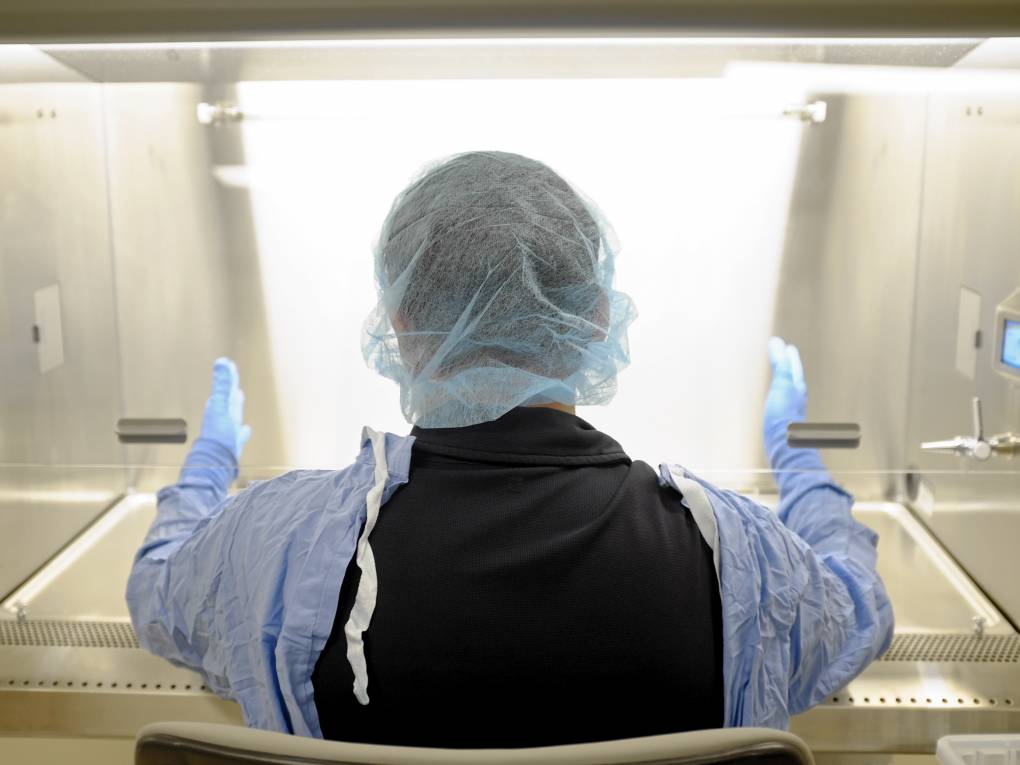
"caption": "Gladstone Institute's BSL-3 lab director Mauricio Montano demonstrates one of the new lab's biosafety cabinets, in which researchers will work with live coronavirus.",
"description": null,
"title": "Gladstone 1",
"credit": "Peter Arcuni/KQED",
"status": "inherit",
"isLoading": false,
"fetchFailed": false
},
"science_1967612": {
"type": "attachments",
"id": "science_1967612",
"meta": {
"index": "attachments_1716263798",
"site": "science",
"id": "1967612",
"found": true
},
"parent": 1967610,
"imgSizes": {
"twentyfourteen-full-width": {
"file": "https://ww2.kqed.org/app/uploads/sites/35/2020/07/RS44038_2017_04_07_Day__3_OA_Stills-184-qut-1038x576.jpg",
"width": 1038,
"mimeType": "image/jpeg",
"height": 576
},
"thumbnail": {
"file": "https://ww2.kqed.org/app/uploads/sites/35/2020/07/RS44038_2017_04_07_Day__3_OA_Stills-184-qut-160x107.jpg",
"width": 160,
"mimeType": "image/jpeg",
"height": 107
},
"post-thumbnail": {
"file": "https://ww2.kqed.org/app/uploads/sites/35/2020/07/RS44038_2017_04_07_Day__3_OA_Stills-184-qut-672x372.jpg",
"width": 672,
"mimeType": "image/jpeg",
"height": 372
},
"kqedFullSize": {
"file": "https://ww2.kqed.org/app/uploads/sites/35/2020/07/RS44038_2017_04_07_Day__3_OA_Stills-184-qut.jpg",
"width": 1920,
"height": 1280
},
"large": {
"file": "https://ww2.kqed.org/app/uploads/sites/35/2020/07/RS44038_2017_04_07_Day__3_OA_Stills-184-qut-1020x680.jpg",
"width": 1020,
"mimeType": "image/jpeg",
"height": 680
},
"1536x1536": {
"file": "https://ww2.kqed.org/app/uploads/sites/35/2020/07/RS44038_2017_04_07_Day__3_OA_Stills-184-qut-1536x1024.jpg",
"width": 1536,
"mimeType": "image/jpeg",
"height": 1024
},
"medium": {
"file": "https://ww2.kqed.org/app/uploads/sites/35/2020/07/RS44038_2017_04_07_Day__3_OA_Stills-184-qut-800x533.jpg",
"width": 800,
"mimeType": "image/jpeg",
"height": 533
},
"medium_large": {
"file": "https://ww2.kqed.org/app/uploads/sites/35/2020/07/RS44038_2017_04_07_Day__3_OA_Stills-184-qut-768x512.jpg",
"width": 768,
"mimeType": "image/jpeg",
"height": 512
}
},
"publishDate": 1595634439,
"modified": 1595634489,
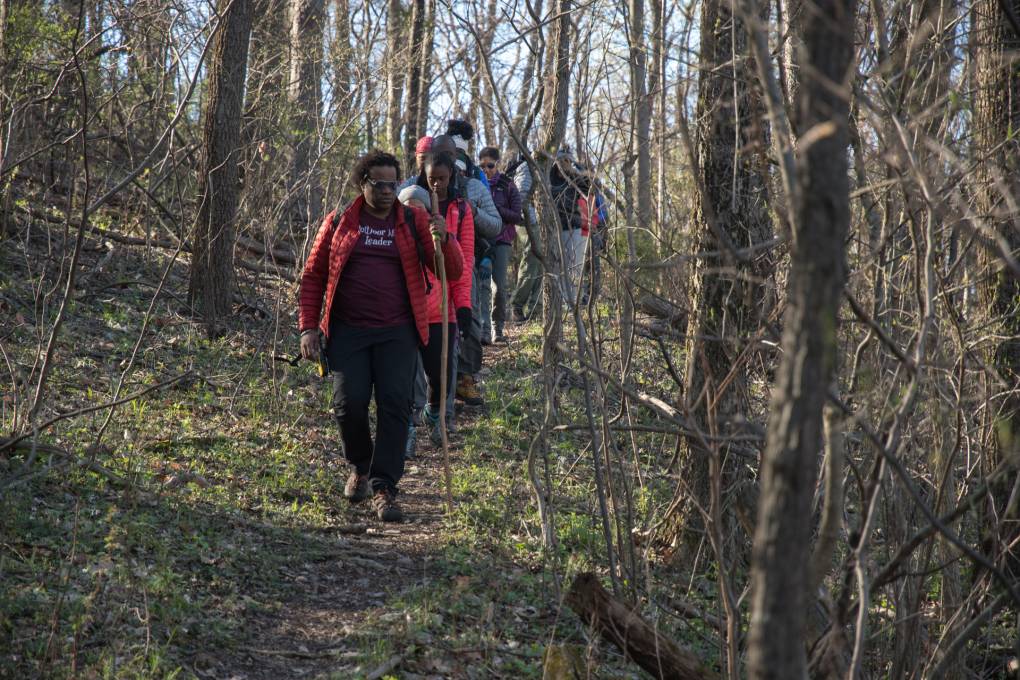
"caption": "A group of hikers with the Oakland-based environmental group Outdoor Afro. ",
"description": null,
"title": "RS44038_2017_04_07_Day__3_OA_Stills-184-qut",
"credit": "Courtesy of Outdoor Afro",
"status": "inherit",
"isLoading": false,
"fetchFailed": false
},
"science_1967622": {
"type": "attachments",
"id": "science_1967622",
"meta": {
"index": "attachments_1716263798",
"site": "science",
"id": "1967622",
"found": true
},
"parent": 1967577,
"imgSizes": {
"twentyfourteen-full-width": {
"file": "https://ww2.kqed.org/app/uploads/sites/35/2029/07/covid-schools-california-1038x576.jpg",
"width": 1038,
"mimeType": "image/jpeg",
"height": 576
},
"thumbnail": {
"file": "https://ww2.kqed.org/app/uploads/sites/35/2029/07/covid-schools-california-160x98.jpg",
"width": 160,
"mimeType": "image/jpeg",
"height": 98
},
"post-thumbnail": {
"file": "https://ww2.kqed.org/app/uploads/sites/35/2029/07/covid-schools-california-672x372.jpg",
"width": 672,
"mimeType": "image/jpeg",
"height": 372
},
"kqedFullSize": {
"file": "https://ww2.kqed.org/app/uploads/sites/35/2029/07/covid-schools-california.jpg",
"width": 1920,
"height": 1170
},
"large": {
"file": "https://ww2.kqed.org/app/uploads/sites/35/2029/07/covid-schools-california-1020x622.jpg",
"width": 1020,
"mimeType": "image/jpeg",
"height": 622
},
"1536x1536": {
"file": "https://ww2.kqed.org/app/uploads/sites/35/2029/07/covid-schools-california-1536x936.jpg",
"width": 1536,
"mimeType": "image/jpeg",
"height": 936
},
"medium": {
"file": "https://ww2.kqed.org/app/uploads/sites/35/2029/07/covid-schools-california-800x488.jpg",
"width": 800,
"mimeType": "image/jpeg",
"height": 488
},
"medium_large": {
"file": "https://ww2.kqed.org/app/uploads/sites/35/2029/07/covid-schools-california-768x468.jpg",
"width": 768,
"mimeType": "image/jpeg",
"height": 468
}
},
"publishDate": 1595794277,
"modified": 1595870548,
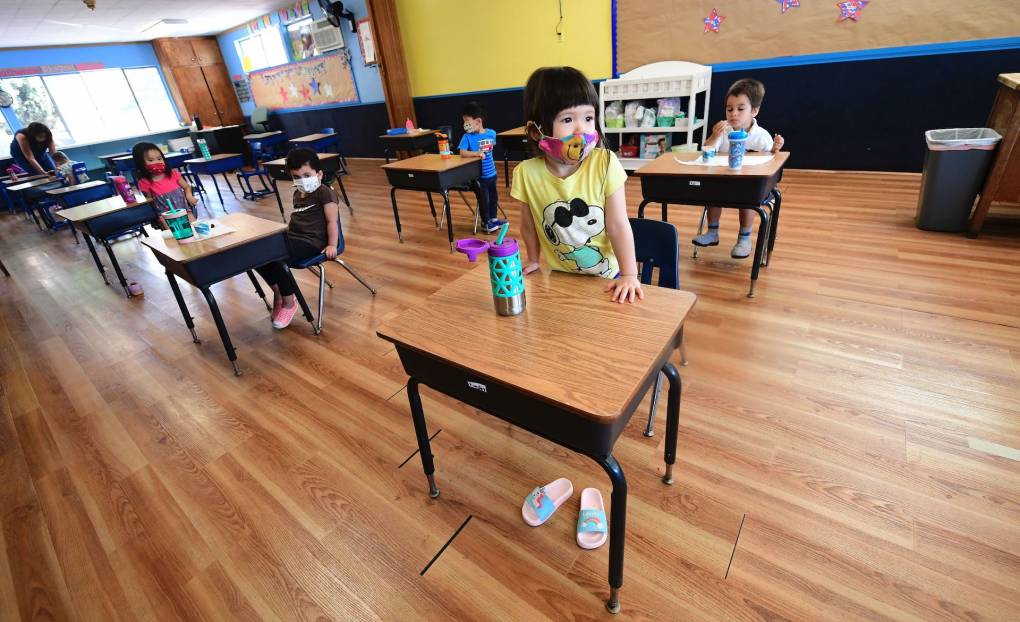
"caption": "Children in a preschool class wear masks and sit at desks spaced apart as per coronavirus guidelines during summer school sessions in Monterey Park, California, on July 9, 2020.",
"description": null,
"title": "US-HEALTH-VIRUS-EDUCATION",
"credit": "Frederic J. Brown/AFP via Getty Images",
"status": "inherit",
"isLoading": false,
"fetchFailed": false
},
"science_1967554": {
"type": "attachments",
"id": "science_1967554",
"meta": {
"index": "attachments_1716263798",
"site": "science",
"id": "1967554",
"found": true
},
"parent": 1967520,
"imgSizes": {
"twentyfourteen-full-width": {
"file": "https://ww2.kqed.org/app/uploads/sites/35/2020/07/RS44029_GettyImages-1256549304-qut-1038x576.jpg",
"width": 1038,
"mimeType": "image/jpeg",
"height": 576
},
"thumbnail": {
"file": "https://ww2.kqed.org/app/uploads/sites/35/2020/07/RS44029_GettyImages-1256549304-qut-160x102.jpg",
"width": 160,
"mimeType": "image/jpeg",
"height": 102
},
"post-thumbnail": {
"file": "https://ww2.kqed.org/app/uploads/sites/35/2020/07/RS44029_GettyImages-1256549304-qut-672x372.jpg",
"width": 672,
"mimeType": "image/jpeg",
"height": 372
},
"kqedFullSize": {
"file": "https://ww2.kqed.org/app/uploads/sites/35/2020/07/RS44029_GettyImages-1256549304-qut.jpg",
"width": 1920,
"height": 1226
},
"large": {
"file": "https://ww2.kqed.org/app/uploads/sites/35/2020/07/RS44029_GettyImages-1256549304-qut-1020x651.jpg",
"width": 1020,
"mimeType": "image/jpeg",
"height": 651
},
"1536x1536": {
"file": "https://ww2.kqed.org/app/uploads/sites/35/2020/07/RS44029_GettyImages-1256549304-qut-1536x981.jpg",
"width": 1536,
"mimeType": "image/jpeg",
"height": 981
},
"medium": {
"file": "https://ww2.kqed.org/app/uploads/sites/35/2020/07/RS44029_GettyImages-1256549304-qut-800x511.jpg",
"width": 800,
"mimeType": "image/jpeg",
"height": 511
},
"medium_large": {
"file": "https://ww2.kqed.org/app/uploads/sites/35/2020/07/RS44029_GettyImages-1256549304-qut-768x490.jpg",
"width": 768,
"mimeType": "image/jpeg",
"height": 490
}
},
"publishDate": 1595523638,
"modified": 1595541418,
"caption": "Jose Deloera is tested for COVID-19 at a testing site provided by the International Brotherhood of Teamsters on July 16, 2020, in Long Beach, California. ",
"description": null,
"title": "U.S. Struggles With Coronavirus Amid A Surge Of New Cases",
"credit": "Mario Tama/Getty Images",
"status": "inherit",
"isLoading": false,
"fetchFailed": false
},
"science_1962854": {
"type": "attachments",
"id": "science_1962854",
"meta": {
"index": "attachments_1716263798",
"site": "science",
"id": "1962854",
"found": true
},
"parent": 1962852,
"imgSizes": {
"twentyfourteen-full-width": {
"file": "https://ww2.kqed.org/app/uploads/sites/35/2020/04/RS42894_GettyImages-1209490985-qut-1038x576.jpg",
"width": 1038,
"mimeType": "image/jpeg",
"height": 576
},
"thumbnail": {
"file": "https://ww2.kqed.org/app/uploads/sites/35/2020/04/RS42894_GettyImages-1209490985-qut-160x116.jpg",
"width": 160,
"mimeType": "image/jpeg",
"height": 116
},
"post-thumbnail": {
"file": "https://ww2.kqed.org/app/uploads/sites/35/2020/04/RS42894_GettyImages-1209490985-qut-672x372.jpg",
"width": 672,
"mimeType": "image/jpeg",
"height": 372
},
"kqedFullSize": {
"file": "https://ww2.kqed.org/app/uploads/sites/35/2020/04/RS42894_GettyImages-1209490985-qut.jpg",
"width": 1920,
"height": 1391
},
"large": {
"file": "https://ww2.kqed.org/app/uploads/sites/35/2020/04/RS42894_GettyImages-1209490985-qut-1020x739.jpg",
"width": 1020,
"mimeType": "image/jpeg",
"height": 739
},
"full-width": {
"file": "https://ww2.kqed.org/app/uploads/sites/35/2020/04/RS42894_GettyImages-1209490985-qut-1920x1391.jpg",
"width": 1920,
"mimeType": "image/jpeg",
"height": 1391
},
"medium": {
"file": "https://ww2.kqed.org/app/uploads/sites/35/2020/04/RS42894_GettyImages-1209490985-qut-800x580.jpg",
"width": 800,
"mimeType": "image/jpeg",
"height": 580
},
"medium_large": {
"file": "https://ww2.kqed.org/app/uploads/sites/35/2020/04/RS42894_GettyImages-1209490985-qut-768x556.jpg",
"width": 768,
"mimeType": "image/jpeg",
"height": 556
}
},
"publishDate": 1587666855,
"modified": 1595464512,
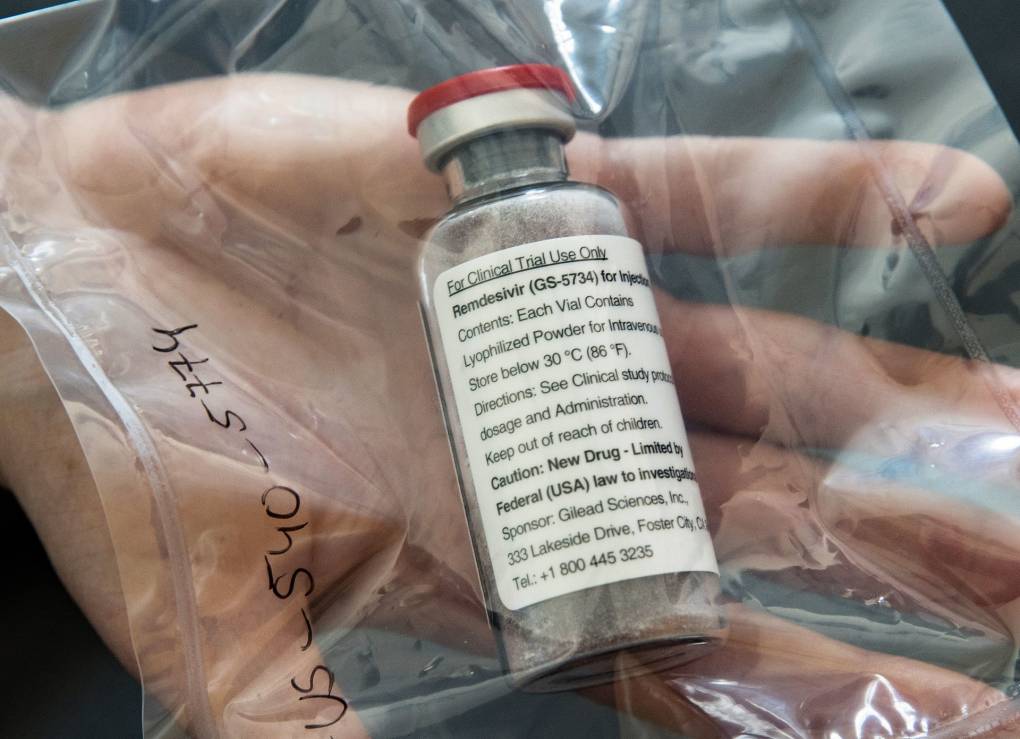
"caption": "One vial of the antiviral drug remdesivir.",
"description": null,
"title": "GERMANY-HEALTH-VIRUS",
"credit": "Ulrich Perrey/Pool/AFP via Getty Images",
"status": "inherit",
"isLoading": false,
"fetchFailed": false
},
"science_1967473": {
"type": "attachments",
"id": "science_1967473",
"meta": {
"index": "attachments_1716263798",
"site": "science",
"id": "1967473",
"found": true
},
"parent": 1967470,
"imgSizes": {
"twentyfourteen-full-width": {
"file": "https://ww2.kqed.org/app/uploads/sites/35/2020/07/Mack_01_1350-1038x576.jpg",
"width": 1038,
"mimeType": "image/jpeg",
"height": 576
},
"thumbnail": {
"file": "https://ww2.kqed.org/app/uploads/sites/35/2020/07/Mack_01_1350-160x107.jpg",
"width": 160,
"mimeType": "image/jpeg",
"height": 107
},
"post-thumbnail": {
"file": "https://ww2.kqed.org/app/uploads/sites/35/2020/07/Mack_01_1350-672x372.jpg",
"width": 672,
"mimeType": "image/jpeg",
"height": 372
},
"kqedFullSize": {
"file": "https://ww2.kqed.org/app/uploads/sites/35/2020/07/Mack_01_1350.jpg",
"width": 1350,
"height": 900
},
"large": {
"file": "https://ww2.kqed.org/app/uploads/sites/35/2020/07/Mack_01_1350-1020x680.jpg",
"width": 1020,
"mimeType": "image/jpeg",
"height": 680
},
"medium": {
"file": "https://ww2.kqed.org/app/uploads/sites/35/2020/07/Mack_01_1350-800x533.jpg",
"width": 800,
"mimeType": "image/jpeg",
"height": 533
},
"medium_large": {
"file": "https://ww2.kqed.org/app/uploads/sites/35/2020/07/Mack_01_1350-768x512.jpg",
"width": 768,
"mimeType": "image/jpeg",
"height": 512
}
},
"publishDate": 1595436226,
"modified": 1595454305,
"caption": "Chantee Mack, left, a 44-year-old disease intervention specialist for Maryland’s Prince George’s County, died in May after contracting COVID-19. Her brother Roland Mack, right, says his family is devastated. “I feel alone now that she’s gone,” he says. ",
"description": null,
"title": "Mack_01_1350",
"credit": "Courtesy of Roland Mack",
"status": "inherit",
"isLoading": false,
"fetchFailed": false
},
"science_1967461": {
"type": "attachments",
"id": "science_1967461",
"meta": {
"index": "attachments_1716263798",
"site": "science",
"id": "1967461",
"found": true
},
"parent": 1967231,
"imgSizes": {
"twentyfourteen-full-width": {
"file": "https://ww2.kqed.org/app/uploads/sites/35/2020/07/1_coronavirus_sneeze-1038x576.jpg",
"width": 1038,
"mimeType": "image/jpeg",
"height": 576
},
"thumbnail": {
"file": "https://ww2.kqed.org/app/uploads/sites/35/2020/07/1_coronavirus_sneeze-160x90.jpg",
"width": 160,
"mimeType": "image/jpeg",
"height": 90
},
"post-thumbnail": {
"file": "https://ww2.kqed.org/app/uploads/sites/35/2020/07/1_coronavirus_sneeze-672x372.jpg",
"width": 672,
"mimeType": "image/jpeg",
"height": 372
},
"kqedFullSize": {
"file": "https://ww2.kqed.org/app/uploads/sites/35/2020/07/1_coronavirus_sneeze.jpg",
"width": 1920,
"height": 1080
},
"large": {
"file": "https://ww2.kqed.org/app/uploads/sites/35/2020/07/1_coronavirus_sneeze-1020x574.jpg",
"width": 1020,
"mimeType": "image/jpeg",
"height": 574
},
"1536x1536": {
"file": "https://ww2.kqed.org/app/uploads/sites/35/2020/07/1_coronavirus_sneeze-1536x864.jpg",
"width": 1536,
"mimeType": "image/jpeg",
"height": 864
},
"medium": {
"file": "https://ww2.kqed.org/app/uploads/sites/35/2020/07/1_coronavirus_sneeze-800x450.jpg",
"width": 800,
"mimeType": "image/jpeg",
"height": 450
},
"medium_large": {
"file": "https://ww2.kqed.org/app/uploads/sites/35/2020/07/1_coronavirus_sneeze-768x432.jpg",
"width": 768,
"mimeType": "image/jpeg",
"height": 432
}
},
"publishDate": 1595371027,
"modified": 1595371072,
"caption": "A mask can reduce by half the amount of large droplets you expel in a sneeze, and can cut the amount of small droplets by 30 percent, according to Dr. Kimberly Prather of the Scripps Institution of Oceanography and UC San Diego.",
"description": "A mask can reduce by half the amount of large droplets you expel in a sneeze, and can cut the amount of small droplets by 30 percent, according to Dr. Kimberly Prather of the Scripps Institution of Oceanography and UC San Diego.",
"title": "1_coronavirus_sneeze",
"credit": "Jasmine Garnett/KQED",
"status": "inherit",
"isLoading": false,
"fetchFailed": false
},
"science_1967451": {
"type": "attachments",
"id": "science_1967451",
"meta": {
"index": "attachments_1716263798",
"site": "science",
"id": "1967451",
"found": true
},
"parent": 1967449,
"imgSizes": {
"twentyfourteen-full-width": {
"file": "https://ww2.kqed.org/app/uploads/sites/35/2020/07/GettyImages-1212974131-1600x900-1-1038x576.jpg",
"width": 1038,
"mimeType": "image/jpeg",
"height": 576
},
"thumbnail": {
"file": "https://ww2.kqed.org/app/uploads/sites/35/2020/07/GettyImages-1212974131-1600x900-1-160x90.jpg",
"width": 160,
"mimeType": "image/jpeg",
"height": 90
},
"post-thumbnail": {
"file": "https://ww2.kqed.org/app/uploads/sites/35/2020/07/GettyImages-1212974131-1600x900-1-672x372.jpg",
"width": 672,
"mimeType": "image/jpeg",
"height": 372
},
"kqedFullSize": {
"file": "https://ww2.kqed.org/app/uploads/sites/35/2020/07/GettyImages-1212974131-1600x900-1.jpg",
"width": 1600,
"height": 900
},
"large": {
"file": "https://ww2.kqed.org/app/uploads/sites/35/2020/07/GettyImages-1212974131-1600x900-1-1020x574.jpg",
"width": 1020,
"mimeType": "image/jpeg",
"height": 574
},
"1536x1536": {
"file": "https://ww2.kqed.org/app/uploads/sites/35/2020/07/GettyImages-1212974131-1600x900-1-1536x864.jpg",
"width": 1536,
"mimeType": "image/jpeg",
"height": 864
},
"medium": {
"file": "https://ww2.kqed.org/app/uploads/sites/35/2020/07/GettyImages-1212974131-1600x900-1-800x450.jpg",
"width": 800,
"mimeType": "image/jpeg",
"height": 450
},
"medium_large": {
"file": "https://ww2.kqed.org/app/uploads/sites/35/2020/07/GettyImages-1212974131-1600x900-1-768x432.jpg",
"width": 768,
"mimeType": "image/jpeg",
"height": 432
}
},
"publishDate": 1595366125,
"modified": 1595372439,
"caption": "A registered nurse draws blood to test for COVID-19 antibodies at Abyssinian Baptist Church in the Harlem neighborhood of New York City.\n",
"description": null,
"title": "GettyImages-1212974131-1600x900",
"credit": "Angela Weiss/AFP via Getty Images ",
"status": "inherit",
"isLoading": false,
"fetchFailed": false
},
"science_1967191": {
"type": "attachments",
"id": "science_1967191",
"meta": {
"index": "attachments_1716263798",
"site": "science",
"id": "1967191",
"found": true
},
"parent": 1967186,
"imgSizes": {
"twentyfourteen-full-width": {
"file": "https://ww2.kqed.org/app/uploads/sites/35/2020/07/Helen-Dumpster-Fire-6-1600x900-1-1038x576.jpg",
"width": 1038,
"mimeType": "image/jpeg",
"height": 576
},
"thumbnail": {
"file": "https://ww2.kqed.org/app/uploads/sites/35/2020/07/Helen-Dumpster-Fire-6-1600x900-1-160x90.jpg",
"width": 160,
"mimeType": "image/jpeg",
"height": 90
},
"post-thumbnail": {
"file": "https://ww2.kqed.org/app/uploads/sites/35/2020/07/Helen-Dumpster-Fire-6-1600x900-1-672x372.jpg",
"width": 672,
"mimeType": "image/jpeg",
"height": 372
},
"kqedFullSize": {
"file": "https://ww2.kqed.org/app/uploads/sites/35/2020/07/Helen-Dumpster-Fire-6-1600x900-1.jpg",
"width": 1600,
"height": 900
},
"large": {
"file": "https://ww2.kqed.org/app/uploads/sites/35/2020/07/Helen-Dumpster-Fire-6-1600x900-1-1020x574.jpg",
"width": 1020,
"mimeType": "image/jpeg",
"height": 574
},
"1536x1536": {
"file": "https://ww2.kqed.org/app/uploads/sites/35/2020/07/Helen-Dumpster-Fire-6-1600x900-1-1536x864.jpg",
"width": 1536,
"mimeType": "image/jpeg",
"height": 864
},
"medium": {
"file": "https://ww2.kqed.org/app/uploads/sites/35/2020/07/Helen-Dumpster-Fire-6-1600x900-1-800x450.jpg",
"width": 800,
"mimeType": "image/jpeg",
"height": 450
},
"medium_large": {
"file": "https://ww2.kqed.org/app/uploads/sites/35/2020/07/Helen-Dumpster-Fire-6-1600x900-1-768x432.jpg",
"width": 768,
"mimeType": "image/jpeg",
"height": 432
}
},
"publishDate": 1594841590,
"modified": 1594853511,
"caption": null,
"description": null,
"title": "Helen-Dumpster-Fire-6-1600x900",
"credit": "Hyacinth Empinado/STAT",
"status": "inherit",
"isLoading": false,
"fetchFailed": false
},
"science_1967170": {
"type": "attachments",
"id": "science_1967170",
"meta": {
"index": "attachments_1716263798",
"site": "science",
"id": "1967170",
"found": true
},
"parent": 1967134,
"imgSizes": {
"twentyfourteen-full-width": {
"file": "https://ww2.kqed.org/app/uploads/sites/35/2020/07/quiz-title-3-esp_orange-1038x576.jpg",
"width": 1038,
"mimeType": "image/jpeg",
"height": 576
},
"thumbnail": {
"file": "https://ww2.kqed.org/app/uploads/sites/35/2020/07/quiz-title-3-esp_orange-160x90.jpg",
"width": 160,
"mimeType": "image/jpeg",
"height": 90
},
"post-thumbnail": {
"file": "https://ww2.kqed.org/app/uploads/sites/35/2020/07/quiz-title-3-esp_orange-672x372.jpg",
"width": 672,
"mimeType": "image/jpeg",
"height": 372
},
"kqedFullSize": {
"file": "https://ww2.kqed.org/app/uploads/sites/35/2020/07/quiz-title-3-esp_orange.jpg",
"width": 1920,
"height": 1080
},
"large": {
"file": "https://ww2.kqed.org/app/uploads/sites/35/2020/07/quiz-title-3-esp_orange-1020x574.jpg",
"width": 1020,
"mimeType": "image/jpeg",
"height": 574
},
"1536x1536": {
"file": "https://ww2.kqed.org/app/uploads/sites/35/2020/07/quiz-title-3-esp_orange-1536x864.jpg",
"width": 1536,
"mimeType": "image/jpeg",
"height": 864
},
"medium": {
"file": "https://ww2.kqed.org/app/uploads/sites/35/2020/07/quiz-title-3-esp_orange-800x450.jpg",
"width": 800,
"mimeType": "image/jpeg",
"height": 450
},
"medium_large": {
"file": "https://ww2.kqed.org/app/uploads/sites/35/2020/07/quiz-title-3-esp_orange-768x432.jpg",
"width": 768,
"mimeType": "image/jpeg",
"height": 432
}
},
"publishDate": 1594767589,
"modified": 1594767589,
"caption": null,
"description": null,
"title": "quiz-title-3-esp_orange",
"credit": null,
"status": "inherit",
"isLoading": false,
"fetchFailed": false
},
"science_1956856": {
"type": "attachments",
"id": "science_1956856",
"meta": {
"index": "attachments_1716263798",
"site": "science",
"id": "1956856",
"found": true
},
"parent": 1956855,
"imgSizes": {
"twentyfourteen-full-width": {
"file": "https://ww2.kqed.org/app/uploads/sites/35/2020/02/RS41317_GettyImages-512019574-qut-1038x576.jpg",
"width": 1038,
"mimeType": "image/jpeg",
"height": 576
},
"thumbnail": {
"file": "https://ww2.kqed.org/app/uploads/sites/35/2020/02/RS41317_GettyImages-512019574-qut-160x112.jpg",
"width": 160,
"mimeType": "image/jpeg",
"height": 112
},
"post-thumbnail": {
"file": "https://ww2.kqed.org/app/uploads/sites/35/2020/02/RS41317_GettyImages-512019574-qut-672x372.jpg",
"width": 672,
"mimeType": "image/jpeg",
"height": 372
},
"kqedFullSize": {
"file": "https://ww2.kqed.org/app/uploads/sites/35/2020/02/RS41317_GettyImages-512019574-qut.jpg",
"width": 1920,
"height": 1344
},
"large": {
"file": "https://ww2.kqed.org/app/uploads/sites/35/2020/02/RS41317_GettyImages-512019574-qut-1020x714.jpg",
"width": 1020,
"mimeType": "image/jpeg",
"height": 714
},
"full-width": {
"file": "https://ww2.kqed.org/app/uploads/sites/35/2020/02/RS41317_GettyImages-512019574-qut-1920x1344.jpg",
"width": 1920,
"mimeType": "image/jpeg",
"height": 1344
},
"medium": {
"file": "https://ww2.kqed.org/app/uploads/sites/35/2020/02/RS41317_GettyImages-512019574-qut-800x560.jpg",
"width": 800,
"mimeType": "image/jpeg",
"height": 560
},
"medium_large": {
"file": "https://ww2.kqed.org/app/uploads/sites/35/2020/02/RS41317_GettyImages-512019574-qut-768x538.jpg",
"width": 768,
"mimeType": "image/jpeg",
"height": 538
}
},
"publishDate": 1581539693,
"modified": 1594426179,
"caption": "Dr. Anthony Fauci. ",
"description": null,
"title": "US-POLITICS-HEALTH-ZIKA",
"credit": "Saul Loeb/AFP via Getty Images",
"status": "inherit",
"isLoading": false,
"fetchFailed": false
},
"science_1966969": {
"type": "attachments",
"id": "science_1966969",
"meta": {
"index": "attachments_1716263798",
"site": "science",
"id": "1966969",
"found": true
},
"parent": 1966967,
"imgSizes": {
"twentyfourteen-full-width": {
"file": "https://ww2.kqed.org/app/uploads/sites/35/2020/07/RS43888_GettyImages-1252246465-qut-1038x576.jpg",
"width": 1038,
"mimeType": "image/jpeg",
"height": 576
},
"thumbnail": {
"file": "https://ww2.kqed.org/app/uploads/sites/35/2020/07/RS43888_GettyImages-1252246465-qut-160x104.jpg",
"width": 160,
"mimeType": "image/jpeg",
"height": 104
},
"post-thumbnail": {
"file": "https://ww2.kqed.org/app/uploads/sites/35/2020/07/RS43888_GettyImages-1252246465-qut-672x372.jpg",
"width": 672,
"mimeType": "image/jpeg",
"height": 372
},
"kqedFullSize": {
"file": "https://ww2.kqed.org/app/uploads/sites/35/2020/07/RS43888_GettyImages-1252246465-qut.jpg",
"width": 1920,
"height": 1251
},
"large": {
"file": "https://ww2.kqed.org/app/uploads/sites/35/2020/07/RS43888_GettyImages-1252246465-qut-1020x665.jpg",
"width": 1020,
"mimeType": "image/jpeg",
"height": 665
},
"1536x1536": {
"file": "https://ww2.kqed.org/app/uploads/sites/35/2020/07/RS43888_GettyImages-1252246465-qut-1536x1001.jpg",
"width": 1536,
"mimeType": "image/jpeg",
"height": 1001
},
"medium": {
"file": "https://ww2.kqed.org/app/uploads/sites/35/2020/07/RS43888_GettyImages-1252246465-qut-800x521.jpg",
"width": 800,
"mimeType": "image/jpeg",
"height": 521
},
"medium_large": {
"file": "https://ww2.kqed.org/app/uploads/sites/35/2020/07/RS43888_GettyImages-1252246465-qut-768x500.jpg",
"width": 768,
"mimeType": "image/jpeg",
"height": 500
}
},
"publishDate": 1594259390,
"modified": 1594259694,
"caption": "Travelers walk past thermal imaging cameras that show body temperatures on a video screen at Los Angeles International Airport in June. The system is being tested in the international terminal and can flag passengers who have a fever, one of the symptoms of COVID-19. ",
"description": null,
"title": "Los Angeles Int'l Airport Tests Thermal Screening Cameras To Detect COVID-19",
"credit": "Mario Tama/Getty Images",
"status": "inherit",
"isLoading": false,
"fetchFailed": false
}
},
"audioPlayerReducer": {
"postId": "stream_live",
"isPaused": true,
"isPlaying": false,
"pfsActive": false,
"pledgeModalIsOpen": true,
"playerDrawerIsOpen": false,
"liveAudioPlayStartedAt": 0,
"liveAudioPlayContext": ""
},
"authorsReducer": {
"byline_science_1967520": {
"type": "authors",
"id": "byline_science_1967520",
"meta": {
"override": true
},
"slug": "byline_science_1967520",
"name": "Caroline Chen and Ash Ngu \u003cbr />ProPublica\u003cbr>",
"isLoading": false
},
"byline_science_1967470": {
"type": "authors",
"id": "byline_science_1967470",
"meta": {
"override": true
},
"slug": "byline_science_1967470",
"name": "Laura Ungar \u003cbr />Kaiser Health News\u003cbr>",
"isLoading": false
},
"byline_science_1967449": {
"type": "authors",
"id": "byline_science_1967449",
"meta": {
"override": true
},
"slug": "byline_science_1967449",
"name": "Andrew Joseph \u003cbr />STAT\u003cbr>",
"isLoading": false
},
"byline_science_1967186": {
"type": "authors",
"id": "byline_science_1967186",
"meta": {
"override": true
},
"slug": "byline_science_1967186",
"name": "Helen Branswell \u003cbr />STAT\u003cbr>",
"isLoading": false
},
"byline_science_1967134": {
"type": "authors",
"id": "byline_science_1967134",
"meta": {
"override": true
},
"slug": "byline_science_1967134",
"name": "Adriana Morga, Teodros Hailye, Peter Arcuni",
"isLoading": false
},
"byline_science_1966967": {
"type": "authors",
"id": "byline_science_1966967",
"meta": {
"override": true
},
"slug": "byline_science_1966967",
"name": "Sharon Begly, STAT",
"isLoading": false
},
"kqedscience": {
"type": "authors",
"id": "6387",
"meta": {
"index": "authors_1716337520",
"id": "6387",
"found": true
},
"name": "KQED Science",
"firstName": "KQED",
"lastName": "Science",
"slug": "kqedscience",
"email": "kqedscience@gmail.com",
"display_author_email": false,
"staff_mastheads": [],
"title": null,
"bio": "KQED Science brings you award-winning science and environment coverage from the Bay Area and beyond by the flagship Northern California PBS and NPR affiliate.",
"avatar": "https://secure.gravatar.com/avatar/5a295ff49cf82a8c0f30937d3f788b2f?s=600&d=blank&r=g",
"twitter": null,
"facebook": null,
"instagram": null,
"linkedin": null,
"sites": [
{
"site": "science",
"roles": [
"contributor"
]
},
{
"site": "quest",
"roles": [
"editor"
]
},
{
"site": "food",
"roles": [
"contributor"
]
}
],
"headData": {
"title": "KQED Science | KQED",
"description": null,
"ogImgSrc": "https://secure.gravatar.com/avatar/5a295ff49cf82a8c0f30937d3f788b2f?s=600&d=blank&r=g",
"twImgSrc": "https://secure.gravatar.com/avatar/5a295ff49cf82a8c0f30937d3f788b2f?s=600&d=blank&r=g"
},
"isLoading": false,
"link": "/author/kqedscience"
},
"lklivans": {
"type": "authors",
"id": "8648",
"meta": {
"index": "authors_1716337520",
"id": "8648",
"found": true
},
"name": "Laura Klivans",
"firstName": "Laura",
"lastName": "Klivans",
"slug": "lklivans",
"email": "lklivans@kqed.org",
"display_author_email": true,
"staff_mastheads": [
"news",
"science"
],
"title": "Reporter",
"bio": "Laura Klivans is an award-winning science reporter for KQED News, where she covers climate change with an eye on both groundbreaking progress and gaps in action. She is the former host of KQED's blockbuster video series about tiny, amazing animals, \u003cem>Deep Look\u003c/em>. Her work reaches national audiences through NPR, \u003cem>Here & Now, \u003c/em>PRI, and other major outlets. \r\n\r\nLaura’s won five Northern California Area Emmy Awards for Deep Look and First Place in the Greater Bay Area Journalism Awards for a podcast exploring how one Oakland neighborhood teamed up to reduce planet-heating pollution.\r\n\r\nBeyond her reporting, she hosts and moderates events. In the past, she taught audio storytelling at the UC Berkeley Graduate School of Journalism, led international education programs, worked with immigrants and refugees along the Thai-Burmese border, taught high schoolers sex ed, and was an actress. \r\n\r\nShe's a former UC Berkeley Human Rights Fellow, USC Center for Health Journalism's California Fellow and Coro Fellow in Public Affairs. Laura has a master’s in journalism from UC Berkeley, a master’s in education from Harvard, and an undergraduate degree from Northwestern University.\r\n\r\nShe loves trying to riddle the meaning out of vanity license plates.",
"avatar": "https://secure.gravatar.com/avatar/2d2ecd1550a494cc10ad4a503406965585902124739e775a9b3817eebf1d88be?s=600&d=blank&r=g",
"twitter": "lauraklivans",
"bluesky": null,
"facebook": null,
"instagram": null,
"linkedin": null,
"sites": [
{
"site": "news",
"roles": [
"editor"
]
},
{
"site": "stateofhealth",
"roles": [
"contributor",
"editor"
]
},
{
"site": "science",
"roles": [
"editor"
]
},
{
"site": "forum",
"roles": [
"editor"
]
}
],
"headData": {
"title": "Laura Klivans | KQED",
"description": "Reporter",
"ogImgSrc": "https://secure.gravatar.com/avatar/2d2ecd1550a494cc10ad4a503406965585902124739e775a9b3817eebf1d88be?s=600&d=blank&r=g",
"twImgSrc": "https://secure.gravatar.com/avatar/2d2ecd1550a494cc10ad4a503406965585902124739e775a9b3817eebf1d88be?s=600&d=blank&r=g"
},
"isLoading": false,
"link": "/author/lklivans"
},
"parcuni": {
"type": "authors",
"id": "11368",
"meta": {
"index": "authors_1716337520",
"id": "11368",
"found": true
},
"name": "Peter Arcuni",
"firstName": "Peter",
"lastName": "Arcuni",
"slug": "parcuni",
"email": "parcuni@KQED.org",
"display_author_email": false,
"staff_mastheads": [
"science"
],
"title": "Reporter",
"bio": "Peter reports radio and online stories for \u003cem>KQED Science\u003c/em>. His work has also appeared on the \u003cem>The California Report\u003c/em> morning show and \u003cem>KQED News\u003c/em>. His production credits include \u003cem>The California Report, The California Report Magazine\u003c/em> and KQED's local news podcast \u003cem>The Bay\u003c/em>. Other credits include NPR's \u003cem>All Things Considered\u003c/em>, WNYC's \u003cem>Science Friday\u003c/em>, WBUR's \u003cem>Here & Now\u003c/em>, WIRED and SFGate. Peter graduated from Brown University and earned a master's degree in journalism from Stanford. He's covered everything from homelessness to wildfires, health, the environment, arts and Thanksgiving in San Quentin prison. In other lives, he played rock n roll music and studied neuroscience. You can email him at: parcuni@kqed.org",
"avatar": "https://secure.gravatar.com/avatar/d5032f6f27199d478af34ad2e1d98732?s=600&d=blank&r=g",
"twitter": "peterarcuni",
"facebook": null,
"instagram": null,
"linkedin": null,
"sites": [
{
"site": "news",
"roles": [
"editor"
]
},
{
"site": "science",
"roles": [
"editor"
]
}
],
"headData": {
"title": "Peter Arcuni | KQED",
"description": "Reporter",
"ogImgSrc": "https://secure.gravatar.com/avatar/d5032f6f27199d478af34ad2e1d98732?s=600&d=blank&r=g",
"twImgSrc": "https://secure.gravatar.com/avatar/d5032f6f27199d478af34ad2e1d98732?s=600&d=blank&r=g"
},
"isLoading": false,
"link": "/author/parcuni"
},
"kevinstark": {
"type": "authors",
"id": "11608",
"meta": {
"index": "authors_1716337520",
"id": "11608",
"found": true
},
"name": "Kevin Stark",
"firstName": "Kevin",
"lastName": "Stark",
"slug": "kevinstark",
"email": "kstark@kqed.org",
"display_author_email": true,
"staff_mastheads": [
"science"
],
"title": "Senior Editor",
"bio": "Kevin is a senior editor for KQED Science, managing the station's health and climate desks. His journalism career began in the Pacific Northwest, and he later became a lead reporter for the San Francisco Public Press. His work has appeared in Pacific Standard magazine, the Energy News Network, the Center for Investigative Reporting's Reveal and WBEZ in Chicago. Kevin joined KQED in 2019, and has covered issues related to energy, wildfire, climate change and the environment.",
"avatar": "https://secure.gravatar.com/avatar/365aaa4b597d3a8374f67504ff0facd323d7906e8eb4be0a7efd2427408e802c?s=600&d=blank&r=g",
"twitter": "starkkev",
"bluesky": null,
"facebook": null,
"instagram": null,
"linkedin": null,
"sites": [
{
"site": "",
"roles": [
"editor"
]
},
{
"site": "news",
"roles": [
"editor"
]
},
{
"site": "science",
"roles": [
"administrator"
]
}
],
"headData": {
"title": "Kevin Stark | KQED",
"description": "Senior Editor",
"ogImgSrc": "https://secure.gravatar.com/avatar/365aaa4b597d3a8374f67504ff0facd323d7906e8eb4be0a7efd2427408e802c?s=600&d=blank&r=g",
"twImgSrc": "https://secure.gravatar.com/avatar/365aaa4b597d3a8374f67504ff0facd323d7906e8eb4be0a7efd2427408e802c?s=600&d=blank&r=g"
},
"isLoading": false,
"link": "/author/kevinstark"
}
},
"pagesReducer": {
"science_category_health": {
"type": "terms",
"id": "science_39",
"meta": {
"index": "terms_1716263798",
"site": "science",
"id": "39",
"score": 10.889519
},
"featImg": null,
"name": "Health",
"description": null,
"taxonomy": "category",
"headData": {
"twImgId": null,
"twTitle": null,
"ogTitle": null,
"ogImgId": null,
"twDescription": null,
"description": null,
"title": "Health Archives | KQED Science",
"ogDescription": null
},
"ttid": 41,
"slug": "health",
"isLoading": false,
"title": "Health",
"pageMeta": {
"site": "science",
"WpPageTemplate": "page-topic-editorial",
"currentPage": 19
},
"blocks": [
{
"blockName": "kqed/post-list",
"attrs": {
"layout": "cardArticle2",
"query": "posts/science?category=health",
"seeMore": false,
"paginated": true,
"page": 19
}
},
{
"blockName": "kqed/ad"
}
]
}
},
"pfsSessionReducer": {},
"postsReducer": {
"stream_live": {
"type": "live",
"id": "stream_live",
"audioUrl": "https://streams.kqed.org/kqedradio",
"title": "Live Stream",
"excerpt": "Live Stream information currently unavailable.",
"link": "/radio",
"featImg": "",
"label": {
"name": "KQED Live",
"link": "/"
}
},
"stream_kqedNewscast": {
"type": "posts",
"id": "stream_kqedNewscast",
"audioUrl": "https://www.kqed.org/.stream/anon/radio/RDnews/newscast.mp3?_=1",
"title": "KQED Newscast",
"featImg": "",
"label": {
"name": "88.5 FM",
"link": "/"
}
},
"science_1967648": {
"type": "posts",
"id": "science_1967648",
"meta": {
"index": "posts_1716263798",
"site": "science",
"id": "1967648",
"score": null,
"sort": [
1595889933000
]
},
"parent": 0,
"labelTerm": {},
"blocks": [],
"publishDate": 1595889933,
"format": "standard",
"title": "Inside SF's New Biosafety Lab, Where Scientists Wrangle Live Coronavirus",
"headTitle": "Inside SF’s New Biosafety Lab, Where Scientists Wrangle Live Coronavirus | KQED",
"content": "\u003cp>There’s so much scientists still don’t know about the novel coronavirus: basic stuff, like how exactly it invades a host’s healthy cells, the molecular interactions that enable it to spread through the body and why it affects some people more than others.\u003c/p>\n\u003cp>But a handful of labs in the Bay Area, including ones at UCSF and UC Berkeley, are trying to gain a better understanding of how SARS-CoV-2 behaves by doing basic research with live virus. The work could help scientists develop and test new treatments or vaccines to target the virus more effectively.\u003c/p>\n\u003cp>To handle live coronavirus and other potential deadly airborne pathogens, these labs must meet strict Biosafety Level 3 (BSL-3) \u003ca href=\"https://www.cdc.gov/cpr/infographics/biosafety.htm\" target=\"_blank\" rel=\"noopener noreferrer\">containment requirements\u003c/a> set by the Centers for Disease Control and Prevention.\u003c/p>\n\u003cp>On a recent visit to San Francisco’s \u003ca href=\"https://gladstone.org/\" target=\"_blank\" rel=\"noopener noreferrer\">Gladstone Institutes\u003c/a>, we got a look inside its newly launched BSL-3 lab (before any live virus arrived) with Dr. Melanie Ott, director of the Gladstone Institute of Virology, and lab director Mauricio Montano.\u003c/p>\n\u003cp>As I learned, getting into a BSL-3 lab requires a few extra steps.\u003c/p>\n\u003cp>[ad fullwidth]\u003c/p>\n\u003cp>\u003cb>From Surgical Mask to ‘Space Suit’\u003c/b>\u003c/p>\n\u003cfigure id=\"attachment_1967668\" class=\"wp-caption alignright\" style=\"max-width: 800px\">\u003cimg loading=\"lazy\" decoding=\"async\" class=\"size-medium wp-image-1967668\" src=\"https://ww2.kqed.org/app/uploads/sites/35/2020/07/Gladstone-3-800x600.jpg\" alt=\"\" width=\"800\" height=\"600\" srcset=\"https://cdn.kqed.org/wp-content/uploads/sites/35/2020/07/Gladstone-3-800x600.jpg 800w, https://cdn.kqed.org/wp-content/uploads/sites/35/2020/07/Gladstone-3-1020x765.jpg 1020w, https://cdn.kqed.org/wp-content/uploads/sites/35/2020/07/Gladstone-3-160x120.jpg 160w, https://cdn.kqed.org/wp-content/uploads/sites/35/2020/07/Gladstone-3-768x576.jpg 768w, https://cdn.kqed.org/wp-content/uploads/sites/35/2020/07/Gladstone-3-1536x1152.jpg 1536w, https://cdn.kqed.org/wp-content/uploads/sites/35/2020/07/Gladstone-3-2048x1536.jpg 2048w, https://cdn.kqed.org/wp-content/uploads/sites/35/2020/07/Gladstone-3-1920x1440.jpg 1920w\" sizes=\"(max-width: 800px) 100vw, 800px\">\u003cfigcaption class=\"wp-caption-text\">To enter the BSL-3 lab, researchers must go from street clothes to scrubs to full body suits. Here, reporter Peter Arcuni steps into the “clean space” with booties over his sneakers. \u003ccite>(Peter Arcuni/KQED)\u003c/cite>\u003c/figcaption>\u003c/figure>\n\u003cp>These days, a basic cloth facial covering or surgical mask is required even to enter Gladstone’s Mission Bay headquarters. But gaining access to the BSL-3 lab requires two more wardrobe changes.\u003c/p>\n\u003cp>The first takes place in a locker room, where researchers go from street clothes into scrubs, gloves and a bonnet that resembles a gauzy shower cap.\u003c/p>\n\u003cp>“That’s part of the sacrifice of making sure everybody’s safe and clean,” Montano said. Then he walked me through the protocol for putting a pair of booties on over my sneakers, before stepping over a line of yellow tape on the floor.\u003c/p>\n\u003cp>“You’ll put a booty on one foot, and then you’ll be able to plant your foot into this clean space. And then you’ll put the other booty on and you’ll be able to walk in here,” he coached.\u003c/p>\n\u003cp>It took me a few tries to get it right.\u003c/p>\n\u003cp>“Even very experienced Ph.D.-level virologists who come in here for the first time will have the same experience,” Montano said. “The environment requires a really hyperactive vigilance.”\u003c/p>\n\u003cp>Next we head down the hall to the BSL-3 lab’s secure anteroom. A digital monitor by the door showed the air pressure as negative, which ensures that no aerosolized particles (stuff floating in the air) can escape. Instead, a high-powered HVAC system draws in the lab’s air and cleans it with a series of filters.\u003c/p>\n\u003cp>“A BSL-3 is like a giant vacuum cleaner,” Montano said. “No pathogens or anything could come out of that room.”\u003c/p>\n\u003cfigure id=\"attachment_1967660\" class=\"wp-caption alignright\" style=\"max-width: 800px\">\u003cimg loading=\"lazy\" decoding=\"async\" class=\"size-medium wp-image-1967660\" src=\"https://ww2.kqed.org/app/uploads/sites/35/2020/07/Gladstone-BSL3-facility8-800x534.jpg\" alt=\"\" width=\"800\" height=\"534\" srcset=\"https://cdn.kqed.org/wp-content/uploads/sites/35/2020/07/Gladstone-BSL3-facility8-800x534.jpg 800w, https://cdn.kqed.org/wp-content/uploads/sites/35/2020/07/Gladstone-BSL3-facility8-1020x681.jpg 1020w, https://cdn.kqed.org/wp-content/uploads/sites/35/2020/07/Gladstone-BSL3-facility8-160x107.jpg 160w, https://cdn.kqed.org/wp-content/uploads/sites/35/2020/07/Gladstone-BSL3-facility8-768x513.jpg 768w, https://cdn.kqed.org/wp-content/uploads/sites/35/2020/07/Gladstone-BSL3-facility8-1536x1025.jpg 1536w, https://cdn.kqed.org/wp-content/uploads/sites/35/2020/07/Gladstone-BSL3-facility8-2048x1367.jpg 2048w, https://cdn.kqed.org/wp-content/uploads/sites/35/2020/07/Gladstone-BSL3-facility8-1920x1282.jpg 1920w\" sizes=\"(max-width: 800px) 100vw, 800px\">\u003cfigcaption class=\"wp-caption-text\">Dr. Melanie Ott, director of the Gladstone Institute of Virology, inside the BSL-3 lab, where researchers will try to learn how the coronavirus infects a host’s cells and spreads through the body. \u003ccite>(Courtesy of Gladstone Institutes)\u003c/cite>\u003c/figcaption>\u003c/figure>\n\u003cp>The lab’s safety is closely monitored by officials at UCSF, as well as state and federal health regulators.\u003c/p>\n\u003cp>Once inside with the anteroom’s outer door shut, scientists will don Tyvek hazmat suits — or “space suits,” as Montano calls them — and respiratory purifiers to filter out potential pathogens. Only then can they enter the lab’s inner workspace. (Because there was no live virus present during our visit, we skipped this last step.)\u003c/p>\n\u003cp>Here researchers will work with the virus with gloved hands reaching inside glass-shielded biosafety cabinets that resemble laboratory hoods from chemistry class.\u003c/p>\n\u003cp>Any physical waste, like used reagents, that needs to leave the room must first be sterilized by the lab’s autoclave, which is essentially a high-temperature medical-grade pressure cooker.\u003c/p>\n\u003cp>\u003ci>“\u003c/i>Anything to come out of here basically has to be dead and has to be clean,” Montano said.\u003c/p>\n\u003cp>“As I always say, I feel much safer here than I feel at the local grocery store,” Ott added.\u003c/p>\n\u003cp>\u003cb>‘We Know Very Little About This Virus’\u003c/b>\u003c/p>\n\u003cp>Ott says the ability to work with active SARS-CoV-2 opens up avenues of inquiry that aren’t possible using inactive viral fragments or looking at genomic sequences.\u003c/p>\n\u003cp>\u003ci>“\u003c/i>A Biosafety Level 3 lab is allowing you to work with dangerous viruses that are actually fully functional and replicating,” Ott said. “So you can study the virus, the full viral life cycle, in an animal or in a cell.”\u003c/p>\n\u003cfigure id=\"attachment_1967674\" class=\"wp-caption alignright\" style=\"max-width: 800px\">\u003cimg loading=\"lazy\" decoding=\"async\" class=\"size-medium wp-image-1967674\" src=\"https://ww2.kqed.org/app/uploads/sites/35/2020/07/Gladstone-Autoclave-800x600.jpg\" alt=\"\" width=\"800\" height=\"600\" srcset=\"https://cdn.kqed.org/wp-content/uploads/sites/35/2020/07/Gladstone-Autoclave-800x600.jpg 800w, https://cdn.kqed.org/wp-content/uploads/sites/35/2020/07/Gladstone-Autoclave-1020x765.jpg 1020w, https://cdn.kqed.org/wp-content/uploads/sites/35/2020/07/Gladstone-Autoclave-160x120.jpg 160w, https://cdn.kqed.org/wp-content/uploads/sites/35/2020/07/Gladstone-Autoclave-768x576.jpg 768w, https://cdn.kqed.org/wp-content/uploads/sites/35/2020/07/Gladstone-Autoclave-1536x1152.jpg 1536w, https://cdn.kqed.org/wp-content/uploads/sites/35/2020/07/Gladstone-Autoclave-2048x1536.jpg 2048w, https://cdn.kqed.org/wp-content/uploads/sites/35/2020/07/Gladstone-Autoclave-1920x1440.jpg 1920w\" sizes=\"(max-width: 800px) 100vw, 800px\">\u003cfigcaption class=\"wp-caption-text\">Before leaving the room, waste and unused research materials need to be sterilized by the lab’s autoclave, which is essentially a medical-grade pressure cooker. \u003ccite>(Peter Arcuni)\u003c/cite>\u003c/figcaption>\u003c/figure>\n\u003cp>The lab is equipped to run animal studies using mice, which will be housed in cages inside.\u003c/p>\n\u003cp>The approach, she says, can uncover ways to interfere with that life cycle either by attacking the virus itself or by targeting parts of the host cells that the virus interacts with to block it.\u003c/p>\n\u003cp>“We’re coming really from the mechanistic side,” Ott said. “You’re diving deep into the interaction of the virus with the host.”\u003c/p>\n\u003cp>Ott says scientists still don’t fully understand precisely how the coronavirus spreads throughout the body.\u003c/p>\n\u003cp>“We have to learn how it engages the upper airway, how it gets into the lower airway and how it disseminates into other organs from there,” she said. “There’s a lot that we don’t know\u003ci>.”\u003c/i>\u003c/p>\n\u003cp>To tackle this, Ott says the lab plans to culture the types of cells that are the primary or secondary targets of the virus. These include lung, gut, liver and heart cells\u003ci>.\u003c/i>\u003c/p>\n\u003cp>“So we are trying to reconstruct the more complex cell systems in a dish and then see how the virus behaves,” Ott said. “Is it infecting everybody? Is it infecting dependent on a certain factor, like an important entry factor and receptor? Is that all mediated by this molecule?”\u003c/p>\n\u003cp>Gladstone’s BSL-3 lab, Ott says, can also serve as a place to test potential treatments and vaccines before they are tested in human subjects.\u003c/p>\n\u003cp>“Before you go into a clinical trial, you want to make sure that what you’re doing is efficient, that it’s actually doing what it’s supposed to do,” Ott said. “These preclinical studies can give you a much better idea about what exactly is happening when you give that drug to a patient.”\u003c/p>\n\u003cp>\u003cb>‘Too Many Questions to Answer At Once’\u003c/b>\u003c/p>\n\u003cp>Gladstone’s new facility will allow virologists to gain a better understanding of SARS-CoV-2, but the virus is a puzzle with many pieces.\u003c/p>\n\u003cp>“There’s too many questions to answer at once,” Ott said. “Collaboration, I think, is absolutely essential. … This has been unprecedented, at least in my experience, how people have come together around this virus.”\u003c/p>\n\u003cfigure id=\"attachment_1967662\" class=\"wp-caption alignright\" style=\"max-width: 800px\">\u003cimg loading=\"lazy\" decoding=\"async\" class=\"size-medium wp-image-1967662\" src=\"https://ww2.kqed.org/app/uploads/sites/35/2020/07/Gladstone-2-800x533.jpg\" alt=\"\" width=\"800\" height=\"533\" srcset=\"https://cdn.kqed.org/wp-content/uploads/sites/35/2020/07/Gladstone-2-800x533.jpg 800w, https://cdn.kqed.org/wp-content/uploads/sites/35/2020/07/Gladstone-2-1020x680.jpg 1020w, https://cdn.kqed.org/wp-content/uploads/sites/35/2020/07/Gladstone-2-160x107.jpg 160w, https://cdn.kqed.org/wp-content/uploads/sites/35/2020/07/Gladstone-2-768x512.jpg 768w, https://cdn.kqed.org/wp-content/uploads/sites/35/2020/07/Gladstone-2-1536x1024.jpg 1536w, https://cdn.kqed.org/wp-content/uploads/sites/35/2020/07/Gladstone-2-2048x1365.jpg 2048w, https://cdn.kqed.org/wp-content/uploads/sites/35/2020/07/Gladstone-2-1920x1280.jpg 1920w\" sizes=\"(max-width: 800px) 100vw, 800px\">\u003cfigcaption class=\"wp-caption-text\">Lab director Mauricio Montano with his hands inside a biosafety cabinet. To work with active SARS-CoV-2, labs need to meet biosafety level 3 containment requirements set by the CDC. . \u003ccite>(Peter Arcuni/KQED)\u003c/cite>\u003c/figcaption>\u003c/figure>\n\u003cp>In preparation for the new lab’s launch, Ott partnered with UCSF’s BSL-3 to culture cells and prepare the virus for transfer to Gladstone. She’s collaborating with other researchers at the university who have identified \u003ca href=\"https://www.nature.com/articles/s41586-020-2286-9\" target=\"_blank\" rel=\"noopener noreferrer\">more than 300 interactions\u003c/a> between SARS-CoV-2 and human proteins.\u003c/p>\n\u003cp>“We are in very good relationship with all the BSL-3s here in the Bay Area,” Ott said. “Stanford, Berkeley, UCSF, I think everybody recognizes that these laboratories are in short supply.”\u003c/p>\n\u003cp>There are roughly 200 BSL-3 labs throughout the U.S., according to a \u003ca href=\"https://www.selectagents.gov/resources/FSAP_Annual_Report_2018_508.pdf\" target=\"_blank\" rel=\"noopener noreferrer\">2018 report\u003c/a>.\u003c/p>\n\u003cp>At this point, Ott says, the coronavirus pandemic has affected everyone. Her brother-in-law, a physician in a small Austrian village, contracted the virus and became seriously ill. But the science, she says, gives her hope.\u003c/p>\n\u003cp>\u003ci>“\u003c/i>You see all the politics, you see all the rush. But at the end,” she says, “you settle down, you look at your data and you see that you’re making progress.”\u003c/p>\n\u003cp>The basic coronavirus research done by Gladstone and its collaborators, Ott says, could help fight not only this virus, but the next wave as well.\u003c/p>\n\u003cp>[ad floatright]\u003c/p>\n\u003cp>\u003ci>“\u003c/i>It’s a constant evolutionary battle,” says Ott. “There will be other clever viruses, whether they’re coronaviruses or influenza viruses or even something like HIV. So it’s important to have facilities like this where we can prepare for the future pandemics that are coming.”\u003c/p>\n\n",
"stats": {
"hasVideo": false,
"hasChartOrMap": false,
"hasAudio": false,
"hasPolis": false,
"wordCount": 1534,
"hasGoogleForm": false,
"hasGallery": false,
"hasHearkenModule": false,
"iframeSrcs": [],
"paragraphCount": 44
},
"modified": 1704847154,
"excerpt": "Working with live coronovirus allows scientists to learn how it behaves and develop treatments to fight it. But only some labs are set up to handle it.",
"headData": {
"twImgId": "",
"twTitle": "",
"ogTitle": "",
"ogImgId": "",
"twDescription": "",
"description": "Working with live coronovirus allows scientists to learn how it behaves and develop treatments to fight it. But only some labs are set up to handle it.",
"title": "Inside SF's New Biosafety Lab, Where Scientists Wrangle Live Coronavirus | KQED",
"ogDescription": "",
"schema": {
"@context": "https://schema.org",
"@type": "Article",
"headline": "Inside SF's New Biosafety Lab, Where Scientists Wrangle Live Coronavirus",
"datePublished": "2020-07-27T15:45:33-07:00",
"dateModified": "2024-01-09T16:39:14-08:00",
"image": "https://cdn.kqed.org/wp-content/uploads/2020/02/KQED-OG-Image@1x.png"
}
},
"guestAuthors": [],
"slug": "inside-sfs-new-biosafety-lab-scientists-study-live-coronavirus",
"status": "publish",
"sticky": false,
"source": "Coronavirus",
"path": "/science/1967648/inside-sfs-new-biosafety-lab-scientists-study-live-coronavirus",
"audioTrackLength": null,
"parsedContent": [
{
"type": "contentString",
"content": "\u003cdiv class=\"post-body\">\u003cp>\u003cp>There’s so much scientists still don’t know about the novel coronavirus: basic stuff, like how exactly it invades a host’s healthy cells, the molecular interactions that enable it to spread through the body and why it affects some people more than others.\u003c/p>\n\u003cp>But a handful of labs in the Bay Area, including ones at UCSF and UC Berkeley, are trying to gain a better understanding of how SARS-CoV-2 behaves by doing basic research with live virus. The work could help scientists develop and test new treatments or vaccines to target the virus more effectively.\u003c/p>\n\u003cp>To handle live coronavirus and other potential deadly airborne pathogens, these labs must meet strict Biosafety Level 3 (BSL-3) \u003ca href=\"https://www.cdc.gov/cpr/infographics/biosafety.htm\" target=\"_blank\" rel=\"noopener noreferrer\">containment requirements\u003c/a> set by the Centers for Disease Control and Prevention.\u003c/p>\n\u003cp>On a recent visit to San Francisco’s \u003ca href=\"https://gladstone.org/\" target=\"_blank\" rel=\"noopener noreferrer\">Gladstone Institutes\u003c/a>, we got a look inside its newly launched BSL-3 lab (before any live virus arrived) with Dr. Melanie Ott, director of the Gladstone Institute of Virology, and lab director Mauricio Montano.\u003c/p>\n\u003cp>As I learned, getting into a BSL-3 lab requires a few extra steps.\u003c/p>\n\u003cp>\u003c/p>\u003c/div>",
"attributes": {
"named": {},
"numeric": []
}
},
{
"type": "component",
"content": "",
"name": "ad",
"attributes": {
"named": {
"label": "fullwidth"
},
"numeric": [
"fullwidth"
]
}
},
{
"type": "contentString",
"content": "\u003cdiv class=\"post-body\">\u003cp>\u003c/p>\n\u003cp>\u003cb>From Surgical Mask to ‘Space Suit’\u003c/b>\u003c/p>\n\u003cfigure id=\"attachment_1967668\" class=\"wp-caption alignright\" style=\"max-width: 800px\">\u003cimg loading=\"lazy\" decoding=\"async\" class=\"size-medium wp-image-1967668\" src=\"https://ww2.kqed.org/app/uploads/sites/35/2020/07/Gladstone-3-800x600.jpg\" alt=\"\" width=\"800\" height=\"600\" srcset=\"https://cdn.kqed.org/wp-content/uploads/sites/35/2020/07/Gladstone-3-800x600.jpg 800w, https://cdn.kqed.org/wp-content/uploads/sites/35/2020/07/Gladstone-3-1020x765.jpg 1020w, https://cdn.kqed.org/wp-content/uploads/sites/35/2020/07/Gladstone-3-160x120.jpg 160w, https://cdn.kqed.org/wp-content/uploads/sites/35/2020/07/Gladstone-3-768x576.jpg 768w, https://cdn.kqed.org/wp-content/uploads/sites/35/2020/07/Gladstone-3-1536x1152.jpg 1536w, https://cdn.kqed.org/wp-content/uploads/sites/35/2020/07/Gladstone-3-2048x1536.jpg 2048w, https://cdn.kqed.org/wp-content/uploads/sites/35/2020/07/Gladstone-3-1920x1440.jpg 1920w\" sizes=\"(max-width: 800px) 100vw, 800px\">\u003cfigcaption class=\"wp-caption-text\">To enter the BSL-3 lab, researchers must go from street clothes to scrubs to full body suits. Here, reporter Peter Arcuni steps into the “clean space” with booties over his sneakers. \u003ccite>(Peter Arcuni/KQED)\u003c/cite>\u003c/figcaption>\u003c/figure>\n\u003cp>These days, a basic cloth facial covering or surgical mask is required even to enter Gladstone’s Mission Bay headquarters. But gaining access to the BSL-3 lab requires two more wardrobe changes.\u003c/p>\n\u003cp>The first takes place in a locker room, where researchers go from street clothes into scrubs, gloves and a bonnet that resembles a gauzy shower cap.\u003c/p>\n\u003cp>“That’s part of the sacrifice of making sure everybody’s safe and clean,” Montano said. Then he walked me through the protocol for putting a pair of booties on over my sneakers, before stepping over a line of yellow tape on the floor.\u003c/p>\n\u003cp>“You’ll put a booty on one foot, and then you’ll be able to plant your foot into this clean space. And then you’ll put the other booty on and you’ll be able to walk in here,” he coached.\u003c/p>\n\u003cp>It took me a few tries to get it right.\u003c/p>\n\u003cp>“Even very experienced Ph.D.-level virologists who come in here for the first time will have the same experience,” Montano said. “The environment requires a really hyperactive vigilance.”\u003c/p>\n\u003cp>Next we head down the hall to the BSL-3 lab’s secure anteroom. A digital monitor by the door showed the air pressure as negative, which ensures that no aerosolized particles (stuff floating in the air) can escape. Instead, a high-powered HVAC system draws in the lab’s air and cleans it with a series of filters.\u003c/p>\n\u003cp>“A BSL-3 is like a giant vacuum cleaner,” Montano said. “No pathogens or anything could come out of that room.”\u003c/p>\n\u003cfigure id=\"attachment_1967660\" class=\"wp-caption alignright\" style=\"max-width: 800px\">\u003cimg loading=\"lazy\" decoding=\"async\" class=\"size-medium wp-image-1967660\" src=\"https://ww2.kqed.org/app/uploads/sites/35/2020/07/Gladstone-BSL3-facility8-800x534.jpg\" alt=\"\" width=\"800\" height=\"534\" srcset=\"https://cdn.kqed.org/wp-content/uploads/sites/35/2020/07/Gladstone-BSL3-facility8-800x534.jpg 800w, https://cdn.kqed.org/wp-content/uploads/sites/35/2020/07/Gladstone-BSL3-facility8-1020x681.jpg 1020w, https://cdn.kqed.org/wp-content/uploads/sites/35/2020/07/Gladstone-BSL3-facility8-160x107.jpg 160w, https://cdn.kqed.org/wp-content/uploads/sites/35/2020/07/Gladstone-BSL3-facility8-768x513.jpg 768w, https://cdn.kqed.org/wp-content/uploads/sites/35/2020/07/Gladstone-BSL3-facility8-1536x1025.jpg 1536w, https://cdn.kqed.org/wp-content/uploads/sites/35/2020/07/Gladstone-BSL3-facility8-2048x1367.jpg 2048w, https://cdn.kqed.org/wp-content/uploads/sites/35/2020/07/Gladstone-BSL3-facility8-1920x1282.jpg 1920w\" sizes=\"(max-width: 800px) 100vw, 800px\">\u003cfigcaption class=\"wp-caption-text\">Dr. Melanie Ott, director of the Gladstone Institute of Virology, inside the BSL-3 lab, where researchers will try to learn how the coronavirus infects a host’s cells and spreads through the body. \u003ccite>(Courtesy of Gladstone Institutes)\u003c/cite>\u003c/figcaption>\u003c/figure>\n\u003cp>The lab’s safety is closely monitored by officials at UCSF, as well as state and federal health regulators.\u003c/p>\n\u003cp>Once inside with the anteroom’s outer door shut, scientists will don Tyvek hazmat suits — or “space suits,” as Montano calls them — and respiratory purifiers to filter out potential pathogens. Only then can they enter the lab’s inner workspace. (Because there was no live virus present during our visit, we skipped this last step.)\u003c/p>\n\u003cp>Here researchers will work with the virus with gloved hands reaching inside glass-shielded biosafety cabinets that resemble laboratory hoods from chemistry class.\u003c/p>\n\u003cp>Any physical waste, like used reagents, that needs to leave the room must first be sterilized by the lab’s autoclave, which is essentially a high-temperature medical-grade pressure cooker.\u003c/p>\n\u003cp>\u003ci>“\u003c/i>Anything to come out of here basically has to be dead and has to be clean,” Montano said.\u003c/p>\n\u003cp>“As I always say, I feel much safer here than I feel at the local grocery store,” Ott added.\u003c/p>\n\u003cp>\u003cb>‘We Know Very Little About This Virus’\u003c/b>\u003c/p>\n\u003cp>Ott says the ability to work with active SARS-CoV-2 opens up avenues of inquiry that aren’t possible using inactive viral fragments or looking at genomic sequences.\u003c/p>\n\u003cp>\u003ci>“\u003c/i>A Biosafety Level 3 lab is allowing you to work with dangerous viruses that are actually fully functional and replicating,” Ott said. “So you can study the virus, the full viral life cycle, in an animal or in a cell.”\u003c/p>\n\u003cfigure id=\"attachment_1967674\" class=\"wp-caption alignright\" style=\"max-width: 800px\">\u003cimg loading=\"lazy\" decoding=\"async\" class=\"size-medium wp-image-1967674\" src=\"https://ww2.kqed.org/app/uploads/sites/35/2020/07/Gladstone-Autoclave-800x600.jpg\" alt=\"\" width=\"800\" height=\"600\" srcset=\"https://cdn.kqed.org/wp-content/uploads/sites/35/2020/07/Gladstone-Autoclave-800x600.jpg 800w, https://cdn.kqed.org/wp-content/uploads/sites/35/2020/07/Gladstone-Autoclave-1020x765.jpg 1020w, https://cdn.kqed.org/wp-content/uploads/sites/35/2020/07/Gladstone-Autoclave-160x120.jpg 160w, https://cdn.kqed.org/wp-content/uploads/sites/35/2020/07/Gladstone-Autoclave-768x576.jpg 768w, https://cdn.kqed.org/wp-content/uploads/sites/35/2020/07/Gladstone-Autoclave-1536x1152.jpg 1536w, https://cdn.kqed.org/wp-content/uploads/sites/35/2020/07/Gladstone-Autoclave-2048x1536.jpg 2048w, https://cdn.kqed.org/wp-content/uploads/sites/35/2020/07/Gladstone-Autoclave-1920x1440.jpg 1920w\" sizes=\"(max-width: 800px) 100vw, 800px\">\u003cfigcaption class=\"wp-caption-text\">Before leaving the room, waste and unused research materials need to be sterilized by the lab’s autoclave, which is essentially a medical-grade pressure cooker. \u003ccite>(Peter Arcuni)\u003c/cite>\u003c/figcaption>\u003c/figure>\n\u003cp>The lab is equipped to run animal studies using mice, which will be housed in cages inside.\u003c/p>\n\u003cp>The approach, she says, can uncover ways to interfere with that life cycle either by attacking the virus itself or by targeting parts of the host cells that the virus interacts with to block it.\u003c/p>\n\u003cp>“We’re coming really from the mechanistic side,” Ott said. “You’re diving deep into the interaction of the virus with the host.”\u003c/p>\n\u003cp>Ott says scientists still don’t fully understand precisely how the coronavirus spreads throughout the body.\u003c/p>\n\u003cp>“We have to learn how it engages the upper airway, how it gets into the lower airway and how it disseminates into other organs from there,” she said. “There’s a lot that we don’t know\u003ci>.”\u003c/i>\u003c/p>\n\u003cp>To tackle this, Ott says the lab plans to culture the types of cells that are the primary or secondary targets of the virus. These include lung, gut, liver and heart cells\u003ci>.\u003c/i>\u003c/p>\n\u003cp>“So we are trying to reconstruct the more complex cell systems in a dish and then see how the virus behaves,” Ott said. “Is it infecting everybody? Is it infecting dependent on a certain factor, like an important entry factor and receptor? Is that all mediated by this molecule?”\u003c/p>\n\u003cp>Gladstone’s BSL-3 lab, Ott says, can also serve as a place to test potential treatments and vaccines before they are tested in human subjects.\u003c/p>\n\u003cp>“Before you go into a clinical trial, you want to make sure that what you’re doing is efficient, that it’s actually doing what it’s supposed to do,” Ott said. “These preclinical studies can give you a much better idea about what exactly is happening when you give that drug to a patient.”\u003c/p>\n\u003cp>\u003cb>‘Too Many Questions to Answer At Once’\u003c/b>\u003c/p>\n\u003cp>Gladstone’s new facility will allow virologists to gain a better understanding of SARS-CoV-2, but the virus is a puzzle with many pieces.\u003c/p>\n\u003cp>“There’s too many questions to answer at once,” Ott said. “Collaboration, I think, is absolutely essential. … This has been unprecedented, at least in my experience, how people have come together around this virus.”\u003c/p>\n\u003cfigure id=\"attachment_1967662\" class=\"wp-caption alignright\" style=\"max-width: 800px\">\u003cimg loading=\"lazy\" decoding=\"async\" class=\"size-medium wp-image-1967662\" src=\"https://ww2.kqed.org/app/uploads/sites/35/2020/07/Gladstone-2-800x533.jpg\" alt=\"\" width=\"800\" height=\"533\" srcset=\"https://cdn.kqed.org/wp-content/uploads/sites/35/2020/07/Gladstone-2-800x533.jpg 800w, https://cdn.kqed.org/wp-content/uploads/sites/35/2020/07/Gladstone-2-1020x680.jpg 1020w, https://cdn.kqed.org/wp-content/uploads/sites/35/2020/07/Gladstone-2-160x107.jpg 160w, https://cdn.kqed.org/wp-content/uploads/sites/35/2020/07/Gladstone-2-768x512.jpg 768w, https://cdn.kqed.org/wp-content/uploads/sites/35/2020/07/Gladstone-2-1536x1024.jpg 1536w, https://cdn.kqed.org/wp-content/uploads/sites/35/2020/07/Gladstone-2-2048x1365.jpg 2048w, https://cdn.kqed.org/wp-content/uploads/sites/35/2020/07/Gladstone-2-1920x1280.jpg 1920w\" sizes=\"(max-width: 800px) 100vw, 800px\">\u003cfigcaption class=\"wp-caption-text\">Lab director Mauricio Montano with his hands inside a biosafety cabinet. To work with active SARS-CoV-2, labs need to meet biosafety level 3 containment requirements set by the CDC. . \u003ccite>(Peter Arcuni/KQED)\u003c/cite>\u003c/figcaption>\u003c/figure>\n\u003cp>In preparation for the new lab’s launch, Ott partnered with UCSF’s BSL-3 to culture cells and prepare the virus for transfer to Gladstone. She’s collaborating with other researchers at the university who have identified \u003ca href=\"https://www.nature.com/articles/s41586-020-2286-9\" target=\"_blank\" rel=\"noopener noreferrer\">more than 300 interactions\u003c/a> between SARS-CoV-2 and human proteins.\u003c/p>\n\u003cp>“We are in very good relationship with all the BSL-3s here in the Bay Area,” Ott said. “Stanford, Berkeley, UCSF, I think everybody recognizes that these laboratories are in short supply.”\u003c/p>\n\u003cp>There are roughly 200 BSL-3 labs throughout the U.S., according to a \u003ca href=\"https://www.selectagents.gov/resources/FSAP_Annual_Report_2018_508.pdf\" target=\"_blank\" rel=\"noopener noreferrer\">2018 report\u003c/a>.\u003c/p>\n\u003cp>At this point, Ott says, the coronavirus pandemic has affected everyone. Her brother-in-law, a physician in a small Austrian village, contracted the virus and became seriously ill. But the science, she says, gives her hope.\u003c/p>\n\u003cp>\u003ci>“\u003c/i>You see all the politics, you see all the rush. But at the end,” she says, “you settle down, you look at your data and you see that you’re making progress.”\u003c/p>\n\u003cp>The basic coronavirus research done by Gladstone and its collaborators, Ott says, could help fight not only this virus, but the next wave as well.\u003c/p>\n\u003cp>\u003c/p>\u003c/div>",
"attributes": {
"named": {},
"numeric": []
}
},
{
"type": "component",
"content": "",
"name": "ad",
"attributes": {
"named": {
"label": "floatright"
},
"numeric": [
"floatright"
]
}
},
{
"type": "contentString",
"content": "\u003cdiv class=\"post-body\">\u003cp>\u003c/p>\n\u003cp>\u003ci>“\u003c/i>It’s a constant evolutionary battle,” says Ott. “There will be other clever viruses, whether they’re coronaviruses or influenza viruses or even something like HIV. So it’s important to have facilities like this where we can prepare for the future pandemics that are coming.”\u003c/p>\n\n\u003c/div>\u003c/p>",
"attributes": {
"named": {},
"numeric": []
}
}
],
"link": "/science/1967648/inside-sfs-new-biosafety-lab-scientists-study-live-coronavirus",
"authors": [
"11368"
],
"categories": [
"science_30",
"science_39",
"science_3890",
"science_40",
"science_4450"
],
"tags": [
"science_4329",
"science_4368",
"science_4414",
"science_5181",
"science_5155",
"science_197"
],
"featImg": "science_1967663",
"label": "source_science_1967648"
},
"science_1967610": {
"type": "posts",
"id": "science_1967610",
"meta": {
"index": "posts_1716263798",
"site": "science",
"id": "1967610",
"score": null,
"sort": [
1595884509000
]
},
"parent": 0,
"labelTerm": {},
"blocks": [],
"publishDate": 1595884509,
"format": "standard",
"title": "As US Racial Reckoning Escalates, Reformers Target Environmental Icons",
"headTitle": "As US Racial Reckoning Escalates, Reformers Target Environmental Icons | KQED",
"content": "\u003cp>The death of George Floyd has triggered a top-to-bottom house cleaning of the racial skeletons in America’s collective closet.\u003c/p>\n\u003cp>The broad push for racial justice has touched every aspect of American life and has caught up with a movement many people associate with progressiveness, not overt racism. Even the environmental icon, John Muir, a founding father of the nation’s national park system, isn’t beyond reproach.\u003c/p>\n\u003cp>Michael Brune, the executive director of the Sierra Club, one of the largest and oldest conservation groups in the U.S., circulated a \u003ca href=\"https://www.sierraclub.org/michael-brune/2020/07/john-muir-early-history-sierra-club\">detailed post\u003c/a> last week titled “Pulling Down Our Monuments.”\u003c/p>\n\u003cp>[pullquote align='right' citation='Michael Brune, Sierra Club']‘The whiteness and privilege of our early membership fed into a very dangerous idea. One that’s still circulating today. It’s the idea that exploring, enjoying, and protecting the outdoors can be separated from human affairs.’[/pullquote]\u003c/p>\n\u003cp>In the piece, Brune reckons with some of the racist statements and actions of the group’s founders, its early history of excluding people of color, and what he described as an ongoing resistance from current members who say the Sierra Club should “‘stay in our lane,’ and stop talking about issues of race, equity, and privilege.”\u003c/p>\n\u003cp>[ad fullwidth]\u003c/p>\n\u003cp>Brune wrote that as “defenders of Black life pull down Confederate monuments,” the conservation movement must also “take this moment to re-examine our past and our substantial role in perpetuating white supremacy.”\u003c/p>\n\u003cp>“It’s time to take down some of our own monuments, starting with some truth-telling about the Sierra Club’s early history,” he wrote.\u003c/p>\n\u003cp>The letter ignited an online conversation about the future of one of the nation’s most powerful environmental organizations and about the state of the conservation movement, where a new generation of reform-minded advocates have sought to create change.\u003c/p>\n\u003cp>They point to the fact that visitation at national parks \u003ca href=\"https://www.arcgis.com/apps/Cascade/index.html?appid=8eb4b125e53d4efeb36a6d0495fdddd0\">skews\u003c/a> \u003ca href=\"https://www.arcgis.com/apps/Cascade/index.html?appid=8eb4b125e53d4efeb36a6d0495fdddd0\">white\u003c/a>. They’re pressing for investment in city and county parks in communities of color and for better representation in powerful organizations like the Sierra Club and in the natural places the groups protect.\u003c/p>\n\u003cp>One of these reformers is Rue Mapp, the founder of Oakland-based Outdoor Afro, which seeks to challenge what she\u003ca href=\"https://www.kqed.org/news/10481490/african-american-hiking-group-turns-to-nature-for-beauty-and-community\" target=\"_blank\" rel=\"noopener noreferrer\"> calls\u003c/a> the myth that Black Americans don’t get out in nature\u003ca href=\"https://www.kqed.org/news/10481490/african-american-hiking-group-turns-to-nature-for-beauty-and-community\">.\u003c/a>\u003c/p>\n\u003cp>She says many Black people like herself have not always felt welcome in groups like the Sierra Club, which she learned from experience when she started Outdoor Afro and partnered with the organization (although Brune remains a friend and a member of her organization’s board).\u003c/p>\n\u003cp>“That’s a fundamental challenge that [Brune] must embrace in this moment; it is a culture of change,” she says. “It’s like turning around a big ship on a dime, nearly impossible. But we can’t deduct points for timing. And it’s not too late for organizations like the Sierra Club to shift and reinvent themselves.”\u003c/p>\n\u003cp>She says the letter is a good step forward, but that its arrival is overdue. Now it’s on the group’s membership to embrace a new vision of conservation that acknowledges the experience of people of color.\u003c/p>\n\u003cp>Damon Nagami, a senior attorney for the Natural Resources Defense Council and an advocate for environmental justice in conservation, agrees that it’s a reckoning “long overdue.”\u003c/p>\n\u003cp>“I was very glad to see Sierra Club taking its history head-on,” he says. “But it’s undeniable that environmentalism and the conservation field is predominantly white.”\u003c/p>\n\u003cp>A Japanese American, Nagami says it’s been “difficult at times to navigate this space.” He says a similar conversation is happening within his own powerful environmental organization.\u003c/p>\n\u003cp>\u003cstrong>Troubling Past\u003cbr>\n\u003c/strong>\u003c/p>\n\u003cp>Brune’s post examines the history of John Muir, founder of the Sierra Club and a towering figure in conservation circles, especially in California, where he fought to preserve some of the most grand and beautiful places in the Sierra Nevada.\u003c/p>\n\u003cp>But the “patron saint of the American wilderness” was a complicated person, Brune wrote. Muir not only described Black people and Native Americans using offensive and racist language, he maintained friendships with Joseph LeConte, David Starr Jordan and Henry Fairfield Osborn, leaders in the eugenics \u003ca href=\"https://www.newyorker.com/books/page-turner/the-forgotten-lessons-of-the-american-eugenics-movement\">movement\u003c/a>, which sought to prove the genetic superiority of white people. (Brune does not indicate that Muir personally espoused eugenics.)\u003c/p>\n\u003cp>During its early years, Brune said, the Sierra Club was “basically a mountaineering club for middle- and upper-class white people who worked to preserve the wilderness they hiked through — wilderness that had begun to need protection only a few decades earlier, when white settlers violently displaced the Indigenous peoples who had lived on and taken care of the land for thousands of years.”\u003c/p>\n\u003cp>The group’s composition was maintained by an exclusive membership program until the 1960s.\u003c/p>\n\u003cp>“Membership could only be granted through sponsorship from existing members, some of whom screened out any applicants of color,” Brune wrote.\u003c/p>\n\u003cp>“The whiteness and privilege of our early membership fed into a very dangerous idea,” he wrote. “One that’s still circulating today. It’s the idea that exploring, enjoying, and protecting the outdoors can be separated from human affairs.”\u003c/p>\n\u003cp>The group’s membership and views have evolved. Recently, the Sierra Club led the \u003ca href=\"https://content.sierraclub.org/coal/\" target=\"_blank\" rel=\"noopener noreferrer\">Beyond Coal\u003c/a> campaign, a successful effort to shutter hundreds of dirty and aging coal plants across the U.S. and Europe, with a focus on facilities surrounded by neighborhoods of color. The group’s organizers have often partnered with local environmental justice groups.\u003c/p>\n\u003cp>Nevertheless, Brune’s letter went on to highlight what he calls “willful ignorance” in the environmental movement, adding that this complacency “allows some people to shut their eyes to the reality that the wild places we love are also the ancestral homelands of Native peoples, forced off their lands in the decades or centuries before they became national parks.”\u003c/p>\n\u003cp>“It allows them to overlook, too, the fact that only people insulated from systemic racism and brutality can afford to focus solely on preserving wilderness,” he wrote. “Black communities, Indigenous communities, and communities of color continue to endure the traumatic burden of fighting for their right to a healthy environment while simultaneously fighting for freedom from discrimination and police violence.”\u003c/p>\n\u003cp>Brune’s post landed in the middle of a raging debate about whether historical figures should be considered by contemporary social standards, or in the context of the views of their time. Some \u003ca href=\"https://www.counterpunch.org/2020/07/23/beyond-john-muirs-racism-the-sierra-club-and-the-changing-face-of-environmentalism/\" target=\"_blank\" rel=\"noopener noreferrer\">argue\u003c/a> that parks named after John Muir should drop his name because of his racists comments, while others point to the fact that — as Brune notes — Muir’s views “evolved later in his life.”\u003c/p>\n\u003cp>Today, the John Muir Wilderness, the Muir Woods National Monument in Marin and many California schools are named after the mountaineer. Visitors to parks such as Yosemite, Sequoia and Kings Canyon will find trails with his name; his writing, which strove to describe the sacred aspects of the rugged wilderness, is quoted on postcards, in pamphlets and on \u003ca href=\"https://www.nps.gov/yose/learn/historyculture/muir.htm\">websites. \u003c/a>Theater groups routinely \u003ca href=\"https://www.johnmuirlive.com/\">perform\u003c/a> his story.\u003c/p>\n\u003cp>The board of John Muir Health, a health care system located in the East Bay, said it will “examine the history and legacy of the John Muir name” and consider “recommendations on this complex topic,” The Mercury News \u003ca href=\"https://www.mercurynews.com/2020/07/22/sierra-club-director-cancels-founder-john-muir-should-parks-schools-be-renamed/\">reported\u003c/a>.\u003c/p>\n\u003cp>\u003cstrong>New Legislation Brings Hope of Change\u003c/strong>\u003c/p>\n\u003cp>Brune’s manifesto arrived in the same week that Congress \u003ca href=\"https://www.kqed.org/science/1967495/the-most-significant-conservation-measure-in-50-years-is-now-headed-to-trumps-desk\">passed\u003c/a> the Great American Outdoors Act, which is being celebrated by Mapp, Nagami and other people of color who work in conservation and hope it can chart a future for the nation’s parklands that is more inclusive.\u003c/p>\n\u003cp>GreenLatinos, a national nonprofit watchdog for conservation issues that affect the U.S. Latino community, said in a statement that the bill “allows for more equitable access to outdoor spaces for Latinx communities” and called it “one of the most important environmental legislations in this country’s history.”\u003c/p>\n\u003cp>President Donald Trump supports the legislation and has said he will sign it. The bill includes $900 million a year — double the current spending — for the popular Land and Water Conservation Fund, and an additional $1.9 billion per year on improvements at parks across the country.\u003c/p>\n\u003cp>“Many communities of color don’t have access to parks or green space, so they don’t get the many proven benefits — physical, emotional and psychological — of being out in nature,” said the NRDC’s Nagami. “This act helps by creating a permanent funding source for our state and local parks, among other things, so we can build and maintain green spaces in the park-poor communities that need them.”\u003c/p>\n\u003cp>The act is also seen as a long-needed investment in basic park infrastructure.\u003c/p>\n\u003cp>“It’s literally like, how are we going to fix broken pipes and visitor centers and everything that needs updating,” says José González, founder of Latino Outdoors, a group that advocates for diversifying parks.\u003c/p>\n\u003cp>[ad floatright]\u003c/p>\n\u003cp>“With John Muir, it’s the cultural infrastructure,” he says. “How do we define conservation now and knowing that the nation’s parks weren’t designed for people of color? Given this brokenness, how do we construct something different and ideally better?”\u003c/p>\n\n",
"stats": {
"hasVideo": false,
"hasChartOrMap": false,
"hasAudio": false,
"hasPolis": false,
"wordCount": 1627,
"hasGoogleForm": false,
"hasGallery": false,
"hasHearkenModule": false,
"iframeSrcs": [],
"paragraphCount": 39
},
"modified": 1704847156,
"excerpt": "The broad push for racial justice has now come to the environmental movement.",
"headData": {
"twImgId": "",
"twTitle": "",
"ogTitle": "",
"ogImgId": "",
"twDescription": "",
"description": "The broad push for racial justice has now come to the environmental movement.",
"title": "As US Racial Reckoning Escalates, Reformers Target Environmental Icons | KQED",
"ogDescription": "",
"schema": {
"@context": "https://schema.org",
"@type": "Article",
"headline": "As US Racial Reckoning Escalates, Reformers Target Environmental Icons",
"datePublished": "2020-07-27T14:15:09-07:00",
"dateModified": "2024-01-09T16:39:16-08:00",
"image": "https://cdn.kqed.org/wp-content/uploads/2020/02/KQED-OG-Image@1x.png"
}
},
"guestAuthors": [],
"slug": "as-us-racial-reckoning-escalates-reformers-target-environmental-icons",
"status": "publish",
"sticky": false,
"source": "Environment",
"path": "/science/1967610/as-us-racial-reckoning-escalates-reformers-target-environmental-icons",
"audioTrackLength": null,
"parsedContent": [
{
"type": "contentString",
"content": "\u003cdiv class=\"post-body\">\u003cp>\u003cp>The death of George Floyd has triggered a top-to-bottom house cleaning of the racial skeletons in America’s collective closet.\u003c/p>\n\u003cp>The broad push for racial justice has touched every aspect of American life and has caught up with a movement many people associate with progressiveness, not overt racism. Even the environmental icon, John Muir, a founding father of the nation’s national park system, isn’t beyond reproach.\u003c/p>\n\u003cp>Michael Brune, the executive director of the Sierra Club, one of the largest and oldest conservation groups in the U.S., circulated a \u003ca href=\"https://www.sierraclub.org/michael-brune/2020/07/john-muir-early-history-sierra-club\">detailed post\u003c/a> last week titled “Pulling Down Our Monuments.”\u003c/p>\n\u003cp>\u003c/p>\u003c/div>",
"attributes": {
"named": {},
"numeric": []
}
},
{
"type": "component",
"content": "‘The whiteness and privilege of our early membership fed into a very dangerous idea. One that’s still circulating today. It’s the idea that exploring, enjoying, and protecting the outdoors can be separated from human affairs.’",
"name": "pullquote",
"attributes": {
"named": {
"align": "right",
"citation": "Michael Brune, Sierra Club",
"label": ""
},
"numeric": []
}
},
{
"type": "contentString",
"content": "\u003cdiv class=\"post-body\">\u003cp>\u003c/p>\n\u003cp>In the piece, Brune reckons with some of the racist statements and actions of the group’s founders, its early history of excluding people of color, and what he described as an ongoing resistance from current members who say the Sierra Club should “‘stay in our lane,’ and stop talking about issues of race, equity, and privilege.”\u003c/p>\n\u003cp>\u003c/p>\u003c/div>",
"attributes": {
"named": {},
"numeric": []
}
},
{
"type": "component",
"content": "",
"name": "ad",
"attributes": {
"named": {
"label": "fullwidth"
},
"numeric": [
"fullwidth"
]
}
},
{
"type": "contentString",
"content": "\u003cdiv class=\"post-body\">\u003cp>\u003c/p>\n\u003cp>Brune wrote that as “defenders of Black life pull down Confederate monuments,” the conservation movement must also “take this moment to re-examine our past and our substantial role in perpetuating white supremacy.”\u003c/p>\n\u003cp>“It’s time to take down some of our own monuments, starting with some truth-telling about the Sierra Club’s early history,” he wrote.\u003c/p>\n\u003cp>The letter ignited an online conversation about the future of one of the nation’s most powerful environmental organizations and about the state of the conservation movement, where a new generation of reform-minded advocates have sought to create change.\u003c/p>\n\u003cp>They point to the fact that visitation at national parks \u003ca href=\"https://www.arcgis.com/apps/Cascade/index.html?appid=8eb4b125e53d4efeb36a6d0495fdddd0\">skews\u003c/a> \u003ca href=\"https://www.arcgis.com/apps/Cascade/index.html?appid=8eb4b125e53d4efeb36a6d0495fdddd0\">white\u003c/a>. They’re pressing for investment in city and county parks in communities of color and for better representation in powerful organizations like the Sierra Club and in the natural places the groups protect.\u003c/p>\n\u003cp>One of these reformers is Rue Mapp, the founder of Oakland-based Outdoor Afro, which seeks to challenge what she\u003ca href=\"https://www.kqed.org/news/10481490/african-american-hiking-group-turns-to-nature-for-beauty-and-community\" target=\"_blank\" rel=\"noopener noreferrer\"> calls\u003c/a> the myth that Black Americans don’t get out in nature\u003ca href=\"https://www.kqed.org/news/10481490/african-american-hiking-group-turns-to-nature-for-beauty-and-community\">.\u003c/a>\u003c/p>\n\u003cp>She says many Black people like herself have not always felt welcome in groups like the Sierra Club, which she learned from experience when she started Outdoor Afro and partnered with the organization (although Brune remains a friend and a member of her organization’s board).\u003c/p>\n\u003cp>“That’s a fundamental challenge that [Brune] must embrace in this moment; it is a culture of change,” she says. “It’s like turning around a big ship on a dime, nearly impossible. But we can’t deduct points for timing. And it’s not too late for organizations like the Sierra Club to shift and reinvent themselves.”\u003c/p>\n\u003cp>She says the letter is a good step forward, but that its arrival is overdue. Now it’s on the group’s membership to embrace a new vision of conservation that acknowledges the experience of people of color.\u003c/p>\n\u003cp>Damon Nagami, a senior attorney for the Natural Resources Defense Council and an advocate for environmental justice in conservation, agrees that it’s a reckoning “long overdue.”\u003c/p>\n\u003cp>“I was very glad to see Sierra Club taking its history head-on,” he says. “But it’s undeniable that environmentalism and the conservation field is predominantly white.”\u003c/p>\n\u003cp>A Japanese American, Nagami says it’s been “difficult at times to navigate this space.” He says a similar conversation is happening within his own powerful environmental organization.\u003c/p>\n\u003cp>\u003cstrong>Troubling Past\u003cbr>\n\u003c/strong>\u003c/p>\n\u003cp>Brune’s post examines the history of John Muir, founder of the Sierra Club and a towering figure in conservation circles, especially in California, where he fought to preserve some of the most grand and beautiful places in the Sierra Nevada.\u003c/p>\n\u003cp>But the “patron saint of the American wilderness” was a complicated person, Brune wrote. Muir not only described Black people and Native Americans using offensive and racist language, he maintained friendships with Joseph LeConte, David Starr Jordan and Henry Fairfield Osborn, leaders in the eugenics \u003ca href=\"https://www.newyorker.com/books/page-turner/the-forgotten-lessons-of-the-american-eugenics-movement\">movement\u003c/a>, which sought to prove the genetic superiority of white people. (Brune does not indicate that Muir personally espoused eugenics.)\u003c/p>\n\u003cp>During its early years, Brune said, the Sierra Club was “basically a mountaineering club for middle- and upper-class white people who worked to preserve the wilderness they hiked through — wilderness that had begun to need protection only a few decades earlier, when white settlers violently displaced the Indigenous peoples who had lived on and taken care of the land for thousands of years.”\u003c/p>\n\u003cp>The group’s composition was maintained by an exclusive membership program until the 1960s.\u003c/p>\n\u003cp>“Membership could only be granted through sponsorship from existing members, some of whom screened out any applicants of color,” Brune wrote.\u003c/p>\n\u003cp>“The whiteness and privilege of our early membership fed into a very dangerous idea,” he wrote. “One that’s still circulating today. It’s the idea that exploring, enjoying, and protecting the outdoors can be separated from human affairs.”\u003c/p>\n\u003cp>The group’s membership and views have evolved. Recently, the Sierra Club led the \u003ca href=\"https://content.sierraclub.org/coal/\" target=\"_blank\" rel=\"noopener noreferrer\">Beyond Coal\u003c/a> campaign, a successful effort to shutter hundreds of dirty and aging coal plants across the U.S. and Europe, with a focus on facilities surrounded by neighborhoods of color. The group’s organizers have often partnered with local environmental justice groups.\u003c/p>\n\u003cp>Nevertheless, Brune’s letter went on to highlight what he calls “willful ignorance” in the environmental movement, adding that this complacency “allows some people to shut their eyes to the reality that the wild places we love are also the ancestral homelands of Native peoples, forced off their lands in the decades or centuries before they became national parks.”\u003c/p>\n\u003cp>“It allows them to overlook, too, the fact that only people insulated from systemic racism and brutality can afford to focus solely on preserving wilderness,” he wrote. “Black communities, Indigenous communities, and communities of color continue to endure the traumatic burden of fighting for their right to a healthy environment while simultaneously fighting for freedom from discrimination and police violence.”\u003c/p>\n\u003cp>Brune’s post landed in the middle of a raging debate about whether historical figures should be considered by contemporary social standards, or in the context of the views of their time. Some \u003ca href=\"https://www.counterpunch.org/2020/07/23/beyond-john-muirs-racism-the-sierra-club-and-the-changing-face-of-environmentalism/\" target=\"_blank\" rel=\"noopener noreferrer\">argue\u003c/a> that parks named after John Muir should drop his name because of his racists comments, while others point to the fact that — as Brune notes — Muir’s views “evolved later in his life.”\u003c/p>\n\u003cp>Today, the John Muir Wilderness, the Muir Woods National Monument in Marin and many California schools are named after the mountaineer. Visitors to parks such as Yosemite, Sequoia and Kings Canyon will find trails with his name; his writing, which strove to describe the sacred aspects of the rugged wilderness, is quoted on postcards, in pamphlets and on \u003ca href=\"https://www.nps.gov/yose/learn/historyculture/muir.htm\">websites. \u003c/a>Theater groups routinely \u003ca href=\"https://www.johnmuirlive.com/\">perform\u003c/a> his story.\u003c/p>\n\u003cp>The board of John Muir Health, a health care system located in the East Bay, said it will “examine the history and legacy of the John Muir name” and consider “recommendations on this complex topic,” The Mercury News \u003ca href=\"https://www.mercurynews.com/2020/07/22/sierra-club-director-cancels-founder-john-muir-should-parks-schools-be-renamed/\">reported\u003c/a>.\u003c/p>\n\u003cp>\u003cstrong>New Legislation Brings Hope of Change\u003c/strong>\u003c/p>\n\u003cp>Brune’s manifesto arrived in the same week that Congress \u003ca href=\"https://www.kqed.org/science/1967495/the-most-significant-conservation-measure-in-50-years-is-now-headed-to-trumps-desk\">passed\u003c/a> the Great American Outdoors Act, which is being celebrated by Mapp, Nagami and other people of color who work in conservation and hope it can chart a future for the nation’s parklands that is more inclusive.\u003c/p>\n\u003cp>GreenLatinos, a national nonprofit watchdog for conservation issues that affect the U.S. Latino community, said in a statement that the bill “allows for more equitable access to outdoor spaces for Latinx communities” and called it “one of the most important environmental legislations in this country’s history.”\u003c/p>\n\u003cp>President Donald Trump supports the legislation and has said he will sign it. The bill includes $900 million a year — double the current spending — for the popular Land and Water Conservation Fund, and an additional $1.9 billion per year on improvements at parks across the country.\u003c/p>\n\u003cp>“Many communities of color don’t have access to parks or green space, so they don’t get the many proven benefits — physical, emotional and psychological — of being out in nature,” said the NRDC’s Nagami. “This act helps by creating a permanent funding source for our state and local parks, among other things, so we can build and maintain green spaces in the park-poor communities that need them.”\u003c/p>\n\u003cp>The act is also seen as a long-needed investment in basic park infrastructure.\u003c/p>\n\u003cp>“It’s literally like, how are we going to fix broken pipes and visitor centers and everything that needs updating,” says José González, founder of Latino Outdoors, a group that advocates for diversifying parks.\u003c/p>\n\u003cp>\u003c/p>\u003c/div>",
"attributes": {
"named": {},
"numeric": []
}
},
{
"type": "component",
"content": "",
"name": "ad",
"attributes": {
"named": {
"label": "floatright"
},
"numeric": [
"floatright"
]
}
},
{
"type": "contentString",
"content": "\u003cdiv class=\"post-body\">\u003cp>\u003c/p>\n\u003cp>“With John Muir, it’s the cultural infrastructure,” he says. “How do we define conservation now and knowing that the nation’s parks weren’t designed for people of color? Given this brokenness, how do we construct something different and ideally better?”\u003c/p>\n\n\u003c/div>\u003c/p>",
"attributes": {
"named": {},
"numeric": []
}
}
],
"link": "/science/1967610/as-us-racial-reckoning-escalates-reformers-target-environmental-icons",
"authors": [
"11608"
],
"categories": [
"science_35",
"science_39",
"science_40",
"science_4450"
],
"tags": [
"science_192",
"science_448"
],
"featImg": "science_1967612",
"label": "source_science_1967610"
},
"science_1967577": {
"type": "posts",
"id": "science_1967577",
"meta": {
"index": "posts_1716263798",
"site": "science",
"id": "1967577",
"score": null,
"sort": [
1595836448000
]
},
"guestAuthors": [],
"slug": "covid-19-risk-in-schools-what-you-should-know",
"title": "COVID-19 Risk in Schools: What You Should Know",
"publishDate": 1595836448,
"format": "image",
"headTitle": "COVID-19 Risk in Schools: What You Should Know | KQED",
"labelTerm": {},
"content": "\u003cp class=\"p1\">Currently, 36 counties are on California’s watchlist of places where the coronavirus is trending too far in the wrong direction. Among other negative consequences of making the list, all public and private schools located in those counties are prohibited from holding \u003ca href=\"https://www.cdph.ca.gov/Programs/CID/DCDC/CDPH%20Document%20Library/COVID-19/Schools%20Reopening%20Recommendations.pdf\" target=\"_blank\" rel=\"noopener noreferrer\">in-person classes\u003c/a> until their COVID-19 numbers have improved enough to meet established thresholds for 14 consecutive days. School districts subject to the restriction can request a waiver for elementary schools only.\u003c/p>\n\u003cp class=\"p1\">KQED’s Brian Watt last Thursday spoke with \u003cstrong>Dr. Naomi Bardach\u003c/strong>, associate professor of pediatrics and health policy at UCSF, about the risk involved in bringing back classrooms for the upcoming school year, and the differences between how kids and adults both catch and spread the virus.\u003c/p>\n\u003cp>\u003cem>The following has been edited for length and clarity.\u003c/em>\u003c/p>\n\u003cp class=\"p1\">\u003cstrong>We know\u003c/strong> t\u003cstrong>here is less risk for young kids when it comes to COVID-19. Is this true for both contracting and transmitting the coronavirus?\u003c/strong>\u003c/p>\n\u003cp class=\"p1\">\u003cem>Naomi Bardach\u003c/em>: Yes, and it’s pretty well-documented globally as well as locally. It doesn’t mean there’s zero risk for kids to either get it or transmit it, but they have a much, much lower rate, particularly in transmitting it, compared to adults and even high schoolers.\u003c/p>\n\u003cp>[emailsignup newslettername='science' align='right']\u003c/p>\n\u003cp class=\"p1\">It’s important to make the distinction between elementary school kids and high school kids. It’s the elementary school age kids where we’re really seeing that difference.\u003c/p>\n\u003cp class=\"p1\">\u003cstrong>What is it about younger kids that provides greater protection from the coronavirus?\u003c/strong>\u003c/p>\n\u003cp class=\"p1\">There are a lot of different theories that have been floated. The best science we have right now to help explain it is a study that was done looking at what’s called the ACE2 receptors, which are how the coronavirus gets into the body. They’re basically the doorway, and if you don’t have a doorway, you can’t get in.\u003c/p>\n\u003cp>The \u003ca href=\"https://jamanetwork.com/journals/jama/fullarticle/2766524\" target=\"_blank\" rel=\"noopener noreferrer\">study\u003c/a>, published in \u003cem>JAMA,\u003c/em> looked at ACE2 gene expression in the nose. Meaning, do you or do you not make the ACE2 receptor in your nose. What they saw is that in the youngest age group, the 4- to 9-year-olds, there’s very little gene expression. There’s more gene expression in the middle school and high school age group. And then there’s even more in adults. So that kind of reflects the transmission patterns and how frequently kids are getting it in those different age groups.\u003c/p>\n\u003cp class=\"p1\">\u003cstrong>Are there places in schools where the risk is higher?\u003c/strong>\u003c/p>\n\u003cp class=\"p1\">The thing I’ve seen both in health care and also in an indoor camp setting where I’ve been doing some pilot testing is that our tendency as adults is to feel like when we are not working with children or not working with patients, we let our guard down. We’re in the break room and we’re eating food and we are sitting next to each other, not 6 feet away, and the mask comes off.\u003c/p>\n\u003cp class=\"p1\">The other place that I would worry more about the transmission is with high school-aged kids. We know from the science and from epidemiology that they’re more likely to transmit at the student level. We need to think through hybrid curriculum and creative ways of making sure that they’re not passing things around.\u003c/p>\n\u003cp class=\"p1\">\u003cstrong>What do communities need to consider when thinking about letting kids back in the schools?\u003c/strong>\u003c/p>\n\u003cp class=\"p1\">There’s one really important thing to think about, which is that our mental model of kids being viral vectors, viral cesspools, needs to change.\u003c/p>\n\u003cp class=\"p1\">We’re just very used to thinking about kids, especially young kids, as [sources of] infection.\u003c/p>\n\u003cp class=\"p1\">But adults teaching young kids, and families with young kids at home, are not as likely to get the virus. For high school-aged kids, it’s clear from the data and the epidemiology, as well as some of the basic science, they are the kids that you need to worry about more.\u003c/p>\n\u003cp class=\"p1\">So our educational approaches are going to have to be different in the elementary schools versus the high schools. And as we think about teachers going back to school, it’s the adult-to-adult transmission that is the most important place to be focusing our efforts. That’s why in places with a high community prevalence, there’s a worry about opening schools. But [the lower transmission rate for children] also means that we have more control over viral transmission in a school setting than we thought when we imagined it was the children who are going to be transmitting the most.\u003c/p>\n\u003cp>[ad fullwidth]\u003c/p>\n\u003cp class=\"p1\">\u003cstrong>What should families be thinking about when it comes to school this year?\u003c/strong>\u003c/p>\n\u003cp class=\"p1\">There are risks at a societal level and there are risks at the individual level, and they’re both things that parents and families should be thinking about.\u003c/p>\n\u003cp class=\"p1\">The risk to society and the effects we know come from schools being closed include poor educational outcomes for kids, which I think people really saw in the spring when schools were shut down, with very limited access to being able to learn.\u003c/p>\n\u003cp class=\"p1\">That was exacerbating very clear existing disparities for kids who are poorer and have less access to the internet and devices at home.\u003c/p>\n\u003cp>Then there’s also very serious issues around mental health outcomes. So a lot more depression and anxiety in kids all across the socioeconomic spectrum — poor kids, rich kids, everybody struggling a lot. That’s important to be thinking about as we try to advocate for do we reopen or do we not reopen.\u003c/p>\n\u003cp>The other piece is the individual decision-making for parents. What is your school doing to help mitigate and decrease risk of transmission? There is also your own tolerance for risk to you and your family to consider.\u003c/p>\n\u003cp class=\"p1\">\u003cstrong>Do you have any advice for parents to do better with distance learning?\u003c/strong>\u003c/p>\n\u003cp class=\"p1\">That is such an important question, and it is extraordinarily hard to answer. As both a pediatrician and a mom, I struggle with it.\u003c/p>\n\u003cp class=\"p1\">One important thing is acknowledging and recognizing the challenge for students of being distracted by screens.\u003c/p>\n\u003cp class=\"p1\">If they’re on Zoom with their school, it’s very hard for them to resist going to other parts of their device, getting access to YouTube, to playing games, and to other things online. I haven’t seen a good technological solution to that yet. So, talk to them about the fact that distraction is hard and try to set it up so they have ways of limiting that.\u003c/p>\n\u003cp>The other thing is mental health. As this goes on for a long time, try to help students figure out how to have relationships, things like social distancing walks. Continuing their relationships is going to be extremely important. And being able to talk about their emotions.\u003c/p>\n\u003cp class=\"p1\">\u003cstrong>Are there some overall messages for us to keep in mind as this pandemic evolves?\u003c/strong>\u003c/p>\n\u003cp class=\"p1\">In some discussions, people set it up as a conflict between teachers and families, or teachers and pediatricians, with pediatricians and families wanting the kids to go back and the teachers saying no. I would say we need to support our teachers. They have to stay safe. We have to provide them with resources and testing capacity to be able to teach in a safe manner. We are all in it together. COVID is the enemy.\u003c/p>\n\u003cp class=\"p1\">Also, we know a lot more than we did in March about how to mitigate risk. So we do know how to do it safely. We’ve seen other countries, reopen with relatively low community prevalence and they have zero infections, especially in their elementary schools, and they can control it in their high schools with hybrid curricula. So we know it can be done. We just need to commit to doing it as a society.\u003c/p>\n\u003cp class=\"p1\">My last take is, right now, we’re in a surge. As we get to the next stage, we need to open schools before we open bars and restaurants.\u003c/p>\n\u003cp class=\"p1\">\n\u003c/p>\u003cp>[ad floatright]\u003c/p>\n",
"blocks": [],
"excerpt": "KQED's Brian Watt speaks with Dr. Naomi Bardach, associate professor of pediatrics and health policy at UCSF, about the risk involved in bringing back classrooms for the upcoming school year, and the differences between how kids and adults catch and spread the virus.",
"status": "publish",
"parent": 0,
"modified": 1725575933,
"stats": {
"hasAudio": false,
"hasVideo": false,
"hasChartOrMap": false,
"iframeSrcs": [],
"hasGoogleForm": false,
"hasGallery": false,
"hasHearkenModule": false,
"hasPolis": false,
"paragraphCount": 8,
"wordCount": 1371
},
"headData": {
"title": "COVID-19 Risk in Schools: What You Should Know | KQED",
"description": "KQED's Brian Watt speaks with Dr. Naomi Bardach, associate professor of pediatrics and health policy at UCSF, about the risk involved in bringing back classrooms for the upcoming school year, and the differences between how kids and adults catch and spread the virus.",
"ogTitle": "",
"ogDescription": "",
"ogImgId": "",
"twTitle": "",
"twDescription": "",
"twImgId": "",
"schema": {
"@context": "https://schema.org",
"@type": "Article",
"headline": "COVID-19 Risk in Schools: What You Should Know",
"datePublished": "2020-07-27T00:54:08-07:00",
"dateModified": "2024-09-05T15:38:53-07:00",
"image": "https://cdn.kqed.org/wp-content/uploads/2020/02/KQED-OG-Image@1x.png"
}
},
"source": "Coronavirus",
"audioUrl": "https://traffic.omny.fm/d/clips/0af137ef-751e-4b19-a055-aaef00d2d578/ffca7e9f-6831-41c5-bcaf-aaef00f5a073/47c48286-3d9b-478d-acdb-ac05012d82e1/audio.mp3",
"sticky": false,
"path": "/science/1967577/covid-19-risk-in-schools-what-you-should-know",
"audioDuration": 284000,
"audioTrackLength": null,
"parsedContent": [
{
"type": "contentString",
"content": "\u003cdiv class=\"post-body\">\u003cp>\u003cp class=\"p1\">Currently, 36 counties are on California’s watchlist of places where the coronavirus is trending too far in the wrong direction. Among other negative consequences of making the list, all public and private schools located in those counties are prohibited from holding \u003ca href=\"https://www.cdph.ca.gov/Programs/CID/DCDC/CDPH%20Document%20Library/COVID-19/Schools%20Reopening%20Recommendations.pdf\" target=\"_blank\" rel=\"noopener noreferrer\">in-person classes\u003c/a> until their COVID-19 numbers have improved enough to meet established thresholds for 14 consecutive days. School districts subject to the restriction can request a waiver for elementary schools only.\u003c/p>\n\u003cp class=\"p1\">KQED’s Brian Watt last Thursday spoke with \u003cstrong>Dr. Naomi Bardach\u003c/strong>, associate professor of pediatrics and health policy at UCSF, about the risk involved in bringing back classrooms for the upcoming school year, and the differences between how kids and adults both catch and spread the virus.\u003c/p>\n\u003cp>\u003cem>The following has been edited for length and clarity.\u003c/em>\u003c/p>\n\u003cp class=\"p1\">\u003cstrong>We know\u003c/strong> t\u003cstrong>here is less risk for young kids when it comes to COVID-19. Is this true for both contracting and transmitting the coronavirus?\u003c/strong>\u003c/p>\n\u003cp class=\"p1\">\u003cem>Naomi Bardach\u003c/em>: Yes, and it’s pretty well-documented globally as well as locally. It doesn’t mean there’s zero risk for kids to either get it or transmit it, but they have a much, much lower rate, particularly in transmitting it, compared to adults and even high schoolers.\u003c/p>\n\u003cp>\u003c/p>\u003c/div>",
"attributes": {
"named": {},
"numeric": []
}
},
{
"type": "component",
"content": "",
"name": "emailsignup",
"attributes": {
"named": {
"newslettername": "science",
"align": "right",
"label": ""
},
"numeric": []
}
},
{
"type": "contentString",
"content": "\u003cdiv class=\"post-body\">\u003cp>\u003c/p>\n\u003cp class=\"p1\">It’s important to make the distinction between elementary school kids and high school kids. It’s the elementary school age kids where we’re really seeing that difference.\u003c/p>\n\u003cp class=\"p1\">\u003cstrong>What is it about younger kids that provides greater protection from the coronavirus?\u003c/strong>\u003c/p>\n\u003cp class=\"p1\">There are a lot of different theories that have been floated. The best science we have right now to help explain it is a study that was done looking at what’s called the ACE2 receptors, which are how the coronavirus gets into the body. They’re basically the doorway, and if you don’t have a doorway, you can’t get in.\u003c/p>\n\u003cp>The \u003ca href=\"https://jamanetwork.com/journals/jama/fullarticle/2766524\" target=\"_blank\" rel=\"noopener noreferrer\">study\u003c/a>, published in \u003cem>JAMA,\u003c/em> looked at ACE2 gene expression in the nose. Meaning, do you or do you not make the ACE2 receptor in your nose. What they saw is that in the youngest age group, the 4- to 9-year-olds, there’s very little gene expression. There’s more gene expression in the middle school and high school age group. And then there’s even more in adults. So that kind of reflects the transmission patterns and how frequently kids are getting it in those different age groups.\u003c/p>\n\u003cp class=\"p1\">\u003cstrong>Are there places in schools where the risk is higher?\u003c/strong>\u003c/p>\n\u003cp class=\"p1\">The thing I’ve seen both in health care and also in an indoor camp setting where I’ve been doing some pilot testing is that our tendency as adults is to feel like when we are not working with children or not working with patients, we let our guard down. We’re in the break room and we’re eating food and we are sitting next to each other, not 6 feet away, and the mask comes off.\u003c/p>\n\u003cp class=\"p1\">The other place that I would worry more about the transmission is with high school-aged kids. We know from the science and from epidemiology that they’re more likely to transmit at the student level. We need to think through hybrid curriculum and creative ways of making sure that they’re not passing things around.\u003c/p>\n\u003cp class=\"p1\">\u003cstrong>What do communities need to consider when thinking about letting kids back in the schools?\u003c/strong>\u003c/p>\n\u003cp class=\"p1\">There’s one really important thing to think about, which is that our mental model of kids being viral vectors, viral cesspools, needs to change.\u003c/p>\n\u003cp class=\"p1\">We’re just very used to thinking about kids, especially young kids, as [sources of] infection.\u003c/p>\n\u003cp class=\"p1\">But adults teaching young kids, and families with young kids at home, are not as likely to get the virus. For high school-aged kids, it’s clear from the data and the epidemiology, as well as some of the basic science, they are the kids that you need to worry about more.\u003c/p>\n\u003cp class=\"p1\">So our educational approaches are going to have to be different in the elementary schools versus the high schools. And as we think about teachers going back to school, it’s the adult-to-adult transmission that is the most important place to be focusing our efforts. That’s why in places with a high community prevalence, there’s a worry about opening schools. But [the lower transmission rate for children] also means that we have more control over viral transmission in a school setting than we thought when we imagined it was the children who are going to be transmitting the most.\u003c/p>\n\u003cp>\u003c/p>\u003c/div>",
"attributes": {
"named": {},
"numeric": []
}
},
{
"type": "component",
"content": "",
"name": "ad",
"attributes": {
"named": {
"label": "fullwidth"
},
"numeric": [
"fullwidth"
]
}
},
{
"type": "contentString",
"content": "\u003cdiv class=\"post-body\">\u003cp>\u003c/p>\n\u003cp class=\"p1\">\u003cstrong>What should families be thinking about when it comes to school this year?\u003c/strong>\u003c/p>\n\u003cp class=\"p1\">There are risks at a societal level and there are risks at the individual level, and they’re both things that parents and families should be thinking about.\u003c/p>\n\u003cp class=\"p1\">The risk to society and the effects we know come from schools being closed include poor educational outcomes for kids, which I think people really saw in the spring when schools were shut down, with very limited access to being able to learn.\u003c/p>\n\u003cp class=\"p1\">That was exacerbating very clear existing disparities for kids who are poorer and have less access to the internet and devices at home.\u003c/p>\n\u003cp>Then there’s also very serious issues around mental health outcomes. So a lot more depression and anxiety in kids all across the socioeconomic spectrum — poor kids, rich kids, everybody struggling a lot. That’s important to be thinking about as we try to advocate for do we reopen or do we not reopen.\u003c/p>\n\u003cp>The other piece is the individual decision-making for parents. What is your school doing to help mitigate and decrease risk of transmission? There is also your own tolerance for risk to you and your family to consider.\u003c/p>\n\u003cp class=\"p1\">\u003cstrong>Do you have any advice for parents to do better with distance learning?\u003c/strong>\u003c/p>\n\u003cp class=\"p1\">That is such an important question, and it is extraordinarily hard to answer. As both a pediatrician and a mom, I struggle with it.\u003c/p>\n\u003cp class=\"p1\">One important thing is acknowledging and recognizing the challenge for students of being distracted by screens.\u003c/p>\n\u003cp class=\"p1\">If they’re on Zoom with their school, it’s very hard for them to resist going to other parts of their device, getting access to YouTube, to playing games, and to other things online. I haven’t seen a good technological solution to that yet. So, talk to them about the fact that distraction is hard and try to set it up so they have ways of limiting that.\u003c/p>\n\u003cp>The other thing is mental health. As this goes on for a long time, try to help students figure out how to have relationships, things like social distancing walks. Continuing their relationships is going to be extremely important. And being able to talk about their emotions.\u003c/p>\n\u003cp class=\"p1\">\u003cstrong>Are there some overall messages for us to keep in mind as this pandemic evolves?\u003c/strong>\u003c/p>\n\u003cp class=\"p1\">In some discussions, people set it up as a conflict between teachers and families, or teachers and pediatricians, with pediatricians and families wanting the kids to go back and the teachers saying no. I would say we need to support our teachers. They have to stay safe. We have to provide them with resources and testing capacity to be able to teach in a safe manner. We are all in it together. COVID is the enemy.\u003c/p>\n\u003cp class=\"p1\">Also, we know a lot more than we did in March about how to mitigate risk. So we do know how to do it safely. We’ve seen other countries, reopen with relatively low community prevalence and they have zero infections, especially in their elementary schools, and they can control it in their high schools with hybrid curricula. So we know it can be done. We just need to commit to doing it as a society.\u003c/p>\n\u003cp class=\"p1\">My last take is, right now, we’re in a surge. As we get to the next stage, we need to open schools before we open bars and restaurants.\u003c/p>\n\u003cp class=\"p1\">\n\u003c/p>\u003cp>\u003c/p>\u003c/div>",
"attributes": {
"named": {},
"numeric": []
}
},
{
"type": "component",
"content": "",
"name": "ad",
"attributes": {
"named": {
"label": "floatright"
},
"numeric": [
"floatright"
]
}
},
{
"type": "contentString",
"content": "\u003cdiv class=\"post-body\">\u003cp>\u003c/p>\n\u003c/div>\u003c/p>",
"attributes": {
"named": {},
"numeric": []
}
}
],
"link": "/science/1967577/covid-19-risk-in-schools-what-you-should-know",
"authors": [
"6387"
],
"categories": [
"science_39",
"science_3890",
"science_40",
"science_4450"
],
"tags": [
"science_4329",
"science_4417",
"science_4414",
"science_5181"
],
"featImg": "science_1967622",
"label": "source_science_1967577"
},
"science_1967520": {
"type": "posts",
"id": "science_1967520",
"meta": {
"index": "posts_1716263798",
"site": "science",
"id": "1967520",
"score": null,
"sort": [
1595524682000
]
},
"guestAuthors": [],
"slug": "how-to-make-sense-of-the-dizzying-array-of-covid-19-stats",
"title": "How to Make Sense of the Dizzying Array of COVID-19 Stats",
"publishDate": 1595524682,
"format": "standard",
"headTitle": "How to Make Sense of the Dizzying Array of COVID-19 Stats | KQED",
"labelTerm": {},
"content": "\u003cp>\u003cem>This story was originally published by \u003ca href=\"https://www.propublica.org/article/how-to-understand-covid-19-numbers\" target=\"_blank\" rel=\"noopener noreferrer\">ProPublica.\u003c/a>\u003c/em>\u003c/p>\n\u003cp data-pp-blocktype=\"copy\" data-pp-id=\"1.0\">It’s the middle of the summer, and the coronavirus has not gone away.\u003c/p>\n\u003cp data-pp-blocktype=\"copy\" data-pp-id=\"1.1\">When the pandemic first began, some had hoped that there’d be a lull during the summer, with the heat knocking the virus into submission, but it has continued its march across America, with outbreaks flaring across the southern and southwestern states. Arguments have also become part of the daily discourse, with people debating over case counts and death tolls, how the trends should be interpreted and whether the reported numbers can even be trusted.\u003c/p>\n\u003cp data-pp-blocktype=\"copy\" data-pp-id=\"3.0\">I’ve watched so many reporters, both at ProPublica and at other outlets, do their best to \u003ca href=\"https://www.propublica.org/article/state-coronavirus-data-doesnt-support-trumps-misleading-testing-claims\" target=\"_blank\" rel=\"noopener noreferrer\">debunk myths\u003c/a>, \u003ca href=\"https://www.theatlantic.com/ideas/archive/2020/07/why-covid-death-rate-down/613945/\" target=\"_blank\" rel=\"noopener noreferrer\">demystify confusing trends\u003c/a> and \u003ca href=\"https://www.houstonchronicle.com/coronavirus/article/coronavirus-numbers-FAQ-pandemic-houston-chronicle-15350054.php\" target=\"_blank\" rel=\"noopener noreferrer\">answer the public’s questions\u003c/a>. It is, frankly, exhausting, especially when the same arguments keep coming up again and again. I’m also concerned to see not just laypeople, but local and national leaders, using data out of context to justify their own narratives. At the same time, I see members of the public who are sincerely confused, trying to find a way through all the numbers and charts being thrown around, asking: “How concerned should I be right now? How bad are things, really?”\u003c/p>\n\u003cp data-pp-blocktype=\"copy\" data-pp-id=\"3.1\">So I wanted to step back and, with my colleague Ash Ngu, walk you through some common coronavirus metrics and explain how to interpret them. I hope this will leave you better equipped to assess claims with appropriate skepticism, filter out the garbage and find the real signal amid the noise.\u003c/p>\n\u003cp>ProPublica is a nonprofit newsroom that investigates abuses of power. Sign up to receive \u003ca href=\"https://www.propublica.org/newsletters/the-big-story?source=www.propublica.org&placement=top-note®ion=national\">ProPublica’s biggest stories\u003c/a> as soon as they’re published.\u003c/p>\n\u003cp>[ad fullwidth]\u003c/p>\n\u003cp>\u003cstrong>Case Counts Won’t Give You the Full Picture\u003c/strong>\u003c/p>\n\u003cp data-pp-blocktype=\"copy\" data-pp-id=\"3.2\">The first thing I asked experts was: What metric would you recommend I track if I wanted to understand what was going on in my state?\u003c/p>\n\u003cp data-pp-blocktype=\"copy\" data-pp-id=\"3.3\">Both Matthew Fox, professor of epidemiology and global health at Boston University, and Youyang Gu, a data scientist best known for his COVID-19 \u003ca href=\"https://covid19-projections.com/about/\" target=\"_blank\" rel=\"noopener noreferrer\">prediction models\u003c/a>, advised looking at three measurements together: number of cases, case positivity rates and number of deaths.\u003c/p>\n\u003cp data-pp-blocktype=\"copy\" data-pp-id=\"3.4\">“Cases going up or down tells you a fair bit about what’s going on at the moment in terms of transmission of the virus — but it’s only valid if we’re testing enough people,” Fox said.\u003c/p>\n\u003cp data-pp-blocktype=\"copy\" data-pp-id=\"3.5\">When there aren’t enough tests available, as was the case in New York in March, the number of cases reported will be an undercount, perhaps by a lot. That’s where case positivity rates come in: that measures the percentage of total tests conducted that are coming back positive. It helps you get a sense of how much testing is being done overall in a region.\u003c/p>\n\u003cp data-pp-blocktype=\"copy\" data-pp-id=\"5.0\">“WHO \u003ca href=\"https://coronavirus.jhu.edu/testing/testing-positivity\" target=\"_blank\" rel=\"noopener noreferrer\">guidelines\u003c/a> say we want that to be below 5%,” Fox noted. When a positivity rate is higher, epidemiologists start worrying that means only sicker people have access to tests and a city or region is missing mild or asymptomatic cases. When almost all of the tests come back negative, on the other hand, it’s a good indicator that a locality has enough tests available for everyone who wants one, and public health officials have an accurate picture of all the infections, Fox said.\u003c/p>\n\u003cp data-pp-blocktype=\"copy\" data-pp-id=\"5.1\">He gave the example of Massachusetts, where he lives. Currently, daily positive case counts have been steadily falling for the past three months. “The positivity rate is now below 2%, so I feel confident in saying that we know what’s going on, and it’s not that we’re not doing enough testing and we’re missing a lot of positive cases.”\u003c/p>\n\u003cp data-pp-blocktype=\"copy\" data-pp-id=\"5.2\">On the flip side, any state where the positivity rate is higher than 10% is “really going to worry me,” Fox said. “That tells me that we’re probably missing a fair number of cases, and you’re not doing enough testing to see what’s going on.”\u003c/p>\n\u003cp data-pp-blocktype=\"copy\" data-pp-id=\"5.3\">Fox noted that some states in the Sun Belt, such as Arizona and Florida, have recently had very high positivity rates, even above 20%. “That means we don’t have full visibility.”\u003c/p>\n\u003cp>\u003cimg loading=\"lazy\" decoding=\"async\" class=\"alignnone size-full wp-image-1967524\" src=\"https://ww2.kqed.org/app/uploads/sites/35/2020/07/Image-7-22-20-at-4.34-PM.jpg\" alt=\"\" width=\"768\" height=\"444\" srcset=\"https://cdn.kqed.org/wp-content/uploads/sites/35/2020/07/Image-7-22-20-at-4.34-PM.jpg 768w, https://cdn.kqed.org/wp-content/uploads/sites/35/2020/07/Image-7-22-20-at-4.34-PM-160x93.jpg 160w\" sizes=\"(max-width: 768px) 100vw, 768px\">\u003c/p>\n\u003cp data-pp-blocktype=\"copy\" data-pp-id=\"7.0\">Deaths are also an important metric, because this is what most people care about when it comes to the virus’s ultimate impact, Gu said. “There are instances where you have clusters of infections but they’re mostly in young people, so you see a spike in cases, but not in deaths, because they’re all low-risk individuals — but if they were all to transmit it to their parents or older, high-risk individuals, or if the virus started going around long-term care homes, that’d be a high cause for concern.”\u003c/p>\n\u003cp data-pp-blocktype=\"copy\" data-pp-id=\"7.1\">Computational epidemiologist Maimuna Majumder also recommends tracking deaths. Even though deaths lag behind new cases, typically by three weeks to a month, “it’s a good indicator for just how serious of a burden this pandemic is causing, not only on our health care system, but also on the general public’s mental health and well-being.”\u003c/p>\n\u003cp data-pp-blocktype=\"copy\" data-pp-id=\"7.2\">Hospitalization data is another way to track the impact of the pandemic that has less of a lag than reported deaths. After the U.S. Department of Health and Human Services told hospitals this month to stop reporting data to the Centers for Disease Control and Prevention and report directly to HHS instead, some of these numbers have \u003ca href=\"https://twitter.com/COVID19Tracking/status/1284967553056436225?s=20\">become more erratic\u003c/a>, according to \u003ca href=\"https://covidtracking.com/\" target=\"_blank\" rel=\"noopener noreferrer\">The COVID Tracking Project\u003c/a>. Currently, all the states except for Hawaii and Kansas are reporting COVID-19 hospitalization data.\u003c/p>\n\u003cp>\u003cstrong>Don’t Want to Be Wrong? Wait a Beat\u003c/strong>\u003c/p>\n\u003cp data-pp-blocktype=\"copy\" data-pp-id=\"7.3\">One of the easiest ways to be wrong when looking at the numbers is to focus on too small of a time frame. Look at case numbers on any given Sunday, and you might think that cases are falling, but you’d be fooled. Since some local labs and county health departments don’t report data on weekends, there’s a dip in numbers every Sunday and Monday, and then a corresponding surge on Tuesdays.\u003c/p>\n\u003cp>\u003cimg loading=\"lazy\" decoding=\"async\" class=\"alignnone size-full wp-image-1967527\" src=\"https://ww2.kqed.org/app/uploads/sites/35/2020/07/Image-7-22-20-at-4.35-PM.jpg\" alt=\"\" width=\"781\" height=\"421\" srcset=\"https://cdn.kqed.org/wp-content/uploads/sites/35/2020/07/Image-7-22-20-at-4.35-PM.jpg 781w, https://cdn.kqed.org/wp-content/uploads/sites/35/2020/07/Image-7-22-20-at-4.35-PM-160x86.jpg 160w, https://cdn.kqed.org/wp-content/uploads/sites/35/2020/07/Image-7-22-20-at-4.35-PM-768x414.jpg 768w\" sizes=\"(max-width: 781px) 100vw, 781px\">\u003c/p>\n\u003cp data-pp-blocktype=\"copy\" data-pp-id=\"9.0\">To make sure you don’t get misled, it’s better to look at what’s called the rolling seven-day average, which takes each day’s number and averages it with the six days before it. Many trackers provide this figure to smooth out the data. Also, wait to see if the trend holds. It’s kind of like the stock market; it’s unhelpful to to obsess over daily swings. The experts I interviewed suggested waiting one, two or even three weeks to make sure that any trends you think you’ve spotted bear out.\u003c/p>\n\u003cp data-pp-blocktype=\"copy\" data-pp-id=\"9.1\">Let’s look at a specific claim to see how watching and waiting can make a difference in getting the whole story.\u003c/p>\n\u003cp data-pp-blocktype=\"copy\" data-pp-id=\"9.2\">Over the past few weeks, President Donald Trump has emphasized that even while coronavirus cases have been rising in the U.S., that’s not a cause for concern because he insists the mortality rate is low. On Sunday, when Fox News host Chris Wallace \u003ca href=\"https://www.foxnews.com/politics/transcript-fox-news-sunday-interview-with-president-trump\" target=\"_blank\" rel=\"noopener noreferrer\">asked\u003c/a> him to address the fact that the U.S. had reached 900 coronavirus deaths on a single day, Trump responded: “I heard we had the best mortality rate. Number, number one low mortality rate.” This is untrue: the U.S. was about in the middle of the pack of 20 countries \u003ca href=\"https://coronavirus.jhu.edu/data/mortality\" target=\"_blank\" rel=\"noopener noreferrer\">analyzed\u003c/a> by Johns Hopkins University on July 16.\u003c/p>\n\u003cp data-pp-blocktype=\"copy\" data-pp-id=\"9.3\">Setting aside the hyperbole, it is true that the case fatality rate (i.e., the number of deaths divided by the number of confirmed positive cases) has been gradually falling even as the daily case counts have soared.\u003c/p>\n\u003cp data-pp-blocktype=\"copy\" data-pp-id=\"9.4\">So what’s going on there? Does this mean that the coronavirus is becoming less deadly?\u003c/p>\n\u003cp data-pp-blocktype=\"copy\" data-pp-id=\"9.5\">Let’s look a little closer. We’ve known from early in the pandemic — even from the data coming out of China — that this coronavirus is less deadly to younger people and more deadly to older people. We’ve also come to learn that many people, \u003ca href=\"https://www.acpjournals.org/doi/10.7326/M20-3012\" target=\"_blank\" rel=\"noopener noreferrer\">as many as 40%\u003c/a>, infected with the coronavirus do not show any symptoms or have such mild symptoms that it would never have occurred to them that they could have COVID-19. So it shouldn’t be a surprise that if we have more testing capacity than early on in the pandemic and are now capturing younger people and more asymptomatic patients, that the case fatality rate would be lower than if the population that’s being tested is mainly older and sicker. That’s what’s been happening recently. Check out Florida: The \u003ca href=\"https://github.com/mbevand/florida-covid19-line-list-data\" target=\"_blank\" rel=\"noopener noreferrer\">median age of residents\u003c/a> testing positive fell into the 30s in June from the 60s in March.\u003c/p>\n\u003cp data-pp-blocktype=\"copy\" data-pp-id=\"9.6\">But the other critical thing to remember is that \u003ca href=\"https://www.washingtonpost.com/outlook/trump-loves-the-low-daily-death-rate-for-covid-it-wont-last/2020/07/17/1cdfe752-c79d-11ea-b037-f9711f89ee46_story.html\" target=\"_blank\" rel=\"noopener noreferrer\">deaths lag behind cases\u003c/a>. A patient may get tested once they have symptoms but take a while to get sick enough to need to go to the hospital. With COVID-19, many patients who unfortunately don’t survive are often in the ICU for many weeks before they die. Then there may be a few more days’ delay before the death certificate is recorded.\u003c/p>\n\u003cp data-pp-blocktype=\"copy\" data-pp-id=\"9.7\">The delay between cases rising and deaths can be hard to see at a national level, because many states have different story arcs going on: Right now, New York is coming down from its big outbreak, while Texas’ big surge is still on the upswing. That muddles the national picture. But when we zoom in to one state, you can see the picture more clearly. Let’s take Florida as an example.\u003c/p>\n\u003cp>\u003cimg loading=\"lazy\" decoding=\"async\" class=\"alignnone size-full wp-image-1967528\" src=\"https://ww2.kqed.org/app/uploads/sites/35/2020/07/Image-7-22-20-at-4.37-PM.jpg\" alt=\"\" width=\"773\" height=\"438\" srcset=\"https://cdn.kqed.org/wp-content/uploads/sites/35/2020/07/Image-7-22-20-at-4.37-PM.jpg 773w, https://cdn.kqed.org/wp-content/uploads/sites/35/2020/07/Image-7-22-20-at-4.37-PM-160x91.jpg 160w, https://cdn.kqed.org/wp-content/uploads/sites/35/2020/07/Image-7-22-20-at-4.37-PM-768x435.jpg 768w\" sizes=\"(max-width: 773px) 100vw, 773px\">\u003c/p>\n\u003cp data-pp-blocktype=\"copy\" data-pp-id=\"11.0\">There are other factors at play to consider as well when tackling a broad claim like, “Is COVID less deadly now?” such as hospital capacity. Dr. Michael Peters, an associate professor of medicine and pulmonologist at UC San Francisco, has treated patients both in San Francisco and in New York City. He flew to New York and worked at a hospital in Queens to help support the overwhelmed doctors during the peak of the city’s outbreak.\u003c/p>\n\u003cp data-pp-blocktype=\"copy\" data-pp-id=\"11.1\">“It’s obviously the same disease, but we haven’t ever been overloaded at UCSF. There’s data that shows, and my personal experience suggests, that when systems are overloaded, patients do worse,” he said. “If you take the same 50-year-old man and put him in San Francisco in March versus New York in March, he’d do differently — it’s just that the capacity to take care of people was limited and impaired.”\u003c/p>\n\u003cp data-pp-blocktype=\"copy\" data-pp-id=\"11.2\">Peters explained that a lot of this has to do with the hands-on nature of care needed for the sickest of patients in ICUs. “Ventilators need to be watched and monitored to make sure you’re not getting too much air or too little air, because if you have too much air, that can cause injury to your lungs, so the doctors and nurses are constantly evaluating you.”\u003c/p>\n\u003cp data-pp-blocktype=\"copy\" data-pp-id=\"11.3\">With each passing month, researchers are learning more about how to best treat the sickest patients. While there still is no cure, there is now some evidence for how to use treatments such as remdesivir and dexamethasone, said Dr. Abraar Karan, an internal medicine doctor at Brigham and Women’s Hospital in Boston, so arguably, your chances of survival are better now than in February. “The longer you wait to be infected, the less chance you have of being part of an experiment, and the better chance you have to be receiving the outcome of a well-done experiment,” he said.\u003c/p>\n\u003cp data-pp-blocktype=\"copy\" data-pp-id=\"11.4\">None of this means that the virus itself has become less deadly, noted Boston University’s Fox, so one has to be careful not to leap to the conclusion that just because the case fatality rate has been falling, that means that it’s safe for the elderly to mingle in crowds again.\u003c/p>\n\u003cp>\u003cstrong>There Are Some Things We Can’t Know for Certain\u003c/strong>\u003c/p>\n\u003cp data-pp-blocktype=\"copy\" data-pp-id=\"11.5\">Another question that’s been on my mind is whether a layperson can see the effects of specific events on transmission. For example, have protests in my state driven an increase in COVID-19 cases or not?\u003c/p>\n\u003cp data-pp-blocktype=\"copy\" data-pp-id=\"11.6\">I’ve already seen people on my social media feeds ardently declaring that protests either did or did not lead to more cases, and therefore this means that masks either do or do not work. Los Angeles Mayor Eric Garcetti first \u003ca href=\"https://www.foxla.com/news/mayor-garcetti-says-no-conclusive-evidence-showing-protests-contributed-to-rise-in-covid-19-cases\" target=\"_blank\" rel=\"noopener noreferrer\">said\u003c/a> there was no “conclusive evidence” that the protests led to a rise in coronavirus cases, then a few days later he \u003ca href=\"https://www.foxnews.com/us/la-protests-linked-to-covid-spike-garcetti\" target=\"_blank\" rel=\"noopener noreferrer\">said\u003c/a> that the county’s director of public health did think that some spread was due to the protesting without adequate physical distancing or wearing a mask. I wanted to know if it’s possible to definitively make these conclusions.\u003c/p>\n\u003cp data-pp-blocktype=\"copy\" data-pp-id=\"11.7\">The epidemiologists I interviewed prescribed caution, for a number of reasons.\u003c/p>\n\u003cp data-pp-blocktype=\"copy\" data-pp-id=\"11.8\">First, it’s hard to isolate an event in a vacuum. “It’s not like there were protests and nothing else happened — they happened shortly after states started reopening, and just after Memorial Day,” Fox said. How would you untangle if an increase in cases was due to reopening activities or protests, if you didn’t know the identities of people who got sick in ensuing weeks and the history of their movements? Contact tracing case studies might be able to answer these questions, but for a layperson, this would be impossible to discern by just looking at case counts and a timeline.\u003c/p>\n\u003cp data-pp-blocktype=\"copy\" data-pp-id=\"13.0\">Furthermore, many states have had testing backlogs, meaning that the cases being reported today belong to people who were swabbed more than a week ago and who got infected even before that. “Are we even seeing it in the numbers yet? That could be contested,” Majumder said. “That’s a piece of this that has been very frustrating. For any analysis to be done, you’d need to know not the national backlog in testing, but what is the backlog for your locality.”\u003c/p>\n\u003cp data-pp-blocktype=\"copy\" data-pp-id=\"13.1\">Majumder and her team of researchers are now trying to analyze whether protests in which people were doused with tear gas and pepper spray led to more transmission than protests in which such tactics weren’t deployed. That analysis is even more complicated and best left to the professionals.\u003c/p>\n\u003cp data-pp-blocktype=\"copy\" data-pp-id=\"13.2\">When testing any hypothesis, Gu encouraged cultivating a neutral perspective. “Watch out for selection bias, which is when you gravitate towards data that matches your belief and you ignore data that goes against your belief,” he said.\u003c/p>\n\u003cp data-pp-blocktype=\"copy\" data-pp-id=\"13.3\">Fox similarly cautioned to be on the watch for “extraordinary claims.”\u003c/p>\n\u003cp data-pp-blocktype=\"copy\" data-pp-id=\"13.4\">“If you’re reading a blog post that sounds very scientific and credible, but everything lines up perfectly, then something’s wrong,” he said. “The world doesn’t work that way. The world never fits a perfect pattern. You should expect things to diverge.”\u003c/p>\n\u003cp>\u003cstrong>Take a Deep Breath and Try to Look at the Big Picture\u003c/strong>\u003c/p>\n\u003cp data-pp-blocktype=\"copy\" data-pp-id=\"13.5\">I’ve noticed that some folks like to nitpick about specific numbers, with an argument along the lines of, “Well, here’s a problem with this statistic, \u003cem>and that’s why you can’t trust any of these numbers and this is all a vast conspiracy!”\u003c/em>\u003c/p>\n\u003cp data-pp-blocktype=\"copy\" data-pp-id=\"13.6\">For instance, more than one person has suggested to me that people who have tested positive may be getting retested multiple times, and thus are getting double- or even triple-counted, vastly inflating the number of coronavirus cases. There have also been multiple debates about death counts, with people proffering arguments for why they are either overcounted or undercounted.\u003c/p>\n\u003cp data-pp-blocktype=\"copy\" data-pp-id=\"13.7\">To address the concern about double-counting coronavirus cases, I checked with some public health officials, who said that should not be happening, because health departments receive patients’ details, such as names and contact information (which is used for contact tracing work), and they do their best to weed out duplicates when reporting numbers.\u003c/p>\n\u003cp data-pp-blocktype=\"copy\" data-pp-id=\"13.8\">“In some cases, could it happen? Sure, particularly if the data doesn’t get entered correctly and they misspell the name or reverse the first or last name,” said Dr. Rex Archer, director of the Kansas City Health Department. “But is it a huge percentage? No. It’s nowhere near the number of people who are positive and untested.”\u003c/p>\n\u003cp data-pp-blocktype=\"copy\" data-pp-id=\"13.9\">The thing is, you can always make arguments for why the data isn’t perfect. But that doesn’t automatically mean that the numbers can’t be trusted. This is why I like to step back, wait and see how the trends are going and look for confirmation — then I don’t let myself get distracted by the people in my inbox arguing that a few cases of double counting mean all the numbers are fraudulent.\u003c/p>\n\u003cp data-pp-blocktype=\"copy\" data-pp-id=\"13.9\">\u003cimg loading=\"lazy\" decoding=\"async\" class=\"alignnone size-full wp-image-1967530\" src=\"https://ww2.kqed.org/app/uploads/sites/35/2020/07/Image-7-22-20-at-4.38-PM.jpg\" alt=\"\" width=\"820\" height=\"410\" srcset=\"https://cdn.kqed.org/wp-content/uploads/sites/35/2020/07/Image-7-22-20-at-4.38-PM.jpg 820w, https://cdn.kqed.org/wp-content/uploads/sites/35/2020/07/Image-7-22-20-at-4.38-PM-800x400.jpg 800w, https://cdn.kqed.org/wp-content/uploads/sites/35/2020/07/Image-7-22-20-at-4.38-PM-160x80.jpg 160w, https://cdn.kqed.org/wp-content/uploads/sites/35/2020/07/Image-7-22-20-at-4.38-PM-768x384.jpg 768w\" sizes=\"(max-width: 820px) 100vw, 820px\">\u003c/p>\n\u003cp data-pp-blocktype=\"copy\" data-pp-id=\"15.0\">Taking this big picture approach can help us get above the fog of confusion when politicians come along and declare things like “cases are only going up because we’re testing more.”\u003c/p>\n\u003cp data-pp-blocktype=\"copy\" data-pp-id=\"15.1\">ProPublica has dedicated \u003ca href=\"https://www.propublica.org/article/state-coronavirus-data-doesnt-support-trumps-misleading-testing-claims\" target=\"_blank\" rel=\"noopener noreferrer\">a whole post to breaking down that claim in detail\u003c/a>, but let me briefly tackle that once more, because it keeps coming back and I think it’s worth addressing one more time.\u003c/p>\n\u003cp data-pp-blocktype=\"copy\" data-pp-id=\"15.2\">If the virus was not spreading and, say, you tested twice as many people, then you shouldn’t find double the number of cases. In fact, if the virus was well under control and you tested twice as many people, you should find far less than double the number of cases, and the positivity rate should decrease over time.\u003c/p>\n\u003cp data-pp-blocktype=\"copy\" data-pp-id=\"15.3\">But that is not what has happened. From the second week of June to the first full week of July, while the average number of tests per day went up by 41%, the average number of positive cases per day nearly tripled, and the average positivity rate went from 4.4% to 8.5% according to The COVID Tracking Project. That’s a clear sign that it’s not just testing that’s behind the increase in cases. At the same time, in many states where cases are soaring, \u003ca href=\"https://www.propublica.org/article/all-the-hospitals-are-full-in-houston-overwhelmed-icus-leave-covid-19-patients-waiting-in-ers\" target=\"_blank\" rel=\"noopener noreferrer\">hospitalizations have also surged\u003c/a>, adding further confirmation that we’re not getting the wrong signal.\u003c/p>\n\u003cp data-pp-blocktype=\"copy\" data-pp-id=\"15.3\">\u003cimg loading=\"lazy\" decoding=\"async\" class=\"alignnone size-full wp-image-1967531\" src=\"https://ww2.kqed.org/app/uploads/sites/35/2020/07/Untitled.png\" alt=\"\" width=\"1558\" height=\"840\" srcset=\"https://cdn.kqed.org/wp-content/uploads/sites/35/2020/07/Untitled.png 1558w, https://cdn.kqed.org/wp-content/uploads/sites/35/2020/07/Untitled-800x431.png 800w, https://cdn.kqed.org/wp-content/uploads/sites/35/2020/07/Untitled-1020x550.png 1020w, https://cdn.kqed.org/wp-content/uploads/sites/35/2020/07/Untitled-160x86.png 160w, https://cdn.kqed.org/wp-content/uploads/sites/35/2020/07/Untitled-768x414.png 768w, https://cdn.kqed.org/wp-content/uploads/sites/35/2020/07/Untitled-1536x828.png 1536w\" sizes=\"(max-width: 1558px) 100vw, 1558px\">\u003c/p>\n\u003cp>\u003cstrong>Find Trusted Sources\u003c/strong>\u003c/p>\n\u003cp data-pp-blocktype=\"copy\" data-pp-id=\"17.0\">If you’ve been finding all the numbers and charts dizzying, that’s very understandable. It’s not really fair to ask people to research and fact check every single thing that they’re told (unless you’re a reporter like me, and that’s your job!).\u003c/p>\n\u003cp data-pp-blocktype=\"copy\" data-pp-id=\"17.1\">“I don’t think we need to all know everything,” Majumder pointed out to me, after I asked her for tips for the public on how to read coronavirus statistics. “As a society, we should be able to rely on trusted sources to help us make better decisions.”\u003c/p>\n\u003cp data-pp-blocktype=\"copy\" data-pp-id=\"17.2\">But how do you figure out who’s a trusted source? I liked the following advice from Andy Slavitt, former head of the Centers for Medicare and Medicaid Services during the Obama administration, which he \u003ca href=\"https://twitter.com/ASlavitt/status/1281014325726019585?s=20\" target=\"_blank\" rel=\"noopener noreferrer\">shared on Twitter\u003c/a> recently. He said to look for people who say “we don’t know” a lot, who give the source for their data and the type of study and who acknowledge their biases and experience.\u003c/p>\n\u003cp data-pp-blocktype=\"copy\" data-pp-id=\"17.3\">“Even then they will be wrong on occasion & to keep your trust they should acknowledge it,” he added.\u003c/p>\n\u003cp>\u003cstrong>What the Numbers Show Us Today\u003c/strong>\u003c/p>\n\u003cp data-pp-blocktype=\"copy\" data-pp-id=\"17.4\">One last thought: Let’s be clear about what the numbers reveal to us about the state of America today.\u003c/p>\n\u003cp data-pp-blocktype=\"copy\" data-pp-id=\"17.5\">Even if the data is imperfect, when you zoom out enough, you can see the following trends pretty clearly. Since the middle of June, \u003cstrong>daily cases and hospitalizations have been rising\u003c/strong> in tandem. Since the beginning of July, \u003cstrong>daily deaths have also stopped falling\u003c/strong> (remember, they lag cases) and reversed course.\u003c/p>\n\u003cp data-pp-blocktype=\"copy\" data-pp-id=\"17.6\">I fear that our eyes have glazed over with so many numbers being thrown around, that we’ve forgotten this: \u003cstrong>Every day, hundreds of Americans are dying from COVID-19\u003c/strong>. Some days, the number of recorded deaths has reached more than 1,000. Yes, the number recorded every day is not absolutely precise — that’s impossible — but the order of magnitude can’t be lost on us. It’s hundreds a day.\u003c/p>\n\u003cp data-pp-blocktype=\"copy\" data-pp-id=\"17.7\">And \u003cstrong>there are now\u003c/strong> \u003cstrong>tens of thousands of new infections every day\u003c/strong>. The last time fewer than 10,000 new cases were recorded on a single day was in March. The recorded number is now above 50,000 a day. This past week, it crossed 70,000 on Thursday and Friday.\u003c/p>\n\u003cp data-pp-blocktype=\"copy\" data-pp-id=\"17.8\">The positivity rate nationwide fell steadily for months, as more testing became available. It went under 5% briefly in late May and early June, and it has since climbed back up into the high single digits. In many states, it’s now in the double digits. That means \u003cstrong>we are not testing enough\u003c/strong>, and in many states, we are blind to the true extent of who is sick and where the cases are.\u003c/p>\n\u003cp data-pp-blocktype=\"copy\" data-pp-id=\"17.9\">\u003cstrong>The bottom line: We don’t have the pandemic under control.\u003c/strong> My hope is that this country’s leaders stop squabbling over specific numbers and using partial trends to tell their own narratives. Instead, let’s focus on the takeaway — there’s a lot of work to do.\u003c/p>\n\u003cp>[ad floatright]\u003c/p>\n",
"blocks": [],
"excerpt": "ProPublica journalists offer insight on how to navigate the copious data created by the coronavirus pandemic.",
"status": "publish",
"parent": 0,
"modified": 1725575935,
"stats": {
"hasAudio": false,
"hasVideo": false,
"hasChartOrMap": false,
"iframeSrcs": [],
"hasGoogleForm": false,
"hasGallery": false,
"hasHearkenModule": false,
"hasPolis": false,
"paragraphCount": 13,
"wordCount": 3723
},
"headData": {
"title": "How to Make Sense of the Dizzying Array of COVID-19 Stats | KQED",
"description": "ProPublica journalists offer insight on how to navigate the copious data created by the coronavirus pandemic.",
"ogTitle": "",
"ogDescription": "",
"ogImgId": "",
"twTitle": "",
"twDescription": "",
"twImgId": "",
"schema": {
"@context": "https://schema.org",
"@type": "Article",
"headline": "How to Make Sense of the Dizzying Array of COVID-19 Stats",
"datePublished": "2020-07-23T10:18:02-07:00",
"dateModified": "2024-09-05T15:38:55-07:00",
"image": "https://cdn.kqed.org/wp-content/uploads/2020/02/KQED-OG-Image@1x.png"
}
},
"source": "ProPublica",
"sticky": false,
"nprByline": "Caroline Chen and Ash Ngu \u003cbr />ProPublica\u003cbr>",
"path": "/science/1967520/how-to-make-sense-of-the-dizzying-array-of-covid-19-stats",
"audioTrackLength": null,
"parsedContent": [
{
"type": "contentString",
"content": "\u003cdiv class=\"post-body\">\u003cp>\u003cp>\u003cem>This story was originally published by \u003ca href=\"https://www.propublica.org/article/how-to-understand-covid-19-numbers\" target=\"_blank\" rel=\"noopener noreferrer\">ProPublica.\u003c/a>\u003c/em>\u003c/p>\n\u003cp data-pp-blocktype=\"copy\" data-pp-id=\"1.0\">It’s the middle of the summer, and the coronavirus has not gone away.\u003c/p>\n\u003cp data-pp-blocktype=\"copy\" data-pp-id=\"1.1\">When the pandemic first began, some had hoped that there’d be a lull during the summer, with the heat knocking the virus into submission, but it has continued its march across America, with outbreaks flaring across the southern and southwestern states. Arguments have also become part of the daily discourse, with people debating over case counts and death tolls, how the trends should be interpreted and whether the reported numbers can even be trusted.\u003c/p>\n\u003cp data-pp-blocktype=\"copy\" data-pp-id=\"3.0\">I’ve watched so many reporters, both at ProPublica and at other outlets, do their best to \u003ca href=\"https://www.propublica.org/article/state-coronavirus-data-doesnt-support-trumps-misleading-testing-claims\" target=\"_blank\" rel=\"noopener noreferrer\">debunk myths\u003c/a>, \u003ca href=\"https://www.theatlantic.com/ideas/archive/2020/07/why-covid-death-rate-down/613945/\" target=\"_blank\" rel=\"noopener noreferrer\">demystify confusing trends\u003c/a> and \u003ca href=\"https://www.houstonchronicle.com/coronavirus/article/coronavirus-numbers-FAQ-pandemic-houston-chronicle-15350054.php\" target=\"_blank\" rel=\"noopener noreferrer\">answer the public’s questions\u003c/a>. It is, frankly, exhausting, especially when the same arguments keep coming up again and again. I’m also concerned to see not just laypeople, but local and national leaders, using data out of context to justify their own narratives. At the same time, I see members of the public who are sincerely confused, trying to find a way through all the numbers and charts being thrown around, asking: “How concerned should I be right now? How bad are things, really?”\u003c/p>\n\u003cp data-pp-blocktype=\"copy\" data-pp-id=\"3.1\">So I wanted to step back and, with my colleague Ash Ngu, walk you through some common coronavirus metrics and explain how to interpret them. I hope this will leave you better equipped to assess claims with appropriate skepticism, filter out the garbage and find the real signal amid the noise.\u003c/p>\n\u003cp>ProPublica is a nonprofit newsroom that investigates abuses of power. Sign up to receive \u003ca href=\"https://www.propublica.org/newsletters/the-big-story?source=www.propublica.org&placement=top-note®ion=national\">ProPublica’s biggest stories\u003c/a> as soon as they’re published.\u003c/p>\n\u003cp>\u003c/p>\u003c/div>",
"attributes": {
"named": {},
"numeric": []
}
},
{
"type": "component",
"content": "",
"name": "ad",
"attributes": {
"named": {
"label": "fullwidth"
},
"numeric": [
"fullwidth"
]
}
},
{
"type": "contentString",
"content": "\u003cdiv class=\"post-body\">\u003cp>\u003c/p>\n\u003cp>\u003cstrong>Case Counts Won’t Give You the Full Picture\u003c/strong>\u003c/p>\n\u003cp data-pp-blocktype=\"copy\" data-pp-id=\"3.2\">The first thing I asked experts was: What metric would you recommend I track if I wanted to understand what was going on in my state?\u003c/p>\n\u003cp data-pp-blocktype=\"copy\" data-pp-id=\"3.3\">Both Matthew Fox, professor of epidemiology and global health at Boston University, and Youyang Gu, a data scientist best known for his COVID-19 \u003ca href=\"https://covid19-projections.com/about/\" target=\"_blank\" rel=\"noopener noreferrer\">prediction models\u003c/a>, advised looking at three measurements together: number of cases, case positivity rates and number of deaths.\u003c/p>\n\u003cp data-pp-blocktype=\"copy\" data-pp-id=\"3.4\">“Cases going up or down tells you a fair bit about what’s going on at the moment in terms of transmission of the virus — but it’s only valid if we’re testing enough people,” Fox said.\u003c/p>\n\u003cp data-pp-blocktype=\"copy\" data-pp-id=\"3.5\">When there aren’t enough tests available, as was the case in New York in March, the number of cases reported will be an undercount, perhaps by a lot. That’s where case positivity rates come in: that measures the percentage of total tests conducted that are coming back positive. It helps you get a sense of how much testing is being done overall in a region.\u003c/p>\n\u003cp data-pp-blocktype=\"copy\" data-pp-id=\"5.0\">“WHO \u003ca href=\"https://coronavirus.jhu.edu/testing/testing-positivity\" target=\"_blank\" rel=\"noopener noreferrer\">guidelines\u003c/a> say we want that to be below 5%,” Fox noted. When a positivity rate is higher, epidemiologists start worrying that means only sicker people have access to tests and a city or region is missing mild or asymptomatic cases. When almost all of the tests come back negative, on the other hand, it’s a good indicator that a locality has enough tests available for everyone who wants one, and public health officials have an accurate picture of all the infections, Fox said.\u003c/p>\n\u003cp data-pp-blocktype=\"copy\" data-pp-id=\"5.1\">He gave the example of Massachusetts, where he lives. Currently, daily positive case counts have been steadily falling for the past three months. “The positivity rate is now below 2%, so I feel confident in saying that we know what’s going on, and it’s not that we’re not doing enough testing and we’re missing a lot of positive cases.”\u003c/p>\n\u003cp data-pp-blocktype=\"copy\" data-pp-id=\"5.2\">On the flip side, any state where the positivity rate is higher than 10% is “really going to worry me,” Fox said. “That tells me that we’re probably missing a fair number of cases, and you’re not doing enough testing to see what’s going on.”\u003c/p>\n\u003cp data-pp-blocktype=\"copy\" data-pp-id=\"5.3\">Fox noted that some states in the Sun Belt, such as Arizona and Florida, have recently had very high positivity rates, even above 20%. “That means we don’t have full visibility.”\u003c/p>\n\u003cp>\u003cimg loading=\"lazy\" decoding=\"async\" class=\"alignnone size-full wp-image-1967524\" src=\"https://ww2.kqed.org/app/uploads/sites/35/2020/07/Image-7-22-20-at-4.34-PM.jpg\" alt=\"\" width=\"768\" height=\"444\" srcset=\"https://cdn.kqed.org/wp-content/uploads/sites/35/2020/07/Image-7-22-20-at-4.34-PM.jpg 768w, https://cdn.kqed.org/wp-content/uploads/sites/35/2020/07/Image-7-22-20-at-4.34-PM-160x93.jpg 160w\" sizes=\"(max-width: 768px) 100vw, 768px\">\u003c/p>\n\u003cp data-pp-blocktype=\"copy\" data-pp-id=\"7.0\">Deaths are also an important metric, because this is what most people care about when it comes to the virus’s ultimate impact, Gu said. “There are instances where you have clusters of infections but they’re mostly in young people, so you see a spike in cases, but not in deaths, because they’re all low-risk individuals — but if they were all to transmit it to their parents or older, high-risk individuals, or if the virus started going around long-term care homes, that’d be a high cause for concern.”\u003c/p>\n\u003cp data-pp-blocktype=\"copy\" data-pp-id=\"7.1\">Computational epidemiologist Maimuna Majumder also recommends tracking deaths. Even though deaths lag behind new cases, typically by three weeks to a month, “it’s a good indicator for just how serious of a burden this pandemic is causing, not only on our health care system, but also on the general public’s mental health and well-being.”\u003c/p>\n\u003cp data-pp-blocktype=\"copy\" data-pp-id=\"7.2\">Hospitalization data is another way to track the impact of the pandemic that has less of a lag than reported deaths. After the U.S. Department of Health and Human Services told hospitals this month to stop reporting data to the Centers for Disease Control and Prevention and report directly to HHS instead, some of these numbers have \u003ca href=\"https://twitter.com/COVID19Tracking/status/1284967553056436225?s=20\">become more erratic\u003c/a>, according to \u003ca href=\"https://covidtracking.com/\" target=\"_blank\" rel=\"noopener noreferrer\">The COVID Tracking Project\u003c/a>. Currently, all the states except for Hawaii and Kansas are reporting COVID-19 hospitalization data.\u003c/p>\n\u003cp>\u003cstrong>Don’t Want to Be Wrong? Wait a Beat\u003c/strong>\u003c/p>\n\u003cp data-pp-blocktype=\"copy\" data-pp-id=\"7.3\">One of the easiest ways to be wrong when looking at the numbers is to focus on too small of a time frame. Look at case numbers on any given Sunday, and you might think that cases are falling, but you’d be fooled. Since some local labs and county health departments don’t report data on weekends, there’s a dip in numbers every Sunday and Monday, and then a corresponding surge on Tuesdays.\u003c/p>\n\u003cp>\u003cimg loading=\"lazy\" decoding=\"async\" class=\"alignnone size-full wp-image-1967527\" src=\"https://ww2.kqed.org/app/uploads/sites/35/2020/07/Image-7-22-20-at-4.35-PM.jpg\" alt=\"\" width=\"781\" height=\"421\" srcset=\"https://cdn.kqed.org/wp-content/uploads/sites/35/2020/07/Image-7-22-20-at-4.35-PM.jpg 781w, https://cdn.kqed.org/wp-content/uploads/sites/35/2020/07/Image-7-22-20-at-4.35-PM-160x86.jpg 160w, https://cdn.kqed.org/wp-content/uploads/sites/35/2020/07/Image-7-22-20-at-4.35-PM-768x414.jpg 768w\" sizes=\"(max-width: 781px) 100vw, 781px\">\u003c/p>\n\u003cp data-pp-blocktype=\"copy\" data-pp-id=\"9.0\">To make sure you don’t get misled, it’s better to look at what’s called the rolling seven-day average, which takes each day’s number and averages it with the six days before it. Many trackers provide this figure to smooth out the data. Also, wait to see if the trend holds. It’s kind of like the stock market; it’s unhelpful to to obsess over daily swings. The experts I interviewed suggested waiting one, two or even three weeks to make sure that any trends you think you’ve spotted bear out.\u003c/p>\n\u003cp data-pp-blocktype=\"copy\" data-pp-id=\"9.1\">Let’s look at a specific claim to see how watching and waiting can make a difference in getting the whole story.\u003c/p>\n\u003cp data-pp-blocktype=\"copy\" data-pp-id=\"9.2\">Over the past few weeks, President Donald Trump has emphasized that even while coronavirus cases have been rising in the U.S., that’s not a cause for concern because he insists the mortality rate is low. On Sunday, when Fox News host Chris Wallace \u003ca href=\"https://www.foxnews.com/politics/transcript-fox-news-sunday-interview-with-president-trump\" target=\"_blank\" rel=\"noopener noreferrer\">asked\u003c/a> him to address the fact that the U.S. had reached 900 coronavirus deaths on a single day, Trump responded: “I heard we had the best mortality rate. Number, number one low mortality rate.” This is untrue: the U.S. was about in the middle of the pack of 20 countries \u003ca href=\"https://coronavirus.jhu.edu/data/mortality\" target=\"_blank\" rel=\"noopener noreferrer\">analyzed\u003c/a> by Johns Hopkins University on July 16.\u003c/p>\n\u003cp data-pp-blocktype=\"copy\" data-pp-id=\"9.3\">Setting aside the hyperbole, it is true that the case fatality rate (i.e., the number of deaths divided by the number of confirmed positive cases) has been gradually falling even as the daily case counts have soared.\u003c/p>\n\u003cp data-pp-blocktype=\"copy\" data-pp-id=\"9.4\">So what’s going on there? Does this mean that the coronavirus is becoming less deadly?\u003c/p>\n\u003cp data-pp-blocktype=\"copy\" data-pp-id=\"9.5\">Let’s look a little closer. We’ve known from early in the pandemic — even from the data coming out of China — that this coronavirus is less deadly to younger people and more deadly to older people. We’ve also come to learn that many people, \u003ca href=\"https://www.acpjournals.org/doi/10.7326/M20-3012\" target=\"_blank\" rel=\"noopener noreferrer\">as many as 40%\u003c/a>, infected with the coronavirus do not show any symptoms or have such mild symptoms that it would never have occurred to them that they could have COVID-19. So it shouldn’t be a surprise that if we have more testing capacity than early on in the pandemic and are now capturing younger people and more asymptomatic patients, that the case fatality rate would be lower than if the population that’s being tested is mainly older and sicker. That’s what’s been happening recently. Check out Florida: The \u003ca href=\"https://github.com/mbevand/florida-covid19-line-list-data\" target=\"_blank\" rel=\"noopener noreferrer\">median age of residents\u003c/a> testing positive fell into the 30s in June from the 60s in March.\u003c/p>\n\u003cp data-pp-blocktype=\"copy\" data-pp-id=\"9.6\">But the other critical thing to remember is that \u003ca href=\"https://www.washingtonpost.com/outlook/trump-loves-the-low-daily-death-rate-for-covid-it-wont-last/2020/07/17/1cdfe752-c79d-11ea-b037-f9711f89ee46_story.html\" target=\"_blank\" rel=\"noopener noreferrer\">deaths lag behind cases\u003c/a>. A patient may get tested once they have symptoms but take a while to get sick enough to need to go to the hospital. With COVID-19, many patients who unfortunately don’t survive are often in the ICU for many weeks before they die. Then there may be a few more days’ delay before the death certificate is recorded.\u003c/p>\n\u003cp data-pp-blocktype=\"copy\" data-pp-id=\"9.7\">The delay between cases rising and deaths can be hard to see at a national level, because many states have different story arcs going on: Right now, New York is coming down from its big outbreak, while Texas’ big surge is still on the upswing. That muddles the national picture. But when we zoom in to one state, you can see the picture more clearly. Let’s take Florida as an example.\u003c/p>\n\u003cp>\u003cimg loading=\"lazy\" decoding=\"async\" class=\"alignnone size-full wp-image-1967528\" src=\"https://ww2.kqed.org/app/uploads/sites/35/2020/07/Image-7-22-20-at-4.37-PM.jpg\" alt=\"\" width=\"773\" height=\"438\" srcset=\"https://cdn.kqed.org/wp-content/uploads/sites/35/2020/07/Image-7-22-20-at-4.37-PM.jpg 773w, https://cdn.kqed.org/wp-content/uploads/sites/35/2020/07/Image-7-22-20-at-4.37-PM-160x91.jpg 160w, https://cdn.kqed.org/wp-content/uploads/sites/35/2020/07/Image-7-22-20-at-4.37-PM-768x435.jpg 768w\" sizes=\"(max-width: 773px) 100vw, 773px\">\u003c/p>\n\u003cp data-pp-blocktype=\"copy\" data-pp-id=\"11.0\">There are other factors at play to consider as well when tackling a broad claim like, “Is COVID less deadly now?” such as hospital capacity. Dr. Michael Peters, an associate professor of medicine and pulmonologist at UC San Francisco, has treated patients both in San Francisco and in New York City. He flew to New York and worked at a hospital in Queens to help support the overwhelmed doctors during the peak of the city’s outbreak.\u003c/p>\n\u003cp data-pp-blocktype=\"copy\" data-pp-id=\"11.1\">“It’s obviously the same disease, but we haven’t ever been overloaded at UCSF. There’s data that shows, and my personal experience suggests, that when systems are overloaded, patients do worse,” he said. “If you take the same 50-year-old man and put him in San Francisco in March versus New York in March, he’d do differently — it’s just that the capacity to take care of people was limited and impaired.”\u003c/p>\n\u003cp data-pp-blocktype=\"copy\" data-pp-id=\"11.2\">Peters explained that a lot of this has to do with the hands-on nature of care needed for the sickest of patients in ICUs. “Ventilators need to be watched and monitored to make sure you’re not getting too much air or too little air, because if you have too much air, that can cause injury to your lungs, so the doctors and nurses are constantly evaluating you.”\u003c/p>\n\u003cp data-pp-blocktype=\"copy\" data-pp-id=\"11.3\">With each passing month, researchers are learning more about how to best treat the sickest patients. While there still is no cure, there is now some evidence for how to use treatments such as remdesivir and dexamethasone, said Dr. Abraar Karan, an internal medicine doctor at Brigham and Women’s Hospital in Boston, so arguably, your chances of survival are better now than in February. “The longer you wait to be infected, the less chance you have of being part of an experiment, and the better chance you have to be receiving the outcome of a well-done experiment,” he said.\u003c/p>\n\u003cp data-pp-blocktype=\"copy\" data-pp-id=\"11.4\">None of this means that the virus itself has become less deadly, noted Boston University’s Fox, so one has to be careful not to leap to the conclusion that just because the case fatality rate has been falling, that means that it’s safe for the elderly to mingle in crowds again.\u003c/p>\n\u003cp>\u003cstrong>There Are Some Things We Can’t Know for Certain\u003c/strong>\u003c/p>\n\u003cp data-pp-blocktype=\"copy\" data-pp-id=\"11.5\">Another question that’s been on my mind is whether a layperson can see the effects of specific events on transmission. For example, have protests in my state driven an increase in COVID-19 cases or not?\u003c/p>\n\u003cp data-pp-blocktype=\"copy\" data-pp-id=\"11.6\">I’ve already seen people on my social media feeds ardently declaring that protests either did or did not lead to more cases, and therefore this means that masks either do or do not work. Los Angeles Mayor Eric Garcetti first \u003ca href=\"https://www.foxla.com/news/mayor-garcetti-says-no-conclusive-evidence-showing-protests-contributed-to-rise-in-covid-19-cases\" target=\"_blank\" rel=\"noopener noreferrer\">said\u003c/a> there was no “conclusive evidence” that the protests led to a rise in coronavirus cases, then a few days later he \u003ca href=\"https://www.foxnews.com/us/la-protests-linked-to-covid-spike-garcetti\" target=\"_blank\" rel=\"noopener noreferrer\">said\u003c/a> that the county’s director of public health did think that some spread was due to the protesting without adequate physical distancing or wearing a mask. I wanted to know if it’s possible to definitively make these conclusions.\u003c/p>\n\u003cp data-pp-blocktype=\"copy\" data-pp-id=\"11.7\">The epidemiologists I interviewed prescribed caution, for a number of reasons.\u003c/p>\n\u003cp data-pp-blocktype=\"copy\" data-pp-id=\"11.8\">First, it’s hard to isolate an event in a vacuum. “It’s not like there were protests and nothing else happened — they happened shortly after states started reopening, and just after Memorial Day,” Fox said. How would you untangle if an increase in cases was due to reopening activities or protests, if you didn’t know the identities of people who got sick in ensuing weeks and the history of their movements? Contact tracing case studies might be able to answer these questions, but for a layperson, this would be impossible to discern by just looking at case counts and a timeline.\u003c/p>\n\u003cp data-pp-blocktype=\"copy\" data-pp-id=\"13.0\">Furthermore, many states have had testing backlogs, meaning that the cases being reported today belong to people who were swabbed more than a week ago and who got infected even before that. “Are we even seeing it in the numbers yet? That could be contested,” Majumder said. “That’s a piece of this that has been very frustrating. For any analysis to be done, you’d need to know not the national backlog in testing, but what is the backlog for your locality.”\u003c/p>\n\u003cp data-pp-blocktype=\"copy\" data-pp-id=\"13.1\">Majumder and her team of researchers are now trying to analyze whether protests in which people were doused with tear gas and pepper spray led to more transmission than protests in which such tactics weren’t deployed. That analysis is even more complicated and best left to the professionals.\u003c/p>\n\u003cp data-pp-blocktype=\"copy\" data-pp-id=\"13.2\">When testing any hypothesis, Gu encouraged cultivating a neutral perspective. “Watch out for selection bias, which is when you gravitate towards data that matches your belief and you ignore data that goes against your belief,” he said.\u003c/p>\n\u003cp data-pp-blocktype=\"copy\" data-pp-id=\"13.3\">Fox similarly cautioned to be on the watch for “extraordinary claims.”\u003c/p>\n\u003cp data-pp-blocktype=\"copy\" data-pp-id=\"13.4\">“If you’re reading a blog post that sounds very scientific and credible, but everything lines up perfectly, then something’s wrong,” he said. “The world doesn’t work that way. The world never fits a perfect pattern. You should expect things to diverge.”\u003c/p>\n\u003cp>\u003cstrong>Take a Deep Breath and Try to Look at the Big Picture\u003c/strong>\u003c/p>\n\u003cp data-pp-blocktype=\"copy\" data-pp-id=\"13.5\">I’ve noticed that some folks like to nitpick about specific numbers, with an argument along the lines of, “Well, here’s a problem with this statistic, \u003cem>and that’s why you can’t trust any of these numbers and this is all a vast conspiracy!”\u003c/em>\u003c/p>\n\u003cp data-pp-blocktype=\"copy\" data-pp-id=\"13.6\">For instance, more than one person has suggested to me that people who have tested positive may be getting retested multiple times, and thus are getting double- or even triple-counted, vastly inflating the number of coronavirus cases. There have also been multiple debates about death counts, with people proffering arguments for why they are either overcounted or undercounted.\u003c/p>\n\u003cp data-pp-blocktype=\"copy\" data-pp-id=\"13.7\">To address the concern about double-counting coronavirus cases, I checked with some public health officials, who said that should not be happening, because health departments receive patients’ details, such as names and contact information (which is used for contact tracing work), and they do their best to weed out duplicates when reporting numbers.\u003c/p>\n\u003cp data-pp-blocktype=\"copy\" data-pp-id=\"13.8\">“In some cases, could it happen? Sure, particularly if the data doesn’t get entered correctly and they misspell the name or reverse the first or last name,” said Dr. Rex Archer, director of the Kansas City Health Department. “But is it a huge percentage? No. It’s nowhere near the number of people who are positive and untested.”\u003c/p>\n\u003cp data-pp-blocktype=\"copy\" data-pp-id=\"13.9\">The thing is, you can always make arguments for why the data isn’t perfect. But that doesn’t automatically mean that the numbers can’t be trusted. This is why I like to step back, wait and see how the trends are going and look for confirmation — then I don’t let myself get distracted by the people in my inbox arguing that a few cases of double counting mean all the numbers are fraudulent.\u003c/p>\n\u003cp data-pp-blocktype=\"copy\" data-pp-id=\"13.9\">\u003cimg loading=\"lazy\" decoding=\"async\" class=\"alignnone size-full wp-image-1967530\" src=\"https://ww2.kqed.org/app/uploads/sites/35/2020/07/Image-7-22-20-at-4.38-PM.jpg\" alt=\"\" width=\"820\" height=\"410\" srcset=\"https://cdn.kqed.org/wp-content/uploads/sites/35/2020/07/Image-7-22-20-at-4.38-PM.jpg 820w, https://cdn.kqed.org/wp-content/uploads/sites/35/2020/07/Image-7-22-20-at-4.38-PM-800x400.jpg 800w, https://cdn.kqed.org/wp-content/uploads/sites/35/2020/07/Image-7-22-20-at-4.38-PM-160x80.jpg 160w, https://cdn.kqed.org/wp-content/uploads/sites/35/2020/07/Image-7-22-20-at-4.38-PM-768x384.jpg 768w\" sizes=\"(max-width: 820px) 100vw, 820px\">\u003c/p>\n\u003cp data-pp-blocktype=\"copy\" data-pp-id=\"15.0\">Taking this big picture approach can help us get above the fog of confusion when politicians come along and declare things like “cases are only going up because we’re testing more.”\u003c/p>\n\u003cp data-pp-blocktype=\"copy\" data-pp-id=\"15.1\">ProPublica has dedicated \u003ca href=\"https://www.propublica.org/article/state-coronavirus-data-doesnt-support-trumps-misleading-testing-claims\" target=\"_blank\" rel=\"noopener noreferrer\">a whole post to breaking down that claim in detail\u003c/a>, but let me briefly tackle that once more, because it keeps coming back and I think it’s worth addressing one more time.\u003c/p>\n\u003cp data-pp-blocktype=\"copy\" data-pp-id=\"15.2\">If the virus was not spreading and, say, you tested twice as many people, then you shouldn’t find double the number of cases. In fact, if the virus was well under control and you tested twice as many people, you should find far less than double the number of cases, and the positivity rate should decrease over time.\u003c/p>\n\u003cp data-pp-blocktype=\"copy\" data-pp-id=\"15.3\">But that is not what has happened. From the second week of June to the first full week of July, while the average number of tests per day went up by 41%, the average number of positive cases per day nearly tripled, and the average positivity rate went from 4.4% to 8.5% according to The COVID Tracking Project. That’s a clear sign that it’s not just testing that’s behind the increase in cases. At the same time, in many states where cases are soaring, \u003ca href=\"https://www.propublica.org/article/all-the-hospitals-are-full-in-houston-overwhelmed-icus-leave-covid-19-patients-waiting-in-ers\" target=\"_blank\" rel=\"noopener noreferrer\">hospitalizations have also surged\u003c/a>, adding further confirmation that we’re not getting the wrong signal.\u003c/p>\n\u003cp data-pp-blocktype=\"copy\" data-pp-id=\"15.3\">\u003cimg loading=\"lazy\" decoding=\"async\" class=\"alignnone size-full wp-image-1967531\" src=\"https://ww2.kqed.org/app/uploads/sites/35/2020/07/Untitled.png\" alt=\"\" width=\"1558\" height=\"840\" srcset=\"https://cdn.kqed.org/wp-content/uploads/sites/35/2020/07/Untitled.png 1558w, https://cdn.kqed.org/wp-content/uploads/sites/35/2020/07/Untitled-800x431.png 800w, https://cdn.kqed.org/wp-content/uploads/sites/35/2020/07/Untitled-1020x550.png 1020w, https://cdn.kqed.org/wp-content/uploads/sites/35/2020/07/Untitled-160x86.png 160w, https://cdn.kqed.org/wp-content/uploads/sites/35/2020/07/Untitled-768x414.png 768w, https://cdn.kqed.org/wp-content/uploads/sites/35/2020/07/Untitled-1536x828.png 1536w\" sizes=\"(max-width: 1558px) 100vw, 1558px\">\u003c/p>\n\u003cp>\u003cstrong>Find Trusted Sources\u003c/strong>\u003c/p>\n\u003cp data-pp-blocktype=\"copy\" data-pp-id=\"17.0\">If you’ve been finding all the numbers and charts dizzying, that’s very understandable. It’s not really fair to ask people to research and fact check every single thing that they’re told (unless you’re a reporter like me, and that’s your job!).\u003c/p>\n\u003cp data-pp-blocktype=\"copy\" data-pp-id=\"17.1\">“I don’t think we need to all know everything,” Majumder pointed out to me, after I asked her for tips for the public on how to read coronavirus statistics. “As a society, we should be able to rely on trusted sources to help us make better decisions.”\u003c/p>\n\u003cp data-pp-blocktype=\"copy\" data-pp-id=\"17.2\">But how do you figure out who’s a trusted source? I liked the following advice from Andy Slavitt, former head of the Centers for Medicare and Medicaid Services during the Obama administration, which he \u003ca href=\"https://twitter.com/ASlavitt/status/1281014325726019585?s=20\" target=\"_blank\" rel=\"noopener noreferrer\">shared on Twitter\u003c/a> recently. He said to look for people who say “we don’t know” a lot, who give the source for their data and the type of study and who acknowledge their biases and experience.\u003c/p>\n\u003cp data-pp-blocktype=\"copy\" data-pp-id=\"17.3\">“Even then they will be wrong on occasion & to keep your trust they should acknowledge it,” he added.\u003c/p>\n\u003cp>\u003cstrong>What the Numbers Show Us Today\u003c/strong>\u003c/p>\n\u003cp data-pp-blocktype=\"copy\" data-pp-id=\"17.4\">One last thought: Let’s be clear about what the numbers reveal to us about the state of America today.\u003c/p>\n\u003cp data-pp-blocktype=\"copy\" data-pp-id=\"17.5\">Even if the data is imperfect, when you zoom out enough, you can see the following trends pretty clearly. Since the middle of June, \u003cstrong>daily cases and hospitalizations have been rising\u003c/strong> in tandem. Since the beginning of July, \u003cstrong>daily deaths have also stopped falling\u003c/strong> (remember, they lag cases) and reversed course.\u003c/p>\n\u003cp data-pp-blocktype=\"copy\" data-pp-id=\"17.6\">I fear that our eyes have glazed over with so many numbers being thrown around, that we’ve forgotten this: \u003cstrong>Every day, hundreds of Americans are dying from COVID-19\u003c/strong>. Some days, the number of recorded deaths has reached more than 1,000. Yes, the number recorded every day is not absolutely precise — that’s impossible — but the order of magnitude can’t be lost on us. It’s hundreds a day.\u003c/p>\n\u003cp data-pp-blocktype=\"copy\" data-pp-id=\"17.7\">And \u003cstrong>there are now\u003c/strong> \u003cstrong>tens of thousands of new infections every day\u003c/strong>. The last time fewer than 10,000 new cases were recorded on a single day was in March. The recorded number is now above 50,000 a day. This past week, it crossed 70,000 on Thursday and Friday.\u003c/p>\n\u003cp data-pp-blocktype=\"copy\" data-pp-id=\"17.8\">The positivity rate nationwide fell steadily for months, as more testing became available. It went under 5% briefly in late May and early June, and it has since climbed back up into the high single digits. In many states, it’s now in the double digits. That means \u003cstrong>we are not testing enough\u003c/strong>, and in many states, we are blind to the true extent of who is sick and where the cases are.\u003c/p>\n\u003cp data-pp-blocktype=\"copy\" data-pp-id=\"17.9\">\u003cstrong>The bottom line: We don’t have the pandemic under control.\u003c/strong> My hope is that this country’s leaders stop squabbling over specific numbers and using partial trends to tell their own narratives. Instead, let’s focus on the takeaway — there’s a lot of work to do.\u003c/p>\n\u003cp>\u003c/p>\u003c/div>",
"attributes": {
"named": {},
"numeric": []
}
},
{
"type": "component",
"content": "",
"name": "ad",
"attributes": {
"named": {
"label": "floatright"
},
"numeric": [
"floatright"
]
}
},
{
"type": "contentString",
"content": "\u003cdiv class=\"post-body\">\u003cp>\u003c/p>\n\u003c/div>\u003c/p>",
"attributes": {
"named": {},
"numeric": []
}
}
],
"link": "/science/1967520/how-to-make-sense-of-the-dizzying-array-of-covid-19-stats",
"authors": [
"byline_science_1967520"
],
"categories": [
"science_39",
"science_3890",
"science_40",
"science_4450"
],
"tags": [
"science_4329",
"science_4414",
"science_5181"
],
"featImg": "science_1967554",
"label": "source_science_1967520"
},
"science_1967485": {
"type": "posts",
"id": "science_1967485",
"meta": {
"index": "posts_1716263798",
"site": "science",
"id": "1967485",
"score": null,
"sort": [
1595461327000
]
},
"parent": 0,
"labelTerm": {},
"blocks": [],
"publishDate": 1595461327,
"format": "standard",
"title": "Bay Area Hospitals Say Remdesivir is in Short Supply",
"headTitle": "Bay Area Hospitals Say Remdesivir is in Short Supply | KQED",
"content": "\u003cp>Remdesivir, the intravenous antiviral drug made by Foster City’s Gilead Sciences, is currently the only medicine shown \u003ca href=\"https://www.kqed.org/science/1963229/government-study-shows-patients-responding-to-coronavirus-treatment-drugmaker-gilead-says\" target=\"_blank\" rel=\"noopener noreferrer\">in trials\u003c/a> to effectively treat hospitalized COVID-19 patients, reducing the median length of hospital stays by about four days. But some Bay Area hospitals say the supply is barely keeping up with demand.\u003c/p>\n\u003cp>Dr. Lukejohn Day, chief medical officer at Zuckerberg San Fransisco General Hospital (ZSFG) says the hospital ran out of remdesivir last week.\u003c/p>\n\u003cp>“It’s not like some medications where we have them in stock or if we run out the stock we can order it and it could be FedEx’d overnight or within two days,” Day said. “We don’t have that type of access with this drug.”\u003c/p>\n\u003cp>[pullquote size=\"medium\" align=”right” citation=\"Dr. Peter Chin-Hong, UCSF\"]‘Every morning I wake up with palpitations because I don’t know if we’re going to have enough.’[/pullquote]\u003c/p>\n\u003cp>Instead, Day says local hospitals report their COVID-19 cases to the federal Department of Health and Human Services (HHS) and are notified about every two weeks how much remdesivir they can purchase through AmerisourceBergen, a third-party distributor.\u003c/p>\n\u003cp>In late June, Gilead \u003ca href=\"https://www.phe.gov/emergency/events/COVID19/investigation-MCM/Pages/factsheet.aspx\" target=\"_blank\" rel=\"noopener noreferrer\">signed an agreement\u003c/a> with HHS to provide roughly half-a-million remdesivir treatment courses for distribution to U.S. hospitals over the next three months.\u003c/p>\n\u003cp>Day says ZSFG is expecting another shipment soon and hasn’t, as of yet, had to deny hospitalized patients who meet the requirements for treatment with the drug.\u003c/p>\n\u003cp>“If cases were to surge up again,” Day said, “it could be potentially harmful.”\u003c/p>\n\u003cp>The scarcity of remdesivir, Day says, is hitting other parts of the state even harder. “I definitely know that there is a shortage out there across several counties within California,” he said. “We’ve given some to other counties, but have not been able to give as much as we would like.”\u003c/p>\n\u003cp>[ad fullwidth]\u003c/p>\n\u003cp>Dr. Peter Chin-Hong, an infectious disease specialist at UC San Francisco, says the hospital is also maxing out its allotment of remdesivir.\u003c/p>\n\u003cp>“Every morning I wake up with palpitations because I don’t know if we’re going to have enough,” he said\u003cem>.\u003c/em>\u003c/p>\n\u003cp>At UCSF and other San Francisco hospitals, remdesivir is currently reserved for patients who require supplemental oxygen or a ventilator.\u003c/p>\n\u003cp>“Right now we have enough, but barely,” Chin-Hong said.\u003cem>\u003cbr>\n\u003c/em>\u003c/p>\n\u003cp>COVID-19 hospitalizations at UCSF have tripled over the past month, according to Chin-Hong. The surge, he says, has prompted his team to start asking hard questions about how to prioritize the drug if the trend continues.\u003c/p>\n\u003cp>“Say three people needed it and we only had enough for one, how do you make that decision?” Chin-Hong said.\u003c/p>\n\u003cp>“In the ideal world,” he added, “probably 100 percent of [hospitalized] people would be on remdesivir.”\u003c/p>\n\u003cp>\u003c/p>\n",
"stats": {
"hasVideo": false,
"hasChartOrMap": false,
"hasAudio": false,
"hasPolis": false,
"wordCount": 501,
"hasGoogleForm": false,
"hasGallery": false,
"hasHearkenModule": false,
"iframeSrcs": [],
"paragraphCount": 18
},
"modified": 1704847163,
"excerpt": "Remdesivir is currently the only drug shown in trials to effectively treat hospitalized COVID-19 patients. But some Bay Area hospitals say the supply is barely keeping up with the demand.",
"headData": {
"twImgId": "",
"twTitle": "",
"ogTitle": "",
"ogImgId": "",
"twDescription": "",
"description": "Remdesivir is currently the only drug shown in trials to effectively treat hospitalized COVID-19 patients. But some Bay Area hospitals say the supply is barely keeping up with the demand.",
"title": "Bay Area Hospitals Say Remdesivir is in Short Supply | KQED",
"ogDescription": "",
"schema": {
"@context": "https://schema.org",
"@type": "Article",
"headline": "Bay Area Hospitals Say Remdesivir is in Short Supply",
"datePublished": "2020-07-22T16:42:07-07:00",
"dateModified": "2024-01-09T16:39:23-08:00",
"image": "https://cdn.kqed.org/wp-content/uploads/2020/02/KQED-OG-Image@1x.png"
}
},
"guestAuthors": [],
"slug": "bay-area-hospitals-say-remdesivir-is-in-short-supply",
"status": "publish",
"sticky": false,
"source": "Coronavirus",
"path": "/science/1967485/bay-area-hospitals-say-remdesivir-is-in-short-supply",
"audioTrackLength": null,
"parsedContent": [
{
"type": "contentString",
"content": "\u003cdiv class=\"post-body\">\u003cp>\u003cp>Remdesivir, the intravenous antiviral drug made by Foster City’s Gilead Sciences, is currently the only medicine shown \u003ca href=\"https://www.kqed.org/science/1963229/government-study-shows-patients-responding-to-coronavirus-treatment-drugmaker-gilead-says\" target=\"_blank\" rel=\"noopener noreferrer\">in trials\u003c/a> to effectively treat hospitalized COVID-19 patients, reducing the median length of hospital stays by about four days. But some Bay Area hospitals say the supply is barely keeping up with demand.\u003c/p>\n\u003cp>Dr. Lukejohn Day, chief medical officer at Zuckerberg San Fransisco General Hospital (ZSFG) says the hospital ran out of remdesivir last week.\u003c/p>\n\u003cp>“It’s not like some medications where we have them in stock or if we run out the stock we can order it and it could be FedEx’d overnight or within two days,” Day said. “We don’t have that type of access with this drug.”\u003c/p>\n\u003cp>\u003c/p>\u003c/div>",
"attributes": {
"named": {},
"numeric": []
}
},
{
"type": "component",
"content": "‘Every morning I wake up with palpitations because I don’t know if we’re going to have enough.’",
"name": "pullquote",
"attributes": {
"named": {
"size": "medium",
"align": "”right”",
"citation": "Dr. Peter Chin-Hong, UCSF",
"label": ""
},
"numeric": []
}
},
{
"type": "contentString",
"content": "\u003cdiv class=\"post-body\">\u003cp>\u003c/p>\n\u003cp>Instead, Day says local hospitals report their COVID-19 cases to the federal Department of Health and Human Services (HHS) and are notified about every two weeks how much remdesivir they can purchase through AmerisourceBergen, a third-party distributor.\u003c/p>\n\u003cp>In late June, Gilead \u003ca href=\"https://www.phe.gov/emergency/events/COVID19/investigation-MCM/Pages/factsheet.aspx\" target=\"_blank\" rel=\"noopener noreferrer\">signed an agreement\u003c/a> with HHS to provide roughly half-a-million remdesivir treatment courses for distribution to U.S. hospitals over the next three months.\u003c/p>\n\u003cp>Day says ZSFG is expecting another shipment soon and hasn’t, as of yet, had to deny hospitalized patients who meet the requirements for treatment with the drug.\u003c/p>\n\u003cp>“If cases were to surge up again,” Day said, “it could be potentially harmful.”\u003c/p>\n\u003cp>The scarcity of remdesivir, Day says, is hitting other parts of the state even harder. “I definitely know that there is a shortage out there across several counties within California,” he said. “We’ve given some to other counties, but have not been able to give as much as we would like.”\u003c/p>\n\u003cp>\u003c/p>\u003c/div>",
"attributes": {
"named": {},
"numeric": []
}
},
{
"type": "component",
"content": "",
"name": "ad",
"attributes": {
"named": {
"label": "fullwidth"
},
"numeric": [
"fullwidth"
]
}
},
{
"type": "contentString",
"content": "\u003cdiv class=\"post-body\">\u003cp>\u003c/p>\n\u003cp>Dr. Peter Chin-Hong, an infectious disease specialist at UC San Francisco, says the hospital is also maxing out its allotment of remdesivir.\u003c/p>\n\u003cp>“Every morning I wake up with palpitations because I don’t know if we’re going to have enough,” he said\u003cem>.\u003c/em>\u003c/p>\n\u003cp>At UCSF and other San Francisco hospitals, remdesivir is currently reserved for patients who require supplemental oxygen or a ventilator.\u003c/p>\n\u003cp>“Right now we have enough, but barely,” Chin-Hong said.\u003cem>\u003cbr>\n\u003c/em>\u003c/p>\n\u003cp>COVID-19 hospitalizations at UCSF have tripled over the past month, according to Chin-Hong. The surge, he says, has prompted his team to start asking hard questions about how to prioritize the drug if the trend continues.\u003c/p>\n\u003cp>“Say three people needed it and we only had enough for one, how do you make that decision?” Chin-Hong said.\u003c/p>\n\u003cp>“In the ideal world,” he added, “probably 100 percent of [hospitalized] people would be on remdesivir.”\u003c/p>\n\u003cp>\u003c/p>\n\u003c/div>\u003c/p>",
"attributes": {
"named": {},
"numeric": []
}
}
],
"link": "/science/1967485/bay-area-hospitals-say-remdesivir-is-in-short-supply",
"authors": [
"11368"
],
"categories": [
"science_39",
"science_3890",
"science_40",
"science_4450"
],
"tags": [
"science_4329",
"science_4368",
"science_5181",
"science_5155"
],
"featImg": "science_1962854",
"label": "source_science_1967485"
},
"science_1967470": {
"type": "posts",
"id": "science_1967470",
"meta": {
"index": "posts_1716263798",
"site": "science",
"id": "1967470",
"score": null,
"sort": [
1595438714000
]
},
"parent": 0,
"labelTerm": {},
"blocks": [],
"publishDate": 1595438714,
"format": "standard",
"title": "This Public Health Office Worker Wanted to Work From Home and Was Rejected. 2 Months Later She Was Dead From COVID-19",
"headTitle": "This Public Health Office Worker Wanted to Work From Home and Was Rejected. 2 Months Later She Was Dead From COVID-19 | KQED",
"content": "\u003cp>As a veteran public health worker, Chantee Mack knew the coronavirus could kill. She already faced health challenges and didn’t want to take any chances during the pandemic. So she asked — twice — for permission to work from home.\u003c/p>\n\u003cp>She was deemed essential and told no.\u003c/p>\n\u003cp>Eight weeks later, she was dead.\u003c/p>\n\u003cp>Mack, a 44-year-old disease intervention specialist, lost her life this spring after COVID-19 struck the \u003ca href=\"https://www.princegeorgescountymd.gov/1588/Health-Services\" target=\"_blank\" rel=\"noopener noreferrer\">Prince George’s County Health Department\u003c/a> in the Maryland suburbs of Washington, D.C. The coronavirus infected at least 20 department employees, some of whom had attended a staff meeting where they sat close together, union leaders said.\u003c/p>\n\u003cp>The spread of COVID-19 underscores the stark dangers facing the nation’s public health army — the very people charged with leading the pandemic response.\u003c/p>\n\u003cp>[ad fullwidth]\u003c/p>\n\u003cp>“We’re the ones called to the fire to do this during an emergency. We are essential. People don’t look at us as first responders, but we are,” said Mack’s co-worker Rhonda Wallace, leader of a local branch of the American Federation of State, County and Municipal Employees who, like other union members, stressed she wasn’t speaking for the health department.\u003c/p>\n\u003cp>Such outbreaks are a grim threat facing overburdened and underfunded health departments across the nation. An \u003ca href=\"https://khn.org/news/tag/underfunded-and-under-threat/\" target=\"_blank\" rel=\"noopener noreferrer\">ongoing Associated Press-KHN investigation\u003c/a> found that public health spending per person fell 16% from 2010 to 2018 nationally when adjusted for inflation — and 17% in Maryland.\u003c/p>\n\u003cp>Public health workers in other states, including Ohio, Oregon, California and Georgia, have also contracted the coronavirus, and in some cases even worked throughout their sickness to address the ongoing pandemic. But the Prince George’s department outbreak was among the worst — and occurred as workers dealt with a community caseload that eventually reached over 21,000, more than any other county in Maryland.\u003c/p>\n\u003cp>Department leaders declined to answer specific questions, citing health privacy laws. Instead, county health officer Dr. Ernest Carter said in a statement they were heartbroken over the loss of a valued employee who had worked there since 2001.\u003c/p>\n\u003cp>“She was a dedicated public health professional who made a difference in the health and well-being of Prince Georgians,” the statement said.\u003c/p>\n\u003cp>In the pandemic’s early days, department leaders said, they followed a countywide policy on telework devised in 2016, not one developed for the coronavirus threat. At the same time, some employees said, the department failed to provide enough personal protective equipment to keep workers and those they encountered safe — all this in an agency helping shepherd the community through the worst health crisis in a century.\u003c/p>\n\u003cp>Prince George’s officials did not respond to questions about how the employee illnesses affected the department’s operations. But Dr. Sandra Elizabeth Ford, district health director for Georgia’s \u003ca href=\"https://www.dekalbhealth.net/\" target=\"_blank\" rel=\"noopener noreferrer\">DeKalb County Board of Health\u003c/a>, said her department, which has lost funding and staff over the years, had to shorten hours when four workers contracted COVID-19 and others had to quarantine.\u003c/p>\n\u003cp>Ford, president-elect of the board of directors for the \u003ca href=\"https://www.naccho.org/\" target=\"_blank\" rel=\"noopener noreferrer\">National Association of County and City Health Officials\u003c/a>, said the need to protect employees and the community weighs heavily on the nation’s health department directors.\u003c/p>\n\u003cp>“It’s just so many difficult decisions,” she said. “We’re looked at for guidance by everyone — the business community, the schools. We’re learning as we go along.”\u003c/p>\n\u003cp>\u003cstrong>Stalked by a Virus\u003c/strong>\u003c/p>\n\u003cp>Mack worked in the county’s sexually transmitted diseases program, where one of her jobs was to tell people the results of their tests for infections like HIV, gonorrhea and syphilis. Though she didn’t work on COVID-19, she was among the 100 staffers deemed essential during the pandemic out of the more than 500-employee health department.\u003c/p>\n\u003cp>In mid-March, the county executive sent an email saying employees should be evaluated to see if they should telework.\u003c/p>\n\u003cp>Within days, Mack asked to work from home.\u003c/p>\n\u003cp>So did her colleague Candace Young, another disease intervention specialist and union member who was nine months pregnant.\u003c/p>\n\u003cp>Young said management rejected her request to telework for five days a week just before her maternity leave began, but approved three days a week.\u003c/p>\n\u003cp>Meanwhile, both of Mack’s requests were supported by her immediate supervisors but rejected by upper management, according to union documents. Her brother, Roland Mack, 38, said he can’t understand why, since her duties involved mostly paperwork, computer work and phone calls; back problems made it too difficult for her to work face-to-face with clients.\u003c/p>\n\u003cp>The department’s telework policy considers, among other things, an employee’s responsibilities and work history. In a managers’ conference call, recounted in an internal union document obtained by KHN, Diane Young, the associate director, said all family health services’ workers were essential. Only those 65 or older, those with an “altered” immune system or with small children, would be eligible to work from home. Decisions would be made case by case.\u003c/p>\n\u003cp>Mack had a key COVID-19 risk factor, obesity. But even after the intervention of Anthony Smith, president of her union chapter, management refused to approve Mack’s request for telework.\u003c/p>\n\u003cp>The decision put Mack in the office on Candace Young’s last day there.\u003c/p>\n\u003cp>Young, 31, now suspects she was unknowingly spreading the coronavirus. She said she has “no doubt in my mind” she contracted it on the job from a client or co-worker; work was the only place she came into contact with anyone outside her household. Young even avoided the grocery store because her pregnancy was high-risk.\u003c/p>\n\u003cp>At the time, the department “didn’t take any mitigation measures in terms of limiting contact between employees,” Smith said. “They were very spotty with their PPE.”\u003c/p>\n\u003cp>That day — Thursday, March 19 — proved fateful.\u003c/p>\n\u003cp>Maryland Gov. Larry Hogan announced he was \u003ca href=\"https://governor.maryland.gov/wp-content/uploads/2020/03/Amending-Gatherings.pdf\" target=\"_blank\" rel=\"noopener noreferrer\">ordering\u003c/a> government buildings to post recommendations about social distancing, and he banned social and community gatherings of more than 10 people.\u003c/p>\n\u003cp>Young, who like the other specialists worked in a cubicle, mingled with co-workers as usual. She, Mack and some 20 others were called to a routine staff meeting, where they sat in a U shape. Someone mentioned the paradox of recommending social distancing in the community while sitting much less than 6 feet apart, Young recalled.\u003c/p>\n\u003cp>Later, union documents show, nine of 19 disease intervention specialists in family health services, at least some of whom attended the meeting, tested positive for COVID-19.\u003c/p>\n\u003cp>\u003cstrong>Virus Takes Its Toll\u003c/strong>\u003c/p>\n\u003cp>Young noticed mild symptoms the next day and felt worse over the weekend. She said she notified her supervisors on March 24. Two days later, she became the first in the program to be diagnosed with COVID-19.\u003c/p>\n\u003cp>A day after her diagnosis, her colleagues received texts and calls saying they had been exposed to an employee who tested positive, a union report says. All of them would be quarantined at home, including Mack. Young began recovering only after giving birth by cesarean section on April 2. Her 5-pound, 9-ounce daughter tested negative.\u003c/p>\n\u003cp>Mack, who knew about Young’s illness, began feeling sick and got tested for the coronavirus in early April.\u003c/p>\n\u003cp>On April 4, in a department memo obtained by KHN, health officer Carter said additional staff members had contracted the virus or reported illness.\u003c/p>\n\u003cp>Mack was one of at least four employees who union officials say were hospitalized. She entered Adventist HealthCare White Oak Medical Center in mid-April. She stayed on a ventilator for four weeks. She needed a blood transfusion. Her kidneys failed. She developed a brain bleed.\u003c/p>\n\u003cp>On May 11, Mack’s heart stopped, and she slipped away.\u003c/p>\n\u003cp>“She was a good soul — strong,” said her brother. “It’s so messed up.”\u003c/p>\n\u003cp>\u003cstrong>A Terrible Price\u003c/strong>\u003c/p>\n\u003cp>Three employees who worked at Oregon’s \u003ca href=\"https://multco.us/health\" target=\"_blank\" rel=\"noopener noreferrer\">Multnomah County Health Department\u003c/a> also contracted the virus. In Ohio, it struck workers at the \u003ca href=\"https://www.lucascountyhealth.com/\" target=\"_blank\" rel=\"noopener noreferrer\">Toledo-Lucas County Health Department\u003c/a>, forcing the community’s main COVID-19 response team into quarantine. Some of the staffers continued to work through their illnesses while in isolation, though, because the county’s caseload was still growing.\u003c/p>\n\u003cp>In California’s Coachella Valley, Fernando Fregoso, 52, died of COVID-19 and three colleagues in the local mosquito control district later tested positive. The district — which had already put in place safety measures such as social distancing — shut down for two weeks.\u003c/p>\n\u003cp>In the wake of Mack’s death in Prince George’s, union leaders said the health department has stepped up its workplace COVID-19 protections, as have other departments. By mid-June, employees in Mack’s division who had been teleworking had returned to working some days in the office.\u003c/p>\n\u003cp>“The health and safety of our employees is our top priority,” Carter’s statement said, adding that all employees must wear protective equipment at work, stay 6 feet from others and wash their hands. Those working with clients must take even more precautions.\u003c/p>\n\u003cp>“I do believe we’re making progress,” Smith said. “But we’ve paid the price.”\u003c/p>\n\u003cp>Mack’s brother said his family has been devastated.\u003c/p>\n\u003cp>“I feel alone now that she’s gone,” he said. “From the time I was 5 years old, she was taking care of me like a second mom.”\u003c/p>\n\u003cp>Before Mack died, her brother said, she’d begun to talk about moving on from the health department. She wanted to make good on a long-held dream — following their late mother, the woman she considered her best friend, into nursing.\u003c/p>\n\u003cp>Instead, the two are buried side by side.\u003c/p>\n\u003cp>\u003cem>KHN Midwest correspondent Lauren Weber, senior correspondent Anna Maria Barry-Jester and data reporter Hannah Recht contributed to this story.\u003c/em>\u003c/p>\n\u003cp>\u003cem>This story is a collaboration between The Associated Press and \u003ca href=\"https://khn.org/\" target=\"_blank\" rel=\"noopener noreferrer\">KHN\u003c/a>.\u003c/em>\u003c/p>\n\u003cp>[ad floatright]\u003c/p>\n\u003cp>\u003cimg decoding=\"async\" src=\"https://ssl.google-analytics.com/collect?v=1&t=event&ec=Republish&tid=UA-53070700-2&z=1595435803903&cid=bfc61675-5e85-493f-b7a1-9c743fe047a0&ea=https%3A%2F%2Fkhn.org%2Fnews%2Fessential-and-in-danger-coronavirus-sickens-even-kills-public-health-workers%2F&el=Essential%20and%20in%20Danger%3A%20Coronavirus%20Sickens%2C%20Even%20Kills%20Public%20Health%20Workers\">\u003c/p>\n\n",
"stats": {
"hasVideo": false,
"hasChartOrMap": false,
"hasAudio": false,
"hasPolis": false,
"wordCount": 1707,
"hasGoogleForm": false,
"hasGallery": false,
"hasHearkenModule": false,
"iframeSrcs": [],
"paragraphCount": 53
},
"modified": 1704847167,
"excerpt": "As of July 20, California health departments have reported 19,930 confirmed positive cases in health care workers and 108 deaths statewide.",
"headData": {
"twImgId": "",
"twTitle": "",
"ogTitle": "",
"ogImgId": "",
"twDescription": "",
"description": "As of July 20, California health departments have reported 19,930 confirmed positive cases in health care workers and 108 deaths statewide.",
"title": "This Public Health Office Worker Wanted to Work From Home and Was Rejected. 2 Months Later She Was Dead From COVID-19 | KQED",
"ogDescription": "",
"schema": {
"@context": "https://schema.org",
"@type": "Article",
"headline": "This Public Health Office Worker Wanted to Work From Home and Was Rejected. 2 Months Later She Was Dead From COVID-19",
"datePublished": "2020-07-22T10:25:14-07:00",
"dateModified": "2024-01-09T16:39:27-08:00",
"image": "https://cdn.kqed.org/wp-content/uploads/2020/02/KQED-OG-Image@1x.png"
}
},
"guestAuthors": [],
"slug": "this-public-health-office-worker-wanted-to-work-from-home-and-was-rejected-2-months-later-she-was-dead-from-covid-19",
"status": "publish",
"nprByline": "Laura Ungar \u003cbr />Kaiser Health News\u003cbr>",
"sticky": false,
"source": "Kaiser Health News",
"path": "/science/1967470/this-public-health-office-worker-wanted-to-work-from-home-and-was-rejected-2-months-later-she-was-dead-from-covid-19",
"audioTrackLength": null,
"parsedContent": [
{
"type": "contentString",
"content": "\u003cdiv class=\"post-body\">\u003cp>\u003cp>As a veteran public health worker, Chantee Mack knew the coronavirus could kill. She already faced health challenges and didn’t want to take any chances during the pandemic. So she asked — twice — for permission to work from home.\u003c/p>\n\u003cp>She was deemed essential and told no.\u003c/p>\n\u003cp>Eight weeks later, she was dead.\u003c/p>\n\u003cp>Mack, a 44-year-old disease intervention specialist, lost her life this spring after COVID-19 struck the \u003ca href=\"https://www.princegeorgescountymd.gov/1588/Health-Services\" target=\"_blank\" rel=\"noopener noreferrer\">Prince George’s County Health Department\u003c/a> in the Maryland suburbs of Washington, D.C. The coronavirus infected at least 20 department employees, some of whom had attended a staff meeting where they sat close together, union leaders said.\u003c/p>\n\u003cp>The spread of COVID-19 underscores the stark dangers facing the nation’s public health army — the very people charged with leading the pandemic response.\u003c/p>\n\u003cp>\u003c/p>\u003c/div>",
"attributes": {
"named": {},
"numeric": []
}
},
{
"type": "component",
"content": "",
"name": "ad",
"attributes": {
"named": {
"label": "fullwidth"
},
"numeric": [
"fullwidth"
]
}
},
{
"type": "contentString",
"content": "\u003cdiv class=\"post-body\">\u003cp>\u003c/p>\n\u003cp>“We’re the ones called to the fire to do this during an emergency. We are essential. People don’t look at us as first responders, but we are,” said Mack’s co-worker Rhonda Wallace, leader of a local branch of the American Federation of State, County and Municipal Employees who, like other union members, stressed she wasn’t speaking for the health department.\u003c/p>\n\u003cp>Such outbreaks are a grim threat facing overburdened and underfunded health departments across the nation. An \u003ca href=\"https://khn.org/news/tag/underfunded-and-under-threat/\" target=\"_blank\" rel=\"noopener noreferrer\">ongoing Associated Press-KHN investigation\u003c/a> found that public health spending per person fell 16% from 2010 to 2018 nationally when adjusted for inflation — and 17% in Maryland.\u003c/p>\n\u003cp>Public health workers in other states, including Ohio, Oregon, California and Georgia, have also contracted the coronavirus, and in some cases even worked throughout their sickness to address the ongoing pandemic. But the Prince George’s department outbreak was among the worst — and occurred as workers dealt with a community caseload that eventually reached over 21,000, more than any other county in Maryland.\u003c/p>\n\u003cp>Department leaders declined to answer specific questions, citing health privacy laws. Instead, county health officer Dr. Ernest Carter said in a statement they were heartbroken over the loss of a valued employee who had worked there since 2001.\u003c/p>\n\u003cp>“She was a dedicated public health professional who made a difference in the health and well-being of Prince Georgians,” the statement said.\u003c/p>\n\u003cp>In the pandemic’s early days, department leaders said, they followed a countywide policy on telework devised in 2016, not one developed for the coronavirus threat. At the same time, some employees said, the department failed to provide enough personal protective equipment to keep workers and those they encountered safe — all this in an agency helping shepherd the community through the worst health crisis in a century.\u003c/p>\n\u003cp>Prince George’s officials did not respond to questions about how the employee illnesses affected the department’s operations. But Dr. Sandra Elizabeth Ford, district health director for Georgia’s \u003ca href=\"https://www.dekalbhealth.net/\" target=\"_blank\" rel=\"noopener noreferrer\">DeKalb County Board of Health\u003c/a>, said her department, which has lost funding and staff over the years, had to shorten hours when four workers contracted COVID-19 and others had to quarantine.\u003c/p>\n\u003cp>Ford, president-elect of the board of directors for the \u003ca href=\"https://www.naccho.org/\" target=\"_blank\" rel=\"noopener noreferrer\">National Association of County and City Health Officials\u003c/a>, said the need to protect employees and the community weighs heavily on the nation’s health department directors.\u003c/p>\n\u003cp>“It’s just so many difficult decisions,” she said. “We’re looked at for guidance by everyone — the business community, the schools. We’re learning as we go along.”\u003c/p>\n\u003cp>\u003cstrong>Stalked by a Virus\u003c/strong>\u003c/p>\n\u003cp>Mack worked in the county’s sexually transmitted diseases program, where one of her jobs was to tell people the results of their tests for infections like HIV, gonorrhea and syphilis. Though she didn’t work on COVID-19, she was among the 100 staffers deemed essential during the pandemic out of the more than 500-employee health department.\u003c/p>\n\u003cp>In mid-March, the county executive sent an email saying employees should be evaluated to see if they should telework.\u003c/p>\n\u003cp>Within days, Mack asked to work from home.\u003c/p>\n\u003cp>So did her colleague Candace Young, another disease intervention specialist and union member who was nine months pregnant.\u003c/p>\n\u003cp>Young said management rejected her request to telework for five days a week just before her maternity leave began, but approved three days a week.\u003c/p>\n\u003cp>Meanwhile, both of Mack’s requests were supported by her immediate supervisors but rejected by upper management, according to union documents. Her brother, Roland Mack, 38, said he can’t understand why, since her duties involved mostly paperwork, computer work and phone calls; back problems made it too difficult for her to work face-to-face with clients.\u003c/p>\n\u003cp>The department’s telework policy considers, among other things, an employee’s responsibilities and work history. In a managers’ conference call, recounted in an internal union document obtained by KHN, Diane Young, the associate director, said all family health services’ workers were essential. Only those 65 or older, those with an “altered” immune system or with small children, would be eligible to work from home. Decisions would be made case by case.\u003c/p>\n\u003cp>Mack had a key COVID-19 risk factor, obesity. But even after the intervention of Anthony Smith, president of her union chapter, management refused to approve Mack’s request for telework.\u003c/p>\n\u003cp>The decision put Mack in the office on Candace Young’s last day there.\u003c/p>\n\u003cp>Young, 31, now suspects she was unknowingly spreading the coronavirus. She said she has “no doubt in my mind” she contracted it on the job from a client or co-worker; work was the only place she came into contact with anyone outside her household. Young even avoided the grocery store because her pregnancy was high-risk.\u003c/p>\n\u003cp>At the time, the department “didn’t take any mitigation measures in terms of limiting contact between employees,” Smith said. “They were very spotty with their PPE.”\u003c/p>\n\u003cp>That day — Thursday, March 19 — proved fateful.\u003c/p>\n\u003cp>Maryland Gov. Larry Hogan announced he was \u003ca href=\"https://governor.maryland.gov/wp-content/uploads/2020/03/Amending-Gatherings.pdf\" target=\"_blank\" rel=\"noopener noreferrer\">ordering\u003c/a> government buildings to post recommendations about social distancing, and he banned social and community gatherings of more than 10 people.\u003c/p>\n\u003cp>Young, who like the other specialists worked in a cubicle, mingled with co-workers as usual. She, Mack and some 20 others were called to a routine staff meeting, where they sat in a U shape. Someone mentioned the paradox of recommending social distancing in the community while sitting much less than 6 feet apart, Young recalled.\u003c/p>\n\u003cp>Later, union documents show, nine of 19 disease intervention specialists in family health services, at least some of whom attended the meeting, tested positive for COVID-19.\u003c/p>\n\u003cp>\u003cstrong>Virus Takes Its Toll\u003c/strong>\u003c/p>\n\u003cp>Young noticed mild symptoms the next day and felt worse over the weekend. She said she notified her supervisors on March 24. Two days later, she became the first in the program to be diagnosed with COVID-19.\u003c/p>\n\u003cp>A day after her diagnosis, her colleagues received texts and calls saying they had been exposed to an employee who tested positive, a union report says. All of them would be quarantined at home, including Mack. Young began recovering only after giving birth by cesarean section on April 2. Her 5-pound, 9-ounce daughter tested negative.\u003c/p>\n\u003cp>Mack, who knew about Young’s illness, began feeling sick and got tested for the coronavirus in early April.\u003c/p>\n\u003cp>On April 4, in a department memo obtained by KHN, health officer Carter said additional staff members had contracted the virus or reported illness.\u003c/p>\n\u003cp>Mack was one of at least four employees who union officials say were hospitalized. She entered Adventist HealthCare White Oak Medical Center in mid-April. She stayed on a ventilator for four weeks. She needed a blood transfusion. Her kidneys failed. She developed a brain bleed.\u003c/p>\n\u003cp>On May 11, Mack’s heart stopped, and she slipped away.\u003c/p>\n\u003cp>“She was a good soul — strong,” said her brother. “It’s so messed up.”\u003c/p>\n\u003cp>\u003cstrong>A Terrible Price\u003c/strong>\u003c/p>\n\u003cp>Three employees who worked at Oregon’s \u003ca href=\"https://multco.us/health\" target=\"_blank\" rel=\"noopener noreferrer\">Multnomah County Health Department\u003c/a> also contracted the virus. In Ohio, it struck workers at the \u003ca href=\"https://www.lucascountyhealth.com/\" target=\"_blank\" rel=\"noopener noreferrer\">Toledo-Lucas County Health Department\u003c/a>, forcing the community’s main COVID-19 response team into quarantine. Some of the staffers continued to work through their illnesses while in isolation, though, because the county’s caseload was still growing.\u003c/p>\n\u003cp>In California’s Coachella Valley, Fernando Fregoso, 52, died of COVID-19 and three colleagues in the local mosquito control district later tested positive. The district — which had already put in place safety measures such as social distancing — shut down for two weeks.\u003c/p>\n\u003cp>In the wake of Mack’s death in Prince George’s, union leaders said the health department has stepped up its workplace COVID-19 protections, as have other departments. By mid-June, employees in Mack’s division who had been teleworking had returned to working some days in the office.\u003c/p>\n\u003cp>“The health and safety of our employees is our top priority,” Carter’s statement said, adding that all employees must wear protective equipment at work, stay 6 feet from others and wash their hands. Those working with clients must take even more precautions.\u003c/p>\n\u003cp>“I do believe we’re making progress,” Smith said. “But we’ve paid the price.”\u003c/p>\n\u003cp>Mack’s brother said his family has been devastated.\u003c/p>\n\u003cp>“I feel alone now that she’s gone,” he said. “From the time I was 5 years old, she was taking care of me like a second mom.”\u003c/p>\n\u003cp>Before Mack died, her brother said, she’d begun to talk about moving on from the health department. She wanted to make good on a long-held dream — following their late mother, the woman she considered her best friend, into nursing.\u003c/p>\n\u003cp>Instead, the two are buried side by side.\u003c/p>\n\u003cp>\u003cem>KHN Midwest correspondent Lauren Weber, senior correspondent Anna Maria Barry-Jester and data reporter Hannah Recht contributed to this story.\u003c/em>\u003c/p>\n\u003cp>\u003cem>This story is a collaboration between The Associated Press and \u003ca href=\"https://khn.org/\" target=\"_blank\" rel=\"noopener noreferrer\">KHN\u003c/a>.\u003c/em>\u003c/p>\n\u003cp>\u003c/p>\u003c/div>",
"attributes": {
"named": {},
"numeric": []
}
},
{
"type": "component",
"content": "",
"name": "ad",
"attributes": {
"named": {
"label": "floatright"
},
"numeric": [
"floatright"
]
}
},
{
"type": "contentString",
"content": "\u003cdiv class=\"post-body\">\u003cp>\u003c/p>\n\u003cp>\u003cimg decoding=\"async\" src=\"https://ssl.google-analytics.com/collect?v=1&t=event&ec=Republish&tid=UA-53070700-2&z=1595435803903&cid=bfc61675-5e85-493f-b7a1-9c743fe047a0&ea=https%3A%2F%2Fkhn.org%2Fnews%2Fessential-and-in-danger-coronavirus-sickens-even-kills-public-health-workers%2F&el=Essential%20and%20in%20Danger%3A%20Coronavirus%20Sickens%2C%20Even%20Kills%20Public%20Health%20Workers\">\u003c/p>\n\n\u003c/div>\u003c/p>",
"attributes": {
"named": {},
"numeric": []
}
}
],
"link": "/science/1967470/this-public-health-office-worker-wanted-to-work-from-home-and-was-rejected-2-months-later-she-was-dead-from-covid-19",
"authors": [
"byline_science_1967470"
],
"categories": [
"science_39",
"science_3890",
"science_40",
"science_4450"
],
"tags": [
"science_4329"
],
"featImg": "science_1967473",
"label": "source_science_1967470"
},
"science_1967231": {
"type": "posts",
"id": "science_1967231",
"meta": {
"index": "posts_1716263798",
"site": "science",
"id": "1967231",
"score": null,
"sort": [
1595371126000
]
},
"parent": 0,
"labelTerm": {},
"blocks": [],
"publishDate": 1595371126,
"format": "standard",
"title": "Airborne Coronavirus Spread Means More Risk Indoors. Here Are Tips to Protect Yourself",
"headTitle": "Airborne Coronavirus Spread Means More Risk Indoors. Here Are Tips to Protect Yourself | KQED",
"content": "\u003cp>\u003cem>Updated Oct. 27, 2020\u003c/em>\u003c/p>\n\u003cp>From the beginning of the pandemic, health officials have repeated it like a mantra: Stay 6 feet apart. That guidance is now so embedded in the culture, it’s inspired a wealth of signage, \u003ca href=\"https://www.facebook.com/kqedscience/posts/10158203955648050\" target=\"_blank\" rel=\"noopener noreferrer\">graphics\u003c/a> and even \u003ca href=\"https://www.youtube.com/watch?v=6d9XjnV2iKA\" target=\"_blank\" rel=\"noopener noreferrer\">songs\u003c/a>.\u003c/p>\n\u003cp>Why keep so distant? Well, the coronavirus is frequently spread through relatively large respiratory droplets emitted when people speak, cough, sneeze, sing and even breathe. Scientists believe these droplets fall to the ground within 6 feet of the person emitting them, so putting more than that amount of space between you and another person creates a buffer zone against viral transmission.\u003c/p>\n\u003cp>But in the last several months, scientists have taken another look at that famous 6-feet rule because of increasing evidence that the virus is airborne.\u003c/p>\n\u003cp>In July, more than 200 scientists signed an \u003ca href=\"https://academic.oup.com/cid/article/doi/10.1093/cid/ciaa939/5867798?searchresult=1\" target=\"_blank\" rel=\"noopener noreferrer\">open letter\u003c/a> to the World Health Organization, asking it to adopt precautions in recognition of the “significant potential” for the virus to spread via smaller respiratory particles that linger in the air. Because they can stick around and circulate, scientists call this aerosol transmission.\u003c/p>\n\u003cp>Shortly after that letter, the WHO issued a new \u003ca href=\"https://www.who.int/publications/i/item/modes-of-transmission-of-virus-causing-covid-19-implications-for-ipc-precaution-recommendations\" target=\"_blank\" rel=\"noopener noreferrer\">scientific brief\u003c/a>, acknowledging that transmission from much smaller particles than droplets couldn’t be ruled out and that more research is required about outbreaks in poorly ventilated indoor spaces.\u003c/p>\n\u003cp>The U.S. Centers for Disease Control and Prevention also arrived at this conclusion a couple of months later. In September, it referred on its website to the virus as “airborne,” but soon removed the language, claiming it was posted in error. It then published a less-definitive warning this month, stating “COVID-19 can sometimes be spread by airborne transmission.”\u003c/p>\n\u003cp>So what is really going on here? Let’s break it down…\u003c/p>\n\u003cp>\u003cstrong>What is the difference between droplets and aerosol particles? \u003c/strong>\u003c/p>\n\u003cp>Simply put: size.\u003c/p>\n\u003cp>The virus particles we send out into the world by coughing, sneezing, talking or breathing come in various proportions.\u003c/p>\n\u003cp>Respiratory droplets, while still very small, are sometimes big enough to be seen and felt when you’re unlucky enough to catch a sneeze in the face.\u003c/p>\n\u003cp>Aerosol particles, also called microdroplets, are much smaller versions of respiratory droplets: It would take 10 or more to span the width of a human hair.\u003c/p>\n\u003cp>Unike respiratory droplets, which quickly fall to the ground, aerosols are so small that scientists believe they can linger in the air for \u003ca href=\"https://tinyurl.com/FAQ-aerosols\" target=\"_blank\" rel=\"noopener noreferrer\">minutes or even hours\u003c/a>.\u003c/p>\n\u003cp>\u003cstrong>Do scientists really know that aerosol transmission is happening?\u003c/strong>\u003c/p>\n\u003cp>Multiple scientists who study airborne transmission of infectious diseases say there is \u003ca href=\"https://tinyurl.com/aerosol-pros-cons\" target=\"_blank\" rel=\"noopener noreferrer\">ample evidence that airborne transmission is occurring\u003c/a>, and no evidence that it’s not.\u003c/p>\n\u003cp>“In my mind there is no question that aerosols are a transmission route, and possibly the most important. I cannot come up with an alternate, plausible explanation for ‘super spreader’ events,” said UC Irvine chemistry professor Ann Marie Carlton, who signed the letter to the WHO.\u003c/p>\n\u003cp>That is really now the main controversy about airborne transmission: Just how significant is it compared to other modes of transmission?\u003c/p>\n\u003cp>Both the CDC and WHO currently state the dominant path of infection is through respiratory droplets. The WHO also says surfaces play a major role.\u003c/p>\n\u003cp>Other scientists who study indoor air quality and aerosol science have published an open-source document called \u003ca href=\"https://tinyurl.com/FAQ-aerosols\" target=\"_blank\" rel=\"noopener noreferrer\">\u003cem>FAQs on Protecting Yourself from COVID-19 Aerosol Transmission\u003c/em>\u003c/a>, arguing that “the aerosol pathway is at least as important” as respiratory droplets and surfaces. “Some of us think that the aerosol pathway is the dominant way of transmission.”\u003c/p>\n\u003cp>In a Sept. 30 \u003ca href=\"https://www.wired.com/video/watch/wired25-2020-anthony-fauci-covid-19-pandemic\" target=\"_blank\" rel=\"noopener noreferrer\">interview\u003c/a> with Wired magazine, Dr. Anthony Fauci, director of the National Institute of Allergy and Infectious Diseases, said, “I believe pretty confidently” that some aerosol transmission was taking place. But he said just how much is unclear. “It is likely that it is not the major form of transmission,” he said. “That the major form is still that droplet type of transmission from person to person in close contact.”\u003c/p>\n\u003cp>\u003cstrong>OK, so what can we do to reduce our risk of catching the virus through aerosols?\u003c/strong>\u003c/p>\n\u003cp>A lot of what we are doing to protect ourselves from the spread of the virus through respiratory droplets will protect us from aerosols, too — measures like moving gatherings outside and wearing a mask. When everyone \u003ca href=\"https://science.sciencemag.org/content/368/6498/1422\" target=\"_blank\" rel=\"noopener noreferrer\">wears a mask\u003c/a>, it can reduce how many droplets, of any size, escape into the environment.\u003c/p>\n\u003cfigure id=\"attachment_1967445\" class=\"wp-caption alignleft\" style=\"max-width: 400px\">\u003cimg loading=\"lazy\" decoding=\"async\" class=\"wp-image-1967445\" title=\"V. Altounian/Science\" src=\"https://ww2.kqed.org/app/uploads/sites/35/2020/07/RS44028_F1.large-qut-800x1035.jpg\" alt=\"V. Altounian/Science\" width=\"400\" height=\"517\" srcset=\"https://cdn.kqed.org/wp-content/uploads/sites/35/2020/07/RS44028_F1.large-qut-800x1035.jpg 800w, https://cdn.kqed.org/wp-content/uploads/sites/35/2020/07/RS44028_F1.large-qut-160x207.jpg 160w, https://cdn.kqed.org/wp-content/uploads/sites/35/2020/07/RS44028_F1.large-qut-768x993.jpg 768w, https://cdn.kqed.org/wp-content/uploads/sites/35/2020/07/RS44028_F1.large-qut.jpg 981w\" sizes=\"(max-width: 400px) 100vw, 400px\">\u003cfigcaption class=\"wp-caption-text\">V. Altounian/Science \u003ccite>(Courtesy Kim Prather)\u003c/cite>\u003c/figcaption>\u003c/figure>\n\u003cp> \u003c/p>\n\u003cp> \u003c/p>\n\u003cp> \u003c/p>\n\u003cp> \u003c/p>\n\u003cp> \u003c/p>\n\u003cp> \u003c/p>\n\u003cp> \u003c/p>\n\u003cp> \u003c/p>\n\u003cp> \u003c/p>\n\u003cp> \u003c/p>\n\u003cp> \u003c/p>\n\u003cp> \u003c/p>\n\u003cp>Given that indoor environments with poor air circulation are a major concern for potential airborne transmission, scientists recommend that people avoid the following:\u003c/p>\n\u003col>\n\u003cli>Spaces with poor ventilation\u003c/li>\n\u003cli>Spaces where you are close to others\u003c/li>\n\u003cli>Places where people gather for an extended period of time\u003c/li>\n\u003cli>Places where people are talking, singing, yelling or engaging in aerobic exercise\u003c/li>\n\u003c/ol>\n\u003cp>You should also:\u003c/p>\n\u003col>\n\u003cli>Wear a mask indoors\u003c/li>\n\u003cli>Open windows and doors to improve ventilation\u003c/li>\n\u003cli>Commercial properties or buildings should use air filters that bring in outdoor air rather than recirculating it. Buildings with a MERV 13 filter or higher will do a good job of capturing particles that carry the virus\u003c/li>\n\u003cli>At home, use portable HEPA air filters, which are able to filter out particles that carry the coronavirus\u003c/li>\n\u003c/ol>\n\u003cp>[ad fullwidth]\u003c/p>\n\u003cp>\u003c/p>\n",
"stats": {
"hasVideo": false,
"hasChartOrMap": false,
"hasAudio": false,
"hasPolis": false,
"wordCount": 901,
"hasGoogleForm": false,
"hasGallery": false,
"hasHearkenModule": false,
"iframeSrcs": [],
"paragraphCount": 27
},
"modified": 1704847169,
"excerpt": "Scientists say the virus can linger in the air. Avoiding enclosed, indoor spaces is one of your best protections.",
"headData": {
"twImgId": "",
"twTitle": "",
"ogTitle": "",
"ogImgId": "",
"twDescription": "",
"description": "Scientists say the virus can linger in the air. Avoiding enclosed, indoor spaces is one of your best protections.",
"title": "Airborne Coronavirus Spread Means More Risk Indoors. Here Are Tips to Protect Yourself | KQED",
"ogDescription": "",
"schema": {
"@context": "https://schema.org",
"@type": "Article",
"headline": "Airborne Coronavirus Spread Means More Risk Indoors. Here Are Tips to Protect Yourself",
"datePublished": "2020-07-21T15:38:46-07:00",
"dateModified": "2024-01-09T16:39:29-08:00",
"image": "https://cdn.kqed.org/wp-content/uploads/2020/02/KQED-OG-Image@1x.png"
}
},
"guestAuthors": [],
"slug": "airborne-spread-would-mean-more-coronavirus-risk-inside-here-are-tips-to-protect-yourself",
"status": "publish",
"templateType": "standard",
"featuredImageType": "standard",
"sticky": false,
"source": "Coronavirus",
"path": "/science/1967231/airborne-spread-would-mean-more-coronavirus-risk-inside-here-are-tips-to-protect-yourself",
"audioTrackLength": null,
"parsedContent": [
{
"type": "contentString",
"content": "\u003cdiv class=\"post-body\">\u003cp>\u003cp>\u003cem>Updated Oct. 27, 2020\u003c/em>\u003c/p>\n\u003cp>From the beginning of the pandemic, health officials have repeated it like a mantra: Stay 6 feet apart. That guidance is now so embedded in the culture, it’s inspired a wealth of signage, \u003ca href=\"https://www.facebook.com/kqedscience/posts/10158203955648050\" target=\"_blank\" rel=\"noopener noreferrer\">graphics\u003c/a> and even \u003ca href=\"https://www.youtube.com/watch?v=6d9XjnV2iKA\" target=\"_blank\" rel=\"noopener noreferrer\">songs\u003c/a>.\u003c/p>\n\u003cp>Why keep so distant? Well, the coronavirus is frequently spread through relatively large respiratory droplets emitted when people speak, cough, sneeze, sing and even breathe. Scientists believe these droplets fall to the ground within 6 feet of the person emitting them, so putting more than that amount of space between you and another person creates a buffer zone against viral transmission.\u003c/p>\n\u003cp>But in the last several months, scientists have taken another look at that famous 6-feet rule because of increasing evidence that the virus is airborne.\u003c/p>\n\u003cp>In July, more than 200 scientists signed an \u003ca href=\"https://academic.oup.com/cid/article/doi/10.1093/cid/ciaa939/5867798?searchresult=1\" target=\"_blank\" rel=\"noopener noreferrer\">open letter\u003c/a> to the World Health Organization, asking it to adopt precautions in recognition of the “significant potential” for the virus to spread via smaller respiratory particles that linger in the air. Because they can stick around and circulate, scientists call this aerosol transmission.\u003c/p>\n\u003cp>Shortly after that letter, the WHO issued a new \u003ca href=\"https://www.who.int/publications/i/item/modes-of-transmission-of-virus-causing-covid-19-implications-for-ipc-precaution-recommendations\" target=\"_blank\" rel=\"noopener noreferrer\">scientific brief\u003c/a>, acknowledging that transmission from much smaller particles than droplets couldn’t be ruled out and that more research is required about outbreaks in poorly ventilated indoor spaces.\u003c/p>\n\u003cp>The U.S. Centers for Disease Control and Prevention also arrived at this conclusion a couple of months later. In September, it referred on its website to the virus as “airborne,” but soon removed the language, claiming it was posted in error. It then published a less-definitive warning this month, stating “COVID-19 can sometimes be spread by airborne transmission.”\u003c/p>\n\u003cp>So what is really going on here? Let’s break it down…\u003c/p>\n\u003cp>\u003cstrong>What is the difference between droplets and aerosol particles? \u003c/strong>\u003c/p>\n\u003cp>Simply put: size.\u003c/p>\n\u003cp>The virus particles we send out into the world by coughing, sneezing, talking or breathing come in various proportions.\u003c/p>\n\u003cp>Respiratory droplets, while still very small, are sometimes big enough to be seen and felt when you’re unlucky enough to catch a sneeze in the face.\u003c/p>\n\u003cp>Aerosol particles, also called microdroplets, are much smaller versions of respiratory droplets: It would take 10 or more to span the width of a human hair.\u003c/p>\n\u003cp>Unike respiratory droplets, which quickly fall to the ground, aerosols are so small that scientists believe they can linger in the air for \u003ca href=\"https://tinyurl.com/FAQ-aerosols\" target=\"_blank\" rel=\"noopener noreferrer\">minutes or even hours\u003c/a>.\u003c/p>\n\u003cp>\u003cstrong>Do scientists really know that aerosol transmission is happening?\u003c/strong>\u003c/p>\n\u003cp>Multiple scientists who study airborne transmission of infectious diseases say there is \u003ca href=\"https://tinyurl.com/aerosol-pros-cons\" target=\"_blank\" rel=\"noopener noreferrer\">ample evidence that airborne transmission is occurring\u003c/a>, and no evidence that it’s not.\u003c/p>\n\u003cp>“In my mind there is no question that aerosols are a transmission route, and possibly the most important. I cannot come up with an alternate, plausible explanation for ‘super spreader’ events,” said UC Irvine chemistry professor Ann Marie Carlton, who signed the letter to the WHO.\u003c/p>\n\u003cp>That is really now the main controversy about airborne transmission: Just how significant is it compared to other modes of transmission?\u003c/p>\n\u003cp>Both the CDC and WHO currently state the dominant path of infection is through respiratory droplets. The WHO also says surfaces play a major role.\u003c/p>\n\u003cp>Other scientists who study indoor air quality and aerosol science have published an open-source document called \u003ca href=\"https://tinyurl.com/FAQ-aerosols\" target=\"_blank\" rel=\"noopener noreferrer\">\u003cem>FAQs on Protecting Yourself from COVID-19 Aerosol Transmission\u003c/em>\u003c/a>, arguing that “the aerosol pathway is at least as important” as respiratory droplets and surfaces. “Some of us think that the aerosol pathway is the dominant way of transmission.”\u003c/p>\n\u003cp>In a Sept. 30 \u003ca href=\"https://www.wired.com/video/watch/wired25-2020-anthony-fauci-covid-19-pandemic\" target=\"_blank\" rel=\"noopener noreferrer\">interview\u003c/a> with Wired magazine, Dr. Anthony Fauci, director of the National Institute of Allergy and Infectious Diseases, said, “I believe pretty confidently” that some aerosol transmission was taking place. But he said just how much is unclear. “It is likely that it is not the major form of transmission,” he said. “That the major form is still that droplet type of transmission from person to person in close contact.”\u003c/p>\n\u003cp>\u003cstrong>OK, so what can we do to reduce our risk of catching the virus through aerosols?\u003c/strong>\u003c/p>\n\u003cp>A lot of what we are doing to protect ourselves from the spread of the virus through respiratory droplets will protect us from aerosols, too — measures like moving gatherings outside and wearing a mask. When everyone \u003ca href=\"https://science.sciencemag.org/content/368/6498/1422\" target=\"_blank\" rel=\"noopener noreferrer\">wears a mask\u003c/a>, it can reduce how many droplets, of any size, escape into the environment.\u003c/p>\n\u003cfigure id=\"attachment_1967445\" class=\"wp-caption alignleft\" style=\"max-width: 400px\">\u003cimg loading=\"lazy\" decoding=\"async\" class=\"wp-image-1967445\" title=\"V. Altounian/Science\" src=\"https://ww2.kqed.org/app/uploads/sites/35/2020/07/RS44028_F1.large-qut-800x1035.jpg\" alt=\"V. Altounian/Science\" width=\"400\" height=\"517\" srcset=\"https://cdn.kqed.org/wp-content/uploads/sites/35/2020/07/RS44028_F1.large-qut-800x1035.jpg 800w, https://cdn.kqed.org/wp-content/uploads/sites/35/2020/07/RS44028_F1.large-qut-160x207.jpg 160w, https://cdn.kqed.org/wp-content/uploads/sites/35/2020/07/RS44028_F1.large-qut-768x993.jpg 768w, https://cdn.kqed.org/wp-content/uploads/sites/35/2020/07/RS44028_F1.large-qut.jpg 981w\" sizes=\"(max-width: 400px) 100vw, 400px\">\u003cfigcaption class=\"wp-caption-text\">V. Altounian/Science \u003ccite>(Courtesy Kim Prather)\u003c/cite>\u003c/figcaption>\u003c/figure>\n\u003cp> \u003c/p>\n\u003cp> \u003c/p>\n\u003cp> \u003c/p>\n\u003cp> \u003c/p>\n\u003cp> \u003c/p>\n\u003cp> \u003c/p>\n\u003cp> \u003c/p>\n\u003cp> \u003c/p>\n\u003cp> \u003c/p>\n\u003cp> \u003c/p>\n\u003cp> \u003c/p>\n\u003cp> \u003c/p>\n\u003cp>Given that indoor environments with poor air circulation are a major concern for potential airborne transmission, scientists recommend that people avoid the following:\u003c/p>\n\u003col>\n\u003cli>Spaces with poor ventilation\u003c/li>\n\u003cli>Spaces where you are close to others\u003c/li>\n\u003cli>Places where people gather for an extended period of time\u003c/li>\n\u003cli>Places where people are talking, singing, yelling or engaging in aerobic exercise\u003c/li>\n\u003c/ol>\n\u003cp>You should also:\u003c/p>\n\u003col>\n\u003cli>Wear a mask indoors\u003c/li>\n\u003cli>Open windows and doors to improve ventilation\u003c/li>\n\u003cli>Commercial properties or buildings should use air filters that bring in outdoor air rather than recirculating it. Buildings with a MERV 13 filter or higher will do a good job of capturing particles that carry the virus\u003c/li>\n\u003cli>At home, use portable HEPA air filters, which are able to filter out particles that carry the coronavirus\u003c/li>\n\u003c/ol>\n\u003cp>\u003c/p>\u003c/div>",
"attributes": {
"named": {},
"numeric": []
}
},
{
"type": "component",
"content": "",
"name": "ad",
"attributes": {
"named": {
"label": "fullwidth"
},
"numeric": [
"fullwidth"
]
}
},
{
"type": "contentString",
"content": "\u003cdiv class=\"post-body\">\u003cp>\u003c/p>\n\u003cp>\u003c/p>\n\u003c/div>\u003c/p>",
"attributes": {
"named": {},
"numeric": []
}
}
],
"link": "/science/1967231/airborne-spread-would-mean-more-coronavirus-risk-inside-here-are-tips-to-protect-yourself",
"authors": [
"8648"
],
"categories": [
"science_39",
"science_40",
"science_4450"
],
"tags": [
"science_4329",
"science_4414",
"science_5181"
],
"featImg": "science_1967461",
"label": "source_science_1967231"
},
"science_1967449": {
"type": "posts",
"id": "science_1967449",
"meta": {
"index": "posts_1716263798",
"site": "science",
"id": "1967449",
"score": null,
"sort": [
1595368353000
]
},
"parent": 0,
"labelTerm": {},
"blocks": [],
"publishDate": 1595368353,
"format": "standard",
"title": "Federal Study Shows Testing Is Capturing Only a Fraction of U.S. COVID-19 Cases",
"headTitle": "Federal Study Shows Testing Is Capturing Only a Fraction of U.S. COVID-19 Cases | KQED",
"content": "\u003cp>\u003cspan class=\"big-cap-wrap\">\u003cspan class=\"big-cap\">T\u003c/span>\u003c/span>he true number of coronavirus cases in the U.S. could be anywhere from six to 24 times higher than the confirmed number of cases, depending on location, according to a large federal study that relied on data from 10 U.S. cities and states.\u003c/p>\n\u003cp>The vast majority of Americans, however, are still vulnerable to COVID-19.\u003c/p>\n\u003cp>\u003ca href=\"https://jamanetwork.com/journals/jamainternalmedicine/fullarticle/10.1001/jamainternmed.2020.4130?guestAccessKey=7a5c32e6-3c27-41b3-b46c-43c4a38bbe00&utm_source=For_The_Media&utm_medium=referral&utm_campaign=ftm_links&utm_content=tfl&utm_term=072120\" target=\"_blank\" rel=\"noopener noreferrer\">The study\u003c/a>, published Tuesday in JAMA Internal Medicine, relied on \u003ca href=\"https://www.statnews.com/2020/03/27/serological-tests-reveal-immune-coronavirus/\" target=\"_blank\" rel=\"noopener noreferrer\">serological tests\u003c/a> — blood screens that search for antibodies to the virus and that determine whether someone was previously infected. They are different from diagnostic tests, which only detect people who currently have the virus, called SARS-CoV-2.\u003c/p>\n\u003cp>Overall, an estimated 1% of people in the San Francisco Bay Area have had COVID-19, while 6.9% of people in New York City have, according to the paper’s authors, who included researchers at the Centers for Disease Control and Prevention and state health departments. In seven of the 10 sites, the estimated number of cases was 10 times the number of reported cases.\u003c/p>\n\u003cp>The study was based on tests from more than 16,000 people across the 10 sites, but one limitation is that it relies on old data. The San Francisco samples were collected from April 23-27, while the New York tests were on blood from March 23 to April 1. The latest tests were conducted in May, and a lot can change during two months in the course of an outbreak. In South Florida, for example, researchers estimated that 1.9% of the population had antibodies to the virus. But that figure is based on samples collected from April 6-10, and given the spread of the virus since then in the state, the number now would certainly be some amount higher.\u003c/p>\n\u003cp>[ad fullwidth]\u003c/p>\n\u003cp>Still, the data reflect what CDC Director Robert Redfield recently said — that true case numbers are\u003ca href=\"https://www.washingtonpost.com/health/2020/06/25/coronavirus-cases-10-times-larger/\" target=\"_blank\" rel=\"noopener noreferrer\"> 10 times higher\u003c/a> than confirmed diagnoses. Confirmed cases in the U.S. stand at more than 3.8 million.\u003c/p>\n\u003cp>The data underscore two other points: that \u003ca href=\"https://www.statnews.com/2020/07/20/trump-said-more-covid19-testing-creates-more-cases-we-did-the-math/\" target=\"_blank\" rel=\"noopener noreferrer\">testing in the U.S. is not capturing\u003c/a> the full scope of the outbreak, and that even hard-hit communities are not close to reaching a herd immunity threshold — where enough people are immune from the virus (which \u003ca href=\"https://www.statnews.com/2020/04/20/everything-we-know-about-coronavirus-immunity-and-antibodies-and-plenty-we-still-dont/\" target=\"_blank\" rel=\"noopener noreferrer\">scientists expect will happen for some amount of time\u003c/a> after an initial infection) to slow down its spread to the point that unprotected people have a natural buffer.\u003c/p>\n\u003cp>“The study rebukes the idea that current population-wide levels of acquired immunity (so-called herd immunity) will pose any substantial impediment to the propagation of SARS-CoV-2 in the U.S., at least for now,” infectious disease experts Tyler Brown and Rochelle Walensky of Massachusetts General Hospital wrote in \u003ca href=\"https://jamanetwork.com/journals/jama/fullarticle/2768835\" target=\"_blank\" rel=\"noopener noreferrer\">an editorial\u003c/a> accompanying the study. Experts estimate that 60% to 70% of people in a given area would need to be protected from the virus — either through recovering from an infection or vaccination — to reach herd immunity.\u003c/p>\n\u003cp>Other locations included in the study and the estimated levels of antibodies in their residents:\u003c/p>\n\u003cul>\n\u003cli>Western Washington: 1.1%\u003c/li>\n\u003cli>Louisiana: 5.8%\u003c/li>\n\u003cli>Philadelphia area: 3.2%\u003c/li>\n\u003cli>Missouri: 2.7%\u003c/li>\n\u003cli>Utah: 2.2%\u003c/li>\n\u003cli>Connecticut: 4.9%\u003c/li>\n\u003cli>Minneapolis-St. Paul area: 2.4%\u003c/li>\n\u003c/ul>\n\u003cp>Overall, the researchers found that there was no association between infection rates and age or sex.\u003c/p>\n\u003cp>The results fit with \u003ca href=\"https://www.statnews.com/2020/04/24/the-results-of-coronavirus-serosurveys-are-starting-to-be-released-heres-how-to-kick-their-tires/\" target=\"_blank\" rel=\"noopener noreferrer\">other serosurveys\u003c/a> that have found just a few percent of people in a given place have been infected with the SARS-CoV-2 virus, which causes the disease COVID-19. There have been a few outliers: One study in the hard-hit Boston suburb of Chelsea estimated that 30% of people had been exposed to the virus, while another survey in a German town where a carnival drove an outbreak found 14% of residents had antibodies.\u003c/p>\n\u003cp>Still, the new study landed on different estimates for New York City than \u003ca href=\"https://www.nytimes.com/2020/04/23/nyregion/coronavirus-antibodies-test-ny.html\" target=\"_blank\" rel=\"noopener noreferrer\">a state-run survey released in April\u003c/a>, which found that 1 in 5 people in the city had antibodies. The disparate results highlight how study design — such as how participants are recruited or what blood samples are included — can influence findings.\u003c/p>\n\u003cp>The new study relied on leftover blood samples collected from patients who sought medical care for any reason from March through May. Because so many appointments and procedures were canceled then, and because so many people were avoiding medical care during stay-at-home periods, the samples “are likely not representative of a typical prepandemic cohort,” Brown and Walensky wrote.\u003c/p>\n\u003cp>Experts note that the inability of diagnostic testing to keep up with cases is not just limited to problems with the tests, which have included a botched rollout, overwhelmed labs, and supply shortages. It’s also that some 20% to 40% of COVID-19 infections are asymptomatic. Those people \u003ca href=\"https://www.statnews.com/2020/06/09/who-comments-asymptomatic-spread-covid-19/\" target=\"_blank\" rel=\"noopener noreferrer\">can still spread the virus\u003c/a>, as can people who eventually develop symptoms but don’t feel sick yet — which has complicated efforts to rein in the spread.\u003c/p>\n\u003cp>Researchers also \u003ca href=\"https://www.statnews.com/2020/06/11/coronavirus-immunity-vaccine-development/\" target=\"_blank\" rel=\"noopener noreferrer\">stress that it’s still not confirmed\u003c/a> if people who recover from COVID-19 are protected or for how long, or what levels (or titer) of antibody would be required to confer immunity. Some people with COVID-19 may not generate a robust antibody response, perhaps depending on how sick they get, though that remains an open question as well.\u003c/p>\n\u003cp>“At present, the relationship between detectable antibodies to SARS-CoV-2 and protective immunity against future infection is not known,” the study’s authors wrote. “Extrapolating these estimates to make assumptions about population immunity should not be done until more is known about the correlations between the presence, titer, and duration of antibodies and protection against this novel, emerging disease.”\u003c/p>\n\u003cp>\u003c/p>\n\u003cp>\u003cem>This \u003ca href=\"https://www.statnews.com/2020/07/21/cdc-study-actual-covid-19-cases/?utm_source=STAT+Newsletters&utm_campaign=23aab8214a-Daily_Recap&utm_medium=email&utm_term=0_8cab1d7961-23aab8214a-152227318\" target=\"_blank\" rel=\"noopener noreferrer\">story\u003c/a> was originally published by \u003ca href=\"https://www.statnews.com/\">STAT\u003c/a>, an online publication of Boston Globe Media that covers health, medicine, and scientific discovery.\u003c/em>\u003c/p>\n\n",
"stats": {
"hasVideo": false,
"hasChartOrMap": false,
"hasAudio": false,
"hasPolis": false,
"wordCount": 998,
"hasGoogleForm": false,
"hasGallery": false,
"hasHearkenModule": false,
"iframeSrcs": [],
"paragraphCount": 19
},
"modified": 1704847171,
"excerpt": "Actual Covid-19 case count could be 6 to 24 times higher than official estimates, CDC study shows.",
"headData": {
"twImgId": "",
"twTitle": "",
"ogTitle": "",
"ogImgId": "",
"twDescription": "",
"description": "Actual Covid-19 case count could be 6 to 24 times higher than official estimates, CDC study shows.",
"title": "Federal Study Shows Testing Is Capturing Only a Fraction of U.S. COVID-19 Cases | KQED",
"ogDescription": "",
"schema": {
"@context": "https://schema.org",
"@type": "Article",
"headline": "Federal Study Shows Testing Is Capturing Only a Fraction of U.S. COVID-19 Cases",
"datePublished": "2020-07-21T14:52:33-07:00",
"dateModified": "2024-01-09T16:39:31-08:00",
"image": "https://cdn.kqed.org/wp-content/uploads/2020/02/KQED-OG-Image@1x.png"
}
},
"guestAuthors": [],
"slug": "federal-study-shows-testing-is-capturing-only-a-fraction-of-u-s-covid-19-cases",
"status": "publish",
"nprByline": "Andrew Joseph \u003cbr />STAT\u003cbr>",
"sticky": false,
"source": "STAT",
"path": "/science/1967449/federal-study-shows-testing-is-capturing-only-a-fraction-of-u-s-covid-19-cases",
"audioTrackLength": null,
"parsedContent": [
{
"type": "contentString",
"content": "\u003cdiv class=\"post-body\">\u003cp>\u003cp>\u003cspan class=\"big-cap-wrap\">\u003cspan class=\"big-cap\">T\u003c/span>\u003c/span>he true number of coronavirus cases in the U.S. could be anywhere from six to 24 times higher than the confirmed number of cases, depending on location, according to a large federal study that relied on data from 10 U.S. cities and states.\u003c/p>\n\u003cp>The vast majority of Americans, however, are still vulnerable to COVID-19.\u003c/p>\n\u003cp>\u003ca href=\"https://jamanetwork.com/journals/jamainternalmedicine/fullarticle/10.1001/jamainternmed.2020.4130?guestAccessKey=7a5c32e6-3c27-41b3-b46c-43c4a38bbe00&utm_source=For_The_Media&utm_medium=referral&utm_campaign=ftm_links&utm_content=tfl&utm_term=072120\" target=\"_blank\" rel=\"noopener noreferrer\">The study\u003c/a>, published Tuesday in JAMA Internal Medicine, relied on \u003ca href=\"https://www.statnews.com/2020/03/27/serological-tests-reveal-immune-coronavirus/\" target=\"_blank\" rel=\"noopener noreferrer\">serological tests\u003c/a> — blood screens that search for antibodies to the virus and that determine whether someone was previously infected. They are different from diagnostic tests, which only detect people who currently have the virus, called SARS-CoV-2.\u003c/p>\n\u003cp>Overall, an estimated 1% of people in the San Francisco Bay Area have had COVID-19, while 6.9% of people in New York City have, according to the paper’s authors, who included researchers at the Centers for Disease Control and Prevention and state health departments. In seven of the 10 sites, the estimated number of cases was 10 times the number of reported cases.\u003c/p>\n\u003cp>The study was based on tests from more than 16,000 people across the 10 sites, but one limitation is that it relies on old data. The San Francisco samples were collected from April 23-27, while the New York tests were on blood from March 23 to April 1. The latest tests were conducted in May, and a lot can change during two months in the course of an outbreak. In South Florida, for example, researchers estimated that 1.9% of the population had antibodies to the virus. But that figure is based on samples collected from April 6-10, and given the spread of the virus since then in the state, the number now would certainly be some amount higher.\u003c/p>\n\u003cp>\u003c/p>\u003c/div>",
"attributes": {
"named": {},
"numeric": []
}
},
{
"type": "component",
"content": "",
"name": "ad",
"attributes": {
"named": {
"label": "fullwidth"
},
"numeric": [
"fullwidth"
]
}
},
{
"type": "contentString",
"content": "\u003cdiv class=\"post-body\">\u003cp>\u003c/p>\n\u003cp>Still, the data reflect what CDC Director Robert Redfield recently said — that true case numbers are\u003ca href=\"https://www.washingtonpost.com/health/2020/06/25/coronavirus-cases-10-times-larger/\" target=\"_blank\" rel=\"noopener noreferrer\"> 10 times higher\u003c/a> than confirmed diagnoses. Confirmed cases in the U.S. stand at more than 3.8 million.\u003c/p>\n\u003cp>The data underscore two other points: that \u003ca href=\"https://www.statnews.com/2020/07/20/trump-said-more-covid19-testing-creates-more-cases-we-did-the-math/\" target=\"_blank\" rel=\"noopener noreferrer\">testing in the U.S. is not capturing\u003c/a> the full scope of the outbreak, and that even hard-hit communities are not close to reaching a herd immunity threshold — where enough people are immune from the virus (which \u003ca href=\"https://www.statnews.com/2020/04/20/everything-we-know-about-coronavirus-immunity-and-antibodies-and-plenty-we-still-dont/\" target=\"_blank\" rel=\"noopener noreferrer\">scientists expect will happen for some amount of time\u003c/a> after an initial infection) to slow down its spread to the point that unprotected people have a natural buffer.\u003c/p>\n\u003cp>“The study rebukes the idea that current population-wide levels of acquired immunity (so-called herd immunity) will pose any substantial impediment to the propagation of SARS-CoV-2 in the U.S., at least for now,” infectious disease experts Tyler Brown and Rochelle Walensky of Massachusetts General Hospital wrote in \u003ca href=\"https://jamanetwork.com/journals/jama/fullarticle/2768835\" target=\"_blank\" rel=\"noopener noreferrer\">an editorial\u003c/a> accompanying the study. Experts estimate that 60% to 70% of people in a given area would need to be protected from the virus — either through recovering from an infection or vaccination — to reach herd immunity.\u003c/p>\n\u003cp>Other locations included in the study and the estimated levels of antibodies in their residents:\u003c/p>\n\u003cul>\n\u003cli>Western Washington: 1.1%\u003c/li>\n\u003cli>Louisiana: 5.8%\u003c/li>\n\u003cli>Philadelphia area: 3.2%\u003c/li>\n\u003cli>Missouri: 2.7%\u003c/li>\n\u003cli>Utah: 2.2%\u003c/li>\n\u003cli>Connecticut: 4.9%\u003c/li>\n\u003cli>Minneapolis-St. Paul area: 2.4%\u003c/li>\n\u003c/ul>\n\u003cp>Overall, the researchers found that there was no association between infection rates and age or sex.\u003c/p>\n\u003cp>The results fit with \u003ca href=\"https://www.statnews.com/2020/04/24/the-results-of-coronavirus-serosurveys-are-starting-to-be-released-heres-how-to-kick-their-tires/\" target=\"_blank\" rel=\"noopener noreferrer\">other serosurveys\u003c/a> that have found just a few percent of people in a given place have been infected with the SARS-CoV-2 virus, which causes the disease COVID-19. There have been a few outliers: One study in the hard-hit Boston suburb of Chelsea estimated that 30% of people had been exposed to the virus, while another survey in a German town where a carnival drove an outbreak found 14% of residents had antibodies.\u003c/p>\n\u003cp>Still, the new study landed on different estimates for New York City than \u003ca href=\"https://www.nytimes.com/2020/04/23/nyregion/coronavirus-antibodies-test-ny.html\" target=\"_blank\" rel=\"noopener noreferrer\">a state-run survey released in April\u003c/a>, which found that 1 in 5 people in the city had antibodies. The disparate results highlight how study design — such as how participants are recruited or what blood samples are included — can influence findings.\u003c/p>\n\u003cp>The new study relied on leftover blood samples collected from patients who sought medical care for any reason from March through May. Because so many appointments and procedures were canceled then, and because so many people were avoiding medical care during stay-at-home periods, the samples “are likely not representative of a typical prepandemic cohort,” Brown and Walensky wrote.\u003c/p>\n\u003cp>Experts note that the inability of diagnostic testing to keep up with cases is not just limited to problems with the tests, which have included a botched rollout, overwhelmed labs, and supply shortages. It’s also that some 20% to 40% of COVID-19 infections are asymptomatic. Those people \u003ca href=\"https://www.statnews.com/2020/06/09/who-comments-asymptomatic-spread-covid-19/\" target=\"_blank\" rel=\"noopener noreferrer\">can still spread the virus\u003c/a>, as can people who eventually develop symptoms but don’t feel sick yet — which has complicated efforts to rein in the spread.\u003c/p>\n\u003cp>Researchers also \u003ca href=\"https://www.statnews.com/2020/06/11/coronavirus-immunity-vaccine-development/\" target=\"_blank\" rel=\"noopener noreferrer\">stress that it’s still not confirmed\u003c/a> if people who recover from COVID-19 are protected or for how long, or what levels (or titer) of antibody would be required to confer immunity. Some people with COVID-19 may not generate a robust antibody response, perhaps depending on how sick they get, though that remains an open question as well.\u003c/p>\n\u003cp>“At present, the relationship between detectable antibodies to SARS-CoV-2 and protective immunity against future infection is not known,” the study’s authors wrote. “Extrapolating these estimates to make assumptions about population immunity should not be done until more is known about the correlations between the presence, titer, and duration of antibodies and protection against this novel, emerging disease.”\u003c/p>\n\u003cp>\u003c/p>\n\u003cp>\u003cem>This \u003ca href=\"https://www.statnews.com/2020/07/21/cdc-study-actual-covid-19-cases/?utm_source=STAT+Newsletters&utm_campaign=23aab8214a-Daily_Recap&utm_medium=email&utm_term=0_8cab1d7961-23aab8214a-152227318\" target=\"_blank\" rel=\"noopener noreferrer\">story\u003c/a> was originally published by \u003ca href=\"https://www.statnews.com/\">STAT\u003c/a>, an online publication of Boston Globe Media that covers health, medicine, and scientific discovery.\u003c/em>\u003c/p>\n\n\u003c/div>\u003c/p>",
"attributes": {
"named": {},
"numeric": []
}
}
],
"link": "/science/1967449/federal-study-shows-testing-is-capturing-only-a-fraction-of-u-s-covid-19-cases",
"authors": [
"byline_science_1967449"
],
"categories": [
"science_39",
"science_3890",
"science_40",
"science_4450"
],
"tags": [
"science_4329",
"science_3977"
],
"featImg": "science_1967451",
"label": "source_science_1967449"
},
"science_1967186": {
"type": "posts",
"id": "science_1967186",
"meta": {
"index": "posts_1716263798",
"site": "science",
"id": "1967186",
"score": null,
"sort": [
1594847580000
]
},
"parent": 0,
"labelTerm": {},
"blocks": [],
"publishDate": 1594847580,
"format": "standard",
"title": "How Do We Get Out of This Mess? Public Health Experts Give Their Top Suggestion",
"headTitle": "How Do We Get Out of This Mess? Public Health Experts Give Their Top Suggestion | KQED",
"content": "\u003cp>\u003cspan class=\"big-cap-wrap\">\u003cspan class=\"big-cap\">T\u003c/span>\u003c/span>here’s no point in sugarcoating this. The U.S. response to the COVID-19 pandemic is a raging dumpster fire.\u003c/p>\n\u003cp>Where a number of countries in Asia and Europe have managed to dampen spread of the SARS-CoV-2 virus to the point where they can consider returning to a semblance of normalcy — friends from Paris just emailed me pictures from their Sicilian vacation — many international borders remain closed to Americans.\u003c/p>\n\u003cp>On Sunday, Florida reported more than 15,000 cases — \u003cem>in a single day.\u003c/em> South Korea hasn’t registered 15,000 cases in the entire pandemic to date. One day last week the U.S. recorded more than 68,000 cases.\u003c/p>\n\u003cp>The website \u003ca href=\"https://www.covidexitstrategy.org/\" target=\"_blank\" rel=\"noopener noreferrer\">Covidexitstrategy.org\u003c/a> has updated its previously tri-colored U.S. map, which showed states as either green, signifying they are trending better; yellow, making progress; or red, trending poorly. A fourth designation, called “bruised red,” signals states with uncontrolled spread; criteria for this category includes hospitals nearing capacity both in terms of overall beds and ICU space. Already, 17 states are wearing bruised red.\u003c/p>\n\u003cp>The virus suppression gains earned through the painful societal shutdowns of March, April and May — the flattened epidemiological curves — have been squandered in many parts of the country, dejected public health experts agree. A vaccine for the masses is still months away. What can be done?\u003c/p>\n\u003cp>[ad fullwidth]\u003c/p>\n\u003cp>One thing is clear, according to public health experts: Widespread returns to lockdown must be a last resort — and may not be doable.\u003c/p>\n\u003cp>“It would be really a morale breaker,” Dr. Anthony Fauci, director of the National Institute for Allergy and Infectious Diseases, told STAT. “The stress and strain that people were under during prolonged lockdown is the genesis of why, when they were given the opportunity to try and open up, they rebounded so abruptly. Because what I think happened is, they overshot.”\u003c/p>\n\u003cp>But this is not a binary choice between societal lockdowns and the “party like it’s 2019” approach that put the country in the bind it’s in now. With that in mind, STAT asked a number of public health experts for a single suggestion of how we get ourselves out of this mess. We got lots.\u003c/p>\n\u003cp>None is a magic bullet. This is going to be a painful and slow process. But there are things individuals, public health departments, state and local governments, and the Trump administration can do.\u003c/p>\n\u003cp>The fire brigade needs us all.\u003c/p>\n\u003cp>\u003cstrong>Turn the Clock Back\u003c/strong>\u003c/p>\n\u003cp>Pent-up people embraced newfound freedoms over-exuberantly, Fauci said. He suggests going back to Phase 1 of the reopening process and then working forward with more caution. “Do it the way they should have done it in the beginning,” he said.\u003c/p>\n\u003cp>“If we do that, particularly closing the bars, avoiding anything that has a congregation of a large number of people, wearing masks outside essentially all the time, keep distancing … I would almost guarantee that we would see a turnaround of the resurgence that we’re seeing now.”\u003c/p>\n\u003cp>\u003cstrong>Embrace Al Fresco Living …\u003c/strong>\u003c/p>\n\u003cp>Ashish Jha, director of Harvard’s Global Health Institute, favors banning all indoor public activities that bring together groups of people, for now — including church services.\u003c/p>\n\u003cp>“My best read of the data is that a large chunk of the transmission is happening when people gather indoors. So, cut out the indoors. No restaurants, no bars, no nightclubs, obviously no schools right now,” Jha said.\u003c/p>\n\u003cp>He’d close stores, except pharmacies and grocery stores, and require those to limit the number of people they admit at any one time. Staff and customers would have to wear face coverings.\u003c/p>\n\u003cp>\u003cstrong>… But Tailor Tools to Local Settings\u003c/strong>\u003c/p>\n\u003cp>Saskia Popescu, an infection prevention epidemiologist at the University of Arizona, thinks advice like this needs to be pragmatic and take into account that conditions vary across the country. Like where she lives, in sweltering Phoenix.\u003c/p>\n\u003cp>“Everyone likes to say ‘eat outside!’ she notes. “You can’t do that in 115 F heat, so let’s give people the tools to apply infection prevention strategies for these environments.\u003c/p>\n\u003cp>“Social responsibility is huge, but if we don’t do effective risk communication and education, you’re failing people,” Popescu said.\u003c/p>\n\u003cp>\u003cstrong>Get Creative with Risk Communications\u003c/strong>\u003c/p>\n\u003cp>Marm Kilpatrick listens to a lot of NPR. On NPR, he hears a lot of public service announcements from the Centers for Disease Control and Prevention urging people to cover their coughs, wash their hands, practice social distancing. Kilpatrick, an infectious diseases dynamics researcher at UC Santa Cruz, thinks most of that advice is, by now, not useful.\u003c/p>\n\u003cp>People should be wearing masks, so by definition coughs are covered. (Plus, people who are coughing should be staying home.) Fomites — viruses coughed onto surfaces — are no longer thought to be a major mode of transmission. And people don’t really get how to social distance except “avoid strangers,” he said.\u003c/p>\n\u003cp>They need better, more useful messages telling them how to do the things they want to do, but safely. Kilpatrick gives it a go: “Wear a mask. Meet outside. Give space.”\u003c/p>\n\u003cp>\u003cstrong>Teach People to Think in Terms of Harm Reduction\u003c/strong>\u003c/p>\n\u003cp>“One thing I notice is that when people ask me a question, they say ‘yet.’ ‘Can I do this yet?’’’ said Amesh Adalja, an expert on emerging infectious disease and pandemic preparedness at Johns Hopkins Center for Health Security. “And I say, ‘There is no ‘yet.’”\u003c/p>\n\u003cp>He suggests borrowing a page from the harm reduction work that has been done to address sexually transmitted diseases and the opioid epidemic — helping people figure out the risks they face and how to navigate them.\u003c/p>\n\u003cp>“We have to get better at individual risk calculus,” Adalja said. “It’s not something that people are very good at. And I think that’s why when bars opened in certain places it was like the whole town turned 21.”\u003c/p>\n\u003cp>\u003cstrong>Accept That for Now the Virus Has the Upper Hand\u003c/strong>\u003c/p>\n\u003cp>We need to learn to live with SARS-CoV-2, said Michael Osterholm, director of the University of Minnesota’s Center for Infectious Diseases Research and Policy.\u003c/p>\n\u003cp>Pretending the virus is not a threat or trying to will it away is a recipe for disaster. “You have less chance of winning a policy debate against this virus than you do of … winning a debate against 2,000 angry 2-year-olds,” Osterholm said.\u003c/p>\n\u003cp>“People have to understand that. It’s like trying to defy gravity. Just because you want to doesn’t mean you can.”\u003c/p>\n\u003cp>\u003cstrong>Mine the Data More Efficiently\u003c/strong>\u003c/p>\n\u003cp>Public health is amassing lots of information about who is getting sick and where they’re getting infected. That data should be put to better use, said Caitlin Rivers, an assistant professor of epidemiology at the Johns Hopkins Center for Health Security.\u003c/p>\n\u003cp>“We can use that information to better direct resources and interventions, for example by closing high-risk activities rather than broad shutdowns,” Rivers said. These kinds of analyses will need to be ongoing, because conditions will change, and should be made public to help people assess their personal risks and guide their decision-making.\u003c/p>\n\u003cp>\u003cstrong>Cloudy with a Chance of COVID\u003c/strong>\u003c/p>\n\u003cp>Data mining could be used to develop local forecasting services, said William Hanage, an epidemiologist at Harvard’s T.H. Chan School of Public Health.\u003c/p>\n\u003cp>He envisages something like: “COVID activity in your area is currently low. While the risk is not zero, all you need to do is wear a mask while indoors in a public space,” or “COVID activity is expected to be very high and you are advised to shelter in place. Please avoid contact with at-risk persons.”\u003c/p>\n\u003cp>\u003cstrong>Consistent Consistency\u003c/strong>\u003c/p>\n\u003cp>Enough with the “but the flu” and “it’s getting better” and “it’s going to go away on its own” talk. There needs to be consistent communications from all levels of government about the risk the virus poses, said Alessandro Vespignani, director of the Network Science Institute at Northeastern University.\u003c/p>\n\u003cp>“I know it sounds trivial,” Vespignani said, “but I have the feeling that is impossible to win the fight if a large fraction of the population is not believing there is something to fight.”\u003c/p>\n\u003cp>\u003cstrong>Cut out the Politics\u003c/strong>\u003c/p>\n\u003cp>With more than six months’ worth of experience with COVID-19, the world has good evidence about what works to suppress spread of the virus. All levels of government should be urging people to take those steps, said Tom Inglesby, director of the Center for Health Security at Johns Hopkins.\u003c/p>\n\u003cp>“If leaders from this point forward spoke with the same messages, consistently, clearly, without division, they likely have the power to change the views of many who have been less convinced of the right things to do because of conflicting, confusing messages they have been hearing,” he said.\u003c/p>\n\u003cp>Leaders should also practice what they preach — masks in public, avoiding large gatherings — and be guided by science, Inglesby said.\u003c/p>\n\u003cp>\u003cstrong>Provide More Help for the Hardest Hit\u003c/strong>\u003c/p>\n\u003cp>Black, Latinx, and Native American communities have been disproportionately hard hit by this pandemic, said Richard Besser, president and CEO of the Robert Wood Johnson Foundation. And too little has been done to ensure that essential workers, many in low-paying jobs, have the tools to protect their health and the health of their families and communities.\u003c/p>\n\u003cp>Fixing this means providing income support so people who are sick or exposed can stay home, and ensuring they have sick leave and family medical leave. It also means funding unemployment insurance for the millions of people who have lost their jobs in the pandemic, and extending rent forgiveness and moratoriums on evictions and foreclosures, Besser said, as well as providing safe places for people who need to isolate or quarantine but don’t have the space to do it at home.\u003c/p>\n\u003cp>\u003cstrong>Pop-up Testing Sites\u003c/strong>\u003c/p>\n\u003cp>Natalie Dean said more geographically focused testing would turn up cases that are being missed. And bringing the tests to where the people are would result in a lot more people being tested. Dean, an assistant professor of biostatistics at the University of Florida, said more mobile testing vans could help identify where transmission is happening. That’s a different approach than the efforts to find and quarantine people who have been contacts of confirmed cases.\u003c/p>\n\u003cp>“So, it is less about using tracing to reconstruct a chain, and more about identifying a hot spot and trying to flood the area with tests,” she said.\u003c/p>\n\u003cp>\u003cstrong>Daily Home Testing, on Uncle Sam\u003c/strong>\u003c/p>\n\u003cp>Low-cost — $1 a day or less — home testing for COVID-19 is doable, said Michael Mina, a Harvard epidemiologist and associate medical director of clinical microbiology at Boston’s Brigham and Women’s Hospital.\u003c/p>\n\u003cp>“The tests exist. The technology exists. They could be manufactured tomorrow and they would detect people on the days that they are most likely to be transmitting,” Mina said.\u003c/p>\n\u003cp>These tests aren’t as sensitive as laboratory tests — they miss some cases — but they have the advantage of giving an instant answer. The turnaround for lab testing can be a week. If everyone in a high transmission zone could test themselves daily and stay home while they test positive, it would dramatically lower transmission, he said, arguing the government should pay for these tests.\u003c/p>\n\u003cp>\u003cstrong>Contact Tracing, With National Support\u003c/strong>\u003c/p>\n\u003cp>Too few states have the capacity to do effective contact tracing, says Crystal Watson, an epidemiologist at the Johns Hopkins Bloomberg School of Public Health.\u003c/p>\n\u003cp>“We need this capacity now and we will need it in the fall,” said Watson, alluding to the fact that COVID-19 and influenza will be co-circulating as we get into the autumn and winter. “The White House should embrace a national initiative for contact tracing, and Congress should provide additional funding for state and local public health authorities to expand contact tracing capacity.”\u003c/p>\n\u003cp>[ad floatright]\u003c/p>\n\u003cp>\u003cem>This \u003ca href=\"https://www.statnews.com/2020/07/14/fix-covid-19-dumpster-fire-us/\" target=\"_blank\" rel=\"noopener noreferrer\">story\u003c/a> was originally published by \u003ca href=\"https://www.statnews.com/\">STAT\u003c/a>, an online publication of Boston Globe Media that covers health, medicine, and scientific discovery.\u003c/em>\u003c/p>\n\n",
"stats": {
"hasVideo": false,
"hasChartOrMap": false,
"hasAudio": false,
"hasPolis": false,
"wordCount": 2113,
"hasGoogleForm": false,
"hasGallery": false,
"hasHearkenModule": false,
"iframeSrcs": [],
"paragraphCount": 62
},
"modified": 1704847182,
"excerpt": "Let's face it: The U.S. response to the COVID-19 pandemic is a raging dumpster fire, as the coronavirus suppression gains earned through the painful shutdowns of spring have been squandered. So STAT asked public health experts for a single suggestion on how to tackle COVID-19.",
"headData": {
"twImgId": "",
"twTitle": "",
"ogTitle": "",
"ogImgId": "",
"twDescription": "",
"description": "Let's face it: The U.S. response to the COVID-19 pandemic is a raging dumpster fire, as the coronavirus suppression gains earned through the painful shutdowns of spring have been squandered. So STAT asked public health experts for a single suggestion on how to tackle COVID-19.",
"title": "How Do We Get Out of This Mess? Public Health Experts Give Their Top Suggestion | KQED",
"ogDescription": "",
"schema": {
"@context": "https://schema.org",
"@type": "Article",
"headline": "How Do We Get Out of This Mess? Public Health Experts Give Their Top Suggestion",
"datePublished": "2020-07-15T14:13:00-07:00",
"dateModified": "2024-01-09T16:39:42-08:00",
"image": "https://cdn.kqed.org/wp-content/uploads/2020/02/KQED-OG-Image@1x.png"
}
},
"guestAuthors": [],
"slug": "how-do-we-get-out-of-this-mess-public-health-experts-give-their-top-suggestion",
"status": "publish",
"nprByline": "Helen Branswell \u003cbr />STAT\u003cbr>",
"sticky": false,
"source": "STAT",
"path": "/science/1967186/how-do-we-get-out-of-this-mess-public-health-experts-give-their-top-suggestion",
"audioTrackLength": null,
"parsedContent": [
{
"type": "contentString",
"content": "\u003cdiv class=\"post-body\">\u003cp>\u003cp>\u003cspan class=\"big-cap-wrap\">\u003cspan class=\"big-cap\">T\u003c/span>\u003c/span>here’s no point in sugarcoating this. The U.S. response to the COVID-19 pandemic is a raging dumpster fire.\u003c/p>\n\u003cp>Where a number of countries in Asia and Europe have managed to dampen spread of the SARS-CoV-2 virus to the point where they can consider returning to a semblance of normalcy — friends from Paris just emailed me pictures from their Sicilian vacation — many international borders remain closed to Americans.\u003c/p>\n\u003cp>On Sunday, Florida reported more than 15,000 cases — \u003cem>in a single day.\u003c/em> South Korea hasn’t registered 15,000 cases in the entire pandemic to date. One day last week the U.S. recorded more than 68,000 cases.\u003c/p>\n\u003cp>The website \u003ca href=\"https://www.covidexitstrategy.org/\" target=\"_blank\" rel=\"noopener noreferrer\">Covidexitstrategy.org\u003c/a> has updated its previously tri-colored U.S. map, which showed states as either green, signifying they are trending better; yellow, making progress; or red, trending poorly. A fourth designation, called “bruised red,” signals states with uncontrolled spread; criteria for this category includes hospitals nearing capacity both in terms of overall beds and ICU space. Already, 17 states are wearing bruised red.\u003c/p>\n\u003cp>The virus suppression gains earned through the painful societal shutdowns of March, April and May — the flattened epidemiological curves — have been squandered in many parts of the country, dejected public health experts agree. A vaccine for the masses is still months away. What can be done?\u003c/p>\n\u003cp>\u003c/p>\u003c/div>",
"attributes": {
"named": {},
"numeric": []
}
},
{
"type": "component",
"content": "",
"name": "ad",
"attributes": {
"named": {
"label": "fullwidth"
},
"numeric": [
"fullwidth"
]
}
},
{
"type": "contentString",
"content": "\u003cdiv class=\"post-body\">\u003cp>\u003c/p>\n\u003cp>One thing is clear, according to public health experts: Widespread returns to lockdown must be a last resort — and may not be doable.\u003c/p>\n\u003cp>“It would be really a morale breaker,” Dr. Anthony Fauci, director of the National Institute for Allergy and Infectious Diseases, told STAT. “The stress and strain that people were under during prolonged lockdown is the genesis of why, when they were given the opportunity to try and open up, they rebounded so abruptly. Because what I think happened is, they overshot.”\u003c/p>\n\u003cp>But this is not a binary choice between societal lockdowns and the “party like it’s 2019” approach that put the country in the bind it’s in now. With that in mind, STAT asked a number of public health experts for a single suggestion of how we get ourselves out of this mess. We got lots.\u003c/p>\n\u003cp>None is a magic bullet. This is going to be a painful and slow process. But there are things individuals, public health departments, state and local governments, and the Trump administration can do.\u003c/p>\n\u003cp>The fire brigade needs us all.\u003c/p>\n\u003cp>\u003cstrong>Turn the Clock Back\u003c/strong>\u003c/p>\n\u003cp>Pent-up people embraced newfound freedoms over-exuberantly, Fauci said. He suggests going back to Phase 1 of the reopening process and then working forward with more caution. “Do it the way they should have done it in the beginning,” he said.\u003c/p>\n\u003cp>“If we do that, particularly closing the bars, avoiding anything that has a congregation of a large number of people, wearing masks outside essentially all the time, keep distancing … I would almost guarantee that we would see a turnaround of the resurgence that we’re seeing now.”\u003c/p>\n\u003cp>\u003cstrong>Embrace Al Fresco Living …\u003c/strong>\u003c/p>\n\u003cp>Ashish Jha, director of Harvard’s Global Health Institute, favors banning all indoor public activities that bring together groups of people, for now — including church services.\u003c/p>\n\u003cp>“My best read of the data is that a large chunk of the transmission is happening when people gather indoors. So, cut out the indoors. No restaurants, no bars, no nightclubs, obviously no schools right now,” Jha said.\u003c/p>\n\u003cp>He’d close stores, except pharmacies and grocery stores, and require those to limit the number of people they admit at any one time. Staff and customers would have to wear face coverings.\u003c/p>\n\u003cp>\u003cstrong>… But Tailor Tools to Local Settings\u003c/strong>\u003c/p>\n\u003cp>Saskia Popescu, an infection prevention epidemiologist at the University of Arizona, thinks advice like this needs to be pragmatic and take into account that conditions vary across the country. Like where she lives, in sweltering Phoenix.\u003c/p>\n\u003cp>“Everyone likes to say ‘eat outside!’ she notes. “You can’t do that in 115 F heat, so let’s give people the tools to apply infection prevention strategies for these environments.\u003c/p>\n\u003cp>“Social responsibility is huge, but if we don’t do effective risk communication and education, you’re failing people,” Popescu said.\u003c/p>\n\u003cp>\u003cstrong>Get Creative with Risk Communications\u003c/strong>\u003c/p>\n\u003cp>Marm Kilpatrick listens to a lot of NPR. On NPR, he hears a lot of public service announcements from the Centers for Disease Control and Prevention urging people to cover their coughs, wash their hands, practice social distancing. Kilpatrick, an infectious diseases dynamics researcher at UC Santa Cruz, thinks most of that advice is, by now, not useful.\u003c/p>\n\u003cp>People should be wearing masks, so by definition coughs are covered. (Plus, people who are coughing should be staying home.) Fomites — viruses coughed onto surfaces — are no longer thought to be a major mode of transmission. And people don’t really get how to social distance except “avoid strangers,” he said.\u003c/p>\n\u003cp>They need better, more useful messages telling them how to do the things they want to do, but safely. Kilpatrick gives it a go: “Wear a mask. Meet outside. Give space.”\u003c/p>\n\u003cp>\u003cstrong>Teach People to Think in Terms of Harm Reduction\u003c/strong>\u003c/p>\n\u003cp>“One thing I notice is that when people ask me a question, they say ‘yet.’ ‘Can I do this yet?’’’ said Amesh Adalja, an expert on emerging infectious disease and pandemic preparedness at Johns Hopkins Center for Health Security. “And I say, ‘There is no ‘yet.’”\u003c/p>\n\u003cp>He suggests borrowing a page from the harm reduction work that has been done to address sexually transmitted diseases and the opioid epidemic — helping people figure out the risks they face and how to navigate them.\u003c/p>\n\u003cp>“We have to get better at individual risk calculus,” Adalja said. “It’s not something that people are very good at. And I think that’s why when bars opened in certain places it was like the whole town turned 21.”\u003c/p>\n\u003cp>\u003cstrong>Accept That for Now the Virus Has the Upper Hand\u003c/strong>\u003c/p>\n\u003cp>We need to learn to live with SARS-CoV-2, said Michael Osterholm, director of the University of Minnesota’s Center for Infectious Diseases Research and Policy.\u003c/p>\n\u003cp>Pretending the virus is not a threat or trying to will it away is a recipe for disaster. “You have less chance of winning a policy debate against this virus than you do of … winning a debate against 2,000 angry 2-year-olds,” Osterholm said.\u003c/p>\n\u003cp>“People have to understand that. It’s like trying to defy gravity. Just because you want to doesn’t mean you can.”\u003c/p>\n\u003cp>\u003cstrong>Mine the Data More Efficiently\u003c/strong>\u003c/p>\n\u003cp>Public health is amassing lots of information about who is getting sick and where they’re getting infected. That data should be put to better use, said Caitlin Rivers, an assistant professor of epidemiology at the Johns Hopkins Center for Health Security.\u003c/p>\n\u003cp>“We can use that information to better direct resources and interventions, for example by closing high-risk activities rather than broad shutdowns,” Rivers said. These kinds of analyses will need to be ongoing, because conditions will change, and should be made public to help people assess their personal risks and guide their decision-making.\u003c/p>\n\u003cp>\u003cstrong>Cloudy with a Chance of COVID\u003c/strong>\u003c/p>\n\u003cp>Data mining could be used to develop local forecasting services, said William Hanage, an epidemiologist at Harvard’s T.H. Chan School of Public Health.\u003c/p>\n\u003cp>He envisages something like: “COVID activity in your area is currently low. While the risk is not zero, all you need to do is wear a mask while indoors in a public space,” or “COVID activity is expected to be very high and you are advised to shelter in place. Please avoid contact with at-risk persons.”\u003c/p>\n\u003cp>\u003cstrong>Consistent Consistency\u003c/strong>\u003c/p>\n\u003cp>Enough with the “but the flu” and “it’s getting better” and “it’s going to go away on its own” talk. There needs to be consistent communications from all levels of government about the risk the virus poses, said Alessandro Vespignani, director of the Network Science Institute at Northeastern University.\u003c/p>\n\u003cp>“I know it sounds trivial,” Vespignani said, “but I have the feeling that is impossible to win the fight if a large fraction of the population is not believing there is something to fight.”\u003c/p>\n\u003cp>\u003cstrong>Cut out the Politics\u003c/strong>\u003c/p>\n\u003cp>With more than six months’ worth of experience with COVID-19, the world has good evidence about what works to suppress spread of the virus. All levels of government should be urging people to take those steps, said Tom Inglesby, director of the Center for Health Security at Johns Hopkins.\u003c/p>\n\u003cp>“If leaders from this point forward spoke with the same messages, consistently, clearly, without division, they likely have the power to change the views of many who have been less convinced of the right things to do because of conflicting, confusing messages they have been hearing,” he said.\u003c/p>\n\u003cp>Leaders should also practice what they preach — masks in public, avoiding large gatherings — and be guided by science, Inglesby said.\u003c/p>\n\u003cp>\u003cstrong>Provide More Help for the Hardest Hit\u003c/strong>\u003c/p>\n\u003cp>Black, Latinx, and Native American communities have been disproportionately hard hit by this pandemic, said Richard Besser, president and CEO of the Robert Wood Johnson Foundation. And too little has been done to ensure that essential workers, many in low-paying jobs, have the tools to protect their health and the health of their families and communities.\u003c/p>\n\u003cp>Fixing this means providing income support so people who are sick or exposed can stay home, and ensuring they have sick leave and family medical leave. It also means funding unemployment insurance for the millions of people who have lost their jobs in the pandemic, and extending rent forgiveness and moratoriums on evictions and foreclosures, Besser said, as well as providing safe places for people who need to isolate or quarantine but don’t have the space to do it at home.\u003c/p>\n\u003cp>\u003cstrong>Pop-up Testing Sites\u003c/strong>\u003c/p>\n\u003cp>Natalie Dean said more geographically focused testing would turn up cases that are being missed. And bringing the tests to where the people are would result in a lot more people being tested. Dean, an assistant professor of biostatistics at the University of Florida, said more mobile testing vans could help identify where transmission is happening. That’s a different approach than the efforts to find and quarantine people who have been contacts of confirmed cases.\u003c/p>\n\u003cp>“So, it is less about using tracing to reconstruct a chain, and more about identifying a hot spot and trying to flood the area with tests,” she said.\u003c/p>\n\u003cp>\u003cstrong>Daily Home Testing, on Uncle Sam\u003c/strong>\u003c/p>\n\u003cp>Low-cost — $1 a day or less — home testing for COVID-19 is doable, said Michael Mina, a Harvard epidemiologist and associate medical director of clinical microbiology at Boston’s Brigham and Women’s Hospital.\u003c/p>\n\u003cp>“The tests exist. The technology exists. They could be manufactured tomorrow and they would detect people on the days that they are most likely to be transmitting,” Mina said.\u003c/p>\n\u003cp>These tests aren’t as sensitive as laboratory tests — they miss some cases — but they have the advantage of giving an instant answer. The turnaround for lab testing can be a week. If everyone in a high transmission zone could test themselves daily and stay home while they test positive, it would dramatically lower transmission, he said, arguing the government should pay for these tests.\u003c/p>\n\u003cp>\u003cstrong>Contact Tracing, With National Support\u003c/strong>\u003c/p>\n\u003cp>Too few states have the capacity to do effective contact tracing, says Crystal Watson, an epidemiologist at the Johns Hopkins Bloomberg School of Public Health.\u003c/p>\n\u003cp>“We need this capacity now and we will need it in the fall,” said Watson, alluding to the fact that COVID-19 and influenza will be co-circulating as we get into the autumn and winter. “The White House should embrace a national initiative for contact tracing, and Congress should provide additional funding for state and local public health authorities to expand contact tracing capacity.”\u003c/p>\n\u003cp>\u003c/p>\u003c/div>",
"attributes": {
"named": {},
"numeric": []
}
},
{
"type": "component",
"content": "",
"name": "ad",
"attributes": {
"named": {
"label": "floatright"
},
"numeric": [
"floatright"
]
}
},
{
"type": "contentString",
"content": "\u003cdiv class=\"post-body\">\u003cp>\u003c/p>\n\u003cp>\u003cem>This \u003ca href=\"https://www.statnews.com/2020/07/14/fix-covid-19-dumpster-fire-us/\" target=\"_blank\" rel=\"noopener noreferrer\">story\u003c/a> was originally published by \u003ca href=\"https://www.statnews.com/\">STAT\u003c/a>, an online publication of Boston Globe Media that covers health, medicine, and scientific discovery.\u003c/em>\u003c/p>\n\n\u003c/div>\u003c/p>",
"attributes": {
"named": {},
"numeric": []
}
}
],
"link": "/science/1967186/how-do-we-get-out-of-this-mess-public-health-experts-give-their-top-suggestion",
"authors": [
"byline_science_1967186"
],
"categories": [
"science_39",
"science_3890",
"science_40",
"science_4450"
],
"tags": [
"science_4329",
"science_4414",
"science_3977"
],
"featImg": "science_1967191",
"label": "source_science_1967186"
},
"science_1967134": {
"type": "posts",
"id": "science_1967134",
"meta": {
"index": "posts_1716263798",
"site": "science",
"id": "1967134",
"score": null,
"sort": [
1594770002000
]
},
"parent": 0,
"labelTerm": {
"site": "science"
},
"blocks": [],
"publishDate": 1594770002,
"format": "aside",
"title": "¿Planeas Visitar a Tu Familia Este Verano? Haz Este Quiz Para Medir los Riesgos de Viajar en Tiempos de Covid-19",
"headTitle": "¿Planeas Visitar a Tu Familia Este Verano? Haz Este Quiz Para Medir los Riesgos de Viajar en Tiempos de Covid-19 | KQED",
"content": "\u003cp>\u003ca href=\"https://www.kqed.org/science/1966305/quiz-planning-a-summer-trip-to-visit-family-check-your-covid-19-travel-risk\" target=\"_blank\" rel=\"noopener noreferrer\">\u003cem>Read in English.\u003c/em>\u003c/a>\u003c/p>\n\u003cp>\u003c!-- iframe plugin v.4.3 wordpress.org/plugins/iframe/ -->\u003cbr>\n\u003ciframe loading=\"lazy\" src=\"https://www.qzzr.com/widget/quiz/fi9xdWl6emVzLzQ3ODIxNA\" width=\"100%\" height=\"800\" scrolling=\"yes\" class=\"iframe-class\" frameborder=\"0\">\u003c/iframe>\u003c/p>\n\u003cp>\u003cem>Este artículo fue traducido por la periodista, \u003ca href=\"https://www.kqed.org/author/amorga\" target=\"_blank\" rel=\"noopener noreferrer\">Adriana Morga\u003c/a>.\u003c/em>\u003c/p>\n\u003cp>[ad fullwidth]\u003c/p>\u003cp>\u003c/p>\n",
"stats": {
"hasVideo": false,
"hasChartOrMap": true,
"hasAudio": false,
"hasPolis": false,
"wordCount": 16,
"hasGoogleForm": false,
"hasGallery": false,
"hasHearkenModule": false,
"iframeSrcs": [
"https://www.qzzr.com/widget/quiz/fi9xdWl6emVzLzQ3ODIxNA"
],
"paragraphCount": 5
},
"modified": 1704847186,
"excerpt": "Si estás dudando en visitar a tus abuelos o agendar vuelos para una reunión familiar, quizás deberías de considerar las maneras en que se pueden reducir las probabilidades de contagio o propagamiento del coronavirus.",
"headData": {
"twImgId": "",
"twTitle": "",
"ogTitle": "",
"ogImgId": "",
"twDescription": "",
"description": "Si estás dudando en visitar a tus abuelos o agendar vuelos para una reunión familiar, quizás deberías de considerar las maneras en que se pueden reducir las probabilidades de contagio o propagamiento del coronavirus.",
"title": "¿Planeas Visitar a Tu Familia Este Verano? Haz Este Quiz Para Medir los Riesgos de Viajar en Tiempos de Covid-19 | KQED",
"ogDescription": "",
"schema": {
"@context": "https://schema.org",
"@type": "Article",
"headline": "¿Planeas Visitar a Tu Familia Este Verano? Haz Este Quiz Para Medir los Riesgos de Viajar en Tiempos de Covid-19",
"datePublished": "2020-07-14T16:40:02-07:00",
"dateModified": "2024-01-09T16:39:46-08:00",
"image": "https://cdn.kqed.org/wp-content/uploads/2020/02/KQED-OG-Image@1x.png"
}
},
"guestAuthors": [],
"slug": "planeas-visitar-a-tu-familia-este-verano-haz-este-quiz-para-medir-los-riesgos-de-viajar-en-tiempos-de-covid-19",
"status": "publish",
"nprByline": "Adriana Morga, Teodros Hailye, Peter Arcuni",
"sticky": false,
"path": "/science/1967134/planeas-visitar-a-tu-familia-este-verano-haz-este-quiz-para-medir-los-riesgos-de-viajar-en-tiempos-de-covid-19",
"audioTrackLength": null,
"parsedContent": [
{
"type": "contentString",
"content": "\u003cdiv class=\"post-body\">\u003cp>\u003cp>\u003ca href=\"https://www.kqed.org/science/1966305/quiz-planning-a-summer-trip-to-visit-family-check-your-covid-19-travel-risk\" target=\"_blank\" rel=\"noopener noreferrer\">\u003cem>Read in English.\u003c/em>\u003c/a>\u003c/p>\n\u003cp>\u003c!-- iframe plugin v.4.3 wordpress.org/plugins/iframe/ -->\u003cbr>\n\u003ciframe loading=\"lazy\" src=\"https://www.qzzr.com/widget/quiz/fi9xdWl6emVzLzQ3ODIxNA\" width=\"100%\" height=\"800\" scrolling=\"yes\" class=\"iframe-class\" frameborder=\"0\">\u003c/iframe>\u003c/p>\n\u003cp>\u003cem>Este artículo fue traducido por la periodista, \u003ca href=\"https://www.kqed.org/author/amorga\" target=\"_blank\" rel=\"noopener noreferrer\">Adriana Morga\u003c/a>.\u003c/em>\u003c/p>\n\u003cp>\u003c/p>\u003c/div>",
"attributes": {
"named": {},
"numeric": []
}
},
{
"type": "component",
"content": "",
"name": "ad",
"attributes": {
"named": {
"label": "fullwidth"
},
"numeric": [
"fullwidth"
]
}
},
{
"type": "contentString",
"content": "\u003cdiv class=\"post-body\">\u003cp>\u003c/p>\u003cp>\u003c/p>\n\u003c/div>\u003c/p>",
"attributes": {
"named": {},
"numeric": []
}
}
],
"link": "/science/1967134/planeas-visitar-a-tu-familia-este-verano-haz-este-quiz-para-medir-los-riesgos-de-viajar-en-tiempos-de-covid-19",
"authors": [
"byline_science_1967134"
],
"categories": [
"science_39",
"science_4450"
],
"tags": [
"science_4329",
"science_4368",
"science_5184"
],
"featImg": "science_1967170",
"label": "science"
},
"science_1966995": {
"type": "posts",
"id": "science_1966995",
"meta": {
"index": "posts_1716263798",
"site": "science",
"id": "1966995",
"score": null,
"sort": [
1594429213000
]
},
"parent": 0,
"labelTerm": {},
"blocks": [],
"publishDate": 1594429213,
"format": "aside",
"title": "Video Replay: Dr. Fauci Joins Stanford Medicine to Talk COVID-19 in California",
"headTitle": "Video Replay: Dr. Fauci Joins Stanford Medicine to Talk COVID-19 in California | KQED",
"content": "\u003cp>https://www.youtube.com/watch?v=-aGz6mRqN2I&feature=youtu.be\u003c/p>\n\u003cp>Dr. Anthony Fauci, a leading infectious disease expert, will join Dr. Lloyd Minor, dean of Stanford Medical School, for what the university is billing as a “virtual fireside chat” about California’s battle with the surging coronavirus.\u003c/p>\n\u003cp>Fauci has directed the National Institute of Allergy and Infectious Diseases for more than 30 years. He’s advised six presidents on a range of viral epidemics — HIV, Ebola and avian influenza, among others — and is a leading voice arguing for measures meant to slow the spread of COVID-19 in the U.S.\u003c/p>\n\u003cp>In recent days, Fauci has offered an increasingly grim assessment of the spread of COVID-19 in the U.S., saying that the number of new cases identified could soon surpass 100,000 a day. Meanwhile, Trump administration officials tried to undercut Fauci by anonymously circulating a memo to various news outlets detailing statements he made early in the pandemic that they described as inaccurate.\u003c/p>\n\u003cp>The memo was first\u003ca href=\"https://www.washingtonpost.com/politics/2020/07/11/fauci-trump-coronavirus/\" target=\"_blank\" rel=\"noopener noreferrer\"> reported\u003c/a> on by The Washington Post.\u003c/p>\n\u003cp>This year, Fauci has so frequently advocated mask-wearing and social distancing on television, online and in newspapers that The New Yorker \u003ca href=\"https://www.newyorker.com/magazine/2020/04/20/how-anthony-fauci-became-americas-doctor\" target=\"_blank\" rel=\"noopener noreferrer\">dubbed\u003c/a> him “America’s doctor.”\u003c/p>\n\u003cp>Stanford will stream the conversation on Monday, July 13, beginning at 10:30 a.m.\u003c/p>\n\u003cp>Fauci and Minor will address pre-submitted questions. You can submit yours to Stanford’s site \u003ca href=\"https://docs.google.com/forms/d/e/1FAIpQLSeYFOJvthaVpuiDRphUZ6cR5h7sz5L3Z5TNn74X2GflvQ5K1Q/viewform\" target=\"_blank\" rel=\"noopener noreferrer\">here\u003c/a>.\u003c/p>\n\u003cp>[ad fullwidth]\u003c/p>\n\u003cp>\u003c/p>\n",
"stats": {
"hasVideo": true,
"hasChartOrMap": false,
"hasAudio": false,
"hasPolis": false,
"wordCount": 249,
"hasGoogleForm": false,
"hasGallery": false,
"hasHearkenModule": false,
"iframeSrcs": [],
"paragraphCount": 9
},
"modified": 1704847198,
"excerpt": "You can submit questions for the conversation ahead of time, and watch the livestream right here.",
"headData": {
"twImgId": "",
"twTitle": "",
"ogTitle": "",
"ogImgId": "",
"twDescription": "",
"description": "You can submit questions for the conversation ahead of time, and watch the livestream right here.",
"title": "Video Replay: Dr. Fauci Joins Stanford Medicine to Talk COVID-19 in California | KQED",
"ogDescription": "",
"schema": {
"@context": "https://schema.org",
"@type": "Article",
"headline": "Video Replay: Dr. Fauci Joins Stanford Medicine to Talk COVID-19 in California",
"datePublished": "2020-07-10T18:00:13-07:00",
"dateModified": "2024-01-09T16:39:58-08:00",
"image": "https://cdn.kqed.org/wp-content/uploads/2020/02/KQED-OG-Image@1x.png"
}
},
"guestAuthors": [],
"slug": "live-monday-dr-fauci-joins-stanfordmed-to-talk-covid-19-in-california",
"status": "publish",
"sticky": false,
"source": "Coronavirus",
"path": "/science/1966995/live-monday-dr-fauci-joins-stanfordmed-to-talk-covid-19-in-california",
"audioTrackLength": null,
"parsedContent": [
{
"type": "contentString",
"content": "\u003cdiv class=\"post-body\">\u003cp>\u003c/p>\u003cp>\u003cspan class='utils-parseShortcode-shortcodes-__youtubeShortcode__embedYoutube'>\n \u003cspan class='utils-parseShortcode-shortcodes-__youtubeShortcode__embedYoutubeInside'>\n \u003ciframe\n loading='lazy'\n class='utils-parseShortcode-shortcodes-__youtubeShortcode__youtubePlayer'\n type='text/html'\n src='//www.youtube.com/embed/-aGz6mRqN2I'\n title='//www.youtube.com/embed/-aGz6mRqN2I'\n allowfullscreen='true'\n style='border:0;'>\u003c/iframe>\n \u003c/span>\n \u003c/span>\u003c/p>\u003cp>\u003cp>Dr. Anthony Fauci, a leading infectious disease expert, will join Dr. Lloyd Minor, dean of Stanford Medical School, for what the university is billing as a “virtual fireside chat” about California’s battle with the surging coronavirus.\u003c/p>\n\u003cp>Fauci has directed the National Institute of Allergy and Infectious Diseases for more than 30 years. He’s advised six presidents on a range of viral epidemics — HIV, Ebola and avian influenza, among others — and is a leading voice arguing for measures meant to slow the spread of COVID-19 in the U.S.\u003c/p>\n\u003cp>In recent days, Fauci has offered an increasingly grim assessment of the spread of COVID-19 in the U.S., saying that the number of new cases identified could soon surpass 100,000 a day. Meanwhile, Trump administration officials tried to undercut Fauci by anonymously circulating a memo to various news outlets detailing statements he made early in the pandemic that they described as inaccurate.\u003c/p>\n\u003cp>The memo was first\u003ca href=\"https://www.washingtonpost.com/politics/2020/07/11/fauci-trump-coronavirus/\" target=\"_blank\" rel=\"noopener noreferrer\"> reported\u003c/a> on by The Washington Post.\u003c/p>\n\u003cp>This year, Fauci has so frequently advocated mask-wearing and social distancing on television, online and in newspapers that The New Yorker \u003ca href=\"https://www.newyorker.com/magazine/2020/04/20/how-anthony-fauci-became-americas-doctor\" target=\"_blank\" rel=\"noopener noreferrer\">dubbed\u003c/a> him “America’s doctor.”\u003c/p>\n\u003cp>Stanford will stream the conversation on Monday, July 13, beginning at 10:30 a.m.\u003c/p>\n\u003cp>Fauci and Minor will address pre-submitted questions. You can submit yours to Stanford’s site \u003ca href=\"https://docs.google.com/forms/d/e/1FAIpQLSeYFOJvthaVpuiDRphUZ6cR5h7sz5L3Z5TNn74X2GflvQ5K1Q/viewform\" target=\"_blank\" rel=\"noopener noreferrer\">here\u003c/a>.\u003c/p>\n\u003cp>\u003c/p>\u003c/div>",
"attributes": {
"named": {},
"numeric": []
}
},
{
"type": "component",
"content": "",
"name": "ad",
"attributes": {
"named": {
"label": "fullwidth"
},
"numeric": [
"fullwidth"
]
}
},
{
"type": "contentString",
"content": "\u003cdiv class=\"post-body\">\u003cp>\u003c/p>\n\u003cp>\u003c/p>\n\u003c/div>\u003c/p>",
"attributes": {
"named": {},
"numeric": []
}
}
],
"link": "/science/1966995/live-monday-dr-fauci-joins-stanfordmed-to-talk-covid-19-in-california",
"authors": [
"11608"
],
"categories": [
"science_39",
"science_3890",
"science_40",
"science_4450"
],
"tags": [
"science_4329",
"science_5181"
],
"featImg": "science_1956856",
"label": "source_science_1966995"
},
"science_1966967": {
"type": "posts",
"id": "science_1966967",
"meta": {
"index": "posts_1716263798",
"site": "science",
"id": "1966967",
"score": null,
"sort": [
1594261168000
]
},
"parent": 0,
"labelTerm": {},
"blocks": [],
"publishDate": 1594261168,
"format": "standard",
"title": "Fever Checks Are a Flawed Way To Flag COVID-19 Cases. Enter Smell Tests",
"headTitle": "Fever Checks Are a Flawed Way To Flag COVID-19 Cases. Enter Smell Tests | KQED",
"content": "\u003cp>\u003cspan class=\"big-cap-wrap\">\u003cspan class=\"big-cap\">W\u003c/span>\u003c/span>orkplaces do it. Newly reopened public libraries do it. LAX does it. Some restaurants, bars, and retail stores started doing it when governors let them serve customers again: Use temperature checks — almost always with “non-contact infrared thermometers” — to identify people who might have, and therefore spread, the infectious disease.\u003c/p>\n\u003cp>Unfortunately, temperature checks could well join the long list of fumbled responses to the pandemic, from the testing debacle to federal officials’ about-face on masks.\u003c/p>\n\u003cp>[pullquote size='medium' citation='Carol Yan, UC San Diego Health']‘I hope it will be used as a screening measure for the virus across the world.’[/pullquote]Because many contagious people have no symptoms, using temperature checks to catch them is like trying to catch tennis balls in a soccer net: way too many can get through. On Tuesday, the head of the Transportation Security Administration told reporters, “I know in talking to our medical professionals and talking to the Centers for Disease Control … that temperature checks are not a guarantee that passengers who don’t have an elevated temperature also don’t have COVID-19.” The reverse is also true: Feverish travelers might not have COVID-19.\u003c/p>\n\u003cp>In this case, however, a growing body of science suggests a simple fix: make smell tests another part of routine screenings.\u003c/p>\n\u003ch4>Loss of Smell Is One of the Earliest Signs\u003c/h4>\n\u003cp> \u003c/p>\n\u003cp>Of all the \u003ca href=\"https://www.statnews.com/2020/06/26/from-nose-to-toe-covid19-virus-attacks-like-no-other-respiratory-infection/\">nose-to-toes symptoms\u003c/a> of COVID-19, the \u003ca href=\"https://www.statnews.com/2020/03/23/coronavirus-sense-of-smell-anosmia/\">loss of the sense of smell\u003c/a> — also known as anosmia — could work particularly well as an add-on to temperature checks, significantly increasing the proportion of infected people identified by screening in airports, workplaces, and other public places.\u003c/p>\n\u003cp>“My impression is that anosmia is an earlier symptom of COVID-19 relative to fever, and some infected people can have anosmia and nothing else,” said physician Andrew Badley, who heads a virus lab at the Mayo Clinic. “So it’s potentially a more sensitive screen for asymptomatic patients.”\u003c/p>\n\u003cp>In a recent \u003ca href=\"https://www.medrxiv.org/content/10.1101/2020.04.19.20067660v4\" target=\"_blank\" rel=\"noopener noreferrer\">study\u003c/a>, Badley and colleagues found that COVID-19 patients were 27 times more likely than others to have lost their sense of smell. But they were only 2.6 times more likely to have fever or chills, suggesting that anosmia produces a clearer signal and may therefore be a better COVID-catching net than fever.\u003c/p>\n\u003cp>[ad fullwidth]\u003c/p>\n\u003cp>There is no definitive study on the predictive value of temperature checks for COVID-19. But there are clues from when that strategy was used during the SARS epidemic of 2003. Deployed at airports, especially in Asia, the devices fell far short of the ideal, an \u003ca href=\"https://www.eurosurveillance.org/content/10.2807/ese.14.06.19115-en\" target=\"_blank\" rel=\"noopener noreferrer\">analysis\u003c/a> found. Although contactless thermometers are quite \u003ca href=\"https://www.community.healthcare.mic.nihr.ac.uk/reports-and-resources/horizon-scanning-reports/hs-report-0025\" target=\"_blank\" rel=\"noopener noreferrer\">accurate\u003c/a> if used correctly, many \u003ca href=\"http://www.emdocs.net/nuances-to-the-management-of-febrile-patients-non-infectious-causes-of-fever/\" target=\"_blank\" rel=\"noopener noreferrer\">other conditions\u003c/a> (including medications and inflammatory disease) can cause fever. As a result, the likelihood that someone with a fever had SARS ranged from 4% to 65%, depending on the underlying prevalence of the disease.\u003c/p>\n\u003cp>The likelihood that someone with a normal temperature reading was SARS-free was at least 86%. That suggests SARS fever checks didn’t miss many infected people. Unlike SARS, unfortunately, COVID-19 can be contagious even before an infected person runs a fever, which makes missed cases more likely.\u003c/p>\n\u003cp>As experts have cast around for other screening tools, some have zeroed in on smell tests, which could be as simple as asking people to identify a particular scent from a scratch-and-sniff card. Though not a universal symptom, loss of smell is one of the earliest signs of COVID-19 because of how the virus acts. Support cells in the olfactory epithelium, the tissue that lines the nasal cavities, are covered with the receptors that SARS-CoV-2 uses to enter cells. They become infected very early in the disease process, often before the body has mounted the immune response that causes fever.\u003c/p>\n\u003cp>“These support cells either secrete molecules that shut down the olfactory receptor neurons, or stop working and starve the neurons, or somehow fail to support the neurons,” said Danielle Reed, associate director of the Monell Chemical Senses Center, a world leader in the science of taste and smell. As a result, “the [olfactory neurons] either stop working or die.”\u003c/p>\n\u003ch4>Can You Smell This Dill Pickle?\u003c/h4>\n\u003cp> \u003c/p>\n\u003cp>In an analysis of 24 individual studies, with data from 8,438 test-confirmed COVID-19 patients from 13 countries, 41% reported that they had lost their sense of smell partly or completely, researchers \u003ca href=\"https://www.mayoclinicproceedings.org/article/S0025-6196(20)30546-2/pdf\" target=\"_blank\" rel=\"noopener noreferrer\">reported\u003c/a> in Mayo Clinic Proceedings. But in studies that used objective measurements of smell rather than simply asking patients, the incidence of anosmia was 2.3 times higher.\u003c/p>\n\u003cp>A Monell analysis of 47 studies finds that nearly 80% of COVID-19 patients have lost their sense of smell as determined by scratch-and sniff tests, Reed said. But only about 50% include that in self-reported symptoms. In other words, people don’t realize they have partly or even completely lost their sense of smell. That may be because they’re suffering other, more serious symptoms and so don’t notice this one, or because smell isn’t something they focus on.\u003c/p>\n\u003cp>In a recent \u003ca href=\"https://onlinelibrary.wiley.com/doi/abs/10.1002/alr.22592\" target=\"_blank\" rel=\"noopener noreferrer\">study\u003c/a> of 1,480 patients led by otolaryngologist Carol Yan of UC San Diego Health, someone with anosmia was “more than 10 times more likely to have COVID-19 than other causes of infection,” she said. Nasal inflammation from some 200 cold, flu, and other viruses can cause it, she said, but especially during the summer, when those infections are pretty rare, the chance that anosmia is the result of COVID-19 rises.\u003c/p>\n\u003cp>“Anosmia was quite specific to COVID-19,” she said.\u003c/p>\n\u003cp>Fever, in contrast, has many possible causes. Temperature checks will therefore flag more people as potentially infected with COVID-19 than smell tests will. The likelihood that anosmia indicates COVID-19, called a test’s positive predictive value, increases as the prevalence of COVID-19 increases, as it is in many areas of the U.S.\u003c/p>\n\u003cp>A key unanswered question is a smell test’s “negative predictive value”: If someone has a normal sense of smell, the chance that he or she is nevertheless infected and likely contagious. Because at least some people infected with SARS-CoV-2 will have a normal sense of smell, especially early on, even experts who believe that anosmia screening can be widely beneficial — “I hope it will be used as a screening measure for the virus across the world,” Yan said — say it should be added to fever checks or other screening tools, but shouldn’t replace them.\u003c/p>\n\u003cp>“There is value in evaluating anosmia screening as a way to identify asymptomatic spreaders,” said Badley, the Mayo Clinic researcher.\u003c/p>\n\u003cp>UC San Diego Health is doing that. It asks about loss of smell (and taste) when it screens visitors and staff before allowing them to enter its buildings.\u003c/p>\n\u003cp>Because many people are unaware of their anosmia, testing would be even better than asking, Reed said.\u003c/p>\n\u003cp>The gold-standard test is the University of Pennsylvania Smell Identification Test, called UPSIT. It uses 40 microencapsulated scents — including dill pickle, turpentine, banana, soap, licorice, and cedar — released by scratching with a pencil. The test taker has a choice of four answers for each, and the whole thing takes 10 to 15 minutes.\u003c/p>\n\u003cp>A screening test for anosmia in the context of COVID-19 could be much simpler, experts say, especially since the idea is to identify whether individuals can smell or not, rather than whether they can discriminate different scents.\u003c/p>\n\u003cp>“I can see several practical ways is to have people check their sense of smell as a routine matter when entering public areas,” Reed said. Medical offices could “ask people to smell a scratch-and-sniff card and pick the correct odor out of four choices. For workplaces and schools, one way is to ask people to ‘stop and smell the roses’ as they enter buildings and report abrupt reductions in their ratings of odor intensity.”\u003c/p>\n\u003cp>To avoid cultural bias (not everyone knows what bubblegum or grass smells like), a test for anosmia in COVID-19 could have a standard amount of phenyl-ethyl alcohol (which smells like roses) on a swab or stick and have people sniff it, Reed said. A second stick could have less, testing for diminished sense of smell. A third stick could be a blank, to identify people who falsely claim they can smell.\u003c/p>\n\u003cp>\u003cem>This \u003ca href=\"https://www.statnews.com/2020/07/02/smell-tests-temperature-checks-covid19/\" target=\"_blank\" rel=\"noopener noreferrer\">story \u003c/a>was originally published by \u003ca href=\"https://www.statnews.com/\" target=\"_blank\" rel=\"noopener noreferrer\">STAT\u003c/a>, an online publication of Boston Globe Media that covers health, medicine, and scientific discovery.\u003c/em>\u003c/p>\n\u003cp>[ad floatright]\u003c/p>\n",
"stats": {
"hasVideo": false,
"hasChartOrMap": false,
"hasAudio": false,
"hasPolis": false,
"wordCount": 1478,
"hasGoogleForm": false,
"hasGallery": false,
"hasHearkenModule": false,
"iframeSrcs": [],
"paragraphCount": 27
},
"modified": 1704847200,
"excerpt": "An analysis of several dozen studies found 80% of people with COVID-19 had lost their sense of smell. But many don't realize it.",
"headData": {
"twImgId": "",
"twTitle": "",
"ogTitle": "",
"ogImgId": "",
"twDescription": "",
"description": "An analysis of several dozen studies found 80% of people with COVID-19 had lost their sense of smell. But many don't realize it.",
"title": "Fever Checks Are a Flawed Way To Flag COVID-19 Cases. Enter Smell Tests | KQED",
"ogDescription": "",
"schema": {
"@context": "https://schema.org",
"@type": "Article",
"headline": "Fever Checks Are a Flawed Way To Flag COVID-19 Cases. Enter Smell Tests",
"datePublished": "2020-07-08T19:19:28-07:00",
"dateModified": "2024-01-09T16:40:00-08:00",
"image": "https://cdn.kqed.org/wp-content/uploads/2020/02/KQED-OG-Image@1x.png"
}
},
"guestAuthors": [],
"slug": "fever-checks-are-a-flawed-way-to-flag-covid-19-cases-enter-smell-tests",
"status": "publish",
"nprByline": "Sharon Begly, STAT",
"sticky": false,
"source": "STAT",
"path": "/science/1966967/fever-checks-are-a-flawed-way-to-flag-covid-19-cases-enter-smell-tests",
"audioTrackLength": null,
"parsedContent": [
{
"type": "contentString",
"content": "\u003cdiv class=\"post-body\">\u003cp>\u003cp>\u003cspan class=\"big-cap-wrap\">\u003cspan class=\"big-cap\">W\u003c/span>\u003c/span>orkplaces do it. Newly reopened public libraries do it. LAX does it. Some restaurants, bars, and retail stores started doing it when governors let them serve customers again: Use temperature checks — almost always with “non-contact infrared thermometers” — to identify people who might have, and therefore spread, the infectious disease.\u003c/p>\n\u003cp>Unfortunately, temperature checks could well join the long list of fumbled responses to the pandemic, from the testing debacle to federal officials’ about-face on masks.\u003c/p>\n\u003cp>\u003c/p>\u003c/div>",
"attributes": {
"named": {},
"numeric": []
}
},
{
"type": "component",
"content": "‘I hope it will be used as a screening measure for the virus across the world.’",
"name": "pullquote",
"attributes": {
"named": {
"size": "medium",
"citation": "Carol Yan, UC San Diego Health",
"label": ""
},
"numeric": []
}
},
{
"type": "contentString",
"content": "\u003cdiv class=\"post-body\">\u003cp>Because many contagious people have no symptoms, using temperature checks to catch them is like trying to catch tennis balls in a soccer net: way too many can get through. On Tuesday, the head of the Transportation Security Administration told reporters, “I know in talking to our medical professionals and talking to the Centers for Disease Control … that temperature checks are not a guarantee that passengers who don’t have an elevated temperature also don’t have COVID-19.” The reverse is also true: Feverish travelers might not have COVID-19.\u003c/p>\n\u003cp>In this case, however, a growing body of science suggests a simple fix: make smell tests another part of routine screenings.\u003c/p>\n\u003ch4>Loss of Smell Is One of the Earliest Signs\u003c/h4>\n\u003cp> \u003c/p>\n\u003cp>Of all the \u003ca href=\"https://www.statnews.com/2020/06/26/from-nose-to-toe-covid19-virus-attacks-like-no-other-respiratory-infection/\">nose-to-toes symptoms\u003c/a> of COVID-19, the \u003ca href=\"https://www.statnews.com/2020/03/23/coronavirus-sense-of-smell-anosmia/\">loss of the sense of smell\u003c/a> — also known as anosmia — could work particularly well as an add-on to temperature checks, significantly increasing the proportion of infected people identified by screening in airports, workplaces, and other public places.\u003c/p>\n\u003cp>“My impression is that anosmia is an earlier symptom of COVID-19 relative to fever, and some infected people can have anosmia and nothing else,” said physician Andrew Badley, who heads a virus lab at the Mayo Clinic. “So it’s potentially a more sensitive screen for asymptomatic patients.”\u003c/p>\n\u003cp>In a recent \u003ca href=\"https://www.medrxiv.org/content/10.1101/2020.04.19.20067660v4\" target=\"_blank\" rel=\"noopener noreferrer\">study\u003c/a>, Badley and colleagues found that COVID-19 patients were 27 times more likely than others to have lost their sense of smell. But they were only 2.6 times more likely to have fever or chills, suggesting that anosmia produces a clearer signal and may therefore be a better COVID-catching net than fever.\u003c/p>\n\u003cp>\u003c/p>\u003c/div>",
"attributes": {
"named": {},
"numeric": []
}
},
{
"type": "component",
"content": "",
"name": "ad",
"attributes": {
"named": {
"label": "fullwidth"
},
"numeric": [
"fullwidth"
]
}
},
{
"type": "contentString",
"content": "\u003cdiv class=\"post-body\">\u003cp>\u003c/p>\n\u003cp>There is no definitive study on the predictive value of temperature checks for COVID-19. But there are clues from when that strategy was used during the SARS epidemic of 2003. Deployed at airports, especially in Asia, the devices fell far short of the ideal, an \u003ca href=\"https://www.eurosurveillance.org/content/10.2807/ese.14.06.19115-en\" target=\"_blank\" rel=\"noopener noreferrer\">analysis\u003c/a> found. Although contactless thermometers are quite \u003ca href=\"https://www.community.healthcare.mic.nihr.ac.uk/reports-and-resources/horizon-scanning-reports/hs-report-0025\" target=\"_blank\" rel=\"noopener noreferrer\">accurate\u003c/a> if used correctly, many \u003ca href=\"http://www.emdocs.net/nuances-to-the-management-of-febrile-patients-non-infectious-causes-of-fever/\" target=\"_blank\" rel=\"noopener noreferrer\">other conditions\u003c/a> (including medications and inflammatory disease) can cause fever. As a result, the likelihood that someone with a fever had SARS ranged from 4% to 65%, depending on the underlying prevalence of the disease.\u003c/p>\n\u003cp>The likelihood that someone with a normal temperature reading was SARS-free was at least 86%. That suggests SARS fever checks didn’t miss many infected people. Unlike SARS, unfortunately, COVID-19 can be contagious even before an infected person runs a fever, which makes missed cases more likely.\u003c/p>\n\u003cp>As experts have cast around for other screening tools, some have zeroed in on smell tests, which could be as simple as asking people to identify a particular scent from a scratch-and-sniff card. Though not a universal symptom, loss of smell is one of the earliest signs of COVID-19 because of how the virus acts. Support cells in the olfactory epithelium, the tissue that lines the nasal cavities, are covered with the receptors that SARS-CoV-2 uses to enter cells. They become infected very early in the disease process, often before the body has mounted the immune response that causes fever.\u003c/p>\n\u003cp>“These support cells either secrete molecules that shut down the olfactory receptor neurons, or stop working and starve the neurons, or somehow fail to support the neurons,” said Danielle Reed, associate director of the Monell Chemical Senses Center, a world leader in the science of taste and smell. As a result, “the [olfactory neurons] either stop working or die.”\u003c/p>\n\u003ch4>Can You Smell This Dill Pickle?\u003c/h4>\n\u003cp> \u003c/p>\n\u003cp>In an analysis of 24 individual studies, with data from 8,438 test-confirmed COVID-19 patients from 13 countries, 41% reported that they had lost their sense of smell partly or completely, researchers \u003ca href=\"https://www.mayoclinicproceedings.org/article/S0025-6196(20)30546-2/pdf\" target=\"_blank\" rel=\"noopener noreferrer\">reported\u003c/a> in Mayo Clinic Proceedings. But in studies that used objective measurements of smell rather than simply asking patients, the incidence of anosmia was 2.3 times higher.\u003c/p>\n\u003cp>A Monell analysis of 47 studies finds that nearly 80% of COVID-19 patients have lost their sense of smell as determined by scratch-and sniff tests, Reed said. But only about 50% include that in self-reported symptoms. In other words, people don’t realize they have partly or even completely lost their sense of smell. That may be because they’re suffering other, more serious symptoms and so don’t notice this one, or because smell isn’t something they focus on.\u003c/p>\n\u003cp>In a recent \u003ca href=\"https://onlinelibrary.wiley.com/doi/abs/10.1002/alr.22592\" target=\"_blank\" rel=\"noopener noreferrer\">study\u003c/a> of 1,480 patients led by otolaryngologist Carol Yan of UC San Diego Health, someone with anosmia was “more than 10 times more likely to have COVID-19 than other causes of infection,” she said. Nasal inflammation from some 200 cold, flu, and other viruses can cause it, she said, but especially during the summer, when those infections are pretty rare, the chance that anosmia is the result of COVID-19 rises.\u003c/p>\n\u003cp>“Anosmia was quite specific to COVID-19,” she said.\u003c/p>\n\u003cp>Fever, in contrast, has many possible causes. Temperature checks will therefore flag more people as potentially infected with COVID-19 than smell tests will. The likelihood that anosmia indicates COVID-19, called a test’s positive predictive value, increases as the prevalence of COVID-19 increases, as it is in many areas of the U.S.\u003c/p>\n\u003cp>A key unanswered question is a smell test’s “negative predictive value”: If someone has a normal sense of smell, the chance that he or she is nevertheless infected and likely contagious. Because at least some people infected with SARS-CoV-2 will have a normal sense of smell, especially early on, even experts who believe that anosmia screening can be widely beneficial — “I hope it will be used as a screening measure for the virus across the world,” Yan said — say it should be added to fever checks or other screening tools, but shouldn’t replace them.\u003c/p>\n\u003cp>“There is value in evaluating anosmia screening as a way to identify asymptomatic spreaders,” said Badley, the Mayo Clinic researcher.\u003c/p>\n\u003cp>UC San Diego Health is doing that. It asks about loss of smell (and taste) when it screens visitors and staff before allowing them to enter its buildings.\u003c/p>\n\u003cp>Because many people are unaware of their anosmia, testing would be even better than asking, Reed said.\u003c/p>\n\u003cp>The gold-standard test is the University of Pennsylvania Smell Identification Test, called UPSIT. It uses 40 microencapsulated scents — including dill pickle, turpentine, banana, soap, licorice, and cedar — released by scratching with a pencil. The test taker has a choice of four answers for each, and the whole thing takes 10 to 15 minutes.\u003c/p>\n\u003cp>A screening test for anosmia in the context of COVID-19 could be much simpler, experts say, especially since the idea is to identify whether individuals can smell or not, rather than whether they can discriminate different scents.\u003c/p>\n\u003cp>“I can see several practical ways is to have people check their sense of smell as a routine matter when entering public areas,” Reed said. Medical offices could “ask people to smell a scratch-and-sniff card and pick the correct odor out of four choices. For workplaces and schools, one way is to ask people to ‘stop and smell the roses’ as they enter buildings and report abrupt reductions in their ratings of odor intensity.”\u003c/p>\n\u003cp>To avoid cultural bias (not everyone knows what bubblegum or grass smells like), a test for anosmia in COVID-19 could have a standard amount of phenyl-ethyl alcohol (which smells like roses) on a swab or stick and have people sniff it, Reed said. A second stick could have less, testing for diminished sense of smell. A third stick could be a blank, to identify people who falsely claim they can smell.\u003c/p>\n\u003cp>\u003cem>This \u003ca href=\"https://www.statnews.com/2020/07/02/smell-tests-temperature-checks-covid19/\" target=\"_blank\" rel=\"noopener noreferrer\">story \u003c/a>was originally published by \u003ca href=\"https://www.statnews.com/\" target=\"_blank\" rel=\"noopener noreferrer\">STAT\u003c/a>, an online publication of Boston Globe Media that covers health, medicine, and scientific discovery.\u003c/em>\u003c/p>\n\u003cp>\u003c/p>\u003c/div>",
"attributes": {
"named": {},
"numeric": []
}
},
{
"type": "component",
"content": "",
"name": "ad",
"attributes": {
"named": {
"label": "floatright"
},
"numeric": [
"floatright"
]
}
},
{
"type": "contentString",
"content": "\u003cdiv class=\"post-body\">\u003cp>\u003c/p>\n\u003c/div>\u003c/p>",
"attributes": {
"named": {},
"numeric": []
}
}
],
"link": "/science/1966967/fever-checks-are-a-flawed-way-to-flag-covid-19-cases-enter-smell-tests",
"authors": [
"byline_science_1966967"
],
"categories": [
"science_39",
"science_40",
"science_4450"
],
"tags": [
"science_4329",
"science_4414",
"science_5181"
],
"featImg": "science_1966969",
"label": "source_science_1966967"
}
},
"podcastsReducer": {
"isFetching": false,
"fetchFailed": false,
"hasFetched": false,
"podcasts": {}
},
"radioProgramsReducer": {
"isFetching": false,
"fetchFailed": false,
"hasFetched": false,
"radioPrograms": {}
},
"radioSearchSegmentsReducer": {},
"programsReducer": {
"all-things-considered": {
"id": "all-things-considered",
"title": "All Things Considered",
"info": "Every weekday, \u003cem>All Things Considered\u003c/em> hosts Robert Siegel, Audie Cornish, Ari Shapiro, and Kelly McEvers present the program's trademark mix of news, interviews, commentaries, reviews, and offbeat features. Michel Martin hosts on the weekends.",
"airtime": "MON-FRI 1pm-2pm, 4:30pm-6:30pm\u003cbr />SAT-SUN 5pm-6pm",
"imageSrc": "https://cdn.kqed.org/wp-content/uploads/2024/04/All-Things-Considered-Podcast-Tile-360x360-1.jpg",
"officialWebsiteLink": "https://www.npr.org/programs/all-things-considered/",
"meta": {
"site": "news",
"source": "npr"
},
"link": "/radio/program/all-things-considered"
},
"american-suburb-podcast": {
"id": "american-suburb-podcast",
"title": "American Suburb: The Podcast",
"tagline": "The flip side of gentrification, told through one town",
"info": "Gentrification is changing cities across America, forcing people from neighborhoods they have long called home. Call them the displaced. Now those priced out of the Bay Area are looking for a better life in an unlikely place. American Suburb follows this migration to one California town along the Delta, 45 miles from San Francisco. But is this once sleepy suburb ready for them?",
"imageSrc": "https://cdn.kqed.org/wp-content/uploads/2024/04/American-Suburb-Podcast-Tile-703x703-1.jpg",
"officialWebsiteLink": "/news/series/american-suburb-podcast",
"meta": {
"site": "news",
"source": "kqed",
"order": 19
},
"link": "/news/series/american-suburb-podcast/",
"subscribe": {
"npr": "https://rpb3r.app.goo.gl/RBrW",
"apple": "https://itunes.apple.com/WebObjects/MZStore.woa/wa/viewPodcast?mt=2&id=1287748328",
"tuneIn": "https://tunein.com/radio/American-Suburb-p1086805/",
"rss": "https://ww2.kqed.org/news/series/american-suburb-podcast/feed/podcast",
"google": "https://podcasts.google.com/feed/aHR0cHM6Ly9mZWVkcy5tZWdhcGhvbmUuZm0vS1FJTkMzMDExODgxNjA5"
}
},
"baycurious": {
"id": "baycurious",
"title": "Bay Curious",
"tagline": "Exploring the Bay Area, one question at a time",
"info": "KQED’s new podcast, Bay Curious, gets to the bottom of the mysteries — both profound and peculiar — that give the Bay Area its unique identity. And we’ll do it with your help! You ask the questions. You decide what Bay Curious investigates. And you join us on the journey to find the answers.",
"imageSrc": "https://cdn.kqed.org/wp-content/uploads/2024/04/Bay-Curious-Podcast-Tile-703x703-1.jpg",
"imageAlt": "KQED Bay Curious",
"officialWebsiteLink": "/news/series/baycurious",
"meta": {
"site": "news",
"source": "kqed",
"order": 3
},
"link": "/podcasts/baycurious",
"subscribe": {
"apple": "https://podcasts.apple.com/us/podcast/bay-curious/id1172473406",
"npr": "https://www.npr.org/podcasts/500557090/bay-curious",
"rss": "https://ww2.kqed.org/news/category/bay-curious-podcast/feed/podcast",
"amazon": "https://music.amazon.com/podcasts/9a90d476-aa04-455d-9a4c-0871ed6216d4/bay-curious",
"stitcher": "https://www.stitcher.com/podcast/kqed/bay-curious",
"spotify": "https://open.spotify.com/show/6O76IdmhixfijmhTZLIJ8k"
}
},
"bbc-world-service": {
"id": "bbc-world-service",
"title": "BBC World Service",
"info": "The day's top stories from BBC News compiled twice daily in the week, once at weekends.",
"airtime": "MON-FRI 9pm-10pm, TUE-FRI 1am-2am",
"imageSrc": "https://cdn.kqed.org/wp-content/uploads/2024/04/BBC-World-Service-Podcast-Tile-360x360-1.jpg",
"officialWebsiteLink": "https://www.bbc.co.uk/sounds/play/live:bbc_world_service",
"meta": {
"site": "news",
"source": "BBC World Service"
},
"link": "/radio/program/bbc-world-service",
"subscribe": {
"apple": "https://itunes.apple.com/us/podcast/global-news-podcast/id135067274?mt=2",
"tuneIn": "https://tunein.com/radio/BBC-World-Service-p455581/",
"rss": "https://podcasts.files.bbci.co.uk/p02nq0gn.rss"
}
},
"californiareport": {
"id": "californiareport",
"title": "The California Report",
"tagline": "California, day by day",
"info": "KQED’s statewide radio news program providing daily coverage of issues, trends and public policy decisions.",
"imageSrc": "https://cdn.kqed.org/wp-content/uploads/2024/04/The-California-Report-Podcast-Tile-703x703-1.jpg",
"imageAlt": "KQED The California Report",
"officialWebsiteLink": "/californiareport",
"meta": {
"site": "news",
"source": "kqed",
"order": 8
},
"link": "/californiareport",
"subscribe": {
"apple": "https://podcasts.apple.com/us/podcast/kqeds-the-california-report/id79681292",
"amazon": "https://music.amazon.com/podcasts/26099305-72af-4542-9dde-ac1807fe36d5/kqed-s-the-california-report",
"npr": "https://www.npr.org/podcasts/432285393/the-california-report",
"stitcher": "https://www.stitcher.com/podcast/kqedfm-kqeds-the-california-report-podcast-8838",
"rss": "https://ww2.kqed.org/news/tag/tcram/feed/podcast"
}
},
"californiareportmagazine": {
"id": "californiareportmagazine",
"title": "The California Report Magazine",
"tagline": "Your state, your stories",
"info": "Every week, The California Report Magazine takes you on a road trip for the ears: to visit the places and meet the people who make California unique. The in-depth storytelling podcast from the California Report.",
"airtime": "FRI 4:30pm-5pm, 6:30pm-7pm, 11pm-11:30pm",
"imageSrc": "https://cdn.kqed.org/wp-content/uploads/2024/04/The-California-Report-Magazine-Podcast-Tile-703x703-1.jpg",
"imageAlt": "KQED The California Report Magazine",
"officialWebsiteLink": "/californiareportmagazine",
"meta": {
"site": "news",
"source": "kqed",
"order": 10
},
"link": "/californiareportmagazine",
"subscribe": {
"apple": "https://podcasts.apple.com/us/podcast/the-california-report-magazine/id1314750545",
"google": "https://podcasts.google.com/feed/aHR0cHM6Ly9mZWVkcy5tZWdhcGhvbmUuZm0vS1FJTkM3NjkwNjk1OTAz",
"npr": "https://www.npr.org/podcasts/564733126/the-california-report-magazine",
"stitcher": "https://www.stitcher.com/podcast/kqed/the-california-report-magazine",
"rss": "https://ww2.kqed.org/news/tag/tcrmag/feed/podcast"
}
},
"city-arts": {
"id": "city-arts",
"title": "City Arts & Lectures",
"info": "A one-hour radio program to hear celebrated writers, artists and thinkers address contemporary ideas and values, often discussing the creative process. Please note: tapes or transcripts are not available",
"imageSrc": "https://ww2.kqed.org/radio/wp-content/uploads/sites/50/2018/05/cityartsandlecture-300x300.jpg",
"officialWebsiteLink": "https://www.cityarts.net/",
"airtime": "SUN 1pm-2pm, TUE 10pm, WED 1am",
"meta": {
"site": "news",
"source": "City Arts & Lectures"
},
"link": "https://www.cityarts.net",
"subscribe": {
"tuneIn": "https://tunein.com/radio/City-Arts-and-Lectures-p692/",
"rss": "https://www.cityarts.net/feed/"
}
},
"closealltabs": {
"id": "closealltabs",
"title": "Close All Tabs",
"tagline": "Your irreverent guide to the trends redefining our world",
"info": "Close All Tabs breaks down how digital culture shapes our world through thoughtful insights and irreverent humor.",
"imageSrc": "https://cdn.kqed.org/wp-content/uploads/2025/02/CAT_2_Tile-scaled.jpg",
"imageAlt": "KQED Close All Tabs",
"officialWebsiteLink": "/podcasts/closealltabs",
"meta": {
"site": "news",
"source": "kqed",
"order": 1
},
"link": "/podcasts/closealltabs",
"subscribe": {
"apple": "https://podcasts.apple.com/us/podcast/close-all-tabs/id214663465",
"rss": "https://feeds.megaphone.fm/KQINC6993880386",
"amazon": "https://music.amazon.com/podcasts/92d9d4ac-67a3-4eed-b10a-fb45d45b1ef2/close-all-tabs",
"spotify": "https://open.spotify.com/show/6LAJFHnGK1pYXYzv6SIol6?si=deb0cae19813417c"
}
},
"code-switch-life-kit": {
"id": "code-switch-life-kit",
"title": "Code Switch / Life Kit",
"info": "\u003cem>Code Switch\u003c/em>, which listeners will hear in the first part of the hour, has fearless and much-needed conversations about race. Hosted by journalists of color, the show tackles the subject of race head-on, exploring how it impacts every part of society — from politics and pop culture to history, sports and more.\u003cbr />\u003cbr />\u003cem>Life Kit\u003c/em>, which will be in the second part of the hour, guides you through spaces and feelings no one prepares you for — from finances to mental health, from workplace microaggressions to imposter syndrome, from relationships to parenting. The show features experts with real world experience and shares their knowledge. Because everyone needs a little help being human.\u003cbr />\u003cbr />\u003ca href=\"https://www.npr.org/podcasts/510312/codeswitch\">\u003cem>Code Switch\u003c/em> offical site and podcast\u003c/a>\u003cbr />\u003ca href=\"https://www.npr.org/lifekit\">\u003cem>Life Kit\u003c/em> offical site and podcast\u003c/a>\u003cbr />",
"airtime": "SUN 9pm-10pm",
"imageSrc": "https://cdn.kqed.org/wp-content/uploads/2024/04/Code-Switch-Life-Kit-Podcast-Tile-360x360-1.jpg",
"meta": {
"site": "radio",
"source": "npr"
},
"link": "/radio/program/code-switch-life-kit",
"subscribe": {
"apple": "https://podcasts.apple.com/podcast/1112190608?mt=2&at=11l79Y&ct=nprdirectory",
"google": "https://podcasts.google.com/feed/aHR0cHM6Ly93d3cubnByLm9yZy9yc3MvcG9kY2FzdC5waHA_aWQ9NTEwMzEy",
"spotify": "https://open.spotify.com/show/3bExJ9JQpkwNhoHvaIIuyV",
"rss": "https://feeds.npr.org/510312/podcast.xml"
}
},
"commonwealth-club": {
"id": "commonwealth-club",
"title": "Commonwealth Club of California Podcast",
"info": "The Commonwealth Club of California is the nation's oldest and largest public affairs forum. As a non-partisan forum, The Club brings to the public airwaves diverse viewpoints on important topics. The Club's weekly radio broadcast - the oldest in the U.S., dating back to 1924 - is carried across the nation on public radio stations and is now podcasting. Our website archive features audio of our recent programs, as well as selected speeches from our long and distinguished history. This podcast feed is usually updated twice a week and is always un-edited.",
"airtime": "THU 10pm, FRI 1am",
"imageSrc": "https://cdn.kqed.org/wp-content/uploads/2024/04/Commonwealth-Club-Podcast-Tile-360x360-1.jpg",
"officialWebsiteLink": "https://www.commonwealthclub.org/podcasts",
"meta": {
"site": "news",
"source": "Commonwealth Club of California"
},
"link": "/radio/program/commonwealth-club",
"subscribe": {
"apple": "https://itunes.apple.com/us/podcast/commonwealth-club-of-california-podcast/id976334034?mt=2",
"google": "https://podcasts.google.com/feed/aHR0cDovL3d3dy5jb21tb253ZWFsdGhjbHViLm9yZy9hdWRpby9wb2RjYXN0L3dlZWtseS54bWw",
"tuneIn": "https://tunein.com/radio/Commonwealth-Club-of-California-p1060/"
}
},
"forum": {
"id": "forum",
"title": "Forum",
"tagline": "The conversation starts here",
"info": "KQED’s live call-in program discussing local, state, national and international issues, as well as in-depth interviews.",
"airtime": "MON-FRI 9am-11am, 10pm-11pm",
"imageSrc": "https://cdn.kqed.org/wp-content/uploads/2024/04/Forum-Podcast-Tile-703x703-1.jpg",
"imageAlt": "KQED Forum with Mina Kim and Alexis Madrigal",
"officialWebsiteLink": "/forum",
"meta": {
"site": "news",
"source": "kqed",
"order": 9
},
"link": "/forum",
"subscribe": {
"apple": "https://podcasts.apple.com/us/podcast/kqeds-forum/id73329719",
"google": "https://podcasts.google.com/feed/aHR0cHM6Ly9mZWVkcy5tZWdhcGhvbmUuZm0vS1FJTkM5NTU3MzgxNjMz",
"npr": "https://www.npr.org/podcasts/432307980/forum",
"stitcher": "https://www.stitcher.com/podcast/kqedfm-kqeds-forum-podcast",
"rss": "https://feeds.megaphone.fm/KQINC9557381633"
}
},
"freakonomics-radio": {
"id": "freakonomics-radio",
"title": "Freakonomics Radio",
"info": "Freakonomics Radio is a one-hour award-winning podcast and public-radio project hosted by Stephen Dubner, with co-author Steve Levitt as a regular guest. It is produced in partnership with WNYC.",
"imageSrc": "https://ww2.kqed.org/news/wp-content/uploads/sites/10/2018/05/freakonomicsRadio.png",
"officialWebsiteLink": "http://freakonomics.com/",
"airtime": "SUN 1am-2am, SAT 3pm-4pm",
"meta": {
"site": "radio",
"source": "WNYC"
},
"link": "/radio/program/freakonomics-radio",
"subscribe": {
"npr": "https://rpb3r.app.goo.gl/4s8b",
"apple": "https://itunes.apple.com/us/podcast/freakonomics-radio/id354668519",
"tuneIn": "https://tunein.com/podcasts/WNYC-Podcasts/Freakonomics-Radio-p272293/",
"rss": "https://feeds.feedburner.com/freakonomicsradio"
}
},
"fresh-air": {
"id": "fresh-air",
"title": "Fresh Air",
"info": "Hosted by Terry Gross, \u003cem>Fresh Air from WHYY\u003c/em> is the Peabody Award-winning weekday magazine of contemporary arts and issues. One of public radio's most popular programs, Fresh Air features intimate conversations with today's biggest luminaries.",
"airtime": "MON-FRI 7pm-8pm",
"imageSrc": "https://cdn.kqed.org/wp-content/uploads/2024/04/Fresh-Air-Podcast-Tile-360x360-1.jpg",
"officialWebsiteLink": "https://www.npr.org/programs/fresh-air/",
"meta": {
"site": "radio",
"source": "npr"
},
"link": "/radio/program/fresh-air",
"subscribe": {
"npr": "https://rpb3r.app.goo.gl/4s8b",
"apple": "https://itunes.apple.com/WebObjects/MZStore.woa/wa/viewPodcast?s=143441&mt=2&id=214089682&at=11l79Y&ct=nprdirectory",
"tuneIn": "https://tunein.com/radio/Fresh-Air-p17/",
"rss": "https://feeds.npr.org/381444908/podcast.xml"
}
},
"here-and-now": {
"id": "here-and-now",
"title": "Here & Now",
"info": "A live production of NPR and WBUR Boston, in collaboration with stations across the country, Here & Now reflects the fluid world of news as it's happening in the middle of the day, with timely, in-depth news, interviews and conversation. Hosted by Robin Young, Jeremy Hobson and Tonya Mosley.",
"airtime": "MON-THU 11am-12pm",
"imageSrc": "https://cdn.kqed.org/wp-content/uploads/2024/04/Here-And-Now-Podcast-Tile-360x360-1.jpg",
"officialWebsiteLink": "http://www.wbur.org/hereandnow",
"meta": {
"site": "news",
"source": "npr"
},
"link": "/radio/program/here-and-now",
"subsdcribe": {
"apple": "https://itunes.apple.com/WebObjects/MZStore.woa/wa/viewPodcast?mt=2&id=426698661",
"tuneIn": "https://tunein.com/radio/Here--Now-p211/",
"rss": "https://feeds.npr.org/510051/podcast.xml"
}
},
"hidden-brain": {
"id": "hidden-brain",
"title": "Hidden Brain",
"info": "Shankar Vedantam uses science and storytelling to reveal the unconscious patterns that drive human behavior, shape our choices and direct our relationships.",
"imageSrc": "https://ww2.kqed.org/radio/wp-content/uploads/sites/50/2018/05/hiddenbrain.jpg",
"officialWebsiteLink": "https://www.npr.org/series/423302056/hidden-brain",
"airtime": "SUN 7pm-8pm",
"meta": {
"site": "news",
"source": "NPR"
},
"link": "/radio/program/hidden-brain",
"subscribe": {
"apple": "https://itunes.apple.com/us/podcast/hidden-brain/id1028908750?mt=2",
"tuneIn": "https://tunein.com/podcasts/Science-Podcasts/Hidden-Brain-p787503/",
"rss": "https://feeds.npr.org/510308/podcast.xml"
}
},
"how-i-built-this": {
"id": "how-i-built-this",
"title": "How I Built This with Guy Raz",
"info": "Guy Raz dives into the stories behind some of the world's best known companies. How I Built This weaves a narrative journey about innovators, entrepreneurs and idealists—and the movements they built.",
"imageSrc": "https://ww2.kqed.org/news/wp-content/uploads/sites/10/2018/05/howIBuiltThis.png",
"officialWebsiteLink": "https://www.npr.org/podcasts/510313/how-i-built-this",
"airtime": "SUN 7:30pm-8pm",
"meta": {
"site": "news",
"source": "npr"
},
"link": "/radio/program/how-i-built-this",
"subscribe": {
"npr": "https://rpb3r.app.goo.gl/3zxy",
"apple": "https://itunes.apple.com/us/podcast/how-i-built-this-with-guy-raz/id1150510297?mt=2",
"tuneIn": "https://tunein.com/podcasts/Arts--Culture-Podcasts/How-I-Built-This-p910896/",
"rss": "https://feeds.npr.org/510313/podcast.xml"
}
},
"hyphenacion": {
"id": "hyphenacion",
"title": "Hyphenación",
"tagline": "Where conversation and cultura meet",
"info": "What kind of no sabo word is Hyphenación? For us, it’s about living within a hyphenation. Like being a third-gen Mexican-American from the Texas border now living that Bay Area Chicano life. Like Xorje! Each week we bring together a couple of hyphenated Latinos to talk all about personal life choices: family, careers, relationships, belonging … everything is on the table. ",
"imageSrc": "https://cdn.kqed.org/wp-content/uploads/2025/03/Hyphenacion_FinalAssets_PodcastTile.png",
"imageAlt": "KQED Hyphenación",
"officialWebsiteLink": "/podcasts/hyphenacion",
"meta": {
"site": "news",
"source": "kqed",
"order": 15
},
"link": "/podcasts/hyphenacion",
"subscribe": {
"apple": "https://podcasts.apple.com/us/podcast/hyphenaci%C3%B3n/id1191591838",
"spotify": "https://open.spotify.com/show/2p3Fifq96nw9BPcmFdIq0o?si=39209f7b25774f38",
"youtube": "https://www.youtube.com/c/kqedarts",
"amazon": "https://music.amazon.com/podcasts/6c3dd23c-93fb-4aab-97ba-1725fa6315f1/hyphenaci%C3%B3n",
"rss": "https://feeds.megaphone.fm/KQINC2275451163"
}
},
"jerrybrown": {
"id": "jerrybrown",
"title": "The Political Mind of Jerry Brown",
"tagline": "Lessons from a lifetime in politics",
"info": "The Political Mind of Jerry Brown brings listeners the wisdom of the former Governor, Mayor, and presidential candidate. Scott Shafer interviewed Brown for more than 40 hours, covering the former governor's life and half-century in the political game – and Brown has some lessons he'd like to share. ",
"imageSrc": "https://cdn.kqed.org/wp-content/uploads/2024/04/The-Political-Mind-of-Jerry-Brown-Podcast-Tile-703x703-1.jpg",
"imageAlt": "KQED The Political Mind of Jerry Brown",
"officialWebsiteLink": "/podcasts/jerrybrown",
"meta": {
"site": "news",
"source": "kqed",
"order": 18
},
"link": "/podcasts/jerrybrown",
"subscribe": {
"npr": "https://www.npr.org/podcasts/790253322/the-political-mind-of-jerry-brown",
"apple": "https://itunes.apple.com/us/podcast/id1492194549",
"rss": "https://ww2.kqed.org/news/series/jerrybrown/feed/podcast/",
"tuneIn": "http://tun.in/pjGcK",
"stitcher": "https://www.stitcher.com/podcast/kqed/the-political-mind-of-jerry-brown",
"spotify": "https://open.spotify.com/show/54C1dmuyFyKMFttY6X2j6r?si=K8SgRCoISNK6ZbjpXrX5-w",
"amazon": "https://music.amazon.com/podcasts/44420f75-3b0e-4301-ab3b-16da6b09e543/the-political-mind-of-jerry-brown"
}
},
"latino-usa": {
"id": "latino-usa",
"title": "Latino USA",
"airtime": "MON 1am-2am, SUN 6pm-7pm",
"info": "Latino USA, the radio journal of news and culture, is the only national, English-language radio program produced from a Latino perspective.",
"imageSrc": "https://ww2.kqed.org/radio/wp-content/uploads/sites/50/2018/04/latinoUsa.jpg",
"officialWebsiteLink": "http://latinousa.org/",
"meta": {
"site": "news",
"source": "npr"
},
"link": "/radio/program/latino-usa",
"subscribe": {
"npr": "https://rpb3r.app.goo.gl/xtTd",
"apple": "https://itunes.apple.com/WebObjects/MZStore.woa/wa/viewPodcast?s=143441&mt=2&id=79681317&at=11l79Y&ct=nprdirectory",
"tuneIn": "https://tunein.com/radio/Latino-USA-p621/",
"rss": "https://feeds.npr.org/510016/podcast.xml"
}
},
"marketplace": {
"id": "marketplace",
"title": "Marketplace",
"info": "Our flagship program, helmed by Kai Ryssdal, examines what the day in money delivered, through stories, conversations, newsworthy numbers and more. Updated Monday through Friday at about 3:30 p.m. PT.",
"airtime": "MON-FRI 4pm-4:30pm, MON-WED 6:30pm-7pm",
"imageSrc": "https://cdn.kqed.org/wp-content/uploads/2024/04/Marketplace-Podcast-Tile-360x360-1.jpg",
"officialWebsiteLink": "https://www.marketplace.org/",
"meta": {
"site": "news",
"source": "American Public Media"
},
"link": "/radio/program/marketplace",
"subscribe": {
"apple": "https://itunes.apple.com/WebObjects/MZStore.woa/wa/viewPodcast?s=143441&mt=2&id=201853034&at=11l79Y&ct=nprdirectory",
"tuneIn": "https://tunein.com/radio/APM-Marketplace-p88/",
"rss": "https://feeds.publicradio.org/public_feeds/marketplace-pm/rss/rss"
}
},
"masters-of-scale": {
"id": "masters-of-scale",
"title": "Masters of Scale",
"info": "Masters of Scale is an original podcast in which LinkedIn co-founder and Greylock Partner Reid Hoffman sets out to describe and prove theories that explain how great entrepreneurs take their companies from zero to a gazillion in ingenious fashion.",
"airtime": "Every other Wednesday June 12 through October 16 at 8pm (repeats Thursdays at 2am)",
"imageSrc": "https://cdn.kqed.org/wp-content/uploads/2024/04/Masters-of-Scale-Podcast-Tile-360x360-1.jpg",
"officialWebsiteLink": "https://mastersofscale.com/",
"meta": {
"site": "radio",
"source": "WaitWhat"
},
"link": "/radio/program/masters-of-scale",
"subscribe": {
"apple": "http://mastersofscale.app.link/",
"rss": "https://rss.art19.com/masters-of-scale"
}
},
"mindshift": {
"id": "mindshift",
"title": "MindShift",
"tagline": "A podcast about the future of learning and how we raise our kids",
"info": "The MindShift podcast explores the innovations in education that are shaping how kids learn. Hosts Ki Sung and Katrina Schwartz introduce listeners to educators, researchers, parents and students who are developing effective ways to improve how kids learn. We cover topics like how fed-up administrators are developing surprising tactics to deal with classroom disruptions; how listening to podcasts are helping kids develop reading skills; the consequences of overparenting; and why interdisciplinary learning can engage students on all ends of the traditional achievement spectrum. This podcast is part of the MindShift education site, a division of KQED News. KQED is an NPR/PBS member station based in San Francisco. You can also visit the MindShift website for episodes and supplemental blog posts or tweet us \u003ca href=\"https://twitter.com/MindShiftKQED\">@MindShiftKQED\u003c/a> or visit us at \u003ca href=\"/mindshift\">MindShift.KQED.org\u003c/a>",
"imageSrc": "https://cdn.kqed.org/wp-content/uploads/2024/04/Mindshift-Podcast-Tile-703x703-1.jpg",
"imageAlt": "KQED MindShift: How We Will Learn",
"officialWebsiteLink": "/mindshift/",
"meta": {
"site": "news",
"source": "kqed",
"order": 12
},
"link": "/podcasts/mindshift",
"subscribe": {
"apple": "https://podcasts.apple.com/us/podcast/mindshift-podcast/id1078765985",
"google": "https://podcasts.google.com/feed/aHR0cHM6Ly9mZWVkcy5tZWdhcGhvbmUuZm0vS1FJTkM1NzY0NjAwNDI5",
"npr": "https://www.npr.org/podcasts/464615685/mind-shift-podcast",
"stitcher": "https://www.stitcher.com/podcast/kqed/stories-teachers-share",
"spotify": "https://open.spotify.com/show/0MxSpNYZKNprFLCl7eEtyx"
}
},
"morning-edition": {
"id": "morning-edition",
"title": "Morning Edition",
"info": "\u003cem>Morning Edition\u003c/em> takes listeners around the country and the world with multi-faceted stories and commentaries every weekday. Hosts Steve Inskeep, David Greene and Rachel Martin bring you the latest breaking news and features to prepare you for the day.",
"airtime": "MON-FRI 3am-9am",
"imageSrc": "https://cdn.kqed.org/wp-content/uploads/2024/04/Morning-Edition-Podcast-Tile-360x360-1.jpg",
"officialWebsiteLink": "https://www.npr.org/programs/morning-edition/",
"meta": {
"site": "news",
"source": "npr"
},
"link": "/radio/program/morning-edition"
},
"onourwatch": {
"id": "onourwatch",
"title": "On Our Watch",
"tagline": "Deeply-reported investigative journalism",
"info": "For decades, the process for how police police themselves has been inconsistent – if not opaque. In some states, like California, these proceedings were completely hidden. After a new police transparency law unsealed scores of internal affairs files, our reporters set out to examine these cases and the shadow world of police discipline. On Our Watch brings listeners into the rooms where officers are questioned and witnesses are interrogated to find out who this system is really protecting. Is it the officers, or the public they've sworn to serve?",
"imageSrc": "https://cdn.kqed.org/wp-content/uploads/2024/04/On-Our-Watch-Podcast-Tile-703x703-1.jpg",
"imageAlt": "On Our Watch from NPR and KQED",
"officialWebsiteLink": "/podcasts/onourwatch",
"meta": {
"site": "news",
"source": "kqed",
"order": 11
},
"link": "/podcasts/onourwatch",
"subscribe": {
"apple": "https://podcasts.apple.com/podcast/id1567098962",
"google": "https://podcasts.google.com/feed/aHR0cHM6Ly9mZWVkcy5ucHIub3JnLzUxMDM2MC9wb2RjYXN0LnhtbD9zYz1nb29nbGVwb2RjYXN0cw",
"npr": "https://rpb3r.app.goo.gl/onourwatch",
"spotify": "https://open.spotify.com/show/0OLWoyizopu6tY1XiuX70x",
"tuneIn": "https://tunein.com/radio/On-Our-Watch-p1436229/",
"stitcher": "https://www.stitcher.com/show/on-our-watch",
"rss": "https://feeds.npr.org/510360/podcast.xml"
}
},
"on-the-media": {
"id": "on-the-media",
"title": "On The Media",
"info": "Our weekly podcast explores how the media 'sausage' is made, casts an incisive eye on fluctuations in the marketplace of ideas, and examines threats to the freedom of information and expression in America and abroad. For one hour a week, the show tries to lift the veil from the process of \"making media,\" especially news media, because it's through that lens that we see the world and the world sees us",
"airtime": "SUN 2pm-3pm, MON 12am-1am",
"imageSrc": "https://ww2.kqed.org/radio/wp-content/uploads/sites/50/2018/04/onTheMedia.png",
"officialWebsiteLink": "https://www.wnycstudios.org/shows/otm",
"meta": {
"site": "news",
"source": "wnyc"
},
"link": "/radio/program/on-the-media",
"subscribe": {
"apple": "https://itunes.apple.com/us/podcast/on-the-media/id73330715?mt=2",
"tuneIn": "https://tunein.com/radio/On-the-Media-p69/",
"rss": "http://feeds.wnyc.org/onthemedia"
}
},
"pbs-newshour": {
"id": "pbs-newshour",
"title": "PBS NewsHour",
"info": "Analysis, background reports and updates from the PBS NewsHour putting today's news in context.",
"airtime": "MON-FRI 3pm-4pm",
"imageSrc": "https://cdn.kqed.org/wp-content/uploads/2024/04/PBS-News-Hour-Podcast-Tile-360x360-1.jpg",
"officialWebsiteLink": "https://www.pbs.org/newshour/",
"meta": {
"site": "news",
"source": "pbs"
},
"link": "/radio/program/pbs-newshour",
"subscribe": {
"apple": "https://itunes.apple.com/us/podcast/pbs-newshour-full-show/id394432287?mt=2",
"tuneIn": "https://tunein.com/radio/PBS-NewsHour---Full-Show-p425698/",
"rss": "https://www.pbs.org/newshour/feeds/rss/podcasts/show"
}
},
"perspectives": {
"id": "perspectives",
"title": "Perspectives",
"tagline": "KQED's series of daily listener commentaries since 1991",
"info": "KQED's series of daily listener commentaries since 1991.",
"imageSrc": "https://cdn.kqed.org/wp-content/uploads/2025/01/Perspectives_Tile_Final.jpg",
"imageAlt": "KQED Perspectives",
"officialWebsiteLink": "/perspectives/",
"meta": {
"site": "radio",
"source": "kqed",
"order": 14
},
"link": "/perspectives",
"subscribe": {
"apple": "https://podcasts.apple.com/us/podcast/id73801135",
"npr": "https://www.npr.org/podcasts/432309616/perspectives",
"rss": "https://ww2.kqed.org/perspectives/category/perspectives/feed/",
"google": "https://podcasts.google.com/feed/aHR0cHM6Ly93dzIua3FlZC5vcmcvcGVyc3BlY3RpdmVzL2NhdGVnb3J5L3BlcnNwZWN0aXZlcy9mZWVkLw"
}
},
"planet-money": {
"id": "planet-money",
"title": "Planet Money",
"info": "The economy explained. Imagine you could call up a friend and say, Meet me at the bar and tell me what's going on with the economy. Now imagine that's actually a fun evening.",
"airtime": "SUN 3pm-4pm",
"imageSrc": "https://ww2.kqed.org/radio/wp-content/uploads/sites/50/2018/04/planetmoney.jpg",
"officialWebsiteLink": "https://www.npr.org/sections/money/",
"meta": {
"site": "news",
"source": "npr"
},
"link": "/radio/program/planet-money",
"subscribe": {
"npr": "https://rpb3r.app.goo.gl/M4f5",
"apple": "https://itunes.apple.com/us/podcast/planet-money/id290783428?mt=2",
"tuneIn": "https://tunein.com/podcasts/Business--Economics-Podcasts/Planet-Money-p164680/",
"rss": "https://feeds.npr.org/510289/podcast.xml"
}
},
"politicalbreakdown": {
"id": "politicalbreakdown",
"title": "Political Breakdown",
"tagline": "Politics from a personal perspective",
"info": "Political Breakdown is a new series that explores the political intersection of California and the nation. Each week hosts Scott Shafer and Marisa Lagos are joined with a new special guest to unpack politics -- with personality — and offer an insider’s glimpse at how politics happens.",
"airtime": "THU 6:30pm-7pm",
"imageSrc": "https://cdn.kqed.org/wp-content/uploads/2024/04/Political-Breakdown-2024-Podcast-Tile-703x703-1.jpg",
"imageAlt": "KQED Political Breakdown",
"officialWebsiteLink": "/podcasts/politicalbreakdown",
"meta": {
"site": "radio",
"source": "kqed",
"order": 5
},
"link": "/podcasts/politicalbreakdown",
"subscribe": {
"apple": "https://podcasts.apple.com/us/podcast/political-breakdown/id1327641087",
"amazon": "https://music.amazon.com/podcasts/e0c2d153-ad36-4c8d-901d-f1da6a724824/political-breakdown",
"npr": "https://www.npr.org/podcasts/572155894/political-breakdown",
"stitcher": "https://www.stitcher.com/podcast/kqed/political-breakdown",
"spotify": "https://open.spotify.com/show/07RVyIjIdk2WDuVehvBMoN",
"rss": "https://ww2.kqed.org/news/tag/political-breakdown/feed/podcast"
}
},
"possible": {
"id": "possible",
"title": "Possible",
"info": "Possible is hosted by entrepreneur Reid Hoffman and writer Aria Finger. Together in Possible, Hoffman and Finger lead enlightening discussions about building a brighter collective future. The show features interviews with visionary guests like Trevor Noah, Sam Altman and Janette Sadik-Khan. Possible paints an optimistic portrait of the world we can create through science, policy, business, art and our shared humanity. It asks: What if everything goes right for once? How can we get there? Each episode also includes a short fiction story generated by advanced AI GPT-4, serving as a thought-provoking springboard to speculate how humanity could leverage technology for good.",
"airtime": "SUN 2pm",
"imageSrc": "https://cdn.kqed.org/wp-content/uploads/2024/04/Possible-Podcast-Tile-360x360-1.jpg",
"officialWebsiteLink": "https://www.possible.fm/",
"meta": {
"site": "news",
"source": "Possible"
},
"link": "/radio/program/possible",
"subscribe": {
"apple": "https://podcasts.apple.com/us/podcast/possible/id1677184070",
"spotify": "https://open.spotify.com/show/730YpdUSNlMyPQwNnyjp4k"
}
},
"pri-the-world": {
"id": "pri-the-world",
"title": "PRI's The World: Latest Edition",
"info": "Each weekday, host Marco Werman and his team of producers bring you the world's most interesting stories in an hour of radio that reminds us just how small our planet really is.",
"airtime": "MON-FRI 2pm-3pm",
"imageSrc": "https://cdn.kqed.org/wp-content/uploads/2024/04/The-World-Podcast-Tile-360x360-1.jpg",
"officialWebsiteLink": "https://www.pri.org/programs/the-world",
"meta": {
"site": "news",
"source": "PRI"
},
"link": "/radio/program/pri-the-world",
"subscribe": {
"apple": "https://itunes.apple.com/us/podcast/pris-the-world-latest-edition/id278196007?mt=2",
"tuneIn": "https://tunein.com/podcasts/News--Politics-Podcasts/PRIs-The-World-p24/",
"rss": "http://feeds.feedburner.com/pri/theworld"
}
},
"radiolab": {
"id": "radiolab",
"title": "Radiolab",
"info": "A two-time Peabody Award-winner, Radiolab is an investigation told through sounds and stories, and centered around one big idea. In the Radiolab world, information sounds like music and science and culture collide. Hosted by Jad Abumrad and Robert Krulwich, the show is designed for listeners who demand skepticism, but appreciate wonder. WNYC Studios is the producer of other leading podcasts including Freakonomics Radio, Death, Sex & Money, On the Media and many more.",
"airtime": "SUN 12am-1am, SAT 2pm-3pm",
"imageSrc": "https://ww2.kqed.org/radio/wp-content/uploads/sites/50/2018/04/radiolab1400.png",
"officialWebsiteLink": "https://www.wnycstudios.org/shows/radiolab/",
"meta": {
"site": "science",
"source": "WNYC"
},
"link": "/radio/program/radiolab",
"subscribe": {
"apple": "https://itunes.apple.com/us/podcast/radiolab/id152249110?mt=2",
"tuneIn": "https://tunein.com/radio/RadioLab-p68032/",
"rss": "https://feeds.wnyc.org/radiolab"
}
},
"reveal": {
"id": "reveal",
"title": "Reveal",
"info": "Created by The Center for Investigative Reporting and PRX, Reveal is public radios first one-hour weekly radio show and podcast dedicated to investigative reporting. Credible, fact based and without a partisan agenda, Reveal combines the power and artistry of driveway moment storytelling with data-rich reporting on critically important issues. The result is stories that inform and inspire, arming our listeners with information to right injustices, hold the powerful accountable and improve lives.Reveal is hosted by Al Letson and showcases the award-winning work of CIR and newsrooms large and small across the nation. In a radio and podcast market crowded with choices, Reveal focuses on important and often surprising stories that illuminate the world for our listeners.",
"airtime": "SAT 4pm-5pm",
"imageSrc": "https://ww2.kqed.org/radio/wp-content/uploads/sites/50/2018/04/reveal300px.png",
"officialWebsiteLink": "https://www.revealnews.org/episodes/",
"meta": {
"site": "news",
"source": "npr"
},
"link": "/radio/program/reveal",
"subscribe": {
"apple": "https://itunes.apple.com/us/podcast/reveal/id886009669",
"tuneIn": "https://tunein.com/radio/Reveal-p679597/",
"rss": "http://feeds.revealradio.org/revealpodcast"
}
},
"rightnowish": {
"id": "rightnowish",
"title": "Rightnowish",
"tagline": "Art is where you find it",
"info": "Rightnowish digs into life in the Bay Area right now… ish. Journalist Pendarvis Harshaw takes us to galleries painted on the sides of liquor stores in West Oakland. We'll dance in warehouses in the Bayview, make smoothies with kids in South Berkeley, and listen to classical music in a 1984 Cutlass Supreme in Richmond. Every week, Pen talks to movers and shakers about how the Bay Area shapes what they create, and how they shape the place we call home.",
"imageSrc": "https://cdn.kqed.org/wp-content/uploads/2024/04/Rightnowish-Podcast-Tile-500x500-1.jpg",
"imageAlt": "KQED Rightnowish with Pendarvis Harshaw",
"officialWebsiteLink": "/podcasts/rightnowish",
"meta": {
"site": "arts",
"source": "kqed",
"order": 16
},
"link": "/podcasts/rightnowish",
"subscribe": {
"npr": "https://www.npr.org/podcasts/721590300/rightnowish",
"rss": "https://ww2.kqed.org/arts/programs/rightnowish/feed/podcast",
"apple": "https://podcasts.apple.com/us/podcast/rightnowish/id1482187648",
"stitcher": "https://www.stitcher.com/podcast/kqed/rightnowish",
"google": "https://podcasts.google.com/feed/aHR0cHM6Ly9mZWVkcy5tZWdhcGhvbmUuZm0vS1FJTkMxMjU5MTY3NDc4",
"spotify": "https://open.spotify.com/show/7kEJuafTzTVan7B78ttz1I"
}
},
"science-friday": {
"id": "science-friday",
"title": "Science Friday",
"info": "Science Friday is a weekly science talk show, broadcast live over public radio stations nationwide. Each week, the show focuses on science topics that are in the news and tries to bring an educated, balanced discussion to bear on the scientific issues at hand. Panels of expert guests join host Ira Flatow, a veteran science journalist, to discuss science and to take questions from listeners during the call-in portion of the program.",
"airtime": "FRI 11am-1pm",
"imageSrc": "https://cdn.kqed.org/wp-content/uploads/2024/04/Science-Friday-Podcast-Tile-360x360-1.jpg",
"officialWebsiteLink": "https://www.wnycstudios.org/shows/science-friday",
"meta": {
"site": "news",
"source": "npr"
},
"link": "/radio/program/science-friday",
"subscribe": {
"apple": "https://itunes.apple.com/WebObjects/MZStore.woa/wa/viewPodcast?s=143441&mt=2&id=73329284&at=11l79Y&ct=nprdirectory",
"tuneIn": "https://tunein.com/radio/Science-Friday-p394/",
"rss": "http://feeds.wnyc.org/science-friday"
}
},
"snap-judgment": {
"id": "snap-judgment",
"title": "Snap Judgment",
"tagline": "Real stories with killer beats",
"info": "The Snap Judgment radio show and podcast mixes real stories with killer beats to produce cinematic, dramatic radio. Snap's musical brand of storytelling dares listeners to see the world through the eyes of another. This is storytelling... with a BEAT!! Snap first aired on public radio stations nationwide in July 2010. Today, Snap Judgment airs on over 450 public radio stations and is brought to the airwaves by KQED & PRX.",
"airtime": "SAT 1pm-2pm, 9pm-10pm",
"imageSrc": "https://cdn.kqed.org/wp-content/uploads/2024/05/Snap-Judgment-Podcast-Tile-703x703-1.jpg",
"imageAlt": "KQED Snap Judgment",
"officialWebsiteLink": "https://snapjudgment.org",
"meta": {
"site": "arts",
"source": "kqed",
"order": 4
},
"link": "https://snapjudgment.org",
"subscribe": {
"apple": "https://podcasts.apple.com/us/podcast/snap-judgment/id283657561",
"npr": "https://www.npr.org/podcasts/449018144/snap-judgment",
"stitcher": "https://www.pandora.com/podcast/snap-judgment/PC:241?source=stitcher-sunset",
"spotify": "https://open.spotify.com/show/3Cct7ZWmxHNAtLgBTqjC5v",
"rss": "https://snap.feed.snapjudgment.org/"
}
},
"soldout": {
"id": "soldout",
"title": "SOLD OUT: Rethinking Housing in America",
"tagline": "A new future for housing",
"info": "Sold Out: Rethinking Housing in America",
"imageSrc": "https://cdn.kqed.org/wp-content/uploads/2024/04/Sold-Out-Podcast-Tile-703x703-1.jpg",
"imageAlt": "KQED Sold Out: Rethinking Housing in America",
"officialWebsiteLink": "/podcasts/soldout",
"meta": {
"site": "news",
"source": "kqed",
"order": 13
},
"link": "/podcasts/soldout",
"subscribe": {
"npr": "https://www.npr.org/podcasts/911586047/s-o-l-d-o-u-t-a-new-future-for-housing",
"apple": "https://podcasts.apple.com/us/podcast/introducing-sold-out-rethinking-housing-in-america/id1531354937",
"rss": "https://feeds.megaphone.fm/soldout",
"spotify": "https://open.spotify.com/show/38dTBSk2ISFoPiyYNoKn1X",
"stitcher": "https://www.stitcher.com/podcast/kqed/sold-out-rethinking-housing-in-america",
"tunein": "https://tunein.com/radio/SOLD-OUT-Rethinking-Housing-in-America-p1365871/"
}
},
"spooked": {
"id": "spooked",
"title": "Spooked",
"tagline": "True-life supernatural stories",
"info": "",
"imageSrc": "https://cdn.kqed.org/wp-content/uploads/2024/10/Spooked-Podcast-Tile-703x703-1.jpg",
"imageAlt": "KQED Spooked",
"officialWebsiteLink": "https://spookedpodcast.org/",
"meta": {
"site": "news",
"source": "kqed",
"order": 7
},
"link": "https://spookedpodcast.org/",
"subscribe": {
"apple": "https://podcasts.apple.com/us/podcast/spooked/id1279361017",
"npr": "https://www.npr.org/podcasts/549547848/snap-judgment-presents-spooked",
"spotify": "https://open.spotify.com/show/76571Rfl3m7PLJQZKQIGCT",
"rss": "https://feeds.simplecast.com/TBotaapn"
}
},
"tech-nation": {
"id": "tech-nation",
"title": "Tech Nation Radio Podcast",
"info": "Tech Nation is a weekly public radio program, hosted by Dr. Moira Gunn. Founded in 1993, it has grown from a simple interview show to a multi-faceted production, featuring conversations with noted technology and science leaders, and a weekly science and technology-related commentary.",
"airtime": "FRI 10pm",
"imageSrc": "https://cdn.kqed.org/wp-content/uploads/2024/04/Tech-Nation-Radio-Podcast-Tile-360x360-1.jpg",
"officialWebsiteLink": "http://technation.podomatic.com/",
"meta": {
"site": "science",
"source": "Tech Nation Media"
},
"link": "/radio/program/tech-nation",
"subscribe": {
"rss": "https://technation.podomatic.com/rss2.xml"
}
},
"ted-radio-hour": {
"id": "ted-radio-hour",
"title": "TED Radio Hour",
"info": "The TED Radio Hour is a journey through fascinating ideas, astonishing inventions, fresh approaches to old problems, and new ways to think and create.",
"airtime": "SUN 3pm-4pm, SAT 10pm-11pm",
"imageSrc": "https://ww2.kqed.org/radio/wp-content/uploads/sites/50/2018/04/tedRadioHour.jpg",
"officialWebsiteLink": "https://www.npr.org/programs/ted-radio-hour/?showDate=2018-06-22",
"meta": {
"site": "news",
"source": "npr"
},
"link": "/radio/program/ted-radio-hour",
"subscribe": {
"npr": "https://rpb3r.app.goo.gl/8vsS",
"apple": "https://itunes.apple.com/WebObjects/MZStore.woa/wa/viewPodcast?s=143441&mt=2&id=523121474&at=11l79Y&ct=nprdirectory",
"tuneIn": "https://tunein.com/radio/TED-Radio-Hour-p418021/",
"rss": "https://feeds.npr.org/510298/podcast.xml"
}
},
"thebay": {
"id": "thebay",
"title": "The Bay",
"tagline": "Local news to keep you rooted",
"info": "Host Devin Katayama walks you through the biggest story of the day with reporters and newsmakers.",
"imageSrc": "https://cdn.kqed.org/wp-content/uploads/2024/04/The-Bay-Podcast-Tile-703x703-1.jpg",
"imageAlt": "KQED The Bay",
"officialWebsiteLink": "/podcasts/thebay",
"meta": {
"site": "radio",
"source": "kqed",
"order": 2
},
"link": "/podcasts/thebay",
"subscribe": {
"apple": "https://podcasts.apple.com/us/podcast/the-bay/id1350043452",
"amazon": "https://music.amazon.com/podcasts/d800ea4c-7a2c-42f2-b861-edaf78a5db0b/the-bay",
"npr": "https://www.npr.org/podcasts/586725995/the-bay",
"stitcher": "https://www.stitcher.com/podcast/kqed/the-bay",
"spotify": "https://open.spotify.com/show/4BIKBKIujizLHlIlBNaAqQ",
"rss": "https://feeds.megaphone.fm/KQINC8259786327"
}
},
"thelatest": {
"id": "thelatest",
"title": "The Latest",
"tagline": "Trusted local news in real time",
"info": "",
"imageSrc": "https://cdn.kqed.org/wp-content/uploads/2025/05/The-Latest-2025-Podcast-Tile-703x703-1.jpg",
"imageAlt": "KQED The Latest",
"officialWebsiteLink": "/thelatest",
"meta": {
"site": "news",
"source": "kqed",
"order": 6
},
"link": "/thelatest",
"subscribe": {
"apple": "https://podcasts.apple.com/us/podcast/the-latest-from-kqed/id1197721799",
"npr": "https://www.npr.org/podcasts/1257949365/the-latest-from-k-q-e-d",
"spotify": "https://open.spotify.com/show/5KIIXMgM9GTi5AepwOYvIZ?si=bd3053fec7244dba",
"rss": "https://feeds.megaphone.fm/KQINC9137121918"
}
},
"theleap": {
"id": "theleap",
"title": "The Leap",
"tagline": "What if you closed your eyes, and jumped?",
"info": "Stories about people making dramatic, risky changes, told by award-winning public radio reporter Judy Campbell.",
"imageSrc": "https://cdn.kqed.org/wp-content/uploads/2024/04/The-Leap-Podcast-Tile-703x703-1.jpg",
"imageAlt": "KQED The Leap",
"officialWebsiteLink": "/podcasts/theleap",
"meta": {
"site": "news",
"source": "kqed",
"order": 17
},
"link": "/podcasts/theleap",
"subscribe": {
"apple": "https://podcasts.apple.com/us/podcast/the-leap/id1046668171",
"npr": "https://www.npr.org/podcasts/447248267/the-leap",
"stitcher": "https://www.stitcher.com/podcast/kqed/the-leap",
"spotify": "https://open.spotify.com/show/3sSlVHHzU0ytLwuGs1SD1U",
"rss": "https://ww2.kqed.org/news/programs/the-leap/feed/podcast"
}
},
"the-moth-radio-hour": {
"id": "the-moth-radio-hour",
"title": "The Moth Radio Hour",
"info": "Since its launch in 1997, The Moth has presented thousands of true stories, told live and without notes, to standing-room-only crowds worldwide. Moth storytellers stand alone, under a spotlight, with only a microphone and a roomful of strangers. The storyteller and the audience embark on a high-wire act of shared experience which is both terrifying and exhilarating. Since 2008, The Moth podcast has featured many of our favorite stories told live on Moth stages around the country. For information on all of our programs and live events, visit themoth.org.",
"airtime": "SAT 8pm-9pm and SUN 11am-12pm",
"imageSrc": "https://ww2.kqed.org/radio/wp-content/uploads/sites/50/2018/04/theMoth.jpg",
"officialWebsiteLink": "https://themoth.org/",
"meta": {
"site": "arts",
"source": "prx"
},
"link": "/radio/program/the-moth-radio-hour",
"subscribe": {
"apple": "https://itunes.apple.com/us/podcast/the-moth-podcast/id275699983?mt=2",
"tuneIn": "https://tunein.com/radio/The-Moth-p273888/",
"rss": "http://feeds.themoth.org/themothpodcast"
}
},
"the-new-yorker-radio-hour": {
"id": "the-new-yorker-radio-hour",
"title": "The New Yorker Radio Hour",
"info": "The New Yorker Radio Hour is a weekly program presented by the magazine's editor, David Remnick, and produced by WNYC Studios and The New Yorker. Each episode features a diverse mix of interviews, profiles, storytelling, and an occasional burst of humor inspired by the magazine, and shaped by its writers, artists, and editors. This isn't a radio version of a magazine, but something all its own, reflecting the rich possibilities of audio storytelling and conversation. Theme music for the show was composed and performed by Merrill Garbus of tUnE-YArDs.",
"airtime": "SAT 10am-11am",
"imageSrc": "https://cdn.kqed.org/wp-content/uploads/2024/04/The-New-Yorker-Podcast-Tile-360x360-1.jpg",
"officialWebsiteLink": "https://www.wnycstudios.org/shows/tnyradiohour",
"meta": {
"site": "arts",
"source": "WNYC"
},
"link": "/radio/program/the-new-yorker-radio-hour",
"subscribe": {
"apple": "https://itunes.apple.com/us/podcast/id1050430296",
"tuneIn": "https://tunein.com/podcasts/WNYC-Podcasts/New-Yorker-Radio-Hour-p803804/",
"rss": "https://feeds.feedburner.com/newyorkerradiohour"
}
},
"the-sam-sanders-show": {
"id": "the-sam-sanders-show",
"title": "The Sam Sanders Show",
"info": "One of public radio's most dynamic voices, Sam Sanders helped launch The NPR Politics Podcast and hosted NPR's hit show It's Been A Minute. Now, the award-winning host returns with something brand new, The Sam Sanders Show. Every week, Sam Sanders and friends dig into the culture that shapes our lives: what's driving the biggest trends, how artists really think, and even the memes you can't stop scrolling past. Sam is beloved for his way of unpacking the world and bringing you up close to fresh currents and engaging conversations. The Sam Sanders Show is smart, funny and always a good time.",
"airtime": "FRI 12-1pm AND SAT 11am-12pm",
"imageSrc": "https://cdn.kqed.org/wp-content/uploads/2025/11/The-Sam-Sanders-Show-Podcast-Tile-400x400-1.jpg",
"officialWebsiteLink": "https://www.kcrw.com/shows/the-sam-sanders-show/latest",
"meta": {
"site": "arts",
"source": "KCRW"
},
"link": "https://www.kcrw.com/shows/the-sam-sanders-show/latest",
"subscribe": {
"rss": "https://feed.cdnstream1.com/zjb/feed/download/ac/28/59/ac28594c-e1d0-4231-8728-61865cdc80e8.xml"
}
},
"the-splendid-table": {
"id": "the-splendid-table",
"title": "The Splendid Table",
"info": "\u003cem>The Splendid Table\u003c/em> hosts our nation's conversations about cooking, sustainability and food culture.",
"imageSrc": "https://cdn.kqed.org/wp-content/uploads/2024/04/The-Splendid-Table-Podcast-Tile-360x360-1.jpg",
"officialWebsiteLink": "https://www.splendidtable.org/",
"airtime": "SUN 10-11 pm",
"meta": {
"site": "radio",
"source": "npr"
},
"link": "/radio/program/the-splendid-table"
},
"this-american-life": {
"id": "this-american-life",
"title": "This American Life",
"info": "This American Life is a weekly public radio show, heard by 2.2 million people on more than 500 stations. Another 2.5 million people download the weekly podcast. It is hosted by Ira Glass, produced in collaboration with Chicago Public Media, delivered to stations by PRX The Public Radio Exchange, and has won all of the major broadcasting awards.",
"airtime": "SAT 12pm-1pm, 7pm-8pm",
"imageSrc": "https://ww2.kqed.org/radio/wp-content/uploads/sites/50/2018/04/thisAmericanLife.png",
"officialWebsiteLink": "https://www.thisamericanlife.org/",
"meta": {
"site": "news",
"source": "wbez"
},
"link": "/radio/program/this-american-life",
"subscribe": {
"apple": "https://itunes.apple.com/WebObjects/MZStore.woa/wa/viewPodcast?s=143441&mt=2&id=201671138&at=11l79Y&ct=nprdirectory",
"rss": "https://www.thisamericanlife.org/podcast/rss.xml"
}
},
"tinydeskradio": {
"id": "tinydeskradio",
"title": "Tiny Desk Radio",
"info": "We're bringing the best of Tiny Desk to the airwaves, only on public radio.",
"airtime": "SUN 8pm and SAT 9pm",
"imageSrc": "https://cdn.kqed.org/wp-content/uploads/2025/04/300x300-For-Member-Station-Logo-Tiny-Desk-Radio-@2x.png",
"officialWebsiteLink": "https://www.npr.org/series/g-s1-52030/tiny-desk-radio",
"meta": {
"site": "news",
"source": "npr"
},
"link": "/radio/program/tinydeskradio",
"subscribe": {
"rss": "https://feeds.npr.org/g-s1-52030/rss.xml"
}
},
"wait-wait-dont-tell-me": {
"id": "wait-wait-dont-tell-me",
"title": "Wait Wait... Don't Tell Me!",
"info": "Peter Sagal and Bill Kurtis host the weekly NPR News quiz show alongside some of the best and brightest news and entertainment personalities.",
"airtime": "SUN 10am-11am, SAT 11am-12pm, SAT 6pm-7pm",
"imageSrc": "https://cdn.kqed.org/wp-content/uploads/2024/04/Wait-Wait-Podcast-Tile-300x300-1.jpg",
"officialWebsiteLink": "https://www.npr.org/programs/wait-wait-dont-tell-me/",
"meta": {
"site": "news",
"source": "npr"
},
"link": "/radio/program/wait-wait-dont-tell-me",
"subscribe": {
"npr": "https://rpb3r.app.goo.gl/Xogv",
"apple": "https://itunes.apple.com/WebObjects/MZStore.woa/wa/viewPodcast?s=143441&mt=2&id=121493804&at=11l79Y&ct=nprdirectory",
"tuneIn": "https://tunein.com/radio/Wait-Wait-Dont-Tell-Me-p46/",
"rss": "https://feeds.npr.org/344098539/podcast.xml"
}
},
"weekend-edition-saturday": {
"id": "weekend-edition-saturday",
"title": "Weekend Edition Saturday",
"info": "Weekend Edition Saturday wraps up the week's news and offers a mix of analysis and features on a wide range of topics, including arts, sports, entertainment, and human interest stories. The two-hour program is hosted by NPR's Peabody Award-winning Scott Simon.",
"airtime": "SAT 5am-10am",
"imageSrc": "https://cdn.kqed.org/wp-content/uploads/2024/04/Weekend-Edition-Podcast-Tile-360x360-1.jpg",
"officialWebsiteLink": "https://www.npr.org/programs/weekend-edition-saturday/",
"meta": {
"site": "news",
"source": "npr"
},
"link": "/radio/program/weekend-edition-saturday"
},
"weekend-edition-sunday": {
"id": "weekend-edition-sunday",
"title": "Weekend Edition Sunday",
"info": "Weekend Edition Sunday features interviews with newsmakers, artists, scientists, politicians, musicians, writers, theologians and historians. The program has covered news events from Nelson Mandela's 1990 release from a South African prison to the capture of Saddam Hussein.",
"airtime": "SUN 5am-10am",
"imageSrc": "https://cdn.kqed.org/wp-content/uploads/2024/04/Weekend-Edition-Podcast-Tile-360x360-1.jpg",
"officialWebsiteLink": "https://www.npr.org/programs/weekend-edition-sunday/",
"meta": {
"site": "news",
"source": "npr"
},
"link": "/radio/program/weekend-edition-sunday"
}
},
"racesReducer": {},
"racesGenElectionReducer": {},
"racesGenElection2026Reducer": {},
"radioSchedulesReducer": {},
"listsReducer": {
"posts/science?category=health": {
"isFetching": false,
"latestQuery": {
"from": 216,
"size": 12
},
"vitalsOnly": false,
"totalRequested": 12,
"isLoading": false,
"isLoadingMore": true,
"total": {
"value": 1299,
"relation": "eq"
},
"items": [
"science_1967648",
"science_1967610",
"science_1967577",
"science_1967520",
"science_1967485",
"science_1967470",
"science_1967231",
"science_1967449",
"science_1967186",
"science_1967134",
"science_1966995",
"science_1966967"
],
"complete": true
}
},
"recallGuideReducer": {
"intros": {},
"policy": {},
"candidates": {}
},
"savedArticleReducer": {
"articles": [],
"status": {}
},
"newslettersReducer": {
"isFetching": false,
"fetchFailed": false,
"hasFetched": false,
"newsletters": {},
"isSubscribing": false,
"isUnsubscribing": false,
"subscribedNewsletters": {}
},
"termsReducer": {
"about": {
"name": "About",
"type": "terms",
"id": "about",
"slug": "about",
"link": "/about",
"taxonomy": "site"
},
"arts": {
"name": "Arts & Culture",
"grouping": [
"arts",
"pop",
"trulyca"
],
"description": "KQED Arts provides daily in-depth coverage of the Bay Area's music, art, film, performing arts, literature and arts news, as well as cultural commentary and criticism.",
"type": "terms",
"id": "arts",
"slug": "arts",
"link": "/arts",
"taxonomy": "site"
},
"artschool": {
"name": "Art School",
"parent": "arts",
"type": "terms",
"id": "artschool",
"slug": "artschool",
"link": "/artschool",
"taxonomy": "site"
},
"bayareabites": {
"name": "KQED food",
"grouping": [
"food",
"bayareabites",
"checkplease"
],
"parent": "food",
"type": "terms",
"id": "bayareabites",
"slug": "bayareabites",
"link": "/food",
"taxonomy": "site"
},
"bayareahiphop": {
"name": "Bay Area Hiphop",
"type": "terms",
"id": "bayareahiphop",
"slug": "bayareahiphop",
"link": "/bayareahiphop",
"taxonomy": "site"
},
"campaign21": {
"name": "Campaign 21",
"type": "terms",
"id": "campaign21",
"slug": "campaign21",
"link": "/campaign21",
"taxonomy": "site"
},
"careers": {
"name": "Careers",
"type": "terms",
"id": "careers",
"slug": "careers",
"link": "/careers",
"taxonomy": "site"
},
"checkplease": {
"name": "KQED food",
"grouping": [
"food",
"bayareabites",
"checkplease"
],
"parent": "food",
"type": "terms",
"id": "checkplease",
"slug": "checkplease",
"link": "/food",
"taxonomy": "site"
},
"education": {
"name": "Education",
"grouping": [
"education"
],
"type": "terms",
"id": "education",
"slug": "education",
"link": "/education",
"taxonomy": "site"
},
"elections": {
"name": "Elections",
"type": "terms",
"id": "elections",
"slug": "elections",
"link": "/elections",
"taxonomy": "site"
},
"events": {
"name": "Events",
"type": "terms",
"id": "events",
"slug": "events",
"link": "/events",
"taxonomy": "site"
},
"event": {
"name": "Event",
"alias": "events",
"type": "terms",
"id": "event",
"slug": "event",
"link": "/event",
"taxonomy": "site"
},
"filmschoolshorts": {
"name": "Film School Shorts",
"type": "terms",
"id": "filmschoolshorts",
"slug": "filmschoolshorts",
"link": "/filmschoolshorts",
"taxonomy": "site"
},
"food": {
"name": "KQED food",
"grouping": [
"food",
"bayareabites",
"checkplease"
],
"type": "terms",
"id": "food",
"slug": "food",
"link": "/food",
"taxonomy": "site"
},
"forum": {
"name": "Forum",
"relatedContentQuery": "posts/forum?",
"parent": "news",
"type": "terms",
"id": "forum",
"slug": "forum",
"link": "/forum",
"taxonomy": "site"
},
"futureofyou": {
"name": "Future of You",
"grouping": [
"science",
"futureofyou"
],
"parent": "science",
"type": "terms",
"id": "futureofyou",
"slug": "futureofyou",
"link": "/futureofyou",
"taxonomy": "site"
},
"jpepinheart": {
"name": "KQED food",
"relatedContentQuery": "posts/food,bayareabites,checkplease",
"parent": "food",
"type": "terms",
"id": "jpepinheart",
"slug": "jpepinheart",
"link": "/food",
"taxonomy": "site"
},
"liveblog": {
"name": "Live Blog",
"type": "terms",
"id": "liveblog",
"slug": "liveblog",
"link": "/liveblog",
"taxonomy": "site"
},
"livetv": {
"name": "Live TV",
"parent": "tv",
"type": "terms",
"id": "livetv",
"slug": "livetv",
"link": "/livetv",
"taxonomy": "site"
},
"lowdown": {
"name": "The Lowdown",
"relatedContentQuery": "posts/lowdown?",
"parent": "news",
"type": "terms",
"id": "lowdown",
"slug": "lowdown",
"link": "/lowdown",
"taxonomy": "site"
},
"mindshift": {
"name": "Mindshift",
"parent": "news",
"description": "MindShift explores the future of education by highlighting the innovative – and sometimes counterintuitive – ways educators and parents are helping all children succeed.",
"type": "terms",
"id": "mindshift",
"slug": "mindshift",
"link": "/mindshift",
"taxonomy": "site"
},
"news": {
"name": "News",
"grouping": [
"news",
"forum"
],
"type": "terms",
"id": "news",
"slug": "news",
"link": "/news",
"taxonomy": "site"
},
"newsletters": {
"name": "newsletters",
"type": "terms",
"id": "newsletters",
"slug": "newsletters",
"link": "/newsletters",
"taxonomy": "site"
},
"perspectives": {
"name": "Perspectives",
"parent": "radio",
"type": "terms",
"id": "perspectives",
"slug": "perspectives",
"link": "/perspectives",
"taxonomy": "site"
},
"podcasts": {
"name": "Podcasts",
"type": "terms",
"id": "podcasts",
"slug": "podcasts",
"link": "/podcasts",
"taxonomy": "site"
},
"pop": {
"name": "Pop",
"parent": "arts",
"type": "terms",
"id": "pop",
"slug": "pop",
"link": "/pop",
"taxonomy": "site"
},
"pressroom": {
"name": "Pressroom",
"type": "terms",
"id": "pressroom",
"slug": "pressroom",
"link": "/pressroom",
"taxonomy": "site"
},
"quest": {
"name": "Quest",
"parent": "science",
"type": "terms",
"id": "quest",
"slug": "quest",
"link": "/quest",
"taxonomy": "site"
},
"radio": {
"name": "Radio",
"grouping": [
"forum",
"perspectives"
],
"description": "Listen to KQED Public Radio – home of Forum and The California Report – on 88.5 FM in San Francisco, 89.3 FM in Sacramento, 88.3 FM in Santa Rosa and 88.1 FM in Martinez.",
"type": "terms",
"id": "radio",
"slug": "radio",
"link": "/radio",
"taxonomy": "site"
},
"root": {
"name": "KQED",
"image": "https://ww2.kqed.org/app/uploads/2020/02/KQED-OG-Image@1x.png",
"imageWidth": 1200,
"imageHeight": 630,
"headData": {
"title": "KQED | News, Radio, Podcasts, TV | Public Media for Northern California",
"description": "KQED provides public radio, television, and independent reporting on issues that matter to the Bay Area. We’re the NPR and PBS member station for Northern California."
},
"type": "terms",
"id": "root",
"slug": "root",
"link": "/root",
"taxonomy": "site"
},
"science": {
"name": "Science",
"grouping": [
"science",
"futureofyou"
],
"description": "KQED Science brings you award-winning science and environment coverage from the Bay Area and beyond.",
"type": "terms",
"id": "science",
"slug": "science",
"link": "/science",
"taxonomy": "site"
},
"stateofhealth": {
"name": "State of Health",
"parent": "science",
"type": "terms",
"id": "stateofhealth",
"slug": "stateofhealth",
"link": "/stateofhealth",
"taxonomy": "site"
},
"support": {
"name": "Support",
"type": "terms",
"id": "support",
"slug": "support",
"link": "/support",
"taxonomy": "site"
},
"thedolist": {
"name": "The Do List",
"parent": "arts",
"type": "terms",
"id": "thedolist",
"slug": "thedolist",
"link": "/thedolist",
"taxonomy": "site"
},
"trulyca": {
"name": "Truly CA",
"grouping": [
"arts",
"pop",
"trulyca"
],
"parent": "arts",
"type": "terms",
"id": "trulyca",
"slug": "trulyca",
"link": "/trulyca",
"taxonomy": "site"
},
"tv": {
"name": "TV",
"type": "terms",
"id": "tv",
"slug": "tv",
"link": "/tv",
"taxonomy": "site"
},
"voterguide": {
"name": "Voter Guide",
"parent": "elections",
"alias": "elections",
"type": "terms",
"id": "voterguide",
"slug": "voterguide",
"link": "/voterguide",
"taxonomy": "site"
},
"guiaelectoral": {
"name": "Guia Electoral",
"parent": "elections",
"alias": "elections",
"type": "terms",
"id": "guiaelectoral",
"slug": "guiaelectoral",
"link": "/guiaelectoral",
"taxonomy": "site"
},
"science_category_health": {
"isLoading": true
},
"science_39": {
"type": "terms",
"id": "science_39",
"meta": {
"index": "terms_1716263798",
"site": "science",
"id": "39",
"found": true
},
"relationships": {},
"featImg": null,
"name": "Health",
"description": null,
"taxonomy": "category",
"headData": {
"twImgId": null,
"twTitle": null,
"ogTitle": null,
"ogImgId": null,
"twDescription": null,
"description": null,
"title": "Health Archives | KQED Science",
"ogDescription": null
},
"ttid": 41,
"slug": "health",
"isLoading": false,
"link": "/science/category/health"
},
"source_science_1967648": {
"type": "terms",
"id": "source_science_1967648",
"meta": {
"override": true
},
"name": "Coronavirus",
"isLoading": false
},
"source_science_1967610": {
"type": "terms",
"id": "source_science_1967610",
"meta": {
"override": true
},
"name": "Environment",
"isLoading": false
},
"source_science_1967577": {
"type": "terms",
"id": "source_science_1967577",
"meta": {
"override": true
},
"name": "Coronavirus",
"isLoading": false
},
"source_science_1967520": {
"type": "terms",
"id": "source_science_1967520",
"meta": {
"override": true
},
"name": "ProPublica",
"isLoading": false
},
"source_science_1967485": {
"type": "terms",
"id": "source_science_1967485",
"meta": {
"override": true
},
"name": "Coronavirus",
"isLoading": false
},
"source_science_1967470": {
"type": "terms",
"id": "source_science_1967470",
"meta": {
"override": true
},
"name": "Kaiser Health News",
"isLoading": false
},
"source_science_1967231": {
"type": "terms",
"id": "source_science_1967231",
"meta": {
"override": true
},
"name": "Coronavirus",
"isLoading": false
},
"source_science_1967449": {
"type": "terms",
"id": "source_science_1967449",
"meta": {
"override": true
},
"name": "STAT",
"isLoading": false
},
"source_science_1967186": {
"type": "terms",
"id": "source_science_1967186",
"meta": {
"override": true
},
"name": "STAT",
"isLoading": false
},
"source_science_1966995": {
"type": "terms",
"id": "source_science_1966995",
"meta": {
"override": true
},
"name": "Coronavirus",
"isLoading": false
},
"source_science_1966967": {
"type": "terms",
"id": "source_science_1966967",
"meta": {
"override": true
},
"name": "STAT",
"isLoading": false
},
"science_30": {
"type": "terms",
"id": "science_30",
"meta": {
"index": "terms_1716263798",
"site": "science",
"id": "30",
"found": true
},
"relationships": {},
"featImg": null,
"name": "Biology",
"description": null,
"taxonomy": "category",
"headData": {
"twImgId": null,
"twTitle": null,
"ogTitle": null,
"ogImgId": null,
"twDescription": null,
"description": null,
"title": "Biology Archives | KQED Science",
"ogDescription": null
},
"ttid": 32,
"slug": "biology",
"isLoading": false,
"link": "/science/category/biology"
},
"science_3890": {
"type": "terms",
"id": "science_3890",
"meta": {
"index": "terms_1716263798",
"site": "science",
"id": "3890",
"found": true
},
"relationships": {},
"featImg": null,
"name": "Medical Science",
"description": null,
"taxonomy": "category",
"headData": {
"twImgId": null,
"twTitle": null,
"ogTitle": null,
"ogImgId": null,
"twDescription": null,
"description": null,
"title": "Medical Science Archives | KQED Science",
"ogDescription": null
},
"ttid": 3890,
"slug": "medical-science",
"isLoading": false,
"link": "/science/category/medical-science"
},
"science_40": {
"type": "terms",
"id": "science_40",
"meta": {
"index": "terms_1716263798",
"site": "science",
"id": "40",
"found": true
},
"relationships": {},
"featImg": null,
"name": "News",
"description": null,
"taxonomy": "category",
"headData": {
"twImgId": null,
"twTitle": null,
"ogTitle": null,
"ogImgId": null,
"twDescription": null,
"description": null,
"title": "News Archives | KQED Science",
"ogDescription": null
},
"ttid": 42,
"slug": "news",
"isLoading": false,
"link": "/science/category/news"
},
"science_4450": {
"type": "terms",
"id": "science_4450",
"meta": {
"index": "terms_1716263798",
"site": "science",
"id": "4450",
"found": true
},
"relationships": {},
"featImg": null,
"name": "Science",
"description": null,
"taxonomy": "category",
"headData": {
"twImgId": null,
"twTitle": null,
"ogTitle": null,
"ogImgId": null,
"twDescription": null,
"description": null,
"title": "Science Archives | KQED Science",
"ogDescription": null
},
"ttid": 4450,
"slug": "science",
"isLoading": false,
"link": "/science/category/science"
},
"science_4329": {
"type": "terms",
"id": "science_4329",
"meta": {
"index": "terms_1716263798",
"site": "science",
"id": "4329",
"found": true
},
"relationships": {},
"featImg": null,
"name": "Coronavirus",
"description": null,
"taxonomy": "tag",
"headData": {
"twImgId": null,
"twTitle": null,
"ogTitle": null,
"ogImgId": null,
"twDescription": null,
"description": null,
"title": "Coronavirus Archives | KQED Science",
"ogDescription": null
},
"ttid": 4329,
"slug": "coronavirus",
"isLoading": false,
"link": "/science/tag/coronavirus"
},
"science_4368": {
"type": "terms",
"id": "science_4368",
"meta": {
"index": "terms_1716263798",
"site": "science",
"id": "4368",
"found": true
},
"relationships": {},
"featImg": null,
"name": "COVID-19",
"description": null,
"taxonomy": "tag",
"headData": {
"twImgId": null,
"twTitle": null,
"ogTitle": null,
"ogImgId": null,
"twDescription": null,
"description": null,
"title": "COVID-19 Archives | KQED Science",
"ogDescription": null
},
"ttid": 4368,
"slug": "covid-19",
"isLoading": false,
"link": "/science/tag/covid-19"
},
"science_4414": {
"type": "terms",
"id": "science_4414",
"meta": {
"index": "terms_1716263798",
"site": "science",
"id": "4414",
"found": true
},
"relationships": {},
"featImg": null,
"name": "featured-science",
"description": null,
"taxonomy": "tag",
"headData": {
"twImgId": null,
"twTitle": null,
"ogTitle": null,
"ogImgId": null,
"twDescription": null,
"description": null,
"title": "featured-science Archives | KQED Science",
"ogDescription": null
},
"ttid": 4414,
"slug": "featured-science",
"isLoading": false,
"link": "/science/tag/featured-science"
},
"science_5181": {
"type": "terms",
"id": "science_5181",
"meta": {
"index": "terms_1716263798",
"site": "science",
"id": "5181",
"found": true
},
"relationships": {},
"featImg": null,
"name": "health",
"description": null,
"taxonomy": "tag",
"headData": {
"twImgId": null,
"twTitle": null,
"ogTitle": null,
"ogImgId": null,
"twDescription": null,
"description": null,
"title": "health Archives | KQED Science",
"ogDescription": null
},
"ttid": 5181,
"slug": "health",
"isLoading": false,
"link": "/science/tag/health"
},
"science_5155": {
"type": "terms",
"id": "science_5155",
"meta": {
"index": "terms_1716263798",
"site": "science",
"id": "5155",
"found": true
},
"relationships": {},
"featImg": null,
"name": "UCSF",
"description": null,
"taxonomy": "tag",
"headData": {
"twImgId": null,
"twTitle": null,
"ogTitle": null,
"ogImgId": null,
"twDescription": null,
"description": null,
"title": "UCSF Archives | KQED Science",
"ogDescription": null
},
"ttid": 5155,
"slug": "ucsf",
"isLoading": false,
"link": "/science/tag/ucsf"
},
"science_197": {
"type": "terms",
"id": "science_197",
"meta": {
"index": "terms_1716263798",
"site": "science",
"id": "197",
"found": true
},
"relationships": {},
"featImg": null,
"name": "vaccine",
"description": null,
"taxonomy": "tag",
"headData": {
"twImgId": null,
"twTitle": null,
"ogTitle": null,
"ogImgId": null,
"twDescription": null,
"description": null,
"title": "vaccine Archives | KQED Science",
"ogDescription": null
},
"ttid": 201,
"slug": "vaccine",
"isLoading": false,
"link": "/science/tag/vaccine"
},
"science_35": {
"type": "terms",
"id": "science_35",
"meta": {
"index": "terms_1716263798",
"site": "science",
"id": "35",
"found": true
},
"relationships": {},
"featImg": null,
"name": "Environment",
"description": null,
"taxonomy": "category",
"headData": {
"twImgId": null,
"twTitle": null,
"ogTitle": null,
"ogImgId": null,
"twDescription": null,
"description": null,
"title": "Environment Archives | KQED Science",
"ogDescription": null
},
"ttid": 37,
"slug": "environment",
"isLoading": false,
"link": "/science/category/environment"
},
"science_192": {
"type": "terms",
"id": "science_192",
"meta": {
"index": "terms_1716263798",
"site": "science",
"id": "192",
"found": true
},
"relationships": {},
"featImg": null,
"name": "environment",
"description": null,
"taxonomy": "tag",
"headData": {
"twImgId": null,
"twTitle": null,
"ogTitle": null,
"ogImgId": null,
"twDescription": null,
"description": null,
"title": "environment Archives | KQED Science",
"ogDescription": null
},
"ttid": 196,
"slug": "environment-2",
"isLoading": false,
"link": "/science/tag/environment-2"
},
"science_448": {
"type": "terms",
"id": "science_448",
"meta": {
"index": "terms_1716263798",
"site": "science",
"id": "448",
"found": true
},
"relationships": {},
"featImg": null,
"name": "parks",
"description": null,
"taxonomy": "tag",
"headData": {
"twImgId": null,
"twTitle": null,
"ogTitle": null,
"ogImgId": null,
"twDescription": null,
"description": null,
"title": "parks Archives | KQED Science",
"ogDescription": null
},
"ttid": 454,
"slug": "parks",
"isLoading": false,
"link": "/science/tag/parks"
},
"science_4417": {
"type": "terms",
"id": "science_4417",
"meta": {
"index": "terms_1716263798",
"site": "science",
"id": "4417",
"found": true
},
"relationships": {},
"featImg": null,
"name": "featured-news",
"description": null,
"taxonomy": "tag",
"headData": {
"twImgId": null,
"twTitle": null,
"ogTitle": null,
"ogImgId": null,
"twDescription": null,
"description": null,
"title": "featured-news Archives | KQED Science",
"ogDescription": null
},
"ttid": 4417,
"slug": "featured-news",
"isLoading": false,
"link": "/science/tag/featured-news"
},
"science_3977": {
"type": "terms",
"id": "science_3977",
"meta": {
"index": "terms_1716263798",
"site": "science",
"id": "3977",
"found": true
},
"relationships": {},
"featImg": null,
"name": "STAT",
"description": null,
"taxonomy": "tag",
"headData": {
"twImgId": null,
"twTitle": null,
"ogTitle": null,
"ogImgId": null,
"twDescription": null,
"description": null,
"title": "STAT Archives | KQED Science",
"ogDescription": null
},
"ttid": 3977,
"slug": "stat",
"isLoading": false,
"link": "/science/tag/stat"
},
"science_5184": {
"type": "terms",
"id": "science_5184",
"meta": {
"index": "terms_1716263798",
"site": "science",
"id": "5184",
"found": true
},
"relationships": {},
"featImg": null,
"name": "KQED en español",
"description": null,
"taxonomy": "tag",
"headData": {
"twImgId": null,
"twTitle": null,
"ogTitle": null,
"ogImgId": null,
"twDescription": null,
"description": null,
"title": "KQED en español Archives | KQED Science",
"ogDescription": null
},
"ttid": 5184,
"slug": "kqed-en-espanol",
"isLoading": false,
"link": "/science/tag/kqed-en-espanol"
}
},
"userPermissionsReducer": {
"wpLoggedIn": false
},
"eventsReducer": {},
"fssReducer": {},
"tvDailyScheduleReducer": {},
"tvWeeklyScheduleReducer": {},
"tvPrimetimeScheduleReducer": {},
"tvMonthlyScheduleReducer": {},
"userAccountReducer": {
"user": {
"email": null,
"emailStatus": "EMAIL_UNVALIDATED",
"loggedStatus": "LOGGED_OUT",
"loggingChecked": false,
"articles": [],
"firstName": null,
"lastName": null,
"phoneNumber": null,
"fetchingMembership": false,
"membershipError": false,
"memberships": [
{
"id": null,
"startDate": null,
"firstName": null,
"lastName": null,
"familyNumber": null,
"memberNumber": null,
"memberSince": null,
"expirationDate": null,
"pfsEligible": false,
"isSustaining": false,
"membershipLevel": "Prospect",
"membershipStatus": "Non Member",
"lastGiftDate": null,
"renewalDate": null,
"lastDonationAmount": null
}
]
},
"authModal": {
"isOpen": false,
"view": "LANDING_VIEW"
},
"error": null
},
"youthMediaReducer": {},
"checkPleaseReducer": {
"filterData": {
"region": {
"key": "Restaurant Region",
"filters": [
"Any Region"
]
},
"cuisine": {
"key": "Restaurant Cuisine",
"filters": [
"Any Cuisine"
]
}
},
"restaurantDataById": {},
"restaurantIdsSorted": [],
"error": null
},
"userAgentReducer": {
"userAgent": "Mozilla/5.0 AppleWebKit/537.36 (KHTML, like Gecko; compatible; ClaudeBot/1.0; +claudebot@anthropic.com)",
"isBot": true
},
"requestOutcomesReducer": {
"notFound": []
}
}