window.__IS_SSR__=true
window.__INITIAL_STATE__={
"attachmentsReducer": {
"audio_0": {
"type": "attachments",
"id": "audio_0",
"imgSizes": {
"kqedFullSize": {
"file": "https://ww2.kqed.org/news/wp-content/themes/KQED-unified/img/audio_bgs/background0.jpg"
}
}
},
"audio_1": {
"type": "attachments",
"id": "audio_1",
"imgSizes": {
"kqedFullSize": {
"file": "https://ww2.kqed.org/news/wp-content/themes/KQED-unified/img/audio_bgs/background1.jpg"
}
}
},
"audio_2": {
"type": "attachments",
"id": "audio_2",
"imgSizes": {
"kqedFullSize": {
"file": "https://ww2.kqed.org/news/wp-content/themes/KQED-unified/img/audio_bgs/background2.jpg"
}
}
},
"audio_3": {
"type": "attachments",
"id": "audio_3",
"imgSizes": {
"kqedFullSize": {
"file": "https://ww2.kqed.org/news/wp-content/themes/KQED-unified/img/audio_bgs/background3.jpg"
}
}
},
"audio_4": {
"type": "attachments",
"id": "audio_4",
"imgSizes": {
"kqedFullSize": {
"file": "https://ww2.kqed.org/news/wp-content/themes/KQED-unified/img/audio_bgs/background4.jpg"
}
}
},
"placeholder": {
"type": "attachments",
"id": "placeholder",
"imgSizes": {
"thumbnail": {
"file": "https://cdn.kqed.org/wp-content/uploads/2024/12/KQED-Default-Image-816638274-2000x1333-1-160x107.jpg",
"width": 160,
"height": 107,
"mimeType": "image/jpeg"
},
"medium": {
"file": "https://cdn.kqed.org/wp-content/uploads/2024/12/KQED-Default-Image-816638274-2000x1333-1-800x533.jpg",
"width": 800,
"height": 533,
"mimeType": "image/jpeg"
},
"medium_large": {
"file": "https://cdn.kqed.org/wp-content/uploads/2024/12/KQED-Default-Image-816638274-2000x1333-1-768x512.jpg",
"width": 768,
"height": 512,
"mimeType": "image/jpeg"
},
"large": {
"file": "https://cdn.kqed.org/wp-content/uploads/2024/12/KQED-Default-Image-816638274-2000x1333-1-1020x680.jpg",
"width": 1020,
"height": 680,
"mimeType": "image/jpeg"
},
"1536x1536": {
"file": "https://cdn.kqed.org/wp-content/uploads/2024/12/KQED-Default-Image-816638274-2000x1333-1-1536x1024.jpg",
"width": 1536,
"height": 1024,
"mimeType": "image/jpeg"
},
"fd-lrg": {
"file": "https://cdn.kqed.org/wp-content/uploads/2024/12/KQED-Default-Image-816638274-2000x1333-1-1536x1024.jpg",
"width": 1536,
"height": 1024,
"mimeType": "image/jpeg"
},
"fd-med": {
"file": "https://cdn.kqed.org/wp-content/uploads/2024/12/KQED-Default-Image-816638274-2000x1333-1-1020x680.jpg",
"width": 1020,
"height": 680,
"mimeType": "image/jpeg"
},
"fd-sm": {
"file": "https://cdn.kqed.org/wp-content/uploads/2024/12/KQED-Default-Image-816638274-2000x1333-1-800x533.jpg",
"width": 800,
"height": 533,
"mimeType": "image/jpeg"
},
"post-thumbnail": {
"file": "https://cdn.kqed.org/wp-content/uploads/2024/12/KQED-Default-Image-816638274-2000x1333-1-672x372.jpg",
"width": 672,
"height": 372,
"mimeType": "image/jpeg"
},
"twentyfourteen-full-width": {
"file": "https://cdn.kqed.org/wp-content/uploads/2024/12/KQED-Default-Image-816638274-2000x1333-1-1038x576.jpg",
"width": 1038,
"height": 576,
"mimeType": "image/jpeg"
},
"xxsmall": {
"file": "https://cdn.kqed.org/wp-content/uploads/2024/12/KQED-Default-Image-816638274-2000x1333-1-160x107.jpg",
"width": 160,
"height": 107,
"mimeType": "image/jpeg"
},
"xsmall": {
"file": "https://cdn.kqed.org/wp-content/uploads/2024/12/KQED-Default-Image-816638274-2000x1333-1-672x372.jpg",
"width": 672,
"height": 372,
"mimeType": "image/jpeg"
},
"small": {
"file": "https://cdn.kqed.org/wp-content/uploads/2024/12/KQED-Default-Image-816638274-2000x1333-1-672x372.jpg",
"width": 672,
"height": 372,
"mimeType": "image/jpeg"
},
"xlarge": {
"file": "https://cdn.kqed.org/wp-content/uploads/2024/12/KQED-Default-Image-816638274-2000x1333-1-1020x680.jpg",
"width": 1020,
"height": 680,
"mimeType": "image/jpeg"
},
"full-width": {
"file": "https://cdn.kqed.org/wp-content/uploads/2024/12/KQED-Default-Image-816638274-2000x1333-1-1920x1280.jpg",
"width": 1920,
"height": 1280,
"mimeType": "image/jpeg"
},
"guest-author-32": {
"file": "https://cdn.kqed.org/wp-content/uploads/2025/01/KQED-Default-Image-816638274-1333x1333-1-160x160.jpg",
"width": 32,
"height": 32,
"mimeType": "image/jpeg"
},
"guest-author-50": {
"file": "https://cdn.kqed.org/wp-content/uploads/2025/01/KQED-Default-Image-816638274-1333x1333-1-160x160.jpg",
"width": 50,
"height": 50,
"mimeType": "image/jpeg"
},
"guest-author-64": {
"file": "https://cdn.kqed.org/wp-content/uploads/2025/01/KQED-Default-Image-816638274-1333x1333-1-160x160.jpg",
"width": 64,
"height": 64,
"mimeType": "image/jpeg"
},
"guest-author-96": {
"file": "https://cdn.kqed.org/wp-content/uploads/2025/01/KQED-Default-Image-816638274-1333x1333-1-160x160.jpg",
"width": 96,
"height": 96,
"mimeType": "image/jpeg"
},
"guest-author-128": {
"file": "https://cdn.kqed.org/wp-content/uploads/2025/01/KQED-Default-Image-816638274-1333x1333-1-160x160.jpg",
"width": 128,
"height": 128,
"mimeType": "image/jpeg"
},
"detail": {
"file": "https://cdn.kqed.org/wp-content/uploads/2025/01/KQED-Default-Image-816638274-1333x1333-1-160x160.jpg",
"width": 160,
"height": 160,
"mimeType": "image/jpeg"
},
"kqedFullSize": {
"file": "https://cdn.kqed.org/wp-content/uploads/2024/12/KQED-Default-Image-816638274-2000x1333-1.jpg",
"width": 2000,
"height": 1333
}
}
},
"science_1966835": {
"type": "attachments",
"id": "science_1966835",
"meta": {
"index": "attachments_1716263798",
"site": "science",
"id": "1966835",
"found": true
},
"parent": 1966832,
"imgSizes": {
"twentyfourteen-full-width": {
"file": "https://ww2.kqed.org/app/uploads/sites/35/2020/07/RS43864_james-edward-mills-by-anna-belle-peevey-924x576.png",
"width": 924,
"mimeType": "image/png",
"height": 576
},
"thumbnail": {
"file": "https://ww2.kqed.org/app/uploads/sites/35/2020/07/RS43864_james-edward-mills-by-anna-belle-peevey-160x100.png",
"width": 160,
"mimeType": "image/png",
"height": 100
},
"post-thumbnail": {
"file": "https://ww2.kqed.org/app/uploads/sites/35/2020/07/RS43864_james-edward-mills-by-anna-belle-peevey-672x372.png",
"width": 672,
"mimeType": "image/png",
"height": 372
},
"kqedFullSize": {
"file": "https://ww2.kqed.org/app/uploads/sites/35/2020/07/RS43864_james-edward-mills-by-anna-belle-peevey.png",
"width": 924,
"height": 579
},
"medium": {
"file": "https://ww2.kqed.org/app/uploads/sites/35/2020/07/RS43864_james-edward-mills-by-anna-belle-peevey-800x501.png",
"width": 800,
"mimeType": "image/png",
"height": 501
},
"medium_large": {
"file": "https://ww2.kqed.org/app/uploads/sites/35/2020/07/RS43864_james-edward-mills-by-anna-belle-peevey-768x481.png",
"width": 768,
"mimeType": "image/png",
"height": 481
}
},
"publishDate": 1594051455,
"modified": 1594053473,
"caption": "James Edward Mills, a Black freelance journalist in Madison, Wisconsin, is the author of “\u003ca href=\"https://www.amazon.com/Adventure-Gap-Changing-Face-Outdoors/dp/1594858683\" target=\"_blank\" rel=\"noopener noreferrer\">The Adventure Gap: Changing the Face of the Outdoors\u003c/a>” ",
"description": null,
"title": "RS43864_james-edward-mills-by-anna-belle-peevey",
"credit": "Anna Belle Peevey/InsideClimate News",
"status": "inherit",
"isLoading": false,
"fetchFailed": false
},
"science_1966771": {
"type": "attachments",
"id": "science_1966771",
"meta": {
"index": "attachments_1716263798",
"site": "science",
"id": "1966771",
"found": true
},
"parent": 1966770,
"imgSizes": {
"twentyfourteen-full-width": {
"file": "https://ww2.kqed.org/app/uploads/sites/35/2020/07/drh_330-d33c97bd08045688da5892dc078a2d03ac7f1fa3-1038x576.jpg",
"width": 1038,
"mimeType": "image/jpeg",
"height": 576
},
"thumbnail": {
"file": "https://ww2.kqed.org/app/uploads/sites/35/2020/07/drh_330-d33c97bd08045688da5892dc078a2d03ac7f1fa3-160x120.jpg",
"width": 160,
"mimeType": "image/jpeg",
"height": 120
},
"post-thumbnail": {
"file": "https://ww2.kqed.org/app/uploads/sites/35/2020/07/drh_330-d33c97bd08045688da5892dc078a2d03ac7f1fa3-672x372.jpg",
"width": 672,
"mimeType": "image/jpeg",
"height": 372
},
"kqedFullSize": {
"file": "https://ww2.kqed.org/app/uploads/sites/35/2020/07/drh_330-d33c97bd08045688da5892dc078a2d03ac7f1fa3.jpg",
"width": 2441,
"height": 1830
},
"2048x2048": {
"file": "https://ww2.kqed.org/app/uploads/sites/35/2020/07/drh_330-d33c97bd08045688da5892dc078a2d03ac7f1fa3-2048x1535.jpg",
"width": 2048,
"mimeType": "image/jpeg",
"height": 1535
},
"large": {
"file": "https://ww2.kqed.org/app/uploads/sites/35/2020/07/drh_330-d33c97bd08045688da5892dc078a2d03ac7f1fa3-1020x765.jpg",
"width": 1020,
"mimeType": "image/jpeg",
"height": 765
},
"1536x1536": {
"file": "https://ww2.kqed.org/app/uploads/sites/35/2020/07/drh_330-d33c97bd08045688da5892dc078a2d03ac7f1fa3-1536x1152.jpg",
"width": 1536,
"mimeType": "image/jpeg",
"height": 1152
},
"full-width": {
"file": "https://ww2.kqed.org/app/uploads/sites/35/2020/07/drh_330-d33c97bd08045688da5892dc078a2d03ac7f1fa3-1920x1439.jpg",
"width": 1920,
"mimeType": "image/jpeg",
"height": 1439
},
"medium": {
"file": "https://ww2.kqed.org/app/uploads/sites/35/2020/07/drh_330-d33c97bd08045688da5892dc078a2d03ac7f1fa3-800x600.jpg",
"width": 800,
"mimeType": "image/jpeg",
"height": 600
},
"medium_large": {
"file": "https://ww2.kqed.org/app/uploads/sites/35/2020/07/drh_330-d33c97bd08045688da5892dc078a2d03ac7f1fa3-768x576.jpg",
"width": 768,
"mimeType": "image/jpeg",
"height": 576
}
},
"publishDate": 1593726071,
"modified": 1593728570,
"caption": "Dr. Danielle Hairston, a psychiatry residency director at Howard University in Washington, D.C., trains and mentors young black doctors.",
"description": null,
"title": "Dr. Danielle Hairston, a psychiatry residency director at Howard University in Washington, D.C., trains and mentors young black doctors.",
"credit": "Quraishia Ford/NPR",
"status": "inherit",
"isLoading": false,
"fetchFailed": false
},
"science_1966686": {
"type": "attachments",
"id": "science_1966686",
"meta": {
"index": "attachments_1716263798",
"site": "science",
"id": "1966686",
"found": true
},
"parent": 1966675,
"imgSizes": {
"twentyfourteen-full-width": {
"file": "https://ww2.kqed.org/app/uploads/sites/35/2020/07/GettyImages-2774185-1-1-1038x576.jpg",
"width": 1038,
"mimeType": "image/jpeg",
"height": 576
},
"thumbnail": {
"file": "https://ww2.kqed.org/app/uploads/sites/35/2020/07/GettyImages-2774185-1-1-160x106.jpg",
"width": 160,
"mimeType": "image/jpeg",
"height": 106
},
"post-thumbnail": {
"file": "https://ww2.kqed.org/app/uploads/sites/35/2020/07/GettyImages-2774185-1-1-672x372.jpg",
"width": 672,
"mimeType": "image/jpeg",
"height": 372
},
"kqedFullSize": {
"file": "https://ww2.kqed.org/app/uploads/sites/35/2020/07/GettyImages-2774185-1-1.jpg",
"width": 1920,
"height": 1268
},
"large": {
"file": "https://ww2.kqed.org/app/uploads/sites/35/2020/07/GettyImages-2774185-1-1-1020x674.jpg",
"width": 1020,
"mimeType": "image/jpeg",
"height": 674
},
"1536x1536": {
"file": "https://ww2.kqed.org/app/uploads/sites/35/2020/07/GettyImages-2774185-1-1-1536x1014.jpg",
"width": 1536,
"mimeType": "image/jpeg",
"height": 1014
},
"medium": {
"file": "https://ww2.kqed.org/app/uploads/sites/35/2020/07/GettyImages-2774185-1-1-800x528.jpg",
"width": 800,
"mimeType": "image/jpeg",
"height": 528
},
"medium_large": {
"file": "https://ww2.kqed.org/app/uploads/sites/35/2020/07/GettyImages-2774185-1-1-768x507.jpg",
"width": 768,
"mimeType": "image/jpeg",
"height": 507
}
},
"publishDate": 1593643769,
"modified": 1593708231,
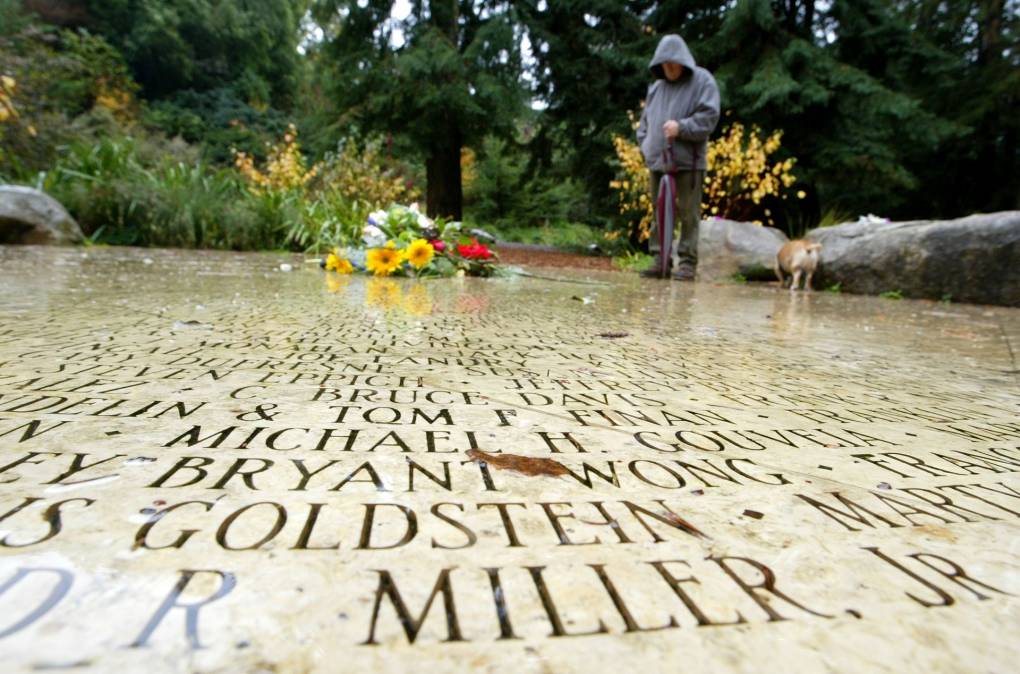
"caption": "A man looks at a memorial with engraved names of AIDS victims on Dec. 1, 2003, at the National AIDS Memorial Grove in San Francisco.",
"description": null,
"title": "GettyImages-2774185 (1) (1)",
"credit": "Justin Sullivan/Getty Images",
"status": "inherit",
"isLoading": false,
"fetchFailed": false
},
"science_1966796": {
"type": "attachments",
"id": "science_1966796",
"meta": {
"index": "attachments_1716263798",
"site": "science",
"id": "1966796",
"found": true
},
"parent": 1966794,
"imgSizes": {
"twentyfourteen-full-width": {
"file": "https://ww2.kqed.org/app/uploads/sites/35/2020/07/RS43855_GettyImages-1073936772-qut-1038x576.jpg",
"width": 1038,
"mimeType": "image/jpeg",
"height": 576
},
"thumbnail": {
"file": "https://ww2.kqed.org/app/uploads/sites/35/2020/07/RS43855_GettyImages-1073936772-qut-160x107.jpg",
"width": 160,
"mimeType": "image/jpeg",
"height": 107
},
"post-thumbnail": {
"file": "https://ww2.kqed.org/app/uploads/sites/35/2020/07/RS43855_GettyImages-1073936772-qut-672x372.jpg",
"width": 672,
"mimeType": "image/jpeg",
"height": 372
},
"kqedFullSize": {
"file": "https://ww2.kqed.org/app/uploads/sites/35/2020/07/RS43855_GettyImages-1073936772-qut.jpg",
"width": 1920,
"height": 1280
},
"large": {
"file": "https://ww2.kqed.org/app/uploads/sites/35/2020/07/RS43855_GettyImages-1073936772-qut-1020x680.jpg",
"width": 1020,
"mimeType": "image/jpeg",
"height": 680
},
"1536x1536": {
"file": "https://ww2.kqed.org/app/uploads/sites/35/2020/07/RS43855_GettyImages-1073936772-qut-1536x1024.jpg",
"width": 1536,
"mimeType": "image/jpeg",
"height": 1024
},
"medium": {
"file": "https://ww2.kqed.org/app/uploads/sites/35/2020/07/RS43855_GettyImages-1073936772-qut-800x533.jpg",
"width": 800,
"mimeType": "image/jpeg",
"height": 533
},
"medium_large": {
"file": "https://ww2.kqed.org/app/uploads/sites/35/2020/07/RS43855_GettyImages-1073936772-qut-768x512.jpg",
"width": 768,
"mimeType": "image/jpeg",
"height": 512
}
},
"publishDate": 1593733734,
"modified": 1594059266,
"caption": "U.S. House Minority Leader Rep. Nancy Pelosi, fourth from left, speaks to members of the media as Rep. Adam Schiff, left, Rep. John Lewis, Rep. Eric Swalwell, Rep. Joyce Beatty, Rep. Kathy Castor, Rep. Joe Kennedy and Rep.-elect Ann Kirkpatrick listen in the lobby of the Longworth House Office Building on Nov. 28, 2018, in Washington, D.C. ",
"description": null,
"title": "House Democrats Elect New Leaders",
"credit": "Alex Wong/Getty Images",
"status": "inherit",
"isLoading": false,
"fetchFailed": false
},
"science_1947541": {
"type": "attachments",
"id": "science_1947541",
"meta": {
"index": "attachments_1716263798",
"site": "science",
"id": "1947541",
"found": true
},
"parent": 1947538,
"imgSizes": {
"twentyfourteen-full-width": {
"file": "https://ww2.kqed.org/app/uploads/sites/35/2019/09/GettyImages-75362503-1038x576.jpg",
"width": 1038,
"mimeType": "image/jpeg",
"height": 576
},
"thumbnail": {
"file": "https://ww2.kqed.org/app/uploads/sites/35/2019/09/GettyImages-75362503-160x107.jpg",
"width": 160,
"mimeType": "image/jpeg",
"height": 107
},
"post-thumbnail": {
"file": "https://ww2.kqed.org/app/uploads/sites/35/2019/09/GettyImages-75362503-672x372.jpg",
"width": 672,
"mimeType": "image/jpeg",
"height": 372
},
"kqedFullSize": {
"file": "https://ww2.kqed.org/app/uploads/sites/35/2019/09/GettyImages-75362503.jpg",
"width": 2048,
"height": 1365
},
"large": {
"file": "https://ww2.kqed.org/app/uploads/sites/35/2019/09/GettyImages-75362503-1020x680.jpg",
"width": 1020,
"mimeType": "image/jpeg",
"height": 680
},
"complete_open_graph": {
"file": "https://ww2.kqed.org/app/uploads/sites/35/2019/09/GettyImages-75362503-1200x800.jpg",
"width": 1200,
"mimeType": "image/jpeg",
"height": 800
},
"full-width": {
"file": "https://ww2.kqed.org/app/uploads/sites/35/2019/09/GettyImages-75362503-1920x1280.jpg",
"width": 1920,
"mimeType": "image/jpeg",
"height": 1280
},
"medium": {
"file": "https://ww2.kqed.org/app/uploads/sites/35/2019/09/GettyImages-75362503-800x533.jpg",
"width": 800,
"mimeType": "image/jpeg",
"height": 533
},
"medium_large": {
"file": "https://ww2.kqed.org/app/uploads/sites/35/2019/09/GettyImages-75362503-768x512.jpg",
"width": 768,
"mimeType": "image/jpeg",
"height": 512
}
},
"publishDate": 1568836097,
"modified": 1593738965,
"caption": "Exhaust flows out of the tailpipe of a vehicle. ",
"description": null,
"title": "Florida To Join California As Leader In Reducing Carbon Emissions",
"credit": "Joe Raedle/Getty Images",
"status": "inherit",
"isLoading": false,
"fetchFailed": false
},
"science_1966659": {
"type": "attachments",
"id": "science_1966659",
"meta": {
"index": "attachments_1716263798",
"site": "science",
"id": "1966659",
"found": true
},
"parent": 1966658,
"imgSizes": {
"twentyfourteen-full-width": {
"file": "https://ww2.kqed.org/app/uploads/sites/35/2020/07/risk-map1_wide-0088bc0b00905b36bcfd83a72d76536be13c86ca-1038x576.png",
"width": 1038,
"mimeType": "image/png",
"height": 576
},
"thumbnail": {
"file": "https://ww2.kqed.org/app/uploads/sites/35/2020/07/risk-map1_wide-0088bc0b00905b36bcfd83a72d76536be13c86ca-160x90.png",
"width": 160,
"mimeType": "image/png",
"height": 90
},
"post-thumbnail": {
"file": "https://ww2.kqed.org/app/uploads/sites/35/2020/07/risk-map1_wide-0088bc0b00905b36bcfd83a72d76536be13c86ca-672x372.png",
"width": 672,
"mimeType": "image/png",
"height": 372
},
"kqedFullSize": {
"file": "https://ww2.kqed.org/app/uploads/sites/35/2020/07/risk-map1_wide-0088bc0b00905b36bcfd83a72d76536be13c86ca.png",
"width": 1855,
"height": 1043
},
"large": {
"file": "https://ww2.kqed.org/app/uploads/sites/35/2020/07/risk-map1_wide-0088bc0b00905b36bcfd83a72d76536be13c86ca-1020x574.png",
"width": 1020,
"mimeType": "image/png",
"height": 574
},
"1536x1536": {
"file": "https://ww2.kqed.org/app/uploads/sites/35/2020/07/risk-map1_wide-0088bc0b00905b36bcfd83a72d76536be13c86ca-1536x864.png",
"width": 1536,
"mimeType": "image/png",
"height": 864
},
"medium": {
"file": "https://ww2.kqed.org/app/uploads/sites/35/2020/07/risk-map1_wide-0088bc0b00905b36bcfd83a72d76536be13c86ca-800x450.png",
"width": 800,
"mimeType": "image/png",
"height": 450
},
"medium_large": {
"file": "https://ww2.kqed.org/app/uploads/sites/35/2020/07/risk-map1_wide-0088bc0b00905b36bcfd83a72d76536be13c86ca-768x432.png",
"width": 768,
"mimeType": "image/png",
"height": 432
}
},
"publishDate": 1593620512,
"modified": 1593620512,
"caption": null,
"description": null,
"title": "A new interactive map and dashboard lets you find out how bad your county's coronavirus outbreak is.",
"credit": null,
"status": "inherit",
"isLoading": false,
"fetchFailed": false
},
"science_1966763": {
"type": "attachments",
"id": "science_1966763",
"meta": {
"index": "attachments_1716263798",
"site": "science",
"id": "1966763",
"found": true
},
"parent": 1966762,
"imgSizes": {
"twentyfourteen-full-width": {
"file": "https://ww2.kqed.org/app/uploads/sites/35/2020/07/masks-1-5_custom-3982524ac306bf93809cb87c159296ae2ef777a5-1038x576.jpg",
"width": 1038,
"mimeType": "image/jpeg",
"height": 576
},
"thumbnail": {
"file": "https://ww2.kqed.org/app/uploads/sites/35/2020/07/masks-1-5_custom-3982524ac306bf93809cb87c159296ae2ef777a5-160x90.jpg",
"width": 160,
"mimeType": "image/jpeg",
"height": 90
},
"post-thumbnail": {
"file": "https://ww2.kqed.org/app/uploads/sites/35/2020/07/masks-1-5_custom-3982524ac306bf93809cb87c159296ae2ef777a5-672x372.jpg",
"width": 672,
"mimeType": "image/jpeg",
"height": 372
},
"kqedFullSize": {
"file": "https://ww2.kqed.org/app/uploads/sites/35/2020/07/masks-1-5_custom-3982524ac306bf93809cb87c159296ae2ef777a5-scaled.jpg",
"width": 2560,
"height": 1446
},
"2048x2048": {
"file": "https://ww2.kqed.org/app/uploads/sites/35/2020/07/masks-1-5_custom-3982524ac306bf93809cb87c159296ae2ef777a5-2048x1157.jpg",
"width": 2048,
"mimeType": "image/jpeg",
"height": 1157
},
"large": {
"file": "https://ww2.kqed.org/app/uploads/sites/35/2020/07/masks-1-5_custom-3982524ac306bf93809cb87c159296ae2ef777a5-1020x576.jpg",
"width": 1020,
"mimeType": "image/jpeg",
"height": 576
},
"1536x1536": {
"file": "https://ww2.kqed.org/app/uploads/sites/35/2020/07/masks-1-5_custom-3982524ac306bf93809cb87c159296ae2ef777a5-1536x868.jpg",
"width": 1536,
"mimeType": "image/jpeg",
"height": 868
},
"full-width": {
"file": "https://ww2.kqed.org/app/uploads/sites/35/2020/07/masks-1-5_custom-3982524ac306bf93809cb87c159296ae2ef777a5-1920x1085.jpg",
"width": 1920,
"mimeType": "image/jpeg",
"height": 1085
},
"medium": {
"file": "https://ww2.kqed.org/app/uploads/sites/35/2020/07/masks-1-5_custom-3982524ac306bf93809cb87c159296ae2ef777a5-800x452.jpg",
"width": 800,
"mimeType": "image/jpeg",
"height": 452
},
"medium_large": {
"file": "https://ww2.kqed.org/app/uploads/sites/35/2020/07/masks-1-5_custom-3982524ac306bf93809cb87c159296ae2ef777a5-768x434.jpg",
"width": 768,
"mimeType": "image/jpeg",
"height": 434
}
},
"publishDate": 1593724629,
"modified": 1593729546,
"caption": "Left to right: a neck gaiter (aka a buff) that slips over the head; a KN95 respirator, a version of the N95 respirator used in U.S. hospitals; a pleated surgical mask (below the KN95); a cloth mask.",
"description": "Left to right: a neck gaiter (aka a buff) that slips over the head; a KN95 respirator, a version of the N95 respirator used in U.S. hospitals; a pleated surgical mask (below the KN95); a cloth mask.",
"title": "Left to right: a neck gaiter (aka a buff) that slips over the head; a KN95 respirator, a version of the N95 respirator used in U.S. hospitals; a pleated surgical mask (below the KN95); a cloth mask.",
"credit": "Photo illustration by Max Posner/NPR",
"status": "inherit",
"isLoading": false,
"fetchFailed": false
},
"science_1966701": {
"type": "attachments",
"id": "science_1966701",
"meta": {
"index": "attachments_1716263798",
"site": "science",
"id": "1966701",
"found": true
},
"parent": 1966677,
"imgSizes": {
"twentyfourteen-full-width": {
"file": "https://ww2.kqed.org/app/uploads/sites/35/2020/07/RS43849_GettyImages-87319587-1-qut-1038x576.jpg",
"width": 1038,
"mimeType": "image/jpeg",
"height": 576
},
"thumbnail": {
"file": "https://ww2.kqed.org/app/uploads/sites/35/2020/07/RS43849_GettyImages-87319587-1-qut-160x105.jpg",
"width": 160,
"mimeType": "image/jpeg",
"height": 105
},
"post-thumbnail": {
"file": "https://ww2.kqed.org/app/uploads/sites/35/2020/07/RS43849_GettyImages-87319587-1-qut-672x372.jpg",
"width": 672,
"mimeType": "image/jpeg",
"height": 372
},
"kqedFullSize": {
"file": "https://ww2.kqed.org/app/uploads/sites/35/2020/07/RS43849_GettyImages-87319587-1-qut.jpg",
"width": 1920,
"height": 1256
},
"large": {
"file": "https://ww2.kqed.org/app/uploads/sites/35/2020/07/RS43849_GettyImages-87319587-1-qut-1020x667.jpg",
"width": 1020,
"mimeType": "image/jpeg",
"height": 667
},
"1536x1536": {
"file": "https://ww2.kqed.org/app/uploads/sites/35/2020/07/RS43849_GettyImages-87319587-1-qut-1536x1005.jpg",
"width": 1536,
"mimeType": "image/jpeg",
"height": 1005
},
"medium": {
"file": "https://ww2.kqed.org/app/uploads/sites/35/2020/07/RS43849_GettyImages-87319587-1-qut-800x523.jpg",
"width": 800,
"mimeType": "image/jpeg",
"height": 523
},
"medium_large": {
"file": "https://ww2.kqed.org/app/uploads/sites/35/2020/07/RS43849_GettyImages-87319587-1-qut-768x502.jpg",
"width": 768,
"mimeType": "image/jpeg",
"height": 502
}
},
"publishDate": 1593646106,
"modified": 1593648580,
"caption": "A view of the San Quentin State Prison, which is California's oldest correctional facility. ",
"description": null,
"title": "Governor Arnold Schwarzenegger Considering The Sale Of Landmark Properties",
"credit": "Justin Sullivan/Getty Images",
"status": "inherit",
"isLoading": false,
"fetchFailed": false
},
"science_1966628": {
"type": "attachments",
"id": "science_1966628",
"meta": {
"index": "attachments_1716263798",
"site": "science",
"id": "1966628",
"found": true
},
"parent": 1966305,
"imgSizes": {
"twentyfourteen-full-width": {
"file": "https://ww2.kqed.org/app/uploads/sites/35/2020/06/quiz-again-1038x576.jpg",
"width": 1038,
"mimeType": "image/jpeg",
"height": 576
},
"thumbnail": {
"file": "https://ww2.kqed.org/app/uploads/sites/35/2020/06/quiz-again-160x90.jpg",
"width": 160,
"mimeType": "image/jpeg",
"height": 90
},
"post-thumbnail": {
"file": "https://ww2.kqed.org/app/uploads/sites/35/2020/06/quiz-again-672x372.jpg",
"width": 672,
"mimeType": "image/jpeg",
"height": 372
},
"kqedFullSize": {
"file": "https://ww2.kqed.org/app/uploads/sites/35/2020/06/quiz-again.jpg",
"width": 1920,
"height": 1080
},
"large": {
"file": "https://ww2.kqed.org/app/uploads/sites/35/2020/06/quiz-again-1020x574.jpg",
"width": 1020,
"mimeType": "image/jpeg",
"height": 574
},
"1536x1536": {
"file": "https://ww2.kqed.org/app/uploads/sites/35/2020/06/quiz-again-1536x864.jpg",
"width": 1536,
"mimeType": "image/jpeg",
"height": 864
},
"medium": {
"file": "https://ww2.kqed.org/app/uploads/sites/35/2020/06/quiz-again-800x450.jpg",
"width": 800,
"mimeType": "image/jpeg",
"height": 450
},
"medium_large": {
"file": "https://ww2.kqed.org/app/uploads/sites/35/2020/06/quiz-again-768x432.jpg",
"width": 768,
"mimeType": "image/jpeg",
"height": 432
}
},
"publishDate": 1593547567,
"modified": 1593547589,
"caption": null,
"description": null,
"title": "quiz-again",
"credit": "Jasmine Garnett/KQED",
"status": "inherit",
"isLoading": false,
"fetchFailed": false
},
"science_1966578": {
"type": "attachments",
"id": "science_1966578",
"meta": {
"index": "attachments_1716263798",
"site": "science",
"id": "1966578",
"found": true
},
"parent": 1966577,
"imgSizes": {
"twentyfourteen-full-width": {
"file": "https://ww2.kqed.org/app/uploads/sites/35/2020/06/GettyImages-1210676413-1038x576.jpg",
"width": 1038,
"mimeType": "image/jpeg",
"height": 576
},
"thumbnail": {
"file": "https://ww2.kqed.org/app/uploads/sites/35/2020/06/GettyImages-1210676413-160x107.jpg",
"width": 160,
"mimeType": "image/jpeg",
"height": 107
},
"post-thumbnail": {
"file": "https://ww2.kqed.org/app/uploads/sites/35/2020/06/GettyImages-1210676413-672x372.jpg",
"width": 672,
"mimeType": "image/jpeg",
"height": 372
},
"kqedFullSize": {
"file": "https://ww2.kqed.org/app/uploads/sites/35/2020/06/GettyImages-1210676413.jpg",
"width": 1350,
"height": 900
},
"large": {
"file": "https://ww2.kqed.org/app/uploads/sites/35/2020/06/GettyImages-1210676413-1020x680.jpg",
"width": 1020,
"mimeType": "image/jpeg",
"height": 680
},
"medium": {
"file": "https://ww2.kqed.org/app/uploads/sites/35/2020/06/GettyImages-1210676413-800x533.jpg",
"width": 800,
"mimeType": "image/jpeg",
"height": 533
},
"medium_large": {
"file": "https://ww2.kqed.org/app/uploads/sites/35/2020/06/GettyImages-1210676413-768x512.jpg",
"width": 768,
"mimeType": "image/jpeg",
"height": 512
}
},
"publishDate": 1593451983,
"modified": 1593452062,
"caption": "Inmates clean prison cells at Las Colinas Women's Detention Facility in Santee, California. ",
"description": null,
"title": "GettyImages-1210676413",
"credit": "Sandy Huffaker/AFP/Getty Images",
"status": "inherit",
"isLoading": false,
"fetchFailed": false
},
"science_1966507": {
"type": "attachments",
"id": "science_1966507",
"meta": {
"index": "attachments_1716263798",
"site": "science",
"id": "1966507",
"found": true
},
"parent": 1966503,
"imgSizes": {
"twentyfourteen-full-width": {
"file": "https://ww2.kqed.org/app/uploads/sites/35/2020/06/RS43820_GettyImages-1222835028-qut-1038x576.jpg",
"width": 1038,
"mimeType": "image/jpeg",
"height": 576
},
"thumbnail": {
"file": "https://ww2.kqed.org/app/uploads/sites/35/2020/06/RS43820_GettyImages-1222835028-qut-160x97.jpg",
"width": 160,
"mimeType": "image/jpeg",
"height": 97
},
"post-thumbnail": {
"file": "https://ww2.kqed.org/app/uploads/sites/35/2020/06/RS43820_GettyImages-1222835028-qut-672x372.jpg",
"width": 672,
"mimeType": "image/jpeg",
"height": 372
},
"kqedFullSize": {
"file": "https://ww2.kqed.org/app/uploads/sites/35/2020/06/RS43820_GettyImages-1222835028-qut.jpg",
"width": 1920,
"height": 1160
},
"large": {
"file": "https://ww2.kqed.org/app/uploads/sites/35/2020/06/RS43820_GettyImages-1222835028-qut-1020x616.jpg",
"width": 1020,
"mimeType": "image/jpeg",
"height": 616
},
"1536x1536": {
"file": "https://ww2.kqed.org/app/uploads/sites/35/2020/06/RS43820_GettyImages-1222835028-qut-1536x928.jpg",
"width": 1536,
"mimeType": "image/jpeg",
"height": 928
},
"medium": {
"file": "https://ww2.kqed.org/app/uploads/sites/35/2020/06/RS43820_GettyImages-1222835028-qut-800x483.jpg",
"width": 800,
"mimeType": "image/jpeg",
"height": 483
},
"medium_large": {
"file": "https://ww2.kqed.org/app/uploads/sites/35/2020/06/RS43820_GettyImages-1222835028-qut-768x464.jpg",
"width": 768,
"mimeType": "image/jpeg",
"height": 464
}
},
"publishDate": 1593194017,
"modified": 1593195717,
"caption": "People visit Clearwater Beach after Gov. Ron DeSantis opened the beaches at 7 a.m. on May 4, 2020, in Clearwater, Florida. ",
"description": null,
"title": "Coronavirus Pandemic Causes Climate Of Anxiety And Changing Routines In America",
"credit": "Mike Ehrmann/Getty Images",
"status": "inherit",
"isLoading": false,
"fetchFailed": false
},
"science_1945908": {
"type": "attachments",
"id": "science_1945908",
"meta": {
"index": "attachments_1716263798",
"site": "science",
"id": "1945908",
"found": true
},
"parent": 1945905,
"imgSizes": {
"twentyfourteen-full-width": {
"file": "https://ww2.kqed.org/app/uploads/sites/35/2019/07/RS27160_GettyImages-463198440-qut-1038x576.jpg",
"width": 1038,
"mimeType": "image/jpeg",
"height": 576
},
"thumbnail": {
"file": "https://ww2.kqed.org/app/uploads/sites/35/2019/07/RS27160_GettyImages-463198440-qut-160x110.jpg",
"width": 160,
"mimeType": "image/jpeg",
"height": 110
},
"post-thumbnail": {
"file": "https://ww2.kqed.org/app/uploads/sites/35/2019/07/RS27160_GettyImages-463198440-qut-672x372.jpg",
"width": 672,
"mimeType": "image/jpeg",
"height": 372
},
"kqedFullSize": {
"file": "https://ww2.kqed.org/app/uploads/sites/35/2019/07/RS27160_GettyImages-463198440-qut.jpg",
"width": 1920,
"height": 1320
},
"large": {
"file": "https://ww2.kqed.org/app/uploads/sites/35/2019/07/RS27160_GettyImages-463198440-qut-1020x701.jpg",
"width": 1020,
"mimeType": "image/jpeg",
"height": 701
},
"complete_open_graph": {
"file": "https://ww2.kqed.org/app/uploads/sites/35/2019/07/RS27160_GettyImages-463198440-qut-1200x825.jpg",
"width": 1200,
"mimeType": "image/jpeg",
"height": 825
},
"full-width": {
"file": "https://ww2.kqed.org/app/uploads/sites/35/2019/07/RS27160_GettyImages-463198440-qut-1920x1320.jpg",
"width": 1920,
"mimeType": "image/jpeg",
"height": 1320
},
"medium": {
"file": "https://ww2.kqed.org/app/uploads/sites/35/2019/07/RS27160_GettyImages-463198440-qut-800x550.jpg",
"width": 800,
"mimeType": "image/jpeg",
"height": 550
},
"medium_large": {
"file": "https://ww2.kqed.org/app/uploads/sites/35/2019/07/RS27160_GettyImages-463198440-qut-768x528.jpg",
"width": 768,
"mimeType": "image/jpeg",
"height": 528
}
},
"publishDate": 1564611195,
"modified": 1593193023,
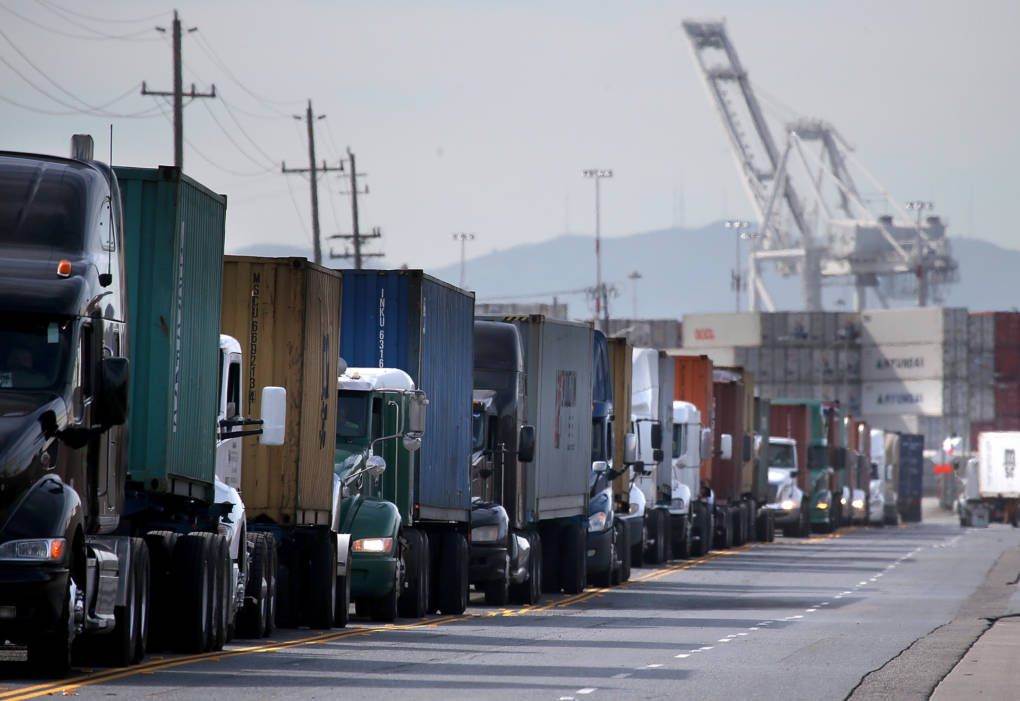
"caption": "Trucks line up to enter a berth at the Port of Oakland on Feb. 11, 2015, in Oakland, California. ",
"description": null,
"title": null,
"credit": "Justin Sullivan/Getty Images",
"status": "inherit",
"isLoading": false,
"fetchFailed": false
}
},
"audioPlayerReducer": {
"postId": "stream_live",
"isPaused": true,
"isPlaying": false,
"pfsActive": false,
"pledgeModalIsOpen": true,
"playerDrawerIsOpen": false,
"liveAudioPlayStartedAt": 0,
"liveAudioPlayContext": ""
},
"authorsReducer": {
"byline_science_1966832": {
"type": "authors",
"id": "byline_science_1966832",
"meta": {
"override": true
},
"slug": "byline_science_1966832",
"name": "Anna Belle Peevey, InsideClimate News",
"isLoading": false
},
"byline_science_1966770": {
"type": "authors",
"id": "byline_science_1966770",
"meta": {
"override": true
},
"slug": "byline_science_1966770",
"name": "Yuki Noguchi \u003cbr />NPR\u003cbr>",
"isLoading": false
},
"byline_science_1966794": {
"type": "authors",
"id": "byline_science_1966794",
"meta": {
"override": true
},
"slug": "byline_science_1966794",
"name": "Marianne Lavelle \u003cbr />InsideClimate News\u003cbr>",
"isLoading": false
},
"byline_science_1966667": {
"type": "authors",
"id": "byline_science_1966667",
"meta": {
"override": true
},
"slug": "byline_science_1966667",
"name": "Allison Aubrey and Carmel Wroth \u003cbr />NPR\u003cbr>",
"isLoading": false
},
"byline_science_1966762": {
"type": "authors",
"id": "byline_science_1966762",
"meta": {
"override": true
},
"slug": "byline_science_1966762",
"name": "Maria Godoy, NPR",
"isLoading": false
},
"byline_science_1966577": {
"type": "authors",
"id": "byline_science_1966577",
"meta": {
"override": true
},
"slug": "byline_science_1966577",
"name": "Dan Morain \u003cbr />Kaiser Health News\u003cbr>",
"isLoading": false
},
"byline_science_1966503": {
"type": "authors",
"id": "byline_science_1966503",
"meta": {
"override": true
},
"slug": "byline_science_1966503",
"name": "Michelle Smith and Frances D'Emilio \u003cbr />Associated Press",
"isLoading": false
},
"lesleymcclurg": {
"type": "authors",
"id": "11229",
"meta": {
"index": "authors_1716337520",
"id": "11229",
"found": true
},
"name": "Lesley McClurg",
"firstName": "Lesley",
"lastName": "McClurg",
"slug": "lesleymcclurg",
"email": "lmcclurg@KQED.org",
"display_author_email": false,
"staff_mastheads": [
"news",
"science"
],
"title": "KQED Health Correspondent",
"bio": "Lesley McClurg is a health correspondent and fill-in host whose work is regularly rebroadcast on NPR and PBS programs. She’s earned multiple regional Emmy awards, a national and a regional Edward R. Murrow award, and was named Best Beat Reporter by the Association of Health Care Journalists. The Society of Professional Journalists has recognized her work several times, and the Society of Environmental Journalists spotlighted her coverage of California’s historic drought.\r\n\r\nBefore joining KQED in 2016, Lesley covered food and sustainability for Capital Public Radio, environmental issues for Colorado Public Radio, and reported for KUOW and KCTS 9 in Seattle. Away from the newsroom, she loves skiing with her daughter, mountain biking with her partner, and playing with Ollie, the family’s goldendoodle. On deadline, she runs almost entirely on chocolate chips.\r\n\r\n ",
"avatar": "https://secure.gravatar.com/avatar/bab49e972ea10c774fe0f5e29dba1722b158f7c0d58a360923d1389d380b2978?s=600&d=blank&r=g",
"twitter": "lesleywmcclurg",
"bluesky": null,
"facebook": null,
"instagram": null,
"linkedin": null,
"sites": [
{
"site": "arts",
"roles": [
"author"
]
},
{
"site": "news",
"roles": [
"editor"
]
},
{
"site": "futureofyou",
"roles": [
"editor"
]
},
{
"site": "stateofhealth",
"roles": [
"author"
]
},
{
"site": "science",
"roles": [
"editor"
]
},
{
"site": "quest",
"roles": [
"subscriber"
]
},
{
"site": "forum",
"roles": [
"administrator"
]
},
{
"site": "liveblog",
"roles": [
"author"
]
}
],
"headData": {
"title": "Lesley McClurg | KQED",
"description": "KQED Health Correspondent",
"ogImgSrc": "https://secure.gravatar.com/avatar/bab49e972ea10c774fe0f5e29dba1722b158f7c0d58a360923d1389d380b2978?s=600&d=blank&r=g",
"twImgSrc": "https://secure.gravatar.com/avatar/bab49e972ea10c774fe0f5e29dba1722b158f7c0d58a360923d1389d380b2978?s=600&d=blank&r=g"
},
"isLoading": false,
"link": "/author/lesleymcclurg"
},
"parcuni": {
"type": "authors",
"id": "11368",
"meta": {
"index": "authors_1716337520",
"id": "11368",
"found": true
},
"name": "Peter Arcuni",
"firstName": "Peter",
"lastName": "Arcuni",
"slug": "parcuni",
"email": "parcuni@KQED.org",
"display_author_email": false,
"staff_mastheads": [
"science"
],
"title": "Reporter",
"bio": "Peter reports radio and online stories for \u003cem>KQED Science\u003c/em>. His work has also appeared on the \u003cem>The California Report\u003c/em> morning show and \u003cem>KQED News\u003c/em>. His production credits include \u003cem>The California Report, The California Report Magazine\u003c/em> and KQED's local news podcast \u003cem>The Bay\u003c/em>. Other credits include NPR's \u003cem>All Things Considered\u003c/em>, WNYC's \u003cem>Science Friday\u003c/em>, WBUR's \u003cem>Here & Now\u003c/em>, WIRED and SFGate. Peter graduated from Brown University and earned a master's degree in journalism from Stanford. He's covered everything from homelessness to wildfires, health, the environment, arts and Thanksgiving in San Quentin prison. In other lives, he played rock n roll music and studied neuroscience. You can email him at: parcuni@kqed.org",
"avatar": "https://secure.gravatar.com/avatar/d5032f6f27199d478af34ad2e1d98732?s=600&d=blank&r=g",
"twitter": "peterarcuni",
"facebook": null,
"instagram": null,
"linkedin": null,
"sites": [
{
"site": "news",
"roles": [
"editor"
]
},
{
"site": "science",
"roles": [
"editor"
]
}
],
"headData": {
"title": "Peter Arcuni | KQED",
"description": "Reporter",
"ogImgSrc": "https://secure.gravatar.com/avatar/d5032f6f27199d478af34ad2e1d98732?s=600&d=blank&r=g",
"twImgSrc": "https://secure.gravatar.com/avatar/d5032f6f27199d478af34ad2e1d98732?s=600&d=blank&r=g"
},
"isLoading": false,
"link": "/author/parcuni"
},
"thailye": {
"type": "authors",
"id": "11501",
"meta": {
"index": "authors_1716337520",
"id": "11501",
"found": true
},
"name": "Teodros Hailye",
"firstName": "Teodros",
"lastName": "Hailye",
"slug": "thailye",
"email": "thailye@KQED.org",
"display_author_email": false,
"staff_mastheads": [],
"title": "Information Designer",
"bio": null,
"avatar": "https://secure.gravatar.com/avatar/bfb755f5a66ebaccd414e310b7d7c94a?s=600&d=blank&r=g",
"twitter": null,
"facebook": null,
"instagram": null,
"linkedin": null,
"sites": [
{
"site": "science",
"roles": []
}
],
"headData": {
"title": "Teodros Hailye | KQED",
"description": "Information Designer",
"ogImgSrc": "https://secure.gravatar.com/avatar/bfb755f5a66ebaccd414e310b7d7c94a?s=600&d=blank&r=g",
"twImgSrc": "https://secure.gravatar.com/avatar/bfb755f5a66ebaccd414e310b7d7c94a?s=600&d=blank&r=g"
},
"isLoading": false,
"link": "/author/thailye"
},
"kevinstark": {
"type": "authors",
"id": "11608",
"meta": {
"index": "authors_1716337520",
"id": "11608",
"found": true
},
"name": "Kevin Stark",
"firstName": "Kevin",
"lastName": "Stark",
"slug": "kevinstark",
"email": "kstark@kqed.org",
"display_author_email": true,
"staff_mastheads": [
"science"
],
"title": "Senior Editor",
"bio": "Kevin is a senior editor for KQED Science, managing the station's health and climate desks. His journalism career began in the Pacific Northwest, and he later became a lead reporter for the San Francisco Public Press. His work has appeared in Pacific Standard magazine, the Energy News Network, the Center for Investigative Reporting's Reveal and WBEZ in Chicago. Kevin joined KQED in 2019, and has covered issues related to energy, wildfire, climate change and the environment.",
"avatar": "https://secure.gravatar.com/avatar/365aaa4b597d3a8374f67504ff0facd323d7906e8eb4be0a7efd2427408e802c?s=600&d=blank&r=g",
"twitter": "starkkev",
"bluesky": null,
"facebook": null,
"instagram": null,
"linkedin": null,
"sites": [
{
"site": "",
"roles": [
"editor"
]
},
{
"site": "news",
"roles": [
"editor"
]
},
{
"site": "science",
"roles": [
"administrator"
]
}
],
"headData": {
"title": "Kevin Stark | KQED",
"description": "Senior Editor",
"ogImgSrc": "https://secure.gravatar.com/avatar/365aaa4b597d3a8374f67504ff0facd323d7906e8eb4be0a7efd2427408e802c?s=600&d=blank&r=g",
"twImgSrc": "https://secure.gravatar.com/avatar/365aaa4b597d3a8374f67504ff0facd323d7906e8eb4be0a7efd2427408e802c?s=600&d=blank&r=g"
},
"isLoading": false,
"link": "/author/kevinstark"
}
},
"pagesReducer": {
"science_category_health": {
"type": "terms",
"id": "science_39",
"meta": {
"index": "terms_1716263798",
"site": "science",
"id": "39",
"score": 10.889519
},
"featImg": null,
"name": "Health",
"description": null,
"taxonomy": "category",
"headData": {
"twImgId": null,
"twTitle": null,
"ogTitle": null,
"ogImgId": null,
"twDescription": null,
"description": null,
"title": "Health Archives | KQED Science",
"ogDescription": null
},
"ttid": 41,
"slug": "health",
"isLoading": false,
"title": "Health",
"pageMeta": {
"site": "science",
"WpPageTemplate": "page-topic-editorial",
"currentPage": 20
},
"blocks": [
{
"blockName": "kqed/post-list",
"attrs": {
"layout": "cardArticle2",
"query": "posts/science?category=health",
"seeMore": false,
"paginated": true,
"page": 20
}
},
{
"blockName": "kqed/ad"
}
]
}
},
"pfsSessionReducer": {},
"postsReducer": {
"stream_live": {
"type": "live",
"id": "stream_live",
"audioUrl": "https://streams.kqed.org/kqedradio",
"title": "Live Stream",
"excerpt": "Live Stream information currently unavailable.",
"link": "/radio",
"featImg": "",
"label": {
"name": "KQED Live",
"link": "/"
}
},
"stream_kqedNewscast": {
"type": "posts",
"id": "stream_kqedNewscast",
"audioUrl": "https://www.kqed.org/.stream/anon/radio/RDnews/newscast.mp3?_=1",
"title": "KQED Newscast",
"featImg": "",
"label": {
"name": "88.5 FM",
"link": "/"
}
},
"science_1966832": {
"type": "posts",
"id": "science_1966832",
"meta": {
"index": "posts_1716263798",
"site": "science",
"id": "1966832",
"score": null,
"sort": [
1594087241000
]
},
"parent": 0,
"labelTerm": {},
"blocks": [],
"publishDate": 1594087241,
"format": "standard",
"title": "VIDEO: Access to Nature Is About Environmental Justice",
"headTitle": "VIDEO: Access to Nature Is About Environmental Justice | KQED",
"content": "\u003cp style=\"font-weight: 400\">\u003cem>\u003ca href=\"https://protect-us.mimecast.com/s/Neq_CwpkPvsGmMG7hVOy7A?domain=insideclimatenews.org\" target=\"_blank\" rel=\"noopener noreferrer\">InsideClimate News\u003c/a> is a nonprofit, independent news organization that covers climate, energy and the environment. Sign up for the ICN newsletter \u003ca href=\"https://protect-us.mimecast.com/s/pD-rCxklQwf1V61yTviMEq?domain=insideclimatenews.org\" target=\"_blank\" rel=\"noopener noreferrer\">here\u003c/a>.\u003c/em>\u003c/p>\n\u003cp style=\"font-weight: 400\">When a viral video showed a white woman calling the police on Christian Cooper, a Black man, as he was birding in New York City’s Central Park this past Memorial Day, it highlighted yet another danger facing African Americans: the notion that people of color don’t belong in the great outdoors.\u003c/p>\n\u003cp>\u003cspan style=\"font-weight: 400\">[aside postID='science_877072,news_10481490' label='National Parks Have Some Work To Do To Become Parks for All'\u003c/span>\u003cspan style=\"font-weight: 400\">]\u003c/span>\u003c/p>\n\u003cp style=\"font-weight: 400\">It’s a perception that James Edward Mills has been fighting for years. Mills, a Black freelance journalist in Madison, Wisconsin, is the author of “The Adventure Gap: Changing The Face of the Outdoors.” The book is an account of the first-ever all African-American summit attempt on Denali in 2013, but also looks deep into the challenges Black people have faced in America’s wide-open spaces. Outdoor recreation, according to Mills “is one more of the many things that people of color in this country are underrepresented in.”\u003c/p>\n\u003cp>\u003c!-- iframe plugin v.4.3 wordpress.org/plugins/iframe/ -->\u003cbr>\n\u003ciframe loading=\"lazy\" width=\"560\" height=\"315\" src=\"https://www.youtube.com/embed/jl0El0iruOY\" frameborder=\"0\" allow=\"accelerometer; autoplay; encrypted-media; gyroscope; picture-in-picture\" scrolling=\"yes\" class=\"iframe-class\">\u003c/iframe>\u003c/p>\n\u003cp style=\"font-weight: 400\">That could trickle down into weaker protections for the nation’s climate and environment.\u003c/p>\n\u003cp style=\"font-weight: 400\">People of color, in general, are more supportive of environmental protections than the U.S. population at large, and a higher percentage of them believe in human-driven climate change than the nation’s white population. According to a \u003cb>\u003ca href=\"https://climatecommunication.yale.edu/publications/race-and-climate-change/\">recent study\u003c/a>\u003c/b> put out by the Yale Program on Climate Change Communication, people of color are more concerned about climate change than their white counterparts, with 57 percent of African Americans being “alarmed” or “concerned” about global warming compared to 49 percent of whites. And Black communities are \u003cb>\u003ca href=\"https://thehill.com/opinion/energy-environment/405753-young-voters-and-voters-of-color-are-key-to-halting-climate-change\">big voting blocs\u003c/a>\u003c/b> when it comes to environmental issues. With 2010 census data estimating that the U.S. will be a “majority minority” \u003cb>\u003ca href=\"https://www.brookings.edu/blog/the-avenue/2018/03/14/the-us-will-become-minority-white-in-2045-census-projects/\">population by 2045\u003c/a>\u003c/b>, Mills argues the need to have people of color involved in the outdoors is not only a justice issue, but critical to the nation’s environmental protections.\u003c/p>\n\u003cp style=\"font-weight: 400\">“What happens if a majority of our nation has no affinity for nature?” he asks. “How long will Yosemite last?”\u003c/p>\n\u003cp style=\"font-weight: 400\">[pullquote citation='James Edward Mills, Black journalist and author']I think that in many ways, spending time in the outdoors — going camping, going climbing, going skiing — is a profound act of defiance.’[/pullquote]Misperceptions that Black people don’t appreciate the outdoors or care about environmental protections is a reflection of the nation’s racist past, he says.\u003c/p>\n\u003cp style=\"font-weight: 400\">“The conceit is that people of color don’t like spending time in nature,” Mills said, but that notion is “culturally designed.” For much of the 20th century, racist housing policies such as \u003cb>\u003ca href=\"https://www.washingtonpost.com/news/wonk/wp/2018/03/28/redlining-was-banned-50-years-ago-its-still-hurting-minorities-today/\">redlining\u003c/a>\u003c/b> denied people of color mortgages and the opportunity to own their homes, and cut off African Americans from housing in desirable neighborhoods near open spaces. In fact, the deeds for many suburban homes across the U.S. specified that the residences couldn’t be sold to Black people.\u003c/p>\n\u003cp style=\"font-weight: 400\">“There were people … literally forced to live in cities because they couldn’t live anyplace else,” Mills said. Although outlawed 50 years ago, the policies’ ramifications persist today.\u003c/p>\n\u003cp>[ad fullwidth]\u003c/p>\n\u003cp style=\"font-weight: 400\">“You can’t create the intergenerational wealth that the baby boomers used to put their kids through college,” Mills said. “The notion of going outside, in its inception, is incredibly privileged. So much so that up until the ’50s, really only middle-class white people could go into the outdoors.”\u003c/p>\n\u003cp style=\"font-weight: 400\">Traditionally, the outdoor industry has long favored white people. Before Mills turned to journalism, he worked for outdoor brands like North Face and REI. “Through the course of my professional career,” he said, “there weren’t very many people who look like me.”\u003c/p>\n\u003cp style=\"font-weight: 400\">Carolyn Finney, cultural geographer and author of “Black Faces, White Spaces,” \u003cb>\u003ca href=\"https://uncpress.org/book/9781469614489/black-faces-white-spaces/\">studied\u003c/a>\u003c/b> issues of Outside magazine over the 10 years from 1991 to 2001 and found that out of 4,600 faces, only 103 were non-white.\u003c/p>\n\u003cp style=\"font-weight: 400\">Outdoor spaces, including national parks, were segregated up until the 1950s, alongside restaurants and public transportation. Half a century later, the legacy of such exclusion persists. A \u003cb>\u003ca href=\"https://irma.nps.gov/DataStore/DownloadFile/495294\">2014 report\u003c/a>\u003c/b> released by the National Park Service estimated that white people accounted for an overwhelming 95 percent of its visitors. Mills notes that, to some degree, low visitation numbers to national parks reflect the fact that African Americans sometimes don’t feel safe in them. Another \u003cb>\u003ca href=\"https://mylearning.nps.gov/wp-content/uploads/2016/08/Racial-and-Ethnic-Diversity-of-National-Park-System-Visitors-and-Non-Visitors-2008-2009.pdf\">NPS report from 2011\u003c/a>\u003c/b> found that Black people were more than three times more likely to find parks unsafe than were white visitors.\u003c/p>\n\u003cp style=\"font-weight: 400\">While people of color have largely been excluded from the mainstream veneer of outdoor recreation, they have a long history in environmental protection, exploration and adventure sports. There are countless stories of Black people in the outdoors, and Mills maintains that it is these stories that can help change the narrative. The \u003cb>\u003ca href=\"https://www.nps.gov/yose/learn/historyculture/buffalo-soldiers.htm\">Buffalo Soldiers\u003c/a>\u003c/b>, originally members of the 101st Cavalry Regiment of the U.S. Army after the Civil War, went on to become some of the nation’s first park rangers. \u003cb>\u003ca href=\"https://joytripproject.com/in-memory-of-charles-m-crenchaw/\">Charles Crenchaw\u003c/a>\u003c/b>, one of the original Tuskegee Airmen, became the first Black man to summit Denali (then Mount McKinley) in 1964. \u003cb>\u003ca href=\"https://www.nationalgeographic.com/adventure/adventure-blog/2014/02/28/the-legacy-of-arctic-explorer-matthew-henson/\">Matthew Henson\u003c/a>\u003c/b> is credited by many as the first person to reach the North Pole in 1909. \u003cb>\u003ca href=\"https://barbarahillary.com/\">Barbara Hillary\u003c/a>\u003c/b> became the first Black woman to reach the North Pole at age 75, and the South Pole at age 79.\u003c/p>\n\u003cp style=\"font-weight: 400\">“The stories of people doing these things are not in the magazines, they’re not on television, they’re not in the movies,” Mills said. “It’s really not until you deliberately dismantle the image by creating a new one, by creating a new set of role models, by creating a new narrative based on authentic, genuine characters having real experiences in real environments.”\u003c/p>\n\u003cp style=\"font-weight: 400\">In the wake of the Christian Cooper’s harassment in Central Park, new groups have formed to do just that, Black Birder Week and Black AF in STEM among them. They join an already active network of groups aimed at engaging people of color in the outdoors, including Oakland-based \u003cb>\u003ca href=\"https://outdoorafro.com/\">Outdoor Afro\u003c/a>\u003c/b>, the \u003cb>\u003ca href=\"http://www.nbs.org/\">National Brotherhood of Skiers\u003c/a>\u003c/b> and \u003cb>\u003ca href=\"https://www.melaninbasecamp.com/\">Melanin Base Camp, which \u003c/a>\u003c/b>have been reaching out and organizing outdoor adventures for people of color for years.\u003c/p>\n\u003cp style=\"font-weight: 400\">For Mills, being a person of color in the outdoors can also be symbolic. “I think that in many ways, spending time in the outdoors — going camping, going climbing, going skiing — is a profound act of defiance,” he said. “You are basically telling them that ‘I know, you think that I don’t belong here, but I’m telling you that I do. And I’m going to be here anyway.'”\u003c/p>\n\u003cp>[ad floatright]\u003c/p>\n",
"stats": {
"hasVideo": true,
"hasChartOrMap": false,
"hasAudio": false,
"hasPolis": false,
"wordCount": 1207,
"hasGoogleForm": false,
"hasGallery": false,
"hasHearkenModule": false,
"iframeSrcs": [],
"paragraphCount": 4
},
"modified": 1704847205,
"excerpt": "Misperceptions that Black people don't appreciate the outdoors or care about environmental protections are reflections of the nation's racist past, says book author James Edward Mills.",
"headData": {
"twImgId": "",
"twTitle": "",
"ogTitle": "",
"ogImgId": "",
"twDescription": "",
"description": "Misperceptions that Black people don't appreciate the outdoors or care about environmental protections are reflections of the nation's racist past, says book author James Edward Mills.",
"title": "VIDEO: Access to Nature Is About Environmental Justice | KQED",
"ogDescription": "",
"schema": {
"@context": "https://schema.org",
"@type": "Article",
"headline": "VIDEO: Access to Nature Is About Environmental Justice",
"datePublished": "2020-07-06T19:00:41-07:00",
"dateModified": "2024-01-09T16:40:05-08:00",
"image": "https://cdn.kqed.org/wp-content/uploads/2020/02/KQED-OG-Image@1x.png"
}
},
"guestAuthors": [],
"slug": "video-access-to-nature-is-about-environmental-justice",
"status": "publish",
"templateType": "standard",
"nprByline": "Anna Belle Peevey, InsideClimate News",
"featuredImageType": "standard",
"sticky": false,
"source": "InsideClimate News",
"path": "/science/1966832/video-access-to-nature-is-about-environmental-justice",
"audioTrackLength": null,
"parsedContent": [
{
"type": "contentString",
"content": "\u003cdiv class=\"post-body\">\u003cp>\u003cp style=\"font-weight: 400\">\u003cem>\u003ca href=\"https://protect-us.mimecast.com/s/Neq_CwpkPvsGmMG7hVOy7A?domain=insideclimatenews.org\" target=\"_blank\" rel=\"noopener noreferrer\">InsideClimate News\u003c/a> is a nonprofit, independent news organization that covers climate, energy and the environment. Sign up for the ICN newsletter \u003ca href=\"https://protect-us.mimecast.com/s/pD-rCxklQwf1V61yTviMEq?domain=insideclimatenews.org\" target=\"_blank\" rel=\"noopener noreferrer\">here\u003c/a>.\u003c/em>\u003c/p>\n\u003cp style=\"font-weight: 400\">When a viral video showed a white woman calling the police on Christian Cooper, a Black man, as he was birding in New York City’s Central Park this past Memorial Day, it highlighted yet another danger facing African Americans: the notion that people of color don’t belong in the great outdoors.\u003c/p>\n\u003cp>\u003cspan style=\"font-weight: 400\">\u003c/p>\u003c/div>",
"attributes": {
"named": {},
"numeric": []
}
},
{
"type": "component",
"content": "",
"name": "aside",
"attributes": {
"named": {
"postid": "science_877072,news_10481490",
"label": "label='National Parks Have Some Work To Do To Become Parks for All'\u003c/span>\u003cspan style=\"font-weight: 400\">"
},
"numeric": [
"label='National",
"Parks",
"Have",
"Some",
"Work",
"To",
"Do",
"To",
"Become",
"Parks",
"for",
"All'\u003c/span>\u003cspan",
"style=\"font-weight:",
"400\">"
]
}
},
{
"type": "contentString",
"content": "\u003cdiv class=\"post-body\">\u003cp>\u003c/span>\u003c/p>\n\u003cp style=\"font-weight: 400\">It’s a perception that James Edward Mills has been fighting for years. Mills, a Black freelance journalist in Madison, Wisconsin, is the author of “The Adventure Gap: Changing The Face of the Outdoors.” The book is an account of the first-ever all African-American summit attempt on Denali in 2013, but also looks deep into the challenges Black people have faced in America’s wide-open spaces. Outdoor recreation, according to Mills “is one more of the many things that people of color in this country are underrepresented in.”\u003c/p>\n\u003cp>\u003c!-- iframe plugin v.4.3 wordpress.org/plugins/iframe/ -->\u003cbr>\n\u003ciframe loading=\"lazy\" width=\"560\" height=\"315\" src=\"https://www.youtube.com/embed/jl0El0iruOY\" frameborder=\"0\" allow=\"accelerometer; autoplay; encrypted-media; gyroscope; picture-in-picture\" scrolling=\"yes\" class=\"iframe-class\">\u003c/iframe>\u003c/p>\n\u003cp style=\"font-weight: 400\">That could trickle down into weaker protections for the nation’s climate and environment.\u003c/p>\n\u003cp style=\"font-weight: 400\">People of color, in general, are more supportive of environmental protections than the U.S. population at large, and a higher percentage of them believe in human-driven climate change than the nation’s white population. According to a \u003cb>\u003ca href=\"https://climatecommunication.yale.edu/publications/race-and-climate-change/\">recent study\u003c/a>\u003c/b> put out by the Yale Program on Climate Change Communication, people of color are more concerned about climate change than their white counterparts, with 57 percent of African Americans being “alarmed” or “concerned” about global warming compared to 49 percent of whites. And Black communities are \u003cb>\u003ca href=\"https://thehill.com/opinion/energy-environment/405753-young-voters-and-voters-of-color-are-key-to-halting-climate-change\">big voting blocs\u003c/a>\u003c/b> when it comes to environmental issues. With 2010 census data estimating that the U.S. will be a “majority minority” \u003cb>\u003ca href=\"https://www.brookings.edu/blog/the-avenue/2018/03/14/the-us-will-become-minority-white-in-2045-census-projects/\">population by 2045\u003c/a>\u003c/b>, Mills argues the need to have people of color involved in the outdoors is not only a justice issue, but critical to the nation’s environmental protections.\u003c/p>\n\u003cp style=\"font-weight: 400\">“What happens if a majority of our nation has no affinity for nature?” he asks. “How long will Yosemite last?”\u003c/p>\n\u003cp style=\"font-weight: 400\">\u003c/p>\u003c/div>",
"attributes": {
"named": {},
"numeric": []
}
},
{
"type": "component",
"content": "I think that in many ways, spending time in the outdoors — going camping, going climbing, going skiing — is a profound act of defiance.’",
"name": "pullquote",
"attributes": {
"named": {
"citation": "James Edward Mills, Black journalist and author",
"label": ""
},
"numeric": []
}
},
{
"type": "contentString",
"content": "\u003cdiv class=\"post-body\">\u003cp>Misperceptions that Black people don’t appreciate the outdoors or care about environmental protections is a reflection of the nation’s racist past, he says.\u003c/p>\n\u003cp style=\"font-weight: 400\">“The conceit is that people of color don’t like spending time in nature,” Mills said, but that notion is “culturally designed.” For much of the 20th century, racist housing policies such as \u003cb>\u003ca href=\"https://www.washingtonpost.com/news/wonk/wp/2018/03/28/redlining-was-banned-50-years-ago-its-still-hurting-minorities-today/\">redlining\u003c/a>\u003c/b> denied people of color mortgages and the opportunity to own their homes, and cut off African Americans from housing in desirable neighborhoods near open spaces. In fact, the deeds for many suburban homes across the U.S. specified that the residences couldn’t be sold to Black people.\u003c/p>\n\u003cp style=\"font-weight: 400\">“There were people … literally forced to live in cities because they couldn’t live anyplace else,” Mills said. Although outlawed 50 years ago, the policies’ ramifications persist today.\u003c/p>\n\u003cp>\u003c/p>\u003c/div>",
"attributes": {
"named": {},
"numeric": []
}
},
{
"type": "component",
"content": "",
"name": "ad",
"attributes": {
"named": {
"label": "fullwidth"
},
"numeric": [
"fullwidth"
]
}
},
{
"type": "contentString",
"content": "\u003cdiv class=\"post-body\">\u003cp>\u003c/p>\n\u003cp style=\"font-weight: 400\">“You can’t create the intergenerational wealth that the baby boomers used to put their kids through college,” Mills said. “The notion of going outside, in its inception, is incredibly privileged. So much so that up until the ’50s, really only middle-class white people could go into the outdoors.”\u003c/p>\n\u003cp style=\"font-weight: 400\">Traditionally, the outdoor industry has long favored white people. Before Mills turned to journalism, he worked for outdoor brands like North Face and REI. “Through the course of my professional career,” he said, “there weren’t very many people who look like me.”\u003c/p>\n\u003cp style=\"font-weight: 400\">Carolyn Finney, cultural geographer and author of “Black Faces, White Spaces,” \u003cb>\u003ca href=\"https://uncpress.org/book/9781469614489/black-faces-white-spaces/\">studied\u003c/a>\u003c/b> issues of Outside magazine over the 10 years from 1991 to 2001 and found that out of 4,600 faces, only 103 were non-white.\u003c/p>\n\u003cp style=\"font-weight: 400\">Outdoor spaces, including national parks, were segregated up until the 1950s, alongside restaurants and public transportation. Half a century later, the legacy of such exclusion persists. A \u003cb>\u003ca href=\"https://irma.nps.gov/DataStore/DownloadFile/495294\">2014 report\u003c/a>\u003c/b> released by the National Park Service estimated that white people accounted for an overwhelming 95 percent of its visitors. Mills notes that, to some degree, low visitation numbers to national parks reflect the fact that African Americans sometimes don’t feel safe in them. Another \u003cb>\u003ca href=\"https://mylearning.nps.gov/wp-content/uploads/2016/08/Racial-and-Ethnic-Diversity-of-National-Park-System-Visitors-and-Non-Visitors-2008-2009.pdf\">NPS report from 2011\u003c/a>\u003c/b> found that Black people were more than three times more likely to find parks unsafe than were white visitors.\u003c/p>\n\u003cp style=\"font-weight: 400\">While people of color have largely been excluded from the mainstream veneer of outdoor recreation, they have a long history in environmental protection, exploration and adventure sports. There are countless stories of Black people in the outdoors, and Mills maintains that it is these stories that can help change the narrative. The \u003cb>\u003ca href=\"https://www.nps.gov/yose/learn/historyculture/buffalo-soldiers.htm\">Buffalo Soldiers\u003c/a>\u003c/b>, originally members of the 101st Cavalry Regiment of the U.S. Army after the Civil War, went on to become some of the nation’s first park rangers. \u003cb>\u003ca href=\"https://joytripproject.com/in-memory-of-charles-m-crenchaw/\">Charles Crenchaw\u003c/a>\u003c/b>, one of the original Tuskegee Airmen, became the first Black man to summit Denali (then Mount McKinley) in 1964. \u003cb>\u003ca href=\"https://www.nationalgeographic.com/adventure/adventure-blog/2014/02/28/the-legacy-of-arctic-explorer-matthew-henson/\">Matthew Henson\u003c/a>\u003c/b> is credited by many as the first person to reach the North Pole in 1909. \u003cb>\u003ca href=\"https://barbarahillary.com/\">Barbara Hillary\u003c/a>\u003c/b> became the first Black woman to reach the North Pole at age 75, and the South Pole at age 79.\u003c/p>\n\u003cp style=\"font-weight: 400\">“The stories of people doing these things are not in the magazines, they’re not on television, they’re not in the movies,” Mills said. “It’s really not until you deliberately dismantle the image by creating a new one, by creating a new set of role models, by creating a new narrative based on authentic, genuine characters having real experiences in real environments.”\u003c/p>\n\u003cp style=\"font-weight: 400\">In the wake of the Christian Cooper’s harassment in Central Park, new groups have formed to do just that, Black Birder Week and Black AF in STEM among them. They join an already active network of groups aimed at engaging people of color in the outdoors, including Oakland-based \u003cb>\u003ca href=\"https://outdoorafro.com/\">Outdoor Afro\u003c/a>\u003c/b>, the \u003cb>\u003ca href=\"http://www.nbs.org/\">National Brotherhood of Skiers\u003c/a>\u003c/b> and \u003cb>\u003ca href=\"https://www.melaninbasecamp.com/\">Melanin Base Camp, which \u003c/a>\u003c/b>have been reaching out and organizing outdoor adventures for people of color for years.\u003c/p>\n\u003cp style=\"font-weight: 400\">For Mills, being a person of color in the outdoors can also be symbolic. “I think that in many ways, spending time in the outdoors — going camping, going climbing, going skiing — is a profound act of defiance,” he said. “You are basically telling them that ‘I know, you think that I don’t belong here, but I’m telling you that I do. And I’m going to be here anyway.'”\u003c/p>\n\u003cp>\u003c/p>\u003c/div>",
"attributes": {
"named": {},
"numeric": []
}
},
{
"type": "component",
"content": "",
"name": "ad",
"attributes": {
"named": {
"label": "floatright"
},
"numeric": [
"floatright"
]
}
},
{
"type": "contentString",
"content": "\u003cdiv class=\"post-body\">\u003cp>\u003c/p>\n\u003c/div>\u003c/p>",
"attributes": {
"named": {},
"numeric": []
}
}
],
"link": "/science/1966832/video-access-to-nature-is-about-environmental-justice",
"authors": [
"byline_science_1966832"
],
"categories": [
"science_35",
"science_39",
"science_40",
"science_4450",
"science_86"
],
"tags": [
"science_192",
"science_4414",
"science_4122"
],
"featImg": "science_1966835",
"label": "source_science_1966832"
},
"science_1966770": {
"type": "posts",
"id": "science_1966770",
"meta": {
"index": "posts_1716263798",
"site": "science",
"id": "1966770",
"score": null,
"sort": [
1594076411000
]
},
"parent": 0,
"labelTerm": {},
"blocks": [],
"publishDate": 1594076411,
"format": "standard",
"title": "A Generation of Young Black Doctors Navigate Racial Barriers in Medicine",
"headTitle": "A Generation of Young Black Doctors Navigate Racial Barriers in Medicine | KQED",
"content": "\u003cp>Dr. Danielle Hairston grew up in a family that included many role models of what she refers to as Black excellence.\u003c/p>\n\u003cp>“I had the example of a Black woman pediatrician, so it never occurred to me I couldn’t become a doctor,” said Hairston, who is now the psychiatry residency director at Howard University, where she herself now trains and mentors young Black doctors.\u003c/p>\n\u003cp>Yet, she says, she and her Black colleagues are routinely questioned in the hospitals and clinics where they work about their rightful place in the halls of medicine. They’re questioned entering the physicians’ lounge; in the elevator, one woman accosted Hairston: “Oh, my God, you’re a doctor? You? You?”\u003c/p>\n\u003cp>One of her white colleagues mistook her for a patient’s caregiver. “I don’t even necessarily think that he’s racist,” Hairston says. “It’s just that that’s the bias.”\u003c/p>\n\u003cp>Black Americans make up\u003ca href=\"https://www.census.gov/quickfacts/fact/table/US/PST045219\"> more than 13% of the U.S. population\u003c/a>, yet \u003ca href=\"https://www.aamc.org/data-reports/workforce/interactive-data/figure-18-percentage-all-active-physicians-race/ethnicity-2018\">only 5% of physicians are black\u003c/a>. That lack of representation isn’t just a problem within medicine, Hairston notes, but it perpetuates a sense that medical and mental health care is not of — or for — the Black community.\u003c/p>\n\u003cp>[ad fullwidth]\u003c/p>\n\u003cp>As institutions everywhere confront the impacts of racism and inequity in their systems, medicine is not immune. Lack of access to health care isn’t just a problem for Black patients, who continue to face economic, social, and cultural barriers. The gaps are evident in the profession itself. Black physicians remain in a disproportionately small minority. And many African-American doctors say that’s because medical training itself alienates them, perpetuating those gaps which, in turn, affects the care patients receive.\u003c/p>\n\u003cp>“If you’re ignoring this part of their experience, if you’re not understanding the impact of being Black on them in this country and on their mental health, you’re doing a disservice to them,” says Hairston. “And I don’t know how you can treat them effectively.”\u003c/p>\n\u003cp>Part of the problem — and the potential solution — lies in the pipeline of young talent coming through the U.S. system of medical training.\u003c/p>\n\u003cp>\u003ca href=\"https://www.psychiatry.org/about-apa/meet-our-organization/board-of-trustees/altha-stewart\">Altha Stewart\u003c/a>, who became the first Black president of the American Psychiatric Association, says she considered herself lucky to have Black mentors during her residency training in the late 1970s. They not only helped shepherd her, she says, they taught her about the needs of the African-American community, and how the stress of racism affects both physical and mental health. But such peer support remains rare.\u003c/p>\n\u003cp>“I know residents who don’t have that even today, in 2020,” she says.\u003c/p>\n\u003cp>Medical training felt profoundly lonely and isolating for \u003ca href=\"https://twitter.com/cq__md\">Dr. Anthony Chin-Quee\u003c/a>, a Black ear, nose and throat surgeon who finished his training in Detroit four years ago.\u003c/p>\n\u003cp>“The number of Black men in medicine is very, very small; the number of Black men in surgery is orders of magnitude smaller, and the number of Black men in specialized surgeries like ENT is tiny, tiny,” said Chin-Quee.\u003c/p>\n\u003cp>Chin-Quee says mistreatment came shrouded in subtlety; in fact, for years, he didn’t even suspect racism.\u003c/p>\n\u003cp>“They wouldn’t say that ‘Tony’s lazy’ to my face; they would say, ‘Tony’s not efficient,” he said, in spite of the fact Chin-Quee’s work and hours matched his white counterparts. He responded by working harder. Already stressed and sleep-deprived, he showed up to shifts earlier, or stayed later. When the criticisms persisted, making Chin-Quee question his sanity, he fell into a major depression.\u003c/p>\n\u003cp>“That’s the danger of this whole profession, and being Black in this profession,” he said. Racism is hard to identify. “Because it’s so silent and because it’s so invisible, you just think you’re going crazy for thinking it, because you can’t prove it.”\u003c/p>\n\u003cp>But Chin-Quee’s struggles became an open secret. The only other Black physician turned a blind eye, Chin-Quee says, which made things worse.\u003c/p>\n\u003cp>“It helped to bolster this idea that what was happening to me had nothing to do with race because I was thinking to myself, if it did, this Black doctor would reach out and let me know,” he says. “But he didn’t.”\u003c/p>\n\u003cp>Chin-Quee gritted out the training and his depression.\u003c/p>\n\u003cp>“And it was only last year, actually, that I sat down with my colleague — who went through residency alongside me and brought it up to me,” he said.\u003c/p>\n\u003cp>Over that dinner, \u003ca href=\"https://www.cincinnatichildrens.org/bio/s/matthew-smith\">Dr. Matt Smith\u003c/a> told Chin-Quee some of their non-Black supervisors had made repeated comments during their residency that Smith took to be racist.\u003c/p>\n\u003cp>“While nothing was overtly said as an inflammatory comment, I would say that there are those kind of biting remarks that lead to microaggressions and build up over time,” said Smith, who is white and now a pediatric ear, nose and throat surgeon in Cincinnati. The comments were undeserved, Smith says. “He is one of the smartest people I’ve ever met.”\u003c/p>\n\u003cp>During their residency, Smith says, he objected to the comments directly to the supervisors — but said nothing about that to Chin-Quee. “I thought, if he didn’t know those things were being said, then it wouldn’t affect him necessarily directly.”\u003c/p>\n\u003cp>Now Smith is an outspoken advocate for social justice with the medical students he supervises, as an assistant professor in pediatric otolaryngology at the University of Cincinnati. He’s also starting a mentor program for minority schoolchildren, hoping to get them into medicine. “Until there are changes made in the pipeline, all you’re going to get is what you put into the system,” he said.\u003c/p>\n\u003cp>His friend Chin-Quee agrees, and notes that increasing the number of Black doctors in every medical specialty is important for Black patients, as well as for the doctors.\u003c/p>\n\u003cp>[ad floatright]\u003c/p>\n\u003cp>“Having someone who cares for your health, who understands and has lived through the struggles personally and culturally that you’ve experienced is super, super super important,” Chin-Quee says. It’s part of the systemic change needed, he says, to bridge some of the long-standing racial gaps in medical care.\u003c/p>\n\u003cdiv class=\"fullattribution\">Copyright 2020 NPR. To see more, visit https://www.npr.org.\u003cimg decoding=\"async\" src=\"https://www.google-analytics.com/__utm.gif?utmac=UA-5828686-4&utmdt=To+Be+Young%2C+A+Doctor+And+Black%3A+Overcoming+Racial+Barriers+In+Medical+Training&utme=8(APIKey)9(MDAxOTAwOTE4MDEyMTkxMDAzNjczZDljZA004)\">\u003c/div>\n\n",
"stats": {
"hasVideo": false,
"hasChartOrMap": false,
"hasAudio": false,
"hasPolis": false,
"wordCount": 1119,
"hasGoogleForm": false,
"hasGallery": false,
"hasHearkenModule": false,
"iframeSrcs": [],
"paragraphCount": 27
},
"modified": 1704847209,
"excerpt": "Young African American doctors say they hope to change the lack of access to medicine in underserved communities. But many say the system that trains them also alienates them.",
"headData": {
"twImgId": "",
"twTitle": "",
"ogTitle": "",
"ogImgId": "",
"twDescription": "",
"description": "Young African American doctors say they hope to change the lack of access to medicine in underserved communities. But many say the system that trains them also alienates them.",
"title": "A Generation of Young Black Doctors Navigate Racial Barriers in Medicine | KQED",
"ogDescription": "",
"schema": {
"@context": "https://schema.org",
"@type": "Article",
"headline": "A Generation of Young Black Doctors Navigate Racial Barriers in Medicine",
"datePublished": "2020-07-06T16:00:11-07:00",
"dateModified": "2024-01-09T16:40:09-08:00",
"image": "https://cdn.kqed.org/wp-content/uploads/2020/02/KQED-OG-Image@1x.png"
}
},
"guestAuthors": [],
"slug": "a-generation-of-young-black-doctors-navigate-racial-barriers-in-medicine",
"status": "publish",
"nprApiLink": "http://api.npr.org/query?id=880373604&apiKey=MDAxOTAwOTE4MDEyMTkxMDAzNjczZDljZA004",
"nprByline": "Yuki Noguchi \u003cbr />NPR\u003cbr>",
"nprStoryDate": "Wed, 01 Jul 2020 07:00:27 -0400",
"nprLastModifiedDate": "Wed, 01 Jul 2020 07:00:27 -0400",
"sticky": false,
"nprHtmlLink": "https://www.npr.org/sections/health-shots/2020/07/01/880373604/to-be-young-a-doctor-and-black-overcoming-racial-barriers-in-medical-training?ft=nprml&f=880373604",
"nprImageAgency": "Quraishia Ford",
"source": "NPR",
"nprStoryId": "880373604",
"nprRetrievedStory": "1",
"nprPubDate": "Wed, 01 Jul 2020 07:00:00 -0400",
"path": "/science/1966770/a-generation-of-young-black-doctors-navigate-racial-barriers-in-medicine",
"audioTrackLength": null,
"parsedContent": [
{
"type": "contentString",
"content": "\u003cdiv class=\"post-body\">\u003cp>\u003cp>Dr. Danielle Hairston grew up in a family that included many role models of what she refers to as Black excellence.\u003c/p>\n\u003cp>“I had the example of a Black woman pediatrician, so it never occurred to me I couldn’t become a doctor,” said Hairston, who is now the psychiatry residency director at Howard University, where she herself now trains and mentors young Black doctors.\u003c/p>\n\u003cp>Yet, she says, she and her Black colleagues are routinely questioned in the hospitals and clinics where they work about their rightful place in the halls of medicine. They’re questioned entering the physicians’ lounge; in the elevator, one woman accosted Hairston: “Oh, my God, you’re a doctor? You? You?”\u003c/p>\n\u003cp>One of her white colleagues mistook her for a patient’s caregiver. “I don’t even necessarily think that he’s racist,” Hairston says. “It’s just that that’s the bias.”\u003c/p>\n\u003cp>Black Americans make up\u003ca href=\"https://www.census.gov/quickfacts/fact/table/US/PST045219\"> more than 13% of the U.S. population\u003c/a>, yet \u003ca href=\"https://www.aamc.org/data-reports/workforce/interactive-data/figure-18-percentage-all-active-physicians-race/ethnicity-2018\">only 5% of physicians are black\u003c/a>. That lack of representation isn’t just a problem within medicine, Hairston notes, but it perpetuates a sense that medical and mental health care is not of — or for — the Black community.\u003c/p>\n\u003cp>\u003c/p>\u003c/div>",
"attributes": {
"named": {},
"numeric": []
}
},
{
"type": "component",
"content": "",
"name": "ad",
"attributes": {
"named": {
"label": "fullwidth"
},
"numeric": [
"fullwidth"
]
}
},
{
"type": "contentString",
"content": "\u003cdiv class=\"post-body\">\u003cp>\u003c/p>\n\u003cp>As institutions everywhere confront the impacts of racism and inequity in their systems, medicine is not immune. Lack of access to health care isn’t just a problem for Black patients, who continue to face economic, social, and cultural barriers. The gaps are evident in the profession itself. Black physicians remain in a disproportionately small minority. And many African-American doctors say that’s because medical training itself alienates them, perpetuating those gaps which, in turn, affects the care patients receive.\u003c/p>\n\u003cp>“If you’re ignoring this part of their experience, if you’re not understanding the impact of being Black on them in this country and on their mental health, you’re doing a disservice to them,” says Hairston. “And I don’t know how you can treat them effectively.”\u003c/p>\n\u003cp>Part of the problem — and the potential solution — lies in the pipeline of young talent coming through the U.S. system of medical training.\u003c/p>\n\u003cp>\u003ca href=\"https://www.psychiatry.org/about-apa/meet-our-organization/board-of-trustees/altha-stewart\">Altha Stewart\u003c/a>, who became the first Black president of the American Psychiatric Association, says she considered herself lucky to have Black mentors during her residency training in the late 1970s. They not only helped shepherd her, she says, they taught her about the needs of the African-American community, and how the stress of racism affects both physical and mental health. But such peer support remains rare.\u003c/p>\n\u003cp>“I know residents who don’t have that even today, in 2020,” she says.\u003c/p>\n\u003cp>Medical training felt profoundly lonely and isolating for \u003ca href=\"https://twitter.com/cq__md\">Dr. Anthony Chin-Quee\u003c/a>, a Black ear, nose and throat surgeon who finished his training in Detroit four years ago.\u003c/p>\n\u003cp>“The number of Black men in medicine is very, very small; the number of Black men in surgery is orders of magnitude smaller, and the number of Black men in specialized surgeries like ENT is tiny, tiny,” said Chin-Quee.\u003c/p>\n\u003cp>Chin-Quee says mistreatment came shrouded in subtlety; in fact, for years, he didn’t even suspect racism.\u003c/p>\n\u003cp>“They wouldn’t say that ‘Tony’s lazy’ to my face; they would say, ‘Tony’s not efficient,” he said, in spite of the fact Chin-Quee’s work and hours matched his white counterparts. He responded by working harder. Already stressed and sleep-deprived, he showed up to shifts earlier, or stayed later. When the criticisms persisted, making Chin-Quee question his sanity, he fell into a major depression.\u003c/p>\n\u003cp>“That’s the danger of this whole profession, and being Black in this profession,” he said. Racism is hard to identify. “Because it’s so silent and because it’s so invisible, you just think you’re going crazy for thinking it, because you can’t prove it.”\u003c/p>\n\u003cp>But Chin-Quee’s struggles became an open secret. The only other Black physician turned a blind eye, Chin-Quee says, which made things worse.\u003c/p>\n\u003cp>“It helped to bolster this idea that what was happening to me had nothing to do with race because I was thinking to myself, if it did, this Black doctor would reach out and let me know,” he says. “But he didn’t.”\u003c/p>\n\u003cp>Chin-Quee gritted out the training and his depression.\u003c/p>\n\u003cp>“And it was only last year, actually, that I sat down with my colleague — who went through residency alongside me and brought it up to me,” he said.\u003c/p>\n\u003cp>Over that dinner, \u003ca href=\"https://www.cincinnatichildrens.org/bio/s/matthew-smith\">Dr. Matt Smith\u003c/a> told Chin-Quee some of their non-Black supervisors had made repeated comments during their residency that Smith took to be racist.\u003c/p>\n\u003cp>“While nothing was overtly said as an inflammatory comment, I would say that there are those kind of biting remarks that lead to microaggressions and build up over time,” said Smith, who is white and now a pediatric ear, nose and throat surgeon in Cincinnati. The comments were undeserved, Smith says. “He is one of the smartest people I’ve ever met.”\u003c/p>\n\u003cp>During their residency, Smith says, he objected to the comments directly to the supervisors — but said nothing about that to Chin-Quee. “I thought, if he didn’t know those things were being said, then it wouldn’t affect him necessarily directly.”\u003c/p>\n\u003cp>Now Smith is an outspoken advocate for social justice with the medical students he supervises, as an assistant professor in pediatric otolaryngology at the University of Cincinnati. He’s also starting a mentor program for minority schoolchildren, hoping to get them into medicine. “Until there are changes made in the pipeline, all you’re going to get is what you put into the system,” he said.\u003c/p>\n\u003cp>His friend Chin-Quee agrees, and notes that increasing the number of Black doctors in every medical specialty is important for Black patients, as well as for the doctors.\u003c/p>\n\u003cp>\u003c/p>\u003c/div>",
"attributes": {
"named": {},
"numeric": []
}
},
{
"type": "component",
"content": "",
"name": "ad",
"attributes": {
"named": {
"label": "floatright"
},
"numeric": [
"floatright"
]
}
},
{
"type": "contentString",
"content": "\u003cdiv class=\"post-body\">\u003cp>\u003c/p>\n\u003cp>“Having someone who cares for your health, who understands and has lived through the struggles personally and culturally that you’ve experienced is super, super super important,” Chin-Quee says. It’s part of the systemic change needed, he says, to bridge some of the long-standing racial gaps in medical care.\u003c/p>\n\u003cdiv class=\"fullattribution\">Copyright 2020 NPR. To see more, visit https://www.npr.org.\u003cimg decoding=\"async\" src=\"https://www.google-analytics.com/__utm.gif?utmac=UA-5828686-4&utmdt=To+Be+Young%2C+A+Doctor+And+Black%3A+Overcoming+Racial+Barriers+In+Medical+Training&utme=8(APIKey)9(MDAxOTAwOTE4MDEyMTkxMDAzNjczZDljZA004)\">\u003c/div>\n\n\u003c/div>\u003c/p>",
"attributes": {
"named": {},
"numeric": []
}
}
],
"link": "/science/1966770/a-generation-of-young-black-doctors-navigate-racial-barriers-in-medicine",
"authors": [
"byline_science_1966770"
],
"categories": [
"science_39",
"science_3890",
"science_40",
"science_4450"
],
"tags": [
"science_2936"
],
"featImg": "science_1966771",
"label": "source_science_1966770"
},
"science_1966675": {
"type": "posts",
"id": "science_1966675",
"meta": {
"index": "posts_1716263798",
"site": "science",
"id": "1966675",
"score": null,
"sort": [
1594018887000
]
},
"parent": 0,
"labelTerm": {},
"blocks": [],
"publishDate": 1594018887,
"format": "audio",
"title": "For HIV Survivors, Pandemic Is Sad Reminder of Early Days of AIDS",
"headTitle": "For HIV Survivors, Pandemic Is Sad Reminder of Early Days of AIDS | KQED",
"content": "\u003cp class=\"p1\">In January, two weeks after Rick Solomon joined the YMCA near his home, he fell ill. The 65-year-old Berkeley resident hoped to spend the month working out, instead he laid in bed wheezing, with crippling muscle aches. He missed several days of work at a small publishing house.\u003c/p>\n\u003cp class=\"p1\">[pullquote size='medium' citation='Dr. Steven Deeks, UCSF']‘I am pretty sure that my patients, my older, primarily gay men who survived the ’80s and ’90s, were the first to effectively shelter in place because they know what a pandemic is.’[/pullquote]“I was sick for most of the month of February with a horrible cough like I’ve never had before,” said Solomon running his fingers through his thick salt and pepper hair. “It went into my chest. I used inhalers for the first time in my life.”\u003c/p>\n\u003cp class=\"p1\">He was never tested for COVID-19 because he hadn’t traveled overseas recently, which was one of the official requirements for testing at the time. And although he has since tested negative for the virus’ antibodies, Solomon still believes he may have caught the bug.\u003c/p>\n\u003cp class=\"p1\">“The test the lab used was not FDA approved,” he said. “So who knows? It was just a different kind of cold.”\u003c/p>\n\u003cp class=\"p1\">Solomon took the antibody test because he wanted to enroll in a study at Zuckerberg San Francisco General Hospital looking at HIV-positive people infected with COVID-19. It’s a topic of special interest to researchers.\u003c/p>\n\u003cp class=\"p1\">“COVID is going to have a major impact on the trajectory of the HIV epidemic,” said Dr. Steven Deeks, a UCSF professor of medicine and HIV researcher. “We just don’t know how.”\u003c/p>\n\u003cfigure id=\"attachment_1966721\" class=\"wp-caption alignright\" style=\"max-width: 527px\">\u003cimg loading=\"lazy\" decoding=\"async\" class=\" wp-image-1966721\" src=\"https://ww2.kqed.org/app/uploads/sites/35/2020/07/SD-ZSF-Photograph-800x534.jpg\" alt=\"Dr. Steven Deeks is a recognized expert on HIV-associated immune dysfunction and its impact on HIV persistence (the “reservoir”) and health during antiretroviral therapy. \" width=\"527\" height=\"351\" srcset=\"https://cdn.kqed.org/wp-content/uploads/sites/35/2020/07/SD-ZSF-Photograph-800x534.jpg 800w, https://cdn.kqed.org/wp-content/uploads/sites/35/2020/07/SD-ZSF-Photograph-1020x680.jpg 1020w, https://cdn.kqed.org/wp-content/uploads/sites/35/2020/07/SD-ZSF-Photograph-160x107.jpg 160w, https://cdn.kqed.org/wp-content/uploads/sites/35/2020/07/SD-ZSF-Photograph-768x512.jpg 768w, https://cdn.kqed.org/wp-content/uploads/sites/35/2020/07/SD-ZSF-Photograph-1536x1025.jpg 1536w, https://cdn.kqed.org/wp-content/uploads/sites/35/2020/07/SD-ZSF-Photograph-1920x1281.jpg 1920w, https://cdn.kqed.org/wp-content/uploads/sites/35/2020/07/SD-ZSF-Photograph.jpg 2048w\" sizes=\"(max-width: 527px) 100vw, 527px\">\u003cfigcaption class=\"wp-caption-text\">Dr. Steven Deeks is a recognized expert on HIV-associated immune dysfunction and its impact on HIV persistence (the “reservoir”) and health during antiretroviral therapy. \u003ccite>(UCSF)\u003c/cite>\u003c/figcaption>\u003c/figure>\n\u003cp class=\"p2\">Some answers may come to light this week at the \u003ca href=\"https://www.aids2020.org/\">\u003cspan class=\"s2\">23rd International AIDS Conference.\u003c/span>\u003c/a> The event was scheduled to happen in San Francisco and Oakland until the coronavirus hit. Now scientists, policymakers, public health experts and patients from around the world will gather virtually. COVID-19 is a central topic on the agenda.\u003c/p>\n\u003cp class=\"p1\">\u003cb>Surprising Positive Trend\u003c/b>\u003c/p>\n\u003cp class=\"p1\">Infectious disease doctors assumed people with HIV would be at higher risk for complications from the novel coronavirus due to a weakened immune system. Plus, the majority of HIV-positive people in the U.S. are older, and many struggle with underlying conditions like heart disease and diabetes, which make illness from COVID-19 infection more severe.\u003c/p>\n\u003cp class=\"p1\">Early in the outbreak, four of Dr. Edward “Lalo” Cachay’s patients were hospitalized for complications with COVID-19. Cachay, a professor of medicine at UC San Diego, feared the worst.\u003c/p>\n\u003cp class=\"p1\">“You could potentially have a very dangerous combination of both biological and social determinants of health,” said Cachay.\u003c/p>\n\u003cp class=\"p1\">HIV patients are not only immunocompromised, many also face psycho-social barriers like poor health insurance and mental illness. But not only did Cachay’s four patients experience good outcomes, this positive trend is playing out across the globe.\u003c/p>\n\u003cfigure id=\"attachment_1966724\" class=\"wp-caption alignright\" style=\"max-width: 438px\">\u003ca href=\"https://ww2.kqed.org/app/uploads/sites/35/2020/07/Cachay-Edward-_white-coat-2-e1593709402341.jpg\">\u003cimg loading=\"lazy\" decoding=\"async\" class=\" wp-image-1966724\" src=\"https://ww2.kqed.org/app/uploads/sites/35/2020/07/Cachay-Edward-_white-coat-2-e1593709402341-800x833.jpg\" alt=\"Edward “Lalo” Cachay, a professor of medicine at UCSD., smiles in a university portrait. He has warm brown eyes behind brown glasses and a closely trimmed, salt-and-pepper beard and mustache.\" width=\"438\" height=\"456\" srcset=\"https://cdn.kqed.org/wp-content/uploads/sites/35/2020/07/Cachay-Edward-_white-coat-2-e1593709402341-800x833.jpg 800w, https://cdn.kqed.org/wp-content/uploads/sites/35/2020/07/Cachay-Edward-_white-coat-2-e1593709402341-1020x1062.jpg 1020w, https://cdn.kqed.org/wp-content/uploads/sites/35/2020/07/Cachay-Edward-_white-coat-2-e1593709402341-160x167.jpg 160w, https://cdn.kqed.org/wp-content/uploads/sites/35/2020/07/Cachay-Edward-_white-coat-2-e1593709402341-768x800.jpg 768w, https://cdn.kqed.org/wp-content/uploads/sites/35/2020/07/Cachay-Edward-_white-coat-2-e1593709402341.jpg 1281w\" sizes=\"(max-width: 438px) 100vw, 438px\">\u003c/a>\u003cfigcaption class=\"wp-caption-text\">Edward “Lalo” Cachay, a professor of medicine at UCSD. \u003ccite>(UCSD)\u003c/cite>\u003c/figcaption>\u003c/figure>\n\u003cp class=\"p1\">“People with HIV are radically underrepresented in the different cohorts coming from Europe and China with very advanced, severe forms of COVID-19,” Cachay said.\u003c/p>\n\u003cp class=\"p1\">Two small studies from \u003ca href=\"https://www.thelancet.com/journals/lanhiv/article/PIIS2352-3018(20)30164-8/fulltext\">\u003cspan class=\"s1\">Spain\u003c/span>\u003c/a> and \u003ca href=\"https://www.thelancet.com/journals/lanhiv/article/PIIS2352-3018(20)30164-8/fulltext\">\u003cspan class=\"s1\">Italy\u003c/span>\u003c/a> show that HIV-positive people infected with COVID-19 did not fare worse than those without HIV. Scientists are not sure why.\u003c/p>\n\u003cp class=\"p1\">\u003cb>More Questions Than Answers\u003c/b>\u003c/p>\n\u003cp class=\"p1\">“The bottom line is we have no idea,” said Deeks. “We have lots of interesting questions, lots of important questions, and lots of anecdotes. But at the end of day, we don’t have much data at all.”\u003c/p>\n\u003cp class=\"p1\">Cachay hopes a study he is involved in will offer concrete answers. He’s partnering with scientists at the Fred Hutchinson Cancer Research Center and the University of Washington to answer some key questions: \u003cspan class=\"s1\">What factors might predict which HIV patients are most at risk? Do HIV patients who contract COVID-19 suffer severe illness? And are mortality rates higher in HIV patients who contract the novel\u003c/span> \u003cspan class=\"s1\">coronavirus? \u003c/span>\u003c/p>\n\u003cp class=\"p2\">“I hope this study will help us disentangle the data more,” said Cachay.\u003c/p>\n\u003cp class=\"p1\">Some experts theorize daily HIV meds might offer some protection against the coronavirus. Others wonder if the immune system of people with HIV is altered in a way that offers some resilience. Or, perhaps, experience helps.\u003c/p>\n\u003cp class=\"p1\">“I am pretty sure that my patients, my older, primarily gay men who survived the ’80s and ’90s, were the first to effectively shelter in place because they know what a pandemic is,” said Deeks. “They know how a virus can ravage a community. They know how important social distancing is.”\u003c/p>\n\u003cp>[ad fullwidth]\u003c/p>\n\u003cp class=\"p1\">Dr. Michael Gottlieb, the UCLA HIV physician who identified the first cluster of HIV cases in 1981, agrees.\u003c/p>\n\u003cp class=\"p1\">“They’ve survived one virus,” he said. “They don’t want to be nabbed by this one.”\u003c/p>\n\u003cp class=\"p1\">\u003cb>Lessons Learned From One Pandemic Help Save Lives in Another\u003c/b>\u003c/p>\n\u003cp class=\"p1\">John Schumacher, a 63-year-old soft spoken gay male, is a case in point. Over the years, the long-term HIV survivor and community volunteer has faced many perilous moments with his health.\u003cspan class=\"Apple-converted-space\"> \u003c/span>\u003c/p>\n\u003cp class=\"p1\">“I’ve learned to err on the side of caution,” Schumacher said. “You know, to wear a condom if someone else wants to, wear gloves, to do what is safer or what seems safe, even if I may not agree.”\u003c/p>\n\u003cp class=\"p1\">When the coronavirus started spreading, he started washing his hands diligently and wore a mask before it was widely recommended. He always carries hand sanitizer, and he says the same is true for his 31 housemates who are also HIV-positive. The group shares a community house in San Francisco. Fortunately no one has tested positive for COVID-19.\u003c/p>\n\u003cp class=\"p1\">“We think we had the training to do better in this pandemic,” said Jesus Guillen, of San Francisco. “We have experience at many of these things. We know how to push past barriers.”\u003c/p>\n\u003cp class=\"p1\">For example, even though Guillen loves to socialize, he didn’t balk when officials announced the stay-at-home directive because he understands all too well what’s at stake. Over the years, the tall flamboyant Latino has lost many close friends, including his first American lover whom he met soon after crossing the Mexican border in 1984.\u003c/p>\n\u003cfigure id=\"attachment_1966713\" class=\"wp-caption alignright\" style=\"max-width: 546px\">\u003cimg loading=\"lazy\" decoding=\"async\" class=\" wp-image-1966713\" src=\"https://ww2.kqed.org/app/uploads/sites/35/2020/07/PICT0293-800x600.jpg\" alt=\"Jesus Guillen snaps a selfie at Ocean Beach in San Francisco.\" width=\"546\" height=\"409\" srcset=\"https://cdn.kqed.org/wp-content/uploads/sites/35/2020/07/PICT0293-800x600.jpg 800w, https://cdn.kqed.org/wp-content/uploads/sites/35/2020/07/PICT0293-1020x765.jpg 1020w, https://cdn.kqed.org/wp-content/uploads/sites/35/2020/07/PICT0293-160x120.jpg 160w, https://cdn.kqed.org/wp-content/uploads/sites/35/2020/07/PICT0293-768x576.jpg 768w, https://cdn.kqed.org/wp-content/uploads/sites/35/2020/07/PICT0293-1536x1152.jpg 1536w, https://cdn.kqed.org/wp-content/uploads/sites/35/2020/07/PICT0293-2048x1536.jpg 2048w, https://cdn.kqed.org/wp-content/uploads/sites/35/2020/07/PICT0293-1920x1440.jpg 1920w\" sizes=\"(max-width: 546px) 100vw, 546px\">\u003cfigcaption class=\"wp-caption-text\">Jesus Guillen snaps a selfie at Ocean Beach in San Francisco. \u003ccite>(Jesus Guillen)\u003c/cite>\u003c/figcaption>\u003c/figure>\n\u003cp class=\"p3\">“I was with just one person,” he sighs. “And sadly, he died one year later.”\u003c/p>\n\u003cp class=\"p1\">\u003cb>‘We Got The Real Social Distancing’\u003c/b>\u003c/p>\n\u003cp class=\"p1\">Today, the 60-year-old with spiky platinum hair and a turquoise earring is a proud activist in San Francisco. But when he first found out he was HIV-positive, he was a shy immigrant who didn’t tell anyone.\u003c/p>\n\u003cp class=\"p1\">“In those times, they were not allowing people who were HIV-positive to stay in this country,” he said.\u003c/p>\n\u003cp class=\"p1\">But it was more than just fear of \u003ca href=\"https://www.americanbar.org/groups/crsj/publications/human_rights_magazine_home/human_rights_vol31_2004/fall2004/irr_hr_fall04_persecution/\">\u003cspan class=\"s3\">deportation\u003c/span>\u003c/a> that silenced Guillen. In 1985, a Los Angeles Times \u003ca href=\"https://www.latimes.com/archives/la-xpm-1985-12-19-mn-30337-story.html\">\u003cspan class=\"s3\">poll\u003c/span>\u003c/a> revealed a majority of Americans favored quarantining people with AIDS.\u003c/p>\n\u003cp class=\"p1\">“We got the social distancing through discrimination, through a stigma, through homophobia, through all those things, We got the real social distancing,” he said.\u003c/p>\n\u003cp class=\"p1\">At the beginning of the coronavirus outbreak, memories from the ’80s flooded back. The Grand Princess cruise ship carrying passengers with COVID-19 was docking at the Port of Oakland, when Guillen overheard a conversation on a bus.\u003c/p>\n\u003cp>“She was a normal average person saying, ‘Why do they allow them to be right there in Oakland? They should be taking these people to an island.'”\u003c/p>\n\u003cp class=\"p1\">“That took me back so much to the early ’80s with HIV.” Guillen winced. “People wanted to put us in cages or places completely separate.”\u003c/p>\n\u003cp class=\"p1\">\u003cb>Hauntingly Similar \u003c/b>\u003c/p>\n\u003cp class=\"p1\">Four decades ago, no one could have imagined AIDS would kill more than \u003ca href=\"https://www.kff.org/hivaids/fact-sheet/the-hivaids-epidemic-in-the-united-states-the-basics/\">\u003cspan class=\"s3\">700,000\u003c/span>\u003c/a> people in America, and more than \u003ca href=\"https://www.who.int/gho/hiv/en/\">\u003cspan class=\"s3\">32 million\u003c/span>\u003c/a> worldwide.\u003c/p>\n\u003cfigure id=\"attachment_1966715\" class=\"wp-caption alignright\" style=\"max-width: 721px\">\u003cimg loading=\"lazy\" decoding=\"async\" class=\"wp-image-1966715 size-full\" src=\"https://ww2.kqed.org/app/uploads/sites/35/2020/07/GettyImages-626934506-1-e1593659360168.jpg\" alt=\"Dr. Michael Gottlieb attends The Elizabeth Taylor AIDS Foundation World AIDS Day Event co-hosted by SAG-AFTRA at the at James Cagney Boardroom on November 30, 2016 in Los Angeles, California.\" width=\"721\" height=\"844\" srcset=\"https://cdn.kqed.org/wp-content/uploads/sites/35/2020/07/GettyImages-626934506-1-e1593659360168.jpg 721w, https://cdn.kqed.org/wp-content/uploads/sites/35/2020/07/GettyImages-626934506-1-e1593659360168-160x187.jpg 160w\" sizes=\"(max-width: 721px) 100vw, 721px\">\u003cfigcaption class=\"wp-caption-text\">Dr. Michael Gottlieb attends The Elizabeth Taylor AIDS Foundation World AIDS Day event co-hosted by SAG-AFTRA at the at James Cagney Boardroom on Nov. 30, 2016, in Los Angeles. \u003ccite>(Jesse Grant/Getty Images)\u003c/cite>\u003c/figcaption>\u003c/figure>\n\u003cp class=\"p1\">“I thought that the very first case might just be a one-off phenomenon,” said Dr. Michael Gottlieb, of UCLA. “We didn’t even know that AIDS was caused by a virus. We didn’t know that for two full years after the description of the first patients.”\u003c/p>\n\u003cp class=\"p1\">Scientists like Gottlieb struggled to access funding to study HIV. It took a couple of years before researchers understood how AIDS was transmitted. Fear plagued gay neighborhoods like the Castro. People worried a cough or a toilet seat might be a death sentence.\u003c/p>\n\u003cp class=\"p1\">“You’d go out in the street at night and no one would be there,” said Rick Solomon, a 65-year-old Berkeley resident who is enrolled in a COVID-19 study at San Francisco General. “And the bars were almost empty. People didn’t go out.”\u003c/p>\n\u003cp class=\"p1\">Throughout the ’80s, Solomon kept a little notebook of names of people who died. The list grew to more than 200 people. He was not surprised when he tested positive in 1990.\u003c/p>\n\u003cp class=\"p1\">Even though HIV and the new coronavirus are not similar in genome, transmission or mortality; the experience of living through two plagues is hauntingly comparable.\u003c/p>\n\u003cp class=\"p1\">“The apocalyptic scenes of New York City ICUs overwhelmed with people with COVID-19 pneumonia remind me of our early days where patients with AIDS presented very late with pneumocystis pneumonia and required ventilators,” said Gottlieb.\u003c/p>\n\u003cp class=\"p1\">Other elements are also familiar. Results from small studies are overblown. Officials change course abruptly. Public health is politicized. Lives become statistics. Headlines tout new cures. Vaccines are promised. And at the end of the day, individual actions save lives.\u003c/p>\n\u003cp class=\"p1\">“Back in the early ’80s, the answer was condoms and fewer sexual partners,” said Gottlieb. “Today, the answer is masks and social distancing. Behavior change is essential in preventing the spread of both of these viruses.”\u003c/p>\n\u003cfigure id=\"attachment_1966726\" class=\"wp-caption alignright\" style=\"max-width: 800px\">\u003cimg loading=\"lazy\" decoding=\"async\" class=\"wp-image-1966726 size-medium\" src=\"https://ww2.kqed.org/app/uploads/sites/35/2020/07/GettyImages-50861211-800x654.jpg\" alt=\"\" width=\"800\" height=\"654\" srcset=\"https://cdn.kqed.org/wp-content/uploads/sites/35/2020/07/GettyImages-50861211-800x654.jpg 800w, https://cdn.kqed.org/wp-content/uploads/sites/35/2020/07/GettyImages-50861211-1020x834.jpg 1020w, https://cdn.kqed.org/wp-content/uploads/sites/35/2020/07/GettyImages-50861211-160x131.jpg 160w, https://cdn.kqed.org/wp-content/uploads/sites/35/2020/07/GettyImages-50861211-768x628.jpg 768w, https://cdn.kqed.org/wp-content/uploads/sites/35/2020/07/GettyImages-50861211-1536x1256.jpg 1536w, https://cdn.kqed.org/wp-content/uploads/sites/35/2020/07/GettyImages-50861211-1920x1569.jpg 1920w, https://cdn.kqed.org/wp-content/uploads/sites/35/2020/07/GettyImages-50861211.jpg 2048w\" sizes=\"(max-width: 800px) 100vw, 800px\">\u003cfigcaption class=\"wp-caption-text\">ACT-UP protesters march through the streets surrounding the U.S. Capitol and shout “shame” outside the office of the Republican National Committee on May 20, 2004, in Washington, D.C. \u003ccite>(TIM SLOAN/AFP via Getty Images)\u003c/cite>\u003c/figcaption>\u003c/figure>\n\u003cp class=\"p1\">\u003cb>Piercing Differences\u003c/b>\u003c/p>\n\u003cp class=\"p1\">But, for many long-term HIV survivors, the differences between the two pandemics shadow the similarities.\u003c/p>\n\u003cp class=\"p1\">For years, HIV advocates and patients protested to garner government attention and funding. “We were literally fighting for our lives,” said Solomon.\u003c/p>\n\u003cp class=\"p1\">Today, many medical researchers say it’s difficult to find funding for projects that \u003cem>aren’t\u003c/em> coronavirus. Scientists mapped the entire COVID-19 genome and understood transmission within months, not years, after initial infections broke out in China.\u003c/p>\n\u003cp class=\"p1\">Now, a few months into the coronavirus outbreak, some people have hit the streets demanding officials do \u003ci>less\u003c/i> to protect society from the coronavirus.\u003c/p>\n\u003cp class=\"p1\">“In many ways, there’s no comparison,” says Guillen, “because in those days the reality is society in general didn’t care.”\u003c/p>\n\u003cp class=\"p1\">This week at the AIDS 2020 Conference, scientists may reveal a physiological reason HIV patients are weathering the coronavirus better than predicted. But, Guillen believes coping skills are playing a key role. Long-term survivors have pushed up against disinterest, oppression and even disgust for decades, and yet, “We found ways to keep going,” he said.\u003c/p>\n\u003cp>[ad floatright]\u003c/p>\n",
"stats": {
"hasVideo": false,
"hasChartOrMap": false,
"hasAudio": false,
"hasPolis": false,
"wordCount": 1997,
"hasGoogleForm": false,
"hasGallery": false,
"hasHearkenModule": false,
"iframeSrcs": [],
"paragraphCount": 3
},
"modified": 1704847213,
"excerpt": "Even though HIV and the new coronavirus are not similar in genome, transmission or mortality; the experience of living through two plagues is hauntingly comparable.",
"headData": {
"twImgId": "",
"twTitle": "",
"ogTitle": "",
"ogImgId": "",
"twDescription": "",
"description": "Even though HIV and the new coronavirus are not similar in genome, transmission or mortality; the experience of living through two plagues is hauntingly comparable.",
"title": "For HIV Survivors, Pandemic Is Sad Reminder of Early Days of AIDS | KQED",
"ogDescription": "",
"schema": {
"@context": "https://schema.org",
"@type": "Article",
"headline": "For HIV Survivors, Pandemic Is Sad Reminder of Early Days of AIDS",
"datePublished": "2020-07-06T00:01:27-07:00",
"dateModified": "2024-01-09T16:40:13-08:00",
"image": "https://cdn.kqed.org/wp-content/uploads/2020/02/KQED-OG-Image@1x.png"
}
},
"guestAuthors": [],
"slug": "as-with-covid-19-uncertainty-and-stigma-marked-the-outbreak-of-hiv-now-these-men-navigate-a-new-pandemic",
"status": "publish",
"templateType": "standard",
"audioUrl": "https://traffic.omny.fm/d/clips/0af137ef-751e-4b19-a055-aaef00d2d578/ffca7e9f-6831-41c5-bcaf-aaef00f5a073/dff3f868-1666-48e2-b665-abf0012761bc/audio.mp3",
"featuredImageType": "standard",
"sticky": false,
"source": "Coronavirus",
"path": "/science/1966675/as-with-covid-19-uncertainty-and-stigma-marked-the-outbreak-of-hiv-now-these-men-navigate-a-new-pandemic",
"audioTrackLength": null,
"parsedContent": [
{
"type": "contentString",
"content": "\u003cdiv class=\"post-body\">\u003cp>\u003cp class=\"p1\">In January, two weeks after Rick Solomon joined the YMCA near his home, he fell ill. The 65-year-old Berkeley resident hoped to spend the month working out, instead he laid in bed wheezing, with crippling muscle aches. He missed several days of work at a small publishing house.\u003c/p>\n\u003cp class=\"p1\">\u003c/p>\u003c/div>",
"attributes": {
"named": {},
"numeric": []
}
},
{
"type": "component",
"content": "‘I am pretty sure that my patients, my older, primarily gay men who survived the ’80s and ’90s, were the first to effectively shelter in place because they know what a pandemic is.’",
"name": "pullquote",
"attributes": {
"named": {
"size": "medium",
"citation": "Dr. Steven Deeks, UCSF",
"label": ""
},
"numeric": []
}
},
{
"type": "contentString",
"content": "\u003cdiv class=\"post-body\">\u003cp>“I was sick for most of the month of February with a horrible cough like I’ve never had before,” said Solomon running his fingers through his thick salt and pepper hair. “It went into my chest. I used inhalers for the first time in my life.”\u003c/p>\n\u003cp class=\"p1\">He was never tested for COVID-19 because he hadn’t traveled overseas recently, which was one of the official requirements for testing at the time. And although he has since tested negative for the virus’ antibodies, Solomon still believes he may have caught the bug.\u003c/p>\n\u003cp class=\"p1\">“The test the lab used was not FDA approved,” he said. “So who knows? It was just a different kind of cold.”\u003c/p>\n\u003cp class=\"p1\">Solomon took the antibody test because he wanted to enroll in a study at Zuckerberg San Francisco General Hospital looking at HIV-positive people infected with COVID-19. It’s a topic of special interest to researchers.\u003c/p>\n\u003cp class=\"p1\">“COVID is going to have a major impact on the trajectory of the HIV epidemic,” said Dr. Steven Deeks, a UCSF professor of medicine and HIV researcher. “We just don’t know how.”\u003c/p>\n\u003cfigure id=\"attachment_1966721\" class=\"wp-caption alignright\" style=\"max-width: 527px\">\u003cimg loading=\"lazy\" decoding=\"async\" class=\" wp-image-1966721\" src=\"https://ww2.kqed.org/app/uploads/sites/35/2020/07/SD-ZSF-Photograph-800x534.jpg\" alt=\"Dr. Steven Deeks is a recognized expert on HIV-associated immune dysfunction and its impact on HIV persistence (the “reservoir”) and health during antiretroviral therapy. \" width=\"527\" height=\"351\" srcset=\"https://cdn.kqed.org/wp-content/uploads/sites/35/2020/07/SD-ZSF-Photograph-800x534.jpg 800w, https://cdn.kqed.org/wp-content/uploads/sites/35/2020/07/SD-ZSF-Photograph-1020x680.jpg 1020w, https://cdn.kqed.org/wp-content/uploads/sites/35/2020/07/SD-ZSF-Photograph-160x107.jpg 160w, https://cdn.kqed.org/wp-content/uploads/sites/35/2020/07/SD-ZSF-Photograph-768x512.jpg 768w, https://cdn.kqed.org/wp-content/uploads/sites/35/2020/07/SD-ZSF-Photograph-1536x1025.jpg 1536w, https://cdn.kqed.org/wp-content/uploads/sites/35/2020/07/SD-ZSF-Photograph-1920x1281.jpg 1920w, https://cdn.kqed.org/wp-content/uploads/sites/35/2020/07/SD-ZSF-Photograph.jpg 2048w\" sizes=\"(max-width: 527px) 100vw, 527px\">\u003cfigcaption class=\"wp-caption-text\">Dr. Steven Deeks is a recognized expert on HIV-associated immune dysfunction and its impact on HIV persistence (the “reservoir”) and health during antiretroviral therapy. \u003ccite>(UCSF)\u003c/cite>\u003c/figcaption>\u003c/figure>\n\u003cp class=\"p2\">Some answers may come to light this week at the \u003ca href=\"https://www.aids2020.org/\">\u003cspan class=\"s2\">23rd International AIDS Conference.\u003c/span>\u003c/a> The event was scheduled to happen in San Francisco and Oakland until the coronavirus hit. Now scientists, policymakers, public health experts and patients from around the world will gather virtually. COVID-19 is a central topic on the agenda.\u003c/p>\n\u003cp class=\"p1\">\u003cb>Surprising Positive Trend\u003c/b>\u003c/p>\n\u003cp class=\"p1\">Infectious disease doctors assumed people with HIV would be at higher risk for complications from the novel coronavirus due to a weakened immune system. Plus, the majority of HIV-positive people in the U.S. are older, and many struggle with underlying conditions like heart disease and diabetes, which make illness from COVID-19 infection more severe.\u003c/p>\n\u003cp class=\"p1\">Early in the outbreak, four of Dr. Edward “Lalo” Cachay’s patients were hospitalized for complications with COVID-19. Cachay, a professor of medicine at UC San Diego, feared the worst.\u003c/p>\n\u003cp class=\"p1\">“You could potentially have a very dangerous combination of both biological and social determinants of health,” said Cachay.\u003c/p>\n\u003cp class=\"p1\">HIV patients are not only immunocompromised, many also face psycho-social barriers like poor health insurance and mental illness. But not only did Cachay’s four patients experience good outcomes, this positive trend is playing out across the globe.\u003c/p>\n\u003cfigure id=\"attachment_1966724\" class=\"wp-caption alignright\" style=\"max-width: 438px\">\u003ca href=\"https://ww2.kqed.org/app/uploads/sites/35/2020/07/Cachay-Edward-_white-coat-2-e1593709402341.jpg\">\u003cimg loading=\"lazy\" decoding=\"async\" class=\" wp-image-1966724\" src=\"https://ww2.kqed.org/app/uploads/sites/35/2020/07/Cachay-Edward-_white-coat-2-e1593709402341-800x833.jpg\" alt=\"Edward “Lalo” Cachay, a professor of medicine at UCSD., smiles in a university portrait. He has warm brown eyes behind brown glasses and a closely trimmed, salt-and-pepper beard and mustache.\" width=\"438\" height=\"456\" srcset=\"https://cdn.kqed.org/wp-content/uploads/sites/35/2020/07/Cachay-Edward-_white-coat-2-e1593709402341-800x833.jpg 800w, https://cdn.kqed.org/wp-content/uploads/sites/35/2020/07/Cachay-Edward-_white-coat-2-e1593709402341-1020x1062.jpg 1020w, https://cdn.kqed.org/wp-content/uploads/sites/35/2020/07/Cachay-Edward-_white-coat-2-e1593709402341-160x167.jpg 160w, https://cdn.kqed.org/wp-content/uploads/sites/35/2020/07/Cachay-Edward-_white-coat-2-e1593709402341-768x800.jpg 768w, https://cdn.kqed.org/wp-content/uploads/sites/35/2020/07/Cachay-Edward-_white-coat-2-e1593709402341.jpg 1281w\" sizes=\"(max-width: 438px) 100vw, 438px\">\u003c/a>\u003cfigcaption class=\"wp-caption-text\">Edward “Lalo” Cachay, a professor of medicine at UCSD. \u003ccite>(UCSD)\u003c/cite>\u003c/figcaption>\u003c/figure>\n\u003cp class=\"p1\">“People with HIV are radically underrepresented in the different cohorts coming from Europe and China with very advanced, severe forms of COVID-19,” Cachay said.\u003c/p>\n\u003cp class=\"p1\">Two small studies from \u003ca href=\"https://www.thelancet.com/journals/lanhiv/article/PIIS2352-3018(20)30164-8/fulltext\">\u003cspan class=\"s1\">Spain\u003c/span>\u003c/a> and \u003ca href=\"https://www.thelancet.com/journals/lanhiv/article/PIIS2352-3018(20)30164-8/fulltext\">\u003cspan class=\"s1\">Italy\u003c/span>\u003c/a> show that HIV-positive people infected with COVID-19 did not fare worse than those without HIV. Scientists are not sure why.\u003c/p>\n\u003cp class=\"p1\">\u003cb>More Questions Than Answers\u003c/b>\u003c/p>\n\u003cp class=\"p1\">“The bottom line is we have no idea,” said Deeks. “We have lots of interesting questions, lots of important questions, and lots of anecdotes. But at the end of day, we don’t have much data at all.”\u003c/p>\n\u003cp class=\"p1\">Cachay hopes a study he is involved in will offer concrete answers. He’s partnering with scientists at the Fred Hutchinson Cancer Research Center and the University of Washington to answer some key questions: \u003cspan class=\"s1\">What factors might predict which HIV patients are most at risk? Do HIV patients who contract COVID-19 suffer severe illness? And are mortality rates higher in HIV patients who contract the novel\u003c/span> \u003cspan class=\"s1\">coronavirus? \u003c/span>\u003c/p>\n\u003cp class=\"p2\">“I hope this study will help us disentangle the data more,” said Cachay.\u003c/p>\n\u003cp class=\"p1\">Some experts theorize daily HIV meds might offer some protection against the coronavirus. Others wonder if the immune system of people with HIV is altered in a way that offers some resilience. Or, perhaps, experience helps.\u003c/p>\n\u003cp class=\"p1\">“I am pretty sure that my patients, my older, primarily gay men who survived the ’80s and ’90s, were the first to effectively shelter in place because they know what a pandemic is,” said Deeks. “They know how a virus can ravage a community. They know how important social distancing is.”\u003c/p>\n\u003cp>\u003c/p>\u003c/div>",
"attributes": {
"named": {},
"numeric": []
}
},
{
"type": "component",
"content": "",
"name": "ad",
"attributes": {
"named": {
"label": "fullwidth"
},
"numeric": [
"fullwidth"
]
}
},
{
"type": "contentString",
"content": "\u003cdiv class=\"post-body\">\u003cp>\u003c/p>\n\u003cp class=\"p1\">Dr. Michael Gottlieb, the UCLA HIV physician who identified the first cluster of HIV cases in 1981, agrees.\u003c/p>\n\u003cp class=\"p1\">“They’ve survived one virus,” he said. “They don’t want to be nabbed by this one.”\u003c/p>\n\u003cp class=\"p1\">\u003cb>Lessons Learned From One Pandemic Help Save Lives in Another\u003c/b>\u003c/p>\n\u003cp class=\"p1\">John Schumacher, a 63-year-old soft spoken gay male, is a case in point. Over the years, the long-term HIV survivor and community volunteer has faced many perilous moments with his health.\u003cspan class=\"Apple-converted-space\"> \u003c/span>\u003c/p>\n\u003cp class=\"p1\">“I’ve learned to err on the side of caution,” Schumacher said. “You know, to wear a condom if someone else wants to, wear gloves, to do what is safer or what seems safe, even if I may not agree.”\u003c/p>\n\u003cp class=\"p1\">When the coronavirus started spreading, he started washing his hands diligently and wore a mask before it was widely recommended. He always carries hand sanitizer, and he says the same is true for his 31 housemates who are also HIV-positive. The group shares a community house in San Francisco. Fortunately no one has tested positive for COVID-19.\u003c/p>\n\u003cp class=\"p1\">“We think we had the training to do better in this pandemic,” said Jesus Guillen, of San Francisco. “We have experience at many of these things. We know how to push past barriers.”\u003c/p>\n\u003cp class=\"p1\">For example, even though Guillen loves to socialize, he didn’t balk when officials announced the stay-at-home directive because he understands all too well what’s at stake. Over the years, the tall flamboyant Latino has lost many close friends, including his first American lover whom he met soon after crossing the Mexican border in 1984.\u003c/p>\n\u003cfigure id=\"attachment_1966713\" class=\"wp-caption alignright\" style=\"max-width: 546px\">\u003cimg loading=\"lazy\" decoding=\"async\" class=\" wp-image-1966713\" src=\"https://ww2.kqed.org/app/uploads/sites/35/2020/07/PICT0293-800x600.jpg\" alt=\"Jesus Guillen snaps a selfie at Ocean Beach in San Francisco.\" width=\"546\" height=\"409\" srcset=\"https://cdn.kqed.org/wp-content/uploads/sites/35/2020/07/PICT0293-800x600.jpg 800w, https://cdn.kqed.org/wp-content/uploads/sites/35/2020/07/PICT0293-1020x765.jpg 1020w, https://cdn.kqed.org/wp-content/uploads/sites/35/2020/07/PICT0293-160x120.jpg 160w, https://cdn.kqed.org/wp-content/uploads/sites/35/2020/07/PICT0293-768x576.jpg 768w, https://cdn.kqed.org/wp-content/uploads/sites/35/2020/07/PICT0293-1536x1152.jpg 1536w, https://cdn.kqed.org/wp-content/uploads/sites/35/2020/07/PICT0293-2048x1536.jpg 2048w, https://cdn.kqed.org/wp-content/uploads/sites/35/2020/07/PICT0293-1920x1440.jpg 1920w\" sizes=\"(max-width: 546px) 100vw, 546px\">\u003cfigcaption class=\"wp-caption-text\">Jesus Guillen snaps a selfie at Ocean Beach in San Francisco. \u003ccite>(Jesus Guillen)\u003c/cite>\u003c/figcaption>\u003c/figure>\n\u003cp class=\"p3\">“I was with just one person,” he sighs. “And sadly, he died one year later.”\u003c/p>\n\u003cp class=\"p1\">\u003cb>‘We Got The Real Social Distancing’\u003c/b>\u003c/p>\n\u003cp class=\"p1\">Today, the 60-year-old with spiky platinum hair and a turquoise earring is a proud activist in San Francisco. But when he first found out he was HIV-positive, he was a shy immigrant who didn’t tell anyone.\u003c/p>\n\u003cp class=\"p1\">“In those times, they were not allowing people who were HIV-positive to stay in this country,” he said.\u003c/p>\n\u003cp class=\"p1\">But it was more than just fear of \u003ca href=\"https://www.americanbar.org/groups/crsj/publications/human_rights_magazine_home/human_rights_vol31_2004/fall2004/irr_hr_fall04_persecution/\">\u003cspan class=\"s3\">deportation\u003c/span>\u003c/a> that silenced Guillen. In 1985, a Los Angeles Times \u003ca href=\"https://www.latimes.com/archives/la-xpm-1985-12-19-mn-30337-story.html\">\u003cspan class=\"s3\">poll\u003c/span>\u003c/a> revealed a majority of Americans favored quarantining people with AIDS.\u003c/p>\n\u003cp class=\"p1\">“We got the social distancing through discrimination, through a stigma, through homophobia, through all those things, We got the real social distancing,” he said.\u003c/p>\n\u003cp class=\"p1\">At the beginning of the coronavirus outbreak, memories from the ’80s flooded back. The Grand Princess cruise ship carrying passengers with COVID-19 was docking at the Port of Oakland, when Guillen overheard a conversation on a bus.\u003c/p>\n\u003cp>“She was a normal average person saying, ‘Why do they allow them to be right there in Oakland? They should be taking these people to an island.'”\u003c/p>\n\u003cp class=\"p1\">“That took me back so much to the early ’80s with HIV.” Guillen winced. “People wanted to put us in cages or places completely separate.”\u003c/p>\n\u003cp class=\"p1\">\u003cb>Hauntingly Similar \u003c/b>\u003c/p>\n\u003cp class=\"p1\">Four decades ago, no one could have imagined AIDS would kill more than \u003ca href=\"https://www.kff.org/hivaids/fact-sheet/the-hivaids-epidemic-in-the-united-states-the-basics/\">\u003cspan class=\"s3\">700,000\u003c/span>\u003c/a> people in America, and more than \u003ca href=\"https://www.who.int/gho/hiv/en/\">\u003cspan class=\"s3\">32 million\u003c/span>\u003c/a> worldwide.\u003c/p>\n\u003cfigure id=\"attachment_1966715\" class=\"wp-caption alignright\" style=\"max-width: 721px\">\u003cimg loading=\"lazy\" decoding=\"async\" class=\"wp-image-1966715 size-full\" src=\"https://ww2.kqed.org/app/uploads/sites/35/2020/07/GettyImages-626934506-1-e1593659360168.jpg\" alt=\"Dr. Michael Gottlieb attends The Elizabeth Taylor AIDS Foundation World AIDS Day Event co-hosted by SAG-AFTRA at the at James Cagney Boardroom on November 30, 2016 in Los Angeles, California.\" width=\"721\" height=\"844\" srcset=\"https://cdn.kqed.org/wp-content/uploads/sites/35/2020/07/GettyImages-626934506-1-e1593659360168.jpg 721w, https://cdn.kqed.org/wp-content/uploads/sites/35/2020/07/GettyImages-626934506-1-e1593659360168-160x187.jpg 160w\" sizes=\"(max-width: 721px) 100vw, 721px\">\u003cfigcaption class=\"wp-caption-text\">Dr. Michael Gottlieb attends The Elizabeth Taylor AIDS Foundation World AIDS Day event co-hosted by SAG-AFTRA at the at James Cagney Boardroom on Nov. 30, 2016, in Los Angeles. \u003ccite>(Jesse Grant/Getty Images)\u003c/cite>\u003c/figcaption>\u003c/figure>\n\u003cp class=\"p1\">“I thought that the very first case might just be a one-off phenomenon,” said Dr. Michael Gottlieb, of UCLA. “We didn’t even know that AIDS was caused by a virus. We didn’t know that for two full years after the description of the first patients.”\u003c/p>\n\u003cp class=\"p1\">Scientists like Gottlieb struggled to access funding to study HIV. It took a couple of years before researchers understood how AIDS was transmitted. Fear plagued gay neighborhoods like the Castro. People worried a cough or a toilet seat might be a death sentence.\u003c/p>\n\u003cp class=\"p1\">“You’d go out in the street at night and no one would be there,” said Rick Solomon, a 65-year-old Berkeley resident who is enrolled in a COVID-19 study at San Francisco General. “And the bars were almost empty. People didn’t go out.”\u003c/p>\n\u003cp class=\"p1\">Throughout the ’80s, Solomon kept a little notebook of names of people who died. The list grew to more than 200 people. He was not surprised when he tested positive in 1990.\u003c/p>\n\u003cp class=\"p1\">Even though HIV and the new coronavirus are not similar in genome, transmission or mortality; the experience of living through two plagues is hauntingly comparable.\u003c/p>\n\u003cp class=\"p1\">“The apocalyptic scenes of New York City ICUs overwhelmed with people with COVID-19 pneumonia remind me of our early days where patients with AIDS presented very late with pneumocystis pneumonia and required ventilators,” said Gottlieb.\u003c/p>\n\u003cp class=\"p1\">Other elements are also familiar. Results from small studies are overblown. Officials change course abruptly. Public health is politicized. Lives become statistics. Headlines tout new cures. Vaccines are promised. And at the end of the day, individual actions save lives.\u003c/p>\n\u003cp class=\"p1\">“Back in the early ’80s, the answer was condoms and fewer sexual partners,” said Gottlieb. “Today, the answer is masks and social distancing. Behavior change is essential in preventing the spread of both of these viruses.”\u003c/p>\n\u003cfigure id=\"attachment_1966726\" class=\"wp-caption alignright\" style=\"max-width: 800px\">\u003cimg loading=\"lazy\" decoding=\"async\" class=\"wp-image-1966726 size-medium\" src=\"https://ww2.kqed.org/app/uploads/sites/35/2020/07/GettyImages-50861211-800x654.jpg\" alt=\"\" width=\"800\" height=\"654\" srcset=\"https://cdn.kqed.org/wp-content/uploads/sites/35/2020/07/GettyImages-50861211-800x654.jpg 800w, https://cdn.kqed.org/wp-content/uploads/sites/35/2020/07/GettyImages-50861211-1020x834.jpg 1020w, https://cdn.kqed.org/wp-content/uploads/sites/35/2020/07/GettyImages-50861211-160x131.jpg 160w, https://cdn.kqed.org/wp-content/uploads/sites/35/2020/07/GettyImages-50861211-768x628.jpg 768w, https://cdn.kqed.org/wp-content/uploads/sites/35/2020/07/GettyImages-50861211-1536x1256.jpg 1536w, https://cdn.kqed.org/wp-content/uploads/sites/35/2020/07/GettyImages-50861211-1920x1569.jpg 1920w, https://cdn.kqed.org/wp-content/uploads/sites/35/2020/07/GettyImages-50861211.jpg 2048w\" sizes=\"(max-width: 800px) 100vw, 800px\">\u003cfigcaption class=\"wp-caption-text\">ACT-UP protesters march through the streets surrounding the U.S. Capitol and shout “shame” outside the office of the Republican National Committee on May 20, 2004, in Washington, D.C. \u003ccite>(TIM SLOAN/AFP via Getty Images)\u003c/cite>\u003c/figcaption>\u003c/figure>\n\u003cp class=\"p1\">\u003cb>Piercing Differences\u003c/b>\u003c/p>\n\u003cp class=\"p1\">But, for many long-term HIV survivors, the differences between the two pandemics shadow the similarities.\u003c/p>\n\u003cp class=\"p1\">For years, HIV advocates and patients protested to garner government attention and funding. “We were literally fighting for our lives,” said Solomon.\u003c/p>\n\u003cp class=\"p1\">Today, many medical researchers say it’s difficult to find funding for projects that \u003cem>aren’t\u003c/em> coronavirus. Scientists mapped the entire COVID-19 genome and understood transmission within months, not years, after initial infections broke out in China.\u003c/p>\n\u003cp class=\"p1\">Now, a few months into the coronavirus outbreak, some people have hit the streets demanding officials do \u003ci>less\u003c/i> to protect society from the coronavirus.\u003c/p>\n\u003cp class=\"p1\">“In many ways, there’s no comparison,” says Guillen, “because in those days the reality is society in general didn’t care.”\u003c/p>\n\u003cp class=\"p1\">This week at the AIDS 2020 Conference, scientists may reveal a physiological reason HIV patients are weathering the coronavirus better than predicted. But, Guillen believes coping skills are playing a key role. Long-term survivors have pushed up against disinterest, oppression and even disgust for decades, and yet, “We found ways to keep going,” he said.\u003c/p>\n\u003cp>\u003c/p>\u003c/div>",
"attributes": {
"named": {},
"numeric": []
}
},
{
"type": "component",
"content": "",
"name": "ad",
"attributes": {
"named": {
"label": "floatright"
},
"numeric": [
"floatright"
]
}
},
{
"type": "contentString",
"content": "\u003cdiv class=\"post-body\">\u003cp>\u003c/p>\n\u003c/div>\u003c/p>",
"attributes": {
"named": {},
"numeric": []
}
}
],
"link": "/science/1966675/as-with-covid-19-uncertainty-and-stigma-marked-the-outbreak-of-hiv-now-these-men-navigate-a-new-pandemic",
"authors": [
"11229"
],
"categories": [
"science_39",
"science_4550",
"science_3890",
"science_40",
"science_4450"
],
"tags": [
"science_4329",
"science_4417",
"science_4414",
"science_5181",
"science_660"
],
"featImg": "science_1966686",
"label": "source_science_1966675"
},
"science_1966794": {
"type": "posts",
"id": "science_1966794",
"meta": {
"index": "posts_1716263798",
"site": "science",
"id": "1966794",
"score": null,
"sort": [
1593983195000
]
},
"parent": 0,
"labelTerm": {},
"blocks": [],
"publishDate": 1593983195,
"format": "standard",
"title": "Here’s What’s Inside House Democrats’ New Climate Plan",
"headTitle": "Here’s What’s Inside House Democrats’ New Climate Plan | KQED",
"content": "\u003cp style=\"font-weight: 400\">House Democrats unveiled a sweeping plan for climate action last week that embraces much of the ambition of the Green New Deal, while avoiding the use of the name and steering clear of calls for abrupt bans on fossil fuel development.\u003c/p>\n\u003cp style=\"font-weight: 400\">[pullquote size='medium' citation='U.S. Rep. Kathy Castor, D-Fla.']‘To the young people who have urged us to act fearlessly, we have heard you.’[/pullquote]Instead, the package of more than 120 pieces of legislation seeks to drive a transition to net zero carbon emissions by 2050, achieved by reaching into every corner of the U.S. economy with new investments, standards and incentives favoring clean energy, jobs creation, lands protection and environmental justice.\u003c/p>\n\u003cp style=\"font-weight: 400\">The report drew criticism both from those who want to see a more rapid retreat from fossil fuels, and those who think the Democrats should have sought more common ground with the GOP. While the plan has no chance of coming to fruition in the current Congress, its endorsement by House Speaker Nancy Pelosi and moderate Democrats sets a marker for what is possible if the Democrats gain control of the government next year.\u003c/p>\n\u003cp style=\"font-weight: 400\">“To the young people who have urged us to act fearlessly, we have heard you,” said U.S. Rep. Kathy Castor, D-Fla., chair of the House Select Committee on the Climate Crisis, who led development of the 500-page report by the panel’s Democrats. Castor and panel member Rep. A. Donald McEachin, D-Va., are both members of a task force appointed by former Vice President Joe Biden, the Democrats’ presumed presidential nominee, to advise him and party platform writers on climate policy this summer.\u003c/p>\n\u003cp style=\"font-weight: 400\">In an indication of how far the Democratic Party’s center of gravity on climate has moved in two years, the report won some praise from the youth-led Sunrise Movement, which had been critical of Pelosi and skeptical that Castor’s committee would have sufficient power.\u003c/p>\n\u003cp>[ad fullwidth]\u003c/p>\n\u003cp style=\"font-weight: 400\">The plan is “a real sign that young people are changing politics in this country and the establishment is scrambling to catch up,” said Lauren Maunus, Sunrise’s legislative manager, in a prepared statement. “This plan is more ambitious than anything we have seen from Democratic leadership so far, but it still needs to go further to match the full scale of the crisis.”\u003c/p>\n\u003cp style=\"font-weight: 400\">Although Sunrise didn’t get into specifics, other groups on the left said they would have liked to see a ban on fracking, a ban on exports and imports of fossil fuels, and an immediate halt to new fossil fuel infrastructure such as pipelines.\u003c/p>\n\u003cp style=\"font-weight: 400\">“This climate proposal inexplicably and inexcusably fails to call for a halt to the extraction of fossil fuels,” said Mitch Jones, policy director of Food & Water Action. “It is simply not an adequate attempt to deal with the crisis we actually face.”\u003c/p>\n\u003cp style=\"font-weight: 400\">The road map, which draws on information gathered in more than 100 hearings by Castor’s panel and other House committees, calls for all cars sold in the U.S. to be electric by 2035 and electricity to be net-zero emissions by 2040. The plan calls for massive jobs programs, including a Civilian Conservation Corps, investments in infrastructure and the cleanup of abandoned mines, as well as tax credits to spur more manufacturing of clean energy components domestically.\u003c/p>\n\u003cp style=\"font-weight: 400\">Attention to the disproportionate effects of climate change and environmental hazards on minority communities is an underlying theme of the report.\u003c/p>\n\u003cp style=\"font-weight: 400\">The plan would aim a surge of environmental enforcement actions at overburdened communities of color. It would also include enactment of a clean and efficient energy overhaul of the nation’s public housing, a $180 billion, 10-year program introduced in Congress late last year by Rep. Alexandria Ocasio-Cortez, D-N.Y., the avatar of the Green New Deal.\u003c/p>\n\u003cp style=\"font-weight: 400\">The report calls for a price on carbon, but asserts that carbon pricings would be insufficient on its own. “Carbon pricing is not a silver bullet,” the report said. The report said that low- and moderate-income communities would need to benefit from any carbon pricing policy, and that a carbon market should be paired with policy to “achieve measurable air pollution reductions from facilities located in environmental justice (EJ) communities.”\u003c/p>\n\u003cp style=\"font-weight: 400\">House Democrats also made clear their opposition to political trade-offs that would weaken the hand of those coping with the fallout of global warming damages. For example, the report said Congress should not give liability protection to fossil fuel companies in return for their support of a climate bill. That issue is especially salient nationally, with more than 20 lawsuits underway by state and local governments and others over climate damages, including \u003ca href=\"https://insideclimatenews.org/news/24062020/minnesota-climate-change-lawsuit-exxon-mobil-api-koch-industries\" target=\"_blank\" rel=\"noopener noreferrer\">actions filed in the past week\u003c/a> by Minnesota and the District of Columbia.\u003c/p>\n\u003cp style=\"font-weight: 400\">Some critics took aim at the Democrats for putting out a report that no Republican members of the committee had signed onto. Rich Powell, executive director of ClearPath Action, a group that is supportive of nuclear energy, carbon capture investments, and other climate action ideas that could win Republican support, said the House majority missed an opportunity for bipartisanship. Powell said the report was “effectively a rewrite of the Green New Deal, leading us further away from real, practical solutions.”\u003c/p>\n\u003cp style=\"font-weight: 400\">But Castor said that she believed that many of the ideas in the report — including investments in next-generation nuclear technology and carbon removal technology — would have GOP support. But, she said she expected that the Republican members of the climate committee would be producing their own report.\u003c/p>\n\u003cp style=\"font-weight: 400\">“It would make it a lot easier to make bipartisan progress if our Republican colleagues would accept the imperative of breaking from fossil fuels,” added Rep. Jared Huffman, D-Calif., another committee member. “There continues to be a bit of a disconnect here, where they say that they are ready to talk about climate, but the ideas they put on the table revolve around fossil fuel, and the science is quite clear, we’ve got to make a dramatic break from fossil fuel.”\u003c/p>\n\u003cp style=\"font-weight: 400\">Another committee member, Rep. Sean Casten, D-Ill., a former energy efficiency entrepreneur and \u003ca href=\"https://insideclimatenews.org/news/12112018/election-congress-climate-change-environment-activists-osasio-cortez-casten-tlaib-escobar-levin\" target=\"_blank\" rel=\"noopener noreferrer\">one of several scientists who won office in 2018\u003c/a>, said he believes that bipartisanship should not be the goal.\u003c/p>\n\u003cp>[ad floatright]\u003c/p>\n\u003cp style=\"font-weight: 400\">“What we set out to do was to solve the problem as is scientifically necessary,” he said. “It is tragic that the answer to that question is not synonymous with what can be done on a bipartisan basis. But our kids, our grandkids do not give a damn about whether it was bipartisan. They care about whether we gave them a planet that is habitable.”\u003c/p>\n\n",
"stats": {
"hasVideo": false,
"hasChartOrMap": false,
"hasAudio": false,
"hasPolis": false,
"wordCount": 1147,
"hasGoogleForm": false,
"hasGallery": false,
"hasHearkenModule": false,
"iframeSrcs": [],
"paragraphCount": 2
},
"modified": 1704847214,
"excerpt": "Critics on the left wanted a faster retreat from fossil fuels. Some Republicans faulted House leaders for failing to forge bipartisan consensus.",
"headData": {
"twImgId": "",
"twTitle": "",
"ogTitle": "",
"ogImgId": "",
"twDescription": "",
"description": "Critics on the left wanted a faster retreat from fossil fuels. Some Republicans faulted House leaders for failing to forge bipartisan consensus.",
"title": "Here’s What’s Inside House Democrats’ New Climate Plan | KQED",
"ogDescription": "",
"schema": {
"@context": "https://schema.org",
"@type": "Article",
"headline": "Here’s What’s Inside House Democrats’ New Climate Plan",
"datePublished": "2020-07-05T14:06:35-07:00",
"dateModified": "2024-01-09T16:40:14-08:00",
"image": "https://cdn.kqed.org/wp-content/uploads/2020/02/KQED-OG-Image@1x.png"
}
},
"guestAuthors": [],
"slug": "heres-whats-inside-house-democrats-new-climate-plan",
"status": "publish",
"nprByline": "Marianne Lavelle \u003cbr />InsideClimate News\u003cbr>",
"sticky": false,
"source": "InsideClimate News",
"path": "/science/1966794/heres-whats-inside-house-democrats-new-climate-plan",
"audioTrackLength": null,
"parsedContent": [
{
"type": "contentString",
"content": "\u003cdiv class=\"post-body\">\u003cp>\u003cp style=\"font-weight: 400\">House Democrats unveiled a sweeping plan for climate action last week that embraces much of the ambition of the Green New Deal, while avoiding the use of the name and steering clear of calls for abrupt bans on fossil fuel development.\u003c/p>\n\u003cp style=\"font-weight: 400\">\u003c/p>\u003c/div>",
"attributes": {
"named": {},
"numeric": []
}
},
{
"type": "component",
"content": "‘To the young people who have urged us to act fearlessly, we have heard you.’",
"name": "pullquote",
"attributes": {
"named": {
"size": "medium",
"citation": "U.S. Rep. Kathy Castor, D-Fla.",
"label": ""
},
"numeric": []
}
},
{
"type": "contentString",
"content": "\u003cdiv class=\"post-body\">\u003cp>Instead, the package of more than 120 pieces of legislation seeks to drive a transition to net zero carbon emissions by 2050, achieved by reaching into every corner of the U.S. economy with new investments, standards and incentives favoring clean energy, jobs creation, lands protection and environmental justice.\u003c/p>\n\u003cp style=\"font-weight: 400\">The report drew criticism both from those who want to see a more rapid retreat from fossil fuels, and those who think the Democrats should have sought more common ground with the GOP. While the plan has no chance of coming to fruition in the current Congress, its endorsement by House Speaker Nancy Pelosi and moderate Democrats sets a marker for what is possible if the Democrats gain control of the government next year.\u003c/p>\n\u003cp style=\"font-weight: 400\">“To the young people who have urged us to act fearlessly, we have heard you,” said U.S. Rep. Kathy Castor, D-Fla., chair of the House Select Committee on the Climate Crisis, who led development of the 500-page report by the panel’s Democrats. Castor and panel member Rep. A. Donald McEachin, D-Va., are both members of a task force appointed by former Vice President Joe Biden, the Democrats’ presumed presidential nominee, to advise him and party platform writers on climate policy this summer.\u003c/p>\n\u003cp style=\"font-weight: 400\">In an indication of how far the Democratic Party’s center of gravity on climate has moved in two years, the report won some praise from the youth-led Sunrise Movement, which had been critical of Pelosi and skeptical that Castor’s committee would have sufficient power.\u003c/p>\n\u003cp>\u003c/p>\u003c/div>",
"attributes": {
"named": {},
"numeric": []
}
},
{
"type": "component",
"content": "",
"name": "ad",
"attributes": {
"named": {
"label": "fullwidth"
},
"numeric": [
"fullwidth"
]
}
},
{
"type": "contentString",
"content": "\u003cdiv class=\"post-body\">\u003cp>\u003c/p>\n\u003cp style=\"font-weight: 400\">The plan is “a real sign that young people are changing politics in this country and the establishment is scrambling to catch up,” said Lauren Maunus, Sunrise’s legislative manager, in a prepared statement. “This plan is more ambitious than anything we have seen from Democratic leadership so far, but it still needs to go further to match the full scale of the crisis.”\u003c/p>\n\u003cp style=\"font-weight: 400\">Although Sunrise didn’t get into specifics, other groups on the left said they would have liked to see a ban on fracking, a ban on exports and imports of fossil fuels, and an immediate halt to new fossil fuel infrastructure such as pipelines.\u003c/p>\n\u003cp style=\"font-weight: 400\">“This climate proposal inexplicably and inexcusably fails to call for a halt to the extraction of fossil fuels,” said Mitch Jones, policy director of Food & Water Action. “It is simply not an adequate attempt to deal with the crisis we actually face.”\u003c/p>\n\u003cp style=\"font-weight: 400\">The road map, which draws on information gathered in more than 100 hearings by Castor’s panel and other House committees, calls for all cars sold in the U.S. to be electric by 2035 and electricity to be net-zero emissions by 2040. The plan calls for massive jobs programs, including a Civilian Conservation Corps, investments in infrastructure and the cleanup of abandoned mines, as well as tax credits to spur more manufacturing of clean energy components domestically.\u003c/p>\n\u003cp style=\"font-weight: 400\">Attention to the disproportionate effects of climate change and environmental hazards on minority communities is an underlying theme of the report.\u003c/p>\n\u003cp style=\"font-weight: 400\">The plan would aim a surge of environmental enforcement actions at overburdened communities of color. It would also include enactment of a clean and efficient energy overhaul of the nation’s public housing, a $180 billion, 10-year program introduced in Congress late last year by Rep. Alexandria Ocasio-Cortez, D-N.Y., the avatar of the Green New Deal.\u003c/p>\n\u003cp style=\"font-weight: 400\">The report calls for a price on carbon, but asserts that carbon pricings would be insufficient on its own. “Carbon pricing is not a silver bullet,” the report said. The report said that low- and moderate-income communities would need to benefit from any carbon pricing policy, and that a carbon market should be paired with policy to “achieve measurable air pollution reductions from facilities located in environmental justice (EJ) communities.”\u003c/p>\n\u003cp style=\"font-weight: 400\">House Democrats also made clear their opposition to political trade-offs that would weaken the hand of those coping with the fallout of global warming damages. For example, the report said Congress should not give liability protection to fossil fuel companies in return for their support of a climate bill. That issue is especially salient nationally, with more than 20 lawsuits underway by state and local governments and others over climate damages, including \u003ca href=\"https://insideclimatenews.org/news/24062020/minnesota-climate-change-lawsuit-exxon-mobil-api-koch-industries\" target=\"_blank\" rel=\"noopener noreferrer\">actions filed in the past week\u003c/a> by Minnesota and the District of Columbia.\u003c/p>\n\u003cp style=\"font-weight: 400\">Some critics took aim at the Democrats for putting out a report that no Republican members of the committee had signed onto. Rich Powell, executive director of ClearPath Action, a group that is supportive of nuclear energy, carbon capture investments, and other climate action ideas that could win Republican support, said the House majority missed an opportunity for bipartisanship. Powell said the report was “effectively a rewrite of the Green New Deal, leading us further away from real, practical solutions.”\u003c/p>\n\u003cp style=\"font-weight: 400\">But Castor said that she believed that many of the ideas in the report — including investments in next-generation nuclear technology and carbon removal technology — would have GOP support. But, she said she expected that the Republican members of the climate committee would be producing their own report.\u003c/p>\n\u003cp style=\"font-weight: 400\">“It would make it a lot easier to make bipartisan progress if our Republican colleagues would accept the imperative of breaking from fossil fuels,” added Rep. Jared Huffman, D-Calif., another committee member. “There continues to be a bit of a disconnect here, where they say that they are ready to talk about climate, but the ideas they put on the table revolve around fossil fuel, and the science is quite clear, we’ve got to make a dramatic break from fossil fuel.”\u003c/p>\n\u003cp style=\"font-weight: 400\">Another committee member, Rep. Sean Casten, D-Ill., a former energy efficiency entrepreneur and \u003ca href=\"https://insideclimatenews.org/news/12112018/election-congress-climate-change-environment-activists-osasio-cortez-casten-tlaib-escobar-levin\" target=\"_blank\" rel=\"noopener noreferrer\">one of several scientists who won office in 2018\u003c/a>, said he believes that bipartisanship should not be the goal.\u003c/p>\n\u003cp>\u003c/p>\u003c/div>",
"attributes": {
"named": {},
"numeric": []
}
},
{
"type": "component",
"content": "",
"name": "ad",
"attributes": {
"named": {
"label": "floatright"
},
"numeric": [
"floatright"
]
}
},
{
"type": "contentString",
"content": "\u003cdiv class=\"post-body\">\u003cp>\u003c/p>\n\u003cp style=\"font-weight: 400\">“What we set out to do was to solve the problem as is scientifically necessary,” he said. “It is tragic that the answer to that question is not synonymous with what can be done on a bipartisan basis. But our kids, our grandkids do not give a damn about whether it was bipartisan. They care about whether we gave them a planet that is habitable.”\u003c/p>\n\n\u003c/div>\u003c/p>",
"attributes": {
"named": {},
"numeric": []
}
}
],
"link": "/science/1966794/heres-whats-inside-house-democrats-new-climate-plan",
"authors": [
"byline_science_1966794"
],
"categories": [
"science_31",
"science_35",
"science_39",
"science_40",
"science_4450"
],
"tags": [
"science_182",
"science_4122"
],
"featImg": "science_1966796",
"label": "source_science_1966794"
},
"science_1966119": {
"type": "posts",
"id": "science_1966119",
"meta": {
"index": "posts_1716263798",
"site": "science",
"id": "1966119",
"score": null,
"sort": [
1593792005000
]
},
"parent": 0,
"labelTerm": {
"site": "science"
},
"blocks": [],
"publishDate": 1593792005,
"format": "standard",
"title": "Lyft Has Lofty Climate Goals; Experts Want Concrete Actions",
"headTitle": "Lyft Has Lofty Climate Goals; Experts Want Concrete Actions | KQED",
"content": "\u003cp>San Francisco-based ride-hailing company Lyft has \u003ca href=\"https://www.lyft.com/blog/posts/leading-the-transition-to-zero-emissions\">announced\u003c/a> a goal of transitioning to zero-emission vehicles on its platform by 2030.\u003c/p>\n\u003cp>The plan includes its entire fleet of vehicles, which consists mostly of personal cars used by people who drive fewer than 10 hours per week in their spare time, the company says. Lyft also rents vehicles to drivers.\u003c/p>\n\u003cp>Lyft said it was setting the goal to reduce the planet warming-gases produced by the transportation sector; these make up almost a third of U.S. greenhouse gas emissions, according to the \u003ca href=\"https://www.epa.gov/ghgemissions/sources-greenhouse-gas-emissions#transportation\">Environmental\u003c/a> \u003ca href=\"https://www.epa.gov/ghgemissions/sources-greenhouse-gas-emissions#transportation\">Protection\u003c/a> \u003ca href=\"https://www.epa.gov/ghgemissions/sources-greenhouse-gas-emissions#transportation\">Agency\u003c/a>.\u003c/p>\n\u003cp>The announcement comes while California is in the early stages of considering whether to impose climate regulations on ride-hailing companies like Lyft and its larger rival, Uber. And as electric vehicles are growing in popularity in the U.S.\u003c/p>\n\u003cp>The California Air Resources Board recently \u003ca href=\"https://gcc01.safelinks.protection.outlook.com/?url=https%3A%2F%2Fww2.arb.ca.gov%2Four-work%2Fprograms%2Fclean-miles-standard%2Fclean-miles-standard-meetings-workshops&data=02%7C01%7Cdave.clegern%40arb.ca.gov%7C3e12746d13e44b2d544008d812fc4bf0%7C9de5aaee778840b1a438c0ccc98c87cc%7C0%7C0%7C637280222106910376&sdata=XCrUGFMDYgaVtWYKJVht92RoRhdDGn2KXUJxydPoqyk%3D&reserved=0\">shared\u003c/a> early versions of a potential regulation to require ride-hailing companies to ensure 70%-80% of miles be driven in electric or other zero-emission vehicles by 2030.\u003c/p>\n\u003cp>[ad fullwidth]\u003c/p>\n\u003cp>“CARB is pleased to see this commitment from Lyft and we applaud their leadership in moving in this direction,” said Dave Clegern, a spokeperson for the agency, in an email.\u003c/p>\n\u003cp>EVs could represent a “large share of the market” in 2030, according to Severin Borenstein, professor of energy economics at UC Berkeley.\u003c/p>\n\u003cp>Electric vehicles could be so dominant that market pressure might compel a transition from gas-powered vehicles no matter what the environmental aims of a company are, he said, adding, “it’s possible that they would have done this anyway absent some sort of policy commitment.”\u003c/p>\n\u003cp>While Transportation Network Company vehicles, as they are called by California, are typically newer and more efficient than the average private vehicle, one \u003ca href=\"https://www.ucsusa.org/sites/default/files/2020-02/Ride-Hailing%27s-Climate-Risks.pdf\">study\u003c/a> from the Union of Concerned Scientists found that the trips emit 69% \u003ca href=\"https://www.kqed.org/science/1957560/add-a-worsening-climate-to-cost-of-uber-and-lyft-says-report\">more\u003c/a> \u003ca href=\"https://www.kqed.org/science/1957560/add-a-worsening-climate-to-cost-of-uber-and-lyft-says-report\">carbon\u003c/a> \u003ca href=\"https://www.kqed.org/science/1957560/add-a-worsening-climate-to-cost-of-uber-and-lyft-says-report\">dioxide\u003c/a> on average than those taken in the types of transportation they displace.\u003c/p>\n\u003cp>The study’s researchers analyzed previously released data and prior academic studies from the companies. The study found about 42% of the miles driven by ride-hailing vehicles occurred between pickups, with only the driver in the car.\u003c/p>\n\u003cp>CARB staff came to a similar \u003ca href=\"https://ww2.arb.ca.gov/sites/default/files/2019-12/SB%201014%20-%20Base%20year%20Emissions%20Inventory_December_2019.pdf?utm_medium=email&utm_source=govdelivery\">conclusion\u003c/a>. They examined emissions from Uber and Lyft rides for 2018 and found them to be “approximately 50 percent higher than the statewide passenger vehicle fleet average.”\u003c/p>\n\u003cp>Lyft acknowledged this in a white paper outlining the company’s plan to reach the zero-emission vehicle target.\u003c/p>\n\u003cp>Don Anair, research director of the Union of Concerned Scientists’ Clean Transportation Program and an author of the group’s ride-hailing report, said Lyft’s announcement is a “step in the right direction if they implement and achieve their commitments.”\u003c/p>\n\u003cp>“With any corporate announcement, it’s where the rubber meets the road in terms of living up to that commitment,” he said. “We would be looking towards concrete actions in the near term by Lyft to begin implementing this. The big announcement — a hundred percent by 2030 — it’s a good, clear, long-term target, but it’s not something that in 2029, you can all of a sudden begin to make steps to achieve.”\u003c/p>\n\u003cp>Lyft co-founder and president, John Zimmer, said in a conference call with reporters that the company \u003cem>“\u003c/em>could either be part of the problem with the type of scale that we have, or we could be part of the solution. And we 100 percent intend to be part of the solution.\u003cem>”\u003c/em>\u003c/p>\n\u003cp>To implement the policy, the company is partnering with the Environmental Defense Fund. Elizabeth Sturcken, managing director of the environmental group’s business partnership program, said that Lyft’s “investors, employees, customers and the rising youth movement” all wanted immediate action on climate change.\u003c/p>\n\u003cp>“Especially as this current administration continues to denigrate and divide,” she said. “That means there’s a tremendous opportunity for the private sector to fill the void of leadership on climate, and Lyft’s announcement of 100 percent EVs by 2030 is a key step to filling that void.”\u003c/p>\n\u003cp>A transition to electric vehicles on the Lyft platform would cut 16 million metric tons of greenhouse gas emissions, according to the company.\u003c/p>\n\u003cp>“Encouraging millions of individuals to switch their personal vehicles from gas to electric in the next ten years will require unprecedented leadership from policymakers and regulators to align market rules and incentives for businesses and consumers alike,” said the company white paper.\u003c/p>\n\u003cp>The business climate in California for Lyft and Uber has gotten tougher over the past nine months.\u003c/p>\n\u003cp>UC Berkeley’s Borenstein says the passage last September of AB 5, a law that categorizes drivers as employees rather than independent contractors, has injected uncertainty into the ride-hailing business model and makes it harder for companies to maintain a grip on how people move around. The coronavirus pandemic has also cratered \u003ca href=\"https://www.nytimes.com/2020/05/07/technology/the-results-are-in-for-the-sharing-economy-they-are-ugly.html\">demand\u003c/a> for rides.\u003c/p>\n\u003cp>\u003c/p>\n\u003cp>“There’s a question of how big a role ride-hailing services will be playing by 2030,” he said. “Lyft is making a commitment for a long time in the future. It is not binding; lots of things can change by then.”\u003c/p>\n\n",
"stats": {
"hasVideo": false,
"hasChartOrMap": false,
"hasAudio": false,
"hasPolis": false,
"wordCount": 899,
"hasGoogleForm": false,
"hasGallery": false,
"hasHearkenModule": false,
"iframeSrcs": [],
"paragraphCount": 24
},
"modified": 1704847216,
"excerpt": "California is in the early stages of considering whether to impose climate regulations on Lyft and other ride-hailing companies.",
"headData": {
"twImgId": "",
"twTitle": "",
"ogTitle": "",
"ogImgId": "",
"twDescription": "",
"description": "California is in the early stages of considering whether to impose climate regulations on Lyft and other ride-hailing companies.",
"title": "Lyft Has Lofty Climate Goals; Experts Want Concrete Actions | KQED",
"ogDescription": "",
"schema": {
"@context": "https://schema.org",
"@type": "Article",
"headline": "Lyft Has Lofty Climate Goals; Experts Want Concrete Actions",
"datePublished": "2020-07-03T09:00:05-07:00",
"dateModified": "2024-01-09T16:40:16-08:00",
"image": "https://cdn.kqed.org/wp-content/uploads/2020/02/KQED-OG-Image@1x.png"
}
},
"guestAuthors": [],
"slug": "lyft-sets-target-for-electric-vehicles-ahead-of-a-clean-air-mandate",
"status": "publish",
"sticky": false,
"path": "/science/1966119/lyft-sets-target-for-electric-vehicles-ahead-of-a-clean-air-mandate",
"audioTrackLength": null,
"parsedContent": [
{
"type": "contentString",
"content": "\u003cdiv class=\"post-body\">\u003cp>\u003cp>San Francisco-based ride-hailing company Lyft has \u003ca href=\"https://www.lyft.com/blog/posts/leading-the-transition-to-zero-emissions\">announced\u003c/a> a goal of transitioning to zero-emission vehicles on its platform by 2030.\u003c/p>\n\u003cp>The plan includes its entire fleet of vehicles, which consists mostly of personal cars used by people who drive fewer than 10 hours per week in their spare time, the company says. Lyft also rents vehicles to drivers.\u003c/p>\n\u003cp>Lyft said it was setting the goal to reduce the planet warming-gases produced by the transportation sector; these make up almost a third of U.S. greenhouse gas emissions, according to the \u003ca href=\"https://www.epa.gov/ghgemissions/sources-greenhouse-gas-emissions#transportation\">Environmental\u003c/a> \u003ca href=\"https://www.epa.gov/ghgemissions/sources-greenhouse-gas-emissions#transportation\">Protection\u003c/a> \u003ca href=\"https://www.epa.gov/ghgemissions/sources-greenhouse-gas-emissions#transportation\">Agency\u003c/a>.\u003c/p>\n\u003cp>The announcement comes while California is in the early stages of considering whether to impose climate regulations on ride-hailing companies like Lyft and its larger rival, Uber. And as electric vehicles are growing in popularity in the U.S.\u003c/p>\n\u003cp>The California Air Resources Board recently \u003ca href=\"https://gcc01.safelinks.protection.outlook.com/?url=https%3A%2F%2Fww2.arb.ca.gov%2Four-work%2Fprograms%2Fclean-miles-standard%2Fclean-miles-standard-meetings-workshops&data=02%7C01%7Cdave.clegern%40arb.ca.gov%7C3e12746d13e44b2d544008d812fc4bf0%7C9de5aaee778840b1a438c0ccc98c87cc%7C0%7C0%7C637280222106910376&sdata=XCrUGFMDYgaVtWYKJVht92RoRhdDGn2KXUJxydPoqyk%3D&reserved=0\">shared\u003c/a> early versions of a potential regulation to require ride-hailing companies to ensure 70%-80% of miles be driven in electric or other zero-emission vehicles by 2030.\u003c/p>\n\u003cp>\u003c/p>\u003c/div>",
"attributes": {
"named": {},
"numeric": []
}
},
{
"type": "component",
"content": "",
"name": "ad",
"attributes": {
"named": {
"label": "fullwidth"
},
"numeric": [
"fullwidth"
]
}
},
{
"type": "contentString",
"content": "\u003cdiv class=\"post-body\">\u003cp>\u003c/p>\n\u003cp>“CARB is pleased to see this commitment from Lyft and we applaud their leadership in moving in this direction,” said Dave Clegern, a spokeperson for the agency, in an email.\u003c/p>\n\u003cp>EVs could represent a “large share of the market” in 2030, according to Severin Borenstein, professor of energy economics at UC Berkeley.\u003c/p>\n\u003cp>Electric vehicles could be so dominant that market pressure might compel a transition from gas-powered vehicles no matter what the environmental aims of a company are, he said, adding, “it’s possible that they would have done this anyway absent some sort of policy commitment.”\u003c/p>\n\u003cp>While Transportation Network Company vehicles, as they are called by California, are typically newer and more efficient than the average private vehicle, one \u003ca href=\"https://www.ucsusa.org/sites/default/files/2020-02/Ride-Hailing%27s-Climate-Risks.pdf\">study\u003c/a> from the Union of Concerned Scientists found that the trips emit 69% \u003ca href=\"https://www.kqed.org/science/1957560/add-a-worsening-climate-to-cost-of-uber-and-lyft-says-report\">more\u003c/a> \u003ca href=\"https://www.kqed.org/science/1957560/add-a-worsening-climate-to-cost-of-uber-and-lyft-says-report\">carbon\u003c/a> \u003ca href=\"https://www.kqed.org/science/1957560/add-a-worsening-climate-to-cost-of-uber-and-lyft-says-report\">dioxide\u003c/a> on average than those taken in the types of transportation they displace.\u003c/p>\n\u003cp>The study’s researchers analyzed previously released data and prior academic studies from the companies. The study found about 42% of the miles driven by ride-hailing vehicles occurred between pickups, with only the driver in the car.\u003c/p>\n\u003cp>CARB staff came to a similar \u003ca href=\"https://ww2.arb.ca.gov/sites/default/files/2019-12/SB%201014%20-%20Base%20year%20Emissions%20Inventory_December_2019.pdf?utm_medium=email&utm_source=govdelivery\">conclusion\u003c/a>. They examined emissions from Uber and Lyft rides for 2018 and found them to be “approximately 50 percent higher than the statewide passenger vehicle fleet average.”\u003c/p>\n\u003cp>Lyft acknowledged this in a white paper outlining the company’s plan to reach the zero-emission vehicle target.\u003c/p>\n\u003cp>Don Anair, research director of the Union of Concerned Scientists’ Clean Transportation Program and an author of the group’s ride-hailing report, said Lyft’s announcement is a “step in the right direction if they implement and achieve their commitments.”\u003c/p>\n\u003cp>“With any corporate announcement, it’s where the rubber meets the road in terms of living up to that commitment,” he said. “We would be looking towards concrete actions in the near term by Lyft to begin implementing this. The big announcement — a hundred percent by 2030 — it’s a good, clear, long-term target, but it’s not something that in 2029, you can all of a sudden begin to make steps to achieve.”\u003c/p>\n\u003cp>Lyft co-founder and president, John Zimmer, said in a conference call with reporters that the company \u003cem>“\u003c/em>could either be part of the problem with the type of scale that we have, or we could be part of the solution. And we 100 percent intend to be part of the solution.\u003cem>”\u003c/em>\u003c/p>\n\u003cp>To implement the policy, the company is partnering with the Environmental Defense Fund. Elizabeth Sturcken, managing director of the environmental group’s business partnership program, said that Lyft’s “investors, employees, customers and the rising youth movement” all wanted immediate action on climate change.\u003c/p>\n\u003cp>“Especially as this current administration continues to denigrate and divide,” she said. “That means there’s a tremendous opportunity for the private sector to fill the void of leadership on climate, and Lyft’s announcement of 100 percent EVs by 2030 is a key step to filling that void.”\u003c/p>\n\u003cp>A transition to electric vehicles on the Lyft platform would cut 16 million metric tons of greenhouse gas emissions, according to the company.\u003c/p>\n\u003cp>“Encouraging millions of individuals to switch their personal vehicles from gas to electric in the next ten years will require unprecedented leadership from policymakers and regulators to align market rules and incentives for businesses and consumers alike,” said the company white paper.\u003c/p>\n\u003cp>The business climate in California for Lyft and Uber has gotten tougher over the past nine months.\u003c/p>\n\u003cp>UC Berkeley’s Borenstein says the passage last September of AB 5, a law that categorizes drivers as employees rather than independent contractors, has injected uncertainty into the ride-hailing business model and makes it harder for companies to maintain a grip on how people move around. The coronavirus pandemic has also cratered \u003ca href=\"https://www.nytimes.com/2020/05/07/technology/the-results-are-in-for-the-sharing-economy-they-are-ugly.html\">demand\u003c/a> for rides.\u003c/p>\n\u003cp>\u003c/p>\n\u003cp>“There’s a question of how big a role ride-hailing services will be playing by 2030,” he said. “Lyft is making a commitment for a long time in the future. It is not binding; lots of things can change by then.”\u003c/p>\n\n\u003c/div>\u003c/p>",
"attributes": {
"named": {},
"numeric": []
}
}
],
"link": "/science/1966119/lyft-sets-target-for-electric-vehicles-ahead-of-a-clean-air-mandate",
"authors": [
"11608"
],
"categories": [
"science_31",
"science_39",
"science_40",
"science_4450"
],
"tags": [
"science_182"
],
"featImg": "science_1947541",
"label": "science"
},
"science_1966667": {
"type": "posts",
"id": "science_1966667",
"meta": {
"index": "posts_1716263798",
"site": "science",
"id": "1966667",
"score": null,
"sort": [
1593745250000
]
},
"parent": 0,
"labelTerm": {},
"blocks": [],
"publishDate": 1593745250,
"format": "aside",
"title": "Use This New Tool to See the COVID-19 Risk In Your County",
"headTitle": "Use This New Tool to See the COVID-19 Risk In Your County | KQED",
"content": "\u003cp>\u003c!-- iframe plugin v.4.3 wordpress.org/plugins/iframe/ -->\u003cbr>\n\u003ciframe loading=\"lazy\" src=\"https://app.powerbi.com/view?r=eyJrIjoiOWVhYWIyNDgtZDJlMy00NWE1LWJjN2EtYWM2MDhlNTNmNGJiIiwidCI6ImMxMzZlZWMwLWZlOTItNDVlMC1iZWFlLTQ2OTg0OTczZTIzMiIsImMiOjF9\" width=\"100%\" height=\"500\" scrolling=\"yes\" class=\"iframe-class\" frameborder=\"0\">\u003c/iframe>\u003c/p>\n\u003cp>How severe is the spread of COVID-19 in your community? If you’re confused, you’re not alone. Though state and local dashboards provide lots of numbers, from case counts to deaths, it’s often unclear how to interpret them — and hard to compare them to other places.\u003c/p>\n\u003cp>“There hasn’t been a unified, national approach to communicating risk, says \u003ca href=\"https://scholar.harvard.edu/danielleallen/home\" target=\"_blank\" rel=\"noopener noreferrer\">Danielle Allen\u003c/a>, a professor and director of the Edmond J. Safra Center for Ethics at Harvard University. “That’s made it harder for people,” she says.\u003c/p>\n\u003cp>Allen, along with researchers at the Harvard Global Health Institute, is leading a collaboration of top scientists at institutions around the country who have joined forces to create a unified set of metrics, including a shared definition of risk levels — and tools for communities to fight the coronavirus.\u003c/p>\n\u003cp>The collaboration launched these tools this week, including a \u003ca href=\"https://globalepidemics.org/key-metrics-for-covid-suppression/\" target=\"_blank\" rel=\"noopener noreferrer\">new, online risk-assessment map\u003c/a> (above) that allows people to check the state or the county where they live and see a COVID-19 risk rating of green, yellow, orange or red. The risk levels are based upon the number of new daily cases per 100,000 people.\u003c/p>\n\u003cp>[ad fullwidth]\u003c/p>\n\u003cp>A community that has fewer than one daily new case per 100,000 is green. One to 9 is yellow; between 10 and 24 is orange; and 25 and above puts you in the red. “When you get into that orange and red zone it means, in all likelihood, you’re seeing a lot of velocity, a kind of fast upward trend,” Allen says.\u003c/p>\n\u003cp>This is by no means the only attempt to categorize risk levels across the United States. There are a number of frameworks out there using different measures. And that can lead to confusion, says Allen. “What we really need is a shared vocabulary and shared way of presenting data across jurisdictions,” she says. This effort represents the consensus of eight institutions and more than a dozen individual experts who have agreed on these metrics.\u003c/p>\n\u003cp>There are other important metrics when it comes to tracking the spread and severity of COVID-19. Local public health leaders need to know how many people are dying and how many people are hospitalized. They need to know how many tests are coming back positive in an area. (The lower the positivity rate, the more likely a community is testing enough to accurately detect the spread of the virus.)\u003c/p>\n\u003cp>But the group settled on tying the alert level to numbers of new cases per 100,000, because that’s a good indicator to show the current picture of outbreaks and compare them in a consistent way. It’s a standard way to measure the risk against the total population.\u003c/p>\n\u003cp>“It allows you to compare a rural area in upstate New York compared to New York City and have an apples-to-apples comparison for relative impact and relative caseload,” says \u003ca href=\"http://talusanalytics.com/team/#:~:text=Ellie%20Graeden%20PhD,and%20response%2C%20and%20risk%20assessment.\">Ellie Graeden\u003c/a> of Talus Analytics and the Center for Global Health, Science and Security at Georgetown University, which is part of the convergence group that developed the metrics.\u003c/p>\n\u003cp>Also, by sticking with a standard, core metric you can compare trends over time. “You want to know whether things are going up or down,” Allen says.\u003c/p>\n\u003cp>For the public, this means you can now compare the case incidence where you live to that of, say, a nearby county where you’re considering going on an errand. Or the county where your parents live if you’re considering a visit. It gives you a way to assess your community’s risk level compared to others, at a glance, and modify your behavior accordingly.\u003c/p>\n\u003cp>For policymakers, the risk levels are meant to signal the intensity of the effort needed to control COVID-19 and to trigger specific interventions. The collaborative released guidance for how state and local leaders should manage their response, depending on their risk level.\u003c/p>\n\u003cp>“As this [pandemic] unfolded, a lot of us were waiting for the federal government to stand up and really produce … some practical guidance on how those at the state and local level should be responding,” said Graeden. But in the absence of that clear guidance, this collaboration aims to fill the void.\u003c/p>\n\u003cp>If a jurisdiction is at the green level, it’s on track for containing the virus. At yellow, a community should implement measures such as mask-wearing and social distancing and have an active program of testing, contact tracing and isolation — including targeted testing of those in high-risk environments. Orange is considered “dangerous” and requires surging testing and contact tracing efforts — or if that’s not possible, it may call for stay-home orders.\u003c/p>\n\u003cp>At the red level, “jurisdictions have reached a tipping point for uncontrolled spread,” according to the collaborative’s guidance. At this level, “you really need to be back at a stay-at-home [advisory]” Graeden says.\u003c/p>\n\u003cp>Currently, two states — Arizona and Florida — are at the red level and 14 are orange. Only Hawaii is green. But there’s a great deal of variation county by county. In orange Texas, for instance, more than 20 counties are red.\u003c/p>\n\u003cp>The idea is to take some of the guesswork out of the policy response at a local level, says Graeden, and offer a more standardized way to communicate the risk and the response options.\u003c/p>\n\u003cp>“We’ve all modified our metrics to align more accurately across the different platforms,” she said. “We’re now communicating and all agreeing on the same basic thresholds for the types of actions that need to be taken. ”\u003c/p>\n\u003cp>\u003c/p>\n\u003cp>The shared metrics and guidance will be incorporated into a number of initiatives and sites focused on COVID-19 response, including \u003ca href=\"https://www.covidlocal.org\" target=\"_blank\" rel=\"noopener noreferrer\">Covidlocal.org\u003c/a>, led by a group of disease outbreak experts and former public health officials, and \u003ca href=\"https://covidactnow.org/?s=58173\" target=\"_blank\" rel=\"noopener noreferrer\">CovidActNow,\u003c/a> led by former technology executives and a group of academics. The convergence group hopes to see it adopted more widely and used by local and state governments.\u003c/p>\n\u003cdiv class=\"fullattribution\">Copyright 2020 NPR. To see more, visit https://www.npr.org.\u003cimg decoding=\"async\" src=\"https://www.google-analytics.com/__utm.gif?utmac=UA-5828686-4&utmdt=Green%2C+Yellow%2C+Orange+Or+Red%3F+This+New+Tool+Shows+COVID-19+Risk+In+Your+County&utme=8(APIKey)9(MDAxOTAwOTE4MDEyMTkxMDAzNjczZDljZA004)\">\u003c/div>\n\n",
"stats": {
"hasVideo": false,
"hasChartOrMap": true,
"hasAudio": false,
"hasPolis": false,
"wordCount": 1047,
"hasGoogleForm": false,
"hasGallery": false,
"hasHearkenModule": false,
"iframeSrcs": [
"https://app.powerbi.com/view"
],
"paragraphCount": 22
},
"modified": 1704847217,
"excerpt": "As coronavirus cases surge in many states, a new color-coding tool backed by a coalition of top scientists provides an apples-to-apples way of comparing outbreak severity, down to the county level.",
"headData": {
"twImgId": "",
"twTitle": "",
"ogTitle": "",
"ogImgId": "",
"twDescription": "",
"description": "As coronavirus cases surge in many states, a new color-coding tool backed by a coalition of top scientists provides an apples-to-apples way of comparing outbreak severity, down to the county level.",
"title": "Use This New Tool to See the COVID-19 Risk In Your County | KQED",
"ogDescription": "",
"schema": {
"@context": "https://schema.org",
"@type": "Article",
"headline": "Use This New Tool to See the COVID-19 Risk In Your County",
"datePublished": "2020-07-02T20:00:50-07:00",
"dateModified": "2024-01-09T16:40:17-08:00",
"image": "https://cdn.kqed.org/wp-content/uploads/2020/02/KQED-OG-Image@1x.png"
}
},
"guestAuthors": [],
"slug": "use-this-new-tool-to-see-the-covid-19-risk-in-your-county",
"status": "publish",
"templateType": "standard",
"nprByline": "Allison Aubrey and Carmel Wroth \u003cbr />NPR\u003cbr>",
"featuredImageType": "standard",
"sticky": false,
"source": "NPR",
"path": "/science/1966667/use-this-new-tool-to-see-the-covid-19-risk-in-your-county",
"audioTrackLength": null,
"parsedContent": [
{
"type": "contentString",
"content": "\u003cdiv class=\"post-body\">\u003cp>\u003cp>\u003c!-- iframe plugin v.4.3 wordpress.org/plugins/iframe/ -->\u003cbr>\n\u003ciframe loading=\"lazy\" src=\"https://app.powerbi.com/view?r=eyJrIjoiOWVhYWIyNDgtZDJlMy00NWE1LWJjN2EtYWM2MDhlNTNmNGJiIiwidCI6ImMxMzZlZWMwLWZlOTItNDVlMC1iZWFlLTQ2OTg0OTczZTIzMiIsImMiOjF9\" width=\"100%\" height=\"500\" scrolling=\"yes\" class=\"iframe-class\" frameborder=\"0\">\u003c/iframe>\u003c/p>\n\u003cp>How severe is the spread of COVID-19 in your community? If you’re confused, you’re not alone. Though state and local dashboards provide lots of numbers, from case counts to deaths, it’s often unclear how to interpret them — and hard to compare them to other places.\u003c/p>\n\u003cp>“There hasn’t been a unified, national approach to communicating risk, says \u003ca href=\"https://scholar.harvard.edu/danielleallen/home\" target=\"_blank\" rel=\"noopener noreferrer\">Danielle Allen\u003c/a>, a professor and director of the Edmond J. Safra Center for Ethics at Harvard University. “That’s made it harder for people,” she says.\u003c/p>\n\u003cp>Allen, along with researchers at the Harvard Global Health Institute, is leading a collaboration of top scientists at institutions around the country who have joined forces to create a unified set of metrics, including a shared definition of risk levels — and tools for communities to fight the coronavirus.\u003c/p>\n\u003cp>The collaboration launched these tools this week, including a \u003ca href=\"https://globalepidemics.org/key-metrics-for-covid-suppression/\" target=\"_blank\" rel=\"noopener noreferrer\">new, online risk-assessment map\u003c/a> (above) that allows people to check the state or the county where they live and see a COVID-19 risk rating of green, yellow, orange or red. The risk levels are based upon the number of new daily cases per 100,000 people.\u003c/p>\n\u003cp>\u003c/p>\u003c/div>",
"attributes": {
"named": {},
"numeric": []
}
},
{
"type": "component",
"content": "",
"name": "ad",
"attributes": {
"named": {
"label": "fullwidth"
},
"numeric": [
"fullwidth"
]
}
},
{
"type": "contentString",
"content": "\u003cdiv class=\"post-body\">\u003cp>\u003c/p>\n\u003cp>A community that has fewer than one daily new case per 100,000 is green. One to 9 is yellow; between 10 and 24 is orange; and 25 and above puts you in the red. “When you get into that orange and red zone it means, in all likelihood, you’re seeing a lot of velocity, a kind of fast upward trend,” Allen says.\u003c/p>\n\u003cp>This is by no means the only attempt to categorize risk levels across the United States. There are a number of frameworks out there using different measures. And that can lead to confusion, says Allen. “What we really need is a shared vocabulary and shared way of presenting data across jurisdictions,” she says. This effort represents the consensus of eight institutions and more than a dozen individual experts who have agreed on these metrics.\u003c/p>\n\u003cp>There are other important metrics when it comes to tracking the spread and severity of COVID-19. Local public health leaders need to know how many people are dying and how many people are hospitalized. They need to know how many tests are coming back positive in an area. (The lower the positivity rate, the more likely a community is testing enough to accurately detect the spread of the virus.)\u003c/p>\n\u003cp>But the group settled on tying the alert level to numbers of new cases per 100,000, because that’s a good indicator to show the current picture of outbreaks and compare them in a consistent way. It’s a standard way to measure the risk against the total population.\u003c/p>\n\u003cp>“It allows you to compare a rural area in upstate New York compared to New York City and have an apples-to-apples comparison for relative impact and relative caseload,” says \u003ca href=\"http://talusanalytics.com/team/#:~:text=Ellie%20Graeden%20PhD,and%20response%2C%20and%20risk%20assessment.\">Ellie Graeden\u003c/a> of Talus Analytics and the Center for Global Health, Science and Security at Georgetown University, which is part of the convergence group that developed the metrics.\u003c/p>\n\u003cp>Also, by sticking with a standard, core metric you can compare trends over time. “You want to know whether things are going up or down,” Allen says.\u003c/p>\n\u003cp>For the public, this means you can now compare the case incidence where you live to that of, say, a nearby county where you’re considering going on an errand. Or the county where your parents live if you’re considering a visit. It gives you a way to assess your community’s risk level compared to others, at a glance, and modify your behavior accordingly.\u003c/p>\n\u003cp>For policymakers, the risk levels are meant to signal the intensity of the effort needed to control COVID-19 and to trigger specific interventions. The collaborative released guidance for how state and local leaders should manage their response, depending on their risk level.\u003c/p>\n\u003cp>“As this [pandemic] unfolded, a lot of us were waiting for the federal government to stand up and really produce … some practical guidance on how those at the state and local level should be responding,” said Graeden. But in the absence of that clear guidance, this collaboration aims to fill the void.\u003c/p>\n\u003cp>If a jurisdiction is at the green level, it’s on track for containing the virus. At yellow, a community should implement measures such as mask-wearing and social distancing and have an active program of testing, contact tracing and isolation — including targeted testing of those in high-risk environments. Orange is considered “dangerous” and requires surging testing and contact tracing efforts — or if that’s not possible, it may call for stay-home orders.\u003c/p>\n\u003cp>At the red level, “jurisdictions have reached a tipping point for uncontrolled spread,” according to the collaborative’s guidance. At this level, “you really need to be back at a stay-at-home [advisory]” Graeden says.\u003c/p>\n\u003cp>Currently, two states — Arizona and Florida — are at the red level and 14 are orange. Only Hawaii is green. But there’s a great deal of variation county by county. In orange Texas, for instance, more than 20 counties are red.\u003c/p>\n\u003cp>The idea is to take some of the guesswork out of the policy response at a local level, says Graeden, and offer a more standardized way to communicate the risk and the response options.\u003c/p>\n\u003cp>“We’ve all modified our metrics to align more accurately across the different platforms,” she said. “We’re now communicating and all agreeing on the same basic thresholds for the types of actions that need to be taken. ”\u003c/p>\n\u003cp>\u003c/p>\n\u003cp>The shared metrics and guidance will be incorporated into a number of initiatives and sites focused on COVID-19 response, including \u003ca href=\"https://www.covidlocal.org\" target=\"_blank\" rel=\"noopener noreferrer\">Covidlocal.org\u003c/a>, led by a group of disease outbreak experts and former public health officials, and \u003ca href=\"https://covidactnow.org/?s=58173\" target=\"_blank\" rel=\"noopener noreferrer\">CovidActNow,\u003c/a> led by former technology executives and a group of academics. The convergence group hopes to see it adopted more widely and used by local and state governments.\u003c/p>\n\u003cdiv class=\"fullattribution\">Copyright 2020 NPR. To see more, visit https://www.npr.org.\u003cimg decoding=\"async\" src=\"https://www.google-analytics.com/__utm.gif?utmac=UA-5828686-4&utmdt=Green%2C+Yellow%2C+Orange+Or+Red%3F+This+New+Tool+Shows+COVID-19+Risk+In+Your+County&utme=8(APIKey)9(MDAxOTAwOTE4MDEyMTkxMDAzNjczZDljZA004)\">\u003c/div>\n\n\u003c/div>\u003c/p>",
"attributes": {
"named": {},
"numeric": []
}
}
],
"link": "/science/1966667/use-this-new-tool-to-see-the-covid-19-risk-in-your-county",
"authors": [
"byline_science_1966667"
],
"categories": [
"science_39",
"science_4550",
"science_3890",
"science_40",
"science_4450"
],
"tags": [
"science_4329",
"science_2936"
],
"featImg": "science_1966659",
"label": "source_science_1966667"
},
"science_1966762": {
"type": "posts",
"id": "science_1966762",
"meta": {
"index": "posts_1716263798",
"site": "science",
"id": "1966762",
"score": null,
"sort": [
1593730235000
]
},
"parent": 0,
"labelTerm": {},
"blocks": [],
"publishDate": 1593730235,
"format": "standard",
"title": "A User's Guide To Masks: What's Best At Protecting Others (And Yourself)",
"headTitle": "A User’s Guide To Masks: What’s Best At Protecting Others (And Yourself) | KQED",
"content": "\u003cp>So you want to wear a face mask? Good call.\u003c/p>\n\u003cp>A growing\u003ca href=\"https://www.npr.org/sections/health-shots/2020/06/21/880832213/yes-wearing-masks-helps-heres-why\"> body of evidence \u003c/a>supports the idea that wearing face masks in public, even when you feel well, can help curb the spread of the coronavirus — since people can spread the virus even without showing symptoms. That’s the main reason to wear a mask: to protect other people from you.\u003c/p>\n\u003cp>Face masks can also offer the wearer some protection — though how much varies greatly, depending on the type of mask. No mask will offer full protection, and they should not be viewed as a replacement for physical distancing of at least 6 feet from others, frequent hand-washing and avoiding crowds. When you combine masks with those measures, they can make a big difference.\u003c/p>\n\u003cp>But what kind of mask is best?\u003c/p>\n\u003cp>When choosing a mask, experts say focus on the fabric, fit and breathability. How well a mask protects is a function of both what it’s made of and how well it seals to your face. But if you can’t breathe well through it, then you’re less likely to keep it on.\u003c/p>\n\u003cp>[ad fullwidth]\u003c/p>\n\u003cp>Here’s a look at different kinds of masks you might consider and how effective they are at protecting the people around you — and you as well.\u003c/p>\n\u003cp>Since the Centers for Disease Control and Prevention says people should wear cloth face coverings in public, we’ll talk about fabric masks first. But if you’ve purchased a medical mask or respirator, scroll down for some important notes — like how to spot if you’ve got a fake.\u003c/p>\n\u003cfigure id=\"attachment_1966779\" class=\"wp-caption alignright\" style=\"max-width: 749px\">\u003ca href=\"https://ww2.kqed.org/app/uploads/sites/35/2020/07/Screen-Shot-2020-07-02-at-3.08.50-PM-e1593727918668.png\">\u003cimg loading=\"lazy\" decoding=\"async\" class=\"size-full wp-image-1966779\" src=\"https://ww2.kqed.org/app/uploads/sites/35/2020/07/Screen-Shot-2020-07-02-at-3.08.50-PM-e1593727918668.png\" alt=\"A gray neck gaiter with small yellow, red and blue bands of color, and a turquoise cloth mask. with fabric ear handles.\" width=\"749\" height=\"385\" srcset=\"https://cdn.kqed.org/wp-content/uploads/sites/35/2020/07/Screen-Shot-2020-07-02-at-3.08.50-PM-e1593727918668.png 749w, https://cdn.kqed.org/wp-content/uploads/sites/35/2020/07/Screen-Shot-2020-07-02-at-3.08.50-PM-e1593727918668-160x82.png 160w\" sizes=\"(max-width: 749px) 100vw, 749px\">\u003c/a>\u003cfigcaption class=\"wp-caption-text\">A neck gaiter and cloth mask. (Photo illustration by Max Posner/NPR)\u003c/figcaption>\u003c/figure>\n\u003ch3>\u003cstrong>Fabric Masks\u003c/strong>\u003c/h3>\n\u003cp>\u003cstrong>First, consider the fabric itself. \u003c/strong>“The tightness of the weave is really important. That’s the first thing I would ask people to look into,” says\u003ca href=\"https://pme.uchicago.edu/faculty/supratik-guha\"> Supratik Guha\u003c/a>, a professor of molecular engineering at the University of Chicago. To check your fabric, hold it up to a light: If you can easily see the outline of the individual fibers, it’s not going to make a great filter.\u003c/p>\n\u003cp>Researchers say a thick 100% cotton weave is a good bet. That’s because at the microscopic level, the natural fibers in cotton tend to have more three-dimensional structure than synthetic fibers, which are smoother, says \u003ca href=\"https://www.nist.gov/people/christopher-d-zangmeister\">Christopher Zangmeister\u003c/a>, a researcher at the National Institute of Standards and Technology. That 3D structure can create more roadblocks that can stop an incoming particle, he explains.\u003c/p>\n\u003cp>Zangmeister co-authored a \u003ca href=\"https://pubs.acs.org/doi/pdf/10.1021/acsnano.0c05025\">new study in ACS Nano\u003c/a> that tested how well dozens of different materials filtered. While two synthetics, including one that’s 100% polyester, did well, most synthetics ranked near the bottom, he says. But even a mask made out of synthetic fibers is better than no mask at all, he says.\u003c/p>\n\u003cp>\u003cstrong>Think multiple layers.\u003c/strong> Several studies have found that masks made of multiple layers are more effective at blocking small particles.\u003c/p>\n\u003cp>A good option: a mask made of two layers of a thick-weave fabric with a built-in pocket where you can place a filter, says May Chu, an epidemiologist at the Colorado School of Public Health who co-authored\u003ca href=\"https://pubs.acs.org/doi/10.1021/acs.nanolett.0c02211?ref=pdf\"> a paper\u003c/a> published on June 2 in Nano Letters on the filtration efficiency of household mask materials.\u003c/p>\n\u003cp>The best bet for the material to slip in as a filter is polypropylene, which is derived from plastic, says Chu. “If you go to Walmart, you look for Oly-fun, which is the brand name of that fabric. It’s also called spunbond,” says Chu, who’s a scientific adviser to the World Health Organization and helped craft its recent\u003ca href=\"https://www.who.int/publications/i/item/advice-on-the-use-of-masks-in-the-community-during-home-care-and-in-healthcare-settings-in-the-context-of-the-novel-coronavirus-(2019-ncov)-outbreak\"> detailed guidance\u003c/a> on cloth masks.\u003c/p>\n\u003cp>Chu says polypropylene is great as a physical filter, but has another benefit: It holds an electrostatic charge. In other words, it uses the power of static electricity. Think of the static cling that can happen when you rub two pieces of fabric together, says Chu. That’s basically what’s happening with this fabric: That “cling” effect traps incoming — and outgoing — droplets. “That’s what you want — the cling is what’s important,” Chu says.\u003c/p>\n\u003cp>And unlike other materials, polypropylene keeps its electrostatic charge in the humidity created when you breathe out, says\u003ca href=\"http://web.stanford.edu/group/cui_group/\"> Yi Cui\u003c/a>, a professor of materials science and engineering at Stanford who co-authored the Nano Letters study with Chu.\u003c/p>\n\u003cp>Cui and Chu note that polypropylene will lose its electrostatic charge when you wash it, but you can recharge it by ironing it or by rubbing it with a plastic glove for around 20 seconds. Once you’ve got static cling, ka-ching — you’re back in business. Cui says a two-layer thick-weave cotton mask alone can filter out about 35% of small particles. But adding a filter made out of two layers of charged polypropylene could boost that filtration efficiency by as much as another 35%, Cui says. You still want a cotton layer closest to your face, he says, because it’s a more comfortable material.\u003c/p>\n\u003cp>If you can’t get your hands on polypropylene fabric, reach for tissues: Take two sheets of facial tissue, fold them over and put them inside your mask’s pocket so that you end up with a four-layer filter that you can change out daily. “Surprisingly, the four layers of paper gives you adequate protection,” says Chu — though tissues don’t have the added power of electrostatic charge.\u003c/p>\n\u003cp>If neither of those are options, a mask made of three or more layers of tightly woven cotton will also do a decent job, Chu says.\u003c/p>\n\u003cp>Though some sites online have suggested that coffee filters might make good mask filters, Chu and Zangmeister both advise against this. Zangmeister notes that coffee filters are hard to breathe through, so you end up breathing around the filter rather than through it.\u003c/p>\n\u003cp>“Imagine if you have a hose. You put your thumb over part of it, and the water just goes around it. In this case, the [air] flow will go around that filter,” which defeats the purpose of using a filter, he explains.\u003c/p>\n\u003cp>\u003cstrong>Shape also matters: \u003c/strong>A mask’s ability to filter out particles depends on not just what it’s made out of, but how well it seals to your face. When it comes to cloth masks, those that cup tightly to your face are best, Cui says. Masks with pleats or folds are also a good choice: The folds expand so that you have more air flowing through the fabric itself instead of leaking out through gaps at the sides of the mask. Masks with a flat front design are less effective, he says.\u003c/p>\n\u003cp>Another trick to improve the seal of your mask:\u003ca href=\"https://www.npr.org/sections/goatsandsoda/2020/04/22/840146830/adding-a-nylon-stocking-layer-could-boost-protection-from-cloth-masks-study-find\"> Add a layer of pantyhose\u003c/a>. Cut a length of hose about 8 to 10 inches long, from top to bottom, from one leg on a pair of hose, and pull it on top of your mask. This forces particles that might have otherwise gone around the loose edges of the mask and been inhaled to instead go through the mask, which can filter them out, says \u003ca href=\"https://coe.northeastern.edu/people/fernandez-loretta/\">Loretta Fernandez\u003c/a>, a researcher at Northeastern University.\u003c/p>\n\u003cp>What about neck-gaiter masks (also known as buffs)? Often made of synthetic fabric, they are designed to cover your face, nose and mouth and wrap around you. “There would theoretically be less chance for the air to escape laterally out of the sides like it would from a mask that’s open on the side,” says Dr. \u003ca href=\"https://scholar.harvard.edu/abraarkaran/bio\">Abraar Karan\u003c/a>, a physician at Harvard Medical School who’s working on Massachusetts’ COVID-19 response team.\u003c/p>\n\u003cp>\u003cstrong>Avoid masks with exhalation valves. \u003c/strong>Some cloth and disposable masks come with an exhalation valve at the front. The valve makes it easier to breathe out, but it also releases unfiltered air, so it doesn’t protect others if you’re contagious. And protecting others is the primary reason to wear a mask.\u003c/p>\n\u003cp>\u003cstrong>Keep it clean.\u003c/strong> Experts say cloth masks should be washed daily with soap or detergent and hot water. Make sure the mask is completely dry before you reuse it, as a wet mask can make it harder to breathe and can promote the growth of microorganisms.\u003c/p>\n\u003cfigure id=\"attachment_1966783\" class=\"wp-caption alignright\" style=\"max-width: 726px\">\u003ca href=\"https://ww2.kqed.org/app/uploads/sites/35/2020/07/Screen-Shot-2020-07-02-at-3.09.07-PM.png\">\u003cimg loading=\"lazy\" decoding=\"async\" class=\"size-full wp-image-1966783\" src=\"https://ww2.kqed.org/app/uploads/sites/35/2020/07/Screen-Shot-2020-07-02-at-3.09.07-PM.png\" alt=\"\" width=\"726\" height=\"403\" srcset=\"https://cdn.kqed.org/wp-content/uploads/sites/35/2020/07/Screen-Shot-2020-07-02-at-3.09.07-PM.png 726w, https://cdn.kqed.org/wp-content/uploads/sites/35/2020/07/Screen-Shot-2020-07-02-at-3.09.07-PM-160x89.png 160w, https://cdn.kqed.org/wp-content/uploads/sites/35/2020/07/Screen-Shot-2020-07-02-at-3.09.07-PM-672x372.png 672w\" sizes=\"(max-width: 726px) 100vw, 726px\">\u003c/a>\u003cfigcaption class=\"wp-caption-text\">A version of the N95 respirator used in U.S. hospitals and a pleated surgical mask. (Photo illustration by Max Posner/NPR)\u003c/figcaption>\u003c/figure>\n\u003ch3>\u003cstrong>Medical Masks\u003c/strong>\u003c/h3>\n\u003cp>\u003cstrong>N95 respirators: \u003c/strong>N95 respirators are designed to create a tight seal around the nose and mouth. When worn correctly, they can block at least 95% of small airborne particles. These respirators are great at protecting both the wearer and the people around the wearer. One reason they’re so effective: N95s are made out of many layers of fine polypropylene fibers, which, as we’ve discussed, use the power of static electricity to trap incoming and outgoing particles and droplets.\u003c/p>\n\u003cp>But experts say\u003ca href=\"https://www.fda.gov/medical-devices/personal-protective-equipment-infection-control/faqs-shortages-surgical-masks-and-gowns-during-covid-19-pandemic\"> N95s remain in short supply\u003c/a> and should still be reserved for health care workers and first responders. If you do get your hands on an N95, you should know that some of these respirators out there are fakes. The Centers for Disease Control and Prevention has some tips on\u003ca href=\"https://www.cdc.gov/niosh/npptl/usernotices/counterfeitResp.html\"> how to spot a counterfeit respirator\u003c/a>.\u003c/p>\n\u003cp>\u003cstrong>KN95 respirators:\u003c/strong> A KN95 respirator is regulated by the Chinese government; like an N95, it’s supposed to filter out at least 95% of small airborne particles. However,\u003ca href=\"https://www.cdc.gov/niosh/npptl/respirators/testing/NonNIOSHresults.html\"> testing has revealed\u003c/a> that the actual performance of many of the KN95s for sale in the U.S. “is all over the place,” and many are counterfeit, says Avilash Cramer, a doctoral candidate at the Harvard-MIT Health Sciences and Technology program and a volunteer with\u003ca href=\"https://www.panfab.org/\"> PanFab\u003c/a>, an effort to address shortages of medical devices and personal protective equipment amid the pandemic.\u003c/p>\n\u003cp>While some counterfeits may indeed filter out at least 95% of particles, “some are catastrophically bad. Some are falling apart in our hands,” says Cramer, whose recent work with PanFab has focused on spotting and testing fake respirators. Trying to determine if a KN95 is counterfeit can be hard, he says, but here’s one telltale sign: If the packaging says it’s NIOSH approved, don’t trust it — because a U.S. government agency like NIOSH (the National Institute for Occupational Safety and Health) would not approve a mask made to another country’s standard. If you’ve got a KN95, Cramer says to check \u003ca href=\"https://urldefense.com/v3/__https:/www.fda.gov/medical-devices/coronavirus-disease-2019-covid-19-emergency-use-authorizations-medical-devices/personal-protective-equipment-euas__;!!Iwwt!FbdR2-0R0pUxgAXGxEQ2iZvjVoQlO5AJxb49ylPaBSO02NFiYPXvNXrRHDBr%24\">Appendix A\u003c/a> of the Food and Drug Administration’s emergency use authorization to see if the model you have is authorized.\u003c/p>\n\u003cp>Bottom line: If you have a KN95, just know it’s possible you might not be getting nearly as much protection as you think. So be sure to keep up with those other habits to help keep you safe, including physical distancing. “Wearing even a genuine respirator doesn’t make you invincible, so those habits are good no matter what,” Cramer says.\u003c/p>\n\u003cp>\u003cstrong>Surgical masks: \u003c/strong>Surgical masks are disposable coverings worn loosely around the face. In short supply at the start of the pandemic, they’re becoming more widely available. They’re primarily designed to protect other people from the wearer and to\u003ca href=\"https://www.fda.gov/medical-devices/personal-protective-equipment-infection-control/n95-respirators-surgical-masks-and-face-masks\"> block large particle droplets or splashes\u003c/a> in the air, although not very small particles. Many surgical masks are made of paper, though some are made with polypropylene, says \u003ca href=\"https://www.cidrap.umn.edu/about-us/staff/lisa-m-brosseau-scd-cih\">Lisa Brosseau\u003c/a>, a research consultant with the University of Minnesota’s Center for Infectious Disease Research and Policy. Research has found that surgical masks can block the vast majority of respiratory droplets emitted by an infected person. But how well a surgical mask protects \u003cem>you\u003c/em>, the wearer, from smaller particles\u003ca href=\"https://www.ncbi.nlm.nih.gov/pmc/articles/PMC7115281/\"> can vary widely\u003c/a> when tested with the same methods used to test N95 respirators. For example, one surgical mask that Cui tested blocked around 30% of small particles, while others filtered out up to 80%.\u003c/p>\n\u003cp>Brosseau says she’s seen some surgical masks that have been cleared for medical use by the FDA and have better filtration efficiencies, but most masks sold in the U.S. haven’t gone through the FDA approval process.\u003c/p>\n\u003cp>[ad floatright]\u003c/p>\n\u003cp>Regardless of whether you choose a cloth or surgical mask, she says, be aware that this doesn’t mean you can suddenly be in prolonged close contact with others. These masks might buy you a few extra minutes of protection, she says, but “not hours. Not lengthy periods of time.”\u003c/p>\n\u003cdiv class=\"fullattribution\">\u003cem>Copyright 2020 NPR. To see more, visit https://www.npr.org.\u003cimg decoding=\"async\" src=\"https://www.google-analytics.com/__utm.gif?utmac=UA-5828686-4&utmdt=A+User%27s+Guide+To+Masks%3A+What%27s+Best+At+Protecting+Others+%28And+Yourself%29&utme=8(APIKey)9(MDAxOTAwOTE4MDEyMTkxMDAzNjczZDljZA004)\">\u003c/em>\u003c/div>\n\n",
"stats": {
"hasVideo": false,
"hasChartOrMap": false,
"hasAudio": false,
"hasPolis": false,
"wordCount": 2139,
"hasGoogleForm": false,
"hasGallery": false,
"hasHearkenModule": false,
"iframeSrcs": [],
"paragraphCount": 35
},
"modified": 1704847221,
"excerpt": "“We're trading shelter-in-place for face masks,\" says UCSF epidemiologist Dr. George Rutherford. \"That seems to me to be a pretty reasonable tradeoff.”",
"headData": {
"twImgId": "",
"twTitle": "",
"ogTitle": "",
"ogImgId": "",
"twDescription": "",
"description": "“We're trading shelter-in-place for face masks," says UCSF epidemiologist Dr. George Rutherford. "That seems to me to be a pretty reasonable tradeoff.”",
"title": "A User's Guide To Masks: What's Best At Protecting Others (And Yourself) | KQED",
"ogDescription": "",
"schema": {
"@context": "https://schema.org",
"@type": "Article",
"headline": "A User's Guide To Masks: What's Best At Protecting Others (And Yourself)",
"datePublished": "2020-07-02T15:50:35-07:00",
"dateModified": "2024-01-09T16:40:21-08:00",
"image": "https://cdn.kqed.org/wp-content/uploads/2020/02/KQED-OG-Image@1x.png"
}
},
"guestAuthors": [],
"slug": "a-users-guide-to-masks-whats-best-at-protecting-others-and-yourself",
"status": "publish",
"sourceUrl": "NPR",
"nprApiLink": "http://api.npr.org/query?id=880621610&apiKey=MDAxOTAwOTE4MDEyMTkxMDAzNjczZDljZA004",
"nprByline": "Maria Godoy, NPR",
"nprStoryDate": "Wed, 01 Jul 2020 18:10:20 -0400",
"nprLastModifiedDate": "Thu, 02 Jul 2020 13:45:22 -0400",
"sticky": false,
"nprHtmlLink": "https://www.npr.org/sections/goatsandsoda/2020/07/01/880621610/a-users-guide-to-masks-what-s-best-at-protecting-others-and-yourself?ft=nprml&f=880621610",
"nprImageAgency": "Photo illustration by Max Posner/NPR",
"source": "Coronavirus",
"nprStoryId": "880621610",
"nprRetrievedStory": "1",
"nprPubDate": "Thu, 02 Jul 2020 13:45:00 -0400",
"path": "/science/1966762/a-users-guide-to-masks-whats-best-at-protecting-others-and-yourself",
"audioTrackLength": null,
"parsedContent": [
{
"type": "contentString",
"content": "\u003cdiv class=\"post-body\">\u003cp>\u003cp>So you want to wear a face mask? Good call.\u003c/p>\n\u003cp>A growing\u003ca href=\"https://www.npr.org/sections/health-shots/2020/06/21/880832213/yes-wearing-masks-helps-heres-why\"> body of evidence \u003c/a>supports the idea that wearing face masks in public, even when you feel well, can help curb the spread of the coronavirus — since people can spread the virus even without showing symptoms. That’s the main reason to wear a mask: to protect other people from you.\u003c/p>\n\u003cp>Face masks can also offer the wearer some protection — though how much varies greatly, depending on the type of mask. No mask will offer full protection, and they should not be viewed as a replacement for physical distancing of at least 6 feet from others, frequent hand-washing and avoiding crowds. When you combine masks with those measures, they can make a big difference.\u003c/p>\n\u003cp>But what kind of mask is best?\u003c/p>\n\u003cp>When choosing a mask, experts say focus on the fabric, fit and breathability. How well a mask protects is a function of both what it’s made of and how well it seals to your face. But if you can’t breathe well through it, then you’re less likely to keep it on.\u003c/p>\n\u003cp>\u003c/p>\u003c/div>",
"attributes": {
"named": {},
"numeric": []
}
},
{
"type": "component",
"content": "",
"name": "ad",
"attributes": {
"named": {
"label": "fullwidth"
},
"numeric": [
"fullwidth"
]
}
},
{
"type": "contentString",
"content": "\u003cdiv class=\"post-body\">\u003cp>\u003c/p>\n\u003cp>Here’s a look at different kinds of masks you might consider and how effective they are at protecting the people around you — and you as well.\u003c/p>\n\u003cp>Since the Centers for Disease Control and Prevention says people should wear cloth face coverings in public, we’ll talk about fabric masks first. But if you’ve purchased a medical mask or respirator, scroll down for some important notes — like how to spot if you’ve got a fake.\u003c/p>\n\u003cfigure id=\"attachment_1966779\" class=\"wp-caption alignright\" style=\"max-width: 749px\">\u003ca href=\"https://ww2.kqed.org/app/uploads/sites/35/2020/07/Screen-Shot-2020-07-02-at-3.08.50-PM-e1593727918668.png\">\u003cimg loading=\"lazy\" decoding=\"async\" class=\"size-full wp-image-1966779\" src=\"https://ww2.kqed.org/app/uploads/sites/35/2020/07/Screen-Shot-2020-07-02-at-3.08.50-PM-e1593727918668.png\" alt=\"A gray neck gaiter with small yellow, red and blue bands of color, and a turquoise cloth mask. with fabric ear handles.\" width=\"749\" height=\"385\" srcset=\"https://cdn.kqed.org/wp-content/uploads/sites/35/2020/07/Screen-Shot-2020-07-02-at-3.08.50-PM-e1593727918668.png 749w, https://cdn.kqed.org/wp-content/uploads/sites/35/2020/07/Screen-Shot-2020-07-02-at-3.08.50-PM-e1593727918668-160x82.png 160w\" sizes=\"(max-width: 749px) 100vw, 749px\">\u003c/a>\u003cfigcaption class=\"wp-caption-text\">A neck gaiter and cloth mask. (Photo illustration by Max Posner/NPR)\u003c/figcaption>\u003c/figure>\n\u003ch3>\u003cstrong>Fabric Masks\u003c/strong>\u003c/h3>\n\u003cp>\u003cstrong>First, consider the fabric itself. \u003c/strong>“The tightness of the weave is really important. That’s the first thing I would ask people to look into,” says\u003ca href=\"https://pme.uchicago.edu/faculty/supratik-guha\"> Supratik Guha\u003c/a>, a professor of molecular engineering at the University of Chicago. To check your fabric, hold it up to a light: If you can easily see the outline of the individual fibers, it’s not going to make a great filter.\u003c/p>\n\u003cp>Researchers say a thick 100% cotton weave is a good bet. That’s because at the microscopic level, the natural fibers in cotton tend to have more three-dimensional structure than synthetic fibers, which are smoother, says \u003ca href=\"https://www.nist.gov/people/christopher-d-zangmeister\">Christopher Zangmeister\u003c/a>, a researcher at the National Institute of Standards and Technology. That 3D structure can create more roadblocks that can stop an incoming particle, he explains.\u003c/p>\n\u003cp>Zangmeister co-authored a \u003ca href=\"https://pubs.acs.org/doi/pdf/10.1021/acsnano.0c05025\">new study in ACS Nano\u003c/a> that tested how well dozens of different materials filtered. While two synthetics, including one that’s 100% polyester, did well, most synthetics ranked near the bottom, he says. But even a mask made out of synthetic fibers is better than no mask at all, he says.\u003c/p>\n\u003cp>\u003cstrong>Think multiple layers.\u003c/strong> Several studies have found that masks made of multiple layers are more effective at blocking small particles.\u003c/p>\n\u003cp>A good option: a mask made of two layers of a thick-weave fabric with a built-in pocket where you can place a filter, says May Chu, an epidemiologist at the Colorado School of Public Health who co-authored\u003ca href=\"https://pubs.acs.org/doi/10.1021/acs.nanolett.0c02211?ref=pdf\"> a paper\u003c/a> published on June 2 in Nano Letters on the filtration efficiency of household mask materials.\u003c/p>\n\u003cp>The best bet for the material to slip in as a filter is polypropylene, which is derived from plastic, says Chu. “If you go to Walmart, you look for Oly-fun, which is the brand name of that fabric. It’s also called spunbond,” says Chu, who’s a scientific adviser to the World Health Organization and helped craft its recent\u003ca href=\"https://www.who.int/publications/i/item/advice-on-the-use-of-masks-in-the-community-during-home-care-and-in-healthcare-settings-in-the-context-of-the-novel-coronavirus-(2019-ncov)-outbreak\"> detailed guidance\u003c/a> on cloth masks.\u003c/p>\n\u003cp>Chu says polypropylene is great as a physical filter, but has another benefit: It holds an electrostatic charge. In other words, it uses the power of static electricity. Think of the static cling that can happen when you rub two pieces of fabric together, says Chu. That’s basically what’s happening with this fabric: That “cling” effect traps incoming — and outgoing — droplets. “That’s what you want — the cling is what’s important,” Chu says.\u003c/p>\n\u003cp>And unlike other materials, polypropylene keeps its electrostatic charge in the humidity created when you breathe out, says\u003ca href=\"http://web.stanford.edu/group/cui_group/\"> Yi Cui\u003c/a>, a professor of materials science and engineering at Stanford who co-authored the Nano Letters study with Chu.\u003c/p>\n\u003cp>Cui and Chu note that polypropylene will lose its electrostatic charge when you wash it, but you can recharge it by ironing it or by rubbing it with a plastic glove for around 20 seconds. Once you’ve got static cling, ka-ching — you’re back in business. Cui says a two-layer thick-weave cotton mask alone can filter out about 35% of small particles. But adding a filter made out of two layers of charged polypropylene could boost that filtration efficiency by as much as another 35%, Cui says. You still want a cotton layer closest to your face, he says, because it’s a more comfortable material.\u003c/p>\n\u003cp>If you can’t get your hands on polypropylene fabric, reach for tissues: Take two sheets of facial tissue, fold them over and put them inside your mask’s pocket so that you end up with a four-layer filter that you can change out daily. “Surprisingly, the four layers of paper gives you adequate protection,” says Chu — though tissues don’t have the added power of electrostatic charge.\u003c/p>\n\u003cp>If neither of those are options, a mask made of three or more layers of tightly woven cotton will also do a decent job, Chu says.\u003c/p>\n\u003cp>Though some sites online have suggested that coffee filters might make good mask filters, Chu and Zangmeister both advise against this. Zangmeister notes that coffee filters are hard to breathe through, so you end up breathing around the filter rather than through it.\u003c/p>\n\u003cp>“Imagine if you have a hose. You put your thumb over part of it, and the water just goes around it. In this case, the [air] flow will go around that filter,” which defeats the purpose of using a filter, he explains.\u003c/p>\n\u003cp>\u003cstrong>Shape also matters: \u003c/strong>A mask’s ability to filter out particles depends on not just what it’s made out of, but how well it seals to your face. When it comes to cloth masks, those that cup tightly to your face are best, Cui says. Masks with pleats or folds are also a good choice: The folds expand so that you have more air flowing through the fabric itself instead of leaking out through gaps at the sides of the mask. Masks with a flat front design are less effective, he says.\u003c/p>\n\u003cp>Another trick to improve the seal of your mask:\u003ca href=\"https://www.npr.org/sections/goatsandsoda/2020/04/22/840146830/adding-a-nylon-stocking-layer-could-boost-protection-from-cloth-masks-study-find\"> Add a layer of pantyhose\u003c/a>. Cut a length of hose about 8 to 10 inches long, from top to bottom, from one leg on a pair of hose, and pull it on top of your mask. This forces particles that might have otherwise gone around the loose edges of the mask and been inhaled to instead go through the mask, which can filter them out, says \u003ca href=\"https://coe.northeastern.edu/people/fernandez-loretta/\">Loretta Fernandez\u003c/a>, a researcher at Northeastern University.\u003c/p>\n\u003cp>What about neck-gaiter masks (also known as buffs)? Often made of synthetic fabric, they are designed to cover your face, nose and mouth and wrap around you. “There would theoretically be less chance for the air to escape laterally out of the sides like it would from a mask that’s open on the side,” says Dr. \u003ca href=\"https://scholar.harvard.edu/abraarkaran/bio\">Abraar Karan\u003c/a>, a physician at Harvard Medical School who’s working on Massachusetts’ COVID-19 response team.\u003c/p>\n\u003cp>\u003cstrong>Avoid masks with exhalation valves. \u003c/strong>Some cloth and disposable masks come with an exhalation valve at the front. The valve makes it easier to breathe out, but it also releases unfiltered air, so it doesn’t protect others if you’re contagious. And protecting others is the primary reason to wear a mask.\u003c/p>\n\u003cp>\u003cstrong>Keep it clean.\u003c/strong> Experts say cloth masks should be washed daily with soap or detergent and hot water. Make sure the mask is completely dry before you reuse it, as a wet mask can make it harder to breathe and can promote the growth of microorganisms.\u003c/p>\n\u003cfigure id=\"attachment_1966783\" class=\"wp-caption alignright\" style=\"max-width: 726px\">\u003ca href=\"https://ww2.kqed.org/app/uploads/sites/35/2020/07/Screen-Shot-2020-07-02-at-3.09.07-PM.png\">\u003cimg loading=\"lazy\" decoding=\"async\" class=\"size-full wp-image-1966783\" src=\"https://ww2.kqed.org/app/uploads/sites/35/2020/07/Screen-Shot-2020-07-02-at-3.09.07-PM.png\" alt=\"\" width=\"726\" height=\"403\" srcset=\"https://cdn.kqed.org/wp-content/uploads/sites/35/2020/07/Screen-Shot-2020-07-02-at-3.09.07-PM.png 726w, https://cdn.kqed.org/wp-content/uploads/sites/35/2020/07/Screen-Shot-2020-07-02-at-3.09.07-PM-160x89.png 160w, https://cdn.kqed.org/wp-content/uploads/sites/35/2020/07/Screen-Shot-2020-07-02-at-3.09.07-PM-672x372.png 672w\" sizes=\"(max-width: 726px) 100vw, 726px\">\u003c/a>\u003cfigcaption class=\"wp-caption-text\">A version of the N95 respirator used in U.S. hospitals and a pleated surgical mask. (Photo illustration by Max Posner/NPR)\u003c/figcaption>\u003c/figure>\n\u003ch3>\u003cstrong>Medical Masks\u003c/strong>\u003c/h3>\n\u003cp>\u003cstrong>N95 respirators: \u003c/strong>N95 respirators are designed to create a tight seal around the nose and mouth. When worn correctly, they can block at least 95% of small airborne particles. These respirators are great at protecting both the wearer and the people around the wearer. One reason they’re so effective: N95s are made out of many layers of fine polypropylene fibers, which, as we’ve discussed, use the power of static electricity to trap incoming and outgoing particles and droplets.\u003c/p>\n\u003cp>But experts say\u003ca href=\"https://www.fda.gov/medical-devices/personal-protective-equipment-infection-control/faqs-shortages-surgical-masks-and-gowns-during-covid-19-pandemic\"> N95s remain in short supply\u003c/a> and should still be reserved for health care workers and first responders. If you do get your hands on an N95, you should know that some of these respirators out there are fakes. The Centers for Disease Control and Prevention has some tips on\u003ca href=\"https://www.cdc.gov/niosh/npptl/usernotices/counterfeitResp.html\"> how to spot a counterfeit respirator\u003c/a>.\u003c/p>\n\u003cp>\u003cstrong>KN95 respirators:\u003c/strong> A KN95 respirator is regulated by the Chinese government; like an N95, it’s supposed to filter out at least 95% of small airborne particles. However,\u003ca href=\"https://www.cdc.gov/niosh/npptl/respirators/testing/NonNIOSHresults.html\"> testing has revealed\u003c/a> that the actual performance of many of the KN95s for sale in the U.S. “is all over the place,” and many are counterfeit, says Avilash Cramer, a doctoral candidate at the Harvard-MIT Health Sciences and Technology program and a volunteer with\u003ca href=\"https://www.panfab.org/\"> PanFab\u003c/a>, an effort to address shortages of medical devices and personal protective equipment amid the pandemic.\u003c/p>\n\u003cp>While some counterfeits may indeed filter out at least 95% of particles, “some are catastrophically bad. Some are falling apart in our hands,” says Cramer, whose recent work with PanFab has focused on spotting and testing fake respirators. Trying to determine if a KN95 is counterfeit can be hard, he says, but here’s one telltale sign: If the packaging says it’s NIOSH approved, don’t trust it — because a U.S. government agency like NIOSH (the National Institute for Occupational Safety and Health) would not approve a mask made to another country’s standard. If you’ve got a KN95, Cramer says to check \u003ca href=\"https://urldefense.com/v3/__https:/www.fda.gov/medical-devices/coronavirus-disease-2019-covid-19-emergency-use-authorizations-medical-devices/personal-protective-equipment-euas__;!!Iwwt!FbdR2-0R0pUxgAXGxEQ2iZvjVoQlO5AJxb49ylPaBSO02NFiYPXvNXrRHDBr%24\">Appendix A\u003c/a> of the Food and Drug Administration’s emergency use authorization to see if the model you have is authorized.\u003c/p>\n\u003cp>Bottom line: If you have a KN95, just know it’s possible you might not be getting nearly as much protection as you think. So be sure to keep up with those other habits to help keep you safe, including physical distancing. “Wearing even a genuine respirator doesn’t make you invincible, so those habits are good no matter what,” Cramer says.\u003c/p>\n\u003cp>\u003cstrong>Surgical masks: \u003c/strong>Surgical masks are disposable coverings worn loosely around the face. In short supply at the start of the pandemic, they’re becoming more widely available. They’re primarily designed to protect other people from the wearer and to\u003ca href=\"https://www.fda.gov/medical-devices/personal-protective-equipment-infection-control/n95-respirators-surgical-masks-and-face-masks\"> block large particle droplets or splashes\u003c/a> in the air, although not very small particles. Many surgical masks are made of paper, though some are made with polypropylene, says \u003ca href=\"https://www.cidrap.umn.edu/about-us/staff/lisa-m-brosseau-scd-cih\">Lisa Brosseau\u003c/a>, a research consultant with the University of Minnesota’s Center for Infectious Disease Research and Policy. Research has found that surgical masks can block the vast majority of respiratory droplets emitted by an infected person. But how well a surgical mask protects \u003cem>you\u003c/em>, the wearer, from smaller particles\u003ca href=\"https://www.ncbi.nlm.nih.gov/pmc/articles/PMC7115281/\"> can vary widely\u003c/a> when tested with the same methods used to test N95 respirators. For example, one surgical mask that Cui tested blocked around 30% of small particles, while others filtered out up to 80%.\u003c/p>\n\u003cp>Brosseau says she’s seen some surgical masks that have been cleared for medical use by the FDA and have better filtration efficiencies, but most masks sold in the U.S. haven’t gone through the FDA approval process.\u003c/p>\n\u003cp>\u003c/p>\u003c/div>",
"attributes": {
"named": {},
"numeric": []
}
},
{
"type": "component",
"content": "",
"name": "ad",
"attributes": {
"named": {
"label": "floatright"
},
"numeric": [
"floatright"
]
}
},
{
"type": "contentString",
"content": "\u003cdiv class=\"post-body\">\u003cp>\u003c/p>\n\u003cp>Regardless of whether you choose a cloth or surgical mask, she says, be aware that this doesn’t mean you can suddenly be in prolonged close contact with others. These masks might buy you a few extra minutes of protection, she says, but “not hours. Not lengthy periods of time.”\u003c/p>\n\u003cdiv class=\"fullattribution\">\u003cem>Copyright 2020 NPR. To see more, visit https://www.npr.org.\u003cimg decoding=\"async\" src=\"https://www.google-analytics.com/__utm.gif?utmac=UA-5828686-4&utmdt=A+User%27s+Guide+To+Masks%3A+What%27s+Best+At+Protecting+Others+%28And+Yourself%29&utme=8(APIKey)9(MDAxOTAwOTE4MDEyMTkxMDAzNjczZDljZA004)\">\u003c/em>\u003c/div>\n\n\u003c/div>\u003c/p>",
"attributes": {
"named": {},
"numeric": []
}
}
],
"link": "/science/1966762/a-users-guide-to-masks-whats-best-at-protecting-others-and-yourself",
"authors": [
"byline_science_1966762"
],
"categories": [
"science_39",
"science_40",
"science_4450"
],
"tags": [
"science_4329",
"science_5181"
],
"featImg": "science_1966763",
"label": "source_science_1966762"
},
"science_1966677": {
"type": "posts",
"id": "science_1966677",
"meta": {
"index": "posts_1716263798",
"site": "science",
"id": "1966677",
"score": null,
"sort": [
1593647258000
]
},
"parent": 0,
"labelTerm": {},
"blocks": [],
"publishDate": 1593647258,
"format": "standard",
"title": "Hospital in San Mateo County Treating COVID-19 Patients From San Quentin’s Outbreak",
"headTitle": "Hospital in San Mateo County Treating COVID-19 Patients From San Quentin’s Outbreak | KQED",
"content": "\u003cp>At least 1,135 people incarcerated at San Quentin have active cases of COVID-19, according to state correctional \u003ca href=\"/www.cdcr.ca.gov/covid19/population-status-tracking/\" target=\"_blank\" rel=\"noopener noreferrer\">statistics\u003c/a>.\u003c/p>\n\u003cp>A dozen of those individuals have been transferred from the prison to Seton Medical Center in Daly City to receive care. \u003cspan style=\"font-weight: 400;\">Corrections officials told San Mateo County to expect up to 50 patients ill from the prison outbreak.\u003c/span>\u003c/p>\n\u003cp>But San Mateo County’s coronavirus \u003ca href=\"https://www.smchealth.org/san-mateo-county-covid-19-and-other-health-data\" target=\"_blank\" rel=\"noopener noreferrer\">dashboard\u003c/a> does not discern between patients transferred from San Quentin and people who were infected within the community.\u003c/p>\n\u003cp>County Supervisor David Canepa said he’s worried the numbers on the dashboard issue could lead the public to assume the virus is spreading more rapidly in San Mateo County than is the case.\u003c/p>\n\u003cp>“I want to alleviate that right away,” Canepa said during a supervisors’ meeting on Monday.\u003c/p>\n\u003cp>[ad fullwidth]\u003c/p>\n\u003cp>County Health Officer Louise Rogers told the supervisors that the county is meeting state hospitalization benchmarks related to reopening the economy “but with the numbers of transfers from the prison system that may be thrown off; we’ll be trying to account for that in our reporting.”\u003c/p>\n\u003cp>“One of my questions is how to do that,” she said. “It isn’t called out in the data and it can’t really be because they are all patients. We may need to do some separate accounting, but I’m not sure exactly how. But I understand the need.”\u003c/p>\n\u003cp>Journalists, epidemiologists and the public all follow the data dashboard closely.\u003c/p>\n\u003cp>San Mateo County’s dashboard mirrors reporting software used by most Bay Area counties and the state, the same data problem could appear in other places where hospitals are taking in patients from prisons.\u003c/p>\n\u003cp>San Francisco \u003ca href=\"https://data.sfgov.org/stories/s/wmxr-upyn\">reports\u003c/a> the number of currently hospitalized patients who have been transferred from another location on its dashboard, a practice that dates back to when the city provided care to people who fell ill with the virus on a cruise ship.\u003c/p>\n\u003cp>As of Wednesday, corrections officials have transferred 71 patients with COVID-19 from state prisons to hospitals for treatment, including 43 people from San Quentin.\u003c/p>\n\u003cp>Corrections officers monitor the incarcerated individuals who receive care at hospitals outside of the prison system.\u003c/p>\n\u003cp>Canepa said the county can play an important role in treating sick people from San Quentin’s outbreak.\u003c/p>\n\u003cp>“Everyone deserves care and everyone deserves to get better and get well,” he said. “It’s about compassion. It’s about care.”\u003c/p>\n\u003cp> \u003c/p>\n\u003cp>\u003c/p>\n\u003cp> \u003c/p>\n\n",
"stats": {
"hasVideo": false,
"hasChartOrMap": false,
"hasAudio": false,
"hasPolis": false,
"wordCount": 423,
"hasGoogleForm": false,
"hasGallery": false,
"hasHearkenModule": false,
"iframeSrcs": [],
"paragraphCount": 16
},
"modified": 1704847243,
"excerpt": "Corrections officials told the county to expect up to 50 patients ill from the prison-outbreak.",
"headData": {
"twImgId": "",
"twTitle": "",
"ogTitle": "",
"ogImgId": "",
"twDescription": "",
"description": "Corrections officials told the county to expect up to 50 patients ill from the prison-outbreak.",
"title": "Hospital in San Mateo County Treating COVID-19 Patients From San Quentin’s Outbreak | KQED",
"ogDescription": "",
"schema": {
"@context": "https://schema.org",
"@type": "Article",
"headline": "Hospital in San Mateo County Treating COVID-19 Patients From San Quentin’s Outbreak",
"datePublished": "2020-07-01T16:47:38-07:00",
"dateModified": "2024-01-09T16:40:43-08:00",
"image": "https://cdn.kqed.org/wp-content/uploads/2020/02/KQED-OG-Image@1x.png"
}
},
"guestAuthors": [],
"slug": "hospital-in-san-mateo-county-treating-covid-19-patients-from-san-quentins-outbreak",
"status": "publish",
"templateType": "standard",
"featuredImageType": "standard",
"justInHeadline": "Hospital in San Mateo County treating COVID-19 patients from San Quentin’s outbreak",
"sticky": false,
"source": "Coronavirus",
"path": "/science/1966677/hospital-in-san-mateo-county-treating-covid-19-patients-from-san-quentins-outbreak",
"audioTrackLength": null,
"parsedContent": [
{
"type": "contentString",
"content": "\u003cdiv class=\"post-body\">\u003cp>\u003cp>At least 1,135 people incarcerated at San Quentin have active cases of COVID-19, according to state correctional \u003ca href=\"/www.cdcr.ca.gov/covid19/population-status-tracking/\" target=\"_blank\" rel=\"noopener noreferrer\">statistics\u003c/a>.\u003c/p>\n\u003cp>A dozen of those individuals have been transferred from the prison to Seton Medical Center in Daly City to receive care. \u003cspan style=\"font-weight: 400;\">Corrections officials told San Mateo County to expect up to 50 patients ill from the prison outbreak.\u003c/span>\u003c/p>\n\u003cp>But San Mateo County’s coronavirus \u003ca href=\"https://www.smchealth.org/san-mateo-county-covid-19-and-other-health-data\" target=\"_blank\" rel=\"noopener noreferrer\">dashboard\u003c/a> does not discern between patients transferred from San Quentin and people who were infected within the community.\u003c/p>\n\u003cp>County Supervisor David Canepa said he’s worried the numbers on the dashboard issue could lead the public to assume the virus is spreading more rapidly in San Mateo County than is the case.\u003c/p>\n\u003cp>“I want to alleviate that right away,” Canepa said during a supervisors’ meeting on Monday.\u003c/p>\n\u003cp>\u003c/p>\u003c/div>",
"attributes": {
"named": {},
"numeric": []
}
},
{
"type": "component",
"content": "",
"name": "ad",
"attributes": {
"named": {
"label": "fullwidth"
},
"numeric": [
"fullwidth"
]
}
},
{
"type": "contentString",
"content": "\u003cdiv class=\"post-body\">\u003cp>\u003c/p>\n\u003cp>County Health Officer Louise Rogers told the supervisors that the county is meeting state hospitalization benchmarks related to reopening the economy “but with the numbers of transfers from the prison system that may be thrown off; we’ll be trying to account for that in our reporting.”\u003c/p>\n\u003cp>“One of my questions is how to do that,” she said. “It isn’t called out in the data and it can’t really be because they are all patients. We may need to do some separate accounting, but I’m not sure exactly how. But I understand the need.”\u003c/p>\n\u003cp>Journalists, epidemiologists and the public all follow the data dashboard closely.\u003c/p>\n\u003cp>San Mateo County’s dashboard mirrors reporting software used by most Bay Area counties and the state, the same data problem could appear in other places where hospitals are taking in patients from prisons.\u003c/p>\n\u003cp>San Francisco \u003ca href=\"https://data.sfgov.org/stories/s/wmxr-upyn\">reports\u003c/a> the number of currently hospitalized patients who have been transferred from another location on its dashboard, a practice that dates back to when the city provided care to people who fell ill with the virus on a cruise ship.\u003c/p>\n\u003cp>As of Wednesday, corrections officials have transferred 71 patients with COVID-19 from state prisons to hospitals for treatment, including 43 people from San Quentin.\u003c/p>\n\u003cp>Corrections officers monitor the incarcerated individuals who receive care at hospitals outside of the prison system.\u003c/p>\n\u003cp>Canepa said the county can play an important role in treating sick people from San Quentin’s outbreak.\u003c/p>\n\u003cp>“Everyone deserves care and everyone deserves to get better and get well,” he said. “It’s about compassion. It’s about care.”\u003c/p>\n\u003cp> \u003c/p>\n\u003cp>\u003c/p>\n\u003cp> \u003c/p>\n\n\u003c/div>\u003c/p>",
"attributes": {
"named": {},
"numeric": []
}
}
],
"link": "/science/1966677/hospital-in-san-mateo-county-treating-covid-19-patients-from-san-quentins-outbreak",
"authors": [
"11608"
],
"categories": [
"science_39",
"science_4550",
"science_40",
"science_4450"
],
"tags": [
"science_4329"
],
"featImg": "science_1966701",
"label": "source_science_1966677"
},
"science_1966305": {
"type": "posts",
"id": "science_1966305",
"meta": {
"index": "posts_1716263798",
"site": "science",
"id": "1966305",
"score": null,
"sort": [
1593545235000
]
},
"parent": 0,
"labelTerm": {},
"blocks": [],
"publishDate": 1593545235,
"format": "aside",
"title": "QUIZ: Planning a Summer Trip to Visit Family? Check Your COVID-19 Travel Risk",
"headTitle": "QUIZ: Planning a Summer Trip to Visit Family? Check Your COVID-19 Travel Risk | KQED",
"content": "\u003cp>\u003ca href=\"https://www.kqed.org/science/1967134/planeas-visitar-a-tu-familia-este-verano-haz-este-quiz-para-medir-los-riesgos-de-viajar-en-tiempos-de-covid-19\">\u003cem>Leer en español\u003c/em>\u003c/a>.\u003c/p>\n\u003cp>\u003c!-- iframe plugin v.4.3 wordpress.org/plugins/iframe/ -->\u003cbr>\n\u003ciframe loading=\"lazy\" src=\"https://www.qzzr.com/c/quiz/477732/visiting-relatives-during-covid-19\" width=\"100%\" height=\"750\" scrolling=\"yes\" class=\"iframe-class\" frameborder=\"0\">\u003c/iframe>\u003c/p>\n\u003cp>[ad fullwidth]\u003c/p>\u003cp>\u003c/p>\n",
"stats": {
"hasVideo": false,
"hasChartOrMap": true,
"hasAudio": false,
"hasPolis": false,
"wordCount": 7,
"hasGoogleForm": false,
"hasGallery": false,
"hasHearkenModule": false,
"iframeSrcs": [
"https://www.qzzr.com/c/quiz/477732/visiting-relatives-during-covid-19"
],
"paragraphCount": 4
},
"modified": 1704847251,
"excerpt": "Considering a trip to visit relatives or loved ones this summer? We created this quiz to help you check your risk level and take steps to minimize it.",
"headData": {
"twImgId": "",
"twTitle": "",
"ogTitle": "",
"ogImgId": "",
"twDescription": "",
"description": "Considering a trip to visit relatives or loved ones this summer? We created this quiz to help you check your risk level and take steps to minimize it.",
"title": "QUIZ: Planning a Summer Trip to Visit Family? Check Your COVID-19 Travel Risk | KQED",
"ogDescription": "",
"schema": {
"@context": "https://schema.org",
"@type": "Article",
"headline": "QUIZ: Planning a Summer Trip to Visit Family? Check Your COVID-19 Travel Risk",
"datePublished": "2020-06-30T12:27:15-07:00",
"dateModified": "2024-01-09T16:40:51-08:00",
"image": "https://cdn.kqed.org/wp-content/uploads/2020/02/KQED-OG-Image@1x.png"
}
},
"guestAuthors": [],
"slug": "quiz-planning-a-summer-trip-to-visit-family-check-your-covid-19-travel-risk",
"status": "publish",
"sticky": false,
"source": "Coronavirus",
"path": "/science/1966305/quiz-planning-a-summer-trip-to-visit-family-check-your-covid-19-travel-risk",
"audioTrackLength": null,
"parsedContent": [
{
"type": "contentString",
"content": "\u003cdiv class=\"post-body\">\u003cp>\u003cp>\u003ca href=\"https://www.kqed.org/science/1967134/planeas-visitar-a-tu-familia-este-verano-haz-este-quiz-para-medir-los-riesgos-de-viajar-en-tiempos-de-covid-19\">\u003cem>Leer en español\u003c/em>\u003c/a>.\u003c/p>\n\u003cp>\u003c!-- iframe plugin v.4.3 wordpress.org/plugins/iframe/ -->\u003cbr>\n\u003ciframe loading=\"lazy\" src=\"https://www.qzzr.com/c/quiz/477732/visiting-relatives-during-covid-19\" width=\"100%\" height=\"750\" scrolling=\"yes\" class=\"iframe-class\" frameborder=\"0\">\u003c/iframe>\u003c/p>\n\u003cp>\u003c/p>\u003c/div>",
"attributes": {
"named": {},
"numeric": []
}
},
{
"type": "component",
"content": "",
"name": "ad",
"attributes": {
"named": {
"label": "fullwidth"
},
"numeric": [
"fullwidth"
]
}
},
{
"type": "contentString",
"content": "\u003cdiv class=\"post-body\">\u003cp>\u003c/p>\u003cp>\u003c/p>\n\u003c/div>\u003c/p>",
"attributes": {
"named": {},
"numeric": []
}
}
],
"link": "/science/1966305/quiz-planning-a-summer-trip-to-visit-family-check-your-covid-19-travel-risk",
"authors": [
"11368",
"11501"
],
"categories": [
"science_39",
"science_3890",
"science_40",
"science_4450"
],
"tags": [
"science_4329",
"science_4368"
],
"featImg": "science_1966628",
"label": "source_science_1966305"
},
"science_1966577": {
"type": "posts",
"id": "science_1966577",
"meta": {
"index": "posts_1716263798",
"site": "science",
"id": "1966577",
"score": null,
"sort": [
1593458429000
]
},
"parent": 0,
"labelTerm": {},
"blocks": [],
"publishDate": 1593458429,
"format": "standard",
"title": "'Everything Was Preventable.' Prisons' Failure to Contain COVID-19 Is Bad for Public Health",
"headTitle": "‘Everything Was Preventable.’ Prisons’ Failure to Contain COVID-19 Is Bad for Public Health | KQED",
"content": "\u003cp>\u003cem>Editor’s Note: This story has been updated with comments from Gov. Gavin Newsom’s June 29 press conference.\u003c/em>\u003c/p>\n\u003cp>From Corcoran and Avenal state prisons in the arid Central Valley to historical San Quentin on the San Francisco Bay, California prisons have emerged as raging COVID-19 hot spots, even as the state annually spends more on inmate health care than other big states spend on their entire prison systems.\u003cbr>\n\u003cspan style=\"font-weight: 400\">[pullquote align='right' citation='Marc Levine, Assembly member, Marin County']‘Everything was preventable. Everything.’[/pullquote]\u003c/span>\u003c/p>\n\u003cp>The new state budget taking effect July 1 authorizes $13.1 billion for California’s 34 prisons, housing 114,000 inmates, more than three times what any other state spends. That sum includes $3.6 billion for medical and dental services and mental health care — roughly \u003ca href=\"https://nicic.gov/state-statistics/2017/texas\" target=\"_blank\" rel=\"noopener noreferrer\">what Texas spends\u003c/a> to run its entire 140,000-inmate prison system.\u003c/p>\n\u003cp>And, yet, despite the extraordinary dedication of resources, California prison officials are struggling to contain the COVID-19 outbreaks, let alone prevent them. On March 25, there was just one confirmed COVID-19 case among California’s inmates. Three months later, more than 4,600 inmates have contracted the disease, an infection rate of about \u003ca href=\"https://www.cdcr.ca.gov/covid19/population-status-tracking/\" target=\"_blank\" rel=\"noopener noreferrer\">40 per 1,000 inmates and rising\u003c/a> — more than seven times higher than the infection rate for the state’s population as a whole. Twenty-one inmates have died. More than 730 staffers have tested positive, and two have died.\u003c/p>\n\u003cp>Prison systems in several other states \u003ca href=\"https://www.themarshallproject.org/2020/05/01/a-state-by-state-look-at-coronavirus-in-prisons\" target=\"_blank\" rel=\"noopener noreferrer\">are seeing worse outbreaks\u003c/a>. In Ohio, at least 84 inmates have died. In Michigan prisons, 68 inmates have died. In Texas, at least 79. But given what it spends on prison health care, and its history, California might have seen the scourge coming.\u003c/p>\n\u003cp>[ad fullwidth]\u003c/p>\n\u003cp>Prisoner rights attorneys in California for years have waged high-profile court challenges alleging inadequate health care delivery behind bars. As a result of their efforts, federal judges in San Francisco and Sacramento oversee the state’s prison health care system. A special office, known as the California Correctional Health Care Services, has a staff of 57 to monitor the delivery of care.\u003c/p>\n\u003cp>“Every year, there is a major outbreak,” said San Francisco attorney Michael Bien, who for 30 years has wrangled with the state over conditions for inmates diagnosed with varying levels of mental illness. Hepatitis, HIV and \u003ca href=\"https://academic.oup.com/cid/article/45/8/1047/344842\">other communicable diseases\u003c/a> are common in prisons. “Prisons are like nursing homes,” Bien said. “They’re very dangerous for infectious diseases.”\u003c/p>\n\u003cp>In 2011, the U.S. Supreme Court concluded that California’s prisons were so crowded and the physical and mental health care so deficient that conditions amounted to cruel and unusual punishment. In response, California cut its prison population and now houses 114,000 inmates, down from a peak of 173,000 in 2006. Many health experts believe the prison system is still too crowded to keep the novel coronavirus from spreading.\u003c/p>\n\u003cp>The California Institution for Men in Chino, in the suburbs east of Los Angeles, was the first California lockup struck. It reports more than 890 cases involving inmates and 16 deaths. In an effort to contain the virus at the Chino prison, the California Department of Corrections and Rehabilitation (CDCR) on May 30 transferred 121 inmates considered especially vulnerable to infection 444 miles north to California’s oldest prison, San Quentin, just north of San Francisco.\u003c/p>\n\u003cp>Assemblyman Marc Levine, a Democrat whose Marin County district includes San Quentin, said some Chino prisoners initially were housed on the upper tier of a San Quentin cellblock, \u003ca href=\"https://www.sfchronicle.com/bayarea/article/Coronavirus-outbreak-at-San-Quentin-State-Prison-15353583.php\" target=\"_blank\" rel=\"noopener noreferrer\">called the Badger Unit\u003c/a>. That allowed their droplets to descend on inmates below.\u003c/p>\n\u003cp>“Everything was preventable. Everything,” Levine said.\u003c/p>\n\u003cp>In a statement, CDCR spokesperson Dana Simas said inmates from Chino who had tested positive upon arrival at San Quentin “were not exposed to the general population” of the prison.\u003c/p>\n\u003cp>However, the virus arrived, and more than 1,011 San Quentin inmates since have tested positive, said Gov. Gavin Newsom in a June 29 press conference. And, he added, 42% of the San Quentin inmate population is considered to be medically vulnerable.\u003c/p>\n\u003cp>Chino inmates also were transferred to Corcoran State Prison, south of Fresno. Now, 155 Corcoran prisoners have the virus. In Lassen County, officials are blaming the transfer of prisoners from San Quentin to the California Correctional Center in Susanville for an outbreak that has \u003ca href=\"https://www.sacbee.com/news/coronavirus/article243822702.html?\" target=\"_blank\" rel=\"noopener noreferrer\">infected 211 inmates in the past two weeks\u003c/a>.\u003c/p>\n\u003cp>Corrections officials say they now routinely distribute cloth masks to inmates and workers throughout the prison system, providing hand sanitizer in common areas, and have increased attention to disinfecting surfaces. Prisons are screening and taking the temperatures of staffers who enter the prisons.\u003c/p>\n\u003cp>“We have taken unprecedented steps to address the COVID-19 pandemic in all state prisons, including the cessation of visiting, volunteers, and group programs; developing comprehensive prevention and treatment protocols,” Simas \u003ca href=\"https://www.cdcr.ca.gov/covid19/covid-19-response-efforts/\" target=\"_blank\" rel=\"noopener noreferrer\">said in a statement\u003c/a>.\u003c/p>\n\u003cp>California’s prisons were built to contain felons, not the coronavirus. Each of the state’s 34 prisons house 2,000 to 5,000 inmates. Many live in dorms, sleeping in double bunks and sharing showers and dining halls. Others live two to a 60- to 80-square-foot cell.\u003c/p>\n\u003cp>Earlier this year, to create more space, the state sped the release of 3,500 inmates who had less than six months to serve on their sentences. Newsom says the state has identified an additional cohort of more than 3,500 people being evaluated for early release, including assessing how medically vulnerable they are. Starting July 1, the state once more will start speeding the release of prisoners who have six months or less left on their sentences, with caveats: They cannot have been convicted of violent or serious felonies, domestic violence or sex crimes.\u003c/p>\n\u003cp>They also must have plans for housing. That’s important for officials grappling with California’s other epidemic: homelessness.\u003c/p>\n\u003cp>“We are actualizing plans to move people and we are doing it as responsibly as we humanly, possibly, can,” Newsom said. “I just want folks to know — advocates for urgency to know — your voices are being heard.”\u003c/p>\n\u003cp>It’s not clear whether COVID-related releases from state prisons have amplified the state’s homeless crisis. But El Dorado County District Attorney Vern Pierson, vice president of the California District Attorneys Association’s board of directors, predicts it’s a matter of time.\u003c/p>\n\u003cp>“We’re going to exacerbate an already bad situation,” Pierson said. “The numbers that will become homeless will be high. The supervision will be less and less. The likelihood of reoffending will likely go up.”\u003c/p>\n\u003cp>In Sacramento, Mayor Darrell Steinberg, co-chair of Newsom’s homelessness task force, said that since the start of the pandemic the capital city has moved 800 people from the streets into hotels, a hopeful sign.\u003c/p>\n\u003cp>But that gain has been more than offset because fewer people are in county jails. To limit the spread of the coronavirus in county lockups, jailers statewide have reduced the number of total inmates from 72,000 to 51,000, \u003ca href=\"http://www.bscc.ca.gov/wp-content/uploads/JPS-ADP-Data-Snapshot-Draft-6.12.2020.pdf\" target=\"_blank\" rel=\"noopener noreferrer\">the California Board of State and Community Corrections reports\u003c/a>.\u003c/p>\n\u003cp>In part because of those releases, homeless encampments along the Sacramento River have “grown and grown in a very significant way,” Steinberg said. Similar spikes in homelessness are occurring across the state.\u003c/p>\n\u003cp>Releasing people, “if they do not present a real risk,” is not the problem, Steinberg said. “The problem is releasing them without any connection with housing and the support necessary for them to be successful.”\u003c/p>\n\u003cp>CDCR’s response to the pandemic will come under scrutiny in a July 1 oversight hearing to be convened by state Sen. Nancy Skinner, a Berkeley Democrat who chairs the Senate Committee on Public Safety.\u003c/p>\n\u003cp>“What are the biggest congregate facilities in the state? Prisons,” Skinner said. “They are exactly the type of facility no one wants to be in a pandemic.”\u003c/p>\n\u003cp>California’s efforts to stem the outbreaks matter beyond the prison gates, several experts noted. Prison workers go home at the end of their shifts. Inmates too sick to be cared for in prison infirmaries are sent to community hospitals. Ultimately, prison health and public health are inextricably intertwined.\u003c/p>\n\u003cp>[ad floatright]\u003c/p>\n\u003cp>\u003cem>To see more, visit \u003ca href=\"http://khn.org/\" target=\"_blank\" rel=\"noopener noreferrer\">Kaiser Health News\u003c/a>, an editorially independent program of the \u003ca href=\"https://www.kff.org/\" target=\"_blank\" rel=\"noopener noreferrer\">Kaiser Family Foundation\u003c/a>.\u003c/em>\u003c/p>\n\n",
"stats": {
"hasVideo": false,
"hasChartOrMap": false,
"hasAudio": false,
"hasPolis": false,
"wordCount": 1436,
"hasGoogleForm": false,
"hasGallery": false,
"hasHearkenModule": false,
"iframeSrcs": [],
"paragraphCount": 32
},
"modified": 1704847261,
"excerpt": "The coronavirus doesn't respect prison gates; prison health and public health are, ultimately, inextricably intertwined.",
"headData": {
"twImgId": "",
"twTitle": "",
"ogTitle": "",
"ogImgId": "",
"twDescription": "",
"description": "The coronavirus doesn't respect prison gates; prison health and public health are, ultimately, inextricably intertwined.",
"title": "'Everything Was Preventable.' Prisons' Failure to Contain COVID-19 Is Bad for Public Health | KQED",
"ogDescription": "",
"schema": {
"@context": "https://schema.org",
"@type": "Article",
"headline": "'Everything Was Preventable.' Prisons' Failure to Contain COVID-19 Is Bad for Public Health",
"datePublished": "2020-06-29T12:20:29-07:00",
"dateModified": "2024-01-09T16:41:01-08:00",
"image": "https://cdn.kqed.org/wp-content/uploads/2020/02/KQED-OG-Image@1x.png"
}
},
"guestAuthors": [],
"slug": "everything-was-preventable-prisons-failure-to-contain-covid-19-is-bad-for-public-health",
"status": "publish",
"nprByline": "Dan Morain \u003cbr />Kaiser Health News\u003cbr>",
"sticky": false,
"source": "Kaiser Health News",
"path": "/science/1966577/everything-was-preventable-prisons-failure-to-contain-covid-19-is-bad-for-public-health",
"audioTrackLength": null,
"parsedContent": [
{
"type": "contentString",
"content": "\u003cdiv class=\"post-body\">\u003cp>\u003cp>\u003cem>Editor’s Note: This story has been updated with comments from Gov. Gavin Newsom’s June 29 press conference.\u003c/em>\u003c/p>\n\u003cp>From Corcoran and Avenal state prisons in the arid Central Valley to historical San Quentin on the San Francisco Bay, California prisons have emerged as raging COVID-19 hot spots, even as the state annually spends more on inmate health care than other big states spend on their entire prison systems.\u003cbr>\n\u003cspan style=\"font-weight: 400\">\u003c/p>\u003c/div>",
"attributes": {
"named": {},
"numeric": []
}
},
{
"type": "component",
"content": "‘Everything was preventable. Everything.’",
"name": "pullquote",
"attributes": {
"named": {
"align": "right",
"citation": "Marc Levine, Assembly member, Marin County",
"label": ""
},
"numeric": []
}
},
{
"type": "contentString",
"content": "\u003cdiv class=\"post-body\">\u003cp>\u003c/span>\u003c/p>\n\u003cp>The new state budget taking effect July 1 authorizes $13.1 billion for California’s 34 prisons, housing 114,000 inmates, more than three times what any other state spends. That sum includes $3.6 billion for medical and dental services and mental health care — roughly \u003ca href=\"https://nicic.gov/state-statistics/2017/texas\" target=\"_blank\" rel=\"noopener noreferrer\">what Texas spends\u003c/a> to run its entire 140,000-inmate prison system.\u003c/p>\n\u003cp>And, yet, despite the extraordinary dedication of resources, California prison officials are struggling to contain the COVID-19 outbreaks, let alone prevent them. On March 25, there was just one confirmed COVID-19 case among California’s inmates. Three months later, more than 4,600 inmates have contracted the disease, an infection rate of about \u003ca href=\"https://www.cdcr.ca.gov/covid19/population-status-tracking/\" target=\"_blank\" rel=\"noopener noreferrer\">40 per 1,000 inmates and rising\u003c/a> — more than seven times higher than the infection rate for the state’s population as a whole. Twenty-one inmates have died. More than 730 staffers have tested positive, and two have died.\u003c/p>\n\u003cp>Prison systems in several other states \u003ca href=\"https://www.themarshallproject.org/2020/05/01/a-state-by-state-look-at-coronavirus-in-prisons\" target=\"_blank\" rel=\"noopener noreferrer\">are seeing worse outbreaks\u003c/a>. In Ohio, at least 84 inmates have died. In Michigan prisons, 68 inmates have died. In Texas, at least 79. But given what it spends on prison health care, and its history, California might have seen the scourge coming.\u003c/p>\n\u003cp>\u003c/p>\u003c/div>",
"attributes": {
"named": {},
"numeric": []
}
},
{
"type": "component",
"content": "",
"name": "ad",
"attributes": {
"named": {
"label": "fullwidth"
},
"numeric": [
"fullwidth"
]
}
},
{
"type": "contentString",
"content": "\u003cdiv class=\"post-body\">\u003cp>\u003c/p>\n\u003cp>Prisoner rights attorneys in California for years have waged high-profile court challenges alleging inadequate health care delivery behind bars. As a result of their efforts, federal judges in San Francisco and Sacramento oversee the state’s prison health care system. A special office, known as the California Correctional Health Care Services, has a staff of 57 to monitor the delivery of care.\u003c/p>\n\u003cp>“Every year, there is a major outbreak,” said San Francisco attorney Michael Bien, who for 30 years has wrangled with the state over conditions for inmates diagnosed with varying levels of mental illness. Hepatitis, HIV and \u003ca href=\"https://academic.oup.com/cid/article/45/8/1047/344842\">other communicable diseases\u003c/a> are common in prisons. “Prisons are like nursing homes,” Bien said. “They’re very dangerous for infectious diseases.”\u003c/p>\n\u003cp>In 2011, the U.S. Supreme Court concluded that California’s prisons were so crowded and the physical and mental health care so deficient that conditions amounted to cruel and unusual punishment. In response, California cut its prison population and now houses 114,000 inmates, down from a peak of 173,000 in 2006. Many health experts believe the prison system is still too crowded to keep the novel coronavirus from spreading.\u003c/p>\n\u003cp>The California Institution for Men in Chino, in the suburbs east of Los Angeles, was the first California lockup struck. It reports more than 890 cases involving inmates and 16 deaths. In an effort to contain the virus at the Chino prison, the California Department of Corrections and Rehabilitation (CDCR) on May 30 transferred 121 inmates considered especially vulnerable to infection 444 miles north to California’s oldest prison, San Quentin, just north of San Francisco.\u003c/p>\n\u003cp>Assemblyman Marc Levine, a Democrat whose Marin County district includes San Quentin, said some Chino prisoners initially were housed on the upper tier of a San Quentin cellblock, \u003ca href=\"https://www.sfchronicle.com/bayarea/article/Coronavirus-outbreak-at-San-Quentin-State-Prison-15353583.php\" target=\"_blank\" rel=\"noopener noreferrer\">called the Badger Unit\u003c/a>. That allowed their droplets to descend on inmates below.\u003c/p>\n\u003cp>“Everything was preventable. Everything,” Levine said.\u003c/p>\n\u003cp>In a statement, CDCR spokesperson Dana Simas said inmates from Chino who had tested positive upon arrival at San Quentin “were not exposed to the general population” of the prison.\u003c/p>\n\u003cp>However, the virus arrived, and more than 1,011 San Quentin inmates since have tested positive, said Gov. Gavin Newsom in a June 29 press conference. And, he added, 42% of the San Quentin inmate population is considered to be medically vulnerable.\u003c/p>\n\u003cp>Chino inmates also were transferred to Corcoran State Prison, south of Fresno. Now, 155 Corcoran prisoners have the virus. In Lassen County, officials are blaming the transfer of prisoners from San Quentin to the California Correctional Center in Susanville for an outbreak that has \u003ca href=\"https://www.sacbee.com/news/coronavirus/article243822702.html?\" target=\"_blank\" rel=\"noopener noreferrer\">infected 211 inmates in the past two weeks\u003c/a>.\u003c/p>\n\u003cp>Corrections officials say they now routinely distribute cloth masks to inmates and workers throughout the prison system, providing hand sanitizer in common areas, and have increased attention to disinfecting surfaces. Prisons are screening and taking the temperatures of staffers who enter the prisons.\u003c/p>\n\u003cp>“We have taken unprecedented steps to address the COVID-19 pandemic in all state prisons, including the cessation of visiting, volunteers, and group programs; developing comprehensive prevention and treatment protocols,” Simas \u003ca href=\"https://www.cdcr.ca.gov/covid19/covid-19-response-efforts/\" target=\"_blank\" rel=\"noopener noreferrer\">said in a statement\u003c/a>.\u003c/p>\n\u003cp>California’s prisons were built to contain felons, not the coronavirus. Each of the state’s 34 prisons house 2,000 to 5,000 inmates. Many live in dorms, sleeping in double bunks and sharing showers and dining halls. Others live two to a 60- to 80-square-foot cell.\u003c/p>\n\u003cp>Earlier this year, to create more space, the state sped the release of 3,500 inmates who had less than six months to serve on their sentences. Newsom says the state has identified an additional cohort of more than 3,500 people being evaluated for early release, including assessing how medically vulnerable they are. Starting July 1, the state once more will start speeding the release of prisoners who have six months or less left on their sentences, with caveats: They cannot have been convicted of violent or serious felonies, domestic violence or sex crimes.\u003c/p>\n\u003cp>They also must have plans for housing. That’s important for officials grappling with California’s other epidemic: homelessness.\u003c/p>\n\u003cp>“We are actualizing plans to move people and we are doing it as responsibly as we humanly, possibly, can,” Newsom said. “I just want folks to know — advocates for urgency to know — your voices are being heard.”\u003c/p>\n\u003cp>It’s not clear whether COVID-related releases from state prisons have amplified the state’s homeless crisis. But El Dorado County District Attorney Vern Pierson, vice president of the California District Attorneys Association’s board of directors, predicts it’s a matter of time.\u003c/p>\n\u003cp>“We’re going to exacerbate an already bad situation,” Pierson said. “The numbers that will become homeless will be high. The supervision will be less and less. The likelihood of reoffending will likely go up.”\u003c/p>\n\u003cp>In Sacramento, Mayor Darrell Steinberg, co-chair of Newsom’s homelessness task force, said that since the start of the pandemic the capital city has moved 800 people from the streets into hotels, a hopeful sign.\u003c/p>\n\u003cp>But that gain has been more than offset because fewer people are in county jails. To limit the spread of the coronavirus in county lockups, jailers statewide have reduced the number of total inmates from 72,000 to 51,000, \u003ca href=\"http://www.bscc.ca.gov/wp-content/uploads/JPS-ADP-Data-Snapshot-Draft-6.12.2020.pdf\" target=\"_blank\" rel=\"noopener noreferrer\">the California Board of State and Community Corrections reports\u003c/a>.\u003c/p>\n\u003cp>In part because of those releases, homeless encampments along the Sacramento River have “grown and grown in a very significant way,” Steinberg said. Similar spikes in homelessness are occurring across the state.\u003c/p>\n\u003cp>Releasing people, “if they do not present a real risk,” is not the problem, Steinberg said. “The problem is releasing them without any connection with housing and the support necessary for them to be successful.”\u003c/p>\n\u003cp>CDCR’s response to the pandemic will come under scrutiny in a July 1 oversight hearing to be convened by state Sen. Nancy Skinner, a Berkeley Democrat who chairs the Senate Committee on Public Safety.\u003c/p>\n\u003cp>“What are the biggest congregate facilities in the state? Prisons,” Skinner said. “They are exactly the type of facility no one wants to be in a pandemic.”\u003c/p>\n\u003cp>California’s efforts to stem the outbreaks matter beyond the prison gates, several experts noted. Prison workers go home at the end of their shifts. Inmates too sick to be cared for in prison infirmaries are sent to community hospitals. Ultimately, prison health and public health are inextricably intertwined.\u003c/p>\n\u003cp>\u003c/p>\u003c/div>",
"attributes": {
"named": {},
"numeric": []
}
},
{
"type": "component",
"content": "",
"name": "ad",
"attributes": {
"named": {
"label": "floatright"
},
"numeric": [
"floatright"
]
}
},
{
"type": "contentString",
"content": "\u003cdiv class=\"post-body\">\u003cp>\u003c/p>\n\u003cp>\u003cem>To see more, visit \u003ca href=\"http://khn.org/\" target=\"_blank\" rel=\"noopener noreferrer\">Kaiser Health News\u003c/a>, an editorially independent program of the \u003ca href=\"https://www.kff.org/\" target=\"_blank\" rel=\"noopener noreferrer\">Kaiser Family Foundation\u003c/a>.\u003c/em>\u003c/p>\n\n\u003c/div>\u003c/p>",
"attributes": {
"named": {},
"numeric": []
}
}
],
"link": "/science/1966577/everything-was-preventable-prisons-failure-to-contain-covid-19-is-bad-for-public-health",
"authors": [
"byline_science_1966577"
],
"categories": [
"science_39",
"science_3890",
"science_40",
"science_4450"
],
"tags": [
"science_4329",
"science_4414",
"science_5181",
"science_3838"
],
"featImg": "science_1966578",
"label": "source_science_1966577"
},
"science_1966503": {
"type": "posts",
"id": "science_1966503",
"meta": {
"index": "posts_1716263798",
"site": "science",
"id": "1966503",
"score": null,
"sort": [
1593195091000
]
},
"parent": 0,
"labelTerm": {},
"blocks": [],
"publishDate": 1593195091,
"format": "standard",
"title": "Confirmed U.S. Coronavirus Cases Jump to All-Time Daily High",
"headTitle": "Confirmed U.S. Coronavirus Cases Jump to All-Time Daily High | KQED",
"content": "\u003cp>Texas and Florida clamped down on bars again Friday in the biggest retreat yet amid a surge across the South and West that sent the number of confirmed new coronavirus infections per day in the U.S. to an all-time high of 40,000.\u003c/p>\n\u003cp>[pullquote]U.S. health officials said the true number of Americans infected is about 20 million, or almost 10 times higher than the official count.[/pullquote]Texas Gov. Greg Abbott ordered all bars closed, while Florida banned alcohol consumption at all such establishments. Together the two states joined the small but growing list of those that are either backtracking or putting any further reopenings of their economies on hold because of comeback by the virus.\u003c/p>\n\u003cp>Abbott had pursued up to now one of the most aggressive reopening schedules of any state and had not only resisted calls to order the wearing of masks, but had also refused until last week to let local governments take such measures.\u003c/p>\n\u003cp>“It is clear that the rise in cases is largely driven by certain types of activities, including Texans congregating in bars,” he said. “The actions in this executive order are essential to our mission to swiftly contain this virus and protect public health.”\u003c/p>\n\u003cp>The Florida agency that governs bars acted after the daily number of confirmed cases neared 9,000, a record that was almost double the previous mark set just two days earlier.\u003c/p>\n\u003cp>[ad fullwidth]\u003c/p>\n\u003cp>Texas, meanwhile, reported more than 17,000 confirmed new cases in the past three days, with a record high of nearly 6,000 on Thursday. The day’s tally of over 4,700 hospitalizations was also a record.\u003c/p>\n\u003cp>A number of the hardest-hit states, including Texas, Florida, Arizona and Arkansas, have Republican governors who have resisted mask-wearing requirements and echoed President Donald Trump’s desire to quickly reopen the economy.\u003c/p>\n\u003cp>Amid the surge, the White House coronavirus task force, led by Vice President Mike Pence, was scheduled to hold its first briefing in nearly two months on Friday afternoon, signaling the administration’s recognition that it cannot ignore the alarming increases.\u003c/p>\n\u003cp>Meanwhile, the number of confirmed new infections in the U.S. per day soared past the previous high of 36,400, set on April 24, during one of the deadliest stretches in the crisis so far, according to the count kept by Johns Hopkins University. The average number of new cases per day has risen about 60 percent over the past two weeks, according to an Associated Press analysis.\u003c/p>\n\u003cp>While the increase is believed to reflect, in part, greatly expanded testing, experts say there is ample evidence the virus is making a comeback, including rising deaths and hospitalizations in parts of the country, especially in the South and West.\u003c/p>\n\u003cp>Deaths from the coronavirus in the U.S. are down to around 600 per day, compared with about 2,200 in mid-April. Despite the rise in cases, some experts have expressed doubt that deaths will return to that level, because of advances in treatment and prevention and also because a large share of the new infections are in younger adults, who are more likely than older ones to survive.\u003c/p>\n\u003cp>The virus is blamed for 124,000 deaths in the U.S. and 2.4 million confirmed infections nationwide, by Johns Hopkins’ count. But U.S. health officials said the true number of Americans infected is about 20 million, or almost 10 times higher. Worldwide, the virus has claimed close to a half-million lives, according to Johns Hopkins.\u003c/p>\n\u003cp>In addition to closing bars again, Abbott scaled back restaurant capacity and shut down rafting operations and said any outdoor gatherings of more than 100 people will need approval from the local government. The move came as the number of patients at Texas hospitals statewide more than doubled in two weeks.\u003c/p>\n\u003cp>On Thursday, Arizona put on hold any further efforts to reopen the economy, with Republican Gov. Doug Ducey saying the numbers “continue to go in the wrong direction.” Arizona reported over 3,000 additional infections Thursday, the fourth day in a week with an increase over that mark.\u003c/p>\n\u003cp>Nevada’s governor ordered the wearing of face masks in public, Las Vegas casinos included.\u003c/p>\n\u003cp>Elsewhere around the world, China moved closer to containing a fresh outbreak in Beijing. Another record daily increase in India pushed the caseload in the world’s second most populous nation toward half a million. And other countries with big populations like Indonesia, Pakistan and Mexico grappled with large numbers of infections and strained health care systems.\u003c/p>\n\u003cp>South Africa, which accounts for about half of the infections on the African continent with over 118,000, reported a record of nearly 6,600 new cases after loosening what had been one of the world’s strictest lockdowns earlier this month.\u003c/p>\n\u003cp>Italy, one of the hardest-hit European nations, battled to control an outbreak among Bulgarian seasonal crop pickers near Naples.\u003c/p>\n\u003cp>\u003c/p>\n\u003cp>The governor of the southern Campania region insisted that the workers who live in an apartment complex with dozens of COVID-19 cases stay inside for just over two weeks, not even emerging for food — authorities will deliver groceries to them.\u003c/p>\n\n",
"stats": {
"hasVideo": false,
"hasChartOrMap": false,
"hasAudio": false,
"hasPolis": false,
"wordCount": 877,
"hasGoogleForm": false,
"hasGallery": false,
"hasHearkenModule": false,
"iframeSrcs": [],
"paragraphCount": 21
},
"modified": 1704847265,
"excerpt": "U.S. health officials said the true number of Americans infected is about 20 million, or almost 10 times higher than the official count.",
"headData": {
"twImgId": "",
"twTitle": "",
"ogTitle": "",
"ogImgId": "",
"twDescription": "",
"description": "U.S. health officials said the true number of Americans infected is about 20 million, or almost 10 times higher than the official count.",
"title": "Confirmed U.S. Coronavirus Cases Jump to All-Time Daily High | KQED",
"ogDescription": "",
"schema": {
"@context": "https://schema.org",
"@type": "Article",
"headline": "Confirmed U.S. Coronavirus Cases Jump to All-Time Daily High",
"datePublished": "2020-06-26T11:11:31-07:00",
"dateModified": "2024-01-09T16:41:05-08:00",
"image": "https://cdn.kqed.org/wp-content/uploads/2020/02/KQED-OG-Image@1x.png"
}
},
"guestAuthors": [],
"slug": "confirmed-u-s-coronavirus-cases-jump-to-all-time-daily-high",
"status": "publish",
"nprByline": "Michelle Smith and Frances D'Emilio \u003cbr />Associated Press",
"sticky": false,
"source": "Associated Press",
"path": "/science/1966503/confirmed-u-s-coronavirus-cases-jump-to-all-time-daily-high",
"audioTrackLength": null,
"parsedContent": [
{
"type": "contentString",
"content": "\u003cdiv class=\"post-body\">\u003cp>\u003cp>Texas and Florida clamped down on bars again Friday in the biggest retreat yet amid a surge across the South and West that sent the number of confirmed new coronavirus infections per day in the U.S. to an all-time high of 40,000.\u003c/p>\n\u003cp>\u003c/p>\u003c/div>",
"attributes": {
"named": {},
"numeric": []
}
},
{
"type": "component",
"content": "U.S. health officials said the true number of Americans infected is about 20 million, or almost 10 times higher than the official count.",
"name": "pullquote",
"attributes": {
"named": {
"label": ""
},
"numeric": []
}
},
{
"type": "contentString",
"content": "\u003cdiv class=\"post-body\">\u003cp>Texas Gov. Greg Abbott ordered all bars closed, while Florida banned alcohol consumption at all such establishments. Together the two states joined the small but growing list of those that are either backtracking or putting any further reopenings of their economies on hold because of comeback by the virus.\u003c/p>\n\u003cp>Abbott had pursued up to now one of the most aggressive reopening schedules of any state and had not only resisted calls to order the wearing of masks, but had also refused until last week to let local governments take such measures.\u003c/p>\n\u003cp>“It is clear that the rise in cases is largely driven by certain types of activities, including Texans congregating in bars,” he said. “The actions in this executive order are essential to our mission to swiftly contain this virus and protect public health.”\u003c/p>\n\u003cp>The Florida agency that governs bars acted after the daily number of confirmed cases neared 9,000, a record that was almost double the previous mark set just two days earlier.\u003c/p>\n\u003cp>\u003c/p>\u003c/div>",
"attributes": {
"named": {},
"numeric": []
}
},
{
"type": "component",
"content": "",
"name": "ad",
"attributes": {
"named": {
"label": "fullwidth"
},
"numeric": [
"fullwidth"
]
}
},
{
"type": "contentString",
"content": "\u003cdiv class=\"post-body\">\u003cp>\u003c/p>\n\u003cp>Texas, meanwhile, reported more than 17,000 confirmed new cases in the past three days, with a record high of nearly 6,000 on Thursday. The day’s tally of over 4,700 hospitalizations was also a record.\u003c/p>\n\u003cp>A number of the hardest-hit states, including Texas, Florida, Arizona and Arkansas, have Republican governors who have resisted mask-wearing requirements and echoed President Donald Trump’s desire to quickly reopen the economy.\u003c/p>\n\u003cp>Amid the surge, the White House coronavirus task force, led by Vice President Mike Pence, was scheduled to hold its first briefing in nearly two months on Friday afternoon, signaling the administration’s recognition that it cannot ignore the alarming increases.\u003c/p>\n\u003cp>Meanwhile, the number of confirmed new infections in the U.S. per day soared past the previous high of 36,400, set on April 24, during one of the deadliest stretches in the crisis so far, according to the count kept by Johns Hopkins University. The average number of new cases per day has risen about 60 percent over the past two weeks, according to an Associated Press analysis.\u003c/p>\n\u003cp>While the increase is believed to reflect, in part, greatly expanded testing, experts say there is ample evidence the virus is making a comeback, including rising deaths and hospitalizations in parts of the country, especially in the South and West.\u003c/p>\n\u003cp>Deaths from the coronavirus in the U.S. are down to around 600 per day, compared with about 2,200 in mid-April. Despite the rise in cases, some experts have expressed doubt that deaths will return to that level, because of advances in treatment and prevention and also because a large share of the new infections are in younger adults, who are more likely than older ones to survive.\u003c/p>\n\u003cp>The virus is blamed for 124,000 deaths in the U.S. and 2.4 million confirmed infections nationwide, by Johns Hopkins’ count. But U.S. health officials said the true number of Americans infected is about 20 million, or almost 10 times higher. Worldwide, the virus has claimed close to a half-million lives, according to Johns Hopkins.\u003c/p>\n\u003cp>In addition to closing bars again, Abbott scaled back restaurant capacity and shut down rafting operations and said any outdoor gatherings of more than 100 people will need approval from the local government. The move came as the number of patients at Texas hospitals statewide more than doubled in two weeks.\u003c/p>\n\u003cp>On Thursday, Arizona put on hold any further efforts to reopen the economy, with Republican Gov. Doug Ducey saying the numbers “continue to go in the wrong direction.” Arizona reported over 3,000 additional infections Thursday, the fourth day in a week with an increase over that mark.\u003c/p>\n\u003cp>Nevada’s governor ordered the wearing of face masks in public, Las Vegas casinos included.\u003c/p>\n\u003cp>Elsewhere around the world, China moved closer to containing a fresh outbreak in Beijing. Another record daily increase in India pushed the caseload in the world’s second most populous nation toward half a million. And other countries with big populations like Indonesia, Pakistan and Mexico grappled with large numbers of infections and strained health care systems.\u003c/p>\n\u003cp>South Africa, which accounts for about half of the infections on the African continent with over 118,000, reported a record of nearly 6,600 new cases after loosening what had been one of the world’s strictest lockdowns earlier this month.\u003c/p>\n\u003cp>Italy, one of the hardest-hit European nations, battled to control an outbreak among Bulgarian seasonal crop pickers near Naples.\u003c/p>\n\u003cp>\u003c/p>\n\u003cp>The governor of the southern Campania region insisted that the workers who live in an apartment complex with dozens of COVID-19 cases stay inside for just over two weeks, not even emerging for food — authorities will deliver groceries to them.\u003c/p>\n\n\u003c/div>\u003c/p>",
"attributes": {
"named": {},
"numeric": []
}
}
],
"link": "/science/1966503/confirmed-u-s-coronavirus-cases-jump-to-all-time-daily-high",
"authors": [
"byline_science_1966503"
],
"categories": [
"science_39",
"science_3890",
"science_40",
"science_4450"
],
"tags": [
"science_4329",
"science_5181"
],
"featImg": "science_1966507",
"label": "source_science_1966503"
},
"science_1966447": {
"type": "posts",
"id": "science_1966447",
"meta": {
"index": "posts_1716263798",
"site": "science",
"id": "1966447",
"score": null,
"sort": [
1593188746000
]
},
"guestAuthors": [],
"slug": "california-requires-electric-truck-sales-in-first-of-its-kind-in-the-world-regulations",
"title": "California Requires Electric Truck Sales in 'First in the World' Regulations",
"publishDate": 1593188746,
"format": "standard",
"headTitle": "California Requires Electric Truck Sales in ‘First in the World’ Regulations | KQED",
"labelTerm": {},
"content": "\u003cp>The California Air Resources Board on Thursday adopted a suite of unprecedented manufacturing rules meant to create a parade of electric pickup trucks, delivery vans and big rigs riding California’s roads within the next 15 years.\u003c/p>\n\u003cp>The new regulations require manufacturers to sell electric vehicles as a small part of their total sales beginning in 2024. The percentage will then increase annually until the year 2035, when 55% of all new sales of noncommercial vans and full-size pickup trucks must be electric, along with 75% of buses and commercial delivery vans. The mandate calls for 40% of big-rig tractor sales to be electric by 2035, as well.\u003c/p>\n\u003cp>\u003cspan style=\"font-weight: 400;\">[pullquote align='right' citation='Diane Takvorian, CARB board member']‘We should make no mistake, this rule advances racial justice. We need to recognize that these types of heavy-duty vehicles disproportionately impact communities of color and communities around ports, and this rule is going to give some relief.’[/pullquote]\u003c/span>\u003c/p>\n\u003cp class=\"p1\">The air resources board \u003ca href=\"https://ww3.arb.ca.gov/board/books/2020/062520/20-6-3-pres.pdf?_ga=2.150124982.167134424.1592239121-482190456.1584483701\">\u003cspan class=\"s1\">estimates\u003c/span>\u003c/a> the rules will save 17.9 million metric tons of greenhouse gases from spewing into the atmosphere through the year 2040.\u003c/p>\n\u003cp class=\"p1\">Both CARB, in a \u003ca href=\"https://ww2.arb.ca.gov/news/california-takes-bold-step-reduce-truck-pollution\" target=\"_blank\" rel=\"noopener noreferrer\">press release\u003c/a>, and agency chair Mary Nichols called the new rule the first of its kind in the world.\u003c/p>\n\u003cp class=\"p1\">Gov. Gavin Newsom said in a statement that “Even in the midst of a global pandemic, climate change is still an existential threat — both to our way of life and our children’s health . Communities and children of color are often forced to breathe our most polluted air, and today’s vote moves us closer toward a healthier future for all of our kids.”\u003c/p>\n\u003cp class=\"p1\">CARB officials say the rules will curb pollution, especially in Richmond, West Oakland, the Inland Empire and other valley neighborhoods that surround California’s busiest ports and lie underneath its interstate freeways, where the most impacted people are \u003ca href=\"https://www.ucsusa.org/resources/ready-work?_ga=2.195482220.1352884747.1593111906-615557934.1587499328&_gac=1.27930574.1589928995.CjwKCAjwh472BRAGEiwAvHVfGtdO5xRYx0dIdwlCC0umFn1siHThWGPay6ooeH4URkwlDVmpYk5ErhoClHYQAvD_BwE\" target=\"_blank\" rel=\"noopener noreferrer\">\u003cspan class=\"s1\">disproportionately\u003c/span>\u003c/a> immigrants, African Americans and other people of color.\u003cspan class=\"Apple-converted-space\"> \u003c/span>\u003c/p>\n\u003cp class=\"p3\">The rules are also designed to help California meet its goals of reducing greenhouse gas emissions by 40% from\u003cspan class=\"Apple-converted-space\"> \u003c/span>1990 levels by 2030 and 80% by 2050.\u003c/p>\n\u003cp class=\"p3\">California met its 2020 climate goal early, but the state is behind in its efforts to reach the next targets, which will require steep cuts in emissions from the transportation sector — one of the most difficult areas to decarbonize, especially in California, the most populous state in the nation, marked by sprawling suburbs and grueling commutes.\u003c/p>\n\u003cp>A third of U.S. vegetables and two-thirds of U.S. fruits and nuts are \u003ca href=\"https://www.cdfa.ca.gov/statistics/#:~:text=California's%20agricultural%20abundance%20includes%20more,the%20nation's%20total%20agricultural%20value.\">\u003cspan class=\"s1\">grown\u003c/span>\u003c/a> in the state for distribution across the country, often on freight lines and with trucks powered by diesel fuel.\u003c/p>\n\u003cp class=\"p3\">“An electric truck charged on today’s grid in California has 80% lower greenhouse gas emissions when compared with a diesel truck,” said Jimmy O’Dea, an analyst with the Union of Concerned Scientists. “That’s a big impact. We know the grid is getting cleaner; we have policies in place for that.”\u003c/p>\n\u003cp>CARB set a new goal of all new trucks sold in California be zero-emission by the year 2045.\u003c/p>\n\u003cp class=\"p1\">\u003cb>Toxic Smog\u003c/b>\u003c/p>\n\u003cp class=\"p3\">The vast majority of California’s smog-forming pollutants —about 80% — come from cars, trucks and a range of off-road equipment, as do almost all of its toxic diesel emissions and half of the state’s greenhouse gas emissions, according to CARB.\u003c/p>\n\u003cp class=\"p3\">Sooty diesel emissions from trucks accumulate in the lungs, causing asthma, cancer and other diseases.\u003c/p>\n\u003cp>Karla Briceño, 30, lives in San Bernardino, a few blocks away from the \u003ca href=\"https://www.aqmd.gov/docs/default-source/ab-617-ab-134/steering-committees/san-bernardino/cerp/ch-5e-railyards-discussion.pdf?sfvrsn=14\">\u003cspan class=\"s1\">BNSF railyard\u003c/span>\u003c/a> and a 10-minute walk from Interstate 215. She says large trucks are the backdrop to her life, and she advocated for the board to pass the rules. She worries about the long-term health of her 1-year-old and 5-year-old boys, who have breathing troubles and use inhalers.\u003c/p>\n\u003cfigure id=\"attachment_1966456\" class=\"wp-caption alignright\" style=\"max-width: 1920px\">\u003cimg loading=\"lazy\" decoding=\"async\" class=\"size-full wp-image-1966456\" src=\"https://ww2.kqed.org/app/uploads/sites/35/2020/06/RS43816_Karla_1-qut.jpg\" alt=\"\" width=\"1920\" height=\"1280\" srcset=\"https://cdn.kqed.org/wp-content/uploads/sites/35/2020/06/RS43816_Karla_1-qut.jpg 1920w, https://cdn.kqed.org/wp-content/uploads/sites/35/2020/06/RS43816_Karla_1-qut-800x533.jpg 800w, https://cdn.kqed.org/wp-content/uploads/sites/35/2020/06/RS43816_Karla_1-qut-1020x680.jpg 1020w, https://cdn.kqed.org/wp-content/uploads/sites/35/2020/06/RS43816_Karla_1-qut-160x107.jpg 160w, https://cdn.kqed.org/wp-content/uploads/sites/35/2020/06/RS43816_Karla_1-qut-768x512.jpg 768w, https://cdn.kqed.org/wp-content/uploads/sites/35/2020/06/RS43816_Karla_1-qut-1536x1024.jpg 1536w\" sizes=\"(max-width: 1920px) 100vw, 1920px\">\u003cfigcaption class=\"wp-caption-text\">Karla Briceño \u003ccite>(Courtesy of Karla Briceño)\u003c/cite>\u003c/figcaption>\u003c/figure>\n\u003cp>“How sad is it that my first born has to use an inhaler to go outside and play?” she said. “And we all have to act like this is something that’s normal. This should not be normal for any kid. They should be able to breathe on their own, and (they) should be able to enjoy the air outside and (they) should be able to play in their yards.”\u003cbr>\n\u003cb>\u003c/b>\u003c/p>\n\u003cp class=\"p3\">\u003cb>‘This Rule Advances Racial Justice’\u003c/b>\u003c/p>\n\u003cp class=\"p3\">CARB’s rulemaking, which has taken place over two years, has been closely followed by community advocates, environmentalists, industry groups and other states. There were five hours of public comments in advance of the much-anticipated vote.\u003c/p>\n\u003cp class=\"p3\">“It’s not just about the technology change,” said Andrea Vidaurre, a policy analyst for the Center for Community Action and Environmental Justice. “It really is rooted in decades of community members saying that what was placed in their communities is endangering their health — the diesel pollution coming from these trucks, the supply chain, goods movement, freight, however you want to call it, whatever gets your package to your door, whatever gets the food to the shelf.”\u003c/p>\n\u003cp>“We should make no mistake, this rule advances racial justice,” said board member Diane Takvorian. “We need to recognize that these types of heavy-duty vehicles disproportionately impact communities of color and communities around ports, and this rule is going to give some relief.”\u003c/p>\n\u003cp>[ad fullwidth]\u003c/p>\n\u003cp>\u003cb>Industry Offers Mixed Support\u003c/b>\u003c/p>\n\u003cp class=\"p3\">Volvo, GM and other industry manufacturers offered qualified \u003ca href=\"https://www.arb.ca.gov/lists/com-attach/153-act2019-BW0FYlY7WGcAKFMj.pdf\">\u003cspan class=\"s1\">support\u003c/span>\u003c/a> for the rules and said they embrace a vision of an all-electric future, while expressing concern that the agency is moving too fast.\u003c/p>\n\u003cp>“We are confident in our ability to manufacture sufficient numbers of ZEV trucks, but we doubt the market’s readiness to absorb the volumes proposed in this regulation,” said Dawn Fenton, vice president of government relations for Volvo.\u003c/p>\n\u003cp class=\"p3\">Other industry groups like the Truck and Engine Manufacturers Association \u003ca href=\"https://www.ttnews.com/articles/carb-board-hears-public-comment-plan-electric-truck-future\">\u003cspan class=\"s1\">say\u003c/span>\u003c/a> they support electric vehicles, but argue that the agency is overreaching. They recommended focussing on delivery trucks before making requirements of larger manufacturers, especially during an economic recession caused by the coronavirus.\u003c/p>\n\u003cp>In a letter to CARB dated March 23, Jed Mandel, the group’s president, asked the agency to delay a decision on the truck rules, saying it’s “imperative that CARB take account of the incredible adverse impacts on manufacturers that have occurred, and that continue to evolve, as a direct result of the COVID-19 crisis.”\u003c/p>\n\u003cp>[ad floatright]\u003c/p>\n",
"blocks": [],
"excerpt": "The new rules require manufacturers to sell electric vehicles as a small part of their total sales beginning in 2024, with the mandate ratcheting up to 55% in 2035.",
"status": "publish",
"parent": 0,
"modified": 1725577893,
"stats": {
"hasAudio": false,
"hasVideo": false,
"hasChartOrMap": false,
"iframeSrcs": [],
"hasGoogleForm": false,
"hasGallery": false,
"hasHearkenModule": false,
"hasPolis": false,
"paragraphCount": 13,
"wordCount": 1109
},
"headData": {
"title": "California Requires Electric Truck Sales in 'First in the World' Regulations | KQED",
"description": "The new rules require manufacturers to sell electric vehicles as a small part of their total sales beginning in 2024, with the mandate ratcheting up to 55% in 2035.",
"ogTitle": "",
"ogDescription": "",
"ogImgId": "",
"twTitle": "",
"twDescription": "",
"twImgId": "",
"schema": {
"@context": "https://schema.org",
"@type": "Article",
"headline": "California Requires Electric Truck Sales in 'First in the World' Regulations",
"datePublished": "2020-06-26T09:25:46-07:00",
"dateModified": "2024-09-05T16:11:33-07:00",
"image": "https://cdn.kqed.org/wp-content/uploads/2020/02/KQED-OG-Image@1x.png"
}
},
"source": "Climate Change",
"sticky": false,
"path": "/science/1966447/california-requires-electric-truck-sales-in-first-of-its-kind-in-the-world-regulations",
"audioTrackLength": null,
"parsedContent": [
{
"type": "contentString",
"content": "\u003cdiv class=\"post-body\">\u003cp>\u003cp>The California Air Resources Board on Thursday adopted a suite of unprecedented manufacturing rules meant to create a parade of electric pickup trucks, delivery vans and big rigs riding California’s roads within the next 15 years.\u003c/p>\n\u003cp>The new regulations require manufacturers to sell electric vehicles as a small part of their total sales beginning in 2024. The percentage will then increase annually until the year 2035, when 55% of all new sales of noncommercial vans and full-size pickup trucks must be electric, along with 75% of buses and commercial delivery vans. The mandate calls for 40% of big-rig tractor sales to be electric by 2035, as well.\u003c/p>\n\u003cp>\u003cspan style=\"font-weight: 400;\">\u003c/p>\u003c/div>",
"attributes": {
"named": {},
"numeric": []
}
},
{
"type": "component",
"content": "‘We should make no mistake, this rule advances racial justice. We need to recognize that these types of heavy-duty vehicles disproportionately impact communities of color and communities around ports, and this rule is going to give some relief.’",
"name": "pullquote",
"attributes": {
"named": {
"align": "right",
"citation": "Diane Takvorian, CARB board member",
"label": ""
},
"numeric": []
}
},
{
"type": "contentString",
"content": "\u003cdiv class=\"post-body\">\u003cp>\u003c/span>\u003c/p>\n\u003cp class=\"p1\">The air resources board \u003ca href=\"https://ww3.arb.ca.gov/board/books/2020/062520/20-6-3-pres.pdf?_ga=2.150124982.167134424.1592239121-482190456.1584483701\">\u003cspan class=\"s1\">estimates\u003c/span>\u003c/a> the rules will save 17.9 million metric tons of greenhouse gases from spewing into the atmosphere through the year 2040.\u003c/p>\n\u003cp class=\"p1\">Both CARB, in a \u003ca href=\"https://ww2.arb.ca.gov/news/california-takes-bold-step-reduce-truck-pollution\" target=\"_blank\" rel=\"noopener noreferrer\">press release\u003c/a>, and agency chair Mary Nichols called the new rule the first of its kind in the world.\u003c/p>\n\u003cp class=\"p1\">Gov. Gavin Newsom said in a statement that “Even in the midst of a global pandemic, climate change is still an existential threat — both to our way of life and our children’s health . Communities and children of color are often forced to breathe our most polluted air, and today’s vote moves us closer toward a healthier future for all of our kids.”\u003c/p>\n\u003cp class=\"p1\">CARB officials say the rules will curb pollution, especially in Richmond, West Oakland, the Inland Empire and other valley neighborhoods that surround California’s busiest ports and lie underneath its interstate freeways, where the most impacted people are \u003ca href=\"https://www.ucsusa.org/resources/ready-work?_ga=2.195482220.1352884747.1593111906-615557934.1587499328&_gac=1.27930574.1589928995.CjwKCAjwh472BRAGEiwAvHVfGtdO5xRYx0dIdwlCC0umFn1siHThWGPay6ooeH4URkwlDVmpYk5ErhoClHYQAvD_BwE\" target=\"_blank\" rel=\"noopener noreferrer\">\u003cspan class=\"s1\">disproportionately\u003c/span>\u003c/a> immigrants, African Americans and other people of color.\u003cspan class=\"Apple-converted-space\"> \u003c/span>\u003c/p>\n\u003cp class=\"p3\">The rules are also designed to help California meet its goals of reducing greenhouse gas emissions by 40% from\u003cspan class=\"Apple-converted-space\"> \u003c/span>1990 levels by 2030 and 80% by 2050.\u003c/p>\n\u003cp class=\"p3\">California met its 2020 climate goal early, but the state is behind in its efforts to reach the next targets, which will require steep cuts in emissions from the transportation sector — one of the most difficult areas to decarbonize, especially in California, the most populous state in the nation, marked by sprawling suburbs and grueling commutes.\u003c/p>\n\u003cp>A third of U.S. vegetables and two-thirds of U.S. fruits and nuts are \u003ca href=\"https://www.cdfa.ca.gov/statistics/#:~:text=California's%20agricultural%20abundance%20includes%20more,the%20nation's%20total%20agricultural%20value.\">\u003cspan class=\"s1\">grown\u003c/span>\u003c/a> in the state for distribution across the country, often on freight lines and with trucks powered by diesel fuel.\u003c/p>\n\u003cp class=\"p3\">“An electric truck charged on today’s grid in California has 80% lower greenhouse gas emissions when compared with a diesel truck,” said Jimmy O’Dea, an analyst with the Union of Concerned Scientists. “That’s a big impact. We know the grid is getting cleaner; we have policies in place for that.”\u003c/p>\n\u003cp>CARB set a new goal of all new trucks sold in California be zero-emission by the year 2045.\u003c/p>\n\u003cp class=\"p1\">\u003cb>Toxic Smog\u003c/b>\u003c/p>\n\u003cp class=\"p3\">The vast majority of California’s smog-forming pollutants —about 80% — come from cars, trucks and a range of off-road equipment, as do almost all of its toxic diesel emissions and half of the state’s greenhouse gas emissions, according to CARB.\u003c/p>\n\u003cp class=\"p3\">Sooty diesel emissions from trucks accumulate in the lungs, causing asthma, cancer and other diseases.\u003c/p>\n\u003cp>Karla Briceño, 30, lives in San Bernardino, a few blocks away from the \u003ca href=\"https://www.aqmd.gov/docs/default-source/ab-617-ab-134/steering-committees/san-bernardino/cerp/ch-5e-railyards-discussion.pdf?sfvrsn=14\">\u003cspan class=\"s1\">BNSF railyard\u003c/span>\u003c/a> and a 10-minute walk from Interstate 215. She says large trucks are the backdrop to her life, and she advocated for the board to pass the rules. She worries about the long-term health of her 1-year-old and 5-year-old boys, who have breathing troubles and use inhalers.\u003c/p>\n\u003cfigure id=\"attachment_1966456\" class=\"wp-caption alignright\" style=\"max-width: 1920px\">\u003cimg loading=\"lazy\" decoding=\"async\" class=\"size-full wp-image-1966456\" src=\"https://ww2.kqed.org/app/uploads/sites/35/2020/06/RS43816_Karla_1-qut.jpg\" alt=\"\" width=\"1920\" height=\"1280\" srcset=\"https://cdn.kqed.org/wp-content/uploads/sites/35/2020/06/RS43816_Karla_1-qut.jpg 1920w, https://cdn.kqed.org/wp-content/uploads/sites/35/2020/06/RS43816_Karla_1-qut-800x533.jpg 800w, https://cdn.kqed.org/wp-content/uploads/sites/35/2020/06/RS43816_Karla_1-qut-1020x680.jpg 1020w, https://cdn.kqed.org/wp-content/uploads/sites/35/2020/06/RS43816_Karla_1-qut-160x107.jpg 160w, https://cdn.kqed.org/wp-content/uploads/sites/35/2020/06/RS43816_Karla_1-qut-768x512.jpg 768w, https://cdn.kqed.org/wp-content/uploads/sites/35/2020/06/RS43816_Karla_1-qut-1536x1024.jpg 1536w\" sizes=\"(max-width: 1920px) 100vw, 1920px\">\u003cfigcaption class=\"wp-caption-text\">Karla Briceño \u003ccite>(Courtesy of Karla Briceño)\u003c/cite>\u003c/figcaption>\u003c/figure>\n\u003cp>“How sad is it that my first born has to use an inhaler to go outside and play?” she said. “And we all have to act like this is something that’s normal. This should not be normal for any kid. They should be able to breathe on their own, and (they) should be able to enjoy the air outside and (they) should be able to play in their yards.”\u003cbr>\n\u003cb>\u003c/b>\u003c/p>\n\u003cp class=\"p3\">\u003cb>‘This Rule Advances Racial Justice’\u003c/b>\u003c/p>\n\u003cp class=\"p3\">CARB’s rulemaking, which has taken place over two years, has been closely followed by community advocates, environmentalists, industry groups and other states. There were five hours of public comments in advance of the much-anticipated vote.\u003c/p>\n\u003cp class=\"p3\">“It’s not just about the technology change,” said Andrea Vidaurre, a policy analyst for the Center for Community Action and Environmental Justice. “It really is rooted in decades of community members saying that what was placed in their communities is endangering their health — the diesel pollution coming from these trucks, the supply chain, goods movement, freight, however you want to call it, whatever gets your package to your door, whatever gets the food to the shelf.”\u003c/p>\n\u003cp>“We should make no mistake, this rule advances racial justice,” said board member Diane Takvorian. “We need to recognize that these types of heavy-duty vehicles disproportionately impact communities of color and communities around ports, and this rule is going to give some relief.”\u003c/p>\n\u003cp>\u003c/p>\u003c/div>",
"attributes": {
"named": {},
"numeric": []
}
},
{
"type": "component",
"content": "",
"name": "ad",
"attributes": {
"named": {
"label": "fullwidth"
},
"numeric": [
"fullwidth"
]
}
},
{
"type": "contentString",
"content": "\u003cdiv class=\"post-body\">\u003cp>\u003c/p>\n\u003cp>\u003cb>Industry Offers Mixed Support\u003c/b>\u003c/p>\n\u003cp class=\"p3\">Volvo, GM and other industry manufacturers offered qualified \u003ca href=\"https://www.arb.ca.gov/lists/com-attach/153-act2019-BW0FYlY7WGcAKFMj.pdf\">\u003cspan class=\"s1\">support\u003c/span>\u003c/a> for the rules and said they embrace a vision of an all-electric future, while expressing concern that the agency is moving too fast.\u003c/p>\n\u003cp>“We are confident in our ability to manufacture sufficient numbers of ZEV trucks, but we doubt the market’s readiness to absorb the volumes proposed in this regulation,” said Dawn Fenton, vice president of government relations for Volvo.\u003c/p>\n\u003cp class=\"p3\">Other industry groups like the Truck and Engine Manufacturers Association \u003ca href=\"https://www.ttnews.com/articles/carb-board-hears-public-comment-plan-electric-truck-future\">\u003cspan class=\"s1\">say\u003c/span>\u003c/a> they support electric vehicles, but argue that the agency is overreaching. They recommended focussing on delivery trucks before making requirements of larger manufacturers, especially during an economic recession caused by the coronavirus.\u003c/p>\n\u003cp>In a letter to CARB dated March 23, Jed Mandel, the group’s president, asked the agency to delay a decision on the truck rules, saying it’s “imperative that CARB take account of the incredible adverse impacts on manufacturers that have occurred, and that continue to evolve, as a direct result of the COVID-19 crisis.”\u003c/p>\n\u003cp>\u003c/p>\u003c/div>",
"attributes": {
"named": {},
"numeric": []
}
},
{
"type": "component",
"content": "",
"name": "ad",
"attributes": {
"named": {
"label": "floatright"
},
"numeric": [
"floatright"
]
}
},
{
"type": "contentString",
"content": "\u003cdiv class=\"post-body\">\u003cp>\u003c/p>\n\u003c/div>\u003c/p>",
"attributes": {
"named": {},
"numeric": []
}
}
],
"link": "/science/1966447/california-requires-electric-truck-sales-in-first-of-its-kind-in-the-world-regulations",
"authors": [
"11608"
],
"categories": [
"science_31",
"science_33",
"science_35",
"science_39",
"science_40",
"science_4450"
],
"tags": [
"science_194"
],
"featImg": "science_1945908",
"label": "source_science_1966447"
}
},
"podcastsReducer": {
"isFetching": false,
"fetchFailed": false,
"hasFetched": false,
"podcasts": {}
},
"radioProgramsReducer": {
"isFetching": false,
"fetchFailed": false,
"hasFetched": false,
"radioPrograms": {}
},
"radioSearchSegmentsReducer": {},
"programsReducer": {
"all-things-considered": {
"id": "all-things-considered",
"title": "All Things Considered",
"info": "Every weekday, \u003cem>All Things Considered\u003c/em> hosts Robert Siegel, Audie Cornish, Ari Shapiro, and Kelly McEvers present the program's trademark mix of news, interviews, commentaries, reviews, and offbeat features. Michel Martin hosts on the weekends.",
"airtime": "MON-FRI 1pm-2pm, 4:30pm-6:30pm\u003cbr />SAT-SUN 5pm-6pm",
"imageSrc": "https://cdn.kqed.org/wp-content/uploads/2024/04/All-Things-Considered-Podcast-Tile-360x360-1.jpg",
"officialWebsiteLink": "https://www.npr.org/programs/all-things-considered/",
"meta": {
"site": "news",
"source": "npr"
},
"link": "/radio/program/all-things-considered"
},
"american-suburb-podcast": {
"id": "american-suburb-podcast",
"title": "American Suburb: The Podcast",
"tagline": "The flip side of gentrification, told through one town",
"info": "Gentrification is changing cities across America, forcing people from neighborhoods they have long called home. Call them the displaced. Now those priced out of the Bay Area are looking for a better life in an unlikely place. American Suburb follows this migration to one California town along the Delta, 45 miles from San Francisco. But is this once sleepy suburb ready for them?",
"imageSrc": "https://cdn.kqed.org/wp-content/uploads/2024/04/American-Suburb-Podcast-Tile-703x703-1.jpg",
"officialWebsiteLink": "/news/series/american-suburb-podcast",
"meta": {
"site": "news",
"source": "kqed",
"order": 19
},
"link": "/news/series/american-suburb-podcast/",
"subscribe": {
"npr": "https://rpb3r.app.goo.gl/RBrW",
"apple": "https://itunes.apple.com/WebObjects/MZStore.woa/wa/viewPodcast?mt=2&id=1287748328",
"tuneIn": "https://tunein.com/radio/American-Suburb-p1086805/",
"rss": "https://ww2.kqed.org/news/series/american-suburb-podcast/feed/podcast",
"google": "https://podcasts.google.com/feed/aHR0cHM6Ly9mZWVkcy5tZWdhcGhvbmUuZm0vS1FJTkMzMDExODgxNjA5"
}
},
"baycurious": {
"id": "baycurious",
"title": "Bay Curious",
"tagline": "Exploring the Bay Area, one question at a time",
"info": "KQED’s new podcast, Bay Curious, gets to the bottom of the mysteries — both profound and peculiar — that give the Bay Area its unique identity. And we’ll do it with your help! You ask the questions. You decide what Bay Curious investigates. And you join us on the journey to find the answers.",
"imageSrc": "https://cdn.kqed.org/wp-content/uploads/2024/04/Bay-Curious-Podcast-Tile-703x703-1.jpg",
"imageAlt": "KQED Bay Curious",
"officialWebsiteLink": "/news/series/baycurious",
"meta": {
"site": "news",
"source": "kqed",
"order": 3
},
"link": "/podcasts/baycurious",
"subscribe": {
"apple": "https://podcasts.apple.com/us/podcast/bay-curious/id1172473406",
"npr": "https://www.npr.org/podcasts/500557090/bay-curious",
"rss": "https://ww2.kqed.org/news/category/bay-curious-podcast/feed/podcast",
"amazon": "https://music.amazon.com/podcasts/9a90d476-aa04-455d-9a4c-0871ed6216d4/bay-curious",
"stitcher": "https://www.stitcher.com/podcast/kqed/bay-curious",
"spotify": "https://open.spotify.com/show/6O76IdmhixfijmhTZLIJ8k"
}
},
"bbc-world-service": {
"id": "bbc-world-service",
"title": "BBC World Service",
"info": "The day's top stories from BBC News compiled twice daily in the week, once at weekends.",
"airtime": "MON-FRI 9pm-10pm, TUE-FRI 1am-2am",
"imageSrc": "https://cdn.kqed.org/wp-content/uploads/2024/04/BBC-World-Service-Podcast-Tile-360x360-1.jpg",
"officialWebsiteLink": "https://www.bbc.co.uk/sounds/play/live:bbc_world_service",
"meta": {
"site": "news",
"source": "BBC World Service"
},
"link": "/radio/program/bbc-world-service",
"subscribe": {
"apple": "https://itunes.apple.com/us/podcast/global-news-podcast/id135067274?mt=2",
"tuneIn": "https://tunein.com/radio/BBC-World-Service-p455581/",
"rss": "https://podcasts.files.bbci.co.uk/p02nq0gn.rss"
}
},
"californiareport": {
"id": "californiareport",
"title": "The California Report",
"tagline": "California, day by day",
"info": "KQED’s statewide radio news program providing daily coverage of issues, trends and public policy decisions.",
"imageSrc": "https://cdn.kqed.org/wp-content/uploads/2024/04/The-California-Report-Podcast-Tile-703x703-1.jpg",
"imageAlt": "KQED The California Report",
"officialWebsiteLink": "/californiareport",
"meta": {
"site": "news",
"source": "kqed",
"order": 8
},
"link": "/californiareport",
"subscribe": {
"apple": "https://podcasts.apple.com/us/podcast/kqeds-the-california-report/id79681292",
"amazon": "https://music.amazon.com/podcasts/26099305-72af-4542-9dde-ac1807fe36d5/kqed-s-the-california-report",
"npr": "https://www.npr.org/podcasts/432285393/the-california-report",
"stitcher": "https://www.stitcher.com/podcast/kqedfm-kqeds-the-california-report-podcast-8838",
"rss": "https://ww2.kqed.org/news/tag/tcram/feed/podcast"
}
},
"californiareportmagazine": {
"id": "californiareportmagazine",
"title": "The California Report Magazine",
"tagline": "Your state, your stories",
"info": "Every week, The California Report Magazine takes you on a road trip for the ears: to visit the places and meet the people who make California unique. The in-depth storytelling podcast from the California Report.",
"airtime": "FRI 4:30pm-5pm, 6:30pm-7pm, 11pm-11:30pm",
"imageSrc": "https://cdn.kqed.org/wp-content/uploads/2024/04/The-California-Report-Magazine-Podcast-Tile-703x703-1.jpg",
"imageAlt": "KQED The California Report Magazine",
"officialWebsiteLink": "/californiareportmagazine",
"meta": {
"site": "news",
"source": "kqed",
"order": 10
},
"link": "/californiareportmagazine",
"subscribe": {
"apple": "https://podcasts.apple.com/us/podcast/the-california-report-magazine/id1314750545",
"google": "https://podcasts.google.com/feed/aHR0cHM6Ly9mZWVkcy5tZWdhcGhvbmUuZm0vS1FJTkM3NjkwNjk1OTAz",
"npr": "https://www.npr.org/podcasts/564733126/the-california-report-magazine",
"stitcher": "https://www.stitcher.com/podcast/kqed/the-california-report-magazine",
"rss": "https://ww2.kqed.org/news/tag/tcrmag/feed/podcast"
}
},
"city-arts": {
"id": "city-arts",
"title": "City Arts & Lectures",
"info": "A one-hour radio program to hear celebrated writers, artists and thinkers address contemporary ideas and values, often discussing the creative process. Please note: tapes or transcripts are not available",
"imageSrc": "https://ww2.kqed.org/radio/wp-content/uploads/sites/50/2018/05/cityartsandlecture-300x300.jpg",
"officialWebsiteLink": "https://www.cityarts.net/",
"airtime": "SUN 1pm-2pm, TUE 10pm, WED 1am",
"meta": {
"site": "news",
"source": "City Arts & Lectures"
},
"link": "https://www.cityarts.net",
"subscribe": {
"tuneIn": "https://tunein.com/radio/City-Arts-and-Lectures-p692/",
"rss": "https://www.cityarts.net/feed/"
}
},
"closealltabs": {
"id": "closealltabs",
"title": "Close All Tabs",
"tagline": "Your irreverent guide to the trends redefining our world",
"info": "Close All Tabs breaks down how digital culture shapes our world through thoughtful insights and irreverent humor.",
"imageSrc": "https://cdn.kqed.org/wp-content/uploads/2025/02/CAT_2_Tile-scaled.jpg",
"imageAlt": "KQED Close All Tabs",
"officialWebsiteLink": "/podcasts/closealltabs",
"meta": {
"site": "news",
"source": "kqed",
"order": 1
},
"link": "/podcasts/closealltabs",
"subscribe": {
"apple": "https://podcasts.apple.com/us/podcast/close-all-tabs/id214663465",
"rss": "https://feeds.megaphone.fm/KQINC6993880386",
"amazon": "https://music.amazon.com/podcasts/92d9d4ac-67a3-4eed-b10a-fb45d45b1ef2/close-all-tabs",
"spotify": "https://open.spotify.com/show/6LAJFHnGK1pYXYzv6SIol6?si=deb0cae19813417c"
}
},
"code-switch-life-kit": {
"id": "code-switch-life-kit",
"title": "Code Switch / Life Kit",
"info": "\u003cem>Code Switch\u003c/em>, which listeners will hear in the first part of the hour, has fearless and much-needed conversations about race. Hosted by journalists of color, the show tackles the subject of race head-on, exploring how it impacts every part of society — from politics and pop culture to history, sports and more.\u003cbr />\u003cbr />\u003cem>Life Kit\u003c/em>, which will be in the second part of the hour, guides you through spaces and feelings no one prepares you for — from finances to mental health, from workplace microaggressions to imposter syndrome, from relationships to parenting. The show features experts with real world experience and shares their knowledge. Because everyone needs a little help being human.\u003cbr />\u003cbr />\u003ca href=\"https://www.npr.org/podcasts/510312/codeswitch\">\u003cem>Code Switch\u003c/em> offical site and podcast\u003c/a>\u003cbr />\u003ca href=\"https://www.npr.org/lifekit\">\u003cem>Life Kit\u003c/em> offical site and podcast\u003c/a>\u003cbr />",
"airtime": "SUN 9pm-10pm",
"imageSrc": "https://cdn.kqed.org/wp-content/uploads/2024/04/Code-Switch-Life-Kit-Podcast-Tile-360x360-1.jpg",
"meta": {
"site": "radio",
"source": "npr"
},
"link": "/radio/program/code-switch-life-kit",
"subscribe": {
"apple": "https://podcasts.apple.com/podcast/1112190608?mt=2&at=11l79Y&ct=nprdirectory",
"google": "https://podcasts.google.com/feed/aHR0cHM6Ly93d3cubnByLm9yZy9yc3MvcG9kY2FzdC5waHA_aWQ9NTEwMzEy",
"spotify": "https://open.spotify.com/show/3bExJ9JQpkwNhoHvaIIuyV",
"rss": "https://feeds.npr.org/510312/podcast.xml"
}
},
"commonwealth-club": {
"id": "commonwealth-club",
"title": "Commonwealth Club of California Podcast",
"info": "The Commonwealth Club of California is the nation's oldest and largest public affairs forum. As a non-partisan forum, The Club brings to the public airwaves diverse viewpoints on important topics. The Club's weekly radio broadcast - the oldest in the U.S., dating back to 1924 - is carried across the nation on public radio stations and is now podcasting. Our website archive features audio of our recent programs, as well as selected speeches from our long and distinguished history. This podcast feed is usually updated twice a week and is always un-edited.",
"airtime": "THU 10pm, FRI 1am",
"imageSrc": "https://cdn.kqed.org/wp-content/uploads/2024/04/Commonwealth-Club-Podcast-Tile-360x360-1.jpg",
"officialWebsiteLink": "https://www.commonwealthclub.org/podcasts",
"meta": {
"site": "news",
"source": "Commonwealth Club of California"
},
"link": "/radio/program/commonwealth-club",
"subscribe": {
"apple": "https://itunes.apple.com/us/podcast/commonwealth-club-of-california-podcast/id976334034?mt=2",
"google": "https://podcasts.google.com/feed/aHR0cDovL3d3dy5jb21tb253ZWFsdGhjbHViLm9yZy9hdWRpby9wb2RjYXN0L3dlZWtseS54bWw",
"tuneIn": "https://tunein.com/radio/Commonwealth-Club-of-California-p1060/"
}
},
"forum": {
"id": "forum",
"title": "Forum",
"tagline": "The conversation starts here",
"info": "KQED’s live call-in program discussing local, state, national and international issues, as well as in-depth interviews.",
"airtime": "MON-FRI 9am-11am, 10pm-11pm",
"imageSrc": "https://cdn.kqed.org/wp-content/uploads/2024/04/Forum-Podcast-Tile-703x703-1.jpg",
"imageAlt": "KQED Forum with Mina Kim and Alexis Madrigal",
"officialWebsiteLink": "/forum",
"meta": {
"site": "news",
"source": "kqed",
"order": 9
},
"link": "/forum",
"subscribe": {
"apple": "https://podcasts.apple.com/us/podcast/kqeds-forum/id73329719",
"google": "https://podcasts.google.com/feed/aHR0cHM6Ly9mZWVkcy5tZWdhcGhvbmUuZm0vS1FJTkM5NTU3MzgxNjMz",
"npr": "https://www.npr.org/podcasts/432307980/forum",
"stitcher": "https://www.stitcher.com/podcast/kqedfm-kqeds-forum-podcast",
"rss": "https://feeds.megaphone.fm/KQINC9557381633"
}
},
"freakonomics-radio": {
"id": "freakonomics-radio",
"title": "Freakonomics Radio",
"info": "Freakonomics Radio is a one-hour award-winning podcast and public-radio project hosted by Stephen Dubner, with co-author Steve Levitt as a regular guest. It is produced in partnership with WNYC.",
"imageSrc": "https://ww2.kqed.org/news/wp-content/uploads/sites/10/2018/05/freakonomicsRadio.png",
"officialWebsiteLink": "http://freakonomics.com/",
"airtime": "SUN 1am-2am, SAT 3pm-4pm",
"meta": {
"site": "radio",
"source": "WNYC"
},
"link": "/radio/program/freakonomics-radio",
"subscribe": {
"npr": "https://rpb3r.app.goo.gl/4s8b",
"apple": "https://itunes.apple.com/us/podcast/freakonomics-radio/id354668519",
"tuneIn": "https://tunein.com/podcasts/WNYC-Podcasts/Freakonomics-Radio-p272293/",
"rss": "https://feeds.feedburner.com/freakonomicsradio"
}
},
"fresh-air": {
"id": "fresh-air",
"title": "Fresh Air",
"info": "Hosted by Terry Gross, \u003cem>Fresh Air from WHYY\u003c/em> is the Peabody Award-winning weekday magazine of contemporary arts and issues. One of public radio's most popular programs, Fresh Air features intimate conversations with today's biggest luminaries.",
"airtime": "MON-FRI 7pm-8pm",
"imageSrc": "https://cdn.kqed.org/wp-content/uploads/2024/04/Fresh-Air-Podcast-Tile-360x360-1.jpg",
"officialWebsiteLink": "https://www.npr.org/programs/fresh-air/",
"meta": {
"site": "radio",
"source": "npr"
},
"link": "/radio/program/fresh-air",
"subscribe": {
"npr": "https://rpb3r.app.goo.gl/4s8b",
"apple": "https://itunes.apple.com/WebObjects/MZStore.woa/wa/viewPodcast?s=143441&mt=2&id=214089682&at=11l79Y&ct=nprdirectory",
"tuneIn": "https://tunein.com/radio/Fresh-Air-p17/",
"rss": "https://feeds.npr.org/381444908/podcast.xml"
}
},
"here-and-now": {
"id": "here-and-now",
"title": "Here & Now",
"info": "A live production of NPR and WBUR Boston, in collaboration with stations across the country, Here & Now reflects the fluid world of news as it's happening in the middle of the day, with timely, in-depth news, interviews and conversation. Hosted by Robin Young, Jeremy Hobson and Tonya Mosley.",
"airtime": "MON-THU 11am-12pm",
"imageSrc": "https://cdn.kqed.org/wp-content/uploads/2024/04/Here-And-Now-Podcast-Tile-360x360-1.jpg",
"officialWebsiteLink": "http://www.wbur.org/hereandnow",
"meta": {
"site": "news",
"source": "npr"
},
"link": "/radio/program/here-and-now",
"subsdcribe": {
"apple": "https://itunes.apple.com/WebObjects/MZStore.woa/wa/viewPodcast?mt=2&id=426698661",
"tuneIn": "https://tunein.com/radio/Here--Now-p211/",
"rss": "https://feeds.npr.org/510051/podcast.xml"
}
},
"hidden-brain": {
"id": "hidden-brain",
"title": "Hidden Brain",
"info": "Shankar Vedantam uses science and storytelling to reveal the unconscious patterns that drive human behavior, shape our choices and direct our relationships.",
"imageSrc": "https://ww2.kqed.org/radio/wp-content/uploads/sites/50/2018/05/hiddenbrain.jpg",
"officialWebsiteLink": "https://www.npr.org/series/423302056/hidden-brain",
"airtime": "SUN 7pm-8pm",
"meta": {
"site": "news",
"source": "NPR"
},
"link": "/radio/program/hidden-brain",
"subscribe": {
"apple": "https://itunes.apple.com/us/podcast/hidden-brain/id1028908750?mt=2",
"tuneIn": "https://tunein.com/podcasts/Science-Podcasts/Hidden-Brain-p787503/",
"rss": "https://feeds.npr.org/510308/podcast.xml"
}
},
"how-i-built-this": {
"id": "how-i-built-this",
"title": "How I Built This with Guy Raz",
"info": "Guy Raz dives into the stories behind some of the world's best known companies. How I Built This weaves a narrative journey about innovators, entrepreneurs and idealists—and the movements they built.",
"imageSrc": "https://ww2.kqed.org/news/wp-content/uploads/sites/10/2018/05/howIBuiltThis.png",
"officialWebsiteLink": "https://www.npr.org/podcasts/510313/how-i-built-this",
"airtime": "SUN 7:30pm-8pm",
"meta": {
"site": "news",
"source": "npr"
},
"link": "/radio/program/how-i-built-this",
"subscribe": {
"npr": "https://rpb3r.app.goo.gl/3zxy",
"apple": "https://itunes.apple.com/us/podcast/how-i-built-this-with-guy-raz/id1150510297?mt=2",
"tuneIn": "https://tunein.com/podcasts/Arts--Culture-Podcasts/How-I-Built-This-p910896/",
"rss": "https://feeds.npr.org/510313/podcast.xml"
}
},
"hyphenacion": {
"id": "hyphenacion",
"title": "Hyphenación",
"tagline": "Where conversation and cultura meet",
"info": "What kind of no sabo word is Hyphenación? For us, it’s about living within a hyphenation. Like being a third-gen Mexican-American from the Texas border now living that Bay Area Chicano life. Like Xorje! Each week we bring together a couple of hyphenated Latinos to talk all about personal life choices: family, careers, relationships, belonging … everything is on the table. ",
"imageSrc": "https://cdn.kqed.org/wp-content/uploads/2025/03/Hyphenacion_FinalAssets_PodcastTile.png",
"imageAlt": "KQED Hyphenación",
"officialWebsiteLink": "/podcasts/hyphenacion",
"meta": {
"site": "news",
"source": "kqed",
"order": 15
},
"link": "/podcasts/hyphenacion",
"subscribe": {
"apple": "https://podcasts.apple.com/us/podcast/hyphenaci%C3%B3n/id1191591838",
"spotify": "https://open.spotify.com/show/2p3Fifq96nw9BPcmFdIq0o?si=39209f7b25774f38",
"youtube": "https://www.youtube.com/c/kqedarts",
"amazon": "https://music.amazon.com/podcasts/6c3dd23c-93fb-4aab-97ba-1725fa6315f1/hyphenaci%C3%B3n",
"rss": "https://feeds.megaphone.fm/KQINC2275451163"
}
},
"jerrybrown": {
"id": "jerrybrown",
"title": "The Political Mind of Jerry Brown",
"tagline": "Lessons from a lifetime in politics",
"info": "The Political Mind of Jerry Brown brings listeners the wisdom of the former Governor, Mayor, and presidential candidate. Scott Shafer interviewed Brown for more than 40 hours, covering the former governor's life and half-century in the political game – and Brown has some lessons he'd like to share. ",
"imageSrc": "https://cdn.kqed.org/wp-content/uploads/2024/04/The-Political-Mind-of-Jerry-Brown-Podcast-Tile-703x703-1.jpg",
"imageAlt": "KQED The Political Mind of Jerry Brown",
"officialWebsiteLink": "/podcasts/jerrybrown",
"meta": {
"site": "news",
"source": "kqed",
"order": 18
},
"link": "/podcasts/jerrybrown",
"subscribe": {
"npr": "https://www.npr.org/podcasts/790253322/the-political-mind-of-jerry-brown",
"apple": "https://itunes.apple.com/us/podcast/id1492194549",
"rss": "https://ww2.kqed.org/news/series/jerrybrown/feed/podcast/",
"tuneIn": "http://tun.in/pjGcK",
"stitcher": "https://www.stitcher.com/podcast/kqed/the-political-mind-of-jerry-brown",
"spotify": "https://open.spotify.com/show/54C1dmuyFyKMFttY6X2j6r?si=K8SgRCoISNK6ZbjpXrX5-w",
"amazon": "https://music.amazon.com/podcasts/44420f75-3b0e-4301-ab3b-16da6b09e543/the-political-mind-of-jerry-brown"
}
},
"latino-usa": {
"id": "latino-usa",
"title": "Latino USA",
"airtime": "MON 1am-2am, SUN 6pm-7pm",
"info": "Latino USA, the radio journal of news and culture, is the only national, English-language radio program produced from a Latino perspective.",
"imageSrc": "https://ww2.kqed.org/radio/wp-content/uploads/sites/50/2018/04/latinoUsa.jpg",
"officialWebsiteLink": "http://latinousa.org/",
"meta": {
"site": "news",
"source": "npr"
},
"link": "/radio/program/latino-usa",
"subscribe": {
"npr": "https://rpb3r.app.goo.gl/xtTd",
"apple": "https://itunes.apple.com/WebObjects/MZStore.woa/wa/viewPodcast?s=143441&mt=2&id=79681317&at=11l79Y&ct=nprdirectory",
"tuneIn": "https://tunein.com/radio/Latino-USA-p621/",
"rss": "https://feeds.npr.org/510016/podcast.xml"
}
},
"marketplace": {
"id": "marketplace",
"title": "Marketplace",
"info": "Our flagship program, helmed by Kai Ryssdal, examines what the day in money delivered, through stories, conversations, newsworthy numbers and more. Updated Monday through Friday at about 3:30 p.m. PT.",
"airtime": "MON-FRI 4pm-4:30pm, MON-WED 6:30pm-7pm",
"imageSrc": "https://cdn.kqed.org/wp-content/uploads/2024/04/Marketplace-Podcast-Tile-360x360-1.jpg",
"officialWebsiteLink": "https://www.marketplace.org/",
"meta": {
"site": "news",
"source": "American Public Media"
},
"link": "/radio/program/marketplace",
"subscribe": {
"apple": "https://itunes.apple.com/WebObjects/MZStore.woa/wa/viewPodcast?s=143441&mt=2&id=201853034&at=11l79Y&ct=nprdirectory",
"tuneIn": "https://tunein.com/radio/APM-Marketplace-p88/",
"rss": "https://feeds.publicradio.org/public_feeds/marketplace-pm/rss/rss"
}
},
"masters-of-scale": {
"id": "masters-of-scale",
"title": "Masters of Scale",
"info": "Masters of Scale is an original podcast in which LinkedIn co-founder and Greylock Partner Reid Hoffman sets out to describe and prove theories that explain how great entrepreneurs take their companies from zero to a gazillion in ingenious fashion.",
"airtime": "Every other Wednesday June 12 through October 16 at 8pm (repeats Thursdays at 2am)",
"imageSrc": "https://cdn.kqed.org/wp-content/uploads/2024/04/Masters-of-Scale-Podcast-Tile-360x360-1.jpg",
"officialWebsiteLink": "https://mastersofscale.com/",
"meta": {
"site": "radio",
"source": "WaitWhat"
},
"link": "/radio/program/masters-of-scale",
"subscribe": {
"apple": "http://mastersofscale.app.link/",
"rss": "https://rss.art19.com/masters-of-scale"
}
},
"mindshift": {
"id": "mindshift",
"title": "MindShift",
"tagline": "A podcast about the future of learning and how we raise our kids",
"info": "The MindShift podcast explores the innovations in education that are shaping how kids learn. Hosts Ki Sung and Katrina Schwartz introduce listeners to educators, researchers, parents and students who are developing effective ways to improve how kids learn. We cover topics like how fed-up administrators are developing surprising tactics to deal with classroom disruptions; how listening to podcasts are helping kids develop reading skills; the consequences of overparenting; and why interdisciplinary learning can engage students on all ends of the traditional achievement spectrum. This podcast is part of the MindShift education site, a division of KQED News. KQED is an NPR/PBS member station based in San Francisco. You can also visit the MindShift website for episodes and supplemental blog posts or tweet us \u003ca href=\"https://twitter.com/MindShiftKQED\">@MindShiftKQED\u003c/a> or visit us at \u003ca href=\"/mindshift\">MindShift.KQED.org\u003c/a>",
"imageSrc": "https://cdn.kqed.org/wp-content/uploads/2024/04/Mindshift-Podcast-Tile-703x703-1.jpg",
"imageAlt": "KQED MindShift: How We Will Learn",
"officialWebsiteLink": "/mindshift/",
"meta": {
"site": "news",
"source": "kqed",
"order": 12
},
"link": "/podcasts/mindshift",
"subscribe": {
"apple": "https://podcasts.apple.com/us/podcast/mindshift-podcast/id1078765985",
"google": "https://podcasts.google.com/feed/aHR0cHM6Ly9mZWVkcy5tZWdhcGhvbmUuZm0vS1FJTkM1NzY0NjAwNDI5",
"npr": "https://www.npr.org/podcasts/464615685/mind-shift-podcast",
"stitcher": "https://www.stitcher.com/podcast/kqed/stories-teachers-share",
"spotify": "https://open.spotify.com/show/0MxSpNYZKNprFLCl7eEtyx"
}
},
"morning-edition": {
"id": "morning-edition",
"title": "Morning Edition",
"info": "\u003cem>Morning Edition\u003c/em> takes listeners around the country and the world with multi-faceted stories and commentaries every weekday. Hosts Steve Inskeep, David Greene and Rachel Martin bring you the latest breaking news and features to prepare you for the day.",
"airtime": "MON-FRI 3am-9am",
"imageSrc": "https://cdn.kqed.org/wp-content/uploads/2024/04/Morning-Edition-Podcast-Tile-360x360-1.jpg",
"officialWebsiteLink": "https://www.npr.org/programs/morning-edition/",
"meta": {
"site": "news",
"source": "npr"
},
"link": "/radio/program/morning-edition"
},
"onourwatch": {
"id": "onourwatch",
"title": "On Our Watch",
"tagline": "Deeply-reported investigative journalism",
"info": "For decades, the process for how police police themselves has been inconsistent – if not opaque. In some states, like California, these proceedings were completely hidden. After a new police transparency law unsealed scores of internal affairs files, our reporters set out to examine these cases and the shadow world of police discipline. On Our Watch brings listeners into the rooms where officers are questioned and witnesses are interrogated to find out who this system is really protecting. Is it the officers, or the public they've sworn to serve?",
"imageSrc": "https://cdn.kqed.org/wp-content/uploads/2024/04/On-Our-Watch-Podcast-Tile-703x703-1.jpg",
"imageAlt": "On Our Watch from NPR and KQED",
"officialWebsiteLink": "/podcasts/onourwatch",
"meta": {
"site": "news",
"source": "kqed",
"order": 11
},
"link": "/podcasts/onourwatch",
"subscribe": {
"apple": "https://podcasts.apple.com/podcast/id1567098962",
"google": "https://podcasts.google.com/feed/aHR0cHM6Ly9mZWVkcy5ucHIub3JnLzUxMDM2MC9wb2RjYXN0LnhtbD9zYz1nb29nbGVwb2RjYXN0cw",
"npr": "https://rpb3r.app.goo.gl/onourwatch",
"spotify": "https://open.spotify.com/show/0OLWoyizopu6tY1XiuX70x",
"tuneIn": "https://tunein.com/radio/On-Our-Watch-p1436229/",
"stitcher": "https://www.stitcher.com/show/on-our-watch",
"rss": "https://feeds.npr.org/510360/podcast.xml"
}
},
"on-the-media": {
"id": "on-the-media",
"title": "On The Media",
"info": "Our weekly podcast explores how the media 'sausage' is made, casts an incisive eye on fluctuations in the marketplace of ideas, and examines threats to the freedom of information and expression in America and abroad. For one hour a week, the show tries to lift the veil from the process of \"making media,\" especially news media, because it's through that lens that we see the world and the world sees us",
"airtime": "SUN 2pm-3pm, MON 12am-1am",
"imageSrc": "https://ww2.kqed.org/radio/wp-content/uploads/sites/50/2018/04/onTheMedia.png",
"officialWebsiteLink": "https://www.wnycstudios.org/shows/otm",
"meta": {
"site": "news",
"source": "wnyc"
},
"link": "/radio/program/on-the-media",
"subscribe": {
"apple": "https://itunes.apple.com/us/podcast/on-the-media/id73330715?mt=2",
"tuneIn": "https://tunein.com/radio/On-the-Media-p69/",
"rss": "http://feeds.wnyc.org/onthemedia"
}
},
"pbs-newshour": {
"id": "pbs-newshour",
"title": "PBS NewsHour",
"info": "Analysis, background reports and updates from the PBS NewsHour putting today's news in context.",
"airtime": "MON-FRI 3pm-4pm",
"imageSrc": "https://cdn.kqed.org/wp-content/uploads/2024/04/PBS-News-Hour-Podcast-Tile-360x360-1.jpg",
"officialWebsiteLink": "https://www.pbs.org/newshour/",
"meta": {
"site": "news",
"source": "pbs"
},
"link": "/radio/program/pbs-newshour",
"subscribe": {
"apple": "https://itunes.apple.com/us/podcast/pbs-newshour-full-show/id394432287?mt=2",
"tuneIn": "https://tunein.com/radio/PBS-NewsHour---Full-Show-p425698/",
"rss": "https://www.pbs.org/newshour/feeds/rss/podcasts/show"
}
},
"perspectives": {
"id": "perspectives",
"title": "Perspectives",
"tagline": "KQED's series of daily listener commentaries since 1991",
"info": "KQED's series of daily listener commentaries since 1991.",
"imageSrc": "https://cdn.kqed.org/wp-content/uploads/2025/01/Perspectives_Tile_Final.jpg",
"imageAlt": "KQED Perspectives",
"officialWebsiteLink": "/perspectives/",
"meta": {
"site": "radio",
"source": "kqed",
"order": 14
},
"link": "/perspectives",
"subscribe": {
"apple": "https://podcasts.apple.com/us/podcast/id73801135",
"npr": "https://www.npr.org/podcasts/432309616/perspectives",
"rss": "https://ww2.kqed.org/perspectives/category/perspectives/feed/",
"google": "https://podcasts.google.com/feed/aHR0cHM6Ly93dzIua3FlZC5vcmcvcGVyc3BlY3RpdmVzL2NhdGVnb3J5L3BlcnNwZWN0aXZlcy9mZWVkLw"
}
},
"planet-money": {
"id": "planet-money",
"title": "Planet Money",
"info": "The economy explained. Imagine you could call up a friend and say, Meet me at the bar and tell me what's going on with the economy. Now imagine that's actually a fun evening.",
"airtime": "SUN 3pm-4pm",
"imageSrc": "https://ww2.kqed.org/radio/wp-content/uploads/sites/50/2018/04/planetmoney.jpg",
"officialWebsiteLink": "https://www.npr.org/sections/money/",
"meta": {
"site": "news",
"source": "npr"
},
"link": "/radio/program/planet-money",
"subscribe": {
"npr": "https://rpb3r.app.goo.gl/M4f5",
"apple": "https://itunes.apple.com/us/podcast/planet-money/id290783428?mt=2",
"tuneIn": "https://tunein.com/podcasts/Business--Economics-Podcasts/Planet-Money-p164680/",
"rss": "https://feeds.npr.org/510289/podcast.xml"
}
},
"politicalbreakdown": {
"id": "politicalbreakdown",
"title": "Political Breakdown",
"tagline": "Politics from a personal perspective",
"info": "Political Breakdown is a new series that explores the political intersection of California and the nation. Each week hosts Scott Shafer and Marisa Lagos are joined with a new special guest to unpack politics -- with personality — and offer an insider’s glimpse at how politics happens.",
"airtime": "THU 6:30pm-7pm",
"imageSrc": "https://cdn.kqed.org/wp-content/uploads/2024/04/Political-Breakdown-2024-Podcast-Tile-703x703-1.jpg",
"imageAlt": "KQED Political Breakdown",
"officialWebsiteLink": "/podcasts/politicalbreakdown",
"meta": {
"site": "radio",
"source": "kqed",
"order": 5
},
"link": "/podcasts/politicalbreakdown",
"subscribe": {
"apple": "https://podcasts.apple.com/us/podcast/political-breakdown/id1327641087",
"amazon": "https://music.amazon.com/podcasts/e0c2d153-ad36-4c8d-901d-f1da6a724824/political-breakdown",
"npr": "https://www.npr.org/podcasts/572155894/political-breakdown",
"stitcher": "https://www.stitcher.com/podcast/kqed/political-breakdown",
"spotify": "https://open.spotify.com/show/07RVyIjIdk2WDuVehvBMoN",
"rss": "https://ww2.kqed.org/news/tag/political-breakdown/feed/podcast"
}
},
"possible": {
"id": "possible",
"title": "Possible",
"info": "Possible is hosted by entrepreneur Reid Hoffman and writer Aria Finger. Together in Possible, Hoffman and Finger lead enlightening discussions about building a brighter collective future. The show features interviews with visionary guests like Trevor Noah, Sam Altman and Janette Sadik-Khan. Possible paints an optimistic portrait of the world we can create through science, policy, business, art and our shared humanity. It asks: What if everything goes right for once? How can we get there? Each episode also includes a short fiction story generated by advanced AI GPT-4, serving as a thought-provoking springboard to speculate how humanity could leverage technology for good.",
"airtime": "SUN 2pm",
"imageSrc": "https://cdn.kqed.org/wp-content/uploads/2024/04/Possible-Podcast-Tile-360x360-1.jpg",
"officialWebsiteLink": "https://www.possible.fm/",
"meta": {
"site": "news",
"source": "Possible"
},
"link": "/radio/program/possible",
"subscribe": {
"apple": "https://podcasts.apple.com/us/podcast/possible/id1677184070",
"spotify": "https://open.spotify.com/show/730YpdUSNlMyPQwNnyjp4k"
}
},
"pri-the-world": {
"id": "pri-the-world",
"title": "PRI's The World: Latest Edition",
"info": "Each weekday, host Marco Werman and his team of producers bring you the world's most interesting stories in an hour of radio that reminds us just how small our planet really is.",
"airtime": "MON-FRI 2pm-3pm",
"imageSrc": "https://cdn.kqed.org/wp-content/uploads/2024/04/The-World-Podcast-Tile-360x360-1.jpg",
"officialWebsiteLink": "https://www.pri.org/programs/the-world",
"meta": {
"site": "news",
"source": "PRI"
},
"link": "/radio/program/pri-the-world",
"subscribe": {
"apple": "https://itunes.apple.com/us/podcast/pris-the-world-latest-edition/id278196007?mt=2",
"tuneIn": "https://tunein.com/podcasts/News--Politics-Podcasts/PRIs-The-World-p24/",
"rss": "http://feeds.feedburner.com/pri/theworld"
}
},
"radiolab": {
"id": "radiolab",
"title": "Radiolab",
"info": "A two-time Peabody Award-winner, Radiolab is an investigation told through sounds and stories, and centered around one big idea. In the Radiolab world, information sounds like music and science and culture collide. Hosted by Jad Abumrad and Robert Krulwich, the show is designed for listeners who demand skepticism, but appreciate wonder. WNYC Studios is the producer of other leading podcasts including Freakonomics Radio, Death, Sex & Money, On the Media and many more.",
"airtime": "SUN 12am-1am, SAT 2pm-3pm",
"imageSrc": "https://ww2.kqed.org/radio/wp-content/uploads/sites/50/2018/04/radiolab1400.png",
"officialWebsiteLink": "https://www.wnycstudios.org/shows/radiolab/",
"meta": {
"site": "science",
"source": "WNYC"
},
"link": "/radio/program/radiolab",
"subscribe": {
"apple": "https://itunes.apple.com/us/podcast/radiolab/id152249110?mt=2",
"tuneIn": "https://tunein.com/radio/RadioLab-p68032/",
"rss": "https://feeds.wnyc.org/radiolab"
}
},
"reveal": {
"id": "reveal",
"title": "Reveal",
"info": "Created by The Center for Investigative Reporting and PRX, Reveal is public radios first one-hour weekly radio show and podcast dedicated to investigative reporting. Credible, fact based and without a partisan agenda, Reveal combines the power and artistry of driveway moment storytelling with data-rich reporting on critically important issues. The result is stories that inform and inspire, arming our listeners with information to right injustices, hold the powerful accountable and improve lives.Reveal is hosted by Al Letson and showcases the award-winning work of CIR and newsrooms large and small across the nation. In a radio and podcast market crowded with choices, Reveal focuses on important and often surprising stories that illuminate the world for our listeners.",
"airtime": "SAT 4pm-5pm",
"imageSrc": "https://ww2.kqed.org/radio/wp-content/uploads/sites/50/2018/04/reveal300px.png",
"officialWebsiteLink": "https://www.revealnews.org/episodes/",
"meta": {
"site": "news",
"source": "npr"
},
"link": "/radio/program/reveal",
"subscribe": {
"apple": "https://itunes.apple.com/us/podcast/reveal/id886009669",
"tuneIn": "https://tunein.com/radio/Reveal-p679597/",
"rss": "http://feeds.revealradio.org/revealpodcast"
}
},
"rightnowish": {
"id": "rightnowish",
"title": "Rightnowish",
"tagline": "Art is where you find it",
"info": "Rightnowish digs into life in the Bay Area right now… ish. Journalist Pendarvis Harshaw takes us to galleries painted on the sides of liquor stores in West Oakland. We'll dance in warehouses in the Bayview, make smoothies with kids in South Berkeley, and listen to classical music in a 1984 Cutlass Supreme in Richmond. Every week, Pen talks to movers and shakers about how the Bay Area shapes what they create, and how they shape the place we call home.",
"imageSrc": "https://cdn.kqed.org/wp-content/uploads/2024/04/Rightnowish-Podcast-Tile-500x500-1.jpg",
"imageAlt": "KQED Rightnowish with Pendarvis Harshaw",
"officialWebsiteLink": "/podcasts/rightnowish",
"meta": {
"site": "arts",
"source": "kqed",
"order": 16
},
"link": "/podcasts/rightnowish",
"subscribe": {
"npr": "https://www.npr.org/podcasts/721590300/rightnowish",
"rss": "https://ww2.kqed.org/arts/programs/rightnowish/feed/podcast",
"apple": "https://podcasts.apple.com/us/podcast/rightnowish/id1482187648",
"stitcher": "https://www.stitcher.com/podcast/kqed/rightnowish",
"google": "https://podcasts.google.com/feed/aHR0cHM6Ly9mZWVkcy5tZWdhcGhvbmUuZm0vS1FJTkMxMjU5MTY3NDc4",
"spotify": "https://open.spotify.com/show/7kEJuafTzTVan7B78ttz1I"
}
},
"science-friday": {
"id": "science-friday",
"title": "Science Friday",
"info": "Science Friday is a weekly science talk show, broadcast live over public radio stations nationwide. Each week, the show focuses on science topics that are in the news and tries to bring an educated, balanced discussion to bear on the scientific issues at hand. Panels of expert guests join host Ira Flatow, a veteran science journalist, to discuss science and to take questions from listeners during the call-in portion of the program.",
"airtime": "FRI 11am-1pm",
"imageSrc": "https://cdn.kqed.org/wp-content/uploads/2024/04/Science-Friday-Podcast-Tile-360x360-1.jpg",
"officialWebsiteLink": "https://www.wnycstudios.org/shows/science-friday",
"meta": {
"site": "news",
"source": "npr"
},
"link": "/radio/program/science-friday",
"subscribe": {
"apple": "https://itunes.apple.com/WebObjects/MZStore.woa/wa/viewPodcast?s=143441&mt=2&id=73329284&at=11l79Y&ct=nprdirectory",
"tuneIn": "https://tunein.com/radio/Science-Friday-p394/",
"rss": "http://feeds.wnyc.org/science-friday"
}
},
"snap-judgment": {
"id": "snap-judgment",
"title": "Snap Judgment",
"tagline": "Real stories with killer beats",
"info": "The Snap Judgment radio show and podcast mixes real stories with killer beats to produce cinematic, dramatic radio. Snap's musical brand of storytelling dares listeners to see the world through the eyes of another. This is storytelling... with a BEAT!! Snap first aired on public radio stations nationwide in July 2010. Today, Snap Judgment airs on over 450 public radio stations and is brought to the airwaves by KQED & PRX.",
"airtime": "SAT 1pm-2pm, 9pm-10pm",
"imageSrc": "https://cdn.kqed.org/wp-content/uploads/2024/05/Snap-Judgment-Podcast-Tile-703x703-1.jpg",
"imageAlt": "KQED Snap Judgment",
"officialWebsiteLink": "https://snapjudgment.org",
"meta": {
"site": "arts",
"source": "kqed",
"order": 4
},
"link": "https://snapjudgment.org",
"subscribe": {
"apple": "https://podcasts.apple.com/us/podcast/snap-judgment/id283657561",
"npr": "https://www.npr.org/podcasts/449018144/snap-judgment",
"stitcher": "https://www.pandora.com/podcast/snap-judgment/PC:241?source=stitcher-sunset",
"spotify": "https://open.spotify.com/show/3Cct7ZWmxHNAtLgBTqjC5v",
"rss": "https://snap.feed.snapjudgment.org/"
}
},
"soldout": {
"id": "soldout",
"title": "SOLD OUT: Rethinking Housing in America",
"tagline": "A new future for housing",
"info": "Sold Out: Rethinking Housing in America",
"imageSrc": "https://cdn.kqed.org/wp-content/uploads/2024/04/Sold-Out-Podcast-Tile-703x703-1.jpg",
"imageAlt": "KQED Sold Out: Rethinking Housing in America",
"officialWebsiteLink": "/podcasts/soldout",
"meta": {
"site": "news",
"source": "kqed",
"order": 13
},
"link": "/podcasts/soldout",
"subscribe": {
"npr": "https://www.npr.org/podcasts/911586047/s-o-l-d-o-u-t-a-new-future-for-housing",
"apple": "https://podcasts.apple.com/us/podcast/introducing-sold-out-rethinking-housing-in-america/id1531354937",
"rss": "https://feeds.megaphone.fm/soldout",
"spotify": "https://open.spotify.com/show/38dTBSk2ISFoPiyYNoKn1X",
"stitcher": "https://www.stitcher.com/podcast/kqed/sold-out-rethinking-housing-in-america",
"tunein": "https://tunein.com/radio/SOLD-OUT-Rethinking-Housing-in-America-p1365871/"
}
},
"spooked": {
"id": "spooked",
"title": "Spooked",
"tagline": "True-life supernatural stories",
"info": "",
"imageSrc": "https://cdn.kqed.org/wp-content/uploads/2024/10/Spooked-Podcast-Tile-703x703-1.jpg",
"imageAlt": "KQED Spooked",
"officialWebsiteLink": "https://spookedpodcast.org/",
"meta": {
"site": "news",
"source": "kqed",
"order": 7
},
"link": "https://spookedpodcast.org/",
"subscribe": {
"apple": "https://podcasts.apple.com/us/podcast/spooked/id1279361017",
"npr": "https://www.npr.org/podcasts/549547848/snap-judgment-presents-spooked",
"spotify": "https://open.spotify.com/show/76571Rfl3m7PLJQZKQIGCT",
"rss": "https://feeds.simplecast.com/TBotaapn"
}
},
"tech-nation": {
"id": "tech-nation",
"title": "Tech Nation Radio Podcast",
"info": "Tech Nation is a weekly public radio program, hosted by Dr. Moira Gunn. Founded in 1993, it has grown from a simple interview show to a multi-faceted production, featuring conversations with noted technology and science leaders, and a weekly science and technology-related commentary.",
"airtime": "FRI 10pm",
"imageSrc": "https://cdn.kqed.org/wp-content/uploads/2024/04/Tech-Nation-Radio-Podcast-Tile-360x360-1.jpg",
"officialWebsiteLink": "http://technation.podomatic.com/",
"meta": {
"site": "science",
"source": "Tech Nation Media"
},
"link": "/radio/program/tech-nation",
"subscribe": {
"rss": "https://technation.podomatic.com/rss2.xml"
}
},
"ted-radio-hour": {
"id": "ted-radio-hour",
"title": "TED Radio Hour",
"info": "The TED Radio Hour is a journey through fascinating ideas, astonishing inventions, fresh approaches to old problems, and new ways to think and create.",
"airtime": "SUN 3pm-4pm, SAT 10pm-11pm",
"imageSrc": "https://ww2.kqed.org/radio/wp-content/uploads/sites/50/2018/04/tedRadioHour.jpg",
"officialWebsiteLink": "https://www.npr.org/programs/ted-radio-hour/?showDate=2018-06-22",
"meta": {
"site": "news",
"source": "npr"
},
"link": "/radio/program/ted-radio-hour",
"subscribe": {
"npr": "https://rpb3r.app.goo.gl/8vsS",
"apple": "https://itunes.apple.com/WebObjects/MZStore.woa/wa/viewPodcast?s=143441&mt=2&id=523121474&at=11l79Y&ct=nprdirectory",
"tuneIn": "https://tunein.com/radio/TED-Radio-Hour-p418021/",
"rss": "https://feeds.npr.org/510298/podcast.xml"
}
},
"thebay": {
"id": "thebay",
"title": "The Bay",
"tagline": "Local news to keep you rooted",
"info": "Host Devin Katayama walks you through the biggest story of the day with reporters and newsmakers.",
"imageSrc": "https://cdn.kqed.org/wp-content/uploads/2024/04/The-Bay-Podcast-Tile-703x703-1.jpg",
"imageAlt": "KQED The Bay",
"officialWebsiteLink": "/podcasts/thebay",
"meta": {
"site": "radio",
"source": "kqed",
"order": 2
},
"link": "/podcasts/thebay",
"subscribe": {
"apple": "https://podcasts.apple.com/us/podcast/the-bay/id1350043452",
"amazon": "https://music.amazon.com/podcasts/d800ea4c-7a2c-42f2-b861-edaf78a5db0b/the-bay",
"npr": "https://www.npr.org/podcasts/586725995/the-bay",
"stitcher": "https://www.stitcher.com/podcast/kqed/the-bay",
"spotify": "https://open.spotify.com/show/4BIKBKIujizLHlIlBNaAqQ",
"rss": "https://feeds.megaphone.fm/KQINC8259786327"
}
},
"thelatest": {
"id": "thelatest",
"title": "The Latest",
"tagline": "Trusted local news in real time",
"info": "",
"imageSrc": "https://cdn.kqed.org/wp-content/uploads/2025/05/The-Latest-2025-Podcast-Tile-703x703-1.jpg",
"imageAlt": "KQED The Latest",
"officialWebsiteLink": "/thelatest",
"meta": {
"site": "news",
"source": "kqed",
"order": 6
},
"link": "/thelatest",
"subscribe": {
"apple": "https://podcasts.apple.com/us/podcast/the-latest-from-kqed/id1197721799",
"npr": "https://www.npr.org/podcasts/1257949365/the-latest-from-k-q-e-d",
"spotify": "https://open.spotify.com/show/5KIIXMgM9GTi5AepwOYvIZ?si=bd3053fec7244dba",
"rss": "https://feeds.megaphone.fm/KQINC9137121918"
}
},
"theleap": {
"id": "theleap",
"title": "The Leap",
"tagline": "What if you closed your eyes, and jumped?",
"info": "Stories about people making dramatic, risky changes, told by award-winning public radio reporter Judy Campbell.",
"imageSrc": "https://cdn.kqed.org/wp-content/uploads/2024/04/The-Leap-Podcast-Tile-703x703-1.jpg",
"imageAlt": "KQED The Leap",
"officialWebsiteLink": "/podcasts/theleap",
"meta": {
"site": "news",
"source": "kqed",
"order": 17
},
"link": "/podcasts/theleap",
"subscribe": {
"apple": "https://podcasts.apple.com/us/podcast/the-leap/id1046668171",
"npr": "https://www.npr.org/podcasts/447248267/the-leap",
"stitcher": "https://www.stitcher.com/podcast/kqed/the-leap",
"spotify": "https://open.spotify.com/show/3sSlVHHzU0ytLwuGs1SD1U",
"rss": "https://ww2.kqed.org/news/programs/the-leap/feed/podcast"
}
},
"the-moth-radio-hour": {
"id": "the-moth-radio-hour",
"title": "The Moth Radio Hour",
"info": "Since its launch in 1997, The Moth has presented thousands of true stories, told live and without notes, to standing-room-only crowds worldwide. Moth storytellers stand alone, under a spotlight, with only a microphone and a roomful of strangers. The storyteller and the audience embark on a high-wire act of shared experience which is both terrifying and exhilarating. Since 2008, The Moth podcast has featured many of our favorite stories told live on Moth stages around the country. For information on all of our programs and live events, visit themoth.org.",
"airtime": "SAT 8pm-9pm and SUN 11am-12pm",
"imageSrc": "https://ww2.kqed.org/radio/wp-content/uploads/sites/50/2018/04/theMoth.jpg",
"officialWebsiteLink": "https://themoth.org/",
"meta": {
"site": "arts",
"source": "prx"
},
"link": "/radio/program/the-moth-radio-hour",
"subscribe": {
"apple": "https://itunes.apple.com/us/podcast/the-moth-podcast/id275699983?mt=2",
"tuneIn": "https://tunein.com/radio/The-Moth-p273888/",
"rss": "http://feeds.themoth.org/themothpodcast"
}
},
"the-new-yorker-radio-hour": {
"id": "the-new-yorker-radio-hour",
"title": "The New Yorker Radio Hour",
"info": "The New Yorker Radio Hour is a weekly program presented by the magazine's editor, David Remnick, and produced by WNYC Studios and The New Yorker. Each episode features a diverse mix of interviews, profiles, storytelling, and an occasional burst of humor inspired by the magazine, and shaped by its writers, artists, and editors. This isn't a radio version of a magazine, but something all its own, reflecting the rich possibilities of audio storytelling and conversation. Theme music for the show was composed and performed by Merrill Garbus of tUnE-YArDs.",
"airtime": "SAT 10am-11am",
"imageSrc": "https://cdn.kqed.org/wp-content/uploads/2024/04/The-New-Yorker-Podcast-Tile-360x360-1.jpg",
"officialWebsiteLink": "https://www.wnycstudios.org/shows/tnyradiohour",
"meta": {
"site": "arts",
"source": "WNYC"
},
"link": "/radio/program/the-new-yorker-radio-hour",
"subscribe": {
"apple": "https://itunes.apple.com/us/podcast/id1050430296",
"tuneIn": "https://tunein.com/podcasts/WNYC-Podcasts/New-Yorker-Radio-Hour-p803804/",
"rss": "https://feeds.feedburner.com/newyorkerradiohour"
}
},
"the-sam-sanders-show": {
"id": "the-sam-sanders-show",
"title": "The Sam Sanders Show",
"info": "One of public radio's most dynamic voices, Sam Sanders helped launch The NPR Politics Podcast and hosted NPR's hit show It's Been A Minute. Now, the award-winning host returns with something brand new, The Sam Sanders Show. Every week, Sam Sanders and friends dig into the culture that shapes our lives: what's driving the biggest trends, how artists really think, and even the memes you can't stop scrolling past. Sam is beloved for his way of unpacking the world and bringing you up close to fresh currents and engaging conversations. The Sam Sanders Show is smart, funny and always a good time.",
"airtime": "FRI 12-1pm AND SAT 11am-12pm",
"imageSrc": "https://cdn.kqed.org/wp-content/uploads/2025/11/The-Sam-Sanders-Show-Podcast-Tile-400x400-1.jpg",
"officialWebsiteLink": "https://www.kcrw.com/shows/the-sam-sanders-show/latest",
"meta": {
"site": "arts",
"source": "KCRW"
},
"link": "https://www.kcrw.com/shows/the-sam-sanders-show/latest",
"subscribe": {
"rss": "https://feed.cdnstream1.com/zjb/feed/download/ac/28/59/ac28594c-e1d0-4231-8728-61865cdc80e8.xml"
}
},
"the-splendid-table": {
"id": "the-splendid-table",
"title": "The Splendid Table",
"info": "\u003cem>The Splendid Table\u003c/em> hosts our nation's conversations about cooking, sustainability and food culture.",
"imageSrc": "https://cdn.kqed.org/wp-content/uploads/2024/04/The-Splendid-Table-Podcast-Tile-360x360-1.jpg",
"officialWebsiteLink": "https://www.splendidtable.org/",
"airtime": "SUN 10-11 pm",
"meta": {
"site": "radio",
"source": "npr"
},
"link": "/radio/program/the-splendid-table"
},
"this-american-life": {
"id": "this-american-life",
"title": "This American Life",
"info": "This American Life is a weekly public radio show, heard by 2.2 million people on more than 500 stations. Another 2.5 million people download the weekly podcast. It is hosted by Ira Glass, produced in collaboration with Chicago Public Media, delivered to stations by PRX The Public Radio Exchange, and has won all of the major broadcasting awards.",
"airtime": "SAT 12pm-1pm, 7pm-8pm",
"imageSrc": "https://ww2.kqed.org/radio/wp-content/uploads/sites/50/2018/04/thisAmericanLife.png",
"officialWebsiteLink": "https://www.thisamericanlife.org/",
"meta": {
"site": "news",
"source": "wbez"
},
"link": "/radio/program/this-american-life",
"subscribe": {
"apple": "https://itunes.apple.com/WebObjects/MZStore.woa/wa/viewPodcast?s=143441&mt=2&id=201671138&at=11l79Y&ct=nprdirectory",
"rss": "https://www.thisamericanlife.org/podcast/rss.xml"
}
},
"tinydeskradio": {
"id": "tinydeskradio",
"title": "Tiny Desk Radio",
"info": "We're bringing the best of Tiny Desk to the airwaves, only on public radio.",
"airtime": "SUN 8pm and SAT 9pm",
"imageSrc": "https://cdn.kqed.org/wp-content/uploads/2025/04/300x300-For-Member-Station-Logo-Tiny-Desk-Radio-@2x.png",
"officialWebsiteLink": "https://www.npr.org/series/g-s1-52030/tiny-desk-radio",
"meta": {
"site": "news",
"source": "npr"
},
"link": "/radio/program/tinydeskradio",
"subscribe": {
"rss": "https://feeds.npr.org/g-s1-52030/rss.xml"
}
},
"wait-wait-dont-tell-me": {
"id": "wait-wait-dont-tell-me",
"title": "Wait Wait... Don't Tell Me!",
"info": "Peter Sagal and Bill Kurtis host the weekly NPR News quiz show alongside some of the best and brightest news and entertainment personalities.",
"airtime": "SUN 10am-11am, SAT 11am-12pm, SAT 6pm-7pm",
"imageSrc": "https://cdn.kqed.org/wp-content/uploads/2024/04/Wait-Wait-Podcast-Tile-300x300-1.jpg",
"officialWebsiteLink": "https://www.npr.org/programs/wait-wait-dont-tell-me/",
"meta": {
"site": "news",
"source": "npr"
},
"link": "/radio/program/wait-wait-dont-tell-me",
"subscribe": {
"npr": "https://rpb3r.app.goo.gl/Xogv",
"apple": "https://itunes.apple.com/WebObjects/MZStore.woa/wa/viewPodcast?s=143441&mt=2&id=121493804&at=11l79Y&ct=nprdirectory",
"tuneIn": "https://tunein.com/radio/Wait-Wait-Dont-Tell-Me-p46/",
"rss": "https://feeds.npr.org/344098539/podcast.xml"
}
},
"weekend-edition-saturday": {
"id": "weekend-edition-saturday",
"title": "Weekend Edition Saturday",
"info": "Weekend Edition Saturday wraps up the week's news and offers a mix of analysis and features on a wide range of topics, including arts, sports, entertainment, and human interest stories. The two-hour program is hosted by NPR's Peabody Award-winning Scott Simon.",
"airtime": "SAT 5am-10am",
"imageSrc": "https://cdn.kqed.org/wp-content/uploads/2024/04/Weekend-Edition-Podcast-Tile-360x360-1.jpg",
"officialWebsiteLink": "https://www.npr.org/programs/weekend-edition-saturday/",
"meta": {
"site": "news",
"source": "npr"
},
"link": "/radio/program/weekend-edition-saturday"
},
"weekend-edition-sunday": {
"id": "weekend-edition-sunday",
"title": "Weekend Edition Sunday",
"info": "Weekend Edition Sunday features interviews with newsmakers, artists, scientists, politicians, musicians, writers, theologians and historians. The program has covered news events from Nelson Mandela's 1990 release from a South African prison to the capture of Saddam Hussein.",
"airtime": "SUN 5am-10am",
"imageSrc": "https://cdn.kqed.org/wp-content/uploads/2024/04/Weekend-Edition-Podcast-Tile-360x360-1.jpg",
"officialWebsiteLink": "https://www.npr.org/programs/weekend-edition-sunday/",
"meta": {
"site": "news",
"source": "npr"
},
"link": "/radio/program/weekend-edition-sunday"
}
},
"racesReducer": {},
"racesGenElectionReducer": {},
"racesGenElection2026Reducer": {},
"radioSchedulesReducer": {},
"listsReducer": {
"posts/science?category=health": {
"isFetching": false,
"latestQuery": {
"from": 228,
"size": 12
},
"vitalsOnly": false,
"totalRequested": 12,
"isLoading": false,
"isLoadingMore": true,
"total": {
"value": 1299,
"relation": "eq"
},
"items": [
"science_1966832",
"science_1966770",
"science_1966675",
"science_1966794",
"science_1966119",
"science_1966667",
"science_1966762",
"science_1966677",
"science_1966305",
"science_1966577",
"science_1966503",
"science_1966447"
],
"complete": true
}
},
"recallGuideReducer": {
"intros": {},
"policy": {},
"candidates": {}
},
"savedArticleReducer": {
"articles": [],
"status": {}
},
"newslettersReducer": {
"isFetching": false,
"fetchFailed": false,
"hasFetched": false,
"newsletters": {},
"isSubscribing": false,
"isUnsubscribing": false,
"subscribedNewsletters": {}
},
"termsReducer": {
"about": {
"name": "About",
"type": "terms",
"id": "about",
"slug": "about",
"link": "/about",
"taxonomy": "site"
},
"arts": {
"name": "Arts & Culture",
"grouping": [
"arts",
"pop",
"trulyca"
],
"description": "KQED Arts provides daily in-depth coverage of the Bay Area's music, art, film, performing arts, literature and arts news, as well as cultural commentary and criticism.",
"type": "terms",
"id": "arts",
"slug": "arts",
"link": "/arts",
"taxonomy": "site"
},
"artschool": {
"name": "Art School",
"parent": "arts",
"type": "terms",
"id": "artschool",
"slug": "artschool",
"link": "/artschool",
"taxonomy": "site"
},
"bayareabites": {
"name": "KQED food",
"grouping": [
"food",
"bayareabites",
"checkplease"
],
"parent": "food",
"type": "terms",
"id": "bayareabites",
"slug": "bayareabites",
"link": "/food",
"taxonomy": "site"
},
"bayareahiphop": {
"name": "Bay Area Hiphop",
"type": "terms",
"id": "bayareahiphop",
"slug": "bayareahiphop",
"link": "/bayareahiphop",
"taxonomy": "site"
},
"campaign21": {
"name": "Campaign 21",
"type": "terms",
"id": "campaign21",
"slug": "campaign21",
"link": "/campaign21",
"taxonomy": "site"
},
"careers": {
"name": "Careers",
"type": "terms",
"id": "careers",
"slug": "careers",
"link": "/careers",
"taxonomy": "site"
},
"checkplease": {
"name": "KQED food",
"grouping": [
"food",
"bayareabites",
"checkplease"
],
"parent": "food",
"type": "terms",
"id": "checkplease",
"slug": "checkplease",
"link": "/food",
"taxonomy": "site"
},
"education": {
"name": "Education",
"grouping": [
"education"
],
"type": "terms",
"id": "education",
"slug": "education",
"link": "/education",
"taxonomy": "site"
},
"elections": {
"name": "Elections",
"type": "terms",
"id": "elections",
"slug": "elections",
"link": "/elections",
"taxonomy": "site"
},
"events": {
"name": "Events",
"type": "terms",
"id": "events",
"slug": "events",
"link": "/events",
"taxonomy": "site"
},
"event": {
"name": "Event",
"alias": "events",
"type": "terms",
"id": "event",
"slug": "event",
"link": "/event",
"taxonomy": "site"
},
"filmschoolshorts": {
"name": "Film School Shorts",
"type": "terms",
"id": "filmschoolshorts",
"slug": "filmschoolshorts",
"link": "/filmschoolshorts",
"taxonomy": "site"
},
"food": {
"name": "KQED food",
"grouping": [
"food",
"bayareabites",
"checkplease"
],
"type": "terms",
"id": "food",
"slug": "food",
"link": "/food",
"taxonomy": "site"
},
"forum": {
"name": "Forum",
"relatedContentQuery": "posts/forum?",
"parent": "news",
"type": "terms",
"id": "forum",
"slug": "forum",
"link": "/forum",
"taxonomy": "site"
},
"futureofyou": {
"name": "Future of You",
"grouping": [
"science",
"futureofyou"
],
"parent": "science",
"type": "terms",
"id": "futureofyou",
"slug": "futureofyou",
"link": "/futureofyou",
"taxonomy": "site"
},
"jpepinheart": {
"name": "KQED food",
"relatedContentQuery": "posts/food,bayareabites,checkplease",
"parent": "food",
"type": "terms",
"id": "jpepinheart",
"slug": "jpepinheart",
"link": "/food",
"taxonomy": "site"
},
"liveblog": {
"name": "Live Blog",
"type": "terms",
"id": "liveblog",
"slug": "liveblog",
"link": "/liveblog",
"taxonomy": "site"
},
"livetv": {
"name": "Live TV",
"parent": "tv",
"type": "terms",
"id": "livetv",
"slug": "livetv",
"link": "/livetv",
"taxonomy": "site"
},
"lowdown": {
"name": "The Lowdown",
"relatedContentQuery": "posts/lowdown?",
"parent": "news",
"type": "terms",
"id": "lowdown",
"slug": "lowdown",
"link": "/lowdown",
"taxonomy": "site"
},
"mindshift": {
"name": "Mindshift",
"parent": "news",
"description": "MindShift explores the future of education by highlighting the innovative – and sometimes counterintuitive – ways educators and parents are helping all children succeed.",
"type": "terms",
"id": "mindshift",
"slug": "mindshift",
"link": "/mindshift",
"taxonomy": "site"
},
"news": {
"name": "News",
"grouping": [
"news",
"forum"
],
"type": "terms",
"id": "news",
"slug": "news",
"link": "/news",
"taxonomy": "site"
},
"newsletters": {
"name": "newsletters",
"type": "terms",
"id": "newsletters",
"slug": "newsletters",
"link": "/newsletters",
"taxonomy": "site"
},
"perspectives": {
"name": "Perspectives",
"parent": "radio",
"type": "terms",
"id": "perspectives",
"slug": "perspectives",
"link": "/perspectives",
"taxonomy": "site"
},
"podcasts": {
"name": "Podcasts",
"type": "terms",
"id": "podcasts",
"slug": "podcasts",
"link": "/podcasts",
"taxonomy": "site"
},
"pop": {
"name": "Pop",
"parent": "arts",
"type": "terms",
"id": "pop",
"slug": "pop",
"link": "/pop",
"taxonomy": "site"
},
"pressroom": {
"name": "Pressroom",
"type": "terms",
"id": "pressroom",
"slug": "pressroom",
"link": "/pressroom",
"taxonomy": "site"
},
"quest": {
"name": "Quest",
"parent": "science",
"type": "terms",
"id": "quest",
"slug": "quest",
"link": "/quest",
"taxonomy": "site"
},
"radio": {
"name": "Radio",
"grouping": [
"forum",
"perspectives"
],
"description": "Listen to KQED Public Radio – home of Forum and The California Report – on 88.5 FM in San Francisco, 89.3 FM in Sacramento, 88.3 FM in Santa Rosa and 88.1 FM in Martinez.",
"type": "terms",
"id": "radio",
"slug": "radio",
"link": "/radio",
"taxonomy": "site"
},
"root": {
"name": "KQED",
"image": "https://ww2.kqed.org/app/uploads/2020/02/KQED-OG-Image@1x.png",
"imageWidth": 1200,
"imageHeight": 630,
"headData": {
"title": "KQED | News, Radio, Podcasts, TV | Public Media for Northern California",
"description": "KQED provides public radio, television, and independent reporting on issues that matter to the Bay Area. We’re the NPR and PBS member station for Northern California."
},
"type": "terms",
"id": "root",
"slug": "root",
"link": "/root",
"taxonomy": "site"
},
"science": {
"name": "Science",
"grouping": [
"science",
"futureofyou"
],
"description": "KQED Science brings you award-winning science and environment coverage from the Bay Area and beyond.",
"type": "terms",
"id": "science",
"slug": "science",
"link": "/science",
"taxonomy": "site"
},
"stateofhealth": {
"name": "State of Health",
"parent": "science",
"type": "terms",
"id": "stateofhealth",
"slug": "stateofhealth",
"link": "/stateofhealth",
"taxonomy": "site"
},
"support": {
"name": "Support",
"type": "terms",
"id": "support",
"slug": "support",
"link": "/support",
"taxonomy": "site"
},
"thedolist": {
"name": "The Do List",
"parent": "arts",
"type": "terms",
"id": "thedolist",
"slug": "thedolist",
"link": "/thedolist",
"taxonomy": "site"
},
"trulyca": {
"name": "Truly CA",
"grouping": [
"arts",
"pop",
"trulyca"
],
"parent": "arts",
"type": "terms",
"id": "trulyca",
"slug": "trulyca",
"link": "/trulyca",
"taxonomy": "site"
},
"tv": {
"name": "TV",
"type": "terms",
"id": "tv",
"slug": "tv",
"link": "/tv",
"taxonomy": "site"
},
"voterguide": {
"name": "Voter Guide",
"parent": "elections",
"alias": "elections",
"type": "terms",
"id": "voterguide",
"slug": "voterguide",
"link": "/voterguide",
"taxonomy": "site"
},
"guiaelectoral": {
"name": "Guia Electoral",
"parent": "elections",
"alias": "elections",
"type": "terms",
"id": "guiaelectoral",
"slug": "guiaelectoral",
"link": "/guiaelectoral",
"taxonomy": "site"
},
"science_category_health": {
"isLoading": true
},
"science_39": {
"type": "terms",
"id": "science_39",
"meta": {
"index": "terms_1716263798",
"site": "science",
"id": "39",
"found": true
},
"relationships": {},
"featImg": null,
"name": "Health",
"description": null,
"taxonomy": "category",
"headData": {
"twImgId": null,
"twTitle": null,
"ogTitle": null,
"ogImgId": null,
"twDescription": null,
"description": null,
"title": "Health Archives | KQED Science",
"ogDescription": null
},
"ttid": 41,
"slug": "health",
"isLoading": false,
"link": "/science/category/health"
},
"source_science_1966832": {
"type": "terms",
"id": "source_science_1966832",
"meta": {
"override": true
},
"name": "InsideClimate News",
"isLoading": false
},
"source_science_1966770": {
"type": "terms",
"id": "source_science_1966770",
"meta": {
"override": true
},
"name": "NPR",
"isLoading": false
},
"source_science_1966675": {
"type": "terms",
"id": "source_science_1966675",
"meta": {
"override": true
},
"name": "Coronavirus",
"isLoading": false
},
"source_science_1966794": {
"type": "terms",
"id": "source_science_1966794",
"meta": {
"override": true
},
"name": "InsideClimate News",
"isLoading": false
},
"source_science_1966667": {
"type": "terms",
"id": "source_science_1966667",
"meta": {
"override": true
},
"name": "NPR",
"isLoading": false
},
"source_science_1966762": {
"type": "terms",
"id": "source_science_1966762",
"meta": {
"override": true
},
"name": "Coronavirus",
"link": "NPR",
"isLoading": false
},
"source_science_1966677": {
"type": "terms",
"id": "source_science_1966677",
"meta": {
"override": true
},
"name": "Coronavirus",
"isLoading": false
},
"source_science_1966305": {
"type": "terms",
"id": "source_science_1966305",
"meta": {
"override": true
},
"name": "Coronavirus",
"isLoading": false
},
"source_science_1966577": {
"type": "terms",
"id": "source_science_1966577",
"meta": {
"override": true
},
"name": "Kaiser Health News",
"isLoading": false
},
"source_science_1966503": {
"type": "terms",
"id": "source_science_1966503",
"meta": {
"override": true
},
"name": "Associated Press",
"isLoading": false
},
"source_science_1966447": {
"type": "terms",
"id": "source_science_1966447",
"meta": {
"override": true
},
"name": "Climate Change",
"isLoading": false
},
"science_35": {
"type": "terms",
"id": "science_35",
"meta": {
"index": "terms_1716263798",
"site": "science",
"id": "35",
"found": true
},
"relationships": {},
"featImg": null,
"name": "Environment",
"description": null,
"taxonomy": "category",
"headData": {
"twImgId": null,
"twTitle": null,
"ogTitle": null,
"ogImgId": null,
"twDescription": null,
"description": null,
"title": "Environment Archives | KQED Science",
"ogDescription": null
},
"ttid": 37,
"slug": "environment",
"isLoading": false,
"link": "/science/category/environment"
},
"science_40": {
"type": "terms",
"id": "science_40",
"meta": {
"index": "terms_1716263798",
"site": "science",
"id": "40",
"found": true
},
"relationships": {},
"featImg": null,
"name": "News",
"description": null,
"taxonomy": "category",
"headData": {
"twImgId": null,
"twTitle": null,
"ogTitle": null,
"ogImgId": null,
"twDescription": null,
"description": null,
"title": "News Archives | KQED Science",
"ogDescription": null
},
"ttid": 42,
"slug": "news",
"isLoading": false,
"link": "/science/category/news"
},
"science_4450": {
"type": "terms",
"id": "science_4450",
"meta": {
"index": "terms_1716263798",
"site": "science",
"id": "4450",
"found": true
},
"relationships": {},
"featImg": null,
"name": "Science",
"description": null,
"taxonomy": "category",
"headData": {
"twImgId": null,
"twTitle": null,
"ogTitle": null,
"ogImgId": null,
"twDescription": null,
"description": null,
"title": "Science Archives | KQED Science",
"ogDescription": null
},
"ttid": 4450,
"slug": "science",
"isLoading": false,
"link": "/science/category/science"
},
"science_86": {
"type": "terms",
"id": "science_86",
"meta": {
"index": "terms_1716263798",
"site": "science",
"id": "86",
"found": true
},
"relationships": {},
"featImg": null,
"name": "Video",
"description": null,
"taxonomy": "category",
"headData": {
"twImgId": null,
"twTitle": null,
"ogTitle": null,
"ogImgId": null,
"twDescription": null,
"description": null,
"title": "Video Archives | KQED Science",
"ogDescription": null
},
"ttid": 89,
"slug": "video",
"isLoading": false,
"link": "/science/category/video"
},
"science_192": {
"type": "terms",
"id": "science_192",
"meta": {
"index": "terms_1716263798",
"site": "science",
"id": "192",
"found": true
},
"relationships": {},
"featImg": null,
"name": "environment",
"description": null,
"taxonomy": "tag",
"headData": {
"twImgId": null,
"twTitle": null,
"ogTitle": null,
"ogImgId": null,
"twDescription": null,
"description": null,
"title": "environment Archives | KQED Science",
"ogDescription": null
},
"ttid": 196,
"slug": "environment-2",
"isLoading": false,
"link": "/science/tag/environment-2"
},
"science_4414": {
"type": "terms",
"id": "science_4414",
"meta": {
"index": "terms_1716263798",
"site": "science",
"id": "4414",
"found": true
},
"relationships": {},
"featImg": null,
"name": "featured-science",
"description": null,
"taxonomy": "tag",
"headData": {
"twImgId": null,
"twTitle": null,
"ogTitle": null,
"ogImgId": null,
"twDescription": null,
"description": null,
"title": "featured-science Archives | KQED Science",
"ogDescription": null
},
"ttid": 4414,
"slug": "featured-science",
"isLoading": false,
"link": "/science/tag/featured-science"
},
"science_4122": {
"type": "terms",
"id": "science_4122",
"meta": {
"index": "terms_1716263798",
"site": "science",
"id": "4122",
"found": true
},
"relationships": {},
"featImg": null,
"name": "InsideClimate News",
"description": null,
"taxonomy": "tag",
"headData": {
"twImgId": null,
"twTitle": null,
"ogTitle": null,
"ogImgId": null,
"twDescription": null,
"description": null,
"title": "InsideClimate News Archives | KQED Science",
"ogDescription": null
},
"ttid": 4122,
"slug": "insideclimate-news",
"isLoading": false,
"link": "/science/tag/insideclimate-news"
},
"science_3890": {
"type": "terms",
"id": "science_3890",
"meta": {
"index": "terms_1716263798",
"site": "science",
"id": "3890",
"found": true
},
"relationships": {},
"featImg": null,
"name": "Medical Science",
"description": null,
"taxonomy": "category",
"headData": {
"twImgId": null,
"twTitle": null,
"ogTitle": null,
"ogImgId": null,
"twDescription": null,
"description": null,
"title": "Medical Science Archives | KQED Science",
"ogDescription": null
},
"ttid": 3890,
"slug": "medical-science",
"isLoading": false,
"link": "/science/category/medical-science"
},
"science_2936": {
"type": "terms",
"id": "science_2936",
"meta": {
"index": "terms_1716263798",
"site": "science",
"id": "2936",
"found": true
},
"relationships": {},
"featImg": null,
"name": "NPR",
"description": null,
"taxonomy": "tag",
"headData": {
"twImgId": null,
"twTitle": null,
"ogTitle": null,
"ogImgId": null,
"twDescription": null,
"description": null,
"title": "NPR Archives | KQED Science",
"ogDescription": null
},
"ttid": 2936,
"slug": "npr",
"isLoading": false,
"link": "/science/tag/npr"
},
"science_4550": {
"type": "terms",
"id": "science_4550",
"meta": {
"index": "terms_1716263798",
"site": "science",
"id": "4550",
"found": true
},
"relationships": {},
"featImg": null,
"name": "Local",
"description": null,
"taxonomy": "category",
"headData": {
"twImgId": null,
"twTitle": null,
"ogTitle": null,
"ogImgId": null,
"twDescription": null,
"description": null,
"title": "Local Archives | KQED Science",
"ogDescription": null
},
"ttid": 4550,
"slug": "local",
"isLoading": false,
"link": "/science/category/local"
},
"science_4329": {
"type": "terms",
"id": "science_4329",
"meta": {
"index": "terms_1716263798",
"site": "science",
"id": "4329",
"found": true
},
"relationships": {},
"featImg": null,
"name": "Coronavirus",
"description": null,
"taxonomy": "tag",
"headData": {
"twImgId": null,
"twTitle": null,
"ogTitle": null,
"ogImgId": null,
"twDescription": null,
"description": null,
"title": "Coronavirus Archives | KQED Science",
"ogDescription": null
},
"ttid": 4329,
"slug": "coronavirus",
"isLoading": false,
"link": "/science/tag/coronavirus"
},
"science_4417": {
"type": "terms",
"id": "science_4417",
"meta": {
"index": "terms_1716263798",
"site": "science",
"id": "4417",
"found": true
},
"relationships": {},
"featImg": null,
"name": "featured-news",
"description": null,
"taxonomy": "tag",
"headData": {
"twImgId": null,
"twTitle": null,
"ogTitle": null,
"ogImgId": null,
"twDescription": null,
"description": null,
"title": "featured-news Archives | KQED Science",
"ogDescription": null
},
"ttid": 4417,
"slug": "featured-news",
"isLoading": false,
"link": "/science/tag/featured-news"
},
"science_5181": {
"type": "terms",
"id": "science_5181",
"meta": {
"index": "terms_1716263798",
"site": "science",
"id": "5181",
"found": true
},
"relationships": {},
"featImg": null,
"name": "health",
"description": null,
"taxonomy": "tag",
"headData": {
"twImgId": null,
"twTitle": null,
"ogTitle": null,
"ogImgId": null,
"twDescription": null,
"description": null,
"title": "health Archives | KQED Science",
"ogDescription": null
},
"ttid": 5181,
"slug": "health",
"isLoading": false,
"link": "/science/tag/health"
},
"science_660": {
"type": "terms",
"id": "science_660",
"meta": {
"index": "terms_1716263798",
"site": "science",
"id": "660",
"found": true
},
"relationships": {},
"featImg": null,
"name": "HIV",
"description": null,
"taxonomy": "tag",
"headData": {
"twImgId": null,
"twTitle": null,
"ogTitle": null,
"ogImgId": null,
"twDescription": null,
"description": null,
"title": "HIV Archives | KQED Science",
"ogDescription": null
},
"ttid": 666,
"slug": "hiv",
"isLoading": false,
"link": "/science/tag/hiv"
},
"science_31": {
"type": "terms",
"id": "science_31",
"meta": {
"index": "terms_1716263798",
"site": "science",
"id": "31",
"found": true
},
"relationships": {},
"featImg": null,
"name": "Climate",
"description": null,
"taxonomy": "category",
"headData": {
"twImgId": null,
"twTitle": null,
"ogTitle": null,
"ogImgId": null,
"twDescription": null,
"description": null,
"title": "Climate Archives | KQED Science",
"ogDescription": null
},
"ttid": 33,
"slug": "climate",
"isLoading": false,
"link": "/science/category/climate"
},
"science_182": {
"type": "terms",
"id": "science_182",
"meta": {
"index": "terms_1716263798",
"site": "science",
"id": "182",
"found": true
},
"relationships": {},
"featImg": null,
"name": "climate",
"description": null,
"taxonomy": "tag",
"headData": {
"twImgId": null,
"twTitle": null,
"ogTitle": null,
"ogImgId": null,
"twDescription": null,
"description": null,
"title": "climate Archives | KQED Science",
"ogDescription": null
},
"ttid": 186,
"slug": "climate-2",
"isLoading": false,
"link": "/science/tag/climate-2"
},
"science_4368": {
"type": "terms",
"id": "science_4368",
"meta": {
"index": "terms_1716263798",
"site": "science",
"id": "4368",
"found": true
},
"relationships": {},
"featImg": null,
"name": "COVID-19",
"description": null,
"taxonomy": "tag",
"headData": {
"twImgId": null,
"twTitle": null,
"ogTitle": null,
"ogImgId": null,
"twDescription": null,
"description": null,
"title": "COVID-19 Archives | KQED Science",
"ogDescription": null
},
"ttid": 4368,
"slug": "covid-19",
"isLoading": false,
"link": "/science/tag/covid-19"
},
"science_3838": {
"type": "terms",
"id": "science_3838",
"meta": {
"index": "terms_1716263798",
"site": "science",
"id": "3838",
"found": true
},
"relationships": {},
"featImg": null,
"name": "ingest",
"description": null,
"taxonomy": "tag",
"headData": {
"twImgId": null,
"twTitle": null,
"ogTitle": null,
"ogImgId": null,
"twDescription": null,
"description": null,
"title": "ingest Archives | KQED Science",
"ogDescription": null
},
"ttid": 3838,
"slug": "ingest",
"isLoading": false,
"link": "/science/tag/ingest"
},
"science_33": {
"type": "terms",
"id": "science_33",
"meta": {
"index": "terms_1716263798",
"site": "science",
"id": "33",
"found": true
},
"relationships": {},
"featImg": null,
"name": "Energy",
"description": null,
"taxonomy": "category",
"headData": {
"twImgId": null,
"twTitle": null,
"ogTitle": null,
"ogImgId": null,
"twDescription": null,
"description": null,
"title": "Energy Archives | KQED Science",
"ogDescription": null
},
"ttid": 35,
"slug": "energy",
"isLoading": false,
"link": "/science/category/energy"
},
"science_194": {
"type": "terms",
"id": "science_194",
"meta": {
"index": "terms_1716263798",
"site": "science",
"id": "194",
"found": true
},
"relationships": {},
"featImg": null,
"name": "climate change",
"description": null,
"taxonomy": "tag",
"headData": {
"twImgId": null,
"twTitle": null,
"ogTitle": null,
"ogImgId": null,
"twDescription": null,
"description": null,
"title": "climate change Archives | KQED Science",
"ogDescription": null
},
"ttid": 198,
"slug": "climate-change",
"isLoading": false,
"link": "/science/tag/climate-change"
}
},
"userPermissionsReducer": {
"wpLoggedIn": false
},
"eventsReducer": {},
"fssReducer": {},
"tvDailyScheduleReducer": {},
"tvWeeklyScheduleReducer": {},
"tvPrimetimeScheduleReducer": {},
"tvMonthlyScheduleReducer": {},
"userAccountReducer": {
"user": {
"email": null,
"emailStatus": "EMAIL_UNVALIDATED",
"loggedStatus": "LOGGED_OUT",
"loggingChecked": false,
"articles": [],
"firstName": null,
"lastName": null,
"phoneNumber": null,
"fetchingMembership": false,
"membershipError": false,
"memberships": [
{
"id": null,
"startDate": null,
"firstName": null,
"lastName": null,
"familyNumber": null,
"memberNumber": null,
"memberSince": null,
"expirationDate": null,
"pfsEligible": false,
"isSustaining": false,
"membershipLevel": "Prospect",
"membershipStatus": "Non Member",
"lastGiftDate": null,
"renewalDate": null,
"lastDonationAmount": null
}
]
},
"authModal": {
"isOpen": false,
"view": "LANDING_VIEW"
},
"error": null
},
"youthMediaReducer": {},
"checkPleaseReducer": {
"filterData": {
"region": {
"key": "Restaurant Region",
"filters": [
"Any Region"
]
},
"cuisine": {
"key": "Restaurant Cuisine",
"filters": [
"Any Cuisine"
]
}
},
"restaurantDataById": {},
"restaurantIdsSorted": [],
"error": null
},
"userAgentReducer": {
"userAgent": "Mozilla/5.0 AppleWebKit/537.36 (KHTML, like Gecko; compatible; ClaudeBot/1.0; +claudebot@anthropic.com)",
"isBot": true
},
"requestOutcomesReducer": {
"notFound": []
}
}