window.__IS_SSR__=true
window.__INITIAL_STATE__={
"attachmentsReducer": {
"audio_0": {
"type": "attachments",
"id": "audio_0",
"imgSizes": {
"kqedFullSize": {
"file": "https://ww2.kqed.org/news/wp-content/themes/KQED-unified/img/audio_bgs/background0.jpg"
}
}
},
"audio_1": {
"type": "attachments",
"id": "audio_1",
"imgSizes": {
"kqedFullSize": {
"file": "https://ww2.kqed.org/news/wp-content/themes/KQED-unified/img/audio_bgs/background1.jpg"
}
}
},
"audio_2": {
"type": "attachments",
"id": "audio_2",
"imgSizes": {
"kqedFullSize": {
"file": "https://ww2.kqed.org/news/wp-content/themes/KQED-unified/img/audio_bgs/background2.jpg"
}
}
},
"audio_3": {
"type": "attachments",
"id": "audio_3",
"imgSizes": {
"kqedFullSize": {
"file": "https://ww2.kqed.org/news/wp-content/themes/KQED-unified/img/audio_bgs/background3.jpg"
}
}
},
"audio_4": {
"type": "attachments",
"id": "audio_4",
"imgSizes": {
"kqedFullSize": {
"file": "https://ww2.kqed.org/news/wp-content/themes/KQED-unified/img/audio_bgs/background4.jpg"
}
}
},
"placeholder": {
"type": "attachments",
"id": "placeholder",
"imgSizes": {
"thumbnail": {
"file": "https://cdn.kqed.org/wp-content/uploads/2024/12/KQED-Default-Image-816638274-2000x1333-1-160x107.jpg",
"width": 160,
"height": 107,
"mimeType": "image/jpeg"
},
"medium": {
"file": "https://cdn.kqed.org/wp-content/uploads/2024/12/KQED-Default-Image-816638274-2000x1333-1-800x533.jpg",
"width": 800,
"height": 533,
"mimeType": "image/jpeg"
},
"medium_large": {
"file": "https://cdn.kqed.org/wp-content/uploads/2024/12/KQED-Default-Image-816638274-2000x1333-1-768x512.jpg",
"width": 768,
"height": 512,
"mimeType": "image/jpeg"
},
"large": {
"file": "https://cdn.kqed.org/wp-content/uploads/2024/12/KQED-Default-Image-816638274-2000x1333-1-1020x680.jpg",
"width": 1020,
"height": 680,
"mimeType": "image/jpeg"
},
"1536x1536": {
"file": "https://cdn.kqed.org/wp-content/uploads/2024/12/KQED-Default-Image-816638274-2000x1333-1-1536x1024.jpg",
"width": 1536,
"height": 1024,
"mimeType": "image/jpeg"
},
"fd-lrg": {
"file": "https://cdn.kqed.org/wp-content/uploads/2024/12/KQED-Default-Image-816638274-2000x1333-1-1536x1024.jpg",
"width": 1536,
"height": 1024,
"mimeType": "image/jpeg"
},
"fd-med": {
"file": "https://cdn.kqed.org/wp-content/uploads/2024/12/KQED-Default-Image-816638274-2000x1333-1-1020x680.jpg",
"width": 1020,
"height": 680,
"mimeType": "image/jpeg"
},
"fd-sm": {
"file": "https://cdn.kqed.org/wp-content/uploads/2024/12/KQED-Default-Image-816638274-2000x1333-1-800x533.jpg",
"width": 800,
"height": 533,
"mimeType": "image/jpeg"
},
"post-thumbnail": {
"file": "https://cdn.kqed.org/wp-content/uploads/2024/12/KQED-Default-Image-816638274-2000x1333-1-672x372.jpg",
"width": 672,
"height": 372,
"mimeType": "image/jpeg"
},
"twentyfourteen-full-width": {
"file": "https://cdn.kqed.org/wp-content/uploads/2024/12/KQED-Default-Image-816638274-2000x1333-1-1038x576.jpg",
"width": 1038,
"height": 576,
"mimeType": "image/jpeg"
},
"xxsmall": {
"file": "https://cdn.kqed.org/wp-content/uploads/2024/12/KQED-Default-Image-816638274-2000x1333-1-160x107.jpg",
"width": 160,
"height": 107,
"mimeType": "image/jpeg"
},
"xsmall": {
"file": "https://cdn.kqed.org/wp-content/uploads/2024/12/KQED-Default-Image-816638274-2000x1333-1-672x372.jpg",
"width": 672,
"height": 372,
"mimeType": "image/jpeg"
},
"small": {
"file": "https://cdn.kqed.org/wp-content/uploads/2024/12/KQED-Default-Image-816638274-2000x1333-1-672x372.jpg",
"width": 672,
"height": 372,
"mimeType": "image/jpeg"
},
"xlarge": {
"file": "https://cdn.kqed.org/wp-content/uploads/2024/12/KQED-Default-Image-816638274-2000x1333-1-1020x680.jpg",
"width": 1020,
"height": 680,
"mimeType": "image/jpeg"
},
"full-width": {
"file": "https://cdn.kqed.org/wp-content/uploads/2024/12/KQED-Default-Image-816638274-2000x1333-1-1920x1280.jpg",
"width": 1920,
"height": 1280,
"mimeType": "image/jpeg"
},
"guest-author-32": {
"file": "https://cdn.kqed.org/wp-content/uploads/2025/01/KQED-Default-Image-816638274-1333x1333-1-160x160.jpg",
"width": 32,
"height": 32,
"mimeType": "image/jpeg"
},
"guest-author-50": {
"file": "https://cdn.kqed.org/wp-content/uploads/2025/01/KQED-Default-Image-816638274-1333x1333-1-160x160.jpg",
"width": 50,
"height": 50,
"mimeType": "image/jpeg"
},
"guest-author-64": {
"file": "https://cdn.kqed.org/wp-content/uploads/2025/01/KQED-Default-Image-816638274-1333x1333-1-160x160.jpg",
"width": 64,
"height": 64,
"mimeType": "image/jpeg"
},
"guest-author-96": {
"file": "https://cdn.kqed.org/wp-content/uploads/2025/01/KQED-Default-Image-816638274-1333x1333-1-160x160.jpg",
"width": 96,
"height": 96,
"mimeType": "image/jpeg"
},
"guest-author-128": {
"file": "https://cdn.kqed.org/wp-content/uploads/2025/01/KQED-Default-Image-816638274-1333x1333-1-160x160.jpg",
"width": 128,
"height": 128,
"mimeType": "image/jpeg"
},
"detail": {
"file": "https://cdn.kqed.org/wp-content/uploads/2025/01/KQED-Default-Image-816638274-1333x1333-1-160x160.jpg",
"width": 160,
"height": 160,
"mimeType": "image/jpeg"
},
"kqedFullSize": {
"file": "https://cdn.kqed.org/wp-content/uploads/2024/12/KQED-Default-Image-816638274-2000x1333-1.jpg",
"width": 2000,
"height": 1333
}
}
},
"quest_47912": {
"type": "attachments",
"id": "quest_47912",
"meta": {
"index": "attachments_1716263798",
"site": "quest",
"id": "47912",
"found": true
},
"parent": 47910,
"imgSizes": {
"thumbnail": {
"file": "https://ww2.kqed.org/app/uploads/sites/39/2012/12/CAtektite-top-400x225.jpg",
"width": 400,
"mimeType": "image/jpeg",
"height": 225
},
"kqedFullSize": {
"file": "https://ww2.kqed.org/app/uploads/sites/39/2012/12/CAtektite-top.jpg",
"width": 640,
"height": 360
},
"guest-author-96": {
"file": "https://ww2.kqed.org/app/uploads/sites/39/2012/12/CAtektite-top-96x96.jpg",
"width": 96,
"mimeType": "image/jpeg",
"height": 96
},
"guest-author-64": {
"file": "https://ww2.kqed.org/app/uploads/sites/39/2012/12/CAtektite-top-64x64.jpg",
"width": 64,
"mimeType": "image/jpeg",
"height": 64
},
"detail": {
"file": "https://ww2.kqed.org/app/uploads/sites/39/2012/12/CAtektite-top-75x75.jpg",
"width": 75,
"mimeType": "image/jpeg",
"height": 75
},
"guest-author-32": {
"file": "https://ww2.kqed.org/app/uploads/sites/39/2012/12/CAtektite-top-32x32.jpg",
"width": 32,
"mimeType": "image/jpeg",
"height": 32
},
"guest-author-128": {
"file": "https://ww2.kqed.org/app/uploads/sites/39/2012/12/CAtektite-top-128x128.jpg",
"width": 128,
"mimeType": "image/jpeg",
"height": 128
}
},
"publishDate": 1355428177,
"modified": 1355428177,
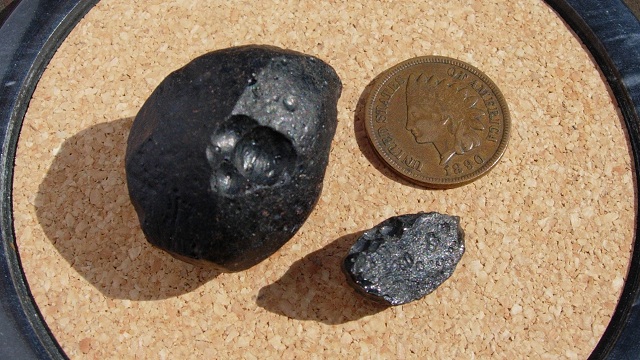
"caption": "Tektites from the Indochina strewnfield. Andrew Alden photo",
"description": null,
"title": "CAtektite-top",
"credit": null,
"status": "inherit",
"isLoading": false,
"fetchFailed": false
},
"quest_47691": {
"type": "attachments",
"id": "quest_47691",
"meta": {
"index": "attachments_1716263798",
"site": "quest",
"id": "47691",
"found": true
},
"parent": 47683,
"imgSizes": {
"thumbnail": {
"file": "https://ww2.kqed.org/app/uploads/sites/39/2012/12/klamathlooptop-400x225.jpg",
"width": 400,
"mimeType": "image/jpeg",
"height": 225
},
"kqedFullSize": {
"file": "https://ww2.kqed.org/app/uploads/sites/39/2012/12/klamathlooptop.jpg",
"width": 640,
"height": 360
},
"guest-author-96": {
"file": "https://ww2.kqed.org/app/uploads/sites/39/2012/12/klamathlooptop-96x96.jpg",
"width": 96,
"mimeType": "image/jpeg",
"height": 96
},
"guest-author-64": {
"file": "https://ww2.kqed.org/app/uploads/sites/39/2012/12/klamathlooptop-64x64.jpg",
"width": 64,
"mimeType": "image/jpeg",
"height": 64
},
"detail": {
"file": "https://ww2.kqed.org/app/uploads/sites/39/2012/12/klamathlooptop-75x75.jpg",
"width": 75,
"mimeType": "image/jpeg",
"height": 75
},
"guest-author-32": {
"file": "https://ww2.kqed.org/app/uploads/sites/39/2012/12/klamathlooptop-32x32.jpg",
"width": 32,
"mimeType": "image/jpeg",
"height": 32
},
"guest-author-128": {
"file": "https://ww2.kqed.org/app/uploads/sites/39/2012/12/klamathlooptop-128x128.jpg",
"width": 128,
"mimeType": "image/jpeg",
"height": 128
}
},
"publishDate": 1354768724,
"modified": 1354768724,
"caption": null,
"description": null,
"title": "klamathlooptop",
"credit": null,
"status": "inherit",
"isLoading": false,
"fetchFailed": false
},
"quest_47592": {
"type": "attachments",
"id": "quest_47592",
"meta": {
"index": "attachments_1716263798",
"site": "quest",
"id": "47592",
"found": true
},
"parent": 47588,
"imgSizes": {
"thumbnail": {
"file": "https://ww2.kqed.org/app/uploads/sites/39/2012/11/montereyfm-kehoebeach-400x225.jpg",
"width": 400,
"mimeType": "image/jpeg",
"height": 225
},
"kqedFullSize": {
"file": "https://ww2.kqed.org/app/uploads/sites/39/2012/11/montereyfm-kehoebeach.jpg",
"width": 640,
"height": 360
},
"guest-author-96": {
"file": "https://ww2.kqed.org/app/uploads/sites/39/2012/11/montereyfm-kehoebeach-96x96.jpg",
"width": 96,
"mimeType": "image/jpeg",
"height": 96
},
"guest-author-64": {
"file": "https://ww2.kqed.org/app/uploads/sites/39/2012/11/montereyfm-kehoebeach-64x64.jpg",
"width": 64,
"mimeType": "image/jpeg",
"height": 64
},
"detail": {
"file": "https://ww2.kqed.org/app/uploads/sites/39/2012/11/montereyfm-kehoebeach-75x75.jpg",
"width": 75,
"mimeType": "image/jpeg",
"height": 75
},
"guest-author-32": {
"file": "https://ww2.kqed.org/app/uploads/sites/39/2012/11/montereyfm-kehoebeach-32x32.jpg",
"width": 32,
"mimeType": "image/jpeg",
"height": 32
},
"guest-author-128": {
"file": "https://ww2.kqed.org/app/uploads/sites/39/2012/11/montereyfm-kehoebeach-128x128.jpg",
"width": 128,
"mimeType": "image/jpeg",
"height": 128
}
},
"publishDate": 1354218108,
"modified": 1354218108,
"caption": "Uppermost Monterey Formation exposed at Kehoe Beach, Point Reyes. Photo courtesy {link url=http://www.flickr.com/photos/neighborhoods/}Eric Fredericks{/link} via Creative Commons license. Other photos by Andrew Alden",
"description": null,
"title": "montereyfm-kehoebeach",
"credit": null,
"status": "inherit",
"isLoading": false,
"fetchFailed": false
},
"quest_47097": {
"type": "attachments",
"id": "quest_47097",
"meta": {
"index": "attachments_1716263798",
"site": "quest",
"id": "47097",
"found": true
},
"parent": 47096,
"imgSizes": {
"thumbnail": {
"file": "https://ww2.kqed.org/app/uploads/sites/39/2012/11/trancosdem1-400x225.gif",
"width": 400,
"mimeType": "image/gif",
"height": 225
},
"kqedFullSize": {
"file": "https://ww2.kqed.org/app/uploads/sites/39/2012/11/trancosdem1.gif",
"width": 640,
"height": 360
},
"guest-author-96": {
"file": "https://ww2.kqed.org/app/uploads/sites/39/2012/11/trancosdem1-96x96.gif",
"width": 96,
"mimeType": "image/gif",
"height": 96
},
"guest-author-64": {
"file": "https://ww2.kqed.org/app/uploads/sites/39/2012/11/trancosdem1-64x64.gif",
"width": 64,
"mimeType": "image/gif",
"height": 64
},
"detail": {
"file": "https://ww2.kqed.org/app/uploads/sites/39/2012/11/trancosdem1-75x75.gif",
"width": 75,
"mimeType": "image/gif",
"height": 75
},
"guest-author-32": {
"file": "https://ww2.kqed.org/app/uploads/sites/39/2012/11/trancosdem1-32x32.gif",
"width": 32,
"mimeType": "image/gif",
"height": 32
},
"guest-author-128": {
"file": "https://ww2.kqed.org/app/uploads/sites/39/2012/11/trancosdem1-128x128.gif",
"width": 128,
"mimeType": "image/gif",
"height": 128
}
},
"publishDate": 1353005120,
"modified": 1353005120,
"caption": null,
"description": null,
"title": "trancosdem1",
"credit": null,
"status": "inherit",
"isLoading": false,
"fetchFailed": false
},
"quest_46864": {
"type": "attachments",
"id": "quest_46864",
"meta": {
"index": "attachments_1716263798",
"site": "quest",
"id": "46864",
"found": true
},
"parent": 46863,
"imgSizes": {
"thumbnail": {
"file": "https://ww2.kqed.org/app/uploads/sites/39/2012/11/slide-400x225.jpg",
"width": 400,
"mimeType": "image/jpeg",
"height": 225
},
"kqedFullSize": {
"file": "https://ww2.kqed.org/app/uploads/sites/39/2012/11/slide.jpg",
"width": 640,
"height": 360
},
"guest-author-96": {
"file": "https://ww2.kqed.org/app/uploads/sites/39/2012/11/slide-96x96.jpg",
"width": 96,
"mimeType": "image/jpeg",
"height": 96
},
"guest-author-64": {
"file": "https://ww2.kqed.org/app/uploads/sites/39/2012/11/slide-64x64.jpg",
"width": 64,
"mimeType": "image/jpeg",
"height": 64
},
"detail": {
"file": "https://ww2.kqed.org/app/uploads/sites/39/2012/11/slide-75x75.jpg",
"width": 75,
"mimeType": "image/jpeg",
"height": 75
},
"guest-author-32": {
"file": "https://ww2.kqed.org/app/uploads/sites/39/2012/11/slide-32x32.jpg",
"width": 32,
"mimeType": "image/jpeg",
"height": 32
},
"guest-author-128": {
"file": "https://ww2.kqed.org/app/uploads/sites/39/2012/11/slide-128x128.jpg",
"width": 128,
"mimeType": "image/jpeg",
"height": 128
}
},
"publishDate": 1352404406,
"modified": 1352404406,
"caption": "U.S. Geological Survey researcher Ed Harp records a small rockfall triggered by the 2011 Virginia earthquake. USGS photo by Randall Jibson",
"description": null,
"title": "slide",
"credit": null,
"status": "inherit",
"isLoading": false,
"fetchFailed": false
},
"quest_46396": {
"type": "attachments",
"id": "quest_46396",
"meta": {
"index": "attachments_1716263798",
"site": "quest",
"id": "46396",
"found": true
},
"parent": 46395,
"imgSizes": {
"thumbnail": {
"file": "https://ww2.kqed.org/app/uploads/sites/39/2012/10/kelsotop-400x225.jpg",
"width": 400,
"mimeType": "image/jpeg",
"height": 225
},
"kqedFullSize": {
"file": "https://ww2.kqed.org/app/uploads/sites/39/2012/10/kelsotop.jpg",
"width": 640,
"height": 360
},
"guest-author-96": {
"file": "https://ww2.kqed.org/app/uploads/sites/39/2012/10/kelsotop-96x96.jpg",
"width": 96,
"mimeType": "image/jpeg",
"height": 96
},
"guest-author-64": {
"file": "https://ww2.kqed.org/app/uploads/sites/39/2012/10/kelsotop-64x64.jpg",
"width": 64,
"mimeType": "image/jpeg",
"height": 64
},
"detail": {
"file": "https://ww2.kqed.org/app/uploads/sites/39/2012/10/kelsotop-75x75.jpg",
"width": 75,
"mimeType": "image/jpeg",
"height": 75
},
"guest-author-32": {
"file": "https://ww2.kqed.org/app/uploads/sites/39/2012/10/kelsotop-32x32.jpg",
"width": 32,
"mimeType": "image/jpeg",
"height": 32
},
"guest-author-128": {
"file": "https://ww2.kqed.org/app/uploads/sites/39/2012/10/kelsotop-128x128.jpg",
"width": 128,
"mimeType": "image/jpeg",
"height": 128
}
},
"publishDate": 1351190491,
"modified": 1351190491,
"caption": "The Kelso Dunes are one of the rare sites where sand dunes can be made to sing. Science is still puzzling over the physics involved. Photo by Andrew Alden",
"description": null,
"title": "kelsotop",
"credit": null,
"status": "inherit",
"isLoading": false,
"fetchFailed": false
},
"quest_46345": {
"type": "attachments",
"id": "quest_46345",
"meta": {
"index": "attachments_1716263798",
"site": "quest",
"id": "46345",
"found": true
},
"parent": 46334,
"imgSizes": {
"thumbnail": {
"file": "https://ww2.kqed.org/app/uploads/sites/39/2012/10/il_fullxfull.385270093_qj0a-400x225.jpg",
"width": 400,
"mimeType": "image/jpeg",
"height": 225
},
"kqedFullSize": {
"file": "https://ww2.kqed.org/app/uploads/sites/39/2012/10/il_fullxfull.385270093_qj0a.jpg",
"width": 640,
"height": 360
},
"guest-author-96": {
"file": "https://ww2.kqed.org/app/uploads/sites/39/2012/10/il_fullxfull.385270093_qj0a-96x96.jpg",
"width": 96,
"mimeType": "image/jpeg",
"height": 96
},
"guest-author-64": {
"file": "https://ww2.kqed.org/app/uploads/sites/39/2012/10/il_fullxfull.385270093_qj0a-64x64.jpg",
"width": 64,
"mimeType": "image/jpeg",
"height": 64
},
"detail": {
"file": "https://ww2.kqed.org/app/uploads/sites/39/2012/10/il_fullxfull.385270093_qj0a-75x75.jpg",
"width": 75,
"mimeType": "image/jpeg",
"height": 75
},
"guest-author-32": {
"file": "https://ww2.kqed.org/app/uploads/sites/39/2012/10/il_fullxfull.385270093_qj0a-32x32.jpg",
"width": 32,
"mimeType": "image/jpeg",
"height": 32
},
"guest-author-128": {
"file": "https://ww2.kqed.org/app/uploads/sites/39/2012/10/il_fullxfull.385270093_qj0a-128x128.jpg",
"width": 128,
"mimeType": "image/jpeg",
"height": 128
}
},
"publishDate": 1350951037,
"modified": 1350951037,
"caption": "Linocut of the Enchantress of Numbers, Ada Lovelace - by Ele Willoughby",
"description": null,
"title": "il_fullxfull.385270093_qj0a",
"credit": null,
"status": "inherit",
"isLoading": false,
"fetchFailed": false
},
"quest_46194": {
"type": "attachments",
"id": "quest_46194",
"meta": {
"index": "attachments_1716263798",
"site": "quest",
"id": "46194",
"found": true
},
"parent": 46193,
"imgSizes": {
"thumbnail": {
"file": "https://ww2.kqed.org/app/uploads/sites/39/2012/10/suigetsutop-400x225.jpg",
"width": 400,
"mimeType": "image/jpeg",
"height": 225
},
"kqedFullSize": {
"file": "https://ww2.kqed.org/app/uploads/sites/39/2012/10/suigetsutop.jpg",
"width": 640,
"height": 360
},
"guest-author-96": {
"file": "https://ww2.kqed.org/app/uploads/sites/39/2012/10/suigetsutop-96x96.jpg",
"width": 96,
"mimeType": "image/jpeg",
"height": 96
},
"guest-author-64": {
"file": "https://ww2.kqed.org/app/uploads/sites/39/2012/10/suigetsutop-64x64.jpg",
"width": 64,
"mimeType": "image/jpeg",
"height": 64
},
"detail": {
"file": "https://ww2.kqed.org/app/uploads/sites/39/2012/10/suigetsutop-75x75.jpg",
"width": 75,
"mimeType": "image/jpeg",
"height": 75
},
"guest-author-32": {
"file": "https://ww2.kqed.org/app/uploads/sites/39/2012/10/suigetsutop-32x32.jpg",
"width": 32,
"mimeType": "image/jpeg",
"height": 32
},
"guest-author-128": {
"file": "https://ww2.kqed.org/app/uploads/sites/39/2012/10/suigetsutop-128x128.jpg",
"width": 128,
"mimeType": "image/jpeg",
"height": 128
}
},
"publishDate": 1350587170,
"modified": 1350587170,
"caption": "Pristine leaf fossils from Lake Suigetsu allowed radiocarbon dates to be calibrated against absolute dates from annual sediment layers. Photo courtesy Richard Staff",
"description": null,
"title": "suigetsutop",
"credit": null,
"status": "inherit",
"isLoading": false,
"fetchFailed": false
},
"quest_45985": {
"type": "attachments",
"id": "quest_45985",
"meta": {
"index": "attachments_1716263798",
"site": "quest",
"id": "45985",
"found": true
},
"parent": 45984,
"imgSizes": {
"thumbnail": {
"file": "https://ww2.kqed.org/app/uploads/sites/39/2012/10/inglewoodfrack-400x225.jpg",
"width": 400,
"mimeType": "image/jpeg",
"height": 225
},
"kqedFullSize": {
"file": "https://ww2.kqed.org/app/uploads/sites/39/2012/10/inglewoodfrack.jpg",
"width": 640,
"height": 360
},
"guest-author-96": {
"file": "https://ww2.kqed.org/app/uploads/sites/39/2012/10/inglewoodfrack-96x96.jpg",
"width": 96,
"mimeType": "image/jpeg",
"height": 96
},
"guest-author-64": {
"file": "https://ww2.kqed.org/app/uploads/sites/39/2012/10/inglewoodfrack-64x64.jpg",
"width": 64,
"mimeType": "image/jpeg",
"height": 64
},
"detail": {
"file": "https://ww2.kqed.org/app/uploads/sites/39/2012/10/inglewoodfrack-75x75.jpg",
"width": 75,
"mimeType": "image/jpeg",
"height": 75
},
"guest-author-32": {
"file": "https://ww2.kqed.org/app/uploads/sites/39/2012/10/inglewoodfrack-32x32.jpg",
"width": 32,
"mimeType": "image/jpeg",
"height": 32
},
"guest-author-128": {
"file": "https://ww2.kqed.org/app/uploads/sites/39/2012/10/inglewoodfrack-128x128.jpg",
"width": 128,
"mimeType": "image/jpeg",
"height": 128
}
},
"publishDate": 1349981514,
"modified": 1349981514,
"caption": "Oilfields can be as clean as any other kind of mining if the operators are careful--and that's the rub. Photo by Andrew Alden",
"description": null,
"title": "inglewoodfrack",
"credit": null,
"status": "inherit",
"isLoading": false,
"fetchFailed": false
},
"quest_45605": {
"type": "attachments",
"id": "quest_45605",
"meta": {
"index": "attachments_1716263798",
"site": "quest",
"id": "45605",
"found": true
},
"parent": 45604,
"imgSizes": {
"thumbnail": {
"file": "https://ww2.kqed.org/app/uploads/sites/39/2012/10/ESW2012-400x225.jpg",
"width": 400,
"mimeType": "image/jpeg",
"height": 225
},
"kqedFullSize": {
"file": "https://ww2.kqed.org/app/uploads/sites/39/2012/10/ESW2012.jpg",
"width": 640,
"height": 360
},
"guest-author-96": {
"file": "https://ww2.kqed.org/app/uploads/sites/39/2012/10/ESW2012-96x96.jpg",
"width": 96,
"mimeType": "image/jpeg",
"height": 96
},
"guest-author-64": {
"file": "https://ww2.kqed.org/app/uploads/sites/39/2012/10/ESW2012-64x64.jpg",
"width": 64,
"mimeType": "image/jpeg",
"height": 64
},
"detail": {
"file": "https://ww2.kqed.org/app/uploads/sites/39/2012/10/ESW2012-75x75.jpg",
"width": 75,
"mimeType": "image/jpeg",
"height": 75
},
"guest-author-32": {
"file": "https://ww2.kqed.org/app/uploads/sites/39/2012/10/ESW2012-32x32.jpg",
"width": 32,
"mimeType": "image/jpeg",
"height": 32
},
"guest-author-128": {
"file": "https://ww2.kqed.org/app/uploads/sites/39/2012/10/ESW2012-128x128.jpg",
"width": 128,
"mimeType": "image/jpeg",
"height": 128
}
},
"publishDate": 1349376795,
"modified": 1349376795,
"caption": "Forest Service geologist Jessica Lopez Pearce leads a tour at Summit Mountain in Kaibab National Forest. Geologists are key in turning on students to the coolness that is geoscience. Photo courtesy U.S. Forest Service, Southwestern Region, Kaibab National Forest under Creative Commons license",
"description": null,
"title": "ESW2012",
"credit": null,
"status": "inherit",
"isLoading": false,
"fetchFailed": false
},
"quest_45182": {
"type": "attachments",
"id": "quest_45182",
"meta": {
"index": "attachments_1716263798",
"site": "quest",
"id": "45182",
"found": true
},
"parent": 45181,
"imgSizes": {
"thumbnail": {
"file": "https://ww2.kqed.org/app/uploads/sites/39/2012/09/calif-tsu-400x225.jpg",
"width": 400,
"mimeType": "image/jpeg",
"height": 225
},
"kqedFullSize": {
"file": "https://ww2.kqed.org/app/uploads/sites/39/2012/09/calif-tsu.jpg",
"width": 640,
"height": 360
},
"guest-author-96": {
"file": "https://ww2.kqed.org/app/uploads/sites/39/2012/09/calif-tsu-96x96.jpg",
"width": 96,
"mimeType": "image/jpeg",
"height": 96
},
"guest-author-64": {
"file": "https://ww2.kqed.org/app/uploads/sites/39/2012/09/calif-tsu-64x64.jpg",
"width": 64,
"mimeType": "image/jpeg",
"height": 64
},
"detail": {
"file": "https://ww2.kqed.org/app/uploads/sites/39/2012/09/calif-tsu-75x75.jpg",
"width": 75,
"mimeType": "image/jpeg",
"height": 75
},
"guest-author-32": {
"file": "https://ww2.kqed.org/app/uploads/sites/39/2012/09/calif-tsu-32x32.jpg",
"width": 32,
"mimeType": "image/jpeg",
"height": 32
},
"guest-author-128": {
"file": "https://ww2.kqed.org/app/uploads/sites/39/2012/09/calif-tsu-128x128.jpg",
"width": 128,
"mimeType": "image/jpeg",
"height": 128
}
},
"publishDate": 1348770990,
"modified": 1348770990,
"caption": "State and local authorities hold regular tsunami drills to help make life-saving behavior automatic. Image courtesy California Geological Survey",
"description": null,
"title": "calif-tsu",
"credit": null,
"status": "inherit",
"isLoading": false,
"fetchFailed": false
},
"quest_44505": {
"type": "attachments",
"id": "quest_44505",
"meta": {
"index": "attachments_1716263798",
"site": "quest",
"id": "44505",
"found": true
},
"parent": 44500,
"imgSizes": {
"thumbnail": {
"file": "https://ww2.kqed.org/app/uploads/sites/39/2012/09/emigdio-top-400x225.jpg",
"width": 400,
"mimeType": "image/jpeg",
"height": 225
},
"kqedFullSize": {
"file": "https://ww2.kqed.org/app/uploads/sites/39/2012/09/emigdio-top.jpg",
"width": 640,
"height": 360
},
"guest-author-96": {
"file": "https://ww2.kqed.org/app/uploads/sites/39/2012/09/emigdio-top-96x96.jpg",
"width": 96,
"mimeType": "image/jpeg",
"height": 96
},
"guest-author-64": {
"file": "https://ww2.kqed.org/app/uploads/sites/39/2012/09/emigdio-top-64x64.jpg",
"width": 64,
"mimeType": "image/jpeg",
"height": 64
},
"detail": {
"file": "https://ww2.kqed.org/app/uploads/sites/39/2012/09/emigdio-top-75x75.jpg",
"width": 75,
"mimeType": "image/jpeg",
"height": 75
},
"guest-author-32": {
"file": "https://ww2.kqed.org/app/uploads/sites/39/2012/09/emigdio-top-32x32.jpg",
"width": 32,
"mimeType": "image/jpeg",
"height": 32
},
"guest-author-128": {
"file": "https://ww2.kqed.org/app/uploads/sites/39/2012/09/emigdio-top-128x128.jpg",
"width": 128,
"mimeType": "image/jpeg",
"height": 128
}
},
"publishDate": 1348166625,
"modified": 1348166625,
"caption": "The southern wall of the Great Valley is worth passing through instead of passing by. Photos by Andrew Alden",
"description": null,
"title": "emigdio-top",
"credit": null,
"status": "inherit",
"isLoading": false,
"fetchFailed": false
}
},
"audioPlayerReducer": {
"postId": "stream_live",
"isPaused": true,
"isPlaying": false,
"pfsActive": false,
"pledgeModalIsOpen": true,
"playerDrawerIsOpen": false,
"liveAudioPlayStartedAt": 0,
"liveAudioPlayContext": ""
},
"authorsReducer": {
"andrew-alden": {
"type": "authors",
"id": "6228",
"meta": {
"index": "authors_1716337520",
"id": "6228",
"found": true
},
"name": "Andrew Alden",
"firstName": "Andrew",
"lastName": "Alden",
"slug": "andrew-alden",
"email": "alden@andrew-alden.com",
"display_author_email": false,
"staff_mastheads": [],
"title": null,
"bio": "Andrew Alden earned his geology degree at the University of New Hampshire and moved back to the Bay Area to work at the U.S. Geological Survey for six years. He has \u003ca href=\"http://geology.about.com/\">written on geology for About.com\u003c/a> since its founding in 1997. In 2007, he started the Oakland Geology blog, which won recognition as \"Best of the East Bay\" from the \u003ci>East Bay Express\u003c/i> in 2010. In writing about geology in the Bay Area and surroundings, he hopes to share some of the useful and pleasurable insights that geologists give us—not just facts about the deep past, but an attitude that might be called the \u003ci>deep present\u003c/i>.\r\n\r\nRead his \u003ca href=\"http://science.kqed.org/quest/author/andrew-alden/\">previous contributions\u003c/a> to \u003ca href=\"http://http://science.kqed.org/quest/\">QUEST\u003c/a>, a project dedicated to exploring the Science of Sustainability.",
"avatar": "https://secure.gravatar.com/avatar/9eaa0afc32f98c5fc7ce634437334a64?s=600&d=blank&r=g",
"twitter": null,
"facebook": null,
"instagram": null,
"linkedin": null,
"sites": [
{
"site": "science",
"roles": [
"author"
]
},
{
"site": "quest",
"roles": [
"subscriber"
]
}
],
"headData": {
"title": "Andrew Alden | KQED",
"description": null,
"ogImgSrc": "https://secure.gravatar.com/avatar/9eaa0afc32f98c5fc7ce634437334a64?s=600&d=blank&r=g",
"twImgSrc": "https://secure.gravatar.com/avatar/9eaa0afc32f98c5fc7ce634437334a64?s=600&d=blank&r=g"
},
"isLoading": false,
"link": "/author/andrew-alden"
},
"dannastaaf": {
"type": "authors",
"id": "6324",
"meta": {
"index": "authors_1716337520",
"id": "6324",
"found": true
},
"name": "Danna Staaf",
"firstName": "Danna",
"lastName": "Staaf",
"slug": "dannastaaf",
"email": "dannajoy@gmail.com",
"display_author_email": false,
"staff_mastheads": [],
"title": null,
"bio": "Danna Staaf is a marine biologist, science writer, novelist, artist, and educator. She holds a PhD in Squid Babies from Stanford and a BA in Biology from the College of Creative Studies at the University of California, Santa Barbara. She helped found the outreach program \u003ca href=\"http://gilly.stanford.edu/outreach.html\">Squids4Kids\u003c/a>, illustrated \u003ca href=\"https://www.thegamecrafter.com/games/the-game-of-science\">The Game of Science\u003c/a>, and blogs at \u003ca href=\"http://www.science20.com/squid_day\">Science 2.0\u003c/a>. She lives in San Jose with her husband, daughter, and cats.",
"avatar": "https://secure.gravatar.com/avatar/62085c2562a0b91949bfd6ff7548082e?s=600&d=blank&r=g",
"twitter": null,
"facebook": null,
"instagram": null,
"linkedin": null,
"sites": [
{
"site": "science",
"roles": [
"author"
]
},
{
"site": "quest",
"roles": [
"subscriber"
]
}
],
"headData": {
"title": "Danna Staaf | KQED",
"description": null,
"ogImgSrc": "https://secure.gravatar.com/avatar/62085c2562a0b91949bfd6ff7548082e?s=600&d=blank&r=g",
"twImgSrc": "https://secure.gravatar.com/avatar/62085c2562a0b91949bfd6ff7548082e?s=600&d=blank&r=g"
},
"isLoading": false,
"link": "/author/dannastaaf"
}
},
"pagesReducer": {
"science_category_geology": {
"type": "terms",
"id": "science_38",
"meta": {
"index": "terms_1716263798",
"site": "science",
"id": "38",
"score": 13.559036
},
"featImg": null,
"name": "Geology",
"description": null,
"taxonomy": "category",
"headData": {
"twImgId": null,
"twTitle": null,
"ogTitle": null,
"ogImgId": null,
"twDescription": null,
"description": null,
"title": "Geology Archives | KQED Science",
"ogDescription": null
},
"ttid": 40,
"slug": "geology",
"isLoading": false,
"title": "Geology",
"pageMeta": {
"site": "science",
"WpPageTemplate": "page-topic-editorial",
"currentPage": 22
},
"blocks": [
{
"blockName": "kqed/post-list",
"attrs": {
"layout": "cardArticle2",
"query": "posts/science?category=geology",
"seeMore": false,
"paginated": true,
"page": 22
}
},
{
"blockName": "kqed/ad"
}
]
}
},
"pfsSessionReducer": {},
"postsReducer": {
"stream_live": {
"type": "live",
"id": "stream_live",
"audioUrl": "https://hls.kqed.org/hls/kqed_app/playlist.m3u8",
"title": "Live Stream",
"excerpt": "Live Stream information currently unavailable.",
"link": "/radio",
"featImg": "",
"label": {
"name": "KQED Live",
"link": "/"
}
},
"stream_kqedNewscast": {
"type": "posts",
"id": "stream_kqedNewscast",
"audioUrl": "https://www.kqed.org/.stream/anon/radio/RDnews/newscast.mp3?_=1",
"title": "KQED Newscast",
"featImg": "",
"label": {
"name": "88.5 FM",
"link": "/"
}
},
"quest_47910": {
"type": "posts",
"id": "quest_47910",
"meta": {
"index": "posts_1716263798",
"site": "quest",
"id": "47910",
"score": null,
"sort": [
1355434437000
]
},
"parent": 0,
"labelTerm": {
"site": "quest"
},
"blocks": [],
"publishDate": 1355434437,
"format": "aside",
"disqusTitle": "Help Find the Healdsburg Tektites",
"title": "Help Find the Healdsburg Tektites",
"headTitle": "QUEST | KQED Science",
"content": "\u003cfigure id=\"attachment_47911\" class=\"wp-caption alignleft\" style=\"max-width: 300px\">\u003ca href=\"http://ww2.kqed.org/quest/2012/12/13/help-find-the-healdsburg-tektites/catektite-rolfe/\" rel=\"attachment wp-att-47911\">\u003cimg src=\"http://ww2.kqed.org/quest/wp-content/uploads/sites/39/2012/12/CAtektite-rolfe.jpg\" alt=\"\" title=\"CAtektite-rolfe\" width=\"300\" height=\"379\" class=\"size-full wp-image-47911\">\u003c/a>\u003cfigcaption class=\"wp-caption-text\">Professor Rolfe Erickson holds part of his collection of Healdsburg tektites in this 2003 photo. Photo by Jean Wasp, Sonoma State University\u003c/figcaption>\u003c/figure>\n\u003cp>A scattering of mysterious stones in Sonoma and Solano counties appears to be a newly documented population of tektites, a team of local geologists argued last week. Their poster presentation at the San Francisco meeting of the American Geophysical Union laid out new evidence about these unusual rocks.\u003c/p>\n\u003cp>Tektites are what you might call a semi-meteorite—they are Earth material that has been melted in large cosmic impact events and splashed into nearby outer space. As they fall back through the atmosphere, the glassy drops gain the blowtorched appearance of meteorites. You can buy them at any well-equipped rock shop and any of \u003ca href=\"http://ww2.kqed.org/quest/2011/08/18/theres-nothing-like-a-rock-show/\">the Bay Area's rock and mineral shows\u003c/a>. They are distinct in many ways from \u003ca href=\"http://ww2.kqed.org/quest/2012/01/19/treasure-from-the-sky/\">real meteorites\u003c/a>, which are pieces of rock or metal from heavenly bodies, mostly asteroids.\u003c/p>\n\u003cp>Tektites are found scattered in large oval territories called strewnfields, each of which represents a single impact event. Until now, only five strewnfields were known: in the southeastern U.S., in Indochina, in central Europe, in Ivory Coast and in Central America. Three of these have been linked to a known impact crater by dating and chemistry. In last week's presentation, Professor Emeritus Rolfe Erickson of Sonoma State University and three coauthors made a wide-ranging case that we have our own Healdsburg strewnfield, \"only a very small part of which has been identified to date.\"\u003c/p>\n\u003cp>Erickson first issued a call to the Bay Area's rockhounds in 2003, when the photo above was made. Since that time he has acquired more specimens and scraped the money together to have some tests made. Among these were age dating, done in Berkeley by the highly sensitive argon-argon method, and detailed chemical analyses. Their chemistries are very close to identical, putting them in the rhyolite category, and the four argon ages are statistically the same at about 2.823 million years.\u003c/p>\n\u003cp>That alone doesn't rule out volcanic rocks like obsidian, \u003ca href=\"http://ww2.kqed.org/quest/2012/02/02/geological-outings-around-the-bay-napa-glass-mountain/\">of which the North Bay has plenty\u003c/a>, or the volcanic blobs called Apache tears. But their shapes and surface appearance are quite unlike these candidates and exactly like \u003ca href=\"http://geology.about.com/od/meteorites/ig/meteorites/Tektites.htm\">the tektites I own\u003c/a>.\u003c/p>\n\u003cfigure id=\"attachment_48041\" class=\"wp-caption aligncenter\" style=\"max-width: 600px\">\u003ca href=\"http://ww2.kqed.org/quest/2012/12/13/help-find-the-healdsburg-tektites/catektites/\" rel=\"attachment wp-att-48041\">\u003cimg src=\"http://ww2.kqed.org/quest/wp-content/uploads/sites/39/2012/12/CAtektites.jpg\" alt=\"\" title=\"CAtektites\" width=\"600\" height=\"480\" class=\"size-full wp-image-48041\" srcset=\"https://ww2.kqed.org/app/uploads/sites/39/2012/12/CAtektites.jpg 600w, https://ww2.kqed.org/app/uploads/sites/39/2012/12/CAtektites-400x320.jpg 400w\" sizes=\"(max-width: 600px) 100vw, 600px\">\u003c/a>\u003cfigcaption class=\"wp-caption-text\">Freshly gathered healdsburgites from Dry Creek Valley. Rolfe Erickson photo\u003c/figcaption>\u003c/figure>\n\u003cp>Erickson's team described the pits and grooves in these specimens and concluded, in their best scientific language, that \"the clasts \u003cb>look\u003c/b> like tektites.\" Additionally, the stones have no sign of weathering, which is quite unlike obsidian of that age, and their smooth surfaces show that their rounded shapes could not have come about by erosion in a stream. See more detail in the \u003ca href=\"http://fallmeeting.agu.org/2012/eposters/eposter/p11b-1811/\">poster's summary posted on the meeting website\u003c/a>. Erickson says that the full poster will be posted soon at the Sonoma State library site; I'll add a comment here when that happens.\u003c/p>\n\u003cp>[ad fullwidth]\u003c/p>\n\u003cp>They did not identify a candidate for an associated impact crater, but the date narrows things down a great deal, and the chemistry, they said, \"suggests a continental origin.\" It is possible that a 2.8-million-year-old crater around here could be almost obliterated. The Coast Range is a highly active area, with the Earth's crust being shredded, lifted and dropped by various strands of the San Andreas fault system. And in the Cascades, a crater could have been buried long ago by volcano complexes, where it might look exactly like an ancient volcano in gravity surveys.\u003c/p>\n\u003cp>\u003c/p>\n\u003cp>The strewnfield is still poorly documented, and careful watchers of the ground, like me and you, can help in this task. I would be keeping my eyes open wherever sediments of late Pliocene age might be found. They would have to be above sea level, where later sea-level fluctuations would not bury them, in basins that are not being actively filled today. In such elevated areas of sediment deposits, like the Livermore basin and southern Santa Clara Valley, these odd pitted pebbles might stand out. Erickson finds his examples in and around the Dry Creek Valley, in agricultural fields and roadcuts. Let's see where else we can find them.\u003c/p>\n\n",
"disqusIdentifier": "47910 http://science.kqed.org/quest/?p=47910",
"disqusUrl": "https://ww2.kqed.org/quest/2012/12/13/help-find-the-healdsburg-tektites/",
"stats": {
"hasVideo": false,
"hasChartOrMap": false,
"hasAudio": false,
"hasPolis": false,
"wordCount": 700,
"hasGoogleForm": false,
"hasGallery": false,
"hasHearkenModule": false,
"iframeSrcs": [],
"paragraphCount": 10
},
"modified": 1356732190,
"excerpt": "Half meteorite, half Earth rock, these geological oddities may be part of a new strewnfield in the northern Bay Area.",
"headData": {
"twImgId": "",
"twTitle": "",
"ogTitle": "",
"ogImgId": "",
"twDescription": "",
"description": "Half meteorite, half Earth rock, these geological oddities may be part of a new strewnfield in the northern Bay Area.",
"title": "Help Find the Healdsburg Tektites | KQED",
"ogDescription": "",
"schema": {
"@context": "https://schema.org",
"@type": "Article",
"headline": "Help Find the Healdsburg Tektites",
"datePublished": "2012-12-13T13:33:57-08:00",
"dateModified": "2012-12-28T14:03:10-08:00",
"image": "https://cdn.kqed.org/wp-content/uploads/2020/02/KQED-OG-Image@1x.png"
}
},
"guestAuthors": [],
"slug": "help-find-the-healdsburg-tektites",
"status": "publish",
"path": "/quest/47910/help-find-the-healdsburg-tektites",
"audioTrackLength": null,
"parsedContent": [
{
"type": "contentString",
"content": "\u003cdiv class=\"post-body\">\u003cp>\u003cfigure id=\"attachment_47911\" class=\"wp-caption alignleft\" style=\"max-width: 300px\">\u003ca href=\"http://ww2.kqed.org/quest/2012/12/13/help-find-the-healdsburg-tektites/catektite-rolfe/\" rel=\"attachment wp-att-47911\">\u003cimg src=\"http://ww2.kqed.org/quest/wp-content/uploads/sites/39/2012/12/CAtektite-rolfe.jpg\" alt=\"\" title=\"CAtektite-rolfe\" width=\"300\" height=\"379\" class=\"size-full wp-image-47911\">\u003c/a>\u003cfigcaption class=\"wp-caption-text\">Professor Rolfe Erickson holds part of his collection of Healdsburg tektites in this 2003 photo. Photo by Jean Wasp, Sonoma State University\u003c/figcaption>\u003c/figure>\n\u003cp>A scattering of mysterious stones in Sonoma and Solano counties appears to be a newly documented population of tektites, a team of local geologists argued last week. Their poster presentation at the San Francisco meeting of the American Geophysical Union laid out new evidence about these unusual rocks.\u003c/p>\n\u003cp>Tektites are what you might call a semi-meteorite—they are Earth material that has been melted in large cosmic impact events and splashed into nearby outer space. As they fall back through the atmosphere, the glassy drops gain the blowtorched appearance of meteorites. You can buy them at any well-equipped rock shop and any of \u003ca href=\"http://ww2.kqed.org/quest/2011/08/18/theres-nothing-like-a-rock-show/\">the Bay Area's rock and mineral shows\u003c/a>. They are distinct in many ways from \u003ca href=\"http://ww2.kqed.org/quest/2012/01/19/treasure-from-the-sky/\">real meteorites\u003c/a>, which are pieces of rock or metal from heavenly bodies, mostly asteroids.\u003c/p>\n\u003cp>Tektites are found scattered in large oval territories called strewnfields, each of which represents a single impact event. Until now, only five strewnfields were known: in the southeastern U.S., in Indochina, in central Europe, in Ivory Coast and in Central America. Three of these have been linked to a known impact crater by dating and chemistry. In last week's presentation, Professor Emeritus Rolfe Erickson of Sonoma State University and three coauthors made a wide-ranging case that we have our own Healdsburg strewnfield, \"only a very small part of which has been identified to date.\"\u003c/p>\n\u003cp>Erickson first issued a call to the Bay Area's rockhounds in 2003, when the photo above was made. Since that time he has acquired more specimens and scraped the money together to have some tests made. Among these were age dating, done in Berkeley by the highly sensitive argon-argon method, and detailed chemical analyses. Their chemistries are very close to identical, putting them in the rhyolite category, and the four argon ages are statistically the same at about 2.823 million years.\u003c/p>\n\u003cp>That alone doesn't rule out volcanic rocks like obsidian, \u003ca href=\"http://ww2.kqed.org/quest/2012/02/02/geological-outings-around-the-bay-napa-glass-mountain/\">of which the North Bay has plenty\u003c/a>, or the volcanic blobs called Apache tears. But their shapes and surface appearance are quite unlike these candidates and exactly like \u003ca href=\"http://geology.about.com/od/meteorites/ig/meteorites/Tektites.htm\">the tektites I own\u003c/a>.\u003c/p>\n\u003cfigure id=\"attachment_48041\" class=\"wp-caption aligncenter\" style=\"max-width: 600px\">\u003ca href=\"http://ww2.kqed.org/quest/2012/12/13/help-find-the-healdsburg-tektites/catektites/\" rel=\"attachment wp-att-48041\">\u003cimg src=\"http://ww2.kqed.org/quest/wp-content/uploads/sites/39/2012/12/CAtektites.jpg\" alt=\"\" title=\"CAtektites\" width=\"600\" height=\"480\" class=\"size-full wp-image-48041\" srcset=\"https://ww2.kqed.org/app/uploads/sites/39/2012/12/CAtektites.jpg 600w, https://ww2.kqed.org/app/uploads/sites/39/2012/12/CAtektites-400x320.jpg 400w\" sizes=\"(max-width: 600px) 100vw, 600px\">\u003c/a>\u003cfigcaption class=\"wp-caption-text\">Freshly gathered healdsburgites from Dry Creek Valley. Rolfe Erickson photo\u003c/figcaption>\u003c/figure>\n\u003cp>Erickson's team described the pits and grooves in these specimens and concluded, in their best scientific language, that \"the clasts \u003cb>look\u003c/b> like tektites.\" Additionally, the stones have no sign of weathering, which is quite unlike obsidian of that age, and their smooth surfaces show that their rounded shapes could not have come about by erosion in a stream. See more detail in the \u003ca href=\"http://fallmeeting.agu.org/2012/eposters/eposter/p11b-1811/\">poster's summary posted on the meeting website\u003c/a>. Erickson says that the full poster will be posted soon at the Sonoma State library site; I'll add a comment here when that happens.\u003c/p>\n\u003cp>\u003c/p>\u003c/div>",
"attributes": {
"named": {},
"numeric": []
}
},
{
"type": "component",
"content": "",
"name": "ad",
"attributes": {
"named": {
"label": "fullwidth"
},
"numeric": [
"fullwidth"
]
}
},
{
"type": "contentString",
"content": "\u003cdiv class=\"post-body\">\u003cp>\u003c/p>\n\u003cp>They did not identify a candidate for an associated impact crater, but the date narrows things down a great deal, and the chemistry, they said, \"suggests a continental origin.\" It is possible that a 2.8-million-year-old crater around here could be almost obliterated. The Coast Range is a highly active area, with the Earth's crust being shredded, lifted and dropped by various strands of the San Andreas fault system. And in the Cascades, a crater could have been buried long ago by volcano complexes, where it might look exactly like an ancient volcano in gravity surveys.\u003c/p>\n\u003cp>\u003c/p>\n\u003cp>The strewnfield is still poorly documented, and careful watchers of the ground, like me and you, can help in this task. I would be keeping my eyes open wherever sediments of late Pliocene age might be found. They would have to be above sea level, where later sea-level fluctuations would not bury them, in basins that are not being actively filled today. In such elevated areas of sediment deposits, like the Livermore basin and southern Santa Clara Valley, these odd pitted pebbles might stand out. Erickson finds his examples in and around the Dry Creek Valley, in agricultural fields and roadcuts. Let's see where else we can find them.\u003c/p>\n\n\u003c/div>\u003c/p>",
"attributes": {
"named": {},
"numeric": []
}
}
],
"link": "/quest/47910/help-find-the-healdsburg-tektites",
"authors": [
"6228"
],
"categories": [
"quest_11"
],
"tags": [
"quest_11654",
"quest_11652",
"quest_1800",
"quest_13202",
"quest_11653",
"quest_11651"
],
"featImg": "quest_47912",
"label": "quest"
},
"quest_47683": {
"type": "posts",
"id": "quest_47683",
"meta": {
"index": "posts_1716263798",
"site": "quest",
"id": "47683",
"score": null,
"sort": [
1354809658000
]
},
"parent": 0,
"labelTerm": {
"site": "quest"
},
"blocks": [],
"publishDate": 1354809658,
"format": "aside",
"disqusTitle": "Side Trips from Interstate 5: The Eastern Klamaths",
"title": "Side Trips from Interstate 5: The Eastern Klamaths",
"headTitle": "QUEST | KQED Science",
"content": "\u003cp>This is an ambitious side trip that you might try on your next trip north to Portland. At Redding, you turn left off the freeway and instead of the 70-mile burn up I-5 to Weed, you take about 120 miles and 3 or 4 hours extra to meander through some of California's most unusual country: the peridotite lands of the eastern Klamath Mountains.\u003c/p>\n\u003cp>Peridotite (\"per-RID-atight\") is the rock type that exists beneath the Earth's crust in the mantle. It's a dense rock made of iron-rich minerals that is rarely seen. It's generally altered into \u003ca href=\"http://ww2.kqed.org/quest/2010/08/16/home-sweet-serpentine/\">serpentine rock\u003c/a> and not much escapes. California has the lion's share of America's peridotite, and the biggest piece of it is in the eastern Klamaths along State Route 3.\u003c/p>\n\u003cp>The Klamaths are an outlier of the Sierra Nevada that somehow ended up about a hundred miles west. How that happened is still a puzzle to geologists, one that won't affect your enjoyment. It means that the ancient rocks similar to those that were invaded and disrupted by Sierran granites are exposed in somewhat better shape in the Klamaths. But the range is still a geological scrapple, a collage of many different rocks blanketed by roadless rain forest. Route 3 provides a lucky glimpse of its most distinctive component. Here's the road route as shown on Google Maps.\u003c/p>\n\u003cp>\u003ca href=\"http://ww2.kqed.org/quest/2012/12/06/side-trips-from-interstate-5-the-eastern-klamaths/klamathloopmap/\" rel=\"attachment wp-att-47688\">\u003cimg src=\"http://ww2.kqed.org/quest/wp-content/uploads/sites/39/2012/12/klamathloopmap.png\" alt=\"\" title=\"klamathloopmap\" width=\"500\" height=\"500\" class=\"aligncenter size-full wp-image-47688\" srcset=\"https://ww2.kqed.org/app/uploads/sites/39/2012/12/klamathloopmap.png 500w, https://ww2.kqed.org/app/uploads/sites/39/2012/12/klamathloopmap-400x400.png 400w, https://ww2.kqed.org/app/uploads/sites/39/2012/12/klamathloopmap-32x32.png 32w, https://ww2.kqed.org/app/uploads/sites/39/2012/12/klamathloopmap-64x64.png 64w, https://ww2.kqed.org/app/uploads/sites/39/2012/12/klamathloopmap-96x96.png 96w, https://ww2.kqed.org/app/uploads/sites/39/2012/12/klamathloopmap-128x128.png 128w, https://ww2.kqed.org/app/uploads/sites/39/2012/12/klamathloopmap-75x75.png 75w\" sizes=\"(max-width: 500px) 100vw, 500px\">\u003c/a>\u003c/p>\n\u003cp>And here's how the route fits the geological underlayment, as shown on the \u003ca href=\"http://www.quake.ca.gov/gmaps/GMC/stategeologicmap.html\">interactive state geologic map\u003c/a>.\u003c/p>\n\u003cp>[ad fullwidth]\u003c/p>\n\u003cp>\u003ca href=\"http://ww2.kqed.org/quest/2012/12/06/side-trips-from-interstate-5-the-eastern-klamaths/klamathloopgeomap/\" rel=\"attachment wp-att-47685\">\u003cimg src=\"http://ww2.kqed.org/quest/wp-content/uploads/sites/39/2012/12/klamathloopgeomap.png\" alt=\"\" title=\"klamathloopgeomap\" width=\"500\" height=\"500\" class=\"aligncenter size-full wp-image-47685\" srcset=\"https://ww2.kqed.org/app/uploads/sites/39/2012/12/klamathloopgeomap.png 500w, https://ww2.kqed.org/app/uploads/sites/39/2012/12/klamathloopgeomap-400x400.png 400w, https://ww2.kqed.org/app/uploads/sites/39/2012/12/klamathloopgeomap-32x32.png 32w, https://ww2.kqed.org/app/uploads/sites/39/2012/12/klamathloopgeomap-64x64.png 64w, https://ww2.kqed.org/app/uploads/sites/39/2012/12/klamathloopgeomap-96x96.png 96w, https://ww2.kqed.org/app/uploads/sites/39/2012/12/klamathloopgeomap-128x128.png 128w, https://ww2.kqed.org/app/uploads/sites/39/2012/12/klamathloopgeomap-75x75.png 75w\" sizes=\"(max-width: 500px) 100vw, 500px\">\u003c/a>\u003c/p>\n\u003cp>If you know your traditional geologic map colors, you'll see at a glance that the young volcanic rocks of the Cascade Range take up the eastern side of the map and Redding sits in the young sediments of the northernmost Great Valley. Considerably older metamorphic rocks, studded with granite upwellings (pink), take up the central and western part of the map area. The large area of purple is the cool stuff, punctuated with violet bodies of gabbro, another deep-seated iron-rich rock type.\u003c/p>\n\u003cp>As you take State Route 299 west from Redding, watch the roadside rocks change from the gravelly sedimentary rocks of the Great Valley to the easily weathered granite . ..\u003c/p>\n\u003cfigure id=\"attachment_47686\" class=\"wp-caption aligncenter\" style=\"max-width: 600px\">\u003ca href=\"http://ww2.kqed.org/quest/2012/12/06/side-trips-from-interstate-5-the-eastern-klamaths/klamathloopgranite/\" rel=\"attachment wp-att-47686\">\u003cimg src=\"http://ww2.kqed.org/quest/wp-content/uploads/sites/39/2012/12/klamathloopgranite.jpg\" alt=\"\" title=\"klamathloopgranite\" width=\"600\" height=\"495\" class=\"size-full wp-image-47686\" srcset=\"https://ww2.kqed.org/app/uploads/sites/39/2012/12/klamathloopgranite.jpg 600w, https://ww2.kqed.org/app/uploads/sites/39/2012/12/klamathloopgranite-400x330.jpg 400w\" sizes=\"(max-width: 600px) 100vw, 600px\">\u003c/a>\u003cfigcaption class=\"wp-caption-text\">All photos by Andrew Alden, October 2009\u003c/figcaption>\u003c/figure>\n\u003cp>. . . and to the older metamorphics, shot through with veins during their recent uplift into today's mountains.\u003c/p>\n\u003cp>\u003ca href=\"http://ww2.kqed.org/quest/2012/12/06/side-trips-from-interstate-5-the-eastern-klamaths/klamathloopveins/\" rel=\"attachment wp-att-47692\">\u003cimg src=\"http://ww2.kqed.org/quest/wp-content/uploads/sites/39/2012/12/klamathloopveins.jpg\" alt=\"\" title=\"klamathloopveins\" width=\"600\" height=\"432\" class=\"aligncenter size-full wp-image-47692\" srcset=\"https://ww2.kqed.org/app/uploads/sites/39/2012/12/klamathloopveins.jpg 600w, https://ww2.kqed.org/app/uploads/sites/39/2012/12/klamathloopveins-400x288.jpg 400w\" sizes=\"(max-width: 600px) 100vw, 600px\">\u003c/a>\u003c/p>\n\u003cp>The Klamaths were gold country like the Sierra, but some of the early prospectors found platinum instead, a metal that was worth little at the time. So keep your eyes open.\u003c/p>\n\u003cp>At Weaverville turn right on Route 3 up the Trinity River valley. The Trinity River has not been treated well, especially since hydraulic mining was allowed on it until the 1960s, and then it was dammed. (The \u003ca href=\"http://www.trrp.net/\">Trinity River Restoration Program\u003c/a> is starting to undo the damage.) This stretch of road is in the river's headwaters, part of the Trinity Heritage National Scenic Byway, featuring views like this one of Billy's Peak. \u003c/p>\n\u003cp>\u003ca href=\"http://ww2.kqed.org/quest/2012/12/06/side-trips-from-interstate-5-the-eastern-klamaths/klamathlooptop/\" rel=\"attachment wp-att-47691\">\u003cimg src=\"http://ww2.kqed.org/quest/wp-content/uploads/sites/39/2012/12/klamathlooptop.jpg\" alt=\"\" title=\"klamathlooptop\" width=\"640\" height=\"360\" class=\"aligncenter size-full wp-image-47691\" srcset=\"https://ww2.kqed.org/app/uploads/sites/39/2012/12/klamathlooptop.jpg 640w, https://ww2.kqed.org/app/uploads/sites/39/2012/12/klamathlooptop-400x225.jpg 400w\" sizes=\"(max-width: 640px) 100vw, 640px\">\u003c/a>\u003c/p>\n\u003cp>Its dark rock is part of the peridotite terrane. Keep an eye out on the roadcuts for the dark outcrops of peridotite. Much of it is studded with greenish-black crystals of pyroxene, and many parts are altered to beautiful serpentinite.\u003c/p>\n\u003cp>\u003ca href=\"http://ww2.kqed.org/quest/2012/12/06/side-trips-from-interstate-5-the-eastern-klamaths/klamathserp/\" rel=\"attachment wp-att-47684\">\u003cimg src=\"http://ww2.kqed.org/quest/wp-content/uploads/sites/39/2012/12/klamathserp.jpg\" alt=\"\" title=\"klamathserp\" width=\"600\" height=\"400\" class=\"aligncenter size-full wp-image-47684\" srcset=\"https://ww2.kqed.org/app/uploads/sites/39/2012/12/klamathserp.jpg 600w, https://ww2.kqed.org/app/uploads/sites/39/2012/12/klamathserp-400x267.jpg 400w\" sizes=\"(max-width: 600px) 100vw, 600px\">\u003c/a>\u003c/p>\n\u003cp>At 56.5 miles after the turnoff from 299 to 3, turn right on Stewart Springs Road, staying in the Trinity River Valley. This is a well-graded gravel road that goes over a pass at 6800 feet. If the weather is threatening or the season is iffy, check ahead or stick to Route 3. In this reach of the Trinity River, the streambed rocks are different from anything you'll ever see. Pull over and study them. This is Forest Service land and you can take a stone or two. Also, look around at the thin forest that inhabits this nutrient-poor rock.\u003c/p>\n\u003cp>\u003ca href=\"http://ww2.kqed.org/quest/2012/12/06/side-trips-from-interstate-5-the-eastern-klamaths/klamathloophills/\" rel=\"attachment wp-att-47687\">\u003cimg src=\"http://ww2.kqed.org/quest/wp-content/uploads/sites/39/2012/12/klamathloophills.jpg\" alt=\"\" title=\"klamathloophills\" width=\"600\" height=\"450\" class=\"aligncenter size-full wp-image-47687\" srcset=\"https://ww2.kqed.org/app/uploads/sites/39/2012/12/klamathloophills.jpg 600w, https://ww2.kqed.org/app/uploads/sites/39/2012/12/klamathloophills-400x300.jpg 400w\" sizes=\"(max-width: 600px) 100vw, 600px\">\u003c/a>\u003c/p>\n\u003cp>At the top of the pass, the road intersects the Pacific Crest Trail. Take a break and examine the peridotite boulders there. This one shows how invading hot water starts to convert the gray-green peridotite into serpentine minerals, including thin veins of fibrous chrysotile. \u003c/p>\n\u003cp>\u003ca href=\"http://ww2.kqed.org/quest/2012/12/06/side-trips-from-interstate-5-the-eastern-klamaths/klamathloopperid/\" rel=\"attachment wp-att-47689\">\u003cimg src=\"http://ww2.kqed.org/quest/wp-content/uploads/sites/39/2012/12/klamathloopperid.jpg\" alt=\"\" title=\"klamathloopperid\" width=\"600\" height=\"420\" class=\"aligncenter size-full wp-image-47689\" srcset=\"https://ww2.kqed.org/app/uploads/sites/39/2012/12/klamathloopperid.jpg 600w, https://ww2.kqed.org/app/uploads/sites/39/2012/12/klamathloopperid-400x280.jpg 400w\" sizes=\"(max-width: 600px) 100vw, 600px\">\u003c/a>\u003c/p>\n\u003cp>How do pieces of the mantle end up on the continents, anyway? The answer is that plate tectonics occasionally does that; the packages of rocks, of which peridotite is just the bottom layer, are called \u003ca href=\"http://geology.about.com/od/platetectonics/a/ophiolite.htm\">ophiolites\u003c/a>. The one on this drive is the Trinity Ophiolite.\u003c/p>\n\u003cp>The long downhill drive that follows will deliver you to I-5 just north of the town of Weed. Well before that, though, you will be arrested by the spectacle of Mount Shasta.\u003c/p>\n\u003cp>\u003ca href=\"http://ww2.kqed.org/quest/2012/12/06/side-trips-from-interstate-5-the-eastern-klamaths/klamathloopshasta/\" rel=\"attachment wp-att-47690\">\u003cimg src=\"http://ww2.kqed.org/quest/wp-content/uploads/sites/39/2012/12/klamathloopshasta.jpg\" alt=\"\" title=\"klamathloopshasta\" width=\"600\" height=\"450\" class=\"aligncenter size-full wp-image-47690\" srcset=\"https://ww2.kqed.org/app/uploads/sites/39/2012/12/klamathloopshasta.jpg 600w, https://ww2.kqed.org/app/uploads/sites/39/2012/12/klamathloopshasta-400x300.jpg 400w\" sizes=\"(max-width: 600px) 100vw, 600px\">\u003c/a>\u003c/p>\n\u003cp>\u003c/p>\n\u003cp>That's another story entirely. \u003c/p>\n\n",
"disqusIdentifier": "47683 http://science.kqed.org/quest/?p=47683",
"disqusUrl": "https://ww2.kqed.org/quest/2012/12/06/side-trips-from-interstate-5-the-eastern-klamaths/",
"stats": {
"hasVideo": false,
"hasChartOrMap": false,
"hasAudio": false,
"hasPolis": false,
"wordCount": 769,
"hasGoogleForm": false,
"hasGallery": false,
"hasHearkenModule": false,
"iframeSrcs": [],
"paragraphCount": 25
},
"modified": 1356732247,
"excerpt": "See America's largest area of rock from the Earth's mantle, west of Mount Shasta.",
"headData": {
"twImgId": "",
"twTitle": "",
"ogTitle": "",
"ogImgId": "",
"twDescription": "",
"description": "See America's largest area of rock from the Earth's mantle, west of Mount Shasta.",
"title": "Side Trips from Interstate 5: The Eastern Klamaths | KQED",
"ogDescription": "",
"schema": {
"@context": "https://schema.org",
"@type": "Article",
"headline": "Side Trips from Interstate 5: The Eastern Klamaths",
"datePublished": "2012-12-06T08:00:58-08:00",
"dateModified": "2012-12-28T14:04:07-08:00",
"image": "https://cdn.kqed.org/wp-content/uploads/2020/02/KQED-OG-Image@1x.png"
}
},
"guestAuthors": [],
"slug": "side-trips-from-interstate-5-the-eastern-klamaths",
"status": "publish",
"path": "/quest/47683/side-trips-from-interstate-5-the-eastern-klamaths",
"audioTrackLength": null,
"parsedContent": [
{
"type": "contentString",
"content": "\u003cdiv class=\"post-body\">\u003cp>\u003cp>This is an ambitious side trip that you might try on your next trip north to Portland. At Redding, you turn left off the freeway and instead of the 70-mile burn up I-5 to Weed, you take about 120 miles and 3 or 4 hours extra to meander through some of California's most unusual country: the peridotite lands of the eastern Klamath Mountains.\u003c/p>\n\u003cp>Peridotite (\"per-RID-atight\") is the rock type that exists beneath the Earth's crust in the mantle. It's a dense rock made of iron-rich minerals that is rarely seen. It's generally altered into \u003ca href=\"http://ww2.kqed.org/quest/2010/08/16/home-sweet-serpentine/\">serpentine rock\u003c/a> and not much escapes. California has the lion's share of America's peridotite, and the biggest piece of it is in the eastern Klamaths along State Route 3.\u003c/p>\n\u003cp>The Klamaths are an outlier of the Sierra Nevada that somehow ended up about a hundred miles west. How that happened is still a puzzle to geologists, one that won't affect your enjoyment. It means that the ancient rocks similar to those that were invaded and disrupted by Sierran granites are exposed in somewhat better shape in the Klamaths. But the range is still a geological scrapple, a collage of many different rocks blanketed by roadless rain forest. Route 3 provides a lucky glimpse of its most distinctive component. Here's the road route as shown on Google Maps.\u003c/p>\n\u003cp>\u003ca href=\"http://ww2.kqed.org/quest/2012/12/06/side-trips-from-interstate-5-the-eastern-klamaths/klamathloopmap/\" rel=\"attachment wp-att-47688\">\u003cimg src=\"http://ww2.kqed.org/quest/wp-content/uploads/sites/39/2012/12/klamathloopmap.png\" alt=\"\" title=\"klamathloopmap\" width=\"500\" height=\"500\" class=\"aligncenter size-full wp-image-47688\" srcset=\"https://ww2.kqed.org/app/uploads/sites/39/2012/12/klamathloopmap.png 500w, https://ww2.kqed.org/app/uploads/sites/39/2012/12/klamathloopmap-400x400.png 400w, https://ww2.kqed.org/app/uploads/sites/39/2012/12/klamathloopmap-32x32.png 32w, https://ww2.kqed.org/app/uploads/sites/39/2012/12/klamathloopmap-64x64.png 64w, https://ww2.kqed.org/app/uploads/sites/39/2012/12/klamathloopmap-96x96.png 96w, https://ww2.kqed.org/app/uploads/sites/39/2012/12/klamathloopmap-128x128.png 128w, https://ww2.kqed.org/app/uploads/sites/39/2012/12/klamathloopmap-75x75.png 75w\" sizes=\"(max-width: 500px) 100vw, 500px\">\u003c/a>\u003c/p>\n\u003cp>And here's how the route fits the geological underlayment, as shown on the \u003ca href=\"http://www.quake.ca.gov/gmaps/GMC/stategeologicmap.html\">interactive state geologic map\u003c/a>.\u003c/p>\n\u003cp>\u003c/p>\u003c/div>",
"attributes": {
"named": {},
"numeric": []
}
},
{
"type": "component",
"content": "",
"name": "ad",
"attributes": {
"named": {
"label": "fullwidth"
},
"numeric": [
"fullwidth"
]
}
},
{
"type": "contentString",
"content": "\u003cdiv class=\"post-body\">\u003cp>\u003c/p>\n\u003cp>\u003ca href=\"http://ww2.kqed.org/quest/2012/12/06/side-trips-from-interstate-5-the-eastern-klamaths/klamathloopgeomap/\" rel=\"attachment wp-att-47685\">\u003cimg src=\"http://ww2.kqed.org/quest/wp-content/uploads/sites/39/2012/12/klamathloopgeomap.png\" alt=\"\" title=\"klamathloopgeomap\" width=\"500\" height=\"500\" class=\"aligncenter size-full wp-image-47685\" srcset=\"https://ww2.kqed.org/app/uploads/sites/39/2012/12/klamathloopgeomap.png 500w, https://ww2.kqed.org/app/uploads/sites/39/2012/12/klamathloopgeomap-400x400.png 400w, https://ww2.kqed.org/app/uploads/sites/39/2012/12/klamathloopgeomap-32x32.png 32w, https://ww2.kqed.org/app/uploads/sites/39/2012/12/klamathloopgeomap-64x64.png 64w, https://ww2.kqed.org/app/uploads/sites/39/2012/12/klamathloopgeomap-96x96.png 96w, https://ww2.kqed.org/app/uploads/sites/39/2012/12/klamathloopgeomap-128x128.png 128w, https://ww2.kqed.org/app/uploads/sites/39/2012/12/klamathloopgeomap-75x75.png 75w\" sizes=\"(max-width: 500px) 100vw, 500px\">\u003c/a>\u003c/p>\n\u003cp>If you know your traditional geologic map colors, you'll see at a glance that the young volcanic rocks of the Cascade Range take up the eastern side of the map and Redding sits in the young sediments of the northernmost Great Valley. Considerably older metamorphic rocks, studded with granite upwellings (pink), take up the central and western part of the map area. The large area of purple is the cool stuff, punctuated with violet bodies of gabbro, another deep-seated iron-rich rock type.\u003c/p>\n\u003cp>As you take State Route 299 west from Redding, watch the roadside rocks change from the gravelly sedimentary rocks of the Great Valley to the easily weathered granite . ..\u003c/p>\n\u003cfigure id=\"attachment_47686\" class=\"wp-caption aligncenter\" style=\"max-width: 600px\">\u003ca href=\"http://ww2.kqed.org/quest/2012/12/06/side-trips-from-interstate-5-the-eastern-klamaths/klamathloopgranite/\" rel=\"attachment wp-att-47686\">\u003cimg src=\"http://ww2.kqed.org/quest/wp-content/uploads/sites/39/2012/12/klamathloopgranite.jpg\" alt=\"\" title=\"klamathloopgranite\" width=\"600\" height=\"495\" class=\"size-full wp-image-47686\" srcset=\"https://ww2.kqed.org/app/uploads/sites/39/2012/12/klamathloopgranite.jpg 600w, https://ww2.kqed.org/app/uploads/sites/39/2012/12/klamathloopgranite-400x330.jpg 400w\" sizes=\"(max-width: 600px) 100vw, 600px\">\u003c/a>\u003cfigcaption class=\"wp-caption-text\">All photos by Andrew Alden, October 2009\u003c/figcaption>\u003c/figure>\n\u003cp>. . . and to the older metamorphics, shot through with veins during their recent uplift into today's mountains.\u003c/p>\n\u003cp>\u003ca href=\"http://ww2.kqed.org/quest/2012/12/06/side-trips-from-interstate-5-the-eastern-klamaths/klamathloopveins/\" rel=\"attachment wp-att-47692\">\u003cimg src=\"http://ww2.kqed.org/quest/wp-content/uploads/sites/39/2012/12/klamathloopveins.jpg\" alt=\"\" title=\"klamathloopveins\" width=\"600\" height=\"432\" class=\"aligncenter size-full wp-image-47692\" srcset=\"https://ww2.kqed.org/app/uploads/sites/39/2012/12/klamathloopveins.jpg 600w, https://ww2.kqed.org/app/uploads/sites/39/2012/12/klamathloopveins-400x288.jpg 400w\" sizes=\"(max-width: 600px) 100vw, 600px\">\u003c/a>\u003c/p>\n\u003cp>The Klamaths were gold country like the Sierra, but some of the early prospectors found platinum instead, a metal that was worth little at the time. So keep your eyes open.\u003c/p>\n\u003cp>At Weaverville turn right on Route 3 up the Trinity River valley. The Trinity River has not been treated well, especially since hydraulic mining was allowed on it until the 1960s, and then it was dammed. (The \u003ca href=\"http://www.trrp.net/\">Trinity River Restoration Program\u003c/a> is starting to undo the damage.) This stretch of road is in the river's headwaters, part of the Trinity Heritage National Scenic Byway, featuring views like this one of Billy's Peak. \u003c/p>\n\u003cp>\u003ca href=\"http://ww2.kqed.org/quest/2012/12/06/side-trips-from-interstate-5-the-eastern-klamaths/klamathlooptop/\" rel=\"attachment wp-att-47691\">\u003cimg src=\"http://ww2.kqed.org/quest/wp-content/uploads/sites/39/2012/12/klamathlooptop.jpg\" alt=\"\" title=\"klamathlooptop\" width=\"640\" height=\"360\" class=\"aligncenter size-full wp-image-47691\" srcset=\"https://ww2.kqed.org/app/uploads/sites/39/2012/12/klamathlooptop.jpg 640w, https://ww2.kqed.org/app/uploads/sites/39/2012/12/klamathlooptop-400x225.jpg 400w\" sizes=\"(max-width: 640px) 100vw, 640px\">\u003c/a>\u003c/p>\n\u003cp>Its dark rock is part of the peridotite terrane. Keep an eye out on the roadcuts for the dark outcrops of peridotite. Much of it is studded with greenish-black crystals of pyroxene, and many parts are altered to beautiful serpentinite.\u003c/p>\n\u003cp>\u003ca href=\"http://ww2.kqed.org/quest/2012/12/06/side-trips-from-interstate-5-the-eastern-klamaths/klamathserp/\" rel=\"attachment wp-att-47684\">\u003cimg src=\"http://ww2.kqed.org/quest/wp-content/uploads/sites/39/2012/12/klamathserp.jpg\" alt=\"\" title=\"klamathserp\" width=\"600\" height=\"400\" class=\"aligncenter size-full wp-image-47684\" srcset=\"https://ww2.kqed.org/app/uploads/sites/39/2012/12/klamathserp.jpg 600w, https://ww2.kqed.org/app/uploads/sites/39/2012/12/klamathserp-400x267.jpg 400w\" sizes=\"(max-width: 600px) 100vw, 600px\">\u003c/a>\u003c/p>\n\u003cp>At 56.5 miles after the turnoff from 299 to 3, turn right on Stewart Springs Road, staying in the Trinity River Valley. This is a well-graded gravel road that goes over a pass at 6800 feet. If the weather is threatening or the season is iffy, check ahead or stick to Route 3. In this reach of the Trinity River, the streambed rocks are different from anything you'll ever see. Pull over and study them. This is Forest Service land and you can take a stone or two. Also, look around at the thin forest that inhabits this nutrient-poor rock.\u003c/p>\n\u003cp>\u003ca href=\"http://ww2.kqed.org/quest/2012/12/06/side-trips-from-interstate-5-the-eastern-klamaths/klamathloophills/\" rel=\"attachment wp-att-47687\">\u003cimg src=\"http://ww2.kqed.org/quest/wp-content/uploads/sites/39/2012/12/klamathloophills.jpg\" alt=\"\" title=\"klamathloophills\" width=\"600\" height=\"450\" class=\"aligncenter size-full wp-image-47687\" srcset=\"https://ww2.kqed.org/app/uploads/sites/39/2012/12/klamathloophills.jpg 600w, https://ww2.kqed.org/app/uploads/sites/39/2012/12/klamathloophills-400x300.jpg 400w\" sizes=\"(max-width: 600px) 100vw, 600px\">\u003c/a>\u003c/p>\n\u003cp>At the top of the pass, the road intersects the Pacific Crest Trail. Take a break and examine the peridotite boulders there. This one shows how invading hot water starts to convert the gray-green peridotite into serpentine minerals, including thin veins of fibrous chrysotile. \u003c/p>\n\u003cp>\u003ca href=\"http://ww2.kqed.org/quest/2012/12/06/side-trips-from-interstate-5-the-eastern-klamaths/klamathloopperid/\" rel=\"attachment wp-att-47689\">\u003cimg src=\"http://ww2.kqed.org/quest/wp-content/uploads/sites/39/2012/12/klamathloopperid.jpg\" alt=\"\" title=\"klamathloopperid\" width=\"600\" height=\"420\" class=\"aligncenter size-full wp-image-47689\" srcset=\"https://ww2.kqed.org/app/uploads/sites/39/2012/12/klamathloopperid.jpg 600w, https://ww2.kqed.org/app/uploads/sites/39/2012/12/klamathloopperid-400x280.jpg 400w\" sizes=\"(max-width: 600px) 100vw, 600px\">\u003c/a>\u003c/p>\n\u003cp>How do pieces of the mantle end up on the continents, anyway? The answer is that plate tectonics occasionally does that; the packages of rocks, of which peridotite is just the bottom layer, are called \u003ca href=\"http://geology.about.com/od/platetectonics/a/ophiolite.htm\">ophiolites\u003c/a>. The one on this drive is the Trinity Ophiolite.\u003c/p>\n\u003cp>The long downhill drive that follows will deliver you to I-5 just north of the town of Weed. Well before that, though, you will be arrested by the spectacle of Mount Shasta.\u003c/p>\n\u003cp>\u003ca href=\"http://ww2.kqed.org/quest/2012/12/06/side-trips-from-interstate-5-the-eastern-klamaths/klamathloopshasta/\" rel=\"attachment wp-att-47690\">\u003cimg src=\"http://ww2.kqed.org/quest/wp-content/uploads/sites/39/2012/12/klamathloopshasta.jpg\" alt=\"\" title=\"klamathloopshasta\" width=\"600\" height=\"450\" class=\"aligncenter size-full wp-image-47690\" srcset=\"https://ww2.kqed.org/app/uploads/sites/39/2012/12/klamathloopshasta.jpg 600w, https://ww2.kqed.org/app/uploads/sites/39/2012/12/klamathloopshasta-400x300.jpg 400w\" sizes=\"(max-width: 600px) 100vw, 600px\">\u003c/a>\u003c/p>\n\u003cp>\u003c/p>\n\u003cp>That's another story entirely. \u003c/p>\n\n\u003c/div>\u003c/p>",
"attributes": {
"named": {},
"numeric": []
}
}
],
"link": "/quest/47683/side-trips-from-interstate-5-the-eastern-klamaths",
"authors": [
"6228"
],
"categories": [
"quest_11"
],
"tags": [
"quest_10710",
"quest_11644",
"quest_11643",
"quest_11642",
"quest_13202",
"quest_2590"
],
"featImg": "quest_47691",
"label": "quest"
},
"quest_47588": {
"type": "posts",
"id": "quest_47588",
"meta": {
"index": "posts_1716263798",
"site": "quest",
"id": "47588",
"score": null,
"sort": [
1354219531000
]
},
"parent": 0,
"labelTerm": {
"site": "quest"
},
"blocks": [],
"publishDate": 1354219531,
"format": "aside",
"disqusTitle": "The Mighty Monterey Formation: In Your Future",
"title": "The Mighty Monterey Formation: In Your Future",
"headTitle": "QUEST | KQED Science",
"content": "\u003cp>\u003ca href=\"http://ww2.kqed.org/quest/2012/11/29/the-mighty-monterey-formation-in-your-future/montereyfm-kehoebeach/\" rel=\"attachment wp-att-47592\">\u003cimg src=\"http://ww2.kqed.org/quest/wp-content/uploads/sites/39/2012/11/montereyfm-kehoebeach-300x169.jpg\" alt=\"\" title=\"montereyfm-kehoebeach\" width=\"300\" height=\"169\" class=\"size-thumbnail wp-image-47592\">\u003c/a>\u003c/p>\n\u003cp>A \u003ca href=\"http://www.eia.gov/analysis/studies/usshalegas/\">government report last year\u003c/a> stated that the nation's largest possible source of oil from shale is in California's Monterey Formation. To put it in perspective, the shale oil boom now making North Dakota second only to Texas in petroleum production is exploring the Bakken Formation, which has about 4 billion barrels of \"technically recoverable shale oil resources\" in it. The Monterey Formation has more than 15 billion, about two-thirds of the whole nation's quantity. Love it or hate it, the Monterey is important for everyone in this state. And parts of it—not the most oil-rich part, mind you—are in the Bay Area.\u003c/p>\n\u003cp>Our mineral resources are the legacy of unusual global environments back in geologic time. Most of the world's iron ore, for example, was created billions of years ago during the Proterozoic Eon, and most of its coal dates from the Carboniferous Period from 360 to 300 million years ago. The same is true of the Monterey Formation's oil and gas.\u003c/p>\n\u003cp>The Monterey Formation formed during the Miocene Epoch, between 16 and 6 million years ago, at the bottom of a green sea teeming with diatoms. The Earth at the time was undergoing global cooling courtesy of the rise of the Himalayas. This huge mountain chain, washed by monsoons, weathered and eroded swiftly, drawing down carbon dioxide in the atmosphere and infusing the oceans with dissolved silica. The Antarctic ice cap responded by advancing, which reinforced these changes. The great current system of the oceans, its thermohaline circulation, reorganized itself, and all around the Pacific Ocean basin arose zones of coastal upwelling, perfect habitat for diatoms. The silica-shelled bodies of these one-celled algae piled up on the seafloor in great thicknesses of diatomite.\u003c/p>\n\u003cfigure id=\"attachment_47590\" class=\"wp-caption aligncenter\" style=\"max-width: 600px\">\u003ca href=\"http://ww2.kqed.org/quest/2012/11/29/the-mighty-monterey-formation-in-your-future/diatom-porcelanite/\" rel=\"attachment wp-att-47590\">\u003cimg src=\"http://ww2.kqed.org/quest/wp-content/uploads/sites/39/2012/11/diatom-porcelanite.jpg\" alt=\"\" title=\"diatom-porcelanite\" width=\"600\" height=\"250\" class=\"size-full wp-image-47590\" srcset=\"https://ww2.kqed.org/app/uploads/sites/39/2012/11/diatom-porcelanite.jpg 600w, https://ww2.kqed.org/app/uploads/sites/39/2012/11/diatom-porcelanite-400x167.jpg 400w\" sizes=\"(max-width: 600px) 100vw, 600px\">\u003c/a>\u003cfigcaption class=\"wp-caption-text\">Diatomite and porcellanite specimens\u003c/figcaption>\u003c/figure>\n\u003cp>There were widespread zones of the seafloor without oxygen, which preserved the organic matter in the diatoms. That green fraction turned to petroleum—oil and gas—at the same time the silica shells turned gradually to quartz. The rocks changed in this way from diatomite to porcellanite and then to \u003ca href=\"http://geology.about.com/od/more_sedrocks/qt/About-Chert.htm\">chert\u003c/a>. As the rock changed, it fractured, giving the oil room to move. And in California, the growth and movement of the San Andreas fault system bent the rock into domes and folds that trapped the oil in world-class reservoirs.\u003c/p>\n\u003cp>[ad fullwidth]\u003c/p>\n\u003cp>The great oil-bearing parts of the Monterey Formation are south of us, but \u003ca href=\"http://ww2.kqed.org/quest/2011/07/14/petroleum-in-the-bay-area/\">the Bay Area's petroleum\u003c/a> owes its origin to the Monterey too. You can visit and appreciate it in several different places: at Point Reyes south of Kehoe Beach, in Big Basin on the San Mateo Peninsula, along route 92 two miles east of Half Moon Bay, along the Santa Cruz coast, and along the west end of Carmel Valley Road south of Monterey.\u003c/p>\n\u003cp>Its East Bay counterpart is the Claremont Shale, which formed at the same time in a separate coastal basin. It holds up the central crest of the Oakland Hills from Claremont Canyon (\u003ca href=\"http://oaklandgeology.wordpress.com/2008/09/07/the-real-claremont-chert/\">where it got its name\u003c/a>) down to Round Top.\u003c/p>\n\u003cfigure id=\"attachment_47589\" class=\"wp-caption aligncenter\" style=\"max-width: 600px\">\u003ca href=\"http://ww2.kqed.org/quest/2012/11/29/the-mighty-monterey-formation-in-your-future/montereyfm-oakhills/\" rel=\"attachment wp-att-47589\">\u003cimg src=\"http://ww2.kqed.org/quest/wp-content/uploads/sites/39/2012/11/montereyfm-oakhills.jpg\" alt=\"\" title=\"montereyfm-oakhills\" width=\"600\" height=\"450\" class=\"size-full wp-image-47589\" srcset=\"https://ww2.kqed.org/app/uploads/sites/39/2012/11/montereyfm-oakhills.jpg 600w, https://ww2.kqed.org/app/uploads/sites/39/2012/11/montereyfm-oakhills-400x300.jpg 400w\" sizes=\"(max-width: 600px) 100vw, 600px\">\u003c/a>\u003cfigcaption class=\"wp-caption-text\">Claremont Shale in the Oakland Hills\u003c/figcaption>\u003c/figure>\n\u003cp>The new bore of the Caldecott Tunnel goes through the Claremont, and the whole job was done with precautions taken against the rock's natural gas. The project's engineering geologist told me that he often saw gas bubbling under his boots and smelled sulfurous gases and the peculiar tarry odor of crude oil. Although the Monterey and Claremont are both commonly light-colored in outcrops, at depth they are often still dark brown and black, steeped in organic matter. \u003ca href=\"http://ww2.kqed.org/quest/2011/04/07/geological-outings-around-the-bay-alum-rock-park/\">Alum Rock Park\u003c/a>, in San Jose, is one place where deep erosion uncovers the dark stuff.\u003c/p>\n\u003cfigure id=\"attachment_47591\" class=\"wp-caption aligncenter\" style=\"max-width: 600px\">\u003ca href=\"http://ww2.kqed.org/quest/2012/11/29/the-mighty-monterey-formation-in-your-future/montereyfm-alumrock/\" rel=\"attachment wp-att-47591\">\u003cimg src=\"http://ww2.kqed.org/quest/wp-content/uploads/sites/39/2012/11/montereyfm-alumrock.jpg\" alt=\"\" title=\"montereyfm-alumrock\" width=\"600\" height=\"433\" class=\"size-full wp-image-47591\" srcset=\"https://ww2.kqed.org/app/uploads/sites/39/2012/11/montereyfm-alumrock.jpg 600w, https://ww2.kqed.org/app/uploads/sites/39/2012/11/montereyfm-alumrock-400x289.jpg 400w\" sizes=\"(max-width: 600px) 100vw, 600px\">\u003c/a>\u003cfigcaption class=\"wp-caption-text\">Claremont Shale at Alum Rock Park\u003c/figcaption>\u003c/figure>\n\u003cp>\u003c/p>\n\u003cp>Perhaps the grandest exposures of the Monterey Formation are on the Southern California coast along Morro Bay at \u003ca href=\"http://www.parks.ca.gov/?page_id=592\">Montaña de Oro State Park\u003c/a>. To dive deep into the scientific details of the Monterey, visit the site of the Monterey And Related Sedimentary rocks (\u003ca href=\"http://geology.campus.ad.csulb.edu/people/behl/MARS/index.html\">MARS\u003c/a>) project at Cal State Long Beach. Whether you will welcome or dread its growing role in California politics and economy, the Monterey Formation is worth appreciating for itself. Look for it on your local \u003ca href=\"http://ww2.kqed.org/quest/2011/08/04/access-to-geologic-maps-the-landscapes-hidden-rooms/\">geologic map\u003c/a>.\u003c/p>\n\n",
"disqusIdentifier": "47588 http://science.kqed.org/quest/?p=47588",
"disqusUrl": "https://ww2.kqed.org/quest/2012/11/29/the-mighty-monterey-formation-in-your-future/",
"stats": {
"hasVideo": false,
"hasChartOrMap": false,
"hasAudio": false,
"hasPolis": false,
"wordCount": 706,
"hasGoogleForm": false,
"hasGallery": false,
"hasHearkenModule": false,
"iframeSrcs": [],
"paragraphCount": 11
},
"modified": 1356732256,
"excerpt": "More valuable than gold, this great rock unit forms part of the Bay Area's landscape.",
"headData": {
"twImgId": "",
"twTitle": "",
"ogTitle": "",
"ogImgId": "",
"twDescription": "",
"description": "More valuable than gold, this great rock unit forms part of the Bay Area's landscape.",
"title": "The Mighty Monterey Formation: In Your Future | KQED",
"ogDescription": "",
"schema": {
"@context": "https://schema.org",
"@type": "Article",
"headline": "The Mighty Monterey Formation: In Your Future",
"datePublished": "2012-11-29T12:05:31-08:00",
"dateModified": "2012-12-28T14:04:16-08:00",
"image": "https://cdn.kqed.org/wp-content/uploads/2020/02/KQED-OG-Image@1x.png"
}
},
"guestAuthors": [],
"slug": "the-mighty-monterey-formation-in-your-future",
"status": "publish",
"path": "/quest/47588/the-mighty-monterey-formation-in-your-future",
"audioTrackLength": null,
"parsedContent": [
{
"type": "contentString",
"content": "\u003cdiv class=\"post-body\">\u003cp>\u003cp>\u003ca href=\"http://ww2.kqed.org/quest/2012/11/29/the-mighty-monterey-formation-in-your-future/montereyfm-kehoebeach/\" rel=\"attachment wp-att-47592\">\u003cimg src=\"http://ww2.kqed.org/quest/wp-content/uploads/sites/39/2012/11/montereyfm-kehoebeach-300x169.jpg\" alt=\"\" title=\"montereyfm-kehoebeach\" width=\"300\" height=\"169\" class=\"size-thumbnail wp-image-47592\">\u003c/a>\u003c/p>\n\u003cp>A \u003ca href=\"http://www.eia.gov/analysis/studies/usshalegas/\">government report last year\u003c/a> stated that the nation's largest possible source of oil from shale is in California's Monterey Formation. To put it in perspective, the shale oil boom now making North Dakota second only to Texas in petroleum production is exploring the Bakken Formation, which has about 4 billion barrels of \"technically recoverable shale oil resources\" in it. The Monterey Formation has more than 15 billion, about two-thirds of the whole nation's quantity. Love it or hate it, the Monterey is important for everyone in this state. And parts of it—not the most oil-rich part, mind you—are in the Bay Area.\u003c/p>\n\u003cp>Our mineral resources are the legacy of unusual global environments back in geologic time. Most of the world's iron ore, for example, was created billions of years ago during the Proterozoic Eon, and most of its coal dates from the Carboniferous Period from 360 to 300 million years ago. The same is true of the Monterey Formation's oil and gas.\u003c/p>\n\u003cp>The Monterey Formation formed during the Miocene Epoch, between 16 and 6 million years ago, at the bottom of a green sea teeming with diatoms. The Earth at the time was undergoing global cooling courtesy of the rise of the Himalayas. This huge mountain chain, washed by monsoons, weathered and eroded swiftly, drawing down carbon dioxide in the atmosphere and infusing the oceans with dissolved silica. The Antarctic ice cap responded by advancing, which reinforced these changes. The great current system of the oceans, its thermohaline circulation, reorganized itself, and all around the Pacific Ocean basin arose zones of coastal upwelling, perfect habitat for diatoms. The silica-shelled bodies of these one-celled algae piled up on the seafloor in great thicknesses of diatomite.\u003c/p>\n\u003cfigure id=\"attachment_47590\" class=\"wp-caption aligncenter\" style=\"max-width: 600px\">\u003ca href=\"http://ww2.kqed.org/quest/2012/11/29/the-mighty-monterey-formation-in-your-future/diatom-porcelanite/\" rel=\"attachment wp-att-47590\">\u003cimg src=\"http://ww2.kqed.org/quest/wp-content/uploads/sites/39/2012/11/diatom-porcelanite.jpg\" alt=\"\" title=\"diatom-porcelanite\" width=\"600\" height=\"250\" class=\"size-full wp-image-47590\" srcset=\"https://ww2.kqed.org/app/uploads/sites/39/2012/11/diatom-porcelanite.jpg 600w, https://ww2.kqed.org/app/uploads/sites/39/2012/11/diatom-porcelanite-400x167.jpg 400w\" sizes=\"(max-width: 600px) 100vw, 600px\">\u003c/a>\u003cfigcaption class=\"wp-caption-text\">Diatomite and porcellanite specimens\u003c/figcaption>\u003c/figure>\n\u003cp>There were widespread zones of the seafloor without oxygen, which preserved the organic matter in the diatoms. That green fraction turned to petroleum—oil and gas—at the same time the silica shells turned gradually to quartz. The rocks changed in this way from diatomite to porcellanite and then to \u003ca href=\"http://geology.about.com/od/more_sedrocks/qt/About-Chert.htm\">chert\u003c/a>. As the rock changed, it fractured, giving the oil room to move. And in California, the growth and movement of the San Andreas fault system bent the rock into domes and folds that trapped the oil in world-class reservoirs.\u003c/p>\n\u003cp>\u003c/p>\u003c/div>",
"attributes": {
"named": {},
"numeric": []
}
},
{
"type": "component",
"content": "",
"name": "ad",
"attributes": {
"named": {
"label": "fullwidth"
},
"numeric": [
"fullwidth"
]
}
},
{
"type": "contentString",
"content": "\u003cdiv class=\"post-body\">\u003cp>\u003c/p>\n\u003cp>The great oil-bearing parts of the Monterey Formation are south of us, but \u003ca href=\"http://ww2.kqed.org/quest/2011/07/14/petroleum-in-the-bay-area/\">the Bay Area's petroleum\u003c/a> owes its origin to the Monterey too. You can visit and appreciate it in several different places: at Point Reyes south of Kehoe Beach, in Big Basin on the San Mateo Peninsula, along route 92 two miles east of Half Moon Bay, along the Santa Cruz coast, and along the west end of Carmel Valley Road south of Monterey.\u003c/p>\n\u003cp>Its East Bay counterpart is the Claremont Shale, which formed at the same time in a separate coastal basin. It holds up the central crest of the Oakland Hills from Claremont Canyon (\u003ca href=\"http://oaklandgeology.wordpress.com/2008/09/07/the-real-claremont-chert/\">where it got its name\u003c/a>) down to Round Top.\u003c/p>\n\u003cfigure id=\"attachment_47589\" class=\"wp-caption aligncenter\" style=\"max-width: 600px\">\u003ca href=\"http://ww2.kqed.org/quest/2012/11/29/the-mighty-monterey-formation-in-your-future/montereyfm-oakhills/\" rel=\"attachment wp-att-47589\">\u003cimg src=\"http://ww2.kqed.org/quest/wp-content/uploads/sites/39/2012/11/montereyfm-oakhills.jpg\" alt=\"\" title=\"montereyfm-oakhills\" width=\"600\" height=\"450\" class=\"size-full wp-image-47589\" srcset=\"https://ww2.kqed.org/app/uploads/sites/39/2012/11/montereyfm-oakhills.jpg 600w, https://ww2.kqed.org/app/uploads/sites/39/2012/11/montereyfm-oakhills-400x300.jpg 400w\" sizes=\"(max-width: 600px) 100vw, 600px\">\u003c/a>\u003cfigcaption class=\"wp-caption-text\">Claremont Shale in the Oakland Hills\u003c/figcaption>\u003c/figure>\n\u003cp>The new bore of the Caldecott Tunnel goes through the Claremont, and the whole job was done with precautions taken against the rock's natural gas. The project's engineering geologist told me that he often saw gas bubbling under his boots and smelled sulfurous gases and the peculiar tarry odor of crude oil. Although the Monterey and Claremont are both commonly light-colored in outcrops, at depth they are often still dark brown and black, steeped in organic matter. \u003ca href=\"http://ww2.kqed.org/quest/2011/04/07/geological-outings-around-the-bay-alum-rock-park/\">Alum Rock Park\u003c/a>, in San Jose, is one place where deep erosion uncovers the dark stuff.\u003c/p>\n\u003cfigure id=\"attachment_47591\" class=\"wp-caption aligncenter\" style=\"max-width: 600px\">\u003ca href=\"http://ww2.kqed.org/quest/2012/11/29/the-mighty-monterey-formation-in-your-future/montereyfm-alumrock/\" rel=\"attachment wp-att-47591\">\u003cimg src=\"http://ww2.kqed.org/quest/wp-content/uploads/sites/39/2012/11/montereyfm-alumrock.jpg\" alt=\"\" title=\"montereyfm-alumrock\" width=\"600\" height=\"433\" class=\"size-full wp-image-47591\" srcset=\"https://ww2.kqed.org/app/uploads/sites/39/2012/11/montereyfm-alumrock.jpg 600w, https://ww2.kqed.org/app/uploads/sites/39/2012/11/montereyfm-alumrock-400x289.jpg 400w\" sizes=\"(max-width: 600px) 100vw, 600px\">\u003c/a>\u003cfigcaption class=\"wp-caption-text\">Claremont Shale at Alum Rock Park\u003c/figcaption>\u003c/figure>\n\u003cp>\u003c/p>\n\u003cp>Perhaps the grandest exposures of the Monterey Formation are on the Southern California coast along Morro Bay at \u003ca href=\"http://www.parks.ca.gov/?page_id=592\">Montaña de Oro State Park\u003c/a>. To dive deep into the scientific details of the Monterey, visit the site of the Monterey And Related Sedimentary rocks (\u003ca href=\"http://geology.campus.ad.csulb.edu/people/behl/MARS/index.html\">MARS\u003c/a>) project at Cal State Long Beach. Whether you will welcome or dread its growing role in California politics and economy, the Monterey Formation is worth appreciating for itself. Look for it on your local \u003ca href=\"http://ww2.kqed.org/quest/2011/08/04/access-to-geologic-maps-the-landscapes-hidden-rooms/\">geologic map\u003c/a>.\u003c/p>\n\n\u003c/div>\u003c/p>",
"attributes": {
"named": {},
"numeric": []
}
}
],
"link": "/quest/47588/the-mighty-monterey-formation-in-your-future",
"authors": [
"6228"
],
"categories": [
"quest_11"
],
"tags": [
"quest_11638",
"quest_11636",
"quest_11637",
"quest_11639",
"quest_2169",
"quest_13202"
],
"featImg": "quest_47592",
"label": "quest"
},
"quest_47096": {
"type": "posts",
"id": "quest_47096",
"meta": {
"index": "posts_1716263798",
"site": "quest",
"id": "47096",
"score": null,
"sort": [
1353010347000
]
},
"parent": 0,
"labelTerm": {
"site": "quest"
},
"blocks": [],
"publishDate": 1353010347,
"format": "standard",
"disqusTitle": "Geological Outings Around the Bay: Los Trancos Open Space",
"title": "Geological Outings Around the Bay: Los Trancos Open Space",
"headTitle": "QUEST | KQED Science",
"content": "\u003cfigure id=\"attachment_47107\" class=\"wp-caption alignleft\" style=\"max-width: 300px\">\u003ca href=\"http://ww2.kqed.org/quest/2012/11/15/geological-outings-around-the-bay-los-trancos-open-space/trancoscongl/\" rel=\"attachment wp-att-47107\">\u003cimg class=\"size-full wp-image-47107\" title=\"trancoscongl\" src=\"http://ww2.kqed.org/quest/wp-content/uploads/sites/39/2012/11/trancoscongl.jpg\" alt=\"\" width=\"300\" height=\"216\">\u003c/a>\u003cfigcaption class=\"wp-caption-text\">While you're visiting the San Andreas fault, don't overlook the local rock, an excellent conglomerate. Photos by Andrew Alden\u003c/figcaption>\u003c/figure>\n\u003cp>Due south of Stanford, way up in the high hills, Los Trancos Open Space Preserve offers an excellent place to study the San Andreas fault. The preserve has a well-annotated trail that will show you good examples of the odd landforms and disturbances found all along the fault from Point Arena to the Salton Sea. \u003ca href=\"http://ww2.kqed.org/quest/science-hike/san-andreas-fault-trail-exploration/\">Craig Rosa presented this trail for KQED QUEST\u003c/a> a few years ago, and I can't improve on that. But since that time, geologists have gained a thrilling new tool for seeing landscapes: lidar mapping.\u003c/p>\n\u003cp>Lidar is laser-based radar. An airplane-mounted laser sprays the ground with tiny, precise laser pulses, and the time it takes for the light to return is measured. Our equipment is good enough to turn those times into distances, with precisions measured in centimeters. Every one of those millions of measurements—distances and GPS positions—is painstakingly recorded and poured into a database called a point cloud. It's a cloud because it's a blurry mixture of returns from treetops, shrubbery, buildings, flying birds and whatnot as well as the ground surface. But all that cruft can be digitally removed to show only what geologists care about: the bare land. (Foresters, on the other hand, love the way you can extract the treetops and map the woods itself.)\u003c/p>\n\u003cp>Here's what Los Trancos looks like in Google Maps. The San Andreas fault trail runs through thick oak woods in the valley of Los Trancos Creek. The fault itself runs from an inch right of the top-left corner to an inch left of the bottom-right corner.\u003c/p>\n\u003cp>\u003ca href=\"http://ww2.kqed.org/quest/2012/11/15/geological-outings-around-the-bay-los-trancos-open-space/trancosgm/\" rel=\"attachment wp-att-47109\">\u003cimg class=\"aligncenter size-full wp-image-47109\" title=\"trancosGM\" src=\"http://ww2.kqed.org/quest/wp-content/uploads/sites/39/2012/11/trancosGM.jpg\" alt=\"\" width=\"600\" height=\"500\" srcset=\"https://ww2.kqed.org/app/uploads/sites/39/2012/11/trancosGM.jpg 600w, https://ww2.kqed.org/app/uploads/sites/39/2012/11/trancosGM-400x333.jpg 400w\" sizes=\"(max-width: 600px) 100vw, 600px\">\u003c/a>\u003c/p>\n\u003cp>See it? Not really. The fault trace was mapped by people in boots, with the help of historical photos that showed the rips in the ground from the 1906 earthquake. Now have a look at the digital elevation model built from lidar data and digitally illuminated from the left.\u003c/p>\n\u003cp>[ad fullwidth]\u003c/p>\n\u003cp>\u003ca href=\"http://ww2.kqed.org/quest/2012/11/15/geological-outings-around-the-bay-los-trancos-open-space/trancosdem2/\" rel=\"attachment wp-att-47108\">\u003cimg class=\"aligncenter size-full wp-image-47108\" title=\"trancosdem2\" src=\"http://ww2.kqed.org/quest/wp-content/uploads/sites/39/2012/11/trancosdem2.gif\" alt=\"\" width=\"600\" height=\"500\">\u003c/a>\u003c/p>\n\u003cp>This is what makes geologists use forbidden words like \"revolutionary\" when they give talks about lidar. To their trained eyes, this image has all kinds of information in it. It shows the stuff we've already mapped, plus many more subtle features we could go back and look for.\u003c/p>\n\u003cp>To me, most obviously, this image shows disorganized landslide topography along the western, uphill side of the fault trace. It suggests to me that one of the exhibits along the fault trail may need to be corrected: station 8 has a set of posts in the ground marking \"a minor fault,\" but it is much more likely to be a landslide scar. Check it out yourself on the ground and see what you think.\u003c/p>\n\u003cp>You can play with the lidar data yourself, using Google Earth and getting the data from the \u003ca href=\"http://calm.geo.berkeley.edu/ncalm/ddc.html\">National Center for Airborne Laser Mapping\u003c/a>. I did that to make the image below, which is from a higher elevation and tilted counterclockwise a bit.\u003c/p>\n\u003cp>\u003ca href=\"http://ww2.kqed.org/quest/2012/11/15/geological-outings-around-the-bay-los-trancos-open-space/trancosdem1/\" rel=\"attachment wp-att-47097\">\u003cimg class=\"aligncenter size-full wp-image-47097\" title=\"trancosdem1\" src=\"http://ww2.kqed.org/quest/wp-content/uploads/sites/39/2012/11/trancosdem1.gif\" alt=\"\" width=\"640\" height=\"360\">\u003c/a>\u003c/p>\n\u003cp>We can see the fault cross Page Mill Road and head down behind Black Mountain along the headwaters of Stevens Creek. The fault guides Stevens and Los Trancos creeks right up to the road where the land forms a saddle, at the center of the image. This view looks down to that saddle.\u003c/p>\n\u003cp>\u003ca href=\"http://ww2.kqed.org/quest/2012/11/15/geological-outings-around-the-bay-los-trancos-open-space/trancos-saddle/\" rel=\"attachment wp-att-47110\">\u003cimg class=\"aligncenter size-full wp-image-47110\" title=\"trancos-saddle\" src=\"http://ww2.kqed.org/quest/wp-content/uploads/sites/39/2012/11/trancos-saddle.jpg\" alt=\"\" width=\"600\" height=\"439\" srcset=\"https://ww2.kqed.org/app/uploads/sites/39/2012/11/trancos-saddle.jpg 600w, https://ww2.kqed.org/app/uploads/sites/39/2012/11/trancos-saddle-400x293.jpg 400w\" sizes=\"(max-width: 600px) 100vw, 600px\">\u003c/a>\u003c/p>\n\u003cp>And if you cross the road to the Monte Bello Open Space Preserve, you can follow the fault into the heart of the Santa Cruz Mountains.\u003c/p>\n\u003cp>\u003ca href=\"http://ww2.kqed.org/quest/2012/11/15/geological-outings-around-the-bay-los-trancos-open-space/trancosviewsouth/\" rel=\"attachment wp-att-47106\">\u003cimg class=\"aligncenter size-full wp-image-47106\" title=\"trancosviewsouth\" src=\"http://ww2.kqed.org/quest/wp-content/uploads/sites/39/2012/11/trancosviewsouth.jpg\" alt=\"\" width=\"600\" height=\"388\" srcset=\"https://ww2.kqed.org/app/uploads/sites/39/2012/11/trancosviewsouth.jpg 600w, https://ww2.kqed.org/app/uploads/sites/39/2012/11/trancosviewsouth-400x259.jpg 400w\" sizes=\"(max-width: 600px) 100vw, 600px\">\u003c/a>\u003c/p>\n\u003cp>\u003c/p>\n\u003cp>That's the fault coming in from the left in the strip of woods, then curving slightly to the left and exiting the horizon where the mountains are lowest. The highest of those distant peaks is Loma Prieta itself, which gave its name to the October 1989 earthquake by virtue of being the nearest notable landmark. Consider this picture an invitation to blaze your own self-educational trail along the fault.\u003c/p>\n\n",
"disqusIdentifier": "47096 http://science.kqed.org/quest/?p=47096",
"disqusUrl": "https://ww2.kqed.org/quest/2012/11/15/geological-outings-around-the-bay-los-trancos-open-space/",
"stats": {
"hasVideo": false,
"hasChartOrMap": false,
"hasAudio": false,
"hasPolis": false,
"wordCount": 659,
"hasGoogleForm": false,
"hasGallery": false,
"hasHearkenModule": false,
"iframeSrcs": [],
"paragraphCount": 17
},
"modified": 1475696902,
"excerpt": "Lidar mapping unveils one of the Bay Area's best places to visit the San Andreas fault.",
"headData": {
"twImgId": "",
"twTitle": "",
"ogTitle": "",
"ogImgId": "",
"twDescription": "",
"description": "Lidar mapping unveils one of the Bay Area's best places to visit the San Andreas fault.",
"title": "Geological Outings Around the Bay: Los Trancos Open Space | KQED",
"ogDescription": "",
"schema": {
"@context": "https://schema.org",
"@type": "Article",
"headline": "Geological Outings Around the Bay: Los Trancos Open Space",
"datePublished": "2012-11-15T12:12:27-08:00",
"dateModified": "2016-10-05T12:48:22-07:00",
"image": "https://cdn.kqed.org/wp-content/uploads/2020/02/KQED-OG-Image@1x.png"
}
},
"guestAuthors": [],
"slug": "geological-outings-around-the-bay-los-trancos-open-space",
"status": "publish",
"path": "/quest/47096/geological-outings-around-the-bay-los-trancos-open-space",
"audioTrackLength": null,
"parsedContent": [
{
"type": "contentString",
"content": "\u003cdiv class=\"post-body\">\u003cp>\u003cfigure id=\"attachment_47107\" class=\"wp-caption alignleft\" style=\"max-width: 300px\">\u003ca href=\"http://ww2.kqed.org/quest/2012/11/15/geological-outings-around-the-bay-los-trancos-open-space/trancoscongl/\" rel=\"attachment wp-att-47107\">\u003cimg class=\"size-full wp-image-47107\" title=\"trancoscongl\" src=\"http://ww2.kqed.org/quest/wp-content/uploads/sites/39/2012/11/trancoscongl.jpg\" alt=\"\" width=\"300\" height=\"216\">\u003c/a>\u003cfigcaption class=\"wp-caption-text\">While you're visiting the San Andreas fault, don't overlook the local rock, an excellent conglomerate. Photos by Andrew Alden\u003c/figcaption>\u003c/figure>\n\u003cp>Due south of Stanford, way up in the high hills, Los Trancos Open Space Preserve offers an excellent place to study the San Andreas fault. The preserve has a well-annotated trail that will show you good examples of the odd landforms and disturbances found all along the fault from Point Arena to the Salton Sea. \u003ca href=\"http://ww2.kqed.org/quest/science-hike/san-andreas-fault-trail-exploration/\">Craig Rosa presented this trail for KQED QUEST\u003c/a> a few years ago, and I can't improve on that. But since that time, geologists have gained a thrilling new tool for seeing landscapes: lidar mapping.\u003c/p>\n\u003cp>Lidar is laser-based radar. An airplane-mounted laser sprays the ground with tiny, precise laser pulses, and the time it takes for the light to return is measured. Our equipment is good enough to turn those times into distances, with precisions measured in centimeters. Every one of those millions of measurements—distances and GPS positions—is painstakingly recorded and poured into a database called a point cloud. It's a cloud because it's a blurry mixture of returns from treetops, shrubbery, buildings, flying birds and whatnot as well as the ground surface. But all that cruft can be digitally removed to show only what geologists care about: the bare land. (Foresters, on the other hand, love the way you can extract the treetops and map the woods itself.)\u003c/p>\n\u003cp>Here's what Los Trancos looks like in Google Maps. The San Andreas fault trail runs through thick oak woods in the valley of Los Trancos Creek. The fault itself runs from an inch right of the top-left corner to an inch left of the bottom-right corner.\u003c/p>\n\u003cp>\u003ca href=\"http://ww2.kqed.org/quest/2012/11/15/geological-outings-around-the-bay-los-trancos-open-space/trancosgm/\" rel=\"attachment wp-att-47109\">\u003cimg class=\"aligncenter size-full wp-image-47109\" title=\"trancosGM\" src=\"http://ww2.kqed.org/quest/wp-content/uploads/sites/39/2012/11/trancosGM.jpg\" alt=\"\" width=\"600\" height=\"500\" srcset=\"https://ww2.kqed.org/app/uploads/sites/39/2012/11/trancosGM.jpg 600w, https://ww2.kqed.org/app/uploads/sites/39/2012/11/trancosGM-400x333.jpg 400w\" sizes=\"(max-width: 600px) 100vw, 600px\">\u003c/a>\u003c/p>\n\u003cp>See it? Not really. The fault trace was mapped by people in boots, with the help of historical photos that showed the rips in the ground from the 1906 earthquake. Now have a look at the digital elevation model built from lidar data and digitally illuminated from the left.\u003c/p>\n\u003cp>\u003c/p>\u003c/div>",
"attributes": {
"named": {},
"numeric": []
}
},
{
"type": "component",
"content": "",
"name": "ad",
"attributes": {
"named": {
"label": "fullwidth"
},
"numeric": [
"fullwidth"
]
}
},
{
"type": "contentString",
"content": "\u003cdiv class=\"post-body\">\u003cp>\u003c/p>\n\u003cp>\u003ca href=\"http://ww2.kqed.org/quest/2012/11/15/geological-outings-around-the-bay-los-trancos-open-space/trancosdem2/\" rel=\"attachment wp-att-47108\">\u003cimg class=\"aligncenter size-full wp-image-47108\" title=\"trancosdem2\" src=\"http://ww2.kqed.org/quest/wp-content/uploads/sites/39/2012/11/trancosdem2.gif\" alt=\"\" width=\"600\" height=\"500\">\u003c/a>\u003c/p>\n\u003cp>This is what makes geologists use forbidden words like \"revolutionary\" when they give talks about lidar. To their trained eyes, this image has all kinds of information in it. It shows the stuff we've already mapped, plus many more subtle features we could go back and look for.\u003c/p>\n\u003cp>To me, most obviously, this image shows disorganized landslide topography along the western, uphill side of the fault trace. It suggests to me that one of the exhibits along the fault trail may need to be corrected: station 8 has a set of posts in the ground marking \"a minor fault,\" but it is much more likely to be a landslide scar. Check it out yourself on the ground and see what you think.\u003c/p>\n\u003cp>You can play with the lidar data yourself, using Google Earth and getting the data from the \u003ca href=\"http://calm.geo.berkeley.edu/ncalm/ddc.html\">National Center for Airborne Laser Mapping\u003c/a>. I did that to make the image below, which is from a higher elevation and tilted counterclockwise a bit.\u003c/p>\n\u003cp>\u003ca href=\"http://ww2.kqed.org/quest/2012/11/15/geological-outings-around-the-bay-los-trancos-open-space/trancosdem1/\" rel=\"attachment wp-att-47097\">\u003cimg class=\"aligncenter size-full wp-image-47097\" title=\"trancosdem1\" src=\"http://ww2.kqed.org/quest/wp-content/uploads/sites/39/2012/11/trancosdem1.gif\" alt=\"\" width=\"640\" height=\"360\">\u003c/a>\u003c/p>\n\u003cp>We can see the fault cross Page Mill Road and head down behind Black Mountain along the headwaters of Stevens Creek. The fault guides Stevens and Los Trancos creeks right up to the road where the land forms a saddle, at the center of the image. This view looks down to that saddle.\u003c/p>\n\u003cp>\u003ca href=\"http://ww2.kqed.org/quest/2012/11/15/geological-outings-around-the-bay-los-trancos-open-space/trancos-saddle/\" rel=\"attachment wp-att-47110\">\u003cimg class=\"aligncenter size-full wp-image-47110\" title=\"trancos-saddle\" src=\"http://ww2.kqed.org/quest/wp-content/uploads/sites/39/2012/11/trancos-saddle.jpg\" alt=\"\" width=\"600\" height=\"439\" srcset=\"https://ww2.kqed.org/app/uploads/sites/39/2012/11/trancos-saddle.jpg 600w, https://ww2.kqed.org/app/uploads/sites/39/2012/11/trancos-saddle-400x293.jpg 400w\" sizes=\"(max-width: 600px) 100vw, 600px\">\u003c/a>\u003c/p>\n\u003cp>And if you cross the road to the Monte Bello Open Space Preserve, you can follow the fault into the heart of the Santa Cruz Mountains.\u003c/p>\n\u003cp>\u003ca href=\"http://ww2.kqed.org/quest/2012/11/15/geological-outings-around-the-bay-los-trancos-open-space/trancosviewsouth/\" rel=\"attachment wp-att-47106\">\u003cimg class=\"aligncenter size-full wp-image-47106\" title=\"trancosviewsouth\" src=\"http://ww2.kqed.org/quest/wp-content/uploads/sites/39/2012/11/trancosviewsouth.jpg\" alt=\"\" width=\"600\" height=\"388\" srcset=\"https://ww2.kqed.org/app/uploads/sites/39/2012/11/trancosviewsouth.jpg 600w, https://ww2.kqed.org/app/uploads/sites/39/2012/11/trancosviewsouth-400x259.jpg 400w\" sizes=\"(max-width: 600px) 100vw, 600px\">\u003c/a>\u003c/p>\n\u003cp>\u003c/p>\n\u003cp>That's the fault coming in from the left in the strip of woods, then curving slightly to the left and exiting the horizon where the mountains are lowest. The highest of those distant peaks is Loma Prieta itself, which gave its name to the October 1989 earthquake by virtue of being the nearest notable landmark. Consider this picture an invitation to blaze your own self-educational trail along the fault.\u003c/p>\n\n\u003c/div>\u003c/p>",
"attributes": {
"named": {},
"numeric": []
}
}
],
"link": "/quest/47096/geological-outings-around-the-bay-los-trancos-open-space",
"authors": [
"6228"
],
"categories": [
"quest_11"
],
"tags": [
"quest_11608",
"quest_11607",
"quest_13",
"quest_2484"
],
"featImg": "quest_47097",
"label": "quest"
},
"quest_46863": {
"type": "posts",
"id": "quest_46863",
"meta": {
"index": "posts_1716263798",
"site": "quest",
"id": "46863",
"score": null,
"sort": [
1352405710000
]
},
"parent": 0,
"labelTerm": {
"site": "quest"
},
"blocks": [],
"publishDate": 1352405710,
"format": "aside",
"disqusTitle": "Earthquake Landslides: A Widespread Hazard",
"title": "Earthquake Landslides: A Widespread Hazard",
"headTitle": "QUEST | KQED Science",
"content": "\u003cp>Every kind of natural disaster has its own built-in, unavoidable threat. For storms, it's flooding as the waters rise. For drought, it's ground settling as the water table falls. And for earthquakes of all sizes, it's landslides as the hills come tumbling down.\u003c/p>\n\u003cp>When the magnitude-6 Parkfield earthquake of September 2004 occurred, witnesses in the tiny Central California town remarked that the hillsides all around erupted in clouds of landslide dust. Seven years later in Virginia, the magnitude-5.8 quake of August 23, 2011, didn't raise a lot of dust in that humid region. But thousands of rock slides occurred, mostly small ones, over a surprisingly large region. \u003c/p>\n\u003cp>Landslide specialists with the U.S. Geological Survey took it upon themselves to look closely at Virginia, just as they did in Haiti the year before. In the weeks that followed the quake, \u003ca href=\"https://profile.usgs.gov/jibson\">Randall Jibson\u003c/a> drove with Ed Harp in systematic transects away from the epicenter, checking every rocky slope and documenting each example of landslides classified as \u003ca href=\"http://geology.about.com/od/naturalhazardsclimate/ig/Landslides/slide-rockfall.htm\">rockfalls\u003c/a>. \u003c/p>\n\u003cfigure id=\"attachment_46864\" class=\"wp-caption aligncenter\" style=\"max-width: 640px\">\u003ca href=\"http://ww2.kqed.org/quest/2012/11/08/earthquake-landslides-a-widespread-hazard/slide/\" rel=\"attachment wp-att-46864\">\u003cimg src=\"http://ww2.kqed.org/quest/wp-content/uploads/sites/39/2012/11/slide.jpg\" alt=\"\" title=\"slide\" width=\"640\" height=\"360\" class=\"size-full wp-image-46864\" srcset=\"https://ww2.kqed.org/app/uploads/sites/39/2012/11/slide.jpg 640w, https://ww2.kqed.org/app/uploads/sites/39/2012/11/slide-400x225.jpg 400w\" sizes=\"(max-width: 640px) 100vw, 640px\">\u003c/a>\u003cfigcaption class=\"wp-caption-text\">U.S. Geological Survey researcher Ed Harp records a small rockfall triggered by the 2011 Virginia earthquake. USGS photo by Randall Jibson\u003c/figcaption>\u003c/figure>\n\u003cp>They checked the fallen rocks carefully for signs of freshness, like the ripped-up sapling in the photo above, or the presence of still-green grass underneath stones. Where the rocky slopes stopped failing, they drew a line on the map to mark the rockfall limit.\u003c/p>\n\u003cp>This simple but intensive bit of fieldwork allowed Jibson and Harp to test their model of earthquake landslides with a good set of data. The models were built on data from Western areas with lots of earthquakes, where fresh slides are not always easy to notice, but in Virginia the 2011 quake was the largest in 114 years and left clean evidence everywhere. \u003c/p>\n\u003cp>[ad fullwidth]\u003c/p>\n\u003cp>The two researchers found fresh rockfalls four times as far away as their model predicted for a magnitude-5.8 event. Rockfalls occurred in an area 20 times as large as expected. Jibson \u003ca href=\"https://gsa.confex.com/gsa/2012AM/webprogram/Paper205161.html\">talked about their results this week\u003c/a> at the Geological Society of America's annual meeting in Charlotte, and a paper about it will appear in the \u003ci>Seismological Society of America Bulletin\u003c/i> next month.\u003c/p>\n\u003cfigure id=\"attachment_46866\" class=\"wp-caption aligncenter\" style=\"max-width: 600px\">\u003ca href=\"http://ww2.kqed.org/quest/2012/11/08/earthquake-landslides-a-widespread-hazard/vaeqslidemap/\" rel=\"attachment wp-att-46866\">\u003cimg src=\"http://ww2.kqed.org/quest/wp-content/uploads/sites/39/2012/11/VAEQslidemap.png\" alt=\"\" title=\"VAEQslidemap\" width=\"600\" height=\"347\" class=\"size-full wp-image-46866\" srcset=\"https://ww2.kqed.org/app/uploads/sites/39/2012/11/VAEQslidemap.png 600w, https://ww2.kqed.org/app/uploads/sites/39/2012/11/VAEQslidemap-400x231.png 400w\" sizes=\"(max-width: 600px) 100vw, 600px\">\u003c/a>\u003cfigcaption class=\"wp-caption-text\">US Geological Survey image\u003c/figcaption>\u003c/figure>\n\u003cp>Scientifically, this result made sense in two ways. First, it's already well known that earthquakes are felt much more widely in the cold, hard crust east of the Rockies. Jibson and Harp's rockfall evidence matches the human evidence—in fact, human reports of the Virginia quake show that it was felt by more Americans than any previous earthquake.\u003c/p>\n\u003cfigure id=\"attachment_46865\" class=\"wp-caption aligncenter\" style=\"max-width: 600px\">\u003ca href=\"http://ww2.kqed.org/quest/2012/11/08/earthquake-landslides-a-widespread-hazard/uslandslidequakes/\" rel=\"attachment wp-att-46865\">\u003cimg src=\"http://ww2.kqed.org/quest/wp-content/uploads/sites/39/2012/11/USlandslidequakes.png\" alt=\"\" title=\"USlandslidequakes\" width=\"600\" height=\"390\" class=\"size-full wp-image-46865\" srcset=\"https://ww2.kqed.org/app/uploads/sites/39/2012/11/USlandslidequakes.png 600w, https://ww2.kqed.org/app/uploads/sites/39/2012/11/USlandslidequakes-400x260.png 400w\" sizes=\"(max-width: 600px) 100vw, 600px\">\u003c/a>\u003cfigcaption class=\"wp-caption-text\">US Geological Survey image\u003c/figcaption>\u003c/figure>\n\u003cp>Second, the rockfall limit did not form a circle on the map, but an ellipse elongated along the Appalachian Mountains. That is, the regional geology, not just the basic structure of the Earth's crust, affected the pattern of shaking. Those two new pieces of knowledge will help in reassessing historical earthquakes as well as preparing for future ones in different places.\u003c/p>\n\u003cp>\u003c/p>\n\u003cp>Slowly but surely, Americans are joining Californians in becoming earthquake-aware. The broken Washington Monument, damaged in the 2011 Virginia quake, is a peerless consciousness raiser. The growing participation in \u003ca href=\"http://www.shakeout.org/\">ShakeOut programs\u003c/a> across the country is helping, too. Earthquake resistance can be engineered into our buildings and infrastructure, but landslides will never change. Speaking of which, California has its own special hazard of earthquakes related to landslides: valley fever. Jibson documented an outbreak of this disease, caused by a soil-dwelling fungus, \u003ca href=\"https://profile.usgs.gov/myscience/upload_folder/ci2009Apr211713254273778-Valley%20fever,%20Surveys%20in%20Geophysics.pdf\">after the 1994 Northridge earthquake\u003c/a>. Face masks might be a good addition to your earthquake kit.\u003c/p>\n\n",
"disqusIdentifier": "46863 http://science.kqed.org/quest/?p=46863",
"disqusUrl": "https://ww2.kqed.org/quest/2012/11/08/earthquake-landslides-a-widespread-hazard/",
"stats": {
"hasVideo": false,
"hasChartOrMap": false,
"hasAudio": false,
"hasPolis": false,
"wordCount": 602,
"hasGoogleForm": false,
"hasGallery": false,
"hasHearkenModule": false,
"iframeSrcs": [],
"paragraphCount": 11
},
"modified": 1353013062,
"excerpt": "Earthquakes will always produce landslides, but new knowledge will help us deal with them better.",
"headData": {
"twImgId": "",
"twTitle": "",
"ogTitle": "",
"ogImgId": "",
"twDescription": "",
"description": "Earthquakes will always produce landslides, but new knowledge will help us deal with them better.",
"title": "Earthquake Landslides: A Widespread Hazard | KQED",
"ogDescription": "",
"schema": {
"@context": "https://schema.org",
"@type": "Article",
"headline": "Earthquake Landslides: A Widespread Hazard",
"datePublished": "2012-11-08T12:15:10-08:00",
"dateModified": "2012-11-15T12:57:42-08:00",
"image": "https://cdn.kqed.org/wp-content/uploads/2020/02/KQED-OG-Image@1x.png"
}
},
"guestAuthors": [],
"slug": "earthquake-landslides-a-widespread-hazard",
"status": "publish",
"path": "/quest/46863/earthquake-landslides-a-widespread-hazard",
"audioTrackLength": null,
"parsedContent": [
{
"type": "contentString",
"content": "\u003cdiv class=\"post-body\">\u003cp>\u003cp>Every kind of natural disaster has its own built-in, unavoidable threat. For storms, it's flooding as the waters rise. For drought, it's ground settling as the water table falls. And for earthquakes of all sizes, it's landslides as the hills come tumbling down.\u003c/p>\n\u003cp>When the magnitude-6 Parkfield earthquake of September 2004 occurred, witnesses in the tiny Central California town remarked that the hillsides all around erupted in clouds of landslide dust. Seven years later in Virginia, the magnitude-5.8 quake of August 23, 2011, didn't raise a lot of dust in that humid region. But thousands of rock slides occurred, mostly small ones, over a surprisingly large region. \u003c/p>\n\u003cp>Landslide specialists with the U.S. Geological Survey took it upon themselves to look closely at Virginia, just as they did in Haiti the year before. In the weeks that followed the quake, \u003ca href=\"https://profile.usgs.gov/jibson\">Randall Jibson\u003c/a> drove with Ed Harp in systematic transects away from the epicenter, checking every rocky slope and documenting each example of landslides classified as \u003ca href=\"http://geology.about.com/od/naturalhazardsclimate/ig/Landslides/slide-rockfall.htm\">rockfalls\u003c/a>. \u003c/p>\n\u003cfigure id=\"attachment_46864\" class=\"wp-caption aligncenter\" style=\"max-width: 640px\">\u003ca href=\"http://ww2.kqed.org/quest/2012/11/08/earthquake-landslides-a-widespread-hazard/slide/\" rel=\"attachment wp-att-46864\">\u003cimg src=\"http://ww2.kqed.org/quest/wp-content/uploads/sites/39/2012/11/slide.jpg\" alt=\"\" title=\"slide\" width=\"640\" height=\"360\" class=\"size-full wp-image-46864\" srcset=\"https://ww2.kqed.org/app/uploads/sites/39/2012/11/slide.jpg 640w, https://ww2.kqed.org/app/uploads/sites/39/2012/11/slide-400x225.jpg 400w\" sizes=\"(max-width: 640px) 100vw, 640px\">\u003c/a>\u003cfigcaption class=\"wp-caption-text\">U.S. Geological Survey researcher Ed Harp records a small rockfall triggered by the 2011 Virginia earthquake. USGS photo by Randall Jibson\u003c/figcaption>\u003c/figure>\n\u003cp>They checked the fallen rocks carefully for signs of freshness, like the ripped-up sapling in the photo above, or the presence of still-green grass underneath stones. Where the rocky slopes stopped failing, they drew a line on the map to mark the rockfall limit.\u003c/p>\n\u003cp>This simple but intensive bit of fieldwork allowed Jibson and Harp to test their model of earthquake landslides with a good set of data. The models were built on data from Western areas with lots of earthquakes, where fresh slides are not always easy to notice, but in Virginia the 2011 quake was the largest in 114 years and left clean evidence everywhere. \u003c/p>\n\u003cp>\u003c/p>\u003c/div>",
"attributes": {
"named": {},
"numeric": []
}
},
{
"type": "component",
"content": "",
"name": "ad",
"attributes": {
"named": {
"label": "fullwidth"
},
"numeric": [
"fullwidth"
]
}
},
{
"type": "contentString",
"content": "\u003cdiv class=\"post-body\">\u003cp>\u003c/p>\n\u003cp>The two researchers found fresh rockfalls four times as far away as their model predicted for a magnitude-5.8 event. Rockfalls occurred in an area 20 times as large as expected. Jibson \u003ca href=\"https://gsa.confex.com/gsa/2012AM/webprogram/Paper205161.html\">talked about their results this week\u003c/a> at the Geological Society of America's annual meeting in Charlotte, and a paper about it will appear in the \u003ci>Seismological Society of America Bulletin\u003c/i> next month.\u003c/p>\n\u003cfigure id=\"attachment_46866\" class=\"wp-caption aligncenter\" style=\"max-width: 600px\">\u003ca href=\"http://ww2.kqed.org/quest/2012/11/08/earthquake-landslides-a-widespread-hazard/vaeqslidemap/\" rel=\"attachment wp-att-46866\">\u003cimg src=\"http://ww2.kqed.org/quest/wp-content/uploads/sites/39/2012/11/VAEQslidemap.png\" alt=\"\" title=\"VAEQslidemap\" width=\"600\" height=\"347\" class=\"size-full wp-image-46866\" srcset=\"https://ww2.kqed.org/app/uploads/sites/39/2012/11/VAEQslidemap.png 600w, https://ww2.kqed.org/app/uploads/sites/39/2012/11/VAEQslidemap-400x231.png 400w\" sizes=\"(max-width: 600px) 100vw, 600px\">\u003c/a>\u003cfigcaption class=\"wp-caption-text\">US Geological Survey image\u003c/figcaption>\u003c/figure>\n\u003cp>Scientifically, this result made sense in two ways. First, it's already well known that earthquakes are felt much more widely in the cold, hard crust east of the Rockies. Jibson and Harp's rockfall evidence matches the human evidence—in fact, human reports of the Virginia quake show that it was felt by more Americans than any previous earthquake.\u003c/p>\n\u003cfigure id=\"attachment_46865\" class=\"wp-caption aligncenter\" style=\"max-width: 600px\">\u003ca href=\"http://ww2.kqed.org/quest/2012/11/08/earthquake-landslides-a-widespread-hazard/uslandslidequakes/\" rel=\"attachment wp-att-46865\">\u003cimg src=\"http://ww2.kqed.org/quest/wp-content/uploads/sites/39/2012/11/USlandslidequakes.png\" alt=\"\" title=\"USlandslidequakes\" width=\"600\" height=\"390\" class=\"size-full wp-image-46865\" srcset=\"https://ww2.kqed.org/app/uploads/sites/39/2012/11/USlandslidequakes.png 600w, https://ww2.kqed.org/app/uploads/sites/39/2012/11/USlandslidequakes-400x260.png 400w\" sizes=\"(max-width: 600px) 100vw, 600px\">\u003c/a>\u003cfigcaption class=\"wp-caption-text\">US Geological Survey image\u003c/figcaption>\u003c/figure>\n\u003cp>Second, the rockfall limit did not form a circle on the map, but an ellipse elongated along the Appalachian Mountains. That is, the regional geology, not just the basic structure of the Earth's crust, affected the pattern of shaking. Those two new pieces of knowledge will help in reassessing historical earthquakes as well as preparing for future ones in different places.\u003c/p>\n\u003cp>\u003c/p>\n\u003cp>Slowly but surely, Americans are joining Californians in becoming earthquake-aware. The broken Washington Monument, damaged in the 2011 Virginia quake, is a peerless consciousness raiser. The growing participation in \u003ca href=\"http://www.shakeout.org/\">ShakeOut programs\u003c/a> across the country is helping, too. Earthquake resistance can be engineered into our buildings and infrastructure, but landslides will never change. Speaking of which, California has its own special hazard of earthquakes related to landslides: valley fever. Jibson documented an outbreak of this disease, caused by a soil-dwelling fungus, \u003ca href=\"https://profile.usgs.gov/myscience/upload_folder/ci2009Apr211713254273778-Valley%20fever,%20Surveys%20in%20Geophysics.pdf\">after the 1994 Northridge earthquake\u003c/a>. Face masks might be a good addition to your earthquake kit.\u003c/p>\n\n\u003c/div>\u003c/p>",
"attributes": {
"named": {},
"numeric": []
}
}
],
"link": "/quest/46863/earthquake-landslides-a-widespread-hazard",
"authors": [
"6228"
],
"categories": [
"quest_11"
],
"tags": [
"quest_909",
"quest_1608",
"quest_11595",
"quest_13202",
"quest_3048",
"quest_11594"
],
"featImg": "quest_46864",
"label": "quest"
},
"quest_46395": {
"type": "posts",
"id": "quest_46395",
"meta": {
"index": "posts_1716263798",
"site": "quest",
"id": "46395",
"score": null,
"sort": [
1351191607000
]
},
"parent": 0,
"labelTerm": {
"site": "quest"
},
"blocks": [],
"publishDate": 1351191607,
"format": "aside",
"disqusTitle": "More Clues About Singing Sand",
"title": "More Clues About Singing Sand",
"headTitle": "QUEST | KQED Science",
"content": "\u003cfigure id=\"attachment_46396\" class=\"wp-caption alignleft\" style=\"max-width: 300px\">\u003ca href=\"http://ww2.kqed.org/quest/2012/10/25/more-clues-about-singing-sand/kelsotop/\" rel=\"attachment wp-att-46396\">\u003cimg src=\"http://ww2.kqed.org/quest/wp-content/uploads/sites/39/2012/10/kelsotop-300x169.jpg\" alt=\"\" title=\"kelsotop\" width=\"300\" height=\"169\" class=\"size-thumbnail wp-image-46396\">\u003c/a>\u003cfigcaption class=\"wp-caption-text\">The Kelso Dunes are one of the rare sites where sand dunes can be made to sing. Science is still puzzling over the physics involved. Photo by Andrew Alden\u003c/figcaption>\u003c/figure>\n\u003cp>One of the coolest things I've done in my geological explorations was to make the trip to the Kelso Dunes, deep in the Mojave Desert and make the dunes sing. All I had to do was huff and puff my way to the top of the highest dune and then start the fine sand avalanching down a slip face. After a few seconds a fuzzy, baritone hum began to emanate from the body of the dune that lasted while the sand poured down, then gently died away.\u003c/p>\n\u003cp>Singing sands, also known as booming dunes, were once the stuff of legend. Marco Polo reported them from the steppes of central Asia. Nineteenth-century travelers and scientists, including Charles Darwin, observed them. Twentieth-century researchers recorded them, played with their sand in the lab, and tried mathematical models on them. This week a new paper is coming out in \u003ci>Geophysical Research Letters\u003c/i> that marks a new proposition in the genteel argument among scientists over singing sand.\u003c/p>\n\u003cp>Very few dunes can sing—maybe 30 in the whole world. California has four of them: the Eureka Dunes in Death Valley, Panamint Dunes in Panamint Valley, Dumont Dunes north of Baker, and Kelso Dunes southeast of Zzyzx. The key factors seem to be very clean sand of a consistent size, very dry conditions and a good-sized slope at its angle of repose. A gentle avalanche of sand down the slope, triggered by the wind or by humans, sets off the sound. Researcher Stéphane Douady demonstrates the technique in this YouTube recording.\u003c/p>\n\u003cp>[youtube=http://www.youtube.com/watch?v=4yFaMsUawi4?feature=player_embedded]\u003c/p>\n\u003cp>There has been a flurry of recent research into booming dunes. A team from Caltech led by Nathalie Vriend studied the California dunes and proposed in 2007, in a paper titled \"\u003ca href=\"http://www.agu.org/journals/ABS/2007/2007GL030276.shtml\">Solving the Mystery of Booming Sand Dunes\u003c/a>,\" that vibrations stirred in the falling sand reverberate within the layers inside the dune to produce the moaning tones, much as an alpenhorn produces its low tone from vibrations of the player's lips. Vriend and her thesis advisor, Melany Hunt, were invited to write a broader treatment of the subject in the prestigious \u003ci>Annual Reviews of Earth and Planetary Science\u003c/i> in 2010.\u003c/p>\n\u003cp>[ad fullwidth]\u003c/p>\n\u003cp>But in the new paper, \"\u003ca href=\"http://www.agu.org/pubs/crossref/pip/2012GL052540.shtml\">Singing-Sand Avalanches Without Dunes\u003c/a>,\" a French team from Paris Diderot University led by Simon Dagois-Bohy, and including Douady, report their study on two booming dunes with different songs, one hoarse and the other sweet. Listen to the two songs here:\u003c/p>\n\u003cp>[youtube=http://www.youtube.com/watch?v=EzbGQXUL9vg?feature=player_embedded]\u003c/p>\n\u003cp>The team took sand from both dunes and \u003ca href=\"http://www.youtube.com/watch?v=_Rj6oSd3B0s\">made it boom in the lab\u003c/a>, using just a shallow tray. Moreover, they showed that the songs of the two dunes differed because their sands, not their shapes and structures, were different. The hoarse dune, at Al-Ashkarah in Oman, had a sand with a wider range of grain sizes than the sweet dune, near Tarfayah in Morocco. But sifting the sand from Oman into a narrower size range purified its tone, as these two sonograms from the lab experiments show.\u003c/p>\n\u003cfigure id=\"attachment_46397\" class=\"wp-caption aligncenter\" style=\"max-width: 462px\">\u003ca href=\"http://ww2.kqed.org/quest/2012/10/25/more-clues-about-singing-sand/singingsand/\" rel=\"attachment wp-att-46397\">\u003cimg src=\"http://ww2.kqed.org/quest/wp-content/uploads/sites/39/2012/10/singingsand.gif\" alt=\"\" title=\"singingsand\" width=\"462\" height=\"291\" class=\"size-full wp-image-46397\">\u003c/a>\u003cfigcaption class=\"wp-caption-text\">From Dagois-Bohy et al., \u003ci>GRL\u003c/i> 2012, http://dx.doi.org/10.1029/2012GL052540\u003c/figcaption>\u003c/figure>\n\u003cp>The French team's research supports a mechanism in which the sand itself is sufficient to produce the sound, the base tone depending on the rate of shear within the sand as it spills down the dune. The exact value of the tone depends on the grain size, and a mix of sizes produces a mix of tones. \u003c/p>\n\u003cp>\u003c/p>\n\u003cp>A song without a dune is as if a violin string could be stroked with a bow and produce its note without the violin. But no such instrument exists—not an acoustic one, anyway. It's hard to grasp that singing sand does not require a booming dune; if so, then why is it so rare? I feel that as we learn more, the whole story will come to embrace both the dunes and their sands.\u003c/p>\n\n",
"disqusIdentifier": "46395 http://science.kqed.org/quest/?p=46395",
"disqusUrl": "https://ww2.kqed.org/quest/2012/10/25/more-clues-about-singing-sand/",
"stats": {
"hasVideo": true,
"hasChartOrMap": false,
"hasAudio": false,
"hasPolis": false,
"wordCount": 698,
"hasGoogleForm": false,
"hasGallery": false,
"hasHearkenModule": false,
"iframeSrcs": [],
"paragraphCount": 12
},
"modified": 1353012930,
"excerpt": "New research shows that sand can sing by itself, but if so, then why are singing sand dunes so rare?",
"headData": {
"twImgId": "",
"twTitle": "",
"ogTitle": "",
"ogImgId": "",
"twDescription": "",
"description": "New research shows that sand can sing by itself, but if so, then why are singing sand dunes so rare?",
"title": "More Clues About Singing Sand | KQED",
"ogDescription": "",
"schema": {
"@context": "https://schema.org",
"@type": "Article",
"headline": "More Clues About Singing Sand",
"datePublished": "2012-10-25T12:00:07-07:00",
"dateModified": "2012-11-15T12:55:30-08:00",
"image": "https://cdn.kqed.org/wp-content/uploads/2020/02/KQED-OG-Image@1x.png"
}
},
"guestAuthors": [],
"slug": "more-clues-about-singing-sand",
"status": "publish",
"path": "/quest/46395/more-clues-about-singing-sand",
"audioTrackLength": null,
"parsedContent": [
{
"type": "contentString",
"content": "\u003cdiv class=\"post-body\">\u003cp>\u003cfigure id=\"attachment_46396\" class=\"wp-caption alignleft\" style=\"max-width: 300px\">\u003ca href=\"http://ww2.kqed.org/quest/2012/10/25/more-clues-about-singing-sand/kelsotop/\" rel=\"attachment wp-att-46396\">\u003cimg src=\"http://ww2.kqed.org/quest/wp-content/uploads/sites/39/2012/10/kelsotop-300x169.jpg\" alt=\"\" title=\"kelsotop\" width=\"300\" height=\"169\" class=\"size-thumbnail wp-image-46396\">\u003c/a>\u003cfigcaption class=\"wp-caption-text\">The Kelso Dunes are one of the rare sites where sand dunes can be made to sing. Science is still puzzling over the physics involved. Photo by Andrew Alden\u003c/figcaption>\u003c/figure>\n\u003cp>One of the coolest things I've done in my geological explorations was to make the trip to the Kelso Dunes, deep in the Mojave Desert and make the dunes sing. All I had to do was huff and puff my way to the top of the highest dune and then start the fine sand avalanching down a slip face. After a few seconds a fuzzy, baritone hum began to emanate from the body of the dune that lasted while the sand poured down, then gently died away.\u003c/p>\n\u003cp>Singing sands, also known as booming dunes, were once the stuff of legend. Marco Polo reported them from the steppes of central Asia. Nineteenth-century travelers and scientists, including Charles Darwin, observed them. Twentieth-century researchers recorded them, played with their sand in the lab, and tried mathematical models on them. This week a new paper is coming out in \u003ci>Geophysical Research Letters\u003c/i> that marks a new proposition in the genteel argument among scientists over singing sand.\u003c/p>\n\u003cp>Very few dunes can sing—maybe 30 in the whole world. California has four of them: the Eureka Dunes in Death Valley, Panamint Dunes in Panamint Valley, Dumont Dunes north of Baker, and Kelso Dunes southeast of Zzyzx. The key factors seem to be very clean sand of a consistent size, very dry conditions and a good-sized slope at its angle of repose. A gentle avalanche of sand down the slope, triggered by the wind or by humans, sets off the sound. Researcher Stéphane Douady demonstrates the technique in this YouTube recording.\u003c/p>\n\u003cp>\u003c/p>\u003cp>\u003cspan class='utils-parseShortcode-shortcodes-__youtubeShortcode__embedYoutube'>\n \u003cspan class='utils-parseShortcode-shortcodes-__youtubeShortcode__embedYoutubeInside'>\n \u003ciframe\n loading='lazy'\n class='utils-parseShortcode-shortcodes-__youtubeShortcode__youtubePlayer'\n type='text/html'\n src='//www.youtube.com/embed/4yFaMsUawi4?feature=player_embedded'\n title='//www.youtube.com/embed/4yFaMsUawi4?feature=player_embedded'\n allowfullscreen='true'\n style='border:0;'>\u003c/iframe>\n \u003c/span>\n \u003c/span>\u003c/p>\u003cp>\u003c/p>\n\u003cp>There has been a flurry of recent research into booming dunes. A team from Caltech led by Nathalie Vriend studied the California dunes and proposed in 2007, in a paper titled \"\u003ca href=\"http://www.agu.org/journals/ABS/2007/2007GL030276.shtml\">Solving the Mystery of Booming Sand Dunes\u003c/a>,\" that vibrations stirred in the falling sand reverberate within the layers inside the dune to produce the moaning tones, much as an alpenhorn produces its low tone from vibrations of the player's lips. Vriend and her thesis advisor, Melany Hunt, were invited to write a broader treatment of the subject in the prestigious \u003ci>Annual Reviews of Earth and Planetary Science\u003c/i> in 2010.\u003c/p>\n\u003cp>\u003c/p>\u003c/div>",
"attributes": {
"named": {},
"numeric": []
}
},
{
"type": "component",
"content": "",
"name": "ad",
"attributes": {
"named": {
"label": "fullwidth"
},
"numeric": [
"fullwidth"
]
}
},
{
"type": "contentString",
"content": "\u003cdiv class=\"post-body\">\u003cp>\u003c/p>\n\u003cp>But in the new paper, \"\u003ca href=\"http://www.agu.org/pubs/crossref/pip/2012GL052540.shtml\">Singing-Sand Avalanches Without Dunes\u003c/a>,\" a French team from Paris Diderot University led by Simon Dagois-Bohy, and including Douady, report their study on two booming dunes with different songs, one hoarse and the other sweet. Listen to the two songs here:\u003c/p>\n\u003cp>\u003c/p>\u003cp>\u003cspan class='utils-parseShortcode-shortcodes-__youtubeShortcode__embedYoutube'>\n \u003cspan class='utils-parseShortcode-shortcodes-__youtubeShortcode__embedYoutubeInside'>\n \u003ciframe\n loading='lazy'\n class='utils-parseShortcode-shortcodes-__youtubeShortcode__youtubePlayer'\n type='text/html'\n src='//www.youtube.com/embed/EzbGQXUL9vg?feature=player_embedded'\n title='//www.youtube.com/embed/EzbGQXUL9vg?feature=player_embedded'\n allowfullscreen='true'\n style='border:0;'>\u003c/iframe>\n \u003c/span>\n \u003c/span>\u003c/p>\u003cp>\u003c/p>\n\u003cp>The team took sand from both dunes and \u003ca href=\"http://www.youtube.com/watch?v=_Rj6oSd3B0s\">made it boom in the lab\u003c/a>, using just a shallow tray. Moreover, they showed that the songs of the two dunes differed because their sands, not their shapes and structures, were different. The hoarse dune, at Al-Ashkarah in Oman, had a sand with a wider range of grain sizes than the sweet dune, near Tarfayah in Morocco. But sifting the sand from Oman into a narrower size range purified its tone, as these two sonograms from the lab experiments show.\u003c/p>\n\u003cfigure id=\"attachment_46397\" class=\"wp-caption aligncenter\" style=\"max-width: 462px\">\u003ca href=\"http://ww2.kqed.org/quest/2012/10/25/more-clues-about-singing-sand/singingsand/\" rel=\"attachment wp-att-46397\">\u003cimg src=\"http://ww2.kqed.org/quest/wp-content/uploads/sites/39/2012/10/singingsand.gif\" alt=\"\" title=\"singingsand\" width=\"462\" height=\"291\" class=\"size-full wp-image-46397\">\u003c/a>\u003cfigcaption class=\"wp-caption-text\">From Dagois-Bohy et al., \u003ci>GRL\u003c/i> 2012, http://dx.doi.org/10.1029/2012GL052540\u003c/figcaption>\u003c/figure>\n\u003cp>The French team's research supports a mechanism in which the sand itself is sufficient to produce the sound, the base tone depending on the rate of shear within the sand as it spills down the dune. The exact value of the tone depends on the grain size, and a mix of sizes produces a mix of tones. \u003c/p>\n\u003cp>\u003c/p>\n\u003cp>A song without a dune is as if a violin string could be stroked with a bow and produce its note without the violin. But no such instrument exists—not an acoustic one, anyway. It's hard to grasp that singing sand does not require a booming dune; if so, then why is it so rare? I feel that as we learn more, the whole story will come to embrace both the dunes and their sands.\u003c/p>\n\n\u003c/div>\u003c/p>",
"attributes": {
"named": {},
"numeric": []
}
}
],
"link": "/quest/46395/more-clues-about-singing-sand",
"authors": [
"6228"
],
"categories": [
"quest_11",
"quest_16"
],
"tags": [
"quest_894",
"quest_11564",
"quest_10630",
"quest_13202",
"quest_2498"
],
"featImg": "quest_46396",
"label": "quest"
},
"quest_46334": {
"type": "posts",
"id": "quest_46334",
"meta": {
"index": "posts_1716263798",
"site": "quest",
"id": "46334",
"score": null,
"sort": [
1351004458000
]
},
"parent": 0,
"labelTerm": {
"site": "quest"
},
"blocks": [],
"publishDate": 1351004458,
"format": "aside",
"disqusTitle": "Women in Science: Meet a Mathematician, a Physicist and a Geologist Through Art",
"title": "Women in Science: Meet a Mathematician, a Physicist and a Geologist Through Art",
"headTitle": "QUEST | KQED Science",
"content": "\u003cp>\u003ca href=\"http://ww2.kqed.org/quest/2012/10/23/women-in-science-meet-a-mathematician-a-physicist-and-a-geologist-through-art/il_fullxfull-385270093_qj0a/\" rel=\"attachment wp-att-46345\">\u003cimg src=\"http://ww2.kqed.org/quest/wp-content/uploads/sites/39/2012/10/il_fullxfull.385270093_qj0a.jpg\" alt=\"Linocut of the Enchantress of Numbers, Ada Lovelace - by Ele Willoughby\" title=\"il_fullxfull.385270093_qj0a\" width=\"640\" height=\"360\" class=\"size-full wp-image-46345\" srcset=\"https://ww2.kqed.org/app/uploads/sites/39/2012/10/il_fullxfull.385270093_qj0a.jpg 640w, https://ww2.kqed.org/app/uploads/sites/39/2012/10/il_fullxfull.385270093_qj0a-400x225.jpg 400w\" sizes=\"(max-width: 640px) 100vw, 640px\">\u003c/a>\u003c/p>\n\u003cp>Last week was \u003ca href=\"http://findingada.com/\" title=\"Ada Lovelace Day\">Ada Lovelace Day\u003c/a>, a celebration of women in science, technology, engineering, and math. Historically dominated by men, these fields have recently grown more welcoming of women, though sadly a few \u003ca href=\"http://knowledge.wharton.upenn.edu/article.cfm?articleid=3079&buffer_share=6f292&utm_source=buffer\" title=\"Bias in Academia\">challenges\u003c/a> linger. But there's nothing like role models for inspiring the scientific spirits of today and tomorrow! And Marie Curie isn't the only one out there--history is rife with lesser-known but no less fabulous female scientists, engineers, and mathematicians.\u003c/p>\n\u003cfigure id=\"attachment_46340\" class=\"wp-caption alignleft\" style=\"max-width: 318px\">\u003ca href=\"http://ww2.kqed.org/quest/2012/10/23/women-in-science-meet-a-mathematician-a-physicist-and-a-geologist-through-art/adasplashshirt-e1350402217169-2/\" rel=\"attachment wp-att-46340\">\u003cimg src=\"http://ww2.kqed.org/quest/wp-content/uploads/sites/39/2012/10/adasplashshirt-e13504022171691-318x360.png\" alt=\"Ada Lovelace - Sydney Padua\" title=\"adasplashshirt-e1350402217169\" width=\"318\" height=\"360\" class=\"size-large wp-image-46340\">\u003c/a>\u003cfigcaption class=\"wp-caption-text\">Ada Lovelace - Sydney Padua\u003c/figcaption>\u003c/figure>\n\u003cp>Ada Lovelace (1815-1852) is a prime example: though ALD has raised her profile, she's not yet a household name. But as the world's first computer programmer, she deserves to be. She gets extra credit because her programs were written for an entirely theoretical machine, \u003ca href=\"http://en.wikipedia.org/wiki/Charles_Babbage\" title=\"Charles Babbage - Wikipedia\">Charles Babbage\u003c/a>'s analytical engine. \u003c/p>\n\u003cp>The analytical engine was never realized, but Babbage's notes on a much simpler device, the difference engine, were finally translated into reality 120 years after his death. One of these remarkable machines is housed at the \u003ca href=\"http://www.computerhistory.org/\" title=\"Computer History Museum\">Computer History Museum\u003c/a> in Mountain View, where you can also learn more about Lovelace.\u003c/p>\n\u003cp>Or, for those who prefer to learn everything via the internet, check out the fantastic footnotes in \u003ca href=\"http://sydneypadua.com/2dgoggles/\" title=\"2D Goggles\">The Thrilling Adventures of Lovelace and Babbage\u003c/a>. In addition to being a serious nerd, the author is a professional animator. Lovelace is lucky to have her as a \u003cem>re-animator\u003c/em>! Heh.\u003c/p>\n\u003cfigure id=\"attachment_46339\" class=\"wp-caption alignright\" style=\"max-width: 391px\">\u003ca href=\"http://ww2.kqed.org/quest/2012/10/23/women-in-science-meet-a-mathematician-a-physicist-and-a-geologist-through-art/il_570xn-387227875_o18c/\" rel=\"attachment wp-att-46339\">\u003cimg src=\"http://ww2.kqed.org/quest/wp-content/uploads/sites/39/2012/10/il_570xN.387227875_o18c-391x360.jpg\" alt=\"Madame Wu and the Violation of Parity\" title=\"il_570xN.387227875_o18c\" width=\"391\" height=\"360\" class=\"size-large wp-image-46339\">\u003c/a>\u003cfigcaption class=\"wp-caption-text\">Madame Wu and the Violation of Parity - Ele Willoughby\u003c/figcaption>\u003c/figure>\n\u003cp>Speaking of portraits of women in science, check out this \u003ca href=\"http://www.etsy.com/listing/83367125/linocut-history-of-physics-madame-wu-and\" title=\"Madame Wu - Etsy\">woodcut\u003c/a> of experimental physicist Chien-Shiung Wu (1912-1997). Wu emigrated from China to America in 1936 to get her doctorate at UC Berkeley under \u003ca href=\"http://en.wikipedia.org/wiki/Ernest_Lawrence\" title=\"Ernest Lawrence - Wikipedia\">Ernest O. Lawrence\u003c/a>. She later used her expertise in beta decay (a type of radioactivity) to prove the suspicion of a couple of theoretical physicists that the weak force \u003ca href=\"http://en.wikipedia.org/wiki/Parity_(physics)#Parity_violation\" title=\"Wikipedia - Parity Violation\">disobeys the law of parity\u003c/a>. The theoreticians won a Nobel Prize in 1957. Whether Wu's exclusion from the award represents bias against women or experimentalists at the time (the other guys were Chinese too, so it wasn't sinophobia), who knows, but a couple of decades later Wu got the first \u003ca href=\"http://en.wikipedia.org/wiki/Wolf_Prize\" title=\"Wolf Prize - Wikipedia\">Wolf Prize\u003c/a>. She would have turned 100 this year.\u003c/p>\n\u003cp>[ad fullwidth]\u003c/p>\n\u003cp>Women like Lovelace and Wu are particularly inspiring because they entered STEM fields at times in history when few women saw it as an option. But valuable role models can also be found among contemporary female scientists--such as the creator of the Madame Wu woodcut! For her day job, geophysicist \u003ca href=\"http://www.physics.utoronto.ca/~willough/\" title=\"Eleanor Willoughby - U Toronto\">Eleanor Willoughby\u003c/a> studies \u003ca href=\"http://en.wikipedia.org/wiki/Methane_clathrate\" title=\"Methane Clathrates - Wikipedia\">marine gas hydrates\u003c/a> at the University of Toronto. But as \u003ca href=\"http://www.etsy.com/shop/minouette\" title=\"minouette - etsy\">minouette\u003c/a>, she makes and sells beautiful linoleum block prints on Etsy, many of them inspired by \u003ca href=\"http://www.etsy.com/listing/96847205/roentgen-x-ray-thermochromic-linocut\" title=\"Roentgen Print - Etsy\">science\u003c/a> and \u003ca href=\"http://www.etsy.com/listing/112425952/darwin-on-galapagos-2nd-edition-lino\" title=\"Darwin Print - Etsy\">scientists\u003c/a>--including the print of Countess Lovelace, Enchantress of Numbers, shown above.\u003c/p>\n\u003cp>Poor Ada died too young, but her spirit may be soothed by the knowledge that, almost two hundred years later, she's inspiring new generations of mathematicians, engineers, and scientists.\u003c/p>\n\u003cp>\u003c/p>\n\u003cp>\u003cem>h/t to \u003ca href=\"http://thefinchandpea.com/2012/10/16/the-art-of-science-madame-wu-and-the-violation-of-parity/#more-7145\" title=\"Finch and Pea - Madame Wu\">The Finch and Pea\u003c/a>\u003c/em> for the Wu linoprint\u003c/p>\n\n",
"disqusIdentifier": "46334 http://science.kqed.org/quest/?p=46334",
"disqusUrl": "https://ww2.kqed.org/quest/2012/10/23/women-in-science-meet-a-mathematician-a-physicist-and-a-geologist-through-art/",
"stats": {
"hasVideo": false,
"hasChartOrMap": false,
"hasAudio": false,
"hasPolis": false,
"wordCount": 502,
"hasGoogleForm": false,
"hasGallery": false,
"hasHearkenModule": false,
"iframeSrcs": [],
"paragraphCount": 11
},
"modified": 1351578600,
"excerpt": "There's nothing like role models for inspiring the scientific spirits of women, today and tomorrow! And Marie Curie isn't the only one out there–history is rife with lesser-known but no less fabulous female scientists, engineers, and mathematicians.",
"headData": {
"twImgId": "",
"twTitle": "",
"ogTitle": "",
"ogImgId": "",
"twDescription": "",
"description": "There's nothing like role models for inspiring the scientific spirits of women, today and tomorrow! And Marie Curie isn't the only one out there–history is rife with lesser-known but no less fabulous female scientists, engineers, and mathematicians.",
"title": "Women in Science: Meet a Mathematician, a Physicist and a Geologist Through Art | KQED",
"ogDescription": "",
"schema": {
"@context": "https://schema.org",
"@type": "Article",
"headline": "Women in Science: Meet a Mathematician, a Physicist and a Geologist Through Art",
"datePublished": "2012-10-23T08:00:58-07:00",
"dateModified": "2012-10-29T23:30:00-07:00",
"image": "https://cdn.kqed.org/wp-content/uploads/2020/02/KQED-OG-Image@1x.png"
}
},
"guestAuthors": [],
"slug": "women-in-science-meet-a-mathematician-a-physicist-and-a-geologist-through-art",
"status": "publish",
"path": "/quest/46334/women-in-science-meet-a-mathematician-a-physicist-and-a-geologist-through-art",
"audioTrackLength": null,
"parsedContent": [
{
"type": "contentString",
"content": "\u003cdiv class=\"post-body\">\u003cp>\u003cp>\u003ca href=\"http://ww2.kqed.org/quest/2012/10/23/women-in-science-meet-a-mathematician-a-physicist-and-a-geologist-through-art/il_fullxfull-385270093_qj0a/\" rel=\"attachment wp-att-46345\">\u003cimg src=\"http://ww2.kqed.org/quest/wp-content/uploads/sites/39/2012/10/il_fullxfull.385270093_qj0a.jpg\" alt=\"Linocut of the Enchantress of Numbers, Ada Lovelace - by Ele Willoughby\" title=\"il_fullxfull.385270093_qj0a\" width=\"640\" height=\"360\" class=\"size-full wp-image-46345\" srcset=\"https://ww2.kqed.org/app/uploads/sites/39/2012/10/il_fullxfull.385270093_qj0a.jpg 640w, https://ww2.kqed.org/app/uploads/sites/39/2012/10/il_fullxfull.385270093_qj0a-400x225.jpg 400w\" sizes=\"(max-width: 640px) 100vw, 640px\">\u003c/a>\u003c/p>\n\u003cp>Last week was \u003ca href=\"http://findingada.com/\" title=\"Ada Lovelace Day\">Ada Lovelace Day\u003c/a>, a celebration of women in science, technology, engineering, and math. Historically dominated by men, these fields have recently grown more welcoming of women, though sadly a few \u003ca href=\"http://knowledge.wharton.upenn.edu/article.cfm?articleid=3079&buffer_share=6f292&utm_source=buffer\" title=\"Bias in Academia\">challenges\u003c/a> linger. But there's nothing like role models for inspiring the scientific spirits of today and tomorrow! And Marie Curie isn't the only one out there--history is rife with lesser-known but no less fabulous female scientists, engineers, and mathematicians.\u003c/p>\n\u003cfigure id=\"attachment_46340\" class=\"wp-caption alignleft\" style=\"max-width: 318px\">\u003ca href=\"http://ww2.kqed.org/quest/2012/10/23/women-in-science-meet-a-mathematician-a-physicist-and-a-geologist-through-art/adasplashshirt-e1350402217169-2/\" rel=\"attachment wp-att-46340\">\u003cimg src=\"http://ww2.kqed.org/quest/wp-content/uploads/sites/39/2012/10/adasplashshirt-e13504022171691-318x360.png\" alt=\"Ada Lovelace - Sydney Padua\" title=\"adasplashshirt-e1350402217169\" width=\"318\" height=\"360\" class=\"size-large wp-image-46340\">\u003c/a>\u003cfigcaption class=\"wp-caption-text\">Ada Lovelace - Sydney Padua\u003c/figcaption>\u003c/figure>\n\u003cp>Ada Lovelace (1815-1852) is a prime example: though ALD has raised her profile, she's not yet a household name. But as the world's first computer programmer, she deserves to be. She gets extra credit because her programs were written for an entirely theoretical machine, \u003ca href=\"http://en.wikipedia.org/wiki/Charles_Babbage\" title=\"Charles Babbage - Wikipedia\">Charles Babbage\u003c/a>'s analytical engine. \u003c/p>\n\u003cp>The analytical engine was never realized, but Babbage's notes on a much simpler device, the difference engine, were finally translated into reality 120 years after his death. One of these remarkable machines is housed at the \u003ca href=\"http://www.computerhistory.org/\" title=\"Computer History Museum\">Computer History Museum\u003c/a> in Mountain View, where you can also learn more about Lovelace.\u003c/p>\n\u003cp>Or, for those who prefer to learn everything via the internet, check out the fantastic footnotes in \u003ca href=\"http://sydneypadua.com/2dgoggles/\" title=\"2D Goggles\">The Thrilling Adventures of Lovelace and Babbage\u003c/a>. In addition to being a serious nerd, the author is a professional animator. Lovelace is lucky to have her as a \u003cem>re-animator\u003c/em>! Heh.\u003c/p>\n\u003cfigure id=\"attachment_46339\" class=\"wp-caption alignright\" style=\"max-width: 391px\">\u003ca href=\"http://ww2.kqed.org/quest/2012/10/23/women-in-science-meet-a-mathematician-a-physicist-and-a-geologist-through-art/il_570xn-387227875_o18c/\" rel=\"attachment wp-att-46339\">\u003cimg src=\"http://ww2.kqed.org/quest/wp-content/uploads/sites/39/2012/10/il_570xN.387227875_o18c-391x360.jpg\" alt=\"Madame Wu and the Violation of Parity\" title=\"il_570xN.387227875_o18c\" width=\"391\" height=\"360\" class=\"size-large wp-image-46339\">\u003c/a>\u003cfigcaption class=\"wp-caption-text\">Madame Wu and the Violation of Parity - Ele Willoughby\u003c/figcaption>\u003c/figure>\n\u003cp>Speaking of portraits of women in science, check out this \u003ca href=\"http://www.etsy.com/listing/83367125/linocut-history-of-physics-madame-wu-and\" title=\"Madame Wu - Etsy\">woodcut\u003c/a> of experimental physicist Chien-Shiung Wu (1912-1997). Wu emigrated from China to America in 1936 to get her doctorate at UC Berkeley under \u003ca href=\"http://en.wikipedia.org/wiki/Ernest_Lawrence\" title=\"Ernest Lawrence - Wikipedia\">Ernest O. Lawrence\u003c/a>. She later used her expertise in beta decay (a type of radioactivity) to prove the suspicion of a couple of theoretical physicists that the weak force \u003ca href=\"http://en.wikipedia.org/wiki/Parity_(physics)#Parity_violation\" title=\"Wikipedia - Parity Violation\">disobeys the law of parity\u003c/a>. The theoreticians won a Nobel Prize in 1957. Whether Wu's exclusion from the award represents bias against women or experimentalists at the time (the other guys were Chinese too, so it wasn't sinophobia), who knows, but a couple of decades later Wu got the first \u003ca href=\"http://en.wikipedia.org/wiki/Wolf_Prize\" title=\"Wolf Prize - Wikipedia\">Wolf Prize\u003c/a>. She would have turned 100 this year.\u003c/p>\n\u003cp>\u003c/p>\u003c/div>",
"attributes": {
"named": {},
"numeric": []
}
},
{
"type": "component",
"content": "",
"name": "ad",
"attributes": {
"named": {
"label": "fullwidth"
},
"numeric": [
"fullwidth"
]
}
},
{
"type": "contentString",
"content": "\u003cdiv class=\"post-body\">\u003cp>\u003c/p>\n\u003cp>Women like Lovelace and Wu are particularly inspiring because they entered STEM fields at times in history when few women saw it as an option. But valuable role models can also be found among contemporary female scientists--such as the creator of the Madame Wu woodcut! For her day job, geophysicist \u003ca href=\"http://www.physics.utoronto.ca/~willough/\" title=\"Eleanor Willoughby - U Toronto\">Eleanor Willoughby\u003c/a> studies \u003ca href=\"http://en.wikipedia.org/wiki/Methane_clathrate\" title=\"Methane Clathrates - Wikipedia\">marine gas hydrates\u003c/a> at the University of Toronto. But as \u003ca href=\"http://www.etsy.com/shop/minouette\" title=\"minouette - etsy\">minouette\u003c/a>, she makes and sells beautiful linoleum block prints on Etsy, many of them inspired by \u003ca href=\"http://www.etsy.com/listing/96847205/roentgen-x-ray-thermochromic-linocut\" title=\"Roentgen Print - Etsy\">science\u003c/a> and \u003ca href=\"http://www.etsy.com/listing/112425952/darwin-on-galapagos-2nd-edition-lino\" title=\"Darwin Print - Etsy\">scientists\u003c/a>--including the print of Countess Lovelace, Enchantress of Numbers, shown above.\u003c/p>\n\u003cp>Poor Ada died too young, but her spirit may be soothed by the knowledge that, almost two hundred years later, she's inspiring new generations of mathematicians, engineers, and scientists.\u003c/p>\n\u003cp>\u003c/p>\n\u003cp>\u003cem>h/t to \u003ca href=\"http://thefinchandpea.com/2012/10/16/the-art-of-science-madame-wu-and-the-violation-of-parity/#more-7145\" title=\"Finch and Pea - Madame Wu\">The Finch and Pea\u003c/a>\u003c/em> for the Wu linoprint\u003c/p>\n\n\u003c/div>\u003c/p>",
"attributes": {
"named": {},
"numeric": []
}
}
],
"link": "/quest/46334/women-in-science-meet-a-mathematician-a-physicist-and-a-geologist-through-art",
"authors": [
"6324"
],
"categories": [
"quest_8",
"quest_11",
"quest_16"
],
"tags": [
"quest_11548",
"quest_216",
"quest_11552",
"quest_11551",
"quest_11550",
"quest_11554",
"quest_11555",
"quest_3351",
"quest_11556",
"quest_11553",
"quest_2349",
"quest_13202",
"quest_11549"
],
"featImg": "quest_46345",
"label": "quest"
},
"quest_46193": {
"type": "posts",
"id": "quest_46193",
"meta": {
"index": "posts_1716263798",
"site": "quest",
"id": "46193",
"score": null,
"sort": [
1350588109000
]
},
"parent": 0,
"labelTerm": {
"site": "quest"
},
"blocks": [],
"publishDate": 1350588109,
"format": "aside",
"disqusTitle": "A New Radiocarbon Yardstick from Japan",
"title": "A New Radiocarbon Yardstick from Japan",
"headTitle": "QUEST | KQED Science",
"content": "\u003cfigure id=\"attachment_46194\" class=\"wp-caption alignleft\" style=\"max-width: 640px\">\u003ca href=\"http://ww2.kqed.org/quest/2012/10/18/a-new-radiocarbon-yardstick-from-japan/suigetsutop/\" rel=\"attachment wp-att-46194\">\u003cimg src=\"http://ww2.kqed.org/quest/wp-content/uploads/sites/39/2012/10/suigetsutop.jpg\" alt=\"\" title=\"suigetsutop\" width=\"640\" height=\"360\" class=\"size-full wp-image-46194\" srcset=\"https://ww2.kqed.org/app/uploads/sites/39/2012/10/suigetsutop.jpg 640w, https://ww2.kqed.org/app/uploads/sites/39/2012/10/suigetsutop-400x225.jpg 400w\" sizes=\"(max-width: 640px) 100vw, 640px\">\u003c/a>\u003cfigcaption class=\"wp-caption-text\">Pristine leaf fossils from Lake Suigetsu allowed radiocarbon dates to be calibrated against absolute dates from annual sediment layers. Photo courtesy Richard Staff\u003c/figcaption>\u003c/figure>\n\u003cp>Every historian knows about the Rosetta Stone, which had an ancient Egyptian text carved on it in three different scripts, two of which had long resisted translation. The ability to cross-correlate the scripts—to calibrate their alphabets—opened up a huge body of knowledge to scholars. Climate researchers, as well as archaeologists and geologists, look for similar natural records that allow us to calibrate different yardsticks of time. \u003ca href=\"http://www.sciencemag.org/content/338/6105/337\">A paper published today in the journal \u003ci>Science\u003c/i>\u003c/a> unveils a superb \"document\" of conditions during the last 53,000 years in a single place: Japan's remarkable \u003ca href=\"http://www.suigetsu.org/embed.php?File=\" target=\"_blank\">Lake Suigetsu\u003c/a>.\u003c/p>\n\u003cp>In 2006, researchers drilled into the mud at the center of Lake Suigetsu and carefully extracted four long cores of sediment. They found that the top part of this sedimentary record consisted of thin annual layers—varves—representing about 60,000 years of time. Varves are close to the ideal time record, but the conditions that favor them are rare. And this record also contained abundant plant remains, allowing three different timekeeping \"scripts\" to be calibrated against each other: varves, tree rings, and radiocarbon. The first two are considered the most nearly perfect measure of absolute time, but radiocarbon is a much more important yardstick, although the stick is not quite straight.\u003c/p>\n\u003cp>Radiocarbon, or carbon-14, is a wonderful tool for determining the age of recent organic remains—\"recent\" to a geologist, that is, meaning the last few tens of thousands of years. Radiocarbon is an unstable isotope of carbon that is formed by cosmic radiation at the edge of space and rains down upon us constantly, becoming incorporated in every living thing. The minute a living thing dies, it stops replenishing its radiocarbon and the radiocarbon slowly fades away with a half-life of 5730 years. Radiocarbon dating, then, is simple in principle: you sort out the carbon atoms and see how many carbon-14 atoms there are among the common carbon-12 atoms. The carbon in living matter contains about one part per trillion carbon-14, and after \u003cdel datetime=\"2012-10-19T02:36:10+00:00\">eight \u003c/del> ten half-lives there would be 1/1024th of it left, or one part in a quadrillion. With the errors and uncertainties of measurements at this level, one or two more half-lives is as far as physics can take us.\u003c/p>\n\u003cp>Radiocarbon is complicated by factors on Earth and in heaven. Its formation in the upper atmosphere changes with the balance in cosmic radiation from the sun and from the galaxy at large. Also, global warming and cooling puts different amounts of air at the altitude where radiocarbon is made. So radiocarbon production is not constant. And on Earth, radiocarbon circulates differently in the air, on land and in the ocean.\u003c/p>\n\u003cp>The record in Lake Suigetsu is so promising because of the varves and the perfectly preserved fossil leaves. The varves march nicely right through the whole time span of radiocarbon, and the fossils can then give us a really accurate description of the bends and warps in the radiocarbon yardstick.\u003c/p>\n\u003cp>[ad fullwidth]\u003c/p>\n\u003cp>The researchers used tree rings as the gold standard; their record here extends back to about 12,000 years ago. Tree rings were carefully matched against the varves, enabling the count to continue further into the Pleistocene based on varves alone. But Lake Suigetsu was not perfectly still all that time. The record of varves was interrupted by landslides from shore (perhaps caused by earthquakes), volcanic ash beds, and occasional fadeouts where no layers were visible. As a result even the varve record was about 6 percent uncertain by 40,000 years ago.\u003c/p>\n\u003cp>At this point the researchers brought in a more accurate yardstick: cavestone formations from China and the Bahamas, which were securely dated by both the radiocarbon and the uranium-thorium methods. This step pinned the Lake Suigetsu record to the very long uranium record, in principle knitting the varve record into the entire tapestry of geochronology.\u003c/p>\n\u003cp>The value of the oldest part of the Lake Suigetsu record is in establishing a radiocarbon yardstick for the continents during this time. Until now, most radiocarbon dates of that vintage have been from deep-sea organisms. So for ice age climate researchers, Suigetsu is their newest Rosetta stone.\u003c/p>\n\u003cp>California's Clear Lake is also a very old lake, and this year researchers took new sediment cores there. Today's \u003ci>Science\u003c/i> paper will surely give them clearer sight into Clear Lake's deep past.\u003c/p>\n\u003cp>\u003cstrong>Additional Info:\u003c/strong>\u003c/p>\n\u003cp>\u003c/p>\n\u003cp>\u003ca href=\"http://www.suigetsu.org/\">Suigetsu Varves 2006\u003c/a>\u003cbr>\n\u003ca href=\"http://c14.arch.ox.ac.uk/\">Radiocarbon Web-Info\u003c/a>\u003c/p>\n\n",
"disqusIdentifier": "46193 http://science.kqed.org/quest/?p=46193",
"disqusUrl": "https://ww2.kqed.org/quest/2012/10/18/a-new-radiocarbon-yardstick-from-japan/",
"stats": {
"hasVideo": false,
"hasChartOrMap": false,
"hasAudio": false,
"hasPolis": false,
"wordCount": 771,
"hasGoogleForm": false,
"hasGallery": false,
"hasHearkenModule": false,
"iframeSrcs": [],
"paragraphCount": 13
},
"modified": 1351578647,
"excerpt": "A long core of sediment from a Japanese lake is a Rosetta Stone for ice-age climate research.",
"headData": {
"twImgId": "",
"twTitle": "",
"ogTitle": "",
"ogImgId": "",
"twDescription": "",
"description": "A long core of sediment from a Japanese lake is a Rosetta Stone for ice-age climate research.",
"title": "A New Radiocarbon Yardstick from Japan | KQED",
"ogDescription": "",
"schema": {
"@context": "https://schema.org",
"@type": "Article",
"headline": "A New Radiocarbon Yardstick from Japan",
"datePublished": "2012-10-18T12:21:49-07:00",
"dateModified": "2012-10-29T23:30:47-07:00",
"image": "https://cdn.kqed.org/wp-content/uploads/2020/02/KQED-OG-Image@1x.png"
}
},
"guestAuthors": [],
"slug": "a-new-radiocarbon-yardstick-from-japan",
"status": "publish",
"path": "/quest/46193/a-new-radiocarbon-yardstick-from-japan",
"audioTrackLength": null,
"parsedContent": [
{
"type": "contentString",
"content": "\u003cdiv class=\"post-body\">\u003cp>\u003cfigure id=\"attachment_46194\" class=\"wp-caption alignleft\" style=\"max-width: 640px\">\u003ca href=\"http://ww2.kqed.org/quest/2012/10/18/a-new-radiocarbon-yardstick-from-japan/suigetsutop/\" rel=\"attachment wp-att-46194\">\u003cimg src=\"http://ww2.kqed.org/quest/wp-content/uploads/sites/39/2012/10/suigetsutop.jpg\" alt=\"\" title=\"suigetsutop\" width=\"640\" height=\"360\" class=\"size-full wp-image-46194\" srcset=\"https://ww2.kqed.org/app/uploads/sites/39/2012/10/suigetsutop.jpg 640w, https://ww2.kqed.org/app/uploads/sites/39/2012/10/suigetsutop-400x225.jpg 400w\" sizes=\"(max-width: 640px) 100vw, 640px\">\u003c/a>\u003cfigcaption class=\"wp-caption-text\">Pristine leaf fossils from Lake Suigetsu allowed radiocarbon dates to be calibrated against absolute dates from annual sediment layers. Photo courtesy Richard Staff\u003c/figcaption>\u003c/figure>\n\u003cp>Every historian knows about the Rosetta Stone, which had an ancient Egyptian text carved on it in three different scripts, two of which had long resisted translation. The ability to cross-correlate the scripts—to calibrate their alphabets—opened up a huge body of knowledge to scholars. Climate researchers, as well as archaeologists and geologists, look for similar natural records that allow us to calibrate different yardsticks of time. \u003ca href=\"http://www.sciencemag.org/content/338/6105/337\">A paper published today in the journal \u003ci>Science\u003c/i>\u003c/a> unveils a superb \"document\" of conditions during the last 53,000 years in a single place: Japan's remarkable \u003ca href=\"http://www.suigetsu.org/embed.php?File=\" target=\"_blank\">Lake Suigetsu\u003c/a>.\u003c/p>\n\u003cp>In 2006, researchers drilled into the mud at the center of Lake Suigetsu and carefully extracted four long cores of sediment. They found that the top part of this sedimentary record consisted of thin annual layers—varves—representing about 60,000 years of time. Varves are close to the ideal time record, but the conditions that favor them are rare. And this record also contained abundant plant remains, allowing three different timekeeping \"scripts\" to be calibrated against each other: varves, tree rings, and radiocarbon. The first two are considered the most nearly perfect measure of absolute time, but radiocarbon is a much more important yardstick, although the stick is not quite straight.\u003c/p>\n\u003cp>Radiocarbon, or carbon-14, is a wonderful tool for determining the age of recent organic remains—\"recent\" to a geologist, that is, meaning the last few tens of thousands of years. Radiocarbon is an unstable isotope of carbon that is formed by cosmic radiation at the edge of space and rains down upon us constantly, becoming incorporated in every living thing. The minute a living thing dies, it stops replenishing its radiocarbon and the radiocarbon slowly fades away with a half-life of 5730 years. Radiocarbon dating, then, is simple in principle: you sort out the carbon atoms and see how many carbon-14 atoms there are among the common carbon-12 atoms. The carbon in living matter contains about one part per trillion carbon-14, and after \u003cdel datetime=\"2012-10-19T02:36:10+00:00\">eight \u003c/del> ten half-lives there would be 1/1024th of it left, or one part in a quadrillion. With the errors and uncertainties of measurements at this level, one or two more half-lives is as far as physics can take us.\u003c/p>\n\u003cp>Radiocarbon is complicated by factors on Earth and in heaven. Its formation in the upper atmosphere changes with the balance in cosmic radiation from the sun and from the galaxy at large. Also, global warming and cooling puts different amounts of air at the altitude where radiocarbon is made. So radiocarbon production is not constant. And on Earth, radiocarbon circulates differently in the air, on land and in the ocean.\u003c/p>\n\u003cp>The record in Lake Suigetsu is so promising because of the varves and the perfectly preserved fossil leaves. The varves march nicely right through the whole time span of radiocarbon, and the fossils can then give us a really accurate description of the bends and warps in the radiocarbon yardstick.\u003c/p>\n\u003cp>\u003c/p>\u003c/div>",
"attributes": {
"named": {},
"numeric": []
}
},
{
"type": "component",
"content": "",
"name": "ad",
"attributes": {
"named": {
"label": "fullwidth"
},
"numeric": [
"fullwidth"
]
}
},
{
"type": "contentString",
"content": "\u003cdiv class=\"post-body\">\u003cp>\u003c/p>\n\u003cp>The researchers used tree rings as the gold standard; their record here extends back to about 12,000 years ago. Tree rings were carefully matched against the varves, enabling the count to continue further into the Pleistocene based on varves alone. But Lake Suigetsu was not perfectly still all that time. The record of varves was interrupted by landslides from shore (perhaps caused by earthquakes), volcanic ash beds, and occasional fadeouts where no layers were visible. As a result even the varve record was about 6 percent uncertain by 40,000 years ago.\u003c/p>\n\u003cp>At this point the researchers brought in a more accurate yardstick: cavestone formations from China and the Bahamas, which were securely dated by both the radiocarbon and the uranium-thorium methods. This step pinned the Lake Suigetsu record to the very long uranium record, in principle knitting the varve record into the entire tapestry of geochronology.\u003c/p>\n\u003cp>The value of the oldest part of the Lake Suigetsu record is in establishing a radiocarbon yardstick for the continents during this time. Until now, most radiocarbon dates of that vintage have been from deep-sea organisms. So for ice age climate researchers, Suigetsu is their newest Rosetta stone.\u003c/p>\n\u003cp>California's Clear Lake is also a very old lake, and this year researchers took new sediment cores there. Today's \u003ci>Science\u003c/i> paper will surely give them clearer sight into Clear Lake's deep past.\u003c/p>\n\u003cp>\u003cstrong>Additional Info:\u003c/strong>\u003c/p>\n\u003cp>\u003c/p>\n\u003cp>\u003ca href=\"http://www.suigetsu.org/\">Suigetsu Varves 2006\u003c/a>\u003cbr>\n\u003ca href=\"http://c14.arch.ox.ac.uk/\">Radiocarbon Web-Info\u003c/a>\u003c/p>\n\n\u003c/div>\u003c/p>",
"attributes": {
"named": {},
"numeric": []
}
}
],
"link": "/quest/46193/a-new-radiocarbon-yardstick-from-japan",
"authors": [
"6228"
],
"categories": [
"quest_11"
],
"tags": [
"quest_3516",
"quest_11544",
"quest_2114",
"quest_13202",
"quest_11543",
"quest_2576",
"quest_11542"
],
"featImg": "quest_46194",
"label": "quest"
},
"quest_45984": {
"type": "posts",
"id": "quest_45984",
"meta": {
"index": "posts_1716263798",
"site": "quest",
"id": "45984",
"score": null,
"sort": [
1349985144000
]
},
"parent": 0,
"labelTerm": {
"site": "quest"
},
"blocks": [],
"publishDate": 1349985144,
"format": "aside",
"disqusTitle": "Fracking in Urban Oilfields: A New Study Sparks More Debate",
"title": "Fracking in Urban Oilfields: A New Study Sparks More Debate",
"headTitle": "QUEST | KQED Science",
"content": "\u003cfigure id=\"attachment_45985\" class=\"wp-caption alignleft\" style=\"max-width: 300px\">\u003ca href=\"http://ww2.kqed.org/quest/2012/10/11/fracking-in-urban-oilfields/inglewoodfrack/\" rel=\"attachment wp-att-45985\">\u003cimg src=\"http://ww2.kqed.org/quest/wp-content/uploads/sites/39/2012/10/inglewoodfrack-300x169.jpg\" alt=\"\" title=\"inglewoodfrack\" width=\"300\" height=\"169\" class=\"size-thumbnail wp-image-45985\">\u003c/a>\u003cfigcaption class=\"wp-caption-text\">Oilfields can be as clean as any other kind of mining if the operators are careful—and there's the rub. Photo by Andrew Alden\u003c/figcaption>\u003c/figure>\n\u003cp>This week a consultant's report basically stated that hydraulic fracturing in one of the country's largest urban oilfields is not harmful. The study will arouse lots of comment by proponents and opponents of \"fracking,\" but both sides will find limited support for their arguments.\u003c/p>\n\u003cp>The oilfield in question is the Inglewood field, which has been drilling and pumping in the Baldwin Hills, in Southern California, for 82 years as the cities of Los Angeles County engulfed the country around it on all sides. Now it's flanked by the 10 and 405 freeways and overlooks Culver City, east of Santa Monica. It makes a good test case for the future, because oil and gas producers will not disappear as cities expand around them. Both parties will need to learn how to cooperate. \u003c/p>\n\u003cp>The Baldwin Hills Community Standards District is a set of regulations recently created by Los Angeles County that governs operations in the Inglewood field. Part of a lawsuit settlement obliged the field's current operator, Plains Exploration & Production Company or PXP, to carry out a study of its most advanced fracking technology. The final report from that study was released to the public yesterday and can be \u003ca href=\"http://www.inglewoodoilfield.com/fracturing-study/\">downloaded from inglewoodoilfield.com\u003c/a>.\u003c/p>\n\u003cp>Fracking is a set of oilfield techniques in which rock is gently shattered and grit washed into the resulting microcracks. The grit holds the cracks open allowing oil and gas to be pumped out. For the study, PXP tested two varieties of fracking on each of two vertical wells in the Inglewood field: \"high-volume\" and \"high-rate gravel pack\" techniques. Both are appropriate for the extremely fine grained shale rock that fracking is designed for. \u003c/p>\n\u003cp>Naturally, everyone at PXP was on their best behavior for these tests, going by the book in every respect. As a result, and to no one's surprise, the wells were properly sealed, the petroleum-producing zone (7500 feet below the fresh groundwater of the Los Angeles basin) did not contaminate anything, no earthquakes were triggered, the ground did not shift by a millimeter, the noise and pollution were insignificant, and no public-health impact was detected.\u003c/p>\n\u003cp>[ad fullwidth]\u003c/p>\n\u003cp>This is par for the course, and should have been expected. California is a mature petroleum producer, for once not part of the gold rush for shale oil that is stirring up controversy in the Northeast and Midwest. The problem in California is the combination of lax operations and lax oversight, leaving us at the mercy of notorious incidents and high rhetoric. The Inglewood field study does not exonerate the industry (whose response is \"of course they should say it's OK\"), nor should it reduce the vigilance of fracking opponents (whose response to the study is \"of course they would say it's OK\").\u003c/p>\n\u003cp>I did find it a bit odd that the peer reviewers of the study were both geologists who were educated in the East and practice in the East. But perhaps that was a smart step, because the eastern states are hotbeds of fracking and public anxiety too. The reviewers would not be strangers to that. And their \"peer reviewer comment letter\" mentions a long process of give-and-take in clarifying the study report that must have benefited from not being overly familiar with the Los Angeles oil patch.\u003c/p>\n\u003cp>\u003c/p>\n\u003cp>The Natural Resources Defense Council, which participated in the lawsuit that led to this study, \u003ca href=\"http://switchboard.nrdc.org/blogs/dnagami/long-awaited_study_of_fracking.html\">issued a measured response on its blog\u003c/a>. Food and Water Watch declared the study \"\u003ca href=\"http://www.foodandwaterwatch.org/pressreleases/fox-guarding-henhouse-not-surprisingly-pxp-study-finds-no-harm-from-fracking-at-inglewood-oil-field/\">an example of shill science at its worst\u003c/a>.\" Uprising Radio \u003ca href=\"http://uprisingradio.org/home/2012/10/10/in-absence-of-regulation-local-and-state-level-fracking-found-to-be-widespread/\">was undeterred\u003c/a> in noting that the state has no regulations for fracking. \u003ca href=\"http://ww2.kqed.org/quest/2012/04/12/fracking-in-california-any-cause-for-concern/\">This is true, and awkward\u003c/a>, but state rules are in the works that should start to help turn mutual suspicion to watchful coexistence. Perhaps this study will inform those regulations.\u003c/p>\n\n",
"disqusIdentifier": "45984 http://science.kqed.org/quest/?p=45984",
"disqusUrl": "https://ww2.kqed.org/quest/2012/10/11/fracking-in-urban-oilfields/",
"stats": {
"hasVideo": false,
"hasChartOrMap": false,
"hasAudio": false,
"hasPolis": false,
"wordCount": 662,
"hasGoogleForm": false,
"hasGallery": false,
"hasHearkenModule": false,
"iframeSrcs": [],
"paragraphCount": 10
},
"modified": 1351578694,
"excerpt": "A rigorous study shows that fracking is unharmful when the stakes are high. Not much should be made of it.",
"headData": {
"twImgId": "",
"twTitle": "",
"ogTitle": "",
"ogImgId": "",
"twDescription": "",
"description": "A rigorous study shows that fracking is unharmful when the stakes are high. Not much should be made of it.",
"title": "Fracking in Urban Oilfields: A New Study Sparks More Debate | KQED",
"ogDescription": "",
"schema": {
"@context": "https://schema.org",
"@type": "Article",
"headline": "Fracking in Urban Oilfields: A New Study Sparks More Debate",
"datePublished": "2012-10-11T12:52:24-07:00",
"dateModified": "2012-10-29T23:31:34-07:00",
"image": "https://cdn.kqed.org/wp-content/uploads/2020/02/KQED-OG-Image@1x.png"
}
},
"guestAuthors": [],
"slug": "fracking-in-urban-oilfields",
"status": "publish",
"WpOldSlug": "fracking-in-the-city",
"path": "/quest/45984/fracking-in-urban-oilfields",
"audioTrackLength": null,
"parsedContent": [
{
"type": "contentString",
"content": "\u003cdiv class=\"post-body\">\u003cp>\u003cfigure id=\"attachment_45985\" class=\"wp-caption alignleft\" style=\"max-width: 300px\">\u003ca href=\"http://ww2.kqed.org/quest/2012/10/11/fracking-in-urban-oilfields/inglewoodfrack/\" rel=\"attachment wp-att-45985\">\u003cimg src=\"http://ww2.kqed.org/quest/wp-content/uploads/sites/39/2012/10/inglewoodfrack-300x169.jpg\" alt=\"\" title=\"inglewoodfrack\" width=\"300\" height=\"169\" class=\"size-thumbnail wp-image-45985\">\u003c/a>\u003cfigcaption class=\"wp-caption-text\">Oilfields can be as clean as any other kind of mining if the operators are careful—and there's the rub. Photo by Andrew Alden\u003c/figcaption>\u003c/figure>\n\u003cp>This week a consultant's report basically stated that hydraulic fracturing in one of the country's largest urban oilfields is not harmful. The study will arouse lots of comment by proponents and opponents of \"fracking,\" but both sides will find limited support for their arguments.\u003c/p>\n\u003cp>The oilfield in question is the Inglewood field, which has been drilling and pumping in the Baldwin Hills, in Southern California, for 82 years as the cities of Los Angeles County engulfed the country around it on all sides. Now it's flanked by the 10 and 405 freeways and overlooks Culver City, east of Santa Monica. It makes a good test case for the future, because oil and gas producers will not disappear as cities expand around them. Both parties will need to learn how to cooperate. \u003c/p>\n\u003cp>The Baldwin Hills Community Standards District is a set of regulations recently created by Los Angeles County that governs operations in the Inglewood field. Part of a lawsuit settlement obliged the field's current operator, Plains Exploration & Production Company or PXP, to carry out a study of its most advanced fracking technology. The final report from that study was released to the public yesterday and can be \u003ca href=\"http://www.inglewoodoilfield.com/fracturing-study/\">downloaded from inglewoodoilfield.com\u003c/a>.\u003c/p>\n\u003cp>Fracking is a set of oilfield techniques in which rock is gently shattered and grit washed into the resulting microcracks. The grit holds the cracks open allowing oil and gas to be pumped out. For the study, PXP tested two varieties of fracking on each of two vertical wells in the Inglewood field: \"high-volume\" and \"high-rate gravel pack\" techniques. Both are appropriate for the extremely fine grained shale rock that fracking is designed for. \u003c/p>\n\u003cp>Naturally, everyone at PXP was on their best behavior for these tests, going by the book in every respect. As a result, and to no one's surprise, the wells were properly sealed, the petroleum-producing zone (7500 feet below the fresh groundwater of the Los Angeles basin) did not contaminate anything, no earthquakes were triggered, the ground did not shift by a millimeter, the noise and pollution were insignificant, and no public-health impact was detected.\u003c/p>\n\u003cp>\u003c/p>\u003c/div>",
"attributes": {
"named": {},
"numeric": []
}
},
{
"type": "component",
"content": "",
"name": "ad",
"attributes": {
"named": {
"label": "fullwidth"
},
"numeric": [
"fullwidth"
]
}
},
{
"type": "contentString",
"content": "\u003cdiv class=\"post-body\">\u003cp>\u003c/p>\n\u003cp>This is par for the course, and should have been expected. California is a mature petroleum producer, for once not part of the gold rush for shale oil that is stirring up controversy in the Northeast and Midwest. The problem in California is the combination of lax operations and lax oversight, leaving us at the mercy of notorious incidents and high rhetoric. The Inglewood field study does not exonerate the industry (whose response is \"of course they should say it's OK\"), nor should it reduce the vigilance of fracking opponents (whose response to the study is \"of course they would say it's OK\").\u003c/p>\n\u003cp>I did find it a bit odd that the peer reviewers of the study were both geologists who were educated in the East and practice in the East. But perhaps that was a smart step, because the eastern states are hotbeds of fracking and public anxiety too. The reviewers would not be strangers to that. And their \"peer reviewer comment letter\" mentions a long process of give-and-take in clarifying the study report that must have benefited from not being overly familiar with the Los Angeles oil patch.\u003c/p>\n\u003cp>\u003c/p>\n\u003cp>The Natural Resources Defense Council, which participated in the lawsuit that led to this study, \u003ca href=\"http://switchboard.nrdc.org/blogs/dnagami/long-awaited_study_of_fracking.html\">issued a measured response on its blog\u003c/a>. Food and Water Watch declared the study \"\u003ca href=\"http://www.foodandwaterwatch.org/pressreleases/fox-guarding-henhouse-not-surprisingly-pxp-study-finds-no-harm-from-fracking-at-inglewood-oil-field/\">an example of shill science at its worst\u003c/a>.\" Uprising Radio \u003ca href=\"http://uprisingradio.org/home/2012/10/10/in-absence-of-regulation-local-and-state-level-fracking-found-to-be-widespread/\">was undeterred\u003c/a> in noting that the state has no regulations for fracking. \u003ca href=\"http://ww2.kqed.org/quest/2012/04/12/fracking-in-california-any-cause-for-concern/\">This is true, and awkward\u003c/a>, but state rules are in the works that should start to help turn mutual suspicion to watchful coexistence. Perhaps this study will inform those regulations.\u003c/p>\n\n\u003c/div>\u003c/p>",
"attributes": {
"named": {},
"numeric": []
}
}
],
"link": "/quest/45984/fracking-in-urban-oilfields",
"authors": [
"6228"
],
"categories": [
"quest_11"
],
"tags": [
"quest_10978",
"quest_1278",
"quest_9804",
"quest_2057",
"quest_2257",
"quest_13202"
],
"featImg": "quest_45985",
"label": "quest"
},
"quest_45604": {
"type": "posts",
"id": "quest_45604",
"meta": {
"index": "posts_1716263798",
"site": "quest",
"id": "45604",
"score": null,
"sort": [
1349378320000
]
},
"parent": 0,
"labelTerm": {
"site": "quest"
},
"blocks": [],
"publishDate": 1349378320,
"format": "aside",
"disqusTitle": "Earth Science Week 2012: Careers in the Field",
"title": "Earth Science Week 2012: Careers in the Field",
"headTitle": "QUEST | KQED Science",
"content": "\u003cfigure id=\"attachment_45605\" class=\"wp-caption alignleft\" style=\"max-width: 300px\">\u003ca href=\"http://ww2.kqed.org/quest/2012/10/04/earth-science-week-2012-carees-in-the-field/esw2012/\" rel=\"attachment wp-att-45605\">\u003cimg src=\"http://ww2.kqed.org/quest/wp-content/uploads/sites/39/2012/10/ESW2012-300x169.jpg\" alt=\"\" title=\"ESW2012\" width=\"300\" height=\"169\" class=\"size-thumbnail wp-image-45605\">\u003c/a>\u003cfigcaption class=\"wp-caption-text\">Forest Service geologist Jessica Lopez Pearce leads a tour at Summit Mountain in Kaibab National Forest. Geologists are key in turning on students to the coolness that is geoscience. Photo courtesy U.S. Forest Service, Southwestern Region, Kaibab National Forest under Creative Commons license\u003c/figcaption>\u003c/figure>\n\u003cp>Earth Science Week has been held every October since 1998 for the rock-lovers among us to celebrate together. Each time it has a different theme, and for 2012 the theme is \"Discovering Careers in the Earth Sciences.\" Geoscience touches everyone's lives, and wherever you look in it there's a career waiting.\u003c/p>\n\u003cp>Careers are a major focus for the American Geosciences Institute (AGI), the founder of Earth Science Week. I will point you to the AGI's \u003ca href=\"http://www.agiweb.org/workforce/currents.html\">Geoscience Currents page\u003c/a> for data on recent salaries and job categories. But good salaries and job opportunities aren't the things that attract young people to the geosciences, according to a recent AGI survey of students. For the great majority of students it was one of two things: they came to college already knowing that geoscience is cool, or a gifted teacher of Geology 101 showed them that geoscience is cool.\u003c/p>\n\u003cp>Earth Science Week is a way of spreading around that initiation experience to the wider public. Between October 14 and 20, here are some of the things you might consider. First, of course, is to follow the \u003ca href=\"http://www.facebook.com/pages/Earth-Science-Week/24519701661\">Earth Science Week Facebook page\u003c/a> for new announcements.\u003c/p>\n\u003cp>Go out and play on No Child Left Inside Day, on Tuesday, October 16. The AGI has an \u003ca href=\"http://www.earthsciweek.org/ncli/\">activity guide for teachers\u003c/a> in case you're rusty.\u003c/p>\n\u003cp>\u003ca href=\"http://ww2.kqed.org/quest/2011/02/24/earthcaches-learning-through-hide-and-seek/\">EarthCaches\u003c/a> are a special type of geocache that focus on the rocks and processes beneath the landscape. Instead of trading trinkets in a hidden box, you learn a lesson to take away with you.\u003c/p>\n\u003cp>[ad fullwidth]\u003c/p>\n\u003cp>The space agency NASA is hosting three days (Tuesday to Thursday) of online chats with working geoscientists in and near Antarctica. These include two events in Spanish. \u003ca href=\"http://www.nasa.gov/topics/earth/features/esw2012.html\">Details and schedule here.\u003c/a>\u003c/p>\n\u003cp>Why does NASA care about Earth? Because the space program has paid off tremendously by giving us a platform to view and study Earth from above. NASA's Theresa Schwerin sticks to the jobs theme: \"NASA Earth explorers have careers that span across the sciences and engineering to education and communications, and can take them to the far reaches of the planet.\" The NASA site for Earth Science Week has an illuminating \u003ca href=\"http://climate.nasa.gov/eswSite/eswCareers/\">page on careers\u003c/a> that offers far more possibilities than you might think, including artists, lawyers and—hey, how about that!—writers.\u003c/p>\n\u003cp>National Fossil Day is on Wednesday, October 17. You might think of the great dinosaur-centered national parks, and indeed the National Park Service \u003ca href=\"http://nature.nps.gov/geology/nationalfossilday/\">has a lot going on\u003c/a> all around the country that day, not just in the parks but on the National Mall in Washington DC. Locally I don't see any events, but a \u003ca href=\"http://www.nps.gov/pinn/naturescience/upload/Paleo_Inventory_Executive_Briefing.pdf\">National Park Service inventory of fossil resources in the Bay Area\u003c/a> may suggest a self-directed quest, something even more informal than an EarthCache, to \u003ca href=\"http://ww2.kqed.org/quest/2011/11/17/fossil-collecting-in-the-bay-area/\">find and photograph our own fossils\u003c/a>. And you can always check the \u003ca href=\"http://www.facebook.com/NatlFossilDay\">National Fossil Day Facebook page\u003c/a> for updates.\u003c/p>\n\u003cp>Friday the 19th is \u003ca href=\"http://www.earthsciweek.org/geologicmap/\">Geologic Map Day\u003c/a>. The AGI has a wide-ranging set of resources for this, but to my way of thinking the good old-fashioned paper geologic map is your best entertainment value. No doubt the \u003ca href=\"http://www.conservation.ca.gov/cgs/information/publications/offices/Pages/sf_office.aspx\">Map Sales Room\u003c/a> at the U.S. Geological Survey campus in Menlo Park will have some specials that day.\u003c/p>\n\u003cp>The ultimate Earth Science Week experience, I think, would be to spend it at the Grand Canyon. All that week, Grand Canyon National Park will be having \u003ca href=\"http://www.nps.gov/grca/planyourvisit/earth-sci-week.htm\">special walks, talks and presentations\u003c/a>.\u003c/p>\n\u003cp>\u003c/p>\n\u003cp>Imagine building a career—living a life—around those subjects. That's the promise of the geosciences. Find a geoscientist during Earth Science Week to turn you on to this exciting field.\u003c/p>\n\n",
"disqusIdentifier": "45604 http://science.kqed.org/quest/?p=45604",
"disqusUrl": "https://ww2.kqed.org/quest/2012/10/04/earth-science-week-2012-carees-in-the-field/",
"stats": {
"hasVideo": false,
"hasChartOrMap": false,
"hasAudio": false,
"hasPolis": false,
"wordCount": 653,
"hasGoogleForm": false,
"hasGallery": false,
"hasHearkenModule": false,
"iframeSrcs": [],
"paragraphCount": 13
},
"modified": 1349809072,
"excerpt": "More than the good salaries and jobs, it's the coolness that attracts young people to geoscience.",
"headData": {
"twImgId": "",
"twTitle": "",
"ogTitle": "",
"ogImgId": "",
"twDescription": "",
"description": "More than the good salaries and jobs, it's the coolness that attracts young people to geoscience.",
"title": "Earth Science Week 2012: Careers in the Field | KQED",
"ogDescription": "",
"schema": {
"@context": "https://schema.org",
"@type": "Article",
"headline": "Earth Science Week 2012: Careers in the Field",
"datePublished": "2012-10-04T12:18:40-07:00",
"dateModified": "2012-10-09T11:57:52-07:00",
"image": "https://cdn.kqed.org/wp-content/uploads/2020/02/KQED-OG-Image@1x.png"
}
},
"guestAuthors": [],
"slug": "earth-science-week-2012-carees-in-the-field",
"status": "publish",
"path": "/quest/45604/earth-science-week-2012-carees-in-the-field",
"audioTrackLength": null,
"parsedContent": [
{
"type": "contentString",
"content": "\u003cdiv class=\"post-body\">\u003cp>\u003cfigure id=\"attachment_45605\" class=\"wp-caption alignleft\" style=\"max-width: 300px\">\u003ca href=\"http://ww2.kqed.org/quest/2012/10/04/earth-science-week-2012-carees-in-the-field/esw2012/\" rel=\"attachment wp-att-45605\">\u003cimg src=\"http://ww2.kqed.org/quest/wp-content/uploads/sites/39/2012/10/ESW2012-300x169.jpg\" alt=\"\" title=\"ESW2012\" width=\"300\" height=\"169\" class=\"size-thumbnail wp-image-45605\">\u003c/a>\u003cfigcaption class=\"wp-caption-text\">Forest Service geologist Jessica Lopez Pearce leads a tour at Summit Mountain in Kaibab National Forest. Geologists are key in turning on students to the coolness that is geoscience. Photo courtesy U.S. Forest Service, Southwestern Region, Kaibab National Forest under Creative Commons license\u003c/figcaption>\u003c/figure>\n\u003cp>Earth Science Week has been held every October since 1998 for the rock-lovers among us to celebrate together. Each time it has a different theme, and for 2012 the theme is \"Discovering Careers in the Earth Sciences.\" Geoscience touches everyone's lives, and wherever you look in it there's a career waiting.\u003c/p>\n\u003cp>Careers are a major focus for the American Geosciences Institute (AGI), the founder of Earth Science Week. I will point you to the AGI's \u003ca href=\"http://www.agiweb.org/workforce/currents.html\">Geoscience Currents page\u003c/a> for data on recent salaries and job categories. But good salaries and job opportunities aren't the things that attract young people to the geosciences, according to a recent AGI survey of students. For the great majority of students it was one of two things: they came to college already knowing that geoscience is cool, or a gifted teacher of Geology 101 showed them that geoscience is cool.\u003c/p>\n\u003cp>Earth Science Week is a way of spreading around that initiation experience to the wider public. Between October 14 and 20, here are some of the things you might consider. First, of course, is to follow the \u003ca href=\"http://www.facebook.com/pages/Earth-Science-Week/24519701661\">Earth Science Week Facebook page\u003c/a> for new announcements.\u003c/p>\n\u003cp>Go out and play on No Child Left Inside Day, on Tuesday, October 16. The AGI has an \u003ca href=\"http://www.earthsciweek.org/ncli/\">activity guide for teachers\u003c/a> in case you're rusty.\u003c/p>\n\u003cp>\u003ca href=\"http://ww2.kqed.org/quest/2011/02/24/earthcaches-learning-through-hide-and-seek/\">EarthCaches\u003c/a> are a special type of geocache that focus on the rocks and processes beneath the landscape. Instead of trading trinkets in a hidden box, you learn a lesson to take away with you.\u003c/p>\n\u003cp>\u003c/p>\u003c/div>",
"attributes": {
"named": {},
"numeric": []
}
},
{
"type": "component",
"content": "",
"name": "ad",
"attributes": {
"named": {
"label": "fullwidth"
},
"numeric": [
"fullwidth"
]
}
},
{
"type": "contentString",
"content": "\u003cdiv class=\"post-body\">\u003cp>\u003c/p>\n\u003cp>The space agency NASA is hosting three days (Tuesday to Thursday) of online chats with working geoscientists in and near Antarctica. These include two events in Spanish. \u003ca href=\"http://www.nasa.gov/topics/earth/features/esw2012.html\">Details and schedule here.\u003c/a>\u003c/p>\n\u003cp>Why does NASA care about Earth? Because the space program has paid off tremendously by giving us a platform to view and study Earth from above. NASA's Theresa Schwerin sticks to the jobs theme: \"NASA Earth explorers have careers that span across the sciences and engineering to education and communications, and can take them to the far reaches of the planet.\" The NASA site for Earth Science Week has an illuminating \u003ca href=\"http://climate.nasa.gov/eswSite/eswCareers/\">page on careers\u003c/a> that offers far more possibilities than you might think, including artists, lawyers and—hey, how about that!—writers.\u003c/p>\n\u003cp>National Fossil Day is on Wednesday, October 17. You might think of the great dinosaur-centered national parks, and indeed the National Park Service \u003ca href=\"http://nature.nps.gov/geology/nationalfossilday/\">has a lot going on\u003c/a> all around the country that day, not just in the parks but on the National Mall in Washington DC. Locally I don't see any events, but a \u003ca href=\"http://www.nps.gov/pinn/naturescience/upload/Paleo_Inventory_Executive_Briefing.pdf\">National Park Service inventory of fossil resources in the Bay Area\u003c/a> may suggest a self-directed quest, something even more informal than an EarthCache, to \u003ca href=\"http://ww2.kqed.org/quest/2011/11/17/fossil-collecting-in-the-bay-area/\">find and photograph our own fossils\u003c/a>. And you can always check the \u003ca href=\"http://www.facebook.com/NatlFossilDay\">National Fossil Day Facebook page\u003c/a> for updates.\u003c/p>\n\u003cp>Friday the 19th is \u003ca href=\"http://www.earthsciweek.org/geologicmap/\">Geologic Map Day\u003c/a>. The AGI has a wide-ranging set of resources for this, but to my way of thinking the good old-fashioned paper geologic map is your best entertainment value. No doubt the \u003ca href=\"http://www.conservation.ca.gov/cgs/information/publications/offices/Pages/sf_office.aspx\">Map Sales Room\u003c/a> at the U.S. Geological Survey campus in Menlo Park will have some specials that day.\u003c/p>\n\u003cp>The ultimate Earth Science Week experience, I think, would be to spend it at the Grand Canyon. All that week, Grand Canyon National Park will be having \u003ca href=\"http://www.nps.gov/grca/planyourvisit/earth-sci-week.htm\">special walks, talks and presentations\u003c/a>.\u003c/p>\n\u003cp>\u003c/p>\n\u003cp>Imagine building a career—living a life—around those subjects. That's the promise of the geosciences. Find a geoscientist during Earth Science Week to turn you on to this exciting field.\u003c/p>\n\n\u003c/div>\u003c/p>",
"attributes": {
"named": {},
"numeric": []
}
}
],
"link": "/quest/45604/earth-science-week-2012-carees-in-the-field",
"authors": [
"6228"
],
"categories": [
"quest_11"
],
"tags": [
"quest_493",
"quest_11517",
"quest_13200",
"quest_10190",
"quest_13202"
],
"featImg": "quest_45605",
"label": "quest"
},
"quest_45181": {
"type": "posts",
"id": "quest_45181",
"meta": {
"index": "posts_1716263798",
"site": "quest",
"id": "45181",
"score": null,
"sort": [
1348773218000
]
},
"parent": 0,
"labelTerm": {
"site": "quest"
},
"blocks": [],
"publishDate": 1348773218,
"format": "aside",
"disqusTitle": "Things You May Not Know About California Tsunamis",
"title": "Things You May Not Know About California Tsunamis",
"headTitle": "QUEST | KQED Science",
"content": "\u003cfigure id=\"attachment_45182\" class=\"wp-caption alignleft\" style=\"max-width: 300px\">\u003ca href=\"http://ww2.kqed.org/quest/2012/09/27/things-you-may-not-know-about-california-tsunamis/calif-tsu/\" rel=\"attachment wp-att-45182\">\u003cimg class=\"size-thumbnail wp-image-45182\" title=\"calif-tsu\" src=\"http://ww2.kqed.org/quest/wp-content/uploads/sites/39/2012/09/calif-tsu-300x169.jpg\" alt=\"\" width=\"300\" height=\"169\">\u003c/a>\u003cfigcaption class=\"wp-caption-text\">State and local authorities hold regular tsunami drills to help make life-saving behavior automatic. Image courtesy California Geological Survey\u003c/figcaption>\u003c/figure>\n\u003cp>I attended a talk last night given by California's tsunami czar. She's a Sacramento geologist named Cindy Pridmore who works in the California Geological Survey, doing outreach activities around tsunamis and earthquakes. She reviewed some of the work that state and local governments have been doing since the tsunami that Japan sent us on March 12, 2011.\u003c/p>\n\u003cp>Most of us probably recall that while the tsunami caused horrific death and damage in Japan, by the time it reached our shores about 10 hours later it felt more like a reason to go sightseeing. Indeed, Pridmore reminded us, the single California fatality was the drowning of a man who went down by the Klamath River to shoot pictures. Even in that well-known fact there was a deeper significant detail: the body was recovered hundreds of miles north, carried there against the prevailing ocean currents by the tsunami's hydrological chaos. Tsunamis, even little ones, are nothing to mess with.\u003c/p>\n\u003cp>The relatively minor \u003ca href=\"http://ww2.kqed.org/quest/2011/03/17/tsunami-awareness-at-the-beach/\">effects of California's tsunami\u003c/a> included strong riptides and unusual currents rather than the black seas of death that visited Japan, yet that day the state counted up $100 million in damages to boats and harbor facilities. As the tsunami waves continued to ricochet around the Pacific and the tides came and went, California coastal communities felt the effects all that day and the following night. Tsunamis are not quick, one-shot events.\u003c/p>\n\u003cp>Last year we were lucky that barely a week before the great Tohoku earthquake, state agencies had set up tsunami observing teams assigned to different parts of the coast. The teams had worked out safe places to stand, lists of observations to make and the right phone numbers to call. Their information helped guide the state's immediate response and documented damages that helped coastal counties qualify for federal disaster assistance. Afterward, state workers collected all the camera footage they could gather from Coast Guard helicopters, broadcasters and amateurs. This data trove continues to be studied to help rebuild smarter and improve responses. Tsunamis can be mitigated and learned from.\u003c/p>\n\u003cp>The March 2011 tsunami uncovered some unforeseen problems. Spanish speakers, for instance, were not well served with information, and many of them fled unnecessarily for miles from the coast. Media reports misinterpreted tsunami \"warning\" announcements as \"advisories,\" whereas warnings are actually the highest level of alert. Harbormasters had trouble with some boat owners desperate to leave the harbor after the safe cutoff time—Pridmore told of one scoffer who came back, chastened, after narrowly escaping death and now tells his cautionary tale to boating audiences. Tsunamis can be dealt with through public education and well-founded rules.\u003c/p>\n\u003cp>[ad fullwidth]\u003c/p>\n\u003cp>California's tsunami program has learned from three successive events of increasing severity. The small tsunami from the magnitude 8.0 Samoa earthquake of September 29, 2009, had California scientists participating directly with emergency responders. The larger one from the magnitude 8.8 Chile earthquake of February 26, 2010, yielded even closer collaboration and the collection of more comprehensive data. The state learned lessons that paid off, luckily, in March 2011 just days after the tsunami observation teams were launched. Since then many coastal communities, especially in \u003ca href=\"http://ww2.kqed.org/quest/2012/02/16/our-corner-of-cascadia/\">our corner of Cascadia\u003c/a>, have held successful tsunami drills. Pridmore described a Saturday morning \u003ca href=\"http://www.times-standard.com/lifestyle/ci_19699949\">drill in the village of King Salmon\u003c/a> in which every single resident made it in time to the designated tsunami shelter, a hilltop owned by PG&E that the company has opened to the public. Tsunamis can be made less deadly by public preparation.\u003c/p>\n\u003cp>\u003c/p>\n\u003cp>The California Geological Survey's tsunami page is at an easy-to-remember address: \u003ca href=\"http://www.conservation.ca.gov/cgs/geologic_hazards/Tsunami/Inundation_Maps/Pages/Index.aspx\">www.tsunami.ca.gov\u003c/a>. Among its new features are links to an \u003ca href=\"http://www.conservation.ca.gov/cgs/geologic_hazards/Tsunami/Inundation_Maps/Pages/Statewide_Maps.aspx\">interactive state map\u003c/a> to show you your county's tsunami inundation map, a page of \u003ca href=\"http://www.conservation.ca.gov/cgs/geologic_hazards/Tsunami/Pages/education.aspx\">student activities, videos, brochures and curricula\u003c/a> about tsunamis, and a new leaflet, \"\u003ca href=\"http://www.conservation.ca.gov/cgs/geologic_hazards/Tsunami/Documents/boating%20pamphlet.pdf\">Tsunamis! What Boaters Should Know\u003c/a>.\"\u003c/p>\n\n",
"disqusIdentifier": "45181 http://science.kqed.org/quest/?p=45181",
"disqusUrl": "https://ww2.kqed.org/quest/2012/09/27/things-you-may-not-know-about-california-tsunamis/",
"stats": {
"hasVideo": false,
"hasChartOrMap": false,
"hasAudio": false,
"hasPolis": false,
"wordCount": 670,
"hasGoogleForm": false,
"hasGallery": false,
"hasHearkenModule": false,
"iframeSrcs": [],
"paragraphCount": 9
},
"modified": 1349809091,
"excerpt": "Scientific agencies have helped the state improve its knowledge of tsunamis and its responses to them. They can teach you and help you respond, too.",
"headData": {
"twImgId": "",
"twTitle": "",
"ogTitle": "",
"ogImgId": "",
"twDescription": "",
"description": "Scientific agencies have helped the state improve its knowledge of tsunamis and its responses to them. They can teach you and help you respond, too.",
"title": "Things You May Not Know About California Tsunamis | KQED",
"ogDescription": "",
"schema": {
"@context": "https://schema.org",
"@type": "Article",
"headline": "Things You May Not Know About California Tsunamis",
"datePublished": "2012-09-27T12:13:38-07:00",
"dateModified": "2012-10-09T11:58:11-07:00",
"image": "https://cdn.kqed.org/wp-content/uploads/2020/02/KQED-OG-Image@1x.png"
}
},
"guestAuthors": [],
"slug": "things-you-may-not-know-about-california-tsunamis",
"status": "publish",
"path": "/quest/45181/things-you-may-not-know-about-california-tsunamis",
"audioTrackLength": null,
"parsedContent": [
{
"type": "contentString",
"content": "\u003cdiv class=\"post-body\">\u003cp>\u003cfigure id=\"attachment_45182\" class=\"wp-caption alignleft\" style=\"max-width: 300px\">\u003ca href=\"http://ww2.kqed.org/quest/2012/09/27/things-you-may-not-know-about-california-tsunamis/calif-tsu/\" rel=\"attachment wp-att-45182\">\u003cimg class=\"size-thumbnail wp-image-45182\" title=\"calif-tsu\" src=\"http://ww2.kqed.org/quest/wp-content/uploads/sites/39/2012/09/calif-tsu-300x169.jpg\" alt=\"\" width=\"300\" height=\"169\">\u003c/a>\u003cfigcaption class=\"wp-caption-text\">State and local authorities hold regular tsunami drills to help make life-saving behavior automatic. Image courtesy California Geological Survey\u003c/figcaption>\u003c/figure>\n\u003cp>I attended a talk last night given by California's tsunami czar. She's a Sacramento geologist named Cindy Pridmore who works in the California Geological Survey, doing outreach activities around tsunamis and earthquakes. She reviewed some of the work that state and local governments have been doing since the tsunami that Japan sent us on March 12, 2011.\u003c/p>\n\u003cp>Most of us probably recall that while the tsunami caused horrific death and damage in Japan, by the time it reached our shores about 10 hours later it felt more like a reason to go sightseeing. Indeed, Pridmore reminded us, the single California fatality was the drowning of a man who went down by the Klamath River to shoot pictures. Even in that well-known fact there was a deeper significant detail: the body was recovered hundreds of miles north, carried there against the prevailing ocean currents by the tsunami's hydrological chaos. Tsunamis, even little ones, are nothing to mess with.\u003c/p>\n\u003cp>The relatively minor \u003ca href=\"http://ww2.kqed.org/quest/2011/03/17/tsunami-awareness-at-the-beach/\">effects of California's tsunami\u003c/a> included strong riptides and unusual currents rather than the black seas of death that visited Japan, yet that day the state counted up $100 million in damages to boats and harbor facilities. As the tsunami waves continued to ricochet around the Pacific and the tides came and went, California coastal communities felt the effects all that day and the following night. Tsunamis are not quick, one-shot events.\u003c/p>\n\u003cp>Last year we were lucky that barely a week before the great Tohoku earthquake, state agencies had set up tsunami observing teams assigned to different parts of the coast. The teams had worked out safe places to stand, lists of observations to make and the right phone numbers to call. Their information helped guide the state's immediate response and documented damages that helped coastal counties qualify for federal disaster assistance. Afterward, state workers collected all the camera footage they could gather from Coast Guard helicopters, broadcasters and amateurs. This data trove continues to be studied to help rebuild smarter and improve responses. Tsunamis can be mitigated and learned from.\u003c/p>\n\u003cp>The March 2011 tsunami uncovered some unforeseen problems. Spanish speakers, for instance, were not well served with information, and many of them fled unnecessarily for miles from the coast. Media reports misinterpreted tsunami \"warning\" announcements as \"advisories,\" whereas warnings are actually the highest level of alert. Harbormasters had trouble with some boat owners desperate to leave the harbor after the safe cutoff time—Pridmore told of one scoffer who came back, chastened, after narrowly escaping death and now tells his cautionary tale to boating audiences. Tsunamis can be dealt with through public education and well-founded rules.\u003c/p>\n\u003cp>\u003c/p>\u003c/div>",
"attributes": {
"named": {},
"numeric": []
}
},
{
"type": "component",
"content": "",
"name": "ad",
"attributes": {
"named": {
"label": "fullwidth"
},
"numeric": [
"fullwidth"
]
}
},
{
"type": "contentString",
"content": "\u003cdiv class=\"post-body\">\u003cp>\u003c/p>\n\u003cp>California's tsunami program has learned from three successive events of increasing severity. The small tsunami from the magnitude 8.0 Samoa earthquake of September 29, 2009, had California scientists participating directly with emergency responders. The larger one from the magnitude 8.8 Chile earthquake of February 26, 2010, yielded even closer collaboration and the collection of more comprehensive data. The state learned lessons that paid off, luckily, in March 2011 just days after the tsunami observation teams were launched. Since then many coastal communities, especially in \u003ca href=\"http://ww2.kqed.org/quest/2012/02/16/our-corner-of-cascadia/\">our corner of Cascadia\u003c/a>, have held successful tsunami drills. Pridmore described a Saturday morning \u003ca href=\"http://www.times-standard.com/lifestyle/ci_19699949\">drill in the village of King Salmon\u003c/a> in which every single resident made it in time to the designated tsunami shelter, a hilltop owned by PG&E that the company has opened to the public. Tsunamis can be made less deadly by public preparation.\u003c/p>\n\u003cp>\u003c/p>\n\u003cp>The California Geological Survey's tsunami page is at an easy-to-remember address: \u003ca href=\"http://www.conservation.ca.gov/cgs/geologic_hazards/Tsunami/Inundation_Maps/Pages/Index.aspx\">www.tsunami.ca.gov\u003c/a>. Among its new features are links to an \u003ca href=\"http://www.conservation.ca.gov/cgs/geologic_hazards/Tsunami/Inundation_Maps/Pages/Statewide_Maps.aspx\">interactive state map\u003c/a> to show you your county's tsunami inundation map, a page of \u003ca href=\"http://www.conservation.ca.gov/cgs/geologic_hazards/Tsunami/Pages/education.aspx\">student activities, videos, brochures and curricula\u003c/a> about tsunamis, and a new leaflet, \"\u003ca href=\"http://www.conservation.ca.gov/cgs/geologic_hazards/Tsunami/Documents/boating%20pamphlet.pdf\">Tsunamis! What Boaters Should Know\u003c/a>.\"\u003c/p>\n\n\u003c/div>\u003c/p>",
"attributes": {
"named": {},
"numeric": []
}
}
],
"link": "/quest/45181/things-you-may-not-know-about-california-tsunamis",
"authors": [
"6228"
],
"categories": [
"quest_11"
],
"tags": [
"quest_11503",
"quest_909",
"quest_10188",
"quest_13202",
"quest_11502",
"quest_10780",
"quest_10779"
],
"featImg": "quest_45182",
"label": "quest"
},
"quest_44500": {
"type": "posts",
"id": "quest_44500",
"meta": {
"index": "posts_1716263798",
"site": "quest",
"id": "44500",
"score": null,
"sort": [
1348168065000
]
},
"parent": 0,
"labelTerm": {
"site": "quest"
},
"blocks": [],
"publishDate": 1348168065,
"format": "aside",
"disqusTitle": "Side Trips from Interstate 5: San Emigdio Mountains",
"title": "Side Trips from Interstate 5: San Emigdio Mountains",
"headTitle": "QUEST | KQED Science",
"content": "\u003cfigure id=\"attachment_44505\" class=\"wp-caption alignleft\" style=\"max-width: 300px\">\u003ca href=\"http://ww2.kqed.org/quest/2012/09/20/side-trips-from-interstate-5-san-emigdio-mountains/emigdio-top/\" rel=\"attachment wp-att-44505\">\u003cimg class=\"size-thumbnail wp-image-44505\" title=\"emigdio-top\" src=\"http://ww2.kqed.org/quest/wp-content/uploads/sites/39/2012/09/emigdio-top-300x169.jpg\" alt=\"\" width=\"300\" height=\"169\">\u003c/a>\u003cfigcaption class=\"wp-caption-text\">The southern wall of the Great Valley is worth passing through instead of passing by. Photos by Andrew Alden\u003c/figcaption>\u003c/figure>\n\u003cp>With all the construction going on south of Bakersfield on I-5, now is a time to seriously consider a scenic detour of two hours or so that avoids the congestion.\u003c/p>\n\u003cp>The key points are the little towns of Maricopa and Lebec, and the road between them is named Cerro Noroeste Road at its west end and Frazier Mountain Park Road at its east end. I've marked it with asterisks in this Google Maps clipping. How you get to Maricopa is up to you: state route 33 gets you there from Coalinga, as does state route 58 from Buttonwillow. Another road goes through the Elk Hills if you have extra time.\u003c/p>\n\u003cp>\u003ca href=\"http://ww2.kqed.org/quest/2012/09/20/side-trips-from-interstate-5-san-emigdio-mountains/emigdiotopo/\" rel=\"attachment wp-att-44506\">\u003cimg class=\"aligncenter size-full wp-image-44506\" title=\"emigdiotopo\" src=\"http://ww2.kqed.org/quest/wp-content/uploads/sites/39/2012/09/emigdiotopo.jpg\" alt=\"\" width=\"640\" height=\"550\" srcset=\"https://ww2.kqed.org/app/uploads/sites/39/2012/09/emigdiotopo.jpg 640w, https://ww2.kqed.org/app/uploads/sites/39/2012/09/emigdiotopo-400x344.jpg 400w\" sizes=\"(max-width: 640px) 100vw, 640px\">\u003c/a>\u003c/p>\n\u003cp>The geologic overlay (from the \u003ca href=\"http://www.quake.ca.gov/gmaps/GMC/stategeologicmap.html\">interactive state geologic map\u003c/a>) shows that this road threads along the part of the San Andreas fault called the Great Bend. Compressive forces across the fault here have pushed up the land into mountain ranges, the San Emigdio range on the north and the Transverse Ranges on the south.\u003c/p>\n\u003cfigure id=\"attachment_44504\" class=\"wp-caption aligncenter\" style=\"max-width: 640px\">\u003ca href=\"http://ww2.kqed.org/quest/2012/09/20/side-trips-from-interstate-5-san-emigdio-mountains/emigdiogeo/\" rel=\"attachment wp-att-44504\">\u003cimg class=\"size-full wp-image-44504\" title=\"emigdiogeo\" src=\"http://ww2.kqed.org/quest/wp-content/uploads/sites/39/2012/09/emigdiogeo.png\" alt=\"\" width=\"640\" height=\"550\" srcset=\"https://ww2.kqed.org/app/uploads/sites/39/2012/09/emigdiogeo.png 640w, https://ww2.kqed.org/app/uploads/sites/39/2012/09/emigdiogeo-400x344.png 400w\" sizes=\"(max-width: 640px) 100vw, 640px\">\u003c/a>\u003cfigcaption class=\"wp-caption-text\">Pink is Sierra Nevada granite, brown is Precambrian rocks, other colors are mostly young (Tertiary) sedimentary and volcanic rocks.\u003c/figcaption>\u003c/figure>\n\u003cp>I'll show you the sights from the southbound perspective. The San Emigdios get their name from the patron saint of earthquakes, and this area was badly shaken by the enormous 1857 earthquake that \u003ca href=\"http://geology.about.com/od/geology_ca/ig/saf1857/\">ruptured the ground from Parkfield to El Cajon\u003c/a>.\u003c/p>\n\u003cp>[ad fullwidth]\u003c/p>\n\u003cp>Haze often hides the range, but as you approach the west side of the Great Valley it emerges over the arid oil-producing country around Taft.\u003c/p>\n\u003cp>\u003ca href=\"http://ww2.kqed.org/quest/2012/09/20/side-trips-from-interstate-5-san-emigdio-mountains/emig-taftview/\" rel=\"attachment wp-att-44509\">\u003cimg class=\"aligncenter size-full wp-image-44509\" title=\"emig-taftview\" src=\"http://ww2.kqed.org/quest/wp-content/uploads/sites/39/2012/09/emig-taftview.jpg\" alt=\"\" width=\"600\" height=\"414\" srcset=\"https://ww2.kqed.org/app/uploads/sites/39/2012/09/emig-taftview.jpg 600w, https://ww2.kqed.org/app/uploads/sites/39/2012/09/emig-taftview-400x276.jpg 400w\" sizes=\"(max-width: 600px) 100vw, 600px\">\u003c/a>\u003c/p>\n\u003cp>Cerro Noroeste Road begins as a turnoff from state route 33/166 just west of the fault trace. If you take an early opportunity to \u003ca href=\"http://geology.about.com/od/geology_ca/ig/saf1857/saf1857norosag.htm\">look north\u003c/a>, you can follow the fault's path into the Carrizo Plain. The road ascends to a ridge with spectacular views. Northward you'll see a kaleidoscope of vegetation and lithology on the Great Valley's south edge.\u003c/p>\n\u003cp>\u003ca href=\"http://ww2.kqed.org/quest/2012/09/20/side-trips-from-interstate-5-san-emigdio-mountains/emig-lithline/\" rel=\"attachment wp-att-44507\">\u003cimg class=\"aligncenter size-full wp-image-44507\" title=\"emig-lithline\" src=\"http://ww2.kqed.org/quest/wp-content/uploads/sites/39/2012/09/emig-lithline.jpg\" alt=\"\" width=\"600\" height=\"450\" srcset=\"https://ww2.kqed.org/app/uploads/sites/39/2012/09/emig-lithline.jpg 600w, https://ww2.kqed.org/app/uploads/sites/39/2012/09/emig-lithline-400x300.jpg 400w\" sizes=\"(max-width: 600px) 100vw, 600px\">\u003c/a>\u003c/p>\n\u003cp>Southward is a succession of Transverse Range ridges that includes the Sierra Madre, San Rafael and Santa Ynez mountains, the last of which overlooks the Santa Barbara coast.\u003c/p>\n\u003cp>\u003ca href=\"http://ww2.kqed.org/quest/2012/09/20/side-trips-from-interstate-5-san-emigdio-mountains/emig-cerrosouth/\" rel=\"attachment wp-att-44501\">\u003cimg class=\"aligncenter size-full wp-image-44501\" title=\"emig-cerrosouth\" src=\"http://ww2.kqed.org/quest/wp-content/uploads/sites/39/2012/09/emig-cerrosouth.jpg\" alt=\"\" width=\"600\" height=\"396\" srcset=\"https://ww2.kqed.org/app/uploads/sites/39/2012/09/emig-cerrosouth.jpg 600w, https://ww2.kqed.org/app/uploads/sites/39/2012/09/emig-cerrosouth-400x264.jpg 400w\" sizes=\"(max-width: 600px) 100vw, 600px\">\u003c/a>\u003c/p>\n\u003cp>In springtime, the vegetation includes some choice vernal pools. This was in late May.\u003c/p>\n\u003cp>\u003ca href=\"http://ww2.kqed.org/quest/2012/09/20/side-trips-from-interstate-5-san-emigdio-mountains/emig-vernalpool/\" rel=\"attachment wp-att-44510\">\u003cimg class=\"aligncenter size-full wp-image-44510\" title=\"emig-vernalpool\" src=\"http://ww2.kqed.org/quest/wp-content/uploads/sites/39/2012/09/emig-vernalpool.jpg\" alt=\"\" width=\"600\" height=\"420\" srcset=\"https://ww2.kqed.org/app/uploads/sites/39/2012/09/emig-vernalpool.jpg 600w, https://ww2.kqed.org/app/uploads/sites/39/2012/09/emig-vernalpool-400x280.jpg 400w\" sizes=\"(max-width: 600px) 100vw, 600px\">\u003c/a>\u003c/p>\n\u003cp>The high point of the road is Apache Saddle, just over 6000 feet. This is also the highest point on the San Andreas fault. On the other side is the resort area from Pine Mountain Club to Lake of the Woods to Frazier Park, right off I-5. If you take the time to explore, you'll find that the rocks are very different on opposite sides of the fault—that's because the southern side has been carried hundreds of miles west past the northern side, one earthquake at a time, for some 25 million years and counting. This is the view of the fault valley from Mount Pinos; the highest peak is Mount San Emigdio, flagship peak of the range.\u003c/p>\n\u003cp>\u003ca href=\"http://ww2.kqed.org/quest/2012/09/20/side-trips-from-interstate-5-san-emigdio-mountains/emig-pinosview/\" rel=\"attachment wp-att-44508\">\u003cimg class=\"aligncenter size-full wp-image-44508\" title=\"emig-pinosview\" src=\"http://ww2.kqed.org/quest/wp-content/uploads/sites/39/2012/09/emig-pinosview.jpg\" alt=\"\" width=\"600\" height=\"387\" srcset=\"https://ww2.kqed.org/app/uploads/sites/39/2012/09/emig-pinosview.jpg 600w, https://ww2.kqed.org/app/uploads/sites/39/2012/09/emig-pinosview-400x258.jpg 400w\" sizes=\"(max-width: 600px) 100vw, 600px\">\u003c/a>\u003c/p>\n\u003cp>(I showed you \u003ca href=\"http://ww2.kqed.org/quest/2012/03/29/californias-and-the-worlds-oldest-rocks/\">California's oldest rocks\u003c/a> from Mount Pinos a few months ago.)\u003c/p>\n\u003cp>The fault valley itself is a dramatic showcase of tectonic features if you know what you're looking at. Its inhabitants sprawl around the fault trace, as they do almost everywhere. This view is looking west in Pine Mountain Club.\u003c/p>\n\u003cp>\u003ca href=\"http://ww2.kqed.org/quest/2012/09/20/side-trips-from-interstate-5-san-emigdio-mountains/emig-cerrovalleywest/\" rel=\"attachment wp-att-44502\">\u003cimg class=\"aligncenter size-full wp-image-44502\" title=\"emig-cerrovalleywest\" src=\"http://ww2.kqed.org/quest/wp-content/uploads/sites/39/2012/09/emig-cerrovalleywest.jpg\" alt=\"\" width=\"600\" height=\"389\" srcset=\"https://ww2.kqed.org/app/uploads/sites/39/2012/09/emig-cerrovalleywest.jpg 600w, https://ww2.kqed.org/app/uploads/sites/39/2012/09/emig-cerrovalleywest-400x259.jpg 400w\" sizes=\"(max-width: 600px) 100vw, 600px\">\u003c/a>\u003c/p>\n\u003cp>Farther along, you'll drive through Cuddy Valley. This photo was taken in March.\u003c/p>\n\u003cp>\u003ca href=\"http://ww2.kqed.org/quest/2012/09/20/side-trips-from-interstate-5-san-emigdio-mountains/emig-cuddyvalley/\" rel=\"attachment wp-att-44503\">\u003cimg class=\"aligncenter size-full wp-image-44503\" title=\"emig-cuddyvalley\" src=\"http://ww2.kqed.org/quest/wp-content/uploads/sites/39/2012/09/emig-cuddyvalley.jpg\" alt=\"\" width=\"600\" height=\"413\" srcset=\"https://ww2.kqed.org/app/uploads/sites/39/2012/09/emig-cuddyvalley.jpg 600w, https://ww2.kqed.org/app/uploads/sites/39/2012/09/emig-cuddyvalley-400x275.jpg 400w\" sizes=\"(max-width: 600px) 100vw, 600px\">\u003c/a>\u003c/p>\n\u003cp>\u003c/p>\n\u003cp>The fault trace runs along the foot of the hills on the opposite side. At the far end is \u003ca href=\"http://geology.about.com/od/geology_ca/ig/saf1857/saf1857cuddysag.htm\">a prominent sag pond\u003c/a>, formed where two fault strands allow the ground to subside between them. The large peak is Frazier Mountain, which you can drive up if you return for a longer visit. And why wouldn't you? It beats creeping up the Grapevine.\u003c/p>\n\n",
"disqusIdentifier": "44500 http://science.kqed.org/quest/?p=44500",
"disqusUrl": "https://ww2.kqed.org/quest/2012/09/20/side-trips-from-interstate-5-san-emigdio-mountains/",
"stats": {
"hasVideo": false,
"hasChartOrMap": false,
"hasAudio": false,
"hasPolis": false,
"wordCount": 635,
"hasGoogleForm": false,
"hasGallery": false,
"hasHearkenModule": false,
"iframeSrcs": [],
"paragraphCount": 23
},
"modified": 1349809142,
"excerpt": "Journeying through the Great Valley's southern rampart is time better spent than inching up the Grapevine.",
"headData": {
"twImgId": "",
"twTitle": "",
"ogTitle": "",
"ogImgId": "",
"twDescription": "",
"description": "Journeying through the Great Valley's southern rampart is time better spent than inching up the Grapevine.",
"title": "Side Trips from Interstate 5: San Emigdio Mountains | KQED",
"ogDescription": "",
"schema": {
"@context": "https://schema.org",
"@type": "Article",
"headline": "Side Trips from Interstate 5: San Emigdio Mountains",
"datePublished": "2012-09-20T12:07:45-07:00",
"dateModified": "2012-10-09T11:59:02-07:00",
"image": "https://cdn.kqed.org/wp-content/uploads/2020/02/KQED-OG-Image@1x.png"
}
},
"guestAuthors": [],
"slug": "side-trips-from-interstate-5-san-emigdio-mountains",
"status": "publish",
"path": "/quest/44500/side-trips-from-interstate-5-san-emigdio-mountains",
"audioTrackLength": null,
"parsedContent": [
{
"type": "contentString",
"content": "\u003cdiv class=\"post-body\">\u003cp>\u003cfigure id=\"attachment_44505\" class=\"wp-caption alignleft\" style=\"max-width: 300px\">\u003ca href=\"http://ww2.kqed.org/quest/2012/09/20/side-trips-from-interstate-5-san-emigdio-mountains/emigdio-top/\" rel=\"attachment wp-att-44505\">\u003cimg class=\"size-thumbnail wp-image-44505\" title=\"emigdio-top\" src=\"http://ww2.kqed.org/quest/wp-content/uploads/sites/39/2012/09/emigdio-top-300x169.jpg\" alt=\"\" width=\"300\" height=\"169\">\u003c/a>\u003cfigcaption class=\"wp-caption-text\">The southern wall of the Great Valley is worth passing through instead of passing by. Photos by Andrew Alden\u003c/figcaption>\u003c/figure>\n\u003cp>With all the construction going on south of Bakersfield on I-5, now is a time to seriously consider a scenic detour of two hours or so that avoids the congestion.\u003c/p>\n\u003cp>The key points are the little towns of Maricopa and Lebec, and the road between them is named Cerro Noroeste Road at its west end and Frazier Mountain Park Road at its east end. I've marked it with asterisks in this Google Maps clipping. How you get to Maricopa is up to you: state route 33 gets you there from Coalinga, as does state route 58 from Buttonwillow. Another road goes through the Elk Hills if you have extra time.\u003c/p>\n\u003cp>\u003ca href=\"http://ww2.kqed.org/quest/2012/09/20/side-trips-from-interstate-5-san-emigdio-mountains/emigdiotopo/\" rel=\"attachment wp-att-44506\">\u003cimg class=\"aligncenter size-full wp-image-44506\" title=\"emigdiotopo\" src=\"http://ww2.kqed.org/quest/wp-content/uploads/sites/39/2012/09/emigdiotopo.jpg\" alt=\"\" width=\"640\" height=\"550\" srcset=\"https://ww2.kqed.org/app/uploads/sites/39/2012/09/emigdiotopo.jpg 640w, https://ww2.kqed.org/app/uploads/sites/39/2012/09/emigdiotopo-400x344.jpg 400w\" sizes=\"(max-width: 640px) 100vw, 640px\">\u003c/a>\u003c/p>\n\u003cp>The geologic overlay (from the \u003ca href=\"http://www.quake.ca.gov/gmaps/GMC/stategeologicmap.html\">interactive state geologic map\u003c/a>) shows that this road threads along the part of the San Andreas fault called the Great Bend. Compressive forces across the fault here have pushed up the land into mountain ranges, the San Emigdio range on the north and the Transverse Ranges on the south.\u003c/p>\n\u003cfigure id=\"attachment_44504\" class=\"wp-caption aligncenter\" style=\"max-width: 640px\">\u003ca href=\"http://ww2.kqed.org/quest/2012/09/20/side-trips-from-interstate-5-san-emigdio-mountains/emigdiogeo/\" rel=\"attachment wp-att-44504\">\u003cimg class=\"size-full wp-image-44504\" title=\"emigdiogeo\" src=\"http://ww2.kqed.org/quest/wp-content/uploads/sites/39/2012/09/emigdiogeo.png\" alt=\"\" width=\"640\" height=\"550\" srcset=\"https://ww2.kqed.org/app/uploads/sites/39/2012/09/emigdiogeo.png 640w, https://ww2.kqed.org/app/uploads/sites/39/2012/09/emigdiogeo-400x344.png 400w\" sizes=\"(max-width: 640px) 100vw, 640px\">\u003c/a>\u003cfigcaption class=\"wp-caption-text\">Pink is Sierra Nevada granite, brown is Precambrian rocks, other colors are mostly young (Tertiary) sedimentary and volcanic rocks.\u003c/figcaption>\u003c/figure>\n\u003cp>I'll show you the sights from the southbound perspective. The San Emigdios get their name from the patron saint of earthquakes, and this area was badly shaken by the enormous 1857 earthquake that \u003ca href=\"http://geology.about.com/od/geology_ca/ig/saf1857/\">ruptured the ground from Parkfield to El Cajon\u003c/a>.\u003c/p>\n\u003cp>\u003c/p>\u003c/div>",
"attributes": {
"named": {},
"numeric": []
}
},
{
"type": "component",
"content": "",
"name": "ad",
"attributes": {
"named": {
"label": "fullwidth"
},
"numeric": [
"fullwidth"
]
}
},
{
"type": "contentString",
"content": "\u003cdiv class=\"post-body\">\u003cp>\u003c/p>\n\u003cp>Haze often hides the range, but as you approach the west side of the Great Valley it emerges over the arid oil-producing country around Taft.\u003c/p>\n\u003cp>\u003ca href=\"http://ww2.kqed.org/quest/2012/09/20/side-trips-from-interstate-5-san-emigdio-mountains/emig-taftview/\" rel=\"attachment wp-att-44509\">\u003cimg class=\"aligncenter size-full wp-image-44509\" title=\"emig-taftview\" src=\"http://ww2.kqed.org/quest/wp-content/uploads/sites/39/2012/09/emig-taftview.jpg\" alt=\"\" width=\"600\" height=\"414\" srcset=\"https://ww2.kqed.org/app/uploads/sites/39/2012/09/emig-taftview.jpg 600w, https://ww2.kqed.org/app/uploads/sites/39/2012/09/emig-taftview-400x276.jpg 400w\" sizes=\"(max-width: 600px) 100vw, 600px\">\u003c/a>\u003c/p>\n\u003cp>Cerro Noroeste Road begins as a turnoff from state route 33/166 just west of the fault trace. If you take an early opportunity to \u003ca href=\"http://geology.about.com/od/geology_ca/ig/saf1857/saf1857norosag.htm\">look north\u003c/a>, you can follow the fault's path into the Carrizo Plain. The road ascends to a ridge with spectacular views. Northward you'll see a kaleidoscope of vegetation and lithology on the Great Valley's south edge.\u003c/p>\n\u003cp>\u003ca href=\"http://ww2.kqed.org/quest/2012/09/20/side-trips-from-interstate-5-san-emigdio-mountains/emig-lithline/\" rel=\"attachment wp-att-44507\">\u003cimg class=\"aligncenter size-full wp-image-44507\" title=\"emig-lithline\" src=\"http://ww2.kqed.org/quest/wp-content/uploads/sites/39/2012/09/emig-lithline.jpg\" alt=\"\" width=\"600\" height=\"450\" srcset=\"https://ww2.kqed.org/app/uploads/sites/39/2012/09/emig-lithline.jpg 600w, https://ww2.kqed.org/app/uploads/sites/39/2012/09/emig-lithline-400x300.jpg 400w\" sizes=\"(max-width: 600px) 100vw, 600px\">\u003c/a>\u003c/p>\n\u003cp>Southward is a succession of Transverse Range ridges that includes the Sierra Madre, San Rafael and Santa Ynez mountains, the last of which overlooks the Santa Barbara coast.\u003c/p>\n\u003cp>\u003ca href=\"http://ww2.kqed.org/quest/2012/09/20/side-trips-from-interstate-5-san-emigdio-mountains/emig-cerrosouth/\" rel=\"attachment wp-att-44501\">\u003cimg class=\"aligncenter size-full wp-image-44501\" title=\"emig-cerrosouth\" src=\"http://ww2.kqed.org/quest/wp-content/uploads/sites/39/2012/09/emig-cerrosouth.jpg\" alt=\"\" width=\"600\" height=\"396\" srcset=\"https://ww2.kqed.org/app/uploads/sites/39/2012/09/emig-cerrosouth.jpg 600w, https://ww2.kqed.org/app/uploads/sites/39/2012/09/emig-cerrosouth-400x264.jpg 400w\" sizes=\"(max-width: 600px) 100vw, 600px\">\u003c/a>\u003c/p>\n\u003cp>In springtime, the vegetation includes some choice vernal pools. This was in late May.\u003c/p>\n\u003cp>\u003ca href=\"http://ww2.kqed.org/quest/2012/09/20/side-trips-from-interstate-5-san-emigdio-mountains/emig-vernalpool/\" rel=\"attachment wp-att-44510\">\u003cimg class=\"aligncenter size-full wp-image-44510\" title=\"emig-vernalpool\" src=\"http://ww2.kqed.org/quest/wp-content/uploads/sites/39/2012/09/emig-vernalpool.jpg\" alt=\"\" width=\"600\" height=\"420\" srcset=\"https://ww2.kqed.org/app/uploads/sites/39/2012/09/emig-vernalpool.jpg 600w, https://ww2.kqed.org/app/uploads/sites/39/2012/09/emig-vernalpool-400x280.jpg 400w\" sizes=\"(max-width: 600px) 100vw, 600px\">\u003c/a>\u003c/p>\n\u003cp>The high point of the road is Apache Saddle, just over 6000 feet. This is also the highest point on the San Andreas fault. On the other side is the resort area from Pine Mountain Club to Lake of the Woods to Frazier Park, right off I-5. If you take the time to explore, you'll find that the rocks are very different on opposite sides of the fault—that's because the southern side has been carried hundreds of miles west past the northern side, one earthquake at a time, for some 25 million years and counting. This is the view of the fault valley from Mount Pinos; the highest peak is Mount San Emigdio, flagship peak of the range.\u003c/p>\n\u003cp>\u003ca href=\"http://ww2.kqed.org/quest/2012/09/20/side-trips-from-interstate-5-san-emigdio-mountains/emig-pinosview/\" rel=\"attachment wp-att-44508\">\u003cimg class=\"aligncenter size-full wp-image-44508\" title=\"emig-pinosview\" src=\"http://ww2.kqed.org/quest/wp-content/uploads/sites/39/2012/09/emig-pinosview.jpg\" alt=\"\" width=\"600\" height=\"387\" srcset=\"https://ww2.kqed.org/app/uploads/sites/39/2012/09/emig-pinosview.jpg 600w, https://ww2.kqed.org/app/uploads/sites/39/2012/09/emig-pinosview-400x258.jpg 400w\" sizes=\"(max-width: 600px) 100vw, 600px\">\u003c/a>\u003c/p>\n\u003cp>(I showed you \u003ca href=\"http://ww2.kqed.org/quest/2012/03/29/californias-and-the-worlds-oldest-rocks/\">California's oldest rocks\u003c/a> from Mount Pinos a few months ago.)\u003c/p>\n\u003cp>The fault valley itself is a dramatic showcase of tectonic features if you know what you're looking at. Its inhabitants sprawl around the fault trace, as they do almost everywhere. This view is looking west in Pine Mountain Club.\u003c/p>\n\u003cp>\u003ca href=\"http://ww2.kqed.org/quest/2012/09/20/side-trips-from-interstate-5-san-emigdio-mountains/emig-cerrovalleywest/\" rel=\"attachment wp-att-44502\">\u003cimg class=\"aligncenter size-full wp-image-44502\" title=\"emig-cerrovalleywest\" src=\"http://ww2.kqed.org/quest/wp-content/uploads/sites/39/2012/09/emig-cerrovalleywest.jpg\" alt=\"\" width=\"600\" height=\"389\" srcset=\"https://ww2.kqed.org/app/uploads/sites/39/2012/09/emig-cerrovalleywest.jpg 600w, https://ww2.kqed.org/app/uploads/sites/39/2012/09/emig-cerrovalleywest-400x259.jpg 400w\" sizes=\"(max-width: 600px) 100vw, 600px\">\u003c/a>\u003c/p>\n\u003cp>Farther along, you'll drive through Cuddy Valley. This photo was taken in March.\u003c/p>\n\u003cp>\u003ca href=\"http://ww2.kqed.org/quest/2012/09/20/side-trips-from-interstate-5-san-emigdio-mountains/emig-cuddyvalley/\" rel=\"attachment wp-att-44503\">\u003cimg class=\"aligncenter size-full wp-image-44503\" title=\"emig-cuddyvalley\" src=\"http://ww2.kqed.org/quest/wp-content/uploads/sites/39/2012/09/emig-cuddyvalley.jpg\" alt=\"\" width=\"600\" height=\"413\" srcset=\"https://ww2.kqed.org/app/uploads/sites/39/2012/09/emig-cuddyvalley.jpg 600w, https://ww2.kqed.org/app/uploads/sites/39/2012/09/emig-cuddyvalley-400x275.jpg 400w\" sizes=\"(max-width: 600px) 100vw, 600px\">\u003c/a>\u003c/p>\n\u003cp>\u003c/p>\n\u003cp>The fault trace runs along the foot of the hills on the opposite side. At the far end is \u003ca href=\"http://geology.about.com/od/geology_ca/ig/saf1857/saf1857cuddysag.htm\">a prominent sag pond\u003c/a>, formed where two fault strands allow the ground to subside between them. The large peak is Frazier Mountain, which you can drive up if you return for a longer visit. And why wouldn't you? It beats creeping up the Grapevine.\u003c/p>\n\n\u003c/div>\u003c/p>",
"attributes": {
"named": {},
"numeric": []
}
}
],
"link": "/quest/44500/side-trips-from-interstate-5-san-emigdio-mountains",
"authors": [
"6228"
],
"categories": [
"quest_11"
],
"tags": [
"quest_10760",
"quest_13202",
"quest_2484",
"quest_2630",
"quest_11472"
],
"featImg": "quest_44505",
"label": "quest"
}
},
"podcastsReducer": {
"isFetching": false,
"fetchFailed": false,
"hasFetched": false,
"podcasts": {}
},
"radioProgramsReducer": {
"isFetching": false,
"fetchFailed": false,
"hasFetched": false,
"radioPrograms": {}
},
"radioSearchSegmentsReducer": {},
"programsReducer": {
"all-things-considered": {
"id": "all-things-considered",
"title": "All Things Considered",
"info": "Every weekday, \u003cem>All Things Considered\u003c/em> hosts Robert Siegel, Audie Cornish, Ari Shapiro, and Kelly McEvers present the program's trademark mix of news, interviews, commentaries, reviews, and offbeat features. Michel Martin hosts on the weekends.",
"airtime": "MON-FRI 1pm-2pm, 4:30pm-6:30pm\u003cbr />SAT-SUN 5pm-6pm",
"imageSrc": "https://cdn.kqed.org/wp-content/uploads/2024/04/All-Things-Considered-Podcast-Tile-360x360-1.jpg",
"officialWebsiteLink": "https://www.npr.org/programs/all-things-considered/",
"meta": {
"site": "news",
"source": "npr"
},
"link": "/radio/program/all-things-considered"
},
"american-suburb-podcast": {
"id": "american-suburb-podcast",
"title": "American Suburb: The Podcast",
"tagline": "The flip side of gentrification, told through one town",
"info": "Gentrification is changing cities across America, forcing people from neighborhoods they have long called home. Call them the displaced. Now those priced out of the Bay Area are looking for a better life in an unlikely place. American Suburb follows this migration to one California town along the Delta, 45 miles from San Francisco. But is this once sleepy suburb ready for them?",
"imageSrc": "https://cdn.kqed.org/wp-content/uploads/2024/04/American-Suburb-Podcast-Tile-703x703-1.jpg",
"officialWebsiteLink": "/news/series/american-suburb-podcast",
"meta": {
"site": "news",
"source": "kqed",
"order": 19
},
"link": "/news/series/american-suburb-podcast/",
"subscribe": {
"npr": "https://rpb3r.app.goo.gl/RBrW",
"apple": "https://itunes.apple.com/WebObjects/MZStore.woa/wa/viewPodcast?mt=2&id=1287748328",
"tuneIn": "https://tunein.com/radio/American-Suburb-p1086805/",
"rss": "https://ww2.kqed.org/news/series/american-suburb-podcast/feed/podcast",
"google": "https://podcasts.google.com/feed/aHR0cHM6Ly9mZWVkcy5tZWdhcGhvbmUuZm0vS1FJTkMzMDExODgxNjA5"
}
},
"baycurious": {
"id": "baycurious",
"title": "Bay Curious",
"tagline": "Exploring the Bay Area, one question at a time",
"info": "KQED’s new podcast, Bay Curious, gets to the bottom of the mysteries — both profound and peculiar — that give the Bay Area its unique identity. And we’ll do it with your help! You ask the questions. You decide what Bay Curious investigates. And you join us on the journey to find the answers.",
"imageSrc": "https://cdn.kqed.org/wp-content/uploads/2024/04/Bay-Curious-Podcast-Tile-703x703-1.jpg",
"imageAlt": "KQED Bay Curious",
"officialWebsiteLink": "/news/series/baycurious",
"meta": {
"site": "news",
"source": "kqed",
"order": 3
},
"link": "/podcasts/baycurious",
"subscribe": {
"apple": "https://podcasts.apple.com/us/podcast/bay-curious/id1172473406",
"npr": "https://www.npr.org/podcasts/500557090/bay-curious",
"rss": "https://ww2.kqed.org/news/category/bay-curious-podcast/feed/podcast",
"amazon": "https://music.amazon.com/podcasts/9a90d476-aa04-455d-9a4c-0871ed6216d4/bay-curious",
"stitcher": "https://www.stitcher.com/podcast/kqed/bay-curious",
"spotify": "https://open.spotify.com/show/6O76IdmhixfijmhTZLIJ8k"
}
},
"bbc-world-service": {
"id": "bbc-world-service",
"title": "BBC World Service",
"info": "The day's top stories from BBC News compiled twice daily in the week, once at weekends.",
"airtime": "MON-FRI 9pm-10pm, TUE-FRI 1am-2am",
"imageSrc": "https://cdn.kqed.org/wp-content/uploads/2024/04/BBC-World-Service-Podcast-Tile-360x360-1.jpg",
"officialWebsiteLink": "https://www.bbc.co.uk/sounds/play/live:bbc_world_service",
"meta": {
"site": "news",
"source": "BBC World Service"
},
"link": "/radio/program/bbc-world-service",
"subscribe": {
"apple": "https://itunes.apple.com/us/podcast/global-news-podcast/id135067274?mt=2",
"tuneIn": "https://tunein.com/radio/BBC-World-Service-p455581/",
"rss": "https://podcasts.files.bbci.co.uk/p02nq0gn.rss"
}
},
"californiareport": {
"id": "californiareport",
"title": "The California Report",
"tagline": "California, day by day",
"info": "KQED’s statewide radio news program providing daily coverage of issues, trends and public policy decisions.",
"imageSrc": "https://cdn.kqed.org/wp-content/uploads/2024/04/The-California-Report-Podcast-Tile-703x703-1.jpg",
"imageAlt": "KQED The California Report",
"officialWebsiteLink": "/californiareport",
"meta": {
"site": "news",
"source": "kqed",
"order": 8
},
"link": "/californiareport",
"subscribe": {
"apple": "https://podcasts.apple.com/us/podcast/kqeds-the-california-report/id79681292",
"amazon": "https://music.amazon.com/podcasts/26099305-72af-4542-9dde-ac1807fe36d5/kqed-s-the-california-report",
"npr": "https://www.npr.org/podcasts/432285393/the-california-report",
"stitcher": "https://www.stitcher.com/podcast/kqedfm-kqeds-the-california-report-podcast-8838",
"rss": "https://ww2.kqed.org/news/tag/tcram/feed/podcast"
}
},
"californiareportmagazine": {
"id": "californiareportmagazine",
"title": "The California Report Magazine",
"tagline": "Your state, your stories",
"info": "Every week, The California Report Magazine takes you on a road trip for the ears: to visit the places and meet the people who make California unique. The in-depth storytelling podcast from the California Report.",
"airtime": "FRI 4:30pm-5pm, 6:30pm-7pm, 11pm-11:30pm",
"imageSrc": "https://cdn.kqed.org/wp-content/uploads/2024/04/The-California-Report-Magazine-Podcast-Tile-703x703-1.jpg",
"imageAlt": "KQED The California Report Magazine",
"officialWebsiteLink": "/californiareportmagazine",
"meta": {
"site": "news",
"source": "kqed",
"order": 10
},
"link": "/californiareportmagazine",
"subscribe": {
"apple": "https://podcasts.apple.com/us/podcast/the-california-report-magazine/id1314750545",
"google": "https://podcasts.google.com/feed/aHR0cHM6Ly9mZWVkcy5tZWdhcGhvbmUuZm0vS1FJTkM3NjkwNjk1OTAz",
"npr": "https://www.npr.org/podcasts/564733126/the-california-report-magazine",
"stitcher": "https://www.stitcher.com/podcast/kqed/the-california-report-magazine",
"rss": "https://ww2.kqed.org/news/tag/tcrmag/feed/podcast"
}
},
"city-arts": {
"id": "city-arts",
"title": "City Arts & Lectures",
"info": "A one-hour radio program to hear celebrated writers, artists and thinkers address contemporary ideas and values, often discussing the creative process. Please note: tapes or transcripts are not available",
"imageSrc": "https://ww2.kqed.org/radio/wp-content/uploads/sites/50/2018/05/cityartsandlecture-300x300.jpg",
"officialWebsiteLink": "https://www.cityarts.net/",
"airtime": "SUN 1pm-2pm, TUE 10pm, WED 1am",
"meta": {
"site": "news",
"source": "City Arts & Lectures"
},
"link": "https://www.cityarts.net",
"subscribe": {
"tuneIn": "https://tunein.com/radio/City-Arts-and-Lectures-p692/",
"rss": "https://www.cityarts.net/feed/"
}
},
"closealltabs": {
"id": "closealltabs",
"title": "Close All Tabs",
"tagline": "Your irreverent guide to the trends redefining our world",
"info": "Close All Tabs breaks down how digital culture shapes our world through thoughtful insights and irreverent humor.",
"imageSrc": "https://cdn.kqed.org/wp-content/uploads/2025/02/CAT_2_Tile-scaled.jpg",
"imageAlt": "KQED Close All Tabs",
"officialWebsiteLink": "/podcasts/closealltabs",
"meta": {
"site": "news",
"source": "kqed",
"order": 1
},
"link": "/podcasts/closealltabs",
"subscribe": {
"apple": "https://podcasts.apple.com/us/podcast/close-all-tabs/id214663465",
"rss": "https://feeds.megaphone.fm/KQINC6993880386",
"amazon": "https://music.amazon.com/podcasts/92d9d4ac-67a3-4eed-b10a-fb45d45b1ef2/close-all-tabs",
"spotify": "https://open.spotify.com/show/6LAJFHnGK1pYXYzv6SIol6?si=deb0cae19813417c"
}
},
"code-switch-life-kit": {
"id": "code-switch-life-kit",
"title": "Code Switch / Life Kit",
"info": "\u003cem>Code Switch\u003c/em>, which listeners will hear in the first part of the hour, has fearless and much-needed conversations about race. Hosted by journalists of color, the show tackles the subject of race head-on, exploring how it impacts every part of society — from politics and pop culture to history, sports and more.\u003cbr />\u003cbr />\u003cem>Life Kit\u003c/em>, which will be in the second part of the hour, guides you through spaces and feelings no one prepares you for — from finances to mental health, from workplace microaggressions to imposter syndrome, from relationships to parenting. The show features experts with real world experience and shares their knowledge. Because everyone needs a little help being human.\u003cbr />\u003cbr />\u003ca href=\"https://www.npr.org/podcasts/510312/codeswitch\">\u003cem>Code Switch\u003c/em> offical site and podcast\u003c/a>\u003cbr />\u003ca href=\"https://www.npr.org/lifekit\">\u003cem>Life Kit\u003c/em> offical site and podcast\u003c/a>\u003cbr />",
"airtime": "SUN 9pm-10pm",
"imageSrc": "https://cdn.kqed.org/wp-content/uploads/2024/04/Code-Switch-Life-Kit-Podcast-Tile-360x360-1.jpg",
"meta": {
"site": "radio",
"source": "npr"
},
"link": "/radio/program/code-switch-life-kit",
"subscribe": {
"apple": "https://podcasts.apple.com/podcast/1112190608?mt=2&at=11l79Y&ct=nprdirectory",
"google": "https://podcasts.google.com/feed/aHR0cHM6Ly93d3cubnByLm9yZy9yc3MvcG9kY2FzdC5waHA_aWQ9NTEwMzEy",
"spotify": "https://open.spotify.com/show/3bExJ9JQpkwNhoHvaIIuyV",
"rss": "https://feeds.npr.org/510312/podcast.xml"
}
},
"commonwealth-club": {
"id": "commonwealth-club",
"title": "Commonwealth Club of California Podcast",
"info": "The Commonwealth Club of California is the nation's oldest and largest public affairs forum. As a non-partisan forum, The Club brings to the public airwaves diverse viewpoints on important topics. The Club's weekly radio broadcast - the oldest in the U.S., dating back to 1924 - is carried across the nation on public radio stations and is now podcasting. Our website archive features audio of our recent programs, as well as selected speeches from our long and distinguished history. This podcast feed is usually updated twice a week and is always un-edited.",
"airtime": "THU 10pm, FRI 1am",
"imageSrc": "https://cdn.kqed.org/wp-content/uploads/2024/04/Commonwealth-Club-Podcast-Tile-360x360-1.jpg",
"officialWebsiteLink": "https://www.commonwealthclub.org/podcasts",
"meta": {
"site": "news",
"source": "Commonwealth Club of California"
},
"link": "/radio/program/commonwealth-club",
"subscribe": {
"apple": "https://itunes.apple.com/us/podcast/commonwealth-club-of-california-podcast/id976334034?mt=2",
"google": "https://podcasts.google.com/feed/aHR0cDovL3d3dy5jb21tb253ZWFsdGhjbHViLm9yZy9hdWRpby9wb2RjYXN0L3dlZWtseS54bWw",
"tuneIn": "https://tunein.com/radio/Commonwealth-Club-of-California-p1060/"
}
},
"forum": {
"id": "forum",
"title": "Forum",
"tagline": "The conversation starts here",
"info": "KQED’s live call-in program discussing local, state, national and international issues, as well as in-depth interviews.",
"airtime": "MON-FRI 9am-11am, 10pm-11pm",
"imageSrc": "https://cdn.kqed.org/wp-content/uploads/2024/04/Forum-Podcast-Tile-703x703-1.jpg",
"imageAlt": "KQED Forum with Mina Kim and Alexis Madrigal",
"officialWebsiteLink": "/forum",
"meta": {
"site": "news",
"source": "kqed",
"order": 9
},
"link": "/forum",
"subscribe": {
"apple": "https://podcasts.apple.com/us/podcast/kqeds-forum/id73329719",
"google": "https://podcasts.google.com/feed/aHR0cHM6Ly9mZWVkcy5tZWdhcGhvbmUuZm0vS1FJTkM5NTU3MzgxNjMz",
"npr": "https://www.npr.org/podcasts/432307980/forum",
"stitcher": "https://www.stitcher.com/podcast/kqedfm-kqeds-forum-podcast",
"rss": "https://feeds.megaphone.fm/KQINC9557381633"
}
},
"freakonomics-radio": {
"id": "freakonomics-radio",
"title": "Freakonomics Radio",
"info": "Freakonomics Radio is a one-hour award-winning podcast and public-radio project hosted by Stephen Dubner, with co-author Steve Levitt as a regular guest. It is produced in partnership with WNYC.",
"imageSrc": "https://ww2.kqed.org/news/wp-content/uploads/sites/10/2018/05/freakonomicsRadio.png",
"officialWebsiteLink": "http://freakonomics.com/",
"airtime": "SUN 1am-2am, SAT 3pm-4pm",
"meta": {
"site": "radio",
"source": "WNYC"
},
"link": "/radio/program/freakonomics-radio",
"subscribe": {
"npr": "https://rpb3r.app.goo.gl/4s8b",
"apple": "https://itunes.apple.com/us/podcast/freakonomics-radio/id354668519",
"tuneIn": "https://tunein.com/podcasts/WNYC-Podcasts/Freakonomics-Radio-p272293/",
"rss": "https://feeds.feedburner.com/freakonomicsradio"
}
},
"fresh-air": {
"id": "fresh-air",
"title": "Fresh Air",
"info": "Hosted by Terry Gross, \u003cem>Fresh Air from WHYY\u003c/em> is the Peabody Award-winning weekday magazine of contemporary arts and issues. One of public radio's most popular programs, Fresh Air features intimate conversations with today's biggest luminaries.",
"airtime": "MON-FRI 7pm-8pm",
"imageSrc": "https://cdn.kqed.org/wp-content/uploads/2024/04/Fresh-Air-Podcast-Tile-360x360-1.jpg",
"officialWebsiteLink": "https://www.npr.org/programs/fresh-air/",
"meta": {
"site": "radio",
"source": "npr"
},
"link": "/radio/program/fresh-air",
"subscribe": {
"npr": "https://rpb3r.app.goo.gl/4s8b",
"apple": "https://itunes.apple.com/WebObjects/MZStore.woa/wa/viewPodcast?s=143441&mt=2&id=214089682&at=11l79Y&ct=nprdirectory",
"tuneIn": "https://tunein.com/radio/Fresh-Air-p17/",
"rss": "https://feeds.npr.org/381444908/podcast.xml"
}
},
"here-and-now": {
"id": "here-and-now",
"title": "Here & Now",
"info": "A live production of NPR and WBUR Boston, in collaboration with stations across the country, Here & Now reflects the fluid world of news as it's happening in the middle of the day, with timely, in-depth news, interviews and conversation. Hosted by Robin Young, Jeremy Hobson and Tonya Mosley.",
"airtime": "MON-THU 11am-12pm",
"imageSrc": "https://cdn.kqed.org/wp-content/uploads/2024/04/Here-And-Now-Podcast-Tile-360x360-1.jpg",
"officialWebsiteLink": "http://www.wbur.org/hereandnow",
"meta": {
"site": "news",
"source": "npr"
},
"link": "/radio/program/here-and-now",
"subsdcribe": {
"apple": "https://itunes.apple.com/WebObjects/MZStore.woa/wa/viewPodcast?mt=2&id=426698661",
"tuneIn": "https://tunein.com/radio/Here--Now-p211/",
"rss": "https://feeds.npr.org/510051/podcast.xml"
}
},
"hidden-brain": {
"id": "hidden-brain",
"title": "Hidden Brain",
"info": "Shankar Vedantam uses science and storytelling to reveal the unconscious patterns that drive human behavior, shape our choices and direct our relationships.",
"imageSrc": "https://ww2.kqed.org/radio/wp-content/uploads/sites/50/2018/05/hiddenbrain.jpg",
"officialWebsiteLink": "https://www.npr.org/series/423302056/hidden-brain",
"airtime": "SUN 7pm-8pm",
"meta": {
"site": "news",
"source": "NPR"
},
"link": "/radio/program/hidden-brain",
"subscribe": {
"apple": "https://itunes.apple.com/us/podcast/hidden-brain/id1028908750?mt=2",
"tuneIn": "https://tunein.com/podcasts/Science-Podcasts/Hidden-Brain-p787503/",
"rss": "https://feeds.npr.org/510308/podcast.xml"
}
},
"how-i-built-this": {
"id": "how-i-built-this",
"title": "How I Built This with Guy Raz",
"info": "Guy Raz dives into the stories behind some of the world's best known companies. How I Built This weaves a narrative journey about innovators, entrepreneurs and idealists—and the movements they built.",
"imageSrc": "https://ww2.kqed.org/news/wp-content/uploads/sites/10/2018/05/howIBuiltThis.png",
"officialWebsiteLink": "https://www.npr.org/podcasts/510313/how-i-built-this",
"airtime": "SUN 7:30pm-8pm",
"meta": {
"site": "news",
"source": "npr"
},
"link": "/radio/program/how-i-built-this",
"subscribe": {
"npr": "https://rpb3r.app.goo.gl/3zxy",
"apple": "https://itunes.apple.com/us/podcast/how-i-built-this-with-guy-raz/id1150510297?mt=2",
"tuneIn": "https://tunein.com/podcasts/Arts--Culture-Podcasts/How-I-Built-This-p910896/",
"rss": "https://feeds.npr.org/510313/podcast.xml"
}
},
"hyphenacion": {
"id": "hyphenacion",
"title": "Hyphenación",
"tagline": "Where conversation and cultura meet",
"info": "What kind of no sabo word is Hyphenación? For us, it’s about living within a hyphenation. Like being a third-gen Mexican-American from the Texas border now living that Bay Area Chicano life. Like Xorje! Each week we bring together a couple of hyphenated Latinos to talk all about personal life choices: family, careers, relationships, belonging … everything is on the table. ",
"imageSrc": "https://cdn.kqed.org/wp-content/uploads/2025/03/Hyphenacion_FinalAssets_PodcastTile.png",
"imageAlt": "KQED Hyphenación",
"officialWebsiteLink": "/podcasts/hyphenacion",
"meta": {
"site": "news",
"source": "kqed",
"order": 15
},
"link": "/podcasts/hyphenacion",
"subscribe": {
"apple": "https://podcasts.apple.com/us/podcast/hyphenaci%C3%B3n/id1191591838",
"spotify": "https://open.spotify.com/show/2p3Fifq96nw9BPcmFdIq0o?si=39209f7b25774f38",
"youtube": "https://www.youtube.com/c/kqedarts",
"amazon": "https://music.amazon.com/podcasts/6c3dd23c-93fb-4aab-97ba-1725fa6315f1/hyphenaci%C3%B3n",
"rss": "https://feeds.megaphone.fm/KQINC2275451163"
}
},
"jerrybrown": {
"id": "jerrybrown",
"title": "The Political Mind of Jerry Brown",
"tagline": "Lessons from a lifetime in politics",
"info": "The Political Mind of Jerry Brown brings listeners the wisdom of the former Governor, Mayor, and presidential candidate. Scott Shafer interviewed Brown for more than 40 hours, covering the former governor's life and half-century in the political game – and Brown has some lessons he'd like to share. ",
"imageSrc": "https://cdn.kqed.org/wp-content/uploads/2024/04/The-Political-Mind-of-Jerry-Brown-Podcast-Tile-703x703-1.jpg",
"imageAlt": "KQED The Political Mind of Jerry Brown",
"officialWebsiteLink": "/podcasts/jerrybrown",
"meta": {
"site": "news",
"source": "kqed",
"order": 18
},
"link": "/podcasts/jerrybrown",
"subscribe": {
"npr": "https://www.npr.org/podcasts/790253322/the-political-mind-of-jerry-brown",
"apple": "https://itunes.apple.com/us/podcast/id1492194549",
"rss": "https://ww2.kqed.org/news/series/jerrybrown/feed/podcast/",
"tuneIn": "http://tun.in/pjGcK",
"stitcher": "https://www.stitcher.com/podcast/kqed/the-political-mind-of-jerry-brown",
"spotify": "https://open.spotify.com/show/54C1dmuyFyKMFttY6X2j6r?si=K8SgRCoISNK6ZbjpXrX5-w",
"amazon": "https://music.amazon.com/podcasts/44420f75-3b0e-4301-ab3b-16da6b09e543/the-political-mind-of-jerry-brown"
}
},
"latino-usa": {
"id": "latino-usa",
"title": "Latino USA",
"airtime": "MON 1am-2am, SUN 6pm-7pm",
"info": "Latino USA, the radio journal of news and culture, is the only national, English-language radio program produced from a Latino perspective.",
"imageSrc": "https://ww2.kqed.org/radio/wp-content/uploads/sites/50/2018/04/latinoUsa.jpg",
"officialWebsiteLink": "http://latinousa.org/",
"meta": {
"site": "news",
"source": "npr"
},
"link": "/radio/program/latino-usa",
"subscribe": {
"npr": "https://rpb3r.app.goo.gl/xtTd",
"apple": "https://itunes.apple.com/WebObjects/MZStore.woa/wa/viewPodcast?s=143441&mt=2&id=79681317&at=11l79Y&ct=nprdirectory",
"tuneIn": "https://tunein.com/radio/Latino-USA-p621/",
"rss": "https://feeds.npr.org/510016/podcast.xml"
}
},
"marketplace": {
"id": "marketplace",
"title": "Marketplace",
"info": "Our flagship program, helmed by Kai Ryssdal, examines what the day in money delivered, through stories, conversations, newsworthy numbers and more. Updated Monday through Friday at about 3:30 p.m. PT.",
"airtime": "MON-FRI 4pm-4:30pm, MON-WED 6:30pm-7pm",
"imageSrc": "https://cdn.kqed.org/wp-content/uploads/2024/04/Marketplace-Podcast-Tile-360x360-1.jpg",
"officialWebsiteLink": "https://www.marketplace.org/",
"meta": {
"site": "news",
"source": "American Public Media"
},
"link": "/radio/program/marketplace",
"subscribe": {
"apple": "https://itunes.apple.com/WebObjects/MZStore.woa/wa/viewPodcast?s=143441&mt=2&id=201853034&at=11l79Y&ct=nprdirectory",
"tuneIn": "https://tunein.com/radio/APM-Marketplace-p88/",
"rss": "https://feeds.publicradio.org/public_feeds/marketplace-pm/rss/rss"
}
},
"masters-of-scale": {
"id": "masters-of-scale",
"title": "Masters of Scale",
"info": "Masters of Scale is an original podcast in which LinkedIn co-founder and Greylock Partner Reid Hoffman sets out to describe and prove theories that explain how great entrepreneurs take their companies from zero to a gazillion in ingenious fashion.",
"airtime": "Every other Wednesday June 12 through October 16 at 8pm (repeats Thursdays at 2am)",
"imageSrc": "https://cdn.kqed.org/wp-content/uploads/2024/04/Masters-of-Scale-Podcast-Tile-360x360-1.jpg",
"officialWebsiteLink": "https://mastersofscale.com/",
"meta": {
"site": "radio",
"source": "WaitWhat"
},
"link": "/radio/program/masters-of-scale",
"subscribe": {
"apple": "http://mastersofscale.app.link/",
"rss": "https://rss.art19.com/masters-of-scale"
}
},
"mindshift": {
"id": "mindshift",
"title": "MindShift",
"tagline": "A podcast about the future of learning and how we raise our kids",
"info": "The MindShift podcast explores the innovations in education that are shaping how kids learn. Hosts Ki Sung and Katrina Schwartz introduce listeners to educators, researchers, parents and students who are developing effective ways to improve how kids learn. We cover topics like how fed-up administrators are developing surprising tactics to deal with classroom disruptions; how listening to podcasts are helping kids develop reading skills; the consequences of overparenting; and why interdisciplinary learning can engage students on all ends of the traditional achievement spectrum. This podcast is part of the MindShift education site, a division of KQED News. KQED is an NPR/PBS member station based in San Francisco. You can also visit the MindShift website for episodes and supplemental blog posts or tweet us \u003ca href=\"https://twitter.com/MindShiftKQED\">@MindShiftKQED\u003c/a> or visit us at \u003ca href=\"/mindshift\">MindShift.KQED.org\u003c/a>",
"imageSrc": "https://cdn.kqed.org/wp-content/uploads/2024/04/Mindshift-Podcast-Tile-703x703-1.jpg",
"imageAlt": "KQED MindShift: How We Will Learn",
"officialWebsiteLink": "/mindshift/",
"meta": {
"site": "news",
"source": "kqed",
"order": 12
},
"link": "/podcasts/mindshift",
"subscribe": {
"apple": "https://podcasts.apple.com/us/podcast/mindshift-podcast/id1078765985",
"google": "https://podcasts.google.com/feed/aHR0cHM6Ly9mZWVkcy5tZWdhcGhvbmUuZm0vS1FJTkM1NzY0NjAwNDI5",
"npr": "https://www.npr.org/podcasts/464615685/mind-shift-podcast",
"stitcher": "https://www.stitcher.com/podcast/kqed/stories-teachers-share",
"spotify": "https://open.spotify.com/show/0MxSpNYZKNprFLCl7eEtyx"
}
},
"morning-edition": {
"id": "morning-edition",
"title": "Morning Edition",
"info": "\u003cem>Morning Edition\u003c/em> takes listeners around the country and the world with multi-faceted stories and commentaries every weekday. Hosts Steve Inskeep, David Greene and Rachel Martin bring you the latest breaking news and features to prepare you for the day.",
"airtime": "MON-FRI 3am-9am",
"imageSrc": "https://cdn.kqed.org/wp-content/uploads/2024/04/Morning-Edition-Podcast-Tile-360x360-1.jpg",
"officialWebsiteLink": "https://www.npr.org/programs/morning-edition/",
"meta": {
"site": "news",
"source": "npr"
},
"link": "/radio/program/morning-edition"
},
"onourwatch": {
"id": "onourwatch",
"title": "On Our Watch",
"tagline": "Deeply-reported investigative journalism",
"info": "For decades, the process for how police police themselves has been inconsistent – if not opaque. In some states, like California, these proceedings were completely hidden. After a new police transparency law unsealed scores of internal affairs files, our reporters set out to examine these cases and the shadow world of police discipline. On Our Watch brings listeners into the rooms where officers are questioned and witnesses are interrogated to find out who this system is really protecting. Is it the officers, or the public they've sworn to serve?",
"imageSrc": "https://cdn.kqed.org/wp-content/uploads/2024/04/On-Our-Watch-Podcast-Tile-703x703-1.jpg",
"imageAlt": "On Our Watch from NPR and KQED",
"officialWebsiteLink": "/podcasts/onourwatch",
"meta": {
"site": "news",
"source": "kqed",
"order": 11
},
"link": "/podcasts/onourwatch",
"subscribe": {
"apple": "https://podcasts.apple.com/podcast/id1567098962",
"google": "https://podcasts.google.com/feed/aHR0cHM6Ly9mZWVkcy5ucHIub3JnLzUxMDM2MC9wb2RjYXN0LnhtbD9zYz1nb29nbGVwb2RjYXN0cw",
"npr": "https://rpb3r.app.goo.gl/onourwatch",
"spotify": "https://open.spotify.com/show/0OLWoyizopu6tY1XiuX70x",
"tuneIn": "https://tunein.com/radio/On-Our-Watch-p1436229/",
"stitcher": "https://www.stitcher.com/show/on-our-watch",
"rss": "https://feeds.npr.org/510360/podcast.xml"
}
},
"on-the-media": {
"id": "on-the-media",
"title": "On The Media",
"info": "Our weekly podcast explores how the media 'sausage' is made, casts an incisive eye on fluctuations in the marketplace of ideas, and examines threats to the freedom of information and expression in America and abroad. For one hour a week, the show tries to lift the veil from the process of \"making media,\" especially news media, because it's through that lens that we see the world and the world sees us",
"airtime": "SUN 2pm-3pm, MON 12am-1am",
"imageSrc": "https://ww2.kqed.org/radio/wp-content/uploads/sites/50/2018/04/onTheMedia.png",
"officialWebsiteLink": "https://www.wnycstudios.org/shows/otm",
"meta": {
"site": "news",
"source": "wnyc"
},
"link": "/radio/program/on-the-media",
"subscribe": {
"apple": "https://itunes.apple.com/us/podcast/on-the-media/id73330715?mt=2",
"tuneIn": "https://tunein.com/radio/On-the-Media-p69/",
"rss": "http://feeds.wnyc.org/onthemedia"
}
},
"pbs-newshour": {
"id": "pbs-newshour",
"title": "PBS NewsHour",
"info": "Analysis, background reports and updates from the PBS NewsHour putting today's news in context.",
"airtime": "MON-FRI 3pm-4pm",
"imageSrc": "https://cdn.kqed.org/wp-content/uploads/2024/04/PBS-News-Hour-Podcast-Tile-360x360-1.jpg",
"officialWebsiteLink": "https://www.pbs.org/newshour/",
"meta": {
"site": "news",
"source": "pbs"
},
"link": "/radio/program/pbs-newshour",
"subscribe": {
"apple": "https://itunes.apple.com/us/podcast/pbs-newshour-full-show/id394432287?mt=2",
"tuneIn": "https://tunein.com/radio/PBS-NewsHour---Full-Show-p425698/",
"rss": "https://www.pbs.org/newshour/feeds/rss/podcasts/show"
}
},
"perspectives": {
"id": "perspectives",
"title": "Perspectives",
"tagline": "KQED's series of daily listener commentaries since 1991",
"info": "KQED's series of daily listener commentaries since 1991.",
"imageSrc": "https://cdn.kqed.org/wp-content/uploads/2025/01/Perspectives_Tile_Final.jpg",
"imageAlt": "KQED Perspectives",
"officialWebsiteLink": "/perspectives/",
"meta": {
"site": "radio",
"source": "kqed",
"order": 14
},
"link": "/perspectives",
"subscribe": {
"apple": "https://podcasts.apple.com/us/podcast/id73801135",
"npr": "https://www.npr.org/podcasts/432309616/perspectives",
"rss": "https://ww2.kqed.org/perspectives/category/perspectives/feed/",
"google": "https://podcasts.google.com/feed/aHR0cHM6Ly93dzIua3FlZC5vcmcvcGVyc3BlY3RpdmVzL2NhdGVnb3J5L3BlcnNwZWN0aXZlcy9mZWVkLw"
}
},
"planet-money": {
"id": "planet-money",
"title": "Planet Money",
"info": "The economy explained. Imagine you could call up a friend and say, Meet me at the bar and tell me what's going on with the economy. Now imagine that's actually a fun evening.",
"airtime": "SUN 3pm-4pm",
"imageSrc": "https://ww2.kqed.org/radio/wp-content/uploads/sites/50/2018/04/planetmoney.jpg",
"officialWebsiteLink": "https://www.npr.org/sections/money/",
"meta": {
"site": "news",
"source": "npr"
},
"link": "/radio/program/planet-money",
"subscribe": {
"npr": "https://rpb3r.app.goo.gl/M4f5",
"apple": "https://itunes.apple.com/us/podcast/planet-money/id290783428?mt=2",
"tuneIn": "https://tunein.com/podcasts/Business--Economics-Podcasts/Planet-Money-p164680/",
"rss": "https://feeds.npr.org/510289/podcast.xml"
}
},
"politicalbreakdown": {
"id": "politicalbreakdown",
"title": "Political Breakdown",
"tagline": "Politics from a personal perspective",
"info": "Political Breakdown is a new series that explores the political intersection of California and the nation. Each week hosts Scott Shafer and Marisa Lagos are joined with a new special guest to unpack politics -- with personality — and offer an insider’s glimpse at how politics happens.",
"airtime": "THU 6:30pm-7pm",
"imageSrc": "https://cdn.kqed.org/wp-content/uploads/2024/04/Political-Breakdown-2024-Podcast-Tile-703x703-1.jpg",
"imageAlt": "KQED Political Breakdown",
"officialWebsiteLink": "/podcasts/politicalbreakdown",
"meta": {
"site": "radio",
"source": "kqed",
"order": 5
},
"link": "/podcasts/politicalbreakdown",
"subscribe": {
"apple": "https://podcasts.apple.com/us/podcast/political-breakdown/id1327641087",
"amazon": "https://music.amazon.com/podcasts/e0c2d153-ad36-4c8d-901d-f1da6a724824/political-breakdown",
"npr": "https://www.npr.org/podcasts/572155894/political-breakdown",
"stitcher": "https://www.stitcher.com/podcast/kqed/political-breakdown",
"spotify": "https://open.spotify.com/show/07RVyIjIdk2WDuVehvBMoN",
"rss": "https://ww2.kqed.org/news/tag/political-breakdown/feed/podcast"
}
},
"possible": {
"id": "possible",
"title": "Possible",
"info": "Possible is hosted by entrepreneur Reid Hoffman and writer Aria Finger. Together in Possible, Hoffman and Finger lead enlightening discussions about building a brighter collective future. The show features interviews with visionary guests like Trevor Noah, Sam Altman and Janette Sadik-Khan. Possible paints an optimistic portrait of the world we can create through science, policy, business, art and our shared humanity. It asks: What if everything goes right for once? How can we get there? Each episode also includes a short fiction story generated by advanced AI GPT-4, serving as a thought-provoking springboard to speculate how humanity could leverage technology for good.",
"airtime": "SUN 2pm",
"imageSrc": "https://cdn.kqed.org/wp-content/uploads/2024/04/Possible-Podcast-Tile-360x360-1.jpg",
"officialWebsiteLink": "https://www.possible.fm/",
"meta": {
"site": "news",
"source": "Possible"
},
"link": "/radio/program/possible",
"subscribe": {
"apple": "https://podcasts.apple.com/us/podcast/possible/id1677184070",
"spotify": "https://open.spotify.com/show/730YpdUSNlMyPQwNnyjp4k"
}
},
"pri-the-world": {
"id": "pri-the-world",
"title": "PRI's The World: Latest Edition",
"info": "Each weekday, host Marco Werman and his team of producers bring you the world's most interesting stories in an hour of radio that reminds us just how small our planet really is.",
"airtime": "MON-FRI 2pm-3pm",
"imageSrc": "https://cdn.kqed.org/wp-content/uploads/2024/04/The-World-Podcast-Tile-360x360-1.jpg",
"officialWebsiteLink": "https://www.pri.org/programs/the-world",
"meta": {
"site": "news",
"source": "PRI"
},
"link": "/radio/program/pri-the-world",
"subscribe": {
"apple": "https://itunes.apple.com/us/podcast/pris-the-world-latest-edition/id278196007?mt=2",
"tuneIn": "https://tunein.com/podcasts/News--Politics-Podcasts/PRIs-The-World-p24/",
"rss": "http://feeds.feedburner.com/pri/theworld"
}
},
"radiolab": {
"id": "radiolab",
"title": "Radiolab",
"info": "A two-time Peabody Award-winner, Radiolab is an investigation told through sounds and stories, and centered around one big idea. In the Radiolab world, information sounds like music and science and culture collide. Hosted by Jad Abumrad and Robert Krulwich, the show is designed for listeners who demand skepticism, but appreciate wonder. WNYC Studios is the producer of other leading podcasts including Freakonomics Radio, Death, Sex & Money, On the Media and many more.",
"airtime": "SUN 12am-1am, SAT 2pm-3pm",
"imageSrc": "https://ww2.kqed.org/radio/wp-content/uploads/sites/50/2018/04/radiolab1400.png",
"officialWebsiteLink": "https://www.wnycstudios.org/shows/radiolab/",
"meta": {
"site": "science",
"source": "WNYC"
},
"link": "/radio/program/radiolab",
"subscribe": {
"apple": "https://itunes.apple.com/us/podcast/radiolab/id152249110?mt=2",
"tuneIn": "https://tunein.com/radio/RadioLab-p68032/",
"rss": "https://feeds.wnyc.org/radiolab"
}
},
"reveal": {
"id": "reveal",
"title": "Reveal",
"info": "Created by The Center for Investigative Reporting and PRX, Reveal is public radios first one-hour weekly radio show and podcast dedicated to investigative reporting. Credible, fact based and without a partisan agenda, Reveal combines the power and artistry of driveway moment storytelling with data-rich reporting on critically important issues. The result is stories that inform and inspire, arming our listeners with information to right injustices, hold the powerful accountable and improve lives.Reveal is hosted by Al Letson and showcases the award-winning work of CIR and newsrooms large and small across the nation. In a radio and podcast market crowded with choices, Reveal focuses on important and often surprising stories that illuminate the world for our listeners.",
"airtime": "SAT 4pm-5pm",
"imageSrc": "https://ww2.kqed.org/radio/wp-content/uploads/sites/50/2018/04/reveal300px.png",
"officialWebsiteLink": "https://www.revealnews.org/episodes/",
"meta": {
"site": "news",
"source": "npr"
},
"link": "/radio/program/reveal",
"subscribe": {
"apple": "https://itunes.apple.com/us/podcast/reveal/id886009669",
"tuneIn": "https://tunein.com/radio/Reveal-p679597/",
"rss": "http://feeds.revealradio.org/revealpodcast"
}
},
"rightnowish": {
"id": "rightnowish",
"title": "Rightnowish",
"tagline": "Art is where you find it",
"info": "Rightnowish digs into life in the Bay Area right now… ish. Journalist Pendarvis Harshaw takes us to galleries painted on the sides of liquor stores in West Oakland. We'll dance in warehouses in the Bayview, make smoothies with kids in South Berkeley, and listen to classical music in a 1984 Cutlass Supreme in Richmond. Every week, Pen talks to movers and shakers about how the Bay Area shapes what they create, and how they shape the place we call home.",
"imageSrc": "https://cdn.kqed.org/wp-content/uploads/2024/04/Rightnowish-Podcast-Tile-500x500-1.jpg",
"imageAlt": "KQED Rightnowish with Pendarvis Harshaw",
"officialWebsiteLink": "/podcasts/rightnowish",
"meta": {
"site": "arts",
"source": "kqed",
"order": 16
},
"link": "/podcasts/rightnowish",
"subscribe": {
"npr": "https://www.npr.org/podcasts/721590300/rightnowish",
"rss": "https://ww2.kqed.org/arts/programs/rightnowish/feed/podcast",
"apple": "https://podcasts.apple.com/us/podcast/rightnowish/id1482187648",
"stitcher": "https://www.stitcher.com/podcast/kqed/rightnowish",
"google": "https://podcasts.google.com/feed/aHR0cHM6Ly9mZWVkcy5tZWdhcGhvbmUuZm0vS1FJTkMxMjU5MTY3NDc4",
"spotify": "https://open.spotify.com/show/7kEJuafTzTVan7B78ttz1I"
}
},
"science-friday": {
"id": "science-friday",
"title": "Science Friday",
"info": "Science Friday is a weekly science talk show, broadcast live over public radio stations nationwide. Each week, the show focuses on science topics that are in the news and tries to bring an educated, balanced discussion to bear on the scientific issues at hand. Panels of expert guests join host Ira Flatow, a veteran science journalist, to discuss science and to take questions from listeners during the call-in portion of the program.",
"airtime": "FRI 11am-1pm",
"imageSrc": "https://cdn.kqed.org/wp-content/uploads/2024/04/Science-Friday-Podcast-Tile-360x360-1.jpg",
"officialWebsiteLink": "https://www.wnycstudios.org/shows/science-friday",
"meta": {
"site": "news",
"source": "npr"
},
"link": "/radio/program/science-friday",
"subscribe": {
"apple": "https://itunes.apple.com/WebObjects/MZStore.woa/wa/viewPodcast?s=143441&mt=2&id=73329284&at=11l79Y&ct=nprdirectory",
"tuneIn": "https://tunein.com/radio/Science-Friday-p394/",
"rss": "http://feeds.wnyc.org/science-friday"
}
},
"snap-judgment": {
"id": "snap-judgment",
"title": "Snap Judgment",
"tagline": "Real stories with killer beats",
"info": "The Snap Judgment radio show and podcast mixes real stories with killer beats to produce cinematic, dramatic radio. Snap's musical brand of storytelling dares listeners to see the world through the eyes of another. This is storytelling... with a BEAT!! Snap first aired on public radio stations nationwide in July 2010. Today, Snap Judgment airs on over 450 public radio stations and is brought to the airwaves by KQED & PRX.",
"airtime": "SAT 1pm-2pm, 9pm-10pm",
"imageSrc": "https://cdn.kqed.org/wp-content/uploads/2024/05/Snap-Judgment-Podcast-Tile-703x703-1.jpg",
"imageAlt": "KQED Snap Judgment",
"officialWebsiteLink": "https://snapjudgment.org",
"meta": {
"site": "arts",
"source": "kqed",
"order": 4
},
"link": "https://snapjudgment.org",
"subscribe": {
"apple": "https://podcasts.apple.com/us/podcast/snap-judgment/id283657561",
"npr": "https://www.npr.org/podcasts/449018144/snap-judgment",
"stitcher": "https://www.pandora.com/podcast/snap-judgment/PC:241?source=stitcher-sunset",
"spotify": "https://open.spotify.com/show/3Cct7ZWmxHNAtLgBTqjC5v",
"rss": "https://snap.feed.snapjudgment.org/"
}
},
"soldout": {
"id": "soldout",
"title": "SOLD OUT: Rethinking Housing in America",
"tagline": "A new future for housing",
"info": "Sold Out: Rethinking Housing in America",
"imageSrc": "https://cdn.kqed.org/wp-content/uploads/2024/04/Sold-Out-Podcast-Tile-703x703-1.jpg",
"imageAlt": "KQED Sold Out: Rethinking Housing in America",
"officialWebsiteLink": "/podcasts/soldout",
"meta": {
"site": "news",
"source": "kqed",
"order": 13
},
"link": "/podcasts/soldout",
"subscribe": {
"npr": "https://www.npr.org/podcasts/911586047/s-o-l-d-o-u-t-a-new-future-for-housing",
"apple": "https://podcasts.apple.com/us/podcast/introducing-sold-out-rethinking-housing-in-america/id1531354937",
"rss": "https://feeds.megaphone.fm/soldout",
"spotify": "https://open.spotify.com/show/38dTBSk2ISFoPiyYNoKn1X",
"stitcher": "https://www.stitcher.com/podcast/kqed/sold-out-rethinking-housing-in-america",
"tunein": "https://tunein.com/radio/SOLD-OUT-Rethinking-Housing-in-America-p1365871/"
}
},
"spooked": {
"id": "spooked",
"title": "Spooked",
"tagline": "True-life supernatural stories",
"info": "",
"imageSrc": "https://cdn.kqed.org/wp-content/uploads/2024/10/Spooked-Podcast-Tile-703x703-1.jpg",
"imageAlt": "KQED Spooked",
"officialWebsiteLink": "https://spookedpodcast.org/",
"meta": {
"site": "news",
"source": "kqed",
"order": 7
},
"link": "https://spookedpodcast.org/",
"subscribe": {
"apple": "https://podcasts.apple.com/us/podcast/spooked/id1279361017",
"npr": "https://www.npr.org/podcasts/549547848/snap-judgment-presents-spooked",
"spotify": "https://open.spotify.com/show/76571Rfl3m7PLJQZKQIGCT",
"rss": "https://feeds.simplecast.com/TBotaapn"
}
},
"tech-nation": {
"id": "tech-nation",
"title": "Tech Nation Radio Podcast",
"info": "Tech Nation is a weekly public radio program, hosted by Dr. Moira Gunn. Founded in 1993, it has grown from a simple interview show to a multi-faceted production, featuring conversations with noted technology and science leaders, and a weekly science and technology-related commentary.",
"airtime": "FRI 10pm",
"imageSrc": "https://cdn.kqed.org/wp-content/uploads/2024/04/Tech-Nation-Radio-Podcast-Tile-360x360-1.jpg",
"officialWebsiteLink": "http://technation.podomatic.com/",
"meta": {
"site": "science",
"source": "Tech Nation Media"
},
"link": "/radio/program/tech-nation",
"subscribe": {
"rss": "https://technation.podomatic.com/rss2.xml"
}
},
"ted-radio-hour": {
"id": "ted-radio-hour",
"title": "TED Radio Hour",
"info": "The TED Radio Hour is a journey through fascinating ideas, astonishing inventions, fresh approaches to old problems, and new ways to think and create.",
"airtime": "SUN 3pm-4pm, SAT 10pm-11pm",
"imageSrc": "https://ww2.kqed.org/radio/wp-content/uploads/sites/50/2018/04/tedRadioHour.jpg",
"officialWebsiteLink": "https://www.npr.org/programs/ted-radio-hour/?showDate=2018-06-22",
"meta": {
"site": "news",
"source": "npr"
},
"link": "/radio/program/ted-radio-hour",
"subscribe": {
"npr": "https://rpb3r.app.goo.gl/8vsS",
"apple": "https://itunes.apple.com/WebObjects/MZStore.woa/wa/viewPodcast?s=143441&mt=2&id=523121474&at=11l79Y&ct=nprdirectory",
"tuneIn": "https://tunein.com/radio/TED-Radio-Hour-p418021/",
"rss": "https://feeds.npr.org/510298/podcast.xml"
}
},
"thebay": {
"id": "thebay",
"title": "The Bay",
"tagline": "Local news to keep you rooted",
"info": "Host Devin Katayama walks you through the biggest story of the day with reporters and newsmakers.",
"imageSrc": "https://cdn.kqed.org/wp-content/uploads/2024/04/The-Bay-Podcast-Tile-703x703-1.jpg",
"imageAlt": "KQED The Bay",
"officialWebsiteLink": "/podcasts/thebay",
"meta": {
"site": "radio",
"source": "kqed",
"order": 2
},
"link": "/podcasts/thebay",
"subscribe": {
"apple": "https://podcasts.apple.com/us/podcast/the-bay/id1350043452",
"amazon": "https://music.amazon.com/podcasts/d800ea4c-7a2c-42f2-b861-edaf78a5db0b/the-bay",
"npr": "https://www.npr.org/podcasts/586725995/the-bay",
"stitcher": "https://www.stitcher.com/podcast/kqed/the-bay",
"spotify": "https://open.spotify.com/show/4BIKBKIujizLHlIlBNaAqQ",
"rss": "https://feeds.megaphone.fm/KQINC8259786327"
}
},
"thelatest": {
"id": "thelatest",
"title": "The Latest",
"tagline": "Trusted local news in real time",
"info": "",
"imageSrc": "https://cdn.kqed.org/wp-content/uploads/2025/05/The-Latest-2025-Podcast-Tile-703x703-1.jpg",
"imageAlt": "KQED The Latest",
"officialWebsiteLink": "/thelatest",
"meta": {
"site": "news",
"source": "kqed",
"order": 6
},
"link": "/thelatest",
"subscribe": {
"apple": "https://podcasts.apple.com/us/podcast/the-latest-from-kqed/id1197721799",
"npr": "https://www.npr.org/podcasts/1257949365/the-latest-from-k-q-e-d",
"spotify": "https://open.spotify.com/show/5KIIXMgM9GTi5AepwOYvIZ?si=bd3053fec7244dba",
"rss": "https://feeds.megaphone.fm/KQINC9137121918"
}
},
"theleap": {
"id": "theleap",
"title": "The Leap",
"tagline": "What if you closed your eyes, and jumped?",
"info": "Stories about people making dramatic, risky changes, told by award-winning public radio reporter Judy Campbell.",
"imageSrc": "https://cdn.kqed.org/wp-content/uploads/2024/04/The-Leap-Podcast-Tile-703x703-1.jpg",
"imageAlt": "KQED The Leap",
"officialWebsiteLink": "/podcasts/theleap",
"meta": {
"site": "news",
"source": "kqed",
"order": 17
},
"link": "/podcasts/theleap",
"subscribe": {
"apple": "https://podcasts.apple.com/us/podcast/the-leap/id1046668171",
"npr": "https://www.npr.org/podcasts/447248267/the-leap",
"stitcher": "https://www.stitcher.com/podcast/kqed/the-leap",
"spotify": "https://open.spotify.com/show/3sSlVHHzU0ytLwuGs1SD1U",
"rss": "https://ww2.kqed.org/news/programs/the-leap/feed/podcast"
}
},
"the-moth-radio-hour": {
"id": "the-moth-radio-hour",
"title": "The Moth Radio Hour",
"info": "Since its launch in 1997, The Moth has presented thousands of true stories, told live and without notes, to standing-room-only crowds worldwide. Moth storytellers stand alone, under a spotlight, with only a microphone and a roomful of strangers. The storyteller and the audience embark on a high-wire act of shared experience which is both terrifying and exhilarating. Since 2008, The Moth podcast has featured many of our favorite stories told live on Moth stages around the country. For information on all of our programs and live events, visit themoth.org.",
"airtime": "SAT 8pm-9pm and SUN 11am-12pm",
"imageSrc": "https://ww2.kqed.org/radio/wp-content/uploads/sites/50/2018/04/theMoth.jpg",
"officialWebsiteLink": "https://themoth.org/",
"meta": {
"site": "arts",
"source": "prx"
},
"link": "/radio/program/the-moth-radio-hour",
"subscribe": {
"apple": "https://itunes.apple.com/us/podcast/the-moth-podcast/id275699983?mt=2",
"tuneIn": "https://tunein.com/radio/The-Moth-p273888/",
"rss": "http://feeds.themoth.org/themothpodcast"
}
},
"the-new-yorker-radio-hour": {
"id": "the-new-yorker-radio-hour",
"title": "The New Yorker Radio Hour",
"info": "The New Yorker Radio Hour is a weekly program presented by the magazine's editor, David Remnick, and produced by WNYC Studios and The New Yorker. Each episode features a diverse mix of interviews, profiles, storytelling, and an occasional burst of humor inspired by the magazine, and shaped by its writers, artists, and editors. This isn't a radio version of a magazine, but something all its own, reflecting the rich possibilities of audio storytelling and conversation. Theme music for the show was composed and performed by Merrill Garbus of tUnE-YArDs.",
"airtime": "SAT 10am-11am",
"imageSrc": "https://cdn.kqed.org/wp-content/uploads/2024/04/The-New-Yorker-Podcast-Tile-360x360-1.jpg",
"officialWebsiteLink": "https://www.wnycstudios.org/shows/tnyradiohour",
"meta": {
"site": "arts",
"source": "WNYC"
},
"link": "/radio/program/the-new-yorker-radio-hour",
"subscribe": {
"apple": "https://itunes.apple.com/us/podcast/id1050430296",
"tuneIn": "https://tunein.com/podcasts/WNYC-Podcasts/New-Yorker-Radio-Hour-p803804/",
"rss": "https://feeds.feedburner.com/newyorkerradiohour"
}
},
"the-sam-sanders-show": {
"id": "the-sam-sanders-show",
"title": "The Sam Sanders Show",
"info": "One of public radio's most dynamic voices, Sam Sanders helped launch The NPR Politics Podcast and hosted NPR's hit show It's Been A Minute. Now, the award-winning host returns with something brand new, The Sam Sanders Show. Every week, Sam Sanders and friends dig into the culture that shapes our lives: what's driving the biggest trends, how artists really think, and even the memes you can't stop scrolling past. Sam is beloved for his way of unpacking the world and bringing you up close to fresh currents and engaging conversations. The Sam Sanders Show is smart, funny and always a good time.",
"airtime": "FRI 12-1pm AND SAT 11am-12pm",
"imageSrc": "https://cdn.kqed.org/wp-content/uploads/2025/11/The-Sam-Sanders-Show-Podcast-Tile-400x400-1.jpg",
"officialWebsiteLink": "https://www.kcrw.com/shows/the-sam-sanders-show/latest",
"meta": {
"site": "arts",
"source": "KCRW"
},
"link": "https://www.kcrw.com/shows/the-sam-sanders-show/latest",
"subscribe": {
"rss": "https://feed.cdnstream1.com/zjb/feed/download/ac/28/59/ac28594c-e1d0-4231-8728-61865cdc80e8.xml"
}
},
"the-splendid-table": {
"id": "the-splendid-table",
"title": "The Splendid Table",
"info": "\u003cem>The Splendid Table\u003c/em> hosts our nation's conversations about cooking, sustainability and food culture.",
"imageSrc": "https://cdn.kqed.org/wp-content/uploads/2024/04/The-Splendid-Table-Podcast-Tile-360x360-1.jpg",
"officialWebsiteLink": "https://www.splendidtable.org/",
"airtime": "SUN 10-11 pm",
"meta": {
"site": "radio",
"source": "npr"
},
"link": "/radio/program/the-splendid-table"
},
"this-american-life": {
"id": "this-american-life",
"title": "This American Life",
"info": "This American Life is a weekly public radio show, heard by 2.2 million people on more than 500 stations. Another 2.5 million people download the weekly podcast. It is hosted by Ira Glass, produced in collaboration with Chicago Public Media, delivered to stations by PRX The Public Radio Exchange, and has won all of the major broadcasting awards.",
"airtime": "SAT 12pm-1pm, 7pm-8pm",
"imageSrc": "https://ww2.kqed.org/radio/wp-content/uploads/sites/50/2018/04/thisAmericanLife.png",
"officialWebsiteLink": "https://www.thisamericanlife.org/",
"meta": {
"site": "news",
"source": "wbez"
},
"link": "/radio/program/this-american-life",
"subscribe": {
"apple": "https://itunes.apple.com/WebObjects/MZStore.woa/wa/viewPodcast?s=143441&mt=2&id=201671138&at=11l79Y&ct=nprdirectory",
"rss": "https://www.thisamericanlife.org/podcast/rss.xml"
}
},
"tinydeskradio": {
"id": "tinydeskradio",
"title": "Tiny Desk Radio",
"info": "We're bringing the best of Tiny Desk to the airwaves, only on public radio.",
"airtime": "SUN 8pm and SAT 9pm",
"imageSrc": "https://cdn.kqed.org/wp-content/uploads/2025/04/300x300-For-Member-Station-Logo-Tiny-Desk-Radio-@2x.png",
"officialWebsiteLink": "https://www.npr.org/series/g-s1-52030/tiny-desk-radio",
"meta": {
"site": "news",
"source": "npr"
},
"link": "/radio/program/tinydeskradio",
"subscribe": {
"rss": "https://feeds.npr.org/g-s1-52030/rss.xml"
}
},
"wait-wait-dont-tell-me": {
"id": "wait-wait-dont-tell-me",
"title": "Wait Wait... Don't Tell Me!",
"info": "Peter Sagal and Bill Kurtis host the weekly NPR News quiz show alongside some of the best and brightest news and entertainment personalities.",
"airtime": "SUN 10am-11am, SAT 11am-12pm, SAT 6pm-7pm",
"imageSrc": "https://cdn.kqed.org/wp-content/uploads/2024/04/Wait-Wait-Podcast-Tile-300x300-1.jpg",
"officialWebsiteLink": "https://www.npr.org/programs/wait-wait-dont-tell-me/",
"meta": {
"site": "news",
"source": "npr"
},
"link": "/radio/program/wait-wait-dont-tell-me",
"subscribe": {
"npr": "https://rpb3r.app.goo.gl/Xogv",
"apple": "https://itunes.apple.com/WebObjects/MZStore.woa/wa/viewPodcast?s=143441&mt=2&id=121493804&at=11l79Y&ct=nprdirectory",
"tuneIn": "https://tunein.com/radio/Wait-Wait-Dont-Tell-Me-p46/",
"rss": "https://feeds.npr.org/344098539/podcast.xml"
}
},
"weekend-edition-saturday": {
"id": "weekend-edition-saturday",
"title": "Weekend Edition Saturday",
"info": "Weekend Edition Saturday wraps up the week's news and offers a mix of analysis and features on a wide range of topics, including arts, sports, entertainment, and human interest stories. The two-hour program is hosted by NPR's Peabody Award-winning Scott Simon.",
"airtime": "SAT 5am-10am",
"imageSrc": "https://cdn.kqed.org/wp-content/uploads/2024/04/Weekend-Edition-Podcast-Tile-360x360-1.jpg",
"officialWebsiteLink": "https://www.npr.org/programs/weekend-edition-saturday/",
"meta": {
"site": "news",
"source": "npr"
},
"link": "/radio/program/weekend-edition-saturday"
},
"weekend-edition-sunday": {
"id": "weekend-edition-sunday",
"title": "Weekend Edition Sunday",
"info": "Weekend Edition Sunday features interviews with newsmakers, artists, scientists, politicians, musicians, writers, theologians and historians. The program has covered news events from Nelson Mandela's 1990 release from a South African prison to the capture of Saddam Hussein.",
"airtime": "SUN 5am-10am",
"imageSrc": "https://cdn.kqed.org/wp-content/uploads/2024/04/Weekend-Edition-Podcast-Tile-360x360-1.jpg",
"officialWebsiteLink": "https://www.npr.org/programs/weekend-edition-sunday/",
"meta": {
"site": "news",
"source": "npr"
},
"link": "/radio/program/weekend-edition-sunday"
}
},
"racesReducer": {},
"racesGenElectionReducer": {},
"racesGenElection2026Reducer": {},
"racesGeneralEl2026Reducer": {},
"radioSchedulesReducer": {},
"listsReducer": {
"posts/science?category=geology": {
"isFetching": false,
"latestQuery": {
"from": 252,
"size": 12
},
"vitalsOnly": false,
"totalRequested": 12,
"isLoading": false,
"isLoadingMore": true,
"total": {
"value": 311,
"relation": "eq"
},
"items": [
"quest_47910",
"quest_47683",
"quest_47588",
"quest_47096",
"quest_46863",
"quest_46395",
"quest_46334",
"quest_46193",
"quest_45984",
"quest_45604",
"quest_45181",
"quest_44500"
],
"complete": true
}
},
"recallGuideReducer": {
"intros": {},
"policy": {},
"candidates": {}
},
"savedArticleReducer": {
"articles": [],
"status": {}
},
"newslettersReducer": {
"isFetching": false,
"fetchFailed": false,
"hasFetched": false,
"newsletters": {},
"isSubscribing": false,
"isUnsubscribing": false,
"subscribedNewsletters": {}
},
"termsReducer": {
"about": {
"name": "About",
"type": "terms",
"id": "about",
"slug": "about",
"link": "/about",
"taxonomy": "site"
},
"arts": {
"name": "Arts & Culture",
"grouping": [
"arts",
"pop",
"trulyca"
],
"description": "KQED Arts provides daily in-depth coverage of the Bay Area's music, art, film, performing arts, literature and arts news, as well as cultural commentary and criticism.",
"type": "terms",
"id": "arts",
"slug": "arts",
"link": "/arts",
"taxonomy": "site"
},
"artschool": {
"name": "Art School",
"parent": "arts",
"type": "terms",
"id": "artschool",
"slug": "artschool",
"link": "/artschool",
"taxonomy": "site"
},
"bayareabites": {
"name": "KQED food",
"grouping": [
"food",
"bayareabites",
"checkplease"
],
"parent": "food",
"type": "terms",
"id": "bayareabites",
"slug": "bayareabites",
"link": "/food",
"taxonomy": "site"
},
"bayareahiphop": {
"name": "Bay Area Hiphop",
"type": "terms",
"id": "bayareahiphop",
"slug": "bayareahiphop",
"link": "/bayareahiphop",
"taxonomy": "site"
},
"campaign21": {
"name": "Campaign 21",
"type": "terms",
"id": "campaign21",
"slug": "campaign21",
"link": "/campaign21",
"taxonomy": "site"
},
"careers": {
"name": "Careers",
"type": "terms",
"id": "careers",
"slug": "careers",
"link": "/careers",
"taxonomy": "site"
},
"checkplease": {
"name": "KQED food",
"grouping": [
"food",
"bayareabites",
"checkplease"
],
"parent": "food",
"type": "terms",
"id": "checkplease",
"slug": "checkplease",
"link": "/food",
"taxonomy": "site"
},
"education": {
"name": "Education",
"grouping": [
"education"
],
"type": "terms",
"id": "education",
"slug": "education",
"link": "/education",
"taxonomy": "site"
},
"elections": {
"name": "Elections",
"type": "terms",
"id": "elections",
"slug": "elections",
"link": "/elections",
"taxonomy": "site"
},
"events": {
"name": "Events",
"type": "terms",
"id": "events",
"slug": "events",
"link": "/events",
"taxonomy": "site"
},
"event": {
"name": "Event",
"alias": "events",
"type": "terms",
"id": "event",
"slug": "event",
"link": "/event",
"taxonomy": "site"
},
"filmschoolshorts": {
"name": "Film School Shorts",
"type": "terms",
"id": "filmschoolshorts",
"slug": "filmschoolshorts",
"link": "/filmschoolshorts",
"taxonomy": "site"
},
"food": {
"name": "KQED food",
"grouping": [
"food",
"bayareabites",
"checkplease"
],
"type": "terms",
"id": "food",
"slug": "food",
"link": "/food",
"taxonomy": "site"
},
"forum": {
"name": "Forum",
"relatedContentQuery": "posts/forum?",
"parent": "news",
"type": "terms",
"id": "forum",
"slug": "forum",
"link": "/forum",
"taxonomy": "site"
},
"futureofyou": {
"name": "Future of You",
"grouping": [
"science",
"futureofyou"
],
"parent": "science",
"type": "terms",
"id": "futureofyou",
"slug": "futureofyou",
"link": "/futureofyou",
"taxonomy": "site"
},
"jpepinheart": {
"name": "KQED food",
"relatedContentQuery": "posts/food,bayareabites,checkplease",
"parent": "food",
"type": "terms",
"id": "jpepinheart",
"slug": "jpepinheart",
"link": "/food",
"taxonomy": "site"
},
"liveblog": {
"name": "Live Blog",
"type": "terms",
"id": "liveblog",
"slug": "liveblog",
"link": "/liveblog",
"taxonomy": "site"
},
"livetv": {
"name": "Live TV",
"parent": "tv",
"type": "terms",
"id": "livetv",
"slug": "livetv",
"link": "/livetv",
"taxonomy": "site"
},
"lowdown": {
"name": "The Lowdown",
"relatedContentQuery": "posts/lowdown?",
"parent": "news",
"type": "terms",
"id": "lowdown",
"slug": "lowdown",
"link": "/lowdown",
"taxonomy": "site"
},
"mindshift": {
"name": "Mindshift",
"parent": "news",
"description": "MindShift explores the future of education by highlighting the innovative – and sometimes counterintuitive – ways educators and parents are helping all children succeed.",
"type": "terms",
"id": "mindshift",
"slug": "mindshift",
"link": "/mindshift",
"taxonomy": "site"
},
"news": {
"name": "News",
"grouping": [
"news",
"forum"
],
"type": "terms",
"id": "news",
"slug": "news",
"link": "/news",
"taxonomy": "site"
},
"newsletters": {
"name": "newsletters",
"type": "terms",
"id": "newsletters",
"slug": "newsletters",
"link": "/newsletters",
"taxonomy": "site"
},
"perspectives": {
"name": "Perspectives",
"parent": "radio",
"type": "terms",
"id": "perspectives",
"slug": "perspectives",
"link": "/perspectives",
"taxonomy": "site"
},
"podcasts": {
"name": "Podcasts",
"type": "terms",
"id": "podcasts",
"slug": "podcasts",
"link": "/podcasts",
"taxonomy": "site"
},
"pop": {
"name": "Pop",
"parent": "arts",
"type": "terms",
"id": "pop",
"slug": "pop",
"link": "/pop",
"taxonomy": "site"
},
"pressroom": {
"name": "Pressroom",
"type": "terms",
"id": "pressroom",
"slug": "pressroom",
"link": "/pressroom",
"taxonomy": "site"
},
"quest": {
"name": "Quest",
"parent": "science",
"type": "terms",
"id": "quest",
"slug": "quest",
"link": "/quest",
"taxonomy": "site"
},
"radio": {
"name": "Radio",
"grouping": [
"forum",
"perspectives"
],
"description": "Listen to KQED Public Radio – home of Forum and The California Report – on 88.5 FM in San Francisco, 89.3 FM in Sacramento, 88.3 FM in Santa Rosa and 88.1 FM in Martinez.",
"type": "terms",
"id": "radio",
"slug": "radio",
"link": "/radio",
"taxonomy": "site"
},
"root": {
"name": "KQED",
"image": "https://ww2.kqed.org/app/uploads/2020/02/KQED-OG-Image@1x.png",
"imageWidth": 1200,
"imageHeight": 630,
"headData": {
"title": "KQED | News, Radio, Podcasts, TV | Public Media for Northern California",
"description": "KQED provides public radio, television, and independent reporting on issues that matter to the Bay Area. We’re the NPR and PBS member station for Northern California."
},
"type": "terms",
"id": "root",
"slug": "root",
"link": "/root",
"taxonomy": "site"
},
"science": {
"name": "Science",
"grouping": [
"science",
"futureofyou"
],
"description": "KQED Science brings you award-winning science and environment coverage from the Bay Area and beyond.",
"type": "terms",
"id": "science",
"slug": "science",
"link": "/science",
"taxonomy": "site"
},
"stateofhealth": {
"name": "State of Health",
"parent": "science",
"type": "terms",
"id": "stateofhealth",
"slug": "stateofhealth",
"link": "/stateofhealth",
"taxonomy": "site"
},
"support": {
"name": "Support",
"type": "terms",
"id": "support",
"slug": "support",
"link": "/support",
"taxonomy": "site"
},
"thedolist": {
"name": "The Do List",
"parent": "arts",
"type": "terms",
"id": "thedolist",
"slug": "thedolist",
"link": "/thedolist",
"taxonomy": "site"
},
"trulyca": {
"name": "Truly CA",
"grouping": [
"arts",
"pop",
"trulyca"
],
"parent": "arts",
"type": "terms",
"id": "trulyca",
"slug": "trulyca",
"link": "/trulyca",
"taxonomy": "site"
},
"tv": {
"name": "TV",
"type": "terms",
"id": "tv",
"slug": "tv",
"link": "/tv",
"taxonomy": "site"
},
"voterguide": {
"name": "Voter Guide",
"parent": "elections",
"alias": "elections",
"type": "terms",
"id": "voterguide",
"slug": "voterguide",
"link": "/voterguide",
"taxonomy": "site"
},
"guiaelectoral": {
"name": "Guia Electoral",
"parent": "elections",
"alias": "elections",
"type": "terms",
"id": "guiaelectoral",
"slug": "guiaelectoral",
"link": "/guiaelectoral",
"taxonomy": "site"
},
"science_category_geology": {
"isLoading": true
},
"science_38": {
"type": "terms",
"id": "science_38",
"meta": {
"index": "terms_1716263798",
"site": "science",
"id": "38",
"score": 13.559036
},
"relationships": {},
"featImg": null,
"name": "Geology",
"description": null,
"taxonomy": "category",
"headData": {
"twImgId": null,
"twTitle": null,
"ogTitle": null,
"ogImgId": null,
"twDescription": null,
"description": null,
"title": "Geology Archives | KQED Science",
"ogDescription": null
},
"ttid": 40,
"slug": "geology",
"isLoading": false,
"link": "/science/category/geology"
},
"quest_11": {
"type": "terms",
"id": "quest_11",
"meta": {
"index": "terms_1716263798",
"site": "quest",
"id": "11",
"found": true
},
"relationships": {},
"featImg": null,
"name": "Geology",
"description": null,
"taxonomy": "category",
"headData": {
"twImgId": null,
"twTitle": null,
"ogTitle": null,
"ogImgId": null,
"twDescription": null,
"description": null,
"title": "Geology Archives | KQED Arts",
"ogDescription": null
},
"ttid": 12,
"slug": "geology",
"isLoading": false,
"link": "/quest/category/geology"
},
"quest_11654": {
"type": "terms",
"id": "quest_11654",
"meta": {
"index": "terms_1716263798",
"site": "quest",
"id": "11654",
"found": true
},
"relationships": {},
"featImg": null,
"name": "geologist",
"description": null,
"taxonomy": "tag",
"headData": {
"twImgId": null,
"twTitle": null,
"ogTitle": null,
"ogImgId": null,
"twDescription": null,
"description": null,
"title": "geologist Archives | KQED Arts",
"ogDescription": null
},
"ttid": 11688,
"slug": "geologist",
"isLoading": false,
"link": "/quest/tag/geologist"
},
"quest_11652": {
"type": "terms",
"id": "quest_11652",
"meta": {
"index": "terms_1716263798",
"site": "quest",
"id": "11652",
"found": true
},
"relationships": {},
"featImg": null,
"name": "healdsburg",
"description": null,
"taxonomy": "tag",
"headData": {
"twImgId": null,
"twTitle": null,
"ogTitle": null,
"ogImgId": null,
"twDescription": null,
"description": null,
"title": "healdsburg Archives | KQED Arts",
"ogDescription": null
},
"ttid": 11686,
"slug": "healdsburg",
"isLoading": false,
"link": "/quest/tag/healdsburg"
},
"quest_1800": {
"type": "terms",
"id": "quest_1800",
"meta": {
"index": "terms_1716263798",
"site": "quest",
"id": "1800",
"found": true
},
"relationships": {},
"featImg": null,
"name": "meteorite",
"description": null,
"taxonomy": "tag",
"headData": {
"twImgId": null,
"twTitle": null,
"ogTitle": null,
"ogImgId": null,
"twDescription": null,
"description": null,
"title": "meteorite Archives | KQED Arts",
"ogDescription": null
},
"ttid": 1812,
"slug": "meteorite",
"isLoading": false,
"link": "/quest/tag/meteorite"
},
"quest_13202": {
"type": "terms",
"id": "quest_13202",
"meta": {
"index": "terms_1716263798",
"site": "quest",
"id": "13202",
"found": true
},
"relationships": {},
"featImg": null,
"name": "QUEST Northern California",
"description": "KQED serves the people of Northern California with a public-supported alternative to commercial media. Home to the most listened-to public radio station in the nation, one of the highest-rated public television services and an award-winning education program, and as a leader and innovator in interactive technology, KQED takes people of all ages on journeys of exploration — exposing them to new people, places and ideas.",
"taxonomy": "tag",
"headData": {
"twImgId": null,
"twTitle": null,
"ogTitle": null,
"ogImgId": null,
"twDescription": null,
"description": "KQED serves the people of Northern California with a public-supported alternative to commercial media. Home to the most listened-to public radio station in the nation, one of the highest-rated public television services and an award-winning education program, and as a leader and innovator in interactive technology, KQED takes people of all ages on journeys of exploration — exposing them to new people, places and ideas.",
"title": "QUEST Northern California Archives | KQED Arts",
"ogDescription": null
},
"ttid": 3254,
"slug": "northern-california",
"isLoading": false,
"link": "/quest/tag/northern-california"
},
"quest_11653": {
"type": "terms",
"id": "quest_11653",
"meta": {
"index": "terms_1716263798",
"site": "quest",
"id": "11653",
"found": true
},
"relationships": {},
"featImg": null,
"name": "sonoma state",
"description": null,
"taxonomy": "tag",
"headData": {
"twImgId": null,
"twTitle": null,
"ogTitle": null,
"ogImgId": null,
"twDescription": null,
"description": null,
"title": "sonoma state Archives | KQED Arts",
"ogDescription": null
},
"ttid": 11687,
"slug": "sonoma-state",
"isLoading": false,
"link": "/quest/tag/sonoma-state"
},
"quest_11651": {
"type": "terms",
"id": "quest_11651",
"meta": {
"index": "terms_1716263798",
"site": "quest",
"id": "11651",
"found": true
},
"relationships": {},
"featImg": null,
"name": "tektites",
"description": null,
"taxonomy": "tag",
"headData": {
"twImgId": null,
"twTitle": null,
"ogTitle": null,
"ogImgId": null,
"twDescription": null,
"description": null,
"title": "tektites Archives | KQED Arts",
"ogDescription": null
},
"ttid": 11685,
"slug": "tektites",
"isLoading": false,
"link": "/quest/tag/tektites"
},
"quest_10710": {
"type": "terms",
"id": "quest_10710",
"meta": {
"index": "terms_1716263798",
"site": "quest",
"id": "10710",
"found": true
},
"relationships": {},
"featImg": null,
"name": "Klamath range",
"description": null,
"taxonomy": "tag",
"headData": {
"twImgId": null,
"twTitle": null,
"ogTitle": null,
"ogImgId": null,
"twDescription": null,
"description": null,
"title": "Klamath range Archives | KQED Arts",
"ogDescription": null
},
"ttid": 10743,
"slug": "klamath-range",
"isLoading": false,
"link": "/quest/tag/klamath-range"
},
"quest_11644": {
"type": "terms",
"id": "quest_11644",
"meta": {
"index": "terms_1716263798",
"site": "quest",
"id": "11644",
"found": true
},
"relationships": {},
"featImg": null,
"name": "mount shasta",
"description": null,
"taxonomy": "tag",
"headData": {
"twImgId": null,
"twTitle": null,
"ogTitle": null,
"ogImgId": null,
"twDescription": null,
"description": null,
"title": "mount shasta Archives | KQED Arts",
"ogDescription": null
},
"ttid": 11678,
"slug": "mount-shasta",
"isLoading": false,
"link": "/quest/tag/mount-shasta"
},
"quest_11643": {
"type": "terms",
"id": "quest_11643",
"meta": {
"index": "terms_1716263798",
"site": "quest",
"id": "11643",
"found": true
},
"relationships": {},
"featImg": null,
"name": "ophiolite",
"description": null,
"taxonomy": "tag",
"headData": {
"twImgId": null,
"twTitle": null,
"ogTitle": null,
"ogImgId": null,
"twDescription": null,
"description": null,
"title": "ophiolite Archives | KQED Arts",
"ogDescription": null
},
"ttid": 11677,
"slug": "ophiolite",
"isLoading": false,
"link": "/quest/tag/ophiolite"
},
"quest_11642": {
"type": "terms",
"id": "quest_11642",
"meta": {
"index": "terms_1716263798",
"site": "quest",
"id": "11642",
"found": true
},
"relationships": {},
"featImg": null,
"name": "peridotite",
"description": null,
"taxonomy": "tag",
"headData": {
"twImgId": null,
"twTitle": null,
"ogTitle": null,
"ogImgId": null,
"twDescription": null,
"description": null,
"title": "peridotite Archives | KQED Arts",
"ogDescription": null
},
"ttid": 11676,
"slug": "peridotite",
"isLoading": false,
"link": "/quest/tag/peridotite"
},
"quest_2590": {
"type": "terms",
"id": "quest_2590",
"meta": {
"index": "terms_1716263798",
"site": "quest",
"id": "2590",
"found": true
},
"relationships": {},
"featImg": null,
"name": "serpentinite",
"description": null,
"taxonomy": "tag",
"headData": {
"twImgId": null,
"twTitle": null,
"ogTitle": null,
"ogImgId": null,
"twDescription": null,
"description": null,
"title": "serpentinite Archives | KQED Arts",
"ogDescription": null
},
"ttid": 2606,
"slug": "serpentinite",
"isLoading": false,
"link": "/quest/tag/serpentinite"
},
"quest_11638": {
"type": "terms",
"id": "quest_11638",
"meta": {
"index": "terms_1716263798",
"site": "quest",
"id": "11638",
"found": true
},
"relationships": {},
"featImg": null,
"name": "claremont shale",
"description": null,
"taxonomy": "tag",
"headData": {
"twImgId": null,
"twTitle": null,
"ogTitle": null,
"ogImgId": null,
"twDescription": null,
"description": null,
"title": "claremont shale Archives | KQED Arts",
"ogDescription": null
},
"ttid": 11672,
"slug": "claremont-shale",
"isLoading": false,
"link": "/quest/tag/claremont-shale"
},
"quest_11636": {
"type": "terms",
"id": "quest_11636",
"meta": {
"index": "terms_1716263798",
"site": "quest",
"id": "11636",
"found": true
},
"relationships": {},
"featImg": null,
"name": "monterey formation",
"description": null,
"taxonomy": "tag",
"headData": {
"twImgId": null,
"twTitle": null,
"ogTitle": null,
"ogImgId": null,
"twDescription": null,
"description": null,
"title": "monterey formation Archives | KQED Arts",
"ogDescription": null
},
"ttid": 11670,
"slug": "monterey-formation",
"isLoading": false,
"link": "/quest/tag/monterey-formation"
},
"quest_11637": {
"type": "terms",
"id": "quest_11637",
"meta": {
"index": "terms_1716263798",
"site": "quest",
"id": "11637",
"found": true
},
"relationships": {},
"featImg": null,
"name": "monterey shale",
"description": null,
"taxonomy": "tag",
"headData": {
"twImgId": null,
"twTitle": null,
"ogTitle": null,
"ogImgId": null,
"twDescription": null,
"description": null,
"title": "monterey shale Archives | KQED Arts",
"ogDescription": null
},
"ttid": 11671,
"slug": "monterey-shale",
"isLoading": false,
"link": "/quest/tag/monterey-shale"
},
"quest_11639": {
"type": "terms",
"id": "quest_11639",
"meta": {
"index": "terms_1716263798",
"site": "quest",
"id": "11639",
"found": true
},
"relationships": {},
"featImg": null,
"name": "oil and gas",
"description": null,
"taxonomy": "tag",
"headData": {
"twImgId": null,
"twTitle": null,
"ogTitle": null,
"ogImgId": null,
"twDescription": null,
"description": null,
"title": "oil and gas Archives | KQED Arts",
"ogDescription": null
},
"ttid": 11673,
"slug": "oil-and-gas",
"isLoading": false,
"link": "/quest/tag/oil-and-gas"
},
"quest_2169": {
"type": "terms",
"id": "quest_2169",
"meta": {
"index": "terms_1716263798",
"site": "quest",
"id": "2169",
"found": true
},
"relationships": {},
"featImg": null,
"name": "petroleum",
"description": null,
"taxonomy": "tag",
"headData": {
"twImgId": null,
"twTitle": null,
"ogTitle": null,
"ogImgId": null,
"twDescription": null,
"description": null,
"title": "petroleum Archives | KQED Arts",
"ogDescription": null
},
"ttid": 2183,
"slug": "petroleum",
"isLoading": false,
"link": "/quest/tag/petroleum"
},
"quest_11608": {
"type": "terms",
"id": "quest_11608",
"meta": {
"index": "terms_1716263798",
"site": "quest",
"id": "11608",
"found": true
},
"relationships": {},
"featImg": null,
"name": "earthquake trail",
"description": null,
"taxonomy": "tag",
"headData": {
"twImgId": null,
"twTitle": null,
"ogTitle": null,
"ogImgId": null,
"twDescription": null,
"description": null,
"title": "earthquake trail Archives | KQED Arts",
"ogDescription": null
},
"ttid": 11642,
"slug": "earthquake-trail",
"isLoading": false,
"link": "/quest/tag/earthquake-trail"
},
"quest_11607": {
"type": "terms",
"id": "quest_11607",
"meta": {
"index": "terms_1716263798",
"site": "quest",
"id": "11607",
"found": true
},
"relationships": {},
"featImg": null,
"name": "los trancos",
"description": null,
"taxonomy": "tag",
"headData": {
"twImgId": null,
"twTitle": null,
"ogTitle": null,
"ogImgId": null,
"twDescription": null,
"description": null,
"title": "los trancos Archives | KQED Arts",
"ogDescription": null
},
"ttid": 11641,
"slug": "los-trancos",
"isLoading": false,
"link": "/quest/tag/los-trancos"
},
"quest_13": {
"type": "terms",
"id": "quest_13",
"meta": {
"index": "terms_1716263798",
"site": "quest",
"id": "13",
"found": true
},
"relationships": {},
"featImg": null,
"name": "QUEST Northern California",
"description": null,
"taxonomy": "tag",
"headData": {
"twImgId": null,
"twTitle": null,
"ogTitle": null,
"ogImgId": null,
"twDescription": null,
"description": null,
"title": "QUEST Northern California Archives | KQED Arts",
"ogDescription": null
},
"ttid": 1594,
"slug": "northern-california",
"isLoading": false,
"link": "/quest/tag/northern-california"
},
"quest_2484": {
"type": "terms",
"id": "quest_2484",
"meta": {
"index": "terms_1716263798",
"site": "quest",
"id": "2484",
"found": true
},
"relationships": {},
"featImg": null,
"name": "san andreas fault",
"description": null,
"taxonomy": "tag",
"headData": {
"twImgId": null,
"twTitle": null,
"ogTitle": null,
"ogImgId": null,
"twDescription": null,
"description": null,
"title": "san andreas fault Archives | KQED Arts",
"ogDescription": null
},
"ttid": 2500,
"slug": "san-andreas-fault",
"isLoading": false,
"link": "/quest/tag/san-andreas-fault"
},
"quest_909": {
"type": "terms",
"id": "quest_909",
"meta": {
"index": "terms_1716263798",
"site": "quest",
"id": "909",
"found": true
},
"relationships": {},
"featImg": null,
"name": "earthquakes",
"description": null,
"taxonomy": "tag",
"headData": {
"twImgId": null,
"twTitle": null,
"ogTitle": null,
"ogImgId": null,
"twDescription": null,
"description": null,
"title": "earthquakes Archives | KQED Arts",
"ogDescription": null
},
"ttid": 914,
"slug": "earthquakes",
"isLoading": false,
"link": "/quest/tag/earthquakes"
},
"quest_1608": {
"type": "terms",
"id": "quest_1608",
"meta": {
"index": "terms_1716263798",
"site": "quest",
"id": "1608",
"found": true
},
"relationships": {},
"featImg": null,
"name": "landslide",
"description": null,
"taxonomy": "tag",
"headData": {
"twImgId": null,
"twTitle": null,
"ogTitle": null,
"ogImgId": null,
"twDescription": null,
"description": null,
"title": "landslide Archives | KQED Arts",
"ogDescription": null
},
"ttid": 1620,
"slug": "landslide",
"isLoading": false,
"link": "/quest/tag/landslide"
},
"quest_11595": {
"type": "terms",
"id": "quest_11595",
"meta": {
"index": "terms_1716263798",
"site": "quest",
"id": "11595",
"found": true
},
"relationships": {},
"featImg": null,
"name": "Parkfield earthquake",
"description": null,
"taxonomy": "tag",
"headData": {
"twImgId": null,
"twTitle": null,
"ogTitle": null,
"ogImgId": null,
"twDescription": null,
"description": null,
"title": "Parkfield earthquake Archives | KQED Arts",
"ogDescription": null
},
"ttid": 11629,
"slug": "parkfield-earthquake",
"isLoading": false,
"link": "/quest/tag/parkfield-earthquake"
},
"quest_3048": {
"type": "terms",
"id": "quest_3048",
"meta": {
"index": "terms_1716263798",
"site": "quest",
"id": "3048",
"found": true
},
"relationships": {},
"featImg": null,
"name": "usgs",
"description": null,
"taxonomy": "tag",
"headData": {
"twImgId": null,
"twTitle": null,
"ogTitle": null,
"ogImgId": null,
"twDescription": null,
"description": null,
"title": "usgs Archives | KQED Arts",
"ogDescription": null
},
"ttid": 3065,
"slug": "usgs",
"isLoading": false,
"link": "/quest/tag/usgs"
},
"quest_11594": {
"type": "terms",
"id": "quest_11594",
"meta": {
"index": "terms_1716263798",
"site": "quest",
"id": "11594",
"found": true
},
"relationships": {},
"featImg": null,
"name": "Virginia earthquake",
"description": null,
"taxonomy": "tag",
"headData": {
"twImgId": null,
"twTitle": null,
"ogTitle": null,
"ogImgId": null,
"twDescription": null,
"description": null,
"title": "Virginia earthquake Archives | KQED Arts",
"ogDescription": null
},
"ttid": 11628,
"slug": "virginia-earthquake",
"isLoading": false,
"link": "/quest/tag/virginia-earthquake"
},
"quest_16": {
"type": "terms",
"id": "quest_16",
"meta": {
"index": "terms_1716263798",
"site": "quest",
"id": "16",
"found": true
},
"relationships": {},
"featImg": null,
"name": "Physics",
"description": null,
"taxonomy": "category",
"headData": {
"twImgId": null,
"twTitle": null,
"ogTitle": null,
"ogImgId": null,
"twDescription": null,
"description": null,
"title": "Physics Archives | KQED Arts",
"ogDescription": null
},
"ttid": 17,
"slug": "physics",
"isLoading": false,
"link": "/quest/category/physics"
},
"quest_894": {
"type": "terms",
"id": "quest_894",
"meta": {
"index": "terms_1716263798",
"site": "quest",
"id": "894",
"found": true
},
"relationships": {},
"featImg": null,
"name": "dunes",
"description": null,
"taxonomy": "tag",
"headData": {
"twImgId": null,
"twTitle": null,
"ogTitle": null,
"ogImgId": null,
"twDescription": null,
"description": null,
"title": "dunes Archives | KQED Arts",
"ogDescription": null
},
"ttid": 899,
"slug": "dunes",
"isLoading": false,
"link": "/quest/tag/dunes"
},
"quest_11564": {
"type": "terms",
"id": "quest_11564",
"meta": {
"index": "terms_1716263798",
"site": "quest",
"id": "11564",
"found": true
},
"relationships": {},
"featImg": null,
"name": "Kelso Dunes",
"description": null,
"taxonomy": "tag",
"headData": {
"twImgId": null,
"twTitle": null,
"ogTitle": null,
"ogImgId": null,
"twDescription": null,
"description": null,
"title": "Kelso Dunes Archives | KQED Arts",
"ogDescription": null
},
"ttid": 11598,
"slug": "kelso-dunes",
"isLoading": false,
"link": "/quest/tag/kelso-dunes"
},
"quest_10630": {
"type": "terms",
"id": "quest_10630",
"meta": {
"index": "terms_1716263798",
"site": "quest",
"id": "10630",
"found": true
},
"relationships": {},
"featImg": null,
"name": "Mojave Desert",
"description": null,
"taxonomy": "tag",
"headData": {
"twImgId": null,
"twTitle": null,
"ogTitle": null,
"ogImgId": null,
"twDescription": null,
"description": null,
"title": "Mojave Desert Archives | KQED Arts",
"ogDescription": null
},
"ttid": 10663,
"slug": "mojave-desert",
"isLoading": false,
"link": "/quest/tag/mojave-desert"
},
"quest_2498": {
"type": "terms",
"id": "quest_2498",
"meta": {
"index": "terms_1716263798",
"site": "quest",
"id": "2498",
"found": true
},
"relationships": {},
"featImg": null,
"name": "sand",
"description": null,
"taxonomy": "tag",
"headData": {
"twImgId": null,
"twTitle": null,
"ogTitle": null,
"ogImgId": null,
"twDescription": null,
"description": null,
"title": "sand Archives | KQED Arts",
"ogDescription": null
},
"ttid": 2514,
"slug": "sand",
"isLoading": false,
"link": "/quest/tag/sand"
},
"quest_8": {
"type": "terms",
"id": "quest_8",
"meta": {
"index": "terms_1716263798",
"site": "quest",
"id": "8",
"found": true
},
"relationships": {},
"featImg": null,
"name": "Engineering",
"description": null,
"taxonomy": "category",
"headData": {
"twImgId": null,
"twTitle": null,
"ogTitle": null,
"ogImgId": null,
"twDescription": null,
"description": null,
"title": "Engineering Archives | KQED Arts",
"ogDescription": null
},
"ttid": 9,
"slug": "engineering",
"isLoading": false,
"link": "/quest/category/engineering"
},
"quest_11548": {
"type": "terms",
"id": "quest_11548",
"meta": {
"index": "terms_1716263798",
"site": "quest",
"id": "11548",
"found": true
},
"relationships": {},
"featImg": null,
"name": "ada lovelace",
"description": null,
"taxonomy": "tag",
"headData": {
"twImgId": null,
"twTitle": null,
"ogTitle": null,
"ogImgId": null,
"twDescription": null,
"description": null,
"title": "ada lovelace Archives | KQED Arts",
"ogDescription": null
},
"ttid": 11582,
"slug": "ada-lovelace",
"isLoading": false,
"link": "/quest/tag/ada-lovelace"
},
"quest_216": {
"type": "terms",
"id": "quest_216",
"meta": {
"index": "terms_1716263798",
"site": "quest",
"id": "216",
"found": true
},
"relationships": {},
"featImg": null,
"name": "art",
"description": null,
"taxonomy": "tag",
"headData": {
"twImgId": null,
"twTitle": null,
"ogTitle": null,
"ogImgId": null,
"twDescription": null,
"description": null,
"title": "art Archives | KQED Arts",
"ogDescription": null
},
"ttid": 217,
"slug": "art",
"isLoading": false,
"link": "/quest/tag/art"
},
"quest_11552": {
"type": "terms",
"id": "quest_11552",
"meta": {
"index": "terms_1716263798",
"site": "quest",
"id": "11552",
"found": true
},
"relationships": {},
"featImg": null,
"name": "beta decay",
"description": null,
"taxonomy": "tag",
"headData": {
"twImgId": null,
"twTitle": null,
"ogTitle": null,
"ogImgId": null,
"twDescription": null,
"description": null,
"title": "beta decay Archives | KQED Arts",
"ogDescription": null
},
"ttid": 11586,
"slug": "beta-decay",
"isLoading": false,
"link": "/quest/tag/beta-decay"
},
"quest_11551": {
"type": "terms",
"id": "quest_11551",
"meta": {
"index": "terms_1716263798",
"site": "quest",
"id": "11551",
"found": true
},
"relationships": {},
"featImg": null,
"name": "chien-shuing wu",
"description": null,
"taxonomy": "tag",
"headData": {
"twImgId": null,
"twTitle": null,
"ogTitle": null,
"ogImgId": null,
"twDescription": null,
"description": null,
"title": "chien-shuing wu Archives | KQED Arts",
"ogDescription": null
},
"ttid": 11585,
"slug": "chien-shuing-wu",
"isLoading": false,
"link": "/quest/tag/chien-shuing-wu"
},
"quest_11550": {
"type": "terms",
"id": "quest_11550",
"meta": {
"index": "terms_1716263798",
"site": "quest",
"id": "11550",
"found": true
},
"relationships": {},
"featImg": null,
"name": "computer history",
"description": null,
"taxonomy": "tag",
"headData": {
"twImgId": null,
"twTitle": null,
"ogTitle": null,
"ogImgId": null,
"twDescription": null,
"description": null,
"title": "computer history Archives | KQED Arts",
"ogDescription": null
},
"ttid": 11584,
"slug": "computer-history",
"isLoading": false,
"link": "/quest/tag/computer-history"
},
"quest_11554": {
"type": "terms",
"id": "quest_11554",
"meta": {
"index": "terms_1716263798",
"site": "quest",
"id": "11554",
"found": true
},
"relationships": {},
"featImg": null,
"name": "eleanor willoughby",
"description": null,
"taxonomy": "tag",
"headData": {
"twImgId": null,
"twTitle": null,
"ogTitle": null,
"ogImgId": null,
"twDescription": null,
"description": null,
"title": "eleanor willoughby Archives | KQED Arts",
"ogDescription": null
},
"ttid": 11588,
"slug": "eleanor-willoughby",
"isLoading": false,
"link": "/quest/tag/eleanor-willoughby"
},
"quest_11555": {
"type": "terms",
"id": "quest_11555",
"meta": {
"index": "terms_1716263798",
"site": "quest",
"id": "11555",
"found": true
},
"relationships": {},
"featImg": null,
"name": "gas hydrates",
"description": null,
"taxonomy": "tag",
"headData": {
"twImgId": null,
"twTitle": null,
"ogTitle": null,
"ogImgId": null,
"twDescription": null,
"description": null,
"title": "gas hydrates Archives | KQED Arts",
"ogDescription": null
},
"ttid": 11589,
"slug": "gas-hydrates",
"isLoading": false,
"link": "/quest/tag/gas-hydrates"
},
"quest_3351": {
"type": "terms",
"id": "quest_3351",
"meta": {
"index": "terms_1716263798",
"site": "quest",
"id": "3351",
"found": true
},
"relationships": {},
"featImg": null,
"name": "kqed",
"description": null,
"taxonomy": "tag",
"headData": {
"twImgId": null,
"twTitle": null,
"ogTitle": null,
"ogImgId": null,
"twDescription": null,
"description": null,
"title": "kqed Archives | KQED Arts",
"ogDescription": null
},
"ttid": 3376,
"slug": "kqed",
"isLoading": false,
"link": "/quest/tag/kqed"
},
"quest_11556": {
"type": "terms",
"id": "quest_11556",
"meta": {
"index": "terms_1716263798",
"site": "quest",
"id": "11556",
"found": true
},
"relationships": {},
"featImg": null,
"name": "linocut",
"description": null,
"taxonomy": "tag",
"headData": {
"twImgId": null,
"twTitle": null,
"ogTitle": null,
"ogImgId": null,
"twDescription": null,
"description": null,
"title": "linocut Archives | KQED Arts",
"ogDescription": null
},
"ttid": 11590,
"slug": "linocut",
"isLoading": false,
"link": "/quest/tag/linocut"
},
"quest_11553": {
"type": "terms",
"id": "quest_11553",
"meta": {
"index": "terms_1716263798",
"site": "quest",
"id": "11553",
"found": true
},
"relationships": {},
"featImg": null,
"name": "parity",
"description": null,
"taxonomy": "tag",
"headData": {
"twImgId": null,
"twTitle": null,
"ogTitle": null,
"ogImgId": null,
"twDescription": null,
"description": null,
"title": "parity Archives | KQED Arts",
"ogDescription": null
},
"ttid": 11587,
"slug": "parity",
"isLoading": false,
"link": "/quest/tag/parity"
},
"quest_2349": {
"type": "terms",
"id": "quest_2349",
"meta": {
"index": "terms_1716263798",
"site": "quest",
"id": "2349",
"found": true
},
"relationships": {},
"featImg": null,
"name": "QUEST",
"description": null,
"taxonomy": "tag",
"headData": {
"twImgId": null,
"twTitle": null,
"ogTitle": null,
"ogImgId": null,
"twDescription": null,
"description": null,
"title": "QUEST Archives | KQED Arts",
"ogDescription": null
},
"ttid": 2364,
"slug": "quest",
"isLoading": false,
"link": "/quest/tag/quest"
},
"quest_11549": {
"type": "terms",
"id": "quest_11549",
"meta": {
"index": "terms_1716263798",
"site": "quest",
"id": "11549",
"found": true
},
"relationships": {},
"featImg": null,
"name": "women in science",
"description": null,
"taxonomy": "tag",
"headData": {
"twImgId": null,
"twTitle": null,
"ogTitle": null,
"ogImgId": null,
"twDescription": null,
"description": null,
"title": "women in science Archives | KQED Arts",
"ogDescription": null
},
"ttid": 11583,
"slug": "women-in-science",
"isLoading": false,
"link": "/quest/tag/women-in-science"
},
"quest_3516": {
"type": "terms",
"id": "quest_3516",
"meta": {
"index": "terms_1716263798",
"site": "quest",
"id": "3516",
"found": true
},
"relationships": {},
"featImg": null,
"name": "clear lake",
"description": null,
"taxonomy": "tag",
"headData": {
"twImgId": null,
"twTitle": null,
"ogTitle": null,
"ogImgId": null,
"twDescription": null,
"description": null,
"title": "clear lake Archives | KQED Arts",
"ogDescription": null
},
"ttid": 3543,
"slug": "clear-lake",
"isLoading": false,
"link": "/quest/tag/clear-lake"
},
"quest_11544": {
"type": "terms",
"id": "quest_11544",
"meta": {
"index": "terms_1716263798",
"site": "quest",
"id": "11544",
"found": true
},
"relationships": {},
"featImg": null,
"name": "geologic dating",
"description": null,
"taxonomy": "tag",
"headData": {
"twImgId": null,
"twTitle": null,
"ogTitle": null,
"ogImgId": null,
"twDescription": null,
"description": null,
"title": "geologic dating Archives | KQED Arts",
"ogDescription": null
},
"ttid": 11578,
"slug": "geologic-dating",
"isLoading": false,
"link": "/quest/tag/geologic-dating"
},
"quest_2114": {
"type": "terms",
"id": "quest_2114",
"meta": {
"index": "terms_1716263798",
"site": "quest",
"id": "2114",
"found": true
},
"relationships": {},
"featImg": null,
"name": "paleoclimate",
"description": null,
"taxonomy": "tag",
"headData": {
"twImgId": null,
"twTitle": null,
"ogTitle": null,
"ogImgId": null,
"twDescription": null,
"description": null,
"title": "paleoclimate Archives | KQED Arts",
"ogDescription": null
},
"ttid": 2127,
"slug": "paleoclimate",
"isLoading": false,
"link": "/quest/tag/paleoclimate"
},
"quest_11543": {
"type": "terms",
"id": "quest_11543",
"meta": {
"index": "terms_1716263798",
"site": "quest",
"id": "11543",
"found": true
},
"relationships": {},
"featImg": null,
"name": "radiocarbon",
"description": null,
"taxonomy": "tag",
"headData": {
"twImgId": null,
"twTitle": null,
"ogTitle": null,
"ogImgId": null,
"twDescription": null,
"description": null,
"title": "radiocarbon Archives | KQED Arts",
"ogDescription": null
},
"ttid": 11577,
"slug": "radiocarbon",
"isLoading": false,
"link": "/quest/tag/radiocarbon"
},
"quest_2576": {
"type": "terms",
"id": "quest_2576",
"meta": {
"index": "terms_1716263798",
"site": "quest",
"id": "2576",
"found": true
},
"relationships": {},
"featImg": null,
"name": "sediment",
"description": null,
"taxonomy": "tag",
"headData": {
"twImgId": null,
"twTitle": null,
"ogTitle": null,
"ogImgId": null,
"twDescription": null,
"description": null,
"title": "sediment Archives | KQED Arts",
"ogDescription": null
},
"ttid": 2592,
"slug": "sediment",
"isLoading": false,
"link": "/quest/tag/sediment"
},
"quest_11542": {
"type": "terms",
"id": "quest_11542",
"meta": {
"index": "terms_1716263798",
"site": "quest",
"id": "11542",
"found": true
},
"relationships": {},
"featImg": null,
"name": "varves",
"description": null,
"taxonomy": "tag",
"headData": {
"twImgId": null,
"twTitle": null,
"ogTitle": null,
"ogImgId": null,
"twDescription": null,
"description": null,
"title": "varves Archives | KQED Arts",
"ogDescription": null
},
"ttid": 11576,
"slug": "varves",
"isLoading": false,
"link": "/quest/tag/varves"
},
"quest_10978": {
"type": "terms",
"id": "quest_10978",
"meta": {
"index": "terms_1716263798",
"site": "quest",
"id": "10978",
"found": true
},
"relationships": {},
"featImg": null,
"name": "fracking",
"description": null,
"taxonomy": "tag",
"headData": {
"twImgId": null,
"twTitle": null,
"ogTitle": null,
"ogImgId": null,
"twDescription": null,
"description": null,
"title": "fracking Archives | KQED Arts",
"ogDescription": null
},
"ttid": 11011,
"slug": "fracking",
"isLoading": false,
"link": "/quest/tag/fracking"
},
"quest_1278": {
"type": "terms",
"id": "quest_1278",
"meta": {
"index": "terms_1716263798",
"site": "quest",
"id": "1278",
"found": true
},
"relationships": {},
"featImg": null,
"name": "Groundwater",
"description": null,
"taxonomy": "tag",
"headData": {
"twImgId": null,
"twTitle": null,
"ogTitle": null,
"ogImgId": null,
"twDescription": null,
"description": null,
"title": "Groundwater Archives | KQED Arts",
"ogDescription": null
},
"ttid": 1288,
"slug": "groundwater",
"isLoading": false,
"link": "/quest/tag/groundwater"
},
"quest_9804": {
"type": "terms",
"id": "quest_9804",
"meta": {
"index": "terms_1716263798",
"site": "quest",
"id": "9804",
"found": true
},
"relationships": {},
"featImg": null,
"name": "natural gas",
"description": null,
"taxonomy": "tag",
"headData": {
"twImgId": null,
"twTitle": null,
"ogTitle": null,
"ogImgId": null,
"twDescription": null,
"description": null,
"title": "natural gas Archives | KQED Arts",
"ogDescription": null
},
"ttid": 9834,
"slug": "natural-gas",
"isLoading": false,
"link": "/quest/tag/natural-gas"
},
"quest_2057": {
"type": "terms",
"id": "quest_2057",
"meta": {
"index": "terms_1716263798",
"site": "quest",
"id": "2057",
"found": true
},
"relationships": {},
"featImg": null,
"name": "oil",
"description": null,
"taxonomy": "tag",
"headData": {
"twImgId": null,
"twTitle": null,
"ogTitle": null,
"ogImgId": null,
"twDescription": null,
"description": null,
"title": "oil Archives | KQED Arts",
"ogDescription": null
},
"ttid": 2070,
"slug": "oil",
"isLoading": false,
"link": "/quest/tag/oil"
},
"quest_2257": {
"type": "terms",
"id": "quest_2257",
"meta": {
"index": "terms_1716263798",
"site": "quest",
"id": "2257",
"found": true
},
"relationships": {},
"featImg": null,
"name": "pollution",
"description": null,
"taxonomy": "tag",
"headData": {
"twImgId": null,
"twTitle": null,
"ogTitle": null,
"ogImgId": null,
"twDescription": null,
"description": null,
"title": "pollution Archives | KQED Arts",
"ogDescription": null
},
"ttid": 2272,
"slug": "pollution",
"isLoading": false,
"link": "/quest/tag/pollution"
},
"quest_493": {
"type": "terms",
"id": "quest_493",
"meta": {
"index": "terms_1716263798",
"site": "quest",
"id": "493",
"found": true
},
"relationships": {},
"featImg": null,
"name": "careers",
"description": null,
"taxonomy": "tag",
"headData": {
"twImgId": null,
"twTitle": null,
"ogTitle": null,
"ogImgId": null,
"twDescription": null,
"description": null,
"title": "careers Archives | KQED Arts",
"ogDescription": null
},
"ttid": 496,
"slug": "careers",
"isLoading": false,
"link": "/quest/tag/careers"
},
"quest_11517": {
"type": "terms",
"id": "quest_11517",
"meta": {
"index": "terms_1716263798",
"site": "quest",
"id": "11517",
"found": true
},
"relationships": {},
"featImg": null,
"name": "earth science week",
"description": null,
"taxonomy": "tag",
"headData": {
"twImgId": null,
"twTitle": null,
"ogTitle": null,
"ogImgId": null,
"twDescription": null,
"description": null,
"title": "earth science week Archives | KQED Arts",
"ogDescription": null
},
"ttid": 11551,
"slug": "earth-science-week",
"isLoading": false,
"link": "/quest/tag/earth-science-week"
},
"quest_13200": {
"type": "terms",
"id": "quest_13200",
"meta": {
"index": "terms_1716263798",
"site": "quest",
"id": "13200",
"found": true
},
"relationships": {},
"featImg": null,
"name": "Geology",
"description": null,
"taxonomy": "tag",
"headData": {
"twImgId": null,
"twTitle": null,
"ogTitle": null,
"ogImgId": null,
"twDescription": null,
"description": null,
"title": "Geology Archives | KQED Arts",
"ogDescription": null
},
"ttid": 1212,
"slug": "geology",
"isLoading": false,
"link": "/quest/tag/geology"
},
"quest_10190": {
"type": "terms",
"id": "quest_10190",
"meta": {
"index": "terms_1716263798",
"site": "quest",
"id": "10190",
"found": true
},
"relationships": {},
"featImg": null,
"name": "geoscience",
"description": null,
"taxonomy": "tag",
"headData": {
"twImgId": null,
"twTitle": null,
"ogTitle": null,
"ogImgId": null,
"twDescription": null,
"description": null,
"title": "geoscience Archives | KQED Arts",
"ogDescription": null
},
"ttid": 10223,
"slug": "geoscience",
"isLoading": false,
"link": "/quest/tag/geoscience"
},
"quest_11503": {
"type": "terms",
"id": "quest_11503",
"meta": {
"index": "terms_1716263798",
"site": "quest",
"id": "11503",
"found": true
},
"relationships": {},
"featImg": null,
"name": "california geological survey",
"description": null,
"taxonomy": "tag",
"headData": {
"twImgId": null,
"twTitle": null,
"ogTitle": null,
"ogImgId": null,
"twDescription": null,
"description": null,
"title": "california geological survey Archives | KQED Arts",
"ogDescription": null
},
"ttid": 11537,
"slug": "california-geological-survey",
"isLoading": false,
"link": "/quest/tag/california-geological-survey"
},
"quest_10188": {
"type": "terms",
"id": "quest_10188",
"meta": {
"index": "terms_1716263798",
"site": "quest",
"id": "10188",
"found": true
},
"relationships": {},
"featImg": null,
"name": "preparedness",
"description": null,
"taxonomy": "tag",
"headData": {
"twImgId": null,
"twTitle": null,
"ogTitle": null,
"ogImgId": null,
"twDescription": null,
"description": null,
"title": "preparedness Archives | KQED Arts",
"ogDescription": null
},
"ttid": 10221,
"slug": "preparedness",
"isLoading": false,
"link": "/quest/tag/preparedness"
},
"quest_11502": {
"type": "terms",
"id": "quest_11502",
"meta": {
"index": "terms_1716263798",
"site": "quest",
"id": "11502",
"found": true
},
"relationships": {},
"featImg": null,
"name": "tohoku earthquake",
"description": null,
"taxonomy": "tag",
"headData": {
"twImgId": null,
"twTitle": null,
"ogTitle": null,
"ogImgId": null,
"twDescription": null,
"description": null,
"title": "tohoku earthquake Archives | KQED Arts",
"ogDescription": null
},
"ttid": 11536,
"slug": "tohoku-earthquake",
"isLoading": false,
"link": "/quest/tag/tohoku-earthquake"
},
"quest_10780": {
"type": "terms",
"id": "quest_10780",
"meta": {
"index": "terms_1716263798",
"site": "quest",
"id": "10780",
"found": true
},
"relationships": {},
"featImg": null,
"name": "tsunami warning system",
"description": null,
"taxonomy": "tag",
"headData": {
"twImgId": null,
"twTitle": null,
"ogTitle": null,
"ogImgId": null,
"twDescription": null,
"description": null,
"title": "tsunami warning system Archives | KQED Arts",
"ogDescription": null
},
"ttid": 10813,
"slug": "tsunami-warning-system",
"isLoading": false,
"link": "/quest/tag/tsunami-warning-system"
},
"quest_10779": {
"type": "terms",
"id": "quest_10779",
"meta": {
"index": "terms_1716263798",
"site": "quest",
"id": "10779",
"found": true
},
"relationships": {},
"featImg": null,
"name": "tsunamis",
"description": null,
"taxonomy": "tag",
"headData": {
"twImgId": null,
"twTitle": null,
"ogTitle": null,
"ogImgId": null,
"twDescription": null,
"description": null,
"title": "tsunamis Archives | KQED Arts",
"ogDescription": null
},
"ttid": 10812,
"slug": "tsunamis",
"isLoading": false,
"link": "/quest/tag/tsunamis"
},
"quest_10760": {
"type": "terms",
"id": "quest_10760",
"meta": {
"index": "terms_1716263798",
"site": "quest",
"id": "10760",
"found": true
},
"relationships": {},
"featImg": null,
"name": "interstate 5",
"description": null,
"taxonomy": "tag",
"headData": {
"twImgId": null,
"twTitle": null,
"ogTitle": null,
"ogImgId": null,
"twDescription": null,
"description": null,
"title": "interstate 5 Archives | KQED Arts",
"ogDescription": null
},
"ttid": 10793,
"slug": "interstate-5",
"isLoading": false,
"link": "/quest/tag/interstate-5"
},
"quest_2630": {
"type": "terms",
"id": "quest_2630",
"meta": {
"index": "terms_1716263798",
"site": "quest",
"id": "2630",
"found": true
},
"relationships": {},
"featImg": null,
"name": "Sierra Nevada",
"description": null,
"taxonomy": "tag",
"headData": {
"twImgId": null,
"twTitle": null,
"ogTitle": null,
"ogImgId": null,
"twDescription": null,
"description": null,
"title": "Sierra Nevada Archives | KQED Arts",
"ogDescription": null
},
"ttid": 2646,
"slug": "sierra-nevada",
"isLoading": false,
"link": "/quest/tag/sierra-nevada"
},
"quest_11472": {
"type": "terms",
"id": "quest_11472",
"meta": {
"index": "terms_1716263798",
"site": "quest",
"id": "11472",
"found": true
},
"relationships": {},
"featImg": null,
"name": "transverse ranges",
"description": null,
"taxonomy": "tag",
"headData": {
"twImgId": null,
"twTitle": null,
"ogTitle": null,
"ogImgId": null,
"twDescription": null,
"description": null,
"title": "transverse ranges Archives | KQED Arts",
"ogDescription": null
},
"ttid": 11505,
"slug": "transverse-ranges",
"isLoading": false,
"link": "/quest/tag/transverse-ranges"
}
},
"userPermissionsReducer": {
"wpLoggedIn": false
},
"eventsReducer": {},
"fssReducer": {},
"tvDailyScheduleReducer": {},
"tvWeeklyScheduleReducer": {},
"tvPrimetimeScheduleReducer": {},
"tvMonthlyScheduleReducer": {},
"userAccountReducer": {
"user": {
"email": null,
"emailStatus": "EMAIL_UNVALIDATED",
"loggedStatus": "LOGGED_OUT",
"loggingChecked": false,
"articles": [],
"firstName": null,
"lastName": null,
"phoneNumber": null,
"fetchingMembership": false,
"membershipError": false,
"memberships": [
{
"id": null,
"startDate": null,
"firstName": null,
"lastName": null,
"familyNumber": null,
"memberNumber": null,
"memberSince": null,
"expirationDate": null,
"pfsEligible": false,
"isSustaining": false,
"membershipLevel": "Prospect",
"membershipStatus": "Non Member",
"lastGiftDate": null,
"renewalDate": null,
"lastDonationAmount": null
}
]
},
"authModal": {
"isOpen": false,
"view": "LANDING_VIEW"
},
"error": null
},
"youthMediaReducer": {},
"checkPleaseReducer": {
"filterData": {
"region": {
"key": "Restaurant Region",
"filters": [
"Any Region"
]
},
"cuisine": {
"key": "Restaurant Cuisine",
"filters": [
"Any Cuisine"
]
}
},
"restaurantDataById": {},
"restaurantIdsSorted": [],
"error": null
},
"userAgentReducer": {
"userAgent": "Mozilla/5.0 AppleWebKit/537.36 (KHTML, like Gecko; compatible; ClaudeBot/1.0; +claudebot@anthropic.com)",
"isBot": true
},
"requestOutcomesReducer": {
"notFound": []
},
"navPromosReducer": {
"isFetching": false,
"fetchFailed": false,
"hasFetched": true,
"promos": {
"news": {
"name": "2026 Voter Guide",
"link": "/voterguide",
"imageURL": "https://cdn.kqed.org/wp-content/uploads/2026/10/Nav-News-Nov2026ElectionCoverage@2x-7bd4aad4.png",
"description": "Get informed in minutes with our Voter Guide for California’s November 3 election."
},
"podcasts-radio": {},
"video-tv": {},
"events": {},
"support": {}
}
}
}