window.__IS_SSR__=true
window.__INITIAL_STATE__={
"attachmentsReducer": {
"audio_0": {
"type": "attachments",
"id": "audio_0",
"imgSizes": {
"kqedFullSize": {
"file": "https://ww2.kqed.org/news/wp-content/themes/KQED-unified/img/audio_bgs/background0.jpg"
}
}
},
"audio_1": {
"type": "attachments",
"id": "audio_1",
"imgSizes": {
"kqedFullSize": {
"file": "https://ww2.kqed.org/news/wp-content/themes/KQED-unified/img/audio_bgs/background1.jpg"
}
}
},
"audio_2": {
"type": "attachments",
"id": "audio_2",
"imgSizes": {
"kqedFullSize": {
"file": "https://ww2.kqed.org/news/wp-content/themes/KQED-unified/img/audio_bgs/background2.jpg"
}
}
},
"audio_3": {
"type": "attachments",
"id": "audio_3",
"imgSizes": {
"kqedFullSize": {
"file": "https://ww2.kqed.org/news/wp-content/themes/KQED-unified/img/audio_bgs/background3.jpg"
}
}
},
"audio_4": {
"type": "attachments",
"id": "audio_4",
"imgSizes": {
"kqedFullSize": {
"file": "https://ww2.kqed.org/news/wp-content/themes/KQED-unified/img/audio_bgs/background4.jpg"
}
}
},
"placeholder": {
"type": "attachments",
"id": "placeholder",
"imgSizes": {
"thumbnail": {
"file": "https://cdn.kqed.org/wp-content/uploads/2024/12/KQED-Default-Image-816638274-2000x1333-1-160x107.jpg",
"width": 160,
"height": 107,
"mimeType": "image/jpeg"
},
"medium": {
"file": "https://cdn.kqed.org/wp-content/uploads/2024/12/KQED-Default-Image-816638274-2000x1333-1-800x533.jpg",
"width": 800,
"height": 533,
"mimeType": "image/jpeg"
},
"medium_large": {
"file": "https://cdn.kqed.org/wp-content/uploads/2024/12/KQED-Default-Image-816638274-2000x1333-1-768x512.jpg",
"width": 768,
"height": 512,
"mimeType": "image/jpeg"
},
"large": {
"file": "https://cdn.kqed.org/wp-content/uploads/2024/12/KQED-Default-Image-816638274-2000x1333-1-1020x680.jpg",
"width": 1020,
"height": 680,
"mimeType": "image/jpeg"
},
"1536x1536": {
"file": "https://cdn.kqed.org/wp-content/uploads/2024/12/KQED-Default-Image-816638274-2000x1333-1-1536x1024.jpg",
"width": 1536,
"height": 1024,
"mimeType": "image/jpeg"
},
"fd-lrg": {
"file": "https://cdn.kqed.org/wp-content/uploads/2024/12/KQED-Default-Image-816638274-2000x1333-1-1536x1024.jpg",
"width": 1536,
"height": 1024,
"mimeType": "image/jpeg"
},
"fd-med": {
"file": "https://cdn.kqed.org/wp-content/uploads/2024/12/KQED-Default-Image-816638274-2000x1333-1-1020x680.jpg",
"width": 1020,
"height": 680,
"mimeType": "image/jpeg"
},
"fd-sm": {
"file": "https://cdn.kqed.org/wp-content/uploads/2024/12/KQED-Default-Image-816638274-2000x1333-1-800x533.jpg",
"width": 800,
"height": 533,
"mimeType": "image/jpeg"
},
"post-thumbnail": {
"file": "https://cdn.kqed.org/wp-content/uploads/2024/12/KQED-Default-Image-816638274-2000x1333-1-672x372.jpg",
"width": 672,
"height": 372,
"mimeType": "image/jpeg"
},
"twentyfourteen-full-width": {
"file": "https://cdn.kqed.org/wp-content/uploads/2024/12/KQED-Default-Image-816638274-2000x1333-1-1038x576.jpg",
"width": 1038,
"height": 576,
"mimeType": "image/jpeg"
},
"xxsmall": {
"file": "https://cdn.kqed.org/wp-content/uploads/2024/12/KQED-Default-Image-816638274-2000x1333-1-160x107.jpg",
"width": 160,
"height": 107,
"mimeType": "image/jpeg"
},
"xsmall": {
"file": "https://cdn.kqed.org/wp-content/uploads/2024/12/KQED-Default-Image-816638274-2000x1333-1-672x372.jpg",
"width": 672,
"height": 372,
"mimeType": "image/jpeg"
},
"small": {
"file": "https://cdn.kqed.org/wp-content/uploads/2024/12/KQED-Default-Image-816638274-2000x1333-1-672x372.jpg",
"width": 672,
"height": 372,
"mimeType": "image/jpeg"
},
"xlarge": {
"file": "https://cdn.kqed.org/wp-content/uploads/2024/12/KQED-Default-Image-816638274-2000x1333-1-1020x680.jpg",
"width": 1020,
"height": 680,
"mimeType": "image/jpeg"
},
"full-width": {
"file": "https://cdn.kqed.org/wp-content/uploads/2024/12/KQED-Default-Image-816638274-2000x1333-1-1920x1280.jpg",
"width": 1920,
"height": 1280,
"mimeType": "image/jpeg"
},
"guest-author-32": {
"file": "https://cdn.kqed.org/wp-content/uploads/2025/01/KQED-Default-Image-816638274-1333x1333-1-160x160.jpg",
"width": 32,
"height": 32,
"mimeType": "image/jpeg"
},
"guest-author-50": {
"file": "https://cdn.kqed.org/wp-content/uploads/2025/01/KQED-Default-Image-816638274-1333x1333-1-160x160.jpg",
"width": 50,
"height": 50,
"mimeType": "image/jpeg"
},
"guest-author-64": {
"file": "https://cdn.kqed.org/wp-content/uploads/2025/01/KQED-Default-Image-816638274-1333x1333-1-160x160.jpg",
"width": 64,
"height": 64,
"mimeType": "image/jpeg"
},
"guest-author-96": {
"file": "https://cdn.kqed.org/wp-content/uploads/2025/01/KQED-Default-Image-816638274-1333x1333-1-160x160.jpg",
"width": 96,
"height": 96,
"mimeType": "image/jpeg"
},
"guest-author-128": {
"file": "https://cdn.kqed.org/wp-content/uploads/2025/01/KQED-Default-Image-816638274-1333x1333-1-160x160.jpg",
"width": 128,
"height": 128,
"mimeType": "image/jpeg"
},
"detail": {
"file": "https://cdn.kqed.org/wp-content/uploads/2025/01/KQED-Default-Image-816638274-1333x1333-1-160x160.jpg",
"width": 160,
"height": 160,
"mimeType": "image/jpeg"
},
"kqedFullSize": {
"file": "https://cdn.kqed.org/wp-content/uploads/2024/12/KQED-Default-Image-816638274-2000x1333-1.jpg",
"width": 2000,
"height": 1333
}
}
},
"quest_28239": {
"type": "attachments",
"id": "quest_28239",
"meta": {
"index": "attachments_1716263798",
"site": "quest",
"id": "28239",
"found": true
},
"parent": 28221,
"imgSizes": {
"thumbnail": {
"file": "https://ww2.kqed.org/app/uploads/sites/39/2011/12/agutop-400x225.jpg",
"width": 400,
"mimeType": "image/jpeg",
"height": 225
},
"kqedFullSize": {
"file": "https://ww2.kqed.org/app/uploads/sites/39/2011/12/agutop.jpg",
"width": 640,
"height": 360
},
"guest-author-96": {
"file": "https://ww2.kqed.org/app/uploads/sites/39/2011/12/agutop-96x96.jpg",
"width": 96,
"mimeType": "image/jpeg",
"height": 96
},
"guest-author-64": {
"file": "https://ww2.kqed.org/app/uploads/sites/39/2011/12/agutop-64x64.jpg",
"width": 64,
"mimeType": "image/jpeg",
"height": 64
},
"detail": {
"file": "https://ww2.kqed.org/app/uploads/sites/39/2011/12/agutop-75x75.jpg",
"width": 75,
"mimeType": "image/jpeg",
"height": 75
},
"guest-author-32": {
"file": "https://ww2.kqed.org/app/uploads/sites/39/2011/12/agutop-32x32.jpg",
"width": 32,
"mimeType": "image/jpeg",
"height": 32
},
"guest-author-128": {
"file": "https://ww2.kqed.org/app/uploads/sites/39/2011/12/agutop-128x128.jpg",
"width": 128,
"mimeType": "image/jpeg",
"height": 128
}
},
"publishDate": 1323319144,
"modified": 1323319144,
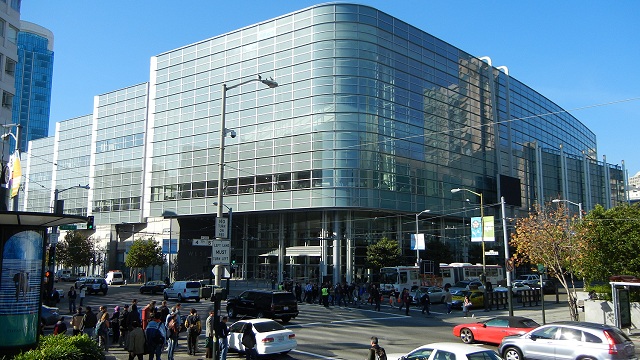
"caption": "Moscone Center West holds just part of the enormous annual AGU meeting. This building, by the way, is built to keep functioning after a major earthquake.Photos by Andrew Alden",
"description": null,
"title": "agutop",
"credit": null,
"status": "inherit",
"isLoading": false,
"fetchFailed": false
},
"quest_27997": {
"type": "attachments",
"id": "quest_27997",
"meta": {
"index": "attachments_1716263798",
"site": "quest",
"id": "27997",
"found": true
},
"parent": 27996,
"imgSizes": {
"thumbnail": {
"file": "https://ww2.kqed.org/app/uploads/sites/39/2011/12/tidestop-400x225.jpg",
"width": 400,
"mimeType": "image/jpeg",
"height": 225
},
"kqedFullSize": {
"file": "https://ww2.kqed.org/app/uploads/sites/39/2011/12/tidestop.jpg",
"width": 640,
"height": 360
},
"guest-author-96": {
"file": "https://ww2.kqed.org/app/uploads/sites/39/2011/12/tidestop-96x96.jpg",
"width": 96,
"mimeType": "image/jpeg",
"height": 96
},
"guest-author-64": {
"file": "https://ww2.kqed.org/app/uploads/sites/39/2011/12/tidestop-64x64.jpg",
"width": 64,
"mimeType": "image/jpeg",
"height": 64
},
"detail": {
"file": "https://ww2.kqed.org/app/uploads/sites/39/2011/12/tidestop-75x75.jpg",
"width": 75,
"mimeType": "image/jpeg",
"height": 75
},
"guest-author-32": {
"file": "https://ww2.kqed.org/app/uploads/sites/39/2011/12/tidestop-32x32.jpg",
"width": 32,
"mimeType": "image/jpeg",
"height": 32
},
"guest-author-128": {
"file": "https://ww2.kqed.org/app/uploads/sites/39/2011/12/tidestop-128x128.jpg",
"width": 128,
"mimeType": "image/jpeg",
"height": 128
}
},
"publishDate": 1322767608,
"modified": 1322767608,
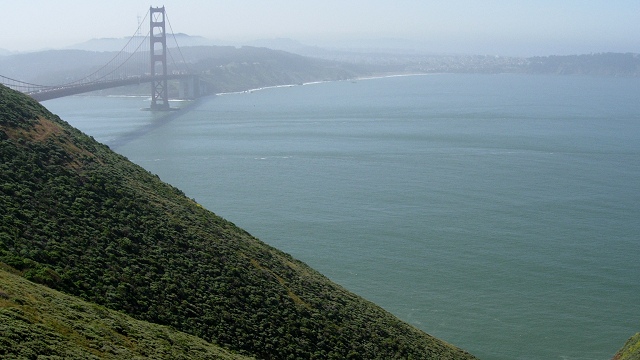
"caption": "The Golden Gate transmits a vast volume of water back and forth from the Bay twice each day, regular as clockwork but in a much more complex rhythm. Photo by Andrew Alden.",
"description": null,
"title": "tidestop",
"credit": null,
"status": "inherit",
"isLoading": false,
"fetchFailed": false
},
"quest_27750": {
"type": "attachments",
"id": "quest_27750",
"meta": {
"index": "attachments_1716263798",
"site": "quest",
"id": "27750",
"found": true
},
"parent": 27744,
"imgSizes": {
"thumbnail": {
"file": "https://ww2.kqed.org/app/uploads/sites/39/2011/11/natbridgetop-400x225.jpg",
"width": 400,
"mimeType": "image/jpeg",
"height": 225
},
"kqedFullSize": {
"file": "https://ww2.kqed.org/app/uploads/sites/39/2011/11/natbridgetop.jpg",
"width": 640,
"height": 360
},
"guest-author-96": {
"file": "https://ww2.kqed.org/app/uploads/sites/39/2011/11/natbridgetop-96x96.jpg",
"width": 96,
"mimeType": "image/jpeg",
"height": 96
},
"guest-author-64": {
"file": "https://ww2.kqed.org/app/uploads/sites/39/2011/11/natbridgetop-64x64.jpg",
"width": 64,
"mimeType": "image/jpeg",
"height": 64
},
"detail": {
"file": "https://ww2.kqed.org/app/uploads/sites/39/2011/11/natbridgetop-75x75.jpg",
"width": 75,
"mimeType": "image/jpeg",
"height": 75
},
"guest-author-32": {
"file": "https://ww2.kqed.org/app/uploads/sites/39/2011/11/natbridgetop-32x32.jpg",
"width": 32,
"mimeType": "image/jpeg",
"height": 32
},
"guest-author-128": {
"file": "https://ww2.kqed.org/app/uploads/sites/39/2011/11/natbridgetop-128x128.jpg",
"width": 128,
"mimeType": "image/jpeg",
"height": 128
}
},
"publishDate": 1322013759,
"modified": 1322013759,
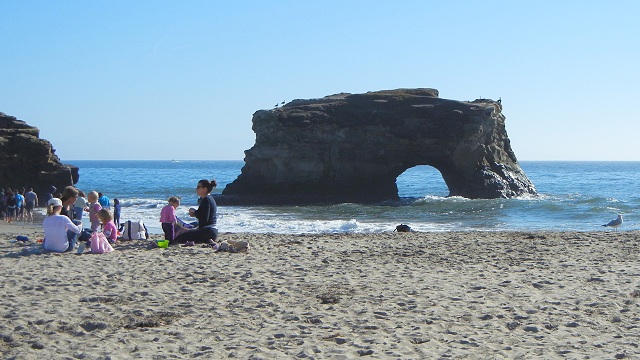
"caption": "The single remaining natural bridge at Natural Bridges State Beach is better described as a sea arch. Photos by Andrew Alden.",
"description": null,
"title": "natbridgetop",
"credit": null,
"status": "inherit",
"isLoading": false,
"fetchFailed": false
},
"quest_27406": {
"type": "attachments",
"id": "quest_27406",
"meta": {
"index": "attachments_1716263798",
"site": "quest",
"id": "27406",
"found": true
},
"parent": 27404,
"imgSizes": {
"thumbnail": {
"file": "https://ww2.kqed.org/app/uploads/sites/39/2011/11/fossiltop-400x225.jpg",
"width": 400,
"mimeType": "image/jpeg",
"height": 225
},
"kqedFullSize": {
"file": "https://ww2.kqed.org/app/uploads/sites/39/2011/11/fossiltop.jpg",
"width": 640,
"height": 360
},
"guest-author-96": {
"file": "https://ww2.kqed.org/app/uploads/sites/39/2011/11/fossiltop-96x96.jpg",
"width": 96,
"mimeType": "image/jpeg",
"height": 96
},
"guest-author-64": {
"file": "https://ww2.kqed.org/app/uploads/sites/39/2011/11/fossiltop-64x64.jpg",
"width": 64,
"mimeType": "image/jpeg",
"height": 64
},
"detail": {
"file": "https://ww2.kqed.org/app/uploads/sites/39/2011/11/fossiltop-75x75.jpg",
"width": 75,
"mimeType": "image/jpeg",
"height": 75
},
"guest-author-32": {
"file": "https://ww2.kqed.org/app/uploads/sites/39/2011/11/fossiltop-32x32.jpg",
"width": 32,
"mimeType": "image/jpeg",
"height": 32
},
"guest-author-128": {
"file": "https://ww2.kqed.org/app/uploads/sites/39/2011/11/fossiltop-128x128.jpg",
"width": 128,
"mimeType": "image/jpeg",
"height": 128
}
},
"publishDate": 1321556990,
"modified": 1321556990,
"caption": "Shell hash is common in the Briones Formation, in the East Bay. Photo by Andrew Alden",
"description": null,
"title": "fossiltop",
"credit": null,
"status": "inherit",
"isLoading": false,
"fetchFailed": false
},
"quest_27230": {
"type": "attachments",
"id": "quest_27230",
"meta": {
"index": "attachments_1716263798",
"site": "quest",
"id": "27230",
"found": true
},
"parent": 27225,
"imgSizes": {
"thumbnail": {
"file": "https://ww2.kqed.org/app/uploads/sites/39/2011/11/fitzgeraldtop-400x225.jpg",
"width": 400,
"mimeType": "image/jpeg",
"height": 225
},
"kqedFullSize": {
"file": "https://ww2.kqed.org/app/uploads/sites/39/2011/11/fitzgeraldtop.jpg",
"width": 640,
"height": 360
},
"guest-author-96": {
"file": "https://ww2.kqed.org/app/uploads/sites/39/2011/11/fitzgeraldtop-96x96.jpg",
"width": 96,
"mimeType": "image/jpeg",
"height": 96
},
"guest-author-64": {
"file": "https://ww2.kqed.org/app/uploads/sites/39/2011/11/fitzgeraldtop-64x64.jpg",
"width": 64,
"mimeType": "image/jpeg",
"height": 64
},
"detail": {
"file": "https://ww2.kqed.org/app/uploads/sites/39/2011/11/fitzgeraldtop-75x75.jpg",
"width": 75,
"mimeType": "image/jpeg",
"height": 75
},
"guest-author-32": {
"file": "https://ww2.kqed.org/app/uploads/sites/39/2011/11/fitzgeraldtop-32x32.jpg",
"width": 32,
"mimeType": "image/jpeg",
"height": 32
},
"guest-author-128": {
"file": "https://ww2.kqed.org/app/uploads/sites/39/2011/11/fitzgeraldtop-128x128.jpg",
"width": 128,
"mimeType": "image/jpeg",
"height": 128
}
},
"publishDate": 1320955185,
"modified": 1320955185,
"caption": "All photos by Andrew Alden",
"description": null,
"title": "fitzgeraldtop",
"credit": null,
"status": "inherit",
"isLoading": false,
"fetchFailed": false
},
"quest_24625": {
"type": "attachments",
"id": "quest_24625",
"meta": {
"index": "attachments_1716263798",
"site": "quest",
"id": "24625",
"found": true
},
"parent": 24597,
"imgSizes": {
"thumbnail": {
"file": "https://ww2.kqed.org/app/uploads/sites/39/2011/09/512A_HetchHetchy_ProductionStills-Sunol-TWR-400x225.jpg",
"width": 400,
"mimeType": "image/jpeg",
"height": 225
},
"kqedFullSize": {
"file": "https://ww2.kqed.org/app/uploads/sites/39/2011/09/512A_HetchHetchy_ProductionStills-Sunol-TWR.jpg",
"width": 640,
"height": 360
},
"guest-author-96": {
"file": "https://ww2.kqed.org/app/uploads/sites/39/2011/09/512A_HetchHetchy_ProductionStills-Sunol-TWR-96x96.jpg",
"width": 96,
"mimeType": "image/jpeg",
"height": 96
},
"guest-author-64": {
"file": "https://ww2.kqed.org/app/uploads/sites/39/2011/09/512A_HetchHetchy_ProductionStills-Sunol-TWR-64x64.jpg",
"width": 64,
"mimeType": "image/jpeg",
"height": 64
},
"detail": {
"file": "https://ww2.kqed.org/app/uploads/sites/39/2011/09/512A_HetchHetchy_ProductionStills-Sunol-TWR-75x75.jpg",
"width": 75,
"mimeType": "image/jpeg",
"height": 75
},
"guest-author-32": {
"file": "https://ww2.kqed.org/app/uploads/sites/39/2011/09/512A_HetchHetchy_ProductionStills-Sunol-TWR-32x32.jpg",
"width": 32,
"mimeType": "image/jpeg",
"height": 32
},
"guest-author-128": {
"file": "https://ww2.kqed.org/app/uploads/sites/39/2011/09/512A_HetchHetchy_ProductionStills-Sunol-TWR-128x128.jpg",
"width": 128,
"mimeType": "image/jpeg",
"height": 128
}
},
"publishDate": 1316213927,
"modified": 1316213927,
"caption": "Construction work on the new Sunol Valley Treated Water Reservoir, one of the 81 construction projects on the Hetch Hetchy Water System Improvement Program",
"description": null,
"title": "512A_HetchHetchy_ProductionStills Sunol TWR",
"credit": null,
"status": "inherit",
"isLoading": false,
"fetchFailed": false
},
"quest_26378": {
"type": "attachments",
"id": "quest_26378",
"meta": {
"index": "attachments_1716263798",
"site": "quest",
"id": "26378",
"found": true
},
"parent": 26370,
"imgSizes": {
"thumbnail": {
"file": "https://ww2.kqed.org/app/uploads/sites/39/2011/10/asawatop-400x225.jpg",
"width": 400,
"mimeType": "image/jpeg",
"height": 225
},
"kqedFullSize": {
"file": "https://ww2.kqed.org/app/uploads/sites/39/2011/10/asawatop.jpg",
"width": 640,
"height": 360
},
"guest-author-96": {
"file": "https://ww2.kqed.org/app/uploads/sites/39/2011/10/asawatop-96x96.jpg",
"width": 96,
"mimeType": "image/jpeg",
"height": 96
},
"guest-author-64": {
"file": "https://ww2.kqed.org/app/uploads/sites/39/2011/10/asawatop-64x64.jpg",
"width": 64,
"mimeType": "image/jpeg",
"height": 64
},
"detail": {
"file": "https://ww2.kqed.org/app/uploads/sites/39/2011/10/asawatop-75x75.jpg",
"width": 75,
"mimeType": "image/jpeg",
"height": 75
},
"guest-author-32": {
"file": "https://ww2.kqed.org/app/uploads/sites/39/2011/10/asawatop-32x32.jpg",
"width": 32,
"mimeType": "image/jpeg",
"height": 32
},
"guest-author-128": {
"file": "https://ww2.kqed.org/app/uploads/sites/39/2011/10/asawatop-128x128.jpg",
"width": 128,
"mimeType": "image/jpeg",
"height": 128
}
},
"publishDate": 1319741334,
"modified": 1319741334,
"caption": "Detail of the rock garden in Ruth Asawa's 'Garden of Remembrance' at UCSF. All photos by Andrew Alden.",
"description": null,
"title": "Ruth Asawa's \"Garden of Remembrance\"",
"credit": null,
"status": "inherit",
"isLoading": false,
"fetchFailed": false
},
"quest_26007": {
"type": "attachments",
"id": "quest_26007",
"meta": {
"index": "attachments_1716263798",
"site": "quest",
"id": "26007",
"found": true
},
"parent": 26006,
"imgSizes": {
"thumbnail": {
"file": "https://ww2.kqed.org/app/uploads/sites/39/2011/10/cycadSF-400x225.jpg",
"width": 400,
"mimeType": "image/jpeg",
"height": 225
},
"kqedFullSize": {
"file": "https://ww2.kqed.org/app/uploads/sites/39/2011/10/cycadSF.jpg",
"width": 640,
"height": 360
},
"guest-author-96": {
"file": "https://ww2.kqed.org/app/uploads/sites/39/2011/10/cycadSF-96x96.jpg",
"width": 96,
"mimeType": "image/jpeg",
"height": 96
},
"guest-author-64": {
"file": "https://ww2.kqed.org/app/uploads/sites/39/2011/10/cycadSF-64x64.jpg",
"width": 64,
"mimeType": "image/jpeg",
"height": 64
},
"detail": {
"file": "https://ww2.kqed.org/app/uploads/sites/39/2011/10/cycadSF-75x75.jpg",
"width": 75,
"mimeType": "image/jpeg",
"height": 75
},
"guest-author-32": {
"file": "https://ww2.kqed.org/app/uploads/sites/39/2011/10/cycadSF-32x32.jpg",
"width": 32,
"mimeType": "image/jpeg",
"height": 32
},
"guest-author-128": {
"file": "https://ww2.kqed.org/app/uploads/sites/39/2011/10/cycadSF-128x128.jpg",
"width": 128,
"mimeType": "image/jpeg",
"height": 128
}
},
"publishDate": 1318884200,
"modified": 1318884200,
"caption": "Cycads are considered \"living fossils\", unchanged from the days when Jurassic dinosaurs fed upon them. New research has found that today's cycads are much younger than that. Specimen in Strybing Arboretum in Golden Gate Park. Photo courtesy {link url=\"http://www.flickr.com/photos/tantek/\"}Tantek Çla;elik{/link} of Flickr under Creative Commons license.",
"description": null,
"title": "cycadSF",
"credit": null,
"status": "inherit",
"isLoading": false,
"fetchFailed": false
},
"quest_25773": {
"type": "attachments",
"id": "quest_25773",
"meta": {
"index": "attachments_1716263798",
"site": "quest",
"id": "25773",
"found": true
},
"parent": 25770,
"imgSizes": {
"thumbnail": {
"file": "https://ww2.kqed.org/app/uploads/sites/39/2011/10/elcerritobart-400x225.jpg",
"width": 400,
"mimeType": "image/jpeg",
"height": 225
},
"kqedFullSize": {
"file": "https://ww2.kqed.org/app/uploads/sites/39/2011/10/elcerritobart.jpg",
"width": 640,
"height": 360
},
"guest-author-96": {
"file": "https://ww2.kqed.org/app/uploads/sites/39/2011/10/elcerritobart-96x96.jpg",
"width": 96,
"mimeType": "image/jpeg",
"height": 96
},
"guest-author-64": {
"file": "https://ww2.kqed.org/app/uploads/sites/39/2011/10/elcerritobart-64x64.jpg",
"width": 64,
"mimeType": "image/jpeg",
"height": 64
},
"detail": {
"file": "https://ww2.kqed.org/app/uploads/sites/39/2011/10/elcerritobart-75x75.jpg",
"width": 75,
"mimeType": "image/jpeg",
"height": 75
},
"guest-author-32": {
"file": "https://ww2.kqed.org/app/uploads/sites/39/2011/10/elcerritobart-32x32.jpg",
"width": 32,
"mimeType": "image/jpeg",
"height": 32
},
"guest-author-128": {
"file": "https://ww2.kqed.org/app/uploads/sites/39/2011/10/elcerritobart-128x128.jpg",
"width": 128,
"mimeType": "image/jpeg",
"height": 128
}
},
"publishDate": 1317859911,
"modified": 1317859911,
"caption": "Photos by Andrew Alden",
"description": null,
"title": "elcerritobart",
"credit": null,
"status": "inherit",
"isLoading": false,
"fetchFailed": false
},
"quest_25811": {
"type": "attachments",
"id": "quest_25811",
"meta": {
"index": "attachments_1716263798",
"site": "quest",
"id": "25811",
"found": true
},
"parent": 25809,
"imgSizes": {
"thumbnail": {
"file": "https://ww2.kqed.org/app/uploads/sites/39/2011/10/WilliamsDavid_KCTS_MarqueeImageOption1-400x225.jpg",
"width": 400,
"mimeType": "image/jpeg",
"height": 225
},
"kqedFullSize": {
"file": "https://ww2.kqed.org/app/uploads/sites/39/2011/10/WilliamsDavid_KCTS_MarqueeImageOption1.jpg",
"width": 640,
"height": 360
},
"guest-author-96": {
"file": "https://ww2.kqed.org/app/uploads/sites/39/2011/10/WilliamsDavid_KCTS_MarqueeImageOption1-96x96.jpg",
"width": 96,
"mimeType": "image/jpeg",
"height": 96
},
"guest-author-64": {
"file": "https://ww2.kqed.org/app/uploads/sites/39/2011/10/WilliamsDavid_KCTS_MarqueeImageOption1-64x64.jpg",
"width": 64,
"mimeType": "image/jpeg",
"height": 64
},
"detail": {
"file": "https://ww2.kqed.org/app/uploads/sites/39/2011/10/WilliamsDavid_KCTS_MarqueeImageOption1-75x75.jpg",
"width": 75,
"mimeType": "image/jpeg",
"height": 75
},
"guest-author-32": {
"file": "https://ww2.kqed.org/app/uploads/sites/39/2011/10/WilliamsDavid_KCTS_MarqueeImageOption1-32x32.jpg",
"width": 32,
"mimeType": "image/jpeg",
"height": 32
},
"guest-author-128": {
"file": "https://ww2.kqed.org/app/uploads/sites/39/2011/10/WilliamsDavid_KCTS_MarqueeImageOption1-128x128.jpg",
"width": 128,
"mimeType": "image/jpeg",
"height": 128
}
},
"publishDate": 1318011840,
"modified": 1318011840,
"caption": "Ghost forest on Washington state's Copalis River during a very high fair-weather tide in December 1997. Photo courtesy of the USGS public domain",
"description": null,
"title": "WilliamsDavid_KCTS_MarqueeImageOption1",
"credit": null,
"status": "inherit",
"isLoading": false,
"fetchFailed": false
},
"quest_25658": {
"type": "attachments",
"id": "quest_25658",
"meta": {
"index": "attachments_1716263798",
"site": "quest",
"id": "25658",
"found": true
},
"parent": 25657,
"imgSizes": {
"thumbnail": {
"file": "https://ww2.kqed.org/app/uploads/sites/39/2011/10/pinoletop-400x225.jpg",
"width": 400,
"mimeType": "image/jpeg",
"height": 225
},
"kqedFullSize": {
"file": "https://ww2.kqed.org/app/uploads/sites/39/2011/10/pinoletop.jpg",
"width": 640,
"height": 360
},
"guest-author-96": {
"file": "https://ww2.kqed.org/app/uploads/sites/39/2011/10/pinoletop-96x96.jpg",
"width": 96,
"mimeType": "image/jpeg",
"height": 96
},
"guest-author-64": {
"file": "https://ww2.kqed.org/app/uploads/sites/39/2011/10/pinoletop-64x64.jpg",
"width": 64,
"mimeType": "image/jpeg",
"height": 64
},
"detail": {
"file": "https://ww2.kqed.org/app/uploads/sites/39/2011/10/pinoletop-75x75.jpg",
"width": 75,
"mimeType": "image/jpeg",
"height": 75
},
"guest-author-32": {
"file": "https://ww2.kqed.org/app/uploads/sites/39/2011/10/pinoletop-32x32.jpg",
"width": 32,
"mimeType": "image/jpeg",
"height": 32
},
"guest-author-128": {
"file": "https://ww2.kqed.org/app/uploads/sites/39/2011/10/pinoletop-128x128.jpg",
"width": 128,
"mimeType": "image/jpeg",
"height": 128
}
},
"publishDate": 1317700893,
"modified": 1317700893,
"caption": "The Hayward fault separates tidal marsh and coastal grassland at Point Pinole Regional Park just north of Richmond. Photos by Andrew Alden.",
"description": null,
"title": "pinoletop",
"credit": null,
"status": "inherit",
"isLoading": false,
"fetchFailed": false
}
},
"audioPlayerReducer": {
"postId": "stream_live",
"isPaused": true,
"isPlaying": false,
"pfsActive": false,
"pledgeModalIsOpen": true,
"playerDrawerIsOpen": false,
"liveAudioPlayStartedAt": 0,
"liveAudioPlayContext": ""
},
"authorsReducer": {
"sheraz-sadiq": {
"type": "authors",
"id": "6176",
"meta": {
"index": "authors_1716337520",
"id": "6176",
"found": true
},
"name": "Sheraz Sadiq",
"firstName": "Sheraz",
"lastName": "Sadiq",
"slug": "sheraz-sadiq",
"email": "ssadiq@kqed.org",
"display_author_email": false,
"staff_mastheads": [],
"title": "KQED Contributor",
"bio": "Sheraz Sadiq is an Emmy Award-winning producer at San Francisco PBS affiliate KQED. In 2012, he received the AAAS Kavli Science Journalism award for a story he produced about the seismic retrofit of the Hetch Hetchy water delivery system which serves the San Francisco Bay Area. In addition to producing television content for KQED Science, he has also created online features and written news articles on scientific subjects ranging from astronomy to synthetic biology.",
"avatar": "https://secure.gravatar.com/avatar/d88c61c214e477c4c6f0ebaed4f581bf7c9b1dafd94cd4361285d427107adb8d?s=600&d=blank&r=g",
"twitter": null,
"bluesky": null,
"facebook": null,
"instagram": null,
"linkedin": null,
"sites": [
{
"site": "arts",
"roles": [
"subscriber"
]
},
{
"site": "news",
"roles": [
"subscriber"
]
},
{
"site": "futureofyou",
"roles": [
"subscriber"
]
},
{
"site": "science",
"roles": [
"subscriber"
]
},
{
"site": "quest",
"roles": [
"leadcoordinator",
"subscriber"
]
}
],
"headData": {
"title": "Sheraz Sadiq | KQED",
"description": "KQED Contributor",
"ogImgSrc": "https://secure.gravatar.com/avatar/d88c61c214e477c4c6f0ebaed4f581bf7c9b1dafd94cd4361285d427107adb8d?s=600&d=blank&r=g",
"twImgSrc": "https://secure.gravatar.com/avatar/d88c61c214e477c4c6f0ebaed4f581bf7c9b1dafd94cd4361285d427107adb8d?s=600&d=blank&r=g"
},
"isLoading": false,
"link": "/author/sheraz-sadiq"
},
"andrew-alden": {
"type": "authors",
"id": "6228",
"meta": {
"index": "authors_1716337520",
"id": "6228",
"found": true
},
"name": "Andrew Alden",
"firstName": "Andrew",
"lastName": "Alden",
"slug": "andrew-alden",
"email": "alden@andrew-alden.com",
"display_author_email": false,
"staff_mastheads": [],
"title": null,
"bio": "Andrew Alden earned his geology degree at the University of New Hampshire and moved back to the Bay Area to work at the U.S. Geological Survey for six years. He has \u003ca href=\"http://geology.about.com/\">written on geology for About.com\u003c/a> since its founding in 1997. In 2007, he started the Oakland Geology blog, which won recognition as \"Best of the East Bay\" from the \u003ci>East Bay Express\u003c/i> in 2010. In writing about geology in the Bay Area and surroundings, he hopes to share some of the useful and pleasurable insights that geologists give us—not just facts about the deep past, but an attitude that might be called the \u003ci>deep present\u003c/i>.\r\n\r\nRead his \u003ca href=\"http://science.kqed.org/quest/author/andrew-alden/\">previous contributions\u003c/a> to \u003ca href=\"http://http://science.kqed.org/quest/\">QUEST\u003c/a>, a project dedicated to exploring the Science of Sustainability.",
"avatar": "https://secure.gravatar.com/avatar/9eaa0afc32f98c5fc7ce634437334a64?s=600&d=blank&r=g",
"twitter": null,
"facebook": null,
"instagram": null,
"linkedin": null,
"sites": [
{
"site": "science",
"roles": [
"author"
]
},
{
"site": "quest",
"roles": [
"subscriber"
]
}
],
"headData": {
"title": "Andrew Alden | KQED",
"description": null,
"ogImgSrc": "https://secure.gravatar.com/avatar/9eaa0afc32f98c5fc7ce634437334a64?s=600&d=blank&r=g",
"twImgSrc": "https://secure.gravatar.com/avatar/9eaa0afc32f98c5fc7ce634437334a64?s=600&d=blank&r=g"
},
"isLoading": false,
"link": "/author/andrew-alden"
},
"michaelgoode": {
"type": "authors",
"id": "10239",
"meta": {
"index": "authors_1716337520",
"id": "10239",
"found": true
},
"name": "Michael Goode",
"firstName": "Michael",
"lastName": "Goode",
"slug": "michaelgoode",
"email": "mgoode@kqed.org",
"display_author_email": false,
"staff_mastheads": [],
"title": null,
"bio": "Prior to joining the QUEST series, Michael began his professional career working on non-fiction programming for cable networks such as National Geographic Channel, Discovery Networks, and the Speed channel, while always pursuing independent projects that brought together his passion for travel, the environment, social issues, and the arts, some of which were aired on the independent news network Current TV. When Michael is not working in television, he enjoys traveling and volunteering in South America and Africa, in disaster response, computer literacy, or organic agriculture. As a member of the QUEST team, he relishes the opportunity to create engaging content that entertains, as well as educates.",
"avatar": "https://secure.gravatar.com/avatar/f75d98ab1583916cf044c55fbdeb0ce7?s=600&d=blank&r=g",
"twitter": null,
"facebook": null,
"instagram": null,
"linkedin": null,
"sites": [
{
"site": "quest",
"roles": [
"subscriber"
]
}
],
"headData": {
"title": "Michael Goode | KQED",
"description": null,
"ogImgSrc": "https://secure.gravatar.com/avatar/f75d98ab1583916cf044c55fbdeb0ce7?s=600&d=blank&r=g",
"twImgSrc": "https://secure.gravatar.com/avatar/f75d98ab1583916cf044c55fbdeb0ce7?s=600&d=blank&r=g"
},
"isLoading": false,
"link": "/author/michaelgoode"
},
"dwilliams": {
"type": "authors",
"id": "10282",
"meta": {
"index": "authors_1716337520",
"id": "10282",
"found": true
},
"name": "David Williams",
"firstName": "David",
"lastName": "Williams",
"slug": "dwilliams",
"email": "wingate@seanet.com",
"display_author_email": false,
"staff_mastheads": [],
"title": null,
"bio": "David B. Williams is an author and naturalist based in Seattle. He is the author of Stories in Stone: Travels Through Urban Geology and The Seattle Street-Smart Naturalist: Field Notes from the City. At present he is at work on a book about the natural and cultural history of cairns.",
"avatar": "https://secure.gravatar.com/avatar/307d7ed1fa3f7d9ec6c83a18112c519a?s=600&d=blank&r=g",
"twitter": null,
"facebook": null,
"instagram": null,
"linkedin": null,
"sites": [
{
"site": "quest",
"roles": [
"subscriber"
]
}
],
"headData": {
"title": "David Williams | KQED",
"description": null,
"ogImgSrc": "https://secure.gravatar.com/avatar/307d7ed1fa3f7d9ec6c83a18112c519a?s=600&d=blank&r=g",
"twImgSrc": "https://secure.gravatar.com/avatar/307d7ed1fa3f7d9ec6c83a18112c519a?s=600&d=blank&r=g"
},
"isLoading": false,
"link": "/author/dwilliams"
}
},
"pagesReducer": {
"science_category_geology": {
"type": "terms",
"id": "science_38",
"meta": {
"index": "terms_1716263798",
"site": "science",
"id": "38",
"score": 13.559036
},
"featImg": null,
"name": "Geology",
"description": null,
"taxonomy": "category",
"headData": {
"twImgId": null,
"twTitle": null,
"ogTitle": null,
"ogImgId": null,
"twDescription": null,
"description": null,
"title": "Geology Archives | KQED Science",
"ogDescription": null
},
"ttid": 40,
"slug": "geology",
"isLoading": false,
"title": "Geology",
"pageMeta": {
"site": "science",
"WpPageTemplate": "page-topic-editorial",
"currentPage": 26
},
"blocks": [
{
"blockName": "kqed/post-list",
"attrs": {
"layout": "cardArticle2",
"query": "posts/science?category=geology",
"seeMore": false,
"paginated": true,
"page": 26
}
},
{
"blockName": "kqed/ad"
}
]
}
},
"pfsSessionReducer": {},
"postsReducer": {
"stream_live": {
"type": "live",
"id": "stream_live",
"audioUrl": "https://hls.kqed.org/hls/kqed_app/playlist.m3u8",
"title": "Live Stream",
"excerpt": "Live Stream information currently unavailable.",
"link": "/radio",
"featImg": "",
"label": {
"name": "KQED Live",
"link": "/"
}
},
"stream_kqedNewscast": {
"type": "posts",
"id": "stream_kqedNewscast",
"audioUrl": "https://www.kqed.org/.stream/anon/radio/RDnews/newscast.mp3?_=1",
"title": "KQED Newscast",
"featImg": "",
"label": {
"name": "88.5 FM",
"link": "/"
}
},
"quest_28221": {
"type": "posts",
"id": "quest_28221",
"meta": {
"index": "posts_1716263798",
"site": "quest",
"id": "28221",
"score": null,
"sort": [
1323361650000
]
},
"parent": 0,
"labelTerm": {
"site": "quest"
},
"blocks": [],
"publishDate": 1323361650,
"format": "standard",
"disqusTitle": "AGU: Twenty Thousand Geeks by the Sea",
"title": "AGU: Twenty Thousand Geeks by the Sea",
"headTitle": "QUEST | KQED Science",
"content": "\u003cfigure id=\"attachment_28239\" class=\"wp-caption alignleft\" style=\"max-width: 300px\">\u003ca href=\"http://ww2.kqed.org/quest/2011/12/08/agu-twenty-thousand-geeks-by-the-sea/agutop/\" rel=\"attachment wp-att-28239\">\u003cimg src=\"http://ww2.kqed.org/quest/wp-content/uploads/sites/39/2011/12/agutop-300x169.jpg\" alt=\"\" title=\"agutop\" width=\"300\" height=\"169\" class=\"size-thumbnail wp-image-28239\">\u003c/a>\u003cfigcaption class=\"wp-caption-text\">Moscone Center West holds just part of the enormous annual AGU fall meeting. This building, by the way, is built to keep functioning after a major earthquake.Photos by Andrew Alden\u003c/figcaption>\u003c/figure>\n\u003cp>This week San Francisco pays host to the annual meeting of the \u003ca href=\"http://www.agu.org/\">American Geophysical Union\u003c/a>. Most of us just call the occasion \"AGU.\" I always go. Here's what it's like.\u003c/p>\n\u003cp>The AGU meeting is the world's largest gathering of Earth scientists, and it's been held in San Francisco in early December every year since the 1960s. By now it's been around longer than Herb Caen. Over the years it has grown into a Woodstock-size event and moved from the old Civic Center to the Moscone Center. What do 20,000 scientists do here for a week?\u003c/p>\n\u003cp>They give scientific talks, of course, the traditional short lecture with slides about what they're up to, given to a roomful of their closest colleagues. Prominent scientists give longer lectures to very large rooms, and often it's standing room only. Sessions may deal with dry topics, but sometimes there are intangible extras, like the session I saw Wednesday in which each of the speakers paused to remember their colleague, the late \u003ca href=\"http://www-sdt.univ-brest.fr/news/in-memoriam-jean-francheteau-en\">Jean Francheteau\u003c/a>, with photos and reminiscences.\u003c/p>\n\u003cp>But more and more, the meeting's science is presented on posters: a 4-by-6-foot panel on which a scientist hangs a large printed poster, standing there for a scheduled time period to discuss the work with anyone who stops by. \u003c/p>\n\u003cfigure id=\"attachment_28241\" class=\"wp-caption aligncenter\" style=\"max-width: 600px\">\u003ca href=\"http://ww2.kqed.org/quest/2011/12/08/agu-twenty-thousand-geeks-by-the-sea/aguposter/\" rel=\"attachment wp-att-28241\">\u003cimg src=\"http://ww2.kqed.org/quest/wp-content/uploads/sites/39/2011/12/aguposter.jpg\" alt=\"\" title=\"aguposter\" width=\"600\" height=\"410\" class=\"size-full wp-image-28241\" srcset=\"https://ww2.kqed.org/app/uploads/sites/39/2011/12/aguposter.jpg 600w, https://ww2.kqed.org/app/uploads/sites/39/2011/12/aguposter-400x273.jpg 400w\" sizes=\"(max-width: 600px) 100vw, 600px\">\u003c/a>\u003cfigcaption class=\"wp-caption-text\">Poster presentations are not all about big topics, but they do feature new science.\u003c/figcaption>\u003c/figure>\n\u003cp>Posters fill Moscone Center South, several acres of them. The nice thing about posters is that the interaction is of high quality, unlike a lecture where time is limited and you can't have a proper dialog. They can be quite popular, especially in mid-afternoon when the beer is served.\u003c/p>\n\u003cfigure id=\"attachment_28242\" class=\"wp-caption aligncenter\" style=\"max-width: 600px\">\u003ca href=\"http://ww2.kqed.org/quest/2011/12/08/agu-twenty-thousand-geeks-by-the-sea/aguposters/\" rel=\"attachment wp-att-28242\">\u003cimg src=\"http://ww2.kqed.org/quest/wp-content/uploads/sites/39/2011/12/aguposters.jpg\" alt=\"\" title=\"aguposters\" width=\"600\" height=\"483\" class=\"size-full wp-image-28242\" srcset=\"https://ww2.kqed.org/app/uploads/sites/39/2011/12/aguposters.jpg 600w, https://ww2.kqed.org/app/uploads/sites/39/2011/12/aguposters-400x322.jpg 400w\" sizes=\"(max-width: 600px) 100vw, 600px\">\u003c/a>\u003cfigcaption class=\"wp-caption-text\">Scenes like this fill the whole cavernous space of Moscone Center South.\u003c/figcaption>\u003c/figure>\n\u003cp>The atmosphere is high-energy, even at 8 a.m. when proceedings open. The whole world is represented, as well as all ages. You can see the gleam in a student's eye who is meeting a grand old scientific titan for the first time—and the corresponding pleasure of passing wisdom on to the next generation.\u003c/p>\n\u003cp>[ad fullwidth]\u003c/p>\n\u003cp>There are lots of meetings that go on: task forces, society committees, interest groups. I've seen participants who do nothing but these, and they seem to be happy to do it. \"Town meeting\" sessions take advantage of the occasion to gather widespread researchers in one room. One example I attended was for the great \u003ca href=\"http://www.earthscope.org/\">EarthScope program\u003c/a>, a ten-year project that is covering the entire United States with a moving network of seismographs like a doctor moving a stethoscope. (They started in California.) Over a hundred people were on hand for that.\u003c/p>\n\u003cp>Social events abound as well. Medals were awarded Wednesday night; receptions are held for all sorts of groups; geoscience bloggers get their own lunch today. There's something for everyone, even a 5K run and a sort of science slam I saw Wednesday evening where people gave 5-minute talks using no more than 20 slides.\u003c/p>\n\u003cp>A gathering of this size is a magnet for the universe of suppliers to the trade, who have a whole floor of Moscone Center West to spread their wares. High-tech instrument dealers, scholarly and textbook publishers, government and industry agencies, and fancy rock and gem dealers create a veritable casbah, and there's plenty of talk in the long beer lines.\u003c/p>\n\u003cfigure id=\"attachment_28240\" class=\"wp-caption aligncenter\" style=\"max-width: 600px\">\u003ca href=\"http://ww2.kqed.org/quest/2011/12/08/agu-twenty-thousand-geeks-by-the-sea/agudemo/\" rel=\"attachment wp-att-28240\">\u003cimg src=\"http://ww2.kqed.org/quest/wp-content/uploads/sites/39/2011/12/agudemo.jpg\" alt=\"\" title=\"agudemo\" width=\"600\" height=\"439\" class=\"size-full wp-image-28240\" srcset=\"https://ww2.kqed.org/app/uploads/sites/39/2011/12/agudemo.jpg 600w, https://ww2.kqed.org/app/uploads/sites/39/2011/12/agudemo-400x293.jpg 400w\" sizes=\"(max-width: 600px) 100vw, 600px\">\u003c/a>\u003cfigcaption class=\"wp-caption-text\">An official from NASA demonstrates some of the agency's capabilities in the Exhibit Hall.\u003c/figcaption>\u003c/figure>\n\u003cp>\u003c/p>\n\u003cp>More than a hundred reporters and writers occupy the pressroom, many shuttling across the hall to a room outfitted for press conferences. This year there have been a lot of them centered around earthquakes, climate change and interplanetary space. Is all that really in the realm of geology? It is in my book. When you watch or read the news, look for science items \"presented in San Francisco.\" It's all part of the geosciences' holiday season.\u003c/p>\n\n",
"disqusIdentifier": "28221 http://science.kqed.org/quest/?p=28221",
"disqusUrl": "https://ww2.kqed.org/quest/2011/12/08/agu-twenty-thousand-geeks-by-the-sea/",
"stats": {
"hasVideo": false,
"hasChartOrMap": false,
"hasAudio": false,
"hasPolis": false,
"wordCount": 695,
"hasGoogleForm": false,
"hasGallery": false,
"hasHearkenModule": false,
"iframeSrcs": [],
"paragraphCount": 12
},
"modified": 1325108423,
"excerpt": "Geoscientists mark the holiday season every year by swarming to San Francisco to eat, drink and talk science.",
"headData": {
"twImgId": "",
"twTitle": "",
"ogTitle": "",
"ogImgId": "",
"twDescription": "",
"description": "Geoscientists mark the holiday season every year by swarming to San Francisco to eat, drink and talk science.",
"title": "AGU: Twenty Thousand Geeks by the Sea | KQED",
"ogDescription": "",
"schema": {
"@context": "https://schema.org",
"@type": "Article",
"headline": "AGU: Twenty Thousand Geeks by the Sea",
"datePublished": "2011-12-08T08:27:30-08:00",
"dateModified": "2011-12-28T13:40:23-08:00",
"image": "https://cdn.kqed.org/wp-content/uploads/2020/02/KQED-OG-Image@1x.png"
}
},
"guestAuthors": [],
"slug": "agu-twenty-thousand-geeks-by-the-sea",
"status": "publish",
"path": "/quest/28221/agu-twenty-thousand-geeks-by-the-sea",
"audioTrackLength": null,
"parsedContent": [
{
"type": "contentString",
"content": "\u003cdiv class=\"post-body\">\u003cp>\u003cfigure id=\"attachment_28239\" class=\"wp-caption alignleft\" style=\"max-width: 300px\">\u003ca href=\"http://ww2.kqed.org/quest/2011/12/08/agu-twenty-thousand-geeks-by-the-sea/agutop/\" rel=\"attachment wp-att-28239\">\u003cimg src=\"http://ww2.kqed.org/quest/wp-content/uploads/sites/39/2011/12/agutop-300x169.jpg\" alt=\"\" title=\"agutop\" width=\"300\" height=\"169\" class=\"size-thumbnail wp-image-28239\">\u003c/a>\u003cfigcaption class=\"wp-caption-text\">Moscone Center West holds just part of the enormous annual AGU fall meeting. This building, by the way, is built to keep functioning after a major earthquake.Photos by Andrew Alden\u003c/figcaption>\u003c/figure>\n\u003cp>This week San Francisco pays host to the annual meeting of the \u003ca href=\"http://www.agu.org/\">American Geophysical Union\u003c/a>. Most of us just call the occasion \"AGU.\" I always go. Here's what it's like.\u003c/p>\n\u003cp>The AGU meeting is the world's largest gathering of Earth scientists, and it's been held in San Francisco in early December every year since the 1960s. By now it's been around longer than Herb Caen. Over the years it has grown into a Woodstock-size event and moved from the old Civic Center to the Moscone Center. What do 20,000 scientists do here for a week?\u003c/p>\n\u003cp>They give scientific talks, of course, the traditional short lecture with slides about what they're up to, given to a roomful of their closest colleagues. Prominent scientists give longer lectures to very large rooms, and often it's standing room only. Sessions may deal with dry topics, but sometimes there are intangible extras, like the session I saw Wednesday in which each of the speakers paused to remember their colleague, the late \u003ca href=\"http://www-sdt.univ-brest.fr/news/in-memoriam-jean-francheteau-en\">Jean Francheteau\u003c/a>, with photos and reminiscences.\u003c/p>\n\u003cp>But more and more, the meeting's science is presented on posters: a 4-by-6-foot panel on which a scientist hangs a large printed poster, standing there for a scheduled time period to discuss the work with anyone who stops by. \u003c/p>\n\u003cfigure id=\"attachment_28241\" class=\"wp-caption aligncenter\" style=\"max-width: 600px\">\u003ca href=\"http://ww2.kqed.org/quest/2011/12/08/agu-twenty-thousand-geeks-by-the-sea/aguposter/\" rel=\"attachment wp-att-28241\">\u003cimg src=\"http://ww2.kqed.org/quest/wp-content/uploads/sites/39/2011/12/aguposter.jpg\" alt=\"\" title=\"aguposter\" width=\"600\" height=\"410\" class=\"size-full wp-image-28241\" srcset=\"https://ww2.kqed.org/app/uploads/sites/39/2011/12/aguposter.jpg 600w, https://ww2.kqed.org/app/uploads/sites/39/2011/12/aguposter-400x273.jpg 400w\" sizes=\"(max-width: 600px) 100vw, 600px\">\u003c/a>\u003cfigcaption class=\"wp-caption-text\">Poster presentations are not all about big topics, but they do feature new science.\u003c/figcaption>\u003c/figure>\n\u003cp>Posters fill Moscone Center South, several acres of them. The nice thing about posters is that the interaction is of high quality, unlike a lecture where time is limited and you can't have a proper dialog. They can be quite popular, especially in mid-afternoon when the beer is served.\u003c/p>\n\u003cfigure id=\"attachment_28242\" class=\"wp-caption aligncenter\" style=\"max-width: 600px\">\u003ca href=\"http://ww2.kqed.org/quest/2011/12/08/agu-twenty-thousand-geeks-by-the-sea/aguposters/\" rel=\"attachment wp-att-28242\">\u003cimg src=\"http://ww2.kqed.org/quest/wp-content/uploads/sites/39/2011/12/aguposters.jpg\" alt=\"\" title=\"aguposters\" width=\"600\" height=\"483\" class=\"size-full wp-image-28242\" srcset=\"https://ww2.kqed.org/app/uploads/sites/39/2011/12/aguposters.jpg 600w, https://ww2.kqed.org/app/uploads/sites/39/2011/12/aguposters-400x322.jpg 400w\" sizes=\"(max-width: 600px) 100vw, 600px\">\u003c/a>\u003cfigcaption class=\"wp-caption-text\">Scenes like this fill the whole cavernous space of Moscone Center South.\u003c/figcaption>\u003c/figure>\n\u003cp>The atmosphere is high-energy, even at 8 a.m. when proceedings open. The whole world is represented, as well as all ages. You can see the gleam in a student's eye who is meeting a grand old scientific titan for the first time—and the corresponding pleasure of passing wisdom on to the next generation.\u003c/p>\n\u003cp>\u003c/p>\u003c/div>",
"attributes": {
"named": {},
"numeric": []
}
},
{
"type": "component",
"content": "",
"name": "ad",
"attributes": {
"named": {
"label": "fullwidth"
},
"numeric": [
"fullwidth"
]
}
},
{
"type": "contentString",
"content": "\u003cdiv class=\"post-body\">\u003cp>\u003c/p>\n\u003cp>There are lots of meetings that go on: task forces, society committees, interest groups. I've seen participants who do nothing but these, and they seem to be happy to do it. \"Town meeting\" sessions take advantage of the occasion to gather widespread researchers in one room. One example I attended was for the great \u003ca href=\"http://www.earthscope.org/\">EarthScope program\u003c/a>, a ten-year project that is covering the entire United States with a moving network of seismographs like a doctor moving a stethoscope. (They started in California.) Over a hundred people were on hand for that.\u003c/p>\n\u003cp>Social events abound as well. Medals were awarded Wednesday night; receptions are held for all sorts of groups; geoscience bloggers get their own lunch today. There's something for everyone, even a 5K run and a sort of science slam I saw Wednesday evening where people gave 5-minute talks using no more than 20 slides.\u003c/p>\n\u003cp>A gathering of this size is a magnet for the universe of suppliers to the trade, who have a whole floor of Moscone Center West to spread their wares. High-tech instrument dealers, scholarly and textbook publishers, government and industry agencies, and fancy rock and gem dealers create a veritable casbah, and there's plenty of talk in the long beer lines.\u003c/p>\n\u003cfigure id=\"attachment_28240\" class=\"wp-caption aligncenter\" style=\"max-width: 600px\">\u003ca href=\"http://ww2.kqed.org/quest/2011/12/08/agu-twenty-thousand-geeks-by-the-sea/agudemo/\" rel=\"attachment wp-att-28240\">\u003cimg src=\"http://ww2.kqed.org/quest/wp-content/uploads/sites/39/2011/12/agudemo.jpg\" alt=\"\" title=\"agudemo\" width=\"600\" height=\"439\" class=\"size-full wp-image-28240\" srcset=\"https://ww2.kqed.org/app/uploads/sites/39/2011/12/agudemo.jpg 600w, https://ww2.kqed.org/app/uploads/sites/39/2011/12/agudemo-400x293.jpg 400w\" sizes=\"(max-width: 600px) 100vw, 600px\">\u003c/a>\u003cfigcaption class=\"wp-caption-text\">An official from NASA demonstrates some of the agency's capabilities in the Exhibit Hall.\u003c/figcaption>\u003c/figure>\n\u003cp>\u003c/p>\n\u003cp>More than a hundred reporters and writers occupy the pressroom, many shuttling across the hall to a room outfitted for press conferences. This year there have been a lot of them centered around earthquakes, climate change and interplanetary space. Is all that really in the realm of geology? It is in my book. When you watch or read the news, look for science items \"presented in San Francisco.\" It's all part of the geosciences' holiday season.\u003c/p>\n\n\u003c/div>\u003c/p>",
"attributes": {
"named": {},
"numeric": []
}
}
],
"link": "/quest/28221/agu-twenty-thousand-geeks-by-the-sea",
"authors": [
"6228"
],
"categories": [
"quest_11"
],
"tags": [
"quest_10529",
"quest_10190",
"quest_13202",
"quest_10528",
"quest_2545"
],
"featImg": "quest_28239",
"label": "quest"
},
"quest_27996": {
"type": "posts",
"id": "quest_27996",
"meta": {
"index": "posts_1716263798",
"site": "quest",
"id": "27996",
"score": null,
"sort": [
1322771083000
]
},
"parent": 0,
"labelTerm": {
"site": "quest"
},
"blocks": [],
"publishDate": 1322771083,
"format": "standard",
"disqusTitle": "Bay Area Tides",
"title": "Bay Area Tides",
"headTitle": "QUEST | KQED Science",
"content": "\u003cfigure id=\"attachment_27997\" class=\"wp-caption aligncenter\" style=\"max-width: 640px\">\u003ca href=\"http://ww2.kqed.org/quest/2011/12/01/bay-area-tides/tidestop/\" rel=\"attachment wp-att-27997\">\u003cimg src=\"http://ww2.kqed.org/quest/wp-content/uploads/sites/39/2011/12/tidestop.jpg\" alt=\"\" title=\"tidestop\" width=\"640\" height=\"360\" class=\"size-full wp-image-27997\" srcset=\"https://ww2.kqed.org/app/uploads/sites/39/2011/12/tidestop.jpg 640w, https://ww2.kqed.org/app/uploads/sites/39/2011/12/tidestop-400x225.jpg 400w\" sizes=\"(max-width: 640px) 100vw, 640px\">\u003c/a>\u003cfigcaption class=\"wp-caption-text\">The Golden Gate transmits a vast volume of water back and forth from the Bay twice each day, regular as clockwork but in a much more complex rhythm. Photo by Andrew Alden.\u003c/figcaption>\u003c/figure>\n\u003cp>These days, most people in the San Francisco Bay Area arrange their daily lives around the clock. But in former times it was the sun, moon and tides that governed the rhythm of our days. Nowadays the sun and moon attract notice only on the rare occasions when they have eclipses. But the tides still matter.\u003c/p>\n\u003cp>The twice-daily ebb and flow of the tides is not just a factor for ships navigating the San Francisco Bay shallows, although that is important. The tides are how the Bay breathes. The Bay's windpipe is the Golden Gate, a deep channel that enables seawater to spread nutrients and oxygenation to its lungs—\u003ca href=\"http://ww2.kqed.org/quest/science-hike/don-edwards-sf-bay-national-wildlife-refuge-exploration/\">wetlands\u003c/a> as far away as the Central Valley. In turn, sediment from nearly half of California's surface area is exhaled to the Pacific where it piles up in a \u003ca href=\"http://ww2.kqed.org/quest/2010/10/14/sand-waves-and-the-golden-gate/\">great furrowed berm\u003c/a> just off the Golden Gate.\u003c/p>\n\u003cp>Tides arise from the interactions of the sun and moon with our planet; they are where the heavens most truly move the Earth. While mariners always had a good sense of the patterns of the tides, it took science to make them predictable. When Isaac Newton first grasped that the motions of heaven and Earth fit the same mathematical laws, in the mid-1600s, he saw that one very practical application would be in precisely describing—in modern terms, modeling—the tides.\u003c/p>\n\u003cp>Newton's tantalizing task is considered fairly well solved today, but it has taken centuries to arrive at this point. (\u003ca href=\"http://en.wikipedia.org/wiki/Tide\">Wikipedia has a good introduction.\u003c/a>) Today Bay Area tides are monitored and forecasted by the National Oceanographic and Atmospheric Administration; NOAA's \u003ca href=\"http://tidesandcurrents.noaa.gov/\">Tides and Currents\u003c/a> website will serve you official tide data for many stations (like \u003ca href=\"http://ww2.kqed.org/quest/2010/12/10/producers-notes-science-on-the-spot-watching-the-tides/\">San Francisco's station\u003c/a> at Crissy Field).\u003c/p>\n\u003cp>But even the most exacting mathematics gives us only a partial picture. Weather and climate both matter, too. As weather fronts and storms and winds impinge on the Bay's water, they can change the tides by as much as two feet. Semi-annual climatic cycles like El Niños add their slower influence. And sea-level rise adds its inexorable direction over the scale of a lifetime. For the best view of the day's exact coastal conditions, I look to surfers and the \u003ca href=\"http://www.surf-forecast.com/\">surf-forecast.com\u003c/a> site. The tide is important for beach geologizers, too.\u003c/p>\n\u003cp>[ad fullwidth]\u003c/p>\n\u003cp>The other big influence on the tides in any given place is bathymetry—underwater topography. Mathematical modelers can treat the different parts of the Bay as giant bathtubs, each sloshing back and forth in its own rhythm and spilling into its neighbors, but that analytical approach has limits. For serious analysis of things like stormwater surges, major shoreline construction and channel dredging, the old-fashioned scale model—the Army Corps of Engineers' \u003ca href=\"http://www.spn.usace.army.mil/bmvc/index.html\">Bay Model in Sausalito\u003c/a>—still matters.\u003cbr>\n\u003ca href=\"http://ww2.kqed.org/quest/2011/12/01/bay-area-tides/tidesmodel/\" rel=\"attachment wp-att-27998\">\u003cimg src=\"http://ww2.kqed.org/quest/wp-content/uploads/sites/39/2011/12/tidesmodel.jpg\" alt=\"\" title=\"tidesmodel\" width=\"600\" height=\"360\" class=\"size-full wp-image-27998\" srcset=\"https://ww2.kqed.org/app/uploads/sites/39/2011/12/tidesmodel.jpg 600w, https://ww2.kqed.org/app/uploads/sites/39/2011/12/tidesmodel-400x240.jpg 400w\" sizes=\"(max-width: 600px) 100vw, 600px\">\u003c/a>\u003c/p>\n\u003cp>\u003c/p>\n\u003cp>It's a painstakingly calibrated replica, one-thousandth true size or about one and a half acres, whose pumps and sumps produce realistic versions of the Bay's complicated breathing. (Unfortunately it's being renovated as I write this, but the Visitor Center is still open to help you learn about the Bay in other ways.)\u003c/p>\n\n",
"disqusIdentifier": "27996 http://science.kqed.org/quest/?p=27996",
"disqusUrl": "https://ww2.kqed.org/quest/2011/12/01/bay-area-tides/",
"stats": {
"hasVideo": false,
"hasChartOrMap": false,
"hasAudio": false,
"hasPolis": false,
"wordCount": 566,
"hasGoogleForm": false,
"hasGallery": false,
"hasHearkenModule": false,
"iframeSrcs": [],
"paragraphCount": 9
},
"modified": 1325108358,
"excerpt": "The daily tides are the Bay's way of breathing, from its windpipe at the Golden Gate to its lungs, the wetlands from the Delta to the coast.",
"headData": {
"twImgId": "",
"twTitle": "",
"ogTitle": "",
"ogImgId": "",
"twDescription": "",
"description": "The daily tides are the Bay's way of breathing, from its windpipe at the Golden Gate to its lungs, the wetlands from the Delta to the coast.",
"title": "Bay Area Tides | KQED",
"ogDescription": "",
"schema": {
"@context": "https://schema.org",
"@type": "Article",
"headline": "Bay Area Tides",
"datePublished": "2011-12-01T12:24:43-08:00",
"dateModified": "2011-12-28T13:39:18-08:00",
"image": "https://cdn.kqed.org/wp-content/uploads/2020/02/KQED-OG-Image@1x.png"
}
},
"guestAuthors": [],
"slug": "bay-area-tides",
"status": "publish",
"path": "/quest/27996/bay-area-tides",
"audioTrackLength": null,
"parsedContent": [
{
"type": "contentString",
"content": "\u003cdiv class=\"post-body\">\u003cp>\u003cfigure id=\"attachment_27997\" class=\"wp-caption aligncenter\" style=\"max-width: 640px\">\u003ca href=\"http://ww2.kqed.org/quest/2011/12/01/bay-area-tides/tidestop/\" rel=\"attachment wp-att-27997\">\u003cimg src=\"http://ww2.kqed.org/quest/wp-content/uploads/sites/39/2011/12/tidestop.jpg\" alt=\"\" title=\"tidestop\" width=\"640\" height=\"360\" class=\"size-full wp-image-27997\" srcset=\"https://ww2.kqed.org/app/uploads/sites/39/2011/12/tidestop.jpg 640w, https://ww2.kqed.org/app/uploads/sites/39/2011/12/tidestop-400x225.jpg 400w\" sizes=\"(max-width: 640px) 100vw, 640px\">\u003c/a>\u003cfigcaption class=\"wp-caption-text\">The Golden Gate transmits a vast volume of water back and forth from the Bay twice each day, regular as clockwork but in a much more complex rhythm. Photo by Andrew Alden.\u003c/figcaption>\u003c/figure>\n\u003cp>These days, most people in the San Francisco Bay Area arrange their daily lives around the clock. But in former times it was the sun, moon and tides that governed the rhythm of our days. Nowadays the sun and moon attract notice only on the rare occasions when they have eclipses. But the tides still matter.\u003c/p>\n\u003cp>The twice-daily ebb and flow of the tides is not just a factor for ships navigating the San Francisco Bay shallows, although that is important. The tides are how the Bay breathes. The Bay's windpipe is the Golden Gate, a deep channel that enables seawater to spread nutrients and oxygenation to its lungs—\u003ca href=\"http://ww2.kqed.org/quest/science-hike/don-edwards-sf-bay-national-wildlife-refuge-exploration/\">wetlands\u003c/a> as far away as the Central Valley. In turn, sediment from nearly half of California's surface area is exhaled to the Pacific where it piles up in a \u003ca href=\"http://ww2.kqed.org/quest/2010/10/14/sand-waves-and-the-golden-gate/\">great furrowed berm\u003c/a> just off the Golden Gate.\u003c/p>\n\u003cp>Tides arise from the interactions of the sun and moon with our planet; they are where the heavens most truly move the Earth. While mariners always had a good sense of the patterns of the tides, it took science to make them predictable. When Isaac Newton first grasped that the motions of heaven and Earth fit the same mathematical laws, in the mid-1600s, he saw that one very practical application would be in precisely describing—in modern terms, modeling—the tides.\u003c/p>\n\u003cp>Newton's tantalizing task is considered fairly well solved today, but it has taken centuries to arrive at this point. (\u003ca href=\"http://en.wikipedia.org/wiki/Tide\">Wikipedia has a good introduction.\u003c/a>) Today Bay Area tides are monitored and forecasted by the National Oceanographic and Atmospheric Administration; NOAA's \u003ca href=\"http://tidesandcurrents.noaa.gov/\">Tides and Currents\u003c/a> website will serve you official tide data for many stations (like \u003ca href=\"http://ww2.kqed.org/quest/2010/12/10/producers-notes-science-on-the-spot-watching-the-tides/\">San Francisco's station\u003c/a> at Crissy Field).\u003c/p>\n\u003cp>But even the most exacting mathematics gives us only a partial picture. Weather and climate both matter, too. As weather fronts and storms and winds impinge on the Bay's water, they can change the tides by as much as two feet. Semi-annual climatic cycles like El Niños add their slower influence. And sea-level rise adds its inexorable direction over the scale of a lifetime. For the best view of the day's exact coastal conditions, I look to surfers and the \u003ca href=\"http://www.surf-forecast.com/\">surf-forecast.com\u003c/a> site. The tide is important for beach geologizers, too.\u003c/p>\n\u003cp>\u003c/p>\u003c/div>",
"attributes": {
"named": {},
"numeric": []
}
},
{
"type": "component",
"content": "",
"name": "ad",
"attributes": {
"named": {
"label": "fullwidth"
},
"numeric": [
"fullwidth"
]
}
},
{
"type": "contentString",
"content": "\u003cdiv class=\"post-body\">\u003cp>\u003c/p>\n\u003cp>The other big influence on the tides in any given place is bathymetry—underwater topography. Mathematical modelers can treat the different parts of the Bay as giant bathtubs, each sloshing back and forth in its own rhythm and spilling into its neighbors, but that analytical approach has limits. For serious analysis of things like stormwater surges, major shoreline construction and channel dredging, the old-fashioned scale model—the Army Corps of Engineers' \u003ca href=\"http://www.spn.usace.army.mil/bmvc/index.html\">Bay Model in Sausalito\u003c/a>—still matters.\u003cbr>\n\u003ca href=\"http://ww2.kqed.org/quest/2011/12/01/bay-area-tides/tidesmodel/\" rel=\"attachment wp-att-27998\">\u003cimg src=\"http://ww2.kqed.org/quest/wp-content/uploads/sites/39/2011/12/tidesmodel.jpg\" alt=\"\" title=\"tidesmodel\" width=\"600\" height=\"360\" class=\"size-full wp-image-27998\" srcset=\"https://ww2.kqed.org/app/uploads/sites/39/2011/12/tidesmodel.jpg 600w, https://ww2.kqed.org/app/uploads/sites/39/2011/12/tidesmodel-400x240.jpg 400w\" sizes=\"(max-width: 600px) 100vw, 600px\">\u003c/a>\u003c/p>\n\u003cp>\u003c/p>\n\u003cp>It's a painstakingly calibrated replica, one-thousandth true size or about one and a half acres, whose pumps and sumps produce realistic versions of the Bay's complicated breathing. (Unfortunately it's being renovated as I write this, but the Visitor Center is still open to help you learn about the Bay in other ways.)\u003c/p>\n\n\u003c/div>\u003c/p>",
"attributes": {
"named": {},
"numeric": []
}
}
],
"link": "/quest/27996/bay-area-tides",
"authors": [
"6228"
],
"categories": [
"quest_9",
"quest_11"
],
"tags": [
"quest_10522",
"quest_10523",
"quest_2001",
"quest_13202",
"quest_2487",
"quest_10131",
"quest_2937",
"quest_2938"
],
"featImg": "quest_27997",
"label": "quest"
},
"quest_27744": {
"type": "posts",
"id": "quest_27744",
"meta": {
"index": "posts_1716263798",
"site": "quest",
"id": "27744",
"score": null,
"sort": [
1322154033000
]
},
"parent": 0,
"labelTerm": {
"site": "quest"
},
"blocks": [],
"publishDate": 1322154033,
"format": "standard",
"disqusTitle": "Geological Outings Around the Bay: Natural Bridges",
"title": "Geological Outings Around the Bay: Natural Bridges",
"headTitle": "QUEST | KQED Science",
"content": "\u003cp>Natural Bridges State Beach is in Santa Cruz, just west of downtown. It's an easy outing and a nice spot, popular for its sheltered beach and butterfly trees. But the \u003ca href=\"http://parks.ca.gov/?page_id=541\">official park site\u003c/a> says nothing about the rocks, so I must remedy that.\u003c/p>\n\u003cp>First of all, there's only one natural bridge at Natural Bridges, a sea arch next to a bedrock promontory.\u003c/p>\n\u003cp>\u003ca href=\"http://ww2.kqed.org/quest/2011/11/24/geological-outings-around-the-bay-natural-bridges/natbridgesetting/\" rel=\"attachment wp-att-27747\">\u003cimg class=\"aligncenter size-full wp-image-27747\" title=\"natbridgesetting\" src=\"http://ww2.kqed.org/quest/wp-content/uploads/sites/39/2011/11/natbridgesetting.jpg\" alt=\"\" width=\"600\" height=\"384\" srcset=\"https://ww2.kqed.org/app/uploads/sites/39/2011/11/natbridgesetting.jpg 600w, https://ww2.kqed.org/app/uploads/sites/39/2011/11/natbridgesetting-400x256.jpg 400w\" sizes=\"(max-width: 600px) 100vw, 600px\">\u003c/a>\u003c/p>\n\u003cp>The gap between these two landforms used to be a second arch, and beyond them was a third. People used to drive out on the arches and have picnics. This was around the same time that Yosemite conducted public bear feedings and dumped bonfires over the cliffs every summer evening. Now park systems take preservation more seriously, and the remaining arch is off limits. Even so, the sea will take it down some day, as it did the other two, but without human help this time.\u003c/p>\n\u003cp>Notice the flat surface of the surrounding land. All of this is the lowest of Santa Cruz's famous marine terraces, carved by the ocean waves some 80,000 years ago when the land lay lower and the sea level was steady. Since that time the sea has fluctuated and the land has risen. Several older terraces lie higher along the coast. The terraces are topped with a thin layer of beach sand and gravel. Today's seacliffs expose the older rock beneath. And with that, let's look at the geologic map of the area (from U.S. Geological Survey \u003ca href=\"http://pubs.usgs.gov/of/1997/of97-489/\">Open-File Report 97-489\u003c/a>).\u003c/p>\n\u003cp>[ad fullwidth]\u003c/p>\n\u003cp>\u003ca href=\"http://ww2.kqed.org/quest/2011/11/24/geological-outings-around-the-bay-natural-bridges/natbridgesmap/\" rel=\"attachment wp-att-27748\">\u003cimg class=\"aligncenter size-full wp-image-27748\" title=\"natbridgesmap\" src=\"http://ww2.kqed.org/quest/wp-content/uploads/sites/39/2011/11/natbridgesmap.png\" alt=\"\" width=\"600\" height=\"375\" srcset=\"https://ww2.kqed.org/app/uploads/sites/39/2011/11/natbridgesmap.png 600w, https://ww2.kqed.org/app/uploads/sites/39/2011/11/natbridgesmap-400x250.png 400w\" sizes=\"(max-width: 600px) 100vw, 600px\">\u003c/a>\u003c/p>\n\u003cp>Unit Qcl is the lower terrace and Qcu is the higher terraces. Around Soquel Creek are wetland deposits (Qb) and river sediment or alluvium, shown by the lightest color. There are three units of proper rock; from left to right (and oldest to youngest) they're the Santa Margarita Sandstone (Tsm), the Santa Cruz Mudstone (Tsc) and the Purisima Formation (Tp). (We met the Purisima before at \u003ca href=\"http://ww2.kqed.org/quest/2011/11/10/geological-outings-around-the-bay-fitzgerald-marine-preserve/\">Fitzgerald Preserve\u003c/a>, \u003ca href=\"http://ww2.kqed.org/quest/2010/10/28/greater-bay-area-geo-attractions-san-gregorio-beach/\">San Gregorio Beach\u003c/a> and \u003ca href=\"http://ww2.kqed.org/quest/2011/07/28/geological-outings-around-the-bay-point-ao-nuevo/\">Point Año Nuevo\u003c/a>.) Together they date from late Miocene to Pliocene time, about 10 million to 4 million years ago. The reason they crop out in this pattern is apparent in the photo above the map: the rock beds are tilted down to the east, which allowed erosion to expose the older rocks in the west. They got their tilt as this part of California was carried north along the San Andreas fault system.\u003c/p>\n\u003cp>These facts matter in understanding what you'll see as you approach the bluffs west of the arch and observe the remarkable speckled rock of the Santa Cruz Mudstone.\u003c/p>\n\u003cp>\u003ca href=\"http://ww2.kqed.org/quest/2011/11/24/geological-outings-around-the-bay-natural-bridges/natbridgespots/\" rel=\"attachment wp-att-27749\">\u003cimg class=\"aligncenter size-full wp-image-27749\" title=\"natbridgespots\" src=\"http://ww2.kqed.org/quest/wp-content/uploads/sites/39/2011/11/natbridgespots.jpg\" alt=\"\" width=\"600\" height=\"510\" srcset=\"https://ww2.kqed.org/app/uploads/sites/39/2011/11/natbridgespots.jpg 600w, https://ww2.kqed.org/app/uploads/sites/39/2011/11/natbridgespots-400x340.jpg 400w\" sizes=\"(max-width: 600px) 100vw, 600px\">\u003c/a>\u003c/p>\n\u003cp>The underlying Santa Margarita Sandstone is full of organic matter. Beneath it, the Monterey Formation is even more so (it's the foremost of the \u003ca href=\"http://ww2.kqed.org/quest/2011/07/14/petroleum-in-the-bay-area/\">Bay Area's petroleum\u003c/a> source rocks). So for many thousands of years, natural gas and hydrocarbons have been rising through the Santa Cruz Mudstone, both before and after it turned from sediment to stone. They followed a set of millions of parallel cracks, or joints, made by the stresses of moving along the San Andreas fault. After that, chemically active water did the same, depositing iron minerals in the stone. You'll see that the iron mineralization is closely related to the jointing.\u003c/p>\n\u003cp>\u003ca href=\"http://ww2.kqed.org/quest/2011/11/24/geological-outings-around-the-bay-natural-bridges/natbridgejoints/\" rel=\"attachment wp-att-27746\">\u003cimg class=\"aligncenter size-full wp-image-27746\" title=\"natbridgejoints\" src=\"http://ww2.kqed.org/quest/wp-content/uploads/sites/39/2011/11/natbridgejoints.jpg\" alt=\"\" width=\"600\" height=\"481\" srcset=\"https://ww2.kqed.org/app/uploads/sites/39/2011/11/natbridgejoints.jpg 600w, https://ww2.kqed.org/app/uploads/sites/39/2011/11/natbridgejoints-400x321.jpg 400w\" sizes=\"(max-width: 600px) 100vw, 600px\">\u003c/a>\u003c/p>\n\u003cp>In at least two places, you'll find small faults displacing the Santa Cruz Mudstone. These are classified as normal faults, steep faults that drop one side relative to the other. They show nice examples of the upward-splaying pattern called flower structure, a sign that the faulting occurred near the ground surface.\u003c/p>\n\u003cp>\u003ca href=\"http://ww2.kqed.org/quest/2011/11/24/geological-outings-around-the-bay-natural-bridges/natbridgefault/\" rel=\"attachment wp-att-27745\">\u003cimg class=\"aligncenter size-full wp-image-27745\" title=\"natbridgefault\" src=\"http://ww2.kqed.org/quest/wp-content/uploads/sites/39/2011/11/natbridgefault.jpg\" alt=\"\" width=\"600\" height=\"400\" srcset=\"https://ww2.kqed.org/app/uploads/sites/39/2011/11/natbridgefault.jpg 600w, https://ww2.kqed.org/app/uploads/sites/39/2011/11/natbridgefault-400x267.jpg 400w\" sizes=\"(max-width: 600px) 100vw, 600px\">\u003c/a>\u003c/p>\n\u003cp>\u003c/p>\n\u003cp>These faults dropped the rocks down on the east side, reinforcing the eastward tilt of the bedding. About a half-mile east of the park, in the bluffs along West Cliff Drive, the top of the Santa Cruz Mudstone comes into view and we can see what all those rising hydrocarbons were doing: feeding a large seafloor ecosystem based on \u003ca href=\"http://geology.about.com/od/fossilstimeevolution/ig/fossil-pictures/fossil-cold-seep.htm\">cold seeps\u003c/a>. The UC Santa Cruz geology club visited the \"toilet bowls\" in 2003 and \u003ca href=\"http://es.ucsc.edu/~geoclub/paleosurfpics.html\">put up pictures\u003c/a>, and a UCSC research team \u003ca href=\"http://geology.gsapubs.org/content/29/12/1111.abstract\">described them in detail in the journal \u003ci>Geology\u003c/i> in 2001\u003c/a>. Such things must exist today in similar places, like the seafloor off Santa Barbara and beneath the Gulf of Mexico.\u003c/p>\n\n",
"disqusIdentifier": "27744 http://science.kqed.org/quest/?p=27744",
"disqusUrl": "https://ww2.kqed.org/quest/2011/11/24/geological-outings-around-the-bay-natural-bridges/",
"stats": {
"hasVideo": false,
"hasChartOrMap": false,
"hasAudio": false,
"hasPolis": false,
"wordCount": 710,
"hasGoogleForm": false,
"hasGallery": false,
"hasHearkenModule": false,
"iframeSrcs": [],
"paragraphCount": 16
},
"modified": 1475696704,
"excerpt": "There's more to see at Natural Bridges State Beach than the temporary natural bridge. It's a monument to the cultural as well as the geological past.",
"headData": {
"twImgId": "",
"twTitle": "",
"ogTitle": "",
"ogImgId": "",
"twDescription": "",
"description": "There's more to see at Natural Bridges State Beach than the temporary natural bridge. It's a monument to the cultural as well as the geological past.",
"title": "Geological Outings Around the Bay: Natural Bridges | KQED",
"ogDescription": "",
"schema": {
"@context": "https://schema.org",
"@type": "Article",
"headline": "Geological Outings Around the Bay: Natural Bridges",
"datePublished": "2011-11-24T09:00:33-08:00",
"dateModified": "2016-10-05T12:45:04-07:00",
"image": "https://cdn.kqed.org/wp-content/uploads/2020/02/KQED-OG-Image@1x.png"
}
},
"guestAuthors": [],
"slug": "geological-outings-around-the-bay-natural-bridges",
"status": "publish",
"path": "/quest/27744/geological-outings-around-the-bay-natural-bridges",
"audioTrackLength": null,
"parsedContent": [
{
"type": "contentString",
"content": "\u003cdiv class=\"post-body\">\u003cp>\u003cp>Natural Bridges State Beach is in Santa Cruz, just west of downtown. It's an easy outing and a nice spot, popular for its sheltered beach and butterfly trees. But the \u003ca href=\"http://parks.ca.gov/?page_id=541\">official park site\u003c/a> says nothing about the rocks, so I must remedy that.\u003c/p>\n\u003cp>First of all, there's only one natural bridge at Natural Bridges, a sea arch next to a bedrock promontory.\u003c/p>\n\u003cp>\u003ca href=\"http://ww2.kqed.org/quest/2011/11/24/geological-outings-around-the-bay-natural-bridges/natbridgesetting/\" rel=\"attachment wp-att-27747\">\u003cimg class=\"aligncenter size-full wp-image-27747\" title=\"natbridgesetting\" src=\"http://ww2.kqed.org/quest/wp-content/uploads/sites/39/2011/11/natbridgesetting.jpg\" alt=\"\" width=\"600\" height=\"384\" srcset=\"https://ww2.kqed.org/app/uploads/sites/39/2011/11/natbridgesetting.jpg 600w, https://ww2.kqed.org/app/uploads/sites/39/2011/11/natbridgesetting-400x256.jpg 400w\" sizes=\"(max-width: 600px) 100vw, 600px\">\u003c/a>\u003c/p>\n\u003cp>The gap between these two landforms used to be a second arch, and beyond them was a third. People used to drive out on the arches and have picnics. This was around the same time that Yosemite conducted public bear feedings and dumped bonfires over the cliffs every summer evening. Now park systems take preservation more seriously, and the remaining arch is off limits. Even so, the sea will take it down some day, as it did the other two, but without human help this time.\u003c/p>\n\u003cp>Notice the flat surface of the surrounding land. All of this is the lowest of Santa Cruz's famous marine terraces, carved by the ocean waves some 80,000 years ago when the land lay lower and the sea level was steady. Since that time the sea has fluctuated and the land has risen. Several older terraces lie higher along the coast. The terraces are topped with a thin layer of beach sand and gravel. Today's seacliffs expose the older rock beneath. And with that, let's look at the geologic map of the area (from U.S. Geological Survey \u003ca href=\"http://pubs.usgs.gov/of/1997/of97-489/\">Open-File Report 97-489\u003c/a>).\u003c/p>\n\u003cp>\u003c/p>\u003c/div>",
"attributes": {
"named": {},
"numeric": []
}
},
{
"type": "component",
"content": "",
"name": "ad",
"attributes": {
"named": {
"label": "fullwidth"
},
"numeric": [
"fullwidth"
]
}
},
{
"type": "contentString",
"content": "\u003cdiv class=\"post-body\">\u003cp>\u003c/p>\n\u003cp>\u003ca href=\"http://ww2.kqed.org/quest/2011/11/24/geological-outings-around-the-bay-natural-bridges/natbridgesmap/\" rel=\"attachment wp-att-27748\">\u003cimg class=\"aligncenter size-full wp-image-27748\" title=\"natbridgesmap\" src=\"http://ww2.kqed.org/quest/wp-content/uploads/sites/39/2011/11/natbridgesmap.png\" alt=\"\" width=\"600\" height=\"375\" srcset=\"https://ww2.kqed.org/app/uploads/sites/39/2011/11/natbridgesmap.png 600w, https://ww2.kqed.org/app/uploads/sites/39/2011/11/natbridgesmap-400x250.png 400w\" sizes=\"(max-width: 600px) 100vw, 600px\">\u003c/a>\u003c/p>\n\u003cp>Unit Qcl is the lower terrace and Qcu is the higher terraces. Around Soquel Creek are wetland deposits (Qb) and river sediment or alluvium, shown by the lightest color. There are three units of proper rock; from left to right (and oldest to youngest) they're the Santa Margarita Sandstone (Tsm), the Santa Cruz Mudstone (Tsc) and the Purisima Formation (Tp). (We met the Purisima before at \u003ca href=\"http://ww2.kqed.org/quest/2011/11/10/geological-outings-around-the-bay-fitzgerald-marine-preserve/\">Fitzgerald Preserve\u003c/a>, \u003ca href=\"http://ww2.kqed.org/quest/2010/10/28/greater-bay-area-geo-attractions-san-gregorio-beach/\">San Gregorio Beach\u003c/a> and \u003ca href=\"http://ww2.kqed.org/quest/2011/07/28/geological-outings-around-the-bay-point-ao-nuevo/\">Point Año Nuevo\u003c/a>.) Together they date from late Miocene to Pliocene time, about 10 million to 4 million years ago. The reason they crop out in this pattern is apparent in the photo above the map: the rock beds are tilted down to the east, which allowed erosion to expose the older rocks in the west. They got their tilt as this part of California was carried north along the San Andreas fault system.\u003c/p>\n\u003cp>These facts matter in understanding what you'll see as you approach the bluffs west of the arch and observe the remarkable speckled rock of the Santa Cruz Mudstone.\u003c/p>\n\u003cp>\u003ca href=\"http://ww2.kqed.org/quest/2011/11/24/geological-outings-around-the-bay-natural-bridges/natbridgespots/\" rel=\"attachment wp-att-27749\">\u003cimg class=\"aligncenter size-full wp-image-27749\" title=\"natbridgespots\" src=\"http://ww2.kqed.org/quest/wp-content/uploads/sites/39/2011/11/natbridgespots.jpg\" alt=\"\" width=\"600\" height=\"510\" srcset=\"https://ww2.kqed.org/app/uploads/sites/39/2011/11/natbridgespots.jpg 600w, https://ww2.kqed.org/app/uploads/sites/39/2011/11/natbridgespots-400x340.jpg 400w\" sizes=\"(max-width: 600px) 100vw, 600px\">\u003c/a>\u003c/p>\n\u003cp>The underlying Santa Margarita Sandstone is full of organic matter. Beneath it, the Monterey Formation is even more so (it's the foremost of the \u003ca href=\"http://ww2.kqed.org/quest/2011/07/14/petroleum-in-the-bay-area/\">Bay Area's petroleum\u003c/a> source rocks). So for many thousands of years, natural gas and hydrocarbons have been rising through the Santa Cruz Mudstone, both before and after it turned from sediment to stone. They followed a set of millions of parallel cracks, or joints, made by the stresses of moving along the San Andreas fault. After that, chemically active water did the same, depositing iron minerals in the stone. You'll see that the iron mineralization is closely related to the jointing.\u003c/p>\n\u003cp>\u003ca href=\"http://ww2.kqed.org/quest/2011/11/24/geological-outings-around-the-bay-natural-bridges/natbridgejoints/\" rel=\"attachment wp-att-27746\">\u003cimg class=\"aligncenter size-full wp-image-27746\" title=\"natbridgejoints\" src=\"http://ww2.kqed.org/quest/wp-content/uploads/sites/39/2011/11/natbridgejoints.jpg\" alt=\"\" width=\"600\" height=\"481\" srcset=\"https://ww2.kqed.org/app/uploads/sites/39/2011/11/natbridgejoints.jpg 600w, https://ww2.kqed.org/app/uploads/sites/39/2011/11/natbridgejoints-400x321.jpg 400w\" sizes=\"(max-width: 600px) 100vw, 600px\">\u003c/a>\u003c/p>\n\u003cp>In at least two places, you'll find small faults displacing the Santa Cruz Mudstone. These are classified as normal faults, steep faults that drop one side relative to the other. They show nice examples of the upward-splaying pattern called flower structure, a sign that the faulting occurred near the ground surface.\u003c/p>\n\u003cp>\u003ca href=\"http://ww2.kqed.org/quest/2011/11/24/geological-outings-around-the-bay-natural-bridges/natbridgefault/\" rel=\"attachment wp-att-27745\">\u003cimg class=\"aligncenter size-full wp-image-27745\" title=\"natbridgefault\" src=\"http://ww2.kqed.org/quest/wp-content/uploads/sites/39/2011/11/natbridgefault.jpg\" alt=\"\" width=\"600\" height=\"400\" srcset=\"https://ww2.kqed.org/app/uploads/sites/39/2011/11/natbridgefault.jpg 600w, https://ww2.kqed.org/app/uploads/sites/39/2011/11/natbridgefault-400x267.jpg 400w\" sizes=\"(max-width: 600px) 100vw, 600px\">\u003c/a>\u003c/p>\n\u003cp>\u003c/p>\n\u003cp>These faults dropped the rocks down on the east side, reinforcing the eastward tilt of the bedding. About a half-mile east of the park, in the bluffs along West Cliff Drive, the top of the Santa Cruz Mudstone comes into view and we can see what all those rising hydrocarbons were doing: feeding a large seafloor ecosystem based on \u003ca href=\"http://geology.about.com/od/fossilstimeevolution/ig/fossil-pictures/fossil-cold-seep.htm\">cold seeps\u003c/a>. The UC Santa Cruz geology club visited the \"toilet bowls\" in 2003 and \u003ca href=\"http://es.ucsc.edu/~geoclub/paleosurfpics.html\">put up pictures\u003c/a>, and a UCSC research team \u003ca href=\"http://geology.gsapubs.org/content/29/12/1111.abstract\">described them in detail in the journal \u003ci>Geology\u003c/i> in 2001\u003c/a>. Such things must exist today in similar places, like the seafloor off Santa Barbara and beneath the Gulf of Mexico.\u003c/p>\n\n\u003c/div>\u003c/p>",
"attributes": {
"named": {},
"numeric": []
}
}
],
"link": "/quest/27744/geological-outings-around-the-bay-natural-bridges",
"authors": [
"6228"
],
"categories": [
"quest_11"
],
"tags": [
"quest_1080",
"quest_9922",
"quest_10490",
"quest_13",
"quest_2507",
"quest_10491",
"quest_10492",
"quest_10493"
],
"featImg": "quest_27750",
"label": "quest"
},
"quest_27404": {
"type": "posts",
"id": "quest_27404",
"meta": {
"index": "posts_1716263798",
"site": "quest",
"id": "27404",
"score": null,
"sort": [
1321560071000
]
},
"parent": 0,
"labelTerm": {
"site": "quest"
},
"blocks": [],
"publishDate": 1321560071,
"format": "standard",
"disqusTitle": "Fossil Collecting in the Bay Area",
"title": "Fossil Collecting in the Bay Area",
"headTitle": "QUEST | KQED Science",
"content": "\u003cfigure id=\"attachment_27406\" class=\"wp-caption alignleft\" style=\"max-width: 300px\">\u003ca href=\"http://ww2.kqed.org/quest/2011/11/17/fossil-collecting-in-the-bay-area/fossiltop/\" rel=\"attachment wp-att-27406\">\u003cimg src=\"http://ww2.kqed.org/quest/wp-content/uploads/sites/39/2011/11/fossiltop-300x169.jpg\" alt=\"\" title=\"fossiltop\" width=\"300\" height=\"169\" class=\"size-thumbnail wp-image-27406\">\u003c/a>\u003cfigcaption class=\"wp-caption-text\">Shell hash is common in the Briones Formation, in the East Bay. Photo by Andrew Alden\u003c/figcaption>\u003c/figure>\n\u003cp>The Bay Area, rich as it is in geological interest, is not supreme in fossils. We have no dinosaur bones here, no human ancestors, none of the truly precious \u003ca href=\"http://geology.about.com/od/fossilstimeevolution/a/lagerstatten.htm\">\u003ci>lagerstätten\u003c/i>\u003c/a> sites like the Solnhofen Limestone or Burgess Shale. But fossil collecting can still be a subject fraught with disagreement.\u003c/p>\n\u003cp>The legal codes are clear. California Public Resources Code section 5097.5 forbids anyone to \"excavate upon, or remove, destroy, injure, or deface, any . . . vertebrate paleontological site . . . or any other . . . paleontological . . . feature, situated on public lands, except with the express permission of the public agency having jurisdiction over the lands.\" This covers city, county, regional and state parks. National parks? Forget that too. \u003c/p>\n\u003cp>\"Express permission\" is possible. Most parks permit scientists to conduct research, but that is carefully specified so as not to affect your full enjoyment of the public's land. And park staff can carry out excavations for, as the East Bay Regional Parks District puts it, \"research, interpretive, educational or park operational purposes.\" \u003c/p>\n\u003cp>These people take their responsibility very seriously. In \"Junior Ranger\" programs in state parks, the instructors allow children to pick up fossils, but after making rubbings of them to take home (or take photos, of course) the kids leave the fossils behind. Even rocks must be returned to where they were found. Guides for the public (like the U.S. Geological Survey's \u003ca href=\"http://geomaps.wr.usgs.gov/sfbay/FitzFossil.pdf\">guide\u003c/a> to the fossils of \u003ca href=\"http://ww2.kqed.org/quest/2011/11/10/geological-outings-around-the-bay-fitzgerald-marine-preserve/\">Fitzgerald Marine Preserve\u003c/a>) scrupulously invite you to \"observe\" the fossils.\u003c/p>\n\u003cp>I hope that you will honor and internalize this attitude. Nevertheless, here are three good ways to collect lots of fossils in California. \u003c/p>\n\u003cp>[ad fullwidth]\u003c/p>\n\u003cp>1. The most straightforward is to visit private lands, where the owner can grant permission and charge an appropriate fee. The remarkable \u003ca href=\"http://www.sharktoothhillproperty.com/\">Ernst Quarry\u003c/a> in the Sharktooth Hill district, near Bakersfield, is a good example. And at Sonoma's \u003ca href=\"http://www.petrifiedforest.org/\">Petrified Forest\u003c/a>, a private park, you can buy specimens in the gift shop. Once they're yours, fossils can be traded or sold as you wish.\u003c/p>\n\u003cp>\u003ca href=\"http://ww2.kqed.org/quest/2011/11/17/fossil-collecting-in-the-bay-area/fossilpetforest/\" rel=\"attachment wp-att-27408\">\u003cimg src=\"http://ww2.kqed.org/quest/wp-content/uploads/sites/39/2011/11/fossilpetforest.jpg\" align=\"aligncenter\" alt=\"\" title=\"fossilpetforest\" width=\"600\" height=\"450\" class=\"size-full wp-image-27408\" srcset=\"https://ww2.kqed.org/app/uploads/sites/39/2011/11/fossilpetforest.jpg 600w, https://ww2.kqed.org/app/uploads/sites/39/2011/11/fossilpetforest-400x300.jpg 400w\" sizes=\"(max-width: 600px) 100vw, 600px\">\u003c/a>\u003c/p>\n\u003cp>2. Some public parks allow the public to participate in fossil research under supervision. The Los Angeles County Natural History Museum, for instance, will let you help its professionals on \u003ca href=\"http://www.nhm.org/site/research-collections/vertebrate-paleontology/red-rock-canyon\">digs at Red Rock Canyon State Park\u003c/a>. Whatever you find typically belongs to the state.\u003c/p>\n\u003cp>3. On federal Bureau of Land Management (BLM) lands, the default is that \u003ca href=\"http://www.blm.gov/wo/st/en/prog/more/CRM/paleontology/fossil_collecting.html\">casual personal collecting is allowed without a permit\u003c/a>. This opens up vast areas of the state to you. There are limits: vertebrate fossils (that is, fossil bones) and scientifically valuable finds must be left alone and reported. Other common invertebrates and plant fossils are OK to collect for personal enjoyment in reasonable quantities, but not for trading or for sale. There should be \"negligible disturbance to the Earth's surface and other resources.\"\u003c/p>\n\u003cp>To judge from the postings on public fossil forums, many fossil collectors carry the BLM's approach away from BLM lands, to private lands like railroad tracks and public lands like beach cliffs and roadcuts. That remains a violation of statute law. \u003c/p>\n\u003cp>In Bob Dylan's words, \"To live outside the law you must be honest.\" If you are thinking about becoming such a fossil collector, I can only advise you not to. My own practice is catch and release: I bring a brush and collect with a camera. That's how I collected this Pliocene clam at Capitola Beach. If it's still in the cliff when you visit, you can collect it too.\u003c/p>\n\u003cp>\u003ca href=\"http://ww2.kqed.org/quest/2011/11/17/fossil-collecting-in-the-bay-area/fossilcapitolaclam/\" rel=\"attachment wp-att-27407\">\u003cimg src=\"http://ww2.kqed.org/quest/wp-content/uploads/sites/39/2011/11/fossilcapitolaclam.jpg\" alt=\"\" title=\"fossilcapitolaclam\" width=\"600\" height=\"426\" class=\"aligncenter size-full wp-image-27407\" srcset=\"https://ww2.kqed.org/app/uploads/sites/39/2011/11/fossilcapitolaclam.jpg 600w, https://ww2.kqed.org/app/uploads/sites/39/2011/11/fossilcapitolaclam-400x284.jpg 400w\" sizes=\"(max-width: 600px) 100vw, 600px\">\u003c/a>\u003c/p>\n\u003cp>But for those who will ignore my advice, I suggest an honorable rule: do no more than nature does. Roadcuts are always shedding debris, which road crews shovel up and discard. Breaking up this material and taking hand specimens leaves no trace. And at the beach, every stone is there to be destroyed by the scrubbing and chipping of the waves. A handful taken away has slim odds of harming scientific interests. You will risk a scolding by park rangers or landowners, which is no fun for them or for you. They have the law on their side and must speak up. Finally, nature does not conduct trading or selling.\u003c/p>\n\u003cp>\u003c/p>\n\u003cp>If I had my druthers, some of our parks would find a way to grant express permission to fossil collectors. \u003ca href=\"http://geology.about.com/od/fossilbasics/tp/parks-that-allow-fossil-collecting.htm\">This happens in other states.\u003c/a> There might be a place in, say, Walnut Creek's \u003ca href=\"http://www.walnut-creek.org/about/visiting_us/shell_ridge_open_space_.asp\">Shell Ridge Open Space\u003c/a> where an old borrow pit could be dedicated to the interests of fossil hunters. Trading and sale of fossils would remain unlawful. I think that by cultivating awareness and appreciation of our fossil resources, it might help inoculate the rest of the land from casual collection.\u003c/p>\n\n",
"disqusIdentifier": "27404 http://science.kqed.org/quest/?p=27404",
"disqusUrl": "https://ww2.kqed.org/quest/2011/11/17/fossil-collecting-in-the-bay-area/",
"stats": {
"hasVideo": false,
"hasChartOrMap": false,
"hasAudio": false,
"hasPolis": false,
"wordCount": 792,
"hasGoogleForm": false,
"hasGallery": false,
"hasHearkenModule": false,
"iframeSrcs": [],
"paragraphCount": 16
},
"modified": 1325108547,
"excerpt": "Many parts of the Bay Area have fossils. Can we collect them? Some situations are clear; others not so much. Perhaps it could be easier.",
"headData": {
"twImgId": "",
"twTitle": "",
"ogTitle": "",
"ogImgId": "",
"twDescription": "",
"description": "Many parts of the Bay Area have fossils. Can we collect them? Some situations are clear; others not so much. Perhaps it could be easier.",
"title": "Fossil Collecting in the Bay Area | KQED",
"ogDescription": "",
"schema": {
"@context": "https://schema.org",
"@type": "Article",
"headline": "Fossil Collecting in the Bay Area",
"datePublished": "2011-11-17T12:01:11-08:00",
"dateModified": "2011-12-28T13:42:27-08:00",
"image": "https://cdn.kqed.org/wp-content/uploads/2020/02/KQED-OG-Image@1x.png"
}
},
"guestAuthors": [],
"slug": "fossil-collecting-in-the-bay-area",
"status": "publish",
"path": "/quest/27404/fossil-collecting-in-the-bay-area",
"audioTrackLength": null,
"parsedContent": [
{
"type": "contentString",
"content": "\u003cdiv class=\"post-body\">\u003cp>\u003cfigure id=\"attachment_27406\" class=\"wp-caption alignleft\" style=\"max-width: 300px\">\u003ca href=\"http://ww2.kqed.org/quest/2011/11/17/fossil-collecting-in-the-bay-area/fossiltop/\" rel=\"attachment wp-att-27406\">\u003cimg src=\"http://ww2.kqed.org/quest/wp-content/uploads/sites/39/2011/11/fossiltop-300x169.jpg\" alt=\"\" title=\"fossiltop\" width=\"300\" height=\"169\" class=\"size-thumbnail wp-image-27406\">\u003c/a>\u003cfigcaption class=\"wp-caption-text\">Shell hash is common in the Briones Formation, in the East Bay. Photo by Andrew Alden\u003c/figcaption>\u003c/figure>\n\u003cp>The Bay Area, rich as it is in geological interest, is not supreme in fossils. We have no dinosaur bones here, no human ancestors, none of the truly precious \u003ca href=\"http://geology.about.com/od/fossilstimeevolution/a/lagerstatten.htm\">\u003ci>lagerstätten\u003c/i>\u003c/a> sites like the Solnhofen Limestone or Burgess Shale. But fossil collecting can still be a subject fraught with disagreement.\u003c/p>\n\u003cp>The legal codes are clear. California Public Resources Code section 5097.5 forbids anyone to \"excavate upon, or remove, destroy, injure, or deface, any . . . vertebrate paleontological site . . . or any other . . . paleontological . . . feature, situated on public lands, except with the express permission of the public agency having jurisdiction over the lands.\" This covers city, county, regional and state parks. National parks? Forget that too. \u003c/p>\n\u003cp>\"Express permission\" is possible. Most parks permit scientists to conduct research, but that is carefully specified so as not to affect your full enjoyment of the public's land. And park staff can carry out excavations for, as the East Bay Regional Parks District puts it, \"research, interpretive, educational or park operational purposes.\" \u003c/p>\n\u003cp>These people take their responsibility very seriously. In \"Junior Ranger\" programs in state parks, the instructors allow children to pick up fossils, but after making rubbings of them to take home (or take photos, of course) the kids leave the fossils behind. Even rocks must be returned to where they were found. Guides for the public (like the U.S. Geological Survey's \u003ca href=\"http://geomaps.wr.usgs.gov/sfbay/FitzFossil.pdf\">guide\u003c/a> to the fossils of \u003ca href=\"http://ww2.kqed.org/quest/2011/11/10/geological-outings-around-the-bay-fitzgerald-marine-preserve/\">Fitzgerald Marine Preserve\u003c/a>) scrupulously invite you to \"observe\" the fossils.\u003c/p>\n\u003cp>I hope that you will honor and internalize this attitude. Nevertheless, here are three good ways to collect lots of fossils in California. \u003c/p>\n\u003cp>\u003c/p>\u003c/div>",
"attributes": {
"named": {},
"numeric": []
}
},
{
"type": "component",
"content": "",
"name": "ad",
"attributes": {
"named": {
"label": "fullwidth"
},
"numeric": [
"fullwidth"
]
}
},
{
"type": "contentString",
"content": "\u003cdiv class=\"post-body\">\u003cp>\u003c/p>\n\u003cp>1. The most straightforward is to visit private lands, where the owner can grant permission and charge an appropriate fee. The remarkable \u003ca href=\"http://www.sharktoothhillproperty.com/\">Ernst Quarry\u003c/a> in the Sharktooth Hill district, near Bakersfield, is a good example. And at Sonoma's \u003ca href=\"http://www.petrifiedforest.org/\">Petrified Forest\u003c/a>, a private park, you can buy specimens in the gift shop. Once they're yours, fossils can be traded or sold as you wish.\u003c/p>\n\u003cp>\u003ca href=\"http://ww2.kqed.org/quest/2011/11/17/fossil-collecting-in-the-bay-area/fossilpetforest/\" rel=\"attachment wp-att-27408\">\u003cimg src=\"http://ww2.kqed.org/quest/wp-content/uploads/sites/39/2011/11/fossilpetforest.jpg\" align=\"aligncenter\" alt=\"\" title=\"fossilpetforest\" width=\"600\" height=\"450\" class=\"size-full wp-image-27408\" srcset=\"https://ww2.kqed.org/app/uploads/sites/39/2011/11/fossilpetforest.jpg 600w, https://ww2.kqed.org/app/uploads/sites/39/2011/11/fossilpetforest-400x300.jpg 400w\" sizes=\"(max-width: 600px) 100vw, 600px\">\u003c/a>\u003c/p>\n\u003cp>2. Some public parks allow the public to participate in fossil research under supervision. The Los Angeles County Natural History Museum, for instance, will let you help its professionals on \u003ca href=\"http://www.nhm.org/site/research-collections/vertebrate-paleontology/red-rock-canyon\">digs at Red Rock Canyon State Park\u003c/a>. Whatever you find typically belongs to the state.\u003c/p>\n\u003cp>3. On federal Bureau of Land Management (BLM) lands, the default is that \u003ca href=\"http://www.blm.gov/wo/st/en/prog/more/CRM/paleontology/fossil_collecting.html\">casual personal collecting is allowed without a permit\u003c/a>. This opens up vast areas of the state to you. There are limits: vertebrate fossils (that is, fossil bones) and scientifically valuable finds must be left alone and reported. Other common invertebrates and plant fossils are OK to collect for personal enjoyment in reasonable quantities, but not for trading or for sale. There should be \"negligible disturbance to the Earth's surface and other resources.\"\u003c/p>\n\u003cp>To judge from the postings on public fossil forums, many fossil collectors carry the BLM's approach away from BLM lands, to private lands like railroad tracks and public lands like beach cliffs and roadcuts. That remains a violation of statute law. \u003c/p>\n\u003cp>In Bob Dylan's words, \"To live outside the law you must be honest.\" If you are thinking about becoming such a fossil collector, I can only advise you not to. My own practice is catch and release: I bring a brush and collect with a camera. That's how I collected this Pliocene clam at Capitola Beach. If it's still in the cliff when you visit, you can collect it too.\u003c/p>\n\u003cp>\u003ca href=\"http://ww2.kqed.org/quest/2011/11/17/fossil-collecting-in-the-bay-area/fossilcapitolaclam/\" rel=\"attachment wp-att-27407\">\u003cimg src=\"http://ww2.kqed.org/quest/wp-content/uploads/sites/39/2011/11/fossilcapitolaclam.jpg\" alt=\"\" title=\"fossilcapitolaclam\" width=\"600\" height=\"426\" class=\"aligncenter size-full wp-image-27407\" srcset=\"https://ww2.kqed.org/app/uploads/sites/39/2011/11/fossilcapitolaclam.jpg 600w, https://ww2.kqed.org/app/uploads/sites/39/2011/11/fossilcapitolaclam-400x284.jpg 400w\" sizes=\"(max-width: 600px) 100vw, 600px\">\u003c/a>\u003c/p>\n\u003cp>But for those who will ignore my advice, I suggest an honorable rule: do no more than nature does. Roadcuts are always shedding debris, which road crews shovel up and discard. Breaking up this material and taking hand specimens leaves no trace. And at the beach, every stone is there to be destroyed by the scrubbing and chipping of the waves. A handful taken away has slim odds of harming scientific interests. You will risk a scolding by park rangers or landowners, which is no fun for them or for you. They have the law on their side and must speak up. Finally, nature does not conduct trading or selling.\u003c/p>\n\u003cp>\u003c/p>\n\u003cp>If I had my druthers, some of our parks would find a way to grant express permission to fossil collectors. \u003ca href=\"http://geology.about.com/od/fossilbasics/tp/parks-that-allow-fossil-collecting.htm\">This happens in other states.\u003c/a> There might be a place in, say, Walnut Creek's \u003ca href=\"http://www.walnut-creek.org/about/visiting_us/shell_ridge_open_space_.asp\">Shell Ridge Open Space\u003c/a> where an old borrow pit could be dedicated to the interests of fossil hunters. Trading and sale of fossils would remain unlawful. I think that by cultivating awareness and appreciation of our fossil resources, it might help inoculate the rest of the land from casual collection.\u003c/p>\n\n\u003c/div>\u003c/p>",
"attributes": {
"named": {},
"numeric": []
}
}
],
"link": "/quest/27404/fossil-collecting-in-the-bay-area",
"authors": [
"6228"
],
"categories": [
"quest_11"
],
"tags": [
"quest_3468",
"quest_294",
"quest_10461",
"quest_456",
"quest_3405",
"quest_10460",
"quest_13202"
],
"featImg": "quest_27406",
"label": "quest"
},
"quest_27225": {
"type": "posts",
"id": "quest_27225",
"meta": {
"index": "posts_1716263798",
"site": "quest",
"id": "27225",
"score": null,
"sort": [
1320956442000
]
},
"parent": 0,
"labelTerm": {
"site": "quest"
},
"blocks": [],
"publishDate": 1320956442,
"format": "standard",
"disqusTitle": "Geological Outings Around the Bay: Fitzgerald Marine Preserve",
"title": "Geological Outings Around the Bay: Fitzgerald Marine Preserve",
"headTitle": "QUEST | KQED Science",
"content": "\u003cfigure id=\"attachment_27230\" class=\"wp-caption aligncenter\" style=\"max-width: 640px\">\u003ca href=\"http://ww2.kqed.org/quest/2011/11/10/geological-outings-around-the-bay-fitzgerald-marine-preserve/fitzgeraldtop/\" rel=\"attachment wp-att-27230\">\u003cimg src=\"http://ww2.kqed.org/quest/wp-content/uploads/sites/39/2011/11/fitzgeraldtop.jpg\" alt=\"\" title=\"fitzgeraldtop\" width=\"640\" height=\"360\" class=\"size-full wp-image-27230\" srcset=\"https://ww2.kqed.org/app/uploads/sites/39/2011/11/fitzgeraldtop.jpg 640w, https://ww2.kqed.org/app/uploads/sites/39/2011/11/fitzgeraldtop-400x225.jpg 400w\" sizes=\"(max-width: 640px) 100vw, 640px\">\u003c/a>\u003cfigcaption class=\"wp-caption-text\">All photos by Andrew Alden\u003c/figcaption>\u003c/figure>\n\u003cp>Pillar Point, topped by its military base, is the bulwark of Half Moon Bay on the San Mateo County coast. You may be familiar with it as the nearest place to the great \u003ca href=\"http://www.maverickssurf.com\">Mavericks surf break\u003c/a>. Its abrupt appearance along the shoreline, and the linear hill extending from it to the north, are geomorphic oddities that gain significance when the geologist checks them out in detail. Here's what the area looks like on the \u003ca href=\"http://pubs.usgs.gov/of/1998/of98-137/\">Geologic Map of San Mateo County\u003c/a>:\u003c/p>\n\u003cp>\u003ca href=\"http://ww2.kqed.org/quest/2011/11/10/geological-outings-around-the-bay-fitzgerald-marine-preserve/fitzgeraldmap/\" rel=\"attachment wp-att-27229\">\u003cimg src=\"http://ww2.kqed.org/quest/wp-content/uploads/sites/39/2011/11/fitzgeraldmap.png\" alt=\"\" title=\"fitzgeraldmap\" width=\"640\" height=\"500\" class=\"aligncenter size-full wp-image-27229\" srcset=\"https://ww2.kqed.org/app/uploads/sites/39/2011/11/fitzgeraldmap.png 640w, https://ww2.kqed.org/app/uploads/sites/39/2011/11/fitzgeraldmap-400x313.png 400w\" sizes=\"(max-width: 640px) 100vw, 640px\">\u003c/a>\u003c/p>\n\u003cp>The pink area is granite and related rocks of the Montara Mountain block, which I \u003ca href=\"http://ww2.kqed.org/quest/2011/08/11/what-happens-to-old-quarries/\">showed you in August\u003c/a>. Those rocks are something like 80 million years old. The ridge between Pillar Point and the town of Moss Beach is made of something else, though: the much younger \u003ca href=\"http://ww2.kqed.org/quest/2010/10/28/greater-bay-area-geo-attractions-san-gregorio-beach/\">Purisima Formation\u003c/a>, shown in beige. Between them is a thick black line denoting a good exposure of the San Gregorio fault, which we saw a few months ago at its other end, at \u003ca href=\"http://ww2.kqed.org/quest/2011/07/28/geological-outings-around-the-bay-point-ao-nuevo/\">Point Año Nuevo\u003c/a>. The units labeled \"Q\" are geologically recent sediments and not rocks at all—Qmt represents marine terraces like those at Point Año Nuevo and elsewhere.\u003c/p>\n\u003cp>The coastline here and parts of the ridge are part of the \u003ca href=\"http://www.co.sanmateo.ca.us/vgn-ext-templating/v/index.jsp?vgnextoid=8a6bc8909231e110VgnVCM1000001d37230aRCRD&cpsextcurrchannel=1\">Fitzgerald Marine Reserve\u003c/a>, a county park with a dedicated group of supporters at \u003ca href=\"http://fitzgeraldreserve.org/\">fitzgeraldreserve.org\u003c/a>. When you visit, leave your rock hammer at home. Oh, and \u003ca href=\"http://www.protides.com/california/2193/\">check the tides\u003c/a> first, too.\u003c/p>\n\u003cp>At the reserve's south end is a trail leading over the ridge to the beach. Here we get our first look at the extensive wave-cut platform, exposed at low tides, that makes Fitzgerald such a destination for tidepoolers as well as surfing fans.\u003c/p>\n\u003cp>[ad fullwidth]\u003c/p>\n\u003cp>\u003ca href=\"http://ww2.kqed.org/quest/2011/11/10/geological-outings-around-the-bay-fitzgerald-marine-preserve/fitzpillar/\" rel=\"attachment wp-att-27233\">\u003cimg src=\"http://ww2.kqed.org/quest/wp-content/uploads/sites/39/2011/11/fitzpillar.jpg\" alt=\"\" title=\"fitzpillar\" width=\"600\" height=\"409\" class=\"aligncenter size-full wp-image-27233\" srcset=\"https://ww2.kqed.org/app/uploads/sites/39/2011/11/fitzpillar.jpg 600w, https://ww2.kqed.org/app/uploads/sites/39/2011/11/fitzpillar-400x273.jpg 400w\" sizes=\"(max-width: 600px) 100vw, 600px\">\u003c/a>\u003c/p>\n\u003cp>The cliffs here are a good place to become acquainted with the Purisima Formation, a mixture of shale and mudstone with occasional large concretions along certain bedding planes. You can find a few fossils here if you look carefully, but there are better places farther along.\u003c/p>\n\u003cp>\u003ca href=\"http://ww2.kqed.org/quest/2011/11/10/geological-outings-around-the-bay-fitzgerald-marine-preserve/fitzpuriss/\" rel=\"attachment wp-att-27234\">\u003cimg src=\"http://ww2.kqed.org/quest/wp-content/uploads/sites/39/2011/11/fitzpuriss.jpg\" alt=\"\" title=\"fitzpuriss\" width=\"600\" height=\"415\" class=\"aligncenter size-full wp-image-27234\" srcset=\"https://ww2.kqed.org/app/uploads/sites/39/2011/11/fitzpuriss.jpg 600w, https://ww2.kqed.org/app/uploads/sites/39/2011/11/fitzpuriss-400x277.jpg 400w\" sizes=\"(max-width: 600px) 100vw, 600px\">\u003c/a>\u003c/p>\n\u003cp>The middle portion of the Fitzgerald Reserve is on the east side of the ridge facing the Half Moon Bay airport. From Airport Road you can see where the San Gregorio fault runs along its base.\u003c/p>\n\u003cp>\u003ca href=\"http://ww2.kqed.org/quest/2011/11/10/geological-outings-around-the-bay-fitzgerald-marine-preserve/fitzfault/\" rel=\"attachment wp-att-27226\">\u003cimg src=\"http://ww2.kqed.org/quest/wp-content/uploads/sites/39/2011/11/fitzfault.jpg\" alt=\"\" title=\"fitzfault\" width=\"600\" height=\"369\" class=\"aligncenter size-full wp-image-27226\" srcset=\"https://ww2.kqed.org/app/uploads/sites/39/2011/11/fitzfault.jpg 600w, https://ww2.kqed.org/app/uploads/sites/39/2011/11/fitzfault-400x246.jpg 400w\" sizes=\"(max-width: 600px) 100vw, 600px\">\u003c/a>\u003c/p>\n\u003cp>The north end of the reserve is where the tidepoolers all go. The fault comes out here, pointing straight at \u003ca href=\"http://ww2.kqed.org/quest/2011/06/23/geological-outings-around-the-bay-stinson-beach/\">Stinson Beach\u003c/a> in Marin County where it merges with the San Andreas fault. \u003c/p>\n\u003cp>\u003ca href=\"http://ww2.kqed.org/quest/2011/11/10/geological-outings-around-the-bay-fitzgerald-marine-preserve/fitzviewn/\" rel=\"attachment wp-att-27237\">\u003cimg src=\"http://ww2.kqed.org/quest/wp-content/uploads/sites/39/2011/11/fitzviewn.jpg\" alt=\"\" title=\"fitzviewn\" width=\"600\" height=\"418\" class=\"aligncenter size-full wp-image-27237\" srcset=\"https://ww2.kqed.org/app/uploads/sites/39/2011/11/fitzviewn.jpg 600w, https://ww2.kqed.org/app/uploads/sites/39/2011/11/fitzviewn-400x279.jpg 400w\" sizes=\"(max-width: 600px) 100vw, 600px\">\u003c/a>\u003cbr>\nBefore you go out on the rocks, turn around and look at the east side of the entrance, which is typical marine terrace sand.\u003c/p>\n\u003cp>\u003ca href=\"http://ww2.kqed.org/quest/2011/11/10/geological-outings-around-the-bay-fitzgerald-marine-preserve/fitzfaulte/\" rel=\"attachment wp-att-27227\">\u003cimg src=\"http://ww2.kqed.org/quest/wp-content/uploads/sites/39/2011/11/fitzfaulte.jpg\" alt=\"\" title=\"fitzfaulte\" width=\"600\" height=\"350\" class=\"aligncenter size-full wp-image-27227\" srcset=\"https://ww2.kqed.org/app/uploads/sites/39/2011/11/fitzfaulte.jpg 600w, https://ww2.kqed.org/app/uploads/sites/39/2011/11/fitzfaulte-400x233.jpg 400w\" sizes=\"(max-width: 600px) 100vw, 600px\">\u003c/a>\u003c/p>\n\u003cp>Then go to the west side and see the contrast presented by the Purisima Formation.\u003c/p>\n\u003cp>\u003ca href=\"http://ww2.kqed.org/quest/2011/11/10/geological-outings-around-the-bay-fitzgerald-marine-preserve/fitzfaultw/\" rel=\"attachment wp-att-27228\">\u003cimg src=\"http://ww2.kqed.org/quest/wp-content/uploads/sites/39/2011/11/fitzfaultw.jpg\" alt=\"\" title=\"fitzfaultw\" width=\"600\" height=\"350\" class=\"aligncenter size-full wp-image-27228\" srcset=\"https://ww2.kqed.org/app/uploads/sites/39/2011/11/fitzfaultw.jpg 600w, https://ww2.kqed.org/app/uploads/sites/39/2011/11/fitzfaultw-400x233.jpg 400w\" sizes=\"(max-width: 600px) 100vw, 600px\">\u003c/a>\u003c/p>\n\u003cp>The Purisima in the tidepools is sanded by the surf to bring out its tilted bedding layers, which are punctuated by layers of dropstones and shell hash.\u003c/p>\n\u003cp>\u003ca href=\"http://ww2.kqed.org/quest/2011/11/10/geological-outings-around-the-bay-fitzgerald-marine-preserve/fitzridges/\" rel=\"attachment wp-att-27235\">\u003cimg src=\"http://ww2.kqed.org/quest/wp-content/uploads/sites/39/2011/11/fitzridges.jpg\" alt=\"\" title=\"fitzridges\" width=\"600\" height=\"450\" class=\"aligncenter size-full wp-image-27235\" srcset=\"https://ww2.kqed.org/app/uploads/sites/39/2011/11/fitzridges.jpg 600w, https://ww2.kqed.org/app/uploads/sites/39/2011/11/fitzridges-400x300.jpg 400w\" sizes=\"(max-width: 600px) 100vw, 600px\">\u003c/a>\u003c/p>\n\u003cp>Shell hash is pretty much what it sounds like, a layer rich in shell fragments.\u003c/p>\n\u003cp>\u003ca href=\"http://ww2.kqed.org/quest/2011/11/10/geological-outings-around-the-bay-fitzgerald-marine-preserve/fitzhash/\" rel=\"attachment wp-att-27232\">\u003cimg src=\"http://ww2.kqed.org/quest/wp-content/uploads/sites/39/2011/11/fitzhash.jpg\" alt=\"\" title=\"fitzhash\" width=\"600\" height=\"419\" class=\"aligncenter size-full wp-image-27232\" srcset=\"https://ww2.kqed.org/app/uploads/sites/39/2011/11/fitzhash.jpg 600w, https://ww2.kqed.org/app/uploads/sites/39/2011/11/fitzhash-400x279.jpg 400w\" sizes=\"(max-width: 600px) 100vw, 600px\">\u003c/a>\u003c/p>\n\u003cp>Farther along the north side of the beach, the rocks turn rapidly into coarse granite conglomerate, some layers containing outright boulders. It was an extremely vigorous environment that produced rocks like this—perhaps a high sea level and large landslides produced by major earthquakes. Perhaps something like \u003ca href=\"http://ww2.kqed.org/quest/2010/10/07/geology-of-the-devils-slide-area/\">Devils Slide\u003c/a> today.\u003c/p>\n\u003cp>\u003ca href=\"http://ww2.kqed.org/quest/2011/11/10/geological-outings-around-the-bay-fitzgerald-marine-preserve/fitzgranite/\" rel=\"attachment wp-att-27231\">\u003cimg src=\"http://ww2.kqed.org/quest/wp-content/uploads/sites/39/2011/11/fitzgranite.jpg\" alt=\"\" title=\"fitzgranite\" width=\"600\" height=\"477\" class=\"aligncenter size-full wp-image-27231\" srcset=\"https://ww2.kqed.org/app/uploads/sites/39/2011/11/fitzgranite.jpg 600w, https://ww2.kqed.org/app/uploads/sites/39/2011/11/fitzgranite-400x318.jpg 400w\" sizes=\"(max-width: 600px) 100vw, 600px\">\u003c/a>\u003c/p>\n\u003cp>But at some point, be sure and climb to a higher vantage point to see why every geology class in the Bay Area comes here to practice mapping.\u003c/p>\n\u003cp>\u003ca href=\"http://ww2.kqed.org/quest/2011/11/10/geological-outings-around-the-bay-fitzgerald-marine-preserve/fitzsyncline/\" rel=\"attachment wp-att-27236\">\u003cimg src=\"http://ww2.kqed.org/quest/wp-content/uploads/sites/39/2011/11/fitzsyncline.jpg\" alt=\"\" title=\"fitzsyncline\" width=\"640\" height=\"360\" class=\"aligncenter size-full wp-image-27236\" srcset=\"https://ww2.kqed.org/app/uploads/sites/39/2011/11/fitzsyncline.jpg 640w, https://ww2.kqed.org/app/uploads/sites/39/2011/11/fitzsyncline-400x225.jpg 400w\" sizes=\"(max-width: 640px) 100vw, 640px\">\u003c/a>\u003c/p>\n\u003cp>\u003c/p>\n\u003cp>It is a magnificant syncline, or folded trough, where fault motion has bent the rock layers and the sea has planed them off into this dramatic arc.\u003c/p>\n\n",
"disqusIdentifier": "27225 http://science.kqed.org/quest/?p=27225",
"disqusUrl": "https://ww2.kqed.org/quest/2011/11/10/geological-outings-around-the-bay-fitzgerald-marine-preserve/",
"stats": {
"hasVideo": false,
"hasChartOrMap": false,
"hasAudio": false,
"hasPolis": false,
"wordCount": 592,
"hasGoogleForm": false,
"hasGallery": false,
"hasHearkenModule": false,
"iframeSrcs": [],
"paragraphCount": 26
},
"modified": 1320959569,
"excerpt": "The area around Pillar Point is famous for surfing and tidepooling, but its fault-related landforms are significant geological resources too.",
"headData": {
"twImgId": "",
"twTitle": "",
"ogTitle": "",
"ogImgId": "",
"twDescription": "",
"description": "The area around Pillar Point is famous for surfing and tidepooling, but its fault-related landforms are significant geological resources too.",
"title": "Geological Outings Around the Bay: Fitzgerald Marine Preserve | KQED",
"ogDescription": "",
"schema": {
"@context": "https://schema.org",
"@type": "Article",
"headline": "Geological Outings Around the Bay: Fitzgerald Marine Preserve",
"datePublished": "2011-11-10T12:20:42-08:00",
"dateModified": "2011-11-10T13:12:49-08:00",
"image": "https://cdn.kqed.org/wp-content/uploads/2020/02/KQED-OG-Image@1x.png"
}
},
"guestAuthors": [],
"slug": "geological-outings-around-the-bay-fitzgerald-marine-preserve",
"status": "publish",
"path": "/quest/27225/geological-outings-around-the-bay-fitzgerald-marine-preserve",
"audioTrackLength": null,
"parsedContent": [
{
"type": "contentString",
"content": "\u003cdiv class=\"post-body\">\u003cp>\u003cfigure id=\"attachment_27230\" class=\"wp-caption aligncenter\" style=\"max-width: 640px\">\u003ca href=\"http://ww2.kqed.org/quest/2011/11/10/geological-outings-around-the-bay-fitzgerald-marine-preserve/fitzgeraldtop/\" rel=\"attachment wp-att-27230\">\u003cimg src=\"http://ww2.kqed.org/quest/wp-content/uploads/sites/39/2011/11/fitzgeraldtop.jpg\" alt=\"\" title=\"fitzgeraldtop\" width=\"640\" height=\"360\" class=\"size-full wp-image-27230\" srcset=\"https://ww2.kqed.org/app/uploads/sites/39/2011/11/fitzgeraldtop.jpg 640w, https://ww2.kqed.org/app/uploads/sites/39/2011/11/fitzgeraldtop-400x225.jpg 400w\" sizes=\"(max-width: 640px) 100vw, 640px\">\u003c/a>\u003cfigcaption class=\"wp-caption-text\">All photos by Andrew Alden\u003c/figcaption>\u003c/figure>\n\u003cp>Pillar Point, topped by its military base, is the bulwark of Half Moon Bay on the San Mateo County coast. You may be familiar with it as the nearest place to the great \u003ca href=\"http://www.maverickssurf.com\">Mavericks surf break\u003c/a>. Its abrupt appearance along the shoreline, and the linear hill extending from it to the north, are geomorphic oddities that gain significance when the geologist checks them out in detail. Here's what the area looks like on the \u003ca href=\"http://pubs.usgs.gov/of/1998/of98-137/\">Geologic Map of San Mateo County\u003c/a>:\u003c/p>\n\u003cp>\u003ca href=\"http://ww2.kqed.org/quest/2011/11/10/geological-outings-around-the-bay-fitzgerald-marine-preserve/fitzgeraldmap/\" rel=\"attachment wp-att-27229\">\u003cimg src=\"http://ww2.kqed.org/quest/wp-content/uploads/sites/39/2011/11/fitzgeraldmap.png\" alt=\"\" title=\"fitzgeraldmap\" width=\"640\" height=\"500\" class=\"aligncenter size-full wp-image-27229\" srcset=\"https://ww2.kqed.org/app/uploads/sites/39/2011/11/fitzgeraldmap.png 640w, https://ww2.kqed.org/app/uploads/sites/39/2011/11/fitzgeraldmap-400x313.png 400w\" sizes=\"(max-width: 640px) 100vw, 640px\">\u003c/a>\u003c/p>\n\u003cp>The pink area is granite and related rocks of the Montara Mountain block, which I \u003ca href=\"http://ww2.kqed.org/quest/2011/08/11/what-happens-to-old-quarries/\">showed you in August\u003c/a>. Those rocks are something like 80 million years old. The ridge between Pillar Point and the town of Moss Beach is made of something else, though: the much younger \u003ca href=\"http://ww2.kqed.org/quest/2010/10/28/greater-bay-area-geo-attractions-san-gregorio-beach/\">Purisima Formation\u003c/a>, shown in beige. Between them is a thick black line denoting a good exposure of the San Gregorio fault, which we saw a few months ago at its other end, at \u003ca href=\"http://ww2.kqed.org/quest/2011/07/28/geological-outings-around-the-bay-point-ao-nuevo/\">Point Año Nuevo\u003c/a>. The units labeled \"Q\" are geologically recent sediments and not rocks at all—Qmt represents marine terraces like those at Point Año Nuevo and elsewhere.\u003c/p>\n\u003cp>The coastline here and parts of the ridge are part of the \u003ca href=\"http://www.co.sanmateo.ca.us/vgn-ext-templating/v/index.jsp?vgnextoid=8a6bc8909231e110VgnVCM1000001d37230aRCRD&cpsextcurrchannel=1\">Fitzgerald Marine Reserve\u003c/a>, a county park with a dedicated group of supporters at \u003ca href=\"http://fitzgeraldreserve.org/\">fitzgeraldreserve.org\u003c/a>. When you visit, leave your rock hammer at home. Oh, and \u003ca href=\"http://www.protides.com/california/2193/\">check the tides\u003c/a> first, too.\u003c/p>\n\u003cp>At the reserve's south end is a trail leading over the ridge to the beach. Here we get our first look at the extensive wave-cut platform, exposed at low tides, that makes Fitzgerald such a destination for tidepoolers as well as surfing fans.\u003c/p>\n\u003cp>\u003c/p>\u003c/div>",
"attributes": {
"named": {},
"numeric": []
}
},
{
"type": "component",
"content": "",
"name": "ad",
"attributes": {
"named": {
"label": "fullwidth"
},
"numeric": [
"fullwidth"
]
}
},
{
"type": "contentString",
"content": "\u003cdiv class=\"post-body\">\u003cp>\u003c/p>\n\u003cp>\u003ca href=\"http://ww2.kqed.org/quest/2011/11/10/geological-outings-around-the-bay-fitzgerald-marine-preserve/fitzpillar/\" rel=\"attachment wp-att-27233\">\u003cimg src=\"http://ww2.kqed.org/quest/wp-content/uploads/sites/39/2011/11/fitzpillar.jpg\" alt=\"\" title=\"fitzpillar\" width=\"600\" height=\"409\" class=\"aligncenter size-full wp-image-27233\" srcset=\"https://ww2.kqed.org/app/uploads/sites/39/2011/11/fitzpillar.jpg 600w, https://ww2.kqed.org/app/uploads/sites/39/2011/11/fitzpillar-400x273.jpg 400w\" sizes=\"(max-width: 600px) 100vw, 600px\">\u003c/a>\u003c/p>\n\u003cp>The cliffs here are a good place to become acquainted with the Purisima Formation, a mixture of shale and mudstone with occasional large concretions along certain bedding planes. You can find a few fossils here if you look carefully, but there are better places farther along.\u003c/p>\n\u003cp>\u003ca href=\"http://ww2.kqed.org/quest/2011/11/10/geological-outings-around-the-bay-fitzgerald-marine-preserve/fitzpuriss/\" rel=\"attachment wp-att-27234\">\u003cimg src=\"http://ww2.kqed.org/quest/wp-content/uploads/sites/39/2011/11/fitzpuriss.jpg\" alt=\"\" title=\"fitzpuriss\" width=\"600\" height=\"415\" class=\"aligncenter size-full wp-image-27234\" srcset=\"https://ww2.kqed.org/app/uploads/sites/39/2011/11/fitzpuriss.jpg 600w, https://ww2.kqed.org/app/uploads/sites/39/2011/11/fitzpuriss-400x277.jpg 400w\" sizes=\"(max-width: 600px) 100vw, 600px\">\u003c/a>\u003c/p>\n\u003cp>The middle portion of the Fitzgerald Reserve is on the east side of the ridge facing the Half Moon Bay airport. From Airport Road you can see where the San Gregorio fault runs along its base.\u003c/p>\n\u003cp>\u003ca href=\"http://ww2.kqed.org/quest/2011/11/10/geological-outings-around-the-bay-fitzgerald-marine-preserve/fitzfault/\" rel=\"attachment wp-att-27226\">\u003cimg src=\"http://ww2.kqed.org/quest/wp-content/uploads/sites/39/2011/11/fitzfault.jpg\" alt=\"\" title=\"fitzfault\" width=\"600\" height=\"369\" class=\"aligncenter size-full wp-image-27226\" srcset=\"https://ww2.kqed.org/app/uploads/sites/39/2011/11/fitzfault.jpg 600w, https://ww2.kqed.org/app/uploads/sites/39/2011/11/fitzfault-400x246.jpg 400w\" sizes=\"(max-width: 600px) 100vw, 600px\">\u003c/a>\u003c/p>\n\u003cp>The north end of the reserve is where the tidepoolers all go. The fault comes out here, pointing straight at \u003ca href=\"http://ww2.kqed.org/quest/2011/06/23/geological-outings-around-the-bay-stinson-beach/\">Stinson Beach\u003c/a> in Marin County where it merges with the San Andreas fault. \u003c/p>\n\u003cp>\u003ca href=\"http://ww2.kqed.org/quest/2011/11/10/geological-outings-around-the-bay-fitzgerald-marine-preserve/fitzviewn/\" rel=\"attachment wp-att-27237\">\u003cimg src=\"http://ww2.kqed.org/quest/wp-content/uploads/sites/39/2011/11/fitzviewn.jpg\" alt=\"\" title=\"fitzviewn\" width=\"600\" height=\"418\" class=\"aligncenter size-full wp-image-27237\" srcset=\"https://ww2.kqed.org/app/uploads/sites/39/2011/11/fitzviewn.jpg 600w, https://ww2.kqed.org/app/uploads/sites/39/2011/11/fitzviewn-400x279.jpg 400w\" sizes=\"(max-width: 600px) 100vw, 600px\">\u003c/a>\u003cbr>\nBefore you go out on the rocks, turn around and look at the east side of the entrance, which is typical marine terrace sand.\u003c/p>\n\u003cp>\u003ca href=\"http://ww2.kqed.org/quest/2011/11/10/geological-outings-around-the-bay-fitzgerald-marine-preserve/fitzfaulte/\" rel=\"attachment wp-att-27227\">\u003cimg src=\"http://ww2.kqed.org/quest/wp-content/uploads/sites/39/2011/11/fitzfaulte.jpg\" alt=\"\" title=\"fitzfaulte\" width=\"600\" height=\"350\" class=\"aligncenter size-full wp-image-27227\" srcset=\"https://ww2.kqed.org/app/uploads/sites/39/2011/11/fitzfaulte.jpg 600w, https://ww2.kqed.org/app/uploads/sites/39/2011/11/fitzfaulte-400x233.jpg 400w\" sizes=\"(max-width: 600px) 100vw, 600px\">\u003c/a>\u003c/p>\n\u003cp>Then go to the west side and see the contrast presented by the Purisima Formation.\u003c/p>\n\u003cp>\u003ca href=\"http://ww2.kqed.org/quest/2011/11/10/geological-outings-around-the-bay-fitzgerald-marine-preserve/fitzfaultw/\" rel=\"attachment wp-att-27228\">\u003cimg src=\"http://ww2.kqed.org/quest/wp-content/uploads/sites/39/2011/11/fitzfaultw.jpg\" alt=\"\" title=\"fitzfaultw\" width=\"600\" height=\"350\" class=\"aligncenter size-full wp-image-27228\" srcset=\"https://ww2.kqed.org/app/uploads/sites/39/2011/11/fitzfaultw.jpg 600w, https://ww2.kqed.org/app/uploads/sites/39/2011/11/fitzfaultw-400x233.jpg 400w\" sizes=\"(max-width: 600px) 100vw, 600px\">\u003c/a>\u003c/p>\n\u003cp>The Purisima in the tidepools is sanded by the surf to bring out its tilted bedding layers, which are punctuated by layers of dropstones and shell hash.\u003c/p>\n\u003cp>\u003ca href=\"http://ww2.kqed.org/quest/2011/11/10/geological-outings-around-the-bay-fitzgerald-marine-preserve/fitzridges/\" rel=\"attachment wp-att-27235\">\u003cimg src=\"http://ww2.kqed.org/quest/wp-content/uploads/sites/39/2011/11/fitzridges.jpg\" alt=\"\" title=\"fitzridges\" width=\"600\" height=\"450\" class=\"aligncenter size-full wp-image-27235\" srcset=\"https://ww2.kqed.org/app/uploads/sites/39/2011/11/fitzridges.jpg 600w, https://ww2.kqed.org/app/uploads/sites/39/2011/11/fitzridges-400x300.jpg 400w\" sizes=\"(max-width: 600px) 100vw, 600px\">\u003c/a>\u003c/p>\n\u003cp>Shell hash is pretty much what it sounds like, a layer rich in shell fragments.\u003c/p>\n\u003cp>\u003ca href=\"http://ww2.kqed.org/quest/2011/11/10/geological-outings-around-the-bay-fitzgerald-marine-preserve/fitzhash/\" rel=\"attachment wp-att-27232\">\u003cimg src=\"http://ww2.kqed.org/quest/wp-content/uploads/sites/39/2011/11/fitzhash.jpg\" alt=\"\" title=\"fitzhash\" width=\"600\" height=\"419\" class=\"aligncenter size-full wp-image-27232\" srcset=\"https://ww2.kqed.org/app/uploads/sites/39/2011/11/fitzhash.jpg 600w, https://ww2.kqed.org/app/uploads/sites/39/2011/11/fitzhash-400x279.jpg 400w\" sizes=\"(max-width: 600px) 100vw, 600px\">\u003c/a>\u003c/p>\n\u003cp>Farther along the north side of the beach, the rocks turn rapidly into coarse granite conglomerate, some layers containing outright boulders. It was an extremely vigorous environment that produced rocks like this—perhaps a high sea level and large landslides produced by major earthquakes. Perhaps something like \u003ca href=\"http://ww2.kqed.org/quest/2010/10/07/geology-of-the-devils-slide-area/\">Devils Slide\u003c/a> today.\u003c/p>\n\u003cp>\u003ca href=\"http://ww2.kqed.org/quest/2011/11/10/geological-outings-around-the-bay-fitzgerald-marine-preserve/fitzgranite/\" rel=\"attachment wp-att-27231\">\u003cimg src=\"http://ww2.kqed.org/quest/wp-content/uploads/sites/39/2011/11/fitzgranite.jpg\" alt=\"\" title=\"fitzgranite\" width=\"600\" height=\"477\" class=\"aligncenter size-full wp-image-27231\" srcset=\"https://ww2.kqed.org/app/uploads/sites/39/2011/11/fitzgranite.jpg 600w, https://ww2.kqed.org/app/uploads/sites/39/2011/11/fitzgranite-400x318.jpg 400w\" sizes=\"(max-width: 600px) 100vw, 600px\">\u003c/a>\u003c/p>\n\u003cp>But at some point, be sure and climb to a higher vantage point to see why every geology class in the Bay Area comes here to practice mapping.\u003c/p>\n\u003cp>\u003ca href=\"http://ww2.kqed.org/quest/2011/11/10/geological-outings-around-the-bay-fitzgerald-marine-preserve/fitzsyncline/\" rel=\"attachment wp-att-27236\">\u003cimg src=\"http://ww2.kqed.org/quest/wp-content/uploads/sites/39/2011/11/fitzsyncline.jpg\" alt=\"\" title=\"fitzsyncline\" width=\"640\" height=\"360\" class=\"aligncenter size-full wp-image-27236\" srcset=\"https://ww2.kqed.org/app/uploads/sites/39/2011/11/fitzsyncline.jpg 640w, https://ww2.kqed.org/app/uploads/sites/39/2011/11/fitzsyncline-400x225.jpg 400w\" sizes=\"(max-width: 640px) 100vw, 640px\">\u003c/a>\u003c/p>\n\u003cp>\u003c/p>\n\u003cp>It is a magnificant syncline, or folded trough, where fault motion has bent the rock layers and the sea has planed them off into this dramatic arc.\u003c/p>\n\n\u003c/div>\u003c/p>",
"attributes": {
"named": {},
"numeric": []
}
}
],
"link": "/quest/27225/geological-outings-around-the-bay-fitzgerald-marine-preserve",
"authors": [
"6228"
],
"categories": [
"quest_11"
],
"tags": [
"quest_909",
"quest_1104",
"quest_10129",
"quest_13202",
"quest_10437",
"quest_10436",
"quest_3393"
],
"featImg": "quest_27230",
"label": "quest"
},
"quest_24597": {
"type": "posts",
"id": "quest_24597",
"meta": {
"index": "posts_1716263798",
"site": "quest",
"id": "24597",
"score": null,
"sort": [
1320779757000
]
},
"parent": 0,
"labelTerm": {
"site": "quest"
},
"blocks": [],
"publishDate": 1320779757,
"format": "video",
"disqusTitle": "Hetch Hetchy Aqueduct: Big Fixes for Big Quakes",
"title": "Hetch Hetchy Aqueduct: Big Fixes for Big Quakes",
"headTitle": "QUEST | KQED Science",
"content": "\u003cp>In 2002, San Francisco voters passed a ballot measure that would more than double their water rates by 2016. Why? Because the majority of those voters felt that spending billions of dollars to seismically retrofit and upgrade their water system was worth such an investment, especially when that water, most of which originated as Sierra Nevada snow melt 167 miles to the east, crosses three active faults on its way to Bay Area faucets.\u003c/p>\n\u003cp>Long overdue for an upgrade, much of the Hetch Hetchy water delivery system was built in the 1920s and 1930s, with large swathes of pipelines made of riveted steel that don't perform well during big earthquakes. At a cost of $4.6 billion, paid for by 2.5 million residents in Alameda, Santa Clara, San Mateo and San Francisco counties who rely on a blend of Hetch Hetchy and local reservoir water, the San Francisco Public Utilities Commission has been installing new pipes and employing state-of-the-art engineering elements designed to withstand, for example, a magnitude 7.1 earthquake on the Hayward fault. Water storage capacity is also being expanded under the \u003ca href=\"http://sfwater.org/index.aspx?page=114\">Hetch Hetchy Water System Improvement Program\u003c/a>. When the program is completed in 2016, a new tunnel built 100 feet below the San Francisco Bay will carry a steel water pipeline 5 miles from the peninsula to the East Bay. The nearly 90 year-old, earthen Calaveras dam in southern Alameda county will also be replaced, allowing the adjacent reservoir to finally be filled to its original storage capacity of 31 billion gallons.\u003c/p>\n\u003cfigure id=\"attachment_24626\" class=\"wp-caption alignright\" style=\"max-width: 300px\">\u003ca href=\"http://ww2.kqed.org/quest/wp-content/uploads/sites/39/2011/09/512A_HetchHetchy_ProductionStills-pipelines.jpg\">\u003cimg class=\"size-thumbnail wp-image-24626\" title=\"512A_HetchHetchy_ProductionStills pipelines\" src=\"http://ww2.kqed.org/quest/wp-content/uploads/sites/39/2011/09/512A_HetchHetchy_ProductionStills-pipelines-300x169.jpg\" alt=\"\" width=\"300\" height=\"169\">\u003c/a>\u003cfigcaption class=\"wp-caption-text\">Cameraman Josiah Hooper and Producer Sheraz Sadiq inside a concrete vault containing two Hetch Hetchy water pipelines.\u003c/figcaption>\u003c/figure>\n\u003cp>When I was assigned this story, I knew that it would be a challenge to describe key features of the Hetch Hetchy Water System Improvement Program while also explaining the controversial history of the creation of the Hetch Hetchy aqueduct after San Francisco officials received federal permission in 1913 to flood and dam Hetch Hetchy valley in Yosemite National Park. Fortunately, my job was made much easier thanks to the assistance provided by the San Francisco Public Utilities Commission to film the construction activities on several key projects and to interview members of their staff, including General Manager Ed Harrington and the director of the Hetch Hetchy Water System Improvement Program, Julie Labonte.\u003c/p>\n\u003cp>It also helped to find an eloquent historian, \u003ca href=\"http://graybrechin.net/\">Gray Brechin\u003c/a> at UC Berkeley, to share with me the colorful history of Hetch Hetchy. He used to work as a TV Producer at KQED in the '80s, so he knew the importance of delivering concise and engaging soundbites.\u003c/p>\n\u003cp>The earliest and most vocal champion for Hetch Hetchy water was San Francisco Mayor James Phelan, who served from 1897 to 1902. Mayor Phelan hired an official at the USGS who was willing to moonlight on Phelan's behalf and file water rights to stretches of the Tuolumne River which flows through the Hetch Hetchy valley. Other water sources such as the American River, Sacramento River and even Lake Tahoe were also considered, and while they would have been cheaper to divert for the bustling metropolis of San Francisco, they wouldn't provide the quality of drinking water passing through the \u003ca href=\"http://en.wikipedia.org/wiki/Hetch_Hetchy_Valley\">Hetch Hetchy valley\u003c/a> in Yosemite National Park. Even President Theodore Roosevelt, a pragmatic conservationist who had camped with John Muir in Yosemite and established five national parks during his presidency, sympathized with San Francisco's request for the Sierra water flowing through Hetch Hetchy.\u003c/p>\n\u003cp>[ad fullwidth]\u003c/p>\n\u003cp>John Muir, a Scottish-born naturalist and founder of the Sierra Club, led the fight to save Hetch Hetchy. After the 1906 San Francisco earthquake, local publications like \u003cem>The Call\u003c/em> pilloried Muir for refusing to go along with the city's plans to dam the valley. But Muir stood firm, writing passionately about the \"cathedral\" of Hetch Hetchy in national publications and trying to rally wealthy East Coast contacts and friends to his cause.\u003c/p>\n\u003cp>After Phelan left office in 1902, a corruption scandal involving his successor and a series of ineffectual, caretaker mayors didn't help the city's grasp for the waters of Hetch Hetchy. But the tide began to turn with the election of James Rolph Jr. in 1911 and President Woodrow Wilson's appointment of Phelan business associate and attorney, Franklin K. Lane, as Secretary of the Interior.\u003c/p>\n\u003cp>In 1913, Congress passed and President Wilson signed into law the Raker Act which allowed the city to move forward with the construction of the Hetch Hetchy water system. Muir died just a year later, embittered by the loss of his David vs. Goliath struggle to protect the valley.\u003c/p>\n\u003cp>Although we didn't have the resources to visit the reservoir created by the dam at Hetch Hetchy, we were granted rare access inside a new tunnel being adjacent to the Irvington Tunnel. This tunnel transports 95% of the system's water from Sunol to Fremont and it has not been taken out of service for maintenance and repair since 1966. When it's completed in 2014, the nearly 9-foot in diameter new Irvington Tunnel will offer an important level of redundancy to back-up a critical piece of Hetch Hetchy infrastructure.\u003c/p>\n\u003cfigure id=\"attachment_24627\" class=\"wp-caption alignleft\" style=\"max-width: 300px\">\u003ca href=\"http://ww2.kqed.org/quest/wp-content/uploads/sites/39/2011/09/512A_HetchHetchy_ProductionStills-roadheader.jpg\">\u003cimg class=\"size-thumbnail wp-image-24627\" title=\"512A_HetchHetchy_ProductionStills roadheader\" src=\"http://ww2.kqed.org/quest/wp-content/uploads/sites/39/2011/09/512A_HetchHetchy_ProductionStills-roadheader-300x169.jpg\" alt=\"\" width=\"300\" height=\"169\">\u003c/a>\u003cfigcaption class=\"wp-caption-text\">A roadheader inside the New Irvington Tunnel which is being built alongside the old Irvington Tunnel to convey Hetch Hetchy and local reservoir water from Sunol Valley to Fremont.\u003c/figcaption>\u003c/figure>\n\u003cp>\"Redundancy\" is a word that came up quite often during my research into the Hetch Hetchy Water System Improvement Program which, in addition to the New Irvington Tunnel, is building other infrastructure to ensure the continued delivery of 265 million gallons of water a day within 24 hours of a major earthquake. Take for example the new Bay Division Pipeline, a fifth regional pipeline that will extend for 21 miles, including a five mile-section bored under the San Francisco Bay that will connect to a seven mile-section of pipe extending from Newark to the New Irvington Tunnel in Fremont. The new 6-foot diameter, welded steel water pipeline will also extend nine miles from Menlo Park across the peninsula in San Mateo county. The last time a regional water pipeline was added to the Hetch Hetchy water system was Bay Division Pipeline #4, built in 1973 to carry water south of the San Francisco Bay alongside another regional pipeline completed 17 years earlier.\u003c/p>\n\u003cfigure id=\"attachment_24628\" class=\"wp-caption alignright\" style=\"max-width: 300px\">\u003ca href=\"http://ww2.kqed.org/quest/wp-content/uploads/sites/39/2011/09/512A_HetchHetchy_ProductionStills2-trailing-gear.jpg\">\u003cimg class=\"size-thumbnail wp-image-24628\" title=\"512A_HetchHetchy_ProductionStills2 trailing gear\" src=\"http://ww2.kqed.org/quest/wp-content/uploads/sites/39/2011/09/512A_HetchHetchy_ProductionStills2-trailing-gear-300x169.jpg\" alt=\"\" width=\"300\" height=\"169\">\u003c/a>\u003cfigcaption class=\"wp-caption-text\">Two sections of trailing gear located next to the new Bay Tunnel construction site in Menlo Park.\u003c/figcaption>\u003c/figure>\n\u003cp>So the overhaul of the Hetch Hetchy system will improve earthquake reliability, in part through redundant, back-up structures like the New Irvington Tunnel and the new Bay Division Pipeline #5. The upgrades to the water system will also boost storage capacity and, according to Julie Labonte and Ed Harrington, will also enable more efficient use of water through enhanced delivery of recycled water or groundwater. Given the likely increase in the Bay Area's population, and the effects of climate change on rainfall and Sierra snowpack levels, making sure the taps continue to flow with Hetch Hetchy water for future generations is a daunting task.\u003c/p>\n\u003cp>It's also a race against time. A stretch of Hetch Hetchy water pipelines cross the Hayward fault, an active fault which last ruptured in 1868. The past five earthquakes on that fault had intervals of roughly 140 years, so the fault could slip at any time, triggering a massive earthquake in a dense urban corridor. Having water on hand to drink and fight fires will be essential to minimizing the repercussions of a massive, magnitude 7.1 earthquake on the Hayward fault.\u003c/p>\n\u003cp>[ad floatright]\u003c/p>\n\u003cp>Since ancient Rome, water has been essential to the growth of cities and the expansion of empires. To paraphrase William Mulholland, the visionary engineer behind the 230-mile Owens Valley aqueduct that serves Los Angeles, \"if we don't get it, we won't need it.\" Indeed, empires may come and go but the need for water will persist. The challenge today, it would seem, is how to continue to meet this need while upgrading these marvels of 20th-century engineering to adapt to a 21st-century landscape of seismic hazards, urban growth and stretches of hot, dry days.\u003c/p>\n\n",
"disqusIdentifier": "24597 http://science.kqed.org/quest/?post_type=videos&p=24597",
"disqusUrl": "https://ww2.kqed.org/quest/2011/11/08/hetch-hetchy-aqueduct-big-fixes-for-big-quakes/",
"stats": {
"hasVideo": false,
"hasChartOrMap": false,
"hasAudio": false,
"hasPolis": false,
"wordCount": 1369,
"hasGoogleForm": false,
"hasGallery": false,
"hasHearkenModule": false,
"iframeSrcs": [],
"paragraphCount": 15
},
"modified": 1457639914,
"excerpt": "The San Francisco Public Utilities Commission is hard at work on a $4.6 billion, decade-long construction project to overhaul the Hetch Hetchy water system, which delivers water from the Hetch Hetchy reservoir in Yosemite National Park and five local reservoirs to 2.5 million residents in the Bay Area. ",
"headData": {
"twImgId": "",
"twTitle": "",
"ogTitle": "",
"ogImgId": "",
"twDescription": "",
"description": "The San Francisco Public Utilities Commission is hard at work on a $4.6 billion, decade-long construction project to overhaul the Hetch Hetchy water system, which delivers water from the Hetch Hetchy reservoir in Yosemite National Park and five local reservoirs to 2.5 million residents in the Bay Area. ",
"title": "Hetch Hetchy Aqueduct: Big Fixes for Big Quakes | KQED",
"ogDescription": "",
"schema": {
"@context": "https://schema.org",
"@type": "Article",
"headline": "Hetch Hetchy Aqueduct: Big Fixes for Big Quakes",
"datePublished": "2011-11-08T11:15:57-08:00",
"dateModified": "2016-03-10T11:58:34-08:00",
"image": "https://cdn.kqed.org/wp-content/uploads/2020/02/KQED-OG-Image@1x.png"
}
},
"guestAuthors": [],
"slug": "hetch-hetchy-aqueduct-big-fixes-for-big-quakes",
"status": "publish",
"videoEmbed": "https://www.youtube.com/watch?v=nOQqTP2JvDs",
"path": "/quest/24597/hetch-hetchy-aqueduct-big-fixes-for-big-quakes",
"audioTrackLength": null,
"parsedContent": [
{
"type": "contentString",
"content": "\u003cdiv class=\"post-body\">\u003cp>\u003cp>In 2002, San Francisco voters passed a ballot measure that would more than double their water rates by 2016. Why? Because the majority of those voters felt that spending billions of dollars to seismically retrofit and upgrade their water system was worth such an investment, especially when that water, most of which originated as Sierra Nevada snow melt 167 miles to the east, crosses three active faults on its way to Bay Area faucets.\u003c/p>\n\u003cp>Long overdue for an upgrade, much of the Hetch Hetchy water delivery system was built in the 1920s and 1930s, with large swathes of pipelines made of riveted steel that don't perform well during big earthquakes. At a cost of $4.6 billion, paid for by 2.5 million residents in Alameda, Santa Clara, San Mateo and San Francisco counties who rely on a blend of Hetch Hetchy and local reservoir water, the San Francisco Public Utilities Commission has been installing new pipes and employing state-of-the-art engineering elements designed to withstand, for example, a magnitude 7.1 earthquake on the Hayward fault. Water storage capacity is also being expanded under the \u003ca href=\"http://sfwater.org/index.aspx?page=114\">Hetch Hetchy Water System Improvement Program\u003c/a>. When the program is completed in 2016, a new tunnel built 100 feet below the San Francisco Bay will carry a steel water pipeline 5 miles from the peninsula to the East Bay. The nearly 90 year-old, earthen Calaveras dam in southern Alameda county will also be replaced, allowing the adjacent reservoir to finally be filled to its original storage capacity of 31 billion gallons.\u003c/p>\n\u003cfigure id=\"attachment_24626\" class=\"wp-caption alignright\" style=\"max-width: 300px\">\u003ca href=\"http://ww2.kqed.org/quest/wp-content/uploads/sites/39/2011/09/512A_HetchHetchy_ProductionStills-pipelines.jpg\">\u003cimg class=\"size-thumbnail wp-image-24626\" title=\"512A_HetchHetchy_ProductionStills pipelines\" src=\"http://ww2.kqed.org/quest/wp-content/uploads/sites/39/2011/09/512A_HetchHetchy_ProductionStills-pipelines-300x169.jpg\" alt=\"\" width=\"300\" height=\"169\">\u003c/a>\u003cfigcaption class=\"wp-caption-text\">Cameraman Josiah Hooper and Producer Sheraz Sadiq inside a concrete vault containing two Hetch Hetchy water pipelines.\u003c/figcaption>\u003c/figure>\n\u003cp>When I was assigned this story, I knew that it would be a challenge to describe key features of the Hetch Hetchy Water System Improvement Program while also explaining the controversial history of the creation of the Hetch Hetchy aqueduct after San Francisco officials received federal permission in 1913 to flood and dam Hetch Hetchy valley in Yosemite National Park. Fortunately, my job was made much easier thanks to the assistance provided by the San Francisco Public Utilities Commission to film the construction activities on several key projects and to interview members of their staff, including General Manager Ed Harrington and the director of the Hetch Hetchy Water System Improvement Program, Julie Labonte.\u003c/p>\n\u003cp>It also helped to find an eloquent historian, \u003ca href=\"http://graybrechin.net/\">Gray Brechin\u003c/a> at UC Berkeley, to share with me the colorful history of Hetch Hetchy. He used to work as a TV Producer at KQED in the '80s, so he knew the importance of delivering concise and engaging soundbites.\u003c/p>\n\u003cp>The earliest and most vocal champion for Hetch Hetchy water was San Francisco Mayor James Phelan, who served from 1897 to 1902. Mayor Phelan hired an official at the USGS who was willing to moonlight on Phelan's behalf and file water rights to stretches of the Tuolumne River which flows through the Hetch Hetchy valley. Other water sources such as the American River, Sacramento River and even Lake Tahoe were also considered, and while they would have been cheaper to divert for the bustling metropolis of San Francisco, they wouldn't provide the quality of drinking water passing through the \u003ca href=\"http://en.wikipedia.org/wiki/Hetch_Hetchy_Valley\">Hetch Hetchy valley\u003c/a> in Yosemite National Park. Even President Theodore Roosevelt, a pragmatic conservationist who had camped with John Muir in Yosemite and established five national parks during his presidency, sympathized with San Francisco's request for the Sierra water flowing through Hetch Hetchy.\u003c/p>\n\u003cp>\u003c/p>\u003c/div>",
"attributes": {
"named": {},
"numeric": []
}
},
{
"type": "component",
"content": "",
"name": "ad",
"attributes": {
"named": {
"label": "fullwidth"
},
"numeric": [
"fullwidth"
]
}
},
{
"type": "contentString",
"content": "\u003cdiv class=\"post-body\">\u003cp>\u003c/p>\n\u003cp>John Muir, a Scottish-born naturalist and founder of the Sierra Club, led the fight to save Hetch Hetchy. After the 1906 San Francisco earthquake, local publications like \u003cem>The Call\u003c/em> pilloried Muir for refusing to go along with the city's plans to dam the valley. But Muir stood firm, writing passionately about the \"cathedral\" of Hetch Hetchy in national publications and trying to rally wealthy East Coast contacts and friends to his cause.\u003c/p>\n\u003cp>After Phelan left office in 1902, a corruption scandal involving his successor and a series of ineffectual, caretaker mayors didn't help the city's grasp for the waters of Hetch Hetchy. But the tide began to turn with the election of James Rolph Jr. in 1911 and President Woodrow Wilson's appointment of Phelan business associate and attorney, Franklin K. Lane, as Secretary of the Interior.\u003c/p>\n\u003cp>In 1913, Congress passed and President Wilson signed into law the Raker Act which allowed the city to move forward with the construction of the Hetch Hetchy water system. Muir died just a year later, embittered by the loss of his David vs. Goliath struggle to protect the valley.\u003c/p>\n\u003cp>Although we didn't have the resources to visit the reservoir created by the dam at Hetch Hetchy, we were granted rare access inside a new tunnel being adjacent to the Irvington Tunnel. This tunnel transports 95% of the system's water from Sunol to Fremont and it has not been taken out of service for maintenance and repair since 1966. When it's completed in 2014, the nearly 9-foot in diameter new Irvington Tunnel will offer an important level of redundancy to back-up a critical piece of Hetch Hetchy infrastructure.\u003c/p>\n\u003cfigure id=\"attachment_24627\" class=\"wp-caption alignleft\" style=\"max-width: 300px\">\u003ca href=\"http://ww2.kqed.org/quest/wp-content/uploads/sites/39/2011/09/512A_HetchHetchy_ProductionStills-roadheader.jpg\">\u003cimg class=\"size-thumbnail wp-image-24627\" title=\"512A_HetchHetchy_ProductionStills roadheader\" src=\"http://ww2.kqed.org/quest/wp-content/uploads/sites/39/2011/09/512A_HetchHetchy_ProductionStills-roadheader-300x169.jpg\" alt=\"\" width=\"300\" height=\"169\">\u003c/a>\u003cfigcaption class=\"wp-caption-text\">A roadheader inside the New Irvington Tunnel which is being built alongside the old Irvington Tunnel to convey Hetch Hetchy and local reservoir water from Sunol Valley to Fremont.\u003c/figcaption>\u003c/figure>\n\u003cp>\"Redundancy\" is a word that came up quite often during my research into the Hetch Hetchy Water System Improvement Program which, in addition to the New Irvington Tunnel, is building other infrastructure to ensure the continued delivery of 265 million gallons of water a day within 24 hours of a major earthquake. Take for example the new Bay Division Pipeline, a fifth regional pipeline that will extend for 21 miles, including a five mile-section bored under the San Francisco Bay that will connect to a seven mile-section of pipe extending from Newark to the New Irvington Tunnel in Fremont. The new 6-foot diameter, welded steel water pipeline will also extend nine miles from Menlo Park across the peninsula in San Mateo county. The last time a regional water pipeline was added to the Hetch Hetchy water system was Bay Division Pipeline #4, built in 1973 to carry water south of the San Francisco Bay alongside another regional pipeline completed 17 years earlier.\u003c/p>\n\u003cfigure id=\"attachment_24628\" class=\"wp-caption alignright\" style=\"max-width: 300px\">\u003ca href=\"http://ww2.kqed.org/quest/wp-content/uploads/sites/39/2011/09/512A_HetchHetchy_ProductionStills2-trailing-gear.jpg\">\u003cimg class=\"size-thumbnail wp-image-24628\" title=\"512A_HetchHetchy_ProductionStills2 trailing gear\" src=\"http://ww2.kqed.org/quest/wp-content/uploads/sites/39/2011/09/512A_HetchHetchy_ProductionStills2-trailing-gear-300x169.jpg\" alt=\"\" width=\"300\" height=\"169\">\u003c/a>\u003cfigcaption class=\"wp-caption-text\">Two sections of trailing gear located next to the new Bay Tunnel construction site in Menlo Park.\u003c/figcaption>\u003c/figure>\n\u003cp>So the overhaul of the Hetch Hetchy system will improve earthquake reliability, in part through redundant, back-up structures like the New Irvington Tunnel and the new Bay Division Pipeline #5. The upgrades to the water system will also boost storage capacity and, according to Julie Labonte and Ed Harrington, will also enable more efficient use of water through enhanced delivery of recycled water or groundwater. Given the likely increase in the Bay Area's population, and the effects of climate change on rainfall and Sierra snowpack levels, making sure the taps continue to flow with Hetch Hetchy water for future generations is a daunting task.\u003c/p>\n\u003cp>It's also a race against time. A stretch of Hetch Hetchy water pipelines cross the Hayward fault, an active fault which last ruptured in 1868. The past five earthquakes on that fault had intervals of roughly 140 years, so the fault could slip at any time, triggering a massive earthquake in a dense urban corridor. Having water on hand to drink and fight fires will be essential to minimizing the repercussions of a massive, magnitude 7.1 earthquake on the Hayward fault.\u003c/p>\n\u003cp>\u003c/p>\u003c/div>",
"attributes": {
"named": {},
"numeric": []
}
},
{
"type": "component",
"content": "",
"name": "ad",
"attributes": {
"named": {
"label": "floatright"
},
"numeric": [
"floatright"
]
}
},
{
"type": "contentString",
"content": "\u003cdiv class=\"post-body\">\u003cp>\u003c/p>\n\u003cp>Since ancient Rome, water has been essential to the growth of cities and the expansion of empires. To paraphrase William Mulholland, the visionary engineer behind the 230-mile Owens Valley aqueduct that serves Los Angeles, \"if we don't get it, we won't need it.\" Indeed, empires may come and go but the need for water will persist. The challenge today, it would seem, is how to continue to meet this need while upgrading these marvels of 20th-century engineering to adapt to a 21st-century landscape of seismic hazards, urban growth and stretches of hot, dry days.\u003c/p>\n\n\u003c/div>\u003c/p>",
"attributes": {
"named": {},
"numeric": []
}
}
],
"link": "/quest/24597/hetch-hetchy-aqueduct-big-fixes-for-big-quakes",
"authors": [
"6176",
"10239"
],
"categories": [
"quest_8",
"quest_11",
"quest_3422",
"quest_3233",
"quest_11766"
],
"tags": [
"quest_909",
"quest_10181",
"quest_3608",
"quest_10180",
"quest_3351",
"quest_2141",
"quest_2349",
"quest_13",
"quest_2490",
"quest_2893",
"quest_10708"
],
"featImg": "quest_24625",
"label": "quest"
},
"quest_26370": {
"type": "posts",
"id": "quest_26370",
"meta": {
"index": "posts_1716263798",
"site": "quest",
"id": "26370",
"score": null,
"sort": [
1319744188000
]
},
"parent": 0,
"labelTerm": {
"site": "quest"
},
"blocks": [],
"publishDate": 1319744188,
"format": "standard",
"disqusTitle": "Affinity for Stone: The Public Art of Ruth Asawa",
"title": "Affinity for Stone: The Public Art of Ruth Asawa",
"headTitle": "QUEST | KQED Science",
"content": "\u003cfigure id=\"attachment_26378\" class=\"wp-caption aligncenter\" style=\"max-width: 640px\">\u003ca href=\"http://ww2.kqed.org/quest/2011/10/27/affinity-for-stone-the-public-art-of-ruth-asawa/asawatop/\" rel=\"attachment wp-att-26378\">\u003cimg src=\"http://ww2.kqed.org/quest/wp-content/uploads/sites/39/2011/10/asawatop.jpg\" alt=\"\" title=\"asawatop\" width=\"640\" height=\"360\" class=\"size-full wp-image-26378\" srcset=\"https://ww2.kqed.org/app/uploads/sites/39/2011/10/asawatop.jpg 640w, https://ww2.kqed.org/app/uploads/sites/39/2011/10/asawatop-400x225.jpg 400w\" sizes=\"(max-width: 640px) 100vw, 640px\">\u003c/a>\u003cfigcaption class=\"wp-caption-text\">Detail of the rock garden in Ruth Asawa's 'Garden of Remembrance' at UCSF. All photos by Andrew Alden.\u003c/figcaption>\u003c/figure>\n\u003cp>Stone is more than the peculiar specialty of geologists. All of us have dealt with stone since our deepest ancestors' days in the African savanna, and I welcome the variety of viewpoints that center around it. The child, the builder, the fabricator, the gravestone cutter and the artist see stone in special ways. Lately I've noticed the affinity for stone that Ruth Asawa displays in her art.\u003c/p>\n\u003cp>\u003ca href=\"http://www.ruthasawa.com/index.html\">Ruth Asawa\u003c/a> has created public art in the Bay Area and elsewhere for more than 40 years. Unlike her signature woven wire pieces, Asawa's public commissions are in bronze or stone. The bronze is carefully sculpted and cast, but the stone is as nearly natural as can be. Let's look at two interesting examples in San Francisco.\u003c/p>\n\u003cp>\u003cstrong>The Buchanan Mall (Nihonmachi) Fountain\u003c/strong> is an installation meant for use and enjoyment as an integral part of the Japantown center. It immediately calls to mind the traditional Japanese rock garden in the streamlines of its cobblestone pavers and island stones.\u003c/p>\n\u003cp>\u003ca href=\"http://ww2.kqed.org/quest/2011/10/27/affinity-for-stone-the-public-art-of-ruth-asawa/asawajapantown/\" rel=\"attachment wp-att-26374\">\u003cimg src=\"http://ww2.kqed.org/quest/wp-content/uploads/sites/39/2011/10/asawajapantown.jpg\" alt=\"\" title=\"asawajapantown\" width=\"600\" height=\"442\" class=\"aligncenter size-full wp-image-26374\" srcset=\"https://ww2.kqed.org/app/uploads/sites/39/2011/10/asawajapantown.jpg 600w, https://ww2.kqed.org/app/uploads/sites/39/2011/10/asawajapantown-400x295.jpg 400w\" sizes=\"(max-width: 600px) 100vw, 600px\">\u003c/a>\u003c/p>\n\u003cp>\u003ca href=\"http://ww2.kqed.org/quest/2011/10/27/affinity-for-stone-the-public-art-of-ruth-asawa/asawastele/\" rel=\"attachment wp-att-26377\">\u003cimg src=\"http://ww2.kqed.org/quest/wp-content/uploads/sites/39/2011/10/asawastele.jpg\" alt=\"\" title=\"asawastele\" width=\"600\" height=\"442\" class=\"aligncenter size-full wp-image-26377\" srcset=\"https://ww2.kqed.org/app/uploads/sites/39/2011/10/asawastele.jpg 600w, https://ww2.kqed.org/app/uploads/sites/39/2011/10/asawastele-400x295.jpg 400w\" sizes=\"(max-width: 600px) 100vw, 600px\">\u003c/a>\u003c/p>\n\u003cp>[ad fullwidth]\u003c/p>\n\u003cp>Bronze sculptures, one of them a fountain, sit in two stone circles like islands or ponds. Both were inspired by origami.\u003c/p>\n\u003cp>\u003ca href=\"http://ww2.kqed.org/quest/2011/10/27/affinity-for-stone-the-public-art-of-ruth-asawa/asawalotus/\" rel=\"attachment wp-att-26375\">\u003cimg src=\"http://ww2.kqed.org/quest/wp-content/uploads/sites/39/2011/10/asawalotus.jpg\" alt=\"\" title=\"asawalotus\" width=\"600\" height=\"434\" class=\"aligncenter size-full wp-image-26375\" srcset=\"https://ww2.kqed.org/app/uploads/sites/39/2011/10/asawalotus.jpg 600w, https://ww2.kqed.org/app/uploads/sites/39/2011/10/asawalotus-400x289.jpg 400w\" sizes=\"(max-width: 600px) 100vw, 600px\">\u003c/a>\u003c/p>\n\u003cp>Both circles include island stones and are harmoniously faced with Californian river rocks. It interests me that Japan and California, facing each other across the Pacific, both owe their geology to subduction, the plate tectonic process of clashing plates that pushes their rocks together into mountains.\u003c/p>\n\u003cp>\u003ca href=\"http://ww2.kqed.org/quest/2011/10/27/affinity-for-stone-the-public-art-of-ruth-asawa/asawacloseup/\" rel=\"attachment wp-att-26372\">\u003cimg src=\"http://ww2.kqed.org/quest/wp-content/uploads/sites/39/2011/10/asawacloseup.jpg\" alt=\"\" title=\"asawacloseup\" width=\"600\" height=\"450\" class=\"aligncenter size-full wp-image-26372\" srcset=\"https://ww2.kqed.org/app/uploads/sites/39/2011/10/asawacloseup.jpg 600w, https://ww2.kqed.org/app/uploads/sites/39/2011/10/asawacloseup-400x300.jpg 400w\" sizes=\"(max-width: 600px) 100vw, 600px\">\u003c/a>\u003c/p>\n\u003cp>\u003cstrong>The Garden of Remembrance\u003c/strong> is \u003ca href=\"http://www.sfsu.edu/~puboff/tour/garden_remembrance.htm\">in a courtyard at San Francisco State University\u003c/a>, built to commemorate the imprisonment of Japanese-Americans during World War II—a troubling act of U.S. public policy and a formative event in Asawa's life. It has two parts, a grassy square and a waterfall rock garden. \u003c/p>\n\u003cp>\u003ca href=\"http://ww2.kqed.org/quest/2011/10/27/affinity-for-stone-the-public-art-of-ruth-asawa/asawaucsflawn/\" rel=\"attachment wp-att-26371\">\u003cimg src=\"http://ww2.kqed.org/quest/wp-content/uploads/sites/39/2011/10/asawaucsflawn.jpg\" alt=\"\" title=\"asawaucsflawn\" width=\"600\" height=\"397\" class=\"aligncenter size-full wp-image-26371\" srcset=\"https://ww2.kqed.org/app/uploads/sites/39/2011/10/asawaucsflawn.jpg 600w, https://ww2.kqed.org/app/uploads/sites/39/2011/10/asawaucsflawn-400x265.jpg 400w\" sizes=\"(max-width: 600px) 100vw, 600px\">\u003c/a>\u003c/p>\n\u003cp>Apparently Asawa's intent for the square was to bring together rocks from each of the ten \u003ca href=\"http://en.wikipedia.org/wiki/Japanese_American_internment#WRA_Relocation_Centers\">War Relocation Centers\u003c/a>. But the first stone I approached told me immediately that geology had thwarted this purpose. \u003c/p>\n\u003cp>\u003ca href=\"http://ww2.kqed.org/quest/2011/10/27/affinity-for-stone-the-public-art-of-ruth-asawa/asawaperid/\" rel=\"attachment wp-att-26376\">\u003cimg src=\"http://ww2.kqed.org/quest/wp-content/uploads/sites/39/2011/10/asawaperid.jpg\" alt=\"\" title=\"asawaperid\" width=\"600\" height=\"483\" class=\"aligncenter size-full wp-image-26376\" srcset=\"https://ww2.kqed.org/app/uploads/sites/39/2011/10/asawaperid.jpg 600w, https://ww2.kqed.org/app/uploads/sites/39/2011/10/asawaperid-400x322.jpg 400w\" sizes=\"(max-width: 600px) 100vw, 600px\">\u003c/a>\u003c/p>\n\u003cp>This classic peridotite, streaked blue with serpentine minerals, could not have come from California's Tule Lake or Manzanar. The first would have been black Cascades lava, the second Sierran granite or gneiss. This boulder comes from the Klamath Range. Clearly these stones were symbolic, not literal representatives of the camps. It was a relief at that point to put down my geologist's mindset, because an artwork like this should not distract anyone from its true purpose.\u003c/p>\n\u003cp>Later I learned that the Rohwer, Arkansas, camp where Asawa spent the war years (along with George Takei, Janice Mirikitani and more than 8,000 other American citizens) was located in a marshy lowland with no rocks at all. The same was true of the camp at Jerome, Arkansas.\u003c/p>\n\u003cp>While there is some color among the ten boulders, most are structureless mudstones, dark and mute. They populate their lawn in a scatter that schematically matches their pattern on the American map. (In that context, the blue peridotite represents Tule Lake and its exceptional role in the camp system. Maybe my geologist's mind has something to work on after all.) Asawa collaborated with stonesetters Isao Ogura and Shigeru Namba in selecting and placing the stones here, and in the uplifting rock garden next to the lawn.\u003c/p>\n\u003cp>\u003ca href=\"http://ww2.kqed.org/quest/2011/10/27/affinity-for-stone-the-public-art-of-ruth-asawa/asawagarden/\" rel=\"attachment wp-att-26373\">\u003cimg src=\"http://ww2.kqed.org/quest/wp-content/uploads/sites/39/2011/10/asawagarden.jpg\" alt=\"\" title=\"asawagarden\" width=\"600\" height=\"368\" class=\"aligncenter size-full wp-image-26373\" srcset=\"https://ww2.kqed.org/app/uploads/sites/39/2011/10/asawagarden.jpg 600w, https://ww2.kqed.org/app/uploads/sites/39/2011/10/asawagarden-400x245.jpg 400w\" sizes=\"(max-width: 600px) 100vw, 600px\">\u003c/a>\u003c/p>\n\u003cp>\u003c/p>\n\u003cp>Even at shady times of day or in the typical fog, this garden must be a bright place thanks to the light-colored Sierran boulders. On a sunny day, the combined direct and reflected light makes it almost dazzling. The top photo of this post shows a closeup. The stones themselves are luscious, coaxing even the geologist to simply stand and gaze.\u003c/p>\n\n",
"disqusIdentifier": "26370 http://science.kqed.org/quest/?p=26370",
"disqusUrl": "https://ww2.kqed.org/quest/2011/10/27/affinity-for-stone-the-public-art-of-ruth-asawa/",
"stats": {
"hasVideo": false,
"hasChartOrMap": false,
"hasAudio": false,
"hasPolis": false,
"wordCount": 621,
"hasGoogleForm": false,
"hasGallery": false,
"hasHearkenModule": false,
"iframeSrcs": [],
"paragraphCount": 20
},
"modified": 1325108701,
"excerpt": "Stone is more than the plaything of geologists. Each of us sees it in special ways. Take a look at stone in two masterworks by San Francisco artist Ruth Asawa.",
"headData": {
"twImgId": "",
"twTitle": "",
"ogTitle": "",
"ogImgId": "",
"twDescription": "",
"description": "Stone is more than the plaything of geologists. Each of us sees it in special ways. Take a look at stone in two masterworks by San Francisco artist Ruth Asawa.",
"title": "Affinity for Stone: The Public Art of Ruth Asawa | KQED",
"ogDescription": "",
"schema": {
"@context": "https://schema.org",
"@type": "Article",
"headline": "Affinity for Stone: The Public Art of Ruth Asawa",
"datePublished": "2011-10-27T12:36:28-07:00",
"dateModified": "2011-12-28T13:45:01-08:00",
"image": "https://cdn.kqed.org/wp-content/uploads/2020/02/KQED-OG-Image@1x.png"
}
},
"guestAuthors": [],
"slug": "affinity-for-stone-the-public-art-of-ruth-asawa",
"status": "publish",
"path": "/quest/26370/affinity-for-stone-the-public-art-of-ruth-asawa",
"audioTrackLength": null,
"parsedContent": [
{
"type": "contentString",
"content": "\u003cdiv class=\"post-body\">\u003cp>\u003cfigure id=\"attachment_26378\" class=\"wp-caption aligncenter\" style=\"max-width: 640px\">\u003ca href=\"http://ww2.kqed.org/quest/2011/10/27/affinity-for-stone-the-public-art-of-ruth-asawa/asawatop/\" rel=\"attachment wp-att-26378\">\u003cimg src=\"http://ww2.kqed.org/quest/wp-content/uploads/sites/39/2011/10/asawatop.jpg\" alt=\"\" title=\"asawatop\" width=\"640\" height=\"360\" class=\"size-full wp-image-26378\" srcset=\"https://ww2.kqed.org/app/uploads/sites/39/2011/10/asawatop.jpg 640w, https://ww2.kqed.org/app/uploads/sites/39/2011/10/asawatop-400x225.jpg 400w\" sizes=\"(max-width: 640px) 100vw, 640px\">\u003c/a>\u003cfigcaption class=\"wp-caption-text\">Detail of the rock garden in Ruth Asawa's 'Garden of Remembrance' at UCSF. All photos by Andrew Alden.\u003c/figcaption>\u003c/figure>\n\u003cp>Stone is more than the peculiar specialty of geologists. All of us have dealt with stone since our deepest ancestors' days in the African savanna, and I welcome the variety of viewpoints that center around it. The child, the builder, the fabricator, the gravestone cutter and the artist see stone in special ways. Lately I've noticed the affinity for stone that Ruth Asawa displays in her art.\u003c/p>\n\u003cp>\u003ca href=\"http://www.ruthasawa.com/index.html\">Ruth Asawa\u003c/a> has created public art in the Bay Area and elsewhere for more than 40 years. Unlike her signature woven wire pieces, Asawa's public commissions are in bronze or stone. The bronze is carefully sculpted and cast, but the stone is as nearly natural as can be. Let's look at two interesting examples in San Francisco.\u003c/p>\n\u003cp>\u003cstrong>The Buchanan Mall (Nihonmachi) Fountain\u003c/strong> is an installation meant for use and enjoyment as an integral part of the Japantown center. It immediately calls to mind the traditional Japanese rock garden in the streamlines of its cobblestone pavers and island stones.\u003c/p>\n\u003cp>\u003ca href=\"http://ww2.kqed.org/quest/2011/10/27/affinity-for-stone-the-public-art-of-ruth-asawa/asawajapantown/\" rel=\"attachment wp-att-26374\">\u003cimg src=\"http://ww2.kqed.org/quest/wp-content/uploads/sites/39/2011/10/asawajapantown.jpg\" alt=\"\" title=\"asawajapantown\" width=\"600\" height=\"442\" class=\"aligncenter size-full wp-image-26374\" srcset=\"https://ww2.kqed.org/app/uploads/sites/39/2011/10/asawajapantown.jpg 600w, https://ww2.kqed.org/app/uploads/sites/39/2011/10/asawajapantown-400x295.jpg 400w\" sizes=\"(max-width: 600px) 100vw, 600px\">\u003c/a>\u003c/p>\n\u003cp>\u003ca href=\"http://ww2.kqed.org/quest/2011/10/27/affinity-for-stone-the-public-art-of-ruth-asawa/asawastele/\" rel=\"attachment wp-att-26377\">\u003cimg src=\"http://ww2.kqed.org/quest/wp-content/uploads/sites/39/2011/10/asawastele.jpg\" alt=\"\" title=\"asawastele\" width=\"600\" height=\"442\" class=\"aligncenter size-full wp-image-26377\" srcset=\"https://ww2.kqed.org/app/uploads/sites/39/2011/10/asawastele.jpg 600w, https://ww2.kqed.org/app/uploads/sites/39/2011/10/asawastele-400x295.jpg 400w\" sizes=\"(max-width: 600px) 100vw, 600px\">\u003c/a>\u003c/p>\n\u003cp>\u003c/p>\u003c/div>",
"attributes": {
"named": {},
"numeric": []
}
},
{
"type": "component",
"content": "",
"name": "ad",
"attributes": {
"named": {
"label": "fullwidth"
},
"numeric": [
"fullwidth"
]
}
},
{
"type": "contentString",
"content": "\u003cdiv class=\"post-body\">\u003cp>\u003c/p>\n\u003cp>Bronze sculptures, one of them a fountain, sit in two stone circles like islands or ponds. Both were inspired by origami.\u003c/p>\n\u003cp>\u003ca href=\"http://ww2.kqed.org/quest/2011/10/27/affinity-for-stone-the-public-art-of-ruth-asawa/asawalotus/\" rel=\"attachment wp-att-26375\">\u003cimg src=\"http://ww2.kqed.org/quest/wp-content/uploads/sites/39/2011/10/asawalotus.jpg\" alt=\"\" title=\"asawalotus\" width=\"600\" height=\"434\" class=\"aligncenter size-full wp-image-26375\" srcset=\"https://ww2.kqed.org/app/uploads/sites/39/2011/10/asawalotus.jpg 600w, https://ww2.kqed.org/app/uploads/sites/39/2011/10/asawalotus-400x289.jpg 400w\" sizes=\"(max-width: 600px) 100vw, 600px\">\u003c/a>\u003c/p>\n\u003cp>Both circles include island stones and are harmoniously faced with Californian river rocks. It interests me that Japan and California, facing each other across the Pacific, both owe their geology to subduction, the plate tectonic process of clashing plates that pushes their rocks together into mountains.\u003c/p>\n\u003cp>\u003ca href=\"http://ww2.kqed.org/quest/2011/10/27/affinity-for-stone-the-public-art-of-ruth-asawa/asawacloseup/\" rel=\"attachment wp-att-26372\">\u003cimg src=\"http://ww2.kqed.org/quest/wp-content/uploads/sites/39/2011/10/asawacloseup.jpg\" alt=\"\" title=\"asawacloseup\" width=\"600\" height=\"450\" class=\"aligncenter size-full wp-image-26372\" srcset=\"https://ww2.kqed.org/app/uploads/sites/39/2011/10/asawacloseup.jpg 600w, https://ww2.kqed.org/app/uploads/sites/39/2011/10/asawacloseup-400x300.jpg 400w\" sizes=\"(max-width: 600px) 100vw, 600px\">\u003c/a>\u003c/p>\n\u003cp>\u003cstrong>The Garden of Remembrance\u003c/strong> is \u003ca href=\"http://www.sfsu.edu/~puboff/tour/garden_remembrance.htm\">in a courtyard at San Francisco State University\u003c/a>, built to commemorate the imprisonment of Japanese-Americans during World War II—a troubling act of U.S. public policy and a formative event in Asawa's life. It has two parts, a grassy square and a waterfall rock garden. \u003c/p>\n\u003cp>\u003ca href=\"http://ww2.kqed.org/quest/2011/10/27/affinity-for-stone-the-public-art-of-ruth-asawa/asawaucsflawn/\" rel=\"attachment wp-att-26371\">\u003cimg src=\"http://ww2.kqed.org/quest/wp-content/uploads/sites/39/2011/10/asawaucsflawn.jpg\" alt=\"\" title=\"asawaucsflawn\" width=\"600\" height=\"397\" class=\"aligncenter size-full wp-image-26371\" srcset=\"https://ww2.kqed.org/app/uploads/sites/39/2011/10/asawaucsflawn.jpg 600w, https://ww2.kqed.org/app/uploads/sites/39/2011/10/asawaucsflawn-400x265.jpg 400w\" sizes=\"(max-width: 600px) 100vw, 600px\">\u003c/a>\u003c/p>\n\u003cp>Apparently Asawa's intent for the square was to bring together rocks from each of the ten \u003ca href=\"http://en.wikipedia.org/wiki/Japanese_American_internment#WRA_Relocation_Centers\">War Relocation Centers\u003c/a>. But the first stone I approached told me immediately that geology had thwarted this purpose. \u003c/p>\n\u003cp>\u003ca href=\"http://ww2.kqed.org/quest/2011/10/27/affinity-for-stone-the-public-art-of-ruth-asawa/asawaperid/\" rel=\"attachment wp-att-26376\">\u003cimg src=\"http://ww2.kqed.org/quest/wp-content/uploads/sites/39/2011/10/asawaperid.jpg\" alt=\"\" title=\"asawaperid\" width=\"600\" height=\"483\" class=\"aligncenter size-full wp-image-26376\" srcset=\"https://ww2.kqed.org/app/uploads/sites/39/2011/10/asawaperid.jpg 600w, https://ww2.kqed.org/app/uploads/sites/39/2011/10/asawaperid-400x322.jpg 400w\" sizes=\"(max-width: 600px) 100vw, 600px\">\u003c/a>\u003c/p>\n\u003cp>This classic peridotite, streaked blue with serpentine minerals, could not have come from California's Tule Lake or Manzanar. The first would have been black Cascades lava, the second Sierran granite or gneiss. This boulder comes from the Klamath Range. Clearly these stones were symbolic, not literal representatives of the camps. It was a relief at that point to put down my geologist's mindset, because an artwork like this should not distract anyone from its true purpose.\u003c/p>\n\u003cp>Later I learned that the Rohwer, Arkansas, camp where Asawa spent the war years (along with George Takei, Janice Mirikitani and more than 8,000 other American citizens) was located in a marshy lowland with no rocks at all. The same was true of the camp at Jerome, Arkansas.\u003c/p>\n\u003cp>While there is some color among the ten boulders, most are structureless mudstones, dark and mute. They populate their lawn in a scatter that schematically matches their pattern on the American map. (In that context, the blue peridotite represents Tule Lake and its exceptional role in the camp system. Maybe my geologist's mind has something to work on after all.) Asawa collaborated with stonesetters Isao Ogura and Shigeru Namba in selecting and placing the stones here, and in the uplifting rock garden next to the lawn.\u003c/p>\n\u003cp>\u003ca href=\"http://ww2.kqed.org/quest/2011/10/27/affinity-for-stone-the-public-art-of-ruth-asawa/asawagarden/\" rel=\"attachment wp-att-26373\">\u003cimg src=\"http://ww2.kqed.org/quest/wp-content/uploads/sites/39/2011/10/asawagarden.jpg\" alt=\"\" title=\"asawagarden\" width=\"600\" height=\"368\" class=\"aligncenter size-full wp-image-26373\" srcset=\"https://ww2.kqed.org/app/uploads/sites/39/2011/10/asawagarden.jpg 600w, https://ww2.kqed.org/app/uploads/sites/39/2011/10/asawagarden-400x245.jpg 400w\" sizes=\"(max-width: 600px) 100vw, 600px\">\u003c/a>\u003c/p>\n\u003cp>\u003c/p>\n\u003cp>Even at shady times of day or in the typical fog, this garden must be a bright place thanks to the light-colored Sierran boulders. On a sunny day, the combined direct and reflected light makes it almost dazzling. The top photo of this post shows a closeup. The stones themselves are luscious, coaxing even the geologist to simply stand and gaze.\u003c/p>\n\n\u003c/div>\u003c/p>",
"attributes": {
"named": {},
"numeric": []
}
}
],
"link": "/quest/26370/affinity-for-stone-the-public-art-of-ruth-asawa",
"authors": [
"6228"
],
"categories": [
"quest_11"
],
"tags": [
"quest_13200",
"quest_10348",
"quest_10346",
"quest_13202",
"quest_2447",
"quest_10347",
"quest_2486",
"quest_3025"
],
"featImg": "quest_26378",
"label": "quest"
},
"quest_26006": {
"type": "posts",
"id": "quest_26006",
"meta": {
"index": "posts_1716263798",
"site": "quest",
"id": "26006",
"score": null,
"sort": [
1319133653000
]
},
"parent": 0,
"labelTerm": {
"site": "quest"
},
"blocks": [],
"publishDate": 1319133653,
"format": "standard",
"disqusTitle": "Cycads: No Longer \"Living Fossils\"",
"title": "Cycads: No Longer \"Living Fossils\"",
"headTitle": "QUEST | KQED Science",
"content": "\u003cp>\u003ca href=\"http://ww2.kqed.org/quest/2011/10/20/cycads-no-longer-living-fossils/cycadsf/\" rel=\"attachment wp-att-26007\">\u003cimg src=\"http://ww2.kqed.org/quest/wp-content/uploads/sites/39/2011/10/cycadSF.jpg\" alt=\"\" title=\"cycadSF\" width=\"640\" height=\"360\" class=\"size-full wp-image-26007\" srcset=\"https://ww2.kqed.org/app/uploads/sites/39/2011/10/cycadSF.jpg 640w, https://ww2.kqed.org/app/uploads/sites/39/2011/10/cycadSF-400x225.jpg 400w\" sizes=\"(max-width: 640px) 100vw, 640px\">\u003c/a>\u003c/p>\n\u003cp>\"Living fossil\" is a term for species alive today that have been unchanged for millions of years. Among the animals, the horseshoe crab is considered a classic example, looking just like its remotest ancestor from early Paleozoic times.\u003c/p>\n\u003cp>Among the plants, people often cite the cycads: a line of fernlike, cone-bearing shrubs that have looked the same since the Permian Period nearly 300 million years ago. Their heyday was in the Jurassic, but today they have dwindled to about 300 species in 11 genera, still with the same old looks and lifestyle. However, in a new paper just published in \u003cem>\u003ca href=\"http://www.sciencexpress.org/\">Science Express\u003c/a>\u003c/em>, a team led by UC Berkeley paleobotanist \u003ca href=\"http://www.ucmp.berkeley.edu/about/profile.php?lastname=Nagalingum&firstname=Nathalie\">Nathalie Nagalingum\u003c/a> used genetic methods to show that nearly all of today's cycad species are actually quite young. \u003c/p>\n\u003cp>Nagalingum, whose team included five other plant specialists, tested two independent gene lines in 199 different cycad species to estimate the speed and timing of their evolution. They also used fossil cycads to calibrate the genetic results, yielding a pair of \"timetrees\" of cycad evolution. The timetrees show just six slender stems, representing ancestral cycad lineages, that extend from the deeper past beyond the end of the Mesozoic Era (and the dinosaurs) 65 million years ago. The stems burst into thick bundles of twigs, like the explosion of skyrockets, much later in geologic time.\u003c/p>\n\u003cp>This news overturns a favorite theory that today's cycad species inherit their characteristics from evolutionary pressures during the days when dinosaurs browsed upon them. Today's species instead arose in the late Miocene, about 10 to 5 million years ago. Nagalingum's team surmises that the reason was rearrangements of the continents that interrupted tropical ocean currents, causing the world to have stronger seasons. Even though the cycads responded to this change with a burst of speciation, two-thirds of existing cycad species are nevertheless on the \u003ca href=\"http://www.iucnredlist.org/\">IUCN Red List of Threatened Species\u003c/a>. They don't have good tools to thrive in today's colder, drier world. Call them victims of plate tectonics.\u003c/p>\n\u003cp>[ad fullwidth]\u003c/p>\n\u003cp>This research means that cycads aren't really living fossils—relict species bearing the marks of a world now vanished—but ordinary twigs on the bushy tree of life. Only one line of cycads does appear to date from the dinosaur age, little changed to this day: \u003cem>Bowenia spectabilis\u003c/em> and \u003cem>B. serrulata\u003c/em>, of coastal Queensland, Australia. That's not enough to support the dinosaur-browsing theory, but \u003ci>Bowenia\u003c/i> leaves are commonly used in the floral trade for an echo of ages past.\u003c/p>\n\u003cp>\u003ca href=\"http://ww2.kqed.org/quest/2011/10/20/cycads-no-longer-living-fossils/cycaduc/\" rel=\"attachment wp-att-26026\">\u003cimg src=\"http://ww2.kqed.org/quest/wp-content/uploads/sites/39/2011/10/cycadUC.jpg\" alt=\"\" title=\"cycadUC\" width=\"600\" height=\"478\" class=\"size-full wp-image-26026\" srcset=\"https://ww2.kqed.org/app/uploads/sites/39/2011/10/cycadUC.jpg 600w, https://ww2.kqed.org/app/uploads/sites/39/2011/10/cycadUC-400x319.jpg 400w\" sizes=\"(max-width: 600px) 100vw, 600px\">\u003c/a>\u003c/p>\n\u003cp>\u003c/p>\n\u003cp>You can visit a variety of cycads in \u003ca href=\"http://www.sfbotanicalgarden.org/\">Strybing Arboretum\u003c/a> in Golden Gate Park and in the \u003ca href=\"http://botanicalgarden.berkeley.edu/\">UC Berkeley Botanical Garden\u003c/a>, among other places.\u003c/p>\n\n",
"disqusIdentifier": "26006 http://science.kqed.org/quest/?p=26006",
"disqusUrl": "https://ww2.kqed.org/quest/2011/10/20/cycads-no-longer-living-fossils/",
"stats": {
"hasVideo": false,
"hasChartOrMap": false,
"hasAudio": false,
"hasPolis": false,
"wordCount": 447,
"hasGoogleForm": false,
"hasGallery": false,
"hasHearkenModule": false,
"iframeSrcs": [],
"paragraphCount": 10
},
"modified": 1325108771,
"excerpt": "Cycads are considered \"living fossils,\" unchanged from the days when Jurassic dinosaurs fed upon them. New research shows that today's cycads are much younger than that.",
"headData": {
"twImgId": "",
"twTitle": "",
"ogTitle": "",
"ogImgId": "",
"twDescription": "",
"description": "Cycads are considered "living fossils," unchanged from the days when Jurassic dinosaurs fed upon them. New research shows that today's cycads are much younger than that.",
"title": "Cycads: No Longer \"Living Fossils\" | KQED",
"ogDescription": "",
"schema": {
"@context": "https://schema.org",
"@type": "Article",
"headline": "Cycads: No Longer \"Living Fossils\"",
"datePublished": "2011-10-20T11:00:53-07:00",
"dateModified": "2011-12-28T13:46:11-08:00",
"image": "https://cdn.kqed.org/wp-content/uploads/2020/02/KQED-OG-Image@1x.png"
}
},
"guestAuthors": [],
"slug": "cycads-no-longer-living-fossils",
"status": "publish",
"path": "/quest/26006/cycads-no-longer-living-fossils",
"audioTrackLength": null,
"parsedContent": [
{
"type": "contentString",
"content": "\u003cdiv class=\"post-body\">\u003cp>\u003cp>\u003ca href=\"http://ww2.kqed.org/quest/2011/10/20/cycads-no-longer-living-fossils/cycadsf/\" rel=\"attachment wp-att-26007\">\u003cimg src=\"http://ww2.kqed.org/quest/wp-content/uploads/sites/39/2011/10/cycadSF.jpg\" alt=\"\" title=\"cycadSF\" width=\"640\" height=\"360\" class=\"size-full wp-image-26007\" srcset=\"https://ww2.kqed.org/app/uploads/sites/39/2011/10/cycadSF.jpg 640w, https://ww2.kqed.org/app/uploads/sites/39/2011/10/cycadSF-400x225.jpg 400w\" sizes=\"(max-width: 640px) 100vw, 640px\">\u003c/a>\u003c/p>\n\u003cp>\"Living fossil\" is a term for species alive today that have been unchanged for millions of years. Among the animals, the horseshoe crab is considered a classic example, looking just like its remotest ancestor from early Paleozoic times.\u003c/p>\n\u003cp>Among the plants, people often cite the cycads: a line of fernlike, cone-bearing shrubs that have looked the same since the Permian Period nearly 300 million years ago. Their heyday was in the Jurassic, but today they have dwindled to about 300 species in 11 genera, still with the same old looks and lifestyle. However, in a new paper just published in \u003cem>\u003ca href=\"http://www.sciencexpress.org/\">Science Express\u003c/a>\u003c/em>, a team led by UC Berkeley paleobotanist \u003ca href=\"http://www.ucmp.berkeley.edu/about/profile.php?lastname=Nagalingum&firstname=Nathalie\">Nathalie Nagalingum\u003c/a> used genetic methods to show that nearly all of today's cycad species are actually quite young. \u003c/p>\n\u003cp>Nagalingum, whose team included five other plant specialists, tested two independent gene lines in 199 different cycad species to estimate the speed and timing of their evolution. They also used fossil cycads to calibrate the genetic results, yielding a pair of \"timetrees\" of cycad evolution. The timetrees show just six slender stems, representing ancestral cycad lineages, that extend from the deeper past beyond the end of the Mesozoic Era (and the dinosaurs) 65 million years ago. The stems burst into thick bundles of twigs, like the explosion of skyrockets, much later in geologic time.\u003c/p>\n\u003cp>This news overturns a favorite theory that today's cycad species inherit their characteristics from evolutionary pressures during the days when dinosaurs browsed upon them. Today's species instead arose in the late Miocene, about 10 to 5 million years ago. Nagalingum's team surmises that the reason was rearrangements of the continents that interrupted tropical ocean currents, causing the world to have stronger seasons. Even though the cycads responded to this change with a burst of speciation, two-thirds of existing cycad species are nevertheless on the \u003ca href=\"http://www.iucnredlist.org/\">IUCN Red List of Threatened Species\u003c/a>. They don't have good tools to thrive in today's colder, drier world. Call them victims of plate tectonics.\u003c/p>\n\u003cp>\u003c/p>\u003c/div>",
"attributes": {
"named": {},
"numeric": []
}
},
{
"type": "component",
"content": "",
"name": "ad",
"attributes": {
"named": {
"label": "fullwidth"
},
"numeric": [
"fullwidth"
]
}
},
{
"type": "contentString",
"content": "\u003cdiv class=\"post-body\">\u003cp>\u003c/p>\n\u003cp>This research means that cycads aren't really living fossils—relict species bearing the marks of a world now vanished—but ordinary twigs on the bushy tree of life. Only one line of cycads does appear to date from the dinosaur age, little changed to this day: \u003cem>Bowenia spectabilis\u003c/em> and \u003cem>B. serrulata\u003c/em>, of coastal Queensland, Australia. That's not enough to support the dinosaur-browsing theory, but \u003ci>Bowenia\u003c/i> leaves are commonly used in the floral trade for an echo of ages past.\u003c/p>\n\u003cp>\u003ca href=\"http://ww2.kqed.org/quest/2011/10/20/cycads-no-longer-living-fossils/cycaduc/\" rel=\"attachment wp-att-26026\">\u003cimg src=\"http://ww2.kqed.org/quest/wp-content/uploads/sites/39/2011/10/cycadUC.jpg\" alt=\"\" title=\"cycadUC\" width=\"600\" height=\"478\" class=\"size-full wp-image-26026\" srcset=\"https://ww2.kqed.org/app/uploads/sites/39/2011/10/cycadUC.jpg 600w, https://ww2.kqed.org/app/uploads/sites/39/2011/10/cycadUC-400x319.jpg 400w\" sizes=\"(max-width: 600px) 100vw, 600px\">\u003c/a>\u003c/p>\n\u003cp>\u003c/p>\n\u003cp>You can visit a variety of cycads in \u003ca href=\"http://www.sfbotanicalgarden.org/\">Strybing Arboretum\u003c/a> in Golden Gate Park and in the \u003ca href=\"http://botanicalgarden.berkeley.edu/\">UC Berkeley Botanical Garden\u003c/a>, among other places.\u003c/p>\n\n\u003c/div>\u003c/p>",
"attributes": {
"named": {},
"numeric": []
}
}
],
"link": "/quest/26006/cycads-no-longer-living-fossils",
"authors": [
"6228"
],
"categories": [
"quest_11"
],
"tags": [
"quest_10278",
"quest_10279",
"quest_1033",
"quest_13202",
"quest_2488",
"quest_3021"
],
"featImg": "quest_26007",
"label": "quest"
},
"quest_25770": {
"type": "posts",
"id": "quest_25770",
"meta": {
"index": "posts_1716263798",
"site": "quest",
"id": "25770",
"score": null,
"sort": [
1318531732000
]
},
"parent": 0,
"labelTerm": {
"site": "quest"
},
"blocks": [],
"publishDate": 1318531732,
"format": "standard",
"disqusTitle": "Geological Outings Around the Bay: Albany Hill",
"title": "Geological Outings Around the Bay: Albany Hill",
"headTitle": "QUEST | KQED Science",
"content": "\u003cfigure id=\"attachment_25773\" class=\"wp-caption aligncenter\" style=\"max-width: 640px\">\u003ca href=\"http://ww2.kqed.org/quest/2011/10/13/geological-outings-around-the-bay-albany-hill/elcerritobart/\" rel=\"attachment wp-att-25773\">\u003cimg src=\"http://ww2.kqed.org/quest/wp-content/uploads/sites/39/2011/10/elcerritobart.jpg\" alt=\"\" title=\"elcerritobart\" width=\"640\" height=\"360\" class=\"size-full wp-image-25773\" srcset=\"https://ww2.kqed.org/app/uploads/sites/39/2011/10/elcerritobart.jpg 640w, https://ww2.kqed.org/app/uploads/sites/39/2011/10/elcerritobart-400x225.jpg 400w\" sizes=\"(max-width: 640px) 100vw, 640px\">\u003c/a>\u003cfigcaption class=\"wp-caption-text\">Photos by Andrew Alden\u003c/figcaption>\u003c/figure>\n\u003cp>This is the classic view of Albany Hill from the El Cerrito BART station. With the sun behind it, you can see that much of the hill's apparent size is due to a high hairstyle of eucalyptus trees. Beneath them is an isolated body of Franciscan sandstone dating from late in the Cretaceous Period, about 70 to 83 million years old.\u003c/p>\n\u003cp>Many Bay Area landmarks had different names before the Gold Rush. Albany Hill was first named \"Cerrito de San Antonio\" by the Peralta family. Afterward it became El Cerrito, \"little hill,\" and got its current name just a century ago when the city of Albany incorporated. During those years it served first as a rock quarry and the site of an explosives factory (when the eucalyptus forest was planted, as \u003ca href=\"http://ww2.kqed.org/quest/2011/10/06/geological-outings-around-the-bay-point-pinole-and-the-hayward-fault/\">at Pinole Point\u003c/a>, to muffle accidents) and later as a fine place to build homes and apartment buildings. Today much of it is preserved in Albany Hill Park in a benign stasis.\u003c/p>\n\u003cp>Albany Hill appears on the geologic map as a patch of unit Kfn, Franciscan rocks of the Novato Quarry terrane.\u003c/p>\n\u003cp>\u003ca href=\"http://ww2.kqed.org/quest/2011/10/13/geological-outings-around-the-bay-albany-hill/elcerritomap/\" rel=\"attachment wp-att-25775\">\u003cimg src=\"http://ww2.kqed.org/quest/wp-content/uploads/sites/39/2011/10/elcerritomap-566x360.png\" alt=\"\" title=\"elcerritomap\" width=\"566\" height=\"360\" class=\"size-large wp-image-25775\">\u003c/a>\u003c/p>\n\u003cp>The line labeled \"A\" marks part of cross-section A–A' that conveniently starts right at Albany Hill.\u003c/p>\n\u003cfigure id=\"attachment_25771\" class=\"wp-caption aligncenter\" style=\"max-width: 640px\">\u003ca href=\"http://ww2.kqed.org/quest/2011/10/13/geological-outings-around-the-bay-albany-hill/elcerritoxsec/\" rel=\"attachment wp-att-25771\">\u003cimg src=\"http://ww2.kqed.org/quest/wp-content/uploads/sites/39/2011/10/elcerritoxsec.png\" alt=\"\" title=\"elcerritoxsec\" width=\"640\" height=\"410\" class=\"size-full wp-image-25771\" srcset=\"https://ww2.kqed.org/app/uploads/sites/39/2011/10/elcerritoxsec.png 640w, https://ww2.kqed.org/app/uploads/sites/39/2011/10/elcerritoxsec-400x256.png 400w\" sizes=\"(max-width: 640px) 100vw, 640px\">\u003c/a>\u003cfigcaption class=\"wp-caption-text\">Cross-section showing interpreted structure beneath the map; the portion shown in the map segment reaches to the \"Qls\" symbol (landslide deposits).\u003c/figcaption>\u003c/figure>\n\u003cp>To visit the rocks of Albany Hill, park along Taft Avenue, which runs up the east side of the hill. The street boasts an extensive roadcut where you can inspect and sample the rock. It's a hard, massive, medium-grained sandstone that has undergone some metamorphism. This has wiped out any original structural features that may have been there, such as bedding and erosion marks. This isn't the dramatic stuff of \u003ca href=\"http://ww2.kqed.org/quest/2011/03/24/geological-outings-around-the-bay-shell-beach/\">Pebble Beach\u003c/a>.\u003c/p>\n\u003cfigure id=\"attachment_25777\" class=\"wp-caption aligncenter\" style=\"max-width: 600px\">\u003ca href=\"http://ww2.kqed.org/quest/2011/10/13/geological-outings-around-the-bay-albany-hill/elcerritoweathered/\" rel=\"attachment wp-att-25777\">\u003cimg src=\"http://ww2.kqed.org/quest/wp-content/uploads/sites/39/2011/10/elcerritoweathered.jpg\" alt=\"\" title=\"elcerritoweathered\" width=\"600\" height=\"450\" class=\"size-full wp-image-25777\" srcset=\"https://ww2.kqed.org/app/uploads/sites/39/2011/10/elcerritoweathered.jpg 600w, https://ww2.kqed.org/app/uploads/sites/39/2011/10/elcerritoweathered-400x300.jpg 400w\" sizes=\"(max-width: 600px) 100vw, 600px\">\u003c/a>\u003cfigcaption class=\"wp-caption-text\">Weathered sandstone of Albany Hill in Taft Avenue roadcut. The light patch is rich in calcite.\u003c/figcaption>\u003c/figure>\n\u003cp>Up at the end of Taft is a parking area for Albany Hill Park. Enjoy the woods and the views and watch for the occasional outcrops underfoot. In many of these, foot traffic exposes the sandstone's true tan color.\u003c/p>\n\u003cp>[ad fullwidth]\u003c/p>\n\u003cp>The map shows two other exposures of this rock nearby. The one at Point Isabel is almost entirely covered today, but at Fleming Point, behind the racetrack stands at Golden Gate Fields, years of (again) explosives manufacturing and quarrying have left it well exposed.\u003c/p>\n\u003cp>\u003ca href=\"http://ww2.kqed.org/quest/2011/10/13/geological-outings-around-the-bay-albany-hill/elcerr-flemingpoint/\" rel=\"attachment wp-att-25772\">\u003cimg src=\"http://ww2.kqed.org/quest/wp-content/uploads/sites/39/2011/10/elcerr-flemingpoint.jpg\" alt=\"\" title=\"elcerr-flemingpoint\" width=\"600\" height=\"364\" class=\"aligncenter size-full wp-image-25772\" srcset=\"https://ww2.kqed.org/app/uploads/sites/39/2011/10/elcerr-flemingpoint.jpg 600w, https://ww2.kqed.org/app/uploads/sites/39/2011/10/elcerr-flemingpoint-400x243.jpg 400w\" sizes=\"(max-width: 600px) 100vw, 600px\">\u003c/a>\u003c/p>\n\u003cp>These three outcrops are part of a longer discontinuous belt of rocks of the Novato Quarry terrane. It runs from Piedmont on the south to Point Richmond, to Novato across the Bay, and beyond in patches all the way to Bodega Head.\u003c/p>\n\u003cp>While you're on this side of the freeway, take a hike out the Albany Bulb, an artificial peninsula studded with anonymous art works. There you can see the \u003ci>other\u003c/i> classic view of Albany Hill, sitting in front of the much younger rocks of the Berkeley Hills.\u003c/p>\n\u003cp>\u003c/p>\n\u003cp>\u003ca href=\"http://ww2.kqed.org/quest/2011/10/13/geological-outings-around-the-bay-albany-hill/elcerritobulb/\" rel=\"attachment wp-att-25774\">\u003cimg src=\"http://ww2.kqed.org/quest/wp-content/uploads/sites/39/2011/10/elcerritobulb.jpg\" alt=\"\" title=\"elcerritobulb\" width=\"600\" height=\"419\" class=\"aligncenter size-full wp-image-25774\" srcset=\"https://ww2.kqed.org/app/uploads/sites/39/2011/10/elcerritobulb.jpg 600w, https://ww2.kqed.org/app/uploads/sites/39/2011/10/elcerritobulb-400x279.jpg 400w\" sizes=\"(max-width: 600px) 100vw, 600px\">\u003c/a>\u003c/p>\n\n",
"disqusIdentifier": "25770 http://science.kqed.org/quest/?p=25770",
"disqusUrl": "https://ww2.kqed.org/quest/2011/10/13/geological-outings-around-the-bay-albany-hill/",
"stats": {
"hasVideo": false,
"hasChartOrMap": false,
"hasAudio": false,
"hasPolis": false,
"wordCount": 495,
"hasGoogleForm": false,
"hasGallery": false,
"hasHearkenModule": false,
"iframeSrcs": [],
"paragraphCount": 14
},
"modified": 1325109122,
"excerpt": "Among the commuters who pass it twice a day, surely thousands of people wonder about that dramatic little hill next to I-80/580 just north of Berkeley. Wonder no more.",
"headData": {
"twImgId": "",
"twTitle": "",
"ogTitle": "",
"ogImgId": "",
"twDescription": "",
"description": "Among the commuters who pass it twice a day, surely thousands of people wonder about that dramatic little hill next to I-80/580 just north of Berkeley. Wonder no more.",
"title": "Geological Outings Around the Bay: Albany Hill | KQED",
"ogDescription": "",
"schema": {
"@context": "https://schema.org",
"@type": "Article",
"headline": "Geological Outings Around the Bay: Albany Hill",
"datePublished": "2011-10-13T11:48:52-07:00",
"dateModified": "2011-12-28T13:52:02-08:00",
"image": "https://cdn.kqed.org/wp-content/uploads/2020/02/KQED-OG-Image@1x.png"
}
},
"guestAuthors": [],
"slug": "geological-outings-around-the-bay-albany-hill",
"status": "publish",
"path": "/quest/25770/geological-outings-around-the-bay-albany-hill",
"audioTrackLength": null,
"parsedContent": [
{
"type": "contentString",
"content": "\u003cdiv class=\"post-body\">\u003cp>\u003cfigure id=\"attachment_25773\" class=\"wp-caption aligncenter\" style=\"max-width: 640px\">\u003ca href=\"http://ww2.kqed.org/quest/2011/10/13/geological-outings-around-the-bay-albany-hill/elcerritobart/\" rel=\"attachment wp-att-25773\">\u003cimg src=\"http://ww2.kqed.org/quest/wp-content/uploads/sites/39/2011/10/elcerritobart.jpg\" alt=\"\" title=\"elcerritobart\" width=\"640\" height=\"360\" class=\"size-full wp-image-25773\" srcset=\"https://ww2.kqed.org/app/uploads/sites/39/2011/10/elcerritobart.jpg 640w, https://ww2.kqed.org/app/uploads/sites/39/2011/10/elcerritobart-400x225.jpg 400w\" sizes=\"(max-width: 640px) 100vw, 640px\">\u003c/a>\u003cfigcaption class=\"wp-caption-text\">Photos by Andrew Alden\u003c/figcaption>\u003c/figure>\n\u003cp>This is the classic view of Albany Hill from the El Cerrito BART station. With the sun behind it, you can see that much of the hill's apparent size is due to a high hairstyle of eucalyptus trees. Beneath them is an isolated body of Franciscan sandstone dating from late in the Cretaceous Period, about 70 to 83 million years old.\u003c/p>\n\u003cp>Many Bay Area landmarks had different names before the Gold Rush. Albany Hill was first named \"Cerrito de San Antonio\" by the Peralta family. Afterward it became El Cerrito, \"little hill,\" and got its current name just a century ago when the city of Albany incorporated. During those years it served first as a rock quarry and the site of an explosives factory (when the eucalyptus forest was planted, as \u003ca href=\"http://ww2.kqed.org/quest/2011/10/06/geological-outings-around-the-bay-point-pinole-and-the-hayward-fault/\">at Pinole Point\u003c/a>, to muffle accidents) and later as a fine place to build homes and apartment buildings. Today much of it is preserved in Albany Hill Park in a benign stasis.\u003c/p>\n\u003cp>Albany Hill appears on the geologic map as a patch of unit Kfn, Franciscan rocks of the Novato Quarry terrane.\u003c/p>\n\u003cp>\u003ca href=\"http://ww2.kqed.org/quest/2011/10/13/geological-outings-around-the-bay-albany-hill/elcerritomap/\" rel=\"attachment wp-att-25775\">\u003cimg src=\"http://ww2.kqed.org/quest/wp-content/uploads/sites/39/2011/10/elcerritomap-566x360.png\" alt=\"\" title=\"elcerritomap\" width=\"566\" height=\"360\" class=\"size-large wp-image-25775\">\u003c/a>\u003c/p>\n\u003cp>The line labeled \"A\" marks part of cross-section A–A' that conveniently starts right at Albany Hill.\u003c/p>\n\u003cfigure id=\"attachment_25771\" class=\"wp-caption aligncenter\" style=\"max-width: 640px\">\u003ca href=\"http://ww2.kqed.org/quest/2011/10/13/geological-outings-around-the-bay-albany-hill/elcerritoxsec/\" rel=\"attachment wp-att-25771\">\u003cimg src=\"http://ww2.kqed.org/quest/wp-content/uploads/sites/39/2011/10/elcerritoxsec.png\" alt=\"\" title=\"elcerritoxsec\" width=\"640\" height=\"410\" class=\"size-full wp-image-25771\" srcset=\"https://ww2.kqed.org/app/uploads/sites/39/2011/10/elcerritoxsec.png 640w, https://ww2.kqed.org/app/uploads/sites/39/2011/10/elcerritoxsec-400x256.png 400w\" sizes=\"(max-width: 640px) 100vw, 640px\">\u003c/a>\u003cfigcaption class=\"wp-caption-text\">Cross-section showing interpreted structure beneath the map; the portion shown in the map segment reaches to the \"Qls\" symbol (landslide deposits).\u003c/figcaption>\u003c/figure>\n\u003cp>To visit the rocks of Albany Hill, park along Taft Avenue, which runs up the east side of the hill. The street boasts an extensive roadcut where you can inspect and sample the rock. It's a hard, massive, medium-grained sandstone that has undergone some metamorphism. This has wiped out any original structural features that may have been there, such as bedding and erosion marks. This isn't the dramatic stuff of \u003ca href=\"http://ww2.kqed.org/quest/2011/03/24/geological-outings-around-the-bay-shell-beach/\">Pebble Beach\u003c/a>.\u003c/p>\n\u003cfigure id=\"attachment_25777\" class=\"wp-caption aligncenter\" style=\"max-width: 600px\">\u003ca href=\"http://ww2.kqed.org/quest/2011/10/13/geological-outings-around-the-bay-albany-hill/elcerritoweathered/\" rel=\"attachment wp-att-25777\">\u003cimg src=\"http://ww2.kqed.org/quest/wp-content/uploads/sites/39/2011/10/elcerritoweathered.jpg\" alt=\"\" title=\"elcerritoweathered\" width=\"600\" height=\"450\" class=\"size-full wp-image-25777\" srcset=\"https://ww2.kqed.org/app/uploads/sites/39/2011/10/elcerritoweathered.jpg 600w, https://ww2.kqed.org/app/uploads/sites/39/2011/10/elcerritoweathered-400x300.jpg 400w\" sizes=\"(max-width: 600px) 100vw, 600px\">\u003c/a>\u003cfigcaption class=\"wp-caption-text\">Weathered sandstone of Albany Hill in Taft Avenue roadcut. The light patch is rich in calcite.\u003c/figcaption>\u003c/figure>\n\u003cp>Up at the end of Taft is a parking area for Albany Hill Park. Enjoy the woods and the views and watch for the occasional outcrops underfoot. In many of these, foot traffic exposes the sandstone's true tan color.\u003c/p>\n\u003cp>\u003c/p>\u003c/div>",
"attributes": {
"named": {},
"numeric": []
}
},
{
"type": "component",
"content": "",
"name": "ad",
"attributes": {
"named": {
"label": "fullwidth"
},
"numeric": [
"fullwidth"
]
}
},
{
"type": "contentString",
"content": "\u003cdiv class=\"post-body\">\u003cp>\u003c/p>\n\u003cp>The map shows two other exposures of this rock nearby. The one at Point Isabel is almost entirely covered today, but at Fleming Point, behind the racetrack stands at Golden Gate Fields, years of (again) explosives manufacturing and quarrying have left it well exposed.\u003c/p>\n\u003cp>\u003ca href=\"http://ww2.kqed.org/quest/2011/10/13/geological-outings-around-the-bay-albany-hill/elcerr-flemingpoint/\" rel=\"attachment wp-att-25772\">\u003cimg src=\"http://ww2.kqed.org/quest/wp-content/uploads/sites/39/2011/10/elcerr-flemingpoint.jpg\" alt=\"\" title=\"elcerr-flemingpoint\" width=\"600\" height=\"364\" class=\"aligncenter size-full wp-image-25772\" srcset=\"https://ww2.kqed.org/app/uploads/sites/39/2011/10/elcerr-flemingpoint.jpg 600w, https://ww2.kqed.org/app/uploads/sites/39/2011/10/elcerr-flemingpoint-400x243.jpg 400w\" sizes=\"(max-width: 600px) 100vw, 600px\">\u003c/a>\u003c/p>\n\u003cp>These three outcrops are part of a longer discontinuous belt of rocks of the Novato Quarry terrane. It runs from Piedmont on the south to Point Richmond, to Novato across the Bay, and beyond in patches all the way to Bodega Head.\u003c/p>\n\u003cp>While you're on this side of the freeway, take a hike out the Albany Bulb, an artificial peninsula studded with anonymous art works. There you can see the \u003ci>other\u003c/i> classic view of Albany Hill, sitting in front of the much younger rocks of the Berkeley Hills.\u003c/p>\n\u003cp>\u003c/p>\n\u003cp>\u003ca href=\"http://ww2.kqed.org/quest/2011/10/13/geological-outings-around-the-bay-albany-hill/elcerritobulb/\" rel=\"attachment wp-att-25774\">\u003cimg src=\"http://ww2.kqed.org/quest/wp-content/uploads/sites/39/2011/10/elcerritobulb.jpg\" alt=\"\" title=\"elcerritobulb\" width=\"600\" height=\"419\" class=\"aligncenter size-full wp-image-25774\" srcset=\"https://ww2.kqed.org/app/uploads/sites/39/2011/10/elcerritobulb.jpg 600w, https://ww2.kqed.org/app/uploads/sites/39/2011/10/elcerritobulb-400x279.jpg 400w\" sizes=\"(max-width: 600px) 100vw, 600px\">\u003c/a>\u003c/p>\n\n\u003c/div>\u003c/p>",
"attributes": {
"named": {},
"numeric": []
}
}
],
"link": "/quest/25770/geological-outings-around-the-bay-albany-hill",
"authors": [
"6228"
],
"categories": [
"quest_11"
],
"tags": [
"quest_10260",
"quest_10261",
"quest_10262",
"quest_1025",
"quest_3580",
"quest_10263",
"quest_13202",
"quest_2447",
"quest_3747",
"quest_8739"
],
"featImg": "quest_25773",
"label": "quest"
},
"quest_25809": {
"type": "posts",
"id": "quest_25809",
"meta": {
"index": "posts_1716263798",
"site": "quest",
"id": "25809",
"score": null,
"sort": [
1318014395000
]
},
"parent": 0,
"labelTerm": {
"site": "quest"
},
"blocks": [],
"publishDate": 1318014395,
"format": "standard",
"disqusTitle": "Tales from the Ghost Forests",
"title": "Tales from the Ghost Forests",
"headTitle": "QUEST | KQED Science",
"content": "\u003cfigure id=\"attachment_25811\" class=\"wp-caption alignleft\" style=\"max-width: 300px\">\u003cimg src=\"http://ww2.kqed.org/quest/wp-content/uploads/sites/39/2011/10/WilliamsDavid_KCTS_MarqueeImageOption1-300x169.jpg\" alt=\"black and white image of dead upright trees and water\" title=\"WilliamsDavid_KCTS_MarqueeImageOption1\" width=\"300\" height=\"169\" class=\"size-thumbnail wp-image-25811\">\u003cfigcaption class=\"wp-caption-text\">Ghost forest on Washington state's Copalis River during a very high fair-weather tide in December 1997. Photo courtesy of the USGS public domain\u003c/figcaption>\u003c/figure>\n\u003cp>If a megathrust earthquake struck the modern world, most of us would know about it within seconds. Bill Steele, Director of Information Services at the \u003ca href=\"http://www.pnsn.org/welcome.html\" target=\"_blank\">Pacific Northwest Seismic Network\u003c/a>, would get a detailed account from an extensive array of seismometers located around the globe. Regular citizens would probably get an email, tweet, or Facebook note from a friend.\u003c/p>\n\u003cp>But what if the quake hit hundreds of years ago? How were scientists able to determine that a Cascadia Subduction Zone megathrust trembler hit sometime between 9:00 and 10:00 p.m. on January 26, 1700?\u003c/p>\n\u003cp>The story starts in the 1980s when geologist Brian Atwater, dendrochronologist David Yamaguchi, and others began to investigate the Pacific coast of Oregon and Washington. Traveling by foot and boat through the region’s many bays and river mouths, the scientists examined thousands of dead western red cedar and Sitka spruce. The trees had not fallen to the ground but stuck upright out of the sand in great groves, known as \u003ca href=\"http://www.burkemuseum.org/static/earthquakes/bigone/detective.html\" target=\"_blank\">ghost forests\u003c/a>.\u003c/p>\n\u003cp>Intriguingly, James Graham Cooper, a naturalist living on the Washington coast in 1853-1854, had noticed the dead trees, too. He thought they had died slowly, sinking into quicksand. Atwater, however, knew differently. When a magnitude 9.5 earthquake hit Chile in 1960, coastal marshes had dropped several feet, allowing sea water to flow in and quickly kill the trees.\u003c/p>\n\u003cp>Because the spruce and cedar still stood in place, Atwater and Yamaguchi realized they had a clock that would tell precisely when the trees died. All they had to do was look at the trees’ growth rings. Those rings would reveal how the trees had lived and when they had died.\u003c/p>\n\u003cp>[ad fullwidth]\u003c/p>\n\u003cp>\u003ca href=\"http://www.pnsn.org/HAZARDS/CASCADIA/tree_rings.html\" target=\"_blank\">Tree ring analysis\u003c/a>, or dendrochonology, is based on the fact that trees add new material each year: early, lighter-colored cells followed by darker cells. Each set is known as a tree, annual, or growth ring. Width depends on the climatic conditions with wider rings in a good growing season.\u003c/p>\n\u003cp>Yamaguchi found that the trees had wide rings right up until the time they died. This indicated that disease had not killed the trees. He and other researchers then compared the rings of the dead trees with those living nearby. These trees spanned nearly a thousand years of time, from 993 to 1986. Using this data, they tried to match the growth rings of the living trees with the growth ring of the dead trees. A match would tell when the ghost forest trees died.\u003c/p>\n\u003cp>\u003c/p>\n\u003cp>They had a problem, though. Erosion of the tree’s trunks had obliterated the final rings. Fortunately, in 1996, they dug up eight stumps whose roots had not decayed. In all but one case the rings showed the trees had died between August 1699 and May 1700. Narrowing the timing down to January 26 required another line of evidence, and the assistance of colleagues and documents from Japan.\u003c/p>\n\n",
"disqusIdentifier": "25809 http://science.kqed.org/quest/?p=25809",
"disqusUrl": "https://ww2.kqed.org/quest/2011/10/07/tales-from-the-ghost-forests/",
"stats": {
"hasVideo": false,
"hasChartOrMap": false,
"hasAudio": false,
"hasPolis": false,
"wordCount": 512,
"hasGoogleForm": false,
"hasGallery": false,
"hasHearkenModule": false,
"iframeSrcs": [],
"paragraphCount": 10
},
"modified": 1318014395,
"excerpt": "When a megathrust earthquake strikes, scientists around the world know in seconds. But what about hundreds of years ago? How, exactly, do scientists know there was a megathrust quake on the Cascadia Subduction Zone on January 26, 1700 between 9:00 and 10:00 p.m.? The answer lies in a ghost forest discovered on the Washington coast that reveals the secrets of one of the most powerful earthquakes to hit the planet. ",
"headData": {
"twImgId": "",
"twTitle": "",
"ogTitle": "",
"ogImgId": "",
"twDescription": "",
"description": "When a megathrust earthquake strikes, scientists around the world know in seconds. But what about hundreds of years ago? How, exactly, do scientists know there was a megathrust quake on the Cascadia Subduction Zone on January 26, 1700 between 9:00 and 10:00 p.m.? The answer lies in a ghost forest discovered on the Washington coast that reveals the secrets of one of the most powerful earthquakes to hit the planet. ",
"title": "Tales from the Ghost Forests | KQED",
"ogDescription": "",
"schema": {
"@context": "https://schema.org",
"@type": "Article",
"headline": "Tales from the Ghost Forests",
"datePublished": "2011-10-07T12:06:35-07:00",
"dateModified": "2011-10-07T12:06:35-07:00",
"image": "https://cdn.kqed.org/wp-content/uploads/2020/02/KQED-OG-Image@1x.png"
}
},
"guestAuthors": [],
"slug": "tales-from-the-ghost-forests",
"status": "publish",
"path": "/quest/25809/tales-from-the-ghost-forests",
"audioTrackLength": null,
"parsedContent": [
{
"type": "contentString",
"content": "\u003cdiv class=\"post-body\">\u003cp>\u003cfigure id=\"attachment_25811\" class=\"wp-caption alignleft\" style=\"max-width: 300px\">\u003cimg src=\"http://ww2.kqed.org/quest/wp-content/uploads/sites/39/2011/10/WilliamsDavid_KCTS_MarqueeImageOption1-300x169.jpg\" alt=\"black and white image of dead upright trees and water\" title=\"WilliamsDavid_KCTS_MarqueeImageOption1\" width=\"300\" height=\"169\" class=\"size-thumbnail wp-image-25811\">\u003cfigcaption class=\"wp-caption-text\">Ghost forest on Washington state's Copalis River during a very high fair-weather tide in December 1997. Photo courtesy of the USGS public domain\u003c/figcaption>\u003c/figure>\n\u003cp>If a megathrust earthquake struck the modern world, most of us would know about it within seconds. Bill Steele, Director of Information Services at the \u003ca href=\"http://www.pnsn.org/welcome.html\" target=\"_blank\">Pacific Northwest Seismic Network\u003c/a>, would get a detailed account from an extensive array of seismometers located around the globe. Regular citizens would probably get an email, tweet, or Facebook note from a friend.\u003c/p>\n\u003cp>But what if the quake hit hundreds of years ago? How were scientists able to determine that a Cascadia Subduction Zone megathrust trembler hit sometime between 9:00 and 10:00 p.m. on January 26, 1700?\u003c/p>\n\u003cp>The story starts in the 1980s when geologist Brian Atwater, dendrochronologist David Yamaguchi, and others began to investigate the Pacific coast of Oregon and Washington. Traveling by foot and boat through the region’s many bays and river mouths, the scientists examined thousands of dead western red cedar and Sitka spruce. The trees had not fallen to the ground but stuck upright out of the sand in great groves, known as \u003ca href=\"http://www.burkemuseum.org/static/earthquakes/bigone/detective.html\" target=\"_blank\">ghost forests\u003c/a>.\u003c/p>\n\u003cp>Intriguingly, James Graham Cooper, a naturalist living on the Washington coast in 1853-1854, had noticed the dead trees, too. He thought they had died slowly, sinking into quicksand. Atwater, however, knew differently. When a magnitude 9.5 earthquake hit Chile in 1960, coastal marshes had dropped several feet, allowing sea water to flow in and quickly kill the trees.\u003c/p>\n\u003cp>Because the spruce and cedar still stood in place, Atwater and Yamaguchi realized they had a clock that would tell precisely when the trees died. All they had to do was look at the trees’ growth rings. Those rings would reveal how the trees had lived and when they had died.\u003c/p>\n\u003cp>\u003c/p>\u003c/div>",
"attributes": {
"named": {},
"numeric": []
}
},
{
"type": "component",
"content": "",
"name": "ad",
"attributes": {
"named": {
"label": "fullwidth"
},
"numeric": [
"fullwidth"
]
}
},
{
"type": "contentString",
"content": "\u003cdiv class=\"post-body\">\u003cp>\u003c/p>\n\u003cp>\u003ca href=\"http://www.pnsn.org/HAZARDS/CASCADIA/tree_rings.html\" target=\"_blank\">Tree ring analysis\u003c/a>, or dendrochonology, is based on the fact that trees add new material each year: early, lighter-colored cells followed by darker cells. Each set is known as a tree, annual, or growth ring. Width depends on the climatic conditions with wider rings in a good growing season.\u003c/p>\n\u003cp>Yamaguchi found that the trees had wide rings right up until the time they died. This indicated that disease had not killed the trees. He and other researchers then compared the rings of the dead trees with those living nearby. These trees spanned nearly a thousand years of time, from 993 to 1986. Using this data, they tried to match the growth rings of the living trees with the growth ring of the dead trees. A match would tell when the ghost forest trees died.\u003c/p>\n\u003cp>\u003c/p>\n\u003cp>They had a problem, though. Erosion of the tree’s trunks had obliterated the final rings. Fortunately, in 1996, they dug up eight stumps whose roots had not decayed. In all but one case the rings showed the trees had died between August 1699 and May 1700. Narrowing the timing down to January 26 required another line of evidence, and the assistance of colleagues and documents from Japan.\u003c/p>\n\n\u003c/div>\u003c/p>",
"attributes": {
"named": {},
"numeric": []
}
}
],
"link": "/quest/25809/tales-from-the-ghost-forests",
"authors": [
"10282"
],
"categories": [
"quest_9",
"quest_11"
],
"tags": [
"quest_10268",
"quest_10212",
"quest_10265",
"quest_907",
"quest_10266",
"quest_3623",
"quest_3933",
"quest_3351",
"quest_2141",
"quest_2349",
"quest_3288",
"quest_10267",
"quest_3003"
],
"featImg": "quest_25811",
"label": "quest"
},
"quest_25657": {
"type": "posts",
"id": "quest_25657",
"meta": {
"index": "posts_1716263798",
"site": "quest",
"id": "25657",
"score": null,
"sort": [
1317916812000
]
},
"parent": 0,
"labelTerm": {
"site": "quest"
},
"blocks": [],
"publishDate": 1317916812,
"format": "standard",
"disqusTitle": "Geological Outings Around the Bay: Point Pinole and the Hayward fault",
"title": "Geological Outings Around the Bay: Point Pinole and the Hayward fault",
"headTitle": "QUEST | KQED Science",
"content": "\u003cfigure id=\"attachment_25658\" class=\"wp-caption aligncenter\" style=\"max-width: 640px\">\u003ca href=\"http://ww2.kqed.org/quest/2011/10/06/geological-outings-around-the-bay-point-pinole-and-the-hayward-fault/pinoletop/\" rel=\"attachment wp-att-25658\">\u003cimg src=\"http://ww2.kqed.org/quest/wp-content/uploads/sites/39/2011/10/pinoletop.jpg\" alt=\"\" title=\"pinoletop\" width=\"640\" height=\"360\" class=\"size-full wp-image-25658\" srcset=\"https://ww2.kqed.org/app/uploads/sites/39/2011/10/pinoletop.jpg 640w, https://ww2.kqed.org/app/uploads/sites/39/2011/10/pinoletop-400x225.jpg 400w\" sizes=\"(max-width: 640px) 100vw, 640px\">\u003c/a>\u003cfigcaption class=\"wp-caption-text\">The Hayward fault separates tidal marsh and coastal grassland at Point Pinole Regional Park just north of Richmond. Photos by Andrew Alden.\u003c/figcaption>\u003c/figure>\n\u003cp>The Hayward fault threatens a lot of people and structures as it runs straight through the East Bay. But at its northern end, at \u003ca href=\"http://www.ebparks.org/parks/pt_pinole\">Point Pinole Regional Shoreline\u003c/a>, the fault can be walked and traced across open land with trees and grass. You can imagine the fault's biggest earthquake, a magnitude 7.5 event, doing little more than knocking you on your butt there.\u003c/p>\n\u003cp>Pinole Point is a gently rolling peninsula that points north-northwest into San Pablo Bay. It's underlain by 10-million-year-old gravelly sandstone of the Orinda Formation, but much more recent changes in sea level have left it draped in Pleistocene sediments, old soils and offshore peat beds. Still more recently the point was the home of an explosives manufacturer from 1881 to 1960. The East Bay Regional Park District bought the land in 1972, and today it's a nice place to stroll, run, ride, fish, picnic and geologize.\u003c/p>\n\u003cp>Much of the point is wooded, but the forest is exclusively eucalyptus, planted during the tree's heyday to help muffle the noise of explosives manufacturing and no doubt to provide shade. You can walk off the path easily when your curiosity beckons, and the light is beautiful.\u003c/p>\n\u003cp>\u003ca href=\"http://ww2.kqed.org/quest/2011/10/06/geological-outings-around-the-bay-point-pinole-and-the-hayward-fault/pinoleforest/\" rel=\"attachment wp-att-25663\">\u003cimg src=\"http://ww2.kqed.org/quest/wp-content/uploads/sites/39/2011/10/pinoleforest.jpg\" alt=\"\" title=\"pinoleforest\" width=\"600\" height=\"440\" class=\"aligncenter size-full wp-image-25663\" srcset=\"https://ww2.kqed.org/app/uploads/sites/39/2011/10/pinoleforest.jpg 600w, https://ww2.kqed.org/app/uploads/sites/39/2011/10/pinoleforest-400x293.jpg 400w\" sizes=\"(max-width: 600px) 100vw, 600px\">\u003c/a>\u003c/p>\n\u003cp>You can see the green woods in this Google Earth view of the point, along with the mapped fault trace. Note that the park is named Point Pinole, but the point itself is Pinole Point.\u003c/p>\n\u003cfigure id=\"attachment_25667\" class=\"wp-caption aligncenter\" style=\"max-width: 640px\">\u003ca href=\"http://ww2.kqed.org/quest/2011/10/06/geological-outings-around-the-bay-point-pinole-and-the-hayward-fault/pinolesat/\" rel=\"attachment wp-att-25667\">\u003cimg src=\"http://ww2.kqed.org/quest/wp-content/uploads/sites/39/2011/10/pinolesat.png\" alt=\"\" title=\"pinolesat\" width=\"640\" height=\"350\" class=\"size-full wp-image-25667\" srcset=\"https://ww2.kqed.org/app/uploads/sites/39/2011/10/pinolesat.png 640w, https://ww2.kqed.org/app/uploads/sites/39/2011/10/pinolesat-400x219.png 400w\" sizes=\"(max-width: 640px) 100vw, 640px\">\u003c/a>\u003cfigcaption class=\"wp-caption-text\">Frame grab from the US Geological Survey's {link url=http://earthquake.usgs.gov/regional/nca/haywardfault/}Hayward Fault Tour{/link}.\u003c/figcaption>\u003c/figure>\n\u003cp>But let's peek under the trees with the lidar digital elevation model. (I showed you \u003ca href=\"http://ww2.kqed.org/quest/2011/07/28/geological-outings-around-the-bay-point-ao-nuevo/\">lidar imagery of the San Gregorio fault\u003c/a> a couple months ago.)\u003c/p>\n\u003cfigure id=\"attachment_25661\" class=\"wp-caption aligncenter\" style=\"max-width: 640px\">\u003ca href=\"http://ww2.kqed.org/quest/2011/10/06/geological-outings-around-the-bay-point-pinole-and-the-hayward-fault/pinoledem/\" rel=\"attachment wp-att-25661\">\u003cimg src=\"http://ww2.kqed.org/quest/wp-content/uploads/sites/39/2011/10/pinoledem.gif\" alt=\"\" title=\"pinoledem\" width=\"640\" height=\"360\" class=\"size-full wp-image-25661\">\u003c/a>\u003cfigcaption class=\"wp-caption-text\">Data from {link url=http://opentopo.sdsc.edu/gridsphere/gridsphere?cid=otgoogleearth}OpenTopography{/link}.\u003c/figcaption>\u003c/figure>\n\u003cp>The fault crosses the railroad tracks at the south (right) edge, skirts the edge of the coastal marsh and traverses the west side of the point until it runs offshore into San Pablo Bay. (It's been traced most of the way across the bay, but it dies out as seismic motion steps eastward to the Rodgers Creek fault in the North Bay.) The maps at the park show a different line, which is incorrect.\u003c/p>\n\u003cp>[ad fullwidth]\u003c/p>\n\u003cp>The photo at the top of this post looks straight down the fault trace from the southern marshland toward the train tracks. The next photo below is looking north up the fault trace; on the lidar image it's where the fault trace, displaced west by a large landslide, returns to its straight track.\u003c/p>\n\u003cp>\u003ca href=\"http://ww2.kqed.org/quest/2011/10/06/geological-outings-around-the-bay-point-pinole-and-the-hayward-fault/pinole-fault-trace/\" rel=\"attachment wp-att-25662\">\u003cimg src=\"http://ww2.kqed.org/quest/wp-content/uploads/sites/39/2011/10/pinole-fault-trace.jpg\" alt=\"\" title=\"pinole-fault-trace\" width=\"600\" height=\"393\" class=\"aligncenter size-full wp-image-25662\" srcset=\"https://ww2.kqed.org/app/uploads/sites/39/2011/10/pinole-fault-trace.jpg 600w, https://ww2.kqed.org/app/uploads/sites/39/2011/10/pinole-fault-trace-400x262.jpg 400w\" sizes=\"(max-width: 600px) 100vw, 600px\">\u003c/a>\u003c/p>\n\u003cp>The grass was very tall here when I visited (goats will clean it up this winter), so the going was a bit hard. But it's quiet here off the trails, and I can recommend it as a place to meditate on the fault. The hollows along the break in slope all were much greener than the surrounding ground because faults tend to block the movement of groundwater. Very near here is where a trench was dug across the fault, one of several such scientific dissections made on the point in recent years. You can follow the fault north for a ways through the woods, but eventually it reaches the shore.\u003c/p>\n\u003cp>\u003ca href=\"http://ww2.kqed.org/quest/2011/10/06/geological-outings-around-the-bay-point-pinole-and-the-hayward-fault/pinolebeach/\" rel=\"attachment wp-att-25659\">\u003cimg src=\"http://ww2.kqed.org/quest/wp-content/uploads/sites/39/2011/10/pinolebeach.jpg\" alt=\"\" title=\"pinolebeach\" width=\"600\" height=\"396\" class=\"aligncenter size-full wp-image-25659\" srcset=\"https://ww2.kqed.org/app/uploads/sites/39/2011/10/pinolebeach.jpg 600w, https://ww2.kqed.org/app/uploads/sites/39/2011/10/pinolebeach-400x264.jpg 400w\" sizes=\"(max-width: 600px) 100vw, 600px\">\u003c/a>\u003c/p>\n\u003cp>Landslides triggered by wave erosion have disturbed the western bluffs nearly everywhere on this part of the point, but where I was standing is as close as can be to where the fault meets the coast. As researcher Glenn Borchardt puts it, \"the erosion produces seasonal changes in the exposure, so some lucky earth scientist or astute passerby may be the first to see the landward end of the fault.\" In the 1980s, a trench dug here in the surf zone revealed serpentinite on one side of the fault and mudstone on the other.\u003c/p>\n\u003cp>As you go farther north along the trail here, the bluffs grow quite high. The material they expose is coarse gravel, and the larger stones in the surf zone have an entertaining variety. \u003c/p>\n\u003cp>\u003ca href=\"http://ww2.kqed.org/quest/2011/10/06/geological-outings-around-the-bay-point-pinole-and-the-hayward-fault/pinole-bluff/\" rel=\"attachment wp-att-25660\">\u003cimg src=\"http://ww2.kqed.org/quest/wp-content/uploads/sites/39/2011/10/pinole-bluff.jpg\" alt=\"\" title=\"pinole-bluff\" width=\"600\" height=\"367\" class=\"aligncenter size-full wp-image-25660\" srcset=\"https://ww2.kqed.org/app/uploads/sites/39/2011/10/pinole-bluff.jpg 600w, https://ww2.kqed.org/app/uploads/sites/39/2011/10/pinole-bluff-400x245.jpg 400w\" sizes=\"(max-width: 600px) 100vw, 600px\">\u003c/a>\u003c/p>\n\u003cp>Near the point itself, the ground surface appears to be uplifted and tilted eastward. This is not unexpected around a major fault, but I have not seen anything documented about it. If you go out on the fishing pier at Pinole Point and look back, the tilt looks obvious.\u003c/p>\n\u003cp>\u003ca href=\"http://ww2.kqed.org/quest/2011/10/06/geological-outings-around-the-bay-point-pinole-and-the-hayward-fault/pinolepoint/\" rel=\"attachment wp-att-25666\">\u003cimg src=\"http://ww2.kqed.org/quest/wp-content/uploads/sites/39/2011/10/pinolepoint.jpg\" alt=\"\" title=\"pinolepoint\" width=\"600\" height=\"336\" class=\"aligncenter size-full wp-image-25666\" srcset=\"https://ww2.kqed.org/app/uploads/sites/39/2011/10/pinolepoint.jpg 600w, https://ww2.kqed.org/app/uploads/sites/39/2011/10/pinolepoint-400x224.jpg 400w\" sizes=\"(max-width: 600px) 100vw, 600px\">\u003c/a>\u003c/p>\n\u003cp>Look all the way around while you're there; Pinole Point is uncommonly peaceful and remote while being in the center of a lot of North Bay landmarks. \u003c/p>\n\u003cp>None of the scenery at Point Pinole Park really shows the threat of the Hayward fault. But just south of the park is the Parchester Village neighborhood, a cookie-cutter of 1950-vintage suburbia planted right on the fault. There, just as clearly \u003ca href=\"http://ww2.kqed.org/quest/2011/05/05/geological-outings-around-the-bay-a-visit-to-the-hayward-fault/\">as in downtown Hayward\u003c/a>, you can see the classic signs of aseismic creep slowly tearing apart the homes, lots and pavement.\u003c/p>\n\u003cp>\u003ca href=\"http://ww2.kqed.org/quest/2011/10/06/geological-outings-around-the-bay-point-pinole-and-the-hayward-fault/pinole-parchester/\" rel=\"attachment wp-att-25664\">\u003cimg src=\"http://ww2.kqed.org/quest/wp-content/uploads/sites/39/2011/10/pinole-parchester.jpg\" alt=\"\" title=\"pinole-parchester\" width=\"600\" height=\"369\" class=\"aligncenter size-full wp-image-25664\" srcset=\"https://ww2.kqed.org/app/uploads/sites/39/2011/10/pinole-parchester.jpg 600w, https://ww2.kqed.org/app/uploads/sites/39/2011/10/pinole-parchester-400x246.jpg 400w\" sizes=\"(max-width: 600px) 100vw, 600px\">\u003c/a>\u003c/p>\n\u003cp>\u003c/p>\n\u003cp>Measurements show that the fault is moving around 5 millimeters a year there. Only our human encroachments reveal the ongoing action of the tectonic plates that brings the next big Hayward fault quake closer every day.\u003c/p>\n\n",
"disqusIdentifier": "25657 http://science.kqed.org/quest/?p=25657",
"disqusUrl": "https://ww2.kqed.org/quest/2011/10/06/geological-outings-around-the-bay-point-pinole-and-the-hayward-fault/",
"stats": {
"hasVideo": false,
"hasChartOrMap": false,
"hasAudio": false,
"hasPolis": false,
"wordCount": 870,
"hasGoogleForm": false,
"hasGallery": false,
"hasHearkenModule": false,
"iframeSrcs": [],
"paragraphCount": 22
},
"modified": 1325109155,
"excerpt": "Pinole Point offers a view of the Hayward fault in its natural setting, without the human overprint that brands it as a hazard.",
"headData": {
"twImgId": "",
"twTitle": "",
"ogTitle": "",
"ogImgId": "",
"twDescription": "",
"description": "Pinole Point offers a view of the Hayward fault in its natural setting, without the human overprint that brands it as a hazard.",
"title": "Geological Outings Around the Bay: Point Pinole and the Hayward fault | KQED",
"ogDescription": "",
"schema": {
"@context": "https://schema.org",
"@type": "Article",
"headline": "Geological Outings Around the Bay: Point Pinole and the Hayward fault",
"datePublished": "2011-10-06T09:00:12-07:00",
"dateModified": "2011-12-28T13:52:35-08:00",
"image": "https://cdn.kqed.org/wp-content/uploads/2020/02/KQED-OG-Image@1x.png"
}
},
"guestAuthors": [],
"slug": "geological-outings-around-the-bay-point-pinole-and-the-hayward-fault",
"status": "publish",
"path": "/quest/25657/geological-outings-around-the-bay-point-pinole-and-the-hayward-fault",
"audioTrackLength": null,
"parsedContent": [
{
"type": "contentString",
"content": "\u003cdiv class=\"post-body\">\u003cp>\u003cfigure id=\"attachment_25658\" class=\"wp-caption aligncenter\" style=\"max-width: 640px\">\u003ca href=\"http://ww2.kqed.org/quest/2011/10/06/geological-outings-around-the-bay-point-pinole-and-the-hayward-fault/pinoletop/\" rel=\"attachment wp-att-25658\">\u003cimg src=\"http://ww2.kqed.org/quest/wp-content/uploads/sites/39/2011/10/pinoletop.jpg\" alt=\"\" title=\"pinoletop\" width=\"640\" height=\"360\" class=\"size-full wp-image-25658\" srcset=\"https://ww2.kqed.org/app/uploads/sites/39/2011/10/pinoletop.jpg 640w, https://ww2.kqed.org/app/uploads/sites/39/2011/10/pinoletop-400x225.jpg 400w\" sizes=\"(max-width: 640px) 100vw, 640px\">\u003c/a>\u003cfigcaption class=\"wp-caption-text\">The Hayward fault separates tidal marsh and coastal grassland at Point Pinole Regional Park just north of Richmond. Photos by Andrew Alden.\u003c/figcaption>\u003c/figure>\n\u003cp>The Hayward fault threatens a lot of people and structures as it runs straight through the East Bay. But at its northern end, at \u003ca href=\"http://www.ebparks.org/parks/pt_pinole\">Point Pinole Regional Shoreline\u003c/a>, the fault can be walked and traced across open land with trees and grass. You can imagine the fault's biggest earthquake, a magnitude 7.5 event, doing little more than knocking you on your butt there.\u003c/p>\n\u003cp>Pinole Point is a gently rolling peninsula that points north-northwest into San Pablo Bay. It's underlain by 10-million-year-old gravelly sandstone of the Orinda Formation, but much more recent changes in sea level have left it draped in Pleistocene sediments, old soils and offshore peat beds. Still more recently the point was the home of an explosives manufacturer from 1881 to 1960. The East Bay Regional Park District bought the land in 1972, and today it's a nice place to stroll, run, ride, fish, picnic and geologize.\u003c/p>\n\u003cp>Much of the point is wooded, but the forest is exclusively eucalyptus, planted during the tree's heyday to help muffle the noise of explosives manufacturing and no doubt to provide shade. You can walk off the path easily when your curiosity beckons, and the light is beautiful.\u003c/p>\n\u003cp>\u003ca href=\"http://ww2.kqed.org/quest/2011/10/06/geological-outings-around-the-bay-point-pinole-and-the-hayward-fault/pinoleforest/\" rel=\"attachment wp-att-25663\">\u003cimg src=\"http://ww2.kqed.org/quest/wp-content/uploads/sites/39/2011/10/pinoleforest.jpg\" alt=\"\" title=\"pinoleforest\" width=\"600\" height=\"440\" class=\"aligncenter size-full wp-image-25663\" srcset=\"https://ww2.kqed.org/app/uploads/sites/39/2011/10/pinoleforest.jpg 600w, https://ww2.kqed.org/app/uploads/sites/39/2011/10/pinoleforest-400x293.jpg 400w\" sizes=\"(max-width: 600px) 100vw, 600px\">\u003c/a>\u003c/p>\n\u003cp>You can see the green woods in this Google Earth view of the point, along with the mapped fault trace. Note that the park is named Point Pinole, but the point itself is Pinole Point.\u003c/p>\n\u003cfigure id=\"attachment_25667\" class=\"wp-caption aligncenter\" style=\"max-width: 640px\">\u003ca href=\"http://ww2.kqed.org/quest/2011/10/06/geological-outings-around-the-bay-point-pinole-and-the-hayward-fault/pinolesat/\" rel=\"attachment wp-att-25667\">\u003cimg src=\"http://ww2.kqed.org/quest/wp-content/uploads/sites/39/2011/10/pinolesat.png\" alt=\"\" title=\"pinolesat\" width=\"640\" height=\"350\" class=\"size-full wp-image-25667\" srcset=\"https://ww2.kqed.org/app/uploads/sites/39/2011/10/pinolesat.png 640w, https://ww2.kqed.org/app/uploads/sites/39/2011/10/pinolesat-400x219.png 400w\" sizes=\"(max-width: 640px) 100vw, 640px\">\u003c/a>\u003cfigcaption class=\"wp-caption-text\">Frame grab from the US Geological Survey's {link url=http://earthquake.usgs.gov/regional/nca/haywardfault/}Hayward Fault Tour{/link}.\u003c/figcaption>\u003c/figure>\n\u003cp>But let's peek under the trees with the lidar digital elevation model. (I showed you \u003ca href=\"http://ww2.kqed.org/quest/2011/07/28/geological-outings-around-the-bay-point-ao-nuevo/\">lidar imagery of the San Gregorio fault\u003c/a> a couple months ago.)\u003c/p>\n\u003cfigure id=\"attachment_25661\" class=\"wp-caption aligncenter\" style=\"max-width: 640px\">\u003ca href=\"http://ww2.kqed.org/quest/2011/10/06/geological-outings-around-the-bay-point-pinole-and-the-hayward-fault/pinoledem/\" rel=\"attachment wp-att-25661\">\u003cimg src=\"http://ww2.kqed.org/quest/wp-content/uploads/sites/39/2011/10/pinoledem.gif\" alt=\"\" title=\"pinoledem\" width=\"640\" height=\"360\" class=\"size-full wp-image-25661\">\u003c/a>\u003cfigcaption class=\"wp-caption-text\">Data from {link url=http://opentopo.sdsc.edu/gridsphere/gridsphere?cid=otgoogleearth}OpenTopography{/link}.\u003c/figcaption>\u003c/figure>\n\u003cp>The fault crosses the railroad tracks at the south (right) edge, skirts the edge of the coastal marsh and traverses the west side of the point until it runs offshore into San Pablo Bay. (It's been traced most of the way across the bay, but it dies out as seismic motion steps eastward to the Rodgers Creek fault in the North Bay.) The maps at the park show a different line, which is incorrect.\u003c/p>\n\u003cp>\u003c/p>\u003c/div>",
"attributes": {
"named": {},
"numeric": []
}
},
{
"type": "component",
"content": "",
"name": "ad",
"attributes": {
"named": {
"label": "fullwidth"
},
"numeric": [
"fullwidth"
]
}
},
{
"type": "contentString",
"content": "\u003cdiv class=\"post-body\">\u003cp>\u003c/p>\n\u003cp>The photo at the top of this post looks straight down the fault trace from the southern marshland toward the train tracks. The next photo below is looking north up the fault trace; on the lidar image it's where the fault trace, displaced west by a large landslide, returns to its straight track.\u003c/p>\n\u003cp>\u003ca href=\"http://ww2.kqed.org/quest/2011/10/06/geological-outings-around-the-bay-point-pinole-and-the-hayward-fault/pinole-fault-trace/\" rel=\"attachment wp-att-25662\">\u003cimg src=\"http://ww2.kqed.org/quest/wp-content/uploads/sites/39/2011/10/pinole-fault-trace.jpg\" alt=\"\" title=\"pinole-fault-trace\" width=\"600\" height=\"393\" class=\"aligncenter size-full wp-image-25662\" srcset=\"https://ww2.kqed.org/app/uploads/sites/39/2011/10/pinole-fault-trace.jpg 600w, https://ww2.kqed.org/app/uploads/sites/39/2011/10/pinole-fault-trace-400x262.jpg 400w\" sizes=\"(max-width: 600px) 100vw, 600px\">\u003c/a>\u003c/p>\n\u003cp>The grass was very tall here when I visited (goats will clean it up this winter), so the going was a bit hard. But it's quiet here off the trails, and I can recommend it as a place to meditate on the fault. The hollows along the break in slope all were much greener than the surrounding ground because faults tend to block the movement of groundwater. Very near here is where a trench was dug across the fault, one of several such scientific dissections made on the point in recent years. You can follow the fault north for a ways through the woods, but eventually it reaches the shore.\u003c/p>\n\u003cp>\u003ca href=\"http://ww2.kqed.org/quest/2011/10/06/geological-outings-around-the-bay-point-pinole-and-the-hayward-fault/pinolebeach/\" rel=\"attachment wp-att-25659\">\u003cimg src=\"http://ww2.kqed.org/quest/wp-content/uploads/sites/39/2011/10/pinolebeach.jpg\" alt=\"\" title=\"pinolebeach\" width=\"600\" height=\"396\" class=\"aligncenter size-full wp-image-25659\" srcset=\"https://ww2.kqed.org/app/uploads/sites/39/2011/10/pinolebeach.jpg 600w, https://ww2.kqed.org/app/uploads/sites/39/2011/10/pinolebeach-400x264.jpg 400w\" sizes=\"(max-width: 600px) 100vw, 600px\">\u003c/a>\u003c/p>\n\u003cp>Landslides triggered by wave erosion have disturbed the western bluffs nearly everywhere on this part of the point, but where I was standing is as close as can be to where the fault meets the coast. As researcher Glenn Borchardt puts it, \"the erosion produces seasonal changes in the exposure, so some lucky earth scientist or astute passerby may be the first to see the landward end of the fault.\" In the 1980s, a trench dug here in the surf zone revealed serpentinite on one side of the fault and mudstone on the other.\u003c/p>\n\u003cp>As you go farther north along the trail here, the bluffs grow quite high. The material they expose is coarse gravel, and the larger stones in the surf zone have an entertaining variety. \u003c/p>\n\u003cp>\u003ca href=\"http://ww2.kqed.org/quest/2011/10/06/geological-outings-around-the-bay-point-pinole-and-the-hayward-fault/pinole-bluff/\" rel=\"attachment wp-att-25660\">\u003cimg src=\"http://ww2.kqed.org/quest/wp-content/uploads/sites/39/2011/10/pinole-bluff.jpg\" alt=\"\" title=\"pinole-bluff\" width=\"600\" height=\"367\" class=\"aligncenter size-full wp-image-25660\" srcset=\"https://ww2.kqed.org/app/uploads/sites/39/2011/10/pinole-bluff.jpg 600w, https://ww2.kqed.org/app/uploads/sites/39/2011/10/pinole-bluff-400x245.jpg 400w\" sizes=\"(max-width: 600px) 100vw, 600px\">\u003c/a>\u003c/p>\n\u003cp>Near the point itself, the ground surface appears to be uplifted and tilted eastward. This is not unexpected around a major fault, but I have not seen anything documented about it. If you go out on the fishing pier at Pinole Point and look back, the tilt looks obvious.\u003c/p>\n\u003cp>\u003ca href=\"http://ww2.kqed.org/quest/2011/10/06/geological-outings-around-the-bay-point-pinole-and-the-hayward-fault/pinolepoint/\" rel=\"attachment wp-att-25666\">\u003cimg src=\"http://ww2.kqed.org/quest/wp-content/uploads/sites/39/2011/10/pinolepoint.jpg\" alt=\"\" title=\"pinolepoint\" width=\"600\" height=\"336\" class=\"aligncenter size-full wp-image-25666\" srcset=\"https://ww2.kqed.org/app/uploads/sites/39/2011/10/pinolepoint.jpg 600w, https://ww2.kqed.org/app/uploads/sites/39/2011/10/pinolepoint-400x224.jpg 400w\" sizes=\"(max-width: 600px) 100vw, 600px\">\u003c/a>\u003c/p>\n\u003cp>Look all the way around while you're there; Pinole Point is uncommonly peaceful and remote while being in the center of a lot of North Bay landmarks. \u003c/p>\n\u003cp>None of the scenery at Point Pinole Park really shows the threat of the Hayward fault. But just south of the park is the Parchester Village neighborhood, a cookie-cutter of 1950-vintage suburbia planted right on the fault. There, just as clearly \u003ca href=\"http://ww2.kqed.org/quest/2011/05/05/geological-outings-around-the-bay-a-visit-to-the-hayward-fault/\">as in downtown Hayward\u003c/a>, you can see the classic signs of aseismic creep slowly tearing apart the homes, lots and pavement.\u003c/p>\n\u003cp>\u003ca href=\"http://ww2.kqed.org/quest/2011/10/06/geological-outings-around-the-bay-point-pinole-and-the-hayward-fault/pinole-parchester/\" rel=\"attachment wp-att-25664\">\u003cimg src=\"http://ww2.kqed.org/quest/wp-content/uploads/sites/39/2011/10/pinole-parchester.jpg\" alt=\"\" title=\"pinole-parchester\" width=\"600\" height=\"369\" class=\"aligncenter size-full wp-image-25664\" srcset=\"https://ww2.kqed.org/app/uploads/sites/39/2011/10/pinole-parchester.jpg 600w, https://ww2.kqed.org/app/uploads/sites/39/2011/10/pinole-parchester-400x246.jpg 400w\" sizes=\"(max-width: 600px) 100vw, 600px\">\u003c/a>\u003c/p>\n\u003cp>\u003c/p>\n\u003cp>Measurements show that the fault is moving around 5 millimeters a year there. Only our human encroachments reveal the ongoing action of the tectonic plates that brings the next big Hayward fault quake closer every day.\u003c/p>\n\n\u003c/div>\u003c/p>",
"attributes": {
"named": {},
"numeric": []
}
}
],
"link": "/quest/25657/geological-outings-around-the-bay-point-pinole-and-the-hayward-fault",
"authors": [
"6228"
],
"categories": [
"quest_11"
],
"tags": [
"quest_10255",
"quest_909",
"quest_3401",
"quest_1325",
"quest_10254",
"quest_13202",
"quest_2431"
],
"featImg": "quest_25658",
"label": "quest"
}
},
"podcastsReducer": {
"isFetching": false,
"fetchFailed": false,
"hasFetched": false,
"podcasts": {}
},
"radioProgramsReducer": {
"isFetching": false,
"fetchFailed": false,
"hasFetched": false,
"radioPrograms": {}
},
"radioSearchSegmentsReducer": {},
"programsReducer": {
"all-things-considered": {
"id": "all-things-considered",
"title": "All Things Considered",
"info": "Every weekday, \u003cem>All Things Considered\u003c/em> hosts Robert Siegel, Audie Cornish, Ari Shapiro, and Kelly McEvers present the program's trademark mix of news, interviews, commentaries, reviews, and offbeat features. Michel Martin hosts on the weekends.",
"airtime": "MON-FRI 1pm-2pm, 4:30pm-6:30pm\u003cbr />SAT-SUN 5pm-6pm",
"imageSrc": "https://cdn.kqed.org/wp-content/uploads/2024/04/All-Things-Considered-Podcast-Tile-360x360-1.jpg",
"officialWebsiteLink": "https://www.npr.org/programs/all-things-considered/",
"meta": {
"site": "news",
"source": "npr"
},
"link": "/radio/program/all-things-considered"
},
"american-suburb-podcast": {
"id": "american-suburb-podcast",
"title": "American Suburb: The Podcast",
"tagline": "The flip side of gentrification, told through one town",
"info": "Gentrification is changing cities across America, forcing people from neighborhoods they have long called home. Call them the displaced. Now those priced out of the Bay Area are looking for a better life in an unlikely place. American Suburb follows this migration to one California town along the Delta, 45 miles from San Francisco. But is this once sleepy suburb ready for them?",
"imageSrc": "https://cdn.kqed.org/wp-content/uploads/2024/04/American-Suburb-Podcast-Tile-703x703-1.jpg",
"officialWebsiteLink": "/news/series/american-suburb-podcast",
"meta": {
"site": "news",
"source": "kqed",
"order": 19
},
"link": "/news/series/american-suburb-podcast/",
"subscribe": {
"npr": "https://rpb3r.app.goo.gl/RBrW",
"apple": "https://itunes.apple.com/WebObjects/MZStore.woa/wa/viewPodcast?mt=2&id=1287748328",
"tuneIn": "https://tunein.com/radio/American-Suburb-p1086805/",
"rss": "https://ww2.kqed.org/news/series/american-suburb-podcast/feed/podcast",
"google": "https://podcasts.google.com/feed/aHR0cHM6Ly9mZWVkcy5tZWdhcGhvbmUuZm0vS1FJTkMzMDExODgxNjA5"
}
},
"baycurious": {
"id": "baycurious",
"title": "Bay Curious",
"tagline": "Exploring the Bay Area, one question at a time",
"info": "KQED’s new podcast, Bay Curious, gets to the bottom of the mysteries — both profound and peculiar — that give the Bay Area its unique identity. And we’ll do it with your help! You ask the questions. You decide what Bay Curious investigates. And you join us on the journey to find the answers.",
"imageSrc": "https://cdn.kqed.org/wp-content/uploads/2024/04/Bay-Curious-Podcast-Tile-703x703-1.jpg",
"imageAlt": "KQED Bay Curious",
"officialWebsiteLink": "/news/series/baycurious",
"meta": {
"site": "news",
"source": "kqed",
"order": 3
},
"link": "/podcasts/baycurious",
"subscribe": {
"apple": "https://podcasts.apple.com/us/podcast/bay-curious/id1172473406",
"npr": "https://www.npr.org/podcasts/500557090/bay-curious",
"rss": "https://ww2.kqed.org/news/category/bay-curious-podcast/feed/podcast",
"amazon": "https://music.amazon.com/podcasts/9a90d476-aa04-455d-9a4c-0871ed6216d4/bay-curious",
"stitcher": "https://www.stitcher.com/podcast/kqed/bay-curious",
"spotify": "https://open.spotify.com/show/6O76IdmhixfijmhTZLIJ8k"
}
},
"bbc-world-service": {
"id": "bbc-world-service",
"title": "BBC World Service",
"info": "The day's top stories from BBC News compiled twice daily in the week, once at weekends.",
"airtime": "MON-FRI 9pm-10pm, TUE-FRI 1am-2am",
"imageSrc": "https://cdn.kqed.org/wp-content/uploads/2024/04/BBC-World-Service-Podcast-Tile-360x360-1.jpg",
"officialWebsiteLink": "https://www.bbc.co.uk/sounds/play/live:bbc_world_service",
"meta": {
"site": "news",
"source": "BBC World Service"
},
"link": "/radio/program/bbc-world-service",
"subscribe": {
"apple": "https://itunes.apple.com/us/podcast/global-news-podcast/id135067274?mt=2",
"tuneIn": "https://tunein.com/radio/BBC-World-Service-p455581/",
"rss": "https://podcasts.files.bbci.co.uk/p02nq0gn.rss"
}
},
"californiareport": {
"id": "californiareport",
"title": "The California Report",
"tagline": "California, day by day",
"info": "KQED’s statewide radio news program providing daily coverage of issues, trends and public policy decisions.",
"imageSrc": "https://cdn.kqed.org/wp-content/uploads/2024/04/The-California-Report-Podcast-Tile-703x703-1.jpg",
"imageAlt": "KQED The California Report",
"officialWebsiteLink": "/californiareport",
"meta": {
"site": "news",
"source": "kqed",
"order": 8
},
"link": "/californiareport",
"subscribe": {
"apple": "https://podcasts.apple.com/us/podcast/kqeds-the-california-report/id79681292",
"amazon": "https://music.amazon.com/podcasts/26099305-72af-4542-9dde-ac1807fe36d5/kqed-s-the-california-report",
"npr": "https://www.npr.org/podcasts/432285393/the-california-report",
"stitcher": "https://www.stitcher.com/podcast/kqedfm-kqeds-the-california-report-podcast-8838",
"rss": "https://ww2.kqed.org/news/tag/tcram/feed/podcast"
}
},
"californiareportmagazine": {
"id": "californiareportmagazine",
"title": "The California Report Magazine",
"tagline": "Your state, your stories",
"info": "Every week, The California Report Magazine takes you on a road trip for the ears: to visit the places and meet the people who make California unique. The in-depth storytelling podcast from the California Report.",
"airtime": "FRI 4:30pm-5pm, 6:30pm-7pm, 11pm-11:30pm",
"imageSrc": "https://cdn.kqed.org/wp-content/uploads/2024/04/The-California-Report-Magazine-Podcast-Tile-703x703-1.jpg",
"imageAlt": "KQED The California Report Magazine",
"officialWebsiteLink": "/californiareportmagazine",
"meta": {
"site": "news",
"source": "kqed",
"order": 10
},
"link": "/californiareportmagazine",
"subscribe": {
"apple": "https://podcasts.apple.com/us/podcast/the-california-report-magazine/id1314750545",
"google": "https://podcasts.google.com/feed/aHR0cHM6Ly9mZWVkcy5tZWdhcGhvbmUuZm0vS1FJTkM3NjkwNjk1OTAz",
"npr": "https://www.npr.org/podcasts/564733126/the-california-report-magazine",
"stitcher": "https://www.stitcher.com/podcast/kqed/the-california-report-magazine",
"rss": "https://ww2.kqed.org/news/tag/tcrmag/feed/podcast"
}
},
"city-arts": {
"id": "city-arts",
"title": "City Arts & Lectures",
"info": "A one-hour radio program to hear celebrated writers, artists and thinkers address contemporary ideas and values, often discussing the creative process. Please note: tapes or transcripts are not available",
"imageSrc": "https://ww2.kqed.org/radio/wp-content/uploads/sites/50/2018/05/cityartsandlecture-300x300.jpg",
"officialWebsiteLink": "https://www.cityarts.net/",
"airtime": "SUN 1pm-2pm, TUE 10pm, WED 1am",
"meta": {
"site": "news",
"source": "City Arts & Lectures"
},
"link": "https://www.cityarts.net",
"subscribe": {
"tuneIn": "https://tunein.com/radio/City-Arts-and-Lectures-p692/",
"rss": "https://www.cityarts.net/feed/"
}
},
"closealltabs": {
"id": "closealltabs",
"title": "Close All Tabs",
"tagline": "Your irreverent guide to the trends redefining our world",
"info": "Close All Tabs breaks down how digital culture shapes our world through thoughtful insights and irreverent humor.",
"imageSrc": "https://cdn.kqed.org/wp-content/uploads/2025/02/CAT_2_Tile-scaled.jpg",
"imageAlt": "KQED Close All Tabs",
"officialWebsiteLink": "/podcasts/closealltabs",
"meta": {
"site": "news",
"source": "kqed",
"order": 1
},
"link": "/podcasts/closealltabs",
"subscribe": {
"apple": "https://podcasts.apple.com/us/podcast/close-all-tabs/id214663465",
"rss": "https://feeds.megaphone.fm/KQINC6993880386",
"amazon": "https://music.amazon.com/podcasts/92d9d4ac-67a3-4eed-b10a-fb45d45b1ef2/close-all-tabs",
"spotify": "https://open.spotify.com/show/6LAJFHnGK1pYXYzv6SIol6?si=deb0cae19813417c"
}
},
"code-switch-life-kit": {
"id": "code-switch-life-kit",
"title": "Code Switch / Life Kit",
"info": "\u003cem>Code Switch\u003c/em>, which listeners will hear in the first part of the hour, has fearless and much-needed conversations about race. Hosted by journalists of color, the show tackles the subject of race head-on, exploring how it impacts every part of society — from politics and pop culture to history, sports and more.\u003cbr />\u003cbr />\u003cem>Life Kit\u003c/em>, which will be in the second part of the hour, guides you through spaces and feelings no one prepares you for — from finances to mental health, from workplace microaggressions to imposter syndrome, from relationships to parenting. The show features experts with real world experience and shares their knowledge. Because everyone needs a little help being human.\u003cbr />\u003cbr />\u003ca href=\"https://www.npr.org/podcasts/510312/codeswitch\">\u003cem>Code Switch\u003c/em> offical site and podcast\u003c/a>\u003cbr />\u003ca href=\"https://www.npr.org/lifekit\">\u003cem>Life Kit\u003c/em> offical site and podcast\u003c/a>\u003cbr />",
"airtime": "SUN 9pm-10pm",
"imageSrc": "https://cdn.kqed.org/wp-content/uploads/2024/04/Code-Switch-Life-Kit-Podcast-Tile-360x360-1.jpg",
"meta": {
"site": "radio",
"source": "npr"
},
"link": "/radio/program/code-switch-life-kit",
"subscribe": {
"apple": "https://podcasts.apple.com/podcast/1112190608?mt=2&at=11l79Y&ct=nprdirectory",
"google": "https://podcasts.google.com/feed/aHR0cHM6Ly93d3cubnByLm9yZy9yc3MvcG9kY2FzdC5waHA_aWQ9NTEwMzEy",
"spotify": "https://open.spotify.com/show/3bExJ9JQpkwNhoHvaIIuyV",
"rss": "https://feeds.npr.org/510312/podcast.xml"
}
},
"commonwealth-club": {
"id": "commonwealth-club",
"title": "Commonwealth Club of California Podcast",
"info": "The Commonwealth Club of California is the nation's oldest and largest public affairs forum. As a non-partisan forum, The Club brings to the public airwaves diverse viewpoints on important topics. The Club's weekly radio broadcast - the oldest in the U.S., dating back to 1924 - is carried across the nation on public radio stations and is now podcasting. Our website archive features audio of our recent programs, as well as selected speeches from our long and distinguished history. This podcast feed is usually updated twice a week and is always un-edited.",
"airtime": "THU 10pm, FRI 1am",
"imageSrc": "https://cdn.kqed.org/wp-content/uploads/2024/04/Commonwealth-Club-Podcast-Tile-360x360-1.jpg",
"officialWebsiteLink": "https://www.commonwealthclub.org/podcasts",
"meta": {
"site": "news",
"source": "Commonwealth Club of California"
},
"link": "/radio/program/commonwealth-club",
"subscribe": {
"apple": "https://itunes.apple.com/us/podcast/commonwealth-club-of-california-podcast/id976334034?mt=2",
"google": "https://podcasts.google.com/feed/aHR0cDovL3d3dy5jb21tb253ZWFsdGhjbHViLm9yZy9hdWRpby9wb2RjYXN0L3dlZWtseS54bWw",
"tuneIn": "https://tunein.com/radio/Commonwealth-Club-of-California-p1060/"
}
},
"forum": {
"id": "forum",
"title": "Forum",
"tagline": "The conversation starts here",
"info": "KQED’s live call-in program discussing local, state, national and international issues, as well as in-depth interviews.",
"airtime": "MON-FRI 9am-11am, 10pm-11pm",
"imageSrc": "https://cdn.kqed.org/wp-content/uploads/2024/04/Forum-Podcast-Tile-703x703-1.jpg",
"imageAlt": "KQED Forum with Mina Kim and Alexis Madrigal",
"officialWebsiteLink": "/forum",
"meta": {
"site": "news",
"source": "kqed",
"order": 9
},
"link": "/forum",
"subscribe": {
"apple": "https://podcasts.apple.com/us/podcast/kqeds-forum/id73329719",
"google": "https://podcasts.google.com/feed/aHR0cHM6Ly9mZWVkcy5tZWdhcGhvbmUuZm0vS1FJTkM5NTU3MzgxNjMz",
"npr": "https://www.npr.org/podcasts/432307980/forum",
"stitcher": "https://www.stitcher.com/podcast/kqedfm-kqeds-forum-podcast",
"rss": "https://feeds.megaphone.fm/KQINC9557381633"
}
},
"freakonomics-radio": {
"id": "freakonomics-radio",
"title": "Freakonomics Radio",
"info": "Freakonomics Radio is a one-hour award-winning podcast and public-radio project hosted by Stephen Dubner, with co-author Steve Levitt as a regular guest. It is produced in partnership with WNYC.",
"imageSrc": "https://ww2.kqed.org/news/wp-content/uploads/sites/10/2018/05/freakonomicsRadio.png",
"officialWebsiteLink": "http://freakonomics.com/",
"airtime": "SUN 1am-2am, SAT 3pm-4pm",
"meta": {
"site": "radio",
"source": "WNYC"
},
"link": "/radio/program/freakonomics-radio",
"subscribe": {
"npr": "https://rpb3r.app.goo.gl/4s8b",
"apple": "https://itunes.apple.com/us/podcast/freakonomics-radio/id354668519",
"tuneIn": "https://tunein.com/podcasts/WNYC-Podcasts/Freakonomics-Radio-p272293/",
"rss": "https://feeds.feedburner.com/freakonomicsradio"
}
},
"fresh-air": {
"id": "fresh-air",
"title": "Fresh Air",
"info": "Hosted by Terry Gross, \u003cem>Fresh Air from WHYY\u003c/em> is the Peabody Award-winning weekday magazine of contemporary arts and issues. One of public radio's most popular programs, Fresh Air features intimate conversations with today's biggest luminaries.",
"airtime": "MON-FRI 7pm-8pm",
"imageSrc": "https://cdn.kqed.org/wp-content/uploads/2024/04/Fresh-Air-Podcast-Tile-360x360-1.jpg",
"officialWebsiteLink": "https://www.npr.org/programs/fresh-air/",
"meta": {
"site": "radio",
"source": "npr"
},
"link": "/radio/program/fresh-air",
"subscribe": {
"npr": "https://rpb3r.app.goo.gl/4s8b",
"apple": "https://itunes.apple.com/WebObjects/MZStore.woa/wa/viewPodcast?s=143441&mt=2&id=214089682&at=11l79Y&ct=nprdirectory",
"tuneIn": "https://tunein.com/radio/Fresh-Air-p17/",
"rss": "https://feeds.npr.org/381444908/podcast.xml"
}
},
"here-and-now": {
"id": "here-and-now",
"title": "Here & Now",
"info": "A live production of NPR and WBUR Boston, in collaboration with stations across the country, Here & Now reflects the fluid world of news as it's happening in the middle of the day, with timely, in-depth news, interviews and conversation. Hosted by Robin Young, Jeremy Hobson and Tonya Mosley.",
"airtime": "MON-THU 11am-12pm",
"imageSrc": "https://cdn.kqed.org/wp-content/uploads/2024/04/Here-And-Now-Podcast-Tile-360x360-1.jpg",
"officialWebsiteLink": "http://www.wbur.org/hereandnow",
"meta": {
"site": "news",
"source": "npr"
},
"link": "/radio/program/here-and-now",
"subsdcribe": {
"apple": "https://itunes.apple.com/WebObjects/MZStore.woa/wa/viewPodcast?mt=2&id=426698661",
"tuneIn": "https://tunein.com/radio/Here--Now-p211/",
"rss": "https://feeds.npr.org/510051/podcast.xml"
}
},
"hidden-brain": {
"id": "hidden-brain",
"title": "Hidden Brain",
"info": "Shankar Vedantam uses science and storytelling to reveal the unconscious patterns that drive human behavior, shape our choices and direct our relationships.",
"imageSrc": "https://ww2.kqed.org/radio/wp-content/uploads/sites/50/2018/05/hiddenbrain.jpg",
"officialWebsiteLink": "https://www.npr.org/series/423302056/hidden-brain",
"airtime": "SUN 7pm-8pm",
"meta": {
"site": "news",
"source": "NPR"
},
"link": "/radio/program/hidden-brain",
"subscribe": {
"apple": "https://itunes.apple.com/us/podcast/hidden-brain/id1028908750?mt=2",
"tuneIn": "https://tunein.com/podcasts/Science-Podcasts/Hidden-Brain-p787503/",
"rss": "https://feeds.npr.org/510308/podcast.xml"
}
},
"how-i-built-this": {
"id": "how-i-built-this",
"title": "How I Built This with Guy Raz",
"info": "Guy Raz dives into the stories behind some of the world's best known companies. How I Built This weaves a narrative journey about innovators, entrepreneurs and idealists—and the movements they built.",
"imageSrc": "https://ww2.kqed.org/news/wp-content/uploads/sites/10/2018/05/howIBuiltThis.png",
"officialWebsiteLink": "https://www.npr.org/podcasts/510313/how-i-built-this",
"airtime": "SUN 7:30pm-8pm",
"meta": {
"site": "news",
"source": "npr"
},
"link": "/radio/program/how-i-built-this",
"subscribe": {
"npr": "https://rpb3r.app.goo.gl/3zxy",
"apple": "https://itunes.apple.com/us/podcast/how-i-built-this-with-guy-raz/id1150510297?mt=2",
"tuneIn": "https://tunein.com/podcasts/Arts--Culture-Podcasts/How-I-Built-This-p910896/",
"rss": "https://feeds.npr.org/510313/podcast.xml"
}
},
"hyphenacion": {
"id": "hyphenacion",
"title": "Hyphenación",
"tagline": "Where conversation and cultura meet",
"info": "What kind of no sabo word is Hyphenación? For us, it’s about living within a hyphenation. Like being a third-gen Mexican-American from the Texas border now living that Bay Area Chicano life. Like Xorje! Each week we bring together a couple of hyphenated Latinos to talk all about personal life choices: family, careers, relationships, belonging … everything is on the table. ",
"imageSrc": "https://cdn.kqed.org/wp-content/uploads/2025/03/Hyphenacion_FinalAssets_PodcastTile.png",
"imageAlt": "KQED Hyphenación",
"officialWebsiteLink": "/podcasts/hyphenacion",
"meta": {
"site": "news",
"source": "kqed",
"order": 15
},
"link": "/podcasts/hyphenacion",
"subscribe": {
"apple": "https://podcasts.apple.com/us/podcast/hyphenaci%C3%B3n/id1191591838",
"spotify": "https://open.spotify.com/show/2p3Fifq96nw9BPcmFdIq0o?si=39209f7b25774f38",
"youtube": "https://www.youtube.com/c/kqedarts",
"amazon": "https://music.amazon.com/podcasts/6c3dd23c-93fb-4aab-97ba-1725fa6315f1/hyphenaci%C3%B3n",
"rss": "https://feeds.megaphone.fm/KQINC2275451163"
}
},
"jerrybrown": {
"id": "jerrybrown",
"title": "The Political Mind of Jerry Brown",
"tagline": "Lessons from a lifetime in politics",
"info": "The Political Mind of Jerry Brown brings listeners the wisdom of the former Governor, Mayor, and presidential candidate. Scott Shafer interviewed Brown for more than 40 hours, covering the former governor's life and half-century in the political game – and Brown has some lessons he'd like to share. ",
"imageSrc": "https://cdn.kqed.org/wp-content/uploads/2024/04/The-Political-Mind-of-Jerry-Brown-Podcast-Tile-703x703-1.jpg",
"imageAlt": "KQED The Political Mind of Jerry Brown",
"officialWebsiteLink": "/podcasts/jerrybrown",
"meta": {
"site": "news",
"source": "kqed",
"order": 18
},
"link": "/podcasts/jerrybrown",
"subscribe": {
"npr": "https://www.npr.org/podcasts/790253322/the-political-mind-of-jerry-brown",
"apple": "https://itunes.apple.com/us/podcast/id1492194549",
"rss": "https://ww2.kqed.org/news/series/jerrybrown/feed/podcast/",
"tuneIn": "http://tun.in/pjGcK",
"stitcher": "https://www.stitcher.com/podcast/kqed/the-political-mind-of-jerry-brown",
"spotify": "https://open.spotify.com/show/54C1dmuyFyKMFttY6X2j6r?si=K8SgRCoISNK6ZbjpXrX5-w",
"amazon": "https://music.amazon.com/podcasts/44420f75-3b0e-4301-ab3b-16da6b09e543/the-political-mind-of-jerry-brown"
}
},
"latino-usa": {
"id": "latino-usa",
"title": "Latino USA",
"airtime": "MON 1am-2am, SUN 6pm-7pm",
"info": "Latino USA, the radio journal of news and culture, is the only national, English-language radio program produced from a Latino perspective.",
"imageSrc": "https://ww2.kqed.org/radio/wp-content/uploads/sites/50/2018/04/latinoUsa.jpg",
"officialWebsiteLink": "http://latinousa.org/",
"meta": {
"site": "news",
"source": "npr"
},
"link": "/radio/program/latino-usa",
"subscribe": {
"npr": "https://rpb3r.app.goo.gl/xtTd",
"apple": "https://itunes.apple.com/WebObjects/MZStore.woa/wa/viewPodcast?s=143441&mt=2&id=79681317&at=11l79Y&ct=nprdirectory",
"tuneIn": "https://tunein.com/radio/Latino-USA-p621/",
"rss": "https://feeds.npr.org/510016/podcast.xml"
}
},
"marketplace": {
"id": "marketplace",
"title": "Marketplace",
"info": "Our flagship program, helmed by Kai Ryssdal, examines what the day in money delivered, through stories, conversations, newsworthy numbers and more. Updated Monday through Friday at about 3:30 p.m. PT.",
"airtime": "MON-FRI 4pm-4:30pm, MON-WED 6:30pm-7pm",
"imageSrc": "https://cdn.kqed.org/wp-content/uploads/2024/04/Marketplace-Podcast-Tile-360x360-1.jpg",
"officialWebsiteLink": "https://www.marketplace.org/",
"meta": {
"site": "news",
"source": "American Public Media"
},
"link": "/radio/program/marketplace",
"subscribe": {
"apple": "https://itunes.apple.com/WebObjects/MZStore.woa/wa/viewPodcast?s=143441&mt=2&id=201853034&at=11l79Y&ct=nprdirectory",
"tuneIn": "https://tunein.com/radio/APM-Marketplace-p88/",
"rss": "https://feeds.publicradio.org/public_feeds/marketplace-pm/rss/rss"
}
},
"masters-of-scale": {
"id": "masters-of-scale",
"title": "Masters of Scale",
"info": "Masters of Scale is an original podcast in which LinkedIn co-founder and Greylock Partner Reid Hoffman sets out to describe and prove theories that explain how great entrepreneurs take their companies from zero to a gazillion in ingenious fashion.",
"airtime": "Every other Wednesday June 12 through October 16 at 8pm (repeats Thursdays at 2am)",
"imageSrc": "https://cdn.kqed.org/wp-content/uploads/2024/04/Masters-of-Scale-Podcast-Tile-360x360-1.jpg",
"officialWebsiteLink": "https://mastersofscale.com/",
"meta": {
"site": "radio",
"source": "WaitWhat"
},
"link": "/radio/program/masters-of-scale",
"subscribe": {
"apple": "http://mastersofscale.app.link/",
"rss": "https://rss.art19.com/masters-of-scale"
}
},
"mindshift": {
"id": "mindshift",
"title": "MindShift",
"tagline": "A podcast about the future of learning and how we raise our kids",
"info": "The MindShift podcast explores the innovations in education that are shaping how kids learn. Hosts Ki Sung and Katrina Schwartz introduce listeners to educators, researchers, parents and students who are developing effective ways to improve how kids learn. We cover topics like how fed-up administrators are developing surprising tactics to deal with classroom disruptions; how listening to podcasts are helping kids develop reading skills; the consequences of overparenting; and why interdisciplinary learning can engage students on all ends of the traditional achievement spectrum. This podcast is part of the MindShift education site, a division of KQED News. KQED is an NPR/PBS member station based in San Francisco. You can also visit the MindShift website for episodes and supplemental blog posts or tweet us \u003ca href=\"https://twitter.com/MindShiftKQED\">@MindShiftKQED\u003c/a> or visit us at \u003ca href=\"/mindshift\">MindShift.KQED.org\u003c/a>",
"imageSrc": "https://cdn.kqed.org/wp-content/uploads/2024/04/Mindshift-Podcast-Tile-703x703-1.jpg",
"imageAlt": "KQED MindShift: How We Will Learn",
"officialWebsiteLink": "/mindshift/",
"meta": {
"site": "news",
"source": "kqed",
"order": 12
},
"link": "/podcasts/mindshift",
"subscribe": {
"apple": "https://podcasts.apple.com/us/podcast/mindshift-podcast/id1078765985",
"google": "https://podcasts.google.com/feed/aHR0cHM6Ly9mZWVkcy5tZWdhcGhvbmUuZm0vS1FJTkM1NzY0NjAwNDI5",
"npr": "https://www.npr.org/podcasts/464615685/mind-shift-podcast",
"stitcher": "https://www.stitcher.com/podcast/kqed/stories-teachers-share",
"spotify": "https://open.spotify.com/show/0MxSpNYZKNprFLCl7eEtyx"
}
},
"morning-edition": {
"id": "morning-edition",
"title": "Morning Edition",
"info": "\u003cem>Morning Edition\u003c/em> takes listeners around the country and the world with multi-faceted stories and commentaries every weekday. Hosts Steve Inskeep, David Greene and Rachel Martin bring you the latest breaking news and features to prepare you for the day.",
"airtime": "MON-FRI 3am-9am",
"imageSrc": "https://cdn.kqed.org/wp-content/uploads/2024/04/Morning-Edition-Podcast-Tile-360x360-1.jpg",
"officialWebsiteLink": "https://www.npr.org/programs/morning-edition/",
"meta": {
"site": "news",
"source": "npr"
},
"link": "/radio/program/morning-edition"
},
"onourwatch": {
"id": "onourwatch",
"title": "On Our Watch",
"tagline": "Deeply-reported investigative journalism",
"info": "For decades, the process for how police police themselves has been inconsistent – if not opaque. In some states, like California, these proceedings were completely hidden. After a new police transparency law unsealed scores of internal affairs files, our reporters set out to examine these cases and the shadow world of police discipline. On Our Watch brings listeners into the rooms where officers are questioned and witnesses are interrogated to find out who this system is really protecting. Is it the officers, or the public they've sworn to serve?",
"imageSrc": "https://cdn.kqed.org/wp-content/uploads/2024/04/On-Our-Watch-Podcast-Tile-703x703-1.jpg",
"imageAlt": "On Our Watch from NPR and KQED",
"officialWebsiteLink": "/podcasts/onourwatch",
"meta": {
"site": "news",
"source": "kqed",
"order": 11
},
"link": "/podcasts/onourwatch",
"subscribe": {
"apple": "https://podcasts.apple.com/podcast/id1567098962",
"google": "https://podcasts.google.com/feed/aHR0cHM6Ly9mZWVkcy5ucHIub3JnLzUxMDM2MC9wb2RjYXN0LnhtbD9zYz1nb29nbGVwb2RjYXN0cw",
"npr": "https://rpb3r.app.goo.gl/onourwatch",
"spotify": "https://open.spotify.com/show/0OLWoyizopu6tY1XiuX70x",
"tuneIn": "https://tunein.com/radio/On-Our-Watch-p1436229/",
"stitcher": "https://www.stitcher.com/show/on-our-watch",
"rss": "https://feeds.npr.org/510360/podcast.xml"
}
},
"on-the-media": {
"id": "on-the-media",
"title": "On The Media",
"info": "Our weekly podcast explores how the media 'sausage' is made, casts an incisive eye on fluctuations in the marketplace of ideas, and examines threats to the freedom of information and expression in America and abroad. For one hour a week, the show tries to lift the veil from the process of \"making media,\" especially news media, because it's through that lens that we see the world and the world sees us",
"airtime": "SUN 2pm-3pm, MON 12am-1am",
"imageSrc": "https://ww2.kqed.org/radio/wp-content/uploads/sites/50/2018/04/onTheMedia.png",
"officialWebsiteLink": "https://www.wnycstudios.org/shows/otm",
"meta": {
"site": "news",
"source": "wnyc"
},
"link": "/radio/program/on-the-media",
"subscribe": {
"apple": "https://itunes.apple.com/us/podcast/on-the-media/id73330715?mt=2",
"tuneIn": "https://tunein.com/radio/On-the-Media-p69/",
"rss": "http://feeds.wnyc.org/onthemedia"
}
},
"pbs-newshour": {
"id": "pbs-newshour",
"title": "PBS NewsHour",
"info": "Analysis, background reports and updates from the PBS NewsHour putting today's news in context.",
"airtime": "MON-FRI 3pm-4pm",
"imageSrc": "https://cdn.kqed.org/wp-content/uploads/2024/04/PBS-News-Hour-Podcast-Tile-360x360-1.jpg",
"officialWebsiteLink": "https://www.pbs.org/newshour/",
"meta": {
"site": "news",
"source": "pbs"
},
"link": "/radio/program/pbs-newshour",
"subscribe": {
"apple": "https://itunes.apple.com/us/podcast/pbs-newshour-full-show/id394432287?mt=2",
"tuneIn": "https://tunein.com/radio/PBS-NewsHour---Full-Show-p425698/",
"rss": "https://www.pbs.org/newshour/feeds/rss/podcasts/show"
}
},
"perspectives": {
"id": "perspectives",
"title": "Perspectives",
"tagline": "KQED's series of daily listener commentaries since 1991",
"info": "KQED's series of daily listener commentaries since 1991.",
"imageSrc": "https://cdn.kqed.org/wp-content/uploads/2025/01/Perspectives_Tile_Final.jpg",
"imageAlt": "KQED Perspectives",
"officialWebsiteLink": "/perspectives/",
"meta": {
"site": "radio",
"source": "kqed",
"order": 14
},
"link": "/perspectives",
"subscribe": {
"apple": "https://podcasts.apple.com/us/podcast/id73801135",
"npr": "https://www.npr.org/podcasts/432309616/perspectives",
"rss": "https://ww2.kqed.org/perspectives/category/perspectives/feed/",
"google": "https://podcasts.google.com/feed/aHR0cHM6Ly93dzIua3FlZC5vcmcvcGVyc3BlY3RpdmVzL2NhdGVnb3J5L3BlcnNwZWN0aXZlcy9mZWVkLw"
}
},
"planet-money": {
"id": "planet-money",
"title": "Planet Money",
"info": "The economy explained. Imagine you could call up a friend and say, Meet me at the bar and tell me what's going on with the economy. Now imagine that's actually a fun evening.",
"airtime": "SUN 3pm-4pm",
"imageSrc": "https://ww2.kqed.org/radio/wp-content/uploads/sites/50/2018/04/planetmoney.jpg",
"officialWebsiteLink": "https://www.npr.org/sections/money/",
"meta": {
"site": "news",
"source": "npr"
},
"link": "/radio/program/planet-money",
"subscribe": {
"npr": "https://rpb3r.app.goo.gl/M4f5",
"apple": "https://itunes.apple.com/us/podcast/planet-money/id290783428?mt=2",
"tuneIn": "https://tunein.com/podcasts/Business--Economics-Podcasts/Planet-Money-p164680/",
"rss": "https://feeds.npr.org/510289/podcast.xml"
}
},
"politicalbreakdown": {
"id": "politicalbreakdown",
"title": "Political Breakdown",
"tagline": "Politics from a personal perspective",
"info": "Political Breakdown is a new series that explores the political intersection of California and the nation. Each week hosts Scott Shafer and Marisa Lagos are joined with a new special guest to unpack politics -- with personality — and offer an insider’s glimpse at how politics happens.",
"airtime": "THU 6:30pm-7pm",
"imageSrc": "https://cdn.kqed.org/wp-content/uploads/2024/04/Political-Breakdown-2024-Podcast-Tile-703x703-1.jpg",
"imageAlt": "KQED Political Breakdown",
"officialWebsiteLink": "/podcasts/politicalbreakdown",
"meta": {
"site": "radio",
"source": "kqed",
"order": 5
},
"link": "/podcasts/politicalbreakdown",
"subscribe": {
"apple": "https://podcasts.apple.com/us/podcast/political-breakdown/id1327641087",
"amazon": "https://music.amazon.com/podcasts/e0c2d153-ad36-4c8d-901d-f1da6a724824/political-breakdown",
"npr": "https://www.npr.org/podcasts/572155894/political-breakdown",
"stitcher": "https://www.stitcher.com/podcast/kqed/political-breakdown",
"spotify": "https://open.spotify.com/show/07RVyIjIdk2WDuVehvBMoN",
"rss": "https://ww2.kqed.org/news/tag/political-breakdown/feed/podcast"
}
},
"possible": {
"id": "possible",
"title": "Possible",
"info": "Possible is hosted by entrepreneur Reid Hoffman and writer Aria Finger. Together in Possible, Hoffman and Finger lead enlightening discussions about building a brighter collective future. The show features interviews with visionary guests like Trevor Noah, Sam Altman and Janette Sadik-Khan. Possible paints an optimistic portrait of the world we can create through science, policy, business, art and our shared humanity. It asks: What if everything goes right for once? How can we get there? Each episode also includes a short fiction story generated by advanced AI GPT-4, serving as a thought-provoking springboard to speculate how humanity could leverage technology for good.",
"airtime": "SUN 2pm",
"imageSrc": "https://cdn.kqed.org/wp-content/uploads/2024/04/Possible-Podcast-Tile-360x360-1.jpg",
"officialWebsiteLink": "https://www.possible.fm/",
"meta": {
"site": "news",
"source": "Possible"
},
"link": "/radio/program/possible",
"subscribe": {
"apple": "https://podcasts.apple.com/us/podcast/possible/id1677184070",
"spotify": "https://open.spotify.com/show/730YpdUSNlMyPQwNnyjp4k"
}
},
"pri-the-world": {
"id": "pri-the-world",
"title": "PRI's The World: Latest Edition",
"info": "Each weekday, host Marco Werman and his team of producers bring you the world's most interesting stories in an hour of radio that reminds us just how small our planet really is.",
"airtime": "MON-FRI 2pm-3pm",
"imageSrc": "https://cdn.kqed.org/wp-content/uploads/2024/04/The-World-Podcast-Tile-360x360-1.jpg",
"officialWebsiteLink": "https://www.pri.org/programs/the-world",
"meta": {
"site": "news",
"source": "PRI"
},
"link": "/radio/program/pri-the-world",
"subscribe": {
"apple": "https://itunes.apple.com/us/podcast/pris-the-world-latest-edition/id278196007?mt=2",
"tuneIn": "https://tunein.com/podcasts/News--Politics-Podcasts/PRIs-The-World-p24/",
"rss": "http://feeds.feedburner.com/pri/theworld"
}
},
"radiolab": {
"id": "radiolab",
"title": "Radiolab",
"info": "A two-time Peabody Award-winner, Radiolab is an investigation told through sounds and stories, and centered around one big idea. In the Radiolab world, information sounds like music and science and culture collide. Hosted by Jad Abumrad and Robert Krulwich, the show is designed for listeners who demand skepticism, but appreciate wonder. WNYC Studios is the producer of other leading podcasts including Freakonomics Radio, Death, Sex & Money, On the Media and many more.",
"airtime": "SUN 12am-1am, SAT 2pm-3pm",
"imageSrc": "https://ww2.kqed.org/radio/wp-content/uploads/sites/50/2018/04/radiolab1400.png",
"officialWebsiteLink": "https://www.wnycstudios.org/shows/radiolab/",
"meta": {
"site": "science",
"source": "WNYC"
},
"link": "/radio/program/radiolab",
"subscribe": {
"apple": "https://itunes.apple.com/us/podcast/radiolab/id152249110?mt=2",
"tuneIn": "https://tunein.com/radio/RadioLab-p68032/",
"rss": "https://feeds.wnyc.org/radiolab"
}
},
"reveal": {
"id": "reveal",
"title": "Reveal",
"info": "Created by The Center for Investigative Reporting and PRX, Reveal is public radios first one-hour weekly radio show and podcast dedicated to investigative reporting. Credible, fact based and without a partisan agenda, Reveal combines the power and artistry of driveway moment storytelling with data-rich reporting on critically important issues. The result is stories that inform and inspire, arming our listeners with information to right injustices, hold the powerful accountable and improve lives.Reveal is hosted by Al Letson and showcases the award-winning work of CIR and newsrooms large and small across the nation. In a radio and podcast market crowded with choices, Reveal focuses on important and often surprising stories that illuminate the world for our listeners.",
"airtime": "SAT 4pm-5pm",
"imageSrc": "https://ww2.kqed.org/radio/wp-content/uploads/sites/50/2018/04/reveal300px.png",
"officialWebsiteLink": "https://www.revealnews.org/episodes/",
"meta": {
"site": "news",
"source": "npr"
},
"link": "/radio/program/reveal",
"subscribe": {
"apple": "https://itunes.apple.com/us/podcast/reveal/id886009669",
"tuneIn": "https://tunein.com/radio/Reveal-p679597/",
"rss": "http://feeds.revealradio.org/revealpodcast"
}
},
"rightnowish": {
"id": "rightnowish",
"title": "Rightnowish",
"tagline": "Art is where you find it",
"info": "Rightnowish digs into life in the Bay Area right now… ish. Journalist Pendarvis Harshaw takes us to galleries painted on the sides of liquor stores in West Oakland. We'll dance in warehouses in the Bayview, make smoothies with kids in South Berkeley, and listen to classical music in a 1984 Cutlass Supreme in Richmond. Every week, Pen talks to movers and shakers about how the Bay Area shapes what they create, and how they shape the place we call home.",
"imageSrc": "https://cdn.kqed.org/wp-content/uploads/2024/04/Rightnowish-Podcast-Tile-500x500-1.jpg",
"imageAlt": "KQED Rightnowish with Pendarvis Harshaw",
"officialWebsiteLink": "/podcasts/rightnowish",
"meta": {
"site": "arts",
"source": "kqed",
"order": 16
},
"link": "/podcasts/rightnowish",
"subscribe": {
"npr": "https://www.npr.org/podcasts/721590300/rightnowish",
"rss": "https://ww2.kqed.org/arts/programs/rightnowish/feed/podcast",
"apple": "https://podcasts.apple.com/us/podcast/rightnowish/id1482187648",
"stitcher": "https://www.stitcher.com/podcast/kqed/rightnowish",
"google": "https://podcasts.google.com/feed/aHR0cHM6Ly9mZWVkcy5tZWdhcGhvbmUuZm0vS1FJTkMxMjU5MTY3NDc4",
"spotify": "https://open.spotify.com/show/7kEJuafTzTVan7B78ttz1I"
}
},
"science-friday": {
"id": "science-friday",
"title": "Science Friday",
"info": "Science Friday is a weekly science talk show, broadcast live over public radio stations nationwide. Each week, the show focuses on science topics that are in the news and tries to bring an educated, balanced discussion to bear on the scientific issues at hand. Panels of expert guests join host Ira Flatow, a veteran science journalist, to discuss science and to take questions from listeners during the call-in portion of the program.",
"airtime": "FRI 11am-1pm",
"imageSrc": "https://cdn.kqed.org/wp-content/uploads/2024/04/Science-Friday-Podcast-Tile-360x360-1.jpg",
"officialWebsiteLink": "https://www.wnycstudios.org/shows/science-friday",
"meta": {
"site": "news",
"source": "npr"
},
"link": "/radio/program/science-friday",
"subscribe": {
"apple": "https://itunes.apple.com/WebObjects/MZStore.woa/wa/viewPodcast?s=143441&mt=2&id=73329284&at=11l79Y&ct=nprdirectory",
"tuneIn": "https://tunein.com/radio/Science-Friday-p394/",
"rss": "http://feeds.wnyc.org/science-friday"
}
},
"snap-judgment": {
"id": "snap-judgment",
"title": "Snap Judgment",
"tagline": "Real stories with killer beats",
"info": "The Snap Judgment radio show and podcast mixes real stories with killer beats to produce cinematic, dramatic radio. Snap's musical brand of storytelling dares listeners to see the world through the eyes of another. This is storytelling... with a BEAT!! Snap first aired on public radio stations nationwide in July 2010. Today, Snap Judgment airs on over 450 public radio stations and is brought to the airwaves by KQED & PRX.",
"airtime": "SAT 1pm-2pm, 9pm-10pm",
"imageSrc": "https://cdn.kqed.org/wp-content/uploads/2024/05/Snap-Judgment-Podcast-Tile-703x703-1.jpg",
"imageAlt": "KQED Snap Judgment",
"officialWebsiteLink": "https://snapjudgment.org",
"meta": {
"site": "arts",
"source": "kqed",
"order": 4
},
"link": "https://snapjudgment.org",
"subscribe": {
"apple": "https://podcasts.apple.com/us/podcast/snap-judgment/id283657561",
"npr": "https://www.npr.org/podcasts/449018144/snap-judgment",
"stitcher": "https://www.pandora.com/podcast/snap-judgment/PC:241?source=stitcher-sunset",
"spotify": "https://open.spotify.com/show/3Cct7ZWmxHNAtLgBTqjC5v",
"rss": "https://snap.feed.snapjudgment.org/"
}
},
"soldout": {
"id": "soldout",
"title": "SOLD OUT: Rethinking Housing in America",
"tagline": "A new future for housing",
"info": "Sold Out: Rethinking Housing in America",
"imageSrc": "https://cdn.kqed.org/wp-content/uploads/2024/04/Sold-Out-Podcast-Tile-703x703-1.jpg",
"imageAlt": "KQED Sold Out: Rethinking Housing in America",
"officialWebsiteLink": "/podcasts/soldout",
"meta": {
"site": "news",
"source": "kqed",
"order": 13
},
"link": "/podcasts/soldout",
"subscribe": {
"npr": "https://www.npr.org/podcasts/911586047/s-o-l-d-o-u-t-a-new-future-for-housing",
"apple": "https://podcasts.apple.com/us/podcast/introducing-sold-out-rethinking-housing-in-america/id1531354937",
"rss": "https://feeds.megaphone.fm/soldout",
"spotify": "https://open.spotify.com/show/38dTBSk2ISFoPiyYNoKn1X",
"stitcher": "https://www.stitcher.com/podcast/kqed/sold-out-rethinking-housing-in-america",
"tunein": "https://tunein.com/radio/SOLD-OUT-Rethinking-Housing-in-America-p1365871/"
}
},
"spooked": {
"id": "spooked",
"title": "Spooked",
"tagline": "True-life supernatural stories",
"info": "",
"imageSrc": "https://cdn.kqed.org/wp-content/uploads/2024/10/Spooked-Podcast-Tile-703x703-1.jpg",
"imageAlt": "KQED Spooked",
"officialWebsiteLink": "https://spookedpodcast.org/",
"meta": {
"site": "news",
"source": "kqed",
"order": 7
},
"link": "https://spookedpodcast.org/",
"subscribe": {
"apple": "https://podcasts.apple.com/us/podcast/spooked/id1279361017",
"npr": "https://www.npr.org/podcasts/549547848/snap-judgment-presents-spooked",
"spotify": "https://open.spotify.com/show/76571Rfl3m7PLJQZKQIGCT",
"rss": "https://feeds.simplecast.com/TBotaapn"
}
},
"tech-nation": {
"id": "tech-nation",
"title": "Tech Nation Radio Podcast",
"info": "Tech Nation is a weekly public radio program, hosted by Dr. Moira Gunn. Founded in 1993, it has grown from a simple interview show to a multi-faceted production, featuring conversations with noted technology and science leaders, and a weekly science and technology-related commentary.",
"airtime": "FRI 10pm",
"imageSrc": "https://cdn.kqed.org/wp-content/uploads/2024/04/Tech-Nation-Radio-Podcast-Tile-360x360-1.jpg",
"officialWebsiteLink": "http://technation.podomatic.com/",
"meta": {
"site": "science",
"source": "Tech Nation Media"
},
"link": "/radio/program/tech-nation",
"subscribe": {
"rss": "https://technation.podomatic.com/rss2.xml"
}
},
"ted-radio-hour": {
"id": "ted-radio-hour",
"title": "TED Radio Hour",
"info": "The TED Radio Hour is a journey through fascinating ideas, astonishing inventions, fresh approaches to old problems, and new ways to think and create.",
"airtime": "SUN 3pm-4pm, SAT 10pm-11pm",
"imageSrc": "https://ww2.kqed.org/radio/wp-content/uploads/sites/50/2018/04/tedRadioHour.jpg",
"officialWebsiteLink": "https://www.npr.org/programs/ted-radio-hour/?showDate=2018-06-22",
"meta": {
"site": "news",
"source": "npr"
},
"link": "/radio/program/ted-radio-hour",
"subscribe": {
"npr": "https://rpb3r.app.goo.gl/8vsS",
"apple": "https://itunes.apple.com/WebObjects/MZStore.woa/wa/viewPodcast?s=143441&mt=2&id=523121474&at=11l79Y&ct=nprdirectory",
"tuneIn": "https://tunein.com/radio/TED-Radio-Hour-p418021/",
"rss": "https://feeds.npr.org/510298/podcast.xml"
}
},
"thebay": {
"id": "thebay",
"title": "The Bay",
"tagline": "Local news to keep you rooted",
"info": "Host Devin Katayama walks you through the biggest story of the day with reporters and newsmakers.",
"imageSrc": "https://cdn.kqed.org/wp-content/uploads/2024/04/The-Bay-Podcast-Tile-703x703-1.jpg",
"imageAlt": "KQED The Bay",
"officialWebsiteLink": "/podcasts/thebay",
"meta": {
"site": "radio",
"source": "kqed",
"order": 2
},
"link": "/podcasts/thebay",
"subscribe": {
"apple": "https://podcasts.apple.com/us/podcast/the-bay/id1350043452",
"amazon": "https://music.amazon.com/podcasts/d800ea4c-7a2c-42f2-b861-edaf78a5db0b/the-bay",
"npr": "https://www.npr.org/podcasts/586725995/the-bay",
"stitcher": "https://www.stitcher.com/podcast/kqed/the-bay",
"spotify": "https://open.spotify.com/show/4BIKBKIujizLHlIlBNaAqQ",
"rss": "https://feeds.megaphone.fm/KQINC8259786327"
}
},
"thelatest": {
"id": "thelatest",
"title": "The Latest",
"tagline": "Trusted local news in real time",
"info": "",
"imageSrc": "https://cdn.kqed.org/wp-content/uploads/2025/05/The-Latest-2025-Podcast-Tile-703x703-1.jpg",
"imageAlt": "KQED The Latest",
"officialWebsiteLink": "/thelatest",
"meta": {
"site": "news",
"source": "kqed",
"order": 6
},
"link": "/thelatest",
"subscribe": {
"apple": "https://podcasts.apple.com/us/podcast/the-latest-from-kqed/id1197721799",
"npr": "https://www.npr.org/podcasts/1257949365/the-latest-from-k-q-e-d",
"spotify": "https://open.spotify.com/show/5KIIXMgM9GTi5AepwOYvIZ?si=bd3053fec7244dba",
"rss": "https://feeds.megaphone.fm/KQINC9137121918"
}
},
"theleap": {
"id": "theleap",
"title": "The Leap",
"tagline": "What if you closed your eyes, and jumped?",
"info": "Stories about people making dramatic, risky changes, told by award-winning public radio reporter Judy Campbell.",
"imageSrc": "https://cdn.kqed.org/wp-content/uploads/2024/04/The-Leap-Podcast-Tile-703x703-1.jpg",
"imageAlt": "KQED The Leap",
"officialWebsiteLink": "/podcasts/theleap",
"meta": {
"site": "news",
"source": "kqed",
"order": 17
},
"link": "/podcasts/theleap",
"subscribe": {
"apple": "https://podcasts.apple.com/us/podcast/the-leap/id1046668171",
"npr": "https://www.npr.org/podcasts/447248267/the-leap",
"stitcher": "https://www.stitcher.com/podcast/kqed/the-leap",
"spotify": "https://open.spotify.com/show/3sSlVHHzU0ytLwuGs1SD1U",
"rss": "https://ww2.kqed.org/news/programs/the-leap/feed/podcast"
}
},
"the-moth-radio-hour": {
"id": "the-moth-radio-hour",
"title": "The Moth Radio Hour",
"info": "Since its launch in 1997, The Moth has presented thousands of true stories, told live and without notes, to standing-room-only crowds worldwide. Moth storytellers stand alone, under a spotlight, with only a microphone and a roomful of strangers. The storyteller and the audience embark on a high-wire act of shared experience which is both terrifying and exhilarating. Since 2008, The Moth podcast has featured many of our favorite stories told live on Moth stages around the country. For information on all of our programs and live events, visit themoth.org.",
"airtime": "SAT 8pm-9pm and SUN 11am-12pm",
"imageSrc": "https://ww2.kqed.org/radio/wp-content/uploads/sites/50/2018/04/theMoth.jpg",
"officialWebsiteLink": "https://themoth.org/",
"meta": {
"site": "arts",
"source": "prx"
},
"link": "/radio/program/the-moth-radio-hour",
"subscribe": {
"apple": "https://itunes.apple.com/us/podcast/the-moth-podcast/id275699983?mt=2",
"tuneIn": "https://tunein.com/radio/The-Moth-p273888/",
"rss": "http://feeds.themoth.org/themothpodcast"
}
},
"the-new-yorker-radio-hour": {
"id": "the-new-yorker-radio-hour",
"title": "The New Yorker Radio Hour",
"info": "The New Yorker Radio Hour is a weekly program presented by the magazine's editor, David Remnick, and produced by WNYC Studios and The New Yorker. Each episode features a diverse mix of interviews, profiles, storytelling, and an occasional burst of humor inspired by the magazine, and shaped by its writers, artists, and editors. This isn't a radio version of a magazine, but something all its own, reflecting the rich possibilities of audio storytelling and conversation. Theme music for the show was composed and performed by Merrill Garbus of tUnE-YArDs.",
"airtime": "SAT 10am-11am",
"imageSrc": "https://cdn.kqed.org/wp-content/uploads/2024/04/The-New-Yorker-Podcast-Tile-360x360-1.jpg",
"officialWebsiteLink": "https://www.wnycstudios.org/shows/tnyradiohour",
"meta": {
"site": "arts",
"source": "WNYC"
},
"link": "/radio/program/the-new-yorker-radio-hour",
"subscribe": {
"apple": "https://itunes.apple.com/us/podcast/id1050430296",
"tuneIn": "https://tunein.com/podcasts/WNYC-Podcasts/New-Yorker-Radio-Hour-p803804/",
"rss": "https://feeds.feedburner.com/newyorkerradiohour"
}
},
"the-sam-sanders-show": {
"id": "the-sam-sanders-show",
"title": "The Sam Sanders Show",
"info": "One of public radio's most dynamic voices, Sam Sanders helped launch The NPR Politics Podcast and hosted NPR's hit show It's Been A Minute. Now, the award-winning host returns with something brand new, The Sam Sanders Show. Every week, Sam Sanders and friends dig into the culture that shapes our lives: what's driving the biggest trends, how artists really think, and even the memes you can't stop scrolling past. Sam is beloved for his way of unpacking the world and bringing you up close to fresh currents and engaging conversations. The Sam Sanders Show is smart, funny and always a good time.",
"airtime": "FRI 12-1pm AND SAT 11am-12pm",
"imageSrc": "https://cdn.kqed.org/wp-content/uploads/2025/11/The-Sam-Sanders-Show-Podcast-Tile-400x400-1.jpg",
"officialWebsiteLink": "https://www.kcrw.com/shows/the-sam-sanders-show/latest",
"meta": {
"site": "arts",
"source": "KCRW"
},
"link": "https://www.kcrw.com/shows/the-sam-sanders-show/latest",
"subscribe": {
"rss": "https://feed.cdnstream1.com/zjb/feed/download/ac/28/59/ac28594c-e1d0-4231-8728-61865cdc80e8.xml"
}
},
"the-splendid-table": {
"id": "the-splendid-table",
"title": "The Splendid Table",
"info": "\u003cem>The Splendid Table\u003c/em> hosts our nation's conversations about cooking, sustainability and food culture.",
"imageSrc": "https://cdn.kqed.org/wp-content/uploads/2024/04/The-Splendid-Table-Podcast-Tile-360x360-1.jpg",
"officialWebsiteLink": "https://www.splendidtable.org/",
"airtime": "SUN 10-11 pm",
"meta": {
"site": "radio",
"source": "npr"
},
"link": "/radio/program/the-splendid-table"
},
"this-american-life": {
"id": "this-american-life",
"title": "This American Life",
"info": "This American Life is a weekly public radio show, heard by 2.2 million people on more than 500 stations. Another 2.5 million people download the weekly podcast. It is hosted by Ira Glass, produced in collaboration with Chicago Public Media, delivered to stations by PRX The Public Radio Exchange, and has won all of the major broadcasting awards.",
"airtime": "SAT 12pm-1pm, 7pm-8pm",
"imageSrc": "https://ww2.kqed.org/radio/wp-content/uploads/sites/50/2018/04/thisAmericanLife.png",
"officialWebsiteLink": "https://www.thisamericanlife.org/",
"meta": {
"site": "news",
"source": "wbez"
},
"link": "/radio/program/this-american-life",
"subscribe": {
"apple": "https://itunes.apple.com/WebObjects/MZStore.woa/wa/viewPodcast?s=143441&mt=2&id=201671138&at=11l79Y&ct=nprdirectory",
"rss": "https://www.thisamericanlife.org/podcast/rss.xml"
}
},
"tinydeskradio": {
"id": "tinydeskradio",
"title": "Tiny Desk Radio",
"info": "We're bringing the best of Tiny Desk to the airwaves, only on public radio.",
"airtime": "SUN 8pm and SAT 9pm",
"imageSrc": "https://cdn.kqed.org/wp-content/uploads/2025/04/300x300-For-Member-Station-Logo-Tiny-Desk-Radio-@2x.png",
"officialWebsiteLink": "https://www.npr.org/series/g-s1-52030/tiny-desk-radio",
"meta": {
"site": "news",
"source": "npr"
},
"link": "/radio/program/tinydeskradio",
"subscribe": {
"rss": "https://feeds.npr.org/g-s1-52030/rss.xml"
}
},
"wait-wait-dont-tell-me": {
"id": "wait-wait-dont-tell-me",
"title": "Wait Wait... Don't Tell Me!",
"info": "Peter Sagal and Bill Kurtis host the weekly NPR News quiz show alongside some of the best and brightest news and entertainment personalities.",
"airtime": "SUN 10am-11am, SAT 11am-12pm, SAT 6pm-7pm",
"imageSrc": "https://cdn.kqed.org/wp-content/uploads/2024/04/Wait-Wait-Podcast-Tile-300x300-1.jpg",
"officialWebsiteLink": "https://www.npr.org/programs/wait-wait-dont-tell-me/",
"meta": {
"site": "news",
"source": "npr"
},
"link": "/radio/program/wait-wait-dont-tell-me",
"subscribe": {
"npr": "https://rpb3r.app.goo.gl/Xogv",
"apple": "https://itunes.apple.com/WebObjects/MZStore.woa/wa/viewPodcast?s=143441&mt=2&id=121493804&at=11l79Y&ct=nprdirectory",
"tuneIn": "https://tunein.com/radio/Wait-Wait-Dont-Tell-Me-p46/",
"rss": "https://feeds.npr.org/344098539/podcast.xml"
}
},
"weekend-edition-saturday": {
"id": "weekend-edition-saturday",
"title": "Weekend Edition Saturday",
"info": "Weekend Edition Saturday wraps up the week's news and offers a mix of analysis and features on a wide range of topics, including arts, sports, entertainment, and human interest stories. The two-hour program is hosted by NPR's Peabody Award-winning Scott Simon.",
"airtime": "SAT 5am-10am",
"imageSrc": "https://cdn.kqed.org/wp-content/uploads/2024/04/Weekend-Edition-Podcast-Tile-360x360-1.jpg",
"officialWebsiteLink": "https://www.npr.org/programs/weekend-edition-saturday/",
"meta": {
"site": "news",
"source": "npr"
},
"link": "/radio/program/weekend-edition-saturday"
},
"weekend-edition-sunday": {
"id": "weekend-edition-sunday",
"title": "Weekend Edition Sunday",
"info": "Weekend Edition Sunday features interviews with newsmakers, artists, scientists, politicians, musicians, writers, theologians and historians. The program has covered news events from Nelson Mandela's 1990 release from a South African prison to the capture of Saddam Hussein.",
"airtime": "SUN 5am-10am",
"imageSrc": "https://cdn.kqed.org/wp-content/uploads/2024/04/Weekend-Edition-Podcast-Tile-360x360-1.jpg",
"officialWebsiteLink": "https://www.npr.org/programs/weekend-edition-sunday/",
"meta": {
"site": "news",
"source": "npr"
},
"link": "/radio/program/weekend-edition-sunday"
}
},
"racesReducer": {},
"racesGenElectionReducer": {},
"racesGenElection2026Reducer": {},
"racesGeneralEl2026Reducer": {},
"radioSchedulesReducer": {},
"listsReducer": {
"posts/science?category=geology": {
"isFetching": false,
"latestQuery": {
"from": 300,
"size": 12
},
"vitalsOnly": false,
"totalRequested": 11,
"isLoading": false,
"isLoadingMore": true,
"total": {
"value": 311,
"relation": "eq"
},
"items": [
"quest_28221",
"quest_27996",
"quest_27744",
"quest_27404",
"quest_27225",
"quest_24597",
"quest_26370",
"quest_26006",
"quest_25770",
"quest_25809",
"quest_25657"
],
"complete": true
}
},
"recallGuideReducer": {
"intros": {},
"policy": {},
"candidates": {}
},
"savedArticleReducer": {
"articles": [],
"status": {}
},
"newslettersReducer": {
"isFetching": false,
"fetchFailed": false,
"hasFetched": false,
"newsletters": {},
"isSubscribing": false,
"isUnsubscribing": false,
"subscribedNewsletters": {}
},
"termsReducer": {
"about": {
"name": "About",
"type": "terms",
"id": "about",
"slug": "about",
"link": "/about",
"taxonomy": "site"
},
"arts": {
"name": "Arts & Culture",
"grouping": [
"arts",
"pop",
"trulyca"
],
"description": "KQED Arts provides daily in-depth coverage of the Bay Area's music, art, film, performing arts, literature and arts news, as well as cultural commentary and criticism.",
"type": "terms",
"id": "arts",
"slug": "arts",
"link": "/arts",
"taxonomy": "site"
},
"artschool": {
"name": "Art School",
"parent": "arts",
"type": "terms",
"id": "artschool",
"slug": "artschool",
"link": "/artschool",
"taxonomy": "site"
},
"bayareabites": {
"name": "KQED food",
"grouping": [
"food",
"bayareabites",
"checkplease"
],
"parent": "food",
"type": "terms",
"id": "bayareabites",
"slug": "bayareabites",
"link": "/food",
"taxonomy": "site"
},
"bayareahiphop": {
"name": "Bay Area Hiphop",
"type": "terms",
"id": "bayareahiphop",
"slug": "bayareahiphop",
"link": "/bayareahiphop",
"taxonomy": "site"
},
"campaign21": {
"name": "Campaign 21",
"type": "terms",
"id": "campaign21",
"slug": "campaign21",
"link": "/campaign21",
"taxonomy": "site"
},
"careers": {
"name": "Careers",
"type": "terms",
"id": "careers",
"slug": "careers",
"link": "/careers",
"taxonomy": "site"
},
"checkplease": {
"name": "KQED food",
"grouping": [
"food",
"bayareabites",
"checkplease"
],
"parent": "food",
"type": "terms",
"id": "checkplease",
"slug": "checkplease",
"link": "/food",
"taxonomy": "site"
},
"education": {
"name": "Education",
"grouping": [
"education"
],
"type": "terms",
"id": "education",
"slug": "education",
"link": "/education",
"taxonomy": "site"
},
"elections": {
"name": "Elections",
"type": "terms",
"id": "elections",
"slug": "elections",
"link": "/elections",
"taxonomy": "site"
},
"events": {
"name": "Events",
"type": "terms",
"id": "events",
"slug": "events",
"link": "/events",
"taxonomy": "site"
},
"event": {
"name": "Event",
"alias": "events",
"type": "terms",
"id": "event",
"slug": "event",
"link": "/event",
"taxonomy": "site"
},
"filmschoolshorts": {
"name": "Film School Shorts",
"type": "terms",
"id": "filmschoolshorts",
"slug": "filmschoolshorts",
"link": "/filmschoolshorts",
"taxonomy": "site"
},
"food": {
"name": "KQED food",
"grouping": [
"food",
"bayareabites",
"checkplease"
],
"type": "terms",
"id": "food",
"slug": "food",
"link": "/food",
"taxonomy": "site"
},
"forum": {
"name": "Forum",
"relatedContentQuery": "posts/forum?",
"parent": "news",
"type": "terms",
"id": "forum",
"slug": "forum",
"link": "/forum",
"taxonomy": "site"
},
"futureofyou": {
"name": "Future of You",
"grouping": [
"science",
"futureofyou"
],
"parent": "science",
"type": "terms",
"id": "futureofyou",
"slug": "futureofyou",
"link": "/futureofyou",
"taxonomy": "site"
},
"jpepinheart": {
"name": "KQED food",
"relatedContentQuery": "posts/food,bayareabites,checkplease",
"parent": "food",
"type": "terms",
"id": "jpepinheart",
"slug": "jpepinheart",
"link": "/food",
"taxonomy": "site"
},
"liveblog": {
"name": "Live Blog",
"type": "terms",
"id": "liveblog",
"slug": "liveblog",
"link": "/liveblog",
"taxonomy": "site"
},
"livetv": {
"name": "Live TV",
"parent": "tv",
"type": "terms",
"id": "livetv",
"slug": "livetv",
"link": "/livetv",
"taxonomy": "site"
},
"lowdown": {
"name": "The Lowdown",
"relatedContentQuery": "posts/lowdown?",
"parent": "news",
"type": "terms",
"id": "lowdown",
"slug": "lowdown",
"link": "/lowdown",
"taxonomy": "site"
},
"mindshift": {
"name": "Mindshift",
"parent": "news",
"description": "MindShift explores the future of education by highlighting the innovative – and sometimes counterintuitive – ways educators and parents are helping all children succeed.",
"type": "terms",
"id": "mindshift",
"slug": "mindshift",
"link": "/mindshift",
"taxonomy": "site"
},
"news": {
"name": "News",
"grouping": [
"news",
"forum"
],
"type": "terms",
"id": "news",
"slug": "news",
"link": "/news",
"taxonomy": "site"
},
"newsletters": {
"name": "newsletters",
"type": "terms",
"id": "newsletters",
"slug": "newsletters",
"link": "/newsletters",
"taxonomy": "site"
},
"perspectives": {
"name": "Perspectives",
"parent": "radio",
"type": "terms",
"id": "perspectives",
"slug": "perspectives",
"link": "/perspectives",
"taxonomy": "site"
},
"podcasts": {
"name": "Podcasts",
"type": "terms",
"id": "podcasts",
"slug": "podcasts",
"link": "/podcasts",
"taxonomy": "site"
},
"pop": {
"name": "Pop",
"parent": "arts",
"type": "terms",
"id": "pop",
"slug": "pop",
"link": "/pop",
"taxonomy": "site"
},
"pressroom": {
"name": "Pressroom",
"type": "terms",
"id": "pressroom",
"slug": "pressroom",
"link": "/pressroom",
"taxonomy": "site"
},
"quest": {
"name": "Quest",
"parent": "science",
"type": "terms",
"id": "quest",
"slug": "quest",
"link": "/quest",
"taxonomy": "site"
},
"radio": {
"name": "Radio",
"grouping": [
"forum",
"perspectives"
],
"description": "Listen to KQED Public Radio – home of Forum and The California Report – on 88.5 FM in San Francisco, 89.3 FM in Sacramento, 88.3 FM in Santa Rosa and 88.1 FM in Martinez.",
"type": "terms",
"id": "radio",
"slug": "radio",
"link": "/radio",
"taxonomy": "site"
},
"root": {
"name": "KQED",
"image": "https://ww2.kqed.org/app/uploads/2020/02/KQED-OG-Image@1x.png",
"imageWidth": 1200,
"imageHeight": 630,
"headData": {
"title": "KQED | News, Radio, Podcasts, TV | Public Media for Northern California",
"description": "KQED provides public radio, television, and independent reporting on issues that matter to the Bay Area. We’re the NPR and PBS member station for Northern California."
},
"type": "terms",
"id": "root",
"slug": "root",
"link": "/root",
"taxonomy": "site"
},
"science": {
"name": "Science",
"grouping": [
"science",
"futureofyou"
],
"description": "KQED Science brings you award-winning science and environment coverage from the Bay Area and beyond.",
"type": "terms",
"id": "science",
"slug": "science",
"link": "/science",
"taxonomy": "site"
},
"stateofhealth": {
"name": "State of Health",
"parent": "science",
"type": "terms",
"id": "stateofhealth",
"slug": "stateofhealth",
"link": "/stateofhealth",
"taxonomy": "site"
},
"support": {
"name": "Support",
"type": "terms",
"id": "support",
"slug": "support",
"link": "/support",
"taxonomy": "site"
},
"thedolist": {
"name": "The Do List",
"parent": "arts",
"type": "terms",
"id": "thedolist",
"slug": "thedolist",
"link": "/thedolist",
"taxonomy": "site"
},
"trulyca": {
"name": "Truly CA",
"grouping": [
"arts",
"pop",
"trulyca"
],
"parent": "arts",
"type": "terms",
"id": "trulyca",
"slug": "trulyca",
"link": "/trulyca",
"taxonomy": "site"
},
"tv": {
"name": "TV",
"type": "terms",
"id": "tv",
"slug": "tv",
"link": "/tv",
"taxonomy": "site"
},
"voterguide": {
"name": "Voter Guide",
"parent": "elections",
"alias": "elections",
"type": "terms",
"id": "voterguide",
"slug": "voterguide",
"link": "/voterguide",
"taxonomy": "site"
},
"guiaelectoral": {
"name": "Guia Electoral",
"parent": "elections",
"alias": "elections",
"type": "terms",
"id": "guiaelectoral",
"slug": "guiaelectoral",
"link": "/guiaelectoral",
"taxonomy": "site"
},
"science_category_geology": {
"isLoading": true
},
"science_38": {
"type": "terms",
"id": "science_38",
"meta": {
"index": "terms_1716263798",
"site": "science",
"id": "38",
"score": 13.559036
},
"relationships": {},
"featImg": null,
"name": "Geology",
"description": null,
"taxonomy": "category",
"headData": {
"twImgId": null,
"twTitle": null,
"ogTitle": null,
"ogImgId": null,
"twDescription": null,
"description": null,
"title": "Geology Archives | KQED Science",
"ogDescription": null
},
"ttid": 40,
"slug": "geology",
"isLoading": false,
"link": "/science/category/geology"
},
"quest_11": {
"type": "terms",
"id": "quest_11",
"meta": {
"index": "terms_1716263798",
"site": "quest",
"id": "11",
"found": true
},
"relationships": {},
"featImg": null,
"name": "Geology",
"description": null,
"taxonomy": "category",
"headData": {
"twImgId": null,
"twTitle": null,
"ogTitle": null,
"ogImgId": null,
"twDescription": null,
"description": null,
"title": "Geology Archives | KQED Arts",
"ogDescription": null
},
"ttid": 12,
"slug": "geology",
"isLoading": false,
"link": "/quest/category/geology"
},
"quest_10529": {
"type": "terms",
"id": "quest_10529",
"meta": {
"index": "terms_1716263798",
"site": "quest",
"id": "10529",
"found": true
},
"relationships": {},
"featImg": null,
"name": "American Geophysical Union",
"description": null,
"taxonomy": "tag",
"headData": {
"twImgId": null,
"twTitle": null,
"ogTitle": null,
"ogImgId": null,
"twDescription": null,
"description": null,
"title": "American Geophysical Union Archives | KQED Arts",
"ogDescription": null
},
"ttid": 10562,
"slug": "american-geophysical-union",
"isLoading": false,
"link": "/quest/tag/american-geophysical-union"
},
"quest_10190": {
"type": "terms",
"id": "quest_10190",
"meta": {
"index": "terms_1716263798",
"site": "quest",
"id": "10190",
"found": true
},
"relationships": {},
"featImg": null,
"name": "geoscience",
"description": null,
"taxonomy": "tag",
"headData": {
"twImgId": null,
"twTitle": null,
"ogTitle": null,
"ogImgId": null,
"twDescription": null,
"description": null,
"title": "geoscience Archives | KQED Arts",
"ogDescription": null
},
"ttid": 10223,
"slug": "geoscience",
"isLoading": false,
"link": "/quest/tag/geoscience"
},
"quest_13202": {
"type": "terms",
"id": "quest_13202",
"meta": {
"index": "terms_1716263798",
"site": "quest",
"id": "13202",
"found": true
},
"relationships": {},
"featImg": null,
"name": "QUEST Northern California",
"description": "KQED serves the people of Northern California with a public-supported alternative to commercial media. Home to the most listened-to public radio station in the nation, one of the highest-rated public television services and an award-winning education program, and as a leader and innovator in interactive technology, KQED takes people of all ages on journeys of exploration — exposing them to new people, places and ideas.",
"taxonomy": "tag",
"headData": {
"twImgId": null,
"twTitle": null,
"ogTitle": null,
"ogImgId": null,
"twDescription": null,
"description": "KQED serves the people of Northern California with a public-supported alternative to commercial media. Home to the most listened-to public radio station in the nation, one of the highest-rated public television services and an award-winning education program, and as a leader and innovator in interactive technology, KQED takes people of all ages on journeys of exploration — exposing them to new people, places and ideas.",
"title": "QUEST Northern California Archives | KQED Arts",
"ogDescription": null
},
"ttid": 3254,
"slug": "northern-california",
"isLoading": false,
"link": "/quest/tag/northern-california"
},
"quest_10528": {
"type": "terms",
"id": "quest_10528",
"meta": {
"index": "terms_1716263798",
"site": "quest",
"id": "10528",
"found": true
},
"relationships": {},
"featImg": null,
"name": "science meetings",
"description": null,
"taxonomy": "tag",
"headData": {
"twImgId": null,
"twTitle": null,
"ogTitle": null,
"ogImgId": null,
"twDescription": null,
"description": null,
"title": "science meetings Archives | KQED Arts",
"ogDescription": null
},
"ttid": 10561,
"slug": "science-meetings",
"isLoading": false,
"link": "/quest/tag/science-meetings"
},
"quest_2545": {
"type": "terms",
"id": "quest_2545",
"meta": {
"index": "terms_1716263798",
"site": "quest",
"id": "2545",
"found": true
},
"relationships": {},
"featImg": null,
"name": "scientists",
"description": null,
"taxonomy": "tag",
"headData": {
"twImgId": null,
"twTitle": null,
"ogTitle": null,
"ogImgId": null,
"twDescription": null,
"description": null,
"title": "scientists Archives | KQED Arts",
"ogDescription": null
},
"ttid": 2561,
"slug": "scientists",
"isLoading": false,
"link": "/quest/tag/scientists"
},
"quest_9": {
"type": "terms",
"id": "quest_9",
"meta": {
"index": "terms_1716263798",
"site": "quest",
"id": "9",
"found": true
},
"relationships": {},
"featImg": null,
"name": "Environment",
"description": null,
"taxonomy": "category",
"headData": {
"twImgId": null,
"twTitle": null,
"ogTitle": null,
"ogImgId": null,
"twDescription": null,
"description": null,
"title": "Environment Archives | KQED Arts",
"ogDescription": null
},
"ttid": 10,
"slug": "environment",
"isLoading": false,
"link": "/quest/category/environment"
},
"quest_10522": {
"type": "terms",
"id": "quest_10522",
"meta": {
"index": "terms_1716263798",
"site": "quest",
"id": "10522",
"found": true
},
"relationships": {},
"featImg": null,
"name": "bay model",
"description": null,
"taxonomy": "tag",
"headData": {
"twImgId": null,
"twTitle": null,
"ogTitle": null,
"ogImgId": null,
"twDescription": null,
"description": null,
"title": "bay model Archives | KQED Arts",
"ogDescription": null
},
"ttid": 10555,
"slug": "bay-model",
"isLoading": false,
"link": "/quest/tag/bay-model"
},
"quest_10523": {
"type": "terms",
"id": "quest_10523",
"meta": {
"index": "terms_1716263798",
"site": "quest",
"id": "10523",
"found": true
},
"relationships": {},
"featImg": null,
"name": "golden gate",
"description": null,
"taxonomy": "tag",
"headData": {
"twImgId": null,
"twTitle": null,
"ogTitle": null,
"ogImgId": null,
"twDescription": null,
"description": null,
"title": "golden gate Archives | KQED Arts",
"ogDescription": null
},
"ttid": 10556,
"slug": "golden-gate",
"isLoading": false,
"link": "/quest/tag/golden-gate"
},
"quest_2001": {
"type": "terms",
"id": "quest_2001",
"meta": {
"index": "terms_1716263798",
"site": "quest",
"id": "2001",
"found": true
},
"relationships": {},
"featImg": null,
"name": "NOAA",
"description": null,
"taxonomy": "tag",
"headData": {
"twImgId": null,
"twTitle": null,
"ogTitle": null,
"ogImgId": null,
"twDescription": null,
"description": null,
"title": "NOAA Archives | KQED Arts",
"ogDescription": null
},
"ttid": 2014,
"slug": "noaa",
"isLoading": false,
"link": "/quest/tag/noaa"
},
"quest_2487": {
"type": "terms",
"id": "quest_2487",
"meta": {
"index": "terms_1716263798",
"site": "quest",
"id": "2487",
"found": true
},
"relationships": {},
"featImg": null,
"name": "san francisco bay",
"description": null,
"taxonomy": "tag",
"headData": {
"twImgId": null,
"twTitle": null,
"ogTitle": null,
"ogImgId": null,
"twDescription": null,
"description": null,
"title": "san francisco bay Archives | KQED Arts",
"ogDescription": null
},
"ttid": 2503,
"slug": "san-francisco-bay",
"isLoading": false,
"link": "/quest/tag/san-francisco-bay"
},
"quest_10131": {
"type": "terms",
"id": "quest_10131",
"meta": {
"index": "terms_1716263798",
"site": "quest",
"id": "10131",
"found": true
},
"relationships": {},
"featImg": null,
"name": "surfing",
"description": null,
"taxonomy": "tag",
"headData": {
"twImgId": null,
"twTitle": null,
"ogTitle": null,
"ogImgId": null,
"twDescription": null,
"description": null,
"title": "surfing Archives | KQED Arts",
"ogDescription": null
},
"ttid": 10163,
"slug": "surfing",
"isLoading": false,
"link": "/quest/tag/surfing"
},
"quest_2937": {
"type": "terms",
"id": "quest_2937",
"meta": {
"index": "terms_1716263798",
"site": "quest",
"id": "2937",
"found": true
},
"relationships": {},
"featImg": null,
"name": "tide",
"description": null,
"taxonomy": "tag",
"headData": {
"twImgId": null,
"twTitle": null,
"ogTitle": null,
"ogImgId": null,
"twDescription": null,
"description": null,
"title": "tide Archives | KQED Arts",
"ogDescription": null
},
"ttid": 2953,
"slug": "tide",
"isLoading": false,
"link": "/quest/tag/tide"
},
"quest_2938": {
"type": "terms",
"id": "quest_2938",
"meta": {
"index": "terms_1716263798",
"site": "quest",
"id": "2938",
"found": true
},
"relationships": {},
"featImg": null,
"name": "Tide Station",
"description": null,
"taxonomy": "tag",
"headData": {
"twImgId": null,
"twTitle": null,
"ogTitle": null,
"ogImgId": null,
"twDescription": null,
"description": null,
"title": "Tide Station Archives | KQED Arts",
"ogDescription": null
},
"ttid": 2954,
"slug": "tide-station",
"isLoading": false,
"link": "/quest/tag/tide-station"
},
"quest_1080": {
"type": "terms",
"id": "quest_1080",
"meta": {
"index": "terms_1716263798",
"site": "quest",
"id": "1080",
"found": true
},
"relationships": {},
"featImg": null,
"name": "fault",
"description": null,
"taxonomy": "tag",
"headData": {
"twImgId": null,
"twTitle": null,
"ogTitle": null,
"ogImgId": null,
"twDescription": null,
"description": null,
"title": "fault Archives | KQED Arts",
"ogDescription": null
},
"ttid": 1089,
"slug": "fault",
"isLoading": false,
"link": "/quest/tag/fault"
},
"quest_9922": {
"type": "terms",
"id": "quest_9922",
"meta": {
"index": "terms_1716263798",
"site": "quest",
"id": "9922",
"found": true
},
"relationships": {},
"featImg": null,
"name": "marine terraces",
"description": null,
"taxonomy": "tag",
"headData": {
"twImgId": null,
"twTitle": null,
"ogTitle": null,
"ogImgId": null,
"twDescription": null,
"description": null,
"title": "marine terraces Archives | KQED Arts",
"ogDescription": null
},
"ttid": 9952,
"slug": "marine-terraces",
"isLoading": false,
"link": "/quest/tag/marine-terraces"
},
"quest_10490": {
"type": "terms",
"id": "quest_10490",
"meta": {
"index": "terms_1716263798",
"site": "quest",
"id": "10490",
"found": true
},
"relationships": {},
"featImg": null,
"name": "purisima formation",
"description": null,
"taxonomy": "tag",
"headData": {
"twImgId": null,
"twTitle": null,
"ogTitle": null,
"ogImgId": null,
"twDescription": null,
"description": null,
"title": "purisima formation Archives | KQED Arts",
"ogDescription": null
},
"ttid": 10523,
"slug": "purisima-formation",
"isLoading": false,
"link": "/quest/tag/purisima-formation"
},
"quest_13": {
"type": "terms",
"id": "quest_13",
"meta": {
"index": "terms_1716263798",
"site": "quest",
"id": "13",
"found": true
},
"relationships": {},
"featImg": null,
"name": "QUEST Northern California",
"description": null,
"taxonomy": "tag",
"headData": {
"twImgId": null,
"twTitle": null,
"ogTitle": null,
"ogImgId": null,
"twDescription": null,
"description": null,
"title": "QUEST Northern California Archives | KQED Arts",
"ogDescription": null
},
"ttid": 1594,
"slug": "northern-california",
"isLoading": false,
"link": "/quest/tag/northern-california"
},
"quest_2507": {
"type": "terms",
"id": "quest_2507",
"meta": {
"index": "terms_1716263798",
"site": "quest",
"id": "2507",
"found": true
},
"relationships": {},
"featImg": null,
"name": "santa cruz",
"description": null,
"taxonomy": "tag",
"headData": {
"twImgId": null,
"twTitle": null,
"ogTitle": null,
"ogImgId": null,
"twDescription": null,
"description": null,
"title": "santa cruz Archives | KQED Arts",
"ogDescription": null
},
"ttid": 2523,
"slug": "santa-cruz",
"isLoading": false,
"link": "/quest/tag/santa-cruz"
},
"quest_10491": {
"type": "terms",
"id": "quest_10491",
"meta": {
"index": "terms_1716263798",
"site": "quest",
"id": "10491",
"found": true
},
"relationships": {},
"featImg": null,
"name": "santa cruz mudstone",
"description": null,
"taxonomy": "tag",
"headData": {
"twImgId": null,
"twTitle": null,
"ogTitle": null,
"ogImgId": null,
"twDescription": null,
"description": null,
"title": "santa cruz mudstone Archives | KQED Arts",
"ogDescription": null
},
"ttid": 10524,
"slug": "santa-cruz-mudstone",
"isLoading": false,
"link": "/quest/tag/santa-cruz-mudstone"
},
"quest_10492": {
"type": "terms",
"id": "quest_10492",
"meta": {
"index": "terms_1716263798",
"site": "quest",
"id": "10492",
"found": true
},
"relationships": {},
"featImg": null,
"name": "sea arches",
"description": null,
"taxonomy": "tag",
"headData": {
"twImgId": null,
"twTitle": null,
"ogTitle": null,
"ogImgId": null,
"twDescription": null,
"description": null,
"title": "sea arches Archives | KQED Arts",
"ogDescription": null
},
"ttid": 10525,
"slug": "sea-arches",
"isLoading": false,
"link": "/quest/tag/sea-arches"
},
"quest_10493": {
"type": "terms",
"id": "quest_10493",
"meta": {
"index": "terms_1716263798",
"site": "quest",
"id": "10493",
"found": true
},
"relationships": {},
"featImg": null,
"name": "state parks",
"description": null,
"taxonomy": "tag",
"headData": {
"twImgId": null,
"twTitle": null,
"ogTitle": null,
"ogImgId": null,
"twDescription": null,
"description": null,
"title": "state parks Archives | KQED Arts",
"ogDescription": null
},
"ttid": 10526,
"slug": "state-parks",
"isLoading": false,
"link": "/quest/tag/state-parks"
},
"quest_3468": {
"type": "terms",
"id": "quest_3468",
"meta": {
"index": "terms_1716263798",
"site": "quest",
"id": "3468",
"found": true
},
"relationships": {},
"featImg": null,
"name": "back roads",
"description": null,
"taxonomy": "tag",
"headData": {
"twImgId": null,
"twTitle": null,
"ogTitle": null,
"ogImgId": null,
"twDescription": null,
"description": null,
"title": "back roads Archives | KQED Arts",
"ogDescription": null
},
"ttid": 3495,
"slug": "back-roads",
"isLoading": false,
"link": "/quest/tag/back-roads"
},
"quest_294": {
"type": "terms",
"id": "quest_294",
"meta": {
"index": "terms_1716263798",
"site": "quest",
"id": "294",
"found": true
},
"relationships": {},
"featImg": null,
"name": "beach",
"description": null,
"taxonomy": "tag",
"headData": {
"twImgId": null,
"twTitle": null,
"ogTitle": null,
"ogImgId": null,
"twDescription": null,
"description": null,
"title": "beach Archives | KQED Arts",
"ogDescription": null
},
"ttid": 296,
"slug": "beach",
"isLoading": false,
"link": "/quest/tag/beach"
},
"quest_10461": {
"type": "terms",
"id": "quest_10461",
"meta": {
"index": "terms_1716263798",
"site": "quest",
"id": "10461",
"found": true
},
"relationships": {},
"featImg": null,
"name": "BLM",
"description": null,
"taxonomy": "tag",
"headData": {
"twImgId": null,
"twTitle": null,
"ogTitle": null,
"ogImgId": null,
"twDescription": null,
"description": null,
"title": "BLM Archives | KQED Arts",
"ogDescription": null
},
"ttid": 10494,
"slug": "blm",
"isLoading": false,
"link": "/quest/tag/blm"
},
"quest_456": {
"type": "terms",
"id": "quest_456",
"meta": {
"index": "terms_1716263798",
"site": "quest",
"id": "456",
"found": true
},
"relationships": {},
"featImg": null,
"name": "California state parks",
"description": null,
"taxonomy": "tag",
"headData": {
"twImgId": null,
"twTitle": null,
"ogTitle": null,
"ogImgId": null,
"twDescription": null,
"description": null,
"title": "California state parks Archives | KQED Arts",
"ogDescription": null
},
"ttid": 459,
"slug": "california-state-parks",
"isLoading": false,
"link": "/quest/tag/california-state-parks"
},
"quest_3405": {
"type": "terms",
"id": "quest_3405",
"meta": {
"index": "terms_1716263798",
"site": "quest",
"id": "3405",
"found": true
},
"relationships": {},
"featImg": null,
"name": "fossils",
"description": null,
"taxonomy": "tag",
"headData": {
"twImgId": null,
"twTitle": null,
"ogTitle": null,
"ogImgId": null,
"twDescription": null,
"description": null,
"title": "fossils Archives | KQED Arts",
"ogDescription": null
},
"ttid": 3431,
"slug": "fossils",
"isLoading": false,
"link": "/quest/tag/fossils"
},
"quest_10460": {
"type": "terms",
"id": "quest_10460",
"meta": {
"index": "terms_1716263798",
"site": "quest",
"id": "10460",
"found": true
},
"relationships": {},
"featImg": null,
"name": "public lands",
"description": null,
"taxonomy": "tag",
"headData": {
"twImgId": null,
"twTitle": null,
"ogTitle": null,
"ogImgId": null,
"twDescription": null,
"description": null,
"title": "public lands Archives | KQED Arts",
"ogDescription": null
},
"ttid": 10493,
"slug": "public-lands",
"isLoading": false,
"link": "/quest/tag/public-lands"
},
"quest_909": {
"type": "terms",
"id": "quest_909",
"meta": {
"index": "terms_1716263798",
"site": "quest",
"id": "909",
"found": true
},
"relationships": {},
"featImg": null,
"name": "earthquakes",
"description": null,
"taxonomy": "tag",
"headData": {
"twImgId": null,
"twTitle": null,
"ogTitle": null,
"ogImgId": null,
"twDescription": null,
"description": null,
"title": "earthquakes Archives | KQED Arts",
"ogDescription": null
},
"ttid": 914,
"slug": "earthquakes",
"isLoading": false,
"link": "/quest/tag/earthquakes"
},
"quest_1104": {
"type": "terms",
"id": "quest_1104",
"meta": {
"index": "terms_1716263798",
"site": "quest",
"id": "1104",
"found": true
},
"relationships": {},
"featImg": null,
"name": "fitzgerald marine reserve",
"description": null,
"taxonomy": "tag",
"headData": {
"twImgId": null,
"twTitle": null,
"ogTitle": null,
"ogImgId": null,
"twDescription": null,
"description": null,
"title": "fitzgerald marine reserve Archives | KQED Arts",
"ogDescription": null
},
"ttid": 1113,
"slug": "fitzgerald-marine-reserve",
"isLoading": false,
"link": "/quest/tag/fitzgerald-marine-reserve"
},
"quest_10129": {
"type": "terms",
"id": "quest_10129",
"meta": {
"index": "terms_1716263798",
"site": "quest",
"id": "10129",
"found": true
},
"relationships": {},
"featImg": null,
"name": "Mavericks",
"description": null,
"taxonomy": "tag",
"headData": {
"twImgId": null,
"twTitle": null,
"ogTitle": null,
"ogImgId": null,
"twDescription": null,
"description": null,
"title": "Mavericks Archives | KQED Arts",
"ogDescription": null
},
"ttid": 10161,
"slug": "mavericks",
"isLoading": false,
"link": "/quest/tag/mavericks"
},
"quest_10437": {
"type": "terms",
"id": "quest_10437",
"meta": {
"index": "terms_1716263798",
"site": "quest",
"id": "10437",
"found": true
},
"relationships": {},
"featImg": null,
"name": "san gregorio fault",
"description": null,
"taxonomy": "tag",
"headData": {
"twImgId": null,
"twTitle": null,
"ogTitle": null,
"ogImgId": null,
"twDescription": null,
"description": null,
"title": "san gregorio fault Archives | KQED Arts",
"ogDescription": null
},
"ttid": 10470,
"slug": "san-gregorio-fault",
"isLoading": false,
"link": "/quest/tag/san-gregorio-fault"
},
"quest_10436": {
"type": "terms",
"id": "quest_10436",
"meta": {
"index": "terms_1716263798",
"site": "quest",
"id": "10436",
"found": true
},
"relationships": {},
"featImg": null,
"name": "synclines",
"description": null,
"taxonomy": "tag",
"headData": {
"twImgId": null,
"twTitle": null,
"ogTitle": null,
"ogImgId": null,
"twDescription": null,
"description": null,
"title": "synclines Archives | KQED Arts",
"ogDescription": null
},
"ttid": 10469,
"slug": "synclines",
"isLoading": false,
"link": "/quest/tag/synclines"
},
"quest_3393": {
"type": "terms",
"id": "quest_3393",
"meta": {
"index": "terms_1716263798",
"site": "quest",
"id": "3393",
"found": true
},
"relationships": {},
"featImg": null,
"name": "tidepools",
"description": null,
"taxonomy": "tag",
"headData": {
"twImgId": null,
"twTitle": null,
"ogTitle": null,
"ogImgId": null,
"twDescription": null,
"description": null,
"title": "tidepools Archives | KQED Arts",
"ogDescription": null
},
"ttid": 3419,
"slug": "tidepools",
"isLoading": false,
"link": "/quest/tag/tidepools"
},
"quest_8": {
"type": "terms",
"id": "quest_8",
"meta": {
"index": "terms_1716263798",
"site": "quest",
"id": "8",
"found": true
},
"relationships": {},
"featImg": null,
"name": "Engineering",
"description": null,
"taxonomy": "category",
"headData": {
"twImgId": null,
"twTitle": null,
"ogTitle": null,
"ogImgId": null,
"twDescription": null,
"description": null,
"title": "Engineering Archives | KQED Arts",
"ogDescription": null
},
"ttid": 9,
"slug": "engineering",
"isLoading": false,
"link": "/quest/category/engineering"
},
"quest_3422": {
"type": "terms",
"id": "quest_3422",
"meta": {
"index": "terms_1716263798",
"site": "quest",
"id": "3422",
"found": true
},
"relationships": {},
"featImg": null,
"name": "Television",
"description": null,
"taxonomy": "category",
"headData": {
"twImgId": null,
"twTitle": null,
"ogTitle": null,
"ogImgId": null,
"twDescription": null,
"description": null,
"title": "Television Archives | KQED Arts",
"ogDescription": null
},
"ttid": 3448,
"slug": "television",
"isLoading": false,
"link": "/quest/category/television"
},
"quest_3233": {
"type": "terms",
"id": "quest_3233",
"meta": {
"index": "terms_1716263798",
"site": "quest",
"id": "3233",
"found": true
},
"relationships": {},
"featImg": null,
"name": "Video",
"description": null,
"taxonomy": "category",
"headData": {
"twImgId": null,
"twTitle": null,
"ogTitle": null,
"ogImgId": null,
"twDescription": null,
"description": null,
"title": "Video Archives | KQED Arts",
"ogDescription": null
},
"ttid": 3252,
"slug": "video",
"isLoading": false,
"link": "/quest/category/video"
},
"quest_11766": {
"type": "terms",
"id": "quest_11766",
"meta": {
"index": "terms_1716263798",
"site": "quest",
"id": "11766",
"found": true
},
"relationships": {},
"featImg": null,
"name": "Water",
"description": null,
"taxonomy": "category",
"headData": {
"twImgId": null,
"twTitle": null,
"ogTitle": null,
"ogImgId": null,
"twDescription": null,
"description": null,
"title": "Water Archives | KQED Arts",
"ogDescription": null
},
"ttid": 11800,
"slug": "water",
"isLoading": false,
"link": "/quest/category/water"
},
"quest_10181": {
"type": "terms",
"id": "quest_10181",
"meta": {
"index": "terms_1716263798",
"site": "quest",
"id": "10181",
"found": true
},
"relationships": {},
"featImg": null,
"name": "Ed Harrington",
"description": null,
"taxonomy": "tag",
"headData": {
"twImgId": null,
"twTitle": null,
"ogTitle": null,
"ogImgId": null,
"twDescription": null,
"description": null,
"title": "Ed Harrington Archives | KQED Arts",
"ogDescription": null
},
"ttid": 10214,
"slug": "ed-harrington",
"isLoading": false,
"link": "/quest/tag/ed-harrington"
},
"quest_3608": {
"type": "terms",
"id": "quest_3608",
"meta": {
"index": "terms_1716263798",
"site": "quest",
"id": "3608",
"found": true
},
"relationships": {},
"featImg": null,
"name": "hetch hetchy",
"description": null,
"taxonomy": "tag",
"headData": {
"twImgId": null,
"twTitle": null,
"ogTitle": null,
"ogImgId": null,
"twDescription": null,
"description": null,
"title": "hetch hetchy Archives | KQED Arts",
"ogDescription": null
},
"ttid": 3635,
"slug": "hetch-hetchy",
"isLoading": false,
"link": "/quest/tag/hetch-hetchy"
},
"quest_10180": {
"type": "terms",
"id": "quest_10180",
"meta": {
"index": "terms_1716263798",
"site": "quest",
"id": "10180",
"found": true
},
"relationships": {},
"featImg": null,
"name": "John Muir",
"description": null,
"taxonomy": "tag",
"headData": {
"twImgId": null,
"twTitle": null,
"ogTitle": null,
"ogImgId": null,
"twDescription": null,
"description": null,
"title": "John Muir Archives | KQED Arts",
"ogDescription": null
},
"ttid": 10213,
"slug": "john-muir",
"isLoading": false,
"link": "/quest/tag/john-muir"
},
"quest_3351": {
"type": "terms",
"id": "quest_3351",
"meta": {
"index": "terms_1716263798",
"site": "quest",
"id": "3351",
"found": true
},
"relationships": {},
"featImg": null,
"name": "kqed",
"description": null,
"taxonomy": "tag",
"headData": {
"twImgId": null,
"twTitle": null,
"ogTitle": null,
"ogImgId": null,
"twDescription": null,
"description": null,
"title": "kqed Archives | KQED Arts",
"ogDescription": null
},
"ttid": 3376,
"slug": "kqed",
"isLoading": false,
"link": "/quest/tag/kqed"
},
"quest_2141": {
"type": "terms",
"id": "quest_2141",
"meta": {
"index": "terms_1716263798",
"site": "quest",
"id": "2141",
"found": true
},
"relationships": {},
"featImg": null,
"name": "pbs",
"description": null,
"taxonomy": "tag",
"headData": {
"twImgId": null,
"twTitle": null,
"ogTitle": null,
"ogImgId": null,
"twDescription": null,
"description": null,
"title": "pbs Archives | KQED Arts",
"ogDescription": null
},
"ttid": 2155,
"slug": "pbs",
"isLoading": false,
"link": "/quest/tag/pbs"
},
"quest_2349": {
"type": "terms",
"id": "quest_2349",
"meta": {
"index": "terms_1716263798",
"site": "quest",
"id": "2349",
"found": true
},
"relationships": {},
"featImg": null,
"name": "QUEST",
"description": null,
"taxonomy": "tag",
"headData": {
"twImgId": null,
"twTitle": null,
"ogTitle": null,
"ogImgId": null,
"twDescription": null,
"description": null,
"title": "QUEST Archives | KQED Arts",
"ogDescription": null
},
"ttid": 2364,
"slug": "quest",
"isLoading": false,
"link": "/quest/tag/quest"
},
"quest_2490": {
"type": "terms",
"id": "quest_2490",
"meta": {
"index": "terms_1716263798",
"site": "quest",
"id": "2490",
"found": true
},
"relationships": {},
"featImg": null,
"name": "San Francisco Public Utilities Commission",
"description": null,
"taxonomy": "tag",
"headData": {
"twImgId": null,
"twTitle": null,
"ogTitle": null,
"ogImgId": null,
"twDescription": null,
"description": null,
"title": "San Francisco Public Utilities Commission Archives | KQED Arts",
"ogDescription": null
},
"ttid": 2506,
"slug": "san-francisco-public-utilities-commission",
"isLoading": false,
"link": "/quest/tag/san-francisco-public-utilities-commission"
},
"quest_2893": {
"type": "terms",
"id": "quest_2893",
"meta": {
"index": "terms_1716263798",
"site": "quest",
"id": "2893",
"found": true
},
"relationships": {},
"featImg": null,
"name": "television",
"description": null,
"taxonomy": "tag",
"headData": {
"twImgId": null,
"twTitle": null,
"ogTitle": null,
"ogImgId": null,
"twDescription": null,
"description": null,
"title": "television Archives | KQED Arts",
"ogDescription": null
},
"ttid": 2909,
"slug": "quest-television",
"isLoading": false,
"link": "/quest/tag/quest-television"
},
"quest_10708": {
"type": "terms",
"id": "quest_10708",
"meta": {
"index": "terms_1716263798",
"site": "quest",
"id": "10708",
"found": true
},
"relationships": {},
"featImg": null,
"name": "Water System Improvement Program",
"description": null,
"taxonomy": "tag",
"headData": {
"twImgId": null,
"twTitle": null,
"ogTitle": null,
"ogImgId": null,
"twDescription": null,
"description": null,
"title": "Water System Improvement Program Archives | KQED Arts",
"ogDescription": null
},
"ttid": 10741,
"slug": "water-system-improvement-program",
"isLoading": false,
"link": "/quest/tag/water-system-improvement-program"
},
"quest_13200": {
"type": "terms",
"id": "quest_13200",
"meta": {
"index": "terms_1716263798",
"site": "quest",
"id": "13200",
"found": true
},
"relationships": {},
"featImg": null,
"name": "Geology",
"description": null,
"taxonomy": "tag",
"headData": {
"twImgId": null,
"twTitle": null,
"ogTitle": null,
"ogImgId": null,
"twDescription": null,
"description": null,
"title": "Geology Archives | KQED Arts",
"ogDescription": null
},
"ttid": 1212,
"slug": "geology",
"isLoading": false,
"link": "/quest/tag/geology"
},
"quest_10348": {
"type": "terms",
"id": "quest_10348",
"meta": {
"index": "terms_1716263798",
"site": "quest",
"id": "10348",
"found": true
},
"relationships": {},
"featImg": null,
"name": "Japantown",
"description": null,
"taxonomy": "tag",
"headData": {
"twImgId": null,
"twTitle": null,
"ogTitle": null,
"ogImgId": null,
"twDescription": null,
"description": null,
"title": "Japantown Archives | KQED Arts",
"ogDescription": null
},
"ttid": 10381,
"slug": "japantown",
"isLoading": false,
"link": "/quest/tag/japantown"
},
"quest_10346": {
"type": "terms",
"id": "quest_10346",
"meta": {
"index": "terms_1716263798",
"site": "quest",
"id": "10346",
"found": true
},
"relationships": {},
"featImg": null,
"name": "public art",
"description": null,
"taxonomy": "tag",
"headData": {
"twImgId": null,
"twTitle": null,
"ogTitle": null,
"ogImgId": null,
"twDescription": null,
"description": null,
"title": "public art Archives | KQED Arts",
"ogDescription": null
},
"ttid": 10379,
"slug": "public-art",
"isLoading": false,
"link": "/quest/tag/public-art"
},
"quest_2447": {
"type": "terms",
"id": "quest_2447",
"meta": {
"index": "terms_1716263798",
"site": "quest",
"id": "2447",
"found": true
},
"relationships": {},
"featImg": null,
"name": "rocks",
"description": null,
"taxonomy": "tag",
"headData": {
"twImgId": null,
"twTitle": null,
"ogTitle": null,
"ogImgId": null,
"twDescription": null,
"description": null,
"title": "rocks Archives | KQED Arts",
"ogDescription": null
},
"ttid": 2463,
"slug": "rocks",
"isLoading": false,
"link": "/quest/tag/rocks"
},
"quest_10347": {
"type": "terms",
"id": "quest_10347",
"meta": {
"index": "terms_1716263798",
"site": "quest",
"id": "10347",
"found": true
},
"relationships": {},
"featImg": null,
"name": "ruth asawa",
"description": null,
"taxonomy": "tag",
"headData": {
"twImgId": null,
"twTitle": null,
"ogTitle": null,
"ogImgId": null,
"twDescription": null,
"description": null,
"title": "ruth asawa Archives | KQED Arts",
"ogDescription": null
},
"ttid": 10380,
"slug": "ruth-asawa",
"isLoading": false,
"link": "/quest/tag/ruth-asawa"
},
"quest_2486": {
"type": "terms",
"id": "quest_2486",
"meta": {
"index": "terms_1716263798",
"site": "quest",
"id": "2486",
"found": true
},
"relationships": {},
"featImg": null,
"name": "san francisco",
"description": null,
"taxonomy": "tag",
"headData": {
"twImgId": null,
"twTitle": null,
"ogTitle": null,
"ogImgId": null,
"twDescription": null,
"description": null,
"title": "san francisco Archives | KQED Arts",
"ogDescription": null
},
"ttid": 2502,
"slug": "san-francisco",
"isLoading": false,
"link": "/quest/tag/san-francisco"
},
"quest_3025": {
"type": "terms",
"id": "quest_3025",
"meta": {
"index": "terms_1716263798",
"site": "quest",
"id": "3025",
"found": true
},
"relationships": {},
"featImg": null,
"name": "UCSF",
"description": null,
"taxonomy": "tag",
"headData": {
"twImgId": null,
"twTitle": null,
"ogTitle": null,
"ogImgId": null,
"twDescription": null,
"description": null,
"title": "UCSF Archives | KQED Arts",
"ogDescription": null
},
"ttid": 3042,
"slug": "ucsf",
"isLoading": false,
"link": "/quest/tag/ucsf"
},
"quest_10278": {
"type": "terms",
"id": "quest_10278",
"meta": {
"index": "terms_1716263798",
"site": "quest",
"id": "10278",
"found": true
},
"relationships": {},
"featImg": null,
"name": "cycads",
"description": null,
"taxonomy": "tag",
"headData": {
"twImgId": null,
"twTitle": null,
"ogTitle": null,
"ogImgId": null,
"twDescription": null,
"description": null,
"title": "cycads Archives | KQED Arts",
"ogDescription": null
},
"ttid": 10311,
"slug": "cycads",
"isLoading": false,
"link": "/quest/tag/cycads"
},
"quest_10279": {
"type": "terms",
"id": "quest_10279",
"meta": {
"index": "terms_1716263798",
"site": "quest",
"id": "10279",
"found": true
},
"relationships": {},
"featImg": null,
"name": "dinosaurs",
"description": null,
"taxonomy": "tag",
"headData": {
"twImgId": null,
"twTitle": null,
"ogTitle": null,
"ogImgId": null,
"twDescription": null,
"description": null,
"title": "dinosaurs Archives | KQED Arts",
"ogDescription": null
},
"ttid": 10312,
"slug": "dinosaurs",
"isLoading": false,
"link": "/quest/tag/dinosaurs"
},
"quest_1033": {
"type": "terms",
"id": "quest_1033",
"meta": {
"index": "terms_1716263798",
"site": "quest",
"id": "1033",
"found": true
},
"relationships": {},
"featImg": null,
"name": "Evolutionary Biology",
"description": null,
"taxonomy": "tag",
"headData": {
"twImgId": null,
"twTitle": null,
"ogTitle": null,
"ogImgId": null,
"twDescription": null,
"description": null,
"title": "Evolutionary Biology Archives | KQED Arts",
"ogDescription": null
},
"ttid": 1042,
"slug": "evolutionary-biology",
"isLoading": false,
"link": "/quest/tag/evolutionary-biology"
},
"quest_2488": {
"type": "terms",
"id": "quest_2488",
"meta": {
"index": "terms_1716263798",
"site": "quest",
"id": "2488",
"found": true
},
"relationships": {},
"featImg": null,
"name": "san francisco botanical garden",
"description": null,
"taxonomy": "tag",
"headData": {
"twImgId": null,
"twTitle": null,
"ogTitle": null,
"ogImgId": null,
"twDescription": null,
"description": null,
"title": "san francisco botanical garden Archives | KQED Arts",
"ogDescription": null
},
"ttid": 2504,
"slug": "san-francisco-botanical-garden",
"isLoading": false,
"link": "/quest/tag/san-francisco-botanical-garden"
},
"quest_3021": {
"type": "terms",
"id": "quest_3021",
"meta": {
"index": "terms_1716263798",
"site": "quest",
"id": "3021",
"found": true
},
"relationships": {},
"featImg": null,
"name": "UC Berkeley",
"description": null,
"taxonomy": "tag",
"headData": {
"twImgId": null,
"twTitle": null,
"ogTitle": null,
"ogImgId": null,
"twDescription": null,
"description": null,
"title": "UC Berkeley Archives | KQED Arts",
"ogDescription": null
},
"ttid": 3038,
"slug": "uc-berkeley",
"isLoading": false,
"link": "/quest/tag/uc-berkeley"
},
"quest_10260": {
"type": "terms",
"id": "quest_10260",
"meta": {
"index": "terms_1716263798",
"site": "quest",
"id": "10260",
"found": true
},
"relationships": {},
"featImg": null,
"name": "albany",
"description": null,
"taxonomy": "tag",
"headData": {
"twImgId": null,
"twTitle": null,
"ogTitle": null,
"ogImgId": null,
"twDescription": null,
"description": null,
"title": "albany Archives | KQED Arts",
"ogDescription": null
},
"ttid": 10293,
"slug": "albany",
"isLoading": false,
"link": "/quest/tag/albany"
},
"quest_10261": {
"type": "terms",
"id": "quest_10261",
"meta": {
"index": "terms_1716263798",
"site": "quest",
"id": "10261",
"found": true
},
"relationships": {},
"featImg": null,
"name": "Albany Bulb",
"description": null,
"taxonomy": "tag",
"headData": {
"twImgId": null,
"twTitle": null,
"ogTitle": null,
"ogImgId": null,
"twDescription": null,
"description": null,
"title": "Albany Bulb Archives | KQED Arts",
"ogDescription": null
},
"ttid": 10294,
"slug": "albany-bulb",
"isLoading": false,
"link": "/quest/tag/albany-bulb"
},
"quest_10262": {
"type": "terms",
"id": "quest_10262",
"meta": {
"index": "terms_1716263798",
"site": "quest",
"id": "10262",
"found": true
},
"relationships": {},
"featImg": null,
"name": "El Cerrito",
"description": null,
"taxonomy": "tag",
"headData": {
"twImgId": null,
"twTitle": null,
"ogTitle": null,
"ogImgId": null,
"twDescription": null,
"description": null,
"title": "El Cerrito Archives | KQED Arts",
"ogDescription": null
},
"ttid": 10295,
"slug": "el-cerrito",
"isLoading": false,
"link": "/quest/tag/el-cerrito"
},
"quest_1025": {
"type": "terms",
"id": "quest_1025",
"meta": {
"index": "terms_1716263798",
"site": "quest",
"id": "1025",
"found": true
},
"relationships": {},
"featImg": null,
"name": "eucalyptus",
"description": null,
"taxonomy": "tag",
"headData": {
"twImgId": null,
"twTitle": null,
"ogTitle": null,
"ogImgId": null,
"twDescription": null,
"description": null,
"title": "eucalyptus Archives | KQED Arts",
"ogDescription": null
},
"ttid": 1033,
"slug": "eucalyptus",
"isLoading": false,
"link": "/quest/tag/eucalyptus"
},
"quest_3580": {
"type": "terms",
"id": "quest_3580",
"meta": {
"index": "terms_1716263798",
"site": "quest",
"id": "3580",
"found": true
},
"relationships": {},
"featImg": null,
"name": "Franciscan Complex",
"description": null,
"taxonomy": "tag",
"headData": {
"twImgId": null,
"twTitle": null,
"ogTitle": null,
"ogImgId": null,
"twDescription": null,
"description": null,
"title": "Franciscan Complex Archives | KQED Arts",
"ogDescription": null
},
"ttid": 3607,
"slug": "franciscan-complex",
"isLoading": false,
"link": "/quest/tag/franciscan-complex"
},
"quest_10263": {
"type": "terms",
"id": "quest_10263",
"meta": {
"index": "terms_1716263798",
"site": "quest",
"id": "10263",
"found": true
},
"relationships": {},
"featImg": null,
"name": "outcrops",
"description": null,
"taxonomy": "tag",
"headData": {
"twImgId": null,
"twTitle": null,
"ogTitle": null,
"ogImgId": null,
"twDescription": null,
"description": null,
"title": "outcrops Archives | KQED Arts",
"ogDescription": null
},
"ttid": 10296,
"slug": "outcrops",
"isLoading": false,
"link": "/quest/tag/outcrops"
},
"quest_3747": {
"type": "terms",
"id": "quest_3747",
"meta": {
"index": "terms_1716263798",
"site": "quest",
"id": "3747",
"found": true
},
"relationships": {},
"featImg": null,
"name": "sandstone",
"description": null,
"taxonomy": "tag",
"headData": {
"twImgId": null,
"twTitle": null,
"ogTitle": null,
"ogImgId": null,
"twDescription": null,
"description": null,
"title": "sandstone Archives | KQED Arts",
"ogDescription": null
},
"ttid": 3775,
"slug": "sandstone",
"isLoading": false,
"link": "/quest/tag/sandstone"
},
"quest_8739": {
"type": "terms",
"id": "quest_8739",
"meta": {
"index": "terms_1716263798",
"site": "quest",
"id": "8739",
"found": true
},
"relationships": {},
"featImg": null,
"name": "walk",
"description": null,
"taxonomy": "tag",
"headData": {
"twImgId": null,
"twTitle": null,
"ogTitle": null,
"ogImgId": null,
"twDescription": null,
"description": null,
"title": "walk Archives | KQED Arts",
"ogDescription": null
},
"ttid": 8768,
"slug": "walk",
"isLoading": false,
"link": "/quest/tag/walk"
},
"quest_10268": {
"type": "terms",
"id": "quest_10268",
"meta": {
"index": "terms_1716263798",
"site": "quest",
"id": "10268",
"found": true
},
"relationships": {},
"featImg": null,
"name": "1700",
"description": null,
"taxonomy": "tag",
"headData": {
"twImgId": null,
"twTitle": null,
"ogTitle": null,
"ogImgId": null,
"twDescription": null,
"description": null,
"title": "1700 Archives | KQED Arts",
"ogDescription": null
},
"ttid": 10301,
"slug": "1700",
"isLoading": false,
"link": "/quest/tag/1700"
},
"quest_10212": {
"type": "terms",
"id": "quest_10212",
"meta": {
"index": "terms_1716263798",
"site": "quest",
"id": "10212",
"found": true
},
"relationships": {},
"featImg": null,
"name": "Cascadia subduction zone",
"description": null,
"taxonomy": "tag",
"headData": {
"twImgId": null,
"twTitle": null,
"ogTitle": null,
"ogImgId": null,
"twDescription": null,
"description": null,
"title": "Cascadia subduction zone Archives | KQED Arts",
"ogDescription": null
},
"ttid": 10245,
"slug": "cascadia-subduction-zone",
"isLoading": false,
"link": "/quest/tag/cascadia-subduction-zone"
},
"quest_10265": {
"type": "terms",
"id": "quest_10265",
"meta": {
"index": "terms_1716263798",
"site": "quest",
"id": "10265",
"found": true
},
"relationships": {},
"featImg": null,
"name": "dendrochronologist",
"description": null,
"taxonomy": "tag",
"headData": {
"twImgId": null,
"twTitle": null,
"ogTitle": null,
"ogImgId": null,
"twDescription": null,
"description": null,
"title": "dendrochronologist Archives | KQED Arts",
"ogDescription": null
},
"ttid": 10298,
"slug": "dendrochronologist",
"isLoading": false,
"link": "/quest/tag/dendrochronologist"
},
"quest_907": {
"type": "terms",
"id": "quest_907",
"meta": {
"index": "terms_1716263798",
"site": "quest",
"id": "907",
"found": true
},
"relationships": {},
"featImg": null,
"name": "earthquake",
"description": null,
"taxonomy": "tag",
"headData": {
"twImgId": null,
"twTitle": null,
"ogTitle": null,
"ogImgId": null,
"twDescription": null,
"description": null,
"title": "earthquake Archives | KQED Arts",
"ogDescription": null
},
"ttid": 912,
"slug": "earthquake",
"isLoading": false,
"link": "/quest/tag/earthquake"
},
"quest_10266": {
"type": "terms",
"id": "quest_10266",
"meta": {
"index": "terms_1716263798",
"site": "quest",
"id": "10266",
"found": true
},
"relationships": {},
"featImg": null,
"name": "ghost forest",
"description": null,
"taxonomy": "tag",
"headData": {
"twImgId": null,
"twTitle": null,
"ogTitle": null,
"ogImgId": null,
"twDescription": null,
"description": null,
"title": "ghost forest Archives | KQED Arts",
"ogDescription": null
},
"ttid": 10299,
"slug": "ghost-forest",
"isLoading": false,
"link": "/quest/tag/ghost-forest"
},
"quest_3623": {
"type": "terms",
"id": "quest_3623",
"meta": {
"index": "terms_1716263798",
"site": "quest",
"id": "3623",
"found": true
},
"relationships": {},
"featImg": null,
"name": "Japan",
"description": null,
"taxonomy": "tag",
"headData": {
"twImgId": null,
"twTitle": null,
"ogTitle": null,
"ogImgId": null,
"twDescription": null,
"description": null,
"title": "Japan Archives | KQED Arts",
"ogDescription": null
},
"ttid": 3650,
"slug": "japan",
"isLoading": false,
"link": "/quest/tag/japan"
},
"quest_3933": {
"type": "terms",
"id": "quest_3933",
"meta": {
"index": "terms_1716263798",
"site": "quest",
"id": "3933",
"found": true
},
"relationships": {},
"featImg": null,
"name": "kcts",
"description": null,
"taxonomy": "tag",
"headData": {
"twImgId": null,
"twTitle": null,
"ogTitle": null,
"ogImgId": null,
"twDescription": null,
"description": null,
"title": "kcts Archives | KQED Arts",
"ogDescription": null
},
"ttid": 3961,
"slug": "kcts",
"isLoading": false,
"link": "/quest/tag/kcts"
},
"quest_3288": {
"type": "terms",
"id": "quest_3288",
"meta": {
"index": "terms_1716263798",
"site": "quest",
"id": "3288",
"found": true
},
"relationships": {},
"featImg": null,
"name": "QUEST Northwest",
"description": "Headquartered in Seattle, \u003ca href=\"http://www.kcts9.org/\">KCTS 9\u003c/a> is the premier source for public media that informs, involves and inspires more than 2.5 million viewers each week in Western and Central Washington State, British Columbia and across Canada. To watch or learn more about any of our programs, visit KCTS9.org.QUEST Northwest partners include the \u003ca href=\"http://www.burkemuseum.org/\">Burke Museum of Natural History and Culture\u003c/a>, \u003ca href=\"http://www.islandwood.org/\">IslandWood\u003c/a>, \u003ca href=\"http://www.museumofflight.org/\">The Museum of Flight\u003c/a>, \u003ca href=\"http://www.naturebridge.org/olympic-national-park\">NatureBridge\u003c/a>, \u003ca href=\"http://www.wrc.noaa.gov//\">NOAA\u003c/a>, \u003ca href=\"http://www.pacificsciencecenter.org/\">Pacific Science Center\u003c/a>, \u003ca href=\"http://www.scienceworld.ca/\">Science World British Columbia\u003c/a>, \u003ca href=\"http://www.seattleaquarium.org/\">Seattle Aquarium\u003c/a>, \u003ca href=\"http://coenv.washington.edu/\">University of Washington College on the Environment\u003c/a> and \u003ca href=\"http://www.zoo.org/\">Woodland Park Zoo\u003c/a>.Visit our \u003ca href=\"http://ww2.kqed.org/quest/kcts-quest-broadcast-schedule/\">KCTS QUEST spring schedule\u003c/a> for episode descriptions and broadcast information. ",
"taxonomy": "tag",
"headData": {
"twImgId": null,
"twTitle": null,
"ogTitle": null,
"ogImgId": null,
"twDescription": null,
"description": "Headquartered in Seattle, KCTS 9 is the premier source for public media that informs, involves and inspires more than 2.5 million viewers each week in Western and Central Washington State, British Columbia and across Canada. To watch or learn more about any of our programs, visit KCTS9.org.QUEST Northwest partners include the Burke Museum of Natural History and Culture, IslandWood, The Museum of Flight, NatureBridge, NOAA, Pacific Science Center, Science World British Columbia, Seattle Aquarium, University of Washington College on the Environment and Woodland Park Zoo.Visit our KCTS QUEST spring schedule for episode descriptions and broadcast information.",
"title": "QUEST Northwest Archives | KQED Arts",
"ogDescription": null
},
"ttid": 3309,
"slug": "northwest",
"isLoading": false,
"link": "/quest/tag/northwest"
},
"quest_10267": {
"type": "terms",
"id": "quest_10267",
"meta": {
"index": "terms_1716263798",
"site": "quest",
"id": "10267",
"found": true
},
"relationships": {},
"featImg": null,
"name": "tree growth rings",
"description": null,
"taxonomy": "tag",
"headData": {
"twImgId": null,
"twTitle": null,
"ogTitle": null,
"ogImgId": null,
"twDescription": null,
"description": null,
"title": "tree growth rings Archives | KQED Arts",
"ogDescription": null
},
"ttid": 10300,
"slug": "tree-growth-rings",
"isLoading": false,
"link": "/quest/tag/tree-growth-rings"
},
"quest_3003": {
"type": "terms",
"id": "quest_3003",
"meta": {
"index": "terms_1716263798",
"site": "quest",
"id": "3003",
"found": true
},
"relationships": {},
"featImg": null,
"name": "tsunami",
"description": null,
"taxonomy": "tag",
"headData": {
"twImgId": null,
"twTitle": null,
"ogTitle": null,
"ogImgId": null,
"twDescription": null,
"description": null,
"title": "tsunami Archives | KQED Arts",
"ogDescription": null
},
"ttid": 3019,
"slug": "tsunami",
"isLoading": false,
"link": "/quest/tag/tsunami"
},
"quest_10255": {
"type": "terms",
"id": "quest_10255",
"meta": {
"index": "terms_1716263798",
"site": "quest",
"id": "10255",
"found": true
},
"relationships": {},
"featImg": null,
"name": "aseismic creep",
"description": null,
"taxonomy": "tag",
"headData": {
"twImgId": null,
"twTitle": null,
"ogTitle": null,
"ogImgId": null,
"twDescription": null,
"description": null,
"title": "aseismic creep Archives | KQED Arts",
"ogDescription": null
},
"ttid": 10288,
"slug": "aseismic-creep",
"isLoading": false,
"link": "/quest/tag/aseismic-creep"
},
"quest_3401": {
"type": "terms",
"id": "quest_3401",
"meta": {
"index": "terms_1716263798",
"site": "quest",
"id": "3401",
"found": true
},
"relationships": {},
"featImg": null,
"name": "east Bay Regional Park District",
"description": null,
"taxonomy": "tag",
"headData": {
"twImgId": null,
"twTitle": null,
"ogTitle": null,
"ogImgId": null,
"twDescription": null,
"description": null,
"title": "east Bay Regional Park District Archives | KQED Arts",
"ogDescription": null
},
"ttid": 3427,
"slug": "east-bay-regional-park-district-2",
"isLoading": false,
"link": "/quest/tag/east-bay-regional-park-district-2"
},
"quest_1325": {
"type": "terms",
"id": "quest_1325",
"meta": {
"index": "terms_1716263798",
"site": "quest",
"id": "1325",
"found": true
},
"relationships": {},
"featImg": null,
"name": "hayward fault",
"description": null,
"taxonomy": "tag",
"headData": {
"twImgId": null,
"twTitle": null,
"ogTitle": null,
"ogImgId": null,
"twDescription": null,
"description": null,
"title": "hayward fault Archives | KQED Arts",
"ogDescription": null
},
"ttid": 1335,
"slug": "hayward-fault",
"isLoading": false,
"link": "/quest/tag/hayward-fault"
},
"quest_10254": {
"type": "terms",
"id": "quest_10254",
"meta": {
"index": "terms_1716263798",
"site": "quest",
"id": "10254",
"found": true
},
"relationships": {},
"featImg": null,
"name": "point pinole",
"description": null,
"taxonomy": "tag",
"headData": {
"twImgId": null,
"twTitle": null,
"ogTitle": null,
"ogImgId": null,
"twDescription": null,
"description": null,
"title": "point pinole Archives | KQED Arts",
"ogDescription": null
},
"ttid": 10287,
"slug": "point-pinole",
"isLoading": false,
"link": "/quest/tag/point-pinole"
},
"quest_2431": {
"type": "terms",
"id": "quest_2431",
"meta": {
"index": "terms_1716263798",
"site": "quest",
"id": "2431",
"found": true
},
"relationships": {},
"featImg": null,
"name": "Richmond",
"description": null,
"taxonomy": "tag",
"headData": {
"twImgId": null,
"twTitle": null,
"ogTitle": null,
"ogImgId": null,
"twDescription": null,
"description": null,
"title": "Richmond Archives | KQED Arts",
"ogDescription": null
},
"ttid": 2447,
"slug": "richmond",
"isLoading": false,
"link": "/quest/tag/richmond"
}
},
"userPermissionsReducer": {
"wpLoggedIn": false
},
"eventsReducer": {},
"fssReducer": {},
"tvDailyScheduleReducer": {},
"tvWeeklyScheduleReducer": {},
"tvPrimetimeScheduleReducer": {},
"tvMonthlyScheduleReducer": {},
"userAccountReducer": {
"user": {
"email": null,
"emailStatus": "EMAIL_UNVALIDATED",
"loggedStatus": "LOGGED_OUT",
"loggingChecked": false,
"articles": [],
"firstName": null,
"lastName": null,
"phoneNumber": null,
"fetchingMembership": false,
"membershipError": false,
"memberships": [
{
"id": null,
"startDate": null,
"firstName": null,
"lastName": null,
"familyNumber": null,
"memberNumber": null,
"memberSince": null,
"expirationDate": null,
"pfsEligible": false,
"isSustaining": false,
"membershipLevel": "Prospect",
"membershipStatus": "Non Member",
"lastGiftDate": null,
"renewalDate": null,
"lastDonationAmount": null
}
]
},
"authModal": {
"isOpen": false,
"view": "LANDING_VIEW"
},
"error": null
},
"youthMediaReducer": {},
"checkPleaseReducer": {
"filterData": {
"region": {
"key": "Restaurant Region",
"filters": [
"Any Region"
]
},
"cuisine": {
"key": "Restaurant Cuisine",
"filters": [
"Any Cuisine"
]
}
},
"restaurantDataById": {},
"restaurantIdsSorted": [],
"error": null
},
"userAgentReducer": {
"userAgent": "Mozilla/5.0 AppleWebKit/537.36 (KHTML, like Gecko; compatible; ClaudeBot/1.0; +claudebot@anthropic.com)",
"isBot": true
},
"requestOutcomesReducer": {
"notFound": []
},
"navPromosReducer": {
"isFetching": false,
"fetchFailed": false,
"hasFetched": true,
"promos": {
"news": {
"name": "2026 Voter Guide",
"link": "/voterguide",
"imageURL": "https://cdn.kqed.org/wp-content/uploads/2026/10/Nav-News-Nov2026ElectionCoverage@2x-7bd4aad4.png",
"description": "Get informed in minutes with our Voter Guide for California’s November 3 election."
},
"podcasts-radio": {},
"video-tv": {},
"events": {},
"support": {}
}
}
}