window.__IS_SSR__=true
window.__INITIAL_STATE__={
"attachmentsReducer": {
"audio_0": {
"type": "attachments",
"id": "audio_0",
"imgSizes": {
"kqedFullSize": {
"file": "https://ww2.kqed.org/news/wp-content/themes/KQED-unified/img/audio_bgs/background0.jpg"
}
}
},
"audio_1": {
"type": "attachments",
"id": "audio_1",
"imgSizes": {
"kqedFullSize": {
"file": "https://ww2.kqed.org/news/wp-content/themes/KQED-unified/img/audio_bgs/background1.jpg"
}
}
},
"audio_2": {
"type": "attachments",
"id": "audio_2",
"imgSizes": {
"kqedFullSize": {
"file": "https://ww2.kqed.org/news/wp-content/themes/KQED-unified/img/audio_bgs/background2.jpg"
}
}
},
"audio_3": {
"type": "attachments",
"id": "audio_3",
"imgSizes": {
"kqedFullSize": {
"file": "https://ww2.kqed.org/news/wp-content/themes/KQED-unified/img/audio_bgs/background3.jpg"
}
}
},
"audio_4": {
"type": "attachments",
"id": "audio_4",
"imgSizes": {
"kqedFullSize": {
"file": "https://ww2.kqed.org/news/wp-content/themes/KQED-unified/img/audio_bgs/background4.jpg"
}
}
},
"placeholder": {
"type": "attachments",
"id": "placeholder",
"imgSizes": {
"thumbnail": {
"file": "https://cdn.kqed.org/wp-content/uploads/2024/12/KQED-Default-Image-816638274-2000x1333-1-160x107.jpg",
"width": 160,
"height": 107,
"mimeType": "image/jpeg"
},
"medium": {
"file": "https://cdn.kqed.org/wp-content/uploads/2024/12/KQED-Default-Image-816638274-2000x1333-1-800x533.jpg",
"width": 800,
"height": 533,
"mimeType": "image/jpeg"
},
"medium_large": {
"file": "https://cdn.kqed.org/wp-content/uploads/2024/12/KQED-Default-Image-816638274-2000x1333-1-768x512.jpg",
"width": 768,
"height": 512,
"mimeType": "image/jpeg"
},
"large": {
"file": "https://cdn.kqed.org/wp-content/uploads/2024/12/KQED-Default-Image-816638274-2000x1333-1-1020x680.jpg",
"width": 1020,
"height": 680,
"mimeType": "image/jpeg"
},
"1536x1536": {
"file": "https://cdn.kqed.org/wp-content/uploads/2024/12/KQED-Default-Image-816638274-2000x1333-1-1536x1024.jpg",
"width": 1536,
"height": 1024,
"mimeType": "image/jpeg"
},
"fd-lrg": {
"file": "https://cdn.kqed.org/wp-content/uploads/2024/12/KQED-Default-Image-816638274-2000x1333-1-1536x1024.jpg",
"width": 1536,
"height": 1024,
"mimeType": "image/jpeg"
},
"fd-med": {
"file": "https://cdn.kqed.org/wp-content/uploads/2024/12/KQED-Default-Image-816638274-2000x1333-1-1020x680.jpg",
"width": 1020,
"height": 680,
"mimeType": "image/jpeg"
},
"fd-sm": {
"file": "https://cdn.kqed.org/wp-content/uploads/2024/12/KQED-Default-Image-816638274-2000x1333-1-800x533.jpg",
"width": 800,
"height": 533,
"mimeType": "image/jpeg"
},
"post-thumbnail": {
"file": "https://cdn.kqed.org/wp-content/uploads/2024/12/KQED-Default-Image-816638274-2000x1333-1-672x372.jpg",
"width": 672,
"height": 372,
"mimeType": "image/jpeg"
},
"twentyfourteen-full-width": {
"file": "https://cdn.kqed.org/wp-content/uploads/2024/12/KQED-Default-Image-816638274-2000x1333-1-1038x576.jpg",
"width": 1038,
"height": 576,
"mimeType": "image/jpeg"
},
"xxsmall": {
"file": "https://cdn.kqed.org/wp-content/uploads/2024/12/KQED-Default-Image-816638274-2000x1333-1-160x107.jpg",
"width": 160,
"height": 107,
"mimeType": "image/jpeg"
},
"xsmall": {
"file": "https://cdn.kqed.org/wp-content/uploads/2024/12/KQED-Default-Image-816638274-2000x1333-1-672x372.jpg",
"width": 672,
"height": 372,
"mimeType": "image/jpeg"
},
"small": {
"file": "https://cdn.kqed.org/wp-content/uploads/2024/12/KQED-Default-Image-816638274-2000x1333-1-672x372.jpg",
"width": 672,
"height": 372,
"mimeType": "image/jpeg"
},
"xlarge": {
"file": "https://cdn.kqed.org/wp-content/uploads/2024/12/KQED-Default-Image-816638274-2000x1333-1-1020x680.jpg",
"width": 1020,
"height": 680,
"mimeType": "image/jpeg"
},
"full-width": {
"file": "https://cdn.kqed.org/wp-content/uploads/2024/12/KQED-Default-Image-816638274-2000x1333-1-1920x1280.jpg",
"width": 1920,
"height": 1280,
"mimeType": "image/jpeg"
},
"guest-author-32": {
"file": "https://cdn.kqed.org/wp-content/uploads/2025/01/KQED-Default-Image-816638274-1333x1333-1-160x160.jpg",
"width": 32,
"height": 32,
"mimeType": "image/jpeg"
},
"guest-author-50": {
"file": "https://cdn.kqed.org/wp-content/uploads/2025/01/KQED-Default-Image-816638274-1333x1333-1-160x160.jpg",
"width": 50,
"height": 50,
"mimeType": "image/jpeg"
},
"guest-author-64": {
"file": "https://cdn.kqed.org/wp-content/uploads/2025/01/KQED-Default-Image-816638274-1333x1333-1-160x160.jpg",
"width": 64,
"height": 64,
"mimeType": "image/jpeg"
},
"guest-author-96": {
"file": "https://cdn.kqed.org/wp-content/uploads/2025/01/KQED-Default-Image-816638274-1333x1333-1-160x160.jpg",
"width": 96,
"height": 96,
"mimeType": "image/jpeg"
},
"guest-author-128": {
"file": "https://cdn.kqed.org/wp-content/uploads/2025/01/KQED-Default-Image-816638274-1333x1333-1-160x160.jpg",
"width": 128,
"height": 128,
"mimeType": "image/jpeg"
},
"detail": {
"file": "https://cdn.kqed.org/wp-content/uploads/2025/01/KQED-Default-Image-816638274-1333x1333-1-160x160.jpg",
"width": 160,
"height": 160,
"mimeType": "image/jpeg"
},
"kqedFullSize": {
"file": "https://cdn.kqed.org/wp-content/uploads/2024/12/KQED-Default-Image-816638274-2000x1333-1.jpg",
"width": 2000,
"height": 1333
}
}
},
"science_1979048": {
"type": "attachments",
"id": "science_1979048",
"meta": {
"index": "attachments_1716263798",
"site": "science",
"id": "1979048",
"found": true
},
"parent": 1978994,
"imgSizes": {
"twentyfourteen-full-width": {
"file": "https://ww2.kqed.org/app/uploads/sites/35/2022/04/RS54984_GettyImages-1387839830-qut-1038x576.jpg",
"width": 1038,
"mimeType": "image/jpeg",
"height": 576
},
"thumbnail": {
"file": "https://ww2.kqed.org/app/uploads/sites/35/2022/04/RS54984_GettyImages-1387839830-qut-160x98.jpg",
"width": 160,
"mimeType": "image/jpeg",
"height": 98
},
"post-thumbnail": {
"file": "https://ww2.kqed.org/app/uploads/sites/35/2022/04/RS54984_GettyImages-1387839830-qut-672x372.jpg",
"width": 672,
"mimeType": "image/jpeg",
"height": 372
},
"kqedFullSize": {
"file": "https://ww2.kqed.org/app/uploads/sites/35/2022/04/RS54984_GettyImages-1387839830-qut.jpg",
"width": 1920,
"height": 1175
},
"large": {
"file": "https://ww2.kqed.org/app/uploads/sites/35/2022/04/RS54984_GettyImages-1387839830-qut-1020x624.jpg",
"width": 1020,
"mimeType": "image/jpeg",
"height": 624
},
"1536x1536": {
"file": "https://ww2.kqed.org/app/uploads/sites/35/2022/04/RS54984_GettyImages-1387839830-qut-1536x940.jpg",
"width": 1536,
"mimeType": "image/jpeg",
"height": 940
},
"medium": {
"file": "https://ww2.kqed.org/app/uploads/sites/35/2022/04/RS54984_GettyImages-1387839830-qut-800x490.jpg",
"width": 800,
"mimeType": "image/jpeg",
"height": 490
},
"medium_large": {
"file": "https://ww2.kqed.org/app/uploads/sites/35/2022/04/RS54984_GettyImages-1387839830-qut-768x470.jpg",
"width": 768,
"mimeType": "image/jpeg",
"height": 470
}
},
"publishDate": 1649196821,
"modified": 1649205578,
"caption": "A farmer riding a tractor cleans out the weeds in an old vine zinfandel vineyard on March 22, 2022, near Healdsburg. After record winter rainfall battered the North Coast last year in October and December, Mother Nature's water spigot went dry, with January, February and March being the driest period on record. ",
"description": null,
"title": "Spring Arrives in Sonoma County Amid Drought",
"credit": "George Rose/Getty Images",
"status": "inherit",
"altTag": "A man drives a blue tractor through a field of brown grape vines, a cloud a dust billows behind him.",
"isLoading": false,
"fetchFailed": false
},
"science_1978984": {
"type": "attachments",
"id": "science_1978984",
"meta": {
"index": "attachments_1716263798",
"site": "science",
"id": "1978984",
"found": true
},
"parent": 1978980,
"imgSizes": {
"thumbnail": {
"file": "https://ww2.kqed.org/app/uploads/sites/35/2022/04/Falcon.Campanile.MAIN_-1020x574-1-160x90.jpg",
"width": 160,
"mimeType": "image/jpeg",
"height": 90
},
"post-thumbnail": {
"file": "https://ww2.kqed.org/app/uploads/sites/35/2022/04/Falcon.Campanile.MAIN_-1020x574-1-672x372.jpg",
"width": 672,
"mimeType": "image/jpeg",
"height": 372
},
"kqedFullSize": {
"file": "https://ww2.kqed.org/app/uploads/sites/35/2022/04/Falcon.Campanile.MAIN_-1020x574-1.jpg",
"width": 1020,
"height": 574
},
"medium": {
"file": "https://ww2.kqed.org/app/uploads/sites/35/2022/04/Falcon.Campanile.MAIN_-1020x574-1-800x450.jpg",
"width": 800,
"mimeType": "image/jpeg",
"height": 450
},
"medium_large": {
"file": "https://ww2.kqed.org/app/uploads/sites/35/2022/04/Falcon.Campanile.MAIN_-1020x574-1-768x432.jpg",
"width": 768,
"mimeType": "image/jpeg",
"height": 432
}
},
"publishDate": 1648846461,
"modified": 1648856963,
"caption": "Grinnell the peregrine falcon struts for the cameras atop UC Berkeley's campanile. ",
"description": null,
"title": "Falcon.Campanile.MAIN_-1020x574",
"credit": "Cal Falcons/Screenshot by @SKPollock",
"status": "inherit",
"altTag": "A blue bird with a white chest sits on a cement wall.",
"isLoading": false,
"fetchFailed": false
},
"science_1978975": {
"type": "attachments",
"id": "science_1978975",
"meta": {
"index": "attachments_1716263798",
"site": "science",
"id": "1978975",
"found": true
},
"parent": 1977806,
"imgSizes": {
"twentyfourteen-full-width": {
"file": "https://ww2.kqed.org/app/uploads/sites/35/2022/03/RS54970_GettyImages-1237121316-qut-1038x576.jpg",
"width": 1038,
"mimeType": "image/jpeg",
"height": 576
},
"thumbnail": {
"file": "https://ww2.kqed.org/app/uploads/sites/35/2022/03/RS54970_GettyImages-1237121316-qut-160x107.jpg",
"width": 160,
"mimeType": "image/jpeg",
"height": 107
},
"post-thumbnail": {
"file": "https://ww2.kqed.org/app/uploads/sites/35/2022/03/RS54970_GettyImages-1237121316-qut-672x372.jpg",
"width": 672,
"mimeType": "image/jpeg",
"height": 372
},
"kqedFullSize": {
"file": "https://ww2.kqed.org/app/uploads/sites/35/2022/03/RS54970_GettyImages-1237121316-qut.jpg",
"width": 1920,
"height": 1280
},
"large": {
"file": "https://ww2.kqed.org/app/uploads/sites/35/2022/03/RS54970_GettyImages-1237121316-qut-1020x680.jpg",
"width": 1020,
"mimeType": "image/jpeg",
"height": 680
},
"1536x1536": {
"file": "https://ww2.kqed.org/app/uploads/sites/35/2022/03/RS54970_GettyImages-1237121316-qut-1536x1024.jpg",
"width": 1536,
"mimeType": "image/jpeg",
"height": 1024
},
"medium": {
"file": "https://ww2.kqed.org/app/uploads/sites/35/2022/03/RS54970_GettyImages-1237121316-qut-800x533.jpg",
"width": 800,
"mimeType": "image/jpeg",
"height": 533
},
"medium_large": {
"file": "https://ww2.kqed.org/app/uploads/sites/35/2022/03/RS54970_GettyImages-1237121316-qut-768x512.jpg",
"width": 768,
"mimeType": "image/jpeg",
"height": 512
}
},
"publishDate": 1648838190,
"modified": 1648857625,
"caption": "Blended feedstock compost is loaded onto a tractor trailer to be delivered to a customer at the Recology Blossom Valley Organics compost facility on Friday, Dec. 3, 2021, in Lamont. ",
"description": null,
"title": "On January 1, Californians will be asked to comply with a watershed new law that requires them to separate organic waste lawn cuttings, leaves, banana peels, coffee grounds, egg shells and more from the rest of their trash. The green and food matte",
"credit": "Gary Coronado/Los Angeles Times via Getty Images",
"status": "inherit",
"altTag": "A frontal view of a white semi, with a yellow bulldozer beside it dumping a load of white compost into its trailer, which is sending up a cloud of compost dust. The sky is blue behind them, with low, dark gray hills of maybe dirt of their other side.",
"isLoading": false,
"fetchFailed": false
},
"science_1978866": {
"type": "attachments",
"id": "science_1978866",
"meta": {
"index": "attachments_1716263798",
"site": "science",
"id": "1978866",
"found": true
},
"parent": 1978852,
"imgSizes": {
"twentyfourteen-full-width": {
"file": "https://ww2.kqed.org/app/uploads/sites/35/2022/03/RS54746_20220325-IMG_8013-qut-1038x576.jpg",
"width": 1038,
"mimeType": "image/jpeg",
"height": 576
},
"thumbnail": {
"file": "https://ww2.kqed.org/app/uploads/sites/35/2022/03/RS54746_20220325-IMG_8013-qut-160x107.jpg",
"width": 160,
"mimeType": "image/jpeg",
"height": 107
},
"post-thumbnail": {
"file": "https://ww2.kqed.org/app/uploads/sites/35/2022/03/RS54746_20220325-IMG_8013-qut-672x372.jpg",
"width": 672,
"mimeType": "image/jpeg",
"height": 372
},
"kqedFullSize": {
"file": "https://ww2.kqed.org/app/uploads/sites/35/2022/03/RS54746_20220325-IMG_8013-qut.jpg",
"width": 1920,
"height": 1280
},
"large": {
"file": "https://ww2.kqed.org/app/uploads/sites/35/2022/03/RS54746_20220325-IMG_8013-qut-1020x680.jpg",
"width": 1020,
"mimeType": "image/jpeg",
"height": 680
},
"1536x1536": {
"file": "https://ww2.kqed.org/app/uploads/sites/35/2022/03/RS54746_20220325-IMG_8013-qut-1536x1024.jpg",
"width": 1536,
"mimeType": "image/jpeg",
"height": 1024
},
"medium": {
"file": "https://ww2.kqed.org/app/uploads/sites/35/2022/03/RS54746_20220325-IMG_8013-qut-800x533.jpg",
"width": 800,
"mimeType": "image/jpeg",
"height": 533
},
"medium_large": {
"file": "https://ww2.kqed.org/app/uploads/sites/35/2022/03/RS54746_20220325-IMG_8013-qut-768x512.jpg",
"width": 768,
"mimeType": "image/jpeg",
"height": 512
}
},
"publishDate": 1648324470,
"modified": 1648489436,
"caption": "Students of all ages march during a strike for climate and migrant justice in San Francisco, on March 25, 2022.",
"description": null,
"title": "RS54746_20220325-IMG_8013-qut",
"credit": "Amaya Edwards/KQED",
"status": "inherit",
"altTag": null,
"isLoading": false,
"fetchFailed": false
},
"science_1978548": {
"type": "attachments",
"id": "science_1978548",
"meta": {
"index": "attachments_1716263798",
"site": "science",
"id": "1978548",
"found": true
},
"parent": 1978547,
"imgSizes": {
"twentyfourteen-full-width": {
"file": "https://ww2.kqed.org/app/uploads/sites/35/2022/02/SocialMedia5new-1000x576.jpg",
"width": 1000,
"mimeType": "image/jpeg",
"height": 576
},
"thumbnail": {
"file": "https://ww2.kqed.org/app/uploads/sites/35/2022/02/SocialMedia5new-160x107.jpg",
"width": 160,
"mimeType": "image/jpeg",
"height": 107
},
"post-thumbnail": {
"file": "https://ww2.kqed.org/app/uploads/sites/35/2022/02/SocialMedia5new-672x372.jpg",
"width": 672,
"mimeType": "image/jpeg",
"height": 372
},
"kqedFullSize": {
"file": "https://ww2.kqed.org/app/uploads/sites/35/2022/02/SocialMedia5new.jpg",
"width": 1000,
"height": 667
},
"medium": {
"file": "https://ww2.kqed.org/app/uploads/sites/35/2022/02/SocialMedia5new-800x534.jpg",
"width": 800,
"mimeType": "image/jpeg",
"height": 534
},
"medium_large": {
"file": "https://ww2.kqed.org/app/uploads/sites/35/2022/02/SocialMedia5new-768x512.jpg",
"width": 768,
"mimeType": "image/jpeg",
"height": 512
}
},
"publishDate": 1644860046,
"modified": 1645224650,
"caption": "After wildfire smoke blocked the sun in September 2020, Maddy 'MADlines' Clifford centered her latest album, 'downCHANTS,' on climate change.",
"description": "After wildfire smoke blocked the sun in September, 2020, Maddy \"MADlines\" Clifford centered her latest album downCHANTS on climate change.",
"title": "SocialMedia5new",
"credit": "Courtesy Vanessa 'AGANA' Espinoza",
"status": "inherit",
"altTag": "Woman stands in front of lush foliage, looks seriously into camera. She’s wearing a white shirt with black polka-dots and a green and white head scarf.",
"isLoading": false,
"fetchFailed": false
},
"science_1978717": {
"type": "attachments",
"id": "science_1978717",
"meta": {
"index": "attachments_1716263798",
"site": "science",
"id": "1978717",
"found": true
},
"parent": 1978716,
"imgSizes": {
"twentyfourteen-full-width": {
"file": "https://ww2.kqed.org/app/uploads/sites/35/2022/03/RS54121_GettyImages-78420937-qut-1038x576.jpg",
"width": 1038,
"mimeType": "image/jpeg",
"height": 576
},
"thumbnail": {
"file": "https://ww2.kqed.org/app/uploads/sites/35/2022/03/RS54121_GettyImages-78420937-qut-160x106.jpg",
"width": 160,
"mimeType": "image/jpeg",
"height": 106
},
"post-thumbnail": {
"file": "https://ww2.kqed.org/app/uploads/sites/35/2022/03/RS54121_GettyImages-78420937-qut-672x372.jpg",
"width": 672,
"mimeType": "image/jpeg",
"height": 372
},
"kqedFullSize": {
"file": "https://ww2.kqed.org/app/uploads/sites/35/2022/03/RS54121_GettyImages-78420937-qut.jpg",
"width": 1920,
"height": 1270
},
"large": {
"file": "https://ww2.kqed.org/app/uploads/sites/35/2022/03/RS54121_GettyImages-78420937-qut-1020x675.jpg",
"width": 1020,
"mimeType": "image/jpeg",
"height": 675
},
"1536x1536": {
"file": "https://ww2.kqed.org/app/uploads/sites/35/2022/03/RS54121_GettyImages-78420937-qut-1536x1016.jpg",
"width": 1536,
"mimeType": "image/jpeg",
"height": 1016
},
"medium": {
"file": "https://ww2.kqed.org/app/uploads/sites/35/2022/03/RS54121_GettyImages-78420937-qut-800x529.jpg",
"width": 800,
"mimeType": "image/jpeg",
"height": 529
},
"medium_large": {
"file": "https://ww2.kqed.org/app/uploads/sites/35/2022/03/RS54121_GettyImages-78420937-qut-768x508.jpg",
"width": 768,
"mimeType": "image/jpeg",
"height": 508
}
},
"publishDate": 1646842647,
"modified": 1646863007,
"caption": "A probe rests in the tailpipe of a car as a smog check is performed at Marinwood Smog Check in San Rafael, on Dec. 12, 2007. ",
"description": "A probe rests in the tailpipe of a car as a smog check is performed at Marinwood Smog Check December 12, 2007 in San Rafael, California. ",
"title": null,
"credit": "Justin Sullivan/Getty Images",
"status": "inherit",
"altTag": "A metal probe with a coiled wire around it extends into the tailpipe of a car with a rusty underbelly.",
"isLoading": false,
"fetchFailed": false
},
"science_1978393": {
"type": "attachments",
"id": "science_1978393",
"meta": {
"index": "attachments_1716263798",
"site": "science",
"id": "1978393",
"found": true
},
"parent": 1978374,
"imgSizes": {
"twentyfourteen-full-width": {
"file": "https://ww2.kqed.org/app/uploads/sites/35/2022/02/P1100180-1038x576.jpg",
"width": 1038,
"mimeType": "image/jpeg",
"height": 576
},
"thumbnail": {
"file": "https://ww2.kqed.org/app/uploads/sites/35/2022/02/P1100180-160x105.jpg",
"width": 160,
"mimeType": "image/jpeg",
"height": 105
},
"post-thumbnail": {
"file": "https://ww2.kqed.org/app/uploads/sites/35/2022/02/P1100180-672x372.jpg",
"width": 672,
"mimeType": "image/jpeg",
"height": 372
},
"kqedFullSize": {
"file": "https://ww2.kqed.org/app/uploads/sites/35/2022/02/P1100180.jpg",
"width": 2048,
"height": 1341
},
"large": {
"file": "https://ww2.kqed.org/app/uploads/sites/35/2022/02/P1100180-1020x668.jpg",
"width": 1020,
"mimeType": "image/jpeg",
"height": 668
},
"1536x1536": {
"file": "https://ww2.kqed.org/app/uploads/sites/35/2022/02/P1100180-1536x1006.jpg",
"width": 1536,
"mimeType": "image/jpeg",
"height": 1006
},
"full-width": {
"file": "https://ww2.kqed.org/app/uploads/sites/35/2022/02/P1100180-1920x1257.jpg",
"width": 1920,
"mimeType": "image/jpeg",
"height": 1257
},
"medium": {
"file": "https://ww2.kqed.org/app/uploads/sites/35/2022/02/P1100180-800x524.jpg",
"width": 800,
"mimeType": "image/jpeg",
"height": 524
},
"medium_large": {
"file": "https://ww2.kqed.org/app/uploads/sites/35/2022/02/P1100180-768x503.jpg",
"width": 768,
"mimeType": "image/jpeg",
"height": 503
}
},
"publishDate": 1644011241,
"modified": 1644024414,
"caption": "A pump jack in Chevron's Kern River Oil Field, near Bakersfield, on Nov 23, 2021. ",
"description": "A Pump jack in Chevron's Kern River Oil Field, near Bakersfield. ",
"title": "oil wastewater",
"credit": "Liza Gross/Inside Climate News",
"status": "inherit",
"altTag": "A large, rusty metal pump jack, with the Bluffs in the background, in Chevron's Kern River Oil Field, near Bakersfield, California.",
"isLoading": false,
"fetchFailed": false
},
"science_1978268": {
"type": "attachments",
"id": "science_1978268",
"meta": {
"index": "attachments_1716263798",
"site": "science",
"id": "1978268",
"found": true
},
"parent": 1978266,
"imgSizes": {
"twentyfourteen-full-width": {
"file": "https://ww2.kqed.org/app/uploads/sites/35/2022/01/RS53254_001_Berkeley_DrAshleyMcClure_012222022-qut-1038x576.jpg",
"width": 1038,
"mimeType": "image/jpeg",
"height": 576
},
"thumbnail": {
"file": "https://ww2.kqed.org/app/uploads/sites/35/2022/01/RS53254_001_Berkeley_DrAshleyMcClure_012222022-qut-160x107.jpg",
"width": 160,
"mimeType": "image/jpeg",
"height": 107
},
"post-thumbnail": {
"file": "https://ww2.kqed.org/app/uploads/sites/35/2022/01/RS53254_001_Berkeley_DrAshleyMcClure_012222022-qut-672x372.jpg",
"width": 672,
"mimeType": "image/jpeg",
"height": 372
},
"kqedFullSize": {
"file": "https://ww2.kqed.org/app/uploads/sites/35/2022/01/RS53254_001_Berkeley_DrAshleyMcClure_012222022-qut.jpg",
"width": 1920,
"height": 1280
},
"large": {
"file": "https://ww2.kqed.org/app/uploads/sites/35/2022/01/RS53254_001_Berkeley_DrAshleyMcClure_012222022-qut-1020x680.jpg",
"width": 1020,
"mimeType": "image/jpeg",
"height": 680
},
"1536x1536": {
"file": "https://ww2.kqed.org/app/uploads/sites/35/2022/01/RS53254_001_Berkeley_DrAshleyMcClure_012222022-qut-1536x1024.jpg",
"width": 1536,
"mimeType": "image/jpeg",
"height": 1024
},
"medium": {
"file": "https://ww2.kqed.org/app/uploads/sites/35/2022/01/RS53254_001_Berkeley_DrAshleyMcClure_012222022-qut-800x533.jpg",
"width": 800,
"mimeType": "image/jpeg",
"height": 533
},
"medium_large": {
"file": "https://ww2.kqed.org/app/uploads/sites/35/2022/01/RS53254_001_Berkeley_DrAshleyMcClure_012222022-qut-768x512.jpg",
"width": 768,
"mimeType": "image/jpeg",
"height": 512
}
},
"publishDate": 1643054742,
"modified": 1643143130,
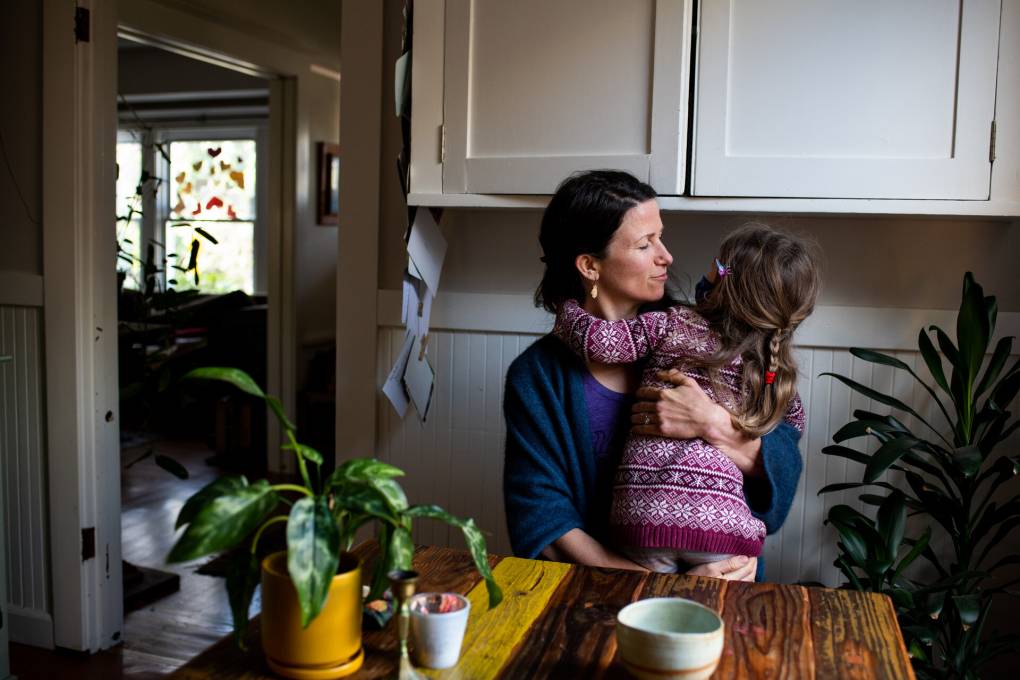
"caption": "Dr. Ashley McClure and her daughter sit at their kitchen table in Berkeley. McClure co-founded Climate Health Now, a group of California health professionals advocating for climate action through a lens of health and equity.",
"description": "Dr. Ashley McClure and her daughter sit at their kitchen table in Berkeley. McClure co-founded Climate Health Now, a group of California health professionals advocating for climate action through a lens of health and equity.",
"title": "RS53254_001_Berkeley_DrAshleyMcClure_012222022-qut",
"credit": "Beth LaBerge/KQED",
"status": "inherit",
"altTag": "A mother looks affectionately at the daughter she holds in her lap.",
"isLoading": false,
"fetchFailed": false
},
"science_1978209": {
"type": "attachments",
"id": "science_1978209",
"meta": {
"index": "attachments_1716263798",
"site": "science",
"id": "1978209",
"found": true
},
"parent": 1978191,
"imgSizes": {
"twentyfourteen-full-width": {
"file": "https://ww2.kqed.org/app/uploads/sites/35/2022/01/RS52994_Newark-digital-photo-update-qut-1038x576.jpg",
"width": 1038,
"mimeType": "image/jpeg",
"height": 576
},
"thumbnail": {
"file": "https://ww2.kqed.org/app/uploads/sites/35/2022/01/RS52994_Newark-digital-photo-update-qut-160x107.jpg",
"width": 160,
"mimeType": "image/jpeg",
"height": 107
},
"post-thumbnail": {
"file": "https://ww2.kqed.org/app/uploads/sites/35/2022/01/RS52994_Newark-digital-photo-update-qut-672x372.jpg",
"width": 672,
"mimeType": "image/jpeg",
"height": 372
},
"kqedFullSize": {
"file": "https://ww2.kqed.org/app/uploads/sites/35/2022/01/RS52994_Newark-digital-photo-update-qut.jpg",
"width": 1920,
"height": 1280
},
"large": {
"file": "https://ww2.kqed.org/app/uploads/sites/35/2022/01/RS52994_Newark-digital-photo-update-qut-1020x680.jpg",
"width": 1020,
"mimeType": "image/jpeg",
"height": 680
},
"1536x1536": {
"file": "https://ww2.kqed.org/app/uploads/sites/35/2022/01/RS52994_Newark-digital-photo-update-qut-1536x1024.jpg",
"width": 1536,
"mimeType": "image/jpeg",
"height": 1024
},
"medium": {
"file": "https://ww2.kqed.org/app/uploads/sites/35/2022/01/RS52994_Newark-digital-photo-update-qut-800x533.jpg",
"width": 800,
"mimeType": "image/jpeg",
"height": 533
},
"medium_large": {
"file": "https://ww2.kqed.org/app/uploads/sites/35/2022/01/RS52994_Newark-digital-photo-update-qut-768x512.jpg",
"width": 768,
"mimeType": "image/jpeg",
"height": 512
}
},
"publishDate": 1641591785,
"modified": 1641598550,
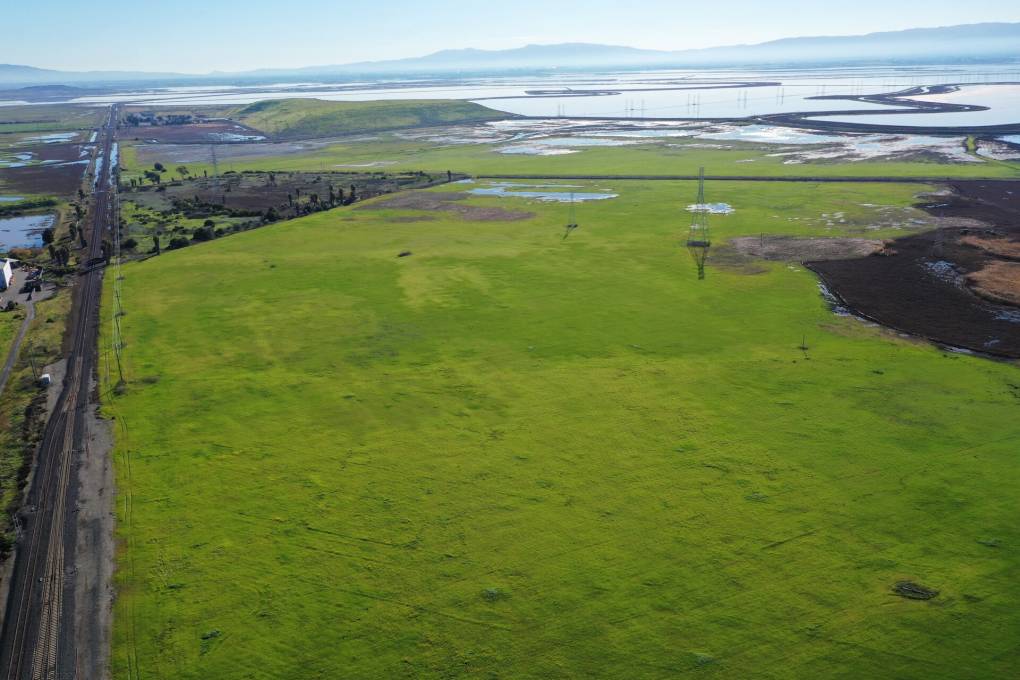
"caption": "The area on which a new housing development would sit is a mosaic of wetlands and upland habitat. A slough runs through the area connecting it to the bay. ",
"description": "Aerial photo looking over wetlands in Newark, CA.",
"title": "RS52994_Newark digital photo update-qut",
"credit": "Courtesy of Derell Licht of Citizens Committee to Complete the Refuge/Creative Commons",
"status": "inherit",
"altTag": "Photo showing the wetlands in jeopardy in Newark.",
"isLoading": false,
"fetchFailed": false
},
"science_1978069": {
"type": "attachments",
"id": "science_1978069",
"meta": {
"index": "attachments_1716263798",
"site": "science",
"id": "1978069",
"found": true
},
"parent": 1978061,
"imgSizes": {
"twentyfourteen-full-width": {
"file": "https://ww2.kqed.org/app/uploads/sites/35/2021/12/RS52907_PillarPointMavericksBeaches-18-1038x576.jpg",
"width": 1038,
"mimeType": "image/jpeg",
"height": 576
},
"thumbnail": {
"file": "https://ww2.kqed.org/app/uploads/sites/35/2021/12/RS52907_PillarPointMavericksBeaches-18-160x107.jpg",
"width": 160,
"mimeType": "image/jpeg",
"height": 107
},
"post-thumbnail": {
"file": "https://ww2.kqed.org/app/uploads/sites/35/2021/12/RS52907_PillarPointMavericksBeaches-18-672x372.jpg",
"width": 672,
"mimeType": "image/jpeg",
"height": 372
},
"kqedFullSize": {
"file": "https://ww2.kqed.org/app/uploads/sites/35/2021/12/RS52907_PillarPointMavericksBeaches-18.jpg",
"width": 1920,
"height": 1280
},
"large": {
"file": "https://ww2.kqed.org/app/uploads/sites/35/2021/12/RS52907_PillarPointMavericksBeaches-18-1020x680.jpg",
"width": 1020,
"mimeType": "image/jpeg",
"height": 680
},
"1536x1536": {
"file": "https://ww2.kqed.org/app/uploads/sites/35/2021/12/RS52907_PillarPointMavericksBeaches-18-1536x1024.jpg",
"width": 1536,
"mimeType": "image/jpeg",
"height": 1024
},
"medium": {
"file": "https://ww2.kqed.org/app/uploads/sites/35/2021/12/RS52907_PillarPointMavericksBeaches-18-800x533.jpg",
"width": 800,
"mimeType": "image/jpeg",
"height": 533
},
"medium_large": {
"file": "https://ww2.kqed.org/app/uploads/sites/35/2021/12/RS52907_PillarPointMavericksBeaches-18-768x512.jpg",
"width": 768,
"mimeType": "image/jpeg",
"height": 512
}
},
"publishDate": 1640206453,
"modified": 1640283521,
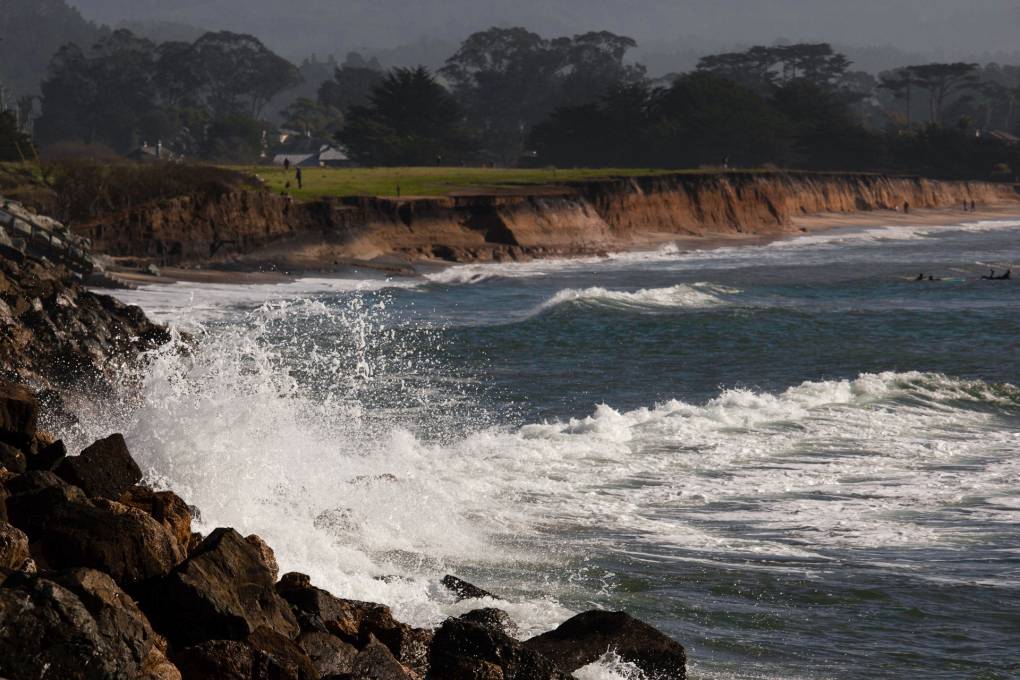
"caption": "Crashing waves on the rocky jetties of Pillar Point Harbor in Half Moon Bay, Calif., on Dec. 5, 2021. An emergency buoy station was installed nearby to prevent drownings.",
"description": null,
"title": "PillarPointHarbor",
"credit": "Joyce Tsai/KQED",
"status": "inherit",
"altTag": "White-capped ocean waves spray against jagged black rocks.",
"isLoading": false,
"fetchFailed": false
},
"science_1976799": {
"type": "attachments",
"id": "science_1976799",
"meta": {
"index": "attachments_1716263798",
"site": "science",
"id": "1976799",
"found": true
},
"parent": 1976798,
"imgSizes": {
"twentyfourteen-full-width": {
"file": "https://ww2.kqed.org/app/uploads/sites/35/2021/09/gettyimages-1282167602-2-a98e931b04ffe87e5c3b2592d41bc086d9d3efb4-1038x576.jpg",
"width": 1038,
"mimeType": "image/jpeg",
"height": 576
},
"thumbnail": {
"file": "https://ww2.kqed.org/app/uploads/sites/35/2021/09/gettyimages-1282167602-2-a98e931b04ffe87e5c3b2592d41bc086d9d3efb4-160x120.jpg",
"width": 160,
"mimeType": "image/jpeg",
"height": 120
},
"post-thumbnail": {
"file": "https://ww2.kqed.org/app/uploads/sites/35/2021/09/gettyimages-1282167602-2-a98e931b04ffe87e5c3b2592d41bc086d9d3efb4-672x372.jpg",
"width": 672,
"mimeType": "image/jpeg",
"height": 372
},
"kqedFullSize": {
"file": "https://ww2.kqed.org/app/uploads/sites/35/2021/09/gettyimages-1282167602-2-a98e931b04ffe87e5c3b2592d41bc086d9d3efb4.jpg",
"width": 1113,
"height": 834
},
"large": {
"file": "https://ww2.kqed.org/app/uploads/sites/35/2021/09/gettyimages-1282167602-2-a98e931b04ffe87e5c3b2592d41bc086d9d3efb4-1020x764.jpg",
"width": 1020,
"mimeType": "image/jpeg",
"height": 764
},
"medium": {
"file": "https://ww2.kqed.org/app/uploads/sites/35/2021/09/gettyimages-1282167602-2-a98e931b04ffe87e5c3b2592d41bc086d9d3efb4-800x599.jpg",
"width": 800,
"mimeType": "image/jpeg",
"height": 599
},
"medium_large": {
"file": "https://ww2.kqed.org/app/uploads/sites/35/2021/09/gettyimages-1282167602-2-a98e931b04ffe87e5c3b2592d41bc086d9d3efb4-768x575.jpg",
"width": 768,
"mimeType": "image/jpeg",
"height": 575
}
},
"publishDate": 1631656287,
"modified": 1640200324,
"caption": null,
"description": null,
"title": null,
"credit": "FG Trade/Getty Images",
"status": "inherit",
"altTag": "The hands of several children hold up a handmade sign with a painting of Earth and copy that reads \"There's No Planet B.\"",
"isLoading": false,
"fetchFailed": false
},
"science_1978026": {
"type": "attachments",
"id": "science_1978026",
"meta": {
"index": "attachments_1716263798",
"site": "science",
"id": "1978026",
"found": true
},
"parent": 1978025,
"imgSizes": {
"twentyfourteen-full-width": {
"file": "https://ww2.kqed.org/app/uploads/sites/35/2021/12/gettyimages-956582752_custom-d6880e2da7c197b97575af8633a2535c6963d258-1038x576.jpg",
"width": 1038,
"mimeType": "image/jpeg",
"height": 576
},
"thumbnail": {
"file": "https://ww2.kqed.org/app/uploads/sites/35/2021/12/gettyimages-956582752_custom-d6880e2da7c197b97575af8633a2535c6963d258-160x104.jpg",
"width": 160,
"mimeType": "image/jpeg",
"height": 104
},
"post-thumbnail": {
"file": "https://ww2.kqed.org/app/uploads/sites/35/2021/12/gettyimages-956582752_custom-d6880e2da7c197b97575af8633a2535c6963d258-672x372.jpg",
"width": 672,
"mimeType": "image/jpeg",
"height": 372
},
"kqedFullSize": {
"file": "https://ww2.kqed.org/app/uploads/sites/35/2021/12/gettyimages-956582752_custom-d6880e2da7c197b97575af8633a2535c6963d258.jpg",
"width": 1200,
"height": 778
},
"large": {
"file": "https://ww2.kqed.org/app/uploads/sites/35/2021/12/gettyimages-956582752_custom-d6880e2da7c197b97575af8633a2535c6963d258-1020x661.jpg",
"width": 1020,
"mimeType": "image/jpeg",
"height": 661
},
"medium": {
"file": "https://ww2.kqed.org/app/uploads/sites/35/2021/12/gettyimages-956582752_custom-d6880e2da7c197b97575af8633a2535c6963d258-800x519.jpg",
"width": 800,
"mimeType": "image/jpeg",
"height": 519
},
"medium_large": {
"file": "https://ww2.kqed.org/app/uploads/sites/35/2021/12/gettyimages-956582752_custom-d6880e2da7c197b97575af8633a2535c6963d258-768x498.jpg",
"width": 768,
"mimeType": "image/jpeg",
"height": 498
}
},
"publishDate": 1640112418,
"modified": 1640221083,
"caption": "Luminalt solar installers Pam Quan (L) and Walter Morales (R) install solar panels on the roof of a home on May 9, 2018 in San Francisco, California. ",
"description": null,
"title": "The Build Back Better legislation included billions to accelerate clean energy like rooftop solar, but with the bill now stalled in Congress, cutting U.S. emissions will be tougher.",
"credit": "Photo by Justin Sullivan/Getty Images",
"status": "inherit",
"altTag": "A solar panel is installed by two workers on a rooftop. The workers are wearing hard hats and are at the far background of the frame.",
"isLoading": false,
"fetchFailed": false
}
},
"audioPlayerReducer": {
"postId": "stream_live",
"isPaused": true,
"isPlaying": false,
"pfsActive": false,
"pledgeModalIsOpen": true,
"playerDrawerIsOpen": false,
"liveAudioPlayStartedAt": 0,
"liveAudioPlayContext": ""
},
"authorsReducer": {
"byline_science_1978980": {
"type": "authors",
"id": "byline_science_1978980",
"meta": {
"override": true
},
"slug": "byline_science_1978980",
"name": "Associated Press",
"isLoading": false
},
"byline_science_1978852": {
"type": "authors",
"id": "byline_science_1978852",
"meta": {
"override": true
},
"slug": "byline_science_1978852",
"name": "Kevin Stark, María Fernanda Bernal and Amaya Edwards",
"isLoading": false
},
"byline_science_1978374": {
"type": "authors",
"id": "byline_science_1978374",
"meta": {
"override": true
},
"slug": "byline_science_1978374",
"name": "Liza Gross, Inside Climate News",
"isLoading": false
},
"byline_science_1978061": {
"type": "authors",
"id": "byline_science_1978061",
"meta": {
"override": true
},
"slug": "byline_science_1978061",
"name": "Joyce Tsai ",
"isLoading": false
},
"byline_science_1978025": {
"type": "authors",
"id": "byline_science_1978025",
"meta": {
"override": true
},
"slug": "byline_science_1978025",
"name": "Lauren Sommer \u003cbr>NPR\u003cbr />",
"isLoading": false
},
"lklivans": {
"type": "authors",
"id": "8648",
"meta": {
"index": "authors_1716337520",
"id": "8648",
"found": true
},
"name": "Laura Klivans",
"firstName": "Laura",
"lastName": "Klivans",
"slug": "lklivans",
"email": "lklivans@kqed.org",
"display_author_email": true,
"staff_mastheads": [
"news",
"science"
],
"title": "Reporter",
"bio": "Laura Klivans is an award-winning science reporter for KQED News, where she covers climate change with an eye on both groundbreaking progress and gaps in action. She is the former host of KQED's blockbuster video series about tiny, amazing animals, \u003cem>Deep Look\u003c/em>. Her work reaches national audiences through NPR, \u003cem>Here & Now, \u003c/em>PRI, and other major outlets. \r\n\r\nLaura’s won five Northern California Area Emmy Awards for Deep Look and First Place in the Greater Bay Area Journalism Awards for a podcast exploring how one Oakland neighborhood teamed up to reduce planet-heating pollution.\r\n\r\nBeyond her reporting, she hosts and moderates events. In the past, she taught audio storytelling at the UC Berkeley Graduate School of Journalism, led international education programs, worked with immigrants and refugees along the Thai-Burmese border, taught high schoolers sex ed, and was an actress. \r\n\r\nShe's a former UC Berkeley Human Rights Fellow, USC Center for Health Journalism's California Fellow and Coro Fellow in Public Affairs. Laura has a master’s in journalism from UC Berkeley, a master’s in education from Harvard, and an undergraduate degree from Northwestern University.\r\n\r\nShe loves trying to riddle the meaning out of vanity license plates.",
"avatar": "https://secure.gravatar.com/avatar/2d2ecd1550a494cc10ad4a503406965585902124739e775a9b3817eebf1d88be?s=600&d=blank&r=g",
"twitter": "lauraklivans",
"bluesky": null,
"facebook": null,
"instagram": null,
"linkedin": null,
"sites": [
{
"site": "news",
"roles": [
"editor"
]
},
{
"site": "stateofhealth",
"roles": [
"contributor",
"editor"
]
},
{
"site": "science",
"roles": [
"editor"
]
},
{
"site": "forum",
"roles": [
"editor"
]
}
],
"headData": {
"title": "Laura Klivans | KQED",
"description": "Reporter",
"ogImgSrc": "https://secure.gravatar.com/avatar/2d2ecd1550a494cc10ad4a503406965585902124739e775a9b3817eebf1d88be?s=600&d=blank&r=g",
"twImgSrc": "https://secure.gravatar.com/avatar/2d2ecd1550a494cc10ad4a503406965585902124739e775a9b3817eebf1d88be?s=600&d=blank&r=g"
},
"isLoading": false,
"link": "/author/lklivans"
},
"rdillon": {
"type": "authors",
"id": "11495",
"meta": {
"index": "authors_1716337520",
"id": "11495",
"found": true
},
"name": "Raquel Maria Dillon",
"firstName": "Raquel Maria",
"lastName": "Dillon",
"slug": "rdillon",
"email": "rdillon@kqed.org",
"display_author_email": false,
"staff_mastheads": [],
"title": null,
"bio": "Raquel Maria Dillon was a reporter and host for KQED News. Previously, she produced the daily statewide California Report, edited newscasts, and covered health and education stories. Before returning to the Bay Area in 2016, she worked in Los Angeles as a wire reporter and one-woman-band video journalist for the Associated Press, where she shot, edited and reported breaking news and features across the West. Her work has appeared online and in print around the globe, and also on NPR’s Morning Edition, All Things Considered, Here and Now, Marketplace, On The Media, and Studio 360. She previously edited and mentored up-and-coming reporters at KALW, produced social videos for Timeline.com, and was a local TV news videographer for KTVU and digital producer for KNTV. She got her start as a Radio News Trainee at KQED, produced a weekly public affairs roundtable show for OPB, and covered health and politics at New Hampshire Public Radio. She has a BA in political science from Barnard College and a MA in video journalism from UC Berkeley, where she was awarded the Faith Fancher Scholarship and a Student Emmy. She has received numerous local awards from the Associated Press and the Society of Professional Journalists.",
"avatar": "https://secure.gravatar.com/avatar/b8e02ae982913d0950df605910267c1b?s=600&d=blank&r=g",
"twitter": "RaquelMDillon",
"facebook": null,
"instagram": null,
"linkedin": null,
"sites": [
{
"site": "news",
"roles": [
"subscriber"
]
},
{
"site": "stateofhealth",
"roles": [
"editor"
]
},
{
"site": "science",
"roles": [
"editor"
]
},
{
"site": "forum",
"roles": [
"editor"
]
}
],
"headData": {
"title": "Raquel Maria Dillon | KQED",
"description": null,
"ogImgSrc": "https://secure.gravatar.com/avatar/b8e02ae982913d0950df605910267c1b?s=600&d=blank&r=g",
"twImgSrc": "https://secure.gravatar.com/avatar/b8e02ae982913d0950df605910267c1b?s=600&d=blank&r=g"
},
"isLoading": false,
"link": "/author/rdillon"
},
"kevinstark": {
"type": "authors",
"id": "11608",
"meta": {
"index": "authors_1716337520",
"id": "11608",
"found": true
},
"name": "Kevin Stark",
"firstName": "Kevin",
"lastName": "Stark",
"slug": "kevinstark",
"email": "kstark@kqed.org",
"display_author_email": true,
"staff_mastheads": [
"science"
],
"title": "Senior Editor",
"bio": "Kevin is a senior editor for KQED Science, managing the station's health and climate desks. His journalism career began in the Pacific Northwest, and he later became a lead reporter for the San Francisco Public Press. His work has appeared in Pacific Standard magazine, the Energy News Network, the Center for Investigative Reporting's Reveal and WBEZ in Chicago. Kevin joined KQED in 2019, and has covered issues related to energy, wildfire, climate change and the environment.",
"avatar": "https://secure.gravatar.com/avatar/365aaa4b597d3a8374f67504ff0facd323d7906e8eb4be0a7efd2427408e802c?s=600&d=blank&r=g",
"twitter": "starkkev",
"bluesky": null,
"facebook": null,
"instagram": null,
"linkedin": null,
"sites": [
{
"site": "",
"roles": [
"editor"
]
},
{
"site": "news",
"roles": [
"editor"
]
},
{
"site": "science",
"roles": [
"administrator"
]
}
],
"headData": {
"title": "Kevin Stark | KQED",
"description": "Senior Editor",
"ogImgSrc": "https://secure.gravatar.com/avatar/365aaa4b597d3a8374f67504ff0facd323d7906e8eb4be0a7efd2427408e802c?s=600&d=blank&r=g",
"twImgSrc": "https://secure.gravatar.com/avatar/365aaa4b597d3a8374f67504ff0facd323d7906e8eb4be0a7efd2427408e802c?s=600&d=blank&r=g"
},
"isLoading": false,
"link": "/author/kevinstark"
},
"eromero": {
"type": "authors",
"id": "11746",
"meta": {
"index": "authors_1716337520",
"id": "11746",
"found": true
},
"name": "Ezra David Romero",
"firstName": "Ezra David",
"lastName": "Romero",
"slug": "eromero",
"email": "eromero@kqed.org",
"display_author_email": true,
"staff_mastheads": [
"news",
"science"
],
"title": "Climate Reporter",
"bio": "Ezra David Romero is a climate reporter for KQED News. He covers the absence and excess of water in the Bay Area — think sea level rise, flooding and drought. For nearly a decade he’s covered how warming temperatures are altering the lives of Californians. He’s reported on farmers worried their pistachio trees aren’t getting enough sleep, families desperate for water, scientists studying dying giant sequoias, and alongside firefighters containing wildfires. His work has appeared on local stations across California and nationally on public radio shows like Morning Edition, Here and Now, All Things Considered and Science Friday. ",
"avatar": "https://secure.gravatar.com/avatar/c76404d287c10ed40224227551ac36e24352c7306f106632caf6fead76f8801f?s=600&d=blank&r=g",
"twitter": "ezraromero",
"bluesky": null,
"facebook": null,
"instagram": null,
"linkedin": null,
"sites": [
{
"site": "arts",
"roles": [
"editor"
]
},
{
"site": "news",
"roles": [
"editor"
]
},
{
"site": "science",
"roles": [
"editor"
]
},
{
"site": "liveblog",
"roles": [
"author"
]
}
],
"headData": {
"title": "Ezra David Romero | KQED",
"description": "Climate Reporter",
"ogImgSrc": "https://secure.gravatar.com/avatar/c76404d287c10ed40224227551ac36e24352c7306f106632caf6fead76f8801f?s=600&d=blank&r=g",
"twImgSrc": "https://secure.gravatar.com/avatar/c76404d287c10ed40224227551ac36e24352c7306f106632caf6fead76f8801f?s=600&d=blank&r=g"
},
"isLoading": false,
"link": "/author/eromero"
}
},
"pagesReducer": {
"science_category_environment": {
"type": "terms",
"id": "science_35",
"meta": {
"index": "terms_1716263798",
"site": "science",
"id": "35",
"score": 12.13823
},
"featImg": null,
"name": "Environment",
"description": null,
"taxonomy": "category",
"headData": {
"twImgId": null,
"twTitle": null,
"ogTitle": null,
"ogImgId": null,
"twDescription": null,
"description": null,
"title": "Environment Archives | KQED Science",
"ogDescription": null
},
"ttid": 37,
"slug": "environment",
"isLoading": false,
"title": "Environment",
"pageMeta": {
"site": "science",
"WpPageTemplate": "page-topic-editorial",
"currentPage": 19
},
"blocks": [
{
"blockName": "kqed/post-list",
"attrs": {
"layout": "cardArticle2",
"query": "posts/science?category=environment",
"seeMore": false,
"paginated": true,
"page": 19
}
},
{
"blockName": "kqed/ad"
}
]
}
},
"pfsSessionReducer": {},
"postsReducer": {
"stream_live": {
"type": "live",
"id": "stream_live",
"audioUrl": "https://streams.kqed.org/kqedradio",
"title": "Live Stream",
"excerpt": "Live Stream information currently unavailable.",
"link": "/radio",
"featImg": "",
"label": {
"name": "KQED Live",
"link": "/"
}
},
"stream_kqedNewscast": {
"type": "posts",
"id": "stream_kqedNewscast",
"audioUrl": "https://www.kqed.org/.stream/anon/radio/RDnews/newscast.mp3?_=1",
"title": "KQED Newscast",
"featImg": "",
"label": {
"name": "88.5 FM",
"link": "/"
}
},
"science_1978994": {
"type": "posts",
"id": "science_1978994",
"meta": {
"index": "posts_1716263798",
"site": "science",
"id": "1978994",
"score": null,
"sort": [
1649250028000
]
},
"parent": 0,
"labelTerm": {},
"blocks": [],
"publishDate": 1649250028,
"format": "standard",
"title": "Punishing Bay Area Drought Prompts Calls for Major Water Rethink",
"headTitle": "Punishing Bay Area Drought Prompts Calls for Major Water Rethink | KQED",
"content": "\u003cp>Each morning for months, Amelia Morán Ceja has peered out her window, searching Sonoma’s wine country for dark clouds or the residue of rain on the leaves of her grapevines.\u003c/p>\n\u003cp>Her searching has proved futile, and now she’s worried as California faces its third consecutive summer with drought.\u003c/p>\n\u003cp>The dry conditions threaten her thirsty vines at Ceja Vineyards and elevate the risk from fire and heat waves. The triple threat is a “perfect storm during harvest,” she said.\u003c/p>\n\u003cp>Smoke from wildfires can ruin a year’s worth of wine and is harmful to the health of harvesters.\u003c/p>\n\u003cp>\u003ca href=\"https://www.cejavineyards.com/about/amelia-moran-ceja\" target=\"_blank\" rel=\"noopener noreferrer\">Ceja\u003c/a> is banking that last October and December’s heavy storms filled aquifers below her vineyard.\u003c/p>\n\u003cp>[ad fullwidth]\u003c/p>\n\u003cp>“Nonetheless, we’re still conserving,” she said. “We literally only water the vines when they need it, and it’s barely a couple of gallons of water at most.”\u003c/p>\n\u003cp>Ceja is just one example of the millions of Bay Area residents learning to live with seemingly perpetual dry times.\u003c/p>\n\u003cp>\u003cspan style=\"font-weight: 400\">[pullquote size='medium' align='right' citation='Brian Garcia, NWS Bay Area']‘We are looking at the driest start to a calendar year in recorded history.\u003c/span>‘[/pullquote]\u003c/p>\n\u003cp>California’s snowpack is far below average again this year. Less than 31% of the snowpack remains, and state reservoirs are about 48% full. Millions of Bay Area residents rely on this water.\u003c/p>\n\u003cp>“We have less snow than we did last year,” said Sean de Guzman, manager of the state’s Snow Surveys and Water Supply Forecasting section. “California’s only received about half the amount of rainfall recorded in comparison to 2013, which ended up turning into the driest calendar year on record.”\u003c/p>\n\u003cp>The state’s traditional rainy season is over, and California’s summer forecast looks to be hotter than average. Meteorologists expect a heat wave this week, which poses a critical threat to what’s left of the snowpack.\u003c/p>\n\u003cp>https://twitter.com/Weather_West/status/1511040977628110849\u003c/p>\n\u003cp>The odds of any rain or snow making a dent in the drought are “slim to none,” said Brian Garcia, warning coordination meteorologist for the National Weather Service located in the Bay Area.\u003c/p>\n\u003cp>“We are looking at the driest start to a calendar year in recorded history,” he said, referring to records that date back to the mid-1800s.\u003c/p>\n\u003ch2>Megadrought bakes the West\u003c/h2>\n\u003cp>Regionally, the American Southwest is in the grips of a \u003ca href=\"https://newsroom.ucla.edu/releases/megadrought-southwestern-north-america\" target=\"_blank\" rel=\"noopener noreferrer\">22-year megadrought\u003c/a>, the worst in recorded history and the driest since at least the year 800, according to a new analysis of tree ring records.\u003c/p>\n\u003cp>It will take several wet years to end the drought cycle, said UCLA hydroclimatologist Park Williams, the study’s lead author.\u003c/p>\n\u003cp>“Without climate change, \u003ca href=\"https://newsroom.ucla.edu/releases/megadrought-southwestern-north-america\">the past 22 years would have probably still been the driest period in 300 years\u003c/a>,” Williams noted in a release. “But it wouldn’t be holding a candle to the megadroughts of the 1500s, 1200s, or 1100s.”\u003c/p>\n\u003cp>The burning of fossil fuels — the lead driver of climate change — must be stopped, or quickly shifted away from, according to the most recent \u003ca href=\"https://www.npr.org/2022/04/04/1090577162/climate-change-un-ipcc-report\">UN climate report\u003c/a>, in order for the world to reach its goal of limiting warming to 1.5 degrees Celsius.\u003c/p>\n\u003cp>Warming beyond that point will mean even more severe droughts, water scarcity and increased wildfire.\u003c/p>\n\u003ch2>Bay Area drought deepens\u003c/h2>\n\u003cp>With around 8 million residents across nine counties, each part of the Bay Area is grappling with the drought differently. To the south and north, Santa Cruz and Mendocino counties are similarly affected.\u003c/p>\n\u003cp>During the multiyear drought ending in 2017, Gov. Jerry Brown mandated that all residents curb water use by 25% — a goal that Californians nearly met.\u003c/p>\n\u003cp>This time around, people are less adherent. Gov. Gavin Newsom has asked for a 15% water reduction, but urban water users saved less than half of that from June to January.\u003c/p>\n\u003cp>Still, \u003ca href=\"https://www.kqed.org/science/1977229/healdsburg-cut-its-water-use-in-half-whats-in-the-citys-secret-water-saving-sauce\">some cities, like Healdsburg, saved more than 50%\u003c/a> last summer and fall.\u003c/p>\n\u003cp>Newsom’s administration is entrusting local water agencies to impose restrictions, compelling them to save water through a \u003ca href=\"https://www.gov.ca.gov/2022/03/28/as-western-drought-worsens-governor-newsom-moves-to-bolster-regional-conservation-efforts/\">late\u003c/a> \u003ca href=\"https://www.gov.ca.gov/2022/03/28/as-western-drought-worsens-governor-newsom-moves-to-bolster-regional-conservation-efforts/\">March\u003c/a> \u003ca href=\"https://www.gov.ca.gov/2022/03/28/as-western-drought-worsens-governor-newsom-moves-to-bolster-regional-conservation-efforts/\">executive\u003c/a> \u003ca href=\"https://www.gov.ca.gov/2022/03/28/as-western-drought-worsens-governor-newsom-moves-to-bolster-regional-conservation-efforts/\">order\u003c/a>.\u003c/p>\n\u003cfigure id=\"attachment_1979001\" class=\"wp-caption aligncenter\" style=\"max-width: 1200px\">\u003cimg loading=\"lazy\" decoding=\"async\" class=\"wp-image-1979001 size-full\" src=\"https://ww2.kqed.org/app/uploads/sites/35/2022/04/KJ2_0563.jpg\" alt=\"Man holds a hollow blue pole that when pierces the ground tells how much water is in snow in a certain spot. Blue skies and green mountains in the distance. A patch of snow in view. \" width=\"1200\" height=\"800\" srcset=\"https://cdn.kqed.org/wp-content/uploads/sites/35/2022/04/KJ2_0563.jpg 1200w, https://cdn.kqed.org/wp-content/uploads/sites/35/2022/04/KJ2_0563-800x533.jpg 800w, https://cdn.kqed.org/wp-content/uploads/sites/35/2022/04/KJ2_0563-1020x680.jpg 1020w, https://cdn.kqed.org/wp-content/uploads/sites/35/2022/04/KJ2_0563-160x107.jpg 160w, https://cdn.kqed.org/wp-content/uploads/sites/35/2022/04/KJ2_0563-768x512.jpg 768w\" sizes=\"(max-width: 1200px) 100vw, 1200px\">\u003cfigcaption class=\"wp-caption-text\">Sean de Guzman, manager of the California Department of Water Resources Snow Surveys and Water Supply Forecasting unit uses a tape measure to pinpoint the next measuring location during the fourth media snow survey of the 2022 season. \u003ccite>(Kenneth James / California Department of Water Resources)\u003c/cite>\u003c/figcaption>\u003c/figure>\n\u003cp>“What we learned from the last drought is, it’s really important to listen to locals,” said Jared Blumenfeld, secretary of the California Environmental Protection Agency, on a recent press call. “We live in a state that has many different hydrological zones, many different water usage scenarios, and that the one-size-fits-all doesn’t really work in California.”\u003c/p>\n\u003cp>The order presses major water retailers and agencies to conserve an average of 10%-20% come June. More than half of the state’s urban water providers don’t yet have restrictions to provide this kind of savings, he said.\u003c/p>\n\u003cp>At the same time, state leaders are touting efforts to build new dams, reinstalling the drought salinity barrier in the delta — literally a pile of rocks blocking saltwater from tainting the Sacramento-San Joaquin River Delta. They also are granting millions of dollars in drought aid and using innovative climate forecasting models to inform how they manage reservoirs.\u003c/p>\n\u003cp>“We get to expand the time horizon of our decision-making,” said Nicholas Malasavage, chief of the operations and readiness division at the San Francisco District of the Army Corps of Engineers.\u003c/p>\n\u003cp>“When there are two weeks of dry weather, and we got a lot of water coming into the lake, we don’t need to make space for the next storm because there isn’t one,” he added of efforts to better manage reservoirs in Sonoma County.\u003c/p>\n\u003ch2>Digging out of a hole. Again.\u003c/h2>\n\u003cp>Local water leaders will decide how deep restrictions should cut in the upcoming weeks. At 10%, San Francisco and parts of the East Bay have the lowest conservation targets in the Bay Area. Cities in the North Bay like Sonoma and Healdsburg are at 20% or higher.\u003c/p>\n\u003cp>Janet Pauli, who co-manages the water district at the eastern headwaters of the Russian River in Mendocino County — which is reliant on rain — says the creeks that feed into the river are already dry. Valley pastures are browning and fire-scarred trees on the hills surround the agriculture basin.\u003c/p>\n\u003cp>Pauli says it looked similar last year when crops “were dramatically impacted — pears and vineyards,” she said. “We’re certainly not looking forward to going through this again this year. But it looks as if we’re moving in that direction pretty quickly.”\u003c/p>\n\u003cp>Further south in Sonoma County, the region’s largest reservoir, \u003ca href=\"https://www.sonomawater.org/current-water-supply-levels\">Lake Sonoma, is 60% full\u003c/a> but has less water than last April.\u003cspan style=\"font-weight: 400\">[pullquote size='medium' align='left' citation='Janet Pauli, co-chair, Potter Valley Irrigation District']‘We’re certainly not looking forward to going through this again this year. But it looks as if we’re moving in that direction pretty quickly.\u003c/span>‘[/pullquote]“We have a huge hole we got to dig out of,” said Brad Sherwood, spokesperson for Sonoma Water. “It’s almost like Groundhog’s Day in the situation that we’re facing in Sonoma County.”\u003c/p>\n\u003cp>South of Sonoma, Marin County got a stroke of luck this past rainy season when two atmospheric rivers parked themselves over the county, dumping more than 40 inches of rain, said Adriane Mertens, spokesperson for Marin Water.\u003c/p>\n\u003cfigure id=\"attachment_1975556\" class=\"wp-caption alignleft\" style=\"max-width: 800px\">\u003cimg loading=\"lazy\" decoding=\"async\" class=\"size-medium wp-image-1975556\" src=\"https://ww2.kqed.org/app/uploads/sites/35/2021/06/IMG_3530-800x600.jpg\" alt=\"A white-haired woman in blue flannel and blue jeans leans on a cement bridge with a river and greenery behind her. \" width=\"800\" height=\"600\" srcset=\"https://cdn.kqed.org/wp-content/uploads/sites/35/2021/06/IMG_3530-800x600.jpg 800w, https://cdn.kqed.org/wp-content/uploads/sites/35/2021/06/IMG_3530-1020x765.jpg 1020w, https://cdn.kqed.org/wp-content/uploads/sites/35/2021/06/IMG_3530-160x120.jpg 160w, https://cdn.kqed.org/wp-content/uploads/sites/35/2021/06/IMG_3530-768x576.jpg 768w, https://cdn.kqed.org/wp-content/uploads/sites/35/2021/06/IMG_3530-1536x1152.jpg 1536w, https://cdn.kqed.org/wp-content/uploads/sites/35/2021/06/IMG_3530-2048x1536.jpg 2048w, https://cdn.kqed.org/wp-content/uploads/sites/35/2021/06/IMG_3530-1920x1440.jpg 1920w\" sizes=\"(max-width: 800px) 100vw, 800px\">\u003cfigcaption class=\"wp-caption-text\">Janet Pauli, with the Potter Valley Irrigation District, says farmers are already feeling the impacts of drought. \u003ccite>(Ezra David Romero/KQED)\u003c/cite>\u003c/figcaption>\u003c/figure>\n\u003cp>Before those two brief, very wet storms, the county was contemplating emergency desalination or piping water from elsewhere over the Richmond-San Rafael Bridge. Now their reservoirs are filled to 91%, a two-year water supply, Mertens said.\u003c/p>\n\u003cp>“We were projecting to deplete our local reservoir supplies by summer of this year,” she said. “The rain was a gift.”\u003c/p>\n\u003cp>About 70 miles south of Marin in Santa Clara County, the drought scenario is more dire — and a lot dryer.\u003c/p>\n\u003cp>Water supplies for the South Bay are particularly precarious because local reservoirs are only a quarter full — the largest, Anderson Reservoir, is out of commission for seismic retrofitting for the next decade.\u003c/p>\n\u003cp>Officials expect that Valley Water, which supplies water to around 2 million people, won’t receive any of the imports it typically relies on, except for what’s absolutely necessary for health and safety.\u003c/p>\n\u003cp>Normally, more than half of the county’s water originates from the Sierra Nevada snowpack.\u003c/p>\n\u003cp>Valley Water put in place a 15% mandatory water restriction last June, but residents have not met the target, said John Varela, Valley Water chief pro tem.\u003c/p>\n\u003cp>“Since then, through January 2022, residents, businesses and farmers reduced overall water usage by only 8%,” he said.\u003c/p>\n\u003cp>Almost no measurable rain has landed on San Jose this year.\u003c/p>\n\u003cp>Water restrictions could intensify in Santa Clara County, said the water supplier’s spokesperson Matt Keller.\u003c/p>\n\u003cp>“We can hope for rain, but you know hope is not enough — we have to take action,” he said. “Everything is on the table heading into the summer.”\u003c/p>\n\u003cp>That could mean boosting mandatory water restrictions or increasing penalties for water wasters.\u003c/p>\n\u003cp>San Jose Water already charges residential customers $7.13 for each 748-gallon unit of water used over their limit, but the restrictions don’t apply to businesses. Ninety percent of the agency’s customers are residential, said Liann Walborsky, director of corporate communications.\u003c/p>\n\u003cp>“Mother Nature has not been very helpful,” she said of the lack of rain this winter. Customers used 2% more water in February than before the drought.\u003c/p>\n\u003cp>“We’re going in the wrong direction,” she said. “We’ve had people focus on outside irrigation. It’s very hard to cut water use inside your house because that starts to affect your quality of life.”\u003c/p>\n\u003ch2>Nibbling around the edge\u003c/h2>\n\u003cp>Restricting water and limiting flows to farms, parks or golf courses are quick ways to deal with the drought, but they are not long-term solutions. If restrictions are overused, they can lose their desired effect.\u003c/p>\n\u003cp>Water experts like Susan Leal say we need to stop nibbling around the edges and rethink how California and the Bay Area use water. Twelve years ago, she co-authored the book “\u003ca href=\"https://www.susanleal.com/books/\" target=\"_blank\" rel=\"noopener noreferrer\">Running Out of Water\u003c/a>,” and raised remedies for the very crisis the state is in today.\u003c/p>\n\u003cp>“I believe we will still be able to deliver water to people, but they’ll have to use less of it,” she said. The climate whiplash the state experienced this past year — flooding rains followed by months of dry conditions — stresses the state’s water system, she said.\u003c/p>\n\u003cp>“We may get to the point where we have to start subsidizing water because the cost of recycled water is going to be much more expensive,” she added.\u003c/p>\n\u003cfigure id=\"attachment_1979019\" class=\"wp-caption aligncenter\" style=\"max-width: 800px\">\u003cimg loading=\"lazy\" decoding=\"async\" class=\"wp-image-1979019 size-medium\" src=\"https://ww2.kqed.org/app/uploads/sites/35/2022/04/RS51686_038_SanJose_WaterPurificationCenter_09232021-qut-800x533.jpg\" alt=\"An Asian man in a white polo shirt holds a beaker full of water that's been filtered. A system of tubes behind him.\" width=\"800\" height=\"533\" srcset=\"https://cdn.kqed.org/wp-content/uploads/sites/35/2022/04/RS51686_038_SanJose_WaterPurificationCenter_09232021-qut-800x533.jpg 800w, https://cdn.kqed.org/wp-content/uploads/sites/35/2022/04/RS51686_038_SanJose_WaterPurificationCenter_09232021-qut-1020x680.jpg 1020w, https://cdn.kqed.org/wp-content/uploads/sites/35/2022/04/RS51686_038_SanJose_WaterPurificationCenter_09232021-qut-160x107.jpg 160w, https://cdn.kqed.org/wp-content/uploads/sites/35/2022/04/RS51686_038_SanJose_WaterPurificationCenter_09232021-qut-768x512.jpg 768w, https://cdn.kqed.org/wp-content/uploads/sites/35/2022/04/RS51686_038_SanJose_WaterPurificationCenter_09232021-qut-1536x1024.jpg 1536w, https://cdn.kqed.org/wp-content/uploads/sites/35/2022/04/RS51686_038_SanJose_WaterPurificationCenter_09232021-qut.jpg 1920w\" sizes=\"(max-width: 800px) 100vw, 800px\">\u003cfigcaption class=\"wp-caption-text\">Associate Engineer Zachary Helsley holds a beaker of treated wastewater at the Silicon Valley Advanced Water Purification Center in San Jose on Sept. 23, 2021. \u003ccite>(Beth LeBerge/KQED)\u003c/cite>\u003c/figcaption>\u003c/figure>\n\u003cp>Leal was once the general manager of the San Francisco Public Utilities Commission. She wants the state to invest billions in cleaning wastewater for drinking.\u003c/p>\n\u003cp>Recycled water encompasses only a small fraction of the state’s water supply; the majority is in Southern California. Valley Water pledged to double the amount of water it recycles over the next decade, but even that would only augment 10% of its supply.\u003c/p>\n\u003cp>“If we don’t actually put some dough into it now, it won’t happen,” Leal said.\u003c/p>\n\u003cp>It can take decades to change or build infrastructure.\u003c/p>\n\u003ch2>Close the loop so we don’t depend on snowpack\u003c/h2>\n\u003cp>\u003ca href=\"https://twitter.com/newshaajami\">Newsha\u003c/a> \u003ca href=\"https://twitter.com/newshaajami\">Ajami\u003c/a> studies water in the West as the chief development officer for research at the Earth and Environmental Sciences Area of Lawrence Berkeley National Laboratory. She says water agencies will have to start valuing people over a revenue based model.\u003c/p>\n\u003cp>“If we shift this mindset, eventually these utilities [will] survive these new realities they’re facing with climate change,” she said. “If they don’t, then eventually they will fall apart. Because every drought leads to a reduction in demand.”\u003cspan style=\"font-weight: 400\">[pullquote size='medium' align='left' citation='Newsha Ajami, Lawrence Berkeley National Laboratory']‘If we shift this mindset, eventually these utilities can become an entity that can survive these new realities they’re facing with climate change. If they don’t, then eventually they will fall apart.’\u003c/span>[/pullquote]Ajami would like to see agencies split operational costs among all customers equally, while having people cover the energy costs necessary to get their water to them. This would make the price of water more equitable, she says, and allow water agencies to flourish instead of merely remaining afloat.\u003c/p>\n\u003cp>“It separates people who are actually mindful from the people who use more and put a lot more pressure on the system,” she said. “If you and I live in the same building, and I’m using 10 units of water, and you’re using two, I’m putting a lot more demand on the system.”\u003c/p>\n\u003cp>Sen. Josh Becker, D-San Mateo, co-authored a bill that aims to \u003ca href=\"https://leginfo.legislature.ca.gov/faces/billTextClient.xhtml?bill_id=202120220SB1469\">decouple California water agency sales and revenue\u003c/a>. He wants to incentivize water conservation and force water utilities to restructure.\u003c/p>\n\u003cp>“We need to make sure that we’re decoupling water use from profits, because otherwise, we get perverse incentives,” he said. “We want people to use less water. And so decoupling helps us achieve that.”\u003c/p>\n\u003cp>[ad floatright]\u003c/p>\n\u003cp>Even if the bill doesn’t pass this year, Becker and Ajami believe it’s doing something good: It’s rethinking how California uses water. Their hope is that these ideas become reality.\u003c/p>\n\n",
"stats": {
"hasVideo": false,
"hasChartOrMap": false,
"hasAudio": false,
"hasPolis": false,
"wordCount": 2409,
"hasGoogleForm": false,
"hasGallery": false,
"hasHearkenModule": false,
"iframeSrcs": [],
"paragraphCount": 64
},
"modified": 1704846281,
"excerpt": "Each part of the Bay Area is grappling with the drought differently.",
"headData": {
"twImgId": "",
"twTitle": "",
"ogTitle": "",
"ogImgId": "",
"twDescription": "",
"description": "Each part of the Bay Area is grappling with the drought differently.",
"title": "Punishing Bay Area Drought Prompts Calls for Major Water Rethink | KQED",
"ogDescription": "",
"schema": {
"@context": "https://schema.org",
"@type": "Article",
"headline": "Punishing Bay Area Drought Prompts Calls for Major Water Rethink",
"datePublished": "2022-04-06T06:00:28-07:00",
"dateModified": "2024-01-09T16:24:41-08:00",
"image": "https://cdn.kqed.org/wp-content/uploads/2020/02/KQED-OG-Image@1x.png"
}
},
"guestAuthors": [],
"slug": "punishing-bay-area-drought-prompts-calls-for-major-water-rethink",
"status": "publish",
"audioUrl": "https://traffic.omny.fm/d/clips/0af137ef-751e-4b19-a055-aaef00d2d578/ffca7e9f-6831-41c5-bcaf-aaef00f5a073/2d2bbb3a-05c9-4725-b347-ae6a012a4a05/audio.mp3",
"excludeFromSiteSearch": "Include",
"sticky": false,
"source": "Drought",
"path": "/science/1978994/punishing-bay-area-drought-prompts-calls-for-major-water-rethink",
"audioTrackLength": null,
"parsedContent": [
{
"type": "contentString",
"content": "\u003cdiv class=\"post-body\">\u003cp>\u003cp>Each morning for months, Amelia Morán Ceja has peered out her window, searching Sonoma’s wine country for dark clouds or the residue of rain on the leaves of her grapevines.\u003c/p>\n\u003cp>Her searching has proved futile, and now she’s worried as California faces its third consecutive summer with drought.\u003c/p>\n\u003cp>The dry conditions threaten her thirsty vines at Ceja Vineyards and elevate the risk from fire and heat waves. The triple threat is a “perfect storm during harvest,” she said.\u003c/p>\n\u003cp>Smoke from wildfires can ruin a year’s worth of wine and is harmful to the health of harvesters.\u003c/p>\n\u003cp>\u003ca href=\"https://www.cejavineyards.com/about/amelia-moran-ceja\" target=\"_blank\" rel=\"noopener noreferrer\">Ceja\u003c/a> is banking that last October and December’s heavy storms filled aquifers below her vineyard.\u003c/p>\n\u003cp>\u003c/p>\u003c/div>",
"attributes": {
"named": {},
"numeric": []
}
},
{
"type": "component",
"content": "",
"name": "ad",
"attributes": {
"named": {
"label": "fullwidth"
},
"numeric": [
"fullwidth"
]
}
},
{
"type": "contentString",
"content": "\u003cdiv class=\"post-body\">\u003cp>\u003c/p>\n\u003cp>“Nonetheless, we’re still conserving,” she said. “We literally only water the vines when they need it, and it’s barely a couple of gallons of water at most.”\u003c/p>\n\u003cp>Ceja is just one example of the millions of Bay Area residents learning to live with seemingly perpetual dry times.\u003c/p>\n\u003cp>\u003cspan style=\"font-weight: 400\">\u003c/p>\u003c/div>",
"attributes": {
"named": {},
"numeric": []
}
},
{
"type": "component",
"content": "‘We are looking at the driest start to a calendar year in recorded history.\u003c/span>‘",
"name": "pullquote",
"attributes": {
"named": {
"size": "medium",
"align": "right",
"citation": "Brian Garcia, NWS Bay Area",
"label": ""
},
"numeric": []
}
},
{
"type": "contentString",
"content": "\u003cdiv class=\"post-body\">\u003cp>\u003c/p>\n\u003cp>California’s snowpack is far below average again this year. Less than 31% of the snowpack remains, and state reservoirs are about 48% full. Millions of Bay Area residents rely on this water.\u003c/p>\n\u003cp>“We have less snow than we did last year,” said Sean de Guzman, manager of the state’s Snow Surveys and Water Supply Forecasting section. “California’s only received about half the amount of rainfall recorded in comparison to 2013, which ended up turning into the driest calendar year on record.”\u003c/p>\n\u003cp>The state’s traditional rainy season is over, and California’s summer forecast looks to be hotter than average. Meteorologists expect a heat wave this week, which poses a critical threat to what’s left of the snowpack.\u003c/p>\u003c/p>\u003c/div>",
"attributes": {
"named": {},
"numeric": []
}
},
{
"type": "component",
"content": "",
"name": "singleTwitterStatus",
"attributes": {
"named": {
"id": "1511040977628110849"
},
"numeric": []
}
},
{
"type": "contentString",
"content": "\u003cdiv class=\"post-body\">\u003cp>\n\u003cp>The odds of any rain or snow making a dent in the drought are “slim to none,” said Brian Garcia, warning coordination meteorologist for the National Weather Service located in the Bay Area.\u003c/p>\n\u003cp>“We are looking at the driest start to a calendar year in recorded history,” he said, referring to records that date back to the mid-1800s.\u003c/p>\n\u003ch2>Megadrought bakes the West\u003c/h2>\n\u003cp>Regionally, the American Southwest is in the grips of a \u003ca href=\"https://newsroom.ucla.edu/releases/megadrought-southwestern-north-america\" target=\"_blank\" rel=\"noopener noreferrer\">22-year megadrought\u003c/a>, the worst in recorded history and the driest since at least the year 800, according to a new analysis of tree ring records.\u003c/p>\n\u003cp>It will take several wet years to end the drought cycle, said UCLA hydroclimatologist Park Williams, the study’s lead author.\u003c/p>\n\u003cp>“Without climate change, \u003ca href=\"https://newsroom.ucla.edu/releases/megadrought-southwestern-north-america\">the past 22 years would have probably still been the driest period in 300 years\u003c/a>,” Williams noted in a release. “But it wouldn’t be holding a candle to the megadroughts of the 1500s, 1200s, or 1100s.”\u003c/p>\n\u003cp>The burning of fossil fuels — the lead driver of climate change — must be stopped, or quickly shifted away from, according to the most recent \u003ca href=\"https://www.npr.org/2022/04/04/1090577162/climate-change-un-ipcc-report\">UN climate report\u003c/a>, in order for the world to reach its goal of limiting warming to 1.5 degrees Celsius.\u003c/p>\n\u003cp>Warming beyond that point will mean even more severe droughts, water scarcity and increased wildfire.\u003c/p>\n\u003ch2>Bay Area drought deepens\u003c/h2>\n\u003cp>With around 8 million residents across nine counties, each part of the Bay Area is grappling with the drought differently. To the south and north, Santa Cruz and Mendocino counties are similarly affected.\u003c/p>\n\u003cp>During the multiyear drought ending in 2017, Gov. Jerry Brown mandated that all residents curb water use by 25% — a goal that Californians nearly met.\u003c/p>\n\u003cp>This time around, people are less adherent. Gov. Gavin Newsom has asked for a 15% water reduction, but urban water users saved less than half of that from June to January.\u003c/p>\n\u003cp>Still, \u003ca href=\"https://www.kqed.org/science/1977229/healdsburg-cut-its-water-use-in-half-whats-in-the-citys-secret-water-saving-sauce\">some cities, like Healdsburg, saved more than 50%\u003c/a> last summer and fall.\u003c/p>\n\u003cp>Newsom’s administration is entrusting local water agencies to impose restrictions, compelling them to save water through a \u003ca href=\"https://www.gov.ca.gov/2022/03/28/as-western-drought-worsens-governor-newsom-moves-to-bolster-regional-conservation-efforts/\">late\u003c/a> \u003ca href=\"https://www.gov.ca.gov/2022/03/28/as-western-drought-worsens-governor-newsom-moves-to-bolster-regional-conservation-efforts/\">March\u003c/a> \u003ca href=\"https://www.gov.ca.gov/2022/03/28/as-western-drought-worsens-governor-newsom-moves-to-bolster-regional-conservation-efforts/\">executive\u003c/a> \u003ca href=\"https://www.gov.ca.gov/2022/03/28/as-western-drought-worsens-governor-newsom-moves-to-bolster-regional-conservation-efforts/\">order\u003c/a>.\u003c/p>\n\u003cfigure id=\"attachment_1979001\" class=\"wp-caption aligncenter\" style=\"max-width: 1200px\">\u003cimg loading=\"lazy\" decoding=\"async\" class=\"wp-image-1979001 size-full\" src=\"https://ww2.kqed.org/app/uploads/sites/35/2022/04/KJ2_0563.jpg\" alt=\"Man holds a hollow blue pole that when pierces the ground tells how much water is in snow in a certain spot. Blue skies and green mountains in the distance. A patch of snow in view. \" width=\"1200\" height=\"800\" srcset=\"https://cdn.kqed.org/wp-content/uploads/sites/35/2022/04/KJ2_0563.jpg 1200w, https://cdn.kqed.org/wp-content/uploads/sites/35/2022/04/KJ2_0563-800x533.jpg 800w, https://cdn.kqed.org/wp-content/uploads/sites/35/2022/04/KJ2_0563-1020x680.jpg 1020w, https://cdn.kqed.org/wp-content/uploads/sites/35/2022/04/KJ2_0563-160x107.jpg 160w, https://cdn.kqed.org/wp-content/uploads/sites/35/2022/04/KJ2_0563-768x512.jpg 768w\" sizes=\"(max-width: 1200px) 100vw, 1200px\">\u003cfigcaption class=\"wp-caption-text\">Sean de Guzman, manager of the California Department of Water Resources Snow Surveys and Water Supply Forecasting unit uses a tape measure to pinpoint the next measuring location during the fourth media snow survey of the 2022 season. \u003ccite>(Kenneth James / California Department of Water Resources)\u003c/cite>\u003c/figcaption>\u003c/figure>\n\u003cp>“What we learned from the last drought is, it’s really important to listen to locals,” said Jared Blumenfeld, secretary of the California Environmental Protection Agency, on a recent press call. “We live in a state that has many different hydrological zones, many different water usage scenarios, and that the one-size-fits-all doesn’t really work in California.”\u003c/p>\n\u003cp>The order presses major water retailers and agencies to conserve an average of 10%-20% come June. More than half of the state’s urban water providers don’t yet have restrictions to provide this kind of savings, he said.\u003c/p>\n\u003cp>At the same time, state leaders are touting efforts to build new dams, reinstalling the drought salinity barrier in the delta — literally a pile of rocks blocking saltwater from tainting the Sacramento-San Joaquin River Delta. They also are granting millions of dollars in drought aid and using innovative climate forecasting models to inform how they manage reservoirs.\u003c/p>\n\u003cp>“We get to expand the time horizon of our decision-making,” said Nicholas Malasavage, chief of the operations and readiness division at the San Francisco District of the Army Corps of Engineers.\u003c/p>\n\u003cp>“When there are two weeks of dry weather, and we got a lot of water coming into the lake, we don’t need to make space for the next storm because there isn’t one,” he added of efforts to better manage reservoirs in Sonoma County.\u003c/p>\n\u003ch2>Digging out of a hole. Again.\u003c/h2>\n\u003cp>Local water leaders will decide how deep restrictions should cut in the upcoming weeks. At 10%, San Francisco and parts of the East Bay have the lowest conservation targets in the Bay Area. Cities in the North Bay like Sonoma and Healdsburg are at 20% or higher.\u003c/p>\n\u003cp>Janet Pauli, who co-manages the water district at the eastern headwaters of the Russian River in Mendocino County — which is reliant on rain — says the creeks that feed into the river are already dry. Valley pastures are browning and fire-scarred trees on the hills surround the agriculture basin.\u003c/p>\n\u003cp>Pauli says it looked similar last year when crops “were dramatically impacted — pears and vineyards,” she said. “We’re certainly not looking forward to going through this again this year. But it looks as if we’re moving in that direction pretty quickly.”\u003c/p>\n\u003cp>Further south in Sonoma County, the region’s largest reservoir, \u003ca href=\"https://www.sonomawater.org/current-water-supply-levels\">Lake Sonoma, is 60% full\u003c/a> but has less water than last April.\u003cspan style=\"font-weight: 400\">\u003c/p>\u003c/div>",
"attributes": {
"named": {},
"numeric": []
}
},
{
"type": "component",
"content": "‘We’re certainly not looking forward to going through this again this year. But it looks as if we’re moving in that direction pretty quickly.\u003c/span>‘",
"name": "pullquote",
"attributes": {
"named": {
"size": "medium",
"align": "left",
"citation": "Janet Pauli, co-chair, Potter Valley Irrigation District",
"label": ""
},
"numeric": []
}
},
{
"type": "contentString",
"content": "\u003cdiv class=\"post-body\">\u003cp>“We have a huge hole we got to dig out of,” said Brad Sherwood, spokesperson for Sonoma Water. “It’s almost like Groundhog’s Day in the situation that we’re facing in Sonoma County.”\u003c/p>\n\u003cp>South of Sonoma, Marin County got a stroke of luck this past rainy season when two atmospheric rivers parked themselves over the county, dumping more than 40 inches of rain, said Adriane Mertens, spokesperson for Marin Water.\u003c/p>\n\u003cfigure id=\"attachment_1975556\" class=\"wp-caption alignleft\" style=\"max-width: 800px\">\u003cimg loading=\"lazy\" decoding=\"async\" class=\"size-medium wp-image-1975556\" src=\"https://ww2.kqed.org/app/uploads/sites/35/2021/06/IMG_3530-800x600.jpg\" alt=\"A white-haired woman in blue flannel and blue jeans leans on a cement bridge with a river and greenery behind her. \" width=\"800\" height=\"600\" srcset=\"https://cdn.kqed.org/wp-content/uploads/sites/35/2021/06/IMG_3530-800x600.jpg 800w, https://cdn.kqed.org/wp-content/uploads/sites/35/2021/06/IMG_3530-1020x765.jpg 1020w, https://cdn.kqed.org/wp-content/uploads/sites/35/2021/06/IMG_3530-160x120.jpg 160w, https://cdn.kqed.org/wp-content/uploads/sites/35/2021/06/IMG_3530-768x576.jpg 768w, https://cdn.kqed.org/wp-content/uploads/sites/35/2021/06/IMG_3530-1536x1152.jpg 1536w, https://cdn.kqed.org/wp-content/uploads/sites/35/2021/06/IMG_3530-2048x1536.jpg 2048w, https://cdn.kqed.org/wp-content/uploads/sites/35/2021/06/IMG_3530-1920x1440.jpg 1920w\" sizes=\"(max-width: 800px) 100vw, 800px\">\u003cfigcaption class=\"wp-caption-text\">Janet Pauli, with the Potter Valley Irrigation District, says farmers are already feeling the impacts of drought. \u003ccite>(Ezra David Romero/KQED)\u003c/cite>\u003c/figcaption>\u003c/figure>\n\u003cp>Before those two brief, very wet storms, the county was contemplating emergency desalination or piping water from elsewhere over the Richmond-San Rafael Bridge. Now their reservoirs are filled to 91%, a two-year water supply, Mertens said.\u003c/p>\n\u003cp>“We were projecting to deplete our local reservoir supplies by summer of this year,” she said. “The rain was a gift.”\u003c/p>\n\u003cp>About 70 miles south of Marin in Santa Clara County, the drought scenario is more dire — and a lot dryer.\u003c/p>\n\u003cp>Water supplies for the South Bay are particularly precarious because local reservoirs are only a quarter full — the largest, Anderson Reservoir, is out of commission for seismic retrofitting for the next decade.\u003c/p>\n\u003cp>Officials expect that Valley Water, which supplies water to around 2 million people, won’t receive any of the imports it typically relies on, except for what’s absolutely necessary for health and safety.\u003c/p>\n\u003cp>Normally, more than half of the county’s water originates from the Sierra Nevada snowpack.\u003c/p>\n\u003cp>Valley Water put in place a 15% mandatory water restriction last June, but residents have not met the target, said John Varela, Valley Water chief pro tem.\u003c/p>\n\u003cp>“Since then, through January 2022, residents, businesses and farmers reduced overall water usage by only 8%,” he said.\u003c/p>\n\u003cp>Almost no measurable rain has landed on San Jose this year.\u003c/p>\n\u003cp>Water restrictions could intensify in Santa Clara County, said the water supplier’s spokesperson Matt Keller.\u003c/p>\n\u003cp>“We can hope for rain, but you know hope is not enough — we have to take action,” he said. “Everything is on the table heading into the summer.”\u003c/p>\n\u003cp>That could mean boosting mandatory water restrictions or increasing penalties for water wasters.\u003c/p>\n\u003cp>San Jose Water already charges residential customers $7.13 for each 748-gallon unit of water used over their limit, but the restrictions don’t apply to businesses. Ninety percent of the agency’s customers are residential, said Liann Walborsky, director of corporate communications.\u003c/p>\n\u003cp>“Mother Nature has not been very helpful,” she said of the lack of rain this winter. Customers used 2% more water in February than before the drought.\u003c/p>\n\u003cp>“We’re going in the wrong direction,” she said. “We’ve had people focus on outside irrigation. It’s very hard to cut water use inside your house because that starts to affect your quality of life.”\u003c/p>\n\u003ch2>Nibbling around the edge\u003c/h2>\n\u003cp>Restricting water and limiting flows to farms, parks or golf courses are quick ways to deal with the drought, but they are not long-term solutions. If restrictions are overused, they can lose their desired effect.\u003c/p>\n\u003cp>Water experts like Susan Leal say we need to stop nibbling around the edges and rethink how California and the Bay Area use water. Twelve years ago, she co-authored the book “\u003ca href=\"https://www.susanleal.com/books/\" target=\"_blank\" rel=\"noopener noreferrer\">Running Out of Water\u003c/a>,” and raised remedies for the very crisis the state is in today.\u003c/p>\n\u003cp>“I believe we will still be able to deliver water to people, but they’ll have to use less of it,” she said. The climate whiplash the state experienced this past year — flooding rains followed by months of dry conditions — stresses the state’s water system, she said.\u003c/p>\n\u003cp>“We may get to the point where we have to start subsidizing water because the cost of recycled water is going to be much more expensive,” she added.\u003c/p>\n\u003cfigure id=\"attachment_1979019\" class=\"wp-caption aligncenter\" style=\"max-width: 800px\">\u003cimg loading=\"lazy\" decoding=\"async\" class=\"wp-image-1979019 size-medium\" src=\"https://ww2.kqed.org/app/uploads/sites/35/2022/04/RS51686_038_SanJose_WaterPurificationCenter_09232021-qut-800x533.jpg\" alt=\"An Asian man in a white polo shirt holds a beaker full of water that's been filtered. A system of tubes behind him.\" width=\"800\" height=\"533\" srcset=\"https://cdn.kqed.org/wp-content/uploads/sites/35/2022/04/RS51686_038_SanJose_WaterPurificationCenter_09232021-qut-800x533.jpg 800w, https://cdn.kqed.org/wp-content/uploads/sites/35/2022/04/RS51686_038_SanJose_WaterPurificationCenter_09232021-qut-1020x680.jpg 1020w, https://cdn.kqed.org/wp-content/uploads/sites/35/2022/04/RS51686_038_SanJose_WaterPurificationCenter_09232021-qut-160x107.jpg 160w, https://cdn.kqed.org/wp-content/uploads/sites/35/2022/04/RS51686_038_SanJose_WaterPurificationCenter_09232021-qut-768x512.jpg 768w, https://cdn.kqed.org/wp-content/uploads/sites/35/2022/04/RS51686_038_SanJose_WaterPurificationCenter_09232021-qut-1536x1024.jpg 1536w, https://cdn.kqed.org/wp-content/uploads/sites/35/2022/04/RS51686_038_SanJose_WaterPurificationCenter_09232021-qut.jpg 1920w\" sizes=\"(max-width: 800px) 100vw, 800px\">\u003cfigcaption class=\"wp-caption-text\">Associate Engineer Zachary Helsley holds a beaker of treated wastewater at the Silicon Valley Advanced Water Purification Center in San Jose on Sept. 23, 2021. \u003ccite>(Beth LeBerge/KQED)\u003c/cite>\u003c/figcaption>\u003c/figure>\n\u003cp>Leal was once the general manager of the San Francisco Public Utilities Commission. She wants the state to invest billions in cleaning wastewater for drinking.\u003c/p>\n\u003cp>Recycled water encompasses only a small fraction of the state’s water supply; the majority is in Southern California. Valley Water pledged to double the amount of water it recycles over the next decade, but even that would only augment 10% of its supply.\u003c/p>\n\u003cp>“If we don’t actually put some dough into it now, it won’t happen,” Leal said.\u003c/p>\n\u003cp>It can take decades to change or build infrastructure.\u003c/p>\n\u003ch2>Close the loop so we don’t depend on snowpack\u003c/h2>\n\u003cp>\u003ca href=\"https://twitter.com/newshaajami\">Newsha\u003c/a> \u003ca href=\"https://twitter.com/newshaajami\">Ajami\u003c/a> studies water in the West as the chief development officer for research at the Earth and Environmental Sciences Area of Lawrence Berkeley National Laboratory. She says water agencies will have to start valuing people over a revenue based model.\u003c/p>\n\u003cp>“If we shift this mindset, eventually these utilities [will] survive these new realities they’re facing with climate change,” she said. “If they don’t, then eventually they will fall apart. Because every drought leads to a reduction in demand.”\u003cspan style=\"font-weight: 400\">\u003c/p>\u003c/div>",
"attributes": {
"named": {},
"numeric": []
}
},
{
"type": "component",
"content": "‘If we shift this mindset, eventually these utilities can become an entity that can survive these new realities they’re facing with climate change. If they don’t, then eventually they will fall apart.’\u003c/span>",
"name": "pullquote",
"attributes": {
"named": {
"size": "medium",
"align": "left",
"citation": "Newsha Ajami, Lawrence Berkeley National Laboratory",
"label": ""
},
"numeric": []
}
},
{
"type": "contentString",
"content": "\u003cdiv class=\"post-body\">\u003cp>Ajami would like to see agencies split operational costs among all customers equally, while having people cover the energy costs necessary to get their water to them. This would make the price of water more equitable, she says, and allow water agencies to flourish instead of merely remaining afloat.\u003c/p>\n\u003cp>“It separates people who are actually mindful from the people who use more and put a lot more pressure on the system,” she said. “If you and I live in the same building, and I’m using 10 units of water, and you’re using two, I’m putting a lot more demand on the system.”\u003c/p>\n\u003cp>Sen. Josh Becker, D-San Mateo, co-authored a bill that aims to \u003ca href=\"https://leginfo.legislature.ca.gov/faces/billTextClient.xhtml?bill_id=202120220SB1469\">decouple California water agency sales and revenue\u003c/a>. He wants to incentivize water conservation and force water utilities to restructure.\u003c/p>\n\u003cp>“We need to make sure that we’re decoupling water use from profits, because otherwise, we get perverse incentives,” he said. “We want people to use less water. And so decoupling helps us achieve that.”\u003c/p>\n\u003cp>\u003c/p>\u003c/div>",
"attributes": {
"named": {},
"numeric": []
}
},
{
"type": "component",
"content": "",
"name": "ad",
"attributes": {
"named": {
"label": "floatright"
},
"numeric": [
"floatright"
]
}
},
{
"type": "contentString",
"content": "\u003cdiv class=\"post-body\">\u003cp>\u003c/p>\n\u003cp>Even if the bill doesn’t pass this year, Becker and Ajami believe it’s doing something good: It’s rethinking how California uses water. Their hope is that these ideas become reality.\u003c/p>\n\n\u003c/div>\u003c/p>",
"attributes": {
"named": {},
"numeric": []
}
}
],
"link": "/science/1978994/punishing-bay-area-drought-prompts-calls-for-major-water-rethink",
"authors": [
"11746"
],
"categories": [
"science_31",
"science_35",
"science_40",
"science_4450"
],
"featImg": "science_1979048",
"label": "source_science_1978994"
},
"science_1978980": {
"type": "posts",
"id": "science_1978980",
"meta": {
"index": "posts_1716263798",
"site": "science",
"id": "1978980",
"score": null,
"sort": [
1648848756000
]
},
"parent": 0,
"labelTerm": {
"site": "science"
},
"blocks": [],
"publishDate": 1648848756,
"format": "aside",
"title": "Berkeley's Cherished Peregrine Falcon Grinnell Dies — but His Mate May Have Found a New Match",
"headTitle": "Berkeley’s Cherished Peregrine Falcon Grinnell Dies — but His Mate May Have Found a New Match | KQED",
"content": "\u003cp>Grinnell, one of a beloved pair of peregrine falcons who made their longtime home atop the bell tower at UC Berkeley, has died, it was announced Thursday.\u003c/p>\n\u003cp>Grinnell was found dead Thursday afternoon, according to a tweet on the CalFalconCam Twitter account, run by Cal Falcons, a group that monitors the birds.\u003c/p>\n\u003cp>https://twitter.com/CalFalconCam/status/1509650552904466447?s=20&t=S5VZ780o5b7-oMrGhOwfZQ\u003c/p>\n\u003cp>Grinnell and Annie had been nesting atop the university’s 307-foot-tall campanile since late 2016 and produced 13 chicks.\u003c/p>\n\u003cp>“Given the timing of this within the breeding season, it is doubtful that this nest will succeed with Annie alone,” Cal Falcons’ Twitter account said on Thursday.\u003c/p>\n\u003cp>[ad fullwidth]\u003c/p>\n\u003cp>But Friday, the account reported another falcon spotted in the nest with Annie.\u003c/p>\n\u003cp>https://twitter.com/CalFalconCam/status/1509929265772568641?s=20&t=S5VZ780o5b7-oMrGhOwfZQ\u003c/p>\n\u003cp>Peregrine falcons typically mate for life, although survivors will seek a replacement after a mate dies.\u003c/p>\n\u003cp>Grinnell was attacked by other falcons last fall and spent nearly three weeks in a wildlife hospital recuperating, while other rivals courted Annie. But he returned and observers felt that the couple was bonding again.\u003c/p>\n\u003cp>Then in February, Annie vanished from her gravel nest and was briefly presumed injured or dead before returning nearly a week later. Her disappearance made local headlines.\u003c/p>\n\u003cp>The falcon researchers said they had never seen a female vanish suddenly during peak breeding season and then suddenly return.\u003c/p>\n\u003cp>Peregrine falcons are considered the world’s fastest birds. They can reach speeds of 200 mph during a hunting dive known as a stoop. The American birds were declared endangered in 1970 because of ingesting prey poisoned by DDT and other pesticides; the chemical caused the falcons to produce thin-shelled eggs that couldn’t survive until hatching. However, recovery programs brought the bird back from potential extinction.\u003c/p>\n\u003cp>https://www.youtube.com/watch?v=RTNZmnD27is\u003c/p>\n\u003cp>\u003c/p>\n\u003cp>\u003cem>KQED’s \u003cspan class=\"c-message__sender c-message_kit__sender\" data-qa=\"message_sender\" data-stringify-type=\"replace\" data-stringify-text=\"María Fernanda Bernal\">María Fernanda Bernal and Kevin Stark contributed to this report.\u003c/span>\u003c/em>\u003c/p>\n\n",
"stats": {
"hasVideo": true,
"hasChartOrMap": false,
"hasAudio": false,
"hasPolis": false,
"wordCount": 333,
"hasGoogleForm": false,
"hasGallery": false,
"hasHearkenModule": false,
"iframeSrcs": [],
"paragraphCount": 13
},
"modified": 1704846286,
"excerpt": "Grinnell was one of a beloved pair of peregrine falcons who made their longtime home atop the bell tower at UC Berkeley.",
"headData": {
"twImgId": "",
"twTitle": "",
"ogTitle": "",
"ogImgId": "",
"twDescription": "",
"description": "Grinnell was one of a beloved pair of peregrine falcons who made their longtime home atop the bell tower at UC Berkeley.",
"title": "Berkeley's Cherished Peregrine Falcon Grinnell Dies — but His Mate May Have Found a New Match | KQED",
"ogDescription": "",
"schema": {
"@context": "https://schema.org",
"@type": "Article",
"headline": "Berkeley's Cherished Peregrine Falcon Grinnell Dies — but His Mate May Have Found a New Match",
"datePublished": "2022-04-01T14:32:36-07:00",
"dateModified": "2024-01-09T16:24:46-08:00",
"image": "https://cdn.kqed.org/wp-content/uploads/2020/02/KQED-OG-Image@1x.png"
}
},
"guestAuthors": [],
"slug": "berkeleys-cherished-peregrine-falcon-grinnell-dies-but-his-mate-may-have-found-a-new-match",
"status": "publish",
"nprByline": "Associated Press",
"excludeFromSiteSearch": "Include",
"sticky": false,
"showOnAuthorArchivePages": "No",
"path": "/science/1978980/berkeleys-cherished-peregrine-falcon-grinnell-dies-but-his-mate-may-have-found-a-new-match",
"audioTrackLength": null,
"parsedContent": [
{
"type": "contentString",
"content": "\u003cdiv class=\"post-body\">\u003cp>\u003cp>Grinnell, one of a beloved pair of peregrine falcons who made their longtime home atop the bell tower at UC Berkeley, has died, it was announced Thursday.\u003c/p>\n\u003cp>Grinnell was found dead Thursday afternoon, according to a tweet on the CalFalconCam Twitter account, run by Cal Falcons, a group that monitors the birds.\u003c/p>\u003c/p>\u003c/div>",
"attributes": {
"named": {},
"numeric": []
}
},
{
"type": "component",
"content": "",
"name": "singleTwitterStatus",
"attributes": {
"named": {
"id": "1509650552904466447"
},
"numeric": []
}
},
{
"type": "contentString",
"content": "\u003cdiv class=\"post-body\">\u003cp>\n\u003cp>Grinnell and Annie had been nesting atop the university’s 307-foot-tall campanile since late 2016 and produced 13 chicks.\u003c/p>\n\u003cp>“Given the timing of this within the breeding season, it is doubtful that this nest will succeed with Annie alone,” Cal Falcons’ Twitter account said on Thursday.\u003c/p>\n\u003cp>\u003c/p>\u003c/div>",
"attributes": {
"named": {},
"numeric": []
}
},
{
"type": "component",
"content": "",
"name": "ad",
"attributes": {
"named": {
"label": "fullwidth"
},
"numeric": [
"fullwidth"
]
}
},
{
"type": "contentString",
"content": "\u003cdiv class=\"post-body\">\u003cp>\u003c/p>\n\u003cp>But Friday, the account reported another falcon spotted in the nest with Annie.\u003c/p>\u003c/p>\u003c/div>",
"attributes": {
"named": {},
"numeric": []
}
},
{
"type": "component",
"content": "",
"name": "singleTwitterStatus",
"attributes": {
"named": {
"id": "1509929265772568641"
},
"numeric": []
}
},
{
"type": "contentString",
"content": "\u003cdiv class=\"post-body\">\u003cp>\n\u003cp>Peregrine falcons typically mate for life, although survivors will seek a replacement after a mate dies.\u003c/p>\n\u003cp>Grinnell was attacked by other falcons last fall and spent nearly three weeks in a wildlife hospital recuperating, while other rivals courted Annie. But he returned and observers felt that the couple was bonding again.\u003c/p>\n\u003cp>Then in February, Annie vanished from her gravel nest and was briefly presumed injured or dead before returning nearly a week later. Her disappearance made local headlines.\u003c/p>\n\u003cp>The falcon researchers said they had never seen a female vanish suddenly during peak breeding season and then suddenly return.\u003c/p>\n\u003cp>Peregrine falcons are considered the world’s fastest birds. They can reach speeds of 200 mph during a hunting dive known as a stoop. The American birds were declared endangered in 1970 because of ingesting prey poisoned by DDT and other pesticides; the chemical caused the falcons to produce thin-shelled eggs that couldn’t survive until hatching. However, recovery programs brought the bird back from potential extinction.\u003c/p>\u003c/p>\u003cp>\u003cspan class='utils-parseShortcode-shortcodes-__youtubeShortcode__embedYoutube'>\n \u003cspan class='utils-parseShortcode-shortcodes-__youtubeShortcode__embedYoutubeInside'>\n \u003ciframe\n loading='lazy'\n class='utils-parseShortcode-shortcodes-__youtubeShortcode__youtubePlayer'\n type='text/html'\n src='//www.youtube.com/embed/RTNZmnD27is'\n title='//www.youtube.com/embed/RTNZmnD27is'\n allowfullscreen='true'\n style='border:0;'>\u003c/iframe>\n \u003c/span>\n \u003c/span>\u003c/p>\u003cp>\u003cp>\u003c/p>\n\u003cp>\u003cem>KQED’s \u003cspan class=\"c-message__sender c-message_kit__sender\" data-qa=\"message_sender\" data-stringify-type=\"replace\" data-stringify-text=\"María Fernanda Bernal\">María Fernanda Bernal and Kevin Stark contributed to this report.\u003c/span>\u003c/em>\u003c/p>\n\n\u003c/div>\u003c/p>",
"attributes": {
"named": {},
"numeric": []
}
}
],
"link": "/science/1978980/berkeleys-cherished-peregrine-falcon-grinnell-dies-but-his-mate-may-have-found-a-new-match",
"authors": [
"byline_science_1978980"
],
"categories": [
"science_2874",
"science_35",
"science_40",
"science_4450"
],
"tags": [
"science_190"
],
"featImg": "science_1978984",
"label": "science"
},
"science_1977806": {
"type": "posts",
"id": "science_1977806",
"meta": {
"index": "posts_1716263798",
"site": "science",
"id": "1977806",
"score": null,
"sort": [
1648838503000
]
},
"parent": 0,
"labelTerm": {},
"blocks": [],
"publishDate": 1648838503,
"format": "standard",
"title": "California Now Requires You to Compost Food Waste to Reduce Potent Greenhouse Gas",
"headTitle": "California Now Requires You to Compost Food Waste to Reduce Potent Greenhouse Gas | KQED",
"content": "\u003cp>California has set an ambitious goal: reduce scraps and yard waste that go to \u003ca href=\"https://www.calrecycle.ca.gov/organics/slcp\" target=\"_blank\" rel=\"noopener noreferrer\">landfills by 75% by 2025\u003c/a>. The new state composting regulation means waste haulers will handle a lot more moldy leftovers.\u003c/p>\n\u003cp>Some are ready, because they’ve been collecting and processing organic waste for years. Others will need to invest in new infrastructure, which will push up garbage rates. The state plans to help in the form of financial grants.\u003c/p>\n\u003cp>Reducing methane emissions is the state’s main goal. Its composting regulation requires residents, municipalities and soon more businesses to compost or divert food waste and scraps.\u003c/p>\n\u003cp>At a sprawling facility in Tracy, food scraps and yard clippings get turned into something useful. Here, an 18-wheeler backs up onto a ramp, dumping a load of waste into a huge hopper.\u003c/p>\n\u003cp>“There’s a lot of coffee grounds and eggshells and banana peels and things of that nature in there,” said Robert Reed, spokesperson for Recology, the company that hauls away San Francisco’s waste. “All of those materials are natural. Particularly the food scraps are very rich in nutrients, very rich in carbon. They all came from a farm and are to go back to a farm in the form of compost.”\u003c/p>\n\u003cp>[ad fullwidth]\u003c/p>\n\u003cp>Municipal solid waste landfills are the \u003ca href=\"https://www.epa.gov/lmop/basic-information-about-landfill-gas\" target=\"_blank\" rel=\"noopener noreferrer\">third-largest source of human-related methane emissions\u003c/a> in the country, accounting for about 15% in 2019, according to the Environmental Protection Agency.\u003c/p>\n\u003cp>Scientists and engineers see an opportunity to capture methane and use it to create energy. They’re also studying how it can lock carbon in the ground and \u003ca href=\"https://www.marincarbonproject.org/science/land-management-carbon-sequestration\" target=\"_blank\" rel=\"noopener noreferrer\">enhance the soil\u003c/a> in fields, orchards and rangelands to help farmers grow crops and livestock more efficiently.\u003c/p>\n\u003cp>One challenge for the state: building enough facilities like Recology’s, especially in Southern California, where composting is less common. Commercial-scale manufacturing businesses are expensive, and require land and heavy machinery.\u003c/p>\n\u003cfigure id=\"attachment_1978944\" class=\"wp-caption alignright\" style=\"max-width: 1920px\">\u003cimg loading=\"lazy\" decoding=\"async\" class=\"size-full wp-image-1978944\" src=\"https://ww2.kqed.org/app/uploads/sites/35/2022/03/RS54893_IMG_7280-qut.jpg\" alt=\"A smiling man with a red hard hat holds a handful of rich, brown compost as a crane dumps more in a large pile behind him.\" width=\"1920\" height=\"1440\" srcset=\"https://cdn.kqed.org/wp-content/uploads/sites/35/2022/03/RS54893_IMG_7280-qut.jpg 1920w, https://cdn.kqed.org/wp-content/uploads/sites/35/2022/03/RS54893_IMG_7280-qut-800x600.jpg 800w, https://cdn.kqed.org/wp-content/uploads/sites/35/2022/03/RS54893_IMG_7280-qut-1020x765.jpg 1020w, https://cdn.kqed.org/wp-content/uploads/sites/35/2022/03/RS54893_IMG_7280-qut-160x120.jpg 160w, https://cdn.kqed.org/wp-content/uploads/sites/35/2022/03/RS54893_IMG_7280-qut-768x576.jpg 768w, https://cdn.kqed.org/wp-content/uploads/sites/35/2022/03/RS54893_IMG_7280-qut-1536x1152.jpg 1536w\" sizes=\"(max-width: 1920px) 100vw, 1920px\">\u003cfigcaption class=\"wp-caption-text\">Robert Reed, compost hype man, in Tracy on Jan. 31, 2022. ‘This is what helps grow healthy plants,’ Reed said. \u003ccite>(Raquel Maria Dillon/KQED)\u003c/cite>\u003c/figcaption>\u003c/figure>\n\u003cp>Recology began composting decades ago, and Reed argues it keeps greenhouse gasses out of the atmosphere.\u003c/p>\n\u003cp>“This is what helps grow healthy plants,” he said, plunging his hands into a steaming pile. “We’ve got food to eat and it gets carbon back into the soil where it belongs.”\u003c/p>\n\u003cp>At this stage, the compost is sorted and dried to a fine dust; it has a rich brown color and smells sweet, like a wet forest floor. But it’s not fully cooked yet. It will sit in windrows, long piles that workers will aerate for weeks while bacteria break the “material down into finished compost,” Reed said.\u003c/p>\n\u003cp>“These piles are eight- to 10-feet tall and chock-full of microbial colonies that are breaking the material down into smaller and smaller pieces,” he said.\u003c/p>\n\u003cp>Sprinklers add water to make a perfect, spa-like environment for the right microbes.\u003c/p>\n\u003ch2>New compost rules ‘biggest change’ to CA trash since ’80s\u003c/h2>\n\u003cp>The bacteria are key to the state’s new composting standards, which require all municipalities to collect green waste separately, to keep it out of the landfill. When food waste “cooks” under the right conditions, the bacteria give off less methane, a potent greenhouse gas.\u003c/p>\n\u003cp>“Diverting our organic waste is the single fastest and easiest thing that every single Californian and every American can do to fight climate change,” said Rachel Machi Wagoner, CalRecycle’s director.\u003c/p>\n\u003cp>She called the state’s composting mandate “the biggest change to our trash since we started recycling in the 1980s.”\u003c/p>\n\u003cp>The state will require businesses to compost and donate edible food to food banks and charities. First, large grocery stores and food wholesalers will have to comply or face fines. Later, that list will include restaurants and cafeterias.\u003c/p>\n\u003cp>If California hits its composting goal, the state estimates it would be the equivalent of taking 1 million cars off the road each year in greenhouse gas emissions reductions.\u003c/p>\n\u003cp>“To go after food waste that aggressively is unprecedented, and it’s a big deal,” said Matthew Cotton, an independent \u003ca href=\"https://www.mattcotton.com/\" target=\"_blank\" rel=\"noopener noreferrer\">commercial composting consultant\u003c/a>. “We have a lot of infrastructure, maybe not enough.”\u003c/p>\n\u003cp>The cost of this new infrastructure will be offset by a $90 million infusion from this year’s state budget. But Cotton said it’s hard to get permits for composting at this scale.\u003c/p>\n\u003cp>“It’s not a popular piece of infrastructure,” he said. “No one says, ‘Hey, let’s put in a composting site.’ It serves a lot of people, but nobody really wants to live by it.”\u003c/p>\n\u003ch2>Getting past the ‘yuck factor’\u003c/h2>\n\u003cp>The other big hurdle is getting people to sort their food waste correctly.\u003c/p>\n\u003cp>“There’s a big yuck factor,” said Sally Brown, a soil scientist at the University of Washington. “The slimy stuff is slimy and it can smell bad and look gross and then you don’t want to touch it.”\u003c/p>\n\u003cp>Composting can be a hard sell, when you’ve been throwing stuff away your whole life, Brown said.\u003c/p>\n\u003cp>There’ll always be a market for high-quality compost, especially in California, where agriculture is such a big business, she said. But if the final compost product is contaminated, it becomes less desirable to farmers and landscapers. Think plastic bags, rocks and those annoying little stickers on fruits and veggies.\u003c/p>\n\u003cp>“The top lid on your Häagen-Dazs container — it feels like cardboard, but is that plastic on the edge?” she said, noting that many people might not care enough to investigate.\u003c/p>\n\u003ch2>California’s golden age of compost\u003c/h2>\n\u003cp>California is in a golden age of compost research and policy, Brown said. Farmers have always known that compost adds nutrients to their fields and orchards. Now scientists are trying to measure how much carbon it locks into soil and how that benefits the climate.\u003c/p>\n\u003cp>“I had 16-inch carrots in my garden this year, and that’s because of the healthier, lighter and fluffier soil from years of compost use,” she said.\u003c/p>\n\u003cp>[ad floatright]\u003c/p>\n\u003cp>“It doesn’t require genius cold-fusion tech. It requires you to put your broccoli stems into a different bucket. We can handle that — in theory,” Brown said.\u003c/p>\n\n",
"stats": {
"hasVideo": false,
"hasChartOrMap": false,
"hasAudio": false,
"hasPolis": false,
"wordCount": 1098,
"hasGoogleForm": false,
"hasGallery": false,
"hasHearkenModule": false,
"iframeSrcs": [],
"paragraphCount": 31
},
"modified": 1704846288,
"excerpt": "Reducing methane emissions is the main goal of the state's new composting regulations.",
"headData": {
"twImgId": "",
"twTitle": "",
"ogTitle": "",
"ogImgId": "",
"twDescription": "",
"description": "Reducing methane emissions is the main goal of the state's new composting regulations.",
"title": "California Now Requires You to Compost Food Waste to Reduce Potent Greenhouse Gas | KQED",
"ogDescription": "",
"schema": {
"@context": "https://schema.org",
"@type": "Article",
"headline": "California Now Requires You to Compost Food Waste to Reduce Potent Greenhouse Gas",
"datePublished": "2022-04-01T11:41:43-07:00",
"dateModified": "2024-01-09T16:24:48-08:00",
"image": "https://cdn.kqed.org/wp-content/uploads/2020/02/KQED-OG-Image@1x.png"
}
},
"guestAuthors": [],
"slug": "california-now-requires-you-to-compost-food-waste-to-reduce-potent-greenhouse-gas",
"status": "publish",
"excludeFromSiteSearch": "Include",
"sticky": false,
"source": "Climate",
"path": "/science/1977806/california-now-requires-you-to-compost-food-waste-to-reduce-potent-greenhouse-gas",
"audioTrackLength": null,
"parsedContent": [
{
"type": "contentString",
"content": "\u003cdiv class=\"post-body\">\u003cp>\u003cp>California has set an ambitious goal: reduce scraps and yard waste that go to \u003ca href=\"https://www.calrecycle.ca.gov/organics/slcp\" target=\"_blank\" rel=\"noopener noreferrer\">landfills by 75% by 2025\u003c/a>. The new state composting regulation means waste haulers will handle a lot more moldy leftovers.\u003c/p>\n\u003cp>Some are ready, because they’ve been collecting and processing organic waste for years. Others will need to invest in new infrastructure, which will push up garbage rates. The state plans to help in the form of financial grants.\u003c/p>\n\u003cp>Reducing methane emissions is the state’s main goal. Its composting regulation requires residents, municipalities and soon more businesses to compost or divert food waste and scraps.\u003c/p>\n\u003cp>At a sprawling facility in Tracy, food scraps and yard clippings get turned into something useful. Here, an 18-wheeler backs up onto a ramp, dumping a load of waste into a huge hopper.\u003c/p>\n\u003cp>“There’s a lot of coffee grounds and eggshells and banana peels and things of that nature in there,” said Robert Reed, spokesperson for Recology, the company that hauls away San Francisco’s waste. “All of those materials are natural. Particularly the food scraps are very rich in nutrients, very rich in carbon. They all came from a farm and are to go back to a farm in the form of compost.”\u003c/p>\n\u003cp>\u003c/p>\u003c/div>",
"attributes": {
"named": {},
"numeric": []
}
},
{
"type": "component",
"content": "",
"name": "ad",
"attributes": {
"named": {
"label": "fullwidth"
},
"numeric": [
"fullwidth"
]
}
},
{
"type": "contentString",
"content": "\u003cdiv class=\"post-body\">\u003cp>\u003c/p>\n\u003cp>Municipal solid waste landfills are the \u003ca href=\"https://www.epa.gov/lmop/basic-information-about-landfill-gas\" target=\"_blank\" rel=\"noopener noreferrer\">third-largest source of human-related methane emissions\u003c/a> in the country, accounting for about 15% in 2019, according to the Environmental Protection Agency.\u003c/p>\n\u003cp>Scientists and engineers see an opportunity to capture methane and use it to create energy. They’re also studying how it can lock carbon in the ground and \u003ca href=\"https://www.marincarbonproject.org/science/land-management-carbon-sequestration\" target=\"_blank\" rel=\"noopener noreferrer\">enhance the soil\u003c/a> in fields, orchards and rangelands to help farmers grow crops and livestock more efficiently.\u003c/p>\n\u003cp>One challenge for the state: building enough facilities like Recology’s, especially in Southern California, where composting is less common. Commercial-scale manufacturing businesses are expensive, and require land and heavy machinery.\u003c/p>\n\u003cfigure id=\"attachment_1978944\" class=\"wp-caption alignright\" style=\"max-width: 1920px\">\u003cimg loading=\"lazy\" decoding=\"async\" class=\"size-full wp-image-1978944\" src=\"https://ww2.kqed.org/app/uploads/sites/35/2022/03/RS54893_IMG_7280-qut.jpg\" alt=\"A smiling man with a red hard hat holds a handful of rich, brown compost as a crane dumps more in a large pile behind him.\" width=\"1920\" height=\"1440\" srcset=\"https://cdn.kqed.org/wp-content/uploads/sites/35/2022/03/RS54893_IMG_7280-qut.jpg 1920w, https://cdn.kqed.org/wp-content/uploads/sites/35/2022/03/RS54893_IMG_7280-qut-800x600.jpg 800w, https://cdn.kqed.org/wp-content/uploads/sites/35/2022/03/RS54893_IMG_7280-qut-1020x765.jpg 1020w, https://cdn.kqed.org/wp-content/uploads/sites/35/2022/03/RS54893_IMG_7280-qut-160x120.jpg 160w, https://cdn.kqed.org/wp-content/uploads/sites/35/2022/03/RS54893_IMG_7280-qut-768x576.jpg 768w, https://cdn.kqed.org/wp-content/uploads/sites/35/2022/03/RS54893_IMG_7280-qut-1536x1152.jpg 1536w\" sizes=\"(max-width: 1920px) 100vw, 1920px\">\u003cfigcaption class=\"wp-caption-text\">Robert Reed, compost hype man, in Tracy on Jan. 31, 2022. ‘This is what helps grow healthy plants,’ Reed said. \u003ccite>(Raquel Maria Dillon/KQED)\u003c/cite>\u003c/figcaption>\u003c/figure>\n\u003cp>Recology began composting decades ago, and Reed argues it keeps greenhouse gasses out of the atmosphere.\u003c/p>\n\u003cp>“This is what helps grow healthy plants,” he said, plunging his hands into a steaming pile. “We’ve got food to eat and it gets carbon back into the soil where it belongs.”\u003c/p>\n\u003cp>At this stage, the compost is sorted and dried to a fine dust; it has a rich brown color and smells sweet, like a wet forest floor. But it’s not fully cooked yet. It will sit in windrows, long piles that workers will aerate for weeks while bacteria break the “material down into finished compost,” Reed said.\u003c/p>\n\u003cp>“These piles are eight- to 10-feet tall and chock-full of microbial colonies that are breaking the material down into smaller and smaller pieces,” he said.\u003c/p>\n\u003cp>Sprinklers add water to make a perfect, spa-like environment for the right microbes.\u003c/p>\n\u003ch2>New compost rules ‘biggest change’ to CA trash since ’80s\u003c/h2>\n\u003cp>The bacteria are key to the state’s new composting standards, which require all municipalities to collect green waste separately, to keep it out of the landfill. When food waste “cooks” under the right conditions, the bacteria give off less methane, a potent greenhouse gas.\u003c/p>\n\u003cp>“Diverting our organic waste is the single fastest and easiest thing that every single Californian and every American can do to fight climate change,” said Rachel Machi Wagoner, CalRecycle’s director.\u003c/p>\n\u003cp>She called the state’s composting mandate “the biggest change to our trash since we started recycling in the 1980s.”\u003c/p>\n\u003cp>The state will require businesses to compost and donate edible food to food banks and charities. First, large grocery stores and food wholesalers will have to comply or face fines. Later, that list will include restaurants and cafeterias.\u003c/p>\n\u003cp>If California hits its composting goal, the state estimates it would be the equivalent of taking 1 million cars off the road each year in greenhouse gas emissions reductions.\u003c/p>\n\u003cp>“To go after food waste that aggressively is unprecedented, and it’s a big deal,” said Matthew Cotton, an independent \u003ca href=\"https://www.mattcotton.com/\" target=\"_blank\" rel=\"noopener noreferrer\">commercial composting consultant\u003c/a>. “We have a lot of infrastructure, maybe not enough.”\u003c/p>\n\u003cp>The cost of this new infrastructure will be offset by a $90 million infusion from this year’s state budget. But Cotton said it’s hard to get permits for composting at this scale.\u003c/p>\n\u003cp>“It’s not a popular piece of infrastructure,” he said. “No one says, ‘Hey, let’s put in a composting site.’ It serves a lot of people, but nobody really wants to live by it.”\u003c/p>\n\u003ch2>Getting past the ‘yuck factor’\u003c/h2>\n\u003cp>The other big hurdle is getting people to sort their food waste correctly.\u003c/p>\n\u003cp>“There’s a big yuck factor,” said Sally Brown, a soil scientist at the University of Washington. “The slimy stuff is slimy and it can smell bad and look gross and then you don’t want to touch it.”\u003c/p>\n\u003cp>Composting can be a hard sell, when you’ve been throwing stuff away your whole life, Brown said.\u003c/p>\n\u003cp>There’ll always be a market for high-quality compost, especially in California, where agriculture is such a big business, she said. But if the final compost product is contaminated, it becomes less desirable to farmers and landscapers. Think plastic bags, rocks and those annoying little stickers on fruits and veggies.\u003c/p>\n\u003cp>“The top lid on your Häagen-Dazs container — it feels like cardboard, but is that plastic on the edge?” she said, noting that many people might not care enough to investigate.\u003c/p>\n\u003ch2>California’s golden age of compost\u003c/h2>\n\u003cp>California is in a golden age of compost research and policy, Brown said. Farmers have always known that compost adds nutrients to their fields and orchards. Now scientists are trying to measure how much carbon it locks into soil and how that benefits the climate.\u003c/p>\n\u003cp>“I had 16-inch carrots in my garden this year, and that’s because of the healthier, lighter and fluffier soil from years of compost use,” she said.\u003c/p>\n\u003cp>\u003c/p>\u003c/div>",
"attributes": {
"named": {},
"numeric": []
}
},
{
"type": "component",
"content": "",
"name": "ad",
"attributes": {
"named": {
"label": "floatright"
},
"numeric": [
"floatright"
]
}
},
{
"type": "contentString",
"content": "\u003cdiv class=\"post-body\">\u003cp>\u003c/p>\n\u003cp>“It doesn’t require genius cold-fusion tech. It requires you to put your broccoli stems into a different bucket. We can handle that — in theory,” Brown said.\u003c/p>\n\n\u003c/div>\u003c/p>",
"attributes": {
"named": {},
"numeric": []
}
}
],
"link": "/science/1977806/california-now-requires-you-to-compost-food-waste-to-reduce-potent-greenhouse-gas",
"authors": [
"11495"
],
"categories": [
"science_31",
"science_35",
"science_40",
"science_4450"
],
"tags": [
"science_182",
"science_4414",
"science_784"
],
"featImg": "science_1978975",
"label": "source_science_1977806"
},
"science_1978852": {
"type": "posts",
"id": "science_1978852",
"meta": {
"index": "posts_1716263798",
"site": "science",
"id": "1978852",
"score": null,
"sort": [
1648325716000
]
},
"parent": 0,
"labelTerm": {},
"blocks": [],
"publishDate": 1648325716,
"format": "standard",
"title": "Youth Vs. Apocalypse Joins Global Day of Action for Climate March",
"headTitle": "Youth Vs. Apocalypse Joins Global Day of Action for Climate March | KQED",
"content": "\u003cp>Hundreds of Bay Area students marched across San Francisco’s Financial District on Friday, as part of a global day of demonstrations tied to the \u003ca href=\"https://fridaysforfuture.org/\" target=\"_blank\" rel=\"noopener noreferrer\">Fridays for Future\u003c/a> youth movement.\u003c/p>\n\u003cfigure id=\"attachment_1978869\" class=\"wp-caption alignnone\" style=\"max-width: 800px\">\u003cimg loading=\"lazy\" decoding=\"async\" class=\"size-medium wp-image-1978869\" src=\"https://ww2.kqed.org/app/uploads/sites/35/2022/03/RS54739_20220325-IMG_7953-qut-800x542.jpg\" alt=\"Two people stand at the center with several protest signs in the background.\" width=\"800\" height=\"542\" srcset=\"https://cdn.kqed.org/wp-content/uploads/sites/35/2022/03/RS54739_20220325-IMG_7953-qut-800x542.jpg 800w, https://cdn.kqed.org/wp-content/uploads/sites/35/2022/03/RS54739_20220325-IMG_7953-qut-1020x691.jpg 1020w, https://cdn.kqed.org/wp-content/uploads/sites/35/2022/03/RS54739_20220325-IMG_7953-qut-160x108.jpg 160w, https://cdn.kqed.org/wp-content/uploads/sites/35/2022/03/RS54739_20220325-IMG_7953-qut-768x520.jpg 768w, https://cdn.kqed.org/wp-content/uploads/sites/35/2022/03/RS54739_20220325-IMG_7953-qut-1536x1040.jpg 1536w, https://cdn.kqed.org/wp-content/uploads/sites/35/2022/03/RS54739_20220325-IMG_7953-qut.jpg 1920w\" sizes=\"(max-width: 800px) 100vw, 800px\">\u003cfigcaption class=\"wp-caption-text\">Sofia Palau and Simon Singh, YVA leaders, pose for a portrait outside the BlackRock building on March 25, 2022, in San Francisco. ‘We’re protesting against BlackRock because of their violation of Native land rights and their heavy investment in fossil fuels. They’re also managing the California Teachers Association’s money and they’re investing it in fossil fuels and destroying the futures of their students without most of the teachers’ knowledge,’ Palau said. \u003ccite>(Amaya Edwards/KQED)\u003c/cite>\u003c/figcaption>\u003c/figure>\n\u003cp>Oakland’s \u003ca href=\"https://www.youthvsapocalypse.org/\" target=\"_blank\" rel=\"noopener noreferrer\">Youth Vs. Apocalypse\u003c/a> organized high schoolers and other young kids from across the region. The students walked from Embarcadero Plaza to the headquarters of the investment management company BlackRock on Howard St. and to the U.S. Immigration and Customs Enforcement office on Sansome St.\u003c/p>\n\u003cp>The protestors painted their hands red and marked the pavement to symbolize how these groups are failing to protect their lives and futures.\u003c/p>\n\u003cfigure id=\"attachment_1978868\" class=\"wp-caption alignnone\" style=\"max-width: 800px\">\u003cimg loading=\"lazy\" decoding=\"async\" class=\"size-medium wp-image-1978868\" src=\"https://ww2.kqed.org/app/uploads/sites/35/2022/03/RS54742_20220325-IMG_7968-qut-800x529.jpg\" alt=\"A person with red hands poses for the camera.\" width=\"800\" height=\"529\" srcset=\"https://cdn.kqed.org/wp-content/uploads/sites/35/2022/03/RS54742_20220325-IMG_7968-qut-800x529.jpg 800w, https://cdn.kqed.org/wp-content/uploads/sites/35/2022/03/RS54742_20220325-IMG_7968-qut-1020x674.jpg 1020w, https://cdn.kqed.org/wp-content/uploads/sites/35/2022/03/RS54742_20220325-IMG_7968-qut-160x106.jpg 160w, https://cdn.kqed.org/wp-content/uploads/sites/35/2022/03/RS54742_20220325-IMG_7968-qut-768x508.jpg 768w, https://cdn.kqed.org/wp-content/uploads/sites/35/2022/03/RS54742_20220325-IMG_7968-qut-1536x1015.jpg 1536w, https://cdn.kqed.org/wp-content/uploads/sites/35/2022/03/RS54742_20220325-IMG_7968-qut.jpg 1920w\" sizes=\"(max-width: 800px) 100vw, 800px\">\u003cfigcaption class=\"wp-caption-text\">Kendal Erving poses for a portrait on March 25, 2022. Her hands are covered in red paint, which was provided to students so they could leave handprints at the BlackRock building. This symbolizes the blood advocates say BlackRock has on their hands as a fossil fuel investor. \u003ccite>(Amaya Edwards/KQED)\u003c/cite>\u003c/figcaption>\u003c/figure>\n\u003cp>“The world is in a state of crisis,” organizers said in a statement. “The climate crisis threatens the sake of all life on earth. We recognize that the climate crisis does not impact people equally and disproportionately severely impacts communities of color as well as low income communities.”\u003c/p>\n\u003cp>“BlackRock directly funds the climate crisis and ICE is displacing and committing violence against climate refugees and people seeking safety,” they said. “We demand change now so that we can have a tomorrow.”\u003c/p>\n\u003cfigure id=\"attachment_1978861\" class=\"wp-caption alignnone\" style=\"max-width: 800px\">\u003cimg loading=\"lazy\" decoding=\"async\" class=\"size-medium wp-image-1978861\" src=\"https://ww2.kqed.org/app/uploads/sites/35/2022/03/RS54707_20220325-IMG_7518-qut-800x533.jpg\" alt=\"A young man with an orange beanie speaks into a mic with the background of protest signs.\" width=\"800\" height=\"533\" srcset=\"https://cdn.kqed.org/wp-content/uploads/sites/35/2022/03/RS54707_20220325-IMG_7518-qut-800x533.jpg 800w, https://cdn.kqed.org/wp-content/uploads/sites/35/2022/03/RS54707_20220325-IMG_7518-qut-1020x680.jpg 1020w, https://cdn.kqed.org/wp-content/uploads/sites/35/2022/03/RS54707_20220325-IMG_7518-qut-160x107.jpg 160w, https://cdn.kqed.org/wp-content/uploads/sites/35/2022/03/RS54707_20220325-IMG_7518-qut-768x512.jpg 768w, https://cdn.kqed.org/wp-content/uploads/sites/35/2022/03/RS54707_20220325-IMG_7518-qut-1536x1024.jpg 1536w, https://cdn.kqed.org/wp-content/uploads/sites/35/2022/03/RS54707_20220325-IMG_7518-qut.jpg 1920w\" sizes=\"(max-width: 800px) 100vw, 800px\">\u003cfigcaption class=\"wp-caption-text\">Kevin G. Ruano Hernandez speaks during a Youth Vs. Apocalypse climate strike at the Embarcadero Center in San Francisco on March 25, 2022. Hernandez, 18, is an environmental justice organizer in Richmond. \u003ccite>(Amaya Edwards/KQED)\u003c/cite>\u003c/figcaption>\u003c/figure>\n\u003cp>KQED’s María Fernanda Bernal spoke with one youth organizer, Richmond’s Kevin G. Ruano Hernandez, who said the cause is personal.\u003c/p>\n\u003cp>[ad fullwidth]\u003c/p>\n\u003cp>“I lost my uncle and aunt to chronic respiratory disease,” he said. “And that’s my story, [but] there’s millions of stories like it in Richmond. Thousands of stories of students affected by fossil fuels.”\u003c/p>\n\u003cp>The youth group called on BlackRock to divest the California state teachers pension system from the fossil fuel industry.\u003c/p>\n\u003cp>https://twitter.com/Y_Vs_A/status/1507412460289941509?s=20&t=UJlnha6rvos5LAJQwrosTw\u003c/p>\n\u003cp>\u003ca href=\"https://www.calstrs.com/\">\u003cspan class=\"s1\">CalSTRS\u003c/span>\u003c/a> is the largest educator-only pension fund in the world.\u003c/p>\n\u003cfigure id=\"attachment_1978865\" class=\"wp-caption alignnone\" style=\"max-width: 800px\">\u003cimg loading=\"lazy\" decoding=\"async\" class=\"size-medium wp-image-1978865\" src=\"https://ww2.kqed.org/app/uploads/sites/35/2022/03/RS54709_20220325-IMG_7542-qut-800x533.jpg\" alt=\"A youth organizer points a microphone to the crowd.\" width=\"800\" height=\"533\" srcset=\"https://cdn.kqed.org/wp-content/uploads/sites/35/2022/03/RS54709_20220325-IMG_7542-qut-800x533.jpg 800w, https://cdn.kqed.org/wp-content/uploads/sites/35/2022/03/RS54709_20220325-IMG_7542-qut-1020x680.jpg 1020w, https://cdn.kqed.org/wp-content/uploads/sites/35/2022/03/RS54709_20220325-IMG_7542-qut-160x107.jpg 160w, https://cdn.kqed.org/wp-content/uploads/sites/35/2022/03/RS54709_20220325-IMG_7542-qut-768x512.jpg 768w, https://cdn.kqed.org/wp-content/uploads/sites/35/2022/03/RS54709_20220325-IMG_7542-qut-1536x1024.jpg 1536w, https://cdn.kqed.org/wp-content/uploads/sites/35/2022/03/RS54709_20220325-IMG_7542-qut.jpg 1920w\" sizes=\"(max-width: 800px) 100vw, 800px\">\u003cfigcaption class=\"wp-caption-text\">Simon Singh, a youth organizer with Youth Vs. Apocalypse, leads the crowd in chants calling for climate and migrant justice on March 25, 2022, in San Francisco. \u003ccite>(Amaya Edwards/KQED)\u003c/cite>\u003c/figcaption>\u003c/figure>\n\u003cp>\u003c/p>\n\u003cp>At the ICE building, the group also rallied for a “pathway to citizenship and a respect of people’s right to seek asylum from within the U.S.” and asked “for a livable and equitable future.”\u003c/p>\n\u003cfigure id=\"attachment_1978867\" class=\"wp-caption alignnone\" style=\"max-width: 800px\">\u003cimg loading=\"lazy\" decoding=\"async\" class=\"size-medium wp-image-1978867\" src=\"https://ww2.kqed.org/app/uploads/sites/35/2022/03/RS54751_20220325-IMG_7801-qut-800x533.jpg\" alt=\"\" width=\"800\" height=\"533\" srcset=\"https://cdn.kqed.org/wp-content/uploads/sites/35/2022/03/RS54751_20220325-IMG_7801-qut-800x533.jpg 800w, https://cdn.kqed.org/wp-content/uploads/sites/35/2022/03/RS54751_20220325-IMG_7801-qut-1020x680.jpg 1020w, https://cdn.kqed.org/wp-content/uploads/sites/35/2022/03/RS54751_20220325-IMG_7801-qut-160x107.jpg 160w, https://cdn.kqed.org/wp-content/uploads/sites/35/2022/03/RS54751_20220325-IMG_7801-qut-768x512.jpg 768w, https://cdn.kqed.org/wp-content/uploads/sites/35/2022/03/RS54751_20220325-IMG_7801-qut-1536x1024.jpg 1536w, https://cdn.kqed.org/wp-content/uploads/sites/35/2022/03/RS54751_20220325-IMG_7801-qut.jpg 1920w\" sizes=\"(max-width: 800px) 100vw, 800px\">\u003cfigcaption class=\"wp-caption-text\">A student organizer with YVA leads chants and a large group of student demonstrators during a climate strike in San Francisco on March 25, 2022.\u003c/figcaption>\u003c/figure>\n\n",
"stats": {
"hasVideo": false,
"hasChartOrMap": false,
"hasAudio": false,
"hasPolis": false,
"wordCount": 568,
"hasGoogleForm": false,
"hasGallery": false,
"hasHearkenModule": false,
"iframeSrcs": [],
"paragraphCount": 12
},
"modified": 1704846291,
"excerpt": "The action was part of a global day of demonstrations tied to the Fridays for Future youth movement.",
"headData": {
"twImgId": "",
"twTitle": "",
"ogTitle": "",
"ogImgId": "",
"twDescription": "",
"description": "The action was part of a global day of demonstrations tied to the Fridays for Future youth movement.",
"title": "Youth Vs. Apocalypse Joins Global Day of Action for Climate March | KQED",
"ogDescription": "",
"schema": {
"@context": "https://schema.org",
"@type": "Article",
"headline": "Youth Vs. Apocalypse Joins Global Day of Action for Climate March",
"datePublished": "2022-03-26T13:15:16-07:00",
"dateModified": "2024-01-09T16:24:51-08:00",
"image": "https://cdn.kqed.org/wp-content/uploads/2020/02/KQED-OG-Image@1x.png"
}
},
"guestAuthors": [],
"slug": "youth-vs-apocalypse-joins-global-day-of-action-for-climate-march",
"status": "publish",
"nprByline": "Kevin Stark, María Fernanda Bernal and Amaya Edwards",
"excludeFromSiteSearch": "Include",
"sticky": false,
"source": "Climate Change",
"showOnAuthorArchivePages": "No",
"path": "/science/1978852/youth-vs-apocalypse-joins-global-day-of-action-for-climate-march",
"audioTrackLength": null,
"parsedContent": [
{
"type": "contentString",
"content": "\u003cdiv class=\"post-body\">\u003cp>\u003cp>Hundreds of Bay Area students marched across San Francisco’s Financial District on Friday, as part of a global day of demonstrations tied to the \u003ca href=\"https://fridaysforfuture.org/\" target=\"_blank\" rel=\"noopener noreferrer\">Fridays for Future\u003c/a> youth movement.\u003c/p>\n\u003cfigure id=\"attachment_1978869\" class=\"wp-caption alignnone\" style=\"max-width: 800px\">\u003cimg loading=\"lazy\" decoding=\"async\" class=\"size-medium wp-image-1978869\" src=\"https://ww2.kqed.org/app/uploads/sites/35/2022/03/RS54739_20220325-IMG_7953-qut-800x542.jpg\" alt=\"Two people stand at the center with several protest signs in the background.\" width=\"800\" height=\"542\" srcset=\"https://cdn.kqed.org/wp-content/uploads/sites/35/2022/03/RS54739_20220325-IMG_7953-qut-800x542.jpg 800w, https://cdn.kqed.org/wp-content/uploads/sites/35/2022/03/RS54739_20220325-IMG_7953-qut-1020x691.jpg 1020w, https://cdn.kqed.org/wp-content/uploads/sites/35/2022/03/RS54739_20220325-IMG_7953-qut-160x108.jpg 160w, https://cdn.kqed.org/wp-content/uploads/sites/35/2022/03/RS54739_20220325-IMG_7953-qut-768x520.jpg 768w, https://cdn.kqed.org/wp-content/uploads/sites/35/2022/03/RS54739_20220325-IMG_7953-qut-1536x1040.jpg 1536w, https://cdn.kqed.org/wp-content/uploads/sites/35/2022/03/RS54739_20220325-IMG_7953-qut.jpg 1920w\" sizes=\"(max-width: 800px) 100vw, 800px\">\u003cfigcaption class=\"wp-caption-text\">Sofia Palau and Simon Singh, YVA leaders, pose for a portrait outside the BlackRock building on March 25, 2022, in San Francisco. ‘We’re protesting against BlackRock because of their violation of Native land rights and their heavy investment in fossil fuels. They’re also managing the California Teachers Association’s money and they’re investing it in fossil fuels and destroying the futures of their students without most of the teachers’ knowledge,’ Palau said. \u003ccite>(Amaya Edwards/KQED)\u003c/cite>\u003c/figcaption>\u003c/figure>\n\u003cp>Oakland’s \u003ca href=\"https://www.youthvsapocalypse.org/\" target=\"_blank\" rel=\"noopener noreferrer\">Youth Vs. Apocalypse\u003c/a> organized high schoolers and other young kids from across the region. The students walked from Embarcadero Plaza to the headquarters of the investment management company BlackRock on Howard St. and to the U.S. Immigration and Customs Enforcement office on Sansome St.\u003c/p>\n\u003cp>The protestors painted their hands red and marked the pavement to symbolize how these groups are failing to protect their lives and futures.\u003c/p>\n\u003cfigure id=\"attachment_1978868\" class=\"wp-caption alignnone\" style=\"max-width: 800px\">\u003cimg loading=\"lazy\" decoding=\"async\" class=\"size-medium wp-image-1978868\" src=\"https://ww2.kqed.org/app/uploads/sites/35/2022/03/RS54742_20220325-IMG_7968-qut-800x529.jpg\" alt=\"A person with red hands poses for the camera.\" width=\"800\" height=\"529\" srcset=\"https://cdn.kqed.org/wp-content/uploads/sites/35/2022/03/RS54742_20220325-IMG_7968-qut-800x529.jpg 800w, https://cdn.kqed.org/wp-content/uploads/sites/35/2022/03/RS54742_20220325-IMG_7968-qut-1020x674.jpg 1020w, https://cdn.kqed.org/wp-content/uploads/sites/35/2022/03/RS54742_20220325-IMG_7968-qut-160x106.jpg 160w, https://cdn.kqed.org/wp-content/uploads/sites/35/2022/03/RS54742_20220325-IMG_7968-qut-768x508.jpg 768w, https://cdn.kqed.org/wp-content/uploads/sites/35/2022/03/RS54742_20220325-IMG_7968-qut-1536x1015.jpg 1536w, https://cdn.kqed.org/wp-content/uploads/sites/35/2022/03/RS54742_20220325-IMG_7968-qut.jpg 1920w\" sizes=\"(max-width: 800px) 100vw, 800px\">\u003cfigcaption class=\"wp-caption-text\">Kendal Erving poses for a portrait on March 25, 2022. Her hands are covered in red paint, which was provided to students so they could leave handprints at the BlackRock building. This symbolizes the blood advocates say BlackRock has on their hands as a fossil fuel investor. \u003ccite>(Amaya Edwards/KQED)\u003c/cite>\u003c/figcaption>\u003c/figure>\n\u003cp>“The world is in a state of crisis,” organizers said in a statement. “The climate crisis threatens the sake of all life on earth. We recognize that the climate crisis does not impact people equally and disproportionately severely impacts communities of color as well as low income communities.”\u003c/p>\n\u003cp>“BlackRock directly funds the climate crisis and ICE is displacing and committing violence against climate refugees and people seeking safety,” they said. “We demand change now so that we can have a tomorrow.”\u003c/p>\n\u003cfigure id=\"attachment_1978861\" class=\"wp-caption alignnone\" style=\"max-width: 800px\">\u003cimg loading=\"lazy\" decoding=\"async\" class=\"size-medium wp-image-1978861\" src=\"https://ww2.kqed.org/app/uploads/sites/35/2022/03/RS54707_20220325-IMG_7518-qut-800x533.jpg\" alt=\"A young man with an orange beanie speaks into a mic with the background of protest signs.\" width=\"800\" height=\"533\" srcset=\"https://cdn.kqed.org/wp-content/uploads/sites/35/2022/03/RS54707_20220325-IMG_7518-qut-800x533.jpg 800w, https://cdn.kqed.org/wp-content/uploads/sites/35/2022/03/RS54707_20220325-IMG_7518-qut-1020x680.jpg 1020w, https://cdn.kqed.org/wp-content/uploads/sites/35/2022/03/RS54707_20220325-IMG_7518-qut-160x107.jpg 160w, https://cdn.kqed.org/wp-content/uploads/sites/35/2022/03/RS54707_20220325-IMG_7518-qut-768x512.jpg 768w, https://cdn.kqed.org/wp-content/uploads/sites/35/2022/03/RS54707_20220325-IMG_7518-qut-1536x1024.jpg 1536w, https://cdn.kqed.org/wp-content/uploads/sites/35/2022/03/RS54707_20220325-IMG_7518-qut.jpg 1920w\" sizes=\"(max-width: 800px) 100vw, 800px\">\u003cfigcaption class=\"wp-caption-text\">Kevin G. Ruano Hernandez speaks during a Youth Vs. Apocalypse climate strike at the Embarcadero Center in San Francisco on March 25, 2022. Hernandez, 18, is an environmental justice organizer in Richmond. \u003ccite>(Amaya Edwards/KQED)\u003c/cite>\u003c/figcaption>\u003c/figure>\n\u003cp>KQED’s María Fernanda Bernal spoke with one youth organizer, Richmond’s Kevin G. Ruano Hernandez, who said the cause is personal.\u003c/p>\n\u003cp>\u003c/p>\u003c/div>",
"attributes": {
"named": {},
"numeric": []
}
},
{
"type": "component",
"content": "",
"name": "ad",
"attributes": {
"named": {
"label": "fullwidth"
},
"numeric": [
"fullwidth"
]
}
},
{
"type": "contentString",
"content": "\u003cdiv class=\"post-body\">\u003cp>\u003c/p>\n\u003cp>“I lost my uncle and aunt to chronic respiratory disease,” he said. “And that’s my story, [but] there’s millions of stories like it in Richmond. Thousands of stories of students affected by fossil fuels.”\u003c/p>\n\u003cp>The youth group called on BlackRock to divest the California state teachers pension system from the fossil fuel industry.\u003c/p>\u003c/p>\u003c/div>",
"attributes": {
"named": {},
"numeric": []
}
},
{
"type": "component",
"content": "",
"name": "singleTwitterStatus",
"attributes": {
"named": {
"id": "1507412460289941509"
},
"numeric": []
}
},
{
"type": "contentString",
"content": "\u003cdiv class=\"post-body\">\u003cp>\n\u003cp>\u003ca href=\"https://www.calstrs.com/\">\u003cspan class=\"s1\">CalSTRS\u003c/span>\u003c/a> is the largest educator-only pension fund in the world.\u003c/p>\n\u003cfigure id=\"attachment_1978865\" class=\"wp-caption alignnone\" style=\"max-width: 800px\">\u003cimg loading=\"lazy\" decoding=\"async\" class=\"size-medium wp-image-1978865\" src=\"https://ww2.kqed.org/app/uploads/sites/35/2022/03/RS54709_20220325-IMG_7542-qut-800x533.jpg\" alt=\"A youth organizer points a microphone to the crowd.\" width=\"800\" height=\"533\" srcset=\"https://cdn.kqed.org/wp-content/uploads/sites/35/2022/03/RS54709_20220325-IMG_7542-qut-800x533.jpg 800w, https://cdn.kqed.org/wp-content/uploads/sites/35/2022/03/RS54709_20220325-IMG_7542-qut-1020x680.jpg 1020w, https://cdn.kqed.org/wp-content/uploads/sites/35/2022/03/RS54709_20220325-IMG_7542-qut-160x107.jpg 160w, https://cdn.kqed.org/wp-content/uploads/sites/35/2022/03/RS54709_20220325-IMG_7542-qut-768x512.jpg 768w, https://cdn.kqed.org/wp-content/uploads/sites/35/2022/03/RS54709_20220325-IMG_7542-qut-1536x1024.jpg 1536w, https://cdn.kqed.org/wp-content/uploads/sites/35/2022/03/RS54709_20220325-IMG_7542-qut.jpg 1920w\" sizes=\"(max-width: 800px) 100vw, 800px\">\u003cfigcaption class=\"wp-caption-text\">Simon Singh, a youth organizer with Youth Vs. Apocalypse, leads the crowd in chants calling for climate and migrant justice on March 25, 2022, in San Francisco. \u003ccite>(Amaya Edwards/KQED)\u003c/cite>\u003c/figcaption>\u003c/figure>\n\u003cp>\u003c/p>\n\u003cp>At the ICE building, the group also rallied for a “pathway to citizenship and a respect of people’s right to seek asylum from within the U.S.” and asked “for a livable and equitable future.”\u003c/p>\n\u003cfigure id=\"attachment_1978867\" class=\"wp-caption alignnone\" style=\"max-width: 800px\">\u003cimg loading=\"lazy\" decoding=\"async\" class=\"size-medium wp-image-1978867\" src=\"https://ww2.kqed.org/app/uploads/sites/35/2022/03/RS54751_20220325-IMG_7801-qut-800x533.jpg\" alt=\"\" width=\"800\" height=\"533\" srcset=\"https://cdn.kqed.org/wp-content/uploads/sites/35/2022/03/RS54751_20220325-IMG_7801-qut-800x533.jpg 800w, https://cdn.kqed.org/wp-content/uploads/sites/35/2022/03/RS54751_20220325-IMG_7801-qut-1020x680.jpg 1020w, https://cdn.kqed.org/wp-content/uploads/sites/35/2022/03/RS54751_20220325-IMG_7801-qut-160x107.jpg 160w, https://cdn.kqed.org/wp-content/uploads/sites/35/2022/03/RS54751_20220325-IMG_7801-qut-768x512.jpg 768w, https://cdn.kqed.org/wp-content/uploads/sites/35/2022/03/RS54751_20220325-IMG_7801-qut-1536x1024.jpg 1536w, https://cdn.kqed.org/wp-content/uploads/sites/35/2022/03/RS54751_20220325-IMG_7801-qut.jpg 1920w\" sizes=\"(max-width: 800px) 100vw, 800px\">\u003cfigcaption class=\"wp-caption-text\">A student organizer with YVA leads chants and a large group of student demonstrators during a climate strike in San Francisco on March 25, 2022.\u003c/figcaption>\u003c/figure>\n\n\u003c/div>\u003c/p>",
"attributes": {
"named": {},
"numeric": []
}
}
],
"link": "/science/1978852/youth-vs-apocalypse-joins-global-day-of-action-for-climate-march",
"authors": [
"byline_science_1978852"
],
"categories": [
"science_31",
"science_35",
"science_40",
"science_4450"
],
"tags": [
"science_194"
],
"featImg": "science_1978866",
"label": "source_science_1978852"
},
"science_1978547": {
"type": "posts",
"id": "science_1978547",
"meta": {
"index": "posts_1716263798",
"site": "science",
"id": "1978547",
"score": null,
"sort": [
1647608503000
]
},
"parent": 0,
"labelTerm": {},
"blocks": [],
"publishDate": 1647608503,
"format": "audio",
"title": "Writing Music About Climate Change, Oakland Artist Reclaims Feminine Power",
"headTitle": "Writing Music About Climate Change, Oakland Artist Reclaims Feminine Power | KQED",
"content": "\u003cp>To address climate change, experts say we \u003cem>all\u003c/em> need to get to work. So how do you do that, as just one, busy person?\u003c/p>\n\u003cp>Here’s one idea: Consider what you’re good at, what you love, and what in the climate world needs doing. Your climate sweet spot is where those things intersect.\u003c/p>\n\u003cfigure id=\"attachment_1977320\" class=\"wp-caption aligncenter\" style=\"max-width: 800px\">\u003cimg loading=\"lazy\" decoding=\"async\" class=\"wp-image-1977320 size-medium\" src=\"https://ww2.kqed.org/app/uploads/sites/35/2021/10/Rectangle-800x450.png\" alt='Top circle of Venn diagram says \"what brings you joy?\" A circle on the left says \"What are you good at?\" The final circle on the right says \"What is the work that needs doing?\" Where the three circles overlap is a space named: \"What you should do.\"' width=\"800\" height=\"450\" srcset=\"https://cdn.kqed.org/wp-content/uploads/sites/35/2021/10/Rectangle-800x450.png 800w, https://cdn.kqed.org/wp-content/uploads/sites/35/2021/10/Rectangle-1020x574.png 1020w, https://cdn.kqed.org/wp-content/uploads/sites/35/2021/10/Rectangle-160x90.png 160w, https://cdn.kqed.org/wp-content/uploads/sites/35/2021/10/Rectangle-768x432.png 768w, https://cdn.kqed.org/wp-content/uploads/sites/35/2021/10/Rectangle-1536x864.png 1536w, https://cdn.kqed.org/wp-content/uploads/sites/35/2021/10/Rectangle-2048x1152.png 2048w, https://cdn.kqed.org/wp-content/uploads/sites/35/2021/10/Rectangle-1920x1080.png 1920w\" sizes=\"(max-width: 800px) 100vw, 800px\">\u003cfigcaption class=\"wp-caption-text\">Marine biologist Ayana Elizabeth Johnson created this Venn diagram to help people find their place in climate action. \u003ccite>(Courtesy The All We Can Save Project)\u003c/cite>\u003c/figcaption>\u003c/figure>\n\u003cp>We’re bringing you a series of stories of people who are doing that, like musician and writer \u003ca href=\"https://www.madlinesinfo.com/about\" target=\"_blank\" rel=\"noopener noreferrer\">Maddy “MADlines” Clifford\u003c/a>. She’s penned an entire album about climate change, finding it to be surprisingly … fun, which is not a word most people associate with climate change.\u003c/p>\n\u003cp>KQED’s Laura Klivans spoke with Clifford about her latest creative venture and how it intersects with injustices affecting so much more than the natural world.\u003c/p>\n\u003cp>\u003cem>The following interview has been edited for length and clarity.\u003c/em>\u003c/p>\n\u003cp>[ad fullwidth]\u003c/p>\n\u003cp>\u003cstrong>LAURA KLIVANS: When was your climate awakening?\u003c/strong>\u003c/p>\n\u003cp>\u003cstrong>MADDY CLIFFORD\u003c/strong>: That day that we all woke up in 2020 and \u003ca href=\"https://www.kqed.org/science/1969409/no-you-didnt-wake-up-to-the-apocalypse-wildfire-smoke-turns-bay-area-sky-orange-and-dark\">the sky was like this apocalyptic ashen color\u003c/a> for the whole entire day.\u003c/p>\n\u003cp>I think that was a really big moment for a lot of people, especially on the West Coast. And it really cemented in my mind how dire the situation is and has been.\u003c/p>\n\u003cp>I felt a lot of despair.\u003c/p>\n\u003cp>\u003cstrong>How’d you relate to climate action before?\u003c/strong>\u003c/p>\n\u003cp>I’m from Seattle, born and raised in the city of Seattle and in the northwest. Environmentalism is a really big topic that we talked about.\u003c/p>\n\u003cp>I remember when I was in elementary school, they even had us in different “orca pods,” but [environmentalism] was still largely seen as a white, hippie, upper-middle-class issue, and it wasn’t really talked about in the Black community in particular or the community that I was in.\u003c/p>\n\u003cp>I just didn’t really see myself reflected in a lot of the environmental movements until more recently.\u003c/p>\n\u003cp>\u003cstrong>Where did you start when it came to taking action?\u003c/strong>\u003c/p>\n\u003cp>I started to research and learn a bit about Indigenous stewardship around fires — how that related to colonization and the ways in which we’ve lost a lot of really vital information about how to protect the planet because of racism and colonization.\u003c/p>\n\u003cp>Then last year, I was lucky enough to find this really cool project called \u003ca href=\"https://creativewildfire.org/\" target=\"_blank\" rel=\"noopener noreferrer\">Creative Wildfire\u003c/a>, and it’s a collective action involving \u003ca href=\"https://creativewildfire.org/artists/\" target=\"_blank\" rel=\"noopener noreferrer\">different artists\u003c/a> from across the country.\u003c/p>\n\u003cp>Their purpose was to educate artists on how to really amplify issues around the climate emergency and push back against this idea of returning to normal. I really liked that concept because I was just experiencing such profound change over 2020 and 2021, and I was like, I really don’t want to go back to some of the things that were problematic, especially as it relates to pollution and the destruction of our climate.\u003c/p>\n\u003cp>We had to attend classes. We learned about all types of different things, from \u003ca href=\"https://ww2.kqed.org/science/2022/02/14/queer-communities-often-left-out-of-disaster-planning-research-shows/\" target=\"_blank\" rel=\"noopener noreferrer\">solidarity economies\u003c/a> [economies \u003ca href=\"https://doughnuteconomics.org/\" target=\"_blank\" rel=\"noopener noreferrer\">prioritizing people and the planet over endless growth and profit\u003c/a>] to different grassroots organizing that was going on in different parts of the country around climate.\u003c/p>\n\u003cp>I started to feel really excited about how to draw connections in my arts practice. I was able to reach out to one of my colleagues and friends, \u003ca href=\"http://charlesburchell.com/\">Charles Burchell\u003c/a>, and he created these instrumentals and I wrote songs to the instrumentals, and we put out this project called “downCHANTS.”\u003c/p>\n\u003cp>\u003cstrong>Tell me a bit about “downCHANTS.”\u003c/strong>\u003c/p>\n\u003cp>It’s inspired by the Bob Marley and the Wailers song “\u003ca href=\"https://www.youtube.com/watch?v=6AZAsarTZHo&ab_channel=BobMarley\" target=\"_blank\" rel=\"noopener noreferrer\">Chant Down Babylon\u003c/a>.” [Chanting down] is a spiritual pushing back against all this negativity.\u003c/p>\n\u003cp>Going through a lot of these different workshops as part of the Creative Wildfire cohort, I realized everything is connected to the climate emergency. Women are going to be more disproportionately impacted by the climate crisis. Immigrants, Indigenous folks, all the people that are actually the ones that can make a difference. I really got inspired by that and invigorated by that.\u003c/p>\n\u003cp>\u003cstrong>What are some of your favorite songs [on the album]? \u003c/strong>\u003c/p>\n\u003cp>“\u003ca href=\"https://open.spotify.com/track/1PHvy8vNSdNrK73B0nPLQr?si=07f666019cba4823\" target=\"_blank\" rel=\"noopener noreferrer\">Black Imagination\u003c/a>” is one song where I bring up the fact that the Black imagination is so rich, even though there is a serious racial wealth gap in our country.\u003c/p>\n\u003cp>I begin the song with, “The end is near, but also the beginning.”\u003c/p>\n\u003cp>That has to do with this balance between pessimism and optimism that I see a lot of Black writers and Black intellectuals bring up. It’s this balance between being really clear and aware of the obstacles that we’re facing, but at the same time having a healthy dose of joy and excitement about the future.\u003c/p>\n\u003cp>With “\u003ca href=\"https://open.spotify.com/track/229B8qFmcrtdr9C5Lt3m3n?si=3f5ca6b84a2b4138\" target=\"_blank\" rel=\"noopener noreferrer\">Femme Future\u003c/a>,” I thought a lot about the way the Earth is gendered feminine, and how this degradation of anything that’s non-male really contributes to people not caring about the climate crisis, or thinking that it’s inevitable.\u003c/p>\n\u003cfigure id=\"attachment_1978554\" class=\"wp-caption aligncenter\" style=\"max-width: 800px\">\u003cimg loading=\"lazy\" decoding=\"async\" class=\"wp-image-1978554 size-medium\" src=\"https://ww2.kqed.org/app/uploads/sites/35/2022/02/37-800x533.jpg\" alt=\"Woman wearing a red and gold shirt throws back her head; her dark golden hair flies up behind her and around her face.\" width=\"800\" height=\"533\" srcset=\"https://cdn.kqed.org/wp-content/uploads/sites/35/2022/02/37-800x533.jpg 800w, https://cdn.kqed.org/wp-content/uploads/sites/35/2022/02/37-1020x680.jpg 1020w, https://cdn.kqed.org/wp-content/uploads/sites/35/2022/02/37-160x107.jpg 160w, https://cdn.kqed.org/wp-content/uploads/sites/35/2022/02/37-768x512.jpg 768w, https://cdn.kqed.org/wp-content/uploads/sites/35/2022/02/37.jpg 1500w\" sizes=\"(max-width: 800px) 100vw, 800px\">\u003cfigcaption class=\"wp-caption-text\">Maddy Clifford was surprised when writing songs about climate change: It was actually fun. \u003ccite>(Courtesy Jenn Wong)\u003c/cite>\u003c/figcaption>\u003c/figure>\n\u003cp>I wanted to reclaim femininity as something that was powerful. In a lot of ways, I felt almost a sense of pride in the fact that the Earth is seen as feminine.\u003c/p>\n\u003cp>I do love “\u003ca href=\"https://open.spotify.com/track/5WrcmSdUPB2SJe1lsQnfvI?si=8707106a3d624efe\" target=\"_blank\" rel=\"noopener noreferrer\">Bike Life\u003c/a>.” I love riding a bike: It gives me the ability to exercise, it’s really fun, and biking culture is a huge part of the culture in East Oakland.\u003c/p>\n\u003cp>[aside postID='news_11879641' label='Trucks Are Banned on Oakland's I-580. These Sixth Graders Wondered Why']I don’t think people realize — in their cars all the time — the fact that the city was literally built for cars and that it didn’t have to be built that way. I also think about the ways that freeways, for example, desecrated and destroyed a lot of thriving Black communities in Oakland.\u003c/p>\n\u003cp>\u003cstrong>What challenges have you come up against?\u003c/strong>\u003c/p>\n\u003cp>How do I make these issues around climate and social justice visceral? How do I make them poetic? Because you want to show people, you don’t want to just tell them these things. That’s what makes these topics really resonate with wider amounts of people at the end of the day.\u003c/p>\n\u003cp>\u003cstrong>How do you juggle this new work with your life?\u003c/strong>\u003c/p>\n\u003cp>I’ve always been a politicized artist because I believe art is innately political.\u003c/p>\n\u003cp>And this is a way to strengthen the work that I’ve already been doing around intersectional feminism and empowerment. It really actually complimented my work in a lot of ways, and it felt really exciting to go in this direction.\u003c/p>\n\u003cp>\u003cstrong>What have you gained from this work?\u003c/strong>\u003c/p>\n\u003cp>I have had such a good time just writing about climate, I didn’t realize how much fun I would have.\u003c/p>\n\u003cp>A lot of the discussions around the climate crisis become really apocalyptic and really depressing, and I think that can often cause people to just ignore it. And for me, it wasn’t so much that I was ignoring the issues, it’s just I felt I didn’t know where to get in.\u003c/p>\n\u003cp>Then I thought back to rappers that I admire and a lot of them actually have written songs about the climate, like “\u003ca href=\"https://www.youtube.com/watch?v=vU7HhWoQgi8\" target=\"_blank\" rel=\"noopener noreferrer\">New World Water\u003c/a>” by Yasiin Bey. I was like, “Wow, that’s one of my favorite songs of all time.”\u003c/p>\n\u003cp>I started to realize this is not something that’s so outside of me, but it’s part of a tradition within the hip-hop community, within my practice and my medium.\u003c/p>\n\u003cp>I was surprised how much I actually fit perfectly into this idea of a climate activist.\u003c/p>\n\u003cp>[ad floatright]\u003c/p>\n\u003cp>\u003cem>Editor’s note: Maddy Clifford has \u003ca href=\"https://www.kqed.org/arts/13881399/why-we-must-center-healing-in-the-movement-for-black-lives\" target=\"_blank\" rel=\"noopener noreferrer\">written for KQED Arts\u003c/a>.\u003c/em>\u003c/p>\n\n",
"stats": {
"hasVideo": false,
"hasChartOrMap": false,
"hasAudio": false,
"hasPolis": false,
"wordCount": 1353,
"hasGoogleForm": false,
"hasGallery": false,
"hasHearkenModule": false,
"iframeSrcs": [],
"paragraphCount": 44
},
"modified": 1704846293,
"excerpt": "When wildfire smoke obscured the sun for days, Maddy 'MADlines' Clifford dug into the climate crisis, exploring how it intersects with colonialism and racism.",
"headData": {
"twImgId": "",
"twTitle": "",
"ogTitle": "",
"ogImgId": "",
"twDescription": "",
"description": "When wildfire smoke obscured the sun for days, Maddy 'MADlines' Clifford dug into the climate crisis, exploring how it intersects with colonialism and racism.",
"title": "Writing Music About Climate Change, Oakland Artist Reclaims Feminine Power | KQED",
"ogDescription": "",
"schema": {
"@context": "https://schema.org",
"@type": "Article",
"headline": "Writing Music About Climate Change, Oakland Artist Reclaims Feminine Power",
"datePublished": "2022-03-18T06:01:43-07:00",
"dateModified": "2024-01-09T16:24:53-08:00",
"image": "https://cdn.kqed.org/wp-content/uploads/2020/02/KQED-OG-Image@1x.png"
}
},
"guestAuthors": [],
"slug": "writing-music-about-climate-change-oakland-artist-reclaims-feminine-power",
"status": "publish",
"audioUrl": "https://traffic.omny.fm/d/clips/0af137ef-751e-4b19-a055-aaef00d2d578/ffca7e9f-6831-4[…]f-aaef00f5a073/2a3e8366-9af9-4e7b-8b33-ae5b011c8a49/audio.mp3",
"excludeFromSiteSearch": "Include",
"sticky": false,
"source": "Climate Change ",
"path": "/science/1978547/writing-music-about-climate-change-oakland-artist-reclaims-feminine-power",
"audioTrackLength": null,
"parsedContent": [
{
"type": "contentString",
"content": "\u003cdiv class=\"post-body\">\u003cp>\u003cp>To address climate change, experts say we \u003cem>all\u003c/em> need to get to work. So how do you do that, as just one, busy person?\u003c/p>\n\u003cp>Here’s one idea: Consider what you’re good at, what you love, and what in the climate world needs doing. Your climate sweet spot is where those things intersect.\u003c/p>\n\u003cfigure id=\"attachment_1977320\" class=\"wp-caption aligncenter\" style=\"max-width: 800px\">\u003cimg loading=\"lazy\" decoding=\"async\" class=\"wp-image-1977320 size-medium\" src=\"https://ww2.kqed.org/app/uploads/sites/35/2021/10/Rectangle-800x450.png\" alt='Top circle of Venn diagram says \"what brings you joy?\" A circle on the left says \"What are you good at?\" The final circle on the right says \"What is the work that needs doing?\" Where the three circles overlap is a space named: \"What you should do.\"' width=\"800\" height=\"450\" srcset=\"https://cdn.kqed.org/wp-content/uploads/sites/35/2021/10/Rectangle-800x450.png 800w, https://cdn.kqed.org/wp-content/uploads/sites/35/2021/10/Rectangle-1020x574.png 1020w, https://cdn.kqed.org/wp-content/uploads/sites/35/2021/10/Rectangle-160x90.png 160w, https://cdn.kqed.org/wp-content/uploads/sites/35/2021/10/Rectangle-768x432.png 768w, https://cdn.kqed.org/wp-content/uploads/sites/35/2021/10/Rectangle-1536x864.png 1536w, https://cdn.kqed.org/wp-content/uploads/sites/35/2021/10/Rectangle-2048x1152.png 2048w, https://cdn.kqed.org/wp-content/uploads/sites/35/2021/10/Rectangle-1920x1080.png 1920w\" sizes=\"(max-width: 800px) 100vw, 800px\">\u003cfigcaption class=\"wp-caption-text\">Marine biologist Ayana Elizabeth Johnson created this Venn diagram to help people find their place in climate action. \u003ccite>(Courtesy The All We Can Save Project)\u003c/cite>\u003c/figcaption>\u003c/figure>\n\u003cp>We’re bringing you a series of stories of people who are doing that, like musician and writer \u003ca href=\"https://www.madlinesinfo.com/about\" target=\"_blank\" rel=\"noopener noreferrer\">Maddy “MADlines” Clifford\u003c/a>. She’s penned an entire album about climate change, finding it to be surprisingly … fun, which is not a word most people associate with climate change.\u003c/p>\n\u003cp>KQED’s Laura Klivans spoke with Clifford about her latest creative venture and how it intersects with injustices affecting so much more than the natural world.\u003c/p>\n\u003cp>\u003cem>The following interview has been edited for length and clarity.\u003c/em>\u003c/p>\n\u003cp>\u003c/p>\u003c/div>",
"attributes": {
"named": {},
"numeric": []
}
},
{
"type": "component",
"content": "",
"name": "ad",
"attributes": {
"named": {
"label": "fullwidth"
},
"numeric": [
"fullwidth"
]
}
},
{
"type": "contentString",
"content": "\u003cdiv class=\"post-body\">\u003cp>\u003c/p>\n\u003cp>\u003cstrong>LAURA KLIVANS: When was your climate awakening?\u003c/strong>\u003c/p>\n\u003cp>\u003cstrong>MADDY CLIFFORD\u003c/strong>: That day that we all woke up in 2020 and \u003ca href=\"https://www.kqed.org/science/1969409/no-you-didnt-wake-up-to-the-apocalypse-wildfire-smoke-turns-bay-area-sky-orange-and-dark\">the sky was like this apocalyptic ashen color\u003c/a> for the whole entire day.\u003c/p>\n\u003cp>I think that was a really big moment for a lot of people, especially on the West Coast. And it really cemented in my mind how dire the situation is and has been.\u003c/p>\n\u003cp>I felt a lot of despair.\u003c/p>\n\u003cp>\u003cstrong>How’d you relate to climate action before?\u003c/strong>\u003c/p>\n\u003cp>I’m from Seattle, born and raised in the city of Seattle and in the northwest. Environmentalism is a really big topic that we talked about.\u003c/p>\n\u003cp>I remember when I was in elementary school, they even had us in different “orca pods,” but [environmentalism] was still largely seen as a white, hippie, upper-middle-class issue, and it wasn’t really talked about in the Black community in particular or the community that I was in.\u003c/p>\n\u003cp>I just didn’t really see myself reflected in a lot of the environmental movements until more recently.\u003c/p>\n\u003cp>\u003cstrong>Where did you start when it came to taking action?\u003c/strong>\u003c/p>\n\u003cp>I started to research and learn a bit about Indigenous stewardship around fires — how that related to colonization and the ways in which we’ve lost a lot of really vital information about how to protect the planet because of racism and colonization.\u003c/p>\n\u003cp>Then last year, I was lucky enough to find this really cool project called \u003ca href=\"https://creativewildfire.org/\" target=\"_blank\" rel=\"noopener noreferrer\">Creative Wildfire\u003c/a>, and it’s a collective action involving \u003ca href=\"https://creativewildfire.org/artists/\" target=\"_blank\" rel=\"noopener noreferrer\">different artists\u003c/a> from across the country.\u003c/p>\n\u003cp>Their purpose was to educate artists on how to really amplify issues around the climate emergency and push back against this idea of returning to normal. I really liked that concept because I was just experiencing such profound change over 2020 and 2021, and I was like, I really don’t want to go back to some of the things that were problematic, especially as it relates to pollution and the destruction of our climate.\u003c/p>\n\u003cp>We had to attend classes. We learned about all types of different things, from \u003ca href=\"https://ww2.kqed.org/science/2022/02/14/queer-communities-often-left-out-of-disaster-planning-research-shows/\" target=\"_blank\" rel=\"noopener noreferrer\">solidarity economies\u003c/a> [economies \u003ca href=\"https://doughnuteconomics.org/\" target=\"_blank\" rel=\"noopener noreferrer\">prioritizing people and the planet over endless growth and profit\u003c/a>] to different grassroots organizing that was going on in different parts of the country around climate.\u003c/p>\n\u003cp>I started to feel really excited about how to draw connections in my arts practice. I was able to reach out to one of my colleagues and friends, \u003ca href=\"http://charlesburchell.com/\">Charles Burchell\u003c/a>, and he created these instrumentals and I wrote songs to the instrumentals, and we put out this project called “downCHANTS.”\u003c/p>\n\u003cp>\u003cstrong>Tell me a bit about “downCHANTS.”\u003c/strong>\u003c/p>\n\u003cp>It’s inspired by the Bob Marley and the Wailers song “\u003ca href=\"https://www.youtube.com/watch?v=6AZAsarTZHo&ab_channel=BobMarley\" target=\"_blank\" rel=\"noopener noreferrer\">Chant Down Babylon\u003c/a>.” [Chanting down] is a spiritual pushing back against all this negativity.\u003c/p>\n\u003cp>Going through a lot of these different workshops as part of the Creative Wildfire cohort, I realized everything is connected to the climate emergency. Women are going to be more disproportionately impacted by the climate crisis. Immigrants, Indigenous folks, all the people that are actually the ones that can make a difference. I really got inspired by that and invigorated by that.\u003c/p>\n\u003cp>\u003cstrong>What are some of your favorite songs [on the album]? \u003c/strong>\u003c/p>\n\u003cp>“\u003ca href=\"https://open.spotify.com/track/1PHvy8vNSdNrK73B0nPLQr?si=07f666019cba4823\" target=\"_blank\" rel=\"noopener noreferrer\">Black Imagination\u003c/a>” is one song where I bring up the fact that the Black imagination is so rich, even though there is a serious racial wealth gap in our country.\u003c/p>\n\u003cp>I begin the song with, “The end is near, but also the beginning.”\u003c/p>\n\u003cp>That has to do with this balance between pessimism and optimism that I see a lot of Black writers and Black intellectuals bring up. It’s this balance between being really clear and aware of the obstacles that we’re facing, but at the same time having a healthy dose of joy and excitement about the future.\u003c/p>\n\u003cp>With “\u003ca href=\"https://open.spotify.com/track/229B8qFmcrtdr9C5Lt3m3n?si=3f5ca6b84a2b4138\" target=\"_blank\" rel=\"noopener noreferrer\">Femme Future\u003c/a>,” I thought a lot about the way the Earth is gendered feminine, and how this degradation of anything that’s non-male really contributes to people not caring about the climate crisis, or thinking that it’s inevitable.\u003c/p>\n\u003cfigure id=\"attachment_1978554\" class=\"wp-caption aligncenter\" style=\"max-width: 800px\">\u003cimg loading=\"lazy\" decoding=\"async\" class=\"wp-image-1978554 size-medium\" src=\"https://ww2.kqed.org/app/uploads/sites/35/2022/02/37-800x533.jpg\" alt=\"Woman wearing a red and gold shirt throws back her head; her dark golden hair flies up behind her and around her face.\" width=\"800\" height=\"533\" srcset=\"https://cdn.kqed.org/wp-content/uploads/sites/35/2022/02/37-800x533.jpg 800w, https://cdn.kqed.org/wp-content/uploads/sites/35/2022/02/37-1020x680.jpg 1020w, https://cdn.kqed.org/wp-content/uploads/sites/35/2022/02/37-160x107.jpg 160w, https://cdn.kqed.org/wp-content/uploads/sites/35/2022/02/37-768x512.jpg 768w, https://cdn.kqed.org/wp-content/uploads/sites/35/2022/02/37.jpg 1500w\" sizes=\"(max-width: 800px) 100vw, 800px\">\u003cfigcaption class=\"wp-caption-text\">Maddy Clifford was surprised when writing songs about climate change: It was actually fun. \u003ccite>(Courtesy Jenn Wong)\u003c/cite>\u003c/figcaption>\u003c/figure>\n\u003cp>I wanted to reclaim femininity as something that was powerful. In a lot of ways, I felt almost a sense of pride in the fact that the Earth is seen as feminine.\u003c/p>\n\u003cp>I do love “\u003ca href=\"https://open.spotify.com/track/5WrcmSdUPB2SJe1lsQnfvI?si=8707106a3d624efe\" target=\"_blank\" rel=\"noopener noreferrer\">Bike Life\u003c/a>.” I love riding a bike: It gives me the ability to exercise, it’s really fun, and biking culture is a huge part of the culture in East Oakland.\u003c/p>\n\u003cp>\u003c/p>\u003c/div>",
"attributes": {
"named": {},
"numeric": []
}
},
{
"type": "component",
"content": "",
"name": "aside",
"attributes": {
"named": {
"postid": "news_11879641",
"label": "label='Trucks Are Banned on Oakland's I-580. These Sixth Graders Wondered Why'"
},
"numeric": [
"label='Trucks",
"Are",
"Banned",
"on",
"Oakland's",
"I-580.",
"These",
"Sixth",
"Graders",
"Wondered",
"Why'"
]
}
},
{
"type": "contentString",
"content": "\u003cdiv class=\"post-body\">\u003cp>I don’t think people realize — in their cars all the time — the fact that the city was literally built for cars and that it didn’t have to be built that way. I also think about the ways that freeways, for example, desecrated and destroyed a lot of thriving Black communities in Oakland.\u003c/p>\n\u003cp>\u003cstrong>What challenges have you come up against?\u003c/strong>\u003c/p>\n\u003cp>How do I make these issues around climate and social justice visceral? How do I make them poetic? Because you want to show people, you don’t want to just tell them these things. That’s what makes these topics really resonate with wider amounts of people at the end of the day.\u003c/p>\n\u003cp>\u003cstrong>How do you juggle this new work with your life?\u003c/strong>\u003c/p>\n\u003cp>I’ve always been a politicized artist because I believe art is innately political.\u003c/p>\n\u003cp>And this is a way to strengthen the work that I’ve already been doing around intersectional feminism and empowerment. It really actually complimented my work in a lot of ways, and it felt really exciting to go in this direction.\u003c/p>\n\u003cp>\u003cstrong>What have you gained from this work?\u003c/strong>\u003c/p>\n\u003cp>I have had such a good time just writing about climate, I didn’t realize how much fun I would have.\u003c/p>\n\u003cp>A lot of the discussions around the climate crisis become really apocalyptic and really depressing, and I think that can often cause people to just ignore it. And for me, it wasn’t so much that I was ignoring the issues, it’s just I felt I didn’t know where to get in.\u003c/p>\n\u003cp>Then I thought back to rappers that I admire and a lot of them actually have written songs about the climate, like “\u003ca href=\"https://www.youtube.com/watch?v=vU7HhWoQgi8\" target=\"_blank\" rel=\"noopener noreferrer\">New World Water\u003c/a>” by Yasiin Bey. I was like, “Wow, that’s one of my favorite songs of all time.”\u003c/p>\n\u003cp>I started to realize this is not something that’s so outside of me, but it’s part of a tradition within the hip-hop community, within my practice and my medium.\u003c/p>\n\u003cp>I was surprised how much I actually fit perfectly into this idea of a climate activist.\u003c/p>\n\u003cp>\u003c/p>\u003c/div>",
"attributes": {
"named": {},
"numeric": []
}
},
{
"type": "component",
"content": "",
"name": "ad",
"attributes": {
"named": {
"label": "floatright"
},
"numeric": [
"floatright"
]
}
},
{
"type": "contentString",
"content": "\u003cdiv class=\"post-body\">\u003cp>\u003c/p>\n\u003cp>\u003cem>Editor’s note: Maddy Clifford has \u003ca href=\"https://www.kqed.org/arts/13881399/why-we-must-center-healing-in-the-movement-for-black-lives\" target=\"_blank\" rel=\"noopener noreferrer\">written for KQED Arts\u003c/a>.\u003c/em>\u003c/p>\n\n\u003c/div>\u003c/p>",
"attributes": {
"named": {},
"numeric": []
}
}
],
"link": "/science/1978547/writing-music-about-climate-change-oakland-artist-reclaims-feminine-power",
"authors": [
"8648"
],
"categories": [
"science_31",
"science_35",
"science_4450"
],
"tags": [
"science_4790",
"science_4414"
],
"featImg": "science_1978548",
"label": "source_science_1978547"
},
"science_1978716": {
"type": "posts",
"id": "science_1978716",
"meta": {
"index": "posts_1716263798",
"site": "science",
"id": "1978716",
"score": null,
"sort": [
1646865211000
]
},
"parent": 0,
"labelTerm": {},
"blocks": [],
"publishDate": 1646865211,
"format": "standard",
"title": "California Can Once Again Set Its Own Car Emissions Standards",
"headTitle": "California Can Once Again Set Its Own Car Emissions Standards | KQED",
"content": "\u003cp class=\"p1\">No surprise, but now it’s official: The Environmental Protection Agency announced today it has restored California’s authority to set tailpipe emissions standards more strict than the federal government’s.\u003c/p>\n\u003cp>The move allows California to once again set its own strict clean car rules, something the state had done for nearly a half century in an effort to combat smog and, more recently, fight climate change.\u003c/p>\n\u003cp>The EPA announcement is a reversal of a contentious decision by the Trump administration to revoke the waiver, which teed off years of fighting and lawsuits between the country’s top environmental agency and the leaders of its most populous state.\u003c/p>\n\u003cp>The Biden administration said in a press release that Trump’s policy was “decided in error” and is now “entirely rescinded.”\u003c/p>\n\u003cp>“Our partnership with states to confront the climate crisis has never been more important,” said EPA Administrator Michael Regan in a statement, adding that the action would “advance clean technologies and cut air pollution for people not just in California, but for the U.S. as a whole.”\u003cspan class=\"Apple-converted-space\"> \u003c/span>\u003c/p>\n\u003cp>[ad fullwidth]\u003c/p>\n\u003cp>The transportation sector is the largest single source of greenhouse gas emissions in California.\u003c/p>\n\u003cp>In a statement, Gov. Gavin Newsom called it “a major victory for the environment, our economy, and the health of families across the country.”\u003c/p>\n\u003cp>https://twitter.com/mslianeran/status/1501640062731120641?s=20&t=9yR3gRqc1DuELbbJX_oFtg\u003c/p>\n\u003cp>Since the Clean Air Act passed in 1970, California has sought and obtained dozens of waivers that provide the state special authority to set tailpipe emissions standards for cars and trucks more stringent than those adopted federally.\u003c/p>\n\u003cp>\u003ca href=\"https://ww2.arb.ca.gov/sites/default/files/2022-01/177_states_12062021_nada_sales.pdf\">The District of Columbia and 15 other states\u003c/a> have adopted California’s strict emissions standards, momentum that steered the U.S. car market overall toward cleaner cars. Now that California’s waiver has been restored, other states can once again choose to adopt these more stringent standards.\u003c/p>\n\u003cp>But much has changed in the few years since the Trump administration moved to pull California’s waiver.\u003c/p>\n\u003cp>Notably, Newsom issued an \u003cspan class=\"s1\">executive order\u003c/span> requiring that \u003ca href=\"https://www.gov.ca.gov/2020/09/23/governor-newsom-announces-california-will-phase-out-gasoline-powered-cars-drastically-reduce-demand-for-fossil-fuel-in-californias-fight-against-climate-change/\">all new cars sold in California after 2035 must be electric\u003c/a>.\u003c/p>\n\u003cp>Following that announcement, major carmakers committed \u003ca href=\"https://www.npr.org/2022/01/02/1069739399/2022-is-promising-to-be-big-year-for-electric-vehicles\">billions of dollars in \u003cspan class=\"s1\">investments\u003c/span> in new electric car models\u003c/a>, and President Biden set the goal of 50% clean car sales by 2030.\u003c/p>\n\u003cp>California getting its waiver back sends a signal that the federal government is counting on innovation at the state level, said \u003ca href=\"https://erg.berkeley.edu/people/kammen-daniel-m/\">Dan Kammen\u003c/a>, who directs a \u003ca href=\"https://rael.berkeley.edu/\">renewable energy lab\u003c/a> at UC Berkeley and advises the Biden administration on energy and international development issues.\u003c/p>\n\u003cp>\u003cb data-stringify-type=\"bold\">“\u003c/b>California has traditionally been that leader, but we need more,” he said. “We need more creative policies to build the market and to build energy justice into those markets, so that would reach more people.”\u003c/p>\n\u003cp>\u003ca href=\"https://twitter.com/lsanchez020\">\u003cspan class=\"s1\">Lauren Sanchez\u003c/span>\u003c/a>, Newsom’s senior adviser on climate, said during an \u003ca href=\"https://www.veloz.org/wp-content/uploads/2022/02/220224_March-Summit-Agenda_FINAL.pdf?mc_cid=6b887d011c&mc_eid\">electric vehicle \u003cspan class=\"s1\">summit\u003c/span>\u003c/a> this morning that California’s electric vehicle policies created “the market and will continue to drive it globally.”\u003c/p>\n\u003cp>Omar Vargas, head of global policy for GM, said in an emailed statement that the company is “proud to share California’s vision of an all-electric future with zero emissions.”\u003c/p>\n\u003cp>“We believe everyone should have access to affordable, long-range electric vehicle options, and we are committed to working in collaboration with California to achieve an equitable transportation future,” he said. “We’re all in on putting everybody in an EV.”\u003c/p>\n\u003cp>However, a coalition group of health, labor and justice organizations thinks the state can be moving even faster.\u003c/p>\n\u003cp>Shortly after the EPA’s announcement, the American Lung Association in California, IBEW Local 569, the Greenlining Institute, the Union of Concerned Scientists and others called on California to set even stronger electric vehicle sales targets.\u003c/p>\n\u003cp>Even with California and the U.S. government charging toward an electric vehicle future, and major automakers like GM, Ford, Honda, and Volvo\u003cspan style=\"font-weight: 400\"> \u003c/span>\u003ca href=\"https://www.npr.org/2022/01/02/1069739399/2022-is-promising-to-be-big-year-for-electric-vehicles\">\u003cspan style=\"font-weight: 400\">investing\u003c/span> billions into new electric models\u003c/a>, California’s waiver continues to be important, said Richard Frank, director of the California Environmental Law and Policy Center at UC Davis.\u003c/p>\n\u003cp class=\"p1\">“While we are in the process of seeing a transition from fossil fuel vehicles to electric vehicles, that transition is going to take a considerable amount of time,” he said. “California has adopted an ambitious timeline for that transition. But it will take a while. And the state has a huge number of vehicles on the road, including personal vehicles.”\u003c/p>\n\u003cp>\u003c/p>\n\u003cp>Whatever California can do to limit the greenhouse gas emissions from cars and trucks is “important and indeed critical” to the state reaching its climate targets, Frank said.\u003c/p>\n\n",
"stats": {
"hasVideo": false,
"hasChartOrMap": false,
"hasAudio": false,
"hasPolis": false,
"wordCount": 797,
"hasGoogleForm": false,
"hasGallery": false,
"hasHearkenModule": false,
"iframeSrcs": [],
"paragraphCount": 22
},
"modified": 1704846304,
"excerpt": "EPA officials reversed a decision made by the Trump administration to revoke California's authority over tailpipe emissions, saying it had been 'decided in error.'",
"headData": {
"twImgId": "",
"twTitle": "",
"ogTitle": "",
"ogImgId": "",
"twDescription": "",
"description": "EPA officials reversed a decision made by the Trump administration to revoke California's authority over tailpipe emissions, saying it had been 'decided in error.'",
"title": "California Can Once Again Set Its Own Car Emissions Standards | KQED",
"ogDescription": "",
"schema": {
"@context": "https://schema.org",
"@type": "Article",
"headline": "California Can Once Again Set Its Own Car Emissions Standards",
"datePublished": "2022-03-09T14:33:31-08:00",
"dateModified": "2024-01-09T16:25:04-08:00",
"image": "https://cdn.kqed.org/wp-content/uploads/2020/02/KQED-OG-Image@1x.png"
}
},
"guestAuthors": [],
"slug": "california-can-once-again-set-its-own-car-emissions-standards",
"status": "publish",
"excludeFromSiteSearch": "Include",
"sticky": false,
"source": "Climate Change",
"path": "/science/1978716/california-can-once-again-set-its-own-car-emissions-standards",
"audioTrackLength": null,
"parsedContent": [
{
"type": "contentString",
"content": "\u003cdiv class=\"post-body\">\u003cp>\u003cp class=\"p1\">No surprise, but now it’s official: The Environmental Protection Agency announced today it has restored California’s authority to set tailpipe emissions standards more strict than the federal government’s.\u003c/p>\n\u003cp>The move allows California to once again set its own strict clean car rules, something the state had done for nearly a half century in an effort to combat smog and, more recently, fight climate change.\u003c/p>\n\u003cp>The EPA announcement is a reversal of a contentious decision by the Trump administration to revoke the waiver, which teed off years of fighting and lawsuits between the country’s top environmental agency and the leaders of its most populous state.\u003c/p>\n\u003cp>The Biden administration said in a press release that Trump’s policy was “decided in error” and is now “entirely rescinded.”\u003c/p>\n\u003cp>“Our partnership with states to confront the climate crisis has never been more important,” said EPA Administrator Michael Regan in a statement, adding that the action would “advance clean technologies and cut air pollution for people not just in California, but for the U.S. as a whole.”\u003cspan class=\"Apple-converted-space\"> \u003c/span>\u003c/p>\n\u003cp>\u003c/p>\u003c/div>",
"attributes": {
"named": {},
"numeric": []
}
},
{
"type": "component",
"content": "",
"name": "ad",
"attributes": {
"named": {
"label": "fullwidth"
},
"numeric": [
"fullwidth"
]
}
},
{
"type": "contentString",
"content": "\u003cdiv class=\"post-body\">\u003cp>\u003c/p>\n\u003cp>The transportation sector is the largest single source of greenhouse gas emissions in California.\u003c/p>\n\u003cp>In a statement, Gov. Gavin Newsom called it “a major victory for the environment, our economy, and the health of families across the country.”\u003c/p>\u003c/p>\u003c/div>",
"attributes": {
"named": {},
"numeric": []
}
},
{
"type": "component",
"content": "",
"name": "singleTwitterStatus",
"attributes": {
"named": {
"id": "1501640062731120641"
},
"numeric": []
}
},
{
"type": "contentString",
"content": "\u003cdiv class=\"post-body\">\u003cp>\n\u003cp>Since the Clean Air Act passed in 1970, California has sought and obtained dozens of waivers that provide the state special authority to set tailpipe emissions standards for cars and trucks more stringent than those adopted federally.\u003c/p>\n\u003cp>\u003ca href=\"https://ww2.arb.ca.gov/sites/default/files/2022-01/177_states_12062021_nada_sales.pdf\">The District of Columbia and 15 other states\u003c/a> have adopted California’s strict emissions standards, momentum that steered the U.S. car market overall toward cleaner cars. Now that California’s waiver has been restored, other states can once again choose to adopt these more stringent standards.\u003c/p>\n\u003cp>But much has changed in the few years since the Trump administration moved to pull California’s waiver.\u003c/p>\n\u003cp>Notably, Newsom issued an \u003cspan class=\"s1\">executive order\u003c/span> requiring that \u003ca href=\"https://www.gov.ca.gov/2020/09/23/governor-newsom-announces-california-will-phase-out-gasoline-powered-cars-drastically-reduce-demand-for-fossil-fuel-in-californias-fight-against-climate-change/\">all new cars sold in California after 2035 must be electric\u003c/a>.\u003c/p>\n\u003cp>Following that announcement, major carmakers committed \u003ca href=\"https://www.npr.org/2022/01/02/1069739399/2022-is-promising-to-be-big-year-for-electric-vehicles\">billions of dollars in \u003cspan class=\"s1\">investments\u003c/span> in new electric car models\u003c/a>, and President Biden set the goal of 50% clean car sales by 2030.\u003c/p>\n\u003cp>California getting its waiver back sends a signal that the federal government is counting on innovation at the state level, said \u003ca href=\"https://erg.berkeley.edu/people/kammen-daniel-m/\">Dan Kammen\u003c/a>, who directs a \u003ca href=\"https://rael.berkeley.edu/\">renewable energy lab\u003c/a> at UC Berkeley and advises the Biden administration on energy and international development issues.\u003c/p>\n\u003cp>\u003cb data-stringify-type=\"bold\">“\u003c/b>California has traditionally been that leader, but we need more,” he said. “We need more creative policies to build the market and to build energy justice into those markets, so that would reach more people.”\u003c/p>\n\u003cp>\u003ca href=\"https://twitter.com/lsanchez020\">\u003cspan class=\"s1\">Lauren Sanchez\u003c/span>\u003c/a>, Newsom’s senior adviser on climate, said during an \u003ca href=\"https://www.veloz.org/wp-content/uploads/2022/02/220224_March-Summit-Agenda_FINAL.pdf?mc_cid=6b887d011c&mc_eid\">electric vehicle \u003cspan class=\"s1\">summit\u003c/span>\u003c/a> this morning that California’s electric vehicle policies created “the market and will continue to drive it globally.”\u003c/p>\n\u003cp>Omar Vargas, head of global policy for GM, said in an emailed statement that the company is “proud to share California’s vision of an all-electric future with zero emissions.”\u003c/p>\n\u003cp>“We believe everyone should have access to affordable, long-range electric vehicle options, and we are committed to working in collaboration with California to achieve an equitable transportation future,” he said. “We’re all in on putting everybody in an EV.”\u003c/p>\n\u003cp>However, a coalition group of health, labor and justice organizations thinks the state can be moving even faster.\u003c/p>\n\u003cp>Shortly after the EPA’s announcement, the American Lung Association in California, IBEW Local 569, the Greenlining Institute, the Union of Concerned Scientists and others called on California to set even stronger electric vehicle sales targets.\u003c/p>\n\u003cp>Even with California and the U.S. government charging toward an electric vehicle future, and major automakers like GM, Ford, Honda, and Volvo\u003cspan style=\"font-weight: 400\"> \u003c/span>\u003ca href=\"https://www.npr.org/2022/01/02/1069739399/2022-is-promising-to-be-big-year-for-electric-vehicles\">\u003cspan style=\"font-weight: 400\">investing\u003c/span> billions into new electric models\u003c/a>, California’s waiver continues to be important, said Richard Frank, director of the California Environmental Law and Policy Center at UC Davis.\u003c/p>\n\u003cp class=\"p1\">“While we are in the process of seeing a transition from fossil fuel vehicles to electric vehicles, that transition is going to take a considerable amount of time,” he said. “California has adopted an ambitious timeline for that transition. But it will take a while. And the state has a huge number of vehicles on the road, including personal vehicles.”\u003c/p>\n\u003cp>\u003c/p>\n\u003cp>Whatever California can do to limit the greenhouse gas emissions from cars and trucks is “important and indeed critical” to the state reaching its climate targets, Frank said.\u003c/p>\n\n\u003c/div>\u003c/p>",
"attributes": {
"named": {},
"numeric": []
}
}
],
"link": "/science/1978716/california-can-once-again-set-its-own-car-emissions-standards",
"authors": [
"11608"
],
"categories": [
"science_31",
"science_35",
"science_40",
"science_4450"
],
"tags": [
"science_194",
"science_2080",
"science_4414"
],
"featImg": "science_1978717",
"label": "source_science_1978716"
},
"science_1978374": {
"type": "posts",
"id": "science_1978374",
"meta": {
"index": "posts_1716263798",
"site": "science",
"id": "1978374",
"score": null,
"sort": [
1644229165000
]
},
"parent": 0,
"labelTerm": {
"site": "science"
},
"blocks": [],
"publishDate": 1644229165,
"format": "image",
"title": "A California Water Board Assures the Public That Oil Wastewater Is Safe for Irrigation, but Experts Say the Evidence Is Scant ",
"headTitle": "A California Water Board Assures the Public That Oil Wastewater Is Safe for Irrigation, but Experts Say the Evidence Is Scant | KQED",
"content": "\u003cp>After years of controversy, the Central Valley Regional Water Quality Control Board assured the public in the fall that eating California crops grown with oil field wastewater “creates no identifiable increased health risks,” based on studies commissioned as part of an extensive Food Safety Project.\u003c/p>\n\u003cp>Yet a review of the science and interviews with a public health scientist affiliated with the project and other experts show that there is scant evidence to support the board’s safety claims.\u003c/p>\n\u003cp>[pullquote size='small' align='right' citation='Clay Rodgers, assistant executive officer, Central Valley Regional Water Quality Control Board']‘The commitment I made to our board was that if we ever discovered that there was an effect on people consuming crops grown with this, we would stop it immediately.’[/pullquote]The “neutral, third-party consultant” the board retained to conduct the studies, GSI Environmental, has regularly worked for the oil industry. That work includes marshaling evidence to help Chevron, Kern County’s biggest provider of produced water, and other oil giants defend their interests in high-stakes lawsuits around the country and globe.\u003c/p>\n\u003cp>GSI did not tell water board officials about its ties to the oil industry, which shared the roughly $3.4 million in costs for the firm’s studies and related work with the water districts that benefit from the distribution of wastewater from oil extraction, known as “produced water.”\u003c/p>\n\u003cp>One member of the board’s Food Safety Expert Panel that reviewed GSI’s studies was nominated by Chevron and initially paid by the oil industry, and a second panel member worked as a consultant for an oil company selling produced water.\u003c/p>\n\u003cp>Still, the expert panel’s own review concluded that GSI’s studies could not answer fundamental safety questions about irrigating crops with produced water.\u003c/p>\n\u003cp>[pullquote size='small' align='left' citation='Hollin Kretzmann, senior attorney, Center for Biological Diversity, Climate Law Institute']‘This is an industry from top to bottom that’s used to getting its way, whether that’s drilling in neighborhoods, or disposing of the wastewater in unlined pits, or using that wastewater for unsafe purposes.’[/pullquote]Thomas Borch of Colorado State University, a leading expert on treating and reusing produced water for crop irrigation who was not involved in the project, said that based on the data GSI had and the way they designed the experiments, “they were not able to draw the conclusions they did. Period.”\u003c/p>\n\u003cp>Robert Scofield, who led the work for GSI, said in a statement via email that his firm agreed with the water board that the studies were performed in “the most technically sound manner.”\u003c/p>\n\u003cp>Clay Rodgers, the water board official who oversaw the Food Safety Project, said he promised the board that if any evidence were ever discovered that produced water was harming people consuming crops, “we would stop it immediately.”\u003c/p>\n\u003cp>Under the water board’s direction, GSI compiled a list of hundreds of chemicals used in oil operations, then focused on those that might pose health risks. But an absence of information to assess safety dogged the project from the start. Many of the chemicals had never been studied before, or lacked critical details about their use, the board’s panel of experts noted, because the oil companies said doing so would reveal trade secrets.\u003c/p>\n\u003cp>“Already there was a data gap there because some of those chemicals don’t have reliable toxicity information,” said John Fleming, senior scientist with the Center for Biological Diversity’s Climate Law Institute.\u003c/p>\n\u003cp>The findings of the board and its expert panel found no food safety or public health concern, said David Ansolabehere, general manager of the Cawelo Water District, which has taken produced water from Chevron for decades. “Cawelo will continue to test the water based on the regional board’s permit requirements.”\u003c/p>\n\u003cfigure id=\"attachment_1978392\" class=\"wp-caption alignright\" style=\"max-width: 800px\">\u003ca href=\"https://ww2.kqed.org/app/uploads/sites/35/2022/02/P1100035.jpg\">\u003cimg loading=\"lazy\" decoding=\"async\" class=\"size-medium wp-image-1978392\" src=\"https://ww2.kqed.org/app/uploads/sites/35/2022/02/P1100035-800x534.jpg\" alt=\"White steam rises off gray water at a Cawelo Water District reservoir filled with wastewater from Chevron's Kern River Oil Field. In the foreground and behind the oval reservoir are brown fields. A long pipeline extends from the far right of the photo to the edge of the reservoir.\" width=\"800\" height=\"534\" srcset=\"https://cdn.kqed.org/wp-content/uploads/sites/35/2022/02/P1100035-800x534.jpg 800w, https://cdn.kqed.org/wp-content/uploads/sites/35/2022/02/P1100035-1020x681.jpg 1020w, https://cdn.kqed.org/wp-content/uploads/sites/35/2022/02/P1100035-160x107.jpg 160w, https://cdn.kqed.org/wp-content/uploads/sites/35/2022/02/P1100035-768x513.jpg 768w, https://cdn.kqed.org/wp-content/uploads/sites/35/2022/02/P1100035-1536x1026.jpg 1536w, https://cdn.kqed.org/wp-content/uploads/sites/35/2022/02/P1100035-1920x1283.jpg 1920w, https://cdn.kqed.org/wp-content/uploads/sites/35/2022/02/P1100035.jpg 2048w\" sizes=\"(max-width: 800px) 100vw, 800px\">\u003c/a>\u003cfigcaption class=\"wp-caption-text\">Steam rises from a Cawelo Water District reservoir filled with wastewater from Chevron’s Kern River Oil Field. Chevron treats the wastewater, then transfers it via pipeline to the reservoir, where it’s blended with surface water and/or groundwater and sent to irrigation canals. \u003ccite>(Liza Gross/Inside Climate News)\u003c/cite>\u003c/figcaption>\u003c/figure>\n\u003cp>Chevron tested for all additives used in the Kern River field for which a testing method approved by the Environmental Protection Agency exists, said Jonathan Harshman, communications advisor for Chevron’s San Joaquin Valley Business Unit.\u003c/p>\n\u003cp>Yet more than a fifth of the chemicals GSI identified — and 60% of those deemed most likely to pose a health risk — lacked both toxicity information and approved testing methods. The water board conceded that the data gaps left “potentially significant unknowns” about the chemicals’ safety.\u003c/p>\n\u003cp>“When they say this is safe,” Fleming said, “it’s based on what chemicals they were able to test.”\u003c/p>\n\u003cp>That means the “no identifiable increased health risks” assertion applies to just a fraction of potential chemicals in produced water applied to crops.\u003c/p>\n\u003ch2>\u003cstrong>Oil’s profligate water use\u003c/strong>\u003c/h2>\n\u003cp>In early August, during one of the driest summers on record, Wasco farmer Nate Siemens received a troubling notice from his irrigation district, which is regulated by the Central Valley water board. “Please be aware that this water includes some amount of reclaimed oilfield production water,” it said.\u003c/p>\n\u003cfigure id=\"attachment_1978401\" class=\"wp-caption alignleft\" style=\"max-width: 800px\">\u003ca href=\"https://ww2.kqed.org/app/uploads/sites/35/2022/02/P1090930.jpg\">\u003cimg loading=\"lazy\" decoding=\"async\" class=\"size-medium wp-image-1978401\" src=\"https://ww2.kqed.org/app/uploads/sites/35/2022/02/P1090930-800x534.jpg\" alt=\"Almond farmer Nate Siemens stands in front of a large tree on his farm. He's wearing a red and black plaid shirt over a black hoodie, and a silver and gold ball cap. Siemens, an organic agriculture consultant for the Rodale Institute, is moving his family's Fat Uncle Farms away from thirsty crops like almonds and has no interest in taking the oil industry's wastewater.\" width=\"800\" height=\"534\" srcset=\"https://cdn.kqed.org/wp-content/uploads/sites/35/2022/02/P1090930-800x534.jpg 800w, https://cdn.kqed.org/wp-content/uploads/sites/35/2022/02/P1090930-1020x681.jpg 1020w, https://cdn.kqed.org/wp-content/uploads/sites/35/2022/02/P1090930-160x107.jpg 160w, https://cdn.kqed.org/wp-content/uploads/sites/35/2022/02/P1090930-768x513.jpg 768w, https://cdn.kqed.org/wp-content/uploads/sites/35/2022/02/P1090930-1536x1026.jpg 1536w, https://cdn.kqed.org/wp-content/uploads/sites/35/2022/02/P1090930-1920x1283.jpg 1920w, https://cdn.kqed.org/wp-content/uploads/sites/35/2022/02/P1090930.jpg 2048w\" sizes=\"(max-width: 800px) 100vw, 800px\">\u003c/a>\u003cfigcaption class=\"wp-caption-text\">Nate Siemens, an organic agriculture consultant for the Rodale Institute, is moving his family’s Fat Uncle Farms away from thirsty crops like almonds and has no interest in taking the oil industry’s wastewater. \u003ccite>(Liza Gross, Inside Climate News)\u003c/cite>\u003c/figcaption>\u003c/figure>\n\u003cp>Siemens, an organic agriculture consultant with the Rodale Institute, was shocked. Siemens needed that water. But he’s transitioning his family’s Fat Uncle Farms to organic and wasn’t keen on using the oil industry’s wastewater to irrigate his almonds.\u003c/p>\n\u003cp>Siemens’s farming roots in the region predate the rise of Kern County’s oil industry, which produces more than 70% of the state’s oil. He was well aware that climate-polluting pump jacks operate among corporate farms growing miles of water-intensive almonds and pistachios, California’s most valuable export crops. But he had no idea just how entrenched oil operations had become in \u003ca href=\"http://www.kernag.com/caap/crop-reports/crop20_29/crop2020.pdf\">the county’s $7.6 billion agricultural industry\u003c/a> until he received that notice.\u003c/p>\n\u003cp>About 30 miles southeast of Siemens’s farm, thousands of densely packed pump jacks stretch as far as the eye can see toward the horizon, bobbing robotically as they suck oil and water from wells carved into the denuded landscape of the Kern River Oil Field.\u003c/p>\n\u003cp>Pump jacks have pried more than 2 billion barrels from the field since oil was discovered here in 1899. But wresting Kern’s notoriously viscous crude from receding oil reserves requires injecting ever increasing amounts of water and hot steam underground.\u003c/p>\n\u003cp>\u003ca href=\"https://ww2.kqed.org/app/uploads/sites/35/2022/02/Oils-unquenchable-thirst.png\">\u003cimg loading=\"lazy\" decoding=\"async\" class=\"aligncenter size-full wp-image-1978382\" src=\"https://ww2.kqed.org/app/uploads/sites/35/2022/02/Oils-unquenchable-thirst.png\" alt=\"\" width=\"650\" height=\"690\" srcset=\"https://cdn.kqed.org/wp-content/uploads/sites/35/2022/02/Oils-unquenchable-thirst.png 650w, https://cdn.kqed.org/wp-content/uploads/sites/35/2022/02/Oils-unquenchable-thirst-160x170.png 160w\" sizes=\"(max-width: 650px) 100vw, 650px\">\u003c/a>\u003cbr>\nThat water returns to the surface along with groundwater. The mixture contains arsenic, uranium and other naturally occurring toxic elements, along with potentially hundreds of chemicals used in the extraction process. Since 1985, the ratio of water to oil recovered has more than doubled, from seven barrels of water per barrel of oil to 18 barrels today.\u003c/p>\n\u003cp>In a region with less than nine inches of rain in a normal year — the definition of a desert — getting enough water is a perennial concern. Nearly 30 years ago, Chevron struck what a former Cawelo Water District manager called a “win-win” deal to deliver some of the massive amounts of wastewater produced every day to farmers’ fields.\u003c/p>\n\u003cp>Every year, more than 38,000 acre-feet of produced water from Chevron and other oil companies hydrates California farmland, including roughly 11% of Kern County’s irrigated farmland. That’s enough to cover about 38,000 football fields with a foot of water, or more than 12.4 billion gallons.\u003c/p>\n\u003cp>\u003ca href=\"https://ww2.kqed.org/app/uploads/sites/35/2022/02/Treating-Oil-Wastewater.png\">\u003cimg loading=\"lazy\" decoding=\"async\" class=\"aligncenter size-full wp-image-1978379\" src=\"https://ww2.kqed.org/app/uploads/sites/35/2022/02/Treating-Oil-Wastewater.png\" alt=\"\" width=\"700\" height=\"627\" srcset=\"https://cdn.kqed.org/wp-content/uploads/sites/35/2022/02/Treating-Oil-Wastewater.png 700w, https://cdn.kqed.org/wp-content/uploads/sites/35/2022/02/Treating-Oil-Wastewater-160x143.png 160w\" sizes=\"(max-width: 700px) 100vw, 700px\">\u003c/a>\u003cbr>\nChevron treats produced water from its Kern River Oil Field by removing oil from water through gravity separation, then skimming off solids and residual oil before filtering it through walnut hulls. The water then travels several miles by pipeline to a Cawelo holding pond, where it’s blended with surface and groundwater and sent to irrigation canals.\u003c/p>\n\u003cp>The first time Seth Shonkoff, a public health scientist with the nonprofit Physicians, Scientists, and Engineers (PSE) for Healthy Energy and a member of the expert panel, visited the Cawelo holding pond several years ago, he smelled an “extraordinarily strong” whiff of asphalt and crude oil. The same odors were much less offensive when he visited the pond with the panel a few years later.\u003c/p>\n\u003cp>Either there’s natural variability in the water, Shonkoff said, or someone did something different before experts came to evaluate the operation.\u003c/p>\n\u003cp>[pullquote size='small' align='right' citation='Thomas Borch, Colorado State University']‘We could have done some much more impressive and well-designed studies to either conclude that we can continue to use this water or that we should maybe improve the way we treat the water before we reuse it. We certainly don’t know enough to evaluate whether we need to be worried or not.’[/pullquote]Chevron claims that recycling produced water for irrigation allows the company to operate in a “\u003ca href=\"https://www.chevron.com/stories/protecting-the-environment\">sustainable manner\u003c/a>,” by minimizing reliance on fresh water. Yet the massive energy requirements of the extraction process make Kern’s oil one of the world’s most climate-polluting fossil fuels, and Chevron one of California’s top greenhouse gas emitters.\u003c/p>\n\u003cp>“California has this green reputation, but if you scratch the surface on the oil industry in the state, you quickly discover that that’s not the case at all,” said Hollin Kretzmann, senior attorney with the Center for Biological Diversity’s Climate Law Institute.\u003c/p>\n\u003cp>“This is an industry from top to bottom that’s used to getting its way, whether that’s drilling in neighborhoods, or disposing of the wastewater in unlined pits, or using that wastewater for unsafe purposes,” Kretzmann said.\u003c/p>\n\u003ch2>\u003cstrong>Unfit for purpose \u003c/strong>\u003c/h2>\n\u003cp>The Central Valley water board said it focused on crops grown in oil wastewater to address public concerns, which included petitions with hundreds of thousands of signatures, protests outside the state Capitol and a bill to label food grown with the water.\u003c/p>\n\u003cp>Then-Assemblymember Mike Gatto (D-Los Angeles) introduced the bill in 2015, after learning that farmers could get organic certification for shunning pesticides while using produced water, and consumers would never know. “I thought that was a real problem,” said Gatto.\u003c/p>\n\u003cp>The same year, \u003ca href=\"https://sd10.senate.ca.gov/news/2015-03-06-threat-groundwater-posed-improperly-sited-oil-injection-wells-be-explored-senate\">legislators called hearings\u003c/a> to increase scrutiny of oil companies after learning their practices posed risks to protected groundwater, including potential drinking water and irrigation supplies.\u003c/p>\n\u003cp>“The commitment I made to our board was that if we ever discovered that there was an effect on people consuming crops grown with this, we would stop it immediately,” said Clay Rodgers, assistant executive officer of the Central Valley Regional Water Quality Control Board, who oversaw the Food Safety Project.\u003c/p>\n\u003cp>Testing crops for harmful chemicals to figure out whether they’re safe to eat may seem logical, but techniques to analyze food for oil-related chemicals are “light years” behind those for detecting the compounds in water and soil, Shonkoff said. He raised the problem repeatedly at panel meetings.\u003c/p>\n\u003cp>In the end, the panel agreed. Its first recommendation to the board was to discontinue crop sampling. It would be far more productive to focus on produced water and irrigated soil, the panel said, using approaches that can reveal the toxicity of the water and soil itself.\u003c/p>\n\u003cp>Instead, Shonkoff said, “most of the work that was done to test things for chemicals was done in food. Unfortunately, that was, in my professional opinion, a pretty big waste of time and resources.”\u003c/p>\n\u003cp>The data GSI compiled — including the list of chemicals and their hazard profiles — was “way too limited” to draw conclusions about lack of toxicity, said Borch, the Colorado State University professor and produced water expert.\u003c/p>\n\u003cp>“That doesn’t mean it’s toxic,” said Borch. But there was no way they could conclude that produced water posed no identifiable health risks based on the data they had and their experimental approach, he said.\u003c/p>\n\u003cfigure id=\"attachment_1978406\" class=\"wp-caption alignleft\" style=\"max-width: 800px\">\u003ca href=\"https://ww2.kqed.org/app/uploads/sites/35/2022/02/P1100019.jpg\">\u003cimg loading=\"lazy\" decoding=\"async\" class=\"size-medium wp-image-1978406\" src=\"https://ww2.kqed.org/app/uploads/sites/35/2022/02/P1100019-800x534.jpg\" alt='A sign is posted behind a chain link fence, protected with strands of barbed wire. The sign, in Spanish and English, reads \"Danger. Hot Water. Keep Away.\"' width=\"800\" height=\"534\" srcset=\"https://cdn.kqed.org/wp-content/uploads/sites/35/2022/02/P1100019-800x534.jpg 800w, https://cdn.kqed.org/wp-content/uploads/sites/35/2022/02/P1100019-1020x681.jpg 1020w, https://cdn.kqed.org/wp-content/uploads/sites/35/2022/02/P1100019-160x107.jpg 160w, https://cdn.kqed.org/wp-content/uploads/sites/35/2022/02/P1100019-768x513.jpg 768w, https://cdn.kqed.org/wp-content/uploads/sites/35/2022/02/P1100019-1536x1026.jpg 1536w, https://cdn.kqed.org/wp-content/uploads/sites/35/2022/02/P1100019-1920x1283.jpg 1920w, https://cdn.kqed.org/wp-content/uploads/sites/35/2022/02/P1100019.jpg 2048w\" sizes=\"(max-width: 800px) 100vw, 800px\">\u003c/a>\u003cfigcaption class=\"wp-caption-text\">Chevron relies on steam injections to extract Kern County’s tarry crude oil from aging formations, then sends the hot wastewater north to the Cawelo Water District via pipeline. \u003ccite>(Liza Gross/Inside Climate News)\u003c/cite>\u003c/figcaption>\u003c/figure>\n\u003cp>That leaves Siemens, who’s transitioning to organic, in a tough spot. Although produced water isn’t specifically defined under organic standards, organic farmers can’t use water that contains arsenic, a constituent of Kern’s produced water, and most synthetic compounds, like those used in oil and gas operations.\u003c/p>\n\u003cp>Siemens stopped watering his orchard for a few weeks after his district notified him about the produced water. “And the trees suffered,” he said.\u003c/p>\n\u003cp>But as the almond harvest approached, Siemens couldn’t risk losing the trees. He used just enough of the water to keep them alive.\u003c/p>\n\u003cp>“We didn’t know what we were getting into,” he said. “We just didn’t have time to do the research.”\u003c/p>\n\u003cp>Even if Siemens had done the research, it might not have mattered.\u003c/p>\n\u003cp>“We could have done some much more impressive and well-designed studies to either conclude that we can continue to use this water or that we should maybe improve the way we treat the water before we reuse it,” said Borch. “We certainly don’t know enough to evaluate whether we need to be worried or not.”\u003c/p>\n\u003ch2>\u003cstrong>A failure to disclose\u003c/strong>\u003c/h2>\n\u003cp>One of the biggest hurdles to evaluating the safety of produced water has been oil companies’ unwillingness to reveal key details about the chemicals they put down wells.\u003c/p>\n\u003cp>Before joining the panel, Shonkoff was working on an independent study of fracking for the California Council on Science and Technology, or CCST, when he discovered a dataset he’d never seen before: a list of chemicals used in conventional oil development, from fields in Southern California. At the time, no other location in the country, and maybe the world, required chemical disclosure for conventional operations. The CCST assessment, commissioned by the state, revealed that \u003ca href=\"https://ccst.us/wp-content/uploads/2015SB4-v2ES.pdf\">testing and treatment of produced water used for irrigation might not remove or even detect chemical\u003c/a>s used in fracking.\u003c/p>\n\u003cp>During fracking, operators inject a high-pressure mixture of water, chemicals and sand deep underground to break and then prop open surrounding rock to extract oil or gas. Conventional operations, by contrast, inject high-pressure steam to loosen gooey oil. Wastewater from both conventional and fracking operations falls under the heading of “produced water.”\u003c/p>\n\u003cp>When Shonkoff dug into the newfound data, and read the permits and regulations for Kern County’s produced water, he realized Chevron and other oil companies could put nearly any additives they wanted down wells.\u003c/p>\n\u003cp>Although the water board prohibits using water from fracked wells for irrigation, fracking and conventional operations employ many of the same chemicals, Shonkoff told the board at the panel’s first public meeting. And most compounds used in conventional extraction processes in Kern County, he said, lack the information needed to assess safety.\u003c/p>\n\u003cp>It’s imperative that oil companies disclose not just which chemicals they use in oil and gas production but also the volume and frequency of their use, Shonkoff said. Until then, he said, “I’m not quite sure that we can say with any real level of certainty that this is safe or unsafe.”\u003c/p>\n\u003cp>Rodgers of the water board said he’d obtained a list of all the chemical compounds oil companies use. But to avoid trade secret information, he said, the board could not get the recipe, which details how often a chemical is used and how much goes down wells.\u003c/p>\n\u003cp>Rodgers said he felt the highest priority was to get a list he could share with the panel members and the public and compensated for not getting the recipe by assuming all the chemicals were used.\u003c/p>\n\u003cp>But knowing the hazard associated with a chemical depends on knowing that recipe, the panel concluded. It also requires knowing chemicals’ breakdown products.\u003c/p>\n\u003cp>Chemicals are injected under intense heat and pressure into oil reservoirs, where they interact with scores of other compounds, before they’re pulled back to the surface and exposed to air. All these conditions can affect a chemical’s toxicity. And scientists have no good tools to understand how chemical interactions increase toxicity.\u003c/p>\n\u003cp>“This assumption that we should be looking for the chemicals that were added to oil and gas operations, and the assumption that they will continue to be those same chemicals after all the processes that they go through, is too big of a leap to make,” Shonkoff said. “Of course, you’re not going to find them, because they most certainly have transformed into other types of chemical constituents by the time things are being monitored and tested for.”\u003c/p>\n\u003cp>Some chemical additives might degrade into harmless substances, but others can prove more toxic. Shonkoff pointed to glutaraldehyde, a chemical widely used to kill microorganisms that gum up oil and gas extraction.\u003c/p>\n\u003cp>Glutaraldehyde is toxic to people, he said. Some of its breakdown products are even more toxic, some are less toxic and others are completely unknown because they haven’t been studied.\u003c/p>\n\u003cp>“When we’re talking about hundreds of chemicals, many of which we don’t have good toxicological information on,” Shonkoff said, “the idea that you can really understand the toxicological dimensions of their daughter products, and their transformation products in the presence of other chemicals, is outstripping what we know scientifically.”\u003c/p>\n\u003cp>Even a plant’s own metabolism can affect a chemical’s toxicity.\u003c/p>\n\u003cp>Plants could take up chemicals in one form and turn them into something else that’s more harmful, said Fleming of the Center for Biological Diversity. But if you’re just testing for a list of chemicals added to the well, he said, you’re testing for the wrong thing.\u003c/p>\n\u003cp>Robert Scofield, who led the work for GSI, agreed to answer questions only by email. Asked about the focus on testing crops, Scofield offered a carefully worded statement that ended: “We agree with the Water Board and their scientific advisor that this direct testing was the most technically sound manner to address the questions posed in the study.”\u003c/p>\n\u003cp>When asked about the failure to address chemicals’ breakdown products, he responded with the exact same statement.\u003c/p>\n\u003cp>“There’s a really big assumption baked into the GSI work,” said Shonkoff. The studies assume that the chemicals remain in the same form from the oil field to a consumer’s plate and that it’s sufficient to monitor those particular chemicals, he said. “And that’s obviously incorrect.”\u003c/p>\n\u003ch2>\u003cstrong>Still waiting for answers\u003c/strong>\u003c/h2>\n\u003cp>California supplies 99% of the world’s almonds and pistachios, mostly from Kern County.\u003c/p>\n\u003cp>Water board regulators say nothing has received more scrutiny than the oil field water that irrigates those crops. “We know more about that produced water than probably any other produced water in the world,” said Rodgers.\u003c/p>\n\u003cp>But the evidence is still so scarce, said Colorado State’s Borch, “you can argue both sides.”\u003c/p>\n\u003cp>There are no established tools to do a “real toxicity analysis,” Borch said, and there’s “not a good framework” to evaluate risk.\u003c/p>\n\u003cp>In a study of treated produced water released into a stream for irrigation in Wyoming, Borch and his colleagues found that most of the chemicals they detected had no health safety standard. There were likely other chemicals and breakdown products “with unknown impacts” that had escaped detection, they noted in the 2020 study, \u003ca href=\"https://www-sciencedirect-com.libproxy.berkeley.edu/science/article/pii/S0048969720301170\">published in Science of the Total Environment\u003c/a>. In a related study published later that year, Borch’s team \u003ca href=\"https://www-sciencedirect-com.libproxy.berkeley.edu/science/article/pii/S004896972030454X\">assessed the potential of treated produced water to cause cancer\u003c/a>. Several different tests showed that the water caused increased mutation rates — an indication of cancer risk — even though most chemicals were present in low concentrations.\u003c/p>\n\u003cp>Many stakeholders stand to benefit if produced water can be reused safely, the scientists wrote. But if the practice is expanded prematurely, they warned, it could harm water quality as well as the health of soil, livestock, and crops and people who eat them.\u003c/p>\n\u003cp>People are still using benchmarks for water quality that were not developed with oil field wastewater in mind, Borch said, even though the complexity and chemical makeup of produced water is very different.\u003c/p>\n\u003cp>And simply looking to see whether chemicals are present, as the GSI studies did, doesn’t say anything about toxicity. Many compounds in the wastewater may be present in concentrations low enough to escape detection, said Borch. But that doesn’t mean they’re not toxic, he said: “It just means you don’t have the method that allows for extraction and analysis of the compounds.”\u003c/p>\n\u003cp>In a paper published in December, Borch and his colleagues presented a model for taking a holistic \u003ca href=\"https://pubs.acs.org/doi/10.1021/acsestengg.1c00248\">approach that exposes cells and lab organisms to produced water to detect harmful responses\u003c/a>, along the lines Shonkoff had recommended.\u003c/p>\n\u003cp>Borch’s “adverse outcome” approach is also likely to catch the breakdown products the Food Safety Panel identified as a major testing inadequacy.\u003c/p>\n\u003cp>The Environmental Protection Agency is taking a similar approach, led by its Region 8 office in Colorado, as part of a national program to study the safety of produced water, said Tricia Pfeiffer, an environmental engineer in Region 8’s Technical Assistance Branch.\u003c/p>\n\u003cp>The effort is addressing the need to harness cutting-edge approaches for evaluating oil-related contaminants, and their byproducts, in produced water intended for reuse. That includes enlisting tools to analyze human cells to identify any worrisome changes caused by chemicals in produced water while applying complementary approaches to detect toxic constituents in the water.\u003c/p>\n\u003cp>“This is actual research,” Pfeiffer said. “It’s way more complicated than doing something that already has an analytical method.”\u003c/p>\n\u003cp>As we grapple with climate change issues, she said, “we’re looking for alternative water sources. And as a researcher, my biggest goal with this project is to help fill data gaps and make sure that we’re protective of human health and the environment.”\u003c/p>\n\u003cp>Borch said the technology exists to remove all sorts of contaminants from water, but it’s far more expensive than the low-cost methods used by Kern County oil companies. If people aren’t willing to pay the real costs of growing crops in a water-scarce region, he said, “maybe we shouldn’t even produce almonds because they use so much water.”\u003c/p>\n\u003cp>Choosing less water-intensive crops is critical to keeping land productive, said Siemens, the Wasco farmer who was shocked to learn that his water district was sending him oil field wastewater.\u003c/p>\n\u003cp>Siemens is moving away from thirsty almonds to dry-farming olives, mulberries and figs, focusing on farming in ways that suit the region. Like raising goats.\u003c/p>\n\u003cp>“Goats would be happy to eat all these weeds out there,” Siemens said, pointing to the field behind his house. And lots of people in the valley would be happy to eat goat meat, he said. “You can go to any taqueria in the area and buy \u003cem>carne de cabra\u003c/em>.”\u003c/p>\n\u003cp>Siemens’s vision of sustainable farming does not include taking the wastewater of an industry whose greenhouse gas emissions have helped fuel California’s relentless droughts and contaminated its precious groundwater supplies.\u003c/p>\n\u003cp>“We’re not just trying to meet a USDA organic standard,” Siemens said. “We’re trying to increase the vitality of this land for the future. Our kids live here, and I hope my grandkids will live here.”\u003c/p>\n\u003cp>That means protecting the soil and aquifers that helped turn Kern County into one of the richest agricultural regions in the world.\u003c/p>\n\u003cp>Meanwhile, the results of a truly independent analysis of whether oil field-produced water is fit to irrigate crops sent around the world, Pfeiffer said, is still years away.\u003c/p>\n\u003cp>\u003cem>Anne Marshall-Chalmers, an Inside Climate News fellow, contributed to this report. \u003c/em>\u003c/p>\n\u003cp>\u003ca href=\"https://insideclimatenews.org/\">InsideClimate News\u003c/a> is a nonprofit, independent news organization that covers climate, energy and the environment. Sign up for the ICN newsletter \u003ca href=\"https://insideclimatenews.org/newsletter/\">here\u003c/a>.\u003c/p>\n\u003cp>[ad fullwidth]\u003c/p>\n\u003cp>[ad floatright]\u003c/p>\n",
"stats": {
"hasVideo": false,
"hasChartOrMap": false,
"hasAudio": false,
"hasPolis": false,
"wordCount": 4189,
"hasGoogleForm": false,
"hasGallery": false,
"hasHearkenModule": false,
"iframeSrcs": [],
"paragraphCount": 90
},
"modified": 1704846318,
"excerpt": "Studies in Kern County, performed by oil industry consultants, cannot answer fundamental safety questions about irrigating crops with 'produced water,' the board's own panel of experts concedes.",
"headData": {
"twImgId": "",
"twTitle": "",
"ogTitle": "",
"ogImgId": "",
"twDescription": "",
"description": "Studies in Kern County, performed by oil industry consultants, cannot answer fundamental safety questions about irrigating crops with 'produced water,' the board's own panel of experts concedes.",
"title": "A California Water Board Assures the Public That Oil Wastewater Is Safe for Irrigation, but Experts Say the Evidence Is Scant | KQED",
"ogDescription": "",
"schema": {
"@context": "https://schema.org",
"@type": "Article",
"headline": "A California Water Board Assures the Public That Oil Wastewater Is Safe for Irrigation, but Experts Say the Evidence Is Scant ",
"datePublished": "2022-02-07T02:19:25-08:00",
"dateModified": "2024-01-09T16:25:18-08:00",
"image": "https://cdn.kqed.org/wp-content/uploads/2020/02/KQED-OG-Image@1x.png"
}
},
"guestAuthors": [],
"slug": "a-california-water-board-assures-the-public-that-oil-wastewater-is-safe-for-irrigation-but-experts-say-the-evidence-is-scant",
"status": "publish",
"nprByline": "Liza Gross, Inside Climate News",
"excludeFromSiteSearch": "Include",
"sticky": false,
"showOnAuthorArchivePages": "No",
"path": "/science/1978374/a-california-water-board-assures-the-public-that-oil-wastewater-is-safe-for-irrigation-but-experts-say-the-evidence-is-scant",
"audioTrackLength": null,
"parsedContent": [
{
"type": "contentString",
"content": "\u003cdiv class=\"post-body\">\u003cp>\u003cp>After years of controversy, the Central Valley Regional Water Quality Control Board assured the public in the fall that eating California crops grown with oil field wastewater “creates no identifiable increased health risks,” based on studies commissioned as part of an extensive Food Safety Project.\u003c/p>\n\u003cp>Yet a review of the science and interviews with a public health scientist affiliated with the project and other experts show that there is scant evidence to support the board’s safety claims.\u003c/p>\n\u003cp>\u003c/p>\u003c/div>",
"attributes": {
"named": {},
"numeric": []
}
},
{
"type": "component",
"content": "‘The commitment I made to our board was that if we ever discovered that there was an effect on people consuming crops grown with this, we would stop it immediately.’",
"name": "pullquote",
"attributes": {
"named": {
"size": "small",
"align": "right",
"citation": "Clay Rodgers, assistant executive officer, Central Valley Regional Water Quality Control Board",
"label": ""
},
"numeric": []
}
},
{
"type": "contentString",
"content": "\u003cdiv class=\"post-body\">\u003cp>The “neutral, third-party consultant” the board retained to conduct the studies, GSI Environmental, has regularly worked for the oil industry. That work includes marshaling evidence to help Chevron, Kern County’s biggest provider of produced water, and other oil giants defend their interests in high-stakes lawsuits around the country and globe.\u003c/p>\n\u003cp>GSI did not tell water board officials about its ties to the oil industry, which shared the roughly $3.4 million in costs for the firm’s studies and related work with the water districts that benefit from the distribution of wastewater from oil extraction, known as “produced water.”\u003c/p>\n\u003cp>One member of the board’s Food Safety Expert Panel that reviewed GSI’s studies was nominated by Chevron and initially paid by the oil industry, and a second panel member worked as a consultant for an oil company selling produced water.\u003c/p>\n\u003cp>Still, the expert panel’s own review concluded that GSI’s studies could not answer fundamental safety questions about irrigating crops with produced water.\u003c/p>\n\u003cp>\u003c/p>\u003c/div>",
"attributes": {
"named": {},
"numeric": []
}
},
{
"type": "component",
"content": "‘This is an industry from top to bottom that’s used to getting its way, whether that’s drilling in neighborhoods, or disposing of the wastewater in unlined pits, or using that wastewater for unsafe purposes.’",
"name": "pullquote",
"attributes": {
"named": {
"size": "small",
"align": "left",
"citation": "Hollin Kretzmann, senior attorney, Center for Biological Diversity, Climate Law Institute",
"label": ""
},
"numeric": []
}
},
{
"type": "contentString",
"content": "\u003cdiv class=\"post-body\">\u003cp>Thomas Borch of Colorado State University, a leading expert on treating and reusing produced water for crop irrigation who was not involved in the project, said that based on the data GSI had and the way they designed the experiments, “they were not able to draw the conclusions they did. Period.”\u003c/p>\n\u003cp>Robert Scofield, who led the work for GSI, said in a statement via email that his firm agreed with the water board that the studies were performed in “the most technically sound manner.”\u003c/p>\n\u003cp>Clay Rodgers, the water board official who oversaw the Food Safety Project, said he promised the board that if any evidence were ever discovered that produced water was harming people consuming crops, “we would stop it immediately.”\u003c/p>\n\u003cp>Under the water board’s direction, GSI compiled a list of hundreds of chemicals used in oil operations, then focused on those that might pose health risks. But an absence of information to assess safety dogged the project from the start. Many of the chemicals had never been studied before, or lacked critical details about their use, the board’s panel of experts noted, because the oil companies said doing so would reveal trade secrets.\u003c/p>\n\u003cp>“Already there was a data gap there because some of those chemicals don’t have reliable toxicity information,” said John Fleming, senior scientist with the Center for Biological Diversity’s Climate Law Institute.\u003c/p>\n\u003cp>The findings of the board and its expert panel found no food safety or public health concern, said David Ansolabehere, general manager of the Cawelo Water District, which has taken produced water from Chevron for decades. “Cawelo will continue to test the water based on the regional board’s permit requirements.”\u003c/p>\n\u003cfigure id=\"attachment_1978392\" class=\"wp-caption alignright\" style=\"max-width: 800px\">\u003ca href=\"https://ww2.kqed.org/app/uploads/sites/35/2022/02/P1100035.jpg\">\u003cimg loading=\"lazy\" decoding=\"async\" class=\"size-medium wp-image-1978392\" src=\"https://ww2.kqed.org/app/uploads/sites/35/2022/02/P1100035-800x534.jpg\" alt=\"White steam rises off gray water at a Cawelo Water District reservoir filled with wastewater from Chevron's Kern River Oil Field. In the foreground and behind the oval reservoir are brown fields. A long pipeline extends from the far right of the photo to the edge of the reservoir.\" width=\"800\" height=\"534\" srcset=\"https://cdn.kqed.org/wp-content/uploads/sites/35/2022/02/P1100035-800x534.jpg 800w, https://cdn.kqed.org/wp-content/uploads/sites/35/2022/02/P1100035-1020x681.jpg 1020w, https://cdn.kqed.org/wp-content/uploads/sites/35/2022/02/P1100035-160x107.jpg 160w, https://cdn.kqed.org/wp-content/uploads/sites/35/2022/02/P1100035-768x513.jpg 768w, https://cdn.kqed.org/wp-content/uploads/sites/35/2022/02/P1100035-1536x1026.jpg 1536w, https://cdn.kqed.org/wp-content/uploads/sites/35/2022/02/P1100035-1920x1283.jpg 1920w, https://cdn.kqed.org/wp-content/uploads/sites/35/2022/02/P1100035.jpg 2048w\" sizes=\"(max-width: 800px) 100vw, 800px\">\u003c/a>\u003cfigcaption class=\"wp-caption-text\">Steam rises from a Cawelo Water District reservoir filled with wastewater from Chevron’s Kern River Oil Field. Chevron treats the wastewater, then transfers it via pipeline to the reservoir, where it’s blended with surface water and/or groundwater and sent to irrigation canals. \u003ccite>(Liza Gross/Inside Climate News)\u003c/cite>\u003c/figcaption>\u003c/figure>\n\u003cp>Chevron tested for all additives used in the Kern River field for which a testing method approved by the Environmental Protection Agency exists, said Jonathan Harshman, communications advisor for Chevron’s San Joaquin Valley Business Unit.\u003c/p>\n\u003cp>Yet more than a fifth of the chemicals GSI identified — and 60% of those deemed most likely to pose a health risk — lacked both toxicity information and approved testing methods. The water board conceded that the data gaps left “potentially significant unknowns” about the chemicals’ safety.\u003c/p>\n\u003cp>“When they say this is safe,” Fleming said, “it’s based on what chemicals they were able to test.”\u003c/p>\n\u003cp>That means the “no identifiable increased health risks” assertion applies to just a fraction of potential chemicals in produced water applied to crops.\u003c/p>\n\u003ch2>\u003cstrong>Oil’s profligate water use\u003c/strong>\u003c/h2>\n\u003cp>In early August, during one of the driest summers on record, Wasco farmer Nate Siemens received a troubling notice from his irrigation district, which is regulated by the Central Valley water board. “Please be aware that this water includes some amount of reclaimed oilfield production water,” it said.\u003c/p>\n\u003cfigure id=\"attachment_1978401\" class=\"wp-caption alignleft\" style=\"max-width: 800px\">\u003ca href=\"https://ww2.kqed.org/app/uploads/sites/35/2022/02/P1090930.jpg\">\u003cimg loading=\"lazy\" decoding=\"async\" class=\"size-medium wp-image-1978401\" src=\"https://ww2.kqed.org/app/uploads/sites/35/2022/02/P1090930-800x534.jpg\" alt=\"Almond farmer Nate Siemens stands in front of a large tree on his farm. He's wearing a red and black plaid shirt over a black hoodie, and a silver and gold ball cap. Siemens, an organic agriculture consultant for the Rodale Institute, is moving his family's Fat Uncle Farms away from thirsty crops like almonds and has no interest in taking the oil industry's wastewater.\" width=\"800\" height=\"534\" srcset=\"https://cdn.kqed.org/wp-content/uploads/sites/35/2022/02/P1090930-800x534.jpg 800w, https://cdn.kqed.org/wp-content/uploads/sites/35/2022/02/P1090930-1020x681.jpg 1020w, https://cdn.kqed.org/wp-content/uploads/sites/35/2022/02/P1090930-160x107.jpg 160w, https://cdn.kqed.org/wp-content/uploads/sites/35/2022/02/P1090930-768x513.jpg 768w, https://cdn.kqed.org/wp-content/uploads/sites/35/2022/02/P1090930-1536x1026.jpg 1536w, https://cdn.kqed.org/wp-content/uploads/sites/35/2022/02/P1090930-1920x1283.jpg 1920w, https://cdn.kqed.org/wp-content/uploads/sites/35/2022/02/P1090930.jpg 2048w\" sizes=\"(max-width: 800px) 100vw, 800px\">\u003c/a>\u003cfigcaption class=\"wp-caption-text\">Nate Siemens, an organic agriculture consultant for the Rodale Institute, is moving his family’s Fat Uncle Farms away from thirsty crops like almonds and has no interest in taking the oil industry’s wastewater. \u003ccite>(Liza Gross, Inside Climate News)\u003c/cite>\u003c/figcaption>\u003c/figure>\n\u003cp>Siemens, an organic agriculture consultant with the Rodale Institute, was shocked. Siemens needed that water. But he’s transitioning his family’s Fat Uncle Farms to organic and wasn’t keen on using the oil industry’s wastewater to irrigate his almonds.\u003c/p>\n\u003cp>Siemens’s farming roots in the region predate the rise of Kern County’s oil industry, which produces more than 70% of the state’s oil. He was well aware that climate-polluting pump jacks operate among corporate farms growing miles of water-intensive almonds and pistachios, California’s most valuable export crops. But he had no idea just how entrenched oil operations had become in \u003ca href=\"http://www.kernag.com/caap/crop-reports/crop20_29/crop2020.pdf\">the county’s $7.6 billion agricultural industry\u003c/a> until he received that notice.\u003c/p>\n\u003cp>About 30 miles southeast of Siemens’s farm, thousands of densely packed pump jacks stretch as far as the eye can see toward the horizon, bobbing robotically as they suck oil and water from wells carved into the denuded landscape of the Kern River Oil Field.\u003c/p>\n\u003cp>Pump jacks have pried more than 2 billion barrels from the field since oil was discovered here in 1899. But wresting Kern’s notoriously viscous crude from receding oil reserves requires injecting ever increasing amounts of water and hot steam underground.\u003c/p>\n\u003cp>\u003ca href=\"https://ww2.kqed.org/app/uploads/sites/35/2022/02/Oils-unquenchable-thirst.png\">\u003cimg loading=\"lazy\" decoding=\"async\" class=\"aligncenter size-full wp-image-1978382\" src=\"https://ww2.kqed.org/app/uploads/sites/35/2022/02/Oils-unquenchable-thirst.png\" alt=\"\" width=\"650\" height=\"690\" srcset=\"https://cdn.kqed.org/wp-content/uploads/sites/35/2022/02/Oils-unquenchable-thirst.png 650w, https://cdn.kqed.org/wp-content/uploads/sites/35/2022/02/Oils-unquenchable-thirst-160x170.png 160w\" sizes=\"(max-width: 650px) 100vw, 650px\">\u003c/a>\u003cbr>\nThat water returns to the surface along with groundwater. The mixture contains arsenic, uranium and other naturally occurring toxic elements, along with potentially hundreds of chemicals used in the extraction process. Since 1985, the ratio of water to oil recovered has more than doubled, from seven barrels of water per barrel of oil to 18 barrels today.\u003c/p>\n\u003cp>In a region with less than nine inches of rain in a normal year — the definition of a desert — getting enough water is a perennial concern. Nearly 30 years ago, Chevron struck what a former Cawelo Water District manager called a “win-win” deal to deliver some of the massive amounts of wastewater produced every day to farmers’ fields.\u003c/p>\n\u003cp>Every year, more than 38,000 acre-feet of produced water from Chevron and other oil companies hydrates California farmland, including roughly 11% of Kern County’s irrigated farmland. That’s enough to cover about 38,000 football fields with a foot of water, or more than 12.4 billion gallons.\u003c/p>\n\u003cp>\u003ca href=\"https://ww2.kqed.org/app/uploads/sites/35/2022/02/Treating-Oil-Wastewater.png\">\u003cimg loading=\"lazy\" decoding=\"async\" class=\"aligncenter size-full wp-image-1978379\" src=\"https://ww2.kqed.org/app/uploads/sites/35/2022/02/Treating-Oil-Wastewater.png\" alt=\"\" width=\"700\" height=\"627\" srcset=\"https://cdn.kqed.org/wp-content/uploads/sites/35/2022/02/Treating-Oil-Wastewater.png 700w, https://cdn.kqed.org/wp-content/uploads/sites/35/2022/02/Treating-Oil-Wastewater-160x143.png 160w\" sizes=\"(max-width: 700px) 100vw, 700px\">\u003c/a>\u003cbr>\nChevron treats produced water from its Kern River Oil Field by removing oil from water through gravity separation, then skimming off solids and residual oil before filtering it through walnut hulls. The water then travels several miles by pipeline to a Cawelo holding pond, where it’s blended with surface and groundwater and sent to irrigation canals.\u003c/p>\n\u003cp>The first time Seth Shonkoff, a public health scientist with the nonprofit Physicians, Scientists, and Engineers (PSE) for Healthy Energy and a member of the expert panel, visited the Cawelo holding pond several years ago, he smelled an “extraordinarily strong” whiff of asphalt and crude oil. The same odors were much less offensive when he visited the pond with the panel a few years later.\u003c/p>\n\u003cp>Either there’s natural variability in the water, Shonkoff said, or someone did something different before experts came to evaluate the operation.\u003c/p>\n\u003cp>\u003c/p>\u003c/div>",
"attributes": {
"named": {},
"numeric": []
}
},
{
"type": "component",
"content": "‘We could have done some much more impressive and well-designed studies to either conclude that we can continue to use this water or that we should maybe improve the way we treat the water before we reuse it. We certainly don’t know enough to evaluate whether we need to be worried or not.’",
"name": "pullquote",
"attributes": {
"named": {
"size": "small",
"align": "right",
"citation": "Thomas Borch, Colorado State University",
"label": ""
},
"numeric": []
}
},
{
"type": "contentString",
"content": "\u003cdiv class=\"post-body\">\u003cp>Chevron claims that recycling produced water for irrigation allows the company to operate in a “\u003ca href=\"https://www.chevron.com/stories/protecting-the-environment\">sustainable manner\u003c/a>,” by minimizing reliance on fresh water. Yet the massive energy requirements of the extraction process make Kern’s oil one of the world’s most climate-polluting fossil fuels, and Chevron one of California’s top greenhouse gas emitters.\u003c/p>\n\u003cp>“California has this green reputation, but if you scratch the surface on the oil industry in the state, you quickly discover that that’s not the case at all,” said Hollin Kretzmann, senior attorney with the Center for Biological Diversity’s Climate Law Institute.\u003c/p>\n\u003cp>“This is an industry from top to bottom that’s used to getting its way, whether that’s drilling in neighborhoods, or disposing of the wastewater in unlined pits, or using that wastewater for unsafe purposes,” Kretzmann said.\u003c/p>\n\u003ch2>\u003cstrong>Unfit for purpose \u003c/strong>\u003c/h2>\n\u003cp>The Central Valley water board said it focused on crops grown in oil wastewater to address public concerns, which included petitions with hundreds of thousands of signatures, protests outside the state Capitol and a bill to label food grown with the water.\u003c/p>\n\u003cp>Then-Assemblymember Mike Gatto (D-Los Angeles) introduced the bill in 2015, after learning that farmers could get organic certification for shunning pesticides while using produced water, and consumers would never know. “I thought that was a real problem,” said Gatto.\u003c/p>\n\u003cp>The same year, \u003ca href=\"https://sd10.senate.ca.gov/news/2015-03-06-threat-groundwater-posed-improperly-sited-oil-injection-wells-be-explored-senate\">legislators called hearings\u003c/a> to increase scrutiny of oil companies after learning their practices posed risks to protected groundwater, including potential drinking water and irrigation supplies.\u003c/p>\n\u003cp>“The commitment I made to our board was that if we ever discovered that there was an effect on people consuming crops grown with this, we would stop it immediately,” said Clay Rodgers, assistant executive officer of the Central Valley Regional Water Quality Control Board, who oversaw the Food Safety Project.\u003c/p>\n\u003cp>Testing crops for harmful chemicals to figure out whether they’re safe to eat may seem logical, but techniques to analyze food for oil-related chemicals are “light years” behind those for detecting the compounds in water and soil, Shonkoff said. He raised the problem repeatedly at panel meetings.\u003c/p>\n\u003cp>In the end, the panel agreed. Its first recommendation to the board was to discontinue crop sampling. It would be far more productive to focus on produced water and irrigated soil, the panel said, using approaches that can reveal the toxicity of the water and soil itself.\u003c/p>\n\u003cp>Instead, Shonkoff said, “most of the work that was done to test things for chemicals was done in food. Unfortunately, that was, in my professional opinion, a pretty big waste of time and resources.”\u003c/p>\n\u003cp>The data GSI compiled — including the list of chemicals and their hazard profiles — was “way too limited” to draw conclusions about lack of toxicity, said Borch, the Colorado State University professor and produced water expert.\u003c/p>\n\u003cp>“That doesn’t mean it’s toxic,” said Borch. But there was no way they could conclude that produced water posed no identifiable health risks based on the data they had and their experimental approach, he said.\u003c/p>\n\u003cfigure id=\"attachment_1978406\" class=\"wp-caption alignleft\" style=\"max-width: 800px\">\u003ca href=\"https://ww2.kqed.org/app/uploads/sites/35/2022/02/P1100019.jpg\">\u003cimg loading=\"lazy\" decoding=\"async\" class=\"size-medium wp-image-1978406\" src=\"https://ww2.kqed.org/app/uploads/sites/35/2022/02/P1100019-800x534.jpg\" alt='A sign is posted behind a chain link fence, protected with strands of barbed wire. The sign, in Spanish and English, reads \"Danger. Hot Water. Keep Away.\"' width=\"800\" height=\"534\" srcset=\"https://cdn.kqed.org/wp-content/uploads/sites/35/2022/02/P1100019-800x534.jpg 800w, https://cdn.kqed.org/wp-content/uploads/sites/35/2022/02/P1100019-1020x681.jpg 1020w, https://cdn.kqed.org/wp-content/uploads/sites/35/2022/02/P1100019-160x107.jpg 160w, https://cdn.kqed.org/wp-content/uploads/sites/35/2022/02/P1100019-768x513.jpg 768w, https://cdn.kqed.org/wp-content/uploads/sites/35/2022/02/P1100019-1536x1026.jpg 1536w, https://cdn.kqed.org/wp-content/uploads/sites/35/2022/02/P1100019-1920x1283.jpg 1920w, https://cdn.kqed.org/wp-content/uploads/sites/35/2022/02/P1100019.jpg 2048w\" sizes=\"(max-width: 800px) 100vw, 800px\">\u003c/a>\u003cfigcaption class=\"wp-caption-text\">Chevron relies on steam injections to extract Kern County’s tarry crude oil from aging formations, then sends the hot wastewater north to the Cawelo Water District via pipeline. \u003ccite>(Liza Gross/Inside Climate News)\u003c/cite>\u003c/figcaption>\u003c/figure>\n\u003cp>That leaves Siemens, who’s transitioning to organic, in a tough spot. Although produced water isn’t specifically defined under organic standards, organic farmers can’t use water that contains arsenic, a constituent of Kern’s produced water, and most synthetic compounds, like those used in oil and gas operations.\u003c/p>\n\u003cp>Siemens stopped watering his orchard for a few weeks after his district notified him about the produced water. “And the trees suffered,” he said.\u003c/p>\n\u003cp>But as the almond harvest approached, Siemens couldn’t risk losing the trees. He used just enough of the water to keep them alive.\u003c/p>\n\u003cp>“We didn’t know what we were getting into,” he said. “We just didn’t have time to do the research.”\u003c/p>\n\u003cp>Even if Siemens had done the research, it might not have mattered.\u003c/p>\n\u003cp>“We could have done some much more impressive and well-designed studies to either conclude that we can continue to use this water or that we should maybe improve the way we treat the water before we reuse it,” said Borch. “We certainly don’t know enough to evaluate whether we need to be worried or not.”\u003c/p>\n\u003ch2>\u003cstrong>A failure to disclose\u003c/strong>\u003c/h2>\n\u003cp>One of the biggest hurdles to evaluating the safety of produced water has been oil companies’ unwillingness to reveal key details about the chemicals they put down wells.\u003c/p>\n\u003cp>Before joining the panel, Shonkoff was working on an independent study of fracking for the California Council on Science and Technology, or CCST, when he discovered a dataset he’d never seen before: a list of chemicals used in conventional oil development, from fields in Southern California. At the time, no other location in the country, and maybe the world, required chemical disclosure for conventional operations. The CCST assessment, commissioned by the state, revealed that \u003ca href=\"https://ccst.us/wp-content/uploads/2015SB4-v2ES.pdf\">testing and treatment of produced water used for irrigation might not remove or even detect chemical\u003c/a>s used in fracking.\u003c/p>\n\u003cp>During fracking, operators inject a high-pressure mixture of water, chemicals and sand deep underground to break and then prop open surrounding rock to extract oil or gas. Conventional operations, by contrast, inject high-pressure steam to loosen gooey oil. Wastewater from both conventional and fracking operations falls under the heading of “produced water.”\u003c/p>\n\u003cp>When Shonkoff dug into the newfound data, and read the permits and regulations for Kern County’s produced water, he realized Chevron and other oil companies could put nearly any additives they wanted down wells.\u003c/p>\n\u003cp>Although the water board prohibits using water from fracked wells for irrigation, fracking and conventional operations employ many of the same chemicals, Shonkoff told the board at the panel’s first public meeting. And most compounds used in conventional extraction processes in Kern County, he said, lack the information needed to assess safety.\u003c/p>\n\u003cp>It’s imperative that oil companies disclose not just which chemicals they use in oil and gas production but also the volume and frequency of their use, Shonkoff said. Until then, he said, “I’m not quite sure that we can say with any real level of certainty that this is safe or unsafe.”\u003c/p>\n\u003cp>Rodgers of the water board said he’d obtained a list of all the chemical compounds oil companies use. But to avoid trade secret information, he said, the board could not get the recipe, which details how often a chemical is used and how much goes down wells.\u003c/p>\n\u003cp>Rodgers said he felt the highest priority was to get a list he could share with the panel members and the public and compensated for not getting the recipe by assuming all the chemicals were used.\u003c/p>\n\u003cp>But knowing the hazard associated with a chemical depends on knowing that recipe, the panel concluded. It also requires knowing chemicals’ breakdown products.\u003c/p>\n\u003cp>Chemicals are injected under intense heat and pressure into oil reservoirs, where they interact with scores of other compounds, before they’re pulled back to the surface and exposed to air. All these conditions can affect a chemical’s toxicity. And scientists have no good tools to understand how chemical interactions increase toxicity.\u003c/p>\n\u003cp>“This assumption that we should be looking for the chemicals that were added to oil and gas operations, and the assumption that they will continue to be those same chemicals after all the processes that they go through, is too big of a leap to make,” Shonkoff said. “Of course, you’re not going to find them, because they most certainly have transformed into other types of chemical constituents by the time things are being monitored and tested for.”\u003c/p>\n\u003cp>Some chemical additives might degrade into harmless substances, but others can prove more toxic. Shonkoff pointed to glutaraldehyde, a chemical widely used to kill microorganisms that gum up oil and gas extraction.\u003c/p>\n\u003cp>Glutaraldehyde is toxic to people, he said. Some of its breakdown products are even more toxic, some are less toxic and others are completely unknown because they haven’t been studied.\u003c/p>\n\u003cp>“When we’re talking about hundreds of chemicals, many of which we don’t have good toxicological information on,” Shonkoff said, “the idea that you can really understand the toxicological dimensions of their daughter products, and their transformation products in the presence of other chemicals, is outstripping what we know scientifically.”\u003c/p>\n\u003cp>Even a plant’s own metabolism can affect a chemical’s toxicity.\u003c/p>\n\u003cp>Plants could take up chemicals in one form and turn them into something else that’s more harmful, said Fleming of the Center for Biological Diversity. But if you’re just testing for a list of chemicals added to the well, he said, you’re testing for the wrong thing.\u003c/p>\n\u003cp>Robert Scofield, who led the work for GSI, agreed to answer questions only by email. Asked about the focus on testing crops, Scofield offered a carefully worded statement that ended: “We agree with the Water Board and their scientific advisor that this direct testing was the most technically sound manner to address the questions posed in the study.”\u003c/p>\n\u003cp>When asked about the failure to address chemicals’ breakdown products, he responded with the exact same statement.\u003c/p>\n\u003cp>“There’s a really big assumption baked into the GSI work,” said Shonkoff. The studies assume that the chemicals remain in the same form from the oil field to a consumer’s plate and that it’s sufficient to monitor those particular chemicals, he said. “And that’s obviously incorrect.”\u003c/p>\n\u003ch2>\u003cstrong>Still waiting for answers\u003c/strong>\u003c/h2>\n\u003cp>California supplies 99% of the world’s almonds and pistachios, mostly from Kern County.\u003c/p>\n\u003cp>Water board regulators say nothing has received more scrutiny than the oil field water that irrigates those crops. “We know more about that produced water than probably any other produced water in the world,” said Rodgers.\u003c/p>\n\u003cp>But the evidence is still so scarce, said Colorado State’s Borch, “you can argue both sides.”\u003c/p>\n\u003cp>There are no established tools to do a “real toxicity analysis,” Borch said, and there’s “not a good framework” to evaluate risk.\u003c/p>\n\u003cp>In a study of treated produced water released into a stream for irrigation in Wyoming, Borch and his colleagues found that most of the chemicals they detected had no health safety standard. There were likely other chemicals and breakdown products “with unknown impacts” that had escaped detection, they noted in the 2020 study, \u003ca href=\"https://www-sciencedirect-com.libproxy.berkeley.edu/science/article/pii/S0048969720301170\">published in Science of the Total Environment\u003c/a>. In a related study published later that year, Borch’s team \u003ca href=\"https://www-sciencedirect-com.libproxy.berkeley.edu/science/article/pii/S004896972030454X\">assessed the potential of treated produced water to cause cancer\u003c/a>. Several different tests showed that the water caused increased mutation rates — an indication of cancer risk — even though most chemicals were present in low concentrations.\u003c/p>\n\u003cp>Many stakeholders stand to benefit if produced water can be reused safely, the scientists wrote. But if the practice is expanded prematurely, they warned, it could harm water quality as well as the health of soil, livestock, and crops and people who eat them.\u003c/p>\n\u003cp>People are still using benchmarks for water quality that were not developed with oil field wastewater in mind, Borch said, even though the complexity and chemical makeup of produced water is very different.\u003c/p>\n\u003cp>And simply looking to see whether chemicals are present, as the GSI studies did, doesn’t say anything about toxicity. Many compounds in the wastewater may be present in concentrations low enough to escape detection, said Borch. But that doesn’t mean they’re not toxic, he said: “It just means you don’t have the method that allows for extraction and analysis of the compounds.”\u003c/p>\n\u003cp>In a paper published in December, Borch and his colleagues presented a model for taking a holistic \u003ca href=\"https://pubs.acs.org/doi/10.1021/acsestengg.1c00248\">approach that exposes cells and lab organisms to produced water to detect harmful responses\u003c/a>, along the lines Shonkoff had recommended.\u003c/p>\n\u003cp>Borch’s “adverse outcome” approach is also likely to catch the breakdown products the Food Safety Panel identified as a major testing inadequacy.\u003c/p>\n\u003cp>The Environmental Protection Agency is taking a similar approach, led by its Region 8 office in Colorado, as part of a national program to study the safety of produced water, said Tricia Pfeiffer, an environmental engineer in Region 8’s Technical Assistance Branch.\u003c/p>\n\u003cp>The effort is addressing the need to harness cutting-edge approaches for evaluating oil-related contaminants, and their byproducts, in produced water intended for reuse. That includes enlisting tools to analyze human cells to identify any worrisome changes caused by chemicals in produced water while applying complementary approaches to detect toxic constituents in the water.\u003c/p>\n\u003cp>“This is actual research,” Pfeiffer said. “It’s way more complicated than doing something that already has an analytical method.”\u003c/p>\n\u003cp>As we grapple with climate change issues, she said, “we’re looking for alternative water sources. And as a researcher, my biggest goal with this project is to help fill data gaps and make sure that we’re protective of human health and the environment.”\u003c/p>\n\u003cp>Borch said the technology exists to remove all sorts of contaminants from water, but it’s far more expensive than the low-cost methods used by Kern County oil companies. If people aren’t willing to pay the real costs of growing crops in a water-scarce region, he said, “maybe we shouldn’t even produce almonds because they use so much water.”\u003c/p>\n\u003cp>Choosing less water-intensive crops is critical to keeping land productive, said Siemens, the Wasco farmer who was shocked to learn that his water district was sending him oil field wastewater.\u003c/p>\n\u003cp>Siemens is moving away from thirsty almonds to dry-farming olives, mulberries and figs, focusing on farming in ways that suit the region. Like raising goats.\u003c/p>\n\u003cp>“Goats would be happy to eat all these weeds out there,” Siemens said, pointing to the field behind his house. And lots of people in the valley would be happy to eat goat meat, he said. “You can go to any taqueria in the area and buy \u003cem>carne de cabra\u003c/em>.”\u003c/p>\n\u003cp>Siemens’s vision of sustainable farming does not include taking the wastewater of an industry whose greenhouse gas emissions have helped fuel California’s relentless droughts and contaminated its precious groundwater supplies.\u003c/p>\n\u003cp>“We’re not just trying to meet a USDA organic standard,” Siemens said. “We’re trying to increase the vitality of this land for the future. Our kids live here, and I hope my grandkids will live here.”\u003c/p>\n\u003cp>That means protecting the soil and aquifers that helped turn Kern County into one of the richest agricultural regions in the world.\u003c/p>\n\u003cp>Meanwhile, the results of a truly independent analysis of whether oil field-produced water is fit to irrigate crops sent around the world, Pfeiffer said, is still years away.\u003c/p>\n\u003cp>\u003cem>Anne Marshall-Chalmers, an Inside Climate News fellow, contributed to this report. \u003c/em>\u003c/p>\n\u003cp>\u003ca href=\"https://insideclimatenews.org/\">InsideClimate News\u003c/a> is a nonprofit, independent news organization that covers climate, energy and the environment. Sign up for the ICN newsletter \u003ca href=\"https://insideclimatenews.org/newsletter/\">here\u003c/a>.\u003c/p>\n\u003cp>\u003c/p>\u003c/div>",
"attributes": {
"named": {},
"numeric": []
}
},
{
"type": "component",
"content": "",
"name": "ad",
"attributes": {
"named": {
"label": "fullwidth"
},
"numeric": [
"fullwidth"
]
}
},
{
"type": "contentString",
"content": "\u003cdiv class=\"post-body\">\u003cp>\u003c/p>\n\u003cp>\u003c/p>\u003c/div>",
"attributes": {
"named": {},
"numeric": []
}
},
{
"type": "component",
"content": "",
"name": "ad",
"attributes": {
"named": {
"label": "floatright"
},
"numeric": [
"floatright"
]
}
},
{
"type": "contentString",
"content": "\u003cdiv class=\"post-body\">\u003cp>\u003c/p>\n\u003c/div>\u003c/p>",
"attributes": {
"named": {},
"numeric": []
}
}
],
"link": "/science/1978374/a-california-water-board-assures-the-public-that-oil-wastewater-is-safe-for-irrigation-but-experts-say-the-evidence-is-scant",
"authors": [
"byline_science_1978374"
],
"categories": [
"science_31",
"science_35",
"science_40",
"science_4450",
"science_98"
],
"tags": [
"science_392",
"science_194",
"science_4414",
"science_4122",
"science_952"
],
"featImg": "science_1978393",
"label": "science"
},
"science_1978266": {
"type": "posts",
"id": "science_1978266",
"meta": {
"index": "posts_1716263798",
"site": "science",
"id": "1978266",
"score": null,
"sort": [
1643158702000
]
},
"parent": 0,
"labelTerm": {},
"blocks": [],
"publishDate": 1643158702,
"format": "audio",
"title": "This Bay Area Doctor Says Climate Action Is Central to Health",
"headTitle": "This Bay Area Doctor Says Climate Action Is Central to Health | KQED",
"content": "\u003cp>It’s an all-hands-on-deck decade for the climate — and experts say we all need to step up. But how do you manage that, as a busy person, trying to pay the rent, during a pandemic?\u003c/p>\n\u003cp>Here’s one formula from marine biologist \u003ca href=\"https://www.ayanaelizabeth.com/\" target=\"_blank\" rel=\"noopener noreferrer\">Dr. Ayana Elizabeth Johnson\u003c/a>: Consider what you’re good at, what you love, and what in the climate world needs doing. Your climate sweet spot is where those things intersect.\u003c/p>\n\u003cfigure id=\"attachment_1977319\" class=\"wp-caption aligncenter\" style=\"max-width: 640px\">\u003cimg loading=\"lazy\" decoding=\"async\" class=\"wp-image-1977319 size-large\" src=\"https://ww2.kqed.org/app/uploads/sites/35/2021/10/Square-1020x1020.png\" alt=\"\" width=\"640\" height=\"640\" srcset=\"https://cdn.kqed.org/wp-content/uploads/sites/35/2021/10/Square-1020x1020.png 1020w, https://cdn.kqed.org/wp-content/uploads/sites/35/2021/10/Square-800x800.png 800w, https://cdn.kqed.org/wp-content/uploads/sites/35/2021/10/Square-160x160.png 160w, https://cdn.kqed.org/wp-content/uploads/sites/35/2021/10/Square-768x768.png 768w, https://cdn.kqed.org/wp-content/uploads/sites/35/2021/10/Square-1536x1536.png 1536w, https://cdn.kqed.org/wp-content/uploads/sites/35/2021/10/Square-2048x2048.png 2048w, https://cdn.kqed.org/wp-content/uploads/sites/35/2021/10/Square-1920x1920.png 1920w\" sizes=\"(max-width: 640px) 100vw, 640px\">\u003cfigcaption class=\"wp-caption-text\">Marine biologist Ayana Elizabeth Johnson has created this Venn diagram to help people find their place in climate action. \u003ccite>(Courtesy The All We Can Save Project)\u003c/cite>\u003c/figcaption>\u003c/figure>\n\u003cp>We’re bringing you stories of people who are doing that. This is the first in a series about Bay Area people new to climate action.Dr. Ashley McClure describes herself as “a mom, primary care doctor and medical community climate organizer.”\u003c/p>\n\u003cp>She co-founded \u003ca href=\"https://www.climatehealthnow.org/\" target=\"_blank\" rel=\"noopener noreferrer\">Climate Health Now\u003c/a>, a group of California health professionals advocating for climate action through a lens of health and equity.\u003c/p>\n\u003cp>The group aims to decarbonize health care, communicate climate change as a health emergency, and partner with community-based organizations to assist their climate justice campaigns.\u003c/p>\n\u003cp>[ad fullwidth]\u003c/p>\n\u003cp>KQED’s Laura Klivans spoke with McClure about Climate Health Now, which has more than 500 members.\u003c/p>\n\u003cp>\u003cem>The following interview has been edited for length and clarity.\u003c/em>\u003c/p>\n\u003cp>\u003cstrong>Laura Klivans: Tell me about your climate awakening.\u003c/strong>\u003c/p>\n\u003cp>\u003cstrong>Dr. Ashley McClure\u003c/strong>: It was August, 2018. I was nursing my then 2-month-old daughter, Callalucia. She [had] just fallen asleep while I was sitting, so I didn’t want to move. I just happened upon the \u003ca href=\"https://www.amazon.com/Inconvenient-Sequel-Truth-Power/dp/B07481RLPH\" target=\"_blank\" rel=\"noopener noreferrer\">“Inconvenient Truth” sequel\u003c/a>.\u003c/p>\n\u003cp>And at that moment, the climate crisis of 2 degrees Celsius and megatons of carbon and all these intellectual understandings — being a new mom and that fierce love and willingness to do anything — tears fell down my cheeks onto her.\u003c/p>\n\u003cp>Her life is so threatened by inaction: by my inaction, by our collective inaction. This is about the safety of everyone we love.\u003c/p>\n\u003cp>I always thought the experts had the climate crisis figured out; the experts will take care of it. But my job is being a doctor.\u003c/p>\n\u003cp>I realized the experts know what’s wrong, but they don’t have the power to make the changes that we need.\u003c/p>\n\u003cp>We all have a role to play in this catastrophe that threatens the safety of all of our loved ones.\u003c/p>\n\u003cp>\u003cstrong>How’d you relate to climate action before?\u003c/strong>\u003c/p>\n\u003cp>I’ve been a vegetarian for decades and I recycled and stuff, but [addressing climate change] was about my personal choices.\u003c/p>\n\u003cp>I figured, if I do my part, somebody else is going to do their part and experts are going to be leading the solutions. And once I realized that no one’s really watching the store, my sense of obligation became about much more than myself and my family; it’s about the collective fate.\u003c/p>\n\u003cp>\u003cstrong>Where did you start when it came to taking action? \u003c/strong>\u003c/p>\n\u003cp>\u003ca href=\"https://citizensclimatelobby.org/\" target=\"_blank\" rel=\"noopener noreferrer\">Citizens’ Climate Lobby\u003c/a> was my first climate home. But I realized in just a few months that it wasn’t using my greatest tool: being a physician.\u003c/p>\n\u003cp>\u003ca href=\"https://www.forbes.com/sites/niallmccarthy/2019/01/11/americas-most-least-trusted-professions-infographic/?sh=265a8ed37e94\" target=\"_blank\" rel=\"noopener noreferrer\">If people are polled\u003c/a>, they usually rate nurses as the most trusted professionals, then doctors, and then pharmacists. So that social trust is what we have to give to the climate movement.\u003c/p>\n\u003cp>I started networking and finding health professional colleagues who are also climate-concerned. Then around the youth climate strikes in September of 2019, I organized a big day.\u003c/p>\n\u003cp>We set up an urgent climate care clinic with a big banner in front of [U.S.] Speaker [Nancy] Pelosi’s office in San Francisco. We wore our white coats and had signs that said: ‘Climate change is a health emergency.’\u003c/p>\n\u003cp>We handed out medical excuse notes for all the students who were striking, saying as physicians, we support these children striking. The climate crisis is making asthma and heat worse. These compromise the health of kids.\u003c/p>\n\u003cp>We also had meetings with Speaker Pelosi’s office, then-Senator [Kamala] Harris’s office, Senator [Dianne] Feinstein and Congresswoman Barbara Lee.\u003c/p>\n\u003cp>\u003cstrong>And this led you and your co-founder, Dr. Amanda Millstein, to start your own organization? \u003c/strong>\u003c/p>\n\u003cp>We did a lot of soul-searching and discussed with mentors and colleagues whether we should join other groups. After careful conversation, we decided that there was a need [to create a new one]. There wasn’t a state-level group in California for doctors and nurses to bridge into the climate movement.\u003c/p>\n\u003cp>\u003cstrong>What does Climate Health Now do?\u003c/strong>\u003c/p>\n\u003cp>Here’s an example: Environmental justice groups have been working for years to get the Bay Area Air Quality Management District to require East Bay refineries to decrease the amount of particulate matter they produce. Particulate matter is a toxin that we breathe. It increases our risk of heart attacks, strokes and all-cause mortality.\u003c/p>\n\u003cp>The refineries were saying that to install these retrofits would be really expensive.\u003c/p>\n\u003cp>We joined in conversation with the community groups who had been leading this fight and asked them, ‘What can we do to help?’\u003c/p>\n\u003cp>And they said, ‘Have a press conference and have meetings with as many of the 24 air district board members as you can.’\u003c/p>\n\u003cp>Have a press conference? We didn’t learn about that in medical school.\u003c/p>\n\u003cp>But my partner, Dr. Amanda Millstein, pulled this off.\u003c/p>\n\u003cp>It was really powerful because we were working with community groups and we won. This was a historic vote of the communities winning. That’s a model of what we want to do across the whole state.\u003c/p>\n\u003cp>\u003cem>(Editor’s note: Chevron’s Richmond refinery and the \u003c/em>\u003cem>PBF\u003c/em> \u003cem>Energy\u003c/em>\u003cem>–\u003c/em>\u003cem>owned\u003c/em> \u003cem>refinery\u003c/em> \u003cem>in\u003c/em> \u003cem>Martinez\u003c/em> — \u003cem>two refineries facing regulations — questioned the environmental benefits of the rule change, arguing it \u003c/em>\u003cem>would cost jobs and raise gas prices. The board overseeing the agency voted for the regulations last July.\u003ca href=\"https://www.kqed.org/news/11876301/bay-area-refineries-must-dramatically-cut-pollution-air-district-says-in-historic-vote\" target=\"_blank\" rel=\"noopener noreferrer\"> You can read more of KQED’s reporting on the issue\u003c/a>).\u003c/em>\u003c/p>\n\u003cp>\u003cstrong>What challenges have you come up against?\u003c/strong>\u003c/p>\n\u003cp>We get a lot of health care workers saying, ‘This isn’t in our lane.’\u003c/p>\n\u003cp>When I have a colleague who says this, I go to the science. That’s our shared language.\u003c/p>\n\u003cp>The science really clearly shows that in this moment, the greatest public health crisis is burning fossil fuels. The number of people in the world who die from fossil fuel-related air pollution every year is \u003ca href=\"https://www.sciencedirect.com/science/article/abs/pii/S0013935121000487#preview-section-introduction\" target=\"_blank\" rel=\"noopener noreferrer\">8 [million] to 9 million\u003c/a>.\u003c/p>\n\u003cp>All of the chronic disease management we’ve worked so hard on pales in comparison to the consequences of burning fossil fuels.\u003c/p>\n\u003cp>Climate change is not exactly in most of our lanes, but it’s also going to determine the outcome of all of our lanes. So we have to all expand our lanes.\u003c/p>\n\u003cp>\u003cstrong>How do you juggle this new work with your life?\u003c/strong>\u003c/p>\n\u003cp>There’s a lot of late nights, early mornings, and lunch hours packed with meetings. But it’s given me my way more than I’ve given it.\u003c/p>\n\u003cp>\u003cstrong>What have you gained from this work? \u003c/strong>\u003c/p>\n\u003cp>The community organizing I’m doing around climate is where I have found the most meaningful friendships I have. It’s become a new community.\u003c/p>\n\u003cp>[ad floatright]\u003c/p>\n\u003cp>Using my voice as a physician has breathed new life into my sense of meaning as a physician. It’s not just about that one-on-one interaction in my clinics. It’s about my place as a healer in society. \u003cstrong> \u003c/strong>\u003c/p>\n\n",
"stats": {
"hasVideo": false,
"hasChartOrMap": false,
"hasAudio": false,
"hasPolis": false,
"wordCount": 1288,
"hasGoogleForm": false,
"hasGallery": false,
"hasHearkenModule": false,
"iframeSrcs": [],
"paragraphCount": 48
},
"modified": 1704846326,
"excerpt": "Dr. Ashley McClure takes action on climate change by combining what she's good at with the work that needs doing.",
"headData": {
"twImgId": "",
"twTitle": "",
"ogTitle": "",
"ogImgId": "",
"twDescription": "",
"description": "Dr. Ashley McClure takes action on climate change by combining what she's good at with the work that needs doing.",
"title": "This Bay Area Doctor Says Climate Action Is Central to Health | KQED",
"ogDescription": "",
"schema": {
"@context": "https://schema.org",
"@type": "Article",
"headline": "This Bay Area Doctor Says Climate Action Is Central to Health",
"datePublished": "2022-01-25T16:58:22-08:00",
"dateModified": "2024-01-09T16:25:26-08:00",
"image": "https://cdn.kqed.org/wp-content/uploads/2020/02/KQED-OG-Image@1x.png"
}
},
"guestAuthors": [],
"slug": "this-bay-area-doctor-says-climate-action-is-central-to-health",
"status": "publish",
"audioUrl": "https://traffic.omny.fm/d/clips/0af137ef-751e-4b19-a055-aaef00d2d578/ffca7e9f-6831-4[…]f-aaef00f5a073/ed88967a-dcaf-4444-b884-ae28001dcddd/audio.mp3",
"excludeFromSiteSearch": "Include",
"sticky": false,
"source": "Climate Change",
"path": "/science/1978266/this-bay-area-doctor-says-climate-action-is-central-to-health",
"audioTrackLength": null,
"parsedContent": [
{
"type": "contentString",
"content": "\u003cdiv class=\"post-body\">\u003cp>\u003cp>It’s an all-hands-on-deck decade for the climate — and experts say we all need to step up. But how do you manage that, as a busy person, trying to pay the rent, during a pandemic?\u003c/p>\n\u003cp>Here’s one formula from marine biologist \u003ca href=\"https://www.ayanaelizabeth.com/\" target=\"_blank\" rel=\"noopener noreferrer\">Dr. Ayana Elizabeth Johnson\u003c/a>: Consider what you’re good at, what you love, and what in the climate world needs doing. Your climate sweet spot is where those things intersect.\u003c/p>\n\u003cfigure id=\"attachment_1977319\" class=\"wp-caption aligncenter\" style=\"max-width: 640px\">\u003cimg loading=\"lazy\" decoding=\"async\" class=\"wp-image-1977319 size-large\" src=\"https://ww2.kqed.org/app/uploads/sites/35/2021/10/Square-1020x1020.png\" alt=\"\" width=\"640\" height=\"640\" srcset=\"https://cdn.kqed.org/wp-content/uploads/sites/35/2021/10/Square-1020x1020.png 1020w, https://cdn.kqed.org/wp-content/uploads/sites/35/2021/10/Square-800x800.png 800w, https://cdn.kqed.org/wp-content/uploads/sites/35/2021/10/Square-160x160.png 160w, https://cdn.kqed.org/wp-content/uploads/sites/35/2021/10/Square-768x768.png 768w, https://cdn.kqed.org/wp-content/uploads/sites/35/2021/10/Square-1536x1536.png 1536w, https://cdn.kqed.org/wp-content/uploads/sites/35/2021/10/Square-2048x2048.png 2048w, https://cdn.kqed.org/wp-content/uploads/sites/35/2021/10/Square-1920x1920.png 1920w\" sizes=\"(max-width: 640px) 100vw, 640px\">\u003cfigcaption class=\"wp-caption-text\">Marine biologist Ayana Elizabeth Johnson has created this Venn diagram to help people find their place in climate action. \u003ccite>(Courtesy The All We Can Save Project)\u003c/cite>\u003c/figcaption>\u003c/figure>\n\u003cp>We’re bringing you stories of people who are doing that. This is the first in a series about Bay Area people new to climate action.Dr. Ashley McClure describes herself as “a mom, primary care doctor and medical community climate organizer.”\u003c/p>\n\u003cp>She co-founded \u003ca href=\"https://www.climatehealthnow.org/\" target=\"_blank\" rel=\"noopener noreferrer\">Climate Health Now\u003c/a>, a group of California health professionals advocating for climate action through a lens of health and equity.\u003c/p>\n\u003cp>The group aims to decarbonize health care, communicate climate change as a health emergency, and partner with community-based organizations to assist their climate justice campaigns.\u003c/p>\n\u003cp>\u003c/p>\u003c/div>",
"attributes": {
"named": {},
"numeric": []
}
},
{
"type": "component",
"content": "",
"name": "ad",
"attributes": {
"named": {
"label": "fullwidth"
},
"numeric": [
"fullwidth"
]
}
},
{
"type": "contentString",
"content": "\u003cdiv class=\"post-body\">\u003cp>\u003c/p>\n\u003cp>KQED’s Laura Klivans spoke with McClure about Climate Health Now, which has more than 500 members.\u003c/p>\n\u003cp>\u003cem>The following interview has been edited for length and clarity.\u003c/em>\u003c/p>\n\u003cp>\u003cstrong>Laura Klivans: Tell me about your climate awakening.\u003c/strong>\u003c/p>\n\u003cp>\u003cstrong>Dr. Ashley McClure\u003c/strong>: It was August, 2018. I was nursing my then 2-month-old daughter, Callalucia. She [had] just fallen asleep while I was sitting, so I didn’t want to move. I just happened upon the \u003ca href=\"https://www.amazon.com/Inconvenient-Sequel-Truth-Power/dp/B07481RLPH\" target=\"_blank\" rel=\"noopener noreferrer\">“Inconvenient Truth” sequel\u003c/a>.\u003c/p>\n\u003cp>And at that moment, the climate crisis of 2 degrees Celsius and megatons of carbon and all these intellectual understandings — being a new mom and that fierce love and willingness to do anything — tears fell down my cheeks onto her.\u003c/p>\n\u003cp>Her life is so threatened by inaction: by my inaction, by our collective inaction. This is about the safety of everyone we love.\u003c/p>\n\u003cp>I always thought the experts had the climate crisis figured out; the experts will take care of it. But my job is being a doctor.\u003c/p>\n\u003cp>I realized the experts know what’s wrong, but they don’t have the power to make the changes that we need.\u003c/p>\n\u003cp>We all have a role to play in this catastrophe that threatens the safety of all of our loved ones.\u003c/p>\n\u003cp>\u003cstrong>How’d you relate to climate action before?\u003c/strong>\u003c/p>\n\u003cp>I’ve been a vegetarian for decades and I recycled and stuff, but [addressing climate change] was about my personal choices.\u003c/p>\n\u003cp>I figured, if I do my part, somebody else is going to do their part and experts are going to be leading the solutions. And once I realized that no one’s really watching the store, my sense of obligation became about much more than myself and my family; it’s about the collective fate.\u003c/p>\n\u003cp>\u003cstrong>Where did you start when it came to taking action? \u003c/strong>\u003c/p>\n\u003cp>\u003ca href=\"https://citizensclimatelobby.org/\" target=\"_blank\" rel=\"noopener noreferrer\">Citizens’ Climate Lobby\u003c/a> was my first climate home. But I realized in just a few months that it wasn’t using my greatest tool: being a physician.\u003c/p>\n\u003cp>\u003ca href=\"https://www.forbes.com/sites/niallmccarthy/2019/01/11/americas-most-least-trusted-professions-infographic/?sh=265a8ed37e94\" target=\"_blank\" rel=\"noopener noreferrer\">If people are polled\u003c/a>, they usually rate nurses as the most trusted professionals, then doctors, and then pharmacists. So that social trust is what we have to give to the climate movement.\u003c/p>\n\u003cp>I started networking and finding health professional colleagues who are also climate-concerned. Then around the youth climate strikes in September of 2019, I organized a big day.\u003c/p>\n\u003cp>We set up an urgent climate care clinic with a big banner in front of [U.S.] Speaker [Nancy] Pelosi’s office in San Francisco. We wore our white coats and had signs that said: ‘Climate change is a health emergency.’\u003c/p>\n\u003cp>We handed out medical excuse notes for all the students who were striking, saying as physicians, we support these children striking. The climate crisis is making asthma and heat worse. These compromise the health of kids.\u003c/p>\n\u003cp>We also had meetings with Speaker Pelosi’s office, then-Senator [Kamala] Harris’s office, Senator [Dianne] Feinstein and Congresswoman Barbara Lee.\u003c/p>\n\u003cp>\u003cstrong>And this led you and your co-founder, Dr. Amanda Millstein, to start your own organization? \u003c/strong>\u003c/p>\n\u003cp>We did a lot of soul-searching and discussed with mentors and colleagues whether we should join other groups. After careful conversation, we decided that there was a need [to create a new one]. There wasn’t a state-level group in California for doctors and nurses to bridge into the climate movement.\u003c/p>\n\u003cp>\u003cstrong>What does Climate Health Now do?\u003c/strong>\u003c/p>\n\u003cp>Here’s an example: Environmental justice groups have been working for years to get the Bay Area Air Quality Management District to require East Bay refineries to decrease the amount of particulate matter they produce. Particulate matter is a toxin that we breathe. It increases our risk of heart attacks, strokes and all-cause mortality.\u003c/p>\n\u003cp>The refineries were saying that to install these retrofits would be really expensive.\u003c/p>\n\u003cp>We joined in conversation with the community groups who had been leading this fight and asked them, ‘What can we do to help?’\u003c/p>\n\u003cp>And they said, ‘Have a press conference and have meetings with as many of the 24 air district board members as you can.’\u003c/p>\n\u003cp>Have a press conference? We didn’t learn about that in medical school.\u003c/p>\n\u003cp>But my partner, Dr. Amanda Millstein, pulled this off.\u003c/p>\n\u003cp>It was really powerful because we were working with community groups and we won. This was a historic vote of the communities winning. That’s a model of what we want to do across the whole state.\u003c/p>\n\u003cp>\u003cem>(Editor’s note: Chevron’s Richmond refinery and the \u003c/em>\u003cem>PBF\u003c/em> \u003cem>Energy\u003c/em>\u003cem>–\u003c/em>\u003cem>owned\u003c/em> \u003cem>refinery\u003c/em> \u003cem>in\u003c/em> \u003cem>Martinez\u003c/em> — \u003cem>two refineries facing regulations — questioned the environmental benefits of the rule change, arguing it \u003c/em>\u003cem>would cost jobs and raise gas prices. The board overseeing the agency voted for the regulations last July.\u003ca href=\"https://www.kqed.org/news/11876301/bay-area-refineries-must-dramatically-cut-pollution-air-district-says-in-historic-vote\" target=\"_blank\" rel=\"noopener noreferrer\"> You can read more of KQED’s reporting on the issue\u003c/a>).\u003c/em>\u003c/p>\n\u003cp>\u003cstrong>What challenges have you come up against?\u003c/strong>\u003c/p>\n\u003cp>We get a lot of health care workers saying, ‘This isn’t in our lane.’\u003c/p>\n\u003cp>When I have a colleague who says this, I go to the science. That’s our shared language.\u003c/p>\n\u003cp>The science really clearly shows that in this moment, the greatest public health crisis is burning fossil fuels. The number of people in the world who die from fossil fuel-related air pollution every year is \u003ca href=\"https://www.sciencedirect.com/science/article/abs/pii/S0013935121000487#preview-section-introduction\" target=\"_blank\" rel=\"noopener noreferrer\">8 [million] to 9 million\u003c/a>.\u003c/p>\n\u003cp>All of the chronic disease management we’ve worked so hard on pales in comparison to the consequences of burning fossil fuels.\u003c/p>\n\u003cp>Climate change is not exactly in most of our lanes, but it’s also going to determine the outcome of all of our lanes. So we have to all expand our lanes.\u003c/p>\n\u003cp>\u003cstrong>How do you juggle this new work with your life?\u003c/strong>\u003c/p>\n\u003cp>There’s a lot of late nights, early mornings, and lunch hours packed with meetings. But it’s given me my way more than I’ve given it.\u003c/p>\n\u003cp>\u003cstrong>What have you gained from this work? \u003c/strong>\u003c/p>\n\u003cp>The community organizing I’m doing around climate is where I have found the most meaningful friendships I have. It’s become a new community.\u003c/p>\n\u003cp>\u003c/p>\u003c/div>",
"attributes": {
"named": {},
"numeric": []
}
},
{
"type": "component",
"content": "",
"name": "ad",
"attributes": {
"named": {
"label": "floatright"
},
"numeric": [
"floatright"
]
}
},
{
"type": "contentString",
"content": "\u003cdiv class=\"post-body\">\u003cp>\u003c/p>\n\u003cp>Using my voice as a physician has breathed new life into my sense of meaning as a physician. It’s not just about that one-on-one interaction in my clinics. It’s about my place as a healer in society. \u003cstrong> \u003c/strong>\u003c/p>\n\n\u003c/div>\u003c/p>",
"attributes": {
"named": {},
"numeric": []
}
}
],
"link": "/science/1978266/this-bay-area-doctor-says-climate-action-is-central-to-health",
"authors": [
"8648"
],
"categories": [
"science_31",
"science_35",
"science_39"
],
"tags": [
"science_505",
"science_4790",
"science_194",
"science_4414",
"science_4277"
],
"featImg": "science_1978268",
"label": "source_science_1978266"
},
"science_1978191": {
"type": "posts",
"id": "science_1978191",
"meta": {
"index": "posts_1716263798",
"site": "science",
"id": "1978191",
"score": null,
"sort": [
1641599714000
]
},
"parent": 0,
"labelTerm": {
"site": "science"
},
"blocks": [],
"publishDate": 1641599714,
"format": "standard",
"title": "California Court OKs Controversial Newark Housing Plan Along Its Climate-Vulnerable Wetlands",
"headTitle": "California Court OKs Controversial Newark Housing Plan Along Its Climate-Vulnerable Wetlands | KQED",
"content": "\u003cp>A California district court has sided with the city of Newark and developer \u003ca href=\"https://www.sobrato.com/\" target=\"_blank\" rel=\"noopener noreferrer\">The Sobrato Organization\u003c/a> in a lawsuit filed by environmental groups who challenged a plan to build hundreds of two-story tract homes along fragile wetlands in Alameda County.\u003c/p>\n\u003cp>Environmentalists said the dwellings would be built in a federal flood zone and could succumb to rising seas in coming decades, arguing that the project’s environmental review was inadequate.\u003c/p>\n\u003cp>California’s 1st District Court of Appeal disagreed and \u003ca href=\"https://www.courts.ca.gov/opinions/nonpub/A162045.PDF\">ruled that the city and developers could move forward\u003c/a> with permitting plans for Sanctuary West: 469 single-family, market-rate homes on four elevated peninsulas close to Newark’s shoreline.\u003c/p>\n\u003cp>“The City’s potential responses to environmental conditions between 50 and 80 years from now cannot be considered part of the current project,” the ruling said.\u003c/p>\n\u003cp>Climate models show this area underwater as warming \u003ca href=\"https://www.kqed.org/science/1977890/the-bay-is-rising-newark-residents-wonder-why-the-city-plans-to-develop-its-shoreline\" target=\"_blank\" rel=\"noopener noreferrer\">temperatures push bay water higher\u003c/a>. After reviewing the state’s latest climate science, the developer and city now plan to raise the homes above projected floodwater levels and limit the project to areas adjacent to the wetland itself.\u003c/p>\n\u003cp>[ad fullwidth]\u003c/p>\n\u003cp>But scientists have questioned whether the city should build in this upland area, where wetlands would naturally migrate as tides rise, and say it could rob the city of natural flood protections in the future. Environmentalists \u003ca href=\"https://snwsavenewarkwetlands.kinsta.cloud/wp-content/uploads/2021/07/Activists-Redouble-Efforts-to-Protect-At-Risk-SF-Bay-Wetlands-CCCR-07-13-2021.pdf\">challenged the project with multiple lawsuits\u003c/a> in an effort to strengthen environmental mitigations — or derail the project entirely.\u003c/p>\n\u003cp>“The range of projections for sea levels by that time are wide and sea levels at different ends of those projections could warrant significantly different responses,” the ruling said. “Because the City currently can only dimly guess what measures will be needed to respond to conditions several generations from now, the City was not required to analyze the impacts of the adaptive pathways as part of this project.”\u003c/p>\n\u003cp>The court said that “sea level rise is not an impact on the environment caused by the project,” and noted that the state’s landmark conservation law, the California Environmental Quality Act, requires strict analysis of a project’s impact on the environment, and not the environment’s impact on a project.\u003c/p>\n\u003cp>Jana Sokale, with \u003ca href=\"https://savenewarkwetlands.org/about-us/\">The Citizens Committee to Complete the Refuge\u003c/a>, one of the environmental groups that sued, said the decision is shortsighted and doesn’t take the threat of rising sea levels seriously. She believes building 3,000-square-foot homes in an area that climate models show could flood puts residents on the front line of climate change and leaves them on the hook for adapting.\u003c/p>\n\u003cp>“We can’t keep doing what we’ve been doing, and Earth is telling us that every year in big ways — and we just are not listening,” she said.\u003c/p>\n\u003cp>Newark residents like Sokale say the decision to continue with a community on one of the last Bay Area wetlands — sponges that soak up floodwaters — shows that local, regional and state agencies aren’t taking climate change as the crisis it is.\u003c/p>\n\u003cp>“Laws and regulations around the bay and within California are inadequate to protect these lands in the face of climate change,” she said. “The laws have not grasped what is ahead for us.”\u003c/p>\n\u003cp>The Sobrato Organization did not respond to KQED’s request for comment. Newark officials were not immediately available.\u003c/p>\n\u003ch3>The next step: permitting\u003c/h3>\n\u003cp>To avoid some state regulations, the developer positioned Sanctuary West out of the purview of the Bay Conservation and Development Commission, or BCDC: 100 feet from the shoreline.\u003c/p>\n\u003cp>“The developer looked at BCDC and said, ‘I’m going to move the project out of your jurisdiction.’ There’s nothing that [we] can do with regard to that development project,” said Larry Goldzband, executive director of BCDC.\u003c/p>\n\u003cp>Officials at \u003ca href=\"https://www.waterboards.ca.gov/sanfranciscobay/\">The San Francisco Bay Regional Water Quality Control Board\u003c/a> say they intend to make it difficult for developers to build along Newark’s wetlands. Last winter, the board received nearly \u003ca href=\"https://twitter.com/bayrefuge/status/1362798232124805132?s=21\" target=\"_blank\" rel=\"noopener noreferrer\">5,000 petitions\u003c/a> from residents who urged them to challenge the project. Environmental groups are still \u003ca href=\"https://savenewarkwetlands.org/take-action/\">calling for the permanent protection and restoration\u003c/a> of both the wetland and upland areas.\u003c/p>\n\u003cp>In \u003ca href=\"https://twitter.com/ezraromero/status/1470629613311201284\">a letter to the developer\u003c/a> dated May 2020, the board said the group’s plan to raise the potential homes out of the floodplain with more than a million cubic yards of dirt will “alter the existing wetland hydrology” and that the housing would disrupt endangered species, recreation and wildlife habitat.\u003c/p>\n\u003cp>In an interview with KQED, Xavier Fernandez, planning manager for the board, said The Sobrato Organization should expect permitting to be very expensive. He says the board would like to push the project further into the existing city footprint or have the developer “not build it at all.”\u003c/p>\n\u003cp>Despite the agency official’s vocal concerns, because of their limited jurisdiction they can’t outright reject the project.\u003c/p>\n\u003cp>BCDC outlined a potential fix to the regulatory loophole in a new regional sea level rise adaptation plan, \u003ca href=\"https://www.bayadapt.org/\">Bay\u003c/a> \u003ca href=\"https://www.bayadapt.org/\">Adapt.\u003c/a> The plan would require broad regional cooperation.\u003c/p>\n\u003cp>The agency says there are opportunities for new policies that better interpret the future effects of climate change and rising seas. One option: expanding BCDC’s jurisdiction beyond 100 feet from the shoreline.\u003c/p>\n\u003cp>\u003c/p>\n\u003cp>But that would require a change to the agency’s jurisdiction, which would take years and require conversations with all the agencies, cities, counties and people involved.\u003c/p>\n\n",
"stats": {
"hasVideo": false,
"hasChartOrMap": false,
"hasAudio": false,
"hasPolis": false,
"wordCount": 932,
"hasGoogleForm": false,
"hasGallery": false,
"hasHearkenModule": false,
"iframeSrcs": [],
"paragraphCount": 24
},
"modified": 1704846332,
"excerpt": "Lawsuits from environmental groups haven't been able to stop Sanctuary West, a controversial plan to build hundreds of homes along Newark's shoreline. ",
"headData": {
"twImgId": "",
"twTitle": "",
"ogTitle": "",
"ogImgId": "",
"twDescription": "",
"description": "Lawsuits from environmental groups haven't been able to stop Sanctuary West, a controversial plan to build hundreds of homes along Newark's shoreline. ",
"title": "California Court OKs Controversial Newark Housing Plan Along Its Climate-Vulnerable Wetlands | KQED",
"ogDescription": "",
"schema": {
"@context": "https://schema.org",
"@type": "Article",
"headline": "California Court OKs Controversial Newark Housing Plan Along Its Climate-Vulnerable Wetlands",
"datePublished": "2022-01-07T15:55:14-08:00",
"dateModified": "2024-01-09T16:25:32-08:00",
"image": "https://cdn.kqed.org/wp-content/uploads/2020/02/KQED-OG-Image@1x.png"
}
},
"guestAuthors": [],
"slug": "california-court-oks-controversial-newark-housing-plan-along-its-climate-vulnerable-wetlands",
"status": "publish",
"excludeFromSiteSearch": "Include",
"sticky": false,
"path": "/science/1978191/california-court-oks-controversial-newark-housing-plan-along-its-climate-vulnerable-wetlands",
"audioTrackLength": null,
"parsedContent": [
{
"type": "contentString",
"content": "\u003cdiv class=\"post-body\">\u003cp>\u003cp>A California district court has sided with the city of Newark and developer \u003ca href=\"https://www.sobrato.com/\" target=\"_blank\" rel=\"noopener noreferrer\">The Sobrato Organization\u003c/a> in a lawsuit filed by environmental groups who challenged a plan to build hundreds of two-story tract homes along fragile wetlands in Alameda County.\u003c/p>\n\u003cp>Environmentalists said the dwellings would be built in a federal flood zone and could succumb to rising seas in coming decades, arguing that the project’s environmental review was inadequate.\u003c/p>\n\u003cp>California’s 1st District Court of Appeal disagreed and \u003ca href=\"https://www.courts.ca.gov/opinions/nonpub/A162045.PDF\">ruled that the city and developers could move forward\u003c/a> with permitting plans for Sanctuary West: 469 single-family, market-rate homes on four elevated peninsulas close to Newark’s shoreline.\u003c/p>\n\u003cp>“The City’s potential responses to environmental conditions between 50 and 80 years from now cannot be considered part of the current project,” the ruling said.\u003c/p>\n\u003cp>Climate models show this area underwater as warming \u003ca href=\"https://www.kqed.org/science/1977890/the-bay-is-rising-newark-residents-wonder-why-the-city-plans-to-develop-its-shoreline\" target=\"_blank\" rel=\"noopener noreferrer\">temperatures push bay water higher\u003c/a>. After reviewing the state’s latest climate science, the developer and city now plan to raise the homes above projected floodwater levels and limit the project to areas adjacent to the wetland itself.\u003c/p>\n\u003cp>\u003c/p>\u003c/div>",
"attributes": {
"named": {},
"numeric": []
}
},
{
"type": "component",
"content": "",
"name": "ad",
"attributes": {
"named": {
"label": "fullwidth"
},
"numeric": [
"fullwidth"
]
}
},
{
"type": "contentString",
"content": "\u003cdiv class=\"post-body\">\u003cp>\u003c/p>\n\u003cp>But scientists have questioned whether the city should build in this upland area, where wetlands would naturally migrate as tides rise, and say it could rob the city of natural flood protections in the future. Environmentalists \u003ca href=\"https://snwsavenewarkwetlands.kinsta.cloud/wp-content/uploads/2021/07/Activists-Redouble-Efforts-to-Protect-At-Risk-SF-Bay-Wetlands-CCCR-07-13-2021.pdf\">challenged the project with multiple lawsuits\u003c/a> in an effort to strengthen environmental mitigations — or derail the project entirely.\u003c/p>\n\u003cp>“The range of projections for sea levels by that time are wide and sea levels at different ends of those projections could warrant significantly different responses,” the ruling said. “Because the City currently can only dimly guess what measures will be needed to respond to conditions several generations from now, the City was not required to analyze the impacts of the adaptive pathways as part of this project.”\u003c/p>\n\u003cp>The court said that “sea level rise is not an impact on the environment caused by the project,” and noted that the state’s landmark conservation law, the California Environmental Quality Act, requires strict analysis of a project’s impact on the environment, and not the environment’s impact on a project.\u003c/p>\n\u003cp>Jana Sokale, with \u003ca href=\"https://savenewarkwetlands.org/about-us/\">The Citizens Committee to Complete the Refuge\u003c/a>, one of the environmental groups that sued, said the decision is shortsighted and doesn’t take the threat of rising sea levels seriously. She believes building 3,000-square-foot homes in an area that climate models show could flood puts residents on the front line of climate change and leaves them on the hook for adapting.\u003c/p>\n\u003cp>“We can’t keep doing what we’ve been doing, and Earth is telling us that every year in big ways — and we just are not listening,” she said.\u003c/p>\n\u003cp>Newark residents like Sokale say the decision to continue with a community on one of the last Bay Area wetlands — sponges that soak up floodwaters — shows that local, regional and state agencies aren’t taking climate change as the crisis it is.\u003c/p>\n\u003cp>“Laws and regulations around the bay and within California are inadequate to protect these lands in the face of climate change,” she said. “The laws have not grasped what is ahead for us.”\u003c/p>\n\u003cp>The Sobrato Organization did not respond to KQED’s request for comment. Newark officials were not immediately available.\u003c/p>\n\u003ch3>The next step: permitting\u003c/h3>\n\u003cp>To avoid some state regulations, the developer positioned Sanctuary West out of the purview of the Bay Conservation and Development Commission, or BCDC: 100 feet from the shoreline.\u003c/p>\n\u003cp>“The developer looked at BCDC and said, ‘I’m going to move the project out of your jurisdiction.’ There’s nothing that [we] can do with regard to that development project,” said Larry Goldzband, executive director of BCDC.\u003c/p>\n\u003cp>Officials at \u003ca href=\"https://www.waterboards.ca.gov/sanfranciscobay/\">The San Francisco Bay Regional Water Quality Control Board\u003c/a> say they intend to make it difficult for developers to build along Newark’s wetlands. Last winter, the board received nearly \u003ca href=\"https://twitter.com/bayrefuge/status/1362798232124805132?s=21\" target=\"_blank\" rel=\"noopener noreferrer\">5,000 petitions\u003c/a> from residents who urged them to challenge the project. Environmental groups are still \u003ca href=\"https://savenewarkwetlands.org/take-action/\">calling for the permanent protection and restoration\u003c/a> of both the wetland and upland areas.\u003c/p>\n\u003cp>In \u003ca href=\"https://twitter.com/ezraromero/status/1470629613311201284\">a letter to the developer\u003c/a> dated May 2020, the board said the group’s plan to raise the potential homes out of the floodplain with more than a million cubic yards of dirt will “alter the existing wetland hydrology” and that the housing would disrupt endangered species, recreation and wildlife habitat.\u003c/p>\n\u003cp>In an interview with KQED, Xavier Fernandez, planning manager for the board, said The Sobrato Organization should expect permitting to be very expensive. He says the board would like to push the project further into the existing city footprint or have the developer “not build it at all.”\u003c/p>\n\u003cp>Despite the agency official’s vocal concerns, because of their limited jurisdiction they can’t outright reject the project.\u003c/p>\n\u003cp>BCDC outlined a potential fix to the regulatory loophole in a new regional sea level rise adaptation plan, \u003ca href=\"https://www.bayadapt.org/\">Bay\u003c/a> \u003ca href=\"https://www.bayadapt.org/\">Adapt.\u003c/a> The plan would require broad regional cooperation.\u003c/p>\n\u003cp>The agency says there are opportunities for new policies that better interpret the future effects of climate change and rising seas. One option: expanding BCDC’s jurisdiction beyond 100 feet from the shoreline.\u003c/p>\n\u003cp>\u003c/p>\n\u003cp>But that would require a change to the agency’s jurisdiction, which would take years and require conversations with all the agencies, cities, counties and people involved.\u003c/p>\n\n\u003c/div>\u003c/p>",
"attributes": {
"named": {},
"numeric": []
}
}
],
"link": "/science/1978191/california-court-oks-controversial-newark-housing-plan-along-its-climate-vulnerable-wetlands",
"authors": [
"11746"
],
"categories": [
"science_31",
"science_35",
"science_40",
"science_4450"
],
"tags": [
"science_194",
"science_4414",
"science_3779",
"science_4833",
"science_206"
],
"featImg": "science_1978209",
"label": "science"
},
"science_1978061": {
"type": "posts",
"id": "science_1978061",
"meta": {
"index": "posts_1716263798",
"site": "science",
"id": "1978061",
"score": null,
"sort": [
1641304859000
]
},
"parent": 0,
"labelTerm": {},
"blocks": [],
"publishDate": 1641304859,
"format": "standard",
"title": "After Their Son Was Swept Into The Ocean, This Fremont Family Turned Their Grief Into Advocacy",
"headTitle": "After Their Son Was Swept Into The Ocean, This Fremont Family Turned Their Grief Into Advocacy | KQED",
"content": "\u003cp>\u003cstrong>\u003cem>Find tips for staying safe at the beach this winter at the \u003ca href=\"#question\">bottom of this post\u003c/a>. \u003c/em>\u003c/strong>\u003c/p>\n\u003cp>Last January, Sharmistha Chakraborty and Tarun Pruthi lost their 12-year-old son, Arunay Pruthi, after he was swept off the beach by a wave.\u003c/p>\n\u003cp>Even with the help of other beachgoers “we couldn’t get to him because there was no device or equipment to throw at him,” Sharmistha said. “They were trying to make ropes out of tents, pulling them apart, trying to make a long line so they could throw it.”\u003c/p>\n\u003cp>The effort proved unsuccessful. Arunay drifted away too quickly, after being dragged into the ocean by a sneaker wave — a dangerous surge of ocean water that suddenly pushes high on the beach.\u003c/p>\n\u003cp>Since that tragic day, the Fremont couple has funneled their grief into a mission to protect others from living the same tragedy. Their advocacy resulted in the installation of permanent lifesaving stations and ring buoys at three local Bay Area beaches last November.\u003c/p>\n\u003cfigure id=\"attachment_1978070\" class=\"wp-caption aligncenter\" style=\"max-width: 1920px\">\u003cimg loading=\"lazy\" decoding=\"async\" class=\"wp-image-1978070 size-full\" src=\"https://ww2.kqed.org/app/uploads/sites/35/2021/12/RS52772_CowellRanchStateBeach.jpg\" alt=\"A women with a beige trenchcoat and a man with a gray fleece stand on a bluff looking over the ocean. \" width=\"1920\" height=\"1280\" srcset=\"https://cdn.kqed.org/wp-content/uploads/sites/35/2021/12/RS52772_CowellRanchStateBeach.jpg 1920w, https://cdn.kqed.org/wp-content/uploads/sites/35/2021/12/RS52772_CowellRanchStateBeach-800x533.jpg 800w, https://cdn.kqed.org/wp-content/uploads/sites/35/2021/12/RS52772_CowellRanchStateBeach-1020x680.jpg 1020w, https://cdn.kqed.org/wp-content/uploads/sites/35/2021/12/RS52772_CowellRanchStateBeach-160x107.jpg 160w, https://cdn.kqed.org/wp-content/uploads/sites/35/2021/12/RS52772_CowellRanchStateBeach-768x512.jpg 768w, https://cdn.kqed.org/wp-content/uploads/sites/35/2021/12/RS52772_CowellRanchStateBeach-1536x1024.jpg 1536w\" sizes=\"(max-width: 1920px) 100vw, 1920px\">\u003cfigcaption class=\"wp-caption-text\">Sharmistha Chakraborty and Tarun Pruthi, parents of 12-year-old Arunay Pruthi, who drowned at Cowell Ranch State Beach in Half Moon Bay, Calif. \u003ccite>(Joyce Tsai/KQED)\u003c/cite>\u003c/figcaption>\u003c/figure>\n\u003cp>The family hopes that warning signs and the rings, which are attached to 100 feet of rope, will alert people to the danger of the ocean and help those who are drowning.\u003c/p>\n\u003cp>[ad fullwidth]\u003c/p>\n\u003cp>Arunay was one of at least 11 people who died or nearly drowned at Bay Area beaches last fall and winter, according to the National Weather Service.\u003c/p>\n\u003cp>Drew Peterson, a meteorologist with the agency, says the public is increasingly aware of this once little-known coastal hazard, in part because of tragic stories like Arunay’s. And that’s critical, he says, to prevent more people\u003cspan class=\"Apple-converted-space\"> \u003c/span>from being involved in ocean-related deaths and accidents each year.\u003c/p>\n\u003cp>Sneaker waves claimed so many lives last year, in part, because people flocked to the beach to enjoy unseasonably warm weather at a safe outlet during the COVID-19 pandemic.\u003c/p>\n\u003cp>This year, Bay Area officials are warning the public to be extra cautious, especially now as we enter the winter months, prime season for sneaker waves.\u003c/p>\n\u003cp>Peterson says the number of beach hazard events is already higher than at this time last year, when beaches were pummeled by huge swells. He attributes the increase to La Niña conditions and a high-pressure ridge that creates unseasonable, dry weather.\u003c/p>\n\u003cp>The weather pattern also allows offshore storms to transfer energy to the ocean’s surface and spawn long, powerful waves that fan out along the California coastline, surprising beachgoers.\u003c/p>\n\u003cfigure id=\"attachment_1978071\" class=\"wp-caption aligncenter\" style=\"max-width: 1920px\">\u003cimg loading=\"lazy\" decoding=\"async\" class=\"wp-image-1978071 size-full\" src=\"https://ww2.kqed.org/app/uploads/sites/35/2021/12/RS52919_PillarPointMavericksBeaches-10.jpg\" alt=\"White ocean water rises up along brown sand. \" width=\"1920\" height=\"1280\" srcset=\"https://cdn.kqed.org/wp-content/uploads/sites/35/2021/12/RS52919_PillarPointMavericksBeaches-10.jpg 1920w, https://cdn.kqed.org/wp-content/uploads/sites/35/2021/12/RS52919_PillarPointMavericksBeaches-10-800x533.jpg 800w, https://cdn.kqed.org/wp-content/uploads/sites/35/2021/12/RS52919_PillarPointMavericksBeaches-10-1020x680.jpg 1020w, https://cdn.kqed.org/wp-content/uploads/sites/35/2021/12/RS52919_PillarPointMavericksBeaches-10-160x107.jpg 160w, https://cdn.kqed.org/wp-content/uploads/sites/35/2021/12/RS52919_PillarPointMavericksBeaches-10-768x512.jpg 768w, https://cdn.kqed.org/wp-content/uploads/sites/35/2021/12/RS52919_PillarPointMavericksBeaches-10-1536x1024.jpg 1536w\" sizes=\"(max-width: 1920px) 100vw, 1920px\">\u003cfigcaption class=\"wp-caption-text\">High tide waves at Mavericks Beach in Half Moon Bay, Calif., on Dec. 5, 2021. \u003ccite>(Joyce Tsai/KQED)\u003c/cite>\u003c/figcaption>\u003c/figure>\n\u003ch3>The season for sneaker waves\u003c/h3>\n\u003cp>A sneaker wave, sometimes referred to as a “sleeper wave,” is a large, unusual train of waves that can surge up powerfully on a beach with no apparent warning. They often arrive after lengthy periods of gentle, lapping waves, knocking people off their feet into the cold water.\u003c/p>\n\u003cp>The season for sneaker waves can begin as early as September and continue to April, though they are most likely from December to February, Peterson said.\u003c/p>\n\u003cp>For much of the West Coast, sneaker waves kill more people than all other weather hazards combined, according to the National Weather Service’s \u003ca href=\"https://www.weather.gov/safety/ripcurrent-waves\">website\u003c/a>.\u003c/p>\n\u003cp>The Bay Area’s coastline was active early this year, with three reported drownings in mid-September due to sneaker waves and associated rip currents, Peterson said. The drownings occurred along the craggy, winding shoreline between Davenport and Santa Cruz. Two people drowned at Panther Beach and another — a 17-year-old swimmer and cross-country athlete — at Laguna Creek State Beach.\u003c/p>\n\u003cp>The ocean is a very powerful force of nature,” Peterson said. “People should understand that any day on the coast can be a dangerous or deadly day.”\u003c/p>\n\u003ch3>‘How can we not know?’\u003c/h3>\n\u003cp>Before their son died, Sharmistha and Tarun had never heard of sneaker waves, although they’d visited beaches all over the world. Now, Sharmistha wonders why more people haven’t either.\u003c/p>\n\u003cp>“We thought: ‘How can we not know?’” she said. “And if we did not know, that means hundreds of other families don’t know either —maybe even thousands more.”\u003c/p>\n\u003cp>Sneaker waves not only sweep away unsuspecting beachgoers, said Tuba Özkan-Haller, a professor of ocean science at Oregon State University. They can also knock them off of rocks and logs, or wash them out of beachside caves and pocket beaches with high-walled bluffs, like those at Cowell Ranch State Beach, where Arunay drowned. Once a person is in the ocean, the cold water can cause hypothermia within minutes.\u003c/p>\n\u003cp>“It does not look like a curling wave,” she said. “It looks like the tide is rising fast over the course of a few minutes, and it just keeps coming.”\u003c/p>\n\u003cp>Conditions need to be right for sneaker waves to push up along Bay Area beaches. They are generated by storms offshore in the northern Pacific Ocean and arrive only if there’s no local storm to disrupt or weaken them.\u003c/p>\n\u003cp>“They often can hit on a beautiful day that basically invites people to come right out to the beach,” Özkan-Haller said.\u003c/p>\n\u003cp>Most years, sneaker waves are responsible for several drownings or near drownings from Northern California to southern Washington, but many are unreported, she said.\u003c/p>\n\u003cp>“So often the stories of people being affected by sneaker waves are tragic,” she said. “It’s a split second, and your life can change.”\u003c/p>\n\u003ch3>Tragedy strikes\u003c/h3>\n\u003cp>It seemed the perfect day for a beach outing, sunny and unseasonably warm, Sharmistha recalled. It was the family’s first time visiting Cowell Ranch State Beach in Half Moon Bay. They were joined by a group of other families on Martin Luther King Jr. Day.\u003c/p>\n\u003cp>They hadn’t been there long, when a powerful sneaker wave ran up the beach, knocking their younger son, 8-year-old Siddhant, off his feet as he was playing at the water’s edge.\u003c/p>\n\u003cp>Tarun dashed into the water after him, with Sharmistha following, both desperately trying to grab hold of their younger son. But they were rocked about and flung in all directions by a set of turbulent waves, the sand shifting underneath their feet with each step.\u003c/p>\n\u003cp>At one point, Sharmistha lost consciousness, but awoke with relief when she saw Tarun and Siddhant on the beach beside her.\u003c/p>\n\u003cp>Then they realized that their older son, Arunay, who they’d last seen higher up on the beach playing frisbee, was missing.\u003c/p>\n\u003cp>“He knew he was the best swimmer of all of us in the family,” she said. “Maybe that’s the reason he thought he needed to jump into the water to save us.”\u003c/p>\n\u003cp>The water “looked deceptively calm that day,” Tarun said. “In a matter of a minute, no one was able to hold their ground, the wave was just way too strong. It created a churn. I remember going up and down, just like a washing machine.”\u003c/p>\n\u003cp>But then “someone grabbed my hand and pulled me out,” he said.\u003c/p>\n\u003ch3>Throwing a lifeline\u003c/h3>\n\u003cp>A couple dozen people formed several long lines — human chains with linked arms — and were able to save Tarun, Sharmistha and their youngest son.\u003c/p>\n\u003cp>The chain of people tried to reach Arunay, too, but he had drifted past their reach. They tried to tie tents together to throw out to him, but weren’t able to do so in time. By the time first responders arrived, he was no longer visible from the shore.\u003c/p>\n\u003cp>“That’s where the idea of installing ring buoys on beaches came from, and that’s how our journey started,” Sharmistha said, adding that she believes Arunay might be alive today if one had been nearby that day.\u003c/p>\n\u003ch3>The right tools for beach safety\u003c/h3>\n\u003cp>In May, the couple started the \u003ca href=\"https://www.arunayfoundation.org/\" target=\"_blank\" rel=\"noopener noreferrer\">Arunay Foundation\u003c/a>, in their son’s name, to advocate for beach safety. They worked with Eric Jones of \u003ca href=\"https://www.seavalor.org/\" target=\"_blank\" rel=\"noopener noreferrer\">Sea Valor\u003c/a>, a nonprofit that teaches sailing to veterans with PTSD and kids from underserved communities, to build and install the emergency buoy stations. He played a key role in the more than six-week search for their son’s body, which was not recovered.\u003c/p>\n\u003cp>They hope that the buoy stations at Mavericks Beach, Pillar Point Harbor and Surfers Beach in Half Moon Bay are just the beginning, the couple said.\u003c/p>\n\u003cp>Their organization has advocated for more lifeguards and better warning systems, and designed a beach safety class — similar to those for earthquakes and fires — that they hope will be taught across California to schoolchildren.\u003c/p>\n\u003cp>“They are more exposed to the beach than they are exposed to a fire or earthquake, so beach safety should be a part of the curriculum, too,” Tarun said.\u003c/p>\n\u003cfigure id=\"attachment_1978072\" class=\"wp-caption aligncenter\" style=\"max-width: 1920px\">\u003cimg loading=\"lazy\" decoding=\"async\" class=\"size-full wp-image-1978072\" src=\"https://ww2.kqed.org/app/uploads/sites/35/2021/12/RS52951_Arunay-Pruthi-3-qut.jpg\" alt=\"A smiling mother holds her young son. \" width=\"1920\" height=\"1282\" srcset=\"https://cdn.kqed.org/wp-content/uploads/sites/35/2021/12/RS52951_Arunay-Pruthi-3-qut.jpg 1920w, https://cdn.kqed.org/wp-content/uploads/sites/35/2021/12/RS52951_Arunay-Pruthi-3-qut-800x534.jpg 800w, https://cdn.kqed.org/wp-content/uploads/sites/35/2021/12/RS52951_Arunay-Pruthi-3-qut-1020x681.jpg 1020w, https://cdn.kqed.org/wp-content/uploads/sites/35/2021/12/RS52951_Arunay-Pruthi-3-qut-160x107.jpg 160w, https://cdn.kqed.org/wp-content/uploads/sites/35/2021/12/RS52951_Arunay-Pruthi-3-qut-768x513.jpg 768w, https://cdn.kqed.org/wp-content/uploads/sites/35/2021/12/RS52951_Arunay-Pruthi-3-qut-1536x1026.jpg 1536w\" sizes=\"(max-width: 1920px) 100vw, 1920px\">\u003cfigcaption class=\"wp-caption-text\">Arunay Pruthi with his mother, Sharmistha Chakraborty, photographed on May 29, 2017. \u003ccite>(Courtesy of family)\u003c/cite>\u003c/figcaption>\u003c/figure>\n\u003ch3>‘Still searching’\u003c/h3>\n\u003cp>It was less than a year ago that they lost their son. Yet, the couple quickly realized that they needed to spring into action to prevent other tragedies, even at times when they felt more like staying at home under a blanket, Sharmistha said.\u003c/p>\n\u003cp>“Something has to be done so that tomorrow this doesn’t happen to anyone else’s child,” she said. “But the sadness doesn’t go away.”\u003c/p>\n\u003cp>Tarun used to love the beach, but he says he no longer enjoys it. And when he does go, it’s no longer to relax, but to advocate for beach safety.\u003c/p>\n\u003cp>In November, they attended a dedication ceremony for the buoy station at Pillar Point Harbor.\u003c/p>\n\u003cp>Last May, they went to a dedication for a memorial picnic table for their son at Cowell Ranch State Beach. The ceremony occurred on what would have been his 13th birthday.\u003c/p>\n\u003cp>Tarun says that he and his wife still hope to see a sign of Arunay, when they walk the half-mile trek past the coyote brush and thistles to the beach where they lost him.\u003c/p>\n\u003cp>[ad floatright]\u003c/p>\n\u003cp>“Every time I come here, I’m always searching,” he said. “Still looking for him.”\u003c/p>\n\u003cfigure id=\"attachment_1978073\" class=\"wp-caption aligncenter\" style=\"max-width: 1920px\">\u003cimg loading=\"lazy\" decoding=\"async\" class=\"wp-image-1978073 size-full\" src=\"https://ww2.kqed.org/app/uploads/sites/35/2021/12/RS52773_CowellRanchStateBeach-2.jpg\" alt=\"\" width=\"1920\" height=\"1280\" srcset=\"https://cdn.kqed.org/wp-content/uploads/sites/35/2021/12/RS52773_CowellRanchStateBeach-2.jpg 1920w, https://cdn.kqed.org/wp-content/uploads/sites/35/2021/12/RS52773_CowellRanchStateBeach-2-800x533.jpg 800w, https://cdn.kqed.org/wp-content/uploads/sites/35/2021/12/RS52773_CowellRanchStateBeach-2-1020x680.jpg 1020w, https://cdn.kqed.org/wp-content/uploads/sites/35/2021/12/RS52773_CowellRanchStateBeach-2-160x107.jpg 160w, https://cdn.kqed.org/wp-content/uploads/sites/35/2021/12/RS52773_CowellRanchStateBeach-2-768x512.jpg 768w, https://cdn.kqed.org/wp-content/uploads/sites/35/2021/12/RS52773_CowellRanchStateBeach-2-1536x1024.jpg 1536w\" sizes=\"(max-width: 1920px) 100vw, 1920px\">\u003cfigcaption class=\"wp-caption-text\">Sharmistha Chakraborty and Tarun Pruthi look out at the beach where they lost their son. \u003ccite>(Joyce Tsai/KQED)\u003c/cite>\u003c/figcaption>\u003c/figure>\n\u003ch3>\u003ca id=\"question\">\u003c/a>Tips for staying safe at the beach:\u003c/h3>\n\u003cul>\n\u003cli>Check the National Weather Service Bay Area’s \u003ca href=\"https://www.weather.gov/mtr/\">website \u003c/a>and social media for coastal hazard advisories and warnings. Arrive knowing the weather, tide and surf forecast.\u003c/li>\n\u003cli>Never turn your back on the ocean. Examine wave activity for 20 minutes from higher ground. Check for wet or dark sand before deciding where to sit. Build in a buffer between you and the surf. Stay further back than you think is necessary and expand the buffer if the beach is low or sloping.\u003c/li>\n\u003cli>Always have an exit plan. Are you able to get to higher ground easily? Or is it difficult to scramble up the rocks or dunes behind you? If waves do swamp the beach, you should be able to get to higher ground quickly — within 20 seconds — and take into account how able-bodied you are.\u003c/li>\n\u003cli>Use caution around logs near the water, which can float away or could roll on top of you.\u003c/li>\n\u003cli>Avoid walking or standing on rock jetties, as waves can knock you off, as well as caves and high-walled bluffs, as tides rise fast and can prevent escape.\u003c/li>\n\u003cli>Put children in a life vest and dogs on a leash, whenever they play close to the water.\u003c/li>\n\u003cli style=\"list-style-type: none\">\u003cem>Sources: Tuba Özkan-Haller and the National Weather Service\u003c/em>\u003c/li>\n\u003c/ul>\n\n",
"stats": {
"hasVideo": false,
"hasChartOrMap": false,
"hasAudio": false,
"hasPolis": false,
"wordCount": 2003,
"hasGoogleForm": false,
"hasGallery": false,
"hasHearkenModule": false,
"iframeSrcs": [],
"paragraphCount": 49
},
"modified": 1704846336,
"excerpt": "Bay Area officials are warning the public to be extra cautious when at the beach this winter. Here are tips for staying safe. ",
"headData": {
"twImgId": "",
"twTitle": "",
"ogTitle": "",
"ogImgId": "",
"twDescription": "",
"description": "Bay Area officials are warning the public to be extra cautious when at the beach this winter. Here are tips for staying safe. ",
"title": "After Their Son Was Swept Into The Ocean, This Fremont Family Turned Their Grief Into Advocacy | KQED",
"ogDescription": "",
"schema": {
"@context": "https://schema.org",
"@type": "Article",
"headline": "After Their Son Was Swept Into The Ocean, This Fremont Family Turned Their Grief Into Advocacy",
"datePublished": "2022-01-04T06:00:59-08:00",
"dateModified": "2024-01-09T16:25:36-08:00",
"image": "https://cdn.kqed.org/wp-content/uploads/2020/02/KQED-OG-Image@1x.png"
}
},
"guestAuthors": [],
"slug": "after-their-son-was-swept-into-the-ocean-this-fremont-family-turned-their-grief-into-advocacy",
"status": "publish",
"nprByline": "Joyce Tsai ",
"excludeFromSiteSearch": "Include",
"sticky": false,
"source": "Oceans ",
"showOnAuthorArchivePages": "No",
"path": "/science/1978061/after-their-son-was-swept-into-the-ocean-this-fremont-family-turned-their-grief-into-advocacy",
"audioTrackLength": null,
"parsedContent": [
{
"type": "contentString",
"content": "\u003cdiv class=\"post-body\">\u003cp>\u003cp>\u003cstrong>\u003cem>Find tips for staying safe at the beach this winter at the \u003ca href=\"#question\">bottom of this post\u003c/a>. \u003c/em>\u003c/strong>\u003c/p>\n\u003cp>Last January, Sharmistha Chakraborty and Tarun Pruthi lost their 12-year-old son, Arunay Pruthi, after he was swept off the beach by a wave.\u003c/p>\n\u003cp>Even with the help of other beachgoers “we couldn’t get to him because there was no device or equipment to throw at him,” Sharmistha said. “They were trying to make ropes out of tents, pulling them apart, trying to make a long line so they could throw it.”\u003c/p>\n\u003cp>The effort proved unsuccessful. Arunay drifted away too quickly, after being dragged into the ocean by a sneaker wave — a dangerous surge of ocean water that suddenly pushes high on the beach.\u003c/p>\n\u003cp>Since that tragic day, the Fremont couple has funneled their grief into a mission to protect others from living the same tragedy. Their advocacy resulted in the installation of permanent lifesaving stations and ring buoys at three local Bay Area beaches last November.\u003c/p>\n\u003cfigure id=\"attachment_1978070\" class=\"wp-caption aligncenter\" style=\"max-width: 1920px\">\u003cimg loading=\"lazy\" decoding=\"async\" class=\"wp-image-1978070 size-full\" src=\"https://ww2.kqed.org/app/uploads/sites/35/2021/12/RS52772_CowellRanchStateBeach.jpg\" alt=\"A women with a beige trenchcoat and a man with a gray fleece stand on a bluff looking over the ocean. \" width=\"1920\" height=\"1280\" srcset=\"https://cdn.kqed.org/wp-content/uploads/sites/35/2021/12/RS52772_CowellRanchStateBeach.jpg 1920w, https://cdn.kqed.org/wp-content/uploads/sites/35/2021/12/RS52772_CowellRanchStateBeach-800x533.jpg 800w, https://cdn.kqed.org/wp-content/uploads/sites/35/2021/12/RS52772_CowellRanchStateBeach-1020x680.jpg 1020w, https://cdn.kqed.org/wp-content/uploads/sites/35/2021/12/RS52772_CowellRanchStateBeach-160x107.jpg 160w, https://cdn.kqed.org/wp-content/uploads/sites/35/2021/12/RS52772_CowellRanchStateBeach-768x512.jpg 768w, https://cdn.kqed.org/wp-content/uploads/sites/35/2021/12/RS52772_CowellRanchStateBeach-1536x1024.jpg 1536w\" sizes=\"(max-width: 1920px) 100vw, 1920px\">\u003cfigcaption class=\"wp-caption-text\">Sharmistha Chakraborty and Tarun Pruthi, parents of 12-year-old Arunay Pruthi, who drowned at Cowell Ranch State Beach in Half Moon Bay, Calif. \u003ccite>(Joyce Tsai/KQED)\u003c/cite>\u003c/figcaption>\u003c/figure>\n\u003cp>The family hopes that warning signs and the rings, which are attached to 100 feet of rope, will alert people to the danger of the ocean and help those who are drowning.\u003c/p>\n\u003cp>\u003c/p>\u003c/div>",
"attributes": {
"named": {},
"numeric": []
}
},
{
"type": "component",
"content": "",
"name": "ad",
"attributes": {
"named": {
"label": "fullwidth"
},
"numeric": [
"fullwidth"
]
}
},
{
"type": "contentString",
"content": "\u003cdiv class=\"post-body\">\u003cp>\u003c/p>\n\u003cp>Arunay was one of at least 11 people who died or nearly drowned at Bay Area beaches last fall and winter, according to the National Weather Service.\u003c/p>\n\u003cp>Drew Peterson, a meteorologist with the agency, says the public is increasingly aware of this once little-known coastal hazard, in part because of tragic stories like Arunay’s. And that’s critical, he says, to prevent more people\u003cspan class=\"Apple-converted-space\"> \u003c/span>from being involved in ocean-related deaths and accidents each year.\u003c/p>\n\u003cp>Sneaker waves claimed so many lives last year, in part, because people flocked to the beach to enjoy unseasonably warm weather at a safe outlet during the COVID-19 pandemic.\u003c/p>\n\u003cp>This year, Bay Area officials are warning the public to be extra cautious, especially now as we enter the winter months, prime season for sneaker waves.\u003c/p>\n\u003cp>Peterson says the number of beach hazard events is already higher than at this time last year, when beaches were pummeled by huge swells. He attributes the increase to La Niña conditions and a high-pressure ridge that creates unseasonable, dry weather.\u003c/p>\n\u003cp>The weather pattern also allows offshore storms to transfer energy to the ocean’s surface and spawn long, powerful waves that fan out along the California coastline, surprising beachgoers.\u003c/p>\n\u003cfigure id=\"attachment_1978071\" class=\"wp-caption aligncenter\" style=\"max-width: 1920px\">\u003cimg loading=\"lazy\" decoding=\"async\" class=\"wp-image-1978071 size-full\" src=\"https://ww2.kqed.org/app/uploads/sites/35/2021/12/RS52919_PillarPointMavericksBeaches-10.jpg\" alt=\"White ocean water rises up along brown sand. \" width=\"1920\" height=\"1280\" srcset=\"https://cdn.kqed.org/wp-content/uploads/sites/35/2021/12/RS52919_PillarPointMavericksBeaches-10.jpg 1920w, https://cdn.kqed.org/wp-content/uploads/sites/35/2021/12/RS52919_PillarPointMavericksBeaches-10-800x533.jpg 800w, https://cdn.kqed.org/wp-content/uploads/sites/35/2021/12/RS52919_PillarPointMavericksBeaches-10-1020x680.jpg 1020w, https://cdn.kqed.org/wp-content/uploads/sites/35/2021/12/RS52919_PillarPointMavericksBeaches-10-160x107.jpg 160w, https://cdn.kqed.org/wp-content/uploads/sites/35/2021/12/RS52919_PillarPointMavericksBeaches-10-768x512.jpg 768w, https://cdn.kqed.org/wp-content/uploads/sites/35/2021/12/RS52919_PillarPointMavericksBeaches-10-1536x1024.jpg 1536w\" sizes=\"(max-width: 1920px) 100vw, 1920px\">\u003cfigcaption class=\"wp-caption-text\">High tide waves at Mavericks Beach in Half Moon Bay, Calif., on Dec. 5, 2021. \u003ccite>(Joyce Tsai/KQED)\u003c/cite>\u003c/figcaption>\u003c/figure>\n\u003ch3>The season for sneaker waves\u003c/h3>\n\u003cp>A sneaker wave, sometimes referred to as a “sleeper wave,” is a large, unusual train of waves that can surge up powerfully on a beach with no apparent warning. They often arrive after lengthy periods of gentle, lapping waves, knocking people off their feet into the cold water.\u003c/p>\n\u003cp>The season for sneaker waves can begin as early as September and continue to April, though they are most likely from December to February, Peterson said.\u003c/p>\n\u003cp>For much of the West Coast, sneaker waves kill more people than all other weather hazards combined, according to the National Weather Service’s \u003ca href=\"https://www.weather.gov/safety/ripcurrent-waves\">website\u003c/a>.\u003c/p>\n\u003cp>The Bay Area’s coastline was active early this year, with three reported drownings in mid-September due to sneaker waves and associated rip currents, Peterson said. The drownings occurred along the craggy, winding shoreline between Davenport and Santa Cruz. Two people drowned at Panther Beach and another — a 17-year-old swimmer and cross-country athlete — at Laguna Creek State Beach.\u003c/p>\n\u003cp>The ocean is a very powerful force of nature,” Peterson said. “People should understand that any day on the coast can be a dangerous or deadly day.”\u003c/p>\n\u003ch3>‘How can we not know?’\u003c/h3>\n\u003cp>Before their son died, Sharmistha and Tarun had never heard of sneaker waves, although they’d visited beaches all over the world. Now, Sharmistha wonders why more people haven’t either.\u003c/p>\n\u003cp>“We thought: ‘How can we not know?’” she said. “And if we did not know, that means hundreds of other families don’t know either —maybe even thousands more.”\u003c/p>\n\u003cp>Sneaker waves not only sweep away unsuspecting beachgoers, said Tuba Özkan-Haller, a professor of ocean science at Oregon State University. They can also knock them off of rocks and logs, or wash them out of beachside caves and pocket beaches with high-walled bluffs, like those at Cowell Ranch State Beach, where Arunay drowned. Once a person is in the ocean, the cold water can cause hypothermia within minutes.\u003c/p>\n\u003cp>“It does not look like a curling wave,” she said. “It looks like the tide is rising fast over the course of a few minutes, and it just keeps coming.”\u003c/p>\n\u003cp>Conditions need to be right for sneaker waves to push up along Bay Area beaches. They are generated by storms offshore in the northern Pacific Ocean and arrive only if there’s no local storm to disrupt or weaken them.\u003c/p>\n\u003cp>“They often can hit on a beautiful day that basically invites people to come right out to the beach,” Özkan-Haller said.\u003c/p>\n\u003cp>Most years, sneaker waves are responsible for several drownings or near drownings from Northern California to southern Washington, but many are unreported, she said.\u003c/p>\n\u003cp>“So often the stories of people being affected by sneaker waves are tragic,” she said. “It’s a split second, and your life can change.”\u003c/p>\n\u003ch3>Tragedy strikes\u003c/h3>\n\u003cp>It seemed the perfect day for a beach outing, sunny and unseasonably warm, Sharmistha recalled. It was the family’s first time visiting Cowell Ranch State Beach in Half Moon Bay. They were joined by a group of other families on Martin Luther King Jr. Day.\u003c/p>\n\u003cp>They hadn’t been there long, when a powerful sneaker wave ran up the beach, knocking their younger son, 8-year-old Siddhant, off his feet as he was playing at the water’s edge.\u003c/p>\n\u003cp>Tarun dashed into the water after him, with Sharmistha following, both desperately trying to grab hold of their younger son. But they were rocked about and flung in all directions by a set of turbulent waves, the sand shifting underneath their feet with each step.\u003c/p>\n\u003cp>At one point, Sharmistha lost consciousness, but awoke with relief when she saw Tarun and Siddhant on the beach beside her.\u003c/p>\n\u003cp>Then they realized that their older son, Arunay, who they’d last seen higher up on the beach playing frisbee, was missing.\u003c/p>\n\u003cp>“He knew he was the best swimmer of all of us in the family,” she said. “Maybe that’s the reason he thought he needed to jump into the water to save us.”\u003c/p>\n\u003cp>The water “looked deceptively calm that day,” Tarun said. “In a matter of a minute, no one was able to hold their ground, the wave was just way too strong. It created a churn. I remember going up and down, just like a washing machine.”\u003c/p>\n\u003cp>But then “someone grabbed my hand and pulled me out,” he said.\u003c/p>\n\u003ch3>Throwing a lifeline\u003c/h3>\n\u003cp>A couple dozen people formed several long lines — human chains with linked arms — and were able to save Tarun, Sharmistha and their youngest son.\u003c/p>\n\u003cp>The chain of people tried to reach Arunay, too, but he had drifted past their reach. They tried to tie tents together to throw out to him, but weren’t able to do so in time. By the time first responders arrived, he was no longer visible from the shore.\u003c/p>\n\u003cp>“That’s where the idea of installing ring buoys on beaches came from, and that’s how our journey started,” Sharmistha said, adding that she believes Arunay might be alive today if one had been nearby that day.\u003c/p>\n\u003ch3>The right tools for beach safety\u003c/h3>\n\u003cp>In May, the couple started the \u003ca href=\"https://www.arunayfoundation.org/\" target=\"_blank\" rel=\"noopener noreferrer\">Arunay Foundation\u003c/a>, in their son’s name, to advocate for beach safety. They worked with Eric Jones of \u003ca href=\"https://www.seavalor.org/\" target=\"_blank\" rel=\"noopener noreferrer\">Sea Valor\u003c/a>, a nonprofit that teaches sailing to veterans with PTSD and kids from underserved communities, to build and install the emergency buoy stations. He played a key role in the more than six-week search for their son’s body, which was not recovered.\u003c/p>\n\u003cp>They hope that the buoy stations at Mavericks Beach, Pillar Point Harbor and Surfers Beach in Half Moon Bay are just the beginning, the couple said.\u003c/p>\n\u003cp>Their organization has advocated for more lifeguards and better warning systems, and designed a beach safety class — similar to those for earthquakes and fires — that they hope will be taught across California to schoolchildren.\u003c/p>\n\u003cp>“They are more exposed to the beach than they are exposed to a fire or earthquake, so beach safety should be a part of the curriculum, too,” Tarun said.\u003c/p>\n\u003cfigure id=\"attachment_1978072\" class=\"wp-caption aligncenter\" style=\"max-width: 1920px\">\u003cimg loading=\"lazy\" decoding=\"async\" class=\"size-full wp-image-1978072\" src=\"https://ww2.kqed.org/app/uploads/sites/35/2021/12/RS52951_Arunay-Pruthi-3-qut.jpg\" alt=\"A smiling mother holds her young son. \" width=\"1920\" height=\"1282\" srcset=\"https://cdn.kqed.org/wp-content/uploads/sites/35/2021/12/RS52951_Arunay-Pruthi-3-qut.jpg 1920w, https://cdn.kqed.org/wp-content/uploads/sites/35/2021/12/RS52951_Arunay-Pruthi-3-qut-800x534.jpg 800w, https://cdn.kqed.org/wp-content/uploads/sites/35/2021/12/RS52951_Arunay-Pruthi-3-qut-1020x681.jpg 1020w, https://cdn.kqed.org/wp-content/uploads/sites/35/2021/12/RS52951_Arunay-Pruthi-3-qut-160x107.jpg 160w, https://cdn.kqed.org/wp-content/uploads/sites/35/2021/12/RS52951_Arunay-Pruthi-3-qut-768x513.jpg 768w, https://cdn.kqed.org/wp-content/uploads/sites/35/2021/12/RS52951_Arunay-Pruthi-3-qut-1536x1026.jpg 1536w\" sizes=\"(max-width: 1920px) 100vw, 1920px\">\u003cfigcaption class=\"wp-caption-text\">Arunay Pruthi with his mother, Sharmistha Chakraborty, photographed on May 29, 2017. \u003ccite>(Courtesy of family)\u003c/cite>\u003c/figcaption>\u003c/figure>\n\u003ch3>‘Still searching’\u003c/h3>\n\u003cp>It was less than a year ago that they lost their son. Yet, the couple quickly realized that they needed to spring into action to prevent other tragedies, even at times when they felt more like staying at home under a blanket, Sharmistha said.\u003c/p>\n\u003cp>“Something has to be done so that tomorrow this doesn’t happen to anyone else’s child,” she said. “But the sadness doesn’t go away.”\u003c/p>\n\u003cp>Tarun used to love the beach, but he says he no longer enjoys it. And when he does go, it’s no longer to relax, but to advocate for beach safety.\u003c/p>\n\u003cp>In November, they attended a dedication ceremony for the buoy station at Pillar Point Harbor.\u003c/p>\n\u003cp>Last May, they went to a dedication for a memorial picnic table for their son at Cowell Ranch State Beach. The ceremony occurred on what would have been his 13th birthday.\u003c/p>\n\u003cp>Tarun says that he and his wife still hope to see a sign of Arunay, when they walk the half-mile trek past the coyote brush and thistles to the beach where they lost him.\u003c/p>\n\u003cp>\u003c/p>\u003c/div>",
"attributes": {
"named": {},
"numeric": []
}
},
{
"type": "component",
"content": "",
"name": "ad",
"attributes": {
"named": {
"label": "floatright"
},
"numeric": [
"floatright"
]
}
},
{
"type": "contentString",
"content": "\u003cdiv class=\"post-body\">\u003cp>\u003c/p>\n\u003cp>“Every time I come here, I’m always searching,” he said. “Still looking for him.”\u003c/p>\n\u003cfigure id=\"attachment_1978073\" class=\"wp-caption aligncenter\" style=\"max-width: 1920px\">\u003cimg loading=\"lazy\" decoding=\"async\" class=\"wp-image-1978073 size-full\" src=\"https://ww2.kqed.org/app/uploads/sites/35/2021/12/RS52773_CowellRanchStateBeach-2.jpg\" alt=\"\" width=\"1920\" height=\"1280\" srcset=\"https://cdn.kqed.org/wp-content/uploads/sites/35/2021/12/RS52773_CowellRanchStateBeach-2.jpg 1920w, https://cdn.kqed.org/wp-content/uploads/sites/35/2021/12/RS52773_CowellRanchStateBeach-2-800x533.jpg 800w, https://cdn.kqed.org/wp-content/uploads/sites/35/2021/12/RS52773_CowellRanchStateBeach-2-1020x680.jpg 1020w, https://cdn.kqed.org/wp-content/uploads/sites/35/2021/12/RS52773_CowellRanchStateBeach-2-160x107.jpg 160w, https://cdn.kqed.org/wp-content/uploads/sites/35/2021/12/RS52773_CowellRanchStateBeach-2-768x512.jpg 768w, https://cdn.kqed.org/wp-content/uploads/sites/35/2021/12/RS52773_CowellRanchStateBeach-2-1536x1024.jpg 1536w\" sizes=\"(max-width: 1920px) 100vw, 1920px\">\u003cfigcaption class=\"wp-caption-text\">Sharmistha Chakraborty and Tarun Pruthi look out at the beach where they lost their son. \u003ccite>(Joyce Tsai/KQED)\u003c/cite>\u003c/figcaption>\u003c/figure>\n\u003ch3>\u003ca id=\"question\">\u003c/a>Tips for staying safe at the beach:\u003c/h3>\n\u003cul>\n\u003cli>Check the National Weather Service Bay Area’s \u003ca href=\"https://www.weather.gov/mtr/\">website \u003c/a>and social media for coastal hazard advisories and warnings. Arrive knowing the weather, tide and surf forecast.\u003c/li>\n\u003cli>Never turn your back on the ocean. Examine wave activity for 20 minutes from higher ground. Check for wet or dark sand before deciding where to sit. Build in a buffer between you and the surf. Stay further back than you think is necessary and expand the buffer if the beach is low or sloping.\u003c/li>\n\u003cli>Always have an exit plan. Are you able to get to higher ground easily? Or is it difficult to scramble up the rocks or dunes behind you? If waves do swamp the beach, you should be able to get to higher ground quickly — within 20 seconds — and take into account how able-bodied you are.\u003c/li>\n\u003cli>Use caution around logs near the water, which can float away or could roll on top of you.\u003c/li>\n\u003cli>Avoid walking or standing on rock jetties, as waves can knock you off, as well as caves and high-walled bluffs, as tides rise fast and can prevent escape.\u003c/li>\n\u003cli>Put children in a life vest and dogs on a leash, whenever they play close to the water.\u003c/li>\n\u003cli style=\"list-style-type: none\">\u003cem>Sources: Tuba Özkan-Haller and the National Weather Service\u003c/em>\u003c/li>\n\u003c/ul>\n\n\u003c/div>\u003c/p>",
"attributes": {
"named": {},
"numeric": []
}
}
],
"link": "/science/1978061/after-their-son-was-swept-into-the-ocean-this-fremont-family-turned-their-grief-into-advocacy",
"authors": [
"byline_science_1978061"
],
"categories": [
"science_35",
"science_39",
"science_40",
"science_2873",
"science_4450"
],
"tags": [
"science_4414",
"science_843"
],
"featImg": "science_1978069",
"label": "source_science_1978061"
},
"science_1978046": {
"type": "posts",
"id": "science_1978046",
"meta": {
"index": "posts_1716263798",
"site": "science",
"id": "1978046",
"score": null,
"sort": [
1641061248000
]
},
"parent": 0,
"labelTerm": {},
"blocks": [],
"publishDate": 1641061248,
"format": "image",
"title": "2022 Promises Continued Climate Extremes, But Also A Glimmer of Hope for Californians",
"headTitle": "2022 Promises Continued Climate Extremes, But Also A Glimmer of Hope for Californians | KQED",
"content": "\u003cp>It’s a brand new year, and perhaps you have hopeful resolutions in mind—losing weight, getting politically active, leaving your house more often.\u003c/p>\n\u003cp>But when you look over your shoulder, the demon that was 2021 is lurking behind you. In its eyes is the pandemic that kept you in your house for way too long, on its breath are the flames that nearly burned down your favorite part of the Sierra, the sweltering heat from last summer, and the wildfire smoke choking out the space in your lungs.\u003c/p>\n\u003cp>[pullquote size='medium' align='right' citation='Kristina Hill, UC Berkeley']“We should be planning now while things are stable, instead of running around treating it as a disaster in 20 years.”[/pullquote]\u003c/p>\n\u003cp>We can’t promise 2022 will be that much better, but we can let you in on a little secret: There’s a lot of work happening and billions of dollars available to help Californians withstand the worst of climate change.\u003c/p>\n\u003cp>\u003ca href=\"https://lao.ca.gov/staff/AssignmentDetail/223\" target=\"_blank\" rel=\"noopener noreferrer\">Rachel Ehlers\u003c/a>, principal fiscal and policy analyst for the Legislative Analyst’s Office, says billions are set aside in the state budget over three years for adapting to climate change, including money for drought, wildfire, and environmental justice.\u003c/p>\n\u003cp>[ad fullwidth]\u003c/p>\n\u003cp>“What got climate on the front of everyone’s mind is that we had so many climate disasters last summer,” she said. “The silver lining is it is being taken as a big priority, to help avoid some of the bad impacts on the horizon.”\u003c/p>\n\u003cp>And there are impacts on the horizon. Stanford climate scientist \u003ca href=\"https://earth.stanford.edu/people/noah-diffenbaugh#gs.kvl2oc\" target=\"_blank\" rel=\"noopener noreferrer\">Noah Diffenbaugh\u003c/a> says Californians should get used to climate extremes like flooding, minimal snowpacks, and extreme heat.\u003c/p>\n\u003cp>“We are in a climate where we’ve had so much warming already that some of these factors are becoming much more reliable predictions,” he said.\u003c/p>\n\u003cp>With years of inclement weather and climate events, Ehlers says Californians know what’s coming.\u003c/p>\n\u003cp>“What can we do now to prepare,” she asked. “So, we don’t have people losing their homes in big wildfires or have significant health impacts because it’s too hot.”\u003c/p>\n\u003cp>[pullquote size='medium' align='right' citation='Michael Méndez, UC Irvine']‘If we really want to tackle climate change and our dependence on fossil fuel as an economy, directly addressing our oil production and oil imports is a key factor for our state.’[/pullquote] Ehlers says billions of dollars in the federal infrastructure bill could \u003ca href=\"https://www.whitehouse.gov/wp-content/uploads/2021/08/CALIFORNIA_The-Infrastructure-Investment-and-Jobs-Act-State-Fact-Sheet.pdf\" target=\"_blank\" rel=\"noopener noreferrer\">infuse California\u003c/a> with money to ready roads and bridges for a changing climate. There are also millions to protect infrastructure against wildfires, deliver clean drinking water to communities, and expand an electric vehicle charging network across the state.\u003c/p>\n\u003cp>Even with the infusion of cash, Ehlers cautions that throwing money at climate impacts isn’t a cure for the root cause of atmospheric warming — burning fossil fuels. And just because we have the dollars doesn’t preclude \u003ca class=\"c-link\" href=\"https://www.kqed.org/science/1977844/im-ready-to-act-on-climate-do-i-start-big-or-small\" target=\"_blank\" rel=\"noopener noreferrer\" data-stringify-link=\"https://www.kqed.org/science/1977844/im-ready-to-act-on-climate-do-i-start-big-or-small\" data-sk=\"tooltip_parent\" data-remove-tab-index=\"true\">actions each of us can take to calm the storm ahead of us\u003c/a>.\u003c/p>\n\u003cp>\u003ca href=\"http://www.michaelanthonymendez.com/\" target=\"_blank\" rel=\"noopener noreferrer\">Michael Méndez\u003c/a>, author of the book “\u003ca href=\"https://yalebooks.yale.edu/book/9780300232158/climate-change-streets\" target=\"_blank\" rel=\"noopener noreferrer\">Climate Change from the Streets\u003c/a>,” says people can vote and pressure local, state and federal leaders to act on climate change and phasing out fossil fuels.\u003c/p>\n\u003cp>“If people care about climate change and environmental issues, it’s important, they stay active and educated about who’s running for office,” he said. “Many people think that their vote doesn’t count, but we see it does count.”\u003c/p>\n\u003cp>For a glimpse of what 2022 holds for California climate-wise, click the links below.\u003cbr>\n\u003ca id=\"backtotop\">\u003c/a>\u003c/p>\n\u003ch2>\u003ca href=\"#question1\">Weather\u003c/a> | \u003ca href=\"#question2\">Drought\u003c/a> | \u003ca href=\"#question3\">Wildfire\u003c/a> | \u003ca href=\"#question4\">Environmental Justice\u003c/a> | \u003ca href=\"#question5\">Oil & Gas\u003c/a> | \u003ca href=\"#question6\">Energy\u003c/a>| \u003ca href=\"#question7\">Electric Cars\u003c/a> | \u003ca href=\"#question8\">Sea Level Rise\u003c/a>\u003c/h2>\n\u003cp> \u003c/p>\n\u003ch3>Weather\u003c/h3>\n\u003cfigure id=\"attachment_1978125\" class=\"wp-caption alignright\" style=\"max-width: 800px\">\u003ca href=\"https://ww2.kqed.org/app/uploads/sites/35/2021/12/GettyImages-1348746012-scaled.jpg\">\u003cimg loading=\"lazy\" decoding=\"async\" class=\"size-medium wp-image-1978125\" src=\"https://ww2.kqed.org/app/uploads/sites/35/2021/12/GettyImages-1348746012-800x529.jpg\" alt=\"Curtains of water spray up on both sides of a truck driving on a flooded street in October 2021 in Mill Valley. \" width=\"800\" height=\"529\" srcset=\"https://cdn.kqed.org/wp-content/uploads/sites/35/2021/12/GettyImages-1348746012-800x529.jpg 800w, https://cdn.kqed.org/wp-content/uploads/sites/35/2021/12/GettyImages-1348746012-1020x675.jpg 1020w, https://cdn.kqed.org/wp-content/uploads/sites/35/2021/12/GettyImages-1348746012-160x106.jpg 160w, https://cdn.kqed.org/wp-content/uploads/sites/35/2021/12/GettyImages-1348746012-768x508.jpg 768w, https://cdn.kqed.org/wp-content/uploads/sites/35/2021/12/GettyImages-1348746012-1536x1016.jpg 1536w, https://cdn.kqed.org/wp-content/uploads/sites/35/2021/12/GettyImages-1348746012-2048x1355.jpg 2048w, https://cdn.kqed.org/wp-content/uploads/sites/35/2021/12/GettyImages-1348746012-1920x1270.jpg 1920w\" sizes=\"(max-width: 800px) 100vw, 800px\">\u003c/a>\u003cfigcaption class=\"wp-caption-text\">Water kicks up as a truck drives on a flooded street in October 2021 in Mill Valley. A category 5 atmospheric river brought heavy precipitation, high winds and power outages to the San Francisco Bay Area. \u003ccite>(Justin Sullivan/Getty Images)\u003c/cite>\u003c/figcaption>\u003c/figure>\n\u003cp>2021 has been a year: A dry winter, the \u003ca href=\"https://www.latimes.com/california/story/2021-09-09/california-records-hottest-summer-amid-heat-wave-flex-alert\" target=\"_blank\" rel=\"noopener noreferrer\">hottest summer on record\u003c/a>, wildfires, and atmospheric rivers. Brian Garcia, a warning meteorologist for the National Weather Service’s \u003ca href=\"https://twitter.com/NWSBayArea\" target=\"_blank\" rel=\"noopener noreferrer\">Bay Area\u003c/a> office, says he’s excited to see California start the year soggy and wet.\u003c/p>\n\u003cp>“For 2022, I would expect much more normal conditions than we’ve seen over the past few years, but also expect a warmer-than-normal summer,” Garcia said. He also says long-term climate models signal a dry-out in late January or February.\u003c/p>\n\u003cp>But there may be less time to prepare for storms and heat waves. A \u003ca href=\"https://news.stanford.edu/2021/12/14/warming-makes-weather-less-predictable/\" target=\"_blank\" rel=\"noopener noreferrer\">recent study\u003c/a> from Stanford professor \u003ca href=\"https://profiles.stanford.edu/aditi-sheshadri\" target=\"_blank\" rel=\"noopener noreferrer\">Aditi Sheshadri\u003c/a> found warming is making it harder to predict 10-day forecasts accurately.\u003c/p>\n\u003cp>“So, if we know that the window of accurate predictability is going to reduce as we go forward, that is valuable knowledge for anyone who has to respond to changing weather conditions, whether it’s extreme or not,” she said.\u003cbr>\n\u003ca href=\"#backtotop\">Back to top\u003c/a>\u003cbr>\n\u003ca id=\"question2\">\u003c/a>\u003c/p>\n\u003ch3>Drought\u003c/h3>\n\u003cfigure id=\"attachment_1975263\" class=\"wp-caption alignright\" style=\"max-width: 640px\">\u003cimg loading=\"lazy\" decoding=\"async\" class=\"size-large wp-image-1975263\" src=\"https://ww2.kqed.org/app/uploads/sites/35/2021/06/oroville-drought_custom-21f30a6c6bd7d461408a015ffe94746ec6b5cd7e-1020x679.jpg\" alt=\"In an aerial view, low water levels are visible at Lake Oroville on April 27, 2021 in Oroville, California.\" width=\"640\" height=\"426\">\u003cfigcaption class=\"wp-caption-text\">Low water levels were visible at Lake Oroville on April 27, 2021. \u003ccite>(Photo: Justin Sullivan/Getty Images)\u003c/cite>\u003c/figcaption>\u003c/figure>\n\u003cp>While 2022 is starting as wet and balmy, California needs \u003ca href=\"https://www.kqed.org/science/1977196/newsom-declares-drought-emergency-across-california\" target=\"_blank\" rel=\"noopener noreferrer\">140% of average rain\u003c/a> and snow to get reservoir levels back to average. Even with recent rains, large reservoirs the state relies on for water supply, such as Lake Shasta and Lake Oroville, are still below average. But the rain has filled some small reservoirs to above-average levels; for example, Marin’s reservoir levels noticeably rise with each storm.\u003c/p>\n\u003cp>One person who’d like to see stricter drought restrictions this year is \u003ca href=\"https://waterinthewest.stanford.edu/about/people/newsha-ajami\" target=\"_blank\" rel=\"noopener noreferrer\">Newsha Ajami\u003c/a>. She’s the director of urban water policy for Stanford University’s Water in the West initiative. She says all the bouncing between weather extremes is just not working for California’s aging water system, built for a climate that does not exist anymore.\u003c/p>\n\u003cp>She’s concerned heat waves will melt the Sierra Nevada snowpack and dry out wildlands early. That’s a large part of what exacerbated the scale of the drought and wildfires in 2021.\u003c/p>\n\u003cp>“I’m looking into 2022, thinking, this is great, we are seeing another atmospheric river, lots of rain, some snow in the mountains, but I’m hoping and praying that we are not going to be hit with another heatwave that would melt all of this,” she said.\u003cbr>\n\u003ca href=\"#backtotop\">Back to top\u003c/a>\u003cbr>\n\u003ca id=\"question3\">\u003c/a>\u003c/p>\n\u003ch3>Wildfire\u003c/h3>\n\u003cfigure id=\"attachment_1975975\" class=\"wp-caption alignright\" style=\"max-width: 640px\">\u003cimg loading=\"lazy\" decoding=\"async\" class=\"size-large wp-image-1975975\" src=\"https://ww2.kqed.org/app/uploads/sites/35/2021/07/RS50400_GettyImages-1234171316-qut-1020x671.jpg\" alt=\"\" width=\"640\" height=\"421\" srcset=\"https://cdn.kqed.org/wp-content/uploads/sites/35/2021/07/RS50400_GettyImages-1234171316-qut-1020x671.jpg 1020w, https://cdn.kqed.org/wp-content/uploads/sites/35/2021/07/RS50400_GettyImages-1234171316-qut-800x526.jpg 800w, https://cdn.kqed.org/wp-content/uploads/sites/35/2021/07/RS50400_GettyImages-1234171316-qut-160x105.jpg 160w, https://cdn.kqed.org/wp-content/uploads/sites/35/2021/07/RS50400_GettyImages-1234171316-qut-768x505.jpg 768w, https://cdn.kqed.org/wp-content/uploads/sites/35/2021/07/RS50400_GettyImages-1234171316-qut-1536x1010.jpg 1536w, https://cdn.kqed.org/wp-content/uploads/sites/35/2021/07/RS50400_GettyImages-1234171316-qut.jpg 1920w\" sizes=\"(max-width: 640px) 100vw, 640px\">\u003cfigcaption class=\"wp-caption-text\">A home burns as flames from the Dixie fire tear through the Indian Falls neighborhood of unincorporated Plumas County, California on July 24, 2021. Rising temperatures are drying out forests, priming them for big fires. \u003ccite>(JOSH EDELSON/AFP via Getty Images)\u003c/cite>\u003c/figcaption>\u003c/figure>\n\u003cp>The 2021 fire season was truly ferocious, and over the past year, the sheer scale of the fires shifted the public consciousness. Californians realized how we fight wildfires isn’t working. As a result, state leaders created policy goals and \u003ca href=\"https://www.capradio.org/articles/2021/09/16/prescribed-burns-could-help-reduce-californias-wildfires-a-new-bill-could-help-make-planned-fires-more-frequent/\" target=\"_blank\" rel=\"noopener noreferrer\">laws\u003c/a> to make it easier for fire experts to light controlled \u003ca href=\"https://www.kqed.org/news/11887158/in-california-restoring-our-relationship-with-fire-is-possible\" target=\"_blank\" rel=\"noopener noreferrer\">good fires\u003c/a> that clear excess vegetation.\u003c/p>\n\u003cp>Wildfire experts are still concerned that large, impossible-to-control wildfires will ignite again in the early summer months through the fall. \u003ca href=\"https://www.eri.ucsb.edu/people/leila-m-v-carvalho\" target=\"_blank\" rel=\"noopener noreferrer\">Leila Carvalho\u003c/a>, a UC Santa Barbara professor of meteorology and climatology, says long-term climate trends—like heat waves drying out vegetation early in the year or drier springs—will continue throughout 2022.\u003c/p>\n\u003cp>“Major fires will happen,” she said. “The cycles tend to repeat when we have the right conditions of winds and ignitions.”\u003c/p>\n\u003cp>But Carvalho is hopeful for two significant reasons. First, the state has set aside more than a \u003ca href=\"https://apnews.com/article/business-health-fires-climate-california-eec48e6279099449851b3c7f150cda33\" target=\"_blank\" rel=\"noopener noreferrer\">billion dollars\u003c/a> to strategically remove brush and trees to rescue catastrophic wildfires. Second, so many scientists are studying the effects climate change and historic fire suppression has on drying wildland areas.\u003c/p>\n\u003cp>“People are trying to find solutions to mitigate and adapt because we have to deal with these swinging extremes in climate,” she said. “I’m hopeful that we are perhaps dealing with problems in ways we haven’t been doing before.”\u003cbr>\n\u003ca href=\"#backtotop\">Back to top\u003c/a>\u003cbr>\n\u003ca id=\"question4\">\u003c/a>\u003c/p>\n\u003ch3>Environmental Justice\u003c/h3>\n\u003cp>Communities already dealing with the effects of climate change stand to benefit from $100 million in state funds to establish community resilience hubs where people can go when climate emergencies strike. The hubs will be permanent neighborhood-based facilities — youth centers, churches, senior centers — that can provide emergency response, including backup power, food, economic assistance, internet services and a respite from smoke-filled air.[pullquote size='medium' align='right' citation='Alvaro Sanchez, Greenlining Institute']“The fact that we’re still hitting up against political barriers to make the progress that we need to make just indicates how hard this is and how much growth we still need to have when it comes to addressing these challenges head-on.”[/pullquote]Still, \u003ca href=\"https://greenlining.org/about/our-team/\" target=\"_blank\" rel=\"noopener noreferrer\">Alvaro Sanchez\u003c/a>, policy director for the Greenlining Institute, says the funds only “scratch the surface” of what’s needed for low-income communities as swings in weather increase.\u003c/p>\n\u003cp>He says the legislature failed to advance a bill that would have sped up meeting California’s climate goals.\u003c/p>\n\u003cp>“The fact that we’re still hitting up against political barriers to make the progress that we need to make just indicates how hard this is and how much growth we still need to have when it comes to addressing these challenges head-on,” he said.\u003c/p>\n\u003cp>Sanchez is excited that the state and two environmental justice-oriented groups are collaborating to develop a mapping platform that identifies the places most likely to flood, burn, dry out, etc. The maps will consider socioeconomic status, a factor that puts some populations at a greater risk.\u003c/p>\n\u003cp>“This is going to take some time to develop, but it’s going to be what keeps California in the forefront on the way that we’re addressing climate change and bringing intersectional perspectives into the climate conversation,” he said.\u003cbr>\n\u003ca href=\"#backtotop\">Back to top\u003c/a>\u003cbr>\n\u003ca id=\"question5\">\u003c/a>\u003c/p>\n\u003ch3>Oil & Gas\u003c/h3>\n\u003cfigure id=\"attachment_1946654\" class=\"wp-caption alignright\" style=\"max-width: 640px\">\u003cimg loading=\"lazy\" decoding=\"async\" class=\"size-large wp-image-1946654\" src=\"https://ww2.kqed.org/app/uploads/sites/35/2019/08/RS23868_GettyImages-3188665-qut-1020x701.jpg\" alt=\"\" width=\"640\" height=\"440\" srcset=\"https://cdn.kqed.org/wp-content/uploads/sites/35/2019/08/RS23868_GettyImages-3188665-qut-1020x701.jpg 1020w, https://cdn.kqed.org/wp-content/uploads/sites/35/2019/08/RS23868_GettyImages-3188665-qut-160x110.jpg 160w, https://cdn.kqed.org/wp-content/uploads/sites/35/2019/08/RS23868_GettyImages-3188665-qut-800x550.jpg 800w, https://cdn.kqed.org/wp-content/uploads/sites/35/2019/08/RS23868_GettyImages-3188665-qut-768x528.jpg 768w, https://cdn.kqed.org/wp-content/uploads/sites/35/2019/08/RS23868_GettyImages-3188665-qut-1200x824.jpg 1200w, https://cdn.kqed.org/wp-content/uploads/sites/35/2019/08/RS23868_GettyImages-3188665-qut.jpg 1920w\" sizes=\"(max-width: 640px) 100vw, 640px\">\u003cfigcaption class=\"wp-caption-text\">Smoke drifts away from a Shell Oil refinery April 1, 2004 in Martinez, California. \u003ccite>(Justin Sullivan/Getty Images)\u003c/cite>\u003c/figcaption>\u003c/figure>\n\u003cp>There were two milestones in 2021 for phasing out fossil fuels in California: Newsom \u003ca href=\"https://calmatters.org/environment/2021/04/newsom-ban-new-oil-fracking/\" target=\"_blank\" rel=\"noopener noreferrer\">banned new oil fracking by 2024\u003c/a> and \u003ca href=\"https://www.google.com/amp/s/www.independent.com/2021/12/06/oil-rig-setback-rule-doesnt-go-far-enough/%3famp=1\">drafted\u003c/a> a ban on new oil and gas wells sometime after 2023 within 3,200 feet of homes, schools, or healthcare facilities. Even so, Michael Méndez, an assistant professor of environmental planning and policy at UC Irvine, says California isn’t doing enough. The state is the 7th largest crude oil producer in the county.\u003c/p>\n\u003cp>“If we really want to tackle climate change and our dependence on fossil fuel as an economy, directly addressing our oil production and oil imports is a key factor for our state,” he said.\u003c/p>\n\u003cp>Méndez is also looking forward to California beginning a conversation about updating its climate roadmap this year. He says a crucial part of the plan will be ensuring that California’s \u003ca href=\"https://www.kqed.org/science/1972789/california-says-it-will-review-cap-and-trade-amid-growing-criticism\" target=\"_blank\" rel=\"noopener noreferrer\">cap-and-trade\u003c/a> system, which puts a price on carbon, actually lowers carbon emissions.\u003c/p>\n\u003cp>“I’m not sure if we should totally scrap the cap-and-trade program, but it needs a thorough public reevaluation in the legislature,” he said. “Are these market based systems happening at the expense of immediate public health outcomes and improvements for low-income communities of color?”\u003c/p>\n\u003cp>Méndez says there’s a growing concern that the cap-and-trade is an insufficient policy because it allows “polluting industries to pay to pollute in communities without changing their practices.” And a \u003ca href=\"https://www.kqed.org/science/1975164/california-not-doing-as-well-as-it-thinks-in-reducing-carbon-investigation-finds\">report\u003c/a> last summer found that millions of carbon credits from the program do not represent real reductions in planet-warming gas emissions.\u003cbr>\n\u003ca href=\"#backtotop\">Back to top\u003c/a>\u003cbr>\n\u003ca id=\"question6\">\u003c/a>\u003c/p>\n\u003ch3>Energy\u003c/h3>\n\u003cp>Decisions that both eased and further complicated renewable energy marked 2021—think of plans for offshore wind and reducing the rate at which homeowners can sell extra electricity from rooftop solar panels—and lots of work around holding PG&E accountable for starting wildfires.\u003c/p>\n\u003cp>[pullquote size='medium' align='right' citation='Meredith Fowlie Energy Institute, UC Berkeley’s Haas School of Business']‘More and more people are coming to understand the urgency of climate action, but we’re coming to terms with deep divides and social inequalities. The choices we make are going to determine how much it costs and who pays the prices.’[/pullquote]Energy experts say there will be a ramping up of greening the grid this year. California is also hosting an in-person offshore wind industry \u003ca href=\"https://www.offshorewindca.org/\" target=\"_blank\" rel=\"noopener noreferrer\">conference\u003c/a> in March in San Francisco.\u003c/p>\n\u003cp>\u003ca href=\"https://www.meredithfowlie.com/\" target=\"_blank\" rel=\"noopener noreferrer\">Meredith Fowlie\u003c/a>, faculty director of the Energy Institute at UC Berkeley’s Haas School of Business, says as the electricity sector further decarbonizes and renewable energy options expand in 2022, California needs to make sure the clean energy transition is equitable.\u003c/p>\n\u003cp>“More and more people are coming to understand the urgency of climate action, but we’re coming to terms with deep divides and social inequalities,” she said. “The choices we make are going to determine how much it costs and who pays the prices.”\u003c/p>\n\u003cp>As companies like PG&E put transmission lines underground to prevent catastrophic wildfires, the cost will likely extend to ratepayers, says \u003ca href=\"https://erg.berkeley.edu/people/callaway-duncan/\" target=\"_blank\" rel=\"noopener noreferrer\">Duncan Callaway\u003c/a>, an associate professor of Energy and Resources at UC Berkeley.\u003c/p>\n\u003cp>“It will be harder for customers to justify purchasing that new electrified appliance or car because the cost to charge or run their electric heat pump will be too high,” he said.\u003c/p>\n\u003cp>The last piece of exciting energy news to start off 2022 is that California is beginning to work on a Fifth Climate Assessment. \u003ca href=\"https://erg.berkeley.edu/people/andrew-d-jones/\" target=\"_blank\" rel=\"noopener noreferrer\">Andy Jones\u003c/a>, an earth scientist in the Energy and Resources Group at UC Berkeley, is helping build a tool to take the terabytes of data electricity companies and agencies have “about the future climate and extract useful knowledge from all of that.”\u003cbr>\n\u003ca href=\"#backtotop\">Back to top\u003c/a>\u003cbr>\n\u003ca id=\"question7\">\u003c/a>\u003c/p>\n\u003ch3>Electric Cars\u003c/h3>\n\u003cfigure id=\"attachment_1931178\" class=\"wp-caption alignright\" style=\"max-width: 640px\">\u003cimg loading=\"lazy\" decoding=\"async\" class=\"size-large wp-image-1931178\" src=\"https://ww2.kqed.org/app/uploads/sites/35/2018/09/ElectricCars_AW_06-1020x574.jpg\" alt=\"\" width=\"640\" height=\"360\" srcset=\"https://cdn.kqed.org/wp-content/uploads/sites/35/2018/09/ElectricCars_AW_06-1020x574.jpg 1020w, https://cdn.kqed.org/wp-content/uploads/sites/35/2018/09/ElectricCars_AW_06-160x90.jpg 160w, https://cdn.kqed.org/wp-content/uploads/sites/35/2018/09/ElectricCars_AW_06-800x450.jpg 800w, https://cdn.kqed.org/wp-content/uploads/sites/35/2018/09/ElectricCars_AW_06-768x432.jpg 768w, https://cdn.kqed.org/wp-content/uploads/sites/35/2018/09/ElectricCars_AW_06-1200x675.jpg 1200w, https://cdn.kqed.org/wp-content/uploads/sites/35/2018/09/ElectricCars_AW_06.jpg 1920w, https://cdn.kqed.org/wp-content/uploads/sites/35/2018/09/ElectricCars_AW_06-1180x664.jpg 1180w, https://cdn.kqed.org/wp-content/uploads/sites/35/2018/09/ElectricCars_AW_06-960x540.jpg 960w, https://cdn.kqed.org/wp-content/uploads/sites/35/2018/09/ElectricCars_AW_06-240x135.jpg 240w, https://cdn.kqed.org/wp-content/uploads/sites/35/2018/09/ElectricCars_AW_06-375x211.jpg 375w, https://cdn.kqed.org/wp-content/uploads/sites/35/2018/09/ElectricCars_AW_06-520x293.jpg 520w\" sizes=\"(max-width: 640px) 100vw, 640px\">\u003cfigcaption class=\"wp-caption-text\">Electric cars are growing in the Bay Area but are only 6 percent of new vehicle sales statewide. \u003ccite>(Anne Wernikoff)\u003c/cite>\u003c/figcaption>\u003c/figure>\n\u003cp>Petty much no one’s trying to kill the electric car these days— at least, not in California — and in 2022, Ford is even releasing an \u003ca href=\"https://media.ford.com/content/fordmedia/fna/us/en/news/2021/05/19/all-electric-ford-f-150-lightning.html\" target=\"_blank\" rel=\"noopener noreferrer\">electric version\u003c/a> of the popular Ford F-150.\u003c/p>\n\u003cp>“In the US, where we love trucks, it’s really important that people who drive those vehicles really want to drive the electric versions of them,” said \u003ca href=\"https://faculty.engineering.ucdavis.edu/kendall/\" target=\"_blank\" rel=\"noopener noreferrer\">Alissa Kendall\u003c/a>. She studies electric cars as chair of the Energy Graduate Group at UC Davis. “I think that’s what we’re going to see in 2022, a positive and exciting shift.”\u003c/p>\n\u003cp>But Kendall says what’s missing from the zero-emission vehicle conversation are ways to make electric vehicles accessible, affordable, and convenient for low-income people. A \u003ca href=\"https://calmatters.org/commentary/2021/11/california-must-ensure-ev-charging-access-for-all/\" target=\"_blank\" rel=\"noopener noreferrer\">coalition\u003c/a> of elected officials, companies, and advocacy groups want all new multi-unit family housing to come with electric vehicle charging.\u003c/p>\n\u003cp>Kendall thinks 2022 could be a year where there’s increased investment in charging stations in areas accessible to all Californians, not just for homeowners or businesses.\u003c/p>\n\u003cp>“We still have a big access issue,” she said of both electrified public transportation and electric cars. “How do we deliver transit that actually decreases the burdens of pollution on communities already experiencing disproportionate burdens?”\u003c/p>\n\u003cp>Kendall says California has a few big things to figure out in 2022, including what to do with car batteries at the end of their lives and how to source and produce materials to make batteries instate.\u003cbr>\n\u003ca href=\"#backtotop\">Back to top\u003c/a>\u003cbr>\n\u003ca id=\"question8\">\u003c/a>\u003c/p>\n\u003ch3>Sea Level Rise\u003c/h3>\n\u003cfigure id=\"attachment_1955614\" class=\"wp-caption alignright\" style=\"max-width: 640px\">\u003cimg loading=\"lazy\" decoding=\"async\" class=\"size-large wp-image-1955614\" src=\"https://ww2.kqed.org/app/uploads/sites/35/2020/01/kingtides-1020x679.jpg\" alt=\"King Tide along San Francisco's Embarcadero, in February 2011.\" width=\"640\" height=\"426\" srcset=\"https://cdn.kqed.org/wp-content/uploads/sites/35/2020/01/kingtides-1020x679.jpg 1020w, https://cdn.kqed.org/wp-content/uploads/sites/35/2020/01/kingtides-160x107.jpg 160w, https://cdn.kqed.org/wp-content/uploads/sites/35/2020/01/kingtides-800x533.jpg 800w, https://cdn.kqed.org/wp-content/uploads/sites/35/2020/01/kingtides-768x511.jpg 768w, https://cdn.kqed.org/wp-content/uploads/sites/35/2020/01/kingtides-1200x799.jpg 1200w, https://cdn.kqed.org/wp-content/uploads/sites/35/2020/01/kingtides.jpg 1920w\" sizes=\"(max-width: 640px) 100vw, 640px\">\u003cfigcaption class=\"wp-caption-text\">King Tide along San Francisco’s Embarcadero, in February 2011. \u003ccite>(Dave R/Flickr)\u003c/cite>\u003c/figcaption>\u003c/figure>\n\u003cp>Rising tides resulting from warming temperatures globally is a major climate impact the state can prepare for—even with the \u003ca href=\"https://www.cnn.com/2021/12/14/world/noaa-climate-change-arctic-report/index.html\" target=\"_blank\" rel=\"noopener noreferrer\">news\u003c/a> late last year that the Arctic is rapidly losing ice—because the worst effects won’t come for decades.\u003c/p>\n\u003cp>\u003ca href=\"https://ced.berkeley.edu/ced/faculty-staff/kristina-hill\" target=\"_blank\" rel=\"noopener noreferrer\">Kristina Hill\u003c/a>, director of the Institute for Urban and Regional Development at UC Berkeley, says it’s essential to plan now for sea-level rise; otherwise, the Bay Area will undergo similar devastation mountain communities are enduring from wildfires.\u003c/p>\n\u003cp>“We should be planning now while things are stable, instead of running around treating it as a disaster in 20 years, which it will be if we don’t plan ahead, because the rate of change is accelerating,” she said. “This is the last period when it’s going to feel slow. After this, it’s going to be fast for hundreds of years.”\u003c/p>\n\u003cp>But the Bay Area is beginning to prepare for rising tides. Counties, agencies, nonprofits and cities are collaborating \u003ca href=\"https://www.bayadapt.org/\" target=\"_blank\" rel=\"noopener noreferrer\">to prepare for sea level rise as one region\u003c/a>. San Mateo County is planning an entire \u003ca href=\"https://oneshoreline.org/\" target=\"_blank\" rel=\"noopener noreferrer\">shoreline protection project\u003c/a>, and university scientists are researching how to prepare the most vulnerable residents for \u003ca href=\"https://sites.google.com/berkeley.edu/toxictides\" target=\"_blank\" rel=\"noopener noreferrer\">rising water levels\u003c/a>\u003ca href=\"https://sites.google.com/berkeley.edu/toxictides\"> \u003c/a>(groundwater and the sea).\u003c/p>\n\u003cp>The one area Hill says needs to be taken seriously this year is that sea level rise can cause groundwater flooding and make existing contamination worse.\u003c/p>\n\u003cp>[ad floatright]\u003c/p>\n\u003cp>“We’re already seeing evidence of that water coming up out of manholes and Alameda and San Leandro,” she said. “That water is rising with the high tides, under contaminated sites. It’s entering sewer pipes, it’s going to cause impacts to infrastructure, and it’s going to expose people to more health risks, from contaminants that are moving in the groundwater.”\u003cbr>\n\u003ca href=\"#backtotop\">Back to top\u003c/a>\u003c/p>\n\n",
"stats": {
"hasVideo": false,
"hasChartOrMap": false,
"hasAudio": false,
"hasPolis": false,
"wordCount": 2979,
"hasGoogleForm": false,
"hasGallery": false,
"hasHearkenModule": false,
"iframeSrcs": [],
"paragraphCount": 59
},
"modified": 1704846340,
"excerpt": "Take a look back at big climate and environmental events of 2021, and some hopeful forecasts for 2022. ",
"headData": {
"twImgId": "",
"twTitle": "",
"ogTitle": "",
"ogImgId": "",
"twDescription": "",
"description": "Take a look back at big climate and environmental events of 2021, and some hopeful forecasts for 2022. ",
"title": "2022 Promises Continued Climate Extremes, But Also A Glimmer of Hope for Californians | KQED",
"ogDescription": "",
"schema": {
"@context": "https://schema.org",
"@type": "Article",
"headline": "2022 Promises Continued Climate Extremes, But Also A Glimmer of Hope for Californians",
"datePublished": "2022-01-01T10:20:48-08:00",
"dateModified": "2024-01-09T16:25:40-08:00",
"image": "https://cdn.kqed.org/wp-content/uploads/2020/02/KQED-OG-Image@1x.png"
}
},
"guestAuthors": [],
"slug": "2022-promises-continued-climate-extremes-but-also-a-glimmer-of-hope-for-californians",
"status": "publish",
"excludeFromSiteSearch": "Include",
"sticky": false,
"source": "Climate Change",
"path": "/science/1978046/2022-promises-continued-climate-extremes-but-also-a-glimmer-of-hope-for-californians",
"audioTrackLength": null,
"parsedContent": [
{
"type": "contentString",
"content": "\u003cdiv class=\"post-body\">\u003cp>\u003cp>It’s a brand new year, and perhaps you have hopeful resolutions in mind—losing weight, getting politically active, leaving your house more often.\u003c/p>\n\u003cp>But when you look over your shoulder, the demon that was 2021 is lurking behind you. In its eyes is the pandemic that kept you in your house for way too long, on its breath are the flames that nearly burned down your favorite part of the Sierra, the sweltering heat from last summer, and the wildfire smoke choking out the space in your lungs.\u003c/p>\n\u003cp>\u003c/p>\u003c/div>",
"attributes": {
"named": {},
"numeric": []
}
},
{
"type": "component",
"content": "“We should be planning now while things are stable, instead of running around treating it as a disaster in 20 years.”",
"name": "pullquote",
"attributes": {
"named": {
"size": "medium",
"align": "right",
"citation": "Kristina Hill, UC Berkeley",
"label": ""
},
"numeric": []
}
},
{
"type": "contentString",
"content": "\u003cdiv class=\"post-body\">\u003cp>\u003c/p>\n\u003cp>We can’t promise 2022 will be that much better, but we can let you in on a little secret: There’s a lot of work happening and billions of dollars available to help Californians withstand the worst of climate change.\u003c/p>\n\u003cp>\u003ca href=\"https://lao.ca.gov/staff/AssignmentDetail/223\" target=\"_blank\" rel=\"noopener noreferrer\">Rachel Ehlers\u003c/a>, principal fiscal and policy analyst for the Legislative Analyst’s Office, says billions are set aside in the state budget over three years for adapting to climate change, including money for drought, wildfire, and environmental justice.\u003c/p>\n\u003cp>\u003c/p>\u003c/div>",
"attributes": {
"named": {},
"numeric": []
}
},
{
"type": "component",
"content": "",
"name": "ad",
"attributes": {
"named": {
"label": "fullwidth"
},
"numeric": [
"fullwidth"
]
}
},
{
"type": "contentString",
"content": "\u003cdiv class=\"post-body\">\u003cp>\u003c/p>\n\u003cp>“What got climate on the front of everyone’s mind is that we had so many climate disasters last summer,” she said. “The silver lining is it is being taken as a big priority, to help avoid some of the bad impacts on the horizon.”\u003c/p>\n\u003cp>And there are impacts on the horizon. Stanford climate scientist \u003ca href=\"https://earth.stanford.edu/people/noah-diffenbaugh#gs.kvl2oc\" target=\"_blank\" rel=\"noopener noreferrer\">Noah Diffenbaugh\u003c/a> says Californians should get used to climate extremes like flooding, minimal snowpacks, and extreme heat.\u003c/p>\n\u003cp>“We are in a climate where we’ve had so much warming already that some of these factors are becoming much more reliable predictions,” he said.\u003c/p>\n\u003cp>With years of inclement weather and climate events, Ehlers says Californians know what’s coming.\u003c/p>\n\u003cp>“What can we do now to prepare,” she asked. “So, we don’t have people losing their homes in big wildfires or have significant health impacts because it’s too hot.”\u003c/p>\n\u003cp>\u003c/p>\u003c/div>",
"attributes": {
"named": {},
"numeric": []
}
},
{
"type": "component",
"content": "‘If we really want to tackle climate change and our dependence on fossil fuel as an economy, directly addressing our oil production and oil imports is a key factor for our state.’",
"name": "pullquote",
"attributes": {
"named": {
"size": "medium",
"align": "right",
"citation": "Michael Méndez, UC Irvine",
"label": ""
},
"numeric": []
}
},
{
"type": "contentString",
"content": "\u003cdiv class=\"post-body\">\u003cp> Ehlers says billions of dollars in the federal infrastructure bill could \u003ca href=\"https://www.whitehouse.gov/wp-content/uploads/2021/08/CALIFORNIA_The-Infrastructure-Investment-and-Jobs-Act-State-Fact-Sheet.pdf\" target=\"_blank\" rel=\"noopener noreferrer\">infuse California\u003c/a> with money to ready roads and bridges for a changing climate. There are also millions to protect infrastructure against wildfires, deliver clean drinking water to communities, and expand an electric vehicle charging network across the state.\u003c/p>\n\u003cp>Even with the infusion of cash, Ehlers cautions that throwing money at climate impacts isn’t a cure for the root cause of atmospheric warming — burning fossil fuels. And just because we have the dollars doesn’t preclude \u003ca class=\"c-link\" href=\"https://www.kqed.org/science/1977844/im-ready-to-act-on-climate-do-i-start-big-or-small\" target=\"_blank\" rel=\"noopener noreferrer\" data-stringify-link=\"https://www.kqed.org/science/1977844/im-ready-to-act-on-climate-do-i-start-big-or-small\" data-sk=\"tooltip_parent\" data-remove-tab-index=\"true\">actions each of us can take to calm the storm ahead of us\u003c/a>.\u003c/p>\n\u003cp>\u003ca href=\"http://www.michaelanthonymendez.com/\" target=\"_blank\" rel=\"noopener noreferrer\">Michael Méndez\u003c/a>, author of the book “\u003ca href=\"https://yalebooks.yale.edu/book/9780300232158/climate-change-streets\" target=\"_blank\" rel=\"noopener noreferrer\">Climate Change from the Streets\u003c/a>,” says people can vote and pressure local, state and federal leaders to act on climate change and phasing out fossil fuels.\u003c/p>\n\u003cp>“If people care about climate change and environmental issues, it’s important, they stay active and educated about who’s running for office,” he said. “Many people think that their vote doesn’t count, but we see it does count.”\u003c/p>\n\u003cp>For a glimpse of what 2022 holds for California climate-wise, click the links below.\u003cbr>\n\u003ca id=\"backtotop\">\u003c/a>\u003c/p>\n\u003ch2>\u003ca href=\"#question1\">Weather\u003c/a> | \u003ca href=\"#question2\">Drought\u003c/a> | \u003ca href=\"#question3\">Wildfire\u003c/a> | \u003ca href=\"#question4\">Environmental Justice\u003c/a> | \u003ca href=\"#question5\">Oil & Gas\u003c/a> | \u003ca href=\"#question6\">Energy\u003c/a>| \u003ca href=\"#question7\">Electric Cars\u003c/a> | \u003ca href=\"#question8\">Sea Level Rise\u003c/a>\u003c/h2>\n\u003cp> \u003c/p>\n\u003ch3>Weather\u003c/h3>\n\u003cfigure id=\"attachment_1978125\" class=\"wp-caption alignright\" style=\"max-width: 800px\">\u003ca href=\"https://ww2.kqed.org/app/uploads/sites/35/2021/12/GettyImages-1348746012-scaled.jpg\">\u003cimg loading=\"lazy\" decoding=\"async\" class=\"size-medium wp-image-1978125\" src=\"https://ww2.kqed.org/app/uploads/sites/35/2021/12/GettyImages-1348746012-800x529.jpg\" alt=\"Curtains of water spray up on both sides of a truck driving on a flooded street in October 2021 in Mill Valley. \" width=\"800\" height=\"529\" srcset=\"https://cdn.kqed.org/wp-content/uploads/sites/35/2021/12/GettyImages-1348746012-800x529.jpg 800w, https://cdn.kqed.org/wp-content/uploads/sites/35/2021/12/GettyImages-1348746012-1020x675.jpg 1020w, https://cdn.kqed.org/wp-content/uploads/sites/35/2021/12/GettyImages-1348746012-160x106.jpg 160w, https://cdn.kqed.org/wp-content/uploads/sites/35/2021/12/GettyImages-1348746012-768x508.jpg 768w, https://cdn.kqed.org/wp-content/uploads/sites/35/2021/12/GettyImages-1348746012-1536x1016.jpg 1536w, https://cdn.kqed.org/wp-content/uploads/sites/35/2021/12/GettyImages-1348746012-2048x1355.jpg 2048w, https://cdn.kqed.org/wp-content/uploads/sites/35/2021/12/GettyImages-1348746012-1920x1270.jpg 1920w\" sizes=\"(max-width: 800px) 100vw, 800px\">\u003c/a>\u003cfigcaption class=\"wp-caption-text\">Water kicks up as a truck drives on a flooded street in October 2021 in Mill Valley. A category 5 atmospheric river brought heavy precipitation, high winds and power outages to the San Francisco Bay Area. \u003ccite>(Justin Sullivan/Getty Images)\u003c/cite>\u003c/figcaption>\u003c/figure>\n\u003cp>2021 has been a year: A dry winter, the \u003ca href=\"https://www.latimes.com/california/story/2021-09-09/california-records-hottest-summer-amid-heat-wave-flex-alert\" target=\"_blank\" rel=\"noopener noreferrer\">hottest summer on record\u003c/a>, wildfires, and atmospheric rivers. Brian Garcia, a warning meteorologist for the National Weather Service’s \u003ca href=\"https://twitter.com/NWSBayArea\" target=\"_blank\" rel=\"noopener noreferrer\">Bay Area\u003c/a> office, says he’s excited to see California start the year soggy and wet.\u003c/p>\n\u003cp>“For 2022, I would expect much more normal conditions than we’ve seen over the past few years, but also expect a warmer-than-normal summer,” Garcia said. He also says long-term climate models signal a dry-out in late January or February.\u003c/p>\n\u003cp>But there may be less time to prepare for storms and heat waves. A \u003ca href=\"https://news.stanford.edu/2021/12/14/warming-makes-weather-less-predictable/\" target=\"_blank\" rel=\"noopener noreferrer\">recent study\u003c/a> from Stanford professor \u003ca href=\"https://profiles.stanford.edu/aditi-sheshadri\" target=\"_blank\" rel=\"noopener noreferrer\">Aditi Sheshadri\u003c/a> found warming is making it harder to predict 10-day forecasts accurately.\u003c/p>\n\u003cp>“So, if we know that the window of accurate predictability is going to reduce as we go forward, that is valuable knowledge for anyone who has to respond to changing weather conditions, whether it’s extreme or not,” she said.\u003cbr>\n\u003ca href=\"#backtotop\">Back to top\u003c/a>\u003cbr>\n\u003ca id=\"question2\">\u003c/a>\u003c/p>\n\u003ch3>Drought\u003c/h3>\n\u003cfigure id=\"attachment_1975263\" class=\"wp-caption alignright\" style=\"max-width: 640px\">\u003cimg loading=\"lazy\" decoding=\"async\" class=\"size-large wp-image-1975263\" src=\"https://ww2.kqed.org/app/uploads/sites/35/2021/06/oroville-drought_custom-21f30a6c6bd7d461408a015ffe94746ec6b5cd7e-1020x679.jpg\" alt=\"In an aerial view, low water levels are visible at Lake Oroville on April 27, 2021 in Oroville, California.\" width=\"640\" height=\"426\">\u003cfigcaption class=\"wp-caption-text\">Low water levels were visible at Lake Oroville on April 27, 2021. \u003ccite>(Photo: Justin Sullivan/Getty Images)\u003c/cite>\u003c/figcaption>\u003c/figure>\n\u003cp>While 2022 is starting as wet and balmy, California needs \u003ca href=\"https://www.kqed.org/science/1977196/newsom-declares-drought-emergency-across-california\" target=\"_blank\" rel=\"noopener noreferrer\">140% of average rain\u003c/a> and snow to get reservoir levels back to average. Even with recent rains, large reservoirs the state relies on for water supply, such as Lake Shasta and Lake Oroville, are still below average. But the rain has filled some small reservoirs to above-average levels; for example, Marin’s reservoir levels noticeably rise with each storm.\u003c/p>\n\u003cp>One person who’d like to see stricter drought restrictions this year is \u003ca href=\"https://waterinthewest.stanford.edu/about/people/newsha-ajami\" target=\"_blank\" rel=\"noopener noreferrer\">Newsha Ajami\u003c/a>. She’s the director of urban water policy for Stanford University’s Water in the West initiative. She says all the bouncing between weather extremes is just not working for California’s aging water system, built for a climate that does not exist anymore.\u003c/p>\n\u003cp>She’s concerned heat waves will melt the Sierra Nevada snowpack and dry out wildlands early. That’s a large part of what exacerbated the scale of the drought and wildfires in 2021.\u003c/p>\n\u003cp>“I’m looking into 2022, thinking, this is great, we are seeing another atmospheric river, lots of rain, some snow in the mountains, but I’m hoping and praying that we are not going to be hit with another heatwave that would melt all of this,” she said.\u003cbr>\n\u003ca href=\"#backtotop\">Back to top\u003c/a>\u003cbr>\n\u003ca id=\"question3\">\u003c/a>\u003c/p>\n\u003ch3>Wildfire\u003c/h3>\n\u003cfigure id=\"attachment_1975975\" class=\"wp-caption alignright\" style=\"max-width: 640px\">\u003cimg loading=\"lazy\" decoding=\"async\" class=\"size-large wp-image-1975975\" src=\"https://ww2.kqed.org/app/uploads/sites/35/2021/07/RS50400_GettyImages-1234171316-qut-1020x671.jpg\" alt=\"\" width=\"640\" height=\"421\" srcset=\"https://cdn.kqed.org/wp-content/uploads/sites/35/2021/07/RS50400_GettyImages-1234171316-qut-1020x671.jpg 1020w, https://cdn.kqed.org/wp-content/uploads/sites/35/2021/07/RS50400_GettyImages-1234171316-qut-800x526.jpg 800w, https://cdn.kqed.org/wp-content/uploads/sites/35/2021/07/RS50400_GettyImages-1234171316-qut-160x105.jpg 160w, https://cdn.kqed.org/wp-content/uploads/sites/35/2021/07/RS50400_GettyImages-1234171316-qut-768x505.jpg 768w, https://cdn.kqed.org/wp-content/uploads/sites/35/2021/07/RS50400_GettyImages-1234171316-qut-1536x1010.jpg 1536w, https://cdn.kqed.org/wp-content/uploads/sites/35/2021/07/RS50400_GettyImages-1234171316-qut.jpg 1920w\" sizes=\"(max-width: 640px) 100vw, 640px\">\u003cfigcaption class=\"wp-caption-text\">A home burns as flames from the Dixie fire tear through the Indian Falls neighborhood of unincorporated Plumas County, California on July 24, 2021. Rising temperatures are drying out forests, priming them for big fires. \u003ccite>(JOSH EDELSON/AFP via Getty Images)\u003c/cite>\u003c/figcaption>\u003c/figure>\n\u003cp>The 2021 fire season was truly ferocious, and over the past year, the sheer scale of the fires shifted the public consciousness. Californians realized how we fight wildfires isn’t working. As a result, state leaders created policy goals and \u003ca href=\"https://www.capradio.org/articles/2021/09/16/prescribed-burns-could-help-reduce-californias-wildfires-a-new-bill-could-help-make-planned-fires-more-frequent/\" target=\"_blank\" rel=\"noopener noreferrer\">laws\u003c/a> to make it easier for fire experts to light controlled \u003ca href=\"https://www.kqed.org/news/11887158/in-california-restoring-our-relationship-with-fire-is-possible\" target=\"_blank\" rel=\"noopener noreferrer\">good fires\u003c/a> that clear excess vegetation.\u003c/p>\n\u003cp>Wildfire experts are still concerned that large, impossible-to-control wildfires will ignite again in the early summer months through the fall. \u003ca href=\"https://www.eri.ucsb.edu/people/leila-m-v-carvalho\" target=\"_blank\" rel=\"noopener noreferrer\">Leila Carvalho\u003c/a>, a UC Santa Barbara professor of meteorology and climatology, says long-term climate trends—like heat waves drying out vegetation early in the year or drier springs—will continue throughout 2022.\u003c/p>\n\u003cp>“Major fires will happen,” she said. “The cycles tend to repeat when we have the right conditions of winds and ignitions.”\u003c/p>\n\u003cp>But Carvalho is hopeful for two significant reasons. First, the state has set aside more than a \u003ca href=\"https://apnews.com/article/business-health-fires-climate-california-eec48e6279099449851b3c7f150cda33\" target=\"_blank\" rel=\"noopener noreferrer\">billion dollars\u003c/a> to strategically remove brush and trees to rescue catastrophic wildfires. Second, so many scientists are studying the effects climate change and historic fire suppression has on drying wildland areas.\u003c/p>\n\u003cp>“People are trying to find solutions to mitigate and adapt because we have to deal with these swinging extremes in climate,” she said. “I’m hopeful that we are perhaps dealing with problems in ways we haven’t been doing before.”\u003cbr>\n\u003ca href=\"#backtotop\">Back to top\u003c/a>\u003cbr>\n\u003ca id=\"question4\">\u003c/a>\u003c/p>\n\u003ch3>Environmental Justice\u003c/h3>\n\u003cp>Communities already dealing with the effects of climate change stand to benefit from $100 million in state funds to establish community resilience hubs where people can go when climate emergencies strike. The hubs will be permanent neighborhood-based facilities — youth centers, churches, senior centers — that can provide emergency response, including backup power, food, economic assistance, internet services and a respite from smoke-filled air.\u003c/p>\u003c/div>",
"attributes": {
"named": {},
"numeric": []
}
},
{
"type": "component",
"content": "“The fact that we’re still hitting up against political barriers to make the progress that we need to make just indicates how hard this is and how much growth we still need to have when it comes to addressing these challenges head-on.”",
"name": "pullquote",
"attributes": {
"named": {
"size": "medium",
"align": "right",
"citation": "Alvaro Sanchez, Greenlining Institute",
"label": ""
},
"numeric": []
}
},
{
"type": "contentString",
"content": "\u003cdiv class=\"post-body\">\u003cp>Still, \u003ca href=\"https://greenlining.org/about/our-team/\" target=\"_blank\" rel=\"noopener noreferrer\">Alvaro Sanchez\u003c/a>, policy director for the Greenlining Institute, says the funds only “scratch the surface” of what’s needed for low-income communities as swings in weather increase.\u003c/p>\n\u003cp>He says the legislature failed to advance a bill that would have sped up meeting California’s climate goals.\u003c/p>\n\u003cp>“The fact that we’re still hitting up against political barriers to make the progress that we need to make just indicates how hard this is and how much growth we still need to have when it comes to addressing these challenges head-on,” he said.\u003c/p>\n\u003cp>Sanchez is excited that the state and two environmental justice-oriented groups are collaborating to develop a mapping platform that identifies the places most likely to flood, burn, dry out, etc. The maps will consider socioeconomic status, a factor that puts some populations at a greater risk.\u003c/p>\n\u003cp>“This is going to take some time to develop, but it’s going to be what keeps California in the forefront on the way that we’re addressing climate change and bringing intersectional perspectives into the climate conversation,” he said.\u003cbr>\n\u003ca href=\"#backtotop\">Back to top\u003c/a>\u003cbr>\n\u003ca id=\"question5\">\u003c/a>\u003c/p>\n\u003ch3>Oil & Gas\u003c/h3>\n\u003cfigure id=\"attachment_1946654\" class=\"wp-caption alignright\" style=\"max-width: 640px\">\u003cimg loading=\"lazy\" decoding=\"async\" class=\"size-large wp-image-1946654\" src=\"https://ww2.kqed.org/app/uploads/sites/35/2019/08/RS23868_GettyImages-3188665-qut-1020x701.jpg\" alt=\"\" width=\"640\" height=\"440\" srcset=\"https://cdn.kqed.org/wp-content/uploads/sites/35/2019/08/RS23868_GettyImages-3188665-qut-1020x701.jpg 1020w, https://cdn.kqed.org/wp-content/uploads/sites/35/2019/08/RS23868_GettyImages-3188665-qut-160x110.jpg 160w, https://cdn.kqed.org/wp-content/uploads/sites/35/2019/08/RS23868_GettyImages-3188665-qut-800x550.jpg 800w, https://cdn.kqed.org/wp-content/uploads/sites/35/2019/08/RS23868_GettyImages-3188665-qut-768x528.jpg 768w, https://cdn.kqed.org/wp-content/uploads/sites/35/2019/08/RS23868_GettyImages-3188665-qut-1200x824.jpg 1200w, https://cdn.kqed.org/wp-content/uploads/sites/35/2019/08/RS23868_GettyImages-3188665-qut.jpg 1920w\" sizes=\"(max-width: 640px) 100vw, 640px\">\u003cfigcaption class=\"wp-caption-text\">Smoke drifts away from a Shell Oil refinery April 1, 2004 in Martinez, California. \u003ccite>(Justin Sullivan/Getty Images)\u003c/cite>\u003c/figcaption>\u003c/figure>\n\u003cp>There were two milestones in 2021 for phasing out fossil fuels in California: Newsom \u003ca href=\"https://calmatters.org/environment/2021/04/newsom-ban-new-oil-fracking/\" target=\"_blank\" rel=\"noopener noreferrer\">banned new oil fracking by 2024\u003c/a> and \u003ca href=\"https://www.google.com/amp/s/www.independent.com/2021/12/06/oil-rig-setback-rule-doesnt-go-far-enough/%3famp=1\">drafted\u003c/a> a ban on new oil and gas wells sometime after 2023 within 3,200 feet of homes, schools, or healthcare facilities. Even so, Michael Méndez, an assistant professor of environmental planning and policy at UC Irvine, says California isn’t doing enough. The state is the 7th largest crude oil producer in the county.\u003c/p>\n\u003cp>“If we really want to tackle climate change and our dependence on fossil fuel as an economy, directly addressing our oil production and oil imports is a key factor for our state,” he said.\u003c/p>\n\u003cp>Méndez is also looking forward to California beginning a conversation about updating its climate roadmap this year. He says a crucial part of the plan will be ensuring that California’s \u003ca href=\"https://www.kqed.org/science/1972789/california-says-it-will-review-cap-and-trade-amid-growing-criticism\" target=\"_blank\" rel=\"noopener noreferrer\">cap-and-trade\u003c/a> system, which puts a price on carbon, actually lowers carbon emissions.\u003c/p>\n\u003cp>“I’m not sure if we should totally scrap the cap-and-trade program, but it needs a thorough public reevaluation in the legislature,” he said. “Are these market based systems happening at the expense of immediate public health outcomes and improvements for low-income communities of color?”\u003c/p>\n\u003cp>Méndez says there’s a growing concern that the cap-and-trade is an insufficient policy because it allows “polluting industries to pay to pollute in communities without changing their practices.” And a \u003ca href=\"https://www.kqed.org/science/1975164/california-not-doing-as-well-as-it-thinks-in-reducing-carbon-investigation-finds\">report\u003c/a> last summer found that millions of carbon credits from the program do not represent real reductions in planet-warming gas emissions.\u003cbr>\n\u003ca href=\"#backtotop\">Back to top\u003c/a>\u003cbr>\n\u003ca id=\"question6\">\u003c/a>\u003c/p>\n\u003ch3>Energy\u003c/h3>\n\u003cp>Decisions that both eased and further complicated renewable energy marked 2021—think of plans for offshore wind and reducing the rate at which homeowners can sell extra electricity from rooftop solar panels—and lots of work around holding PG&E accountable for starting wildfires.\u003c/p>\n\u003cp>\u003c/p>\u003c/div>",
"attributes": {
"named": {},
"numeric": []
}
},
{
"type": "component",
"content": "‘More and more people are coming to understand the urgency of climate action, but we’re coming to terms with deep divides and social inequalities. The choices we make are going to determine how much it costs and who pays the prices.’",
"name": "pullquote",
"attributes": {
"named": {
"size": "medium",
"align": "right",
"citation": "Meredith Fowlie Energy Institute, UC Berkeley’s Haas School of Business",
"label": ""
},
"numeric": []
}
},
{
"type": "contentString",
"content": "\u003cdiv class=\"post-body\">\u003cp>Energy experts say there will be a ramping up of greening the grid this year. California is also hosting an in-person offshore wind industry \u003ca href=\"https://www.offshorewindca.org/\" target=\"_blank\" rel=\"noopener noreferrer\">conference\u003c/a> in March in San Francisco.\u003c/p>\n\u003cp>\u003ca href=\"https://www.meredithfowlie.com/\" target=\"_blank\" rel=\"noopener noreferrer\">Meredith Fowlie\u003c/a>, faculty director of the Energy Institute at UC Berkeley’s Haas School of Business, says as the electricity sector further decarbonizes and renewable energy options expand in 2022, California needs to make sure the clean energy transition is equitable.\u003c/p>\n\u003cp>“More and more people are coming to understand the urgency of climate action, but we’re coming to terms with deep divides and social inequalities,” she said. “The choices we make are going to determine how much it costs and who pays the prices.”\u003c/p>\n\u003cp>As companies like PG&E put transmission lines underground to prevent catastrophic wildfires, the cost will likely extend to ratepayers, says \u003ca href=\"https://erg.berkeley.edu/people/callaway-duncan/\" target=\"_blank\" rel=\"noopener noreferrer\">Duncan Callaway\u003c/a>, an associate professor of Energy and Resources at UC Berkeley.\u003c/p>\n\u003cp>“It will be harder for customers to justify purchasing that new electrified appliance or car because the cost to charge or run their electric heat pump will be too high,” he said.\u003c/p>\n\u003cp>The last piece of exciting energy news to start off 2022 is that California is beginning to work on a Fifth Climate Assessment. \u003ca href=\"https://erg.berkeley.edu/people/andrew-d-jones/\" target=\"_blank\" rel=\"noopener noreferrer\">Andy Jones\u003c/a>, an earth scientist in the Energy and Resources Group at UC Berkeley, is helping build a tool to take the terabytes of data electricity companies and agencies have “about the future climate and extract useful knowledge from all of that.”\u003cbr>\n\u003ca href=\"#backtotop\">Back to top\u003c/a>\u003cbr>\n\u003ca id=\"question7\">\u003c/a>\u003c/p>\n\u003ch3>Electric Cars\u003c/h3>\n\u003cfigure id=\"attachment_1931178\" class=\"wp-caption alignright\" style=\"max-width: 640px\">\u003cimg loading=\"lazy\" decoding=\"async\" class=\"size-large wp-image-1931178\" src=\"https://ww2.kqed.org/app/uploads/sites/35/2018/09/ElectricCars_AW_06-1020x574.jpg\" alt=\"\" width=\"640\" height=\"360\" srcset=\"https://cdn.kqed.org/wp-content/uploads/sites/35/2018/09/ElectricCars_AW_06-1020x574.jpg 1020w, https://cdn.kqed.org/wp-content/uploads/sites/35/2018/09/ElectricCars_AW_06-160x90.jpg 160w, https://cdn.kqed.org/wp-content/uploads/sites/35/2018/09/ElectricCars_AW_06-800x450.jpg 800w, https://cdn.kqed.org/wp-content/uploads/sites/35/2018/09/ElectricCars_AW_06-768x432.jpg 768w, https://cdn.kqed.org/wp-content/uploads/sites/35/2018/09/ElectricCars_AW_06-1200x675.jpg 1200w, https://cdn.kqed.org/wp-content/uploads/sites/35/2018/09/ElectricCars_AW_06.jpg 1920w, https://cdn.kqed.org/wp-content/uploads/sites/35/2018/09/ElectricCars_AW_06-1180x664.jpg 1180w, https://cdn.kqed.org/wp-content/uploads/sites/35/2018/09/ElectricCars_AW_06-960x540.jpg 960w, https://cdn.kqed.org/wp-content/uploads/sites/35/2018/09/ElectricCars_AW_06-240x135.jpg 240w, https://cdn.kqed.org/wp-content/uploads/sites/35/2018/09/ElectricCars_AW_06-375x211.jpg 375w, https://cdn.kqed.org/wp-content/uploads/sites/35/2018/09/ElectricCars_AW_06-520x293.jpg 520w\" sizes=\"(max-width: 640px) 100vw, 640px\">\u003cfigcaption class=\"wp-caption-text\">Electric cars are growing in the Bay Area but are only 6 percent of new vehicle sales statewide. \u003ccite>(Anne Wernikoff)\u003c/cite>\u003c/figcaption>\u003c/figure>\n\u003cp>Petty much no one’s trying to kill the electric car these days— at least, not in California — and in 2022, Ford is even releasing an \u003ca href=\"https://media.ford.com/content/fordmedia/fna/us/en/news/2021/05/19/all-electric-ford-f-150-lightning.html\" target=\"_blank\" rel=\"noopener noreferrer\">electric version\u003c/a> of the popular Ford F-150.\u003c/p>\n\u003cp>“In the US, where we love trucks, it’s really important that people who drive those vehicles really want to drive the electric versions of them,” said \u003ca href=\"https://faculty.engineering.ucdavis.edu/kendall/\" target=\"_blank\" rel=\"noopener noreferrer\">Alissa Kendall\u003c/a>. She studies electric cars as chair of the Energy Graduate Group at UC Davis. “I think that’s what we’re going to see in 2022, a positive and exciting shift.”\u003c/p>\n\u003cp>But Kendall says what’s missing from the zero-emission vehicle conversation are ways to make electric vehicles accessible, affordable, and convenient for low-income people. A \u003ca href=\"https://calmatters.org/commentary/2021/11/california-must-ensure-ev-charging-access-for-all/\" target=\"_blank\" rel=\"noopener noreferrer\">coalition\u003c/a> of elected officials, companies, and advocacy groups want all new multi-unit family housing to come with electric vehicle charging.\u003c/p>\n\u003cp>Kendall thinks 2022 could be a year where there’s increased investment in charging stations in areas accessible to all Californians, not just for homeowners or businesses.\u003c/p>\n\u003cp>“We still have a big access issue,” she said of both electrified public transportation and electric cars. “How do we deliver transit that actually decreases the burdens of pollution on communities already experiencing disproportionate burdens?”\u003c/p>\n\u003cp>Kendall says California has a few big things to figure out in 2022, including what to do with car batteries at the end of their lives and how to source and produce materials to make batteries instate.\u003cbr>\n\u003ca href=\"#backtotop\">Back to top\u003c/a>\u003cbr>\n\u003ca id=\"question8\">\u003c/a>\u003c/p>\n\u003ch3>Sea Level Rise\u003c/h3>\n\u003cfigure id=\"attachment_1955614\" class=\"wp-caption alignright\" style=\"max-width: 640px\">\u003cimg loading=\"lazy\" decoding=\"async\" class=\"size-large wp-image-1955614\" src=\"https://ww2.kqed.org/app/uploads/sites/35/2020/01/kingtides-1020x679.jpg\" alt=\"King Tide along San Francisco's Embarcadero, in February 2011.\" width=\"640\" height=\"426\" srcset=\"https://cdn.kqed.org/wp-content/uploads/sites/35/2020/01/kingtides-1020x679.jpg 1020w, https://cdn.kqed.org/wp-content/uploads/sites/35/2020/01/kingtides-160x107.jpg 160w, https://cdn.kqed.org/wp-content/uploads/sites/35/2020/01/kingtides-800x533.jpg 800w, https://cdn.kqed.org/wp-content/uploads/sites/35/2020/01/kingtides-768x511.jpg 768w, https://cdn.kqed.org/wp-content/uploads/sites/35/2020/01/kingtides-1200x799.jpg 1200w, https://cdn.kqed.org/wp-content/uploads/sites/35/2020/01/kingtides.jpg 1920w\" sizes=\"(max-width: 640px) 100vw, 640px\">\u003cfigcaption class=\"wp-caption-text\">King Tide along San Francisco’s Embarcadero, in February 2011. \u003ccite>(Dave R/Flickr)\u003c/cite>\u003c/figcaption>\u003c/figure>\n\u003cp>Rising tides resulting from warming temperatures globally is a major climate impact the state can prepare for—even with the \u003ca href=\"https://www.cnn.com/2021/12/14/world/noaa-climate-change-arctic-report/index.html\" target=\"_blank\" rel=\"noopener noreferrer\">news\u003c/a> late last year that the Arctic is rapidly losing ice—because the worst effects won’t come for decades.\u003c/p>\n\u003cp>\u003ca href=\"https://ced.berkeley.edu/ced/faculty-staff/kristina-hill\" target=\"_blank\" rel=\"noopener noreferrer\">Kristina Hill\u003c/a>, director of the Institute for Urban and Regional Development at UC Berkeley, says it’s essential to plan now for sea-level rise; otherwise, the Bay Area will undergo similar devastation mountain communities are enduring from wildfires.\u003c/p>\n\u003cp>“We should be planning now while things are stable, instead of running around treating it as a disaster in 20 years, which it will be if we don’t plan ahead, because the rate of change is accelerating,” she said. “This is the last period when it’s going to feel slow. After this, it’s going to be fast for hundreds of years.”\u003c/p>\n\u003cp>But the Bay Area is beginning to prepare for rising tides. Counties, agencies, nonprofits and cities are collaborating \u003ca href=\"https://www.bayadapt.org/\" target=\"_blank\" rel=\"noopener noreferrer\">to prepare for sea level rise as one region\u003c/a>. San Mateo County is planning an entire \u003ca href=\"https://oneshoreline.org/\" target=\"_blank\" rel=\"noopener noreferrer\">shoreline protection project\u003c/a>, and university scientists are researching how to prepare the most vulnerable residents for \u003ca href=\"https://sites.google.com/berkeley.edu/toxictides\" target=\"_blank\" rel=\"noopener noreferrer\">rising water levels\u003c/a>\u003ca href=\"https://sites.google.com/berkeley.edu/toxictides\"> \u003c/a>(groundwater and the sea).\u003c/p>\n\u003cp>The one area Hill says needs to be taken seriously this year is that sea level rise can cause groundwater flooding and make existing contamination worse.\u003c/p>\n\u003cp>\u003c/p>\u003c/div>",
"attributes": {
"named": {},
"numeric": []
}
},
{
"type": "component",
"content": "",
"name": "ad",
"attributes": {
"named": {
"label": "floatright"
},
"numeric": [
"floatright"
]
}
},
{
"type": "contentString",
"content": "\u003cdiv class=\"post-body\">\u003cp>\u003c/p>\n\u003cp>“We’re already seeing evidence of that water coming up out of manholes and Alameda and San Leandro,” she said. “That water is rising with the high tides, under contaminated sites. It’s entering sewer pipes, it’s going to cause impacts to infrastructure, and it’s going to expose people to more health risks, from contaminants that are moving in the groundwater.”\u003cbr>\n\u003ca href=\"#backtotop\">Back to top\u003c/a>\u003c/p>\n\n\u003c/div>\u003c/p>",
"attributes": {
"named": {},
"numeric": []
}
}
],
"link": "/science/1978046/2022-promises-continued-climate-extremes-but-also-a-glimmer-of-hope-for-californians",
"authors": [
"11746"
],
"categories": [
"science_31",
"science_33",
"science_35",
"science_4550",
"science_40",
"science_4450",
"science_98",
"science_3730"
],
"tags": [
"science_2924",
"science_194",
"science_572",
"science_845",
"science_134",
"science_1754",
"science_4414",
"science_206",
"science_113"
],
"featImg": "science_1976799",
"label": "source_science_1978046"
},
"science_1978025": {
"type": "posts",
"id": "science_1978025",
"meta": {
"index": "posts_1716263798",
"site": "science",
"id": "1978025",
"score": null,
"sort": [
1640117190000
]
},
"parent": 0,
"labelTerm": {},
"blocks": [],
"publishDate": 1640117190,
"format": "standard",
"title": "Build Back Better Is in Peril. What Losing Biden's Plan Would Mean for Climate Change",
"headTitle": "Build Back Better Is in Peril. What Losing Biden’s Plan Would Mean for Climate Change | KQED",
"content": "\u003cp>With billions of dollars for clean energy, the Build Back Better legislation has the potential to substantially and rapidly cut heat-trapping emissions in the U.S. But \u003ca href=\"https://www.npr.org/2021/12/19/1065636709/joe-manchin-says-he-cannot-support-bidens-build-back-better-plan\" target=\"_blank\" rel=\"noopener noreferrer\">Sen. Joe Manchin, D-W.Va., rejected the bill\u003c/a> on Sunday, and that means Build Back Better is effectively dead at a time when scientists say the world can’t afford to wait on climate change.\u003c/p>\n\u003cp>“It’s really disheartening,” said Leah Stokes, associate professor of political science at the University of California, Santa Barbara. “We don’t have any more decades left to waste, and failure is not an option.”\u003c/p>\n\u003cp>The legislation earmarked $555 billion for renewable energy and clean transportation incentives over a decade in the country’s largest climate change investment ever. The policies are crucial for President Biden’s goal of \u003ca href=\"https://www.npr.org/2021/04/22/988051091/biden-makes-new-pledge-for-u-s-greenhouse-gas-emissions-a-50-cut\" target=\"_blank\" rel=\"noopener noreferrer\">cutting greenhouse gas emissions 50%-52% by 2030\u003c/a>, compared with 2005 levels.\u003c/p>\n\u003cp>Even that goal may not be enough to avoid climate change’s most destructive impacts, scientists warn. The U.S. is the second-largest emitter of greenhouse gases worldwide, and the planet has already warmed by almost 2 degrees Fahrenheit, or 1.1 degrees Celsius.\u003c/p>\n\u003ch3>The stakes are rising quickly\u003c/h3>\n\u003cp>By the end of the century, temperatures are currently on track for \u003ca href=\"https://www.npr.org/2021/11/08/1052198840/1-5-degrees-warming-climate-change\" target=\"_blank\" rel=\"noopener noreferrer\">almost 5 degrees Fahrenheit of warming\u003c/a>, setting the stage for more dangerous hurricanes and droughts, rising seas that would inundate coastal cities around the world, and the \u003ca href=\"https://www.npr.org/2021/11/08/1052198840/1-5-degrees-warming-climate-change\" target=\"_blank\" rel=\"noopener noreferrer\">disappearance of entire ecosystems such as coral reefs\u003c/a>.\u003c/p>\n\u003cp>[ad fullwidth]\u003c/p>\n\u003cp>In the past year alone, deadly floods and heat waves took lives across the U.S. — extreme weather events that are only expected to intensify on a hotter planet. Over the summer, record-breaking heat killed more than 200 people in the Pacific Northwest. The temperatures, reaching 116 degrees in some places, would be \u003ca href=\"https://www.worldweatherattribution.org/western-north-american-extreme-heat-virtually-impossible-without-human-caused-climate-change/\" target=\"_blank\" rel=\"noopener noreferrer\">“virtually impossible” without climate change\u003c/a>, according to scientists with the World Weather Attribution collaborative.\u003c/p>\n\u003cp>Worldwide, scientists have found emissions need \u003ca href=\"https://www.unep.org/news-and-stories/press-release/updated-climate-commitments-ahead-cop26-summit-fall-far-short-net\" target=\"_blank\" rel=\"noopener noreferrer\">to fall 55% by 2030\u003c/a> to limit warming to a crucial threshold: 1.5 degrees Celsius. The majority of fossil fuels, like coal and oil, would also \u003ca href=\"https://www.npr.org/2021/09/09/1035250142/to-avoid-extreme-disasters-most-fossil-fuels-should-stay-underground-scientists-\">need to stay underground by 2050\u003c/a>.\u003c/p>\n\u003ch3>What the Biden administration wants\u003c/h3>\n\u003cp>Programs in the Build Back Better plan are designed to tackle the country’s two largest sources of emissions: transportation and electric power. Homeowners would get incentives to install rooftop solar and insulate their homes to become more energy efficient. Electric car rebates would grow to $12,500 for a middle class family. Clean energy companies would receive tax rebates for manufacturing in the U.S., since China currently produces the majority of solar panels worldwide.\u003c/p>\n\u003cp>Manchin, whose family profits from a coal business in West Virginia, has taken issue with several climate provisions in Build Back Better over months of negotiations. Earlier this year, he \u003ca href=\"https://www.npr.org/2021/09/15/1036954961/congress-is-debating-its-biggest-climate-change-bill-ever-heres-whats-at-stake\" target=\"_blank\" rel=\"noopener noreferrer\">pushed to strip another clean energy program\u003c/a> from the bill. The $150 billion Clean Electricity Performance Program would have used carrots and sticks to get electric utilities to use carbon-free power sources, but it was removed from the bill.\u003c/p>\n\u003cp>Withdrawing his support altogether on Sunday, Manchin singled out the climate policies as one reason. “The energy transition my colleagues seek is already well underway in the United States of America,” he said in a \u003ca href=\"https://www.manchin.senate.gov/newsroom/press-releases/manchin-statement-on-build-back-better-act\" target=\"_blank\" rel=\"noopener noreferrer\">statement\u003c/a>.\u003c/p>\n\u003cp>“Devastating,” Princeton energy professor Jesse Jenkins \u003ca href=\"https://twitter.com/JesseJenkins/status/1472594981990895621?s=20\" target=\"_blank\" rel=\"noopener noreferrer\">tweeted\u003c/a> in response. “Utter nonsense.”\u003c/p>\n\u003cp>While solar and wind power are growing rapidly in the U.S. due to their falling cost, scientists warn that trend isn’t happening fast enough on its own to achieve the emissions cuts that are needed. \u003ca href=\"https://www.nature.com/articles/d41586-021-03787-7\" target=\"_blank\" rel=\"noopener noreferrer\">Several analyses\u003c/a> of the Build Back Better bill show that while it alone is not enough to cut emissions half, it could put the goal within striking distance.\u003c/p>\n\u003cp>“We need to be moving two times faster than we ever have before,” Stokes says. “So we need the federal government to invest in climate action to make it cheaper for everyday Americans to put solar panels on their roofs, to insulate their homes, to get an electric vehicle if they want one.”\u003c/p>\n\u003ch3>Climate experts warn against the cost of inaction\u003c/h3>\n\u003cp>Manchin, as well as Republicans, have argued against the overall cost of Build Back Better. But climate experts warn that the\u003ca href=\"https://www.washingtonpost.com/politics/2021/10/19/costs-climate-change-are-getting-lost-capitol-hill/\"> long-term cost of increasing disasters\u003c/a> and damaged infrastructure could be dramatically higher.\u003c/p>\n\u003cp>“The stakes for the country are too high,” said Manish Bapna, president and chief executive of the Natural Resources Defense Council. “Inaction would cripple our economy, as climate costs and dangers rise.”\u003c/p>\n\u003cp>\u003c/p>\n\u003cp>Without legislation, the Biden administration could rely on new regulations, like limiting power plant emissions through the Environmental Protection Agency or putting tougher mileage standards on cars and trucks, which are \u003ca href=\"https://www.bloomberg.com/news/articles/2021-12-15/biden-to-toughen-auto-emissions-limits-to-counter-climate-change\" target=\"_blank\" rel=\"noopener noreferrer\">expected to be announced shortly\u003c/a>. Those kinds of rules can be reversed by future presidents and lack the major financial incentives that Biden was counting on in Build Back Better to ease the country into a clean energy transition.\u003c/p>\n\u003cdiv class=\"fullattribution\">Copyright 2021 NPR. To see more, visit https://www.npr.org.\u003cimg decoding=\"async\" src=\"https://www.google-analytics.com/__utm.gif?utmac=UA-5828686-4&utmdt=What+losing+Build+Back+Better+means+for+climate+change&utme=8(APIKey)9(MDAxOTAwOTE4MDEyMTkxMDAzNjczZDljZA004)\">\u003c/div>\n\n",
"stats": {
"hasVideo": false,
"hasChartOrMap": false,
"hasAudio": false,
"hasPolis": false,
"wordCount": 851,
"hasGoogleForm": false,
"hasGallery": false,
"hasHearkenModule": false,
"iframeSrcs": [],
"paragraphCount": 18
},
"modified": 1704846343,
"excerpt": "Climate scientists warn that emissions need to fall quickly. Those cuts will be even tougher with the Build Back Better legislation shelved for the foreseeable future.",
"headData": {
"twImgId": "",
"twTitle": "",
"ogTitle": "",
"ogImgId": "",
"twDescription": "",
"description": "Climate scientists warn that emissions need to fall quickly. Those cuts will be even tougher with the Build Back Better legislation shelved for the foreseeable future.",
"title": "Build Back Better Is in Peril. What Losing Biden's Plan Would Mean for Climate Change | KQED",
"ogDescription": "",
"schema": {
"@context": "https://schema.org",
"@type": "Article",
"headline": "Build Back Better Is in Peril. What Losing Biden's Plan Would Mean for Climate Change",
"datePublished": "2021-12-21T12:06:30-08:00",
"dateModified": "2024-01-09T16:25:43-08:00",
"image": "https://cdn.kqed.org/wp-content/uploads/2020/02/KQED-OG-Image@1x.png"
}
},
"guestAuthors": [],
"slug": "build-back-better-is-in-peril-what-losing-bidens-plan-would-mean-for-climate-change",
"status": "publish",
"nprApiLink": "http://api.npr.org/query?id=1065695953&apiKey=MDAxOTAwOTE4MDEyMTkxMDAzNjczZDljZA004",
"nprStoryDate": "Mon, 20 Dec 2021 05:15:00 -0500",
"excludeFromSiteSearch": "Include",
"nprLastModifiedDate": "Mon, 20 Dec 2021 10:32:10 -0500",
"nprHtmlLink": "https://www.npr.org/2021/12/20/1065695953/build-back-better-climate-change?ft=nprml&f=1065695953",
"nprImageAgency": "Getty Images",
"source": "Climate Change",
"nprStoryId": "1065695953",
"nprByline": "Lauren Sommer \u003cbr>NPR\u003cbr />",
"sticky": false,
"nprImageCredit": "Justin Sullivan",
"showOnAuthorArchivePages": "No",
"nprRetrievedStory": "1",
"nprPubDate": "Mon, 20 Dec 2021 10:32:00 -0500",
"path": "/science/1978025/build-back-better-is-in-peril-what-losing-bidens-plan-would-mean-for-climate-change",
"audioTrackLength": null,
"parsedContent": [
{
"type": "contentString",
"content": "\u003cdiv class=\"post-body\">\u003cp>\u003cp>With billions of dollars for clean energy, the Build Back Better legislation has the potential to substantially and rapidly cut heat-trapping emissions in the U.S. But \u003ca href=\"https://www.npr.org/2021/12/19/1065636709/joe-manchin-says-he-cannot-support-bidens-build-back-better-plan\" target=\"_blank\" rel=\"noopener noreferrer\">Sen. Joe Manchin, D-W.Va., rejected the bill\u003c/a> on Sunday, and that means Build Back Better is effectively dead at a time when scientists say the world can’t afford to wait on climate change.\u003c/p>\n\u003cp>“It’s really disheartening,” said Leah Stokes, associate professor of political science at the University of California, Santa Barbara. “We don’t have any more decades left to waste, and failure is not an option.”\u003c/p>\n\u003cp>The legislation earmarked $555 billion for renewable energy and clean transportation incentives over a decade in the country’s largest climate change investment ever. The policies are crucial for President Biden’s goal of \u003ca href=\"https://www.npr.org/2021/04/22/988051091/biden-makes-new-pledge-for-u-s-greenhouse-gas-emissions-a-50-cut\" target=\"_blank\" rel=\"noopener noreferrer\">cutting greenhouse gas emissions 50%-52% by 2030\u003c/a>, compared with 2005 levels.\u003c/p>\n\u003cp>Even that goal may not be enough to avoid climate change’s most destructive impacts, scientists warn. The U.S. is the second-largest emitter of greenhouse gases worldwide, and the planet has already warmed by almost 2 degrees Fahrenheit, or 1.1 degrees Celsius.\u003c/p>\n\u003ch3>The stakes are rising quickly\u003c/h3>\n\u003cp>By the end of the century, temperatures are currently on track for \u003ca href=\"https://www.npr.org/2021/11/08/1052198840/1-5-degrees-warming-climate-change\" target=\"_blank\" rel=\"noopener noreferrer\">almost 5 degrees Fahrenheit of warming\u003c/a>, setting the stage for more dangerous hurricanes and droughts, rising seas that would inundate coastal cities around the world, and the \u003ca href=\"https://www.npr.org/2021/11/08/1052198840/1-5-degrees-warming-climate-change\" target=\"_blank\" rel=\"noopener noreferrer\">disappearance of entire ecosystems such as coral reefs\u003c/a>.\u003c/p>\n\u003cp>\u003c/p>\u003c/div>",
"attributes": {
"named": {},
"numeric": []
}
},
{
"type": "component",
"content": "",
"name": "ad",
"attributes": {
"named": {
"label": "fullwidth"
},
"numeric": [
"fullwidth"
]
}
},
{
"type": "contentString",
"content": "\u003cdiv class=\"post-body\">\u003cp>\u003c/p>\n\u003cp>In the past year alone, deadly floods and heat waves took lives across the U.S. — extreme weather events that are only expected to intensify on a hotter planet. Over the summer, record-breaking heat killed more than 200 people in the Pacific Northwest. The temperatures, reaching 116 degrees in some places, would be \u003ca href=\"https://www.worldweatherattribution.org/western-north-american-extreme-heat-virtually-impossible-without-human-caused-climate-change/\" target=\"_blank\" rel=\"noopener noreferrer\">“virtually impossible” without climate change\u003c/a>, according to scientists with the World Weather Attribution collaborative.\u003c/p>\n\u003cp>Worldwide, scientists have found emissions need \u003ca href=\"https://www.unep.org/news-and-stories/press-release/updated-climate-commitments-ahead-cop26-summit-fall-far-short-net\" target=\"_blank\" rel=\"noopener noreferrer\">to fall 55% by 2030\u003c/a> to limit warming to a crucial threshold: 1.5 degrees Celsius. The majority of fossil fuels, like coal and oil, would also \u003ca href=\"https://www.npr.org/2021/09/09/1035250142/to-avoid-extreme-disasters-most-fossil-fuels-should-stay-underground-scientists-\">need to stay underground by 2050\u003c/a>.\u003c/p>\n\u003ch3>What the Biden administration wants\u003c/h3>\n\u003cp>Programs in the Build Back Better plan are designed to tackle the country’s two largest sources of emissions: transportation and electric power. Homeowners would get incentives to install rooftop solar and insulate their homes to become more energy efficient. Electric car rebates would grow to $12,500 for a middle class family. Clean energy companies would receive tax rebates for manufacturing in the U.S., since China currently produces the majority of solar panels worldwide.\u003c/p>\n\u003cp>Manchin, whose family profits from a coal business in West Virginia, has taken issue with several climate provisions in Build Back Better over months of negotiations. Earlier this year, he \u003ca href=\"https://www.npr.org/2021/09/15/1036954961/congress-is-debating-its-biggest-climate-change-bill-ever-heres-whats-at-stake\" target=\"_blank\" rel=\"noopener noreferrer\">pushed to strip another clean energy program\u003c/a> from the bill. The $150 billion Clean Electricity Performance Program would have used carrots and sticks to get electric utilities to use carbon-free power sources, but it was removed from the bill.\u003c/p>\n\u003cp>Withdrawing his support altogether on Sunday, Manchin singled out the climate policies as one reason. “The energy transition my colleagues seek is already well underway in the United States of America,” he said in a \u003ca href=\"https://www.manchin.senate.gov/newsroom/press-releases/manchin-statement-on-build-back-better-act\" target=\"_blank\" rel=\"noopener noreferrer\">statement\u003c/a>.\u003c/p>\n\u003cp>“Devastating,” Princeton energy professor Jesse Jenkins \u003ca href=\"https://twitter.com/JesseJenkins/status/1472594981990895621?s=20\" target=\"_blank\" rel=\"noopener noreferrer\">tweeted\u003c/a> in response. “Utter nonsense.”\u003c/p>\n\u003cp>While solar and wind power are growing rapidly in the U.S. due to their falling cost, scientists warn that trend isn’t happening fast enough on its own to achieve the emissions cuts that are needed. \u003ca href=\"https://www.nature.com/articles/d41586-021-03787-7\" target=\"_blank\" rel=\"noopener noreferrer\">Several analyses\u003c/a> of the Build Back Better bill show that while it alone is not enough to cut emissions half, it could put the goal within striking distance.\u003c/p>\n\u003cp>“We need to be moving two times faster than we ever have before,” Stokes says. “So we need the federal government to invest in climate action to make it cheaper for everyday Americans to put solar panels on their roofs, to insulate their homes, to get an electric vehicle if they want one.”\u003c/p>\n\u003ch3>Climate experts warn against the cost of inaction\u003c/h3>\n\u003cp>Manchin, as well as Republicans, have argued against the overall cost of Build Back Better. But climate experts warn that the\u003ca href=\"https://www.washingtonpost.com/politics/2021/10/19/costs-climate-change-are-getting-lost-capitol-hill/\"> long-term cost of increasing disasters\u003c/a> and damaged infrastructure could be dramatically higher.\u003c/p>\n\u003cp>“The stakes for the country are too high,” said Manish Bapna, president and chief executive of the Natural Resources Defense Council. “Inaction would cripple our economy, as climate costs and dangers rise.”\u003c/p>\n\u003cp>\u003c/p>\n\u003cp>Without legislation, the Biden administration could rely on new regulations, like limiting power plant emissions through the Environmental Protection Agency or putting tougher mileage standards on cars and trucks, which are \u003ca href=\"https://www.bloomberg.com/news/articles/2021-12-15/biden-to-toughen-auto-emissions-limits-to-counter-climate-change\" target=\"_blank\" rel=\"noopener noreferrer\">expected to be announced shortly\u003c/a>. Those kinds of rules can be reversed by future presidents and lack the major financial incentives that Biden was counting on in Build Back Better to ease the country into a clean energy transition.\u003c/p>\n\u003cdiv class=\"fullattribution\">Copyright 2021 NPR. To see more, visit https://www.npr.org.\u003cimg decoding=\"async\" src=\"https://www.google-analytics.com/__utm.gif?utmac=UA-5828686-4&utmdt=What+losing+Build+Back+Better+means+for+climate+change&utme=8(APIKey)9(MDAxOTAwOTE4MDEyMTkxMDAzNjczZDljZA004)\">\u003c/div>\n\n\u003c/div>\u003c/p>",
"attributes": {
"named": {},
"numeric": []
}
}
],
"link": "/science/1978025/build-back-better-is-in-peril-what-losing-bidens-plan-would-mean-for-climate-change",
"authors": [
"byline_science_1978025"
],
"categories": [
"science_31",
"science_35",
"science_40",
"science_4450"
],
"featImg": "science_1978026",
"label": "source_science_1978025"
}
},
"podcastsReducer": {
"isFetching": false,
"fetchFailed": false,
"hasFetched": false,
"podcasts": {}
},
"radioProgramsReducer": {
"isFetching": false,
"fetchFailed": false,
"hasFetched": false,
"radioPrograms": {}
},
"radioSearchSegmentsReducer": {},
"programsReducer": {
"all-things-considered": {
"id": "all-things-considered",
"title": "All Things Considered",
"info": "Every weekday, \u003cem>All Things Considered\u003c/em> hosts Robert Siegel, Audie Cornish, Ari Shapiro, and Kelly McEvers present the program's trademark mix of news, interviews, commentaries, reviews, and offbeat features. Michel Martin hosts on the weekends.",
"airtime": "MON-FRI 1pm-2pm, 4:30pm-6:30pm\u003cbr />SAT-SUN 5pm-6pm",
"imageSrc": "https://cdn.kqed.org/wp-content/uploads/2024/04/All-Things-Considered-Podcast-Tile-360x360-1.jpg",
"officialWebsiteLink": "https://www.npr.org/programs/all-things-considered/",
"meta": {
"site": "news",
"source": "npr"
},
"link": "/radio/program/all-things-considered"
},
"american-suburb-podcast": {
"id": "american-suburb-podcast",
"title": "American Suburb: The Podcast",
"tagline": "The flip side of gentrification, told through one town",
"info": "Gentrification is changing cities across America, forcing people from neighborhoods they have long called home. Call them the displaced. Now those priced out of the Bay Area are looking for a better life in an unlikely place. American Suburb follows this migration to one California town along the Delta, 45 miles from San Francisco. But is this once sleepy suburb ready for them?",
"imageSrc": "https://cdn.kqed.org/wp-content/uploads/2024/04/American-Suburb-Podcast-Tile-703x703-1.jpg",
"officialWebsiteLink": "/news/series/american-suburb-podcast",
"meta": {
"site": "news",
"source": "kqed",
"order": 19
},
"link": "/news/series/american-suburb-podcast/",
"subscribe": {
"npr": "https://rpb3r.app.goo.gl/RBrW",
"apple": "https://itunes.apple.com/WebObjects/MZStore.woa/wa/viewPodcast?mt=2&id=1287748328",
"tuneIn": "https://tunein.com/radio/American-Suburb-p1086805/",
"rss": "https://ww2.kqed.org/news/series/american-suburb-podcast/feed/podcast",
"google": "https://podcasts.google.com/feed/aHR0cHM6Ly9mZWVkcy5tZWdhcGhvbmUuZm0vS1FJTkMzMDExODgxNjA5"
}
},
"baycurious": {
"id": "baycurious",
"title": "Bay Curious",
"tagline": "Exploring the Bay Area, one question at a time",
"info": "KQED’s new podcast, Bay Curious, gets to the bottom of the mysteries — both profound and peculiar — that give the Bay Area its unique identity. And we’ll do it with your help! You ask the questions. You decide what Bay Curious investigates. And you join us on the journey to find the answers.",
"imageSrc": "https://cdn.kqed.org/wp-content/uploads/2024/04/Bay-Curious-Podcast-Tile-703x703-1.jpg",
"imageAlt": "KQED Bay Curious",
"officialWebsiteLink": "/news/series/baycurious",
"meta": {
"site": "news",
"source": "kqed",
"order": 3
},
"link": "/podcasts/baycurious",
"subscribe": {
"apple": "https://podcasts.apple.com/us/podcast/bay-curious/id1172473406",
"npr": "https://www.npr.org/podcasts/500557090/bay-curious",
"rss": "https://ww2.kqed.org/news/category/bay-curious-podcast/feed/podcast",
"amazon": "https://music.amazon.com/podcasts/9a90d476-aa04-455d-9a4c-0871ed6216d4/bay-curious",
"stitcher": "https://www.stitcher.com/podcast/kqed/bay-curious",
"spotify": "https://open.spotify.com/show/6O76IdmhixfijmhTZLIJ8k"
}
},
"bbc-world-service": {
"id": "bbc-world-service",
"title": "BBC World Service",
"info": "The day's top stories from BBC News compiled twice daily in the week, once at weekends.",
"airtime": "MON-FRI 9pm-10pm, TUE-FRI 1am-2am",
"imageSrc": "https://cdn.kqed.org/wp-content/uploads/2024/04/BBC-World-Service-Podcast-Tile-360x360-1.jpg",
"officialWebsiteLink": "https://www.bbc.co.uk/sounds/play/live:bbc_world_service",
"meta": {
"site": "news",
"source": "BBC World Service"
},
"link": "/radio/program/bbc-world-service",
"subscribe": {
"apple": "https://itunes.apple.com/us/podcast/global-news-podcast/id135067274?mt=2",
"tuneIn": "https://tunein.com/radio/BBC-World-Service-p455581/",
"rss": "https://podcasts.files.bbci.co.uk/p02nq0gn.rss"
}
},
"californiareport": {
"id": "californiareport",
"title": "The California Report",
"tagline": "California, day by day",
"info": "KQED’s statewide radio news program providing daily coverage of issues, trends and public policy decisions.",
"imageSrc": "https://cdn.kqed.org/wp-content/uploads/2024/04/The-California-Report-Podcast-Tile-703x703-1.jpg",
"imageAlt": "KQED The California Report",
"officialWebsiteLink": "/californiareport",
"meta": {
"site": "news",
"source": "kqed",
"order": 8
},
"link": "/californiareport",
"subscribe": {
"apple": "https://podcasts.apple.com/us/podcast/kqeds-the-california-report/id79681292",
"amazon": "https://music.amazon.com/podcasts/26099305-72af-4542-9dde-ac1807fe36d5/kqed-s-the-california-report",
"npr": "https://www.npr.org/podcasts/432285393/the-california-report",
"stitcher": "https://www.stitcher.com/podcast/kqedfm-kqeds-the-california-report-podcast-8838",
"rss": "https://ww2.kqed.org/news/tag/tcram/feed/podcast"
}
},
"californiareportmagazine": {
"id": "californiareportmagazine",
"title": "The California Report Magazine",
"tagline": "Your state, your stories",
"info": "Every week, The California Report Magazine takes you on a road trip for the ears: to visit the places and meet the people who make California unique. The in-depth storytelling podcast from the California Report.",
"airtime": "FRI 4:30pm-5pm, 6:30pm-7pm, 11pm-11:30pm",
"imageSrc": "https://cdn.kqed.org/wp-content/uploads/2024/04/The-California-Report-Magazine-Podcast-Tile-703x703-1.jpg",
"imageAlt": "KQED The California Report Magazine",
"officialWebsiteLink": "/californiareportmagazine",
"meta": {
"site": "news",
"source": "kqed",
"order": 10
},
"link": "/californiareportmagazine",
"subscribe": {
"apple": "https://podcasts.apple.com/us/podcast/the-california-report-magazine/id1314750545",
"google": "https://podcasts.google.com/feed/aHR0cHM6Ly9mZWVkcy5tZWdhcGhvbmUuZm0vS1FJTkM3NjkwNjk1OTAz",
"npr": "https://www.npr.org/podcasts/564733126/the-california-report-magazine",
"stitcher": "https://www.stitcher.com/podcast/kqed/the-california-report-magazine",
"rss": "https://ww2.kqed.org/news/tag/tcrmag/feed/podcast"
}
},
"city-arts": {
"id": "city-arts",
"title": "City Arts & Lectures",
"info": "A one-hour radio program to hear celebrated writers, artists and thinkers address contemporary ideas and values, often discussing the creative process. Please note: tapes or transcripts are not available",
"imageSrc": "https://ww2.kqed.org/radio/wp-content/uploads/sites/50/2018/05/cityartsandlecture-300x300.jpg",
"officialWebsiteLink": "https://www.cityarts.net/",
"airtime": "SUN 1pm-2pm, TUE 10pm, WED 1am",
"meta": {
"site": "news",
"source": "City Arts & Lectures"
},
"link": "https://www.cityarts.net",
"subscribe": {
"tuneIn": "https://tunein.com/radio/City-Arts-and-Lectures-p692/",
"rss": "https://www.cityarts.net/feed/"
}
},
"closealltabs": {
"id": "closealltabs",
"title": "Close All Tabs",
"tagline": "Your irreverent guide to the trends redefining our world",
"info": "Close All Tabs breaks down how digital culture shapes our world through thoughtful insights and irreverent humor.",
"imageSrc": "https://cdn.kqed.org/wp-content/uploads/2025/02/CAT_2_Tile-scaled.jpg",
"imageAlt": "KQED Close All Tabs",
"officialWebsiteLink": "/podcasts/closealltabs",
"meta": {
"site": "news",
"source": "kqed",
"order": 1
},
"link": "/podcasts/closealltabs",
"subscribe": {
"apple": "https://podcasts.apple.com/us/podcast/close-all-tabs/id214663465",
"rss": "https://feeds.megaphone.fm/KQINC6993880386",
"amazon": "https://music.amazon.com/podcasts/92d9d4ac-67a3-4eed-b10a-fb45d45b1ef2/close-all-tabs",
"spotify": "https://open.spotify.com/show/6LAJFHnGK1pYXYzv6SIol6?si=deb0cae19813417c"
}
},
"code-switch-life-kit": {
"id": "code-switch-life-kit",
"title": "Code Switch / Life Kit",
"info": "\u003cem>Code Switch\u003c/em>, which listeners will hear in the first part of the hour, has fearless and much-needed conversations about race. Hosted by journalists of color, the show tackles the subject of race head-on, exploring how it impacts every part of society — from politics and pop culture to history, sports and more.\u003cbr />\u003cbr />\u003cem>Life Kit\u003c/em>, which will be in the second part of the hour, guides you through spaces and feelings no one prepares you for — from finances to mental health, from workplace microaggressions to imposter syndrome, from relationships to parenting. The show features experts with real world experience and shares their knowledge. Because everyone needs a little help being human.\u003cbr />\u003cbr />\u003ca href=\"https://www.npr.org/podcasts/510312/codeswitch\">\u003cem>Code Switch\u003c/em> offical site and podcast\u003c/a>\u003cbr />\u003ca href=\"https://www.npr.org/lifekit\">\u003cem>Life Kit\u003c/em> offical site and podcast\u003c/a>\u003cbr />",
"airtime": "SUN 9pm-10pm",
"imageSrc": "https://cdn.kqed.org/wp-content/uploads/2024/04/Code-Switch-Life-Kit-Podcast-Tile-360x360-1.jpg",
"meta": {
"site": "radio",
"source": "npr"
},
"link": "/radio/program/code-switch-life-kit",
"subscribe": {
"apple": "https://podcasts.apple.com/podcast/1112190608?mt=2&at=11l79Y&ct=nprdirectory",
"google": "https://podcasts.google.com/feed/aHR0cHM6Ly93d3cubnByLm9yZy9yc3MvcG9kY2FzdC5waHA_aWQ9NTEwMzEy",
"spotify": "https://open.spotify.com/show/3bExJ9JQpkwNhoHvaIIuyV",
"rss": "https://feeds.npr.org/510312/podcast.xml"
}
},
"commonwealth-club": {
"id": "commonwealth-club",
"title": "Commonwealth Club of California Podcast",
"info": "The Commonwealth Club of California is the nation's oldest and largest public affairs forum. As a non-partisan forum, The Club brings to the public airwaves diverse viewpoints on important topics. The Club's weekly radio broadcast - the oldest in the U.S., dating back to 1924 - is carried across the nation on public radio stations and is now podcasting. Our website archive features audio of our recent programs, as well as selected speeches from our long and distinguished history. This podcast feed is usually updated twice a week and is always un-edited.",
"airtime": "THU 10pm, FRI 1am",
"imageSrc": "https://cdn.kqed.org/wp-content/uploads/2024/04/Commonwealth-Club-Podcast-Tile-360x360-1.jpg",
"officialWebsiteLink": "https://www.commonwealthclub.org/podcasts",
"meta": {
"site": "news",
"source": "Commonwealth Club of California"
},
"link": "/radio/program/commonwealth-club",
"subscribe": {
"apple": "https://itunes.apple.com/us/podcast/commonwealth-club-of-california-podcast/id976334034?mt=2",
"google": "https://podcasts.google.com/feed/aHR0cDovL3d3dy5jb21tb253ZWFsdGhjbHViLm9yZy9hdWRpby9wb2RjYXN0L3dlZWtseS54bWw",
"tuneIn": "https://tunein.com/radio/Commonwealth-Club-of-California-p1060/"
}
},
"forum": {
"id": "forum",
"title": "Forum",
"tagline": "The conversation starts here",
"info": "KQED’s live call-in program discussing local, state, national and international issues, as well as in-depth interviews.",
"airtime": "MON-FRI 9am-11am, 10pm-11pm",
"imageSrc": "https://cdn.kqed.org/wp-content/uploads/2024/04/Forum-Podcast-Tile-703x703-1.jpg",
"imageAlt": "KQED Forum with Mina Kim and Alexis Madrigal",
"officialWebsiteLink": "/forum",
"meta": {
"site": "news",
"source": "kqed",
"order": 9
},
"link": "/forum",
"subscribe": {
"apple": "https://podcasts.apple.com/us/podcast/kqeds-forum/id73329719",
"google": "https://podcasts.google.com/feed/aHR0cHM6Ly9mZWVkcy5tZWdhcGhvbmUuZm0vS1FJTkM5NTU3MzgxNjMz",
"npr": "https://www.npr.org/podcasts/432307980/forum",
"stitcher": "https://www.stitcher.com/podcast/kqedfm-kqeds-forum-podcast",
"rss": "https://feeds.megaphone.fm/KQINC9557381633"
}
},
"freakonomics-radio": {
"id": "freakonomics-radio",
"title": "Freakonomics Radio",
"info": "Freakonomics Radio is a one-hour award-winning podcast and public-radio project hosted by Stephen Dubner, with co-author Steve Levitt as a regular guest. It is produced in partnership with WNYC.",
"imageSrc": "https://ww2.kqed.org/news/wp-content/uploads/sites/10/2018/05/freakonomicsRadio.png",
"officialWebsiteLink": "http://freakonomics.com/",
"airtime": "SUN 1am-2am, SAT 3pm-4pm",
"meta": {
"site": "radio",
"source": "WNYC"
},
"link": "/radio/program/freakonomics-radio",
"subscribe": {
"npr": "https://rpb3r.app.goo.gl/4s8b",
"apple": "https://itunes.apple.com/us/podcast/freakonomics-radio/id354668519",
"tuneIn": "https://tunein.com/podcasts/WNYC-Podcasts/Freakonomics-Radio-p272293/",
"rss": "https://feeds.feedburner.com/freakonomicsradio"
}
},
"fresh-air": {
"id": "fresh-air",
"title": "Fresh Air",
"info": "Hosted by Terry Gross, \u003cem>Fresh Air from WHYY\u003c/em> is the Peabody Award-winning weekday magazine of contemporary arts and issues. One of public radio's most popular programs, Fresh Air features intimate conversations with today's biggest luminaries.",
"airtime": "MON-FRI 7pm-8pm",
"imageSrc": "https://cdn.kqed.org/wp-content/uploads/2024/04/Fresh-Air-Podcast-Tile-360x360-1.jpg",
"officialWebsiteLink": "https://www.npr.org/programs/fresh-air/",
"meta": {
"site": "radio",
"source": "npr"
},
"link": "/radio/program/fresh-air",
"subscribe": {
"npr": "https://rpb3r.app.goo.gl/4s8b",
"apple": "https://itunes.apple.com/WebObjects/MZStore.woa/wa/viewPodcast?s=143441&mt=2&id=214089682&at=11l79Y&ct=nprdirectory",
"tuneIn": "https://tunein.com/radio/Fresh-Air-p17/",
"rss": "https://feeds.npr.org/381444908/podcast.xml"
}
},
"here-and-now": {
"id": "here-and-now",
"title": "Here & Now",
"info": "A live production of NPR and WBUR Boston, in collaboration with stations across the country, Here & Now reflects the fluid world of news as it's happening in the middle of the day, with timely, in-depth news, interviews and conversation. Hosted by Robin Young, Jeremy Hobson and Tonya Mosley.",
"airtime": "MON-THU 11am-12pm",
"imageSrc": "https://cdn.kqed.org/wp-content/uploads/2024/04/Here-And-Now-Podcast-Tile-360x360-1.jpg",
"officialWebsiteLink": "http://www.wbur.org/hereandnow",
"meta": {
"site": "news",
"source": "npr"
},
"link": "/radio/program/here-and-now",
"subsdcribe": {
"apple": "https://itunes.apple.com/WebObjects/MZStore.woa/wa/viewPodcast?mt=2&id=426698661",
"tuneIn": "https://tunein.com/radio/Here--Now-p211/",
"rss": "https://feeds.npr.org/510051/podcast.xml"
}
},
"hidden-brain": {
"id": "hidden-brain",
"title": "Hidden Brain",
"info": "Shankar Vedantam uses science and storytelling to reveal the unconscious patterns that drive human behavior, shape our choices and direct our relationships.",
"imageSrc": "https://ww2.kqed.org/radio/wp-content/uploads/sites/50/2018/05/hiddenbrain.jpg",
"officialWebsiteLink": "https://www.npr.org/series/423302056/hidden-brain",
"airtime": "SUN 7pm-8pm",
"meta": {
"site": "news",
"source": "NPR"
},
"link": "/radio/program/hidden-brain",
"subscribe": {
"apple": "https://itunes.apple.com/us/podcast/hidden-brain/id1028908750?mt=2",
"tuneIn": "https://tunein.com/podcasts/Science-Podcasts/Hidden-Brain-p787503/",
"rss": "https://feeds.npr.org/510308/podcast.xml"
}
},
"how-i-built-this": {
"id": "how-i-built-this",
"title": "How I Built This with Guy Raz",
"info": "Guy Raz dives into the stories behind some of the world's best known companies. How I Built This weaves a narrative journey about innovators, entrepreneurs and idealists—and the movements they built.",
"imageSrc": "https://ww2.kqed.org/news/wp-content/uploads/sites/10/2018/05/howIBuiltThis.png",
"officialWebsiteLink": "https://www.npr.org/podcasts/510313/how-i-built-this",
"airtime": "SUN 7:30pm-8pm",
"meta": {
"site": "news",
"source": "npr"
},
"link": "/radio/program/how-i-built-this",
"subscribe": {
"npr": "https://rpb3r.app.goo.gl/3zxy",
"apple": "https://itunes.apple.com/us/podcast/how-i-built-this-with-guy-raz/id1150510297?mt=2",
"tuneIn": "https://tunein.com/podcasts/Arts--Culture-Podcasts/How-I-Built-This-p910896/",
"rss": "https://feeds.npr.org/510313/podcast.xml"
}
},
"hyphenacion": {
"id": "hyphenacion",
"title": "Hyphenación",
"tagline": "Where conversation and cultura meet",
"info": "What kind of no sabo word is Hyphenación? For us, it’s about living within a hyphenation. Like being a third-gen Mexican-American from the Texas border now living that Bay Area Chicano life. Like Xorje! Each week we bring together a couple of hyphenated Latinos to talk all about personal life choices: family, careers, relationships, belonging … everything is on the table. ",
"imageSrc": "https://cdn.kqed.org/wp-content/uploads/2025/03/Hyphenacion_FinalAssets_PodcastTile.png",
"imageAlt": "KQED Hyphenación",
"officialWebsiteLink": "/podcasts/hyphenacion",
"meta": {
"site": "news",
"source": "kqed",
"order": 15
},
"link": "/podcasts/hyphenacion",
"subscribe": {
"apple": "https://podcasts.apple.com/us/podcast/hyphenaci%C3%B3n/id1191591838",
"spotify": "https://open.spotify.com/show/2p3Fifq96nw9BPcmFdIq0o?si=39209f7b25774f38",
"youtube": "https://www.youtube.com/c/kqedarts",
"amazon": "https://music.amazon.com/podcasts/6c3dd23c-93fb-4aab-97ba-1725fa6315f1/hyphenaci%C3%B3n",
"rss": "https://feeds.megaphone.fm/KQINC2275451163"
}
},
"jerrybrown": {
"id": "jerrybrown",
"title": "The Political Mind of Jerry Brown",
"tagline": "Lessons from a lifetime in politics",
"info": "The Political Mind of Jerry Brown brings listeners the wisdom of the former Governor, Mayor, and presidential candidate. Scott Shafer interviewed Brown for more than 40 hours, covering the former governor's life and half-century in the political game – and Brown has some lessons he'd like to share. ",
"imageSrc": "https://cdn.kqed.org/wp-content/uploads/2024/04/The-Political-Mind-of-Jerry-Brown-Podcast-Tile-703x703-1.jpg",
"imageAlt": "KQED The Political Mind of Jerry Brown",
"officialWebsiteLink": "/podcasts/jerrybrown",
"meta": {
"site": "news",
"source": "kqed",
"order": 18
},
"link": "/podcasts/jerrybrown",
"subscribe": {
"npr": "https://www.npr.org/podcasts/790253322/the-political-mind-of-jerry-brown",
"apple": "https://itunes.apple.com/us/podcast/id1492194549",
"rss": "https://ww2.kqed.org/news/series/jerrybrown/feed/podcast/",
"tuneIn": "http://tun.in/pjGcK",
"stitcher": "https://www.stitcher.com/podcast/kqed/the-political-mind-of-jerry-brown",
"spotify": "https://open.spotify.com/show/54C1dmuyFyKMFttY6X2j6r?si=K8SgRCoISNK6ZbjpXrX5-w",
"amazon": "https://music.amazon.com/podcasts/44420f75-3b0e-4301-ab3b-16da6b09e543/the-political-mind-of-jerry-brown"
}
},
"latino-usa": {
"id": "latino-usa",
"title": "Latino USA",
"airtime": "MON 1am-2am, SUN 6pm-7pm",
"info": "Latino USA, the radio journal of news and culture, is the only national, English-language radio program produced from a Latino perspective.",
"imageSrc": "https://ww2.kqed.org/radio/wp-content/uploads/sites/50/2018/04/latinoUsa.jpg",
"officialWebsiteLink": "http://latinousa.org/",
"meta": {
"site": "news",
"source": "npr"
},
"link": "/radio/program/latino-usa",
"subscribe": {
"npr": "https://rpb3r.app.goo.gl/xtTd",
"apple": "https://itunes.apple.com/WebObjects/MZStore.woa/wa/viewPodcast?s=143441&mt=2&id=79681317&at=11l79Y&ct=nprdirectory",
"tuneIn": "https://tunein.com/radio/Latino-USA-p621/",
"rss": "https://feeds.npr.org/510016/podcast.xml"
}
},
"marketplace": {
"id": "marketplace",
"title": "Marketplace",
"info": "Our flagship program, helmed by Kai Ryssdal, examines what the day in money delivered, through stories, conversations, newsworthy numbers and more. Updated Monday through Friday at about 3:30 p.m. PT.",
"airtime": "MON-FRI 4pm-4:30pm, MON-WED 6:30pm-7pm",
"imageSrc": "https://cdn.kqed.org/wp-content/uploads/2024/04/Marketplace-Podcast-Tile-360x360-1.jpg",
"officialWebsiteLink": "https://www.marketplace.org/",
"meta": {
"site": "news",
"source": "American Public Media"
},
"link": "/radio/program/marketplace",
"subscribe": {
"apple": "https://itunes.apple.com/WebObjects/MZStore.woa/wa/viewPodcast?s=143441&mt=2&id=201853034&at=11l79Y&ct=nprdirectory",
"tuneIn": "https://tunein.com/radio/APM-Marketplace-p88/",
"rss": "https://feeds.publicradio.org/public_feeds/marketplace-pm/rss/rss"
}
},
"masters-of-scale": {
"id": "masters-of-scale",
"title": "Masters of Scale",
"info": "Masters of Scale is an original podcast in which LinkedIn co-founder and Greylock Partner Reid Hoffman sets out to describe and prove theories that explain how great entrepreneurs take their companies from zero to a gazillion in ingenious fashion.",
"airtime": "Every other Wednesday June 12 through October 16 at 8pm (repeats Thursdays at 2am)",
"imageSrc": "https://cdn.kqed.org/wp-content/uploads/2024/04/Masters-of-Scale-Podcast-Tile-360x360-1.jpg",
"officialWebsiteLink": "https://mastersofscale.com/",
"meta": {
"site": "radio",
"source": "WaitWhat"
},
"link": "/radio/program/masters-of-scale",
"subscribe": {
"apple": "http://mastersofscale.app.link/",
"rss": "https://rss.art19.com/masters-of-scale"
}
},
"mindshift": {
"id": "mindshift",
"title": "MindShift",
"tagline": "A podcast about the future of learning and how we raise our kids",
"info": "The MindShift podcast explores the innovations in education that are shaping how kids learn. Hosts Ki Sung and Katrina Schwartz introduce listeners to educators, researchers, parents and students who are developing effective ways to improve how kids learn. We cover topics like how fed-up administrators are developing surprising tactics to deal with classroom disruptions; how listening to podcasts are helping kids develop reading skills; the consequences of overparenting; and why interdisciplinary learning can engage students on all ends of the traditional achievement spectrum. This podcast is part of the MindShift education site, a division of KQED News. KQED is an NPR/PBS member station based in San Francisco. You can also visit the MindShift website for episodes and supplemental blog posts or tweet us \u003ca href=\"https://twitter.com/MindShiftKQED\">@MindShiftKQED\u003c/a> or visit us at \u003ca href=\"/mindshift\">MindShift.KQED.org\u003c/a>",
"imageSrc": "https://cdn.kqed.org/wp-content/uploads/2024/04/Mindshift-Podcast-Tile-703x703-1.jpg",
"imageAlt": "KQED MindShift: How We Will Learn",
"officialWebsiteLink": "/mindshift/",
"meta": {
"site": "news",
"source": "kqed",
"order": 12
},
"link": "/podcasts/mindshift",
"subscribe": {
"apple": "https://podcasts.apple.com/us/podcast/mindshift-podcast/id1078765985",
"google": "https://podcasts.google.com/feed/aHR0cHM6Ly9mZWVkcy5tZWdhcGhvbmUuZm0vS1FJTkM1NzY0NjAwNDI5",
"npr": "https://www.npr.org/podcasts/464615685/mind-shift-podcast",
"stitcher": "https://www.stitcher.com/podcast/kqed/stories-teachers-share",
"spotify": "https://open.spotify.com/show/0MxSpNYZKNprFLCl7eEtyx"
}
},
"morning-edition": {
"id": "morning-edition",
"title": "Morning Edition",
"info": "\u003cem>Morning Edition\u003c/em> takes listeners around the country and the world with multi-faceted stories and commentaries every weekday. Hosts Steve Inskeep, David Greene and Rachel Martin bring you the latest breaking news and features to prepare you for the day.",
"airtime": "MON-FRI 3am-9am",
"imageSrc": "https://cdn.kqed.org/wp-content/uploads/2024/04/Morning-Edition-Podcast-Tile-360x360-1.jpg",
"officialWebsiteLink": "https://www.npr.org/programs/morning-edition/",
"meta": {
"site": "news",
"source": "npr"
},
"link": "/radio/program/morning-edition"
},
"onourwatch": {
"id": "onourwatch",
"title": "On Our Watch",
"tagline": "Deeply-reported investigative journalism",
"info": "For decades, the process for how police police themselves has been inconsistent – if not opaque. In some states, like California, these proceedings were completely hidden. After a new police transparency law unsealed scores of internal affairs files, our reporters set out to examine these cases and the shadow world of police discipline. On Our Watch brings listeners into the rooms where officers are questioned and witnesses are interrogated to find out who this system is really protecting. Is it the officers, or the public they've sworn to serve?",
"imageSrc": "https://cdn.kqed.org/wp-content/uploads/2024/04/On-Our-Watch-Podcast-Tile-703x703-1.jpg",
"imageAlt": "On Our Watch from NPR and KQED",
"officialWebsiteLink": "/podcasts/onourwatch",
"meta": {
"site": "news",
"source": "kqed",
"order": 11
},
"link": "/podcasts/onourwatch",
"subscribe": {
"apple": "https://podcasts.apple.com/podcast/id1567098962",
"google": "https://podcasts.google.com/feed/aHR0cHM6Ly9mZWVkcy5ucHIub3JnLzUxMDM2MC9wb2RjYXN0LnhtbD9zYz1nb29nbGVwb2RjYXN0cw",
"npr": "https://rpb3r.app.goo.gl/onourwatch",
"spotify": "https://open.spotify.com/show/0OLWoyizopu6tY1XiuX70x",
"tuneIn": "https://tunein.com/radio/On-Our-Watch-p1436229/",
"stitcher": "https://www.stitcher.com/show/on-our-watch",
"rss": "https://feeds.npr.org/510360/podcast.xml"
}
},
"on-the-media": {
"id": "on-the-media",
"title": "On The Media",
"info": "Our weekly podcast explores how the media 'sausage' is made, casts an incisive eye on fluctuations in the marketplace of ideas, and examines threats to the freedom of information and expression in America and abroad. For one hour a week, the show tries to lift the veil from the process of \"making media,\" especially news media, because it's through that lens that we see the world and the world sees us",
"airtime": "SUN 2pm-3pm, MON 12am-1am",
"imageSrc": "https://ww2.kqed.org/radio/wp-content/uploads/sites/50/2018/04/onTheMedia.png",
"officialWebsiteLink": "https://www.wnycstudios.org/shows/otm",
"meta": {
"site": "news",
"source": "wnyc"
},
"link": "/radio/program/on-the-media",
"subscribe": {
"apple": "https://itunes.apple.com/us/podcast/on-the-media/id73330715?mt=2",
"tuneIn": "https://tunein.com/radio/On-the-Media-p69/",
"rss": "http://feeds.wnyc.org/onthemedia"
}
},
"pbs-newshour": {
"id": "pbs-newshour",
"title": "PBS NewsHour",
"info": "Analysis, background reports and updates from the PBS NewsHour putting today's news in context.",
"airtime": "MON-FRI 3pm-4pm",
"imageSrc": "https://cdn.kqed.org/wp-content/uploads/2024/04/PBS-News-Hour-Podcast-Tile-360x360-1.jpg",
"officialWebsiteLink": "https://www.pbs.org/newshour/",
"meta": {
"site": "news",
"source": "pbs"
},
"link": "/radio/program/pbs-newshour",
"subscribe": {
"apple": "https://itunes.apple.com/us/podcast/pbs-newshour-full-show/id394432287?mt=2",
"tuneIn": "https://tunein.com/radio/PBS-NewsHour---Full-Show-p425698/",
"rss": "https://www.pbs.org/newshour/feeds/rss/podcasts/show"
}
},
"perspectives": {
"id": "perspectives",
"title": "Perspectives",
"tagline": "KQED's series of daily listener commentaries since 1991",
"info": "KQED's series of daily listener commentaries since 1991.",
"imageSrc": "https://cdn.kqed.org/wp-content/uploads/2025/01/Perspectives_Tile_Final.jpg",
"imageAlt": "KQED Perspectives",
"officialWebsiteLink": "/perspectives/",
"meta": {
"site": "radio",
"source": "kqed",
"order": 14
},
"link": "/perspectives",
"subscribe": {
"apple": "https://podcasts.apple.com/us/podcast/id73801135",
"npr": "https://www.npr.org/podcasts/432309616/perspectives",
"rss": "https://ww2.kqed.org/perspectives/category/perspectives/feed/",
"google": "https://podcasts.google.com/feed/aHR0cHM6Ly93dzIua3FlZC5vcmcvcGVyc3BlY3RpdmVzL2NhdGVnb3J5L3BlcnNwZWN0aXZlcy9mZWVkLw"
}
},
"planet-money": {
"id": "planet-money",
"title": "Planet Money",
"info": "The economy explained. Imagine you could call up a friend and say, Meet me at the bar and tell me what's going on with the economy. Now imagine that's actually a fun evening.",
"airtime": "SUN 3pm-4pm",
"imageSrc": "https://ww2.kqed.org/radio/wp-content/uploads/sites/50/2018/04/planetmoney.jpg",
"officialWebsiteLink": "https://www.npr.org/sections/money/",
"meta": {
"site": "news",
"source": "npr"
},
"link": "/radio/program/planet-money",
"subscribe": {
"npr": "https://rpb3r.app.goo.gl/M4f5",
"apple": "https://itunes.apple.com/us/podcast/planet-money/id290783428?mt=2",
"tuneIn": "https://tunein.com/podcasts/Business--Economics-Podcasts/Planet-Money-p164680/",
"rss": "https://feeds.npr.org/510289/podcast.xml"
}
},
"politicalbreakdown": {
"id": "politicalbreakdown",
"title": "Political Breakdown",
"tagline": "Politics from a personal perspective",
"info": "Political Breakdown is a new series that explores the political intersection of California and the nation. Each week hosts Scott Shafer and Marisa Lagos are joined with a new special guest to unpack politics -- with personality — and offer an insider’s glimpse at how politics happens.",
"airtime": "THU 6:30pm-7pm",
"imageSrc": "https://cdn.kqed.org/wp-content/uploads/2024/04/Political-Breakdown-2024-Podcast-Tile-703x703-1.jpg",
"imageAlt": "KQED Political Breakdown",
"officialWebsiteLink": "/podcasts/politicalbreakdown",
"meta": {
"site": "radio",
"source": "kqed",
"order": 5
},
"link": "/podcasts/politicalbreakdown",
"subscribe": {
"apple": "https://podcasts.apple.com/us/podcast/political-breakdown/id1327641087",
"amazon": "https://music.amazon.com/podcasts/e0c2d153-ad36-4c8d-901d-f1da6a724824/political-breakdown",
"npr": "https://www.npr.org/podcasts/572155894/political-breakdown",
"stitcher": "https://www.stitcher.com/podcast/kqed/political-breakdown",
"spotify": "https://open.spotify.com/show/07RVyIjIdk2WDuVehvBMoN",
"rss": "https://ww2.kqed.org/news/tag/political-breakdown/feed/podcast"
}
},
"possible": {
"id": "possible",
"title": "Possible",
"info": "Possible is hosted by entrepreneur Reid Hoffman and writer Aria Finger. Together in Possible, Hoffman and Finger lead enlightening discussions about building a brighter collective future. The show features interviews with visionary guests like Trevor Noah, Sam Altman and Janette Sadik-Khan. Possible paints an optimistic portrait of the world we can create through science, policy, business, art and our shared humanity. It asks: What if everything goes right for once? How can we get there? Each episode also includes a short fiction story generated by advanced AI GPT-4, serving as a thought-provoking springboard to speculate how humanity could leverage technology for good.",
"airtime": "SUN 2pm",
"imageSrc": "https://cdn.kqed.org/wp-content/uploads/2024/04/Possible-Podcast-Tile-360x360-1.jpg",
"officialWebsiteLink": "https://www.possible.fm/",
"meta": {
"site": "news",
"source": "Possible"
},
"link": "/radio/program/possible",
"subscribe": {
"apple": "https://podcasts.apple.com/us/podcast/possible/id1677184070",
"spotify": "https://open.spotify.com/show/730YpdUSNlMyPQwNnyjp4k"
}
},
"pri-the-world": {
"id": "pri-the-world",
"title": "PRI's The World: Latest Edition",
"info": "Each weekday, host Marco Werman and his team of producers bring you the world's most interesting stories in an hour of radio that reminds us just how small our planet really is.",
"airtime": "MON-FRI 2pm-3pm",
"imageSrc": "https://cdn.kqed.org/wp-content/uploads/2024/04/The-World-Podcast-Tile-360x360-1.jpg",
"officialWebsiteLink": "https://www.pri.org/programs/the-world",
"meta": {
"site": "news",
"source": "PRI"
},
"link": "/radio/program/pri-the-world",
"subscribe": {
"apple": "https://itunes.apple.com/us/podcast/pris-the-world-latest-edition/id278196007?mt=2",
"tuneIn": "https://tunein.com/podcasts/News--Politics-Podcasts/PRIs-The-World-p24/",
"rss": "http://feeds.feedburner.com/pri/theworld"
}
},
"radiolab": {
"id": "radiolab",
"title": "Radiolab",
"info": "A two-time Peabody Award-winner, Radiolab is an investigation told through sounds and stories, and centered around one big idea. In the Radiolab world, information sounds like music and science and culture collide. Hosted by Jad Abumrad and Robert Krulwich, the show is designed for listeners who demand skepticism, but appreciate wonder. WNYC Studios is the producer of other leading podcasts including Freakonomics Radio, Death, Sex & Money, On the Media and many more.",
"airtime": "SUN 12am-1am, SAT 2pm-3pm",
"imageSrc": "https://ww2.kqed.org/radio/wp-content/uploads/sites/50/2018/04/radiolab1400.png",
"officialWebsiteLink": "https://www.wnycstudios.org/shows/radiolab/",
"meta": {
"site": "science",
"source": "WNYC"
},
"link": "/radio/program/radiolab",
"subscribe": {
"apple": "https://itunes.apple.com/us/podcast/radiolab/id152249110?mt=2",
"tuneIn": "https://tunein.com/radio/RadioLab-p68032/",
"rss": "https://feeds.wnyc.org/radiolab"
}
},
"reveal": {
"id": "reveal",
"title": "Reveal",
"info": "Created by The Center for Investigative Reporting and PRX, Reveal is public radios first one-hour weekly radio show and podcast dedicated to investigative reporting. Credible, fact based and without a partisan agenda, Reveal combines the power and artistry of driveway moment storytelling with data-rich reporting on critically important issues. The result is stories that inform and inspire, arming our listeners with information to right injustices, hold the powerful accountable and improve lives.Reveal is hosted by Al Letson and showcases the award-winning work of CIR and newsrooms large and small across the nation. In a radio and podcast market crowded with choices, Reveal focuses on important and often surprising stories that illuminate the world for our listeners.",
"airtime": "SAT 4pm-5pm",
"imageSrc": "https://ww2.kqed.org/radio/wp-content/uploads/sites/50/2018/04/reveal300px.png",
"officialWebsiteLink": "https://www.revealnews.org/episodes/",
"meta": {
"site": "news",
"source": "npr"
},
"link": "/radio/program/reveal",
"subscribe": {
"apple": "https://itunes.apple.com/us/podcast/reveal/id886009669",
"tuneIn": "https://tunein.com/radio/Reveal-p679597/",
"rss": "http://feeds.revealradio.org/revealpodcast"
}
},
"rightnowish": {
"id": "rightnowish",
"title": "Rightnowish",
"tagline": "Art is where you find it",
"info": "Rightnowish digs into life in the Bay Area right now… ish. Journalist Pendarvis Harshaw takes us to galleries painted on the sides of liquor stores in West Oakland. We'll dance in warehouses in the Bayview, make smoothies with kids in South Berkeley, and listen to classical music in a 1984 Cutlass Supreme in Richmond. Every week, Pen talks to movers and shakers about how the Bay Area shapes what they create, and how they shape the place we call home.",
"imageSrc": "https://cdn.kqed.org/wp-content/uploads/2024/04/Rightnowish-Podcast-Tile-500x500-1.jpg",
"imageAlt": "KQED Rightnowish with Pendarvis Harshaw",
"officialWebsiteLink": "/podcasts/rightnowish",
"meta": {
"site": "arts",
"source": "kqed",
"order": 16
},
"link": "/podcasts/rightnowish",
"subscribe": {
"npr": "https://www.npr.org/podcasts/721590300/rightnowish",
"rss": "https://ww2.kqed.org/arts/programs/rightnowish/feed/podcast",
"apple": "https://podcasts.apple.com/us/podcast/rightnowish/id1482187648",
"stitcher": "https://www.stitcher.com/podcast/kqed/rightnowish",
"google": "https://podcasts.google.com/feed/aHR0cHM6Ly9mZWVkcy5tZWdhcGhvbmUuZm0vS1FJTkMxMjU5MTY3NDc4",
"spotify": "https://open.spotify.com/show/7kEJuafTzTVan7B78ttz1I"
}
},
"science-friday": {
"id": "science-friday",
"title": "Science Friday",
"info": "Science Friday is a weekly science talk show, broadcast live over public radio stations nationwide. Each week, the show focuses on science topics that are in the news and tries to bring an educated, balanced discussion to bear on the scientific issues at hand. Panels of expert guests join host Ira Flatow, a veteran science journalist, to discuss science and to take questions from listeners during the call-in portion of the program.",
"airtime": "FRI 11am-1pm",
"imageSrc": "https://cdn.kqed.org/wp-content/uploads/2024/04/Science-Friday-Podcast-Tile-360x360-1.jpg",
"officialWebsiteLink": "https://www.wnycstudios.org/shows/science-friday",
"meta": {
"site": "news",
"source": "npr"
},
"link": "/radio/program/science-friday",
"subscribe": {
"apple": "https://itunes.apple.com/WebObjects/MZStore.woa/wa/viewPodcast?s=143441&mt=2&id=73329284&at=11l79Y&ct=nprdirectory",
"tuneIn": "https://tunein.com/radio/Science-Friday-p394/",
"rss": "http://feeds.wnyc.org/science-friday"
}
},
"snap-judgment": {
"id": "snap-judgment",
"title": "Snap Judgment",
"tagline": "Real stories with killer beats",
"info": "The Snap Judgment radio show and podcast mixes real stories with killer beats to produce cinematic, dramatic radio. Snap's musical brand of storytelling dares listeners to see the world through the eyes of another. This is storytelling... with a BEAT!! Snap first aired on public radio stations nationwide in July 2010. Today, Snap Judgment airs on over 450 public radio stations and is brought to the airwaves by KQED & PRX.",
"airtime": "SAT 1pm-2pm, 9pm-10pm",
"imageSrc": "https://cdn.kqed.org/wp-content/uploads/2024/05/Snap-Judgment-Podcast-Tile-703x703-1.jpg",
"imageAlt": "KQED Snap Judgment",
"officialWebsiteLink": "https://snapjudgment.org",
"meta": {
"site": "arts",
"source": "kqed",
"order": 4
},
"link": "https://snapjudgment.org",
"subscribe": {
"apple": "https://podcasts.apple.com/us/podcast/snap-judgment/id283657561",
"npr": "https://www.npr.org/podcasts/449018144/snap-judgment",
"stitcher": "https://www.pandora.com/podcast/snap-judgment/PC:241?source=stitcher-sunset",
"spotify": "https://open.spotify.com/show/3Cct7ZWmxHNAtLgBTqjC5v",
"rss": "https://snap.feed.snapjudgment.org/"
}
},
"soldout": {
"id": "soldout",
"title": "SOLD OUT: Rethinking Housing in America",
"tagline": "A new future for housing",
"info": "Sold Out: Rethinking Housing in America",
"imageSrc": "https://cdn.kqed.org/wp-content/uploads/2024/04/Sold-Out-Podcast-Tile-703x703-1.jpg",
"imageAlt": "KQED Sold Out: Rethinking Housing in America",
"officialWebsiteLink": "/podcasts/soldout",
"meta": {
"site": "news",
"source": "kqed",
"order": 13
},
"link": "/podcasts/soldout",
"subscribe": {
"npr": "https://www.npr.org/podcasts/911586047/s-o-l-d-o-u-t-a-new-future-for-housing",
"apple": "https://podcasts.apple.com/us/podcast/introducing-sold-out-rethinking-housing-in-america/id1531354937",
"rss": "https://feeds.megaphone.fm/soldout",
"spotify": "https://open.spotify.com/show/38dTBSk2ISFoPiyYNoKn1X",
"stitcher": "https://www.stitcher.com/podcast/kqed/sold-out-rethinking-housing-in-america",
"tunein": "https://tunein.com/radio/SOLD-OUT-Rethinking-Housing-in-America-p1365871/"
}
},
"spooked": {
"id": "spooked",
"title": "Spooked",
"tagline": "True-life supernatural stories",
"info": "",
"imageSrc": "https://cdn.kqed.org/wp-content/uploads/2024/10/Spooked-Podcast-Tile-703x703-1.jpg",
"imageAlt": "KQED Spooked",
"officialWebsiteLink": "https://spookedpodcast.org/",
"meta": {
"site": "news",
"source": "kqed",
"order": 7
},
"link": "https://spookedpodcast.org/",
"subscribe": {
"apple": "https://podcasts.apple.com/us/podcast/spooked/id1279361017",
"npr": "https://www.npr.org/podcasts/549547848/snap-judgment-presents-spooked",
"spotify": "https://open.spotify.com/show/76571Rfl3m7PLJQZKQIGCT",
"rss": "https://feeds.simplecast.com/TBotaapn"
}
},
"tech-nation": {
"id": "tech-nation",
"title": "Tech Nation Radio Podcast",
"info": "Tech Nation is a weekly public radio program, hosted by Dr. Moira Gunn. Founded in 1993, it has grown from a simple interview show to a multi-faceted production, featuring conversations with noted technology and science leaders, and a weekly science and technology-related commentary.",
"airtime": "FRI 10pm",
"imageSrc": "https://cdn.kqed.org/wp-content/uploads/2024/04/Tech-Nation-Radio-Podcast-Tile-360x360-1.jpg",
"officialWebsiteLink": "http://technation.podomatic.com/",
"meta": {
"site": "science",
"source": "Tech Nation Media"
},
"link": "/radio/program/tech-nation",
"subscribe": {
"rss": "https://technation.podomatic.com/rss2.xml"
}
},
"ted-radio-hour": {
"id": "ted-radio-hour",
"title": "TED Radio Hour",
"info": "The TED Radio Hour is a journey through fascinating ideas, astonishing inventions, fresh approaches to old problems, and new ways to think and create.",
"airtime": "SUN 3pm-4pm, SAT 10pm-11pm",
"imageSrc": "https://ww2.kqed.org/radio/wp-content/uploads/sites/50/2018/04/tedRadioHour.jpg",
"officialWebsiteLink": "https://www.npr.org/programs/ted-radio-hour/?showDate=2018-06-22",
"meta": {
"site": "news",
"source": "npr"
},
"link": "/radio/program/ted-radio-hour",
"subscribe": {
"npr": "https://rpb3r.app.goo.gl/8vsS",
"apple": "https://itunes.apple.com/WebObjects/MZStore.woa/wa/viewPodcast?s=143441&mt=2&id=523121474&at=11l79Y&ct=nprdirectory",
"tuneIn": "https://tunein.com/radio/TED-Radio-Hour-p418021/",
"rss": "https://feeds.npr.org/510298/podcast.xml"
}
},
"thebay": {
"id": "thebay",
"title": "The Bay",
"tagline": "Local news to keep you rooted",
"info": "Host Devin Katayama walks you through the biggest story of the day with reporters and newsmakers.",
"imageSrc": "https://cdn.kqed.org/wp-content/uploads/2024/04/The-Bay-Podcast-Tile-703x703-1.jpg",
"imageAlt": "KQED The Bay",
"officialWebsiteLink": "/podcasts/thebay",
"meta": {
"site": "radio",
"source": "kqed",
"order": 2
},
"link": "/podcasts/thebay",
"subscribe": {
"apple": "https://podcasts.apple.com/us/podcast/the-bay/id1350043452",
"amazon": "https://music.amazon.com/podcasts/d800ea4c-7a2c-42f2-b861-edaf78a5db0b/the-bay",
"npr": "https://www.npr.org/podcasts/586725995/the-bay",
"stitcher": "https://www.stitcher.com/podcast/kqed/the-bay",
"spotify": "https://open.spotify.com/show/4BIKBKIujizLHlIlBNaAqQ",
"rss": "https://feeds.megaphone.fm/KQINC8259786327"
}
},
"thelatest": {
"id": "thelatest",
"title": "The Latest",
"tagline": "Trusted local news in real time",
"info": "",
"imageSrc": "https://cdn.kqed.org/wp-content/uploads/2025/05/The-Latest-2025-Podcast-Tile-703x703-1.jpg",
"imageAlt": "KQED The Latest",
"officialWebsiteLink": "/thelatest",
"meta": {
"site": "news",
"source": "kqed",
"order": 6
},
"link": "/thelatest",
"subscribe": {
"apple": "https://podcasts.apple.com/us/podcast/the-latest-from-kqed/id1197721799",
"npr": "https://www.npr.org/podcasts/1257949365/the-latest-from-k-q-e-d",
"spotify": "https://open.spotify.com/show/5KIIXMgM9GTi5AepwOYvIZ?si=bd3053fec7244dba",
"rss": "https://feeds.megaphone.fm/KQINC9137121918"
}
},
"theleap": {
"id": "theleap",
"title": "The Leap",
"tagline": "What if you closed your eyes, and jumped?",
"info": "Stories about people making dramatic, risky changes, told by award-winning public radio reporter Judy Campbell.",
"imageSrc": "https://cdn.kqed.org/wp-content/uploads/2024/04/The-Leap-Podcast-Tile-703x703-1.jpg",
"imageAlt": "KQED The Leap",
"officialWebsiteLink": "/podcasts/theleap",
"meta": {
"site": "news",
"source": "kqed",
"order": 17
},
"link": "/podcasts/theleap",
"subscribe": {
"apple": "https://podcasts.apple.com/us/podcast/the-leap/id1046668171",
"npr": "https://www.npr.org/podcasts/447248267/the-leap",
"stitcher": "https://www.stitcher.com/podcast/kqed/the-leap",
"spotify": "https://open.spotify.com/show/3sSlVHHzU0ytLwuGs1SD1U",
"rss": "https://ww2.kqed.org/news/programs/the-leap/feed/podcast"
}
},
"the-moth-radio-hour": {
"id": "the-moth-radio-hour",
"title": "The Moth Radio Hour",
"info": "Since its launch in 1997, The Moth has presented thousands of true stories, told live and without notes, to standing-room-only crowds worldwide. Moth storytellers stand alone, under a spotlight, with only a microphone and a roomful of strangers. The storyteller and the audience embark on a high-wire act of shared experience which is both terrifying and exhilarating. Since 2008, The Moth podcast has featured many of our favorite stories told live on Moth stages around the country. For information on all of our programs and live events, visit themoth.org.",
"airtime": "SAT 8pm-9pm and SUN 11am-12pm",
"imageSrc": "https://ww2.kqed.org/radio/wp-content/uploads/sites/50/2018/04/theMoth.jpg",
"officialWebsiteLink": "https://themoth.org/",
"meta": {
"site": "arts",
"source": "prx"
},
"link": "/radio/program/the-moth-radio-hour",
"subscribe": {
"apple": "https://itunes.apple.com/us/podcast/the-moth-podcast/id275699983?mt=2",
"tuneIn": "https://tunein.com/radio/The-Moth-p273888/",
"rss": "http://feeds.themoth.org/themothpodcast"
}
},
"the-new-yorker-radio-hour": {
"id": "the-new-yorker-radio-hour",
"title": "The New Yorker Radio Hour",
"info": "The New Yorker Radio Hour is a weekly program presented by the magazine's editor, David Remnick, and produced by WNYC Studios and The New Yorker. Each episode features a diverse mix of interviews, profiles, storytelling, and an occasional burst of humor inspired by the magazine, and shaped by its writers, artists, and editors. This isn't a radio version of a magazine, but something all its own, reflecting the rich possibilities of audio storytelling and conversation. Theme music for the show was composed and performed by Merrill Garbus of tUnE-YArDs.",
"airtime": "SAT 10am-11am",
"imageSrc": "https://cdn.kqed.org/wp-content/uploads/2024/04/The-New-Yorker-Podcast-Tile-360x360-1.jpg",
"officialWebsiteLink": "https://www.wnycstudios.org/shows/tnyradiohour",
"meta": {
"site": "arts",
"source": "WNYC"
},
"link": "/radio/program/the-new-yorker-radio-hour",
"subscribe": {
"apple": "https://itunes.apple.com/us/podcast/id1050430296",
"tuneIn": "https://tunein.com/podcasts/WNYC-Podcasts/New-Yorker-Radio-Hour-p803804/",
"rss": "https://feeds.feedburner.com/newyorkerradiohour"
}
},
"the-sam-sanders-show": {
"id": "the-sam-sanders-show",
"title": "The Sam Sanders Show",
"info": "One of public radio's most dynamic voices, Sam Sanders helped launch The NPR Politics Podcast and hosted NPR's hit show It's Been A Minute. Now, the award-winning host returns with something brand new, The Sam Sanders Show. Every week, Sam Sanders and friends dig into the culture that shapes our lives: what's driving the biggest trends, how artists really think, and even the memes you can't stop scrolling past. Sam is beloved for his way of unpacking the world and bringing you up close to fresh currents and engaging conversations. The Sam Sanders Show is smart, funny and always a good time.",
"airtime": "FRI 12-1pm AND SAT 11am-12pm",
"imageSrc": "https://cdn.kqed.org/wp-content/uploads/2025/11/The-Sam-Sanders-Show-Podcast-Tile-400x400-1.jpg",
"officialWebsiteLink": "https://www.kcrw.com/shows/the-sam-sanders-show/latest",
"meta": {
"site": "arts",
"source": "KCRW"
},
"link": "https://www.kcrw.com/shows/the-sam-sanders-show/latest",
"subscribe": {
"rss": "https://feed.cdnstream1.com/zjb/feed/download/ac/28/59/ac28594c-e1d0-4231-8728-61865cdc80e8.xml"
}
},
"the-splendid-table": {
"id": "the-splendid-table",
"title": "The Splendid Table",
"info": "\u003cem>The Splendid Table\u003c/em> hosts our nation's conversations about cooking, sustainability and food culture.",
"imageSrc": "https://cdn.kqed.org/wp-content/uploads/2024/04/The-Splendid-Table-Podcast-Tile-360x360-1.jpg",
"officialWebsiteLink": "https://www.splendidtable.org/",
"airtime": "SUN 10-11 pm",
"meta": {
"site": "radio",
"source": "npr"
},
"link": "/radio/program/the-splendid-table"
},
"this-american-life": {
"id": "this-american-life",
"title": "This American Life",
"info": "This American Life is a weekly public radio show, heard by 2.2 million people on more than 500 stations. Another 2.5 million people download the weekly podcast. It is hosted by Ira Glass, produced in collaboration with Chicago Public Media, delivered to stations by PRX The Public Radio Exchange, and has won all of the major broadcasting awards.",
"airtime": "SAT 12pm-1pm, 7pm-8pm",
"imageSrc": "https://ww2.kqed.org/radio/wp-content/uploads/sites/50/2018/04/thisAmericanLife.png",
"officialWebsiteLink": "https://www.thisamericanlife.org/",
"meta": {
"site": "news",
"source": "wbez"
},
"link": "/radio/program/this-american-life",
"subscribe": {
"apple": "https://itunes.apple.com/WebObjects/MZStore.woa/wa/viewPodcast?s=143441&mt=2&id=201671138&at=11l79Y&ct=nprdirectory",
"rss": "https://www.thisamericanlife.org/podcast/rss.xml"
}
},
"tinydeskradio": {
"id": "tinydeskradio",
"title": "Tiny Desk Radio",
"info": "We're bringing the best of Tiny Desk to the airwaves, only on public radio.",
"airtime": "SUN 8pm and SAT 9pm",
"imageSrc": "https://cdn.kqed.org/wp-content/uploads/2025/04/300x300-For-Member-Station-Logo-Tiny-Desk-Radio-@2x.png",
"officialWebsiteLink": "https://www.npr.org/series/g-s1-52030/tiny-desk-radio",
"meta": {
"site": "news",
"source": "npr"
},
"link": "/radio/program/tinydeskradio",
"subscribe": {
"rss": "https://feeds.npr.org/g-s1-52030/rss.xml"
}
},
"wait-wait-dont-tell-me": {
"id": "wait-wait-dont-tell-me",
"title": "Wait Wait... Don't Tell Me!",
"info": "Peter Sagal and Bill Kurtis host the weekly NPR News quiz show alongside some of the best and brightest news and entertainment personalities.",
"airtime": "SUN 10am-11am, SAT 11am-12pm, SAT 6pm-7pm",
"imageSrc": "https://cdn.kqed.org/wp-content/uploads/2024/04/Wait-Wait-Podcast-Tile-300x300-1.jpg",
"officialWebsiteLink": "https://www.npr.org/programs/wait-wait-dont-tell-me/",
"meta": {
"site": "news",
"source": "npr"
},
"link": "/radio/program/wait-wait-dont-tell-me",
"subscribe": {
"npr": "https://rpb3r.app.goo.gl/Xogv",
"apple": "https://itunes.apple.com/WebObjects/MZStore.woa/wa/viewPodcast?s=143441&mt=2&id=121493804&at=11l79Y&ct=nprdirectory",
"tuneIn": "https://tunein.com/radio/Wait-Wait-Dont-Tell-Me-p46/",
"rss": "https://feeds.npr.org/344098539/podcast.xml"
}
},
"weekend-edition-saturday": {
"id": "weekend-edition-saturday",
"title": "Weekend Edition Saturday",
"info": "Weekend Edition Saturday wraps up the week's news and offers a mix of analysis and features on a wide range of topics, including arts, sports, entertainment, and human interest stories. The two-hour program is hosted by NPR's Peabody Award-winning Scott Simon.",
"airtime": "SAT 5am-10am",
"imageSrc": "https://cdn.kqed.org/wp-content/uploads/2024/04/Weekend-Edition-Podcast-Tile-360x360-1.jpg",
"officialWebsiteLink": "https://www.npr.org/programs/weekend-edition-saturday/",
"meta": {
"site": "news",
"source": "npr"
},
"link": "/radio/program/weekend-edition-saturday"
},
"weekend-edition-sunday": {
"id": "weekend-edition-sunday",
"title": "Weekend Edition Sunday",
"info": "Weekend Edition Sunday features interviews with newsmakers, artists, scientists, politicians, musicians, writers, theologians and historians. The program has covered news events from Nelson Mandela's 1990 release from a South African prison to the capture of Saddam Hussein.",
"airtime": "SUN 5am-10am",
"imageSrc": "https://cdn.kqed.org/wp-content/uploads/2024/04/Weekend-Edition-Podcast-Tile-360x360-1.jpg",
"officialWebsiteLink": "https://www.npr.org/programs/weekend-edition-sunday/",
"meta": {
"site": "news",
"source": "npr"
},
"link": "/radio/program/weekend-edition-sunday"
}
},
"racesReducer": {},
"racesGenElectionReducer": {},
"racesGenElection2026Reducer": {},
"racesGenElection2026PresidentialReducer": {},
"radioSchedulesReducer": {},
"listsReducer": {
"posts/science?category=environment": {
"isFetching": false,
"latestQuery": {
"from": 216,
"size": 12
},
"vitalsOnly": false,
"totalRequested": 12,
"isLoading": false,
"isLoadingMore": true,
"total": {
"value": 2654,
"relation": "eq"
},
"items": [
"science_1978994",
"science_1978980",
"science_1977806",
"science_1978852",
"science_1978547",
"science_1978716",
"science_1978374",
"science_1978266",
"science_1978191",
"science_1978061",
"science_1978046",
"science_1978025"
],
"complete": true
}
},
"recallGuideReducer": {
"intros": {},
"policy": {},
"candidates": {}
},
"savedArticleReducer": {
"articles": [],
"status": {}
},
"newslettersReducer": {
"isFetching": false,
"fetchFailed": false,
"hasFetched": false,
"newsletters": {},
"isSubscribing": false,
"isUnsubscribing": false,
"subscribedNewsletters": {}
},
"termsReducer": {
"about": {
"name": "About",
"type": "terms",
"id": "about",
"slug": "about",
"link": "/about",
"taxonomy": "site"
},
"arts": {
"name": "Arts & Culture",
"grouping": [
"arts",
"pop",
"trulyca"
],
"description": "KQED Arts provides daily in-depth coverage of the Bay Area's music, art, film, performing arts, literature and arts news, as well as cultural commentary and criticism.",
"type": "terms",
"id": "arts",
"slug": "arts",
"link": "/arts",
"taxonomy": "site"
},
"artschool": {
"name": "Art School",
"parent": "arts",
"type": "terms",
"id": "artschool",
"slug": "artschool",
"link": "/artschool",
"taxonomy": "site"
},
"bayareabites": {
"name": "KQED food",
"grouping": [
"food",
"bayareabites",
"checkplease"
],
"parent": "food",
"type": "terms",
"id": "bayareabites",
"slug": "bayareabites",
"link": "/food",
"taxonomy": "site"
},
"bayareahiphop": {
"name": "Bay Area Hiphop",
"type": "terms",
"id": "bayareahiphop",
"slug": "bayareahiphop",
"link": "/bayareahiphop",
"taxonomy": "site"
},
"campaign21": {
"name": "Campaign 21",
"type": "terms",
"id": "campaign21",
"slug": "campaign21",
"link": "/campaign21",
"taxonomy": "site"
},
"careers": {
"name": "Careers",
"type": "terms",
"id": "careers",
"slug": "careers",
"link": "/careers",
"taxonomy": "site"
},
"checkplease": {
"name": "KQED food",
"grouping": [
"food",
"bayareabites",
"checkplease"
],
"parent": "food",
"type": "terms",
"id": "checkplease",
"slug": "checkplease",
"link": "/food",
"taxonomy": "site"
},
"education": {
"name": "Education",
"grouping": [
"education"
],
"type": "terms",
"id": "education",
"slug": "education",
"link": "/education",
"taxonomy": "site"
},
"elections": {
"name": "Elections",
"type": "terms",
"id": "elections",
"slug": "elections",
"link": "/elections",
"taxonomy": "site"
},
"events": {
"name": "Events",
"type": "terms",
"id": "events",
"slug": "events",
"link": "/events",
"taxonomy": "site"
},
"event": {
"name": "Event",
"alias": "events",
"type": "terms",
"id": "event",
"slug": "event",
"link": "/event",
"taxonomy": "site"
},
"filmschoolshorts": {
"name": "Film School Shorts",
"type": "terms",
"id": "filmschoolshorts",
"slug": "filmschoolshorts",
"link": "/filmschoolshorts",
"taxonomy": "site"
},
"food": {
"name": "KQED food",
"grouping": [
"food",
"bayareabites",
"checkplease"
],
"type": "terms",
"id": "food",
"slug": "food",
"link": "/food",
"taxonomy": "site"
},
"forum": {
"name": "Forum",
"relatedContentQuery": "posts/forum?",
"parent": "news",
"type": "terms",
"id": "forum",
"slug": "forum",
"link": "/forum",
"taxonomy": "site"
},
"futureofyou": {
"name": "Future of You",
"grouping": [
"science",
"futureofyou"
],
"parent": "science",
"type": "terms",
"id": "futureofyou",
"slug": "futureofyou",
"link": "/futureofyou",
"taxonomy": "site"
},
"jpepinheart": {
"name": "KQED food",
"relatedContentQuery": "posts/food,bayareabites,checkplease",
"parent": "food",
"type": "terms",
"id": "jpepinheart",
"slug": "jpepinheart",
"link": "/food",
"taxonomy": "site"
},
"liveblog": {
"name": "Live Blog",
"type": "terms",
"id": "liveblog",
"slug": "liveblog",
"link": "/liveblog",
"taxonomy": "site"
},
"livetv": {
"name": "Live TV",
"parent": "tv",
"type": "terms",
"id": "livetv",
"slug": "livetv",
"link": "/livetv",
"taxonomy": "site"
},
"lowdown": {
"name": "The Lowdown",
"relatedContentQuery": "posts/lowdown?",
"parent": "news",
"type": "terms",
"id": "lowdown",
"slug": "lowdown",
"link": "/lowdown",
"taxonomy": "site"
},
"mindshift": {
"name": "Mindshift",
"parent": "news",
"description": "MindShift explores the future of education by highlighting the innovative – and sometimes counterintuitive – ways educators and parents are helping all children succeed.",
"type": "terms",
"id": "mindshift",
"slug": "mindshift",
"link": "/mindshift",
"taxonomy": "site"
},
"news": {
"name": "News",
"grouping": [
"news",
"forum"
],
"type": "terms",
"id": "news",
"slug": "news",
"link": "/news",
"taxonomy": "site"
},
"newsletters": {
"name": "newsletters",
"type": "terms",
"id": "newsletters",
"slug": "newsletters",
"link": "/newsletters",
"taxonomy": "site"
},
"perspectives": {
"name": "Perspectives",
"parent": "radio",
"type": "terms",
"id": "perspectives",
"slug": "perspectives",
"link": "/perspectives",
"taxonomy": "site"
},
"podcasts": {
"name": "Podcasts",
"type": "terms",
"id": "podcasts",
"slug": "podcasts",
"link": "/podcasts",
"taxonomy": "site"
},
"pop": {
"name": "Pop",
"parent": "arts",
"type": "terms",
"id": "pop",
"slug": "pop",
"link": "/pop",
"taxonomy": "site"
},
"pressroom": {
"name": "Pressroom",
"type": "terms",
"id": "pressroom",
"slug": "pressroom",
"link": "/pressroom",
"taxonomy": "site"
},
"quest": {
"name": "Quest",
"parent": "science",
"type": "terms",
"id": "quest",
"slug": "quest",
"link": "/quest",
"taxonomy": "site"
},
"radio": {
"name": "Radio",
"grouping": [
"forum",
"perspectives"
],
"description": "Listen to KQED Public Radio – home of Forum and The California Report – on 88.5 FM in San Francisco, 89.3 FM in Sacramento, 88.3 FM in Santa Rosa and 88.1 FM in Martinez.",
"type": "terms",
"id": "radio",
"slug": "radio",
"link": "/radio",
"taxonomy": "site"
},
"root": {
"name": "KQED",
"image": "https://ww2.kqed.org/app/uploads/2020/02/KQED-OG-Image@1x.png",
"imageWidth": 1200,
"imageHeight": 630,
"headData": {
"title": "KQED | News, Radio, Podcasts, TV | Public Media for Northern California",
"description": "KQED provides public radio, television, and independent reporting on issues that matter to the Bay Area. We’re the NPR and PBS member station for Northern California."
},
"type": "terms",
"id": "root",
"slug": "root",
"link": "/root",
"taxonomy": "site"
},
"science": {
"name": "Science",
"grouping": [
"science",
"futureofyou"
],
"description": "KQED Science brings you award-winning science and environment coverage from the Bay Area and beyond.",
"type": "terms",
"id": "science",
"slug": "science",
"link": "/science",
"taxonomy": "site"
},
"stateofhealth": {
"name": "State of Health",
"parent": "science",
"type": "terms",
"id": "stateofhealth",
"slug": "stateofhealth",
"link": "/stateofhealth",
"taxonomy": "site"
},
"support": {
"name": "Support",
"type": "terms",
"id": "support",
"slug": "support",
"link": "/support",
"taxonomy": "site"
},
"thedolist": {
"name": "The Do List",
"parent": "arts",
"type": "terms",
"id": "thedolist",
"slug": "thedolist",
"link": "/thedolist",
"taxonomy": "site"
},
"trulyca": {
"name": "Truly CA",
"grouping": [
"arts",
"pop",
"trulyca"
],
"parent": "arts",
"type": "terms",
"id": "trulyca",
"slug": "trulyca",
"link": "/trulyca",
"taxonomy": "site"
},
"tv": {
"name": "TV",
"type": "terms",
"id": "tv",
"slug": "tv",
"link": "/tv",
"taxonomy": "site"
},
"voterguide": {
"name": "Voter Guide",
"parent": "elections",
"alias": "elections",
"type": "terms",
"id": "voterguide",
"slug": "voterguide",
"link": "/voterguide",
"taxonomy": "site"
},
"guiaelectoral": {
"name": "Guia Electoral",
"parent": "elections",
"alias": "elections",
"type": "terms",
"id": "guiaelectoral",
"slug": "guiaelectoral",
"link": "/guiaelectoral",
"taxonomy": "site"
},
"science_category_environment": {
"isLoading": true
},
"science_35": {
"type": "terms",
"id": "science_35",
"meta": {
"index": "terms_1716263798",
"site": "science",
"id": "35",
"found": true
},
"relationships": {},
"featImg": null,
"name": "Environment",
"description": null,
"taxonomy": "category",
"headData": {
"twImgId": null,
"twTitle": null,
"ogTitle": null,
"ogImgId": null,
"twDescription": null,
"description": null,
"title": "Environment Archives | KQED Science",
"ogDescription": null
},
"ttid": 37,
"slug": "environment",
"isLoading": false,
"link": "/science/category/environment"
},
"source_science_1978994": {
"type": "terms",
"id": "source_science_1978994",
"meta": {
"override": true
},
"name": "Drought",
"isLoading": false
},
"source_science_1977806": {
"type": "terms",
"id": "source_science_1977806",
"meta": {
"override": true
},
"name": "Climate",
"isLoading": false
},
"source_science_1978852": {
"type": "terms",
"id": "source_science_1978852",
"meta": {
"override": true
},
"name": "Climate Change",
"isLoading": false
},
"source_science_1978547": {
"type": "terms",
"id": "source_science_1978547",
"meta": {
"override": true
},
"name": "Climate Change ",
"isLoading": false
},
"source_science_1978716": {
"type": "terms",
"id": "source_science_1978716",
"meta": {
"override": true
},
"name": "Climate Change",
"isLoading": false
},
"source_science_1978266": {
"type": "terms",
"id": "source_science_1978266",
"meta": {
"override": true
},
"name": "Climate Change",
"isLoading": false
},
"source_science_1978061": {
"type": "terms",
"id": "source_science_1978061",
"meta": {
"override": true
},
"name": "Oceans ",
"isLoading": false
},
"source_science_1978046": {
"type": "terms",
"id": "source_science_1978046",
"meta": {
"override": true
},
"name": "Climate Change",
"isLoading": false
},
"source_science_1978025": {
"type": "terms",
"id": "source_science_1978025",
"meta": {
"override": true
},
"name": "Climate Change",
"isLoading": false
},
"science_31": {
"type": "terms",
"id": "science_31",
"meta": {
"index": "terms_1716263798",
"site": "science",
"id": "31",
"found": true
},
"relationships": {},
"featImg": null,
"name": "Climate",
"description": null,
"taxonomy": "category",
"headData": {
"twImgId": null,
"twTitle": null,
"ogTitle": null,
"ogImgId": null,
"twDescription": null,
"description": null,
"title": "Climate Archives | KQED Science",
"ogDescription": null
},
"ttid": 33,
"slug": "climate",
"isLoading": false,
"link": "/science/category/climate"
},
"science_40": {
"type": "terms",
"id": "science_40",
"meta": {
"index": "terms_1716263798",
"site": "science",
"id": "40",
"found": true
},
"relationships": {},
"featImg": null,
"name": "News",
"description": null,
"taxonomy": "category",
"headData": {
"twImgId": null,
"twTitle": null,
"ogTitle": null,
"ogImgId": null,
"twDescription": null,
"description": null,
"title": "News Archives | KQED Science",
"ogDescription": null
},
"ttid": 42,
"slug": "news",
"isLoading": false,
"link": "/science/category/news"
},
"science_4450": {
"type": "terms",
"id": "science_4450",
"meta": {
"index": "terms_1716263798",
"site": "science",
"id": "4450",
"found": true
},
"relationships": {},
"featImg": null,
"name": "Science",
"description": null,
"taxonomy": "category",
"headData": {
"twImgId": null,
"twTitle": null,
"ogTitle": null,
"ogImgId": null,
"twDescription": null,
"description": null,
"title": "Science Archives | KQED Science",
"ogDescription": null
},
"ttid": 4450,
"slug": "science",
"isLoading": false,
"link": "/science/category/science"
},
"science_2874": {
"type": "terms",
"id": "science_2874",
"meta": {
"index": "terms_1716263798",
"site": "science",
"id": "2874",
"found": true
},
"relationships": {},
"featImg": null,
"name": "Animals",
"description": null,
"taxonomy": "category",
"headData": {
"twImgId": null,
"twTitle": null,
"ogTitle": null,
"ogImgId": null,
"twDescription": null,
"description": null,
"title": "Animals Archives | KQED Science",
"ogDescription": null
},
"ttid": 2874,
"slug": "animals",
"isLoading": false,
"link": "/science/category/animals"
},
"science_190": {
"type": "terms",
"id": "science_190",
"meta": {
"index": "terms_1716263798",
"site": "science",
"id": "190",
"found": true
},
"relationships": {},
"featImg": null,
"name": "UC Berkeley",
"description": null,
"taxonomy": "tag",
"headData": {
"twImgId": null,
"twTitle": null,
"ogTitle": null,
"ogImgId": null,
"twDescription": null,
"description": null,
"title": "UC Berkeley Archives | KQED Science",
"ogDescription": null
},
"ttid": 194,
"slug": "uc-berkeley",
"isLoading": false,
"link": "/science/tag/uc-berkeley"
},
"science_182": {
"type": "terms",
"id": "science_182",
"meta": {
"index": "terms_1716263798",
"site": "science",
"id": "182",
"found": true
},
"relationships": {},
"featImg": null,
"name": "climate",
"description": null,
"taxonomy": "tag",
"headData": {
"twImgId": null,
"twTitle": null,
"ogTitle": null,
"ogImgId": null,
"twDescription": null,
"description": null,
"title": "climate Archives | KQED Science",
"ogDescription": null
},
"ttid": 186,
"slug": "climate-2",
"isLoading": false,
"link": "/science/tag/climate-2"
},
"science_4414": {
"type": "terms",
"id": "science_4414",
"meta": {
"index": "terms_1716263798",
"site": "science",
"id": "4414",
"found": true
},
"relationships": {},
"featImg": null,
"name": "featured-science",
"description": null,
"taxonomy": "tag",
"headData": {
"twImgId": null,
"twTitle": null,
"ogTitle": null,
"ogImgId": null,
"twDescription": null,
"description": null,
"title": "featured-science Archives | KQED Science",
"ogDescription": null
},
"ttid": 4414,
"slug": "featured-science",
"isLoading": false,
"link": "/science/tag/featured-science"
},
"science_784": {
"type": "terms",
"id": "science_784",
"meta": {
"index": "terms_1716263798",
"site": "science",
"id": "784",
"found": true
},
"relationships": {},
"featImg": null,
"name": "methane",
"description": null,
"taxonomy": "tag",
"headData": {
"twImgId": null,
"twTitle": null,
"ogTitle": null,
"ogImgId": null,
"twDescription": null,
"description": null,
"title": "methane Archives | KQED Science",
"ogDescription": null
},
"ttid": 791,
"slug": "methane",
"isLoading": false,
"link": "/science/tag/methane"
},
"science_194": {
"type": "terms",
"id": "science_194",
"meta": {
"index": "terms_1716263798",
"site": "science",
"id": "194",
"found": true
},
"relationships": {},
"featImg": null,
"name": "climate change",
"description": null,
"taxonomy": "tag",
"headData": {
"twImgId": null,
"twTitle": null,
"ogTitle": null,
"ogImgId": null,
"twDescription": null,
"description": null,
"title": "climate change Archives | KQED Science",
"ogDescription": null
},
"ttid": 198,
"slug": "climate-change",
"isLoading": false,
"link": "/science/tag/climate-change"
},
"science_4790": {
"type": "terms",
"id": "science_4790",
"meta": {
"index": "terms_1716263798",
"site": "science",
"id": "4790",
"found": true
},
"relationships": {},
"featImg": null,
"name": "climate action",
"description": null,
"taxonomy": "tag",
"headData": {
"twImgId": null,
"twTitle": null,
"ogTitle": null,
"ogImgId": null,
"twDescription": null,
"description": null,
"title": "climate action Archives | KQED Science",
"ogDescription": null
},
"ttid": 4790,
"slug": "climate-action",
"isLoading": false,
"link": "/science/tag/climate-action"
},
"science_2080": {
"type": "terms",
"id": "science_2080",
"meta": {
"index": "terms_1716263798",
"site": "science",
"id": "2080",
"found": true
},
"relationships": {},
"featImg": null,
"name": "EPA",
"description": null,
"taxonomy": "tag",
"headData": {
"twImgId": null,
"twTitle": null,
"ogTitle": null,
"ogImgId": null,
"twDescription": null,
"description": null,
"title": "EPA Archives | KQED Science",
"ogDescription": null
},
"ttid": 2091,
"slug": "epa",
"isLoading": false,
"link": "/science/tag/epa"
},
"science_98": {
"type": "terms",
"id": "science_98",
"meta": {
"index": "terms_1716263798",
"site": "science",
"id": "98",
"found": true
},
"relationships": {},
"featImg": null,
"name": "Water",
"description": null,
"taxonomy": "category",
"headData": {
"twImgId": null,
"twTitle": null,
"ogTitle": null,
"ogImgId": null,
"twDescription": null,
"description": null,
"title": "Water Archives | KQED Science",
"ogDescription": null
},
"ttid": 102,
"slug": "water",
"isLoading": false,
"link": "/science/category/water"
},
"science_392": {
"type": "terms",
"id": "science_392",
"meta": {
"index": "terms_1716263798",
"site": "science",
"id": "392",
"found": true
},
"relationships": {},
"featImg": null,
"name": "agriculture",
"description": null,
"taxonomy": "tag",
"headData": {
"twImgId": null,
"twTitle": null,
"ogTitle": null,
"ogImgId": null,
"twDescription": null,
"description": null,
"title": "agriculture Archives | KQED Science",
"ogDescription": null
},
"ttid": 398,
"slug": "agriculture",
"isLoading": false,
"link": "/science/tag/agriculture"
},
"science_4122": {
"type": "terms",
"id": "science_4122",
"meta": {
"index": "terms_1716263798",
"site": "science",
"id": "4122",
"found": true
},
"relationships": {},
"featImg": null,
"name": "InsideClimate News",
"description": null,
"taxonomy": "tag",
"headData": {
"twImgId": null,
"twTitle": null,
"ogTitle": null,
"ogImgId": null,
"twDescription": null,
"description": null,
"title": "InsideClimate News Archives | KQED Science",
"ogDescription": null
},
"ttid": 4122,
"slug": "insideclimate-news",
"isLoading": false,
"link": "/science/tag/insideclimate-news"
},
"science_952": {
"type": "terms",
"id": "science_952",
"meta": {
"index": "terms_1716263798",
"site": "science",
"id": "952",
"found": true
},
"relationships": {},
"featImg": null,
"name": "oil",
"description": null,
"taxonomy": "tag",
"headData": {
"twImgId": null,
"twTitle": null,
"ogTitle": null,
"ogImgId": null,
"twDescription": null,
"description": null,
"title": "oil Archives | KQED Science",
"ogDescription": null
},
"ttid": 959,
"slug": "oil",
"isLoading": false,
"link": "/science/tag/oil"
},
"science_39": {
"type": "terms",
"id": "science_39",
"meta": {
"index": "terms_1716263798",
"site": "science",
"id": "39",
"found": true
},
"relationships": {},
"featImg": null,
"name": "Health",
"description": null,
"taxonomy": "category",
"headData": {
"twImgId": null,
"twTitle": null,
"ogTitle": null,
"ogImgId": null,
"twDescription": null,
"description": null,
"title": "Health Archives | KQED Science",
"ogDescription": null
},
"ttid": 41,
"slug": "health",
"isLoading": false,
"link": "/science/category/health"
},
"science_505": {
"type": "terms",
"id": "science_505",
"meta": {
"index": "terms_1716263798",
"site": "science",
"id": "505",
"found": true
},
"relationships": {},
"featImg": null,
"name": "air pollution",
"description": null,
"taxonomy": "tag",
"headData": {
"twImgId": null,
"twTitle": null,
"ogTitle": null,
"ogImgId": null,
"twDescription": null,
"description": null,
"title": "air pollution Archives | KQED Science",
"ogDescription": null
},
"ttid": 511,
"slug": "air-pollution",
"isLoading": false,
"link": "/science/tag/air-pollution"
},
"science_4277": {
"type": "terms",
"id": "science_4277",
"meta": {
"index": "terms_1716263798",
"site": "science",
"id": "4277",
"found": true
},
"relationships": {},
"featImg": null,
"name": "Public health",
"description": null,
"taxonomy": "tag",
"headData": {
"twImgId": null,
"twTitle": null,
"ogTitle": null,
"ogImgId": null,
"twDescription": null,
"description": null,
"title": "Public health Archives | KQED Science",
"ogDescription": null
},
"ttid": 4277,
"slug": "public-health",
"isLoading": false,
"link": "/science/tag/public-health"
},
"science_3779": {
"type": "terms",
"id": "science_3779",
"meta": {
"index": "terms_1716263798",
"site": "science",
"id": "3779",
"found": true
},
"relationships": {},
"featImg": null,
"name": "housing",
"description": null,
"taxonomy": "tag",
"headData": {
"twImgId": null,
"twTitle": null,
"ogTitle": null,
"ogImgId": null,
"twDescription": null,
"description": null,
"title": "housing Archives | KQED Science",
"ogDescription": null
},
"ttid": 3779,
"slug": "housing",
"isLoading": false,
"link": "/science/tag/housing"
},
"science_4833": {
"type": "terms",
"id": "science_4833",
"meta": {
"index": "terms_1716263798",
"site": "science",
"id": "4833",
"found": true
},
"relationships": {},
"featImg": null,
"name": "rising sea levels",
"description": null,
"taxonomy": "tag",
"headData": {
"twImgId": null,
"twTitle": null,
"ogTitle": null,
"ogImgId": null,
"twDescription": null,
"description": null,
"title": "rising sea levels Archives | KQED Science",
"ogDescription": null
},
"ttid": 4833,
"slug": "rising-sea-levels",
"isLoading": false,
"link": "/science/tag/rising-sea-levels"
},
"science_206": {
"type": "terms",
"id": "science_206",
"meta": {
"index": "terms_1716263798",
"site": "science",
"id": "206",
"found": true
},
"relationships": {},
"featImg": null,
"name": "sea level rise",
"description": null,
"taxonomy": "tag",
"headData": {
"twImgId": null,
"twTitle": null,
"ogTitle": null,
"ogImgId": null,
"twDescription": null,
"description": null,
"title": "sea level rise Archives | KQED Science",
"ogDescription": null
},
"ttid": 210,
"slug": "sea-level-rise",
"isLoading": false,
"link": "/science/tag/sea-level-rise"
},
"science_2873": {
"type": "terms",
"id": "science_2873",
"meta": {
"index": "terms_1716263798",
"site": "science",
"id": "2873",
"found": true
},
"relationships": {},
"featImg": null,
"name": "Oceans",
"description": null,
"taxonomy": "category",
"headData": {
"twImgId": null,
"twTitle": null,
"ogTitle": null,
"ogImgId": null,
"twDescription": null,
"description": null,
"title": "Oceans Archives | KQED Science",
"ogDescription": null
},
"ttid": 2873,
"slug": "oceans",
"isLoading": false,
"link": "/science/category/oceans"
},
"science_843": {
"type": "terms",
"id": "science_843",
"meta": {
"index": "terms_1716263798",
"site": "science",
"id": "843",
"found": true
},
"relationships": {},
"featImg": null,
"name": "ocean",
"description": null,
"taxonomy": "tag",
"headData": {
"twImgId": null,
"twTitle": null,
"ogTitle": null,
"ogImgId": null,
"twDescription": null,
"description": null,
"title": "ocean Archives | KQED Science",
"ogDescription": null
},
"ttid": 849,
"slug": "ocean",
"isLoading": false,
"link": "/science/tag/ocean"
},
"science_33": {
"type": "terms",
"id": "science_33",
"meta": {
"index": "terms_1716263798",
"site": "science",
"id": "33",
"found": true
},
"relationships": {},
"featImg": null,
"name": "Energy",
"description": null,
"taxonomy": "category",
"headData": {
"twImgId": null,
"twTitle": null,
"ogTitle": null,
"ogImgId": null,
"twDescription": null,
"description": null,
"title": "Energy Archives | KQED Science",
"ogDescription": null
},
"ttid": 35,
"slug": "energy",
"isLoading": false,
"link": "/science/category/energy"
},
"science_4550": {
"type": "terms",
"id": "science_4550",
"meta": {
"index": "terms_1716263798",
"site": "science",
"id": "4550",
"found": true
},
"relationships": {},
"featImg": null,
"name": "Local",
"description": null,
"taxonomy": "category",
"headData": {
"twImgId": null,
"twTitle": null,
"ogTitle": null,
"ogImgId": null,
"twDescription": null,
"description": null,
"title": "Local Archives | KQED Science",
"ogDescription": null
},
"ttid": 4550,
"slug": "local",
"isLoading": false,
"link": "/science/category/local"
},
"science_3730": {
"type": "terms",
"id": "science_3730",
"meta": {
"index": "terms_1716263798",
"site": "science",
"id": "3730",
"found": true
},
"relationships": {},
"featImg": null,
"name": "Wildfires",
"description": null,
"taxonomy": "category",
"headData": {
"twImgId": null,
"twTitle": null,
"ogTitle": null,
"ogImgId": null,
"twDescription": null,
"description": null,
"title": "Wildfires Archives | KQED Science",
"ogDescription": null
},
"ttid": 3730,
"slug": "wildfires",
"isLoading": false,
"link": "/science/category/wildfires"
},
"science_2924": {
"type": "terms",
"id": "science_2924",
"meta": {
"index": "terms_1716263798",
"site": "science",
"id": "2924",
"found": true
},
"relationships": {},
"featImg": null,
"name": "Bay Area weather",
"description": null,
"taxonomy": "tag",
"headData": {
"twImgId": null,
"twTitle": null,
"ogTitle": null,
"ogImgId": null,
"twDescription": null,
"description": null,
"title": "Bay Area weather Archives | KQED Science",
"ogDescription": null
},
"ttid": 2924,
"slug": "bay-area-weather",
"isLoading": false,
"link": "/science/tag/bay-area-weather"
},
"science_572": {
"type": "terms",
"id": "science_572",
"meta": {
"index": "terms_1716263798",
"site": "science",
"id": "572",
"found": true
},
"relationships": {},
"featImg": null,
"name": "drought",
"description": null,
"taxonomy": "tag",
"headData": {
"twImgId": null,
"twTitle": null,
"ogTitle": null,
"ogImgId": null,
"twDescription": null,
"description": null,
"title": "drought Archives | KQED Science",
"ogDescription": null
},
"ttid": 578,
"slug": "drought",
"isLoading": false,
"link": "/science/tag/drought"
},
"science_845": {
"type": "terms",
"id": "science_845",
"meta": {
"index": "terms_1716263798",
"site": "science",
"id": "845",
"found": true
},
"relationships": {},
"featImg": null,
"name": "electric cars",
"description": null,
"taxonomy": "tag",
"headData": {
"twImgId": null,
"twTitle": null,
"ogTitle": null,
"ogImgId": null,
"twDescription": null,
"description": null,
"title": "electric cars Archives | KQED Science",
"ogDescription": null
},
"ttid": 851,
"slug": "electric-cars",
"isLoading": false,
"link": "/science/tag/electric-cars"
},
"science_134": {
"type": "terms",
"id": "science_134",
"meta": {
"index": "terms_1716263798",
"site": "science",
"id": "134",
"found": true
},
"relationships": {},
"featImg": null,
"name": "energy",
"description": null,
"taxonomy": "tag",
"headData": {
"twImgId": null,
"twTitle": null,
"ogTitle": null,
"ogImgId": null,
"twDescription": null,
"description": null,
"title": "energy Archives | KQED Science",
"ogDescription": null
},
"ttid": 138,
"slug": "energy-2",
"isLoading": false,
"link": "/science/tag/energy-2"
},
"science_1754": {
"type": "terms",
"id": "science_1754",
"meta": {
"index": "terms_1716263798",
"site": "science",
"id": "1754",
"found": true
},
"relationships": {},
"featImg": null,
"name": "environmental justice",
"description": null,
"taxonomy": "tag",
"headData": {
"twImgId": null,
"twTitle": null,
"ogTitle": null,
"ogImgId": null,
"twDescription": null,
"description": null,
"title": "environmental justice Archives | KQED Science",
"ogDescription": null
},
"ttid": 1764,
"slug": "environmental-justice",
"isLoading": false,
"link": "/science/tag/environmental-justice"
},
"science_113": {
"type": "terms",
"id": "science_113",
"meta": {
"index": "terms_1716263798",
"site": "science",
"id": "113",
"found": true
},
"relationships": {},
"featImg": null,
"name": "wildfire",
"description": null,
"taxonomy": "tag",
"headData": {
"twImgId": null,
"twTitle": null,
"ogTitle": null,
"ogImgId": null,
"twDescription": null,
"description": null,
"title": "wildfire Archives | KQED Science",
"ogDescription": null
},
"ttid": 117,
"slug": "wildfire",
"isLoading": false,
"link": "/science/tag/wildfire"
}
},
"userPermissionsReducer": {
"wpLoggedIn": false
},
"eventsReducer": {},
"fssReducer": {},
"tvDailyScheduleReducer": {},
"tvWeeklyScheduleReducer": {},
"tvPrimetimeScheduleReducer": {},
"tvMonthlyScheduleReducer": {},
"userAccountReducer": {
"user": {
"email": null,
"emailStatus": "EMAIL_UNVALIDATED",
"loggedStatus": "LOGGED_OUT",
"loggingChecked": false,
"articles": [],
"firstName": null,
"lastName": null,
"phoneNumber": null,
"fetchingMembership": false,
"membershipError": false,
"memberships": [
{
"id": null,
"startDate": null,
"firstName": null,
"lastName": null,
"familyNumber": null,
"memberNumber": null,
"memberSince": null,
"expirationDate": null,
"pfsEligible": false,
"isSustaining": false,
"membershipLevel": "Prospect",
"membershipStatus": "Non Member",
"lastGiftDate": null,
"renewalDate": null,
"lastDonationAmount": null
}
]
},
"authModal": {
"isOpen": false,
"view": "LANDING_VIEW"
},
"error": null
},
"youthMediaReducer": {},
"checkPleaseReducer": {
"filterData": {
"region": {
"key": "Restaurant Region",
"filters": [
"Any Region"
]
},
"cuisine": {
"key": "Restaurant Cuisine",
"filters": [
"Any Cuisine"
]
}
},
"restaurantDataById": {},
"restaurantIdsSorted": [],
"error": null
},
"userAgentReducer": {
"userAgent": "Mozilla/5.0 AppleWebKit/537.36 (KHTML, like Gecko; compatible; ClaudeBot/1.0; +claudebot@anthropic.com)",
"isBot": true
},
"requestOutcomesReducer": {
"notFound": []
}
}