window.__IS_SSR__=true
window.__INITIAL_STATE__={
"attachmentsReducer": {
"audio_0": {
"type": "attachments",
"id": "audio_0",
"imgSizes": {
"kqedFullSize": {
"file": "https://ww2.kqed.org/news/wp-content/themes/KQED-unified/img/audio_bgs/background0.jpg"
}
}
},
"audio_1": {
"type": "attachments",
"id": "audio_1",
"imgSizes": {
"kqedFullSize": {
"file": "https://ww2.kqed.org/news/wp-content/themes/KQED-unified/img/audio_bgs/background1.jpg"
}
}
},
"audio_2": {
"type": "attachments",
"id": "audio_2",
"imgSizes": {
"kqedFullSize": {
"file": "https://ww2.kqed.org/news/wp-content/themes/KQED-unified/img/audio_bgs/background2.jpg"
}
}
},
"audio_3": {
"type": "attachments",
"id": "audio_3",
"imgSizes": {
"kqedFullSize": {
"file": "https://ww2.kqed.org/news/wp-content/themes/KQED-unified/img/audio_bgs/background3.jpg"
}
}
},
"audio_4": {
"type": "attachments",
"id": "audio_4",
"imgSizes": {
"kqedFullSize": {
"file": "https://ww2.kqed.org/news/wp-content/themes/KQED-unified/img/audio_bgs/background4.jpg"
}
}
},
"placeholder": {
"type": "attachments",
"id": "placeholder",
"imgSizes": {
"thumbnail": {
"file": "https://cdn.kqed.org/wp-content/uploads/2024/12/KQED-Default-Image-816638274-2000x1333-1-160x107.jpg",
"width": 160,
"height": 107,
"mimeType": "image/jpeg"
},
"medium": {
"file": "https://cdn.kqed.org/wp-content/uploads/2024/12/KQED-Default-Image-816638274-2000x1333-1-800x533.jpg",
"width": 800,
"height": 533,
"mimeType": "image/jpeg"
},
"medium_large": {
"file": "https://cdn.kqed.org/wp-content/uploads/2024/12/KQED-Default-Image-816638274-2000x1333-1-768x512.jpg",
"width": 768,
"height": 512,
"mimeType": "image/jpeg"
},
"large": {
"file": "https://cdn.kqed.org/wp-content/uploads/2024/12/KQED-Default-Image-816638274-2000x1333-1-1020x680.jpg",
"width": 1020,
"height": 680,
"mimeType": "image/jpeg"
},
"1536x1536": {
"file": "https://cdn.kqed.org/wp-content/uploads/2024/12/KQED-Default-Image-816638274-2000x1333-1-1536x1024.jpg",
"width": 1536,
"height": 1024,
"mimeType": "image/jpeg"
},
"fd-lrg": {
"file": "https://cdn.kqed.org/wp-content/uploads/2024/12/KQED-Default-Image-816638274-2000x1333-1-1536x1024.jpg",
"width": 1536,
"height": 1024,
"mimeType": "image/jpeg"
},
"fd-med": {
"file": "https://cdn.kqed.org/wp-content/uploads/2024/12/KQED-Default-Image-816638274-2000x1333-1-1020x680.jpg",
"width": 1020,
"height": 680,
"mimeType": "image/jpeg"
},
"fd-sm": {
"file": "https://cdn.kqed.org/wp-content/uploads/2024/12/KQED-Default-Image-816638274-2000x1333-1-800x533.jpg",
"width": 800,
"height": 533,
"mimeType": "image/jpeg"
},
"post-thumbnail": {
"file": "https://cdn.kqed.org/wp-content/uploads/2024/12/KQED-Default-Image-816638274-2000x1333-1-672x372.jpg",
"width": 672,
"height": 372,
"mimeType": "image/jpeg"
},
"twentyfourteen-full-width": {
"file": "https://cdn.kqed.org/wp-content/uploads/2024/12/KQED-Default-Image-816638274-2000x1333-1-1038x576.jpg",
"width": 1038,
"height": 576,
"mimeType": "image/jpeg"
},
"xxsmall": {
"file": "https://cdn.kqed.org/wp-content/uploads/2024/12/KQED-Default-Image-816638274-2000x1333-1-160x107.jpg",
"width": 160,
"height": 107,
"mimeType": "image/jpeg"
},
"xsmall": {
"file": "https://cdn.kqed.org/wp-content/uploads/2024/12/KQED-Default-Image-816638274-2000x1333-1-672x372.jpg",
"width": 672,
"height": 372,
"mimeType": "image/jpeg"
},
"small": {
"file": "https://cdn.kqed.org/wp-content/uploads/2024/12/KQED-Default-Image-816638274-2000x1333-1-672x372.jpg",
"width": 672,
"height": 372,
"mimeType": "image/jpeg"
},
"xlarge": {
"file": "https://cdn.kqed.org/wp-content/uploads/2024/12/KQED-Default-Image-816638274-2000x1333-1-1020x680.jpg",
"width": 1020,
"height": 680,
"mimeType": "image/jpeg"
},
"full-width": {
"file": "https://cdn.kqed.org/wp-content/uploads/2024/12/KQED-Default-Image-816638274-2000x1333-1-1920x1280.jpg",
"width": 1920,
"height": 1280,
"mimeType": "image/jpeg"
},
"guest-author-32": {
"file": "https://cdn.kqed.org/wp-content/uploads/2025/01/KQED-Default-Image-816638274-1333x1333-1-160x160.jpg",
"width": 32,
"height": 32,
"mimeType": "image/jpeg"
},
"guest-author-50": {
"file": "https://cdn.kqed.org/wp-content/uploads/2025/01/KQED-Default-Image-816638274-1333x1333-1-160x160.jpg",
"width": 50,
"height": 50,
"mimeType": "image/jpeg"
},
"guest-author-64": {
"file": "https://cdn.kqed.org/wp-content/uploads/2025/01/KQED-Default-Image-816638274-1333x1333-1-160x160.jpg",
"width": 64,
"height": 64,
"mimeType": "image/jpeg"
},
"guest-author-96": {
"file": "https://cdn.kqed.org/wp-content/uploads/2025/01/KQED-Default-Image-816638274-1333x1333-1-160x160.jpg",
"width": 96,
"height": 96,
"mimeType": "image/jpeg"
},
"guest-author-128": {
"file": "https://cdn.kqed.org/wp-content/uploads/2025/01/KQED-Default-Image-816638274-1333x1333-1-160x160.jpg",
"width": 128,
"height": 128,
"mimeType": "image/jpeg"
},
"detail": {
"file": "https://cdn.kqed.org/wp-content/uploads/2025/01/KQED-Default-Image-816638274-1333x1333-1-160x160.jpg",
"width": 160,
"height": 160,
"mimeType": "image/jpeg"
},
"kqedFullSize": {
"file": "https://cdn.kqed.org/wp-content/uploads/2024/12/KQED-Default-Image-816638274-2000x1333-1.jpg",
"width": 2000,
"height": 1333
}
}
},
"science_1981049": {
"type": "attachments",
"id": "science_1981049",
"meta": {
"index": "attachments_1716263798",
"site": "science",
"id": "1981049",
"found": true
},
"parent": 1981041,
"imgSizes": {
"twentyfourteen-full-width": {
"file": "https://ww2.kqed.org/app/uploads/sites/35/2022/12/102622-Shasta-Salmonid-Collection-CDWR-CM-01-1024x576.jpg",
"width": 1024,
"mimeType": "image/jpeg",
"height": 576
},
"thumbnail": {
"file": "https://ww2.kqed.org/app/uploads/sites/35/2022/12/102622-Shasta-Salmonid-Collection-CDWR-CM-01-160x107.jpg",
"width": 160,
"mimeType": "image/jpeg",
"height": 107
},
"post-thumbnail": {
"file": "https://ww2.kqed.org/app/uploads/sites/35/2022/12/102622-Shasta-Salmonid-Collection-CDWR-CM-01-672x372.jpg",
"width": 672,
"mimeType": "image/jpeg",
"height": 372
},
"kqedFullSize": {
"file": "https://ww2.kqed.org/app/uploads/sites/35/2022/12/102622-Shasta-Salmonid-Collection-CDWR-CM-01.jpg",
"width": 1024,
"height": 682
},
"large": {
"file": "https://ww2.kqed.org/app/uploads/sites/35/2022/12/102622-Shasta-Salmonid-Collection-CDWR-CM-01-1020x679.jpg",
"width": 1020,
"mimeType": "image/jpeg",
"height": 679
},
"medium": {
"file": "https://ww2.kqed.org/app/uploads/sites/35/2022/12/102622-Shasta-Salmonid-Collection-CDWR-CM-01-800x533.jpg",
"width": 800,
"mimeType": "image/jpeg",
"height": 533
},
"medium_large": {
"file": "https://ww2.kqed.org/app/uploads/sites/35/2022/12/102622-Shasta-Salmonid-Collection-CDWR-CM-01-768x512.jpg",
"width": 768,
"mimeType": "image/jpeg",
"height": 512
}
},
"publishDate": 1671476425,
"modified": 1671583351,
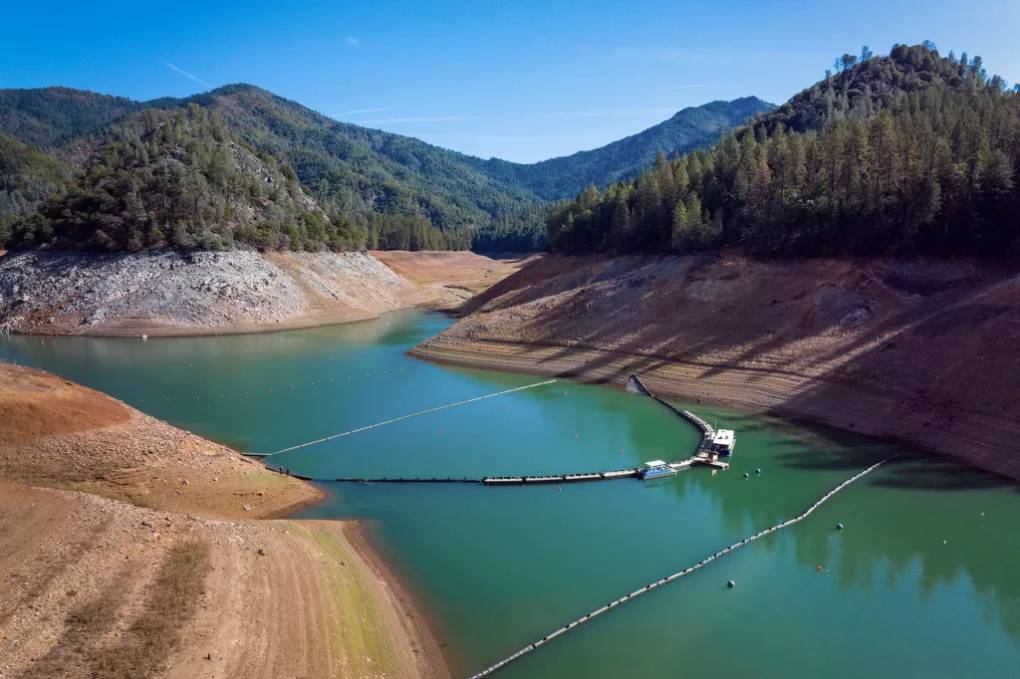
"caption": "A collection system is set up at Dekkas Rock at Shasta Lake. The pilot project will evaluate the viability of collecting juvenile salmon as they migrate out of the McCloud River upstream of Shasta Dam.",
"description": "A collection system is set up at Dekkas Rock at Shasta Lake. The pilot project will evaluate the viability of collecting juvenile salmon as they migrate out of the McCloud River upstream of Shasta Dam. ",
"title": "A collection system is set up at Dekkas Rock at Shasta Lake. The pilot project will evaluate the viability of collecting juvenile salmon as they migrate out of the McCloud River upstream of Shasta Dam.",
"credit": "Florence Flow/California Department of Water Resources",
"status": "inherit",
"altTag": "Brown dried lake bed rises up out of green water.",
"isLoading": false,
"fetchFailed": false
},
"science_1980916": {
"type": "attachments",
"id": "science_1980916",
"meta": {
"index": "attachments_1716263798",
"site": "science",
"id": "1980916",
"found": true
},
"parent": 1980900,
"imgSizes": {
"twentyfourteen-full-width": {
"file": "https://ww2.kqed.org/app/uploads/sites/35/2022/12/GettyImages-1407548832-1024x576.jpg",
"width": 1024,
"mimeType": "image/jpeg",
"height": 576
},
"thumbnail": {
"file": "https://ww2.kqed.org/app/uploads/sites/35/2022/12/GettyImages-1407548832-160x115.jpg",
"width": 160,
"mimeType": "image/jpeg",
"height": 115
},
"post-thumbnail": {
"file": "https://ww2.kqed.org/app/uploads/sites/35/2022/12/GettyImages-1407548832-672x372.jpg",
"width": 672,
"mimeType": "image/jpeg",
"height": 372
},
"kqedFullSize": {
"file": "https://ww2.kqed.org/app/uploads/sites/35/2022/12/GettyImages-1407548832.jpg",
"width": 1024,
"height": 736
},
"large": {
"file": "https://ww2.kqed.org/app/uploads/sites/35/2022/12/GettyImages-1407548832-1020x733.jpg",
"width": 1020,
"mimeType": "image/jpeg",
"height": 733
},
"medium": {
"file": "https://ww2.kqed.org/app/uploads/sites/35/2022/12/GettyImages-1407548832-800x575.jpg",
"width": 800,
"mimeType": "image/jpeg",
"height": 575
},
"medium_large": {
"file": "https://ww2.kqed.org/app/uploads/sites/35/2022/12/GettyImages-1407548832-768x552.jpg",
"width": 768,
"mimeType": "image/jpeg",
"height": 552
}
},
"publishDate": 1670460991,
"modified": 1670462632,
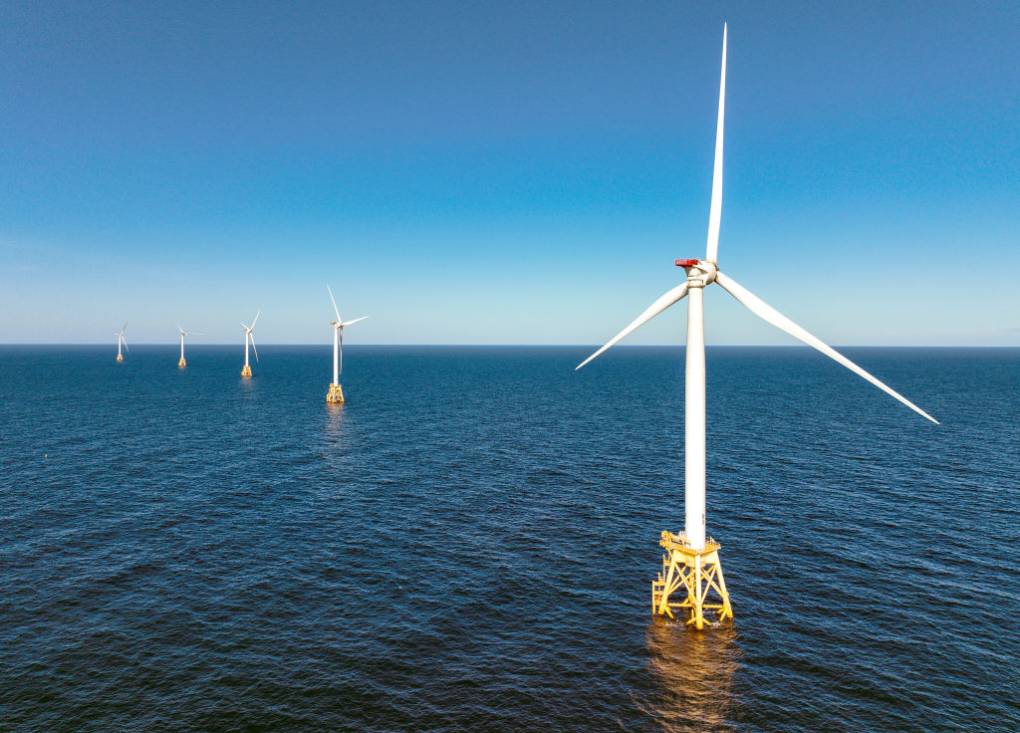
"caption": "Wind turbines generate electricity at the Block Island Wind Farm, the first commercial offshore wind farm in the United States, on July 7, 2022, near Block Island, Rhode Island.",
"description": null,
"title": "Waters Off Block Island Host America's First Offshore Wind Farm",
"credit": "John Moore/Getty Images",
"status": "inherit",
"altTag": "Wind turbines at sea.",
"isLoading": false,
"fetchFailed": false
},
"science_1980810": {
"type": "attachments",
"id": "science_1980810",
"meta": {
"index": "attachments_1716263798",
"site": "science",
"id": "1980810",
"found": true
},
"parent": 1980809,
"imgSizes": {
"twentyfourteen-full-width": {
"file": "https://ww2.kqed.org/app/uploads/sites/35/2022/11/wildfirestoolkit_clinic_stmartin-1038x576.jpg",
"width": 1038,
"mimeType": "image/jpeg",
"height": 576
},
"thumbnail": {
"file": "https://ww2.kqed.org/app/uploads/sites/35/2022/11/wildfirestoolkit_clinic_stmartin-160x107.jpg",
"width": 160,
"mimeType": "image/jpeg",
"height": 107
},
"post-thumbnail": {
"file": "https://ww2.kqed.org/app/uploads/sites/35/2022/11/wildfirestoolkit_clinic_stmartin-672x372.jpg",
"width": 672,
"mimeType": "image/jpeg",
"height": 372
},
"kqedFullSize": {
"file": "https://ww2.kqed.org/app/uploads/sites/35/2022/11/wildfirestoolkit_clinic_stmartin.jpg",
"width": 1100,
"height": 734
},
"large": {
"file": "https://ww2.kqed.org/app/uploads/sites/35/2022/11/wildfirestoolkit_clinic_stmartin-1020x681.jpg",
"width": 1020,
"mimeType": "image/jpeg",
"height": 681
},
"medium": {
"file": "https://ww2.kqed.org/app/uploads/sites/35/2022/11/wildfirestoolkit_clinic_stmartin-800x534.jpg",
"width": 800,
"mimeType": "image/jpeg",
"height": 534
},
"medium_large": {
"file": "https://ww2.kqed.org/app/uploads/sites/35/2022/11/wildfirestoolkit_clinic_stmartin-768x512.jpg",
"width": 768,
"mimeType": "image/jpeg",
"height": 512
}
},
"publishDate": 1668624618,
"modified": 1668804292,
"caption": "Pascale Fisher, a family nurse practitioner, checks a baby's heartbeat at La Clínica's San Antonio Neighborhood Health Center in Oakland.",
"description": "Pascale Fisher, a family nurse practitioner, checks a baby’s heartbeat at La Clínica's San Antonio Neighborhood Health Center in Oakland.",
"title": "Pascale Fisher, a family nurse practitioner, checks a baby’s heartbeat at La Clínica's San Antonio Neighborhood Health Center in Oakland.",
"credit": "Ana Homonnay/La Clínica de La Raza",
"status": "inherit",
"altTag": "Pascale Fisher, a family nurse practitioner, checks a baby’s heartbeat at La Clínica's San Antonio Neighborhood Health Center in Oakland.",
"isLoading": false,
"fetchFailed": false
},
"science_1980794": {
"type": "attachments",
"id": "science_1980794",
"meta": {
"index": "attachments_1716263798",
"site": "science",
"id": "1980794",
"found": true
},
"parent": 1980792,
"imgSizes": {
"twentyfourteen-full-width": {
"file": "https://ww2.kqed.org/app/uploads/sites/35/2022/11/RS60159_GettyImages-94155086-qut-1038x576.jpg",
"width": 1038,
"mimeType": "image/jpeg",
"height": 576
},
"thumbnail": {
"file": "https://ww2.kqed.org/app/uploads/sites/35/2022/11/RS60159_GettyImages-94155086-qut-160x107.jpg",
"width": 160,
"mimeType": "image/jpeg",
"height": 107
},
"post-thumbnail": {
"file": "https://ww2.kqed.org/app/uploads/sites/35/2022/11/RS60159_GettyImages-94155086-qut-672x372.jpg",
"width": 672,
"mimeType": "image/jpeg",
"height": 372
},
"kqedFullSize": {
"file": "https://ww2.kqed.org/app/uploads/sites/35/2022/11/RS60159_GettyImages-94155086-qut.jpg",
"width": 1920,
"height": 1280
},
"large": {
"file": "https://ww2.kqed.org/app/uploads/sites/35/2022/11/RS60159_GettyImages-94155086-qut-1020x680.jpg",
"width": 1020,
"mimeType": "image/jpeg",
"height": 680
},
"1536x1536": {
"file": "https://ww2.kqed.org/app/uploads/sites/35/2022/11/RS60159_GettyImages-94155086-qut-1536x1024.jpg",
"width": 1536,
"mimeType": "image/jpeg",
"height": 1024
},
"medium": {
"file": "https://ww2.kqed.org/app/uploads/sites/35/2022/11/RS60159_GettyImages-94155086-qut-800x533.jpg",
"width": 800,
"mimeType": "image/jpeg",
"height": 533
},
"medium_large": {
"file": "https://ww2.kqed.org/app/uploads/sites/35/2022/11/RS60159_GettyImages-94155086-qut-768x512.jpg",
"width": 768,
"mimeType": "image/jpeg",
"height": 512
}
},
"publishDate": 1668579475,
"modified": 1668630661,
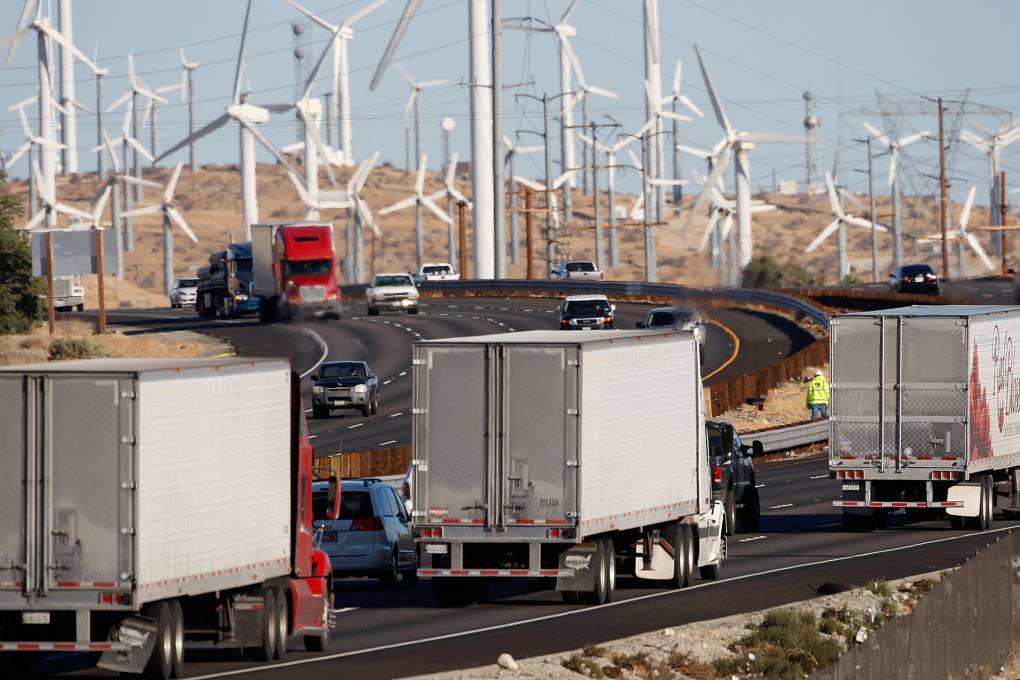
"caption": "Emissions-producing diesel trucks and cars pass non-polluting windmills along the 10 freeway on Dec. 8, 2009, near Banning. ",
"description": null,
"title": "New Climate Report Names Current Decade As Warmest On Record",
"credit": "David McNew/Getty Images",
"status": "inherit",
"altTag": "White wind turbnines in the background of a highway with big red semi-trucks.",
"isLoading": false,
"fetchFailed": false
},
"science_1980754": {
"type": "attachments",
"id": "science_1980754",
"meta": {
"index": "attachments_1716263798",
"site": "science",
"id": "1980754",
"found": true
},
"title": "Los Angeles Times",
"publishDate": 1667869249,
"status": "inherit",
"parent": 1980720,
"modified": 1752004261,
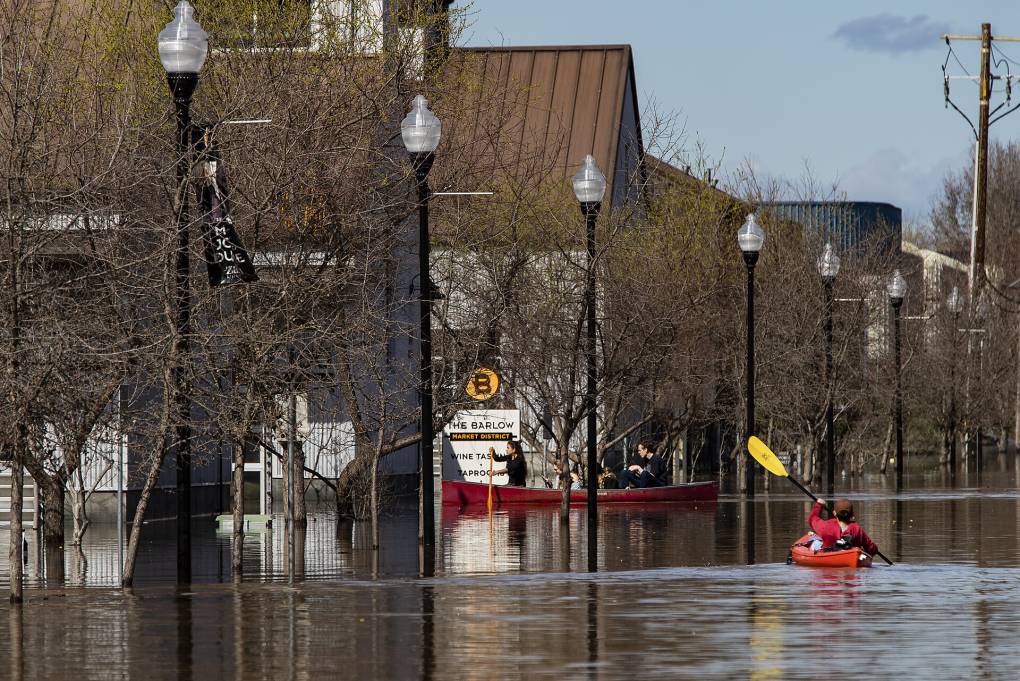
"caption": "A Sebastopol resident encounters fellow paddlers in a canoe as he paddles in the floodwaters surrounding market district, The Barlow, after the Russian River crested its banks on Feb. 28, 2019, in Sebastopol, California.",
"credit": "Gina Ferazzi/Los Angeles Times via Getty Images",
"altTag": "A kayaker in a red boat paddles down a flooded street alongside shops.",
"description": null,
"imgSizes": {
"medium": {
"file": "https://cdn.kqed.org/wp-content/uploads/sites/35/2022/11/RS59853_GettyImages-1128158019-qut-800x534.jpg",
"width": 800,
"height": 534,
"mimeType": "image/jpeg"
},
"large": {
"file": "https://cdn.kqed.org/wp-content/uploads/sites/35/2022/11/RS59853_GettyImages-1128158019-qut-1020x681.jpg",
"width": 1020,
"height": 681,
"mimeType": "image/jpeg"
},
"thumbnail": {
"file": "https://cdn.kqed.org/wp-content/uploads/sites/35/2022/11/RS59853_GettyImages-1128158019-qut-160x107.jpg",
"width": 160,
"height": 107,
"mimeType": "image/jpeg"
},
"medium_large": {
"file": "https://cdn.kqed.org/wp-content/uploads/sites/35/2022/11/RS59853_GettyImages-1128158019-qut-768x512.jpg",
"width": 768,
"height": 512,
"mimeType": "image/jpeg"
},
"1536x1536": {
"file": "https://cdn.kqed.org/wp-content/uploads/sites/35/2022/11/RS59853_GettyImages-1128158019-qut-1536x1025.jpg",
"width": 1536,
"height": 1025,
"mimeType": "image/jpeg"
},
"post-thumbnail": {
"file": "https://cdn.kqed.org/wp-content/uploads/sites/35/2022/11/RS59853_GettyImages-1128158019-qut-672x372.jpg",
"width": 672,
"height": 372,
"mimeType": "image/jpeg"
},
"twentyfourteen-full-width": {
"file": "https://cdn.kqed.org/wp-content/uploads/sites/35/2022/11/RS59853_GettyImages-1128158019-qut-1038x576.jpg",
"width": 1038,
"height": 576,
"mimeType": "image/jpeg"
},
"kqedFullSize": {
"file": "https://cdn.kqed.org/wp-content/uploads/sites/35/2022/11/RS59853_GettyImages-1128158019-qut.jpg",
"width": 1920,
"height": 1281
}
},
"isLoading": false,
"fetchFailed": false
},
"science_1979781": {
"type": "attachments",
"id": "science_1979781",
"meta": {
"index": "attachments_1716263798",
"site": "science",
"id": "1979781",
"found": true
},
"parent": 1979658,
"imgSizes": {
"twentyfourteen-full-width": {
"file": "https://ww2.kqed.org/app/uploads/sites/35/2022/06/Grand-Jury-Bayview-Hunters-Point-4-1038x576.png",
"width": 1038,
"mimeType": "image/png",
"height": 576
},
"thumbnail": {
"file": "https://ww2.kqed.org/app/uploads/sites/35/2022/06/Grand-Jury-Bayview-Hunters-Point-4-160x90.png",
"width": 160,
"mimeType": "image/png",
"height": 90
},
"post-thumbnail": {
"file": "https://ww2.kqed.org/app/uploads/sites/35/2022/06/Grand-Jury-Bayview-Hunters-Point-4-672x372.png",
"width": 672,
"mimeType": "image/png",
"height": 372
},
"kqedFullSize": {
"file": "https://ww2.kqed.org/app/uploads/sites/35/2022/06/Grand-Jury-Bayview-Hunters-Point-4.png",
"width": 1920,
"height": 1080
},
"large": {
"file": "https://ww2.kqed.org/app/uploads/sites/35/2022/06/Grand-Jury-Bayview-Hunters-Point-4-1020x574.png",
"width": 1020,
"mimeType": "image/png",
"height": 574
},
"1536x1536": {
"file": "https://ww2.kqed.org/app/uploads/sites/35/2022/06/Grand-Jury-Bayview-Hunters-Point-4-1536x864.png",
"width": 1536,
"mimeType": "image/png",
"height": 864
},
"medium": {
"file": "https://ww2.kqed.org/app/uploads/sites/35/2022/06/Grand-Jury-Bayview-Hunters-Point-4-800x450.png",
"width": 800,
"mimeType": "image/png",
"height": 450
},
"medium_large": {
"file": "https://ww2.kqed.org/app/uploads/sites/35/2022/06/Grand-Jury-Bayview-Hunters-Point-4-768x432.png",
"width": 768,
"mimeType": "image/png",
"height": 432
}
},
"publishDate": 1656625986,
"modified": 1663370749,
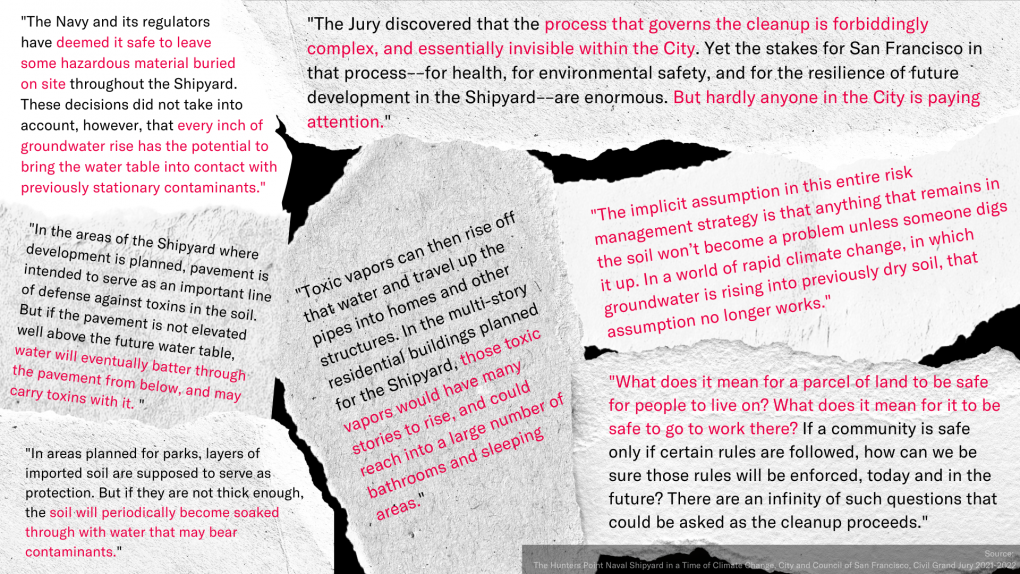
"caption": "Portions of the San Francisco Grand Jury Report 'Buried Problems and a Buried Process:\nThe Hunters Point Naval Shipyard\nin a Time of Climate Change.'",
"description": "Portions of the San Francisco Grand Jury Report 'Buried Problems and a Buried Process:\nThe Hunters Point Naval Shipyard\nin a Time of Climate Change.'",
"title": "Grand Jury Bayview-Hunters Point (4)",
"credit": "Sarah Khalida Mohamad/KQED",
"status": "inherit",
"altTag": "A photo illustration with torn up pieces of white and grey pieces of paper. Each has an excerpt from a report from the San Francisco Civil Grand Jury.",
"isLoading": false,
"fetchFailed": false
},
"science_1984388": {
"type": "attachments",
"id": "science_1984388",
"meta": {
"index": "attachments_1716263798",
"site": "science",
"id": "1984388",
"found": true
},
"parent": 0,
"imgSizes": {
"twentyfourteen-full-width": {
"file": "https://ww2.kqed.org/app/uploads/sites/35/2023/09/2100-1038x576.jpg",
"width": 1038,
"mimeType": "image/jpeg",
"height": 576
},
"thumbnail": {
"file": "https://ww2.kqed.org/app/uploads/sites/35/2023/09/2100-160x90.jpg",
"width": 160,
"mimeType": "image/jpeg",
"height": 90
},
"post-thumbnail": {
"file": "https://ww2.kqed.org/app/uploads/sites/35/2023/09/2100-672x372.jpg",
"width": 672,
"mimeType": "image/jpeg",
"height": 372
},
"kqedFullSize": {
"file": "https://ww2.kqed.org/app/uploads/sites/35/2023/09/2100.jpg",
"width": 1920,
"height": 1080
},
"large": {
"file": "https://ww2.kqed.org/app/uploads/sites/35/2023/09/2100-1020x574.jpg",
"width": 1020,
"mimeType": "image/jpeg",
"height": 574
},
"1536x1536": {
"file": "https://ww2.kqed.org/app/uploads/sites/35/2023/09/2100-1536x864.jpg",
"width": 1536,
"mimeType": "image/jpeg",
"height": 864
},
"medium": {
"file": "https://ww2.kqed.org/app/uploads/sites/35/2023/09/2100-800x450.jpg",
"width": 800,
"mimeType": "image/jpeg",
"height": 450
},
"medium_large": {
"file": "https://ww2.kqed.org/app/uploads/sites/35/2023/09/2100-768x432.jpg",
"width": 768,
"mimeType": "image/jpeg",
"height": 432
}
},
"publishDate": 1695498035,
"modified": 1695498035,
"caption": null,
"description": null,
"title": "2100",
"credit": null,
"status": "inherit",
"altTag": null,
"isLoading": false,
"fetchFailed": false
},
"science_1979808": {
"type": "attachments",
"id": "science_1979808",
"meta": {
"index": "attachments_1716263798",
"site": "science",
"id": "1979808",
"found": true
},
"parent": 1979658,
"imgSizes": {
"twentyfourteen-full-width": {
"file": "https://ww2.kqed.org/app/uploads/sites/35/2022/07/RS56468_20220603_HuntersPointBayviewContamination-14-1-1038x576.jpg",
"width": 1038,
"mimeType": "image/jpeg",
"height": 576
},
"thumbnail": {
"file": "https://ww2.kqed.org/app/uploads/sites/35/2022/07/RS56468_20220603_HuntersPointBayviewContamination-14-1-160x107.jpg",
"width": 160,
"mimeType": "image/jpeg",
"height": 107
},
"post-thumbnail": {
"file": "https://ww2.kqed.org/app/uploads/sites/35/2022/07/RS56468_20220603_HuntersPointBayviewContamination-14-1-672x372.jpg",
"width": 672,
"mimeType": "image/jpeg",
"height": 372
},
"kqedFullSize": {
"file": "https://ww2.kqed.org/app/uploads/sites/35/2022/07/RS56468_20220603_HuntersPointBayviewContamination-14-1.jpg",
"width": 1920,
"height": 1280
},
"large": {
"file": "https://ww2.kqed.org/app/uploads/sites/35/2022/07/RS56468_20220603_HuntersPointBayviewContamination-14-1-1020x680.jpg",
"width": 1020,
"mimeType": "image/jpeg",
"height": 680
},
"1536x1536": {
"file": "https://ww2.kqed.org/app/uploads/sites/35/2022/07/RS56468_20220603_HuntersPointBayviewContamination-14-1-1536x1024.jpg",
"width": 1536,
"mimeType": "image/jpeg",
"height": 1024
},
"medium": {
"file": "https://ww2.kqed.org/app/uploads/sites/35/2022/07/RS56468_20220603_HuntersPointBayviewContamination-14-1-800x533.jpg",
"width": 800,
"mimeType": "image/jpeg",
"height": 533
},
"medium_large": {
"file": "https://ww2.kqed.org/app/uploads/sites/35/2022/07/RS56468_20220603_HuntersPointBayviewContamination-14-1-768x512.jpg",
"width": 768,
"mimeType": "image/jpeg",
"height": 512
}
},
"publishDate": 1656713539,
"modified": 1656715457,
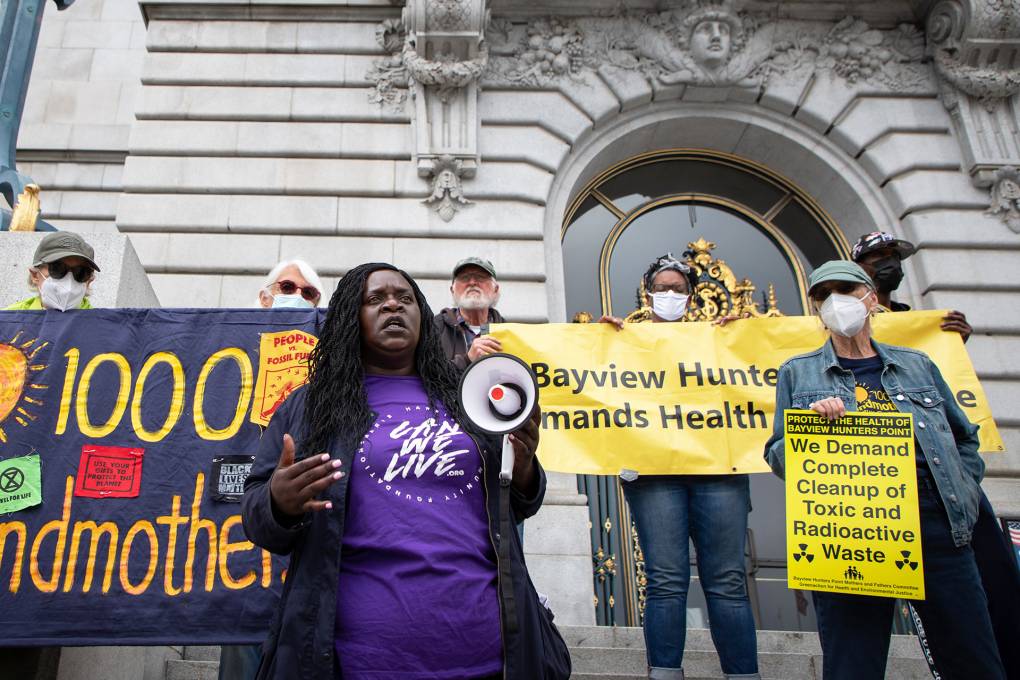
"caption": "Arieann Harrison prepares to speak during a rally at San Francisco City Hall in response to the San Francisco Civil Grand Jury report on the contamination of the Hunters Point shipyard.",
"description": null,
"title": "RS56468_20220603_HuntersPointBayviewContamination-14 (1)",
"credit": "Amaya Edwards/KQED",
"status": "inherit",
"altTag": "A Black woman with long black braids is wearing a purple shirt that reads 'Can we Live.' People are standing on the cement steps of San Francisco City Hall holding signs about environmental justice for the neighborhood of Bayview-Hunters Point.",
"isLoading": false,
"fetchFailed": false
},
"science_1979784": {
"type": "attachments",
"id": "science_1979784",
"meta": {
"index": "attachments_1716263798",
"site": "science",
"id": "1979784",
"found": true
},
"parent": 1979779,
"imgSizes": {
"twentyfourteen-full-width": {
"file": "https://ww2.kqed.org/app/uploads/sites/35/2022/06/RS57028_GettyImages-659168798-qut-1038x576.jpg",
"width": 1038,
"mimeType": "image/jpeg",
"height": 576
},
"thumbnail": {
"file": "https://ww2.kqed.org/app/uploads/sites/35/2022/06/RS57028_GettyImages-659168798-qut-160x99.jpg",
"width": 160,
"mimeType": "image/jpeg",
"height": 99
},
"post-thumbnail": {
"file": "https://ww2.kqed.org/app/uploads/sites/35/2022/06/RS57028_GettyImages-659168798-qut-672x372.jpg",
"width": 672,
"mimeType": "image/jpeg",
"height": 372
},
"kqedFullSize": {
"file": "https://ww2.kqed.org/app/uploads/sites/35/2022/06/RS57028_GettyImages-659168798-qut.jpg",
"width": 1920,
"height": 1190
},
"large": {
"file": "https://ww2.kqed.org/app/uploads/sites/35/2022/06/RS57028_GettyImages-659168798-qut-1020x632.jpg",
"width": 1020,
"mimeType": "image/jpeg",
"height": 632
},
"1536x1536": {
"file": "https://ww2.kqed.org/app/uploads/sites/35/2022/06/RS57028_GettyImages-659168798-qut-1536x952.jpg",
"width": 1536,
"mimeType": "image/jpeg",
"height": 952
},
"medium": {
"file": "https://ww2.kqed.org/app/uploads/sites/35/2022/06/RS57028_GettyImages-659168798-qut-800x496.jpg",
"width": 800,
"mimeType": "image/jpeg",
"height": 496
},
"medium_large": {
"file": "https://ww2.kqed.org/app/uploads/sites/35/2022/06/RS57028_GettyImages-659168798-qut-768x476.jpg",
"width": 768,
"mimeType": "image/jpeg",
"height": 476
}
},
"publishDate": 1656626197,
"modified": 1656633658,
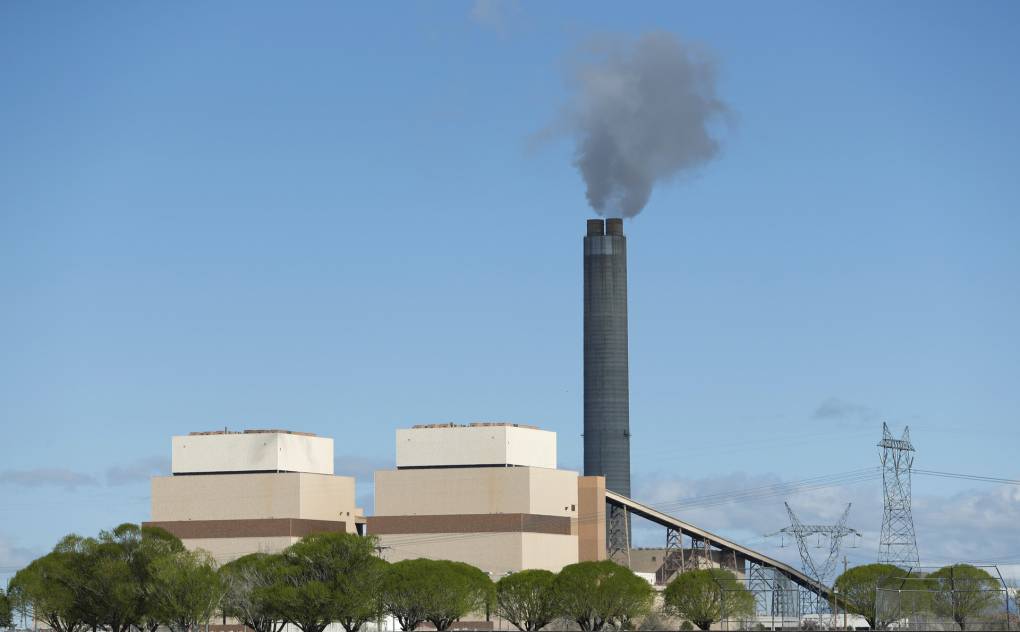
"caption": "The coal-fired Intermountain Power Plant is seen on March 28, 2016, outside Delta, Utah. ",
"description": null,
"title": "Coal Industry Hopes For A Boost As Trump Rolls Back Obama-Era Regulations",
"credit": "George Frey/Getty Images",
"status": "inherit",
"altTag": "Black smoke exits a tall grey smokestack.",
"isLoading": false,
"fetchFailed": false
},
"science_1979564": {
"type": "attachments",
"id": "science_1979564",
"meta": {
"index": "attachments_1716263798",
"site": "science",
"id": "1979564",
"found": true
},
"parent": 1979560,
"imgSizes": {
"twentyfourteen-full-width": {
"file": "https://ww2.kqed.org/app/uploads/sites/35/2022/06/RS56647_DSCF7611-qut-1038x576.jpg",
"width": 1038,
"mimeType": "image/jpeg",
"height": 576
},
"thumbnail": {
"file": "https://ww2.kqed.org/app/uploads/sites/35/2022/06/RS56647_DSCF7611-qut-160x107.jpg",
"width": 160,
"mimeType": "image/jpeg",
"height": 107
},
"post-thumbnail": {
"file": "https://ww2.kqed.org/app/uploads/sites/35/2022/06/RS56647_DSCF7611-qut-672x372.jpg",
"width": 672,
"mimeType": "image/jpeg",
"height": 372
},
"kqedFullSize": {
"file": "https://ww2.kqed.org/app/uploads/sites/35/2022/06/RS56647_DSCF7611-qut.jpg",
"width": 1920,
"height": 1280
},
"large": {
"file": "https://ww2.kqed.org/app/uploads/sites/35/2022/06/RS56647_DSCF7611-qut-1020x680.jpg",
"width": 1020,
"mimeType": "image/jpeg",
"height": 680
},
"1536x1536": {
"file": "https://ww2.kqed.org/app/uploads/sites/35/2022/06/RS56647_DSCF7611-qut-1536x1024.jpg",
"width": 1536,
"mimeType": "image/jpeg",
"height": 1024
},
"medium": {
"file": "https://ww2.kqed.org/app/uploads/sites/35/2022/06/RS56647_DSCF7611-qut-800x533.jpg",
"width": 800,
"mimeType": "image/jpeg",
"height": 533
},
"medium_large": {
"file": "https://ww2.kqed.org/app/uploads/sites/35/2022/06/RS56647_DSCF7611-qut-768x512.jpg",
"width": 768,
"mimeType": "image/jpeg",
"height": 512
}
},
"publishDate": 1655751114,
"modified": 1655751810,
"caption": "Cal Fire is struggling to focus on fire mitigation while also protecting communities from historic wildfires. ",
"description": null,
"title": "RS56647_DSCF7611-qut",
"credit": "The California Newsroom",
"status": "inherit",
"altTag": null,
"isLoading": false,
"fetchFailed": false
},
"science_1979388": {
"type": "attachments",
"id": "science_1979388",
"meta": {
"index": "attachments_1716263798",
"site": "science",
"id": "1979388",
"found": true
},
"parent": 1979385,
"imgSizes": {
"twentyfourteen-full-width": {
"file": "https://ww2.kqed.org/app/uploads/sites/35/2022/06/Rose-Close-up-5-23Photo-Credit-Oakland-Zoo-1038x576.jpg",
"width": 1038,
"mimeType": "image/jpeg",
"height": 576
},
"thumbnail": {
"file": "https://ww2.kqed.org/app/uploads/sites/35/2022/06/Rose-Close-up-5-23Photo-Credit-Oakland-Zoo-160x97.jpg",
"width": 160,
"mimeType": "image/jpeg",
"height": 97
},
"post-thumbnail": {
"file": "https://ww2.kqed.org/app/uploads/sites/35/2022/06/Rose-Close-up-5-23Photo-Credit-Oakland-Zoo-672x372.jpg",
"width": 672,
"mimeType": "image/jpeg",
"height": 372
},
"kqedFullSize": {
"file": "https://ww2.kqed.org/app/uploads/sites/35/2022/06/Rose-Close-up-5-23Photo-Credit-Oakland-Zoo-scaled.jpg",
"width": 2560,
"height": 1559
},
"2048x2048": {
"file": "https://ww2.kqed.org/app/uploads/sites/35/2022/06/Rose-Close-up-5-23Photo-Credit-Oakland-Zoo-2048x1247.jpg",
"width": 2048,
"mimeType": "image/jpeg",
"height": 1247
},
"large": {
"file": "https://ww2.kqed.org/app/uploads/sites/35/2022/06/Rose-Close-up-5-23Photo-Credit-Oakland-Zoo-1020x621.jpg",
"width": 1020,
"mimeType": "image/jpeg",
"height": 621
},
"1536x1536": {
"file": "https://ww2.kqed.org/app/uploads/sites/35/2022/06/Rose-Close-up-5-23Photo-Credit-Oakland-Zoo-1536x935.jpg",
"width": 1536,
"mimeType": "image/jpeg",
"height": 935
},
"full-width": {
"file": "https://ww2.kqed.org/app/uploads/sites/35/2022/06/Rose-Close-up-5-23Photo-Credit-Oakland-Zoo-1920x1169.jpg",
"width": 1920,
"mimeType": "image/jpeg",
"height": 1169
},
"medium": {
"file": "https://ww2.kqed.org/app/uploads/sites/35/2022/06/Rose-Close-up-5-23Photo-Credit-Oakland-Zoo-800x487.jpg",
"width": 800,
"mimeType": "image/jpeg",
"height": 487
},
"medium_large": {
"file": "https://ww2.kqed.org/app/uploads/sites/35/2022/06/Rose-Close-up-5-23Photo-Credit-Oakland-Zoo-768x468.jpg",
"width": 768,
"mimeType": "image/jpeg",
"height": 468
}
},
"publishDate": 1654217163,
"modified": 1654539180,
"caption": "A close-up of Rose, the rescued mountain lion currently at the Oakland Zoo.",
"description": null,
"title": "Rose the Rescued Mountain Lion",
"credit": "Courtesy of Oakland Zoo",
"status": "inherit",
"altTag": "A close-up of Rose, the rescued mountain lion currently at the Oakland Zoo",
"isLoading": false,
"fetchFailed": false
},
"science_1979123": {
"type": "attachments",
"id": "science_1979123",
"meta": {
"index": "attachments_1716263798",
"site": "science",
"id": "1979123",
"found": true
},
"parent": 1979092,
"imgSizes": {
"twentyfourteen-full-width": {
"file": "https://ww2.kqed.org/app/uploads/sites/35/2022/04/RS55014_GettyImages-1356445057-qut-1038x576.jpg",
"width": 1038,
"mimeType": "image/jpeg",
"height": 576
},
"thumbnail": {
"file": "https://ww2.kqed.org/app/uploads/sites/35/2022/04/RS55014_GettyImages-1356445057-qut-160x107.jpg",
"width": 160,
"mimeType": "image/jpeg",
"height": 107
},
"post-thumbnail": {
"file": "https://ww2.kqed.org/app/uploads/sites/35/2022/04/RS55014_GettyImages-1356445057-qut-672x372.jpg",
"width": 672,
"mimeType": "image/jpeg",
"height": 372
},
"kqedFullSize": {
"file": "https://ww2.kqed.org/app/uploads/sites/35/2022/04/RS55014_GettyImages-1356445057-qut.jpg",
"width": 1920,
"height": 1280
},
"large": {
"file": "https://ww2.kqed.org/app/uploads/sites/35/2022/04/RS55014_GettyImages-1356445057-qut-1020x680.jpg",
"width": 1020,
"mimeType": "image/jpeg",
"height": 680
},
"1536x1536": {
"file": "https://ww2.kqed.org/app/uploads/sites/35/2022/04/RS55014_GettyImages-1356445057-qut-1536x1024.jpg",
"width": 1536,
"mimeType": "image/jpeg",
"height": 1024
},
"medium": {
"file": "https://ww2.kqed.org/app/uploads/sites/35/2022/04/RS55014_GettyImages-1356445057-qut-800x533.jpg",
"width": 800,
"mimeType": "image/jpeg",
"height": 533
},
"medium_large": {
"file": "https://ww2.kqed.org/app/uploads/sites/35/2022/04/RS55014_GettyImages-1356445057-qut-768x512.jpg",
"width": 768,
"mimeType": "image/jpeg",
"height": 512
}
},
"publishDate": 1649374105,
"modified": 1649380656,
"caption": "'The Maze' — the freeway interchange east of the Bay Bridge — and part of the old Oakland Army Base are seen from this drone view in West Oakland on Tuesday, Nov. 23, 2021. ",
"description": null,
"title": "West Oakland Drone View",
"credit": "Jane Tyska/Digital First Media/East Bay Times via Getty Images",
"status": "inherit",
"altTag": null,
"isLoading": false,
"fetchFailed": false
}
},
"audioPlayerReducer": {
"postId": "stream_live",
"isPaused": true,
"isPlaying": false,
"pfsActive": false,
"pledgeModalIsOpen": true,
"playerDrawerIsOpen": false,
"liveAudioPlayStartedAt": 0,
"liveAudioPlayContext": ""
},
"authorsReducer": {
"byline_science_1981041": {
"type": "authors",
"id": "byline_science_1981041",
"meta": {
"override": true
},
"slug": "byline_science_1981041",
"name": "Alastair Bland",
"isLoading": false
},
"byline_science_1980809": {
"type": "authors",
"id": "byline_science_1980809",
"meta": {
"override": true
},
"slug": "byline_science_1980809",
"name": "Victoria St. Martin",
"isLoading": false
},
"byline_science_1979779": {
"type": "authors",
"id": "byline_science_1979779",
"meta": {
"override": true
},
"slug": "byline_science_1979779",
"name": "Nadia Lopez \u003cbr />CalMatters\u003cbr>",
"isLoading": false
},
"byline_science_1979560": {
"type": "authors",
"id": "byline_science_1979560",
"meta": {
"override": true
},
"slug": "byline_science_1979560",
"name": "Scott Rodd (CapRadio) and Danielle Venton (KQED)",
"isLoading": false
},
"thailye": {
"type": "authors",
"id": "11501",
"meta": {
"index": "authors_1716337520",
"id": "11501",
"found": true
},
"name": "Teodros Hailye",
"firstName": "Teodros",
"lastName": "Hailye",
"slug": "thailye",
"email": "thailye@KQED.org",
"display_author_email": false,
"staff_mastheads": [],
"title": "Information Designer",
"bio": null,
"avatar": "https://secure.gravatar.com/avatar/bfb755f5a66ebaccd414e310b7d7c94a?s=600&d=blank&r=g",
"twitter": null,
"facebook": null,
"instagram": null,
"linkedin": null,
"sites": [
{
"site": "science",
"roles": []
}
],
"headData": {
"title": "Teodros Hailye | KQED",
"description": "Information Designer",
"ogImgSrc": "https://secure.gravatar.com/avatar/bfb755f5a66ebaccd414e310b7d7c94a?s=600&d=blank&r=g",
"twImgSrc": "https://secure.gravatar.com/avatar/bfb755f5a66ebaccd414e310b7d7c94a?s=600&d=blank&r=g"
},
"isLoading": false,
"link": "/author/thailye"
},
"kevinstark": {
"type": "authors",
"id": "11608",
"meta": {
"index": "authors_1716337520",
"id": "11608",
"found": true
},
"name": "Kevin Stark",
"firstName": "Kevin",
"lastName": "Stark",
"slug": "kevinstark",
"email": "kstark@kqed.org",
"display_author_email": true,
"staff_mastheads": [
"science"
],
"title": "Senior Editor",
"bio": "Kevin is a senior editor for KQED Science, managing the station's health and climate desks. His journalism career began in the Pacific Northwest, and he later became a lead reporter for the San Francisco Public Press. His work has appeared in Pacific Standard magazine, the Energy News Network, the Center for Investigative Reporting's Reveal and WBEZ in Chicago. Kevin joined KQED in 2019, and has covered issues related to energy, wildfire, climate change and the environment.",
"avatar": "https://secure.gravatar.com/avatar/365aaa4b597d3a8374f67504ff0facd323d7906e8eb4be0a7efd2427408e802c?s=600&d=blank&r=g",
"twitter": "starkkev",
"bluesky": null,
"facebook": null,
"instagram": null,
"linkedin": null,
"sites": [
{
"site": "",
"roles": [
"editor"
]
},
{
"site": "news",
"roles": [
"editor"
]
},
{
"site": "science",
"roles": [
"administrator"
]
}
],
"headData": {
"title": "Kevin Stark | KQED",
"description": "Senior Editor",
"ogImgSrc": "https://secure.gravatar.com/avatar/365aaa4b597d3a8374f67504ff0facd323d7906e8eb4be0a7efd2427408e802c?s=600&d=blank&r=g",
"twImgSrc": "https://secure.gravatar.com/avatar/365aaa4b597d3a8374f67504ff0facd323d7906e8eb4be0a7efd2427408e802c?s=600&d=blank&r=g"
},
"isLoading": false,
"link": "/author/kevinstark"
},
"smohamad": {
"type": "authors",
"id": "11631",
"meta": {
"index": "authors_1716337520",
"id": "11631",
"found": true
},
"name": "Sarah Mohamad",
"firstName": "Sarah",
"lastName": "Mohamad",
"slug": "smohamad",
"email": "smohamad@KQED.org",
"display_author_email": true,
"staff_mastheads": [],
"title": "Engagement Producer and Reporter, KQED Science",
"bio": "Sarah Mohamad is an audience engagement reporter and producer for KQED Science. She reports on audience-focused science and environment stories and manages the team's social media, newsletter, and engagement efforts. Prior to this role, she played a key role as project manager for NSF's \u003ca href=\"https://www.kqed.org/crackingthecode\">\u003cem>Cracking the Code: Influencing Millennial Science Engagement\u003c/em> \u003c/a>audience research.",
"avatar": "https://secure.gravatar.com/avatar/e6224957cd82d015183756ddde1f928013a563d7ca2e4565f8c4de1ec64886c5?s=600&d=blank&r=g",
"twitter": "sarahkmohamad",
"bluesky": null,
"facebook": null,
"instagram": null,
"linkedin": null,
"sites": [
{
"site": "",
"roles": [
"editor"
]
},
{
"site": "arts",
"roles": [
"editor"
]
},
{
"site": "news",
"roles": [
"editor"
]
},
{
"site": "about",
"roles": [
"editor"
]
},
{
"site": "science",
"roles": [
"editor"
]
}
],
"headData": {
"title": "Sarah Mohamad | KQED",
"description": "Engagement Producer and Reporter, KQED Science",
"ogImgSrc": "https://secure.gravatar.com/avatar/e6224957cd82d015183756ddde1f928013a563d7ca2e4565f8c4de1ec64886c5?s=600&d=blank&r=g",
"twImgSrc": "https://secure.gravatar.com/avatar/e6224957cd82d015183756ddde1f928013a563d7ca2e4565f8c4de1ec64886c5?s=600&d=blank&r=g"
},
"isLoading": false,
"link": "/author/smohamad"
},
"eromero": {
"type": "authors",
"id": "11746",
"meta": {
"index": "authors_1716337520",
"id": "11746",
"found": true
},
"name": "Ezra David Romero",
"firstName": "Ezra David",
"lastName": "Romero",
"slug": "eromero",
"email": "eromero@kqed.org",
"display_author_email": true,
"staff_mastheads": [
"news",
"science"
],
"title": "Climate Reporter",
"bio": "Ezra David Romero is a climate reporter for KQED News. He covers the absence and excess of water in the Bay Area — think sea level rise, flooding and drought. For nearly a decade he’s covered how warming temperatures are altering the lives of Californians. He’s reported on farmers worried their pistachio trees aren’t getting enough sleep, families desperate for water, scientists studying dying giant sequoias, and alongside firefighters containing wildfires. His work has appeared on local stations across California and nationally on public radio shows like Morning Edition, Here and Now, All Things Considered and Science Friday. ",
"avatar": "https://secure.gravatar.com/avatar/c76404d287c10ed40224227551ac36e24352c7306f106632caf6fead76f8801f?s=600&d=blank&r=g",
"twitter": "ezraromero",
"bluesky": null,
"facebook": null,
"instagram": null,
"linkedin": null,
"sites": [
{
"site": "arts",
"roles": [
"editor"
]
},
{
"site": "news",
"roles": [
"editor"
]
},
{
"site": "science",
"roles": [
"editor"
]
},
{
"site": "liveblog",
"roles": [
"author"
]
}
],
"headData": {
"title": "Ezra David Romero | KQED",
"description": "Climate Reporter",
"ogImgSrc": "https://secure.gravatar.com/avatar/c76404d287c10ed40224227551ac36e24352c7306f106632caf6fead76f8801f?s=600&d=blank&r=g",
"twImgSrc": "https://secure.gravatar.com/avatar/c76404d287c10ed40224227551ac36e24352c7306f106632caf6fead76f8801f?s=600&d=blank&r=g"
},
"isLoading": false,
"link": "/author/eromero"
}
},
"pagesReducer": {
"science_category_environment": {
"type": "terms",
"id": "science_35",
"meta": {
"index": "terms_1716263798",
"site": "science",
"id": "35",
"score": 12.138271
},
"featImg": null,
"name": "Environment",
"description": null,
"taxonomy": "category",
"headData": {
"twImgId": null,
"twTitle": null,
"ogTitle": null,
"ogImgId": null,
"twDescription": null,
"description": null,
"title": "Environment Archives | KQED Science",
"ogDescription": null
},
"ttid": 37,
"slug": "environment",
"isLoading": false,
"title": "Environment",
"pageMeta": {
"site": "science",
"WpPageTemplate": "page-topic-editorial",
"currentPage": 18
},
"blocks": [
{
"blockName": "kqed/post-list",
"attrs": {
"layout": "cardArticle2",
"query": "posts/science?category=environment",
"seeMore": false,
"paginated": true,
"page": 18
}
},
{
"blockName": "kqed/ad"
}
]
}
},
"pfsSessionReducer": {},
"postsReducer": {
"stream_live": {
"type": "live",
"id": "stream_live",
"audioUrl": "https://streams.kqed.org/kqedradio",
"title": "Live Stream",
"excerpt": "Live Stream information currently unavailable.",
"link": "/radio",
"featImg": "",
"label": {
"name": "KQED Live",
"link": "/"
}
},
"stream_kqedNewscast": {
"type": "posts",
"id": "stream_kqedNewscast",
"audioUrl": "https://www.kqed.org/.stream/anon/radio/RDnews/newscast.mp3?_=1",
"title": "KQED Newscast",
"featImg": "",
"label": {
"name": "88.5 FM",
"link": "/"
}
},
"science_1981041": {
"type": "posts",
"id": "science_1981041",
"meta": {
"index": "posts_1716263798",
"site": "science",
"id": "1981041",
"score": null,
"sort": [
1671562594000
]
},
"parent": 0,
"labelTerm": {},
"blocks": [],
"publishDate": 1671562594,
"format": "standard",
"title": "Saving Salmon: Chinook Return to California's Far North — With a Lot of Human Help",
"headTitle": "Saving Salmon: Chinook Return to California’s Far North — With a Lot of Human Help | KQED",
"content": "\u003cp>Chinook salmon haven’t spawned in the McCloud River for more than 80 years. But last summer, thousands of juveniles were born in the waters of this remote tributary, miles upstream of Shasta Dam.\u003c/p>\n\u003cp>The young Chinook salmon — some now finger-sized smolts in mid-migration toward the Pacific Ocean — are part of a state and federal experiment that could help make the McCloud a salmon river once again.\u003c/p>\n\u003cp>Winter-run Chinook were federally listed as endangered in 1994, but recent years have been especially hard for the fish. Facing severe drought and warm river conditions, \u003ca href=\"https://www.nrdc.org/experts/doug-obegi/agencies-planning-disaster-ca-salmon-if-2022-dry\">most winter-run salmon born naturally in the Sacramento River have perished\u003c/a> over the past three years.\u003c/p>\n\u003cp>So restoring Chinook to the McCloud has become an urgent priority for state and federal officials. In the first year of a drought-response project, about 40,000 salmon eggs were brought back to the McCloud, a picturesque river in the wilderness of the Cascade mountains.\u003c/p>\n\u003cp>Iconic in Northern California, Chinook salmon are critical pieces of the region’s environment. They are consumed by sea lions, orcas and bears, and they still support a commercial fishing industry. Chinook remain vital to the culture and traditional foods of Native Americans, including the Winnemem Wintu Tribe, whose historical salmon fishing grounds include the McCloud River.\u003c/p>\n\u003cp>[ad fullwidth]\u003c/p>\n\u003cp>Conservation experts say the McCloud’s cold, clean water holds great promise as a potential Chinook refuge — and is perhaps even a future stronghold for the species. Restoring salmon there is considered critical to the species’ survival, since they now spawn only in low-lying parts of the Central Valley near Redding and Red Bluff, where it’s often too hot and dry for most newborn fish to survive.\u003c/p>\n\u003cp>“We probably won’t be able to maintain winter-run Chinook on the valley floor forever,” said Matt Johnson, senior environmental scientist with the California Department of Fish and Wildlife.\u003c/p>\n\u003cfigure id=\"attachment_1981043\" class=\"wp-caption alignnone\" style=\"max-width: 800px\">\u003cimg loading=\"lazy\" decoding=\"async\" class=\"size-medium wp-image-1981043\" src=\"https://ww2.kqed.org/app/uploads/sites/35/2022/12/121222-Hatchery-Fish-CM-01-800x533.jpg\" alt=\"Photo shows two hatchery juveniles (with copper tails) that were used to test efficiency of the trapping system and two that spent their early lives imprinting on McCloud River water. \" width=\"800\" height=\"533\" srcset=\"https://cdn.kqed.org/wp-content/uploads/sites/35/2022/12/121222-Hatchery-Fish-CM-01-800x533.jpg 800w, https://cdn.kqed.org/wp-content/uploads/sites/35/2022/12/121222-Hatchery-Fish-CM-01-1020x679.jpg 1020w, https://cdn.kqed.org/wp-content/uploads/sites/35/2022/12/121222-Hatchery-Fish-CM-01-160x107.jpg 160w, https://cdn.kqed.org/wp-content/uploads/sites/35/2022/12/121222-Hatchery-Fish-CM-01-768x512.jpg 768w, https://cdn.kqed.org/wp-content/uploads/sites/35/2022/12/121222-Hatchery-Fish-CM-01.jpg 1024w\" sizes=\"(max-width: 800px) 100vw, 800px\">\u003cfigcaption class=\"wp-caption-text\">Matt Johnson of the state Department of Fish and Wildlife measures four winter-run Chinook salmon as part of a trial to estimate the species’ production and survival. \u003ccite>(Eric Holmes/UC Davis)\u003c/cite>\u003c/figcaption>\u003c/figure>\n\u003cp>Johnson spent much of the past five months camped beside the incubation site on the lower McCloud River, guarding the eggs and emerging fry and overseeing the experiment, which is a \u003ca href=\"https://wildlife.ca.gov/News/partners-return-winter-run-chinook-salmon-eggs-to-mccloud-river\">collaboration between his agency, the National Marine Fisheries Service (also known as NOAA Fisheries), the U.S. Fish and Wildlife Service and the Winnemem Wintu Tribe\u003c/a>.\u003c/p>\n\u003cp>So far, biologists say, the project has gone well. About 90% of the eggs hatched, and the young fish reportedly have thrived in the McCloud, growing faster than hatchery fish.\u003c/p>\n\u003cp>Recent rainstorms have boosted \u003ca href=\"https://waterdata.usgs.gov/monitoring-location/11377100/#parameterCode=00060&period=P7D\">river flows\u003c/a>, which may increase the odds that salmon will reach the ocean this year, escaping the dangerous water pumps and predators of the Sacramento–San Joaquin Delta.\u003c/p>\n\u003cp>The project is the first step in a long-term plan that may involve capturing adult winter-run Chinook in the lower Sacramento and transporting them to the McCloud to spawn. It’s a difficult and risky venture for the fish but it may be the best shot the species has at survival.\u003c/p>\n\u003cp>“The winter run is headed for extinction, no question, if we don’t develop an artificial system for keeping it going,” said Peter Moyle, a fish biologist at UC Davis who has studied Central Valley fish since the 1970s. He co-authored a \u003ca href=\"https://caltrout.org/wp-content/uploads/2017/05/SOS-II-Fish-in-Hot-Water-Report.pdf\">report warning that many of California’s native salmon and trout are likely to vanish this century (PDF)\u003c/a> as the environment warms.\u003c/p>\n\u003cp>A genetically unique run of salmon, winter-run Chinook once spawned in the McCloud in great numbers, along with other seasonal runs of the fish.\u003c/p>\n\u003cp>[pullquote size='medium' align='right' citation='Peter Moyle, fish biologist, UC Davis']‘The winter run is headed for extinction, no question, if we don’t develop an artificial system for keeping it going.’[/pullquote]\u003c/p>\n\u003cp>Even though the Central Valley’s river system, which includes the McCloud River, marks the southern limit of the Chinook’s range, it was once their stronghold. \u003ca href=\"https://cws.ucdavis.edu/library/historical-abundance-and-decline-chinook-salmon-central-valley-region-california\">Between 1 and 2 million fish\u003c/a>, some weighing 50 pounds or more, spawned in the tributaries of the Sacramento and San Joaquin rivers each year before the Gold Rush.\u003c/p>\n\u003cp>The fish have dwindled to a fraction of their historic abundance. \u003ca href=\"https://nrm.dfg.ca.gov/FileHandler.ashx?DocumentID=84381&inline\">Spawning numbers of winter-run Chinook\u003c/a> dropped to fewer than 200 in the early 1990s. They’ve rebounded, but their future remains in doubt.\u003c/p>\n\u003cp>The McCloud — a state-designated wild and scenic river — used to offer prime habitat, with deep gravel beds for egg-laying and year-round flows of clean, cold water from Mount Shasta. Construction of Shasta Dam in the 1940s — and Keswick Dam shortly after — changed all this by \u003ca href=\"https://noaa.maps.arcgis.com/apps/MapJournal/index.html?appid=ceebefd9685143daa5bf30d5a7e0c7fa\">locking ocean-run salmon out of some 500 miles of productive high-elevation habitat\u003c/a>.\u003c/p>\n\u003cp>The salmon became confined instead to the lower reaches of the Sacramento River system, where they did not previously spawn. Blazing temperatures in the summer — when the winter-run fish lay and fertilize their eggs near Redding and Red Bluff — have made it difficult for salmon to thrive. Chinook, especially in their early life stages, are sensitive to high temperatures.\u003c/p>\n\u003cp>Only with the support of hatcheries have California salmon remained abundant enough to be fished.\u003c/p>\n\u003ch2>River habitat for winter-run Chinook salmon has shrunk\u003c/h2>\n\u003cp>Juvenile Chinook salmon born in the McCloud River once migrated downstream, into the Sacramento River and out to the Pacific Ocean. Today, about 80% of the salmon’s historical river habitat is behind dams, which prevents the adult fish from swimming upstream to spawn. The state is mounting an experiment to return them to the McCloud River.\u003c/p>\n\u003cfigure id=\"attachment_1981045\" class=\"wp-caption alignnone\" style=\"max-width: 740px\">\u003cimg loading=\"lazy\" decoding=\"async\" class=\"wp-image-1981045 size-full\" src=\"https://ww2.kqed.org/app/uploads/sites/35/2022/12/download-11.png\" alt=\"Color coded map of river habitat for winter-run chinook salmon.\" width=\"740\" height=\"561\" srcset=\"https://cdn.kqed.org/wp-content/uploads/sites/35/2022/12/download-11.png 740w, https://cdn.kqed.org/wp-content/uploads/sites/35/2022/12/download-11-160x121.png 160w\" sizes=\"(max-width: 740px) 100vw, 740px\">\u003cfigcaption class=\"wp-caption-text\">Map of river habitat for winter-run Chinook salmon. \u003ccite>(NOAA)\u003c/cite>\u003c/figcaption>\u003c/figure>\n\u003cp>For decades, fishing groups, agencies and Winnemem Wintu tribal leaders have pondered the possibility of reintroducing salmon into the McCloud. Finally, last spring and summer, after two poor spawning years in a row — and with a third one looking likely — federal and state agencies took action.\u003c/p>\n\u003cp>Last year “temperature modeling going into the winter-run spawning season showed a lot of uncertainty — basically a 50-50 chance of being able to maintain suitable temperatures for winter-run eggs to develop in the river,” said Johnson of the Department of Fish and Wildlife.\u003c/p>\n\u003ch2>A bumpy trip for precious salmon eggs\u003c/h2>\n\u003cp>Because winter-run Chinook are listed as endangered, fishery agencies are scrambling to save the fish. Last spring they transported about three dozen adult winter-run Chinook trapped at the base of Keswick Dam, just north of Redding, about 50 miles southeast to the north fork of Battle Creek, a tributary near Red Bluff where waters typically run cool and clear.\u003c/p>\n\u003cp>They also launched a more complicated effort: They took winter-run Chinook eggs from adult fish at a federal salmon hatchery and transported them up and over Shasta Dam to a remote national forest campground next to the McCloud River.\u003c/p>\n\u003cp>They came in two batches of 20,000 — the first by truck on a bumpy, 80-mile ride. A helicopter delivered the second clutch. “We wanted to make sure the transportation phase went smoothly,” Johnson said.\u003c/p>\n\u003cp>The fertilized eggs were incubated in protective cages submerged in river water for weeks. The scientists even placed an electrified barrier around the eggs to protect them from foraging black bears.\u003c/p>\n\u003cfigure id=\"attachment_1981046\" class=\"wp-caption alignnone\" style=\"max-width: 800px\">\u003cimg loading=\"lazy\" decoding=\"async\" class=\"wp-image-1981046 size-medium\" src=\"https://ww2.kqed.org/app/uploads/sites/35/2022/12/121222-Hatchery-Fish-CM-003-800x533.jpg\" alt=\"Rachel Johnson of NOAA Fisheries and state biologists Sam Funakoshi and Ross Schaefer check a trap for winter-run Chinook salmon that will be transported downstream of Keswick Dam to help them migrate to the ocean.\" width=\"800\" height=\"533\" srcset=\"https://cdn.kqed.org/wp-content/uploads/sites/35/2022/12/121222-Hatchery-Fish-CM-003-800x533.jpg 800w, https://cdn.kqed.org/wp-content/uploads/sites/35/2022/12/121222-Hatchery-Fish-CM-003-1020x679.jpg 1020w, https://cdn.kqed.org/wp-content/uploads/sites/35/2022/12/121222-Hatchery-Fish-CM-003-160x107.jpg 160w, https://cdn.kqed.org/wp-content/uploads/sites/35/2022/12/121222-Hatchery-Fish-CM-003-768x512.jpg 768w, https://cdn.kqed.org/wp-content/uploads/sites/35/2022/12/121222-Hatchery-Fish-CM-003.jpg 1024w\" sizes=\"(max-width: 800px) 100vw, 800px\">\u003cfigcaption class=\"wp-caption-text\">Rachel Johnson of NOAA Fisheries and state biologists Sam Funakoshi and Ross Schaefer check a trap for winter-run Chinook salmon that will be transported downstream of Keswick Dam to help them migrate to the ocean. \u003ccite>(Carson Jeffres/UC Davis)\u003c/cite>\u003c/figcaption>\u003c/figure>\n\u003cp>Of the 40,000 eggs, Johnson said, about 36,000 emerged as fry. In late summer, the biologists released them into the wild.\u003c/p>\n\u003cp>The scientists wanted the fish to spend time in McCloud, both to utilize its invertebrate food sources and to undergo the olfactory imprinting process that enables migrating adult salmon to find their birth streams years later. Indeed, it is this process that gives salmon their remarkable homing powers and would truly make these fish McCloud River salmon.\u003c/p>\n\u003cp>In an undisturbed ecosystem, the fish in the river would simply swim downstream, through San Francisco Bay, and out into the ocean. But this unique scenario, where a dam and reservoir block their migration, called on a different approach that required human help.\u003c/p>\n\u003cp>State and federal scientists had to recapture the salmon and release them into the lower Sacramento River. The Fish and Wildlife team placed several traps on the McCloud about 20 miles below the release site and managed to capture 1,600 of them. They then drove the fish downstream and released them into the Sacramento River. If all goes well, some of the young salmon will return from the ocean in two to four years.\u003c/p>\n\u003cp>The agencies plan to repeat the project next year, transporting more Chinook eggs up to the McCloud and again hauling the young fish back downstream. “We intend to do it again, and do it better,” Johnson said.\u003c/p>\n\u003cp>To improve the program’s effectiveness, scientists are now addressing some unanswered questions from the experiment.\u003c/p>\n\u003cp>\u003ca href=\"https://www.fisheries.noaa.gov/contact/rachel-johnson-phd\">Rachel Johnson\u003c/a>, a biologist with the National Oceanic and Atmospheric Administration’s Southwest Fisheries Science Center, wants to know how many of the salmon released at the incubation site made it as far downstream as the fish trap array. This will reveal the survival rate of the released fish and help Johnson and her colleagues better understand the quality of the McCloud’s habitat.\u003c/p>\n\u003cp>To do this, she is studying data on daily river flow rates and capture rates in the traps, then combining this information with the known effectiveness of the types of gear they used. That, she said, would “give us the number that swam past.”\u003c/p>\n\u003cp>From what they already know about the size of the fish upon recapture, it’s looking good.\u003c/p>\n\u003cp>“The fish in the McCloud were 30 to 40% larger than the average winter-run fish that were being caught at the Red Bluff Diversion Dam,” she said, referring to a structure downstream of Shasta.\u003c/p>\n\u003ch2>A gem in ‘a string of pearls’\u003c/h2>\n\u003cp>A great deal of work has already been done to help Sacramento River salmon. State agencies and conservation groups have \u003ca href=\"https://calmatters.org/environment/2018/12/restoring-floodplains-reversal-california-central-valley/\">restored floodplains\u003c/a> and side channels, where slow-moving water provides young fish with abundant food and shelter from predators. This work often involves removing, or carving notches in, levees so that river water can flow over farm fields.\u003c/p>\n\u003cp>Johnson sees this connected system of restored habitat parcels as a “string of pearls,” and says the McCloud might be one of its more valuable gems.\u003c/p>\n\u003cp>Better still, the McCloud’s geographic location at the upper end of the watershed could have a beneficial trickle-down effect through the watershed and the early life stages of Chinook, ultimately improving their lifelong survival rates.\u003c/p>\n\u003cp>“If you can have such highly productive, good-growth habitat so high in the system, it starts the fish off in such a strong condition,” she said.\u003c/p>\n\u003cp>Protecting areas lower in the watershed are important to Chinook, too. Research by Jacob Katz, biologist with the group California Trout, shows that floodplains restored in the lower stretches of the Sacramento watershed have helped salmon. Smolts grow faster on inundated floodplains than they do in the river’s channelized main stem.\u003c/p>\n\u003cp>Katz said reintroducing Chinook to the high-elevation spawning areas in the McCloud will complement the work he has done, and vice versa.\u003c/p>\n\u003cp>“Both spawning habitat and rearing habitat are necessary, yet insufficient on their own,” he said. “We need to restore every link in the habitat chain.”\u003c/p>\n\u003ch2>Ambitious future plans\u003c/h2>\n\u003cp>The summer’s salmon relocation effort was technically not a reintroduction project but an emergency drought action required by the state and federal endangered species acts and intended to shield winter-run Chinook from drought impacts.\u003c/p>\n\u003cp>However, it’s likely that the McCloud effort of last summer will develop in years ahead into a full-fledged salmon reintroduction program.\u003c/p>\n\u003cp>Randy Beckwith, head of the state Department of Water Resources’ Riverine Stewardship branch, said “the juvenile collection piece is the most difficult part” of a potential long-term McCloud River reintroduction plan.\u003c/p>\n\u003cfigure id=\"attachment_1981047\" class=\"wp-caption alignnone\" style=\"max-width: 800px\">\u003cimg loading=\"lazy\" decoding=\"async\" class=\"wp-image-1981047 size-medium\" src=\"https://ww2.kqed.org/app/uploads/sites/35/2022/12/121222-Hatchery-Fish-CM-02-800x533.jpg\" alt=\"Marine Sisk, a biologist with the Winnemem Wintu tribe, measures a juvenile winter-run Chinook salmon reared in the McCloud (top) compared to a much smaller similar-age fish reared in the hatchery.\" width=\"800\" height=\"533\" srcset=\"https://cdn.kqed.org/wp-content/uploads/sites/35/2022/12/121222-Hatchery-Fish-CM-02-800x533.jpg 800w, https://cdn.kqed.org/wp-content/uploads/sites/35/2022/12/121222-Hatchery-Fish-CM-02-1020x679.jpg 1020w, https://cdn.kqed.org/wp-content/uploads/sites/35/2022/12/121222-Hatchery-Fish-CM-02-160x107.jpg 160w, https://cdn.kqed.org/wp-content/uploads/sites/35/2022/12/121222-Hatchery-Fish-CM-02-768x512.jpg 768w, https://cdn.kqed.org/wp-content/uploads/sites/35/2022/12/121222-Hatchery-Fish-CM-02.jpg 1024w\" sizes=\"(max-width: 800px) 100vw, 800px\">\u003cfigcaption class=\"wp-caption-text\">Marine Sisk, biologist with the Winnemem Wintu Tribe, measures a juvenile winter-run Chinook salmon reared in the McCloud (top) compared to a much smaller similar-age fish reared in the hatchery. \u003ccite>(Eric Holmes/UC Davis)\u003c/cite>\u003c/figcaption>\u003c/figure>\n\u003cp>While the state and federal fishery scientists did their work a few miles upstream, Beckwith’s agency tested a $1.5 million contraption dubbed the Juvenile Salmonid Collection System in the narrow McCloud River arm of Lake Shasta. The setup is a floating array designed to deflect floating debris, like logs and trash, while a dangling synthetic curtain funnels the young salmon into a dead-end live trap. The trap component has not been installed yet due to regulatory constraints associated with handling endangered species, but the agency has plans to do so, possibly next summer.\u003c/p>\n\u003cp>While traps of the sort already used on the McCloud are designed to catch a sample fraction of a river’s fish, the system the state is working on will hopefully catch all of them.\u003c/p>\n\u003cp>A successful McCloud River salmon reintroduction would also mean giving adult salmon access to the river. Currently, Keswick Dam, just upstream of Redding, marks the end of the line for free-swimming adult salmon. If they are to get beyond this point, fishery managers will need to do one of two things: build a stairway, called a fish ladder or fishway, which leads migrating salmon around a dam, or trap the fish and truck them upstream.\u003c/p>\n\u003cp>Ladders would give the salmon autonomy to migrate on their own. But Shasta Dam is a 600-foot-high barrier, so hauling them instead would be much cheaper. It is generally considered the only feasible solution on the table, although federal officials have no firm plans to do so yet.\u003c/p>\n\u003cp>But scientists have questioned the effectiveness of trap-and-haul programs. In a 2017 paper, Moyle and a colleague, biologist \u003ca href=\"https://watershed.ucdavis.edu/people/robert-lusardi\">Robert Lusardi\u003c/a>, warned that \u003ca href=\"https://afspubs.onlinelibrary.wiley.com/doi/abs/10.1080/03632415.2017.1356124\">it can cause high mortality rates in transferred fish\u003c/a>, both adults going upstream and juveniles coming downstream. A trap-and-haul program for salmon “should proceed with extreme caution,” they wrote.\u003c/p>\n\u003cp>There’s another option, too. Battle Creek, which flows off Mount Lassen’s south flank, could also serve as a lifeline for winter-run Chinook. It was once an important spawning stream and, like most California rivers, is now riddled with dams.\u003c/p>\n\u003cp>But unlike Keswick and Shasta, they are small. \u003ca href=\"https://www.usbr.gov/mp/battlecreek/status.html\">One dam was removed in 2010\u003c/a>, and Katz said there are \u003ca href=\"https://caltrout.org/campaigns/battle-creek-dams\">plans to remove or modify the rest to provide Chinook with unassisted passage\u003c/a>.\u003c/p>\n\u003cp>[ad floatright]\u003c/p>\n\u003cp>“Battle Creek offers an opportunity to have a second population of winter-run fish that doesn’t need to be trucked — a completely volitional population,” he said. “Battle Creek could be the epitome of a 21st-century reconciled watershed.”\u003c/p>\n\n",
"stats": {
"hasVideo": false,
"hasChartOrMap": false,
"hasAudio": false,
"hasPolis": false,
"wordCount": 2557,
"hasGoogleForm": false,
"hasGallery": false,
"hasHearkenModule": false,
"iframeSrcs": [],
"paragraphCount": 56
},
"modified": 1704846127,
"excerpt": "Urgently trying to help an endangered species devastated by drought, biologists hauled 40,000 eggs to the McCloud River this year, then brought the young fish back again to migrate. So far, it's gone well.",
"headData": {
"twImgId": "",
"twTitle": "",
"ogTitle": "",
"ogImgId": "",
"twDescription": "",
"description": "Urgently trying to help an endangered species devastated by drought, biologists hauled 40,000 eggs to the McCloud River this year, then brought the young fish back again to migrate. So far, it's gone well.",
"title": "Saving Salmon: Chinook Return to California's Far North — With a Lot of Human Help | KQED",
"ogDescription": "",
"schema": {
"@context": "https://schema.org",
"@type": "Article",
"headline": "Saving Salmon: Chinook Return to California's Far North — With a Lot of Human Help",
"datePublished": "2022-12-20T10:56:34-08:00",
"dateModified": "2024-01-09T16:22:07-08:00",
"image": "https://cdn.kqed.org/wp-content/uploads/2020/02/KQED-OG-Image@1x.png"
}
},
"guestAuthors": [],
"slug": "saving-salmon-chinook-return-to-californias-far-north-with-a-lot-of-human-help",
"status": "publish",
"nprByline": "Alastair Bland",
"excludeFromSiteSearch": "Include",
"sticky": false,
"source": "CalMatters",
"showOnAuthorArchivePages": "No",
"articleAge": "0",
"path": "/science/1981041/saving-salmon-chinook-return-to-californias-far-north-with-a-lot-of-human-help",
"audioTrackLength": null,
"parsedContent": [
{
"type": "contentString",
"content": "\u003cdiv class=\"post-body\">\u003cp>\u003cp>Chinook salmon haven’t spawned in the McCloud River for more than 80 years. But last summer, thousands of juveniles were born in the waters of this remote tributary, miles upstream of Shasta Dam.\u003c/p>\n\u003cp>The young Chinook salmon — some now finger-sized smolts in mid-migration toward the Pacific Ocean — are part of a state and federal experiment that could help make the McCloud a salmon river once again.\u003c/p>\n\u003cp>Winter-run Chinook were federally listed as endangered in 1994, but recent years have been especially hard for the fish. Facing severe drought and warm river conditions, \u003ca href=\"https://www.nrdc.org/experts/doug-obegi/agencies-planning-disaster-ca-salmon-if-2022-dry\">most winter-run salmon born naturally in the Sacramento River have perished\u003c/a> over the past three years.\u003c/p>\n\u003cp>So restoring Chinook to the McCloud has become an urgent priority for state and federal officials. In the first year of a drought-response project, about 40,000 salmon eggs were brought back to the McCloud, a picturesque river in the wilderness of the Cascade mountains.\u003c/p>\n\u003cp>Iconic in Northern California, Chinook salmon are critical pieces of the region’s environment. They are consumed by sea lions, orcas and bears, and they still support a commercial fishing industry. Chinook remain vital to the culture and traditional foods of Native Americans, including the Winnemem Wintu Tribe, whose historical salmon fishing grounds include the McCloud River.\u003c/p>\n\u003cp>\u003c/p>\u003c/div>",
"attributes": {
"named": {},
"numeric": []
}
},
{
"type": "component",
"content": "",
"name": "ad",
"attributes": {
"named": {
"label": "fullwidth"
},
"numeric": [
"fullwidth"
]
}
},
{
"type": "contentString",
"content": "\u003cdiv class=\"post-body\">\u003cp>\u003c/p>\n\u003cp>Conservation experts say the McCloud’s cold, clean water holds great promise as a potential Chinook refuge — and is perhaps even a future stronghold for the species. Restoring salmon there is considered critical to the species’ survival, since they now spawn only in low-lying parts of the Central Valley near Redding and Red Bluff, where it’s often too hot and dry for most newborn fish to survive.\u003c/p>\n\u003cp>“We probably won’t be able to maintain winter-run Chinook on the valley floor forever,” said Matt Johnson, senior environmental scientist with the California Department of Fish and Wildlife.\u003c/p>\n\u003cfigure id=\"attachment_1981043\" class=\"wp-caption alignnone\" style=\"max-width: 800px\">\u003cimg loading=\"lazy\" decoding=\"async\" class=\"size-medium wp-image-1981043\" src=\"https://ww2.kqed.org/app/uploads/sites/35/2022/12/121222-Hatchery-Fish-CM-01-800x533.jpg\" alt=\"Photo shows two hatchery juveniles (with copper tails) that were used to test efficiency of the trapping system and two that spent their early lives imprinting on McCloud River water. \" width=\"800\" height=\"533\" srcset=\"https://cdn.kqed.org/wp-content/uploads/sites/35/2022/12/121222-Hatchery-Fish-CM-01-800x533.jpg 800w, https://cdn.kqed.org/wp-content/uploads/sites/35/2022/12/121222-Hatchery-Fish-CM-01-1020x679.jpg 1020w, https://cdn.kqed.org/wp-content/uploads/sites/35/2022/12/121222-Hatchery-Fish-CM-01-160x107.jpg 160w, https://cdn.kqed.org/wp-content/uploads/sites/35/2022/12/121222-Hatchery-Fish-CM-01-768x512.jpg 768w, https://cdn.kqed.org/wp-content/uploads/sites/35/2022/12/121222-Hatchery-Fish-CM-01.jpg 1024w\" sizes=\"(max-width: 800px) 100vw, 800px\">\u003cfigcaption class=\"wp-caption-text\">Matt Johnson of the state Department of Fish and Wildlife measures four winter-run Chinook salmon as part of a trial to estimate the species’ production and survival. \u003ccite>(Eric Holmes/UC Davis)\u003c/cite>\u003c/figcaption>\u003c/figure>\n\u003cp>Johnson spent much of the past five months camped beside the incubation site on the lower McCloud River, guarding the eggs and emerging fry and overseeing the experiment, which is a \u003ca href=\"https://wildlife.ca.gov/News/partners-return-winter-run-chinook-salmon-eggs-to-mccloud-river\">collaboration between his agency, the National Marine Fisheries Service (also known as NOAA Fisheries), the U.S. Fish and Wildlife Service and the Winnemem Wintu Tribe\u003c/a>.\u003c/p>\n\u003cp>So far, biologists say, the project has gone well. About 90% of the eggs hatched, and the young fish reportedly have thrived in the McCloud, growing faster than hatchery fish.\u003c/p>\n\u003cp>Recent rainstorms have boosted \u003ca href=\"https://waterdata.usgs.gov/monitoring-location/11377100/#parameterCode=00060&period=P7D\">river flows\u003c/a>, which may increase the odds that salmon will reach the ocean this year, escaping the dangerous water pumps and predators of the Sacramento–San Joaquin Delta.\u003c/p>\n\u003cp>The project is the first step in a long-term plan that may involve capturing adult winter-run Chinook in the lower Sacramento and transporting them to the McCloud to spawn. It’s a difficult and risky venture for the fish but it may be the best shot the species has at survival.\u003c/p>\n\u003cp>“The winter run is headed for extinction, no question, if we don’t develop an artificial system for keeping it going,” said Peter Moyle, a fish biologist at UC Davis who has studied Central Valley fish since the 1970s. He co-authored a \u003ca href=\"https://caltrout.org/wp-content/uploads/2017/05/SOS-II-Fish-in-Hot-Water-Report.pdf\">report warning that many of California’s native salmon and trout are likely to vanish this century (PDF)\u003c/a> as the environment warms.\u003c/p>\n\u003cp>A genetically unique run of salmon, winter-run Chinook once spawned in the McCloud in great numbers, along with other seasonal runs of the fish.\u003c/p>\n\u003cp>\u003c/p>\u003c/div>",
"attributes": {
"named": {},
"numeric": []
}
},
{
"type": "component",
"content": "‘The winter run is headed for extinction, no question, if we don’t develop an artificial system for keeping it going.’",
"name": "pullquote",
"attributes": {
"named": {
"size": "medium",
"align": "right",
"citation": "Peter Moyle, fish biologist, UC Davis",
"label": ""
},
"numeric": []
}
},
{
"type": "contentString",
"content": "\u003cdiv class=\"post-body\">\u003cp>\u003c/p>\n\u003cp>Even though the Central Valley’s river system, which includes the McCloud River, marks the southern limit of the Chinook’s range, it was once their stronghold. \u003ca href=\"https://cws.ucdavis.edu/library/historical-abundance-and-decline-chinook-salmon-central-valley-region-california\">Between 1 and 2 million fish\u003c/a>, some weighing 50 pounds or more, spawned in the tributaries of the Sacramento and San Joaquin rivers each year before the Gold Rush.\u003c/p>\n\u003cp>The fish have dwindled to a fraction of their historic abundance. \u003ca href=\"https://nrm.dfg.ca.gov/FileHandler.ashx?DocumentID=84381&inline\">Spawning numbers of winter-run Chinook\u003c/a> dropped to fewer than 200 in the early 1990s. They’ve rebounded, but their future remains in doubt.\u003c/p>\n\u003cp>The McCloud — a state-designated wild and scenic river — used to offer prime habitat, with deep gravel beds for egg-laying and year-round flows of clean, cold water from Mount Shasta. Construction of Shasta Dam in the 1940s — and Keswick Dam shortly after — changed all this by \u003ca href=\"https://noaa.maps.arcgis.com/apps/MapJournal/index.html?appid=ceebefd9685143daa5bf30d5a7e0c7fa\">locking ocean-run salmon out of some 500 miles of productive high-elevation habitat\u003c/a>.\u003c/p>\n\u003cp>The salmon became confined instead to the lower reaches of the Sacramento River system, where they did not previously spawn. Blazing temperatures in the summer — when the winter-run fish lay and fertilize their eggs near Redding and Red Bluff — have made it difficult for salmon to thrive. Chinook, especially in their early life stages, are sensitive to high temperatures.\u003c/p>\n\u003cp>Only with the support of hatcheries have California salmon remained abundant enough to be fished.\u003c/p>\n\u003ch2>River habitat for winter-run Chinook salmon has shrunk\u003c/h2>\n\u003cp>Juvenile Chinook salmon born in the McCloud River once migrated downstream, into the Sacramento River and out to the Pacific Ocean. Today, about 80% of the salmon’s historical river habitat is behind dams, which prevents the adult fish from swimming upstream to spawn. The state is mounting an experiment to return them to the McCloud River.\u003c/p>\n\u003cfigure id=\"attachment_1981045\" class=\"wp-caption alignnone\" style=\"max-width: 740px\">\u003cimg loading=\"lazy\" decoding=\"async\" class=\"wp-image-1981045 size-full\" src=\"https://ww2.kqed.org/app/uploads/sites/35/2022/12/download-11.png\" alt=\"Color coded map of river habitat for winter-run chinook salmon.\" width=\"740\" height=\"561\" srcset=\"https://cdn.kqed.org/wp-content/uploads/sites/35/2022/12/download-11.png 740w, https://cdn.kqed.org/wp-content/uploads/sites/35/2022/12/download-11-160x121.png 160w\" sizes=\"(max-width: 740px) 100vw, 740px\">\u003cfigcaption class=\"wp-caption-text\">Map of river habitat for winter-run Chinook salmon. \u003ccite>(NOAA)\u003c/cite>\u003c/figcaption>\u003c/figure>\n\u003cp>For decades, fishing groups, agencies and Winnemem Wintu tribal leaders have pondered the possibility of reintroducing salmon into the McCloud. Finally, last spring and summer, after two poor spawning years in a row — and with a third one looking likely — federal and state agencies took action.\u003c/p>\n\u003cp>Last year “temperature modeling going into the winter-run spawning season showed a lot of uncertainty — basically a 50-50 chance of being able to maintain suitable temperatures for winter-run eggs to develop in the river,” said Johnson of the Department of Fish and Wildlife.\u003c/p>\n\u003ch2>A bumpy trip for precious salmon eggs\u003c/h2>\n\u003cp>Because winter-run Chinook are listed as endangered, fishery agencies are scrambling to save the fish. Last spring they transported about three dozen adult winter-run Chinook trapped at the base of Keswick Dam, just north of Redding, about 50 miles southeast to the north fork of Battle Creek, a tributary near Red Bluff where waters typically run cool and clear.\u003c/p>\n\u003cp>They also launched a more complicated effort: They took winter-run Chinook eggs from adult fish at a federal salmon hatchery and transported them up and over Shasta Dam to a remote national forest campground next to the McCloud River.\u003c/p>\n\u003cp>They came in two batches of 20,000 — the first by truck on a bumpy, 80-mile ride. A helicopter delivered the second clutch. “We wanted to make sure the transportation phase went smoothly,” Johnson said.\u003c/p>\n\u003cp>The fertilized eggs were incubated in protective cages submerged in river water for weeks. The scientists even placed an electrified barrier around the eggs to protect them from foraging black bears.\u003c/p>\n\u003cfigure id=\"attachment_1981046\" class=\"wp-caption alignnone\" style=\"max-width: 800px\">\u003cimg loading=\"lazy\" decoding=\"async\" class=\"wp-image-1981046 size-medium\" src=\"https://ww2.kqed.org/app/uploads/sites/35/2022/12/121222-Hatchery-Fish-CM-003-800x533.jpg\" alt=\"Rachel Johnson of NOAA Fisheries and state biologists Sam Funakoshi and Ross Schaefer check a trap for winter-run Chinook salmon that will be transported downstream of Keswick Dam to help them migrate to the ocean.\" width=\"800\" height=\"533\" srcset=\"https://cdn.kqed.org/wp-content/uploads/sites/35/2022/12/121222-Hatchery-Fish-CM-003-800x533.jpg 800w, https://cdn.kqed.org/wp-content/uploads/sites/35/2022/12/121222-Hatchery-Fish-CM-003-1020x679.jpg 1020w, https://cdn.kqed.org/wp-content/uploads/sites/35/2022/12/121222-Hatchery-Fish-CM-003-160x107.jpg 160w, https://cdn.kqed.org/wp-content/uploads/sites/35/2022/12/121222-Hatchery-Fish-CM-003-768x512.jpg 768w, https://cdn.kqed.org/wp-content/uploads/sites/35/2022/12/121222-Hatchery-Fish-CM-003.jpg 1024w\" sizes=\"(max-width: 800px) 100vw, 800px\">\u003cfigcaption class=\"wp-caption-text\">Rachel Johnson of NOAA Fisheries and state biologists Sam Funakoshi and Ross Schaefer check a trap for winter-run Chinook salmon that will be transported downstream of Keswick Dam to help them migrate to the ocean. \u003ccite>(Carson Jeffres/UC Davis)\u003c/cite>\u003c/figcaption>\u003c/figure>\n\u003cp>Of the 40,000 eggs, Johnson said, about 36,000 emerged as fry. In late summer, the biologists released them into the wild.\u003c/p>\n\u003cp>The scientists wanted the fish to spend time in McCloud, both to utilize its invertebrate food sources and to undergo the olfactory imprinting process that enables migrating adult salmon to find their birth streams years later. Indeed, it is this process that gives salmon their remarkable homing powers and would truly make these fish McCloud River salmon.\u003c/p>\n\u003cp>In an undisturbed ecosystem, the fish in the river would simply swim downstream, through San Francisco Bay, and out into the ocean. But this unique scenario, where a dam and reservoir block their migration, called on a different approach that required human help.\u003c/p>\n\u003cp>State and federal scientists had to recapture the salmon and release them into the lower Sacramento River. The Fish and Wildlife team placed several traps on the McCloud about 20 miles below the release site and managed to capture 1,600 of them. They then drove the fish downstream and released them into the Sacramento River. If all goes well, some of the young salmon will return from the ocean in two to four years.\u003c/p>\n\u003cp>The agencies plan to repeat the project next year, transporting more Chinook eggs up to the McCloud and again hauling the young fish back downstream. “We intend to do it again, and do it better,” Johnson said.\u003c/p>\n\u003cp>To improve the program’s effectiveness, scientists are now addressing some unanswered questions from the experiment.\u003c/p>\n\u003cp>\u003ca href=\"https://www.fisheries.noaa.gov/contact/rachel-johnson-phd\">Rachel Johnson\u003c/a>, a biologist with the National Oceanic and Atmospheric Administration’s Southwest Fisheries Science Center, wants to know how many of the salmon released at the incubation site made it as far downstream as the fish trap array. This will reveal the survival rate of the released fish and help Johnson and her colleagues better understand the quality of the McCloud’s habitat.\u003c/p>\n\u003cp>To do this, she is studying data on daily river flow rates and capture rates in the traps, then combining this information with the known effectiveness of the types of gear they used. That, she said, would “give us the number that swam past.”\u003c/p>\n\u003cp>From what they already know about the size of the fish upon recapture, it’s looking good.\u003c/p>\n\u003cp>“The fish in the McCloud were 30 to 40% larger than the average winter-run fish that were being caught at the Red Bluff Diversion Dam,” she said, referring to a structure downstream of Shasta.\u003c/p>\n\u003ch2>A gem in ‘a string of pearls’\u003c/h2>\n\u003cp>A great deal of work has already been done to help Sacramento River salmon. State agencies and conservation groups have \u003ca href=\"https://calmatters.org/environment/2018/12/restoring-floodplains-reversal-california-central-valley/\">restored floodplains\u003c/a> and side channels, where slow-moving water provides young fish with abundant food and shelter from predators. This work often involves removing, or carving notches in, levees so that river water can flow over farm fields.\u003c/p>\n\u003cp>Johnson sees this connected system of restored habitat parcels as a “string of pearls,” and says the McCloud might be one of its more valuable gems.\u003c/p>\n\u003cp>Better still, the McCloud’s geographic location at the upper end of the watershed could have a beneficial trickle-down effect through the watershed and the early life stages of Chinook, ultimately improving their lifelong survival rates.\u003c/p>\n\u003cp>“If you can have such highly productive, good-growth habitat so high in the system, it starts the fish off in such a strong condition,” she said.\u003c/p>\n\u003cp>Protecting areas lower in the watershed are important to Chinook, too. Research by Jacob Katz, biologist with the group California Trout, shows that floodplains restored in the lower stretches of the Sacramento watershed have helped salmon. Smolts grow faster on inundated floodplains than they do in the river’s channelized main stem.\u003c/p>\n\u003cp>Katz said reintroducing Chinook to the high-elevation spawning areas in the McCloud will complement the work he has done, and vice versa.\u003c/p>\n\u003cp>“Both spawning habitat and rearing habitat are necessary, yet insufficient on their own,” he said. “We need to restore every link in the habitat chain.”\u003c/p>\n\u003ch2>Ambitious future plans\u003c/h2>\n\u003cp>The summer’s salmon relocation effort was technically not a reintroduction project but an emergency drought action required by the state and federal endangered species acts and intended to shield winter-run Chinook from drought impacts.\u003c/p>\n\u003cp>However, it’s likely that the McCloud effort of last summer will develop in years ahead into a full-fledged salmon reintroduction program.\u003c/p>\n\u003cp>Randy Beckwith, head of the state Department of Water Resources’ Riverine Stewardship branch, said “the juvenile collection piece is the most difficult part” of a potential long-term McCloud River reintroduction plan.\u003c/p>\n\u003cfigure id=\"attachment_1981047\" class=\"wp-caption alignnone\" style=\"max-width: 800px\">\u003cimg loading=\"lazy\" decoding=\"async\" class=\"wp-image-1981047 size-medium\" src=\"https://ww2.kqed.org/app/uploads/sites/35/2022/12/121222-Hatchery-Fish-CM-02-800x533.jpg\" alt=\"Marine Sisk, a biologist with the Winnemem Wintu tribe, measures a juvenile winter-run Chinook salmon reared in the McCloud (top) compared to a much smaller similar-age fish reared in the hatchery.\" width=\"800\" height=\"533\" srcset=\"https://cdn.kqed.org/wp-content/uploads/sites/35/2022/12/121222-Hatchery-Fish-CM-02-800x533.jpg 800w, https://cdn.kqed.org/wp-content/uploads/sites/35/2022/12/121222-Hatchery-Fish-CM-02-1020x679.jpg 1020w, https://cdn.kqed.org/wp-content/uploads/sites/35/2022/12/121222-Hatchery-Fish-CM-02-160x107.jpg 160w, https://cdn.kqed.org/wp-content/uploads/sites/35/2022/12/121222-Hatchery-Fish-CM-02-768x512.jpg 768w, https://cdn.kqed.org/wp-content/uploads/sites/35/2022/12/121222-Hatchery-Fish-CM-02.jpg 1024w\" sizes=\"(max-width: 800px) 100vw, 800px\">\u003cfigcaption class=\"wp-caption-text\">Marine Sisk, biologist with the Winnemem Wintu Tribe, measures a juvenile winter-run Chinook salmon reared in the McCloud (top) compared to a much smaller similar-age fish reared in the hatchery. \u003ccite>(Eric Holmes/UC Davis)\u003c/cite>\u003c/figcaption>\u003c/figure>\n\u003cp>While the state and federal fishery scientists did their work a few miles upstream, Beckwith’s agency tested a $1.5 million contraption dubbed the Juvenile Salmonid Collection System in the narrow McCloud River arm of Lake Shasta. The setup is a floating array designed to deflect floating debris, like logs and trash, while a dangling synthetic curtain funnels the young salmon into a dead-end live trap. The trap component has not been installed yet due to regulatory constraints associated with handling endangered species, but the agency has plans to do so, possibly next summer.\u003c/p>\n\u003cp>While traps of the sort already used on the McCloud are designed to catch a sample fraction of a river’s fish, the system the state is working on will hopefully catch all of them.\u003c/p>\n\u003cp>A successful McCloud River salmon reintroduction would also mean giving adult salmon access to the river. Currently, Keswick Dam, just upstream of Redding, marks the end of the line for free-swimming adult salmon. If they are to get beyond this point, fishery managers will need to do one of two things: build a stairway, called a fish ladder or fishway, which leads migrating salmon around a dam, or trap the fish and truck them upstream.\u003c/p>\n\u003cp>Ladders would give the salmon autonomy to migrate on their own. But Shasta Dam is a 600-foot-high barrier, so hauling them instead would be much cheaper. It is generally considered the only feasible solution on the table, although federal officials have no firm plans to do so yet.\u003c/p>\n\u003cp>But scientists have questioned the effectiveness of trap-and-haul programs. In a 2017 paper, Moyle and a colleague, biologist \u003ca href=\"https://watershed.ucdavis.edu/people/robert-lusardi\">Robert Lusardi\u003c/a>, warned that \u003ca href=\"https://afspubs.onlinelibrary.wiley.com/doi/abs/10.1080/03632415.2017.1356124\">it can cause high mortality rates in transferred fish\u003c/a>, both adults going upstream and juveniles coming downstream. A trap-and-haul program for salmon “should proceed with extreme caution,” they wrote.\u003c/p>\n\u003cp>There’s another option, too. Battle Creek, which flows off Mount Lassen’s south flank, could also serve as a lifeline for winter-run Chinook. It was once an important spawning stream and, like most California rivers, is now riddled with dams.\u003c/p>\n\u003cp>But unlike Keswick and Shasta, they are small. \u003ca href=\"https://www.usbr.gov/mp/battlecreek/status.html\">One dam was removed in 2010\u003c/a>, and Katz said there are \u003ca href=\"https://caltrout.org/campaigns/battle-creek-dams\">plans to remove or modify the rest to provide Chinook with unassisted passage\u003c/a>.\u003c/p>\n\u003cp>\u003c/p>\u003c/div>",
"attributes": {
"named": {},
"numeric": []
}
},
{
"type": "component",
"content": "",
"name": "ad",
"attributes": {
"named": {
"label": "floatright"
},
"numeric": [
"floatright"
]
}
},
{
"type": "contentString",
"content": "\u003cdiv class=\"post-body\">\u003cp>\u003c/p>\n\u003cp>“Battle Creek offers an opportunity to have a second population of winter-run fish that doesn’t need to be trucked — a completely volitional population,” he said. “Battle Creek could be the epitome of a 21st-century reconciled watershed.”\u003c/p>\n\n\u003c/div>\u003c/p>",
"attributes": {
"named": {},
"numeric": []
}
}
],
"link": "/science/1981041/saving-salmon-chinook-return-to-californias-far-north-with-a-lot-of-human-help",
"authors": [
"byline_science_1981041"
],
"categories": [
"science_31",
"science_33",
"science_35",
"science_40",
"science_2873",
"science_4450"
],
"tags": [
"science_194",
"science_192",
"science_4414",
"science_248",
"science_1275",
"science_463"
],
"featImg": "science_1981049",
"label": "source_science_1981041"
},
"science_1980900": {
"type": "posts",
"id": "science_1980900",
"meta": {
"index": "posts_1716263798",
"site": "science",
"id": "1980900",
"score": null,
"sort": [
1670462796000
]
},
"parent": 0,
"labelTerm": {},
"blocks": [],
"publishDate": 1670462796,
"format": "standard",
"title": "First California Offshore Wind Auction Nets Over $750 Million",
"headTitle": "First California Offshore Wind Auction Nets Over $750 Million | KQED",
"content": "\u003cp>The Bureau of Ocean Energy Management finalized the sale of offshore wind leases along California’s coastline Wednesday, with the combined bids totaling $757.1 million, which the agency says well exceeds the first lease sales that were held in the Atlantic.\u003c/p>\n\u003cp>The U.S. Department of the Interior’s auction lasted for more than 30 rounds over the course of two days, as developers bid aggressively for five lease areas totaling more than 500 square miles both northwest of Morro Bay and off the coast of Humboldt County.[pullquote align=\"right\" size=\"medium\" citation=\"Gov. Gavin Newsom\"]‘Together with leadership from the Biden-Harris Administration, we’re entering a new era of climate action and solutions that give our planet a new lease on life.’[/pullquote]\u003c/p>\n\u003cp>Department Secretary Deb Haaland said in a statement that the aggressive bidding is a signal of industry momentum around American offshore wind.\u003c/p>\n\u003cp>“A sustainable, clean energy future is within our grasp and the Interior Department is doing everything we can to ensure that American communities nationwide benefit,” Haaland said.\u003c/p>\n\u003cp>The auction is a crucial step toward a new source of clean power for California.\u003c/p>\n\u003cp>The federal government estimates that floating turbines that harness energy from powerful winds could power more than 1.5 million homes, and development of these turbines could create tons of new jobs.\u003c/p>\n\u003cp>“Tens of thousands of jobs from construction phase to operation and maintenance and supply chain,” Jeff Hunerlach, a district representative with Operating Engineers Local 3 in Humboldt County, told KQED in an interview. “It’s such a historical day. The work starts now. Now, we know who the companies are. We know where our energy is to zero in on, making sure that we put Californians to work.”\u003c/p>\n\u003cp>Industry analysts say the winning developers are well-known companies in the fledgling offshore wind industry.\u003c/p>\n\u003cfigure id=\"attachment_1980905\" class=\"wp-caption alignright\" style=\"max-width: 1496px\">\u003cimg loading=\"lazy\" decoding=\"async\" class=\"size-full wp-image-1980905\" src=\"https://ww2.kqed.org/app/uploads/sites/35/2022/12/floating-wind-turbines.png\" alt=\"Map of California coastline showing parcels leased for wind turbines\" width=\"1496\" height=\"1342\" srcset=\"https://cdn.kqed.org/wp-content/uploads/sites/35/2022/12/floating-wind-turbines.png 1496w, https://cdn.kqed.org/wp-content/uploads/sites/35/2022/12/floating-wind-turbines-800x718.png 800w, https://cdn.kqed.org/wp-content/uploads/sites/35/2022/12/floating-wind-turbines-1020x915.png 1020w, https://cdn.kqed.org/wp-content/uploads/sites/35/2022/12/floating-wind-turbines-160x144.png 160w, https://cdn.kqed.org/wp-content/uploads/sites/35/2022/12/floating-wind-turbines-768x689.png 768w\" sizes=\"(max-width: 1496px) 100vw, 1496px\">\u003cfigcaption class=\"wp-caption-text\">The federal government auctioned off leases for wind production in 583 square miles of deep ocean waters, located about 20 miles offshore of Humboldt County and Morro Bay. Combined, the five lease zones have the potential to produce more than 4.5 gigawatts, enough to power roughly 1.5 million homes. \u003ccite>(Associated Press, using data from the US Bureau of Ocean Energy Management)\u003c/cite>\u003c/figcaption>\u003c/figure>\n\u003cp>“These are established players, the developers that the leases are in the hands of,” said Stephanie McClellan, executive director of the offshore wind nonprofit Turn Forward, in an interview with KQED. “They’ve already got leases on the East Coast and these leases are in good hands. California West Coast offshore wind is off to the races.”\u003c/p>\n\u003cp>Gov. Gavin Newsom described the wind lease sale as a “critical component” of the state hitting its goal of 90% clean energy by 2035. “Together with leadership from the Biden-Harris Administration, we’re entering a new era of climate action and solutions that give our planet a new lease on life,” Newsom said in a statement.\u003c/p>\n\u003cp>But commercial fishers have urged federal and state regulatory agencies to slow down the process, fearing impacts to their business.\u003c/p>\n\u003cp>“Fishermen are not opposed to renewable energy,” Ken Bates, president of the California Fishermen’s Resiliency Association, told KQED in an interview. “Fishermen see what’s going on in the ocean. We see warm-water events, species shift, all of those things. Fishermen are opposed to losing the very limited fishing grounds in California. That’s our concern.”\u003c/p>\n\u003cp>Developers must now submit design, construction and operation plans to California and to the federal government for review and permitting.\u003c/p>\n\u003cp>\u003cem>Climate Central’s John Upton contributed to this report. \u003c/em>\u003c/p>\n\u003cp>[ad fullwidth]\u003c/p>\n\u003cp>\u003c/p>\n",
"stats": {
"hasVideo": false,
"hasChartOrMap": false,
"hasAudio": false,
"hasPolis": false,
"wordCount": 623,
"hasGoogleForm": false,
"hasGallery": false,
"hasHearkenModule": false,
"iframeSrcs": [],
"paragraphCount": 16
},
"modified": 1704846140,
"excerpt": "Gov. Gavin Newsom described the wind lease sale as a 'critical component' of the state hitting its goal of 90% clean energy by 2035 in what he hailed as a 'new era of climate action.'",
"headData": {
"twImgId": "",
"twTitle": "",
"ogTitle": "",
"ogImgId": "",
"twDescription": "",
"description": "Gov. Gavin Newsom described the wind lease sale as a 'critical component' of the state hitting its goal of 90% clean energy by 2035 in what he hailed as a 'new era of climate action.'",
"title": "First California Offshore Wind Auction Nets Over $750 Million | KQED",
"ogDescription": "",
"schema": {
"@context": "https://schema.org",
"@type": "Article",
"headline": "First California Offshore Wind Auction Nets Over $750 Million",
"datePublished": "2022-12-07T17:26:36-08:00",
"dateModified": "2024-01-09T16:22:20-08:00",
"image": "https://cdn.kqed.org/wp-content/uploads/2020/02/KQED-OG-Image@1x.png"
}
},
"guestAuthors": [],
"slug": "first-california-offshore-wind-auction-nets-over-750-million",
"status": "publish",
"excludeFromSiteSearch": "Include",
"sticky": false,
"source": "Climate Change",
"path": "/science/1980900/first-california-offshore-wind-auction-nets-over-750-million",
"audioTrackLength": null,
"parsedContent": [
{
"type": "contentString",
"content": "\u003cdiv class=\"post-body\">\u003cp>\u003cp>The Bureau of Ocean Energy Management finalized the sale of offshore wind leases along California’s coastline Wednesday, with the combined bids totaling $757.1 million, which the agency says well exceeds the first lease sales that were held in the Atlantic.\u003c/p>\n\u003cp>The U.S. Department of the Interior’s auction lasted for more than 30 rounds over the course of two days, as developers bid aggressively for five lease areas totaling more than 500 square miles both northwest of Morro Bay and off the coast of Humboldt County.\u003c/p>\u003c/div>",
"attributes": {
"named": {},
"numeric": []
}
},
{
"type": "component",
"content": "‘Together with leadership from the Biden-Harris Administration, we’re entering a new era of climate action and solutions that give our planet a new lease on life.’",
"name": "pullquote",
"attributes": {
"named": {
"align": "right",
"size": "medium",
"citation": "Gov. Gavin Newsom",
"label": ""
},
"numeric": []
}
},
{
"type": "contentString",
"content": "\u003cdiv class=\"post-body\">\u003cp>\u003c/p>\n\u003cp>Department Secretary Deb Haaland said in a statement that the aggressive bidding is a signal of industry momentum around American offshore wind.\u003c/p>\n\u003cp>“A sustainable, clean energy future is within our grasp and the Interior Department is doing everything we can to ensure that American communities nationwide benefit,” Haaland said.\u003c/p>\n\u003cp>The auction is a crucial step toward a new source of clean power for California.\u003c/p>\n\u003cp>The federal government estimates that floating turbines that harness energy from powerful winds could power more than 1.5 million homes, and development of these turbines could create tons of new jobs.\u003c/p>\n\u003cp>“Tens of thousands of jobs from construction phase to operation and maintenance and supply chain,” Jeff Hunerlach, a district representative with Operating Engineers Local 3 in Humboldt County, told KQED in an interview. “It’s such a historical day. The work starts now. Now, we know who the companies are. We know where our energy is to zero in on, making sure that we put Californians to work.”\u003c/p>\n\u003cp>Industry analysts say the winning developers are well-known companies in the fledgling offshore wind industry.\u003c/p>\n\u003cfigure id=\"attachment_1980905\" class=\"wp-caption alignright\" style=\"max-width: 1496px\">\u003cimg loading=\"lazy\" decoding=\"async\" class=\"size-full wp-image-1980905\" src=\"https://ww2.kqed.org/app/uploads/sites/35/2022/12/floating-wind-turbines.png\" alt=\"Map of California coastline showing parcels leased for wind turbines\" width=\"1496\" height=\"1342\" srcset=\"https://cdn.kqed.org/wp-content/uploads/sites/35/2022/12/floating-wind-turbines.png 1496w, https://cdn.kqed.org/wp-content/uploads/sites/35/2022/12/floating-wind-turbines-800x718.png 800w, https://cdn.kqed.org/wp-content/uploads/sites/35/2022/12/floating-wind-turbines-1020x915.png 1020w, https://cdn.kqed.org/wp-content/uploads/sites/35/2022/12/floating-wind-turbines-160x144.png 160w, https://cdn.kqed.org/wp-content/uploads/sites/35/2022/12/floating-wind-turbines-768x689.png 768w\" sizes=\"(max-width: 1496px) 100vw, 1496px\">\u003cfigcaption class=\"wp-caption-text\">The federal government auctioned off leases for wind production in 583 square miles of deep ocean waters, located about 20 miles offshore of Humboldt County and Morro Bay. Combined, the five lease zones have the potential to produce more than 4.5 gigawatts, enough to power roughly 1.5 million homes. \u003ccite>(Associated Press, using data from the US Bureau of Ocean Energy Management)\u003c/cite>\u003c/figcaption>\u003c/figure>\n\u003cp>“These are established players, the developers that the leases are in the hands of,” said Stephanie McClellan, executive director of the offshore wind nonprofit Turn Forward, in an interview with KQED. “They’ve already got leases on the East Coast and these leases are in good hands. California West Coast offshore wind is off to the races.”\u003c/p>\n\u003cp>Gov. Gavin Newsom described the wind lease sale as a “critical component” of the state hitting its goal of 90% clean energy by 2035. “Together with leadership from the Biden-Harris Administration, we’re entering a new era of climate action and solutions that give our planet a new lease on life,” Newsom said in a statement.\u003c/p>\n\u003cp>But commercial fishers have urged federal and state regulatory agencies to slow down the process, fearing impacts to their business.\u003c/p>\n\u003cp>“Fishermen are not opposed to renewable energy,” Ken Bates, president of the California Fishermen’s Resiliency Association, told KQED in an interview. “Fishermen see what’s going on in the ocean. We see warm-water events, species shift, all of those things. Fishermen are opposed to losing the very limited fishing grounds in California. That’s our concern.”\u003c/p>\n\u003cp>Developers must now submit design, construction and operation plans to California and to the federal government for review and permitting.\u003c/p>\n\u003cp>\u003cem>Climate Central’s John Upton contributed to this report. \u003c/em>\u003c/p>\n\u003cp>\u003c/p>\u003c/div>",
"attributes": {
"named": {},
"numeric": []
}
},
{
"type": "component",
"content": "",
"name": "ad",
"attributes": {
"named": {
"label": "fullwidth"
},
"numeric": [
"fullwidth"
]
}
},
{
"type": "contentString",
"content": "\u003cdiv class=\"post-body\">\u003cp>\u003c/p>\n\u003cp>\u003c/p>\n\u003c/div>\u003c/p>",
"attributes": {
"named": {},
"numeric": []
}
}
],
"link": "/science/1980900/first-california-offshore-wind-auction-nets-over-750-million",
"authors": [
"11608"
],
"categories": [
"science_31",
"science_33",
"science_35",
"science_40",
"science_2873",
"science_4450"
],
"tags": [
"science_2889",
"science_194",
"science_4417",
"science_1275"
],
"featImg": "science_1980916",
"label": "source_science_1980900"
},
"science_1980809": {
"type": "posts",
"id": "science_1980809",
"meta": {
"index": "posts_1716263798",
"site": "science",
"id": "1980809",
"score": null,
"sort": [
1668804861000
]
},
"parent": 0,
"labelTerm": {},
"blocks": [],
"publishDate": 1668804861,
"format": "standard",
"title": "New Toolkit Helps Patients and Care Providers Prepare for Climate Emergencies",
"headTitle": "New Toolkit Helps Patients and Care Providers Prepare for Climate Emergencies | KQED",
"content": "\u003cp>There was a moment a few years back when it seemed to Jessie Liu like the entire state of California was on fire. Mendocino, Shasta, Trinity, Lake and Santa Clara counties all endured the flames of the hellish wildfire season of 2020.\u003c/p>\n\u003cp>“It hit us so suddenly and abruptly,” said Liu, a physician at \u003ca href=\"https://laclinica.org/\">La Clínica de La Raza\u003c/a>, a health care facility that serves lower-income, uninsured and underinsured patients in Oakland. “It’s shocking how quickly that’s become the norm. It’s something that we are now expecting. We were very fortunate this year to have a relatively light — knock on wood — wildfire season. But we can’t expect to be this fortunate here and in the years to come.”\u003c/p>\n\u003cp>Liu and her patients have not yet faced evacuation because of the fires, but she figures it’s a question of when, not if. And when that moment comes, Liu will have a new tool to help ease the abruptness.\u003c/p>\n\u003cp>Climate experts at Harvard and officials with the nonprofit humanitarian relief agency Americares have prepared a first-of-its-kind series of open-source reference materials to help health care facilities successfully withstand a range of natural disasters.\u003c/p>\n\u003cp>The reference information, known as the \u003ca href=\"https://www.americares.org/what-we-do/community-health/climate-resilient-health-clinics/\">Climate Resilience for Frontline Clinics Toolkit\u003c/a>, contains detailed guidance for health care administrators, physicians and patients on topics ranging from dealing with power outages to crafting social media posts to managing the treatment of patients with such ailments as kidney disease, diabetes and asthma.\u003c/p>\n\u003cp>[ad fullwidth]\u003c/p>\n\u003cp>The information, which was largely compiled using survey data from clinic workers who were asked what they wish they knew about treating patients during natural disasters, is available as a series of downloadable PDFs at the \u003ca href=\"https://www.americares.org/what-we-do/community-health/climate-resilient-health-clinics/\">toolkit website\u003c/a>.\u003c/p>\n\u003cp>The first reference materials, which were released this summer, focused on helping facilities, doctors and their patients successfully navigate extreme heat events. Officials recently released guides focused on wildfires, and an informational module concerning hurricanes will soon be available to all.\u003c/p>\n\u003cp>The effort, a collaboration of the \u003ca href=\"https://www.hsph.harvard.edu/c-change/\">Center for Climate, Health, and the Global Environment\u003c/a> at the Harvard T.H. Chan School of Public Health, and the Harvard Global Health Institute, is specifically designed for use by free and charitable care health clinics. Biogen, the Massachusetts-based biotechnology company, has been a key sponsor of the project.\u003c/p>\n\u003cp>In future years, the designers of the toolkit hope to expand availability of the resources so they can be used by health care facilities in lower-income countries.\u003c/p>\n\u003cp>Designers of the toolkit said it occupies a unique position as a source of medical information that simultaneously provides resources both for those who work in hospitals and those who are treated in them. Policy manuals and communication plans are typically designed for health care administrators. Medical reference books are aimed at providers. And health care information pamphlets are usually reserved for patients. But with aspects of the toolkit designed for each of those audiences, its creators say it is distinctly able to serve all three of those groups.\u003c/p>\n\u003cp>“What we want to make sure we get is a crucial interface between health care systems and patients that is, potentially, uniquely able to keep people safe,” said Aaron Bernstein, director of the Harvard climate center.\u003c/p>\n\u003cp>Bernstein said that the information contained in the toolkit was designed with an eye toward anticipating potential issues and providing opportunities for planning and practical decision-making.\u003c/p>\n\u003cp>“If someone has serious medical problems and says, ‘You know, I really would like to evacuate. I just have no idea how I can do it. I don’t have a car or there’s nowhere for me to go,’” Bernstein said. “There’s a lot of folks who may not have thought as much about not only how they would and where they would evacuate to, but, again, critically, whether their medical conditions may make it so that it’s even more important for them to be proactive. And I think a provider can really underscore that.”\u003c/p>\n\u003cp>Being proactive is a chief concern for providers like Jessie Liu. She said the open-source nature of the toolkit — which keeps it free, adaptable and easy to access — is vital given that many of the patients she serves have lower incomes.\u003c/p>\n\u003cp>“In particular for our populations who are at greater risk because of their lower socioeconomic status, greater percentage of outdoor laborers, by way of being Black, brown, Native and living in communities and neighborhoods that have historically been marginalized and under-resourced, we are wanting to be able to provide culturally appropriate and easily accessible resources,” Liu said.\u003c/p>\n\u003cp>And the importance of providing that information goes beyond simply addressing medical concerns.\u003c/p>\n\u003cp>\u003c/p>\n\u003cp>“We are the bastions of health for our communities,” Liu said. “We’re at the front lines, and patients and communities come to us. They trust us. We have to … it’s our responsibility and our role to provide that information and that guidance, especially in these natural disasters that are known to have such great impacts on human health.”\u003c/p>\n\n",
"stats": {
"hasVideo": false,
"hasChartOrMap": false,
"hasAudio": false,
"hasPolis": false,
"wordCount": 875,
"hasGoogleForm": false,
"hasGallery": false,
"hasHearkenModule": false,
"iframeSrcs": [],
"paragraphCount": 19
},
"modified": 1704846152,
"excerpt": "A unique approach makes the information equally valuable to doctors, administrators and patients in communities that are most vulnerable to the impacts of global warming.",
"headData": {
"twImgId": "",
"twTitle": "",
"ogTitle": "",
"ogImgId": "",
"twDescription": "",
"description": "A unique approach makes the information equally valuable to doctors, administrators and patients in communities that are most vulnerable to the impacts of global warming.",
"socialDescription": "A unique approach makes the information equally valuable to doctors, administrators and patients in communities that are most vulnerable to the impacts of global warming.",
"title": "New Toolkit Helps Patients and Care Providers Prepare for Climate Emergencies | KQED",
"ogDescription": "",
"schema": {
"@context": "https://schema.org",
"@type": "Article",
"headline": "New Toolkit Helps Patients and Care Providers Prepare for Climate Emergencies",
"datePublished": "2022-11-18T12:54:21-08:00",
"dateModified": "2024-01-09T16:22:32-08:00",
"image": "https://cdn.kqed.org/wp-content/uploads/2020/02/KQED-OG-Image@1x.png"
}
},
"guestAuthors": [],
"slug": "new-toolkit-helps-patients-care-providers-on-the-frontlines-of-climate-change",
"status": "publish",
"nprByline": "Victoria St. Martin",
"excludeFromSiteSearch": "Include",
"sticky": false,
"source": "Inside Climate News",
"showOnAuthorArchivePages": "No",
"path": "/science/1980809/new-toolkit-helps-patients-care-providers-on-the-frontlines-of-climate-change",
"audioTrackLength": null,
"parsedContent": [
{
"type": "contentString",
"content": "\u003cdiv class=\"post-body\">\u003cp>\u003cp>There was a moment a few years back when it seemed to Jessie Liu like the entire state of California was on fire. Mendocino, Shasta, Trinity, Lake and Santa Clara counties all endured the flames of the hellish wildfire season of 2020.\u003c/p>\n\u003cp>“It hit us so suddenly and abruptly,” said Liu, a physician at \u003ca href=\"https://laclinica.org/\">La Clínica de La Raza\u003c/a>, a health care facility that serves lower-income, uninsured and underinsured patients in Oakland. “It’s shocking how quickly that’s become the norm. It’s something that we are now expecting. We were very fortunate this year to have a relatively light — knock on wood — wildfire season. But we can’t expect to be this fortunate here and in the years to come.”\u003c/p>\n\u003cp>Liu and her patients have not yet faced evacuation because of the fires, but she figures it’s a question of when, not if. And when that moment comes, Liu will have a new tool to help ease the abruptness.\u003c/p>\n\u003cp>Climate experts at Harvard and officials with the nonprofit humanitarian relief agency Americares have prepared a first-of-its-kind series of open-source reference materials to help health care facilities successfully withstand a range of natural disasters.\u003c/p>\n\u003cp>The reference information, known as the \u003ca href=\"https://www.americares.org/what-we-do/community-health/climate-resilient-health-clinics/\">Climate Resilience for Frontline Clinics Toolkit\u003c/a>, contains detailed guidance for health care administrators, physicians and patients on topics ranging from dealing with power outages to crafting social media posts to managing the treatment of patients with such ailments as kidney disease, diabetes and asthma.\u003c/p>\n\u003cp>\u003c/p>\u003c/div>",
"attributes": {
"named": {},
"numeric": []
}
},
{
"type": "component",
"content": "",
"name": "ad",
"attributes": {
"named": {
"label": "fullwidth"
},
"numeric": [
"fullwidth"
]
}
},
{
"type": "contentString",
"content": "\u003cdiv class=\"post-body\">\u003cp>\u003c/p>\n\u003cp>The information, which was largely compiled using survey data from clinic workers who were asked what they wish they knew about treating patients during natural disasters, is available as a series of downloadable PDFs at the \u003ca href=\"https://www.americares.org/what-we-do/community-health/climate-resilient-health-clinics/\">toolkit website\u003c/a>.\u003c/p>\n\u003cp>The first reference materials, which were released this summer, focused on helping facilities, doctors and their patients successfully navigate extreme heat events. Officials recently released guides focused on wildfires, and an informational module concerning hurricanes will soon be available to all.\u003c/p>\n\u003cp>The effort, a collaboration of the \u003ca href=\"https://www.hsph.harvard.edu/c-change/\">Center for Climate, Health, and the Global Environment\u003c/a> at the Harvard T.H. Chan School of Public Health, and the Harvard Global Health Institute, is specifically designed for use by free and charitable care health clinics. Biogen, the Massachusetts-based biotechnology company, has been a key sponsor of the project.\u003c/p>\n\u003cp>In future years, the designers of the toolkit hope to expand availability of the resources so they can be used by health care facilities in lower-income countries.\u003c/p>\n\u003cp>Designers of the toolkit said it occupies a unique position as a source of medical information that simultaneously provides resources both for those who work in hospitals and those who are treated in them. Policy manuals and communication plans are typically designed for health care administrators. Medical reference books are aimed at providers. And health care information pamphlets are usually reserved for patients. But with aspects of the toolkit designed for each of those audiences, its creators say it is distinctly able to serve all three of those groups.\u003c/p>\n\u003cp>“What we want to make sure we get is a crucial interface between health care systems and patients that is, potentially, uniquely able to keep people safe,” said Aaron Bernstein, director of the Harvard climate center.\u003c/p>\n\u003cp>Bernstein said that the information contained in the toolkit was designed with an eye toward anticipating potential issues and providing opportunities for planning and practical decision-making.\u003c/p>\n\u003cp>“If someone has serious medical problems and says, ‘You know, I really would like to evacuate. I just have no idea how I can do it. I don’t have a car or there’s nowhere for me to go,’” Bernstein said. “There’s a lot of folks who may not have thought as much about not only how they would and where they would evacuate to, but, again, critically, whether their medical conditions may make it so that it’s even more important for them to be proactive. And I think a provider can really underscore that.”\u003c/p>\n\u003cp>Being proactive is a chief concern for providers like Jessie Liu. She said the open-source nature of the toolkit — which keeps it free, adaptable and easy to access — is vital given that many of the patients she serves have lower incomes.\u003c/p>\n\u003cp>“In particular for our populations who are at greater risk because of their lower socioeconomic status, greater percentage of outdoor laborers, by way of being Black, brown, Native and living in communities and neighborhoods that have historically been marginalized and under-resourced, we are wanting to be able to provide culturally appropriate and easily accessible resources,” Liu said.\u003c/p>\n\u003cp>And the importance of providing that information goes beyond simply addressing medical concerns.\u003c/p>\n\u003cp>\u003c/p>\n\u003cp>“We are the bastions of health for our communities,” Liu said. “We’re at the front lines, and patients and communities come to us. They trust us. We have to … it’s our responsibility and our role to provide that information and that guidance, especially in these natural disasters that are known to have such great impacts on human health.”\u003c/p>\n\n\u003c/div>\u003c/p>",
"attributes": {
"named": {},
"numeric": []
}
}
],
"link": "/science/1980809/new-toolkit-helps-patients-care-providers-on-the-frontlines-of-climate-change",
"authors": [
"byline_science_1980809"
],
"categories": [
"science_31",
"science_33",
"science_35",
"science_40",
"science_4450"
],
"tags": [
"science_182",
"science_194"
],
"featImg": "science_1980810",
"label": "source_science_1980809"
},
"science_1980792": {
"type": "posts",
"id": "science_1980792",
"meta": {
"index": "posts_1716263798",
"site": "science",
"id": "1980792",
"score": null,
"sort": [
1668625289000
]
},
"parent": 0,
"labelTerm": {},
"blocks": [],
"publishDate": 1668625289,
"format": "standard",
"title": "California Releases Sweeping New Climate Action Plan to Reach Carbon Neutrality",
"headTitle": "California Releases Sweeping New Climate Action Plan to Reach Carbon Neutrality | KQED",
"content": "\u003cp>California air regulators on Wednesday released a final draft of the state’s new climate blueprint, charting an ambitious path to dramatically reduce planet-warming gas emissions over the next two decades.[pullquote size=\"medium\" align=\"right\" citation=\"Gov. Gavin Newsom\"]‘It’s the most ambitious set of climate goals of any jurisdiction in the world, and it’ll spur an economic transformation akin to the industrial revolution.’[/pullquote]\u003c/p>\n\u003cp>The plan would siphon down the state’s use of fossil fuels almost entirely and paints a not-too-distant picture of what Gov. Gavin Newsom said is a “pollution-free future.”\u003c/p>\n\u003cp>“It’s the most ambitious set of climate goals of any jurisdiction in the world, and if adopted, it’ll spur an economic transformation akin to the industrial revolution,” Newsom said in a statement emailed to reporters.\u003c/p>\n\u003cp>His administration is billing it as the world’s first “achievable roadmap to implement carbon neutrality,” from a major economy. But nothing in this document will be easy for California. Nor is it guaranteed to succeed.\u003c/p>\n\u003cp>The plan, drafted by the state Air Resources Board, calls for slashing greenhouse gas emissions below 1990 levels by 48% by the year 2030 and 85% by 2045 (so far, the state has cut its carbon pollution by just 3% — and recent research from a UCLA-led \u003ca href=\"https://www.sciencedirect.com/science/article/pii/S0269749122011022#:~:text=In%20this%20short%20communication%2C%20we,GHG)%20emission%20reductions%20since%202003.\">study suggests those gains might have been wiped out by the firestorms of 2020\u003c/a>).\u003c/p>\n\u003cp>California would need to add tens of millions of electric cars to its roads and be using a tenth of the liquid petroleum, gas and diesel it uses today in a little more than two decades.[aside postID=\"news_11930288,science_1980725\" label=\"Related Posts\"]State officials said the backbone of the transition is a “clean, affordable and reliable grid,” and the policy framework includes a commitment to build no new gas plants. Instead, the state will meet the increased demand for electricity with renewable energy. To do that, California will need to build more wind and solar at a highly expedited rate, quadrupling its current capacity.\u003c/p>\n\u003cp>To keep the lights on, California will need to double its existing electricity generation capacity. The state narrowly avoided rolling blackouts this year after electricity demand nearly surpassed supply during a heat wave that baked the state for 10 days in September.\u003c/p>\n\u003cp>Lauren Sanchez, the governor’s climate adviser, acknowledged on a call with reporters that “this plan will indeed be very difficult to achieve because of the scale of the task and the speed with which it needs to be delivered.”\u003c/p>\n\u003cp>But, she said, “the governor will not take failure as an option, and neither should any of us.”\u003c/p>\n\u003ch2>A more aggressive plan\u003c/h2>\n\u003cp>The state’s powerful air board circulated a preliminary draft of the plan early in the year with the goal of 40% emissions reductions by 2030, but Gov. Newsom asked the agency to be more aggressive.\u003c/p>\n\u003cp>While the board hashed out the details over the course of months, California passed regulations to phase out the sale of new gasoline-powered cars.\u003c/p>\n\u003cp>And Newsom signed a series of aggressive climate bills into law setting new targets for clean energy and carbon sequestration on natural and working lands, establishing new rules on existing oil wells near neighborhoods and schools and expanding carbon capture and removal.\u003c/p>\n\u003cp>The latest draft incorporates these new efforts and others on offshore wind, clean fuels and climate-friendly housing construction.\u003c/p>\n\u003cp>But advocates and environmentalists want the state to move even faster, and have pressed for more aggressive targets.\u003c/p>\n\u003cp>Ellie Cohen, CEO of policy nonprofit The Climate Center, and UC Berkeley professor Dan Kammen \u003ca href=\"https://calmatters.org/commentary/2022/11/california-climate-air-resources-board-scoping-plan/\">argued in an opinion piece\u003c/a> last week for California’s target to be “at least 55% below 1990 levels by 2030.”\u003c/p>\n\u003cp>They also criticized the state for what they said is “gambling on carbon capture and storage, a failed and expensive technology that perpetuates pollution in frontline communities.”\u003c/p>\n\u003cp>Reached by email on his way back from the COP27 climate summit in Egypt, Kammen said that the state’s latest version still relies too much on these technologies.\u003c/p>\n\u003ch2>‘The harsh grip of petroleum’\u003c/h2>\n\u003cp>In 2006, Republican Gov. Arnold Schwarzenegger signed AB 32, the Global Warming Solutions Act, into law, which mandated that the state produce a climate change road map every five years. The air board released the first plan in 2008, and this is its third update.\u003c/p>\n\u003cp>Board Chair Liane Randolph told reporters that this update “is far and away the most important and the one with the most ambitious targets.”\u003c/p>\n\u003cp>“We need to take action to reduce the worst impacts of a changing climate,” Randolph said. “And there is only one way to do that: Break forever our dependance on fossil fuels, the harsh grip of petroleum, and move as fast as we can to a clean energy economy. And that’s what this plan does. It delivers a massive reduction of climate-warming pollution.”\u003c/p>\n\u003cp>The state estimates it would cut air pollution by 71% and save Californians $200 billion in health costs due to pollution, while creating 4 million new jobs.\u003c/p>\n\u003cp>[ad fullwidth]\u003c/p>\n\u003cp>\u003c/p>\n",
"stats": {
"hasVideo": false,
"hasChartOrMap": false,
"hasAudio": false,
"hasPolis": false,
"wordCount": 884,
"hasGoogleForm": false,
"hasGallery": false,
"hasHearkenModule": false,
"iframeSrcs": [],
"paragraphCount": 23
},
"modified": 1704846156,
"excerpt": "The plan would siphon down the state's use of fossil fuels almost entirely by 2045.",
"headData": {
"twImgId": "",
"twTitle": "",
"ogTitle": "",
"ogImgId": "",
"twDescription": "",
"description": "The plan would siphon down the state's use of fossil fuels almost entirely by 2045.",
"title": "California Releases Sweeping New Climate Action Plan to Reach Carbon Neutrality | KQED",
"ogDescription": "",
"schema": {
"@context": "https://schema.org",
"@type": "Article",
"headline": "California Releases Sweeping New Climate Action Plan to Reach Carbon Neutrality",
"datePublished": "2022-11-16T11:01:29-08:00",
"dateModified": "2024-01-09T16:22:36-08:00",
"image": "https://cdn.kqed.org/wp-content/uploads/2020/02/KQED-OG-Image@1x.png"
}
},
"guestAuthors": [],
"slug": "a-roadmap-to-carbon-neutrality-california-releases-sweeping-new-climate-action-plan",
"status": "publish",
"audioUrl": "https://traffic.omny.fm/d/clips/0af137ef-751e-4b19-a055-aaef00d2d578/ffca7e9f-6831-41c5-bcaf-aaef00f5a073/10d4ec7a-fb41-46d3-8dcc-af5001193eaa/audio.mp3",
"excludeFromSiteSearch": "Include",
"sticky": false,
"source": "Climate Change",
"path": "/science/1980792/a-roadmap-to-carbon-neutrality-california-releases-sweeping-new-climate-action-plan",
"audioTrackLength": null,
"parsedContent": [
{
"type": "contentString",
"content": "\u003cdiv class=\"post-body\">\u003cp>\u003cp>California air regulators on Wednesday released a final draft of the state’s new climate blueprint, charting an ambitious path to dramatically reduce planet-warming gas emissions over the next two decades.\u003c/p>\u003c/div>",
"attributes": {
"named": {},
"numeric": []
}
},
{
"type": "component",
"content": "‘It’s the most ambitious set of climate goals of any jurisdiction in the world, and it’ll spur an economic transformation akin to the industrial revolution.’",
"name": "pullquote",
"attributes": {
"named": {
"size": "medium",
"align": "right",
"citation": "Gov. Gavin Newsom",
"label": ""
},
"numeric": []
}
},
{
"type": "contentString",
"content": "\u003cdiv class=\"post-body\">\u003cp>\u003c/p>\n\u003cp>The plan would siphon down the state’s use of fossil fuels almost entirely and paints a not-too-distant picture of what Gov. Gavin Newsom said is a “pollution-free future.”\u003c/p>\n\u003cp>“It’s the most ambitious set of climate goals of any jurisdiction in the world, and if adopted, it’ll spur an economic transformation akin to the industrial revolution,” Newsom said in a statement emailed to reporters.\u003c/p>\n\u003cp>His administration is billing it as the world’s first “achievable roadmap to implement carbon neutrality,” from a major economy. But nothing in this document will be easy for California. Nor is it guaranteed to succeed.\u003c/p>\n\u003cp>The plan, drafted by the state Air Resources Board, calls for slashing greenhouse gas emissions below 1990 levels by 48% by the year 2030 and 85% by 2045 (so far, the state has cut its carbon pollution by just 3% — and recent research from a UCLA-led \u003ca href=\"https://www.sciencedirect.com/science/article/pii/S0269749122011022#:~:text=In%20this%20short%20communication%2C%20we,GHG)%20emission%20reductions%20since%202003.\">study suggests those gains might have been wiped out by the firestorms of 2020\u003c/a>).\u003c/p>\n\u003cp>California would need to add tens of millions of electric cars to its roads and be using a tenth of the liquid petroleum, gas and diesel it uses today in a little more than two decades.\u003c/p>\u003c/div>",
"attributes": {
"named": {},
"numeric": []
}
},
{
"type": "component",
"content": "",
"name": "aside",
"attributes": {
"named": {
"postid": "news_11930288,science_1980725",
"label": "Related Posts "
},
"numeric": []
}
},
{
"type": "contentString",
"content": "\u003cdiv class=\"post-body\">\u003cp>State officials said the backbone of the transition is a “clean, affordable and reliable grid,” and the policy framework includes a commitment to build no new gas plants. Instead, the state will meet the increased demand for electricity with renewable energy. To do that, California will need to build more wind and solar at a highly expedited rate, quadrupling its current capacity.\u003c/p>\n\u003cp>To keep the lights on, California will need to double its existing electricity generation capacity. The state narrowly avoided rolling blackouts this year after electricity demand nearly surpassed supply during a heat wave that baked the state for 10 days in September.\u003c/p>\n\u003cp>Lauren Sanchez, the governor’s climate adviser, acknowledged on a call with reporters that “this plan will indeed be very difficult to achieve because of the scale of the task and the speed with which it needs to be delivered.”\u003c/p>\n\u003cp>But, she said, “the governor will not take failure as an option, and neither should any of us.”\u003c/p>\n\u003ch2>A more aggressive plan\u003c/h2>\n\u003cp>The state’s powerful air board circulated a preliminary draft of the plan early in the year with the goal of 40% emissions reductions by 2030, but Gov. Newsom asked the agency to be more aggressive.\u003c/p>\n\u003cp>While the board hashed out the details over the course of months, California passed regulations to phase out the sale of new gasoline-powered cars.\u003c/p>\n\u003cp>And Newsom signed a series of aggressive climate bills into law setting new targets for clean energy and carbon sequestration on natural and working lands, establishing new rules on existing oil wells near neighborhoods and schools and expanding carbon capture and removal.\u003c/p>\n\u003cp>The latest draft incorporates these new efforts and others on offshore wind, clean fuels and climate-friendly housing construction.\u003c/p>\n\u003cp>But advocates and environmentalists want the state to move even faster, and have pressed for more aggressive targets.\u003c/p>\n\u003cp>Ellie Cohen, CEO of policy nonprofit The Climate Center, and UC Berkeley professor Dan Kammen \u003ca href=\"https://calmatters.org/commentary/2022/11/california-climate-air-resources-board-scoping-plan/\">argued in an opinion piece\u003c/a> last week for California’s target to be “at least 55% below 1990 levels by 2030.”\u003c/p>\n\u003cp>They also criticized the state for what they said is “gambling on carbon capture and storage, a failed and expensive technology that perpetuates pollution in frontline communities.”\u003c/p>\n\u003cp>Reached by email on his way back from the COP27 climate summit in Egypt, Kammen said that the state’s latest version still relies too much on these technologies.\u003c/p>\n\u003ch2>‘The harsh grip of petroleum’\u003c/h2>\n\u003cp>In 2006, Republican Gov. Arnold Schwarzenegger signed AB 32, the Global Warming Solutions Act, into law, which mandated that the state produce a climate change road map every five years. The air board released the first plan in 2008, and this is its third update.\u003c/p>\n\u003cp>Board Chair Liane Randolph told reporters that this update “is far and away the most important and the one with the most ambitious targets.”\u003c/p>\n\u003cp>“We need to take action to reduce the worst impacts of a changing climate,” Randolph said. “And there is only one way to do that: Break forever our dependance on fossil fuels, the harsh grip of petroleum, and move as fast as we can to a clean energy economy. And that’s what this plan does. It delivers a massive reduction of climate-warming pollution.”\u003c/p>\n\u003cp>The state estimates it would cut air pollution by 71% and save Californians $200 billion in health costs due to pollution, while creating 4 million new jobs.\u003c/p>\n\u003cp>\u003c/p>\u003c/div>",
"attributes": {
"named": {},
"numeric": []
}
},
{
"type": "component",
"content": "",
"name": "ad",
"attributes": {
"named": {
"label": "fullwidth"
},
"numeric": [
"fullwidth"
]
}
},
{
"type": "contentString",
"content": "\u003cdiv class=\"post-body\">\u003cp>\u003c/p>\n\u003cp>\u003c/p>\n\u003c/div>\u003c/p>",
"attributes": {
"named": {},
"numeric": []
}
}
],
"link": "/science/1980792/a-roadmap-to-carbon-neutrality-california-releases-sweeping-new-climate-action-plan",
"authors": [
"11608"
],
"categories": [
"science_31",
"science_33",
"science_35",
"science_40",
"science_4450",
"science_3730"
],
"tags": [
"science_5178",
"science_194",
"science_134",
"science_4417"
],
"featImg": "science_1980794",
"label": "source_science_1980792"
},
"science_1980720": {
"type": "posts",
"id": "science_1980720",
"meta": {
"index": "posts_1716263798",
"site": "science",
"id": "1980720",
"score": null,
"sort": [
1668081617000
]
},
"parent": 0,
"labelTerm": {},
"blocks": [],
"publishDate": 1668081617,
"format": "standard",
"title": "Delegation From Disaster-Laden Sonoma County, a Test Kitchen for Climate Innovation, Attends COP27",
"headTitle": "Delegation From Disaster-Laden Sonoma County, a Test Kitchen for Climate Innovation, Attends COP27 | KQED",
"content": "\u003cp>A delegation of mayors, climate scientists, water officials and energy leaders from Sonoma County are representing the Bay Area at this year’s annual U.N. climate conference, known as COP27, underway in Egypt.\u003c/p>\n\u003cp>They are touting Sonoma County as one of the world’s testing grounds for big climate change solutions — including water-saving ideas and clean energy projects.\u003c/p>\n\u003cp>And they have a good argument to make. More than 85% of the electricity that powers homes and businesses in Sonoma County comes from renewable sources, according to county energy officials. \u003ca href=\"https://www.kqed.org/news/11929864/recycled-water-may-prove-crucial-for-northern-california-amid-ongoing-droughts-climate-change\">Towns like Santa Rosa recycle 98% of their wastewater\u003c/a>, and the Sonoma County Water Agency recently started monitoring the skies for catastrophic storms that could cause climate-induced flooding, using several radar units that predict flood risk with precision.\u003c/p>\n\u003cp>Earlier this year, \u003ca href=\"https://www.latimes.com/california/story/2022-07-11/california-cities-ban-new-gas-stations-amid-climate-change\">Rohnert Park banned the building of new gas stations\u003c/a>, a move meant to speed up the transition to electric vehicles. Jackie Elward, the city’s mayor, is in Egypt talking about that and what else Rohnert Park is doing to decrease greenhouse gas emissions, arguing that local adaptation solutions to climate change matter.\u003c/p>\n\u003cp>“We have been changing everything to follow the evolution of climate change,” she said. “As leaders, we are supposed to show people the way.”\u003c/p>\n\u003cp>[ad fullwidth]\u003c/p>\n\u003cp>Elward is from the Democratic Republic of Congo and will make her climate case on the world stage as an immigrant and Rohnert Park’s first Black mayor.\u003c/p>\n\u003cp>Sonoma County is dealing with its fair share of climate impacts: The same Russian River that \u003ca href=\"https://www.mercurynews.com/2019/02/28/as-skies-clear-guerneville-residents-assess-flood-damage/\">flooded 3,000 homes and businesses in Guerneville in 2019\u003c/a> nearly dried up this summer after years of drought; since 2017, eight big wildfires have devastated neighborhoods around Santa Rosa and destroyed wineries.\u003c/p>\n\u003cfigure id=\"attachment_1980742\" class=\"wp-caption aligncenter\" style=\"max-width: 800px\">\u003cimg loading=\"lazy\" decoding=\"async\" class=\"size-medium wp-image-1980742\" src=\"https://ww2.kqed.org/app/uploads/sites/35/2022/11/RS27514_GettyImages-860684916-qut-800x533.jpg\" alt=\"Row and after row of a suburban neighborhood lay in shambles. The homes are no longer intact. The plots are strewn about with debris and char from fire. Naked trees line each street.\" width=\"800\" height=\"533\" srcset=\"https://cdn.kqed.org/wp-content/uploads/sites/35/2022/11/RS27514_GettyImages-860684916-qut-800x533.jpg 800w, https://cdn.kqed.org/wp-content/uploads/sites/35/2022/11/RS27514_GettyImages-860684916-qut-1020x680.jpg 1020w, https://cdn.kqed.org/wp-content/uploads/sites/35/2022/11/RS27514_GettyImages-860684916-qut-160x107.jpg 160w, https://cdn.kqed.org/wp-content/uploads/sites/35/2022/11/RS27514_GettyImages-860684916-qut-768x512.jpg 768w, https://cdn.kqed.org/wp-content/uploads/sites/35/2022/11/RS27514_GettyImages-860684916-qut-1536x1024.jpg 1536w, https://cdn.kqed.org/wp-content/uploads/sites/35/2022/11/RS27514_GettyImages-860684916-qut.jpg 1920w\" sizes=\"(max-width: 800px) 100vw, 800px\">\u003cfigcaption class=\"wp-caption-text\">An aerial view shows burned properties in Santa Rosa on Oct. 12, 2017. \u003ccite>(Josh Edelson/AFP/Getty Images)\u003c/cite>\u003c/figcaption>\u003c/figure>\n\u003cp>Santa Rosa Mayor Chris Rogers will showcase his community, which is striding toward a fossil fuel-free economy after feeling “the sting of climate change.”\u003c/p>\n\u003cp>“We have boomeranged out of tragedy,” he said. “Our story is using the tragedy to build a better community and one that’s going to be more responsive and be a part of addressing climate change.”\u003c/p>\n\u003cp>\u003ca href=\"https://sonomacleanpower.org/\">Sonoma Clean Power\u003c/a> is the public power provider for both Santa Rosa and Rohnert Park. The power aggregator uses renewable energy as its default electricity, sourcing clean power for 87% of Sonoma and Mendocino counties. Geof Syphers, CEO for the agency, is not in Egypt but wants the team to relay a message to other local leaders: Take risks. Be a test kitchen for climate ideas.\u003c/p>\n\u003cp>“You don’t want to design your trillion-dollar program and have it fall on its face,” he said. “A big part of what I want to pitch is learning from these experiments and encouraging other local governments to run those experiments.”\u003c/p>\n\u003cp>[pullquote size='medium' align='left' citation='Chris Rogers, mayor of Santa Rosa']‘We have boomeranged out of tragedy. Our story is using the tragedy to build a better community and one that’s going to be more responsive and be a part of addressing climate change.’[/pullquote]\u003c/p>\n\u003cp>One of those experiments was to make the water system in the county 100% carbon-free by 2015; now, \u003ca href=\"https://www.sonomawater.org/carbon-free-water\">all of the power that Sonoma Water uses to gather and transport water throughout the region is generated by hydroelectric, wind, geothermal and solar sources\u003c/a>.\u003c/p>\n\u003cp>Sonoma’s carbon-free water system wouldn’t have been possible without the Regional Climate Protection Authority, a Sonoma-wide collaboration that was established in 2009 with \u003ca href=\"https://rcpa.ca.gov/\">a\u003c/a> \u003ca href=\"https://rcpa.ca.gov/\">countywide\u003c/a> \u003ca href=\"https://rcpa.ca.gov/\">mindset\u003c/a> for solving climate problems. It’s the state’s only regional climate authority; every city and agency in Sonoma County coordinates grants and other planning for climate protection and reducing greenhouse gas emissions.\u003c/p>\n\u003cp>“That model is worth exploring and sharing with other communities that are looking for a way forward,” said Grant Davis, general manager of Sonoma Water.\u003c/p>\n\u003cp>Representatives from the water agency, which supplies water to more than 600,000 people, will also share in Egypt how they are adapting to atmospheric rivers — big storms that can cause extreme flooding. According to recent research from Bay Area scientists, these storms are expected to get up to \u003ca href=\"https://www.sciencedirect.com/science/article/pii/S2212094722000275\">37% wetter by the end of the century\u003c/a>.\u003c/p>\n\u003cp>The team will take part in a session on atmospheric rivers, including how the agency is providing reservoir operators with near-term climate forecasts to inform their management decisions using a program called forecast-informed reservoir operations, or FIRO.\u003c/p>\n\u003cp>“If you don’t have enough atmospheric rivers in winter, you’ll slide towards drought. If you have too many, and they’re too big, you head towards flood,” said Marty Ralph, director of the Center for Western Weather and Water Extremes at Scripps Oceanography. Ralph is attending the conference in Egypt, too.\u003c/p>\n\u003cfigure id=\"attachment_1980721\" class=\"wp-caption alignright\" style=\"max-width: 2560px\">\u003cimg loading=\"lazy\" decoding=\"async\" class=\"size-full wp-image-1980721\" src=\"https://ww2.kqed.org/app/uploads/sites/35/2022/11/IMG_0863-scaled.jpg\" alt=\"A white radar unit points toward the sky. It looks like a mix between a mushroom and a spaceship. A bright blue sky with wispy clouds is in the background.\" width=\"2560\" height=\"1920\" srcset=\"https://cdn.kqed.org/wp-content/uploads/sites/35/2022/11/IMG_0863-scaled.jpg 2560w, https://cdn.kqed.org/wp-content/uploads/sites/35/2022/11/IMG_0863-800x600.jpg 800w, https://cdn.kqed.org/wp-content/uploads/sites/35/2022/11/IMG_0863-1020x765.jpg 1020w, https://cdn.kqed.org/wp-content/uploads/sites/35/2022/11/IMG_0863-160x120.jpg 160w, https://cdn.kqed.org/wp-content/uploads/sites/35/2022/11/IMG_0863-768x576.jpg 768w, https://cdn.kqed.org/wp-content/uploads/sites/35/2022/11/IMG_0863-1536x1152.jpg 1536w, https://cdn.kqed.org/wp-content/uploads/sites/35/2022/11/IMG_0863-2048x1536.jpg 2048w, https://cdn.kqed.org/wp-content/uploads/sites/35/2022/11/IMG_0863-1920x1440.jpg 1920w\" sizes=\"(max-width: 2560px) 100vw, 2560px\">\u003cfigcaption class=\"wp-caption-text\">A radar unit in Santa Rosa hunts for severe rain. \u003ccite>(Ezra David Romero/KQED News)\u003c/cite>\u003c/figcaption>\u003c/figure>\n\u003cp>Water managers at Lake Mendocino used to release water based on demand, independent of forecasted storms. Now, they mostly conserve and wait for a major rainstorm, releasing water from the reservoir at times when they know more is on the way.\u003c/p>\n\u003cp>The program “was able to save 20% of that reservoir’s capacity in a drought year because we were able to hold the water back when you know you don’t have rain coming,” said Brad Sherwood, assistant general manager for Sonoma Water, who is also attending the global conference.\u003c/p>\n\u003cp>Congress allowed the agencies to pilot this technology — really a new way of thinking about water management — at Lake Mendocino. But the idea has spread, and reservoir operators across the West Coast are experimenting with it.\u003c/p>\n\u003cp>In partnership with agencies across the region and state, Sonoma Water is creating a Bay Area-wide system of radar units that can better predict the characteristics of a storm, called the \u003ca href=\"https://www.sonomawater.org/aqpi\">Advanced Quantitative Precipitation Information system\u003c/a>, funded by the California Department of Water Resources.[pullquote size='medium' align='right' citation='Dale Roberts, principal engineer, Sonoma Water']‘We want to give people a heads-up to start preparing for storms sooner than they would and before it’s too late.’[/pullquote]It is a regional system of low-level radar units located in fields and on mountaintops. When fully built and synced up, they will generate local information about how dumping rains could affect the flooding of burn scars, highways, towns, streams and rivers.\u003c/p>\n\u003cp>“We’ll be able to help the community be prepared to, perhaps, evacuate, put up sandbags or perhaps weatherproof their houses,” said Dale Roberts, principal engineer for the agency.\u003c/p>\n\u003cp>The white radar units slowly spin, rising around 20 feet into the air and pointing up to the sky, looking like a cross between a mushroom and a spaceship. Agency officials want to understand a storm’s direction, moisture content and speed; they use the radar to hunt for rain that’s on its way within the next few hours.\u003c/p>\n\u003cp>Scientists can cross-reference that data against how fast streams or rivers are moving and other factors to forecast the severity of a storm on a community or highway. There are radar units in San José, Santa Rosa and Santa Cruz, but the scientists expect that number to grow to seven by the end of 2023, including one in the hills of Alameda County, one in San Mateo County, one facing the ocean in Marin County and another near Geyserville in Sonoma County.\u003c/p>\n\u003cp>[ad floatright]\u003c/p>\n\u003cp>“We want to give people a heads-up to start preparing for storms sooner than they would and before it’s too late,” Roberts said.\u003c/p>\n\n",
"stats": {
"hasVideo": false,
"hasChartOrMap": false,
"hasAudio": false,
"hasPolis": false,
"wordCount": 1323,
"hasGoogleForm": false,
"hasGallery": false,
"hasHearkenModule": false,
"iframeSrcs": [],
"paragraphCount": 28
},
"modified": 1704846158,
"excerpt": "A delegation from Sonoma County will represent the Bay Area at COP27.",
"headData": {
"twImgId": "",
"twTitle": "",
"ogTitle": "",
"ogImgId": "",
"twDescription": "",
"description": "A delegation from Sonoma County will represent the Bay Area at COP27.",
"title": "Delegation From Disaster-Laden Sonoma County, a Test Kitchen for Climate Innovation, Attends COP27 | KQED",
"ogDescription": "",
"schema": {
"@context": "https://schema.org",
"@type": "Article",
"headline": "Delegation From Disaster-Laden Sonoma County, a Test Kitchen for Climate Innovation, Attends COP27",
"datePublished": "2022-11-10T04:00:17-08:00",
"dateModified": "2024-01-09T16:22:38-08:00",
"image": "https://cdn.kqed.org/wp-content/uploads/2020/02/KQED-OG-Image@1x.png"
}
},
"guestAuthors": [],
"slug": "delegation-from-disaster-laden-sonoma-county-a-test-kitchen-for-climate-innovation-attends-cop27",
"status": "publish",
"excludeFromSiteSearch": "Include",
"sticky": false,
"source": "Climate Change",
"path": "/science/1980720/delegation-from-disaster-laden-sonoma-county-a-test-kitchen-for-climate-innovation-attends-cop27",
"audioTrackLength": null,
"parsedContent": [
{
"type": "contentString",
"content": "\u003cdiv class=\"post-body\">\u003cp>\u003cp>A delegation of mayors, climate scientists, water officials and energy leaders from Sonoma County are representing the Bay Area at this year’s annual U.N. climate conference, known as COP27, underway in Egypt.\u003c/p>\n\u003cp>They are touting Sonoma County as one of the world’s testing grounds for big climate change solutions — including water-saving ideas and clean energy projects.\u003c/p>\n\u003cp>And they have a good argument to make. More than 85% of the electricity that powers homes and businesses in Sonoma County comes from renewable sources, according to county energy officials. \u003ca href=\"https://www.kqed.org/news/11929864/recycled-water-may-prove-crucial-for-northern-california-amid-ongoing-droughts-climate-change\">Towns like Santa Rosa recycle 98% of their wastewater\u003c/a>, and the Sonoma County Water Agency recently started monitoring the skies for catastrophic storms that could cause climate-induced flooding, using several radar units that predict flood risk with precision.\u003c/p>\n\u003cp>Earlier this year, \u003ca href=\"https://www.latimes.com/california/story/2022-07-11/california-cities-ban-new-gas-stations-amid-climate-change\">Rohnert Park banned the building of new gas stations\u003c/a>, a move meant to speed up the transition to electric vehicles. Jackie Elward, the city’s mayor, is in Egypt talking about that and what else Rohnert Park is doing to decrease greenhouse gas emissions, arguing that local adaptation solutions to climate change matter.\u003c/p>\n\u003cp>“We have been changing everything to follow the evolution of climate change,” she said. “As leaders, we are supposed to show people the way.”\u003c/p>\n\u003cp>\u003c/p>\u003c/div>",
"attributes": {
"named": {},
"numeric": []
}
},
{
"type": "component",
"content": "",
"name": "ad",
"attributes": {
"named": {
"label": "fullwidth"
},
"numeric": [
"fullwidth"
]
}
},
{
"type": "contentString",
"content": "\u003cdiv class=\"post-body\">\u003cp>\u003c/p>\n\u003cp>Elward is from the Democratic Republic of Congo and will make her climate case on the world stage as an immigrant and Rohnert Park’s first Black mayor.\u003c/p>\n\u003cp>Sonoma County is dealing with its fair share of climate impacts: The same Russian River that \u003ca href=\"https://www.mercurynews.com/2019/02/28/as-skies-clear-guerneville-residents-assess-flood-damage/\">flooded 3,000 homes and businesses in Guerneville in 2019\u003c/a> nearly dried up this summer after years of drought; since 2017, eight big wildfires have devastated neighborhoods around Santa Rosa and destroyed wineries.\u003c/p>\n\u003cfigure id=\"attachment_1980742\" class=\"wp-caption aligncenter\" style=\"max-width: 800px\">\u003cimg loading=\"lazy\" decoding=\"async\" class=\"size-medium wp-image-1980742\" src=\"https://ww2.kqed.org/app/uploads/sites/35/2022/11/RS27514_GettyImages-860684916-qut-800x533.jpg\" alt=\"Row and after row of a suburban neighborhood lay in shambles. The homes are no longer intact. The plots are strewn about with debris and char from fire. Naked trees line each street.\" width=\"800\" height=\"533\" srcset=\"https://cdn.kqed.org/wp-content/uploads/sites/35/2022/11/RS27514_GettyImages-860684916-qut-800x533.jpg 800w, https://cdn.kqed.org/wp-content/uploads/sites/35/2022/11/RS27514_GettyImages-860684916-qut-1020x680.jpg 1020w, https://cdn.kqed.org/wp-content/uploads/sites/35/2022/11/RS27514_GettyImages-860684916-qut-160x107.jpg 160w, https://cdn.kqed.org/wp-content/uploads/sites/35/2022/11/RS27514_GettyImages-860684916-qut-768x512.jpg 768w, https://cdn.kqed.org/wp-content/uploads/sites/35/2022/11/RS27514_GettyImages-860684916-qut-1536x1024.jpg 1536w, https://cdn.kqed.org/wp-content/uploads/sites/35/2022/11/RS27514_GettyImages-860684916-qut.jpg 1920w\" sizes=\"(max-width: 800px) 100vw, 800px\">\u003cfigcaption class=\"wp-caption-text\">An aerial view shows burned properties in Santa Rosa on Oct. 12, 2017. \u003ccite>(Josh Edelson/AFP/Getty Images)\u003c/cite>\u003c/figcaption>\u003c/figure>\n\u003cp>Santa Rosa Mayor Chris Rogers will showcase his community, which is striding toward a fossil fuel-free economy after feeling “the sting of climate change.”\u003c/p>\n\u003cp>“We have boomeranged out of tragedy,” he said. “Our story is using the tragedy to build a better community and one that’s going to be more responsive and be a part of addressing climate change.”\u003c/p>\n\u003cp>\u003ca href=\"https://sonomacleanpower.org/\">Sonoma Clean Power\u003c/a> is the public power provider for both Santa Rosa and Rohnert Park. The power aggregator uses renewable energy as its default electricity, sourcing clean power for 87% of Sonoma and Mendocino counties. Geof Syphers, CEO for the agency, is not in Egypt but wants the team to relay a message to other local leaders: Take risks. Be a test kitchen for climate ideas.\u003c/p>\n\u003cp>“You don’t want to design your trillion-dollar program and have it fall on its face,” he said. “A big part of what I want to pitch is learning from these experiments and encouraging other local governments to run those experiments.”\u003c/p>\n\u003cp>\u003c/p>\u003c/div>",
"attributes": {
"named": {},
"numeric": []
}
},
{
"type": "component",
"content": "‘We have boomeranged out of tragedy. Our story is using the tragedy to build a better community and one that’s going to be more responsive and be a part of addressing climate change.’",
"name": "pullquote",
"attributes": {
"named": {
"size": "medium",
"align": "left",
"citation": "Chris Rogers, mayor of Santa Rosa",
"label": ""
},
"numeric": []
}
},
{
"type": "contentString",
"content": "\u003cdiv class=\"post-body\">\u003cp>\u003c/p>\n\u003cp>One of those experiments was to make the water system in the county 100% carbon-free by 2015; now, \u003ca href=\"https://www.sonomawater.org/carbon-free-water\">all of the power that Sonoma Water uses to gather and transport water throughout the region is generated by hydroelectric, wind, geothermal and solar sources\u003c/a>.\u003c/p>\n\u003cp>Sonoma’s carbon-free water system wouldn’t have been possible without the Regional Climate Protection Authority, a Sonoma-wide collaboration that was established in 2009 with \u003ca href=\"https://rcpa.ca.gov/\">a\u003c/a> \u003ca href=\"https://rcpa.ca.gov/\">countywide\u003c/a> \u003ca href=\"https://rcpa.ca.gov/\">mindset\u003c/a> for solving climate problems. It’s the state’s only regional climate authority; every city and agency in Sonoma County coordinates grants and other planning for climate protection and reducing greenhouse gas emissions.\u003c/p>\n\u003cp>“That model is worth exploring and sharing with other communities that are looking for a way forward,” said Grant Davis, general manager of Sonoma Water.\u003c/p>\n\u003cp>Representatives from the water agency, which supplies water to more than 600,000 people, will also share in Egypt how they are adapting to atmospheric rivers — big storms that can cause extreme flooding. According to recent research from Bay Area scientists, these storms are expected to get up to \u003ca href=\"https://www.sciencedirect.com/science/article/pii/S2212094722000275\">37% wetter by the end of the century\u003c/a>.\u003c/p>\n\u003cp>The team will take part in a session on atmospheric rivers, including how the agency is providing reservoir operators with near-term climate forecasts to inform their management decisions using a program called forecast-informed reservoir operations, or FIRO.\u003c/p>\n\u003cp>“If you don’t have enough atmospheric rivers in winter, you’ll slide towards drought. If you have too many, and they’re too big, you head towards flood,” said Marty Ralph, director of the Center for Western Weather and Water Extremes at Scripps Oceanography. Ralph is attending the conference in Egypt, too.\u003c/p>\n\u003cfigure id=\"attachment_1980721\" class=\"wp-caption alignright\" style=\"max-width: 2560px\">\u003cimg loading=\"lazy\" decoding=\"async\" class=\"size-full wp-image-1980721\" src=\"https://ww2.kqed.org/app/uploads/sites/35/2022/11/IMG_0863-scaled.jpg\" alt=\"A white radar unit points toward the sky. It looks like a mix between a mushroom and a spaceship. A bright blue sky with wispy clouds is in the background.\" width=\"2560\" height=\"1920\" srcset=\"https://cdn.kqed.org/wp-content/uploads/sites/35/2022/11/IMG_0863-scaled.jpg 2560w, https://cdn.kqed.org/wp-content/uploads/sites/35/2022/11/IMG_0863-800x600.jpg 800w, https://cdn.kqed.org/wp-content/uploads/sites/35/2022/11/IMG_0863-1020x765.jpg 1020w, https://cdn.kqed.org/wp-content/uploads/sites/35/2022/11/IMG_0863-160x120.jpg 160w, https://cdn.kqed.org/wp-content/uploads/sites/35/2022/11/IMG_0863-768x576.jpg 768w, https://cdn.kqed.org/wp-content/uploads/sites/35/2022/11/IMG_0863-1536x1152.jpg 1536w, https://cdn.kqed.org/wp-content/uploads/sites/35/2022/11/IMG_0863-2048x1536.jpg 2048w, https://cdn.kqed.org/wp-content/uploads/sites/35/2022/11/IMG_0863-1920x1440.jpg 1920w\" sizes=\"(max-width: 2560px) 100vw, 2560px\">\u003cfigcaption class=\"wp-caption-text\">A radar unit in Santa Rosa hunts for severe rain. \u003ccite>(Ezra David Romero/KQED News)\u003c/cite>\u003c/figcaption>\u003c/figure>\n\u003cp>Water managers at Lake Mendocino used to release water based on demand, independent of forecasted storms. Now, they mostly conserve and wait for a major rainstorm, releasing water from the reservoir at times when they know more is on the way.\u003c/p>\n\u003cp>The program “was able to save 20% of that reservoir’s capacity in a drought year because we were able to hold the water back when you know you don’t have rain coming,” said Brad Sherwood, assistant general manager for Sonoma Water, who is also attending the global conference.\u003c/p>\n\u003cp>Congress allowed the agencies to pilot this technology — really a new way of thinking about water management — at Lake Mendocino. But the idea has spread, and reservoir operators across the West Coast are experimenting with it.\u003c/p>\n\u003cp>In partnership with agencies across the region and state, Sonoma Water is creating a Bay Area-wide system of radar units that can better predict the characteristics of a storm, called the \u003ca href=\"https://www.sonomawater.org/aqpi\">Advanced Quantitative Precipitation Information system\u003c/a>, funded by the California Department of Water Resources.\u003c/p>\u003c/div>",
"attributes": {
"named": {},
"numeric": []
}
},
{
"type": "component",
"content": "‘We want to give people a heads-up to start preparing for storms sooner than they would and before it’s too late.’",
"name": "pullquote",
"attributes": {
"named": {
"size": "medium",
"align": "right",
"citation": "Dale Roberts, principal engineer, Sonoma Water",
"label": ""
},
"numeric": []
}
},
{
"type": "contentString",
"content": "\u003cdiv class=\"post-body\">\u003cp>It is a regional system of low-level radar units located in fields and on mountaintops. When fully built and synced up, they will generate local information about how dumping rains could affect the flooding of burn scars, highways, towns, streams and rivers.\u003c/p>\n\u003cp>“We’ll be able to help the community be prepared to, perhaps, evacuate, put up sandbags or perhaps weatherproof their houses,” said Dale Roberts, principal engineer for the agency.\u003c/p>\n\u003cp>The white radar units slowly spin, rising around 20 feet into the air and pointing up to the sky, looking like a cross between a mushroom and a spaceship. Agency officials want to understand a storm’s direction, moisture content and speed; they use the radar to hunt for rain that’s on its way within the next few hours.\u003c/p>\n\u003cp>Scientists can cross-reference that data against how fast streams or rivers are moving and other factors to forecast the severity of a storm on a community or highway. There are radar units in San José, Santa Rosa and Santa Cruz, but the scientists expect that number to grow to seven by the end of 2023, including one in the hills of Alameda County, one in San Mateo County, one facing the ocean in Marin County and another near Geyserville in Sonoma County.\u003c/p>\n\u003cp>\u003c/p>\u003c/div>",
"attributes": {
"named": {},
"numeric": []
}
},
{
"type": "component",
"content": "",
"name": "ad",
"attributes": {
"named": {
"label": "floatright"
},
"numeric": [
"floatright"
]
}
},
{
"type": "contentString",
"content": "\u003cdiv class=\"post-body\">\u003cp>\u003c/p>\n\u003cp>“We want to give people a heads-up to start preparing for storms sooner than they would and before it’s too late,” Roberts said.\u003c/p>\n\n\u003c/div>\u003c/p>",
"attributes": {
"named": {},
"numeric": []
}
}
],
"link": "/science/1980720/delegation-from-disaster-laden-sonoma-county-a-test-kitchen-for-climate-innovation-attends-cop27",
"authors": [
"11746"
],
"categories": [
"science_31",
"science_33",
"science_35",
"science_40",
"science_4450"
],
"tags": [
"science_2889",
"science_182",
"science_4414"
],
"featImg": "science_1980754",
"label": "source_science_1980720"
},
"science_1980324": {
"type": "posts",
"id": "science_1980324",
"meta": {
"index": "posts_1716263798",
"site": "science",
"id": "1980324",
"score": null,
"sort": [
1663368092000
]
},
"parent": 0,
"labelTerm": {
"site": "science"
},
"blocks": [],
"publishDate": 1663368092,
"format": "standard",
"title": "SF Supervisors Unhappy With City's Lack of Action to Protect Bayview-Hunters Point Residents From Toxic Sea Level Rise",
"headTitle": "SF Supervisors Unhappy With City’s Lack of Action to Protect Bayview-Hunters Point Residents From Toxic Sea Level Rise | KQED",
"content": "\u003cp>A committee of San Francisco supervisors Thursday challenged Mayor London Breed’s assertion that the city understands the risk of climate change-related flooding in the Bayview-Hunters Point neighborhood.\u003c/p>\n\u003cp>Members of the Government Audit and Oversight Committee reviewed a June report from the San Francisco Civil Grand Jury that \u003ca href=\"https://civilgrandjury.sfgov.org/2021_2022/2022%20CGJ%20Report_Buried%20Problems%20and%20a%20Buried%20Process%20-%20The%20Hunters%20Point%20Naval%20Shipyard%20in%20a%20Time%20of%20Climate%20Change.pdf\">\u003cspan style=\"font-weight: 400\">confirmed what Bayview-Hunters Point residents have been saying\u003c/span>\u003c/a>: The city is not acting fast enough on how sea level rise could surface legacy toxic contamination and spread it in neighborhoods near the Cold War-era naval shipyard.\u003c/p>\n\u003cp>[pullquote size='small' citation='Supervisor Dean Preston']‘Seven recommendations from the Civil Grand Jury. Seven responses from the mayor’s office that the city will not implement them. I don’t think that’s a good place to be.’[/pullquote]The former Navy shipyard, located on the city’s southeast shoreline, is an 866-acre federal Superfund site, meaning it’s a location the U.S. Environmental Protection Agency has designated as highly contaminated with hazardous waste. Along this bayshore edge of Bayview-Hunters Point, where radioactive contamination remains buried in the soil, lies one of the most polluted areas of the entire San Francisco Bay shoreline.\u003c/p>\n\u003cp>Committee members Dean Preston and Connie Chan and Board of Supervisors President Shamann Walton all but chastised Mayor Breed, who did not attend the meeting, for not supporting the jury’s findings. In August, the mayor issued a letter saying \u003ca href=\"https://civilgrandjury.sfgov.org/2021_2022/Hunters%20Point%20Response_MYR_081122.pdf\">\u003cspan style=\"font-weight: 400\">she disagrees partially or wholly with the findings\u003c/span>\u003c/a>.\u003c/p>\n\u003cp>“Seven recommendations from the Civil Grand Jury. Seven responses from the mayor’s office that the city will not implement them,” Preston said. “I don’t think that’s a good place to be.”\u003c/p>\n\u003cp>[aside postID='science_1979614,science_1980255']He said that doesn’t mean the city has to agree to all of the jury’s recommendations, but said the issue is serious, and that the mayor’s response is “unusual” and “hopefully that can be revisited.”\u003c/p>\n\u003cp>The Civil Grand Jury found the city, the U.S. Navy and the regulators overseeing the Hunters Point Superfund site have not adequately accounted \u003ca href=\"https://www.kqed.org/science/1979645/see-a-map-of-hazardous-sites-at-risk-from-rising-seas\">\u003cspan style=\"font-weight: 400\">for how rising groundwater could mix with toxics and expose residents to it\u003c/span>\u003c/a>.\u003c/p>\n\u003cp>Jurors recommended the city pay for an independent study about how groundwater rise could affect toxic contamination in the soil at the Superfund site, using multiple sea level rise scenarios. Their report also recommended convening a permanent Hunters Point Shipyard Cleanup Oversight Committee to examine and question decisions about the cleanup, and communicate requests from residents and the city to the Navy and oversight agencies.\u003c/p>\n\u003cp>Sara Miles, a member of the civil grand jury, told the supervisors there are many minds across city departments thinking about groundwater rise as a result of climate change; it’s just that “Hunters Point is artificially excluded from their oversight or their participation in the process.”\u003c/p>\n\u003cp>[aside postID='science_1979658']She said the city needs additional staff across all departments if it intends to focus on how groundwater rise could affect Bayview-Hunters Point or other neighborhoods.\u003c/p>\n\u003cp>“We’re concerned that they may miss other similar problems because there aren’t enough of them, and they don’t have a range of expertise,” she said.\u003c/p>\n\u003cp>The committee invited all the regulatory agencies overseeing the Superfund site — the Navy, the U.S. Environmental Protection Agency, the California Department of Toxic Substances Control and the San Francisco Bay Regional Water Quality Control Board — to the meeting, but none of their representatives attended.\u003c/p>\n\u003cp>“The U.S. Navy declined to show up today,” Walton said. “They sent a letter rather than show up for the people of this city.”\u003c/p>\n\u003cp>Susan Philip, health officer for the San Francisco Department of Public Health, did show up. And the supervisors grilled her with questions. Does she feel the department has the opportunity to increase staffing to monitor groundwater rise? How involved is her department in the Navy’s process? What actions had her department taken to analyze concerns around sea level rise prior to the jury’s report?\u003c/p>\n\u003cp>Philip told the supervisors the agency has a dedicated staff person, but with the scale of the issue, Walton told her more are needed.\u003c/p>\n\u003cp>“I personally believe that the least the department can do is probably put some resources together to have more eyes on the monitoring of additional science,” he said.\u003c/p>\n\u003cfigure id=\"attachment_1979637\" class=\"wp-caption aligncenter\" style=\"max-width: 800px\">\u003ca href=\"https://ww2.kqed.org/app/uploads/sites/35/2024/06/RS54632_019_KQED_BaykeeperBayviewHuntersPoint_03082022-qut.jpg\">\u003cimg loading=\"lazy\" decoding=\"async\" class=\"size-medium wp-image-1979637\" src=\"https://ww2.kqed.org/app/uploads/sites/35/2024/06/RS54632_019_KQED_BaykeeperBayviewHuntersPoint_03082022-qut-800x533.jpg\" alt=\"\" width=\"800\" height=\"533\" srcset=\"https://cdn.kqed.org/wp-content/uploads/sites/35/2024/06/RS54632_019_KQED_BaykeeperBayviewHuntersPoint_03082022-qut-800x533.jpg 800w, https://cdn.kqed.org/wp-content/uploads/sites/35/2024/06/RS54632_019_KQED_BaykeeperBayviewHuntersPoint_03082022-qut-1020x679.jpg 1020w, https://cdn.kqed.org/wp-content/uploads/sites/35/2024/06/RS54632_019_KQED_BaykeeperBayviewHuntersPoint_03082022-qut-160x107.jpg 160w, https://cdn.kqed.org/wp-content/uploads/sites/35/2024/06/RS54632_019_KQED_BaykeeperBayviewHuntersPoint_03082022-qut-768x511.jpg 768w, https://cdn.kqed.org/wp-content/uploads/sites/35/2024/06/RS54632_019_KQED_BaykeeperBayviewHuntersPoint_03082022-qut-1536x1022.jpg 1536w, https://cdn.kqed.org/wp-content/uploads/sites/35/2024/06/RS54632_019_KQED_BaykeeperBayviewHuntersPoint_03082022-qut.jpg 1920w\" sizes=\"(max-width: 800px) 100vw, 800px\">\u003c/a>\u003cfigcaption class=\"wp-caption-text\">Apartment buildings in the Bayview sit behind the Hunters Point Naval Shipyard in San Francisco on March 8, 2022. \u003ccite>(Beth LaBerge/KQED)\u003c/cite>\u003c/figcaption>\u003c/figure>\n\u003cp>When asked how much control Philip’s department has over the cleanup, she responded by saying the agency does not have regulatory power over the shipyard but will offer recommendations and comments when allowed, like during the five-year review of the Navy cleanup in the spring of 2023.\u003c/p>\n\u003cp>Responding to the Civil Grand Jury’s message that public information about the toxic sites is difficult to find and \u003ca href=\"https://www.kqed.org/science/1979658/poorly-prepared-sf-civil-grand-jury-slams-city-for-not-protecting-residents-from-toxic-contamination\">\u003cspan style=\"font-weight: 400\">unintelligible\u003c/span>\u003c/a>, Phillip said that, with the upcoming five-year review by the Navy, her goal is “make it as understandable as possible” for the public.\u003c/p>\n\u003cp>Walton said he is pushing for a 100% clean-up of the site and will ensure that takes place before the land can be redeveloped into housing or businesses.\u003c/p>\n\u003cp>Community members pleaded with the supervisors to take action. Arieann Harrison with the Marie Harrison Community Foundation said independent testing has found that residents, including herself, already have high levels of contaminants such as uranium in their bodies.\u003c/p>\n\u003cp>“If I tested positive for that stuff, I’m pretty sure that a lot of other residents will test positive as well,” she said.\u003c/p>\n\u003cp>Dr. Marcy Adelman, a psychologist and a resident of District 10, asked the board to develop recommendations that will support community health.\u003c/p>\n\u003cp>“We’re on a precipice here, and if we don’t act, it will be too late,” she said. “The city has to get in the game.”\u003c/p>\n\u003cp>In a letter to the committee, the Navy says it disagrees with the jury report and has accounted for both sea level rise and groundwater rise. Officials wrote the Navy is “methodical in its cleanup approach, which is based on the best available data, science and engineering.” Officials also wrote the next five-year review will “include an evaluation of the potential effects of sea level rise and associated groundwater elevation changes on the remedies currently in place.”\u003c/p>\n\u003cp>[ad fullwidth]\u003c/p>\n\u003cp>Supervisor Connie Chan asked the deputy city attorney to explore whether the supervisors can subpoena the parties if the Navy and other regulatory agencies decide not to attend future meetings.\u003c/p>\n\u003cp>“While we appreciate the written responses, it is unfortunate that the regulatory bodies, as well as the Navy, cannot be here to present the data in person,” she said.\u003c/p>\n\u003cp>The supervisors will release recommendations for the city at a Sept. 29 meeting.\u003c/p>\n\u003cp>The Superfund site has been partially cleaned up. With the oversight of the Environmental Protection Agency, the Navy is continuing the cleanup, preparing it for eventual development into a sweeping new neighborhood with mixed-use construction of businesses, research institutions and thousands of homes.\u003c/p>\n\u003cp>[ad floatright]\u003c/p>\n",
"stats": {
"hasVideo": false,
"hasChartOrMap": false,
"hasAudio": false,
"hasPolis": false,
"wordCount": 1229,
"hasGoogleForm": false,
"hasGallery": false,
"hasHearkenModule": false,
"iframeSrcs": [],
"paragraphCount": 30
},
"modified": 1704846191,
"excerpt": "Supervisors challenged Mayor London Breed's assertion that the city understands the risk of climate change-related flooding in the Bayview-Hunters Point neighborhood.",
"headData": {
"twImgId": "",
"twTitle": "",
"ogTitle": "",
"ogImgId": "",
"twDescription": "",
"description": "Supervisors challenged Mayor London Breed's assertion that the city understands the risk of climate change-related flooding in the Bayview-Hunters Point neighborhood.",
"title": "SF Supervisors Unhappy With City's Lack of Action to Protect Bayview-Hunters Point Residents From Toxic Sea Level Rise | KQED",
"ogDescription": "",
"schema": {
"@context": "https://schema.org",
"@type": "Article",
"headline": "SF Supervisors Unhappy With City's Lack of Action to Protect Bayview-Hunters Point Residents From Toxic Sea Level Rise",
"datePublished": "2022-09-16T15:41:32-07:00",
"dateModified": "2024-01-09T16:23:11-08:00",
"image": "https://cdn.kqed.org/wp-content/uploads/2020/02/KQED-OG-Image@1x.png"
}
},
"guestAuthors": [],
"slug": "sf-supervisors-unhappy-with-citys-lack-of-action-to-protect-bayview-hunters-point-residents-from-toxic-sea-level-rise",
"status": "publish",
"excludeFromSiteSearch": "Include",
"sticky": false,
"path": "/science/1980324/sf-supervisors-unhappy-with-citys-lack-of-action-to-protect-bayview-hunters-point-residents-from-toxic-sea-level-rise",
"audioTrackLength": null,
"parsedContent": [
{
"type": "contentString",
"content": "\u003cdiv class=\"post-body\">\u003cp>\u003cp>A committee of San Francisco supervisors Thursday challenged Mayor London Breed’s assertion that the city understands the risk of climate change-related flooding in the Bayview-Hunters Point neighborhood.\u003c/p>\n\u003cp>Members of the Government Audit and Oversight Committee reviewed a June report from the San Francisco Civil Grand Jury that \u003ca href=\"https://civilgrandjury.sfgov.org/2021_2022/2022%20CGJ%20Report_Buried%20Problems%20and%20a%20Buried%20Process%20-%20The%20Hunters%20Point%20Naval%20Shipyard%20in%20a%20Time%20of%20Climate%20Change.pdf\">\u003cspan style=\"font-weight: 400\">confirmed what Bayview-Hunters Point residents have been saying\u003c/span>\u003c/a>: The city is not acting fast enough on how sea level rise could surface legacy toxic contamination and spread it in neighborhoods near the Cold War-era naval shipyard.\u003c/p>\n\u003cp>\u003c/p>\u003c/div>",
"attributes": {
"named": {},
"numeric": []
}
},
{
"type": "component",
"content": "‘Seven recommendations from the Civil Grand Jury. Seven responses from the mayor’s office that the city will not implement them. I don’t think that’s a good place to be.’",
"name": "pullquote",
"attributes": {
"named": {
"size": "small",
"citation": "Supervisor Dean Preston",
"label": ""
},
"numeric": []
}
},
{
"type": "contentString",
"content": "\u003cdiv class=\"post-body\">\u003cp>The former Navy shipyard, located on the city’s southeast shoreline, is an 866-acre federal Superfund site, meaning it’s a location the U.S. Environmental Protection Agency has designated as highly contaminated with hazardous waste. Along this bayshore edge of Bayview-Hunters Point, where radioactive contamination remains buried in the soil, lies one of the most polluted areas of the entire San Francisco Bay shoreline.\u003c/p>\n\u003cp>Committee members Dean Preston and Connie Chan and Board of Supervisors President Shamann Walton all but chastised Mayor Breed, who did not attend the meeting, for not supporting the jury’s findings. In August, the mayor issued a letter saying \u003ca href=\"https://civilgrandjury.sfgov.org/2021_2022/Hunters%20Point%20Response_MYR_081122.pdf\">\u003cspan style=\"font-weight: 400\">she disagrees partially or wholly with the findings\u003c/span>\u003c/a>.\u003c/p>\n\u003cp>“Seven recommendations from the Civil Grand Jury. Seven responses from the mayor’s office that the city will not implement them,” Preston said. “I don’t think that’s a good place to be.”\u003c/p>\n\u003cp>\u003c/p>\u003c/div>",
"attributes": {
"named": {},
"numeric": []
}
},
{
"type": "component",
"content": "",
"name": "aside",
"attributes": {
"named": {
"postid": "science_1979614,science_1980255",
"label": ""
},
"numeric": []
}
},
{
"type": "contentString",
"content": "\u003cdiv class=\"post-body\">\u003cp>He said that doesn’t mean the city has to agree to all of the jury’s recommendations, but said the issue is serious, and that the mayor’s response is “unusual” and “hopefully that can be revisited.”\u003c/p>\n\u003cp>The Civil Grand Jury found the city, the U.S. Navy and the regulators overseeing the Hunters Point Superfund site have not adequately accounted \u003ca href=\"https://www.kqed.org/science/1979645/see-a-map-of-hazardous-sites-at-risk-from-rising-seas\">\u003cspan style=\"font-weight: 400\">for how rising groundwater could mix with toxics and expose residents to it\u003c/span>\u003c/a>.\u003c/p>\n\u003cp>Jurors recommended the city pay for an independent study about how groundwater rise could affect toxic contamination in the soil at the Superfund site, using multiple sea level rise scenarios. Their report also recommended convening a permanent Hunters Point Shipyard Cleanup Oversight Committee to examine and question decisions about the cleanup, and communicate requests from residents and the city to the Navy and oversight agencies.\u003c/p>\n\u003cp>Sara Miles, a member of the civil grand jury, told the supervisors there are many minds across city departments thinking about groundwater rise as a result of climate change; it’s just that “Hunters Point is artificially excluded from their oversight or their participation in the process.”\u003c/p>\n\u003cp>\u003c/p>\u003c/div>",
"attributes": {
"named": {},
"numeric": []
}
},
{
"type": "component",
"content": "",
"name": "aside",
"attributes": {
"named": {
"postid": "science_1979658",
"label": ""
},
"numeric": []
}
},
{
"type": "contentString",
"content": "\u003cdiv class=\"post-body\">\u003cp>She said the city needs additional staff across all departments if it intends to focus on how groundwater rise could affect Bayview-Hunters Point or other neighborhoods.\u003c/p>\n\u003cp>“We’re concerned that they may miss other similar problems because there aren’t enough of them, and they don’t have a range of expertise,” she said.\u003c/p>\n\u003cp>The committee invited all the regulatory agencies overseeing the Superfund site — the Navy, the U.S. Environmental Protection Agency, the California Department of Toxic Substances Control and the San Francisco Bay Regional Water Quality Control Board — to the meeting, but none of their representatives attended.\u003c/p>\n\u003cp>“The U.S. Navy declined to show up today,” Walton said. “They sent a letter rather than show up for the people of this city.”\u003c/p>\n\u003cp>Susan Philip, health officer for the San Francisco Department of Public Health, did show up. And the supervisors grilled her with questions. Does she feel the department has the opportunity to increase staffing to monitor groundwater rise? How involved is her department in the Navy’s process? What actions had her department taken to analyze concerns around sea level rise prior to the jury’s report?\u003c/p>\n\u003cp>Philip told the supervisors the agency has a dedicated staff person, but with the scale of the issue, Walton told her more are needed.\u003c/p>\n\u003cp>“I personally believe that the least the department can do is probably put some resources together to have more eyes on the monitoring of additional science,” he said.\u003c/p>\n\u003cfigure id=\"attachment_1979637\" class=\"wp-caption aligncenter\" style=\"max-width: 800px\">\u003ca href=\"https://ww2.kqed.org/app/uploads/sites/35/2024/06/RS54632_019_KQED_BaykeeperBayviewHuntersPoint_03082022-qut.jpg\">\u003cimg loading=\"lazy\" decoding=\"async\" class=\"size-medium wp-image-1979637\" src=\"https://ww2.kqed.org/app/uploads/sites/35/2024/06/RS54632_019_KQED_BaykeeperBayviewHuntersPoint_03082022-qut-800x533.jpg\" alt=\"\" width=\"800\" height=\"533\" srcset=\"https://cdn.kqed.org/wp-content/uploads/sites/35/2024/06/RS54632_019_KQED_BaykeeperBayviewHuntersPoint_03082022-qut-800x533.jpg 800w, https://cdn.kqed.org/wp-content/uploads/sites/35/2024/06/RS54632_019_KQED_BaykeeperBayviewHuntersPoint_03082022-qut-1020x679.jpg 1020w, https://cdn.kqed.org/wp-content/uploads/sites/35/2024/06/RS54632_019_KQED_BaykeeperBayviewHuntersPoint_03082022-qut-160x107.jpg 160w, https://cdn.kqed.org/wp-content/uploads/sites/35/2024/06/RS54632_019_KQED_BaykeeperBayviewHuntersPoint_03082022-qut-768x511.jpg 768w, https://cdn.kqed.org/wp-content/uploads/sites/35/2024/06/RS54632_019_KQED_BaykeeperBayviewHuntersPoint_03082022-qut-1536x1022.jpg 1536w, https://cdn.kqed.org/wp-content/uploads/sites/35/2024/06/RS54632_019_KQED_BaykeeperBayviewHuntersPoint_03082022-qut.jpg 1920w\" sizes=\"(max-width: 800px) 100vw, 800px\">\u003c/a>\u003cfigcaption class=\"wp-caption-text\">Apartment buildings in the Bayview sit behind the Hunters Point Naval Shipyard in San Francisco on March 8, 2022. \u003ccite>(Beth LaBerge/KQED)\u003c/cite>\u003c/figcaption>\u003c/figure>\n\u003cp>When asked how much control Philip’s department has over the cleanup, she responded by saying the agency does not have regulatory power over the shipyard but will offer recommendations and comments when allowed, like during the five-year review of the Navy cleanup in the spring of 2023.\u003c/p>\n\u003cp>Responding to the Civil Grand Jury’s message that public information about the toxic sites is difficult to find and \u003ca href=\"https://www.kqed.org/science/1979658/poorly-prepared-sf-civil-grand-jury-slams-city-for-not-protecting-residents-from-toxic-contamination\">\u003cspan style=\"font-weight: 400\">unintelligible\u003c/span>\u003c/a>, Phillip said that, with the upcoming five-year review by the Navy, her goal is “make it as understandable as possible” for the public.\u003c/p>\n\u003cp>Walton said he is pushing for a 100% clean-up of the site and will ensure that takes place before the land can be redeveloped into housing or businesses.\u003c/p>\n\u003cp>Community members pleaded with the supervisors to take action. Arieann Harrison with the Marie Harrison Community Foundation said independent testing has found that residents, including herself, already have high levels of contaminants such as uranium in their bodies.\u003c/p>\n\u003cp>“If I tested positive for that stuff, I’m pretty sure that a lot of other residents will test positive as well,” she said.\u003c/p>\n\u003cp>Dr. Marcy Adelman, a psychologist and a resident of District 10, asked the board to develop recommendations that will support community health.\u003c/p>\n\u003cp>“We’re on a precipice here, and if we don’t act, it will be too late,” she said. “The city has to get in the game.”\u003c/p>\n\u003cp>In a letter to the committee, the Navy says it disagrees with the jury report and has accounted for both sea level rise and groundwater rise. Officials wrote the Navy is “methodical in its cleanup approach, which is based on the best available data, science and engineering.” Officials also wrote the next five-year review will “include an evaluation of the potential effects of sea level rise and associated groundwater elevation changes on the remedies currently in place.”\u003c/p>\n\u003cp>\u003c/p>\u003c/div>",
"attributes": {
"named": {},
"numeric": []
}
},
{
"type": "component",
"content": "",
"name": "ad",
"attributes": {
"named": {
"label": "fullwidth"
},
"numeric": [
"fullwidth"
]
}
},
{
"type": "contentString",
"content": "\u003cdiv class=\"post-body\">\u003cp>\u003c/p>\n\u003cp>Supervisor Connie Chan asked the deputy city attorney to explore whether the supervisors can subpoena the parties if the Navy and other regulatory agencies decide not to attend future meetings.\u003c/p>\n\u003cp>“While we appreciate the written responses, it is unfortunate that the regulatory bodies, as well as the Navy, cannot be here to present the data in person,” she said.\u003c/p>\n\u003cp>The supervisors will release recommendations for the city at a Sept. 29 meeting.\u003c/p>\n\u003cp>The Superfund site has been partially cleaned up. With the oversight of the Environmental Protection Agency, the Navy is continuing the cleanup, preparing it for eventual development into a sweeping new neighborhood with mixed-use construction of businesses, research institutions and thousands of homes.\u003c/p>\n\u003cp>\u003c/p>\u003c/div>",
"attributes": {
"named": {},
"numeric": []
}
},
{
"type": "component",
"content": "",
"name": "ad",
"attributes": {
"named": {
"label": "floatright"
},
"numeric": [
"floatright"
]
}
},
{
"type": "contentString",
"content": "\u003cdiv class=\"post-body\">\u003cp>\u003c/p>\n\u003c/div>\u003c/p>",
"attributes": {
"named": {},
"numeric": []
}
}
],
"link": "/science/1980324/sf-supervisors-unhappy-with-citys-lack-of-action-to-protect-bayview-hunters-point-residents-from-toxic-sea-level-rise",
"authors": [
"11746"
],
"categories": [
"science_31",
"science_35",
"science_39",
"science_40",
"science_4450"
],
"tags": [
"science_194",
"science_4417",
"science_4414",
"science_490",
"science_206",
"science_381"
],
"featImg": "science_1979781",
"label": "science"
},
"science_1979645": {
"type": "posts",
"id": "science_1979645",
"meta": {
"index": "posts_1716263798",
"site": "science",
"id": "1979645",
"score": null,
"sort": [
1657004488000
]
},
"parent": 0,
"labelTerm": {},
"blocks": [],
"publishDate": 1657004488,
"format": "aside",
"title": "See a Map of Bay Area Hazardous Sites at Risk From Rising Seas",
"headTitle": "See a Map of Bay Area Hazardous Sites at Risk From Rising Seas | KQED",
"content": "\u003ch5>Bay Area Hazardous Sites and 2100 Sea Level Rise\u003c/h5>\n\u003cp style=\"line-height: 90%\">\u003cspan style=\"font-size: small\">\u003cem>Click the arrow to view the map legend. Use your mouse to move the map. Use the + and – signs to zoom in and out. Click on the dots to view details. Click on the magnifying glass to search for a specific address. Areas marked by circles show the impact of rising seas and groundwater together, while squares show groundwater impacts only. Sources: Climate Central, UCLA, UC Berkeley, USGS\u003c/em>\u003c/span>\u003cbr>\n\u003c!-- iframe plugin v.4.3 wordpress.org/plugins/iframe/ -->\u003cbr>\n\u003ciframe loading=\"lazy\" src=\"https://www.arcgis.com/apps/Embed/index.html?webmap=3e86f6c8e421434984af53fe450e9b3c&extent=-122.5783,37.3195,-121.8292,37.9367&home=true&zoom=true&scale=true&search=true&searchextent=false&details=true&legend=true&active_panel=legend&disable_scroll=true&theme=light\" width=\"100%\" height=\"500\" scrolling=\"yes\" class=\"iframe-class\" frameborder=\"0\">\u003c/iframe>\n\u003c/p>\n\u003cp>More than 900 hazardous sites — power plants, sewage treatment plants, refineries, cleanup areas and other facilities — across California could be inundated with ocean water and groundwater by the end of the century, according to climate scientists at UCLA and UC Berkeley.\u003c/p>\n\u003cp>“Climate change is presenting new risks that can lead to excess releases of hazardous materials from these highly industrialized parts of our coastline,” said UCLA’s Lara Cushing. “Our analysis also shows that communities of color are much more likely to live near one of these risk sites, as are lower-income communities.”\u003c/p>\n\u003cp>Cushing and UC Berkeley’s Rachel Morello-Frosch, both environmental health scientists, last year launched an interactive tool, \u003ca href=\"https://sites.google.com/berkeley.edu/toxictides/home?authuser=0\">Toxic Tides\u003c/a>, mapping California’s hazardous sites that could be inundated by sea level rise.\u003c/p>\n\u003cp>The first iteration of the project looked at middle-of-the-line climate scenarios based on models used by the\u003ca href=\"https://www.ipcc.ch/srocc/chapter/chapter-4-sea-level-rise-and-implications-for-low-lying-islands-coasts-and-communities/\"> Intergovernmental Panel on Climate Change\u003c/a>.\u003c/p>\n\u003cp>[ad fullwidth]\u003c/p>\n\u003cp>After hearing feedback from shoreline residents and local officials in a series of virtual community workshops that the work was informative but didn’t estimate the riskiest scenarios, \u003ca href=\"http://www.opc.ca.gov/webmaster/ftp/pdf/agenda_items/20180314/Item3_Exhibit-A_OPC_SLR_Guidance-rd3.pdf\">the scientists have updated their project with a more extreme scenario\u003c/a> in which ice sheets in \u003ca href=\"https://www.nationalgeographic.com/environment/article/antarctic-ice-shelves-are-shattering-how-fast-will-seas-rise\">West Antarctica collapse\u003c/a>.\u003c/p>\n\u003cp>If this occurs, San Francisco Bay could rise by 10.1 feet by 2100.\u003c/p>\n\u003cp>Differences in scientific modeling scenarios before the year 2050 are minor, but they diverge significantly after mid-century. The results depend on greenhouse gas emissions, which human beings will determine by the rate they burn fossil fuels.\u003c/p>\n\u003cp>“It was important to consider the worst-case scenario because, unfortunately, our leaders, especially at the federal level, have not risen to the challenge of addressing climate change,” said Cushing.\u003c/p>\n\u003cp>The researchers also used federal groundwater data to examine how rising ocean water would drive freshwater up from the ground.\u003c/p>\n\u003cp>The research highlights the Hunters Point Naval Shipyard and a cluster of other hazardous sites in the San Francisco neighborhood of Bayview-Hunters Point. And dozens of power plants, refineries, landfills and other industrial sites line communities like East Palo Alto, Richmond, Oakland and San Jose.\u003c/p>\n\u003cp>“[Sea level rise] can enhance the risk of groundwater encroachment, particularly in sites where there are toxic contaminants in the soil, or even in the groundwater,” said Morello-Frosch.\u003c/p>\n\u003cp>This is especially important to understand, she said, for places where toxic contamination is in \u003ca href=\"https://www.epa.gov/sites/default/files/2015-04/documents/a_citizens_guide_to_capping.pdf\">soil with a cap — often made of concrete, clay or strong plastic-like materials\u003c/a> — holding it in place to protect the public and the environment. The problem with these caps: Rising groundwater from below could eat away at the pollution, spread it to other areas or bring that contaminated water aboveground, exposing people and San Francisco Bay itself.\u003c/p>\n\u003cp>The scientist’s findings showcase significant risk. But they note that understanding the effect of sea level rise and groundwater encroachment on each hazardous facility will take site-specific data. This could include the level of contamination, the depth of groundwater, any existing caps, or sea walls and other protective measures.\u003c/p>\n\u003cp>“It’s important to develop these tools because you want to get all of this data together in one place,” Morello-Frosch said. “There needs to be some coordinated effort to begin to respond.”\u003c/p>\n\u003ch3>Data sources\u003c/h3>\n\u003cp>The Toxic Tides team provided KQED with \u003ca href=\"https://sites.google.com/berkeley.edu/toxictides/extreme-scenarios?authuser=0\">the map’s data layers\u003c/a>, which feature the high-risk aversion scenario for sea level rise as described in \u003ca href=\"http://www.opc.ca.gov/webmaster/ftp/pdf/agenda_items/20180314/Item3_Exhibit-A_OPC_SLR_Guidance-rd3.pdf\">the latest state guidance\u003c/a>.\u003c/p>\n\u003cp>\u003ca href=\"https://www.sciencebase.gov/catalog/item/5bd9f318e4b0b3fc5cec20ed\">Groundwater data\u003c/a> originates from the U.S. Geological Survey. The data layer shows 3 meters (9.8 feet), which corresponds most closely to the degree of sea level rise for the high-risk aversion scenario.\u003c/p>\n\u003cp>Flood risk projections are based on rising sea levels, tides and storm surge. Site-specific details about groundwater contamination are not included in these findings. Scientists derived hazardous site data from federal databases that track landfills, toxic cleanup sites, refineries, sewage treatment plants and other sites.\u003c/p>\n\u003cp>The databases include the U.S. EPA Facility Registry Service, the U.S. Energy Information Administration’s U.S. Energy Atlas, the U.S. Army Corps of Engineers’ Waterborne Commerce Statistics Center, and the Enverus database of oil and gas well permits. The authors say “a lack of groundwater data coupled with imprecise estimates of facility boundaries may lead to potential underestimates of the number of at-risk facilities.”\u003c/p>\n\u003cp>\u003c/p>\n\u003cp>The findings do not include an exhaustive list of all potentially contaminated sites, like underground storage tanks or other industrial sites with contamination. Find more information on the San Francisco Bay Conservation and Development Commission’s \u003ca href=\"https://explorer.adaptingtorisingtides.org/home\"> Bay Shoreline Flood Explorer \u003c/a> or the San Francisco Baykeeper \u003ca href=\"https://baykeeper.org/shoreview/pollution.html\"> Sea Level Rise and Pollution Risk to the Bay \u003c/a> website.\u003c/p>\n\n",
"stats": {
"hasVideo": false,
"hasChartOrMap": true,
"hasAudio": false,
"hasPolis": false,
"wordCount": 879,
"hasGoogleForm": false,
"hasGallery": false,
"hasHearkenModule": false,
"iframeSrcs": [
"https://www.arcgis.com/apps/Embed/index.html"
],
"paragraphCount": 21
},
"modified": 1704846235,
"excerpt": "Hundreds of refineries, cleanup areas and other hazardous sites across California could be inundated with ocean water and groundwater by the end of the century.",
"headData": {
"twImgId": "",
"twTitle": "",
"ogTitle": "",
"ogImgId": "",
"twDescription": "",
"description": "Hundreds of refineries, cleanup areas and other hazardous sites across California could be inundated with ocean water and groundwater by the end of the century.",
"title": "See a Map of Bay Area Hazardous Sites at Risk From Rising Seas | KQED",
"ogDescription": "",
"schema": {
"@context": "https://schema.org",
"@type": "Article",
"headline": "See a Map of Bay Area Hazardous Sites at Risk From Rising Seas",
"datePublished": "2022-07-05T00:01:28-07:00",
"dateModified": "2024-01-09T16:23:55-08:00",
"image": "https://cdn.kqed.org/wp-content/uploads/2020/02/KQED-OG-Image@1x.png"
}
},
"guestAuthors": [],
"slug": "see-a-map-of-hazardous-sites-at-risk-from-rising-seas",
"status": "publish",
"excludeFromSiteSearch": "Include",
"sticky": false,
"source": "Climate Change",
"articleAge": "0",
"path": "/science/1979645/see-a-map-of-hazardous-sites-at-risk-from-rising-seas",
"audioTrackLength": null,
"parsedContent": [
{
"type": "contentString",
"content": "\u003cdiv class=\"post-body\">\u003cp>\u003ch5>Bay Area Hazardous Sites and 2100 Sea Level Rise\u003c/h5>\n\u003cp style=\"line-height: 90%\">\u003cspan style=\"font-size: small\">\u003cem>Click the arrow to view the map legend. Use your mouse to move the map. Use the + and – signs to zoom in and out. Click on the dots to view details. Click on the magnifying glass to search for a specific address. Areas marked by circles show the impact of rising seas and groundwater together, while squares show groundwater impacts only. Sources: Climate Central, UCLA, UC Berkeley, USGS\u003c/em>\u003c/span>\u003cbr>\n\u003c!-- iframe plugin v.4.3 wordpress.org/plugins/iframe/ -->\u003cbr>\n\u003ciframe loading=\"lazy\" src=\"https://www.arcgis.com/apps/Embed/index.html?webmap=3e86f6c8e421434984af53fe450e9b3c&extent=-122.5783,37.3195,-121.8292,37.9367&home=true&zoom=true&scale=true&search=true&searchextent=false&details=true&legend=true&active_panel=legend&disable_scroll=true&theme=light\" width=\"100%\" height=\"500\" scrolling=\"yes\" class=\"iframe-class\" frameborder=\"0\">\u003c/iframe>\n\u003c/p>\n\u003cp>More than 900 hazardous sites — power plants, sewage treatment plants, refineries, cleanup areas and other facilities — across California could be inundated with ocean water and groundwater by the end of the century, according to climate scientists at UCLA and UC Berkeley.\u003c/p>\n\u003cp>“Climate change is presenting new risks that can lead to excess releases of hazardous materials from these highly industrialized parts of our coastline,” said UCLA’s Lara Cushing. “Our analysis also shows that communities of color are much more likely to live near one of these risk sites, as are lower-income communities.”\u003c/p>\n\u003cp>Cushing and UC Berkeley’s Rachel Morello-Frosch, both environmental health scientists, last year launched an interactive tool, \u003ca href=\"https://sites.google.com/berkeley.edu/toxictides/home?authuser=0\">Toxic Tides\u003c/a>, mapping California’s hazardous sites that could be inundated by sea level rise.\u003c/p>\n\u003cp>The first iteration of the project looked at middle-of-the-line climate scenarios based on models used by the\u003ca href=\"https://www.ipcc.ch/srocc/chapter/chapter-4-sea-level-rise-and-implications-for-low-lying-islands-coasts-and-communities/\"> Intergovernmental Panel on Climate Change\u003c/a>.\u003c/p>\n\u003cp>\u003c/p>\u003c/div>",
"attributes": {
"named": {},
"numeric": []
}
},
{
"type": "component",
"content": "",
"name": "ad",
"attributes": {
"named": {
"label": "fullwidth"
},
"numeric": [
"fullwidth"
]
}
},
{
"type": "contentString",
"content": "\u003cdiv class=\"post-body\">\u003cp>\u003c/p>\n\u003cp>After hearing feedback from shoreline residents and local officials in a series of virtual community workshops that the work was informative but didn’t estimate the riskiest scenarios, \u003ca href=\"http://www.opc.ca.gov/webmaster/ftp/pdf/agenda_items/20180314/Item3_Exhibit-A_OPC_SLR_Guidance-rd3.pdf\">the scientists have updated their project with a more extreme scenario\u003c/a> in which ice sheets in \u003ca href=\"https://www.nationalgeographic.com/environment/article/antarctic-ice-shelves-are-shattering-how-fast-will-seas-rise\">West Antarctica collapse\u003c/a>.\u003c/p>\n\u003cp>If this occurs, San Francisco Bay could rise by 10.1 feet by 2100.\u003c/p>\n\u003cp>Differences in scientific modeling scenarios before the year 2050 are minor, but they diverge significantly after mid-century. The results depend on greenhouse gas emissions, which human beings will determine by the rate they burn fossil fuels.\u003c/p>\n\u003cp>“It was important to consider the worst-case scenario because, unfortunately, our leaders, especially at the federal level, have not risen to the challenge of addressing climate change,” said Cushing.\u003c/p>\n\u003cp>The researchers also used federal groundwater data to examine how rising ocean water would drive freshwater up from the ground.\u003c/p>\n\u003cp>The research highlights the Hunters Point Naval Shipyard and a cluster of other hazardous sites in the San Francisco neighborhood of Bayview-Hunters Point. And dozens of power plants, refineries, landfills and other industrial sites line communities like East Palo Alto, Richmond, Oakland and San Jose.\u003c/p>\n\u003cp>“[Sea level rise] can enhance the risk of groundwater encroachment, particularly in sites where there are toxic contaminants in the soil, or even in the groundwater,” said Morello-Frosch.\u003c/p>\n\u003cp>This is especially important to understand, she said, for places where toxic contamination is in \u003ca href=\"https://www.epa.gov/sites/default/files/2015-04/documents/a_citizens_guide_to_capping.pdf\">soil with a cap — often made of concrete, clay or strong plastic-like materials\u003c/a> — holding it in place to protect the public and the environment. The problem with these caps: Rising groundwater from below could eat away at the pollution, spread it to other areas or bring that contaminated water aboveground, exposing people and San Francisco Bay itself.\u003c/p>\n\u003cp>The scientist’s findings showcase significant risk. But they note that understanding the effect of sea level rise and groundwater encroachment on each hazardous facility will take site-specific data. This could include the level of contamination, the depth of groundwater, any existing caps, or sea walls and other protective measures.\u003c/p>\n\u003cp>“It’s important to develop these tools because you want to get all of this data together in one place,” Morello-Frosch said. “There needs to be some coordinated effort to begin to respond.”\u003c/p>\n\u003ch3>Data sources\u003c/h3>\n\u003cp>The Toxic Tides team provided KQED with \u003ca href=\"https://sites.google.com/berkeley.edu/toxictides/extreme-scenarios?authuser=0\">the map’s data layers\u003c/a>, which feature the high-risk aversion scenario for sea level rise as described in \u003ca href=\"http://www.opc.ca.gov/webmaster/ftp/pdf/agenda_items/20180314/Item3_Exhibit-A_OPC_SLR_Guidance-rd3.pdf\">the latest state guidance\u003c/a>.\u003c/p>\n\u003cp>\u003ca href=\"https://www.sciencebase.gov/catalog/item/5bd9f318e4b0b3fc5cec20ed\">Groundwater data\u003c/a> originates from the U.S. Geological Survey. The data layer shows 3 meters (9.8 feet), which corresponds most closely to the degree of sea level rise for the high-risk aversion scenario.\u003c/p>\n\u003cp>Flood risk projections are based on rising sea levels, tides and storm surge. Site-specific details about groundwater contamination are not included in these findings. Scientists derived hazardous site data from federal databases that track landfills, toxic cleanup sites, refineries, sewage treatment plants and other sites.\u003c/p>\n\u003cp>The databases include the U.S. EPA Facility Registry Service, the U.S. Energy Information Administration’s U.S. Energy Atlas, the U.S. Army Corps of Engineers’ Waterborne Commerce Statistics Center, and the Enverus database of oil and gas well permits. The authors say “a lack of groundwater data coupled with imprecise estimates of facility boundaries may lead to potential underestimates of the number of at-risk facilities.”\u003c/p>\n\u003cp>\u003c/p>\n\u003cp>The findings do not include an exhaustive list of all potentially contaminated sites, like underground storage tanks or other industrial sites with contamination. Find more information on the San Francisco Bay Conservation and Development Commission’s \u003ca href=\"https://explorer.adaptingtorisingtides.org/home\"> Bay Shoreline Flood Explorer \u003c/a> or the San Francisco Baykeeper \u003ca href=\"https://baykeeper.org/shoreview/pollution.html\"> Sea Level Rise and Pollution Risk to the Bay \u003c/a> website.\u003c/p>\n\n\u003c/div>\u003c/p>",
"attributes": {
"named": {},
"numeric": []
}
}
],
"link": "/science/1979645/see-a-map-of-hazardous-sites-at-risk-from-rising-seas",
"authors": [
"11746",
"11501"
],
"categories": [
"science_31",
"science_35",
"science_40",
"science_2873",
"science_4450"
],
"tags": [
"science_5178",
"science_194",
"science_4859",
"science_206"
],
"featImg": "science_1984388",
"label": "source_science_1979645"
},
"science_1979658": {
"type": "posts",
"id": "science_1979658",
"meta": {
"index": "posts_1716263798",
"site": "science",
"id": "1979658",
"score": null,
"sort": [
1656745267000
]
},
"parent": 0,
"labelTerm": {
"site": "science"
},
"blocks": [],
"publishDate": 1656745267,
"format": "standard",
"title": "'Poorly Prepared': SF Civil Grand Jury Slams City for Not Protecting Residents From Toxic Contamination",
"headTitle": "‘Poorly Prepared’: SF Civil Grand Jury Slams City for Not Protecting Residents From Toxic Contamination | KQED",
"content": "\u003cp>Standing atop the Polk Street steps of San Francisco City Hall, Arieann Harrison chanted into a megaphone alongside other Bayview-Hunters Point residents, begging city officials to value their lives.\u003c/p>\n\u003cp>“When I say, ‘Can we,’ you say, ‘Live,’” Harrison called out. “Can we!”\u003c/p>\n\u003cp>“Live!” the crowd shouted back.\u003c/p>\n\u003cp>The rally earlier this month followed a report from the San Francisco Civil Grand Jury that confirmed what Bayview-Hunters Point residents have been saying: The city is not acting on — is barely even thinking about — how sea level rise could surface legacy toxic contamination, spreading it in neighborhoods near the World War II-era naval shipyard.\u003c/p>\n\u003cp>“I want to invite our mayor — who we love — to show us that she loves us back,” said Harrison. As the founder of the Marie Harrison Community Foundation, she fights for people’s health in this part of San Francisco.\u003c/p>\n\u003cp>[ad fullwidth]\u003c/p>\n\u003cp>The grand jury report said in blunt and emphatic language that neither the city, nor the Navy, nor any agency involved in Hunters Point has accounted for the severe risk that human-caused climate change poses to the community.\u003c/p>\n\u003cp>[pullquote size='medium' align='right' citation='Arieann Harrison, founder, Marie Harrison Community Foundation'] ‘I want to invite our mayor — who we love — to show us that she loves us back.’[/pullquote]\u003c/p>\n\u003cp>The jury “found that rising groundwater in the Shipyard could interact in dangerous ways with future infrastructure, and with hazardous toxins the Navy plans to leave buried in the soil. We wanted to know if this new science and these risks had been taken into account by the City, by OCII [the San Francisco Office of Community Infrastructure and Investment], or by the Navy and its regulators. We found that they had not.”\u003c/p>\n\u003cp>Jurors wrote that the city is “poorly prepared” to protect the health and safety of Bayview-Hunters Point residents, and “cannot cut corners in an era of climate change.”\u003c/p>\n\u003cp>For Harrison and others who live in the neighborhood around the shipyard, the report validated their message to city officials: that the threats from toxic contamination and climate change are real and demand lasting solutions.\u003c/p>\n\u003cp>“We want to secure the future for us as residents and for our kids,” said Harrison. “I am a mother. I am a grandmother. And I want them to not live through a legacy of toxicity. I don’t want them to worry about all the things they have to worry about in our community.”\u003c/p>\n\u003ch2>The toxic legacy\u003c/h2>\n\u003cfigure id=\"attachment_1979781\" class=\"wp-caption aligncenter\" style=\"max-width: 800px\">\u003cimg loading=\"lazy\" decoding=\"async\" class=\"size-medium wp-image-1979781\" src=\"https://ww2.kqed.org/app/uploads/sites/35/2022/06/Grand-Jury-Bayview-Hunters-Point-4-800x450.png\" alt=\"A photo illustration with torn up pieces of white and grey pieces of paper. Each has an excerpt from a report from the San Francisco Civil Grand Jury.\" width=\"800\" height=\"450\" srcset=\"https://cdn.kqed.org/wp-content/uploads/sites/35/2022/06/Grand-Jury-Bayview-Hunters-Point-4-800x450.png 800w, https://cdn.kqed.org/wp-content/uploads/sites/35/2022/06/Grand-Jury-Bayview-Hunters-Point-4-1020x574.png 1020w, https://cdn.kqed.org/wp-content/uploads/sites/35/2022/06/Grand-Jury-Bayview-Hunters-Point-4-160x90.png 160w, https://cdn.kqed.org/wp-content/uploads/sites/35/2022/06/Grand-Jury-Bayview-Hunters-Point-4-768x432.png 768w, https://cdn.kqed.org/wp-content/uploads/sites/35/2022/06/Grand-Jury-Bayview-Hunters-Point-4-1536x864.png 1536w, https://cdn.kqed.org/wp-content/uploads/sites/35/2022/06/Grand-Jury-Bayview-Hunters-Point-4.png 1920w\" sizes=\"(max-width: 800px) 100vw, 800px\">\u003cfigcaption class=\"wp-caption-text\">Portions of the San Francisco Civil Grand Jury report ‘Buried Problems and a Buried Process: The Hunters Point Naval Shipyard in a Time of Climate Change.’ \u003ccite>(Sarah Khalida Mohamad/KQED)\u003c/cite>\u003c/figcaption>\u003c/figure>\n\u003cp>The bayshore edge of Bayview-Hunters Point is one of the most polluted areas of the entire San Francisco shoreline. The former Navy shipyard, located on the city’s southeast shoreline, is an 866-acre federal Superfund site, a location the U.S. Environmental Protection Agency has designated as highly contaminated with hazardous waste.\u003c/p>\n\u003cp>In the middle of the last century, the Navy decontaminated ships there after atomic bomb tests and established the Naval Radiological Defense Laboratory. Research and other activities contaminated the soil with radionuclides, heavy metals, and petroleum fuels, among other toxic compounds.\u003c/p>\n\u003cp>The Superfund site has been partially cleaned up. With the oversight of the Environmental Protection Agency, the Navy is continuing the cleanup, preparing it for the eventual development of a sweeping new neighborhood with mixed-use construction of businesses, research institutions and thousands of homes.\u003c/p>\n\u003cp>Scientists say the problem is that the cleanup didn’t prepare the site for the worst of rising tides. The Navy’s most recent report on the cleanup describes how, at many sites, toxic contamination that’s buried in the soil is held in place with a cap — often made of concrete, clay or strong plastic-like materials. The problem: Rising sea levels both flood on top of the land and press inward under the surface, pushing up the groundwater underneath this buried contamination.\u003c/p>\n\u003cp>UC Berkeley scientist Rachel Morello-Frosch says caps over toxic contamination may not hold as the bay presses groundwater upward.\u003c/p>\n\u003cp>“If you start having groundwater encroachment, those caps of legacy sites can be breached,” she noted. “So it can come up, and it can move to different areas.”\u003c/p>\n\u003cp>As groundwater rises, the buried pollution can spread throughout the community, exposing people and the bay to contaminants.\u003c/p>\n\u003ch2>\u003cstrong>An ‘impenetrable system’\u003c/strong>\u003c/h2>\n\u003cfigure id=\"attachment_1979681\" class=\"wp-caption aligncenter\" style=\"max-width: 800px\">\u003cimg loading=\"lazy\" decoding=\"async\" class=\"size-medium wp-image-1979681\" src=\"https://ww2.kqed.org/app/uploads/sites/35/2022/06/RS54624_012_KQED_BaykeeperBayviewHuntersPoint_03082022-qut-800x533.jpg\" alt=\"A sliver of greenish blue baywater in the foreground. Giant silver metal cranes sit upon a rock levee. Behind the cranes is an apartment laden hill. The mostly white apartments appear to be multiple stories.\" width=\"800\" height=\"533\" srcset=\"https://cdn.kqed.org/wp-content/uploads/sites/35/2022/06/RS54624_012_KQED_BaykeeperBayviewHuntersPoint_03082022-qut-800x533.jpg 800w, https://cdn.kqed.org/wp-content/uploads/sites/35/2022/06/RS54624_012_KQED_BaykeeperBayviewHuntersPoint_03082022-qut-1020x679.jpg 1020w, https://cdn.kqed.org/wp-content/uploads/sites/35/2022/06/RS54624_012_KQED_BaykeeperBayviewHuntersPoint_03082022-qut-160x107.jpg 160w, https://cdn.kqed.org/wp-content/uploads/sites/35/2022/06/RS54624_012_KQED_BaykeeperBayviewHuntersPoint_03082022-qut-768x511.jpg 768w, https://cdn.kqed.org/wp-content/uploads/sites/35/2022/06/RS54624_012_KQED_BaykeeperBayviewHuntersPoint_03082022-qut-1536x1022.jpg 1536w, https://cdn.kqed.org/wp-content/uploads/sites/35/2022/06/RS54624_012_KQED_BaykeeperBayviewHuntersPoint_03082022-qut.jpg 1920w\" sizes=\"(max-width: 800px) 100vw, 800px\">\u003cfigcaption class=\"wp-caption-text\">Apartment buildings in Hunters Point are seen through gantry cranes from San Francisco Bay on March 8, 2022. \u003ccite>(Beth LeBerge/KQED)\u003c/cite>\u003c/figcaption>\u003c/figure>\n\u003cp>The grand jury report is an indictment of the city and the regulatory agencies overseeing what happens at the Hunters Point Superfund site — that is, the Navy, the federal Environmental Protection Agency, the California Department of Toxic Substances Control, and the San Francisco Bay Regional Water Quality Control Board.\u003c/p>\n\u003cp>The report says lack of attention, inaccessible documents, technical language and poor communication among the agencies involved in cleanup at the Superfund site leave residents of Bayview-Hunters Point and the city unacceptably vulnerable to contamination.\u003c/p>\n\u003cp>The San Francisco Civil Grand Jury is a panel of 19 citizens who don’t work in government. They serve for a year to investigate and issue reports on significant local government actions or, as they make clear in this case, government lack of action.\u003cbr>\n\u003cspan style=\"font-weight: 400\">[pullquote size='medium' align='left' citation='San Francisco Civil Grand Jury']‘Aside from some glimmers of awareness at regulatory agencies, groundwater rise has not yet been meaningfully considered in the cleanup at the Hunters Point Shipyard.’[/pullquote]\u003c/span>“The Jury believes that the essence of the City’s disconnect from the Shipyard cleanup lies in the lack of attention paid to it by leaders throughout the City,” the jurors wrote. “Aside from some glimmers of awareness at regulatory agencies, groundwater rise has not yet been meaningfully considered in the cleanup at the Hunters Point Shipyard.”\u003c/p>\n\u003cp>Furthermore, the jurors wrote that city leaders have not paid much attention to the cleanup itself.\u003c/p>\n\u003cp>“Despite the enormous stakes of the process governing the Shipyard cleanup,” the report says, “there is little understanding of the process throughout the City, or even that the City can influence this process.”\u003c/p>\n\u003cp>To come to their conclusions, the members of the grand jury read reams and reams of documents, some of which they said were “impenetrable.”\u003c/p>\n\u003cp>The jurors wrote that because reports on the cleanup are “arcane and very difficult to understand,” it was hard for them to determine what work the Navy had completed. As a result, they wrote, “the cleanup governance process is inaccessible, even invisible” to city leaders or citizens.\u003c/p>\n\u003cp>“Hidden inside this impenetrable system, [the agencies in charge of the cleanup] are engaging with important questions that concern anyone who might someday live in the Shipyard,” the jurors wrote. “They should certainly concern the leaders of San Francisco.”\u003c/p>\n\u003cp>The grand jury report offers seven recommendations for San Francisco leaders. Among them:\u003c/p>\n\u003cul>\n\u003cli>Fund an independent study about how groundwater rise could affect toxic contamination in the soil at the Superfund site, under multiple sea level rise scenarios.\u003c/li>\n\u003cli>Create a permanent Hunters Point Shipyard Cleanup Oversight Committee to examine and question decisions about the cleanup, and communicate requests to the Navy and oversight agencies.\u003c/li>\n\u003cli>For that committee, by March 1, 2023, prepare a report on its recommendations based on the groundwater study and deliver that report to the Board of Supervisors, the mayor and the Department of Public Health.\u003c/li>\n\u003c/ul>\n\u003cp>“This is a solvable problem,” the jurors wrote. “And there is still hope that groundwater rise will be addressed in the Shipyard before it is too late.”\u003c/p>\n\u003ch2>\u003cstrong>City officials respond \u003c/strong>\u003c/h2>\n\u003cfigure id=\"attachment_1979668\" class=\"wp-caption aligncenter\" style=\"max-width: 634px\">\u003cimg loading=\"lazy\" decoding=\"async\" class=\"wp-image-1979668 size-full\" src=\"https://ww2.kqed.org/app/uploads/sites/35/2022/06/map-bvhp.jpg\" alt=\"Two maps of the San Francisco neighborhood of Bayview-Hunters Point side by side. One shows where current groundwater is at and the other shows where groundwater will move to with four feet of sea level rise. The darker the color the closer to the surface the groudnwater is.\" width=\"634\" height=\"764\" srcset=\"https://cdn.kqed.org/wp-content/uploads/sites/35/2022/06/map-bvhp.jpg 634w, https://cdn.kqed.org/wp-content/uploads/sites/35/2022/06/map-bvhp-160x193.jpg 160w\" sizes=\"(max-width: 634px) 100vw, 634px\">\u003cfigcaption class=\"wp-caption-text\">San Francisco officials say they are studying where groundwater rise could happen across the city. But the civil grand jury found they aren’t examining how that rise could affect toxic contamination in Bayview-Hunters Point. \u003ccite>(City and County of San Francisco Civil Grand Jury report 'Buried Problems and a Buried Process: The Hunters Point Naval Shipyard in a Time of Climate Change')\u003c/cite>\u003c/figcaption>\u003c/figure>\n\u003cp>San Francisco Mayor London Breed and District 10 Supervisor Shamann Walton denied requests for an interview for this story. City staff emailed a statement that said officials welcome the report and will carefully consider the recommendations.\u003c/p>\n\u003cp>The email pointed to a study the city is working on in collaboration with scientists from Pathways Climate Institute and the San Francisco Estuary Institute. That study will evaluate how sea level rise will affect flooding and groundwater. A preliminary summary of the study says that sea level rise can push up groundwater as far as three miles inland.\u003c/p>\n\u003cp>The city also noted it intends to conduct a study analyzing “known contaminated sites and the potential for rising groundwater to mobilize contaminants.” But the city hasn’t found funding for that study.\u003c/p>\n\u003cp>Meanwhile, the grand jury report says the study underway won’t be adequate to guide critical decisions about protecting residents in Bayview-Hunters Point. “The City urgently needs better, more detailed predictions of how groundwater will react to sea level rise at this site,” they wrote.\u003c/p>\n\u003cp>[ad floatright]\u003c/p>\n\u003cp>The jurors got a preview of the study; the example foreshadows 4 feet of sea level rise — less than half of the end-of-the-century, worst-case scenario laid out in \u003ca href=\"https://opc.ca.gov/webmaster/ftp/pdf/agenda_items/20180314/Item3_Exhibit-A_OPC_SLR_Guidance-rd3.pdf\">the state’s sea level rise guidance\u003c/a>.\u003c/p>\n\n",
"stats": {
"hasVideo": false,
"hasChartOrMap": false,
"hasAudio": false,
"hasPolis": false,
"wordCount": 1628,
"hasGoogleForm": false,
"hasGallery": false,
"hasHearkenModule": false,
"iframeSrcs": [],
"paragraphCount": 35
},
"modified": 1704846238,
"excerpt": "The report said the city is not prepared for how toxic contamination could spread in the neighborhood when sea level rise meets the Superfund site.",
"headData": {
"twImgId": "",
"twTitle": "",
"ogTitle": "",
"ogImgId": "",
"twDescription": "",
"description": "The report said the city is not prepared for how toxic contamination could spread in the neighborhood when sea level rise meets the Superfund site.",
"title": "'Poorly Prepared': SF Civil Grand Jury Slams City for Not Protecting Residents From Toxic Contamination | KQED",
"ogDescription": "",
"schema": {
"@context": "https://schema.org",
"@type": "Article",
"headline": "'Poorly Prepared': SF Civil Grand Jury Slams City for Not Protecting Residents From Toxic Contamination",
"datePublished": "2022-07-02T00:01:07-07:00",
"dateModified": "2024-01-09T16:23:58-08:00",
"image": "https://cdn.kqed.org/wp-content/uploads/2020/02/KQED-OG-Image@1x.png"
}
},
"guestAuthors": [],
"slug": "poorly-prepared-sf-civil-grand-jury-slams-city-for-not-protecting-residents-from-toxic-contamination",
"status": "publish",
"excludeFromSiteSearch": "Include",
"sticky": false,
"path": "/science/1979658/poorly-prepared-sf-civil-grand-jury-slams-city-for-not-protecting-residents-from-toxic-contamination",
"audioTrackLength": null,
"parsedContent": [
{
"type": "contentString",
"content": "\u003cdiv class=\"post-body\">\u003cp>\u003cp>Standing atop the Polk Street steps of San Francisco City Hall, Arieann Harrison chanted into a megaphone alongside other Bayview-Hunters Point residents, begging city officials to value their lives.\u003c/p>\n\u003cp>“When I say, ‘Can we,’ you say, ‘Live,’” Harrison called out. “Can we!”\u003c/p>\n\u003cp>“Live!” the crowd shouted back.\u003c/p>\n\u003cp>The rally earlier this month followed a report from the San Francisco Civil Grand Jury that confirmed what Bayview-Hunters Point residents have been saying: The city is not acting on — is barely even thinking about — how sea level rise could surface legacy toxic contamination, spreading it in neighborhoods near the World War II-era naval shipyard.\u003c/p>\n\u003cp>“I want to invite our mayor — who we love — to show us that she loves us back,” said Harrison. As the founder of the Marie Harrison Community Foundation, she fights for people’s health in this part of San Francisco.\u003c/p>\n\u003cp>\u003c/p>\u003c/div>",
"attributes": {
"named": {},
"numeric": []
}
},
{
"type": "component",
"content": "",
"name": "ad",
"attributes": {
"named": {
"label": "fullwidth"
},
"numeric": [
"fullwidth"
]
}
},
{
"type": "contentString",
"content": "\u003cdiv class=\"post-body\">\u003cp>\u003c/p>\n\u003cp>The grand jury report said in blunt and emphatic language that neither the city, nor the Navy, nor any agency involved in Hunters Point has accounted for the severe risk that human-caused climate change poses to the community.\u003c/p>\n\u003cp>\u003c/p>\u003c/div>",
"attributes": {
"named": {},
"numeric": []
}
},
{
"type": "component",
"content": " ‘I want to invite our mayor — who we love — to show us that she loves us back.’",
"name": "pullquote",
"attributes": {
"named": {
"size": "medium",
"align": "right",
"citation": "Arieann Harrison, founder, Marie Harrison Community Foundation",
"label": ""
},
"numeric": []
}
},
{
"type": "contentString",
"content": "\u003cdiv class=\"post-body\">\u003cp>\u003c/p>\n\u003cp>The jury “found that rising groundwater in the Shipyard could interact in dangerous ways with future infrastructure, and with hazardous toxins the Navy plans to leave buried in the soil. We wanted to know if this new science and these risks had been taken into account by the City, by OCII [the San Francisco Office of Community Infrastructure and Investment], or by the Navy and its regulators. We found that they had not.”\u003c/p>\n\u003cp>Jurors wrote that the city is “poorly prepared” to protect the health and safety of Bayview-Hunters Point residents, and “cannot cut corners in an era of climate change.”\u003c/p>\n\u003cp>For Harrison and others who live in the neighborhood around the shipyard, the report validated their message to city officials: that the threats from toxic contamination and climate change are real and demand lasting solutions.\u003c/p>\n\u003cp>“We want to secure the future for us as residents and for our kids,” said Harrison. “I am a mother. I am a grandmother. And I want them to not live through a legacy of toxicity. I don’t want them to worry about all the things they have to worry about in our community.”\u003c/p>\n\u003ch2>The toxic legacy\u003c/h2>\n\u003cfigure id=\"attachment_1979781\" class=\"wp-caption aligncenter\" style=\"max-width: 800px\">\u003cimg loading=\"lazy\" decoding=\"async\" class=\"size-medium wp-image-1979781\" src=\"https://ww2.kqed.org/app/uploads/sites/35/2022/06/Grand-Jury-Bayview-Hunters-Point-4-800x450.png\" alt=\"A photo illustration with torn up pieces of white and grey pieces of paper. Each has an excerpt from a report from the San Francisco Civil Grand Jury.\" width=\"800\" height=\"450\" srcset=\"https://cdn.kqed.org/wp-content/uploads/sites/35/2022/06/Grand-Jury-Bayview-Hunters-Point-4-800x450.png 800w, https://cdn.kqed.org/wp-content/uploads/sites/35/2022/06/Grand-Jury-Bayview-Hunters-Point-4-1020x574.png 1020w, https://cdn.kqed.org/wp-content/uploads/sites/35/2022/06/Grand-Jury-Bayview-Hunters-Point-4-160x90.png 160w, https://cdn.kqed.org/wp-content/uploads/sites/35/2022/06/Grand-Jury-Bayview-Hunters-Point-4-768x432.png 768w, https://cdn.kqed.org/wp-content/uploads/sites/35/2022/06/Grand-Jury-Bayview-Hunters-Point-4-1536x864.png 1536w, https://cdn.kqed.org/wp-content/uploads/sites/35/2022/06/Grand-Jury-Bayview-Hunters-Point-4.png 1920w\" sizes=\"(max-width: 800px) 100vw, 800px\">\u003cfigcaption class=\"wp-caption-text\">Portions of the San Francisco Civil Grand Jury report ‘Buried Problems and a Buried Process: The Hunters Point Naval Shipyard in a Time of Climate Change.’ \u003ccite>(Sarah Khalida Mohamad/KQED)\u003c/cite>\u003c/figcaption>\u003c/figure>\n\u003cp>The bayshore edge of Bayview-Hunters Point is one of the most polluted areas of the entire San Francisco shoreline. The former Navy shipyard, located on the city’s southeast shoreline, is an 866-acre federal Superfund site, a location the U.S. Environmental Protection Agency has designated as highly contaminated with hazardous waste.\u003c/p>\n\u003cp>In the middle of the last century, the Navy decontaminated ships there after atomic bomb tests and established the Naval Radiological Defense Laboratory. Research and other activities contaminated the soil with radionuclides, heavy metals, and petroleum fuels, among other toxic compounds.\u003c/p>\n\u003cp>The Superfund site has been partially cleaned up. With the oversight of the Environmental Protection Agency, the Navy is continuing the cleanup, preparing it for the eventual development of a sweeping new neighborhood with mixed-use construction of businesses, research institutions and thousands of homes.\u003c/p>\n\u003cp>Scientists say the problem is that the cleanup didn’t prepare the site for the worst of rising tides. The Navy’s most recent report on the cleanup describes how, at many sites, toxic contamination that’s buried in the soil is held in place with a cap — often made of concrete, clay or strong plastic-like materials. The problem: Rising sea levels both flood on top of the land and press inward under the surface, pushing up the groundwater underneath this buried contamination.\u003c/p>\n\u003cp>UC Berkeley scientist Rachel Morello-Frosch says caps over toxic contamination may not hold as the bay presses groundwater upward.\u003c/p>\n\u003cp>“If you start having groundwater encroachment, those caps of legacy sites can be breached,” she noted. “So it can come up, and it can move to different areas.”\u003c/p>\n\u003cp>As groundwater rises, the buried pollution can spread throughout the community, exposing people and the bay to contaminants.\u003c/p>\n\u003ch2>\u003cstrong>An ‘impenetrable system’\u003c/strong>\u003c/h2>\n\u003cfigure id=\"attachment_1979681\" class=\"wp-caption aligncenter\" style=\"max-width: 800px\">\u003cimg loading=\"lazy\" decoding=\"async\" class=\"size-medium wp-image-1979681\" src=\"https://ww2.kqed.org/app/uploads/sites/35/2022/06/RS54624_012_KQED_BaykeeperBayviewHuntersPoint_03082022-qut-800x533.jpg\" alt=\"A sliver of greenish blue baywater in the foreground. Giant silver metal cranes sit upon a rock levee. Behind the cranes is an apartment laden hill. The mostly white apartments appear to be multiple stories.\" width=\"800\" height=\"533\" srcset=\"https://cdn.kqed.org/wp-content/uploads/sites/35/2022/06/RS54624_012_KQED_BaykeeperBayviewHuntersPoint_03082022-qut-800x533.jpg 800w, https://cdn.kqed.org/wp-content/uploads/sites/35/2022/06/RS54624_012_KQED_BaykeeperBayviewHuntersPoint_03082022-qut-1020x679.jpg 1020w, https://cdn.kqed.org/wp-content/uploads/sites/35/2022/06/RS54624_012_KQED_BaykeeperBayviewHuntersPoint_03082022-qut-160x107.jpg 160w, https://cdn.kqed.org/wp-content/uploads/sites/35/2022/06/RS54624_012_KQED_BaykeeperBayviewHuntersPoint_03082022-qut-768x511.jpg 768w, https://cdn.kqed.org/wp-content/uploads/sites/35/2022/06/RS54624_012_KQED_BaykeeperBayviewHuntersPoint_03082022-qut-1536x1022.jpg 1536w, https://cdn.kqed.org/wp-content/uploads/sites/35/2022/06/RS54624_012_KQED_BaykeeperBayviewHuntersPoint_03082022-qut.jpg 1920w\" sizes=\"(max-width: 800px) 100vw, 800px\">\u003cfigcaption class=\"wp-caption-text\">Apartment buildings in Hunters Point are seen through gantry cranes from San Francisco Bay on March 8, 2022. \u003ccite>(Beth LeBerge/KQED)\u003c/cite>\u003c/figcaption>\u003c/figure>\n\u003cp>The grand jury report is an indictment of the city and the regulatory agencies overseeing what happens at the Hunters Point Superfund site — that is, the Navy, the federal Environmental Protection Agency, the California Department of Toxic Substances Control, and the San Francisco Bay Regional Water Quality Control Board.\u003c/p>\n\u003cp>The report says lack of attention, inaccessible documents, technical language and poor communication among the agencies involved in cleanup at the Superfund site leave residents of Bayview-Hunters Point and the city unacceptably vulnerable to contamination.\u003c/p>\n\u003cp>The San Francisco Civil Grand Jury is a panel of 19 citizens who don’t work in government. They serve for a year to investigate and issue reports on significant local government actions or, as they make clear in this case, government lack of action.\u003cbr>\n\u003cspan style=\"font-weight: 400\">\u003c/p>\u003c/div>",
"attributes": {
"named": {},
"numeric": []
}
},
{
"type": "component",
"content": "‘Aside from some glimmers of awareness at regulatory agencies, groundwater rise has not yet been meaningfully considered in the cleanup at the Hunters Point Shipyard.’",
"name": "pullquote",
"attributes": {
"named": {
"size": "medium",
"align": "left",
"citation": "San Francisco Civil Grand Jury",
"label": ""
},
"numeric": []
}
},
{
"type": "contentString",
"content": "\u003cdiv class=\"post-body\">\u003cp>\u003c/span>“The Jury believes that the essence of the City’s disconnect from the Shipyard cleanup lies in the lack of attention paid to it by leaders throughout the City,” the jurors wrote. “Aside from some glimmers of awareness at regulatory agencies, groundwater rise has not yet been meaningfully considered in the cleanup at the Hunters Point Shipyard.”\u003c/p>\n\u003cp>Furthermore, the jurors wrote that city leaders have not paid much attention to the cleanup itself.\u003c/p>\n\u003cp>“Despite the enormous stakes of the process governing the Shipyard cleanup,” the report says, “there is little understanding of the process throughout the City, or even that the City can influence this process.”\u003c/p>\n\u003cp>To come to their conclusions, the members of the grand jury read reams and reams of documents, some of which they said were “impenetrable.”\u003c/p>\n\u003cp>The jurors wrote that because reports on the cleanup are “arcane and very difficult to understand,” it was hard for them to determine what work the Navy had completed. As a result, they wrote, “the cleanup governance process is inaccessible, even invisible” to city leaders or citizens.\u003c/p>\n\u003cp>“Hidden inside this impenetrable system, [the agencies in charge of the cleanup] are engaging with important questions that concern anyone who might someday live in the Shipyard,” the jurors wrote. “They should certainly concern the leaders of San Francisco.”\u003c/p>\n\u003cp>The grand jury report offers seven recommendations for San Francisco leaders. Among them:\u003c/p>\n\u003cul>\n\u003cli>Fund an independent study about how groundwater rise could affect toxic contamination in the soil at the Superfund site, under multiple sea level rise scenarios.\u003c/li>\n\u003cli>Create a permanent Hunters Point Shipyard Cleanup Oversight Committee to examine and question decisions about the cleanup, and communicate requests to the Navy and oversight agencies.\u003c/li>\n\u003cli>For that committee, by March 1, 2023, prepare a report on its recommendations based on the groundwater study and deliver that report to the Board of Supervisors, the mayor and the Department of Public Health.\u003c/li>\n\u003c/ul>\n\u003cp>“This is a solvable problem,” the jurors wrote. “And there is still hope that groundwater rise will be addressed in the Shipyard before it is too late.”\u003c/p>\n\u003ch2>\u003cstrong>City officials respond \u003c/strong>\u003c/h2>\n\u003cfigure id=\"attachment_1979668\" class=\"wp-caption aligncenter\" style=\"max-width: 634px\">\u003cimg loading=\"lazy\" decoding=\"async\" class=\"wp-image-1979668 size-full\" src=\"https://ww2.kqed.org/app/uploads/sites/35/2022/06/map-bvhp.jpg\" alt=\"Two maps of the San Francisco neighborhood of Bayview-Hunters Point side by side. One shows where current groundwater is at and the other shows where groundwater will move to with four feet of sea level rise. The darker the color the closer to the surface the groudnwater is.\" width=\"634\" height=\"764\" srcset=\"https://cdn.kqed.org/wp-content/uploads/sites/35/2022/06/map-bvhp.jpg 634w, https://cdn.kqed.org/wp-content/uploads/sites/35/2022/06/map-bvhp-160x193.jpg 160w\" sizes=\"(max-width: 634px) 100vw, 634px\">\u003cfigcaption class=\"wp-caption-text\">San Francisco officials say they are studying where groundwater rise could happen across the city. But the civil grand jury found they aren’t examining how that rise could affect toxic contamination in Bayview-Hunters Point. \u003ccite>(City and County of San Francisco Civil Grand Jury report 'Buried Problems and a Buried Process: The Hunters Point Naval Shipyard in a Time of Climate Change')\u003c/cite>\u003c/figcaption>\u003c/figure>\n\u003cp>San Francisco Mayor London Breed and District 10 Supervisor Shamann Walton denied requests for an interview for this story. City staff emailed a statement that said officials welcome the report and will carefully consider the recommendations.\u003c/p>\n\u003cp>The email pointed to a study the city is working on in collaboration with scientists from Pathways Climate Institute and the San Francisco Estuary Institute. That study will evaluate how sea level rise will affect flooding and groundwater. A preliminary summary of the study says that sea level rise can push up groundwater as far as three miles inland.\u003c/p>\n\u003cp>The city also noted it intends to conduct a study analyzing “known contaminated sites and the potential for rising groundwater to mobilize contaminants.” But the city hasn’t found funding for that study.\u003c/p>\n\u003cp>Meanwhile, the grand jury report says the study underway won’t be adequate to guide critical decisions about protecting residents in Bayview-Hunters Point. “The City urgently needs better, more detailed predictions of how groundwater will react to sea level rise at this site,” they wrote.\u003c/p>\n\u003cp>\u003c/p>\u003c/div>",
"attributes": {
"named": {},
"numeric": []
}
},
{
"type": "component",
"content": "",
"name": "ad",
"attributes": {
"named": {
"label": "floatright"
},
"numeric": [
"floatright"
]
}
},
{
"type": "contentString",
"content": "\u003cdiv class=\"post-body\">\u003cp>\u003c/p>\n\u003cp>The jurors got a preview of the study; the example foreshadows 4 feet of sea level rise — less than half of the end-of-the-century, worst-case scenario laid out in \u003ca href=\"https://opc.ca.gov/webmaster/ftp/pdf/agenda_items/20180314/Item3_Exhibit-A_OPC_SLR_Guidance-rd3.pdf\">the state’s sea level rise guidance\u003c/a>.\u003c/p>\n\n\u003c/div>\u003c/p>",
"attributes": {
"named": {},
"numeric": []
}
}
],
"link": "/science/1979658/poorly-prepared-sf-civil-grand-jury-slams-city-for-not-protecting-residents-from-toxic-contamination",
"authors": [
"11746"
],
"categories": [
"science_31",
"science_35",
"science_39",
"science_40",
"science_4450"
],
"tags": [
"science_194",
"science_4417",
"science_4859",
"science_554",
"science_5183",
"science_206"
],
"featImg": "science_1979808",
"label": "science"
},
"science_1979779": {
"type": "posts",
"id": "science_1979779",
"meta": {
"index": "posts_1716263798",
"site": "science",
"id": "1979779",
"score": null,
"sort": [
1656629681000
]
},
"parent": 0,
"labelTerm": {},
"blocks": [],
"publishDate": 1656629681,
"format": "standard",
"title": "California Climate Rules Won't Be Undercut by Supreme Court's Ruling, Experts Say",
"headTitle": "California Climate Rules Won’t Be Undercut by Supreme Court’s Ruling, Experts Say | KQED",
"content": "\u003cp>The \u003ca href=\"https://www.supremecourt.gov/opinions/21pdf/20-1530_n758.pdf\" target=\"_blank\" rel=\"noopener noreferrer\">U.S. Supreme Court’s decision on Thursday to drastically limit the power of the federal Environmental Protection Agency to regulate planet-warming emissions\u003c/a> upsets environmentalists, but experts say it doesn’t necessarily pose a threat to California’s ability to maintain its own stringent greenhouse gas reduction rules.\u003c/p>\n\u003cp>The 6-3 vote in the West Virginia v. EPA decision marks a significant change in how the federal EPA can exercise power to address climate change, making it clear that without approval from Congress, the agency is limited in how it can set national standards.\u003c/p>\n\u003cp>The bigger question now is how the ruling could affect the control all federal agencies have in imposing regulations and how states like California — which have historically taken a stronger approach to tackling climate change — could be affected.\u003c/p>\n\u003cp>California’s Air Resources Board, which oversees the state’s efforts to reduce air pollution, told CalMatters the agency agrees that the state’s policies and regulatory agencies now play an even more critical role in the fight against climate change.\u003c/p>\n\u003cp>Several experts say the ruling would not hinder the state’s efforts. Still, California’s efforts alone can’t solve a global problem, said attorney Sean Donahue, whose firm, Donahue, Goldberg & Littleton, wrote a brief in the case.\u003c/p>\n\u003cp>[ad fullwidth]\u003c/p>\n\u003cp>“California has its own state laws that are regulating carbon dioxide emissions, so in that respect, it matters less to California directly,” Donahue said. “However, we’re all affected by climate change. California is doing a lot to try to reduce its own emissions, but we won’t have a safe climate unless everybody pitches in, and the federal government’s efforts are really important there.”\u003c/p>\n\u003cp>The state’s authority to independently set stronger tailpipe emissions standards than those of the federal government was granted half a century ago, when Congress passed \u003ca href=\"https://www.epa.gov/clean-air-act-overview/evolution-clean-air-act\" target=\"_blank\" rel=\"noopener noreferrer\">the Clean Air Act in 1970\u003c/a>. The law included special conditions for California to help the state address its severe smog.\u003c/p>\n\u003cp>Some experts worry that Thursday’s ruling could lead federal agencies to take a more cautious and less effective approach to addressing major threats to public health and safety.\u003c/p>\n\u003cp>“The opinion takes away one of the EPA’s tools to address climate change going forward,” said UCLA law professor Blake Emerson. “But the broader significance is that it’s going to provide a precedent for both the Supreme Court itself and the lower courts to strike down federal regulations, both with regards to the environment and with regards to market regulation and public health and safety if those courts think that the agency has taken a really major policy position.”\u003c/p>\n\u003cp>[aside label='Climate Change Coverage' tag='climate-change']Cara Horowitz, co-executive director of the Emmett Institute on Climate Change and the Environment at UCLA School of Law, agreed, adding that “regulations that affect significant swaths of the economy that are not explicitly authorized by Congress with very specific and clear statutory language, are especially vulnerable.”\u003c/p>\n\u003cp>Several state leaders on Thursday maintained that California would continue to lead the nation in setting its own rules to reduce emissions, affirming that the ruling would not impede the state’s efforts to combat climate change.\u003c/p>\n\u003cp>“Today’s ruling makes it even more imperative that California and other states succeed in our efforts to combat the climate crisis,” Gov. Gavin Newsom said in a statement. “California will remain the tentpole for this movement with record investments and aggressive policies to reduce pollution, to protect people from extreme weather, and to leave our children and grandchildren a world that’s better off than we found it.”\u003c/p>\n\u003cp>Attorney General Rob Bonta called the Supreme Court’s decision “misguided and gravely disappointing.”\u003c/p>\n\u003cp>\u003c/p>\n\u003cp>“We are running out of time in the fight against climate change, and we need all levels of government working together to take action before it’s too late,” he said in a statement.\u003cstrong> \u003c/strong>“In California, we have strong programs in place to address climate change, and we will not go backwards. With the future of our planet at stake, our commitment to tackling the climate crisis cannot waver.”\u003c/p>\n\n",
"stats": {
"hasVideo": false,
"hasChartOrMap": false,
"hasAudio": false,
"hasPolis": false,
"wordCount": 731,
"hasGoogleForm": false,
"hasGallery": false,
"hasHearkenModule": false,
"iframeSrcs": [],
"paragraphCount": 16
},
"modified": 1704846242,
"excerpt": "The US Supreme Court's decision to limit federal environmental protection rules will have little to no effect on California's carbon-reduction policies, according to experts — and state leaders say they are doubling down on their climate commitment.",
"headData": {
"twImgId": "",
"twTitle": "",
"ogTitle": "",
"ogImgId": "",
"twDescription": "",
"description": "The US Supreme Court's decision to limit federal environmental protection rules will have little to no effect on California's carbon-reduction policies, according to experts — and state leaders say they are doubling down on their climate commitment.",
"title": "California Climate Rules Won't Be Undercut by Supreme Court's Ruling, Experts Say | KQED",
"ogDescription": "",
"schema": {
"@context": "https://schema.org",
"@type": "Article",
"headline": "California Climate Rules Won't Be Undercut by Supreme Court's Ruling, Experts Say",
"datePublished": "2022-06-30T15:54:41-07:00",
"dateModified": "2024-01-09T16:24:02-08:00",
"image": "https://cdn.kqed.org/wp-content/uploads/2020/02/KQED-OG-Image@1x.png"
}
},
"guestAuthors": [],
"slug": "california-climate-rules-wont-be-undercut-by-supreme-courts-ruling-experts-say",
"status": "publish",
"sourceUrl": "https://calmatters.org/",
"nprByline": "Nadia Lopez \u003cbr />CalMatters\u003cbr>",
"excludeFromSiteSearch": "Include",
"sticky": false,
"source": "CalMatters",
"showOnAuthorArchivePages": "No",
"path": "/science/1979779/california-climate-rules-wont-be-undercut-by-supreme-courts-ruling-experts-say",
"audioTrackLength": null,
"parsedContent": [
{
"type": "contentString",
"content": "\u003cdiv class=\"post-body\">\u003cp>\u003cp>The \u003ca href=\"https://www.supremecourt.gov/opinions/21pdf/20-1530_n758.pdf\" target=\"_blank\" rel=\"noopener noreferrer\">U.S. Supreme Court’s decision on Thursday to drastically limit the power of the federal Environmental Protection Agency to regulate planet-warming emissions\u003c/a> upsets environmentalists, but experts say it doesn’t necessarily pose a threat to California’s ability to maintain its own stringent greenhouse gas reduction rules.\u003c/p>\n\u003cp>The 6-3 vote in the West Virginia v. EPA decision marks a significant change in how the federal EPA can exercise power to address climate change, making it clear that without approval from Congress, the agency is limited in how it can set national standards.\u003c/p>\n\u003cp>The bigger question now is how the ruling could affect the control all federal agencies have in imposing regulations and how states like California — which have historically taken a stronger approach to tackling climate change — could be affected.\u003c/p>\n\u003cp>California’s Air Resources Board, which oversees the state’s efforts to reduce air pollution, told CalMatters the agency agrees that the state’s policies and regulatory agencies now play an even more critical role in the fight against climate change.\u003c/p>\n\u003cp>Several experts say the ruling would not hinder the state’s efforts. Still, California’s efforts alone can’t solve a global problem, said attorney Sean Donahue, whose firm, Donahue, Goldberg & Littleton, wrote a brief in the case.\u003c/p>\n\u003cp>\u003c/p>\u003c/div>",
"attributes": {
"named": {},
"numeric": []
}
},
{
"type": "component",
"content": "",
"name": "ad",
"attributes": {
"named": {
"label": "fullwidth"
},
"numeric": [
"fullwidth"
]
}
},
{
"type": "contentString",
"content": "\u003cdiv class=\"post-body\">\u003cp>\u003c/p>\n\u003cp>“California has its own state laws that are regulating carbon dioxide emissions, so in that respect, it matters less to California directly,” Donahue said. “However, we’re all affected by climate change. California is doing a lot to try to reduce its own emissions, but we won’t have a safe climate unless everybody pitches in, and the federal government’s efforts are really important there.”\u003c/p>\n\u003cp>The state’s authority to independently set stronger tailpipe emissions standards than those of the federal government was granted half a century ago, when Congress passed \u003ca href=\"https://www.epa.gov/clean-air-act-overview/evolution-clean-air-act\" target=\"_blank\" rel=\"noopener noreferrer\">the Clean Air Act in 1970\u003c/a>. The law included special conditions for California to help the state address its severe smog.\u003c/p>\n\u003cp>Some experts worry that Thursday’s ruling could lead federal agencies to take a more cautious and less effective approach to addressing major threats to public health and safety.\u003c/p>\n\u003cp>“The opinion takes away one of the EPA’s tools to address climate change going forward,” said UCLA law professor Blake Emerson. “But the broader significance is that it’s going to provide a precedent for both the Supreme Court itself and the lower courts to strike down federal regulations, both with regards to the environment and with regards to market regulation and public health and safety if those courts think that the agency has taken a really major policy position.”\u003c/p>\n\u003cp>\u003c/p>\u003c/div>",
"attributes": {
"named": {},
"numeric": []
}
},
{
"type": "component",
"content": "",
"name": "aside",
"attributes": {
"named": {
"label": "Climate Change Coverage ",
"tag": "climate-change"
},
"numeric": []
}
},
{
"type": "contentString",
"content": "\u003cdiv class=\"post-body\">\u003cp>Cara Horowitz, co-executive director of the Emmett Institute on Climate Change and the Environment at UCLA School of Law, agreed, adding that “regulations that affect significant swaths of the economy that are not explicitly authorized by Congress with very specific and clear statutory language, are especially vulnerable.”\u003c/p>\n\u003cp>Several state leaders on Thursday maintained that California would continue to lead the nation in setting its own rules to reduce emissions, affirming that the ruling would not impede the state’s efforts to combat climate change.\u003c/p>\n\u003cp>“Today’s ruling makes it even more imperative that California and other states succeed in our efforts to combat the climate crisis,” Gov. Gavin Newsom said in a statement. “California will remain the tentpole for this movement with record investments and aggressive policies to reduce pollution, to protect people from extreme weather, and to leave our children and grandchildren a world that’s better off than we found it.”\u003c/p>\n\u003cp>Attorney General Rob Bonta called the Supreme Court’s decision “misguided and gravely disappointing.”\u003c/p>\n\u003cp>\u003c/p>\n\u003cp>“We are running out of time in the fight against climate change, and we need all levels of government working together to take action before it’s too late,” he said in a statement.\u003cstrong> \u003c/strong>“In California, we have strong programs in place to address climate change, and we will not go backwards. With the future of our planet at stake, our commitment to tackling the climate crisis cannot waver.”\u003c/p>\n\n\u003c/div>\u003c/p>",
"attributes": {
"named": {},
"numeric": []
}
}
],
"link": "/science/1979779/california-climate-rules-wont-be-undercut-by-supreme-courts-ruling-experts-say",
"authors": [
"byline_science_1979779"
],
"categories": [
"science_31",
"science_33",
"science_35",
"science_40",
"science_4450"
],
"tags": [
"science_194",
"science_2080",
"science_2164"
],
"featImg": "science_1979784",
"label": "source_science_1979779"
},
"science_1979560": {
"type": "posts",
"id": "science_1979560",
"meta": {
"index": "posts_1716263798",
"site": "science",
"id": "1979560",
"score": null,
"sort": [
1655794897000
]
},
"guestAuthors": [],
"slug": "cal-fire-fumbles-key-responsibilities-to-prevent-catastrophic-wildfires-despite-historic-budget",
"title": "Cal Fire Fumbles Key Responsibilities to Prevent Catastrophic Wildfires Despite Historic Budget",
"publishDate": 1655794897,
"format": "standard",
"headTitle": "Cal Fire Fumbles Key Responsibilities to Prevent Catastrophic Wildfires Despite Historic Budget | KQED",
"labelTerm": {},
"content": "\u003cp>Richard A. Wilson is worried about wildfires this summer, amid dry conditions, extreme temperatures, punishing winds and the amplification of climate change.\u003c/p>\n\u003cp>“We are very vulnerable,” the 90-year-old said while looking out the window of his house on Buck Mountain, part of a 3,000-acre cattle ranch spanning Mendocino and Trinity counties that has been in his family for 80 years.\u003c/p>\n\u003cp>Wilson estimates about 70% of his land — the whole northern end, including grassland, and pine and Douglas fir timberland — has burned in recent years. It was hit by the 2018 Mendocino Complex Fire and the 2020 August Complex Fire, both among the largest fires in state history.\u003c/p>\n\u003cp>“The scale of the fires covered the country in a way we hadn’t seen, in size or intensity,” Wilson recalled.[pullquote align='right' citation='Richard Wilson, former head of Cal Fire']‘Their business [now] is putting fires out. The bigger the fires, the more people they need to put the fires out. That’s a complete reverse of somebody trying to deal with the forest so if there is a fire, it doesn’t get out of control and burn the whole thing down.’[/pullquote]\u003c/p>\n\u003cp>Wildfires in California have burned nearly 7 million acres in the last two years alone. It is not only the size of the fires but also the destruction that’s breathtaking. In just the 2021 fire season, the Dixie Fire destroyed the town of Greenville and the Caldor Fire devastated the foothills community of Grizzly Flats. Both were the first fires in modern state history to burn across the Sierra Nevada.\u003c/p>\n\u003cp>[ad fullwidth]\u003c/p>\n\u003cp>This year, Wilson fears, will be dangerous, as well: “We are headed into a tenuous time.”\u003c/p>\n\u003cp>Wilson is not just any worried landowner: He’s the former head of Cal Fire, the state department responsible for fighting wildfires and managing forestland.\u003c/p>\n\u003cp>And while Cal Fire is broadly recognized as a leader in firefighting, Wilson says it is also partly to blame for the looming danger.\u003c/p>\n\u003cp>When he led the department in the 1990s, he claims it viewed caring for forest health as a primary mission. Foresters are trained to see wooded areas as living ecosystems, and know how to make them more fire-resilient.\u003c/p>\n\u003cp>But in the years after his tenure, he says the culture changed. Firefighting, not forestry, became the route to advancement.\u003c/p>\n\u003cp>“And it’s now a fire department. A very good fire department. But it’s not a forestry department,” Wilson said.\u003c/p>\n\u003cp>Today, Cal Fire is at an inflection point: trying to return to a greater emphasis on fire mitigation and forest health, while still working to protect communities from historic and deadly wildfires. Last year, Gov. Gavin Newsom and the Legislature lavished the department with record amounts of money for prescribed burns, brush clearing and cutting fuel breaks. But money alone does not solve the problem.\u003c/p>\n\u003cp>Cal Fire has publicly signaled a commitment to rebalancing its priorities. But a monthslong investigation by The California Newsroom, a public media collaboration, found that the department continues to fumble key responsibilities related to forest management and wildfire mitigation, potentially leaving the state at greater risk of catastrophic fires.\u003c/p>\n\u003cp>The investigation found:\u003c/p>\n\u003cul>\n\u003cli>The state set aside a record $1.5 billion for wildfire prevention and forest health in 2021. However, Cal Fire’s forest management hiring remains stagnant, while its firefighting staffing has ballooned.\u003c/li>\n\u003cli>Cal Fire is struggling to track wildfire prevention projects that experts say are desperately needed to protect communities from destructive wildfires. The department still can’t determine how many acres of work it completed and funded through grants in the fiscal year ending in June 2021.\u003c/li>\n\u003cli>Cal Fire has taken years to implement laws passed by the state Legislature. A program, required under state law to bolster the prescribed-burn workforce, suffered nearly a year of delay. So far, only two burn bosses have been certified, slowing the pace of protective projects. Experts say this delay has caused a loss of opportunities to enact community-protecting work.\u003c/li>\n\u003cli>For at least four years, Cal Fire has failed to send its annual report to the Legislature detailing the department’s fire prevention efforts. The report, required by law, is an inventory of Cal Fire’s efforts and helps lawmakers understand the state’s progress on protecting vulnerable communities.\u003c/li>\n\u003c/ul>\n\u003cp>Cal Fire has increased its output during the past five years. It completed fire prevention work — directly or through grants — on 105,000 acres in the fiscal year that ended in June 2020. The department could not provide a more current total.\u003c/p>\n\u003cp>In 2020, Newsom \u003ca href=\"https://www.gov.ca.gov/wp-content/uploads/2020/08/8.12.20-CA-Shared-Stewardship-MOU.pdf\" target=\"_blank\" rel=\"noopener noreferrer\">tasked\u003c/a> Cal Fire, along with partners that control state and private land, with performing 500,000 acres of forest management and fire mitigation work every year by 2025. But progress toward that goal has been slow, in part because a key state program \u003ca href=\"https://www.capradio.org/articles/2022/04/12/newsom-hailed-this-critical-wildfire-prevention-program-two-years-on-it-hasnt-completed-a-single-project/\" target=\"_blank\" rel=\"noopener noreferrer\">failed to increase project completions\u003c/a>. [pullquote align='right' citation='Cal Fire Chief Joe Tyler']‘Watching these fires get larger and more damaging since 2014, I sincerely recognize the need to change the way we do — and have changed the way that we do — business.’[/pullquote]\u003c/p>\n\u003cp>In an interview, Cal Fire’s Joe Tyler, who was appointed chief in March, said the department is making progress on improving forest health and protecting communities in advance of catastrophic fires by “investing in community preparedness and mitigation” and “continuing to do those fuels projects across the board.”\u003c/p>\n\u003cp>He points to this year’s creation of the \u003ca href=\"https://www.fire.ca.gov/media/p24fmjyg/cwpm-news-release_2022.pdf?utm_medium=email&utm_source=govdelivery\" target=\"_blank\" rel=\"noopener noreferrer\">Community Wildfire Preparedness and Mitigation division\u003c/a>, which aims to “develop, prioritize and implement strategies and projects that create fire adapted communities and landscapes.”\u003c/p>\n\u003cp>But Tyler said the longer, more extreme wildfire seasons — coupled with the pandemic — have left the department’s workforce “fatigued.” That has affected Cal Fire’s administrative, forest management and fire suppression capabilities.\u003c/p>\n\u003cp>Tyler also acknowledged the need to change Cal Fire’s culture so it focuses more on prevention.\u003c/p>\n\u003cp>“Watching these fires get larger and more damaging since 2014, I sincerely recognize the need to change the way we do — and have changed the way that we do — business,” he said.\u003c/p>\n\u003cp>Fire practitioners like Margo Robbins, executive director of the Cultural Fire Management Council, argue this change at Cal Fire is long overdue.\u003c/p>\n\u003cp>“I think that they have forgotten that forestry is part of their responsibility, quite frankly,” said Robbins, whose expertise is in setting intentional fires that benefit the landscape and can protect communities.\u003c/p>\n\u003cp>She noted that Cal Fire is “moving in the right direction” by boosting investment in fire mitigation and fuel reduction. And the department has helped accommodate cultural prescribed burning led by Native American communities.\u003c/p>\n\u003cp>But “they have a ways to go,” Robbins added.\u003c/p>\n\u003cp>“If they would focus more on that management piece, I think we would be seeing a very different scenario on our landscapes and a very different scenario in terms of wildfires,” she said.\u003c/p>\n\u003ch3>Rebranding the department, changing the culture\u003c/h3>\n\u003cfigure id=\"attachment_1979580\" class=\"wp-caption alignright\" style=\"max-width: 1920px\">\u003cimg loading=\"lazy\" decoding=\"async\" class=\"size-full wp-image-1979580\" src=\"https://ww2.kqed.org/app/uploads/sites/35/2022/06/RS56650_GettyImages-567393319-qut.jpg\" alt=\"Firefighters in orange and yellow uniforms stand in front of a burning hillside.\" width=\"1920\" height=\"1450\" srcset=\"https://cdn.kqed.org/wp-content/uploads/sites/35/2022/06/RS56650_GettyImages-567393319-qut.jpg 1920w, https://cdn.kqed.org/wp-content/uploads/sites/35/2022/06/RS56650_GettyImages-567393319-qut-800x604.jpg 800w, https://cdn.kqed.org/wp-content/uploads/sites/35/2022/06/RS56650_GettyImages-567393319-qut-1020x770.jpg 1020w, https://cdn.kqed.org/wp-content/uploads/sites/35/2022/06/RS56650_GettyImages-567393319-qut-160x121.jpg 160w, https://cdn.kqed.org/wp-content/uploads/sites/35/2022/06/RS56650_GettyImages-567393319-qut-768x580.jpg 768w, https://cdn.kqed.org/wp-content/uploads/sites/35/2022/06/RS56650_GettyImages-567393319-qut-1536x1160.jpg 1536w\" sizes=\"(max-width: 1920px) 100vw, 1920px\">\u003cfigcaption class=\"wp-caption-text\">Firefighters from the State of California and the Orange County Fire Authority on a controlled burn in Crystal Cove State Park, June 27, 1998. \u003ccite>(Mark Boster/Los Angeles Times via Getty Images)\u003c/cite>\u003c/figcaption>\u003c/figure>\n\u003cp>Back when Wilson ran Cal Fire in the 1990s, it was known by its official name: the Department of Forestry and Fire Protection. He says during those years he made sure foresters — who are trained in managing forest health — had a lot of say. He feels their voice has disappeared.\u003c/p>\n\u003cp>In the \u003ca href=\"https://www.fire.ca.gov/media/jwpajqnx/foresters-and-directors.pdf\" target=\"_blank\" rel=\"noopener noreferrer\">photo lineup of Cal Fire’s past executive roster\u003c/a> , Wilson is the last chief wearing a suit and tie. All subsequent chiefs are wearing uniforms with badges.\u003c/p>\n\u003cp>“Their business [now] is putting fires out,” Wilson said. “The bigger the fires, the more people they need to put the fires out. That’s a complete reverse of somebody trying to deal with the forest so if there is a fire, it doesn’t get out of control and burn the whole thing down.”\u003c/p>\n\u003cp>The new chief, Tyler, is a 30-year veteran of the department who previously oversaw aspects of Cal Fire’s firefighting and emergency response. He said he witnessed the culture change, as well.\u003c/p>\n\u003cp>“I recall far ago in my career, in the ’90s, where fuels treatment, fuels reduction, vegetation management was an extremely high priority of the department,” Tyler said.\u003c/p>\n\u003cfigure id=\"attachment_1979575\" class=\"wp-caption alignright\" style=\"max-width: 800px\">\u003cimg loading=\"lazy\" decoding=\"async\" class=\"size-medium wp-image-1979575\" src=\"https://ww2.kqed.org/app/uploads/sites/35/2022/06/Screen-Shot-2022-06-20-at-12.49.08-PM-800x642.png\" alt=\"\" width=\"800\" height=\"642\" srcset=\"https://cdn.kqed.org/wp-content/uploads/sites/35/2022/06/Screen-Shot-2022-06-20-at-12.49.08-PM-800x642.png 800w, https://cdn.kqed.org/wp-content/uploads/sites/35/2022/06/Screen-Shot-2022-06-20-at-12.49.08-PM-1020x818.png 1020w, https://cdn.kqed.org/wp-content/uploads/sites/35/2022/06/Screen-Shot-2022-06-20-at-12.49.08-PM-160x128.png 160w, https://cdn.kqed.org/wp-content/uploads/sites/35/2022/06/Screen-Shot-2022-06-20-at-12.49.08-PM-768x616.png 768w, https://cdn.kqed.org/wp-content/uploads/sites/35/2022/06/Screen-Shot-2022-06-20-at-12.49.08-PM-1536x1232.png 1536w, https://cdn.kqed.org/wp-content/uploads/sites/35/2022/06/Screen-Shot-2022-06-20-at-12.49.08-PM.png 1588w\" sizes=\"(max-width: 800px) 100vw, 800px\">\u003cfigcaption class=\"wp-caption-text\">Photoline up of Cal Fire’s \u003ca href=\"https://www.fire.ca.gov/media/jwpajqnx/foresters-and-directors.pdf\" target=\"_blank\" rel=\"noopener noreferrer\">executive roster\u003c/a> from 1990 to the present. \u003ccite>(Cal Fire )\u003c/cite>\u003c/figcaption>\u003c/figure>\n\u003cp>But then, with the onset of larger and more damaging fires, the department’s focus increasingly shifted to suppression.\u003c/p>\n\u003cp>The name “Cal Fire” embodies this tension. In 2006, the Legislature passed a \u003ca href=\"https://leginfo.legislature.ca.gov/faces/billTextClient.xhtml?bill_id=200520060AB1423\" target=\"_blank\" rel=\"noopener noreferrer\">law\u003c/a> allowing The Department of Forestry and Fire Protection to rebrand.\u003c/p>\n\u003cp>Supporters of the bill — including the department’s firefighters union — argued the change was “\u003ca href=\"https://www.documentcloud.org/documents/22015888-ab-1423-assembly-bill-bill-analysis\" target=\"_blank\" rel=\"noopener noreferrer\">necessary to reflect [the department’s] primary role as a fire-fighting agency.\u003c/a> ” But the department itself had opposed the legislation, worried that the new moniker would obscure its forest management mandate.\u003c/p>\n\u003cp>These tensions are once again at the fore as California faces a new wildfire reality.\u003c/p>\n\u003ch3>Record investment, few new fire-prevention hires\u003c/h3>\n\u003cp>Last year, Newsom and lawmakers allocated a record $1.5 billion for wildfire prevention and forest management, with the bulk of it going to Cal Fire.\u003c/p>\n\u003cp>It’s a record amount. As of April, about half of the $1.5 billion had been “committed” to specific projects and initiatives, \u003ca href=\"https://resources.ca.gov/-/media/CNRA-Website/Files/Initiatives/Forest-Stewardship/Wildfire-Resilience-Program/2022-04-29-Wildfire-Resilience-Budget-Report.pdf\">according\u003c/a> to a recent report from the Natural Resources Agency, which oversees Cal Fire. The state has up to seven years to spend the bulk of the investment; some money may have to be spent sooner.\u003c/p>\n\u003cp>The agency says the committed money is going to good use. “We’ve launched over 550 new projects with that funding,” said Jessica Morse, deputy secretary for forest and wildland resilience with the Natural Resources Agency. “Which is pretty fast — for bureaucracy, from appropriation — within less than a year.”\u003c/p>\n\u003cp>Hundreds of these projects are specific wildfire prevention and forest health efforts, according to a chart on the agency’s \u003ca href=\"https://resources.ca.gov/Initiatives/Forest-Stewardship/Wildfire-Resilience-Program?utm_medium=email&utm_source=govdelivery\" target=\"_blank\" rel=\"noopener noreferrer\">website\u003c/a>. For example, the Tuolumne County Resource Conservation District is planning a 641-acre fuel break to protect the communities of Groveland and Big Oak Flat.\u003c/p>\n\u003cp>A number of projects don’t turn dirt or remove dangerous brush. Some fund studies of mitigation techniques and vegetation types. Another pays a consulting firm half-a-million dollars to develop a communications strategy for the governor’s Wildfire and Forest Resilience Task Force.\u003c/p>\n\u003cp>Dozens of other projects are related to climate change resilience, but have no immediate connection to wildfires. For example, a $600,000 allocation will help the city of Glendale, in Los Angeles County, plant 500 trees within the most “tree-poor area of the City.”\u003c/p>\n\u003cp>Part of that money would go to distributing pamphlets to urban property owners on “the benefits of trees and tree care,” the project description reads.\u003c/p>\n\u003cfigure id=\"attachment_1979578\" class=\"wp-caption alignleft\" style=\"max-width: 800px\">\u003cimg loading=\"lazy\" decoding=\"async\" class=\"wp-image-1979578 size-medium\" src=\"https://ww2.kqed.org/app/uploads/sites/35/2022/06/Screen-Shot-2022-06-20-at-1.14.20-PM-800x541.png\" alt=\"Chart showing rising costs of responding to wildfires.\" width=\"800\" height=\"541\" srcset=\"https://cdn.kqed.org/wp-content/uploads/sites/35/2022/06/Screen-Shot-2022-06-20-at-1.14.20-PM-800x541.png 800w, https://cdn.kqed.org/wp-content/uploads/sites/35/2022/06/Screen-Shot-2022-06-20-at-1.14.20-PM-1020x690.png 1020w, https://cdn.kqed.org/wp-content/uploads/sites/35/2022/06/Screen-Shot-2022-06-20-at-1.14.20-PM-160x108.png 160w, https://cdn.kqed.org/wp-content/uploads/sites/35/2022/06/Screen-Shot-2022-06-20-at-1.14.20-PM-768x520.png 768w, https://cdn.kqed.org/wp-content/uploads/sites/35/2022/06/Screen-Shot-2022-06-20-at-1.14.20-PM.png 1076w\" sizes=\"(max-width: 800px) 100vw, 800px\">\u003cfigcaption class=\"wp-caption-text\">State spending on firefighting has more than tripled since 2005, according to the \u003ca href=\"https://lao.ca.gov/Publications/Report/4457\" target=\"_blank\" rel=\"noopener noreferrer\">Legislative Analyst’s Office\u003c/a>. Despite recent increases, spending on resource management and fire prevention is still a small fraction of the total. \u003ccite>(LAO)\u003c/cite>\u003c/figcaption>\u003c/figure>\n\u003cp>In spite of last year’s investment, the bulk of Cal Fire’s overall spending remains focused on fire suppression.\u003c/p>\n\u003cp>In the last three fiscal years, Cal Fire allocated nearly $8 billion for “fire protection,” according to figures provided by the Legislative Analyst’s Office, or LAO. That money is used “to attack fires quickly and aggressively … until the fire is under control,” according to \u003ca href=\"https://www.ebudget.ca.gov/2022-23/pdf/GovernorsBudget/3000/3540.pdf\" target=\"_blank\" rel=\"noopener noreferrer\">the department’s budget\u003c/a>.\u003c/p>\n\u003cp>During those three years, the department allocated about $1.5 billion for “resource management,” which according to the department’s budget is for the “regulation of timber harvesting,” “coordination of climate and forest restoration” and “vegetation management projects.”\u003c/p>\n\u003cp>Staffing and new hires also heavily favor fire suppression. In the last three years, “fire protection” positions jumped from 7,076 to 8,187, according to figures provided by the state Department of Finance.\u003c/p>\n\u003cp>(In an interview, senior Cal Fire officials noted that some positions in the department’s “fire protection” division focus on fire prevention work. About 3% of the division’s staff are described as “fire prevention” positions, according to Department of Finance figures.)\u003c/p>\n\u003cp>During that same time period, Cal Fire’s “resource management” division increased by 31 positions to a total of 518 — despite the massive investment in forest health and wildfire mitigation last year.\u003c/p>\n\u003cp>(Note: Every department’s budget includes staffing figures, but the Department of Finance cautioned that some of the numbers for Cal Fire in recent years needed to be updated. The Department of Finance provided updated, accurate figures in response to a request from The California Newsroom.)\u003c/p>\n\u003cp>Experts acknowledge the need to ramp up fire suppression forces in the face of extreme wildfires. But they argue there needs to be a complementary increase in resource management hiring to prevent catastrophic wildfires in the first place.\u003c/p>\n\u003cp>Robbins, with the Cultural Fire Management Council, called the hiring disparity “startling.”\u003c/p>\n\u003cp>“Looking at these numbers,” she said, “it is very obvious to me that they’re not putting as much focus as they should be on prevention as opposed to reactionary suppression.”\u003c/p>\n\u003cp>Paul Mason, vice president of policy and incentives with Pacific Forest Trust, a conservation group focused on sustainable forests, said the need for more resource management staffing is “substantial.”\u003c/p>\n\u003cp>“Cal Fire needs dozens, if not hundreds, of additional people working on the resource management side of the organization,” he said.\u003c/p>\n\u003cp>He added that Cal Fire can’t achieve forest sustainability alone, and should build up its workforce alongside other agencies focused on water resources, climate resilience and biodiversity.\u003c/p>\n\u003cp>One challenge, according to Morse with the Natural Resources Agency, is that last year’s historic investment in wildfire resilience is mostly one-time spending, meaning the agency cannot count on it in future budgets.\u003c/p>\n\u003cp>“Because it’s not permanent funding, it’s hard to get permanent positions,” she said.\u003c/p>\n\u003cp>Much of the money can be spent for up to seven years, Morse said. Some might have to be spent sooner. That would put a time limit on any positions created.\u003c/p>\n\u003cp>Advocates like Robbins and Mason are pushing for \u003ca href=\"https://www.pacificforest.org/wildfire-resiliency-group-budget-letter/\" target=\"_blank\" rel=\"noopener noreferrer\">at least $1 billion in annual\u003c/a> for the next five years — totaling a minimum of $5 billion — for wildfire resilience.\u003c/p>\n\u003cfigure id=\"attachment_1979582\" class=\"wp-caption aligncenter\" style=\"max-width: 1920px\">\u003cimg loading=\"lazy\" decoding=\"async\" class=\"wp-image-1979582 size-full\" src=\"https://ww2.kqed.org/app/uploads/sites/35/2022/06/RS56652_51207660423_ab9176b089_o-qut.jpg\" alt=\"A firefighter in a yellow uniform drips flame from a torch onto a pile of brush. \" width=\"1920\" height=\"1280\" srcset=\"https://cdn.kqed.org/wp-content/uploads/sites/35/2022/06/RS56652_51207660423_ab9176b089_o-qut.jpg 1920w, https://cdn.kqed.org/wp-content/uploads/sites/35/2022/06/RS56652_51207660423_ab9176b089_o-qut-800x533.jpg 800w, https://cdn.kqed.org/wp-content/uploads/sites/35/2022/06/RS56652_51207660423_ab9176b089_o-qut-1020x680.jpg 1020w, https://cdn.kqed.org/wp-content/uploads/sites/35/2022/06/RS56652_51207660423_ab9176b089_o-qut-160x107.jpg 160w, https://cdn.kqed.org/wp-content/uploads/sites/35/2022/06/RS56652_51207660423_ab9176b089_o-qut-768x512.jpg 768w, https://cdn.kqed.org/wp-content/uploads/sites/35/2022/06/RS56652_51207660423_ab9176b089_o-qut-1536x1024.jpg 1536w\" sizes=\"(max-width: 1920px) 100vw, 1920px\">\u003cfigcaption class=\"wp-caption-text\">Cal Fire crews conduct a prescribed burn as part of its vegetation management program in February 2020. \u003ccite>(Cal Fire )\u003c/cite>\u003c/figcaption>\u003c/figure>\n\u003ch3>Struggling to track progress\u003c/h3>\n\u003cp>An overarching initiative driving the state’s fire prevention efforts is an \u003ca href=\"https://www.gov.ca.gov/wp-content/uploads/2020/08/8.12.20-CA-Shared-Stewardship-MOU.pdf\" target=\"_blank\" rel=\"noopener noreferrer\">agreement\u003c/a> Newsom forged with the federal government in the summer of 2020.\u003c/p>\n\u003cp>Under the plan, California and the U.S. Forest Service each committed to completing 500,000 acres of forest management work annually in the state by 2025.\u003c/p>\n\u003cp>Shortly after signing the agreement, Newsom held a press conference in Butte County amid ruins of the North Complex Fire. Peering through the smoky air and clad in a vintage-style military jacket, he called the plan “\u003ca href=\"https://www.youtube.com/watch?v=CXga8CM_uuk\" target=\"_blank\" rel=\"noopener noreferrer\">a significant milestone, a significant step forward\u003c/a> .”\u003c/p>\n\u003cp>(In 2018, in an \u003ca href=\"https://www.ca.gov/archive/gov39/wp-content/uploads/2018/05/5.10.18-Forest-EO.pdf\" target=\"_blank\" rel=\"noopener noreferrer\">executive order\u003c/a>, former Gov. Jerry Brown set an annual 500,000-acre goal for California agencies, with a deadline of 2023, but Newsom’s agreement with the federal government \u003ca href=\"https://www.capradio.org/articles/2021/06/29/gov-gavin-newsom-retreats-on-1-billion-wildfire-prevention-plan-ahead-of-meeting-with-president-biden/\" target=\"_blank\" rel=\"noopener noreferrer\">pushed \u003c/a>the target back two years.)\u003c/p>\n\u003cp>Measuring progress toward this goal is murky at best.\u003c/p>\n\u003cp>The California Newsroom requested data on the number of fire prevention acres Cal Fire itself completed, or funded through grants, in recent years. The department provided a chart showing a steady increase in total acreage, reaching over 105,000 acres in the fiscal year ending in June 2020.\u003c/p>\n\u003cp>But Cal Fire is still figuring out the total number it completed and funded through grants between July 2020 and June 2021. And the department did not provide any data on the current fiscal year.\u003c/p>\n\u003cp>To achieve its 500,000-acre goal, the state will count wildfire prevention work performed by Cal Fire, its grantees and private landowners, which can include large properties such as logging companies.\u003c/p>\n\u003cp>But currently, Cal Fire does not have a way to track work completed by many private landowners.\u003c/p>\n\u003cp>“It highlights something pretty basic, which is we need an accounting system that works,” said Max Moritz, a wildfire specialist with University of California Cooperative Extension.\u003c/p>\n\u003cp>He notes that tabulating total fire mitigation acres is a limited method of measuring risk reduction. He and other experts advocate for a system that takes into consideration factors like proximity to vulnerable communities and topography. But quantifying total acres of completed work is a basic step toward a more sophisticated assessment system, according to Moritz.\u003c/p>\n\u003cp>The state is aiming to develop an online dashboard to track progress on forest management and fire prevention work. The goal is to show “the public where these projects are occurring” by putting “all this data at their fingertips,” said Daniel Berlant, deputy director of the department’s newly created Community Wildfire Preparedness and Mitigation division.\u003c/p>\n\u003cp>The Newsom administration has come under \u003ca href=\"https://www.capradio.org/articles/2021/06/23/newsom-misled-the-public-about-wildfire-prevention-efforts-ahead-of-worst-fire-season-on-record/\">criticism in the past for overstating the state’s wildfire prevention accomplishments,\u003c/a> first uncovered in an investigation by The California Newsroom last year.\u003c/p>\n\u003cp>The state has teased the new system — an upgrade of its existing, inconsistent \u003ca href=\"https://www.arcgis.com/home/webmap/viewer.html?url=https%3A%2F%2Fegis.fire.ca.gov%2Farcgis%2Frest%2Fservices%2FCalMapper%2FCalMAPPER_Public%2FMapServer&source=sd\" target=\"_blank\" rel=\"noopener noreferrer\">CalMAPPER\u003c/a> database — since last summer. But it hasn’t committed to a release date. At a meeting of the Wildfire and Forest Resilience Task Force last month, director Patrick Wright said it would offer “an initial flavor” of the dashboard in July.\u003c/p>\n\u003cp>An additional challenge stands in the way of measuring progress toward the 1 million acre goal. While the target seems straightforward, Cal Fire and the federal government haven’t arrived at an agreed-upon definition of what counts as an “acre.”\u003c/p>\n\u003cp>There are differing perspectives over which types of fuel reduction should be eligible. For example, if an area has to be hand-thinned prior to a prescribed burn, should that area be tallied twice? Is salvage-logging, the process of removing damaged trees after a fire, eligible? What if the federal and state governments work together on the same project — could they both count it?\u003c/p>\n\u003cp>Cal Fire says it has internal definitions of how to measure and count acres of forest management work. But an agreed-upon definition with the Forest Service remains elusive.\u003c/p>\n\u003cp>In an interview, senior Cal Fire officials told The California Newsroom that the governor’s Wildfire and Forest Resilience Task Force is taking the lead on crafting this definition. The task force is made up of representatives from the state and federal governments, tribal leaders and other groups that do forest health projects.\u003c/p>\n\u003cp>“We want to make sure that we’re talking apples to apples,” Berlant said. When pressed, he and other senior officials did not provide a timeline for when that definition would be finalized.\u003c/p>\n\u003cfigure id=\"attachment_1979583\" class=\"wp-caption aligncenter\" style=\"max-width: 1920px\">\u003cimg loading=\"lazy\" decoding=\"async\" class=\"wp-image-1979583 size-full\" src=\"https://ww2.kqed.org/app/uploads/sites/35/2022/06/RS56653_51342881697_e3f59cf6dd_o-1-qut.jpg\" alt=\"A man wearing a helmet tosses a dead branch down a dry, yellow hill. \" width=\"1920\" height=\"1280\" srcset=\"https://cdn.kqed.org/wp-content/uploads/sites/35/2022/06/RS56653_51342881697_e3f59cf6dd_o-1-qut.jpg 1920w, https://cdn.kqed.org/wp-content/uploads/sites/35/2022/06/RS56653_51342881697_e3f59cf6dd_o-1-qut-800x533.jpg 800w, https://cdn.kqed.org/wp-content/uploads/sites/35/2022/06/RS56653_51342881697_e3f59cf6dd_o-1-qut-1020x680.jpg 1020w, https://cdn.kqed.org/wp-content/uploads/sites/35/2022/06/RS56653_51342881697_e3f59cf6dd_o-1-qut-160x107.jpg 160w, https://cdn.kqed.org/wp-content/uploads/sites/35/2022/06/RS56653_51342881697_e3f59cf6dd_o-1-qut-768x512.jpg 768w, https://cdn.kqed.org/wp-content/uploads/sites/35/2022/06/RS56653_51342881697_e3f59cf6dd_o-1-qut-1536x1024.jpg 1536w\" sizes=\"(max-width: 1920px) 100vw, 1920px\">\u003cfigcaption class=\"wp-caption-text\">Cal Fire crews cleared brush to create a fuel break in San Diego County. \u003ccite>(Cal Fire)\u003c/cite>\u003c/figcaption>\u003c/figure>\n\u003ch3>A ‘messy, confusing process’ to certify ‘burn bosses’ and expand prescribed fire\u003c/h3>\n\u003cp>Cal Fire’s prescribed fire guidebook says setting controlled, beneficial fire “is a key tool for the Department and its cooperators to use in reducing fuels at a landscape scale while improving ecosystem health in California.”\u003c/p>\n\u003cp>But the workforce needed to meaningfully scale up prescribed fire, and protect forests and communities, is still largely lacking.\u003c/p>\n\u003cp>Usually “burn bosses” — those qualified to plan and lead controlled burns — need to work for many years for fire suppression agencies, such as Cal Fire or the U.S. Forest Service, to get enough experience for certification. But being so busy fighting fires for much of the year, they struggle to get many burns done.\u003c/p>\n\u003cp>However, burns remain a key strategy, and the state’s goal has been to increase the workforce. To that end, the Legislature passed a bill in 2018 meant to increase the number of people trained to run burns. The law created a state-led training and certification program called State-Certified Prescribed-Fire Burn Boss, or CA-RX. It signaled a shift in direction — and a hope that burn bosses who do not work for government agencies in suppression, but may work for nonprofits, will have more freedom to conduct burns.\u003c/p>\n\u003cp>However, it took four years — until mid-April 2022 — for the first burn boss to be certified.\u003c/p>\n\u003cp>Emails obtained through a Public Records Act request make it clear that some Cal Fire unit chiefs, whose signoff was required to advance the certification process, did not fully support the program.\u003c/p>\n\u003cp>Delays in issuing and signing paperwork prevented the certification of trainees for the better part of a year. For example, course participants were not issued training checklists known as “task books,” which are used to evaluate their abilities. And trainees suggest these delays may have come at a cost.\u003c/p>\n\u003cp>“I am deeply concerned that I have still not been issued a task book to finalize my CARX certification,” wrote trainee Will Harling, director of the Mid Klamath Watershed Council, in an early January 2022 email to Cal Fire’s State Fire Training division. “This sense of urgency is shared by myself and others who have seen first-hand towns nearly wiped off the map in the time we have been waiting for this CARX certification process to be finalized, and have the skills and knowledge to safely implement prescribed burns that can help save homes and protect resources.”\u003c/p>\n\u003cp>Harling wasn’t the only one to write in frustration to the division. In response to a December 2021 email from another trainee, Battalion Chief Mark Bisbee within Cal Fire’s State Fire Training division acknowledged the program’s problems.\u003c/p>\n\u003cp>“I guess the best way to characterize this entire process is messy, confusing,” Bisbee wrote. “The next step is in flux because […] not all Unit Chiefs are on board.”\u003c/p>\n\u003cp>Bisbee acknowledged in his email that the certification program “has been a very long, drawn out process,” but said he would continue to advocate for the program.\u003c/p>\n\u003cp>In an interview in April, Bisbee said the slow start was partially due to only a few people being authorized to teach the program, but also to “bottlenecks within the bureaucracy.” While he said he saw progress within the department of accepting prescribed fire — which can be a hard adjustment for those trained only to put out fire — the paradigm shift was like a huge ship moving sideways: slow.\u003c/p>\n\u003cp>He also acknowledged the push from lawmakers to take a new direction: “Whether Cal Fire is ready or not, the legislation is saying this is what we need to do.”\u003c/p>\n\u003cp>In a legislative oversight hearing last December, Lenya Quinn-Davidson — a fire adviser with the University of California who helped write the legislation and the curriculum and who hosted the first course — told lawmakers:\u003c/p>\n\u003cp>“We’ve missed a ton of opportunities for project implementation. There is a huge need for qualified burn bosses to plan and implement projects and to partner with the state and to partner with landowners. But without the state certification and the protections that it can provide, many of those folks are not willing to go out and do that work.”\u003c/p>\n\u003cp>Quinn-Davidson wrote a \u003ca href=\"https://fireadaptednetwork.org/california-burn-boss-program-new-path-forward-or-dead-end-street/\" target=\"_blank\" rel=\"noopener noreferrer\">blog post \u003c/a>in mid-January about the delays in the certification process. Soon after it published, Cal Fire issued task books to almost all participants, according to a blog update. Will Harling confirmed receiving his.\u003c/p>\n\u003cp>“We need to see this work happen more quickly,” Quinn-Davidson told The California Newsroom.\u003c/p>\n\u003cp>Matthew Reischman, Cal Fire’s deputy director of resource management, said he believes the program will prove a success.\u003c/p>\n\u003cp>“It’s a new course for us, so there’s a lot of changes and things that we had to do to get it up and running,” he said. “It’s a process.”\u003c/p>\n\u003ch3>Missing reports and safety inspections\u003c/h3>\n\u003cp>In some instances, The California Newsroom discovered, Cal Fire is altogether neglecting oversight requirements.\u003c/p>\n\u003cp>For over a decade, the Legislature has mandated that the department file an annual report detailing its fire prevention activities for the previous year, and its plans for improving prevention efforts moving forward. The report is an inventory of the department’s accomplishments, and lawmakers rely on it to understand the state’s progress on protecting vulnerable communities.\u003c/p>\n\u003cp>But an exhaustive search by the State Library, carried out at The California Newsroom’s request, found that the department has not filed this report in at least four years. The library’s most recent copy covers fiscal year 2014-15. The state’s website for \u003ca href=\"https://agencyreports.ca.gov/rep13922308081004\" target=\"_blank\" rel=\"noopener noreferrer\">agency reports\u003c/a> indicates the department may have filed a report for 2017, but the library does not have a copy.\u003c/p>\n\u003cp>In the last two state budgets, the Legislature also required Cal Fire to file reports on grants awarded to local governments and nonprofits for fire prevention, including the number of applications received and grants awarded. The reports were due in February of this year, according to the state’s website for agency reports. A search by the State Library turned up no copies.\u003c/p>\n\u003cp>Cal Fire did not provide copies of the reports in response to an email request. In an interview, Berlant said “the reports are in the works,” adding the department took its responsibilities seriously but had been delayed by the pandemic and that “fighting fire in the middle of December, January, February — that becomes a bit of our priority.”\u003c/p>\n\u003cp>Chief Tyler said the department is actively working on completing them.\u003c/p>\n\u003cp>“When I myself learned about those reports to the Legislature that are due, I put a task in my own calendar to start checking up on those to ensure that those are getting submitted timely,” he said.\u003c/p>\n\u003cp>While some legislation lays out clear mandates for Cal Fire, other bills establish goals for the department to meet. For example, a law passed in 2019 set a goal for Cal Fire to inspect homes within its responsibility area once every three years. These inspections are designed to educate homeowners about dangers with vegetation near the home and structural vulnerabilities to wildfire.\u003c/p>\n\u003cp>But Cal Fire is struggling to hit its inspection targets.\u003c/p>\n\u003cp>According to a \u003ca href=\"https://lao.ca.gov/Publications/Report/4457\" target=\"_blank\" rel=\"noopener noreferrer\">2021 report\u003c/a> from the nonpartisan Legislative Analyst’s Office, “CalFire was not able to provide data on how many unique properties were inspected each year or how many properties had not been inspected within the past three years.”\u003c/p>\n\u003cp>As a result, the LAO concluded, “[I]t is unclear what share of properties have received recent inspections.”\u003c/p>\n\u003cp>The department provided some information, and indicated some local Cal Fire units inspected 10% or fewer of their parcels each year.\u003c/p>\n\u003cp>Berlant said the department is working to hit its goals and plans to hire more defensible space inspectors.\u003c/p>\n\u003cp>“We will be working to not only increase those [inspection] numbers, but to make sure that those numbers are being reported to the public to see exactly where that work is being done,” he said.\u003c/p>\n\u003cp>Moritz, the wildfire specialist with University of California Cooperative Extension, said the inspections are essential.\u003c/p>\n\u003cp>“Clearly if Cal Fire was able to follow through and inspect 100% of the parcels that need it,” said Moritz, “presumably those inspections would lead to a great benefit, a great reduction in risk for both the firefighters and for the homeowners.”\u003c/p>\n\u003cp>Cal Fire also is supposed to update fire hazard severity maps every five years, but they were last updated in 2007. The agency told CapRadio in December that \u003ca href=\"https://www.capradio.org/articles/2021/12/20/after-years-of-delays-calfire-says-updated-and-expanded-wildfire-hazard-maps-are-on-their-way/\" target=\"_blank\" rel=\"noopener noreferrer\">the new ones would be released in the next few months\u003c/a> — at that time, ostensibly February or March.\u003c/p>\n\u003cp>In a recent interview, Cal Fire staff now says the new maps likely will roll out in the summer and fall.\u003c/p>\n\u003cp>The maps are “a really important tool that we have for smarter building and design of our communities, because the building codes are attached to those maps,” according to Moritz.\u003c/p>\n\u003cp>Delaying the map updates, Moritz said, could lead to places still being identified at a lower hazard level than they should be. “You could have building going on that would not be at the building codes that are necessary for the hazard in that location,” he said.\u003c/p>\n\u003cp>The department’s modeling has struggled to keep pace with the conditions feeding California’s extreme wildfires. Berlant says the department is now using science that “tracks extreme wind events at a much smaller scale, so that we can better mirror conditions that we’ve been experiencing in these last couple of fire seasons.”\u003c/p>\n\u003ch3>Cal Fire’s chief responds\u003c/h3>\n\u003cp>The California Newsroom presented Chief Tyler with its findings, and he expounded on ways he plans to change the culture and structure of Cal Fire. He also reiterated his belief that Cal Fire can — and under his leadership will — balance its firefighting and forestry responsibilities.\u003c/p>\n\u003cfigure id=\"attachment_1979588\" class=\"wp-caption alignright\" style=\"max-width: 1920px\">\u003cimg loading=\"lazy\" decoding=\"async\" class=\"size-full wp-image-1979588\" src=\"https://ww2.kqed.org/app/uploads/sites/35/2022/06/RS56654_52052067027_34755aed5d_o-qut.jpg\" alt=\"A man in a blue uniform stands at a podium in front of a bulldozer. \" width=\"1920\" height=\"1280\" srcset=\"https://cdn.kqed.org/wp-content/uploads/sites/35/2022/06/RS56654_52052067027_34755aed5d_o-qut.jpg 1920w, https://cdn.kqed.org/wp-content/uploads/sites/35/2022/06/RS56654_52052067027_34755aed5d_o-qut-800x533.jpg 800w, https://cdn.kqed.org/wp-content/uploads/sites/35/2022/06/RS56654_52052067027_34755aed5d_o-qut-1020x680.jpg 1020w, https://cdn.kqed.org/wp-content/uploads/sites/35/2022/06/RS56654_52052067027_34755aed5d_o-qut-160x107.jpg 160w, https://cdn.kqed.org/wp-content/uploads/sites/35/2022/06/RS56654_52052067027_34755aed5d_o-qut-768x512.jpg 768w, https://cdn.kqed.org/wp-content/uploads/sites/35/2022/06/RS56654_52052067027_34755aed5d_o-qut-1536x1024.jpg 1536w\" sizes=\"(max-width: 1920px) 100vw, 1920px\">\u003cfigcaption class=\"wp-caption-text\">Cal Fire Chief Joe Tyler speaks in Santa Rosa for Wildfire Preparedness Week, May 5, 2022. \u003ccite>(Cal Fire)\u003c/cite>\u003c/figcaption>\u003c/figure>\n\u003cp>For example, experts and practitioners in the world of fire resilience have told The California Newsroom they feel an inability to publicly criticize or offer scrutiny of Cal Fire for fear of damaging their relationship with the department, being cut out of grants or not getting their permits signed.\u003c/p>\n\u003cp>Tyler acknowledged this fear is a real problem.\u003c/p>\n\u003cp>“That disappoints me,” he said. “I have heard that in the past.”\u003c/p>\n\u003cp>In his short time as chief, Tyler said he has been working to create an environment that welcomes open communication and collaboration. He said in his first weeks as the head of Cal Fire, he spent about six days a week soliciting input from stakeholders.\u003c/p>\n\u003cp>Morse, with the state’s Natural Resources Agency, added that Cal Fire’s participation in the governor’s Wildfire and Forest Resilience Task Force brought the department to the table with representatives from nongovernment organizations, tribes and local governments.\u003c/p>\n\u003cp>While he’s open to some changes, Tyler stopped short of advocating for radical overhauls to the department’s structure.\u003c/p>\n\u003cp>Cal Fire uses a top-down organizational structure called the “incident command system.” This organizational model is often used by public agencies to manage emergencies.\u003c/p>\n\u003cp>Tyler believes this structure is effective for fighting fires — and planning to prevent them.\u003c/p>\n\u003cp>“Cal Fire is a very paramilitary organization,” the chief said. “You can use that system for applying anything to this organization, whether that be fuels reduction, vegetation management, prescribed fire or full suppression.”\u003c/p>\n\u003cp>Tyler also pushed back on \u003ca href=\"https://leginfo.legislature.ca.gov/faces/billTextClient.xhtml?bill_id=202120220AB2377\" target=\"_blank\" rel=\"noopener noreferrer\">handing over fire prevention responsibilities\u003c/a> , such as prescribed burns and other mitigation efforts, to a cabinet-level position appointed by the governor — a proposal floated by one lawmaker.\u003c/p>\n\u003cp>“I do not believe that there is a need to split this department,” Tyler said.\u003c/p>\n\u003cp>He emphasized his expectation that, when firefighters “are not actively suppressing fires and going to emergencies, they are doing defensible space inspections, they are doing fuels reduction [and] they are investing in prescribed fire.”\u003c/p>\n\u003cp>“It is important that these employees are doing the entire mission of the department,” he said.\u003c/p>\n\u003cp>[ad floatright]\u003c/p>\n\u003cp>\u003cem>The California Newsroom is a collaboration of public radio stations, NPR and CalMatters.\u003c/em>\u003c/p>\n\n",
"blocks": [],
"excerpt": "An investigation by The California Newsroom found that Cal Fire continues to mishandle key responsibilities related to forest management and wildfire mitigation.",
"status": "publish",
"parent": 0,
"modified": 1725576847,
"stats": {
"hasAudio": false,
"hasVideo": false,
"hasChartOrMap": false,
"iframeSrcs": [],
"hasGoogleForm": false,
"hasGallery": false,
"hasHearkenModule": false,
"hasPolis": false,
"paragraphCount": 135,
"wordCount": 5414
},
"headData": {
"title": "Cal Fire Fumbles Key Responsibilities to Prevent Catastrophic Wildfires Despite Historic Budget | KQED",
"description": "An investigation by The California Newsroom found that Cal Fire continues to mishandle key responsibilities related to forest management and wildfire mitigation.",
"ogTitle": "",
"ogDescription": "",
"ogImgId": "",
"twTitle": "",
"twDescription": "",
"twImgId": "",
"schema": {
"@context": "https://schema.org",
"@type": "Article",
"headline": "Cal Fire Fumbles Key Responsibilities to Prevent Catastrophic Wildfires Despite Historic Budget",
"datePublished": "2022-06-21T00:01:37-07:00",
"dateModified": "2024-09-05T15:54:07-07:00",
"image": "https://cdn.kqed.org/wp-content/uploads/2020/02/KQED-OG-Image@1x.png"
}
},
"source": "The California Newsroom",
"sticky": false,
"nprByline": "Scott Rodd (CapRadio) and Danielle Venton (KQED)",
"excludeFromSiteSearch": "Include",
"showOnAuthorArchivePages": "No",
"path": "/science/1979560/cal-fire-fumbles-key-responsibilities-to-prevent-catastrophic-wildfires-despite-historic-budget",
"audioTrackLength": null,
"parsedContent": [
{
"type": "contentString",
"content": "\u003cdiv class=\"post-body\">\u003cp>\u003cp>Richard A. Wilson is worried about wildfires this summer, amid dry conditions, extreme temperatures, punishing winds and the amplification of climate change.\u003c/p>\n\u003cp>“We are very vulnerable,” the 90-year-old said while looking out the window of his house on Buck Mountain, part of a 3,000-acre cattle ranch spanning Mendocino and Trinity counties that has been in his family for 80 years.\u003c/p>\n\u003cp>Wilson estimates about 70% of his land — the whole northern end, including grassland, and pine and Douglas fir timberland — has burned in recent years. It was hit by the 2018 Mendocino Complex Fire and the 2020 August Complex Fire, both among the largest fires in state history.\u003c/p>\n\u003cp>“The scale of the fires covered the country in a way we hadn’t seen, in size or intensity,” Wilson recalled.\u003c/p>\u003c/div>",
"attributes": {
"named": {},
"numeric": []
}
},
{
"type": "component",
"content": "‘Their business [now] is putting fires out. The bigger the fires, the more people they need to put the fires out. That’s a complete reverse of somebody trying to deal with the forest so if there is a fire, it doesn’t get out of control and burn the whole thing down.’",
"name": "pullquote",
"attributes": {
"named": {
"align": "right",
"citation": "Richard Wilson, former head of Cal Fire",
"label": ""
},
"numeric": []
}
},
{
"type": "contentString",
"content": "\u003cdiv class=\"post-body\">\u003cp>\u003c/p>\n\u003cp>Wildfires in California have burned nearly 7 million acres in the last two years alone. It is not only the size of the fires but also the destruction that’s breathtaking. In just the 2021 fire season, the Dixie Fire destroyed the town of Greenville and the Caldor Fire devastated the foothills community of Grizzly Flats. Both were the first fires in modern state history to burn across the Sierra Nevada.\u003c/p>\n\u003cp>\u003c/p>\u003c/div>",
"attributes": {
"named": {},
"numeric": []
}
},
{
"type": "component",
"content": "",
"name": "ad",
"attributes": {
"named": {
"label": "fullwidth"
},
"numeric": [
"fullwidth"
]
}
},
{
"type": "contentString",
"content": "\u003cdiv class=\"post-body\">\u003cp>\u003c/p>\n\u003cp>This year, Wilson fears, will be dangerous, as well: “We are headed into a tenuous time.”\u003c/p>\n\u003cp>Wilson is not just any worried landowner: He’s the former head of Cal Fire, the state department responsible for fighting wildfires and managing forestland.\u003c/p>\n\u003cp>And while Cal Fire is broadly recognized as a leader in firefighting, Wilson says it is also partly to blame for the looming danger.\u003c/p>\n\u003cp>When he led the department in the 1990s, he claims it viewed caring for forest health as a primary mission. Foresters are trained to see wooded areas as living ecosystems, and know how to make them more fire-resilient.\u003c/p>\n\u003cp>But in the years after his tenure, he says the culture changed. Firefighting, not forestry, became the route to advancement.\u003c/p>\n\u003cp>“And it’s now a fire department. A very good fire department. But it’s not a forestry department,” Wilson said.\u003c/p>\n\u003cp>Today, Cal Fire is at an inflection point: trying to return to a greater emphasis on fire mitigation and forest health, while still working to protect communities from historic and deadly wildfires. Last year, Gov. Gavin Newsom and the Legislature lavished the department with record amounts of money for prescribed burns, brush clearing and cutting fuel breaks. But money alone does not solve the problem.\u003c/p>\n\u003cp>Cal Fire has publicly signaled a commitment to rebalancing its priorities. But a monthslong investigation by The California Newsroom, a public media collaboration, found that the department continues to fumble key responsibilities related to forest management and wildfire mitigation, potentially leaving the state at greater risk of catastrophic fires.\u003c/p>\n\u003cp>The investigation found:\u003c/p>\n\u003cul>\n\u003cli>The state set aside a record $1.5 billion for wildfire prevention and forest health in 2021. However, Cal Fire’s forest management hiring remains stagnant, while its firefighting staffing has ballooned.\u003c/li>\n\u003cli>Cal Fire is struggling to track wildfire prevention projects that experts say are desperately needed to protect communities from destructive wildfires. The department still can’t determine how many acres of work it completed and funded through grants in the fiscal year ending in June 2021.\u003c/li>\n\u003cli>Cal Fire has taken years to implement laws passed by the state Legislature. A program, required under state law to bolster the prescribed-burn workforce, suffered nearly a year of delay. So far, only two burn bosses have been certified, slowing the pace of protective projects. Experts say this delay has caused a loss of opportunities to enact community-protecting work.\u003c/li>\n\u003cli>For at least four years, Cal Fire has failed to send its annual report to the Legislature detailing the department’s fire prevention efforts. The report, required by law, is an inventory of Cal Fire’s efforts and helps lawmakers understand the state’s progress on protecting vulnerable communities.\u003c/li>\n\u003c/ul>\n\u003cp>Cal Fire has increased its output during the past five years. It completed fire prevention work — directly or through grants — on 105,000 acres in the fiscal year that ended in June 2020. The department could not provide a more current total.\u003c/p>\n\u003cp>In 2020, Newsom \u003ca href=\"https://www.gov.ca.gov/wp-content/uploads/2020/08/8.12.20-CA-Shared-Stewardship-MOU.pdf\" target=\"_blank\" rel=\"noopener noreferrer\">tasked\u003c/a> Cal Fire, along with partners that control state and private land, with performing 500,000 acres of forest management and fire mitigation work every year by 2025. But progress toward that goal has been slow, in part because a key state program \u003ca href=\"https://www.capradio.org/articles/2022/04/12/newsom-hailed-this-critical-wildfire-prevention-program-two-years-on-it-hasnt-completed-a-single-project/\" target=\"_blank\" rel=\"noopener noreferrer\">failed to increase project completions\u003c/a>. \u003c/p>\u003c/div>",
"attributes": {
"named": {},
"numeric": []
}
},
{
"type": "component",
"content": "‘Watching these fires get larger and more damaging since 2014, I sincerely recognize the need to change the way we do — and have changed the way that we do — business.’",
"name": "pullquote",
"attributes": {
"named": {
"align": "right",
"citation": "Cal Fire Chief Joe Tyler",
"label": ""
},
"numeric": []
}
},
{
"type": "contentString",
"content": "\u003cdiv class=\"post-body\">\u003cp>\u003c/p>\n\u003cp>In an interview, Cal Fire’s Joe Tyler, who was appointed chief in March, said the department is making progress on improving forest health and protecting communities in advance of catastrophic fires by “investing in community preparedness and mitigation” and “continuing to do those fuels projects across the board.”\u003c/p>\n\u003cp>He points to this year’s creation of the \u003ca href=\"https://www.fire.ca.gov/media/p24fmjyg/cwpm-news-release_2022.pdf?utm_medium=email&utm_source=govdelivery\" target=\"_blank\" rel=\"noopener noreferrer\">Community Wildfire Preparedness and Mitigation division\u003c/a>, which aims to “develop, prioritize and implement strategies and projects that create fire adapted communities and landscapes.”\u003c/p>\n\u003cp>But Tyler said the longer, more extreme wildfire seasons — coupled with the pandemic — have left the department’s workforce “fatigued.” That has affected Cal Fire’s administrative, forest management and fire suppression capabilities.\u003c/p>\n\u003cp>Tyler also acknowledged the need to change Cal Fire’s culture so it focuses more on prevention.\u003c/p>\n\u003cp>“Watching these fires get larger and more damaging since 2014, I sincerely recognize the need to change the way we do — and have changed the way that we do — business,” he said.\u003c/p>\n\u003cp>Fire practitioners like Margo Robbins, executive director of the Cultural Fire Management Council, argue this change at Cal Fire is long overdue.\u003c/p>\n\u003cp>“I think that they have forgotten that forestry is part of their responsibility, quite frankly,” said Robbins, whose expertise is in setting intentional fires that benefit the landscape and can protect communities.\u003c/p>\n\u003cp>She noted that Cal Fire is “moving in the right direction” by boosting investment in fire mitigation and fuel reduction. And the department has helped accommodate cultural prescribed burning led by Native American communities.\u003c/p>\n\u003cp>But “they have a ways to go,” Robbins added.\u003c/p>\n\u003cp>“If they would focus more on that management piece, I think we would be seeing a very different scenario on our landscapes and a very different scenario in terms of wildfires,” she said.\u003c/p>\n\u003ch3>Rebranding the department, changing the culture\u003c/h3>\n\u003cfigure id=\"attachment_1979580\" class=\"wp-caption alignright\" style=\"max-width: 1920px\">\u003cimg loading=\"lazy\" decoding=\"async\" class=\"size-full wp-image-1979580\" src=\"https://ww2.kqed.org/app/uploads/sites/35/2022/06/RS56650_GettyImages-567393319-qut.jpg\" alt=\"Firefighters in orange and yellow uniforms stand in front of a burning hillside.\" width=\"1920\" height=\"1450\" srcset=\"https://cdn.kqed.org/wp-content/uploads/sites/35/2022/06/RS56650_GettyImages-567393319-qut.jpg 1920w, https://cdn.kqed.org/wp-content/uploads/sites/35/2022/06/RS56650_GettyImages-567393319-qut-800x604.jpg 800w, https://cdn.kqed.org/wp-content/uploads/sites/35/2022/06/RS56650_GettyImages-567393319-qut-1020x770.jpg 1020w, https://cdn.kqed.org/wp-content/uploads/sites/35/2022/06/RS56650_GettyImages-567393319-qut-160x121.jpg 160w, https://cdn.kqed.org/wp-content/uploads/sites/35/2022/06/RS56650_GettyImages-567393319-qut-768x580.jpg 768w, https://cdn.kqed.org/wp-content/uploads/sites/35/2022/06/RS56650_GettyImages-567393319-qut-1536x1160.jpg 1536w\" sizes=\"(max-width: 1920px) 100vw, 1920px\">\u003cfigcaption class=\"wp-caption-text\">Firefighters from the State of California and the Orange County Fire Authority on a controlled burn in Crystal Cove State Park, June 27, 1998. \u003ccite>(Mark Boster/Los Angeles Times via Getty Images)\u003c/cite>\u003c/figcaption>\u003c/figure>\n\u003cp>Back when Wilson ran Cal Fire in the 1990s, it was known by its official name: the Department of Forestry and Fire Protection. He says during those years he made sure foresters — who are trained in managing forest health — had a lot of say. He feels their voice has disappeared.\u003c/p>\n\u003cp>In the \u003ca href=\"https://www.fire.ca.gov/media/jwpajqnx/foresters-and-directors.pdf\" target=\"_blank\" rel=\"noopener noreferrer\">photo lineup of Cal Fire’s past executive roster\u003c/a> , Wilson is the last chief wearing a suit and tie. All subsequent chiefs are wearing uniforms with badges.\u003c/p>\n\u003cp>“Their business [now] is putting fires out,” Wilson said. “The bigger the fires, the more people they need to put the fires out. That’s a complete reverse of somebody trying to deal with the forest so if there is a fire, it doesn’t get out of control and burn the whole thing down.”\u003c/p>\n\u003cp>The new chief, Tyler, is a 30-year veteran of the department who previously oversaw aspects of Cal Fire’s firefighting and emergency response. He said he witnessed the culture change, as well.\u003c/p>\n\u003cp>“I recall far ago in my career, in the ’90s, where fuels treatment, fuels reduction, vegetation management was an extremely high priority of the department,” Tyler said.\u003c/p>\n\u003cfigure id=\"attachment_1979575\" class=\"wp-caption alignright\" style=\"max-width: 800px\">\u003cimg loading=\"lazy\" decoding=\"async\" class=\"size-medium wp-image-1979575\" src=\"https://ww2.kqed.org/app/uploads/sites/35/2022/06/Screen-Shot-2022-06-20-at-12.49.08-PM-800x642.png\" alt=\"\" width=\"800\" height=\"642\" srcset=\"https://cdn.kqed.org/wp-content/uploads/sites/35/2022/06/Screen-Shot-2022-06-20-at-12.49.08-PM-800x642.png 800w, https://cdn.kqed.org/wp-content/uploads/sites/35/2022/06/Screen-Shot-2022-06-20-at-12.49.08-PM-1020x818.png 1020w, https://cdn.kqed.org/wp-content/uploads/sites/35/2022/06/Screen-Shot-2022-06-20-at-12.49.08-PM-160x128.png 160w, https://cdn.kqed.org/wp-content/uploads/sites/35/2022/06/Screen-Shot-2022-06-20-at-12.49.08-PM-768x616.png 768w, https://cdn.kqed.org/wp-content/uploads/sites/35/2022/06/Screen-Shot-2022-06-20-at-12.49.08-PM-1536x1232.png 1536w, https://cdn.kqed.org/wp-content/uploads/sites/35/2022/06/Screen-Shot-2022-06-20-at-12.49.08-PM.png 1588w\" sizes=\"(max-width: 800px) 100vw, 800px\">\u003cfigcaption class=\"wp-caption-text\">Photoline up of Cal Fire’s \u003ca href=\"https://www.fire.ca.gov/media/jwpajqnx/foresters-and-directors.pdf\" target=\"_blank\" rel=\"noopener noreferrer\">executive roster\u003c/a> from 1990 to the present. \u003ccite>(Cal Fire )\u003c/cite>\u003c/figcaption>\u003c/figure>\n\u003cp>But then, with the onset of larger and more damaging fires, the department’s focus increasingly shifted to suppression.\u003c/p>\n\u003cp>The name “Cal Fire” embodies this tension. In 2006, the Legislature passed a \u003ca href=\"https://leginfo.legislature.ca.gov/faces/billTextClient.xhtml?bill_id=200520060AB1423\" target=\"_blank\" rel=\"noopener noreferrer\">law\u003c/a> allowing The Department of Forestry and Fire Protection to rebrand.\u003c/p>\n\u003cp>Supporters of the bill — including the department’s firefighters union — argued the change was “\u003ca href=\"https://www.documentcloud.org/documents/22015888-ab-1423-assembly-bill-bill-analysis\" target=\"_blank\" rel=\"noopener noreferrer\">necessary to reflect [the department’s] primary role as a fire-fighting agency.\u003c/a> ” But the department itself had opposed the legislation, worried that the new moniker would obscure its forest management mandate.\u003c/p>\n\u003cp>These tensions are once again at the fore as California faces a new wildfire reality.\u003c/p>\n\u003ch3>Record investment, few new fire-prevention hires\u003c/h3>\n\u003cp>Last year, Newsom and lawmakers allocated a record $1.5 billion for wildfire prevention and forest management, with the bulk of it going to Cal Fire.\u003c/p>\n\u003cp>It’s a record amount. As of April, about half of the $1.5 billion had been “committed” to specific projects and initiatives, \u003ca href=\"https://resources.ca.gov/-/media/CNRA-Website/Files/Initiatives/Forest-Stewardship/Wildfire-Resilience-Program/2022-04-29-Wildfire-Resilience-Budget-Report.pdf\">according\u003c/a> to a recent report from the Natural Resources Agency, which oversees Cal Fire. The state has up to seven years to spend the bulk of the investment; some money may have to be spent sooner.\u003c/p>\n\u003cp>The agency says the committed money is going to good use. “We’ve launched over 550 new projects with that funding,” said Jessica Morse, deputy secretary for forest and wildland resilience with the Natural Resources Agency. “Which is pretty fast — for bureaucracy, from appropriation — within less than a year.”\u003c/p>\n\u003cp>Hundreds of these projects are specific wildfire prevention and forest health efforts, according to a chart on the agency’s \u003ca href=\"https://resources.ca.gov/Initiatives/Forest-Stewardship/Wildfire-Resilience-Program?utm_medium=email&utm_source=govdelivery\" target=\"_blank\" rel=\"noopener noreferrer\">website\u003c/a>. For example, the Tuolumne County Resource Conservation District is planning a 641-acre fuel break to protect the communities of Groveland and Big Oak Flat.\u003c/p>\n\u003cp>A number of projects don’t turn dirt or remove dangerous brush. Some fund studies of mitigation techniques and vegetation types. Another pays a consulting firm half-a-million dollars to develop a communications strategy for the governor’s Wildfire and Forest Resilience Task Force.\u003c/p>\n\u003cp>Dozens of other projects are related to climate change resilience, but have no immediate connection to wildfires. For example, a $600,000 allocation will help the city of Glendale, in Los Angeles County, plant 500 trees within the most “tree-poor area of the City.”\u003c/p>\n\u003cp>Part of that money would go to distributing pamphlets to urban property owners on “the benefits of trees and tree care,” the project description reads.\u003c/p>\n\u003cfigure id=\"attachment_1979578\" class=\"wp-caption alignleft\" style=\"max-width: 800px\">\u003cimg loading=\"lazy\" decoding=\"async\" class=\"wp-image-1979578 size-medium\" src=\"https://ww2.kqed.org/app/uploads/sites/35/2022/06/Screen-Shot-2022-06-20-at-1.14.20-PM-800x541.png\" alt=\"Chart showing rising costs of responding to wildfires.\" width=\"800\" height=\"541\" srcset=\"https://cdn.kqed.org/wp-content/uploads/sites/35/2022/06/Screen-Shot-2022-06-20-at-1.14.20-PM-800x541.png 800w, https://cdn.kqed.org/wp-content/uploads/sites/35/2022/06/Screen-Shot-2022-06-20-at-1.14.20-PM-1020x690.png 1020w, https://cdn.kqed.org/wp-content/uploads/sites/35/2022/06/Screen-Shot-2022-06-20-at-1.14.20-PM-160x108.png 160w, https://cdn.kqed.org/wp-content/uploads/sites/35/2022/06/Screen-Shot-2022-06-20-at-1.14.20-PM-768x520.png 768w, https://cdn.kqed.org/wp-content/uploads/sites/35/2022/06/Screen-Shot-2022-06-20-at-1.14.20-PM.png 1076w\" sizes=\"(max-width: 800px) 100vw, 800px\">\u003cfigcaption class=\"wp-caption-text\">State spending on firefighting has more than tripled since 2005, according to the \u003ca href=\"https://lao.ca.gov/Publications/Report/4457\" target=\"_blank\" rel=\"noopener noreferrer\">Legislative Analyst’s Office\u003c/a>. Despite recent increases, spending on resource management and fire prevention is still a small fraction of the total. \u003ccite>(LAO)\u003c/cite>\u003c/figcaption>\u003c/figure>\n\u003cp>In spite of last year’s investment, the bulk of Cal Fire’s overall spending remains focused on fire suppression.\u003c/p>\n\u003cp>In the last three fiscal years, Cal Fire allocated nearly $8 billion for “fire protection,” according to figures provided by the Legislative Analyst’s Office, or LAO. That money is used “to attack fires quickly and aggressively … until the fire is under control,” according to \u003ca href=\"https://www.ebudget.ca.gov/2022-23/pdf/GovernorsBudget/3000/3540.pdf\" target=\"_blank\" rel=\"noopener noreferrer\">the department’s budget\u003c/a>.\u003c/p>\n\u003cp>During those three years, the department allocated about $1.5 billion for “resource management,” which according to the department’s budget is for the “regulation of timber harvesting,” “coordination of climate and forest restoration” and “vegetation management projects.”\u003c/p>\n\u003cp>Staffing and new hires also heavily favor fire suppression. In the last three years, “fire protection” positions jumped from 7,076 to 8,187, according to figures provided by the state Department of Finance.\u003c/p>\n\u003cp>(In an interview, senior Cal Fire officials noted that some positions in the department’s “fire protection” division focus on fire prevention work. About 3% of the division’s staff are described as “fire prevention” positions, according to Department of Finance figures.)\u003c/p>\n\u003cp>During that same time period, Cal Fire’s “resource management” division increased by 31 positions to a total of 518 — despite the massive investment in forest health and wildfire mitigation last year.\u003c/p>\n\u003cp>(Note: Every department’s budget includes staffing figures, but the Department of Finance cautioned that some of the numbers for Cal Fire in recent years needed to be updated. The Department of Finance provided updated, accurate figures in response to a request from The California Newsroom.)\u003c/p>\n\u003cp>Experts acknowledge the need to ramp up fire suppression forces in the face of extreme wildfires. But they argue there needs to be a complementary increase in resource management hiring to prevent catastrophic wildfires in the first place.\u003c/p>\n\u003cp>Robbins, with the Cultural Fire Management Council, called the hiring disparity “startling.”\u003c/p>\n\u003cp>“Looking at these numbers,” she said, “it is very obvious to me that they’re not putting as much focus as they should be on prevention as opposed to reactionary suppression.”\u003c/p>\n\u003cp>Paul Mason, vice president of policy and incentives with Pacific Forest Trust, a conservation group focused on sustainable forests, said the need for more resource management staffing is “substantial.”\u003c/p>\n\u003cp>“Cal Fire needs dozens, if not hundreds, of additional people working on the resource management side of the organization,” he said.\u003c/p>\n\u003cp>He added that Cal Fire can’t achieve forest sustainability alone, and should build up its workforce alongside other agencies focused on water resources, climate resilience and biodiversity.\u003c/p>\n\u003cp>One challenge, according to Morse with the Natural Resources Agency, is that last year’s historic investment in wildfire resilience is mostly one-time spending, meaning the agency cannot count on it in future budgets.\u003c/p>\n\u003cp>“Because it’s not permanent funding, it’s hard to get permanent positions,” she said.\u003c/p>\n\u003cp>Much of the money can be spent for up to seven years, Morse said. Some might have to be spent sooner. That would put a time limit on any positions created.\u003c/p>\n\u003cp>Advocates like Robbins and Mason are pushing for \u003ca href=\"https://www.pacificforest.org/wildfire-resiliency-group-budget-letter/\" target=\"_blank\" rel=\"noopener noreferrer\">at least $1 billion in annual\u003c/a> for the next five years — totaling a minimum of $5 billion — for wildfire resilience.\u003c/p>\n\u003cfigure id=\"attachment_1979582\" class=\"wp-caption aligncenter\" style=\"max-width: 1920px\">\u003cimg loading=\"lazy\" decoding=\"async\" class=\"wp-image-1979582 size-full\" src=\"https://ww2.kqed.org/app/uploads/sites/35/2022/06/RS56652_51207660423_ab9176b089_o-qut.jpg\" alt=\"A firefighter in a yellow uniform drips flame from a torch onto a pile of brush. \" width=\"1920\" height=\"1280\" srcset=\"https://cdn.kqed.org/wp-content/uploads/sites/35/2022/06/RS56652_51207660423_ab9176b089_o-qut.jpg 1920w, https://cdn.kqed.org/wp-content/uploads/sites/35/2022/06/RS56652_51207660423_ab9176b089_o-qut-800x533.jpg 800w, https://cdn.kqed.org/wp-content/uploads/sites/35/2022/06/RS56652_51207660423_ab9176b089_o-qut-1020x680.jpg 1020w, https://cdn.kqed.org/wp-content/uploads/sites/35/2022/06/RS56652_51207660423_ab9176b089_o-qut-160x107.jpg 160w, https://cdn.kqed.org/wp-content/uploads/sites/35/2022/06/RS56652_51207660423_ab9176b089_o-qut-768x512.jpg 768w, https://cdn.kqed.org/wp-content/uploads/sites/35/2022/06/RS56652_51207660423_ab9176b089_o-qut-1536x1024.jpg 1536w\" sizes=\"(max-width: 1920px) 100vw, 1920px\">\u003cfigcaption class=\"wp-caption-text\">Cal Fire crews conduct a prescribed burn as part of its vegetation management program in February 2020. \u003ccite>(Cal Fire )\u003c/cite>\u003c/figcaption>\u003c/figure>\n\u003ch3>Struggling to track progress\u003c/h3>\n\u003cp>An overarching initiative driving the state’s fire prevention efforts is an \u003ca href=\"https://www.gov.ca.gov/wp-content/uploads/2020/08/8.12.20-CA-Shared-Stewardship-MOU.pdf\" target=\"_blank\" rel=\"noopener noreferrer\">agreement\u003c/a> Newsom forged with the federal government in the summer of 2020.\u003c/p>\n\u003cp>Under the plan, California and the U.S. Forest Service each committed to completing 500,000 acres of forest management work annually in the state by 2025.\u003c/p>\n\u003cp>Shortly after signing the agreement, Newsom held a press conference in Butte County amid ruins of the North Complex Fire. Peering through the smoky air and clad in a vintage-style military jacket, he called the plan “\u003ca href=\"https://www.youtube.com/watch?v=CXga8CM_uuk\" target=\"_blank\" rel=\"noopener noreferrer\">a significant milestone, a significant step forward\u003c/a> .”\u003c/p>\n\u003cp>(In 2018, in an \u003ca href=\"https://www.ca.gov/archive/gov39/wp-content/uploads/2018/05/5.10.18-Forest-EO.pdf\" target=\"_blank\" rel=\"noopener noreferrer\">executive order\u003c/a>, former Gov. Jerry Brown set an annual 500,000-acre goal for California agencies, with a deadline of 2023, but Newsom’s agreement with the federal government \u003ca href=\"https://www.capradio.org/articles/2021/06/29/gov-gavin-newsom-retreats-on-1-billion-wildfire-prevention-plan-ahead-of-meeting-with-president-biden/\" target=\"_blank\" rel=\"noopener noreferrer\">pushed \u003c/a>the target back two years.)\u003c/p>\n\u003cp>Measuring progress toward this goal is murky at best.\u003c/p>\n\u003cp>The California Newsroom requested data on the number of fire prevention acres Cal Fire itself completed, or funded through grants, in recent years. The department provided a chart showing a steady increase in total acreage, reaching over 105,000 acres in the fiscal year ending in June 2020.\u003c/p>\n\u003cp>But Cal Fire is still figuring out the total number it completed and funded through grants between July 2020 and June 2021. And the department did not provide any data on the current fiscal year.\u003c/p>\n\u003cp>To achieve its 500,000-acre goal, the state will count wildfire prevention work performed by Cal Fire, its grantees and private landowners, which can include large properties such as logging companies.\u003c/p>\n\u003cp>But currently, Cal Fire does not have a way to track work completed by many private landowners.\u003c/p>\n\u003cp>“It highlights something pretty basic, which is we need an accounting system that works,” said Max Moritz, a wildfire specialist with University of California Cooperative Extension.\u003c/p>\n\u003cp>He notes that tabulating total fire mitigation acres is a limited method of measuring risk reduction. He and other experts advocate for a system that takes into consideration factors like proximity to vulnerable communities and topography. But quantifying total acres of completed work is a basic step toward a more sophisticated assessment system, according to Moritz.\u003c/p>\n\u003cp>The state is aiming to develop an online dashboard to track progress on forest management and fire prevention work. The goal is to show “the public where these projects are occurring” by putting “all this data at their fingertips,” said Daniel Berlant, deputy director of the department’s newly created Community Wildfire Preparedness and Mitigation division.\u003c/p>\n\u003cp>The Newsom administration has come under \u003ca href=\"https://www.capradio.org/articles/2021/06/23/newsom-misled-the-public-about-wildfire-prevention-efforts-ahead-of-worst-fire-season-on-record/\">criticism in the past for overstating the state’s wildfire prevention accomplishments,\u003c/a> first uncovered in an investigation by The California Newsroom last year.\u003c/p>\n\u003cp>The state has teased the new system — an upgrade of its existing, inconsistent \u003ca href=\"https://www.arcgis.com/home/webmap/viewer.html?url=https%3A%2F%2Fegis.fire.ca.gov%2Farcgis%2Frest%2Fservices%2FCalMapper%2FCalMAPPER_Public%2FMapServer&source=sd\" target=\"_blank\" rel=\"noopener noreferrer\">CalMAPPER\u003c/a> database — since last summer. But it hasn’t committed to a release date. At a meeting of the Wildfire and Forest Resilience Task Force last month, director Patrick Wright said it would offer “an initial flavor” of the dashboard in July.\u003c/p>\n\u003cp>An additional challenge stands in the way of measuring progress toward the 1 million acre goal. While the target seems straightforward, Cal Fire and the federal government haven’t arrived at an agreed-upon definition of what counts as an “acre.”\u003c/p>\n\u003cp>There are differing perspectives over which types of fuel reduction should be eligible. For example, if an area has to be hand-thinned prior to a prescribed burn, should that area be tallied twice? Is salvage-logging, the process of removing damaged trees after a fire, eligible? What if the federal and state governments work together on the same project — could they both count it?\u003c/p>\n\u003cp>Cal Fire says it has internal definitions of how to measure and count acres of forest management work. But an agreed-upon definition with the Forest Service remains elusive.\u003c/p>\n\u003cp>In an interview, senior Cal Fire officials told The California Newsroom that the governor’s Wildfire and Forest Resilience Task Force is taking the lead on crafting this definition. The task force is made up of representatives from the state and federal governments, tribal leaders and other groups that do forest health projects.\u003c/p>\n\u003cp>“We want to make sure that we’re talking apples to apples,” Berlant said. When pressed, he and other senior officials did not provide a timeline for when that definition would be finalized.\u003c/p>\n\u003cfigure id=\"attachment_1979583\" class=\"wp-caption aligncenter\" style=\"max-width: 1920px\">\u003cimg loading=\"lazy\" decoding=\"async\" class=\"wp-image-1979583 size-full\" src=\"https://ww2.kqed.org/app/uploads/sites/35/2022/06/RS56653_51342881697_e3f59cf6dd_o-1-qut.jpg\" alt=\"A man wearing a helmet tosses a dead branch down a dry, yellow hill. \" width=\"1920\" height=\"1280\" srcset=\"https://cdn.kqed.org/wp-content/uploads/sites/35/2022/06/RS56653_51342881697_e3f59cf6dd_o-1-qut.jpg 1920w, https://cdn.kqed.org/wp-content/uploads/sites/35/2022/06/RS56653_51342881697_e3f59cf6dd_o-1-qut-800x533.jpg 800w, https://cdn.kqed.org/wp-content/uploads/sites/35/2022/06/RS56653_51342881697_e3f59cf6dd_o-1-qut-1020x680.jpg 1020w, https://cdn.kqed.org/wp-content/uploads/sites/35/2022/06/RS56653_51342881697_e3f59cf6dd_o-1-qut-160x107.jpg 160w, https://cdn.kqed.org/wp-content/uploads/sites/35/2022/06/RS56653_51342881697_e3f59cf6dd_o-1-qut-768x512.jpg 768w, https://cdn.kqed.org/wp-content/uploads/sites/35/2022/06/RS56653_51342881697_e3f59cf6dd_o-1-qut-1536x1024.jpg 1536w\" sizes=\"(max-width: 1920px) 100vw, 1920px\">\u003cfigcaption class=\"wp-caption-text\">Cal Fire crews cleared brush to create a fuel break in San Diego County. \u003ccite>(Cal Fire)\u003c/cite>\u003c/figcaption>\u003c/figure>\n\u003ch3>A ‘messy, confusing process’ to certify ‘burn bosses’ and expand prescribed fire\u003c/h3>\n\u003cp>Cal Fire’s prescribed fire guidebook says setting controlled, beneficial fire “is a key tool for the Department and its cooperators to use in reducing fuels at a landscape scale while improving ecosystem health in California.”\u003c/p>\n\u003cp>But the workforce needed to meaningfully scale up prescribed fire, and protect forests and communities, is still largely lacking.\u003c/p>\n\u003cp>Usually “burn bosses” — those qualified to plan and lead controlled burns — need to work for many years for fire suppression agencies, such as Cal Fire or the U.S. Forest Service, to get enough experience for certification. But being so busy fighting fires for much of the year, they struggle to get many burns done.\u003c/p>\n\u003cp>However, burns remain a key strategy, and the state’s goal has been to increase the workforce. To that end, the Legislature passed a bill in 2018 meant to increase the number of people trained to run burns. The law created a state-led training and certification program called State-Certified Prescribed-Fire Burn Boss, or CA-RX. It signaled a shift in direction — and a hope that burn bosses who do not work for government agencies in suppression, but may work for nonprofits, will have more freedom to conduct burns.\u003c/p>\n\u003cp>However, it took four years — until mid-April 2022 — for the first burn boss to be certified.\u003c/p>\n\u003cp>Emails obtained through a Public Records Act request make it clear that some Cal Fire unit chiefs, whose signoff was required to advance the certification process, did not fully support the program.\u003c/p>\n\u003cp>Delays in issuing and signing paperwork prevented the certification of trainees for the better part of a year. For example, course participants were not issued training checklists known as “task books,” which are used to evaluate their abilities. And trainees suggest these delays may have come at a cost.\u003c/p>\n\u003cp>“I am deeply concerned that I have still not been issued a task book to finalize my CARX certification,” wrote trainee Will Harling, director of the Mid Klamath Watershed Council, in an early January 2022 email to Cal Fire’s State Fire Training division. “This sense of urgency is shared by myself and others who have seen first-hand towns nearly wiped off the map in the time we have been waiting for this CARX certification process to be finalized, and have the skills and knowledge to safely implement prescribed burns that can help save homes and protect resources.”\u003c/p>\n\u003cp>Harling wasn’t the only one to write in frustration to the division. In response to a December 2021 email from another trainee, Battalion Chief Mark Bisbee within Cal Fire’s State Fire Training division acknowledged the program’s problems.\u003c/p>\n\u003cp>“I guess the best way to characterize this entire process is messy, confusing,” Bisbee wrote. “The next step is in flux because […] not all Unit Chiefs are on board.”\u003c/p>\n\u003cp>Bisbee acknowledged in his email that the certification program “has been a very long, drawn out process,” but said he would continue to advocate for the program.\u003c/p>\n\u003cp>In an interview in April, Bisbee said the slow start was partially due to only a few people being authorized to teach the program, but also to “bottlenecks within the bureaucracy.” While he said he saw progress within the department of accepting prescribed fire — which can be a hard adjustment for those trained only to put out fire — the paradigm shift was like a huge ship moving sideways: slow.\u003c/p>\n\u003cp>He also acknowledged the push from lawmakers to take a new direction: “Whether Cal Fire is ready or not, the legislation is saying this is what we need to do.”\u003c/p>\n\u003cp>In a legislative oversight hearing last December, Lenya Quinn-Davidson — a fire adviser with the University of California who helped write the legislation and the curriculum and who hosted the first course — told lawmakers:\u003c/p>\n\u003cp>“We’ve missed a ton of opportunities for project implementation. There is a huge need for qualified burn bosses to plan and implement projects and to partner with the state and to partner with landowners. But without the state certification and the protections that it can provide, many of those folks are not willing to go out and do that work.”\u003c/p>\n\u003cp>Quinn-Davidson wrote a \u003ca href=\"https://fireadaptednetwork.org/california-burn-boss-program-new-path-forward-or-dead-end-street/\" target=\"_blank\" rel=\"noopener noreferrer\">blog post \u003c/a>in mid-January about the delays in the certification process. Soon after it published, Cal Fire issued task books to almost all participants, according to a blog update. Will Harling confirmed receiving his.\u003c/p>\n\u003cp>“We need to see this work happen more quickly,” Quinn-Davidson told The California Newsroom.\u003c/p>\n\u003cp>Matthew Reischman, Cal Fire’s deputy director of resource management, said he believes the program will prove a success.\u003c/p>\n\u003cp>“It’s a new course for us, so there’s a lot of changes and things that we had to do to get it up and running,” he said. “It’s a process.”\u003c/p>\n\u003ch3>Missing reports and safety inspections\u003c/h3>\n\u003cp>In some instances, The California Newsroom discovered, Cal Fire is altogether neglecting oversight requirements.\u003c/p>\n\u003cp>For over a decade, the Legislature has mandated that the department file an annual report detailing its fire prevention activities for the previous year, and its plans for improving prevention efforts moving forward. The report is an inventory of the department’s accomplishments, and lawmakers rely on it to understand the state’s progress on protecting vulnerable communities.\u003c/p>\n\u003cp>But an exhaustive search by the State Library, carried out at The California Newsroom’s request, found that the department has not filed this report in at least four years. The library’s most recent copy covers fiscal year 2014-15. The state’s website for \u003ca href=\"https://agencyreports.ca.gov/rep13922308081004\" target=\"_blank\" rel=\"noopener noreferrer\">agency reports\u003c/a> indicates the department may have filed a report for 2017, but the library does not have a copy.\u003c/p>\n\u003cp>In the last two state budgets, the Legislature also required Cal Fire to file reports on grants awarded to local governments and nonprofits for fire prevention, including the number of applications received and grants awarded. The reports were due in February of this year, according to the state’s website for agency reports. A search by the State Library turned up no copies.\u003c/p>\n\u003cp>Cal Fire did not provide copies of the reports in response to an email request. In an interview, Berlant said “the reports are in the works,” adding the department took its responsibilities seriously but had been delayed by the pandemic and that “fighting fire in the middle of December, January, February — that becomes a bit of our priority.”\u003c/p>\n\u003cp>Chief Tyler said the department is actively working on completing them.\u003c/p>\n\u003cp>“When I myself learned about those reports to the Legislature that are due, I put a task in my own calendar to start checking up on those to ensure that those are getting submitted timely,” he said.\u003c/p>\n\u003cp>While some legislation lays out clear mandates for Cal Fire, other bills establish goals for the department to meet. For example, a law passed in 2019 set a goal for Cal Fire to inspect homes within its responsibility area once every three years. These inspections are designed to educate homeowners about dangers with vegetation near the home and structural vulnerabilities to wildfire.\u003c/p>\n\u003cp>But Cal Fire is struggling to hit its inspection targets.\u003c/p>\n\u003cp>According to a \u003ca href=\"https://lao.ca.gov/Publications/Report/4457\" target=\"_blank\" rel=\"noopener noreferrer\">2021 report\u003c/a> from the nonpartisan Legislative Analyst’s Office, “CalFire was not able to provide data on how many unique properties were inspected each year or how many properties had not been inspected within the past three years.”\u003c/p>\n\u003cp>As a result, the LAO concluded, “[I]t is unclear what share of properties have received recent inspections.”\u003c/p>\n\u003cp>The department provided some information, and indicated some local Cal Fire units inspected 10% or fewer of their parcels each year.\u003c/p>\n\u003cp>Berlant said the department is working to hit its goals and plans to hire more defensible space inspectors.\u003c/p>\n\u003cp>“We will be working to not only increase those [inspection] numbers, but to make sure that those numbers are being reported to the public to see exactly where that work is being done,” he said.\u003c/p>\n\u003cp>Moritz, the wildfire specialist with University of California Cooperative Extension, said the inspections are essential.\u003c/p>\n\u003cp>“Clearly if Cal Fire was able to follow through and inspect 100% of the parcels that need it,” said Moritz, “presumably those inspections would lead to a great benefit, a great reduction in risk for both the firefighters and for the homeowners.”\u003c/p>\n\u003cp>Cal Fire also is supposed to update fire hazard severity maps every five years, but they were last updated in 2007. The agency told CapRadio in December that \u003ca href=\"https://www.capradio.org/articles/2021/12/20/after-years-of-delays-calfire-says-updated-and-expanded-wildfire-hazard-maps-are-on-their-way/\" target=\"_blank\" rel=\"noopener noreferrer\">the new ones would be released in the next few months\u003c/a> — at that time, ostensibly February or March.\u003c/p>\n\u003cp>In a recent interview, Cal Fire staff now says the new maps likely will roll out in the summer and fall.\u003c/p>\n\u003cp>The maps are “a really important tool that we have for smarter building and design of our communities, because the building codes are attached to those maps,” according to Moritz.\u003c/p>\n\u003cp>Delaying the map updates, Moritz said, could lead to places still being identified at a lower hazard level than they should be. “You could have building going on that would not be at the building codes that are necessary for the hazard in that location,” he said.\u003c/p>\n\u003cp>The department’s modeling has struggled to keep pace with the conditions feeding California’s extreme wildfires. Berlant says the department is now using science that “tracks extreme wind events at a much smaller scale, so that we can better mirror conditions that we’ve been experiencing in these last couple of fire seasons.”\u003c/p>\n\u003ch3>Cal Fire’s chief responds\u003c/h3>\n\u003cp>The California Newsroom presented Chief Tyler with its findings, and he expounded on ways he plans to change the culture and structure of Cal Fire. He also reiterated his belief that Cal Fire can — and under his leadership will — balance its firefighting and forestry responsibilities.\u003c/p>\n\u003cfigure id=\"attachment_1979588\" class=\"wp-caption alignright\" style=\"max-width: 1920px\">\u003cimg loading=\"lazy\" decoding=\"async\" class=\"size-full wp-image-1979588\" src=\"https://ww2.kqed.org/app/uploads/sites/35/2022/06/RS56654_52052067027_34755aed5d_o-qut.jpg\" alt=\"A man in a blue uniform stands at a podium in front of a bulldozer. \" width=\"1920\" height=\"1280\" srcset=\"https://cdn.kqed.org/wp-content/uploads/sites/35/2022/06/RS56654_52052067027_34755aed5d_o-qut.jpg 1920w, https://cdn.kqed.org/wp-content/uploads/sites/35/2022/06/RS56654_52052067027_34755aed5d_o-qut-800x533.jpg 800w, https://cdn.kqed.org/wp-content/uploads/sites/35/2022/06/RS56654_52052067027_34755aed5d_o-qut-1020x680.jpg 1020w, https://cdn.kqed.org/wp-content/uploads/sites/35/2022/06/RS56654_52052067027_34755aed5d_o-qut-160x107.jpg 160w, https://cdn.kqed.org/wp-content/uploads/sites/35/2022/06/RS56654_52052067027_34755aed5d_o-qut-768x512.jpg 768w, https://cdn.kqed.org/wp-content/uploads/sites/35/2022/06/RS56654_52052067027_34755aed5d_o-qut-1536x1024.jpg 1536w\" sizes=\"(max-width: 1920px) 100vw, 1920px\">\u003cfigcaption class=\"wp-caption-text\">Cal Fire Chief Joe Tyler speaks in Santa Rosa for Wildfire Preparedness Week, May 5, 2022. \u003ccite>(Cal Fire)\u003c/cite>\u003c/figcaption>\u003c/figure>\n\u003cp>For example, experts and practitioners in the world of fire resilience have told The California Newsroom they feel an inability to publicly criticize or offer scrutiny of Cal Fire for fear of damaging their relationship with the department, being cut out of grants or not getting their permits signed.\u003c/p>\n\u003cp>Tyler acknowledged this fear is a real problem.\u003c/p>\n\u003cp>“That disappoints me,” he said. “I have heard that in the past.”\u003c/p>\n\u003cp>In his short time as chief, Tyler said he has been working to create an environment that welcomes open communication and collaboration. He said in his first weeks as the head of Cal Fire, he spent about six days a week soliciting input from stakeholders.\u003c/p>\n\u003cp>Morse, with the state’s Natural Resources Agency, added that Cal Fire’s participation in the governor’s Wildfire and Forest Resilience Task Force brought the department to the table with representatives from nongovernment organizations, tribes and local governments.\u003c/p>\n\u003cp>While he’s open to some changes, Tyler stopped short of advocating for radical overhauls to the department’s structure.\u003c/p>\n\u003cp>Cal Fire uses a top-down organizational structure called the “incident command system.” This organizational model is often used by public agencies to manage emergencies.\u003c/p>\n\u003cp>Tyler believes this structure is effective for fighting fires — and planning to prevent them.\u003c/p>\n\u003cp>“Cal Fire is a very paramilitary organization,” the chief said. “You can use that system for applying anything to this organization, whether that be fuels reduction, vegetation management, prescribed fire or full suppression.”\u003c/p>\n\u003cp>Tyler also pushed back on \u003ca href=\"https://leginfo.legislature.ca.gov/faces/billTextClient.xhtml?bill_id=202120220AB2377\" target=\"_blank\" rel=\"noopener noreferrer\">handing over fire prevention responsibilities\u003c/a> , such as prescribed burns and other mitigation efforts, to a cabinet-level position appointed by the governor — a proposal floated by one lawmaker.\u003c/p>\n\u003cp>“I do not believe that there is a need to split this department,” Tyler said.\u003c/p>\n\u003cp>He emphasized his expectation that, when firefighters “are not actively suppressing fires and going to emergencies, they are doing defensible space inspections, they are doing fuels reduction [and] they are investing in prescribed fire.”\u003c/p>\n\u003cp>“It is important that these employees are doing the entire mission of the department,” he said.\u003c/p>\n\u003cp>\u003c/p>\u003c/div>",
"attributes": {
"named": {},
"numeric": []
}
},
{
"type": "component",
"content": "",
"name": "ad",
"attributes": {
"named": {
"label": "floatright"
},
"numeric": [
"floatright"
]
}
},
{
"type": "contentString",
"content": "\u003cdiv class=\"post-body\">\u003cp>\u003c/p>\n\u003cp>\u003cem>The California Newsroom is a collaboration of public radio stations, NPR and CalMatters.\u003c/em>\u003c/p>\n\n\u003c/div>\u003c/p>",
"attributes": {
"named": {},
"numeric": []
}
}
],
"link": "/science/1979560/cal-fire-fumbles-key-responsibilities-to-prevent-catastrophic-wildfires-despite-historic-budget",
"authors": [
"byline_science_1979560"
],
"categories": [
"science_31",
"science_35",
"science_40",
"science_4450",
"science_3730"
],
"tags": [
"science_5194",
"science_4877",
"science_194",
"science_4414",
"science_4008",
"science_113"
],
"featImg": "science_1979564",
"label": "source_science_1979560"
},
"science_1979385": {
"type": "posts",
"id": "science_1979385",
"meta": {
"index": "posts_1716263798",
"site": "science",
"id": "1979385",
"score": null,
"sort": [
1654307546000
]
},
"parent": 0,
"labelTerm": {
"site": "science"
},
"blocks": [],
"publishDate": 1654307546,
"format": "standard",
"title": "From Mountain Lions to California Condors, Oakland Zoo Celebrates 100 Years",
"headTitle": "From Mountain Lions to California Condors, Oakland Zoo Celebrates 100 Years | KQED",
"content": "\u003cp>\u003ca href=\"https://www.oaklandzoo.org/centennial\">The Oakland Zoo is celebrating its 100th birthday \u003c/a>— a milestone the East Bay institution that houses 850 animals is marking with \u003ca href=\"https://www.oaklandzoo.org/centennial/events\">centennial celebrations for the public throughout the year\u003c/a>.\u003c/p>\n\u003cp>For Nik Dehejia, president and CEO of the Oakland Zoo, the zoo’s longevity has extra meaning in the context of conservation in the United States. “It was only 50 years ago that the Environmental Protection Agency in the United States started,” he says. “It was only 50 years ago that the Endangered Species Act started the Convention on the International Trade of Endangered Species, a multinational governmental agency committed to protecting the species.\u003c/p>\n\u003cp>“So we are constantly learning.”\u003c/p>\n\u003cp>Keep reading for more on the Oakland Zoo’s most recent wildlife conservation efforts — including the April rescue of mountain lion cub Rose.\u003c/p>\n\u003cp>[gallery type=\"slideshow\" size=\"medium\" columns=\"2\" link=\"file\" ids=\"1979426,1979427,1979428,1979430,1979429\"]\u003c/p>\n\u003ch2>Rescuing mountain lions\u003c/h2>\n\u003cp>You may have heard about Rose, \u003ca href=\"https://www.instagram.com/p/CeFA0b-MoV3/\">the rescued mountain lion cub \u003c/a>that hikers spotted in San Mateo in early April. She was only 5 or 6 months old when, critically ill, she was sent to the Oakland Zoo for rehabilitation.\u003c/p>\n\u003cp>[ad fullwidth]\u003c/p>\n\u003cp>“She literally was skin and bones,” said the zoo’s vice president of veterinary services, Dr. Alex Herman.\u003c/p>\n\u003cp>Herman and her team provide preventive, emergency, reproductive and geriatric care for all the animals in the zoo, focusing not just on their medical needs but on an animal’s emotional and social welfare. Her team also provides care for a lot of rescued wildlife in California, like Rose.\u003c/p>\n\u003cfigure id=\"attachment_1979392\" class=\"wp-caption alignnone\" style=\"max-width: 800px\">\u003cimg loading=\"lazy\" decoding=\"async\" class=\"size-medium wp-image-1979392\" src=\"https://ww2.kqed.org/app/uploads/sites/35/2022/06/OaklandZooInitialExam2-800x450.jpg\" alt=\"A photo of Rose, the rescued mountain lion during her initial check-up at the Oakland Zoo. \" width=\"800\" height=\"450\" srcset=\"https://cdn.kqed.org/wp-content/uploads/sites/35/2022/06/OaklandZooInitialExam2-800x450.jpg 800w, https://cdn.kqed.org/wp-content/uploads/sites/35/2022/06/OaklandZooInitialExam2-1020x574.jpg 1020w, https://cdn.kqed.org/wp-content/uploads/sites/35/2022/06/OaklandZooInitialExam2-160x90.jpg 160w, https://cdn.kqed.org/wp-content/uploads/sites/35/2022/06/OaklandZooInitialExam2-768x432.jpg 768w, https://cdn.kqed.org/wp-content/uploads/sites/35/2022/06/OaklandZooInitialExam2-1536x864.jpg 1536w, https://cdn.kqed.org/wp-content/uploads/sites/35/2022/06/OaklandZooInitialExam2-2048x1152.jpg 2048w, https://cdn.kqed.org/wp-content/uploads/sites/35/2022/06/OaklandZooInitialExam2-1920x1080.jpg 1920w\" sizes=\"(max-width: 800px) 100vw, 800px\">\u003cfigcaption class=\"wp-caption-text\">A photo of Rose, the rescued mountain lion during her initial checkup at the Oakland Zoo. \u003ccite>(Courtesy of Oakland Zoo)\u003c/cite>\u003c/figcaption>\u003c/figure>\n\u003cp>Rose is the 18th orphaned mountain lion to be treated at the Oakland Zoo. When she first arrived, Rose was anemic, meaning she had a very low red blood cell count. So Herman gave Rose a blood transfusion, using blood from one of the zoo’s healthier mountain lions, Silverado.\u003c/p>\n\u003cp>“We like the red blood cell count to be between 30 and 40%. She was at 9%, which is not consistent with life,” said Herman. But “she jumped up to 23, and went up from there after the transfusion.”\u003c/p>\n\u003cp>https://www.youtube.com/watch?v=swH9qGX6aDk\u003c/p>\n\u003cp>While saving her life by providing intensive care was the priority for the veterinary team, after that “we really needed to work on her well-being and her welfare, so that she could exist with humans in a comfortable way,” said Herman. Because Rose is still too young to go back into the wild, especially without a mother, the current focus for Herman and her team is to ensure she’s less fearful of interacting with people — and can grow to see it as a positive experience.\u003c/p>\n\u003cp>“At some point, we’d like to develop a re-wilding system so that we can send these baby mountain lions back out into the wild,” said Herman.\u003c/p>\n\u003cfigure id=\"attachment_1979406\" class=\"wp-caption alignnone\" style=\"max-width: 800px\">\u003cimg loading=\"lazy\" decoding=\"async\" class=\"size-medium wp-image-1979406\" src=\"https://ww2.kqed.org/app/uploads/sites/35/2022/06/OaklandZooInitialExam-800x450.jpg\" alt=\"Dr. Alex Herman, VP of Veterinary Services at the Oakland Zoo and her team examine Rose, the rescued mountain lion.\" width=\"800\" height=\"450\" srcset=\"https://cdn.kqed.org/wp-content/uploads/sites/35/2022/06/OaklandZooInitialExam-800x450.jpg 800w, https://cdn.kqed.org/wp-content/uploads/sites/35/2022/06/OaklandZooInitialExam-1020x574.jpg 1020w, https://cdn.kqed.org/wp-content/uploads/sites/35/2022/06/OaklandZooInitialExam-160x90.jpg 160w, https://cdn.kqed.org/wp-content/uploads/sites/35/2022/06/OaklandZooInitialExam-768x432.jpg 768w, https://cdn.kqed.org/wp-content/uploads/sites/35/2022/06/OaklandZooInitialExam-1536x864.jpg 1536w, https://cdn.kqed.org/wp-content/uploads/sites/35/2022/06/OaklandZooInitialExam-2048x1152.jpg 2048w, https://cdn.kqed.org/wp-content/uploads/sites/35/2022/06/OaklandZooInitialExam-1920x1080.jpg 1920w\" sizes=\"(max-width: 800px) 100vw, 800px\">\u003cfigcaption class=\"wp-caption-text\">Dr. Alex Herman, vie president of veterinary services at the Oakland Zoo, and her team examine Rose, the rescued mountain lion. \u003ccite>(Courtesy of Oakland Zoo)\u003c/cite>\u003c/figcaption>\u003c/figure>\n\u003cp>\u003ca href=\"https://www.nbcnews.com/news/us-news/mountain-lion-wanders-classroom-california-high-school-officials-say-rcna31484\">The most recent rescued mountain lion\u003c/a> was discovered in a classroom at Pescadero High School on Wednesday and, like Rose, was sent to the Oakland Zoo for health evaluations. Although a little older than Rose, that mountain lion is still too young to be able to survive on his own in the wild. (\u003ca href=\"https://twitter.com/oakzoo/status/1532172043659014144\">Follow the Oakland Zoo’s updates about this mountain lion on Twitter.\u003c/a>)\u003c/p>\n\u003cdiv class=\"twitter-tweet\">\n\u003cblockquote class=\"twitter-tweet\" data-lang=\"en\">\n\u003cp lang=\"en\" dir=\"ltr\">We just received another rescued mountain lion. This 6-8 month old male was discovered at Pescadero High School. (Students and staff were safe and had been dismissed from school at the time). \u003c/p>\n\u003cp>(thread) \u003ca href=\"https://t.co/fo5ZSXO0HT\">pic.twitter.com/fo5ZSXO0HT\u003c/a>\u003c/p>\n\u003cp>— Oakland Zoo (@oakzoo) \u003ca href=\"https://twitter.com/oakzoo/status/1532172043659014144?ref_src=twsrc%5Etfw\">June 2, 2022\u003c/a>\u003c/p>\u003c/blockquote>\n\u003c/div>\n\u003cp>In California, these intelligent alpha predators frequently get struck by cars. Most mountain lion cubs that lose their mothers when they’re less than 1 1/2 years old can’t survive on their own. “The adult cats don’t abandon a baby mountain lion. Their parent wouldn’t do that unless they were killed,” said Herman.\u003c/p>\n\u003cp>Herman encourages the public to support any efforts for \u003ca href=\"https://wildlife.ca.gov/News/wildlife-conservation-board-funds-environmental-improvement-and-acquisition-projects2\">wildlife corridors being created \u003c/a>in order to protect these animals. Read more from the Oakland Zoo \u003ca href=\"https://www.oaklandzoo.org/wildlife-conservation/mountain-lions-2\">about conservation efforts for mountain lions\u003c/a>.\u003c/p>\n\u003ch2>Releasing California condors\u003c/h2>\n\u003cp>The Oakland Zoo currently has two resident condors on its campus — and they’re part of the California Condor Recovery Program, in which the zoo is a key veterinarian partner.\u003c/p>\n\u003cp>In the mid-’80s, only a couple dozen condors were left in the wild. Their population crashed catastrophically due to habitat loss, the use of the insecticide DDT, and the most significant cause: lead toxicity. Condors end up consuming lead ammunition pellets when they eat the carcass of an animal that someone hunted and left behind. The ammunition causes devastating lead poisoning.\u003c/p>\n\u003cfigure id=\"attachment_1979403\" class=\"wp-caption alignnone\" style=\"max-width: 1920px\">\u003cimg loading=\"lazy\" decoding=\"async\" class=\"size-full wp-image-1979403\" src=\"https://ww2.kqed.org/app/uploads/sites/35/2022/06/RS56242_023_KQED_OaklandZoo_05252022-qut.jpg\" alt=\"A California Condor sits in a tree at the Oakland Zoo on May 25, 2022.\" width=\"1920\" height=\"1278\" srcset=\"https://cdn.kqed.org/wp-content/uploads/sites/35/2022/06/RS56242_023_KQED_OaklandZoo_05252022-qut.jpg 1920w, https://cdn.kqed.org/wp-content/uploads/sites/35/2022/06/RS56242_023_KQED_OaklandZoo_05252022-qut-800x533.jpg 800w, https://cdn.kqed.org/wp-content/uploads/sites/35/2022/06/RS56242_023_KQED_OaklandZoo_05252022-qut-1020x679.jpg 1020w, https://cdn.kqed.org/wp-content/uploads/sites/35/2022/06/RS56242_023_KQED_OaklandZoo_05252022-qut-160x107.jpg 160w, https://cdn.kqed.org/wp-content/uploads/sites/35/2022/06/RS56242_023_KQED_OaklandZoo_05252022-qut-768x511.jpg 768w, https://cdn.kqed.org/wp-content/uploads/sites/35/2022/06/RS56242_023_KQED_OaklandZoo_05252022-qut-1536x1022.jpg 1536w\" sizes=\"(max-width: 1920px) 100vw, 1920px\">\u003cfigcaption class=\"wp-caption-text\">A California condor sits in a tree at the Oakland Zoo on May 25, 2022. \u003ccite>(Beth LaBerge/KQED)\u003c/cite>\u003c/figcaption>\u003c/figure>\n\u003cp>After pulling the last remaining condors into captivity, an alliance of zoos and other organizations in 1986 started \u003ca href=\"https://www.oaklandzoo.org/wildlife-conservation/condors\">a captive breeding program\u003c/a>.\u003c/p>\n\u003cp>As part of this program, these condors are tracked and checked for blood lead levels, and if they show signs of lead toxicity, they’re treated through chelation — a process that removes lead from their bloodstream. These efforts have proved to be a success. There are now more than 500 California condors currently in the wild or in captivity. The Oakland Zoo says that since 2014, it’s \u003ca href=\"https://www.oaklandzoo.org/wildlife-conservation/condors\">treated and released 45 California condors\u003c/a>.\u003c/p>\n\u003cp>On May 27, the \u003ca href=\"https://www.instagram.com/p/CeEfu_2FH2J/\" target=\"_blank\" rel=\"noopener noreferrer\">third California condor was released\u003c/a> at the new Northern California Condor Restoration Program (NCCRP). The program is a collaborative effort between the National Park Service, the U.S. Fish and Wildlife Service and the Yurok Tribe to \u003ca href=\"https://www.yuroktribe.org/yurok-condor-restoration-program\">restore condors to Yurok ancestral territory and the Pacific Northwest\u003c/a>. The California condor is sacred to the Yurok Tribe and their territory in Redwood National Park. The tribe has been working for years to get a new release site in Northern California.\u003c/p>\n\u003cp>“It’s the first condor release site that’s really looking at not just the ecological impact of having condors gone from the diverse ecosystem, but the cultural impact of having them gone, too,” said Herman.\u003c/p>\n\u003cp>\u003ca href=\"https://www.instagram.com/p/CeEfu_2FH2J/\">https://www.instagram.com/p/CeEfu_2FH2J/\u003c/a>\u003c/p>\n\u003cdiv class=\"twitter-tweet\">\n\u003cblockquote class=\"twitter-tweet\" data-lang=\"en\">\n\u003cp lang=\"en\" dir=\"ltr\">Soaring with joy as a third condor was released into the wild from the new Northern California Condor Restoration Program facility in the Yurok territory north of Eureka.\u003c/p>\n\u003cp>This is the first female condor to fly free in Yurok Country since 1892! \u003ca href=\"https://t.co/qB1sn0aIXW\">https://t.co/qB1sn0aIXW\u003c/a>\u003c/p>\n\u003cp>— Oakland Zoo (@oakzoo) \u003ca href=\"https://twitter.com/oakzoo/status/1530241362737606656?ref_src=twsrc%5Etfw\">May 27, 2022\u003c/a>\u003c/p>\u003c/blockquote>\n\u003c/div>\n\u003cp>You can support the protection of California condors by refraining from littering, picking up trash when you’re in nature and switching to non-lead bullets when hunting. You can also go condor spotting and spread the word about these spectacular animals. \u003ca href=\"https://www.fws.gov/species/california-condor-gymnogyps-californianus\">Read more about ways to help California condors.\u003c/a>\u003c/p>\n\u003ch2>Caring for endangered rabbits\u003c/h2>\n\u003cp>Riparian brush rabbits — or, as Herman calls them, the “gardeners of the ecosystem” — do a lot for the native plants around the San Joaquin River, in addition to being a protein source for alpha predators higher up in the food chain.\u003c/p>\n\u003cp>Herman and her team have been vaccinating these endangered rabbits against the rabbit hemorrhagic disease virus (RHDV2).\u003c/p>\n\u003cp>“We’re really glad that we had this two-year window of time to prepare these endangered rabbits for this, because the virus has been slowly creeping north in California — but now it’s been found in their locale,” said Herman. “So we’re hoping that they can weather the storm with the help of the vaccine that we trialed and then really helped administer as well.”\u003c/p>\n\u003cp>Read more from the Oakland Zoo \u003ca href=\"https://www.oaklandzoo.org/wildlife-conservation/riparian-brush-rabbit\">about how to support efforts to conserve these cottontail rabbits\u003c/a>.\u003c/p>\n\u003ch2>Oakland Zoo at 100\u003c/h2>\n\u003cp>The Oakland Zoo is an accredited member of the \u003ca href=\"https://www.aza.org/\">Association of Zoos and Aquariums (AZA)\u003c/a>, the national organization that sets the highest standards for animal welfare for zoos and aquariums. And Dehejia, president of the Oakland Zoo, says he’s also grateful for the zoo’s partnership with medical facilities at UC Davis and other locations, which allows the zoo to provide the best care possible to its animals.\u003c/p>\n\u003cp>“It’s that interdependency and that connection that allows us to collectively be successful,” he said. “The future of animals and people: It’s in our hands, so we have to do it together.”\u003c/p>\n\u003cfigure id=\"attachment_1979389\" class=\"wp-caption alignnone\" style=\"max-width: 800px\">\u003cimg loading=\"lazy\" decoding=\"async\" class=\"size-medium wp-image-1979389\" src=\"https://ww2.kqed.org/app/uploads/sites/35/2022/06/RS56225_006_KQED_OaklandZoo_05252022-qut-800x533.jpg\" alt=\"Oakland Zoo CEO Nik Dehejia speaks with KQED reporter Sarah Khalida Mohamad at the Oakland Zoo on May 25, 2022.\" width=\"800\" height=\"533\" srcset=\"https://cdn.kqed.org/wp-content/uploads/sites/35/2022/06/RS56225_006_KQED_OaklandZoo_05252022-qut-800x533.jpg 800w, https://cdn.kqed.org/wp-content/uploads/sites/35/2022/06/RS56225_006_KQED_OaklandZoo_05252022-qut-1020x679.jpg 1020w, https://cdn.kqed.org/wp-content/uploads/sites/35/2022/06/RS56225_006_KQED_OaklandZoo_05252022-qut-160x107.jpg 160w, https://cdn.kqed.org/wp-content/uploads/sites/35/2022/06/RS56225_006_KQED_OaklandZoo_05252022-qut-768x511.jpg 768w, https://cdn.kqed.org/wp-content/uploads/sites/35/2022/06/RS56225_006_KQED_OaklandZoo_05252022-qut-1536x1022.jpg 1536w, https://cdn.kqed.org/wp-content/uploads/sites/35/2022/06/RS56225_006_KQED_OaklandZoo_05252022-qut.jpg 1920w\" sizes=\"(max-width: 800px) 100vw, 800px\">\u003cfigcaption class=\"wp-caption-text\">Oakland Zoo CEO Nik Dehejia speaks with KQED reporter Sarah Mohamad at the Oakland Zoo on May 25, 2022. \u003ccite>(Beth LaBerge/KQED)\u003c/cite>\u003c/figcaption>\u003c/figure>\n\u003cp>Dehejia is also focused on the Oakland Zoo’s outreach and educational programs to create awareness, action and future stewards of the environment.\u003c/p>\n\u003cp>“Many of our visitors haven’t had a chance to come up to the zoo [before],” said Dehejia. “So we’re trying to expand that opportunity, make the zoo accessible to all.” \u003ca href=\"https://www.oaklandzoo.org/school-programs\">Learn more about the zoo’s school programs.\u003c/a>\u003c/p>\n\u003cp>The zoo spends approximately $2 million per month to run its operations, and the care provided to animals is critical. The zoo serves a thousand meals a day, with some animals receiving two or three meals each day, and then there’s medications and dietary plans to keep track of.\u003c/p>\n\u003cp>“So it’s a very complicated and complex operation to run just from an animal care standpoint,” Dehejia said. “That’s something that we will never compromise on.”\u003c/p>\n\u003cp>Looking to the future, Dehejia says there’s “a lot that we’re looking forward to in the next hundred years.”\u003c/p>\n\u003cp>On future goals, Dehejia said “certainly, continuing to create a thriving environment for people to come and experience here at the zoo. But [also] how we can help protect land, protect our waters and give people continued hope.”\u003c/p>\n\u003cfigure id=\"attachment_1979391\" class=\"wp-caption alignnone\" style=\"max-width: 800px\">\u003cimg loading=\"lazy\" decoding=\"async\" class=\"size-medium wp-image-1979391\" src=\"https://ww2.kqed.org/app/uploads/sites/35/2022/06/RS56236_016_KQED_OaklandZoo_05252022-qut-800x533.jpg\" alt=\"\" width=\"800\" height=\"533\" srcset=\"https://cdn.kqed.org/wp-content/uploads/sites/35/2022/06/RS56236_016_KQED_OaklandZoo_05252022-qut-800x533.jpg 800w, https://cdn.kqed.org/wp-content/uploads/sites/35/2022/06/RS56236_016_KQED_OaklandZoo_05252022-qut-1020x680.jpg 1020w, https://cdn.kqed.org/wp-content/uploads/sites/35/2022/06/RS56236_016_KQED_OaklandZoo_05252022-qut-160x107.jpg 160w, https://cdn.kqed.org/wp-content/uploads/sites/35/2022/06/RS56236_016_KQED_OaklandZoo_05252022-qut-768x512.jpg 768w, https://cdn.kqed.org/wp-content/uploads/sites/35/2022/06/RS56236_016_KQED_OaklandZoo_05252022-qut-1536x1024.jpg 1536w, https://cdn.kqed.org/wp-content/uploads/sites/35/2022/06/RS56236_016_KQED_OaklandZoo_05252022-qut.jpg 1920w\" sizes=\"(max-width: 800px) 100vw, 800px\">\u003cfigcaption class=\"wp-caption-text\">Dr. Alex Herman, vice president of veterinary services, sits outside the veterinary hospital at the Oakland Zoo on May 25, 2022. \u003ccite>(Beth LaBerge/KQED)\u003c/cite>\u003c/figcaption>\u003c/figure>\n\u003cp>For Alex Herman, a lot of the Oakland Zoo’s work remains less visible to the public. “Some people aren’t aware of the real boots-on-the-ground conservation work that we do,” she said.\u003c/p>\n\u003cp>“Not just saving individual animals like the mountain lions, but field-testing a vaccine that might save an endangered species, like with the riparian brush rabbits,” Herman said. “And also a real commitment to community education.”\u003c/p>\n\u003cp>Herman hopes people will continue to appreciate these animals — or, as she calls them, “charismatic demigods.”\u003c/p>\n\u003cp>“The world that they inhabit is different from ours. And equally — if not more — important, we need them so much to be,” she said.\u003c/p>\n\u003cp>[ad floatright]\u003c/p>\n\u003cp>To join in the \u003ca href=\"https://www.oaklandzoo.org/programs-and-events/centennial-birthday-celebration-at-snow-park\" target=\"_blank\" rel=\"noopener noreferrer\">Oakland Zoo’s centennial birthday celebration\u003c/a>, you can head down to Snow Park in downtown Oakland on Sunday, June 5, for free family-friendly entertainment and interactive activities.\u003c/p>\n\n",
"stats": {
"hasVideo": true,
"hasChartOrMap": false,
"hasAudio": false,
"hasPolis": false,
"wordCount": 1894,
"hasGoogleForm": false,
"hasGallery": true,
"hasHearkenModule": false,
"iframeSrcs": [],
"paragraphCount": 45
},
"modified": 1704846255,
"excerpt": "On the centennial of the Oakland Zoo, we look at its latest wildlife conservation efforts.",
"headData": {
"twImgId": "",
"twTitle": "",
"ogTitle": "",
"ogImgId": "",
"twDescription": "",
"description": "On the centennial of the Oakland Zoo, we look at its latest wildlife conservation efforts.",
"socialDescription": "On the centennial of the Oakland Zoo, we look at its latest wildlife conservation efforts.",
"title": "From Mountain Lions to California Condors, Oakland Zoo Celebrates 100 Years | KQED",
"ogDescription": "",
"schema": {
"@context": "https://schema.org",
"@type": "Article",
"headline": "From Mountain Lions to California Condors, Oakland Zoo Celebrates 100 Years",
"datePublished": "2022-06-03T18:52:26-07:00",
"dateModified": "2024-01-09T16:24:15-08:00",
"image": "https://cdn.kqed.org/wp-content/uploads/2020/02/KQED-OG-Image@1x.png"
}
},
"guestAuthors": [],
"slug": "from-mountain-lions-to-california-condors-oakland-zoo-celebrates-100-years",
"status": "publish",
"excludeFromSiteSearch": "Include",
"sticky": false,
"path": "/science/1979385/from-mountain-lions-to-california-condors-oakland-zoo-celebrates-100-years",
"audioTrackLength": null,
"parsedContent": [
{
"type": "contentString",
"content": "\u003cdiv class=\"post-body\">\u003cp>\u003cp>\u003ca href=\"https://www.oaklandzoo.org/centennial\">The Oakland Zoo is celebrating its 100th birthday \u003c/a>— a milestone the East Bay institution that houses 850 animals is marking with \u003ca href=\"https://www.oaklandzoo.org/centennial/events\">centennial celebrations for the public throughout the year\u003c/a>.\u003c/p>\n\u003cp>For Nik Dehejia, president and CEO of the Oakland Zoo, the zoo’s longevity has extra meaning in the context of conservation in the United States. “It was only 50 years ago that the Environmental Protection Agency in the United States started,” he says. “It was only 50 years ago that the Endangered Species Act started the Convention on the International Trade of Endangered Species, a multinational governmental agency committed to protecting the species.\u003c/p>\n\u003cp>“So we are constantly learning.”\u003c/p>\n\u003cp>Keep reading for more on the Oakland Zoo’s most recent wildlife conservation efforts — including the April rescue of mountain lion cub Rose.\u003c/p>\n\u003cp>\u003c/p>\u003c/div>",
"attributes": {
"named": {},
"numeric": []
}
},
{
"type": "component",
"content": "",
"name": "gallery",
"attributes": {
"named": {
"type": "slideshow",
"size": "medium",
"columns": "2",
"link": "file",
"ids": "1979426,1979427,1979428,1979430,1979429",
"label": ""
},
"numeric": []
}
},
{
"type": "contentString",
"content": "\u003cdiv class=\"post-body\">\u003cp>\u003c/p>\n\u003ch2>Rescuing mountain lions\u003c/h2>\n\u003cp>You may have heard about Rose, \u003ca href=\"https://www.instagram.com/p/CeFA0b-MoV3/\">the rescued mountain lion cub \u003c/a>that hikers spotted in San Mateo in early April. She was only 5 or 6 months old when, critically ill, she was sent to the Oakland Zoo for rehabilitation.\u003c/p>\n\u003cp>\u003c/p>\u003c/div>",
"attributes": {
"named": {},
"numeric": []
}
},
{
"type": "component",
"content": "",
"name": "ad",
"attributes": {
"named": {
"label": "fullwidth"
},
"numeric": [
"fullwidth"
]
}
},
{
"type": "contentString",
"content": "\u003cdiv class=\"post-body\">\u003cp>\u003c/p>\n\u003cp>“She literally was skin and bones,” said the zoo’s vice president of veterinary services, Dr. Alex Herman.\u003c/p>\n\u003cp>Herman and her team provide preventive, emergency, reproductive and geriatric care for all the animals in the zoo, focusing not just on their medical needs but on an animal’s emotional and social welfare. Her team also provides care for a lot of rescued wildlife in California, like Rose.\u003c/p>\n\u003cfigure id=\"attachment_1979392\" class=\"wp-caption alignnone\" style=\"max-width: 800px\">\u003cimg loading=\"lazy\" decoding=\"async\" class=\"size-medium wp-image-1979392\" src=\"https://ww2.kqed.org/app/uploads/sites/35/2022/06/OaklandZooInitialExam2-800x450.jpg\" alt=\"A photo of Rose, the rescued mountain lion during her initial check-up at the Oakland Zoo. \" width=\"800\" height=\"450\" srcset=\"https://cdn.kqed.org/wp-content/uploads/sites/35/2022/06/OaklandZooInitialExam2-800x450.jpg 800w, https://cdn.kqed.org/wp-content/uploads/sites/35/2022/06/OaklandZooInitialExam2-1020x574.jpg 1020w, https://cdn.kqed.org/wp-content/uploads/sites/35/2022/06/OaklandZooInitialExam2-160x90.jpg 160w, https://cdn.kqed.org/wp-content/uploads/sites/35/2022/06/OaklandZooInitialExam2-768x432.jpg 768w, https://cdn.kqed.org/wp-content/uploads/sites/35/2022/06/OaklandZooInitialExam2-1536x864.jpg 1536w, https://cdn.kqed.org/wp-content/uploads/sites/35/2022/06/OaklandZooInitialExam2-2048x1152.jpg 2048w, https://cdn.kqed.org/wp-content/uploads/sites/35/2022/06/OaklandZooInitialExam2-1920x1080.jpg 1920w\" sizes=\"(max-width: 800px) 100vw, 800px\">\u003cfigcaption class=\"wp-caption-text\">A photo of Rose, the rescued mountain lion during her initial checkup at the Oakland Zoo. \u003ccite>(Courtesy of Oakland Zoo)\u003c/cite>\u003c/figcaption>\u003c/figure>\n\u003cp>Rose is the 18th orphaned mountain lion to be treated at the Oakland Zoo. When she first arrived, Rose was anemic, meaning she had a very low red blood cell count. So Herman gave Rose a blood transfusion, using blood from one of the zoo’s healthier mountain lions, Silverado.\u003c/p>\n\u003cp>“We like the red blood cell count to be between 30 and 40%. She was at 9%, which is not consistent with life,” said Herman. But “she jumped up to 23, and went up from there after the transfusion.”\u003c/p>\u003c/p>\u003cp>\u003cspan class='utils-parseShortcode-shortcodes-__youtubeShortcode__embedYoutube'>\n \u003cspan class='utils-parseShortcode-shortcodes-__youtubeShortcode__embedYoutubeInside'>\n \u003ciframe\n loading='lazy'\n class='utils-parseShortcode-shortcodes-__youtubeShortcode__youtubePlayer'\n type='text/html'\n src='//www.youtube.com/embed/swH9qGX6aDk'\n title='//www.youtube.com/embed/swH9qGX6aDk'\n allowfullscreen='true'\n style='border:0;'>\u003c/iframe>\n \u003c/span>\n \u003c/span>\u003c/p>\u003cp>\u003cp>While saving her life by providing intensive care was the priority for the veterinary team, after that “we really needed to work on her well-being and her welfare, so that she could exist with humans in a comfortable way,” said Herman. Because Rose is still too young to go back into the wild, especially without a mother, the current focus for Herman and her team is to ensure she’s less fearful of interacting with people — and can grow to see it as a positive experience.\u003c/p>\n\u003cp>“At some point, we’d like to develop a re-wilding system so that we can send these baby mountain lions back out into the wild,” said Herman.\u003c/p>\n\u003cfigure id=\"attachment_1979406\" class=\"wp-caption alignnone\" style=\"max-width: 800px\">\u003cimg loading=\"lazy\" decoding=\"async\" class=\"size-medium wp-image-1979406\" src=\"https://ww2.kqed.org/app/uploads/sites/35/2022/06/OaklandZooInitialExam-800x450.jpg\" alt=\"Dr. Alex Herman, VP of Veterinary Services at the Oakland Zoo and her team examine Rose, the rescued mountain lion.\" width=\"800\" height=\"450\" srcset=\"https://cdn.kqed.org/wp-content/uploads/sites/35/2022/06/OaklandZooInitialExam-800x450.jpg 800w, https://cdn.kqed.org/wp-content/uploads/sites/35/2022/06/OaklandZooInitialExam-1020x574.jpg 1020w, https://cdn.kqed.org/wp-content/uploads/sites/35/2022/06/OaklandZooInitialExam-160x90.jpg 160w, https://cdn.kqed.org/wp-content/uploads/sites/35/2022/06/OaklandZooInitialExam-768x432.jpg 768w, https://cdn.kqed.org/wp-content/uploads/sites/35/2022/06/OaklandZooInitialExam-1536x864.jpg 1536w, https://cdn.kqed.org/wp-content/uploads/sites/35/2022/06/OaklandZooInitialExam-2048x1152.jpg 2048w, https://cdn.kqed.org/wp-content/uploads/sites/35/2022/06/OaklandZooInitialExam-1920x1080.jpg 1920w\" sizes=\"(max-width: 800px) 100vw, 800px\">\u003cfigcaption class=\"wp-caption-text\">Dr. Alex Herman, vie president of veterinary services at the Oakland Zoo, and her team examine Rose, the rescued mountain lion. \u003ccite>(Courtesy of Oakland Zoo)\u003c/cite>\u003c/figcaption>\u003c/figure>\n\u003cp>\u003ca href=\"https://www.nbcnews.com/news/us-news/mountain-lion-wanders-classroom-california-high-school-officials-say-rcna31484\">The most recent rescued mountain lion\u003c/a> was discovered in a classroom at Pescadero High School on Wednesday and, like Rose, was sent to the Oakland Zoo for health evaluations. Although a little older than Rose, that mountain lion is still too young to be able to survive on his own in the wild. (\u003ca href=\"https://twitter.com/oakzoo/status/1532172043659014144\">Follow the Oakland Zoo’s updates about this mountain lion on Twitter.\u003c/a>)\u003c/p>\n\u003cdiv class=\"twitter-tweet\">\n\u003cblockquote class=\"twitter-tweet\" data-lang=\"en\">\n\u003cp lang=\"en\" dir=\"ltr\">We just received another rescued mountain lion. This 6-8 month old male was discovered at Pescadero High School. (Students and staff were safe and had been dismissed from school at the time). \u003c/p>\n\u003cp>(thread) \u003ca href=\"https://t.co/fo5ZSXO0HT\">pic.twitter.com/fo5ZSXO0HT\u003c/a>\u003c/p>\n\u003cp>— Oakland Zoo (@oakzoo) \u003ca href=\"https://twitter.com/oakzoo/status/1532172043659014144?ref_src=twsrc%5Etfw\">June 2, 2022\u003c/a>\u003c/p>\u003c/blockquote>\n\u003c/div>\n\u003cp>In California, these intelligent alpha predators frequently get struck by cars. Most mountain lion cubs that lose their mothers when they’re less than 1 1/2 years old can’t survive on their own. “The adult cats don’t abandon a baby mountain lion. Their parent wouldn’t do that unless they were killed,” said Herman.\u003c/p>\n\u003cp>Herman encourages the public to support any efforts for \u003ca href=\"https://wildlife.ca.gov/News/wildlife-conservation-board-funds-environmental-improvement-and-acquisition-projects2\">wildlife corridors being created \u003c/a>in order to protect these animals. Read more from the Oakland Zoo \u003ca href=\"https://www.oaklandzoo.org/wildlife-conservation/mountain-lions-2\">about conservation efforts for mountain lions\u003c/a>.\u003c/p>\n\u003ch2>Releasing California condors\u003c/h2>\n\u003cp>The Oakland Zoo currently has two resident condors on its campus — and they’re part of the California Condor Recovery Program, in which the zoo is a key veterinarian partner.\u003c/p>\n\u003cp>In the mid-’80s, only a couple dozen condors were left in the wild. Their population crashed catastrophically due to habitat loss, the use of the insecticide DDT, and the most significant cause: lead toxicity. Condors end up consuming lead ammunition pellets when they eat the carcass of an animal that someone hunted and left behind. The ammunition causes devastating lead poisoning.\u003c/p>\n\u003cfigure id=\"attachment_1979403\" class=\"wp-caption alignnone\" style=\"max-width: 1920px\">\u003cimg loading=\"lazy\" decoding=\"async\" class=\"size-full wp-image-1979403\" src=\"https://ww2.kqed.org/app/uploads/sites/35/2022/06/RS56242_023_KQED_OaklandZoo_05252022-qut.jpg\" alt=\"A California Condor sits in a tree at the Oakland Zoo on May 25, 2022.\" width=\"1920\" height=\"1278\" srcset=\"https://cdn.kqed.org/wp-content/uploads/sites/35/2022/06/RS56242_023_KQED_OaklandZoo_05252022-qut.jpg 1920w, https://cdn.kqed.org/wp-content/uploads/sites/35/2022/06/RS56242_023_KQED_OaklandZoo_05252022-qut-800x533.jpg 800w, https://cdn.kqed.org/wp-content/uploads/sites/35/2022/06/RS56242_023_KQED_OaklandZoo_05252022-qut-1020x679.jpg 1020w, https://cdn.kqed.org/wp-content/uploads/sites/35/2022/06/RS56242_023_KQED_OaklandZoo_05252022-qut-160x107.jpg 160w, https://cdn.kqed.org/wp-content/uploads/sites/35/2022/06/RS56242_023_KQED_OaklandZoo_05252022-qut-768x511.jpg 768w, https://cdn.kqed.org/wp-content/uploads/sites/35/2022/06/RS56242_023_KQED_OaklandZoo_05252022-qut-1536x1022.jpg 1536w\" sizes=\"(max-width: 1920px) 100vw, 1920px\">\u003cfigcaption class=\"wp-caption-text\">A California condor sits in a tree at the Oakland Zoo on May 25, 2022. \u003ccite>(Beth LaBerge/KQED)\u003c/cite>\u003c/figcaption>\u003c/figure>\n\u003cp>After pulling the last remaining condors into captivity, an alliance of zoos and other organizations in 1986 started \u003ca href=\"https://www.oaklandzoo.org/wildlife-conservation/condors\">a captive breeding program\u003c/a>.\u003c/p>\n\u003cp>As part of this program, these condors are tracked and checked for blood lead levels, and if they show signs of lead toxicity, they’re treated through chelation — a process that removes lead from their bloodstream. These efforts have proved to be a success. There are now more than 500 California condors currently in the wild or in captivity. The Oakland Zoo says that since 2014, it’s \u003ca href=\"https://www.oaklandzoo.org/wildlife-conservation/condors\">treated and released 45 California condors\u003c/a>.\u003c/p>\n\u003cp>On May 27, the \u003ca href=\"https://www.instagram.com/p/CeEfu_2FH2J/\" target=\"_blank\" rel=\"noopener noreferrer\">third California condor was released\u003c/a> at the new Northern California Condor Restoration Program (NCCRP). The program is a collaborative effort between the National Park Service, the U.S. Fish and Wildlife Service and the Yurok Tribe to \u003ca href=\"https://www.yuroktribe.org/yurok-condor-restoration-program\">restore condors to Yurok ancestral territory and the Pacific Northwest\u003c/a>. The California condor is sacred to the Yurok Tribe and their territory in Redwood National Park. The tribe has been working for years to get a new release site in Northern California.\u003c/p>\n\u003cp>“It’s the first condor release site that’s really looking at not just the ecological impact of having condors gone from the diverse ecosystem, but the cultural impact of having them gone, too,” said Herman.\u003c/p>\n\u003cp>\u003ca href=\"https://www.instagram.com/p/CeEfu_2FH2J/\">https://www.instagram.com/p/CeEfu_2FH2J/\u003c/a>\u003c/p>\n\u003cdiv class=\"twitter-tweet\">\n\u003cblockquote class=\"twitter-tweet\" data-lang=\"en\">\n\u003cp lang=\"en\" dir=\"ltr\">Soaring with joy as a third condor was released into the wild from the new Northern California Condor Restoration Program facility in the Yurok territory north of Eureka.\u003c/p>\n\u003cp>This is the first female condor to fly free in Yurok Country since 1892! \u003ca href=\"https://t.co/qB1sn0aIXW\">https://t.co/qB1sn0aIXW\u003c/a>\u003c/p>\n\u003cp>— Oakland Zoo (@oakzoo) \u003ca href=\"https://twitter.com/oakzoo/status/1530241362737606656?ref_src=twsrc%5Etfw\">May 27, 2022\u003c/a>\u003c/p>\u003c/blockquote>\n\u003c/div>\n\u003cp>You can support the protection of California condors by refraining from littering, picking up trash when you’re in nature and switching to non-lead bullets when hunting. You can also go condor spotting and spread the word about these spectacular animals. \u003ca href=\"https://www.fws.gov/species/california-condor-gymnogyps-californianus\">Read more about ways to help California condors.\u003c/a>\u003c/p>\n\u003ch2>Caring for endangered rabbits\u003c/h2>\n\u003cp>Riparian brush rabbits — or, as Herman calls them, the “gardeners of the ecosystem” — do a lot for the native plants around the San Joaquin River, in addition to being a protein source for alpha predators higher up in the food chain.\u003c/p>\n\u003cp>Herman and her team have been vaccinating these endangered rabbits against the rabbit hemorrhagic disease virus (RHDV2).\u003c/p>\n\u003cp>“We’re really glad that we had this two-year window of time to prepare these endangered rabbits for this, because the virus has been slowly creeping north in California — but now it’s been found in their locale,” said Herman. “So we’re hoping that they can weather the storm with the help of the vaccine that we trialed and then really helped administer as well.”\u003c/p>\n\u003cp>Read more from the Oakland Zoo \u003ca href=\"https://www.oaklandzoo.org/wildlife-conservation/riparian-brush-rabbit\">about how to support efforts to conserve these cottontail rabbits\u003c/a>.\u003c/p>\n\u003ch2>Oakland Zoo at 100\u003c/h2>\n\u003cp>The Oakland Zoo is an accredited member of the \u003ca href=\"https://www.aza.org/\">Association of Zoos and Aquariums (AZA)\u003c/a>, the national organization that sets the highest standards for animal welfare for zoos and aquariums. And Dehejia, president of the Oakland Zoo, says he’s also grateful for the zoo’s partnership with medical facilities at UC Davis and other locations, which allows the zoo to provide the best care possible to its animals.\u003c/p>\n\u003cp>“It’s that interdependency and that connection that allows us to collectively be successful,” he said. “The future of animals and people: It’s in our hands, so we have to do it together.”\u003c/p>\n\u003cfigure id=\"attachment_1979389\" class=\"wp-caption alignnone\" style=\"max-width: 800px\">\u003cimg loading=\"lazy\" decoding=\"async\" class=\"size-medium wp-image-1979389\" src=\"https://ww2.kqed.org/app/uploads/sites/35/2022/06/RS56225_006_KQED_OaklandZoo_05252022-qut-800x533.jpg\" alt=\"Oakland Zoo CEO Nik Dehejia speaks with KQED reporter Sarah Khalida Mohamad at the Oakland Zoo on May 25, 2022.\" width=\"800\" height=\"533\" srcset=\"https://cdn.kqed.org/wp-content/uploads/sites/35/2022/06/RS56225_006_KQED_OaklandZoo_05252022-qut-800x533.jpg 800w, https://cdn.kqed.org/wp-content/uploads/sites/35/2022/06/RS56225_006_KQED_OaklandZoo_05252022-qut-1020x679.jpg 1020w, https://cdn.kqed.org/wp-content/uploads/sites/35/2022/06/RS56225_006_KQED_OaklandZoo_05252022-qut-160x107.jpg 160w, https://cdn.kqed.org/wp-content/uploads/sites/35/2022/06/RS56225_006_KQED_OaklandZoo_05252022-qut-768x511.jpg 768w, https://cdn.kqed.org/wp-content/uploads/sites/35/2022/06/RS56225_006_KQED_OaklandZoo_05252022-qut-1536x1022.jpg 1536w, https://cdn.kqed.org/wp-content/uploads/sites/35/2022/06/RS56225_006_KQED_OaklandZoo_05252022-qut.jpg 1920w\" sizes=\"(max-width: 800px) 100vw, 800px\">\u003cfigcaption class=\"wp-caption-text\">Oakland Zoo CEO Nik Dehejia speaks with KQED reporter Sarah Mohamad at the Oakland Zoo on May 25, 2022. \u003ccite>(Beth LaBerge/KQED)\u003c/cite>\u003c/figcaption>\u003c/figure>\n\u003cp>Dehejia is also focused on the Oakland Zoo’s outreach and educational programs to create awareness, action and future stewards of the environment.\u003c/p>\n\u003cp>“Many of our visitors haven’t had a chance to come up to the zoo [before],” said Dehejia. “So we’re trying to expand that opportunity, make the zoo accessible to all.” \u003ca href=\"https://www.oaklandzoo.org/school-programs\">Learn more about the zoo’s school programs.\u003c/a>\u003c/p>\n\u003cp>The zoo spends approximately $2 million per month to run its operations, and the care provided to animals is critical. The zoo serves a thousand meals a day, with some animals receiving two or three meals each day, and then there’s medications and dietary plans to keep track of.\u003c/p>\n\u003cp>“So it’s a very complicated and complex operation to run just from an animal care standpoint,” Dehejia said. “That’s something that we will never compromise on.”\u003c/p>\n\u003cp>Looking to the future, Dehejia says there’s “a lot that we’re looking forward to in the next hundred years.”\u003c/p>\n\u003cp>On future goals, Dehejia said “certainly, continuing to create a thriving environment for people to come and experience here at the zoo. But [also] how we can help protect land, protect our waters and give people continued hope.”\u003c/p>\n\u003cfigure id=\"attachment_1979391\" class=\"wp-caption alignnone\" style=\"max-width: 800px\">\u003cimg loading=\"lazy\" decoding=\"async\" class=\"size-medium wp-image-1979391\" src=\"https://ww2.kqed.org/app/uploads/sites/35/2022/06/RS56236_016_KQED_OaklandZoo_05252022-qut-800x533.jpg\" alt=\"\" width=\"800\" height=\"533\" srcset=\"https://cdn.kqed.org/wp-content/uploads/sites/35/2022/06/RS56236_016_KQED_OaklandZoo_05252022-qut-800x533.jpg 800w, https://cdn.kqed.org/wp-content/uploads/sites/35/2022/06/RS56236_016_KQED_OaklandZoo_05252022-qut-1020x680.jpg 1020w, https://cdn.kqed.org/wp-content/uploads/sites/35/2022/06/RS56236_016_KQED_OaklandZoo_05252022-qut-160x107.jpg 160w, https://cdn.kqed.org/wp-content/uploads/sites/35/2022/06/RS56236_016_KQED_OaklandZoo_05252022-qut-768x512.jpg 768w, https://cdn.kqed.org/wp-content/uploads/sites/35/2022/06/RS56236_016_KQED_OaklandZoo_05252022-qut-1536x1024.jpg 1536w, https://cdn.kqed.org/wp-content/uploads/sites/35/2022/06/RS56236_016_KQED_OaklandZoo_05252022-qut.jpg 1920w\" sizes=\"(max-width: 800px) 100vw, 800px\">\u003cfigcaption class=\"wp-caption-text\">Dr. Alex Herman, vice president of veterinary services, sits outside the veterinary hospital at the Oakland Zoo on May 25, 2022. \u003ccite>(Beth LaBerge/KQED)\u003c/cite>\u003c/figcaption>\u003c/figure>\n\u003cp>For Alex Herman, a lot of the Oakland Zoo’s work remains less visible to the public. “Some people aren’t aware of the real boots-on-the-ground conservation work that we do,” she said.\u003c/p>\n\u003cp>“Not just saving individual animals like the mountain lions, but field-testing a vaccine that might save an endangered species, like with the riparian brush rabbits,” Herman said. “And also a real commitment to community education.”\u003c/p>\n\u003cp>Herman hopes people will continue to appreciate these animals — or, as she calls them, “charismatic demigods.”\u003c/p>\n\u003cp>“The world that they inhabit is different from ours. And equally — if not more — important, we need them so much to be,” she said.\u003c/p>\n\u003cp>\u003c/p>\u003c/div>",
"attributes": {
"named": {},
"numeric": []
}
},
{
"type": "component",
"content": "",
"name": "ad",
"attributes": {
"named": {
"label": "floatright"
},
"numeric": [
"floatright"
]
}
},
{
"type": "contentString",
"content": "\u003cdiv class=\"post-body\">\u003cp>\u003c/p>\n\u003cp>To join in the \u003ca href=\"https://www.oaklandzoo.org/programs-and-events/centennial-birthday-celebration-at-snow-park\" target=\"_blank\" rel=\"noopener noreferrer\">Oakland Zoo’s centennial birthday celebration\u003c/a>, you can head down to Snow Park in downtown Oakland on Sunday, June 5, for free family-friendly entertainment and interactive activities.\u003c/p>\n\n\u003c/div>\u003c/p>",
"attributes": {
"named": {},
"numeric": []
}
}
],
"link": "/science/1979385/from-mountain-lions-to-california-condors-oakland-zoo-celebrates-100-years",
"authors": [
"11631"
],
"categories": [
"science_2874",
"science_35",
"science_37",
"science_40",
"science_4450"
],
"tags": [
"science_1574",
"science_205",
"science_4414",
"science_5192"
],
"featImg": "science_1979388",
"label": "science"
},
"science_1979092": {
"type": "posts",
"id": "science_1979092",
"meta": {
"index": "posts_1716263798",
"site": "science",
"id": "1979092",
"score": null,
"sort": [
1649445241000
]
},
"parent": 0,
"labelTerm": {},
"blocks": [],
"publishDate": 1649445241,
"format": "standard",
"title": "How Rising Sea Levels Could Push Up a 'Toxic Soup' Into Bay Area Neighborhoods",
"headTitle": "How Rising Sea Levels Could Push Up a ‘Toxic Soup’ Into Bay Area Neighborhoods | KQED",
"content": "\u003cp>Phoenix Armenta is worried about the future of neighborhoods along the edge of San Francisco Bay. Contaminated sites litter shoreline communities like West Oakland, where Armenta works as a community organizer. As climate change pushes bay water higher, floodwaters could mix with toxic pollution and threaten people’s health.\u003c/p>\n\u003cp>\u003cspan style=\"font-weight: 400\">[pullquote size='medium' align='left' citation='Phoenix Armenta']‘I’m concerned that water is going to get into people’s homes. They’ll be polluted with a toxic soup.\u003c/span>‘[/pullquote]\u003c/p>\n\u003cp>“I’m concerned that water is going to get into people’s homes,” said Armenta, regional resilience manager for the West Oakland Environmental Indicators Project. “They’ll be polluted with a toxic soup.”\u003c/p>\n\u003cp>Two separate science groups have released updates to ongoing research exploring this threat for the Bay Area.\u003c/p>\n\u003cp>Scientists and the state have well documented the potential impact of sea level rise on the California coast.\u003c/p>\n\u003cp>[ad fullwidth]\u003c/p>\n\u003cp>These researchers are examining an under-studied threat: rising ocean water driving fresh water up from the ground, which could move as far as three miles inland from the edge of the bay, according to a \u003ca href=\"https://ww2.kqed.org/app/uploads/sites/35/2022/04/Pathways.SFEI_.Rising.Groundwater.pdf\">summary of ongoing work shared with KQED\u003c/a>.\u003cimg loading=\"lazy\" decoding=\"async\" class=\"alignright wp-image-1971660 size-full\" src=\"https://ww2.kqed.org/app/uploads/sites/35/2020/12/KQEDSCIENCE_GRNDWTR.gif\" alt=\"An animated graphic shows how sea level rise will push groundwater up, with toxic results. The rising seawater pushes against salty groundwater, then fresh groundwater, then sewer, until it reaches basements and foundations.\" width=\"400\" height=\"720\">\u003c/p>\n\u003cp>Pathways Climate Institute and the San Francisco Estuary Institute forecast that groundwater will move into low-lying areas of San Francisco, San Mateo, Alameda and Marin counties, potentially s\u003cspan style=\"font-weight: 400\">eeping past seawalls, flooding basements, overwhelming sewers and damaging building foundations.\u003c/span>\u003c/p>\n\u003cp>The study is slated to be released in August.\u003c/p>\n\u003cp>Scientists from UC Berkeley and UCLA are concerned that the groundwater will steep in toxic pollution before spreading into neighborhoods and the bay itself. They found that more than \u003ca href=\"https://sites.google.com/berkeley.edu/toxictides/extreme-scenarios?authuser=0\">900 toxic sites\u003c/a> could be affected by both sea level rise and groundwater rise across the state by the end of the century.\u003c/p>\n\u003cp>Communities like West Oakland — which abuts one of the West Coast’s busiest ports and is bound by busy freeways — already are dealing with high levels of air pollution and other adverse health outcomes because of their proximity to industry and its waste.\u003c/p>\n\u003cp>Armenta, who uses they pronouns, heads the \u003ca href=\"https://woeip.org/featured-work/oakland-shoreline-leadership-academy/\" target=\"_blank\" rel=\"noopener noreferrer\">Oakland Shoreline Leadership Academy\u003c/a>, teaching students of all ages about the issues for shoreline communities — including sea level rise and contamination.\u003c/p>\n\u003cp>The goal is to give the students “who want to be part of the solution” an understanding of local shoreline issues, they said.\u003c/p>\n\u003cp>“In Oakland, where there was redlining is exactly where all the toxic sites are. And exactly where all the sea level rise is going to happen,” Armenta said.\u003c/p>\n\u003cfigure id=\"attachment_1979181\" class=\"wp-caption aligncenter\" style=\"max-width: 800px\">\u003cimg loading=\"lazy\" decoding=\"async\" class=\"wp-image-1979181 size-medium\" src=\"https://ww2.kqed.org/app/uploads/sites/35/2022/04/Image-from-iOS-23-800x533.jpg\" alt=\"A black woman with green glasses and a black and white striped shirt sorts landscaping material using gloves and flanked by two young people.\" width=\"800\" height=\"533\" srcset=\"https://cdn.kqed.org/wp-content/uploads/sites/35/2022/04/Image-from-iOS-23-800x533.jpg 800w, https://cdn.kqed.org/wp-content/uploads/sites/35/2022/04/Image-from-iOS-23-1020x680.jpg 1020w, https://cdn.kqed.org/wp-content/uploads/sites/35/2022/04/Image-from-iOS-23-160x107.jpg 160w, https://cdn.kqed.org/wp-content/uploads/sites/35/2022/04/Image-from-iOS-23-768x512.jpg 768w, https://cdn.kqed.org/wp-content/uploads/sites/35/2022/04/Image-from-iOS-23-1536x1024.jpg 1536w, https://cdn.kqed.org/wp-content/uploads/sites/35/2022/04/Image-from-iOS-23-2048x1365.jpg 2048w, https://cdn.kqed.org/wp-content/uploads/sites/35/2022/04/Image-from-iOS-23-1920x1280.jpg 1920w\" sizes=\"(max-width: 800px) 100vw, 800px\">\u003cfigcaption class=\"wp-caption-text\">Phoenix Armenta, program manager of the Oakland Shoreline Leadership Academy and an environmental justice organizer, leads interns on a shoreline restoration trip in partnership with Save the Bay on March 31, 2022. \u003ccite>(Amaya Nicole Edwards/KQED)\u003c/cite>\u003c/figcaption>\u003c/figure>\n\u003ch2>Climate justice red flags\u003c/h2>\n\u003cp>UC Berkeley’s Rachel Morello-Frosch and UCLA’s Lara Cushing are the scientists behind the \u003ca href=\"https://sites.google.com/berkeley.edu/toxictides/home?authuser=0\" target=\"_blank\" rel=\"noopener noreferrer\">Toxic Tides\u003c/a> interactive tool.\u003c/p>\n\u003cp>Last November, they released a stunning finding: About 400 sites — power plants, sewage treatment plants, refineries, cleanup sites and others — across the state are at risk of inundation, based on various sea-level-rise scenarios.\u003c/p>\n\u003cp>Their latest analysis found more than double that could be affected statewide, if more extreme scenarios and additional groundwater are considered. The scientists say they don’t see signs that greenhouse gas emissions are decreasing.\u003c/p>\n\u003cp>“[The global] response to reducing emissions is quite underwhelming,” Morello-Frosch said of international efforts to limit warming. “Some scientists in the climate change community may feel like that’s too much of a severe estimate, 10 feet of sea level rise, but it’s important to show when we’re thinking about land-use planning.”\u003c/p>\n\u003cp>The take-home message of their work is that climate change is presenting new risks that could lead to human exposure to hazardous materials all along the California coastline, with a high Bay Area concentration.\u003c/p>\n\u003cp style=\"line-height: 90%\">\u003cspan style=\"font-size: small\">\u003cem>Use your mouse to move different directions on the map. Use the + and – signs to zoom in and out. Click on the magnifying glass at the bottom to search for a specific site. Click on each site for details. Click on the down arrow top right of the legend to remove it. Sources: UC Berkeley, UCLA\u003c/em>\u003c/span>\u003cbr>\n\u003c!-- iframe plugin v.4.3 wordpress.org/plugins/iframe/ -->\u003cbr>\n\u003ciframe loading=\"lazy\" src=\"https://yangj90.carto.com/builder/0a968569-b1f7-4798-960a-a0998e0589e2/embed\" width=\"100%\" height=\"500\" scrolling=\"yes\" class=\"iframe-class\" frameborder=\"0\">\u003c/iframe>\n\u003c/p>\n\u003cp>As a historical central hub for commerce, the region has a legacy of contaminated sites from shipbuilding, computer chip manufacturing and other industry.\u003c/p>\n\u003cp>The pair’s work raises major red flags regarding climate justice. Many of these places are neighborhoods of color, where residents are increasingly at risk from the effects of warming temperatures.\u003c/p>\n\u003cp>“Communities of color are much more likely to live near one of these risk sites, as are lower-income communities or communities where English is not the primary language that’s spoken,” said Cushing.\u003c/p>\n\u003cp>The new analysis is innovative because it uses groundwater depth data from the U.S. Geological Survey alongside climate models.\u003c/p>\n\u003cp>Morello-Frosch says sea level rise will push groundwater up, “particularly in sites where there are toxic contaminants in the soil.”\u003c/p>\n\u003cp>They’re concerned that as seas rise, sites where contamination has been capped, partially cleaned up or never addressed could be disturbed, threatening Bay Area shoreline communities already fighting for pollution cleanups.\u003c/p>\n\u003cp>The scientists say that local groundwater mapping and “deep assessments” are crucial steps to understand specific local threats.\u003c/p>\n\u003cp>“Communities can use this information to develop their own strategies at the local, county and statewide scales to begin to respond,” said Morello-Frosch.\u003c/p>\n\u003cp>She added, “unlike a hurricane, which is happening right away, this is a very slow-moving storm that we do have time to respond to.”\u003c/p>\n\u003ch2>Filling a data gap\u003c/h2>\n\u003cp>Alameda, Marin, San Francisco and San Mateo counties are partnering with scientists from Pathways Climate Institute and the San Francisco Estuary Institute.\u003cspan style=\"font-weight: 400\">[pullquote size='medium' align='left' citation='Pathways Climate Institute, San Francisco Estuary Institute']‘Failure to acknowledge the threats, especially in underserved communities, could undermine the success of adapting to sea level rise adaptation plans.’\u003c/span>[/pullquote]The authors note that flooding has the “potential to damage building foundations, flood basements and other below grade structures, and to infiltrate and overwhelm sewers. Ultimately it may emerge aboveground as an urban flood hazard even before coastal floodwaters overtop the shoreline.”\u003c/p>\n\u003cp>They also warn of “contaminants in the soil” entering buildings through sewer lines or other pathways.\u003c/p>\n\u003cp>While they released the two-page document describing the work, they are not commenting until the research is finished later this summer.\u003c/p>\n\u003cp>The scientists are compiling and sorting through multiple datasets to understand the risk to infrastructure in low-lying areas.\u003c/p>\n\u003cp>They want to expand their work to all Bay Area counties, if they can find funding for the project.\u003c/p>\n\u003cp>[ad floatright]\u003c/p>\n\u003cp>The memo says a “failure to acknowledge” the threats, especially in underserved communities, “could undermine the success of adapting to sea level rise and potentially threaten public health and the environment.”\u003c/p>\n\n",
"stats": {
"hasVideo": false,
"hasChartOrMap": true,
"hasAudio": false,
"hasPolis": false,
"wordCount": 1189,
"hasGoogleForm": false,
"hasGallery": false,
"hasHearkenModule": false,
"iframeSrcs": [
"https://yangj90.carto.com/builder/0a968569-b1f7-4798-960a-a0998e0589e2/embed"
],
"paragraphCount": 35
},
"modified": 1704846276,
"excerpt": "Climate change could lead to human exposure to hazardous materials all along the California coastline, but especially along the bay.",
"headData": {
"twImgId": "",
"twTitle": "",
"ogTitle": "",
"ogImgId": "",
"twDescription": "",
"description": "Climate change could lead to human exposure to hazardous materials all along the California coastline, but especially along the bay.",
"title": "How Rising Sea Levels Could Push Up a 'Toxic Soup' Into Bay Area Neighborhoods | KQED",
"ogDescription": "",
"schema": {
"@context": "https://schema.org",
"@type": "Article",
"headline": "How Rising Sea Levels Could Push Up a 'Toxic Soup' Into Bay Area Neighborhoods",
"datePublished": "2022-04-08T12:14:01-07:00",
"dateModified": "2024-01-09T16:24:36-08:00",
"image": "https://cdn.kqed.org/wp-content/uploads/2020/02/KQED-OG-Image@1x.png"
}
},
"guestAuthors": [],
"slug": "how-rising-sea-levels-could-push-up-a-toxic-soup-into-bay-area-neighborhoods",
"status": "publish",
"audioUrl": "https://traffic.omny.fm/d/clips/0af137ef-751e-4b19-a055-aaef00d2d578/ffca7e9f-6831-41c5-bcaf-aaef00f5a073/0307aa38-12e8-47fe-9012-ae700124702a/audio.mp3",
"excludeFromSiteSearch": "Include",
"sticky": false,
"source": "Climate Change",
"path": "/science/1979092/how-rising-sea-levels-could-push-up-a-toxic-soup-into-bay-area-neighborhoods",
"audioTrackLength": null,
"parsedContent": [
{
"type": "contentString",
"content": "\u003cdiv class=\"post-body\">\u003cp>\u003cp>Phoenix Armenta is worried about the future of neighborhoods along the edge of San Francisco Bay. Contaminated sites litter shoreline communities like West Oakland, where Armenta works as a community organizer. As climate change pushes bay water higher, floodwaters could mix with toxic pollution and threaten people’s health.\u003c/p>\n\u003cp>\u003cspan style=\"font-weight: 400\">\u003c/p>\u003c/div>",
"attributes": {
"named": {},
"numeric": []
}
},
{
"type": "component",
"content": "‘I’m concerned that water is going to get into people’s homes. They’ll be polluted with a toxic soup.\u003c/span>‘",
"name": "pullquote",
"attributes": {
"named": {
"size": "medium",
"align": "left",
"citation": "Phoenix Armenta",
"label": ""
},
"numeric": []
}
},
{
"type": "contentString",
"content": "\u003cdiv class=\"post-body\">\u003cp>\u003c/p>\n\u003cp>“I’m concerned that water is going to get into people’s homes,” said Armenta, regional resilience manager for the West Oakland Environmental Indicators Project. “They’ll be polluted with a toxic soup.”\u003c/p>\n\u003cp>Two separate science groups have released updates to ongoing research exploring this threat for the Bay Area.\u003c/p>\n\u003cp>Scientists and the state have well documented the potential impact of sea level rise on the California coast.\u003c/p>\n\u003cp>\u003c/p>\u003c/div>",
"attributes": {
"named": {},
"numeric": []
}
},
{
"type": "component",
"content": "",
"name": "ad",
"attributes": {
"named": {
"label": "fullwidth"
},
"numeric": [
"fullwidth"
]
}
},
{
"type": "contentString",
"content": "\u003cdiv class=\"post-body\">\u003cp>\u003c/p>\n\u003cp>These researchers are examining an under-studied threat: rising ocean water driving fresh water up from the ground, which could move as far as three miles inland from the edge of the bay, according to a \u003ca href=\"https://ww2.kqed.org/app/uploads/sites/35/2022/04/Pathways.SFEI_.Rising.Groundwater.pdf\">summary of ongoing work shared with KQED\u003c/a>.\u003cimg loading=\"lazy\" decoding=\"async\" class=\"alignright wp-image-1971660 size-full\" src=\"https://ww2.kqed.org/app/uploads/sites/35/2020/12/KQEDSCIENCE_GRNDWTR.gif\" alt=\"An animated graphic shows how sea level rise will push groundwater up, with toxic results. The rising seawater pushes against salty groundwater, then fresh groundwater, then sewer, until it reaches basements and foundations.\" width=\"400\" height=\"720\">\u003c/p>\n\u003cp>Pathways Climate Institute and the San Francisco Estuary Institute forecast that groundwater will move into low-lying areas of San Francisco, San Mateo, Alameda and Marin counties, potentially s\u003cspan style=\"font-weight: 400\">eeping past seawalls, flooding basements, overwhelming sewers and damaging building foundations.\u003c/span>\u003c/p>\n\u003cp>The study is slated to be released in August.\u003c/p>\n\u003cp>Scientists from UC Berkeley and UCLA are concerned that the groundwater will steep in toxic pollution before spreading into neighborhoods and the bay itself. They found that more than \u003ca href=\"https://sites.google.com/berkeley.edu/toxictides/extreme-scenarios?authuser=0\">900 toxic sites\u003c/a> could be affected by both sea level rise and groundwater rise across the state by the end of the century.\u003c/p>\n\u003cp>Communities like West Oakland — which abuts one of the West Coast’s busiest ports and is bound by busy freeways — already are dealing with high levels of air pollution and other adverse health outcomes because of their proximity to industry and its waste.\u003c/p>\n\u003cp>Armenta, who uses they pronouns, heads the \u003ca href=\"https://woeip.org/featured-work/oakland-shoreline-leadership-academy/\" target=\"_blank\" rel=\"noopener noreferrer\">Oakland Shoreline Leadership Academy\u003c/a>, teaching students of all ages about the issues for shoreline communities — including sea level rise and contamination.\u003c/p>\n\u003cp>The goal is to give the students “who want to be part of the solution” an understanding of local shoreline issues, they said.\u003c/p>\n\u003cp>“In Oakland, where there was redlining is exactly where all the toxic sites are. And exactly where all the sea level rise is going to happen,” Armenta said.\u003c/p>\n\u003cfigure id=\"attachment_1979181\" class=\"wp-caption aligncenter\" style=\"max-width: 800px\">\u003cimg loading=\"lazy\" decoding=\"async\" class=\"wp-image-1979181 size-medium\" src=\"https://ww2.kqed.org/app/uploads/sites/35/2022/04/Image-from-iOS-23-800x533.jpg\" alt=\"A black woman with green glasses and a black and white striped shirt sorts landscaping material using gloves and flanked by two young people.\" width=\"800\" height=\"533\" srcset=\"https://cdn.kqed.org/wp-content/uploads/sites/35/2022/04/Image-from-iOS-23-800x533.jpg 800w, https://cdn.kqed.org/wp-content/uploads/sites/35/2022/04/Image-from-iOS-23-1020x680.jpg 1020w, https://cdn.kqed.org/wp-content/uploads/sites/35/2022/04/Image-from-iOS-23-160x107.jpg 160w, https://cdn.kqed.org/wp-content/uploads/sites/35/2022/04/Image-from-iOS-23-768x512.jpg 768w, https://cdn.kqed.org/wp-content/uploads/sites/35/2022/04/Image-from-iOS-23-1536x1024.jpg 1536w, https://cdn.kqed.org/wp-content/uploads/sites/35/2022/04/Image-from-iOS-23-2048x1365.jpg 2048w, https://cdn.kqed.org/wp-content/uploads/sites/35/2022/04/Image-from-iOS-23-1920x1280.jpg 1920w\" sizes=\"(max-width: 800px) 100vw, 800px\">\u003cfigcaption class=\"wp-caption-text\">Phoenix Armenta, program manager of the Oakland Shoreline Leadership Academy and an environmental justice organizer, leads interns on a shoreline restoration trip in partnership with Save the Bay on March 31, 2022. \u003ccite>(Amaya Nicole Edwards/KQED)\u003c/cite>\u003c/figcaption>\u003c/figure>\n\u003ch2>Climate justice red flags\u003c/h2>\n\u003cp>UC Berkeley’s Rachel Morello-Frosch and UCLA’s Lara Cushing are the scientists behind the \u003ca href=\"https://sites.google.com/berkeley.edu/toxictides/home?authuser=0\" target=\"_blank\" rel=\"noopener noreferrer\">Toxic Tides\u003c/a> interactive tool.\u003c/p>\n\u003cp>Last November, they released a stunning finding: About 400 sites — power plants, sewage treatment plants, refineries, cleanup sites and others — across the state are at risk of inundation, based on various sea-level-rise scenarios.\u003c/p>\n\u003cp>Their latest analysis found more than double that could be affected statewide, if more extreme scenarios and additional groundwater are considered. The scientists say they don’t see signs that greenhouse gas emissions are decreasing.\u003c/p>\n\u003cp>“[The global] response to reducing emissions is quite underwhelming,” Morello-Frosch said of international efforts to limit warming. “Some scientists in the climate change community may feel like that’s too much of a severe estimate, 10 feet of sea level rise, but it’s important to show when we’re thinking about land-use planning.”\u003c/p>\n\u003cp>The take-home message of their work is that climate change is presenting new risks that could lead to human exposure to hazardous materials all along the California coastline, with a high Bay Area concentration.\u003c/p>\n\u003cp style=\"line-height: 90%\">\u003cspan style=\"font-size: small\">\u003cem>Use your mouse to move different directions on the map. Use the + and – signs to zoom in and out. Click on the magnifying glass at the bottom to search for a specific site. Click on each site for details. Click on the down arrow top right of the legend to remove it. Sources: UC Berkeley, UCLA\u003c/em>\u003c/span>\u003cbr>\n\u003c!-- iframe plugin v.4.3 wordpress.org/plugins/iframe/ -->\u003cbr>\n\u003ciframe loading=\"lazy\" src=\"https://yangj90.carto.com/builder/0a968569-b1f7-4798-960a-a0998e0589e2/embed\" width=\"100%\" height=\"500\" scrolling=\"yes\" class=\"iframe-class\" frameborder=\"0\">\u003c/iframe>\n\u003c/p>\n\u003cp>As a historical central hub for commerce, the region has a legacy of contaminated sites from shipbuilding, computer chip manufacturing and other industry.\u003c/p>\n\u003cp>The pair’s work raises major red flags regarding climate justice. Many of these places are neighborhoods of color, where residents are increasingly at risk from the effects of warming temperatures.\u003c/p>\n\u003cp>“Communities of color are much more likely to live near one of these risk sites, as are lower-income communities or communities where English is not the primary language that’s spoken,” said Cushing.\u003c/p>\n\u003cp>The new analysis is innovative because it uses groundwater depth data from the U.S. Geological Survey alongside climate models.\u003c/p>\n\u003cp>Morello-Frosch says sea level rise will push groundwater up, “particularly in sites where there are toxic contaminants in the soil.”\u003c/p>\n\u003cp>They’re concerned that as seas rise, sites where contamination has been capped, partially cleaned up or never addressed could be disturbed, threatening Bay Area shoreline communities already fighting for pollution cleanups.\u003c/p>\n\u003cp>The scientists say that local groundwater mapping and “deep assessments” are crucial steps to understand specific local threats.\u003c/p>\n\u003cp>“Communities can use this information to develop their own strategies at the local, county and statewide scales to begin to respond,” said Morello-Frosch.\u003c/p>\n\u003cp>She added, “unlike a hurricane, which is happening right away, this is a very slow-moving storm that we do have time to respond to.”\u003c/p>\n\u003ch2>Filling a data gap\u003c/h2>\n\u003cp>Alameda, Marin, San Francisco and San Mateo counties are partnering with scientists from Pathways Climate Institute and the San Francisco Estuary Institute.\u003cspan style=\"font-weight: 400\">\u003c/p>\u003c/div>",
"attributes": {
"named": {},
"numeric": []
}
},
{
"type": "component",
"content": "‘Failure to acknowledge the threats, especially in underserved communities, could undermine the success of adapting to sea level rise adaptation plans.’\u003c/span>",
"name": "pullquote",
"attributes": {
"named": {
"size": "medium",
"align": "left",
"citation": "Pathways Climate Institute, San Francisco Estuary Institute",
"label": ""
},
"numeric": []
}
},
{
"type": "contentString",
"content": "\u003cdiv class=\"post-body\">\u003cp>The authors note that flooding has the “potential to damage building foundations, flood basements and other below grade structures, and to infiltrate and overwhelm sewers. Ultimately it may emerge aboveground as an urban flood hazard even before coastal floodwaters overtop the shoreline.”\u003c/p>\n\u003cp>They also warn of “contaminants in the soil” entering buildings through sewer lines or other pathways.\u003c/p>\n\u003cp>While they released the two-page document describing the work, they are not commenting until the research is finished later this summer.\u003c/p>\n\u003cp>The scientists are compiling and sorting through multiple datasets to understand the risk to infrastructure in low-lying areas.\u003c/p>\n\u003cp>They want to expand their work to all Bay Area counties, if they can find funding for the project.\u003c/p>\n\u003cp>\u003c/p>\u003c/div>",
"attributes": {
"named": {},
"numeric": []
}
},
{
"type": "component",
"content": "",
"name": "ad",
"attributes": {
"named": {
"label": "floatright"
},
"numeric": [
"floatright"
]
}
},
{
"type": "contentString",
"content": "\u003cdiv class=\"post-body\">\u003cp>\u003c/p>\n\u003cp>The memo says a “failure to acknowledge” the threats, especially in underserved communities, “could undermine the success of adapting to sea level rise and potentially threaten public health and the environment.”\u003c/p>\n\n\u003c/div>\u003c/p>",
"attributes": {
"named": {},
"numeric": []
}
}
],
"link": "/science/1979092/how-rising-sea-levels-could-push-up-a-toxic-soup-into-bay-area-neighborhoods",
"authors": [
"11746"
],
"categories": [
"science_31",
"science_35",
"science_40",
"science_4450"
],
"tags": [
"science_856",
"science_194",
"science_4414",
"science_4859",
"science_5183",
"science_206"
],
"featImg": "science_1979123",
"label": "source_science_1979092"
}
},
"podcastsReducer": {
"isFetching": false,
"fetchFailed": false,
"hasFetched": false,
"podcasts": {}
},
"radioProgramsReducer": {
"isFetching": false,
"fetchFailed": false,
"hasFetched": false,
"radioPrograms": {}
},
"radioSearchSegmentsReducer": {},
"programsReducer": {
"all-things-considered": {
"id": "all-things-considered",
"title": "All Things Considered",
"info": "Every weekday, \u003cem>All Things Considered\u003c/em> hosts Robert Siegel, Audie Cornish, Ari Shapiro, and Kelly McEvers present the program's trademark mix of news, interviews, commentaries, reviews, and offbeat features. Michel Martin hosts on the weekends.",
"airtime": "MON-FRI 1pm-2pm, 4:30pm-6:30pm\u003cbr />SAT-SUN 5pm-6pm",
"imageSrc": "https://cdn.kqed.org/wp-content/uploads/2024/04/All-Things-Considered-Podcast-Tile-360x360-1.jpg",
"officialWebsiteLink": "https://www.npr.org/programs/all-things-considered/",
"meta": {
"site": "news",
"source": "npr"
},
"link": "/radio/program/all-things-considered"
},
"american-suburb-podcast": {
"id": "american-suburb-podcast",
"title": "American Suburb: The Podcast",
"tagline": "The flip side of gentrification, told through one town",
"info": "Gentrification is changing cities across America, forcing people from neighborhoods they have long called home. Call them the displaced. Now those priced out of the Bay Area are looking for a better life in an unlikely place. American Suburb follows this migration to one California town along the Delta, 45 miles from San Francisco. But is this once sleepy suburb ready for them?",
"imageSrc": "https://cdn.kqed.org/wp-content/uploads/2024/04/American-Suburb-Podcast-Tile-703x703-1.jpg",
"officialWebsiteLink": "/news/series/american-suburb-podcast",
"meta": {
"site": "news",
"source": "kqed",
"order": 19
},
"link": "/news/series/american-suburb-podcast/",
"subscribe": {
"npr": "https://rpb3r.app.goo.gl/RBrW",
"apple": "https://itunes.apple.com/WebObjects/MZStore.woa/wa/viewPodcast?mt=2&id=1287748328",
"tuneIn": "https://tunein.com/radio/American-Suburb-p1086805/",
"rss": "https://ww2.kqed.org/news/series/american-suburb-podcast/feed/podcast",
"google": "https://podcasts.google.com/feed/aHR0cHM6Ly9mZWVkcy5tZWdhcGhvbmUuZm0vS1FJTkMzMDExODgxNjA5"
}
},
"baycurious": {
"id": "baycurious",
"title": "Bay Curious",
"tagline": "Exploring the Bay Area, one question at a time",
"info": "KQED’s new podcast, Bay Curious, gets to the bottom of the mysteries — both profound and peculiar — that give the Bay Area its unique identity. And we’ll do it with your help! You ask the questions. You decide what Bay Curious investigates. And you join us on the journey to find the answers.",
"imageSrc": "https://cdn.kqed.org/wp-content/uploads/2024/04/Bay-Curious-Podcast-Tile-703x703-1.jpg",
"imageAlt": "KQED Bay Curious",
"officialWebsiteLink": "/news/series/baycurious",
"meta": {
"site": "news",
"source": "kqed",
"order": 3
},
"link": "/podcasts/baycurious",
"subscribe": {
"apple": "https://podcasts.apple.com/us/podcast/bay-curious/id1172473406",
"npr": "https://www.npr.org/podcasts/500557090/bay-curious",
"rss": "https://ww2.kqed.org/news/category/bay-curious-podcast/feed/podcast",
"amazon": "https://music.amazon.com/podcasts/9a90d476-aa04-455d-9a4c-0871ed6216d4/bay-curious",
"stitcher": "https://www.stitcher.com/podcast/kqed/bay-curious",
"spotify": "https://open.spotify.com/show/6O76IdmhixfijmhTZLIJ8k"
}
},
"bbc-world-service": {
"id": "bbc-world-service",
"title": "BBC World Service",
"info": "The day's top stories from BBC News compiled twice daily in the week, once at weekends.",
"airtime": "MON-FRI 9pm-10pm, TUE-FRI 1am-2am",
"imageSrc": "https://cdn.kqed.org/wp-content/uploads/2024/04/BBC-World-Service-Podcast-Tile-360x360-1.jpg",
"officialWebsiteLink": "https://www.bbc.co.uk/sounds/play/live:bbc_world_service",
"meta": {
"site": "news",
"source": "BBC World Service"
},
"link": "/radio/program/bbc-world-service",
"subscribe": {
"apple": "https://itunes.apple.com/us/podcast/global-news-podcast/id135067274?mt=2",
"tuneIn": "https://tunein.com/radio/BBC-World-Service-p455581/",
"rss": "https://podcasts.files.bbci.co.uk/p02nq0gn.rss"
}
},
"californiareport": {
"id": "californiareport",
"title": "The California Report",
"tagline": "California, day by day",
"info": "KQED’s statewide radio news program providing daily coverage of issues, trends and public policy decisions.",
"imageSrc": "https://cdn.kqed.org/wp-content/uploads/2024/04/The-California-Report-Podcast-Tile-703x703-1.jpg",
"imageAlt": "KQED The California Report",
"officialWebsiteLink": "/californiareport",
"meta": {
"site": "news",
"source": "kqed",
"order": 8
},
"link": "/californiareport",
"subscribe": {
"apple": "https://podcasts.apple.com/us/podcast/kqeds-the-california-report/id79681292",
"amazon": "https://music.amazon.com/podcasts/26099305-72af-4542-9dde-ac1807fe36d5/kqed-s-the-california-report",
"npr": "https://www.npr.org/podcasts/432285393/the-california-report",
"stitcher": "https://www.stitcher.com/podcast/kqedfm-kqeds-the-california-report-podcast-8838",
"rss": "https://ww2.kqed.org/news/tag/tcram/feed/podcast"
}
},
"californiareportmagazine": {
"id": "californiareportmagazine",
"title": "The California Report Magazine",
"tagline": "Your state, your stories",
"info": "Every week, The California Report Magazine takes you on a road trip for the ears: to visit the places and meet the people who make California unique. The in-depth storytelling podcast from the California Report.",
"airtime": "FRI 4:30pm-5pm, 6:30pm-7pm, 11pm-11:30pm",
"imageSrc": "https://cdn.kqed.org/wp-content/uploads/2024/04/The-California-Report-Magazine-Podcast-Tile-703x703-1.jpg",
"imageAlt": "KQED The California Report Magazine",
"officialWebsiteLink": "/californiareportmagazine",
"meta": {
"site": "news",
"source": "kqed",
"order": 10
},
"link": "/californiareportmagazine",
"subscribe": {
"apple": "https://podcasts.apple.com/us/podcast/the-california-report-magazine/id1314750545",
"google": "https://podcasts.google.com/feed/aHR0cHM6Ly9mZWVkcy5tZWdhcGhvbmUuZm0vS1FJTkM3NjkwNjk1OTAz",
"npr": "https://www.npr.org/podcasts/564733126/the-california-report-magazine",
"stitcher": "https://www.stitcher.com/podcast/kqed/the-california-report-magazine",
"rss": "https://ww2.kqed.org/news/tag/tcrmag/feed/podcast"
}
},
"city-arts": {
"id": "city-arts",
"title": "City Arts & Lectures",
"info": "A one-hour radio program to hear celebrated writers, artists and thinkers address contemporary ideas and values, often discussing the creative process. Please note: tapes or transcripts are not available",
"imageSrc": "https://ww2.kqed.org/radio/wp-content/uploads/sites/50/2018/05/cityartsandlecture-300x300.jpg",
"officialWebsiteLink": "https://www.cityarts.net/",
"airtime": "SUN 1pm-2pm, TUE 10pm, WED 1am",
"meta": {
"site": "news",
"source": "City Arts & Lectures"
},
"link": "https://www.cityarts.net",
"subscribe": {
"tuneIn": "https://tunein.com/radio/City-Arts-and-Lectures-p692/",
"rss": "https://www.cityarts.net/feed/"
}
},
"closealltabs": {
"id": "closealltabs",
"title": "Close All Tabs",
"tagline": "Your irreverent guide to the trends redefining our world",
"info": "Close All Tabs breaks down how digital culture shapes our world through thoughtful insights and irreverent humor.",
"imageSrc": "https://cdn.kqed.org/wp-content/uploads/2025/02/CAT_2_Tile-scaled.jpg",
"imageAlt": "KQED Close All Tabs",
"officialWebsiteLink": "/podcasts/closealltabs",
"meta": {
"site": "news",
"source": "kqed",
"order": 1
},
"link": "/podcasts/closealltabs",
"subscribe": {
"apple": "https://podcasts.apple.com/us/podcast/close-all-tabs/id214663465",
"rss": "https://feeds.megaphone.fm/KQINC6993880386",
"amazon": "https://music.amazon.com/podcasts/92d9d4ac-67a3-4eed-b10a-fb45d45b1ef2/close-all-tabs",
"spotify": "https://open.spotify.com/show/6LAJFHnGK1pYXYzv6SIol6?si=deb0cae19813417c"
}
},
"code-switch-life-kit": {
"id": "code-switch-life-kit",
"title": "Code Switch / Life Kit",
"info": "\u003cem>Code Switch\u003c/em>, which listeners will hear in the first part of the hour, has fearless and much-needed conversations about race. Hosted by journalists of color, the show tackles the subject of race head-on, exploring how it impacts every part of society — from politics and pop culture to history, sports and more.\u003cbr />\u003cbr />\u003cem>Life Kit\u003c/em>, which will be in the second part of the hour, guides you through spaces and feelings no one prepares you for — from finances to mental health, from workplace microaggressions to imposter syndrome, from relationships to parenting. The show features experts with real world experience and shares their knowledge. Because everyone needs a little help being human.\u003cbr />\u003cbr />\u003ca href=\"https://www.npr.org/podcasts/510312/codeswitch\">\u003cem>Code Switch\u003c/em> offical site and podcast\u003c/a>\u003cbr />\u003ca href=\"https://www.npr.org/lifekit\">\u003cem>Life Kit\u003c/em> offical site and podcast\u003c/a>\u003cbr />",
"airtime": "SUN 9pm-10pm",
"imageSrc": "https://cdn.kqed.org/wp-content/uploads/2024/04/Code-Switch-Life-Kit-Podcast-Tile-360x360-1.jpg",
"meta": {
"site": "radio",
"source": "npr"
},
"link": "/radio/program/code-switch-life-kit",
"subscribe": {
"apple": "https://podcasts.apple.com/podcast/1112190608?mt=2&at=11l79Y&ct=nprdirectory",
"google": "https://podcasts.google.com/feed/aHR0cHM6Ly93d3cubnByLm9yZy9yc3MvcG9kY2FzdC5waHA_aWQ9NTEwMzEy",
"spotify": "https://open.spotify.com/show/3bExJ9JQpkwNhoHvaIIuyV",
"rss": "https://feeds.npr.org/510312/podcast.xml"
}
},
"commonwealth-club": {
"id": "commonwealth-club",
"title": "Commonwealth Club of California Podcast",
"info": "The Commonwealth Club of California is the nation's oldest and largest public affairs forum. As a non-partisan forum, The Club brings to the public airwaves diverse viewpoints on important topics. The Club's weekly radio broadcast - the oldest in the U.S., dating back to 1924 - is carried across the nation on public radio stations and is now podcasting. Our website archive features audio of our recent programs, as well as selected speeches from our long and distinguished history. This podcast feed is usually updated twice a week and is always un-edited.",
"airtime": "THU 10pm, FRI 1am",
"imageSrc": "https://cdn.kqed.org/wp-content/uploads/2024/04/Commonwealth-Club-Podcast-Tile-360x360-1.jpg",
"officialWebsiteLink": "https://www.commonwealthclub.org/podcasts",
"meta": {
"site": "news",
"source": "Commonwealth Club of California"
},
"link": "/radio/program/commonwealth-club",
"subscribe": {
"apple": "https://itunes.apple.com/us/podcast/commonwealth-club-of-california-podcast/id976334034?mt=2",
"google": "https://podcasts.google.com/feed/aHR0cDovL3d3dy5jb21tb253ZWFsdGhjbHViLm9yZy9hdWRpby9wb2RjYXN0L3dlZWtseS54bWw",
"tuneIn": "https://tunein.com/radio/Commonwealth-Club-of-California-p1060/"
}
},
"forum": {
"id": "forum",
"title": "Forum",
"tagline": "The conversation starts here",
"info": "KQED’s live call-in program discussing local, state, national and international issues, as well as in-depth interviews.",
"airtime": "MON-FRI 9am-11am, 10pm-11pm",
"imageSrc": "https://cdn.kqed.org/wp-content/uploads/2024/04/Forum-Podcast-Tile-703x703-1.jpg",
"imageAlt": "KQED Forum with Mina Kim and Alexis Madrigal",
"officialWebsiteLink": "/forum",
"meta": {
"site": "news",
"source": "kqed",
"order": 9
},
"link": "/forum",
"subscribe": {
"apple": "https://podcasts.apple.com/us/podcast/kqeds-forum/id73329719",
"google": "https://podcasts.google.com/feed/aHR0cHM6Ly9mZWVkcy5tZWdhcGhvbmUuZm0vS1FJTkM5NTU3MzgxNjMz",
"npr": "https://www.npr.org/podcasts/432307980/forum",
"stitcher": "https://www.stitcher.com/podcast/kqedfm-kqeds-forum-podcast",
"rss": "https://feeds.megaphone.fm/KQINC9557381633"
}
},
"freakonomics-radio": {
"id": "freakonomics-radio",
"title": "Freakonomics Radio",
"info": "Freakonomics Radio is a one-hour award-winning podcast and public-radio project hosted by Stephen Dubner, with co-author Steve Levitt as a regular guest. It is produced in partnership with WNYC.",
"imageSrc": "https://ww2.kqed.org/news/wp-content/uploads/sites/10/2018/05/freakonomicsRadio.png",
"officialWebsiteLink": "http://freakonomics.com/",
"airtime": "SUN 1am-2am, SAT 3pm-4pm",
"meta": {
"site": "radio",
"source": "WNYC"
},
"link": "/radio/program/freakonomics-radio",
"subscribe": {
"npr": "https://rpb3r.app.goo.gl/4s8b",
"apple": "https://itunes.apple.com/us/podcast/freakonomics-radio/id354668519",
"tuneIn": "https://tunein.com/podcasts/WNYC-Podcasts/Freakonomics-Radio-p272293/",
"rss": "https://feeds.feedburner.com/freakonomicsradio"
}
},
"fresh-air": {
"id": "fresh-air",
"title": "Fresh Air",
"info": "Hosted by Terry Gross, \u003cem>Fresh Air from WHYY\u003c/em> is the Peabody Award-winning weekday magazine of contemporary arts and issues. One of public radio's most popular programs, Fresh Air features intimate conversations with today's biggest luminaries.",
"airtime": "MON-FRI 7pm-8pm",
"imageSrc": "https://cdn.kqed.org/wp-content/uploads/2024/04/Fresh-Air-Podcast-Tile-360x360-1.jpg",
"officialWebsiteLink": "https://www.npr.org/programs/fresh-air/",
"meta": {
"site": "radio",
"source": "npr"
},
"link": "/radio/program/fresh-air",
"subscribe": {
"npr": "https://rpb3r.app.goo.gl/4s8b",
"apple": "https://itunes.apple.com/WebObjects/MZStore.woa/wa/viewPodcast?s=143441&mt=2&id=214089682&at=11l79Y&ct=nprdirectory",
"tuneIn": "https://tunein.com/radio/Fresh-Air-p17/",
"rss": "https://feeds.npr.org/381444908/podcast.xml"
}
},
"here-and-now": {
"id": "here-and-now",
"title": "Here & Now",
"info": "A live production of NPR and WBUR Boston, in collaboration with stations across the country, Here & Now reflects the fluid world of news as it's happening in the middle of the day, with timely, in-depth news, interviews and conversation. Hosted by Robin Young, Jeremy Hobson and Tonya Mosley.",
"airtime": "MON-THU 11am-12pm",
"imageSrc": "https://cdn.kqed.org/wp-content/uploads/2024/04/Here-And-Now-Podcast-Tile-360x360-1.jpg",
"officialWebsiteLink": "http://www.wbur.org/hereandnow",
"meta": {
"site": "news",
"source": "npr"
},
"link": "/radio/program/here-and-now",
"subsdcribe": {
"apple": "https://itunes.apple.com/WebObjects/MZStore.woa/wa/viewPodcast?mt=2&id=426698661",
"tuneIn": "https://tunein.com/radio/Here--Now-p211/",
"rss": "https://feeds.npr.org/510051/podcast.xml"
}
},
"hidden-brain": {
"id": "hidden-brain",
"title": "Hidden Brain",
"info": "Shankar Vedantam uses science and storytelling to reveal the unconscious patterns that drive human behavior, shape our choices and direct our relationships.",
"imageSrc": "https://ww2.kqed.org/radio/wp-content/uploads/sites/50/2018/05/hiddenbrain.jpg",
"officialWebsiteLink": "https://www.npr.org/series/423302056/hidden-brain",
"airtime": "SUN 7pm-8pm",
"meta": {
"site": "news",
"source": "NPR"
},
"link": "/radio/program/hidden-brain",
"subscribe": {
"apple": "https://itunes.apple.com/us/podcast/hidden-brain/id1028908750?mt=2",
"tuneIn": "https://tunein.com/podcasts/Science-Podcasts/Hidden-Brain-p787503/",
"rss": "https://feeds.npr.org/510308/podcast.xml"
}
},
"how-i-built-this": {
"id": "how-i-built-this",
"title": "How I Built This with Guy Raz",
"info": "Guy Raz dives into the stories behind some of the world's best known companies. How I Built This weaves a narrative journey about innovators, entrepreneurs and idealists—and the movements they built.",
"imageSrc": "https://ww2.kqed.org/news/wp-content/uploads/sites/10/2018/05/howIBuiltThis.png",
"officialWebsiteLink": "https://www.npr.org/podcasts/510313/how-i-built-this",
"airtime": "SUN 7:30pm-8pm",
"meta": {
"site": "news",
"source": "npr"
},
"link": "/radio/program/how-i-built-this",
"subscribe": {
"npr": "https://rpb3r.app.goo.gl/3zxy",
"apple": "https://itunes.apple.com/us/podcast/how-i-built-this-with-guy-raz/id1150510297?mt=2",
"tuneIn": "https://tunein.com/podcasts/Arts--Culture-Podcasts/How-I-Built-This-p910896/",
"rss": "https://feeds.npr.org/510313/podcast.xml"
}
},
"hyphenacion": {
"id": "hyphenacion",
"title": "Hyphenación",
"tagline": "Where conversation and cultura meet",
"info": "What kind of no sabo word is Hyphenación? For us, it’s about living within a hyphenation. Like being a third-gen Mexican-American from the Texas border now living that Bay Area Chicano life. Like Xorje! Each week we bring together a couple of hyphenated Latinos to talk all about personal life choices: family, careers, relationships, belonging … everything is on the table. ",
"imageSrc": "https://cdn.kqed.org/wp-content/uploads/2025/03/Hyphenacion_FinalAssets_PodcastTile.png",
"imageAlt": "KQED Hyphenación",
"officialWebsiteLink": "/podcasts/hyphenacion",
"meta": {
"site": "news",
"source": "kqed",
"order": 15
},
"link": "/podcasts/hyphenacion",
"subscribe": {
"apple": "https://podcasts.apple.com/us/podcast/hyphenaci%C3%B3n/id1191591838",
"spotify": "https://open.spotify.com/show/2p3Fifq96nw9BPcmFdIq0o?si=39209f7b25774f38",
"youtube": "https://www.youtube.com/c/kqedarts",
"amazon": "https://music.amazon.com/podcasts/6c3dd23c-93fb-4aab-97ba-1725fa6315f1/hyphenaci%C3%B3n",
"rss": "https://feeds.megaphone.fm/KQINC2275451163"
}
},
"jerrybrown": {
"id": "jerrybrown",
"title": "The Political Mind of Jerry Brown",
"tagline": "Lessons from a lifetime in politics",
"info": "The Political Mind of Jerry Brown brings listeners the wisdom of the former Governor, Mayor, and presidential candidate. Scott Shafer interviewed Brown for more than 40 hours, covering the former governor's life and half-century in the political game – and Brown has some lessons he'd like to share. ",
"imageSrc": "https://cdn.kqed.org/wp-content/uploads/2024/04/The-Political-Mind-of-Jerry-Brown-Podcast-Tile-703x703-1.jpg",
"imageAlt": "KQED The Political Mind of Jerry Brown",
"officialWebsiteLink": "/podcasts/jerrybrown",
"meta": {
"site": "news",
"source": "kqed",
"order": 18
},
"link": "/podcasts/jerrybrown",
"subscribe": {
"npr": "https://www.npr.org/podcasts/790253322/the-political-mind-of-jerry-brown",
"apple": "https://itunes.apple.com/us/podcast/id1492194549",
"rss": "https://ww2.kqed.org/news/series/jerrybrown/feed/podcast/",
"tuneIn": "http://tun.in/pjGcK",
"stitcher": "https://www.stitcher.com/podcast/kqed/the-political-mind-of-jerry-brown",
"spotify": "https://open.spotify.com/show/54C1dmuyFyKMFttY6X2j6r?si=K8SgRCoISNK6ZbjpXrX5-w",
"amazon": "https://music.amazon.com/podcasts/44420f75-3b0e-4301-ab3b-16da6b09e543/the-political-mind-of-jerry-brown"
}
},
"latino-usa": {
"id": "latino-usa",
"title": "Latino USA",
"airtime": "MON 1am-2am, SUN 6pm-7pm",
"info": "Latino USA, the radio journal of news and culture, is the only national, English-language radio program produced from a Latino perspective.",
"imageSrc": "https://ww2.kqed.org/radio/wp-content/uploads/sites/50/2018/04/latinoUsa.jpg",
"officialWebsiteLink": "http://latinousa.org/",
"meta": {
"site": "news",
"source": "npr"
},
"link": "/radio/program/latino-usa",
"subscribe": {
"npr": "https://rpb3r.app.goo.gl/xtTd",
"apple": "https://itunes.apple.com/WebObjects/MZStore.woa/wa/viewPodcast?s=143441&mt=2&id=79681317&at=11l79Y&ct=nprdirectory",
"tuneIn": "https://tunein.com/radio/Latino-USA-p621/",
"rss": "https://feeds.npr.org/510016/podcast.xml"
}
},
"marketplace": {
"id": "marketplace",
"title": "Marketplace",
"info": "Our flagship program, helmed by Kai Ryssdal, examines what the day in money delivered, through stories, conversations, newsworthy numbers and more. Updated Monday through Friday at about 3:30 p.m. PT.",
"airtime": "MON-FRI 4pm-4:30pm, MON-WED 6:30pm-7pm",
"imageSrc": "https://cdn.kqed.org/wp-content/uploads/2024/04/Marketplace-Podcast-Tile-360x360-1.jpg",
"officialWebsiteLink": "https://www.marketplace.org/",
"meta": {
"site": "news",
"source": "American Public Media"
},
"link": "/radio/program/marketplace",
"subscribe": {
"apple": "https://itunes.apple.com/WebObjects/MZStore.woa/wa/viewPodcast?s=143441&mt=2&id=201853034&at=11l79Y&ct=nprdirectory",
"tuneIn": "https://tunein.com/radio/APM-Marketplace-p88/",
"rss": "https://feeds.publicradio.org/public_feeds/marketplace-pm/rss/rss"
}
},
"masters-of-scale": {
"id": "masters-of-scale",
"title": "Masters of Scale",
"info": "Masters of Scale is an original podcast in which LinkedIn co-founder and Greylock Partner Reid Hoffman sets out to describe and prove theories that explain how great entrepreneurs take their companies from zero to a gazillion in ingenious fashion.",
"airtime": "Every other Wednesday June 12 through October 16 at 8pm (repeats Thursdays at 2am)",
"imageSrc": "https://cdn.kqed.org/wp-content/uploads/2024/04/Masters-of-Scale-Podcast-Tile-360x360-1.jpg",
"officialWebsiteLink": "https://mastersofscale.com/",
"meta": {
"site": "radio",
"source": "WaitWhat"
},
"link": "/radio/program/masters-of-scale",
"subscribe": {
"apple": "http://mastersofscale.app.link/",
"rss": "https://rss.art19.com/masters-of-scale"
}
},
"mindshift": {
"id": "mindshift",
"title": "MindShift",
"tagline": "A podcast about the future of learning and how we raise our kids",
"info": "The MindShift podcast explores the innovations in education that are shaping how kids learn. Hosts Ki Sung and Katrina Schwartz introduce listeners to educators, researchers, parents and students who are developing effective ways to improve how kids learn. We cover topics like how fed-up administrators are developing surprising tactics to deal with classroom disruptions; how listening to podcasts are helping kids develop reading skills; the consequences of overparenting; and why interdisciplinary learning can engage students on all ends of the traditional achievement spectrum. This podcast is part of the MindShift education site, a division of KQED News. KQED is an NPR/PBS member station based in San Francisco. You can also visit the MindShift website for episodes and supplemental blog posts or tweet us \u003ca href=\"https://twitter.com/MindShiftKQED\">@MindShiftKQED\u003c/a> or visit us at \u003ca href=\"/mindshift\">MindShift.KQED.org\u003c/a>",
"imageSrc": "https://cdn.kqed.org/wp-content/uploads/2024/04/Mindshift-Podcast-Tile-703x703-1.jpg",
"imageAlt": "KQED MindShift: How We Will Learn",
"officialWebsiteLink": "/mindshift/",
"meta": {
"site": "news",
"source": "kqed",
"order": 12
},
"link": "/podcasts/mindshift",
"subscribe": {
"apple": "https://podcasts.apple.com/us/podcast/mindshift-podcast/id1078765985",
"google": "https://podcasts.google.com/feed/aHR0cHM6Ly9mZWVkcy5tZWdhcGhvbmUuZm0vS1FJTkM1NzY0NjAwNDI5",
"npr": "https://www.npr.org/podcasts/464615685/mind-shift-podcast",
"stitcher": "https://www.stitcher.com/podcast/kqed/stories-teachers-share",
"spotify": "https://open.spotify.com/show/0MxSpNYZKNprFLCl7eEtyx"
}
},
"morning-edition": {
"id": "morning-edition",
"title": "Morning Edition",
"info": "\u003cem>Morning Edition\u003c/em> takes listeners around the country and the world with multi-faceted stories and commentaries every weekday. Hosts Steve Inskeep, David Greene and Rachel Martin bring you the latest breaking news and features to prepare you for the day.",
"airtime": "MON-FRI 3am-9am",
"imageSrc": "https://cdn.kqed.org/wp-content/uploads/2024/04/Morning-Edition-Podcast-Tile-360x360-1.jpg",
"officialWebsiteLink": "https://www.npr.org/programs/morning-edition/",
"meta": {
"site": "news",
"source": "npr"
},
"link": "/radio/program/morning-edition"
},
"onourwatch": {
"id": "onourwatch",
"title": "On Our Watch",
"tagline": "Deeply-reported investigative journalism",
"info": "For decades, the process for how police police themselves has been inconsistent – if not opaque. In some states, like California, these proceedings were completely hidden. After a new police transparency law unsealed scores of internal affairs files, our reporters set out to examine these cases and the shadow world of police discipline. On Our Watch brings listeners into the rooms where officers are questioned and witnesses are interrogated to find out who this system is really protecting. Is it the officers, or the public they've sworn to serve?",
"imageSrc": "https://cdn.kqed.org/wp-content/uploads/2024/04/On-Our-Watch-Podcast-Tile-703x703-1.jpg",
"imageAlt": "On Our Watch from NPR and KQED",
"officialWebsiteLink": "/podcasts/onourwatch",
"meta": {
"site": "news",
"source": "kqed",
"order": 11
},
"link": "/podcasts/onourwatch",
"subscribe": {
"apple": "https://podcasts.apple.com/podcast/id1567098962",
"google": "https://podcasts.google.com/feed/aHR0cHM6Ly9mZWVkcy5ucHIub3JnLzUxMDM2MC9wb2RjYXN0LnhtbD9zYz1nb29nbGVwb2RjYXN0cw",
"npr": "https://rpb3r.app.goo.gl/onourwatch",
"spotify": "https://open.spotify.com/show/0OLWoyizopu6tY1XiuX70x",
"tuneIn": "https://tunein.com/radio/On-Our-Watch-p1436229/",
"stitcher": "https://www.stitcher.com/show/on-our-watch",
"rss": "https://feeds.npr.org/510360/podcast.xml"
}
},
"on-the-media": {
"id": "on-the-media",
"title": "On The Media",
"info": "Our weekly podcast explores how the media 'sausage' is made, casts an incisive eye on fluctuations in the marketplace of ideas, and examines threats to the freedom of information and expression in America and abroad. For one hour a week, the show tries to lift the veil from the process of \"making media,\" especially news media, because it's through that lens that we see the world and the world sees us",
"airtime": "SUN 2pm-3pm, MON 12am-1am",
"imageSrc": "https://ww2.kqed.org/radio/wp-content/uploads/sites/50/2018/04/onTheMedia.png",
"officialWebsiteLink": "https://www.wnycstudios.org/shows/otm",
"meta": {
"site": "news",
"source": "wnyc"
},
"link": "/radio/program/on-the-media",
"subscribe": {
"apple": "https://itunes.apple.com/us/podcast/on-the-media/id73330715?mt=2",
"tuneIn": "https://tunein.com/radio/On-the-Media-p69/",
"rss": "http://feeds.wnyc.org/onthemedia"
}
},
"pbs-newshour": {
"id": "pbs-newshour",
"title": "PBS NewsHour",
"info": "Analysis, background reports and updates from the PBS NewsHour putting today's news in context.",
"airtime": "MON-FRI 3pm-4pm",
"imageSrc": "https://cdn.kqed.org/wp-content/uploads/2024/04/PBS-News-Hour-Podcast-Tile-360x360-1.jpg",
"officialWebsiteLink": "https://www.pbs.org/newshour/",
"meta": {
"site": "news",
"source": "pbs"
},
"link": "/radio/program/pbs-newshour",
"subscribe": {
"apple": "https://itunes.apple.com/us/podcast/pbs-newshour-full-show/id394432287?mt=2",
"tuneIn": "https://tunein.com/radio/PBS-NewsHour---Full-Show-p425698/",
"rss": "https://www.pbs.org/newshour/feeds/rss/podcasts/show"
}
},
"perspectives": {
"id": "perspectives",
"title": "Perspectives",
"tagline": "KQED's series of daily listener commentaries since 1991",
"info": "KQED's series of daily listener commentaries since 1991.",
"imageSrc": "https://cdn.kqed.org/wp-content/uploads/2025/01/Perspectives_Tile_Final.jpg",
"imageAlt": "KQED Perspectives",
"officialWebsiteLink": "/perspectives/",
"meta": {
"site": "radio",
"source": "kqed",
"order": 14
},
"link": "/perspectives",
"subscribe": {
"apple": "https://podcasts.apple.com/us/podcast/id73801135",
"npr": "https://www.npr.org/podcasts/432309616/perspectives",
"rss": "https://ww2.kqed.org/perspectives/category/perspectives/feed/",
"google": "https://podcasts.google.com/feed/aHR0cHM6Ly93dzIua3FlZC5vcmcvcGVyc3BlY3RpdmVzL2NhdGVnb3J5L3BlcnNwZWN0aXZlcy9mZWVkLw"
}
},
"planet-money": {
"id": "planet-money",
"title": "Planet Money",
"info": "The economy explained. Imagine you could call up a friend and say, Meet me at the bar and tell me what's going on with the economy. Now imagine that's actually a fun evening.",
"airtime": "SUN 3pm-4pm",
"imageSrc": "https://ww2.kqed.org/radio/wp-content/uploads/sites/50/2018/04/planetmoney.jpg",
"officialWebsiteLink": "https://www.npr.org/sections/money/",
"meta": {
"site": "news",
"source": "npr"
},
"link": "/radio/program/planet-money",
"subscribe": {
"npr": "https://rpb3r.app.goo.gl/M4f5",
"apple": "https://itunes.apple.com/us/podcast/planet-money/id290783428?mt=2",
"tuneIn": "https://tunein.com/podcasts/Business--Economics-Podcasts/Planet-Money-p164680/",
"rss": "https://feeds.npr.org/510289/podcast.xml"
}
},
"politicalbreakdown": {
"id": "politicalbreakdown",
"title": "Political Breakdown",
"tagline": "Politics from a personal perspective",
"info": "Political Breakdown is a new series that explores the political intersection of California and the nation. Each week hosts Scott Shafer and Marisa Lagos are joined with a new special guest to unpack politics -- with personality — and offer an insider’s glimpse at how politics happens.",
"airtime": "THU 6:30pm-7pm",
"imageSrc": "https://cdn.kqed.org/wp-content/uploads/2024/04/Political-Breakdown-2024-Podcast-Tile-703x703-1.jpg",
"imageAlt": "KQED Political Breakdown",
"officialWebsiteLink": "/podcasts/politicalbreakdown",
"meta": {
"site": "radio",
"source": "kqed",
"order": 5
},
"link": "/podcasts/politicalbreakdown",
"subscribe": {
"apple": "https://podcasts.apple.com/us/podcast/political-breakdown/id1327641087",
"amazon": "https://music.amazon.com/podcasts/e0c2d153-ad36-4c8d-901d-f1da6a724824/political-breakdown",
"npr": "https://www.npr.org/podcasts/572155894/political-breakdown",
"stitcher": "https://www.stitcher.com/podcast/kqed/political-breakdown",
"spotify": "https://open.spotify.com/show/07RVyIjIdk2WDuVehvBMoN",
"rss": "https://ww2.kqed.org/news/tag/political-breakdown/feed/podcast"
}
},
"possible": {
"id": "possible",
"title": "Possible",
"info": "Possible is hosted by entrepreneur Reid Hoffman and writer Aria Finger. Together in Possible, Hoffman and Finger lead enlightening discussions about building a brighter collective future. The show features interviews with visionary guests like Trevor Noah, Sam Altman and Janette Sadik-Khan. Possible paints an optimistic portrait of the world we can create through science, policy, business, art and our shared humanity. It asks: What if everything goes right for once? How can we get there? Each episode also includes a short fiction story generated by advanced AI GPT-4, serving as a thought-provoking springboard to speculate how humanity could leverage technology for good.",
"airtime": "SUN 2pm",
"imageSrc": "https://cdn.kqed.org/wp-content/uploads/2024/04/Possible-Podcast-Tile-360x360-1.jpg",
"officialWebsiteLink": "https://www.possible.fm/",
"meta": {
"site": "news",
"source": "Possible"
},
"link": "/radio/program/possible",
"subscribe": {
"apple": "https://podcasts.apple.com/us/podcast/possible/id1677184070",
"spotify": "https://open.spotify.com/show/730YpdUSNlMyPQwNnyjp4k"
}
},
"pri-the-world": {
"id": "pri-the-world",
"title": "PRI's The World: Latest Edition",
"info": "Each weekday, host Marco Werman and his team of producers bring you the world's most interesting stories in an hour of radio that reminds us just how small our planet really is.",
"airtime": "MON-FRI 2pm-3pm",
"imageSrc": "https://cdn.kqed.org/wp-content/uploads/2024/04/The-World-Podcast-Tile-360x360-1.jpg",
"officialWebsiteLink": "https://www.pri.org/programs/the-world",
"meta": {
"site": "news",
"source": "PRI"
},
"link": "/radio/program/pri-the-world",
"subscribe": {
"apple": "https://itunes.apple.com/us/podcast/pris-the-world-latest-edition/id278196007?mt=2",
"tuneIn": "https://tunein.com/podcasts/News--Politics-Podcasts/PRIs-The-World-p24/",
"rss": "http://feeds.feedburner.com/pri/theworld"
}
},
"radiolab": {
"id": "radiolab",
"title": "Radiolab",
"info": "A two-time Peabody Award-winner, Radiolab is an investigation told through sounds and stories, and centered around one big idea. In the Radiolab world, information sounds like music and science and culture collide. Hosted by Jad Abumrad and Robert Krulwich, the show is designed for listeners who demand skepticism, but appreciate wonder. WNYC Studios is the producer of other leading podcasts including Freakonomics Radio, Death, Sex & Money, On the Media and many more.",
"airtime": "SUN 12am-1am, SAT 2pm-3pm",
"imageSrc": "https://ww2.kqed.org/radio/wp-content/uploads/sites/50/2018/04/radiolab1400.png",
"officialWebsiteLink": "https://www.wnycstudios.org/shows/radiolab/",
"meta": {
"site": "science",
"source": "WNYC"
},
"link": "/radio/program/radiolab",
"subscribe": {
"apple": "https://itunes.apple.com/us/podcast/radiolab/id152249110?mt=2",
"tuneIn": "https://tunein.com/radio/RadioLab-p68032/",
"rss": "https://feeds.wnyc.org/radiolab"
}
},
"reveal": {
"id": "reveal",
"title": "Reveal",
"info": "Created by The Center for Investigative Reporting and PRX, Reveal is public radios first one-hour weekly radio show and podcast dedicated to investigative reporting. Credible, fact based and without a partisan agenda, Reveal combines the power and artistry of driveway moment storytelling with data-rich reporting on critically important issues. The result is stories that inform and inspire, arming our listeners with information to right injustices, hold the powerful accountable and improve lives.Reveal is hosted by Al Letson and showcases the award-winning work of CIR and newsrooms large and small across the nation. In a radio and podcast market crowded with choices, Reveal focuses on important and often surprising stories that illuminate the world for our listeners.",
"airtime": "SAT 4pm-5pm",
"imageSrc": "https://ww2.kqed.org/radio/wp-content/uploads/sites/50/2018/04/reveal300px.png",
"officialWebsiteLink": "https://www.revealnews.org/episodes/",
"meta": {
"site": "news",
"source": "npr"
},
"link": "/radio/program/reveal",
"subscribe": {
"apple": "https://itunes.apple.com/us/podcast/reveal/id886009669",
"tuneIn": "https://tunein.com/radio/Reveal-p679597/",
"rss": "http://feeds.revealradio.org/revealpodcast"
}
},
"rightnowish": {
"id": "rightnowish",
"title": "Rightnowish",
"tagline": "Art is where you find it",
"info": "Rightnowish digs into life in the Bay Area right now… ish. Journalist Pendarvis Harshaw takes us to galleries painted on the sides of liquor stores in West Oakland. We'll dance in warehouses in the Bayview, make smoothies with kids in South Berkeley, and listen to classical music in a 1984 Cutlass Supreme in Richmond. Every week, Pen talks to movers and shakers about how the Bay Area shapes what they create, and how they shape the place we call home.",
"imageSrc": "https://cdn.kqed.org/wp-content/uploads/2024/04/Rightnowish-Podcast-Tile-500x500-1.jpg",
"imageAlt": "KQED Rightnowish with Pendarvis Harshaw",
"officialWebsiteLink": "/podcasts/rightnowish",
"meta": {
"site": "arts",
"source": "kqed",
"order": 16
},
"link": "/podcasts/rightnowish",
"subscribe": {
"npr": "https://www.npr.org/podcasts/721590300/rightnowish",
"rss": "https://ww2.kqed.org/arts/programs/rightnowish/feed/podcast",
"apple": "https://podcasts.apple.com/us/podcast/rightnowish/id1482187648",
"stitcher": "https://www.stitcher.com/podcast/kqed/rightnowish",
"google": "https://podcasts.google.com/feed/aHR0cHM6Ly9mZWVkcy5tZWdhcGhvbmUuZm0vS1FJTkMxMjU5MTY3NDc4",
"spotify": "https://open.spotify.com/show/7kEJuafTzTVan7B78ttz1I"
}
},
"science-friday": {
"id": "science-friday",
"title": "Science Friday",
"info": "Science Friday is a weekly science talk show, broadcast live over public radio stations nationwide. Each week, the show focuses on science topics that are in the news and tries to bring an educated, balanced discussion to bear on the scientific issues at hand. Panels of expert guests join host Ira Flatow, a veteran science journalist, to discuss science and to take questions from listeners during the call-in portion of the program.",
"airtime": "FRI 11am-1pm",
"imageSrc": "https://cdn.kqed.org/wp-content/uploads/2024/04/Science-Friday-Podcast-Tile-360x360-1.jpg",
"officialWebsiteLink": "https://www.wnycstudios.org/shows/science-friday",
"meta": {
"site": "news",
"source": "npr"
},
"link": "/radio/program/science-friday",
"subscribe": {
"apple": "https://itunes.apple.com/WebObjects/MZStore.woa/wa/viewPodcast?s=143441&mt=2&id=73329284&at=11l79Y&ct=nprdirectory",
"tuneIn": "https://tunein.com/radio/Science-Friday-p394/",
"rss": "http://feeds.wnyc.org/science-friday"
}
},
"snap-judgment": {
"id": "snap-judgment",
"title": "Snap Judgment",
"tagline": "Real stories with killer beats",
"info": "The Snap Judgment radio show and podcast mixes real stories with killer beats to produce cinematic, dramatic radio. Snap's musical brand of storytelling dares listeners to see the world through the eyes of another. This is storytelling... with a BEAT!! Snap first aired on public radio stations nationwide in July 2010. Today, Snap Judgment airs on over 450 public radio stations and is brought to the airwaves by KQED & PRX.",
"airtime": "SAT 1pm-2pm, 9pm-10pm",
"imageSrc": "https://cdn.kqed.org/wp-content/uploads/2024/05/Snap-Judgment-Podcast-Tile-703x703-1.jpg",
"imageAlt": "KQED Snap Judgment",
"officialWebsiteLink": "https://snapjudgment.org",
"meta": {
"site": "arts",
"source": "kqed",
"order": 4
},
"link": "https://snapjudgment.org",
"subscribe": {
"apple": "https://podcasts.apple.com/us/podcast/snap-judgment/id283657561",
"npr": "https://www.npr.org/podcasts/449018144/snap-judgment",
"stitcher": "https://www.pandora.com/podcast/snap-judgment/PC:241?source=stitcher-sunset",
"spotify": "https://open.spotify.com/show/3Cct7ZWmxHNAtLgBTqjC5v",
"rss": "https://snap.feed.snapjudgment.org/"
}
},
"soldout": {
"id": "soldout",
"title": "SOLD OUT: Rethinking Housing in America",
"tagline": "A new future for housing",
"info": "Sold Out: Rethinking Housing in America",
"imageSrc": "https://cdn.kqed.org/wp-content/uploads/2024/04/Sold-Out-Podcast-Tile-703x703-1.jpg",
"imageAlt": "KQED Sold Out: Rethinking Housing in America",
"officialWebsiteLink": "/podcasts/soldout",
"meta": {
"site": "news",
"source": "kqed",
"order": 13
},
"link": "/podcasts/soldout",
"subscribe": {
"npr": "https://www.npr.org/podcasts/911586047/s-o-l-d-o-u-t-a-new-future-for-housing",
"apple": "https://podcasts.apple.com/us/podcast/introducing-sold-out-rethinking-housing-in-america/id1531354937",
"rss": "https://feeds.megaphone.fm/soldout",
"spotify": "https://open.spotify.com/show/38dTBSk2ISFoPiyYNoKn1X",
"stitcher": "https://www.stitcher.com/podcast/kqed/sold-out-rethinking-housing-in-america",
"tunein": "https://tunein.com/radio/SOLD-OUT-Rethinking-Housing-in-America-p1365871/"
}
},
"spooked": {
"id": "spooked",
"title": "Spooked",
"tagline": "True-life supernatural stories",
"info": "",
"imageSrc": "https://cdn.kqed.org/wp-content/uploads/2024/10/Spooked-Podcast-Tile-703x703-1.jpg",
"imageAlt": "KQED Spooked",
"officialWebsiteLink": "https://spookedpodcast.org/",
"meta": {
"site": "news",
"source": "kqed",
"order": 7
},
"link": "https://spookedpodcast.org/",
"subscribe": {
"apple": "https://podcasts.apple.com/us/podcast/spooked/id1279361017",
"npr": "https://www.npr.org/podcasts/549547848/snap-judgment-presents-spooked",
"spotify": "https://open.spotify.com/show/76571Rfl3m7PLJQZKQIGCT",
"rss": "https://feeds.simplecast.com/TBotaapn"
}
},
"tech-nation": {
"id": "tech-nation",
"title": "Tech Nation Radio Podcast",
"info": "Tech Nation is a weekly public radio program, hosted by Dr. Moira Gunn. Founded in 1993, it has grown from a simple interview show to a multi-faceted production, featuring conversations with noted technology and science leaders, and a weekly science and technology-related commentary.",
"airtime": "FRI 10pm",
"imageSrc": "https://cdn.kqed.org/wp-content/uploads/2024/04/Tech-Nation-Radio-Podcast-Tile-360x360-1.jpg",
"officialWebsiteLink": "http://technation.podomatic.com/",
"meta": {
"site": "science",
"source": "Tech Nation Media"
},
"link": "/radio/program/tech-nation",
"subscribe": {
"rss": "https://technation.podomatic.com/rss2.xml"
}
},
"ted-radio-hour": {
"id": "ted-radio-hour",
"title": "TED Radio Hour",
"info": "The TED Radio Hour is a journey through fascinating ideas, astonishing inventions, fresh approaches to old problems, and new ways to think and create.",
"airtime": "SUN 3pm-4pm, SAT 10pm-11pm",
"imageSrc": "https://ww2.kqed.org/radio/wp-content/uploads/sites/50/2018/04/tedRadioHour.jpg",
"officialWebsiteLink": "https://www.npr.org/programs/ted-radio-hour/?showDate=2018-06-22",
"meta": {
"site": "news",
"source": "npr"
},
"link": "/radio/program/ted-radio-hour",
"subscribe": {
"npr": "https://rpb3r.app.goo.gl/8vsS",
"apple": "https://itunes.apple.com/WebObjects/MZStore.woa/wa/viewPodcast?s=143441&mt=2&id=523121474&at=11l79Y&ct=nprdirectory",
"tuneIn": "https://tunein.com/radio/TED-Radio-Hour-p418021/",
"rss": "https://feeds.npr.org/510298/podcast.xml"
}
},
"thebay": {
"id": "thebay",
"title": "The Bay",
"tagline": "Local news to keep you rooted",
"info": "Host Devin Katayama walks you through the biggest story of the day with reporters and newsmakers.",
"imageSrc": "https://cdn.kqed.org/wp-content/uploads/2024/04/The-Bay-Podcast-Tile-703x703-1.jpg",
"imageAlt": "KQED The Bay",
"officialWebsiteLink": "/podcasts/thebay",
"meta": {
"site": "radio",
"source": "kqed",
"order": 2
},
"link": "/podcasts/thebay",
"subscribe": {
"apple": "https://podcasts.apple.com/us/podcast/the-bay/id1350043452",
"amazon": "https://music.amazon.com/podcasts/d800ea4c-7a2c-42f2-b861-edaf78a5db0b/the-bay",
"npr": "https://www.npr.org/podcasts/586725995/the-bay",
"stitcher": "https://www.stitcher.com/podcast/kqed/the-bay",
"spotify": "https://open.spotify.com/show/4BIKBKIujizLHlIlBNaAqQ",
"rss": "https://feeds.megaphone.fm/KQINC8259786327"
}
},
"thelatest": {
"id": "thelatest",
"title": "The Latest",
"tagline": "Trusted local news in real time",
"info": "",
"imageSrc": "https://cdn.kqed.org/wp-content/uploads/2025/05/The-Latest-2025-Podcast-Tile-703x703-1.jpg",
"imageAlt": "KQED The Latest",
"officialWebsiteLink": "/thelatest",
"meta": {
"site": "news",
"source": "kqed",
"order": 6
},
"link": "/thelatest",
"subscribe": {
"apple": "https://podcasts.apple.com/us/podcast/the-latest-from-kqed/id1197721799",
"npr": "https://www.npr.org/podcasts/1257949365/the-latest-from-k-q-e-d",
"spotify": "https://open.spotify.com/show/5KIIXMgM9GTi5AepwOYvIZ?si=bd3053fec7244dba",
"rss": "https://feeds.megaphone.fm/KQINC9137121918"
}
},
"theleap": {
"id": "theleap",
"title": "The Leap",
"tagline": "What if you closed your eyes, and jumped?",
"info": "Stories about people making dramatic, risky changes, told by award-winning public radio reporter Judy Campbell.",
"imageSrc": "https://cdn.kqed.org/wp-content/uploads/2024/04/The-Leap-Podcast-Tile-703x703-1.jpg",
"imageAlt": "KQED The Leap",
"officialWebsiteLink": "/podcasts/theleap",
"meta": {
"site": "news",
"source": "kqed",
"order": 17
},
"link": "/podcasts/theleap",
"subscribe": {
"apple": "https://podcasts.apple.com/us/podcast/the-leap/id1046668171",
"npr": "https://www.npr.org/podcasts/447248267/the-leap",
"stitcher": "https://www.stitcher.com/podcast/kqed/the-leap",
"spotify": "https://open.spotify.com/show/3sSlVHHzU0ytLwuGs1SD1U",
"rss": "https://ww2.kqed.org/news/programs/the-leap/feed/podcast"
}
},
"the-moth-radio-hour": {
"id": "the-moth-radio-hour",
"title": "The Moth Radio Hour",
"info": "Since its launch in 1997, The Moth has presented thousands of true stories, told live and without notes, to standing-room-only crowds worldwide. Moth storytellers stand alone, under a spotlight, with only a microphone and a roomful of strangers. The storyteller and the audience embark on a high-wire act of shared experience which is both terrifying and exhilarating. Since 2008, The Moth podcast has featured many of our favorite stories told live on Moth stages around the country. For information on all of our programs and live events, visit themoth.org.",
"airtime": "SAT 8pm-9pm and SUN 11am-12pm",
"imageSrc": "https://ww2.kqed.org/radio/wp-content/uploads/sites/50/2018/04/theMoth.jpg",
"officialWebsiteLink": "https://themoth.org/",
"meta": {
"site": "arts",
"source": "prx"
},
"link": "/radio/program/the-moth-radio-hour",
"subscribe": {
"apple": "https://itunes.apple.com/us/podcast/the-moth-podcast/id275699983?mt=2",
"tuneIn": "https://tunein.com/radio/The-Moth-p273888/",
"rss": "http://feeds.themoth.org/themothpodcast"
}
},
"the-new-yorker-radio-hour": {
"id": "the-new-yorker-radio-hour",
"title": "The New Yorker Radio Hour",
"info": "The New Yorker Radio Hour is a weekly program presented by the magazine's editor, David Remnick, and produced by WNYC Studios and The New Yorker. Each episode features a diverse mix of interviews, profiles, storytelling, and an occasional burst of humor inspired by the magazine, and shaped by its writers, artists, and editors. This isn't a radio version of a magazine, but something all its own, reflecting the rich possibilities of audio storytelling and conversation. Theme music for the show was composed and performed by Merrill Garbus of tUnE-YArDs.",
"airtime": "SAT 10am-11am",
"imageSrc": "https://cdn.kqed.org/wp-content/uploads/2024/04/The-New-Yorker-Podcast-Tile-360x360-1.jpg",
"officialWebsiteLink": "https://www.wnycstudios.org/shows/tnyradiohour",
"meta": {
"site": "arts",
"source": "WNYC"
},
"link": "/radio/program/the-new-yorker-radio-hour",
"subscribe": {
"apple": "https://itunes.apple.com/us/podcast/id1050430296",
"tuneIn": "https://tunein.com/podcasts/WNYC-Podcasts/New-Yorker-Radio-Hour-p803804/",
"rss": "https://feeds.feedburner.com/newyorkerradiohour"
}
},
"the-sam-sanders-show": {
"id": "the-sam-sanders-show",
"title": "The Sam Sanders Show",
"info": "One of public radio's most dynamic voices, Sam Sanders helped launch The NPR Politics Podcast and hosted NPR's hit show It's Been A Minute. Now, the award-winning host returns with something brand new, The Sam Sanders Show. Every week, Sam Sanders and friends dig into the culture that shapes our lives: what's driving the biggest trends, how artists really think, and even the memes you can't stop scrolling past. Sam is beloved for his way of unpacking the world and bringing you up close to fresh currents and engaging conversations. The Sam Sanders Show is smart, funny and always a good time.",
"airtime": "FRI 12-1pm AND SAT 11am-12pm",
"imageSrc": "https://cdn.kqed.org/wp-content/uploads/2025/11/The-Sam-Sanders-Show-Podcast-Tile-400x400-1.jpg",
"officialWebsiteLink": "https://www.kcrw.com/shows/the-sam-sanders-show/latest",
"meta": {
"site": "arts",
"source": "KCRW"
},
"link": "https://www.kcrw.com/shows/the-sam-sanders-show/latest",
"subscribe": {
"rss": "https://feed.cdnstream1.com/zjb/feed/download/ac/28/59/ac28594c-e1d0-4231-8728-61865cdc80e8.xml"
}
},
"the-splendid-table": {
"id": "the-splendid-table",
"title": "The Splendid Table",
"info": "\u003cem>The Splendid Table\u003c/em> hosts our nation's conversations about cooking, sustainability and food culture.",
"imageSrc": "https://cdn.kqed.org/wp-content/uploads/2024/04/The-Splendid-Table-Podcast-Tile-360x360-1.jpg",
"officialWebsiteLink": "https://www.splendidtable.org/",
"airtime": "SUN 10-11 pm",
"meta": {
"site": "radio",
"source": "npr"
},
"link": "/radio/program/the-splendid-table"
},
"this-american-life": {
"id": "this-american-life",
"title": "This American Life",
"info": "This American Life is a weekly public radio show, heard by 2.2 million people on more than 500 stations. Another 2.5 million people download the weekly podcast. It is hosted by Ira Glass, produced in collaboration with Chicago Public Media, delivered to stations by PRX The Public Radio Exchange, and has won all of the major broadcasting awards.",
"airtime": "SAT 12pm-1pm, 7pm-8pm",
"imageSrc": "https://ww2.kqed.org/radio/wp-content/uploads/sites/50/2018/04/thisAmericanLife.png",
"officialWebsiteLink": "https://www.thisamericanlife.org/",
"meta": {
"site": "news",
"source": "wbez"
},
"link": "/radio/program/this-american-life",
"subscribe": {
"apple": "https://itunes.apple.com/WebObjects/MZStore.woa/wa/viewPodcast?s=143441&mt=2&id=201671138&at=11l79Y&ct=nprdirectory",
"rss": "https://www.thisamericanlife.org/podcast/rss.xml"
}
},
"tinydeskradio": {
"id": "tinydeskradio",
"title": "Tiny Desk Radio",
"info": "We're bringing the best of Tiny Desk to the airwaves, only on public radio.",
"airtime": "SUN 8pm and SAT 9pm",
"imageSrc": "https://cdn.kqed.org/wp-content/uploads/2025/04/300x300-For-Member-Station-Logo-Tiny-Desk-Radio-@2x.png",
"officialWebsiteLink": "https://www.npr.org/series/g-s1-52030/tiny-desk-radio",
"meta": {
"site": "news",
"source": "npr"
},
"link": "/radio/program/tinydeskradio",
"subscribe": {
"rss": "https://feeds.npr.org/g-s1-52030/rss.xml"
}
},
"wait-wait-dont-tell-me": {
"id": "wait-wait-dont-tell-me",
"title": "Wait Wait... Don't Tell Me!",
"info": "Peter Sagal and Bill Kurtis host the weekly NPR News quiz show alongside some of the best and brightest news and entertainment personalities.",
"airtime": "SUN 10am-11am, SAT 11am-12pm, SAT 6pm-7pm",
"imageSrc": "https://cdn.kqed.org/wp-content/uploads/2024/04/Wait-Wait-Podcast-Tile-300x300-1.jpg",
"officialWebsiteLink": "https://www.npr.org/programs/wait-wait-dont-tell-me/",
"meta": {
"site": "news",
"source": "npr"
},
"link": "/radio/program/wait-wait-dont-tell-me",
"subscribe": {
"npr": "https://rpb3r.app.goo.gl/Xogv",
"apple": "https://itunes.apple.com/WebObjects/MZStore.woa/wa/viewPodcast?s=143441&mt=2&id=121493804&at=11l79Y&ct=nprdirectory",
"tuneIn": "https://tunein.com/radio/Wait-Wait-Dont-Tell-Me-p46/",
"rss": "https://feeds.npr.org/344098539/podcast.xml"
}
},
"weekend-edition-saturday": {
"id": "weekend-edition-saturday",
"title": "Weekend Edition Saturday",
"info": "Weekend Edition Saturday wraps up the week's news and offers a mix of analysis and features on a wide range of topics, including arts, sports, entertainment, and human interest stories. The two-hour program is hosted by NPR's Peabody Award-winning Scott Simon.",
"airtime": "SAT 5am-10am",
"imageSrc": "https://cdn.kqed.org/wp-content/uploads/2024/04/Weekend-Edition-Podcast-Tile-360x360-1.jpg",
"officialWebsiteLink": "https://www.npr.org/programs/weekend-edition-saturday/",
"meta": {
"site": "news",
"source": "npr"
},
"link": "/radio/program/weekend-edition-saturday"
},
"weekend-edition-sunday": {
"id": "weekend-edition-sunday",
"title": "Weekend Edition Sunday",
"info": "Weekend Edition Sunday features interviews with newsmakers, artists, scientists, politicians, musicians, writers, theologians and historians. The program has covered news events from Nelson Mandela's 1990 release from a South African prison to the capture of Saddam Hussein.",
"airtime": "SUN 5am-10am",
"imageSrc": "https://cdn.kqed.org/wp-content/uploads/2024/04/Weekend-Edition-Podcast-Tile-360x360-1.jpg",
"officialWebsiteLink": "https://www.npr.org/programs/weekend-edition-sunday/",
"meta": {
"site": "news",
"source": "npr"
},
"link": "/radio/program/weekend-edition-sunday"
}
},
"racesReducer": {},
"racesGenElectionReducer": {},
"racesGenElection2026Reducer": {},
"racesGenElection2026PresidentialReducer": {},
"radioSchedulesReducer": {},
"listsReducer": {
"posts/science?category=environment": {
"isFetching": false,
"latestQuery": {
"from": 204,
"size": 12
},
"vitalsOnly": false,
"totalRequested": 12,
"isLoading": false,
"isLoadingMore": true,
"total": {
"value": 2654,
"relation": "eq"
},
"items": [
"science_1981041",
"science_1980900",
"science_1980809",
"science_1980792",
"science_1980720",
"science_1980324",
"science_1979645",
"science_1979658",
"science_1979779",
"science_1979560",
"science_1979385",
"science_1979092"
],
"complete": true
}
},
"recallGuideReducer": {
"intros": {},
"policy": {},
"candidates": {}
},
"savedArticleReducer": {
"articles": [],
"status": {}
},
"newslettersReducer": {
"isFetching": false,
"fetchFailed": false,
"hasFetched": false,
"newsletters": {},
"isSubscribing": false,
"isUnsubscribing": false,
"subscribedNewsletters": {}
},
"termsReducer": {
"about": {
"name": "About",
"type": "terms",
"id": "about",
"slug": "about",
"link": "/about",
"taxonomy": "site"
},
"arts": {
"name": "Arts & Culture",
"grouping": [
"arts",
"pop",
"trulyca"
],
"description": "KQED Arts provides daily in-depth coverage of the Bay Area's music, art, film, performing arts, literature and arts news, as well as cultural commentary and criticism.",
"type": "terms",
"id": "arts",
"slug": "arts",
"link": "/arts",
"taxonomy": "site"
},
"artschool": {
"name": "Art School",
"parent": "arts",
"type": "terms",
"id": "artschool",
"slug": "artschool",
"link": "/artschool",
"taxonomy": "site"
},
"bayareabites": {
"name": "KQED food",
"grouping": [
"food",
"bayareabites",
"checkplease"
],
"parent": "food",
"type": "terms",
"id": "bayareabites",
"slug": "bayareabites",
"link": "/food",
"taxonomy": "site"
},
"bayareahiphop": {
"name": "Bay Area Hiphop",
"type": "terms",
"id": "bayareahiphop",
"slug": "bayareahiphop",
"link": "/bayareahiphop",
"taxonomy": "site"
},
"campaign21": {
"name": "Campaign 21",
"type": "terms",
"id": "campaign21",
"slug": "campaign21",
"link": "/campaign21",
"taxonomy": "site"
},
"careers": {
"name": "Careers",
"type": "terms",
"id": "careers",
"slug": "careers",
"link": "/careers",
"taxonomy": "site"
},
"checkplease": {
"name": "KQED food",
"grouping": [
"food",
"bayareabites",
"checkplease"
],
"parent": "food",
"type": "terms",
"id": "checkplease",
"slug": "checkplease",
"link": "/food",
"taxonomy": "site"
},
"education": {
"name": "Education",
"grouping": [
"education"
],
"type": "terms",
"id": "education",
"slug": "education",
"link": "/education",
"taxonomy": "site"
},
"elections": {
"name": "Elections",
"type": "terms",
"id": "elections",
"slug": "elections",
"link": "/elections",
"taxonomy": "site"
},
"events": {
"name": "Events",
"type": "terms",
"id": "events",
"slug": "events",
"link": "/events",
"taxonomy": "site"
},
"event": {
"name": "Event",
"alias": "events",
"type": "terms",
"id": "event",
"slug": "event",
"link": "/event",
"taxonomy": "site"
},
"filmschoolshorts": {
"name": "Film School Shorts",
"type": "terms",
"id": "filmschoolshorts",
"slug": "filmschoolshorts",
"link": "/filmschoolshorts",
"taxonomy": "site"
},
"food": {
"name": "KQED food",
"grouping": [
"food",
"bayareabites",
"checkplease"
],
"type": "terms",
"id": "food",
"slug": "food",
"link": "/food",
"taxonomy": "site"
},
"forum": {
"name": "Forum",
"relatedContentQuery": "posts/forum?",
"parent": "news",
"type": "terms",
"id": "forum",
"slug": "forum",
"link": "/forum",
"taxonomy": "site"
},
"futureofyou": {
"name": "Future of You",
"grouping": [
"science",
"futureofyou"
],
"parent": "science",
"type": "terms",
"id": "futureofyou",
"slug": "futureofyou",
"link": "/futureofyou",
"taxonomy": "site"
},
"jpepinheart": {
"name": "KQED food",
"relatedContentQuery": "posts/food,bayareabites,checkplease",
"parent": "food",
"type": "terms",
"id": "jpepinheart",
"slug": "jpepinheart",
"link": "/food",
"taxonomy": "site"
},
"liveblog": {
"name": "Live Blog",
"type": "terms",
"id": "liveblog",
"slug": "liveblog",
"link": "/liveblog",
"taxonomy": "site"
},
"livetv": {
"name": "Live TV",
"parent": "tv",
"type": "terms",
"id": "livetv",
"slug": "livetv",
"link": "/livetv",
"taxonomy": "site"
},
"lowdown": {
"name": "The Lowdown",
"relatedContentQuery": "posts/lowdown?",
"parent": "news",
"type": "terms",
"id": "lowdown",
"slug": "lowdown",
"link": "/lowdown",
"taxonomy": "site"
},
"mindshift": {
"name": "Mindshift",
"parent": "news",
"description": "MindShift explores the future of education by highlighting the innovative – and sometimes counterintuitive – ways educators and parents are helping all children succeed.",
"type": "terms",
"id": "mindshift",
"slug": "mindshift",
"link": "/mindshift",
"taxonomy": "site"
},
"news": {
"name": "News",
"grouping": [
"news",
"forum"
],
"type": "terms",
"id": "news",
"slug": "news",
"link": "/news",
"taxonomy": "site"
},
"newsletters": {
"name": "newsletters",
"type": "terms",
"id": "newsletters",
"slug": "newsletters",
"link": "/newsletters",
"taxonomy": "site"
},
"perspectives": {
"name": "Perspectives",
"parent": "radio",
"type": "terms",
"id": "perspectives",
"slug": "perspectives",
"link": "/perspectives",
"taxonomy": "site"
},
"podcasts": {
"name": "Podcasts",
"type": "terms",
"id": "podcasts",
"slug": "podcasts",
"link": "/podcasts",
"taxonomy": "site"
},
"pop": {
"name": "Pop",
"parent": "arts",
"type": "terms",
"id": "pop",
"slug": "pop",
"link": "/pop",
"taxonomy": "site"
},
"pressroom": {
"name": "Pressroom",
"type": "terms",
"id": "pressroom",
"slug": "pressroom",
"link": "/pressroom",
"taxonomy": "site"
},
"quest": {
"name": "Quest",
"parent": "science",
"type": "terms",
"id": "quest",
"slug": "quest",
"link": "/quest",
"taxonomy": "site"
},
"radio": {
"name": "Radio",
"grouping": [
"forum",
"perspectives"
],
"description": "Listen to KQED Public Radio – home of Forum and The California Report – on 88.5 FM in San Francisco, 89.3 FM in Sacramento, 88.3 FM in Santa Rosa and 88.1 FM in Martinez.",
"type": "terms",
"id": "radio",
"slug": "radio",
"link": "/radio",
"taxonomy": "site"
},
"root": {
"name": "KQED",
"image": "https://ww2.kqed.org/app/uploads/2020/02/KQED-OG-Image@1x.png",
"imageWidth": 1200,
"imageHeight": 630,
"headData": {
"title": "KQED | News, Radio, Podcasts, TV | Public Media for Northern California",
"description": "KQED provides public radio, television, and independent reporting on issues that matter to the Bay Area. We’re the NPR and PBS member station for Northern California."
},
"type": "terms",
"id": "root",
"slug": "root",
"link": "/root",
"taxonomy": "site"
},
"science": {
"name": "Science",
"grouping": [
"science",
"futureofyou"
],
"description": "KQED Science brings you award-winning science and environment coverage from the Bay Area and beyond.",
"type": "terms",
"id": "science",
"slug": "science",
"link": "/science",
"taxonomy": "site"
},
"stateofhealth": {
"name": "State of Health",
"parent": "science",
"type": "terms",
"id": "stateofhealth",
"slug": "stateofhealth",
"link": "/stateofhealth",
"taxonomy": "site"
},
"support": {
"name": "Support",
"type": "terms",
"id": "support",
"slug": "support",
"link": "/support",
"taxonomy": "site"
},
"thedolist": {
"name": "The Do List",
"parent": "arts",
"type": "terms",
"id": "thedolist",
"slug": "thedolist",
"link": "/thedolist",
"taxonomy": "site"
},
"trulyca": {
"name": "Truly CA",
"grouping": [
"arts",
"pop",
"trulyca"
],
"parent": "arts",
"type": "terms",
"id": "trulyca",
"slug": "trulyca",
"link": "/trulyca",
"taxonomy": "site"
},
"tv": {
"name": "TV",
"type": "terms",
"id": "tv",
"slug": "tv",
"link": "/tv",
"taxonomy": "site"
},
"voterguide": {
"name": "Voter Guide",
"parent": "elections",
"alias": "elections",
"type": "terms",
"id": "voterguide",
"slug": "voterguide",
"link": "/voterguide",
"taxonomy": "site"
},
"guiaelectoral": {
"name": "Guia Electoral",
"parent": "elections",
"alias": "elections",
"type": "terms",
"id": "guiaelectoral",
"slug": "guiaelectoral",
"link": "/guiaelectoral",
"taxonomy": "site"
},
"science_category_environment": {
"isLoading": true
},
"science_35": {
"type": "terms",
"id": "science_35",
"meta": {
"index": "terms_1716263798",
"site": "science",
"id": "35",
"found": true
},
"relationships": {},
"featImg": null,
"name": "Environment",
"description": null,
"taxonomy": "category",
"headData": {
"twImgId": null,
"twTitle": null,
"ogTitle": null,
"ogImgId": null,
"twDescription": null,
"description": null,
"title": "Environment Archives | KQED Science",
"ogDescription": null
},
"ttid": 37,
"slug": "environment",
"isLoading": false,
"link": "/science/category/environment"
},
"source_science_1981041": {
"type": "terms",
"id": "source_science_1981041",
"meta": {
"override": true
},
"name": "CalMatters",
"isLoading": false
},
"source_science_1980900": {
"type": "terms",
"id": "source_science_1980900",
"meta": {
"override": true
},
"name": "Climate Change",
"isLoading": false
},
"source_science_1980809": {
"type": "terms",
"id": "source_science_1980809",
"meta": {
"override": true
},
"name": "Inside Climate News",
"isLoading": false
},
"source_science_1980792": {
"type": "terms",
"id": "source_science_1980792",
"meta": {
"override": true
},
"name": "Climate Change",
"isLoading": false
},
"source_science_1980720": {
"type": "terms",
"id": "source_science_1980720",
"meta": {
"override": true
},
"name": "Climate Change",
"isLoading": false
},
"source_science_1979645": {
"type": "terms",
"id": "source_science_1979645",
"meta": {
"override": true
},
"name": "Climate Change",
"isLoading": false
},
"source_science_1979779": {
"type": "terms",
"id": "source_science_1979779",
"meta": {
"override": true
},
"name": "CalMatters",
"link": "https://calmatters.org/",
"isLoading": false
},
"source_science_1979560": {
"type": "terms",
"id": "source_science_1979560",
"meta": {
"override": true
},
"name": "The California Newsroom",
"isLoading": false
},
"source_science_1979092": {
"type": "terms",
"id": "source_science_1979092",
"meta": {
"override": true
},
"name": "Climate Change",
"isLoading": false
},
"science_31": {
"type": "terms",
"id": "science_31",
"meta": {
"index": "terms_1716263798",
"site": "science",
"id": "31",
"found": true
},
"relationships": {},
"featImg": null,
"name": "Climate",
"description": null,
"taxonomy": "category",
"headData": {
"twImgId": null,
"twTitle": null,
"ogTitle": null,
"ogImgId": null,
"twDescription": null,
"description": null,
"title": "Climate Archives | KQED Science",
"ogDescription": null
},
"ttid": 33,
"slug": "climate",
"isLoading": false,
"link": "/science/category/climate"
},
"science_33": {
"type": "terms",
"id": "science_33",
"meta": {
"index": "terms_1716263798",
"site": "science",
"id": "33",
"found": true
},
"relationships": {},
"featImg": null,
"name": "Energy",
"description": null,
"taxonomy": "category",
"headData": {
"twImgId": null,
"twTitle": null,
"ogTitle": null,
"ogImgId": null,
"twDescription": null,
"description": null,
"title": "Energy Archives | KQED Science",
"ogDescription": null
},
"ttid": 35,
"slug": "energy",
"isLoading": false,
"link": "/science/category/energy"
},
"science_40": {
"type": "terms",
"id": "science_40",
"meta": {
"index": "terms_1716263798",
"site": "science",
"id": "40",
"found": true
},
"relationships": {},
"featImg": null,
"name": "News",
"description": null,
"taxonomy": "category",
"headData": {
"twImgId": null,
"twTitle": null,
"ogTitle": null,
"ogImgId": null,
"twDescription": null,
"description": null,
"title": "News Archives | KQED Science",
"ogDescription": null
},
"ttid": 42,
"slug": "news",
"isLoading": false,
"link": "/science/category/news"
},
"science_2873": {
"type": "terms",
"id": "science_2873",
"meta": {
"index": "terms_1716263798",
"site": "science",
"id": "2873",
"found": true
},
"relationships": {},
"featImg": null,
"name": "Oceans",
"description": null,
"taxonomy": "category",
"headData": {
"twImgId": null,
"twTitle": null,
"ogTitle": null,
"ogImgId": null,
"twDescription": null,
"description": null,
"title": "Oceans Archives | KQED Science",
"ogDescription": null
},
"ttid": 2873,
"slug": "oceans",
"isLoading": false,
"link": "/science/category/oceans"
},
"science_4450": {
"type": "terms",
"id": "science_4450",
"meta": {
"index": "terms_1716263798",
"site": "science",
"id": "4450",
"found": true
},
"relationships": {},
"featImg": null,
"name": "Science",
"description": null,
"taxonomy": "category",
"headData": {
"twImgId": null,
"twTitle": null,
"ogTitle": null,
"ogImgId": null,
"twDescription": null,
"description": null,
"title": "Science Archives | KQED Science",
"ogDescription": null
},
"ttid": 4450,
"slug": "science",
"isLoading": false,
"link": "/science/category/science"
},
"science_194": {
"type": "terms",
"id": "science_194",
"meta": {
"index": "terms_1716263798",
"site": "science",
"id": "194",
"found": true
},
"relationships": {},
"featImg": null,
"name": "climate change",
"description": null,
"taxonomy": "tag",
"headData": {
"twImgId": null,
"twTitle": null,
"ogTitle": null,
"ogImgId": null,
"twDescription": null,
"description": null,
"title": "climate change Archives | KQED Science",
"ogDescription": null
},
"ttid": 198,
"slug": "climate-change",
"isLoading": false,
"link": "/science/tag/climate-change"
},
"science_192": {
"type": "terms",
"id": "science_192",
"meta": {
"index": "terms_1716263798",
"site": "science",
"id": "192",
"found": true
},
"relationships": {},
"featImg": null,
"name": "environment",
"description": null,
"taxonomy": "tag",
"headData": {
"twImgId": null,
"twTitle": null,
"ogTitle": null,
"ogImgId": null,
"twDescription": null,
"description": null,
"title": "environment Archives | KQED Science",
"ogDescription": null
},
"ttid": 196,
"slug": "environment-2",
"isLoading": false,
"link": "/science/tag/environment-2"
},
"science_4414": {
"type": "terms",
"id": "science_4414",
"meta": {
"index": "terms_1716263798",
"site": "science",
"id": "4414",
"found": true
},
"relationships": {},
"featImg": null,
"name": "featured-science",
"description": null,
"taxonomy": "tag",
"headData": {
"twImgId": null,
"twTitle": null,
"ogTitle": null,
"ogImgId": null,
"twDescription": null,
"description": null,
"title": "featured-science Archives | KQED Science",
"ogDescription": null
},
"ttid": 4414,
"slug": "featured-science",
"isLoading": false,
"link": "/science/tag/featured-science"
},
"science_248": {
"type": "terms",
"id": "science_248",
"meta": {
"index": "terms_1716263798",
"site": "science",
"id": "248",
"found": true
},
"relationships": {},
"featImg": null,
"name": "fish",
"description": null,
"taxonomy": "tag",
"headData": {
"twImgId": null,
"twTitle": null,
"ogTitle": null,
"ogImgId": null,
"twDescription": null,
"description": null,
"title": "fish Archives | KQED Science",
"ogDescription": null
},
"ttid": 252,
"slug": "fish",
"isLoading": false,
"link": "/science/tag/fish"
},
"science_1275": {
"type": "terms",
"id": "science_1275",
"meta": {
"index": "terms_1716263798",
"site": "science",
"id": "1275",
"found": true
},
"relationships": {},
"featImg": null,
"name": "fishing",
"description": null,
"taxonomy": "tag",
"headData": {
"twImgId": null,
"twTitle": null,
"ogTitle": null,
"ogImgId": null,
"twDescription": null,
"description": null,
"title": "fishing Archives | KQED Science",
"ogDescription": null
},
"ttid": 1284,
"slug": "fishing",
"isLoading": false,
"link": "/science/tag/fishing"
},
"science_463": {
"type": "terms",
"id": "science_463",
"meta": {
"index": "terms_1716263798",
"site": "science",
"id": "463",
"found": true
},
"relationships": {},
"featImg": null,
"name": "Shasta Dam",
"description": null,
"taxonomy": "tag",
"headData": {
"twImgId": null,
"twTitle": null,
"ogTitle": null,
"ogImgId": null,
"twDescription": null,
"description": null,
"title": "Shasta Dam Archives | KQED Science",
"ogDescription": null
},
"ttid": 469,
"slug": "shasta-dam",
"isLoading": false,
"link": "/science/tag/shasta-dam"
},
"science_2889": {
"type": "terms",
"id": "science_2889",
"meta": {
"index": "terms_1716263798",
"site": "science",
"id": "2889",
"found": true
},
"relationships": {},
"featImg": null,
"name": "clean energy",
"description": null,
"taxonomy": "tag",
"headData": {
"twImgId": null,
"twTitle": null,
"ogTitle": null,
"ogImgId": null,
"twDescription": null,
"description": null,
"title": "clean energy Archives | KQED Science",
"ogDescription": null
},
"ttid": 2889,
"slug": "clean-energy",
"isLoading": false,
"link": "/science/tag/clean-energy"
},
"science_4417": {
"type": "terms",
"id": "science_4417",
"meta": {
"index": "terms_1716263798",
"site": "science",
"id": "4417",
"found": true
},
"relationships": {},
"featImg": null,
"name": "featured-news",
"description": null,
"taxonomy": "tag",
"headData": {
"twImgId": null,
"twTitle": null,
"ogTitle": null,
"ogImgId": null,
"twDescription": null,
"description": null,
"title": "featured-news Archives | KQED Science",
"ogDescription": null
},
"ttid": 4417,
"slug": "featured-news",
"isLoading": false,
"link": "/science/tag/featured-news"
},
"science_182": {
"type": "terms",
"id": "science_182",
"meta": {
"index": "terms_1716263798",
"site": "science",
"id": "182",
"found": true
},
"relationships": {},
"featImg": null,
"name": "climate",
"description": null,
"taxonomy": "tag",
"headData": {
"twImgId": null,
"twTitle": null,
"ogTitle": null,
"ogImgId": null,
"twDescription": null,
"description": null,
"title": "climate Archives | KQED Science",
"ogDescription": null
},
"ttid": 186,
"slug": "climate-2",
"isLoading": false,
"link": "/science/tag/climate-2"
},
"science_3730": {
"type": "terms",
"id": "science_3730",
"meta": {
"index": "terms_1716263798",
"site": "science",
"id": "3730",
"found": true
},
"relationships": {},
"featImg": null,
"name": "Wildfires",
"description": null,
"taxonomy": "category",
"headData": {
"twImgId": null,
"twTitle": null,
"ogTitle": null,
"ogImgId": null,
"twDescription": null,
"description": null,
"title": "Wildfires Archives | KQED Science",
"ogDescription": null
},
"ttid": 3730,
"slug": "wildfires",
"isLoading": false,
"link": "/science/category/wildfires"
},
"science_5178": {
"type": "terms",
"id": "science_5178",
"meta": {
"index": "terms_1716263798",
"site": "science",
"id": "5178",
"found": true
},
"relationships": {},
"featImg": null,
"name": "California",
"description": null,
"taxonomy": "tag",
"headData": {
"twImgId": null,
"twTitle": null,
"ogTitle": null,
"ogImgId": null,
"twDescription": null,
"description": null,
"title": "California Archives | KQED Science",
"ogDescription": null
},
"ttid": 5178,
"slug": "california",
"isLoading": false,
"link": "/science/tag/california"
},
"science_134": {
"type": "terms",
"id": "science_134",
"meta": {
"index": "terms_1716263798",
"site": "science",
"id": "134",
"found": true
},
"relationships": {},
"featImg": null,
"name": "energy",
"description": null,
"taxonomy": "tag",
"headData": {
"twImgId": null,
"twTitle": null,
"ogTitle": null,
"ogImgId": null,
"twDescription": null,
"description": null,
"title": "energy Archives | KQED Science",
"ogDescription": null
},
"ttid": 138,
"slug": "energy-2",
"isLoading": false,
"link": "/science/tag/energy-2"
},
"science_39": {
"type": "terms",
"id": "science_39",
"meta": {
"index": "terms_1716263798",
"site": "science",
"id": "39",
"found": true
},
"relationships": {},
"featImg": null,
"name": "Health",
"description": null,
"taxonomy": "category",
"headData": {
"twImgId": null,
"twTitle": null,
"ogTitle": null,
"ogImgId": null,
"twDescription": null,
"description": null,
"title": "Health Archives | KQED Science",
"ogDescription": null
},
"ttid": 41,
"slug": "health",
"isLoading": false,
"link": "/science/category/health"
},
"science_490": {
"type": "terms",
"id": "science_490",
"meta": {
"index": "terms_1716263798",
"site": "science",
"id": "490",
"found": true
},
"relationships": {},
"featImg": null,
"name": "groundwater",
"description": null,
"taxonomy": "tag",
"headData": {
"twImgId": null,
"twTitle": null,
"ogTitle": null,
"ogImgId": null,
"twDescription": null,
"description": null,
"title": "groundwater Archives | KQED Science",
"ogDescription": null
},
"ttid": 496,
"slug": "groundwater",
"isLoading": false,
"link": "/science/tag/groundwater"
},
"science_206": {
"type": "terms",
"id": "science_206",
"meta": {
"index": "terms_1716263798",
"site": "science",
"id": "206",
"found": true
},
"relationships": {},
"featImg": null,
"name": "sea level rise",
"description": null,
"taxonomy": "tag",
"headData": {
"twImgId": null,
"twTitle": null,
"ogTitle": null,
"ogImgId": null,
"twDescription": null,
"description": null,
"title": "sea level rise Archives | KQED Science",
"ogDescription": null
},
"ttid": 210,
"slug": "sea-level-rise",
"isLoading": false,
"link": "/science/tag/sea-level-rise"
},
"science_381": {
"type": "terms",
"id": "science_381",
"meta": {
"index": "terms_1716263798",
"site": "science",
"id": "381",
"found": true
},
"relationships": {},
"featImg": null,
"name": "toxics",
"description": null,
"taxonomy": "tag",
"headData": {
"twImgId": null,
"twTitle": null,
"ogTitle": null,
"ogImgId": null,
"twDescription": null,
"description": null,
"title": "toxics Archives | KQED Science",
"ogDescription": null
},
"ttid": 387,
"slug": "toxics",
"isLoading": false,
"link": "/science/tag/toxics"
},
"science_4859": {
"type": "terms",
"id": "science_4859",
"meta": {
"index": "terms_1716263798",
"site": "science",
"id": "4859",
"found": true
},
"relationships": {},
"featImg": null,
"name": "groundwater rise",
"description": null,
"taxonomy": "tag",
"headData": {
"twImgId": null,
"twTitle": null,
"ogTitle": null,
"ogImgId": null,
"twDescription": null,
"description": null,
"title": "groundwater rise Archives | KQED Science",
"ogDescription": null
},
"ttid": 4859,
"slug": "groundwater-rise",
"isLoading": false,
"link": "/science/tag/groundwater-rise"
},
"science_554": {
"type": "terms",
"id": "science_554",
"meta": {
"index": "terms_1716263798",
"site": "science",
"id": "554",
"found": true
},
"relationships": {},
"featImg": null,
"name": "pollution",
"description": null,
"taxonomy": "tag",
"headData": {
"twImgId": null,
"twTitle": null,
"ogTitle": null,
"ogImgId": null,
"twDescription": null,
"description": null,
"title": "pollution Archives | KQED Science",
"ogDescription": null
},
"ttid": 560,
"slug": "pollution",
"isLoading": false,
"link": "/science/tag/pollution"
},
"science_5183": {
"type": "terms",
"id": "science_5183",
"meta": {
"index": "terms_1716263798",
"site": "science",
"id": "5183",
"found": true
},
"relationships": {},
"featImg": null,
"name": "San Francisco",
"description": null,
"taxonomy": "tag",
"headData": {
"twImgId": null,
"twTitle": null,
"ogTitle": null,
"ogImgId": null,
"twDescription": null,
"description": null,
"title": "San Francisco Archives | KQED Science",
"ogDescription": null
},
"ttid": 5183,
"slug": "san-francisco",
"isLoading": false,
"link": "/science/tag/san-francisco"
},
"science_2080": {
"type": "terms",
"id": "science_2080",
"meta": {
"index": "terms_1716263798",
"site": "science",
"id": "2080",
"found": true
},
"relationships": {},
"featImg": null,
"name": "EPA",
"description": null,
"taxonomy": "tag",
"headData": {
"twImgId": null,
"twTitle": null,
"ogTitle": null,
"ogImgId": null,
"twDescription": null,
"description": null,
"title": "EPA Archives | KQED Science",
"ogDescription": null
},
"ttid": 2091,
"slug": "epa",
"isLoading": false,
"link": "/science/tag/epa"
},
"science_2164": {
"type": "terms",
"id": "science_2164",
"meta": {
"index": "terms_1716263798",
"site": "science",
"id": "2164",
"found": true
},
"relationships": {},
"featImg": null,
"name": "greenhouse gas emissions",
"description": null,
"taxonomy": "tag",
"headData": {
"twImgId": null,
"twTitle": null,
"ogTitle": null,
"ogImgId": null,
"twDescription": null,
"description": null,
"title": "greenhouse gas emissions Archives | KQED Science",
"ogDescription": null
},
"ttid": 2175,
"slug": "greenhouse-gas-emissions",
"isLoading": false,
"link": "/science/tag/greenhouse-gas-emissions"
},
"science_5194": {
"type": "terms",
"id": "science_5194",
"meta": {
"index": "terms_1716263798",
"site": "science",
"id": "5194",
"found": true
},
"relationships": {},
"featImg": null,
"name": "CAL FIRE",
"description": null,
"taxonomy": "tag",
"headData": {
"twImgId": null,
"twTitle": null,
"ogTitle": null,
"ogImgId": null,
"twDescription": null,
"description": null,
"title": "CAL FIRE Archives | KQED Science",
"ogDescription": null
},
"ttid": 5194,
"slug": "cal-fire",
"isLoading": false,
"link": "/science/tag/cal-fire"
},
"science_4877": {
"type": "terms",
"id": "science_4877",
"meta": {
"index": "terms_1716263798",
"site": "science",
"id": "4877",
"found": true
},
"relationships": {},
"featImg": null,
"name": "California Wildfire",
"description": null,
"taxonomy": "tag",
"headData": {
"twImgId": null,
"twTitle": null,
"ogTitle": null,
"ogImgId": null,
"twDescription": null,
"description": null,
"title": "California Wildfire Archives | KQED Science",
"ogDescription": null
},
"ttid": 4877,
"slug": "california-wildfire",
"isLoading": false,
"link": "/science/tag/california-wildfire"
},
"science_4008": {
"type": "terms",
"id": "science_4008",
"meta": {
"index": "terms_1716263798",
"site": "science",
"id": "4008",
"found": true
},
"relationships": {},
"featImg": null,
"name": "Gov. Gavin Newsom",
"description": null,
"taxonomy": "tag",
"headData": {
"twImgId": null,
"twTitle": null,
"ogTitle": null,
"ogImgId": null,
"twDescription": null,
"description": null,
"title": "Gov. Gavin Newsom Archives | KQED Science",
"ogDescription": null
},
"ttid": 4008,
"slug": "gov-gavin-newsom",
"isLoading": false,
"link": "/science/tag/gov-gavin-newsom"
},
"science_113": {
"type": "terms",
"id": "science_113",
"meta": {
"index": "terms_1716263798",
"site": "science",
"id": "113",
"found": true
},
"relationships": {},
"featImg": null,
"name": "wildfire",
"description": null,
"taxonomy": "tag",
"headData": {
"twImgId": null,
"twTitle": null,
"ogTitle": null,
"ogImgId": null,
"twDescription": null,
"description": null,
"title": "wildfire Archives | KQED Science",
"ogDescription": null
},
"ttid": 117,
"slug": "wildfire",
"isLoading": false,
"link": "/science/tag/wildfire"
},
"science_2874": {
"type": "terms",
"id": "science_2874",
"meta": {
"index": "terms_1716263798",
"site": "science",
"id": "2874",
"found": true
},
"relationships": {},
"featImg": null,
"name": "Animals",
"description": null,
"taxonomy": "category",
"headData": {
"twImgId": null,
"twTitle": null,
"ogTitle": null,
"ogImgId": null,
"twDescription": null,
"description": null,
"title": "Animals Archives | KQED Science",
"ogDescription": null
},
"ttid": 2874,
"slug": "animals",
"isLoading": false,
"link": "/science/category/animals"
},
"science_37": {
"type": "terms",
"id": "science_37",
"meta": {
"index": "terms_1716263798",
"site": "science",
"id": "37",
"found": true
},
"relationships": {},
"featImg": null,
"name": "Events",
"description": null,
"taxonomy": "category",
"headData": {
"twImgId": null,
"twTitle": null,
"ogTitle": null,
"ogImgId": null,
"twDescription": null,
"description": null,
"title": "Events Archives | KQED Science",
"ogDescription": null
},
"ttid": 39,
"slug": "events",
"isLoading": false,
"link": "/science/category/events"
},
"science_1574": {
"type": "terms",
"id": "science_1574",
"meta": {
"index": "terms_1716263798",
"site": "science",
"id": "1574",
"found": true
},
"relationships": {},
"featImg": null,
"name": "california condor",
"description": null,
"taxonomy": "tag",
"headData": {
"twImgId": null,
"twTitle": null,
"ogTitle": null,
"ogImgId": null,
"twDescription": null,
"description": null,
"title": "california condor Archives | KQED Science",
"ogDescription": null
},
"ttid": 1583,
"slug": "california-condor",
"isLoading": false,
"link": "/science/tag/california-condor"
},
"science_205": {
"type": "terms",
"id": "science_205",
"meta": {
"index": "terms_1716263798",
"site": "science",
"id": "205",
"found": true
},
"relationships": {},
"featImg": null,
"name": "conservation",
"description": null,
"taxonomy": "tag",
"headData": {
"twImgId": null,
"twTitle": null,
"ogTitle": null,
"ogImgId": null,
"twDescription": null,
"description": null,
"title": "conservation Archives | KQED Science",
"ogDescription": null
},
"ttid": 209,
"slug": "conservation",
"isLoading": false,
"link": "/science/tag/conservation"
},
"science_5192": {
"type": "terms",
"id": "science_5192",
"meta": {
"index": "terms_1716263798",
"site": "science",
"id": "5192",
"found": true
},
"relationships": {},
"featImg": null,
"name": "Oakland Zoo",
"description": null,
"taxonomy": "tag",
"headData": {
"twImgId": null,
"twTitle": null,
"ogTitle": null,
"ogImgId": null,
"twDescription": null,
"description": null,
"title": "Oakland Zoo Archives | KQED Science",
"ogDescription": null
},
"ttid": 5192,
"slug": "oakland-zoo",
"isLoading": false,
"link": "/science/tag/oakland-zoo"
},
"science_856": {
"type": "terms",
"id": "science_856",
"meta": {
"index": "terms_1716263798",
"site": "science",
"id": "856",
"found": true
},
"relationships": {},
"featImg": null,
"name": "bay area",
"description": null,
"taxonomy": "tag",
"headData": {
"twImgId": null,
"twTitle": null,
"ogTitle": null,
"ogImgId": null,
"twDescription": null,
"description": null,
"title": "bay area Archives | KQED Science",
"ogDescription": null
},
"ttid": 862,
"slug": "bay-area",
"isLoading": false,
"link": "/science/tag/bay-area"
}
},
"userPermissionsReducer": {
"wpLoggedIn": false
},
"eventsReducer": {},
"fssReducer": {},
"tvDailyScheduleReducer": {},
"tvWeeklyScheduleReducer": {},
"tvPrimetimeScheduleReducer": {},
"tvMonthlyScheduleReducer": {},
"userAccountReducer": {
"user": {
"email": null,
"emailStatus": "EMAIL_UNVALIDATED",
"loggedStatus": "LOGGED_OUT",
"loggingChecked": false,
"articles": [],
"firstName": null,
"lastName": null,
"phoneNumber": null,
"fetchingMembership": false,
"membershipError": false,
"memberships": [
{
"id": null,
"startDate": null,
"firstName": null,
"lastName": null,
"familyNumber": null,
"memberNumber": null,
"memberSince": null,
"expirationDate": null,
"pfsEligible": false,
"isSustaining": false,
"membershipLevel": "Prospect",
"membershipStatus": "Non Member",
"lastGiftDate": null,
"renewalDate": null,
"lastDonationAmount": null
}
]
},
"authModal": {
"isOpen": false,
"view": "LANDING_VIEW"
},
"error": null
},
"youthMediaReducer": {},
"checkPleaseReducer": {
"filterData": {
"region": {
"key": "Restaurant Region",
"filters": [
"Any Region"
]
},
"cuisine": {
"key": "Restaurant Cuisine",
"filters": [
"Any Cuisine"
]
}
},
"restaurantDataById": {},
"restaurantIdsSorted": [],
"error": null
},
"userAgentReducer": {
"userAgent": "Mozilla/5.0 AppleWebKit/537.36 (KHTML, like Gecko; compatible; ClaudeBot/1.0; +claudebot@anthropic.com)",
"isBot": true
},
"requestOutcomesReducer": {
"notFound": []
}
}