window.__IS_SSR__=true
window.__INITIAL_STATE__={
"attachmentsReducer": {
"audio_0": {
"type": "attachments",
"id": "audio_0",
"imgSizes": {
"kqedFullSize": {
"file": "https://ww2.kqed.org/news/wp-content/themes/KQED-unified/img/audio_bgs/background0.jpg"
}
}
},
"audio_1": {
"type": "attachments",
"id": "audio_1",
"imgSizes": {
"kqedFullSize": {
"file": "https://ww2.kqed.org/news/wp-content/themes/KQED-unified/img/audio_bgs/background1.jpg"
}
}
},
"audio_2": {
"type": "attachments",
"id": "audio_2",
"imgSizes": {
"kqedFullSize": {
"file": "https://ww2.kqed.org/news/wp-content/themes/KQED-unified/img/audio_bgs/background2.jpg"
}
}
},
"audio_3": {
"type": "attachments",
"id": "audio_3",
"imgSizes": {
"kqedFullSize": {
"file": "https://ww2.kqed.org/news/wp-content/themes/KQED-unified/img/audio_bgs/background3.jpg"
}
}
},
"audio_4": {
"type": "attachments",
"id": "audio_4",
"imgSizes": {
"kqedFullSize": {
"file": "https://ww2.kqed.org/news/wp-content/themes/KQED-unified/img/audio_bgs/background4.jpg"
}
}
},
"placeholder": {
"type": "attachments",
"id": "placeholder",
"imgSizes": {
"thumbnail": {
"file": "https://cdn.kqed.org/wp-content/uploads/2024/12/KQED-Default-Image-816638274-2000x1333-1-160x107.jpg",
"width": 160,
"height": 107,
"mimeType": "image/jpeg"
},
"medium": {
"file": "https://cdn.kqed.org/wp-content/uploads/2024/12/KQED-Default-Image-816638274-2000x1333-1-800x533.jpg",
"width": 800,
"height": 533,
"mimeType": "image/jpeg"
},
"medium_large": {
"file": "https://cdn.kqed.org/wp-content/uploads/2024/12/KQED-Default-Image-816638274-2000x1333-1-768x512.jpg",
"width": 768,
"height": 512,
"mimeType": "image/jpeg"
},
"large": {
"file": "https://cdn.kqed.org/wp-content/uploads/2024/12/KQED-Default-Image-816638274-2000x1333-1-1020x680.jpg",
"width": 1020,
"height": 680,
"mimeType": "image/jpeg"
},
"1536x1536": {
"file": "https://cdn.kqed.org/wp-content/uploads/2024/12/KQED-Default-Image-816638274-2000x1333-1-1536x1024.jpg",
"width": 1536,
"height": 1024,
"mimeType": "image/jpeg"
},
"fd-lrg": {
"file": "https://cdn.kqed.org/wp-content/uploads/2024/12/KQED-Default-Image-816638274-2000x1333-1-1536x1024.jpg",
"width": 1536,
"height": 1024,
"mimeType": "image/jpeg"
},
"fd-med": {
"file": "https://cdn.kqed.org/wp-content/uploads/2024/12/KQED-Default-Image-816638274-2000x1333-1-1020x680.jpg",
"width": 1020,
"height": 680,
"mimeType": "image/jpeg"
},
"fd-sm": {
"file": "https://cdn.kqed.org/wp-content/uploads/2024/12/KQED-Default-Image-816638274-2000x1333-1-800x533.jpg",
"width": 800,
"height": 533,
"mimeType": "image/jpeg"
},
"post-thumbnail": {
"file": "https://cdn.kqed.org/wp-content/uploads/2024/12/KQED-Default-Image-816638274-2000x1333-1-672x372.jpg",
"width": 672,
"height": 372,
"mimeType": "image/jpeg"
},
"twentyfourteen-full-width": {
"file": "https://cdn.kqed.org/wp-content/uploads/2024/12/KQED-Default-Image-816638274-2000x1333-1-1038x576.jpg",
"width": 1038,
"height": 576,
"mimeType": "image/jpeg"
},
"xxsmall": {
"file": "https://cdn.kqed.org/wp-content/uploads/2024/12/KQED-Default-Image-816638274-2000x1333-1-160x107.jpg",
"width": 160,
"height": 107,
"mimeType": "image/jpeg"
},
"xsmall": {
"file": "https://cdn.kqed.org/wp-content/uploads/2024/12/KQED-Default-Image-816638274-2000x1333-1-672x372.jpg",
"width": 672,
"height": 372,
"mimeType": "image/jpeg"
},
"small": {
"file": "https://cdn.kqed.org/wp-content/uploads/2024/12/KQED-Default-Image-816638274-2000x1333-1-672x372.jpg",
"width": 672,
"height": 372,
"mimeType": "image/jpeg"
},
"xlarge": {
"file": "https://cdn.kqed.org/wp-content/uploads/2024/12/KQED-Default-Image-816638274-2000x1333-1-1020x680.jpg",
"width": 1020,
"height": 680,
"mimeType": "image/jpeg"
},
"full-width": {
"file": "https://cdn.kqed.org/wp-content/uploads/2024/12/KQED-Default-Image-816638274-2000x1333-1-1920x1280.jpg",
"width": 1920,
"height": 1280,
"mimeType": "image/jpeg"
},
"guest-author-32": {
"file": "https://cdn.kqed.org/wp-content/uploads/2025/01/KQED-Default-Image-816638274-1333x1333-1-160x160.jpg",
"width": 32,
"height": 32,
"mimeType": "image/jpeg"
},
"guest-author-50": {
"file": "https://cdn.kqed.org/wp-content/uploads/2025/01/KQED-Default-Image-816638274-1333x1333-1-160x160.jpg",
"width": 50,
"height": 50,
"mimeType": "image/jpeg"
},
"guest-author-64": {
"file": "https://cdn.kqed.org/wp-content/uploads/2025/01/KQED-Default-Image-816638274-1333x1333-1-160x160.jpg",
"width": 64,
"height": 64,
"mimeType": "image/jpeg"
},
"guest-author-96": {
"file": "https://cdn.kqed.org/wp-content/uploads/2025/01/KQED-Default-Image-816638274-1333x1333-1-160x160.jpg",
"width": 96,
"height": 96,
"mimeType": "image/jpeg"
},
"guest-author-128": {
"file": "https://cdn.kqed.org/wp-content/uploads/2025/01/KQED-Default-Image-816638274-1333x1333-1-160x160.jpg",
"width": 128,
"height": 128,
"mimeType": "image/jpeg"
},
"detail": {
"file": "https://cdn.kqed.org/wp-content/uploads/2025/01/KQED-Default-Image-816638274-1333x1333-1-160x160.jpg",
"width": 160,
"height": 160,
"mimeType": "image/jpeg"
},
"kqedFullSize": {
"file": "https://cdn.kqed.org/wp-content/uploads/2024/12/KQED-Default-Image-816638274-2000x1333-1.jpg",
"width": 2000,
"height": 1333
}
}
},
"science_1999471": {
"type": "attachments",
"id": "science_1999471",
"meta": {
"index": "attachments_1716263798",
"site": "science",
"id": "1999471",
"found": true
},
"title": "241213-PortFlood-81_qed",
"publishDate": 1764718788,
"status": "inherit",
"parent": 1999461,
"modified": 1764718795,
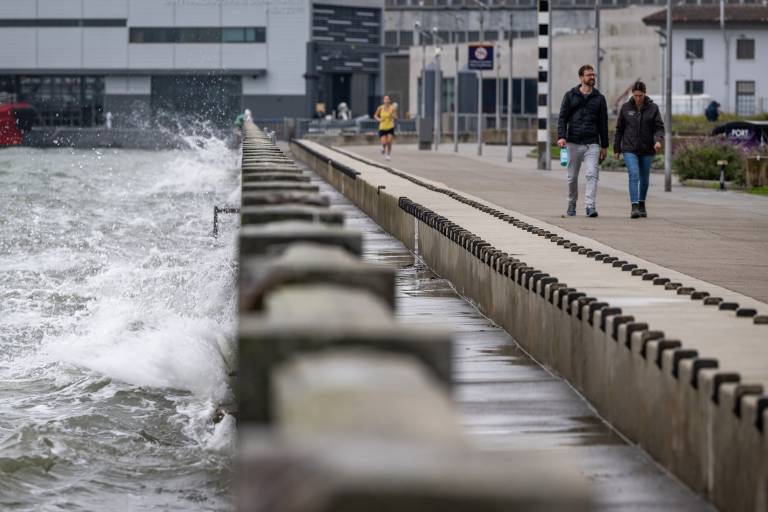
"caption": "People walk along the Embarcadero during a high king tide in San Francisco on Dec. 13, 2024. This week’s extra high tide could flood shorelines across the Bay Area, offering a preview of how rising seas could reshape the region. ",
"credit": "Beth LaBerge/KQED",
"altTag": null,
"description": null,
"imgSizes": {
"thumbnail": {
"file": "https://cdn.kqed.org/wp-content/uploads/sites/35/2025/12/241213-PortFlood-81_qed-160x107.jpg",
"width": 160,
"height": 107,
"mimeType": "image/jpeg"
},
"medium_large": {
"file": "https://cdn.kqed.org/wp-content/uploads/sites/35/2025/12/241213-PortFlood-81_qed-768x512.jpg",
"width": 768,
"height": 512,
"mimeType": "image/jpeg"
},
"1536x1536": {
"file": "https://cdn.kqed.org/wp-content/uploads/sites/35/2025/12/241213-PortFlood-81_qed-1536x1024.jpg",
"width": 1536,
"height": 1024,
"mimeType": "image/jpeg"
},
"post-thumbnail": {
"file": "https://cdn.kqed.org/wp-content/uploads/sites/35/2025/12/241213-PortFlood-81_qed-672x372.jpg",
"width": 672,
"height": 372,
"mimeType": "image/jpeg"
},
"twentyfourteen-full-width": {
"file": "https://cdn.kqed.org/wp-content/uploads/sites/35/2025/12/241213-PortFlood-81_qed-1038x576.jpg",
"width": 1038,
"height": 576,
"mimeType": "image/jpeg"
},
"npr-cds-wide": {
"file": "https://cdn.kqed.org/wp-content/uploads/sites/35/2025/12/241213-PortFlood-81_qed-1200x675.jpg",
"width": 1200,
"height": 675,
"mimeType": "image/jpeg"
},
"kqedFullSize": {
"file": "https://cdn.kqed.org/wp-content/uploads/sites/35/2025/12/241213-PortFlood-81_qed.jpg",
"width": 1999,
"height": 1333
}
},
"isLoading": false,
"fetchFailed": false
},
"science_1999174": {
"type": "attachments",
"id": "science_1999174",
"meta": {
"index": "attachments_1716263798",
"site": "science",
"id": "1999174",
"found": true
},
"title": "20251105_HIGH ELECTRICITY BILLS_GH-17-KQED",
"publishDate": 1762471505,
"status": "inherit",
"parent": 0,
"modified": 1762471837,
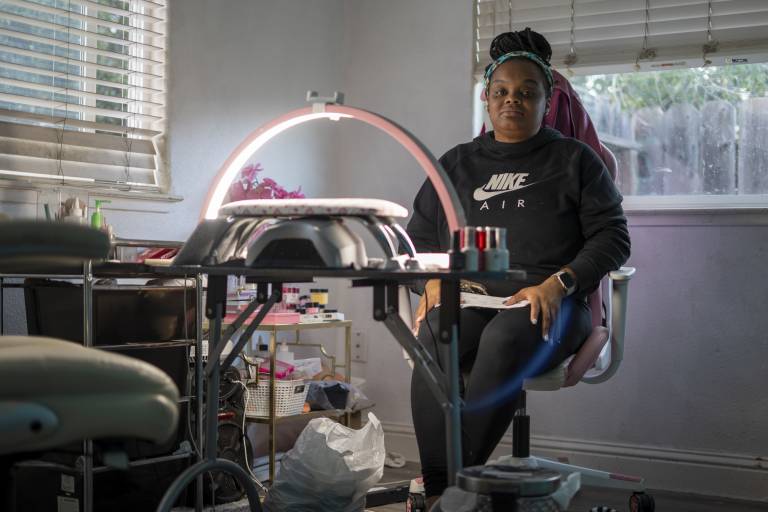
"caption": "Kenya Brown sits in her at-home nail salon in Bay Point on Nov. 5, 2025. Brown operates the small business from her home to support her family amid rising utility bills.",
"credit": "Gustavo Hernandez/KQED",
"altTag": null,
"description": null,
"imgSizes": {
"thumbnail": {
"file": "https://cdn.kqed.org/wp-content/uploads/sites/35/2025/11/20251105_HIGH-ELECTRICITY-BILLS_GH-17-KQED-160x107.jpg",
"width": 160,
"height": 107,
"mimeType": "image/jpeg"
},
"medium_large": {
"file": "https://cdn.kqed.org/wp-content/uploads/sites/35/2025/11/20251105_HIGH-ELECTRICITY-BILLS_GH-17-KQED-768x512.jpg",
"width": 768,
"height": 512,
"mimeType": "image/jpeg"
},
"1536x1536": {
"file": "https://cdn.kqed.org/wp-content/uploads/sites/35/2025/11/20251105_HIGH-ELECTRICITY-BILLS_GH-17-KQED-1536x1024.jpg",
"width": 1536,
"height": 1024,
"mimeType": "image/jpeg"
},
"post-thumbnail": {
"file": "https://cdn.kqed.org/wp-content/uploads/sites/35/2025/11/20251105_HIGH-ELECTRICITY-BILLS_GH-17-KQED-672x372.jpg",
"width": 672,
"height": 372,
"mimeType": "image/jpeg"
},
"twentyfourteen-full-width": {
"file": "https://cdn.kqed.org/wp-content/uploads/sites/35/2025/11/20251105_HIGH-ELECTRICITY-BILLS_GH-17-KQED-1038x576.jpg",
"width": 1038,
"height": 576,
"mimeType": "image/jpeg"
},
"npr-cds-wide": {
"file": "https://cdn.kqed.org/wp-content/uploads/sites/35/2025/11/20251105_HIGH-ELECTRICITY-BILLS_GH-17-KQED-1200x675.jpg",
"width": 1200,
"height": 675,
"mimeType": "image/jpeg"
},
"kqedFullSize": {
"file": "https://cdn.kqed.org/wp-content/uploads/sites/35/2025/11/20251105_HIGH-ELECTRICITY-BILLS_GH-17-KQED.jpg",
"width": 2000,
"height": 1333
}
},
"isLoading": false,
"fetchFailed": false
},
"science_1999381": {
"type": "attachments",
"id": "science_1999381",
"meta": {
"index": "attachments_1716263798",
"site": "science",
"id": "1999381",
"found": true
},
"title": "Improvements will extend landfill's life until the year 2102",
"publishDate": 1763684869,
"status": "inherit",
"parent": 1999358,
"modified": 1763684918,
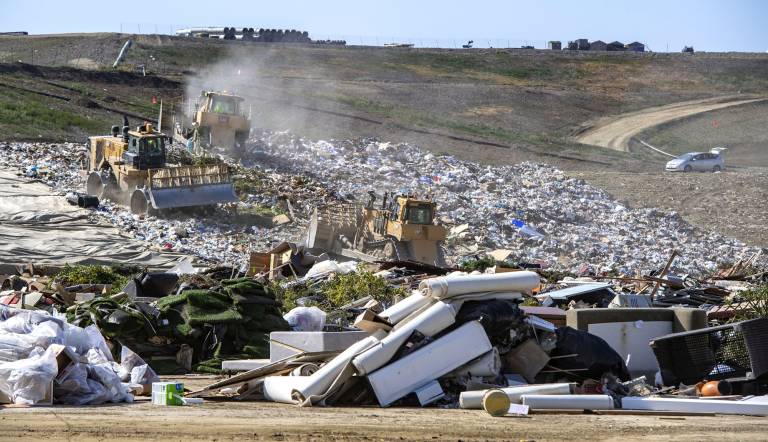
"caption": "Trash is flattened and spread out across a hillside before being covered with dirt at the Prima Deshecha landfill in San Juan Capistrano, California, on March 10, 2022. ",
"credit": "Mark Rightmire/MediaNews Group/Orange County Register via Getty Images",
"altTag": null,
"description": null,
"imgSizes": {
"thumbnail": {
"file": "https://cdn.kqed.org/wp-content/uploads/sites/35/2025/11/CaliforniaLandfillMethaneGetty-160x92.jpg",
"width": 160,
"height": 92,
"mimeType": "image/jpeg"
},
"medium_large": {
"file": "https://cdn.kqed.org/wp-content/uploads/sites/35/2025/11/CaliforniaLandfillMethaneGetty-768x442.jpg",
"width": 768,
"height": 442,
"mimeType": "image/jpeg"
},
"1536x1536": {
"file": "https://cdn.kqed.org/wp-content/uploads/sites/35/2025/11/CaliforniaLandfillMethaneGetty-1536x883.jpg",
"width": 1536,
"height": 883,
"mimeType": "image/jpeg"
},
"post-thumbnail": {
"file": "https://cdn.kqed.org/wp-content/uploads/sites/35/2025/11/CaliforniaLandfillMethaneGetty-672x372.jpg",
"width": 672,
"height": 372,
"mimeType": "image/jpeg"
},
"twentyfourteen-full-width": {
"file": "https://cdn.kqed.org/wp-content/uploads/sites/35/2025/11/CaliforniaLandfillMethaneGetty-1038x576.jpg",
"width": 1038,
"height": 576,
"mimeType": "image/jpeg"
},
"npr-cds-wide": {
"file": "https://cdn.kqed.org/wp-content/uploads/sites/35/2025/11/CaliforniaLandfillMethaneGetty-1200x675.jpg",
"width": 1200,
"height": 675,
"mimeType": "image/jpeg"
},
"kqedFullSize": {
"file": "https://cdn.kqed.org/wp-content/uploads/sites/35/2025/11/CaliforniaLandfillMethaneGetty.jpg",
"width": 2000,
"height": 1150
}
},
"isLoading": false,
"fetchFailed": false
},
"science_1999371": {
"type": "attachments",
"id": "science_1999371",
"meta": {
"index": "attachments_1716263798",
"site": "science",
"id": "1999371",
"found": true
},
"title": "Alaska Refuge Road",
"publishDate": 1763681153,
"status": "inherit",
"parent": 1999366,
"modified": 1763681176,
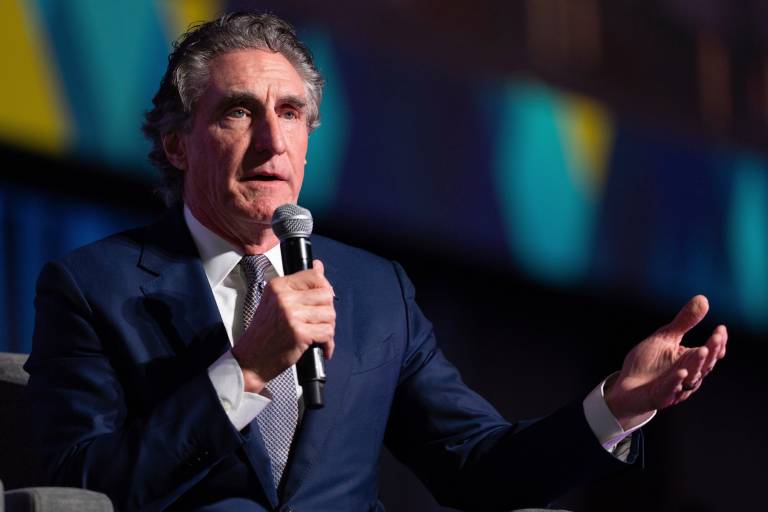
"caption": "Interior Secretary Doug Burgum speaks during the annual Alaska Sustainable Energy Conference on June 3, 2025, in Anchorage, Alaska. ",
"credit": "Jenny Kane/AP Photo",
"altTag": null,
"description": null,
"imgSizes": {
"thumbnail": {
"file": "https://cdn.kqed.org/wp-content/uploads/sites/35/2025/11/DougBurgumAP-160x107.jpg",
"width": 160,
"height": 107,
"mimeType": "image/jpeg"
},
"medium_large": {
"file": "https://cdn.kqed.org/wp-content/uploads/sites/35/2025/11/DougBurgumAP-768x512.jpg",
"width": 768,
"height": 512,
"mimeType": "image/jpeg"
},
"1536x1536": {
"file": "https://cdn.kqed.org/wp-content/uploads/sites/35/2025/11/DougBurgumAP-1536x1024.jpg",
"width": 1536,
"height": 1024,
"mimeType": "image/jpeg"
},
"post-thumbnail": {
"file": "https://cdn.kqed.org/wp-content/uploads/sites/35/2025/11/DougBurgumAP-672x372.jpg",
"width": 672,
"height": 372,
"mimeType": "image/jpeg"
},
"twentyfourteen-full-width": {
"file": "https://cdn.kqed.org/wp-content/uploads/sites/35/2025/11/DougBurgumAP-1038x576.jpg",
"width": 1038,
"height": 576,
"mimeType": "image/jpeg"
},
"npr-cds-wide": {
"file": "https://cdn.kqed.org/wp-content/uploads/sites/35/2025/11/DougBurgumAP-1200x675.jpg",
"width": 1200,
"height": 675,
"mimeType": "image/jpeg"
},
"kqedFullSize": {
"file": "https://cdn.kqed.org/wp-content/uploads/sites/35/2025/11/DougBurgumAP.jpg",
"width": 2000,
"height": 1333
}
},
"isLoading": false,
"fetchFailed": false
},
"science_1994528": {
"type": "attachments",
"id": "science_1994528",
"meta": {
"index": "attachments_1716263798",
"site": "science",
"id": "1994528",
"found": true
},
"title": "004_KQED_BayviewBloodTesting_02252022_qed",
"publishDate": 1727370525,
"status": "inherit",
"parent": 1994526,
"modified": 1727370538,
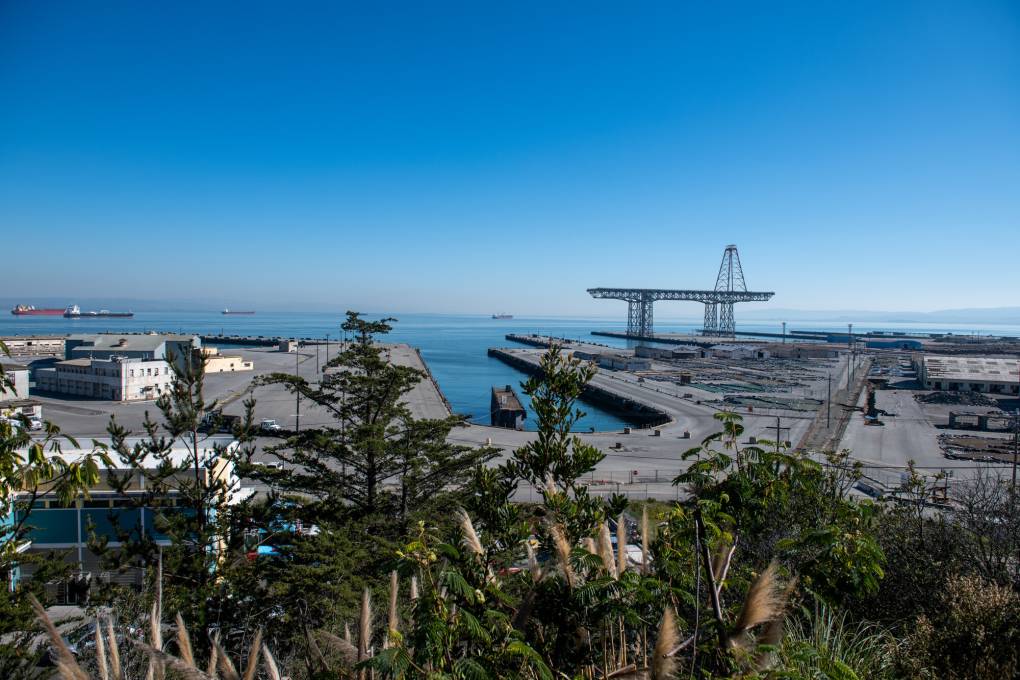
"caption": "A view of the former Hunters Point Naval Shipyard from the Lennar at the Shipyard housing development on Feb. 25, 2022.",
"credit": "Beth LaBerge/KQED",
"altTag": null,
"description": null,
"imgSizes": {
"medium": {
"file": "https://cdn.kqed.org/wp-content/uploads/sites/35/2024/09/004_KQED_BayviewBloodTesting_02252022_qed-800x533.jpg",
"width": 800,
"height": 533,
"mimeType": "image/jpeg"
},
"large": {
"file": "https://cdn.kqed.org/wp-content/uploads/sites/35/2024/09/004_KQED_BayviewBloodTesting_02252022_qed-1020x680.jpg",
"width": 1020,
"height": 680,
"mimeType": "image/jpeg"
},
"thumbnail": {
"file": "https://cdn.kqed.org/wp-content/uploads/sites/35/2024/09/004_KQED_BayviewBloodTesting_02252022_qed-160x107.jpg",
"width": 160,
"height": 107,
"mimeType": "image/jpeg"
},
"medium_large": {
"file": "https://cdn.kqed.org/wp-content/uploads/sites/35/2024/09/004_KQED_BayviewBloodTesting_02252022_qed-768x512.jpg",
"width": 768,
"height": 512,
"mimeType": "image/jpeg"
},
"1536x1536": {
"file": "https://cdn.kqed.org/wp-content/uploads/sites/35/2024/09/004_KQED_BayviewBloodTesting_02252022_qed-1536x1024.jpg",
"width": 1536,
"height": 1024,
"mimeType": "image/jpeg"
},
"post-thumbnail": {
"file": "https://cdn.kqed.org/wp-content/uploads/sites/35/2024/09/004_KQED_BayviewBloodTesting_02252022_qed-672x372.jpg",
"width": 672,
"height": 372,
"mimeType": "image/jpeg"
},
"twentyfourteen-full-width": {
"file": "https://cdn.kqed.org/wp-content/uploads/sites/35/2024/09/004_KQED_BayviewBloodTesting_02252022_qed-1038x576.jpg",
"width": 1038,
"height": 576,
"mimeType": "image/jpeg"
},
"full-width": {
"file": "https://cdn.kqed.org/wp-content/uploads/sites/35/2024/09/004_KQED_BayviewBloodTesting_02252022_qed-1920x1280.jpg",
"width": 1920,
"height": 1280,
"mimeType": "image/jpeg"
},
"kqedFullSize": {
"file": "https://cdn.kqed.org/wp-content/uploads/sites/35/2024/09/004_KQED_BayviewBloodTesting_02252022_qed.jpg",
"width": 2000,
"height": 1333
}
},
"isLoading": false,
"fetchFailed": false
},
"science_1997571": {
"type": "attachments",
"id": "science_1997571",
"meta": {
"index": "attachments_1716263798",
"site": "science",
"id": "1997571",
"found": true
},
"title": "Governor Gavin Newsom signs legislation related to oversight of oil and gas wells, and community protections",
"publishDate": 1751401816,
"status": "inherit",
"parent": 1997565,
"modified": 1751404129,
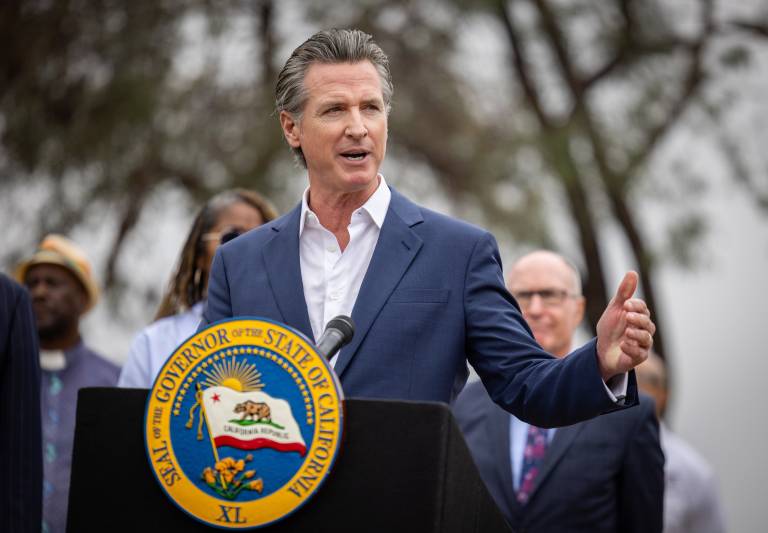
"caption": "Gov. Gavin Newsom speaks at a press conference where he signs legislation related to oversight of oil and gas wells, and community protections on Sept. 25, 2024, in Los Angeles.",
"credit": "Jason Armond/Los Angeles Times via Getty Images",
"altTag": null,
"description": null,
"imgSizes": {
"thumbnail": {
"file": "https://cdn.kqed.org/wp-content/uploads/sites/35/2025/07/GavinNewsomGetty-160x111.jpg",
"width": 160,
"height": 111,
"mimeType": "image/jpeg"
},
"medium_large": {
"file": "https://cdn.kqed.org/wp-content/uploads/sites/35/2025/07/GavinNewsomGetty-768x533.jpg",
"width": 768,
"height": 533,
"mimeType": "image/jpeg"
},
"1536x1536": {
"file": "https://cdn.kqed.org/wp-content/uploads/sites/35/2025/07/GavinNewsomGetty-1536x1065.jpg",
"width": 1536,
"height": 1065,
"mimeType": "image/jpeg"
},
"post-thumbnail": {
"file": "https://cdn.kqed.org/wp-content/uploads/sites/35/2025/07/GavinNewsomGetty-672x372.jpg",
"width": 672,
"height": 372,
"mimeType": "image/jpeg"
},
"twentyfourteen-full-width": {
"file": "https://cdn.kqed.org/wp-content/uploads/sites/35/2025/07/GavinNewsomGetty-1038x576.jpg",
"width": 1038,
"height": 576,
"mimeType": "image/jpeg"
},
"kqedFullSize": {
"file": "https://cdn.kqed.org/wp-content/uploads/sites/35/2025/07/GavinNewsomGetty.jpg",
"width": 2000,
"height": 1387
}
},
"isLoading": false,
"fetchFailed": false
},
"science_1999260": {
"type": "attachments",
"id": "science_1999260",
"meta": {
"index": "attachments_1716263798",
"site": "science",
"id": "1999260",
"found": true
},
"title": "251113-RAIN-FILE-MD-04-KQED",
"publishDate": 1763063037,
"status": "inherit",
"parent": 1999254,
"modified": 1763063071,
"caption": "A person waits to cross the street in the Fruitvale neighborhood of Oakland on Nov. 13, 2025.",
"credit": "Martin do Nascimento/KQED",
"altTag": null,
"description": null,
"imgSizes": {
"thumbnail": {
"file": "https://cdn.kqed.org/wp-content/uploads/sites/35/2025/11/251113-RAIN-FILE-MD-04-KQED-160x107.jpg",
"width": 160,
"height": 107,
"mimeType": "image/jpeg"
},
"medium_large": {
"file": "https://cdn.kqed.org/wp-content/uploads/sites/35/2025/11/251113-RAIN-FILE-MD-04-KQED-768x512.jpg",
"width": 768,
"height": 512,
"mimeType": "image/jpeg"
},
"1536x1536": {
"file": "https://cdn.kqed.org/wp-content/uploads/sites/35/2025/11/251113-RAIN-FILE-MD-04-KQED-1536x1025.jpg",
"width": 1536,
"height": 1025,
"mimeType": "image/jpeg"
},
"post-thumbnail": {
"file": "https://cdn.kqed.org/wp-content/uploads/sites/35/2025/11/251113-RAIN-FILE-MD-04-KQED-672x372.jpg",
"width": 672,
"height": 372,
"mimeType": "image/jpeg"
},
"twentyfourteen-full-width": {
"file": "https://cdn.kqed.org/wp-content/uploads/sites/35/2025/11/251113-RAIN-FILE-MD-04-KQED-1038x576.jpg",
"width": 1038,
"height": 576,
"mimeType": "image/jpeg"
},
"npr-cds-wide": {
"file": "https://cdn.kqed.org/wp-content/uploads/sites/35/2025/11/251113-RAIN-FILE-MD-04-KQED-1200x675.jpg",
"width": 1200,
"height": 675,
"mimeType": "image/jpeg"
},
"kqedFullSize": {
"file": "https://cdn.kqed.org/wp-content/uploads/sites/35/2025/11/251113-RAIN-FILE-MD-04-KQED-e1763063927294.jpg",
"width": 2000,
"height": 1334
}
},
"isLoading": false,
"fetchFailed": false
},
"science_1936848": {
"type": "attachments",
"id": "science_1936848",
"meta": {
"index": "attachments_1716263798",
"site": "science",
"id": "1936848",
"found": true
},
"parent": 1935067,
"imgSizes": {
"small": {
"file": "https://ww2.kqed.org/app/uploads/sites/35/2019/01/ARstormcurrent-520x244.gif",
"width": 520,
"mimeType": "image/gif",
"height": 244
},
"thumbnail": {
"file": "https://ww2.kqed.org/app/uploads/sites/35/2019/01/ARstormcurrent-160x75.gif",
"width": 160,
"mimeType": "image/gif",
"height": 75
},
"fd-sm": {
"file": "https://ww2.kqed.org/app/uploads/sites/35/2019/01/ARstormcurrent-960x451.gif",
"width": 960,
"mimeType": "image/gif",
"height": 451
},
"post-thumbnail": {
"file": "https://ww2.kqed.org/app/uploads/sites/35/2019/01/ARstormcurrent-672x372.gif",
"width": 672,
"mimeType": "image/gif",
"height": 372
},
"xsmall": {
"file": "https://ww2.kqed.org/app/uploads/sites/35/2019/01/ARstormcurrent-375x176.gif",
"width": 375,
"mimeType": "image/gif",
"height": 176
},
"kqedFullSize": {
"file": "https://ww2.kqed.org/app/uploads/sites/35/2019/01/ARstormcurrent.gif",
"width": 1000,
"height": 470
},
"guest-author-50": {
"file": "https://ww2.kqed.org/app/uploads/sites/35/2019/01/ARstormcurrent-50x50.gif",
"width": 50,
"mimeType": "image/gif",
"height": 50
},
"guest-author-96": {
"file": "https://ww2.kqed.org/app/uploads/sites/35/2019/01/ARstormcurrent-96x96.gif",
"width": 96,
"mimeType": "image/gif",
"height": 96
},
"medium": {
"file": "https://ww2.kqed.org/app/uploads/sites/35/2019/01/ARstormcurrent-800x376.gif",
"width": 800,
"mimeType": "image/gif",
"height": 376
},
"guest-author-64": {
"file": "https://ww2.kqed.org/app/uploads/sites/35/2019/01/ARstormcurrent-64x64.gif",
"width": 64,
"mimeType": "image/gif",
"height": 64
},
"guest-author-32": {
"file": "https://ww2.kqed.org/app/uploads/sites/35/2019/01/ARstormcurrent-32x32.gif",
"width": 32,
"mimeType": "image/gif",
"height": 32
},
"detail": {
"file": "https://ww2.kqed.org/app/uploads/sites/35/2019/01/ARstormcurrent-150x150.gif",
"width": 150,
"mimeType": "image/gif",
"height": 150
},
"medium_large": {
"file": "https://ww2.kqed.org/app/uploads/sites/35/2019/01/ARstormcurrent-768x361.gif",
"width": 768,
"mimeType": "image/gif",
"height": 361
},
"guest-author-128": {
"file": "https://ww2.kqed.org/app/uploads/sites/35/2019/01/ARstormcurrent-128x128.gif",
"width": 128,
"mimeType": "image/gif",
"height": 128
},
"xxsmall": {
"file": "https://ww2.kqed.org/app/uploads/sites/35/2019/01/ARstormcurrent-240x113.gif",
"width": 240,
"mimeType": "image/gif",
"height": 113
}
},
"publishDate": 1547666355,
"modified": 1547666506,
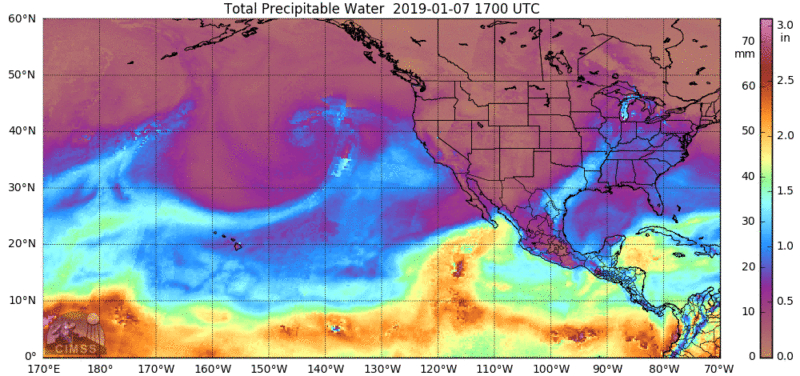
"caption": "Total precipitable water from Morphed Integrated Microwave Imagery at Cooperative Institute for Meteorological Satellite Studies.",
"description": null,
"title": "ARstormcurrent",
"credit": "Center for Western Weather and Water Extremes",
"status": "inherit",
"isLoading": false,
"fetchFailed": false
},
"science_1977202": {
"type": "attachments",
"id": "science_1977202",
"meta": {
"index": "attachments_1716263798",
"site": "science",
"id": "1977202",
"found": true
},
"parent": 1935067,
"imgSizes": {
"thumbnail": {
"file": "https://ww2.kqed.org/app/uploads/sites/35/2019/01/atmosphericrivers-160x76.png",
"width": 160,
"mimeType": "image/png",
"height": 76
},
"post-thumbnail": {
"file": "https://ww2.kqed.org/app/uploads/sites/35/2019/01/atmosphericrivers-672x372.png",
"width": 672,
"mimeType": "image/png",
"height": 372
},
"kqedFullSize": {
"file": "https://ww2.kqed.org/app/uploads/sites/35/2019/01/atmosphericrivers.png",
"width": 998,
"height": 471
},
"medium": {
"file": "https://ww2.kqed.org/app/uploads/sites/35/2019/01/atmosphericrivers-800x378.png",
"width": 800,
"mimeType": "image/png",
"height": 378
},
"medium_large": {
"file": "https://ww2.kqed.org/app/uploads/sites/35/2019/01/atmosphericrivers-768x362.png",
"width": 768,
"mimeType": "image/png",
"height": 362
}
},
"publishDate": 1634754133,
"modified": 1634754153,
"caption": null,
"description": null,
"title": "Atmospheric Rivers",
"credit": null,
"status": "inherit",
"altTag": "Atmospheric Rivers",
"isLoading": false,
"fetchFailed": false
},
"science_1999213": {
"type": "attachments",
"id": "science_1999213",
"meta": {
"index": "attachments_1716263798",
"site": "science",
"id": "1999213",
"found": true
},
"title": "People wait at a Muni stop on Mission Street in the rain on Dec. 13, 2021.",
"publishDate": 1762976207,
"status": "inherit",
"parent": 1999200,
"modified": 1762976216,
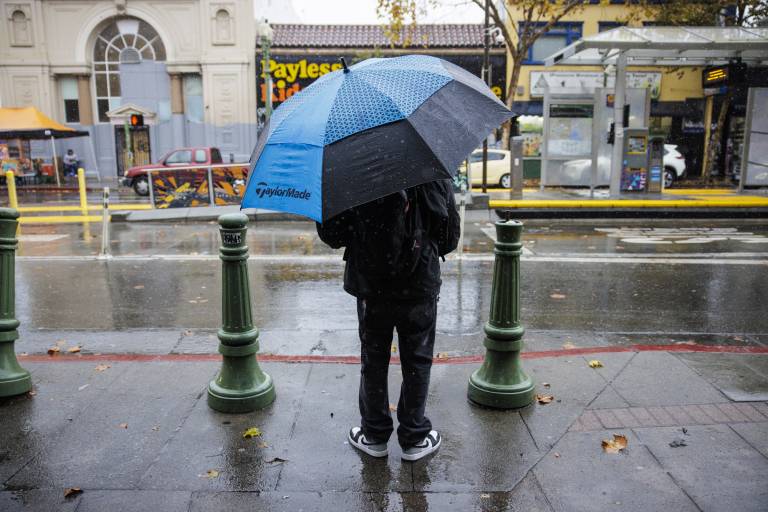
"caption": "People wait at a Muni stop on Mission Street in the rain on Dec. 13, 2021.",
"credit": "Beth LaBerge/KQED",
"altTag": null,
"description": null,
"imgSizes": {
"thumbnail": {
"file": "https://cdn.kqed.org/wp-content/uploads/sites/35/2025/11/007_SanFrancisco_AtmosphericRiver_12132021_qed-160x106.jpg",
"width": 160,
"height": 106,
"mimeType": "image/jpeg"
},
"medium_large": {
"file": "https://cdn.kqed.org/wp-content/uploads/sites/35/2025/11/007_SanFrancisco_AtmosphericRiver_12132021_qed-768x511.jpg",
"width": 768,
"height": 511,
"mimeType": "image/jpeg"
},
"1536x1536": {
"file": "https://cdn.kqed.org/wp-content/uploads/sites/35/2025/11/007_SanFrancisco_AtmosphericRiver_12132021_qed-1536x1022.jpg",
"width": 1536,
"height": 1022,
"mimeType": "image/jpeg"
},
"post-thumbnail": {
"file": "https://cdn.kqed.org/wp-content/uploads/sites/35/2025/11/007_SanFrancisco_AtmosphericRiver_12132021_qed-672x372.jpg",
"width": 672,
"height": 372,
"mimeType": "image/jpeg"
},
"twentyfourteen-full-width": {
"file": "https://cdn.kqed.org/wp-content/uploads/sites/35/2025/11/007_SanFrancisco_AtmosphericRiver_12132021_qed-1038x576.jpg",
"width": 1038,
"height": 576,
"mimeType": "image/jpeg"
},
"npr-cds-wide": {
"file": "https://cdn.kqed.org/wp-content/uploads/sites/35/2025/11/007_SanFrancisco_AtmosphericRiver_12132021_qed-1200x675.jpg",
"width": 1200,
"height": 675,
"mimeType": "image/jpeg"
},
"kqedFullSize": {
"file": "https://cdn.kqed.org/wp-content/uploads/sites/35/2025/11/007_SanFrancisco_AtmosphericRiver_12132021_qed.jpg",
"width": 2000,
"height": 1331
}
},
"isLoading": false,
"fetchFailed": false
},
"science_1999185": {
"type": "attachments",
"id": "science_1999185",
"meta": {
"index": "attachments_1716263798",
"site": "science",
"id": "1999185",
"found": true
},
"title": "People enjoy at beaches during warm weather in San Francisco",
"publishDate": 1762804968,
"status": "inherit",
"parent": 1999178,
"modified": 1762806020,
"caption": "People enjoy at Baker Beach near the Golden Gate Bridge during warm weather in San Francisco, California, on Feb. 26, 2025.",
"credit": "Tayfun Coskun/Anadolu via Getty Images",
"altTag": null,
"description": null,
"imgSizes": {
"thumbnail": {
"file": "https://cdn.kqed.org/wp-content/uploads/sites/35/2025/11/SFBakerBeachGetty1-160x107.jpg",
"width": 160,
"height": 107,
"mimeType": "image/jpeg"
},
"medium_large": {
"file": "https://cdn.kqed.org/wp-content/uploads/sites/35/2025/11/SFBakerBeachGetty1-768x512.jpg",
"width": 768,
"height": 512,
"mimeType": "image/jpeg"
},
"1536x1536": {
"file": "https://cdn.kqed.org/wp-content/uploads/sites/35/2025/11/SFBakerBeachGetty1-1536x1024.jpg",
"width": 1536,
"height": 1024,
"mimeType": "image/jpeg"
},
"post-thumbnail": {
"file": "https://cdn.kqed.org/wp-content/uploads/sites/35/2025/11/SFBakerBeachGetty1-672x372.jpg",
"width": 672,
"height": 372,
"mimeType": "image/jpeg"
},
"twentyfourteen-full-width": {
"file": "https://cdn.kqed.org/wp-content/uploads/sites/35/2025/11/SFBakerBeachGetty1-1038x576.jpg",
"width": 1038,
"height": 576,
"mimeType": "image/jpeg"
},
"npr-cds-wide": {
"file": "https://cdn.kqed.org/wp-content/uploads/sites/35/2025/11/SFBakerBeachGetty1-1200x675.jpg",
"width": 1200,
"height": 675,
"mimeType": "image/jpeg"
},
"kqedFullSize": {
"file": "https://cdn.kqed.org/wp-content/uploads/sites/35/2025/11/SFBakerBeachGetty1.jpg",
"width": 2000,
"height": 1333
}
},
"isLoading": false,
"fetchFailed": false
},
"science_1999133": {
"type": "attachments",
"id": "science_1999133",
"meta": {
"index": "attachments_1716263798",
"site": "science",
"id": "1999133",
"found": true
},
"title": "240204-Storm-16-BL_qed",
"publishDate": 1762369685,
"status": "inherit",
"parent": 1999130,
"modified": 1762369730,
"caption": "A group of tourists walk through Alamo Square Park during a storm in San Francisco on Feb. 4, 2024.",
"credit": "Beth LaBerge/KQED",
"altTag": null,
"description": null,
"imgSizes": {
"thumbnail": {
"file": "https://cdn.kqed.org/wp-content/uploads/sites/35/2025/11/240204-Storm-16-BL_qed-160x107.jpg",
"width": 160,
"height": 107,
"mimeType": "image/jpeg"
},
"medium_large": {
"file": "https://cdn.kqed.org/wp-content/uploads/sites/35/2025/11/240204-Storm-16-BL_qed-768x512.jpg",
"width": 768,
"height": 512,
"mimeType": "image/jpeg"
},
"1536x1536": {
"file": "https://cdn.kqed.org/wp-content/uploads/sites/35/2025/11/240204-Storm-16-BL_qed-1536x1024.jpg",
"width": 1536,
"height": 1024,
"mimeType": "image/jpeg"
},
"post-thumbnail": {
"file": "https://cdn.kqed.org/wp-content/uploads/sites/35/2025/11/240204-Storm-16-BL_qed-672x372.jpg",
"width": 672,
"height": 372,
"mimeType": "image/jpeg"
},
"twentyfourteen-full-width": {
"file": "https://cdn.kqed.org/wp-content/uploads/sites/35/2025/11/240204-Storm-16-BL_qed-1038x576.jpg",
"width": 1038,
"height": 576,
"mimeType": "image/jpeg"
},
"npr-cds-wide": {
"file": "https://cdn.kqed.org/wp-content/uploads/sites/35/2025/11/240204-Storm-16-BL_qed-1200x675.jpg",
"width": 1200,
"height": 675,
"mimeType": "image/jpeg"
},
"kqedFullSize": {
"file": "https://cdn.kqed.org/wp-content/uploads/sites/35/2025/11/240204-Storm-16-BL_qed.jpg",
"width": 2000,
"height": 1333
}
},
"isLoading": false,
"fetchFailed": false
},
"science_1999047": {
"type": "attachments",
"id": "science_1999047",
"meta": {
"index": "attachments_1716263798",
"site": "science",
"id": "1999047",
"found": true
},
"title": "251103-BAY BIRDS-05-KQED",
"publishDate": 1762203117,
"status": "inherit",
"parent": 0,
"modified": 1762211778,
"caption": "A surf scoter.",
"credit": "Courtesy of Liam Singh",
"altTag": null,
"description": null,
"imgSizes": {
"thumbnail": {
"file": "https://cdn.kqed.org/wp-content/uploads/sites/35/2025/11/251103-BAY-BIRDS-05-KQED-160x107.jpg",
"width": 160,
"height": 107,
"mimeType": "image/jpeg"
},
"medium_large": {
"file": "https://cdn.kqed.org/wp-content/uploads/sites/35/2025/11/251103-BAY-BIRDS-05-KQED-768x512.jpg",
"width": 768,
"height": 512,
"mimeType": "image/jpeg"
},
"1536x1536": {
"file": "https://cdn.kqed.org/wp-content/uploads/sites/35/2025/11/251103-BAY-BIRDS-05-KQED-1536x1025.jpg",
"width": 1536,
"height": 1025,
"mimeType": "image/jpeg"
},
"post-thumbnail": {
"file": "https://cdn.kqed.org/wp-content/uploads/sites/35/2025/11/251103-BAY-BIRDS-05-KQED-672x372.jpg",
"width": 672,
"height": 372,
"mimeType": "image/jpeg"
},
"twentyfourteen-full-width": {
"file": "https://cdn.kqed.org/wp-content/uploads/sites/35/2025/11/251103-BAY-BIRDS-05-KQED-1038x576.jpg",
"width": 1038,
"height": 576,
"mimeType": "image/jpeg"
},
"npr-cds-wide": {
"file": "https://cdn.kqed.org/wp-content/uploads/sites/35/2025/11/251103-BAY-BIRDS-05-KQED-1200x675.jpg",
"width": 1200,
"height": 675,
"mimeType": "image/jpeg"
},
"kqedFullSize": {
"file": "https://cdn.kqed.org/wp-content/uploads/sites/35/2025/11/251103-BAY-BIRDS-05-KQED.jpg",
"width": 2000,
"height": 1334
}
},
"isLoading": false,
"fetchFailed": false
}
},
"audioPlayerReducer": {
"postId": "stream_live",
"isPaused": true,
"isPlaying": false,
"pfsActive": false,
"pledgeModalIsOpen": true,
"playerDrawerIsOpen": false,
"liveAudioPlayStartedAt": 0,
"liveAudioPlayContext": ""
},
"authorsReducer": {
"lklivans": {
"type": "authors",
"id": "8648",
"meta": {
"index": "authors_1716337520",
"id": "8648",
"found": true
},
"name": "Laura Klivans",
"firstName": "Laura",
"lastName": "Klivans",
"slug": "lklivans",
"email": "lklivans@kqed.org",
"display_author_email": true,
"staff_mastheads": [
"news",
"science"
],
"title": "Reporter",
"bio": "Laura Klivans is an award-winning science reporter for KQED News, where she covers climate change with an eye on both groundbreaking progress and gaps in action. She is the former host of KQED's blockbuster video series about tiny, amazing animals, \u003cem>Deep Look\u003c/em>. Her work reaches national audiences through NPR, \u003cem>Here & Now, \u003c/em>PRI, and other major outlets. \r\n\r\nLaura’s won five Northern California Area Emmy Awards for Deep Look and First Place in the Greater Bay Area Journalism Awards for a podcast exploring how one Oakland neighborhood teamed up to reduce planet-heating pollution.\r\n\r\nBeyond her reporting, she hosts and moderates events. In the past, she taught audio storytelling at the UC Berkeley Graduate School of Journalism, led international education programs, worked with immigrants and refugees along the Thai-Burmese border, taught high schoolers sex ed, and was an actress. \r\n\r\nShe's a former UC Berkeley Human Rights Fellow, USC Center for Health Journalism's California Fellow and Coro Fellow in Public Affairs. Laura has a master’s in journalism from UC Berkeley, a master’s in education from Harvard, and an undergraduate degree from Northwestern University.\r\n\r\nShe loves trying to riddle the meaning out of vanity license plates.",
"avatar": "https://secure.gravatar.com/avatar/2d2ecd1550a494cc10ad4a503406965585902124739e775a9b3817eebf1d88be?s=600&d=blank&r=g",
"twitter": "lauraklivans",
"bluesky": null,
"facebook": null,
"instagram": null,
"linkedin": null,
"sites": [
{
"site": "news",
"roles": [
"editor"
]
},
{
"site": "stateofhealth",
"roles": [
"contributor",
"editor"
]
},
{
"site": "science",
"roles": [
"editor"
]
},
{
"site": "forum",
"roles": [
"editor"
]
}
],
"headData": {
"title": "Laura Klivans | KQED",
"description": "Reporter",
"ogImgSrc": "https://secure.gravatar.com/avatar/2d2ecd1550a494cc10ad4a503406965585902124739e775a9b3817eebf1d88be?s=600&d=blank&r=g",
"twImgSrc": "https://secure.gravatar.com/avatar/2d2ecd1550a494cc10ad4a503406965585902124739e775a9b3817eebf1d88be?s=600&d=blank&r=g"
},
"isLoading": false,
"link": "/author/lklivans"
},
"parcuni": {
"type": "authors",
"id": "11368",
"meta": {
"index": "authors_1716337520",
"id": "11368",
"found": true
},
"name": "Peter Arcuni",
"firstName": "Peter",
"lastName": "Arcuni",
"slug": "parcuni",
"email": "parcuni@KQED.org",
"display_author_email": false,
"staff_mastheads": [
"science"
],
"title": "Reporter",
"bio": "Peter reports radio and online stories for \u003cem>KQED Science\u003c/em>. His work has also appeared on the \u003cem>The California Report\u003c/em> morning show and \u003cem>KQED News\u003c/em>. His production credits include \u003cem>The California Report, The California Report Magazine\u003c/em> and KQED's local news podcast \u003cem>The Bay\u003c/em>. Other credits include NPR's \u003cem>All Things Considered\u003c/em>, WNYC's \u003cem>Science Friday\u003c/em>, WBUR's \u003cem>Here & Now\u003c/em>, WIRED and SFGate. Peter graduated from Brown University and earned a master's degree in journalism from Stanford. He's covered everything from homelessness to wildfires, health, the environment, arts and Thanksgiving in San Quentin prison. In other lives, he played rock n roll music and studied neuroscience. You can email him at: parcuni@kqed.org",
"avatar": "https://secure.gravatar.com/avatar/d5032f6f27199d478af34ad2e1d98732?s=600&d=blank&r=g",
"twitter": "peterarcuni",
"facebook": null,
"instagram": null,
"linkedin": null,
"sites": [
{
"site": "news",
"roles": [
"editor"
]
},
{
"site": "science",
"roles": [
"editor"
]
}
],
"headData": {
"title": "Peter Arcuni | KQED",
"description": "Reporter",
"ogImgSrc": "https://secure.gravatar.com/avatar/d5032f6f27199d478af34ad2e1d98732?s=600&d=blank&r=g",
"twImgSrc": "https://secure.gravatar.com/avatar/d5032f6f27199d478af34ad2e1d98732?s=600&d=blank&r=g"
},
"isLoading": false,
"link": "/author/parcuni"
},
"kevinstark": {
"type": "authors",
"id": "11608",
"meta": {
"index": "authors_1716337520",
"id": "11608",
"found": true
},
"name": "Kevin Stark",
"firstName": "Kevin",
"lastName": "Stark",
"slug": "kevinstark",
"email": "kstark@kqed.org",
"display_author_email": true,
"staff_mastheads": [
"science"
],
"title": "Senior Editor",
"bio": "Kevin is a senior editor for KQED Science, managing the station's health and climate desks. His journalism career began in the Pacific Northwest, and he later became a lead reporter for the San Francisco Public Press. His work has appeared in Pacific Standard magazine, the Energy News Network, the Center for Investigative Reporting's Reveal and WBEZ in Chicago. Kevin joined KQED in 2019, and has covered issues related to energy, wildfire, climate change and the environment.",
"avatar": "https://secure.gravatar.com/avatar/365aaa4b597d3a8374f67504ff0facd323d7906e8eb4be0a7efd2427408e802c?s=600&d=blank&r=g",
"twitter": "starkkev",
"bluesky": null,
"facebook": null,
"instagram": null,
"linkedin": null,
"sites": [
{
"site": "",
"roles": [
"editor"
]
},
{
"site": "news",
"roles": [
"editor"
]
},
{
"site": "science",
"roles": [
"administrator"
]
}
],
"headData": {
"title": "Kevin Stark | KQED",
"description": "Senior Editor",
"ogImgSrc": "https://secure.gravatar.com/avatar/365aaa4b597d3a8374f67504ff0facd323d7906e8eb4be0a7efd2427408e802c?s=600&d=blank&r=g",
"twImgSrc": "https://secure.gravatar.com/avatar/365aaa4b597d3a8374f67504ff0facd323d7906e8eb4be0a7efd2427408e802c?s=600&d=blank&r=g"
},
"isLoading": false,
"link": "/author/kevinstark"
},
"smohamad": {
"type": "authors",
"id": "11631",
"meta": {
"index": "authors_1716337520",
"id": "11631",
"found": true
},
"name": "Sarah Mohamad",
"firstName": "Sarah",
"lastName": "Mohamad",
"slug": "smohamad",
"email": "smohamad@KQED.org",
"display_author_email": true,
"staff_mastheads": [],
"title": "Engagement Producer and Reporter, KQED Science",
"bio": "Sarah Mohamad is an audience engagement reporter and producer for KQED Science. She reports on audience-focused science and environment stories and manages the team's social media, newsletter, and engagement efforts. Prior to this role, she played a key role as project manager for NSF's \u003ca href=\"https://www.kqed.org/crackingthecode\">\u003cem>Cracking the Code: Influencing Millennial Science Engagement\u003c/em> \u003c/a>audience research.",
"avatar": "https://secure.gravatar.com/avatar/e6224957cd82d015183756ddde1f928013a563d7ca2e4565f8c4de1ec64886c5?s=600&d=blank&r=g",
"twitter": "sarahkmohamad",
"bluesky": null,
"facebook": null,
"instagram": null,
"linkedin": null,
"sites": [
{
"site": "",
"roles": [
"editor"
]
},
{
"site": "arts",
"roles": [
"editor"
]
},
{
"site": "news",
"roles": [
"editor"
]
},
{
"site": "about",
"roles": [
"editor"
]
},
{
"site": "science",
"roles": [
"editor"
]
}
],
"headData": {
"title": "Sarah Mohamad | KQED",
"description": "Engagement Producer and Reporter, KQED Science",
"ogImgSrc": "https://secure.gravatar.com/avatar/e6224957cd82d015183756ddde1f928013a563d7ca2e4565f8c4de1ec64886c5?s=600&d=blank&r=g",
"twImgSrc": "https://secure.gravatar.com/avatar/e6224957cd82d015183756ddde1f928013a563d7ca2e4565f8c4de1ec64886c5?s=600&d=blank&r=g"
},
"isLoading": false,
"link": "/author/smohamad"
},
"eromero": {
"type": "authors",
"id": "11746",
"meta": {
"index": "authors_1716337520",
"id": "11746",
"found": true
},
"name": "Ezra David Romero",
"firstName": "Ezra David",
"lastName": "Romero",
"slug": "eromero",
"email": "eromero@kqed.org",
"display_author_email": true,
"staff_mastheads": [
"news",
"science"
],
"title": "Climate Reporter",
"bio": "Ezra David Romero is a climate reporter for KQED News. He covers the absence and excess of water in the Bay Area — think sea level rise, flooding and drought. For nearly a decade he’s covered how warming temperatures are altering the lives of Californians. He’s reported on farmers worried their pistachio trees aren’t getting enough sleep, families desperate for water, scientists studying dying giant sequoias, and alongside firefighters containing wildfires. His work has appeared on local stations across California and nationally on public radio shows like Morning Edition, Here and Now, All Things Considered and Science Friday. ",
"avatar": "https://secure.gravatar.com/avatar/c76404d287c10ed40224227551ac36e24352c7306f106632caf6fead76f8801f?s=600&d=blank&r=g",
"twitter": "ezraromero",
"bluesky": null,
"facebook": null,
"instagram": null,
"linkedin": null,
"sites": [
{
"site": "arts",
"roles": [
"editor"
]
},
{
"site": "news",
"roles": [
"editor"
]
},
{
"site": "science",
"roles": [
"editor"
]
},
{
"site": "liveblog",
"roles": [
"author"
]
}
],
"headData": {
"title": "Ezra David Romero | KQED",
"description": "Climate Reporter",
"ogImgSrc": "https://secure.gravatar.com/avatar/c76404d287c10ed40224227551ac36e24352c7306f106632caf6fead76f8801f?s=600&d=blank&r=g",
"twImgSrc": "https://secure.gravatar.com/avatar/c76404d287c10ed40224227551ac36e24352c7306f106632caf6fead76f8801f?s=600&d=blank&r=g"
},
"isLoading": false,
"link": "/author/eromero"
},
"epeppel": {
"type": "authors",
"id": "11989",
"meta": {
"index": "authors_1716337520",
"id": "11989",
"found": true
},
"name": "Eliza Peppel",
"firstName": "Eliza",
"lastName": "Peppel",
"slug": "epeppel",
"email": "epeppel@kqed.org",
"display_author_email": false,
"staff_mastheads": [],
"title": null,
"bio": "Eliza is an award-winning journalist living in Oakland. She was previously a reporting fellow at KALW, where she reported daily news and long-form radio features. Eliza studied journalism at Fordham University in The Bronx during the COVID-19 pandemic. She grew up mainly in California and spent a few childhood years in Aix en Provence, France.",
"avatar": "https://secure.gravatar.com/avatar/20d9e17a06ee787c11052e6096319dd583b6376233d02383dab5eaeb874d5f56?s=600&d=blank&r=g",
"twitter": null,
"bluesky": null,
"facebook": null,
"instagram": null,
"linkedin": null,
"sites": [
{
"site": "news",
"roles": [
"subscriber"
]
},
{
"site": "science",
"roles": [
"subscriber"
]
}
],
"headData": {
"title": "Eliza Peppel | KQED",
"description": null,
"ogImgSrc": "https://secure.gravatar.com/avatar/20d9e17a06ee787c11052e6096319dd583b6376233d02383dab5eaeb874d5f56?s=600&d=blank&r=g",
"twImgSrc": "https://secure.gravatar.com/avatar/20d9e17a06ee787c11052e6096319dd583b6376233d02383dab5eaeb874d5f56?s=600&d=blank&r=g"
},
"isLoading": false,
"link": "/author/epeppel"
}
},
"pagesReducer": {
"science_category_climate": {
"type": "terms",
"id": "science_31",
"meta": {
"index": "terms_1716263798",
"site": "science",
"id": "31",
"score": 11.061861
},
"featImg": null,
"name": "Climate",
"description": null,
"taxonomy": "category",
"headData": {
"twImgId": null,
"twTitle": null,
"ogTitle": null,
"ogImgId": null,
"twDescription": null,
"description": null,
"title": "Climate Archives | KQED Science",
"ogDescription": null
},
"ttid": 33,
"slug": "climate",
"isLoading": false,
"title": "Climate",
"pageMeta": {
"site": "science",
"WpPageTemplate": "page-topic-editorial",
"currentPage": 7
},
"blocks": [
{
"blockName": "kqed/post-list",
"attrs": {
"layout": "cardArticle2",
"query": "posts/science?category=climate",
"seeMore": false,
"paginated": true,
"page": 7
}
},
{
"blockName": "kqed/ad"
}
]
}
},
"pfsSessionReducer": {},
"postsReducer": {
"stream_live": {
"type": "live",
"id": "stream_live",
"audioUrl": "https://streams.kqed.org/kqedradio",
"title": "Live Stream",
"excerpt": "Live Stream information currently unavailable.",
"link": "/radio",
"featImg": "",
"label": {
"name": "KQED Live",
"link": "/"
}
},
"stream_kqedNewscast": {
"type": "posts",
"id": "stream_kqedNewscast",
"audioUrl": "https://www.kqed.org/.stream/anon/radio/RDnews/newscast.mp3?_=1",
"title": "KQED Newscast",
"featImg": "",
"label": {
"name": "88.5 FM",
"link": "/"
}
},
"science_1999461": {
"type": "posts",
"id": "science_1999461",
"meta": {
"index": "posts_1716263798",
"site": "science",
"id": "1999461",
"score": null,
"sort": [
1764781240000
]
},
"guestAuthors": [],
"slug": "king-tides-to-flood-bay-area-shorelines-this-week-heres-where-and-when-to-safely-see-them",
"title": "King Tides to Flood Bay Area Shorelines This Week. Here's Where and When to Safely See Them",
"publishDate": 1764781240,
"format": "standard",
"headTitle": "King Tides to Flood Bay Area Shorelines This Week. Here’s Where and When to Safely See Them | KQED",
"labelTerm": {},
"content": "\u003cp>Beachgoers across the Bay Area and the coast are in for some of the \u003ca href=\"https://www.kqed.org/news/12018103/king-tides-foreshadow-far-wetter-future-sf-shoreline\">highest tides\u003c/a> of the year this week.\u003c/p>\n\u003cp>King tides — caused by a stronger-than-normal\u003ca href=\"https://www.kqed.org/science/1955598/king-tides-are-here-why-they-happen-and--they-teach-us\"> gravitational pull\u003c/a> when the sun, moon and Earth align — could push water onto low-lying areas. Parts of Highway 101 in Marin County often flood during these events, as do communities like San Rafael and San Francisco’s Embarcadero.\u003c/p>\n\u003cp>At the other end of the tidal cycle, tidepoolers can expect some of the lowest astronomical tides of the year, too.\u003c/p>\n\u003cp>[ad fullwidth]\u003c/p>\n\u003cp>The negative \u003ca href=\"https://www.kqed.org/science/1991709/the-best-places-to-go-tide-pooling-in-the-bay-area\">low tide\u003c/a> can unveil submerged rocky habitats and species usually hidden from onlookers. Beachgoers can glimpse urchin, algae, California muscles, and — if they are lucky — octopuses and other creatures, said Erin Hubach, an interpretive programs specialist with the Monterey Bay Aquarium.\u003c/p>\n\u003cp>The tidal extremes will build through Friday, before slowly returning to normal this weekend into next week. The National Weather Service’s Bay Area office issued a coastal flood advisory for minor flooding due to high tides from Tuesday through 3 p.m. Sunday for communities along San Francisco Bay, San Pablo Bay and Monterey Bay. Forecasters said that the tides and high surf through Wednesday could lead to unexpected sneaker waves and advised taking caution when visiting the coastline.\u003c/p>\n\u003cfigure id=\"attachment_1999469\" class=\"wp-caption aligncenter\" style=\"max-width: 2000px\">\u003cimg loading=\"lazy\" decoding=\"async\" class=\"size-full wp-image-1999469\" src=\"https://cdn.kqed.org/wp-content/uploads/sites/35/2025/12/241213-PortFlood-74_qed.jpg\" alt=\"\" width=\"2000\" height=\"1333\" srcset=\"https://cdn.kqed.org/wp-content/uploads/sites/35/2025/12/241213-PortFlood-74_qed.jpg 2000w, https://cdn.kqed.org/wp-content/uploads/sites/35/2025/12/241213-PortFlood-74_qed-160x107.jpg 160w, https://cdn.kqed.org/wp-content/uploads/sites/35/2025/12/241213-PortFlood-74_qed-768x512.jpg 768w, https://cdn.kqed.org/wp-content/uploads/sites/35/2025/12/241213-PortFlood-74_qed-1536x1024.jpg 1536w\" sizes=\"auto, (max-width: 2000px) 100vw, 2000px\">\u003cfigcaption class=\"wp-caption-text\">Water flows onto the sidewalk during a high king tide at Pier 14 along the Embarcadero in San Francisco on Dec. 13, 2024. \u003ccite>(Beth LaBerge/KQED)\u003c/cite>\u003c/figcaption>\u003c/figure>\n\u003cp>The \u003ca href=\"https://www.coastal.ca.gov/kingtides/participate.html\">California King Tides Project\u003c/a>, a citizen science project tracking the impact of rising sea levels, encourages people to send photos of the high tides as part of an ongoing citizen science project. Manager Annie Kohut Frankel said the images will help planners, researchers and communicators understand current coastal vulnerabilities and how severe sea level rise could inundate areas in the coming decades.\u003c/p>\n\u003cp>“There are places that are already impacted by these extremely high tides,” Kohut Frankel said. “For our project, if you know of a place that floods, we appreciate you going and taking a photo of it.”\u003c/p>\n\u003cp>Today, California’s king tides mainly cause ponding on roads and other short-term nuisance flooding. However, scientists point out that they foreshadow a far wetter future due to sea-level rise caused by human-caused climate change. Climate scientists predict that melting ice caps and expanding ocean waters could cause the \u003ca href=\"https://www.kqed.org/science/1997729/oysters-snails-and-a-wall-that-protects-against-climate-change-one-tile-at-a-time\">seas to rise\u003c/a> anywhere between a foot by 2050 and more than 6 feet by the end of the century.[aside postID=news_12018103 hero='https://cdn.kqed.org/wp-content/uploads/sites/10/2024/12/241213-PortFlood-24-1020x679.jpg']“It’s kind of a signal for the future,” said Dalton Behringer, a meteorologist with the National Weather Service’s Bay Area office. “If you’re flooding now, it’s not gonna get any better, certainly in the future.”\u003c/p>\n\u003cp>Some coastal areas have built tall flood protections to protect against future flooding, but not the Canal neighborhood in San Rafael. The city in Marin County is shaped like a bowl, and its makeshift levees, some constructed with plywood or concrete, and pumps are already struggling, said Carly Finkle, senior policy manager with the nonprofit Canal Alliance.\u003c/p>\n\u003cp>“Water will overtop and flow onto the streets in a couple of different areas,” Finkle said. Although she said sometimes the floodwaters impact “people’s cars and access to people’s homes.”\u003c/p>\n\u003cp>Finkle encourages the public to see for themselves how the higher-than-usual tides are already affecting communities like San Rafael. Canal Alliance, alongside the City of San Rafael and other groups, is hosting a \u003ca href=\"https://www.cityofsanrafael.org/event/high-tide-day-december-2025/\">tour\u003c/a> on Saturday from 9 a.m. to noon.\u003c/p>\n\u003cp>“There’s really informal infrastructure that’s blocking the water,” Finkle said. “If those pieces of plywood keep keeping the water out as they have, then we shouldn’t see catastrophic flooding, but it’s also gonna be an important opportunity to go out and see how flimsy they are.”\u003c/p>\n\u003cp>A second round of king tides will occur in early January.\u003c/p>\n\u003ch2>When will tides be the highest and lowest?\u003c/h2>\n\u003cp>Weather Service forecasters said that in the San Francisco area, water could push more than a foot above the ground level in low-lying areas. They also note that high tide varies by about 90 minutes, and high surf could exacerbate the flooding. The highest chance of flooding is on Thursday and Friday morning.\u003c/p>\n\u003cp>To find out the exact times of low and high tides, use the National Oceanic and Atmospheric Administration’s \u003ca href=\"https://tidesandcurrents.noaa.gov/tide_predictions.html\">tide predictions online tool\u003c/a> or other sites like \u003ca href=\"http://tideforecast.com\">tideforecast.com.\u003c/a>\u003c/p>\n\u003cfigure id=\"attachment_1999474\" class=\"wp-caption aligncenter\" style=\"max-width: 1999px\">\u003cimg loading=\"lazy\" decoding=\"async\" class=\"size-full wp-image-1999474\" src=\"https://cdn.kqed.org/wp-content/uploads/sites/35/2025/12/241213-PortFlood-54_qed.jpg\" alt=\"\" width=\"1999\" height=\"1333\" srcset=\"https://cdn.kqed.org/wp-content/uploads/sites/35/2025/12/241213-PortFlood-54_qed.jpg 1999w, https://cdn.kqed.org/wp-content/uploads/sites/35/2025/12/241213-PortFlood-54_qed-160x107.jpg 160w, https://cdn.kqed.org/wp-content/uploads/sites/35/2025/12/241213-PortFlood-54_qed-768x512.jpg 768w, https://cdn.kqed.org/wp-content/uploads/sites/35/2025/12/241213-PortFlood-54_qed-1536x1024.jpg 1536w\" sizes=\"auto, (max-width: 1999px) 100vw, 1999px\">\u003cfigcaption class=\"wp-caption-text\">A person walks on a flooded sidewalk during a high king tide at Pier 14 along the Embarcadero in San Francisco on Dec. 13, 2024. \u003ccite>(Beth LaBerge/KQED)\u003c/cite>\u003c/figcaption>\u003c/figure>\n\u003cp>\u003cstrong>San Francisco high tides:\u003c/strong>\u003c/p>\n\u003cul>\n\u003cli>Tuesday at 8:24 a.m.\u003c/li>\n\u003cli>Wednesday at 9:04 a.m.\u003c/li>\n\u003cli>Thursday at 9:48 a.m.\u003c/li>\n\u003cli>Friday at 10:35 a.m.\u003c/li>\n\u003cli>Saturday at 11:25 a.m.\u003c/li>\n\u003cli>Sunday at 12:17 a.m.\u003c/li>\n\u003c/ul>\n\u003cp>\u003cstrong>San Francisco low tides:\u003c/strong>\u003c/p>\n\u003cul>\n\u003cli>Tuesday at 3:15 p.m.\u003c/li>\n\u003cli>Wednesday at 4:02 p.m.\u003c/li>\n\u003cli>Thursday at 4:50 p.m.\u003c/li>\n\u003cli>Friday at 5:40 p.m.\u003c/li>\n\u003cli>Saturday at 6:30 p.m.\u003c/li>\n\u003cli>Sunday at 8:12 p.m.\u003c/li>\n\u003c/ul>\n\u003ch2>What to know about visiting the water’s edge\u003c/h2>\n\u003cp>Coastal experts suggest caution. At high tides, visitors should pay close attention to where they park to make sure their cars aren’t flooded. At low tide, experts advise explorers to wear waterproof, non-slippery shoes, a head lamp and always head out with a buddy.\u003c/p>\n\u003cp>Hubach, with the Monterey Bay Aquarium, said to always pay close attention to the ocean in case a big wave sneaks up. She also said the lowest tides are occurring around dusk and into the early evening, so be extra careful when walking on coastal reefs.\u003c/p>\n\u003cfigure id=\"attachment_1999476\" class=\"wp-caption aligncenter\" style=\"max-width: 2000px\">\u003cimg loading=\"lazy\" decoding=\"async\" class=\"size-full wp-image-1999476\" src=\"https://cdn.kqed.org/wp-content/uploads/sites/35/2025/12/241213-PortFlood-37_qed.jpg\" alt=\"\" width=\"2000\" height=\"1333\" srcset=\"https://cdn.kqed.org/wp-content/uploads/sites/35/2025/12/241213-PortFlood-37_qed.jpg 2000w, https://cdn.kqed.org/wp-content/uploads/sites/35/2025/12/241213-PortFlood-37_qed-160x107.jpg 160w, https://cdn.kqed.org/wp-content/uploads/sites/35/2025/12/241213-PortFlood-37_qed-768x512.jpg 768w, https://cdn.kqed.org/wp-content/uploads/sites/35/2025/12/241213-PortFlood-37_qed-1536x1024.jpg 1536w\" sizes=\"auto, (max-width: 2000px) 100vw, 2000px\">\u003cfigcaption class=\"wp-caption-text\">Water flows onto the sidewalk during a high king tide at Pier 14 along the Embarcadero in San Francisco on Dec. 13, 2024. \u003ccite>(Beth LaBerge/KQED)\u003c/cite>\u003c/figcaption>\u003c/figure>\n\u003cp>“Watch for big waves and watch where you step, not only for the slippery factor of the rocks, but also because there might be animals hidden underneath things,” Hubach said.\u003c/p>\n\u003cp>She said there’s a bonus of visiting tide pools when it’s dark outside: “Sometimes different animals hang out in the tide pools at night versus during the daytime.”\u003c/p>\n\u003cp>Tides can seemingly rise fast or unexpectedly when you are having a good time looking at critters usually unseen, she added.\u003c/p>\n\u003cp>“The important thing is to take only pictures, take memories with you, and leave only footprints,” Hubach said.\u003c/p>\n\u003ch2>Where to see king tides and low tides\u003c/h2>\n\u003cp>While ocean visitors can see the impact of the high and low tides all around the rim of the bay and edge of the sea, a \u003ca href=\"https://www.coastal.ca.gov/kingtides/\">number of official outings\u003c/a> are taking place across the region this week.\u003c/p>\n\u003cp>\u003cstrong>Thursday, Dec. 4:\u003c/strong>\u003c/p>\n\u003cp>\u003cstrong>San Francisco:\u003c/strong> \u003ca href=\"https://www.exploratorium.edu/visit/calendar/after-dark-royal-tides\">After Dark: Royal Tides at the Exploratorium\u003c/a>, Pier 15 (Embarcadero at Green Street), 6-10 p.m. Learn about how king tides shadow a future with human-caused climate change, and how coastal communities are responding to sea level rise.\u003c/p>\n\u003cfigure id=\"attachment_1999477\" class=\"wp-caption aligncenter\" style=\"max-width: 2000px\">\u003cimg loading=\"lazy\" decoding=\"async\" class=\"size-full wp-image-1999477\" src=\"https://cdn.kqed.org/wp-content/uploads/sites/35/2025/12/241213-PortFlood-31_qed.jpg\" alt=\"\" width=\"2000\" height=\"1333\" srcset=\"https://cdn.kqed.org/wp-content/uploads/sites/35/2025/12/241213-PortFlood-31_qed.jpg 2000w, https://cdn.kqed.org/wp-content/uploads/sites/35/2025/12/241213-PortFlood-31_qed-160x107.jpg 160w, https://cdn.kqed.org/wp-content/uploads/sites/35/2025/12/241213-PortFlood-31_qed-768x512.jpg 768w, https://cdn.kqed.org/wp-content/uploads/sites/35/2025/12/241213-PortFlood-31_qed-1536x1024.jpg 1536w\" sizes=\"auto, (max-width: 2000px) 100vw, 2000px\">\u003cfigcaption class=\"wp-caption-text\">Water flows onto the sidewalk during a high king tide at Pier 14 along the Embarcadero in San Francisco on Dec. 13, 2024. \u003ccite>(Beth LaBerge/KQED)\u003c/cite>\u003c/figcaption>\u003c/figure>\n\u003cp>\u003cstrong>Friday, Dec. 5:\u003c/strong>\u003c/p>\n\u003cp>\u003cstrong>Pescadero:\u003c/strong> \u003ca href=\"https://docs.google.com/forms/d/e/1FAIpQLSepeRFHVr40lXqWB2kRQZSdR20V2lQykoAZM85EgFKP9mTeGg/viewform\">King Tides and Marsh Trails at Pescadero State Beach\u003c/a>\u003cbr>\nCentral Pescadero Beach Access Parking Lot, Pescadero, San Mateo County 9 a.m. Organizers discuss coastal resilience before a trail walk into the marsh.\u003c/p>\n\u003cp>\u003cstrong>Saturday, Dec. 6:\u003c/strong>\u003c/p>\n\u003cp>\u003cstrong>San Rafael:\u003c/strong> \u003ca href=\"https://www.cityofsanrafael.org/event/high-tide-day-december-2025/\">High Tide Day\u003c/a>, 711 Grand Avenue, 9 a.m. to noon. The City of San Rafael and a number of local organizations will provide community science kits to explore how low-lying spots along the waterfront are affected by high tides.\u003c/p>\n\u003cp>\u003cstrong>San Rafael:\u003c/strong>\u003ca href=\"https://friendsofchinacamp.org/event/watch-the-king-tide-roll-in/\"> King Tides in China Camp\u003c/a> at China Camp State Park, Marin County, Turtle Back Trailhead off of North San Pedro Road from 10 a.m. to 1 p.m. Friends of China Camp hosts a tabling event to explore how these extreme high tides give us a glimpse into the future of sea level rise.\u003c/p>\n\u003cp>\u003cstrong>Alameda:\u003c/strong> \u003ca href=\"https://anc.apm.activecommunities.com/ebparks/activity/search/detail/57589?onlineSiteId=0&from_original_cui=true\">King Tide at the Cove \u003c/a>from 11:30 a.m. to 12:30 p.m. Doug Siden Visitor Center at Crab Cove, 1252 McKay Avenue, Alameda. The Oakland Alameda Adaptation Committee and the East Bay Regional Parks District host a watch party at the marine protected area.\u003c/p>\n\u003cp>\u003cstrong>Palo Alto:\u003c/strong> \u003ca href=\"https://www.eventbrite.com/e/2025-king-tides-walk-at-the-baylands-tickets-1748876710319?aff=oddtdtcreator\">King Tides Walk\u003c/a> from 11:30 a.m. to 1:30 p.m. EcoCenter, 2560 Embarcadero Road, Palo Alto. The event will include a science talk about tides and a walk through the Baylands.\u003c/p>\n\u003cp>\u003cstrong>Alviso and Menlo Park:\u003c/strong> \u003ca href=\"https://www.eventbrite.com/e/december-2025-king-tides-in-alviso-tickets-1968823260371\">December 2025 King Tides in Alviso\u003c/a> at Don Edwards San Francisco Bay National Wildlife Refuge. 1751 Grand Blvd., Alviso, Santa Clara County. Noon to 1 p.m. The San Francisco Bay Wildlife Society presents a free guided walk to discover the highest tides of the year. Register \u003ca href=\"https://www.eventbrite.com/e/december-2025-king-tides-at-pond-sf2-tickets-1969953667449?utm-campaign=social&utm-content=attendeeshare&utm-medium=discovery&utm-term=listing&utm-source=cp&aff=ebdsshcopyurl\">here\u003c/a> for the Menlo Park location.\u003c/p>\n\u003cp>\u003cstrong>Pescadero:\u003c/strong> \u003ca href=\"https://docs.google.com/forms/d/e/1FAIpQLSepeRFHVr40lXqWB2kRQZSdR20V2lQykoAZM85EgFKP9mTeGg/viewform\">King Tides and Marsh Trails at Pescadero State Beach\u003c/a>\u003cbr>\nCentral Pescadero Beach Access Parking Lot, Pescadero, San Mateo County 9:30 a.m. Organizers discuss coastal resilience before a trail walk into the marsh.\u003c/p>\n\u003cp>[ad floatright]\u003c/p>\n",
"blocks": [],
"excerpt": "This week’s extra high tide could flood shorelines across the Bay Area, offering a preview of how rising seas could reshape the region. ",
"status": "publish",
"parent": 0,
"modified": 1764954461,
"stats": {
"hasAudio": false,
"hasVideo": false,
"hasChartOrMap": false,
"iframeSrcs": [],
"hasGoogleForm": false,
"hasGallery": false,
"hasHearkenModule": false,
"hasPolis": false,
"paragraphCount": 37,
"wordCount": 1568
},
"headData": {
"title": "King Tides to Flood Bay Area Shorelines This Week. Here's Where and When to Safely See Them | KQED",
"description": "This week’s extra high tide could flood shorelines across the Bay Area, offering a preview of how rising seas could reshape the region. ",
"ogTitle": "",
"ogDescription": "",
"ogImgId": "",
"twTitle": "",
"twDescription": "",
"twImgId": "",
"schema": {
"@context": "https://schema.org",
"@type": "Article",
"headline": "King Tides to Flood Bay Area Shorelines This Week. Here's Where and When to Safely See Them",
"datePublished": "2025-12-03T09:00:40-08:00",
"dateModified": "2025-12-05T09:07:41-08:00",
"image": "https://cdn.kqed.org/wp-content/uploads/2020/02/KQED-OG-Image@1x.png"
}
},
"primaryCategory": {
"termId": 31,
"slug": "climate",
"name": "Climate"
},
"source": "News",
"audioUrl": "https://traffic.omny.fm/d/clips/0af137ef-751e-4b19-a055-aaef00d2d578/ffca7e9f-6831-41c5-bcaf-aaef00f5a073/98eb1f73-b381-4088-9101-b3a9012ee985/audio.mp3",
"sticky": false,
"nprStoryId": "kqed-1999461",
"templateType": "standard",
"featuredImageType": "standard",
"excludeFromSiteSearch": "Include",
"articleAge": "0",
"path": "/science/1999461/king-tides-to-flood-bay-area-shorelines-this-week-heres-where-and-when-to-safely-see-them",
"audioTrackLength": null,
"parsedContent": [
{
"type": "contentString",
"content": "\u003cdiv class=\"post-body\">\u003cp>\u003cp>Beachgoers across the Bay Area and the coast are in for some of the \u003ca href=\"https://www.kqed.org/news/12018103/king-tides-foreshadow-far-wetter-future-sf-shoreline\">highest tides\u003c/a> of the year this week.\u003c/p>\n\u003cp>King tides — caused by a stronger-than-normal\u003ca href=\"https://www.kqed.org/science/1955598/king-tides-are-here-why-they-happen-and--they-teach-us\"> gravitational pull\u003c/a> when the sun, moon and Earth align — could push water onto low-lying areas. Parts of Highway 101 in Marin County often flood during these events, as do communities like San Rafael and San Francisco’s Embarcadero.\u003c/p>\n\u003cp>At the other end of the tidal cycle, tidepoolers can expect some of the lowest astronomical tides of the year, too.\u003c/p>\n\u003cp>\u003c/p>\u003c/div>",
"attributes": {
"named": {},
"numeric": []
}
},
{
"type": "component",
"content": "",
"name": "ad",
"attributes": {
"named": {
"label": "fullwidth"
},
"numeric": [
"fullwidth"
]
}
},
{
"type": "contentString",
"content": "\u003cdiv class=\"post-body\">\u003cp>\u003c/p>\n\u003cp>The negative \u003ca href=\"https://www.kqed.org/science/1991709/the-best-places-to-go-tide-pooling-in-the-bay-area\">low tide\u003c/a> can unveil submerged rocky habitats and species usually hidden from onlookers. Beachgoers can glimpse urchin, algae, California muscles, and — if they are lucky — octopuses and other creatures, said Erin Hubach, an interpretive programs specialist with the Monterey Bay Aquarium.\u003c/p>\n\u003cp>The tidal extremes will build through Friday, before slowly returning to normal this weekend into next week. The National Weather Service’s Bay Area office issued a coastal flood advisory for minor flooding due to high tides from Tuesday through 3 p.m. Sunday for communities along San Francisco Bay, San Pablo Bay and Monterey Bay. Forecasters said that the tides and high surf through Wednesday could lead to unexpected sneaker waves and advised taking caution when visiting the coastline.\u003c/p>\n\u003cfigure id=\"attachment_1999469\" class=\"wp-caption aligncenter\" style=\"max-width: 2000px\">\u003cimg loading=\"lazy\" decoding=\"async\" class=\"size-full wp-image-1999469\" src=\"https://cdn.kqed.org/wp-content/uploads/sites/35/2025/12/241213-PortFlood-74_qed.jpg\" alt=\"\" width=\"2000\" height=\"1333\" srcset=\"https://cdn.kqed.org/wp-content/uploads/sites/35/2025/12/241213-PortFlood-74_qed.jpg 2000w, https://cdn.kqed.org/wp-content/uploads/sites/35/2025/12/241213-PortFlood-74_qed-160x107.jpg 160w, https://cdn.kqed.org/wp-content/uploads/sites/35/2025/12/241213-PortFlood-74_qed-768x512.jpg 768w, https://cdn.kqed.org/wp-content/uploads/sites/35/2025/12/241213-PortFlood-74_qed-1536x1024.jpg 1536w\" sizes=\"auto, (max-width: 2000px) 100vw, 2000px\">\u003cfigcaption class=\"wp-caption-text\">Water flows onto the sidewalk during a high king tide at Pier 14 along the Embarcadero in San Francisco on Dec. 13, 2024. \u003ccite>(Beth LaBerge/KQED)\u003c/cite>\u003c/figcaption>\u003c/figure>\n\u003cp>The \u003ca href=\"https://www.coastal.ca.gov/kingtides/participate.html\">California King Tides Project\u003c/a>, a citizen science project tracking the impact of rising sea levels, encourages people to send photos of the high tides as part of an ongoing citizen science project. Manager Annie Kohut Frankel said the images will help planners, researchers and communicators understand current coastal vulnerabilities and how severe sea level rise could inundate areas in the coming decades.\u003c/p>\n\u003cp>“There are places that are already impacted by these extremely high tides,” Kohut Frankel said. “For our project, if you know of a place that floods, we appreciate you going and taking a photo of it.”\u003c/p>\n\u003cp>Today, California’s king tides mainly cause ponding on roads and other short-term nuisance flooding. However, scientists point out that they foreshadow a far wetter future due to sea-level rise caused by human-caused climate change. Climate scientists predict that melting ice caps and expanding ocean waters could cause the \u003ca href=\"https://www.kqed.org/science/1997729/oysters-snails-and-a-wall-that-protects-against-climate-change-one-tile-at-a-time\">seas to rise\u003c/a> anywhere between a foot by 2050 and more than 6 feet by the end of the century.\u003c/p>\u003c/div>",
"attributes": {
"named": {},
"numeric": []
}
},
{
"type": "component",
"content": "",
"name": "aside",
"attributes": {
"named": {
"postid": "news_12018103",
"hero": "https://cdn.kqed.org/wp-content/uploads/sites/10/2024/12/241213-PortFlood-24-1020x679.jpg",
"label": ""
},
"numeric": []
}
},
{
"type": "contentString",
"content": "\u003cdiv class=\"post-body\">\u003cp>“It’s kind of a signal for the future,” said Dalton Behringer, a meteorologist with the National Weather Service’s Bay Area office. “If you’re flooding now, it’s not gonna get any better, certainly in the future.”\u003c/p>\n\u003cp>Some coastal areas have built tall flood protections to protect against future flooding, but not the Canal neighborhood in San Rafael. The city in Marin County is shaped like a bowl, and its makeshift levees, some constructed with plywood or concrete, and pumps are already struggling, said Carly Finkle, senior policy manager with the nonprofit Canal Alliance.\u003c/p>\n\u003cp>“Water will overtop and flow onto the streets in a couple of different areas,” Finkle said. Although she said sometimes the floodwaters impact “people’s cars and access to people’s homes.”\u003c/p>\n\u003cp>Finkle encourages the public to see for themselves how the higher-than-usual tides are already affecting communities like San Rafael. Canal Alliance, alongside the City of San Rafael and other groups, is hosting a \u003ca href=\"https://www.cityofsanrafael.org/event/high-tide-day-december-2025/\">tour\u003c/a> on Saturday from 9 a.m. to noon.\u003c/p>\n\u003cp>“There’s really informal infrastructure that’s blocking the water,” Finkle said. “If those pieces of plywood keep keeping the water out as they have, then we shouldn’t see catastrophic flooding, but it’s also gonna be an important opportunity to go out and see how flimsy they are.”\u003c/p>\n\u003cp>A second round of king tides will occur in early January.\u003c/p>\n\u003ch2>When will tides be the highest and lowest?\u003c/h2>\n\u003cp>Weather Service forecasters said that in the San Francisco area, water could push more than a foot above the ground level in low-lying areas. They also note that high tide varies by about 90 minutes, and high surf could exacerbate the flooding. The highest chance of flooding is on Thursday and Friday morning.\u003c/p>\n\u003cp>To find out the exact times of low and high tides, use the National Oceanic and Atmospheric Administration’s \u003ca href=\"https://tidesandcurrents.noaa.gov/tide_predictions.html\">tide predictions online tool\u003c/a> or other sites like \u003ca href=\"http://tideforecast.com\">tideforecast.com.\u003c/a>\u003c/p>\n\u003cfigure id=\"attachment_1999474\" class=\"wp-caption aligncenter\" style=\"max-width: 1999px\">\u003cimg loading=\"lazy\" decoding=\"async\" class=\"size-full wp-image-1999474\" src=\"https://cdn.kqed.org/wp-content/uploads/sites/35/2025/12/241213-PortFlood-54_qed.jpg\" alt=\"\" width=\"1999\" height=\"1333\" srcset=\"https://cdn.kqed.org/wp-content/uploads/sites/35/2025/12/241213-PortFlood-54_qed.jpg 1999w, https://cdn.kqed.org/wp-content/uploads/sites/35/2025/12/241213-PortFlood-54_qed-160x107.jpg 160w, https://cdn.kqed.org/wp-content/uploads/sites/35/2025/12/241213-PortFlood-54_qed-768x512.jpg 768w, https://cdn.kqed.org/wp-content/uploads/sites/35/2025/12/241213-PortFlood-54_qed-1536x1024.jpg 1536w\" sizes=\"auto, (max-width: 1999px) 100vw, 1999px\">\u003cfigcaption class=\"wp-caption-text\">A person walks on a flooded sidewalk during a high king tide at Pier 14 along the Embarcadero in San Francisco on Dec. 13, 2024. \u003ccite>(Beth LaBerge/KQED)\u003c/cite>\u003c/figcaption>\u003c/figure>\n\u003cp>\u003cstrong>San Francisco high tides:\u003c/strong>\u003c/p>\n\u003cul>\n\u003cli>Tuesday at 8:24 a.m.\u003c/li>\n\u003cli>Wednesday at 9:04 a.m.\u003c/li>\n\u003cli>Thursday at 9:48 a.m.\u003c/li>\n\u003cli>Friday at 10:35 a.m.\u003c/li>\n\u003cli>Saturday at 11:25 a.m.\u003c/li>\n\u003cli>Sunday at 12:17 a.m.\u003c/li>\n\u003c/ul>\n\u003cp>\u003cstrong>San Francisco low tides:\u003c/strong>\u003c/p>\n\u003cul>\n\u003cli>Tuesday at 3:15 p.m.\u003c/li>\n\u003cli>Wednesday at 4:02 p.m.\u003c/li>\n\u003cli>Thursday at 4:50 p.m.\u003c/li>\n\u003cli>Friday at 5:40 p.m.\u003c/li>\n\u003cli>Saturday at 6:30 p.m.\u003c/li>\n\u003cli>Sunday at 8:12 p.m.\u003c/li>\n\u003c/ul>\n\u003ch2>What to know about visiting the water’s edge\u003c/h2>\n\u003cp>Coastal experts suggest caution. At high tides, visitors should pay close attention to where they park to make sure their cars aren’t flooded. At low tide, experts advise explorers to wear waterproof, non-slippery shoes, a head lamp and always head out with a buddy.\u003c/p>\n\u003cp>Hubach, with the Monterey Bay Aquarium, said to always pay close attention to the ocean in case a big wave sneaks up. She also said the lowest tides are occurring around dusk and into the early evening, so be extra careful when walking on coastal reefs.\u003c/p>\n\u003cfigure id=\"attachment_1999476\" class=\"wp-caption aligncenter\" style=\"max-width: 2000px\">\u003cimg loading=\"lazy\" decoding=\"async\" class=\"size-full wp-image-1999476\" src=\"https://cdn.kqed.org/wp-content/uploads/sites/35/2025/12/241213-PortFlood-37_qed.jpg\" alt=\"\" width=\"2000\" height=\"1333\" srcset=\"https://cdn.kqed.org/wp-content/uploads/sites/35/2025/12/241213-PortFlood-37_qed.jpg 2000w, https://cdn.kqed.org/wp-content/uploads/sites/35/2025/12/241213-PortFlood-37_qed-160x107.jpg 160w, https://cdn.kqed.org/wp-content/uploads/sites/35/2025/12/241213-PortFlood-37_qed-768x512.jpg 768w, https://cdn.kqed.org/wp-content/uploads/sites/35/2025/12/241213-PortFlood-37_qed-1536x1024.jpg 1536w\" sizes=\"auto, (max-width: 2000px) 100vw, 2000px\">\u003cfigcaption class=\"wp-caption-text\">Water flows onto the sidewalk during a high king tide at Pier 14 along the Embarcadero in San Francisco on Dec. 13, 2024. \u003ccite>(Beth LaBerge/KQED)\u003c/cite>\u003c/figcaption>\u003c/figure>\n\u003cp>“Watch for big waves and watch where you step, not only for the slippery factor of the rocks, but also because there might be animals hidden underneath things,” Hubach said.\u003c/p>\n\u003cp>She said there’s a bonus of visiting tide pools when it’s dark outside: “Sometimes different animals hang out in the tide pools at night versus during the daytime.”\u003c/p>\n\u003cp>Tides can seemingly rise fast or unexpectedly when you are having a good time looking at critters usually unseen, she added.\u003c/p>\n\u003cp>“The important thing is to take only pictures, take memories with you, and leave only footprints,” Hubach said.\u003c/p>\n\u003ch2>Where to see king tides and low tides\u003c/h2>\n\u003cp>While ocean visitors can see the impact of the high and low tides all around the rim of the bay and edge of the sea, a \u003ca href=\"https://www.coastal.ca.gov/kingtides/\">number of official outings\u003c/a> are taking place across the region this week.\u003c/p>\n\u003cp>\u003cstrong>Thursday, Dec. 4:\u003c/strong>\u003c/p>\n\u003cp>\u003cstrong>San Francisco:\u003c/strong> \u003ca href=\"https://www.exploratorium.edu/visit/calendar/after-dark-royal-tides\">After Dark: Royal Tides at the Exploratorium\u003c/a>, Pier 15 (Embarcadero at Green Street), 6-10 p.m. Learn about how king tides shadow a future with human-caused climate change, and how coastal communities are responding to sea level rise.\u003c/p>\n\u003cfigure id=\"attachment_1999477\" class=\"wp-caption aligncenter\" style=\"max-width: 2000px\">\u003cimg loading=\"lazy\" decoding=\"async\" class=\"size-full wp-image-1999477\" src=\"https://cdn.kqed.org/wp-content/uploads/sites/35/2025/12/241213-PortFlood-31_qed.jpg\" alt=\"\" width=\"2000\" height=\"1333\" srcset=\"https://cdn.kqed.org/wp-content/uploads/sites/35/2025/12/241213-PortFlood-31_qed.jpg 2000w, https://cdn.kqed.org/wp-content/uploads/sites/35/2025/12/241213-PortFlood-31_qed-160x107.jpg 160w, https://cdn.kqed.org/wp-content/uploads/sites/35/2025/12/241213-PortFlood-31_qed-768x512.jpg 768w, https://cdn.kqed.org/wp-content/uploads/sites/35/2025/12/241213-PortFlood-31_qed-1536x1024.jpg 1536w\" sizes=\"auto, (max-width: 2000px) 100vw, 2000px\">\u003cfigcaption class=\"wp-caption-text\">Water flows onto the sidewalk during a high king tide at Pier 14 along the Embarcadero in San Francisco on Dec. 13, 2024. \u003ccite>(Beth LaBerge/KQED)\u003c/cite>\u003c/figcaption>\u003c/figure>\n\u003cp>\u003cstrong>Friday, Dec. 5:\u003c/strong>\u003c/p>\n\u003cp>\u003cstrong>Pescadero:\u003c/strong> \u003ca href=\"https://docs.google.com/forms/d/e/1FAIpQLSepeRFHVr40lXqWB2kRQZSdR20V2lQykoAZM85EgFKP9mTeGg/viewform\">King Tides and Marsh Trails at Pescadero State Beach\u003c/a>\u003cbr>\nCentral Pescadero Beach Access Parking Lot, Pescadero, San Mateo County 9 a.m. Organizers discuss coastal resilience before a trail walk into the marsh.\u003c/p>\n\u003cp>\u003cstrong>Saturday, Dec. 6:\u003c/strong>\u003c/p>\n\u003cp>\u003cstrong>San Rafael:\u003c/strong> \u003ca href=\"https://www.cityofsanrafael.org/event/high-tide-day-december-2025/\">High Tide Day\u003c/a>, 711 Grand Avenue, 9 a.m. to noon. The City of San Rafael and a number of local organizations will provide community science kits to explore how low-lying spots along the waterfront are affected by high tides.\u003c/p>\n\u003cp>\u003cstrong>San Rafael:\u003c/strong>\u003ca href=\"https://friendsofchinacamp.org/event/watch-the-king-tide-roll-in/\"> King Tides in China Camp\u003c/a> at China Camp State Park, Marin County, Turtle Back Trailhead off of North San Pedro Road from 10 a.m. to 1 p.m. Friends of China Camp hosts a tabling event to explore how these extreme high tides give us a glimpse into the future of sea level rise.\u003c/p>\n\u003cp>\u003cstrong>Alameda:\u003c/strong> \u003ca href=\"https://anc.apm.activecommunities.com/ebparks/activity/search/detail/57589?onlineSiteId=0&from_original_cui=true\">King Tide at the Cove \u003c/a>from 11:30 a.m. to 12:30 p.m. Doug Siden Visitor Center at Crab Cove, 1252 McKay Avenue, Alameda. The Oakland Alameda Adaptation Committee and the East Bay Regional Parks District host a watch party at the marine protected area.\u003c/p>\n\u003cp>\u003cstrong>Palo Alto:\u003c/strong> \u003ca href=\"https://www.eventbrite.com/e/2025-king-tides-walk-at-the-baylands-tickets-1748876710319?aff=oddtdtcreator\">King Tides Walk\u003c/a> from 11:30 a.m. to 1:30 p.m. EcoCenter, 2560 Embarcadero Road, Palo Alto. The event will include a science talk about tides and a walk through the Baylands.\u003c/p>\n\u003cp>\u003cstrong>Alviso and Menlo Park:\u003c/strong> \u003ca href=\"https://www.eventbrite.com/e/december-2025-king-tides-in-alviso-tickets-1968823260371\">December 2025 King Tides in Alviso\u003c/a> at Don Edwards San Francisco Bay National Wildlife Refuge. 1751 Grand Blvd., Alviso, Santa Clara County. Noon to 1 p.m. The San Francisco Bay Wildlife Society presents a free guided walk to discover the highest tides of the year. Register \u003ca href=\"https://www.eventbrite.com/e/december-2025-king-tides-at-pond-sf2-tickets-1969953667449?utm-campaign=social&utm-content=attendeeshare&utm-medium=discovery&utm-term=listing&utm-source=cp&aff=ebdsshcopyurl\">here\u003c/a> for the Menlo Park location.\u003c/p>\n\u003cp>\u003cstrong>Pescadero:\u003c/strong> \u003ca href=\"https://docs.google.com/forms/d/e/1FAIpQLSepeRFHVr40lXqWB2kRQZSdR20V2lQykoAZM85EgFKP9mTeGg/viewform\">King Tides and Marsh Trails at Pescadero State Beach\u003c/a>\u003cbr>\nCentral Pescadero Beach Access Parking Lot, Pescadero, San Mateo County 9:30 a.m. Organizers discuss coastal resilience before a trail walk into the marsh.\u003c/p>\n\u003cp>\u003c/p>\u003c/div>",
"attributes": {
"named": {},
"numeric": []
}
},
{
"type": "component",
"content": "",
"name": "ad",
"attributes": {
"named": {
"label": "floatright"
},
"numeric": [
"floatright"
]
}
},
{
"type": "contentString",
"content": "\u003cdiv class=\"post-body\">\u003cp>\u003c/p>\n\u003c/div>\u003c/p>",
"attributes": {
"named": {},
"numeric": []
}
}
],
"link": "/science/1999461/king-tides-to-flood-bay-area-shorelines-this-week-heres-where-and-when-to-safely-see-them",
"authors": [
"11746"
],
"categories": [
"science_31",
"science_4550",
"science_40",
"science_2873",
"science_4450"
],
"tags": [
"science_4992",
"science_5178",
"science_4417",
"science_4414",
"science_2114",
"science_324"
],
"featImg": "science_1999471",
"label": "source_science_1999461"
},
"science_1999400": {
"type": "posts",
"id": "science_1999400",
"meta": {
"index": "posts_1716263798",
"site": "science",
"id": "1999400",
"score": null,
"sort": [
1764687644000
]
},
"guestAuthors": [],
"slug": "bay-area-electricity-bills-are-some-of-the-highest-where-does-your-money-go",
"title": "Bay Area Electricity Bills Are Some of the Highest. Where Does Your Money Go?",
"publishDate": 1764687644,
"format": "standard",
"headTitle": "Bay Area Electricity Bills Are Some of the Highest. Where Does Your Money Go? | KQED",
"labelTerm": {},
"content": "\u003cp>For three days last December, when Kenya Brown’s youngest four kids weren’t in school, they spent their time at her oldest son’s apartment. They did their homework, charged their phones, showered and had dinner.\u003c/p>\n\u003cp>The children returned to the family home only to sleep. Instead of the normal chatter of TV shows and the sparkle of hall lights, \u003ca href=\"https://www.kqed.org/news/12051850/as-californias-electricity-rates-rise-parents-struggle-to-pay-their-bills\">the house was dark and cold\u003c/a>. \u003ca href=\"https://www.kqed.org/forum/2010101911358/new-state-climate-plan-to-reduce-energy-costs-fortify-grid\">Their utilities had been shut off\u003c/a> — no heat, no lights, no hot water, no gas for cooking; \u003ca href=\"https://www.kqed.org/forum/2010101910733/why-your-energy-bill-has-gotten-so-expensive-and-what-can-be-done-about-it\">Brown hadn’t paid the bill in months\u003c/a>.\u003c/p>\n\u003cp>Brown’s bills are like many others in California: high, \u003ca href=\"https://www.kqed.org/news/12033386/pge-electricity-rates-have-jumped-nearly-70-since-2020\">especially in recent years\u003c/a>. Her electricity and gas bills regularly top $500 a month for the one-story home she’s rented for the past ten years in the East Bay city of Bay Point.\u003c/p>\n\u003cp>[ad fullwidth]\u003c/p>\n\u003cp>The money from her job at the time as a full-time cashier at Walmart paid for rent, her car loan, and food.\u003c/p>\n\u003cp>“I have to decide: am I going to pay this bill or am I gonna eat food? And I choose food,” Brown said, noting that it’s hard to keep up with the appetites of four growing kids, even with federal food assistance and trips to the food bank.\u003c/p>\n\u003cfigure id=\"attachment_1999441\" class=\"wp-caption aligncenter\" style=\"max-width: 1999px\">\u003ca href=\"https://cdn.kqed.org/wp-content/uploads/sites/35/2025/12/20251105_High-electricity-bills_GH-5_qed-1.jpg\">\u003cimg loading=\"lazy\" decoding=\"async\" class=\"size-full wp-image-1999441\" src=\"https://cdn.kqed.org/wp-content/uploads/sites/35/2025/12/20251105_High-electricity-bills_GH-5_qed-1.jpg\" alt=\"\" width=\"1999\" height=\"1333\" srcset=\"https://cdn.kqed.org/wp-content/uploads/sites/35/2025/12/20251105_High-electricity-bills_GH-5_qed-1.jpg 1999w, https://cdn.kqed.org/wp-content/uploads/sites/35/2025/12/20251105_High-electricity-bills_GH-5_qed-1-160x107.jpg 160w, https://cdn.kqed.org/wp-content/uploads/sites/35/2025/12/20251105_High-electricity-bills_GH-5_qed-1-768x512.jpg 768w, https://cdn.kqed.org/wp-content/uploads/sites/35/2025/12/20251105_High-electricity-bills_GH-5_qed-1-1536x1024.jpg 1536w\" sizes=\"auto, (max-width: 1999px) 100vw, 1999px\">\u003c/a>\u003cfigcaption class=\"wp-caption-text\">Kenya Brown views her house in Bay Point on Nov. 5, 2025. \u003ccite>(Gustavo Hernandez/KQED)\u003c/cite>\u003c/figcaption>\u003c/figure>\n\u003cp>Brown has tried cutting back on electricity use. She’s asked her kids to turn down the heat and turn off lights and TVs. She weatherized her home, taking advantage of a \u003ca href=\"https://www.csd.ca.gov/Pages/Residential-Energy-Efficiency.aspx\">free federal program\u003c/a> meant to reduce utility costs. She didn’t notice a difference in her bottom line, though.\u003c/p>\n\u003cp>“It’s never been this high before,” Brown said.\u003c/p>\n\u003cp>Brown’s son’s teacher got wind of the power disconnection in the family’s home. She set up a GoFundMe, which raised $3000 to restore electricity and gas, and pay past-due bills.\u003c/p>\n\u003cp>California’s electricity rates are the \u003ca href=\"https://lao.ca.gov/Publications/Report/4950#:~:text=Summary,customers%20pay%20can%20vary%20widely.\">second-highest\u003c/a> in the country after Hawaii, and a majority of Californians say the expense is a top \u003ca href=\"https://www.ppic.org/publication/californians-and-the-energy-transition/#:~:text=Californians%20are%20frustrated%20by%20energy%20affordability%20*,economy%20a%20great%20deal%20in%20the%20future.\">concern\u003c/a>. The burden is even higher for low-income families: according to the Public Policy Institute of California, low-income households pay a \u003ca href=\"https://www.ppic.org/blog/low-income-households-struggle-with-the-cost-of-electricity-bills/\">much larger\u003c/a> portion of their income on electricity bills compared to households earning more.\u003c/p>\n\u003cp>Staff at 211 Bay Area, a United Way hotline that refers people to support for food, housing and more, said they fielded more than 6000 calls about utility assistance from January to October this year, compared to around 2000 over that same time period in 2020.\u003c/p>\n\u003cp>“Utility assistance is in our top three most requested needs,” said Clare Margason, 211 Bay Area’s senior director.\u003c/p>\n\u003ch2>What’s in a bill?\u003c/h2>\n\u003cp>It’s no shocker that electricity is expensive in California, but what exactly are you paying for? Glancing at your bill will likely leave you more confused: there is a dizzying array of charges, credits, adjustments, taxes and more.\u003c/p>\n\u003cp>KQED took Brown’s bill to a group of experts to decode it, and in doing so found that her bill included a miscalculation: Brown qualifies for CARE, a program meant to help offset energy costs for low-income Californians, but she is only getting that discount on what she pays for gas, not electricity.[aside postID=science_1999095 hero='https://cdn.kqed.org/wp-content/uploads/sites/35/2023/02/RS60056_023_KQED_HomeElectrificationOakland_11072022-qut-1020x680.jpg']PG&E told KQED in a statement that the company fixed the error and Brown will receive a credit on her next bill.\u003c/p>\n\u003cp>Brown did not think to question her bills, however, because each month she sees a CARE discount, and high utility bills seem to be the norm when she talks to family and friends.\u003c/p>\n\u003cp>There are real barriers to seeking help for high utility bills, said Constance Slider Pierre, who oversees \u003ca href=\"https://url.us.m.mimecastprotect.com/s/w8rYCXDM32FGNgOxt6f5CWeNI8?domain=turn.org\">The Utility Reform Network\u003c/a>’s consumer hotline. Barriers include speaking limited English, confusion over how to read bills, and difficulty reaching customer service representatives, Slider Pierre said.\u003c/p>\n\u003cp>For this story, KQED spoke to experts at UC Berkeley, UC Santa Barbara, the Natural Resources Defense Council, The Utility Reform Network and California’s largest utility, PG&E.\u003c/p>\n\u003cp>“It’s worth pointing out that it takes multiple experts, maybe some PhDs, and a bunch of phone calls to understand one electricity bill in California,” Mohit Chhabra of the Natural Resources Defense Council said of the long list of experts KQED spoke to for this story. “If you want people to actually understand [their bills], simplifying the front end would be useful.”\u003c/p>\n\u003cp>We looked at Brown’s bill to understand what she and others pay for and what those charges mean.\u003c/p>\n\u003cp>\u003cstrong>Brown spent $576.37 on electricity in September.\u003c/strong>\u003c/p>\n\u003cfigure id=\"attachment_1999429\" class=\"wp-caption aligncenter\" style=\"max-width: 2560px\">\u003ca href=\"https://cdn.kqed.org/wp-content/uploads/sites/35/2025/11/IMG_1271.jpg\">\u003cimg loading=\"lazy\" decoding=\"async\" class=\"size-full wp-image-1999429\" src=\"https://cdn.kqed.org/wp-content/uploads/sites/35/2025/11/IMG_1271.jpg\" alt=\"\" width=\"2560\" height=\"1920\" srcset=\"https://cdn.kqed.org/wp-content/uploads/sites/35/2025/11/IMG_1271.jpg 2560w, https://cdn.kqed.org/wp-content/uploads/sites/35/2025/11/IMG_1271-2000x1500.jpg 2000w, https://cdn.kqed.org/wp-content/uploads/sites/35/2025/11/IMG_1271-160x120.jpg 160w, https://cdn.kqed.org/wp-content/uploads/sites/35/2025/11/IMG_1271-768x576.jpg 768w, https://cdn.kqed.org/wp-content/uploads/sites/35/2025/11/IMG_1271-1536x1152.jpg 1536w, https://cdn.kqed.org/wp-content/uploads/sites/35/2025/11/IMG_1271-2048x1536.jpg 2048w\" sizes=\"auto, (max-width: 2560px) 100vw, 2560px\">\u003c/a>\u003cfigcaption class=\"wp-caption-text\">An illustration of Kenya Brown’s September 2025 energy bill. \u003ccite>(Anna Vignet/KQED)\u003c/cite>\u003c/figcaption>\u003c/figure>\n\u003cp>\u003cstrong>Energy Generation. 25-45%, Brown paid $173.93\u003c/strong>\u003c/p>\n\u003cp>This is the cost of producing energy: from sources like natural gas, solar, wind, hydro and nuclear, and the upkeep of these power plants. Utilities generate some of their own energy, but buy the majority of it from third parties.\u003c/p>\n\u003cp>In Brown’s case, her energy comes from MCE, a community power provider that serves some North and East Bay counties. Community choice aggregators like MCE first sprouted up in 2010 as an alternative to investor-owned utilities for buying or generating energy. MCE still relies on PG&E’s poles and wires, so Brown pays a portion of her bill to MCE for electricity generation, and another to PG&E to deliver that electricity.\u003c/p>\n\u003cp>The cost of energy generation is similar, whether you’re enrolled in a community power provider or PG&E.\u003c/p>\n\u003cfigure id=\"attachment_1999428\" class=\"wp-caption aligncenter\" style=\"max-width: 2560px\">\u003ca href=\"https://cdn.kqed.org/wp-content/uploads/sites/35/2025/11/IMG_1275.jpg\">\u003cimg loading=\"lazy\" decoding=\"async\" class=\"size-full wp-image-1999428\" src=\"https://cdn.kqed.org/wp-content/uploads/sites/35/2025/11/IMG_1275.jpg\" alt=\"\" width=\"2560\" height=\"1920\" srcset=\"https://cdn.kqed.org/wp-content/uploads/sites/35/2025/11/IMG_1275.jpg 2560w, https://cdn.kqed.org/wp-content/uploads/sites/35/2025/11/IMG_1275-2000x1500.jpg 2000w, https://cdn.kqed.org/wp-content/uploads/sites/35/2025/11/IMG_1275-160x120.jpg 160w, https://cdn.kqed.org/wp-content/uploads/sites/35/2025/11/IMG_1275-768x576.jpg 768w, https://cdn.kqed.org/wp-content/uploads/sites/35/2025/11/IMG_1275-1536x1152.jpg 1536w, https://cdn.kqed.org/wp-content/uploads/sites/35/2025/11/IMG_1275-2048x1536.jpg 2048w\" sizes=\"auto, (max-width: 2560px) 100vw, 2560px\">\u003c/a>\u003cfigcaption class=\"wp-caption-text\">An illustration of Kenya Brown’s September 2025 energy bill. \u003ccite>(Anna Vignet/KQED)\u003c/cite>\u003c/figcaption>\u003c/figure>\n\u003cp>\u003cstrong>Electric Delivery, Brown paid $402.44\u003c/strong>\u003c/p>\n\u003cp>This is the cost of moving energy from where it’s created at a power plant or a solar farm to your home. There are tons of aspects to this system, including transmission and distribution.\u003c/p>\n\u003cfigure id=\"attachment_1999430\" class=\"wp-caption aligncenter\" style=\"max-width: 2560px\">\u003ca href=\"https://cdn.kqed.org/wp-content/uploads/sites/35/2025/11/IMG_1270.jpg\">\u003cimg loading=\"lazy\" decoding=\"async\" class=\"size-full wp-image-1999430\" src=\"https://cdn.kqed.org/wp-content/uploads/sites/35/2025/11/IMG_1270.jpg\" alt=\"\" width=\"2560\" height=\"1920\" srcset=\"https://cdn.kqed.org/wp-content/uploads/sites/35/2025/11/IMG_1270.jpg 2560w, https://cdn.kqed.org/wp-content/uploads/sites/35/2025/11/IMG_1270-2000x1500.jpg 2000w, https://cdn.kqed.org/wp-content/uploads/sites/35/2025/11/IMG_1270-160x120.jpg 160w, https://cdn.kqed.org/wp-content/uploads/sites/35/2025/11/IMG_1270-768x576.jpg 768w, https://cdn.kqed.org/wp-content/uploads/sites/35/2025/11/IMG_1270-1536x1152.jpg 1536w, https://cdn.kqed.org/wp-content/uploads/sites/35/2025/11/IMG_1270-2048x1536.jpg 2048w\" sizes=\"auto, (max-width: 2560px) 100vw, 2560px\">\u003c/a>\u003cfigcaption class=\"wp-caption-text\">An illustration of Kenya Brown’s September 2025 energy bill. \u003ccite>(Anna Vignet/KQED)\u003c/cite>\u003c/figcaption>\u003c/figure>\n\u003cp>\u003cstrong>\u003cem>Transmission. \u003c/em>\u003c/strong>\u003cstrong>7-12%, Brown paid $50.03 \u003c/strong>\u003c/p>\n\u003cp>The transmission system is like a superhighway for electrons. These are the huge towers and high voltage wires you see while driving along the actual highway.\u003c/p>\n\u003cp>\u003cstrong>\u003cem>Distribution. \u003c/em>\u003c/strong>\u003cstrong>38-45%, Brown paid $292.63\u003c/strong>\u003c/p>\n\u003cp>The distribution system is like all the roads on which you travel after you exit the highway: main thoroughfares, residential streets, even your driveway. These are the poles and wires that connect to your home.\u003c/p>\n\u003cp>Maintaining both transmission and distribution systems means Californians pay utilities for a variety of work meant to prevent wildfires, like cutting trees along power lines, or covering or undergrounding wires.\u003c/p>\n\u003cp>Wildfire expenses more than doubled between 2023 and 2024, making up almost \u003ca href=\"http://publicadvocates.cpuc.ca.gov/-/media/cal-advocates-website/files/press-room/reports-and-analyses/240613-public-advocates-office-electric-ious-wildfire-cost-increases.pdf\">a quarter\u003c/a> of the total revenue PG&E collected from customers.\u003c/p>\n\u003cp>Wildfire costs include both paying for past disasters – rebuilding and paying claims to people harmed – and preparing the grid for future calamities.\u003c/p>\n\u003cp>Severin Borenstein, a professor of energy and economics at UC Berkeley, said 30 years ago, customers would pay just a couple of cents a month for distribution in their electricity bill.\u003c/p>\n\u003cp>“It was basically putting up wires around neighborhoods and then maintaining them,” Borenstein said. “Now that [cost] is many, many times higher because almost all of the fires that have been started are distribution level fires.”\u003c/p>\n\u003cp>Climate change has greatly increased the risks of out-of-control fires caused by falling trees or failing poles.\u003c/p>\n\u003cp>“We’re spending an enormous amount of money to avoid that risk,” Borenstein said.\u003c/p>\n\u003cp>\u003cstrong>Public Purpose Programs. 5-6%, Brown paid $33.57\u003c/strong>\u003c/p>\n\u003cp>This fee funds programs that help offset electricity costs for low-income Californians. For example, the CARE program provides at least a 20% discount on gas and electricity rates for those who qualify. It also includes energy efficiency programs, like the one Kenya Brown used to help weatherize her home.\u003c/p>\n\u003cfigure id=\"attachment_1999427\" class=\"wp-caption aligncenter\" style=\"max-width: 2560px\">\u003ca href=\"https://cdn.kqed.org/wp-content/uploads/sites/35/2025/11/IMG_1272.jpg\">\u003cimg loading=\"lazy\" decoding=\"async\" class=\"size-full wp-image-1999427\" src=\"https://cdn.kqed.org/wp-content/uploads/sites/35/2025/11/IMG_1272.jpg\" alt=\"\" width=\"2560\" height=\"1920\" srcset=\"https://cdn.kqed.org/wp-content/uploads/sites/35/2025/11/IMG_1272.jpg 2560w, https://cdn.kqed.org/wp-content/uploads/sites/35/2025/11/IMG_1272-2000x1500.jpg 2000w, https://cdn.kqed.org/wp-content/uploads/sites/35/2025/11/IMG_1272-160x120.jpg 160w, https://cdn.kqed.org/wp-content/uploads/sites/35/2025/11/IMG_1272-768x576.jpg 768w, https://cdn.kqed.org/wp-content/uploads/sites/35/2025/11/IMG_1272-1536x1152.jpg 1536w, https://cdn.kqed.org/wp-content/uploads/sites/35/2025/11/IMG_1272-2048x1536.jpg 2048w\" sizes=\"auto, (max-width: 2560px) 100vw, 2560px\">\u003c/a>\u003cfigcaption class=\"wp-caption-text\">An illustration of Kenya Brown’s September 2025 energy bill. \u003ccite>(Anna Vignet/KQED )\u003c/cite>\u003c/figcaption>\u003c/figure>\n\u003cp>\u003cstrong>How much money goes to PG&E shareholders? \u003c/strong>\u003c/p>\n\u003cp>PG&E said less than 1% of a typical residential bill is paid out to shareholders as dividends — cash payments the company gives to people who own PG&E stock.\u003c/p>\n\u003cp>For Kenya Brown’s $648.04 gas and electric bill, she paid under $6.48 to PG&E shareholders.\u003c/p>\n\u003cp>[ad floatright]\u003c/p>\n",
"blocks": [],
"excerpt": "A fraction of your bill goes to actually generating electricity, while costs to pay for past wildfires and prevent future ones have skyrocketed.",
"status": "publish",
"parent": 0,
"modified": 1768415261,
"stats": {
"hasAudio": false,
"hasVideo": false,
"hasChartOrMap": false,
"iframeSrcs": [],
"hasGoogleForm": false,
"hasGallery": false,
"hasHearkenModule": false,
"hasPolis": false,
"paragraphCount": 43,
"wordCount": 1450
},
"headData": {
"title": "Bay Area Electricity Bills Are Some of the Highest. Where Does Your Money Go? | KQED",
"description": "A fraction of your bill goes to actually generating electricity, while costs to pay for past wildfires and prevent future ones have skyrocketed.",
"ogTitle": "",
"ogDescription": "",
"ogImgId": "",
"twTitle": "",
"twDescription": "",
"twImgId": "",
"schema": {
"@context": "https://schema.org",
"@type": "Article",
"headline": "Bay Area Electricity Bills Are Some of the Highest. Where Does Your Money Go?",
"datePublished": "2025-12-02T07:00:44-08:00",
"dateModified": "2026-01-14T10:27:41-08:00",
"image": "https://cdn.kqed.org/wp-content/uploads/2020/02/KQED-OG-Image@1x.png"
}
},
"primaryCategory": {
"termId": 33,
"slug": "energy",
"name": "Energy"
},
"source": "News",
"sticky": false,
"nprStoryId": "kqed-1999400",
"templateType": "standard",
"featuredImageType": "standard",
"excludeFromSiteSearch": "Include",
"articleAge": "0",
"path": "/science/1999400/bay-area-electricity-bills-are-some-of-the-highest-where-does-your-money-go",
"audioTrackLength": null,
"parsedContent": [
{
"type": "contentString",
"content": "\u003cdiv class=\"post-body\">\u003cp>\u003cp>For three days last December, when Kenya Brown’s youngest four kids weren’t in school, they spent their time at her oldest son’s apartment. They did their homework, charged their phones, showered and had dinner.\u003c/p>\n\u003cp>The children returned to the family home only to sleep. Instead of the normal chatter of TV shows and the sparkle of hall lights, \u003ca href=\"https://www.kqed.org/news/12051850/as-californias-electricity-rates-rise-parents-struggle-to-pay-their-bills\">the house was dark and cold\u003c/a>. \u003ca href=\"https://www.kqed.org/forum/2010101911358/new-state-climate-plan-to-reduce-energy-costs-fortify-grid\">Their utilities had been shut off\u003c/a> — no heat, no lights, no hot water, no gas for cooking; \u003ca href=\"https://www.kqed.org/forum/2010101910733/why-your-energy-bill-has-gotten-so-expensive-and-what-can-be-done-about-it\">Brown hadn’t paid the bill in months\u003c/a>.\u003c/p>\n\u003cp>Brown’s bills are like many others in California: high, \u003ca href=\"https://www.kqed.org/news/12033386/pge-electricity-rates-have-jumped-nearly-70-since-2020\">especially in recent years\u003c/a>. Her electricity and gas bills regularly top $500 a month for the one-story home she’s rented for the past ten years in the East Bay city of Bay Point.\u003c/p>\n\u003cp>\u003c/p>\u003c/div>",
"attributes": {
"named": {},
"numeric": []
}
},
{
"type": "component",
"content": "",
"name": "ad",
"attributes": {
"named": {
"label": "fullwidth"
},
"numeric": [
"fullwidth"
]
}
},
{
"type": "contentString",
"content": "\u003cdiv class=\"post-body\">\u003cp>\u003c/p>\n\u003cp>The money from her job at the time as a full-time cashier at Walmart paid for rent, her car loan, and food.\u003c/p>\n\u003cp>“I have to decide: am I going to pay this bill or am I gonna eat food? And I choose food,” Brown said, noting that it’s hard to keep up with the appetites of four growing kids, even with federal food assistance and trips to the food bank.\u003c/p>\n\u003cfigure id=\"attachment_1999441\" class=\"wp-caption aligncenter\" style=\"max-width: 1999px\">\u003ca href=\"https://cdn.kqed.org/wp-content/uploads/sites/35/2025/12/20251105_High-electricity-bills_GH-5_qed-1.jpg\">\u003cimg loading=\"lazy\" decoding=\"async\" class=\"size-full wp-image-1999441\" src=\"https://cdn.kqed.org/wp-content/uploads/sites/35/2025/12/20251105_High-electricity-bills_GH-5_qed-1.jpg\" alt=\"\" width=\"1999\" height=\"1333\" srcset=\"https://cdn.kqed.org/wp-content/uploads/sites/35/2025/12/20251105_High-electricity-bills_GH-5_qed-1.jpg 1999w, https://cdn.kqed.org/wp-content/uploads/sites/35/2025/12/20251105_High-electricity-bills_GH-5_qed-1-160x107.jpg 160w, https://cdn.kqed.org/wp-content/uploads/sites/35/2025/12/20251105_High-electricity-bills_GH-5_qed-1-768x512.jpg 768w, https://cdn.kqed.org/wp-content/uploads/sites/35/2025/12/20251105_High-electricity-bills_GH-5_qed-1-1536x1024.jpg 1536w\" sizes=\"auto, (max-width: 1999px) 100vw, 1999px\">\u003c/a>\u003cfigcaption class=\"wp-caption-text\">Kenya Brown views her house in Bay Point on Nov. 5, 2025. \u003ccite>(Gustavo Hernandez/KQED)\u003c/cite>\u003c/figcaption>\u003c/figure>\n\u003cp>Brown has tried cutting back on electricity use. She’s asked her kids to turn down the heat and turn off lights and TVs. She weatherized her home, taking advantage of a \u003ca href=\"https://www.csd.ca.gov/Pages/Residential-Energy-Efficiency.aspx\">free federal program\u003c/a> meant to reduce utility costs. She didn’t notice a difference in her bottom line, though.\u003c/p>\n\u003cp>“It’s never been this high before,” Brown said.\u003c/p>\n\u003cp>Brown’s son’s teacher got wind of the power disconnection in the family’s home. She set up a GoFundMe, which raised $3000 to restore electricity and gas, and pay past-due bills.\u003c/p>\n\u003cp>California’s electricity rates are the \u003ca href=\"https://lao.ca.gov/Publications/Report/4950#:~:text=Summary,customers%20pay%20can%20vary%20widely.\">second-highest\u003c/a> in the country after Hawaii, and a majority of Californians say the expense is a top \u003ca href=\"https://www.ppic.org/publication/californians-and-the-energy-transition/#:~:text=Californians%20are%20frustrated%20by%20energy%20affordability%20*,economy%20a%20great%20deal%20in%20the%20future.\">concern\u003c/a>. The burden is even higher for low-income families: according to the Public Policy Institute of California, low-income households pay a \u003ca href=\"https://www.ppic.org/blog/low-income-households-struggle-with-the-cost-of-electricity-bills/\">much larger\u003c/a> portion of their income on electricity bills compared to households earning more.\u003c/p>\n\u003cp>Staff at 211 Bay Area, a United Way hotline that refers people to support for food, housing and more, said they fielded more than 6000 calls about utility assistance from January to October this year, compared to around 2000 over that same time period in 2020.\u003c/p>\n\u003cp>“Utility assistance is in our top three most requested needs,” said Clare Margason, 211 Bay Area’s senior director.\u003c/p>\n\u003ch2>What’s in a bill?\u003c/h2>\n\u003cp>It’s no shocker that electricity is expensive in California, but what exactly are you paying for? Glancing at your bill will likely leave you more confused: there is a dizzying array of charges, credits, adjustments, taxes and more.\u003c/p>\n\u003cp>KQED took Brown’s bill to a group of experts to decode it, and in doing so found that her bill included a miscalculation: Brown qualifies for CARE, a program meant to help offset energy costs for low-income Californians, but she is only getting that discount on what she pays for gas, not electricity.\u003c/p>\u003c/div>",
"attributes": {
"named": {},
"numeric": []
}
},
{
"type": "component",
"content": "",
"name": "aside",
"attributes": {
"named": {
"postid": "science_1999095",
"hero": "https://cdn.kqed.org/wp-content/uploads/sites/35/2023/02/RS60056_023_KQED_HomeElectrificationOakland_11072022-qut-1020x680.jpg",
"label": ""
},
"numeric": []
}
},
{
"type": "contentString",
"content": "\u003cdiv class=\"post-body\">\u003cp>PG&E told KQED in a statement that the company fixed the error and Brown will receive a credit on her next bill.\u003c/p>\n\u003cp>Brown did not think to question her bills, however, because each month she sees a CARE discount, and high utility bills seem to be the norm when she talks to family and friends.\u003c/p>\n\u003cp>There are real barriers to seeking help for high utility bills, said Constance Slider Pierre, who oversees \u003ca href=\"https://url.us.m.mimecastprotect.com/s/w8rYCXDM32FGNgOxt6f5CWeNI8?domain=turn.org\">The Utility Reform Network\u003c/a>’s consumer hotline. Barriers include speaking limited English, confusion over how to read bills, and difficulty reaching customer service representatives, Slider Pierre said.\u003c/p>\n\u003cp>For this story, KQED spoke to experts at UC Berkeley, UC Santa Barbara, the Natural Resources Defense Council, The Utility Reform Network and California’s largest utility, PG&E.\u003c/p>\n\u003cp>“It’s worth pointing out that it takes multiple experts, maybe some PhDs, and a bunch of phone calls to understand one electricity bill in California,” Mohit Chhabra of the Natural Resources Defense Council said of the long list of experts KQED spoke to for this story. “If you want people to actually understand [their bills], simplifying the front end would be useful.”\u003c/p>\n\u003cp>We looked at Brown’s bill to understand what she and others pay for and what those charges mean.\u003c/p>\n\u003cp>\u003cstrong>Brown spent $576.37 on electricity in September.\u003c/strong>\u003c/p>\n\u003cfigure id=\"attachment_1999429\" class=\"wp-caption aligncenter\" style=\"max-width: 2560px\">\u003ca href=\"https://cdn.kqed.org/wp-content/uploads/sites/35/2025/11/IMG_1271.jpg\">\u003cimg loading=\"lazy\" decoding=\"async\" class=\"size-full wp-image-1999429\" src=\"https://cdn.kqed.org/wp-content/uploads/sites/35/2025/11/IMG_1271.jpg\" alt=\"\" width=\"2560\" height=\"1920\" srcset=\"https://cdn.kqed.org/wp-content/uploads/sites/35/2025/11/IMG_1271.jpg 2560w, https://cdn.kqed.org/wp-content/uploads/sites/35/2025/11/IMG_1271-2000x1500.jpg 2000w, https://cdn.kqed.org/wp-content/uploads/sites/35/2025/11/IMG_1271-160x120.jpg 160w, https://cdn.kqed.org/wp-content/uploads/sites/35/2025/11/IMG_1271-768x576.jpg 768w, https://cdn.kqed.org/wp-content/uploads/sites/35/2025/11/IMG_1271-1536x1152.jpg 1536w, https://cdn.kqed.org/wp-content/uploads/sites/35/2025/11/IMG_1271-2048x1536.jpg 2048w\" sizes=\"auto, (max-width: 2560px) 100vw, 2560px\">\u003c/a>\u003cfigcaption class=\"wp-caption-text\">An illustration of Kenya Brown’s September 2025 energy bill. \u003ccite>(Anna Vignet/KQED)\u003c/cite>\u003c/figcaption>\u003c/figure>\n\u003cp>\u003cstrong>Energy Generation. 25-45%, Brown paid $173.93\u003c/strong>\u003c/p>\n\u003cp>This is the cost of producing energy: from sources like natural gas, solar, wind, hydro and nuclear, and the upkeep of these power plants. Utilities generate some of their own energy, but buy the majority of it from third parties.\u003c/p>\n\u003cp>In Brown’s case, her energy comes from MCE, a community power provider that serves some North and East Bay counties. Community choice aggregators like MCE first sprouted up in 2010 as an alternative to investor-owned utilities for buying or generating energy. MCE still relies on PG&E’s poles and wires, so Brown pays a portion of her bill to MCE for electricity generation, and another to PG&E to deliver that electricity.\u003c/p>\n\u003cp>The cost of energy generation is similar, whether you’re enrolled in a community power provider or PG&E.\u003c/p>\n\u003cfigure id=\"attachment_1999428\" class=\"wp-caption aligncenter\" style=\"max-width: 2560px\">\u003ca href=\"https://cdn.kqed.org/wp-content/uploads/sites/35/2025/11/IMG_1275.jpg\">\u003cimg loading=\"lazy\" decoding=\"async\" class=\"size-full wp-image-1999428\" src=\"https://cdn.kqed.org/wp-content/uploads/sites/35/2025/11/IMG_1275.jpg\" alt=\"\" width=\"2560\" height=\"1920\" srcset=\"https://cdn.kqed.org/wp-content/uploads/sites/35/2025/11/IMG_1275.jpg 2560w, https://cdn.kqed.org/wp-content/uploads/sites/35/2025/11/IMG_1275-2000x1500.jpg 2000w, https://cdn.kqed.org/wp-content/uploads/sites/35/2025/11/IMG_1275-160x120.jpg 160w, https://cdn.kqed.org/wp-content/uploads/sites/35/2025/11/IMG_1275-768x576.jpg 768w, https://cdn.kqed.org/wp-content/uploads/sites/35/2025/11/IMG_1275-1536x1152.jpg 1536w, https://cdn.kqed.org/wp-content/uploads/sites/35/2025/11/IMG_1275-2048x1536.jpg 2048w\" sizes=\"auto, (max-width: 2560px) 100vw, 2560px\">\u003c/a>\u003cfigcaption class=\"wp-caption-text\">An illustration of Kenya Brown’s September 2025 energy bill. \u003ccite>(Anna Vignet/KQED)\u003c/cite>\u003c/figcaption>\u003c/figure>\n\u003cp>\u003cstrong>Electric Delivery, Brown paid $402.44\u003c/strong>\u003c/p>\n\u003cp>This is the cost of moving energy from where it’s created at a power plant or a solar farm to your home. There are tons of aspects to this system, including transmission and distribution.\u003c/p>\n\u003cfigure id=\"attachment_1999430\" class=\"wp-caption aligncenter\" style=\"max-width: 2560px\">\u003ca href=\"https://cdn.kqed.org/wp-content/uploads/sites/35/2025/11/IMG_1270.jpg\">\u003cimg loading=\"lazy\" decoding=\"async\" class=\"size-full wp-image-1999430\" src=\"https://cdn.kqed.org/wp-content/uploads/sites/35/2025/11/IMG_1270.jpg\" alt=\"\" width=\"2560\" height=\"1920\" srcset=\"https://cdn.kqed.org/wp-content/uploads/sites/35/2025/11/IMG_1270.jpg 2560w, https://cdn.kqed.org/wp-content/uploads/sites/35/2025/11/IMG_1270-2000x1500.jpg 2000w, https://cdn.kqed.org/wp-content/uploads/sites/35/2025/11/IMG_1270-160x120.jpg 160w, https://cdn.kqed.org/wp-content/uploads/sites/35/2025/11/IMG_1270-768x576.jpg 768w, https://cdn.kqed.org/wp-content/uploads/sites/35/2025/11/IMG_1270-1536x1152.jpg 1536w, https://cdn.kqed.org/wp-content/uploads/sites/35/2025/11/IMG_1270-2048x1536.jpg 2048w\" sizes=\"auto, (max-width: 2560px) 100vw, 2560px\">\u003c/a>\u003cfigcaption class=\"wp-caption-text\">An illustration of Kenya Brown’s September 2025 energy bill. \u003ccite>(Anna Vignet/KQED)\u003c/cite>\u003c/figcaption>\u003c/figure>\n\u003cp>\u003cstrong>\u003cem>Transmission. \u003c/em>\u003c/strong>\u003cstrong>7-12%, Brown paid $50.03 \u003c/strong>\u003c/p>\n\u003cp>The transmission system is like a superhighway for electrons. These are the huge towers and high voltage wires you see while driving along the actual highway.\u003c/p>\n\u003cp>\u003cstrong>\u003cem>Distribution. \u003c/em>\u003c/strong>\u003cstrong>38-45%, Brown paid $292.63\u003c/strong>\u003c/p>\n\u003cp>The distribution system is like all the roads on which you travel after you exit the highway: main thoroughfares, residential streets, even your driveway. These are the poles and wires that connect to your home.\u003c/p>\n\u003cp>Maintaining both transmission and distribution systems means Californians pay utilities for a variety of work meant to prevent wildfires, like cutting trees along power lines, or covering or undergrounding wires.\u003c/p>\n\u003cp>Wildfire expenses more than doubled between 2023 and 2024, making up almost \u003ca href=\"http://publicadvocates.cpuc.ca.gov/-/media/cal-advocates-website/files/press-room/reports-and-analyses/240613-public-advocates-office-electric-ious-wildfire-cost-increases.pdf\">a quarter\u003c/a> of the total revenue PG&E collected from customers.\u003c/p>\n\u003cp>Wildfire costs include both paying for past disasters – rebuilding and paying claims to people harmed – and preparing the grid for future calamities.\u003c/p>\n\u003cp>Severin Borenstein, a professor of energy and economics at UC Berkeley, said 30 years ago, customers would pay just a couple of cents a month for distribution in their electricity bill.\u003c/p>\n\u003cp>“It was basically putting up wires around neighborhoods and then maintaining them,” Borenstein said. “Now that [cost] is many, many times higher because almost all of the fires that have been started are distribution level fires.”\u003c/p>\n\u003cp>Climate change has greatly increased the risks of out-of-control fires caused by falling trees or failing poles.\u003c/p>\n\u003cp>“We’re spending an enormous amount of money to avoid that risk,” Borenstein said.\u003c/p>\n\u003cp>\u003cstrong>Public Purpose Programs. 5-6%, Brown paid $33.57\u003c/strong>\u003c/p>\n\u003cp>This fee funds programs that help offset electricity costs for low-income Californians. For example, the CARE program provides at least a 20% discount on gas and electricity rates for those who qualify. It also includes energy efficiency programs, like the one Kenya Brown used to help weatherize her home.\u003c/p>\n\u003cfigure id=\"attachment_1999427\" class=\"wp-caption aligncenter\" style=\"max-width: 2560px\">\u003ca href=\"https://cdn.kqed.org/wp-content/uploads/sites/35/2025/11/IMG_1272.jpg\">\u003cimg loading=\"lazy\" decoding=\"async\" class=\"size-full wp-image-1999427\" src=\"https://cdn.kqed.org/wp-content/uploads/sites/35/2025/11/IMG_1272.jpg\" alt=\"\" width=\"2560\" height=\"1920\" srcset=\"https://cdn.kqed.org/wp-content/uploads/sites/35/2025/11/IMG_1272.jpg 2560w, https://cdn.kqed.org/wp-content/uploads/sites/35/2025/11/IMG_1272-2000x1500.jpg 2000w, https://cdn.kqed.org/wp-content/uploads/sites/35/2025/11/IMG_1272-160x120.jpg 160w, https://cdn.kqed.org/wp-content/uploads/sites/35/2025/11/IMG_1272-768x576.jpg 768w, https://cdn.kqed.org/wp-content/uploads/sites/35/2025/11/IMG_1272-1536x1152.jpg 1536w, https://cdn.kqed.org/wp-content/uploads/sites/35/2025/11/IMG_1272-2048x1536.jpg 2048w\" sizes=\"auto, (max-width: 2560px) 100vw, 2560px\">\u003c/a>\u003cfigcaption class=\"wp-caption-text\">An illustration of Kenya Brown’s September 2025 energy bill. \u003ccite>(Anna Vignet/KQED )\u003c/cite>\u003c/figcaption>\u003c/figure>\n\u003cp>\u003cstrong>How much money goes to PG&E shareholders? \u003c/strong>\u003c/p>\n\u003cp>PG&E said less than 1% of a typical residential bill is paid out to shareholders as dividends — cash payments the company gives to people who own PG&E stock.\u003c/p>\n\u003cp>For Kenya Brown’s $648.04 gas and electric bill, she paid under $6.48 to PG&E shareholders.\u003c/p>\n\u003cp>\u003c/p>\u003c/div>",
"attributes": {
"named": {},
"numeric": []
}
},
{
"type": "component",
"content": "",
"name": "ad",
"attributes": {
"named": {
"label": "floatright"
},
"numeric": [
"floatright"
]
}
},
{
"type": "contentString",
"content": "\u003cdiv class=\"post-body\">\u003cp>\u003c/p>\n\u003c/div>\u003c/p>",
"attributes": {
"named": {},
"numeric": []
}
}
],
"link": "/science/1999400/bay-area-electricity-bills-are-some-of-the-highest-where-does-your-money-go",
"authors": [
"8648"
],
"categories": [
"science_31",
"science_33",
"science_40",
"science_4450"
],
"tags": [
"science_5473",
"science_5178",
"science_135",
"science_134",
"science_4417",
"science_4414"
],
"featImg": "science_1999174",
"label": "source_science_1999400"
},
"science_1999358": {
"type": "posts",
"id": "science_1999358",
"meta": {
"index": "posts_1716263798",
"site": "science",
"id": "1999358",
"score": null,
"sort": [
1763685214000
]
},
"guestAuthors": [],
"slug": "california-adopts-tougher-methane-rule-for-landfills-to-curb-planetary-warming",
"title": "California Adopts Tougher Methane Rule for Landfills to Curb Planetary Warming",
"publishDate": 1763685214,
"format": "standard",
"headTitle": "California Adopts Tougher Methane Rule for Landfills to Curb Planetary Warming | KQED",
"labelTerm": {},
"content": "\u003cp>Your trash, or the place where it ends up, is also one of the most serious contributors to \u003ca href=\"https://www.kqed.org/news/tag/global-warming\">global warming\u003c/a>.\u003c/p>\n\u003cp>After livestock, landfills are the second-largest source of methane emissions in California, responsible for more than 20% of the state’s output. That’s why the California Air Resources Board took action on Thursday to monitor and capture the landfill’s gases.\u003c/p>\n\u003cp>Methane is a potent greenhouse gas that is generated from the breakdown of waste. Even though it’s a short-lived climate pollutant compared to long-lasting carbon dioxide, it severely exacerbates human-caused climate change.\u003c/p>\n\u003cp>[ad fullwidth]\u003c/p>\n\u003cp>The \u003ca href=\"https://ww2.arb.ca.gov/our-work/programs/landfill-methane-regulation\">new rules\u003c/a> will eventually require landfill operators to take action when a \u003ca href=\"https://ww2.arb.ca.gov/news/californias-methane-satellite-helps-stop-10-large-leaks\">satellite\u003c/a> or airplane detects a methane leak, improve routine leak monitoring and reporting and mandate stronger action on recurring issues. The protections will add to a suite of regulations the state passed in 2010, which made California the first state to develop stricter standards than the federal government.\u003c/p>\n\u003cp>“This is another example of California’s leadership in reducing emissions and harmful climate-warming pollutants across all sources. With these updates, California will be able to more efficiently and effectively monitor methane sources to detect and remedy leaks quickly,” CARB Chair \u003ca href=\"https://ww2.arb.ca.gov/about/leadership/lauren-sanchez\">Lauren Sanchez said \u003c/a>in a press release.\u003c/p>\n\u003cp>The board reported that the state’s methane satellite, which passes by four to five times a week, has helped stop 10 large leaks since May.\u003c/p>\n\u003cfigure id=\"attachment_1999362\" class=\"wp-caption aligncenter\" style=\"max-width: 2000px\">\u003cimg loading=\"lazy\" decoding=\"async\" class=\"size-full wp-image-1999362\" src=\"https://cdn.kqed.org/wp-content/uploads/sites/35/2025/11/230906-850-SINGLETON-RD-MD-09_qed.jpg\" alt=\"\" width=\"2000\" height=\"1333\" srcset=\"https://cdn.kqed.org/wp-content/uploads/sites/35/2025/11/230906-850-SINGLETON-RD-MD-09_qed.jpg 2000w, https://cdn.kqed.org/wp-content/uploads/sites/35/2025/11/230906-850-SINGLETON-RD-MD-09_qed-160x107.jpg 160w, https://cdn.kqed.org/wp-content/uploads/sites/35/2025/11/230906-850-SINGLETON-RD-MD-09_qed-768x512.jpg 768w, https://cdn.kqed.org/wp-content/uploads/sites/35/2025/11/230906-850-SINGLETON-RD-MD-09_qed-1536x1024.jpg 1536w\" sizes=\"auto, (max-width: 2000px) 100vw, 2000px\">\u003cfigcaption class=\"wp-caption-text\">The landfill at 850 Singleton Road in San José, California, on Sept. 6, 2023. \u003ccite>(Martin do Nascimento/KQED)\u003c/cite>\u003c/figcaption>\u003c/figure>\n\u003cp>“We believe that many operators would be interested in adopting these technologies to reduce the need for costly labor, especially as the number of mature technologies increases over time,” said air resources engineer Quinn Langfitt, who introduced the regulator’s proposal at a public hearing on Thursday.\u003c/p>\n\u003cp>The changes, which will impact 188 landfills in the state, are part of meeting the state’s goal to reduce methane emissions by 40% below 2013 levels by 2030.\u003c/p>\n\u003cp>Officials said the new rules could reduce landfill emissions by 427,000 metric tons of carbon dioxide equivalent per year. They would create $34 million in social benefits and cost landfills around $12 million, with the largest bearing the brunt of the price tag.\u003c/p>\n\u003cp>A recent report backed up the agency’s findings: By 2050, landfill emissions could be reduced by more than half and up to 64% by the end of the century, according to \u003ca href=\"https://industriouslabs.org/archive/press-release-common-sense-standards-can-deliver-cleaner-air-cut-california-landfill-methane\">a March analysis\u003c/a> by Industrious Labs. The group noted that California landfills emit 7.2 million metric tons of carbon dioxide equivalent of methane annually, which has “the same climate impact as driving 1.7 million cars for one year.”[aside postID=news_12061054 hero='https://cdn.kqed.org/wp-content/uploads/sites/10/2025/10/CHSugarCrockettGetty.jpg']But even though the board passed the new rules, they won’t go into effect immediately; staff will need to address a slew of clarifying questions raised by the public and board members during the hearing.\u003c/p>\n\u003cp>CARB board member Diane Takvorian supported the rule but pushed for a public-facing dashboard to show when and where emissions plumes are detected.\u003c/p>\n\u003cp>“People are asking for basic information,” Takvorian said, noting that technology is moving fast and that people need information now, not in years. She and others recommended an 18-month technology review after the rule goes into effect. They also suggested that the state and landfills share any data with the public as soon as possible.\u003c/p>\n\u003cp>“If we have the data, we should share it,” board member Hector De La Torre said.\u003c/p>\n\u003cp>John Kennedy, senior policy advocate for the Rural County Representatives of California, said he is “supportive of efforts to reduce emissions.” His group represents more than two-thirds of the landfills to which the standards would apply. Kennedy wants to ensure that the implementation is feasible for local governments “while protecting the communities that are close to those landfills.”\u003c/p>\n\u003cp>A spokesperson from Waste Management, which does business as WM, representing facilities across the state, thanked staff for the updated plan, but said he hopes they will work with the industry on site-specific conditions, which of the new rules are “necessary and useful to diagnose conditions,” and a framework for using alternative monitoring technologies.\u003c/p>\n\u003cfigure id=\"attachment_1947347\" class=\"wp-caption aligncenter\" style=\"max-width: 1925px\">\u003cimg loading=\"lazy\" decoding=\"async\" class=\"size-full wp-image-1947347\" src=\"https://cdn.kqed.org/wp-content/uploads/sites/35/2019/09/GettyImages-2154411-e1568322782842.jpg\" alt=\"\" width=\"1925\" height=\"1258\">\u003cfigcaption class=\"wp-caption-text\">A worker watches as aluminum cans are emptied into a bailer at the Norcal Waste recycling facility on July 11, 2003, in San Francisco. \u003ccite>(Justin Sullivan/Getty Images)\u003c/cite>\u003c/figcaption>\u003c/figure>\n\u003cp>Multiple residents from the Los Angeles community of Val Verde attended the meeting. They said they have suffered because of widespread noxious odors and hazardous gas emissions from the \u003ca href=\"https://calepa.ca.gov/chiquita-canyon-response/\">Chiquita Canyon Landfill\u003c/a> in recent years. Brandi Howse, who spoke during public comment, said she has lived about 1,000 feet from the landfill for 27 years.\u003c/p>\n\u003cp>Howse said she has experienced clouds of methane and other gases at her home.\u003c/p>\n\u003cp>“You become dizzy, disoriented, nauseous, you get headaches, burning sinuses and bloody noses,” Howse said. “We are left to be concerned with long-term effects. I know that myself and my neighbors to my left and my right have all had cancer.”\u003c/p>\n\u003cp>Community members from the Kern County community of Avenal approached the podium to say that the landfill in their community is causing health concerns like cancer and people are leaving the town because of it.\u003c/p>\n\u003cp>“The smell is really bad,” said Leticia Luna, who moved to Avenal 15 years ago. “People are leaving our community because their homes are not safe, and when they leave, they find it difficult to sell because we live very close to the landfill.”\u003c/p>\n\u003cp>While many groups applauded the new rule, \u003ca href=\"https://www.linkedin.com/in/jane-williams-36820528b/\">Jane Williams\u003c/a>, executive director of California Communities Against Toxics, said it is a “real first step,” and that CARB needs even stronger rules to prevent fires and large emission leaks at landfills.\u003c/p>\n\u003cp>\u003c/p>\n",
"blocks": [],
"excerpt": "California adopted new rules to better detect and curb methane leaks from landfills, aiming to reduce the state’s second-largest source of climate-warming pollution.",
"status": "publish",
"parent": 0,
"modified": 1763687525,
"stats": {
"hasAudio": false,
"hasVideo": false,
"hasChartOrMap": false,
"iframeSrcs": [],
"hasGoogleForm": false,
"hasGallery": false,
"hasHearkenModule": false,
"hasPolis": false,
"paragraphCount": 23,
"wordCount": 1005
},
"headData": {
"title": "California Adopts Tougher Methane Rule for Landfills to Curb Planetary Warming | KQED",
"description": "California adopted new rules to better detect and curb methane leaks from landfills, aiming to reduce the state’s second-largest source of climate-warming pollution.",
"ogTitle": "",
"ogDescription": "",
"ogImgId": "",
"twTitle": "",
"twDescription": "",
"twImgId": "",
"schema": {
"@context": "https://schema.org",
"@type": "Article",
"headline": "California Adopts Tougher Methane Rule for Landfills to Curb Planetary Warming",
"datePublished": "2025-11-20T16:33:34-08:00",
"dateModified": "2025-11-20T17:12:05-08:00",
"image": "https://cdn.kqed.org/wp-content/uploads/2020/02/KQED-OG-Image@1x.png"
}
},
"primaryCategory": {
"termId": 35,
"slug": "environment",
"name": "Environment"
},
"source": "News",
"sticky": false,
"nprStoryId": "kqed-1999358",
"templateType": "standard",
"featuredImageType": "standard",
"excludeFromSiteSearch": "Include",
"articleAge": "0",
"path": "/science/1999358/california-adopts-tougher-methane-rule-for-landfills-to-curb-planetary-warming",
"audioTrackLength": null,
"parsedContent": [
{
"type": "contentString",
"content": "\u003cdiv class=\"post-body\">\u003cp>\u003cp>Your trash, or the place where it ends up, is also one of the most serious contributors to \u003ca href=\"https://www.kqed.org/news/tag/global-warming\">global warming\u003c/a>.\u003c/p>\n\u003cp>After livestock, landfills are the second-largest source of methane emissions in California, responsible for more than 20% of the state’s output. That’s why the California Air Resources Board took action on Thursday to monitor and capture the landfill’s gases.\u003c/p>\n\u003cp>Methane is a potent greenhouse gas that is generated from the breakdown of waste. Even though it’s a short-lived climate pollutant compared to long-lasting carbon dioxide, it severely exacerbates human-caused climate change.\u003c/p>\n\u003cp>\u003c/p>\u003c/div>",
"attributes": {
"named": {},
"numeric": []
}
},
{
"type": "component",
"content": "",
"name": "ad",
"attributes": {
"named": {
"label": "fullwidth"
},
"numeric": [
"fullwidth"
]
}
},
{
"type": "contentString",
"content": "\u003cdiv class=\"post-body\">\u003cp>\u003c/p>\n\u003cp>The \u003ca href=\"https://ww2.arb.ca.gov/our-work/programs/landfill-methane-regulation\">new rules\u003c/a> will eventually require landfill operators to take action when a \u003ca href=\"https://ww2.arb.ca.gov/news/californias-methane-satellite-helps-stop-10-large-leaks\">satellite\u003c/a> or airplane detects a methane leak, improve routine leak monitoring and reporting and mandate stronger action on recurring issues. The protections will add to a suite of regulations the state passed in 2010, which made California the first state to develop stricter standards than the federal government.\u003c/p>\n\u003cp>“This is another example of California’s leadership in reducing emissions and harmful climate-warming pollutants across all sources. With these updates, California will be able to more efficiently and effectively monitor methane sources to detect and remedy leaks quickly,” CARB Chair \u003ca href=\"https://ww2.arb.ca.gov/about/leadership/lauren-sanchez\">Lauren Sanchez said \u003c/a>in a press release.\u003c/p>\n\u003cp>The board reported that the state’s methane satellite, which passes by four to five times a week, has helped stop 10 large leaks since May.\u003c/p>\n\u003cfigure id=\"attachment_1999362\" class=\"wp-caption aligncenter\" style=\"max-width: 2000px\">\u003cimg loading=\"lazy\" decoding=\"async\" class=\"size-full wp-image-1999362\" src=\"https://cdn.kqed.org/wp-content/uploads/sites/35/2025/11/230906-850-SINGLETON-RD-MD-09_qed.jpg\" alt=\"\" width=\"2000\" height=\"1333\" srcset=\"https://cdn.kqed.org/wp-content/uploads/sites/35/2025/11/230906-850-SINGLETON-RD-MD-09_qed.jpg 2000w, https://cdn.kqed.org/wp-content/uploads/sites/35/2025/11/230906-850-SINGLETON-RD-MD-09_qed-160x107.jpg 160w, https://cdn.kqed.org/wp-content/uploads/sites/35/2025/11/230906-850-SINGLETON-RD-MD-09_qed-768x512.jpg 768w, https://cdn.kqed.org/wp-content/uploads/sites/35/2025/11/230906-850-SINGLETON-RD-MD-09_qed-1536x1024.jpg 1536w\" sizes=\"auto, (max-width: 2000px) 100vw, 2000px\">\u003cfigcaption class=\"wp-caption-text\">The landfill at 850 Singleton Road in San José, California, on Sept. 6, 2023. \u003ccite>(Martin do Nascimento/KQED)\u003c/cite>\u003c/figcaption>\u003c/figure>\n\u003cp>“We believe that many operators would be interested in adopting these technologies to reduce the need for costly labor, especially as the number of mature technologies increases over time,” said air resources engineer Quinn Langfitt, who introduced the regulator’s proposal at a public hearing on Thursday.\u003c/p>\n\u003cp>The changes, which will impact 188 landfills in the state, are part of meeting the state’s goal to reduce methane emissions by 40% below 2013 levels by 2030.\u003c/p>\n\u003cp>Officials said the new rules could reduce landfill emissions by 427,000 metric tons of carbon dioxide equivalent per year. They would create $34 million in social benefits and cost landfills around $12 million, with the largest bearing the brunt of the price tag.\u003c/p>\n\u003cp>A recent report backed up the agency’s findings: By 2050, landfill emissions could be reduced by more than half and up to 64% by the end of the century, according to \u003ca href=\"https://industriouslabs.org/archive/press-release-common-sense-standards-can-deliver-cleaner-air-cut-california-landfill-methane\">a March analysis\u003c/a> by Industrious Labs. The group noted that California landfills emit 7.2 million metric tons of carbon dioxide equivalent of methane annually, which has “the same climate impact as driving 1.7 million cars for one year.”\u003c/p>\u003c/div>",
"attributes": {
"named": {},
"numeric": []
}
},
{
"type": "component",
"content": "",
"name": "aside",
"attributes": {
"named": {
"postid": "news_12061054",
"hero": "https://cdn.kqed.org/wp-content/uploads/sites/10/2025/10/CHSugarCrockettGetty.jpg",
"label": ""
},
"numeric": []
}
},
{
"type": "contentString",
"content": "\u003cdiv class=\"post-body\">\u003cp>But even though the board passed the new rules, they won’t go into effect immediately; staff will need to address a slew of clarifying questions raised by the public and board members during the hearing.\u003c/p>\n\u003cp>CARB board member Diane Takvorian supported the rule but pushed for a public-facing dashboard to show when and where emissions plumes are detected.\u003c/p>\n\u003cp>“People are asking for basic information,” Takvorian said, noting that technology is moving fast and that people need information now, not in years. She and others recommended an 18-month technology review after the rule goes into effect. They also suggested that the state and landfills share any data with the public as soon as possible.\u003c/p>\n\u003cp>“If we have the data, we should share it,” board member Hector De La Torre said.\u003c/p>\n\u003cp>John Kennedy, senior policy advocate for the Rural County Representatives of California, said he is “supportive of efforts to reduce emissions.” His group represents more than two-thirds of the landfills to which the standards would apply. Kennedy wants to ensure that the implementation is feasible for local governments “while protecting the communities that are close to those landfills.”\u003c/p>\n\u003cp>A spokesperson from Waste Management, which does business as WM, representing facilities across the state, thanked staff for the updated plan, but said he hopes they will work with the industry on site-specific conditions, which of the new rules are “necessary and useful to diagnose conditions,” and a framework for using alternative monitoring technologies.\u003c/p>\n\u003cfigure id=\"attachment_1947347\" class=\"wp-caption aligncenter\" style=\"max-width: 1925px\">\u003cimg loading=\"lazy\" decoding=\"async\" class=\"size-full wp-image-1947347\" src=\"https://cdn.kqed.org/wp-content/uploads/sites/35/2019/09/GettyImages-2154411-e1568322782842.jpg\" alt=\"\" width=\"1925\" height=\"1258\">\u003cfigcaption class=\"wp-caption-text\">A worker watches as aluminum cans are emptied into a bailer at the Norcal Waste recycling facility on July 11, 2003, in San Francisco. \u003ccite>(Justin Sullivan/Getty Images)\u003c/cite>\u003c/figcaption>\u003c/figure>\n\u003cp>Multiple residents from the Los Angeles community of Val Verde attended the meeting. They said they have suffered because of widespread noxious odors and hazardous gas emissions from the \u003ca href=\"https://calepa.ca.gov/chiquita-canyon-response/\">Chiquita Canyon Landfill\u003c/a> in recent years. Brandi Howse, who spoke during public comment, said she has lived about 1,000 feet from the landfill for 27 years.\u003c/p>\n\u003cp>Howse said she has experienced clouds of methane and other gases at her home.\u003c/p>\n\u003cp>“You become dizzy, disoriented, nauseous, you get headaches, burning sinuses and bloody noses,” Howse said. “We are left to be concerned with long-term effects. I know that myself and my neighbors to my left and my right have all had cancer.”\u003c/p>\n\u003cp>Community members from the Kern County community of Avenal approached the podium to say that the landfill in their community is causing health concerns like cancer and people are leaving the town because of it.\u003c/p>\n\u003cp>“The smell is really bad,” said Leticia Luna, who moved to Avenal 15 years ago. “People are leaving our community because their homes are not safe, and when they leave, they find it difficult to sell because we live very close to the landfill.”\u003c/p>\n\u003cp>While many groups applauded the new rule, \u003ca href=\"https://www.linkedin.com/in/jane-williams-36820528b/\">Jane Williams\u003c/a>, executive director of California Communities Against Toxics, said it is a “real first step,” and that CARB needs even stronger rules to prevent fires and large emission leaks at landfills.\u003c/p>\n\u003cp>\u003c/p>\n\u003c/div>\u003c/p>",
"attributes": {
"named": {},
"numeric": []
}
}
],
"link": "/science/1999358/california-adopts-tougher-methane-rule-for-landfills-to-curb-planetary-warming",
"authors": [
"11746"
],
"categories": [
"science_31",
"science_35",
"science_4550",
"science_40"
],
"tags": [
"science_505",
"science_524",
"science_856",
"science_5178",
"science_194",
"science_192",
"science_4414"
],
"featImg": "science_1999381",
"label": "source_science_1999358"
},
"science_1999366": {
"type": "posts",
"id": "science_1999366",
"meta": {
"index": "posts_1716263798",
"site": "science",
"id": "1999366",
"score": null,
"sort": [
1763681792000
]
},
"guestAuthors": [],
"slug": "california-leaders-blast-trumps-idiotic-plan-to-kickstart-offshore-oil-drilling",
"title": "California Leaders Blast Trump’s ‘Idiotic’ Plan to Kickstart Offshore Oil Drilling",
"publishDate": 1763681792,
"format": "standard",
"headTitle": "California Leaders Blast Trump’s ‘Idiotic’ Plan to Kickstart Offshore Oil Drilling | KQED",
"labelTerm": {},
"content": "\u003cp>The Trump administration on Thursday released its plan to open up federal waters off the coast of California \u003ca href=\"https://www.kqed.org/science/1941182/california-and-offshore-drilling-like-oil-and-water\">to oil drilling\u003c/a>, taking a momentous step that state leaders and environmentalists had long expected.\u003c/p>\n\u003cp>The Interior Department’s proposal, which sets up a direct confrontation with Sacramento on energy and climate change, would also allow drilling in federal waters off the coast of Alaska and the Southeastern U.S.\u003c/p>\n\u003cp>It would rip up a ban on new offshore drilling in most of these places that President Joe Biden signed a few weeks before he left office. President Trump signed an executive order repealing that ban on his first day in office, and last month, a federal judge in Louisiana ruled Biden had \u003ca href=\"https://www.reuters.com/world/biden-ban-offshore-drilling-vast-areas-was-illegal-court-rules-2025-10-03/\">overstepped his authority\u003c/a>.\u003c/p>\n\u003cp>[ad fullwidth]\u003c/p>\n\u003cp>Administration officials argued that the move to open federal waters to new oil and gas leases will help restore energy security and protect American jobs.\u003c/p>\n\u003cp>“By moving forward with the development of a robust, forward-thinking leasing plan, we are ensuring that America’s offshore industry stays strong, our workers stay employed, and our nation remains energy dominant for decades to come,” Interior Secretary Doug Burgum said in a press release.\u003c/p>\n\u003cfigure id=\"attachment_1999368\" class=\"wp-caption aligncenter\" style=\"max-width: 1680px\">\u003cimg loading=\"lazy\" decoding=\"async\" class=\"size-full wp-image-1999368\" src=\"https://cdn.kqed.org/wp-content/uploads/sites/35/2025/11/OffshoreDrilling.jpg\" alt=\"\" width=\"1680\" height=\"1230\" srcset=\"https://cdn.kqed.org/wp-content/uploads/sites/35/2025/11/OffshoreDrilling.jpg 1680w, https://cdn.kqed.org/wp-content/uploads/sites/35/2025/11/OffshoreDrilling-160x117.jpg 160w, https://cdn.kqed.org/wp-content/uploads/sites/35/2025/11/OffshoreDrilling-768x562.jpg 768w, https://cdn.kqed.org/wp-content/uploads/sites/35/2025/11/OffshoreDrilling-1536x1125.jpg 1536w\" sizes=\"auto, (max-width: 1680px) 100vw, 1680px\">\u003cfigcaption class=\"wp-caption-text\">A Bureau of Ocean Energy Management map details where the agency wants to allow new oil and gas drilling. \u003ccite>(Courtesy of Bureau of Ocean Energy Management)\u003c/cite>\u003c/figcaption>\u003c/figure>\n\u003cp>Gov. Gavin Newsom previously said the plan would be “dead on arrival” and \u003ca href=\"https://www.kqed.org/science/1999192/california-moves-to-fill-the-void-left-by-the-federal-government-on-the-world-stage\">promised attendees at an international climate conference\u003c/a> last week that California would immediately sue.\u003c/p>\n\u003cp>On Thursday, his office quickly blasted the proposal as “idiotic,” “reckless” and said that it “endangers our coastal economy and communities and hurts the well-being of Californians.”\u003c/p>\n\u003cp>Companies have drilled very little oil \u003ca href=\"https://www.kqed.org/news/12035274/the-future-of-oil-drilling-off-californias-coast-could-be-at-stake-in-a-hearing-today\">off the coast of California\u003c/a> since the 1969 Union Oil platform blowout spilled 4.2 million barrels of crude into the waters 6 miles off the coast of Santa Barbara, catalyzing an environmental movement.[aside postID=news_12063468 hero='https://cdn.kqed.org/wp-content/uploads/sites/10/2025/11/SealBeachOilRigGetty.jpg']Newsom’s press release included a photo of a bird covered in crude oil, with a caption that said, “If Trump gets his way, coming to a beach near you soon!”\u003c/p>\n\u003cp>Numerous California lawmakers, including Sen. Alex Padilla and Rep. Jared Huffman, hastily convened a press call to push back on the plan.\u003c/p>\n\u003cp>Padilla called it “another outrageous announcement” from an “out of control administration.”\u003c/p>\n\u003cp>Rep. Jimmy Panetta compared the proposal to Trump’s controversial renovation of the White House. “The California coastline is not the East Wing of the White House,” he said.\u003c/p>\n\u003cp>The Democratic lawmakers are supporting legislation that would prohibit new oil and gas leases off the West Coast.\u003c/p>\n\u003cp>The public will have a 60-day window to comment on the plan when it appears in the Federal Register on Monday.\u003c/p>\n\u003cp>\u003c/p>\n",
"blocks": [],
"excerpt": "The Interior Department released its plan to open up federal waters off California’s coast to oil drilling, setting up a direct confrontation with Sacramento on energy and climate change.",
"status": "publish",
"parent": 0,
"modified": 1768601360,
"stats": {
"hasAudio": false,
"hasVideo": false,
"hasChartOrMap": false,
"iframeSrcs": [],
"hasGoogleForm": false,
"hasGallery": false,
"hasHearkenModule": false,
"hasPolis": false,
"paragraphCount": 15,
"wordCount": 491
},
"headData": {
"title": "California Leaders Blast Trump’s ‘Idiotic’ Plan to Kickstart Offshore Oil Drilling | KQED",
"description": "The Interior Department released its plan to open up federal waters off California’s coast to oil drilling, setting up a direct confrontation with Sacramento on energy and climate change.",
"ogTitle": "",
"ogDescription": "",
"ogImgId": "",
"twTitle": "",
"twDescription": "",
"twImgId": "",
"schema": {
"@context": "https://schema.org",
"@type": "Article",
"headline": "California Leaders Blast Trump’s ‘Idiotic’ Plan to Kickstart Offshore Oil Drilling",
"datePublished": "2025-11-20T15:36:32-08:00",
"dateModified": "2026-01-16T14:09:20-08:00",
"image": "https://cdn.kqed.org/wp-content/uploads/2020/02/KQED-OG-Image@1x.png"
}
},
"primaryCategory": {
"termId": 35,
"slug": "environment",
"name": "Environment"
},
"source": "News",
"sticky": false,
"nprStoryId": "kqed-1999366",
"templateType": "standard",
"featuredImageType": "standard",
"excludeFromSiteSearch": "Include",
"showOnAuthorArchivePages": "No",
"articleAge": "0",
"path": "/science/1999366/california-leaders-blast-trumps-idiotic-plan-to-kickstart-offshore-oil-drilling",
"audioTrackLength": null,
"parsedContent": [
{
"type": "contentString",
"content": "\u003cdiv class=\"post-body\">\u003cp>\u003cp>The Trump administration on Thursday released its plan to open up federal waters off the coast of California \u003ca href=\"https://www.kqed.org/science/1941182/california-and-offshore-drilling-like-oil-and-water\">to oil drilling\u003c/a>, taking a momentous step that state leaders and environmentalists had long expected.\u003c/p>\n\u003cp>The Interior Department’s proposal, which sets up a direct confrontation with Sacramento on energy and climate change, would also allow drilling in federal waters off the coast of Alaska and the Southeastern U.S.\u003c/p>\n\u003cp>It would rip up a ban on new offshore drilling in most of these places that President Joe Biden signed a few weeks before he left office. President Trump signed an executive order repealing that ban on his first day in office, and last month, a federal judge in Louisiana ruled Biden had \u003ca href=\"https://www.reuters.com/world/biden-ban-offshore-drilling-vast-areas-was-illegal-court-rules-2025-10-03/\">overstepped his authority\u003c/a>.\u003c/p>\n\u003cp>\u003c/p>\u003c/div>",
"attributes": {
"named": {},
"numeric": []
}
},
{
"type": "component",
"content": "",
"name": "ad",
"attributes": {
"named": {
"label": "fullwidth"
},
"numeric": [
"fullwidth"
]
}
},
{
"type": "contentString",
"content": "\u003cdiv class=\"post-body\">\u003cp>\u003c/p>\n\u003cp>Administration officials argued that the move to open federal waters to new oil and gas leases will help restore energy security and protect American jobs.\u003c/p>\n\u003cp>“By moving forward with the development of a robust, forward-thinking leasing plan, we are ensuring that America’s offshore industry stays strong, our workers stay employed, and our nation remains energy dominant for decades to come,” Interior Secretary Doug Burgum said in a press release.\u003c/p>\n\u003cfigure id=\"attachment_1999368\" class=\"wp-caption aligncenter\" style=\"max-width: 1680px\">\u003cimg loading=\"lazy\" decoding=\"async\" class=\"size-full wp-image-1999368\" src=\"https://cdn.kqed.org/wp-content/uploads/sites/35/2025/11/OffshoreDrilling.jpg\" alt=\"\" width=\"1680\" height=\"1230\" srcset=\"https://cdn.kqed.org/wp-content/uploads/sites/35/2025/11/OffshoreDrilling.jpg 1680w, https://cdn.kqed.org/wp-content/uploads/sites/35/2025/11/OffshoreDrilling-160x117.jpg 160w, https://cdn.kqed.org/wp-content/uploads/sites/35/2025/11/OffshoreDrilling-768x562.jpg 768w, https://cdn.kqed.org/wp-content/uploads/sites/35/2025/11/OffshoreDrilling-1536x1125.jpg 1536w\" sizes=\"auto, (max-width: 1680px) 100vw, 1680px\">\u003cfigcaption class=\"wp-caption-text\">A Bureau of Ocean Energy Management map details where the agency wants to allow new oil and gas drilling. \u003ccite>(Courtesy of Bureau of Ocean Energy Management)\u003c/cite>\u003c/figcaption>\u003c/figure>\n\u003cp>Gov. Gavin Newsom previously said the plan would be “dead on arrival” and \u003ca href=\"https://www.kqed.org/science/1999192/california-moves-to-fill-the-void-left-by-the-federal-government-on-the-world-stage\">promised attendees at an international climate conference\u003c/a> last week that California would immediately sue.\u003c/p>\n\u003cp>On Thursday, his office quickly blasted the proposal as “idiotic,” “reckless” and said that it “endangers our coastal economy and communities and hurts the well-being of Californians.”\u003c/p>\n\u003cp>Companies have drilled very little oil \u003ca href=\"https://www.kqed.org/news/12035274/the-future-of-oil-drilling-off-californias-coast-could-be-at-stake-in-a-hearing-today\">off the coast of California\u003c/a> since the 1969 Union Oil platform blowout spilled 4.2 million barrels of crude into the waters 6 miles off the coast of Santa Barbara, catalyzing an environmental movement.\u003c/p>\u003c/div>",
"attributes": {
"named": {},
"numeric": []
}
},
{
"type": "component",
"content": "",
"name": "aside",
"attributes": {
"named": {
"postid": "news_12063468",
"hero": "https://cdn.kqed.org/wp-content/uploads/sites/10/2025/11/SealBeachOilRigGetty.jpg",
"label": ""
},
"numeric": []
}
},
{
"type": "contentString",
"content": "\u003cdiv class=\"post-body\">\u003cp>Newsom’s press release included a photo of a bird covered in crude oil, with a caption that said, “If Trump gets his way, coming to a beach near you soon!”\u003c/p>\n\u003cp>Numerous California lawmakers, including Sen. Alex Padilla and Rep. Jared Huffman, hastily convened a press call to push back on the plan.\u003c/p>\n\u003cp>Padilla called it “another outrageous announcement” from an “out of control administration.”\u003c/p>\n\u003cp>Rep. Jimmy Panetta compared the proposal to Trump’s controversial renovation of the White House. “The California coastline is not the East Wing of the White House,” he said.\u003c/p>\n\u003cp>The Democratic lawmakers are supporting legislation that would prohibit new oil and gas leases off the West Coast.\u003c/p>\n\u003cp>The public will have a 60-day window to comment on the plan when it appears in the Federal Register on Monday.\u003c/p>\n\u003cp>\u003c/p>\n\u003c/div>\u003c/p>",
"attributes": {
"named": {},
"numeric": []
}
}
],
"link": "/science/1999366/california-leaders-blast-trumps-idiotic-plan-to-kickstart-offshore-oil-drilling",
"authors": [
"11608",
"11989"
],
"categories": [
"science_31",
"science_35",
"science_40",
"science_2873"
],
"tags": [
"science_505",
"science_194",
"science_192",
"science_4417",
"science_4414",
"science_324",
"science_1264",
"science_5375",
"science_554"
],
"featImg": "science_1999371",
"label": "source_science_1999366"
},
"science_1999345": {
"type": "posts",
"id": "science_1999345",
"meta": {
"index": "posts_1716263798",
"site": "science",
"id": "1999345",
"score": null,
"sort": [
1763665246000
]
},
"guestAuthors": [],
"slug": "hundreds-of-california-and-bay-area-hazardous-sites-could-face-future-flooding",
"title": "Hundreds of California and Bay Area Hazardous Sites Could Face Future Flooding",
"publishDate": 1763665246,
"format": "standard",
"headTitle": "Hundreds of California and Bay Area Hazardous Sites Could Face Future Flooding | KQED",
"labelTerm": {},
"content": "\u003cp>Power plants. Sewage treatment facilities. Fossil fuel ports. Radioactively contaminated sites. These are just a few of the 249 \u003ca href=\"https://www.kqed.org/science/1979092/how-rising-sea-levels-could-push-up-a-toxic-soup-into-bay-area-neighborhoods\">hazardous sites\u003c/a> across the Bay Area that could flood as seas rise in the coming decades in the worst-case scenario, according to a new report published Thursday in the journal Nature Communications.\u003c/p>\n\u003cp>The researchers project that 5,500 hazardous sites across the nation could be at risk of coastal flooding by the end of the century. Around two-thirds of these facilities are at risk of coastal flooding within the next 25 years, during 100-year flood events. “Historically underserved communities” are more likely to live near hazardous sites prone to flooding, the scientists wrote in a preview of the study.\u003c/p>\n\u003cp>Researchers from Climate Central, UCLA, UC Berkeley and Nanjing University collaborated on the study.\u003c/p>\n\u003cp>[ad fullwidth]\u003c/p>\n\u003cp>“The motivation for the study is that sea level rise is rising quickly, often more than projected, and is anticipated to more than double by 2050 worldwide,” said \u003ca href=\"https://publichealth.berkeley.edu/people/rachel-morello-frosch\">Rachel Morello-Frosch\u003c/a>, a professor of environmental science, policy and management at UC Berkeley.\u003c/p>\n\u003cp>Seven states account for almost 80% of the hazardous sites at-risk by the end of the century. California is among them with 471 locations. That’s if human-caused climate change continues unchecked. State scientists predict more than a foot of bay rise by 2050 and over 6 feet by the end of the century in the \u003ca href=\"https://opc.ca.gov/wp-content/uploads/2024/05/California-Sea-Level-Rise-Guidance-2024-508.pdf\">worst-case scenario\u003c/a>.\u003c/p>\n\u003cp>The list includes facilities that pose a risk to public health and communities: contaminated sites, former defense sites, businesses that handle sewage, toxic waste, oil and gas wells and other pollutants.\u003c/p>\n\u003cfigure id=\"attachment_1970668\" class=\"wp-caption aligncenter\" style=\"max-width: 1920px\">\u003cimg loading=\"lazy\" decoding=\"async\" class=\"size-full wp-image-1970668\" src=\"https://cdn.kqed.org/wp-content/uploads/sites/35/2020/10/RS45431_GettyImages-1134096431-qut-1.jpg\" alt=\"An aerial view of a very large container ship docked at a port.\" width=\"1920\" height=\"1249\" srcset=\"https://cdn.kqed.org/wp-content/uploads/sites/35/2020/10/RS45431_GettyImages-1134096431-qut-1.jpg 1920w, https://cdn.kqed.org/wp-content/uploads/sites/35/2020/10/RS45431_GettyImages-1134096431-qut-1-800x520.jpg 800w, https://cdn.kqed.org/wp-content/uploads/sites/35/2020/10/RS45431_GettyImages-1134096431-qut-1-1020x664.jpg 1020w, https://cdn.kqed.org/wp-content/uploads/sites/35/2020/10/RS45431_GettyImages-1134096431-qut-1-160x104.jpg 160w, https://cdn.kqed.org/wp-content/uploads/sites/35/2020/10/RS45431_GettyImages-1134096431-qut-1-768x500.jpg 768w, https://cdn.kqed.org/wp-content/uploads/sites/35/2020/10/RS45431_GettyImages-1134096431-qut-1-1536x999.jpg 1536w\" sizes=\"auto, (max-width: 1920px) 100vw, 1920px\">\u003cfigcaption class=\"wp-caption-text\">An aerial view of container ships docked at the Port of Oakland on March 6, 2019. \u003ccite>(Justin Sullivan/Getty Images)\u003c/cite>\u003c/figcaption>\u003c/figure>\n\u003cp>“We could avoid some of this flooding if we were to stabilize and then reduce our greenhouse gas emissions,” said \u003ca href=\"https://ph.ucla.edu/about/faculty-staff-directory/lara-cushing\">Lara Cushing\u003c/a>, associate professor of environmental health sciences at UCLA.\u003c/p>\n\u003cp>But sea level rise won’t just mean water lapping over shorelines. As the bay rises, it will push groundwater up inland. The researchers noted that there could be more or fewer potential problem sites, as the study did not account for groundwater rise or the increasing intensity of storms.\u003c/p>\n\u003cp>Previous research examining rising groundwater found that more than 5,000 toxic sites may be \u003ca href=\"https://www.kqed.org/science/1983106/map-more-than-5000-toxic-sites-along-sf-bay-are-threatened-by-rising-groundwater-new-study-finds\">impacted along San Francisco Bay\u003c/a> alone. A KQED analysis from 2022 found that in the Bay Area community of West Oakland, \u003ca href=\"https://www.kqed.org/science/1980255/a-lesson-in-discrimination-a-toxic-sea-level-rise-crisis-threatens-west-oakland\">more than 100 sites\u003c/a> are at risk from both rising seas and groundwater.[aside postID=news_12027540 hero='https://cdn.kqed.org/wp-content/uploads/sites/10/2025/02/BayFarmShoreline_001_qed-1020x680.jpg']The new count includes some of the region’s most contaminated sites, like the defunct \u003ca href=\"https://www.kqed.org/science/1999023/navy-took-11-months-to-alert-sf-to-airborne-plutonium-at-hunters-point-shipyard-site\">Hunters Point Naval Shipyard\u003c/a>. The U.S. Navy polluted the shipyard soil and groundwater with radioactive chemicals, heavy metals and petroleum fuels when it decontaminated ships, fouling the surface water and sediment in the San Francisco Bay, too. The Environmental Protection Agency declared it one of the nation’s most contaminated sites in 1989.\u003c/p>\n\u003cp>The research team found that neighborhoods most at risk have a higher “proportion of renters, households living in poverty, residents who identify as Hispanic, linguistically isolated households, households without vehicles, seniors, and non-voters than neighborhoods without at-risk facilities,” the scientists wrote in a press release.\u003c/p>\n\u003cp>Cushing said there could be as many as 300 fewer places at risk across the country if leaders and companies globally aggressively reduce emissions.\u003c/p>\n\u003cp>If people come into contact with floodwaters tainted by hazardous materials — sewage from wastewater treatment plants, heavy metals from refineries, or oils from fossil fuel facilities — the health impacts to people ramp up, said \u003ca href=\"https://sph.umd.edu/people/sacoby-wilson\">Sacoby Wilson\u003c/a>, a professor of global, environmental, and occupational health at the University of Maryland.\u003c/p>\n\u003cp>In the aftermath of a flood, the “\u003ca href=\"https://www.kqed.org/science/1979092/how-rising-sea-levels-could-push-up-a-toxic-soup-into-bay-area-neighborhoods\">toxic soup\u003c/a>” people may encounter could exacerbate health conditions. Wilson said exposure, depending on the chemical or sewage, during a flooding event near a hazardous site could lead to fevers, rashes, E. coli-related illness, and other symptoms.\u003c/p>\n\u003cp>“You have compounding vulnerability when it comes to their socioeconomic status and in some cases, the role of racism that led to that disproportionate burden,” Wilson said.\u003c/p>\n\u003cp>Federal lawmakers \u003ca href=\"https://www.kqed.org/science/1997954/lawmakers-push-to-map-groundwater-before-it-swamps-americas-infrastructure\">introduced legislation\u003c/a> in July that, if passed, would \u003ca href=\"https://www.congress.gov/bill/119th-congress/house-bill/4144/all-actions\">set aside $5 million\u003c/a> over the next year for the United States Geological Survey to study and map groundwater rise nationally through 2100. The agency would also need to identify priority areas that are at increased risk of flooding.\u003c/p>\n\u003cp>\u003c/p>\n",
"blocks": [],
"excerpt": "A new study warns that rising seas could flood nearly 250 Bay Area Hazardous sites, putting already vulnerable communities at greater risk of toxic exposure.",
"status": "publish",
"parent": 0,
"modified": 1763674074,
"stats": {
"hasAudio": false,
"hasVideo": false,
"hasChartOrMap": false,
"iframeSrcs": [],
"hasGoogleForm": false,
"hasGallery": false,
"hasHearkenModule": false,
"hasPolis": false,
"paragraphCount": 17,
"wordCount": 766
},
"headData": {
"title": "Hundreds of California and Bay Area Hazardous Sites Could Face Future Flooding | KQED",
"description": "A new study warns that rising seas could flood nearly 250 Bay Area Hazardous sites, putting already vulnerable communities at greater risk of toxic exposure.",
"ogTitle": "",
"ogDescription": "",
"ogImgId": "",
"twTitle": "",
"twDescription": "",
"twImgId": "",
"schema": {
"@context": "https://schema.org",
"@type": "Article",
"headline": "Hundreds of California and Bay Area Hazardous Sites Could Face Future Flooding",
"datePublished": "2025-11-20T11:00:46-08:00",
"dateModified": "2025-11-20T13:27:54-08:00",
"image": "https://cdn.kqed.org/wp-content/uploads/2020/02/KQED-OG-Image@1x.png"
}
},
"primaryCategory": {
"termId": 31,
"slug": "climate",
"name": "Climate"
},
"source": "News",
"sticky": false,
"nprStoryId": "kqed-1999345",
"templateType": "standard",
"featuredImageType": "standard",
"excludeFromSiteSearch": "Include",
"articleAge": "0",
"path": "/science/1999345/hundreds-of-california-and-bay-area-hazardous-sites-could-face-future-flooding",
"audioTrackLength": null,
"parsedContent": [
{
"type": "contentString",
"content": "\u003cdiv class=\"post-body\">\u003cp>\u003cp>Power plants. Sewage treatment facilities. Fossil fuel ports. Radioactively contaminated sites. These are just a few of the 249 \u003ca href=\"https://www.kqed.org/science/1979092/how-rising-sea-levels-could-push-up-a-toxic-soup-into-bay-area-neighborhoods\">hazardous sites\u003c/a> across the Bay Area that could flood as seas rise in the coming decades in the worst-case scenario, according to a new report published Thursday in the journal Nature Communications.\u003c/p>\n\u003cp>The researchers project that 5,500 hazardous sites across the nation could be at risk of coastal flooding by the end of the century. Around two-thirds of these facilities are at risk of coastal flooding within the next 25 years, during 100-year flood events. “Historically underserved communities” are more likely to live near hazardous sites prone to flooding, the scientists wrote in a preview of the study.\u003c/p>\n\u003cp>Researchers from Climate Central, UCLA, UC Berkeley and Nanjing University collaborated on the study.\u003c/p>\n\u003cp>\u003c/p>\u003c/div>",
"attributes": {
"named": {},
"numeric": []
}
},
{
"type": "component",
"content": "",
"name": "ad",
"attributes": {
"named": {
"label": "fullwidth"
},
"numeric": [
"fullwidth"
]
}
},
{
"type": "contentString",
"content": "\u003cdiv class=\"post-body\">\u003cp>\u003c/p>\n\u003cp>“The motivation for the study is that sea level rise is rising quickly, often more than projected, and is anticipated to more than double by 2050 worldwide,” said \u003ca href=\"https://publichealth.berkeley.edu/people/rachel-morello-frosch\">Rachel Morello-Frosch\u003c/a>, a professor of environmental science, policy and management at UC Berkeley.\u003c/p>\n\u003cp>Seven states account for almost 80% of the hazardous sites at-risk by the end of the century. California is among them with 471 locations. That’s if human-caused climate change continues unchecked. State scientists predict more than a foot of bay rise by 2050 and over 6 feet by the end of the century in the \u003ca href=\"https://opc.ca.gov/wp-content/uploads/2024/05/California-Sea-Level-Rise-Guidance-2024-508.pdf\">worst-case scenario\u003c/a>.\u003c/p>\n\u003cp>The list includes facilities that pose a risk to public health and communities: contaminated sites, former defense sites, businesses that handle sewage, toxic waste, oil and gas wells and other pollutants.\u003c/p>\n\u003cfigure id=\"attachment_1970668\" class=\"wp-caption aligncenter\" style=\"max-width: 1920px\">\u003cimg loading=\"lazy\" decoding=\"async\" class=\"size-full wp-image-1970668\" src=\"https://cdn.kqed.org/wp-content/uploads/sites/35/2020/10/RS45431_GettyImages-1134096431-qut-1.jpg\" alt=\"An aerial view of a very large container ship docked at a port.\" width=\"1920\" height=\"1249\" srcset=\"https://cdn.kqed.org/wp-content/uploads/sites/35/2020/10/RS45431_GettyImages-1134096431-qut-1.jpg 1920w, https://cdn.kqed.org/wp-content/uploads/sites/35/2020/10/RS45431_GettyImages-1134096431-qut-1-800x520.jpg 800w, https://cdn.kqed.org/wp-content/uploads/sites/35/2020/10/RS45431_GettyImages-1134096431-qut-1-1020x664.jpg 1020w, https://cdn.kqed.org/wp-content/uploads/sites/35/2020/10/RS45431_GettyImages-1134096431-qut-1-160x104.jpg 160w, https://cdn.kqed.org/wp-content/uploads/sites/35/2020/10/RS45431_GettyImages-1134096431-qut-1-768x500.jpg 768w, https://cdn.kqed.org/wp-content/uploads/sites/35/2020/10/RS45431_GettyImages-1134096431-qut-1-1536x999.jpg 1536w\" sizes=\"auto, (max-width: 1920px) 100vw, 1920px\">\u003cfigcaption class=\"wp-caption-text\">An aerial view of container ships docked at the Port of Oakland on March 6, 2019. \u003ccite>(Justin Sullivan/Getty Images)\u003c/cite>\u003c/figcaption>\u003c/figure>\n\u003cp>“We could avoid some of this flooding if we were to stabilize and then reduce our greenhouse gas emissions,” said \u003ca href=\"https://ph.ucla.edu/about/faculty-staff-directory/lara-cushing\">Lara Cushing\u003c/a>, associate professor of environmental health sciences at UCLA.\u003c/p>\n\u003cp>But sea level rise won’t just mean water lapping over shorelines. As the bay rises, it will push groundwater up inland. The researchers noted that there could be more or fewer potential problem sites, as the study did not account for groundwater rise or the increasing intensity of storms.\u003c/p>\n\u003cp>Previous research examining rising groundwater found that more than 5,000 toxic sites may be \u003ca href=\"https://www.kqed.org/science/1983106/map-more-than-5000-toxic-sites-along-sf-bay-are-threatened-by-rising-groundwater-new-study-finds\">impacted along San Francisco Bay\u003c/a> alone. A KQED analysis from 2022 found that in the Bay Area community of West Oakland, \u003ca href=\"https://www.kqed.org/science/1980255/a-lesson-in-discrimination-a-toxic-sea-level-rise-crisis-threatens-west-oakland\">more than 100 sites\u003c/a> are at risk from both rising seas and groundwater.\u003c/p>\u003c/div>",
"attributes": {
"named": {},
"numeric": []
}
},
{
"type": "component",
"content": "",
"name": "aside",
"attributes": {
"named": {
"postid": "news_12027540",
"hero": "https://cdn.kqed.org/wp-content/uploads/sites/10/2025/02/BayFarmShoreline_001_qed-1020x680.jpg",
"label": ""
},
"numeric": []
}
},
{
"type": "contentString",
"content": "\u003cdiv class=\"post-body\">\u003cp>The new count includes some of the region’s most contaminated sites, like the defunct \u003ca href=\"https://www.kqed.org/science/1999023/navy-took-11-months-to-alert-sf-to-airborne-plutonium-at-hunters-point-shipyard-site\">Hunters Point Naval Shipyard\u003c/a>. The U.S. Navy polluted the shipyard soil and groundwater with radioactive chemicals, heavy metals and petroleum fuels when it decontaminated ships, fouling the surface water and sediment in the San Francisco Bay, too. The Environmental Protection Agency declared it one of the nation’s most contaminated sites in 1989.\u003c/p>\n\u003cp>The research team found that neighborhoods most at risk have a higher “proportion of renters, households living in poverty, residents who identify as Hispanic, linguistically isolated households, households without vehicles, seniors, and non-voters than neighborhoods without at-risk facilities,” the scientists wrote in a press release.\u003c/p>\n\u003cp>Cushing said there could be as many as 300 fewer places at risk across the country if leaders and companies globally aggressively reduce emissions.\u003c/p>\n\u003cp>If people come into contact with floodwaters tainted by hazardous materials — sewage from wastewater treatment plants, heavy metals from refineries, or oils from fossil fuel facilities — the health impacts to people ramp up, said \u003ca href=\"https://sph.umd.edu/people/sacoby-wilson\">Sacoby Wilson\u003c/a>, a professor of global, environmental, and occupational health at the University of Maryland.\u003c/p>\n\u003cp>In the aftermath of a flood, the “\u003ca href=\"https://www.kqed.org/science/1979092/how-rising-sea-levels-could-push-up-a-toxic-soup-into-bay-area-neighborhoods\">toxic soup\u003c/a>” people may encounter could exacerbate health conditions. Wilson said exposure, depending on the chemical or sewage, during a flooding event near a hazardous site could lead to fevers, rashes, E. coli-related illness, and other symptoms.\u003c/p>\n\u003cp>“You have compounding vulnerability when it comes to their socioeconomic status and in some cases, the role of racism that led to that disproportionate burden,” Wilson said.\u003c/p>\n\u003cp>Federal lawmakers \u003ca href=\"https://www.kqed.org/science/1997954/lawmakers-push-to-map-groundwater-before-it-swamps-americas-infrastructure\">introduced legislation\u003c/a> in July that, if passed, would \u003ca href=\"https://www.congress.gov/bill/119th-congress/house-bill/4144/all-actions\">set aside $5 million\u003c/a> over the next year for the United States Geological Survey to study and map groundwater rise nationally through 2100. The agency would also need to identify priority areas that are at increased risk of flooding.\u003c/p>\n\u003cp>\u003c/p>\n\u003c/div>\u003c/p>",
"attributes": {
"named": {},
"numeric": []
}
}
],
"link": "/science/1999345/hundreds-of-california-and-bay-area-hazardous-sites-could-face-future-flooding",
"authors": [
"11746"
],
"categories": [
"science_31",
"science_35",
"science_40",
"science_2873",
"science_4450",
"science_98"
],
"tags": [
"science_194",
"science_4414",
"science_4277",
"science_4833",
"science_206",
"science_5399",
"science_381"
],
"featImg": "science_1994528",
"label": "source_science_1999345"
},
"science_1999192": {
"type": "posts",
"id": "science_1999192",
"meta": {
"index": "posts_1716263798",
"site": "science",
"id": "1999192",
"score": null,
"sort": [
1763141691000
]
},
"guestAuthors": [],
"slug": "california-moves-to-fill-the-void-left-by-the-federal-government-on-the-world-stage",
"title": "California Moves to Fill the Void Left by the Federal Government on the World Stage",
"publishDate": 1763141691,
"format": "standard",
"headTitle": "California Moves to Fill the Void Left by the Federal Government on the World Stage | KQED",
"labelTerm": {},
"content": "\u003cp>This week, people from around the world descended on Belém, Brazil, a gateway to the Amazon rainforest. They’re there for the \u003ca href=\"https://www.kqed.org/news/tag/united-nations\">United Nations\u003c/a>’ annual climate summit, called COP30, so-named for the 30 years the meeting has been in existence.\u003c/p>\n\u003cp>But missing among them will be delegates from the federal government of the U.S., including President Trump, who has denied the existence of climate change. The lack of federal officials does not mean the country won’t be represented, however. Filling the void are leaders from states and cities alike. \u003ca href=\"https://www.kqed.org/science/1998536/newsom-signs-climate-energy-bills-charting-state-course-through-perilous-mid-transition\">And California is leading the pack\u003c/a>.\u003c/p>\n\u003cp>“California is a stable and reliable partner in low-carbon green growth,” Gov. Gavin Newsom said while attending the gathering along with several of his top climate leaders. “I’m here because I don’t want the United States of America to be a footnote at this conference.”\u003c/p>\n\u003cp>[ad fullwidth]\u003c/p>\n\u003cp>“It’s embarrassing that the federal government is missing in action on this global crisis,” said Wade Crowfoot, California’s Natural Resources Secretary, who’s in Brazil alongside Newsom this week and spoke with KQED.\u003c/p>\n\u003cp>While the formal part of the conference involves delegates hammering out goals around reducing emissions and more, California has been working through other channels, from both informal meetings to signing memorandums of understanding with other countries, states, and cities.\u003c/p>\n\u003cp>“The fact is that states and cities, led by California, are working to fill the void,” Crowfoot said.\u003c/p>\n\u003cfigure id=\"attachment_1999275\" class=\"wp-caption aligncenter\" style=\"max-width: 2000px\">\u003cimg loading=\"lazy\" decoding=\"async\" class=\"size-full wp-image-1999275\" src=\"https://cdn.kqed.org/wp-content/uploads/sites/35/2025/11/WadeCrowfootGetty.jpg\" alt=\"\" width=\"2000\" height=\"1333\" srcset=\"https://cdn.kqed.org/wp-content/uploads/sites/35/2025/11/WadeCrowfootGetty.jpg 2000w, https://cdn.kqed.org/wp-content/uploads/sites/35/2025/11/WadeCrowfootGetty-160x107.jpg 160w, https://cdn.kqed.org/wp-content/uploads/sites/35/2025/11/WadeCrowfootGetty-768x512.jpg 768w, https://cdn.kqed.org/wp-content/uploads/sites/35/2025/11/WadeCrowfootGetty-1536x1024.jpg 1536w\" sizes=\"auto, (max-width: 2000px) 100vw, 2000px\">\u003cfigcaption class=\"wp-caption-text\">Secretary for Natural Resources State of California Wade Crowfoot speaks during a San Onofre lease agreement celebration at Trail 6 in San Onofre State Park on Monday, April 21, 2025. \u003ccite>(Leonard Ortiz/MediaNews Group/Orange County Register via Getty Images)\u003c/cite>\u003c/figcaption>\u003c/figure>\n\u003cp>California has long punched above its weight in shaping U.S. environmental rules. In the late \u003ca href=\"https://www.congress.gov/crs-product/R48168#:~:text=In%20the%20Air%20Quality%20Act,the%20United%20States%20in%202023\">1950s\u003c/a>, the state established clean air standards before the federal Clean Air Act, signed by President Richard Nixon in \u003ca href=\"https://www.epa.gov/clean-air-act-overview/40th-anniversary-clean-air-act\">1970\u003c/a>.\u003c/p>\n\u003cp>Over time, the state has partnered with other countries like \u003ca href=\"https://www.energy.ca.gov/sites/default/files/2019-12/MOU-Beijing_MEPB_China_ADA.pdf\">China\u003c/a> and \u003ca href=\"https://www.gov.ca.gov/wp-content/uploads/2023/08/8.15.23-MOU.pdf\">Australia\u003c/a> on goals like improving air quality. Crowfoot said these agreements are both symbolic and substantive.\u003c/p>\n\u003cp>“In each instance, the policy and program staff of the different jurisdictions spends months, sometimes a couple of years, really identifying capacities or technologies or expertise that that one government has that the other government might be interested in,” Crowfoot said.\u003c/p>\n\u003cp>California partnered with \u003ca href=\"https://www.gov.ca.gov/wp-content/uploads/2025/09/FILE_7258.pdf\">Brazil\u003c/a> in September to help it set up a carbon market. Another recent \u003ca href=\"https://www.kqed.org/science/1998214/california-and-denmark-sign-comprehensive-agreement-on-climate-and-tech\">deal will bring Danish flood management expertise to California’s delta region\u003c/a>.[aside postID=news_12060700 hero='https://cdn.kqed.org/wp-content/uploads/sites/10/2025/10/251016-DUBAICHOCOLATES-09-BL-KQED.jpg']Experts said agreements like these aren’t new, but they are more visible given the vacuum of federal climate leadership.\u003c/p>\n\u003cp>Newsom is not the only U.S. governor attending the conference or \u003ca href=\"https://www.bloomberg.org/cop30-local-leaders-forum/\">meetings\u003c/a> happening around the formal event. Governors Michelle Lujan Grisham of New Mexico and Tony Evers of Wisconsin also traveled to the climate event.\u003c/p>\n\u003cp>“The impact of governors and mayors traveling to Brazil is to make sure that the rest of the global community recognizes how much progress the United States is still making in spite of the headwinds,” said Casey Katims, executive director of the U.S. Climate Alliance, a coalition of American governors committed to keeping emissions low.\u003c/p>\n\u003cp>Chris Field, director of Stanford’s Woods Institute for the Environment, said the federal government is forfeiting leadership and future economic opportunities by not attending or taking action on climate. But, he said, non-nation actors do matter.\u003c/p>\n\u003cp>“There are critically important roles for states and companies and communities and even individuals. The whole thing is going to be successful only if we can figure out a way to get everybody moving in the same direction,” he said.\u003c/p>\n\u003cp>California’s consistency, despite which political party has held the governor’s office, has been very important in moving the climate needle, Field said.\u003c/p>\n\u003cp>Gov. Newsom has already signed even more agreements while in Brazil. One is with Colombia, to address, among other things, the potent greenhouse gas methane. And another is with Nigeria, to help increase the adoption of electric vehicles.\u003c/p>\n\u003cp>The state’s representation at COP comes as President Trump has rolled back national climate policies. And, for the second time, the U.S. began the process of removing itself from the Paris agreement, which aims to limit global warming.\u003c/p>\n\u003cp>\u003c/p>\n",
"blocks": [],
"excerpt": "The Trump administration is not attending this year’s international climate conference, and said the president won’t pursue “vague climate goals.” That leaves the country’s states and cities in the limelight, and California is leading the pack. ",
"status": "publish",
"parent": 0,
"modified": 1763144334,
"stats": {
"hasAudio": false,
"hasVideo": false,
"hasChartOrMap": false,
"iframeSrcs": [],
"hasGoogleForm": false,
"hasGallery": false,
"hasHearkenModule": false,
"hasPolis": false,
"paragraphCount": 19,
"wordCount": 757
},
"headData": {
"title": "California Moves to Fill the Void Left by the Federal Government on the World Stage | KQED",
"description": "The Trump administration is not attending this year’s international climate conference, and said the president won’t pursue “vague climate goals.” That leaves the country’s states and cities in the limelight, and California is leading the pack. ",
"ogTitle": "",
"ogDescription": "",
"ogImgId": "",
"twTitle": "",
"twDescription": "",
"twImgId": "",
"schema": {
"@context": "https://schema.org",
"@type": "Article",
"headline": "California Moves to Fill the Void Left by the Federal Government on the World Stage",
"datePublished": "2025-11-14T09:34:51-08:00",
"dateModified": "2025-11-14T10:18:54-08:00",
"image": "https://cdn.kqed.org/wp-content/uploads/2020/02/KQED-OG-Image@1x.png"
}
},
"primaryCategory": {
"termId": 31,
"slug": "climate",
"name": "Climate"
},
"source": "News",
"sticky": false,
"nprStoryId": "kqed-1999192",
"templateType": "standard",
"featuredImageType": "standard",
"excludeFromSiteSearch": "Include",
"articleAge": "0",
"path": "/science/1999192/california-moves-to-fill-the-void-left-by-the-federal-government-on-the-world-stage",
"audioTrackLength": null,
"parsedContent": [
{
"type": "contentString",
"content": "\u003cdiv class=\"post-body\">\u003cp>\u003cp>This week, people from around the world descended on Belém, Brazil, a gateway to the Amazon rainforest. They’re there for the \u003ca href=\"https://www.kqed.org/news/tag/united-nations\">United Nations\u003c/a>’ annual climate summit, called COP30, so-named for the 30 years the meeting has been in existence.\u003c/p>\n\u003cp>But missing among them will be delegates from the federal government of the U.S., including President Trump, who has denied the existence of climate change. The lack of federal officials does not mean the country won’t be represented, however. Filling the void are leaders from states and cities alike. \u003ca href=\"https://www.kqed.org/science/1998536/newsom-signs-climate-energy-bills-charting-state-course-through-perilous-mid-transition\">And California is leading the pack\u003c/a>.\u003c/p>\n\u003cp>“California is a stable and reliable partner in low-carbon green growth,” Gov. Gavin Newsom said while attending the gathering along with several of his top climate leaders. “I’m here because I don’t want the United States of America to be a footnote at this conference.”\u003c/p>\n\u003cp>\u003c/p>\u003c/div>",
"attributes": {
"named": {},
"numeric": []
}
},
{
"type": "component",
"content": "",
"name": "ad",
"attributes": {
"named": {
"label": "fullwidth"
},
"numeric": [
"fullwidth"
]
}
},
{
"type": "contentString",
"content": "\u003cdiv class=\"post-body\">\u003cp>\u003c/p>\n\u003cp>“It’s embarrassing that the federal government is missing in action on this global crisis,” said Wade Crowfoot, California’s Natural Resources Secretary, who’s in Brazil alongside Newsom this week and spoke with KQED.\u003c/p>\n\u003cp>While the formal part of the conference involves delegates hammering out goals around reducing emissions and more, California has been working through other channels, from both informal meetings to signing memorandums of understanding with other countries, states, and cities.\u003c/p>\n\u003cp>“The fact is that states and cities, led by California, are working to fill the void,” Crowfoot said.\u003c/p>\n\u003cfigure id=\"attachment_1999275\" class=\"wp-caption aligncenter\" style=\"max-width: 2000px\">\u003cimg loading=\"lazy\" decoding=\"async\" class=\"size-full wp-image-1999275\" src=\"https://cdn.kqed.org/wp-content/uploads/sites/35/2025/11/WadeCrowfootGetty.jpg\" alt=\"\" width=\"2000\" height=\"1333\" srcset=\"https://cdn.kqed.org/wp-content/uploads/sites/35/2025/11/WadeCrowfootGetty.jpg 2000w, https://cdn.kqed.org/wp-content/uploads/sites/35/2025/11/WadeCrowfootGetty-160x107.jpg 160w, https://cdn.kqed.org/wp-content/uploads/sites/35/2025/11/WadeCrowfootGetty-768x512.jpg 768w, https://cdn.kqed.org/wp-content/uploads/sites/35/2025/11/WadeCrowfootGetty-1536x1024.jpg 1536w\" sizes=\"auto, (max-width: 2000px) 100vw, 2000px\">\u003cfigcaption class=\"wp-caption-text\">Secretary for Natural Resources State of California Wade Crowfoot speaks during a San Onofre lease agreement celebration at Trail 6 in San Onofre State Park on Monday, April 21, 2025. \u003ccite>(Leonard Ortiz/MediaNews Group/Orange County Register via Getty Images)\u003c/cite>\u003c/figcaption>\u003c/figure>\n\u003cp>California has long punched above its weight in shaping U.S. environmental rules. In the late \u003ca href=\"https://www.congress.gov/crs-product/R48168#:~:text=In%20the%20Air%20Quality%20Act,the%20United%20States%20in%202023\">1950s\u003c/a>, the state established clean air standards before the federal Clean Air Act, signed by President Richard Nixon in \u003ca href=\"https://www.epa.gov/clean-air-act-overview/40th-anniversary-clean-air-act\">1970\u003c/a>.\u003c/p>\n\u003cp>Over time, the state has partnered with other countries like \u003ca href=\"https://www.energy.ca.gov/sites/default/files/2019-12/MOU-Beijing_MEPB_China_ADA.pdf\">China\u003c/a> and \u003ca href=\"https://www.gov.ca.gov/wp-content/uploads/2023/08/8.15.23-MOU.pdf\">Australia\u003c/a> on goals like improving air quality. Crowfoot said these agreements are both symbolic and substantive.\u003c/p>\n\u003cp>“In each instance, the policy and program staff of the different jurisdictions spends months, sometimes a couple of years, really identifying capacities or technologies or expertise that that one government has that the other government might be interested in,” Crowfoot said.\u003c/p>\n\u003cp>California partnered with \u003ca href=\"https://www.gov.ca.gov/wp-content/uploads/2025/09/FILE_7258.pdf\">Brazil\u003c/a> in September to help it set up a carbon market. Another recent \u003ca href=\"https://www.kqed.org/science/1998214/california-and-denmark-sign-comprehensive-agreement-on-climate-and-tech\">deal will bring Danish flood management expertise to California’s delta region\u003c/a>.\u003c/p>\u003c/div>",
"attributes": {
"named": {},
"numeric": []
}
},
{
"type": "component",
"content": "",
"name": "aside",
"attributes": {
"named": {
"postid": "news_12060700",
"hero": "https://cdn.kqed.org/wp-content/uploads/sites/10/2025/10/251016-DUBAICHOCOLATES-09-BL-KQED.jpg",
"label": ""
},
"numeric": []
}
},
{
"type": "contentString",
"content": "\u003cdiv class=\"post-body\">\u003cp>Experts said agreements like these aren’t new, but they are more visible given the vacuum of federal climate leadership.\u003c/p>\n\u003cp>Newsom is not the only U.S. governor attending the conference or \u003ca href=\"https://www.bloomberg.org/cop30-local-leaders-forum/\">meetings\u003c/a> happening around the formal event. Governors Michelle Lujan Grisham of New Mexico and Tony Evers of Wisconsin also traveled to the climate event.\u003c/p>\n\u003cp>“The impact of governors and mayors traveling to Brazil is to make sure that the rest of the global community recognizes how much progress the United States is still making in spite of the headwinds,” said Casey Katims, executive director of the U.S. Climate Alliance, a coalition of American governors committed to keeping emissions low.\u003c/p>\n\u003cp>Chris Field, director of Stanford’s Woods Institute for the Environment, said the federal government is forfeiting leadership and future economic opportunities by not attending or taking action on climate. But, he said, non-nation actors do matter.\u003c/p>\n\u003cp>“There are critically important roles for states and companies and communities and even individuals. The whole thing is going to be successful only if we can figure out a way to get everybody moving in the same direction,” he said.\u003c/p>\n\u003cp>California’s consistency, despite which political party has held the governor’s office, has been very important in moving the climate needle, Field said.\u003c/p>\n\u003cp>Gov. Newsom has already signed even more agreements while in Brazil. One is with Colombia, to address, among other things, the potent greenhouse gas methane. And another is with Nigeria, to help increase the adoption of electric vehicles.\u003c/p>\n\u003cp>The state’s representation at COP comes as President Trump has rolled back national climate policies. And, for the second time, the U.S. began the process of removing itself from the Paris agreement, which aims to limit global warming.\u003c/p>\n\u003cp>\u003c/p>\n\u003c/div>\u003c/p>",
"attributes": {
"named": {},
"numeric": []
}
}
],
"link": "/science/1999192/california-moves-to-fill-the-void-left-by-the-federal-government-on-the-world-stage",
"authors": [
"8648"
],
"categories": [
"science_31",
"science_33",
"science_40"
],
"tags": [
"science_505",
"science_5178",
"science_2455",
"science_2889",
"science_182",
"science_194",
"science_192",
"science_4414",
"science_5371",
"science_3794"
],
"featImg": "science_1997571",
"label": "source_science_1999192"
},
"science_1999254": {
"type": "posts",
"id": "science_1999254",
"meta": {
"index": "posts_1716263798",
"site": "science",
"id": "1999254",
"score": null,
"sort": [
1763063111000
]
},
"guestAuthors": [],
"slug": "bay-area-storm-brings-winds-up-to-80-mph-as-atmospheric-river-sweeps-region",
"title": "Bay Area Storm Brings Winds Up to 80 MPH as Atmospheric River Sweeps Region",
"publishDate": 1763063111,
"format": "standard",
"headTitle": "Bay Area Storm Brings Winds Up to 80 MPH as Atmospheric River Sweeps Region | KQED",
"labelTerm": {},
"content": "\u003cp>Thousands were without power Thursday and hundreds of flights were delayed or canceled as a \u003ca href=\"https://www.kqed.org/science/1999200/bay-area-braces-for-heavy-rain-fierce-winds-during-thursday-morning-commute\">windy and rainy storm\u003c/a> fueled by an \u003ca href=\"https://www.kqed.org/science/1935067/rivers-in-the-sky-what-you-need-to-know-about-atmospheric-river-storms\">atmospheric river\u003c/a> engulfed the entire Bay Area.\u003c/p>\n\u003cp>At the height of the storm, more than 3,500 PG&E customers had \u003ca href=\"https://pgealerts.alerts.pge.com/outage-tools/outage-map/\">lost power\u003c/a> amid powerful gusts and intense rain. Now fewer than 1,000 are without power due to storm damage. At least one gust of 80 mph was recorded in the Marin Headlands, according to the National Weather Service.\u003c/p>\n\u003cp>“Very strong winds brought down some limbs, trees and some power poles,” said Matt Mehle, lead meteorologist with the weather service’s Bay Area office.\u003c/p>\n\u003cp>[ad fullwidth]\u003c/p>\n\u003cp>A wind advisory is in effect through 4 p.m. Thursday for the East Bay and San Francisco. But the good news is the “widespread rain is over for the heart of the Bay Area,” Mehle said. “The stronger stuff is shifting down towards Monterey.”\u003c/p>\n\u003cp>Airports across the region grounded planes due to the weather. Nearly 350 flights were delayed and 54 were canceled so far Thursday at San Francisco International Airport due to weather, a spokesperson said.\u003c/p>\n\u003cp>There were far fewer cancellations out of Oakland San Francisco Bay Airport, where 10 flights were canceled and nine delayed, an airport spokesperson told KQED. There were no delays or cancellations out of San José Mineta International Airport.\u003c/p>\n\u003cfigure id=\"attachment_1999268\" class=\"wp-caption aligncenter\" style=\"max-width: 2000px\">\u003cimg loading=\"lazy\" decoding=\"async\" class=\"size-full wp-image-1999268\" src=\"https://cdn.kqed.org/wp-content/uploads/sites/35/2025/11/250211-SkyDaddy-06-BL_qed-1.jpg\" alt=\"\" width=\"2000\" height=\"1333\" srcset=\"https://cdn.kqed.org/wp-content/uploads/sites/35/2025/11/250211-SkyDaddy-06-BL_qed-1.jpg 2000w, https://cdn.kqed.org/wp-content/uploads/sites/35/2025/11/250211-SkyDaddy-06-BL_qed-1-160x107.jpg 160w, https://cdn.kqed.org/wp-content/uploads/sites/35/2025/11/250211-SkyDaddy-06-BL_qed-1-768x512.jpg 768w, https://cdn.kqed.org/wp-content/uploads/sites/35/2025/11/250211-SkyDaddy-06-BL_qed-1-1536x1024.jpg 1536w\" sizes=\"auto, (max-width: 2000px) 100vw, 2000px\">\u003cfigcaption class=\"wp-caption-text\">A United Airlines plane is parked at the gate at San Francisco International Airport on Feb. 11, 2025. \u003ccite>(Beth LaBerge/KQED)\u003c/cite>\u003c/figcaption>\u003c/figure>\n\u003cp>Minor flooding hit urban areas including San Francisco, San José and parts of the East Bay, according to the weather service, which issued flood advisories that have since been lifted for low-lying areas in San Francisco, San Mateo and northwestern Santa Clara counties, as well as parts of Marin and Sonoma counties.\u003c/p>\n\u003cp>Behringer said there was flooding “up and down Highway 101” through Santa Clara, as well as in Morgan Hill, the Santa Cruz area and in Marin County.\u003c/p>\n\u003cp>Caltrans’ map of partial road closures and hazards was lit up in \u003ca href=\"https://511.org/?lid=Events&mid=1421629\">yellow and black exclamation marks\u003c/a> Thursday afternoon, with flooding and wind issues affecting some lanes and ramps on major highways across the region, from Sonoma to San Francisco to San José.\u003c/p>\n\u003cp>https://twitter.com/nwsbayarea/status/1989018223862235338?s=46&t=8L9OHVE58oUXKjH2wCBDtA\u003c/p>\n\u003cp>“We did get reports of some minor flooding and a few trees down across roadways,” said Dalton Behringer, a meteorologist with the weather service’s Bay Area office.\u003c/p>\n\u003cp>Over the last 24 hours, coastal mountains in the North Bay and the Santa Cruz Mountains have received 2 to 4 inches of rain, Mehle said. More than 4 inches of rain fell in Venado, in Sonoma County. Parts of the North Bay could see up to 6 inches by the time the storm is over.\u003c/p>\n\u003cp>Around 1.20 inches fell in downtown San Francisco and 1.5 inches at San Francisco International Airport. Oakland received around 1.5 inches of rain, and there was less than an inch in San José, Mehle said.[aside postID=science_1935067 hero='https://cdn.kqed.org/wp-content/uploads/sites/35/2019/01/ARstormcurrent-672x372.gif']San Francisco Public Works offers residents and businesses \u003ca href=\"https://sfpublicworks.org/services/sandbags\">10 free sandbags\u003c/a>, and the San Francisco Public Utilities Commission offers an \u003ca href=\"https://www.sfpuc.gov/learning/emergency-preparedness/flood-maps\">online map\u003c/a> of the most flood-prone parts of the city.\u003c/p>\n\u003cp>For the rest of Thursday and through Saturday, forecasters expect the tail end of the same system to cause showers and possible sporadic thunderstorms. Behringer said Friday might offer a break from the rain.\u003c/p>\n\u003cp>“We may actually have a sunny afternoon on Friday,” Behringer said. “Saturday, it’s going to be more like a dreary day.”\u003c/p>\n\u003cp>The service has also issued a beach hazards statement for increased risk of sneaker waves and rip currents along the coast. Waves could reach up to 23 feet at some locations.\u003c/p>\n\u003cp>Forecasters said the region will remain in an active weather pattern over the next week, and daytime temperatures will be in the 50s. The rain is expected to continue into the weekend, and there’s a chance of rain later next week.\u003c/p>\n\u003cp>“The uncertainty really balloons past Tuesday, though, so don’t give up all hope for nicer weather next week,” forecasters wrote in their daily forecast discussion.\u003c/p>\n\u003cp>\u003c/p>\n",
"blocks": [],
"excerpt": "Thousands lost power and urban streets flooded as an atmospheric river brought powerful winds and several inches of rain across the region on Thursday. ",
"status": "publish",
"parent": 0,
"modified": 1763077141,
"stats": {
"hasAudio": false,
"hasVideo": false,
"hasChartOrMap": false,
"iframeSrcs": [],
"hasGoogleForm": false,
"hasGallery": false,
"hasHearkenModule": false,
"hasPolis": false,
"paragraphCount": 19,
"wordCount": 733
},
"headData": {
"title": "Bay Area Storm Brings Winds Up to 80 MPH as Atmospheric River Sweeps Region | KQED",
"description": "Thousands lost power and urban streets flooded as an atmospheric river brought powerful winds and several inches of rain across the region on Thursday. ",
"ogTitle": "",
"ogDescription": "",
"ogImgId": "",
"twTitle": "",
"twDescription": "",
"twImgId": "",
"schema": {
"@context": "https://schema.org",
"@type": "Article",
"headline": "Bay Area Storm Brings Winds Up to 80 MPH as Atmospheric River Sweeps Region",
"datePublished": "2025-11-13T11:45:11-08:00",
"dateModified": "2025-11-13T15:39:01-08:00",
"image": "https://cdn.kqed.org/wp-content/uploads/2020/02/KQED-OG-Image@1x.png"
}
},
"primaryCategory": {
"termId": 31,
"slug": "climate",
"name": "Climate"
},
"source": "News",
"sticky": false,
"nprStoryId": "kqed-1999254",
"templateType": "standard",
"featuredImageType": "standard",
"excludeFromSiteSearch": "Include",
"articleAge": "0",
"path": "/science/1999254/bay-area-storm-brings-winds-up-to-80-mph-as-atmospheric-river-sweeps-region",
"audioTrackLength": null,
"parsedContent": [
{
"type": "contentString",
"content": "\u003cdiv class=\"post-body\">\u003cp>\u003cp>Thousands were without power Thursday and hundreds of flights were delayed or canceled as a \u003ca href=\"https://www.kqed.org/science/1999200/bay-area-braces-for-heavy-rain-fierce-winds-during-thursday-morning-commute\">windy and rainy storm\u003c/a> fueled by an \u003ca href=\"https://www.kqed.org/science/1935067/rivers-in-the-sky-what-you-need-to-know-about-atmospheric-river-storms\">atmospheric river\u003c/a> engulfed the entire Bay Area.\u003c/p>\n\u003cp>At the height of the storm, more than 3,500 PG&E customers had \u003ca href=\"https://pgealerts.alerts.pge.com/outage-tools/outage-map/\">lost power\u003c/a> amid powerful gusts and intense rain. Now fewer than 1,000 are without power due to storm damage. At least one gust of 80 mph was recorded in the Marin Headlands, according to the National Weather Service.\u003c/p>\n\u003cp>“Very strong winds brought down some limbs, trees and some power poles,” said Matt Mehle, lead meteorologist with the weather service’s Bay Area office.\u003c/p>\n\u003cp>\u003c/p>\u003c/div>",
"attributes": {
"named": {},
"numeric": []
}
},
{
"type": "component",
"content": "",
"name": "ad",
"attributes": {
"named": {
"label": "fullwidth"
},
"numeric": [
"fullwidth"
]
}
},
{
"type": "contentString",
"content": "\u003cdiv class=\"post-body\">\u003cp>\u003c/p>\n\u003cp>A wind advisory is in effect through 4 p.m. Thursday for the East Bay and San Francisco. But the good news is the “widespread rain is over for the heart of the Bay Area,” Mehle said. “The stronger stuff is shifting down towards Monterey.”\u003c/p>\n\u003cp>Airports across the region grounded planes due to the weather. Nearly 350 flights were delayed and 54 were canceled so far Thursday at San Francisco International Airport due to weather, a spokesperson said.\u003c/p>\n\u003cp>There were far fewer cancellations out of Oakland San Francisco Bay Airport, where 10 flights were canceled and nine delayed, an airport spokesperson told KQED. There were no delays or cancellations out of San José Mineta International Airport.\u003c/p>\n\u003cfigure id=\"attachment_1999268\" class=\"wp-caption aligncenter\" style=\"max-width: 2000px\">\u003cimg loading=\"lazy\" decoding=\"async\" class=\"size-full wp-image-1999268\" src=\"https://cdn.kqed.org/wp-content/uploads/sites/35/2025/11/250211-SkyDaddy-06-BL_qed-1.jpg\" alt=\"\" width=\"2000\" height=\"1333\" srcset=\"https://cdn.kqed.org/wp-content/uploads/sites/35/2025/11/250211-SkyDaddy-06-BL_qed-1.jpg 2000w, https://cdn.kqed.org/wp-content/uploads/sites/35/2025/11/250211-SkyDaddy-06-BL_qed-1-160x107.jpg 160w, https://cdn.kqed.org/wp-content/uploads/sites/35/2025/11/250211-SkyDaddy-06-BL_qed-1-768x512.jpg 768w, https://cdn.kqed.org/wp-content/uploads/sites/35/2025/11/250211-SkyDaddy-06-BL_qed-1-1536x1024.jpg 1536w\" sizes=\"auto, (max-width: 2000px) 100vw, 2000px\">\u003cfigcaption class=\"wp-caption-text\">A United Airlines plane is parked at the gate at San Francisco International Airport on Feb. 11, 2025. \u003ccite>(Beth LaBerge/KQED)\u003c/cite>\u003c/figcaption>\u003c/figure>\n\u003cp>Minor flooding hit urban areas including San Francisco, San José and parts of the East Bay, according to the weather service, which issued flood advisories that have since been lifted for low-lying areas in San Francisco, San Mateo and northwestern Santa Clara counties, as well as parts of Marin and Sonoma counties.\u003c/p>\n\u003cp>Behringer said there was flooding “up and down Highway 101” through Santa Clara, as well as in Morgan Hill, the Santa Cruz area and in Marin County.\u003c/p>\n\u003cp>Caltrans’ map of partial road closures and hazards was lit up in \u003ca href=\"https://511.org/?lid=Events&mid=1421629\">yellow and black exclamation marks\u003c/a> Thursday afternoon, with flooding and wind issues affecting some lanes and ramps on major highways across the region, from Sonoma to San Francisco to San José.\u003c/p>\u003c/p>\u003c/div>",
"attributes": {
"named": {},
"numeric": []
}
},
{
"type": "component",
"content": "",
"name": "singleTwitterStatus",
"attributes": {
"named": {
"id": "1989018223862235338"
},
"numeric": []
}
},
{
"type": "contentString",
"content": "\u003cdiv class=\"post-body\">\u003cp>\n\u003cp>“We did get reports of some minor flooding and a few trees down across roadways,” said Dalton Behringer, a meteorologist with the weather service’s Bay Area office.\u003c/p>\n\u003cp>Over the last 24 hours, coastal mountains in the North Bay and the Santa Cruz Mountains have received 2 to 4 inches of rain, Mehle said. More than 4 inches of rain fell in Venado, in Sonoma County. Parts of the North Bay could see up to 6 inches by the time the storm is over.\u003c/p>\n\u003cp>Around 1.20 inches fell in downtown San Francisco and 1.5 inches at San Francisco International Airport. Oakland received around 1.5 inches of rain, and there was less than an inch in San José, Mehle said.\u003c/p>\u003c/div>",
"attributes": {
"named": {},
"numeric": []
}
},
{
"type": "component",
"content": "",
"name": "aside",
"attributes": {
"named": {
"postid": "science_1935067",
"hero": "https://cdn.kqed.org/wp-content/uploads/sites/35/2019/01/ARstormcurrent-672x372.gif",
"label": ""
},
"numeric": []
}
},
{
"type": "contentString",
"content": "\u003cdiv class=\"post-body\">\u003cp>San Francisco Public Works offers residents and businesses \u003ca href=\"https://sfpublicworks.org/services/sandbags\">10 free sandbags\u003c/a>, and the San Francisco Public Utilities Commission offers an \u003ca href=\"https://www.sfpuc.gov/learning/emergency-preparedness/flood-maps\">online map\u003c/a> of the most flood-prone parts of the city.\u003c/p>\n\u003cp>For the rest of Thursday and through Saturday, forecasters expect the tail end of the same system to cause showers and possible sporadic thunderstorms. Behringer said Friday might offer a break from the rain.\u003c/p>\n\u003cp>“We may actually have a sunny afternoon on Friday,” Behringer said. “Saturday, it’s going to be more like a dreary day.”\u003c/p>\n\u003cp>The service has also issued a beach hazards statement for increased risk of sneaker waves and rip currents along the coast. Waves could reach up to 23 feet at some locations.\u003c/p>\n\u003cp>Forecasters said the region will remain in an active weather pattern over the next week, and daytime temperatures will be in the 50s. The rain is expected to continue into the weekend, and there’s a chance of rain later next week.\u003c/p>\n\u003cp>“The uncertainty really balloons past Tuesday, though, so don’t give up all hope for nicer weather next week,” forecasters wrote in their daily forecast discussion.\u003c/p>\n\u003cp>\u003c/p>\n\u003c/div>\u003c/p>",
"attributes": {
"named": {},
"numeric": []
}
}
],
"link": "/science/1999254/bay-area-storm-brings-winds-up-to-80-mph-as-atmospheric-river-sweeps-region",
"authors": [
"11746"
],
"categories": [
"science_31",
"science_4550",
"science_40"
],
"tags": [
"science_2227",
"science_856",
"science_2924",
"science_5178",
"science_182",
"science_4414",
"science_2114",
"science_1213",
"science_1126",
"science_5183",
"science_2878",
"science_365"
],
"featImg": "science_1999260",
"label": "source_science_1999254"
},
"science_1935067": {
"type": "posts",
"id": "science_1935067",
"meta": {
"index": "posts_1716263798",
"site": "science",
"id": "1935067",
"score": null,
"sort": [
1762987301000
]
},
"guestAuthors": [],
"slug": "rivers-in-the-sky-what-you-need-to-know-about-atmospheric-river-storms",
"title": "Rivers in the Sky: What You Need to Know About Atmospheric River Storms",
"publishDate": 1762987301,
"format": "image",
"headTitle": "Rivers in the Sky: What You Need to Know About Atmospheric River Storms | KQED",
"labelTerm": {
"site": "science"
},
"content": "\u003cp>If you live in \u003ca href=\"https://www.kqed.org/news/tag/california\">California\u003c/a>, you’ve likely heard the term “\u003ca href=\"https://www.noaa.gov/stories/what-are-atmospheric-rivers\">atmospheric river\u003c/a>” thrown around recently. The West Coast is slammed by an onslaught of these massive, fast-moving storm systems every winter, and the Bay Area and much of California are now bracing \u003ca href=\"https://www.kqed.org/science/1999200/bay-area-braces-for-heavy-rain-fierce-winds-during-thursday-morning-commute\">for another soaking\u003c/a> over the next few days.\u003c/p>\n\u003cp>These storms can transport more than \u003ca href=\"https://cw3e.ucsd.edu/wp-content/uploads/2017/07/Ralphetal2017-JHMDropsondes.pdf\">25 times\u003c/a> the moisture that flows through the mouth of the Mississippi River.\u003c/p>\n\u003cp>Atmospheric rivers are a normal winter weather pattern for California, which relies on them to replenish its water supply. Strong or extreme atmospheric rivers can trigger heavy rainfall and major flooding.\u003c/p>\n\u003cp>[ad fullwidth]\u003c/p>\n\u003cp>For example, in 2022, a family of atmospheric rivers dumped so much rain over California that \u003ca href=\"https://www.kqed.org/science/1984643/reluctant-retreat-one-familys-fight-against-climate-induced-flooding\">levees crumbled\u003c/a> from the force and intensity of the water, destroying hundreds of homes and disrupting life for thousands of people.\u003c/p>\n\u003cp>But \u003ca href=\"https://weatherwest.com/about\">Daniel Swain\u003c/a>, a climate scientist with UC Agriculture and Natural Resources, said their intensity doesn’t always translate into big rain or snowfall totals or flooding.\u003c/p>\n\u003cfigure id=\"attachment_1999210\" class=\"wp-caption aligncenter\" style=\"max-width: 2000px\">\u003cimg loading=\"lazy\" decoding=\"async\" class=\"size-full wp-image-1999210\" src=\"https://cdn.kqed.org/wp-content/uploads/sites/35/2025/11/016_SanFrancisco_AtmosphericRiver_12132021_qed.jpg\" alt=\"\" width=\"2000\" height=\"1331\" srcset=\"https://cdn.kqed.org/wp-content/uploads/sites/35/2025/11/016_SanFrancisco_AtmosphericRiver_12132021_qed.jpg 2000w, https://cdn.kqed.org/wp-content/uploads/sites/35/2025/11/016_SanFrancisco_AtmosphericRiver_12132021_qed-160x106.jpg 160w, https://cdn.kqed.org/wp-content/uploads/sites/35/2025/11/016_SanFrancisco_AtmosphericRiver_12132021_qed-768x511.jpg 768w, https://cdn.kqed.org/wp-content/uploads/sites/35/2025/11/016_SanFrancisco_AtmosphericRiver_12132021_qed-1536x1022.jpg 1536w\" sizes=\"auto, (max-width: 2000px) 100vw, 2000px\">\u003cfigcaption class=\"wp-caption-text\">A person holds an umbrella while walking along the Embarcadero in San Francisco on Dec. 13, 2021. \u003ccite>(Beth LaBerge/KQED)\u003c/cite>\u003c/figcaption>\u003c/figure>\n\u003cp>“Sometimes, people conflate [that] atmospheric rivers equal a big bad storm,” Swain explained in his weekly \u003ca href=\"https://www.youtube.com/watch?time_continue=1&v=4i3IzkVKxis&embeds_referring_euri=https%3A%2F%2Fx.com%2F&source_ve_path=Mjg2NjY\">livestream\u003c/a>. “That’s not always going to be true. Sometimes they’re quite gentle, gradual or beneficial. Sometimes, though, they can be a big problem.”\u003c/p>\n\u003cp>As you’re breaking out those rain slickers, boots and umbrellas, here’s what you need to know about atmospheric rivers — sometimes referred to as “ARs.”\u003c/p>\n\u003ch2>So what are atmospheric rivers?\u003c/h2>\n\u003cp>“Giant rivers of water vapor in the sky with strong winds pushing them along.”\u003c/p>\n\u003cp>That’s how \u003ca href=\"http://scrippsscholars.ucsd.edu/mralph\">Marty Ralph\u003c/a>, a leading AR researcher and director of the \u003ca href=\"http://cw3e.ucsd.edu/\">Center for Western Weather and Water Extremes\u003c/a>, or CW3E, in La Jolla, describes them. A typical AR can be 300 miles wide, a mile deep and more than 1,000 miles long.[aside postID=science_1999200 hero='https://cdn.kqed.org/wp-content/uploads/sites/35/2016/01/RS17955_IMG_2112-qut-1440x1080.jpg']“They’re the biggest freshwater rivers on Earth,” Ralph says.\u003c/p>\n\u003cp>In addition to being long, fast and packed with moisture, ARs can behave erratically, changing direction unpredictably.\u003c/p>\n\u003ch2>How do they happen?\u003c/h2>\n\u003cp>Atmospheric rivers commonly begin as warm water storms over the Pacific Ocean, where evaporation creates a high concentration of moisture in the air.\u003c/p>\n\u003cp>Prevailing winds give ARs their distinctive shape and probably helped give rise to their comparisons to a fire hose, pointed at California.\u003c/p>\n\u003cp>When ARs are blown over land, the giant streams of moisture they contain cool and condense, causing heavy snow or downpours, depending on the elevation. The term “\u003ca href=\"https://oceanservice.noaa.gov/facts/pineapple-express.html\">Pineapple Express\u003c/a>” (not \u003ca href=\"https://www.youtube.com/watch?v=BWZt4v6b1hI\">this \u003cem>Pineapple Express\u003c/em>\u003c/a>) refers to ARs that form in tropical regions of the Pacific, often around Hawaii.\u003c/p>\n\u003cp>These can pound the west coast of North America from California to Canada with intense storms.\u003c/p>\n\u003ch2>But what makes ARs different from other storms?\u003c/h2>\n\u003cp>Atmospheric rivers are categorized by a unit of measurement called Integrated Water Vapor Transport (IVT). IVT takes into account both the amount of water vapor in the system and the wind that moves it around, making it flow like a, well, giant river in the atmosphere.\u003c/p>\n\u003cp>For a storm to be classified as an AR, it must reach an IVT threshold of 250 units. An atmospheric river with IVT of 1,000 or more is considered “extreme.” ARs fall into five categories, from “weak” to “exceptional.” \u003ca class=\"c-link\" href=\"https://twitter.com/PaulKPIX/status/1610048056329920512/photo/1\" target=\"_blank\" rel=\"noopener noreferrer\" data-stringify-link=\"https://twitter.com/PaulKPIX/status/1610048056329920512/photo/1\" data-sk=\"tooltip_parent\" data-remove-tab-index=\"true\">Wednesday’s storm is expected to be a Category 3\u003c/a>, or “strong,” according to data from CW3E.\u003c/p>\n\u003ch2>Are atmospheric rivers good or bad?\u003c/h2>\n\u003cp>Atmospheric rivers produce up to \u003ca href=\"https://scripps.ucsd.edu/news/californias-climate-future-suggests-more-volatility-and-key-role-atmospheric-rivers\">50% of California’s precipitation annually\u003c/a> and \u003ca href=\"http://cw3e.ucsd.edu/wp-content/uploads/2017/08/Gershunov_et_al-2017-Geophysical_Research_Letters.pdf\">65% seasonally (PDF)\u003c/a>. According to Ralph, the state gets one to two dozen AR storms per year. When we have fewer, we get … yes, that would be drought.\u003c/p>\n\u003cp>“Atmospheric rivers \u003ca href=\"https://escholarship.org/uc/item/1hq3504j\">make or break our water year in California\u003c/a>,” Ralph says.\u003c/p>\n\u003cp>However, when we get too much AR storm activity, look out.\u003c/p>\n\u003cfigure id=\"attachment_1981243\" class=\"wp-caption aligncenter\" style=\"max-width: 2000px\">\u003cimg loading=\"lazy\" decoding=\"async\" class=\"size-full wp-image-1981243\" src=\"https://cdn.kqed.org/wp-content/uploads/sites/35/2023/01/view-from-g-iv-flying-over-ar-system-during-mission-010923-credit-rich-henning-noaa_custom-87334cc6caa619682ee57703124d39d5e27efe25-scaled-e1762987716825.jpg\" alt=\"The NOAA Hurricane Hunters plane wing seen above clouds in the clear sky.\" width=\"2000\" height=\"1308\">\u003cfigcaption class=\"wp-caption-text\">The NOAA Hurricane Hunters fly above an atmospheric river on January 9th, 2023, preparing to drop instruments into the storm to aid with weather forecasts. \u003ccite>(Rich Henning/NOAA)\u003c/cite>\u003c/figcaption>\u003c/figure>\n\u003cp>A typical atmospheric river event lasts about a day. Problems begin when they last longer in duration or occur back-to-back. This can lead to \u003ca href=\"https://www.esrl.noaa.gov/psd/outreach/resources/handouts/atmos_rivers.pdf\">major hazards\u003c/a> like flooding, mudslides or ash flow in the aftermath of wildfires.\u003c/p>\n\u003cp>Research suggests that atmospheric rivers contributed to the \u003ca href=\"https://ghrc.nsstc.nasa.gov/home/content/atmospheric-rivers-and-lake-oroville-dam-stress\">collapse of both spillways at Oroville Dam\u003c/a> in February 2017.\u003c/p>\n\u003cp>ARs were also undoubtedly behind the worst floods in California’s history, when the state capital of \u003ca href=\"https://www.scientificamerican.com/article/atmospheric-rivers-california-megaflood-lessons-from-forgotten-catastrophe/\">Sacramento was inundated\u003c/a> during the winter of 1861–62.\u003c/p>\n\u003cp>\u003cem>Atmospheric rivers don’t just affect California. Here’s a quick Canadian take on them:\u003c/em>\u003c/p>\n\u003cp>[youtube https://www.youtube.com/watch?v=b9Rn7HhmV5E&w=560&h=315]\u003c/p>\n\u003ch2>Should I be worried?\u003c/h2>\n\u003cp>Though ARs don’t get assigned names, like hurricanes, they are the “900-pound gorilla” of West Coast weather.\u003c/p>\n\u003cp>“For the West Coast, they are really our big storms,” says \u003ca href=\"https://scripps.ucsd.edu/profiles/jkalansky\">Julie Kalansky\u003c/a>, operations manager at CW3E.\u003c/p>\n\u003cp>The problem in the past has been that atmospheric rivers have been hard to forecast. While satellites provide some information, ARs are relatively low-lying storm systems, which means they’re often obscured from space by higher altitude clouds.\u003c/p>\n\u003cfigure id=\"attachment_1999213\" class=\"wp-caption aligncenter\" style=\"max-width: 2000px\">\u003cimg loading=\"lazy\" decoding=\"async\" class=\"size-full wp-image-1999213\" src=\"https://cdn.kqed.org/wp-content/uploads/sites/35/2025/11/007_SanFrancisco_AtmosphericRiver_12132021_qed.jpg\" alt=\"\" width=\"2000\" height=\"1331\" srcset=\"https://cdn.kqed.org/wp-content/uploads/sites/35/2025/11/007_SanFrancisco_AtmosphericRiver_12132021_qed.jpg 2000w, https://cdn.kqed.org/wp-content/uploads/sites/35/2025/11/007_SanFrancisco_AtmosphericRiver_12132021_qed-160x106.jpg 160w, https://cdn.kqed.org/wp-content/uploads/sites/35/2025/11/007_SanFrancisco_AtmosphericRiver_12132021_qed-768x511.jpg 768w, https://cdn.kqed.org/wp-content/uploads/sites/35/2025/11/007_SanFrancisco_AtmosphericRiver_12132021_qed-1536x1022.jpg 1536w\" sizes=\"auto, (max-width: 2000px) 100vw, 2000px\">\u003cfigcaption class=\"wp-caption-text\">People wait at a Muni stop on Mission Street in the rain on Dec. 13, 2021. \u003ccite>(Beth LaBerge/KQED)\u003c/cite>\u003c/figcaption>\u003c/figure>\n\u003cp>Atmospheric rivers fall into five categories, from “weak” to “exceptional.” \u003ca class=\"c-link\" href=\"https://twitter.com/PaulKPIX/status/1610048056329920512/photo/1\" target=\"_blank\" rel=\"noopener noreferrer\" data-stringify-link=\"https://twitter.com/PaulKPIX/status/1610048056329920512/photo/1\" data-sk=\"tooltip_parent\" data-remove-tab-index=\"true\">Wednesday’s storm is expected to be a Category 3\u003c/a>, or “strong,” according to data from CW3E.\u003c/p>\n\u003cp>In recent years, Ralph and his colleagues at the Scripps Institution of Oceanography, as well as the Air Force and the National Oceanic and Atmospheric Administration, have been working to \u003ca href=\"https://scripps.ucsd.edu/news/scripps-institution-oceanography-air-force-noaa-poised-probe-atmospheric-rivers\">better understand AR phenomena\u003c/a>.\u003c/p>\n\u003cp>They’re using techniques like flying aircraft along the path of atmospheric rivers and dropping weather sensors called “dropsondes” directly into them from above.\u003c/p>\n\u003ch2>How is climate change affecting ARs?\u003c/h2>\n\u003cp>Ralph says there is still more research to be done, but atmospheric rivers are increasingly appearing in climate models. He notes that the recently released \u003ca href=\"https://www.kqed.org/science/1934809/federal-report-climate-change-already-hurting-u-s-communities\">National Climate Assessment\u003c/a> added ARs to the list of extreme weather threats.\u003c/p>\n\u003cp>One thing appears to be clear: The warmer the atmosphere, the more moisture an atmospheric river can contain.\u003c/p>\n\u003cp>Ralph says this may not increase the frequency of atmospheric rivers in the future, but will make them more intense.\u003c/p>\n\u003cp>“They will be stronger,” Ralph says, “That’s pretty much a consensus in the [scientific] community.”\u003c/p>\n\u003cp>\u003cem>A version of this story was originally published on Jan. 16, 2019.\u003c/em>\u003c/p>\n\u003cp>\u003cem>KQED’s Senior Science Editor Kevin Stark, Science Editor Craig Miller and Jenny Pritchett contributed to this post.\u003c/em>\u003c/p>\n\u003cp>[ad floatright]\u003c/p>\n",
"blocks": [],
"excerpt": "If you live in California, you've likely heard the term \"atmospheric river\" thrown around recently. These fast-moving storms produce up to 50% of the Golden State’s precipitation annually — and an atmospheric river is expected to bring strong winds and pouring rain to the West Coast this week.",
"status": "publish",
"parent": 0,
"modified": 1762989542,
"stats": {
"hasAudio": false,
"hasVideo": true,
"hasChartOrMap": false,
"iframeSrcs": [],
"hasGoogleForm": false,
"hasGallery": false,
"hasHearkenModule": false,
"hasPolis": false,
"paragraphCount": 38,
"wordCount": 1175
},
"headData": {
"title": "Rivers in the Sky: What You Need to Know About Atmospheric River Storms | KQED",
"description": "If you live in California, you've likely heard the term "atmospheric river" thrown around recently. These fast-moving storms produce up to 50% of the Golden State’s precipitation annually — and an atmospheric river is expected to bring strong winds and pouring rain to the West Coast this week.",
"ogTitle": "",
"ogDescription": "",
"ogImgId": "science_1977202",
"twTitle": "",
"twDescription": "",
"twImgId": "science_1977202",
"schema": {
"@context": "https://schema.org",
"@type": "Article",
"headline": "Rivers in the Sky: What You Need to Know About Atmospheric River Storms",
"datePublished": "2025-11-12T14:41:41-08:00",
"dateModified": "2025-11-12T15:19:02-08:00",
"image": "https://cdn.kqed.org/wp-content/uploads/2020/02/KQED-OG-Image@1x.png"
}
},
"primaryCategory": {
"termId": 31,
"slug": "climate",
"name": "Climate"
},
"sticky": false,
"templateType": "standard",
"featuredImageType": "standard",
"excludeFromSiteSearch": "Include",
"articleAge": "0",
"path": "/science/1935067/rivers-in-the-sky-what-you-need-to-know-about-atmospheric-river-storms",
"audioTrackLength": null,
"parsedContent": [
{
"type": "contentString",
"content": "\u003cdiv class=\"post-body\">\u003cp>\u003cp>If you live in \u003ca href=\"https://www.kqed.org/news/tag/california\">California\u003c/a>, you’ve likely heard the term “\u003ca href=\"https://www.noaa.gov/stories/what-are-atmospheric-rivers\">atmospheric river\u003c/a>” thrown around recently. The West Coast is slammed by an onslaught of these massive, fast-moving storm systems every winter, and the Bay Area and much of California are now bracing \u003ca href=\"https://www.kqed.org/science/1999200/bay-area-braces-for-heavy-rain-fierce-winds-during-thursday-morning-commute\">for another soaking\u003c/a> over the next few days.\u003c/p>\n\u003cp>These storms can transport more than \u003ca href=\"https://cw3e.ucsd.edu/wp-content/uploads/2017/07/Ralphetal2017-JHMDropsondes.pdf\">25 times\u003c/a> the moisture that flows through the mouth of the Mississippi River.\u003c/p>\n\u003cp>Atmospheric rivers are a normal winter weather pattern for California, which relies on them to replenish its water supply. Strong or extreme atmospheric rivers can trigger heavy rainfall and major flooding.\u003c/p>\n\u003cp>\u003c/p>\u003c/div>",
"attributes": {
"named": {},
"numeric": []
}
},
{
"type": "component",
"content": "",
"name": "ad",
"attributes": {
"named": {
"label": "fullwidth"
},
"numeric": [
"fullwidth"
]
}
},
{
"type": "contentString",
"content": "\u003cdiv class=\"post-body\">\u003cp>\u003c/p>\n\u003cp>For example, in 2022, a family of atmospheric rivers dumped so much rain over California that \u003ca href=\"https://www.kqed.org/science/1984643/reluctant-retreat-one-familys-fight-against-climate-induced-flooding\">levees crumbled\u003c/a> from the force and intensity of the water, destroying hundreds of homes and disrupting life for thousands of people.\u003c/p>\n\u003cp>But \u003ca href=\"https://weatherwest.com/about\">Daniel Swain\u003c/a>, a climate scientist with UC Agriculture and Natural Resources, said their intensity doesn’t always translate into big rain or snowfall totals or flooding.\u003c/p>\n\u003cfigure id=\"attachment_1999210\" class=\"wp-caption aligncenter\" style=\"max-width: 2000px\">\u003cimg loading=\"lazy\" decoding=\"async\" class=\"size-full wp-image-1999210\" src=\"https://cdn.kqed.org/wp-content/uploads/sites/35/2025/11/016_SanFrancisco_AtmosphericRiver_12132021_qed.jpg\" alt=\"\" width=\"2000\" height=\"1331\" srcset=\"https://cdn.kqed.org/wp-content/uploads/sites/35/2025/11/016_SanFrancisco_AtmosphericRiver_12132021_qed.jpg 2000w, https://cdn.kqed.org/wp-content/uploads/sites/35/2025/11/016_SanFrancisco_AtmosphericRiver_12132021_qed-160x106.jpg 160w, https://cdn.kqed.org/wp-content/uploads/sites/35/2025/11/016_SanFrancisco_AtmosphericRiver_12132021_qed-768x511.jpg 768w, https://cdn.kqed.org/wp-content/uploads/sites/35/2025/11/016_SanFrancisco_AtmosphericRiver_12132021_qed-1536x1022.jpg 1536w\" sizes=\"auto, (max-width: 2000px) 100vw, 2000px\">\u003cfigcaption class=\"wp-caption-text\">A person holds an umbrella while walking along the Embarcadero in San Francisco on Dec. 13, 2021. \u003ccite>(Beth LaBerge/KQED)\u003c/cite>\u003c/figcaption>\u003c/figure>\n\u003cp>“Sometimes, people conflate [that] atmospheric rivers equal a big bad storm,” Swain explained in his weekly \u003ca href=\"https://www.youtube.com/watch?time_continue=1&v=4i3IzkVKxis&embeds_referring_euri=https%3A%2F%2Fx.com%2F&source_ve_path=Mjg2NjY\">livestream\u003c/a>. “That’s not always going to be true. Sometimes they’re quite gentle, gradual or beneficial. Sometimes, though, they can be a big problem.”\u003c/p>\n\u003cp>As you’re breaking out those rain slickers, boots and umbrellas, here’s what you need to know about atmospheric rivers — sometimes referred to as “ARs.”\u003c/p>\n\u003ch2>So what are atmospheric rivers?\u003c/h2>\n\u003cp>“Giant rivers of water vapor in the sky with strong winds pushing them along.”\u003c/p>\n\u003cp>That’s how \u003ca href=\"http://scrippsscholars.ucsd.edu/mralph\">Marty Ralph\u003c/a>, a leading AR researcher and director of the \u003ca href=\"http://cw3e.ucsd.edu/\">Center for Western Weather and Water Extremes\u003c/a>, or CW3E, in La Jolla, describes them. A typical AR can be 300 miles wide, a mile deep and more than 1,000 miles long.\u003c/p>\u003c/div>",
"attributes": {
"named": {},
"numeric": []
}
},
{
"type": "component",
"content": "",
"name": "aside",
"attributes": {
"named": {
"postid": "science_1999200",
"hero": "https://cdn.kqed.org/wp-content/uploads/sites/35/2016/01/RS17955_IMG_2112-qut-1440x1080.jpg",
"label": ""
},
"numeric": []
}
},
{
"type": "contentString",
"content": "\u003cdiv class=\"post-body\">\u003cp>“They’re the biggest freshwater rivers on Earth,” Ralph says.\u003c/p>\n\u003cp>In addition to being long, fast and packed with moisture, ARs can behave erratically, changing direction unpredictably.\u003c/p>\n\u003ch2>How do they happen?\u003c/h2>\n\u003cp>Atmospheric rivers commonly begin as warm water storms over the Pacific Ocean, where evaporation creates a high concentration of moisture in the air.\u003c/p>\n\u003cp>Prevailing winds give ARs their distinctive shape and probably helped give rise to their comparisons to a fire hose, pointed at California.\u003c/p>\n\u003cp>When ARs are blown over land, the giant streams of moisture they contain cool and condense, causing heavy snow or downpours, depending on the elevation. The term “\u003ca href=\"https://oceanservice.noaa.gov/facts/pineapple-express.html\">Pineapple Express\u003c/a>” (not \u003ca href=\"https://www.youtube.com/watch?v=BWZt4v6b1hI\">this \u003cem>Pineapple Express\u003c/em>\u003c/a>) refers to ARs that form in tropical regions of the Pacific, often around Hawaii.\u003c/p>\n\u003cp>These can pound the west coast of North America from California to Canada with intense storms.\u003c/p>\n\u003ch2>But what makes ARs different from other storms?\u003c/h2>\n\u003cp>Atmospheric rivers are categorized by a unit of measurement called Integrated Water Vapor Transport (IVT). IVT takes into account both the amount of water vapor in the system and the wind that moves it around, making it flow like a, well, giant river in the atmosphere.\u003c/p>\n\u003cp>For a storm to be classified as an AR, it must reach an IVT threshold of 250 units. An atmospheric river with IVT of 1,000 or more is considered “extreme.” ARs fall into five categories, from “weak” to “exceptional.” \u003ca class=\"c-link\" href=\"https://twitter.com/PaulKPIX/status/1610048056329920512/photo/1\" target=\"_blank\" rel=\"noopener noreferrer\" data-stringify-link=\"https://twitter.com/PaulKPIX/status/1610048056329920512/photo/1\" data-sk=\"tooltip_parent\" data-remove-tab-index=\"true\">Wednesday’s storm is expected to be a Category 3\u003c/a>, or “strong,” according to data from CW3E.\u003c/p>\n\u003ch2>Are atmospheric rivers good or bad?\u003c/h2>\n\u003cp>Atmospheric rivers produce up to \u003ca href=\"https://scripps.ucsd.edu/news/californias-climate-future-suggests-more-volatility-and-key-role-atmospheric-rivers\">50% of California’s precipitation annually\u003c/a> and \u003ca href=\"http://cw3e.ucsd.edu/wp-content/uploads/2017/08/Gershunov_et_al-2017-Geophysical_Research_Letters.pdf\">65% seasonally (PDF)\u003c/a>. According to Ralph, the state gets one to two dozen AR storms per year. When we have fewer, we get … yes, that would be drought.\u003c/p>\n\u003cp>“Atmospheric rivers \u003ca href=\"https://escholarship.org/uc/item/1hq3504j\">make or break our water year in California\u003c/a>,” Ralph says.\u003c/p>\n\u003cp>However, when we get too much AR storm activity, look out.\u003c/p>\n\u003cfigure id=\"attachment_1981243\" class=\"wp-caption aligncenter\" style=\"max-width: 2000px\">\u003cimg loading=\"lazy\" decoding=\"async\" class=\"size-full wp-image-1981243\" src=\"https://cdn.kqed.org/wp-content/uploads/sites/35/2023/01/view-from-g-iv-flying-over-ar-system-during-mission-010923-credit-rich-henning-noaa_custom-87334cc6caa619682ee57703124d39d5e27efe25-scaled-e1762987716825.jpg\" alt=\"The NOAA Hurricane Hunters plane wing seen above clouds in the clear sky.\" width=\"2000\" height=\"1308\">\u003cfigcaption class=\"wp-caption-text\">The NOAA Hurricane Hunters fly above an atmospheric river on January 9th, 2023, preparing to drop instruments into the storm to aid with weather forecasts. \u003ccite>(Rich Henning/NOAA)\u003c/cite>\u003c/figcaption>\u003c/figure>\n\u003cp>A typical atmospheric river event lasts about a day. Problems begin when they last longer in duration or occur back-to-back. This can lead to \u003ca href=\"https://www.esrl.noaa.gov/psd/outreach/resources/handouts/atmos_rivers.pdf\">major hazards\u003c/a> like flooding, mudslides or ash flow in the aftermath of wildfires.\u003c/p>\n\u003cp>Research suggests that atmospheric rivers contributed to the \u003ca href=\"https://ghrc.nsstc.nasa.gov/home/content/atmospheric-rivers-and-lake-oroville-dam-stress\">collapse of both spillways at Oroville Dam\u003c/a> in February 2017.\u003c/p>\n\u003cp>ARs were also undoubtedly behind the worst floods in California’s history, when the state capital of \u003ca href=\"https://www.scientificamerican.com/article/atmospheric-rivers-california-megaflood-lessons-from-forgotten-catastrophe/\">Sacramento was inundated\u003c/a> during the winter of 1861–62.\u003c/p>\n\u003cp>\u003cem>Atmospheric rivers don’t just affect California. Here’s a quick Canadian take on them:\u003c/em>\u003c/p>\n\u003cp>\u003c/p>\u003cp>\u003cspan class='utils-parseShortcode-shortcodes-__youtubeShortcode__embedYoutube'>\n \u003cspan class='utils-parseShortcode-shortcodes-__youtubeShortcode__embedYoutubeInside'>\n \u003ciframe\n loading='lazy'\n class='utils-parseShortcode-shortcodes-__youtubeShortcode__youtubePlayer'\n type='text/html'\n src='//www.youtube.com/embed/b9Rn7HhmV5E'\n title='//www.youtube.com/embed/b9Rn7HhmV5E'\n allowfullscreen='true'\n style='border:0;'>\u003c/iframe>\n \u003c/span>\n \u003c/span>\u003c/p>\u003cp>\u003c/p>\n\u003ch2>Should I be worried?\u003c/h2>\n\u003cp>Though ARs don’t get assigned names, like hurricanes, they are the “900-pound gorilla” of West Coast weather.\u003c/p>\n\u003cp>“For the West Coast, they are really our big storms,” says \u003ca href=\"https://scripps.ucsd.edu/profiles/jkalansky\">Julie Kalansky\u003c/a>, operations manager at CW3E.\u003c/p>\n\u003cp>The problem in the past has been that atmospheric rivers have been hard to forecast. While satellites provide some information, ARs are relatively low-lying storm systems, which means they’re often obscured from space by higher altitude clouds.\u003c/p>\n\u003cfigure id=\"attachment_1999213\" class=\"wp-caption aligncenter\" style=\"max-width: 2000px\">\u003cimg loading=\"lazy\" decoding=\"async\" class=\"size-full wp-image-1999213\" src=\"https://cdn.kqed.org/wp-content/uploads/sites/35/2025/11/007_SanFrancisco_AtmosphericRiver_12132021_qed.jpg\" alt=\"\" width=\"2000\" height=\"1331\" srcset=\"https://cdn.kqed.org/wp-content/uploads/sites/35/2025/11/007_SanFrancisco_AtmosphericRiver_12132021_qed.jpg 2000w, https://cdn.kqed.org/wp-content/uploads/sites/35/2025/11/007_SanFrancisco_AtmosphericRiver_12132021_qed-160x106.jpg 160w, https://cdn.kqed.org/wp-content/uploads/sites/35/2025/11/007_SanFrancisco_AtmosphericRiver_12132021_qed-768x511.jpg 768w, https://cdn.kqed.org/wp-content/uploads/sites/35/2025/11/007_SanFrancisco_AtmosphericRiver_12132021_qed-1536x1022.jpg 1536w\" sizes=\"auto, (max-width: 2000px) 100vw, 2000px\">\u003cfigcaption class=\"wp-caption-text\">People wait at a Muni stop on Mission Street in the rain on Dec. 13, 2021. \u003ccite>(Beth LaBerge/KQED)\u003c/cite>\u003c/figcaption>\u003c/figure>\n\u003cp>Atmospheric rivers fall into five categories, from “weak” to “exceptional.” \u003ca class=\"c-link\" href=\"https://twitter.com/PaulKPIX/status/1610048056329920512/photo/1\" target=\"_blank\" rel=\"noopener noreferrer\" data-stringify-link=\"https://twitter.com/PaulKPIX/status/1610048056329920512/photo/1\" data-sk=\"tooltip_parent\" data-remove-tab-index=\"true\">Wednesday’s storm is expected to be a Category 3\u003c/a>, or “strong,” according to data from CW3E.\u003c/p>\n\u003cp>In recent years, Ralph and his colleagues at the Scripps Institution of Oceanography, as well as the Air Force and the National Oceanic and Atmospheric Administration, have been working to \u003ca href=\"https://scripps.ucsd.edu/news/scripps-institution-oceanography-air-force-noaa-poised-probe-atmospheric-rivers\">better understand AR phenomena\u003c/a>.\u003c/p>\n\u003cp>They’re using techniques like flying aircraft along the path of atmospheric rivers and dropping weather sensors called “dropsondes” directly into them from above.\u003c/p>\n\u003ch2>How is climate change affecting ARs?\u003c/h2>\n\u003cp>Ralph says there is still more research to be done, but atmospheric rivers are increasingly appearing in climate models. He notes that the recently released \u003ca href=\"https://www.kqed.org/science/1934809/federal-report-climate-change-already-hurting-u-s-communities\">National Climate Assessment\u003c/a> added ARs to the list of extreme weather threats.\u003c/p>\n\u003cp>One thing appears to be clear: The warmer the atmosphere, the more moisture an atmospheric river can contain.\u003c/p>\n\u003cp>Ralph says this may not increase the frequency of atmospheric rivers in the future, but will make them more intense.\u003c/p>\n\u003cp>“They will be stronger,” Ralph says, “That’s pretty much a consensus in the [scientific] community.”\u003c/p>\n\u003cp>\u003cem>A version of this story was originally published on Jan. 16, 2019.\u003c/em>\u003c/p>\n\u003cp>\u003cem>KQED’s Senior Science Editor Kevin Stark, Science Editor Craig Miller and Jenny Pritchett contributed to this post.\u003c/em>\u003c/p>\n\u003cp>\u003c/p>\u003c/div>",
"attributes": {
"named": {},
"numeric": []
}
},
{
"type": "component",
"content": "",
"name": "ad",
"attributes": {
"named": {
"label": "floatright"
},
"numeric": [
"floatright"
]
}
},
{
"type": "contentString",
"content": "\u003cdiv class=\"post-body\">\u003cp>\u003c/p>\n\u003c/div>\u003c/p>",
"attributes": {
"named": {},
"numeric": []
}
}
],
"link": "/science/1935067/rivers-in-the-sky-what-you-need-to-know-about-atmospheric-river-storms",
"authors": [
"11368",
"11746"
],
"categories": [
"science_31",
"science_40",
"science_2873",
"science_4450",
"science_98"
],
"tags": [
"science_2227",
"science_2924",
"science_182",
"science_3832",
"science_3834",
"science_1213"
],
"featImg": "science_1936848",
"label": "science"
},
"science_1999200": {
"type": "posts",
"id": "science_1999200",
"meta": {
"index": "posts_1716263798",
"site": "science",
"id": "1999200",
"score": null,
"sort": [
1762981859000
]
},
"guestAuthors": [],
"slug": "bay-area-braces-for-heavy-rain-fierce-winds-during-thursday-morning-commute",
"title": "Bay Area Braces for Heavy Rain, Fierce Winds During Thursday Morning Commute",
"publishDate": 1762981859,
"format": "standard",
"headTitle": "Bay Area Braces for Heavy Rain, Fierce Winds During Thursday Morning Commute | KQED",
"labelTerm": {},
"content": "\u003cp>Wind. Downpours. Thunderstorms. Potential power outages.\u003c/p>\n\u003cp>National Weather Service forecasters expect this week’s \u003ca href=\"https://www.kqed.org/science/1999178/the-bay-area-basks-in-the-sun-before-an-atmospheric-river-rolls-in-this-week\">atmospheric river\u003c/a> to bring heavy rain and fierce winds across the Bay Area late Wednesday evening into Thursday.\u003c/p>\n\u003cp>Meteorologists expect the North Bay to receive between 1.25 and 5 inches of rain, with more precipitation at higher elevations, such as Mount Tamalpais. The East Bay could receive under an inch to more than two inches of rain. Anywhere from an inch to 3.5 inches of rain could fall along the San Francisco peninsula, the South Bay and Santa Cruz.\u003c/p>\n\u003cp>[ad fullwidth]\u003c/p>\n\u003cp>Roger Gass, a meteorologist with the weather service’s Bay Area office, said he doesn’t expect the atmospheric river to stall, which typically would mean higher rainfall totals.\u003c/p>\n\u003cp>He said the heaviest rainfall could happen around commute time on Thursday morning.\u003c/p>\n\u003cp>Forecasters expect the system moving toward the region from the Pacific Ocean to “pack a punch” when it comes to winds along the coast. A high wind warning is in effect from 10 p.m. Wednesday through 10 a.m. Thursday morning for the coastal North Bay, the Marin hills and down the San Francisco Peninsula, with gusts potentially exceeding 60 mph.\u003c/p>\n\u003cfigure id=\"attachment_1999214\" class=\"wp-caption aligncenter\" style=\"max-width: 2000px\">\u003cimg loading=\"lazy\" decoding=\"async\" class=\"size-full wp-image-1999214\" src=\"https://cdn.kqed.org/wp-content/uploads/sites/35/2025/11/006_SanFrancisco_AtmosphericRiver_12132021_qed.jpg\" alt=\"\" width=\"2000\" height=\"1331\" srcset=\"https://cdn.kqed.org/wp-content/uploads/sites/35/2025/11/006_SanFrancisco_AtmosphericRiver_12132021_qed.jpg 2000w, https://cdn.kqed.org/wp-content/uploads/sites/35/2025/11/006_SanFrancisco_AtmosphericRiver_12132021_qed-160x106.jpg 160w, https://cdn.kqed.org/wp-content/uploads/sites/35/2025/11/006_SanFrancisco_AtmosphericRiver_12132021_qed-768x511.jpg 768w, https://cdn.kqed.org/wp-content/uploads/sites/35/2025/11/006_SanFrancisco_AtmosphericRiver_12132021_qed-1536x1022.jpg 1536w\" sizes=\"auto, (max-width: 2000px) 100vw, 2000px\">\u003cfigcaption class=\"wp-caption-text\">People hold umbrellas as they cross 24th and Mission streets in San Francisco on Dec. 13, 2021. \u003ccite>(Beth LaBerge/KQED)\u003c/cite>\u003c/figcaption>\u003c/figure>\n\u003cp>As for the rest of the region, the service issued a wind advisory for the same time period, with winds up to 25 mph and gusts up to 50 mph.\u003c/p>\n\u003cp>“Just be ready for isolated to widespread power outages as weaker trees and limbs fall in these wind speeds,” Gass said. “I would encourage folks to delay travel in the morning, if they don’t have to be anywhere, as it’ll be during the brunt of the rush hour traffic.”\u003c/p>\n\u003cp>An \u003ca href=\"https://www.kqed.org/science/1935067/rivers-in-the-sky-what-you-need-to-know-about-atmospheric-river-storms\">atmospheric river\u003c/a> is a massive corridor or “river” of concentrated water vapor in the atmosphere that can behave erratically, soaking a region when it stalls. Weather experts measure the intensity of atmospheric rivers on a scale from 0 to 5.[aside postID=science_1999095 hero='https://cdn.kqed.org/wp-content/uploads/sites/35/2023/02/RS60056_023_KQED_HomeElectrificationOakland_11072022-qut-1020x680.jpg']This week’s storm could reach a 3 across the entire Bay Area, according to atmospheric river-scale modeling by the Center for Western Weather and Water Extremes at UC San Diego’s Scripps Institution of Oceanography.\u003c/p>\n\u003cp>Daniel Swain, a climate scientist with UC Agriculture and Natural Resources, said in his weekly YouTube “\u003ca href=\"https://www.youtube.com/watch?time_continue=1&v=4i3IzkVKxis&embeds_referring_euri=https%3A%2F%2Fx.com%2F&source_ve_path=Mjg2NjY\">office hours\u003c/a>” that while the “storm looks pretty robust,” he doesn’t expect it “to be a huge precipitation event for the Bay Area.”\u003c/p>\n\u003cp>Swain said that frequent atmospheric rivers are normal for California, which relies on them to replenish its water supply.\u003c/p>\n\u003cp>But he said their intensity doesn’t always translate into big rainfall totals or flooding.\u003c/p>\n\u003cp>“Sometimes, people conflate [that] atmospheric rivers equal a big bad storm,” Swain said. “That’s not always going to be true. Sometimes they’re quite gentle, gradual, or beneficial. Sometimes, though, they can be a big problem.”\u003c/p>\n\u003cp>Forecasters expect another weak system to bring light rain across the region this weekend and early next week.\u003c/p>\n\u003cp>\u003c/p>\n",
"blocks": [],
"excerpt": "Meteorologists expect the heaviest rain to hit right around Thursday morning’s rush hour, with wind gusts up to 60 mph.",
"status": "publish",
"parent": 0,
"modified": 1762990966,
"stats": {
"hasAudio": false,
"hasVideo": false,
"hasChartOrMap": false,
"iframeSrcs": [],
"hasGoogleForm": false,
"hasGallery": false,
"hasHearkenModule": false,
"hasPolis": false,
"paragraphCount": 16,
"wordCount": 556
},
"headData": {
"title": "Bay Area Braces for Heavy Rain, Fierce Winds During Thursday Morning Commute | KQED",
"description": "Meteorologists expect the heaviest rain to hit right around Thursday morning’s rush hour, with wind gusts up to 60 mph.",
"ogTitle": "",
"ogDescription": "",
"ogImgId": "",
"twTitle": "",
"twDescription": "",
"twImgId": "",
"schema": {
"@context": "https://schema.org",
"@type": "Article",
"headline": "Bay Area Braces for Heavy Rain, Fierce Winds During Thursday Morning Commute",
"datePublished": "2025-11-12T13:10:59-08:00",
"dateModified": "2025-11-12T15:42:46-08:00",
"image": "https://cdn.kqed.org/wp-content/uploads/2020/02/KQED-OG-Image@1x.png"
}
},
"primaryCategory": {
"termId": 31,
"slug": "climate",
"name": "Climate"
},
"source": "News ",
"sticky": false,
"nprStoryId": "kqed-1999200",
"templateType": "standard",
"featuredImageType": "standard",
"excludeFromSiteSearch": "Include",
"articleAge": "0",
"path": "/science/1999200/bay-area-braces-for-heavy-rain-fierce-winds-during-thursday-morning-commute",
"audioTrackLength": null,
"parsedContent": [
{
"type": "contentString",
"content": "\u003cdiv class=\"post-body\">\u003cp>\u003cp>Wind. Downpours. Thunderstorms. Potential power outages.\u003c/p>\n\u003cp>National Weather Service forecasters expect this week’s \u003ca href=\"https://www.kqed.org/science/1999178/the-bay-area-basks-in-the-sun-before-an-atmospheric-river-rolls-in-this-week\">atmospheric river\u003c/a> to bring heavy rain and fierce winds across the Bay Area late Wednesday evening into Thursday.\u003c/p>\n\u003cp>Meteorologists expect the North Bay to receive between 1.25 and 5 inches of rain, with more precipitation at higher elevations, such as Mount Tamalpais. The East Bay could receive under an inch to more than two inches of rain. Anywhere from an inch to 3.5 inches of rain could fall along the San Francisco peninsula, the South Bay and Santa Cruz.\u003c/p>\n\u003cp>\u003c/p>\u003c/div>",
"attributes": {
"named": {},
"numeric": []
}
},
{
"type": "component",
"content": "",
"name": "ad",
"attributes": {
"named": {
"label": "fullwidth"
},
"numeric": [
"fullwidth"
]
}
},
{
"type": "contentString",
"content": "\u003cdiv class=\"post-body\">\u003cp>\u003c/p>\n\u003cp>Roger Gass, a meteorologist with the weather service’s Bay Area office, said he doesn’t expect the atmospheric river to stall, which typically would mean higher rainfall totals.\u003c/p>\n\u003cp>He said the heaviest rainfall could happen around commute time on Thursday morning.\u003c/p>\n\u003cp>Forecasters expect the system moving toward the region from the Pacific Ocean to “pack a punch” when it comes to winds along the coast. A high wind warning is in effect from 10 p.m. Wednesday through 10 a.m. Thursday morning for the coastal North Bay, the Marin hills and down the San Francisco Peninsula, with gusts potentially exceeding 60 mph.\u003c/p>\n\u003cfigure id=\"attachment_1999214\" class=\"wp-caption aligncenter\" style=\"max-width: 2000px\">\u003cimg loading=\"lazy\" decoding=\"async\" class=\"size-full wp-image-1999214\" src=\"https://cdn.kqed.org/wp-content/uploads/sites/35/2025/11/006_SanFrancisco_AtmosphericRiver_12132021_qed.jpg\" alt=\"\" width=\"2000\" height=\"1331\" srcset=\"https://cdn.kqed.org/wp-content/uploads/sites/35/2025/11/006_SanFrancisco_AtmosphericRiver_12132021_qed.jpg 2000w, https://cdn.kqed.org/wp-content/uploads/sites/35/2025/11/006_SanFrancisco_AtmosphericRiver_12132021_qed-160x106.jpg 160w, https://cdn.kqed.org/wp-content/uploads/sites/35/2025/11/006_SanFrancisco_AtmosphericRiver_12132021_qed-768x511.jpg 768w, https://cdn.kqed.org/wp-content/uploads/sites/35/2025/11/006_SanFrancisco_AtmosphericRiver_12132021_qed-1536x1022.jpg 1536w\" sizes=\"auto, (max-width: 2000px) 100vw, 2000px\">\u003cfigcaption class=\"wp-caption-text\">People hold umbrellas as they cross 24th and Mission streets in San Francisco on Dec. 13, 2021. \u003ccite>(Beth LaBerge/KQED)\u003c/cite>\u003c/figcaption>\u003c/figure>\n\u003cp>As for the rest of the region, the service issued a wind advisory for the same time period, with winds up to 25 mph and gusts up to 50 mph.\u003c/p>\n\u003cp>“Just be ready for isolated to widespread power outages as weaker trees and limbs fall in these wind speeds,” Gass said. “I would encourage folks to delay travel in the morning, if they don’t have to be anywhere, as it’ll be during the brunt of the rush hour traffic.”\u003c/p>\n\u003cp>An \u003ca href=\"https://www.kqed.org/science/1935067/rivers-in-the-sky-what-you-need-to-know-about-atmospheric-river-storms\">atmospheric river\u003c/a> is a massive corridor or “river” of concentrated water vapor in the atmosphere that can behave erratically, soaking a region when it stalls. Weather experts measure the intensity of atmospheric rivers on a scale from 0 to 5.\u003c/p>\u003c/div>",
"attributes": {
"named": {},
"numeric": []
}
},
{
"type": "component",
"content": "",
"name": "aside",
"attributes": {
"named": {
"postid": "science_1999095",
"hero": "https://cdn.kqed.org/wp-content/uploads/sites/35/2023/02/RS60056_023_KQED_HomeElectrificationOakland_11072022-qut-1020x680.jpg",
"label": ""
},
"numeric": []
}
},
{
"type": "contentString",
"content": "\u003cdiv class=\"post-body\">\u003cp>This week’s storm could reach a 3 across the entire Bay Area, according to atmospheric river-scale modeling by the Center for Western Weather and Water Extremes at UC San Diego’s Scripps Institution of Oceanography.\u003c/p>\n\u003cp>Daniel Swain, a climate scientist with UC Agriculture and Natural Resources, said in his weekly YouTube “\u003ca href=\"https://www.youtube.com/watch?time_continue=1&v=4i3IzkVKxis&embeds_referring_euri=https%3A%2F%2Fx.com%2F&source_ve_path=Mjg2NjY\">office hours\u003c/a>” that while the “storm looks pretty robust,” he doesn’t expect it “to be a huge precipitation event for the Bay Area.”\u003c/p>\n\u003cp>Swain said that frequent atmospheric rivers are normal for California, which relies on them to replenish its water supply.\u003c/p>\n\u003cp>But he said their intensity doesn’t always translate into big rainfall totals or flooding.\u003c/p>\n\u003cp>“Sometimes, people conflate [that] atmospheric rivers equal a big bad storm,” Swain said. “That’s not always going to be true. Sometimes they’re quite gentle, gradual, or beneficial. Sometimes, though, they can be a big problem.”\u003c/p>\n\u003cp>Forecasters expect another weak system to bring light rain across the region this weekend and early next week.\u003c/p>\n\u003cp>\u003c/p>\n\u003c/div>\u003c/p>",
"attributes": {
"named": {},
"numeric": []
}
}
],
"link": "/science/1999200/bay-area-braces-for-heavy-rain-fierce-winds-during-thursday-morning-commute",
"authors": [
"11746"
],
"categories": [
"science_31",
"science_4550",
"science_40"
],
"tags": [
"science_2227",
"science_856",
"science_2924",
"science_2455",
"science_182",
"science_4414",
"science_2114",
"science_1126",
"science_2878",
"science_365"
],
"featImg": "science_1999213",
"label": "source_science_1999200"
},
"science_1999178": {
"type": "posts",
"id": "science_1999178",
"meta": {
"index": "posts_1716263798",
"site": "science",
"id": "1999178",
"score": null,
"sort": [
1762805166000
]
},
"guestAuthors": [],
"slug": "the-bay-area-basks-in-the-sun-before-an-atmospheric-river-rolls-in-this-week",
"title": "The Bay Area Basks in the Sun, Before an Atmospheric River Rolls in This Week",
"publishDate": 1762805166,
"format": "standard",
"headTitle": "The Bay Area Basks in the Sun, Before an Atmospheric River Rolls in This Week | KQED",
"labelTerm": {},
"content": "\u003cp>The \u003ca href=\"https://www.kqed.org/news/tag/bay-area\">Bay Area\u003c/a>’s weather this week is a tale of two extremes: warm sunny days and an \u003ca href=\"https://www.kqed.org/science/1935067/rivers-in-the-sky-what-you-need-to-know-about-atmospheric-river-storms\">atmospheric river\u003c/a> storm that could bring multiple inches of rain.\u003c/p>\n\u003cp>San Francisco could reach nearly 80 degrees on Monday, before temperatures drop off by as much as 5 degrees on Veterans Day, still above seasonal averages. By Wednesday, forecasters expect a storm to roll in from the Pacific Ocean, bringing a range of rain possibilities.\u003c/p>\n\u003cp>“My friends, this is an atmospheric river, but we aren`t expecting days of intense rainfall,” Bay Area National Weather Service meteorologists wrote Monday in their daily forecast discussion. “Tuesday is really the last day to make any preparations to prevent roadway flooding or water damage.”\u003c/p>\n\u003cp>[ad fullwidth]\u003c/p>\n\u003cp>On the low end, the region’s bout of \u003ca href=\"https://www.kqed.org/science/1995420/climate-scientists-warn-of-growing-whiplash-effect-on-weather-patterns\">weather whiplash\u003c/a> could bring less than an inch of rain across most of the region. But on the high end, meteorologists said nearly 2 inches of rain could fall from Santa Rosa to San Francisco. The highest peaks could see almost 3 inches of rain.\u003c/p>\n\u003cp>“We could see the higher end, especially if the frontal system were to stall,” said Roger Gass, a meteorologist with the weather service’s Bay Area Office. “That’s not out of the question.”\u003c/p>\n\u003cp>https://twitter.com/nwsbayarea/status/1987680029841510643?s=46&t=8L9OHVE58oUXKjH2wCBDtA\u003c/p>\n\u003cp>Forecasters wrote in an email update on Monday that the “bulk of this rain will fall on Thursday with minor urban and small stream flooding possible.” They noted that there’s a 5% chance of excessive rainfall for the coastal North Bay on Wednesday and up to a 20% chance of thunderstorms across the entire Bay Area on Wednesday into Thursday.\u003c/p>\n\u003cp>“Folks should be prepared for a wet system,” Gass said. “But we’re only expecting minor flooding concerns, especially in low-lying areas and flood-prone areas. We don’t anticipate any major river flooding.”\u003c/p>\n\u003cp>Weather experts measure the intensity of atmospheric rivers on a scale from 0 to 5. This week’s storm could reach a 3 across the entire Bay Area, according to atmospheric river-scale modeling by the Center for Western Weather and Water Extremes at UC San Diego’s Scripps Institution of Oceanography.[aside postID=science_1999037 hero='https://cdn.kqed.org/wp-content/uploads/sites/35/2025/11/251103-BAY-BIRDS-05-KQED.jpg']“It looks like it will be a fairly short-duration event, maybe less than forty-eight hours total,” said Chad Hecht, a CW3E meteorologist based in Sacramento. “But that’s not to say that we won’t see some potential for flash flooding or some urban roadways that pond, which could lead to some difficult travel.”\u003c/p>\n\u003cp>Wind is supposed to be the most significant factor during this atmospheric river storm. Forecasters expect gusts of up to 40 mph at most locations, and up to 50 mph at the highest peaks and the coastline.\u003c/p>\n\u003cp>Hecht also said the Sierra Nevada could get up to 4 inches of precipitation, with the highest elevations seeing some snowfall. Snow could “make travel across the passes quite difficult.”\u003c/p>\n\u003cp>Forecasters expect the storm to die down on Friday. Hecht said outside of lingering showers this weekend, there isn’t a “very strong signal for another atmospheric river right on the heels of this event.”\u003c/p>\n\u003cp>He said some models suggest activity could pick up around Nov. 22, but “with forecast models, anything can pop up in the long-term.”\u003c/p>\n\u003cp>\u003c/p>\n",
"blocks": [],
"excerpt": "After a streak of sunshine, forecasters said the skies will turn dramatically, with a 20% chance of thunderstorms across the entire Bay Area on Wednesday.",
"status": "publish",
"parent": 0,
"modified": 1762806170,
"stats": {
"hasAudio": false,
"hasVideo": false,
"hasChartOrMap": false,
"iframeSrcs": [],
"hasGoogleForm": false,
"hasGallery": false,
"hasHearkenModule": false,
"hasPolis": false,
"paragraphCount": 14,
"wordCount": 606
},
"headData": {
"title": "The Bay Area Basks in the Sun, Before an Atmospheric River Rolls in This Week | KQED",
"description": "After a streak of sunshine, forecasters said the skies will turn dramatically, with a 20% chance of thunderstorms across the entire Bay Area on Wednesday.",
"ogTitle": "",
"ogDescription": "",
"ogImgId": "",
"twTitle": "",
"twDescription": "",
"twImgId": "",
"schema": {
"@context": "https://schema.org",
"@type": "Article",
"headline": "The Bay Area Basks in the Sun, Before an Atmospheric River Rolls in This Week",
"datePublished": "2025-11-10T12:06:06-08:00",
"dateModified": "2025-11-10T12:22:50-08:00",
"image": "https://cdn.kqed.org/wp-content/uploads/2020/02/KQED-OG-Image@1x.png"
}
},
"primaryCategory": {
"termId": 31,
"slug": "climate",
"name": "Climate"
},
"source": "News",
"sticky": false,
"nprStoryId": "kqed-1999178",
"templateType": "standard",
"featuredImageType": "standard",
"excludeFromSiteSearch": "Include",
"articleAge": "0",
"path": "/science/1999178/the-bay-area-basks-in-the-sun-before-an-atmospheric-river-rolls-in-this-week",
"audioTrackLength": null,
"parsedContent": [
{
"type": "contentString",
"content": "\u003cdiv class=\"post-body\">\u003cp>\u003cp>The \u003ca href=\"https://www.kqed.org/news/tag/bay-area\">Bay Area\u003c/a>’s weather this week is a tale of two extremes: warm sunny days and an \u003ca href=\"https://www.kqed.org/science/1935067/rivers-in-the-sky-what-you-need-to-know-about-atmospheric-river-storms\">atmospheric river\u003c/a> storm that could bring multiple inches of rain.\u003c/p>\n\u003cp>San Francisco could reach nearly 80 degrees on Monday, before temperatures drop off by as much as 5 degrees on Veterans Day, still above seasonal averages. By Wednesday, forecasters expect a storm to roll in from the Pacific Ocean, bringing a range of rain possibilities.\u003c/p>\n\u003cp>“My friends, this is an atmospheric river, but we aren`t expecting days of intense rainfall,” Bay Area National Weather Service meteorologists wrote Monday in their daily forecast discussion. “Tuesday is really the last day to make any preparations to prevent roadway flooding or water damage.”\u003c/p>\n\u003cp>\u003c/p>\u003c/div>",
"attributes": {
"named": {},
"numeric": []
}
},
{
"type": "component",
"content": "",
"name": "ad",
"attributes": {
"named": {
"label": "fullwidth"
},
"numeric": [
"fullwidth"
]
}
},
{
"type": "contentString",
"content": "\u003cdiv class=\"post-body\">\u003cp>\u003c/p>\n\u003cp>On the low end, the region’s bout of \u003ca href=\"https://www.kqed.org/science/1995420/climate-scientists-warn-of-growing-whiplash-effect-on-weather-patterns\">weather whiplash\u003c/a> could bring less than an inch of rain across most of the region. But on the high end, meteorologists said nearly 2 inches of rain could fall from Santa Rosa to San Francisco. The highest peaks could see almost 3 inches of rain.\u003c/p>\n\u003cp>“We could see the higher end, especially if the frontal system were to stall,” said Roger Gass, a meteorologist with the weather service’s Bay Area Office. “That’s not out of the question.”\u003c/p>\u003c/p>\u003c/div>",
"attributes": {
"named": {},
"numeric": []
}
},
{
"type": "component",
"content": "",
"name": "singleTwitterStatus",
"attributes": {
"named": {
"id": "1987680029841510643"
},
"numeric": []
}
},
{
"type": "contentString",
"content": "\u003cdiv class=\"post-body\">\u003cp>\n\u003cp>Forecasters wrote in an email update on Monday that the “bulk of this rain will fall on Thursday with minor urban and small stream flooding possible.” They noted that there’s a 5% chance of excessive rainfall for the coastal North Bay on Wednesday and up to a 20% chance of thunderstorms across the entire Bay Area on Wednesday into Thursday.\u003c/p>\n\u003cp>“Folks should be prepared for a wet system,” Gass said. “But we’re only expecting minor flooding concerns, especially in low-lying areas and flood-prone areas. We don’t anticipate any major river flooding.”\u003c/p>\n\u003cp>Weather experts measure the intensity of atmospheric rivers on a scale from 0 to 5. This week’s storm could reach a 3 across the entire Bay Area, according to atmospheric river-scale modeling by the Center for Western Weather and Water Extremes at UC San Diego’s Scripps Institution of Oceanography.\u003c/p>\u003c/div>",
"attributes": {
"named": {},
"numeric": []
}
},
{
"type": "component",
"content": "",
"name": "aside",
"attributes": {
"named": {
"postid": "science_1999037",
"hero": "https://cdn.kqed.org/wp-content/uploads/sites/35/2025/11/251103-BAY-BIRDS-05-KQED.jpg",
"label": ""
},
"numeric": []
}
},
{
"type": "contentString",
"content": "\u003cdiv class=\"post-body\">\u003cp>“It looks like it will be a fairly short-duration event, maybe less than forty-eight hours total,” said Chad Hecht, a CW3E meteorologist based in Sacramento. “But that’s not to say that we won’t see some potential for flash flooding or some urban roadways that pond, which could lead to some difficult travel.”\u003c/p>\n\u003cp>Wind is supposed to be the most significant factor during this atmospheric river storm. Forecasters expect gusts of up to 40 mph at most locations, and up to 50 mph at the highest peaks and the coastline.\u003c/p>\n\u003cp>Hecht also said the Sierra Nevada could get up to 4 inches of precipitation, with the highest elevations seeing some snowfall. Snow could “make travel across the passes quite difficult.”\u003c/p>\n\u003cp>Forecasters expect the storm to die down on Friday. Hecht said outside of lingering showers this weekend, there isn’t a “very strong signal for another atmospheric river right on the heels of this event.”\u003c/p>\n\u003cp>He said some models suggest activity could pick up around Nov. 22, but “with forecast models, anything can pop up in the long-term.”\u003c/p>\n\u003cp>\u003c/p>\n\u003c/div>\u003c/p>",
"attributes": {
"named": {},
"numeric": []
}
}
],
"link": "/science/1999178/the-bay-area-basks-in-the-sun-before-an-atmospheric-river-rolls-in-this-week",
"authors": [
"11746"
],
"categories": [
"science_31",
"science_4550",
"science_40"
],
"tags": [
"science_2227",
"science_856",
"science_2924",
"science_182",
"science_4414",
"science_2184",
"science_383",
"science_1155",
"science_1126",
"science_5183",
"science_2878",
"science_365"
],
"featImg": "science_1999185",
"label": "source_science_1999178"
},
"science_1999130": {
"type": "posts",
"id": "science_1999130",
"meta": {
"index": "posts_1716263798",
"site": "science",
"id": "1999130",
"score": null,
"sort": [
1762371734000
]
},
"guestAuthors": [],
"slug": "hold-on-to-your-hat-bay-area-feels-more-gusty-winds-after-atmospheric-river-subsides",
"title": "Hold on to Your Hat: Bay Area Feels More Gusty Winds After Atmospheric River Subsides",
"publishDate": 1762371734,
"format": "standard",
"headTitle": "Hold on to Your Hat: Bay Area Feels More Gusty Winds After Atmospheric River Subsides | KQED",
"labelTerm": {},
"content": "\u003cp>The bulk of the rain from this week’s\u003ca href=\"https://www.kqed.org/science/1999035/rain-on-me-bay-area-braces-for-a-wet-and-windy-atmospheric-river-storm\"> atmospheric river\u003c/a> has passed over the Bay Area, but forecasters expect high winds to remain through Wednesday evening.\u003c/p>\n\u003cp>Wind speeds reached 82 mph in the hills of Marin County. In Hayward, a tree toppled over, smashing a car, said Cynthia Palmer, a meteorologist with the National Weather Service’s Bay Area office.\u003c/p>\n\u003cp>Strong gusts knocked out power to several thousand PG&E customers in the Bay Area on Wednesday morning, most of them in Marin County. Minor nuisance flooding occurred across the region.\u003c/p>\n\u003cp>[ad fullwidth]\u003c/p>\n\u003cp>The National Weather Service said minor coastal flooding could occur today due to higher-than-normal tides this week, and “thanks to a supermoon” on Wednesday. Supermoons bring the highest and lowest tides and can result in flooding. The service has issued a coastal flood advisory through Saturday at 2 p.m.\u003c/p>\n\u003cp>In Mill Valley, as of Wednesday at 1 p.m., Miller Avenue was closed in both directions between Camino Alto and Almonte Boulevard because of significant flooding, according to the Mill Valley Police Department.\u003c/p>\n\u003cp>https://twitter.com/nwsbayarea/status/1986088038800204275?s=46&t=zgyOPOqDqd_FEcUp9l4Z0g\u003c/p>\n\u003cp>Forecasters noted that strong winds are still anticipated across the North Bay, the Pacific Coast and the Marin Headlands today. The service’s high wind warning will remain in effect until 4 p.m. Strong winds have “blown over trailers on the road, [downed] trees and power lines, and broken branches,” meteorologists reported.\u003c/p>\n\u003cp>“It’s a little late to clear storm drains and tie down loose objects and things like that, but just be cognizant if you’ve got loose things out there, that they could potentially blow away,” Palmer said.\u003c/p>\n\u003cp>As for rain totals, the North Bay got the brunt of the wet weather with an inch of rain or less. The big winners were the Marin Headlands with 2.25 inches of rain, and Sonoma County’s Venado, with 1.67 inches. Just under a tenth of an inch of rain fell in most areas from San Francisco to Oakland to San José.\u003c/p>\n\u003cp>For the rest of the day, Palmer said residents can expect scattered showers and possible thunderstorms north of the Golden Gate Bridge, with windy conditions to persist through Wednesday before the storm’s tail end moves beyond the region. People living in mountain valleys may experience patchy fog on Thursday morning.\u003c/p>\n\u003cp>However, a string of storms headed for the Pacific Northwest could dip into the region in the coming week, she added.\u003c/p>\n\u003cp>“We may get clipped by one Thursday night into Friday,” Palmer said. “The brunt of the rain, if we get anything, will stay in North Bay. Then, it looks like probably the more significant storm is going to really be next week.”\u003c/p>\n\u003cp>But it’s too early, she said, to forecast the strength of next week’s possible storm, and that Bay Area residents should enjoy a dry weekend before an active pattern turns up next week.\u003c/p>\n\u003cp>\u003c/p>\n",
"blocks": [],
"excerpt": "Forecasters said high winds will linger through Wednesday evening, keeping the Bay Area on alert even as the skies begin to clear.",
"status": "publish",
"parent": 0,
"modified": 1762378883,
"stats": {
"hasAudio": false,
"hasVideo": false,
"hasChartOrMap": false,
"iframeSrcs": [],
"hasGoogleForm": false,
"hasGallery": false,
"hasHearkenModule": false,
"hasPolis": false,
"paragraphCount": 14,
"wordCount": 516
},
"headData": {
"title": "Hold on to Your Hat: Bay Area Feels More Gusty Winds After Atmospheric River Subsides | KQED",
"description": "Forecasters said high winds will linger through Wednesday evening, keeping the Bay Area on alert even as the skies begin to clear.",
"ogTitle": "",
"ogDescription": "",
"ogImgId": "",
"twTitle": "",
"twDescription": "",
"twImgId": "",
"schema": {
"@context": "https://schema.org",
"@type": "Article",
"headline": "Hold on to Your Hat: Bay Area Feels More Gusty Winds After Atmospheric River Subsides",
"datePublished": "2025-11-05T11:42:14-08:00",
"dateModified": "2025-11-05T13:41:23-08:00",
"image": "https://cdn.kqed.org/wp-content/uploads/2020/02/KQED-OG-Image@1x.png"
}
},
"primaryCategory": {
"termId": 31,
"slug": "climate",
"name": "Climate"
},
"source": "News",
"sticky": false,
"nprStoryId": "kqed-1999130",
"templateType": "standard",
"featuredImageType": "standard",
"excludeFromSiteSearch": "Include",
"articleAge": "0",
"path": "/science/1999130/hold-on-to-your-hat-bay-area-feels-more-gusty-winds-after-atmospheric-river-subsides",
"audioTrackLength": null,
"parsedContent": [
{
"type": "contentString",
"content": "\u003cdiv class=\"post-body\">\u003cp>\u003cp>The bulk of the rain from this week’s\u003ca href=\"https://www.kqed.org/science/1999035/rain-on-me-bay-area-braces-for-a-wet-and-windy-atmospheric-river-storm\"> atmospheric river\u003c/a> has passed over the Bay Area, but forecasters expect high winds to remain through Wednesday evening.\u003c/p>\n\u003cp>Wind speeds reached 82 mph in the hills of Marin County. In Hayward, a tree toppled over, smashing a car, said Cynthia Palmer, a meteorologist with the National Weather Service’s Bay Area office.\u003c/p>\n\u003cp>Strong gusts knocked out power to several thousand PG&E customers in the Bay Area on Wednesday morning, most of them in Marin County. Minor nuisance flooding occurred across the region.\u003c/p>\n\u003cp>\u003c/p>\u003c/div>",
"attributes": {
"named": {},
"numeric": []
}
},
{
"type": "component",
"content": "",
"name": "ad",
"attributes": {
"named": {
"label": "fullwidth"
},
"numeric": [
"fullwidth"
]
}
},
{
"type": "contentString",
"content": "\u003cdiv class=\"post-body\">\u003cp>\u003c/p>\n\u003cp>The National Weather Service said minor coastal flooding could occur today due to higher-than-normal tides this week, and “thanks to a supermoon” on Wednesday. Supermoons bring the highest and lowest tides and can result in flooding. The service has issued a coastal flood advisory through Saturday at 2 p.m.\u003c/p>\n\u003cp>In Mill Valley, as of Wednesday at 1 p.m., Miller Avenue was closed in both directions between Camino Alto and Almonte Boulevard because of significant flooding, according to the Mill Valley Police Department.\u003c/p>\u003c/p>\u003c/div>",
"attributes": {
"named": {},
"numeric": []
}
},
{
"type": "component",
"content": "",
"name": "singleTwitterStatus",
"attributes": {
"named": {
"id": "1986088038800204275"
},
"numeric": []
}
},
{
"type": "contentString",
"content": "\u003cdiv class=\"post-body\">\u003cp>\n\u003cp>Forecasters noted that strong winds are still anticipated across the North Bay, the Pacific Coast and the Marin Headlands today. The service’s high wind warning will remain in effect until 4 p.m. Strong winds have “blown over trailers on the road, [downed] trees and power lines, and broken branches,” meteorologists reported.\u003c/p>\n\u003cp>“It’s a little late to clear storm drains and tie down loose objects and things like that, but just be cognizant if you’ve got loose things out there, that they could potentially blow away,” Palmer said.\u003c/p>\n\u003cp>As for rain totals, the North Bay got the brunt of the wet weather with an inch of rain or less. The big winners were the Marin Headlands with 2.25 inches of rain, and Sonoma County’s Venado, with 1.67 inches. Just under a tenth of an inch of rain fell in most areas from San Francisco to Oakland to San José.\u003c/p>\n\u003cp>For the rest of the day, Palmer said residents can expect scattered showers and possible thunderstorms north of the Golden Gate Bridge, with windy conditions to persist through Wednesday before the storm’s tail end moves beyond the region. People living in mountain valleys may experience patchy fog on Thursday morning.\u003c/p>\n\u003cp>However, a string of storms headed for the Pacific Northwest could dip into the region in the coming week, she added.\u003c/p>\n\u003cp>“We may get clipped by one Thursday night into Friday,” Palmer said. “The brunt of the rain, if we get anything, will stay in North Bay. Then, it looks like probably the more significant storm is going to really be next week.”\u003c/p>\n\u003cp>But it’s too early, she said, to forecast the strength of next week’s possible storm, and that Bay Area residents should enjoy a dry weekend before an active pattern turns up next week.\u003c/p>\n\u003cp>\u003c/p>\n\u003c/div>\u003c/p>",
"attributes": {
"named": {},
"numeric": []
}
}
],
"link": "/science/1999130/hold-on-to-your-hat-bay-area-feels-more-gusty-winds-after-atmospheric-river-subsides",
"authors": [
"11746"
],
"categories": [
"science_31",
"science_4550",
"science_40"
],
"tags": [
"science_2227",
"science_856",
"science_2924",
"science_5178",
"science_182",
"science_4414",
"science_2114",
"science_1126",
"science_2878",
"science_365",
"science_187"
],
"featImg": "science_1999133",
"label": "source_science_1999130"
},
"science_1999037": {
"type": "posts",
"id": "science_1999037",
"meta": {
"index": "posts_1716263798",
"site": "science",
"id": "1999037",
"score": null,
"sort": [
1762275603000
]
},
"guestAuthors": [],
"slug": "what-birds-can-tell-us-about-the-health-of-san-francisco-bay",
"title": "What Birds Can Tell Us About the Health of San Francisco Bay",
"publishDate": 1762275603,
"format": "standard",
"headTitle": "What Birds Can Tell Us About the Health of San Francisco Bay | KQED",
"labelTerm": {
"site": "science"
},
"content": "\u003cp>A new website, the \u003ca href=\"https://sfbaystateofthebirds.org/\">San Francisco Bay State of the Birds\u003c/a>, created by the \u003ca href=\"https://sfbayjv.org/about-us/\">San Francisco Bay Joint Venture\u003c/a> and \u003ca href=\"https://www.pointblue.org/\">Point Blue Conservation Science\u003c/a>, provides scientists, policymakers, and the public with an up-to-date look at which Bay Area bird populations are thriving and which are declining, and what that says about the health of San Francisco Bay’s wetlands and waters.\u003c/p>\n\u003cp>The findings suggest that the populations of Bay Area marsh birds and wetland ducks are doing well, shorebirds and diving ducks are declining, indicating that some habitats are rebounding from “rapidly evolving climate change and biodiversity challenges,” according to the \u003ca href=\"https://sfbaystateofthebirds.org/about-this-report/\">project researchers\u003c/a>, while others still need conservation attention.\u003c/p>\n\u003cp>The website compiles years of bird monitoring data, restoration success stories, and recommended conservation actions, and builds on a similar report from 2011.\u003c/p>\n\u003cp>[ad fullwidth]\u003c/p>\n\u003cp>“Birds are good visual indicators that the Bay and its ecosystems are healthy,” said Julian Wood, San Francisco Bay program leader at Point Blue Conservation Science.\u003c/p>\n\u003cp>Because birds react quickly to habitat changes, shifts in their populations can reveal whether the Bay’s wetlands, tidal flats, and open waters are under stress.\u003c/p>\n\u003cp>The site focuses on “indicator species” across four habitats — tidal marshes, tidal flats, subtidal zones, and non-tidal wetlands and waters — whose population trends reflect broader environmental conditions.\u003c/p>\n\u003cfigure id=\"attachment_1999043\" class=\"wp-caption aligncenter\" style=\"max-width: 2000px\">\u003cimg loading=\"lazy\" decoding=\"async\" class=\"size-full wp-image-1999043\" src=\"https://cdn.kqed.org/wp-content/uploads/sites/35/2025/11/251103-BAY-BIRDS-01-KQED.jpg\" alt=\"\" width=\"2000\" height=\"1500\" srcset=\"https://cdn.kqed.org/wp-content/uploads/sites/35/2025/11/251103-BAY-BIRDS-01-KQED.jpg 2000w, https://cdn.kqed.org/wp-content/uploads/sites/35/2025/11/251103-BAY-BIRDS-01-KQED-160x120.jpg 160w, https://cdn.kqed.org/wp-content/uploads/sites/35/2025/11/251103-BAY-BIRDS-01-KQED-768x576.jpg 768w, https://cdn.kqed.org/wp-content/uploads/sites/35/2025/11/251103-BAY-BIRDS-01-KQED-1536x1152.jpg 1536w\" sizes=\"auto, (max-width: 2000px) 100vw, 2000px\">\u003cfigcaption class=\"wp-caption-text\">American white pelicans on SF Bay tidal flats. \u003ccite>(Courtesy of Megan Elrod)\u003c/cite>\u003c/figcaption>\u003c/figure>\n\u003cp>The launch follows a related effort by the \u003ca href=\"https://www.sfestuary.org/\">San Francisco Estuary Partnership\u003c/a>, which recently released its \u003ca href=\"https://www.ourestuary.org/\">State of Our Estuary website\u003c/a>. That project tracks estuary-wide health across \u003ca href=\"https://www.ourestuary.org/indicators/\">multiple measures\u003c/a>, from fish and freshwater flows to bird populations — some of which rely on data from the \u003ca href=\"https://sfbaystateofthebirds.org/\">State of the Birds\u003c/a> project.\u003c/p>\n\u003cp>“We hope this website helps people understand what’s happening with our bird community and promotes even more appreciation and care for birds and their habitats,” Wood said.\u003c/p>\n\u003cp>The latest monitoring results tell a mixed story. Song sparrows, common yellowthroats, and black rails — \u003ca href=\"https://sfbaystateofthebirds.org/tidal-marsh-breeding-birds/\">all residents of tidal marshes\u003c/a> — are seeing increases in their populations, as are the wintering dabbling ducks like mallards and American wigeons, which depend on \u003ca href=\"https://sfbaystateofthebirds.org/non-tidal-wetlands-and-waters-dabbling-ducks-waterbirds/\">non-tidal wetlands\u003c/a>.[aside postID=news_12051964 hero='https://cdn.kqed.org/wp-content/uploads/sites/10/2025/05/250512-SEAGULLCOUNTY-26-BL-KQED-1020x680.jpg']But other groups aren’t doing as well. Diving ducks such as surf scoters and common goldeneyes have dropped in number across \u003ca href=\"https://sfbaystateofthebirds.org/subtidal-waterfowl/\">open waters in the North Bay and Central Bay\u003c/a>.\u003c/p>\n\u003cp>At the same time, the populations of shorebirds like sandpipers and curlews have declined baywide, signaling that \u003ca href=\"https://sfbaystateofthebirds.org/tidal-flats-shorebirds/\">tidal flats and shallow-water habitats\u003c/a> need more protection and restoration.\u003c/p>\n\u003cp>“The decline definitely raises concerns about the amount and quality of our tidal flats and the other habitats that they depend on,” Wood said.\u003c/p>\n\u003cp>Local restoration projects are already showing what’s possible. The \u003ca href=\"https://sfbayjv.org/hamilton-wetlands-restoration-project/\">Hamilton Wetlands Restoration Project\u003c/a>, once an army airfield, is now a 650-acre refuge supporting 100 bird species, including endangered ridgway’s rails and threatened Western snowy plovers.\u003c/p>\n\u003cp>Other success stories featured on the website include the \u003ca href=\"https://www.southbayrestoration.org/\">South Bay Salt Pond\u003c/a>, \u003ca href=\"https://scc.ca.gov/climate-change/climate-ready-program/sears-point-restoration-project/\">Sears Point\u003c/a>, and Sonoma Baylands restorations. Since 2017, more than 7,800 acres have been restored using funds from Measure AA, approved by Bay Area voters to support wetland recovery.\u003c/p>\n\u003cp>“Birds are so tightly linked to habitat health,” Wood said. “When we invest in on-the-ground conservation that’s guided by science, we see the positive results. And that is really impactful. With our long-term monitoring, we can see these diverse bird communities coming back and thriving. So that’s pretty exciting,” he added.\u003c/p>\n\u003cfigure id=\"attachment_1999044\" class=\"wp-caption aligncenter\" style=\"max-width: 2000px\">\u003cimg loading=\"lazy\" decoding=\"async\" class=\"size-full wp-image-1999044\" src=\"https://cdn.kqed.org/wp-content/uploads/sites/35/2025/11/251103-BAY-BIRDS-02-KQED.jpg\" alt=\"\" width=\"2000\" height=\"1328\" srcset=\"https://cdn.kqed.org/wp-content/uploads/sites/35/2025/11/251103-BAY-BIRDS-02-KQED.jpg 2000w, https://cdn.kqed.org/wp-content/uploads/sites/35/2025/11/251103-BAY-BIRDS-02-KQED-160x106.jpg 160w, https://cdn.kqed.org/wp-content/uploads/sites/35/2025/11/251103-BAY-BIRDS-02-KQED-768x510.jpg 768w, https://cdn.kqed.org/wp-content/uploads/sites/35/2025/11/251103-BAY-BIRDS-02-KQED-1536x1020.jpg 1536w\" sizes=\"auto, (max-width: 2000px) 100vw, 2000px\">\u003cfigcaption class=\"wp-caption-text\">Foraging dowitchers at Tubbs restoration site. \u003ccite>(Courtesy of Beth Huning)\u003c/cite>\u003c/figcaption>\u003c/figure>\n\u003cp>Healthy wetlands don’t just benefit wildlife. They filter pollutants from water, reduce flood risks, and buffer shorelines against storms — while offering people recreation and access to nature.\u003c/p>\n\u003cp>The website lists over 30 concrete \u003ca href=\"https://sfbaystateofthebirds.org/actions/\">actions \u003c/a>— from building island nesting habitats to expanding long-term monitoring and public-private partnerships — aimed at protecting birds and improving ecosystem health.\u003c/p>\n\u003cp>“The more that people learn about these birds and have an awareness about their role in the environment, the better we will be able to protect these populations and ensure that we have thriving bird populations in the future.”\u003c/p>\n\u003cp>\u003c/p>\n",
"blocks": [],
"excerpt": "A new website from conservation scientists reveals which Bay Area bird species are thriving, and which are declining, offering insights into the health of San Francisco Bay’s wetlands and waters.",
"status": "publish",
"parent": 0,
"modified": 1762213627,
"stats": {
"hasAudio": false,
"hasVideo": false,
"hasChartOrMap": false,
"iframeSrcs": [],
"hasGoogleForm": false,
"hasGallery": false,
"hasHearkenModule": false,
"hasPolis": false,
"paragraphCount": 19,
"wordCount": 731
},
"headData": {
"title": "What Birds Can Tell Us About the Health of San Francisco Bay | KQED",
"description": "A new website from conservation scientists reveals which Bay Area bird species are thriving, and which are declining, offering insights into the health of San Francisco Bay’s wetlands and waters.",
"ogTitle": "",
"ogDescription": "",
"ogImgId": "",
"twTitle": "",
"twDescription": "",
"twImgId": "",
"schema": {
"@context": "https://schema.org",
"@type": "Article",
"headline": "What Birds Can Tell Us About the Health of San Francisco Bay",
"datePublished": "2025-11-04T09:00:03-08:00",
"dateModified": "2025-11-03T15:47:07-08:00",
"image": "https://cdn.kqed.org/wp-content/uploads/2020/02/KQED-OG-Image@1x.png"
}
},
"primaryCategory": {
"termId": 40,
"slug": "news",
"name": "News"
},
"sticky": false,
"templateType": "standard",
"featuredImageType": "standard",
"excludeFromSiteSearch": "Include",
"articleAge": "0",
"path": "/science/1999037/what-birds-can-tell-us-about-the-health-of-san-francisco-bay",
"audioTrackLength": null,
"parsedContent": [
{
"type": "contentString",
"content": "\u003cdiv class=\"post-body\">\u003cp>\u003cp>A new website, the \u003ca href=\"https://sfbaystateofthebirds.org/\">San Francisco Bay State of the Birds\u003c/a>, created by the \u003ca href=\"https://sfbayjv.org/about-us/\">San Francisco Bay Joint Venture\u003c/a> and \u003ca href=\"https://www.pointblue.org/\">Point Blue Conservation Science\u003c/a>, provides scientists, policymakers, and the public with an up-to-date look at which Bay Area bird populations are thriving and which are declining, and what that says about the health of San Francisco Bay’s wetlands and waters.\u003c/p>\n\u003cp>The findings suggest that the populations of Bay Area marsh birds and wetland ducks are doing well, shorebirds and diving ducks are declining, indicating that some habitats are rebounding from “rapidly evolving climate change and biodiversity challenges,” according to the \u003ca href=\"https://sfbaystateofthebirds.org/about-this-report/\">project researchers\u003c/a>, while others still need conservation attention.\u003c/p>\n\u003cp>The website compiles years of bird monitoring data, restoration success stories, and recommended conservation actions, and builds on a similar report from 2011.\u003c/p>\n\u003cp>\u003c/p>\u003c/div>",
"attributes": {
"named": {},
"numeric": []
}
},
{
"type": "component",
"content": "",
"name": "ad",
"attributes": {
"named": {
"label": "fullwidth"
},
"numeric": [
"fullwidth"
]
}
},
{
"type": "contentString",
"content": "\u003cdiv class=\"post-body\">\u003cp>\u003c/p>\n\u003cp>“Birds are good visual indicators that the Bay and its ecosystems are healthy,” said Julian Wood, San Francisco Bay program leader at Point Blue Conservation Science.\u003c/p>\n\u003cp>Because birds react quickly to habitat changes, shifts in their populations can reveal whether the Bay’s wetlands, tidal flats, and open waters are under stress.\u003c/p>\n\u003cp>The site focuses on “indicator species” across four habitats — tidal marshes, tidal flats, subtidal zones, and non-tidal wetlands and waters — whose population trends reflect broader environmental conditions.\u003c/p>\n\u003cfigure id=\"attachment_1999043\" class=\"wp-caption aligncenter\" style=\"max-width: 2000px\">\u003cimg loading=\"lazy\" decoding=\"async\" class=\"size-full wp-image-1999043\" src=\"https://cdn.kqed.org/wp-content/uploads/sites/35/2025/11/251103-BAY-BIRDS-01-KQED.jpg\" alt=\"\" width=\"2000\" height=\"1500\" srcset=\"https://cdn.kqed.org/wp-content/uploads/sites/35/2025/11/251103-BAY-BIRDS-01-KQED.jpg 2000w, https://cdn.kqed.org/wp-content/uploads/sites/35/2025/11/251103-BAY-BIRDS-01-KQED-160x120.jpg 160w, https://cdn.kqed.org/wp-content/uploads/sites/35/2025/11/251103-BAY-BIRDS-01-KQED-768x576.jpg 768w, https://cdn.kqed.org/wp-content/uploads/sites/35/2025/11/251103-BAY-BIRDS-01-KQED-1536x1152.jpg 1536w\" sizes=\"auto, (max-width: 2000px) 100vw, 2000px\">\u003cfigcaption class=\"wp-caption-text\">American white pelicans on SF Bay tidal flats. \u003ccite>(Courtesy of Megan Elrod)\u003c/cite>\u003c/figcaption>\u003c/figure>\n\u003cp>The launch follows a related effort by the \u003ca href=\"https://www.sfestuary.org/\">San Francisco Estuary Partnership\u003c/a>, which recently released its \u003ca href=\"https://www.ourestuary.org/\">State of Our Estuary website\u003c/a>. That project tracks estuary-wide health across \u003ca href=\"https://www.ourestuary.org/indicators/\">multiple measures\u003c/a>, from fish and freshwater flows to bird populations — some of which rely on data from the \u003ca href=\"https://sfbaystateofthebirds.org/\">State of the Birds\u003c/a> project.\u003c/p>\n\u003cp>“We hope this website helps people understand what’s happening with our bird community and promotes even more appreciation and care for birds and their habitats,” Wood said.\u003c/p>\n\u003cp>The latest monitoring results tell a mixed story. Song sparrows, common yellowthroats, and black rails — \u003ca href=\"https://sfbaystateofthebirds.org/tidal-marsh-breeding-birds/\">all residents of tidal marshes\u003c/a> — are seeing increases in their populations, as are the wintering dabbling ducks like mallards and American wigeons, which depend on \u003ca href=\"https://sfbaystateofthebirds.org/non-tidal-wetlands-and-waters-dabbling-ducks-waterbirds/\">non-tidal wetlands\u003c/a>.\u003c/p>\u003c/div>",
"attributes": {
"named": {},
"numeric": []
}
},
{
"type": "component",
"content": "",
"name": "aside",
"attributes": {
"named": {
"postid": "news_12051964",
"hero": "https://cdn.kqed.org/wp-content/uploads/sites/10/2025/05/250512-SEAGULLCOUNTY-26-BL-KQED-1020x680.jpg",
"label": ""
},
"numeric": []
}
},
{
"type": "contentString",
"content": "\u003cdiv class=\"post-body\">\u003cp>But other groups aren’t doing as well. Diving ducks such as surf scoters and common goldeneyes have dropped in number across \u003ca href=\"https://sfbaystateofthebirds.org/subtidal-waterfowl/\">open waters in the North Bay and Central Bay\u003c/a>.\u003c/p>\n\u003cp>At the same time, the populations of shorebirds like sandpipers and curlews have declined baywide, signaling that \u003ca href=\"https://sfbaystateofthebirds.org/tidal-flats-shorebirds/\">tidal flats and shallow-water habitats\u003c/a> need more protection and restoration.\u003c/p>\n\u003cp>“The decline definitely raises concerns about the amount and quality of our tidal flats and the other habitats that they depend on,” Wood said.\u003c/p>\n\u003cp>Local restoration projects are already showing what’s possible. The \u003ca href=\"https://sfbayjv.org/hamilton-wetlands-restoration-project/\">Hamilton Wetlands Restoration Project\u003c/a>, once an army airfield, is now a 650-acre refuge supporting 100 bird species, including endangered ridgway’s rails and threatened Western snowy plovers.\u003c/p>\n\u003cp>Other success stories featured on the website include the \u003ca href=\"https://www.southbayrestoration.org/\">South Bay Salt Pond\u003c/a>, \u003ca href=\"https://scc.ca.gov/climate-change/climate-ready-program/sears-point-restoration-project/\">Sears Point\u003c/a>, and Sonoma Baylands restorations. Since 2017, more than 7,800 acres have been restored using funds from Measure AA, approved by Bay Area voters to support wetland recovery.\u003c/p>\n\u003cp>“Birds are so tightly linked to habitat health,” Wood said. “When we invest in on-the-ground conservation that’s guided by science, we see the positive results. And that is really impactful. With our long-term monitoring, we can see these diverse bird communities coming back and thriving. So that’s pretty exciting,” he added.\u003c/p>\n\u003cfigure id=\"attachment_1999044\" class=\"wp-caption aligncenter\" style=\"max-width: 2000px\">\u003cimg loading=\"lazy\" decoding=\"async\" class=\"size-full wp-image-1999044\" src=\"https://cdn.kqed.org/wp-content/uploads/sites/35/2025/11/251103-BAY-BIRDS-02-KQED.jpg\" alt=\"\" width=\"2000\" height=\"1328\" srcset=\"https://cdn.kqed.org/wp-content/uploads/sites/35/2025/11/251103-BAY-BIRDS-02-KQED.jpg 2000w, https://cdn.kqed.org/wp-content/uploads/sites/35/2025/11/251103-BAY-BIRDS-02-KQED-160x106.jpg 160w, https://cdn.kqed.org/wp-content/uploads/sites/35/2025/11/251103-BAY-BIRDS-02-KQED-768x510.jpg 768w, https://cdn.kqed.org/wp-content/uploads/sites/35/2025/11/251103-BAY-BIRDS-02-KQED-1536x1020.jpg 1536w\" sizes=\"auto, (max-width: 2000px) 100vw, 2000px\">\u003cfigcaption class=\"wp-caption-text\">Foraging dowitchers at Tubbs restoration site. \u003ccite>(Courtesy of Beth Huning)\u003c/cite>\u003c/figcaption>\u003c/figure>\n\u003cp>Healthy wetlands don’t just benefit wildlife. They filter pollutants from water, reduce flood risks, and buffer shorelines against storms — while offering people recreation and access to nature.\u003c/p>\n\u003cp>The website lists over 30 concrete \u003ca href=\"https://sfbaystateofthebirds.org/actions/\">actions \u003c/a>— from building island nesting habitats to expanding long-term monitoring and public-private partnerships — aimed at protecting birds and improving ecosystem health.\u003c/p>\n\u003cp>“The more that people learn about these birds and have an awareness about their role in the environment, the better we will be able to protect these populations and ensure that we have thriving bird populations in the future.”\u003c/p>\n\u003cp>\u003c/p>\n\u003c/div>\u003c/p>",
"attributes": {
"named": {},
"numeric": []
}
}
],
"link": "/science/1999037/what-birds-can-tell-us-about-the-health-of-san-francisco-bay",
"authors": [
"11631"
],
"categories": [
"science_31",
"science_40",
"science_4450"
],
"tags": [
"science_163",
"science_5178",
"science_182",
"science_813",
"science_208",
"science_207"
],
"featImg": "science_1999047",
"label": "science"
}
},
"podcastsReducer": {
"isFetching": false,
"fetchFailed": false,
"hasFetched": false,
"podcasts": {}
},
"radioProgramsReducer": {
"isFetching": false,
"fetchFailed": false,
"hasFetched": false,
"radioPrograms": {}
},
"radioSearchSegmentsReducer": {},
"programsReducer": {
"all-things-considered": {
"id": "all-things-considered",
"title": "All Things Considered",
"info": "Every weekday, \u003cem>All Things Considered\u003c/em> hosts Robert Siegel, Audie Cornish, Ari Shapiro, and Kelly McEvers present the program's trademark mix of news, interviews, commentaries, reviews, and offbeat features. Michel Martin hosts on the weekends.",
"airtime": "MON-FRI 1pm-2pm, 4:30pm-6:30pm\u003cbr />SAT-SUN 5pm-6pm",
"imageSrc": "https://cdn.kqed.org/wp-content/uploads/2024/04/All-Things-Considered-Podcast-Tile-360x360-1.jpg",
"officialWebsiteLink": "https://www.npr.org/programs/all-things-considered/",
"meta": {
"site": "news",
"source": "npr"
},
"link": "/radio/program/all-things-considered"
},
"american-suburb-podcast": {
"id": "american-suburb-podcast",
"title": "American Suburb: The Podcast",
"tagline": "The flip side of gentrification, told through one town",
"info": "Gentrification is changing cities across America, forcing people from neighborhoods they have long called home. Call them the displaced. Now those priced out of the Bay Area are looking for a better life in an unlikely place. American Suburb follows this migration to one California town along the Delta, 45 miles from San Francisco. But is this once sleepy suburb ready for them?",
"imageSrc": "https://cdn.kqed.org/wp-content/uploads/2024/04/American-Suburb-Podcast-Tile-703x703-1.jpg",
"officialWebsiteLink": "/news/series/american-suburb-podcast",
"meta": {
"site": "news",
"source": "kqed",
"order": 19
},
"link": "/news/series/american-suburb-podcast/",
"subscribe": {
"npr": "https://rpb3r.app.goo.gl/RBrW",
"apple": "https://itunes.apple.com/WebObjects/MZStore.woa/wa/viewPodcast?mt=2&id=1287748328",
"tuneIn": "https://tunein.com/radio/American-Suburb-p1086805/",
"rss": "https://ww2.kqed.org/news/series/american-suburb-podcast/feed/podcast",
"google": "https://podcasts.google.com/feed/aHR0cHM6Ly9mZWVkcy5tZWdhcGhvbmUuZm0vS1FJTkMzMDExODgxNjA5"
}
},
"baycurious": {
"id": "baycurious",
"title": "Bay Curious",
"tagline": "Exploring the Bay Area, one question at a time",
"info": "KQED’s new podcast, Bay Curious, gets to the bottom of the mysteries — both profound and peculiar — that give the Bay Area its unique identity. And we’ll do it with your help! You ask the questions. You decide what Bay Curious investigates. And you join us on the journey to find the answers.",
"imageSrc": "https://cdn.kqed.org/wp-content/uploads/2024/04/Bay-Curious-Podcast-Tile-703x703-1.jpg",
"imageAlt": "KQED Bay Curious",
"officialWebsiteLink": "/news/series/baycurious",
"meta": {
"site": "news",
"source": "kqed",
"order": 3
},
"link": "/podcasts/baycurious",
"subscribe": {
"apple": "https://podcasts.apple.com/us/podcast/bay-curious/id1172473406",
"npr": "https://www.npr.org/podcasts/500557090/bay-curious",
"rss": "https://ww2.kqed.org/news/category/bay-curious-podcast/feed/podcast",
"amazon": "https://music.amazon.com/podcasts/9a90d476-aa04-455d-9a4c-0871ed6216d4/bay-curious",
"stitcher": "https://www.stitcher.com/podcast/kqed/bay-curious",
"spotify": "https://open.spotify.com/show/6O76IdmhixfijmhTZLIJ8k"
}
},
"bbc-world-service": {
"id": "bbc-world-service",
"title": "BBC World Service",
"info": "The day's top stories from BBC News compiled twice daily in the week, once at weekends.",
"airtime": "MON-FRI 9pm-10pm, TUE-FRI 1am-2am",
"imageSrc": "https://cdn.kqed.org/wp-content/uploads/2024/04/BBC-World-Service-Podcast-Tile-360x360-1.jpg",
"officialWebsiteLink": "https://www.bbc.co.uk/sounds/play/live:bbc_world_service",
"meta": {
"site": "news",
"source": "BBC World Service"
},
"link": "/radio/program/bbc-world-service",
"subscribe": {
"apple": "https://itunes.apple.com/us/podcast/global-news-podcast/id135067274?mt=2",
"tuneIn": "https://tunein.com/radio/BBC-World-Service-p455581/",
"rss": "https://podcasts.files.bbci.co.uk/p02nq0gn.rss"
}
},
"californiareport": {
"id": "californiareport",
"title": "The California Report",
"tagline": "California, day by day",
"info": "KQED’s statewide radio news program providing daily coverage of issues, trends and public policy decisions.",
"imageSrc": "https://cdn.kqed.org/wp-content/uploads/2024/04/The-California-Report-Podcast-Tile-703x703-1.jpg",
"imageAlt": "KQED The California Report",
"officialWebsiteLink": "/californiareport",
"meta": {
"site": "news",
"source": "kqed",
"order": 8
},
"link": "/californiareport",
"subscribe": {
"apple": "https://podcasts.apple.com/us/podcast/kqeds-the-california-report/id79681292",
"amazon": "https://music.amazon.com/podcasts/26099305-72af-4542-9dde-ac1807fe36d5/kqed-s-the-california-report",
"npr": "https://www.npr.org/podcasts/432285393/the-california-report",
"stitcher": "https://www.stitcher.com/podcast/kqedfm-kqeds-the-california-report-podcast-8838",
"rss": "https://ww2.kqed.org/news/tag/tcram/feed/podcast"
}
},
"californiareportmagazine": {
"id": "californiareportmagazine",
"title": "The California Report Magazine",
"tagline": "Your state, your stories",
"info": "Every week, The California Report Magazine takes you on a road trip for the ears: to visit the places and meet the people who make California unique. The in-depth storytelling podcast from the California Report.",
"airtime": "FRI 4:30pm-5pm, 6:30pm-7pm, 11pm-11:30pm",
"imageSrc": "https://cdn.kqed.org/wp-content/uploads/2024/04/The-California-Report-Magazine-Podcast-Tile-703x703-1.jpg",
"imageAlt": "KQED The California Report Magazine",
"officialWebsiteLink": "/californiareportmagazine",
"meta": {
"site": "news",
"source": "kqed",
"order": 10
},
"link": "/californiareportmagazine",
"subscribe": {
"apple": "https://podcasts.apple.com/us/podcast/the-california-report-magazine/id1314750545",
"google": "https://podcasts.google.com/feed/aHR0cHM6Ly9mZWVkcy5tZWdhcGhvbmUuZm0vS1FJTkM3NjkwNjk1OTAz",
"npr": "https://www.npr.org/podcasts/564733126/the-california-report-magazine",
"stitcher": "https://www.stitcher.com/podcast/kqed/the-california-report-magazine",
"rss": "https://ww2.kqed.org/news/tag/tcrmag/feed/podcast"
}
},
"city-arts": {
"id": "city-arts",
"title": "City Arts & Lectures",
"info": "A one-hour radio program to hear celebrated writers, artists and thinkers address contemporary ideas and values, often discussing the creative process. Please note: tapes or transcripts are not available",
"imageSrc": "https://ww2.kqed.org/radio/wp-content/uploads/sites/50/2018/05/cityartsandlecture-300x300.jpg",
"officialWebsiteLink": "https://www.cityarts.net/",
"airtime": "SUN 1pm-2pm, TUE 10pm, WED 1am",
"meta": {
"site": "news",
"source": "City Arts & Lectures"
},
"link": "https://www.cityarts.net",
"subscribe": {
"tuneIn": "https://tunein.com/radio/City-Arts-and-Lectures-p692/",
"rss": "https://www.cityarts.net/feed/"
}
},
"closealltabs": {
"id": "closealltabs",
"title": "Close All Tabs",
"tagline": "Your irreverent guide to the trends redefining our world",
"info": "Close All Tabs breaks down how digital culture shapes our world through thoughtful insights and irreverent humor.",
"imageSrc": "https://cdn.kqed.org/wp-content/uploads/2025/02/CAT_2_Tile-scaled.jpg",
"imageAlt": "KQED Close All Tabs",
"officialWebsiteLink": "/podcasts/closealltabs",
"meta": {
"site": "news",
"source": "kqed",
"order": 1
},
"link": "/podcasts/closealltabs",
"subscribe": {
"apple": "https://podcasts.apple.com/us/podcast/close-all-tabs/id214663465",
"rss": "https://feeds.megaphone.fm/KQINC6993880386",
"amazon": "https://music.amazon.com/podcasts/92d9d4ac-67a3-4eed-b10a-fb45d45b1ef2/close-all-tabs",
"spotify": "https://open.spotify.com/show/6LAJFHnGK1pYXYzv6SIol6?si=deb0cae19813417c"
}
},
"code-switch-life-kit": {
"id": "code-switch-life-kit",
"title": "Code Switch / Life Kit",
"info": "\u003cem>Code Switch\u003c/em>, which listeners will hear in the first part of the hour, has fearless and much-needed conversations about race. Hosted by journalists of color, the show tackles the subject of race head-on, exploring how it impacts every part of society — from politics and pop culture to history, sports and more.\u003cbr />\u003cbr />\u003cem>Life Kit\u003c/em>, which will be in the second part of the hour, guides you through spaces and feelings no one prepares you for — from finances to mental health, from workplace microaggressions to imposter syndrome, from relationships to parenting. The show features experts with real world experience and shares their knowledge. Because everyone needs a little help being human.\u003cbr />\u003cbr />\u003ca href=\"https://www.npr.org/podcasts/510312/codeswitch\">\u003cem>Code Switch\u003c/em> offical site and podcast\u003c/a>\u003cbr />\u003ca href=\"https://www.npr.org/lifekit\">\u003cem>Life Kit\u003c/em> offical site and podcast\u003c/a>\u003cbr />",
"airtime": "SUN 9pm-10pm",
"imageSrc": "https://cdn.kqed.org/wp-content/uploads/2024/04/Code-Switch-Life-Kit-Podcast-Tile-360x360-1.jpg",
"meta": {
"site": "radio",
"source": "npr"
},
"link": "/radio/program/code-switch-life-kit",
"subscribe": {
"apple": "https://podcasts.apple.com/podcast/1112190608?mt=2&at=11l79Y&ct=nprdirectory",
"google": "https://podcasts.google.com/feed/aHR0cHM6Ly93d3cubnByLm9yZy9yc3MvcG9kY2FzdC5waHA_aWQ9NTEwMzEy",
"spotify": "https://open.spotify.com/show/3bExJ9JQpkwNhoHvaIIuyV",
"rss": "https://feeds.npr.org/510312/podcast.xml"
}
},
"commonwealth-club": {
"id": "commonwealth-club",
"title": "Commonwealth Club of California Podcast",
"info": "The Commonwealth Club of California is the nation's oldest and largest public affairs forum. As a non-partisan forum, The Club brings to the public airwaves diverse viewpoints on important topics. The Club's weekly radio broadcast - the oldest in the U.S., dating back to 1924 - is carried across the nation on public radio stations and is now podcasting. Our website archive features audio of our recent programs, as well as selected speeches from our long and distinguished history. This podcast feed is usually updated twice a week and is always un-edited.",
"airtime": "THU 10pm, FRI 1am",
"imageSrc": "https://cdn.kqed.org/wp-content/uploads/2024/04/Commonwealth-Club-Podcast-Tile-360x360-1.jpg",
"officialWebsiteLink": "https://www.commonwealthclub.org/podcasts",
"meta": {
"site": "news",
"source": "Commonwealth Club of California"
},
"link": "/radio/program/commonwealth-club",
"subscribe": {
"apple": "https://itunes.apple.com/us/podcast/commonwealth-club-of-california-podcast/id976334034?mt=2",
"google": "https://podcasts.google.com/feed/aHR0cDovL3d3dy5jb21tb253ZWFsdGhjbHViLm9yZy9hdWRpby9wb2RjYXN0L3dlZWtseS54bWw",
"tuneIn": "https://tunein.com/radio/Commonwealth-Club-of-California-p1060/"
}
},
"forum": {
"id": "forum",
"title": "Forum",
"tagline": "The conversation starts here",
"info": "KQED’s live call-in program discussing local, state, national and international issues, as well as in-depth interviews.",
"airtime": "MON-FRI 9am-11am, 10pm-11pm",
"imageSrc": "https://cdn.kqed.org/wp-content/uploads/2024/04/Forum-Podcast-Tile-703x703-1.jpg",
"imageAlt": "KQED Forum with Mina Kim and Alexis Madrigal",
"officialWebsiteLink": "/forum",
"meta": {
"site": "news",
"source": "kqed",
"order": 9
},
"link": "/forum",
"subscribe": {
"apple": "https://podcasts.apple.com/us/podcast/kqeds-forum/id73329719",
"google": "https://podcasts.google.com/feed/aHR0cHM6Ly9mZWVkcy5tZWdhcGhvbmUuZm0vS1FJTkM5NTU3MzgxNjMz",
"npr": "https://www.npr.org/podcasts/432307980/forum",
"stitcher": "https://www.stitcher.com/podcast/kqedfm-kqeds-forum-podcast",
"rss": "https://feeds.megaphone.fm/KQINC9557381633"
}
},
"freakonomics-radio": {
"id": "freakonomics-radio",
"title": "Freakonomics Radio",
"info": "Freakonomics Radio is a one-hour award-winning podcast and public-radio project hosted by Stephen Dubner, with co-author Steve Levitt as a regular guest. It is produced in partnership with WNYC.",
"imageSrc": "https://ww2.kqed.org/news/wp-content/uploads/sites/10/2018/05/freakonomicsRadio.png",
"officialWebsiteLink": "http://freakonomics.com/",
"airtime": "SUN 1am-2am, SAT 3pm-4pm",
"meta": {
"site": "radio",
"source": "WNYC"
},
"link": "/radio/program/freakonomics-radio",
"subscribe": {
"npr": "https://rpb3r.app.goo.gl/4s8b",
"apple": "https://itunes.apple.com/us/podcast/freakonomics-radio/id354668519",
"tuneIn": "https://tunein.com/podcasts/WNYC-Podcasts/Freakonomics-Radio-p272293/",
"rss": "https://feeds.feedburner.com/freakonomicsradio"
}
},
"fresh-air": {
"id": "fresh-air",
"title": "Fresh Air",
"info": "Hosted by Terry Gross, \u003cem>Fresh Air from WHYY\u003c/em> is the Peabody Award-winning weekday magazine of contemporary arts and issues. One of public radio's most popular programs, Fresh Air features intimate conversations with today's biggest luminaries.",
"airtime": "MON-FRI 7pm-8pm",
"imageSrc": "https://cdn.kqed.org/wp-content/uploads/2024/04/Fresh-Air-Podcast-Tile-360x360-1.jpg",
"officialWebsiteLink": "https://www.npr.org/programs/fresh-air/",
"meta": {
"site": "radio",
"source": "npr"
},
"link": "/radio/program/fresh-air",
"subscribe": {
"npr": "https://rpb3r.app.goo.gl/4s8b",
"apple": "https://itunes.apple.com/WebObjects/MZStore.woa/wa/viewPodcast?s=143441&mt=2&id=214089682&at=11l79Y&ct=nprdirectory",
"tuneIn": "https://tunein.com/radio/Fresh-Air-p17/",
"rss": "https://feeds.npr.org/381444908/podcast.xml"
}
},
"here-and-now": {
"id": "here-and-now",
"title": "Here & Now",
"info": "A live production of NPR and WBUR Boston, in collaboration with stations across the country, Here & Now reflects the fluid world of news as it's happening in the middle of the day, with timely, in-depth news, interviews and conversation. Hosted by Robin Young, Jeremy Hobson and Tonya Mosley.",
"airtime": "MON-THU 11am-12pm",
"imageSrc": "https://cdn.kqed.org/wp-content/uploads/2024/04/Here-And-Now-Podcast-Tile-360x360-1.jpg",
"officialWebsiteLink": "http://www.wbur.org/hereandnow",
"meta": {
"site": "news",
"source": "npr"
},
"link": "/radio/program/here-and-now",
"subsdcribe": {
"apple": "https://itunes.apple.com/WebObjects/MZStore.woa/wa/viewPodcast?mt=2&id=426698661",
"tuneIn": "https://tunein.com/radio/Here--Now-p211/",
"rss": "https://feeds.npr.org/510051/podcast.xml"
}
},
"hidden-brain": {
"id": "hidden-brain",
"title": "Hidden Brain",
"info": "Shankar Vedantam uses science and storytelling to reveal the unconscious patterns that drive human behavior, shape our choices and direct our relationships.",
"imageSrc": "https://ww2.kqed.org/radio/wp-content/uploads/sites/50/2018/05/hiddenbrain.jpg",
"officialWebsiteLink": "https://www.npr.org/series/423302056/hidden-brain",
"airtime": "SUN 7pm-8pm",
"meta": {
"site": "news",
"source": "NPR"
},
"link": "/radio/program/hidden-brain",
"subscribe": {
"apple": "https://itunes.apple.com/us/podcast/hidden-brain/id1028908750?mt=2",
"tuneIn": "https://tunein.com/podcasts/Science-Podcasts/Hidden-Brain-p787503/",
"rss": "https://feeds.npr.org/510308/podcast.xml"
}
},
"how-i-built-this": {
"id": "how-i-built-this",
"title": "How I Built This with Guy Raz",
"info": "Guy Raz dives into the stories behind some of the world's best known companies. How I Built This weaves a narrative journey about innovators, entrepreneurs and idealists—and the movements they built.",
"imageSrc": "https://ww2.kqed.org/news/wp-content/uploads/sites/10/2018/05/howIBuiltThis.png",
"officialWebsiteLink": "https://www.npr.org/podcasts/510313/how-i-built-this",
"airtime": "SUN 7:30pm-8pm",
"meta": {
"site": "news",
"source": "npr"
},
"link": "/radio/program/how-i-built-this",
"subscribe": {
"npr": "https://rpb3r.app.goo.gl/3zxy",
"apple": "https://itunes.apple.com/us/podcast/how-i-built-this-with-guy-raz/id1150510297?mt=2",
"tuneIn": "https://tunein.com/podcasts/Arts--Culture-Podcasts/How-I-Built-This-p910896/",
"rss": "https://feeds.npr.org/510313/podcast.xml"
}
},
"hyphenacion": {
"id": "hyphenacion",
"title": "Hyphenación",
"tagline": "Where conversation and cultura meet",
"info": "What kind of no sabo word is Hyphenación? For us, it’s about living within a hyphenation. Like being a third-gen Mexican-American from the Texas border now living that Bay Area Chicano life. Like Xorje! Each week we bring together a couple of hyphenated Latinos to talk all about personal life choices: family, careers, relationships, belonging … everything is on the table. ",
"imageSrc": "https://cdn.kqed.org/wp-content/uploads/2025/03/Hyphenacion_FinalAssets_PodcastTile.png",
"imageAlt": "KQED Hyphenación",
"officialWebsiteLink": "/podcasts/hyphenacion",
"meta": {
"site": "news",
"source": "kqed",
"order": 15
},
"link": "/podcasts/hyphenacion",
"subscribe": {
"apple": "https://podcasts.apple.com/us/podcast/hyphenaci%C3%B3n/id1191591838",
"spotify": "https://open.spotify.com/show/2p3Fifq96nw9BPcmFdIq0o?si=39209f7b25774f38",
"youtube": "https://www.youtube.com/c/kqedarts",
"amazon": "https://music.amazon.com/podcasts/6c3dd23c-93fb-4aab-97ba-1725fa6315f1/hyphenaci%C3%B3n",
"rss": "https://feeds.megaphone.fm/KQINC2275451163"
}
},
"jerrybrown": {
"id": "jerrybrown",
"title": "The Political Mind of Jerry Brown",
"tagline": "Lessons from a lifetime in politics",
"info": "The Political Mind of Jerry Brown brings listeners the wisdom of the former Governor, Mayor, and presidential candidate. Scott Shafer interviewed Brown for more than 40 hours, covering the former governor's life and half-century in the political game – and Brown has some lessons he'd like to share. ",
"imageSrc": "https://cdn.kqed.org/wp-content/uploads/2024/04/The-Political-Mind-of-Jerry-Brown-Podcast-Tile-703x703-1.jpg",
"imageAlt": "KQED The Political Mind of Jerry Brown",
"officialWebsiteLink": "/podcasts/jerrybrown",
"meta": {
"site": "news",
"source": "kqed",
"order": 18
},
"link": "/podcasts/jerrybrown",
"subscribe": {
"npr": "https://www.npr.org/podcasts/790253322/the-political-mind-of-jerry-brown",
"apple": "https://itunes.apple.com/us/podcast/id1492194549",
"rss": "https://ww2.kqed.org/news/series/jerrybrown/feed/podcast/",
"tuneIn": "http://tun.in/pjGcK",
"stitcher": "https://www.stitcher.com/podcast/kqed/the-political-mind-of-jerry-brown",
"spotify": "https://open.spotify.com/show/54C1dmuyFyKMFttY6X2j6r?si=K8SgRCoISNK6ZbjpXrX5-w",
"amazon": "https://music.amazon.com/podcasts/44420f75-3b0e-4301-ab3b-16da6b09e543/the-political-mind-of-jerry-brown"
}
},
"latino-usa": {
"id": "latino-usa",
"title": "Latino USA",
"airtime": "MON 1am-2am, SUN 6pm-7pm",
"info": "Latino USA, the radio journal of news and culture, is the only national, English-language radio program produced from a Latino perspective.",
"imageSrc": "https://ww2.kqed.org/radio/wp-content/uploads/sites/50/2018/04/latinoUsa.jpg",
"officialWebsiteLink": "http://latinousa.org/",
"meta": {
"site": "news",
"source": "npr"
},
"link": "/radio/program/latino-usa",
"subscribe": {
"npr": "https://rpb3r.app.goo.gl/xtTd",
"apple": "https://itunes.apple.com/WebObjects/MZStore.woa/wa/viewPodcast?s=143441&mt=2&id=79681317&at=11l79Y&ct=nprdirectory",
"tuneIn": "https://tunein.com/radio/Latino-USA-p621/",
"rss": "https://feeds.npr.org/510016/podcast.xml"
}
},
"marketplace": {
"id": "marketplace",
"title": "Marketplace",
"info": "Our flagship program, helmed by Kai Ryssdal, examines what the day in money delivered, through stories, conversations, newsworthy numbers and more. Updated Monday through Friday at about 3:30 p.m. PT.",
"airtime": "MON-FRI 4pm-4:30pm, MON-WED 6:30pm-7pm",
"imageSrc": "https://cdn.kqed.org/wp-content/uploads/2024/04/Marketplace-Podcast-Tile-360x360-1.jpg",
"officialWebsiteLink": "https://www.marketplace.org/",
"meta": {
"site": "news",
"source": "American Public Media"
},
"link": "/radio/program/marketplace",
"subscribe": {
"apple": "https://itunes.apple.com/WebObjects/MZStore.woa/wa/viewPodcast?s=143441&mt=2&id=201853034&at=11l79Y&ct=nprdirectory",
"tuneIn": "https://tunein.com/radio/APM-Marketplace-p88/",
"rss": "https://feeds.publicradio.org/public_feeds/marketplace-pm/rss/rss"
}
},
"masters-of-scale": {
"id": "masters-of-scale",
"title": "Masters of Scale",
"info": "Masters of Scale is an original podcast in which LinkedIn co-founder and Greylock Partner Reid Hoffman sets out to describe and prove theories that explain how great entrepreneurs take their companies from zero to a gazillion in ingenious fashion.",
"airtime": "Every other Wednesday June 12 through October 16 at 8pm (repeats Thursdays at 2am)",
"imageSrc": "https://cdn.kqed.org/wp-content/uploads/2024/04/Masters-of-Scale-Podcast-Tile-360x360-1.jpg",
"officialWebsiteLink": "https://mastersofscale.com/",
"meta": {
"site": "radio",
"source": "WaitWhat"
},
"link": "/radio/program/masters-of-scale",
"subscribe": {
"apple": "http://mastersofscale.app.link/",
"rss": "https://rss.art19.com/masters-of-scale"
}
},
"mindshift": {
"id": "mindshift",
"title": "MindShift",
"tagline": "A podcast about the future of learning and how we raise our kids",
"info": "The MindShift podcast explores the innovations in education that are shaping how kids learn. Hosts Ki Sung and Katrina Schwartz introduce listeners to educators, researchers, parents and students who are developing effective ways to improve how kids learn. We cover topics like how fed-up administrators are developing surprising tactics to deal with classroom disruptions; how listening to podcasts are helping kids develop reading skills; the consequences of overparenting; and why interdisciplinary learning can engage students on all ends of the traditional achievement spectrum. This podcast is part of the MindShift education site, a division of KQED News. KQED is an NPR/PBS member station based in San Francisco. You can also visit the MindShift website for episodes and supplemental blog posts or tweet us \u003ca href=\"https://twitter.com/MindShiftKQED\">@MindShiftKQED\u003c/a> or visit us at \u003ca href=\"/mindshift\">MindShift.KQED.org\u003c/a>",
"imageSrc": "https://cdn.kqed.org/wp-content/uploads/2024/04/Mindshift-Podcast-Tile-703x703-1.jpg",
"imageAlt": "KQED MindShift: How We Will Learn",
"officialWebsiteLink": "/mindshift/",
"meta": {
"site": "news",
"source": "kqed",
"order": 12
},
"link": "/podcasts/mindshift",
"subscribe": {
"apple": "https://podcasts.apple.com/us/podcast/mindshift-podcast/id1078765985",
"google": "https://podcasts.google.com/feed/aHR0cHM6Ly9mZWVkcy5tZWdhcGhvbmUuZm0vS1FJTkM1NzY0NjAwNDI5",
"npr": "https://www.npr.org/podcasts/464615685/mind-shift-podcast",
"stitcher": "https://www.stitcher.com/podcast/kqed/stories-teachers-share",
"spotify": "https://open.spotify.com/show/0MxSpNYZKNprFLCl7eEtyx"
}
},
"morning-edition": {
"id": "morning-edition",
"title": "Morning Edition",
"info": "\u003cem>Morning Edition\u003c/em> takes listeners around the country and the world with multi-faceted stories and commentaries every weekday. Hosts Steve Inskeep, David Greene and Rachel Martin bring you the latest breaking news and features to prepare you for the day.",
"airtime": "MON-FRI 3am-9am",
"imageSrc": "https://cdn.kqed.org/wp-content/uploads/2024/04/Morning-Edition-Podcast-Tile-360x360-1.jpg",
"officialWebsiteLink": "https://www.npr.org/programs/morning-edition/",
"meta": {
"site": "news",
"source": "npr"
},
"link": "/radio/program/morning-edition"
},
"onourwatch": {
"id": "onourwatch",
"title": "On Our Watch",
"tagline": "Deeply-reported investigative journalism",
"info": "For decades, the process for how police police themselves has been inconsistent – if not opaque. In some states, like California, these proceedings were completely hidden. After a new police transparency law unsealed scores of internal affairs files, our reporters set out to examine these cases and the shadow world of police discipline. On Our Watch brings listeners into the rooms where officers are questioned and witnesses are interrogated to find out who this system is really protecting. Is it the officers, or the public they've sworn to serve?",
"imageSrc": "https://cdn.kqed.org/wp-content/uploads/2024/04/On-Our-Watch-Podcast-Tile-703x703-1.jpg",
"imageAlt": "On Our Watch from NPR and KQED",
"officialWebsiteLink": "/podcasts/onourwatch",
"meta": {
"site": "news",
"source": "kqed",
"order": 11
},
"link": "/podcasts/onourwatch",
"subscribe": {
"apple": "https://podcasts.apple.com/podcast/id1567098962",
"google": "https://podcasts.google.com/feed/aHR0cHM6Ly9mZWVkcy5ucHIub3JnLzUxMDM2MC9wb2RjYXN0LnhtbD9zYz1nb29nbGVwb2RjYXN0cw",
"npr": "https://rpb3r.app.goo.gl/onourwatch",
"spotify": "https://open.spotify.com/show/0OLWoyizopu6tY1XiuX70x",
"tuneIn": "https://tunein.com/radio/On-Our-Watch-p1436229/",
"stitcher": "https://www.stitcher.com/show/on-our-watch",
"rss": "https://feeds.npr.org/510360/podcast.xml"
}
},
"on-the-media": {
"id": "on-the-media",
"title": "On The Media",
"info": "Our weekly podcast explores how the media 'sausage' is made, casts an incisive eye on fluctuations in the marketplace of ideas, and examines threats to the freedom of information and expression in America and abroad. For one hour a week, the show tries to lift the veil from the process of \"making media,\" especially news media, because it's through that lens that we see the world and the world sees us",
"airtime": "SUN 2pm-3pm, MON 12am-1am",
"imageSrc": "https://ww2.kqed.org/radio/wp-content/uploads/sites/50/2018/04/onTheMedia.png",
"officialWebsiteLink": "https://www.wnycstudios.org/shows/otm",
"meta": {
"site": "news",
"source": "wnyc"
},
"link": "/radio/program/on-the-media",
"subscribe": {
"apple": "https://itunes.apple.com/us/podcast/on-the-media/id73330715?mt=2",
"tuneIn": "https://tunein.com/radio/On-the-Media-p69/",
"rss": "http://feeds.wnyc.org/onthemedia"
}
},
"pbs-newshour": {
"id": "pbs-newshour",
"title": "PBS NewsHour",
"info": "Analysis, background reports and updates from the PBS NewsHour putting today's news in context.",
"airtime": "MON-FRI 3pm-4pm",
"imageSrc": "https://cdn.kqed.org/wp-content/uploads/2024/04/PBS-News-Hour-Podcast-Tile-360x360-1.jpg",
"officialWebsiteLink": "https://www.pbs.org/newshour/",
"meta": {
"site": "news",
"source": "pbs"
},
"link": "/radio/program/pbs-newshour",
"subscribe": {
"apple": "https://itunes.apple.com/us/podcast/pbs-newshour-full-show/id394432287?mt=2",
"tuneIn": "https://tunein.com/radio/PBS-NewsHour---Full-Show-p425698/",
"rss": "https://www.pbs.org/newshour/feeds/rss/podcasts/show"
}
},
"perspectives": {
"id": "perspectives",
"title": "Perspectives",
"tagline": "KQED's series of daily listener commentaries since 1991",
"info": "KQED's series of daily listener commentaries since 1991.",
"imageSrc": "https://cdn.kqed.org/wp-content/uploads/2025/01/Perspectives_Tile_Final.jpg",
"imageAlt": "KQED Perspectives",
"officialWebsiteLink": "/perspectives/",
"meta": {
"site": "radio",
"source": "kqed",
"order": 14
},
"link": "/perspectives",
"subscribe": {
"apple": "https://podcasts.apple.com/us/podcast/id73801135",
"npr": "https://www.npr.org/podcasts/432309616/perspectives",
"rss": "https://ww2.kqed.org/perspectives/category/perspectives/feed/",
"google": "https://podcasts.google.com/feed/aHR0cHM6Ly93dzIua3FlZC5vcmcvcGVyc3BlY3RpdmVzL2NhdGVnb3J5L3BlcnNwZWN0aXZlcy9mZWVkLw"
}
},
"planet-money": {
"id": "planet-money",
"title": "Planet Money",
"info": "The economy explained. Imagine you could call up a friend and say, Meet me at the bar and tell me what's going on with the economy. Now imagine that's actually a fun evening.",
"airtime": "SUN 3pm-4pm",
"imageSrc": "https://ww2.kqed.org/radio/wp-content/uploads/sites/50/2018/04/planetmoney.jpg",
"officialWebsiteLink": "https://www.npr.org/sections/money/",
"meta": {
"site": "news",
"source": "npr"
},
"link": "/radio/program/planet-money",
"subscribe": {
"npr": "https://rpb3r.app.goo.gl/M4f5",
"apple": "https://itunes.apple.com/us/podcast/planet-money/id290783428?mt=2",
"tuneIn": "https://tunein.com/podcasts/Business--Economics-Podcasts/Planet-Money-p164680/",
"rss": "https://feeds.npr.org/510289/podcast.xml"
}
},
"politicalbreakdown": {
"id": "politicalbreakdown",
"title": "Political Breakdown",
"tagline": "Politics from a personal perspective",
"info": "Political Breakdown is a new series that explores the political intersection of California and the nation. Each week hosts Scott Shafer and Marisa Lagos are joined with a new special guest to unpack politics -- with personality — and offer an insider’s glimpse at how politics happens.",
"airtime": "THU 6:30pm-7pm",
"imageSrc": "https://cdn.kqed.org/wp-content/uploads/2024/04/Political-Breakdown-2024-Podcast-Tile-703x703-1.jpg",
"imageAlt": "KQED Political Breakdown",
"officialWebsiteLink": "/podcasts/politicalbreakdown",
"meta": {
"site": "radio",
"source": "kqed",
"order": 5
},
"link": "/podcasts/politicalbreakdown",
"subscribe": {
"apple": "https://podcasts.apple.com/us/podcast/political-breakdown/id1327641087",
"amazon": "https://music.amazon.com/podcasts/e0c2d153-ad36-4c8d-901d-f1da6a724824/political-breakdown",
"npr": "https://www.npr.org/podcasts/572155894/political-breakdown",
"stitcher": "https://www.stitcher.com/podcast/kqed/political-breakdown",
"spotify": "https://open.spotify.com/show/07RVyIjIdk2WDuVehvBMoN",
"rss": "https://ww2.kqed.org/news/tag/political-breakdown/feed/podcast"
}
},
"possible": {
"id": "possible",
"title": "Possible",
"info": "Possible is hosted by entrepreneur Reid Hoffman and writer Aria Finger. Together in Possible, Hoffman and Finger lead enlightening discussions about building a brighter collective future. The show features interviews with visionary guests like Trevor Noah, Sam Altman and Janette Sadik-Khan. Possible paints an optimistic portrait of the world we can create through science, policy, business, art and our shared humanity. It asks: What if everything goes right for once? How can we get there? Each episode also includes a short fiction story generated by advanced AI GPT-4, serving as a thought-provoking springboard to speculate how humanity could leverage technology for good.",
"airtime": "SUN 2pm",
"imageSrc": "https://cdn.kqed.org/wp-content/uploads/2024/04/Possible-Podcast-Tile-360x360-1.jpg",
"officialWebsiteLink": "https://www.possible.fm/",
"meta": {
"site": "news",
"source": "Possible"
},
"link": "/radio/program/possible",
"subscribe": {
"apple": "https://podcasts.apple.com/us/podcast/possible/id1677184070",
"spotify": "https://open.spotify.com/show/730YpdUSNlMyPQwNnyjp4k"
}
},
"pri-the-world": {
"id": "pri-the-world",
"title": "PRI's The World: Latest Edition",
"info": "Each weekday, host Marco Werman and his team of producers bring you the world's most interesting stories in an hour of radio that reminds us just how small our planet really is.",
"airtime": "MON-FRI 2pm-3pm",
"imageSrc": "https://cdn.kqed.org/wp-content/uploads/2024/04/The-World-Podcast-Tile-360x360-1.jpg",
"officialWebsiteLink": "https://www.pri.org/programs/the-world",
"meta": {
"site": "news",
"source": "PRI"
},
"link": "/radio/program/pri-the-world",
"subscribe": {
"apple": "https://itunes.apple.com/us/podcast/pris-the-world-latest-edition/id278196007?mt=2",
"tuneIn": "https://tunein.com/podcasts/News--Politics-Podcasts/PRIs-The-World-p24/",
"rss": "http://feeds.feedburner.com/pri/theworld"
}
},
"radiolab": {
"id": "radiolab",
"title": "Radiolab",
"info": "A two-time Peabody Award-winner, Radiolab is an investigation told through sounds and stories, and centered around one big idea. In the Radiolab world, information sounds like music and science and culture collide. Hosted by Jad Abumrad and Robert Krulwich, the show is designed for listeners who demand skepticism, but appreciate wonder. WNYC Studios is the producer of other leading podcasts including Freakonomics Radio, Death, Sex & Money, On the Media and many more.",
"airtime": "SUN 12am-1am, SAT 2pm-3pm",
"imageSrc": "https://ww2.kqed.org/radio/wp-content/uploads/sites/50/2018/04/radiolab1400.png",
"officialWebsiteLink": "https://www.wnycstudios.org/shows/radiolab/",
"meta": {
"site": "science",
"source": "WNYC"
},
"link": "/radio/program/radiolab",
"subscribe": {
"apple": "https://itunes.apple.com/us/podcast/radiolab/id152249110?mt=2",
"tuneIn": "https://tunein.com/radio/RadioLab-p68032/",
"rss": "https://feeds.wnyc.org/radiolab"
}
},
"reveal": {
"id": "reveal",
"title": "Reveal",
"info": "Created by The Center for Investigative Reporting and PRX, Reveal is public radios first one-hour weekly radio show and podcast dedicated to investigative reporting. Credible, fact based and without a partisan agenda, Reveal combines the power and artistry of driveway moment storytelling with data-rich reporting on critically important issues. The result is stories that inform and inspire, arming our listeners with information to right injustices, hold the powerful accountable and improve lives.Reveal is hosted by Al Letson and showcases the award-winning work of CIR and newsrooms large and small across the nation. In a radio and podcast market crowded with choices, Reveal focuses on important and often surprising stories that illuminate the world for our listeners.",
"airtime": "SAT 4pm-5pm",
"imageSrc": "https://ww2.kqed.org/radio/wp-content/uploads/sites/50/2018/04/reveal300px.png",
"officialWebsiteLink": "https://www.revealnews.org/episodes/",
"meta": {
"site": "news",
"source": "npr"
},
"link": "/radio/program/reveal",
"subscribe": {
"apple": "https://itunes.apple.com/us/podcast/reveal/id886009669",
"tuneIn": "https://tunein.com/radio/Reveal-p679597/",
"rss": "http://feeds.revealradio.org/revealpodcast"
}
},
"rightnowish": {
"id": "rightnowish",
"title": "Rightnowish",
"tagline": "Art is where you find it",
"info": "Rightnowish digs into life in the Bay Area right now… ish. Journalist Pendarvis Harshaw takes us to galleries painted on the sides of liquor stores in West Oakland. We'll dance in warehouses in the Bayview, make smoothies with kids in South Berkeley, and listen to classical music in a 1984 Cutlass Supreme in Richmond. Every week, Pen talks to movers and shakers about how the Bay Area shapes what they create, and how they shape the place we call home.",
"imageSrc": "https://cdn.kqed.org/wp-content/uploads/2024/04/Rightnowish-Podcast-Tile-500x500-1.jpg",
"imageAlt": "KQED Rightnowish with Pendarvis Harshaw",
"officialWebsiteLink": "/podcasts/rightnowish",
"meta": {
"site": "arts",
"source": "kqed",
"order": 16
},
"link": "/podcasts/rightnowish",
"subscribe": {
"npr": "https://www.npr.org/podcasts/721590300/rightnowish",
"rss": "https://ww2.kqed.org/arts/programs/rightnowish/feed/podcast",
"apple": "https://podcasts.apple.com/us/podcast/rightnowish/id1482187648",
"stitcher": "https://www.stitcher.com/podcast/kqed/rightnowish",
"google": "https://podcasts.google.com/feed/aHR0cHM6Ly9mZWVkcy5tZWdhcGhvbmUuZm0vS1FJTkMxMjU5MTY3NDc4",
"spotify": "https://open.spotify.com/show/7kEJuafTzTVan7B78ttz1I"
}
},
"science-friday": {
"id": "science-friday",
"title": "Science Friday",
"info": "Science Friday is a weekly science talk show, broadcast live over public radio stations nationwide. Each week, the show focuses on science topics that are in the news and tries to bring an educated, balanced discussion to bear on the scientific issues at hand. Panels of expert guests join host Ira Flatow, a veteran science journalist, to discuss science and to take questions from listeners during the call-in portion of the program.",
"airtime": "FRI 11am-1pm",
"imageSrc": "https://cdn.kqed.org/wp-content/uploads/2024/04/Science-Friday-Podcast-Tile-360x360-1.jpg",
"officialWebsiteLink": "https://www.wnycstudios.org/shows/science-friday",
"meta": {
"site": "news",
"source": "npr"
},
"link": "/radio/program/science-friday",
"subscribe": {
"apple": "https://itunes.apple.com/WebObjects/MZStore.woa/wa/viewPodcast?s=143441&mt=2&id=73329284&at=11l79Y&ct=nprdirectory",
"tuneIn": "https://tunein.com/radio/Science-Friday-p394/",
"rss": "http://feeds.wnyc.org/science-friday"
}
},
"snap-judgment": {
"id": "snap-judgment",
"title": "Snap Judgment",
"tagline": "Real stories with killer beats",
"info": "The Snap Judgment radio show and podcast mixes real stories with killer beats to produce cinematic, dramatic radio. Snap's musical brand of storytelling dares listeners to see the world through the eyes of another. This is storytelling... with a BEAT!! Snap first aired on public radio stations nationwide in July 2010. Today, Snap Judgment airs on over 450 public radio stations and is brought to the airwaves by KQED & PRX.",
"airtime": "SAT 1pm-2pm, 9pm-10pm",
"imageSrc": "https://cdn.kqed.org/wp-content/uploads/2024/05/Snap-Judgment-Podcast-Tile-703x703-1.jpg",
"imageAlt": "KQED Snap Judgment",
"officialWebsiteLink": "https://snapjudgment.org",
"meta": {
"site": "arts",
"source": "kqed",
"order": 4
},
"link": "https://snapjudgment.org",
"subscribe": {
"apple": "https://podcasts.apple.com/us/podcast/snap-judgment/id283657561",
"npr": "https://www.npr.org/podcasts/449018144/snap-judgment",
"stitcher": "https://www.pandora.com/podcast/snap-judgment/PC:241?source=stitcher-sunset",
"spotify": "https://open.spotify.com/show/3Cct7ZWmxHNAtLgBTqjC5v",
"rss": "https://snap.feed.snapjudgment.org/"
}
},
"soldout": {
"id": "soldout",
"title": "SOLD OUT: Rethinking Housing in America",
"tagline": "A new future for housing",
"info": "Sold Out: Rethinking Housing in America",
"imageSrc": "https://cdn.kqed.org/wp-content/uploads/2024/04/Sold-Out-Podcast-Tile-703x703-1.jpg",
"imageAlt": "KQED Sold Out: Rethinking Housing in America",
"officialWebsiteLink": "/podcasts/soldout",
"meta": {
"site": "news",
"source": "kqed",
"order": 13
},
"link": "/podcasts/soldout",
"subscribe": {
"npr": "https://www.npr.org/podcasts/911586047/s-o-l-d-o-u-t-a-new-future-for-housing",
"apple": "https://podcasts.apple.com/us/podcast/introducing-sold-out-rethinking-housing-in-america/id1531354937",
"rss": "https://feeds.megaphone.fm/soldout",
"spotify": "https://open.spotify.com/show/38dTBSk2ISFoPiyYNoKn1X",
"stitcher": "https://www.stitcher.com/podcast/kqed/sold-out-rethinking-housing-in-america",
"tunein": "https://tunein.com/radio/SOLD-OUT-Rethinking-Housing-in-America-p1365871/"
}
},
"spooked": {
"id": "spooked",
"title": "Spooked",
"tagline": "True-life supernatural stories",
"info": "",
"imageSrc": "https://cdn.kqed.org/wp-content/uploads/2024/10/Spooked-Podcast-Tile-703x703-1.jpg",
"imageAlt": "KQED Spooked",
"officialWebsiteLink": "https://spookedpodcast.org/",
"meta": {
"site": "news",
"source": "kqed",
"order": 7
},
"link": "https://spookedpodcast.org/",
"subscribe": {
"apple": "https://podcasts.apple.com/us/podcast/spooked/id1279361017",
"npr": "https://www.npr.org/podcasts/549547848/snap-judgment-presents-spooked",
"spotify": "https://open.spotify.com/show/76571Rfl3m7PLJQZKQIGCT",
"rss": "https://feeds.simplecast.com/TBotaapn"
}
},
"tech-nation": {
"id": "tech-nation",
"title": "Tech Nation Radio Podcast",
"info": "Tech Nation is a weekly public radio program, hosted by Dr. Moira Gunn. Founded in 1993, it has grown from a simple interview show to a multi-faceted production, featuring conversations with noted technology and science leaders, and a weekly science and technology-related commentary.",
"airtime": "FRI 10pm",
"imageSrc": "https://cdn.kqed.org/wp-content/uploads/2024/04/Tech-Nation-Radio-Podcast-Tile-360x360-1.jpg",
"officialWebsiteLink": "http://technation.podomatic.com/",
"meta": {
"site": "science",
"source": "Tech Nation Media"
},
"link": "/radio/program/tech-nation",
"subscribe": {
"rss": "https://technation.podomatic.com/rss2.xml"
}
},
"ted-radio-hour": {
"id": "ted-radio-hour",
"title": "TED Radio Hour",
"info": "The TED Radio Hour is a journey through fascinating ideas, astonishing inventions, fresh approaches to old problems, and new ways to think and create.",
"airtime": "SUN 3pm-4pm, SAT 10pm-11pm",
"imageSrc": "https://ww2.kqed.org/radio/wp-content/uploads/sites/50/2018/04/tedRadioHour.jpg",
"officialWebsiteLink": "https://www.npr.org/programs/ted-radio-hour/?showDate=2018-06-22",
"meta": {
"site": "news",
"source": "npr"
},
"link": "/radio/program/ted-radio-hour",
"subscribe": {
"npr": "https://rpb3r.app.goo.gl/8vsS",
"apple": "https://itunes.apple.com/WebObjects/MZStore.woa/wa/viewPodcast?s=143441&mt=2&id=523121474&at=11l79Y&ct=nprdirectory",
"tuneIn": "https://tunein.com/radio/TED-Radio-Hour-p418021/",
"rss": "https://feeds.npr.org/510298/podcast.xml"
}
},
"thebay": {
"id": "thebay",
"title": "The Bay",
"tagline": "Local news to keep you rooted",
"info": "Host Devin Katayama walks you through the biggest story of the day with reporters and newsmakers.",
"imageSrc": "https://cdn.kqed.org/wp-content/uploads/2024/04/The-Bay-Podcast-Tile-703x703-1.jpg",
"imageAlt": "KQED The Bay",
"officialWebsiteLink": "/podcasts/thebay",
"meta": {
"site": "radio",
"source": "kqed",
"order": 2
},
"link": "/podcasts/thebay",
"subscribe": {
"apple": "https://podcasts.apple.com/us/podcast/the-bay/id1350043452",
"amazon": "https://music.amazon.com/podcasts/d800ea4c-7a2c-42f2-b861-edaf78a5db0b/the-bay",
"npr": "https://www.npr.org/podcasts/586725995/the-bay",
"stitcher": "https://www.stitcher.com/podcast/kqed/the-bay",
"spotify": "https://open.spotify.com/show/4BIKBKIujizLHlIlBNaAqQ",
"rss": "https://feeds.megaphone.fm/KQINC8259786327"
}
},
"thelatest": {
"id": "thelatest",
"title": "The Latest",
"tagline": "Trusted local news in real time",
"info": "",
"imageSrc": "https://cdn.kqed.org/wp-content/uploads/2025/05/The-Latest-2025-Podcast-Tile-703x703-1.jpg",
"imageAlt": "KQED The Latest",
"officialWebsiteLink": "/thelatest",
"meta": {
"site": "news",
"source": "kqed",
"order": 6
},
"link": "/thelatest",
"subscribe": {
"apple": "https://podcasts.apple.com/us/podcast/the-latest-from-kqed/id1197721799",
"npr": "https://www.npr.org/podcasts/1257949365/the-latest-from-k-q-e-d",
"spotify": "https://open.spotify.com/show/5KIIXMgM9GTi5AepwOYvIZ?si=bd3053fec7244dba",
"rss": "https://feeds.megaphone.fm/KQINC9137121918"
}
},
"theleap": {
"id": "theleap",
"title": "The Leap",
"tagline": "What if you closed your eyes, and jumped?",
"info": "Stories about people making dramatic, risky changes, told by award-winning public radio reporter Judy Campbell.",
"imageSrc": "https://cdn.kqed.org/wp-content/uploads/2024/04/The-Leap-Podcast-Tile-703x703-1.jpg",
"imageAlt": "KQED The Leap",
"officialWebsiteLink": "/podcasts/theleap",
"meta": {
"site": "news",
"source": "kqed",
"order": 17
},
"link": "/podcasts/theleap",
"subscribe": {
"apple": "https://podcasts.apple.com/us/podcast/the-leap/id1046668171",
"npr": "https://www.npr.org/podcasts/447248267/the-leap",
"stitcher": "https://www.stitcher.com/podcast/kqed/the-leap",
"spotify": "https://open.spotify.com/show/3sSlVHHzU0ytLwuGs1SD1U",
"rss": "https://ww2.kqed.org/news/programs/the-leap/feed/podcast"
}
},
"the-moth-radio-hour": {
"id": "the-moth-radio-hour",
"title": "The Moth Radio Hour",
"info": "Since its launch in 1997, The Moth has presented thousands of true stories, told live and without notes, to standing-room-only crowds worldwide. Moth storytellers stand alone, under a spotlight, with only a microphone and a roomful of strangers. The storyteller and the audience embark on a high-wire act of shared experience which is both terrifying and exhilarating. Since 2008, The Moth podcast has featured many of our favorite stories told live on Moth stages around the country. For information on all of our programs and live events, visit themoth.org.",
"airtime": "SAT 8pm-9pm and SUN 11am-12pm",
"imageSrc": "https://ww2.kqed.org/radio/wp-content/uploads/sites/50/2018/04/theMoth.jpg",
"officialWebsiteLink": "https://themoth.org/",
"meta": {
"site": "arts",
"source": "prx"
},
"link": "/radio/program/the-moth-radio-hour",
"subscribe": {
"apple": "https://itunes.apple.com/us/podcast/the-moth-podcast/id275699983?mt=2",
"tuneIn": "https://tunein.com/radio/The-Moth-p273888/",
"rss": "http://feeds.themoth.org/themothpodcast"
}
},
"the-new-yorker-radio-hour": {
"id": "the-new-yorker-radio-hour",
"title": "The New Yorker Radio Hour",
"info": "The New Yorker Radio Hour is a weekly program presented by the magazine's editor, David Remnick, and produced by WNYC Studios and The New Yorker. Each episode features a diverse mix of interviews, profiles, storytelling, and an occasional burst of humor inspired by the magazine, and shaped by its writers, artists, and editors. This isn't a radio version of a magazine, but something all its own, reflecting the rich possibilities of audio storytelling and conversation. Theme music for the show was composed and performed by Merrill Garbus of tUnE-YArDs.",
"airtime": "SAT 10am-11am",
"imageSrc": "https://cdn.kqed.org/wp-content/uploads/2024/04/The-New-Yorker-Podcast-Tile-360x360-1.jpg",
"officialWebsiteLink": "https://www.wnycstudios.org/shows/tnyradiohour",
"meta": {
"site": "arts",
"source": "WNYC"
},
"link": "/radio/program/the-new-yorker-radio-hour",
"subscribe": {
"apple": "https://itunes.apple.com/us/podcast/id1050430296",
"tuneIn": "https://tunein.com/podcasts/WNYC-Podcasts/New-Yorker-Radio-Hour-p803804/",
"rss": "https://feeds.feedburner.com/newyorkerradiohour"
}
},
"the-sam-sanders-show": {
"id": "the-sam-sanders-show",
"title": "The Sam Sanders Show",
"info": "One of public radio's most dynamic voices, Sam Sanders helped launch The NPR Politics Podcast and hosted NPR's hit show It's Been A Minute. Now, the award-winning host returns with something brand new, The Sam Sanders Show. Every week, Sam Sanders and friends dig into the culture that shapes our lives: what's driving the biggest trends, how artists really think, and even the memes you can't stop scrolling past. Sam is beloved for his way of unpacking the world and bringing you up close to fresh currents and engaging conversations. The Sam Sanders Show is smart, funny and always a good time.",
"airtime": "FRI 12-1pm AND SAT 11am-12pm",
"imageSrc": "https://cdn.kqed.org/wp-content/uploads/2025/11/The-Sam-Sanders-Show-Podcast-Tile-400x400-1.jpg",
"officialWebsiteLink": "https://www.kcrw.com/shows/the-sam-sanders-show/latest",
"meta": {
"site": "arts",
"source": "KCRW"
},
"link": "https://www.kcrw.com/shows/the-sam-sanders-show/latest",
"subscribe": {
"rss": "https://feed.cdnstream1.com/zjb/feed/download/ac/28/59/ac28594c-e1d0-4231-8728-61865cdc80e8.xml"
}
},
"the-splendid-table": {
"id": "the-splendid-table",
"title": "The Splendid Table",
"info": "\u003cem>The Splendid Table\u003c/em> hosts our nation's conversations about cooking, sustainability and food culture.",
"imageSrc": "https://cdn.kqed.org/wp-content/uploads/2024/04/The-Splendid-Table-Podcast-Tile-360x360-1.jpg",
"officialWebsiteLink": "https://www.splendidtable.org/",
"airtime": "SUN 10-11 pm",
"meta": {
"site": "radio",
"source": "npr"
},
"link": "/radio/program/the-splendid-table"
},
"this-american-life": {
"id": "this-american-life",
"title": "This American Life",
"info": "This American Life is a weekly public radio show, heard by 2.2 million people on more than 500 stations. Another 2.5 million people download the weekly podcast. It is hosted by Ira Glass, produced in collaboration with Chicago Public Media, delivered to stations by PRX The Public Radio Exchange, and has won all of the major broadcasting awards.",
"airtime": "SAT 12pm-1pm, 7pm-8pm",
"imageSrc": "https://ww2.kqed.org/radio/wp-content/uploads/sites/50/2018/04/thisAmericanLife.png",
"officialWebsiteLink": "https://www.thisamericanlife.org/",
"meta": {
"site": "news",
"source": "wbez"
},
"link": "/radio/program/this-american-life",
"subscribe": {
"apple": "https://itunes.apple.com/WebObjects/MZStore.woa/wa/viewPodcast?s=143441&mt=2&id=201671138&at=11l79Y&ct=nprdirectory",
"rss": "https://www.thisamericanlife.org/podcast/rss.xml"
}
},
"tinydeskradio": {
"id": "tinydeskradio",
"title": "Tiny Desk Radio",
"info": "We're bringing the best of Tiny Desk to the airwaves, only on public radio.",
"airtime": "SUN 8pm and SAT 9pm",
"imageSrc": "https://cdn.kqed.org/wp-content/uploads/2025/04/300x300-For-Member-Station-Logo-Tiny-Desk-Radio-@2x.png",
"officialWebsiteLink": "https://www.npr.org/series/g-s1-52030/tiny-desk-radio",
"meta": {
"site": "news",
"source": "npr"
},
"link": "/radio/program/tinydeskradio",
"subscribe": {
"rss": "https://feeds.npr.org/g-s1-52030/rss.xml"
}
},
"wait-wait-dont-tell-me": {
"id": "wait-wait-dont-tell-me",
"title": "Wait Wait... Don't Tell Me!",
"info": "Peter Sagal and Bill Kurtis host the weekly NPR News quiz show alongside some of the best and brightest news and entertainment personalities.",
"airtime": "SUN 10am-11am, SAT 11am-12pm, SAT 6pm-7pm",
"imageSrc": "https://cdn.kqed.org/wp-content/uploads/2024/04/Wait-Wait-Podcast-Tile-300x300-1.jpg",
"officialWebsiteLink": "https://www.npr.org/programs/wait-wait-dont-tell-me/",
"meta": {
"site": "news",
"source": "npr"
},
"link": "/radio/program/wait-wait-dont-tell-me",
"subscribe": {
"npr": "https://rpb3r.app.goo.gl/Xogv",
"apple": "https://itunes.apple.com/WebObjects/MZStore.woa/wa/viewPodcast?s=143441&mt=2&id=121493804&at=11l79Y&ct=nprdirectory",
"tuneIn": "https://tunein.com/radio/Wait-Wait-Dont-Tell-Me-p46/",
"rss": "https://feeds.npr.org/344098539/podcast.xml"
}
},
"weekend-edition-saturday": {
"id": "weekend-edition-saturday",
"title": "Weekend Edition Saturday",
"info": "Weekend Edition Saturday wraps up the week's news and offers a mix of analysis and features on a wide range of topics, including arts, sports, entertainment, and human interest stories. The two-hour program is hosted by NPR's Peabody Award-winning Scott Simon.",
"airtime": "SAT 5am-10am",
"imageSrc": "https://cdn.kqed.org/wp-content/uploads/2024/04/Weekend-Edition-Podcast-Tile-360x360-1.jpg",
"officialWebsiteLink": "https://www.npr.org/programs/weekend-edition-saturday/",
"meta": {
"site": "news",
"source": "npr"
},
"link": "/radio/program/weekend-edition-saturday"
},
"weekend-edition-sunday": {
"id": "weekend-edition-sunday",
"title": "Weekend Edition Sunday",
"info": "Weekend Edition Sunday features interviews with newsmakers, artists, scientists, politicians, musicians, writers, theologians and historians. The program has covered news events from Nelson Mandela's 1990 release from a South African prison to the capture of Saddam Hussein.",
"airtime": "SUN 5am-10am",
"imageSrc": "https://cdn.kqed.org/wp-content/uploads/2024/04/Weekend-Edition-Podcast-Tile-360x360-1.jpg",
"officialWebsiteLink": "https://www.npr.org/programs/weekend-edition-sunday/",
"meta": {
"site": "news",
"source": "npr"
},
"link": "/radio/program/weekend-edition-sunday"
}
},
"racesReducer": {},
"racesGenElectionReducer": {},
"racesGenElection2026Reducer": {},
"radioSchedulesReducer": {},
"listsReducer": {
"posts/science?category=climate": {
"isFetching": false,
"latestQuery": {
"from": 72,
"size": 12
},
"vitalsOnly": false,
"totalRequested": 12,
"isLoading": false,
"isLoadingMore": true,
"total": {
"value": 1586,
"relation": "eq"
},
"items": [
"science_1999461",
"science_1999400",
"science_1999358",
"science_1999366",
"science_1999345",
"science_1999192",
"science_1999254",
"science_1935067",
"science_1999200",
"science_1999178",
"science_1999130",
"science_1999037"
],
"complete": true
}
},
"recallGuideReducer": {
"intros": {},
"policy": {},
"candidates": {}
},
"savedArticleReducer": {
"articles": [],
"status": {}
},
"newslettersReducer": {
"isFetching": false,
"fetchFailed": false,
"hasFetched": false,
"newsletters": {},
"isSubscribing": false,
"isUnsubscribing": false,
"subscribedNewsletters": {}
},
"termsReducer": {
"about": {
"name": "About",
"type": "terms",
"id": "about",
"slug": "about",
"link": "/about",
"taxonomy": "site"
},
"arts": {
"name": "Arts & Culture",
"grouping": [
"arts",
"pop",
"trulyca"
],
"description": "KQED Arts provides daily in-depth coverage of the Bay Area's music, art, film, performing arts, literature and arts news, as well as cultural commentary and criticism.",
"type": "terms",
"id": "arts",
"slug": "arts",
"link": "/arts",
"taxonomy": "site"
},
"artschool": {
"name": "Art School",
"parent": "arts",
"type": "terms",
"id": "artschool",
"slug": "artschool",
"link": "/artschool",
"taxonomy": "site"
},
"bayareabites": {
"name": "KQED food",
"grouping": [
"food",
"bayareabites",
"checkplease"
],
"parent": "food",
"type": "terms",
"id": "bayareabites",
"slug": "bayareabites",
"link": "/food",
"taxonomy": "site"
},
"bayareahiphop": {
"name": "Bay Area Hiphop",
"type": "terms",
"id": "bayareahiphop",
"slug": "bayareahiphop",
"link": "/bayareahiphop",
"taxonomy": "site"
},
"campaign21": {
"name": "Campaign 21",
"type": "terms",
"id": "campaign21",
"slug": "campaign21",
"link": "/campaign21",
"taxonomy": "site"
},
"careers": {
"name": "Careers",
"type": "terms",
"id": "careers",
"slug": "careers",
"link": "/careers",
"taxonomy": "site"
},
"checkplease": {
"name": "KQED food",
"grouping": [
"food",
"bayareabites",
"checkplease"
],
"parent": "food",
"type": "terms",
"id": "checkplease",
"slug": "checkplease",
"link": "/food",
"taxonomy": "site"
},
"education": {
"name": "Education",
"grouping": [
"education"
],
"type": "terms",
"id": "education",
"slug": "education",
"link": "/education",
"taxonomy": "site"
},
"elections": {
"name": "Elections",
"type": "terms",
"id": "elections",
"slug": "elections",
"link": "/elections",
"taxonomy": "site"
},
"events": {
"name": "Events",
"type": "terms",
"id": "events",
"slug": "events",
"link": "/events",
"taxonomy": "site"
},
"event": {
"name": "Event",
"alias": "events",
"type": "terms",
"id": "event",
"slug": "event",
"link": "/event",
"taxonomy": "site"
},
"filmschoolshorts": {
"name": "Film School Shorts",
"type": "terms",
"id": "filmschoolshorts",
"slug": "filmschoolshorts",
"link": "/filmschoolshorts",
"taxonomy": "site"
},
"food": {
"name": "KQED food",
"grouping": [
"food",
"bayareabites",
"checkplease"
],
"type": "terms",
"id": "food",
"slug": "food",
"link": "/food",
"taxonomy": "site"
},
"forum": {
"name": "Forum",
"relatedContentQuery": "posts/forum?",
"parent": "news",
"type": "terms",
"id": "forum",
"slug": "forum",
"link": "/forum",
"taxonomy": "site"
},
"futureofyou": {
"name": "Future of You",
"grouping": [
"science",
"futureofyou"
],
"parent": "science",
"type": "terms",
"id": "futureofyou",
"slug": "futureofyou",
"link": "/futureofyou",
"taxonomy": "site"
},
"jpepinheart": {
"name": "KQED food",
"relatedContentQuery": "posts/food,bayareabites,checkplease",
"parent": "food",
"type": "terms",
"id": "jpepinheart",
"slug": "jpepinheart",
"link": "/food",
"taxonomy": "site"
},
"liveblog": {
"name": "Live Blog",
"type": "terms",
"id": "liveblog",
"slug": "liveblog",
"link": "/liveblog",
"taxonomy": "site"
},
"livetv": {
"name": "Live TV",
"parent": "tv",
"type": "terms",
"id": "livetv",
"slug": "livetv",
"link": "/livetv",
"taxonomy": "site"
},
"lowdown": {
"name": "The Lowdown",
"relatedContentQuery": "posts/lowdown?",
"parent": "news",
"type": "terms",
"id": "lowdown",
"slug": "lowdown",
"link": "/lowdown",
"taxonomy": "site"
},
"mindshift": {
"name": "Mindshift",
"parent": "news",
"description": "MindShift explores the future of education by highlighting the innovative – and sometimes counterintuitive – ways educators and parents are helping all children succeed.",
"type": "terms",
"id": "mindshift",
"slug": "mindshift",
"link": "/mindshift",
"taxonomy": "site"
},
"news": {
"name": "News",
"grouping": [
"news",
"forum"
],
"type": "terms",
"id": "news",
"slug": "news",
"link": "/news",
"taxonomy": "site"
},
"newsletters": {
"name": "newsletters",
"type": "terms",
"id": "newsletters",
"slug": "newsletters",
"link": "/newsletters",
"taxonomy": "site"
},
"perspectives": {
"name": "Perspectives",
"parent": "radio",
"type": "terms",
"id": "perspectives",
"slug": "perspectives",
"link": "/perspectives",
"taxonomy": "site"
},
"podcasts": {
"name": "Podcasts",
"type": "terms",
"id": "podcasts",
"slug": "podcasts",
"link": "/podcasts",
"taxonomy": "site"
},
"pop": {
"name": "Pop",
"parent": "arts",
"type": "terms",
"id": "pop",
"slug": "pop",
"link": "/pop",
"taxonomy": "site"
},
"pressroom": {
"name": "Pressroom",
"type": "terms",
"id": "pressroom",
"slug": "pressroom",
"link": "/pressroom",
"taxonomy": "site"
},
"quest": {
"name": "Quest",
"parent": "science",
"type": "terms",
"id": "quest",
"slug": "quest",
"link": "/quest",
"taxonomy": "site"
},
"radio": {
"name": "Radio",
"grouping": [
"forum",
"perspectives"
],
"description": "Listen to KQED Public Radio – home of Forum and The California Report – on 88.5 FM in San Francisco, 89.3 FM in Sacramento, 88.3 FM in Santa Rosa and 88.1 FM in Martinez.",
"type": "terms",
"id": "radio",
"slug": "radio",
"link": "/radio",
"taxonomy": "site"
},
"root": {
"name": "KQED",
"image": "https://ww2.kqed.org/app/uploads/2020/02/KQED-OG-Image@1x.png",
"imageWidth": 1200,
"imageHeight": 630,
"headData": {
"title": "KQED | News, Radio, Podcasts, TV | Public Media for Northern California",
"description": "KQED provides public radio, television, and independent reporting on issues that matter to the Bay Area. We’re the NPR and PBS member station for Northern California."
},
"type": "terms",
"id": "root",
"slug": "root",
"link": "/root",
"taxonomy": "site"
},
"science": {
"name": "Science",
"grouping": [
"science",
"futureofyou"
],
"description": "KQED Science brings you award-winning science and environment coverage from the Bay Area and beyond.",
"type": "terms",
"id": "science",
"slug": "science",
"link": "/science",
"taxonomy": "site"
},
"stateofhealth": {
"name": "State of Health",
"parent": "science",
"type": "terms",
"id": "stateofhealth",
"slug": "stateofhealth",
"link": "/stateofhealth",
"taxonomy": "site"
},
"support": {
"name": "Support",
"type": "terms",
"id": "support",
"slug": "support",
"link": "/support",
"taxonomy": "site"
},
"thedolist": {
"name": "The Do List",
"parent": "arts",
"type": "terms",
"id": "thedolist",
"slug": "thedolist",
"link": "/thedolist",
"taxonomy": "site"
},
"trulyca": {
"name": "Truly CA",
"grouping": [
"arts",
"pop",
"trulyca"
],
"parent": "arts",
"type": "terms",
"id": "trulyca",
"slug": "trulyca",
"link": "/trulyca",
"taxonomy": "site"
},
"tv": {
"name": "TV",
"type": "terms",
"id": "tv",
"slug": "tv",
"link": "/tv",
"taxonomy": "site"
},
"voterguide": {
"name": "Voter Guide",
"parent": "elections",
"alias": "elections",
"type": "terms",
"id": "voterguide",
"slug": "voterguide",
"link": "/voterguide",
"taxonomy": "site"
},
"guiaelectoral": {
"name": "Guia Electoral",
"parent": "elections",
"alias": "elections",
"type": "terms",
"id": "guiaelectoral",
"slug": "guiaelectoral",
"link": "/guiaelectoral",
"taxonomy": "site"
},
"science_category_climate": {
"isLoading": true
},
"science_31": {
"type": "terms",
"id": "science_31",
"meta": {
"index": "terms_1716263798",
"site": "science",
"id": "31",
"found": true
},
"relationships": {},
"featImg": null,
"name": "Climate",
"description": null,
"taxonomy": "category",
"headData": {
"twImgId": null,
"twTitle": null,
"ogTitle": null,
"ogImgId": null,
"twDescription": null,
"description": null,
"title": "Climate Archives | KQED Science",
"ogDescription": null
},
"ttid": 33,
"slug": "climate",
"isLoading": false,
"link": "/science/category/climate"
},
"source_science_1999461": {
"type": "terms",
"id": "source_science_1999461",
"meta": {
"override": true
},
"name": "News",
"isLoading": false
},
"source_science_1999400": {
"type": "terms",
"id": "source_science_1999400",
"meta": {
"override": true
},
"name": "News",
"isLoading": false
},
"source_science_1999358": {
"type": "terms",
"id": "source_science_1999358",
"meta": {
"override": true
},
"name": "News",
"isLoading": false
},
"source_science_1999366": {
"type": "terms",
"id": "source_science_1999366",
"meta": {
"override": true
},
"name": "News",
"isLoading": false
},
"source_science_1999345": {
"type": "terms",
"id": "source_science_1999345",
"meta": {
"override": true
},
"name": "News",
"isLoading": false
},
"source_science_1999192": {
"type": "terms",
"id": "source_science_1999192",
"meta": {
"override": true
},
"name": "News",
"isLoading": false
},
"source_science_1999254": {
"type": "terms",
"id": "source_science_1999254",
"meta": {
"override": true
},
"name": "News",
"isLoading": false
},
"source_science_1999200": {
"type": "terms",
"id": "source_science_1999200",
"meta": {
"override": true
},
"name": "News ",
"isLoading": false
},
"source_science_1999178": {
"type": "terms",
"id": "source_science_1999178",
"meta": {
"override": true
},
"name": "News",
"isLoading": false
},
"source_science_1999130": {
"type": "terms",
"id": "source_science_1999130",
"meta": {
"override": true
},
"name": "News",
"isLoading": false
},
"science_4550": {
"type": "terms",
"id": "science_4550",
"meta": {
"index": "terms_1716263798",
"site": "science",
"id": "4550",
"found": true
},
"relationships": {},
"featImg": null,
"name": "Local",
"description": null,
"taxonomy": "category",
"headData": {
"twImgId": null,
"twTitle": null,
"ogTitle": null,
"ogImgId": null,
"twDescription": null,
"description": null,
"title": "Local Archives | KQED Science",
"ogDescription": null
},
"ttid": 4550,
"slug": "local",
"isLoading": false,
"link": "/science/category/local"
},
"science_40": {
"type": "terms",
"id": "science_40",
"meta": {
"index": "terms_1716263798",
"site": "science",
"id": "40",
"found": true
},
"relationships": {},
"featImg": null,
"name": "News",
"description": null,
"taxonomy": "category",
"headData": {
"twImgId": null,
"twTitle": null,
"ogTitle": null,
"ogImgId": null,
"twDescription": null,
"description": null,
"title": "News Archives | KQED Science",
"ogDescription": null
},
"ttid": 42,
"slug": "news",
"isLoading": false,
"link": "/science/category/news"
},
"science_2873": {
"type": "terms",
"id": "science_2873",
"meta": {
"index": "terms_1716263798",
"site": "science",
"id": "2873",
"found": true
},
"relationships": {},
"featImg": null,
"name": "Oceans",
"description": null,
"taxonomy": "category",
"headData": {
"twImgId": null,
"twTitle": null,
"ogTitle": null,
"ogImgId": null,
"twDescription": null,
"description": null,
"title": "Oceans Archives | KQED Science",
"ogDescription": null
},
"ttid": 2873,
"slug": "oceans",
"isLoading": false,
"link": "/science/category/oceans"
},
"science_4450": {
"type": "terms",
"id": "science_4450",
"meta": {
"index": "terms_1716263798",
"site": "science",
"id": "4450",
"found": true
},
"relationships": {},
"featImg": null,
"name": "Science",
"description": null,
"taxonomy": "category",
"headData": {
"twImgId": null,
"twTitle": null,
"ogTitle": null,
"ogImgId": null,
"twDescription": null,
"description": null,
"title": "Science Archives | KQED Science",
"ogDescription": null
},
"ttid": 4450,
"slug": "science",
"isLoading": false,
"link": "/science/category/science"
},
"science_4992": {
"type": "terms",
"id": "science_4992",
"meta": {
"index": "terms_1716263798",
"site": "science",
"id": "4992",
"found": true
},
"relationships": {},
"featImg": null,
"name": "audience-news",
"description": null,
"taxonomy": "tag",
"headData": {
"twImgId": null,
"twTitle": null,
"ogTitle": null,
"ogImgId": null,
"twDescription": null,
"description": null,
"title": "audience-news Archives | KQED Science",
"ogDescription": null
},
"ttid": 4992,
"slug": "audience-news",
"isLoading": false,
"link": "/science/tag/audience-news"
},
"science_5178": {
"type": "terms",
"id": "science_5178",
"meta": {
"index": "terms_1716263798",
"site": "science",
"id": "5178",
"found": true
},
"relationships": {},
"featImg": null,
"name": "California",
"description": null,
"taxonomy": "tag",
"headData": {
"twImgId": null,
"twTitle": null,
"ogTitle": null,
"ogImgId": null,
"twDescription": null,
"description": null,
"title": "California Archives | KQED Science",
"ogDescription": null
},
"ttid": 5178,
"slug": "california",
"isLoading": false,
"link": "/science/tag/california"
},
"science_4417": {
"type": "terms",
"id": "science_4417",
"meta": {
"index": "terms_1716263798",
"site": "science",
"id": "4417",
"found": true
},
"relationships": {},
"featImg": null,
"name": "featured-news",
"description": null,
"taxonomy": "tag",
"headData": {
"twImgId": null,
"twTitle": null,
"ogTitle": null,
"ogImgId": null,
"twDescription": null,
"description": null,
"title": "featured-news Archives | KQED Science",
"ogDescription": null
},
"ttid": 4417,
"slug": "featured-news",
"isLoading": false,
"link": "/science/tag/featured-news"
},
"science_4414": {
"type": "terms",
"id": "science_4414",
"meta": {
"index": "terms_1716263798",
"site": "science",
"id": "4414",
"found": true
},
"relationships": {},
"featImg": null,
"name": "featured-science",
"description": null,
"taxonomy": "tag",
"headData": {
"twImgId": null,
"twTitle": null,
"ogTitle": null,
"ogImgId": null,
"twDescription": null,
"description": null,
"title": "featured-science Archives | KQED Science",
"ogDescription": null
},
"ttid": 4414,
"slug": "featured-science",
"isLoading": false,
"link": "/science/tag/featured-science"
},
"science_2114": {
"type": "terms",
"id": "science_2114",
"meta": {
"index": "terms_1716263798",
"site": "science",
"id": "2114",
"found": true
},
"relationships": {},
"featImg": null,
"name": "flooding",
"description": null,
"taxonomy": "tag",
"headData": {
"twImgId": null,
"twTitle": null,
"ogTitle": null,
"ogImgId": null,
"twDescription": null,
"description": null,
"title": "flooding Archives | KQED Science",
"ogDescription": null
},
"ttid": 2125,
"slug": "flooding",
"isLoading": false,
"link": "/science/tag/flooding"
},
"science_324": {
"type": "terms",
"id": "science_324",
"meta": {
"index": "terms_1716263798",
"site": "science",
"id": "324",
"found": true
},
"relationships": {},
"featImg": null,
"name": "oceans",
"description": null,
"taxonomy": "tag",
"headData": {
"twImgId": null,
"twTitle": null,
"ogTitle": null,
"ogImgId": null,
"twDescription": null,
"description": null,
"title": "oceans Archives | KQED Science",
"ogDescription": null
},
"ttid": 330,
"slug": "oceans",
"isLoading": false,
"link": "/science/tag/oceans"
},
"science_5217": {
"type": "terms",
"id": "science_5217",
"meta": {
"index": "terms_1716263798",
"site": "science",
"id": "5217",
"found": true
},
"relationships": {},
"featImg": null,
"name": "California",
"description": null,
"taxonomy": "interest",
"headData": {
"twImgId": null,
"twTitle": null,
"ogTitle": null,
"ogImgId": null,
"twDescription": null,
"description": null,
"title": "California Archives | KQED Science",
"ogDescription": null
},
"ttid": 5217,
"slug": "california",
"isLoading": false,
"link": "/science/interest/california"
},
"science_5229": {
"type": "terms",
"id": "science_5229",
"meta": {
"index": "terms_1716263798",
"site": "science",
"id": "5229",
"found": true
},
"relationships": {},
"featImg": null,
"name": "Climate",
"description": null,
"taxonomy": "interest",
"headData": {
"twImgId": null,
"twTitle": null,
"ogTitle": null,
"ogImgId": null,
"twDescription": null,
"description": null,
"title": "Climate Archives | KQED Science",
"ogDescription": null
},
"ttid": 5229,
"slug": "climate",
"isLoading": false,
"link": "/science/interest/climate"
},
"science_5212": {
"type": "terms",
"id": "science_5212",
"meta": {
"index": "terms_1716263798",
"site": "science",
"id": "5212",
"found": true
},
"relationships": {},
"featImg": null,
"name": "News",
"description": null,
"taxonomy": "interest",
"headData": {
"twImgId": null,
"twTitle": null,
"ogTitle": null,
"ogImgId": null,
"twDescription": null,
"description": null,
"title": "News Archives | KQED Science",
"ogDescription": null
},
"ttid": 5212,
"slug": "news",
"isLoading": false,
"link": "/science/interest/news"
},
"science_5208": {
"type": "terms",
"id": "science_5208",
"meta": {
"index": "terms_1716263798",
"site": "science",
"id": "5208",
"found": true
},
"relationships": {},
"featImg": null,
"name": "San Francisco",
"description": null,
"taxonomy": "interest",
"headData": {
"twImgId": null,
"twTitle": null,
"ogTitle": null,
"ogImgId": null,
"twDescription": null,
"description": null,
"title": "San Francisco Archives | KQED Science",
"ogDescription": null
},
"ttid": 5208,
"slug": "san-francisco",
"isLoading": false,
"link": "/science/interest/san-francisco"
},
"science_33": {
"type": "terms",
"id": "science_33",
"meta": {
"index": "terms_1716263798",
"site": "science",
"id": "33",
"found": true
},
"relationships": {},
"featImg": null,
"name": "Energy",
"description": null,
"taxonomy": "category",
"headData": {
"twImgId": null,
"twTitle": null,
"ogTitle": null,
"ogImgId": null,
"twDescription": null,
"description": null,
"title": "Energy Archives | KQED Science",
"ogDescription": null
},
"ttid": 35,
"slug": "energy",
"isLoading": false,
"link": "/science/category/energy"
},
"science_5473": {
"type": "terms",
"id": "science_5473",
"meta": {
"index": "terms_1716263798",
"site": "science",
"id": "5473",
"found": true
},
"relationships": {},
"name": "affordability",
"slug": "affordability",
"taxonomy": "tag",
"description": null,
"featImg": null,
"headData": {
"title": "affordability | KQED Science",
"description": null,
"ogTitle": null,
"ogDescription": null,
"ogImgId": null,
"twTitle": null,
"twDescription": null,
"twImgId": null
},
"ttid": 5473,
"isLoading": false,
"link": "/science/tag/affordability"
},
"science_135": {
"type": "terms",
"id": "science_135",
"meta": {
"index": "terms_1716263798",
"site": "science",
"id": "135",
"found": true
},
"relationships": {},
"featImg": null,
"name": "electricity",
"description": null,
"taxonomy": "tag",
"headData": {
"twImgId": null,
"twTitle": null,
"ogTitle": null,
"ogImgId": null,
"twDescription": null,
"description": null,
"title": "electricity Archives | KQED Science",
"ogDescription": null
},
"ttid": 139,
"slug": "electricity",
"isLoading": false,
"link": "/science/tag/electricity"
},
"science_134": {
"type": "terms",
"id": "science_134",
"meta": {
"index": "terms_1716263798",
"site": "science",
"id": "134",
"found": true
},
"relationships": {},
"featImg": null,
"name": "energy",
"description": null,
"taxonomy": "tag",
"headData": {
"twImgId": null,
"twTitle": null,
"ogTitle": null,
"ogImgId": null,
"twDescription": null,
"description": null,
"title": "energy Archives | KQED Science",
"ogDescription": null
},
"ttid": 138,
"slug": "energy-2",
"isLoading": false,
"link": "/science/tag/energy-2"
},
"science_35": {
"type": "terms",
"id": "science_35",
"meta": {
"index": "terms_1716263798",
"site": "science",
"id": "35",
"found": true
},
"relationships": {},
"featImg": null,
"name": "Environment",
"description": null,
"taxonomy": "category",
"headData": {
"twImgId": null,
"twTitle": null,
"ogTitle": null,
"ogImgId": null,
"twDescription": null,
"description": null,
"title": "Environment Archives | KQED Science",
"ogDescription": null
},
"ttid": 37,
"slug": "environment",
"isLoading": false,
"link": "/science/category/environment"
},
"science_505": {
"type": "terms",
"id": "science_505",
"meta": {
"index": "terms_1716263798",
"site": "science",
"id": "505",
"found": true
},
"relationships": {},
"featImg": null,
"name": "air pollution",
"description": null,
"taxonomy": "tag",
"headData": {
"twImgId": null,
"twTitle": null,
"ogTitle": null,
"ogImgId": null,
"twDescription": null,
"description": null,
"title": "air pollution Archives | KQED Science",
"ogDescription": null
},
"ttid": 511,
"slug": "air-pollution",
"isLoading": false,
"link": "/science/tag/air-pollution"
},
"science_524": {
"type": "terms",
"id": "science_524",
"meta": {
"index": "terms_1716263798",
"site": "science",
"id": "524",
"found": true
},
"relationships": {},
"featImg": null,
"name": "air quality",
"description": null,
"taxonomy": "tag",
"headData": {
"twImgId": null,
"twTitle": null,
"ogTitle": null,
"ogImgId": null,
"twDescription": null,
"description": null,
"title": "air quality Archives | KQED Science",
"ogDescription": null
},
"ttid": 530,
"slug": "air-quality",
"isLoading": false,
"link": "/science/tag/air-quality"
},
"science_856": {
"type": "terms",
"id": "science_856",
"meta": {
"index": "terms_1716263798",
"site": "science",
"id": "856",
"found": true
},
"relationships": {},
"featImg": null,
"name": "bay area",
"description": null,
"taxonomy": "tag",
"headData": {
"twImgId": null,
"twTitle": null,
"ogTitle": null,
"ogImgId": null,
"twDescription": null,
"description": null,
"title": "bay area Archives | KQED Science",
"ogDescription": null
},
"ttid": 862,
"slug": "bay-area",
"isLoading": false,
"link": "/science/tag/bay-area"
},
"science_194": {
"type": "terms",
"id": "science_194",
"meta": {
"index": "terms_1716263798",
"site": "science",
"id": "194",
"found": true
},
"relationships": {},
"featImg": null,
"name": "climate change",
"description": null,
"taxonomy": "tag",
"headData": {
"twImgId": null,
"twTitle": null,
"ogTitle": null,
"ogImgId": null,
"twDescription": null,
"description": null,
"title": "climate change Archives | KQED Science",
"ogDescription": null
},
"ttid": 198,
"slug": "climate-change",
"isLoading": false,
"link": "/science/tag/climate-change"
},
"science_192": {
"type": "terms",
"id": "science_192",
"meta": {
"index": "terms_1716263798",
"site": "science",
"id": "192",
"found": true
},
"relationships": {},
"featImg": null,
"name": "environment",
"description": null,
"taxonomy": "tag",
"headData": {
"twImgId": null,
"twTitle": null,
"ogTitle": null,
"ogImgId": null,
"twDescription": null,
"description": null,
"title": "environment Archives | KQED Science",
"ogDescription": null
},
"ttid": 196,
"slug": "environment-2",
"isLoading": false,
"link": "/science/tag/environment-2"
},
"science_1264": {
"type": "terms",
"id": "science_1264",
"meta": {
"index": "terms_1716263798",
"site": "science",
"id": "1264",
"found": true
},
"relationships": {},
"featImg": null,
"name": "offshore drilling",
"description": null,
"taxonomy": "tag",
"headData": {
"twImgId": null,
"twTitle": null,
"ogTitle": null,
"ogImgId": null,
"twDescription": null,
"description": null,
"title": "offshore drilling Archives | KQED Science",
"ogDescription": null
},
"ttid": 1273,
"slug": "offshore-drilling",
"isLoading": false,
"link": "/science/tag/offshore-drilling"
},
"science_5375": {
"type": "terms",
"id": "science_5375",
"meta": {
"index": "terms_1716263798",
"site": "science",
"id": "5375",
"found": true
},
"relationships": {},
"name": "politics",
"slug": "politics",
"taxonomy": "tag",
"description": null,
"featImg": null,
"headData": {
"title": "politics | KQED Science",
"description": null,
"ogTitle": null,
"ogDescription": null,
"ogImgId": null,
"twTitle": null,
"twDescription": null,
"twImgId": null
},
"ttid": 5375,
"isLoading": false,
"link": "/science/tag/politics"
},
"science_554": {
"type": "terms",
"id": "science_554",
"meta": {
"index": "terms_1716263798",
"site": "science",
"id": "554",
"found": true
},
"relationships": {},
"featImg": null,
"name": "pollution",
"description": null,
"taxonomy": "tag",
"headData": {
"twImgId": null,
"twTitle": null,
"ogTitle": null,
"ogImgId": null,
"twDescription": null,
"description": null,
"title": "pollution Archives | KQED Science",
"ogDescription": null
},
"ttid": 560,
"slug": "pollution",
"isLoading": false,
"link": "/science/tag/pollution"
},
"science_98": {
"type": "terms",
"id": "science_98",
"meta": {
"index": "terms_1716263798",
"site": "science",
"id": "98",
"found": true
},
"relationships": {},
"featImg": null,
"name": "Water",
"description": null,
"taxonomy": "category",
"headData": {
"twImgId": null,
"twTitle": null,
"ogTitle": null,
"ogImgId": null,
"twDescription": null,
"description": null,
"title": "Water Archives | KQED Science",
"ogDescription": null
},
"ttid": 102,
"slug": "water",
"isLoading": false,
"link": "/science/category/water"
},
"science_4277": {
"type": "terms",
"id": "science_4277",
"meta": {
"index": "terms_1716263798",
"site": "science",
"id": "4277",
"found": true
},
"relationships": {},
"featImg": null,
"name": "Public health",
"description": null,
"taxonomy": "tag",
"headData": {
"twImgId": null,
"twTitle": null,
"ogTitle": null,
"ogImgId": null,
"twDescription": null,
"description": null,
"title": "Public health Archives | KQED Science",
"ogDescription": null
},
"ttid": 4277,
"slug": "public-health",
"isLoading": false,
"link": "/science/tag/public-health"
},
"science_4833": {
"type": "terms",
"id": "science_4833",
"meta": {
"index": "terms_1716263798",
"site": "science",
"id": "4833",
"found": true
},
"relationships": {},
"featImg": null,
"name": "rising sea levels",
"description": null,
"taxonomy": "tag",
"headData": {
"twImgId": null,
"twTitle": null,
"ogTitle": null,
"ogImgId": null,
"twDescription": null,
"description": null,
"title": "rising sea levels Archives | KQED Science",
"ogDescription": null
},
"ttid": 4833,
"slug": "rising-sea-levels",
"isLoading": false,
"link": "/science/tag/rising-sea-levels"
},
"science_206": {
"type": "terms",
"id": "science_206",
"meta": {
"index": "terms_1716263798",
"site": "science",
"id": "206",
"found": true
},
"relationships": {},
"featImg": null,
"name": "sea level rise",
"description": null,
"taxonomy": "tag",
"headData": {
"twImgId": null,
"twTitle": null,
"ogTitle": null,
"ogImgId": null,
"twDescription": null,
"description": null,
"title": "sea level rise Archives | KQED Science",
"ogDescription": null
},
"ttid": 210,
"slug": "sea-level-rise",
"isLoading": false,
"link": "/science/tag/sea-level-rise"
},
"science_5399": {
"type": "terms",
"id": "science_5399",
"meta": {
"index": "terms_1716263798",
"site": "science",
"id": "5399",
"found": true
},
"relationships": {},
"name": "sewage",
"slug": "sewage",
"taxonomy": "tag",
"description": null,
"featImg": null,
"headData": {
"title": "sewage | KQED Science",
"description": null,
"ogTitle": null,
"ogDescription": null,
"ogImgId": null,
"twTitle": null,
"twDescription": null,
"twImgId": null
},
"ttid": 5399,
"isLoading": false,
"link": "/science/tag/sewage"
},
"science_381": {
"type": "terms",
"id": "science_381",
"meta": {
"index": "terms_1716263798",
"site": "science",
"id": "381",
"found": true
},
"relationships": {},
"featImg": null,
"name": "toxics",
"description": null,
"taxonomy": "tag",
"headData": {
"twImgId": null,
"twTitle": null,
"ogTitle": null,
"ogImgId": null,
"twDescription": null,
"description": null,
"title": "toxics Archives | KQED Science",
"ogDescription": null
},
"ttid": 387,
"slug": "toxics",
"isLoading": false,
"link": "/science/tag/toxics"
},
"science_2455": {
"type": "terms",
"id": "science_2455",
"meta": {
"index": "terms_1716263798",
"site": "science",
"id": "2455",
"found": true
},
"relationships": {},
"featImg": null,
"name": "California climate",
"description": null,
"taxonomy": "tag",
"headData": {
"twImgId": null,
"twTitle": null,
"ogTitle": null,
"ogImgId": null,
"twDescription": null,
"description": null,
"title": "California climate Archives | KQED Science",
"ogDescription": null
},
"ttid": 2467,
"slug": "california-climate",
"isLoading": false,
"link": "/science/tag/california-climate"
},
"science_2889": {
"type": "terms",
"id": "science_2889",
"meta": {
"index": "terms_1716263798",
"site": "science",
"id": "2889",
"found": true
},
"relationships": {},
"featImg": null,
"name": "clean energy",
"description": null,
"taxonomy": "tag",
"headData": {
"twImgId": null,
"twTitle": null,
"ogTitle": null,
"ogImgId": null,
"twDescription": null,
"description": null,
"title": "clean energy Archives | KQED Science",
"ogDescription": null
},
"ttid": 2889,
"slug": "clean-energy",
"isLoading": false,
"link": "/science/tag/clean-energy"
},
"science_182": {
"type": "terms",
"id": "science_182",
"meta": {
"index": "terms_1716263798",
"site": "science",
"id": "182",
"found": true
},
"relationships": {},
"featImg": null,
"name": "climate",
"description": null,
"taxonomy": "tag",
"headData": {
"twImgId": null,
"twTitle": null,
"ogTitle": null,
"ogImgId": null,
"twDescription": null,
"description": null,
"title": "climate Archives | KQED Science",
"ogDescription": null
},
"ttid": 186,
"slug": "climate-2",
"isLoading": false,
"link": "/science/tag/climate-2"
},
"science_5371": {
"type": "terms",
"id": "science_5371",
"meta": {
"index": "terms_1716263798",
"site": "science",
"id": "5371",
"found": true
},
"relationships": {},
"name": "Gavin Newsom",
"slug": "gavin-newsom",
"taxonomy": "tag",
"description": null,
"featImg": null,
"headData": {
"title": "Gavin Newsom | KQED Science",
"description": null,
"ogTitle": null,
"ogDescription": null,
"ogImgId": null,
"twTitle": null,
"twDescription": null,
"twImgId": null
},
"ttid": 5371,
"isLoading": false,
"link": "/science/tag/gavin-newsom"
},
"science_3794": {
"type": "terms",
"id": "science_3794",
"meta": {
"index": "terms_1716263798",
"site": "science",
"id": "3794",
"found": true
},
"relationships": {},
"featImg": null,
"name": "United Nations",
"description": null,
"taxonomy": "tag",
"headData": {
"twImgId": null,
"twTitle": null,
"ogTitle": null,
"ogImgId": null,
"twDescription": null,
"description": null,
"title": "United Nations Archives | KQED Science",
"ogDescription": null
},
"ttid": 3794,
"slug": "united-nations",
"isLoading": false,
"link": "/science/tag/united-nations"
},
"science_2227": {
"type": "terms",
"id": "science_2227",
"meta": {
"index": "terms_1716263798",
"site": "science",
"id": "2227",
"found": true
},
"relationships": {},
"featImg": null,
"name": "atmospheric river",
"description": null,
"taxonomy": "tag",
"headData": {
"twImgId": null,
"twTitle": null,
"ogTitle": null,
"ogImgId": null,
"twDescription": null,
"description": null,
"title": "atmospheric river Archives | KQED Science",
"ogDescription": null
},
"ttid": 2239,
"slug": "atmospheric-river",
"isLoading": false,
"link": "/science/tag/atmospheric-river"
},
"science_2924": {
"type": "terms",
"id": "science_2924",
"meta": {
"index": "terms_1716263798",
"site": "science",
"id": "2924",
"found": true
},
"relationships": {},
"featImg": null,
"name": "Bay Area weather",
"description": null,
"taxonomy": "tag",
"headData": {
"twImgId": null,
"twTitle": null,
"ogTitle": null,
"ogImgId": null,
"twDescription": null,
"description": null,
"title": "Bay Area weather Archives | KQED Science",
"ogDescription": null
},
"ttid": 2924,
"slug": "bay-area-weather",
"isLoading": false,
"link": "/science/tag/bay-area-weather"
},
"science_1213": {
"type": "terms",
"id": "science_1213",
"meta": {
"index": "terms_1716263798",
"site": "science",
"id": "1213",
"found": true
},
"relationships": {},
"featImg": null,
"name": "rain",
"description": null,
"taxonomy": "tag",
"headData": {
"twImgId": null,
"twTitle": null,
"ogTitle": null,
"ogImgId": null,
"twDescription": null,
"description": null,
"title": "rain Archives | KQED Science",
"ogDescription": null
},
"ttid": 1222,
"slug": "rain",
"isLoading": false,
"link": "/science/tag/rain"
},
"science_1126": {
"type": "terms",
"id": "science_1126",
"meta": {
"index": "terms_1716263798",
"site": "science",
"id": "1126",
"found": true
},
"relationships": {},
"featImg": null,
"name": "rainfall",
"description": null,
"taxonomy": "tag",
"headData": {
"twImgId": null,
"twTitle": null,
"ogTitle": null,
"ogImgId": null,
"twDescription": null,
"description": null,
"title": "rainfall Archives | KQED Science",
"ogDescription": null
},
"ttid": 1134,
"slug": "rainfall",
"isLoading": false,
"link": "/science/tag/rainfall"
},
"science_5183": {
"type": "terms",
"id": "science_5183",
"meta": {
"index": "terms_1716263798",
"site": "science",
"id": "5183",
"found": true
},
"relationships": {},
"featImg": null,
"name": "San Francisco",
"description": null,
"taxonomy": "tag",
"headData": {
"twImgId": null,
"twTitle": null,
"ogTitle": null,
"ogImgId": null,
"twDescription": null,
"description": null,
"title": "San Francisco Archives | KQED Science",
"ogDescription": null
},
"ttid": 5183,
"slug": "san-francisco",
"isLoading": false,
"link": "/science/tag/san-francisco"
},
"science_2878": {
"type": "terms",
"id": "science_2878",
"meta": {
"index": "terms_1716263798",
"site": "science",
"id": "2878",
"found": true
},
"relationships": {},
"featImg": null,
"name": "storms",
"description": null,
"taxonomy": "tag",
"headData": {
"twImgId": null,
"twTitle": null,
"ogTitle": null,
"ogImgId": null,
"twDescription": null,
"description": null,
"title": "storms Archives | KQED Science",
"ogDescription": null
},
"ttid": 2878,
"slug": "storms",
"isLoading": false,
"link": "/science/tag/storms"
},
"science_365": {
"type": "terms",
"id": "science_365",
"meta": {
"index": "terms_1716263798",
"site": "science",
"id": "365",
"found": true
},
"relationships": {},
"featImg": null,
"name": "weather",
"description": null,
"taxonomy": "tag",
"headData": {
"twImgId": null,
"twTitle": null,
"ogTitle": null,
"ogImgId": null,
"twDescription": null,
"description": null,
"title": "weather Archives | KQED Science",
"ogDescription": null
},
"ttid": 371,
"slug": "weather",
"isLoading": false,
"link": "/science/tag/weather"
},
"science_3832": {
"type": "terms",
"id": "science_3832",
"meta": {
"index": "terms_1716263798",
"site": "science",
"id": "3832",
"found": true
},
"relationships": {},
"featImg": null,
"name": "FeatureText",
"description": null,
"taxonomy": "tag",
"headData": {
"twImgId": null,
"twTitle": null,
"ogTitle": null,
"ogImgId": null,
"twDescription": null,
"description": null,
"title": "FeatureText Archives | KQED Science",
"ogDescription": null
},
"ttid": 3832,
"slug": "featuretext",
"isLoading": false,
"link": "/science/tag/featuretext"
},
"science_3834": {
"type": "terms",
"id": "science_3834",
"meta": {
"index": "terms_1716263798",
"site": "science",
"id": "3834",
"found": true
},
"relationships": {},
"featImg": null,
"name": "Freelance",
"description": null,
"taxonomy": "tag",
"headData": {
"twImgId": null,
"twTitle": null,
"ogTitle": null,
"ogImgId": null,
"twDescription": null,
"description": null,
"title": "Freelance Archives | KQED Science",
"ogDescription": null
},
"ttid": 3834,
"slug": "freelance",
"isLoading": false,
"link": "/science/tag/freelance"
},
"science_2184": {
"type": "terms",
"id": "science_2184",
"meta": {
"index": "terms_1716263798",
"site": "science",
"id": "2184",
"found": true
},
"relationships": {},
"featImg": null,
"name": "heat",
"description": null,
"taxonomy": "tag",
"headData": {
"twImgId": null,
"twTitle": null,
"ogTitle": null,
"ogImgId": null,
"twDescription": null,
"description": null,
"title": "heat Archives | KQED Science",
"ogDescription": null
},
"ttid": 2196,
"slug": "heat",
"isLoading": false,
"link": "/science/tag/heat"
},
"science_383": {
"type": "terms",
"id": "science_383",
"meta": {
"index": "terms_1716263798",
"site": "science",
"id": "383",
"found": true
},
"relationships": {},
"featImg": null,
"name": "heat wave",
"description": null,
"taxonomy": "tag",
"headData": {
"twImgId": null,
"twTitle": null,
"ogTitle": null,
"ogImgId": null,
"twDescription": null,
"description": null,
"title": "heat wave Archives | KQED Science",
"ogDescription": null
},
"ttid": 389,
"slug": "heat-wave",
"isLoading": false,
"link": "/science/tag/heat-wave"
},
"science_1155": {
"type": "terms",
"id": "science_1155",
"meta": {
"index": "terms_1716263798",
"site": "science",
"id": "1155",
"found": true
},
"relationships": {},
"featImg": null,
"name": "pacific ocean",
"description": null,
"taxonomy": "tag",
"headData": {
"twImgId": null,
"twTitle": null,
"ogTitle": null,
"ogImgId": null,
"twDescription": null,
"description": null,
"title": "pacific ocean Archives | KQED Science",
"ogDescription": null
},
"ttid": 1164,
"slug": "pacific-ocean",
"isLoading": false,
"link": "/science/tag/pacific-ocean"
},
"science_187": {
"type": "terms",
"id": "science_187",
"meta": {
"index": "terms_1716263798",
"site": "science",
"id": "187",
"found": true
},
"relationships": {},
"featImg": null,
"name": "wind",
"description": null,
"taxonomy": "tag",
"headData": {
"twImgId": null,
"twTitle": null,
"ogTitle": null,
"ogImgId": null,
"twDescription": null,
"description": null,
"title": "wind Archives | KQED Science",
"ogDescription": null
},
"ttid": 191,
"slug": "wind",
"isLoading": false,
"link": "/science/tag/wind"
},
"science_163": {
"type": "terms",
"id": "science_163",
"meta": {
"index": "terms_1716263798",
"site": "science",
"id": "163",
"found": true
},
"relationships": {},
"featImg": null,
"name": "birds",
"description": null,
"taxonomy": "tag",
"headData": {
"twImgId": null,
"twTitle": null,
"ogTitle": null,
"ogImgId": null,
"twDescription": null,
"description": null,
"title": "birds Archives | KQED Science",
"ogDescription": null
},
"ttid": 167,
"slug": "birds",
"isLoading": false,
"link": "/science/tag/birds"
},
"science_813": {
"type": "terms",
"id": "science_813",
"meta": {
"index": "terms_1716263798",
"site": "science",
"id": "813",
"found": true
},
"relationships": {},
"featImg": null,
"name": "news",
"description": null,
"taxonomy": "tag",
"headData": {
"twImgId": null,
"twTitle": null,
"ogTitle": null,
"ogImgId": null,
"twDescription": null,
"description": null,
"title": "news Archives | KQED Science",
"ogDescription": null
},
"ttid": 820,
"slug": "news-2",
"isLoading": false,
"link": "/science/tag/news-2"
},
"science_208": {
"type": "terms",
"id": "science_208",
"meta": {
"index": "terms_1716263798",
"site": "science",
"id": "208",
"found": true
},
"relationships": {},
"featImg": null,
"name": "San Francisco Bay",
"description": null,
"taxonomy": "tag",
"headData": {
"twImgId": null,
"twTitle": null,
"ogTitle": null,
"ogImgId": null,
"twDescription": null,
"description": null,
"title": "San Francisco Bay Archives | KQED Science",
"ogDescription": null
},
"ttid": 212,
"slug": "san-francisco-bay",
"isLoading": false,
"link": "/science/tag/san-francisco-bay"
},
"science_207": {
"type": "terms",
"id": "science_207",
"meta": {
"index": "terms_1716263798",
"site": "science",
"id": "207",
"found": true
},
"relationships": {},
"featImg": null,
"name": "wetlands",
"description": null,
"taxonomy": "tag",
"headData": {
"twImgId": null,
"twTitle": null,
"ogTitle": null,
"ogImgId": null,
"twDescription": null,
"description": null,
"title": "wetlands Archives | KQED Science",
"ogDescription": null
},
"ttid": 211,
"slug": "wetlands",
"isLoading": false,
"link": "/science/tag/wetlands"
},
"science_5222": {
"type": "terms",
"id": "science_5222",
"meta": {
"index": "terms_1716263798",
"site": "science",
"id": "5222",
"found": true
},
"relationships": {},
"featImg": null,
"name": "North Bay",
"description": null,
"taxonomy": "interest",
"headData": {
"twImgId": null,
"twTitle": null,
"ogTitle": null,
"ogImgId": null,
"twDescription": null,
"description": null,
"title": "North Bay Archives | KQED Science",
"ogDescription": null
},
"ttid": 5222,
"slug": "north-bay",
"isLoading": false,
"link": "/science/interest/north-bay"
},
"science_5209": {
"type": "terms",
"id": "science_5209",
"meta": {
"index": "terms_1716263798",
"site": "science",
"id": "5209",
"found": true
},
"relationships": {},
"featImg": null,
"name": "Oakland",
"description": null,
"taxonomy": "interest",
"headData": {
"twImgId": null,
"twTitle": null,
"ogTitle": null,
"ogImgId": null,
"twDescription": null,
"description": null,
"title": "Oakland Archives | KQED Science",
"ogDescription": null
},
"ttid": 5209,
"slug": "oakland",
"isLoading": false,
"link": "/science/interest/oakland"
},
"science_5223": {
"type": "terms",
"id": "science_5223",
"meta": {
"index": "terms_1716263798",
"site": "science",
"id": "5223",
"found": true
},
"relationships": {},
"featImg": null,
"name": "Peninsula",
"description": null,
"taxonomy": "interest",
"headData": {
"twImgId": null,
"twTitle": null,
"ogTitle": null,
"ogImgId": null,
"twDescription": null,
"description": null,
"title": "Peninsula Archives | KQED Science",
"ogDescription": null
},
"ttid": 5223,
"slug": "peninsula",
"isLoading": false,
"link": "/science/interest/peninsula"
}
},
"userPermissionsReducer": {
"wpLoggedIn": false
},
"eventsReducer": {},
"fssReducer": {},
"tvDailyScheduleReducer": {},
"tvWeeklyScheduleReducer": {},
"tvPrimetimeScheduleReducer": {},
"tvMonthlyScheduleReducer": {},
"userAccountReducer": {
"user": {
"email": null,
"emailStatus": "EMAIL_UNVALIDATED",
"loggedStatus": "LOGGED_OUT",
"loggingChecked": false,
"articles": [],
"firstName": null,
"lastName": null,
"phoneNumber": null,
"fetchingMembership": false,
"membershipError": false,
"memberships": [
{
"id": null,
"startDate": null,
"firstName": null,
"lastName": null,
"familyNumber": null,
"memberNumber": null,
"memberSince": null,
"expirationDate": null,
"pfsEligible": false,
"isSustaining": false,
"membershipLevel": "Prospect",
"membershipStatus": "Non Member",
"lastGiftDate": null,
"renewalDate": null,
"lastDonationAmount": null
}
]
},
"authModal": {
"isOpen": false,
"view": "LANDING_VIEW"
},
"error": null
},
"youthMediaReducer": {},
"checkPleaseReducer": {
"filterData": {
"region": {
"key": "Restaurant Region",
"filters": [
"Any Region"
]
},
"cuisine": {
"key": "Restaurant Cuisine",
"filters": [
"Any Cuisine"
]
}
},
"restaurantDataById": {},
"restaurantIdsSorted": [],
"error": null
},
"userAgentReducer": {
"userAgent": "Mozilla/5.0 AppleWebKit/537.36 (KHTML, like Gecko; compatible; ClaudeBot/1.0; +claudebot@anthropic.com)",
"isBot": true
},
"requestOutcomesReducer": {
"notFound": []
}
}