window.__IS_SSR__=true
window.__INITIAL_STATE__={
"attachmentsReducer": {
"audio_0": {
"type": "attachments",
"id": "audio_0",
"imgSizes": {
"kqedFullSize": {
"file": "https://ww2.kqed.org/news/wp-content/themes/KQED-unified/img/audio_bgs/background0.jpg"
}
}
},
"audio_1": {
"type": "attachments",
"id": "audio_1",
"imgSizes": {
"kqedFullSize": {
"file": "https://ww2.kqed.org/news/wp-content/themes/KQED-unified/img/audio_bgs/background1.jpg"
}
}
},
"audio_2": {
"type": "attachments",
"id": "audio_2",
"imgSizes": {
"kqedFullSize": {
"file": "https://ww2.kqed.org/news/wp-content/themes/KQED-unified/img/audio_bgs/background2.jpg"
}
}
},
"audio_3": {
"type": "attachments",
"id": "audio_3",
"imgSizes": {
"kqedFullSize": {
"file": "https://ww2.kqed.org/news/wp-content/themes/KQED-unified/img/audio_bgs/background3.jpg"
}
}
},
"audio_4": {
"type": "attachments",
"id": "audio_4",
"imgSizes": {
"kqedFullSize": {
"file": "https://ww2.kqed.org/news/wp-content/themes/KQED-unified/img/audio_bgs/background4.jpg"
}
}
},
"placeholder": {
"type": "attachments",
"id": "placeholder",
"imgSizes": {
"thumbnail": {
"file": "https://cdn.kqed.org/wp-content/uploads/2024/12/KQED-Default-Image-816638274-2000x1333-1-160x107.jpg",
"width": 160,
"height": 107,
"mimeType": "image/jpeg"
},
"medium": {
"file": "https://cdn.kqed.org/wp-content/uploads/2024/12/KQED-Default-Image-816638274-2000x1333-1-800x533.jpg",
"width": 800,
"height": 533,
"mimeType": "image/jpeg"
},
"medium_large": {
"file": "https://cdn.kqed.org/wp-content/uploads/2024/12/KQED-Default-Image-816638274-2000x1333-1-768x512.jpg",
"width": 768,
"height": 512,
"mimeType": "image/jpeg"
},
"large": {
"file": "https://cdn.kqed.org/wp-content/uploads/2024/12/KQED-Default-Image-816638274-2000x1333-1-1020x680.jpg",
"width": 1020,
"height": 680,
"mimeType": "image/jpeg"
},
"1536x1536": {
"file": "https://cdn.kqed.org/wp-content/uploads/2024/12/KQED-Default-Image-816638274-2000x1333-1-1536x1024.jpg",
"width": 1536,
"height": 1024,
"mimeType": "image/jpeg"
},
"fd-lrg": {
"file": "https://cdn.kqed.org/wp-content/uploads/2024/12/KQED-Default-Image-816638274-2000x1333-1-1536x1024.jpg",
"width": 1536,
"height": 1024,
"mimeType": "image/jpeg"
},
"fd-med": {
"file": "https://cdn.kqed.org/wp-content/uploads/2024/12/KQED-Default-Image-816638274-2000x1333-1-1020x680.jpg",
"width": 1020,
"height": 680,
"mimeType": "image/jpeg"
},
"fd-sm": {
"file": "https://cdn.kqed.org/wp-content/uploads/2024/12/KQED-Default-Image-816638274-2000x1333-1-800x533.jpg",
"width": 800,
"height": 533,
"mimeType": "image/jpeg"
},
"post-thumbnail": {
"file": "https://cdn.kqed.org/wp-content/uploads/2024/12/KQED-Default-Image-816638274-2000x1333-1-672x372.jpg",
"width": 672,
"height": 372,
"mimeType": "image/jpeg"
},
"twentyfourteen-full-width": {
"file": "https://cdn.kqed.org/wp-content/uploads/2024/12/KQED-Default-Image-816638274-2000x1333-1-1038x576.jpg",
"width": 1038,
"height": 576,
"mimeType": "image/jpeg"
},
"xxsmall": {
"file": "https://cdn.kqed.org/wp-content/uploads/2024/12/KQED-Default-Image-816638274-2000x1333-1-160x107.jpg",
"width": 160,
"height": 107,
"mimeType": "image/jpeg"
},
"xsmall": {
"file": "https://cdn.kqed.org/wp-content/uploads/2024/12/KQED-Default-Image-816638274-2000x1333-1-672x372.jpg",
"width": 672,
"height": 372,
"mimeType": "image/jpeg"
},
"small": {
"file": "https://cdn.kqed.org/wp-content/uploads/2024/12/KQED-Default-Image-816638274-2000x1333-1-672x372.jpg",
"width": 672,
"height": 372,
"mimeType": "image/jpeg"
},
"xlarge": {
"file": "https://cdn.kqed.org/wp-content/uploads/2024/12/KQED-Default-Image-816638274-2000x1333-1-1020x680.jpg",
"width": 1020,
"height": 680,
"mimeType": "image/jpeg"
},
"full-width": {
"file": "https://cdn.kqed.org/wp-content/uploads/2024/12/KQED-Default-Image-816638274-2000x1333-1-1920x1280.jpg",
"width": 1920,
"height": 1280,
"mimeType": "image/jpeg"
},
"guest-author-32": {
"file": "https://cdn.kqed.org/wp-content/uploads/2025/01/KQED-Default-Image-816638274-1333x1333-1-160x160.jpg",
"width": 32,
"height": 32,
"mimeType": "image/jpeg"
},
"guest-author-50": {
"file": "https://cdn.kqed.org/wp-content/uploads/2025/01/KQED-Default-Image-816638274-1333x1333-1-160x160.jpg",
"width": 50,
"height": 50,
"mimeType": "image/jpeg"
},
"guest-author-64": {
"file": "https://cdn.kqed.org/wp-content/uploads/2025/01/KQED-Default-Image-816638274-1333x1333-1-160x160.jpg",
"width": 64,
"height": 64,
"mimeType": "image/jpeg"
},
"guest-author-96": {
"file": "https://cdn.kqed.org/wp-content/uploads/2025/01/KQED-Default-Image-816638274-1333x1333-1-160x160.jpg",
"width": 96,
"height": 96,
"mimeType": "image/jpeg"
},
"guest-author-128": {
"file": "https://cdn.kqed.org/wp-content/uploads/2025/01/KQED-Default-Image-816638274-1333x1333-1-160x160.jpg",
"width": 128,
"height": 128,
"mimeType": "image/jpeg"
},
"detail": {
"file": "https://cdn.kqed.org/wp-content/uploads/2025/01/KQED-Default-Image-816638274-1333x1333-1-160x160.jpg",
"width": 160,
"height": 160,
"mimeType": "image/jpeg"
},
"kqedFullSize": {
"file": "https://cdn.kqed.org/wp-content/uploads/2024/12/KQED-Default-Image-816638274-2000x1333-1.jpg",
"width": 2000,
"height": 1333
}
}
},
"science_1999957": {
"type": "attachments",
"id": "science_1999957",
"meta": {
"index": "attachments_1716263798",
"site": "science",
"id": "1999957",
"found": true
},
"title": "SierraSnowPackSurvey2026",
"publishDate": 1769817645,
"status": "inherit",
"parent": 1999949,
"modified": 1770925197,
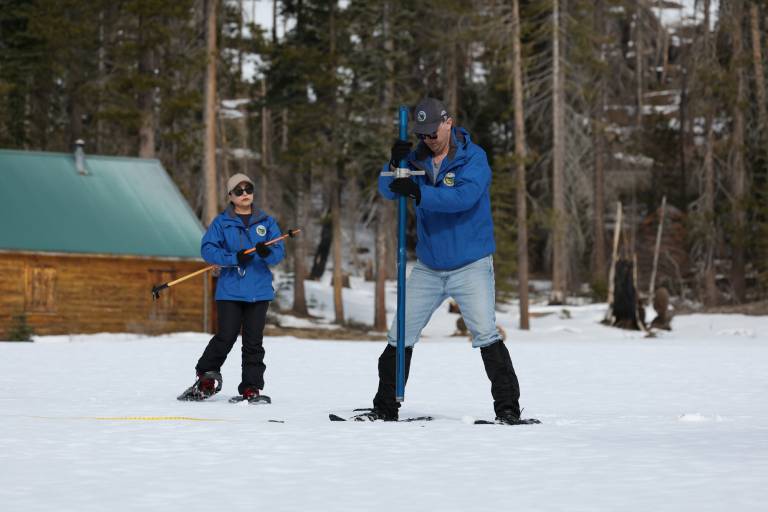
"caption": "The California Department of Water Resources (from left) Hydrometerologist, Angelique Fabbiani-Leon, and Engineer Jacob Kollen, conduct the second media snow survey of the 2026 season on Jan. 30, 2026, at Phillips Station in the Sierra Nevada. The snow survey is held approximately 90 miles east of Sacramento off Highway 50 in El Dorado County. ",
"credit": "Courtesy of Sara Nevis/California Department of Water Resources",
"altTag": null,
"description": null,
"imgSizes": {
"thumbnail": {
"file": "https://cdn.kqed.org/wp-content/uploads/sites/35/2026/01/SierraSnowPackSurvey2026-160x107.jpg",
"width": 160,
"height": 107,
"mimeType": "image/jpeg"
},
"medium_large": {
"file": "https://cdn.kqed.org/wp-content/uploads/sites/35/2026/01/SierraSnowPackSurvey2026-768x512.jpg",
"width": 768,
"height": 512,
"mimeType": "image/jpeg"
},
"1536x1536": {
"file": "https://cdn.kqed.org/wp-content/uploads/sites/35/2026/01/SierraSnowPackSurvey2026-1536x1024.jpg",
"width": 1536,
"height": 1024,
"mimeType": "image/jpeg"
},
"post-thumbnail": {
"file": "https://cdn.kqed.org/wp-content/uploads/sites/35/2026/01/SierraSnowPackSurvey2026-672x372.jpg",
"width": 672,
"height": 372,
"mimeType": "image/jpeg"
},
"twentyfourteen-full-width": {
"file": "https://cdn.kqed.org/wp-content/uploads/sites/35/2026/01/SierraSnowPackSurvey2026-1038x576.jpg",
"width": 1038,
"height": 576,
"mimeType": "image/jpeg"
},
"npr-cds-wide": {
"file": "https://cdn.kqed.org/wp-content/uploads/sites/35/2026/01/SierraSnowPackSurvey2026-1200x675.jpg",
"width": 1200,
"height": 675,
"mimeType": "image/jpeg"
},
"kqedFullSize": {
"file": "https://cdn.kqed.org/wp-content/uploads/sites/35/2026/01/SierraSnowPackSurvey2026.jpg",
"width": 2000,
"height": 1333
}
},
"isLoading": false,
"fetchFailed": false
},
"science_1999934": {
"type": "attachments",
"id": "science_1999934",
"meta": {
"index": "attachments_1716263798",
"site": "science",
"id": "1999934",
"found": true
},
"title": "Our Climate Future: A Forum with California's Next Governor",
"publishDate": 1769706421,
"status": "inherit",
"parent": 0,
"modified": 1769706481,
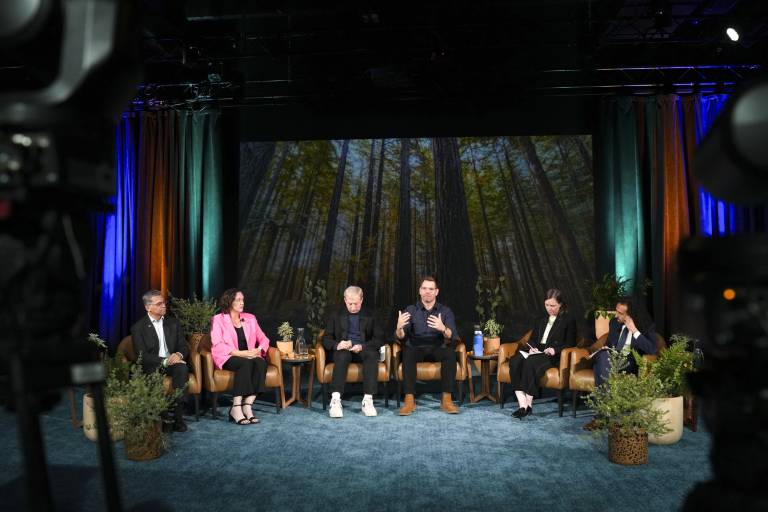
"caption": "Candidates for Governor of California attend the \"Our Climate Future: A Forum with California's Next Governor\" event in Pasadena on Jan. 28, 2026.",
"credit": "Matei Horvath/Getty Images for California Environmental Voters",
"altTag": null,
"description": null,
"imgSizes": {
"thumbnail": {
"file": "https://cdn.kqed.org/wp-content/uploads/sites/35/2026/01/GETTYIMAGES-2258202432-KQED-160x107.jpg",
"width": 160,
"height": 107,
"mimeType": "image/jpeg"
},
"medium_large": {
"file": "https://cdn.kqed.org/wp-content/uploads/sites/35/2026/01/GETTYIMAGES-2258202432-KQED-768x512.jpg",
"width": 768,
"height": 512,
"mimeType": "image/jpeg"
},
"1536x1536": {
"file": "https://cdn.kqed.org/wp-content/uploads/sites/35/2026/01/GETTYIMAGES-2258202432-KQED-1536x1024.jpg",
"width": 1536,
"height": 1024,
"mimeType": "image/jpeg"
},
"post-thumbnail": {
"file": "https://cdn.kqed.org/wp-content/uploads/sites/35/2026/01/GETTYIMAGES-2258202432-KQED-672x372.jpg",
"width": 672,
"height": 372,
"mimeType": "image/jpeg"
},
"twentyfourteen-full-width": {
"file": "https://cdn.kqed.org/wp-content/uploads/sites/35/2026/01/GETTYIMAGES-2258202432-KQED-1038x576.jpg",
"width": 1038,
"height": 576,
"mimeType": "image/jpeg"
},
"npr-cds-wide": {
"file": "https://cdn.kqed.org/wp-content/uploads/sites/35/2026/01/GETTYIMAGES-2258202432-KQED-1200x675.jpg",
"width": 1200,
"height": 675,
"mimeType": "image/jpeg"
},
"kqedFullSize": {
"file": "https://cdn.kqed.org/wp-content/uploads/sites/35/2026/01/GETTYIMAGES-2258202432-KQED.jpg",
"width": 2000,
"height": 1333
}
},
"isLoading": false,
"fetchFailed": false
},
"science_1999912": {
"type": "attachments",
"id": "science_1999912",
"meta": {
"index": "attachments_1716263798",
"site": "science",
"id": "1999912",
"found": true
},
"title": "260123-Insurance Home-01-KQED",
"publishDate": 1769188571,
"status": "inherit",
"parent": 0,
"modified": 1769188707,
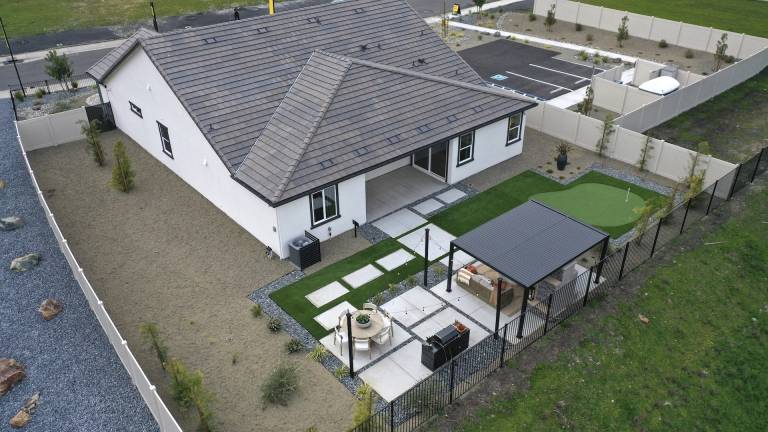
"caption": "Overhead shot of a newly completed model home in what will become Northern California’s first wildfire-prepared neighborhood.",
"credit": "Courtesy of Rachael Gauthier",
"altTag": null,
"description": null,
"imgSizes": {
"thumbnail": {
"file": "https://cdn.kqed.org/wp-content/uploads/sites/35/2026/01/260123-Insurance-Home-01-KQED-160x90.jpg",
"width": 160,
"height": 90,
"mimeType": "image/jpeg"
},
"medium_large": {
"file": "https://cdn.kqed.org/wp-content/uploads/sites/35/2026/01/260123-Insurance-Home-01-KQED-768x432.jpg",
"width": 768,
"height": 432,
"mimeType": "image/jpeg"
},
"1536x1536": {
"file": "https://cdn.kqed.org/wp-content/uploads/sites/35/2026/01/260123-Insurance-Home-01-KQED-1536x864.jpg",
"width": 1536,
"height": 864,
"mimeType": "image/jpeg"
},
"post-thumbnail": {
"file": "https://cdn.kqed.org/wp-content/uploads/sites/35/2026/01/260123-Insurance-Home-01-KQED-672x372.jpg",
"width": 672,
"height": 372,
"mimeType": "image/jpeg"
},
"twentyfourteen-full-width": {
"file": "https://cdn.kqed.org/wp-content/uploads/sites/35/2026/01/260123-Insurance-Home-01-KQED-1038x576.jpg",
"width": 1038,
"height": 576,
"mimeType": "image/jpeg"
},
"npr-cds-wide": {
"file": "https://cdn.kqed.org/wp-content/uploads/sites/35/2026/01/260123-Insurance-Home-01-KQED-1200x675.jpg",
"width": 1200,
"height": 675,
"mimeType": "image/jpeg"
},
"kqedFullSize": {
"file": "https://cdn.kqed.org/wp-content/uploads/sites/35/2026/01/260123-Insurance-Home-01-KQED.jpg",
"width": 1920,
"height": 1080
}
},
"isLoading": false,
"fetchFailed": false
},
"science_1999814": {
"type": "attachments",
"id": "science_1999814",
"meta": {
"index": "attachments_1716263798",
"site": "science",
"id": "1999814",
"found": true
},
"title": "260112-MARINFLOODING-02-BL-KQED",
"publishDate": 1768331655,
"status": "inherit",
"parent": 0,
"modified": 1768331832,
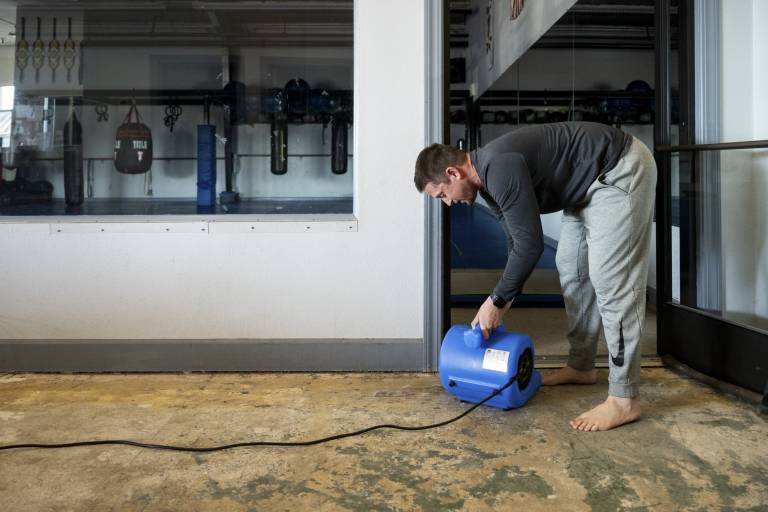
"caption": "Derek Bentley plugs in a fan at Taylor’s House of Karate in San Rafael on Jan. 12, 2026, after the karate studio and surrounding area experienced flooding during a series of king tides and winter storms earlier in the month.",
"credit": "Beth LaBerge/KQED",
"altTag": null,
"description": null,
"imgSizes": {
"thumbnail": {
"file": "https://cdn.kqed.org/wp-content/uploads/sites/35/2026/01/260112-MARINFLOODING-02-BL-KQED-160x107.jpg",
"width": 160,
"height": 107,
"mimeType": "image/jpeg"
},
"medium_large": {
"file": "https://cdn.kqed.org/wp-content/uploads/sites/35/2026/01/260112-MARINFLOODING-02-BL-KQED-768x512.jpg",
"width": 768,
"height": 512,
"mimeType": "image/jpeg"
},
"1536x1536": {
"file": "https://cdn.kqed.org/wp-content/uploads/sites/35/2026/01/260112-MARINFLOODING-02-BL-KQED-1536x1024.jpg",
"width": 1536,
"height": 1024,
"mimeType": "image/jpeg"
},
"post-thumbnail": {
"file": "https://cdn.kqed.org/wp-content/uploads/sites/35/2026/01/260112-MARINFLOODING-02-BL-KQED-672x372.jpg",
"width": 672,
"height": 372,
"mimeType": "image/jpeg"
},
"twentyfourteen-full-width": {
"file": "https://cdn.kqed.org/wp-content/uploads/sites/35/2026/01/260112-MARINFLOODING-02-BL-KQED-1038x576.jpg",
"width": 1038,
"height": 576,
"mimeType": "image/jpeg"
},
"npr-cds-wide": {
"file": "https://cdn.kqed.org/wp-content/uploads/sites/35/2026/01/260112-MARINFLOODING-02-BL-KQED-1200x675.jpg",
"width": 1200,
"height": 675,
"mimeType": "image/jpeg"
},
"kqedFullSize": {
"file": "https://cdn.kqed.org/wp-content/uploads/sites/35/2026/01/260112-MARINFLOODING-02-BL-KQED.jpg",
"width": 2000,
"height": 1333
}
},
"isLoading": false,
"fetchFailed": false
},
"science_1999165": {
"type": "attachments",
"id": "science_1999165",
"meta": {
"index": "attachments_1716263798",
"site": "science",
"id": "1999165",
"found": true
},
"title": "Maidu CAL-TREX 2025",
"publishDate": 1762461937,
"status": "inherit",
"parent": 2001297,
"modified": 1781131214,
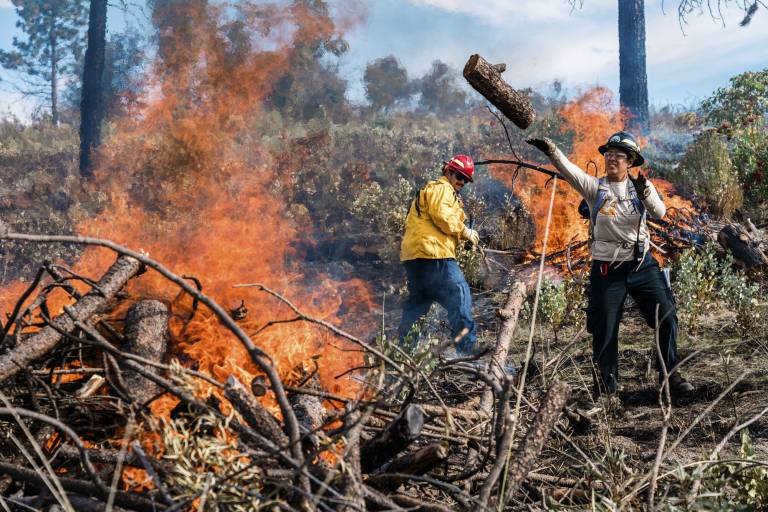
"caption": "Participants in the prescribed burn add fuel to fires as part of a CAL-TREX prescribed burn in Berry Creek on Nov. 4, 2025.",
"credit": "Andri Tambunan for KQED",
"altTag": null,
"description": null,
"imgSizes": {
"thumbnail": {
"file": "https://cdn.kqed.org/wp-content/uploads/sites/35/2025/11/KQED_PRESCRIBED-BURN_AT_257_QED-KQED-160x107.jpg",
"width": 160,
"height": 107,
"mimeType": "image/jpeg"
},
"medium_large": {
"file": "https://cdn.kqed.org/wp-content/uploads/sites/35/2025/11/KQED_PRESCRIBED-BURN_AT_257_QED-KQED-768x512.jpg",
"width": 768,
"height": 512,
"mimeType": "image/jpeg"
},
"1536x1536": {
"file": "https://cdn.kqed.org/wp-content/uploads/sites/35/2025/11/KQED_PRESCRIBED-BURN_AT_257_QED-KQED-1536x1024.jpg",
"width": 1536,
"height": 1024,
"mimeType": "image/jpeg"
},
"post-thumbnail": {
"file": "https://cdn.kqed.org/wp-content/uploads/sites/35/2025/11/KQED_PRESCRIBED-BURN_AT_257_QED-KQED-672x372.jpg",
"width": 672,
"height": 372,
"mimeType": "image/jpeg"
},
"twentyfourteen-full-width": {
"file": "https://cdn.kqed.org/wp-content/uploads/sites/35/2025/11/KQED_PRESCRIBED-BURN_AT_257_QED-KQED-1038x576.jpg",
"width": 1038,
"height": 576,
"mimeType": "image/jpeg"
},
"npr-cds-wide": {
"file": "https://cdn.kqed.org/wp-content/uploads/sites/35/2025/11/KQED_PRESCRIBED-BURN_AT_257_QED-KQED-1200x675.jpg",
"width": 1200,
"height": 675,
"mimeType": "image/jpeg"
},
"kqedFullSize": {
"file": "https://cdn.kqed.org/wp-content/uploads/sites/35/2025/11/KQED_PRESCRIBED-BURN_AT_257_QED-KQED.jpg",
"width": 2000,
"height": 1333
}
},
"isLoading": false,
"fetchFailed": false
},
"science_1999773": {
"type": "attachments",
"id": "science_1999773",
"meta": {
"index": "attachments_1716263798",
"site": "science",
"id": "1999773",
"found": true
},
"title": "251204-KingTide-40-BL_qed",
"publishDate": 1767908802,
"status": "inherit",
"parent": 1999767,
"modified": 1767908813,
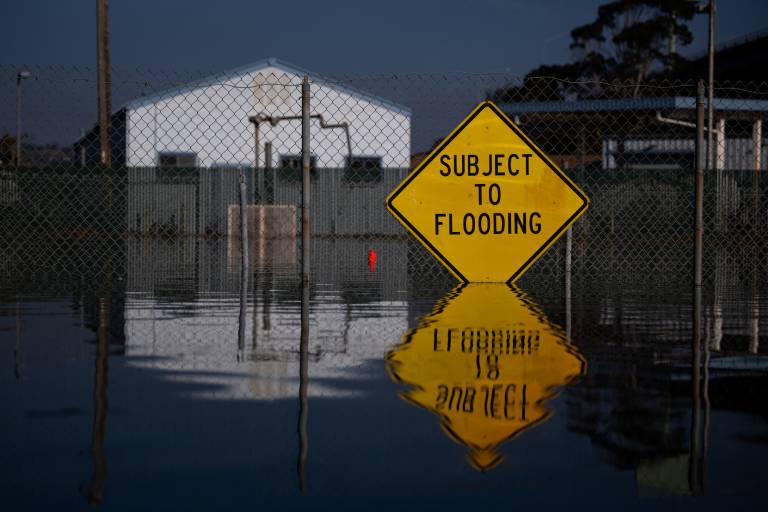
"caption": "Flooding near the Highway 101 Sausalito/Mill Valley exit in Sausalito on Dec. 4, 2025, during a king tide event.",
"credit": "Beth LaBerge/KQED",
"altTag": null,
"description": null,
"imgSizes": {
"thumbnail": {
"file": "https://cdn.kqed.org/wp-content/uploads/sites/35/2026/01/251204-KingTide-40-BL_qed-160x107.jpg",
"width": 160,
"height": 107,
"mimeType": "image/jpeg"
},
"medium_large": {
"file": "https://cdn.kqed.org/wp-content/uploads/sites/35/2026/01/251204-KingTide-40-BL_qed-768x512.jpg",
"width": 768,
"height": 512,
"mimeType": "image/jpeg"
},
"1536x1536": {
"file": "https://cdn.kqed.org/wp-content/uploads/sites/35/2026/01/251204-KingTide-40-BL_qed-1536x1024.jpg",
"width": 1536,
"height": 1024,
"mimeType": "image/jpeg"
},
"post-thumbnail": {
"file": "https://cdn.kqed.org/wp-content/uploads/sites/35/2026/01/251204-KingTide-40-BL_qed-672x372.jpg",
"width": 672,
"height": 372,
"mimeType": "image/jpeg"
},
"twentyfourteen-full-width": {
"file": "https://cdn.kqed.org/wp-content/uploads/sites/35/2026/01/251204-KingTide-40-BL_qed-1038x576.jpg",
"width": 1038,
"height": 576,
"mimeType": "image/jpeg"
},
"npr-cds-wide": {
"file": "https://cdn.kqed.org/wp-content/uploads/sites/35/2026/01/251204-KingTide-40-BL_qed-1200x675.jpg",
"width": 1200,
"height": 675,
"mimeType": "image/jpeg"
},
"kqedFullSize": {
"file": "https://cdn.kqed.org/wp-content/uploads/sites/35/2026/01/251204-KingTide-40-BL_qed.jpg",
"width": 2000,
"height": 1333
}
},
"isLoading": false,
"fetchFailed": false
},
"science_1998530": {
"type": "attachments",
"id": "science_1998530",
"meta": {
"index": "attachments_1716263798",
"site": "science",
"id": "1998530",
"found": true
},
"title": "250916_SEAOTTERS_GH-3-KQED",
"publishDate": 1758233703,
"status": "inherit",
"parent": 0,
"modified": 1760474663,
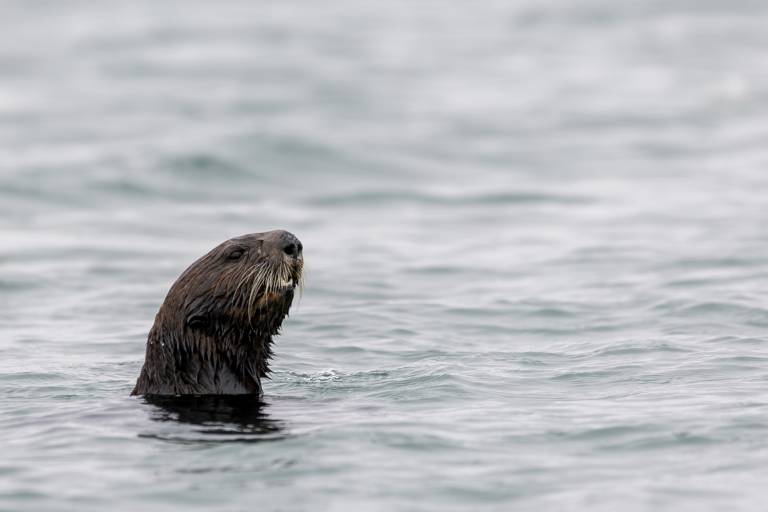
"caption": "A sea otter surfaces in Elkhorn Slough, a protected estuary that provides critical habitat for the threatened species, on Sept. 16, 2025.",
"credit": "Gustavo Hernandez/KQED",
"altTag": null,
"description": null,
"imgSizes": {
"thumbnail": {
"file": "https://cdn.kqed.org/wp-content/uploads/sites/35/2025/09/250916_SEAOTTERS_GH-3-KQED-160x107.jpg",
"width": 160,
"height": 107,
"mimeType": "image/jpeg"
},
"medium_large": {
"file": "https://cdn.kqed.org/wp-content/uploads/sites/35/2025/09/250916_SEAOTTERS_GH-3-KQED-768x512.jpg",
"width": 768,
"height": 512,
"mimeType": "image/jpeg"
},
"1536x1536": {
"file": "https://cdn.kqed.org/wp-content/uploads/sites/35/2025/09/250916_SEAOTTERS_GH-3-KQED-1536x1025.jpg",
"width": 1536,
"height": 1025,
"mimeType": "image/jpeg"
},
"post-thumbnail": {
"file": "https://cdn.kqed.org/wp-content/uploads/sites/35/2025/09/250916_SEAOTTERS_GH-3-KQED-672x372.jpg",
"width": 672,
"height": 372,
"mimeType": "image/jpeg"
},
"twentyfourteen-full-width": {
"file": "https://cdn.kqed.org/wp-content/uploads/sites/35/2025/09/250916_SEAOTTERS_GH-3-KQED-1038x576.jpg",
"width": 1038,
"height": 576,
"mimeType": "image/jpeg"
},
"kqedFullSize": {
"file": "https://cdn.kqed.org/wp-content/uploads/sites/35/2025/09/250916_SEAOTTERS_GH-3-KQED.jpg",
"width": 2000,
"height": 1334
}
},
"isLoading": false,
"fetchFailed": false
},
"science_1999718": {
"type": "attachments",
"id": "science_1999718",
"meta": {
"index": "attachments_1716263798",
"site": "science",
"id": "1999718",
"found": true
},
"title": "251113-rainfile00398_TV_qed",
"publishDate": 1766179907,
"status": "inherit",
"parent": 1999695,
"modified": 1766179916,
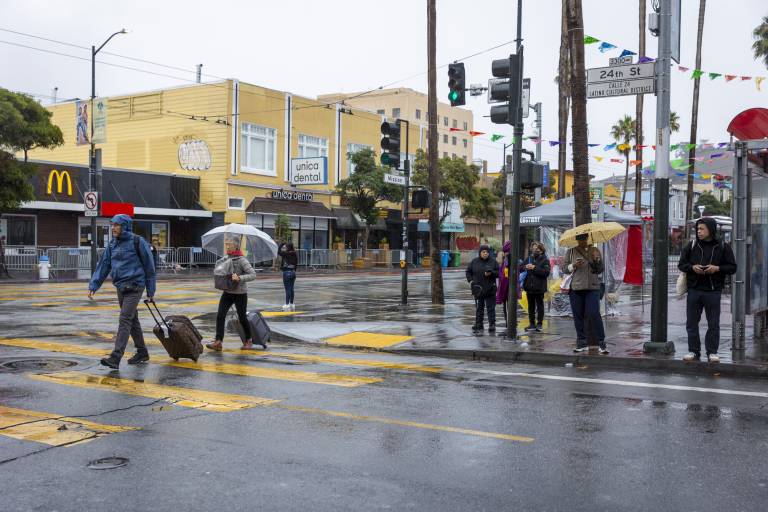
"caption": "Pedestrians wait at a bus stop in the rain in the Mission district in San Francisco on November 13, 2025.",
"credit": "Tâm Vũ/KQED",
"altTag": null,
"description": null,
"imgSizes": {
"thumbnail": {
"file": "https://cdn.kqed.org/wp-content/uploads/sites/35/2025/12/251113-rainfile00398_TV_qed-160x107.jpg",
"width": 160,
"height": 107,
"mimeType": "image/jpeg"
},
"medium_large": {
"file": "https://cdn.kqed.org/wp-content/uploads/sites/35/2025/12/251113-rainfile00398_TV_qed-768x512.jpg",
"width": 768,
"height": 512,
"mimeType": "image/jpeg"
},
"1536x1536": {
"file": "https://cdn.kqed.org/wp-content/uploads/sites/35/2025/12/251113-rainfile00398_TV_qed-1536x1024.jpg",
"width": 1536,
"height": 1024,
"mimeType": "image/jpeg"
},
"post-thumbnail": {
"file": "https://cdn.kqed.org/wp-content/uploads/sites/35/2025/12/251113-rainfile00398_TV_qed-672x372.jpg",
"width": 672,
"height": 372,
"mimeType": "image/jpeg"
},
"twentyfourteen-full-width": {
"file": "https://cdn.kqed.org/wp-content/uploads/sites/35/2025/12/251113-rainfile00398_TV_qed-1038x576.jpg",
"width": 1038,
"height": 576,
"mimeType": "image/jpeg"
},
"npr-cds-wide": {
"file": "https://cdn.kqed.org/wp-content/uploads/sites/35/2025/12/251113-rainfile00398_TV_qed-1200x675.jpg",
"width": 1200,
"height": 675,
"mimeType": "image/jpeg"
},
"kqedFullSize": {
"file": "https://cdn.kqed.org/wp-content/uploads/sites/35/2025/12/251113-rainfile00398_TV_qed.jpg",
"width": 2000,
"height": 1333
}
},
"isLoading": false,
"fetchFailed": false
},
"science_1999682": {
"type": "attachments",
"id": "science_1999682",
"meta": {
"index": "attachments_1716263798",
"site": "science",
"id": "1999682",
"found": true
},
"title": "Heavy rain in San Francisco",
"publishDate": 1765919612,
"status": "inherit",
"parent": 1999678,
"modified": 1765923225,
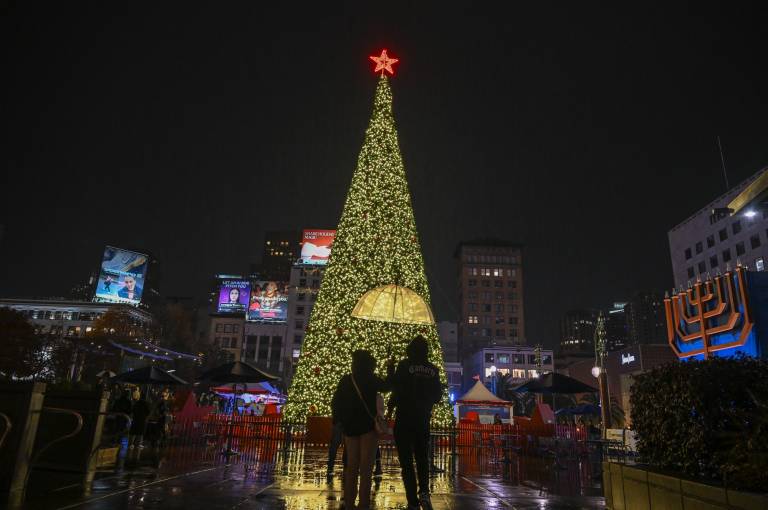
"caption": "A couple stands next to the Macy's Union Square Great Christmas tree during heavy rain in San Francisco, California, on Dec. 26, 2024.",
"credit": "Tayfun Coskun/Anadolu via Getty Images",
"altTag": null,
"description": null,
"imgSizes": {
"thumbnail": {
"file": "https://cdn.kqed.org/wp-content/uploads/sites/35/2025/12/RainUnionSquareSFGetty-160x106.jpg",
"width": 160,
"height": 106,
"mimeType": "image/jpeg"
},
"medium_large": {
"file": "https://cdn.kqed.org/wp-content/uploads/sites/35/2025/12/RainUnionSquareSFGetty-768x510.jpg",
"width": 768,
"height": 510,
"mimeType": "image/jpeg"
},
"1536x1536": {
"file": "https://cdn.kqed.org/wp-content/uploads/sites/35/2025/12/RainUnionSquareSFGetty-1536x1020.jpg",
"width": 1536,
"height": 1020,
"mimeType": "image/jpeg"
},
"post-thumbnail": {
"file": "https://cdn.kqed.org/wp-content/uploads/sites/35/2025/12/RainUnionSquareSFGetty-672x372.jpg",
"width": 672,
"height": 372,
"mimeType": "image/jpeg"
},
"twentyfourteen-full-width": {
"file": "https://cdn.kqed.org/wp-content/uploads/sites/35/2025/12/RainUnionSquareSFGetty-1038x576.jpg",
"width": 1038,
"height": 576,
"mimeType": "image/jpeg"
},
"npr-cds-wide": {
"file": "https://cdn.kqed.org/wp-content/uploads/sites/35/2025/12/RainUnionSquareSFGetty-1200x675.jpg",
"width": 1200,
"height": 675,
"mimeType": "image/jpeg"
},
"kqedFullSize": {
"file": "https://cdn.kqed.org/wp-content/uploads/sites/35/2025/12/RainUnionSquareSFGetty.jpg",
"width": 2000,
"height": 1328
}
},
"isLoading": false,
"fetchFailed": false
},
"science_1999656": {
"type": "attachments",
"id": "science_1999656",
"meta": {
"index": "attachments_1716263798",
"site": "science",
"id": "1999656",
"found": true
},
"title": "251215-EARTHQUAKESWARMS-12-BL-KQED",
"publishDate": 1765839038,
"status": "inherit",
"parent": 0,
"modified": 1775170245,
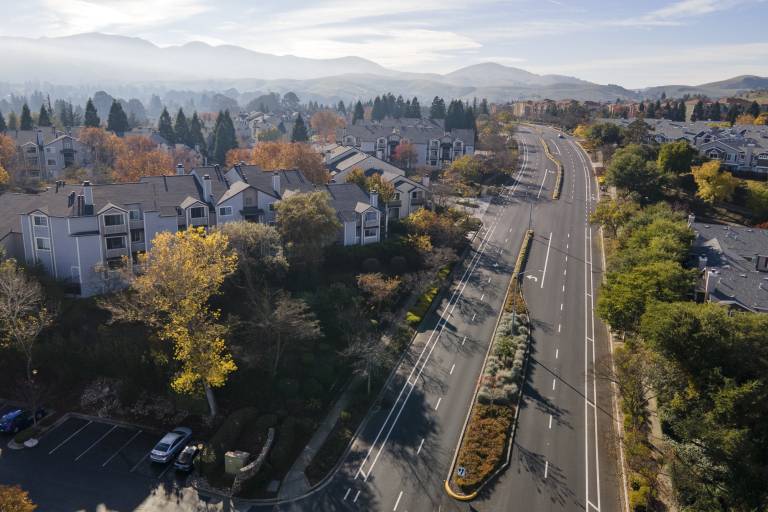
"caption": "Apartment buildings and homes line Deerwood Road in San Ramon on Dec. 15, 2025. The area sits near the Calaveras Fault, an active fault that runs underground through the East Bay.",
"credit": "Beth LaBerge/KQED",
"altTag": null,
"description": null,
"imgSizes": {
"thumbnail": {
"file": "https://cdn.kqed.org/wp-content/uploads/sites/35/2025/12/251215-EARTHQUAKESWARMS-12-BL-KQED-160x107.jpg",
"width": 160,
"height": 107,
"mimeType": "image/jpeg"
},
"medium_large": {
"file": "https://cdn.kqed.org/wp-content/uploads/sites/35/2025/12/251215-EARTHQUAKESWARMS-12-BL-KQED-768x512.jpg",
"width": 768,
"height": 512,
"mimeType": "image/jpeg"
},
"1536x1536": {
"file": "https://cdn.kqed.org/wp-content/uploads/sites/35/2025/12/251215-EARTHQUAKESWARMS-12-BL-KQED-1536x1024.jpg",
"width": 1536,
"height": 1024,
"mimeType": "image/jpeg"
},
"post-thumbnail": {
"file": "https://cdn.kqed.org/wp-content/uploads/sites/35/2025/12/251215-EARTHQUAKESWARMS-12-BL-KQED-672x372.jpg",
"width": 672,
"height": 372,
"mimeType": "image/jpeg"
},
"twentyfourteen-full-width": {
"file": "https://cdn.kqed.org/wp-content/uploads/sites/35/2025/12/251215-EARTHQUAKESWARMS-12-BL-KQED-1038x576.jpg",
"width": 1038,
"height": 576,
"mimeType": "image/jpeg"
},
"npr-cds-wide": {
"file": "https://cdn.kqed.org/wp-content/uploads/sites/35/2025/12/251215-EARTHQUAKESWARMS-12-BL-KQED-1200x675.jpg",
"width": 1200,
"height": 675,
"mimeType": "image/jpeg"
},
"kqedFullSize": {
"file": "https://cdn.kqed.org/wp-content/uploads/sites/35/2025/12/251215-EARTHQUAKESWARMS-12-BL-KQED.jpg",
"width": 2000,
"height": 1333
}
},
"isLoading": false,
"fetchFailed": false
},
"science_1999622": {
"type": "attachments",
"id": "science_1999622",
"meta": {
"index": "attachments_1716263798",
"site": "science",
"id": "1999622",
"found": true
},
"title": "The 580 freeway in Oakland on Oct. 21, 2025.",
"publishDate": 1765577401,
"status": "inherit",
"parent": 1999616,
"modified": 1765577412,
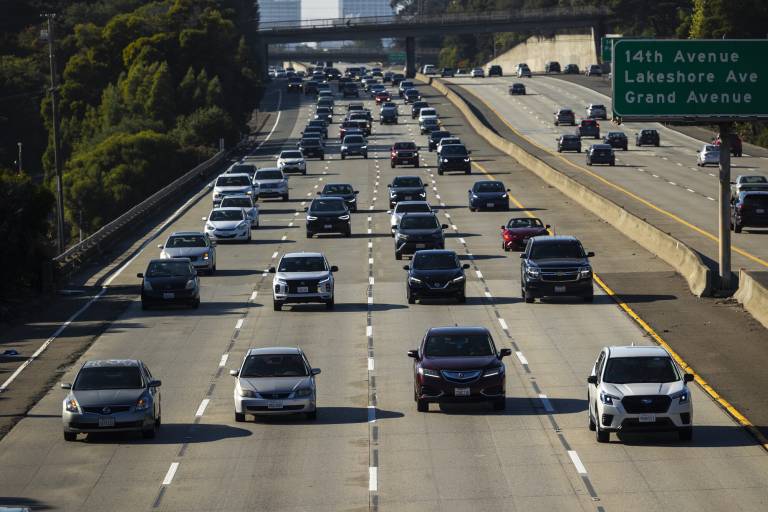
"caption": "The 580 freeway in Oakland on Oct. 21, 2025.",
"credit": "Martin do Nascimento/KQED",
"altTag": null,
"description": null,
"imgSizes": {
"thumbnail": {
"file": "https://cdn.kqed.org/wp-content/uploads/sites/35/2025/12/251021-I-580-MD-03_qed-160x107.jpg",
"width": 160,
"height": 107,
"mimeType": "image/jpeg"
},
"medium_large": {
"file": "https://cdn.kqed.org/wp-content/uploads/sites/35/2025/12/251021-I-580-MD-03_qed-768x512.jpg",
"width": 768,
"height": 512,
"mimeType": "image/jpeg"
},
"1536x1536": {
"file": "https://cdn.kqed.org/wp-content/uploads/sites/35/2025/12/251021-I-580-MD-03_qed-1536x1024.jpg",
"width": 1536,
"height": 1024,
"mimeType": "image/jpeg"
},
"post-thumbnail": {
"file": "https://cdn.kqed.org/wp-content/uploads/sites/35/2025/12/251021-I-580-MD-03_qed-672x372.jpg",
"width": 672,
"height": 372,
"mimeType": "image/jpeg"
},
"twentyfourteen-full-width": {
"file": "https://cdn.kqed.org/wp-content/uploads/sites/35/2025/12/251021-I-580-MD-03_qed-1038x576.jpg",
"width": 1038,
"height": 576,
"mimeType": "image/jpeg"
},
"npr-cds-wide": {
"file": "https://cdn.kqed.org/wp-content/uploads/sites/35/2025/12/251021-I-580-MD-03_qed-1200x675.jpg",
"width": 1200,
"height": 675,
"mimeType": "image/jpeg"
},
"kqedFullSize": {
"file": "https://cdn.kqed.org/wp-content/uploads/sites/35/2025/12/251021-I-580-MD-03_qed.jpg",
"width": 2000,
"height": 1333
}
},
"isLoading": false,
"fetchFailed": false
},
"science_1999015": {
"type": "attachments",
"id": "science_1999015",
"meta": {
"index": "attachments_1716263798",
"site": "science",
"id": "1999015",
"found": true
},
"title": "20251029_VIRTUAL REALITY--_GH-7-KQED",
"publishDate": 1761911909,
"status": "inherit",
"parent": 0,
"modified": 1765487012,
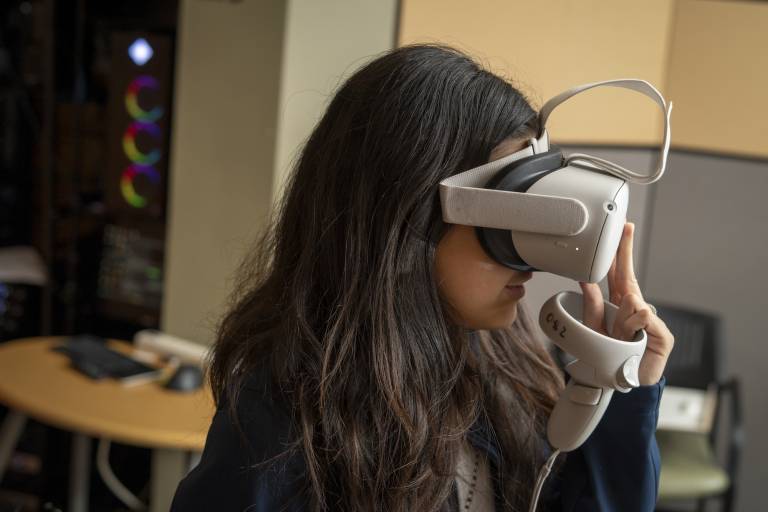
"caption": "Monique Santoso wears a headset during a virtual reality test run at the Stanford Virtual Human Interaction Lab on Oct. 29, 2025, in Stanford.",
"credit": "Gustavo Hernandez/KQED",
"altTag": null,
"description": null,
"imgSizes": {
"thumbnail": {
"file": "https://cdn.kqed.org/wp-content/uploads/sites/35/2025/10/20251029_VIRTUAL-REALITY-_GH-7-KQED-160x107.jpg",
"width": 160,
"height": 107,
"mimeType": "image/jpeg"
},
"medium_large": {
"file": "https://cdn.kqed.org/wp-content/uploads/sites/35/2025/10/20251029_VIRTUAL-REALITY-_GH-7-KQED-768x512.jpg",
"width": 768,
"height": 512,
"mimeType": "image/jpeg"
},
"1536x1536": {
"file": "https://cdn.kqed.org/wp-content/uploads/sites/35/2025/10/20251029_VIRTUAL-REALITY-_GH-7-KQED-1536x1024.jpg",
"width": 1536,
"height": 1024,
"mimeType": "image/jpeg"
},
"post-thumbnail": {
"file": "https://cdn.kqed.org/wp-content/uploads/sites/35/2025/10/20251029_VIRTUAL-REALITY-_GH-7-KQED-672x372.jpg",
"width": 672,
"height": 372,
"mimeType": "image/jpeg"
},
"twentyfourteen-full-width": {
"file": "https://cdn.kqed.org/wp-content/uploads/sites/35/2025/10/20251029_VIRTUAL-REALITY-_GH-7-KQED-1038x576.jpg",
"width": 1038,
"height": 576,
"mimeType": "image/jpeg"
},
"npr-cds-wide": {
"file": "https://cdn.kqed.org/wp-content/uploads/sites/35/2025/10/20251029_VIRTUAL-REALITY-_GH-7-KQED-1200x675.jpg",
"width": 1200,
"height": 675,
"mimeType": "image/jpeg"
},
"kqedFullSize": {
"file": "https://cdn.kqed.org/wp-content/uploads/sites/35/2025/10/20251029_VIRTUAL-REALITY-_GH-7-KQED.jpg",
"width": 2000,
"height": 1333
}
},
"isLoading": false,
"fetchFailed": false
}
},
"audioPlayerReducer": {
"postId": "stream_live",
"isPaused": true,
"isPlaying": false,
"pfsActive": false,
"pledgeModalIsOpen": true,
"playerDrawerIsOpen": false,
"liveAudioPlayStartedAt": 0,
"liveAudioPlayContext": ""
},
"authorsReducer": {
"lklivans": {
"type": "authors",
"id": "8648",
"meta": {
"index": "authors_1716337520",
"id": "8648",
"found": true
},
"name": "Laura Klivans",
"firstName": "Laura",
"lastName": "Klivans",
"slug": "lklivans",
"email": "lklivans@kqed.org",
"display_author_email": true,
"staff_mastheads": [
"news",
"science"
],
"title": "Reporter",
"bio": "Laura Klivans is an award-winning science reporter for KQED News, where she covers climate change with an eye on both groundbreaking progress and gaps in action. She is the former host of KQED's blockbuster video series about tiny, amazing animals, \u003cem>Deep Look\u003c/em>. Her work reaches national audiences through NPR, \u003cem>Here & Now, \u003c/em>PRI, and other major outlets. \r\n\r\nLaura’s won five Northern California Area Emmy Awards for Deep Look and First Place in the Greater Bay Area Journalism Awards for a podcast exploring how one Oakland neighborhood teamed up to reduce planet-heating pollution.\r\n\r\nBeyond her reporting, she hosts and moderates events. In the past, she taught audio storytelling at the UC Berkeley Graduate School of Journalism, led international education programs, worked with immigrants and refugees along the Thai-Burmese border, taught high schoolers sex ed, and was an actress. \r\n\r\nShe's a former UC Berkeley Human Rights Fellow, USC Center for Health Journalism's California Fellow and Coro Fellow in Public Affairs. Laura has a master’s in journalism from UC Berkeley, a master’s in education from Harvard, and an undergraduate degree from Northwestern University.\r\n\r\nShe loves trying to riddle the meaning out of vanity license plates.",
"avatar": "https://secure.gravatar.com/avatar/2d2ecd1550a494cc10ad4a503406965585902124739e775a9b3817eebf1d88be?s=600&d=blank&r=g",
"twitter": "lauraklivans",
"bluesky": null,
"facebook": null,
"instagram": null,
"linkedin": null,
"sites": [
{
"site": "news",
"roles": [
"editor"
]
},
{
"site": "stateofhealth",
"roles": [
"contributor",
"editor"
]
},
{
"site": "science",
"roles": [
"editor"
]
},
{
"site": "forum",
"roles": [
"editor"
]
}
],
"headData": {
"title": "Laura Klivans | KQED",
"description": "Reporter",
"ogImgSrc": "https://secure.gravatar.com/avatar/2d2ecd1550a494cc10ad4a503406965585902124739e775a9b3817eebf1d88be?s=600&d=blank&r=g",
"twImgSrc": "https://secure.gravatar.com/avatar/2d2ecd1550a494cc10ad4a503406965585902124739e775a9b3817eebf1d88be?s=600&d=blank&r=g"
},
"isLoading": false,
"link": "/author/lklivans"
},
"dventon": {
"type": "authors",
"id": "11088",
"meta": {
"index": "authors_1716337520",
"id": "11088",
"found": true
},
"name": "Danielle Venton",
"firstName": "Danielle",
"lastName": "Venton",
"slug": "dventon",
"email": "dventon@kqed.org",
"display_author_email": true,
"staff_mastheads": [
"science"
],
"title": "Science reporter",
"bio": "Danielle Venton is a reporter for KQED Science. She covers wildfires, space and oceans (though she is prone to sea sickness).\r\n\r\nBefore joining KQED in 2015, Danielle was a staff reporter at KRCB in Sonoma County and a freelancer. She studied science communication at UC Santa Cruz and formerly worked at CERN in Geneva, Switzerland where she wrote about computing. She lives in Sonoma County and enjoys backpacking.",
"avatar": "https://secure.gravatar.com/avatar/37b292b5c40c8d93959c4f48d73b5286f41b7abd8588277e941905a3ed4c801c?s=600&d=blank&r=g",
"twitter": "DanielleVenton",
"bluesky": null,
"facebook": null,
"instagram": null,
"linkedin": null,
"sites": [
{
"site": "arts",
"roles": [
"contributor"
]
},
{
"site": "news",
"roles": [
"editor"
]
},
{
"site": "futureofyou",
"roles": [
"editor"
]
},
{
"site": "science",
"roles": [
"editor"
]
},
{
"site": "liveblog",
"roles": [
"contributor"
]
}
],
"headData": {
"title": "Danielle Venton | KQED",
"description": "Science reporter",
"ogImgSrc": "https://secure.gravatar.com/avatar/37b292b5c40c8d93959c4f48d73b5286f41b7abd8588277e941905a3ed4c801c?s=600&d=blank&r=g",
"twImgSrc": "https://secure.gravatar.com/avatar/37b292b5c40c8d93959c4f48d73b5286f41b7abd8588277e941905a3ed4c801c?s=600&d=blank&r=g"
},
"isLoading": false,
"link": "/author/dventon"
},
"eromero": {
"type": "authors",
"id": "11746",
"meta": {
"index": "authors_1716337520",
"id": "11746",
"found": true
},
"name": "Ezra David Romero",
"firstName": "Ezra David",
"lastName": "Romero",
"slug": "eromero",
"email": "eromero@kqed.org",
"display_author_email": true,
"staff_mastheads": [
"news",
"science"
],
"title": "Climate Reporter",
"bio": "Ezra David Romero is a climate reporter for KQED News. He covers the absence and excess of water in the Bay Area — think sea level rise, flooding and drought. For nearly a decade he’s covered how warming temperatures are altering the lives of Californians. He’s reported on farmers worried their pistachio trees aren’t getting enough sleep, families desperate for water, scientists studying dying giant sequoias, and alongside firefighters containing wildfires. His work has appeared on local stations across California and nationally on public radio shows like Morning Edition, Here and Now, All Things Considered and Science Friday. ",
"avatar": "https://secure.gravatar.com/avatar/c76404d287c10ed40224227551ac36e24352c7306f106632caf6fead76f8801f?s=600&d=blank&r=g",
"twitter": "ezraromero",
"bluesky": null,
"facebook": null,
"instagram": null,
"linkedin": null,
"sites": [
{
"site": "arts",
"roles": [
"editor"
]
},
{
"site": "news",
"roles": [
"editor"
]
},
{
"site": "science",
"roles": [
"editor"
]
},
{
"site": "liveblog",
"roles": [
"author"
]
}
],
"headData": {
"title": "Ezra David Romero | KQED",
"description": "Climate Reporter",
"ogImgSrc": "https://secure.gravatar.com/avatar/c76404d287c10ed40224227551ac36e24352c7306f106632caf6fead76f8801f?s=600&d=blank&r=g",
"twImgSrc": "https://secure.gravatar.com/avatar/c76404d287c10ed40224227551ac36e24352c7306f106632caf6fead76f8801f?s=600&d=blank&r=g"
},
"isLoading": false,
"link": "/author/eromero"
}
},
"pagesReducer": {
"science_category_climate": {
"type": "terms",
"id": "science_31",
"meta": {
"index": "terms_1716263798",
"site": "science",
"id": "31",
"score": 11.061777
},
"featImg": null,
"name": "Climate",
"description": null,
"taxonomy": "category",
"headData": {
"twImgId": null,
"twTitle": null,
"ogTitle": null,
"ogImgId": null,
"twDescription": null,
"description": null,
"title": "Climate Archives | KQED Science",
"ogDescription": null
},
"ttid": 33,
"slug": "climate",
"isLoading": false,
"title": "Climate",
"pageMeta": {
"site": "science",
"WpPageTemplate": "page-topic-editorial",
"currentPage": 6
},
"blocks": [
{
"blockName": "kqed/post-list",
"attrs": {
"layout": "cardArticle2",
"query": "posts/science?category=climate",
"seeMore": false,
"paginated": true,
"page": 6
}
},
{
"blockName": "kqed/ad"
}
]
}
},
"pfsSessionReducer": {},
"postsReducer": {
"stream_live": {
"type": "live",
"id": "stream_live",
"audioUrl": "https://streams.kqed.org/kqedradio",
"title": "Live Stream",
"excerpt": "Live Stream information currently unavailable.",
"link": "/radio",
"featImg": "",
"label": {
"name": "KQED Live",
"link": "/"
}
},
"stream_kqedNewscast": {
"type": "posts",
"id": "stream_kqedNewscast",
"audioUrl": "https://www.kqed.org/.stream/anon/radio/RDnews/newscast.mp3?_=1",
"title": "KQED Newscast",
"featImg": "",
"label": {
"name": "88.5 FM",
"link": "/"
}
},
"science_1999949": {
"type": "posts",
"id": "science_1999949",
"meta": {
"index": "posts_1716263798",
"site": "science",
"id": "1999949",
"score": null,
"sort": [
1769818193000
]
},
"guestAuthors": [],
"slug": "californias-snowpack-is-shrinking-but-winter-isnt-over-yet",
"title": "California’s Snowpack Is Shrinking, but Winter Isn’t Over Yet",
"publishDate": 1769818193,
"format": "standard",
"headTitle": "California’s Snowpack Is Shrinking, but Winter Isn’t Over Yet | KQED",
"labelTerm": {},
"content": "\u003cp>As state water officials surveyed the Sierra Nevada snowpack on Friday, California seems to be \u003ca href=\"https://www.kqed.org/science/1978337/with-snowpack-in-decline-californias-weather-whiplash-could-mean-alternating-drought-and-flooding\">repeating last winter’s topsy-turvy weather whiplash\u003c/a> between super wet and dry conditions, raising worries about diminishing snow reservoirs.\u003c/p>\n\u003cp>Three weeks ago, the snowpack was glistening white after storm after storm hit the Sierra during a December drenched by atmospheric rivers. But most of January, historically California’s wettest month, has been virtually dry, and today the snowpack sits at just \u003ca href=\"https://snow.water.ca.gov/\">36% of the April 1 average\u003c/a>, which water leaders look to as the measuring stick for the state’s frozen reservoir.\u003c/p>\n\u003cp>The size of the snowpack is a big deal because it accounts for about a third of the state’s water supply, which millions of people, cities and farms rely on the rest of the year.\u003c/p>\n\u003cp>[ad fullwidth]\u003c/p>\n\u003cp>“We’ve been in this position before, and we’ve caught up in the past,” said Andy Reising, manager of the state’s Snow Surveys and Water Supply Forecasting Unit. “We don’t want to be going backwards at this time of year; we need more storms.”\u003c/p>\n\u003cp>The issue this winter, Reising said, is that big atmospheric rivers brought more rain than snow in late December and early January, especially at lower elevations. And then the temperatures warmed up.\u003c/p>\n\u003cp>“I haven’t seen this much liquid running under the snowpack at this time of year,” Reising said.\u003c/p>\n\u003cfigure id=\"attachment_1999959\" class=\"wp-caption aligncenter\" style=\"max-width: 2000px\">\u003cimg loading=\"lazy\" decoding=\"async\" class=\"size-full wp-image-1999959\" src=\"https://cdn.kqed.org/wp-content/uploads/sites/35/2026/01/SierraSnowPackSurvey20262.jpg\" alt=\"\" width=\"2000\" height=\"1333\" srcset=\"https://cdn.kqed.org/wp-content/uploads/sites/35/2026/01/SierraSnowPackSurvey20262.jpg 2000w, https://cdn.kqed.org/wp-content/uploads/sites/35/2026/01/SierraSnowPackSurvey20262-160x107.jpg 160w, https://cdn.kqed.org/wp-content/uploads/sites/35/2026/01/SierraSnowPackSurvey20262-768x512.jpg 768w, https://cdn.kqed.org/wp-content/uploads/sites/35/2026/01/SierraSnowPackSurvey20262-1536x1024.jpg 1536w\" sizes=\"auto, (max-width: 2000px) 100vw, 2000px\">\u003cfigcaption class=\"wp-caption-text\">California Department of Water Resources (from right) Engineer Jacob Kollen, Hydrometerologist Angelique Fabbiani-Leon and Snow Survey and Water Supply Forecasting Unit Manager Andy Reising take measurements during the second media snow survey of the 2026 season on Jan. 30, 2026, at Phillips Station in the Sierra Nevada. \u003ccite>(Courtesy of Andrew Nixon/California Department of Water Resources)\u003c/cite>\u003c/figcaption>\u003c/figure>\n\u003cp>What may be occurring is a phenomenon known as weather whiplash. Warming temperatures are deepening California’s natural weather pattern, which bounces from wet to super-dry conditions that warmer temperatures can worsen. This can melt precious snow reservoirs early.\u003c/p>\n\u003cp>“We’re lucky that we got the fall and December that we did, because had this been the pattern all winter, we’d be in big trouble,” Daniel Swain, a University of California Agriculture and Natural Resources climate scientist, said in his virtual office hours YouTube series.\u003c/p>\n\u003cp>But the snowpack across the Sierra Nevada is a tale of three realities. The northern part of the state is at 44% of normal, the Central Sierra at 59%, and the Southern Sierra at 77% for this time of year. Altogether, the state’s snowpack is at 59% of normal for this time of year.[aside postID=news_12064955 hero='https://cdn.kqed.org/wp-content/uploads/sites/10/2025/11/Sugar-Bowl-2-johnjackson3_2-5-2025_ME.png']“The good news for California, at least, is that the Southern and Central Sierra is doing, if not great, doing fine snowpack-wise right now, at least at higher elevations,” Swain said.\u003c/p>\n\u003cp>Swain said it’s still a little too early to tell if the rest of winter will ultimately be dry, but it would “take a miracle March and then some” to boost the snowpack ultimately.\u003c/p>\n\u003cp>If a snow drought emerges, it will have negative ramifications for both the state’s water supply and wildfire risk, although at the moment, reservoir levels are at about 70% of average.\u003c/p>\n\u003cp>“From the reservoir perspective, we’ll be OK, but from a hydroclimate whiplash perspective, it’s quite possible that California could enter once again another wet-to-dry cycle as we go from spring into summer,” Swain said.\u003c/p>\n\u003cp>But Swain said he is not yet banking on a dry rest of the winter. Even though forecasters suggest the next two weeks could further shrink the snowpack, “ what happens later in February and March is really going to tell that tale,” he said.\u003c/p>\n\u003cp>Reising understands it’s too early to predict snow across the mountain range, but “having two weeks ahead of us that we know is unlikely to produce any more snowpack and precipitation, that doesn’t look good.”\u003c/p>\n\u003cp>State climatologist Mike Anderson said there are “hints” that the second half of February could bring rain. For now, he’s holding out hope that “the storm door opens enough to get wet conditions to return.”\u003c/p>\n\u003cp>\u003c/p>\n",
"blocks": [],
"excerpt": "A strong start to winter has given way to weather extremes, with California’s snowpack shrinking as January remained dry.",
"status": "publish",
"parent": 0,
"modified": 1769823159,
"stats": {
"hasAudio": false,
"hasVideo": false,
"hasChartOrMap": false,
"iframeSrcs": [],
"hasGoogleForm": false,
"hasGallery": false,
"hasHearkenModule": false,
"hasPolis": false,
"paragraphCount": 17,
"wordCount": 750
},
"headData": {
"title": "California’s Snowpack Is Shrinking, but Winter Isn’t Over Yet | KQED",
"description": "A strong start to winter has given way to weather extremes, with California’s snowpack shrinking as January remained dry.",
"ogTitle": "",
"ogDescription": "",
"ogImgId": "",
"twTitle": "",
"twDescription": "",
"twImgId": "",
"schema": {
"@context": "https://schema.org",
"@type": "Article",
"headline": "California’s Snowpack Is Shrinking, but Winter Isn’t Over Yet",
"datePublished": "2026-01-30T16:09:53-08:00",
"dateModified": "2026-01-30T17:32:39-08:00",
"image": "https://cdn.kqed.org/wp-content/uploads/2020/02/KQED-OG-Image@1x.png"
}
},
"primaryCategory": {
"termId": 31,
"slug": "climate",
"name": "Climate"
},
"source": "News",
"sticky": false,
"nprStoryId": "kqed-1999949",
"templateType": "standard",
"featuredImageType": "standard",
"excludeFromSiteSearch": "Include",
"articleAge": "0",
"path": "/science/1999949/californias-snowpack-is-shrinking-but-winter-isnt-over-yet",
"audioTrackLength": null,
"parsedContent": [
{
"type": "contentString",
"content": "\u003cdiv class=\"post-body\">\u003cp>\u003cp>As state water officials surveyed the Sierra Nevada snowpack on Friday, California seems to be \u003ca href=\"https://www.kqed.org/science/1978337/with-snowpack-in-decline-californias-weather-whiplash-could-mean-alternating-drought-and-flooding\">repeating last winter’s topsy-turvy weather whiplash\u003c/a> between super wet and dry conditions, raising worries about diminishing snow reservoirs.\u003c/p>\n\u003cp>Three weeks ago, the snowpack was glistening white after storm after storm hit the Sierra during a December drenched by atmospheric rivers. But most of January, historically California’s wettest month, has been virtually dry, and today the snowpack sits at just \u003ca href=\"https://snow.water.ca.gov/\">36% of the April 1 average\u003c/a>, which water leaders look to as the measuring stick for the state’s frozen reservoir.\u003c/p>\n\u003cp>The size of the snowpack is a big deal because it accounts for about a third of the state’s water supply, which millions of people, cities and farms rely on the rest of the year.\u003c/p>\n\u003cp>\u003c/p>\u003c/div>",
"attributes": {
"named": {},
"numeric": []
}
},
{
"type": "component",
"content": "",
"name": "ad",
"attributes": {
"named": {
"label": "fullwidth"
},
"numeric": [
"fullwidth"
]
}
},
{
"type": "contentString",
"content": "\u003cdiv class=\"post-body\">\u003cp>\u003c/p>\n\u003cp>“We’ve been in this position before, and we’ve caught up in the past,” said Andy Reising, manager of the state’s Snow Surveys and Water Supply Forecasting Unit. “We don’t want to be going backwards at this time of year; we need more storms.”\u003c/p>\n\u003cp>The issue this winter, Reising said, is that big atmospheric rivers brought more rain than snow in late December and early January, especially at lower elevations. And then the temperatures warmed up.\u003c/p>\n\u003cp>“I haven’t seen this much liquid running under the snowpack at this time of year,” Reising said.\u003c/p>\n\u003cfigure id=\"attachment_1999959\" class=\"wp-caption aligncenter\" style=\"max-width: 2000px\">\u003cimg loading=\"lazy\" decoding=\"async\" class=\"size-full wp-image-1999959\" src=\"https://cdn.kqed.org/wp-content/uploads/sites/35/2026/01/SierraSnowPackSurvey20262.jpg\" alt=\"\" width=\"2000\" height=\"1333\" srcset=\"https://cdn.kqed.org/wp-content/uploads/sites/35/2026/01/SierraSnowPackSurvey20262.jpg 2000w, https://cdn.kqed.org/wp-content/uploads/sites/35/2026/01/SierraSnowPackSurvey20262-160x107.jpg 160w, https://cdn.kqed.org/wp-content/uploads/sites/35/2026/01/SierraSnowPackSurvey20262-768x512.jpg 768w, https://cdn.kqed.org/wp-content/uploads/sites/35/2026/01/SierraSnowPackSurvey20262-1536x1024.jpg 1536w\" sizes=\"auto, (max-width: 2000px) 100vw, 2000px\">\u003cfigcaption class=\"wp-caption-text\">California Department of Water Resources (from right) Engineer Jacob Kollen, Hydrometerologist Angelique Fabbiani-Leon and Snow Survey and Water Supply Forecasting Unit Manager Andy Reising take measurements during the second media snow survey of the 2026 season on Jan. 30, 2026, at Phillips Station in the Sierra Nevada. \u003ccite>(Courtesy of Andrew Nixon/California Department of Water Resources)\u003c/cite>\u003c/figcaption>\u003c/figure>\n\u003cp>What may be occurring is a phenomenon known as weather whiplash. Warming temperatures are deepening California’s natural weather pattern, which bounces from wet to super-dry conditions that warmer temperatures can worsen. This can melt precious snow reservoirs early.\u003c/p>\n\u003cp>“We’re lucky that we got the fall and December that we did, because had this been the pattern all winter, we’d be in big trouble,” Daniel Swain, a University of California Agriculture and Natural Resources climate scientist, said in his virtual office hours YouTube series.\u003c/p>\n\u003cp>But the snowpack across the Sierra Nevada is a tale of three realities. The northern part of the state is at 44% of normal, the Central Sierra at 59%, and the Southern Sierra at 77% for this time of year. Altogether, the state’s snowpack is at 59% of normal for this time of year.\u003c/p>\u003c/div>",
"attributes": {
"named": {},
"numeric": []
}
},
{
"type": "component",
"content": "",
"name": "aside",
"attributes": {
"named": {
"postid": "news_12064955",
"hero": "https://cdn.kqed.org/wp-content/uploads/sites/10/2025/11/Sugar-Bowl-2-johnjackson3_2-5-2025_ME.png",
"label": ""
},
"numeric": []
}
},
{
"type": "contentString",
"content": "\u003cdiv class=\"post-body\">\u003cp>“The good news for California, at least, is that the Southern and Central Sierra is doing, if not great, doing fine snowpack-wise right now, at least at higher elevations,” Swain said.\u003c/p>\n\u003cp>Swain said it’s still a little too early to tell if the rest of winter will ultimately be dry, but it would “take a miracle March and then some” to boost the snowpack ultimately.\u003c/p>\n\u003cp>If a snow drought emerges, it will have negative ramifications for both the state’s water supply and wildfire risk, although at the moment, reservoir levels are at about 70% of average.\u003c/p>\n\u003cp>“From the reservoir perspective, we’ll be OK, but from a hydroclimate whiplash perspective, it’s quite possible that California could enter once again another wet-to-dry cycle as we go from spring into summer,” Swain said.\u003c/p>\n\u003cp>But Swain said he is not yet banking on a dry rest of the winter. Even though forecasters suggest the next two weeks could further shrink the snowpack, “ what happens later in February and March is really going to tell that tale,” he said.\u003c/p>\n\u003cp>Reising understands it’s too early to predict snow across the mountain range, but “having two weeks ahead of us that we know is unlikely to produce any more snowpack and precipitation, that doesn’t look good.”\u003c/p>\n\u003cp>State climatologist Mike Anderson said there are “hints” that the second half of February could bring rain. For now, he’s holding out hope that “the storm door opens enough to get wet conditions to return.”\u003c/p>\n\u003cp>\u003c/p>\n\u003c/div>\u003c/p>",
"attributes": {
"named": {},
"numeric": []
}
}
],
"link": "/science/1999949/californias-snowpack-is-shrinking-but-winter-isnt-over-yet",
"authors": [
"11746"
],
"categories": [
"science_31",
"science_35",
"science_40"
],
"tags": [
"science_5178",
"science_2455",
"science_182",
"science_194",
"science_4414",
"science_5185",
"science_309",
"science_1462",
"science_107",
"science_1243",
"science_1127",
"science_5251"
],
"featImg": "science_1999957",
"label": "source_science_1999949"
},
"science_1999931": {
"type": "posts",
"id": "science_1999931",
"meta": {
"index": "posts_1716263798",
"site": "science",
"id": "1999931",
"score": null,
"sort": [
1769716018000
]
},
"guestAuthors": [],
"slug": "californias-gubernatorial-candidates-focus-on-affordability-at-climate-focused-forum",
"title": "California’s Gubernatorial Candidates Focus on Affordability at Climate-Focused Forum",
"publishDate": 1769716018,
"format": "standard",
"headTitle": "California’s Gubernatorial Candidates Focus on Affordability at Climate-Focused Forum | KQED",
"labelTerm": {},
"content": "\u003cp>California is dealing with a lot \u003ca href=\"https://www.kqed.org/science/1999767/some-bay-area-climate-stories-were-watching-this-year\">climate-wise\u003c/a>. Wildfires destroyed\u003ca href=\"https://www.kqed.org/news/12027578/how-we-rebuild-what-comes-after-the-la-fires\"> thousands of homes in L.A.\u003c/a> last year. Floods from storms and king tides \u003ca href=\"https://www.kqed.org/science/1999871/after-king-tides-swamp-marin-san-rafael-weighs-billion-dollar-defenses-against-the-bay\">swamped communities\u003c/a> across the state this winter. The Trump administration is attacking California’s ambitious policies aimed at \u003ca href=\"https://www.kqed.org/news/12036063/california-doubles-down-key-emissions-program-after-trump-calls-radical\">limiting carbon pollution\u003c/a>.\u003c/p>\n\u003cp>The state’s next governor will have to deal with all of it. And the race to fill Gov. Gavin Newsom’s shoes is on. He positioned himself as a \u003ca href=\"https://www.kqed.org/science/1999192/california-moves-to-fill-the-void-left-by-the-federal-government-on-the-world-stag\">climate leader,\u003c/a> overseeing the build-out of battery storage and passing regulations to phase out gasoline-powered vehicles. However, advocates have \u003ca href=\"https://calmatters.org/commentary/2025/09/gavin-newsom-environmental-image/\">questioned that record\u003c/a> recently and criticized the administration for warming to the oil industry. There’s a whole field of candidates who want his job, including a new candidate who \u003ca href=\"https://www.kqed.org/news/12071306/san-jose-mayor-matt-mahan-announces-run-for-california-governor\">entered the race on Thursday\u003c/a>, San José Mayor Matt Mahan.\u003c/p>\n\u003cp>Four of the California gubernatorial hopefuls — former California Attorney General Xavier Becerra, former U.S. Rep. Katie Porter, billionaire climate activist and businessman Tom Steyer, and U.S. Rep. Eric Swalwell — debated their plans to address the impacts of climate change across the state during a \u003ca href=\"https://envirovoters.org/gubernatorial-forum/\">Tuesday evening forum\u003c/a> organized by California Environmental Voters, a nonprofit political advocacy organization.\u003c/p>\n\u003cp>[ad fullwidth]\u003c/p>\n\u003cp>They discussed reducing fossil fuel production and consumption and investing in green energy such as solar, wind and battery storage. The candidates agreed on many things, including the need to meet climate goals while also reducing the cost of energy to Californians’ wallets. They also discussed how to lower energy prices and to develop electric vehicles.\u003c/p>\n\u003cp>No one expressed outright support for Gov. Newsom’s proposal for a 45-mile tunnel under the Sacramento-San Joaquin River Delta as it is currently written, and some argued the state should consider ramping up other solutions like water recycling instead.\u003c/p>\n\u003cp>And they pulled no punches in their criticism of President Donald Trump, arguing that the federal government has doubled down on fossil fuels and rejected climate science.\u003c/p>\n\u003cfigure id=\"attachment_1999939\" class=\"wp-caption aligncenter\" style=\"max-width: 2000px\">\u003cimg loading=\"lazy\" decoding=\"async\" class=\"size-full wp-image-1999939\" src=\"https://cdn.kqed.org/wp-content/uploads/sites/35/2026/01/260226-GovRaceForum-24-BL_qed.jpg\" alt=\"\" width=\"2000\" height=\"1333\" srcset=\"https://cdn.kqed.org/wp-content/uploads/sites/35/2026/01/260226-GovRaceForum-24-BL_qed.jpg 2000w, https://cdn.kqed.org/wp-content/uploads/sites/35/2026/01/260226-GovRaceForum-24-BL_qed-160x107.jpg 160w, https://cdn.kqed.org/wp-content/uploads/sites/35/2026/01/260226-GovRaceForum-24-BL_qed-768x512.jpg 768w, https://cdn.kqed.org/wp-content/uploads/sites/35/2026/01/260226-GovRaceForum-24-BL_qed-1536x1024.jpg 1536w\" sizes=\"auto, (max-width: 2000px) 100vw, 2000px\">\u003cfigcaption class=\"wp-caption-text\">Former U.S. Secretary of Health and Human Services Xavier Becerra speaks during a gubernatorial candidate forum at the UCSF Mission Bay campus in San Francisco on Jan. 26, 2026. The Urban League of the Bay Area hosted the forum. \u003ccite>(Beth LaBerge/KQED)\u003c/cite>\u003c/figcaption>\u003c/figure>\n\u003cp>“The biggest challenge we have here is Donald Trump,” Becerra said. “[California pays] more taxes than any other state, yet the Trump administration is not sending it back to us in California. And so the first thing we have to do is fight like the dickens to make sure we’re getting our fair share.”\u003c/p>\n\u003cp>Swalwell, who represents parts of Alameda and Contra Costa counties, said he stands up to the Trump administration every day in Congress.\u003c/p>\n\u003cp>“The reason my three little kids can’t play in the front yard is because of the death threats that he inspires against me,” Swalwell said. “I do not hide under the bed, and the way that I have gone after him and been a fighter in Congress is what I will do as governor.”\u003c/p>\n\u003cp>California Environmental Voters invited the six top polling candidates, but only four agreed to participate.[aside postID=news_12071306 hero='https://cdn.kqed.org/wp-content/uploads/sites/10/2026/01/250312-MATT-MAHAN-ON-PB-MD-02-KQED-1.jpg']Paasha Mahdavi, a political science professor at UC Santa Barbara, said the candidate forum lacked bold ideas and proposals that voters, especially young people, are asking for to address climate change.\u003c/p>\n\u003cp>“If you’re not going to be bold in an EnviroVoters conversation, where are you gonna be bold?” Mahdavi said. “It’s not enough to be singing in the shower, get out on stage.”\u003c/p>\n\u003cp>Leah Stokes, a political science professor also at UC Santa Barbara, listened to the forum and said it was exciting to hear four democrats actually “prioritize climate.”\u003c/p>\n\u003cp>“Whether or not they do everything they say in this forum, if one of them becomes Governor, is an open question,” Stokes said.\u003c/p>\n\u003cp>Stokes said voters associate Newsom’s climate policies with the high cost of energy, and that’s one area where the candidates clearly tried to establish a contrast with their own ideas.\u003c/p>\n\u003cp>“The debate in many ways was less about the candidates debating each other and more about them debating Newsom’s record,” Stokes said. “He’s been a really big climate champion, and he certainly bills himself that way. But he’s also allowed electric utilities to consistently jack up rates, and that is creating an affordability crisis.”\u003c/p>\n\u003cp>She said Steyer — who ran for President on a climate-forward platform but has since leaned into an affordability message — was the boldest on climate action, but she did not think any of the candidates stole the limelight.\u003c/p>\n\u003cfigure id=\"attachment_1999622\" class=\"wp-caption aligncenter\" style=\"max-width: 2000px\">\u003cimg loading=\"lazy\" decoding=\"async\" class=\"size-full wp-image-1999622\" src=\"https://cdn.kqed.org/wp-content/uploads/sites/35/2025/12/251021-I-580-MD-03_qed.jpg\" alt=\"\" width=\"2000\" height=\"1333\" srcset=\"https://cdn.kqed.org/wp-content/uploads/sites/35/2025/12/251021-I-580-MD-03_qed.jpg 2000w, https://cdn.kqed.org/wp-content/uploads/sites/35/2025/12/251021-I-580-MD-03_qed-160x107.jpg 160w, https://cdn.kqed.org/wp-content/uploads/sites/35/2025/12/251021-I-580-MD-03_qed-768x512.jpg 768w, https://cdn.kqed.org/wp-content/uploads/sites/35/2025/12/251021-I-580-MD-03_qed-1536x1024.jpg 1536w\" sizes=\"auto, (max-width: 2000px) 100vw, 2000px\">\u003cfigcaption class=\"wp-caption-text\">The 580 freeway in Oakland on Oct. 21, 2025. \u003ccite>(Martin do Nascimento/KQED)\u003c/cite>\u003c/figcaption>\u003c/figure>\n\u003cp>“Newsom’s got real charisma, and I don’t know if any of these candidates have that as much, which isn’t a criticism of them, but I think that’s part of why we’re not seeing a clear frontrunner,” Stokes said.\u003c/p>\n\u003cp>California Environmental Voters, an event sponsor, released \u003ca href=\"https://envirovoters.org/new-polling-shows-californians-want-a-governor-who-tackles-affordability-by-leading-on-clean-energy-environmental-protection-and-corporate-accountability/\">new polling\u003c/a> this week that showed 65% of voters want the price of electric vehicles to become more affordable. The largest proportion of the state’s greenhouse gas emissions comes from transportation.\u003c/p>\n\u003cp>Porter acknowledged the Trump administration’s efforts to block California from requiring 100% of vehicles be zero-emission or electric by 2035, but said the state also has other issues when it comes to electric cars, like high monthly loan payments and a lack of charging infrastructure.\u003c/p>\n\u003cp>“California has built charging stations, but we are not anywhere near where we need to be, and those charging stations are not necessarily located in all of the communities they need to be in in order for us to make progress,” Porter said.\u003c/p>\n\u003cfigure id=\"attachment_1999943\" class=\"wp-caption aligncenter\" style=\"max-width: 1999px\">\u003cimg loading=\"lazy\" decoding=\"async\" class=\"size-full wp-image-1999943\" src=\"https://cdn.kqed.org/wp-content/uploads/sites/35/2026/01/260226-GovRaceForum-56-BL_qed.jpg\" alt=\"\" width=\"1999\" height=\"1333\" srcset=\"https://cdn.kqed.org/wp-content/uploads/sites/35/2026/01/260226-GovRaceForum-56-BL_qed.jpg 1999w, https://cdn.kqed.org/wp-content/uploads/sites/35/2026/01/260226-GovRaceForum-56-BL_qed-160x107.jpg 160w, https://cdn.kqed.org/wp-content/uploads/sites/35/2026/01/260226-GovRaceForum-56-BL_qed-768x512.jpg 768w, https://cdn.kqed.org/wp-content/uploads/sites/35/2026/01/260226-GovRaceForum-56-BL_qed-1536x1024.jpg 1536w\" sizes=\"auto, (max-width: 1999px) 100vw, 1999px\">\u003cfigcaption class=\"wp-caption-text\">Former U.S. Rep. Katie Porter speaks during a gubernatorial candidate forum at the UCSF Mission Bay campus in San Francisco on Jan. 26, 2026. \u003ccite>(Beth LaBerge/KQED)\u003c/cite>\u003c/figcaption>\u003c/figure>\n\u003cp>Steyer also hit on the affordability of electric vehicles, noting that “the job of the governor” is to make sure the price comes down by making affordable electric cars produced in places like China available to Californians.\u003c/p>\n\u003cp>“It may be complicated, but the facts are on the ground and by 2035, there’ll be $15,000 electric vehicles available,” Steyer said. “Mark my words.”\u003c/p>\n\u003cp>Steyer was initially the only candidate who said he would take steps to hold the oil industry accountable for the climate impacts on this state, saying he would have polluters pay “100%.”\u003c/p>\n\u003cp>But when moderator Sammy Roth, who writes the \u003ca href=\"https://www.climatecoloredgoggles.com/\">Climate-Colored Goggles\u003c/a> Substack, pressed the candidates, they all agreed they would support \u003ca href=\"https://www.kqed.org/science/1997275/california-lawmakers-divided-over-polluters-pay-plan-to-combat-climate-crisis\">legislation\u003c/a> — which has \u003ca href=\"https://www.kqed.org/science/1997654/as-fires-floods-rage-californias-push-to-make-big-oil-pay-stalls-for-now\">repeatedly failed\u003c/a> in California — to force oil companies to pay for damages from wildfires and severe storms.\u003c/p>\n\u003cfigure id=\"attachment_1956280\" class=\"wp-caption aligncenter\" style=\"max-width: 1920px\">\u003cimg loading=\"lazy\" decoding=\"async\" class=\"size-full wp-image-1956280\" src=\"https://cdn.kqed.org/wp-content/uploads/sites/35/2020/01/RS40976_GettyImages-91108734-qut-1.jpg\" alt=\"\" width=\"1920\" height=\"1280\" srcset=\"https://cdn.kqed.org/wp-content/uploads/sites/35/2020/01/RS40976_GettyImages-91108734-qut-1.jpg 1920w, https://cdn.kqed.org/wp-content/uploads/sites/35/2020/01/RS40976_GettyImages-91108734-qut-1-160x107.jpg 160w, https://cdn.kqed.org/wp-content/uploads/sites/35/2020/01/RS40976_GettyImages-91108734-qut-1-800x533.jpg 800w, https://cdn.kqed.org/wp-content/uploads/sites/35/2020/01/RS40976_GettyImages-91108734-qut-1-768x512.jpg 768w, https://cdn.kqed.org/wp-content/uploads/sites/35/2020/01/RS40976_GettyImages-91108734-qut-1-1020x680.jpg 1020w\" sizes=\"auto, (max-width: 1920px) 100vw, 1920px\">\u003cfigcaption class=\"wp-caption-text\">Smoke blows past oil wells at sunset on the eastern flank of the 16,000-plus-acre Guiberson fire, burning in southern California on Sept. 23, 2009, near Moorpark, California. \u003ccite>(David McNew/Getty Images)\u003c/cite>\u003c/figcaption>\u003c/figure>\n\u003cp>“Clearly the window has shifted since all four supported it,” Mahdavi said. “But it did seem like we’re not gonna see too far a break from the status quo. And right now, people are not happy, especially younger voters, with the status quo. We do need an expanded ambition, but nobody really captured that.”\u003c/p>\n\u003cp>Mahdavi also said none of the candidates addressed how to support workers with what he called a “just transition,” which would be needed if the California oil industry were phased out.\u003c/p>\n\u003cp>Swalwell told the story of visiting a business in Altadena and learning that a person’s home had burned down. If elected, he said he will hold utility companies accountable by making sure they invest in “disaster improvements that they have to make and that we socialize the idea of managed outages.”\u003c/p>\n\u003cp>“Fire victims know that their homes will never come back the way that they knew, but they want to know that the next governor gets it and will fight for them,” Swalwell said.\u003c/p>\n\u003cfigure id=\"attachment_1999945\" class=\"wp-caption aligncenter\" style=\"max-width: 1999px\">\u003cimg loading=\"lazy\" decoding=\"async\" class=\"size-full wp-image-1999945\" src=\"https://cdn.kqed.org/wp-content/uploads/sites/35/2026/01/251103-NewsomProp50Rally-70-BL_qed-1.jpg\" alt=\"\" width=\"1999\" height=\"1333\" srcset=\"https://cdn.kqed.org/wp-content/uploads/sites/35/2026/01/251103-NewsomProp50Rally-70-BL_qed-1.jpg 1999w, https://cdn.kqed.org/wp-content/uploads/sites/35/2026/01/251103-NewsomProp50Rally-70-BL_qed-1-160x107.jpg 160w, https://cdn.kqed.org/wp-content/uploads/sites/35/2026/01/251103-NewsomProp50Rally-70-BL_qed-1-768x512.jpg 768w, https://cdn.kqed.org/wp-content/uploads/sites/35/2026/01/251103-NewsomProp50Rally-70-BL_qed-1-1536x1024.jpg 1536w\" sizes=\"auto, (max-width: 1999px) 100vw, 1999px\">\u003cfigcaption class=\"wp-caption-text\">Rep. Eric Swalwell speaks during a press conference after a rally in support of Proposition 50 at IBEW Local 6 in San Francisco on Nov. 3, 2025. \u003ccite>(Beth LaBerge/KQED)\u003c/cite>\u003c/figcaption>\u003c/figure>\n\u003cp>The candidates didn’t quite agree on funding climate solutions, either, especially since the Trump administration cut millions of dollars for climate-related projects and programs.\u003c/p>\n\u003cp>Porter suggested taxing AI companies.\u003c/p>\n\u003cp>“AI has the potential to make society much more wealthy,” Porter said. “We need to capture that wealth to address not only the environmental consequences of data centers and of AI, but the longstanding environmental challenges that we face.”\u003c/p>\n\u003cp>Steyer, a billionaire himself, alluded to taxing billionaires and closing tax loopholes as a solution, as did Becerra.\u003c/p>\n\u003cp>“It was interesting to see a divide across the four,” Mahdavi said. “Then, when pushed directly on the idea of taxing billionaires, it was surprising to hear everybody agreed.”\u003c/p>\n\u003cp>[ad floatright]\u003c/p>\n",
"blocks": [],
"excerpt": "The candidates promised action as climate disasters mount across California, but were short on big ideas.",
"status": "publish",
"parent": 0,
"modified": 1770142395,
"stats": {
"hasAudio": false,
"hasVideo": false,
"hasChartOrMap": false,
"iframeSrcs": [],
"hasGoogleForm": false,
"hasGallery": false,
"hasHearkenModule": false,
"hasPolis": false,
"paragraphCount": 35,
"wordCount": 1566
},
"headData": {
"title": "California’s Gubernatorial Candidates Focus on Affordability at Climate-Focused Forum | KQED",
"description": "The candidates promised action as climate disasters mount across California, but were short on big ideas.",
"ogTitle": "",
"ogDescription": "",
"ogImgId": "",
"twTitle": "",
"twDescription": "",
"twImgId": "",
"schema": {
"@context": "https://schema.org",
"@type": "Article",
"headline": "California’s Gubernatorial Candidates Focus on Affordability at Climate-Focused Forum",
"datePublished": "2026-01-29T11:46:58-08:00",
"dateModified": "2026-02-03T10:13:15-08:00",
"image": "https://cdn.kqed.org/wp-content/uploads/2020/02/KQED-OG-Image@1x.png"
}
},
"primaryCategory": {
"termId": 31,
"slug": "climate",
"name": "Climate"
},
"source": "News",
"audioUrl": "https://traffic.omny.fm/d/clips/0af137ef-751e-4b19-a055-aaef00d2d578/ffca7e9f-6831-41c5-bcaf-aaef00f5a073/a46009fc-488c-4cbc-8b8d-b3e6011e0939/audio.mp3",
"sticky": false,
"nprStoryId": "kqed-1999931",
"templateType": "standard",
"featuredImageType": "standard",
"excludeFromSiteSearch": "Include",
"articleAge": "0",
"path": "/science/1999931/californias-gubernatorial-candidates-focus-on-affordability-at-climate-focused-forum",
"audioTrackLength": null,
"parsedContent": [
{
"type": "contentString",
"content": "\u003cdiv class=\"post-body\">\u003cp>\u003cp>California is dealing with a lot \u003ca href=\"https://www.kqed.org/science/1999767/some-bay-area-climate-stories-were-watching-this-year\">climate-wise\u003c/a>. Wildfires destroyed\u003ca href=\"https://www.kqed.org/news/12027578/how-we-rebuild-what-comes-after-the-la-fires\"> thousands of homes in L.A.\u003c/a> last year. Floods from storms and king tides \u003ca href=\"https://www.kqed.org/science/1999871/after-king-tides-swamp-marin-san-rafael-weighs-billion-dollar-defenses-against-the-bay\">swamped communities\u003c/a> across the state this winter. The Trump administration is attacking California’s ambitious policies aimed at \u003ca href=\"https://www.kqed.org/news/12036063/california-doubles-down-key-emissions-program-after-trump-calls-radical\">limiting carbon pollution\u003c/a>.\u003c/p>\n\u003cp>The state’s next governor will have to deal with all of it. And the race to fill Gov. Gavin Newsom’s shoes is on. He positioned himself as a \u003ca href=\"https://www.kqed.org/science/1999192/california-moves-to-fill-the-void-left-by-the-federal-government-on-the-world-stag\">climate leader,\u003c/a> overseeing the build-out of battery storage and passing regulations to phase out gasoline-powered vehicles. However, advocates have \u003ca href=\"https://calmatters.org/commentary/2025/09/gavin-newsom-environmental-image/\">questioned that record\u003c/a> recently and criticized the administration for warming to the oil industry. There’s a whole field of candidates who want his job, including a new candidate who \u003ca href=\"https://www.kqed.org/news/12071306/san-jose-mayor-matt-mahan-announces-run-for-california-governor\">entered the race on Thursday\u003c/a>, San José Mayor Matt Mahan.\u003c/p>\n\u003cp>Four of the California gubernatorial hopefuls — former California Attorney General Xavier Becerra, former U.S. Rep. Katie Porter, billionaire climate activist and businessman Tom Steyer, and U.S. Rep. Eric Swalwell — debated their plans to address the impacts of climate change across the state during a \u003ca href=\"https://envirovoters.org/gubernatorial-forum/\">Tuesday evening forum\u003c/a> organized by California Environmental Voters, a nonprofit political advocacy organization.\u003c/p>\n\u003cp>\u003c/p>\u003c/div>",
"attributes": {
"named": {},
"numeric": []
}
},
{
"type": "component",
"content": "",
"name": "ad",
"attributes": {
"named": {
"label": "fullwidth"
},
"numeric": [
"fullwidth"
]
}
},
{
"type": "contentString",
"content": "\u003cdiv class=\"post-body\">\u003cp>\u003c/p>\n\u003cp>They discussed reducing fossil fuel production and consumption and investing in green energy such as solar, wind and battery storage. The candidates agreed on many things, including the need to meet climate goals while also reducing the cost of energy to Californians’ wallets. They also discussed how to lower energy prices and to develop electric vehicles.\u003c/p>\n\u003cp>No one expressed outright support for Gov. Newsom’s proposal for a 45-mile tunnel under the Sacramento-San Joaquin River Delta as it is currently written, and some argued the state should consider ramping up other solutions like water recycling instead.\u003c/p>\n\u003cp>And they pulled no punches in their criticism of President Donald Trump, arguing that the federal government has doubled down on fossil fuels and rejected climate science.\u003c/p>\n\u003cfigure id=\"attachment_1999939\" class=\"wp-caption aligncenter\" style=\"max-width: 2000px\">\u003cimg loading=\"lazy\" decoding=\"async\" class=\"size-full wp-image-1999939\" src=\"https://cdn.kqed.org/wp-content/uploads/sites/35/2026/01/260226-GovRaceForum-24-BL_qed.jpg\" alt=\"\" width=\"2000\" height=\"1333\" srcset=\"https://cdn.kqed.org/wp-content/uploads/sites/35/2026/01/260226-GovRaceForum-24-BL_qed.jpg 2000w, https://cdn.kqed.org/wp-content/uploads/sites/35/2026/01/260226-GovRaceForum-24-BL_qed-160x107.jpg 160w, https://cdn.kqed.org/wp-content/uploads/sites/35/2026/01/260226-GovRaceForum-24-BL_qed-768x512.jpg 768w, https://cdn.kqed.org/wp-content/uploads/sites/35/2026/01/260226-GovRaceForum-24-BL_qed-1536x1024.jpg 1536w\" sizes=\"auto, (max-width: 2000px) 100vw, 2000px\">\u003cfigcaption class=\"wp-caption-text\">Former U.S. Secretary of Health and Human Services Xavier Becerra speaks during a gubernatorial candidate forum at the UCSF Mission Bay campus in San Francisco on Jan. 26, 2026. The Urban League of the Bay Area hosted the forum. \u003ccite>(Beth LaBerge/KQED)\u003c/cite>\u003c/figcaption>\u003c/figure>\n\u003cp>“The biggest challenge we have here is Donald Trump,” Becerra said. “[California pays] more taxes than any other state, yet the Trump administration is not sending it back to us in California. And so the first thing we have to do is fight like the dickens to make sure we’re getting our fair share.”\u003c/p>\n\u003cp>Swalwell, who represents parts of Alameda and Contra Costa counties, said he stands up to the Trump administration every day in Congress.\u003c/p>\n\u003cp>“The reason my three little kids can’t play in the front yard is because of the death threats that he inspires against me,” Swalwell said. “I do not hide under the bed, and the way that I have gone after him and been a fighter in Congress is what I will do as governor.”\u003c/p>\n\u003cp>California Environmental Voters invited the six top polling candidates, but only four agreed to participate.\u003c/p>\u003c/div>",
"attributes": {
"named": {},
"numeric": []
}
},
{
"type": "component",
"content": "",
"name": "aside",
"attributes": {
"named": {
"postid": "news_12071306",
"hero": "https://cdn.kqed.org/wp-content/uploads/sites/10/2026/01/250312-MATT-MAHAN-ON-PB-MD-02-KQED-1.jpg",
"label": ""
},
"numeric": []
}
},
{
"type": "contentString",
"content": "\u003cdiv class=\"post-body\">\u003cp>Paasha Mahdavi, a political science professor at UC Santa Barbara, said the candidate forum lacked bold ideas and proposals that voters, especially young people, are asking for to address climate change.\u003c/p>\n\u003cp>“If you’re not going to be bold in an EnviroVoters conversation, where are you gonna be bold?” Mahdavi said. “It’s not enough to be singing in the shower, get out on stage.”\u003c/p>\n\u003cp>Leah Stokes, a political science professor also at UC Santa Barbara, listened to the forum and said it was exciting to hear four democrats actually “prioritize climate.”\u003c/p>\n\u003cp>“Whether or not they do everything they say in this forum, if one of them becomes Governor, is an open question,” Stokes said.\u003c/p>\n\u003cp>Stokes said voters associate Newsom’s climate policies with the high cost of energy, and that’s one area where the candidates clearly tried to establish a contrast with their own ideas.\u003c/p>\n\u003cp>“The debate in many ways was less about the candidates debating each other and more about them debating Newsom’s record,” Stokes said. “He’s been a really big climate champion, and he certainly bills himself that way. But he’s also allowed electric utilities to consistently jack up rates, and that is creating an affordability crisis.”\u003c/p>\n\u003cp>She said Steyer — who ran for President on a climate-forward platform but has since leaned into an affordability message — was the boldest on climate action, but she did not think any of the candidates stole the limelight.\u003c/p>\n\u003cfigure id=\"attachment_1999622\" class=\"wp-caption aligncenter\" style=\"max-width: 2000px\">\u003cimg loading=\"lazy\" decoding=\"async\" class=\"size-full wp-image-1999622\" src=\"https://cdn.kqed.org/wp-content/uploads/sites/35/2025/12/251021-I-580-MD-03_qed.jpg\" alt=\"\" width=\"2000\" height=\"1333\" srcset=\"https://cdn.kqed.org/wp-content/uploads/sites/35/2025/12/251021-I-580-MD-03_qed.jpg 2000w, https://cdn.kqed.org/wp-content/uploads/sites/35/2025/12/251021-I-580-MD-03_qed-160x107.jpg 160w, https://cdn.kqed.org/wp-content/uploads/sites/35/2025/12/251021-I-580-MD-03_qed-768x512.jpg 768w, https://cdn.kqed.org/wp-content/uploads/sites/35/2025/12/251021-I-580-MD-03_qed-1536x1024.jpg 1536w\" sizes=\"auto, (max-width: 2000px) 100vw, 2000px\">\u003cfigcaption class=\"wp-caption-text\">The 580 freeway in Oakland on Oct. 21, 2025. \u003ccite>(Martin do Nascimento/KQED)\u003c/cite>\u003c/figcaption>\u003c/figure>\n\u003cp>“Newsom’s got real charisma, and I don’t know if any of these candidates have that as much, which isn’t a criticism of them, but I think that’s part of why we’re not seeing a clear frontrunner,” Stokes said.\u003c/p>\n\u003cp>California Environmental Voters, an event sponsor, released \u003ca href=\"https://envirovoters.org/new-polling-shows-californians-want-a-governor-who-tackles-affordability-by-leading-on-clean-energy-environmental-protection-and-corporate-accountability/\">new polling\u003c/a> this week that showed 65% of voters want the price of electric vehicles to become more affordable. The largest proportion of the state’s greenhouse gas emissions comes from transportation.\u003c/p>\n\u003cp>Porter acknowledged the Trump administration’s efforts to block California from requiring 100% of vehicles be zero-emission or electric by 2035, but said the state also has other issues when it comes to electric cars, like high monthly loan payments and a lack of charging infrastructure.\u003c/p>\n\u003cp>“California has built charging stations, but we are not anywhere near where we need to be, and those charging stations are not necessarily located in all of the communities they need to be in in order for us to make progress,” Porter said.\u003c/p>\n\u003cfigure id=\"attachment_1999943\" class=\"wp-caption aligncenter\" style=\"max-width: 1999px\">\u003cimg loading=\"lazy\" decoding=\"async\" class=\"size-full wp-image-1999943\" src=\"https://cdn.kqed.org/wp-content/uploads/sites/35/2026/01/260226-GovRaceForum-56-BL_qed.jpg\" alt=\"\" width=\"1999\" height=\"1333\" srcset=\"https://cdn.kqed.org/wp-content/uploads/sites/35/2026/01/260226-GovRaceForum-56-BL_qed.jpg 1999w, https://cdn.kqed.org/wp-content/uploads/sites/35/2026/01/260226-GovRaceForum-56-BL_qed-160x107.jpg 160w, https://cdn.kqed.org/wp-content/uploads/sites/35/2026/01/260226-GovRaceForum-56-BL_qed-768x512.jpg 768w, https://cdn.kqed.org/wp-content/uploads/sites/35/2026/01/260226-GovRaceForum-56-BL_qed-1536x1024.jpg 1536w\" sizes=\"auto, (max-width: 1999px) 100vw, 1999px\">\u003cfigcaption class=\"wp-caption-text\">Former U.S. Rep. Katie Porter speaks during a gubernatorial candidate forum at the UCSF Mission Bay campus in San Francisco on Jan. 26, 2026. \u003ccite>(Beth LaBerge/KQED)\u003c/cite>\u003c/figcaption>\u003c/figure>\n\u003cp>Steyer also hit on the affordability of electric vehicles, noting that “the job of the governor” is to make sure the price comes down by making affordable electric cars produced in places like China available to Californians.\u003c/p>\n\u003cp>“It may be complicated, but the facts are on the ground and by 2035, there’ll be $15,000 electric vehicles available,” Steyer said. “Mark my words.”\u003c/p>\n\u003cp>Steyer was initially the only candidate who said he would take steps to hold the oil industry accountable for the climate impacts on this state, saying he would have polluters pay “100%.”\u003c/p>\n\u003cp>But when moderator Sammy Roth, who writes the \u003ca href=\"https://www.climatecoloredgoggles.com/\">Climate-Colored Goggles\u003c/a> Substack, pressed the candidates, they all agreed they would support \u003ca href=\"https://www.kqed.org/science/1997275/california-lawmakers-divided-over-polluters-pay-plan-to-combat-climate-crisis\">legislation\u003c/a> — which has \u003ca href=\"https://www.kqed.org/science/1997654/as-fires-floods-rage-californias-push-to-make-big-oil-pay-stalls-for-now\">repeatedly failed\u003c/a> in California — to force oil companies to pay for damages from wildfires and severe storms.\u003c/p>\n\u003cfigure id=\"attachment_1956280\" class=\"wp-caption aligncenter\" style=\"max-width: 1920px\">\u003cimg loading=\"lazy\" decoding=\"async\" class=\"size-full wp-image-1956280\" src=\"https://cdn.kqed.org/wp-content/uploads/sites/35/2020/01/RS40976_GettyImages-91108734-qut-1.jpg\" alt=\"\" width=\"1920\" height=\"1280\" srcset=\"https://cdn.kqed.org/wp-content/uploads/sites/35/2020/01/RS40976_GettyImages-91108734-qut-1.jpg 1920w, https://cdn.kqed.org/wp-content/uploads/sites/35/2020/01/RS40976_GettyImages-91108734-qut-1-160x107.jpg 160w, https://cdn.kqed.org/wp-content/uploads/sites/35/2020/01/RS40976_GettyImages-91108734-qut-1-800x533.jpg 800w, https://cdn.kqed.org/wp-content/uploads/sites/35/2020/01/RS40976_GettyImages-91108734-qut-1-768x512.jpg 768w, https://cdn.kqed.org/wp-content/uploads/sites/35/2020/01/RS40976_GettyImages-91108734-qut-1-1020x680.jpg 1020w\" sizes=\"auto, (max-width: 1920px) 100vw, 1920px\">\u003cfigcaption class=\"wp-caption-text\">Smoke blows past oil wells at sunset on the eastern flank of the 16,000-plus-acre Guiberson fire, burning in southern California on Sept. 23, 2009, near Moorpark, California. \u003ccite>(David McNew/Getty Images)\u003c/cite>\u003c/figcaption>\u003c/figure>\n\u003cp>“Clearly the window has shifted since all four supported it,” Mahdavi said. “But it did seem like we’re not gonna see too far a break from the status quo. And right now, people are not happy, especially younger voters, with the status quo. We do need an expanded ambition, but nobody really captured that.”\u003c/p>\n\u003cp>Mahdavi also said none of the candidates addressed how to support workers with what he called a “just transition,” which would be needed if the California oil industry were phased out.\u003c/p>\n\u003cp>Swalwell told the story of visiting a business in Altadena and learning that a person’s home had burned down. If elected, he said he will hold utility companies accountable by making sure they invest in “disaster improvements that they have to make and that we socialize the idea of managed outages.”\u003c/p>\n\u003cp>“Fire victims know that their homes will never come back the way that they knew, but they want to know that the next governor gets it and will fight for them,” Swalwell said.\u003c/p>\n\u003cfigure id=\"attachment_1999945\" class=\"wp-caption aligncenter\" style=\"max-width: 1999px\">\u003cimg loading=\"lazy\" decoding=\"async\" class=\"size-full wp-image-1999945\" src=\"https://cdn.kqed.org/wp-content/uploads/sites/35/2026/01/251103-NewsomProp50Rally-70-BL_qed-1.jpg\" alt=\"\" width=\"1999\" height=\"1333\" srcset=\"https://cdn.kqed.org/wp-content/uploads/sites/35/2026/01/251103-NewsomProp50Rally-70-BL_qed-1.jpg 1999w, https://cdn.kqed.org/wp-content/uploads/sites/35/2026/01/251103-NewsomProp50Rally-70-BL_qed-1-160x107.jpg 160w, https://cdn.kqed.org/wp-content/uploads/sites/35/2026/01/251103-NewsomProp50Rally-70-BL_qed-1-768x512.jpg 768w, https://cdn.kqed.org/wp-content/uploads/sites/35/2026/01/251103-NewsomProp50Rally-70-BL_qed-1-1536x1024.jpg 1536w\" sizes=\"auto, (max-width: 1999px) 100vw, 1999px\">\u003cfigcaption class=\"wp-caption-text\">Rep. Eric Swalwell speaks during a press conference after a rally in support of Proposition 50 at IBEW Local 6 in San Francisco on Nov. 3, 2025. \u003ccite>(Beth LaBerge/KQED)\u003c/cite>\u003c/figcaption>\u003c/figure>\n\u003cp>The candidates didn’t quite agree on funding climate solutions, either, especially since the Trump administration cut millions of dollars for climate-related projects and programs.\u003c/p>\n\u003cp>Porter suggested taxing AI companies.\u003c/p>\n\u003cp>“AI has the potential to make society much more wealthy,” Porter said. “We need to capture that wealth to address not only the environmental consequences of data centers and of AI, but the longstanding environmental challenges that we face.”\u003c/p>\n\u003cp>Steyer, a billionaire himself, alluded to taxing billionaires and closing tax loopholes as a solution, as did Becerra.\u003c/p>\n\u003cp>“It was interesting to see a divide across the four,” Mahdavi said. “Then, when pushed directly on the idea of taxing billionaires, it was surprising to hear everybody agreed.”\u003c/p>\n\u003cp>\u003c/p>\u003c/div>",
"attributes": {
"named": {},
"numeric": []
}
},
{
"type": "component",
"content": "",
"name": "ad",
"attributes": {
"named": {
"label": "floatright"
},
"numeric": [
"floatright"
]
}
},
{
"type": "contentString",
"content": "\u003cdiv class=\"post-body\">\u003cp>\u003c/p>\n\u003c/div>\u003c/p>",
"attributes": {
"named": {},
"numeric": []
}
}
],
"link": "/science/1999931/californias-gubernatorial-candidates-focus-on-affordability-at-climate-focused-forum",
"authors": [
"11746"
],
"categories": [
"science_31",
"science_35",
"science_4550",
"science_40",
"science_4450"
],
"tags": [
"science_5178",
"science_182",
"science_4414",
"science_309",
"science_190"
],
"featImg": "science_1999934",
"label": "source_science_1999931"
},
"science_1999891": {
"type": "posts",
"id": "science_1999891",
"meta": {
"index": "posts_1716263798",
"site": "science",
"id": "1999891",
"score": null,
"sort": [
1769208024000
]
},
"guestAuthors": [],
"slug": "living-with-fire-inside-northern-californias-first-wildfire-prepared-neighborhood",
"title": "Living With Fire: Inside Northern California’s First ‘Wildfire-Prepared Neighborhood’",
"publishDate": 1769208024,
"format": "audio",
"headTitle": "Living With Fire: Inside Northern California’s First ‘Wildfire-Prepared Neighborhood’ | KQED",
"labelTerm": {},
"content": "\u003cp>In the small \u003ca href=\"https://www.kqed.org/science/tag/sierra-nevada\">Sierra\u003c/a> foothills community of Cameron Park, state officials, Cal Fire leaders, members of the insurance and construction industries, and a group of “El Dorado Roses” gathered around a yellow ceremonial ribbon. The Roses — mature women in Victorian dresses with large hats festooned in artificial flowers who serve as ambassadors for El Dorado County’s Chamber of Commerce — had come to celebrate the opening of new model homes for a unique neighborhood.\u003c/p>\n\u003cp>The 24 single-story homes planned for the Stone Canyon development in Cameron Park, now under construction and up for sale, will form Northern California’s first “wildfire-prepared neighborhood.” Developers and policymakers hope the designation from the Insurance Institute for Business & Home Safety could offer a blueprint for building — and insuring — homes in an era of megafires.\u003c/p>\n\u003cp>With insurance companies reluctant to insure fire-prone parts of California after a string of catastrophic blazes, state officials and builders are increasingly looking to \u003ca href=\"https://www.kqed.org/news/12024420/rebuilding-la-heres-what-fire-survivors-and-experts-say-is-key\">fire-hardened construction\u003c/a> to keep housing both insurable and habitable.\u003c/p>\n\u003cp>[ad fullwidth]\u003c/p>\n\u003cp>“Fire-hardened homes are the future of the state of California,” El Dorado County Supervisor George Turnboo said. He bemoaned the plight of Caldor Fire survivors in his district who find \u003ca href=\"https://www.kqed.org/news/12021019/la-fires-threaten-california-insurance-market-stability-housing-costs\">insurance difficult to obtain\u003c/a> — including himself. He said he now pays $10,000 a year for insurance that once cost $900.\u003c/p>\n\u003cp>The construction company leading the Stone Canyon project, KB Home, is betting that fire-prepared construction will attract buyers seeking peace of mind — and make it easier for them to obtain insurance. Nam Joe, Sacramento division president for KB Home, said buyers in the company’s first wildfire-prepared neighborhood, in fire-prone Escondido, enjoy more insurance options than owners of non-prepared homes nearby.\u003c/p>\n\u003cfigure id=\"attachment_1999915\" class=\"wp-caption aligncenter\" style=\"max-width: 2000px\">\u003ca href=\"https://cdn.kqed.org/wp-content/uploads/sites/35/2026/01/260123-Insurance-Home-04-KQED.jpg\">\u003cimg loading=\"lazy\" decoding=\"async\" class=\"size-full wp-image-1999915\" src=\"https://cdn.kqed.org/wp-content/uploads/sites/35/2026/01/260123-Insurance-Home-04-KQED.jpg\" alt=\"\" width=\"2000\" height=\"1124\" srcset=\"https://cdn.kqed.org/wp-content/uploads/sites/35/2026/01/260123-Insurance-Home-04-KQED.jpg 2000w, https://cdn.kqed.org/wp-content/uploads/sites/35/2026/01/260123-Insurance-Home-04-KQED-160x90.jpg 160w, https://cdn.kqed.org/wp-content/uploads/sites/35/2026/01/260123-Insurance-Home-04-KQED-768x432.jpg 768w, https://cdn.kqed.org/wp-content/uploads/sites/35/2026/01/260123-Insurance-Home-04-KQED-1536x863.jpg 1536w, https://cdn.kqed.org/wp-content/uploads/sites/35/2026/01/260123-Insurance-Home-04-KQED-1200x675.jpg 1200w\" sizes=\"auto, (max-width: 2000px) 100vw, 2000px\">\u003c/a>\u003cfigcaption class=\"wp-caption-text\">Roy Wright, president and CEO of the Insurance Institute for Business & Home Safety, stands in front of a home built to fire-ready specifications he helped design. \u003ccite>(Courtesy of Rachael Gauthier)\u003c/cite>\u003c/figcaption>\u003c/figure>\n\u003cp>Walking around a model home at the Stone Canyon ribbon-cutting on Thursday, visitors’ feet crunched on small pebbles of crushed granite beside a circulating water fountain, paved stones, river rocks and drought-resistant plants.\u003c/p>\n\u003cp>“This is some of the most beautiful Zone 0 landscapes I’ve seen,” said Roy Wright, CEO of IBHS, as he detailed features of a model home.\u003c/p>\n\u003cp>“Zone 0” refers to the five-foot perimeter of crushed rock surrounding the entire house, designed to keep burning embers from collecting at the base of the walls.[aside postID=news_11833686 hero='https://ww2.kqed.org/app/uploads/sites/10/2020/08/pexels-dids-1986996-1-1020x680-1.jpg']In examining homes that burned in last year’s L.A. fires, Wright said he and his team found that houses within range of fire had a 90% chance of damage or destruction if burnable material was within five feet of the home. They published their \u003ca href=\"https://ibhs.org/ibhs-news-releases/ibhs-findings-on-la-countys-palisades-and-eaton-fires/\">post-fire investigation\u003c/a> findings last month.\u003c/p>\n\u003cp>Clearing flammable material within that perimeter is one of the most effective ways of hardening a home — and among the most accessible to homeowners. The practice is now the subject of a \u003ca href=\"https://www.kqed.org/news/12068943/after-devastating-la-fires-california-is-drafting-nations-toughest-rules-for-homes\">much-debated policy\u003c/a> under review by the California Board of Forestry and Fire Protection for high fire-risk areas.\u003c/p>\n\u003cp>Some homeowners associations have raised concerns that compliant homes will be unattractive or stripped of charm.\u003c/p>\n\u003cp>“I think there’s folks who have created an [inaccurate] narrative about what’s going to be required,” Wright said. “I think what we see here is something that really is survivable and beautiful at the same time.”\u003c/p>\n\u003cp>The home’s backyard looks out onto mature oak woodland and wide green fields. Young trees, planted away from the house, line a fence.\u003c/p>\n\u003cp>Overhead, enclosed eaves stretch along the low edge of the Class A fire-resistant roof, designed to keep out embers blown in from a nearby wildfire. The windows are dual-paned and tempered.\u003c/p>\n\u003cfigure id=\"attachment_1999914\" class=\"wp-caption aligncenter\" style=\"max-width: 2000px\">\u003ca href=\"https://cdn.kqed.org/wp-content/uploads/sites/35/2026/01/260123-Insurance-Home-03-KQED.jpg\">\u003cimg loading=\"lazy\" decoding=\"async\" class=\"size-full wp-image-1999914\" src=\"https://cdn.kqed.org/wp-content/uploads/sites/35/2026/01/260123-Insurance-Home-03-KQED.jpg\" alt=\"\" width=\"2000\" height=\"1125\" srcset=\"https://cdn.kqed.org/wp-content/uploads/sites/35/2026/01/260123-Insurance-Home-03-KQED.jpg 2000w, https://cdn.kqed.org/wp-content/uploads/sites/35/2026/01/260123-Insurance-Home-03-KQED-160x90.jpg 160w, https://cdn.kqed.org/wp-content/uploads/sites/35/2026/01/260123-Insurance-Home-03-KQED-768x432.jpg 768w, https://cdn.kqed.org/wp-content/uploads/sites/35/2026/01/260123-Insurance-Home-03-KQED-1536x864.jpg 1536w, https://cdn.kqed.org/wp-content/uploads/sites/35/2026/01/260123-Insurance-Home-03-KQED-1200x675.jpg 1200w\" sizes=\"auto, (max-width: 2000px) 100vw, 2000px\">\u003c/a>\u003cfigcaption class=\"wp-caption-text\">This newly-built model home in El Dorado County is designed to survive wildfires. \u003ccite>(Courtesy of Rachael Gauthier)\u003c/cite>\u003c/figcaption>\u003c/figure>\n\u003cp>“So if one of them was to break, the other could still survive,” Wright said.\u003c/p>\n\u003cp>The house’s siding and shutters are made of fiber cement board, covered in stucco all the way to the base of the structure.\u003c/p>\n\u003cp>“The entire facade of this is non-combustible.”\u003c/p>\n\u003cblockquote>\u003cp>\u003cstrong>\u003cem>California is an expensive place to live. Are you feeling the pinch? \u003ca href=\"#Shareyourstory\">Share your story\u003c/a> with KQED by leaving us a voicemail at \u003ca href=\"tel:4155532115\">415-553-2115\u003c/a> or \u003ca href=\"https://docs.google.com/forms/d/e/1FAIpQLSe5v6Atf-zIWjJr8ZXgyOmDSRVu2kSdv4_RdPTIWLdBmnVoXg/viewform?usp=header\">clicking here\u003c/a>.\u003c/em>\u003c/strong>\u003c/p>\u003c/blockquote>\n\u003cp>A vinyl fence surrounds the house, but it is connected to the structure by a five-foot metal gate. That way, Wright explained, even if the vinyl fence were to catch fire, it wouldn’t act as a connective wick.\u003c/p>\n\u003cp>Wright stressed the importance of all the safety components working together, noting that when every home on a block adheres to fire-prepared standards, the entire neighborhood becomes safer. In this sense, wildfire resilience differs from other weather- and climate-related hazards.\u003c/p>\n\u003cp>“Unlike rain, wind, hail, simply doing the upgrades to one home, while important, is not enough,” Wright said. “The adjacent properties begin to affect the wildfire risk of these homes. And so the collective action across the entire development is what fundamentally changes the risk profile of this place.”\u003c/p>\n\u003cp>Even nearby homes built decades ago will benefit, as a fire moving through the surrounding oaklands is less likely to ignite one of the fire-ready homes and trigger a structure-to-structure conflagration.\u003c/p>\n\u003ch2>\u003ca id=\"Shareyourstory\">\u003c/a>California is expensive. Share your story of how you get by\u003c/h2>\n\u003cp>https://docs.google.com/forms/d/e/1FAIpQLSe5v6Atf-zIWjJr8ZXgyOmDSRVu2kSdv4_RdPTIWLdBmnVoXg/viewform?usp=header\u003c/p>\n\u003cp>\u003c/p>\n",
"blocks": [],
"excerpt": "The new Stone Canyon development in El Dorado County was built with wildfire in mind. It could offer a blueprint for building — and insuring — homes in an era of megafires.",
"status": "publish",
"parent": 0,
"modified": 1770658686,
"stats": {
"hasAudio": false,
"hasVideo": false,
"hasChartOrMap": false,
"iframeSrcs": [],
"hasGoogleForm": true,
"hasGallery": false,
"hasHearkenModule": false,
"hasPolis": false,
"paragraphCount": 23,
"wordCount": 964
},
"headData": {
"title": "Living With Fire: Inside Northern California’s First ‘Wildfire-Prepared Neighborhood’ | KQED",
"description": "The new Stone Canyon development in El Dorado County was built with wildfire in mind. It could offer a blueprint for building — and insuring — homes in an era of megafires.",
"ogTitle": "",
"ogDescription": "",
"ogImgId": "",
"twTitle": "",
"twDescription": "",
"twImgId": "",
"schema": {
"@context": "https://schema.org",
"@type": "Article",
"headline": "Living With Fire: Inside Northern California’s First ‘Wildfire-Prepared Neighborhood’",
"datePublished": "2026-01-23T14:40:24-08:00",
"dateModified": "2026-02-09T09:38:06-08:00",
"image": "https://cdn.kqed.org/wp-content/uploads/2020/02/KQED-OG-Image@1x.png"
}
},
"primaryCategory": {
"termId": 3730,
"slug": "wildfires",
"name": "Wildfires"
},
"source": "News",
"audioUrl": "https://traffic.omny.fm/d/clips/0af137ef-751e-4b19-a055-aaef00d2d578/ffca7e9f-6831-41c5-bcaf-aaef00f5a073/461d1a1a-fbeb-4536-9b55-b3e0012118f0/audio.mp3",
"sticky": false,
"nprStoryId": "kqed-1999891",
"templateType": "standard",
"featuredImageType": "standard",
"excludeFromSiteSearch": "Include",
"articleAge": "0",
"path": "/science/1999891/living-with-fire-inside-northern-californias-first-wildfire-prepared-neighborhood",
"audioTrackLength": null,
"parsedContent": [
{
"type": "contentString",
"content": "\u003cdiv class=\"post-body\">\u003cp>\u003cp>In the small \u003ca href=\"https://www.kqed.org/science/tag/sierra-nevada\">Sierra\u003c/a> foothills community of Cameron Park, state officials, Cal Fire leaders, members of the insurance and construction industries, and a group of “El Dorado Roses” gathered around a yellow ceremonial ribbon. The Roses — mature women in Victorian dresses with large hats festooned in artificial flowers who serve as ambassadors for El Dorado County’s Chamber of Commerce — had come to celebrate the opening of new model homes for a unique neighborhood.\u003c/p>\n\u003cp>The 24 single-story homes planned for the Stone Canyon development in Cameron Park, now under construction and up for sale, will form Northern California’s first “wildfire-prepared neighborhood.” Developers and policymakers hope the designation from the Insurance Institute for Business & Home Safety could offer a blueprint for building — and insuring — homes in an era of megafires.\u003c/p>\n\u003cp>With insurance companies reluctant to insure fire-prone parts of California after a string of catastrophic blazes, state officials and builders are increasingly looking to \u003ca href=\"https://www.kqed.org/news/12024420/rebuilding-la-heres-what-fire-survivors-and-experts-say-is-key\">fire-hardened construction\u003c/a> to keep housing both insurable and habitable.\u003c/p>\n\u003cp>\u003c/p>\u003c/div>",
"attributes": {
"named": {},
"numeric": []
}
},
{
"type": "component",
"content": "",
"name": "ad",
"attributes": {
"named": {
"label": "fullwidth"
},
"numeric": [
"fullwidth"
]
}
},
{
"type": "contentString",
"content": "\u003cdiv class=\"post-body\">\u003cp>\u003c/p>\n\u003cp>“Fire-hardened homes are the future of the state of California,” El Dorado County Supervisor George Turnboo said. He bemoaned the plight of Caldor Fire survivors in his district who find \u003ca href=\"https://www.kqed.org/news/12021019/la-fires-threaten-california-insurance-market-stability-housing-costs\">insurance difficult to obtain\u003c/a> — including himself. He said he now pays $10,000 a year for insurance that once cost $900.\u003c/p>\n\u003cp>The construction company leading the Stone Canyon project, KB Home, is betting that fire-prepared construction will attract buyers seeking peace of mind — and make it easier for them to obtain insurance. Nam Joe, Sacramento division president for KB Home, said buyers in the company’s first wildfire-prepared neighborhood, in fire-prone Escondido, enjoy more insurance options than owners of non-prepared homes nearby.\u003c/p>\n\u003cfigure id=\"attachment_1999915\" class=\"wp-caption aligncenter\" style=\"max-width: 2000px\">\u003ca href=\"https://cdn.kqed.org/wp-content/uploads/sites/35/2026/01/260123-Insurance-Home-04-KQED.jpg\">\u003cimg loading=\"lazy\" decoding=\"async\" class=\"size-full wp-image-1999915\" src=\"https://cdn.kqed.org/wp-content/uploads/sites/35/2026/01/260123-Insurance-Home-04-KQED.jpg\" alt=\"\" width=\"2000\" height=\"1124\" srcset=\"https://cdn.kqed.org/wp-content/uploads/sites/35/2026/01/260123-Insurance-Home-04-KQED.jpg 2000w, https://cdn.kqed.org/wp-content/uploads/sites/35/2026/01/260123-Insurance-Home-04-KQED-160x90.jpg 160w, https://cdn.kqed.org/wp-content/uploads/sites/35/2026/01/260123-Insurance-Home-04-KQED-768x432.jpg 768w, https://cdn.kqed.org/wp-content/uploads/sites/35/2026/01/260123-Insurance-Home-04-KQED-1536x863.jpg 1536w, https://cdn.kqed.org/wp-content/uploads/sites/35/2026/01/260123-Insurance-Home-04-KQED-1200x675.jpg 1200w\" sizes=\"auto, (max-width: 2000px) 100vw, 2000px\">\u003c/a>\u003cfigcaption class=\"wp-caption-text\">Roy Wright, president and CEO of the Insurance Institute for Business & Home Safety, stands in front of a home built to fire-ready specifications he helped design. \u003ccite>(Courtesy of Rachael Gauthier)\u003c/cite>\u003c/figcaption>\u003c/figure>\n\u003cp>Walking around a model home at the Stone Canyon ribbon-cutting on Thursday, visitors’ feet crunched on small pebbles of crushed granite beside a circulating water fountain, paved stones, river rocks and drought-resistant plants.\u003c/p>\n\u003cp>“This is some of the most beautiful Zone 0 landscapes I’ve seen,” said Roy Wright, CEO of IBHS, as he detailed features of a model home.\u003c/p>\n\u003cp>“Zone 0” refers to the five-foot perimeter of crushed rock surrounding the entire house, designed to keep burning embers from collecting at the base of the walls.\u003c/p>\u003c/div>",
"attributes": {
"named": {},
"numeric": []
}
},
{
"type": "component",
"content": "",
"name": "aside",
"attributes": {
"named": {
"postid": "news_11833686",
"hero": "https://ww2.kqed.org/app/uploads/sites/10/2020/08/pexels-dids-1986996-1-1020x680-1.jpg",
"label": ""
},
"numeric": []
}
},
{
"type": "contentString",
"content": "\u003cdiv class=\"post-body\">\u003cp>In examining homes that burned in last year’s L.A. fires, Wright said he and his team found that houses within range of fire had a 90% chance of damage or destruction if burnable material was within five feet of the home. They published their \u003ca href=\"https://ibhs.org/ibhs-news-releases/ibhs-findings-on-la-countys-palisades-and-eaton-fires/\">post-fire investigation\u003c/a> findings last month.\u003c/p>\n\u003cp>Clearing flammable material within that perimeter is one of the most effective ways of hardening a home — and among the most accessible to homeowners. The practice is now the subject of a \u003ca href=\"https://www.kqed.org/news/12068943/after-devastating-la-fires-california-is-drafting-nations-toughest-rules-for-homes\">much-debated policy\u003c/a> under review by the California Board of Forestry and Fire Protection for high fire-risk areas.\u003c/p>\n\u003cp>Some homeowners associations have raised concerns that compliant homes will be unattractive or stripped of charm.\u003c/p>\n\u003cp>“I think there’s folks who have created an [inaccurate] narrative about what’s going to be required,” Wright said. “I think what we see here is something that really is survivable and beautiful at the same time.”\u003c/p>\n\u003cp>The home’s backyard looks out onto mature oak woodland and wide green fields. Young trees, planted away from the house, line a fence.\u003c/p>\n\u003cp>Overhead, enclosed eaves stretch along the low edge of the Class A fire-resistant roof, designed to keep out embers blown in from a nearby wildfire. The windows are dual-paned and tempered.\u003c/p>\n\u003cfigure id=\"attachment_1999914\" class=\"wp-caption aligncenter\" style=\"max-width: 2000px\">\u003ca href=\"https://cdn.kqed.org/wp-content/uploads/sites/35/2026/01/260123-Insurance-Home-03-KQED.jpg\">\u003cimg loading=\"lazy\" decoding=\"async\" class=\"size-full wp-image-1999914\" src=\"https://cdn.kqed.org/wp-content/uploads/sites/35/2026/01/260123-Insurance-Home-03-KQED.jpg\" alt=\"\" width=\"2000\" height=\"1125\" srcset=\"https://cdn.kqed.org/wp-content/uploads/sites/35/2026/01/260123-Insurance-Home-03-KQED.jpg 2000w, https://cdn.kqed.org/wp-content/uploads/sites/35/2026/01/260123-Insurance-Home-03-KQED-160x90.jpg 160w, https://cdn.kqed.org/wp-content/uploads/sites/35/2026/01/260123-Insurance-Home-03-KQED-768x432.jpg 768w, https://cdn.kqed.org/wp-content/uploads/sites/35/2026/01/260123-Insurance-Home-03-KQED-1536x864.jpg 1536w, https://cdn.kqed.org/wp-content/uploads/sites/35/2026/01/260123-Insurance-Home-03-KQED-1200x675.jpg 1200w\" sizes=\"auto, (max-width: 2000px) 100vw, 2000px\">\u003c/a>\u003cfigcaption class=\"wp-caption-text\">This newly-built model home in El Dorado County is designed to survive wildfires. \u003ccite>(Courtesy of Rachael Gauthier)\u003c/cite>\u003c/figcaption>\u003c/figure>\n\u003cp>“So if one of them was to break, the other could still survive,” Wright said.\u003c/p>\n\u003cp>The house’s siding and shutters are made of fiber cement board, covered in stucco all the way to the base of the structure.\u003c/p>\n\u003cp>“The entire facade of this is non-combustible.”\u003c/p>\n\u003cblockquote>\u003cp>\u003cstrong>\u003cem>California is an expensive place to live. Are you feeling the pinch? \u003ca href=\"#Shareyourstory\">Share your story\u003c/a> with KQED by leaving us a voicemail at \u003ca href=\"tel:4155532115\">415-553-2115\u003c/a> or \u003ca href=\"https://docs.google.com/forms/d/e/1FAIpQLSe5v6Atf-zIWjJr8ZXgyOmDSRVu2kSdv4_RdPTIWLdBmnVoXg/viewform?usp=header\">clicking here\u003c/a>.\u003c/em>\u003c/strong>\u003c/p>\u003c/blockquote>\n\u003cp>A vinyl fence surrounds the house, but it is connected to the structure by a five-foot metal gate. That way, Wright explained, even if the vinyl fence were to catch fire, it wouldn’t act as a connective wick.\u003c/p>\n\u003cp>Wright stressed the importance of all the safety components working together, noting that when every home on a block adheres to fire-prepared standards, the entire neighborhood becomes safer. In this sense, wildfire resilience differs from other weather- and climate-related hazards.\u003c/p>\n\u003cp>“Unlike rain, wind, hail, simply doing the upgrades to one home, while important, is not enough,” Wright said. “The adjacent properties begin to affect the wildfire risk of these homes. And so the collective action across the entire development is what fundamentally changes the risk profile of this place.”\u003c/p>\n\u003cp>Even nearby homes built decades ago will benefit, as a fire moving through the surrounding oaklands is less likely to ignite one of the fire-ready homes and trigger a structure-to-structure conflagration.\u003c/p>\n\u003ch2>\u003ca id=\"Shareyourstory\">\u003c/a>California is expensive. Share your story of how you get by\u003c/h2>\u003c/p>\u003cp>\u003cdiv class='utils-parseShortcode-shortcodes-__shortcodes__shortcodeWrapper'>\n \u003ciframe\n src='https://docs.google.com/forms/d/e/1FAIpQLSe5v6Atf-zIWjJr8ZXgyOmDSRVu2kSdv4_RdPTIWLdBmnVoXg/viewform?usp=header?embedded=true'\n title='https://docs.google.com/forms/d/e/1FAIpQLSe5v6Atf-zIWjJr8ZXgyOmDSRVu2kSdv4_RdPTIWLdBmnVoXg/viewform?usp=header'\n width='760' height='500'\n frameborder='0'\n marginheight='0' marginwidth='0'>\u003c/iframe>\u003c/div>\u003c/p>\u003cp>\u003cp>\u003c/p>\n\u003c/div>\u003c/p>",
"attributes": {
"named": {},
"numeric": []
}
}
],
"link": "/science/1999891/living-with-fire-inside-northern-californias-first-wildfire-prepared-neighborhood",
"authors": [
"11088"
],
"categories": [
"science_31",
"science_40",
"science_3730"
],
"tags": [
"science_5178",
"science_4414",
"science_3779",
"science_5259",
"science_813",
"science_5347"
],
"featImg": "science_1999912",
"label": "source_science_1999891"
},
"science_1999871": {
"type": "posts",
"id": "science_1999871",
"meta": {
"index": "posts_1716263798",
"site": "science",
"id": "1999871",
"score": null,
"sort": [
1769007641000
]
},
"guestAuthors": [],
"slug": "after-king-tides-swamp-marin-san-rafael-weighs-billion-dollar-defenses-against-the-bay",
"title": "After King Tides Swamp Marin, San Rafael Weighs Billion-Dollar Defenses Against the Bay",
"publishDate": 1769007641,
"format": "standard",
"headTitle": "After King Tides Swamp Marin, San Rafael Weighs Billion-Dollar Defenses Against the Bay | KQED",
"labelTerm": {},
"content": "\u003cp>The \u003ca href=\"https://www.kqed.org/news/12068644/marin-county-looked-like-a-lagoon-after-king-tides-heavy-rain\">first Saturday\u003c/a> of the year was Derek Bentley’s worst nightmare.\u003c/p>\n\u003cp>He was throwing a football in the backyard of his Sausalito home with his jersey-clad sons during a break in the morning’s light rain — mentally preparing to watch the San Francisco 49ers take on the Seattle Seahawks — when his phone buzzed.\u003c/p>\n\u003cp>It was a video from the landlord at his karate studio, and he watched in horror as water from San Francisco Bay poured through weak points in an asphalt levee and rushed into the studio.\u003c/p>\n\u003cp>[ad fullwidth]\u003c/p>\n\u003cp>“We were on that high for the big game, but then we were brought down,” Bentley said. “I immediately jumped in the car.”\u003c/p>\n\u003cp>But floodwaters had filled Highway 101, snarling traffic and blocking Bentley’s route. The karate master was gobsmacked. Over two decades as a teacher at Taylor’s House of Karate, a studio owned and operated by his family, he has witnessed countless storms more severe than that day.\u003c/p>\n\u003cfigure id=\"attachment_1999815\" class=\"wp-caption aligncenter\" style=\"max-width: 2000px\">\u003cimg loading=\"lazy\" decoding=\"async\" class=\"size-full wp-image-1999815\" src=\"https://cdn.kqed.org/wp-content/uploads/sites/35/2026/01/260112-MARINFLOODING-03-BL-KQED.jpg\" alt=\"\" width=\"2000\" height=\"1333\" srcset=\"https://cdn.kqed.org/wp-content/uploads/sites/35/2026/01/260112-MARINFLOODING-03-BL-KQED.jpg 2000w, https://cdn.kqed.org/wp-content/uploads/sites/35/2026/01/260112-MARINFLOODING-03-BL-KQED-160x107.jpg 160w, https://cdn.kqed.org/wp-content/uploads/sites/35/2026/01/260112-MARINFLOODING-03-BL-KQED-768x512.jpg 768w, https://cdn.kqed.org/wp-content/uploads/sites/35/2026/01/260112-MARINFLOODING-03-BL-KQED-1536x1024.jpg 1536w\" sizes=\"auto, (max-width: 2000px) 100vw, 2000px\">\u003cfigcaption class=\"wp-caption-text\">Derek Bentley walks through areas of Taylor’s House of Karate in San Rafael on Jan. 12, 2026, that had flooded along with the surrounding area during a series of king tides and winter storms earlier in the month. \u003ccite>(Beth LaBerge/KQED)\u003c/cite>\u003c/figcaption>\u003c/figure>\n\u003cp>Sometimes the road to his studio flooded, but it had been over a decade since water entered the building. This time, conditions aligned perfectly, catching residents and officials by surprise.\u003c/p>\n\u003cp>A king tide, already the highest of the year, rose higher than normal as it encountered soils saturated from earlier storms.\u003c/p>\n\u003cp>So when Saturday’s minor winter storm created a stronger-than-expected tidal surge, water overtopped levees, flooded city streets and surrounded hundreds of homes and businesses, like Bentley’s.\u003c/p>\n\u003cfigure id=\"attachment_1999878\" class=\"wp-caption aligncenter\" style=\"max-width: 1999px\">\u003cimg loading=\"lazy\" decoding=\"async\" class=\"size-full wp-image-1999878\" src=\"https://cdn.kqed.org/wp-content/uploads/sites/35/2026/01/251204-KingTide-30-BL_qed.jpg\" alt=\"\" width=\"1999\" height=\"1333\" srcset=\"https://cdn.kqed.org/wp-content/uploads/sites/35/2026/01/251204-KingTide-30-BL_qed.jpg 1999w, https://cdn.kqed.org/wp-content/uploads/sites/35/2026/01/251204-KingTide-30-BL_qed-160x107.jpg 160w, https://cdn.kqed.org/wp-content/uploads/sites/35/2026/01/251204-KingTide-30-BL_qed-768x512.jpg 768w, https://cdn.kqed.org/wp-content/uploads/sites/35/2026/01/251204-KingTide-30-BL_qed-1536x1024.jpg 1536w\" sizes=\"auto, (max-width: 1999px) 100vw, 1999px\">\u003cfigcaption class=\"wp-caption-text\">Flooding near the Highway 101 Sausalito/Mill Valley exit in Sausalito on Dec. 4, 2025, during a king tide event. \u003ccite>(Beth LaBerge/KQED)\u003c/cite>\u003c/figcaption>\u003c/figure>\n\u003cp>Climate scientists have long warned that when storms ride on top of high tides, bayside Marin County will flood and cause chaos, especially in low-lying areas like San Rafael. The city is situated along a narrow strip of land between the mountains and San Francisco Bay.\u003c/p>\n\u003cp>Flooding experts predict that the changing climate will turn today’s king tides into the everyday tides of the future. They want Marin County to learn from the recent disaster and to install better pumps, engineer new seawalls and even pilot out-of-the-box ideas like floating homes.\u003c/p>\n\u003cp>“I hope the flooding is a wake-up call because what’s at stake is people’s lives,” said Kristina Hill, a professor in the College of Environmental Design at UC Berkeley.\u003c/p>\n\u003cfigure id=\"attachment_1999816\" class=\"wp-caption aligncenter\" style=\"max-width: 2000px\">\u003cimg loading=\"lazy\" decoding=\"async\" class=\"size-full wp-image-1999816\" src=\"https://cdn.kqed.org/wp-content/uploads/sites/35/2026/01/260112-MARINFLOODING-08-BL-KQED.jpg\" alt=\"\" width=\"2000\" height=\"1333\" srcset=\"https://cdn.kqed.org/wp-content/uploads/sites/35/2026/01/260112-MARINFLOODING-08-BL-KQED.jpg 2000w, https://cdn.kqed.org/wp-content/uploads/sites/35/2026/01/260112-MARINFLOODING-08-BL-KQED-160x107.jpg 160w, https://cdn.kqed.org/wp-content/uploads/sites/35/2026/01/260112-MARINFLOODING-08-BL-KQED-768x512.jpg 768w, https://cdn.kqed.org/wp-content/uploads/sites/35/2026/01/260112-MARINFLOODING-08-BL-KQED-1536x1024.jpg 1536w\" sizes=\"auto, (max-width: 2000px) 100vw, 2000px\">\u003cfigcaption class=\"wp-caption-text\">Derek Bentley, head teacher, stands in Taylor’s House of Karate in San Rafael on Jan. 12, 2026. The karate studio and surrounding area experienced flooding during a series of king tides and winter storms earlier in the month. \u003ccite>(Beth LaBerge/KQED)\u003c/cite>\u003c/figcaption>\u003c/figure>\n\u003cp>A few hours later, Bentley surveyed the damage to his studio and said he felt “destroyed” by what he saw.\u003c/p>\n\u003cp>Brackish water had come up from the floor, pushing up the blue mats where students tumbled and refined their craft. The concrete floor was now exposed, where his landlord helped rip up the soaked carpet.\u003c/p>\n\u003cp>“I love the people I work with, but this is the first time that I’m now questioning, like, can we stay here?” Bentley said.\u003c/p>\n\u003cp>[ad fullwidth]\u003c/p>\n\u003ch2>San Rafael ‘can flood up to 4 feet’\u003c/h2>\n\u003cp>San Rafael’s Canal Neighborhood is one of Marin County’s and the Bay Area’s most flood-prone communities. San Rafael Creek originates in the hills and flows through the city, pouring into a tidal canal.\u003c/p>\n\u003cp>The city’s flatlands are shaped like a bowl, protected by makeshift levees — some constructed with plywood, cement or asphalt — and pumps that are already struggling.\u003c/p>\n\u003cp>This neighborhood, built primarily on wetlands and fill, regularly floods during king tides. Large parts of it are below sea level, and the community is sinking.\u003c/p>\n\u003cfigure id=\"attachment_1999819\" class=\"wp-caption aligncenter\" style=\"max-width: 2000px\">\u003cimg loading=\"lazy\" decoding=\"async\" class=\"size-full wp-image-1999819\" src=\"https://cdn.kqed.org/wp-content/uploads/sites/35/2026/01/260112-MARINFLOODING-25-BL-KQED.jpg\" alt=\"\" width=\"2000\" height=\"1333\" srcset=\"https://cdn.kqed.org/wp-content/uploads/sites/35/2026/01/260112-MARINFLOODING-25-BL-KQED.jpg 2000w, https://cdn.kqed.org/wp-content/uploads/sites/35/2026/01/260112-MARINFLOODING-25-BL-KQED-160x107.jpg 160w, https://cdn.kqed.org/wp-content/uploads/sites/35/2026/01/260112-MARINFLOODING-25-BL-KQED-768x512.jpg 768w, https://cdn.kqed.org/wp-content/uploads/sites/35/2026/01/260112-MARINFLOODING-25-BL-KQED-1536x1024.jpg 1536w\" sizes=\"auto, (max-width: 2000px) 100vw, 2000px\">\u003cfigcaption class=\"wp-caption-text\">The San Rafael Creek in San Rafael on Jan. 12, 2026. The area experienced flooding during a series of king tides and winter storms earlier in the month. \u003ccite>(Beth LaBerge/KQED)\u003c/cite>\u003c/figcaption>\u003c/figure>\n\u003cp>“The San Rafael canal district is the most at risk because once saltwater comes over that edge, it enters the bowl, and it can flood up to four feet,” Hill said.\u003c/p>\n\u003cp>California has experienced about 8 inches of sea level rise over the past century. The bay could rise by about a foot by midcentury and more than 6 feet by the end of the century — thanks mainly to human-caused climate change.\u003c/p>\n\u003cp>With a foot of sea level rise, tidal flooding will “become not just impacts that occur once or twice a year, but something that could be a more daily occurrence,” said Michelle Hummel, an assistant professor at the University of Texas at Arlington, who is working on a federal project examining San Rafael’s flood risk.\u003c/p>\n\u003cp>\u003ca href=\"https://www.kqed.org/science/1991936/marin-county-approves-contract-to-prepare-for-rising-seas-and-extreme-storms\">Marin County,\u003c/a> along with local cities and \u003ca href=\"http://kqed.org/science/1997869/the-bay-is-rising-and-marins-most-traveled-roads-are-in-its-way\">transportation agencies\u003c/a>, has extensively studied the high tide flood risk. But despite a California mandate that every jurisdiction on the bay and coast \u003ca href=\"https://www.kqed.org/science/1984830/california-mandates-coastal-cities-plan-for-future-sea-level-rise\">develop\u003c/a> plans to address sea level rise by 2034, none in Marin County has done so.\u003c/p>\n\u003cfigure id=\"attachment_1999817\" class=\"wp-caption aligncenter\" style=\"max-width: 2000px\">\u003cimg loading=\"lazy\" decoding=\"async\" class=\"wp-image-1999817 size-full\" src=\"https://cdn.kqed.org/wp-content/uploads/sites/35/2026/01/260112-MARINFLOODING-14-BL-KQED.jpg\" alt=\"\" width=\"2000\" height=\"1333\" srcset=\"https://cdn.kqed.org/wp-content/uploads/sites/35/2026/01/260112-MARINFLOODING-14-BL-KQED.jpg 2000w, https://cdn.kqed.org/wp-content/uploads/sites/35/2026/01/260112-MARINFLOODING-14-BL-KQED-160x107.jpg 160w, https://cdn.kqed.org/wp-content/uploads/sites/35/2026/01/260112-MARINFLOODING-14-BL-KQED-768x512.jpg 768w, https://cdn.kqed.org/wp-content/uploads/sites/35/2026/01/260112-MARINFLOODING-14-BL-KQED-1536x1024.jpg 1536w\" sizes=\"auto, (max-width: 2000px) 100vw, 2000px\">\u003cfigcaption class=\"wp-caption-text\">Sandbags sit in front of businesses near San Rafael Creek in San Rafael on Jan. 12, 2026. The surrounding area experienced flooding during a series of king tides and winter storms earlier in the month. \u003ccite>(Beth LaBerge/KQED)\u003c/cite>\u003c/figcaption>\u003c/figure>\n\u003cp>Kate Hagemann, a climate adaptation resilience planner with San Rafael, said the city is studying solutions and will eventually develop a formal plan.\u003c/p>\n\u003cp>The city published a \u003ca href=\"https://www.cityofsanrafael.org/documents/sea-level-rise-feasibility-study-2025/\">sea level rise feasibility study\u003c/a> in December that said land subsidence “will hasten the relative sea level rise felt locally” and that, in some areas, it is happening “several times faster than sea level rise.”\u003c/p>\n\u003cp>“This area will flood predictably in the next 25 years,” Hagemann said. “If you have more than 10,000 people living below the bay, there needs to be something really robust, strong, waterproof and professionally maintained to keep people safe.”\u003c/p>\n\u003cp>The city is hosting a \u003ca href=\"https://url.us.m.mimecastprotect.com/s/sGoNCxklQwfP1Xg2fvhAHyJ1PV?domain=cityofsanrafael.org\">public webinar\u003c/a> on its study on Jan. 26 so “the community can choose collectively how to respond,” Hagemann said.\u003c/p>\n\u003cp>[ad fullwidth]\u003c/p>\n\u003ch2>‘We should be ready to live in a bathtub’\u003c/h2>\n\u003cp>San Rafael is evaluating the feasibility of three potential fixes: installing a gate at the mouth of San Rafael Creek, building a sea wall along the canal, or redeveloping it. The city estimates that each solution could cost up to $2 billion.\u003c/p>\n\u003cp>“None of these options [are] a silver bullet, and they all have very real concerns that we need to address before moving forward,” Hagemann said.[aside postID=science_1999345 hero='https://cdn.kqed.org/wp-content/uploads/sites/35/2024/09/004_KQED_BayviewBloodTesting_02252022_qed-1020x680.jpg']Hill worries a gate would trap pollution in the creek and harm native plant and fish species. A sea wall would harden the canal, be complex to maintain and could be at risk of failure as seas rise, she said.\u003c/p>\n\u003cp>Redeveloping the canal would require the city, county or private developer to buy some or all of the 86 properties that border the canal, knock the buildings down, and have engineers build a taller barrier before rebuilding on top of it. Hill hopes it could be an earthen levee that future generations could transform for their own benefit.\u003c/p>\n\u003cp>Hill also proposed that San Rafael consider out-of-the-box ideas the Dutch have already “tested and proven,” such as floating homes. To float buildings, the city could dig large ponds and flood them. Developers could build multi-story complexes that float, like those in \u003ca href=\"https://www.bbc.com/future/article/20220202-floating-homes-the-benefits-of-living-on-water\">Amsterdam\u003c/a>, or are being planned in \u003ca href=\"https://www.dezeen.com/2025/05/23/largest-floating-housing-development-europe-rotterdam-mast/\">Rotterdam\u003c/a>.\u003c/p>\n\u003cp>“We should be ready to live in a bathtub,” Hill said. “Then I think we’re in business and will have a way to live for 100 years and preserve the city’s tax base.”\u003c/p>\n\u003ch2>‘We don’t know how to make that fear go away’\u003c/h2>\n\u003cp>During winter months, king tides often disrupt life for people who live and work in San Rafael’s Canal Neighborhood. At least five people reported to Canal Alliance, a nonprofit that advocates for residents, that floodwaters reached up to 10 inches deep in their apartments.\u003c/p>\n\u003cp>Omar Carrera, the group’s chief executive officer, said many people are nervous to report the damage because they’re undocumented. If landlords forced them to relocate, even temporarily, they’re unsure if they could find an affordable place to live in Marin.\u003c/p>\n\u003cfigure id=\"attachment_1999820\" class=\"wp-caption aligncenter\" style=\"max-width: 2000px\">\u003cimg loading=\"lazy\" decoding=\"async\" class=\"size-full wp-image-1999820\" src=\"https://cdn.kqed.org/wp-content/uploads/sites/35/2026/01/260112-MARINFLOODING-35-BL-KQED.jpg\" alt=\"\" width=\"2000\" height=\"1334\" srcset=\"https://cdn.kqed.org/wp-content/uploads/sites/35/2026/01/260112-MARINFLOODING-35-BL-KQED.jpg 2000w, https://cdn.kqed.org/wp-content/uploads/sites/35/2026/01/260112-MARINFLOODING-35-BL-KQED-160x107.jpg 160w, https://cdn.kqed.org/wp-content/uploads/sites/35/2026/01/260112-MARINFLOODING-35-BL-KQED-768x512.jpg 768w, https://cdn.kqed.org/wp-content/uploads/sites/35/2026/01/260112-MARINFLOODING-35-BL-KQED-1536x1025.jpg 1536w\" sizes=\"auto, (max-width: 2000px) 100vw, 2000px\">\u003cfigcaption class=\"wp-caption-text\">Businesses near San Rafael Creek in San Rafael on Jan. 12, 2026, after the area experienced flooding during a series of king tides and winter storms earlier in the month. \u003ccite>(Beth LaBerge/KQED)\u003c/cite>\u003c/figcaption>\u003c/figure>\n\u003cp>“They’re coming to us to see if we can help them with furniture, clothing, and cars that have been damaged, but they don’t want us to get involved with their property managers,” Carrera said.\u003c/p>\n\u003cp>Carrera moved to San Rafael more than two decades ago, and said this conversation about flood planning is getting old.\u003c/p>\n\u003cp>“Inaction is not acceptable anymore,” Carrera said. “It’s time for us to have the complicated conversation we have been ignoring for a long time, and to put humans at the center of it.”\u003c/p>\n\u003cp>Dan Herz lives on a San Rafael street with water on two sides. The flood turned his home into an island and spilled into his garage.\u003c/p>\n\u003cfigure id=\"attachment_1999818\" class=\"wp-caption aligncenter\" style=\"max-width: 2000px\">\u003cimg loading=\"lazy\" decoding=\"async\" class=\"size-full wp-image-1999818\" src=\"https://cdn.kqed.org/wp-content/uploads/sites/35/2026/01/260112-MARINFLOODING-18-BL-KQED.jpg\" alt=\"\" width=\"2000\" height=\"1333\" srcset=\"https://cdn.kqed.org/wp-content/uploads/sites/35/2026/01/260112-MARINFLOODING-18-BL-KQED.jpg 2000w, https://cdn.kqed.org/wp-content/uploads/sites/35/2026/01/260112-MARINFLOODING-18-BL-KQED-160x107.jpg 160w, https://cdn.kqed.org/wp-content/uploads/sites/35/2026/01/260112-MARINFLOODING-18-BL-KQED-768x512.jpg 768w, https://cdn.kqed.org/wp-content/uploads/sites/35/2026/01/260112-MARINFLOODING-18-BL-KQED-1536x1024.jpg 1536w\" sizes=\"auto, (max-width: 2000px) 100vw, 2000px\">\u003cfigcaption class=\"wp-caption-text\">Dan Herz sits near his home in San Rafael on Jan. 12, 2026. The area around his home experienced flooding during a series of king tides and winter storms earlier in the month. \u003ccite>(Beth LaBerge/KQED)\u003c/cite>\u003c/figcaption>\u003c/figure>\n\u003cp>“I was running from window to window, going: ‘Oh my god. Oh, my god. It’s still coming,’” Herz said.\u003c/p>\n\u003cp>The experience forced him to think about whether his blue-and-white two-story home next to a marina could be underwater in the coming decades.\u003c/p>\n\u003cp>“It was the first time I felt scared,” Herz said. “It’s not a good feeling to see water coming at your property and to know that you can’t do anything to stop it.”\u003c/p>\n\u003cp>But something good did come out of the flood. Herz and neighbors are banding together to ask the city for help.\u003c/p>\n\u003cp>“We’re all scared, and we don’t know how to make that fear go away,” Herz said. “What will make all of us feel better is to inform ourselves.”\u003c/p>\n\u003cp>[ad floatright]\u003c/p>\n",
"blocks": [],
"excerpt": "The severity of recent floods caught San Rafael by surprise, and scientists say the city must address sea level rise or it will be underwater in the coming decades. ",
"status": "publish",
"parent": 0,
"modified": 1769633120,
"stats": {
"hasAudio": false,
"hasVideo": false,
"hasChartOrMap": false,
"iframeSrcs": [],
"hasGoogleForm": false,
"hasGallery": false,
"hasHearkenModule": false,
"hasPolis": false,
"paragraphCount": 45,
"wordCount": 1822
},
"headData": {
"title": "After King Tides Swamp Marin, San Rafael Weighs Billion-Dollar Defenses Against the Bay | KQED",
"description": "The severity of recent floods caught San Rafael by surprise, and scientists say the city must address sea level rise or it will be underwater in the coming decades. ",
"ogTitle": "",
"ogDescription": "",
"ogImgId": "",
"twTitle": "",
"twDescription": "",
"twImgId": "",
"schema": {
"@context": "https://schema.org",
"@type": "Article",
"headline": "After King Tides Swamp Marin, San Rafael Weighs Billion-Dollar Defenses Against the Bay",
"datePublished": "2026-01-21T07:00:41-08:00",
"dateModified": "2026-01-28T12:45:20-08:00",
"image": "https://cdn.kqed.org/wp-content/uploads/2020/02/KQED-OG-Image@1x.png"
}
},
"primaryCategory": {
"termId": 31,
"slug": "climate",
"name": "Climate"
},
"source": "News",
"audioUrl": "https://traffic.omny.fm/d/clips/0af137ef-751e-4b19-a055-aaef00d2d578/ffca7e9f-6831-41c5-bcaf-aaef00f5a073/f4f1dfbe-499e-409a-9de9-b3de012167fd/audio.mp3",
"sticky": false,
"nprStoryId": "kqed-1999871",
"templateType": "standard",
"featuredImageType": "standard",
"excludeFromSiteSearch": "Include",
"articleAge": "0",
"path": "/science/1999871/after-king-tides-swamp-marin-san-rafael-weighs-billion-dollar-defenses-against-the-bay",
"audioTrackLength": null,
"parsedContent": [
{
"type": "contentString",
"content": "\u003cdiv class=\"post-body\">\u003cp>\u003cp>The \u003ca href=\"https://www.kqed.org/news/12068644/marin-county-looked-like-a-lagoon-after-king-tides-heavy-rain\">first Saturday\u003c/a> of the year was Derek Bentley’s worst nightmare.\u003c/p>\n\u003cp>He was throwing a football in the backyard of his Sausalito home with his jersey-clad sons during a break in the morning’s light rain — mentally preparing to watch the San Francisco 49ers take on the Seattle Seahawks — when his phone buzzed.\u003c/p>\n\u003cp>It was a video from the landlord at his karate studio, and he watched in horror as water from San Francisco Bay poured through weak points in an asphalt levee and rushed into the studio.\u003c/p>\n\u003cp>\u003c/p>\u003c/div>",
"attributes": {
"named": {},
"numeric": []
}
},
{
"type": "component",
"content": "",
"name": "ad",
"attributes": {
"named": {
"label": "fullwidth"
},
"numeric": [
"fullwidth"
]
}
},
{
"type": "contentString",
"content": "\u003cdiv class=\"post-body\">\u003cp>\u003c/p>\n\u003cp>“We were on that high for the big game, but then we were brought down,” Bentley said. “I immediately jumped in the car.”\u003c/p>\n\u003cp>But floodwaters had filled Highway 101, snarling traffic and blocking Bentley’s route. The karate master was gobsmacked. Over two decades as a teacher at Taylor’s House of Karate, a studio owned and operated by his family, he has witnessed countless storms more severe than that day.\u003c/p>\n\u003cfigure id=\"attachment_1999815\" class=\"wp-caption aligncenter\" style=\"max-width: 2000px\">\u003cimg loading=\"lazy\" decoding=\"async\" class=\"size-full wp-image-1999815\" src=\"https://cdn.kqed.org/wp-content/uploads/sites/35/2026/01/260112-MARINFLOODING-03-BL-KQED.jpg\" alt=\"\" width=\"2000\" height=\"1333\" srcset=\"https://cdn.kqed.org/wp-content/uploads/sites/35/2026/01/260112-MARINFLOODING-03-BL-KQED.jpg 2000w, https://cdn.kqed.org/wp-content/uploads/sites/35/2026/01/260112-MARINFLOODING-03-BL-KQED-160x107.jpg 160w, https://cdn.kqed.org/wp-content/uploads/sites/35/2026/01/260112-MARINFLOODING-03-BL-KQED-768x512.jpg 768w, https://cdn.kqed.org/wp-content/uploads/sites/35/2026/01/260112-MARINFLOODING-03-BL-KQED-1536x1024.jpg 1536w\" sizes=\"auto, (max-width: 2000px) 100vw, 2000px\">\u003cfigcaption class=\"wp-caption-text\">Derek Bentley walks through areas of Taylor’s House of Karate in San Rafael on Jan. 12, 2026, that had flooded along with the surrounding area during a series of king tides and winter storms earlier in the month. \u003ccite>(Beth LaBerge/KQED)\u003c/cite>\u003c/figcaption>\u003c/figure>\n\u003cp>Sometimes the road to his studio flooded, but it had been over a decade since water entered the building. This time, conditions aligned perfectly, catching residents and officials by surprise.\u003c/p>\n\u003cp>A king tide, already the highest of the year, rose higher than normal as it encountered soils saturated from earlier storms.\u003c/p>\n\u003cp>So when Saturday’s minor winter storm created a stronger-than-expected tidal surge, water overtopped levees, flooded city streets and surrounded hundreds of homes and businesses, like Bentley’s.\u003c/p>\n\u003cfigure id=\"attachment_1999878\" class=\"wp-caption aligncenter\" style=\"max-width: 1999px\">\u003cimg loading=\"lazy\" decoding=\"async\" class=\"size-full wp-image-1999878\" src=\"https://cdn.kqed.org/wp-content/uploads/sites/35/2026/01/251204-KingTide-30-BL_qed.jpg\" alt=\"\" width=\"1999\" height=\"1333\" srcset=\"https://cdn.kqed.org/wp-content/uploads/sites/35/2026/01/251204-KingTide-30-BL_qed.jpg 1999w, https://cdn.kqed.org/wp-content/uploads/sites/35/2026/01/251204-KingTide-30-BL_qed-160x107.jpg 160w, https://cdn.kqed.org/wp-content/uploads/sites/35/2026/01/251204-KingTide-30-BL_qed-768x512.jpg 768w, https://cdn.kqed.org/wp-content/uploads/sites/35/2026/01/251204-KingTide-30-BL_qed-1536x1024.jpg 1536w\" sizes=\"auto, (max-width: 1999px) 100vw, 1999px\">\u003cfigcaption class=\"wp-caption-text\">Flooding near the Highway 101 Sausalito/Mill Valley exit in Sausalito on Dec. 4, 2025, during a king tide event. \u003ccite>(Beth LaBerge/KQED)\u003c/cite>\u003c/figcaption>\u003c/figure>\n\u003cp>Climate scientists have long warned that when storms ride on top of high tides, bayside Marin County will flood and cause chaos, especially in low-lying areas like San Rafael. The city is situated along a narrow strip of land between the mountains and San Francisco Bay.\u003c/p>\n\u003cp>Flooding experts predict that the changing climate will turn today’s king tides into the everyday tides of the future. They want Marin County to learn from the recent disaster and to install better pumps, engineer new seawalls and even pilot out-of-the-box ideas like floating homes.\u003c/p>\n\u003cp>“I hope the flooding is a wake-up call because what’s at stake is people’s lives,” said Kristina Hill, a professor in the College of Environmental Design at UC Berkeley.\u003c/p>\n\u003cfigure id=\"attachment_1999816\" class=\"wp-caption aligncenter\" style=\"max-width: 2000px\">\u003cimg loading=\"lazy\" decoding=\"async\" class=\"size-full wp-image-1999816\" src=\"https://cdn.kqed.org/wp-content/uploads/sites/35/2026/01/260112-MARINFLOODING-08-BL-KQED.jpg\" alt=\"\" width=\"2000\" height=\"1333\" srcset=\"https://cdn.kqed.org/wp-content/uploads/sites/35/2026/01/260112-MARINFLOODING-08-BL-KQED.jpg 2000w, https://cdn.kqed.org/wp-content/uploads/sites/35/2026/01/260112-MARINFLOODING-08-BL-KQED-160x107.jpg 160w, https://cdn.kqed.org/wp-content/uploads/sites/35/2026/01/260112-MARINFLOODING-08-BL-KQED-768x512.jpg 768w, https://cdn.kqed.org/wp-content/uploads/sites/35/2026/01/260112-MARINFLOODING-08-BL-KQED-1536x1024.jpg 1536w\" sizes=\"auto, (max-width: 2000px) 100vw, 2000px\">\u003cfigcaption class=\"wp-caption-text\">Derek Bentley, head teacher, stands in Taylor’s House of Karate in San Rafael on Jan. 12, 2026. The karate studio and surrounding area experienced flooding during a series of king tides and winter storms earlier in the month. \u003ccite>(Beth LaBerge/KQED)\u003c/cite>\u003c/figcaption>\u003c/figure>\n\u003cp>A few hours later, Bentley surveyed the damage to his studio and said he felt “destroyed” by what he saw.\u003c/p>\n\u003cp>Brackish water had come up from the floor, pushing up the blue mats where students tumbled and refined their craft. The concrete floor was now exposed, where his landlord helped rip up the soaked carpet.\u003c/p>\n\u003cp>“I love the people I work with, but this is the first time that I’m now questioning, like, can we stay here?” Bentley said.\u003c/p>\n\u003cp>\u003c/p>\u003c/div>",
"attributes": {
"named": {},
"numeric": []
}
},
{
"type": "component",
"content": "",
"name": "ad",
"attributes": {
"named": {
"label": "fullwidth"
},
"numeric": [
"fullwidth"
]
}
},
{
"type": "contentString",
"content": "\u003cdiv class=\"post-body\">\u003cp>\u003c/p>\n\u003ch2>San Rafael ‘can flood up to 4 feet’\u003c/h2>\n\u003cp>San Rafael’s Canal Neighborhood is one of Marin County’s and the Bay Area’s most flood-prone communities. San Rafael Creek originates in the hills and flows through the city, pouring into a tidal canal.\u003c/p>\n\u003cp>The city’s flatlands are shaped like a bowl, protected by makeshift levees — some constructed with plywood, cement or asphalt — and pumps that are already struggling.\u003c/p>\n\u003cp>This neighborhood, built primarily on wetlands and fill, regularly floods during king tides. Large parts of it are below sea level, and the community is sinking.\u003c/p>\n\u003cfigure id=\"attachment_1999819\" class=\"wp-caption aligncenter\" style=\"max-width: 2000px\">\u003cimg loading=\"lazy\" decoding=\"async\" class=\"size-full wp-image-1999819\" src=\"https://cdn.kqed.org/wp-content/uploads/sites/35/2026/01/260112-MARINFLOODING-25-BL-KQED.jpg\" alt=\"\" width=\"2000\" height=\"1333\" srcset=\"https://cdn.kqed.org/wp-content/uploads/sites/35/2026/01/260112-MARINFLOODING-25-BL-KQED.jpg 2000w, https://cdn.kqed.org/wp-content/uploads/sites/35/2026/01/260112-MARINFLOODING-25-BL-KQED-160x107.jpg 160w, https://cdn.kqed.org/wp-content/uploads/sites/35/2026/01/260112-MARINFLOODING-25-BL-KQED-768x512.jpg 768w, https://cdn.kqed.org/wp-content/uploads/sites/35/2026/01/260112-MARINFLOODING-25-BL-KQED-1536x1024.jpg 1536w\" sizes=\"auto, (max-width: 2000px) 100vw, 2000px\">\u003cfigcaption class=\"wp-caption-text\">The San Rafael Creek in San Rafael on Jan. 12, 2026. The area experienced flooding during a series of king tides and winter storms earlier in the month. \u003ccite>(Beth LaBerge/KQED)\u003c/cite>\u003c/figcaption>\u003c/figure>\n\u003cp>“The San Rafael canal district is the most at risk because once saltwater comes over that edge, it enters the bowl, and it can flood up to four feet,” Hill said.\u003c/p>\n\u003cp>California has experienced about 8 inches of sea level rise over the past century. The bay could rise by about a foot by midcentury and more than 6 feet by the end of the century — thanks mainly to human-caused climate change.\u003c/p>\n\u003cp>With a foot of sea level rise, tidal flooding will “become not just impacts that occur once or twice a year, but something that could be a more daily occurrence,” said Michelle Hummel, an assistant professor at the University of Texas at Arlington, who is working on a federal project examining San Rafael’s flood risk.\u003c/p>\n\u003cp>\u003ca href=\"https://www.kqed.org/science/1991936/marin-county-approves-contract-to-prepare-for-rising-seas-and-extreme-storms\">Marin County,\u003c/a> along with local cities and \u003ca href=\"http://kqed.org/science/1997869/the-bay-is-rising-and-marins-most-traveled-roads-are-in-its-way\">transportation agencies\u003c/a>, has extensively studied the high tide flood risk. But despite a California mandate that every jurisdiction on the bay and coast \u003ca href=\"https://www.kqed.org/science/1984830/california-mandates-coastal-cities-plan-for-future-sea-level-rise\">develop\u003c/a> plans to address sea level rise by 2034, none in Marin County has done so.\u003c/p>\n\u003cfigure id=\"attachment_1999817\" class=\"wp-caption aligncenter\" style=\"max-width: 2000px\">\u003cimg loading=\"lazy\" decoding=\"async\" class=\"wp-image-1999817 size-full\" src=\"https://cdn.kqed.org/wp-content/uploads/sites/35/2026/01/260112-MARINFLOODING-14-BL-KQED.jpg\" alt=\"\" width=\"2000\" height=\"1333\" srcset=\"https://cdn.kqed.org/wp-content/uploads/sites/35/2026/01/260112-MARINFLOODING-14-BL-KQED.jpg 2000w, https://cdn.kqed.org/wp-content/uploads/sites/35/2026/01/260112-MARINFLOODING-14-BL-KQED-160x107.jpg 160w, https://cdn.kqed.org/wp-content/uploads/sites/35/2026/01/260112-MARINFLOODING-14-BL-KQED-768x512.jpg 768w, https://cdn.kqed.org/wp-content/uploads/sites/35/2026/01/260112-MARINFLOODING-14-BL-KQED-1536x1024.jpg 1536w\" sizes=\"auto, (max-width: 2000px) 100vw, 2000px\">\u003cfigcaption class=\"wp-caption-text\">Sandbags sit in front of businesses near San Rafael Creek in San Rafael on Jan. 12, 2026. The surrounding area experienced flooding during a series of king tides and winter storms earlier in the month. \u003ccite>(Beth LaBerge/KQED)\u003c/cite>\u003c/figcaption>\u003c/figure>\n\u003cp>Kate Hagemann, a climate adaptation resilience planner with San Rafael, said the city is studying solutions and will eventually develop a formal plan.\u003c/p>\n\u003cp>The city published a \u003ca href=\"https://www.cityofsanrafael.org/documents/sea-level-rise-feasibility-study-2025/\">sea level rise feasibility study\u003c/a> in December that said land subsidence “will hasten the relative sea level rise felt locally” and that, in some areas, it is happening “several times faster than sea level rise.”\u003c/p>\n\u003cp>“This area will flood predictably in the next 25 years,” Hagemann said. “If you have more than 10,000 people living below the bay, there needs to be something really robust, strong, waterproof and professionally maintained to keep people safe.”\u003c/p>\n\u003cp>The city is hosting a \u003ca href=\"https://url.us.m.mimecastprotect.com/s/sGoNCxklQwfP1Xg2fvhAHyJ1PV?domain=cityofsanrafael.org\">public webinar\u003c/a> on its study on Jan. 26 so “the community can choose collectively how to respond,” Hagemann said.\u003c/p>\n\u003cp>\u003c/p>\u003c/div>",
"attributes": {
"named": {},
"numeric": []
}
},
{
"type": "component",
"content": "",
"name": "ad",
"attributes": {
"named": {
"label": "fullwidth"
},
"numeric": [
"fullwidth"
]
}
},
{
"type": "contentString",
"content": "\u003cdiv class=\"post-body\">\u003cp>\u003c/p>\n\u003ch2>‘We should be ready to live in a bathtub’\u003c/h2>\n\u003cp>San Rafael is evaluating the feasibility of three potential fixes: installing a gate at the mouth of San Rafael Creek, building a sea wall along the canal, or redeveloping it. The city estimates that each solution could cost up to $2 billion.\u003c/p>\n\u003cp>“None of these options [are] a silver bullet, and they all have very real concerns that we need to address before moving forward,” Hagemann said.\u003c/p>\u003c/div>",
"attributes": {
"named": {},
"numeric": []
}
},
{
"type": "component",
"content": "",
"name": "aside",
"attributes": {
"named": {
"postid": "science_1999345",
"hero": "https://cdn.kqed.org/wp-content/uploads/sites/35/2024/09/004_KQED_BayviewBloodTesting_02252022_qed-1020x680.jpg",
"label": ""
},
"numeric": []
}
},
{
"type": "contentString",
"content": "\u003cdiv class=\"post-body\">\u003cp>Hill worries a gate would trap pollution in the creek and harm native plant and fish species. A sea wall would harden the canal, be complex to maintain and could be at risk of failure as seas rise, she said.\u003c/p>\n\u003cp>Redeveloping the canal would require the city, county or private developer to buy some or all of the 86 properties that border the canal, knock the buildings down, and have engineers build a taller barrier before rebuilding on top of it. Hill hopes it could be an earthen levee that future generations could transform for their own benefit.\u003c/p>\n\u003cp>Hill also proposed that San Rafael consider out-of-the-box ideas the Dutch have already “tested and proven,” such as floating homes. To float buildings, the city could dig large ponds and flood them. Developers could build multi-story complexes that float, like those in \u003ca href=\"https://www.bbc.com/future/article/20220202-floating-homes-the-benefits-of-living-on-water\">Amsterdam\u003c/a>, or are being planned in \u003ca href=\"https://www.dezeen.com/2025/05/23/largest-floating-housing-development-europe-rotterdam-mast/\">Rotterdam\u003c/a>.\u003c/p>\n\u003cp>“We should be ready to live in a bathtub,” Hill said. “Then I think we’re in business and will have a way to live for 100 years and preserve the city’s tax base.”\u003c/p>\n\u003ch2>‘We don’t know how to make that fear go away’\u003c/h2>\n\u003cp>During winter months, king tides often disrupt life for people who live and work in San Rafael’s Canal Neighborhood. At least five people reported to Canal Alliance, a nonprofit that advocates for residents, that floodwaters reached up to 10 inches deep in their apartments.\u003c/p>\n\u003cp>Omar Carrera, the group’s chief executive officer, said many people are nervous to report the damage because they’re undocumented. If landlords forced them to relocate, even temporarily, they’re unsure if they could find an affordable place to live in Marin.\u003c/p>\n\u003cfigure id=\"attachment_1999820\" class=\"wp-caption aligncenter\" style=\"max-width: 2000px\">\u003cimg loading=\"lazy\" decoding=\"async\" class=\"size-full wp-image-1999820\" src=\"https://cdn.kqed.org/wp-content/uploads/sites/35/2026/01/260112-MARINFLOODING-35-BL-KQED.jpg\" alt=\"\" width=\"2000\" height=\"1334\" srcset=\"https://cdn.kqed.org/wp-content/uploads/sites/35/2026/01/260112-MARINFLOODING-35-BL-KQED.jpg 2000w, https://cdn.kqed.org/wp-content/uploads/sites/35/2026/01/260112-MARINFLOODING-35-BL-KQED-160x107.jpg 160w, https://cdn.kqed.org/wp-content/uploads/sites/35/2026/01/260112-MARINFLOODING-35-BL-KQED-768x512.jpg 768w, https://cdn.kqed.org/wp-content/uploads/sites/35/2026/01/260112-MARINFLOODING-35-BL-KQED-1536x1025.jpg 1536w\" sizes=\"auto, (max-width: 2000px) 100vw, 2000px\">\u003cfigcaption class=\"wp-caption-text\">Businesses near San Rafael Creek in San Rafael on Jan. 12, 2026, after the area experienced flooding during a series of king tides and winter storms earlier in the month. \u003ccite>(Beth LaBerge/KQED)\u003c/cite>\u003c/figcaption>\u003c/figure>\n\u003cp>“They’re coming to us to see if we can help them with furniture, clothing, and cars that have been damaged, but they don’t want us to get involved with their property managers,” Carrera said.\u003c/p>\n\u003cp>Carrera moved to San Rafael more than two decades ago, and said this conversation about flood planning is getting old.\u003c/p>\n\u003cp>“Inaction is not acceptable anymore,” Carrera said. “It’s time for us to have the complicated conversation we have been ignoring for a long time, and to put humans at the center of it.”\u003c/p>\n\u003cp>Dan Herz lives on a San Rafael street with water on two sides. The flood turned his home into an island and spilled into his garage.\u003c/p>\n\u003cfigure id=\"attachment_1999818\" class=\"wp-caption aligncenter\" style=\"max-width: 2000px\">\u003cimg loading=\"lazy\" decoding=\"async\" class=\"size-full wp-image-1999818\" src=\"https://cdn.kqed.org/wp-content/uploads/sites/35/2026/01/260112-MARINFLOODING-18-BL-KQED.jpg\" alt=\"\" width=\"2000\" height=\"1333\" srcset=\"https://cdn.kqed.org/wp-content/uploads/sites/35/2026/01/260112-MARINFLOODING-18-BL-KQED.jpg 2000w, https://cdn.kqed.org/wp-content/uploads/sites/35/2026/01/260112-MARINFLOODING-18-BL-KQED-160x107.jpg 160w, https://cdn.kqed.org/wp-content/uploads/sites/35/2026/01/260112-MARINFLOODING-18-BL-KQED-768x512.jpg 768w, https://cdn.kqed.org/wp-content/uploads/sites/35/2026/01/260112-MARINFLOODING-18-BL-KQED-1536x1024.jpg 1536w\" sizes=\"auto, (max-width: 2000px) 100vw, 2000px\">\u003cfigcaption class=\"wp-caption-text\">Dan Herz sits near his home in San Rafael on Jan. 12, 2026. The area around his home experienced flooding during a series of king tides and winter storms earlier in the month. \u003ccite>(Beth LaBerge/KQED)\u003c/cite>\u003c/figcaption>\u003c/figure>\n\u003cp>“I was running from window to window, going: ‘Oh my god. Oh, my god. It’s still coming,’” Herz said.\u003c/p>\n\u003cp>The experience forced him to think about whether his blue-and-white two-story home next to a marina could be underwater in the coming decades.\u003c/p>\n\u003cp>“It was the first time I felt scared,” Herz said. “It’s not a good feeling to see water coming at your property and to know that you can’t do anything to stop it.”\u003c/p>\n\u003cp>But something good did come out of the flood. Herz and neighbors are banding together to ask the city for help.\u003c/p>\n\u003cp>“We’re all scared, and we don’t know how to make that fear go away,” Herz said. “What will make all of us feel better is to inform ourselves.”\u003c/p>\n\u003cp>\u003c/p>\u003c/div>",
"attributes": {
"named": {},
"numeric": []
}
},
{
"type": "component",
"content": "",
"name": "ad",
"attributes": {
"named": {
"label": "floatright"
},
"numeric": [
"floatright"
]
}
},
{
"type": "contentString",
"content": "\u003cdiv class=\"post-body\">\u003cp>\u003c/p>\n\u003c/div>\u003c/p>",
"attributes": {
"named": {},
"numeric": []
}
}
],
"link": "/science/1999871/after-king-tides-swamp-marin-san-rafael-weighs-billion-dollar-defenses-against-the-bay",
"authors": [
"11746"
],
"categories": [
"science_31",
"science_4550",
"science_40",
"science_4450"
],
"tags": [
"science_5178",
"science_182",
"science_4414",
"science_2114",
"science_2878",
"science_5243"
],
"featImg": "science_1999814",
"label": "source_science_1999871"
},
"science_1999301": {
"type": "posts",
"id": "science_1999301",
"meta": {
"index": "posts_1716263798",
"site": "science",
"id": "1999301",
"score": null,
"sort": [
1768230021000
]
},
"guestAuthors": [],
"slug": "maidu-tribes-reignite-ancestral-fire-stewardship-in-the-sierra-foothills",
"title": "Maidu Tribes Reignite Ancestral Fire Stewardship in the Sierra Foothills",
"publishDate": 1768230021,
"format": "audio",
"headTitle": "Maidu Tribes Reignite Ancestral Fire Stewardship in the Sierra Foothills | KQED",
"labelTerm": {},
"content": "\u003cp>Magan Herrera stood in the middle of a sloping meadow this fall, wearing a hard hat, sturdy boots, and a yellow fire-resistant jacket framing her pregnant belly. The meadow, in the midst of the \u003ca href=\"https://www.kqed.org/news/tag/sierra-nevada\">Sierra\u003c/a> foothills, may once have been a Maidu basket weaver’s garden.\u003c/p>\n\u003cp>Deer grass juts from the ground in bunches — good habitat for grazing animals and material for the tribe’s baskets. The meadow also holds yerba santa, an evergreen shrub used to treat colds, and manzanita, with its brilliant green leaves identical on both sides.\u003c/p>\n\u003cp>For thousands of years, \u003ca href=\"https://www.kqed.org/science/1973196/the-karuk-used-fire-to-manage-the-forest-for-centuries-now-they-want-to-do-that-again\">native people used fire\u003c/a> to tend this land in the \u003ca href=\"https://www.kqed.org/news/11933052/the-burn-scars-of-the-sierra-foothills-tell-a-story-and-offer-lessons\">Sierra foothills\u003c/a>, in what is now known as Butte County, spurring growth of the plants they wanted, knocking back the ones they didn’t and constraining the lightning-ignited wildfires that burned the area every few years.\u003c/p>\n\u003cp>[ad fullwidth]\u003c/p>\n\u003cp>Then came Western settlement, firefighters suppressing the flames, and conifers tangling thickly together. Eventually, the \u003ca href=\"https://www.kqed.org/news/11887158/in-california-restoring-our-relationship-with-fire-is-possible\">conditions grew ripe\u003c/a> for the ferocious, wind-driven flames of the \u003ca href=\"https://www.kqed.org/science/1998245/the-summer-that-changed-california-forever\">North Complex Fire and Bear Fire\u003c/a>, which consumed nearly everything along nearby Berry Creek and killed 11 people in 2020.\u003c/p>\n\u003cp>As Herrera, who is part of the Maidu tribe, surveyed the meadow, she saw the promise of a place her people could, once again, rely on for generations to come.\u003c/p>\n\u003cfigure id=\"attachment_1999159\" class=\"wp-caption aligncenter\" style=\"max-width: 2000px\">\u003cimg loading=\"lazy\" decoding=\"async\" class=\"size-full wp-image-1999159\" src=\"https://cdn.kqed.org/wp-content/uploads/sites/35/2025/11/KQED_PRESCRIBED-BURN_AT_91_QED-KQED.jpg\" alt=\"\" width=\"2000\" height=\"1333\" srcset=\"https://cdn.kqed.org/wp-content/uploads/sites/35/2025/11/KQED_PRESCRIBED-BURN_AT_91_QED-KQED.jpg 2000w, https://cdn.kqed.org/wp-content/uploads/sites/35/2025/11/KQED_PRESCRIBED-BURN_AT_91_QED-KQED-160x107.jpg 160w, https://cdn.kqed.org/wp-content/uploads/sites/35/2025/11/KQED_PRESCRIBED-BURN_AT_91_QED-KQED-768x512.jpg 768w, https://cdn.kqed.org/wp-content/uploads/sites/35/2025/11/KQED_PRESCRIBED-BURN_AT_91_QED-KQED-1536x1024.jpg 1536w\" sizes=\"auto, (max-width: 2000px) 100vw, 2000px\">\u003cfigcaption class=\"wp-caption-text\">Magan Herrera of the Berry Creek Rancheria of Tyme Maidu in Berry Creek on Nov. 4, 2025. \u003ccite>(Andri Tambunan for KQED)\u003c/cite>\u003c/figcaption>\u003c/figure>\n\u003cp>“My hope is for our people to use this land so that everybody will have everything that they need,” she said.\u003c/p>\n\u003cp>To steward the land, she was helping to lead a planned burn. Maidu people from five local tribal groups participated: Berry Creek Rancheria, Mechoopa, Mooretown, Enterprise and Konkow Valley. It’s the first time in living memory that they’ve come together to burn, Herrera said.\u003c/p>\n\u003cp>The loss of indigenous fire stewardship and the corresponding Western settler obsession with suppressing all fire have fueled our current era of devastating megafires. Returning fire stewardship to indigenous communities helps restore the land and people’s souls. This is the spirit embodied in the November meadow burn. The land will be safer from future wildfires and tended according to the traditions of the Maidu ancestors who lived here for generations.[aside postID=science_1998787 hero='https://cdn.kqed.org/wp-content/uploads/sites/35/2025/10/240110-CAWindStorm-007_qed.jpg']Fire, in this region of Northern California between Interstate 5 and the Sierra Nevada, is a defining problem of life. For native people like the Maidu, it is also a solution.\u003c/p>\n\u003cp>The burn was formally a training, with the goal of enabling the Berry Creek Maidu to reestablish their traditional relationship with fire. But it was more than that. Jedediah Brown, the tribe’s historic preservation officer, described it as “a homecoming, a return of fire to the land and the people. […] Through the continuation of this work, the relationship between fire, people, and place is renewed in the way our ancestors intended.”\u003c/p>\n\u003cp>Before burning the meadow, Herrera urged everyone to think about those who would gather materials in the coming months.\u003c/p>\n\u003cp>“It’s going to be a place where our people can gather food, fibers and medicines,” she said. “We want to make sure all of that stuff stays really clean.”\u003c/p>\n\u003cp>Basket weavers often hold materials in their mouths, and it’s long been a challenge to find plants free of fuel or herbicides. Here, the tribe can tend its garden as it chooses.\u003c/p>\n\u003cp>Burners didn’t use drip torches, which plop lit gasoline on the ground.\u003c/p>\n\u003cfigure id=\"attachment_1999164\" class=\"wp-caption aligncenter\" style=\"max-width: 2000px\">\u003cimg loading=\"lazy\" decoding=\"async\" class=\"size-full wp-image-1999164\" src=\"https://cdn.kqed.org/wp-content/uploads/sites/35/2025/11/KQED_PRESCRIBED-BURN_AT_203_QED-KQED.jpg\" alt=\"\" width=\"2000\" height=\"1333\" srcset=\"https://cdn.kqed.org/wp-content/uploads/sites/35/2025/11/KQED_PRESCRIBED-BURN_AT_203_QED-KQED.jpg 2000w, https://cdn.kqed.org/wp-content/uploads/sites/35/2025/11/KQED_PRESCRIBED-BURN_AT_203_QED-KQED-160x107.jpg 160w, https://cdn.kqed.org/wp-content/uploads/sites/35/2025/11/KQED_PRESCRIBED-BURN_AT_203_QED-KQED-768x512.jpg 768w, https://cdn.kqed.org/wp-content/uploads/sites/35/2025/11/KQED_PRESCRIBED-BURN_AT_203_QED-KQED-1536x1024.jpg 1536w\" sizes=\"auto, (max-width: 2000px) 100vw, 2000px\">\u003cfigcaption class=\"wp-caption-text\">Fires burn as part of a CAL-TREX prescribed burn in Berry Creek on Nov. 4, 2025. \u003ccite>(Andri Tambunan for KQED)\u003c/cite>\u003c/figcaption>\u003c/figure>\n\u003cp>Instead, in the months prior to the burn, Herrera trained a crew of Maidu women in traditional ecological knowledge — “my girls,” she calls them.\u003c/p>\n\u003cp>“My girls harvested a lot of sticks,” she said, picking up one of the many bundles set aside for the burn. She held a lighter to the long twigs. “You light the stick, and the leaves start falling exactly like a drip torch.”\u003c/p>\n\u003cp>About 90 people came to the burn from all over Northern California. More than a dozen agencies and organizations — including resource conservation districts, prescribed burn associations and fire safe councils — partnered to make the training possible.\u003c/p>\n\u003cp>While some tribes, like the Karuk and Yurok along the Klamath River, have robust fire programs built over decades of working to reclaim intentional fire from agencies such as the U.S. Forest Service and Cal Fire, the reclamation in Berry Creek — formally the Berry Creek Rancheria of Tyme Maidu Indians of California — is in early stages.\u003c/p>\n\u003cfigure id=\"attachment_1999161\" class=\"wp-caption aligncenter\" style=\"max-width: 2000px\">\u003cimg loading=\"lazy\" decoding=\"async\" class=\"size-full wp-image-1999161\" src=\"https://cdn.kqed.org/wp-content/uploads/sites/35/2025/11/KQED_PRESCRIBED-BURN_AT_177_QED-KQED.jpg\" alt=\"\" width=\"2000\" height=\"1333\" srcset=\"https://cdn.kqed.org/wp-content/uploads/sites/35/2025/11/KQED_PRESCRIBED-BURN_AT_177_QED-KQED.jpg 2000w, https://cdn.kqed.org/wp-content/uploads/sites/35/2025/11/KQED_PRESCRIBED-BURN_AT_177_QED-KQED-160x107.jpg 160w, https://cdn.kqed.org/wp-content/uploads/sites/35/2025/11/KQED_PRESCRIBED-BURN_AT_177_QED-KQED-768x512.jpg 768w, https://cdn.kqed.org/wp-content/uploads/sites/35/2025/11/KQED_PRESCRIBED-BURN_AT_177_QED-KQED-1536x1024.jpg 1536w\" sizes=\"auto, (max-width: 2000px) 100vw, 2000px\">\u003cfigcaption class=\"wp-caption-text\">Members of the Maidu tribe of Butte County-Berry Creek, Mechoopda, Mooretown, Enterprise and Konkow Valley set out to begin a CAL-TREX prescribed burn in Berry Creek on Nov. 4, 2025. \u003ccite>(Andri Tambunan for KQED)\u003c/cite>\u003c/figcaption>\u003c/figure>\n\u003cp>The ability to practice their culture and revitalize traditions will provide the Berry Creek Maidu “a strong connection with their land in a way that helps to overcome the past traumas, including the traumas of the North Complex fire,” said Don Hankins, an indigenous fire expert and professor at California State University, Chico, who did not attend the Berry Creek burn but knows others who did.\u003c/p>\n\u003cp>The restoration, he said, can help the tribe feel ownership and responsibility “to shape their future with fire so that they don’t have to go through that again.”\u003c/p>\n\u003cp>Hankins, who is a California Plains Miwok traditional cultural practitioner, writes about the stories that indigenous people tell of devastating “first fires.”\u003c/p>\n\u003cp>“And the fires we’re experiencing today are no different,” Hankins said. “Those stories tell us, after that happened, people learned to take care of the land. And so we’re at that time, this is the opportunity when there’s a fire footprint, even though there’s been devastation, the only good choice, I think, is to step back in and learn to steward [with fire] again.”\u003c/p>\n\u003cfigure id=\"attachment_1999162\" class=\"wp-caption aligncenter\" style=\"max-width: 2000px\">\u003cimg loading=\"lazy\" decoding=\"async\" class=\"size-full wp-image-1999162\" src=\"https://cdn.kqed.org/wp-content/uploads/sites/35/2025/11/KQED_PRESCRIBED-BURN_AT_190_QED-KQED.jpg\" alt=\"\" width=\"2000\" height=\"1333\" srcset=\"https://cdn.kqed.org/wp-content/uploads/sites/35/2025/11/KQED_PRESCRIBED-BURN_AT_190_QED-KQED.jpg 2000w, https://cdn.kqed.org/wp-content/uploads/sites/35/2025/11/KQED_PRESCRIBED-BURN_AT_190_QED-KQED-160x107.jpg 160w, https://cdn.kqed.org/wp-content/uploads/sites/35/2025/11/KQED_PRESCRIBED-BURN_AT_190_QED-KQED-768x512.jpg 768w, https://cdn.kqed.org/wp-content/uploads/sites/35/2025/11/KQED_PRESCRIBED-BURN_AT_190_QED-KQED-1536x1024.jpg 1536w\" sizes=\"auto, (max-width: 2000px) 100vw, 2000px\">\u003cfigcaption class=\"wp-caption-text\">Participants in the CAL-TREX prescribed burn bundle fuels and set them alight in Berry Creek on Nov. 4, 2025. \u003ccite>(Andri Tambunan for KQED)\u003c/cite>\u003c/figcaption>\u003c/figure>\n\u003cp>The intense 2020 fires burned through thick forests and uncovered Berry Creek Maidu ancestral village sites and gathering grounds, allowing the tribe to care for those places again.\u003c/p>\n\u003cp>“It looked to [our cultural monitors] like everything was laid where our ancestors had left it,” Herrera said. “Just like if you walked into an abandoned house and there’s a pair of glasses and a newspaper and half a cup of tea. Like somebody just got up and left.”\u003c/p>\n\u003cp>This 60-acre parcel, which used to host village sites, is part of that story. It was home to their ancestors for many thousands of years. But the land had been held privately for generations, and the tribes accessed it only recently, when it came up for sale and they collectively purchased it.\u003c/p>\n\u003cp>The morning after the meadow burn, Brown, the cultural preservation officer, walked a short distance away. Leaves, acorns and pebbles crunched under his feet. He stopped at a small rise.\u003c/p>\n\u003cfigure id=\"attachment_1999158\" class=\"wp-caption aligncenter\" style=\"max-width: 2000px\">\u003cimg loading=\"lazy\" decoding=\"async\" class=\"size-full wp-image-1999158\" src=\"https://cdn.kqed.org/wp-content/uploads/sites/35/2025/11/KQED_PRESCRIBED-BURN_AT_68_QED-KQED.jpg\" alt=\"\" width=\"2000\" height=\"1333\" srcset=\"https://cdn.kqed.org/wp-content/uploads/sites/35/2025/11/KQED_PRESCRIBED-BURN_AT_68_QED-KQED.jpg 2000w, https://cdn.kqed.org/wp-content/uploads/sites/35/2025/11/KQED_PRESCRIBED-BURN_AT_68_QED-KQED-160x107.jpg 160w, https://cdn.kqed.org/wp-content/uploads/sites/35/2025/11/KQED_PRESCRIBED-BURN_AT_68_QED-KQED-768x512.jpg 768w, https://cdn.kqed.org/wp-content/uploads/sites/35/2025/11/KQED_PRESCRIBED-BURN_AT_68_QED-KQED-1536x1024.jpg 1536w\" sizes=\"auto, (max-width: 2000px) 100vw, 2000px\">\u003cfigcaption class=\"wp-caption-text\">Jedediah Brown of the Berry Creek Rancheria of Tyme Maidu in Berry Creek on Nov. 4, 2025. \u003ccite>(Andri Tambunan for KQED)\u003c/cite>\u003c/figcaption>\u003c/figure>\n\u003cp>“This is a village site. The old name for it is Piube. It means ‘rooted food,’” Brown said. “We now call it Hyhcetim kumbali, ‘the place to know’ or ‘the learning place.’ Because it’s like our school now, our classroom. We learn every day.”\u003c/p>\n\u003cp>Following the North Complex fire, Brown and other volunteers cleaned up the burned land, tending to it on the weekends over the course of three years. In that time, many acquired first aid and chainsaw certification, allowing them to safely remove burned trees at risk of falling on people — a big but necessary task to make events like this training day possible.\u003c/p>\n\u003cp>They uncovered a broad, flat rock with about 60 circular cups carved into the surface, each roughly the diameter of a coffee mug. Brown’s ancestors processed acorns for food in this bedrock mortar.\u003c/p>\n\u003cp>The tribe still uses acorns heavily. The day of the meadow burn, tribal members served acorn soup to all participants. Its pleasant, mild flavor was so popular that their entire batch disappeared, to their own surprise. Volunteers helped gather acorns underneath black oak trees — it was only fair to help replenish the stock.\u003c/p>\n\u003cfigure id=\"attachment_1999157\" class=\"wp-caption aligncenter\" style=\"max-width: 2000px\">\u003cimg loading=\"lazy\" decoding=\"async\" class=\"size-full wp-image-1999157\" src=\"https://cdn.kqed.org/wp-content/uploads/sites/35/2025/11/KQED_PRESCRIBED-BURN_AT_01_QED-KQED.jpg\" alt=\"\" width=\"2000\" height=\"1333\" srcset=\"https://cdn.kqed.org/wp-content/uploads/sites/35/2025/11/KQED_PRESCRIBED-BURN_AT_01_QED-KQED.jpg 2000w, https://cdn.kqed.org/wp-content/uploads/sites/35/2025/11/KQED_PRESCRIBED-BURN_AT_01_QED-KQED-160x107.jpg 160w, https://cdn.kqed.org/wp-content/uploads/sites/35/2025/11/KQED_PRESCRIBED-BURN_AT_01_QED-KQED-768x512.jpg 768w, https://cdn.kqed.org/wp-content/uploads/sites/35/2025/11/KQED_PRESCRIBED-BURN_AT_01_QED-KQED-1536x1024.jpg 1536w\" sizes=\"auto, (max-width: 2000px) 100vw, 2000px\">\u003cfigcaption class=\"wp-caption-text\">Participants in the prescribed burn listen to a weather and safety briefing in Berry Creek on Nov. 4, 2025. \u003ccite>(Andri Tambunan for KQED)\u003c/cite>\u003c/figcaption>\u003c/figure>\n\u003cp>After a full day of burning and a dinner of venison, corn and mashed potatoes hosted by tribal members in an indoor gym, Herrera reflected on the progress and her hopes for the future.\u003c/p>\n\u003cp>“I can’t even believe that today happened,” she said. Herrera organized the volunteers into groups with tribal names and became emotional listening to volunteers calling “out their squads in Maidu because the land here recognizes the language, it’s been spoken to it since time immemorial. I think that put a lot of intention down.”\u003c/p>\n\u003cp>“When we were lighting the fires, every bunch of deer grass got hit with just the right gust of wind [to light it], every single time,” she continued.\u003c/p>\n\u003cp>It was a good day’s work. She looked down at her abundant belly. Herrera expects her second child, a son, in February. She will develop her weaving skills as she waits, crafting both a new life and a basket to hold him, made of willow, oak and wild roses.\u003c/p>\n\u003cp>The basket’s backboard will grow from the land she burned.\u003c/p>\n\u003cp>[ad floatright]\u003c/p>\n",
"blocks": [],
"excerpt": "Amongst the ponderosa pines in California’s Butte County, Maidu women light fires not to destroy but to heal — restoring an ancient garden, and themselves. ",
"status": "publish",
"parent": 0,
"modified": 1770920360,
"stats": {
"hasAudio": false,
"hasVideo": false,
"hasChartOrMap": false,
"iframeSrcs": [],
"hasGoogleForm": false,
"hasGallery": false,
"hasHearkenModule": false,
"hasPolis": false,
"paragraphCount": 36,
"wordCount": 1677
},
"headData": {
"title": "Maidu Tribes Reignite Ancestral Fire Stewardship in the Sierra Foothills | KQED",
"description": "Amongst the ponderosa pines in California’s Butte County, Maidu women light fires not to destroy but to heal — restoring an ancient garden, and themselves. ",
"ogTitle": "",
"ogDescription": "",
"ogImgId": "",
"twTitle": "",
"twDescription": "",
"twImgId": "",
"schema": {
"@context": "https://schema.org",
"@type": "Article",
"headline": "Maidu Tribes Reignite Ancestral Fire Stewardship in the Sierra Foothills",
"datePublished": "2026-01-12T07:00:21-08:00",
"dateModified": "2026-02-12T10:19:20-08:00",
"image": "https://cdn.kqed.org/wp-content/uploads/2020/02/KQED-OG-Image@1x.png"
}
},
"primaryCategory": {
"termId": 31,
"slug": "climate",
"name": "Climate"
},
"source": "News",
"audioUrl": "https://traffic.omny.fm/d/clips/0af137ef-751e-4b19-a055-aaef00d2d578/ffca7e9f-6831-41c5-bcaf-aaef00f5a073/73dd898d-5df9-4e1d-aa10-b3ef011f6dbd/audio.mp3",
"sticky": false,
"nprStoryId": "kqed-1999301",
"templateType": "standard",
"featuredImageType": "standard",
"excludeFromSiteSearch": "Include",
"articleAge": "0",
"path": "/science/1999301/maidu-tribes-reignite-ancestral-fire-stewardship-in-the-sierra-foothills",
"audioTrackLength": null,
"parsedContent": [
{
"type": "contentString",
"content": "\u003cdiv class=\"post-body\">\u003cp>\u003cp>Magan Herrera stood in the middle of a sloping meadow this fall, wearing a hard hat, sturdy boots, and a yellow fire-resistant jacket framing her pregnant belly. The meadow, in the midst of the \u003ca href=\"https://www.kqed.org/news/tag/sierra-nevada\">Sierra\u003c/a> foothills, may once have been a Maidu basket weaver’s garden.\u003c/p>\n\u003cp>Deer grass juts from the ground in bunches — good habitat for grazing animals and material for the tribe’s baskets. The meadow also holds yerba santa, an evergreen shrub used to treat colds, and manzanita, with its brilliant green leaves identical on both sides.\u003c/p>\n\u003cp>For thousands of years, \u003ca href=\"https://www.kqed.org/science/1973196/the-karuk-used-fire-to-manage-the-forest-for-centuries-now-they-want-to-do-that-again\">native people used fire\u003c/a> to tend this land in the \u003ca href=\"https://www.kqed.org/news/11933052/the-burn-scars-of-the-sierra-foothills-tell-a-story-and-offer-lessons\">Sierra foothills\u003c/a>, in what is now known as Butte County, spurring growth of the plants they wanted, knocking back the ones they didn’t and constraining the lightning-ignited wildfires that burned the area every few years.\u003c/p>\n\u003cp>\u003c/p>\u003c/div>",
"attributes": {
"named": {},
"numeric": []
}
},
{
"type": "component",
"content": "",
"name": "ad",
"attributes": {
"named": {
"label": "fullwidth"
},
"numeric": [
"fullwidth"
]
}
},
{
"type": "contentString",
"content": "\u003cdiv class=\"post-body\">\u003cp>\u003c/p>\n\u003cp>Then came Western settlement, firefighters suppressing the flames, and conifers tangling thickly together. Eventually, the \u003ca href=\"https://www.kqed.org/news/11887158/in-california-restoring-our-relationship-with-fire-is-possible\">conditions grew ripe\u003c/a> for the ferocious, wind-driven flames of the \u003ca href=\"https://www.kqed.org/science/1998245/the-summer-that-changed-california-forever\">North Complex Fire and Bear Fire\u003c/a>, which consumed nearly everything along nearby Berry Creek and killed 11 people in 2020.\u003c/p>\n\u003cp>As Herrera, who is part of the Maidu tribe, surveyed the meadow, she saw the promise of a place her people could, once again, rely on for generations to come.\u003c/p>\n\u003cfigure id=\"attachment_1999159\" class=\"wp-caption aligncenter\" style=\"max-width: 2000px\">\u003cimg loading=\"lazy\" decoding=\"async\" class=\"size-full wp-image-1999159\" src=\"https://cdn.kqed.org/wp-content/uploads/sites/35/2025/11/KQED_PRESCRIBED-BURN_AT_91_QED-KQED.jpg\" alt=\"\" width=\"2000\" height=\"1333\" srcset=\"https://cdn.kqed.org/wp-content/uploads/sites/35/2025/11/KQED_PRESCRIBED-BURN_AT_91_QED-KQED.jpg 2000w, https://cdn.kqed.org/wp-content/uploads/sites/35/2025/11/KQED_PRESCRIBED-BURN_AT_91_QED-KQED-160x107.jpg 160w, https://cdn.kqed.org/wp-content/uploads/sites/35/2025/11/KQED_PRESCRIBED-BURN_AT_91_QED-KQED-768x512.jpg 768w, https://cdn.kqed.org/wp-content/uploads/sites/35/2025/11/KQED_PRESCRIBED-BURN_AT_91_QED-KQED-1536x1024.jpg 1536w\" sizes=\"auto, (max-width: 2000px) 100vw, 2000px\">\u003cfigcaption class=\"wp-caption-text\">Magan Herrera of the Berry Creek Rancheria of Tyme Maidu in Berry Creek on Nov. 4, 2025. \u003ccite>(Andri Tambunan for KQED)\u003c/cite>\u003c/figcaption>\u003c/figure>\n\u003cp>“My hope is for our people to use this land so that everybody will have everything that they need,” she said.\u003c/p>\n\u003cp>To steward the land, she was helping to lead a planned burn. Maidu people from five local tribal groups participated: Berry Creek Rancheria, Mechoopa, Mooretown, Enterprise and Konkow Valley. It’s the first time in living memory that they’ve come together to burn, Herrera said.\u003c/p>\n\u003cp>The loss of indigenous fire stewardship and the corresponding Western settler obsession with suppressing all fire have fueled our current era of devastating megafires. Returning fire stewardship to indigenous communities helps restore the land and people’s souls. This is the spirit embodied in the November meadow burn. The land will be safer from future wildfires and tended according to the traditions of the Maidu ancestors who lived here for generations.\u003c/p>\u003c/div>",
"attributes": {
"named": {},
"numeric": []
}
},
{
"type": "component",
"content": "",
"name": "aside",
"attributes": {
"named": {
"postid": "science_1998787",
"hero": "https://cdn.kqed.org/wp-content/uploads/sites/35/2025/10/240110-CAWindStorm-007_qed.jpg",
"label": ""
},
"numeric": []
}
},
{
"type": "contentString",
"content": "\u003cdiv class=\"post-body\">\u003cp>Fire, in this region of Northern California between Interstate 5 and the Sierra Nevada, is a defining problem of life. For native people like the Maidu, it is also a solution.\u003c/p>\n\u003cp>The burn was formally a training, with the goal of enabling the Berry Creek Maidu to reestablish their traditional relationship with fire. But it was more than that. Jedediah Brown, the tribe’s historic preservation officer, described it as “a homecoming, a return of fire to the land and the people. […] Through the continuation of this work, the relationship between fire, people, and place is renewed in the way our ancestors intended.”\u003c/p>\n\u003cp>Before burning the meadow, Herrera urged everyone to think about those who would gather materials in the coming months.\u003c/p>\n\u003cp>“It’s going to be a place where our people can gather food, fibers and medicines,” she said. “We want to make sure all of that stuff stays really clean.”\u003c/p>\n\u003cp>Basket weavers often hold materials in their mouths, and it’s long been a challenge to find plants free of fuel or herbicides. Here, the tribe can tend its garden as it chooses.\u003c/p>\n\u003cp>Burners didn’t use drip torches, which plop lit gasoline on the ground.\u003c/p>\n\u003cfigure id=\"attachment_1999164\" class=\"wp-caption aligncenter\" style=\"max-width: 2000px\">\u003cimg loading=\"lazy\" decoding=\"async\" class=\"size-full wp-image-1999164\" src=\"https://cdn.kqed.org/wp-content/uploads/sites/35/2025/11/KQED_PRESCRIBED-BURN_AT_203_QED-KQED.jpg\" alt=\"\" width=\"2000\" height=\"1333\" srcset=\"https://cdn.kqed.org/wp-content/uploads/sites/35/2025/11/KQED_PRESCRIBED-BURN_AT_203_QED-KQED.jpg 2000w, https://cdn.kqed.org/wp-content/uploads/sites/35/2025/11/KQED_PRESCRIBED-BURN_AT_203_QED-KQED-160x107.jpg 160w, https://cdn.kqed.org/wp-content/uploads/sites/35/2025/11/KQED_PRESCRIBED-BURN_AT_203_QED-KQED-768x512.jpg 768w, https://cdn.kqed.org/wp-content/uploads/sites/35/2025/11/KQED_PRESCRIBED-BURN_AT_203_QED-KQED-1536x1024.jpg 1536w\" sizes=\"auto, (max-width: 2000px) 100vw, 2000px\">\u003cfigcaption class=\"wp-caption-text\">Fires burn as part of a CAL-TREX prescribed burn in Berry Creek on Nov. 4, 2025. \u003ccite>(Andri Tambunan for KQED)\u003c/cite>\u003c/figcaption>\u003c/figure>\n\u003cp>Instead, in the months prior to the burn, Herrera trained a crew of Maidu women in traditional ecological knowledge — “my girls,” she calls them.\u003c/p>\n\u003cp>“My girls harvested a lot of sticks,” she said, picking up one of the many bundles set aside for the burn. She held a lighter to the long twigs. “You light the stick, and the leaves start falling exactly like a drip torch.”\u003c/p>\n\u003cp>About 90 people came to the burn from all over Northern California. More than a dozen agencies and organizations — including resource conservation districts, prescribed burn associations and fire safe councils — partnered to make the training possible.\u003c/p>\n\u003cp>While some tribes, like the Karuk and Yurok along the Klamath River, have robust fire programs built over decades of working to reclaim intentional fire from agencies such as the U.S. Forest Service and Cal Fire, the reclamation in Berry Creek — formally the Berry Creek Rancheria of Tyme Maidu Indians of California — is in early stages.\u003c/p>\n\u003cfigure id=\"attachment_1999161\" class=\"wp-caption aligncenter\" style=\"max-width: 2000px\">\u003cimg loading=\"lazy\" decoding=\"async\" class=\"size-full wp-image-1999161\" src=\"https://cdn.kqed.org/wp-content/uploads/sites/35/2025/11/KQED_PRESCRIBED-BURN_AT_177_QED-KQED.jpg\" alt=\"\" width=\"2000\" height=\"1333\" srcset=\"https://cdn.kqed.org/wp-content/uploads/sites/35/2025/11/KQED_PRESCRIBED-BURN_AT_177_QED-KQED.jpg 2000w, https://cdn.kqed.org/wp-content/uploads/sites/35/2025/11/KQED_PRESCRIBED-BURN_AT_177_QED-KQED-160x107.jpg 160w, https://cdn.kqed.org/wp-content/uploads/sites/35/2025/11/KQED_PRESCRIBED-BURN_AT_177_QED-KQED-768x512.jpg 768w, https://cdn.kqed.org/wp-content/uploads/sites/35/2025/11/KQED_PRESCRIBED-BURN_AT_177_QED-KQED-1536x1024.jpg 1536w\" sizes=\"auto, (max-width: 2000px) 100vw, 2000px\">\u003cfigcaption class=\"wp-caption-text\">Members of the Maidu tribe of Butte County-Berry Creek, Mechoopda, Mooretown, Enterprise and Konkow Valley set out to begin a CAL-TREX prescribed burn in Berry Creek on Nov. 4, 2025. \u003ccite>(Andri Tambunan for KQED)\u003c/cite>\u003c/figcaption>\u003c/figure>\n\u003cp>The ability to practice their culture and revitalize traditions will provide the Berry Creek Maidu “a strong connection with their land in a way that helps to overcome the past traumas, including the traumas of the North Complex fire,” said Don Hankins, an indigenous fire expert and professor at California State University, Chico, who did not attend the Berry Creek burn but knows others who did.\u003c/p>\n\u003cp>The restoration, he said, can help the tribe feel ownership and responsibility “to shape their future with fire so that they don’t have to go through that again.”\u003c/p>\n\u003cp>Hankins, who is a California Plains Miwok traditional cultural practitioner, writes about the stories that indigenous people tell of devastating “first fires.”\u003c/p>\n\u003cp>“And the fires we’re experiencing today are no different,” Hankins said. “Those stories tell us, after that happened, people learned to take care of the land. And so we’re at that time, this is the opportunity when there’s a fire footprint, even though there’s been devastation, the only good choice, I think, is to step back in and learn to steward [with fire] again.”\u003c/p>\n\u003cfigure id=\"attachment_1999162\" class=\"wp-caption aligncenter\" style=\"max-width: 2000px\">\u003cimg loading=\"lazy\" decoding=\"async\" class=\"size-full wp-image-1999162\" src=\"https://cdn.kqed.org/wp-content/uploads/sites/35/2025/11/KQED_PRESCRIBED-BURN_AT_190_QED-KQED.jpg\" alt=\"\" width=\"2000\" height=\"1333\" srcset=\"https://cdn.kqed.org/wp-content/uploads/sites/35/2025/11/KQED_PRESCRIBED-BURN_AT_190_QED-KQED.jpg 2000w, https://cdn.kqed.org/wp-content/uploads/sites/35/2025/11/KQED_PRESCRIBED-BURN_AT_190_QED-KQED-160x107.jpg 160w, https://cdn.kqed.org/wp-content/uploads/sites/35/2025/11/KQED_PRESCRIBED-BURN_AT_190_QED-KQED-768x512.jpg 768w, https://cdn.kqed.org/wp-content/uploads/sites/35/2025/11/KQED_PRESCRIBED-BURN_AT_190_QED-KQED-1536x1024.jpg 1536w\" sizes=\"auto, (max-width: 2000px) 100vw, 2000px\">\u003cfigcaption class=\"wp-caption-text\">Participants in the CAL-TREX prescribed burn bundle fuels and set them alight in Berry Creek on Nov. 4, 2025. \u003ccite>(Andri Tambunan for KQED)\u003c/cite>\u003c/figcaption>\u003c/figure>\n\u003cp>The intense 2020 fires burned through thick forests and uncovered Berry Creek Maidu ancestral village sites and gathering grounds, allowing the tribe to care for those places again.\u003c/p>\n\u003cp>“It looked to [our cultural monitors] like everything was laid where our ancestors had left it,” Herrera said. “Just like if you walked into an abandoned house and there’s a pair of glasses and a newspaper and half a cup of tea. Like somebody just got up and left.”\u003c/p>\n\u003cp>This 60-acre parcel, which used to host village sites, is part of that story. It was home to their ancestors for many thousands of years. But the land had been held privately for generations, and the tribes accessed it only recently, when it came up for sale and they collectively purchased it.\u003c/p>\n\u003cp>The morning after the meadow burn, Brown, the cultural preservation officer, walked a short distance away. Leaves, acorns and pebbles crunched under his feet. He stopped at a small rise.\u003c/p>\n\u003cfigure id=\"attachment_1999158\" class=\"wp-caption aligncenter\" style=\"max-width: 2000px\">\u003cimg loading=\"lazy\" decoding=\"async\" class=\"size-full wp-image-1999158\" src=\"https://cdn.kqed.org/wp-content/uploads/sites/35/2025/11/KQED_PRESCRIBED-BURN_AT_68_QED-KQED.jpg\" alt=\"\" width=\"2000\" height=\"1333\" srcset=\"https://cdn.kqed.org/wp-content/uploads/sites/35/2025/11/KQED_PRESCRIBED-BURN_AT_68_QED-KQED.jpg 2000w, https://cdn.kqed.org/wp-content/uploads/sites/35/2025/11/KQED_PRESCRIBED-BURN_AT_68_QED-KQED-160x107.jpg 160w, https://cdn.kqed.org/wp-content/uploads/sites/35/2025/11/KQED_PRESCRIBED-BURN_AT_68_QED-KQED-768x512.jpg 768w, https://cdn.kqed.org/wp-content/uploads/sites/35/2025/11/KQED_PRESCRIBED-BURN_AT_68_QED-KQED-1536x1024.jpg 1536w\" sizes=\"auto, (max-width: 2000px) 100vw, 2000px\">\u003cfigcaption class=\"wp-caption-text\">Jedediah Brown of the Berry Creek Rancheria of Tyme Maidu in Berry Creek on Nov. 4, 2025. \u003ccite>(Andri Tambunan for KQED)\u003c/cite>\u003c/figcaption>\u003c/figure>\n\u003cp>“This is a village site. The old name for it is Piube. It means ‘rooted food,’” Brown said. “We now call it Hyhcetim kumbali, ‘the place to know’ or ‘the learning place.’ Because it’s like our school now, our classroom. We learn every day.”\u003c/p>\n\u003cp>Following the North Complex fire, Brown and other volunteers cleaned up the burned land, tending to it on the weekends over the course of three years. In that time, many acquired first aid and chainsaw certification, allowing them to safely remove burned trees at risk of falling on people — a big but necessary task to make events like this training day possible.\u003c/p>\n\u003cp>They uncovered a broad, flat rock with about 60 circular cups carved into the surface, each roughly the diameter of a coffee mug. Brown’s ancestors processed acorns for food in this bedrock mortar.\u003c/p>\n\u003cp>The tribe still uses acorns heavily. The day of the meadow burn, tribal members served acorn soup to all participants. Its pleasant, mild flavor was so popular that their entire batch disappeared, to their own surprise. Volunteers helped gather acorns underneath black oak trees — it was only fair to help replenish the stock.\u003c/p>\n\u003cfigure id=\"attachment_1999157\" class=\"wp-caption aligncenter\" style=\"max-width: 2000px\">\u003cimg loading=\"lazy\" decoding=\"async\" class=\"size-full wp-image-1999157\" src=\"https://cdn.kqed.org/wp-content/uploads/sites/35/2025/11/KQED_PRESCRIBED-BURN_AT_01_QED-KQED.jpg\" alt=\"\" width=\"2000\" height=\"1333\" srcset=\"https://cdn.kqed.org/wp-content/uploads/sites/35/2025/11/KQED_PRESCRIBED-BURN_AT_01_QED-KQED.jpg 2000w, https://cdn.kqed.org/wp-content/uploads/sites/35/2025/11/KQED_PRESCRIBED-BURN_AT_01_QED-KQED-160x107.jpg 160w, https://cdn.kqed.org/wp-content/uploads/sites/35/2025/11/KQED_PRESCRIBED-BURN_AT_01_QED-KQED-768x512.jpg 768w, https://cdn.kqed.org/wp-content/uploads/sites/35/2025/11/KQED_PRESCRIBED-BURN_AT_01_QED-KQED-1536x1024.jpg 1536w\" sizes=\"auto, (max-width: 2000px) 100vw, 2000px\">\u003cfigcaption class=\"wp-caption-text\">Participants in the prescribed burn listen to a weather and safety briefing in Berry Creek on Nov. 4, 2025. \u003ccite>(Andri Tambunan for KQED)\u003c/cite>\u003c/figcaption>\u003c/figure>\n\u003cp>After a full day of burning and a dinner of venison, corn and mashed potatoes hosted by tribal members in an indoor gym, Herrera reflected on the progress and her hopes for the future.\u003c/p>\n\u003cp>“I can’t even believe that today happened,” she said. Herrera organized the volunteers into groups with tribal names and became emotional listening to volunteers calling “out their squads in Maidu because the land here recognizes the language, it’s been spoken to it since time immemorial. I think that put a lot of intention down.”\u003c/p>\n\u003cp>“When we were lighting the fires, every bunch of deer grass got hit with just the right gust of wind [to light it], every single time,” she continued.\u003c/p>\n\u003cp>It was a good day’s work. She looked down at her abundant belly. Herrera expects her second child, a son, in February. She will develop her weaving skills as she waits, crafting both a new life and a basket to hold him, made of willow, oak and wild roses.\u003c/p>\n\u003cp>The basket’s backboard will grow from the land she burned.\u003c/p>\n\u003cp>\u003c/p>\u003c/div>",
"attributes": {
"named": {},
"numeric": []
}
},
{
"type": "component",
"content": "",
"name": "ad",
"attributes": {
"named": {
"label": "floatright"
},
"numeric": [
"floatright"
]
}
},
{
"type": "contentString",
"content": "\u003cdiv class=\"post-body\">\u003cp>\u003c/p>\n\u003c/div>\u003c/p>",
"attributes": {
"named": {},
"numeric": []
}
}
],
"link": "/science/1999301/maidu-tribes-reignite-ancestral-fire-stewardship-in-the-sierra-foothills",
"authors": [
"11088"
],
"categories": [
"science_31",
"science_4550",
"science_40",
"science_3730"
],
"tags": [
"science_5178",
"science_4417",
"science_4414",
"science_633",
"science_5347"
],
"featImg": "science_1999165",
"label": "source_science_1999301"
},
"science_1999767": {
"type": "posts",
"id": "science_1999767",
"meta": {
"index": "posts_1716263798",
"site": "science",
"id": "1999767",
"score": null,
"sort": [
1768057236000
]
},
"guestAuthors": [],
"slug": "some-bay-area-climate-stories-were-watching-this-year",
"title": "Bay Area Climate Stories We’re Watching This Year",
"publishDate": 1768057236,
"format": "standard",
"headTitle": "Bay Area Climate Stories We’re Watching This Year | KQED",
"labelTerm": {},
"content": "\u003cp>This past year saw rollback after rollback in the fight to curb planet-warming emissions nationally, and the federal government even threw up roadblocks for goals \u003ca href=\"https://www.kqed.org/news/tag/california\">California\u003c/a> had set for itself, such as the \u003ca href=\"https://www.kqed.org/science/1997300/trump-blocks-californias-ev-rules-state-sues-in-response\">phase-out of the sale of new gas-powered cars\u003c/a>.\u003c/p>\n\u003cp>Congress \u003ca href=\"https://www.kqed.org/science/1999095/want-to-electrify-your-home-buy-a-heat-pump-its-go-time\">reversed critical components\u003c/a> of Biden-era climate legislation, and the current head of the Environmental Protection Agency moved to \u003ca href=\"https://www.kqed.org/forum/2010101910796/trump-epa-makes-major-moves-to-repeal-climate-regulation\">repeal the agency’s landmark “endangerment finding\u003c/a>,” which states that greenhouse gases hurt public health and is the basis for federal regulation.\u003c/p>\n\u003cp>But California has long led the nation in its work to cut pollution and adapt to climate change, and this year, in which environmental leaders were on the defensive, was no different.\u003c/p>\n\u003cp>As 2026 unfolds, KQED’s climate team will be watching and documenting the progress on — and consequences of — the warming planet here in our corner of the world. Here’s what we’ll be looking out for, and sharing with you.\u003c/p>\n\u003cp>[ad fullwidth]\u003c/p>\n\u003ch2>California’s next governor\u003c/h2>\n\u003cp>The race to replace Gov. Gavin Newsom is in full swing. Newsom’s administration has touted his climate leadership, which has led to California’s historic build-out of \u003ca href=\"https://www.gov.ca.gov/2025/11/13/governor-newsom-announces-californias-record-growth-in-battery-storage-and-clean-energy-leadership-at-cop30/\">battery storage\u003c/a> and the \u003ca href=\"https://www.kqed.org/news/12055461/california-lawmakers-reach-last-minute-deals-on-climate-energy\">landmark program designed to reduce greenhouse gas emissions\u003c/a>, newly renamed cap-and-invest — in California.\u003c/p>\n\u003cp>But some environmental advocates and experts are \u003ca href=\"https://calmatters.org/commentary/2025/09/gavin-newsom-environmental-image/\">second-guessing his climate record\u003c/a>, including his support of legislation streamlining approval of new oil and gas wells, and \u003ca href=\"https://www.foodandwaterwatch.org/wp-content/uploads/2025/09/National-Newsom-Sign-On.pdf\">not advocating\u003c/a> for legislation that aims to hold industries accountable for fossil fuel-driven climate disasters.\u003c/p>\n\u003cfigure id=\"attachment_1999777\" class=\"wp-caption aligncenter\" style=\"max-width: 2000px\">\u003cimg loading=\"lazy\" decoding=\"async\" class=\"size-full wp-image-1999777\" src=\"https://cdn.kqed.org/wp-content/uploads/sites/35/2026/01/GavinNewsomStateoftheState2026AP2.jpg\" alt=\"\" width=\"2000\" height=\"1333\" srcset=\"https://cdn.kqed.org/wp-content/uploads/sites/35/2026/01/GavinNewsomStateoftheState2026AP2.jpg 2000w, https://cdn.kqed.org/wp-content/uploads/sites/35/2026/01/GavinNewsomStateoftheState2026AP2-160x107.jpg 160w, https://cdn.kqed.org/wp-content/uploads/sites/35/2026/01/GavinNewsomStateoftheState2026AP2-768x512.jpg 768w, https://cdn.kqed.org/wp-content/uploads/sites/35/2026/01/GavinNewsomStateoftheState2026AP2-1536x1024.jpg 1536w\" sizes=\"auto, (max-width: 2000px) 100vw, 2000px\">\u003cfigcaption class=\"wp-caption-text\">California Gov. Gavin Newsom, above right, speaks during his State of the State address on Thursday, Jan. 8, 2026, in Sacramento, California. \u003ccite>(Godofredo A. Vásquez/AP Photo)\u003c/cite>\u003c/figcaption>\u003c/figure>\n\u003cp>Whoever replaces him will have the opportunity to move the state forward on climate issues — wildfires, energy, drought, sea level rise, and curbing fossil fuels.\u003c/p>\n\u003cp>Some candidates\u003ca href=\"https://www.sacbee.com/news/politics-government/capitol-alert/article313926785.html\"> proposed breaking up\u003c/a> California’s investor-owned utilities like PG&E, an idea that’s gaining traction after a \u003ca href=\"https://www.kqed.org/forum/2010101912529/san-francisco-blackouts-raise-concerns-about-pge-and-robotaxis\">blackout\u003c/a> across San Francisco lasted for several days and impacted thousands of people around Christmas.\u003c/p>\n\u003ch2>(Electricity) bills bills bills\u003c/h2>\n\u003cp>Residential electricity rates for Pacific Gas and Electric, the backbone of the Bay Area’s energy ecosystem, \u003ca href=\"https://lao.ca.gov/reports/2025/4950/Residential-Electricity-Rates-010725.pdf\">increased by 47% from 2019 to 2023\u003c/a>, not adjusting for inflation, according to the state’s Legislative Analyst’s Office.\u003c/p>\n\u003cp>Much of that increase is a result of more intense and frequent wildfires. Customers are paying for both past disasters and preparing the grid for future calamities.\u003c/p>\n\u003cfigure id=\"attachment_1996817\" class=\"wp-caption aligncenter\" style=\"max-width: 2000px\">\u003cimg loading=\"lazy\" decoding=\"async\" class=\"size-full wp-image-1996817\" src=\"https://cdn.kqed.org/wp-content/uploads/sites/35/2025/05/PGE-trucks-5_qed.jpg\" alt=\"\" width=\"2000\" height=\"1333\" srcset=\"https://cdn.kqed.org/wp-content/uploads/sites/35/2025/05/PGE-trucks-5_qed.jpg 2000w, https://cdn.kqed.org/wp-content/uploads/sites/35/2025/05/PGE-trucks-5_qed-800x533.jpg 800w, https://cdn.kqed.org/wp-content/uploads/sites/35/2025/05/PGE-trucks-5_qed-1020x680.jpg 1020w, https://cdn.kqed.org/wp-content/uploads/sites/35/2025/05/PGE-trucks-5_qed-160x107.jpg 160w, https://cdn.kqed.org/wp-content/uploads/sites/35/2025/05/PGE-trucks-5_qed-768x512.jpg 768w, https://cdn.kqed.org/wp-content/uploads/sites/35/2025/05/PGE-trucks-5_qed-1536x1024.jpg 1536w, https://cdn.kqed.org/wp-content/uploads/sites/35/2025/05/PGE-trucks-5_qed-1920x1280.jpg 1920w\" sizes=\"auto, (max-width: 2000px) 100vw, 2000px\">\u003cfigcaption class=\"wp-caption-text\">A PG&E work crew replaces a utility pole and installs an electrical transformer in the 1300 block of Marie Avenue in Antioch, California, on Oct. 14, 2021. \u003ccite>(Joyce Tsai/KQED)\u003c/cite>\u003c/figcaption>\u003c/figure>\n\u003cp>The increase in electricity costs presents more than just an affordability challenge; it conflicts with state goals to move away from natural gas in order to reduce emissions. It’s a big ask to encourage people to swap out a gas furnace for an electric heat pump if it means a higher overall utility bill.\u003c/p>\n\u003cp>This year, we’ll be watching how legislators, regulators and utilities propose ways to lasso runaway electricity bills.\u003c/p>\n\u003ch2>Wildfires and home insurance\u003c/h2>\n\u003cp>Climate-fueled disasters are not only boosting energy prices, but they’re causing home insurance \u003ca href=\"https://www.next10.org/publications/costs-of-climate-change#:~:text=Californians%20exposed%20to%20wildfire%20smoke,due%20to%20heat%2Drelated%20illness.\">costs to soar\u003c/a>.\u003c/p>\n\u003cp>The answer for stabilizing these costs can’t continually be higher and higher price tags: eventually, those hikes will outpace our ability to pay. At some point, Californians will need to meaningfully reduce the risk from wildfires.\u003c/p>\n\u003cfigure id=\"attachment_1998770\" class=\"wp-caption aligncenter\" style=\"max-width: 1999px\">\u003cimg loading=\"lazy\" decoding=\"async\" class=\"size-full wp-image-1998770\" src=\"https://cdn.kqed.org/wp-content/uploads/sites/35/2025/10/240109-CAWindStorm-076_qed.jpg\" alt=\"\" width=\"1999\" height=\"1333\" srcset=\"https://cdn.kqed.org/wp-content/uploads/sites/35/2025/10/240109-CAWindStorm-076_qed.jpg 1999w, https://cdn.kqed.org/wp-content/uploads/sites/35/2025/10/240109-CAWindStorm-076_qed-160x107.jpg 160w, https://cdn.kqed.org/wp-content/uploads/sites/35/2025/10/240109-CAWindStorm-076_qed-768x512.jpg 768w, https://cdn.kqed.org/wp-content/uploads/sites/35/2025/10/240109-CAWindStorm-076_qed-1536x1024.jpg 1536w\" sizes=\"auto, (max-width: 1999px) 100vw, 1999px\">\u003cfigcaption class=\"wp-caption-text\">The remains of a house in Altadena, California, after the Eaton Fire swept through the area northeast of Los Angeles, California, on Jan. 9, 2025. \u003ccite>(Beth LaBerge/KQED)\u003c/cite>\u003c/figcaption>\u003c/figure>\n\u003cp>Strategies like a defensible space code stating that nothing easily flammable should be within 5 feet of the perimeter of a house, known as “\u003ca href=\"https://www.fire.ca.gov/dspace\">Zone 0\u003c/a>,” are meant to bend down that climate risk curve, yet there is plenty of popular opposition to this.\u003c/p>\n\u003cp>What will happen this year, as places like Berkeley, where certain neighborhoods have decided to be early adopters?\u003c/p>\n\u003ch2>Energy innovation\u003c/h2>\n\u003cp>2025 saw an explosion of interest around energy innovation to bring down electricity bills, like \u003ca href=\"https://www.kqed.org/science/1997918/forget-rooftops-bay-area-residents-are-plugging-solar-into-the-wall\">a technology called plug-in solar\u003c/a>.\u003c/p>\n\u003cp>The systems are small, portable solar arrays — with just a few panels — that anyone can set up and plug right into a standard outlet. They promise minimal upfront costs and time, with the benefit of immediately offsetting your electricity bill.\u003c/p>\n\u003cfigure id=\"attachment_1997028\" class=\"wp-caption aligncenter\" style=\"max-width: 2000px\">\u003cimg loading=\"lazy\" decoding=\"async\" class=\"size-full wp-image-1997028\" src=\"https://cdn.kqed.org/wp-content/uploads/sites/35/2025/05/250523-SOLAR-BALCONY-MD-08-KQED.jpg\" alt=\"\" width=\"2000\" height=\"1334\" srcset=\"https://cdn.kqed.org/wp-content/uploads/sites/35/2025/05/250523-SOLAR-BALCONY-MD-08-KQED.jpg 2000w, https://cdn.kqed.org/wp-content/uploads/sites/35/2025/05/250523-SOLAR-BALCONY-MD-08-KQED-800x534.jpg 800w, https://cdn.kqed.org/wp-content/uploads/sites/35/2025/05/250523-SOLAR-BALCONY-MD-08-KQED-1020x680.jpg 1020w, https://cdn.kqed.org/wp-content/uploads/sites/35/2025/05/250523-SOLAR-BALCONY-MD-08-KQED-160x107.jpg 160w, https://cdn.kqed.org/wp-content/uploads/sites/35/2025/05/250523-SOLAR-BALCONY-MD-08-KQED-768x512.jpg 768w, https://cdn.kqed.org/wp-content/uploads/sites/35/2025/05/250523-SOLAR-BALCONY-MD-08-KQED-1536x1025.jpg 1536w, https://cdn.kqed.org/wp-content/uploads/sites/35/2025/05/250523-SOLAR-BALCONY-MD-08-KQED-1920x1281.jpg 1920w\" sizes=\"auto, (max-width: 2000px) 100vw, 2000px\">\u003cfigcaption class=\"wp-caption-text\">Rupert Mayer tests the newly installed solar panels at Matthew Milner’s home in Kensington on May 23, 2025. \u003ccite>(Martin do Nascimento/KQED)\u003c/cite>\u003c/figcaption>\u003c/figure>\n\u003cp>While \u003ca href=\"https://www.pbs.org/newshour/show/small-plug-in-solar-panels-gain-traction-as-an-affordable-way-to-cut-electricity-bills\">consumers are eager to adopt these kinds of technologies\u003c/a>, regulation and safety standards aren’t there just yet. In California, these systems must be registered with a customer’s utility through the same process as rooftop solar, which adds time and cost to the process.\u003c/p>\n\u003cp>States like Utah have passed legislation allowing the use of this technology once a safety standard has been created and the system meets those regulations. Similar legislation has been introduced in California.\u003c/p>\n\u003ch2>Rising tides\u003c/h2>\n\u003cp>Around San Francisco Bay, a story is unfolding on the rim of the shoreline. A \u003ca href=\"https://www.kqed.org/news/12016813/bay-area-now-has-first-ever-regional-sea-level-rise-plan\">regional plan to develop protections against rising seas\u003c/a> for every city, county and open space along the shoreline will be in full motion this year.\u003c/p>\n\u003cp>Staff at the \u003ca href=\"https://www.bcdc.ca.gov/\">state agency\u003c/a> running the plan have a big feat ahead of them: to convince and guide each of the more than 50 cities and counties that line the bay to develop plans to address sea level rise.\u003c/p>\n\u003cfigure id=\"attachment_1999775\" class=\"wp-caption aligncenter\" style=\"max-width: 2000px\">\u003cimg loading=\"lazy\" decoding=\"async\" class=\"size-full wp-image-1999775\" src=\"https://cdn.kqed.org/wp-content/uploads/sites/35/2026/01/241213-PortFlood-74_qed-1.jpg\" alt=\"\" width=\"2000\" height=\"1333\" srcset=\"https://cdn.kqed.org/wp-content/uploads/sites/35/2026/01/241213-PortFlood-74_qed-1.jpg 2000w, https://cdn.kqed.org/wp-content/uploads/sites/35/2026/01/241213-PortFlood-74_qed-1-160x107.jpg 160w, https://cdn.kqed.org/wp-content/uploads/sites/35/2026/01/241213-PortFlood-74_qed-1-768x512.jpg 768w, https://cdn.kqed.org/wp-content/uploads/sites/35/2026/01/241213-PortFlood-74_qed-1-1536x1024.jpg 1536w\" sizes=\"auto, (max-width: 2000px) 100vw, 2000px\">\u003cfigcaption class=\"wp-caption-text\">Water flows onto the sidewalk during a high king tide at Pier 14 along the Embarcadero in San Francisco on Dec. 13, 2024. \u003ccite>(Beth LaBerge/KQED)\u003c/cite>\u003c/figcaption>\u003c/figure>\n\u003cp>Cities are already signing on, and more could soon follow, \u003ca href=\"https://www.kqed.org/news/12018103/king-tides-foreshadow-far-wetter-future-sf-shoreline\">including San Francisco\u003c/a>.\u003c/p>\n\u003cp>State scientists predict more than a foot of bay rise by 2050 and over 6 feet by the end of the century in the worst case. This could threaten property and safety, with the cost of inaction exceeding \u003ca href=\"https://mtc.ca.gov/sites/default/files/documents/2023-07/SLR_Framework_Final_Report.pdf\">$230 billion\u003c/a> — making it a critical issue for the Bay Area’s future.\u003c/p>\n\u003ch2>Climate on the local ballot\u003c/h2>\n\u003cp>San Franciscans won’t just vote on climate at the state level: environmental issues will be on the ballot locally, too.\u003c/p>\n\u003cp>The seat for San Francisco’s District 10 supervisor representing the Bayview-Hunters Point neighborhood will be open as Shamann Walton terms out.\u003c/p>\n\u003cp>For decades, the \u003ca href=\"https://www.kqed.org/science/1979614/for-these-black-bayview-hunters-point-residents-reparations-include-safeguarding-against-rising-toxic-contamination\">neighborhood\u003c/a> has dealt with environmental pollution from the cleanup of Hunters Point Naval Shipyard. Whoever takes Walton’s place will inherit the issue, as scientists are increasingly concerned that the pollution may spread as rising seas push groundwater and buried contamination up.[aside postID=news_12069094 hero='https://cdn.kqed.org/wp-content/uploads/sites/10/2026/01/GavinNewsomStateoftheState2026AP.jpg']City officials have more aggressively criticized \u003ca href=\"https://www.kqed.org/science/1991758/u-s-navy-acknowledges-rising-toxic-groundwater-threat-at-sf-superfund-site\">the Navy\u003c/a> about the cleanup recently after the agency waited 11 months before disclosing to residents that it had detected airborne radioactive material at the shipyard. The Navy \u003ca href=\"https://www.kqed.org/science/1999631/navy-apologizes-for-11-month-delay-in-reporting-radioactive-material-at-hunters-point\">later apologized\u003c/a>.\u003c/p>\n\u003cp>The seat for the San Francisco District 4 supervisor representing the Sunset neighborhood will also be open, and the race will \u003ca href=\"https://www.kqed.org/news/12067992/sunset-supervisor-to-back-ballot-measure-to-put-cars-back-on-the-great-highway\">likely be contentious\u003c/a>.\u003c/p>\n\u003cp>At issue is the closing of a portion of the Great Highway to cars, which sparked a successful recall of former Supervisor Joel Engardio, who backed the closure. While overall city residents voted to make this chunk of road into a park, a majority of Sunset residents voted in the opposite direction.\u003c/p>\n\u003cp>Scientists predict that as seas rise, the ocean will eat away at the road either way. The Sunset’s new supervisor will have an opportunity to shape the future of this precarious shoreline.\u003c/p>\n\u003cp>Current Supervisor Alan Wong unveiled a draft ballot measure last week that would have San Franciscans vote on reopening the Great Highway to cars during weekdays, saying that traffic injuries in his district have doubled since the highway closed. This plan would first need broader support from his colleagues.\u003c/p>\n\u003cp>The idea is bound to meet resistance from those who have come to love the park, more than half the city that voted to turn it into a recreation space and scientists who would like to see the highway become a better buffer to rising tides and intensifying storms.\u003c/p>\n\u003ch2>Disappearing tailpipes?\u003c/h2>\n\u003cp>This time last year, California had a goal to end the sale of new gas cars 10 years later in 2035. That goal is still on the books, but by May of last year, Congress attempted to block the state from enforcing it. California sued, and the issue remains in court.\u003c/p>\n\u003cp>While the legal fight plays out, state \u003ca href=\"https://www.eenews.net/articles/california-reconsidering-2035-electric-vehicle-sales-mandate/?utm_source=chatgpt.com\">officials\u003c/a> have said they are reconsidering that 2035 deadline.\u003c/p>\n\u003cp>[ad floatright]\u003c/p>\n",
"blocks": [],
"excerpt": "While action on climate change has faced an assault at the federal level, Bay Area leaders fight for progress, from managing rising tides to limiting wildfire risk.",
"status": "publish",
"parent": 0,
"modified": 1768001190,
"stats": {
"hasAudio": false,
"hasVideo": false,
"hasChartOrMap": false,
"iframeSrcs": [],
"hasGoogleForm": false,
"hasGallery": false,
"hasHearkenModule": false,
"hasPolis": false,
"paragraphCount": 36,
"wordCount": 1463
},
"headData": {
"title": "Bay Area Climate Stories We’re Watching This Year | KQED",
"description": "While action on climate change has faced an assault at the federal level, Bay Area leaders fight for progress, from managing rising tides to limiting wildfire risk.",
"ogTitle": "",
"ogDescription": "",
"ogImgId": "",
"twTitle": "",
"twDescription": "",
"twImgId": "",
"schema": {
"@context": "https://schema.org",
"@type": "Article",
"headline": "Bay Area Climate Stories We’re Watching This Year",
"datePublished": "2026-01-10T07:00:36-08:00",
"dateModified": "2026-01-09T15:26:30-08:00",
"image": "https://cdn.kqed.org/wp-content/uploads/2020/02/KQED-OG-Image@1x.png"
}
},
"primaryCategory": {
"termId": 31,
"slug": "climate",
"name": "Climate"
},
"source": "News",
"sticky": false,
"templateType": "standard",
"featuredImageType": "standard",
"excludeFromSiteSearch": "Include",
"articleAge": "0",
"path": "/science/1999767/some-bay-area-climate-stories-were-watching-this-year",
"audioTrackLength": null,
"parsedContent": [
{
"type": "contentString",
"content": "\u003cdiv class=\"post-body\">\u003cp>\u003cp>This past year saw rollback after rollback in the fight to curb planet-warming emissions nationally, and the federal government even threw up roadblocks for goals \u003ca href=\"https://www.kqed.org/news/tag/california\">California\u003c/a> had set for itself, such as the \u003ca href=\"https://www.kqed.org/science/1997300/trump-blocks-californias-ev-rules-state-sues-in-response\">phase-out of the sale of new gas-powered cars\u003c/a>.\u003c/p>\n\u003cp>Congress \u003ca href=\"https://www.kqed.org/science/1999095/want-to-electrify-your-home-buy-a-heat-pump-its-go-time\">reversed critical components\u003c/a> of Biden-era climate legislation, and the current head of the Environmental Protection Agency moved to \u003ca href=\"https://www.kqed.org/forum/2010101910796/trump-epa-makes-major-moves-to-repeal-climate-regulation\">repeal the agency’s landmark “endangerment finding\u003c/a>,” which states that greenhouse gases hurt public health and is the basis for federal regulation.\u003c/p>\n\u003cp>But California has long led the nation in its work to cut pollution and adapt to climate change, and this year, in which environmental leaders were on the defensive, was no different.\u003c/p>\n\u003cp>As 2026 unfolds, KQED’s climate team will be watching and documenting the progress on — and consequences of — the warming planet here in our corner of the world. Here’s what we’ll be looking out for, and sharing with you.\u003c/p>\n\u003cp>\u003c/p>\u003c/div>",
"attributes": {
"named": {},
"numeric": []
}
},
{
"type": "component",
"content": "",
"name": "ad",
"attributes": {
"named": {
"label": "fullwidth"
},
"numeric": [
"fullwidth"
]
}
},
{
"type": "contentString",
"content": "\u003cdiv class=\"post-body\">\u003cp>\u003c/p>\n\u003ch2>California’s next governor\u003c/h2>\n\u003cp>The race to replace Gov. Gavin Newsom is in full swing. Newsom’s administration has touted his climate leadership, which has led to California’s historic build-out of \u003ca href=\"https://www.gov.ca.gov/2025/11/13/governor-newsom-announces-californias-record-growth-in-battery-storage-and-clean-energy-leadership-at-cop30/\">battery storage\u003c/a> and the \u003ca href=\"https://www.kqed.org/news/12055461/california-lawmakers-reach-last-minute-deals-on-climate-energy\">landmark program designed to reduce greenhouse gas emissions\u003c/a>, newly renamed cap-and-invest — in California.\u003c/p>\n\u003cp>But some environmental advocates and experts are \u003ca href=\"https://calmatters.org/commentary/2025/09/gavin-newsom-environmental-image/\">second-guessing his climate record\u003c/a>, including his support of legislation streamlining approval of new oil and gas wells, and \u003ca href=\"https://www.foodandwaterwatch.org/wp-content/uploads/2025/09/National-Newsom-Sign-On.pdf\">not advocating\u003c/a> for legislation that aims to hold industries accountable for fossil fuel-driven climate disasters.\u003c/p>\n\u003cfigure id=\"attachment_1999777\" class=\"wp-caption aligncenter\" style=\"max-width: 2000px\">\u003cimg loading=\"lazy\" decoding=\"async\" class=\"size-full wp-image-1999777\" src=\"https://cdn.kqed.org/wp-content/uploads/sites/35/2026/01/GavinNewsomStateoftheState2026AP2.jpg\" alt=\"\" width=\"2000\" height=\"1333\" srcset=\"https://cdn.kqed.org/wp-content/uploads/sites/35/2026/01/GavinNewsomStateoftheState2026AP2.jpg 2000w, https://cdn.kqed.org/wp-content/uploads/sites/35/2026/01/GavinNewsomStateoftheState2026AP2-160x107.jpg 160w, https://cdn.kqed.org/wp-content/uploads/sites/35/2026/01/GavinNewsomStateoftheState2026AP2-768x512.jpg 768w, https://cdn.kqed.org/wp-content/uploads/sites/35/2026/01/GavinNewsomStateoftheState2026AP2-1536x1024.jpg 1536w\" sizes=\"auto, (max-width: 2000px) 100vw, 2000px\">\u003cfigcaption class=\"wp-caption-text\">California Gov. Gavin Newsom, above right, speaks during his State of the State address on Thursday, Jan. 8, 2026, in Sacramento, California. \u003ccite>(Godofredo A. Vásquez/AP Photo)\u003c/cite>\u003c/figcaption>\u003c/figure>\n\u003cp>Whoever replaces him will have the opportunity to move the state forward on climate issues — wildfires, energy, drought, sea level rise, and curbing fossil fuels.\u003c/p>\n\u003cp>Some candidates\u003ca href=\"https://www.sacbee.com/news/politics-government/capitol-alert/article313926785.html\"> proposed breaking up\u003c/a> California’s investor-owned utilities like PG&E, an idea that’s gaining traction after a \u003ca href=\"https://www.kqed.org/forum/2010101912529/san-francisco-blackouts-raise-concerns-about-pge-and-robotaxis\">blackout\u003c/a> across San Francisco lasted for several days and impacted thousands of people around Christmas.\u003c/p>\n\u003ch2>(Electricity) bills bills bills\u003c/h2>\n\u003cp>Residential electricity rates for Pacific Gas and Electric, the backbone of the Bay Area’s energy ecosystem, \u003ca href=\"https://lao.ca.gov/reports/2025/4950/Residential-Electricity-Rates-010725.pdf\">increased by 47% from 2019 to 2023\u003c/a>, not adjusting for inflation, according to the state’s Legislative Analyst’s Office.\u003c/p>\n\u003cp>Much of that increase is a result of more intense and frequent wildfires. Customers are paying for both past disasters and preparing the grid for future calamities.\u003c/p>\n\u003cfigure id=\"attachment_1996817\" class=\"wp-caption aligncenter\" style=\"max-width: 2000px\">\u003cimg loading=\"lazy\" decoding=\"async\" class=\"size-full wp-image-1996817\" src=\"https://cdn.kqed.org/wp-content/uploads/sites/35/2025/05/PGE-trucks-5_qed.jpg\" alt=\"\" width=\"2000\" height=\"1333\" srcset=\"https://cdn.kqed.org/wp-content/uploads/sites/35/2025/05/PGE-trucks-5_qed.jpg 2000w, https://cdn.kqed.org/wp-content/uploads/sites/35/2025/05/PGE-trucks-5_qed-800x533.jpg 800w, https://cdn.kqed.org/wp-content/uploads/sites/35/2025/05/PGE-trucks-5_qed-1020x680.jpg 1020w, https://cdn.kqed.org/wp-content/uploads/sites/35/2025/05/PGE-trucks-5_qed-160x107.jpg 160w, https://cdn.kqed.org/wp-content/uploads/sites/35/2025/05/PGE-trucks-5_qed-768x512.jpg 768w, https://cdn.kqed.org/wp-content/uploads/sites/35/2025/05/PGE-trucks-5_qed-1536x1024.jpg 1536w, https://cdn.kqed.org/wp-content/uploads/sites/35/2025/05/PGE-trucks-5_qed-1920x1280.jpg 1920w\" sizes=\"auto, (max-width: 2000px) 100vw, 2000px\">\u003cfigcaption class=\"wp-caption-text\">A PG&E work crew replaces a utility pole and installs an electrical transformer in the 1300 block of Marie Avenue in Antioch, California, on Oct. 14, 2021. \u003ccite>(Joyce Tsai/KQED)\u003c/cite>\u003c/figcaption>\u003c/figure>\n\u003cp>The increase in electricity costs presents more than just an affordability challenge; it conflicts with state goals to move away from natural gas in order to reduce emissions. It’s a big ask to encourage people to swap out a gas furnace for an electric heat pump if it means a higher overall utility bill.\u003c/p>\n\u003cp>This year, we’ll be watching how legislators, regulators and utilities propose ways to lasso runaway electricity bills.\u003c/p>\n\u003ch2>Wildfires and home insurance\u003c/h2>\n\u003cp>Climate-fueled disasters are not only boosting energy prices, but they’re causing home insurance \u003ca href=\"https://www.next10.org/publications/costs-of-climate-change#:~:text=Californians%20exposed%20to%20wildfire%20smoke,due%20to%20heat%2Drelated%20illness.\">costs to soar\u003c/a>.\u003c/p>\n\u003cp>The answer for stabilizing these costs can’t continually be higher and higher price tags: eventually, those hikes will outpace our ability to pay. At some point, Californians will need to meaningfully reduce the risk from wildfires.\u003c/p>\n\u003cfigure id=\"attachment_1998770\" class=\"wp-caption aligncenter\" style=\"max-width: 1999px\">\u003cimg loading=\"lazy\" decoding=\"async\" class=\"size-full wp-image-1998770\" src=\"https://cdn.kqed.org/wp-content/uploads/sites/35/2025/10/240109-CAWindStorm-076_qed.jpg\" alt=\"\" width=\"1999\" height=\"1333\" srcset=\"https://cdn.kqed.org/wp-content/uploads/sites/35/2025/10/240109-CAWindStorm-076_qed.jpg 1999w, https://cdn.kqed.org/wp-content/uploads/sites/35/2025/10/240109-CAWindStorm-076_qed-160x107.jpg 160w, https://cdn.kqed.org/wp-content/uploads/sites/35/2025/10/240109-CAWindStorm-076_qed-768x512.jpg 768w, https://cdn.kqed.org/wp-content/uploads/sites/35/2025/10/240109-CAWindStorm-076_qed-1536x1024.jpg 1536w\" sizes=\"auto, (max-width: 1999px) 100vw, 1999px\">\u003cfigcaption class=\"wp-caption-text\">The remains of a house in Altadena, California, after the Eaton Fire swept through the area northeast of Los Angeles, California, on Jan. 9, 2025. \u003ccite>(Beth LaBerge/KQED)\u003c/cite>\u003c/figcaption>\u003c/figure>\n\u003cp>Strategies like a defensible space code stating that nothing easily flammable should be within 5 feet of the perimeter of a house, known as “\u003ca href=\"https://www.fire.ca.gov/dspace\">Zone 0\u003c/a>,” are meant to bend down that climate risk curve, yet there is plenty of popular opposition to this.\u003c/p>\n\u003cp>What will happen this year, as places like Berkeley, where certain neighborhoods have decided to be early adopters?\u003c/p>\n\u003ch2>Energy innovation\u003c/h2>\n\u003cp>2025 saw an explosion of interest around energy innovation to bring down electricity bills, like \u003ca href=\"https://www.kqed.org/science/1997918/forget-rooftops-bay-area-residents-are-plugging-solar-into-the-wall\">a technology called plug-in solar\u003c/a>.\u003c/p>\n\u003cp>The systems are small, portable solar arrays — with just a few panels — that anyone can set up and plug right into a standard outlet. They promise minimal upfront costs and time, with the benefit of immediately offsetting your electricity bill.\u003c/p>\n\u003cfigure id=\"attachment_1997028\" class=\"wp-caption aligncenter\" style=\"max-width: 2000px\">\u003cimg loading=\"lazy\" decoding=\"async\" class=\"size-full wp-image-1997028\" src=\"https://cdn.kqed.org/wp-content/uploads/sites/35/2025/05/250523-SOLAR-BALCONY-MD-08-KQED.jpg\" alt=\"\" width=\"2000\" height=\"1334\" srcset=\"https://cdn.kqed.org/wp-content/uploads/sites/35/2025/05/250523-SOLAR-BALCONY-MD-08-KQED.jpg 2000w, https://cdn.kqed.org/wp-content/uploads/sites/35/2025/05/250523-SOLAR-BALCONY-MD-08-KQED-800x534.jpg 800w, https://cdn.kqed.org/wp-content/uploads/sites/35/2025/05/250523-SOLAR-BALCONY-MD-08-KQED-1020x680.jpg 1020w, https://cdn.kqed.org/wp-content/uploads/sites/35/2025/05/250523-SOLAR-BALCONY-MD-08-KQED-160x107.jpg 160w, https://cdn.kqed.org/wp-content/uploads/sites/35/2025/05/250523-SOLAR-BALCONY-MD-08-KQED-768x512.jpg 768w, https://cdn.kqed.org/wp-content/uploads/sites/35/2025/05/250523-SOLAR-BALCONY-MD-08-KQED-1536x1025.jpg 1536w, https://cdn.kqed.org/wp-content/uploads/sites/35/2025/05/250523-SOLAR-BALCONY-MD-08-KQED-1920x1281.jpg 1920w\" sizes=\"auto, (max-width: 2000px) 100vw, 2000px\">\u003cfigcaption class=\"wp-caption-text\">Rupert Mayer tests the newly installed solar panels at Matthew Milner’s home in Kensington on May 23, 2025. \u003ccite>(Martin do Nascimento/KQED)\u003c/cite>\u003c/figcaption>\u003c/figure>\n\u003cp>While \u003ca href=\"https://www.pbs.org/newshour/show/small-plug-in-solar-panels-gain-traction-as-an-affordable-way-to-cut-electricity-bills\">consumers are eager to adopt these kinds of technologies\u003c/a>, regulation and safety standards aren’t there just yet. In California, these systems must be registered with a customer’s utility through the same process as rooftop solar, which adds time and cost to the process.\u003c/p>\n\u003cp>States like Utah have passed legislation allowing the use of this technology once a safety standard has been created and the system meets those regulations. Similar legislation has been introduced in California.\u003c/p>\n\u003ch2>Rising tides\u003c/h2>\n\u003cp>Around San Francisco Bay, a story is unfolding on the rim of the shoreline. A \u003ca href=\"https://www.kqed.org/news/12016813/bay-area-now-has-first-ever-regional-sea-level-rise-plan\">regional plan to develop protections against rising seas\u003c/a> for every city, county and open space along the shoreline will be in full motion this year.\u003c/p>\n\u003cp>Staff at the \u003ca href=\"https://www.bcdc.ca.gov/\">state agency\u003c/a> running the plan have a big feat ahead of them: to convince and guide each of the more than 50 cities and counties that line the bay to develop plans to address sea level rise.\u003c/p>\n\u003cfigure id=\"attachment_1999775\" class=\"wp-caption aligncenter\" style=\"max-width: 2000px\">\u003cimg loading=\"lazy\" decoding=\"async\" class=\"size-full wp-image-1999775\" src=\"https://cdn.kqed.org/wp-content/uploads/sites/35/2026/01/241213-PortFlood-74_qed-1.jpg\" alt=\"\" width=\"2000\" height=\"1333\" srcset=\"https://cdn.kqed.org/wp-content/uploads/sites/35/2026/01/241213-PortFlood-74_qed-1.jpg 2000w, https://cdn.kqed.org/wp-content/uploads/sites/35/2026/01/241213-PortFlood-74_qed-1-160x107.jpg 160w, https://cdn.kqed.org/wp-content/uploads/sites/35/2026/01/241213-PortFlood-74_qed-1-768x512.jpg 768w, https://cdn.kqed.org/wp-content/uploads/sites/35/2026/01/241213-PortFlood-74_qed-1-1536x1024.jpg 1536w\" sizes=\"auto, (max-width: 2000px) 100vw, 2000px\">\u003cfigcaption class=\"wp-caption-text\">Water flows onto the sidewalk during a high king tide at Pier 14 along the Embarcadero in San Francisco on Dec. 13, 2024. \u003ccite>(Beth LaBerge/KQED)\u003c/cite>\u003c/figcaption>\u003c/figure>\n\u003cp>Cities are already signing on, and more could soon follow, \u003ca href=\"https://www.kqed.org/news/12018103/king-tides-foreshadow-far-wetter-future-sf-shoreline\">including San Francisco\u003c/a>.\u003c/p>\n\u003cp>State scientists predict more than a foot of bay rise by 2050 and over 6 feet by the end of the century in the worst case. This could threaten property and safety, with the cost of inaction exceeding \u003ca href=\"https://mtc.ca.gov/sites/default/files/documents/2023-07/SLR_Framework_Final_Report.pdf\">$230 billion\u003c/a> — making it a critical issue for the Bay Area’s future.\u003c/p>\n\u003ch2>Climate on the local ballot\u003c/h2>\n\u003cp>San Franciscans won’t just vote on climate at the state level: environmental issues will be on the ballot locally, too.\u003c/p>\n\u003cp>The seat for San Francisco’s District 10 supervisor representing the Bayview-Hunters Point neighborhood will be open as Shamann Walton terms out.\u003c/p>\n\u003cp>For decades, the \u003ca href=\"https://www.kqed.org/science/1979614/for-these-black-bayview-hunters-point-residents-reparations-include-safeguarding-against-rising-toxic-contamination\">neighborhood\u003c/a> has dealt with environmental pollution from the cleanup of Hunters Point Naval Shipyard. Whoever takes Walton’s place will inherit the issue, as scientists are increasingly concerned that the pollution may spread as rising seas push groundwater and buried contamination up.\u003c/p>\u003c/div>",
"attributes": {
"named": {},
"numeric": []
}
},
{
"type": "component",
"content": "",
"name": "aside",
"attributes": {
"named": {
"postid": "news_12069094",
"hero": "https://cdn.kqed.org/wp-content/uploads/sites/10/2026/01/GavinNewsomStateoftheState2026AP.jpg",
"label": ""
},
"numeric": []
}
},
{
"type": "contentString",
"content": "\u003cdiv class=\"post-body\">\u003cp>City officials have more aggressively criticized \u003ca href=\"https://www.kqed.org/science/1991758/u-s-navy-acknowledges-rising-toxic-groundwater-threat-at-sf-superfund-site\">the Navy\u003c/a> about the cleanup recently after the agency waited 11 months before disclosing to residents that it had detected airborne radioactive material at the shipyard. The Navy \u003ca href=\"https://www.kqed.org/science/1999631/navy-apologizes-for-11-month-delay-in-reporting-radioactive-material-at-hunters-point\">later apologized\u003c/a>.\u003c/p>\n\u003cp>The seat for the San Francisco District 4 supervisor representing the Sunset neighborhood will also be open, and the race will \u003ca href=\"https://www.kqed.org/news/12067992/sunset-supervisor-to-back-ballot-measure-to-put-cars-back-on-the-great-highway\">likely be contentious\u003c/a>.\u003c/p>\n\u003cp>At issue is the closing of a portion of the Great Highway to cars, which sparked a successful recall of former Supervisor Joel Engardio, who backed the closure. While overall city residents voted to make this chunk of road into a park, a majority of Sunset residents voted in the opposite direction.\u003c/p>\n\u003cp>Scientists predict that as seas rise, the ocean will eat away at the road either way. The Sunset’s new supervisor will have an opportunity to shape the future of this precarious shoreline.\u003c/p>\n\u003cp>Current Supervisor Alan Wong unveiled a draft ballot measure last week that would have San Franciscans vote on reopening the Great Highway to cars during weekdays, saying that traffic injuries in his district have doubled since the highway closed. This plan would first need broader support from his colleagues.\u003c/p>\n\u003cp>The idea is bound to meet resistance from those who have come to love the park, more than half the city that voted to turn it into a recreation space and scientists who would like to see the highway become a better buffer to rising tides and intensifying storms.\u003c/p>\n\u003ch2>Disappearing tailpipes?\u003c/h2>\n\u003cp>This time last year, California had a goal to end the sale of new gas cars 10 years later in 2035. That goal is still on the books, but by May of last year, Congress attempted to block the state from enforcing it. California sued, and the issue remains in court.\u003c/p>\n\u003cp>While the legal fight plays out, state \u003ca href=\"https://www.eenews.net/articles/california-reconsidering-2035-electric-vehicle-sales-mandate/?utm_source=chatgpt.com\">officials\u003c/a> have said they are reconsidering that 2035 deadline.\u003c/p>\n\u003cp>\u003c/p>\u003c/div>",
"attributes": {
"named": {},
"numeric": []
}
},
{
"type": "component",
"content": "",
"name": "ad",
"attributes": {
"named": {
"label": "floatright"
},
"numeric": [
"floatright"
]
}
},
{
"type": "contentString",
"content": "\u003cdiv class=\"post-body\">\u003cp>\u003c/p>\n\u003c/div>\u003c/p>",
"attributes": {
"named": {},
"numeric": []
}
}
],
"link": "/science/1999767/some-bay-area-climate-stories-were-watching-this-year",
"authors": [
"8648",
"11746",
"11088"
],
"categories": [
"science_31",
"science_40"
],
"tags": [
"science_5178",
"science_182",
"science_194",
"science_135",
"science_4417",
"science_4414",
"science_2114",
"science_5371",
"science_3779",
"science_1241",
"science_136",
"science_4833",
"science_206",
"science_5347"
],
"featImg": "science_1999773",
"label": "source_science_1999767"
},
"science_1999742": {
"type": "posts",
"id": "science_1999742",
"meta": {
"index": "posts_1716263798",
"site": "science",
"id": "1999742",
"score": null,
"sort": [
1767020448000
]
},
"guestAuthors": [],
"slug": "stories-that-stuck-with-us-this-year-handpicked-by-the-kqed-science-team",
"title": "Stories That Stuck With Us This Year, Handpicked by the KQED Science Team",
"publishDate": 1767020448,
"format": "standard",
"headTitle": "Stories That Stuck With Us This Year, Handpicked by the KQED Science Team | KQED",
"labelTerm": {
"site": "science"
},
"content": "\u003cp>2025 has been a year of upheaval.\u003c/p>\n\u003cp>We saw a new administration in Washington take sweeping action to cut the work of \u003ca href=\"https://www.kqed.org/news/12029795/california-scientists-left-adrift-mass-federal-layoffs-noaa\">federal scientists and researchers\u003c/a> and\u003ca href=\"https://www.kqed.org/forum/2010101909572/how-president-trump-aims-to-dismantle-environmental-protections\"> gut environmental\u003c/a> and species protections. We saw the most \u003ca href=\"https://www.kqed.org/news/12026682/how-we-rebuild-la-recovers-from-wildfire\">destructive fires in California’s history\u003c/a> ravage areas of Los Angeles. We saw a protracted government shutdown and a state government more or less constantly at war with the federal government.\u003c/p>\n\u003cp>We also saw people taking local action to improve land and communities they care about, and people reaching out to others – again and again – in the hopes of making their lives a little better.\u003c/p>\n\u003cp>[ad fullwidth]\u003c/p>\n\u003cp>Through it all, \u003ca href=\"https://www.kqed.org/science\">KQED’s Science\u003c/a> and climate team has been here bringing you the stories you need.\u003c/p>\n\u003cp>As we wrap up this year, we’ve handpicked some of the stories that we find especially memorable, thought-provoking or that changed how we thought about something.\u003c/p>\n\u003cfigure id=\"attachment_1999092\" class=\"wp-caption aligncenter\" style=\"max-width: 2000px\">\u003ca href=\"https://cdn.kqed.org/wp-content/uploads/sites/35/2025/11/20251101_QUEERWOODS-GC-24-KQED-1.jpg\">\u003cimg loading=\"lazy\" decoding=\"async\" class=\"size-full wp-image-1999092\" title=\"\" src=\"https://cdn.kqed.org/wp-content/uploads/sites/35/2025/11/20251101_QUEERWOODS-GC-24-KQED-1.jpg\" alt=\"\" width=\"2000\" height=\"1333\" srcset=\"https://cdn.kqed.org/wp-content/uploads/sites/35/2025/11/20251101_QUEERWOODS-GC-24-KQED-1.jpg 2000w, https://cdn.kqed.org/wp-content/uploads/sites/35/2025/11/20251101_QUEERWOODS-GC-24-KQED-1-160x107.jpg 160w, https://cdn.kqed.org/wp-content/uploads/sites/35/2025/11/20251101_QUEERWOODS-GC-24-KQED-1-768x512.jpg 768w, https://cdn.kqed.org/wp-content/uploads/sites/35/2025/11/20251101_QUEERWOODS-GC-24-KQED-1-1536x1024.jpg 1536w\" sizes=\"auto, (max-width: 2000px) 100vw, 2000px\">\u003c/a>\u003cfigcaption class=\"wp-caption-text\">Nikola Alexandre, of Shelterwood Collective, performs a burn at the property in Cazadero on Nov. 1, 2025. \u003ccite>(Gina Castro/KQED)\u003c/cite>\u003c/figcaption>\u003c/figure>\n\u003cp>\u003cstrong>Ezra David Romero, climate reporter:\u003c/strong> “They want to change the culture to make this place one that’s not just about a party, but a place that cares about the river and cares about the ecosystem, so that it can have a long life.”\u003c/p>\n\u003cp>Ezra David Romero chose his Dec. 1 story \u003ca href=\"https://www.kqed.org/arts/13984173/shelterwood-collective-soloar-punk-farms-lgbtq-history-russian-river\">“A Queer Climate Movement Takes Root Along the Russian River” \u003c/a>profiling people caring for land in an area with a long queer legacy.\u003c/p>\n\u003cp>“This was a big year of negative environmental news, with the Trump administration rolling back so much. I wrote dozens of those stories earlier this year. I wanted to do something that felt more regenerative, something focusing on positive news in the climate world.\u003c/p>\n\u003cp>“I kept meeting so many queer people in interviews, so I wondered if there were any interesting stories about queer people and climate.\u003c/p>\n\u003cp>“I found these two groups who purchased land up in the Guerneville area and are sort of reinvigorating this idea that the Russian River area had all these queer communes, in the ’60s, ’70s, but in a climate conscious way. They want to make sure the Russian River remains a queer place — that’s only going to happen if there’s forest restoration there, because the area is prone to fires, and if the place is able to withstand the future floods, because in a warming climate atmospheric rivers will be wetter and make bigger floods.\u003c/p>\n\u003cp>“And so it’s cool to hear that they’re not just changing the land, but they want to change the culture to make this place a place that’s not just about a party, but a place that cares about the river and cares about the ecosystem, so that it can have a long life.”\u003c/p>\n\u003cfigure id=\"attachment_1997021\" class=\"wp-caption aligncenter\" style=\"max-width: 2000px\">\u003ca href=\"https://cdn.kqed.org/wp-content/uploads/sites/35/2025/05/250523-SOLAR-BALCONY-MD-01-KQED.jpg\">\u003cimg loading=\"lazy\" decoding=\"async\" class=\"size-full wp-image-1997021\" src=\"https://cdn.kqed.org/wp-content/uploads/sites/35/2025/05/250523-SOLAR-BALCONY-MD-01-KQED.jpg\" alt=\"\" width=\"2000\" height=\"1334\" srcset=\"https://cdn.kqed.org/wp-content/uploads/sites/35/2025/05/250523-SOLAR-BALCONY-MD-01-KQED.jpg 2000w, https://cdn.kqed.org/wp-content/uploads/sites/35/2025/05/250523-SOLAR-BALCONY-MD-01-KQED-800x534.jpg 800w, https://cdn.kqed.org/wp-content/uploads/sites/35/2025/05/250523-SOLAR-BALCONY-MD-01-KQED-1020x680.jpg 1020w, https://cdn.kqed.org/wp-content/uploads/sites/35/2025/05/250523-SOLAR-BALCONY-MD-01-KQED-160x107.jpg 160w, https://cdn.kqed.org/wp-content/uploads/sites/35/2025/05/250523-SOLAR-BALCONY-MD-01-KQED-768x512.jpg 768w, https://cdn.kqed.org/wp-content/uploads/sites/35/2025/05/250523-SOLAR-BALCONY-MD-01-KQED-1536x1025.jpg 1536w, https://cdn.kqed.org/wp-content/uploads/sites/35/2025/05/250523-SOLAR-BALCONY-MD-01-KQED-1920x1281.jpg 1920w\" sizes=\"auto, (max-width: 2000px) 100vw, 2000px\">\u003c/a>\u003cfigcaption class=\"wp-caption-text\">Matthew Milner (left) and Rupert Mayer work to install solar panels in Milner’s backyard in Kensington on May 23, 2025. \u003ccite>(Martin do Nascimento/KQED)\u003c/cite>\u003c/figcaption>\u003c/figure>\n\u003cp>\u003cstrong>\u003cbr>\nLaura Klivans, climate reporter:\u003c/strong> “This helped me see what trends look like in the beginning — things might start out like the Wild West — before larger entities can wrap their heads around procedures and make policy around it. ”\u003c/p>\n\u003cp>Laura Klivans chose her Jul. 28 story \u003ca href=\"https://www.kqed.org/science/1997918/forget-rooftops-bay-area-residents-are-plugging-solar-into-the-wall\">“Forget Rooftops — Bay Area Residents Are Plugging Solar Into the Wall” \u003c/a>about an emerging climate solution: people installing solar panels on balconies or in their backyards to get clean energy, even if they don’t own their homes or have the capital to invest in traditional solar setups. Laura’s reporting captured the attention of regulators and PBS Newshour.\u003c/p>\n\u003cp>“I saw that I was informing some of the interested parties, important stakeholders in this matter, that this was even happening. Someone at the California Energy Commission wrote to me and said ‘We’re all passing this around the office today.’\u003c/p>\n\u003cp>“That felt great because a lot of my stories are on trends, solutions, events that have already happened or been established for a long time. That doesn’t do much to inform policy. But with this story, the people who have yet to write the policy are looking at my work.\u003c/p>\n\u003cp>“Using solar panels in this way isn’t really allowed in its current form. It was interesting to talk to so many people who were willing to go on the record with something that is emerging right now and not really sanctioned.\u003c/p>\n\u003cp>“It feels like the work has more reach. And I think that’s why the post was so popular. I caught this wave of developing news.”\u003c/p>\n\u003cfigure id=\"attachment_1997768\" class=\"wp-caption aligncenter\" style=\"max-width: 1800px\">\u003ca href=\"https://cdn.kqed.org/wp-content/uploads/sites/35/2025/07/Rodriguez_CARE_07_07_2025-4.jpg\">\u003cimg loading=\"lazy\" decoding=\"async\" class=\"size-full wp-image-1997768\" title=\"\" src=\"https://cdn.kqed.org/wp-content/uploads/sites/35/2025/07/Rodriguez_CARE_07_07_2025-4.jpg\" alt=\"\" width=\"1800\" height=\"1202\" srcset=\"https://cdn.kqed.org/wp-content/uploads/sites/35/2025/07/Rodriguez_CARE_07_07_2025-4.jpg 1800w, https://cdn.kqed.org/wp-content/uploads/sites/35/2025/07/Rodriguez_CARE_07_07_2025-4-160x107.jpg 160w, https://cdn.kqed.org/wp-content/uploads/sites/35/2025/07/Rodriguez_CARE_07_07_2025-4-768x513.jpg 768w, https://cdn.kqed.org/wp-content/uploads/sites/35/2025/07/Rodriguez_CARE_07_07_2025-4-1536x1026.jpg 1536w\" sizes=\"auto, (max-width: 1800px) 100vw, 1800px\">\u003c/a>\u003cfigcaption class=\"wp-caption-text\">Giovanni Figueroa, a mental health specialist with the Orange County Health Care Agency, writes a to-do list before meeting with a client at the Central Men’s & Women’s Jails in Orange County on July 7, 2025. \u003ccite>(David Rodriguez for KQED)\u003c/cite>\u003c/figcaption>\u003c/figure>\n\u003cp>\u003cstrong>April Dembosky, health correspondent:\u003c/strong> “If you have a person whose illness makes them believe they’re not ill, how do you convince them to accept treatment?”\u003c/p>\n\u003cp>April Dembosky chose her July 17 post \u003ca href=\"https://www.kqed.org/science/1997759/he-relentlessly-drove-30000-miles-asking-one-question-do-you-want-help\">‘Do You Want Help?’: Inside Orange County’s Bet on Voluntary Mental Health Care\u003c/a>” looking at Orange County’s implementation of a new state program that seeks to help the people with serious mental illness, through radical patience and relentless outreach.[aside postID=news_12068387 hero='https://cdn.kqed.org/wp-content/uploads/sites/10/2019/04/04242019_measles-vaccination-california-legislature-qut.jpg']“Getting people with serious mental illness into treatment has been a historical problem and in recent years has resparked a vexing ethical debate: is treating people against their will an act of cruelty or compassion? California has been experimenting with new policies that make it easier to coerce people into treatment. ‘Care Court’ is one of those programs.\u003c/p>\n\u003cp>“Orange County ’s healthcare leaders surprised me because, while they volunteered to be one of the first counties to implement the program, they are completely against forcing people into care. They believe we need to invest in long-term relationships if we want to see long-term results. Their approach is to coax, rather than coerce.\u003c/p>\n\u003cp>“I went down there to see what this looks like and I met Giovanni Figueroa. He’s a social worker for the county who spends his days looking for and building trust with people with psychotic illness. He builds trust one bottle of water, one hamburger at a time.\u003c/p>\n\u003cp>“Sometimes it can take six months or more before someone finally says, ‘OK, I’ll go see the doctor. OK, I’ll think about taking medication.’ He is incredibly patient and devoted to his clients.\u003c/p>\n\u003cp>“His approach looks completely different from any other I have ever seen in the healthcare system – which is basically ‘take it or leave it.’\u003c/p>\n\u003cp>“He continues to show up for people, over and over, no matter what. It’s not a quick fix by any means and time will tell if it ultimately works. But this story showed me a different way of doing things is possible. Giovanni is an inspiration.”\u003c/p>\n\u003cfigure id=\"attachment_1998532\" class=\"wp-caption aligncenter\" style=\"max-width: 2000px\">\u003ca href=\"https://cdn.kqed.org/wp-content/uploads/sites/35/2025/09/250916_SEAOTTERS_GH-9-KQED.jpg\">\u003cimg loading=\"lazy\" decoding=\"async\" class=\"size-full wp-image-1998532\" src=\"https://cdn.kqed.org/wp-content/uploads/sites/35/2025/09/250916_SEAOTTERS_GH-9-KQED.jpg\" alt=\"\" width=\"2000\" height=\"1334\" srcset=\"https://cdn.kqed.org/wp-content/uploads/sites/35/2025/09/250916_SEAOTTERS_GH-9-KQED.jpg 2000w, https://cdn.kqed.org/wp-content/uploads/sites/35/2025/09/250916_SEAOTTERS_GH-9-KQED-160x107.jpg 160w, https://cdn.kqed.org/wp-content/uploads/sites/35/2025/09/250916_SEAOTTERS_GH-9-KQED-768x512.jpg 768w, https://cdn.kqed.org/wp-content/uploads/sites/35/2025/09/250916_SEAOTTERS_GH-9-KQED-1536x1025.jpg 1536w\" sizes=\"auto, (max-width: 2000px) 100vw, 2000px\">\u003c/a>\u003cfigcaption class=\"wp-caption-text\">Kayakers paddle through Elkhorn Slough as a sea otter floats nearby. Conservationists warn that proposed rollbacks to Endangered Species Act protections could threaten the species’ recovery. \u003ccite>(Gustavo Hernandez/KQED)\u003c/cite>\u003c/figcaption>\u003c/figure>\n\u003cp>\u003cstrong>Sarah Mohamad, science engagement producer: \u003c/strong>“Watching otters float by, completely unaware of the decisions being made about their future, made the policy debate feel immediate and human.”\u003c/p>\n\u003cp>Sarah Mohamad chose a piece she worked on with Ezra David Romero that published on Oct. 16, \u003ca href=\"https://www.kqed.org/science/1998802/california-otters-could-face-new-threats-if-trump-weakens-law-for-endangered-animals\">“California Sea Otters Could Face New Threats if Trump Weakens Law for Endangered Animals.”\u003c/a> It’s about southern sea otters in Elkhorn Slough. The reporters kayaked to see otters up close for a s\u003ca class=\"hoverZoomLink\" title=\"\" href=\"https://www.instagram.com/p/DQMy_WnjzuF/\">ocial video\u003c/a>.\u003c/p>\n\u003cp>“What I expected to be a pretty straightforward wildlife comeback story ended up being something much bigger, a reminder of just how interconnected ecosystems are, and how fragile those connections can be.\u003c/p>\n\u003cp>“I’ve always thought of sea otters as these really charismatic animals — they’re adorable, and I knew they were important in a general conservation sense. But seeing them in the water, watching them float with their pups, and listening to scientists talk about what they actually do in this ecosystem shifted my thinking. The otters aren’t just surviving in Elkhorn Slough, they’re actively shaping it. By eating crabs, they help stabilize marsh banks, make space for eelgrass to grow, and even help the ecosystem store carbon. They’re influencing biodiversity, habitat health, and climate resilience all at the same time.\u003c/p>\n\u003cfigure id=\"attachment_1998311\" class=\"wp-caption aligncenter\" style=\"max-width: 2000px\">\u003ca href=\"https://cdn.kqed.org/wp-content/uploads/sites/35/2025/08/250826_ALAMEDASWEEPS_GH-20-KQED.jpg\">\u003cimg loading=\"lazy\" decoding=\"async\" class=\"size-full wp-image-1998311\" title=\"\" src=\"https://cdn.kqed.org/wp-content/uploads/sites/35/2025/08/250826_ALAMEDASWEEPS_GH-20-KQED.jpg\" alt=\"\" width=\"2000\" height=\"1333\" srcset=\"https://cdn.kqed.org/wp-content/uploads/sites/35/2025/08/250826_ALAMEDASWEEPS_GH-20-KQED.jpg 2000w, https://cdn.kqed.org/wp-content/uploads/sites/35/2025/08/250826_ALAMEDASWEEPS_GH-20-KQED-160x107.jpg 160w, https://cdn.kqed.org/wp-content/uploads/sites/35/2025/08/250826_ALAMEDASWEEPS_GH-20-KQED-768x512.jpg 768w, https://cdn.kqed.org/wp-content/uploads/sites/35/2025/08/250826_ALAMEDASWEEPS_GH-20-KQED-1536x1024.jpg 1536w\" sizes=\"auto, (max-width: 2000px) 100vw, 2000px\">\u003c/a>\u003cfigcaption class=\"wp-caption-text\">Donald Sims rests under a tree with his belongings across from St. Vincent de Paul of Alameda County in Oakland on Aug. 26, 2025. \u003ccite>(Gustavo Hernandez/KQED)\u003c/cite>\u003c/figcaption>\u003c/figure>\n\u003cp>\u003cstrong>Lesley McClurg, health correspondent: \u003c/strong>“What happens to people living on the street when encampments are swept away?”\u003c/p>\n\u003cp>In her Sept. 15 post \u003ca href=\"https://www.kqed.org/science/1998435/the-hidden-health-risk-behind-bay-area-homeless-encampment-sweeps#:~:text=For%20people%20using%20illicit%20drugs,deaths%20in%20the%20next%20decade.\">“The Hidden Health Risk Behind Bay Area Homeless Encampment Sweeps”\u003c/a> Lesley McClurg investigated the unintentional health harms to unhoused people when authorities move them off the street.\u003c/p>\n\u003cp>“A year ago the Supreme Court made it possible for communities to move people living on the street, even if there weren’t enough shelter beds to offer them.\u003c/p>\n\u003cp>“The sweeps are sold as being good for public health. Officials tell the public, ‘Look, it’s not healthy for people to be defecating in the streets or for all the garbage to be there. And yet it endangers the people who are displaced. What we found, and what the studies show, is that displacing people does lead to a higher rate of overdoses, instability, and mental health issues. They’re in a much more precarious physical and mental position, which overall is going to hurt society.\u003c/p>\n\u003cp>“I spent about 10 hours on the streets talking to people.They all had understandable reasons for being there. It gave me a window into their lives that I didn’t have.\u003c/p>\n\u003cfigure id=\"attachment_1996372\" class=\"wp-caption aligncenter\" style=\"max-width: 2000px\">\u003ca href=\"https://cdn.kqed.org/wp-content/uploads/sites/35/2025/03/250102-KidsFleece-14.jpg\">\u003cimg loading=\"lazy\" decoding=\"async\" class=\"size-full wp-image-1996372\" src=\"https://cdn.kqed.org/wp-content/uploads/sites/35/2025/03/250102-KidsFleece-14.jpg\" alt=\"\" width=\"2000\" height=\"1333\" srcset=\"https://cdn.kqed.org/wp-content/uploads/sites/35/2025/03/250102-KidsFleece-14.jpg 2000w, https://cdn.kqed.org/wp-content/uploads/sites/35/2025/03/250102-KidsFleece-14-800x533.jpg 800w, https://cdn.kqed.org/wp-content/uploads/sites/35/2025/03/250102-KidsFleece-14-1020x680.jpg 1020w, https://cdn.kqed.org/wp-content/uploads/sites/35/2025/03/250102-KidsFleece-14-160x107.jpg 160w, https://cdn.kqed.org/wp-content/uploads/sites/35/2025/03/250102-KidsFleece-14-768x512.jpg 768w, https://cdn.kqed.org/wp-content/uploads/sites/35/2025/03/250102-KidsFleece-14-1536x1024.jpg 1536w, https://cdn.kqed.org/wp-content/uploads/sites/35/2025/03/250102-KidsFleece-14-1920x1280.jpg 1920w\" sizes=\"auto, (max-width: 2000px) 100vw, 2000px\">\u003c/a>\u003cfigcaption class=\"wp-caption-text\">Teddy holds his fleece stuffed animal, Bunny, at the KQED offices in San Francisco on Jan. 2, 2025. \u003ccite>(Beth LaBerge/KQED)\u003c/cite>\u003c/figcaption>\u003c/figure>\n\u003cp>\u003cstrong>Danielle Venton, science reporter:\u003c/strong> “There’s no ‘away’ to throw our stuff to, everything is connected and comes back to us.”\u003c/p>\n\u003cp>Danielle Venton chose her Mar. 25 story \u003ca href=\"https://www.kqed.org/science/1996394/cuddly-costly-unseen-dangers-fleece-kids-clothes-toys\">“Cuddly but Costly: The Unseen Dangers of Fleece in Kids Clothes and Toys”\u003c/a> where she tried to answer the question for herself, ‘Should I let my kid wear fleece and play with fleece toys?’\u003c/p>\n\u003cp>“I was interested in this question for practical reasons. I’m concerned about microplastic pollution coming from fleece and my son has a lot of beloved polyester stuffed animals and warm fleece jacket hand-me-downs. Should I let him have these things? If yes, how do I best care for them?\u003c/p>\n\u003cp>“It opened my eyes to this new way of looking at consumption, the lifecycle of our products and the burden our bodies bear in this era where we are surrounded by plastic all the time. I was especially dismayed to learn that landfills often leak material they’re holding into groundwater and they give off pollution into the air as well. This made me question, ‘Can we ever truly throw something away?’ Instead I now feel more responsibility for the entire life cycle of a product.\u003c/p>\n\u003cp>“Fortunately, reporting this piece made me somewhat less worried about the fleece in my home. And it cemented a game plan for how we [at home] wash it, treat it, we avoid the dryer and we always pass it on. But we do not purchase any new fleece items because there is far too much of it in the world already.”\u003c/p>\n\u003cp>\u003cimg id=\"hzDownscaled\" style=\"position: absolute;top: -10000px\">\u003cimg id=\"hzDownscaled\" style=\"position: absolute;top: -10000px\">\u003cimg id=\"hzDownscaled\" style=\"position: absolute;top: -10000px\">\u003c/p>\n\u003cp>[ad floatright]\u003c/p>\n",
"blocks": [],
"excerpt": "Our science reporters recount stories they found especially memorable, thought-provoking or that changed how they thought about something.",
"status": "publish",
"parent": 0,
"modified": 1767042658,
"stats": {
"hasAudio": false,
"hasVideo": false,
"hasChartOrMap": false,
"iframeSrcs": [],
"hasGoogleForm": false,
"hasGallery": false,
"hasHearkenModule": false,
"hasPolis": false,
"paragraphCount": 41,
"wordCount": 2025
},
"headData": {
"title": "Stories That Stuck With Us This Year, Handpicked by the KQED Science Team | KQED",
"description": "Our science reporters recount stories they found especially memorable, thought-provoking or that changed how they thought about something.",
"ogTitle": "",
"ogDescription": "",
"ogImgId": "",
"twTitle": "",
"twDescription": "",
"twImgId": "",
"schema": {
"@context": "https://schema.org",
"@type": "Article",
"headline": "Stories That Stuck With Us This Year, Handpicked by the KQED Science Team",
"datePublished": "2025-12-29T07:00:48-08:00",
"dateModified": "2025-12-29T13:10:58-08:00",
"image": "https://cdn.kqed.org/wp-content/uploads/2020/02/KQED-OG-Image@1x.png"
}
},
"primaryCategory": {
"termId": 35,
"slug": "environment",
"name": "Environment"
},
"sticky": false,
"nprStoryId": "kqed-1999742",
"templateType": "standard",
"featuredImageType": "standard",
"excludeFromSiteSearch": "Include",
"articleAge": "0",
"path": "/science/1999742/stories-that-stuck-with-us-this-year-handpicked-by-the-kqed-science-team",
"audioTrackLength": null,
"parsedContent": [
{
"type": "contentString",
"content": "\u003cdiv class=\"post-body\">\u003cp>\u003cp>2025 has been a year of upheaval.\u003c/p>\n\u003cp>We saw a new administration in Washington take sweeping action to cut the work of \u003ca href=\"https://www.kqed.org/news/12029795/california-scientists-left-adrift-mass-federal-layoffs-noaa\">federal scientists and researchers\u003c/a> and\u003ca href=\"https://www.kqed.org/forum/2010101909572/how-president-trump-aims-to-dismantle-environmental-protections\"> gut environmental\u003c/a> and species protections. We saw the most \u003ca href=\"https://www.kqed.org/news/12026682/how-we-rebuild-la-recovers-from-wildfire\">destructive fires in California’s history\u003c/a> ravage areas of Los Angeles. We saw a protracted government shutdown and a state government more or less constantly at war with the federal government.\u003c/p>\n\u003cp>We also saw people taking local action to improve land and communities they care about, and people reaching out to others – again and again – in the hopes of making their lives a little better.\u003c/p>\n\u003cp>\u003c/p>\u003c/div>",
"attributes": {
"named": {},
"numeric": []
}
},
{
"type": "component",
"content": "",
"name": "ad",
"attributes": {
"named": {
"label": "fullwidth"
},
"numeric": [
"fullwidth"
]
}
},
{
"type": "contentString",
"content": "\u003cdiv class=\"post-body\">\u003cp>\u003c/p>\n\u003cp>Through it all, \u003ca href=\"https://www.kqed.org/science\">KQED’s Science\u003c/a> and climate team has been here bringing you the stories you need.\u003c/p>\n\u003cp>As we wrap up this year, we’ve handpicked some of the stories that we find especially memorable, thought-provoking or that changed how we thought about something.\u003c/p>\n\u003cfigure id=\"attachment_1999092\" class=\"wp-caption aligncenter\" style=\"max-width: 2000px\">\u003ca href=\"https://cdn.kqed.org/wp-content/uploads/sites/35/2025/11/20251101_QUEERWOODS-GC-24-KQED-1.jpg\">\u003cimg loading=\"lazy\" decoding=\"async\" class=\"size-full wp-image-1999092\" title=\"\" src=\"https://cdn.kqed.org/wp-content/uploads/sites/35/2025/11/20251101_QUEERWOODS-GC-24-KQED-1.jpg\" alt=\"\" width=\"2000\" height=\"1333\" srcset=\"https://cdn.kqed.org/wp-content/uploads/sites/35/2025/11/20251101_QUEERWOODS-GC-24-KQED-1.jpg 2000w, https://cdn.kqed.org/wp-content/uploads/sites/35/2025/11/20251101_QUEERWOODS-GC-24-KQED-1-160x107.jpg 160w, https://cdn.kqed.org/wp-content/uploads/sites/35/2025/11/20251101_QUEERWOODS-GC-24-KQED-1-768x512.jpg 768w, https://cdn.kqed.org/wp-content/uploads/sites/35/2025/11/20251101_QUEERWOODS-GC-24-KQED-1-1536x1024.jpg 1536w\" sizes=\"auto, (max-width: 2000px) 100vw, 2000px\">\u003c/a>\u003cfigcaption class=\"wp-caption-text\">Nikola Alexandre, of Shelterwood Collective, performs a burn at the property in Cazadero on Nov. 1, 2025. \u003ccite>(Gina Castro/KQED)\u003c/cite>\u003c/figcaption>\u003c/figure>\n\u003cp>\u003cstrong>Ezra David Romero, climate reporter:\u003c/strong> “They want to change the culture to make this place one that’s not just about a party, but a place that cares about the river and cares about the ecosystem, so that it can have a long life.”\u003c/p>\n\u003cp>Ezra David Romero chose his Dec. 1 story \u003ca href=\"https://www.kqed.org/arts/13984173/shelterwood-collective-soloar-punk-farms-lgbtq-history-russian-river\">“A Queer Climate Movement Takes Root Along the Russian River” \u003c/a>profiling people caring for land in an area with a long queer legacy.\u003c/p>\n\u003cp>“This was a big year of negative environmental news, with the Trump administration rolling back so much. I wrote dozens of those stories earlier this year. I wanted to do something that felt more regenerative, something focusing on positive news in the climate world.\u003c/p>\n\u003cp>“I kept meeting so many queer people in interviews, so I wondered if there were any interesting stories about queer people and climate.\u003c/p>\n\u003cp>“I found these two groups who purchased land up in the Guerneville area and are sort of reinvigorating this idea that the Russian River area had all these queer communes, in the ’60s, ’70s, but in a climate conscious way. They want to make sure the Russian River remains a queer place — that’s only going to happen if there’s forest restoration there, because the area is prone to fires, and if the place is able to withstand the future floods, because in a warming climate atmospheric rivers will be wetter and make bigger floods.\u003c/p>\n\u003cp>“And so it’s cool to hear that they’re not just changing the land, but they want to change the culture to make this place a place that’s not just about a party, but a place that cares about the river and cares about the ecosystem, so that it can have a long life.”\u003c/p>\n\u003cfigure id=\"attachment_1997021\" class=\"wp-caption aligncenter\" style=\"max-width: 2000px\">\u003ca href=\"https://cdn.kqed.org/wp-content/uploads/sites/35/2025/05/250523-SOLAR-BALCONY-MD-01-KQED.jpg\">\u003cimg loading=\"lazy\" decoding=\"async\" class=\"size-full wp-image-1997021\" src=\"https://cdn.kqed.org/wp-content/uploads/sites/35/2025/05/250523-SOLAR-BALCONY-MD-01-KQED.jpg\" alt=\"\" width=\"2000\" height=\"1334\" srcset=\"https://cdn.kqed.org/wp-content/uploads/sites/35/2025/05/250523-SOLAR-BALCONY-MD-01-KQED.jpg 2000w, https://cdn.kqed.org/wp-content/uploads/sites/35/2025/05/250523-SOLAR-BALCONY-MD-01-KQED-800x534.jpg 800w, https://cdn.kqed.org/wp-content/uploads/sites/35/2025/05/250523-SOLAR-BALCONY-MD-01-KQED-1020x680.jpg 1020w, https://cdn.kqed.org/wp-content/uploads/sites/35/2025/05/250523-SOLAR-BALCONY-MD-01-KQED-160x107.jpg 160w, https://cdn.kqed.org/wp-content/uploads/sites/35/2025/05/250523-SOLAR-BALCONY-MD-01-KQED-768x512.jpg 768w, https://cdn.kqed.org/wp-content/uploads/sites/35/2025/05/250523-SOLAR-BALCONY-MD-01-KQED-1536x1025.jpg 1536w, https://cdn.kqed.org/wp-content/uploads/sites/35/2025/05/250523-SOLAR-BALCONY-MD-01-KQED-1920x1281.jpg 1920w\" sizes=\"auto, (max-width: 2000px) 100vw, 2000px\">\u003c/a>\u003cfigcaption class=\"wp-caption-text\">Matthew Milner (left) and Rupert Mayer work to install solar panels in Milner’s backyard in Kensington on May 23, 2025. \u003ccite>(Martin do Nascimento/KQED)\u003c/cite>\u003c/figcaption>\u003c/figure>\n\u003cp>\u003cstrong>\u003cbr>\nLaura Klivans, climate reporter:\u003c/strong> “This helped me see what trends look like in the beginning — things might start out like the Wild West — before larger entities can wrap their heads around procedures and make policy around it. ”\u003c/p>\n\u003cp>Laura Klivans chose her Jul. 28 story \u003ca href=\"https://www.kqed.org/science/1997918/forget-rooftops-bay-area-residents-are-plugging-solar-into-the-wall\">“Forget Rooftops — Bay Area Residents Are Plugging Solar Into the Wall” \u003c/a>about an emerging climate solution: people installing solar panels on balconies or in their backyards to get clean energy, even if they don’t own their homes or have the capital to invest in traditional solar setups. Laura’s reporting captured the attention of regulators and PBS Newshour.\u003c/p>\n\u003cp>“I saw that I was informing some of the interested parties, important stakeholders in this matter, that this was even happening. Someone at the California Energy Commission wrote to me and said ‘We’re all passing this around the office today.’\u003c/p>\n\u003cp>“That felt great because a lot of my stories are on trends, solutions, events that have already happened or been established for a long time. That doesn’t do much to inform policy. But with this story, the people who have yet to write the policy are looking at my work.\u003c/p>\n\u003cp>“Using solar panels in this way isn’t really allowed in its current form. It was interesting to talk to so many people who were willing to go on the record with something that is emerging right now and not really sanctioned.\u003c/p>\n\u003cp>“It feels like the work has more reach. And I think that’s why the post was so popular. I caught this wave of developing news.”\u003c/p>\n\u003cfigure id=\"attachment_1997768\" class=\"wp-caption aligncenter\" style=\"max-width: 1800px\">\u003ca href=\"https://cdn.kqed.org/wp-content/uploads/sites/35/2025/07/Rodriguez_CARE_07_07_2025-4.jpg\">\u003cimg loading=\"lazy\" decoding=\"async\" class=\"size-full wp-image-1997768\" title=\"\" src=\"https://cdn.kqed.org/wp-content/uploads/sites/35/2025/07/Rodriguez_CARE_07_07_2025-4.jpg\" alt=\"\" width=\"1800\" height=\"1202\" srcset=\"https://cdn.kqed.org/wp-content/uploads/sites/35/2025/07/Rodriguez_CARE_07_07_2025-4.jpg 1800w, https://cdn.kqed.org/wp-content/uploads/sites/35/2025/07/Rodriguez_CARE_07_07_2025-4-160x107.jpg 160w, https://cdn.kqed.org/wp-content/uploads/sites/35/2025/07/Rodriguez_CARE_07_07_2025-4-768x513.jpg 768w, https://cdn.kqed.org/wp-content/uploads/sites/35/2025/07/Rodriguez_CARE_07_07_2025-4-1536x1026.jpg 1536w\" sizes=\"auto, (max-width: 1800px) 100vw, 1800px\">\u003c/a>\u003cfigcaption class=\"wp-caption-text\">Giovanni Figueroa, a mental health specialist with the Orange County Health Care Agency, writes a to-do list before meeting with a client at the Central Men’s & Women’s Jails in Orange County on July 7, 2025. \u003ccite>(David Rodriguez for KQED)\u003c/cite>\u003c/figcaption>\u003c/figure>\n\u003cp>\u003cstrong>April Dembosky, health correspondent:\u003c/strong> “If you have a person whose illness makes them believe they’re not ill, how do you convince them to accept treatment?”\u003c/p>\n\u003cp>April Dembosky chose her July 17 post \u003ca href=\"https://www.kqed.org/science/1997759/he-relentlessly-drove-30000-miles-asking-one-question-do-you-want-help\">‘Do You Want Help?’: Inside Orange County’s Bet on Voluntary Mental Health Care\u003c/a>” looking at Orange County’s implementation of a new state program that seeks to help the people with serious mental illness, through radical patience and relentless outreach.\u003c/p>\u003c/div>",
"attributes": {
"named": {},
"numeric": []
}
},
{
"type": "component",
"content": "",
"name": "aside",
"attributes": {
"named": {
"postid": "news_12068387",
"hero": "https://cdn.kqed.org/wp-content/uploads/sites/10/2019/04/04242019_measles-vaccination-california-legislature-qut.jpg",
"label": ""
},
"numeric": []
}
},
{
"type": "contentString",
"content": "\u003cdiv class=\"post-body\">\u003cp>“Getting people with serious mental illness into treatment has been a historical problem and in recent years has resparked a vexing ethical debate: is treating people against their will an act of cruelty or compassion? California has been experimenting with new policies that make it easier to coerce people into treatment. ‘Care Court’ is one of those programs.\u003c/p>\n\u003cp>“Orange County ’s healthcare leaders surprised me because, while they volunteered to be one of the first counties to implement the program, they are completely against forcing people into care. They believe we need to invest in long-term relationships if we want to see long-term results. Their approach is to coax, rather than coerce.\u003c/p>\n\u003cp>“I went down there to see what this looks like and I met Giovanni Figueroa. He’s a social worker for the county who spends his days looking for and building trust with people with psychotic illness. He builds trust one bottle of water, one hamburger at a time.\u003c/p>\n\u003cp>“Sometimes it can take six months or more before someone finally says, ‘OK, I’ll go see the doctor. OK, I’ll think about taking medication.’ He is incredibly patient and devoted to his clients.\u003c/p>\n\u003cp>“His approach looks completely different from any other I have ever seen in the healthcare system – which is basically ‘take it or leave it.’\u003c/p>\n\u003cp>“He continues to show up for people, over and over, no matter what. It’s not a quick fix by any means and time will tell if it ultimately works. But this story showed me a different way of doing things is possible. Giovanni is an inspiration.”\u003c/p>\n\u003cfigure id=\"attachment_1998532\" class=\"wp-caption aligncenter\" style=\"max-width: 2000px\">\u003ca href=\"https://cdn.kqed.org/wp-content/uploads/sites/35/2025/09/250916_SEAOTTERS_GH-9-KQED.jpg\">\u003cimg loading=\"lazy\" decoding=\"async\" class=\"size-full wp-image-1998532\" src=\"https://cdn.kqed.org/wp-content/uploads/sites/35/2025/09/250916_SEAOTTERS_GH-9-KQED.jpg\" alt=\"\" width=\"2000\" height=\"1334\" srcset=\"https://cdn.kqed.org/wp-content/uploads/sites/35/2025/09/250916_SEAOTTERS_GH-9-KQED.jpg 2000w, https://cdn.kqed.org/wp-content/uploads/sites/35/2025/09/250916_SEAOTTERS_GH-9-KQED-160x107.jpg 160w, https://cdn.kqed.org/wp-content/uploads/sites/35/2025/09/250916_SEAOTTERS_GH-9-KQED-768x512.jpg 768w, https://cdn.kqed.org/wp-content/uploads/sites/35/2025/09/250916_SEAOTTERS_GH-9-KQED-1536x1025.jpg 1536w\" sizes=\"auto, (max-width: 2000px) 100vw, 2000px\">\u003c/a>\u003cfigcaption class=\"wp-caption-text\">Kayakers paddle through Elkhorn Slough as a sea otter floats nearby. Conservationists warn that proposed rollbacks to Endangered Species Act protections could threaten the species’ recovery. \u003ccite>(Gustavo Hernandez/KQED)\u003c/cite>\u003c/figcaption>\u003c/figure>\n\u003cp>\u003cstrong>Sarah Mohamad, science engagement producer: \u003c/strong>“Watching otters float by, completely unaware of the decisions being made about their future, made the policy debate feel immediate and human.”\u003c/p>\n\u003cp>Sarah Mohamad chose a piece she worked on with Ezra David Romero that published on Oct. 16, \u003ca href=\"https://www.kqed.org/science/1998802/california-otters-could-face-new-threats-if-trump-weakens-law-for-endangered-animals\">“California Sea Otters Could Face New Threats if Trump Weakens Law for Endangered Animals.”\u003c/a> It’s about southern sea otters in Elkhorn Slough. The reporters kayaked to see otters up close for a s\u003ca class=\"hoverZoomLink\" title=\"\" href=\"https://www.instagram.com/p/DQMy_WnjzuF/\">ocial video\u003c/a>.\u003c/p>\n\u003cp>“What I expected to be a pretty straightforward wildlife comeback story ended up being something much bigger, a reminder of just how interconnected ecosystems are, and how fragile those connections can be.\u003c/p>\n\u003cp>“I’ve always thought of sea otters as these really charismatic animals — they’re adorable, and I knew they were important in a general conservation sense. But seeing them in the water, watching them float with their pups, and listening to scientists talk about what they actually do in this ecosystem shifted my thinking. The otters aren’t just surviving in Elkhorn Slough, they’re actively shaping it. By eating crabs, they help stabilize marsh banks, make space for eelgrass to grow, and even help the ecosystem store carbon. They’re influencing biodiversity, habitat health, and climate resilience all at the same time.\u003c/p>\n\u003cfigure id=\"attachment_1998311\" class=\"wp-caption aligncenter\" style=\"max-width: 2000px\">\u003ca href=\"https://cdn.kqed.org/wp-content/uploads/sites/35/2025/08/250826_ALAMEDASWEEPS_GH-20-KQED.jpg\">\u003cimg loading=\"lazy\" decoding=\"async\" class=\"size-full wp-image-1998311\" title=\"\" src=\"https://cdn.kqed.org/wp-content/uploads/sites/35/2025/08/250826_ALAMEDASWEEPS_GH-20-KQED.jpg\" alt=\"\" width=\"2000\" height=\"1333\" srcset=\"https://cdn.kqed.org/wp-content/uploads/sites/35/2025/08/250826_ALAMEDASWEEPS_GH-20-KQED.jpg 2000w, https://cdn.kqed.org/wp-content/uploads/sites/35/2025/08/250826_ALAMEDASWEEPS_GH-20-KQED-160x107.jpg 160w, https://cdn.kqed.org/wp-content/uploads/sites/35/2025/08/250826_ALAMEDASWEEPS_GH-20-KQED-768x512.jpg 768w, https://cdn.kqed.org/wp-content/uploads/sites/35/2025/08/250826_ALAMEDASWEEPS_GH-20-KQED-1536x1024.jpg 1536w\" sizes=\"auto, (max-width: 2000px) 100vw, 2000px\">\u003c/a>\u003cfigcaption class=\"wp-caption-text\">Donald Sims rests under a tree with his belongings across from St. Vincent de Paul of Alameda County in Oakland on Aug. 26, 2025. \u003ccite>(Gustavo Hernandez/KQED)\u003c/cite>\u003c/figcaption>\u003c/figure>\n\u003cp>\u003cstrong>Lesley McClurg, health correspondent: \u003c/strong>“What happens to people living on the street when encampments are swept away?”\u003c/p>\n\u003cp>In her Sept. 15 post \u003ca href=\"https://www.kqed.org/science/1998435/the-hidden-health-risk-behind-bay-area-homeless-encampment-sweeps#:~:text=For%20people%20using%20illicit%20drugs,deaths%20in%20the%20next%20decade.\">“The Hidden Health Risk Behind Bay Area Homeless Encampment Sweeps”\u003c/a> Lesley McClurg investigated the unintentional health harms to unhoused people when authorities move them off the street.\u003c/p>\n\u003cp>“A year ago the Supreme Court made it possible for communities to move people living on the street, even if there weren’t enough shelter beds to offer them.\u003c/p>\n\u003cp>“The sweeps are sold as being good for public health. Officials tell the public, ‘Look, it’s not healthy for people to be defecating in the streets or for all the garbage to be there. And yet it endangers the people who are displaced. What we found, and what the studies show, is that displacing people does lead to a higher rate of overdoses, instability, and mental health issues. They’re in a much more precarious physical and mental position, which overall is going to hurt society.\u003c/p>\n\u003cp>“I spent about 10 hours on the streets talking to people.They all had understandable reasons for being there. It gave me a window into their lives that I didn’t have.\u003c/p>\n\u003cfigure id=\"attachment_1996372\" class=\"wp-caption aligncenter\" style=\"max-width: 2000px\">\u003ca href=\"https://cdn.kqed.org/wp-content/uploads/sites/35/2025/03/250102-KidsFleece-14.jpg\">\u003cimg loading=\"lazy\" decoding=\"async\" class=\"size-full wp-image-1996372\" src=\"https://cdn.kqed.org/wp-content/uploads/sites/35/2025/03/250102-KidsFleece-14.jpg\" alt=\"\" width=\"2000\" height=\"1333\" srcset=\"https://cdn.kqed.org/wp-content/uploads/sites/35/2025/03/250102-KidsFleece-14.jpg 2000w, https://cdn.kqed.org/wp-content/uploads/sites/35/2025/03/250102-KidsFleece-14-800x533.jpg 800w, https://cdn.kqed.org/wp-content/uploads/sites/35/2025/03/250102-KidsFleece-14-1020x680.jpg 1020w, https://cdn.kqed.org/wp-content/uploads/sites/35/2025/03/250102-KidsFleece-14-160x107.jpg 160w, https://cdn.kqed.org/wp-content/uploads/sites/35/2025/03/250102-KidsFleece-14-768x512.jpg 768w, https://cdn.kqed.org/wp-content/uploads/sites/35/2025/03/250102-KidsFleece-14-1536x1024.jpg 1536w, https://cdn.kqed.org/wp-content/uploads/sites/35/2025/03/250102-KidsFleece-14-1920x1280.jpg 1920w\" sizes=\"auto, (max-width: 2000px) 100vw, 2000px\">\u003c/a>\u003cfigcaption class=\"wp-caption-text\">Teddy holds his fleece stuffed animal, Bunny, at the KQED offices in San Francisco on Jan. 2, 2025. \u003ccite>(Beth LaBerge/KQED)\u003c/cite>\u003c/figcaption>\u003c/figure>\n\u003cp>\u003cstrong>Danielle Venton, science reporter:\u003c/strong> “There’s no ‘away’ to throw our stuff to, everything is connected and comes back to us.”\u003c/p>\n\u003cp>Danielle Venton chose her Mar. 25 story \u003ca href=\"https://www.kqed.org/science/1996394/cuddly-costly-unseen-dangers-fleece-kids-clothes-toys\">“Cuddly but Costly: The Unseen Dangers of Fleece in Kids Clothes and Toys”\u003c/a> where she tried to answer the question for herself, ‘Should I let my kid wear fleece and play with fleece toys?’\u003c/p>\n\u003cp>“I was interested in this question for practical reasons. I’m concerned about microplastic pollution coming from fleece and my son has a lot of beloved polyester stuffed animals and warm fleece jacket hand-me-downs. Should I let him have these things? If yes, how do I best care for them?\u003c/p>\n\u003cp>“It opened my eyes to this new way of looking at consumption, the lifecycle of our products and the burden our bodies bear in this era where we are surrounded by plastic all the time. I was especially dismayed to learn that landfills often leak material they’re holding into groundwater and they give off pollution into the air as well. This made me question, ‘Can we ever truly throw something away?’ Instead I now feel more responsibility for the entire life cycle of a product.\u003c/p>\n\u003cp>“Fortunately, reporting this piece made me somewhat less worried about the fleece in my home. And it cemented a game plan for how we [at home] wash it, treat it, we avoid the dryer and we always pass it on. But we do not purchase any new fleece items because there is far too much of it in the world already.”\u003c/p>\n\u003cp>\u003cimg id=\"hzDownscaled\" style=\"position: absolute;top: -10000px\">\u003cimg id=\"hzDownscaled\" style=\"position: absolute;top: -10000px\">\u003cimg id=\"hzDownscaled\" style=\"position: absolute;top: -10000px\">\u003c/p>\n\u003cp>\u003c/p>\u003c/div>",
"attributes": {
"named": {},
"numeric": []
}
},
{
"type": "component",
"content": "",
"name": "ad",
"attributes": {
"named": {
"label": "floatright"
},
"numeric": [
"floatright"
]
}
},
{
"type": "contentString",
"content": "\u003cdiv class=\"post-body\">\u003cp>\u003c/p>\n\u003c/div>\u003c/p>",
"attributes": {
"named": {},
"numeric": []
}
}
],
"link": "/science/1999742/stories-that-stuck-with-us-this-year-handpicked-by-the-kqed-science-team",
"authors": [
"11088"
],
"categories": [
"science_31",
"science_35",
"science_3730"
],
"tags": [
"science_856",
"science_5178",
"science_182",
"science_192",
"science_4417",
"science_4414",
"science_2695"
],
"featImg": "science_1998530",
"label": "science"
},
"science_1999695": {
"type": "posts",
"id": "science_1999695",
"meta": {
"index": "posts_1716263798",
"site": "science",
"id": "1999695",
"score": null,
"sort": [
1766180171000
]
},
"guestAuthors": [],
"slug": "3-storms-will-bring-much-needed-rain-to-bay-area-and-snow-in-the-sierras",
"title": "3 Storms Will Bring Much-Needed Rain to Bay Area and Snow in the Sierras",
"publishDate": 1766180171,
"format": "standard",
"headTitle": "3 Storms Will Bring Much-Needed Rain to Bay Area and Snow in the Sierras | KQED",
"labelTerm": {},
"content": "\u003cp>The Bay Area could get “a December’s worth of rain” over the next week, with \u003ca href=\"https://www.kqed.org/science/1999678/bay-area-you-just-might-have-yourself-a-soggy-rainy-christmas\">a rainy Christmas Day \u003c/a>and a Sierra Nevada \u003ca href=\"https://www.kqed.org/news/12066608/lake-tahoe-things-to-do-that-arent-skiing-or-snowboarding-weather-snow-sierra\">blanketed with white\u003c/a>, the National Weather Service said Friday.\u003c/p>\n\u003cp>Forecasters said they expect a weeklong \u003ca href=\"https://www.kqed.org/science/1935067/rivers-in-the-sky-what-you-need-to-know-about-atmospheric-river-storms\">atmospheric river\u003c/a> with three distinct storms to move over Northern California next week.\u003c/p>\n\u003cp>Joe Merchant, a meteorologist with the weather service’s Bay Area office, said the first wave of precipitation will begin Friday afternoon and last through Saturday, bringing much-needed rain after around six weeks of mostly dry conditions, especially in the North Bay.\u003c/p>\n\u003cp>[ad fullwidth]\u003c/p>\n\u003cp>“What we’re seeing now is just sort of setting the stage for potential problems later in the latter half of next week, which unfortunately does include Christmas Day,” Merchant said.\u003c/p>\n\u003cp>The second wave is set to crash over the Bay Area between Saturday and next Tuesday, potentially bringing 1 to 3 inches of rain in the North Bay and the possibility of flash flooding in low-lying areas. San Francisco could receive several inches by Sunday night.\u003c/p>\n\u003cp>Forecasters wrote in their daily weather \u003ca href=\"https://forecast.weather.gov/product.php?site=mtr&issuedby=MTR&product=AFD\">discussion\u003c/a> that they expect the heaviest rain on Sunday into Monday along the North Bay coast, Santa Cruz mountains and the Big Sur coast, with winds up to 40 mph and a 15% chance of thunderstorms.\u003c/p>\n\u003cfigure id=\"attachment_1999213\" class=\"wp-caption aligncenter\" style=\"max-width: 2000px\">\u003cimg loading=\"lazy\" decoding=\"async\" class=\"size-full wp-image-1999213\" src=\"https://cdn.kqed.org/wp-content/uploads/sites/35/2025/11/007_SanFrancisco_AtmosphericRiver_12132021_qed.jpg\" alt=\"\" width=\"2000\" height=\"1331\" data-wp-editing=\"1\" srcset=\"https://cdn.kqed.org/wp-content/uploads/sites/35/2025/11/007_SanFrancisco_AtmosphericRiver_12132021_qed.jpg 2000w, https://cdn.kqed.org/wp-content/uploads/sites/35/2025/11/007_SanFrancisco_AtmosphericRiver_12132021_qed-160x106.jpg 160w, https://cdn.kqed.org/wp-content/uploads/sites/35/2025/11/007_SanFrancisco_AtmosphericRiver_12132021_qed-768x511.jpg 768w, https://cdn.kqed.org/wp-content/uploads/sites/35/2025/11/007_SanFrancisco_AtmosphericRiver_12132021_qed-1536x1022.jpg 1536w\" sizes=\"auto, (max-width: 2000px) 100vw, 2000px\">\u003cfigcaption class=\"wp-caption-text\">People wait at a Muni stop on Mission Street in the rain on Dec. 13, 2021. \u003ccite>(Beth LaBerge/KQED)\u003c/cite>\u003c/figcaption>\u003c/figure>\n\u003cp>The weather service has not yet issued a flood watch, warning or advisory. Flooding depends heavily on where the storm stalls or moves over the region, but meteorologists said urban areas and low-lying areas with poor drainage are most at risk. Flashy streams, such as Mark West Creek in Sonoma County, are also susceptible to flooding, especially as soils become saturated.\u003c/p>\n\u003cp>Forecasters said they expect the third and potentially most potent wave to make landfall on Tuesday afternoon and last through next Friday. The storm is likely to bring moderate to heavy rain, which could cause larger rivers to flood late next week.\u003c/p>\n\u003cp>“It’s not going to be raining steadily for seven days straight or anything like that,” Merchant said. “But you will have to pay attention and know when these rounds of more impactful rainfall come through your area.”[aside postID=news_12066736 hero='https://cdn.kqed.org/wp-content/uploads/sites/10/2025/12/TuleFogGetty.jpg']While it is unclear where, or even if, the atmospheric river will stall over the Bay Area, these weather systems can act like a fire hose, absolutely drenching wherever they park. In recent history, they’ve \u003ca href=\"https://www.kqed.org/science/1994168/the-pajaro-flood-forced-them-to-flee-californias-high-rents-forced-them-to-return\">caused significant flooding\u003c/a> from Guerneville to San Francisco to Watsonville.\u003c/p>\n\u003cp>Merchant said the first two waves of rain are progressive and don’t look like they’ll stick around, but it is too early to say what the third storm will bring.\u003c/p>\n\u003cp>“By Thursday, that’s where we’re going to have a little more concern about possibly more widespread impacts like fallen trees and power lines,” Merchant said. “But to be honest, it’s too far out at this point to know exactly the timing of those impacts.”\u003c/p>\n\u003cp>Because of all the wind and rain, people should allow “more time to travel through our area basically over the next week,” he said.\u003c/p>\n\u003cp>At the moment, the massive river in the sky headed towards us is building from Hawaii to the Pacific Coast. Weather experts measure the intensity of atmospheric rivers on a scale from 0 to 5. This system could reach a 3 across the North Bay and a 4 across the San Francisco peninsula and South Bay, according to \u003ca href=\"https://cw3e.ucsd.edu/arscale/\">atmospheric river-scale modeling\u003c/a> by the Center for Western Weather and Water Extremes at UC San Diego’s Scripps Institution of Oceanography.\u003c/p>\n\u003cfigure id=\"attachment_1984920\" class=\"wp-caption aligncenter\" style=\"max-width: 2000px\">\u003cimg loading=\"lazy\" decoding=\"async\" class=\"wp-image-1984920 size-full\" src=\"https://cdn.kqed.org/wp-content/uploads/sites/35/2023/10/GettyImages-1482972333-scaled-e1766179697716.jpg\" alt=\"Snow storm falls on the Sierras.\" width=\"2000\" height=\"1330\">\u003cfigcaption class=\"wp-caption-text\">Snow blows in the Sierra Nevada after yet another storm brought heavy snowfall, raising the snowpack on March 29, 2023, in Mammoth Lakes, California. \u003ccite>(Mario Tama/Getty Images)\u003c/cite>\u003c/figcaption>\u003c/figure>\n\u003cp>As for the Sierra Nevada, forecasters said the first two waves will bring mostly rain at elevations lower than 8,000 feet. But they expect the snowline to drop to around 6,000 feet during the third system, starting Tuesday afternoon. Heavy snow will likely complicate travel on Christmas Eve and Christmas Day.\u003c/p>\n\u003cp>“We’re talking multiple feet of snow above pass level and even at pass level for the Christmas holiday,” said Scott Rowe, senior service hydrologist and meteorologist with the weather service’s Sacramento office.\u003c/p>\n\u003cp>The determination of whether mountain residents or visitors will have a white Christmas depends on elevation, Rowe said. People staying in cabins above 6,000 feet in elevation will likely see snow, while those staying below about 5,500 feet will likely experience rain all week.\u003c/p>\n\u003cp>\u003c/p>\n",
"blocks": [],
"excerpt": "Thanks to a week-long atmospheric river, forecasters are predicting a rainy Christmas Day across Northern California and potentially snow in the Sierra Nevada.",
"status": "publish",
"parent": 0,
"modified": 1766183739,
"stats": {
"hasAudio": false,
"hasVideo": false,
"hasChartOrMap": false,
"iframeSrcs": [],
"hasGoogleForm": false,
"hasGallery": false,
"hasHearkenModule": false,
"hasPolis": false,
"paragraphCount": 18,
"wordCount": 813
},
"headData": {
"title": "3 Storms Will Bring Much-Needed Rain to Bay Area and Snow in the Sierras | KQED",
"description": "Thanks to a week-long atmospheric river, forecasters are predicting a rainy Christmas Day across Northern California and potentially snow in the Sierra Nevada.",
"ogTitle": "",
"ogDescription": "",
"ogImgId": "",
"twTitle": "",
"twDescription": "",
"twImgId": "",
"schema": {
"@context": "https://schema.org",
"@type": "Article",
"headline": "3 Storms Will Bring Much-Needed Rain to Bay Area and Snow in the Sierras",
"datePublished": "2025-12-19T13:36:11-08:00",
"dateModified": "2025-12-19T14:35:39-08:00",
"image": "https://cdn.kqed.org/wp-content/uploads/2020/02/KQED-OG-Image@1x.png"
}
},
"primaryCategory": {
"termId": 31,
"slug": "climate",
"name": "Climate"
},
"source": "News",
"sticky": false,
"nprStoryId": "kqed-1999695",
"templateType": "standard",
"featuredImageType": "standard",
"excludeFromSiteSearch": "Include",
"articleAge": "0",
"path": "/science/1999695/3-storms-will-bring-much-needed-rain-to-bay-area-and-snow-in-the-sierras",
"audioTrackLength": null,
"parsedContent": [
{
"type": "contentString",
"content": "\u003cdiv class=\"post-body\">\u003cp>\u003cp>The Bay Area could get “a December’s worth of rain” over the next week, with \u003ca href=\"https://www.kqed.org/science/1999678/bay-area-you-just-might-have-yourself-a-soggy-rainy-christmas\">a rainy Christmas Day \u003c/a>and a Sierra Nevada \u003ca href=\"https://www.kqed.org/news/12066608/lake-tahoe-things-to-do-that-arent-skiing-or-snowboarding-weather-snow-sierra\">blanketed with white\u003c/a>, the National Weather Service said Friday.\u003c/p>\n\u003cp>Forecasters said they expect a weeklong \u003ca href=\"https://www.kqed.org/science/1935067/rivers-in-the-sky-what-you-need-to-know-about-atmospheric-river-storms\">atmospheric river\u003c/a> with three distinct storms to move over Northern California next week.\u003c/p>\n\u003cp>Joe Merchant, a meteorologist with the weather service’s Bay Area office, said the first wave of precipitation will begin Friday afternoon and last through Saturday, bringing much-needed rain after around six weeks of mostly dry conditions, especially in the North Bay.\u003c/p>\n\u003cp>\u003c/p>\u003c/div>",
"attributes": {
"named": {},
"numeric": []
}
},
{
"type": "component",
"content": "",
"name": "ad",
"attributes": {
"named": {
"label": "fullwidth"
},
"numeric": [
"fullwidth"
]
}
},
{
"type": "contentString",
"content": "\u003cdiv class=\"post-body\">\u003cp>\u003c/p>\n\u003cp>“What we’re seeing now is just sort of setting the stage for potential problems later in the latter half of next week, which unfortunately does include Christmas Day,” Merchant said.\u003c/p>\n\u003cp>The second wave is set to crash over the Bay Area between Saturday and next Tuesday, potentially bringing 1 to 3 inches of rain in the North Bay and the possibility of flash flooding in low-lying areas. San Francisco could receive several inches by Sunday night.\u003c/p>\n\u003cp>Forecasters wrote in their daily weather \u003ca href=\"https://forecast.weather.gov/product.php?site=mtr&issuedby=MTR&product=AFD\">discussion\u003c/a> that they expect the heaviest rain on Sunday into Monday along the North Bay coast, Santa Cruz mountains and the Big Sur coast, with winds up to 40 mph and a 15% chance of thunderstorms.\u003c/p>\n\u003cfigure id=\"attachment_1999213\" class=\"wp-caption aligncenter\" style=\"max-width: 2000px\">\u003cimg loading=\"lazy\" decoding=\"async\" class=\"size-full wp-image-1999213\" src=\"https://cdn.kqed.org/wp-content/uploads/sites/35/2025/11/007_SanFrancisco_AtmosphericRiver_12132021_qed.jpg\" alt=\"\" width=\"2000\" height=\"1331\" data-wp-editing=\"1\" srcset=\"https://cdn.kqed.org/wp-content/uploads/sites/35/2025/11/007_SanFrancisco_AtmosphericRiver_12132021_qed.jpg 2000w, https://cdn.kqed.org/wp-content/uploads/sites/35/2025/11/007_SanFrancisco_AtmosphericRiver_12132021_qed-160x106.jpg 160w, https://cdn.kqed.org/wp-content/uploads/sites/35/2025/11/007_SanFrancisco_AtmosphericRiver_12132021_qed-768x511.jpg 768w, https://cdn.kqed.org/wp-content/uploads/sites/35/2025/11/007_SanFrancisco_AtmosphericRiver_12132021_qed-1536x1022.jpg 1536w\" sizes=\"auto, (max-width: 2000px) 100vw, 2000px\">\u003cfigcaption class=\"wp-caption-text\">People wait at a Muni stop on Mission Street in the rain on Dec. 13, 2021. \u003ccite>(Beth LaBerge/KQED)\u003c/cite>\u003c/figcaption>\u003c/figure>\n\u003cp>The weather service has not yet issued a flood watch, warning or advisory. Flooding depends heavily on where the storm stalls or moves over the region, but meteorologists said urban areas and low-lying areas with poor drainage are most at risk. Flashy streams, such as Mark West Creek in Sonoma County, are also susceptible to flooding, especially as soils become saturated.\u003c/p>\n\u003cp>Forecasters said they expect the third and potentially most potent wave to make landfall on Tuesday afternoon and last through next Friday. The storm is likely to bring moderate to heavy rain, which could cause larger rivers to flood late next week.\u003c/p>\n\u003cp>“It’s not going to be raining steadily for seven days straight or anything like that,” Merchant said. “But you will have to pay attention and know when these rounds of more impactful rainfall come through your area.”\u003c/p>\u003c/div>",
"attributes": {
"named": {},
"numeric": []
}
},
{
"type": "component",
"content": "",
"name": "aside",
"attributes": {
"named": {
"postid": "news_12066736",
"hero": "https://cdn.kqed.org/wp-content/uploads/sites/10/2025/12/TuleFogGetty.jpg",
"label": ""
},
"numeric": []
}
},
{
"type": "contentString",
"content": "\u003cdiv class=\"post-body\">\u003cp>While it is unclear where, or even if, the atmospheric river will stall over the Bay Area, these weather systems can act like a fire hose, absolutely drenching wherever they park. In recent history, they’ve \u003ca href=\"https://www.kqed.org/science/1994168/the-pajaro-flood-forced-them-to-flee-californias-high-rents-forced-them-to-return\">caused significant flooding\u003c/a> from Guerneville to San Francisco to Watsonville.\u003c/p>\n\u003cp>Merchant said the first two waves of rain are progressive and don’t look like they’ll stick around, but it is too early to say what the third storm will bring.\u003c/p>\n\u003cp>“By Thursday, that’s where we’re going to have a little more concern about possibly more widespread impacts like fallen trees and power lines,” Merchant said. “But to be honest, it’s too far out at this point to know exactly the timing of those impacts.”\u003c/p>\n\u003cp>Because of all the wind and rain, people should allow “more time to travel through our area basically over the next week,” he said.\u003c/p>\n\u003cp>At the moment, the massive river in the sky headed towards us is building from Hawaii to the Pacific Coast. Weather experts measure the intensity of atmospheric rivers on a scale from 0 to 5. This system could reach a 3 across the North Bay and a 4 across the San Francisco peninsula and South Bay, according to \u003ca href=\"https://cw3e.ucsd.edu/arscale/\">atmospheric river-scale modeling\u003c/a> by the Center for Western Weather and Water Extremes at UC San Diego’s Scripps Institution of Oceanography.\u003c/p>\n\u003cfigure id=\"attachment_1984920\" class=\"wp-caption aligncenter\" style=\"max-width: 2000px\">\u003cimg loading=\"lazy\" decoding=\"async\" class=\"wp-image-1984920 size-full\" src=\"https://cdn.kqed.org/wp-content/uploads/sites/35/2023/10/GettyImages-1482972333-scaled-e1766179697716.jpg\" alt=\"Snow storm falls on the Sierras.\" width=\"2000\" height=\"1330\">\u003cfigcaption class=\"wp-caption-text\">Snow blows in the Sierra Nevada after yet another storm brought heavy snowfall, raising the snowpack on March 29, 2023, in Mammoth Lakes, California. \u003ccite>(Mario Tama/Getty Images)\u003c/cite>\u003c/figcaption>\u003c/figure>\n\u003cp>As for the Sierra Nevada, forecasters said the first two waves will bring mostly rain at elevations lower than 8,000 feet. But they expect the snowline to drop to around 6,000 feet during the third system, starting Tuesday afternoon. Heavy snow will likely complicate travel on Christmas Eve and Christmas Day.\u003c/p>\n\u003cp>“We’re talking multiple feet of snow above pass level and even at pass level for the Christmas holiday,” said Scott Rowe, senior service hydrologist and meteorologist with the weather service’s Sacramento office.\u003c/p>\n\u003cp>The determination of whether mountain residents or visitors will have a white Christmas depends on elevation, Rowe said. People staying in cabins above 6,000 feet in elevation will likely see snow, while those staying below about 5,500 feet will likely experience rain all week.\u003c/p>\n\u003cp>\u003c/p>\n\u003c/div>\u003c/p>",
"attributes": {
"named": {},
"numeric": []
}
}
],
"link": "/science/1999695/3-storms-will-bring-much-needed-rain-to-bay-area-and-snow-in-the-sierras",
"authors": [
"11746"
],
"categories": [
"science_31",
"science_4550",
"science_40"
],
"tags": [
"science_2227",
"science_856",
"science_2924",
"science_182",
"science_4414",
"science_1213",
"science_1126",
"science_5183",
"science_109",
"science_1462",
"science_107",
"science_365"
],
"featImg": "science_1999718",
"label": "source_science_1999695"
},
"science_1999678": {
"type": "posts",
"id": "science_1999678",
"meta": {
"index": "posts_1716263798",
"site": "science",
"id": "1999678",
"score": null,
"sort": [
1765919816000
]
},
"guestAuthors": [],
"slug": "bay-area-you-just-might-have-yourself-a-soggy-rainy-christmas",
"title": "Bay Area: You Just Might Have Yourself a Soggy, Rainy Christmas",
"publishDate": 1765919816,
"format": "standard",
"headTitle": "Bay Area: You Just Might Have Yourself a Soggy, Rainy Christmas | KQED",
"labelTerm": {},
"content": "\u003cp>It’s beginning to look a lot like \u003ca href=\"https://www.kqed.org/news/tag/bay-area-weather\">rain\u003c/a> this Christmas.\u003c/p>\n\u003cp>As wet weather returns to the \u003ca href=\"https://www.kqed.org/news/tag/bay-area\">Bay Area\u003c/a> and persists throughout the week, there’s a 60% chance the pattern will last through Dec. 25, and a slightly lower chance it will linger through the end of the month, National Weather Service meteorologists wrote in their \u003ca href=\"https://forecast.weather.gov/product.php?site=mtr&issuedby=MTR&product=AFD\">daily forecast discussion\u003c/a> on Tuesday.\u003c/p>\n\u003cp>So, if you’re getting grandpa a drone this year, or some other flying gadget or gizmo to fly around the tree, see if you can find a waterproof one.\u003c/p>\n\u003cp>[ad fullwidth]\u003c/p>\n\u003cp>“Our dry spell looks like it is ending,” said Rachel Kennedy, a meteorologist with the weather service’s Bay Area office.\u003c/p>\n\u003cp>Meteorologists said they expect two light systems from the Gulf of Alaska this week to bring much-needed rain across the region starting Tuesday. The North Bay could get the most rainfall, with up to a quarter of an inch of rain, during the first storm. More showers arrive late Thursday and could drop up to an inch and a half in the North Bay and up to half an inch for the rest of the region.\u003c/p>\n\u003cp>The \u003ca href=\"https://www.kqed.org/news/12066736/bay-area-stuck-with-unusually-cold-weather-thanks-to-this-naturally-occurring-culprit\">frigid temperatures\u003c/a> Bay Area residents have experienced over the past week are forecast to warm up to the mid- to upper 50s and low 60s across most of the region as the storms roll in.\u003c/p>\n\u003cfigure id=\"attachment_1999213\" class=\"wp-caption aligncenter\" style=\"max-width: 2000px\">\u003cimg loading=\"lazy\" decoding=\"async\" class=\"size-full wp-image-1999213\" src=\"https://cdn.kqed.org/wp-content/uploads/sites/35/2025/11/007_SanFrancisco_AtmosphericRiver_12132021_qed.jpg\" alt=\"\" width=\"2000\" height=\"1331\" srcset=\"https://cdn.kqed.org/wp-content/uploads/sites/35/2025/11/007_SanFrancisco_AtmosphericRiver_12132021_qed.jpg 2000w, https://cdn.kqed.org/wp-content/uploads/sites/35/2025/11/007_SanFrancisco_AtmosphericRiver_12132021_qed-160x106.jpg 160w, https://cdn.kqed.org/wp-content/uploads/sites/35/2025/11/007_SanFrancisco_AtmosphericRiver_12132021_qed-768x511.jpg 768w, https://cdn.kqed.org/wp-content/uploads/sites/35/2025/11/007_SanFrancisco_AtmosphericRiver_12132021_qed-1536x1022.jpg 1536w\" sizes=\"auto, (max-width: 2000px) 100vw, 2000px\">\u003cfigcaption class=\"wp-caption-text\">People wait at a Muni stop on Mission Street in the rain on Dec. 13, 2021. \u003ccite>(Beth LaBerge/KQED)\u003c/cite>\u003c/figcaption>\u003c/figure>\n\u003cp>A third system, potentially a moderate-to-strong \u003ca href=\"https://www.kqed.org/science/1935067/rivers-in-the-sky-what-you-need-to-know-about-atmospheric-river-storms\">atmospheric river\u003c/a> fueled by tropical moisture, could arrive from the north on Sunday. These weather models are beginning to align, Kennedy said, suggesting the atmospheric river could last through the holidays.\u003c/p>\n\u003cp>“We’re looking at a moderate to strong atmospheric river next week, and it could be impactful to holiday travel like flight delays and slick roads,” Kennedy said.\u003c/p>\n\u003cp>The NWS’s Climate Prediction Center expects a high risk, \u003ca href=\"https://www.cpc.ncep.noaa.gov/products/predictions/threats/threats.php\">greater than 60% chance\u003c/a> of heavy rain between Dec. 23 and 25, for all of coastal California, with the possibility of flooding. The center also predicts a high risk of heavy snow across the Sierra Nevada next Tuesday through Friday.\u003c/p>\n\u003cp>https://twitter.com/nwscpc/status/2000678364504277467?s=12&t=zgyOPOqDqd_FEcUp9l4Z0g\u003c/p>\n\u003cp>Sara Purdue, a meteorologist with the weather service’s Sacramento office, said the storm, as of now, looks like it will be “fairly warm” and said heavier snow tends to fall at higher elevations during atmospheric rivers, and in lesser amounts than what you might think of in a typical winter storm.\u003c/p>\n\u003cp>Forecasters suggest Californians prepare for the rain by cleaning out gutters and securing outdoor items, such as Christmas inflatables.\u003c/p>\n\u003cp>“I would be prepared to get that done before Thursday,” Kennedy said. “The earlier you prepare, the better time you’re going to have when we get that potentially impactful holiday travel, as the stronger system moves in.”\u003c/p>\n\u003cp>\u003c/p>\n",
"blocks": [],
"excerpt": "The National Weather Service forecasted a wet pattern over the Golden State, and a potential atmospheric river could bring rain across the Bay Area through Christmas Day, but little snow in the Sierras.",
"status": "publish",
"parent": 0,
"modified": 1765923463,
"stats": {
"hasAudio": false,
"hasVideo": false,
"hasChartOrMap": false,
"iframeSrcs": [],
"hasGoogleForm": false,
"hasGallery": false,
"hasHearkenModule": false,
"hasPolis": false,
"paragraphCount": 14,
"wordCount": 503
},
"headData": {
"title": "Bay Area: You Just Might Have Yourself a Soggy, Rainy Christmas | KQED",
"description": "The National Weather Service forecasted a wet pattern over the Golden State, and a potential atmospheric river could bring rain across the Bay Area through Christmas Day, but little snow in the Sierras.",
"ogTitle": "",
"ogDescription": "",
"ogImgId": "",
"twTitle": "",
"twDescription": "",
"twImgId": "",
"schema": {
"@context": "https://schema.org",
"@type": "Article",
"headline": "Bay Area: You Just Might Have Yourself a Soggy, Rainy Christmas",
"datePublished": "2025-12-16T13:16:56-08:00",
"dateModified": "2025-12-16T14:17:43-08:00",
"image": "https://cdn.kqed.org/wp-content/uploads/2020/02/KQED-OG-Image@1x.png"
}
},
"primaryCategory": {
"termId": 31,
"slug": "climate",
"name": "Climate"
},
"source": "News",
"sticky": false,
"nprStoryId": "kqed-1999678",
"templateType": "standard",
"featuredImageType": "standard",
"excludeFromSiteSearch": "Include",
"articleAge": "0",
"path": "/science/1999678/bay-area-you-just-might-have-yourself-a-soggy-rainy-christmas",
"audioTrackLength": null,
"parsedContent": [
{
"type": "contentString",
"content": "\u003cdiv class=\"post-body\">\u003cp>\u003cp>It’s beginning to look a lot like \u003ca href=\"https://www.kqed.org/news/tag/bay-area-weather\">rain\u003c/a> this Christmas.\u003c/p>\n\u003cp>As wet weather returns to the \u003ca href=\"https://www.kqed.org/news/tag/bay-area\">Bay Area\u003c/a> and persists throughout the week, there’s a 60% chance the pattern will last through Dec. 25, and a slightly lower chance it will linger through the end of the month, National Weather Service meteorologists wrote in their \u003ca href=\"https://forecast.weather.gov/product.php?site=mtr&issuedby=MTR&product=AFD\">daily forecast discussion\u003c/a> on Tuesday.\u003c/p>\n\u003cp>So, if you’re getting grandpa a drone this year, or some other flying gadget or gizmo to fly around the tree, see if you can find a waterproof one.\u003c/p>\n\u003cp>\u003c/p>\u003c/div>",
"attributes": {
"named": {},
"numeric": []
}
},
{
"type": "component",
"content": "",
"name": "ad",
"attributes": {
"named": {
"label": "fullwidth"
},
"numeric": [
"fullwidth"
]
}
},
{
"type": "contentString",
"content": "\u003cdiv class=\"post-body\">\u003cp>\u003c/p>\n\u003cp>“Our dry spell looks like it is ending,” said Rachel Kennedy, a meteorologist with the weather service’s Bay Area office.\u003c/p>\n\u003cp>Meteorologists said they expect two light systems from the Gulf of Alaska this week to bring much-needed rain across the region starting Tuesday. The North Bay could get the most rainfall, with up to a quarter of an inch of rain, during the first storm. More showers arrive late Thursday and could drop up to an inch and a half in the North Bay and up to half an inch for the rest of the region.\u003c/p>\n\u003cp>The \u003ca href=\"https://www.kqed.org/news/12066736/bay-area-stuck-with-unusually-cold-weather-thanks-to-this-naturally-occurring-culprit\">frigid temperatures\u003c/a> Bay Area residents have experienced over the past week are forecast to warm up to the mid- to upper 50s and low 60s across most of the region as the storms roll in.\u003c/p>\n\u003cfigure id=\"attachment_1999213\" class=\"wp-caption aligncenter\" style=\"max-width: 2000px\">\u003cimg loading=\"lazy\" decoding=\"async\" class=\"size-full wp-image-1999213\" src=\"https://cdn.kqed.org/wp-content/uploads/sites/35/2025/11/007_SanFrancisco_AtmosphericRiver_12132021_qed.jpg\" alt=\"\" width=\"2000\" height=\"1331\" srcset=\"https://cdn.kqed.org/wp-content/uploads/sites/35/2025/11/007_SanFrancisco_AtmosphericRiver_12132021_qed.jpg 2000w, https://cdn.kqed.org/wp-content/uploads/sites/35/2025/11/007_SanFrancisco_AtmosphericRiver_12132021_qed-160x106.jpg 160w, https://cdn.kqed.org/wp-content/uploads/sites/35/2025/11/007_SanFrancisco_AtmosphericRiver_12132021_qed-768x511.jpg 768w, https://cdn.kqed.org/wp-content/uploads/sites/35/2025/11/007_SanFrancisco_AtmosphericRiver_12132021_qed-1536x1022.jpg 1536w\" sizes=\"auto, (max-width: 2000px) 100vw, 2000px\">\u003cfigcaption class=\"wp-caption-text\">People wait at a Muni stop on Mission Street in the rain on Dec. 13, 2021. \u003ccite>(Beth LaBerge/KQED)\u003c/cite>\u003c/figcaption>\u003c/figure>\n\u003cp>A third system, potentially a moderate-to-strong \u003ca href=\"https://www.kqed.org/science/1935067/rivers-in-the-sky-what-you-need-to-know-about-atmospheric-river-storms\">atmospheric river\u003c/a> fueled by tropical moisture, could arrive from the north on Sunday. These weather models are beginning to align, Kennedy said, suggesting the atmospheric river could last through the holidays.\u003c/p>\n\u003cp>“We’re looking at a moderate to strong atmospheric river next week, and it could be impactful to holiday travel like flight delays and slick roads,” Kennedy said.\u003c/p>\n\u003cp>The NWS’s Climate Prediction Center expects a high risk, \u003ca href=\"https://www.cpc.ncep.noaa.gov/products/predictions/threats/threats.php\">greater than 60% chance\u003c/a> of heavy rain between Dec. 23 and 25, for all of coastal California, with the possibility of flooding. The center also predicts a high risk of heavy snow across the Sierra Nevada next Tuesday through Friday.\u003c/p>\u003c/p>\u003c/div>",
"attributes": {
"named": {},
"numeric": []
}
},
{
"type": "component",
"content": "",
"name": "singleTwitterStatus",
"attributes": {
"named": {
"id": "2000678364504277467"
},
"numeric": []
}
},
{
"type": "contentString",
"content": "\u003cdiv class=\"post-body\">\u003cp>\n\u003cp>Sara Purdue, a meteorologist with the weather service’s Sacramento office, said the storm, as of now, looks like it will be “fairly warm” and said heavier snow tends to fall at higher elevations during atmospheric rivers, and in lesser amounts than what you might think of in a typical winter storm.\u003c/p>\n\u003cp>Forecasters suggest Californians prepare for the rain by cleaning out gutters and securing outdoor items, such as Christmas inflatables.\u003c/p>\n\u003cp>“I would be prepared to get that done before Thursday,” Kennedy said. “The earlier you prepare, the better time you’re going to have when we get that potentially impactful holiday travel, as the stronger system moves in.”\u003c/p>\n\u003cp>\u003c/p>\n\u003c/div>\u003c/p>",
"attributes": {
"named": {},
"numeric": []
}
}
],
"link": "/science/1999678/bay-area-you-just-might-have-yourself-a-soggy-rainy-christmas",
"authors": [
"11746"
],
"categories": [
"science_31",
"science_4550",
"science_40"
],
"tags": [
"science_856",
"science_2924",
"science_2455",
"science_182",
"science_1037",
"science_1213",
"science_1126",
"science_1462",
"science_107"
],
"featImg": "science_1999682",
"label": "source_science_1999678"
},
"science_1999633": {
"type": "posts",
"id": "science_1999633",
"meta": {
"index": "posts_1716263798",
"site": "science",
"id": "1999633",
"score": null,
"sort": [
1765904412000
]
},
"guestAuthors": [],
"slug": "scientists-say-san-ramons-latest-earthquake-swarm-is-normal-but-residents-are-on-edge",
"title": "Scientists Say San Ramon’s Latest Earthquake Swarm Is Normal, but Residents Are on Edge",
"publishDate": 1765904412,
"format": "standard",
"headTitle": "Scientists Say San Ramon’s Latest Earthquake Swarm Is Normal, but Residents Are on Edge | KQED",
"labelTerm": {},
"content": "\u003cp>Two \u003ca href=\"https://www.kqed.org/science/1936949/do-little-quakes-mean-the-big-one-is-close-at-hand\">earthquakes\u003c/a> shook Mona Epstein awake in the middle of the night, long before she crawled out of bed on the morning of Dec. 8.\u003c/p>\n\u003cp>But it was the rocking from the magnitude 3.6 quake just after 9 a.m. that caused the San Ramon resident to scream.\u003c/p>\n\u003cp>“There was a loud rumble,” said Epstein, who lives about a mile from where the quake hit. “The cupboard doors opened, my armoire door popped open and things popped out of the closet.”\u003c/p>\n\u003cp>[ad fullwidth]\u003c/p>\n\u003cp>Epstein said she hesitated to even shower afterward for fear of another earthquake. “If it was the big one,” then she didn’t want to “be naked and have to run out.”\u003c/p>\n\u003cp>Nearly 1,600 people as far away as San José reported they felt the quake, which occurred along the Calaveras Fault, the United States Geological Survey \u003ca href=\"https://earthquake.usgs.gov/earthquakes/eventpage/nc75276661/impact\">reported\u003c/a>.\u003c/p>\n\u003cp>Over the last month, more than 150 earthquakes jolted the San Ramon area — including \u003ca href=\"https://earthquake.usgs.gov/earthquakes/map/?currentFeatureId=nc75276661&extent=37.73196,-121.97116&extent=37.77139,-121.91623&range=week&settings=true\">10 earthquakes at or above a magnitude 2.5\u003c/a> on Dec. 8, according to Amy Williamson, a research seismologist at the \u003ca href=\"https://earthquakes.berkeley.edu/seismo.real.time.map.html\">UC Berkeley Seismology Lab\u003c/a>. On Friday, an additional half dozen quakes rocked San Ramon, including a \u003ca href=\"https://earthquake.usgs.gov/earthquakes/map/?extent=37.70936,-121.99236&extent=37.78822,-121.8825&range=week&settings=true\">magnitude 4.0 earthquake\u003c/a> just before 8 p.m.\u003c/p>\n\u003cfigure id=\"attachment_1999667\" class=\"wp-caption aligncenter\" style=\"max-width: 2000px\">\u003cimg loading=\"lazy\" decoding=\"async\" class=\"size-full wp-image-1999667\" src=\"https://cdn.kqed.org/wp-content/uploads/sites/35/2025/12/251215-EarthquakeSwarms-15-BL_qed.jpg\" alt=\"\" width=\"2000\" height=\"1333\" srcset=\"https://cdn.kqed.org/wp-content/uploads/sites/35/2025/12/251215-EarthquakeSwarms-15-BL_qed.jpg 2000w, https://cdn.kqed.org/wp-content/uploads/sites/35/2025/12/251215-EarthquakeSwarms-15-BL_qed-160x107.jpg 160w, https://cdn.kqed.org/wp-content/uploads/sites/35/2025/12/251215-EarthquakeSwarms-15-BL_qed-768x512.jpg 768w, https://cdn.kqed.org/wp-content/uploads/sites/35/2025/12/251215-EarthquakeSwarms-15-BL_qed-1536x1024.jpg 1536w\" sizes=\"auto, (max-width: 2000px) 100vw, 2000px\">\u003cfigcaption class=\"wp-caption-text\">Mona Epstein stands in her apartment in San Ramon on Dec. 15, 2025. She experienced a recent swarm of small earthquakes in the area. \u003ccite>(Beth LaBerge/KQED)\u003c/cite>\u003c/figcaption>\u003c/figure>\n\u003cp>This part of Contra Costa County is prone to earthquake swarms and has experienced these events a handful of times since the 1970s, due to a complex system of faults.\u003c/p>\n\u003cp>“They’ve had these sorts of swarms for decades now,” Williamson said. “For San Ramon to the Danville area, it’s really common.”\u003c/p>\n\u003cp>Epstein experienced an earlier swarm back in 2018 while living in San Ramon, a city with a population of nearly 80,000.\u003c/p>\n\u003cp>While these earthquake clusters aren’t out of the ordinary, they can still come as a surprise, especially if you live right above the jolt, like Rachael Heys, whose street in San Ramon is located right over the epicenter of last week’s swarm.\u003c/p>\n\u003cfigure id=\"attachment_1999657\" class=\"wp-caption aligncenter\" style=\"max-width: 2000px\">\u003cimg loading=\"lazy\" decoding=\"async\" class=\"size-full wp-image-1999657\" src=\"https://cdn.kqed.org/wp-content/uploads/sites/35/2025/12/251215-EARTHQUAKESWARMS-16-BL-KQED.jpg\" alt=\"\" width=\"2000\" height=\"1333\" srcset=\"https://cdn.kqed.org/wp-content/uploads/sites/35/2025/12/251215-EARTHQUAKESWARMS-16-BL-KQED.jpg 2000w, https://cdn.kqed.org/wp-content/uploads/sites/35/2025/12/251215-EARTHQUAKESWARMS-16-BL-KQED-160x107.jpg 160w, https://cdn.kqed.org/wp-content/uploads/sites/35/2025/12/251215-EARTHQUAKESWARMS-16-BL-KQED-768x512.jpg 768w, https://cdn.kqed.org/wp-content/uploads/sites/35/2025/12/251215-EARTHQUAKESWARMS-16-BL-KQED-1536x1024.jpg 1536w\" sizes=\"auto, (max-width: 2000px) 100vw, 2000px\">\u003cfigcaption class=\"wp-caption-text\">Mona Epstein keeps a weather radio and flashlight on her kitchen counter in her apartment in San Ramon on Dec. 15, 2025. A recent swarm of small earthquakes in the area motivated her to prepare for emergencies. \u003ccite>(Beth LaBerge/KQED)\u003c/cite>\u003c/figcaption>\u003c/figure>\n\u003cp>She credits her cat, Marshall — named after rapper Eminem — for warning her that an earthquake was about to hit in the middle of the night. He made “weird little noises” and hid under a table.\u003c/p>\n\u003cp>“Within seconds of him yelling this big loud meow, there was a big earthquake,” Heys said. “It really shook me. It sounded like a dresser hit the wall. It was like this one big bang.”\u003c/p>\n\u003cp>Heys and her boyfriend felt at least two other quakes that morning.\u003c/p>\n\u003cp>“We had all of these mini ones mostly in that one day,” Heys said. “This is insane.”\u003c/p>\n\u003cfigure id=\"attachment_1999655\" class=\"wp-caption aligncenter\" style=\"max-width: 2000px\">\u003cimg loading=\"lazy\" decoding=\"async\" class=\"size-full wp-image-1999655\" src=\"https://cdn.kqed.org/wp-content/uploads/sites/35/2025/12/251215-EARTHQUAKESWARMS-04-BL-KQED.jpg\" alt=\"\" width=\"2000\" height=\"1333\" srcset=\"https://cdn.kqed.org/wp-content/uploads/sites/35/2025/12/251215-EARTHQUAKESWARMS-04-BL-KQED.jpg 2000w, https://cdn.kqed.org/wp-content/uploads/sites/35/2025/12/251215-EARTHQUAKESWARMS-04-BL-KQED-160x107.jpg 160w, https://cdn.kqed.org/wp-content/uploads/sites/35/2025/12/251215-EARTHQUAKESWARMS-04-BL-KQED-768x512.jpg 768w, https://cdn.kqed.org/wp-content/uploads/sites/35/2025/12/251215-EARTHQUAKESWARMS-04-BL-KQED-1536x1024.jpg 1536w\" sizes=\"auto, (max-width: 2000px) 100vw, 2000px\">\u003cfigcaption class=\"wp-caption-text\">Rachael Heys holds her cat Marshall outside her apartment building in San Ramon on Dec. 15, 2025. The area recently experienced a sequence of small earthquakes that residents reported feeling over several days. \u003ccite>(Beth LaBerge/KQED)\u003c/cite>\u003c/figcaption>\u003c/figure>\n\u003cp>Earthquake swarms differ from a typical earthquake sequence, where there’s one main shock and then a series of small aftershocks, Williamson said. Swarms don’t usually have a dominant earthquake. Instead, a cluster of tiny or minor earthquakes takes place over a more extended period of time, and then the fault quiets down.\u003c/p>\n\u003cp>“The fact that there’s a swarm here doesn’t make it any more or less likely for the big one that people are always talking about in the Bay Area,” Williamson said.\u003c/p>\n\u003cp>Earthquake swarms typically occur due to changes in the liquid around a fault. They’re common in places near volcanoes and geothermal areas. But Williamson said what makes the San Ramon area “a little bit unique” is that the area isn’t volcanic or hydrothermal.[aside postID=news_12060130 hero='https://cdn.kqed.org/wp-content/uploads/sites/10/2025/10/SFFireDeptLomaPrieta1.jpg']San Ramon sits over a complex geologic environment, which is one theory, Williamson said, for why the area gets swarms every few years. The Calaveras Fault runs underneath the city in a transition zone.\u003c/p>\n\u003cp>It is part of the San Andreas Fault system and is \u003ca href=\"https://pubs.usgs.gov/publication/fs20153009\">capable of a magnitude 6.7 earthquake\u003c/a>. To the east, the Mount Diablo Thrust Fault begins.\u003c/p>\n\u003cp>“All these earthquakes happen in that transition area,” Williamson said. “Any small changes kind of cause that area to preferentially get more earthquakes.”\u003c/p>\n\u003cp>The last big quake the Calaveras Fault produced was in 1984 in Morgan Hill with a magnitude of 6.2. But if the Hayward Fault and the Calaveras Fault, which UC Berkeley scientists found are \u003ca href=\"https://www.universityofcalifornia.edu/news/calaveras-hayward-fault-link-means-potentially-larger-quakes\">connected\u003c/a>, rock simultaneously, that could result in a magnitude 7.3 earthquake.\u003c/p>\n\u003cp>Faults contain liquid that lubricates the earth, making it easier to move and causing earthquakes. Similar to a person wetting their hands and sliding them together, the fluid reduces the friction, and the rock “can slide more freely,” Williamson said.\u003c/p>\n\u003cp>Williamson said the liquid is usually a mix of water and minerals, and that there isn’t a “great model” to say exactly how it moves through cracks within the fault system. That movement can cause the quakes.\u003c/p>\n\u003cp>Williamson said the “constant rattle” should serve as a reminder that Bay Area residents live in a “really seismically active area.” She recommended \u003ca href=\"https://www.kqed.org/science/1949019/its-about-time-how-to-get-ready-for-the-next-emergency\">preparing a go bag\u003c/a> with clothes, food and water.\u003c/p>\n\u003cfigure id=\"attachment_1999661\" class=\"wp-caption aligncenter\" style=\"max-width: 2000px\">\u003cimg loading=\"lazy\" decoding=\"async\" class=\"size-full wp-image-1999661\" src=\"https://cdn.kqed.org/wp-content/uploads/sites/35/2025/12/251215-EARTHQUAKESWARMS-19-BL-KQED.jpg\" alt=\"\" width=\"2000\" height=\"1333\" srcset=\"https://cdn.kqed.org/wp-content/uploads/sites/35/2025/12/251215-EARTHQUAKESWARMS-19-BL-KQED.jpg 2000w, https://cdn.kqed.org/wp-content/uploads/sites/35/2025/12/251215-EARTHQUAKESWARMS-19-BL-KQED-160x107.jpg 160w, https://cdn.kqed.org/wp-content/uploads/sites/35/2025/12/251215-EARTHQUAKESWARMS-19-BL-KQED-768x512.jpg 768w, https://cdn.kqed.org/wp-content/uploads/sites/35/2025/12/251215-EARTHQUAKESWARMS-19-BL-KQED-1536x1024.jpg 1536w\" sizes=\"auto, (max-width: 2000px) 100vw, 2000px\">\u003cfigcaption class=\"wp-caption-text\">A sign for apartments on Deerwood Road in San Ramon on Dec. 15, 2025. The area sits near the Calaveras Fault, an active fault that runs underground through the East Bay. \u003ccite>(Beth LaBerge/KQED)\u003c/cite>\u003c/figcaption>\u003c/figure>\n\u003cp>Epstein, who is retired, said she’s started to prepare for a larger earthquake, collecting masks, gloves, water, tools, and canned food — although she needs to double-check the expiration dates to make sure the food is still good to eat.\u003c/p>\n\u003cp>“I’m not to the point where I’m gonna sleep with my shoes on or anything,” Epstein said. “I just hope if the worst happens that I can get to the bag in the closet.”\u003c/p>\n\u003cp>Heys, who works as a server in Danville, on the other hand, is very prepared. She has a supply of perishable food, flashlights, portable chargers that also act as flashlights, mini candles, gallons of water and a case of water in her car.\u003c/p>\n\u003cp>She’s talked with her friends and neighbors about the quakes and how they’ve prepared, but they don’t seem as concerned.\u003c/p>\n\u003cp>“Nobody really has any major concerns as of now,” Heys said. “I think that’s because none of us has experienced a huge one yet.”\u003c/p>\n\u003cp>[ad floatright]\u003c/p>\n",
"blocks": [],
"excerpt": "A swarm of small earthquakes jolted San Ramon over the last month. Scientists said the earthquakes are normal and aren’t indicative of the big one. ",
"status": "publish",
"parent": 0,
"modified": 1766517030,
"stats": {
"hasAudio": false,
"hasVideo": false,
"hasChartOrMap": false,
"iframeSrcs": [],
"hasGoogleForm": false,
"hasGallery": false,
"hasHearkenModule": false,
"hasPolis": false,
"paragraphCount": 30,
"wordCount": 1187
},
"headData": {
"title": "Scientists Say San Ramon’s Latest Earthquake Swarm Is Normal, but Residents Are on Edge | KQED",
"description": "A swarm of small earthquakes jolted San Ramon over the last month. Scientists said the earthquakes are normal and aren’t indicative of the big one. ",
"ogTitle": "",
"ogDescription": "",
"ogImgId": "",
"twTitle": "",
"twDescription": "",
"twImgId": "",
"schema": {
"@context": "https://schema.org",
"@type": "Article",
"headline": "Scientists Say San Ramon’s Latest Earthquake Swarm Is Normal, but Residents Are on Edge",
"datePublished": "2025-12-16T09:00:12-08:00",
"dateModified": "2025-12-23T11:10:30-08:00",
"image": "https://cdn.kqed.org/wp-content/uploads/2020/02/KQED-OG-Image@1x.png"
}
},
"primaryCategory": {
"termId": 35,
"slug": "environment",
"name": "Environment"
},
"source": "News",
"audioUrl": "https://traffic.omny.fm/d/clips/0af137ef-751e-4b19-a055-aaef00d2d578/ffca7e9f-6831-4[…]f-aaef00f5a073/4d9a1a00-9992-4f85-bebb-b3bb012b54ee/audio.mp3",
"sticky": false,
"nprStoryId": "kqed-1999633",
"templateType": "standard",
"featuredImageType": "standard",
"excludeFromSiteSearch": "Include",
"articleAge": "0",
"path": "/science/1999633/scientists-say-san-ramons-latest-earthquake-swarm-is-normal-but-residents-are-on-edge",
"audioTrackLength": null,
"parsedContent": [
{
"type": "contentString",
"content": "\u003cdiv class=\"post-body\">\u003cp>\u003cp>Two \u003ca href=\"https://www.kqed.org/science/1936949/do-little-quakes-mean-the-big-one-is-close-at-hand\">earthquakes\u003c/a> shook Mona Epstein awake in the middle of the night, long before she crawled out of bed on the morning of Dec. 8.\u003c/p>\n\u003cp>But it was the rocking from the magnitude 3.6 quake just after 9 a.m. that caused the San Ramon resident to scream.\u003c/p>\n\u003cp>“There was a loud rumble,” said Epstein, who lives about a mile from where the quake hit. “The cupboard doors opened, my armoire door popped open and things popped out of the closet.”\u003c/p>\n\u003cp>\u003c/p>\u003c/div>",
"attributes": {
"named": {},
"numeric": []
}
},
{
"type": "component",
"content": "",
"name": "ad",
"attributes": {
"named": {
"label": "fullwidth"
},
"numeric": [
"fullwidth"
]
}
},
{
"type": "contentString",
"content": "\u003cdiv class=\"post-body\">\u003cp>\u003c/p>\n\u003cp>Epstein said she hesitated to even shower afterward for fear of another earthquake. “If it was the big one,” then she didn’t want to “be naked and have to run out.”\u003c/p>\n\u003cp>Nearly 1,600 people as far away as San José reported they felt the quake, which occurred along the Calaveras Fault, the United States Geological Survey \u003ca href=\"https://earthquake.usgs.gov/earthquakes/eventpage/nc75276661/impact\">reported\u003c/a>.\u003c/p>\n\u003cp>Over the last month, more than 150 earthquakes jolted the San Ramon area — including \u003ca href=\"https://earthquake.usgs.gov/earthquakes/map/?currentFeatureId=nc75276661&extent=37.73196,-121.97116&extent=37.77139,-121.91623&range=week&settings=true\">10 earthquakes at or above a magnitude 2.5\u003c/a> on Dec. 8, according to Amy Williamson, a research seismologist at the \u003ca href=\"https://earthquakes.berkeley.edu/seismo.real.time.map.html\">UC Berkeley Seismology Lab\u003c/a>. On Friday, an additional half dozen quakes rocked San Ramon, including a \u003ca href=\"https://earthquake.usgs.gov/earthquakes/map/?extent=37.70936,-121.99236&extent=37.78822,-121.8825&range=week&settings=true\">magnitude 4.0 earthquake\u003c/a> just before 8 p.m.\u003c/p>\n\u003cfigure id=\"attachment_1999667\" class=\"wp-caption aligncenter\" style=\"max-width: 2000px\">\u003cimg loading=\"lazy\" decoding=\"async\" class=\"size-full wp-image-1999667\" src=\"https://cdn.kqed.org/wp-content/uploads/sites/35/2025/12/251215-EarthquakeSwarms-15-BL_qed.jpg\" alt=\"\" width=\"2000\" height=\"1333\" srcset=\"https://cdn.kqed.org/wp-content/uploads/sites/35/2025/12/251215-EarthquakeSwarms-15-BL_qed.jpg 2000w, https://cdn.kqed.org/wp-content/uploads/sites/35/2025/12/251215-EarthquakeSwarms-15-BL_qed-160x107.jpg 160w, https://cdn.kqed.org/wp-content/uploads/sites/35/2025/12/251215-EarthquakeSwarms-15-BL_qed-768x512.jpg 768w, https://cdn.kqed.org/wp-content/uploads/sites/35/2025/12/251215-EarthquakeSwarms-15-BL_qed-1536x1024.jpg 1536w\" sizes=\"auto, (max-width: 2000px) 100vw, 2000px\">\u003cfigcaption class=\"wp-caption-text\">Mona Epstein stands in her apartment in San Ramon on Dec. 15, 2025. She experienced a recent swarm of small earthquakes in the area. \u003ccite>(Beth LaBerge/KQED)\u003c/cite>\u003c/figcaption>\u003c/figure>\n\u003cp>This part of Contra Costa County is prone to earthquake swarms and has experienced these events a handful of times since the 1970s, due to a complex system of faults.\u003c/p>\n\u003cp>“They’ve had these sorts of swarms for decades now,” Williamson said. “For San Ramon to the Danville area, it’s really common.”\u003c/p>\n\u003cp>Epstein experienced an earlier swarm back in 2018 while living in San Ramon, a city with a population of nearly 80,000.\u003c/p>\n\u003cp>While these earthquake clusters aren’t out of the ordinary, they can still come as a surprise, especially if you live right above the jolt, like Rachael Heys, whose street in San Ramon is located right over the epicenter of last week’s swarm.\u003c/p>\n\u003cfigure id=\"attachment_1999657\" class=\"wp-caption aligncenter\" style=\"max-width: 2000px\">\u003cimg loading=\"lazy\" decoding=\"async\" class=\"size-full wp-image-1999657\" src=\"https://cdn.kqed.org/wp-content/uploads/sites/35/2025/12/251215-EARTHQUAKESWARMS-16-BL-KQED.jpg\" alt=\"\" width=\"2000\" height=\"1333\" srcset=\"https://cdn.kqed.org/wp-content/uploads/sites/35/2025/12/251215-EARTHQUAKESWARMS-16-BL-KQED.jpg 2000w, https://cdn.kqed.org/wp-content/uploads/sites/35/2025/12/251215-EARTHQUAKESWARMS-16-BL-KQED-160x107.jpg 160w, https://cdn.kqed.org/wp-content/uploads/sites/35/2025/12/251215-EARTHQUAKESWARMS-16-BL-KQED-768x512.jpg 768w, https://cdn.kqed.org/wp-content/uploads/sites/35/2025/12/251215-EARTHQUAKESWARMS-16-BL-KQED-1536x1024.jpg 1536w\" sizes=\"auto, (max-width: 2000px) 100vw, 2000px\">\u003cfigcaption class=\"wp-caption-text\">Mona Epstein keeps a weather radio and flashlight on her kitchen counter in her apartment in San Ramon on Dec. 15, 2025. A recent swarm of small earthquakes in the area motivated her to prepare for emergencies. \u003ccite>(Beth LaBerge/KQED)\u003c/cite>\u003c/figcaption>\u003c/figure>\n\u003cp>She credits her cat, Marshall — named after rapper Eminem — for warning her that an earthquake was about to hit in the middle of the night. He made “weird little noises” and hid under a table.\u003c/p>\n\u003cp>“Within seconds of him yelling this big loud meow, there was a big earthquake,” Heys said. “It really shook me. It sounded like a dresser hit the wall. It was like this one big bang.”\u003c/p>\n\u003cp>Heys and her boyfriend felt at least two other quakes that morning.\u003c/p>\n\u003cp>“We had all of these mini ones mostly in that one day,” Heys said. “This is insane.”\u003c/p>\n\u003cfigure id=\"attachment_1999655\" class=\"wp-caption aligncenter\" style=\"max-width: 2000px\">\u003cimg loading=\"lazy\" decoding=\"async\" class=\"size-full wp-image-1999655\" src=\"https://cdn.kqed.org/wp-content/uploads/sites/35/2025/12/251215-EARTHQUAKESWARMS-04-BL-KQED.jpg\" alt=\"\" width=\"2000\" height=\"1333\" srcset=\"https://cdn.kqed.org/wp-content/uploads/sites/35/2025/12/251215-EARTHQUAKESWARMS-04-BL-KQED.jpg 2000w, https://cdn.kqed.org/wp-content/uploads/sites/35/2025/12/251215-EARTHQUAKESWARMS-04-BL-KQED-160x107.jpg 160w, https://cdn.kqed.org/wp-content/uploads/sites/35/2025/12/251215-EARTHQUAKESWARMS-04-BL-KQED-768x512.jpg 768w, https://cdn.kqed.org/wp-content/uploads/sites/35/2025/12/251215-EARTHQUAKESWARMS-04-BL-KQED-1536x1024.jpg 1536w\" sizes=\"auto, (max-width: 2000px) 100vw, 2000px\">\u003cfigcaption class=\"wp-caption-text\">Rachael Heys holds her cat Marshall outside her apartment building in San Ramon on Dec. 15, 2025. The area recently experienced a sequence of small earthquakes that residents reported feeling over several days. \u003ccite>(Beth LaBerge/KQED)\u003c/cite>\u003c/figcaption>\u003c/figure>\n\u003cp>Earthquake swarms differ from a typical earthquake sequence, where there’s one main shock and then a series of small aftershocks, Williamson said. Swarms don’t usually have a dominant earthquake. Instead, a cluster of tiny or minor earthquakes takes place over a more extended period of time, and then the fault quiets down.\u003c/p>\n\u003cp>“The fact that there’s a swarm here doesn’t make it any more or less likely for the big one that people are always talking about in the Bay Area,” Williamson said.\u003c/p>\n\u003cp>Earthquake swarms typically occur due to changes in the liquid around a fault. They’re common in places near volcanoes and geothermal areas. But Williamson said what makes the San Ramon area “a little bit unique” is that the area isn’t volcanic or hydrothermal.\u003c/p>\u003c/div>",
"attributes": {
"named": {},
"numeric": []
}
},
{
"type": "component",
"content": "",
"name": "aside",
"attributes": {
"named": {
"postid": "news_12060130",
"hero": "https://cdn.kqed.org/wp-content/uploads/sites/10/2025/10/SFFireDeptLomaPrieta1.jpg",
"label": ""
},
"numeric": []
}
},
{
"type": "contentString",
"content": "\u003cdiv class=\"post-body\">\u003cp>San Ramon sits over a complex geologic environment, which is one theory, Williamson said, for why the area gets swarms every few years. The Calaveras Fault runs underneath the city in a transition zone.\u003c/p>\n\u003cp>It is part of the San Andreas Fault system and is \u003ca href=\"https://pubs.usgs.gov/publication/fs20153009\">capable of a magnitude 6.7 earthquake\u003c/a>. To the east, the Mount Diablo Thrust Fault begins.\u003c/p>\n\u003cp>“All these earthquakes happen in that transition area,” Williamson said. “Any small changes kind of cause that area to preferentially get more earthquakes.”\u003c/p>\n\u003cp>The last big quake the Calaveras Fault produced was in 1984 in Morgan Hill with a magnitude of 6.2. But if the Hayward Fault and the Calaveras Fault, which UC Berkeley scientists found are \u003ca href=\"https://www.universityofcalifornia.edu/news/calaveras-hayward-fault-link-means-potentially-larger-quakes\">connected\u003c/a>, rock simultaneously, that could result in a magnitude 7.3 earthquake.\u003c/p>\n\u003cp>Faults contain liquid that lubricates the earth, making it easier to move and causing earthquakes. Similar to a person wetting their hands and sliding them together, the fluid reduces the friction, and the rock “can slide more freely,” Williamson said.\u003c/p>\n\u003cp>Williamson said the liquid is usually a mix of water and minerals, and that there isn’t a “great model” to say exactly how it moves through cracks within the fault system. That movement can cause the quakes.\u003c/p>\n\u003cp>Williamson said the “constant rattle” should serve as a reminder that Bay Area residents live in a “really seismically active area.” She recommended \u003ca href=\"https://www.kqed.org/science/1949019/its-about-time-how-to-get-ready-for-the-next-emergency\">preparing a go bag\u003c/a> with clothes, food and water.\u003c/p>\n\u003cfigure id=\"attachment_1999661\" class=\"wp-caption aligncenter\" style=\"max-width: 2000px\">\u003cimg loading=\"lazy\" decoding=\"async\" class=\"size-full wp-image-1999661\" src=\"https://cdn.kqed.org/wp-content/uploads/sites/35/2025/12/251215-EARTHQUAKESWARMS-19-BL-KQED.jpg\" alt=\"\" width=\"2000\" height=\"1333\" srcset=\"https://cdn.kqed.org/wp-content/uploads/sites/35/2025/12/251215-EARTHQUAKESWARMS-19-BL-KQED.jpg 2000w, https://cdn.kqed.org/wp-content/uploads/sites/35/2025/12/251215-EARTHQUAKESWARMS-19-BL-KQED-160x107.jpg 160w, https://cdn.kqed.org/wp-content/uploads/sites/35/2025/12/251215-EARTHQUAKESWARMS-19-BL-KQED-768x512.jpg 768w, https://cdn.kqed.org/wp-content/uploads/sites/35/2025/12/251215-EARTHQUAKESWARMS-19-BL-KQED-1536x1024.jpg 1536w\" sizes=\"auto, (max-width: 2000px) 100vw, 2000px\">\u003cfigcaption class=\"wp-caption-text\">A sign for apartments on Deerwood Road in San Ramon on Dec. 15, 2025. The area sits near the Calaveras Fault, an active fault that runs underground through the East Bay. \u003ccite>(Beth LaBerge/KQED)\u003c/cite>\u003c/figcaption>\u003c/figure>\n\u003cp>Epstein, who is retired, said she’s started to prepare for a larger earthquake, collecting masks, gloves, water, tools, and canned food — although she needs to double-check the expiration dates to make sure the food is still good to eat.\u003c/p>\n\u003cp>“I’m not to the point where I’m gonna sleep with my shoes on or anything,” Epstein said. “I just hope if the worst happens that I can get to the bag in the closet.”\u003c/p>\n\u003cp>Heys, who works as a server in Danville, on the other hand, is very prepared. She has a supply of perishable food, flashlights, portable chargers that also act as flashlights, mini candles, gallons of water and a case of water in her car.\u003c/p>\n\u003cp>She’s talked with her friends and neighbors about the quakes and how they’ve prepared, but they don’t seem as concerned.\u003c/p>\n\u003cp>“Nobody really has any major concerns as of now,” Heys said. “I think that’s because none of us has experienced a huge one yet.”\u003c/p>\n\u003cp>\u003c/p>\u003c/div>",
"attributes": {
"named": {},
"numeric": []
}
},
{
"type": "component",
"content": "",
"name": "ad",
"attributes": {
"named": {
"label": "floatright"
},
"numeric": [
"floatright"
]
}
},
{
"type": "contentString",
"content": "\u003cdiv class=\"post-body\">\u003cp>\u003c/p>\n\u003c/div>\u003c/p>",
"attributes": {
"named": {},
"numeric": []
}
}
],
"link": "/science/1999633/scientists-say-san-ramons-latest-earthquake-swarm-is-normal-but-residents-are-on-edge",
"authors": [
"11746"
],
"categories": [
"science_31",
"science_35",
"science_4550",
"science_40"
],
"tags": [
"science_856",
"science_5178",
"science_427",
"science_192",
"science_4417",
"science_4414",
"science_5183"
],
"featImg": "science_1999656",
"label": "source_science_1999633"
},
"science_1999616": {
"type": "posts",
"id": "science_1999616",
"meta": {
"index": "posts_1716263798",
"site": "science",
"id": "1999616",
"score": null,
"sort": [
1765893651000
]
},
"guestAuthors": [],
"slug": "california-lowers-climate-pollution-by-3-report-finds",
"title": "California Lowers Climate Pollution by 3%, Report Finds",
"publishDate": 1765893651,
"format": "standard",
"headTitle": "California Lowers Climate Pollution by 3%, Report Finds | KQED",
"labelTerm": {},
"content": "\u003cp>\u003ca href=\"https://www.kqed.org/news/tag/california\">California’s\u003c/a> planet-warming pollution shrank by 3% in 2023, one of the largest year-over-year reductions the state has seen, according to a report by nonprofit Next 10. The state’s use of cleaner fuels in heavy-duty transportation, like big rigs, and its deployment of battery storage and solar energy drove this climate progress, in large part.\u003c/p>\n\u003cp>The report found that fossil fuels supplied just 36.3% of the state’s electricity in 2024, an all-time low, and renewables surpassed 50% of the energy that powers California’s grid.\u003c/p>\n\u003cp>“California is doing extremely well in reducing our carbon emissions and moving towards a low-carbon economy,” said F. Noel Perry, founder of Next 10, a nonprofit that aims to educate the public and policymakers on economic, environmental, and quality of life issues.\u003c/p>\n\u003cp>[ad fullwidth]\u003c/p>\n\u003cp>While the transportation sector comprised the state’s largest category of emissions, accounting for roughly 38% of emissions in 2023, it also saw the largest percentage decrease in emissions of any other sector, falling by 4.6%. Heavy-duty trucks relied more on biofuels, which are made from plants or other organic materials instead of fossil fuels, which account for the majority of the drop.\u003c/p>\n\u003cp>There was a dip in pollution from cars, too, although it was far smaller.\u003c/p>\n\u003cfigure id=\"attachment_1999624\" class=\"wp-caption aligncenter\" style=\"max-width: 2000px\">\u003cimg loading=\"lazy\" decoding=\"async\" class=\"size-full wp-image-1999624\" src=\"https://cdn.kqed.org/wp-content/uploads/sites/35/2025/12/251021-I-580-MD-02_qed.jpg\" alt=\"\" width=\"2000\" height=\"1333\" srcset=\"https://cdn.kqed.org/wp-content/uploads/sites/35/2025/12/251021-I-580-MD-02_qed.jpg 2000w, https://cdn.kqed.org/wp-content/uploads/sites/35/2025/12/251021-I-580-MD-02_qed-160x107.jpg 160w, https://cdn.kqed.org/wp-content/uploads/sites/35/2025/12/251021-I-580-MD-02_qed-768x512.jpg 768w, https://cdn.kqed.org/wp-content/uploads/sites/35/2025/12/251021-I-580-MD-02_qed-1536x1024.jpg 1536w\" sizes=\"auto, (max-width: 2000px) 100vw, 2000px\">\u003cfigcaption class=\"wp-caption-text\">The 580 freeway in Oakland on Oct. 21, 2025. \u003ccite>(Martin do Nascimento/KQED)\u003c/cite>\u003c/figcaption>\u003c/figure>\n\u003cp>Emissions fell in all other categories the researchers reviewed, with the exception of pollution from residential and commercial sectors, which grew by nearly 7%.\u003c/p>\n\u003cp>The large increase is from grocery stores, commercial and industrial cold storage facilities, and others, that have replaced gases in old refrigeration systems with ones that don’t harm the ozone layer, but can cause a lot of warming if they leak.\u003c/p>\n\u003cp>Researchers said that while the data is encouraging, California policymakers and regulators need to do more to hit the state’s 2030 goal of reducing greenhouse gas emissions by 40% below 1990 levels.[aside postID=news_12052390 hero='https://cdn.kqed.org/wp-content/uploads/sites/10/2025/08/230928-EAGLE-ROCK-SETTLE-MD-07_qed.jpg']That would require an average annual emissions reduction rate of 4.4%, a number far higher than historic annual reductions. For the state to reach its even more ambitious 2045 emissions goal — of 85% below 1990 levels — California would have to double that reduction rate.\u003c/p>\n\u003cp>“This is an encouraging result, especially amid the current federal administration’s hostility toward clean energy and climate change and environmental policies,” said Hoyu Chong, lead researcher on Next 10’s report.\u003c/p>\n\u003cp>“California is still not quite on track to meet its 2030 goals, but I do think it’s getting closer to within striking distance,” Chong said. “I like to use the analogy of saving money. Even if a person might not reach their savings goal by their deadline, the fact that the person has saved something is still better than nothing, right?”\u003c/p>\n\u003cp>The report echoes an oft-touted phrase by Gov. Gavin Newsom: that California’s economy grows while the state reduces emissions.\u003c/p>\n\u003cp>Authors say further phasing out of fossil fuels and electrifying the grid will be crucial, as well as more cuts to emissions from transportation, buildings and industry.\u003c/p>\n\u003cp>Next 10 has tracked California’s progress toward its 2030 climate goals since the state adopted the targets in 2006.\u003c/p>\n\u003cp>\u003c/p>\n",
"blocks": [],
"excerpt": "A report finds that California’s planet-warming emissions fell significantly in 2023, the third largest drop after the pandemic-induced economic slump and the 2008 recession.",
"status": "publish",
"parent": 0,
"modified": 1765580794,
"stats": {
"hasAudio": false,
"hasVideo": false,
"hasChartOrMap": false,
"iframeSrcs": [],
"hasGoogleForm": false,
"hasGallery": false,
"hasHearkenModule": false,
"hasPolis": false,
"paragraphCount": 15,
"wordCount": 580
},
"headData": {
"title": "California Lowers Climate Pollution by 3%, Report Finds | KQED",
"description": "A report finds that California’s planet-warming emissions fell significantly in 2023, the third largest drop after the pandemic-induced economic slump and the 2008 recession.",
"ogTitle": "",
"ogDescription": "",
"ogImgId": "",
"twTitle": "",
"twDescription": "",
"twImgId": "",
"schema": {
"@context": "https://schema.org",
"@type": "Article",
"headline": "California Lowers Climate Pollution by 3%, Report Finds",
"datePublished": "2025-12-16T06:00:51-08:00",
"dateModified": "2025-12-12T15:06:34-08:00",
"image": "https://cdn.kqed.org/wp-content/uploads/2020/02/KQED-OG-Image@1x.png"
}
},
"primaryCategory": {
"termId": 31,
"slug": "climate",
"name": "Climate"
},
"source": "News",
"sticky": false,
"templateType": "standard",
"featuredImageType": "standard",
"excludeFromSiteSearch": "Include",
"articleAge": "0",
"path": "/science/1999616/california-lowers-climate-pollution-by-3-report-finds",
"audioTrackLength": null,
"parsedContent": [
{
"type": "contentString",
"content": "\u003cdiv class=\"post-body\">\u003cp>\u003cp>\u003ca href=\"https://www.kqed.org/news/tag/california\">California’s\u003c/a> planet-warming pollution shrank by 3% in 2023, one of the largest year-over-year reductions the state has seen, according to a report by nonprofit Next 10. The state’s use of cleaner fuels in heavy-duty transportation, like big rigs, and its deployment of battery storage and solar energy drove this climate progress, in large part.\u003c/p>\n\u003cp>The report found that fossil fuels supplied just 36.3% of the state’s electricity in 2024, an all-time low, and renewables surpassed 50% of the energy that powers California’s grid.\u003c/p>\n\u003cp>“California is doing extremely well in reducing our carbon emissions and moving towards a low-carbon economy,” said F. Noel Perry, founder of Next 10, a nonprofit that aims to educate the public and policymakers on economic, environmental, and quality of life issues.\u003c/p>\n\u003cp>\u003c/p>\u003c/div>",
"attributes": {
"named": {},
"numeric": []
}
},
{
"type": "component",
"content": "",
"name": "ad",
"attributes": {
"named": {
"label": "fullwidth"
},
"numeric": [
"fullwidth"
]
}
},
{
"type": "contentString",
"content": "\u003cdiv class=\"post-body\">\u003cp>\u003c/p>\n\u003cp>While the transportation sector comprised the state’s largest category of emissions, accounting for roughly 38% of emissions in 2023, it also saw the largest percentage decrease in emissions of any other sector, falling by 4.6%. Heavy-duty trucks relied more on biofuels, which are made from plants or other organic materials instead of fossil fuels, which account for the majority of the drop.\u003c/p>\n\u003cp>There was a dip in pollution from cars, too, although it was far smaller.\u003c/p>\n\u003cfigure id=\"attachment_1999624\" class=\"wp-caption aligncenter\" style=\"max-width: 2000px\">\u003cimg loading=\"lazy\" decoding=\"async\" class=\"size-full wp-image-1999624\" src=\"https://cdn.kqed.org/wp-content/uploads/sites/35/2025/12/251021-I-580-MD-02_qed.jpg\" alt=\"\" width=\"2000\" height=\"1333\" srcset=\"https://cdn.kqed.org/wp-content/uploads/sites/35/2025/12/251021-I-580-MD-02_qed.jpg 2000w, https://cdn.kqed.org/wp-content/uploads/sites/35/2025/12/251021-I-580-MD-02_qed-160x107.jpg 160w, https://cdn.kqed.org/wp-content/uploads/sites/35/2025/12/251021-I-580-MD-02_qed-768x512.jpg 768w, https://cdn.kqed.org/wp-content/uploads/sites/35/2025/12/251021-I-580-MD-02_qed-1536x1024.jpg 1536w\" sizes=\"auto, (max-width: 2000px) 100vw, 2000px\">\u003cfigcaption class=\"wp-caption-text\">The 580 freeway in Oakland on Oct. 21, 2025. \u003ccite>(Martin do Nascimento/KQED)\u003c/cite>\u003c/figcaption>\u003c/figure>\n\u003cp>Emissions fell in all other categories the researchers reviewed, with the exception of pollution from residential and commercial sectors, which grew by nearly 7%.\u003c/p>\n\u003cp>The large increase is from grocery stores, commercial and industrial cold storage facilities, and others, that have replaced gases in old refrigeration systems with ones that don’t harm the ozone layer, but can cause a lot of warming if they leak.\u003c/p>\n\u003cp>Researchers said that while the data is encouraging, California policymakers and regulators need to do more to hit the state’s 2030 goal of reducing greenhouse gas emissions by 40% below 1990 levels.\u003c/p>\u003c/div>",
"attributes": {
"named": {},
"numeric": []
}
},
{
"type": "component",
"content": "",
"name": "aside",
"attributes": {
"named": {
"postid": "news_12052390",
"hero": "https://cdn.kqed.org/wp-content/uploads/sites/10/2025/08/230928-EAGLE-ROCK-SETTLE-MD-07_qed.jpg",
"label": ""
},
"numeric": []
}
},
{
"type": "contentString",
"content": "\u003cdiv class=\"post-body\">\u003cp>That would require an average annual emissions reduction rate of 4.4%, a number far higher than historic annual reductions. For the state to reach its even more ambitious 2045 emissions goal — of 85% below 1990 levels — California would have to double that reduction rate.\u003c/p>\n\u003cp>“This is an encouraging result, especially amid the current federal administration’s hostility toward clean energy and climate change and environmental policies,” said Hoyu Chong, lead researcher on Next 10’s report.\u003c/p>\n\u003cp>“California is still not quite on track to meet its 2030 goals, but I do think it’s getting closer to within striking distance,” Chong said. “I like to use the analogy of saving money. Even if a person might not reach their savings goal by their deadline, the fact that the person has saved something is still better than nothing, right?”\u003c/p>\n\u003cp>The report echoes an oft-touted phrase by Gov. Gavin Newsom: that California’s economy grows while the state reduces emissions.\u003c/p>\n\u003cp>Authors say further phasing out of fossil fuels and electrifying the grid will be crucial, as well as more cuts to emissions from transportation, buildings and industry.\u003c/p>\n\u003cp>Next 10 has tracked California’s progress toward its 2030 climate goals since the state adopted the targets in 2006.\u003c/p>\n\u003cp>\u003c/p>\n\u003c/div>\u003c/p>",
"attributes": {
"named": {},
"numeric": []
}
}
],
"link": "/science/1999616/california-lowers-climate-pollution-by-3-report-finds",
"authors": [
"8648"
],
"categories": [
"science_31",
"science_35",
"science_40",
"science_4450"
],
"tags": [
"science_5178",
"science_1627",
"science_182",
"science_194",
"science_354",
"science_192",
"science_4414",
"science_556"
],
"featImg": "science_1999622",
"label": "source_science_1999616"
},
"science_1999571": {
"type": "posts",
"id": "science_1999571",
"meta": {
"index": "posts_1716263798",
"site": "science",
"id": "1999571",
"score": null,
"sort": [
1765472407000
]
},
"guestAuthors": [],
"slug": "can-virtual-reality-bring-climate-change-closer-to-home-bay-area-researchers-think-so",
"title": "Can Virtual Reality Bring Climate Change Closer to Home? Bay Area Researchers Think So",
"publishDate": 1765472407,
"format": "audio",
"headTitle": "Can Virtual Reality Bring Climate Change Closer to Home? Bay Area Researchers Think So | KQED",
"labelTerm": {},
"content": "\u003cp>Imagine the first time you visit Nashville, \u003ca href=\"https://www.kqed.org/mindshift/tag/tennessee\">Tennessee\u003c/a>, you commission a private helicopter tour.\u003c/p>\n\u003cp>You gaze down on the gleaming glass buildings of its contemporary skyline, its neighborhood ball fields, the main drags with brick concert venues, and the sparkling blue pools. But then the pilot tells you some of these neighborhoods have \u003ca href=\"https://www.kqed.org/news/tag/flooding\">flooded\u003c/a>, which has been getting worse due to climate change.\u003c/p>\n\u003cp>When you go back home, do you think about Nashville? Do you care about the residents there, and how they’re dealing with climate change?\u003c/p>\n\u003cp>[ad fullwidth]\u003c/p>\n\u003cp>Researchers at a lab in Stanford have found, through \u003ca href=\"https://www.nature.com/articles/s41598-025-21098-z\">early experiments\u003c/a>, that most people say yes, regardless of their political orientation.\u003c/p>\n\u003cp>The scientists did not pony up hundreds of thousands to fly people to Nashville and hire private helicopters. Instead, they immersed them in the city by using virtual reality headsets.\u003c/p>\n\u003cfigure id=\"attachment_1999016\" class=\"wp-caption aligncenter\" style=\"max-width: 2000px\">\u003cimg loading=\"lazy\" decoding=\"async\" class=\"size-full wp-image-1999016\" src=\"https://cdn.kqed.org/wp-content/uploads/sites/35/2025/10/20251029_VIRTUAL-REALITY-_GH-12-KQED.jpg\" alt=\"\" width=\"2000\" height=\"1333\" srcset=\"https://cdn.kqed.org/wp-content/uploads/sites/35/2025/10/20251029_VIRTUAL-REALITY-_GH-12-KQED.jpg 2000w, https://cdn.kqed.org/wp-content/uploads/sites/35/2025/10/20251029_VIRTUAL-REALITY-_GH-12-KQED-160x107.jpg 160w, https://cdn.kqed.org/wp-content/uploads/sites/35/2025/10/20251029_VIRTUAL-REALITY-_GH-12-KQED-768x512.jpg 768w, https://cdn.kqed.org/wp-content/uploads/sites/35/2025/10/20251029_VIRTUAL-REALITY-_GH-12-KQED-1536x1024.jpg 1536w\" sizes=\"auto, (max-width: 2000px) 100vw, 2000px\">\u003cfigcaption class=\"wp-caption-text\">Jeremy N. Bailenson, director of Stanford’s Virtual Human Interaction Lab, holds a virtual-reality headset he designed in 1999 during a demonstration at Stanford University on Oct. 29, 2025, in Stanford. \u003ccite>(Gustavo Hernandez/KQED)\u003c/cite>\u003c/figcaption>\u003c/figure>\n\u003cp>They found people felt more connected to the places where they traveled, even if they weren’t previously familiar with them, and that climate-related impacts like flooding felt more personally relevant.\u003c/p>\n\u003cp>The study suggests that instead of trying to engage people in climate change through fear or guilt, giving people agency to explore a place through immersive virtual reality can boost their concern for it, similar to how someone may feel after actually visiting a place.\u003c/p>\n\u003cp>“This is big,” said Jeremy Bailenson, a Stanford professor who oversaw the study. “There’s lots of things we can start doing now. We can start making you care more about the people in that place. We can just make the Earth a little smaller.”\u003c/p>\n\u003ch2>Shrinking ‘psychological’ distance\u003c/h2>\n\u003cp>For social scientists studying climate change, there’s a reason why people tend to \u003ca href=\"https://pubmed.ncbi.nlm.nih.gov/21992607/\">avoid\u003c/a> these issues. Researchers call it “psychological distance.”\u003c/p>\n\u003cp>It refers to the distance we feel when it comes to climate change. With the exception of increasingly common local extreme weather, we think the impacts of climate change are happening elsewhere or feel different from the people it affects most severely. Some feel the worst effects won’t happen soon, and others are uncertain; they don’t know exactly how bad the results of inaction will be.\u003c/p>\n\u003cfigure id=\"attachment_1999017\" class=\"wp-caption aligncenter\" style=\"max-width: 2000px\">\u003cimg loading=\"lazy\" decoding=\"async\" class=\"size-full wp-image-1999017\" src=\"https://cdn.kqed.org/wp-content/uploads/sites/35/2025/10/20251029_VIRTUAL-REALITY-_GH-14-KQED.jpg\" alt=\"\" width=\"2000\" height=\"1333\" srcset=\"https://cdn.kqed.org/wp-content/uploads/sites/35/2025/10/20251029_VIRTUAL-REALITY-_GH-14-KQED.jpg 2000w, https://cdn.kqed.org/wp-content/uploads/sites/35/2025/10/20251029_VIRTUAL-REALITY-_GH-14-KQED-160x107.jpg 160w, https://cdn.kqed.org/wp-content/uploads/sites/35/2025/10/20251029_VIRTUAL-REALITY-_GH-14-KQED-768x512.jpg 768w, https://cdn.kqed.org/wp-content/uploads/sites/35/2025/10/20251029_VIRTUAL-REALITY-_GH-14-KQED-1536x1024.jpg 1536w\" sizes=\"auto, (max-width: 2000px) 100vw, 2000px\">\u003cfigcaption class=\"wp-caption-text\">Augmented-reality headsets from Microsoft, Magic Leap, and XReal sit on display inside the Virtual Human Interaction Lab as a temporary “museum” at Stanford University. Oct. 29, 2025, in Stanford. \u003ccite>(Gustavo Hernandez/KQED)\u003c/cite>\u003c/figcaption>\u003c/figure>\n\u003cp>To attempt to shrink some of that distance, at least geographically, Stanford researchers outfitted participants with VR headsets. Participants then traveled, virtually, to places they identified as either familiar or unfamiliar to them, like the North Shore of Massachusetts, Miami or Nashville. They hovered above the terrain, as though in an aircraft, as they looked down on the homes, streets, and backyards below.\u003c/p>\n\u003cp>While participants saw these regions as tranquil, sunny places, with no humans or cars disturbing the quiet, they heard a simple news story about the impacts of climate-induced flooding on the locations.\u003c/p>\n\u003cp>Afterwards, researchers found people cared more about the places they visited, even those that were unfamiliar, and the effects climate change is having on the locations. Concern for distant places carried through regardless of participants’ political orientation.[aside postID=science_1999358 hero='https://cdn.kqed.org/wp-content/uploads/sites/35/2025/11/CaliforniaLandfillMethaneGetty.jpg']Control groups heard similar news stories about flooding, but were shown still photographs of places both familiar and unfamiliar. They did not report caring in the same way as those who were immersed in VR.\u003c/p>\n\u003cp>Bailenson is the founder of Stanford’s Virtual Human Interaction Lab, a research center studying the psychological and behavioral impacts of virtual and augmented reality, the latter of which overlays digital images onto the real world. He’s worked on experiments aimed at increasing people’s focus on climate change for more than a decade, having found some success. His team discovered that when people put on a VR headset and cut down a tree, feeling the vibration of the chainsaw, they use less paper afterward.\u003c/p>\n\u003cp>He’s also spent years and “hundreds of thousands of dollars” building virtual reality films that place the participant underwater, witnessing ocean acidification. When people put on the headset, these experiences changed their attitudes and behaviors. But when researchers installed the VR in a museum or other exhibit, people chose not to engage: It was too much doom and gloom.\u003c/p>\n\u003cp>The idea to simply travel to a new place through VR, hover above it, and check it out as a way of building a sense of connection came from the mind of Monique Santoso, a third-year doctoral student in Stanford’s communication department.\u003c/p>\n\u003cfigure id=\"attachment_1999018\" class=\"wp-caption aligncenter\" style=\"max-width: 2000px\">\u003cimg loading=\"lazy\" decoding=\"async\" class=\"wp-image-1999018 size-full\" src=\"https://cdn.kqed.org/wp-content/uploads/sites/35/2025/10/20251029_VIRTUAL-REALITY-_GH-16-KQED.jpg\" alt=\"\" width=\"2000\" height=\"1333\" srcset=\"https://cdn.kqed.org/wp-content/uploads/sites/35/2025/10/20251029_VIRTUAL-REALITY-_GH-16-KQED.jpg 2000w, https://cdn.kqed.org/wp-content/uploads/sites/35/2025/10/20251029_VIRTUAL-REALITY-_GH-16-KQED-160x107.jpg 160w, https://cdn.kqed.org/wp-content/uploads/sites/35/2025/10/20251029_VIRTUAL-REALITY-_GH-16-KQED-768x512.jpg 768w, https://cdn.kqed.org/wp-content/uploads/sites/35/2025/10/20251029_VIRTUAL-REALITY-_GH-16-KQED-1536x1024.jpg 1536w\" sizes=\"auto, (max-width: 2000px) 100vw, 2000px\">\u003cfigcaption class=\"wp-caption-text\">Monique Santoso, a Ph.D. student in the Communication Department at Stanford, works with Stanford’s Virtual Human Interaction Lab. \u003ccite>(Gustavo Hernandez/KQED)\u003c/cite>\u003c/figcaption>\u003c/figure>\n\u003cp>“I’ve always been very fascinated with this idea of psychological distance,” Santoso said. “What exactly is it that makes these issues that are actually very important seem super far away from us?”\u003c/p>\n\u003cp>Santoso and her team, including her advisor Bailenson, used preexisting tools that are low-cost or free, like Google Earth and Fly, a VR app that allows you to explore the world by flying above it, plus a headset, to send people to another location.\u003c/p>\n\u003cp>With these tools, “you can poke your head over your neighbor’s fence and see what’s on the other side. You can fly through New York City,” Bailenson said.\u003c/p>\n\u003ch2>When coral bleaching feels personal\u003c/h2>\n\u003cp>Santoso’s idea came from her own life experience. She grew up in a small coastal community in Indonesia. Her backyard was a beach, and she spent hours scuba diving. She was deeply aware of ocean acidification and its effects on the coral she loved.\u003c/p>\n\u003cp>But when she went abroad to an international high school in Armenia, she was baffled when other people didn’t want to talk about climate change and its consequences, despite studying it in class.\u003c/p>\n\u003cfigure id=\"attachment_1999013\" class=\"wp-caption aligncenter\" style=\"max-width: 2000px\">\u003cimg loading=\"lazy\" decoding=\"async\" class=\"size-full wp-image-1999013\" src=\"https://cdn.kqed.org/wp-content/uploads/sites/35/2025/10/20251029_VIRTUAL-REALITY-_GH-4-KQED.jpg\" alt=\"\" width=\"2000\" height=\"1334\" srcset=\"https://cdn.kqed.org/wp-content/uploads/sites/35/2025/10/20251029_VIRTUAL-REALITY-_GH-4-KQED.jpg 2000w, https://cdn.kqed.org/wp-content/uploads/sites/35/2025/10/20251029_VIRTUAL-REALITY-_GH-4-KQED-160x107.jpg 160w, https://cdn.kqed.org/wp-content/uploads/sites/35/2025/10/20251029_VIRTUAL-REALITY-_GH-4-KQED-768x512.jpg 768w, https://cdn.kqed.org/wp-content/uploads/sites/35/2025/10/20251029_VIRTUAL-REALITY-_GH-4-KQED-1536x1025.jpg 1536w\" sizes=\"auto, (max-width: 2000px) 100vw, 2000px\">\u003cfigcaption class=\"wp-caption-text\">A WorldViz tracking camera mounted in the Stanford Virtual Human Interaction Lab enables precise motion detection for immersive VR experiences. Oct. 29, 2025, in Stanford. \u003ccite>(Gustavo Hernandez/KQED)\u003c/cite>\u003c/figcaption>\u003c/figure>\n\u003cp>“I think people just felt like it was not applicable to them,” Santoso said. She got her undergraduate degree from Middlebury College in Vermont, and further realized how far climate change was from people’s minds. Disheartened, Santoso looked for innovative ways to talk about an issue close to her heart.\u003c/p>\n\u003cp>She found storytelling was effective; she’d often tell her own stories of coral. Then she read Bailenson’s book \u003cem>Experience on Demand\u003c/em>. She was so inspired by the central idea that virtual reality can be transformative that she applied to get her PhD at Stanford, focusing on using immersive technologies to foster empathy.\u003c/p>\n\u003cp>“I thought, ‘Wow, if this media could be done in scale, that could really potentially influence how people think and care about climate change,’” she said.\u003c/p>\n\u003cp>As the first of its kind, Santoso’s work still needs to be replicated, and across a much larger spectrum of people.\u003c/p>\n\u003cfigure id=\"attachment_1999014\" class=\"wp-caption aligncenter\" style=\"max-width: 2000px\">\u003cimg loading=\"lazy\" decoding=\"async\" class=\"size-full wp-image-1999014\" src=\"https://cdn.kqed.org/wp-content/uploads/sites/35/2025/10/20251029_VIRTUAL-REALITY-_GH-5-KQED.jpg\" alt=\"\" width=\"2000\" height=\"1333\" srcset=\"https://cdn.kqed.org/wp-content/uploads/sites/35/2025/10/20251029_VIRTUAL-REALITY-_GH-5-KQED.jpg 2000w, https://cdn.kqed.org/wp-content/uploads/sites/35/2025/10/20251029_VIRTUAL-REALITY-_GH-5-KQED-160x107.jpg 160w, https://cdn.kqed.org/wp-content/uploads/sites/35/2025/10/20251029_VIRTUAL-REALITY-_GH-5-KQED-768x512.jpg 768w, https://cdn.kqed.org/wp-content/uploads/sites/35/2025/10/20251029_VIRTUAL-REALITY-_GH-5-KQED-1536x1024.jpg 1536w\" sizes=\"auto, (max-width: 2000px) 100vw, 2000px\">\u003cfigcaption class=\"wp-caption-text\">Monique Santoso helps adjust a virtual reality headset for KQED reporter Laura Klivans during a demonstration at the Stanford Virtual Human Interaction Lab on Oct. 29, 2025, in Stanford. \u003ccite>(Gustavo Hernandez/KQED)\u003c/cite>\u003c/figcaption>\u003c/figure>\n\u003cp>The research involved only 163 participants, all of whom are Stanford students. The results, therefore, “are a little bit less generalizable,” said Emiliana Simon Thomas, the science director at UC Berkeley’s Greater Good Science Center.\u003c/p>\n\u003cp>But “it’s really provocative that [the] team can get those systematic changes in kind of people’s feelings of connection to a cause or to an idea,” she said.\u003c/p>\n\u003cp>Santoso wants to look at how enduring these effects are, too, or if they would last longer if participants do this type of exercise on a few repeat occasions.\u003c/p>\n\u003cp>If the results of the first experiment hold, Santoso sees a future for this kind of VR in school curricula or for policymakers to have a better sense of the communities they represent.\u003c/p>\n\u003cp>[ad floatright]\u003c/p>\n",
"blocks": [],
"excerpt": "A Stanford lab shows that when people use virtual reality to explore an unfamiliar place, it deepens their emotional connection to, and concern about, climate change impacts far from home.",
"status": "publish",
"parent": 0,
"modified": 1768593766,
"stats": {
"hasAudio": false,
"hasVideo": false,
"hasChartOrMap": false,
"iframeSrcs": [],
"hasGoogleForm": false,
"hasGallery": false,
"hasHearkenModule": false,
"hasPolis": false,
"paragraphCount": 31,
"wordCount": 1411
},
"headData": {
"title": "Can Virtual Reality Bring Climate Change Closer to Home? Bay Area Researchers Think So | KQED",
"description": "A Stanford lab shows that when people use virtual reality to explore an unfamiliar place, it deepens their emotional connection to, and concern about, climate change impacts far from home.",
"ogTitle": "",
"ogDescription": "",
"ogImgId": "",
"twTitle": "",
"twDescription": "",
"twImgId": "",
"schema": {
"@context": "https://schema.org",
"@type": "Article",
"headline": "Can Virtual Reality Bring Climate Change Closer to Home? Bay Area Researchers Think So",
"datePublished": "2025-12-11T09:00:07-08:00",
"dateModified": "2026-01-16T12:02:46-08:00",
"image": "https://cdn.kqed.org/wp-content/uploads/2020/02/KQED-OG-Image@1x.png"
}
},
"primaryCategory": {
"termId": 31,
"slug": "climate",
"name": "Climate"
},
"source": "News",
"audioUrl": "https://traffic.omny.fm/d/clips/0af137ef-751e-4b19-a055-aaef00d2d578/ffca7e9f-6831-4[…]f-aaef00f5a073/0641986f-0433-40ed-a2c6-b3d40129e213/audio.mp3",
"sticky": false,
"nprStoryId": "kqed-1999571",
"templateType": "standard",
"featuredImageType": "standard",
"excludeFromSiteSearch": "Include",
"articleAge": "0",
"path": "/science/1999571/can-virtual-reality-bring-climate-change-closer-to-home-bay-area-researchers-think-so",
"audioTrackLength": null,
"parsedContent": [
{
"type": "contentString",
"content": "\u003cdiv class=\"post-body\">\u003cp>\u003cp>Imagine the first time you visit Nashville, \u003ca href=\"https://www.kqed.org/mindshift/tag/tennessee\">Tennessee\u003c/a>, you commission a private helicopter tour.\u003c/p>\n\u003cp>You gaze down on the gleaming glass buildings of its contemporary skyline, its neighborhood ball fields, the main drags with brick concert venues, and the sparkling blue pools. But then the pilot tells you some of these neighborhoods have \u003ca href=\"https://www.kqed.org/news/tag/flooding\">flooded\u003c/a>, which has been getting worse due to climate change.\u003c/p>\n\u003cp>When you go back home, do you think about Nashville? Do you care about the residents there, and how they’re dealing with climate change?\u003c/p>\n\u003cp>\u003c/p>\u003c/div>",
"attributes": {
"named": {},
"numeric": []
}
},
{
"type": "component",
"content": "",
"name": "ad",
"attributes": {
"named": {
"label": "fullwidth"
},
"numeric": [
"fullwidth"
]
}
},
{
"type": "contentString",
"content": "\u003cdiv class=\"post-body\">\u003cp>\u003c/p>\n\u003cp>Researchers at a lab in Stanford have found, through \u003ca href=\"https://www.nature.com/articles/s41598-025-21098-z\">early experiments\u003c/a>, that most people say yes, regardless of their political orientation.\u003c/p>\n\u003cp>The scientists did not pony up hundreds of thousands to fly people to Nashville and hire private helicopters. Instead, they immersed them in the city by using virtual reality headsets.\u003c/p>\n\u003cfigure id=\"attachment_1999016\" class=\"wp-caption aligncenter\" style=\"max-width: 2000px\">\u003cimg loading=\"lazy\" decoding=\"async\" class=\"size-full wp-image-1999016\" src=\"https://cdn.kqed.org/wp-content/uploads/sites/35/2025/10/20251029_VIRTUAL-REALITY-_GH-12-KQED.jpg\" alt=\"\" width=\"2000\" height=\"1333\" srcset=\"https://cdn.kqed.org/wp-content/uploads/sites/35/2025/10/20251029_VIRTUAL-REALITY-_GH-12-KQED.jpg 2000w, https://cdn.kqed.org/wp-content/uploads/sites/35/2025/10/20251029_VIRTUAL-REALITY-_GH-12-KQED-160x107.jpg 160w, https://cdn.kqed.org/wp-content/uploads/sites/35/2025/10/20251029_VIRTUAL-REALITY-_GH-12-KQED-768x512.jpg 768w, https://cdn.kqed.org/wp-content/uploads/sites/35/2025/10/20251029_VIRTUAL-REALITY-_GH-12-KQED-1536x1024.jpg 1536w\" sizes=\"auto, (max-width: 2000px) 100vw, 2000px\">\u003cfigcaption class=\"wp-caption-text\">Jeremy N. Bailenson, director of Stanford’s Virtual Human Interaction Lab, holds a virtual-reality headset he designed in 1999 during a demonstration at Stanford University on Oct. 29, 2025, in Stanford. \u003ccite>(Gustavo Hernandez/KQED)\u003c/cite>\u003c/figcaption>\u003c/figure>\n\u003cp>They found people felt more connected to the places where they traveled, even if they weren’t previously familiar with them, and that climate-related impacts like flooding felt more personally relevant.\u003c/p>\n\u003cp>The study suggests that instead of trying to engage people in climate change through fear or guilt, giving people agency to explore a place through immersive virtual reality can boost their concern for it, similar to how someone may feel after actually visiting a place.\u003c/p>\n\u003cp>“This is big,” said Jeremy Bailenson, a Stanford professor who oversaw the study. “There’s lots of things we can start doing now. We can start making you care more about the people in that place. We can just make the Earth a little smaller.”\u003c/p>\n\u003ch2>Shrinking ‘psychological’ distance\u003c/h2>\n\u003cp>For social scientists studying climate change, there’s a reason why people tend to \u003ca href=\"https://pubmed.ncbi.nlm.nih.gov/21992607/\">avoid\u003c/a> these issues. Researchers call it “psychological distance.”\u003c/p>\n\u003cp>It refers to the distance we feel when it comes to climate change. With the exception of increasingly common local extreme weather, we think the impacts of climate change are happening elsewhere or feel different from the people it affects most severely. Some feel the worst effects won’t happen soon, and others are uncertain; they don’t know exactly how bad the results of inaction will be.\u003c/p>\n\u003cfigure id=\"attachment_1999017\" class=\"wp-caption aligncenter\" style=\"max-width: 2000px\">\u003cimg loading=\"lazy\" decoding=\"async\" class=\"size-full wp-image-1999017\" src=\"https://cdn.kqed.org/wp-content/uploads/sites/35/2025/10/20251029_VIRTUAL-REALITY-_GH-14-KQED.jpg\" alt=\"\" width=\"2000\" height=\"1333\" srcset=\"https://cdn.kqed.org/wp-content/uploads/sites/35/2025/10/20251029_VIRTUAL-REALITY-_GH-14-KQED.jpg 2000w, https://cdn.kqed.org/wp-content/uploads/sites/35/2025/10/20251029_VIRTUAL-REALITY-_GH-14-KQED-160x107.jpg 160w, https://cdn.kqed.org/wp-content/uploads/sites/35/2025/10/20251029_VIRTUAL-REALITY-_GH-14-KQED-768x512.jpg 768w, https://cdn.kqed.org/wp-content/uploads/sites/35/2025/10/20251029_VIRTUAL-REALITY-_GH-14-KQED-1536x1024.jpg 1536w\" sizes=\"auto, (max-width: 2000px) 100vw, 2000px\">\u003cfigcaption class=\"wp-caption-text\">Augmented-reality headsets from Microsoft, Magic Leap, and XReal sit on display inside the Virtual Human Interaction Lab as a temporary “museum” at Stanford University. Oct. 29, 2025, in Stanford. \u003ccite>(Gustavo Hernandez/KQED)\u003c/cite>\u003c/figcaption>\u003c/figure>\n\u003cp>To attempt to shrink some of that distance, at least geographically, Stanford researchers outfitted participants with VR headsets. Participants then traveled, virtually, to places they identified as either familiar or unfamiliar to them, like the North Shore of Massachusetts, Miami or Nashville. They hovered above the terrain, as though in an aircraft, as they looked down on the homes, streets, and backyards below.\u003c/p>\n\u003cp>While participants saw these regions as tranquil, sunny places, with no humans or cars disturbing the quiet, they heard a simple news story about the impacts of climate-induced flooding on the locations.\u003c/p>\n\u003cp>Afterwards, researchers found people cared more about the places they visited, even those that were unfamiliar, and the effects climate change is having on the locations. Concern for distant places carried through regardless of participants’ political orientation.\u003c/p>\u003c/div>",
"attributes": {
"named": {},
"numeric": []
}
},
{
"type": "component",
"content": "",
"name": "aside",
"attributes": {
"named": {
"postid": "science_1999358",
"hero": "https://cdn.kqed.org/wp-content/uploads/sites/35/2025/11/CaliforniaLandfillMethaneGetty.jpg",
"label": ""
},
"numeric": []
}
},
{
"type": "contentString",
"content": "\u003cdiv class=\"post-body\">\u003cp>Control groups heard similar news stories about flooding, but were shown still photographs of places both familiar and unfamiliar. They did not report caring in the same way as those who were immersed in VR.\u003c/p>\n\u003cp>Bailenson is the founder of Stanford’s Virtual Human Interaction Lab, a research center studying the psychological and behavioral impacts of virtual and augmented reality, the latter of which overlays digital images onto the real world. He’s worked on experiments aimed at increasing people’s focus on climate change for more than a decade, having found some success. His team discovered that when people put on a VR headset and cut down a tree, feeling the vibration of the chainsaw, they use less paper afterward.\u003c/p>\n\u003cp>He’s also spent years and “hundreds of thousands of dollars” building virtual reality films that place the participant underwater, witnessing ocean acidification. When people put on the headset, these experiences changed their attitudes and behaviors. But when researchers installed the VR in a museum or other exhibit, people chose not to engage: It was too much doom and gloom.\u003c/p>\n\u003cp>The idea to simply travel to a new place through VR, hover above it, and check it out as a way of building a sense of connection came from the mind of Monique Santoso, a third-year doctoral student in Stanford’s communication department.\u003c/p>\n\u003cfigure id=\"attachment_1999018\" class=\"wp-caption aligncenter\" style=\"max-width: 2000px\">\u003cimg loading=\"lazy\" decoding=\"async\" class=\"wp-image-1999018 size-full\" src=\"https://cdn.kqed.org/wp-content/uploads/sites/35/2025/10/20251029_VIRTUAL-REALITY-_GH-16-KQED.jpg\" alt=\"\" width=\"2000\" height=\"1333\" srcset=\"https://cdn.kqed.org/wp-content/uploads/sites/35/2025/10/20251029_VIRTUAL-REALITY-_GH-16-KQED.jpg 2000w, https://cdn.kqed.org/wp-content/uploads/sites/35/2025/10/20251029_VIRTUAL-REALITY-_GH-16-KQED-160x107.jpg 160w, https://cdn.kqed.org/wp-content/uploads/sites/35/2025/10/20251029_VIRTUAL-REALITY-_GH-16-KQED-768x512.jpg 768w, https://cdn.kqed.org/wp-content/uploads/sites/35/2025/10/20251029_VIRTUAL-REALITY-_GH-16-KQED-1536x1024.jpg 1536w\" sizes=\"auto, (max-width: 2000px) 100vw, 2000px\">\u003cfigcaption class=\"wp-caption-text\">Monique Santoso, a Ph.D. student in the Communication Department at Stanford, works with Stanford’s Virtual Human Interaction Lab. \u003ccite>(Gustavo Hernandez/KQED)\u003c/cite>\u003c/figcaption>\u003c/figure>\n\u003cp>“I’ve always been very fascinated with this idea of psychological distance,” Santoso said. “What exactly is it that makes these issues that are actually very important seem super far away from us?”\u003c/p>\n\u003cp>Santoso and her team, including her advisor Bailenson, used preexisting tools that are low-cost or free, like Google Earth and Fly, a VR app that allows you to explore the world by flying above it, plus a headset, to send people to another location.\u003c/p>\n\u003cp>With these tools, “you can poke your head over your neighbor’s fence and see what’s on the other side. You can fly through New York City,” Bailenson said.\u003c/p>\n\u003ch2>When coral bleaching feels personal\u003c/h2>\n\u003cp>Santoso’s idea came from her own life experience. She grew up in a small coastal community in Indonesia. Her backyard was a beach, and she spent hours scuba diving. She was deeply aware of ocean acidification and its effects on the coral she loved.\u003c/p>\n\u003cp>But when she went abroad to an international high school in Armenia, she was baffled when other people didn’t want to talk about climate change and its consequences, despite studying it in class.\u003c/p>\n\u003cfigure id=\"attachment_1999013\" class=\"wp-caption aligncenter\" style=\"max-width: 2000px\">\u003cimg loading=\"lazy\" decoding=\"async\" class=\"size-full wp-image-1999013\" src=\"https://cdn.kqed.org/wp-content/uploads/sites/35/2025/10/20251029_VIRTUAL-REALITY-_GH-4-KQED.jpg\" alt=\"\" width=\"2000\" height=\"1334\" srcset=\"https://cdn.kqed.org/wp-content/uploads/sites/35/2025/10/20251029_VIRTUAL-REALITY-_GH-4-KQED.jpg 2000w, https://cdn.kqed.org/wp-content/uploads/sites/35/2025/10/20251029_VIRTUAL-REALITY-_GH-4-KQED-160x107.jpg 160w, https://cdn.kqed.org/wp-content/uploads/sites/35/2025/10/20251029_VIRTUAL-REALITY-_GH-4-KQED-768x512.jpg 768w, https://cdn.kqed.org/wp-content/uploads/sites/35/2025/10/20251029_VIRTUAL-REALITY-_GH-4-KQED-1536x1025.jpg 1536w\" sizes=\"auto, (max-width: 2000px) 100vw, 2000px\">\u003cfigcaption class=\"wp-caption-text\">A WorldViz tracking camera mounted in the Stanford Virtual Human Interaction Lab enables precise motion detection for immersive VR experiences. Oct. 29, 2025, in Stanford. \u003ccite>(Gustavo Hernandez/KQED)\u003c/cite>\u003c/figcaption>\u003c/figure>\n\u003cp>“I think people just felt like it was not applicable to them,” Santoso said. She got her undergraduate degree from Middlebury College in Vermont, and further realized how far climate change was from people’s minds. Disheartened, Santoso looked for innovative ways to talk about an issue close to her heart.\u003c/p>\n\u003cp>She found storytelling was effective; she’d often tell her own stories of coral. Then she read Bailenson’s book \u003cem>Experience on Demand\u003c/em>. She was so inspired by the central idea that virtual reality can be transformative that she applied to get her PhD at Stanford, focusing on using immersive technologies to foster empathy.\u003c/p>\n\u003cp>“I thought, ‘Wow, if this media could be done in scale, that could really potentially influence how people think and care about climate change,’” she said.\u003c/p>\n\u003cp>As the first of its kind, Santoso’s work still needs to be replicated, and across a much larger spectrum of people.\u003c/p>\n\u003cfigure id=\"attachment_1999014\" class=\"wp-caption aligncenter\" style=\"max-width: 2000px\">\u003cimg loading=\"lazy\" decoding=\"async\" class=\"size-full wp-image-1999014\" src=\"https://cdn.kqed.org/wp-content/uploads/sites/35/2025/10/20251029_VIRTUAL-REALITY-_GH-5-KQED.jpg\" alt=\"\" width=\"2000\" height=\"1333\" srcset=\"https://cdn.kqed.org/wp-content/uploads/sites/35/2025/10/20251029_VIRTUAL-REALITY-_GH-5-KQED.jpg 2000w, https://cdn.kqed.org/wp-content/uploads/sites/35/2025/10/20251029_VIRTUAL-REALITY-_GH-5-KQED-160x107.jpg 160w, https://cdn.kqed.org/wp-content/uploads/sites/35/2025/10/20251029_VIRTUAL-REALITY-_GH-5-KQED-768x512.jpg 768w, https://cdn.kqed.org/wp-content/uploads/sites/35/2025/10/20251029_VIRTUAL-REALITY-_GH-5-KQED-1536x1024.jpg 1536w\" sizes=\"auto, (max-width: 2000px) 100vw, 2000px\">\u003cfigcaption class=\"wp-caption-text\">Monique Santoso helps adjust a virtual reality headset for KQED reporter Laura Klivans during a demonstration at the Stanford Virtual Human Interaction Lab on Oct. 29, 2025, in Stanford. \u003ccite>(Gustavo Hernandez/KQED)\u003c/cite>\u003c/figcaption>\u003c/figure>\n\u003cp>The research involved only 163 participants, all of whom are Stanford students. The results, therefore, “are a little bit less generalizable,” said Emiliana Simon Thomas, the science director at UC Berkeley’s Greater Good Science Center.\u003c/p>\n\u003cp>But “it’s really provocative that [the] team can get those systematic changes in kind of people’s feelings of connection to a cause or to an idea,” she said.\u003c/p>\n\u003cp>Santoso wants to look at how enduring these effects are, too, or if they would last longer if participants do this type of exercise on a few repeat occasions.\u003c/p>\n\u003cp>If the results of the first experiment hold, Santoso sees a future for this kind of VR in school curricula or for policymakers to have a better sense of the communities they represent.\u003c/p>\n\u003cp>\u003c/p>\u003c/div>",
"attributes": {
"named": {},
"numeric": []
}
},
{
"type": "component",
"content": "",
"name": "ad",
"attributes": {
"named": {
"label": "floatright"
},
"numeric": [
"floatright"
]
}
},
{
"type": "contentString",
"content": "\u003cdiv class=\"post-body\">\u003cp>\u003c/p>\n\u003c/div>\u003c/p>",
"attributes": {
"named": {},
"numeric": []
}
}
],
"link": "/science/1999571/can-virtual-reality-bring-climate-change-closer-to-home-bay-area-researchers-think-so",
"authors": [
"8648"
],
"categories": [
"science_31",
"science_40"
],
"tags": [
"science_182",
"science_194",
"science_4417",
"science_4414",
"science_461"
],
"featImg": "science_1999015",
"label": "source_science_1999571"
}
},
"podcastsReducer": {
"isFetching": false,
"fetchFailed": false,
"hasFetched": false,
"podcasts": {}
},
"radioProgramsReducer": {
"isFetching": false,
"fetchFailed": false,
"hasFetched": false,
"radioPrograms": {}
},
"radioSearchSegmentsReducer": {},
"programsReducer": {
"all-things-considered": {
"id": "all-things-considered",
"title": "All Things Considered",
"info": "Every weekday, \u003cem>All Things Considered\u003c/em> hosts Robert Siegel, Audie Cornish, Ari Shapiro, and Kelly McEvers present the program's trademark mix of news, interviews, commentaries, reviews, and offbeat features. Michel Martin hosts on the weekends.",
"airtime": "MON-FRI 1pm-2pm, 4:30pm-6:30pm\u003cbr />SAT-SUN 5pm-6pm",
"imageSrc": "https://cdn.kqed.org/wp-content/uploads/2024/04/All-Things-Considered-Podcast-Tile-360x360-1.jpg",
"officialWebsiteLink": "https://www.npr.org/programs/all-things-considered/",
"meta": {
"site": "news",
"source": "npr"
},
"link": "/radio/program/all-things-considered"
},
"american-suburb-podcast": {
"id": "american-suburb-podcast",
"title": "American Suburb: The Podcast",
"tagline": "The flip side of gentrification, told through one town",
"info": "Gentrification is changing cities across America, forcing people from neighborhoods they have long called home. Call them the displaced. Now those priced out of the Bay Area are looking for a better life in an unlikely place. American Suburb follows this migration to one California town along the Delta, 45 miles from San Francisco. But is this once sleepy suburb ready for them?",
"imageSrc": "https://cdn.kqed.org/wp-content/uploads/2024/04/American-Suburb-Podcast-Tile-703x703-1.jpg",
"officialWebsiteLink": "/news/series/american-suburb-podcast",
"meta": {
"site": "news",
"source": "kqed",
"order": 19
},
"link": "/news/series/american-suburb-podcast/",
"subscribe": {
"npr": "https://rpb3r.app.goo.gl/RBrW",
"apple": "https://itunes.apple.com/WebObjects/MZStore.woa/wa/viewPodcast?mt=2&id=1287748328",
"tuneIn": "https://tunein.com/radio/American-Suburb-p1086805/",
"rss": "https://ww2.kqed.org/news/series/american-suburb-podcast/feed/podcast",
"google": "https://podcasts.google.com/feed/aHR0cHM6Ly9mZWVkcy5tZWdhcGhvbmUuZm0vS1FJTkMzMDExODgxNjA5"
}
},
"baycurious": {
"id": "baycurious",
"title": "Bay Curious",
"tagline": "Exploring the Bay Area, one question at a time",
"info": "KQED’s new podcast, Bay Curious, gets to the bottom of the mysteries — both profound and peculiar — that give the Bay Area its unique identity. And we’ll do it with your help! You ask the questions. You decide what Bay Curious investigates. And you join us on the journey to find the answers.",
"imageSrc": "https://cdn.kqed.org/wp-content/uploads/2024/04/Bay-Curious-Podcast-Tile-703x703-1.jpg",
"imageAlt": "KQED Bay Curious",
"officialWebsiteLink": "/news/series/baycurious",
"meta": {
"site": "news",
"source": "kqed",
"order": 3
},
"link": "/podcasts/baycurious",
"subscribe": {
"apple": "https://podcasts.apple.com/us/podcast/bay-curious/id1172473406",
"npr": "https://www.npr.org/podcasts/500557090/bay-curious",
"rss": "https://ww2.kqed.org/news/category/bay-curious-podcast/feed/podcast",
"amazon": "https://music.amazon.com/podcasts/9a90d476-aa04-455d-9a4c-0871ed6216d4/bay-curious",
"stitcher": "https://www.stitcher.com/podcast/kqed/bay-curious",
"spotify": "https://open.spotify.com/show/6O76IdmhixfijmhTZLIJ8k"
}
},
"bbc-world-service": {
"id": "bbc-world-service",
"title": "BBC World Service",
"info": "The day's top stories from BBC News compiled twice daily in the week, once at weekends.",
"airtime": "MON-FRI 9pm-10pm, TUE-FRI 1am-2am",
"imageSrc": "https://cdn.kqed.org/wp-content/uploads/2024/04/BBC-World-Service-Podcast-Tile-360x360-1.jpg",
"officialWebsiteLink": "https://www.bbc.co.uk/sounds/play/live:bbc_world_service",
"meta": {
"site": "news",
"source": "BBC World Service"
},
"link": "/radio/program/bbc-world-service",
"subscribe": {
"apple": "https://itunes.apple.com/us/podcast/global-news-podcast/id135067274?mt=2",
"tuneIn": "https://tunein.com/radio/BBC-World-Service-p455581/",
"rss": "https://podcasts.files.bbci.co.uk/p02nq0gn.rss"
}
},
"californiareport": {
"id": "californiareport",
"title": "The California Report",
"tagline": "California, day by day",
"info": "KQED’s statewide radio news program providing daily coverage of issues, trends and public policy decisions.",
"imageSrc": "https://cdn.kqed.org/wp-content/uploads/2024/04/The-California-Report-Podcast-Tile-703x703-1.jpg",
"imageAlt": "KQED The California Report",
"officialWebsiteLink": "/californiareport",
"meta": {
"site": "news",
"source": "kqed",
"order": 8
},
"link": "/californiareport",
"subscribe": {
"apple": "https://podcasts.apple.com/us/podcast/kqeds-the-california-report/id79681292",
"amazon": "https://music.amazon.com/podcasts/26099305-72af-4542-9dde-ac1807fe36d5/kqed-s-the-california-report",
"npr": "https://www.npr.org/podcasts/432285393/the-california-report",
"stitcher": "https://www.stitcher.com/podcast/kqedfm-kqeds-the-california-report-podcast-8838",
"rss": "https://ww2.kqed.org/news/tag/tcram/feed/podcast"
}
},
"californiareportmagazine": {
"id": "californiareportmagazine",
"title": "The California Report Magazine",
"tagline": "Your state, your stories",
"info": "Every week, The California Report Magazine takes you on a road trip for the ears: to visit the places and meet the people who make California unique. The in-depth storytelling podcast from the California Report.",
"airtime": "FRI 4:30pm-5pm, 6:30pm-7pm, 11pm-11:30pm",
"imageSrc": "https://cdn.kqed.org/wp-content/uploads/2024/04/The-California-Report-Magazine-Podcast-Tile-703x703-1.jpg",
"imageAlt": "KQED The California Report Magazine",
"officialWebsiteLink": "/californiareportmagazine",
"meta": {
"site": "news",
"source": "kqed",
"order": 10
},
"link": "/californiareportmagazine",
"subscribe": {
"apple": "https://podcasts.apple.com/us/podcast/the-california-report-magazine/id1314750545",
"google": "https://podcasts.google.com/feed/aHR0cHM6Ly9mZWVkcy5tZWdhcGhvbmUuZm0vS1FJTkM3NjkwNjk1OTAz",
"npr": "https://www.npr.org/podcasts/564733126/the-california-report-magazine",
"stitcher": "https://www.stitcher.com/podcast/kqed/the-california-report-magazine",
"rss": "https://ww2.kqed.org/news/tag/tcrmag/feed/podcast"
}
},
"city-arts": {
"id": "city-arts",
"title": "City Arts & Lectures",
"info": "A one-hour radio program to hear celebrated writers, artists and thinkers address contemporary ideas and values, often discussing the creative process. Please note: tapes or transcripts are not available",
"imageSrc": "https://ww2.kqed.org/radio/wp-content/uploads/sites/50/2018/05/cityartsandlecture-300x300.jpg",
"officialWebsiteLink": "https://www.cityarts.net/",
"airtime": "SUN 1pm-2pm, TUE 10pm, WED 1am",
"meta": {
"site": "news",
"source": "City Arts & Lectures"
},
"link": "https://www.cityarts.net",
"subscribe": {
"tuneIn": "https://tunein.com/radio/City-Arts-and-Lectures-p692/",
"rss": "https://www.cityarts.net/feed/"
}
},
"closealltabs": {
"id": "closealltabs",
"title": "Close All Tabs",
"tagline": "Your irreverent guide to the trends redefining our world",
"info": "Close All Tabs breaks down how digital culture shapes our world through thoughtful insights and irreverent humor.",
"imageSrc": "https://cdn.kqed.org/wp-content/uploads/2025/02/CAT_2_Tile-scaled.jpg",
"imageAlt": "KQED Close All Tabs",
"officialWebsiteLink": "/podcasts/closealltabs",
"meta": {
"site": "news",
"source": "kqed",
"order": 1
},
"link": "/podcasts/closealltabs",
"subscribe": {
"apple": "https://podcasts.apple.com/us/podcast/close-all-tabs/id214663465",
"rss": "https://feeds.megaphone.fm/KQINC6993880386",
"amazon": "https://music.amazon.com/podcasts/92d9d4ac-67a3-4eed-b10a-fb45d45b1ef2/close-all-tabs",
"spotify": "https://open.spotify.com/show/6LAJFHnGK1pYXYzv6SIol6?si=deb0cae19813417c"
}
},
"code-switch-life-kit": {
"id": "code-switch-life-kit",
"title": "Code Switch / Life Kit",
"info": "\u003cem>Code Switch\u003c/em>, which listeners will hear in the first part of the hour, has fearless and much-needed conversations about race. Hosted by journalists of color, the show tackles the subject of race head-on, exploring how it impacts every part of society — from politics and pop culture to history, sports and more.\u003cbr />\u003cbr />\u003cem>Life Kit\u003c/em>, which will be in the second part of the hour, guides you through spaces and feelings no one prepares you for — from finances to mental health, from workplace microaggressions to imposter syndrome, from relationships to parenting. The show features experts with real world experience and shares their knowledge. Because everyone needs a little help being human.\u003cbr />\u003cbr />\u003ca href=\"https://www.npr.org/podcasts/510312/codeswitch\">\u003cem>Code Switch\u003c/em> offical site and podcast\u003c/a>\u003cbr />\u003ca href=\"https://www.npr.org/lifekit\">\u003cem>Life Kit\u003c/em> offical site and podcast\u003c/a>\u003cbr />",
"airtime": "SUN 9pm-10pm",
"imageSrc": "https://cdn.kqed.org/wp-content/uploads/2024/04/Code-Switch-Life-Kit-Podcast-Tile-360x360-1.jpg",
"meta": {
"site": "radio",
"source": "npr"
},
"link": "/radio/program/code-switch-life-kit",
"subscribe": {
"apple": "https://podcasts.apple.com/podcast/1112190608?mt=2&at=11l79Y&ct=nprdirectory",
"google": "https://podcasts.google.com/feed/aHR0cHM6Ly93d3cubnByLm9yZy9yc3MvcG9kY2FzdC5waHA_aWQ9NTEwMzEy",
"spotify": "https://open.spotify.com/show/3bExJ9JQpkwNhoHvaIIuyV",
"rss": "https://feeds.npr.org/510312/podcast.xml"
}
},
"commonwealth-club": {
"id": "commonwealth-club",
"title": "Commonwealth Club of California Podcast",
"info": "The Commonwealth Club of California is the nation's oldest and largest public affairs forum. As a non-partisan forum, The Club brings to the public airwaves diverse viewpoints on important topics. The Club's weekly radio broadcast - the oldest in the U.S., dating back to 1924 - is carried across the nation on public radio stations and is now podcasting. Our website archive features audio of our recent programs, as well as selected speeches from our long and distinguished history. This podcast feed is usually updated twice a week and is always un-edited.",
"airtime": "THU 10pm, FRI 1am",
"imageSrc": "https://cdn.kqed.org/wp-content/uploads/2024/04/Commonwealth-Club-Podcast-Tile-360x360-1.jpg",
"officialWebsiteLink": "https://www.commonwealthclub.org/podcasts",
"meta": {
"site": "news",
"source": "Commonwealth Club of California"
},
"link": "/radio/program/commonwealth-club",
"subscribe": {
"apple": "https://itunes.apple.com/us/podcast/commonwealth-club-of-california-podcast/id976334034?mt=2",
"google": "https://podcasts.google.com/feed/aHR0cDovL3d3dy5jb21tb253ZWFsdGhjbHViLm9yZy9hdWRpby9wb2RjYXN0L3dlZWtseS54bWw",
"tuneIn": "https://tunein.com/radio/Commonwealth-Club-of-California-p1060/"
}
},
"forum": {
"id": "forum",
"title": "Forum",
"tagline": "The conversation starts here",
"info": "KQED’s live call-in program discussing local, state, national and international issues, as well as in-depth interviews.",
"airtime": "MON-FRI 9am-11am, 10pm-11pm",
"imageSrc": "https://cdn.kqed.org/wp-content/uploads/2024/04/Forum-Podcast-Tile-703x703-1.jpg",
"imageAlt": "KQED Forum with Mina Kim and Alexis Madrigal",
"officialWebsiteLink": "/forum",
"meta": {
"site": "news",
"source": "kqed",
"order": 9
},
"link": "/forum",
"subscribe": {
"apple": "https://podcasts.apple.com/us/podcast/kqeds-forum/id73329719",
"google": "https://podcasts.google.com/feed/aHR0cHM6Ly9mZWVkcy5tZWdhcGhvbmUuZm0vS1FJTkM5NTU3MzgxNjMz",
"npr": "https://www.npr.org/podcasts/432307980/forum",
"stitcher": "https://www.stitcher.com/podcast/kqedfm-kqeds-forum-podcast",
"rss": "https://feeds.megaphone.fm/KQINC9557381633"
}
},
"freakonomics-radio": {
"id": "freakonomics-radio",
"title": "Freakonomics Radio",
"info": "Freakonomics Radio is a one-hour award-winning podcast and public-radio project hosted by Stephen Dubner, with co-author Steve Levitt as a regular guest. It is produced in partnership with WNYC.",
"imageSrc": "https://ww2.kqed.org/news/wp-content/uploads/sites/10/2018/05/freakonomicsRadio.png",
"officialWebsiteLink": "http://freakonomics.com/",
"airtime": "SUN 1am-2am, SAT 3pm-4pm",
"meta": {
"site": "radio",
"source": "WNYC"
},
"link": "/radio/program/freakonomics-radio",
"subscribe": {
"npr": "https://rpb3r.app.goo.gl/4s8b",
"apple": "https://itunes.apple.com/us/podcast/freakonomics-radio/id354668519",
"tuneIn": "https://tunein.com/podcasts/WNYC-Podcasts/Freakonomics-Radio-p272293/",
"rss": "https://feeds.feedburner.com/freakonomicsradio"
}
},
"fresh-air": {
"id": "fresh-air",
"title": "Fresh Air",
"info": "Hosted by Terry Gross, \u003cem>Fresh Air from WHYY\u003c/em> is the Peabody Award-winning weekday magazine of contemporary arts and issues. One of public radio's most popular programs, Fresh Air features intimate conversations with today's biggest luminaries.",
"airtime": "MON-FRI 7pm-8pm",
"imageSrc": "https://cdn.kqed.org/wp-content/uploads/2024/04/Fresh-Air-Podcast-Tile-360x360-1.jpg",
"officialWebsiteLink": "https://www.npr.org/programs/fresh-air/",
"meta": {
"site": "radio",
"source": "npr"
},
"link": "/radio/program/fresh-air",
"subscribe": {
"npr": "https://rpb3r.app.goo.gl/4s8b",
"apple": "https://itunes.apple.com/WebObjects/MZStore.woa/wa/viewPodcast?s=143441&mt=2&id=214089682&at=11l79Y&ct=nprdirectory",
"tuneIn": "https://tunein.com/radio/Fresh-Air-p17/",
"rss": "https://feeds.npr.org/381444908/podcast.xml"
}
},
"here-and-now": {
"id": "here-and-now",
"title": "Here & Now",
"info": "A live production of NPR and WBUR Boston, in collaboration with stations across the country, Here & Now reflects the fluid world of news as it's happening in the middle of the day, with timely, in-depth news, interviews and conversation. Hosted by Robin Young, Jeremy Hobson and Tonya Mosley.",
"airtime": "MON-THU 11am-12pm",
"imageSrc": "https://cdn.kqed.org/wp-content/uploads/2024/04/Here-And-Now-Podcast-Tile-360x360-1.jpg",
"officialWebsiteLink": "http://www.wbur.org/hereandnow",
"meta": {
"site": "news",
"source": "npr"
},
"link": "/radio/program/here-and-now",
"subsdcribe": {
"apple": "https://itunes.apple.com/WebObjects/MZStore.woa/wa/viewPodcast?mt=2&id=426698661",
"tuneIn": "https://tunein.com/radio/Here--Now-p211/",
"rss": "https://feeds.npr.org/510051/podcast.xml"
}
},
"hidden-brain": {
"id": "hidden-brain",
"title": "Hidden Brain",
"info": "Shankar Vedantam uses science and storytelling to reveal the unconscious patterns that drive human behavior, shape our choices and direct our relationships.",
"imageSrc": "https://ww2.kqed.org/radio/wp-content/uploads/sites/50/2018/05/hiddenbrain.jpg",
"officialWebsiteLink": "https://www.npr.org/series/423302056/hidden-brain",
"airtime": "SUN 7pm-8pm",
"meta": {
"site": "news",
"source": "NPR"
},
"link": "/radio/program/hidden-brain",
"subscribe": {
"apple": "https://itunes.apple.com/us/podcast/hidden-brain/id1028908750?mt=2",
"tuneIn": "https://tunein.com/podcasts/Science-Podcasts/Hidden-Brain-p787503/",
"rss": "https://feeds.npr.org/510308/podcast.xml"
}
},
"how-i-built-this": {
"id": "how-i-built-this",
"title": "How I Built This with Guy Raz",
"info": "Guy Raz dives into the stories behind some of the world's best known companies. How I Built This weaves a narrative journey about innovators, entrepreneurs and idealists—and the movements they built.",
"imageSrc": "https://ww2.kqed.org/news/wp-content/uploads/sites/10/2018/05/howIBuiltThis.png",
"officialWebsiteLink": "https://www.npr.org/podcasts/510313/how-i-built-this",
"airtime": "SUN 7:30pm-8pm",
"meta": {
"site": "news",
"source": "npr"
},
"link": "/radio/program/how-i-built-this",
"subscribe": {
"npr": "https://rpb3r.app.goo.gl/3zxy",
"apple": "https://itunes.apple.com/us/podcast/how-i-built-this-with-guy-raz/id1150510297?mt=2",
"tuneIn": "https://tunein.com/podcasts/Arts--Culture-Podcasts/How-I-Built-This-p910896/",
"rss": "https://feeds.npr.org/510313/podcast.xml"
}
},
"hyphenacion": {
"id": "hyphenacion",
"title": "Hyphenación",
"tagline": "Where conversation and cultura meet",
"info": "What kind of no sabo word is Hyphenación? For us, it’s about living within a hyphenation. Like being a third-gen Mexican-American from the Texas border now living that Bay Area Chicano life. Like Xorje! Each week we bring together a couple of hyphenated Latinos to talk all about personal life choices: family, careers, relationships, belonging … everything is on the table. ",
"imageSrc": "https://cdn.kqed.org/wp-content/uploads/2025/03/Hyphenacion_FinalAssets_PodcastTile.png",
"imageAlt": "KQED Hyphenación",
"officialWebsiteLink": "/podcasts/hyphenacion",
"meta": {
"site": "news",
"source": "kqed",
"order": 15
},
"link": "/podcasts/hyphenacion",
"subscribe": {
"apple": "https://podcasts.apple.com/us/podcast/hyphenaci%C3%B3n/id1191591838",
"spotify": "https://open.spotify.com/show/2p3Fifq96nw9BPcmFdIq0o?si=39209f7b25774f38",
"youtube": "https://www.youtube.com/c/kqedarts",
"amazon": "https://music.amazon.com/podcasts/6c3dd23c-93fb-4aab-97ba-1725fa6315f1/hyphenaci%C3%B3n",
"rss": "https://feeds.megaphone.fm/KQINC2275451163"
}
},
"jerrybrown": {
"id": "jerrybrown",
"title": "The Political Mind of Jerry Brown",
"tagline": "Lessons from a lifetime in politics",
"info": "The Political Mind of Jerry Brown brings listeners the wisdom of the former Governor, Mayor, and presidential candidate. Scott Shafer interviewed Brown for more than 40 hours, covering the former governor's life and half-century in the political game – and Brown has some lessons he'd like to share. ",
"imageSrc": "https://cdn.kqed.org/wp-content/uploads/2024/04/The-Political-Mind-of-Jerry-Brown-Podcast-Tile-703x703-1.jpg",
"imageAlt": "KQED The Political Mind of Jerry Brown",
"officialWebsiteLink": "/podcasts/jerrybrown",
"meta": {
"site": "news",
"source": "kqed",
"order": 18
},
"link": "/podcasts/jerrybrown",
"subscribe": {
"npr": "https://www.npr.org/podcasts/790253322/the-political-mind-of-jerry-brown",
"apple": "https://itunes.apple.com/us/podcast/id1492194549",
"rss": "https://ww2.kqed.org/news/series/jerrybrown/feed/podcast/",
"tuneIn": "http://tun.in/pjGcK",
"stitcher": "https://www.stitcher.com/podcast/kqed/the-political-mind-of-jerry-brown",
"spotify": "https://open.spotify.com/show/54C1dmuyFyKMFttY6X2j6r?si=K8SgRCoISNK6ZbjpXrX5-w",
"amazon": "https://music.amazon.com/podcasts/44420f75-3b0e-4301-ab3b-16da6b09e543/the-political-mind-of-jerry-brown"
}
},
"latino-usa": {
"id": "latino-usa",
"title": "Latino USA",
"airtime": "MON 1am-2am, SUN 6pm-7pm",
"info": "Latino USA, the radio journal of news and culture, is the only national, English-language radio program produced from a Latino perspective.",
"imageSrc": "https://ww2.kqed.org/radio/wp-content/uploads/sites/50/2018/04/latinoUsa.jpg",
"officialWebsiteLink": "http://latinousa.org/",
"meta": {
"site": "news",
"source": "npr"
},
"link": "/radio/program/latino-usa",
"subscribe": {
"npr": "https://rpb3r.app.goo.gl/xtTd",
"apple": "https://itunes.apple.com/WebObjects/MZStore.woa/wa/viewPodcast?s=143441&mt=2&id=79681317&at=11l79Y&ct=nprdirectory",
"tuneIn": "https://tunein.com/radio/Latino-USA-p621/",
"rss": "https://feeds.npr.org/510016/podcast.xml"
}
},
"marketplace": {
"id": "marketplace",
"title": "Marketplace",
"info": "Our flagship program, helmed by Kai Ryssdal, examines what the day in money delivered, through stories, conversations, newsworthy numbers and more. Updated Monday through Friday at about 3:30 p.m. PT.",
"airtime": "MON-FRI 4pm-4:30pm, MON-WED 6:30pm-7pm",
"imageSrc": "https://cdn.kqed.org/wp-content/uploads/2024/04/Marketplace-Podcast-Tile-360x360-1.jpg",
"officialWebsiteLink": "https://www.marketplace.org/",
"meta": {
"site": "news",
"source": "American Public Media"
},
"link": "/radio/program/marketplace",
"subscribe": {
"apple": "https://itunes.apple.com/WebObjects/MZStore.woa/wa/viewPodcast?s=143441&mt=2&id=201853034&at=11l79Y&ct=nprdirectory",
"tuneIn": "https://tunein.com/radio/APM-Marketplace-p88/",
"rss": "https://feeds.publicradio.org/public_feeds/marketplace-pm/rss/rss"
}
},
"masters-of-scale": {
"id": "masters-of-scale",
"title": "Masters of Scale",
"info": "Masters of Scale is an original podcast in which LinkedIn co-founder and Greylock Partner Reid Hoffman sets out to describe and prove theories that explain how great entrepreneurs take their companies from zero to a gazillion in ingenious fashion.",
"airtime": "Every other Wednesday June 12 through October 16 at 8pm (repeats Thursdays at 2am)",
"imageSrc": "https://cdn.kqed.org/wp-content/uploads/2024/04/Masters-of-Scale-Podcast-Tile-360x360-1.jpg",
"officialWebsiteLink": "https://mastersofscale.com/",
"meta": {
"site": "radio",
"source": "WaitWhat"
},
"link": "/radio/program/masters-of-scale",
"subscribe": {
"apple": "http://mastersofscale.app.link/",
"rss": "https://rss.art19.com/masters-of-scale"
}
},
"mindshift": {
"id": "mindshift",
"title": "MindShift",
"tagline": "A podcast about the future of learning and how we raise our kids",
"info": "The MindShift podcast explores the innovations in education that are shaping how kids learn. Hosts Ki Sung and Katrina Schwartz introduce listeners to educators, researchers, parents and students who are developing effective ways to improve how kids learn. We cover topics like how fed-up administrators are developing surprising tactics to deal with classroom disruptions; how listening to podcasts are helping kids develop reading skills; the consequences of overparenting; and why interdisciplinary learning can engage students on all ends of the traditional achievement spectrum. This podcast is part of the MindShift education site, a division of KQED News. KQED is an NPR/PBS member station based in San Francisco. You can also visit the MindShift website for episodes and supplemental blog posts or tweet us \u003ca href=\"https://twitter.com/MindShiftKQED\">@MindShiftKQED\u003c/a> or visit us at \u003ca href=\"/mindshift\">MindShift.KQED.org\u003c/a>",
"imageSrc": "https://cdn.kqed.org/wp-content/uploads/2024/04/Mindshift-Podcast-Tile-703x703-1.jpg",
"imageAlt": "KQED MindShift: How We Will Learn",
"officialWebsiteLink": "/mindshift/",
"meta": {
"site": "news",
"source": "kqed",
"order": 12
},
"link": "/podcasts/mindshift",
"subscribe": {
"apple": "https://podcasts.apple.com/us/podcast/mindshift-podcast/id1078765985",
"google": "https://podcasts.google.com/feed/aHR0cHM6Ly9mZWVkcy5tZWdhcGhvbmUuZm0vS1FJTkM1NzY0NjAwNDI5",
"npr": "https://www.npr.org/podcasts/464615685/mind-shift-podcast",
"stitcher": "https://www.stitcher.com/podcast/kqed/stories-teachers-share",
"spotify": "https://open.spotify.com/show/0MxSpNYZKNprFLCl7eEtyx"
}
},
"morning-edition": {
"id": "morning-edition",
"title": "Morning Edition",
"info": "\u003cem>Morning Edition\u003c/em> takes listeners around the country and the world with multi-faceted stories and commentaries every weekday. Hosts Steve Inskeep, David Greene and Rachel Martin bring you the latest breaking news and features to prepare you for the day.",
"airtime": "MON-FRI 3am-9am",
"imageSrc": "https://cdn.kqed.org/wp-content/uploads/2024/04/Morning-Edition-Podcast-Tile-360x360-1.jpg",
"officialWebsiteLink": "https://www.npr.org/programs/morning-edition/",
"meta": {
"site": "news",
"source": "npr"
},
"link": "/radio/program/morning-edition"
},
"onourwatch": {
"id": "onourwatch",
"title": "On Our Watch",
"tagline": "Deeply-reported investigative journalism",
"info": "For decades, the process for how police police themselves has been inconsistent – if not opaque. In some states, like California, these proceedings were completely hidden. After a new police transparency law unsealed scores of internal affairs files, our reporters set out to examine these cases and the shadow world of police discipline. On Our Watch brings listeners into the rooms where officers are questioned and witnesses are interrogated to find out who this system is really protecting. Is it the officers, or the public they've sworn to serve?",
"imageSrc": "https://cdn.kqed.org/wp-content/uploads/2024/04/On-Our-Watch-Podcast-Tile-703x703-1.jpg",
"imageAlt": "On Our Watch from NPR and KQED",
"officialWebsiteLink": "/podcasts/onourwatch",
"meta": {
"site": "news",
"source": "kqed",
"order": 11
},
"link": "/podcasts/onourwatch",
"subscribe": {
"apple": "https://podcasts.apple.com/podcast/id1567098962",
"google": "https://podcasts.google.com/feed/aHR0cHM6Ly9mZWVkcy5ucHIub3JnLzUxMDM2MC9wb2RjYXN0LnhtbD9zYz1nb29nbGVwb2RjYXN0cw",
"npr": "https://rpb3r.app.goo.gl/onourwatch",
"spotify": "https://open.spotify.com/show/0OLWoyizopu6tY1XiuX70x",
"tuneIn": "https://tunein.com/radio/On-Our-Watch-p1436229/",
"stitcher": "https://www.stitcher.com/show/on-our-watch",
"rss": "https://feeds.npr.org/510360/podcast.xml"
}
},
"on-the-media": {
"id": "on-the-media",
"title": "On The Media",
"info": "Our weekly podcast explores how the media 'sausage' is made, casts an incisive eye on fluctuations in the marketplace of ideas, and examines threats to the freedom of information and expression in America and abroad. For one hour a week, the show tries to lift the veil from the process of \"making media,\" especially news media, because it's through that lens that we see the world and the world sees us",
"airtime": "SUN 2pm-3pm, MON 12am-1am",
"imageSrc": "https://ww2.kqed.org/radio/wp-content/uploads/sites/50/2018/04/onTheMedia.png",
"officialWebsiteLink": "https://www.wnycstudios.org/shows/otm",
"meta": {
"site": "news",
"source": "wnyc"
},
"link": "/radio/program/on-the-media",
"subscribe": {
"apple": "https://itunes.apple.com/us/podcast/on-the-media/id73330715?mt=2",
"tuneIn": "https://tunein.com/radio/On-the-Media-p69/",
"rss": "http://feeds.wnyc.org/onthemedia"
}
},
"pbs-newshour": {
"id": "pbs-newshour",
"title": "PBS NewsHour",
"info": "Analysis, background reports and updates from the PBS NewsHour putting today's news in context.",
"airtime": "MON-FRI 3pm-4pm",
"imageSrc": "https://cdn.kqed.org/wp-content/uploads/2024/04/PBS-News-Hour-Podcast-Tile-360x360-1.jpg",
"officialWebsiteLink": "https://www.pbs.org/newshour/",
"meta": {
"site": "news",
"source": "pbs"
},
"link": "/radio/program/pbs-newshour",
"subscribe": {
"apple": "https://itunes.apple.com/us/podcast/pbs-newshour-full-show/id394432287?mt=2",
"tuneIn": "https://tunein.com/radio/PBS-NewsHour---Full-Show-p425698/",
"rss": "https://www.pbs.org/newshour/feeds/rss/podcasts/show"
}
},
"perspectives": {
"id": "perspectives",
"title": "Perspectives",
"tagline": "KQED's series of daily listener commentaries since 1991",
"info": "KQED's series of daily listener commentaries since 1991.",
"imageSrc": "https://cdn.kqed.org/wp-content/uploads/2025/01/Perspectives_Tile_Final.jpg",
"imageAlt": "KQED Perspectives",
"officialWebsiteLink": "/perspectives/",
"meta": {
"site": "radio",
"source": "kqed",
"order": 14
},
"link": "/perspectives",
"subscribe": {
"apple": "https://podcasts.apple.com/us/podcast/id73801135",
"npr": "https://www.npr.org/podcasts/432309616/perspectives",
"rss": "https://ww2.kqed.org/perspectives/category/perspectives/feed/",
"google": "https://podcasts.google.com/feed/aHR0cHM6Ly93dzIua3FlZC5vcmcvcGVyc3BlY3RpdmVzL2NhdGVnb3J5L3BlcnNwZWN0aXZlcy9mZWVkLw"
}
},
"planet-money": {
"id": "planet-money",
"title": "Planet Money",
"info": "The economy explained. Imagine you could call up a friend and say, Meet me at the bar and tell me what's going on with the economy. Now imagine that's actually a fun evening.",
"airtime": "SUN 3pm-4pm",
"imageSrc": "https://ww2.kqed.org/radio/wp-content/uploads/sites/50/2018/04/planetmoney.jpg",
"officialWebsiteLink": "https://www.npr.org/sections/money/",
"meta": {
"site": "news",
"source": "npr"
},
"link": "/radio/program/planet-money",
"subscribe": {
"npr": "https://rpb3r.app.goo.gl/M4f5",
"apple": "https://itunes.apple.com/us/podcast/planet-money/id290783428?mt=2",
"tuneIn": "https://tunein.com/podcasts/Business--Economics-Podcasts/Planet-Money-p164680/",
"rss": "https://feeds.npr.org/510289/podcast.xml"
}
},
"politicalbreakdown": {
"id": "politicalbreakdown",
"title": "Political Breakdown",
"tagline": "Politics from a personal perspective",
"info": "Political Breakdown is a new series that explores the political intersection of California and the nation. Each week hosts Scott Shafer and Marisa Lagos are joined with a new special guest to unpack politics -- with personality — and offer an insider’s glimpse at how politics happens.",
"airtime": "THU 6:30pm-7pm",
"imageSrc": "https://cdn.kqed.org/wp-content/uploads/2024/04/Political-Breakdown-2024-Podcast-Tile-703x703-1.jpg",
"imageAlt": "KQED Political Breakdown",
"officialWebsiteLink": "/podcasts/politicalbreakdown",
"meta": {
"site": "radio",
"source": "kqed",
"order": 5
},
"link": "/podcasts/politicalbreakdown",
"subscribe": {
"apple": "https://podcasts.apple.com/us/podcast/political-breakdown/id1327641087",
"amazon": "https://music.amazon.com/podcasts/e0c2d153-ad36-4c8d-901d-f1da6a724824/political-breakdown",
"npr": "https://www.npr.org/podcasts/572155894/political-breakdown",
"stitcher": "https://www.stitcher.com/podcast/kqed/political-breakdown",
"spotify": "https://open.spotify.com/show/07RVyIjIdk2WDuVehvBMoN",
"rss": "https://ww2.kqed.org/news/tag/political-breakdown/feed/podcast"
}
},
"possible": {
"id": "possible",
"title": "Possible",
"info": "Possible is hosted by entrepreneur Reid Hoffman and writer Aria Finger. Together in Possible, Hoffman and Finger lead enlightening discussions about building a brighter collective future. The show features interviews with visionary guests like Trevor Noah, Sam Altman and Janette Sadik-Khan. Possible paints an optimistic portrait of the world we can create through science, policy, business, art and our shared humanity. It asks: What if everything goes right for once? How can we get there? Each episode also includes a short fiction story generated by advanced AI GPT-4, serving as a thought-provoking springboard to speculate how humanity could leverage technology for good.",
"airtime": "SUN 2pm",
"imageSrc": "https://cdn.kqed.org/wp-content/uploads/2024/04/Possible-Podcast-Tile-360x360-1.jpg",
"officialWebsiteLink": "https://www.possible.fm/",
"meta": {
"site": "news",
"source": "Possible"
},
"link": "/radio/program/possible",
"subscribe": {
"apple": "https://podcasts.apple.com/us/podcast/possible/id1677184070",
"spotify": "https://open.spotify.com/show/730YpdUSNlMyPQwNnyjp4k"
}
},
"pri-the-world": {
"id": "pri-the-world",
"title": "PRI's The World: Latest Edition",
"info": "Each weekday, host Marco Werman and his team of producers bring you the world's most interesting stories in an hour of radio that reminds us just how small our planet really is.",
"airtime": "MON-FRI 2pm-3pm",
"imageSrc": "https://cdn.kqed.org/wp-content/uploads/2024/04/The-World-Podcast-Tile-360x360-1.jpg",
"officialWebsiteLink": "https://www.pri.org/programs/the-world",
"meta": {
"site": "news",
"source": "PRI"
},
"link": "/radio/program/pri-the-world",
"subscribe": {
"apple": "https://itunes.apple.com/us/podcast/pris-the-world-latest-edition/id278196007?mt=2",
"tuneIn": "https://tunein.com/podcasts/News--Politics-Podcasts/PRIs-The-World-p24/",
"rss": "http://feeds.feedburner.com/pri/theworld"
}
},
"radiolab": {
"id": "radiolab",
"title": "Radiolab",
"info": "A two-time Peabody Award-winner, Radiolab is an investigation told through sounds and stories, and centered around one big idea. In the Radiolab world, information sounds like music and science and culture collide. Hosted by Jad Abumrad and Robert Krulwich, the show is designed for listeners who demand skepticism, but appreciate wonder. WNYC Studios is the producer of other leading podcasts including Freakonomics Radio, Death, Sex & Money, On the Media and many more.",
"airtime": "SUN 12am-1am, SAT 2pm-3pm",
"imageSrc": "https://ww2.kqed.org/radio/wp-content/uploads/sites/50/2018/04/radiolab1400.png",
"officialWebsiteLink": "https://www.wnycstudios.org/shows/radiolab/",
"meta": {
"site": "science",
"source": "WNYC"
},
"link": "/radio/program/radiolab",
"subscribe": {
"apple": "https://itunes.apple.com/us/podcast/radiolab/id152249110?mt=2",
"tuneIn": "https://tunein.com/radio/RadioLab-p68032/",
"rss": "https://feeds.wnyc.org/radiolab"
}
},
"reveal": {
"id": "reveal",
"title": "Reveal",
"info": "Created by The Center for Investigative Reporting and PRX, Reveal is public radios first one-hour weekly radio show and podcast dedicated to investigative reporting. Credible, fact based and without a partisan agenda, Reveal combines the power and artistry of driveway moment storytelling with data-rich reporting on critically important issues. The result is stories that inform and inspire, arming our listeners with information to right injustices, hold the powerful accountable and improve lives.Reveal is hosted by Al Letson and showcases the award-winning work of CIR and newsrooms large and small across the nation. In a radio and podcast market crowded with choices, Reveal focuses on important and often surprising stories that illuminate the world for our listeners.",
"airtime": "SAT 4pm-5pm",
"imageSrc": "https://ww2.kqed.org/radio/wp-content/uploads/sites/50/2018/04/reveal300px.png",
"officialWebsiteLink": "https://www.revealnews.org/episodes/",
"meta": {
"site": "news",
"source": "npr"
},
"link": "/radio/program/reveal",
"subscribe": {
"apple": "https://itunes.apple.com/us/podcast/reveal/id886009669",
"tuneIn": "https://tunein.com/radio/Reveal-p679597/",
"rss": "http://feeds.revealradio.org/revealpodcast"
}
},
"rightnowish": {
"id": "rightnowish",
"title": "Rightnowish",
"tagline": "Art is where you find it",
"info": "Rightnowish digs into life in the Bay Area right now… ish. Journalist Pendarvis Harshaw takes us to galleries painted on the sides of liquor stores in West Oakland. We'll dance in warehouses in the Bayview, make smoothies with kids in South Berkeley, and listen to classical music in a 1984 Cutlass Supreme in Richmond. Every week, Pen talks to movers and shakers about how the Bay Area shapes what they create, and how they shape the place we call home.",
"imageSrc": "https://cdn.kqed.org/wp-content/uploads/2024/04/Rightnowish-Podcast-Tile-500x500-1.jpg",
"imageAlt": "KQED Rightnowish with Pendarvis Harshaw",
"officialWebsiteLink": "/podcasts/rightnowish",
"meta": {
"site": "arts",
"source": "kqed",
"order": 16
},
"link": "/podcasts/rightnowish",
"subscribe": {
"npr": "https://www.npr.org/podcasts/721590300/rightnowish",
"rss": "https://ww2.kqed.org/arts/programs/rightnowish/feed/podcast",
"apple": "https://podcasts.apple.com/us/podcast/rightnowish/id1482187648",
"stitcher": "https://www.stitcher.com/podcast/kqed/rightnowish",
"google": "https://podcasts.google.com/feed/aHR0cHM6Ly9mZWVkcy5tZWdhcGhvbmUuZm0vS1FJTkMxMjU5MTY3NDc4",
"spotify": "https://open.spotify.com/show/7kEJuafTzTVan7B78ttz1I"
}
},
"science-friday": {
"id": "science-friday",
"title": "Science Friday",
"info": "Science Friday is a weekly science talk show, broadcast live over public radio stations nationwide. Each week, the show focuses on science topics that are in the news and tries to bring an educated, balanced discussion to bear on the scientific issues at hand. Panels of expert guests join host Ira Flatow, a veteran science journalist, to discuss science and to take questions from listeners during the call-in portion of the program.",
"airtime": "FRI 11am-1pm",
"imageSrc": "https://cdn.kqed.org/wp-content/uploads/2024/04/Science-Friday-Podcast-Tile-360x360-1.jpg",
"officialWebsiteLink": "https://www.wnycstudios.org/shows/science-friday",
"meta": {
"site": "news",
"source": "npr"
},
"link": "/radio/program/science-friday",
"subscribe": {
"apple": "https://itunes.apple.com/WebObjects/MZStore.woa/wa/viewPodcast?s=143441&mt=2&id=73329284&at=11l79Y&ct=nprdirectory",
"tuneIn": "https://tunein.com/radio/Science-Friday-p394/",
"rss": "http://feeds.wnyc.org/science-friday"
}
},
"snap-judgment": {
"id": "snap-judgment",
"title": "Snap Judgment",
"tagline": "Real stories with killer beats",
"info": "The Snap Judgment radio show and podcast mixes real stories with killer beats to produce cinematic, dramatic radio. Snap's musical brand of storytelling dares listeners to see the world through the eyes of another. This is storytelling... with a BEAT!! Snap first aired on public radio stations nationwide in July 2010. Today, Snap Judgment airs on over 450 public radio stations and is brought to the airwaves by KQED & PRX.",
"airtime": "SAT 1pm-2pm, 9pm-10pm",
"imageSrc": "https://cdn.kqed.org/wp-content/uploads/2024/05/Snap-Judgment-Podcast-Tile-703x703-1.jpg",
"imageAlt": "KQED Snap Judgment",
"officialWebsiteLink": "https://snapjudgment.org",
"meta": {
"site": "arts",
"source": "kqed",
"order": 4
},
"link": "https://snapjudgment.org",
"subscribe": {
"apple": "https://podcasts.apple.com/us/podcast/snap-judgment/id283657561",
"npr": "https://www.npr.org/podcasts/449018144/snap-judgment",
"stitcher": "https://www.pandora.com/podcast/snap-judgment/PC:241?source=stitcher-sunset",
"spotify": "https://open.spotify.com/show/3Cct7ZWmxHNAtLgBTqjC5v",
"rss": "https://snap.feed.snapjudgment.org/"
}
},
"soldout": {
"id": "soldout",
"title": "SOLD OUT: Rethinking Housing in America",
"tagline": "A new future for housing",
"info": "Sold Out: Rethinking Housing in America",
"imageSrc": "https://cdn.kqed.org/wp-content/uploads/2024/04/Sold-Out-Podcast-Tile-703x703-1.jpg",
"imageAlt": "KQED Sold Out: Rethinking Housing in America",
"officialWebsiteLink": "/podcasts/soldout",
"meta": {
"site": "news",
"source": "kqed",
"order": 13
},
"link": "/podcasts/soldout",
"subscribe": {
"npr": "https://www.npr.org/podcasts/911586047/s-o-l-d-o-u-t-a-new-future-for-housing",
"apple": "https://podcasts.apple.com/us/podcast/introducing-sold-out-rethinking-housing-in-america/id1531354937",
"rss": "https://feeds.megaphone.fm/soldout",
"spotify": "https://open.spotify.com/show/38dTBSk2ISFoPiyYNoKn1X",
"stitcher": "https://www.stitcher.com/podcast/kqed/sold-out-rethinking-housing-in-america",
"tunein": "https://tunein.com/radio/SOLD-OUT-Rethinking-Housing-in-America-p1365871/"
}
},
"spooked": {
"id": "spooked",
"title": "Spooked",
"tagline": "True-life supernatural stories",
"info": "",
"imageSrc": "https://cdn.kqed.org/wp-content/uploads/2024/10/Spooked-Podcast-Tile-703x703-1.jpg",
"imageAlt": "KQED Spooked",
"officialWebsiteLink": "https://spookedpodcast.org/",
"meta": {
"site": "news",
"source": "kqed",
"order": 7
},
"link": "https://spookedpodcast.org/",
"subscribe": {
"apple": "https://podcasts.apple.com/us/podcast/spooked/id1279361017",
"npr": "https://www.npr.org/podcasts/549547848/snap-judgment-presents-spooked",
"spotify": "https://open.spotify.com/show/76571Rfl3m7PLJQZKQIGCT",
"rss": "https://feeds.simplecast.com/TBotaapn"
}
},
"tech-nation": {
"id": "tech-nation",
"title": "Tech Nation Radio Podcast",
"info": "Tech Nation is a weekly public radio program, hosted by Dr. Moira Gunn. Founded in 1993, it has grown from a simple interview show to a multi-faceted production, featuring conversations with noted technology and science leaders, and a weekly science and technology-related commentary.",
"airtime": "FRI 10pm",
"imageSrc": "https://cdn.kqed.org/wp-content/uploads/2024/04/Tech-Nation-Radio-Podcast-Tile-360x360-1.jpg",
"officialWebsiteLink": "http://technation.podomatic.com/",
"meta": {
"site": "science",
"source": "Tech Nation Media"
},
"link": "/radio/program/tech-nation",
"subscribe": {
"rss": "https://technation.podomatic.com/rss2.xml"
}
},
"ted-radio-hour": {
"id": "ted-radio-hour",
"title": "TED Radio Hour",
"info": "The TED Radio Hour is a journey through fascinating ideas, astonishing inventions, fresh approaches to old problems, and new ways to think and create.",
"airtime": "SUN 3pm-4pm, SAT 10pm-11pm",
"imageSrc": "https://ww2.kqed.org/radio/wp-content/uploads/sites/50/2018/04/tedRadioHour.jpg",
"officialWebsiteLink": "https://www.npr.org/programs/ted-radio-hour/?showDate=2018-06-22",
"meta": {
"site": "news",
"source": "npr"
},
"link": "/radio/program/ted-radio-hour",
"subscribe": {
"npr": "https://rpb3r.app.goo.gl/8vsS",
"apple": "https://itunes.apple.com/WebObjects/MZStore.woa/wa/viewPodcast?s=143441&mt=2&id=523121474&at=11l79Y&ct=nprdirectory",
"tuneIn": "https://tunein.com/radio/TED-Radio-Hour-p418021/",
"rss": "https://feeds.npr.org/510298/podcast.xml"
}
},
"thebay": {
"id": "thebay",
"title": "The Bay",
"tagline": "Local news to keep you rooted",
"info": "Host Devin Katayama walks you through the biggest story of the day with reporters and newsmakers.",
"imageSrc": "https://cdn.kqed.org/wp-content/uploads/2024/04/The-Bay-Podcast-Tile-703x703-1.jpg",
"imageAlt": "KQED The Bay",
"officialWebsiteLink": "/podcasts/thebay",
"meta": {
"site": "radio",
"source": "kqed",
"order": 2
},
"link": "/podcasts/thebay",
"subscribe": {
"apple": "https://podcasts.apple.com/us/podcast/the-bay/id1350043452",
"amazon": "https://music.amazon.com/podcasts/d800ea4c-7a2c-42f2-b861-edaf78a5db0b/the-bay",
"npr": "https://www.npr.org/podcasts/586725995/the-bay",
"stitcher": "https://www.stitcher.com/podcast/kqed/the-bay",
"spotify": "https://open.spotify.com/show/4BIKBKIujizLHlIlBNaAqQ",
"rss": "https://feeds.megaphone.fm/KQINC8259786327"
}
},
"thelatest": {
"id": "thelatest",
"title": "The Latest",
"tagline": "Trusted local news in real time",
"info": "",
"imageSrc": "https://cdn.kqed.org/wp-content/uploads/2025/05/The-Latest-2025-Podcast-Tile-703x703-1.jpg",
"imageAlt": "KQED The Latest",
"officialWebsiteLink": "/thelatest",
"meta": {
"site": "news",
"source": "kqed",
"order": 6
},
"link": "/thelatest",
"subscribe": {
"apple": "https://podcasts.apple.com/us/podcast/the-latest-from-kqed/id1197721799",
"npr": "https://www.npr.org/podcasts/1257949365/the-latest-from-k-q-e-d",
"spotify": "https://open.spotify.com/show/5KIIXMgM9GTi5AepwOYvIZ?si=bd3053fec7244dba",
"rss": "https://feeds.megaphone.fm/KQINC9137121918"
}
},
"theleap": {
"id": "theleap",
"title": "The Leap",
"tagline": "What if you closed your eyes, and jumped?",
"info": "Stories about people making dramatic, risky changes, told by award-winning public radio reporter Judy Campbell.",
"imageSrc": "https://cdn.kqed.org/wp-content/uploads/2024/04/The-Leap-Podcast-Tile-703x703-1.jpg",
"imageAlt": "KQED The Leap",
"officialWebsiteLink": "/podcasts/theleap",
"meta": {
"site": "news",
"source": "kqed",
"order": 17
},
"link": "/podcasts/theleap",
"subscribe": {
"apple": "https://podcasts.apple.com/us/podcast/the-leap/id1046668171",
"npr": "https://www.npr.org/podcasts/447248267/the-leap",
"stitcher": "https://www.stitcher.com/podcast/kqed/the-leap",
"spotify": "https://open.spotify.com/show/3sSlVHHzU0ytLwuGs1SD1U",
"rss": "https://ww2.kqed.org/news/programs/the-leap/feed/podcast"
}
},
"the-moth-radio-hour": {
"id": "the-moth-radio-hour",
"title": "The Moth Radio Hour",
"info": "Since its launch in 1997, The Moth has presented thousands of true stories, told live and without notes, to standing-room-only crowds worldwide. Moth storytellers stand alone, under a spotlight, with only a microphone and a roomful of strangers. The storyteller and the audience embark on a high-wire act of shared experience which is both terrifying and exhilarating. Since 2008, The Moth podcast has featured many of our favorite stories told live on Moth stages around the country. For information on all of our programs and live events, visit themoth.org.",
"airtime": "SAT 8pm-9pm and SUN 11am-12pm",
"imageSrc": "https://ww2.kqed.org/radio/wp-content/uploads/sites/50/2018/04/theMoth.jpg",
"officialWebsiteLink": "https://themoth.org/",
"meta": {
"site": "arts",
"source": "prx"
},
"link": "/radio/program/the-moth-radio-hour",
"subscribe": {
"apple": "https://itunes.apple.com/us/podcast/the-moth-podcast/id275699983?mt=2",
"tuneIn": "https://tunein.com/radio/The-Moth-p273888/",
"rss": "http://feeds.themoth.org/themothpodcast"
}
},
"the-new-yorker-radio-hour": {
"id": "the-new-yorker-radio-hour",
"title": "The New Yorker Radio Hour",
"info": "The New Yorker Radio Hour is a weekly program presented by the magazine's editor, David Remnick, and produced by WNYC Studios and The New Yorker. Each episode features a diverse mix of interviews, profiles, storytelling, and an occasional burst of humor inspired by the magazine, and shaped by its writers, artists, and editors. This isn't a radio version of a magazine, but something all its own, reflecting the rich possibilities of audio storytelling and conversation. Theme music for the show was composed and performed by Merrill Garbus of tUnE-YArDs.",
"airtime": "SAT 10am-11am",
"imageSrc": "https://cdn.kqed.org/wp-content/uploads/2024/04/The-New-Yorker-Podcast-Tile-360x360-1.jpg",
"officialWebsiteLink": "https://www.wnycstudios.org/shows/tnyradiohour",
"meta": {
"site": "arts",
"source": "WNYC"
},
"link": "/radio/program/the-new-yorker-radio-hour",
"subscribe": {
"apple": "https://itunes.apple.com/us/podcast/id1050430296",
"tuneIn": "https://tunein.com/podcasts/WNYC-Podcasts/New-Yorker-Radio-Hour-p803804/",
"rss": "https://feeds.feedburner.com/newyorkerradiohour"
}
},
"the-sam-sanders-show": {
"id": "the-sam-sanders-show",
"title": "The Sam Sanders Show",
"info": "One of public radio's most dynamic voices, Sam Sanders helped launch The NPR Politics Podcast and hosted NPR's hit show It's Been A Minute. Now, the award-winning host returns with something brand new, The Sam Sanders Show. Every week, Sam Sanders and friends dig into the culture that shapes our lives: what's driving the biggest trends, how artists really think, and even the memes you can't stop scrolling past. Sam is beloved for his way of unpacking the world and bringing you up close to fresh currents and engaging conversations. The Sam Sanders Show is smart, funny and always a good time.",
"airtime": "FRI 12-1pm AND SAT 11am-12pm",
"imageSrc": "https://cdn.kqed.org/wp-content/uploads/2025/11/The-Sam-Sanders-Show-Podcast-Tile-400x400-1.jpg",
"officialWebsiteLink": "https://www.kcrw.com/shows/the-sam-sanders-show/latest",
"meta": {
"site": "arts",
"source": "KCRW"
},
"link": "https://www.kcrw.com/shows/the-sam-sanders-show/latest",
"subscribe": {
"rss": "https://feed.cdnstream1.com/zjb/feed/download/ac/28/59/ac28594c-e1d0-4231-8728-61865cdc80e8.xml"
}
},
"the-splendid-table": {
"id": "the-splendid-table",
"title": "The Splendid Table",
"info": "\u003cem>The Splendid Table\u003c/em> hosts our nation's conversations about cooking, sustainability and food culture.",
"imageSrc": "https://cdn.kqed.org/wp-content/uploads/2024/04/The-Splendid-Table-Podcast-Tile-360x360-1.jpg",
"officialWebsiteLink": "https://www.splendidtable.org/",
"airtime": "SUN 10-11 pm",
"meta": {
"site": "radio",
"source": "npr"
},
"link": "/radio/program/the-splendid-table"
},
"this-american-life": {
"id": "this-american-life",
"title": "This American Life",
"info": "This American Life is a weekly public radio show, heard by 2.2 million people on more than 500 stations. Another 2.5 million people download the weekly podcast. It is hosted by Ira Glass, produced in collaboration with Chicago Public Media, delivered to stations by PRX The Public Radio Exchange, and has won all of the major broadcasting awards.",
"airtime": "SAT 12pm-1pm, 7pm-8pm",
"imageSrc": "https://ww2.kqed.org/radio/wp-content/uploads/sites/50/2018/04/thisAmericanLife.png",
"officialWebsiteLink": "https://www.thisamericanlife.org/",
"meta": {
"site": "news",
"source": "wbez"
},
"link": "/radio/program/this-american-life",
"subscribe": {
"apple": "https://itunes.apple.com/WebObjects/MZStore.woa/wa/viewPodcast?s=143441&mt=2&id=201671138&at=11l79Y&ct=nprdirectory",
"rss": "https://www.thisamericanlife.org/podcast/rss.xml"
}
},
"tinydeskradio": {
"id": "tinydeskradio",
"title": "Tiny Desk Radio",
"info": "We're bringing the best of Tiny Desk to the airwaves, only on public radio.",
"airtime": "SUN 8pm and SAT 9pm",
"imageSrc": "https://cdn.kqed.org/wp-content/uploads/2025/04/300x300-For-Member-Station-Logo-Tiny-Desk-Radio-@2x.png",
"officialWebsiteLink": "https://www.npr.org/series/g-s1-52030/tiny-desk-radio",
"meta": {
"site": "news",
"source": "npr"
},
"link": "/radio/program/tinydeskradio",
"subscribe": {
"rss": "https://feeds.npr.org/g-s1-52030/rss.xml"
}
},
"wait-wait-dont-tell-me": {
"id": "wait-wait-dont-tell-me",
"title": "Wait Wait... Don't Tell Me!",
"info": "Peter Sagal and Bill Kurtis host the weekly NPR News quiz show alongside some of the best and brightest news and entertainment personalities.",
"airtime": "SUN 10am-11am, SAT 11am-12pm, SAT 6pm-7pm",
"imageSrc": "https://cdn.kqed.org/wp-content/uploads/2024/04/Wait-Wait-Podcast-Tile-300x300-1.jpg",
"officialWebsiteLink": "https://www.npr.org/programs/wait-wait-dont-tell-me/",
"meta": {
"site": "news",
"source": "npr"
},
"link": "/radio/program/wait-wait-dont-tell-me",
"subscribe": {
"npr": "https://rpb3r.app.goo.gl/Xogv",
"apple": "https://itunes.apple.com/WebObjects/MZStore.woa/wa/viewPodcast?s=143441&mt=2&id=121493804&at=11l79Y&ct=nprdirectory",
"tuneIn": "https://tunein.com/radio/Wait-Wait-Dont-Tell-Me-p46/",
"rss": "https://feeds.npr.org/344098539/podcast.xml"
}
},
"weekend-edition-saturday": {
"id": "weekend-edition-saturday",
"title": "Weekend Edition Saturday",
"info": "Weekend Edition Saturday wraps up the week's news and offers a mix of analysis and features on a wide range of topics, including arts, sports, entertainment, and human interest stories. The two-hour program is hosted by NPR's Peabody Award-winning Scott Simon.",
"airtime": "SAT 5am-10am",
"imageSrc": "https://cdn.kqed.org/wp-content/uploads/2024/04/Weekend-Edition-Podcast-Tile-360x360-1.jpg",
"officialWebsiteLink": "https://www.npr.org/programs/weekend-edition-saturday/",
"meta": {
"site": "news",
"source": "npr"
},
"link": "/radio/program/weekend-edition-saturday"
},
"weekend-edition-sunday": {
"id": "weekend-edition-sunday",
"title": "Weekend Edition Sunday",
"info": "Weekend Edition Sunday features interviews with newsmakers, artists, scientists, politicians, musicians, writers, theologians and historians. The program has covered news events from Nelson Mandela's 1990 release from a South African prison to the capture of Saddam Hussein.",
"airtime": "SUN 5am-10am",
"imageSrc": "https://cdn.kqed.org/wp-content/uploads/2024/04/Weekend-Edition-Podcast-Tile-360x360-1.jpg",
"officialWebsiteLink": "https://www.npr.org/programs/weekend-edition-sunday/",
"meta": {
"site": "news",
"source": "npr"
},
"link": "/radio/program/weekend-edition-sunday"
}
},
"racesReducer": {},
"racesGenElectionReducer": {},
"racesGenElection2026Reducer": {},
"radioSchedulesReducer": {},
"listsReducer": {
"posts/science?category=climate": {
"isFetching": false,
"latestQuery": {
"from": 60,
"size": 12
},
"vitalsOnly": false,
"totalRequested": 12,
"isLoading": false,
"isLoadingMore": true,
"total": {
"value": 1586,
"relation": "eq"
},
"items": [
"science_1999949",
"science_1999931",
"science_1999891",
"science_1999871",
"science_1999301",
"science_1999767",
"science_1999742",
"science_1999695",
"science_1999678",
"science_1999633",
"science_1999616",
"science_1999571"
],
"complete": true
}
},
"recallGuideReducer": {
"intros": {},
"policy": {},
"candidates": {}
},
"savedArticleReducer": {
"articles": [],
"status": {}
},
"newslettersReducer": {
"isFetching": false,
"fetchFailed": false,
"hasFetched": false,
"newsletters": {},
"isSubscribing": false,
"isUnsubscribing": false,
"subscribedNewsletters": {}
},
"termsReducer": {
"about": {
"name": "About",
"type": "terms",
"id": "about",
"slug": "about",
"link": "/about",
"taxonomy": "site"
},
"arts": {
"name": "Arts & Culture",
"grouping": [
"arts",
"pop",
"trulyca"
],
"description": "KQED Arts provides daily in-depth coverage of the Bay Area's music, art, film, performing arts, literature and arts news, as well as cultural commentary and criticism.",
"type": "terms",
"id": "arts",
"slug": "arts",
"link": "/arts",
"taxonomy": "site"
},
"artschool": {
"name": "Art School",
"parent": "arts",
"type": "terms",
"id": "artschool",
"slug": "artschool",
"link": "/artschool",
"taxonomy": "site"
},
"bayareabites": {
"name": "KQED food",
"grouping": [
"food",
"bayareabites",
"checkplease"
],
"parent": "food",
"type": "terms",
"id": "bayareabites",
"slug": "bayareabites",
"link": "/food",
"taxonomy": "site"
},
"bayareahiphop": {
"name": "Bay Area Hiphop",
"type": "terms",
"id": "bayareahiphop",
"slug": "bayareahiphop",
"link": "/bayareahiphop",
"taxonomy": "site"
},
"campaign21": {
"name": "Campaign 21",
"type": "terms",
"id": "campaign21",
"slug": "campaign21",
"link": "/campaign21",
"taxonomy": "site"
},
"careers": {
"name": "Careers",
"type": "terms",
"id": "careers",
"slug": "careers",
"link": "/careers",
"taxonomy": "site"
},
"checkplease": {
"name": "KQED food",
"grouping": [
"food",
"bayareabites",
"checkplease"
],
"parent": "food",
"type": "terms",
"id": "checkplease",
"slug": "checkplease",
"link": "/food",
"taxonomy": "site"
},
"education": {
"name": "Education",
"grouping": [
"education"
],
"type": "terms",
"id": "education",
"slug": "education",
"link": "/education",
"taxonomy": "site"
},
"elections": {
"name": "Elections",
"type": "terms",
"id": "elections",
"slug": "elections",
"link": "/elections",
"taxonomy": "site"
},
"events": {
"name": "Events",
"type": "terms",
"id": "events",
"slug": "events",
"link": "/events",
"taxonomy": "site"
},
"event": {
"name": "Event",
"alias": "events",
"type": "terms",
"id": "event",
"slug": "event",
"link": "/event",
"taxonomy": "site"
},
"filmschoolshorts": {
"name": "Film School Shorts",
"type": "terms",
"id": "filmschoolshorts",
"slug": "filmschoolshorts",
"link": "/filmschoolshorts",
"taxonomy": "site"
},
"food": {
"name": "KQED food",
"grouping": [
"food",
"bayareabites",
"checkplease"
],
"type": "terms",
"id": "food",
"slug": "food",
"link": "/food",
"taxonomy": "site"
},
"forum": {
"name": "Forum",
"relatedContentQuery": "posts/forum?",
"parent": "news",
"type": "terms",
"id": "forum",
"slug": "forum",
"link": "/forum",
"taxonomy": "site"
},
"futureofyou": {
"name": "Future of You",
"grouping": [
"science",
"futureofyou"
],
"parent": "science",
"type": "terms",
"id": "futureofyou",
"slug": "futureofyou",
"link": "/futureofyou",
"taxonomy": "site"
},
"jpepinheart": {
"name": "KQED food",
"relatedContentQuery": "posts/food,bayareabites,checkplease",
"parent": "food",
"type": "terms",
"id": "jpepinheart",
"slug": "jpepinheart",
"link": "/food",
"taxonomy": "site"
},
"liveblog": {
"name": "Live Blog",
"type": "terms",
"id": "liveblog",
"slug": "liveblog",
"link": "/liveblog",
"taxonomy": "site"
},
"livetv": {
"name": "Live TV",
"parent": "tv",
"type": "terms",
"id": "livetv",
"slug": "livetv",
"link": "/livetv",
"taxonomy": "site"
},
"lowdown": {
"name": "The Lowdown",
"relatedContentQuery": "posts/lowdown?",
"parent": "news",
"type": "terms",
"id": "lowdown",
"slug": "lowdown",
"link": "/lowdown",
"taxonomy": "site"
},
"mindshift": {
"name": "Mindshift",
"parent": "news",
"description": "MindShift explores the future of education by highlighting the innovative – and sometimes counterintuitive – ways educators and parents are helping all children succeed.",
"type": "terms",
"id": "mindshift",
"slug": "mindshift",
"link": "/mindshift",
"taxonomy": "site"
},
"news": {
"name": "News",
"grouping": [
"news",
"forum"
],
"type": "terms",
"id": "news",
"slug": "news",
"link": "/news",
"taxonomy": "site"
},
"newsletters": {
"name": "newsletters",
"type": "terms",
"id": "newsletters",
"slug": "newsletters",
"link": "/newsletters",
"taxonomy": "site"
},
"perspectives": {
"name": "Perspectives",
"parent": "radio",
"type": "terms",
"id": "perspectives",
"slug": "perspectives",
"link": "/perspectives",
"taxonomy": "site"
},
"podcasts": {
"name": "Podcasts",
"type": "terms",
"id": "podcasts",
"slug": "podcasts",
"link": "/podcasts",
"taxonomy": "site"
},
"pop": {
"name": "Pop",
"parent": "arts",
"type": "terms",
"id": "pop",
"slug": "pop",
"link": "/pop",
"taxonomy": "site"
},
"pressroom": {
"name": "Pressroom",
"type": "terms",
"id": "pressroom",
"slug": "pressroom",
"link": "/pressroom",
"taxonomy": "site"
},
"quest": {
"name": "Quest",
"parent": "science",
"type": "terms",
"id": "quest",
"slug": "quest",
"link": "/quest",
"taxonomy": "site"
},
"radio": {
"name": "Radio",
"grouping": [
"forum",
"perspectives"
],
"description": "Listen to KQED Public Radio – home of Forum and The California Report – on 88.5 FM in San Francisco, 89.3 FM in Sacramento, 88.3 FM in Santa Rosa and 88.1 FM in Martinez.",
"type": "terms",
"id": "radio",
"slug": "radio",
"link": "/radio",
"taxonomy": "site"
},
"root": {
"name": "KQED",
"image": "https://ww2.kqed.org/app/uploads/2020/02/KQED-OG-Image@1x.png",
"imageWidth": 1200,
"imageHeight": 630,
"headData": {
"title": "KQED | News, Radio, Podcasts, TV | Public Media for Northern California",
"description": "KQED provides public radio, television, and independent reporting on issues that matter to the Bay Area. We’re the NPR and PBS member station for Northern California."
},
"type": "terms",
"id": "root",
"slug": "root",
"link": "/root",
"taxonomy": "site"
},
"science": {
"name": "Science",
"grouping": [
"science",
"futureofyou"
],
"description": "KQED Science brings you award-winning science and environment coverage from the Bay Area and beyond.",
"type": "terms",
"id": "science",
"slug": "science",
"link": "/science",
"taxonomy": "site"
},
"stateofhealth": {
"name": "State of Health",
"parent": "science",
"type": "terms",
"id": "stateofhealth",
"slug": "stateofhealth",
"link": "/stateofhealth",
"taxonomy": "site"
},
"support": {
"name": "Support",
"type": "terms",
"id": "support",
"slug": "support",
"link": "/support",
"taxonomy": "site"
},
"thedolist": {
"name": "The Do List",
"parent": "arts",
"type": "terms",
"id": "thedolist",
"slug": "thedolist",
"link": "/thedolist",
"taxonomy": "site"
},
"trulyca": {
"name": "Truly CA",
"grouping": [
"arts",
"pop",
"trulyca"
],
"parent": "arts",
"type": "terms",
"id": "trulyca",
"slug": "trulyca",
"link": "/trulyca",
"taxonomy": "site"
},
"tv": {
"name": "TV",
"type": "terms",
"id": "tv",
"slug": "tv",
"link": "/tv",
"taxonomy": "site"
},
"voterguide": {
"name": "Voter Guide",
"parent": "elections",
"alias": "elections",
"type": "terms",
"id": "voterguide",
"slug": "voterguide",
"link": "/voterguide",
"taxonomy": "site"
},
"guiaelectoral": {
"name": "Guia Electoral",
"parent": "elections",
"alias": "elections",
"type": "terms",
"id": "guiaelectoral",
"slug": "guiaelectoral",
"link": "/guiaelectoral",
"taxonomy": "site"
},
"science_category_climate": {
"isLoading": true
},
"science_31": {
"type": "terms",
"id": "science_31",
"meta": {
"index": "terms_1716263798",
"site": "science",
"id": "31",
"found": true
},
"relationships": {},
"featImg": null,
"name": "Climate",
"description": null,
"taxonomy": "category",
"headData": {
"twImgId": null,
"twTitle": null,
"ogTitle": null,
"ogImgId": null,
"twDescription": null,
"description": null,
"title": "Climate Archives | KQED Science",
"ogDescription": null
},
"ttid": 33,
"slug": "climate",
"isLoading": false,
"link": "/science/category/climate"
},
"source_science_1999949": {
"type": "terms",
"id": "source_science_1999949",
"meta": {
"override": true
},
"name": "News",
"isLoading": false
},
"source_science_1999931": {
"type": "terms",
"id": "source_science_1999931",
"meta": {
"override": true
},
"name": "News",
"isLoading": false
},
"source_science_1999891": {
"type": "terms",
"id": "source_science_1999891",
"meta": {
"override": true
},
"name": "News",
"isLoading": false
},
"source_science_1999871": {
"type": "terms",
"id": "source_science_1999871",
"meta": {
"override": true
},
"name": "News",
"isLoading": false
},
"source_science_1999301": {
"type": "terms",
"id": "source_science_1999301",
"meta": {
"override": true
},
"name": "News",
"isLoading": false
},
"source_science_1999767": {
"type": "terms",
"id": "source_science_1999767",
"meta": {
"override": true
},
"name": "News",
"isLoading": false
},
"source_science_1999695": {
"type": "terms",
"id": "source_science_1999695",
"meta": {
"override": true
},
"name": "News",
"isLoading": false
},
"source_science_1999678": {
"type": "terms",
"id": "source_science_1999678",
"meta": {
"override": true
},
"name": "News",
"isLoading": false
},
"source_science_1999633": {
"type": "terms",
"id": "source_science_1999633",
"meta": {
"override": true
},
"name": "News",
"isLoading": false
},
"source_science_1999616": {
"type": "terms",
"id": "source_science_1999616",
"meta": {
"override": true
},
"name": "News",
"isLoading": false
},
"source_science_1999571": {
"type": "terms",
"id": "source_science_1999571",
"meta": {
"override": true
},
"name": "News",
"isLoading": false
},
"science_35": {
"type": "terms",
"id": "science_35",
"meta": {
"index": "terms_1716263798",
"site": "science",
"id": "35",
"found": true
},
"relationships": {},
"featImg": null,
"name": "Environment",
"description": null,
"taxonomy": "category",
"headData": {
"twImgId": null,
"twTitle": null,
"ogTitle": null,
"ogImgId": null,
"twDescription": null,
"description": null,
"title": "Environment Archives | KQED Science",
"ogDescription": null
},
"ttid": 37,
"slug": "environment",
"isLoading": false,
"link": "/science/category/environment"
},
"science_40": {
"type": "terms",
"id": "science_40",
"meta": {
"index": "terms_1716263798",
"site": "science",
"id": "40",
"found": true
},
"relationships": {},
"featImg": null,
"name": "News",
"description": null,
"taxonomy": "category",
"headData": {
"twImgId": null,
"twTitle": null,
"ogTitle": null,
"ogImgId": null,
"twDescription": null,
"description": null,
"title": "News Archives | KQED Science",
"ogDescription": null
},
"ttid": 42,
"slug": "news",
"isLoading": false,
"link": "/science/category/news"
},
"science_5178": {
"type": "terms",
"id": "science_5178",
"meta": {
"index": "terms_1716263798",
"site": "science",
"id": "5178",
"found": true
},
"relationships": {},
"featImg": null,
"name": "California",
"description": null,
"taxonomy": "tag",
"headData": {
"twImgId": null,
"twTitle": null,
"ogTitle": null,
"ogImgId": null,
"twDescription": null,
"description": null,
"title": "California Archives | KQED Science",
"ogDescription": null
},
"ttid": 5178,
"slug": "california",
"isLoading": false,
"link": "/science/tag/california"
},
"science_2455": {
"type": "terms",
"id": "science_2455",
"meta": {
"index": "terms_1716263798",
"site": "science",
"id": "2455",
"found": true
},
"relationships": {},
"featImg": null,
"name": "California climate",
"description": null,
"taxonomy": "tag",
"headData": {
"twImgId": null,
"twTitle": null,
"ogTitle": null,
"ogImgId": null,
"twDescription": null,
"description": null,
"title": "California climate Archives | KQED Science",
"ogDescription": null
},
"ttid": 2467,
"slug": "california-climate",
"isLoading": false,
"link": "/science/tag/california-climate"
},
"science_182": {
"type": "terms",
"id": "science_182",
"meta": {
"index": "terms_1716263798",
"site": "science",
"id": "182",
"found": true
},
"relationships": {},
"featImg": null,
"name": "climate",
"description": null,
"taxonomy": "tag",
"headData": {
"twImgId": null,
"twTitle": null,
"ogTitle": null,
"ogImgId": null,
"twDescription": null,
"description": null,
"title": "climate Archives | KQED Science",
"ogDescription": null
},
"ttid": 186,
"slug": "climate-2",
"isLoading": false,
"link": "/science/tag/climate-2"
},
"science_194": {
"type": "terms",
"id": "science_194",
"meta": {
"index": "terms_1716263798",
"site": "science",
"id": "194",
"found": true
},
"relationships": {},
"featImg": null,
"name": "climate change",
"description": null,
"taxonomy": "tag",
"headData": {
"twImgId": null,
"twTitle": null,
"ogTitle": null,
"ogImgId": null,
"twDescription": null,
"description": null,
"title": "climate change Archives | KQED Science",
"ogDescription": null
},
"ttid": 198,
"slug": "climate-change",
"isLoading": false,
"link": "/science/tag/climate-change"
},
"science_4414": {
"type": "terms",
"id": "science_4414",
"meta": {
"index": "terms_1716263798",
"site": "science",
"id": "4414",
"found": true
},
"relationships": {},
"featImg": null,
"name": "featured-science",
"description": null,
"taxonomy": "tag",
"headData": {
"twImgId": null,
"twTitle": null,
"ogTitle": null,
"ogImgId": null,
"twDescription": null,
"description": null,
"title": "featured-science Archives | KQED Science",
"ogDescription": null
},
"ttid": 4414,
"slug": "featured-science",
"isLoading": false,
"link": "/science/tag/featured-science"
},
"science_5185": {
"type": "terms",
"id": "science_5185",
"meta": {
"index": "terms_1716263798",
"site": "science",
"id": "5185",
"found": true
},
"relationships": {},
"featImg": null,
"name": "Lake Tahoe",
"description": null,
"taxonomy": "tag",
"headData": {
"twImgId": null,
"twTitle": null,
"ogTitle": null,
"ogImgId": null,
"twDescription": null,
"description": null,
"title": "Lake Tahoe Archives | KQED Science",
"ogDescription": null
},
"ttid": 5185,
"slug": "lake-tahoe",
"isLoading": false,
"link": "/science/tag/lake-tahoe"
},
"science_309": {
"type": "terms",
"id": "science_309",
"meta": {
"index": "terms_1716263798",
"site": "science",
"id": "309",
"found": true
},
"relationships": {},
"featImg": null,
"name": "science",
"description": null,
"taxonomy": "tag",
"headData": {
"twImgId": null,
"twTitle": null,
"ogTitle": null,
"ogImgId": null,
"twDescription": null,
"description": null,
"title": "science Archives | KQED Science",
"ogDescription": null
},
"ttid": 314,
"slug": "science",
"isLoading": false,
"link": "/science/tag/science"
},
"science_1462": {
"type": "terms",
"id": "science_1462",
"meta": {
"index": "terms_1716263798",
"site": "science",
"id": "1462",
"found": true
},
"relationships": {},
"featImg": null,
"name": "Sierra snowpack",
"description": null,
"taxonomy": "tag",
"headData": {
"twImgId": null,
"twTitle": null,
"ogTitle": null,
"ogImgId": null,
"twDescription": null,
"description": null,
"title": "Sierra snowpack Archives | KQED Science",
"ogDescription": null
},
"ttid": 1471,
"slug": "sierra-snowpack",
"isLoading": false,
"link": "/science/tag/sierra-snowpack"
},
"science_107": {
"type": "terms",
"id": "science_107",
"meta": {
"index": "terms_1716263798",
"site": "science",
"id": "107",
"found": true
},
"relationships": {},
"featImg": null,
"name": "snow",
"description": null,
"taxonomy": "tag",
"headData": {
"twImgId": null,
"twTitle": null,
"ogTitle": null,
"ogImgId": null,
"twDescription": null,
"description": null,
"title": "snow Archives | KQED Science",
"ogDescription": null
},
"ttid": 111,
"slug": "snow",
"isLoading": false,
"link": "/science/tag/snow"
},
"science_1243": {
"type": "terms",
"id": "science_1243",
"meta": {
"index": "terms_1716263798",
"site": "science",
"id": "1243",
"found": true
},
"relationships": {},
"featImg": null,
"name": "snow survey",
"description": null,
"taxonomy": "tag",
"headData": {
"twImgId": null,
"twTitle": null,
"ogTitle": null,
"ogImgId": null,
"twDescription": null,
"description": null,
"title": "snow survey Archives | KQED Science",
"ogDescription": null
},
"ttid": 1252,
"slug": "snow-survey",
"isLoading": false,
"link": "/science/tag/snow-survey"
},
"science_1127": {
"type": "terms",
"id": "science_1127",
"meta": {
"index": "terms_1716263798",
"site": "science",
"id": "1127",
"found": true
},
"relationships": {},
"featImg": null,
"name": "snowpack",
"description": null,
"taxonomy": "tag",
"headData": {
"twImgId": null,
"twTitle": null,
"ogTitle": null,
"ogImgId": null,
"twDescription": null,
"description": null,
"title": "snowpack Archives | KQED Science",
"ogDescription": null
},
"ttid": 1135,
"slug": "snowpack",
"isLoading": false,
"link": "/science/tag/snowpack"
},
"science_5251": {
"type": "terms",
"id": "science_5251",
"meta": {
"index": "terms_1716263798",
"site": "science",
"id": "5251",
"found": true
},
"relationships": {},
"featImg": null,
"name": "Tahoe",
"description": null,
"taxonomy": "tag",
"headData": {
"twImgId": null,
"twTitle": null,
"ogTitle": null,
"ogImgId": null,
"twDescription": null,
"description": null,
"title": "Tahoe Archives | KQED Science",
"ogDescription": null
},
"ttid": 5251,
"slug": "tahoe",
"isLoading": false,
"link": "/science/tag/tahoe"
},
"science_5217": {
"type": "terms",
"id": "science_5217",
"meta": {
"index": "terms_1716263798",
"site": "science",
"id": "5217",
"found": true
},
"relationships": {},
"featImg": null,
"name": "California",
"description": null,
"taxonomy": "interest",
"headData": {
"twImgId": null,
"twTitle": null,
"ogTitle": null,
"ogImgId": null,
"twDescription": null,
"description": null,
"title": "California Archives | KQED Science",
"ogDescription": null
},
"ttid": 5217,
"slug": "california",
"isLoading": false,
"link": "/science/interest/california"
},
"science_5229": {
"type": "terms",
"id": "science_5229",
"meta": {
"index": "terms_1716263798",
"site": "science",
"id": "5229",
"found": true
},
"relationships": {},
"featImg": null,
"name": "Climate",
"description": null,
"taxonomy": "interest",
"headData": {
"twImgId": null,
"twTitle": null,
"ogTitle": null,
"ogImgId": null,
"twDescription": null,
"description": null,
"title": "Climate Archives | KQED Science",
"ogDescription": null
},
"ttid": 5229,
"slug": "climate",
"isLoading": false,
"link": "/science/interest/climate"
},
"science_5212": {
"type": "terms",
"id": "science_5212",
"meta": {
"index": "terms_1716263798",
"site": "science",
"id": "5212",
"found": true
},
"relationships": {},
"featImg": null,
"name": "News",
"description": null,
"taxonomy": "interest",
"headData": {
"twImgId": null,
"twTitle": null,
"ogTitle": null,
"ogImgId": null,
"twDescription": null,
"description": null,
"title": "News Archives | KQED Science",
"ogDescription": null
},
"ttid": 5212,
"slug": "news",
"isLoading": false,
"link": "/science/interest/news"
},
"science_4550": {
"type": "terms",
"id": "science_4550",
"meta": {
"index": "terms_1716263798",
"site": "science",
"id": "4550",
"found": true
},
"relationships": {},
"featImg": null,
"name": "Local",
"description": null,
"taxonomy": "category",
"headData": {
"twImgId": null,
"twTitle": null,
"ogTitle": null,
"ogImgId": null,
"twDescription": null,
"description": null,
"title": "Local Archives | KQED Science",
"ogDescription": null
},
"ttid": 4550,
"slug": "local",
"isLoading": false,
"link": "/science/category/local"
},
"science_4450": {
"type": "terms",
"id": "science_4450",
"meta": {
"index": "terms_1716263798",
"site": "science",
"id": "4450",
"found": true
},
"relationships": {},
"featImg": null,
"name": "Science",
"description": null,
"taxonomy": "category",
"headData": {
"twImgId": null,
"twTitle": null,
"ogTitle": null,
"ogImgId": null,
"twDescription": null,
"description": null,
"title": "Science Archives | KQED Science",
"ogDescription": null
},
"ttid": 4450,
"slug": "science",
"isLoading": false,
"link": "/science/category/science"
},
"science_190": {
"type": "terms",
"id": "science_190",
"meta": {
"index": "terms_1716263798",
"site": "science",
"id": "190",
"found": true
},
"relationships": {},
"featImg": null,
"name": "UC Berkeley",
"description": null,
"taxonomy": "tag",
"headData": {
"twImgId": null,
"twTitle": null,
"ogTitle": null,
"ogImgId": null,
"twDescription": null,
"description": null,
"title": "UC Berkeley Archives | KQED Science",
"ogDescription": null
},
"ttid": 194,
"slug": "uc-berkeley",
"isLoading": false,
"link": "/science/tag/uc-berkeley"
},
"science_5213": {
"type": "terms",
"id": "science_5213",
"meta": {
"index": "terms_1716263798",
"site": "science",
"id": "5213",
"found": true
},
"relationships": {},
"featImg": null,
"name": "Local Politics",
"description": null,
"taxonomy": "interest",
"headData": {
"twImgId": null,
"twTitle": null,
"ogTitle": null,
"ogImgId": null,
"twDescription": null,
"description": null,
"title": "Local Politics Archives | KQED Science",
"ogDescription": null
},
"ttid": 5213,
"slug": "local-politics",
"isLoading": false,
"link": "/science/interest/local-politics"
},
"science_3730": {
"type": "terms",
"id": "science_3730",
"meta": {
"index": "terms_1716263798",
"site": "science",
"id": "3730",
"found": true
},
"relationships": {},
"featImg": null,
"name": "Wildfires",
"description": null,
"taxonomy": "category",
"headData": {
"twImgId": null,
"twTitle": null,
"ogTitle": null,
"ogImgId": null,
"twDescription": null,
"description": null,
"title": "Wildfires Archives | KQED Science",
"ogDescription": null
},
"ttid": 3730,
"slug": "wildfires",
"isLoading": false,
"link": "/science/category/wildfires"
},
"science_3779": {
"type": "terms",
"id": "science_3779",
"meta": {
"index": "terms_1716263798",
"site": "science",
"id": "3779",
"found": true
},
"relationships": {},
"featImg": null,
"name": "housing",
"description": null,
"taxonomy": "tag",
"headData": {
"twImgId": null,
"twTitle": null,
"ogTitle": null,
"ogImgId": null,
"twDescription": null,
"description": null,
"title": "housing Archives | KQED Science",
"ogDescription": null
},
"ttid": 3779,
"slug": "housing",
"isLoading": false,
"link": "/science/tag/housing"
},
"science_5259": {
"type": "terms",
"id": "science_5259",
"meta": {
"index": "terms_1716263798",
"site": "science",
"id": "5259",
"found": true
},
"relationships": {},
"featImg": null,
"name": "insurance",
"description": null,
"taxonomy": "tag",
"headData": {
"twImgId": null,
"twTitle": null,
"ogTitle": null,
"ogImgId": null,
"twDescription": null,
"description": null,
"title": "insurance Archives | KQED Science",
"ogDescription": null
},
"ttid": 5259,
"slug": "insurance",
"isLoading": false,
"link": "/science/tag/insurance"
},
"science_813": {
"type": "terms",
"id": "science_813",
"meta": {
"index": "terms_1716263798",
"site": "science",
"id": "813",
"found": true
},
"relationships": {},
"featImg": null,
"name": "news",
"description": null,
"taxonomy": "tag",
"headData": {
"twImgId": null,
"twTitle": null,
"ogTitle": null,
"ogImgId": null,
"twDescription": null,
"description": null,
"title": "news Archives | KQED Science",
"ogDescription": null
},
"ttid": 820,
"slug": "news-2",
"isLoading": false,
"link": "/science/tag/news-2"
},
"science_5347": {
"type": "terms",
"id": "science_5347",
"meta": {
"index": "terms_1716263798",
"site": "science",
"id": "5347",
"found": true
},
"relationships": {},
"name": "wildfires",
"slug": "wildfires",
"taxonomy": "tag",
"description": null,
"featImg": null,
"headData": {
"title": "wildfires Archives | KQED Science",
"description": null,
"ogTitle": null,
"ogDescription": null,
"ogImgId": null,
"twTitle": null,
"twDescription": null,
"twImgId": null
},
"ttid": 5347,
"isLoading": false,
"link": "/science/tag/wildfires"
},
"science_2114": {
"type": "terms",
"id": "science_2114",
"meta": {
"index": "terms_1716263798",
"site": "science",
"id": "2114",
"found": true
},
"relationships": {},
"featImg": null,
"name": "flooding",
"description": null,
"taxonomy": "tag",
"headData": {
"twImgId": null,
"twTitle": null,
"ogTitle": null,
"ogImgId": null,
"twDescription": null,
"description": null,
"title": "flooding Archives | KQED Science",
"ogDescription": null
},
"ttid": 2125,
"slug": "flooding",
"isLoading": false,
"link": "/science/tag/flooding"
},
"science_2878": {
"type": "terms",
"id": "science_2878",
"meta": {
"index": "terms_1716263798",
"site": "science",
"id": "2878",
"found": true
},
"relationships": {},
"featImg": null,
"name": "storms",
"description": null,
"taxonomy": "tag",
"headData": {
"twImgId": null,
"twTitle": null,
"ogTitle": null,
"ogImgId": null,
"twDescription": null,
"description": null,
"title": "storms Archives | KQED Science",
"ogDescription": null
},
"ttid": 2878,
"slug": "storms",
"isLoading": false,
"link": "/science/tag/storms"
},
"science_5243": {
"type": "terms",
"id": "science_5243",
"meta": {
"index": "terms_1716263798",
"site": "science",
"id": "5243",
"found": true
},
"relationships": {},
"featImg": null,
"name": "winter",
"description": null,
"taxonomy": "tag",
"headData": {
"twImgId": null,
"twTitle": null,
"ogTitle": null,
"ogImgId": null,
"twDescription": null,
"description": null,
"title": "winter Archives | KQED Science",
"ogDescription": null
},
"ttid": 5243,
"slug": "winter",
"isLoading": false,
"link": "/science/tag/winter"
},
"science_4417": {
"type": "terms",
"id": "science_4417",
"meta": {
"index": "terms_1716263798",
"site": "science",
"id": "4417",
"found": true
},
"relationships": {},
"featImg": null,
"name": "featured-news",
"description": null,
"taxonomy": "tag",
"headData": {
"twImgId": null,
"twTitle": null,
"ogTitle": null,
"ogImgId": null,
"twDescription": null,
"description": null,
"title": "featured-news Archives | KQED Science",
"ogDescription": null
},
"ttid": 4417,
"slug": "featured-news",
"isLoading": false,
"link": "/science/tag/featured-news"
},
"science_633": {
"type": "terms",
"id": "science_633",
"meta": {
"index": "terms_1716263798",
"site": "science",
"id": "633",
"found": true
},
"relationships": {},
"featImg": null,
"name": "photography",
"description": null,
"taxonomy": "tag",
"headData": {
"twImgId": null,
"twTitle": null,
"ogTitle": null,
"ogImgId": null,
"twDescription": null,
"description": null,
"title": "photography Archives | KQED Science",
"ogDescription": null
},
"ttid": 639,
"slug": "photography",
"isLoading": false,
"link": "/science/tag/photography"
},
"science_135": {
"type": "terms",
"id": "science_135",
"meta": {
"index": "terms_1716263798",
"site": "science",
"id": "135",
"found": true
},
"relationships": {},
"featImg": null,
"name": "electricity",
"description": null,
"taxonomy": "tag",
"headData": {
"twImgId": null,
"twTitle": null,
"ogTitle": null,
"ogImgId": null,
"twDescription": null,
"description": null,
"title": "electricity Archives | KQED Science",
"ogDescription": null
},
"ttid": 139,
"slug": "electricity",
"isLoading": false,
"link": "/science/tag/electricity"
},
"science_5371": {
"type": "terms",
"id": "science_5371",
"meta": {
"index": "terms_1716263798",
"site": "science",
"id": "5371",
"found": true
},
"relationships": {},
"name": "Gavin Newsom",
"slug": "gavin-newsom",
"taxonomy": "tag",
"description": null,
"featImg": null,
"headData": {
"title": "Gavin Newsom | KQED Science",
"description": null,
"ogTitle": null,
"ogDescription": null,
"ogImgId": null,
"twTitle": null,
"twDescription": null,
"twImgId": null
},
"ttid": 5371,
"isLoading": false,
"link": "/science/tag/gavin-newsom"
},
"science_1241": {
"type": "terms",
"id": "science_1241",
"meta": {
"index": "terms_1716263798",
"site": "science",
"id": "1241",
"found": true
},
"relationships": {},
"featImg": null,
"name": "king tides",
"description": null,
"taxonomy": "tag",
"headData": {
"twImgId": null,
"twTitle": null,
"ogTitle": null,
"ogImgId": null,
"twDescription": null,
"description": null,
"title": "king tides Archives | KQED Science",
"ogDescription": null
},
"ttid": 1250,
"slug": "king-tides",
"isLoading": false,
"link": "/science/tag/king-tides"
},
"science_136": {
"type": "terms",
"id": "science_136",
"meta": {
"index": "terms_1716263798",
"site": "science",
"id": "136",
"found": true
},
"relationships": {},
"featImg": null,
"name": "PG&E",
"description": null,
"taxonomy": "tag",
"headData": {
"twImgId": null,
"twTitle": null,
"ogTitle": null,
"ogImgId": null,
"twDescription": null,
"description": null,
"title": "PG&E Archives | KQED Science",
"ogDescription": null
},
"ttid": 140,
"slug": "pge",
"isLoading": false,
"link": "/science/tag/pge"
},
"science_4833": {
"type": "terms",
"id": "science_4833",
"meta": {
"index": "terms_1716263798",
"site": "science",
"id": "4833",
"found": true
},
"relationships": {},
"featImg": null,
"name": "rising sea levels",
"description": null,
"taxonomy": "tag",
"headData": {
"twImgId": null,
"twTitle": null,
"ogTitle": null,
"ogImgId": null,
"twDescription": null,
"description": null,
"title": "rising sea levels Archives | KQED Science",
"ogDescription": null
},
"ttid": 4833,
"slug": "rising-sea-levels",
"isLoading": false,
"link": "/science/tag/rising-sea-levels"
},
"science_206": {
"type": "terms",
"id": "science_206",
"meta": {
"index": "terms_1716263798",
"site": "science",
"id": "206",
"found": true
},
"relationships": {},
"featImg": null,
"name": "sea level rise",
"description": null,
"taxonomy": "tag",
"headData": {
"twImgId": null,
"twTitle": null,
"ogTitle": null,
"ogImgId": null,
"twDescription": null,
"description": null,
"title": "sea level rise Archives | KQED Science",
"ogDescription": null
},
"ttid": 210,
"slug": "sea-level-rise",
"isLoading": false,
"link": "/science/tag/sea-level-rise"
},
"science_856": {
"type": "terms",
"id": "science_856",
"meta": {
"index": "terms_1716263798",
"site": "science",
"id": "856",
"found": true
},
"relationships": {},
"featImg": null,
"name": "bay area",
"description": null,
"taxonomy": "tag",
"headData": {
"twImgId": null,
"twTitle": null,
"ogTitle": null,
"ogImgId": null,
"twDescription": null,
"description": null,
"title": "bay area Archives | KQED Science",
"ogDescription": null
},
"ttid": 862,
"slug": "bay-area",
"isLoading": false,
"link": "/science/tag/bay-area"
},
"science_192": {
"type": "terms",
"id": "science_192",
"meta": {
"index": "terms_1716263798",
"site": "science",
"id": "192",
"found": true
},
"relationships": {},
"featImg": null,
"name": "environment",
"description": null,
"taxonomy": "tag",
"headData": {
"twImgId": null,
"twTitle": null,
"ogTitle": null,
"ogImgId": null,
"twDescription": null,
"description": null,
"title": "environment Archives | KQED Science",
"ogDescription": null
},
"ttid": 196,
"slug": "environment-2",
"isLoading": false,
"link": "/science/tag/environment-2"
},
"science_2695": {
"type": "terms",
"id": "science_2695",
"meta": {
"index": "terms_1716263798",
"site": "science",
"id": "2695",
"found": true
},
"relationships": {},
"featImg": null,
"name": "KQED Science",
"description": null,
"taxonomy": "tag",
"headData": {
"twImgId": null,
"twTitle": null,
"ogTitle": null,
"ogImgId": null,
"twDescription": null,
"description": null,
"title": "KQED Science Archives | KQED Science",
"ogDescription": null
},
"ttid": 689,
"slug": "kqed-science",
"isLoading": false,
"link": "/science/tag/kqed-science"
},
"science_5216": {
"type": "terms",
"id": "science_5216",
"meta": {
"index": "terms_1716263798",
"site": "science",
"id": "5216",
"found": true
},
"relationships": {},
"featImg": null,
"name": "Science",
"description": null,
"taxonomy": "interest",
"headData": {
"twImgId": null,
"twTitle": null,
"ogTitle": null,
"ogImgId": null,
"twDescription": null,
"description": null,
"title": "Science Archives | KQED Science",
"ogDescription": null
},
"ttid": 5216,
"slug": "science",
"isLoading": false,
"link": "/science/interest/science"
},
"science_2227": {
"type": "terms",
"id": "science_2227",
"meta": {
"index": "terms_1716263798",
"site": "science",
"id": "2227",
"found": true
},
"relationships": {},
"featImg": null,
"name": "atmospheric river",
"description": null,
"taxonomy": "tag",
"headData": {
"twImgId": null,
"twTitle": null,
"ogTitle": null,
"ogImgId": null,
"twDescription": null,
"description": null,
"title": "atmospheric river Archives | KQED Science",
"ogDescription": null
},
"ttid": 2239,
"slug": "atmospheric-river",
"isLoading": false,
"link": "/science/tag/atmospheric-river"
},
"science_2924": {
"type": "terms",
"id": "science_2924",
"meta": {
"index": "terms_1716263798",
"site": "science",
"id": "2924",
"found": true
},
"relationships": {},
"featImg": null,
"name": "Bay Area weather",
"description": null,
"taxonomy": "tag",
"headData": {
"twImgId": null,
"twTitle": null,
"ogTitle": null,
"ogImgId": null,
"twDescription": null,
"description": null,
"title": "Bay Area weather Archives | KQED Science",
"ogDescription": null
},
"ttid": 2924,
"slug": "bay-area-weather",
"isLoading": false,
"link": "/science/tag/bay-area-weather"
},
"science_1213": {
"type": "terms",
"id": "science_1213",
"meta": {
"index": "terms_1716263798",
"site": "science",
"id": "1213",
"found": true
},
"relationships": {},
"featImg": null,
"name": "rain",
"description": null,
"taxonomy": "tag",
"headData": {
"twImgId": null,
"twTitle": null,
"ogTitle": null,
"ogImgId": null,
"twDescription": null,
"description": null,
"title": "rain Archives | KQED Science",
"ogDescription": null
},
"ttid": 1222,
"slug": "rain",
"isLoading": false,
"link": "/science/tag/rain"
},
"science_1126": {
"type": "terms",
"id": "science_1126",
"meta": {
"index": "terms_1716263798",
"site": "science",
"id": "1126",
"found": true
},
"relationships": {},
"featImg": null,
"name": "rainfall",
"description": null,
"taxonomy": "tag",
"headData": {
"twImgId": null,
"twTitle": null,
"ogTitle": null,
"ogImgId": null,
"twDescription": null,
"description": null,
"title": "rainfall Archives | KQED Science",
"ogDescription": null
},
"ttid": 1134,
"slug": "rainfall",
"isLoading": false,
"link": "/science/tag/rainfall"
},
"science_5183": {
"type": "terms",
"id": "science_5183",
"meta": {
"index": "terms_1716263798",
"site": "science",
"id": "5183",
"found": true
},
"relationships": {},
"featImg": null,
"name": "San Francisco",
"description": null,
"taxonomy": "tag",
"headData": {
"twImgId": null,
"twTitle": null,
"ogTitle": null,
"ogImgId": null,
"twDescription": null,
"description": null,
"title": "San Francisco Archives | KQED Science",
"ogDescription": null
},
"ttid": 5183,
"slug": "san-francisco",
"isLoading": false,
"link": "/science/tag/san-francisco"
},
"science_109": {
"type": "terms",
"id": "science_109",
"meta": {
"index": "terms_1716263798",
"site": "science",
"id": "109",
"found": true
},
"relationships": {},
"featImg": null,
"name": "sierra nevada",
"description": null,
"taxonomy": "tag",
"headData": {
"twImgId": null,
"twTitle": null,
"ogTitle": null,
"ogImgId": null,
"twDescription": null,
"description": null,
"title": "sierra nevada Archives | KQED Science",
"ogDescription": null
},
"ttid": 113,
"slug": "sierra-nevada",
"isLoading": false,
"link": "/science/tag/sierra-nevada"
},
"science_365": {
"type": "terms",
"id": "science_365",
"meta": {
"index": "terms_1716263798",
"site": "science",
"id": "365",
"found": true
},
"relationships": {},
"featImg": null,
"name": "weather",
"description": null,
"taxonomy": "tag",
"headData": {
"twImgId": null,
"twTitle": null,
"ogTitle": null,
"ogImgId": null,
"twDescription": null,
"description": null,
"title": "weather Archives | KQED Science",
"ogDescription": null
},
"ttid": 371,
"slug": "weather",
"isLoading": false,
"link": "/science/tag/weather"
},
"science_5208": {
"type": "terms",
"id": "science_5208",
"meta": {
"index": "terms_1716263798",
"site": "science",
"id": "5208",
"found": true
},
"relationships": {},
"featImg": null,
"name": "San Francisco",
"description": null,
"taxonomy": "interest",
"headData": {
"twImgId": null,
"twTitle": null,
"ogTitle": null,
"ogImgId": null,
"twDescription": null,
"description": null,
"title": "San Francisco Archives | KQED Science",
"ogDescription": null
},
"ttid": 5208,
"slug": "san-francisco",
"isLoading": false,
"link": "/science/interest/san-francisco"
},
"science_1037": {
"type": "terms",
"id": "science_1037",
"meta": {
"index": "terms_1716263798",
"site": "science",
"id": "1037",
"found": true
},
"relationships": {},
"featImg": null,
"name": "holidays",
"description": null,
"taxonomy": "tag",
"headData": {
"twImgId": null,
"twTitle": null,
"ogTitle": null,
"ogImgId": null,
"twDescription": null,
"description": null,
"title": "holidays Archives | KQED Science",
"ogDescription": null
},
"ttid": 1045,
"slug": "holidays",
"isLoading": false,
"link": "/science/tag/holidays"
},
"science_427": {
"type": "terms",
"id": "science_427",
"meta": {
"index": "terms_1716263798",
"site": "science",
"id": "427",
"found": true
},
"relationships": {},
"featImg": null,
"name": "earthquakes",
"description": null,
"taxonomy": "tag",
"headData": {
"twImgId": null,
"twTitle": null,
"ogTitle": null,
"ogImgId": null,
"twDescription": null,
"description": null,
"title": "earthquakes Archives | KQED Science",
"ogDescription": null
},
"ttid": 433,
"slug": "earthquakes",
"isLoading": false,
"link": "/science/tag/earthquakes"
},
"science_1627": {
"type": "terms",
"id": "science_1627",
"meta": {
"index": "terms_1716263798",
"site": "science",
"id": "1627",
"found": true
},
"relationships": {},
"featImg": null,
"name": "carbon emissions",
"description": null,
"taxonomy": "tag",
"headData": {
"twImgId": null,
"twTitle": null,
"ogTitle": null,
"ogImgId": null,
"twDescription": null,
"description": null,
"title": "carbon emissions Archives | KQED Science",
"ogDescription": null
},
"ttid": 1636,
"slug": "carbon-emissions",
"isLoading": false,
"link": "/science/tag/carbon-emissions"
},
"science_354": {
"type": "terms",
"id": "science_354",
"meta": {
"index": "terms_1716263798",
"site": "science",
"id": "354",
"found": true
},
"relationships": {},
"featImg": null,
"name": "emissions",
"description": null,
"taxonomy": "tag",
"headData": {
"twImgId": null,
"twTitle": null,
"ogTitle": null,
"ogImgId": null,
"twDescription": null,
"description": null,
"title": "emissions Archives | KQED Science",
"ogDescription": null
},
"ttid": 360,
"slug": "emissions",
"isLoading": false,
"link": "/science/tag/emissions"
},
"science_556": {
"type": "terms",
"id": "science_556",
"meta": {
"index": "terms_1716263798",
"site": "science",
"id": "556",
"found": true
},
"relationships": {},
"featImg": null,
"name": "global warming",
"description": null,
"taxonomy": "tag",
"headData": {
"twImgId": null,
"twTitle": null,
"ogTitle": null,
"ogImgId": null,
"twDescription": null,
"description": null,
"title": "global warming Archives | KQED Science",
"ogDescription": null
},
"ttid": 562,
"slug": "global-warming",
"isLoading": false,
"link": "/science/tag/global-warming"
},
"science_461": {
"type": "terms",
"id": "science_461",
"meta": {
"index": "terms_1716263798",
"site": "science",
"id": "461",
"found": true
},
"relationships": {},
"featImg": null,
"name": "technology",
"description": null,
"taxonomy": "tag",
"headData": {
"twImgId": null,
"twTitle": null,
"ogTitle": null,
"ogImgId": null,
"twDescription": null,
"description": null,
"title": "technology Archives | KQED Science",
"ogDescription": null
},
"ttid": 467,
"slug": "technology",
"isLoading": false,
"link": "/science/tag/technology"
},
"science_5211": {
"type": "terms",
"id": "science_5211",
"meta": {
"index": "terms_1716263798",
"site": "science",
"id": "5211",
"found": true
},
"relationships": {},
"featImg": null,
"name": "Technology",
"description": null,
"taxonomy": "interest",
"headData": {
"twImgId": null,
"twTitle": null,
"ogTitle": null,
"ogImgId": null,
"twDescription": null,
"description": null,
"title": "Technology Archives | KQED Science",
"ogDescription": null
},
"ttid": 5211,
"slug": "technology",
"isLoading": false,
"link": "/science/interest/technology"
}
},
"userPermissionsReducer": {
"wpLoggedIn": false
},
"eventsReducer": {},
"fssReducer": {},
"tvDailyScheduleReducer": {},
"tvWeeklyScheduleReducer": {},
"tvPrimetimeScheduleReducer": {},
"tvMonthlyScheduleReducer": {},
"userAccountReducer": {
"user": {
"email": null,
"emailStatus": "EMAIL_UNVALIDATED",
"loggedStatus": "LOGGED_OUT",
"loggingChecked": false,
"articles": [],
"firstName": null,
"lastName": null,
"phoneNumber": null,
"fetchingMembership": false,
"membershipError": false,
"memberships": [
{
"id": null,
"startDate": null,
"firstName": null,
"lastName": null,
"familyNumber": null,
"memberNumber": null,
"memberSince": null,
"expirationDate": null,
"pfsEligible": false,
"isSustaining": false,
"membershipLevel": "Prospect",
"membershipStatus": "Non Member",
"lastGiftDate": null,
"renewalDate": null,
"lastDonationAmount": null
}
]
},
"authModal": {
"isOpen": false,
"view": "LANDING_VIEW"
},
"error": null
},
"youthMediaReducer": {},
"checkPleaseReducer": {
"filterData": {
"region": {
"key": "Restaurant Region",
"filters": [
"Any Region"
]
},
"cuisine": {
"key": "Restaurant Cuisine",
"filters": [
"Any Cuisine"
]
}
},
"restaurantDataById": {},
"restaurantIdsSorted": [],
"error": null
},
"userAgentReducer": {
"userAgent": "Mozilla/5.0 AppleWebKit/537.36 (KHTML, like Gecko; compatible; ClaudeBot/1.0; +claudebot@anthropic.com)",
"isBot": true
},
"requestOutcomesReducer": {
"notFound": []
}
}