window.__IS_SSR__=true
window.__INITIAL_STATE__={
"attachmentsReducer": {
"audio_0": {
"type": "attachments",
"id": "audio_0",
"imgSizes": {
"kqedFullSize": {
"file": "https://ww2.kqed.org/news/wp-content/themes/KQED-unified/img/audio_bgs/background0.jpg"
}
}
},
"audio_1": {
"type": "attachments",
"id": "audio_1",
"imgSizes": {
"kqedFullSize": {
"file": "https://ww2.kqed.org/news/wp-content/themes/KQED-unified/img/audio_bgs/background1.jpg"
}
}
},
"audio_2": {
"type": "attachments",
"id": "audio_2",
"imgSizes": {
"kqedFullSize": {
"file": "https://ww2.kqed.org/news/wp-content/themes/KQED-unified/img/audio_bgs/background2.jpg"
}
}
},
"audio_3": {
"type": "attachments",
"id": "audio_3",
"imgSizes": {
"kqedFullSize": {
"file": "https://ww2.kqed.org/news/wp-content/themes/KQED-unified/img/audio_bgs/background3.jpg"
}
}
},
"audio_4": {
"type": "attachments",
"id": "audio_4",
"imgSizes": {
"kqedFullSize": {
"file": "https://ww2.kqed.org/news/wp-content/themes/KQED-unified/img/audio_bgs/background4.jpg"
}
}
},
"placeholder": {
"type": "attachments",
"id": "placeholder",
"imgSizes": {
"thumbnail": {
"file": "https://cdn.kqed.org/wp-content/uploads/2024/12/KQED-Default-Image-816638274-2000x1333-1-160x107.jpg",
"width": 160,
"height": 107,
"mimeType": "image/jpeg"
},
"medium": {
"file": "https://cdn.kqed.org/wp-content/uploads/2024/12/KQED-Default-Image-816638274-2000x1333-1-800x533.jpg",
"width": 800,
"height": 533,
"mimeType": "image/jpeg"
},
"medium_large": {
"file": "https://cdn.kqed.org/wp-content/uploads/2024/12/KQED-Default-Image-816638274-2000x1333-1-768x512.jpg",
"width": 768,
"height": 512,
"mimeType": "image/jpeg"
},
"large": {
"file": "https://cdn.kqed.org/wp-content/uploads/2024/12/KQED-Default-Image-816638274-2000x1333-1-1020x680.jpg",
"width": 1020,
"height": 680,
"mimeType": "image/jpeg"
},
"1536x1536": {
"file": "https://cdn.kqed.org/wp-content/uploads/2024/12/KQED-Default-Image-816638274-2000x1333-1-1536x1024.jpg",
"width": 1536,
"height": 1024,
"mimeType": "image/jpeg"
},
"fd-lrg": {
"file": "https://cdn.kqed.org/wp-content/uploads/2024/12/KQED-Default-Image-816638274-2000x1333-1-1536x1024.jpg",
"width": 1536,
"height": 1024,
"mimeType": "image/jpeg"
},
"fd-med": {
"file": "https://cdn.kqed.org/wp-content/uploads/2024/12/KQED-Default-Image-816638274-2000x1333-1-1020x680.jpg",
"width": 1020,
"height": 680,
"mimeType": "image/jpeg"
},
"fd-sm": {
"file": "https://cdn.kqed.org/wp-content/uploads/2024/12/KQED-Default-Image-816638274-2000x1333-1-800x533.jpg",
"width": 800,
"height": 533,
"mimeType": "image/jpeg"
},
"post-thumbnail": {
"file": "https://cdn.kqed.org/wp-content/uploads/2024/12/KQED-Default-Image-816638274-2000x1333-1-672x372.jpg",
"width": 672,
"height": 372,
"mimeType": "image/jpeg"
},
"twentyfourteen-full-width": {
"file": "https://cdn.kqed.org/wp-content/uploads/2024/12/KQED-Default-Image-816638274-2000x1333-1-1038x576.jpg",
"width": 1038,
"height": 576,
"mimeType": "image/jpeg"
},
"xxsmall": {
"file": "https://cdn.kqed.org/wp-content/uploads/2024/12/KQED-Default-Image-816638274-2000x1333-1-160x107.jpg",
"width": 160,
"height": 107,
"mimeType": "image/jpeg"
},
"xsmall": {
"file": "https://cdn.kqed.org/wp-content/uploads/2024/12/KQED-Default-Image-816638274-2000x1333-1-672x372.jpg",
"width": 672,
"height": 372,
"mimeType": "image/jpeg"
},
"small": {
"file": "https://cdn.kqed.org/wp-content/uploads/2024/12/KQED-Default-Image-816638274-2000x1333-1-672x372.jpg",
"width": 672,
"height": 372,
"mimeType": "image/jpeg"
},
"xlarge": {
"file": "https://cdn.kqed.org/wp-content/uploads/2024/12/KQED-Default-Image-816638274-2000x1333-1-1020x680.jpg",
"width": 1020,
"height": 680,
"mimeType": "image/jpeg"
},
"full-width": {
"file": "https://cdn.kqed.org/wp-content/uploads/2024/12/KQED-Default-Image-816638274-2000x1333-1-1920x1280.jpg",
"width": 1920,
"height": 1280,
"mimeType": "image/jpeg"
},
"guest-author-32": {
"file": "https://cdn.kqed.org/wp-content/uploads/2025/01/KQED-Default-Image-816638274-1333x1333-1-160x160.jpg",
"width": 32,
"height": 32,
"mimeType": "image/jpeg"
},
"guest-author-50": {
"file": "https://cdn.kqed.org/wp-content/uploads/2025/01/KQED-Default-Image-816638274-1333x1333-1-160x160.jpg",
"width": 50,
"height": 50,
"mimeType": "image/jpeg"
},
"guest-author-64": {
"file": "https://cdn.kqed.org/wp-content/uploads/2025/01/KQED-Default-Image-816638274-1333x1333-1-160x160.jpg",
"width": 64,
"height": 64,
"mimeType": "image/jpeg"
},
"guest-author-96": {
"file": "https://cdn.kqed.org/wp-content/uploads/2025/01/KQED-Default-Image-816638274-1333x1333-1-160x160.jpg",
"width": 96,
"height": 96,
"mimeType": "image/jpeg"
},
"guest-author-128": {
"file": "https://cdn.kqed.org/wp-content/uploads/2025/01/KQED-Default-Image-816638274-1333x1333-1-160x160.jpg",
"width": 128,
"height": 128,
"mimeType": "image/jpeg"
},
"detail": {
"file": "https://cdn.kqed.org/wp-content/uploads/2025/01/KQED-Default-Image-816638274-1333x1333-1-160x160.jpg",
"width": 160,
"height": 160,
"mimeType": "image/jpeg"
},
"kqedFullSize": {
"file": "https://cdn.kqed.org/wp-content/uploads/2024/12/KQED-Default-Image-816638274-2000x1333-1.jpg",
"width": 2000,
"height": 1333
}
}
},
"science_1970805": {
"type": "attachments",
"id": "science_1970805",
"meta": {
"index": "attachments_1716263798",
"site": "science",
"id": "1970805",
"found": true
},
"parent": 1970804,
"imgSizes": {
"twentyfourteen-full-width": {
"file": "https://ww2.kqed.org/app/uploads/sites/35/2020/11/gettyimages-1182371379-8765d1416d6bf5c46f3a33ed299875315cde2fb4-1038x576.jpg",
"width": 1038,
"mimeType": "image/jpeg",
"height": 576
},
"thumbnail": {
"file": "https://ww2.kqed.org/app/uploads/sites/35/2020/11/gettyimages-1182371379-8765d1416d6bf5c46f3a33ed299875315cde2fb4-160x120.jpg",
"width": 160,
"mimeType": "image/jpeg",
"height": 120
},
"post-thumbnail": {
"file": "https://ww2.kqed.org/app/uploads/sites/35/2020/11/gettyimages-1182371379-8765d1416d6bf5c46f3a33ed299875315cde2fb4-672x372.jpg",
"width": 672,
"mimeType": "image/jpeg",
"height": 372
},
"kqedFullSize": {
"file": "https://ww2.kqed.org/app/uploads/sites/35/2020/11/gettyimages-1182371379-8765d1416d6bf5c46f3a33ed299875315cde2fb4-scaled.jpg",
"width": 2560,
"height": 1919
},
"2048x2048": {
"file": "https://ww2.kqed.org/app/uploads/sites/35/2020/11/gettyimages-1182371379-8765d1416d6bf5c46f3a33ed299875315cde2fb4-2048x1536.jpg",
"width": 2048,
"mimeType": "image/jpeg",
"height": 1536
},
"large": {
"file": "https://ww2.kqed.org/app/uploads/sites/35/2020/11/gettyimages-1182371379-8765d1416d6bf5c46f3a33ed299875315cde2fb4-1020x765.jpg",
"width": 1020,
"mimeType": "image/jpeg",
"height": 765
},
"1536x1536": {
"file": "https://ww2.kqed.org/app/uploads/sites/35/2020/11/gettyimages-1182371379-8765d1416d6bf5c46f3a33ed299875315cde2fb4-1536x1152.jpg",
"width": 1536,
"mimeType": "image/jpeg",
"height": 1152
},
"full-width": {
"file": "https://ww2.kqed.org/app/uploads/sites/35/2020/11/gettyimages-1182371379-8765d1416d6bf5c46f3a33ed299875315cde2fb4-1920x1440.jpg",
"width": 1920,
"mimeType": "image/jpeg",
"height": 1440
},
"medium": {
"file": "https://ww2.kqed.org/app/uploads/sites/35/2020/11/gettyimages-1182371379-8765d1416d6bf5c46f3a33ed299875315cde2fb4-800x600.jpg",
"width": 800,
"mimeType": "image/jpeg",
"height": 600
},
"medium_large": {
"file": "https://ww2.kqed.org/app/uploads/sites/35/2020/11/gettyimages-1182371379-8765d1416d6bf5c46f3a33ed299875315cde2fb4-768x576.jpg",
"width": 768,
"mimeType": "image/jpeg",
"height": 576
}
},
"publishDate": 1604514021,
"modified": 1604611995,
"caption": "PacifiCorp's Hunter coal fired power pant releases steam as it burns coal outside of Castle Dale, Utah on Nov. 14, 2019. ",
"description": null,
"title": "The Hunter power plant in Utah generates electricity by burning coal. Coal combustion releases enormous amounts of carbon into the atmosphere. The Utah plant is scheduled to keep operating until 2042.",
"credit": "George Frey/AFP via Getty Images",
"status": "inherit",
"isLoading": false,
"fetchFailed": false
},
"science_1970668": {
"type": "attachments",
"id": "science_1970668",
"meta": {
"index": "attachments_1716263798",
"site": "science",
"id": "1970668",
"found": true
},
"parent": 1970663,
"imgSizes": {
"twentyfourteen-full-width": {
"file": "https://cdn.kqed.org/wp-content/uploads/sites/35/2020/10/RS45431_GettyImages-1134096431-qut-1-1038x576.jpg",
"width": 1038,
"mimeType": "image/jpeg",
"height": 576
},
"thumbnail": {
"file": "https://cdn.kqed.org/wp-content/uploads/sites/35/2020/10/RS45431_GettyImages-1134096431-qut-1-160x104.jpg",
"width": 160,
"mimeType": "image/jpeg",
"height": 104
},
"post-thumbnail": {
"file": "https://cdn.kqed.org/wp-content/uploads/sites/35/2020/10/RS45431_GettyImages-1134096431-qut-1-672x372.jpg",
"width": 672,
"mimeType": "image/jpeg",
"height": 372
},
"kqedFullSize": {
"file": "https://cdn.kqed.org/wp-content/uploads/sites/35/2020/10/RS45431_GettyImages-1134096431-qut-1.jpg",
"width": 1920,
"height": 1249
},
"large": {
"file": "https://cdn.kqed.org/wp-content/uploads/sites/35/2020/10/RS45431_GettyImages-1134096431-qut-1-1020x664.jpg",
"width": 1020,
"mimeType": "image/jpeg",
"height": 664
},
"1536x1536": {
"file": "https://cdn.kqed.org/wp-content/uploads/sites/35/2020/10/RS45431_GettyImages-1134096431-qut-1-1536x999.jpg",
"width": 1536,
"mimeType": "image/jpeg",
"height": 999
},
"medium": {
"file": "https://cdn.kqed.org/wp-content/uploads/sites/35/2020/10/RS45431_GettyImages-1134096431-qut-1-800x520.jpg",
"width": 800,
"mimeType": "image/jpeg",
"height": 520
},
"medium_large": {
"file": "https://cdn.kqed.org/wp-content/uploads/sites/35/2020/10/RS45431_GettyImages-1134096431-qut-1-768x500.jpg",
"width": 768,
"mimeType": "image/jpeg",
"height": 500
}
},
"publishDate": 1603486706,
"modified": 1702082364,
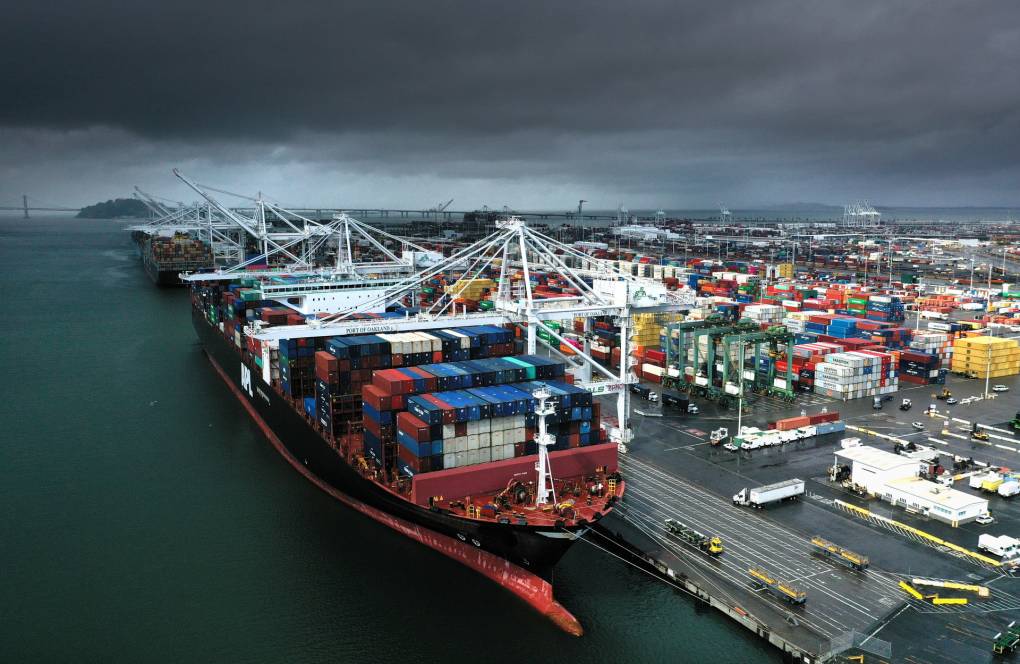
"caption": "An aerial view of container ships docked at the Port of Oakland on March 6, 2019. ",
"description": null,
"title": "U.S. Trade Deficit Rises To Highest Level In History At $891 Billion",
"credit": "Justin Sullivan/Getty Images",
"status": "inherit",
"altTag": "An aerial view of a very large container ship docked at a port.",
"isLoading": false,
"fetchFailed": false
},
"science_1970645": {
"type": "attachments",
"id": "science_1970645",
"meta": {
"index": "attachments_1716263798",
"site": "science",
"id": "1970645",
"found": true
},
"parent": 1970641,
"imgSizes": {
"twentyfourteen-full-width": {
"file": "https://ww2.kqed.org/app/uploads/sites/35/2020/10/RS45427_GettyImages-1281732602-qut-1038x576.jpg",
"width": 1038,
"mimeType": "image/jpeg",
"height": 576
},
"thumbnail": {
"file": "https://ww2.kqed.org/app/uploads/sites/35/2020/10/RS45427_GettyImages-1281732602-qut-160x112.jpg",
"width": 160,
"mimeType": "image/jpeg",
"height": 112
},
"post-thumbnail": {
"file": "https://ww2.kqed.org/app/uploads/sites/35/2020/10/RS45427_GettyImages-1281732602-qut-672x372.jpg",
"width": 672,
"mimeType": "image/jpeg",
"height": 372
},
"kqedFullSize": {
"file": "https://ww2.kqed.org/app/uploads/sites/35/2020/10/RS45427_GettyImages-1281732602-qut.jpg",
"width": 1920,
"height": 1341
},
"large": {
"file": "https://ww2.kqed.org/app/uploads/sites/35/2020/10/RS45427_GettyImages-1281732602-qut-1020x712.jpg",
"width": 1020,
"mimeType": "image/jpeg",
"height": 712
},
"1536x1536": {
"file": "https://ww2.kqed.org/app/uploads/sites/35/2020/10/RS45427_GettyImages-1281732602-qut-1536x1073.jpg",
"width": 1536,
"mimeType": "image/jpeg",
"height": 1073
},
"medium": {
"file": "https://ww2.kqed.org/app/uploads/sites/35/2020/10/RS45427_GettyImages-1281732602-qut-800x559.jpg",
"width": 800,
"mimeType": "image/jpeg",
"height": 559
},
"medium_large": {
"file": "https://ww2.kqed.org/app/uploads/sites/35/2020/10/RS45427_GettyImages-1281732602-qut-768x536.jpg",
"width": 768,
"mimeType": "image/jpeg",
"height": 536
}
},
"publishDate": 1603474813,
"modified": 1603474886,
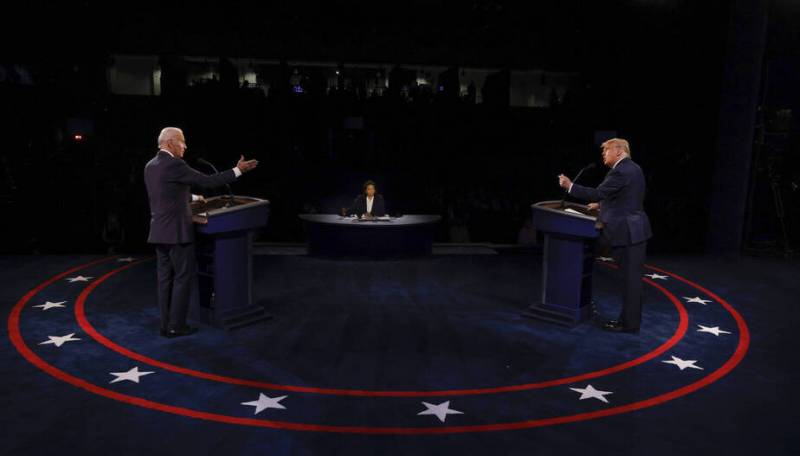
"caption": "President Donald Trump and Democratic presidential nominee Joe Biden take the stage for the final presidential debate at Belmont University on October 22, 2020 in Nashville, Tennessee. ",
"description": null,
"title": "Donald Trump And Joe Biden Participate In Final Debate Before Presidential Election",
"credit": "Photo by Chip Somodevilla/Getty Images",
"status": "inherit",
"isLoading": false,
"fetchFailed": false
},
"science_1970627": {
"type": "attachments",
"id": "science_1970627",
"meta": {
"index": "attachments_1716263798",
"site": "science",
"id": "1970627",
"found": true
},
"parent": 1970622,
"imgSizes": {
"thumbnail": {
"file": "https://ww2.kqed.org/app/uploads/sites/35/2020/10/debate_jim-bourg-pool-getty-160x91.jpg",
"width": 160,
"mimeType": "image/jpeg",
"height": 91
},
"post-thumbnail": {
"file": "https://ww2.kqed.org/app/uploads/sites/35/2020/10/debate_jim-bourg-pool-getty-672x372.jpg",
"width": 672,
"mimeType": "image/jpeg",
"height": 372
},
"kqedFullSize": {
"file": "https://ww2.kqed.org/app/uploads/sites/35/2020/10/debate_jim-bourg-pool-getty.jpg",
"width": 924,
"height": 527
},
"medium": {
"file": "https://ww2.kqed.org/app/uploads/sites/35/2020/10/debate_jim-bourg-pool-getty-800x456.jpg",
"width": 800,
"mimeType": "image/jpeg",
"height": 456
},
"medium_large": {
"file": "https://ww2.kqed.org/app/uploads/sites/35/2020/10/debate_jim-bourg-pool-getty-768x438.jpg",
"width": 768,
"mimeType": "image/jpeg",
"height": 438
}
},
"publishDate": 1603471775,
"modified": 1603477010,
"caption": "President Donald Trump and Democratic presidential nominee Joe Biden participate in the final presidential debate at Belmont University on Oct. 22, 2020, in Nashville, Tennessee. ",
"description": null,
"title": "Donald Trump And Joe Biden Participate In Final Debate Before Presidential Election",
"credit": "Jim Bourg-Pool/Getty Images",
"status": "inherit",
"isLoading": false,
"fetchFailed": false
},
"science_1970453": {
"type": "attachments",
"id": "science_1970453",
"meta": {
"index": "attachments_1716263798",
"site": "science",
"id": "1970453",
"found": true
},
"parent": 1970449,
"imgSizes": {
"twentyfourteen-full-width": {
"file": "https://ww2.kqed.org/app/uploads/sites/35/2020/10/RS45355_GettyImages-1175529784-qut-1038x576.jpg",
"width": 1038,
"mimeType": "image/jpeg",
"height": 576
},
"thumbnail": {
"file": "https://ww2.kqed.org/app/uploads/sites/35/2020/10/RS45355_GettyImages-1175529784-qut-160x107.jpg",
"width": 160,
"mimeType": "image/jpeg",
"height": 107
},
"post-thumbnail": {
"file": "https://ww2.kqed.org/app/uploads/sites/35/2020/10/RS45355_GettyImages-1175529784-qut-672x372.jpg",
"width": 672,
"mimeType": "image/jpeg",
"height": 372
},
"kqedFullSize": {
"file": "https://ww2.kqed.org/app/uploads/sites/35/2020/10/RS45355_GettyImages-1175529784-qut.jpg",
"width": 1920,
"height": 1280
},
"large": {
"file": "https://ww2.kqed.org/app/uploads/sites/35/2020/10/RS45355_GettyImages-1175529784-qut-1020x680.jpg",
"width": 1020,
"mimeType": "image/jpeg",
"height": 680
},
"1536x1536": {
"file": "https://ww2.kqed.org/app/uploads/sites/35/2020/10/RS45355_GettyImages-1175529784-qut-1536x1024.jpg",
"width": 1536,
"mimeType": "image/jpeg",
"height": 1024
},
"medium": {
"file": "https://ww2.kqed.org/app/uploads/sites/35/2020/10/RS45355_GettyImages-1175529784-qut-800x533.jpg",
"width": 800,
"mimeType": "image/jpeg",
"height": 533
},
"medium_large": {
"file": "https://ww2.kqed.org/app/uploads/sites/35/2020/10/RS45355_GettyImages-1175529784-qut-768x512.jpg",
"width": 768,
"mimeType": "image/jpeg",
"height": 512
}
},
"publishDate": 1602885583,
"modified": 1607044151,
"caption": "California Air Resources Board Chair Mary Nichols, left, and California Attorney General Xavier Becerra look on during a news conference at the California Justice Department on Sept. 18, 2019, in Sacramento, California. ",
"description": null,
"title": "RS45355_GettyImages-1175529784-qut",
"credit": "Justin Sullivan/Getty Images",
"status": "inherit",
"altTag": null,
"isLoading": false,
"fetchFailed": false
},
"science_1969948": {
"type": "attachments",
"id": "science_1969948",
"meta": {
"index": "attachments_1716263798",
"site": "science",
"id": "1969948",
"found": true
},
"parent": 1969944,
"imgSizes": {
"twentyfourteen-full-width": {
"file": "https://ww2.kqed.org/app/uploads/sites/35/2020/09/JohnBusterudBest-1038x576.jpg",
"width": 1038,
"mimeType": "image/jpeg",
"height": 576
},
"thumbnail": {
"file": "https://ww2.kqed.org/app/uploads/sites/35/2020/09/JohnBusterudBest-160x107.jpg",
"width": 160,
"mimeType": "image/jpeg",
"height": 107
},
"post-thumbnail": {
"file": "https://ww2.kqed.org/app/uploads/sites/35/2020/09/JohnBusterudBest-672x372.jpg",
"width": 672,
"mimeType": "image/jpeg",
"height": 372
},
"kqedFullSize": {
"file": "https://ww2.kqed.org/app/uploads/sites/35/2020/09/JohnBusterudBest.jpg",
"width": 1920,
"height": 1280
},
"large": {
"file": "https://ww2.kqed.org/app/uploads/sites/35/2020/09/JohnBusterudBest-1020x680.jpg",
"width": 1020,
"mimeType": "image/jpeg",
"height": 680
},
"1536x1536": {
"file": "https://ww2.kqed.org/app/uploads/sites/35/2020/09/JohnBusterudBest-1536x1024.jpg",
"width": 1536,
"mimeType": "image/jpeg",
"height": 1024
},
"medium": {
"file": "https://ww2.kqed.org/app/uploads/sites/35/2020/09/JohnBusterudBest-800x533.jpg",
"width": 800,
"mimeType": "image/jpeg",
"height": 533
},
"medium_large": {
"file": "https://ww2.kqed.org/app/uploads/sites/35/2020/09/JohnBusterudBest-768x512.jpg",
"width": 768,
"mimeType": "image/jpeg",
"height": 512
}
},
"publishDate": 1601493877,
"modified": 1601493898,
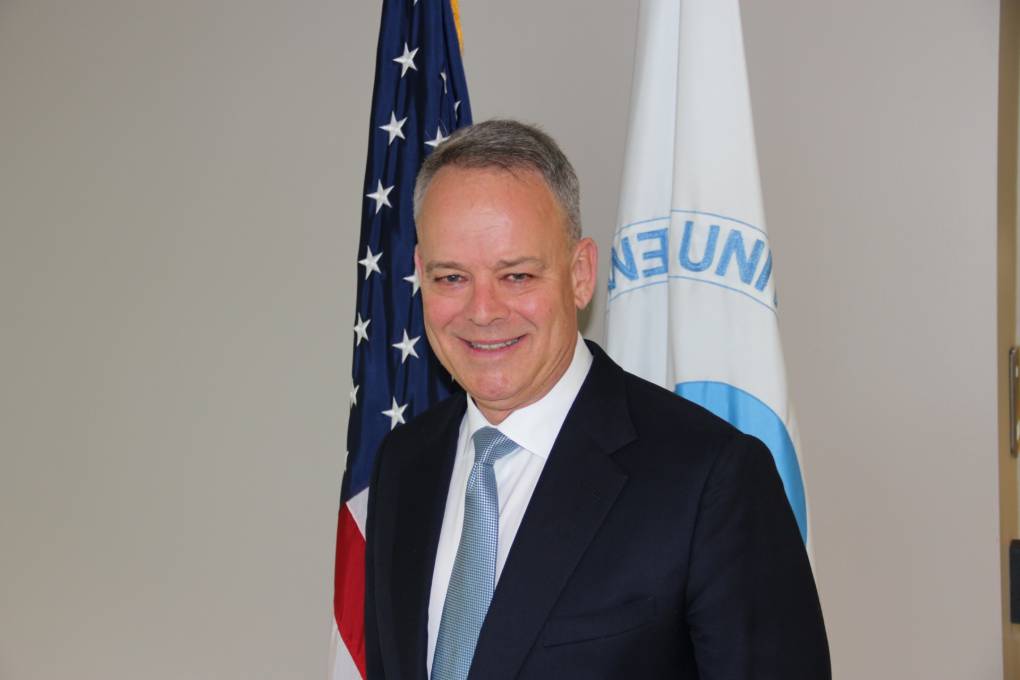
"caption": "John Busterud",
"description": null,
"title": "JohnBusterudBest",
"credit": "EPA",
"status": "inherit",
"isLoading": false,
"fetchFailed": false
},
"science_1969883": {
"type": "attachments",
"id": "science_1969883",
"meta": {
"index": "attachments_1716263798",
"site": "science",
"id": "1969883",
"found": true
},
"parent": 1969876,
"imgSizes": {
"twentyfourteen-full-width": {
"file": "https://ww2.kqed.org/app/uploads/sites/35/2029/09/melting-ice-climate-1038x576.jpg",
"width": 1038,
"mimeType": "image/jpeg",
"height": 576
},
"thumbnail": {
"file": "https://ww2.kqed.org/app/uploads/sites/35/2029/09/melting-ice-climate-160x109.jpg",
"width": 160,
"mimeType": "image/jpeg",
"height": 109
},
"post-thumbnail": {
"file": "https://ww2.kqed.org/app/uploads/sites/35/2029/09/melting-ice-climate-672x372.jpg",
"width": 672,
"mimeType": "image/jpeg",
"height": 372
},
"kqedFullSize": {
"file": "https://ww2.kqed.org/app/uploads/sites/35/2029/09/melting-ice-climate-scaled-e1601078189655.jpg",
"width": 1920,
"height": 1309
},
"2048x2048": {
"file": "https://ww2.kqed.org/app/uploads/sites/35/2029/09/melting-ice-climate-2048x1396.jpg",
"width": 2048,
"mimeType": "image/jpeg",
"height": 1396
},
"large": {
"file": "https://ww2.kqed.org/app/uploads/sites/35/2029/09/melting-ice-climate-1020x695.jpg",
"width": 1020,
"mimeType": "image/jpeg",
"height": 695
},
"1536x1536": {
"file": "https://ww2.kqed.org/app/uploads/sites/35/2029/09/melting-ice-climate-1536x1047.jpg",
"width": 1536,
"mimeType": "image/jpeg",
"height": 1047
},
"full-width": {
"file": "https://ww2.kqed.org/app/uploads/sites/35/2029/09/melting-ice-climate-1920x1309.jpg",
"width": 1920,
"mimeType": "image/jpeg",
"height": 1309
},
"medium": {
"file": "https://ww2.kqed.org/app/uploads/sites/35/2029/09/melting-ice-climate-800x545.jpg",
"width": 800,
"mimeType": "image/jpeg",
"height": 545
},
"medium_large": {
"file": "https://ww2.kqed.org/app/uploads/sites/35/2029/09/melting-ice-climate-768x523.jpg",
"width": 768,
"mimeType": "image/jpeg",
"height": 523
}
},
"publishDate": 1601078163,
"modified": 1601418574,
"caption": "Schoolchildren play on melting ice at the climate change affected Yupik Eskimo village of Napakiak on the Yukon Delta in Alaska on April 18, 2019. The region has seen unusually high temperatures. ",
"description": null,
"title": "US-ALASKA-ENVIRONMENT-CLIMATE",
"credit": "Mark Ralston/AFP via Getty Images",
"status": "inherit",
"isLoading": false,
"fetchFailed": false
},
"science_1969864": {
"type": "attachments",
"id": "science_1969864",
"meta": {
"index": "attachments_1716263798",
"site": "science",
"id": "1969864",
"found": true
},
"parent": 1969863,
"imgSizes": {
"twentyfourteen-full-width": {
"file": "https://ww2.kqed.org/app/uploads/sites/35/2020/09/gettyimages-1175518923_custom-b39655a7e18ba4f93b2014e68331a478be0e94df-1038x576.jpg",
"width": 1038,
"mimeType": "image/jpeg",
"height": 576
},
"thumbnail": {
"file": "https://ww2.kqed.org/app/uploads/sites/35/2020/09/gettyimages-1175518923_custom-b39655a7e18ba4f93b2014e68331a478be0e94df-160x107.jpg",
"width": 160,
"mimeType": "image/jpeg",
"height": 107
},
"post-thumbnail": {
"file": "https://ww2.kqed.org/app/uploads/sites/35/2020/09/gettyimages-1175518923_custom-b39655a7e18ba4f93b2014e68331a478be0e94df-672x372.jpg",
"width": 672,
"mimeType": "image/jpeg",
"height": 372
},
"kqedFullSize": {
"file": "https://ww2.kqed.org/app/uploads/sites/35/2020/09/gettyimages-1175518923_custom-b39655a7e18ba4f93b2014e68331a478be0e94df-scaled-e1601064359533.jpg",
"width": 1920,
"height": 1279
},
"2048x2048": {
"file": "https://ww2.kqed.org/app/uploads/sites/35/2020/09/gettyimages-1175518923_custom-b39655a7e18ba4f93b2014e68331a478be0e94df-2048x1364.jpg",
"width": 2048,
"mimeType": "image/jpeg",
"height": 1364
},
"large": {
"file": "https://ww2.kqed.org/app/uploads/sites/35/2020/09/gettyimages-1175518923_custom-b39655a7e18ba4f93b2014e68331a478be0e94df-1020x679.jpg",
"width": 1020,
"mimeType": "image/jpeg",
"height": 679
},
"1536x1536": {
"file": "https://ww2.kqed.org/app/uploads/sites/35/2020/09/gettyimages-1175518923_custom-b39655a7e18ba4f93b2014e68331a478be0e94df-1536x1023.jpg",
"width": 1536,
"mimeType": "image/jpeg",
"height": 1023
},
"full-width": {
"file": "https://ww2.kqed.org/app/uploads/sites/35/2020/09/gettyimages-1175518923_custom-b39655a7e18ba4f93b2014e68331a478be0e94df-1920x1279.jpg",
"width": 1920,
"mimeType": "image/jpeg",
"height": 1279
},
"medium": {
"file": "https://ww2.kqed.org/app/uploads/sites/35/2020/09/gettyimages-1175518923_custom-b39655a7e18ba4f93b2014e68331a478be0e94df-800x533.jpg",
"width": 800,
"mimeType": "image/jpeg",
"height": 533
},
"medium_large": {
"file": "https://ww2.kqed.org/app/uploads/sites/35/2020/09/gettyimages-1175518923_custom-b39655a7e18ba4f93b2014e68331a478be0e94df-768x511.jpg",
"width": 768,
"mimeType": "image/jpeg",
"height": 511
}
},
"publishDate": 1601062091,
"modified": 1601310077,
"caption": "Benji Backer, president of the American Conservation Coalition, testifies during a House Foreign Affairs Committee Europe, Eurasia, Energy and the Environment Subcommittee and House (Select) Climate Crisis Committee joint hearing Sept. 18, 2019, on Capitol Hill in Washington, D.C. Thunberg, who recently sailed across the Atlantic Ocean in a zero-carbon emissions sailboat, is in Washington to discuss the climate crisis with lawmakers and will speak at the U.N. Climate Action Summit on Sept. 23 in New York.",
"description": "Benji Backer, president of the American Conservation Coalition, testifies during a House Foreign Affairs Committee Europe, Eurasia, Energy and the Environment Subcommittee and House (Select) Climate Crisis Committee joint hearing September 18, 2019 on Capitol Hill in Washington, D.C. ",
"title": "Benji Backer, president of the American Conservation Coalition, testifies about climate change during a U.S. House hearing in 2019.",
"credit": "Alex Wong/Getty Images",
"status": "inherit",
"isLoading": false,
"fetchFailed": false
},
"science_1969855": {
"type": "attachments",
"id": "science_1969855",
"meta": {
"index": "attachments_1716263798",
"site": "science",
"id": "1969855",
"found": true
},
"parent": 1969854,
"imgSizes": {
"twentyfourteen-full-width": {
"file": "https://ww2.kqed.org/app/uploads/sites/35/2020/09/sat-county1_custom-797342df05791faa39a8876a58ba5c8d5c9f77a7-750x576.png",
"width": 750,
"mimeType": "image/png",
"height": 576
},
"thumbnail": {
"file": "https://ww2.kqed.org/app/uploads/sites/35/2020/09/sat-county1_custom-797342df05791faa39a8876a58ba5c8d5c9f77a7-160x150.png",
"width": 160,
"mimeType": "image/png",
"height": 150
},
"post-thumbnail": {
"file": "https://ww2.kqed.org/app/uploads/sites/35/2020/09/sat-county1_custom-797342df05791faa39a8876a58ba5c8d5c9f77a7-672x372.png",
"width": 672,
"mimeType": "image/png",
"height": 372
},
"kqedFullSize": {
"file": "https://ww2.kqed.org/app/uploads/sites/35/2020/09/sat-county1_custom-797342df05791faa39a8876a58ba5c8d5c9f77a7.png",
"width": 750,
"height": 705
}
},
"publishDate": 1601060787,
"modified": 1601060787,
"caption": null,
"description": null,
"title": "A satellite image shows smoke and some of the major fires in Western states on Sept. 13.",
"credit": null,
"status": "inherit",
"isLoading": false,
"fetchFailed": false
},
"science_1947478": {
"type": "attachments",
"id": "science_1947478",
"meta": {
"index": "attachments_1716263798",
"site": "science",
"id": "1947478",
"found": true
},
"parent": 1947465,
"imgSizes": {
"twentyfourteen-full-width": {
"file": "https://ww2.kqed.org/app/uploads/sites/35/2040/09/Trump-California-waiver-1038x576.jpg",
"width": 1038,
"mimeType": "image/jpeg",
"height": 576
},
"thumbnail": {
"file": "https://ww2.kqed.org/app/uploads/sites/35/2040/09/Trump-California-waiver-160x107.jpg",
"width": 160,
"mimeType": "image/jpeg",
"height": 107
},
"post-thumbnail": {
"file": "https://ww2.kqed.org/app/uploads/sites/35/2040/09/Trump-California-waiver-672x372.jpg",
"width": 672,
"mimeType": "image/jpeg",
"height": 372
},
"kqedFullSize": {
"file": "https://ww2.kqed.org/app/uploads/sites/35/2040/09/Trump-California-waiver.jpg",
"width": 1920,
"height": 1279
},
"large": {
"file": "https://ww2.kqed.org/app/uploads/sites/35/2040/09/Trump-California-waiver-1020x679.jpg",
"width": 1020,
"mimeType": "image/jpeg",
"height": 679
},
"complete_open_graph": {
"file": "https://ww2.kqed.org/app/uploads/sites/35/2040/09/Trump-California-waiver-1200x799.jpg",
"width": 1200,
"mimeType": "image/jpeg",
"height": 799
},
"full-width": {
"file": "https://ww2.kqed.org/app/uploads/sites/35/2040/09/Trump-California-waiver-1920x1279.jpg",
"width": 1920,
"mimeType": "image/jpeg",
"height": 1279
},
"medium": {
"file": "https://ww2.kqed.org/app/uploads/sites/35/2040/09/Trump-California-waiver-800x533.jpg",
"width": 800,
"mimeType": "image/jpeg",
"height": 533
},
"medium_large": {
"file": "https://ww2.kqed.org/app/uploads/sites/35/2040/09/Trump-California-waiver-768x512.jpg",
"width": 768,
"mimeType": "image/jpeg",
"height": 512
}
},
"publishDate": 1568749948,
"modified": 1600883180,
"caption": "FILE PHOTO: Cars sit in a miles-long traffic jam on Highway 101 in 2014. ",
"description": null,
"title": "Trump-California-waiver",
"credit": "Justin Sullivan/Getty Images",
"status": "inherit",
"isLoading": false,
"fetchFailed": false
},
"science_1969499": {
"type": "attachments",
"id": "science_1969499",
"meta": {
"index": "attachments_1716263798",
"site": "science",
"id": "1969499",
"found": true
},
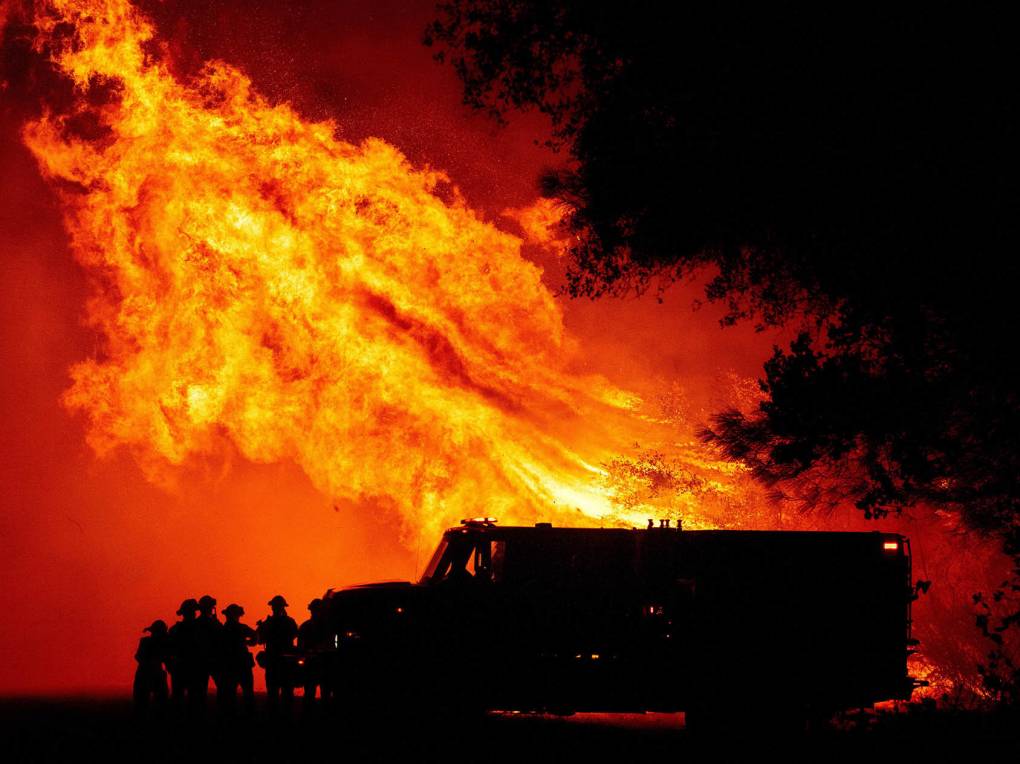
"title": "Communities have struggled to find funding to clear brush and make neighborhoods more safe from fires. Here, firefighters watch as flames tower over their truck in Oroville, Calif.",
"publishDate": 1599847515,
"status": "inherit",
"parent": 1969493,
"modified": 1755905342,
"caption": "Butte county firefighters watch as flames tower over their truck during the Bear fire in Oroville, California on Sept. 9, 2020.",
"credit": "Josh Edelson/AFP via Getty Images",
"altTag": "Butte county firefighters watch as flames tower over their truck during the Bear fire in Oroville, California on September 9, 2020.",
"description": "TOPSHOT - Butte county firefighters watch as flames tower over their truck during the Bear fire in Oroville, California on September 9, 2020. - Dangerous dry winds whipped up California's record-breaking wildfires and ignited new blazes, as hundreds were evacuated by helicopter and tens of thousands were plunged into darkness by power outages across the western United States. (Photo by JOSH EDELSON / AFP) (Photo by JOSH EDELSON/AFP via Getty Images)",
"imgSizes": {
"medium": {
"file": "https://cdn.kqed.org/wp-content/uploads/sites/35/2020/09/gettyimages-1228423923-b86494382decf6f35ebe09faefee6c7b23e3e9ec-800x599.jpg",
"width": 800,
"height": 599,
"mimeType": "image/jpeg"
},
"large": {
"file": "https://cdn.kqed.org/wp-content/uploads/sites/35/2020/09/gettyimages-1228423923-b86494382decf6f35ebe09faefee6c7b23e3e9ec-1020x764.jpg",
"width": 1020,
"height": 764,
"mimeType": "image/jpeg"
},
"thumbnail": {
"file": "https://cdn.kqed.org/wp-content/uploads/sites/35/2020/09/gettyimages-1228423923-b86494382decf6f35ebe09faefee6c7b23e3e9ec-160x120.jpg",
"width": 160,
"height": 120,
"mimeType": "image/jpeg"
},
"medium_large": {
"file": "https://cdn.kqed.org/wp-content/uploads/sites/35/2020/09/gettyimages-1228423923-b86494382decf6f35ebe09faefee6c7b23e3e9ec-768x575.jpg",
"width": 768,
"height": 575,
"mimeType": "image/jpeg"
},
"1536x1536": {
"file": "https://cdn.kqed.org/wp-content/uploads/sites/35/2020/09/gettyimages-1228423923-b86494382decf6f35ebe09faefee6c7b23e3e9ec-1536x1151.jpg",
"width": 1536,
"height": 1151,
"mimeType": "image/jpeg"
},
"post-thumbnail": {
"file": "https://cdn.kqed.org/wp-content/uploads/sites/35/2020/09/gettyimages-1228423923-b86494382decf6f35ebe09faefee6c7b23e3e9ec-672x372.jpg",
"width": 672,
"height": 372,
"mimeType": "image/jpeg"
},
"twentyfourteen-full-width": {
"file": "https://cdn.kqed.org/wp-content/uploads/sites/35/2020/09/gettyimages-1228423923-b86494382decf6f35ebe09faefee6c7b23e3e9ec-1038x576.jpg",
"width": 1038,
"height": 576,
"mimeType": "image/jpeg"
},
"kqedFullSize": {
"file": "https://cdn.kqed.org/wp-content/uploads/sites/35/2020/09/gettyimages-1228423923-b86494382decf6f35ebe09faefee6c7b23e3e9ec.jpg",
"width": 1687,
"height": 1264
}
},
"isLoading": false,
"fetchFailed": false
},
"science_1969589": {
"type": "attachments",
"id": "science_1969589",
"meta": {
"index": "attachments_1716263798",
"site": "science",
"id": "1969589",
"found": true
},
"parent": 1969585,
"imgSizes": {
"twentyfourteen-full-width": {
"file": "https://ww2.kqed.org/app/uploads/sites/35/2020/09/20202591931_GOES17-ABI-psw-GEOCOLOR-1200x1200-1-1038x576.jpg",
"width": 1038,
"mimeType": "image/jpeg",
"height": 576
},
"thumbnail": {
"file": "https://ww2.kqed.org/app/uploads/sites/35/2020/09/20202591931_GOES17-ABI-psw-GEOCOLOR-1200x1200-1-160x160.jpg",
"width": 160,
"mimeType": "image/jpeg",
"height": 160
},
"post-thumbnail": {
"file": "https://ww2.kqed.org/app/uploads/sites/35/2020/09/20202591931_GOES17-ABI-psw-GEOCOLOR-1200x1200-1-672x372.jpg",
"width": 672,
"mimeType": "image/jpeg",
"height": 372
},
"kqedFullSize": {
"file": "https://ww2.kqed.org/app/uploads/sites/35/2020/09/20202591931_GOES17-ABI-psw-GEOCOLOR-1200x1200-1.jpg",
"width": 1200,
"height": 1200
},
"large": {
"file": "https://ww2.kqed.org/app/uploads/sites/35/2020/09/20202591931_GOES17-ABI-psw-GEOCOLOR-1200x1200-1-1020x1020.jpg",
"width": 1020,
"mimeType": "image/jpeg",
"height": 1020
},
"medium": {
"file": "https://ww2.kqed.org/app/uploads/sites/35/2020/09/20202591931_GOES17-ABI-psw-GEOCOLOR-1200x1200-1-800x800.jpg",
"width": 800,
"mimeType": "image/jpeg",
"height": 800
},
"medium_large": {
"file": "https://ww2.kqed.org/app/uploads/sites/35/2020/09/20202591931_GOES17-ABI-psw-GEOCOLOR-1200x1200-1-768x768.jpg",
"width": 768,
"mimeType": "image/jpeg",
"height": 768
}
},
"publishDate": 1600199115,
"modified": 1600199194,
"caption": "Satellite images show visibly lower smoke concentrations for large portions of the Bay Area.",
"description": null,
"title": "20202591931_GOES17-ABI-psw-GEOCOLOR-1200x1200",
"credit": "NOAA GOES-West Satellite",
"status": "inherit",
"isLoading": false,
"fetchFailed": false
}
},
"audioPlayerReducer": {
"postId": "stream_live",
"isPaused": true,
"isPlaying": false,
"pfsActive": false,
"pledgeModalIsOpen": true,
"playerDrawerIsOpen": false,
"liveAudioPlayStartedAt": 0,
"liveAudioPlayContext": ""
},
"authorsReducer": {
"byline_science_1970804": {
"type": "authors",
"id": "byline_science_1970804",
"meta": {
"override": true
},
"slug": "byline_science_1970804",
"name": "Rebecca Hersher \u003cbr />NPR\u003cbr>",
"isLoading": false
},
"byline_science_1970622": {
"type": "authors",
"id": "byline_science_1970622",
"meta": {
"override": true
},
"slug": "byline_science_1970622",
"name": "Georgina Gustin \u003cbr />InsideClimate News\u003cbr>",
"isLoading": false
},
"byline_science_1969876": {
"type": "authors",
"id": "byline_science_1969876",
"meta": {
"override": true
},
"slug": "byline_science_1969876",
"name": "Hannah Murphy\u003cbr />Rolling Stone",
"isLoading": false
},
"byline_science_1969863": {
"type": "authors",
"id": "byline_science_1969863",
"meta": {
"override": true
},
"slug": "byline_science_1969863",
"name": "Jeff Brady\u003cbr />NPR",
"isLoading": false
},
"byline_science_1969854": {
"type": "authors",
"id": "byline_science_1969854",
"meta": {
"override": true
},
"slug": "byline_science_1969854",
"name": "Jess Eng\u003cbr />NPR",
"isLoading": false
},
"byline_science_1969807": {
"type": "authors",
"id": "byline_science_1969807",
"meta": {
"override": true
},
"slug": "byline_science_1969807",
"name": "Adam Beam, Associated Press, and Kevin Stark, KQED",
"isLoading": false
},
"kqedscience": {
"type": "authors",
"id": "6387",
"meta": {
"index": "authors_1716337520",
"id": "6387",
"found": true
},
"name": "KQED Science",
"firstName": "KQED",
"lastName": "Science",
"slug": "kqedscience",
"email": "kqedscience@gmail.com",
"display_author_email": false,
"staff_mastheads": [],
"title": null,
"bio": "KQED Science brings you award-winning science and environment coverage from the Bay Area and beyond by the flagship Northern California PBS and NPR affiliate.",
"avatar": "https://secure.gravatar.com/avatar/5a295ff49cf82a8c0f30937d3f788b2f?s=600&d=blank&r=g",
"twitter": null,
"facebook": null,
"instagram": null,
"linkedin": null,
"sites": [
{
"site": "science",
"roles": [
"contributor"
]
},
{
"site": "quest",
"roles": [
"editor"
]
},
{
"site": "food",
"roles": [
"contributor"
]
}
],
"headData": {
"title": "KQED Science | KQED",
"description": null,
"ogImgSrc": "https://secure.gravatar.com/avatar/5a295ff49cf82a8c0f30937d3f788b2f?s=600&d=blank&r=g",
"twImgSrc": "https://secure.gravatar.com/avatar/5a295ff49cf82a8c0f30937d3f788b2f?s=600&d=blank&r=g"
},
"isLoading": false,
"link": "/author/kqedscience"
},
"kevinstark": {
"type": "authors",
"id": "11608",
"meta": {
"index": "authors_1716337520",
"id": "11608",
"found": true
},
"name": "Kevin Stark",
"firstName": "Kevin",
"lastName": "Stark",
"slug": "kevinstark",
"email": "kstark@kqed.org",
"display_author_email": true,
"staff_mastheads": [
"science"
],
"title": "Senior Editor",
"bio": "Kevin is a senior editor for KQED Science, managing the station's health and climate desks. His journalism career began in the Pacific Northwest, and he later became a lead reporter for the San Francisco Public Press. His work has appeared in Pacific Standard magazine, the Energy News Network, the Center for Investigative Reporting's Reveal and WBEZ in Chicago. Kevin joined KQED in 2019, and has covered issues related to energy, wildfire, climate change and the environment.",
"avatar": "https://secure.gravatar.com/avatar/365aaa4b597d3a8374f67504ff0facd323d7906e8eb4be0a7efd2427408e802c?s=600&d=blank&r=g",
"twitter": "starkkev",
"bluesky": null,
"facebook": null,
"instagram": null,
"linkedin": null,
"sites": [
{
"site": "",
"roles": [
"editor"
]
},
{
"site": "news",
"roles": [
"editor"
]
},
{
"site": "science",
"roles": [
"administrator"
]
}
],
"headData": {
"title": "Kevin Stark | KQED",
"description": "Senior Editor",
"ogImgSrc": "https://secure.gravatar.com/avatar/365aaa4b597d3a8374f67504ff0facd323d7906e8eb4be0a7efd2427408e802c?s=600&d=blank&r=g",
"twImgSrc": "https://secure.gravatar.com/avatar/365aaa4b597d3a8374f67504ff0facd323d7906e8eb4be0a7efd2427408e802c?s=600&d=blank&r=g"
},
"isLoading": false,
"link": "/author/kevinstark"
}
},
"pagesReducer": {
"science_category_climate": {
"type": "terms",
"id": "science_31",
"meta": {
"index": "terms_1716263798",
"site": "science",
"id": "31",
"score": 11.06203
},
"featImg": null,
"name": "Climate",
"description": null,
"taxonomy": "category",
"headData": {
"twImgId": null,
"twTitle": null,
"ogTitle": null,
"ogImgId": null,
"twDescription": null,
"description": null,
"title": "Climate Archives | KQED Science",
"ogDescription": null
},
"ttid": 33,
"slug": "climate",
"isLoading": false,
"title": "Climate",
"pageMeta": {
"site": "science",
"WpPageTemplate": "page-topic-editorial",
"currentPage": 45
},
"blocks": [
{
"blockName": "kqed/post-list",
"attrs": {
"layout": "cardArticle2",
"query": "posts/science?category=climate",
"seeMore": false,
"paginated": true,
"page": 45
}
},
{
"blockName": "kqed/ad"
}
]
}
},
"pfsSessionReducer": {},
"postsReducer": {
"stream_live": {
"type": "live",
"id": "stream_live",
"audioUrl": "https://streams.kqed.org/kqedradio",
"title": "Live Stream",
"excerpt": "Live Stream information currently unavailable.",
"link": "/radio",
"featImg": "",
"label": {
"name": "KQED Live",
"link": "/"
}
},
"stream_kqedNewscast": {
"type": "posts",
"id": "stream_kqedNewscast",
"audioUrl": "https://www.kqed.org/.stream/anon/radio/RDnews/newscast.mp3?_=1",
"title": "KQED Newscast",
"featImg": "",
"label": {
"name": "88.5 FM",
"link": "/"
}
},
"science_1970804": {
"type": "posts",
"id": "science_1970804",
"meta": {
"index": "posts_1716263798",
"site": "science",
"id": "1970804",
"score": null,
"sort": [
1604518276000
]
},
"parent": 0,
"labelTerm": {},
"blocks": [],
"publishDate": 1604518276,
"format": "standard",
"title": "U.S. Has Officially Left Paris Climate Agreement",
"headTitle": "U.S. Has Officially Left Paris Climate Agreement | KQED",
"content": "\u003cp>The United States formally left the Paris Agreement on Wednesday, the only one of the nearly 200 nations that signed the agreement, to walk away from its promises to reduce greenhouse gas emissions.\u003c/p>\n\u003cp>President Trump originally announced his intention to withdraw from the landmark agreement in 2017 and formally notified the United Nations last year. A mandatory yearlong waiting period ends on Wednesday, a coincidence that nonetheless highlights the Trump administration’s commitment to derailing efforts that address climate change.\u003c/p>\n\u003cp>The U.S. has emitted \u003ca href=\"https://www.c2es.org/content/international-emissions/\">more\u003c/a> cumulative carbon dioxide into the atmosphere than any other country since the industrial era began in the mid-1800s. Current U.S. emissions are falling, but \u003ca href=\"https://www.epa.gov/ghgemissions/inventory-us-greenhouse-gas-emissions-and-sinks\">far too slowly\u003c/a> to avoid catastrophic warming. That’s in part because the Trump administration rolled back carbon pollution limits from power plants, cars, trucks and fossil fuel operations. American \u003ca href=\"https://www.eia.gov/todayinenergy/detail.php?id=44837#:~:text=On%20an%20annual%20basis%2C%20EIA,lower%20than%20their%202019%20level.\">emissions\u003c/a> rose slightly in the first two years of his administration. In 2020, the pandemic throttled the economy and led to a short-term dip.\u003c/p>\n\u003cp>“The lack of action at the federal level is a serious problem,” says Rachel Cleetus, policy director for the climate and energy program at the Union of Concerned Scientists, a science advocacy group. The costs of climate-driven disasters such as hurricanes, heat waves and wildfires are rising, she says. In 2020, there have already been 16 climate-driven disasters that cost at least $1 billion each, \u003ca href=\"https://www.ncdc.noaa.gov/billions/\">according\u003c/a> to the National Oceanic and Atmospheric Administration.\u003c/p>\n\u003cp>“Climate change is clearly not just an environmental issue,” Cleetus says. “It is threatening our economy. It’s threatening our future prosperity, the well-being of future generations.”\u003c/p>\n\u003cp>[ad fullwidth]\u003c/p>\n\u003cp>But U.S. involvement in the Paris Agreement isn’t definitively over. The U.S. could choose to return, and Democratic presidential nominee Joe Biden has \u003ca href=\"https://www.facebook.com/joebiden/photos/on-day-one-ill-rejoin-the-paris-agreement-and-then-rally-the-world-to-push-our-p/10157381578471104/\">promised\u003c/a> to rejoin the agreement “on day one” if he wins the election. If he were to do so, the U.S. could officially resume its role under the Paris Agreement in mid-February.\u003c/p>\n\u003cp>If that happens, the U.S. will have a lot of ground to make up. Under the Paris Agreement, the U.S. promised to reduce its emissions by about 25% by 2025 compared with 2005 levels, but the country is only on track to achieve about a \u003ca href=\"https://www.npr.org/2020/09/29/913727755/u-s-emission-reductions-slowed-after-trump-pulled-out-of-paris-accord\">17% reduction\u003c/a>, according to analysts.\u003c/p>\n\u003cp>Meanwhile, China, Japan and the European Union have made long-term promises to get all the way to net zero emissions in the coming decades.\u003c/p>\n\u003cp>Many American cities, states and companies have also vowed to reduce drastically their emissions of carbon dioxide and other greenhouse gases in the coming years. Twelve states and at least 165 U.S. cities have plans to get 100% of their electricity from renewable sources, according to the climate tracking group \u003ca href=\"https://www.americaspledgeonclimate.com/report-delivering-on-americas-pledge/\">America’s Pledge\u003c/a>.\u003c/p>\n\u003cp>While adapting to climate change is expensive, there’s also evidence it can be good for the economy. Between 2005 and 2017, 41 states increased their gross domestic product while reducing carbon dioxide emissions, according to a \u003ca href=\"https://www.wri.org/publication/us-new-climate-economy#:~:text=The%20United%20States%20can%20improve,and%20providing%20affordable%20clean%20energy.\">recent analysis\u003c/a> by the World Resources Institute think tank, and investment in clean energy now \u003ca href=\"https://www.wri.org/blog/2020/07/economic-benefits-climate-action-us\">generates more jobs\u003c/a> than investing in fossil fuels.\u003c/p>\n\u003cp>Corporations also made a deluge of commitments this year to address the root causes of climate change. They include promises to cut carbon emissions throughout their supply chains, by reducing or eliminating electricity and transportation that burn fossil fuels, or by protecting forests that absorb carbon. It is still unclear exactly how companies will achieve their promises.\u003c/p>\n\u003cp>The Paris Agreement was central to many corporate pledges, including those by \u003ca href=\"https://www.theclimatepledge.com/\">Amazon\u003c/a> and \u003ca href=\"https://www.cargill.com/2019/cargill-expands-climate-change-commitments\">Cargill\u003c/a>. The historically right-leaning business group the U.S. Chamber of Commerce opposes the president’s decision to withdraw from the agreement.\u003c/p>\n\u003cp>“We believe we should be part of the Paris Agreement,” Sabrina Fang, the group’s senior director of media relations, wrote in an email to NPR. “Greater collaboration between governments and businesses is essential to build the best models to tackle climate challenges.”\u003c/p>\n\u003cp>The American departure from the Paris Agreement also means the end of U.S. contributions to a global fund to help smaller and poorer countries that bear disproportionate costs of climate change. The United States \u003ca href=\"https://www.brookings.edu/blog/planetpolicy/2014/11/17/the-3-billion-u-s-pledge-for-the-green-climate-fund-is-it-a-lot/\">originally pledged\u003c/a> $3 billion to help such nations transition from fossil fuels and adapt to a hotter Earth — the largest amount of any country, but still far less than America’s fair share, given its cumulative carbon emissions.\u003c/p>\n\u003cp>The Trump administration \u003ca href=\"https://www.npr.org/sections/goatsandsoda/2017/06/09/532106567/a-little-known-climate-fund-is-suddenly-in-the-spotlight\">withdrew\u003c/a> two-thirds of that money. At a \u003ca href=\"https://www.nature.com/articles/d41586-019-03330-9#:~:text=Developed%20nations%20have%20together%20pledged,the%20impacts%20of%20climate%20change.\">meeting last year\u003c/a>, 13 other rich nations, including the United Kingdom, France and Germany, doubled their original pledges, while the U.S. declined to contribute any additional money to the fund.\u003c/p>\n\u003cp>It leaves a giant funding shortfall for countries struggling with sea level rise and heat waves and that lack money to move people out of harm’s way or to upgrade power plants that burn fossil fuels.\u003c/p>\n\u003cp>“The U.S. was a major pledger to that first funding. When they never delivered, that certainly was an impact to us,” says Carlos Fuller, the lead climate negotiator for the Alliance of Small Island States, which represents 44 island and low-lying coastal countries at international climate talks.\u003c/p>\n\u003cp>For example, Fuller says, the U.S. was expected to help fund a major climate project in the Caribbean that would install weather stations, map the topography of the seafloor to predict storm surge better and help Caribbean nations use that data to become more resilient to the impact of climate change. But the Trump administration \u003ca href=\"https://www.mdpi.com/2071-1050/12/10/4269\">reduced the funding\u003c/a>.\u003c/p>\n\u003cp>Now, Fuller says, the project is on hold pending contributions from other nations. He says if the U.S. stays out of the Paris Agreement, it could have dire consequences for low-lying and poor countries.\u003c/p>\n\u003cp>\u003c/p>\n\u003cp>“These next 10 years are extremely important” for protecting vulnerable people, he says, and the U.S. is currently the second-largest emitter of greenhouse gases. “We really need the U.S. on board.”\u003c/p>\n\u003cdiv class=\"fullattribution\">Copyright 2020 NPR. To see more, visit https://www.npr.org.\u003cimg decoding=\"async\" src=\"https://www.google-analytics.com/__utm.gif?utmac=UA-5828686-4&utmdt=U.S.+Officially+Leaving+Paris+Climate+Agreement&utme=8(APIKey)9(MDAxOTAwOTE4MDEyMTkxMDAzNjczZDljZA004)\">\u003c/div>\n\n",
"stats": {
"hasVideo": false,
"hasChartOrMap": false,
"hasAudio": false,
"hasPolis": false,
"wordCount": 1030,
"hasGoogleForm": false,
"hasGallery": false,
"hasHearkenModule": false,
"iframeSrcs": [],
"paragraphCount": 22
},
"modified": 1704846963,
"excerpt": "The United States is the only country to back out of its promises to reduce greenhouse gas emissions. America has contributed more cumulative carbon dioxide to the atmosphere than any other nation.",
"headData": {
"twImgId": "",
"twTitle": "",
"ogTitle": "",
"ogImgId": "",
"twDescription": "",
"description": "The United States is the only country to back out of its promises to reduce greenhouse gas emissions. America has contributed more cumulative carbon dioxide to the atmosphere than any other nation.",
"title": "U.S. Has Officially Left Paris Climate Agreement | KQED",
"ogDescription": "",
"schema": {
"@context": "https://schema.org",
"@type": "Article",
"headline": "U.S. Has Officially Left Paris Climate Agreement",
"datePublished": "2020-11-04T11:31:16-08:00",
"dateModified": "2024-01-09T16:36:03-08:00",
"image": "https://cdn.kqed.org/wp-content/uploads/2020/02/KQED-OG-Image@1x.png"
}
},
"guestAuthors": [],
"slug": "u-s-has-officially-left-paris-climate-agreement",
"status": "publish",
"nprApiLink": "http://api.npr.org/query?id=930312701&apiKey=MDAxOTAwOTE4MDEyMTkxMDAzNjczZDljZA004",
"nprByline": "Rebecca Hersher \u003cbr />NPR\u003cbr>",
"nprStoryDate": "Tue, 03 Nov 2020 17:28:06 -0500",
"nprLastModifiedDate": "Tue, 03 Nov 2020 17:29:43 -0500",
"sticky": false,
"nprHtmlLink": "https://www.npr.org/2020/11/03/930312701/u-s-officially-leaving-paris-climate-agreement?ft=nprml&f=930312701",
"nprImageAgency": "AFP via Getty Images",
"nprImageCredit": "George Frey",
"source": "NPR",
"nprStoryId": "930312701",
"nprRetrievedStory": "1",
"nprPubDate": "Tue, 03 Nov 2020 17:29:00 -0500",
"path": "/science/1970804/u-s-has-officially-left-paris-climate-agreement",
"audioTrackLength": null,
"parsedContent": [
{
"type": "contentString",
"content": "\u003cdiv class=\"post-body\">\u003cp>\u003cp>The United States formally left the Paris Agreement on Wednesday, the only one of the nearly 200 nations that signed the agreement, to walk away from its promises to reduce greenhouse gas emissions.\u003c/p>\n\u003cp>President Trump originally announced his intention to withdraw from the landmark agreement in 2017 and formally notified the United Nations last year. A mandatory yearlong waiting period ends on Wednesday, a coincidence that nonetheless highlights the Trump administration’s commitment to derailing efforts that address climate change.\u003c/p>\n\u003cp>The U.S. has emitted \u003ca href=\"https://www.c2es.org/content/international-emissions/\">more\u003c/a> cumulative carbon dioxide into the atmosphere than any other country since the industrial era began in the mid-1800s. Current U.S. emissions are falling, but \u003ca href=\"https://www.epa.gov/ghgemissions/inventory-us-greenhouse-gas-emissions-and-sinks\">far too slowly\u003c/a> to avoid catastrophic warming. That’s in part because the Trump administration rolled back carbon pollution limits from power plants, cars, trucks and fossil fuel operations. American \u003ca href=\"https://www.eia.gov/todayinenergy/detail.php?id=44837#:~:text=On%20an%20annual%20basis%2C%20EIA,lower%20than%20their%202019%20level.\">emissions\u003c/a> rose slightly in the first two years of his administration. In 2020, the pandemic throttled the economy and led to a short-term dip.\u003c/p>\n\u003cp>“The lack of action at the federal level is a serious problem,” says Rachel Cleetus, policy director for the climate and energy program at the Union of Concerned Scientists, a science advocacy group. The costs of climate-driven disasters such as hurricanes, heat waves and wildfires are rising, she says. In 2020, there have already been 16 climate-driven disasters that cost at least $1 billion each, \u003ca href=\"https://www.ncdc.noaa.gov/billions/\">according\u003c/a> to the National Oceanic and Atmospheric Administration.\u003c/p>\n\u003cp>“Climate change is clearly not just an environmental issue,” Cleetus says. “It is threatening our economy. It’s threatening our future prosperity, the well-being of future generations.”\u003c/p>\n\u003cp>\u003c/p>\u003c/div>",
"attributes": {
"named": {},
"numeric": []
}
},
{
"type": "component",
"content": "",
"name": "ad",
"attributes": {
"named": {
"label": "fullwidth"
},
"numeric": [
"fullwidth"
]
}
},
{
"type": "contentString",
"content": "\u003cdiv class=\"post-body\">\u003cp>\u003c/p>\n\u003cp>But U.S. involvement in the Paris Agreement isn’t definitively over. The U.S. could choose to return, and Democratic presidential nominee Joe Biden has \u003ca href=\"https://www.facebook.com/joebiden/photos/on-day-one-ill-rejoin-the-paris-agreement-and-then-rally-the-world-to-push-our-p/10157381578471104/\">promised\u003c/a> to rejoin the agreement “on day one” if he wins the election. If he were to do so, the U.S. could officially resume its role under the Paris Agreement in mid-February.\u003c/p>\n\u003cp>If that happens, the U.S. will have a lot of ground to make up. Under the Paris Agreement, the U.S. promised to reduce its emissions by about 25% by 2025 compared with 2005 levels, but the country is only on track to achieve about a \u003ca href=\"https://www.npr.org/2020/09/29/913727755/u-s-emission-reductions-slowed-after-trump-pulled-out-of-paris-accord\">17% reduction\u003c/a>, according to analysts.\u003c/p>\n\u003cp>Meanwhile, China, Japan and the European Union have made long-term promises to get all the way to net zero emissions in the coming decades.\u003c/p>\n\u003cp>Many American cities, states and companies have also vowed to reduce drastically their emissions of carbon dioxide and other greenhouse gases in the coming years. Twelve states and at least 165 U.S. cities have plans to get 100% of their electricity from renewable sources, according to the climate tracking group \u003ca href=\"https://www.americaspledgeonclimate.com/report-delivering-on-americas-pledge/\">America’s Pledge\u003c/a>.\u003c/p>\n\u003cp>While adapting to climate change is expensive, there’s also evidence it can be good for the economy. Between 2005 and 2017, 41 states increased their gross domestic product while reducing carbon dioxide emissions, according to a \u003ca href=\"https://www.wri.org/publication/us-new-climate-economy#:~:text=The%20United%20States%20can%20improve,and%20providing%20affordable%20clean%20energy.\">recent analysis\u003c/a> by the World Resources Institute think tank, and investment in clean energy now \u003ca href=\"https://www.wri.org/blog/2020/07/economic-benefits-climate-action-us\">generates more jobs\u003c/a> than investing in fossil fuels.\u003c/p>\n\u003cp>Corporations also made a deluge of commitments this year to address the root causes of climate change. They include promises to cut carbon emissions throughout their supply chains, by reducing or eliminating electricity and transportation that burn fossil fuels, or by protecting forests that absorb carbon. It is still unclear exactly how companies will achieve their promises.\u003c/p>\n\u003cp>The Paris Agreement was central to many corporate pledges, including those by \u003ca href=\"https://www.theclimatepledge.com/\">Amazon\u003c/a> and \u003ca href=\"https://www.cargill.com/2019/cargill-expands-climate-change-commitments\">Cargill\u003c/a>. The historically right-leaning business group the U.S. Chamber of Commerce opposes the president’s decision to withdraw from the agreement.\u003c/p>\n\u003cp>“We believe we should be part of the Paris Agreement,” Sabrina Fang, the group’s senior director of media relations, wrote in an email to NPR. “Greater collaboration between governments and businesses is essential to build the best models to tackle climate challenges.”\u003c/p>\n\u003cp>The American departure from the Paris Agreement also means the end of U.S. contributions to a global fund to help smaller and poorer countries that bear disproportionate costs of climate change. The United States \u003ca href=\"https://www.brookings.edu/blog/planetpolicy/2014/11/17/the-3-billion-u-s-pledge-for-the-green-climate-fund-is-it-a-lot/\">originally pledged\u003c/a> $3 billion to help such nations transition from fossil fuels and adapt to a hotter Earth — the largest amount of any country, but still far less than America’s fair share, given its cumulative carbon emissions.\u003c/p>\n\u003cp>The Trump administration \u003ca href=\"https://www.npr.org/sections/goatsandsoda/2017/06/09/532106567/a-little-known-climate-fund-is-suddenly-in-the-spotlight\">withdrew\u003c/a> two-thirds of that money. At a \u003ca href=\"https://www.nature.com/articles/d41586-019-03330-9#:~:text=Developed%20nations%20have%20together%20pledged,the%20impacts%20of%20climate%20change.\">meeting last year\u003c/a>, 13 other rich nations, including the United Kingdom, France and Germany, doubled their original pledges, while the U.S. declined to contribute any additional money to the fund.\u003c/p>\n\u003cp>It leaves a giant funding shortfall for countries struggling with sea level rise and heat waves and that lack money to move people out of harm’s way or to upgrade power plants that burn fossil fuels.\u003c/p>\n\u003cp>“The U.S. was a major pledger to that first funding. When they never delivered, that certainly was an impact to us,” says Carlos Fuller, the lead climate negotiator for the Alliance of Small Island States, which represents 44 island and low-lying coastal countries at international climate talks.\u003c/p>\n\u003cp>For example, Fuller says, the U.S. was expected to help fund a major climate project in the Caribbean that would install weather stations, map the topography of the seafloor to predict storm surge better and help Caribbean nations use that data to become more resilient to the impact of climate change. But the Trump administration \u003ca href=\"https://www.mdpi.com/2071-1050/12/10/4269\">reduced the funding\u003c/a>.\u003c/p>\n\u003cp>Now, Fuller says, the project is on hold pending contributions from other nations. He says if the U.S. stays out of the Paris Agreement, it could have dire consequences for low-lying and poor countries.\u003c/p>\n\u003cp>\u003c/p>\n\u003cp>“These next 10 years are extremely important” for protecting vulnerable people, he says, and the U.S. is currently the second-largest emitter of greenhouse gases. “We really need the U.S. on board.”\u003c/p>\n\u003cdiv class=\"fullattribution\">Copyright 2020 NPR. To see more, visit https://www.npr.org.\u003cimg decoding=\"async\" src=\"https://www.google-analytics.com/__utm.gif?utmac=UA-5828686-4&utmdt=U.S.+Officially+Leaving+Paris+Climate+Agreement&utme=8(APIKey)9(MDAxOTAwOTE4MDEyMTkxMDAzNjczZDljZA004)\">\u003c/div>\n\n\u003c/div>\u003c/p>",
"attributes": {
"named": {},
"numeric": []
}
}
],
"link": "/science/1970804/u-s-has-officially-left-paris-climate-agreement",
"authors": [
"byline_science_1970804"
],
"categories": [
"science_31",
"science_40",
"science_4450"
],
"tags": [
"science_4414",
"science_2936"
],
"featImg": "science_1970805",
"label": "source_science_1970804"
},
"science_1970663": {
"type": "posts",
"id": "science_1970663",
"meta": {
"index": "posts_1716263798",
"site": "science",
"id": "1970663",
"score": null,
"sort": [
1603493122000
]
},
"parent": 0,
"labelTerm": {},
"blocks": [],
"publishDate": 1603493122,
"format": "standard",
"title": "How Would Oakland Community Groups Spend $30 Billion? We Asked Four of Them ...",
"headTitle": "How Would Oakland Community Groups Spend $30 Billion? We Asked Four of Them … | KQED",
"content": "\u003cp class=\"p1\">Let’s say you’re a Green-New-Deal-type environmentalist hell-bent on avoiding planetary destruction while also fixing societal problems like economic inequality and racial injustice. Then, somehow, someway, just as California is digging itself out of a pandemic-induced recession, you have $30 billion to invest any way you want.\u003c/p>\n\u003cp>What are you going to do?\u003cbr>\n\u003cspan class=\"s1\">\u003cbr>\n\u003c/span>In early October, environmental groups convened a \u003ca href=\"https://www.youtube.com/watch?v=zZRRMdMYe8U\" target=\"_blank\" rel=\"noopener noreferrer\">\u003cspan class=\"s2\">livestreamed\u003c/span>\u003c/a> panel with some of California’s climate intelligentsia for just such an exercise. Organizers are testing the waters for putting a \u003ca href=\"https://www.movela.org/\" target=\"_blank\" rel=\"noopener noreferrer\">\u003cspan class=\"s2\">“\u003c/span>\u003cspan class=\"s3\">California Climate and Clean Air Initiative” \u003c/span>\u003c/a>\u003cspan class=\"s3\">on the \u003c/span>\u003cspan class=\"s2\">2022 ballot \u003c/span>and hoped the conversation could generate some policy ideas. For example, Kevin de León, former president pro tempore of the state Senate, wanted to spend money on building infrastructure for charging electric cars, plus a cash incentive for low-income people to buy them. Senate Majority Whip Nancy Skinner wish-listed $10 billion toward affordable housing near job centers and funds for green hydrogen, carbon sequestration and electric vehicles.\u003c/p>\n\u003cp>Environmentalists often argue economic stimulus is a tea best served with two lumps of clean energy and a heavy dose of social justice. So now that the policy bigwigs have opined, we decided to bring the same fantasy question to community organizations working in Oakland, a city where chronic exposure to particulate matter from smog generated by the heavily trafficked port and spider-webbed freeways exacerbates lung and heart disease in poorer neighborhoods; and where air pollution can also \u003ca href=\"https://www.ncbi.nlm.nih.gov/pmc/articles/PMC7345938/\" target=\"_blank\" rel=\"noopener noreferrer\">enable\u003c/a> the spread of COVID-19.\u003c/p>\n\u003cp class=\"p1\">So we asked activists from four organizations: If you were suddenly awash in $30 billion worth of funding, what would be your priorities for Oakland?\u003c/p>\n\u003cp class=\"p1\">Here’s how the groups would want to spend those billions …\u003cb>\u003cbr>\n\u003c/b>\u003cbr>\n\u003cb>Crystal Huang\u003c/b>, worker-director of \u003cstrong>\u003ca href=\"https://www.peoplepowersolar.org/\">\u003cspan class=\"s2\">People Power Solar Cooperative\u003c/span>\u003c/a>\u003c/strong>, a grassroots-led initiative to develop community solar in the East Bay.\u003c/p>\n\u003cp>\u003cem>The Idea:\u003c/em> Community members can “control their own power; literally, financially and politically.” The group develops community solar projects, where neighbors pool resources to invest in shared solar projects.\u003c/p>\n\u003cp>\u003cem>How would you spend $30 billion?\u003c/em>\u003c/p>\n\u003cp>“Building community solar projects,” she said. “People who don’t normally have the ability to get financial benefit or social benefit of solar power can own the solar system through the cooperative. Regardless of their living situation or whether they own real estate, they can participate in the energy transition.”\u003c/p>\n\u003cp class=\"p1\">\u003cb>Sonrisa Cooper\u003c/b>, community development program manager with the \u003ca href=\"https://greenlining.org/\">\u003cspan class=\"s2\">\u003cstrong>Greenlining Institute\u003c/strong>,\u003c/span>\u003c/a> which advocates for economic opportunity and empowerment for people of color\u003c/p>\n\u003cp>\u003cem>The Idea:\u003c/em> Cooper recently co-authored a report calling for a “radical rethinking of community development.” The “\u003ca href=\"https://greenlining.org/publications/2020/greenlined-economy/\">\u003cspan class=\"s2\">Greenlined Economy Guidebook\u003c/span>\u003c/a>” outlines a framework for government leaders and businesses to invest more equitably.\u003cspan class=\"Apple-converted-space\"> \u003c/span>\u003c/p>\n\u003cp>\u003cem>How would you spend $30 billion? \u003c/em>\u003c/p>\n\u003cp>“Policymakers are talking about recovering from COVID and the recession,” she said. “There is a very real threat of exacerbating the existing inequities, if economic recovery efforts aren’t done with equity as a priority.\u003c/p>\n\u003cp>“We would make recovery efforts explicit about race. Redlining, urban renewal, even the foreclosure crisis of 2008, all of these policies were race-conscious. We shouldn’t use a race-neutral blanket policy to correct harms that have been done in communities of color, especially when they’re being disproportionately affected by COVID, by the recession, and now by climate change.”\u003c/p>\n\u003cp>\u003cb>Noni Session\u003c/b>, director and co-founder of the \u003cstrong>\u003ca href=\"https://ebprec.org/\">\u003cspan class=\"s2\">East Bay Permanent Real Estate Cooperative\u003c/span>\u003c/a>\u003c/strong>, a democratically run cooperative that creates affordable housing for people of color living in the East Bay.\u003c/p>\n\u003cp>\u003cem>The idea:\u003c/em> Lift Oakland out of recession by facilitating home ownership and investing in local businesses.\u003c/p>\n\u003cp>\u003cem>How would you spend $30 billion?\u003c/em>\u003c/p>\n\u003cp>“We would turn that $30 billion into a low-interest technical assistance housing redevelopment fund,” Session said. “We would target standing housing stock, empty lots for land and housing acquisition projects.\u003c/p>\n\u003cp>“We often treat housing and the economy as two separate issues that need separate solutions. But they should be thought of together. When markets rise and dip, when folks’ tenancy is tenuous, our economic networks always take the first hit, particularly for small holders and small operators like Black and Brown Oaklanders, who are the canary in the well for those rises and dips.”\u003c/p>\n\u003cp class=\"p1\">\u003cb>Amee Raval,\u003c/b> research director for the \u003cstrong>\u003ca href=\"http://apen4ej.org/\">\u003cspan class=\"s2\">Asian Pacific Environmental Network\u003c/span>\u003c/a>\u003c/strong>, which advocates for communities in Richmond and Oakland’s Chinatown.\u003c/p>\n\u003cp>\u003cem>The Idea:\u003c/em> Raval recently co-authored a \u003ca href=\"http://apen4ej.org/wp-content/uploads/2020/10/Resilience-Before-Disaster-FINAL-UPDATED.pdf\">\u003cspan class=\"s2\">report\u003c/span>\u003c/a> calling for California policymakers to invest equally in both hard infrastructure (think climate-adapted bridges and seawalls) and social infrastructure (think services and well-being initiatives).\u003c/p>\n\u003cp>\u003cem>How would you spend $30 billion?\u003c/em>\u003c/p>\n\u003cp>“Our members describe Oakland as a wok for pollution,” Raval said. “It’s surrounded by freeways on every side and it’s in close proximity to the port, with all that diesel pollution. We want investment in existing community institutions.\u003c/p>\n\u003cp>“We need $30 billion, probably more. Working-class communities of color are being hardest hit by the COVID pandemic, by fires, by heat waves, and power shutoffs. Many people already have asthma, respiratory illness and autoimmune disease from breathing polluted air daily.\u003c/p>\n\u003cp>“That’s why we need to strengthen the existing social fabric in communities, coordinate with local governments, invest in resilience hubs and services, and train workers and community members to prepare for and respond to shocks.”\u003c/p>\n\u003cp>[ad fullwidth]\u003c/p>\n\u003cp>\u003c/p>\n",
"stats": {
"hasVideo": false,
"hasChartOrMap": false,
"hasAudio": false,
"hasPolis": false,
"wordCount": 922,
"hasGoogleForm": false,
"hasGallery": false,
"hasHearkenModule": false,
"iframeSrcs": [],
"paragraphCount": 21
},
"modified": 1704846973,
"excerpt": "Thought experiment: You're a local activist and you suddenly have $30 billion to invest any way you want. What would you do?",
"headData": {
"twImgId": "",
"twTitle": "",
"ogTitle": "",
"ogImgId": "",
"twDescription": "",
"description": "Thought experiment: You're a local activist and you suddenly have $30 billion to invest any way you want. What would you do?",
"title": "How Would Oakland Community Groups Spend $30 Billion? We Asked Four of Them ... | KQED",
"ogDescription": "",
"schema": {
"@context": "https://schema.org",
"@type": "Article",
"headline": "How Would Oakland Community Groups Spend $30 Billion? We Asked Four of Them ...",
"datePublished": "2020-10-23T15:45:22-07:00",
"dateModified": "2024-01-09T16:36:13-08:00",
"image": "https://cdn.kqed.org/wp-content/uploads/2020/02/KQED-OG-Image@1x.png"
}
},
"guestAuthors": [],
"slug": "how-would-oakland-community-groups-spend-30-billion-we-asked-four-of-them",
"status": "publish",
"audioUrl": "https://traffic.omny.fm/d/clips/0af137ef-751e-4b19-a055-aaef00d2d578/ffca7e9f-6831-41c5-bcaf-aaef00f5a073/5bda8ece-4a6e-4750-9b8f-ac670147b345/audio.mp3",
"sticky": false,
"source": "Climate Change",
"path": "/science/1970663/how-would-oakland-community-groups-spend-30-billion-we-asked-four-of-them",
"audioTrackLength": null,
"parsedContent": [
{
"type": "contentString",
"content": "\u003cdiv class=\"post-body\">\u003cp>\u003cp class=\"p1\">Let’s say you’re a Green-New-Deal-type environmentalist hell-bent on avoiding planetary destruction while also fixing societal problems like economic inequality and racial injustice. Then, somehow, someway, just as California is digging itself out of a pandemic-induced recession, you have $30 billion to invest any way you want.\u003c/p>\n\u003cp>What are you going to do?\u003cbr>\n\u003cspan class=\"s1\">\u003cbr>\n\u003c/span>In early October, environmental groups convened a \u003ca href=\"https://www.youtube.com/watch?v=zZRRMdMYe8U\" target=\"_blank\" rel=\"noopener noreferrer\">\u003cspan class=\"s2\">livestreamed\u003c/span>\u003c/a> panel with some of California’s climate intelligentsia for just such an exercise. Organizers are testing the waters for putting a \u003ca href=\"https://www.movela.org/\" target=\"_blank\" rel=\"noopener noreferrer\">\u003cspan class=\"s2\">“\u003c/span>\u003cspan class=\"s3\">California Climate and Clean Air Initiative” \u003c/span>\u003c/a>\u003cspan class=\"s3\">on the \u003c/span>\u003cspan class=\"s2\">2022 ballot \u003c/span>and hoped the conversation could generate some policy ideas. For example, Kevin de León, former president pro tempore of the state Senate, wanted to spend money on building infrastructure for charging electric cars, plus a cash incentive for low-income people to buy them. Senate Majority Whip Nancy Skinner wish-listed $10 billion toward affordable housing near job centers and funds for green hydrogen, carbon sequestration and electric vehicles.\u003c/p>\n\u003cp>Environmentalists often argue economic stimulus is a tea best served with two lumps of clean energy and a heavy dose of social justice. So now that the policy bigwigs have opined, we decided to bring the same fantasy question to community organizations working in Oakland, a city where chronic exposure to particulate matter from smog generated by the heavily trafficked port and spider-webbed freeways exacerbates lung and heart disease in poorer neighborhoods; and where air pollution can also \u003ca href=\"https://www.ncbi.nlm.nih.gov/pmc/articles/PMC7345938/\" target=\"_blank\" rel=\"noopener noreferrer\">enable\u003c/a> the spread of COVID-19.\u003c/p>\n\u003cp class=\"p1\">So we asked activists from four organizations: If you were suddenly awash in $30 billion worth of funding, what would be your priorities for Oakland?\u003c/p>\n\u003cp class=\"p1\">Here’s how the groups would want to spend those billions …\u003cb>\u003cbr>\n\u003c/b>\u003cbr>\n\u003cb>Crystal Huang\u003c/b>, worker-director of \u003cstrong>\u003ca href=\"https://www.peoplepowersolar.org/\">\u003cspan class=\"s2\">People Power Solar Cooperative\u003c/span>\u003c/a>\u003c/strong>, a grassroots-led initiative to develop community solar in the East Bay.\u003c/p>\n\u003cp>\u003cem>The Idea:\u003c/em> Community members can “control their own power; literally, financially and politically.” The group develops community solar projects, where neighbors pool resources to invest in shared solar projects.\u003c/p>\n\u003cp>\u003cem>How would you spend $30 billion?\u003c/em>\u003c/p>\n\u003cp>“Building community solar projects,” she said. “People who don’t normally have the ability to get financial benefit or social benefit of solar power can own the solar system through the cooperative. Regardless of their living situation or whether they own real estate, they can participate in the energy transition.”\u003c/p>\n\u003cp class=\"p1\">\u003cb>Sonrisa Cooper\u003c/b>, community development program manager with the \u003ca href=\"https://greenlining.org/\">\u003cspan class=\"s2\">\u003cstrong>Greenlining Institute\u003c/strong>,\u003c/span>\u003c/a> which advocates for economic opportunity and empowerment for people of color\u003c/p>\n\u003cp>\u003cem>The Idea:\u003c/em> Cooper recently co-authored a report calling for a “radical rethinking of community development.” The “\u003ca href=\"https://greenlining.org/publications/2020/greenlined-economy/\">\u003cspan class=\"s2\">Greenlined Economy Guidebook\u003c/span>\u003c/a>” outlines a framework for government leaders and businesses to invest more equitably.\u003cspan class=\"Apple-converted-space\"> \u003c/span>\u003c/p>\n\u003cp>\u003cem>How would you spend $30 billion? \u003c/em>\u003c/p>\n\u003cp>“Policymakers are talking about recovering from COVID and the recession,” she said. “There is a very real threat of exacerbating the existing inequities, if economic recovery efforts aren’t done with equity as a priority.\u003c/p>\n\u003cp>“We would make recovery efforts explicit about race. Redlining, urban renewal, even the foreclosure crisis of 2008, all of these policies were race-conscious. We shouldn’t use a race-neutral blanket policy to correct harms that have been done in communities of color, especially when they’re being disproportionately affected by COVID, by the recession, and now by climate change.”\u003c/p>\n\u003cp>\u003cb>Noni Session\u003c/b>, director and co-founder of the \u003cstrong>\u003ca href=\"https://ebprec.org/\">\u003cspan class=\"s2\">East Bay Permanent Real Estate Cooperative\u003c/span>\u003c/a>\u003c/strong>, a democratically run cooperative that creates affordable housing for people of color living in the East Bay.\u003c/p>\n\u003cp>\u003cem>The idea:\u003c/em> Lift Oakland out of recession by facilitating home ownership and investing in local businesses.\u003c/p>\n\u003cp>\u003cem>How would you spend $30 billion?\u003c/em>\u003c/p>\n\u003cp>“We would turn that $30 billion into a low-interest technical assistance housing redevelopment fund,” Session said. “We would target standing housing stock, empty lots for land and housing acquisition projects.\u003c/p>\n\u003cp>“We often treat housing and the economy as two separate issues that need separate solutions. But they should be thought of together. When markets rise and dip, when folks’ tenancy is tenuous, our economic networks always take the first hit, particularly for small holders and small operators like Black and Brown Oaklanders, who are the canary in the well for those rises and dips.”\u003c/p>\n\u003cp class=\"p1\">\u003cb>Amee Raval,\u003c/b> research director for the \u003cstrong>\u003ca href=\"http://apen4ej.org/\">\u003cspan class=\"s2\">Asian Pacific Environmental Network\u003c/span>\u003c/a>\u003c/strong>, which advocates for communities in Richmond and Oakland’s Chinatown.\u003c/p>\n\u003cp>\u003cem>The Idea:\u003c/em> Raval recently co-authored a \u003ca href=\"http://apen4ej.org/wp-content/uploads/2020/10/Resilience-Before-Disaster-FINAL-UPDATED.pdf\">\u003cspan class=\"s2\">report\u003c/span>\u003c/a> calling for California policymakers to invest equally in both hard infrastructure (think climate-adapted bridges and seawalls) and social infrastructure (think services and well-being initiatives).\u003c/p>\n\u003cp>\u003cem>How would you spend $30 billion?\u003c/em>\u003c/p>\n\u003cp>“Our members describe Oakland as a wok for pollution,” Raval said. “It’s surrounded by freeways on every side and it’s in close proximity to the port, with all that diesel pollution. We want investment in existing community institutions.\u003c/p>\n\u003cp>“We need $30 billion, probably more. Working-class communities of color are being hardest hit by the COVID pandemic, by fires, by heat waves, and power shutoffs. Many people already have asthma, respiratory illness and autoimmune disease from breathing polluted air daily.\u003c/p>\n\u003cp>“That’s why we need to strengthen the existing social fabric in communities, coordinate with local governments, invest in resilience hubs and services, and train workers and community members to prepare for and respond to shocks.”\u003c/p>\n\u003cp>\u003c/p>\u003c/div>",
"attributes": {
"named": {},
"numeric": []
}
},
{
"type": "component",
"content": "",
"name": "ad",
"attributes": {
"named": {
"label": "fullwidth"
},
"numeric": [
"fullwidth"
]
}
},
{
"type": "contentString",
"content": "\u003cdiv class=\"post-body\">\u003cp>\u003c/p>\n\u003cp>\u003c/p>\n\u003c/div>\u003c/p>",
"attributes": {
"named": {},
"numeric": []
}
}
],
"link": "/science/1970663/how-would-oakland-community-groups-spend-30-billion-we-asked-four-of-them",
"authors": [
"11608"
],
"categories": [
"science_31",
"science_35",
"science_40",
"science_4450"
],
"tags": [
"science_194"
],
"featImg": "science_1970668",
"label": "source_science_1970663"
},
"science_1970641": {
"type": "posts",
"id": "science_1970641",
"meta": {
"index": "posts_1716263798",
"site": "science",
"id": "1970641",
"score": null,
"sort": [
1603477180000
]
},
"guestAuthors": [],
"slug": "watch-video-of-first-ever-climate-change-segment-in-a-presidential-debate",
"title": "WATCH: Video of First-Ever Climate Change Segment in a Presidential Debate",
"publishDate": 1603477180,
"format": "aside",
"headTitle": "WATCH: Video of First-Ever Climate Change Segment in a Presidential Debate | KQED",
"labelTerm": {
"site": "science"
},
"content": "\u003cp>https://www.youtube.com/watch?v=cGtJQhxZB48\u003c/p>\n\u003cp>For the first time in history, the issue of climate change was a \u003ca href=\"https://www.kqed.org/science/1970622/climate-change-gets-its-own-segment-at-trump-biden-debate-heres-what-they-said\" target=\"_blank\" rel=\"noopener noreferrer\">featured issue\u003c/a> at a presidential election debate. Moderator Kristen Welker of NBC asked the candidates how they would tackle climate change, while also supporting job growth.\u003c/p>\n\u003cp>Welker also directed the candidates in a rare discussion of environmental justice, starting with a question to President Trump: “Some people of color are much more likely to live near oil refineries and chemical plants in Texas. There are families who worry the plants near them are making them sick. Your administration has rolled back regulations on these kinds of facilities. Why should these families give you another four years in office?”\u003c/p>\n\u003cp>In a contentious exchange, Biden, after being pressed by Trump, said he was opposed to banning fracking, except on federal land.\u003c/p>\n\u003cp>Watch the entire segment in the video above from ABC News.\u003c/p>\n\u003cp>[ad fullwidth]\u003c/p>\u003cp>\u003c/p>\n",
"blocks": [],
"excerpt": "Moderator Kristin Welker of NBC asked the candidates how they would tackle climate change while supporting job growth. ",
"status": "publish",
"parent": 0,
"modified": 1725577884,
"stats": {
"hasAudio": false,
"hasVideo": true,
"hasChartOrMap": false,
"iframeSrcs": [],
"hasGoogleForm": false,
"hasGallery": false,
"hasHearkenModule": false,
"hasPolis": false,
"paragraphCount": 6,
"wordCount": 154
},
"headData": {
"title": "WATCH: Video of First-Ever Climate Change Segment in a Presidential Debate | KQED",
"description": "Moderator Kristin Welker of NBC asked the candidates how they would tackle climate change while supporting job growth. ",
"ogTitle": "",
"ogDescription": "",
"ogImgId": "",
"twTitle": "",
"twDescription": "",
"twImgId": "",
"schema": {
"@context": "https://schema.org",
"@type": "Article",
"headline": "WATCH: Video of First-Ever Climate Change Segment in a Presidential Debate",
"datePublished": "2020-10-23T11:19:40-07:00",
"dateModified": "2024-09-05T16:11:24-07:00",
"image": "https://cdn.kqed.org/wp-content/uploads/2020/02/KQED-OG-Image@1x.png"
}
},
"sticky": false,
"path": "/science/1970641/watch-video-of-first-ever-climate-change-segment-in-a-presidential-debate",
"audioTrackLength": null,
"parsedContent": [
{
"type": "contentString",
"content": "\u003cdiv class=\"post-body\">\u003cp>\u003c/p>\u003cp>\u003cspan class='utils-parseShortcode-shortcodes-__youtubeShortcode__embedYoutube'>\n \u003cspan class='utils-parseShortcode-shortcodes-__youtubeShortcode__embedYoutubeInside'>\n \u003ciframe\n loading='lazy'\n class='utils-parseShortcode-shortcodes-__youtubeShortcode__youtubePlayer'\n type='text/html'\n src='//www.youtube.com/embed/cGtJQhxZB48'\n title='//www.youtube.com/embed/cGtJQhxZB48'\n allowfullscreen='true'\n style='border:0;'>\u003c/iframe>\n \u003c/span>\n \u003c/span>\u003c/p>\u003cp>\u003cp>For the first time in history, the issue of climate change was a \u003ca href=\"https://www.kqed.org/science/1970622/climate-change-gets-its-own-segment-at-trump-biden-debate-heres-what-they-said\" target=\"_blank\" rel=\"noopener noreferrer\">featured issue\u003c/a> at a presidential election debate. Moderator Kristen Welker of NBC asked the candidates how they would tackle climate change, while also supporting job growth.\u003c/p>\n\u003cp>Welker also directed the candidates in a rare discussion of environmental justice, starting with a question to President Trump: “Some people of color are much more likely to live near oil refineries and chemical plants in Texas. There are families who worry the plants near them are making them sick. Your administration has rolled back regulations on these kinds of facilities. Why should these families give you another four years in office?”\u003c/p>\n\u003cp>In a contentious exchange, Biden, after being pressed by Trump, said he was opposed to banning fracking, except on federal land.\u003c/p>\n\u003cp>Watch the entire segment in the video above from ABC News.\u003c/p>\n\u003cp>\u003c/p>\u003c/div>",
"attributes": {
"named": {},
"numeric": []
}
},
{
"type": "component",
"content": "",
"name": "ad",
"attributes": {
"named": {
"label": "fullwidth"
},
"numeric": [
"fullwidth"
]
}
},
{
"type": "contentString",
"content": "\u003cdiv class=\"post-body\">\u003cp>\u003c/p>\u003cp>\u003c/p>\n\u003c/div>\u003c/p>",
"attributes": {
"named": {},
"numeric": []
}
}
],
"link": "/science/1970641/watch-video-of-first-ever-climate-change-segment-in-a-presidential-debate",
"authors": [
"11608"
],
"categories": [
"science_31",
"science_33",
"science_35",
"science_40",
"science_4450"
],
"tags": [
"science_194",
"science_2006"
],
"featImg": "science_1970645",
"label": "science"
},
"science_1970622": {
"type": "posts",
"id": "science_1970622",
"meta": {
"index": "posts_1716263798",
"site": "science",
"id": "1970622",
"score": null,
"sort": [
1603473436000
]
},
"parent": 0,
"labelTerm": {},
"blocks": [],
"publishDate": 1603473436,
"format": "standard",
"title": "Climate Change Gets Its Own Segment at Trump-Biden Debate. Here's What They Said",
"headTitle": "Climate Change Gets Its Own Segment at Trump-Biden Debate. Here’s What They Said | KQED",
"content": "\u003cp style=\"font-weight: 400;\">One hour and 20 minutes into Thursday night’s high-stakes presidential debate, the moderator, NBC’s Kristen Welker, asked President Donald Trump and former Vice President Joe Biden an unprecedented question.\u003c/p>\n\u003cp style=\"font-weight: 400;\">How, she asked, would the candidates remedy the oil and gas industry’s disproportionately harmful impacts on communities of color?\u003c/p>\n\u003cp style=\"font-weight: 400;\">Trump’s response: “They’re employed heavily and they’re making more money than they’ve ever made.”\u003c/p>\n\u003cp>[pullquote citation=\"Evan Weber, Sunrise Movement\"]‘This debate was historic: the first-ever general election Presidential debate with climate change as a pre-defined topic and the first debate where climate change was framed out of the gate by the moderator in terms of jobs, the economy, and what the candidates’ plans were — not if the existential crisis even exists.”[/pullquote]\u003c/p>\n\u003cp style=\"font-weight: 400;\">Biden’s response: “It doesn’t matter how much you’re paying them. It’s how you keep them safe.”\u003c/p>\n\u003cp style=\"font-weight: 400;\">In 2012, climate change didn’t surface at all in the presidential debates. In 2016, it did, but barely. That the candidates faced substantial questions over the issue in this election cycle was remarkable and, many in the climate change community would say, long overdue. That Trump and Biden faced a question on a debate stage concerning the more nuanced, complex issues of climate change and race suggests how far the conversation has evolved in eight years.\u003c/p>\n\u003cp style=\"font-weight: 400;\">The candidates’ discussion on climate change Thursday revealed, again, the significant gulf between a president who has spent the last four years rolling back climate regulations, placating the fossil fuel industry and mocking the climate threat, and a candidate who has called climate change “an existential crisis” and developed a plan to tackle the problem — though one that climate progressives say still falls short.\u003c/p>\n\u003cp style=\"font-weight: 400;\">“This debate was historic: the first-ever general election Presidential debate with climate change as a pre-defined topic and the first debate where climate change was framed out of the gate by the moderator in terms of jobs, the economy, and what the candidates’ plans were — not if the existential crisis even exists,” said Evan Weber, political director of the Sunrise Movement, in a statement.\u003c/p>\n\u003cp style=\"font-weight: 400;\">In the debate, the last before Election Day, Trump and Biden fielded questions about a range of topics, most prominently the ongoing COVID-19 crisis, though the biggest question lingering in viewers’ minds may have been whether Trump would adhere to the debate rules and focus on issues and policy.\u003c/p>\n\u003cp style=\"font-weight: 400;\">Late into the hour-and-a-half debate, Welker asked the candidates how they would tackle climate change, while also supporting job growth.\u003c/p>\n\u003cp style=\"font-weight: 400;\">Trump began by reprising what has been his stock response to questions about climate change, citing the “Trillion Trees Program” — in the previous debate he erroneously referred to the program as a plan to plant a “billion” trees — and adding, “I do love the environment.”\u003c/p>\n\u003cp style=\"font-weight: 400;\">Striving to appear conversant with the topic, Trump said, “We have the lowest number in carbon emissions,” an apparent reference to emissions falling during the COVID-19 pandemic. Trump seemed pleased with his mastery of the term and taunted Biden about whether he was familiar with the concept.\u003c/p>\n\u003cp style=\"font-weight: 400;\">“I’m not sure he knows what it means,” Trump said.\u003c/p>\n\u003cp style=\"font-weight: 400;\">The Trillion Trees Program has been broadly embraced by Republicans and some Democrats, but \u003ca href=\"https://insideclimatenews.org/news/26052020/trillion-trees-climate-change\" target=\"_blank\" rel=\"noopener noreferrer\">scientists\u003c/a> have said the plan is inadequate for addressing climate change, that it will only put a tiny dent in emissions and is a distraction from a necessary shift away from fossil fuels.\u003c/p>\n\u003cp style=\"font-weight: 400;\">Emissions dropped during the pandemic, but are now on the rise again, continuing an upward trend that has continued since the beginning of the Trump presidency. The most recent full-year figures from the Environmental Protection Agency, for 2018, show that fossil fuel emissions drove a 3% rise in overall greenhouse gas emissions in that time period.\u003c/p>\n\u003cp>[ad fullwidth]\u003c/p>\n\u003cp style=\"font-weight: 400;\">As he has throughout his bid for the presidency, Biden emphasized a shift to renewable energy, saying his $2 trillion clean economy jobs program would create more than 18 million jobs.\u003c/p>\n\u003cp style=\"font-weight: 400;\">“The oil industry pollutes,” Biden said. “It has to be replaced by renewable energy over time. … I’d stop giving federal subsidies to the oil and gas industry.”\u003c/p>\n\u003cp style=\"font-weight: 400;\">Trump, sensing an opportunity to appeal to voters in battleground states with strong fossil fuels ties, pounced on the comment.\u003c/p>\n\u003cp style=\"font-weight: 400;\">“That’s the biggest statement,” Trump said, turning to look directly into the camera. “Will you remember that Texas? Will you remember that Pennsylvania? Oklahoma? Ohio?”\u003c/p>\n\u003cp style=\"font-weight: 400;\">Trump also reiterated a trope of the fossil fuel industry, calling a shift to renewables a “pipe dream” and saying that wind turbines kill “all the birds.” In a muddled response, he misleadingly suggested that the construction of wind turbines “is more than anything that we are talking about with natural gas.”\u003c/p>\n\u003cp style=\"font-weight: 400;\">Biden responded, “Find me a scientist who says that.”\u003c/p>\n\u003cp style=\"font-weight: 400;\">Trump also attacked Biden’s climate plan, falsely saying it would cost $100 trillion.\u003c/p>\n\u003cp style=\"font-weight: 400;\">“They want to take buildings down because they want to take bigger windows and make them smaller windows,” Trump said, referring to the proposal. “Little tiny windows and many other things.”\u003c/p>\n\u003cp style=\"font-weight: 400;\">The proposal says nothing about shrinking windows.\u003c/p>\n\u003cp style=\"font-weight: 400;\">Trump also attacked Biden on his statements on fracking and natural gas, falsely accusing the Democratic candidate of supporting a ban on fracking and changing his position to court voters in Pennsylvania, a natural gas-intensive and critical swing state, won narrowly by Trump in 2016.\u003c/p>\n\u003cp style=\"font-weight: 400;\">Biden corrected Trump, saying he would only ban new oil and gas permitting on public lands, but supports fracking elsewhere as necessary while the country transitions to a clean energy economy — a position that has been criticized by climate advocates.\u003c/p>\n\u003cp style=\"font-weight: 400;\">Biden framed addressing climate change as an ethical matter and part of a broader shift to rejoining global peers\u003c/p>\n\u003cp style=\"font-weight: 400;\">“We have a moral obligation to deal with it,” he said. “We don’t have much time.\u003c/p>\n\u003cp style=\"font-weight: 400;\">“We’re going to choose science over fiction. We’re going to choose hope over fear,” Biden said, saying that he’d advance an economy “motivated” by clean energy. “We can grow this economy,” Biden said. “What’s on the ballot here is the character of our country.”\u003c/p>\n\u003cp style=\"font-weight: 400;\">Environmental activists largely applauded Biden’s performance, even as many vowed to push him to take bolder steps.\u003c/p>\n\u003cp style=\"font-weight: 400;\">“We are committed to holding a Biden administration accountable to stop fracking and protect our communities,” said 350 Action North America Director Tamara Toles O’Laughlin. “Indigenous, and communities of color continue to bear the brunt of Donald Trump and his fossil fuel lies. It’s time for a just transition for workers across the industry. The planet can’t take four more years of Trump’s deadly mismanagement and plain incompetence.”\u003c/p>\n\u003cp>\u003cem>\u003ca href=\"https://insideclimatenews.org/\" target=\"_blank\" rel=\"noopener noreferrer\">InsideClimate News\u003c/a> is a nonprofit, independent news organization that covers climate, energy and the environment. Sign up for the ICN newsletter \u003ca href=\"https://insideclimatenews.org/newsletter\" target=\"_blank\" rel=\"noopener noreferrer\">here\u003c/a>.\u003c/em>\u003c/p>\n\u003cp>[ad floatright]\u003c/p>\n",
"stats": {
"hasVideo": false,
"hasChartOrMap": false,
"hasAudio": false,
"hasPolis": false,
"wordCount": 1240,
"hasGoogleForm": false,
"hasGallery": false,
"hasHearkenModule": false,
"iframeSrcs": [],
"paragraphCount": 4
},
"modified": 1704846978,
"excerpt": "For the first time, climate change received signficant attention at a presidential debate, and the differences in approach between the candidates could hardly have been more clear. ",
"headData": {
"twImgId": "",
"twTitle": "",
"ogTitle": "",
"ogImgId": "",
"twDescription": "",
"description": "For the first time, climate change received signficant attention at a presidential debate, and the differences in approach between the candidates could hardly have been more clear. ",
"title": "Climate Change Gets Its Own Segment at Trump-Biden Debate. Here's What They Said | KQED",
"ogDescription": "",
"schema": {
"@context": "https://schema.org",
"@type": "Article",
"headline": "Climate Change Gets Its Own Segment at Trump-Biden Debate. Here's What They Said",
"datePublished": "2020-10-23T10:17:16-07:00",
"dateModified": "2024-01-09T16:36:18-08:00",
"image": "https://cdn.kqed.org/wp-content/uploads/2020/02/KQED-OG-Image@1x.png"
}
},
"guestAuthors": [],
"slug": "climate-change-gets-its-own-segment-at-trump-biden-debate-heres-what-they-said",
"status": "publish",
"nprByline": "Georgina Gustin \u003cbr />InsideClimate News\u003cbr>",
"sticky": false,
"source": "InsideClimate News",
"path": "/science/1970622/climate-change-gets-its-own-segment-at-trump-biden-debate-heres-what-they-said",
"audioTrackLength": null,
"parsedContent": [
{
"type": "contentString",
"content": "\u003cdiv class=\"post-body\">\u003cp>\u003cp style=\"font-weight: 400;\">One hour and 20 minutes into Thursday night’s high-stakes presidential debate, the moderator, NBC’s Kristen Welker, asked President Donald Trump and former Vice President Joe Biden an unprecedented question.\u003c/p>\n\u003cp style=\"font-weight: 400;\">How, she asked, would the candidates remedy the oil and gas industry’s disproportionately harmful impacts on communities of color?\u003c/p>\n\u003cp style=\"font-weight: 400;\">Trump’s response: “They’re employed heavily and they’re making more money than they’ve ever made.”\u003c/p>\n\u003cp>\u003c/p>\u003c/div>",
"attributes": {
"named": {},
"numeric": []
}
},
{
"type": "component",
"content": "‘This debate was historic: the first-ever general election Presidential debate with climate change as a pre-defined topic and the first debate where climate change was framed out of the gate by the moderator in terms of jobs, the economy, and what the candidates’ plans were — not if the existential crisis even exists.”",
"name": "pullquote",
"attributes": {
"named": {
"citation": "Evan Weber, Sunrise Movement",
"label": ""
},
"numeric": []
}
},
{
"type": "contentString",
"content": "\u003cdiv class=\"post-body\">\u003cp>\u003c/p>\n\u003cp style=\"font-weight: 400;\">Biden’s response: “It doesn’t matter how much you’re paying them. It’s how you keep them safe.”\u003c/p>\n\u003cp style=\"font-weight: 400;\">In 2012, climate change didn’t surface at all in the presidential debates. In 2016, it did, but barely. That the candidates faced substantial questions over the issue in this election cycle was remarkable and, many in the climate change community would say, long overdue. That Trump and Biden faced a question on a debate stage concerning the more nuanced, complex issues of climate change and race suggests how far the conversation has evolved in eight years.\u003c/p>\n\u003cp style=\"font-weight: 400;\">The candidates’ discussion on climate change Thursday revealed, again, the significant gulf between a president who has spent the last four years rolling back climate regulations, placating the fossil fuel industry and mocking the climate threat, and a candidate who has called climate change “an existential crisis” and developed a plan to tackle the problem — though one that climate progressives say still falls short.\u003c/p>\n\u003cp style=\"font-weight: 400;\">“This debate was historic: the first-ever general election Presidential debate with climate change as a pre-defined topic and the first debate where climate change was framed out of the gate by the moderator in terms of jobs, the economy, and what the candidates’ plans were — not if the existential crisis even exists,” said Evan Weber, political director of the Sunrise Movement, in a statement.\u003c/p>\n\u003cp style=\"font-weight: 400;\">In the debate, the last before Election Day, Trump and Biden fielded questions about a range of topics, most prominently the ongoing COVID-19 crisis, though the biggest question lingering in viewers’ minds may have been whether Trump would adhere to the debate rules and focus on issues and policy.\u003c/p>\n\u003cp style=\"font-weight: 400;\">Late into the hour-and-a-half debate, Welker asked the candidates how they would tackle climate change, while also supporting job growth.\u003c/p>\n\u003cp style=\"font-weight: 400;\">Trump began by reprising what has been his stock response to questions about climate change, citing the “Trillion Trees Program” — in the previous debate he erroneously referred to the program as a plan to plant a “billion” trees — and adding, “I do love the environment.”\u003c/p>\n\u003cp style=\"font-weight: 400;\">Striving to appear conversant with the topic, Trump said, “We have the lowest number in carbon emissions,” an apparent reference to emissions falling during the COVID-19 pandemic. Trump seemed pleased with his mastery of the term and taunted Biden about whether he was familiar with the concept.\u003c/p>\n\u003cp style=\"font-weight: 400;\">“I’m not sure he knows what it means,” Trump said.\u003c/p>\n\u003cp style=\"font-weight: 400;\">The Trillion Trees Program has been broadly embraced by Republicans and some Democrats, but \u003ca href=\"https://insideclimatenews.org/news/26052020/trillion-trees-climate-change\" target=\"_blank\" rel=\"noopener noreferrer\">scientists\u003c/a> have said the plan is inadequate for addressing climate change, that it will only put a tiny dent in emissions and is a distraction from a necessary shift away from fossil fuels.\u003c/p>\n\u003cp style=\"font-weight: 400;\">Emissions dropped during the pandemic, but are now on the rise again, continuing an upward trend that has continued since the beginning of the Trump presidency. The most recent full-year figures from the Environmental Protection Agency, for 2018, show that fossil fuel emissions drove a 3% rise in overall greenhouse gas emissions in that time period.\u003c/p>\n\u003cp>\u003c/p>\u003c/div>",
"attributes": {
"named": {},
"numeric": []
}
},
{
"type": "component",
"content": "",
"name": "ad",
"attributes": {
"named": {
"label": "fullwidth"
},
"numeric": [
"fullwidth"
]
}
},
{
"type": "contentString",
"content": "\u003cdiv class=\"post-body\">\u003cp>\u003c/p>\n\u003cp style=\"font-weight: 400;\">As he has throughout his bid for the presidency, Biden emphasized a shift to renewable energy, saying his $2 trillion clean economy jobs program would create more than 18 million jobs.\u003c/p>\n\u003cp style=\"font-weight: 400;\">“The oil industry pollutes,” Biden said. “It has to be replaced by renewable energy over time. … I’d stop giving federal subsidies to the oil and gas industry.”\u003c/p>\n\u003cp style=\"font-weight: 400;\">Trump, sensing an opportunity to appeal to voters in battleground states with strong fossil fuels ties, pounced on the comment.\u003c/p>\n\u003cp style=\"font-weight: 400;\">“That’s the biggest statement,” Trump said, turning to look directly into the camera. “Will you remember that Texas? Will you remember that Pennsylvania? Oklahoma? Ohio?”\u003c/p>\n\u003cp style=\"font-weight: 400;\">Trump also reiterated a trope of the fossil fuel industry, calling a shift to renewables a “pipe dream” and saying that wind turbines kill “all the birds.” In a muddled response, he misleadingly suggested that the construction of wind turbines “is more than anything that we are talking about with natural gas.”\u003c/p>\n\u003cp style=\"font-weight: 400;\">Biden responded, “Find me a scientist who says that.”\u003c/p>\n\u003cp style=\"font-weight: 400;\">Trump also attacked Biden’s climate plan, falsely saying it would cost $100 trillion.\u003c/p>\n\u003cp style=\"font-weight: 400;\">“They want to take buildings down because they want to take bigger windows and make them smaller windows,” Trump said, referring to the proposal. “Little tiny windows and many other things.”\u003c/p>\n\u003cp style=\"font-weight: 400;\">The proposal says nothing about shrinking windows.\u003c/p>\n\u003cp style=\"font-weight: 400;\">Trump also attacked Biden on his statements on fracking and natural gas, falsely accusing the Democratic candidate of supporting a ban on fracking and changing his position to court voters in Pennsylvania, a natural gas-intensive and critical swing state, won narrowly by Trump in 2016.\u003c/p>\n\u003cp style=\"font-weight: 400;\">Biden corrected Trump, saying he would only ban new oil and gas permitting on public lands, but supports fracking elsewhere as necessary while the country transitions to a clean energy economy — a position that has been criticized by climate advocates.\u003c/p>\n\u003cp style=\"font-weight: 400;\">Biden framed addressing climate change as an ethical matter and part of a broader shift to rejoining global peers\u003c/p>\n\u003cp style=\"font-weight: 400;\">“We have a moral obligation to deal with it,” he said. “We don’t have much time.\u003c/p>\n\u003cp style=\"font-weight: 400;\">“We’re going to choose science over fiction. We’re going to choose hope over fear,” Biden said, saying that he’d advance an economy “motivated” by clean energy. “We can grow this economy,” Biden said. “What’s on the ballot here is the character of our country.”\u003c/p>\n\u003cp style=\"font-weight: 400;\">Environmental activists largely applauded Biden’s performance, even as many vowed to push him to take bolder steps.\u003c/p>\n\u003cp style=\"font-weight: 400;\">“We are committed to holding a Biden administration accountable to stop fracking and protect our communities,” said 350 Action North America Director Tamara Toles O’Laughlin. “Indigenous, and communities of color continue to bear the brunt of Donald Trump and his fossil fuel lies. It’s time for a just transition for workers across the industry. The planet can’t take four more years of Trump’s deadly mismanagement and plain incompetence.”\u003c/p>\n\u003cp>\u003cem>\u003ca href=\"https://insideclimatenews.org/\" target=\"_blank\" rel=\"noopener noreferrer\">InsideClimate News\u003c/a> is a nonprofit, independent news organization that covers climate, energy and the environment. Sign up for the ICN newsletter \u003ca href=\"https://insideclimatenews.org/newsletter\" target=\"_blank\" rel=\"noopener noreferrer\">here\u003c/a>.\u003c/em>\u003c/p>\n\u003cp>\u003c/p>\u003c/div>",
"attributes": {
"named": {},
"numeric": []
}
},
{
"type": "component",
"content": "",
"name": "ad",
"attributes": {
"named": {
"label": "floatright"
},
"numeric": [
"floatright"
]
}
},
{
"type": "contentString",
"content": "\u003cdiv class=\"post-body\">\u003cp>\u003c/p>\n\u003c/div>\u003c/p>",
"attributes": {
"named": {},
"numeric": []
}
}
],
"link": "/science/1970622/climate-change-gets-its-own-segment-at-trump-biden-debate-heres-what-they-said",
"authors": [
"byline_science_1970622"
],
"categories": [
"science_31",
"science_33",
"science_35",
"science_4450"
],
"tags": [
"science_2006",
"science_4122"
],
"featImg": "science_1970627",
"label": "source_science_1970622"
},
"science_1970449": {
"type": "posts",
"id": "science_1970449",
"meta": {
"index": "posts_1716263798",
"site": "science",
"id": "1970449",
"score": null,
"sort": [
1603140159000
]
},
"parent": 0,
"labelTerm": {},
"blocks": [],
"publishDate": 1603140159,
"format": "standard",
"title": "Nichols: Devastating Wildfires Strengthened Support for Ambitious Climate Agenda",
"headTitle": "Nichols: Devastating Wildfires Strengthened Support for Ambitious Climate Agenda | KQED",
"content": "\u003cp class=\"p1\">Mary Nichols, California’s top air regulator and longtime climate crusader, says the state’s record-breaking wildfire year has strengthened political support to move away from fossil fuels and gasoline engines.[pullquote align='right' citation='Mary Nichols']‘Recruiting people who are opposed to addressing human-caused climate change is probably the single biggest scandal [of Trump’s EPA].’[/pullquote]\u003c/p>\n\u003cp class=\"p1\">Nichols says wildfires that ripped across the state in August and September were what compelled Gov. Gavin Newsom to issue two sweeping executive actions on climate change: a \u003ca href=\"https://www.kqed.org/science/1969807/california-to-halt-sales-of-new-gas-cars-by-2035\" target=\"_blank\" rel=\"noopener noreferrer\">\u003cspan class=\"s1\">ban\u003c/span>\u003c/a> on the sale of new gasoline cars by 2035 and an \u003ca href=\"https://www.kqed.org/news/11841850/gov-gavin-newsom-calls-for-protecting-30-of-state-land\" target=\"_blank\" rel=\"noopener noreferrer\">\u003cspan class=\"s1\">order\u003c/span>\u003c/a> to conserve 30% of state land.\u003c/p>\n\u003cp class=\"p1\">“It’s been a really bad summer and fire season is not over yet,” she said in wide-ranging comments offered in a livestreaming address to American University’s Center for Environmental Policy and the American Lung Association. The topic of the speech was the future of clean air policy and California’s role in addressing pollution and climate change.\u003c/p>\n\u003cp class=\"p1\">The chair of the powerful state Air Resources Board, Nichols, who is retiring this year, said Californians “see and smell and feel” wildfire smoke “constantly” when the fires are active.\u003c/p>\n\u003cp>“It’s terrible, depressing, ugly, and it is literally sapping productivity,” she said.\u003c/p>\n\u003cp>[ad fullwidth]\u003c/p>\n\u003cp>“The one thing that it has done, in addition to solidifying people’s support for moving away from fossil fuels and combustion of all kinds,” Nichols said, “is help make the connection in people’s minds between natural resources policies and our direct controls over emissions.”\u003c/p>\n\u003cp class=\"p1\">She said a major lesson of this year is California needs to “be all in on eliminating all the sources of pollution” and improve “the ability of our natural environment to be able to store and sequester carbon, as well.”\u003c/p>\n\u003cp class=\"p1\">Nichols outlined what, in her view, should be the top priorities for the federal Environmental Protection Agency should Joe Biden defeat Donald Trump and ascend to the presidency.\u003c/p>\n\u003cp class=\"p1\">“The rejection of science and scientists has to be reversed,” she said. “That’s fundamental to everything else, all the programs. The dismissal of people with impeccable credentials who appear to have only committed the sin of being in favor of enforcing the laws.”\u003c/p>\n\u003cp class=\"p1\">Nichols also said that she believes California will prevail against the Trump administration, either in courts of law or courts of or public opinion, in disputes over clean cars and the state’s ability to set its own tailpipe emission rules.\u003cspan class=\"Apple-converted-space\"> \u003c/span>\u003c/p>\n\u003cp class=\"p1\">Early this year, California sued the Trump administration after it \u003ca href=\"https://www.npr.org/2019/09/18/761815991/white-house-to-revoke-waiver-allowing-california-to-set-its-own-emissions-standa\" target=\"_blank\" rel=\"noopener noreferrer\">\u003cspan class=\"s1\">revoked\u003c/span>\u003c/a> a waiver allowing the state to set clean car rules that are more stringent than federal standards.\u003c/p>\n\u003cp>Court battles aside, California’s thriving industry is a powerful signal to other states that the business of electric vehicles can be a boon for the economy and the environment.\u003c/p>\n\u003cp class=\"p1\">Electric vehicles are now one of the state’s top exports. “Not almonds or grapes or any other agricultural produce, as you might think,” she said.\u003c/p>\n\u003cp class=\"p1\">Surprisingly, perhaps, Nichols said she doesn’t assume Amy Coney Barrett, a right-leaning judge whose confirmation vote is scheduled for Thursday by a Republican-controlled Senate, will automatically rule against laws that protect the environment.\u003c/p>\n\u003cp class=\"p1\">She pointed out that Justice Antonin Scalia sometimes ruled in favor of more robust environmental polices. “It’s not because he was a liberal, because obviously he was not,” she said. “But he was a believer in reading the statutes and also in science.”\u003c/p>\n\u003cp class=\"p1\">Last week during Barrett’s confirmation hearing, Sen. Kamala Harris, the California Democrat running for vice president, asked the Supreme Court nominee if she believed that climate change “is happening and is threatening the air we breathe and the water we drink.”\u003c/p>\n\u003cp class=\"p1\">Barrett declined to offer her views on the matter, describing it as a “very contentious matter of public debate.” \u003cspan class=\"Apple-converted-space\"> \u003c/span>\u003c/p>\n\u003cp>\u003c/p>\n\u003cp class=\"p1\">The existence of climate change is not contentious, in fact. Multiple studies published in peer-reviewed scientific journals \u003ca href=\"https://climate.nasa.gov/scientific-consensus/\" target=\"_blank\" rel=\"noopener noreferrer\">\u003cspan class=\"s1\">show\u003c/span>\u003c/a> that 97% or more of actively publishing climate scientists agree that global warming is a result of human activity.\u003c/p>\n\n",
"stats": {
"hasVideo": false,
"hasChartOrMap": false,
"hasAudio": false,
"hasPolis": false,
"wordCount": 726,
"hasGoogleForm": false,
"hasGallery": false,
"hasHearkenModule": false,
"iframeSrcs": [],
"paragraphCount": 5
},
"modified": 1704846988,
"excerpt": "The chair of the Air Resources Board says California needs to “be all in on eliminating all the sources of pollution.”",
"headData": {
"twImgId": "",
"twTitle": "",
"ogTitle": "",
"ogImgId": "",
"twDescription": "",
"description": "The chair of the Air Resources Board says California needs to “be all in on eliminating all the sources of pollution.”",
"title": "Nichols: Devastating Wildfires Strengthened Support for Ambitious Climate Agenda | KQED",
"ogDescription": "",
"schema": {
"@context": "https://schema.org",
"@type": "Article",
"headline": "Nichols: Devastating Wildfires Strengthened Support for Ambitious Climate Agenda",
"datePublished": "2020-10-19T13:42:39-07:00",
"dateModified": "2024-01-09T16:36:28-08:00",
"image": "https://cdn.kqed.org/wp-content/uploads/2020/02/KQED-OG-Image@1x.png"
}
},
"guestAuthors": [],
"slug": "nichols-devastating-wildfires-strengthened-support-for-ambitious-climate-agenda",
"status": "publish",
"audioUrl": "https:// https://traffic.omny.fm/d/clips/0af137ef-751e-4b19-a055-aaef00d2d578/ffca7e9f-6831-41c5-bcaf-aaef00f5a073/cd366159-8cc6-4d7c-a49c-ac550125edaa/audio.mp3",
"sticky": false,
"source": "Climate Change",
"path": "/science/1970449/nichols-devastating-wildfires-strengthened-support-for-ambitious-climate-agenda",
"audioTrackLength": null,
"parsedContent": [
{
"type": "contentString",
"content": "\u003cdiv class=\"post-body\">\u003cp>\u003cp class=\"p1\">Mary Nichols, California’s top air regulator and longtime climate crusader, says the state’s record-breaking wildfire year has strengthened political support to move away from fossil fuels and gasoline engines.\u003c/p>\u003c/div>",
"attributes": {
"named": {},
"numeric": []
}
},
{
"type": "component",
"content": "‘Recruiting people who are opposed to addressing human-caused climate change is probably the single biggest scandal [of Trump’s EPA].’",
"name": "pullquote",
"attributes": {
"named": {
"align": "right",
"citation": "Mary Nichols",
"label": ""
},
"numeric": []
}
},
{
"type": "contentString",
"content": "\u003cdiv class=\"post-body\">\u003cp>\u003c/p>\n\u003cp class=\"p1\">Nichols says wildfires that ripped across the state in August and September were what compelled Gov. Gavin Newsom to issue two sweeping executive actions on climate change: a \u003ca href=\"https://www.kqed.org/science/1969807/california-to-halt-sales-of-new-gas-cars-by-2035\" target=\"_blank\" rel=\"noopener noreferrer\">\u003cspan class=\"s1\">ban\u003c/span>\u003c/a> on the sale of new gasoline cars by 2035 and an \u003ca href=\"https://www.kqed.org/news/11841850/gov-gavin-newsom-calls-for-protecting-30-of-state-land\" target=\"_blank\" rel=\"noopener noreferrer\">\u003cspan class=\"s1\">order\u003c/span>\u003c/a> to conserve 30% of state land.\u003c/p>\n\u003cp class=\"p1\">“It’s been a really bad summer and fire season is not over yet,” she said in wide-ranging comments offered in a livestreaming address to American University’s Center for Environmental Policy and the American Lung Association. The topic of the speech was the future of clean air policy and California’s role in addressing pollution and climate change.\u003c/p>\n\u003cp class=\"p1\">The chair of the powerful state Air Resources Board, Nichols, who is retiring this year, said Californians “see and smell and feel” wildfire smoke “constantly” when the fires are active.\u003c/p>\n\u003cp>“It’s terrible, depressing, ugly, and it is literally sapping productivity,” she said.\u003c/p>\n\u003cp>\u003c/p>\u003c/div>",
"attributes": {
"named": {},
"numeric": []
}
},
{
"type": "component",
"content": "",
"name": "ad",
"attributes": {
"named": {
"label": "fullwidth"
},
"numeric": [
"fullwidth"
]
}
},
{
"type": "contentString",
"content": "\u003cdiv class=\"post-body\">\u003cp>\u003c/p>\n\u003cp>“The one thing that it has done, in addition to solidifying people’s support for moving away from fossil fuels and combustion of all kinds,” Nichols said, “is help make the connection in people’s minds between natural resources policies and our direct controls over emissions.”\u003c/p>\n\u003cp class=\"p1\">She said a major lesson of this year is California needs to “be all in on eliminating all the sources of pollution” and improve “the ability of our natural environment to be able to store and sequester carbon, as well.”\u003c/p>\n\u003cp class=\"p1\">Nichols outlined what, in her view, should be the top priorities for the federal Environmental Protection Agency should Joe Biden defeat Donald Trump and ascend to the presidency.\u003c/p>\n\u003cp class=\"p1\">“The rejection of science and scientists has to be reversed,” she said. “That’s fundamental to everything else, all the programs. The dismissal of people with impeccable credentials who appear to have only committed the sin of being in favor of enforcing the laws.”\u003c/p>\n\u003cp class=\"p1\">Nichols also said that she believes California will prevail against the Trump administration, either in courts of law or courts of or public opinion, in disputes over clean cars and the state’s ability to set its own tailpipe emission rules.\u003cspan class=\"Apple-converted-space\"> \u003c/span>\u003c/p>\n\u003cp class=\"p1\">Early this year, California sued the Trump administration after it \u003ca href=\"https://www.npr.org/2019/09/18/761815991/white-house-to-revoke-waiver-allowing-california-to-set-its-own-emissions-standa\" target=\"_blank\" rel=\"noopener noreferrer\">\u003cspan class=\"s1\">revoked\u003c/span>\u003c/a> a waiver allowing the state to set clean car rules that are more stringent than federal standards.\u003c/p>\n\u003cp>Court battles aside, California’s thriving industry is a powerful signal to other states that the business of electric vehicles can be a boon for the economy and the environment.\u003c/p>\n\u003cp class=\"p1\">Electric vehicles are now one of the state’s top exports. “Not almonds or grapes or any other agricultural produce, as you might think,” she said.\u003c/p>\n\u003cp class=\"p1\">Surprisingly, perhaps, Nichols said she doesn’t assume Amy Coney Barrett, a right-leaning judge whose confirmation vote is scheduled for Thursday by a Republican-controlled Senate, will automatically rule against laws that protect the environment.\u003c/p>\n\u003cp class=\"p1\">She pointed out that Justice Antonin Scalia sometimes ruled in favor of more robust environmental polices. “It’s not because he was a liberal, because obviously he was not,” she said. “But he was a believer in reading the statutes and also in science.”\u003c/p>\n\u003cp class=\"p1\">Last week during Barrett’s confirmation hearing, Sen. Kamala Harris, the California Democrat running for vice president, asked the Supreme Court nominee if she believed that climate change “is happening and is threatening the air we breathe and the water we drink.”\u003c/p>\n\u003cp class=\"p1\">Barrett declined to offer her views on the matter, describing it as a “very contentious matter of public debate.” \u003cspan class=\"Apple-converted-space\"> \u003c/span>\u003c/p>\n\u003cp>\u003c/p>\n\u003cp class=\"p1\">The existence of climate change is not contentious, in fact. Multiple studies published in peer-reviewed scientific journals \u003ca href=\"https://climate.nasa.gov/scientific-consensus/\" target=\"_blank\" rel=\"noopener noreferrer\">\u003cspan class=\"s1\">show\u003c/span>\u003c/a> that 97% or more of actively publishing climate scientists agree that global warming is a result of human activity.\u003c/p>\n\n\u003c/div>\u003c/p>",
"attributes": {
"named": {},
"numeric": []
}
}
],
"link": "/science/1970449/nichols-devastating-wildfires-strengthened-support-for-ambitious-climate-agenda",
"authors": [
"11608"
],
"categories": [
"science_31",
"science_33",
"science_35",
"science_40",
"science_4450"
],
"tags": [
"science_182",
"science_134",
"science_4414"
],
"featImg": "science_1970453",
"label": "source_science_1970449"
},
"science_1969944": {
"type": "posts",
"id": "science_1969944",
"meta": {
"index": "posts_1716263798",
"site": "science",
"id": "1969944",
"score": null,
"sort": [
1601514029000
]
},
"parent": 0,
"labelTerm": {},
"blocks": [],
"publishDate": 1601514029,
"format": "standard",
"title": "EPA's Top California Official 'Believes in Climate Change' But Mum on Newsom's Gasoline-Car Ban",
"headTitle": "EPA’s Top California Official ‘Believes in Climate Change’ But Mum on Newsom’s Gasoline-Car Ban | KQED",
"content": "\u003cp class=\"p1\">As the head of the federal\u003cspan class=\"Apple-converted-space\"> \u003c/span>Environmental Protection Agency’s San Francisco office, John Busterud is the agency’s top federal regulator in the West.\u003c/p>\n\u003cp>He oversees 700 staff employees and environmental protection efforts across the agency’s Region 9. Those actions affect 50 million people living in California, other Western states, the Pacific Islands and tribal lands — at a time when California leaders continue to spar with Washington over pretty much every issue related to the environment\u003c/p>\n\u003cp class=\"p1\">That means he’s on the front lines of a battle between the Trump administration and California over climate change. Busterud, a former PG&E attorney, is more of a traditional Republican than a MAGA diehard.\u003c/p>\n\u003cp class=\"p1\">His publicly stated view about climate change differs from that of President Trump. Busterud tells KQED that he “believes in climate change and that humans play a part in it.”\u003c/p>\n\u003cp>Trump rejected the central findings of his own administration’s \u003ca href=\"https://science2017.globalchange.gov/\">\u003cspan class=\"s1\">National Climate Assessment\u003c/span>\u003c/a>, \u003ca href=\"https://www.kqed.org/science/1957088/donald-trump-climate-profile-this-president-is-all-about-fossil-fuels\">\u003cspan class=\"s1\">saying\u003c/span>\u003c/a>, “I don’t believe it. No, no, I don’t believe it.”\u003c/p>\n\u003cp>[ad fullwidth]\u003c/p>\n\u003cp class=\"p1\">Scientists from 13 federal agencies reviewed thousands of climate studies for the fourth volume of the assessment, released in 2018, and concluded that greenhouse gases released by human activity are causing lasting economic damage to the nation.\u003c/p>\n\u003cp>But Busterud defends Trump’s environmental policies and suggested to KQED that natural emission sources from wildfires could be playing a large role in warming the planet. “We have seen over the last month or so that that [human-caused emissions of planet warming gases] can be dwarfed by fire-related emissions, but perhaps climate has an impact on that as well.”\u003cbr>\n\u003cem>\u003cbr>\n\u003c/em>It’s true that wildfires emit greenhouse gases and destroy trees that would otherwise remove carbon dioxide from the air.\u003c/p>\n\u003cp>But the \u003ca href=\"https://insideclimatenews.org/news/23082018/extreme-wildfires-climate-change-global-warming-air-pollution-fire-management-black-carbon-co2\" target=\"_blank\" rel=\"noopener noreferrer\">leading cause of global warming remains\u003c/a> overwhelmingly the burning of fossil fuels. \u003ca href=\"https://www.epa.gov/ghgemissions/sources-greenhouse-gas-emissions#t1fn1\" target=\"_blank\" rel=\"noopener noreferrer\">According to the EPA,\u003c/a> “Human activities are responsible for almost all of the increase in greenhouse gases in the atmosphere over the last 150 years.”\u003c/p>\n\u003cp class=\"p1\">California \u003ca href=\"https://ww2.arb.ca.gov/wildfire-emissions\" target=\"_blank\" rel=\"noopener noreferrer\">tracks greenhouse gas emissions\u003c/a> from wildfires separately from those produced by cars, power plants and other human sources because they have a faster carbon cycle.\u003c/p>\n\u003cp>Busterud’s predecessor, Mike Stoker — a \u003ca href=\"https://www.kqed.org/science/1924459/new-chief-of-epa-region-9-has-deep-ties-to-industry\">\u003cspan class=\"s1\">former oil industry spokesperson,\u003c/span>\u003c/a> was fired after an internal watchdog investigation. EPA spokeswoman Corry Schiermeyer told KQED in a statement that Stoker was let go for “severe neglect and incompetent administration of his duties.”\u003c/p>\n\u003cp class=\"p1\">Emails obtained by KQED through a public document request show agency staff cheering Busterud’s appointment.\u003c/p>\n\u003cp>Steven Leonido-John, director of EPA’s Southern California field office, wrote that Busterud’s hiring “by all measures, seems to be a very positive thing” and described him as a “Republican of the old variety.”\u003c/p>\n\u003cp class=\"p1\">California officials, meanwhile, seem at least willing to give Busterud the benefit of the doubt.\u003c/p>\n\u003cp>Jared Blumenfeld, California’s top environmental regulator, \u003ca href=\"https://www.sfchronicle.com/environment/article/EPA-names-former-PG-E-attorney-to-head-West-Coast-15047582.php\">\u003cspan class=\"s1\">told\u003c/span>\u003c/a> the San Francisco Chronicle that Busterud “seems reasonable and generally thoughtful on the issues” and\u003cspan class=\"Apple-converted-space\"> \u003c/span>“has the potential to do a good job.”\u003c/p>\n\u003cp class=\"p1\">In the roughly six months that he’s been on the job, Busterud has avoided the spotlight and — at least publicly — California’s ongoing fight with the Trump administration over how to regulate pollution from cars and trucks.\u003c/p>\n\u003cp>Instead, he’s focused on administrative duties. For example, last week he \u003ca href=\"https://www.epa.gov/newsreleases/us-epa-selects-organizations-pacific-southwest-receive-pollution-prevention-grants\">\u003cspan class=\"s1\">awarded\u003c/span>\u003c/a> a grant to a UC Berkeley program to research alternatives to PFAs — so-called “forever” chemicals that cause health effects with continued exposure — used in carpet manufacturing and other industries.\u003c/p>\n\u003cp class=\"p1\">“We’re trying to make much more than the grant,” he said. “We’re trying to encourage further action.”\u003c/p>\n\u003cp>Busterud spoke with KQED last week about climate change and Trump’s baseless claim that San Francisco should be punished for allowing discarded needles to wash into the ocean. He was less than forthcoming about California’s \u003ca href=\"https://www.kqed.org/science/1969807/california-to-halt-sales-of-new-gas-cars-by-2035\" target=\"_blank\" rel=\"noopener noreferrer\">planned ban\u003c/a> on the sale of new internal-combustion cars.\u003c/p>\n\u003cp class=\"p1\">\u003cb>What is your response to Gov. Gavin Newsom’s executive order banning the sale of gasoline-powered cars in California by the year 2035?\u003c/b>\u003c/p>\n\u003cp class=\"p1\">That particular issue is one that is handled by headquarters and to one to which they will have to respond and they will respond. There is much coverage of the waiver issue. We’re certainly all familiar with it. But that decision is made at headquarters.\u003c/p>\n\u003cp>\u003cspan class=\"s2\">\u003cb>You are referring to an action taken by the \u003ca href=\"https://www.kqed.org/science/1947538/can-he-do-that-lawyers-doubt-trump-can-kill-californias-clean-air-powers\" target=\"_blank\" rel=\"noopener noreferrer\">EPA to revoke California’s waiver \u003c/a>to set its own tailpipe emission rules. California sued in response. State leaders say the Trump administration is weaponizing the EPA on this issue.\u003c/b>\u003c/span>\u003c/p>\n\u003cp class=\"p5\">I would certainly disagree with that choice of terminology. The waiver issue raises national consideration and a discussion about if [regulation of] certain emissions or certain technology should be a national approach as opposed to a patchwork state-by-state approach. But again, that’s something that headquarters is managing. There is a dialogue. I acknowledge that it’s a contentious issue and one that I hope is resolved over time.\u003c/p>\n\u003cp class=\"p5\">\u003cb>Do you understand the state’s frustration? EPA has provided the waiver for 50 years and is pushing California to clean up its air. But California’s tailpipe emission rules are the key policy tool the state employed to deal with smog.\u003c/b>\u003c/p>\n\u003cp class=\"p5\">Certainly. And I understand. We’re very much engaged in working with the air districts and with CARB (the California Air Resources Board) on attainment issues day in and day out. Mobile sources are the single largest source in California, as opposed to other states where other sectors are that are considerable. That’s all I can really say on that one at this point.\u003c/p>\n\u003cp class=\"p1\">\u003cb>Local officials have called President Trump’s argument that San Francisco improperly discharged feces, needles and wastewater into the ocean — absurd. EPA \u003c/b>\u003ca href=\"https://www.epa.gov/sites/production/files/2019-10/documents/sfpuc-npdes-violation-notice-2019-10-02.pdf\">\u003cspan class=\"s1\">\u003cb>issued\u003c/b>\u003c/span>\u003c/a>\u003cb> San Francisco\u003cspan class=\"Apple-converted-space\"> \u003c/span>a violation for “failure to properly operate and maintain the city’s sewage collection and treatment facilities.” \u003c/b>\u003c/p>\n\u003cp>\u003cb>Do you think that the involvement of your agency in this issue was politically motivated? Did your agency find anything that backed up the president’s claims?\u003c/b>\u003c/p>\n\u003cp class=\"p5\">You would expect that I would and should and will say that it’s an open and pending enforcement action and not one I can comment on. I will just say that this investigation of this matter and those issues started in 2015. If you … do the math, that perhaps responds in part to your question.\u003c/p>\n\u003cp class=\"p5\">\u003cb>You’re implying that the agency’s involvement was not politically motivated because it began in 2015 under the Obama administration?\u003c/b>\u003c/p>\n\u003cp class=\"p5\">The investigation began in 2015. And that’s the most I can or should say.\u003c/p>\n\u003cp class=\"p7\">\u003cb>Explain to me how that is an underreported story. \u003c/b>\u003c/p>\n\u003cp class=\"p7\">I think that perhaps in your question you are saying that, well, my predecessor didn’t agree with the consensus on climate change or that the agency shouldn’t regulate it. We do regulate greenhouse gas emissions, power plant emissions, but we regulate them at that facility level as provided under the act. Under the Clean Power Plan of the prior administration — that plan was enjoined by the Supreme Court at the time — that kind of economy wide regulation is not permitted by the act. And so what we do is focus on facilities, specific controls of those pollutants.\u003c/p>\n\u003cp class=\"p7\">\u003cb>It’s your view that the \u003ca href=\"https://www.kqed.org/science/163665/president-obama-unveils-new-power-plant-rules-in-clean-power-plan\" target=\"_blank\" rel=\"noopener noreferrer\">Clean Power Plan\u003c/a> was an overstep from what is allowed by the Clean Air Act? \u003c/b>\u003c/p>\n\u003cp>The Supreme Court did it. They didn’t ask my opinion.\u003c/p>\n\u003cp class=\"p7\">\u003cb>The EPA has rolled back enforcement of planet-warming gases. During President Trump’s visit to survey the wildfire damage, Wade Crowfoot, secretary of the state natural resources agency, pressed him, saying studies show climate change is a key driver of the state’s fires. Trump said “science doesn’t know.” \u003c/b>\u003c/p>\n\u003cp>I can’t really comment on the exchange that the president had. I wasn’t there.\u003c/p>\n\u003cp>[ad floatright]\u003c/p>\n\u003cp class=\"p1\">\n\u003c/p>\n",
"stats": {
"hasVideo": false,
"hasChartOrMap": false,
"hasAudio": false,
"hasPolis": false,
"wordCount": 1386,
"hasGoogleForm": false,
"hasGallery": false,
"hasHearkenModule": false,
"iframeSrcs": [],
"paragraphCount": 15
},
"modified": 1704847018,
"excerpt": "John Busterud concedes that human activity is a driver of climate change, while he defends Trump policies at the same time. ",
"headData": {
"twImgId": "",
"twTitle": "",
"ogTitle": "",
"ogImgId": "",
"twDescription": "",
"description": "Trump's regional EPA chief says he believes humans are a factor in climate change, but he defends Trump policies at the same time.",
"socialDescription": "Trump's regional EPA chief says he believes humans are a factor in climate change, but he defends Trump policies at the same time.",
"title": "EPA's Top California Official 'Believes in Climate Change' But Mum on Newsom's Gasoline-Car Ban | KQED",
"ogDescription": "",
"schema": {
"@context": "https://schema.org",
"@type": "Article",
"headline": "EPA's Top California Official 'Believes in Climate Change' But Mum on Newsom's Gasoline-Car Ban",
"datePublished": "2020-09-30T18:00:29-07:00",
"dateModified": "2024-01-09T16:36:58-08:00",
"image": "https://cdn.kqed.org/wp-content/uploads/2020/02/KQED-OG-Image@1x.png"
}
},
"guestAuthors": [],
"slug": "epas-top-california-official-believes-in-climate-change-but-mum-on-newsoms-gasoline-car-ban",
"status": "publish",
"sticky": false,
"source": "EPA",
"path": "/science/1969944/epas-top-california-official-believes-in-climate-change-but-mum-on-newsoms-gasoline-car-ban",
"audioTrackLength": null,
"parsedContent": [
{
"type": "contentString",
"content": "\u003cdiv class=\"post-body\">\u003cp>\u003cp class=\"p1\">As the head of the federal\u003cspan class=\"Apple-converted-space\"> \u003c/span>Environmental Protection Agency’s San Francisco office, John Busterud is the agency’s top federal regulator in the West.\u003c/p>\n\u003cp>He oversees 700 staff employees and environmental protection efforts across the agency’s Region 9. Those actions affect 50 million people living in California, other Western states, the Pacific Islands and tribal lands — at a time when California leaders continue to spar with Washington over pretty much every issue related to the environment\u003c/p>\n\u003cp class=\"p1\">That means he’s on the front lines of a battle between the Trump administration and California over climate change. Busterud, a former PG&E attorney, is more of a traditional Republican than a MAGA diehard.\u003c/p>\n\u003cp class=\"p1\">His publicly stated view about climate change differs from that of President Trump. Busterud tells KQED that he “believes in climate change and that humans play a part in it.”\u003c/p>\n\u003cp>Trump rejected the central findings of his own administration’s \u003ca href=\"https://science2017.globalchange.gov/\">\u003cspan class=\"s1\">National Climate Assessment\u003c/span>\u003c/a>, \u003ca href=\"https://www.kqed.org/science/1957088/donald-trump-climate-profile-this-president-is-all-about-fossil-fuels\">\u003cspan class=\"s1\">saying\u003c/span>\u003c/a>, “I don’t believe it. No, no, I don’t believe it.”\u003c/p>\n\u003cp>\u003c/p>\u003c/div>",
"attributes": {
"named": {},
"numeric": []
}
},
{
"type": "component",
"content": "",
"name": "ad",
"attributes": {
"named": {
"label": "fullwidth"
},
"numeric": [
"fullwidth"
]
}
},
{
"type": "contentString",
"content": "\u003cdiv class=\"post-body\">\u003cp>\u003c/p>\n\u003cp class=\"p1\">Scientists from 13 federal agencies reviewed thousands of climate studies for the fourth volume of the assessment, released in 2018, and concluded that greenhouse gases released by human activity are causing lasting economic damage to the nation.\u003c/p>\n\u003cp>But Busterud defends Trump’s environmental policies and suggested to KQED that natural emission sources from wildfires could be playing a large role in warming the planet. “We have seen over the last month or so that that [human-caused emissions of planet warming gases] can be dwarfed by fire-related emissions, but perhaps climate has an impact on that as well.”\u003cbr>\n\u003cem>\u003cbr>\n\u003c/em>It’s true that wildfires emit greenhouse gases and destroy trees that would otherwise remove carbon dioxide from the air.\u003c/p>\n\u003cp>But the \u003ca href=\"https://insideclimatenews.org/news/23082018/extreme-wildfires-climate-change-global-warming-air-pollution-fire-management-black-carbon-co2\" target=\"_blank\" rel=\"noopener noreferrer\">leading cause of global warming remains\u003c/a> overwhelmingly the burning of fossil fuels. \u003ca href=\"https://www.epa.gov/ghgemissions/sources-greenhouse-gas-emissions#t1fn1\" target=\"_blank\" rel=\"noopener noreferrer\">According to the EPA,\u003c/a> “Human activities are responsible for almost all of the increase in greenhouse gases in the atmosphere over the last 150 years.”\u003c/p>\n\u003cp class=\"p1\">California \u003ca href=\"https://ww2.arb.ca.gov/wildfire-emissions\" target=\"_blank\" rel=\"noopener noreferrer\">tracks greenhouse gas emissions\u003c/a> from wildfires separately from those produced by cars, power plants and other human sources because they have a faster carbon cycle.\u003c/p>\n\u003cp>Busterud’s predecessor, Mike Stoker — a \u003ca href=\"https://www.kqed.org/science/1924459/new-chief-of-epa-region-9-has-deep-ties-to-industry\">\u003cspan class=\"s1\">former oil industry spokesperson,\u003c/span>\u003c/a> was fired after an internal watchdog investigation. EPA spokeswoman Corry Schiermeyer told KQED in a statement that Stoker was let go for “severe neglect and incompetent administration of his duties.”\u003c/p>\n\u003cp class=\"p1\">Emails obtained by KQED through a public document request show agency staff cheering Busterud’s appointment.\u003c/p>\n\u003cp>Steven Leonido-John, director of EPA’s Southern California field office, wrote that Busterud’s hiring “by all measures, seems to be a very positive thing” and described him as a “Republican of the old variety.”\u003c/p>\n\u003cp class=\"p1\">California officials, meanwhile, seem at least willing to give Busterud the benefit of the doubt.\u003c/p>\n\u003cp>Jared Blumenfeld, California’s top environmental regulator, \u003ca href=\"https://www.sfchronicle.com/environment/article/EPA-names-former-PG-E-attorney-to-head-West-Coast-15047582.php\">\u003cspan class=\"s1\">told\u003c/span>\u003c/a> the San Francisco Chronicle that Busterud “seems reasonable and generally thoughtful on the issues” and\u003cspan class=\"Apple-converted-space\"> \u003c/span>“has the potential to do a good job.”\u003c/p>\n\u003cp class=\"p1\">In the roughly six months that he’s been on the job, Busterud has avoided the spotlight and — at least publicly — California’s ongoing fight with the Trump administration over how to regulate pollution from cars and trucks.\u003c/p>\n\u003cp>Instead, he’s focused on administrative duties. For example, last week he \u003ca href=\"https://www.epa.gov/newsreleases/us-epa-selects-organizations-pacific-southwest-receive-pollution-prevention-grants\">\u003cspan class=\"s1\">awarded\u003c/span>\u003c/a> a grant to a UC Berkeley program to research alternatives to PFAs — so-called “forever” chemicals that cause health effects with continued exposure — used in carpet manufacturing and other industries.\u003c/p>\n\u003cp class=\"p1\">“We’re trying to make much more than the grant,” he said. “We’re trying to encourage further action.”\u003c/p>\n\u003cp>Busterud spoke with KQED last week about climate change and Trump’s baseless claim that San Francisco should be punished for allowing discarded needles to wash into the ocean. He was less than forthcoming about California’s \u003ca href=\"https://www.kqed.org/science/1969807/california-to-halt-sales-of-new-gas-cars-by-2035\" target=\"_blank\" rel=\"noopener noreferrer\">planned ban\u003c/a> on the sale of new internal-combustion cars.\u003c/p>\n\u003cp class=\"p1\">\u003cb>What is your response to Gov. Gavin Newsom’s executive order banning the sale of gasoline-powered cars in California by the year 2035?\u003c/b>\u003c/p>\n\u003cp class=\"p1\">That particular issue is one that is handled by headquarters and to one to which they will have to respond and they will respond. There is much coverage of the waiver issue. We’re certainly all familiar with it. But that decision is made at headquarters.\u003c/p>\n\u003cp>\u003cspan class=\"s2\">\u003cb>You are referring to an action taken by the \u003ca href=\"https://www.kqed.org/science/1947538/can-he-do-that-lawyers-doubt-trump-can-kill-californias-clean-air-powers\" target=\"_blank\" rel=\"noopener noreferrer\">EPA to revoke California’s waiver \u003c/a>to set its own tailpipe emission rules. California sued in response. State leaders say the Trump administration is weaponizing the EPA on this issue.\u003c/b>\u003c/span>\u003c/p>\n\u003cp class=\"p5\">I would certainly disagree with that choice of terminology. The waiver issue raises national consideration and a discussion about if [regulation of] certain emissions or certain technology should be a national approach as opposed to a patchwork state-by-state approach. But again, that’s something that headquarters is managing. There is a dialogue. I acknowledge that it’s a contentious issue and one that I hope is resolved over time.\u003c/p>\n\u003cp class=\"p5\">\u003cb>Do you understand the state’s frustration? EPA has provided the waiver for 50 years and is pushing California to clean up its air. But California’s tailpipe emission rules are the key policy tool the state employed to deal with smog.\u003c/b>\u003c/p>\n\u003cp class=\"p5\">Certainly. And I understand. We’re very much engaged in working with the air districts and with CARB (the California Air Resources Board) on attainment issues day in and day out. Mobile sources are the single largest source in California, as opposed to other states where other sectors are that are considerable. That’s all I can really say on that one at this point.\u003c/p>\n\u003cp class=\"p1\">\u003cb>Local officials have called President Trump’s argument that San Francisco improperly discharged feces, needles and wastewater into the ocean — absurd. EPA \u003c/b>\u003ca href=\"https://www.epa.gov/sites/production/files/2019-10/documents/sfpuc-npdes-violation-notice-2019-10-02.pdf\">\u003cspan class=\"s1\">\u003cb>issued\u003c/b>\u003c/span>\u003c/a>\u003cb> San Francisco\u003cspan class=\"Apple-converted-space\"> \u003c/span>a violation for “failure to properly operate and maintain the city’s sewage collection and treatment facilities.” \u003c/b>\u003c/p>\n\u003cp>\u003cb>Do you think that the involvement of your agency in this issue was politically motivated? Did your agency find anything that backed up the president’s claims?\u003c/b>\u003c/p>\n\u003cp class=\"p5\">You would expect that I would and should and will say that it’s an open and pending enforcement action and not one I can comment on. I will just say that this investigation of this matter and those issues started in 2015. If you … do the math, that perhaps responds in part to your question.\u003c/p>\n\u003cp class=\"p5\">\u003cb>You’re implying that the agency’s involvement was not politically motivated because it began in 2015 under the Obama administration?\u003c/b>\u003c/p>\n\u003cp class=\"p5\">The investigation began in 2015. And that’s the most I can or should say.\u003c/p>\n\u003cp class=\"p7\">\u003cb>Explain to me how that is an underreported story. \u003c/b>\u003c/p>\n\u003cp class=\"p7\">I think that perhaps in your question you are saying that, well, my predecessor didn’t agree with the consensus on climate change or that the agency shouldn’t regulate it. We do regulate greenhouse gas emissions, power plant emissions, but we regulate them at that facility level as provided under the act. Under the Clean Power Plan of the prior administration — that plan was enjoined by the Supreme Court at the time — that kind of economy wide regulation is not permitted by the act. And so what we do is focus on facilities, specific controls of those pollutants.\u003c/p>\n\u003cp class=\"p7\">\u003cb>It’s your view that the \u003ca href=\"https://www.kqed.org/science/163665/president-obama-unveils-new-power-plant-rules-in-clean-power-plan\" target=\"_blank\" rel=\"noopener noreferrer\">Clean Power Plan\u003c/a> was an overstep from what is allowed by the Clean Air Act? \u003c/b>\u003c/p>\n\u003cp>The Supreme Court did it. They didn’t ask my opinion.\u003c/p>\n\u003cp class=\"p7\">\u003cb>The EPA has rolled back enforcement of planet-warming gases. During President Trump’s visit to survey the wildfire damage, Wade Crowfoot, secretary of the state natural resources agency, pressed him, saying studies show climate change is a key driver of the state’s fires. Trump said “science doesn’t know.” \u003c/b>\u003c/p>\n\u003cp>I can’t really comment on the exchange that the president had. I wasn’t there.\u003c/p>\n\u003cp>\u003c/p>\u003c/div>",
"attributes": {
"named": {},
"numeric": []
}
},
{
"type": "component",
"content": "",
"name": "ad",
"attributes": {
"named": {
"label": "floatright"
},
"numeric": [
"floatright"
]
}
},
{
"type": "contentString",
"content": "\u003cdiv class=\"post-body\">\u003cp>\u003c/p>\n\u003cp class=\"p1\">\n\u003c/p>\n\u003c/div>\u003c/p>",
"attributes": {
"named": {},
"numeric": []
}
}
],
"link": "/science/1969944/epas-top-california-official-believes-in-climate-change-but-mum-on-newsoms-gasoline-car-ban",
"authors": [
"11608"
],
"categories": [
"science_31",
"science_35",
"science_40",
"science_4450"
],
"tags": [
"science_2080",
"science_4414",
"science_3322"
],
"featImg": "science_1969948",
"label": "source_science_1969944"
},
"science_1969876": {
"type": "posts",
"id": "science_1969876",
"meta": {
"index": "posts_1716263798",
"site": "science",
"id": "1969876",
"score": null,
"sort": [
1601334053000
]
},
"parent": 0,
"labelTerm": {},
"blocks": [],
"publishDate": 1601334053,
"format": "standard",
"title": "Would Joe Biden Be Able to Reverse Trump’s Climate Damage?",
"headTitle": "Would Joe Biden Be Able to Reverse Trump’s Climate Damage? | KQED",
"content": "\u003ch2>What a President Joe Biden would need to do starting Day One to correct the course of U.S. climate policy.\u003c/h2>\n\u003cp>\u003ci>\u003cspan style=\"font-weight: 400\">This story originally appeared in \u003c/span>\u003c/i>\u003ca href=\"https://www.rollingstone.com/politics/politics-features/trump-climate-crisis-damage-can-it-be-fixed-1064995/\">\u003cspan style=\"font-weight: 400\">Rolling Stone\u003c/span>\u003c/a>\u003ci>\u003cspan style=\"font-weight: 400\"> and is republished here as part of Covering Climate Now, a global journalism collaboration strengthening coverage of the climate story. \u003c/span>\u003c/i>\u003c/p>\n\u003cp>\u003cspan style=\"font-weight: 400\">When he talks about the Trump administration, David Doniger likes to say: “Imagine where we’d be if they knew what they were doing.” The climate lawyer and senior adviser to the NRDC Action Fund spends his days defending the environment from the U.S. government, and for the past three and a half years, that’s meant a front-row seat to the Trump administration’s relentless attacks on any regulation that’s meant to slow the \u003c/span>\u003ca href=\"https://www.rollingstone.com/t/climate-crisis/\">\u003cspan style=\"font-weight: 400\">climate crisis\u003c/span>\u003c/a>\u003cspan style=\"font-weight: 400\">. \u003c/span>\u003c/p>\n\u003cp>\u003cspan style=\"font-weight: 400\">But it’s also been a window into the hasty, sloppy, and legally dubious ways that they’ve gone about it. “One of the hallmarks of this administration is how incompetently they’re doing this,” says Doniger. “It shows up in how slowly they’ve been able to work, and how flimsy their legal rationales are.” Almost all of President Trump’s attempts at deregulation — some 100 rules that he’s tried to eliminate or weaken — are being challenged in court, and environmentalists are steadily winning. According to the \u003c/span>\u003ca href=\"https://policyintegrity.org/trump-court-roundup\">\u003cspan style=\"font-weight: 400\">Institute for Policy Integrity\u003c/span>\u003c/a>\u003cspan style=\"font-weight: 400\"> at New York University, the Trump administration has lost 69 of the 83 legal challenges it’s faced in its deregulatory blitz.\u003c/span>\u003c/p>\n\u003cp>\u003cspan style=\"font-weight: 400\">“We were saved by their incompetence,” says Andrew Wetzler from the NRDC Action Fund, mainly by their failure to follow basic rule-making procedures. They rushed through the process, often shortening or entirely skipping over the required 60 days for public comment, which provided a clear opening for their rule changes to be challenged in court. The administration’s ineptitude has given environmentalists hope that if Trump loses the election, the policy impact of his unrelenting pro-fossil fuel agenda could ultimately be short-lived. “If he’s a one-term wonder,” says Doniger, “the biggest consequence of the Trump administration may just turn out to be lost time.”\u003c/span>\u003c/p>\n\u003cp>[pullquote citation='David Doniger, NRDC Action Fund']‘If [Trump’s] a one-term wonder, the biggest consequence of the Trump administration may just turn out to be lost time.’[/pullquote]\u003cspan style=\"font-weight: 400\">But time, at this hour of the climate fight, might be our most precious resource. As we stumble ever closer to the \u003c/span>\u003ca href=\"https://e360.yale.edu/features/as-climate-changes-worsens-a-cascade-of-tipping-points-looms\">\u003cspan style=\"font-weight: 400\">collapse of ice sheets, oceans and forests\u003c/span>\u003c/a>\u003cspan style=\"font-weight: 400\">, the range of meaningful action we could take narrows. There is now believed to be more carbon dioxide in the air than any time in the last 3 million years. Our oceans are on track by the end of this century to become more acidic than they’ve been in some 15 million years — when they were enduring a major extinction event. Those oceans are also rising steadily enough to threaten the homes of 150 million people in the next three decades. “We lost years at a critical time,” says Wetzler. “We’re on the precipice of a number of climate and biological tipping points.” And, he says, we won’t fully understand the impact of that loss for years. \u003c/span>\u003c/p>\n\u003cp>\u003cspan style=\"font-weight: 400\">If Biden wins in November, environmentalists say, his administration would have a slim window of opportunity to get our agencies back on track to meet the enormity of the climate crisis. “It means being aggressive from day one,” says Brett Hartl from the Center for Biological Diversity Action Fund. “And not futzing around — knowing what you’re going to do and implementing it immediately.” \u003c/span>\u003c/p>\n\u003cp>\u003cspan style=\"font-weight: 400\">Making up for the lost time won’t be easy. Despite his slap-dash approach, Trump still managed to scramble the trajectory of American climate policy, creating a tangle of legal fights that will have to be cleared up for U.S. climate policy to move forward. And he left almost no part of our environmental regulatory structure untouched — greenlighting fossil fuel infrastructure like the Dakota Access and Keystone XL pipelines, setting us back on emission-reduction goals by reversing the Clean Power Plan and higher fuel-efficiency standards, and gutting the federal agencies that should be at the helm of our climate response.\u003c/span>\u003c/p>\n\u003cp>\u003cspan style=\"font-weight: 400\">So how difficult will it be to unscramble this mess? It would have to happen in three parts, environmentalists say, and all three would have to start on day one. First, Biden would have a powerful arsenal of executive tools available to him — if he chooses to use them. A\u003c/span>\u003ca href=\"http://climatepresident.org/\">\u003cspan style=\"font-weight: 400\"> coalition of over 500 environmental\u003c/span>\u003c/a>\u003cspan style=\"font-weight: 400\"> groups has already assembled a plan for how he could effectively jumpstart our fight against the climate crisis using executive powers, which would avoid both going through Congress and the lengthy federal rule-making process.\u003c/span>\u003c/p>\n\u003cp>[ad fullwidth]\u003c/p>\n\u003cp>\u003cspan style=\"font-weight: 400\">Using executive power, Biden could declare a national climate emergency. It wouldn’t just send an important message to Americans — and the rest of the world — that we’re taking the climate crisis seriously; it would give the administration the power to mobilize the government on a massive scale, like ordering the Secretary of Defense to redirect military spending toward the rapid development of clean energy. \u003c/span>\u003c/p>\n\u003cp>\u003cspan style=\"font-weight: 400\">Biden could also immediately order federal agencies to reverse the climate rollbacks Trump introduced through executive order — like allowing oil and gas companies to side-step state approval — and start issuing his own. Most urgently, Biden would have the power to keep more fossil fuels in the ground: He could direct the secretary of the interior to halt oil-and-gas leasing and fracking on federal lands, reinstitute the ban on exporting crude oil, and order all federal agencies to deny permits for new fossil fuel infrastructure, like pipelines, storage facilities, and refineries. \u003c/span>\u003c/p>\n\u003cp>\u003cspan style=\"font-weight: 400\">He’d also be able to change the ways that money moves through the energy sector. He could prohibit the U.S. government from financing fossil fuel programs overseas and end all Department of Energy loans for fossil fuels stateside, while also requiring the Federal Reserve to manage climate risks — forcing it to acknowledge the current and future impact of \u003c/span>\u003ca href=\"https://www.rollingstone.com/t/climate-change/\">\u003cspan style=\"font-weight: 400\">climate change\u003c/span>\u003c/a>\u003cspan style=\"font-weight: 400\"> on our economy. \u003c/span>\u003c/p>\n\u003cp>\u003cspan style=\"font-weight: 400\">Many of these tools were already available in the Obama era, but the administration chose not to use them. For example, “the Clean Air Act is actually quite clear that you have the authority to set national ambient air quality standards,” says Hartl. “It would have been incredibly bold, and it actually wouldn’t have had the problems that the Clean Power Plan had. They could have really moved the needle on greenhouse gases in a very, very powerful way.” But, Hartl says, the Obama administration shied away from these kinds of actions for fear of political consequences. \u003c/span>\u003c/p>\n\u003cp>\u003cspan style=\"font-weight: 400\">Biden would face a very different national landscape. At the beginning of this year, \u003c/span>\u003ca href=\"https://www.pewresearch.org/fact-tank/2020/04/21/how-americans-see-climate-change-and-the-environment-in-7-charts/\">\u003cspan style=\"font-weight: 400\">two thirds of American adults said that protecting the environment should be a top priority of the federal government\u003c/span>\u003c/a>\u003cspan style=\"font-weight: 400\">, up from only 30% at the beginning of Obama’s first term. \u003c/span>\u003ca href=\"https://www.npr.org/2020/09/19/914233038/poll-climate-becomes-top-priority-for-democrats-trump-struggles-on-race-covid-19\">\u003cspan style=\"font-weight: 400\">In a poll last week\u003c/span>\u003c/a>\u003cspan style=\"font-weight: 400\">, likely Democratic voters ranked climate change as the most important issue to them in this election, and Data for Progress, a progressive think tank, has found that talking about climate change could actually help persuade voters who are on the fence to vote for a Democrat. All of this is to say, a Biden administration could have an unprecedented political mandate to take action on the climate crisis. \u003c/span>\u003c/p>\n\u003cp>\u003cspan style=\"font-weight: 400\">In addition to issuing executive orders, beginning on day one Biden would also need to start the process of unwinding the deregulation efforts that Trump carried out through the federal rule-making process — like \u003c/span>\u003ca href=\"https://www.nytimes.com/2019/08/12/climate/endangered-species-act-changes.html\">\u003cspan style=\"font-weight: 400\">rollbacks on the Endangered Species Act\u003c/span>\u003c/a>\u003cspan style=\"font-weight: 400\"> and fuel-emissions standards — and writing new ones to take their place. Environmentalists are confident that a new administration could systematically undo each rollback, but that process could take two years, according to Hartl. \u003c/span>\u003c/p>\n\u003cp>\u003cspan style=\"font-weight: 400\">And the Biden administration would need to learn from Trump’s mistakes. Legal challenges from the industries that these regulations impact — the American Petroleum Institute, the National Mining Association — are inevitable, “so you have to go in and be prepared to defend it the first time,” says Hartl. That means following the process to the letter: establishing rules with legal backing from legislation like the Clean Air and Clean Water acts; opening the rule up to public comment; and then presenting a final rule that can stand up in court. Unlike Trump’s deregulation efforts, which were fighting against decades of environmental legislation, the law would be on Biden’s side. “The reality is that when Congress passed these laws,” says Hartl, “they were designed to make the environment better.” \u003c/span>\u003c/p>\n\u003cp>\u003cspan style=\"font-weight: 400\">Finally, Biden would have to start hiring like mad. Over the past four years, Trump’s EPA and Interior Department have hemorrhaged talent. The Bureau of Land Management moved the majority of its staff out of Washington, D.C., leading some 70% of that staff to resign, and the EPA is nearly as small as it was during the Nixon era, when the EPA was founded. “That pattern, in the most extreme way, is mirrored throughout the environmental agencies,” says Wetzler. “There’s been a real brain drain of people who can’t stand in an agency and support the agenda under the Trump administration, and we’ll have to put back the pieces of very demoralized, and in some cases broken agencies.” \u003c/span>\u003c/p>\n\u003cp>\u003cspan style=\"font-weight: 400\">But from those ashes, Biden could build a coalition of climate advocates across his Cabinet. His transition team, and the 4,000 people they appoint, \u003c/span>\u003ca href=\"https://newrepublic.com/article/158198/inside-fight-shape-bidens-climate-policy\">\u003cspan style=\"font-weight: 400\">are arguably more influential than any campaign promises he could make\u003c/span>\u003c/a>\u003cspan style=\"font-weight: 400\">. “Personnel is policy,” says Jamal Raad, co-founder and campaign director for Evergreen Action, founded by former staffers of Gov. Jay Inslee’s presidential campaign. “We need to choose regulators that have a climate lens,” and that lens doesn’t end at the EPA — it can reach the Department of Agriculture, where we have to reimagine our food production to work with our changing climate, or the Treasury, where regulators could interpret the Dodd-Frank consumer protection act to include climate risks. And within the White House, Raad says, Biden could create a National Climate Council that’s equivalent to the National Economic Council. “There needs to be a plan to reorient the federal government so that climate is a lens in all decision making.” \u003c/span>\u003c/p>\n\u003cp>\u003cspan style=\"font-weight: 400\">Heading into the general election, pressure from the left wing of the party shaped Biden’s $2 trillion climate plan, which is “a green new deal in all but name,” \u003c/span>\u003ca href=\"https://www.theguardian.com/commentisfree/2020/jul/20/joe-biden-has-endorsed-the-green-new-deal-in-all-but-name\">\u003cspan style=\"font-weight: 400\">wrote activist and journalist Julian Brave NoiseCat\u003c/span>\u003c/a>\u003cspan style=\"font-weight: 400\">. “It’s the most progressive, forward-leaning environmental plan that any candidate for president has ever released,” says Wetzler of the NRDC Action Fund. “It would represent incredible progress.” And while the Biden campaign hasn’t laid out a timetable for the plan, “the Biden team has been signaling their prioritization of climate by making it central to their economic recovery plans,” says Raad. “I think that folks should be cautiously optimistic — but vigilant — on the prospect of climate being a priority early in the first term.”\u003c/span>\u003c/p>\n\u003cp>\u003cspan style=\"font-weight: 400\">Of course, this all hinges on what happens in November. And if Trump is reelected, his administration would have the chance to establish a legacy of more than just incompetence and squandered time. Four more years of Donald Trump being in charge of the environment could permanently alter the American landscape. \u003c/span>\u003c/p>\n\u003cp>\u003cspan style=\"font-weight: 400\">In some cases, it would give the Trump administration time to fight back against the legal challenges they face, leaning on courts that they’ve stacked with anti-environmental judges. And damage could be done that will be near impossible to undo — rules can be changed, but mines can’t be unmined. The Trump administration has pursued the largest rollback of federally protected land in U.S. history. Bears Ears National Monument in Utah, for example, which Trump shrunk by 85% in 2017, is in the crosshairs of uranium developers. Trump’s move has been mired in lawsuits, but a second term could give them the time to untangle them, and hand the land over to the uranium lobbyists. \u003c/span>\u003c/p>\n\u003cp>\u003cspan style=\"font-weight: 400\">Likewise, drilling in the Arctic National Wildlife Refuge was just approved in August, leaving little time for leasing, let alone actual development, before Inauguration Day. But if Trump wins, those leases are likely to move forward, as will the roads, pipelines, and oil rigs that come with them, doing permanent damage to a vital and fragile ecosystem. “Over time you’re looking at millions and millions of acres of fossil fuel leasing,” says Hartl from the Center for Biological Diversity Action Fund. “And eventually, once you get to the point where they’re actually putting drills in the ground, it’s very hard to undo that. You’re locking in a tremendous amount of fossil fuel infrastructure.”\u003c/span>\u003c/p>\n\u003cp>\u003cspan style=\"font-weight: 400\">Trump’s influence on the U.S. Supreme Court looms heavily for the environment as well. With Trump already raring to appoint a new justice to replace Ruth Bader Ginsburg, a second term is likely to offer him a fourth Supreme Court appointment, which would mean the highest court would house\u003c/span>\u003ci>\u003cspan style=\"font-weight: 400\"> seven\u003c/span>\u003c/i>\u003cspan style=\"font-weight: 400\"> Republican-appointed justices. When you’re suing over environmental issues, the court’s make-up can be the difference between having your day in court, and not. “For example, there’s a general judicial doctrine called ‘standing,’ or your ability to go to court to pursue your aggrieved interests,” explains Hartl. “Conservative judges want to narrow who has standing as much as possible, because that limits access to the courts. When you’re fighting for the environment, and your interest is protecting an endangered species or the atmosphere or the water, they’ve already made it hard for us to go to court, to have standing. And they can narrow it even further so that we don’t even have recourse. Our ability to just \u003c/span>\u003ci>\u003cspan style=\"font-weight: 400\">fight\u003c/span>\u003c/i>\u003cspan style=\"font-weight: 400\"> for the environment is at stake.”\u003c/span>\u003c/p>\n\u003cp>\u003cspan style=\"font-weight: 400\">The climate movement has never been more clear on what it is fighting for and what it needs to do, and finally has a presidential candidate who is signaling some willingness to do it. The prescription is fairly simple: Stop burning fossil fuels so we can begin drawing down the carbon in the atmosphere that’s overheating our planet and disrupting the systems that have supported life on Earth as we know it. The president has a lot of power to take that action, and we have no time to lose. “It’s true that we have 30 years [before an irreversible climate collapse], but \u003c/span>\u003ci>\u003cspan style=\"font-weight: 400\">when\u003c/span>\u003c/i>\u003cspan style=\"font-weight: 400\"> you act on that 30-year scale really affects how radically you have to act,” says Wetzler. “If you think about where the United States was at the beginning of the Trump administration — and where the world was, in terms of taking climate change seriously — it’s a huge, squandered opportunity.” This November, we can choose to act, and set ourselves back on course. “If this is a one-time, Black Swan event, we’re probably going to recover as a nation,” says Doniger. “This is the project of the century.”\u003c/span>\u003c/p>\n\u003cp>\u003ci>\u003cspan style=\"font-weight: 400\">Andy Kroll contributed reporting to this story.\u003c/span>\u003c/i>\u003c/p>\n\u003cp>[ad floatright]\u003c/p>\n",
"stats": {
"hasVideo": false,
"hasChartOrMap": false,
"hasAudio": false,
"hasPolis": false,
"wordCount": 2687,
"hasGoogleForm": false,
"hasGallery": false,
"hasHearkenModule": false,
"iframeSrcs": [],
"paragraphCount": 26
},
"modified": 1704847021,
"excerpt": "If Biden wins in November, environmentalists say, his administration would have a slim window of opportunity to get our agencies back on track to meet the enormity of the climate crisis.",
"headData": {
"twImgId": "",
"twTitle": "",
"ogTitle": "",
"ogImgId": "",
"twDescription": "",
"description": "If Biden wins in November, environmentalists say, his administration would have a slim window of opportunity to get our agencies back on track to meet the enormity of the climate crisis.",
"title": "Would Joe Biden Be Able to Reverse Trump’s Climate Damage? | KQED",
"ogDescription": "",
"schema": {
"@context": "https://schema.org",
"@type": "Article",
"headline": "Would Joe Biden Be Able to Reverse Trump’s Climate Damage?",
"datePublished": "2020-09-28T16:00:53-07:00",
"dateModified": "2024-01-09T16:37:01-08:00",
"image": "https://cdn.kqed.org/wp-content/uploads/2020/02/KQED-OG-Image@1x.png"
}
},
"guestAuthors": [],
"slug": "would-joe-biden-be-able-to-reverse-trumps-climate-damage",
"status": "publish",
"nprByline": "Hannah Murphy\u003cbr />Rolling Stone",
"sticky": false,
"source": "Rolling Stone",
"path": "/science/1969876/would-joe-biden-be-able-to-reverse-trumps-climate-damage",
"audioTrackLength": null,
"parsedContent": [
{
"type": "contentString",
"content": "\u003cdiv class=\"post-body\">\u003cp>\u003ch2>What a President Joe Biden would need to do starting Day One to correct the course of U.S. climate policy.\u003c/h2>\n\u003cp>\u003ci>\u003cspan style=\"font-weight: 400\">This story originally appeared in \u003c/span>\u003c/i>\u003ca href=\"https://www.rollingstone.com/politics/politics-features/trump-climate-crisis-damage-can-it-be-fixed-1064995/\">\u003cspan style=\"font-weight: 400\">Rolling Stone\u003c/span>\u003c/a>\u003ci>\u003cspan style=\"font-weight: 400\"> and is republished here as part of Covering Climate Now, a global journalism collaboration strengthening coverage of the climate story. \u003c/span>\u003c/i>\u003c/p>\n\u003cp>\u003cspan style=\"font-weight: 400\">When he talks about the Trump administration, David Doniger likes to say: “Imagine where we’d be if they knew what they were doing.” The climate lawyer and senior adviser to the NRDC Action Fund spends his days defending the environment from the U.S. government, and for the past three and a half years, that’s meant a front-row seat to the Trump administration’s relentless attacks on any regulation that’s meant to slow the \u003c/span>\u003ca href=\"https://www.rollingstone.com/t/climate-crisis/\">\u003cspan style=\"font-weight: 400\">climate crisis\u003c/span>\u003c/a>\u003cspan style=\"font-weight: 400\">. \u003c/span>\u003c/p>\n\u003cp>\u003cspan style=\"font-weight: 400\">But it’s also been a window into the hasty, sloppy, and legally dubious ways that they’ve gone about it. “One of the hallmarks of this administration is how incompetently they’re doing this,” says Doniger. “It shows up in how slowly they’ve been able to work, and how flimsy their legal rationales are.” Almost all of President Trump’s attempts at deregulation — some 100 rules that he’s tried to eliminate or weaken — are being challenged in court, and environmentalists are steadily winning. According to the \u003c/span>\u003ca href=\"https://policyintegrity.org/trump-court-roundup\">\u003cspan style=\"font-weight: 400\">Institute for Policy Integrity\u003c/span>\u003c/a>\u003cspan style=\"font-weight: 400\"> at New York University, the Trump administration has lost 69 of the 83 legal challenges it’s faced in its deregulatory blitz.\u003c/span>\u003c/p>\n\u003cp>\u003cspan style=\"font-weight: 400\">“We were saved by their incompetence,” says Andrew Wetzler from the NRDC Action Fund, mainly by their failure to follow basic rule-making procedures. They rushed through the process, often shortening or entirely skipping over the required 60 days for public comment, which provided a clear opening for their rule changes to be challenged in court. The administration’s ineptitude has given environmentalists hope that if Trump loses the election, the policy impact of his unrelenting pro-fossil fuel agenda could ultimately be short-lived. “If he’s a one-term wonder,” says Doniger, “the biggest consequence of the Trump administration may just turn out to be lost time.”\u003c/span>\u003c/p>\n\u003cp>\u003c/p>\u003c/div>",
"attributes": {
"named": {},
"numeric": []
}
},
{
"type": "component",
"content": "‘If [Trump’s] a one-term wonder, the biggest consequence of the Trump administration may just turn out to be lost time.’",
"name": "pullquote",
"attributes": {
"named": {
"citation": "David Doniger, NRDC Action Fund",
"label": ""
},
"numeric": []
}
},
{
"type": "contentString",
"content": "\u003cdiv class=\"post-body\">\u003cp>\u003cspan style=\"font-weight: 400\">But time, at this hour of the climate fight, might be our most precious resource. As we stumble ever closer to the \u003c/span>\u003ca href=\"https://e360.yale.edu/features/as-climate-changes-worsens-a-cascade-of-tipping-points-looms\">\u003cspan style=\"font-weight: 400\">collapse of ice sheets, oceans and forests\u003c/span>\u003c/a>\u003cspan style=\"font-weight: 400\">, the range of meaningful action we could take narrows. There is now believed to be more carbon dioxide in the air than any time in the last 3 million years. Our oceans are on track by the end of this century to become more acidic than they’ve been in some 15 million years — when they were enduring a major extinction event. Those oceans are also rising steadily enough to threaten the homes of 150 million people in the next three decades. “We lost years at a critical time,” says Wetzler. “We’re on the precipice of a number of climate and biological tipping points.” And, he says, we won’t fully understand the impact of that loss for years. \u003c/span>\u003c/p>\n\u003cp>\u003cspan style=\"font-weight: 400\">If Biden wins in November, environmentalists say, his administration would have a slim window of opportunity to get our agencies back on track to meet the enormity of the climate crisis. “It means being aggressive from day one,” says Brett Hartl from the Center for Biological Diversity Action Fund. “And not futzing around — knowing what you’re going to do and implementing it immediately.” \u003c/span>\u003c/p>\n\u003cp>\u003cspan style=\"font-weight: 400\">Making up for the lost time won’t be easy. Despite his slap-dash approach, Trump still managed to scramble the trajectory of American climate policy, creating a tangle of legal fights that will have to be cleared up for U.S. climate policy to move forward. And he left almost no part of our environmental regulatory structure untouched — greenlighting fossil fuel infrastructure like the Dakota Access and Keystone XL pipelines, setting us back on emission-reduction goals by reversing the Clean Power Plan and higher fuel-efficiency standards, and gutting the federal agencies that should be at the helm of our climate response.\u003c/span>\u003c/p>\n\u003cp>\u003cspan style=\"font-weight: 400\">So how difficult will it be to unscramble this mess? It would have to happen in three parts, environmentalists say, and all three would have to start on day one. First, Biden would have a powerful arsenal of executive tools available to him — if he chooses to use them. A\u003c/span>\u003ca href=\"http://climatepresident.org/\">\u003cspan style=\"font-weight: 400\"> coalition of over 500 environmental\u003c/span>\u003c/a>\u003cspan style=\"font-weight: 400\"> groups has already assembled a plan for how he could effectively jumpstart our fight against the climate crisis using executive powers, which would avoid both going through Congress and the lengthy federal rule-making process.\u003c/span>\u003c/p>\n\u003cp>\u003c/p>\u003c/div>",
"attributes": {
"named": {},
"numeric": []
}
},
{
"type": "component",
"content": "",
"name": "ad",
"attributes": {
"named": {
"label": "fullwidth"
},
"numeric": [
"fullwidth"
]
}
},
{
"type": "contentString",
"content": "\u003cdiv class=\"post-body\">\u003cp>\u003c/p>\n\u003cp>\u003cspan style=\"font-weight: 400\">Using executive power, Biden could declare a national climate emergency. It wouldn’t just send an important message to Americans — and the rest of the world — that we’re taking the climate crisis seriously; it would give the administration the power to mobilize the government on a massive scale, like ordering the Secretary of Defense to redirect military spending toward the rapid development of clean energy. \u003c/span>\u003c/p>\n\u003cp>\u003cspan style=\"font-weight: 400\">Biden could also immediately order federal agencies to reverse the climate rollbacks Trump introduced through executive order — like allowing oil and gas companies to side-step state approval — and start issuing his own. Most urgently, Biden would have the power to keep more fossil fuels in the ground: He could direct the secretary of the interior to halt oil-and-gas leasing and fracking on federal lands, reinstitute the ban on exporting crude oil, and order all federal agencies to deny permits for new fossil fuel infrastructure, like pipelines, storage facilities, and refineries. \u003c/span>\u003c/p>\n\u003cp>\u003cspan style=\"font-weight: 400\">He’d also be able to change the ways that money moves through the energy sector. He could prohibit the U.S. government from financing fossil fuel programs overseas and end all Department of Energy loans for fossil fuels stateside, while also requiring the Federal Reserve to manage climate risks — forcing it to acknowledge the current and future impact of \u003c/span>\u003ca href=\"https://www.rollingstone.com/t/climate-change/\">\u003cspan style=\"font-weight: 400\">climate change\u003c/span>\u003c/a>\u003cspan style=\"font-weight: 400\"> on our economy. \u003c/span>\u003c/p>\n\u003cp>\u003cspan style=\"font-weight: 400\">Many of these tools were already available in the Obama era, but the administration chose not to use them. For example, “the Clean Air Act is actually quite clear that you have the authority to set national ambient air quality standards,” says Hartl. “It would have been incredibly bold, and it actually wouldn’t have had the problems that the Clean Power Plan had. They could have really moved the needle on greenhouse gases in a very, very powerful way.” But, Hartl says, the Obama administration shied away from these kinds of actions for fear of political consequences. \u003c/span>\u003c/p>\n\u003cp>\u003cspan style=\"font-weight: 400\">Biden would face a very different national landscape. At the beginning of this year, \u003c/span>\u003ca href=\"https://www.pewresearch.org/fact-tank/2020/04/21/how-americans-see-climate-change-and-the-environment-in-7-charts/\">\u003cspan style=\"font-weight: 400\">two thirds of American adults said that protecting the environment should be a top priority of the federal government\u003c/span>\u003c/a>\u003cspan style=\"font-weight: 400\">, up from only 30% at the beginning of Obama’s first term. \u003c/span>\u003ca href=\"https://www.npr.org/2020/09/19/914233038/poll-climate-becomes-top-priority-for-democrats-trump-struggles-on-race-covid-19\">\u003cspan style=\"font-weight: 400\">In a poll last week\u003c/span>\u003c/a>\u003cspan style=\"font-weight: 400\">, likely Democratic voters ranked climate change as the most important issue to them in this election, and Data for Progress, a progressive think tank, has found that talking about climate change could actually help persuade voters who are on the fence to vote for a Democrat. All of this is to say, a Biden administration could have an unprecedented political mandate to take action on the climate crisis. \u003c/span>\u003c/p>\n\u003cp>\u003cspan style=\"font-weight: 400\">In addition to issuing executive orders, beginning on day one Biden would also need to start the process of unwinding the deregulation efforts that Trump carried out through the federal rule-making process — like \u003c/span>\u003ca href=\"https://www.nytimes.com/2019/08/12/climate/endangered-species-act-changes.html\">\u003cspan style=\"font-weight: 400\">rollbacks on the Endangered Species Act\u003c/span>\u003c/a>\u003cspan style=\"font-weight: 400\"> and fuel-emissions standards — and writing new ones to take their place. Environmentalists are confident that a new administration could systematically undo each rollback, but that process could take two years, according to Hartl. \u003c/span>\u003c/p>\n\u003cp>\u003cspan style=\"font-weight: 400\">And the Biden administration would need to learn from Trump’s mistakes. Legal challenges from the industries that these regulations impact — the American Petroleum Institute, the National Mining Association — are inevitable, “so you have to go in and be prepared to defend it the first time,” says Hartl. That means following the process to the letter: establishing rules with legal backing from legislation like the Clean Air and Clean Water acts; opening the rule up to public comment; and then presenting a final rule that can stand up in court. Unlike Trump’s deregulation efforts, which were fighting against decades of environmental legislation, the law would be on Biden’s side. “The reality is that when Congress passed these laws,” says Hartl, “they were designed to make the environment better.” \u003c/span>\u003c/p>\n\u003cp>\u003cspan style=\"font-weight: 400\">Finally, Biden would have to start hiring like mad. Over the past four years, Trump’s EPA and Interior Department have hemorrhaged talent. The Bureau of Land Management moved the majority of its staff out of Washington, D.C., leading some 70% of that staff to resign, and the EPA is nearly as small as it was during the Nixon era, when the EPA was founded. “That pattern, in the most extreme way, is mirrored throughout the environmental agencies,” says Wetzler. “There’s been a real brain drain of people who can’t stand in an agency and support the agenda under the Trump administration, and we’ll have to put back the pieces of very demoralized, and in some cases broken agencies.” \u003c/span>\u003c/p>\n\u003cp>\u003cspan style=\"font-weight: 400\">But from those ashes, Biden could build a coalition of climate advocates across his Cabinet. His transition team, and the 4,000 people they appoint, \u003c/span>\u003ca href=\"https://newrepublic.com/article/158198/inside-fight-shape-bidens-climate-policy\">\u003cspan style=\"font-weight: 400\">are arguably more influential than any campaign promises he could make\u003c/span>\u003c/a>\u003cspan style=\"font-weight: 400\">. “Personnel is policy,” says Jamal Raad, co-founder and campaign director for Evergreen Action, founded by former staffers of Gov. Jay Inslee’s presidential campaign. “We need to choose regulators that have a climate lens,” and that lens doesn’t end at the EPA — it can reach the Department of Agriculture, where we have to reimagine our food production to work with our changing climate, or the Treasury, where regulators could interpret the Dodd-Frank consumer protection act to include climate risks. And within the White House, Raad says, Biden could create a National Climate Council that’s equivalent to the National Economic Council. “There needs to be a plan to reorient the federal government so that climate is a lens in all decision making.” \u003c/span>\u003c/p>\n\u003cp>\u003cspan style=\"font-weight: 400\">Heading into the general election, pressure from the left wing of the party shaped Biden’s $2 trillion climate plan, which is “a green new deal in all but name,” \u003c/span>\u003ca href=\"https://www.theguardian.com/commentisfree/2020/jul/20/joe-biden-has-endorsed-the-green-new-deal-in-all-but-name\">\u003cspan style=\"font-weight: 400\">wrote activist and journalist Julian Brave NoiseCat\u003c/span>\u003c/a>\u003cspan style=\"font-weight: 400\">. “It’s the most progressive, forward-leaning environmental plan that any candidate for president has ever released,” says Wetzler of the NRDC Action Fund. “It would represent incredible progress.” And while the Biden campaign hasn’t laid out a timetable for the plan, “the Biden team has been signaling their prioritization of climate by making it central to their economic recovery plans,” says Raad. “I think that folks should be cautiously optimistic — but vigilant — on the prospect of climate being a priority early in the first term.”\u003c/span>\u003c/p>\n\u003cp>\u003cspan style=\"font-weight: 400\">Of course, this all hinges on what happens in November. And if Trump is reelected, his administration would have the chance to establish a legacy of more than just incompetence and squandered time. Four more years of Donald Trump being in charge of the environment could permanently alter the American landscape. \u003c/span>\u003c/p>\n\u003cp>\u003cspan style=\"font-weight: 400\">In some cases, it would give the Trump administration time to fight back against the legal challenges they face, leaning on courts that they’ve stacked with anti-environmental judges. And damage could be done that will be near impossible to undo — rules can be changed, but mines can’t be unmined. The Trump administration has pursued the largest rollback of federally protected land in U.S. history. Bears Ears National Monument in Utah, for example, which Trump shrunk by 85% in 2017, is in the crosshairs of uranium developers. Trump’s move has been mired in lawsuits, but a second term could give them the time to untangle them, and hand the land over to the uranium lobbyists. \u003c/span>\u003c/p>\n\u003cp>\u003cspan style=\"font-weight: 400\">Likewise, drilling in the Arctic National Wildlife Refuge was just approved in August, leaving little time for leasing, let alone actual development, before Inauguration Day. But if Trump wins, those leases are likely to move forward, as will the roads, pipelines, and oil rigs that come with them, doing permanent damage to a vital and fragile ecosystem. “Over time you’re looking at millions and millions of acres of fossil fuel leasing,” says Hartl from the Center for Biological Diversity Action Fund. “And eventually, once you get to the point where they’re actually putting drills in the ground, it’s very hard to undo that. You’re locking in a tremendous amount of fossil fuel infrastructure.”\u003c/span>\u003c/p>\n\u003cp>\u003cspan style=\"font-weight: 400\">Trump’s influence on the U.S. Supreme Court looms heavily for the environment as well. With Trump already raring to appoint a new justice to replace Ruth Bader Ginsburg, a second term is likely to offer him a fourth Supreme Court appointment, which would mean the highest court would house\u003c/span>\u003ci>\u003cspan style=\"font-weight: 400\"> seven\u003c/span>\u003c/i>\u003cspan style=\"font-weight: 400\"> Republican-appointed justices. When you’re suing over environmental issues, the court’s make-up can be the difference between having your day in court, and not. “For example, there’s a general judicial doctrine called ‘standing,’ or your ability to go to court to pursue your aggrieved interests,” explains Hartl. “Conservative judges want to narrow who has standing as much as possible, because that limits access to the courts. When you’re fighting for the environment, and your interest is protecting an endangered species or the atmosphere or the water, they’ve already made it hard for us to go to court, to have standing. And they can narrow it even further so that we don’t even have recourse. Our ability to just \u003c/span>\u003ci>\u003cspan style=\"font-weight: 400\">fight\u003c/span>\u003c/i>\u003cspan style=\"font-weight: 400\"> for the environment is at stake.”\u003c/span>\u003c/p>\n\u003cp>\u003cspan style=\"font-weight: 400\">The climate movement has never been more clear on what it is fighting for and what it needs to do, and finally has a presidential candidate who is signaling some willingness to do it. The prescription is fairly simple: Stop burning fossil fuels so we can begin drawing down the carbon in the atmosphere that’s overheating our planet and disrupting the systems that have supported life on Earth as we know it. The president has a lot of power to take that action, and we have no time to lose. “It’s true that we have 30 years [before an irreversible climate collapse], but \u003c/span>\u003ci>\u003cspan style=\"font-weight: 400\">when\u003c/span>\u003c/i>\u003cspan style=\"font-weight: 400\"> you act on that 30-year scale really affects how radically you have to act,” says Wetzler. “If you think about where the United States was at the beginning of the Trump administration — and where the world was, in terms of taking climate change seriously — it’s a huge, squandered opportunity.” This November, we can choose to act, and set ourselves back on course. “If this is a one-time, Black Swan event, we’re probably going to recover as a nation,” says Doniger. “This is the project of the century.”\u003c/span>\u003c/p>\n\u003cp>\u003ci>\u003cspan style=\"font-weight: 400\">Andy Kroll contributed reporting to this story.\u003c/span>\u003c/i>\u003c/p>\n\u003cp>\u003c/p>\u003c/div>",
"attributes": {
"named": {},
"numeric": []
}
},
{
"type": "component",
"content": "",
"name": "ad",
"attributes": {
"named": {
"label": "floatright"
},
"numeric": [
"floatright"
]
}
},
{
"type": "contentString",
"content": "\u003cdiv class=\"post-body\">\u003cp>\u003c/p>\n\u003c/div>\u003c/p>",
"attributes": {
"named": {},
"numeric": []
}
}
],
"link": "/science/1969876/would-joe-biden-be-able-to-reverse-trumps-climate-damage",
"authors": [
"byline_science_1969876"
],
"categories": [
"science_31",
"science_40",
"science_4450"
],
"tags": [
"science_182",
"science_4414"
],
"featImg": "science_1969883",
"label": "source_science_1969876"
},
"science_1969863": {
"type": "posts",
"id": "science_1969863",
"meta": {
"index": "posts_1716263798",
"site": "science",
"id": "1969863",
"score": null,
"sort": [
1601121601000
]
},
"parent": 0,
"labelTerm": {},
"blocks": [],
"publishDate": 1601121601,
"format": "standard",
"title": "'Light Years Ahead' Of Their Elders, Young Republicans Push GOP On Climate Change",
"headTitle": "‘Light Years Ahead’ Of Their Elders, Young Republicans Push GOP On Climate Change | KQED",
"content": "\u003cp>Think “climate change activist” and a young, liberal student may come to mind.\u003c/p>\n\u003cp>A recent \u003ca href=\"https://www.npr.org/2020/09/19/914233038/poll-climate-becomes-top-priority-for-democrats-trump-struggles-on-race-covid-19\">NPR/PBS NewsHour/Marist poll\u003c/a> showed climate change is the top issue for Democratic voters. For Republicans, it barely registers overall, but there is a growing generational divide.\u003c/p>\n\u003cp>A recent \u003ca href=\"https://www.pewresearch.org/fact-tank/2020/06/24/millennial-and-gen-z-republicans-stand-out-from-their-elders-on-climate-and-energy-issues/\">Pew Research Center survey\u003c/a> shows Republicans 18 to 39 years old are more concerned about the climate than their elders. By a nearly 2-to-1 margin they are more likely to agree that “human activity contributes a great deal to climate change,” and “the federal government is doing too little to reduce the effects of climate change.”\u003c/p>\n\u003cp>Some of these young conservatives are starting environmental groups and becoming climate activists. And now they’re pushing their party to do more.\u003c/p>\n\u003cp>Benji Backer started the \u003ca href=\"https://www.acc.eco/blog/2020/9/3/electric-election-announcement\">American Conservation Coalition\u003c/a> in 2017, after his freshman year in college, and says his love of nature comes in part from his family.\u003c/p>\n\u003cp>[ad fullwidth]\u003c/p>\n\u003cp>“They were Audubon members, Nature Conservancy members. But they were conservative, and I grew up not thinking that the environment should be political at all,” said Backer.\u003c/p>\n\u003cp>Yet these days, environmental politics dominates his life. From now until the November election, Backer is driving an electric car across the country, talking about his group’s climate agenda and posting videos along the way.\u003c/p>\n\u003cp>Backer is promoting his group’s \u003ca href=\"https://www.climatesolution.eco/the-american-climate-contract\">American Climate Contract\u003c/a>, which is a conservative, market-focused response to the \u003ca href=\"https://www.nytimes.com/2019/02/21/climate/green-new-deal-questions-answers.html\">Green New Deal\u003c/a>.\u003c/p>\n\u003cp>He’s critical of fellow conservatives who ignore climate change. He praised Swedish climate activist Greta Thunberg when they both \u003ca href=\"https://www.c-span.org/video/?c4823780/user-clip-benji-backer-testimony\">testified before Congress\u003c/a> last year. And Backer says he wants to work with liberal climate activists to pass legislation.\u003c/p>\n\u003cp>So, how will he vote in November?\u003c/p>\n\u003cp>“If President Trump wants to get my vote, he’s going to have to prioritize climate change in a way that he has not done over the past four years,” Backer said.\u003c/p>\n\u003cp>While he’s undecided so far, Backer says he was disappointed climate change wasn’t even discussed at the Republican National Convention.\u003c/p>\n\u003cp>In a statement to NPR the Trump campaign said, “President Trump’s record on the environment proves you can have energy independence and a clean, healthy environment without destroying the economy, overregulating, or burdening American taxpayers.” The statement never mentions climate change.\u003c/p>\n\u003cp>“Young Republicans are light years ahead of their elder counterparts on this issue,” said Kiera O’Brien, founder and president of \u003ca href=\"https://www.yccdaction.org/\">Young Conservatives for Carbon Dividends\u003c/a>, which supports a \u003ca href=\"https://clcouncil.org/our-plan/\">carbon tax proposal\u003c/a> to reduce greenhouse gas emissions.\u003c/p>\n\u003cp>O’Brien grew up in Alaska and says young conservatives are motivated by mounting evidence that the climate is changing.\u003c/p>\n\u003cp>“They’re seeing the impacts firsthand, whether it’s myself in Alaska with algal blooms that are turning the ocean weird colors, or with flooding in the Gulf Coast, or \u003ca href=\"https://www.npr.org/sections/hurricane-laura-live-updates/2020/08/27/906633395/hurricanes-like-laura-are-more-likely-because-of-climate-change\">hurricanes\u003c/a> that are unprecedented at this point,” O’Brien said. She calls her generation “the climate generation,” and says \u003ca href=\"https://www.npr.org/2020/08/28/905622947/everything-is-unprecedented-welcome-to-your-hotter-earth\">effects\u003c/a> they were told were far off are happening now.\u003c/p>\n\u003cp>Some liberal climate activists are encouraged to see young conservatives join them.\u003c/p>\n\u003cp>“It means a real hope for the future because it speaks to our generationally shared values: truth, empathy, and patriotism,” said Nikayla Jefferson, with the \u003ca href=\"https://www.sunrisemovement.org/\">Sunrise Movement\u003c/a>. “Climate change knows no party lines.”\u003c/p>\n\u003cp>Former South Carolina Republican Congressman Bob Inglis says young conservative climate activists are being faithful to their age cohort.\u003c/p>\n\u003cp>“I think it’s that they, along with their progressive friends, plan on living on the Earth longer than, say, their parents or grandparents,” says Inglis, executive dfirector of the conservative climate group \u003ca href=\"https://republicen.org/\">republicEn\u003c/a>.\u003c/p>\n\u003cp>Inglis says for this generation, addressing climate change is becoming a moral issue more than a political one. And that makes him optimistic the country will eventually take more action to address the problem.\u003c/p>\n\u003cp>“The demographics are definitely going to deliver a win for climate change. I am absolutely certain we are going to win on climate policy. The question is whether we win soon enough to avoid the worst consequences,” Inglis said.\u003c/p>\n\u003cp>\u003c/p>\n\u003cp>Scientists say that time line is short, but Inglis believes the country is more likely to succeed if both sides of the aisle are focused on the challenge.\u003c/p>\n\u003cdiv class=\"fullattribution\">Copyright 2020 NPR. To see more, visit https://www.npr.org.\u003cimg decoding=\"async\" src=\"https://www.google-analytics.com/__utm.gif?utmac=UA-5828686-4&utmdt=%27Light+Years+Ahead%27+Of+Their+Elders%2C+Young+Republicans+Push+GOP+On+Climate+Change&utme=8(APIKey)9(MDAxOTAwOTE4MDEyMTkxMDAzNjczZDljZA004)\">\u003c/div>\n\n",
"stats": {
"hasVideo": false,
"hasChartOrMap": false,
"hasAudio": false,
"hasPolis": false,
"wordCount": 747,
"hasGoogleForm": false,
"hasGallery": false,
"hasHearkenModule": false,
"iframeSrcs": [],
"paragraphCount": 25
},
"modified": 1704847023,
"excerpt": "Climate change is a major election issue for Democrats, but not Republicans. Yet polls show many young conservatives are concerned about climate impacts, and some are lobbying for solutions.",
"headData": {
"twImgId": "",
"twTitle": "",
"ogTitle": "",
"ogImgId": "",
"twDescription": "",
"description": "Climate change is a major election issue for Democrats, but not Republicans. Yet polls show many young conservatives are concerned about climate impacts, and some are lobbying for solutions.",
"title": "'Light Years Ahead' Of Their Elders, Young Republicans Push GOP On Climate Change | KQED",
"ogDescription": "",
"schema": {
"@context": "https://schema.org",
"@type": "Article",
"headline": "'Light Years Ahead' Of Their Elders, Young Republicans Push GOP On Climate Change",
"datePublished": "2020-09-26T05:00:01-07:00",
"dateModified": "2024-01-09T16:37:03-08:00",
"image": "https://cdn.kqed.org/wp-content/uploads/2020/02/KQED-OG-Image@1x.png"
}
},
"guestAuthors": [],
"slug": "light-years-ahead-of-their-elders-young-republicans-push-gop-on-climate-change",
"status": "publish",
"nprApiLink": "http://api.npr.org/query?id=916238283&apiKey=MDAxOTAwOTE4MDEyMTkxMDAzNjczZDljZA004",
"nprByline": "Jeff Brady\u003cbr />NPR",
"nprStoryDate": "Fri, 25 Sep 2020 05:00:56 -0400",
"nprLastModifiedDate": "Fri, 25 Sep 2020 05:00:56 -0400",
"sticky": false,
"nprHtmlLink": "https://www.npr.org/2020/09/25/916238283/light-years-ahead-of-their-elders-young-republicans-push-gop-on-climate-change?ft=nprml&f=916238283",
"nprImageAgency": "Getty Images",
"nprImageCredit": "Alex Wong",
"source": "Climate Change",
"nprStoryId": "916238283",
"nprRetrievedStory": "1",
"nprPubDate": "Fri, 25 Sep 2020 05:00:00 -0400",
"path": "/science/1969863/light-years-ahead-of-their-elders-young-republicans-push-gop-on-climate-change",
"audioTrackLength": null,
"parsedContent": [
{
"type": "contentString",
"content": "\u003cdiv class=\"post-body\">\u003cp>\u003cp>Think “climate change activist” and a young, liberal student may come to mind.\u003c/p>\n\u003cp>A recent \u003ca href=\"https://www.npr.org/2020/09/19/914233038/poll-climate-becomes-top-priority-for-democrats-trump-struggles-on-race-covid-19\">NPR/PBS NewsHour/Marist poll\u003c/a> showed climate change is the top issue for Democratic voters. For Republicans, it barely registers overall, but there is a growing generational divide.\u003c/p>\n\u003cp>A recent \u003ca href=\"https://www.pewresearch.org/fact-tank/2020/06/24/millennial-and-gen-z-republicans-stand-out-from-their-elders-on-climate-and-energy-issues/\">Pew Research Center survey\u003c/a> shows Republicans 18 to 39 years old are more concerned about the climate than their elders. By a nearly 2-to-1 margin they are more likely to agree that “human activity contributes a great deal to climate change,” and “the federal government is doing too little to reduce the effects of climate change.”\u003c/p>\n\u003cp>Some of these young conservatives are starting environmental groups and becoming climate activists. And now they’re pushing their party to do more.\u003c/p>\n\u003cp>Benji Backer started the \u003ca href=\"https://www.acc.eco/blog/2020/9/3/electric-election-announcement\">American Conservation Coalition\u003c/a> in 2017, after his freshman year in college, and says his love of nature comes in part from his family.\u003c/p>\n\u003cp>\u003c/p>\u003c/div>",
"attributes": {
"named": {},
"numeric": []
}
},
{
"type": "component",
"content": "",
"name": "ad",
"attributes": {
"named": {
"label": "fullwidth"
},
"numeric": [
"fullwidth"
]
}
},
{
"type": "contentString",
"content": "\u003cdiv class=\"post-body\">\u003cp>\u003c/p>\n\u003cp>“They were Audubon members, Nature Conservancy members. But they were conservative, and I grew up not thinking that the environment should be political at all,” said Backer.\u003c/p>\n\u003cp>Yet these days, environmental politics dominates his life. From now until the November election, Backer is driving an electric car across the country, talking about his group’s climate agenda and posting videos along the way.\u003c/p>\n\u003cp>Backer is promoting his group’s \u003ca href=\"https://www.climatesolution.eco/the-american-climate-contract\">American Climate Contract\u003c/a>, which is a conservative, market-focused response to the \u003ca href=\"https://www.nytimes.com/2019/02/21/climate/green-new-deal-questions-answers.html\">Green New Deal\u003c/a>.\u003c/p>\n\u003cp>He’s critical of fellow conservatives who ignore climate change. He praised Swedish climate activist Greta Thunberg when they both \u003ca href=\"https://www.c-span.org/video/?c4823780/user-clip-benji-backer-testimony\">testified before Congress\u003c/a> last year. And Backer says he wants to work with liberal climate activists to pass legislation.\u003c/p>\n\u003cp>So, how will he vote in November?\u003c/p>\n\u003cp>“If President Trump wants to get my vote, he’s going to have to prioritize climate change in a way that he has not done over the past four years,” Backer said.\u003c/p>\n\u003cp>While he’s undecided so far, Backer says he was disappointed climate change wasn’t even discussed at the Republican National Convention.\u003c/p>\n\u003cp>In a statement to NPR the Trump campaign said, “President Trump’s record on the environment proves you can have energy independence and a clean, healthy environment without destroying the economy, overregulating, or burdening American taxpayers.” The statement never mentions climate change.\u003c/p>\n\u003cp>“Young Republicans are light years ahead of their elder counterparts on this issue,” said Kiera O’Brien, founder and president of \u003ca href=\"https://www.yccdaction.org/\">Young Conservatives for Carbon Dividends\u003c/a>, which supports a \u003ca href=\"https://clcouncil.org/our-plan/\">carbon tax proposal\u003c/a> to reduce greenhouse gas emissions.\u003c/p>\n\u003cp>O’Brien grew up in Alaska and says young conservatives are motivated by mounting evidence that the climate is changing.\u003c/p>\n\u003cp>“They’re seeing the impacts firsthand, whether it’s myself in Alaska with algal blooms that are turning the ocean weird colors, or with flooding in the Gulf Coast, or \u003ca href=\"https://www.npr.org/sections/hurricane-laura-live-updates/2020/08/27/906633395/hurricanes-like-laura-are-more-likely-because-of-climate-change\">hurricanes\u003c/a> that are unprecedented at this point,” O’Brien said. She calls her generation “the climate generation,” and says \u003ca href=\"https://www.npr.org/2020/08/28/905622947/everything-is-unprecedented-welcome-to-your-hotter-earth\">effects\u003c/a> they were told were far off are happening now.\u003c/p>\n\u003cp>Some liberal climate activists are encouraged to see young conservatives join them.\u003c/p>\n\u003cp>“It means a real hope for the future because it speaks to our generationally shared values: truth, empathy, and patriotism,” said Nikayla Jefferson, with the \u003ca href=\"https://www.sunrisemovement.org/\">Sunrise Movement\u003c/a>. “Climate change knows no party lines.”\u003c/p>\n\u003cp>Former South Carolina Republican Congressman Bob Inglis says young conservative climate activists are being faithful to their age cohort.\u003c/p>\n\u003cp>“I think it’s that they, along with their progressive friends, plan on living on the Earth longer than, say, their parents or grandparents,” says Inglis, executive dfirector of the conservative climate group \u003ca href=\"https://republicen.org/\">republicEn\u003c/a>.\u003c/p>\n\u003cp>Inglis says for this generation, addressing climate change is becoming a moral issue more than a political one. And that makes him optimistic the country will eventually take more action to address the problem.\u003c/p>\n\u003cp>“The demographics are definitely going to deliver a win for climate change. I am absolutely certain we are going to win on climate policy. The question is whether we win soon enough to avoid the worst consequences,” Inglis said.\u003c/p>\n\u003cp>\u003c/p>\n\u003cp>Scientists say that time line is short, but Inglis believes the country is more likely to succeed if both sides of the aisle are focused on the challenge.\u003c/p>\n\u003cdiv class=\"fullattribution\">Copyright 2020 NPR. To see more, visit https://www.npr.org.\u003cimg decoding=\"async\" src=\"https://www.google-analytics.com/__utm.gif?utmac=UA-5828686-4&utmdt=%27Light+Years+Ahead%27+Of+Their+Elders%2C+Young+Republicans+Push+GOP+On+Climate+Change&utme=8(APIKey)9(MDAxOTAwOTE4MDEyMTkxMDAzNjczZDljZA004)\">\u003c/div>\n\n\u003c/div>\u003c/p>",
"attributes": {
"named": {},
"numeric": []
}
}
],
"link": "/science/1969863/light-years-ahead-of-their-elders-young-republicans-push-gop-on-climate-change",
"authors": [
"byline_science_1969863"
],
"categories": [
"science_31",
"science_40",
"science_4450"
],
"tags": [
"science_182"
],
"featImg": "science_1969864",
"label": "source_science_1969863"
},
"science_1969854": {
"type": "posts",
"id": "science_1969854",
"meta": {
"index": "posts_1716263798",
"site": "science",
"id": "1969854",
"score": null,
"sort": [
1601061272000
]
},
"parent": 0,
"labelTerm": {},
"blocks": [],
"publishDate": 1601061272,
"format": "aside",
"title": "1 In 7 Americans Have Experienced Dangerous Air Quality Due To Wildfires This Year",
"headTitle": "1 In 7 Americans Have Experienced Dangerous Air Quality Due To Wildfires This Year | KQED",
"content": "\u003cp>Wildfires near cities have become commonplace in the Western United States, but this year the reach and intensity of the dangerous air pollution they produce has been the worst on record.\u003c/p>\n\u003cp>Many Americans in populous, urban areas endured smoke for longer than previous years. Some places experienced very unhealthy or hazardous air from wildfires for the first time ever recorded.\u003c/p>\n\u003cp>An NPR analysis of \u003ca href=\"https://www.epa.gov/outdoor-air-quality-data/air-quality-index-daily-values-report\">U.S. Environmental Protection Agency air quality data\u003c/a> found that nearly 50 million people in California, Oregon and Washington live in counties that experienced at least one day of “unhealthy” or worse air quality during wildfire season so far this year. That’s 1 in 7 Americans, an increase of more than 9 million people compared with 2018, the worst previous year.\u003c/p>\n\u003cp>And this year’s wildfire season is far from over.\u003c/p>\n\u003cdiv id=\"res915724523\" class=\"bucketwrap statichtml\">\n\u003cp id=\"responsive-embed-wildfire-waffle-20200917\" data-pym-loader=\"\" data-child-src=\"https://apps.npr.org/dailygraphics/graphics/wildfire-waffle-20200917/\">Loading…\u003c/p>\n\u003cp>\u003ca href=\"https://pym.nprapps.org/npr-pym-loader.v2.min.js\">https://pym.nprapps.org/npr-pym-loader.v2.min.js\u003c/a>\u003c/p>\n\u003c/div>\n\u003cp>\u003c!-- END ID=\"RES915724523\" CLASS=\"BUCKETWRAP STATICHTML\" -->\u003c/p>\n\u003cdiv id=\"res915724766\" class=\"bucketwrap statichtml\">\n\u003cp id=\"responsive-embed-wildfires-county-breakdown-20200922\" data-pym-loader=\"\" data-child-src=\"https://apps.npr.org/dailygraphics/graphics/wildfires-county-breakdown-20200922/\">Loading…\u003c/p>\n\u003cp>\u003ca href=\"https://pym.nprapps.org/npr-pym-loader.v2.min.js\">https://pym.nprapps.org/npr-pym-loader.v2.min.js\u003c/a>\u003c/p>\n\u003c/div>\n\u003cp>NPR’s analysis looked at air quality on days from July to January of each year, specifically focusing on small inhalable particles that can lodge deep in the lungs and be harmful to humans. An EPA spokesperson said this kind of pollutant, known as PM2.5, is the most likely culprit found in the air from wildfire smoke.\u003c/p>\n\u003cp>The EPA publishes data going back to 1980, though much of the earlier data is missing information about PM2.5.\u003c/p>\n\u003cp>As the warming climate \u003ca href=\"https://www.npr.org/2020/08/28/905622947/everything-is-unprecedented-welcome-to-your-hotter-earth\">has lengthened\u003c/a> the fire season, some places, especially in California, have grown accustomed to the related air quality problems. But the intensity and spread of this year’s fires also brought dangerous smoke to big cities such as Seattle and\u003ca href=\"https://www.npr.org/2020/09/14/912701172/its-a-bit-surreal-oregon-fights-smoke-from-record-wildfires-during-a-pandemic\"> Portland\u003c/a>, Oregon.\u003c/p>\n\u003cp>More than 17 million people — the most ever recorded during fire season — live in counties where air quality reached levels deemed “very unhealthy” or “hazardous.” This is the range where the EPA says \u003ca href=\"https://www.epa.gov/outdoor-air-quality-data/air-data-basic-information\">everyone may be at risk for serious health effects\u003c/a>, and they recommend children, older people and those with lung disease avoid any outdoor exertion.\u003c/p>\n\u003cp>[ad fullwidth]\u003c/p>\n\u003cp>For many, it wasn’t just a short-term inconvenience. The very unhealthy air lingered for an average of 4.1 days this year, more than twice as long as the average over the previous decade.\u003c/p>\n\u003cp>Some of the readings were higher than the EPA’s own scale. Marion County, home to Oregon’s capital, Salem, hit an air quality index of 710 on Sept. 11.\u003c/p>\n\u003cp>This year, 36 counties in Washington, Oregon and California experienced very unhealthy air quality due to particulate matter during wildfire season for the first time ever recorded, including Multnomah County, Oregon, where Portland is located.\u003c/p>\n\u003cp>The immediate health effects of living in and breathing wildfire smoke are well-known to the medical community and obvious to anyone who’s been exposed: Eyes sting, throats tighten, snot can turn black. Smoke pollution can raise heart rates and exacerbate respiratory problems such as asthma or chronic obstructive pulmonary disease. Recent research even suggests smoke exposure could lead to an \u003ca href=\"https://www.mtpr.org/post/wildfire-smoke-could-intensify-spread-deadliness-covid-19-researchers-say\">increased risk \u003c/a>of getting COVID-19.\u003c/p>\n\u003cp>Much less is known about possible health effects after the smoke clears.\u003c/p>\n\u003cp>“This is not well studied because this has become more of a phenomenon in the last decade, where we’ve had these major fires across the world,” says Dr. Karthik Mahadevan, a pulmonologist in Springfield, Oregon, who saw a spike of respiratory calls during last week’s heavy smoke. “We don’t know what the long-term impacts are going to be for our patients.”\u003c/p>\n\u003cp>\u003cem>NPR’s Nathan Rott contributed to this report.\u003c/em>\u003c/p>\n\u003cdiv class=\"fullattribution\">Copyright 2020 NPR. To see more, visit https://www.npr.org.\u003cimg decoding=\"async\" src=\"https://www.google-analytics.com/__utm.gif?utmac=UA-5828686-4&utmdt=1+In+7+Americans+Have+Experienced+Dangerous+Air+Quality+Due+To+Wildfires+This+Year+&utme=8(APIKey)9(MDAxOTAwOTE4MDEyMTkxMDAzNjczZDljZA004)\">\u003c/div>\n\u003cp>\u003c/p>\n",
"stats": {
"hasVideo": false,
"hasChartOrMap": false,
"hasAudio": false,
"hasPolis": false,
"wordCount": 632,
"hasGoogleForm": false,
"hasGallery": false,
"hasHearkenModule": false,
"iframeSrcs": [],
"paragraphCount": 18
},
"modified": 1704847025,
"excerpt": "Parts of the West Coast experienced very unhealthy or hazardous air from wildfires for the first time ever recorded. Millions endured that smoke for twice as long as the recent average.",
"headData": {
"twImgId": "",
"twTitle": "",
"ogTitle": "",
"ogImgId": "",
"twDescription": "",
"description": "Parts of the West Coast experienced very unhealthy or hazardous air from wildfires for the first time ever recorded. Millions endured that smoke for twice as long as the recent average.",
"title": "1 In 7 Americans Have Experienced Dangerous Air Quality Due To Wildfires This Year | KQED",
"ogDescription": "",
"schema": {
"@context": "https://schema.org",
"@type": "Article",
"headline": "1 In 7 Americans Have Experienced Dangerous Air Quality Due To Wildfires This Year",
"datePublished": "2020-09-25T12:14:32-07:00",
"dateModified": "2024-01-09T16:37:05-08:00",
"image": "https://cdn.kqed.org/wp-content/uploads/2020/02/KQED-OG-Image@1x.png"
}
},
"guestAuthors": [],
"slug": "1-in-7-americans-have-experienced-dangerous-air-quality-due-to-wildfires-this-year",
"status": "publish",
"nprApiLink": "http://api.npr.org/query?id=915723316&apiKey=MDAxOTAwOTE4MDEyMTkxMDAzNjczZDljZA004",
"nprByline": "Jess Eng\u003cbr />NPR",
"nprStoryDate": "Wed, 23 Sep 2020 12:19:00 -0400",
"nprLastModifiedDate": "Thu, 24 Sep 2020 00:04:06 -0400",
"sticky": false,
"nprHtmlLink": "https://www.npr.org/2020/09/23/915723316/1-in-7-americans-have-experienced-dangerous-air-quality-due-to-wildfires-this-ye?ft=nprml&f=915723316",
"nprImageAgency": "NPR, Source: RAMMB/Colorado State University",
"nprImageCredit": "Sean McMinn",
"source": "NPR",
"nprStoryId": "915723316",
"nprRetrievedStory": "1",
"nprPubDate": "Thu, 24 Sep 2020 00:04:00 -0400",
"path": "/science/1969854/1-in-7-americans-have-experienced-dangerous-air-quality-due-to-wildfires-this-year",
"audioTrackLength": null,
"parsedContent": [
{
"type": "contentString",
"content": "\u003cdiv class=\"post-body\">\u003cp>\u003cp>Wildfires near cities have become commonplace in the Western United States, but this year the reach and intensity of the dangerous air pollution they produce has been the worst on record.\u003c/p>\n\u003cp>Many Americans in populous, urban areas endured smoke for longer than previous years. Some places experienced very unhealthy or hazardous air from wildfires for the first time ever recorded.\u003c/p>\n\u003cp>An NPR analysis of \u003ca href=\"https://www.epa.gov/outdoor-air-quality-data/air-quality-index-daily-values-report\">U.S. Environmental Protection Agency air quality data\u003c/a> found that nearly 50 million people in California, Oregon and Washington live in counties that experienced at least one day of “unhealthy” or worse air quality during wildfire season so far this year. That’s 1 in 7 Americans, an increase of more than 9 million people compared with 2018, the worst previous year.\u003c/p>\n\u003cp>And this year’s wildfire season is far from over.\u003c/p>\n\u003cdiv id=\"res915724523\" class=\"bucketwrap statichtml\">\n\u003cp id=\"responsive-embed-wildfire-waffle-20200917\" data-pym-loader=\"\" data-child-src=\"https://apps.npr.org/dailygraphics/graphics/wildfire-waffle-20200917/\">Loading…\u003c/p>\n\u003cp>\u003ca href=\"https://pym.nprapps.org/npr-pym-loader.v2.min.js\">https://pym.nprapps.org/npr-pym-loader.v2.min.js\u003c/a>\u003c/p>\n\u003c/div>\n\u003cp>\u003c!-- END ID=\"RES915724523\" CLASS=\"BUCKETWRAP STATICHTML\" -->\u003c/p>\n\u003cdiv id=\"res915724766\" class=\"bucketwrap statichtml\">\n\u003cp id=\"responsive-embed-wildfires-county-breakdown-20200922\" data-pym-loader=\"\" data-child-src=\"https://apps.npr.org/dailygraphics/graphics/wildfires-county-breakdown-20200922/\">Loading…\u003c/p>\n\u003cp>\u003ca href=\"https://pym.nprapps.org/npr-pym-loader.v2.min.js\">https://pym.nprapps.org/npr-pym-loader.v2.min.js\u003c/a>\u003c/p>\n\u003c/div>\n\u003cp>NPR’s analysis looked at air quality on days from July to January of each year, specifically focusing on small inhalable particles that can lodge deep in the lungs and be harmful to humans. An EPA spokesperson said this kind of pollutant, known as PM2.5, is the most likely culprit found in the air from wildfire smoke.\u003c/p>\n\u003cp>The EPA publishes data going back to 1980, though much of the earlier data is missing information about PM2.5.\u003c/p>\n\u003cp>As the warming climate \u003ca href=\"https://www.npr.org/2020/08/28/905622947/everything-is-unprecedented-welcome-to-your-hotter-earth\">has lengthened\u003c/a> the fire season, some places, especially in California, have grown accustomed to the related air quality problems. But the intensity and spread of this year’s fires also brought dangerous smoke to big cities such as Seattle and\u003ca href=\"https://www.npr.org/2020/09/14/912701172/its-a-bit-surreal-oregon-fights-smoke-from-record-wildfires-during-a-pandemic\"> Portland\u003c/a>, Oregon.\u003c/p>\n\u003cp>More than 17 million people — the most ever recorded during fire season — live in counties where air quality reached levels deemed “very unhealthy” or “hazardous.” This is the range where the EPA says \u003ca href=\"https://www.epa.gov/outdoor-air-quality-data/air-data-basic-information\">everyone may be at risk for serious health effects\u003c/a>, and they recommend children, older people and those with lung disease avoid any outdoor exertion.\u003c/p>\n\u003cp>\u003c/p>\u003c/div>",
"attributes": {
"named": {},
"numeric": []
}
},
{
"type": "component",
"content": "",
"name": "ad",
"attributes": {
"named": {
"label": "fullwidth"
},
"numeric": [
"fullwidth"
]
}
},
{
"type": "contentString",
"content": "\u003cdiv class=\"post-body\">\u003cp>\u003c/p>\n\u003cp>For many, it wasn’t just a short-term inconvenience. The very unhealthy air lingered for an average of 4.1 days this year, more than twice as long as the average over the previous decade.\u003c/p>\n\u003cp>Some of the readings were higher than the EPA’s own scale. Marion County, home to Oregon’s capital, Salem, hit an air quality index of 710 on Sept. 11.\u003c/p>\n\u003cp>This year, 36 counties in Washington, Oregon and California experienced very unhealthy air quality due to particulate matter during wildfire season for the first time ever recorded, including Multnomah County, Oregon, where Portland is located.\u003c/p>\n\u003cp>The immediate health effects of living in and breathing wildfire smoke are well-known to the medical community and obvious to anyone who’s been exposed: Eyes sting, throats tighten, snot can turn black. Smoke pollution can raise heart rates and exacerbate respiratory problems such as asthma or chronic obstructive pulmonary disease. Recent research even suggests smoke exposure could lead to an \u003ca href=\"https://www.mtpr.org/post/wildfire-smoke-could-intensify-spread-deadliness-covid-19-researchers-say\">increased risk \u003c/a>of getting COVID-19.\u003c/p>\n\u003cp>Much less is known about possible health effects after the smoke clears.\u003c/p>\n\u003cp>“This is not well studied because this has become more of a phenomenon in the last decade, where we’ve had these major fires across the world,” says Dr. Karthik Mahadevan, a pulmonologist in Springfield, Oregon, who saw a spike of respiratory calls during last week’s heavy smoke. “We don’t know what the long-term impacts are going to be for our patients.”\u003c/p>\n\u003cp>\u003cem>NPR’s Nathan Rott contributed to this report.\u003c/em>\u003c/p>\n\u003cdiv class=\"fullattribution\">Copyright 2020 NPR. To see more, visit https://www.npr.org.\u003cimg decoding=\"async\" src=\"https://www.google-analytics.com/__utm.gif?utmac=UA-5828686-4&utmdt=1+In+7+Americans+Have+Experienced+Dangerous+Air+Quality+Due+To+Wildfires+This+Year+&utme=8(APIKey)9(MDAxOTAwOTE4MDEyMTkxMDAzNjczZDljZA004)\">\u003c/div>\n\u003cp>\u003c/p>\n\u003c/div>\u003c/p>",
"attributes": {
"named": {},
"numeric": []
}
}
],
"link": "/science/1969854/1-in-7-americans-have-experienced-dangerous-air-quality-due-to-wildfires-this-year",
"authors": [
"byline_science_1969854"
],
"categories": [
"science_31",
"science_40",
"science_4450",
"science_3730"
],
"tags": [
"science_182",
"science_113"
],
"featImg": "science_1969855",
"label": "source_science_1969854"
},
"science_1969807": {
"type": "posts",
"id": "science_1969807",
"meta": {
"index": "posts_1716263798",
"site": "science",
"id": "1969807",
"score": null,
"sort": [
1600883400000
]
},
"parent": 0,
"labelTerm": {},
"blocks": [],
"publishDate": 1600883400,
"format": "aside",
"title": "Newsom Directs California to End Sales of New Gas-Powered Cars and Trucks",
"headTitle": "Newsom Directs California to End Sales of New Gas-Powered Cars and Trucks | KQED",
"content": "\u003cp>California will halt sales of new gasoline-powered passenger cars and trucks by 2035, Gov. Gavin Newsom announced Wednesday, a move he says will cut greenhouse gas emissions by 35% in the nation’s most populous state.\u003c/p>\n\u003cp>[pullquote]The executive order would not ban people from owning gas-powered cars or selling them on the used car market. But it would end the sales of all new gasoline-powered passenger cars and trucks in the state by 2035.[/pullquote]The \u003ca href=\"https://www.gov.ca.gov/wp-content/uploads/2020/09/9.23.2\" target=\"_blank\" rel=\"noopener noreferrer\">executive order\u003c/a> would not ban people from owning gas-powered cars or selling them on the used car market. But it would end the sales of all new gasoline-powered passenger cars and trucks in the state of nearly 40 million people.\u003c/p>\n\u003cp>Newsom’s order directs the California Air Resources Board to develop and approve regulations to meet the deadline, requiring “increasing volumes of new zero-emission vehicles sold in the state” until the 100% target in 2035. The governor also ordered the board to make a rule requiring that all medium and heavy-duty trucks be 100% zero-emission by 2045, “where feasible.”\u003c/p>\n\u003cp>“Pull away from the gas pumps,” Newsom said at a press conference. “Let us no longer be victims of geopolitical dictators that manipulate global supply chains and global markets.”\u003c/p>\n\u003cp>California and the roughly dozen states that follow its lead on auto emissions standards make up a significant part of the U.S. auto market, giving the day’s move huge potential impact for the U.S. automobile industry as well as for long-term efforts against pollution and climate change, which is driven by fossil-fuel emissions. It also is likely to meet opposition from President Trump, who wants to roll back tougher Obama-era auto emissions standards and is battling California to force it to comply.\u003c/p>\n\u003cp>After Newsom’s announcement, the White House signaled its displeasure with the move. Administration spokesman Judd Deere said Newsom’s order will hurt the economy and is “yet another example of how extreme the left has become. They want the government to dictate every aspect of every Americans’ life.”\u003c/p>\n\u003cp>\u003cem>Watch today’s announcement and press conference with Gov. Gavin Newsom\u003c/em>\u003c/p>\n\u003cp>https://youtu.be/yEkGlJWu864?t=897\u003c/p>\n\u003cp>California already has rules mandating that a certain percentage of new car sales be electric or zero-emission vehicles. The new rule, if implemented, would make California the first U.S. state with a plan to phase them out completely. The state has a goal of relying 100% on clean, renewable energy by 2045. Gasoline and diesel-powered cars and trucks are the biggest impediment to reaching that target, as they account for more than half of the state’s carbon pollution.\u003c/p>\n\u003cp>At least 15 other countries, including Germany, France and Norway, have made similar commitments to eliminating gas-powered vehicles.\u003c/p>\n\u003cp>In addition to the directive on cars and trucks, Newsom ordered state agencies to speed up development of charging stations across the state.\u003c/p>\n\u003cp>To accommodate all the new electric vehicles, California will certainly need to install many more charging stations, especially in places where people work, says Michael Wara, director of Stanford’s Climate and Energy Policy Program. The state should incentivize people to charge their cars during the day, he says, when solar energy is most abundant, and not at night, which is usually more convenient but will draw on more nonrenewable energy.\u003c/p>\n\u003cp>“If we can accomplish that goal, managing grid stability will not be a challenge,” Wara said.\u003c/p>\n\u003cp>While implementation of the order would help reduce pollution, says Fraser Shilling, co-director of the Road Ecology Center at UC Davis, production of all the new electric vehicles would still consume a significant amount of energy, including from fossil fuels.\u003c/p>\n\u003cp>“Electric vehicles have their own carbon footprint,” he said. “The popular thing from an environmental point of view is to say, ‘This is great, this will help us deal with climate change because we’re reducing gasoline and diesel burning vehicles on roads. But it’s also important to keep our eye on the ball that not all of transportation’s impacts on the environment are solved by electrification.”\u003c/p>\n\u003cp>John Bozzella, president of the Alliance for Automotive Innovation, an industry group, said in a statement that while car companies are “committed to expanding vehicle electrification … neither mandates nor bans build successful markets.”\u003c/p>\n\u003cp>Newsom’s executive order “will require increased infrastructure, incentives, fleet requirements, building codes, and much more,” Bozzella said.\u003c/p>\n\u003cp>Jessica Caldwell, executive director of insights at the Edmunds.com auto pricing site, said Newsom’s announcement “does seem like this is a significant shot fired against” the internal combustion engine.\u003c/p>\n\u003cp>She expects the California announcement to trigger high-level meetings at all the auto companies that were moving toward electric vehicles but didn’t expect a zero-emissions mandate in 15 years. Automakers may have to rethink manufacturing and capital spending plans because of the requirement, she said.\u003c/p>\n\u003cp>\u003cstrong>Gas Vehicles Still Dominate\u003c/strong>\u003c/p>\n\u003cp>California has more electric vehicles on the road than any other state, according to \u003ca href=\"https://afdc.energy.gov/data/10962\" target=\"_blank\" rel=\"noopener noreferrer\">federal data\u003c/a>, and Newsom said half of all U.S. electric cars are driven here. In the first quarter of 2020, an electric car, the Tesla Model 3, was the top selling new car model in California for the first time, edging out the Honda Civic, according to the \u003ca href=\"https://www.cncda.org/wp-content/uploads/Cal-Covering-1Q-20-REVISED.pdf\" target=\"_blank\" rel=\"noopener noreferrer\">California New Car Dealers Association.\u003c/a>\u003c/p>\n\u003cp>But despite the gains, combustion engines in cars and trucks still dominate the state’s highways and roads. California registered 99,704 new electric cars and trucks in 2019, which was 5.3% of the market, \u003ca href=\"https://www.cncda.org/wp-content/uploads/Cal-Covering-4Q-19.pdf\" target=\"_blank\" rel=\"noopener noreferrer\">according\u003c/a> to the car dealer association.\u003c/p>\n\u003cp>Last year, the state \u003ca class=\"c-link\" href=\"https://apnews.com/fd8f133957b8e6675035f41025635510\" target=\"_blank\" rel=\"noopener noreferrer\" data-stringify-link=\"https://apnews.com/fd8f133957b8e6675035f41025635510\" data-sk=\"tooltip_parent\">stopped\u003c/a> offering rebates for buyers of electric cars or plug-in hybrid vehicles that cost more than $60,000. State air regulators also reduced the standard rebate by $500 per vehicle, from $2,500 to $2,000 for all-electric cars. In addition, it eliminated rebates for plug-in hybrid cars with an electric-battery range of less than 35 miles.\u003c/p>\n\u003cp>When asked what incentives he plans for encouraging Californians to buy electric cars, Newsom said the state would continue “the tried and true policies” of encouraging adoption through credits, vouchers and rebates. He said electric vehicle use has “grown exponentially,” with “more models, more choice for consumers. The cost is beginning to decline, and we’re just a few years away from parity.”\u003c/p>\n\u003cp>Also on Wednesday, Newsom called on the Legislature to eliminate new fracking licenses by 2024.\u003c/p>\n\u003cp>Fracking is a technique that allows energy companies to extract huge volumes of oil and gas from shale rock deep underground. It involves injecting high-pressure mixtures of water, sand or gravel and chemicals into rock. Fracking opponents say the chemicals involved threaten water supplies and public health.\u003c/p>\n\u003cp>Kassie Siegel, director of the Center for Biological Diversity’s Climate Law Institute, called Newsom’s order “a big step,” but said it “provided rhetoric rather than real action on the other critical half of the climate problem — California’s dirty oil production.”\u003c/p>\n\u003cp>“Newsom can’t claim climate leadership while handing out permits to oil companies to drill and frack,” she said. “He has the power to protect Californians from oil industry pollution, and he needs to use it, not pass the buck.”\u003c/p>\n\u003cp>The order comes as massive wildfires have burned a record 5,600 square miles (14,500 square kilometers) in California this year. Experts say the size and intensity of the fires are aided by warmer temperatures and years of drought brought on by climate change.\u003c/p>\n\u003cp>[ad fullwidth]\u003c/p>\n\u003cp>[ad floatright]\u003c/p>\n",
"stats": {
"hasVideo": false,
"hasChartOrMap": false,
"hasAudio": false,
"hasPolis": false,
"wordCount": 1315,
"hasGoogleForm": false,
"hasGallery": false,
"hasHearkenModule": false,
"iframeSrcs": [],
"paragraphCount": 30
},
"modified": 1704847026,
"excerpt": "California will halt sales of new gasoline-powered passenger cars and trucks by 2035, Gov. Gavin Newsom announced Wednesday, a move he says will cut greenhouse gas emissions by 35% in the state.",
"headData": {
"twImgId": "",
"twTitle": "",
"ogTitle": "",
"ogImgId": "",
"twDescription": "",
"description": "California will halt sales of new gasoline-powered passenger cars and trucks by 2035, Gov. Gavin Newsom announced Wednesday, a move he says will cut greenhouse gas emissions by 35% in the state.",
"title": "Newsom Directs California to End Sales of New Gas-Powered Cars and Trucks | KQED",
"ogDescription": "",
"schema": {
"@context": "https://schema.org",
"@type": "Article",
"headline": "Newsom Directs California to End Sales of New Gas-Powered Cars and Trucks",
"datePublished": "2020-09-23T10:50:00-07:00",
"dateModified": "2024-01-09T16:37:06-08:00",
"image": "https://cdn.kqed.org/wp-content/uploads/2020/02/KQED-OG-Image@1x.png"
}
},
"guestAuthors": [],
"slug": "california-to-halt-sales-of-new-gas-cars-by-2035",
"status": "publish",
"nprByline": "Adam Beam, Associated Press, and Kevin Stark, KQED",
"sticky": false,
"source": "Climate",
"path": "/science/1969807/california-to-halt-sales-of-new-gas-cars-by-2035",
"audioTrackLength": null,
"parsedContent": [
{
"type": "contentString",
"content": "\u003cdiv class=\"post-body\">\u003cp>\u003cp>California will halt sales of new gasoline-powered passenger cars and trucks by 2035, Gov. Gavin Newsom announced Wednesday, a move he says will cut greenhouse gas emissions by 35% in the nation’s most populous state.\u003c/p>\n\u003cp>\u003c/p>\u003c/div>",
"attributes": {
"named": {},
"numeric": []
}
},
{
"type": "component",
"content": "The executive order would not ban people from owning gas-powered cars or selling them on the used car market. But it would end the sales of all new gasoline-powered passenger cars and trucks in the state by 2035.",
"name": "pullquote",
"attributes": {
"named": {
"label": ""
},
"numeric": []
}
},
{
"type": "contentString",
"content": "\u003cdiv class=\"post-body\">\u003cp>The \u003ca href=\"https://www.gov.ca.gov/wp-content/uploads/2020/09/9.23.2\" target=\"_blank\" rel=\"noopener noreferrer\">executive order\u003c/a> would not ban people from owning gas-powered cars or selling them on the used car market. But it would end the sales of all new gasoline-powered passenger cars and trucks in the state of nearly 40 million people.\u003c/p>\n\u003cp>Newsom’s order directs the California Air Resources Board to develop and approve regulations to meet the deadline, requiring “increasing volumes of new zero-emission vehicles sold in the state” until the 100% target in 2035. The governor also ordered the board to make a rule requiring that all medium and heavy-duty trucks be 100% zero-emission by 2045, “where feasible.”\u003c/p>\n\u003cp>“Pull away from the gas pumps,” Newsom said at a press conference. “Let us no longer be victims of geopolitical dictators that manipulate global supply chains and global markets.”\u003c/p>\n\u003cp>California and the roughly dozen states that follow its lead on auto emissions standards make up a significant part of the U.S. auto market, giving the day’s move huge potential impact for the U.S. automobile industry as well as for long-term efforts against pollution and climate change, which is driven by fossil-fuel emissions. It also is likely to meet opposition from President Trump, who wants to roll back tougher Obama-era auto emissions standards and is battling California to force it to comply.\u003c/p>\n\u003cp>After Newsom’s announcement, the White House signaled its displeasure with the move. Administration spokesman Judd Deere said Newsom’s order will hurt the economy and is “yet another example of how extreme the left has become. They want the government to dictate every aspect of every Americans’ life.”\u003c/p>\n\u003cp>\u003cem>Watch today’s announcement and press conference with Gov. Gavin Newsom\u003c/em>\u003c/p>\u003c/p>\u003cp>\u003cspan class='utils-parseShortcode-shortcodes-__youtubeShortcode__embedYoutube'>\n \u003cspan class='utils-parseShortcode-shortcodes-__youtubeShortcode__embedYoutubeInside'>\n \u003ciframe\n loading='lazy'\n class='utils-parseShortcode-shortcodes-__youtubeShortcode__youtubePlayer'\n type='text/html'\n src='//www.youtube.com/embed/yEkGlJWu864'\n title='//www.youtube.com/embed/yEkGlJWu864'\n allowfullscreen='true'\n style='border:0;'>\u003c/iframe>\n \u003c/span>\n \u003c/span>\u003c/p>\u003cp>\u003cp>California already has rules mandating that a certain percentage of new car sales be electric or zero-emission vehicles. The new rule, if implemented, would make California the first U.S. state with a plan to phase them out completely. The state has a goal of relying 100% on clean, renewable energy by 2045. Gasoline and diesel-powered cars and trucks are the biggest impediment to reaching that target, as they account for more than half of the state’s carbon pollution.\u003c/p>\n\u003cp>At least 15 other countries, including Germany, France and Norway, have made similar commitments to eliminating gas-powered vehicles.\u003c/p>\n\u003cp>In addition to the directive on cars and trucks, Newsom ordered state agencies to speed up development of charging stations across the state.\u003c/p>\n\u003cp>To accommodate all the new electric vehicles, California will certainly need to install many more charging stations, especially in places where people work, says Michael Wara, director of Stanford’s Climate and Energy Policy Program. The state should incentivize people to charge their cars during the day, he says, when solar energy is most abundant, and not at night, which is usually more convenient but will draw on more nonrenewable energy.\u003c/p>\n\u003cp>“If we can accomplish that goal, managing grid stability will not be a challenge,” Wara said.\u003c/p>\n\u003cp>While implementation of the order would help reduce pollution, says Fraser Shilling, co-director of the Road Ecology Center at UC Davis, production of all the new electric vehicles would still consume a significant amount of energy, including from fossil fuels.\u003c/p>\n\u003cp>“Electric vehicles have their own carbon footprint,” he said. “The popular thing from an environmental point of view is to say, ‘This is great, this will help us deal with climate change because we’re reducing gasoline and diesel burning vehicles on roads. But it’s also important to keep our eye on the ball that not all of transportation’s impacts on the environment are solved by electrification.”\u003c/p>\n\u003cp>John Bozzella, president of the Alliance for Automotive Innovation, an industry group, said in a statement that while car companies are “committed to expanding vehicle electrification … neither mandates nor bans build successful markets.”\u003c/p>\n\u003cp>Newsom’s executive order “will require increased infrastructure, incentives, fleet requirements, building codes, and much more,” Bozzella said.\u003c/p>\n\u003cp>Jessica Caldwell, executive director of insights at the Edmunds.com auto pricing site, said Newsom’s announcement “does seem like this is a significant shot fired against” the internal combustion engine.\u003c/p>\n\u003cp>She expects the California announcement to trigger high-level meetings at all the auto companies that were moving toward electric vehicles but didn’t expect a zero-emissions mandate in 15 years. Automakers may have to rethink manufacturing and capital spending plans because of the requirement, she said.\u003c/p>\n\u003cp>\u003cstrong>Gas Vehicles Still Dominate\u003c/strong>\u003c/p>\n\u003cp>California has more electric vehicles on the road than any other state, according to \u003ca href=\"https://afdc.energy.gov/data/10962\" target=\"_blank\" rel=\"noopener noreferrer\">federal data\u003c/a>, and Newsom said half of all U.S. electric cars are driven here. In the first quarter of 2020, an electric car, the Tesla Model 3, was the top selling new car model in California for the first time, edging out the Honda Civic, according to the \u003ca href=\"https://www.cncda.org/wp-content/uploads/Cal-Covering-1Q-20-REVISED.pdf\" target=\"_blank\" rel=\"noopener noreferrer\">California New Car Dealers Association.\u003c/a>\u003c/p>\n\u003cp>But despite the gains, combustion engines in cars and trucks still dominate the state’s highways and roads. California registered 99,704 new electric cars and trucks in 2019, which was 5.3% of the market, \u003ca href=\"https://www.cncda.org/wp-content/uploads/Cal-Covering-4Q-19.pdf\" target=\"_blank\" rel=\"noopener noreferrer\">according\u003c/a> to the car dealer association.\u003c/p>\n\u003cp>Last year, the state \u003ca class=\"c-link\" href=\"https://apnews.com/fd8f133957b8e6675035f41025635510\" target=\"_blank\" rel=\"noopener noreferrer\" data-stringify-link=\"https://apnews.com/fd8f133957b8e6675035f41025635510\" data-sk=\"tooltip_parent\">stopped\u003c/a> offering rebates for buyers of electric cars or plug-in hybrid vehicles that cost more than $60,000. State air regulators also reduced the standard rebate by $500 per vehicle, from $2,500 to $2,000 for all-electric cars. In addition, it eliminated rebates for plug-in hybrid cars with an electric-battery range of less than 35 miles.\u003c/p>\n\u003cp>When asked what incentives he plans for encouraging Californians to buy electric cars, Newsom said the state would continue “the tried and true policies” of encouraging adoption through credits, vouchers and rebates. He said electric vehicle use has “grown exponentially,” with “more models, more choice for consumers. The cost is beginning to decline, and we’re just a few years away from parity.”\u003c/p>\n\u003cp>Also on Wednesday, Newsom called on the Legislature to eliminate new fracking licenses by 2024.\u003c/p>\n\u003cp>Fracking is a technique that allows energy companies to extract huge volumes of oil and gas from shale rock deep underground. It involves injecting high-pressure mixtures of water, sand or gravel and chemicals into rock. Fracking opponents say the chemicals involved threaten water supplies and public health.\u003c/p>\n\u003cp>Kassie Siegel, director of the Center for Biological Diversity’s Climate Law Institute, called Newsom’s order “a big step,” but said it “provided rhetoric rather than real action on the other critical half of the climate problem — California’s dirty oil production.”\u003c/p>\n\u003cp>“Newsom can’t claim climate leadership while handing out permits to oil companies to drill and frack,” she said. “He has the power to protect Californians from oil industry pollution, and he needs to use it, not pass the buck.”\u003c/p>\n\u003cp>The order comes as massive wildfires have burned a record 5,600 square miles (14,500 square kilometers) in California this year. Experts say the size and intensity of the fires are aided by warmer temperatures and years of drought brought on by climate change.\u003c/p>\n\u003cp>\u003c/p>\u003c/div>",
"attributes": {
"named": {},
"numeric": []
}
},
{
"type": "component",
"content": "",
"name": "ad",
"attributes": {
"named": {
"label": "fullwidth"
},
"numeric": [
"fullwidth"
]
}
},
{
"type": "contentString",
"content": "\u003cdiv class=\"post-body\">\u003cp>\u003c/p>\n\u003cp>\u003c/p>\u003c/div>",
"attributes": {
"named": {},
"numeric": []
}
},
{
"type": "component",
"content": "",
"name": "ad",
"attributes": {
"named": {
"label": "floatright"
},
"numeric": [
"floatright"
]
}
},
{
"type": "contentString",
"content": "\u003cdiv class=\"post-body\">\u003cp>\u003c/p>\n\u003c/div>\u003c/p>",
"attributes": {
"named": {},
"numeric": []
}
}
],
"link": "/science/1969807/california-to-halt-sales-of-new-gas-cars-by-2035",
"authors": [
"byline_science_1969807"
],
"categories": [
"science_31",
"science_33",
"science_35",
"science_40",
"science_4450"
],
"featImg": "science_1947478",
"label": "source_science_1969807"
},
"science_1969652": {
"type": "posts",
"id": "science_1969652",
"meta": {
"index": "posts_1716263798",
"site": "science",
"id": "1969652",
"score": null,
"sort": [
1600710235000
]
},
"parent": 0,
"labelTerm": {},
"blocks": [],
"publishDate": 1600710235,
"format": "standard",
"title": "To Prevent California Wildfires, We Need to Have Some Uncomfortable Conversations",
"headTitle": "To Prevent California Wildfires, We Need to Have Some Uncomfortable Conversations | KQED",
"content": "\u003cp class=\"p1\">\u003cspan class=\"s1\">The alarming wildfires across the West have got people thinking, once again, how to prevent or at least minimize the catastrophic fire seasons we’ve been experiencing. KQED science reporters\u003cstrong> Danielle Venton\u003c/strong> and \u003cstrong>Molly Peterson\u003c/strong> talked with KQED radio host Brian Watt last week about what the state is and isn’t doing to lower fire risk and minimize the destruction caused by large fires. \u003c/span>The following has been edited for length and clarity.\u003c/p>\n\u003cp class=\"p1\">\u003cstrong>\u003cspan class=\"s1\">You have been reporting for a while on some of the possible solutions to California’s wildfire problem, like prescribed burns …\u003c/span>\u003c/strong>\u003c/p>\n\u003cp class=\"p1\">\u003cspan class=\"s1\">\u003cstrong>Molly Peterson\u003c/strong>: Right, the \u003ca href=\"https://www.kqed.org/science/1927354/controlled-burns-can-help-solve-californias-fire-problem-so-why-arent-there-more-of-them\" target=\"_blank\" rel=\"noopener noreferrer\">idea\u003c/a> that we plan to put fire on the land safely [with the intent of burning up in advance the vegetation wildfires use for fuel.] I have \u003ca href=\"https://www.kqed.org/science/1942299/onetime-enemies-over-logging-are-now-a-community-to-prevent-wildfire\" target=\"_blank\" rel=\"noopener noreferrer\">reported\u003c/a> from Trinity County about people who want to do that, but they run into bureaucratic obstacles, and I’ve reported about the technical and safety reasons these burns get delayed.\u003c/span>\u003c/p>\n\u003cp class=\"p1\">\u003cspan class=\"s1\">\u003cstrong>Danielle Venton:\u003c/strong> We have also talked about how to make buildings \u003ca href=\"https://www.kqed.org/science/1941685/this-california-neighborhood-was-built-to-survive-a-wildfire-and-it-worked\" target=\"_blank\" rel=\"noopener noreferrer\">less flammable\u003c/a>, and about \u003ca href=\"https://www.kqed.org/science/1943058/whos-checking-homes-for-flammable-brush-in-some-high-risk-areas-maybe-no-one\" target=\"_blank\" rel=\"noopener noreferrer\">clearing space\u003c/a> around them to slow an advancing fire.\u003c/span>\u003c/p>\n\u003cp class=\"p1\">\u003cspan class=\"s1\">\u003cstrong>But you’ve talked about these things for years, and it feels like not as much of it’s getting done as we need.\u003c/strong>\u003c/span>\u003c/p>\n\u003cp class=\"p1\">\u003cspan class=\"s1\">\u003cstrong>Venton\u003c/strong>: That’s exactly the problem. One example: In the early 2000s, up until 2017, an average of just 13,000 acres were intentionally burned in the state every year. In 2018, new laws were passed to try to make prescribed burns easier, and 87,000 acres were burned that year. But scientists believe we need to increase that amount by at least five times. So there’s a long way to go. \u003c/span>\u003c/p>\n\u003cp class=\"p1\">\u003cspan class=\"s1\">\u003cstrong>Peterson\u003c/strong>: Another example: In 2008, lawmakers passed this transformative set of requirements that has saved houses from big fires in Santa Rosa and Paradise. But 12 years later, houses built before that law still sit in the path of these monster fires, and we’re still not doing for fires what we do for earthquake risk, which is expand requirements and spend money on retrofitting. \u003c/span>\u003c/p>\n\u003cp class=\"p1\">\u003cspan class=\"s1\">\u003cstrong>Venton\u003c/strong>: Overall, we do see the state spending more money on fires, but experts say it’s not enough to do what they recommend. And it’s a sign that we’re not changing our mindset about fires dramatically enough.\u003c/span>\u003c/p>\n\u003cp>[ad fullwidth]\u003c/p>\n\u003cp class=\"p1\">\u003cstrong>\u003cspan class=\"s1\">So what \u003cem>is\u003c/em> the state doing?\u003c/span>\u003c/strong>\u003c/p>\n\u003cp class=\"p1\">\u003cspan class=\"s1\">\u003cstrong>Peterson\u003c/strong>: The ideas for legislation have fallen into a few categories. One big one is tightening requirements on new buildings and raising money for fixing old ones, and another is improving how we estimate and plan for risk in wildfire zones. \u003c/span>\u003c/p>\n\u003cp class=\"p1\">\u003cspan class=\"s1\">\u003cstrong>Venton\u003c/strong>: Several bills worth mentioning have arrived on the governor’s desk in the past week. One requires ember-resistant zones around homes in high fire-risk areas. Another requires Cal Fire to develop a model to better estimate the wildfire risk for communities in the wildland-urban interface. \u003c/span>\u003c/p>\n\u003cp class=\"p1\">\u003cspan class=\"s1\">\u003cstrong>Peterson\u003c/strong>: Laws to tighten accountability for planning are also on the agenda. On the governor’s desk right now is a bill from Santa Barbara state Sen. Hannah Beth-Jackson, \u003ca href=\"https://leginfo.legislature.ca.gov/faces/billTextClient.xhtml?bill_id=201920200SB182\" target=\"_blank\" rel=\"noopener noreferrer\">SB182\u003c/a>. If it becomes law, it would limit how local government can approve development in very-high-risk fire zones, depending on how fire risk is managed.\u003c/span>\u003c/p>\n\u003cp class=\"p1\">\u003cspan class=\"s1\">“Too many lives have been lost,” Jackson has said. “Too many communities have been left behind by these deadly wildfires to allow us to continue with business as usual in California.”\u003c/span>\u003c/p>\n\u003cp class=\"p1\">\u003cspan class=\"s1\">She says a lot of communities are making decisions on their own right now, and what she’s advocating for are consistent statewide standards.\u003c/span>\u003c/p>\n\u003cp class=\"p1\">\u003cspan class=\"s1\">While that bill’s on the governor’s desk, overall it seems like the state of California is still deciding whose responsibility it is to be ready for fire. \u003c/span>\u003c/p>\n\u003cp class=\"p1\">\u003cspan class=\"s1\">\u003cstrong>Let’s talk about what’s \u003cem>not\u003c/em> being talked about. What’s missing from the conversation?\u003c/strong>\u003c/span>\u003c/p>\n\u003cp class=\"p1\">\u003cspan class=\"s1\">\u003cstrong>Peterson\u003c/strong>: I think what’s missing is we get hung up on talking about these really specific details, and we often don’t talk about the whole picture, the causes and the solutions. \u003c/span>\u003c/p>\n\u003cp class=\"p1\">\u003cspan class=\"s1\">\u003cstrong>Venton\u003c/strong>: Something I’ve been frustrated by is this polarization of whether it’s climate change or forest management that’s causing these catastrophic fires. It’s both, of course, and more. Focusing on this debate means that we’re not doing the important things, like adapting to climate change and finding a way to \u003ca href=\"https://www.kqed.org/livingwithwildfire\" target=\"_blank\" rel=\"noopener noreferrer\">live with fire\u003c/a>.\u003c/span>\u003c/p>\n\u003cp class=\"p1\">\u003cspan class=\"s1\">\u003cstrong>Peterson\u003c/strong>: I’m a fourth-generation Californian, but I used to live in Louisiana, after Katrina. After that, I can’t help but wonder whether we should talk about \u003ca href=\"https://www.kqed.org/science/1943266/one-potential-solution-to-fires-in-the-wilderness-dont-build-there\" target=\"_blank\" rel=\"noopener noreferrer\">not living\u003c/a> in some places. \u003c/span>\u003c/p>\n\u003cp class=\"p1\">\u003cspan class=\"s1\">Even if we do everything that the scientists advise us to \u003ci>— \u003c/i>like UC Santa Barbara’s Max Moritz talks about putting firebreaks and vegetation around communities and the wildland urban areas, and spending all this money to harden homes \u003ci>—\u003c/i> are there places in the state that we shouldn’t live, for our own safety? I don’t know the answer to that. Even asking the question is something you’re not supposed to do. \u003c/span>\u003c/p>\n\u003cp class=\"p1\">\u003cspan class=\"s1\">\u003cstrong>Venton\u003c/strong>: And I think we really need to reconsider the balance of responsibility in this state. A huge weight is put on local authorities, who are often asked to do more and more by the state and by the public without additional funding. Local authorities then sometimes say it’s got to be neighbors helping neighbors during rough times, and some people, especially the \u003ca href=\"https://www.kqed.org/science/1968076/even-after-care-homes-abandoned-residents-california-still-isnt-ready-for-wildfires\" target=\"_blank\" rel=\"noopener noreferrer\">vulnerable\u003c/a>, get left out. \u003c/span>\u003c/p>\n\u003cp class=\"p1\">\u003cspan class=\"s1\">\u003cstrong>Peterson\u003c/strong>: Everyone in California has property rights. To really understand property rights, though, we also have to report on how much it costs to defend property and how much it costs to insure it and how some of those costs are shared by the public. \u003c/span>\u003c/p>\n\u003cp class=\"p1\">\u003cspan class=\"s1\">\u003cstrong>Venton\u003c/strong>: In the end, this is all about compromise and trade-offs. To give a specific example, people frequently complain about smoke in the air due to managed burns, but we know that this smoke is less intense, less toxic and easier to manage than out-of-control fires, like the ones we’ve been seeing in the Bay Area.\u003c/span>\u003c/p>\n\u003cp class=\"p1\">\u003cspan class=\"s1\">\u003cstrong>Venton\u003c/strong>: I think the biggest thing we don’t talk about is giving up local control. Wildfires are effectively a statewide problem, and often that requires statewide solutions, like the ones we’ve adopted for earthquake risk. \u003c/span>\u003c/p>\n\u003cp class=\"p1\">\u003cspan class=\"s1\">\u003cstrong>Peterson\u003c/strong>: And when we don’t talk publicly about whether to do things locally or at the state level, those decisions are getting made in private markets by insurers. So not talking about the decision is still basically making a decision.\u003c/span>\u003c/p>\n\u003cp class=\"p2\">\n\u003c/p>\u003cp>[ad floatright]\u003c/p>\n",
"stats": {
"hasVideo": false,
"hasChartOrMap": false,
"hasAudio": false,
"hasPolis": false,
"wordCount": 1137,
"hasGoogleForm": false,
"hasGallery": false,
"hasHearkenModule": false,
"iframeSrcs": [],
"paragraphCount": 2
},
"modified": 1704847035,
"excerpt": "KQED Science reporters Danielle Venton and Molly Peterson discuss what the state is and, maybe more importantly, isn't doing to lower fire risk and minimize the destruction caused by large fires.",
"headData": {
"twImgId": "",
"twTitle": "",
"ogTitle": "",
"ogImgId": "",
"twDescription": "",
"description": "KQED Science reporters Danielle Venton and Molly Peterson discuss what the state is and, maybe more importantly, isn't doing to lower fire risk and minimize the destruction caused by large fires.",
"title": "To Prevent California Wildfires, We Need to Have Some Uncomfortable Conversations | KQED",
"ogDescription": "",
"schema": {
"@context": "https://schema.org",
"@type": "Article",
"headline": "To Prevent California Wildfires, We Need to Have Some Uncomfortable Conversations",
"datePublished": "2020-09-21T10:43:55-07:00",
"dateModified": "2024-01-09T16:37:15-08:00",
"image": "https://cdn.kqed.org/wp-content/uploads/2020/02/KQED-OG-Image@1x.png"
}
},
"guestAuthors": [],
"slug": "inconvenient-truths-about-california-and-wildfire",
"status": "publish",
"audioUrl": "https://traffic.omny.fm/d/clips/0af137ef-751e-4b19-a055-aaef00d2d578/ffca7e9f-6831-41c5-bcaf-aaef00f5a073/9bd3ac5a-f664-49f9-9976-ac39012b7c19/audio.mp3",
"sticky": false,
"source": "Wildfire",
"path": "/science/1969652/inconvenient-truths-about-california-and-wildfire",
"audioDuration": 430000,
"audioTrackLength": null,
"parsedContent": [
{
"type": "contentString",
"content": "\u003cdiv class=\"post-body\">\u003cp>\u003cp class=\"p1\">\u003cspan class=\"s1\">The alarming wildfires across the West have got people thinking, once again, how to prevent or at least minimize the catastrophic fire seasons we’ve been experiencing. KQED science reporters\u003cstrong> Danielle Venton\u003c/strong> and \u003cstrong>Molly Peterson\u003c/strong> talked with KQED radio host Brian Watt last week about what the state is and isn’t doing to lower fire risk and minimize the destruction caused by large fires. \u003c/span>The following has been edited for length and clarity.\u003c/p>\n\u003cp class=\"p1\">\u003cstrong>\u003cspan class=\"s1\">You have been reporting for a while on some of the possible solutions to California’s wildfire problem, like prescribed burns …\u003c/span>\u003c/strong>\u003c/p>\n\u003cp class=\"p1\">\u003cspan class=\"s1\">\u003cstrong>Molly Peterson\u003c/strong>: Right, the \u003ca href=\"https://www.kqed.org/science/1927354/controlled-burns-can-help-solve-californias-fire-problem-so-why-arent-there-more-of-them\" target=\"_blank\" rel=\"noopener noreferrer\">idea\u003c/a> that we plan to put fire on the land safely [with the intent of burning up in advance the vegetation wildfires use for fuel.] I have \u003ca href=\"https://www.kqed.org/science/1942299/onetime-enemies-over-logging-are-now-a-community-to-prevent-wildfire\" target=\"_blank\" rel=\"noopener noreferrer\">reported\u003c/a> from Trinity County about people who want to do that, but they run into bureaucratic obstacles, and I’ve reported about the technical and safety reasons these burns get delayed.\u003c/span>\u003c/p>\n\u003cp class=\"p1\">\u003cspan class=\"s1\">\u003cstrong>Danielle Venton:\u003c/strong> We have also talked about how to make buildings \u003ca href=\"https://www.kqed.org/science/1941685/this-california-neighborhood-was-built-to-survive-a-wildfire-and-it-worked\" target=\"_blank\" rel=\"noopener noreferrer\">less flammable\u003c/a>, and about \u003ca href=\"https://www.kqed.org/science/1943058/whos-checking-homes-for-flammable-brush-in-some-high-risk-areas-maybe-no-one\" target=\"_blank\" rel=\"noopener noreferrer\">clearing space\u003c/a> around them to slow an advancing fire.\u003c/span>\u003c/p>\n\u003cp class=\"p1\">\u003cspan class=\"s1\">\u003cstrong>But you’ve talked about these things for years, and it feels like not as much of it’s getting done as we need.\u003c/strong>\u003c/span>\u003c/p>\n\u003cp class=\"p1\">\u003cspan class=\"s1\">\u003cstrong>Venton\u003c/strong>: That’s exactly the problem. One example: In the early 2000s, up until 2017, an average of just 13,000 acres were intentionally burned in the state every year. In 2018, new laws were passed to try to make prescribed burns easier, and 87,000 acres were burned that year. But scientists believe we need to increase that amount by at least five times. So there’s a long way to go. \u003c/span>\u003c/p>\n\u003cp class=\"p1\">\u003cspan class=\"s1\">\u003cstrong>Peterson\u003c/strong>: Another example: In 2008, lawmakers passed this transformative set of requirements that has saved houses from big fires in Santa Rosa and Paradise. But 12 years later, houses built before that law still sit in the path of these monster fires, and we’re still not doing for fires what we do for earthquake risk, which is expand requirements and spend money on retrofitting. \u003c/span>\u003c/p>\n\u003cp class=\"p1\">\u003cspan class=\"s1\">\u003cstrong>Venton\u003c/strong>: Overall, we do see the state spending more money on fires, but experts say it’s not enough to do what they recommend. And it’s a sign that we’re not changing our mindset about fires dramatically enough.\u003c/span>\u003c/p>\n\u003cp>\u003c/p>\u003c/div>",
"attributes": {
"named": {},
"numeric": []
}
},
{
"type": "component",
"content": "",
"name": "ad",
"attributes": {
"named": {
"label": "fullwidth"
},
"numeric": [
"fullwidth"
]
}
},
{
"type": "contentString",
"content": "\u003cdiv class=\"post-body\">\u003cp>\u003c/p>\n\u003cp class=\"p1\">\u003cstrong>\u003cspan class=\"s1\">So what \u003cem>is\u003c/em> the state doing?\u003c/span>\u003c/strong>\u003c/p>\n\u003cp class=\"p1\">\u003cspan class=\"s1\">\u003cstrong>Peterson\u003c/strong>: The ideas for legislation have fallen into a few categories. One big one is tightening requirements on new buildings and raising money for fixing old ones, and another is improving how we estimate and plan for risk in wildfire zones. \u003c/span>\u003c/p>\n\u003cp class=\"p1\">\u003cspan class=\"s1\">\u003cstrong>Venton\u003c/strong>: Several bills worth mentioning have arrived on the governor’s desk in the past week. One requires ember-resistant zones around homes in high fire-risk areas. Another requires Cal Fire to develop a model to better estimate the wildfire risk for communities in the wildland-urban interface. \u003c/span>\u003c/p>\n\u003cp class=\"p1\">\u003cspan class=\"s1\">\u003cstrong>Peterson\u003c/strong>: Laws to tighten accountability for planning are also on the agenda. On the governor’s desk right now is a bill from Santa Barbara state Sen. Hannah Beth-Jackson, \u003ca href=\"https://leginfo.legislature.ca.gov/faces/billTextClient.xhtml?bill_id=201920200SB182\" target=\"_blank\" rel=\"noopener noreferrer\">SB182\u003c/a>. If it becomes law, it would limit how local government can approve development in very-high-risk fire zones, depending on how fire risk is managed.\u003c/span>\u003c/p>\n\u003cp class=\"p1\">\u003cspan class=\"s1\">“Too many lives have been lost,” Jackson has said. “Too many communities have been left behind by these deadly wildfires to allow us to continue with business as usual in California.”\u003c/span>\u003c/p>\n\u003cp class=\"p1\">\u003cspan class=\"s1\">She says a lot of communities are making decisions on their own right now, and what she’s advocating for are consistent statewide standards.\u003c/span>\u003c/p>\n\u003cp class=\"p1\">\u003cspan class=\"s1\">While that bill’s on the governor’s desk, overall it seems like the state of California is still deciding whose responsibility it is to be ready for fire. \u003c/span>\u003c/p>\n\u003cp class=\"p1\">\u003cspan class=\"s1\">\u003cstrong>Let’s talk about what’s \u003cem>not\u003c/em> being talked about. What’s missing from the conversation?\u003c/strong>\u003c/span>\u003c/p>\n\u003cp class=\"p1\">\u003cspan class=\"s1\">\u003cstrong>Peterson\u003c/strong>: I think what’s missing is we get hung up on talking about these really specific details, and we often don’t talk about the whole picture, the causes and the solutions. \u003c/span>\u003c/p>\n\u003cp class=\"p1\">\u003cspan class=\"s1\">\u003cstrong>Venton\u003c/strong>: Something I’ve been frustrated by is this polarization of whether it’s climate change or forest management that’s causing these catastrophic fires. It’s both, of course, and more. Focusing on this debate means that we’re not doing the important things, like adapting to climate change and finding a way to \u003ca href=\"https://www.kqed.org/livingwithwildfire\" target=\"_blank\" rel=\"noopener noreferrer\">live with fire\u003c/a>.\u003c/span>\u003c/p>\n\u003cp class=\"p1\">\u003cspan class=\"s1\">\u003cstrong>Peterson\u003c/strong>: I’m a fourth-generation Californian, but I used to live in Louisiana, after Katrina. After that, I can’t help but wonder whether we should talk about \u003ca href=\"https://www.kqed.org/science/1943266/one-potential-solution-to-fires-in-the-wilderness-dont-build-there\" target=\"_blank\" rel=\"noopener noreferrer\">not living\u003c/a> in some places. \u003c/span>\u003c/p>\n\u003cp class=\"p1\">\u003cspan class=\"s1\">Even if we do everything that the scientists advise us to \u003ci>— \u003c/i>like UC Santa Barbara’s Max Moritz talks about putting firebreaks and vegetation around communities and the wildland urban areas, and spending all this money to harden homes \u003ci>—\u003c/i> are there places in the state that we shouldn’t live, for our own safety? I don’t know the answer to that. Even asking the question is something you’re not supposed to do. \u003c/span>\u003c/p>\n\u003cp class=\"p1\">\u003cspan class=\"s1\">\u003cstrong>Venton\u003c/strong>: And I think we really need to reconsider the balance of responsibility in this state. A huge weight is put on local authorities, who are often asked to do more and more by the state and by the public without additional funding. Local authorities then sometimes say it’s got to be neighbors helping neighbors during rough times, and some people, especially the \u003ca href=\"https://www.kqed.org/science/1968076/even-after-care-homes-abandoned-residents-california-still-isnt-ready-for-wildfires\" target=\"_blank\" rel=\"noopener noreferrer\">vulnerable\u003c/a>, get left out. \u003c/span>\u003c/p>\n\u003cp class=\"p1\">\u003cspan class=\"s1\">\u003cstrong>Peterson\u003c/strong>: Everyone in California has property rights. To really understand property rights, though, we also have to report on how much it costs to defend property and how much it costs to insure it and how some of those costs are shared by the public. \u003c/span>\u003c/p>\n\u003cp class=\"p1\">\u003cspan class=\"s1\">\u003cstrong>Venton\u003c/strong>: In the end, this is all about compromise and trade-offs. To give a specific example, people frequently complain about smoke in the air due to managed burns, but we know that this smoke is less intense, less toxic and easier to manage than out-of-control fires, like the ones we’ve been seeing in the Bay Area.\u003c/span>\u003c/p>\n\u003cp class=\"p1\">\u003cspan class=\"s1\">\u003cstrong>Venton\u003c/strong>: I think the biggest thing we don’t talk about is giving up local control. Wildfires are effectively a statewide problem, and often that requires statewide solutions, like the ones we’ve adopted for earthquake risk. \u003c/span>\u003c/p>\n\u003cp class=\"p1\">\u003cspan class=\"s1\">\u003cstrong>Peterson\u003c/strong>: And when we don’t talk publicly about whether to do things locally or at the state level, those decisions are getting made in private markets by insurers. So not talking about the decision is still basically making a decision.\u003c/span>\u003c/p>\n\u003cp class=\"p2\">\n\u003c/p>\u003cp>\u003c/p>\u003c/div>",
"attributes": {
"named": {},
"numeric": []
}
},
{
"type": "component",
"content": "",
"name": "ad",
"attributes": {
"named": {
"label": "floatright"
},
"numeric": [
"floatright"
]
}
},
{
"type": "contentString",
"content": "\u003cdiv class=\"post-body\">\u003cp>\u003c/p>\n\u003c/div>\u003c/p>",
"attributes": {
"named": {},
"numeric": []
}
}
],
"link": "/science/1969652/inconvenient-truths-about-california-and-wildfire",
"authors": [
"6387"
],
"categories": [
"science_31",
"science_40",
"science_4450",
"science_3730"
],
"tags": [
"science_182",
"science_113"
],
"featImg": "science_1969499",
"label": "source_science_1969652"
},
"science_1969585": {
"type": "posts",
"id": "science_1969585",
"meta": {
"index": "posts_1716263798",
"site": "science",
"id": "1969585",
"score": null,
"sort": [
1600201493000
]
},
"parent": 0,
"labelTerm": {},
"blocks": [],
"publishDate": 1600201493,
"format": "aside",
"title": "Bay Area Air Quality Improves as Northern California's 'Smokestorm' Finally Eases",
"headTitle": "Bay Area Air Quality Improves as Northern California’s ‘Smokestorm’ Finally Eases | KQED",
"content": "\u003cp class=\"p1\">Millions of Bay Area residents have been living under hazy skies, breathing dense, smoky and frequently hazardous air. Now, the “smokestorm,” as some weather experts have \u003ca href=\"https://weatherwest.com/\" target=\"_blank\" rel=\"noopener noreferrer\">\u003cspan class=\"s1\">dubbed\u003c/span>\u003c/a> the choking fog of particulate matter blanketing the region this past week, could be coming to an end.\u003c/p>\n\u003cp class=\"p2\">\u003cspan class=\"s2\">Or at least a much needed intermission.\u003c/span>\u003c/p>\n\u003cp>The air in the Bay Area is starting to gradually improve after ranging from “unhealthy for sensitive groups” to “hazardous” across the region. Despite the clearer conditions, a Bay Area Air Quality Management District Spare the Air Alert will run through Wednesday, marking a record 30 consecutive days of poor to terrible air quality. The conditions have made outdoor activity potentially dangerous.\u003c/p>\n\u003cp class=\"p1\">On Tuesday, for the first time in almost a week, air district monitors displayed readings in the moderate, or yellow, range, and satellite images showed visibly lower smoke concentrations for large portions of the Bay Area.\u003c/p>\n\u003cp class=\"p1\">“The winds have cleared out some of the lingering smoke,” said Ralph Borrmann, a spokesman for the air district. “Air quality is showing some improvements faster than we anticipated, but there’s still smoke off the ocean, and that’s lingering there.”\u003c/p>\n\u003cp>https://twitter.com/NWSBayArea/status/1305941692210581505?s=20\u003c/p>\n\u003cp> \u003c/p>\n\u003cp>\u003cspan class=\"s4\">“We anticipate continuing unhealthy conditions in parts of the Bay Area today,” he said. “Although Sonoma and Marin counties, they are going to enjoy some of the cleanest air quality.”\u003c/span>\u003c/p>\n\u003cp>\u003cspan class=\"s4\">The National Weather Service \u003ca href=\"https://www.wrh.noaa.gov/total_forecast/getprod.php?afos=afdmtr&wfo=mtr&new\">\u003cspan class=\"s1\">forecasts\u003c/span>\u003c/a> a “gradual decrease” in smoke throughout the day as winds pick up from a low pressure system churning in the eastern Pacific. \u003c/span>\u003cbr>\n\u003cspan class=\"s5\">\u003cbr>\nCindy Palmer, a \u003c/span>meteorologist with the service, says winds from the early-season storm could push wildfire smoke out of the region by Thursday night.\u003c/p>\n\u003cp class=\"p1\">“There is still smoke out over the Pacific,” she said. “But we are coming — I don’t want to say quite to the back edge of it yet, because I can still see smoke out there — but it is definitely less in concentration from at least the appearance from satellite.”\u003c/p>\n\u003cp class=\"p2\">The reprieve may be short-lived, however, as the winds could kick up the August Complex and North Complex fires burning in Northern California, and a high pressure system could bring more smoke over the weekend, Palmer said.\u003c/p>\n\u003cp>https://twitter.com/ezraromero/status/1305662218135109633?s=20\u003c/p>\n\u003cp>[ad fullwidth]\u003c/p>\n\u003cp>\u003c/p>\n",
"stats": {
"hasVideo": false,
"hasChartOrMap": false,
"hasAudio": false,
"hasPolis": false,
"wordCount": 406,
"hasGoogleForm": false,
"hasGallery": false,
"hasHearkenModule": false,
"iframeSrcs": [],
"paragraphCount": 5
},
"modified": 1704847045,
"excerpt": "For the first time since last Wednesday, air district monitors display readings in the moderate range.",
"headData": {
"twImgId": "",
"twTitle": "",
"ogTitle": "",
"ogImgId": "",
"twDescription": "",
"description": "For the first time since last Wednesday, air district monitors display readings in the moderate range.",
"title": "Bay Area Air Quality Improves as Northern California's 'Smokestorm' Finally Eases | KQED",
"ogDescription": "",
"schema": {
"@context": "https://schema.org",
"@type": "Article",
"headline": "Bay Area Air Quality Improves as Northern California's 'Smokestorm' Finally Eases",
"datePublished": "2020-09-15T13:24:53-07:00",
"dateModified": "2024-01-09T16:37:25-08:00",
"image": "https://cdn.kqed.org/wp-content/uploads/2020/02/KQED-OG-Image@1x.png"
}
},
"guestAuthors": [],
"slug": "bay-area-air-quality-improves-as-northern-californias-smokestorm-finally-eases",
"status": "publish",
"sticky": false,
"source": "Air Quality",
"path": "/science/1969585/bay-area-air-quality-improves-as-northern-californias-smokestorm-finally-eases",
"audioTrackLength": null,
"parsedContent": [
{
"type": "contentString",
"content": "\u003cdiv class=\"post-body\">\u003cp>\u003cp class=\"p1\">Millions of Bay Area residents have been living under hazy skies, breathing dense, smoky and frequently hazardous air. Now, the “smokestorm,” as some weather experts have \u003ca href=\"https://weatherwest.com/\" target=\"_blank\" rel=\"noopener noreferrer\">\u003cspan class=\"s1\">dubbed\u003c/span>\u003c/a> the choking fog of particulate matter blanketing the region this past week, could be coming to an end.\u003c/p>\n\u003cp class=\"p2\">\u003cspan class=\"s2\">Or at least a much needed intermission.\u003c/span>\u003c/p>\n\u003cp>The air in the Bay Area is starting to gradually improve after ranging from “unhealthy for sensitive groups” to “hazardous” across the region. Despite the clearer conditions, a Bay Area Air Quality Management District Spare the Air Alert will run through Wednesday, marking a record 30 consecutive days of poor to terrible air quality. The conditions have made outdoor activity potentially dangerous.\u003c/p>\n\u003cp class=\"p1\">On Tuesday, for the first time in almost a week, air district monitors displayed readings in the moderate, or yellow, range, and satellite images showed visibly lower smoke concentrations for large portions of the Bay Area.\u003c/p>\n\u003cp class=\"p1\">“The winds have cleared out some of the lingering smoke,” said Ralph Borrmann, a spokesman for the air district. “Air quality is showing some improvements faster than we anticipated, but there’s still smoke off the ocean, and that’s lingering there.”\u003c/p>\u003c/p>\u003c/div>",
"attributes": {
"named": {},
"numeric": []
}
},
{
"type": "component",
"content": "",
"name": "singleTwitterStatus",
"attributes": {
"named": {
"id": "1305941692210581505"
},
"numeric": []
}
},
{
"type": "contentString",
"content": "\u003cdiv class=\"post-body\">\u003cp>\n\u003cp> \u003c/p>\n\u003cp>\u003cspan class=\"s4\">“We anticipate continuing unhealthy conditions in parts of the Bay Area today,” he said. “Although Sonoma and Marin counties, they are going to enjoy some of the cleanest air quality.”\u003c/span>\u003c/p>\n\u003cp>\u003cspan class=\"s4\">The National Weather Service \u003ca href=\"https://www.wrh.noaa.gov/total_forecast/getprod.php?afos=afdmtr&wfo=mtr&new\">\u003cspan class=\"s1\">forecasts\u003c/span>\u003c/a> a “gradual decrease” in smoke throughout the day as winds pick up from a low pressure system churning in the eastern Pacific. \u003c/span>\u003cbr>\n\u003cspan class=\"s5\">\u003cbr>\nCindy Palmer, a \u003c/span>meteorologist with the service, says winds from the early-season storm could push wildfire smoke out of the region by Thursday night.\u003c/p>\n\u003cp class=\"p1\">“There is still smoke out over the Pacific,” she said. “But we are coming — I don’t want to say quite to the back edge of it yet, because I can still see smoke out there — but it is definitely less in concentration from at least the appearance from satellite.”\u003c/p>\n\u003cp class=\"p2\">The reprieve may be short-lived, however, as the winds could kick up the August Complex and North Complex fires burning in Northern California, and a high pressure system could bring more smoke over the weekend, Palmer said.\u003c/p>\u003c/p>\u003c/div>",
"attributes": {
"named": {},
"numeric": []
}
},
{
"type": "component",
"content": "",
"name": "singleTwitterStatus",
"attributes": {
"named": {
"id": "1305662218135109633"
},
"numeric": []
}
},
{
"type": "contentString",
"content": "\u003cdiv class=\"post-body\">\u003cp>\n\u003cp>\u003c/p>\u003c/div>",
"attributes": {
"named": {},
"numeric": []
}
},
{
"type": "component",
"content": "",
"name": "ad",
"attributes": {
"named": {
"label": "fullwidth"
},
"numeric": [
"fullwidth"
]
}
},
{
"type": "contentString",
"content": "\u003cdiv class=\"post-body\">\u003cp>\u003c/p>\n\u003cp>\u003c/p>\n\u003c/div>\u003c/p>",
"attributes": {
"named": {},
"numeric": []
}
}
],
"link": "/science/1969585/bay-area-air-quality-improves-as-northern-californias-smokestorm-finally-eases",
"authors": [
"11608"
],
"categories": [
"science_31",
"science_35",
"science_40",
"science_4450",
"science_3730"
],
"tags": [
"science_182"
],
"featImg": "science_1969589",
"label": "source_science_1969585"
}
},
"podcastsReducer": {
"isFetching": false,
"fetchFailed": false,
"hasFetched": false,
"podcasts": {}
},
"radioProgramsReducer": {
"isFetching": false,
"fetchFailed": false,
"hasFetched": false,
"radioPrograms": {}
},
"radioSearchSegmentsReducer": {},
"programsReducer": {
"all-things-considered": {
"id": "all-things-considered",
"title": "All Things Considered",
"info": "Every weekday, \u003cem>All Things Considered\u003c/em> hosts Robert Siegel, Audie Cornish, Ari Shapiro, and Kelly McEvers present the program's trademark mix of news, interviews, commentaries, reviews, and offbeat features. Michel Martin hosts on the weekends.",
"airtime": "MON-FRI 1pm-2pm, 4:30pm-6:30pm\u003cbr />SAT-SUN 5pm-6pm",
"imageSrc": "https://cdn.kqed.org/wp-content/uploads/2024/04/All-Things-Considered-Podcast-Tile-360x360-1.jpg",
"officialWebsiteLink": "https://www.npr.org/programs/all-things-considered/",
"meta": {
"site": "news",
"source": "npr"
},
"link": "/radio/program/all-things-considered"
},
"american-suburb-podcast": {
"id": "american-suburb-podcast",
"title": "American Suburb: The Podcast",
"tagline": "The flip side of gentrification, told through one town",
"info": "Gentrification is changing cities across America, forcing people from neighborhoods they have long called home. Call them the displaced. Now those priced out of the Bay Area are looking for a better life in an unlikely place. American Suburb follows this migration to one California town along the Delta, 45 miles from San Francisco. But is this once sleepy suburb ready for them?",
"imageSrc": "https://cdn.kqed.org/wp-content/uploads/2024/04/American-Suburb-Podcast-Tile-703x703-1.jpg",
"officialWebsiteLink": "/news/series/american-suburb-podcast",
"meta": {
"site": "news",
"source": "kqed",
"order": 19
},
"link": "/news/series/american-suburb-podcast/",
"subscribe": {
"npr": "https://rpb3r.app.goo.gl/RBrW",
"apple": "https://itunes.apple.com/WebObjects/MZStore.woa/wa/viewPodcast?mt=2&id=1287748328",
"tuneIn": "https://tunein.com/radio/American-Suburb-p1086805/",
"rss": "https://ww2.kqed.org/news/series/american-suburb-podcast/feed/podcast",
"google": "https://podcasts.google.com/feed/aHR0cHM6Ly9mZWVkcy5tZWdhcGhvbmUuZm0vS1FJTkMzMDExODgxNjA5"
}
},
"baycurious": {
"id": "baycurious",
"title": "Bay Curious",
"tagline": "Exploring the Bay Area, one question at a time",
"info": "KQED’s new podcast, Bay Curious, gets to the bottom of the mysteries — both profound and peculiar — that give the Bay Area its unique identity. And we’ll do it with your help! You ask the questions. You decide what Bay Curious investigates. And you join us on the journey to find the answers.",
"imageSrc": "https://cdn.kqed.org/wp-content/uploads/2024/04/Bay-Curious-Podcast-Tile-703x703-1.jpg",
"imageAlt": "KQED Bay Curious",
"officialWebsiteLink": "/news/series/baycurious",
"meta": {
"site": "news",
"source": "kqed",
"order": 3
},
"link": "/podcasts/baycurious",
"subscribe": {
"apple": "https://podcasts.apple.com/us/podcast/bay-curious/id1172473406",
"npr": "https://www.npr.org/podcasts/500557090/bay-curious",
"rss": "https://ww2.kqed.org/news/category/bay-curious-podcast/feed/podcast",
"amazon": "https://music.amazon.com/podcasts/9a90d476-aa04-455d-9a4c-0871ed6216d4/bay-curious",
"stitcher": "https://www.stitcher.com/podcast/kqed/bay-curious",
"spotify": "https://open.spotify.com/show/6O76IdmhixfijmhTZLIJ8k"
}
},
"bbc-world-service": {
"id": "bbc-world-service",
"title": "BBC World Service",
"info": "The day's top stories from BBC News compiled twice daily in the week, once at weekends.",
"airtime": "MON-FRI 9pm-10pm, TUE-FRI 1am-2am",
"imageSrc": "https://cdn.kqed.org/wp-content/uploads/2024/04/BBC-World-Service-Podcast-Tile-360x360-1.jpg",
"officialWebsiteLink": "https://www.bbc.co.uk/sounds/play/live:bbc_world_service",
"meta": {
"site": "news",
"source": "BBC World Service"
},
"link": "/radio/program/bbc-world-service",
"subscribe": {
"apple": "https://itunes.apple.com/us/podcast/global-news-podcast/id135067274?mt=2",
"tuneIn": "https://tunein.com/radio/BBC-World-Service-p455581/",
"rss": "https://podcasts.files.bbci.co.uk/p02nq0gn.rss"
}
},
"californiareport": {
"id": "californiareport",
"title": "The California Report",
"tagline": "California, day by day",
"info": "KQED’s statewide radio news program providing daily coverage of issues, trends and public policy decisions.",
"imageSrc": "https://cdn.kqed.org/wp-content/uploads/2024/04/The-California-Report-Podcast-Tile-703x703-1.jpg",
"imageAlt": "KQED The California Report",
"officialWebsiteLink": "/californiareport",
"meta": {
"site": "news",
"source": "kqed",
"order": 8
},
"link": "/californiareport",
"subscribe": {
"apple": "https://podcasts.apple.com/us/podcast/kqeds-the-california-report/id79681292",
"amazon": "https://music.amazon.com/podcasts/26099305-72af-4542-9dde-ac1807fe36d5/kqed-s-the-california-report",
"npr": "https://www.npr.org/podcasts/432285393/the-california-report",
"stitcher": "https://www.stitcher.com/podcast/kqedfm-kqeds-the-california-report-podcast-8838",
"rss": "https://ww2.kqed.org/news/tag/tcram/feed/podcast"
}
},
"californiareportmagazine": {
"id": "californiareportmagazine",
"title": "The California Report Magazine",
"tagline": "Your state, your stories",
"info": "Every week, The California Report Magazine takes you on a road trip for the ears: to visit the places and meet the people who make California unique. The in-depth storytelling podcast from the California Report.",
"airtime": "FRI 4:30pm-5pm, 6:30pm-7pm, 11pm-11:30pm",
"imageSrc": "https://cdn.kqed.org/wp-content/uploads/2024/04/The-California-Report-Magazine-Podcast-Tile-703x703-1.jpg",
"imageAlt": "KQED The California Report Magazine",
"officialWebsiteLink": "/californiareportmagazine",
"meta": {
"site": "news",
"source": "kqed",
"order": 10
},
"link": "/californiareportmagazine",
"subscribe": {
"apple": "https://podcasts.apple.com/us/podcast/the-california-report-magazine/id1314750545",
"google": "https://podcasts.google.com/feed/aHR0cHM6Ly9mZWVkcy5tZWdhcGhvbmUuZm0vS1FJTkM3NjkwNjk1OTAz",
"npr": "https://www.npr.org/podcasts/564733126/the-california-report-magazine",
"stitcher": "https://www.stitcher.com/podcast/kqed/the-california-report-magazine",
"rss": "https://ww2.kqed.org/news/tag/tcrmag/feed/podcast"
}
},
"city-arts": {
"id": "city-arts",
"title": "City Arts & Lectures",
"info": "A one-hour radio program to hear celebrated writers, artists and thinkers address contemporary ideas and values, often discussing the creative process. Please note: tapes or transcripts are not available",
"imageSrc": "https://ww2.kqed.org/radio/wp-content/uploads/sites/50/2018/05/cityartsandlecture-300x300.jpg",
"officialWebsiteLink": "https://www.cityarts.net/",
"airtime": "SUN 1pm-2pm, TUE 10pm, WED 1am",
"meta": {
"site": "news",
"source": "City Arts & Lectures"
},
"link": "https://www.cityarts.net",
"subscribe": {
"tuneIn": "https://tunein.com/radio/City-Arts-and-Lectures-p692/",
"rss": "https://www.cityarts.net/feed/"
}
},
"closealltabs": {
"id": "closealltabs",
"title": "Close All Tabs",
"tagline": "Your irreverent guide to the trends redefining our world",
"info": "Close All Tabs breaks down how digital culture shapes our world through thoughtful insights and irreverent humor.",
"imageSrc": "https://cdn.kqed.org/wp-content/uploads/2025/02/CAT_2_Tile-scaled.jpg",
"imageAlt": "KQED Close All Tabs",
"officialWebsiteLink": "/podcasts/closealltabs",
"meta": {
"site": "news",
"source": "kqed",
"order": 1
},
"link": "/podcasts/closealltabs",
"subscribe": {
"apple": "https://podcasts.apple.com/us/podcast/close-all-tabs/id214663465",
"rss": "https://feeds.megaphone.fm/KQINC6993880386",
"amazon": "https://music.amazon.com/podcasts/92d9d4ac-67a3-4eed-b10a-fb45d45b1ef2/close-all-tabs",
"spotify": "https://open.spotify.com/show/6LAJFHnGK1pYXYzv6SIol6?si=deb0cae19813417c"
}
},
"code-switch-life-kit": {
"id": "code-switch-life-kit",
"title": "Code Switch / Life Kit",
"info": "\u003cem>Code Switch\u003c/em>, which listeners will hear in the first part of the hour, has fearless and much-needed conversations about race. Hosted by journalists of color, the show tackles the subject of race head-on, exploring how it impacts every part of society — from politics and pop culture to history, sports and more.\u003cbr />\u003cbr />\u003cem>Life Kit\u003c/em>, which will be in the second part of the hour, guides you through spaces and feelings no one prepares you for — from finances to mental health, from workplace microaggressions to imposter syndrome, from relationships to parenting. The show features experts with real world experience and shares their knowledge. Because everyone needs a little help being human.\u003cbr />\u003cbr />\u003ca href=\"https://www.npr.org/podcasts/510312/codeswitch\">\u003cem>Code Switch\u003c/em> offical site and podcast\u003c/a>\u003cbr />\u003ca href=\"https://www.npr.org/lifekit\">\u003cem>Life Kit\u003c/em> offical site and podcast\u003c/a>\u003cbr />",
"airtime": "SUN 9pm-10pm",
"imageSrc": "https://cdn.kqed.org/wp-content/uploads/2024/04/Code-Switch-Life-Kit-Podcast-Tile-360x360-1.jpg",
"meta": {
"site": "radio",
"source": "npr"
},
"link": "/radio/program/code-switch-life-kit",
"subscribe": {
"apple": "https://podcasts.apple.com/podcast/1112190608?mt=2&at=11l79Y&ct=nprdirectory",
"google": "https://podcasts.google.com/feed/aHR0cHM6Ly93d3cubnByLm9yZy9yc3MvcG9kY2FzdC5waHA_aWQ9NTEwMzEy",
"spotify": "https://open.spotify.com/show/3bExJ9JQpkwNhoHvaIIuyV",
"rss": "https://feeds.npr.org/510312/podcast.xml"
}
},
"commonwealth-club": {
"id": "commonwealth-club",
"title": "Commonwealth Club of California Podcast",
"info": "The Commonwealth Club of California is the nation's oldest and largest public affairs forum. As a non-partisan forum, The Club brings to the public airwaves diverse viewpoints on important topics. The Club's weekly radio broadcast - the oldest in the U.S., dating back to 1924 - is carried across the nation on public radio stations and is now podcasting. Our website archive features audio of our recent programs, as well as selected speeches from our long and distinguished history. This podcast feed is usually updated twice a week and is always un-edited.",
"airtime": "THU 10pm, FRI 1am",
"imageSrc": "https://cdn.kqed.org/wp-content/uploads/2024/04/Commonwealth-Club-Podcast-Tile-360x360-1.jpg",
"officialWebsiteLink": "https://www.commonwealthclub.org/podcasts",
"meta": {
"site": "news",
"source": "Commonwealth Club of California"
},
"link": "/radio/program/commonwealth-club",
"subscribe": {
"apple": "https://itunes.apple.com/us/podcast/commonwealth-club-of-california-podcast/id976334034?mt=2",
"google": "https://podcasts.google.com/feed/aHR0cDovL3d3dy5jb21tb253ZWFsdGhjbHViLm9yZy9hdWRpby9wb2RjYXN0L3dlZWtseS54bWw",
"tuneIn": "https://tunein.com/radio/Commonwealth-Club-of-California-p1060/"
}
},
"forum": {
"id": "forum",
"title": "Forum",
"tagline": "The conversation starts here",
"info": "KQED’s live call-in program discussing local, state, national and international issues, as well as in-depth interviews.",
"airtime": "MON-FRI 9am-11am, 10pm-11pm",
"imageSrc": "https://cdn.kqed.org/wp-content/uploads/2024/04/Forum-Podcast-Tile-703x703-1.jpg",
"imageAlt": "KQED Forum with Mina Kim and Alexis Madrigal",
"officialWebsiteLink": "/forum",
"meta": {
"site": "news",
"source": "kqed",
"order": 9
},
"link": "/forum",
"subscribe": {
"apple": "https://podcasts.apple.com/us/podcast/kqeds-forum/id73329719",
"google": "https://podcasts.google.com/feed/aHR0cHM6Ly9mZWVkcy5tZWdhcGhvbmUuZm0vS1FJTkM5NTU3MzgxNjMz",
"npr": "https://www.npr.org/podcasts/432307980/forum",
"stitcher": "https://www.stitcher.com/podcast/kqedfm-kqeds-forum-podcast",
"rss": "https://feeds.megaphone.fm/KQINC9557381633"
}
},
"freakonomics-radio": {
"id": "freakonomics-radio",
"title": "Freakonomics Radio",
"info": "Freakonomics Radio is a one-hour award-winning podcast and public-radio project hosted by Stephen Dubner, with co-author Steve Levitt as a regular guest. It is produced in partnership with WNYC.",
"imageSrc": "https://ww2.kqed.org/news/wp-content/uploads/sites/10/2018/05/freakonomicsRadio.png",
"officialWebsiteLink": "http://freakonomics.com/",
"airtime": "SUN 1am-2am, SAT 3pm-4pm",
"meta": {
"site": "radio",
"source": "WNYC"
},
"link": "/radio/program/freakonomics-radio",
"subscribe": {
"npr": "https://rpb3r.app.goo.gl/4s8b",
"apple": "https://itunes.apple.com/us/podcast/freakonomics-radio/id354668519",
"tuneIn": "https://tunein.com/podcasts/WNYC-Podcasts/Freakonomics-Radio-p272293/",
"rss": "https://feeds.feedburner.com/freakonomicsradio"
}
},
"fresh-air": {
"id": "fresh-air",
"title": "Fresh Air",
"info": "Hosted by Terry Gross, \u003cem>Fresh Air from WHYY\u003c/em> is the Peabody Award-winning weekday magazine of contemporary arts and issues. One of public radio's most popular programs, Fresh Air features intimate conversations with today's biggest luminaries.",
"airtime": "MON-FRI 7pm-8pm",
"imageSrc": "https://cdn.kqed.org/wp-content/uploads/2024/04/Fresh-Air-Podcast-Tile-360x360-1.jpg",
"officialWebsiteLink": "https://www.npr.org/programs/fresh-air/",
"meta": {
"site": "radio",
"source": "npr"
},
"link": "/radio/program/fresh-air",
"subscribe": {
"npr": "https://rpb3r.app.goo.gl/4s8b",
"apple": "https://itunes.apple.com/WebObjects/MZStore.woa/wa/viewPodcast?s=143441&mt=2&id=214089682&at=11l79Y&ct=nprdirectory",
"tuneIn": "https://tunein.com/radio/Fresh-Air-p17/",
"rss": "https://feeds.npr.org/381444908/podcast.xml"
}
},
"here-and-now": {
"id": "here-and-now",
"title": "Here & Now",
"info": "A live production of NPR and WBUR Boston, in collaboration with stations across the country, Here & Now reflects the fluid world of news as it's happening in the middle of the day, with timely, in-depth news, interviews and conversation. Hosted by Robin Young, Jeremy Hobson and Tonya Mosley.",
"airtime": "MON-THU 11am-12pm",
"imageSrc": "https://cdn.kqed.org/wp-content/uploads/2024/04/Here-And-Now-Podcast-Tile-360x360-1.jpg",
"officialWebsiteLink": "http://www.wbur.org/hereandnow",
"meta": {
"site": "news",
"source": "npr"
},
"link": "/radio/program/here-and-now",
"subsdcribe": {
"apple": "https://itunes.apple.com/WebObjects/MZStore.woa/wa/viewPodcast?mt=2&id=426698661",
"tuneIn": "https://tunein.com/radio/Here--Now-p211/",
"rss": "https://feeds.npr.org/510051/podcast.xml"
}
},
"hidden-brain": {
"id": "hidden-brain",
"title": "Hidden Brain",
"info": "Shankar Vedantam uses science and storytelling to reveal the unconscious patterns that drive human behavior, shape our choices and direct our relationships.",
"imageSrc": "https://ww2.kqed.org/radio/wp-content/uploads/sites/50/2018/05/hiddenbrain.jpg",
"officialWebsiteLink": "https://www.npr.org/series/423302056/hidden-brain",
"airtime": "SUN 7pm-8pm",
"meta": {
"site": "news",
"source": "NPR"
},
"link": "/radio/program/hidden-brain",
"subscribe": {
"apple": "https://itunes.apple.com/us/podcast/hidden-brain/id1028908750?mt=2",
"tuneIn": "https://tunein.com/podcasts/Science-Podcasts/Hidden-Brain-p787503/",
"rss": "https://feeds.npr.org/510308/podcast.xml"
}
},
"how-i-built-this": {
"id": "how-i-built-this",
"title": "How I Built This with Guy Raz",
"info": "Guy Raz dives into the stories behind some of the world's best known companies. How I Built This weaves a narrative journey about innovators, entrepreneurs and idealists—and the movements they built.",
"imageSrc": "https://ww2.kqed.org/news/wp-content/uploads/sites/10/2018/05/howIBuiltThis.png",
"officialWebsiteLink": "https://www.npr.org/podcasts/510313/how-i-built-this",
"airtime": "SUN 7:30pm-8pm",
"meta": {
"site": "news",
"source": "npr"
},
"link": "/radio/program/how-i-built-this",
"subscribe": {
"npr": "https://rpb3r.app.goo.gl/3zxy",
"apple": "https://itunes.apple.com/us/podcast/how-i-built-this-with-guy-raz/id1150510297?mt=2",
"tuneIn": "https://tunein.com/podcasts/Arts--Culture-Podcasts/How-I-Built-This-p910896/",
"rss": "https://feeds.npr.org/510313/podcast.xml"
}
},
"hyphenacion": {
"id": "hyphenacion",
"title": "Hyphenación",
"tagline": "Where conversation and cultura meet",
"info": "What kind of no sabo word is Hyphenación? For us, it’s about living within a hyphenation. Like being a third-gen Mexican-American from the Texas border now living that Bay Area Chicano life. Like Xorje! Each week we bring together a couple of hyphenated Latinos to talk all about personal life choices: family, careers, relationships, belonging … everything is on the table. ",
"imageSrc": "https://cdn.kqed.org/wp-content/uploads/2025/03/Hyphenacion_FinalAssets_PodcastTile.png",
"imageAlt": "KQED Hyphenación",
"officialWebsiteLink": "/podcasts/hyphenacion",
"meta": {
"site": "news",
"source": "kqed",
"order": 15
},
"link": "/podcasts/hyphenacion",
"subscribe": {
"apple": "https://podcasts.apple.com/us/podcast/hyphenaci%C3%B3n/id1191591838",
"spotify": "https://open.spotify.com/show/2p3Fifq96nw9BPcmFdIq0o?si=39209f7b25774f38",
"youtube": "https://www.youtube.com/c/kqedarts",
"amazon": "https://music.amazon.com/podcasts/6c3dd23c-93fb-4aab-97ba-1725fa6315f1/hyphenaci%C3%B3n",
"rss": "https://feeds.megaphone.fm/KQINC2275451163"
}
},
"jerrybrown": {
"id": "jerrybrown",
"title": "The Political Mind of Jerry Brown",
"tagline": "Lessons from a lifetime in politics",
"info": "The Political Mind of Jerry Brown brings listeners the wisdom of the former Governor, Mayor, and presidential candidate. Scott Shafer interviewed Brown for more than 40 hours, covering the former governor's life and half-century in the political game – and Brown has some lessons he'd like to share. ",
"imageSrc": "https://cdn.kqed.org/wp-content/uploads/2024/04/The-Political-Mind-of-Jerry-Brown-Podcast-Tile-703x703-1.jpg",
"imageAlt": "KQED The Political Mind of Jerry Brown",
"officialWebsiteLink": "/podcasts/jerrybrown",
"meta": {
"site": "news",
"source": "kqed",
"order": 18
},
"link": "/podcasts/jerrybrown",
"subscribe": {
"npr": "https://www.npr.org/podcasts/790253322/the-political-mind-of-jerry-brown",
"apple": "https://itunes.apple.com/us/podcast/id1492194549",
"rss": "https://ww2.kqed.org/news/series/jerrybrown/feed/podcast/",
"tuneIn": "http://tun.in/pjGcK",
"stitcher": "https://www.stitcher.com/podcast/kqed/the-political-mind-of-jerry-brown",
"spotify": "https://open.spotify.com/show/54C1dmuyFyKMFttY6X2j6r?si=K8SgRCoISNK6ZbjpXrX5-w",
"amazon": "https://music.amazon.com/podcasts/44420f75-3b0e-4301-ab3b-16da6b09e543/the-political-mind-of-jerry-brown"
}
},
"latino-usa": {
"id": "latino-usa",
"title": "Latino USA",
"airtime": "MON 1am-2am, SUN 6pm-7pm",
"info": "Latino USA, the radio journal of news and culture, is the only national, English-language radio program produced from a Latino perspective.",
"imageSrc": "https://ww2.kqed.org/radio/wp-content/uploads/sites/50/2018/04/latinoUsa.jpg",
"officialWebsiteLink": "http://latinousa.org/",
"meta": {
"site": "news",
"source": "npr"
},
"link": "/radio/program/latino-usa",
"subscribe": {
"npr": "https://rpb3r.app.goo.gl/xtTd",
"apple": "https://itunes.apple.com/WebObjects/MZStore.woa/wa/viewPodcast?s=143441&mt=2&id=79681317&at=11l79Y&ct=nprdirectory",
"tuneIn": "https://tunein.com/radio/Latino-USA-p621/",
"rss": "https://feeds.npr.org/510016/podcast.xml"
}
},
"marketplace": {
"id": "marketplace",
"title": "Marketplace",
"info": "Our flagship program, helmed by Kai Ryssdal, examines what the day in money delivered, through stories, conversations, newsworthy numbers and more. Updated Monday through Friday at about 3:30 p.m. PT.",
"airtime": "MON-FRI 4pm-4:30pm, MON-WED 6:30pm-7pm",
"imageSrc": "https://cdn.kqed.org/wp-content/uploads/2024/04/Marketplace-Podcast-Tile-360x360-1.jpg",
"officialWebsiteLink": "https://www.marketplace.org/",
"meta": {
"site": "news",
"source": "American Public Media"
},
"link": "/radio/program/marketplace",
"subscribe": {
"apple": "https://itunes.apple.com/WebObjects/MZStore.woa/wa/viewPodcast?s=143441&mt=2&id=201853034&at=11l79Y&ct=nprdirectory",
"tuneIn": "https://tunein.com/radio/APM-Marketplace-p88/",
"rss": "https://feeds.publicradio.org/public_feeds/marketplace-pm/rss/rss"
}
},
"masters-of-scale": {
"id": "masters-of-scale",
"title": "Masters of Scale",
"info": "Masters of Scale is an original podcast in which LinkedIn co-founder and Greylock Partner Reid Hoffman sets out to describe and prove theories that explain how great entrepreneurs take their companies from zero to a gazillion in ingenious fashion.",
"airtime": "Every other Wednesday June 12 through October 16 at 8pm (repeats Thursdays at 2am)",
"imageSrc": "https://cdn.kqed.org/wp-content/uploads/2024/04/Masters-of-Scale-Podcast-Tile-360x360-1.jpg",
"officialWebsiteLink": "https://mastersofscale.com/",
"meta": {
"site": "radio",
"source": "WaitWhat"
},
"link": "/radio/program/masters-of-scale",
"subscribe": {
"apple": "http://mastersofscale.app.link/",
"rss": "https://rss.art19.com/masters-of-scale"
}
},
"mindshift": {
"id": "mindshift",
"title": "MindShift",
"tagline": "A podcast about the future of learning and how we raise our kids",
"info": "The MindShift podcast explores the innovations in education that are shaping how kids learn. Hosts Ki Sung and Katrina Schwartz introduce listeners to educators, researchers, parents and students who are developing effective ways to improve how kids learn. We cover topics like how fed-up administrators are developing surprising tactics to deal with classroom disruptions; how listening to podcasts are helping kids develop reading skills; the consequences of overparenting; and why interdisciplinary learning can engage students on all ends of the traditional achievement spectrum. This podcast is part of the MindShift education site, a division of KQED News. KQED is an NPR/PBS member station based in San Francisco. You can also visit the MindShift website for episodes and supplemental blog posts or tweet us \u003ca href=\"https://twitter.com/MindShiftKQED\">@MindShiftKQED\u003c/a> or visit us at \u003ca href=\"/mindshift\">MindShift.KQED.org\u003c/a>",
"imageSrc": "https://cdn.kqed.org/wp-content/uploads/2024/04/Mindshift-Podcast-Tile-703x703-1.jpg",
"imageAlt": "KQED MindShift: How We Will Learn",
"officialWebsiteLink": "/mindshift/",
"meta": {
"site": "news",
"source": "kqed",
"order": 12
},
"link": "/podcasts/mindshift",
"subscribe": {
"apple": "https://podcasts.apple.com/us/podcast/mindshift-podcast/id1078765985",
"google": "https://podcasts.google.com/feed/aHR0cHM6Ly9mZWVkcy5tZWdhcGhvbmUuZm0vS1FJTkM1NzY0NjAwNDI5",
"npr": "https://www.npr.org/podcasts/464615685/mind-shift-podcast",
"stitcher": "https://www.stitcher.com/podcast/kqed/stories-teachers-share",
"spotify": "https://open.spotify.com/show/0MxSpNYZKNprFLCl7eEtyx"
}
},
"morning-edition": {
"id": "morning-edition",
"title": "Morning Edition",
"info": "\u003cem>Morning Edition\u003c/em> takes listeners around the country and the world with multi-faceted stories and commentaries every weekday. Hosts Steve Inskeep, David Greene and Rachel Martin bring you the latest breaking news and features to prepare you for the day.",
"airtime": "MON-FRI 3am-9am",
"imageSrc": "https://cdn.kqed.org/wp-content/uploads/2024/04/Morning-Edition-Podcast-Tile-360x360-1.jpg",
"officialWebsiteLink": "https://www.npr.org/programs/morning-edition/",
"meta": {
"site": "news",
"source": "npr"
},
"link": "/radio/program/morning-edition"
},
"onourwatch": {
"id": "onourwatch",
"title": "On Our Watch",
"tagline": "Deeply-reported investigative journalism",
"info": "For decades, the process for how police police themselves has been inconsistent – if not opaque. In some states, like California, these proceedings were completely hidden. After a new police transparency law unsealed scores of internal affairs files, our reporters set out to examine these cases and the shadow world of police discipline. On Our Watch brings listeners into the rooms where officers are questioned and witnesses are interrogated to find out who this system is really protecting. Is it the officers, or the public they've sworn to serve?",
"imageSrc": "https://cdn.kqed.org/wp-content/uploads/2024/04/On-Our-Watch-Podcast-Tile-703x703-1.jpg",
"imageAlt": "On Our Watch from NPR and KQED",
"officialWebsiteLink": "/podcasts/onourwatch",
"meta": {
"site": "news",
"source": "kqed",
"order": 11
},
"link": "/podcasts/onourwatch",
"subscribe": {
"apple": "https://podcasts.apple.com/podcast/id1567098962",
"google": "https://podcasts.google.com/feed/aHR0cHM6Ly9mZWVkcy5ucHIub3JnLzUxMDM2MC9wb2RjYXN0LnhtbD9zYz1nb29nbGVwb2RjYXN0cw",
"npr": "https://rpb3r.app.goo.gl/onourwatch",
"spotify": "https://open.spotify.com/show/0OLWoyizopu6tY1XiuX70x",
"tuneIn": "https://tunein.com/radio/On-Our-Watch-p1436229/",
"stitcher": "https://www.stitcher.com/show/on-our-watch",
"rss": "https://feeds.npr.org/510360/podcast.xml"
}
},
"on-the-media": {
"id": "on-the-media",
"title": "On The Media",
"info": "Our weekly podcast explores how the media 'sausage' is made, casts an incisive eye on fluctuations in the marketplace of ideas, and examines threats to the freedom of information and expression in America and abroad. For one hour a week, the show tries to lift the veil from the process of \"making media,\" especially news media, because it's through that lens that we see the world and the world sees us",
"airtime": "SUN 2pm-3pm, MON 12am-1am",
"imageSrc": "https://ww2.kqed.org/radio/wp-content/uploads/sites/50/2018/04/onTheMedia.png",
"officialWebsiteLink": "https://www.wnycstudios.org/shows/otm",
"meta": {
"site": "news",
"source": "wnyc"
},
"link": "/radio/program/on-the-media",
"subscribe": {
"apple": "https://itunes.apple.com/us/podcast/on-the-media/id73330715?mt=2",
"tuneIn": "https://tunein.com/radio/On-the-Media-p69/",
"rss": "http://feeds.wnyc.org/onthemedia"
}
},
"pbs-newshour": {
"id": "pbs-newshour",
"title": "PBS NewsHour",
"info": "Analysis, background reports and updates from the PBS NewsHour putting today's news in context.",
"airtime": "MON-FRI 3pm-4pm",
"imageSrc": "https://cdn.kqed.org/wp-content/uploads/2024/04/PBS-News-Hour-Podcast-Tile-360x360-1.jpg",
"officialWebsiteLink": "https://www.pbs.org/newshour/",
"meta": {
"site": "news",
"source": "pbs"
},
"link": "/radio/program/pbs-newshour",
"subscribe": {
"apple": "https://itunes.apple.com/us/podcast/pbs-newshour-full-show/id394432287?mt=2",
"tuneIn": "https://tunein.com/radio/PBS-NewsHour---Full-Show-p425698/",
"rss": "https://www.pbs.org/newshour/feeds/rss/podcasts/show"
}
},
"perspectives": {
"id": "perspectives",
"title": "Perspectives",
"tagline": "KQED's series of daily listener commentaries since 1991",
"info": "KQED's series of daily listener commentaries since 1991.",
"imageSrc": "https://cdn.kqed.org/wp-content/uploads/2025/01/Perspectives_Tile_Final.jpg",
"imageAlt": "KQED Perspectives",
"officialWebsiteLink": "/perspectives/",
"meta": {
"site": "radio",
"source": "kqed",
"order": 14
},
"link": "/perspectives",
"subscribe": {
"apple": "https://podcasts.apple.com/us/podcast/id73801135",
"npr": "https://www.npr.org/podcasts/432309616/perspectives",
"rss": "https://ww2.kqed.org/perspectives/category/perspectives/feed/",
"google": "https://podcasts.google.com/feed/aHR0cHM6Ly93dzIua3FlZC5vcmcvcGVyc3BlY3RpdmVzL2NhdGVnb3J5L3BlcnNwZWN0aXZlcy9mZWVkLw"
}
},
"planet-money": {
"id": "planet-money",
"title": "Planet Money",
"info": "The economy explained. Imagine you could call up a friend and say, Meet me at the bar and tell me what's going on with the economy. Now imagine that's actually a fun evening.",
"airtime": "SUN 3pm-4pm",
"imageSrc": "https://ww2.kqed.org/radio/wp-content/uploads/sites/50/2018/04/planetmoney.jpg",
"officialWebsiteLink": "https://www.npr.org/sections/money/",
"meta": {
"site": "news",
"source": "npr"
},
"link": "/radio/program/planet-money",
"subscribe": {
"npr": "https://rpb3r.app.goo.gl/M4f5",
"apple": "https://itunes.apple.com/us/podcast/planet-money/id290783428?mt=2",
"tuneIn": "https://tunein.com/podcasts/Business--Economics-Podcasts/Planet-Money-p164680/",
"rss": "https://feeds.npr.org/510289/podcast.xml"
}
},
"politicalbreakdown": {
"id": "politicalbreakdown",
"title": "Political Breakdown",
"tagline": "Politics from a personal perspective",
"info": "Political Breakdown is a new series that explores the political intersection of California and the nation. Each week hosts Scott Shafer and Marisa Lagos are joined with a new special guest to unpack politics -- with personality — and offer an insider’s glimpse at how politics happens.",
"airtime": "THU 6:30pm-7pm",
"imageSrc": "https://cdn.kqed.org/wp-content/uploads/2024/04/Political-Breakdown-2024-Podcast-Tile-703x703-1.jpg",
"imageAlt": "KQED Political Breakdown",
"officialWebsiteLink": "/podcasts/politicalbreakdown",
"meta": {
"site": "radio",
"source": "kqed",
"order": 5
},
"link": "/podcasts/politicalbreakdown",
"subscribe": {
"apple": "https://podcasts.apple.com/us/podcast/political-breakdown/id1327641087",
"amazon": "https://music.amazon.com/podcasts/e0c2d153-ad36-4c8d-901d-f1da6a724824/political-breakdown",
"npr": "https://www.npr.org/podcasts/572155894/political-breakdown",
"stitcher": "https://www.stitcher.com/podcast/kqed/political-breakdown",
"spotify": "https://open.spotify.com/show/07RVyIjIdk2WDuVehvBMoN",
"rss": "https://ww2.kqed.org/news/tag/political-breakdown/feed/podcast"
}
},
"possible": {
"id": "possible",
"title": "Possible",
"info": "Possible is hosted by entrepreneur Reid Hoffman and writer Aria Finger. Together in Possible, Hoffman and Finger lead enlightening discussions about building a brighter collective future. The show features interviews with visionary guests like Trevor Noah, Sam Altman and Janette Sadik-Khan. Possible paints an optimistic portrait of the world we can create through science, policy, business, art and our shared humanity. It asks: What if everything goes right for once? How can we get there? Each episode also includes a short fiction story generated by advanced AI GPT-4, serving as a thought-provoking springboard to speculate how humanity could leverage technology for good.",
"airtime": "SUN 2pm",
"imageSrc": "https://cdn.kqed.org/wp-content/uploads/2024/04/Possible-Podcast-Tile-360x360-1.jpg",
"officialWebsiteLink": "https://www.possible.fm/",
"meta": {
"site": "news",
"source": "Possible"
},
"link": "/radio/program/possible",
"subscribe": {
"apple": "https://podcasts.apple.com/us/podcast/possible/id1677184070",
"spotify": "https://open.spotify.com/show/730YpdUSNlMyPQwNnyjp4k"
}
},
"pri-the-world": {
"id": "pri-the-world",
"title": "PRI's The World: Latest Edition",
"info": "Each weekday, host Marco Werman and his team of producers bring you the world's most interesting stories in an hour of radio that reminds us just how small our planet really is.",
"airtime": "MON-FRI 2pm-3pm",
"imageSrc": "https://cdn.kqed.org/wp-content/uploads/2024/04/The-World-Podcast-Tile-360x360-1.jpg",
"officialWebsiteLink": "https://www.pri.org/programs/the-world",
"meta": {
"site": "news",
"source": "PRI"
},
"link": "/radio/program/pri-the-world",
"subscribe": {
"apple": "https://itunes.apple.com/us/podcast/pris-the-world-latest-edition/id278196007?mt=2",
"tuneIn": "https://tunein.com/podcasts/News--Politics-Podcasts/PRIs-The-World-p24/",
"rss": "http://feeds.feedburner.com/pri/theworld"
}
},
"radiolab": {
"id": "radiolab",
"title": "Radiolab",
"info": "A two-time Peabody Award-winner, Radiolab is an investigation told through sounds and stories, and centered around one big idea. In the Radiolab world, information sounds like music and science and culture collide. Hosted by Jad Abumrad and Robert Krulwich, the show is designed for listeners who demand skepticism, but appreciate wonder. WNYC Studios is the producer of other leading podcasts including Freakonomics Radio, Death, Sex & Money, On the Media and many more.",
"airtime": "SUN 12am-1am, SAT 2pm-3pm",
"imageSrc": "https://ww2.kqed.org/radio/wp-content/uploads/sites/50/2018/04/radiolab1400.png",
"officialWebsiteLink": "https://www.wnycstudios.org/shows/radiolab/",
"meta": {
"site": "science",
"source": "WNYC"
},
"link": "/radio/program/radiolab",
"subscribe": {
"apple": "https://itunes.apple.com/us/podcast/radiolab/id152249110?mt=2",
"tuneIn": "https://tunein.com/radio/RadioLab-p68032/",
"rss": "https://feeds.wnyc.org/radiolab"
}
},
"reveal": {
"id": "reveal",
"title": "Reveal",
"info": "Created by The Center for Investigative Reporting and PRX, Reveal is public radios first one-hour weekly radio show and podcast dedicated to investigative reporting. Credible, fact based and without a partisan agenda, Reveal combines the power and artistry of driveway moment storytelling with data-rich reporting on critically important issues. The result is stories that inform and inspire, arming our listeners with information to right injustices, hold the powerful accountable and improve lives.Reveal is hosted by Al Letson and showcases the award-winning work of CIR and newsrooms large and small across the nation. In a radio and podcast market crowded with choices, Reveal focuses on important and often surprising stories that illuminate the world for our listeners.",
"airtime": "SAT 4pm-5pm",
"imageSrc": "https://ww2.kqed.org/radio/wp-content/uploads/sites/50/2018/04/reveal300px.png",
"officialWebsiteLink": "https://www.revealnews.org/episodes/",
"meta": {
"site": "news",
"source": "npr"
},
"link": "/radio/program/reveal",
"subscribe": {
"apple": "https://itunes.apple.com/us/podcast/reveal/id886009669",
"tuneIn": "https://tunein.com/radio/Reveal-p679597/",
"rss": "http://feeds.revealradio.org/revealpodcast"
}
},
"rightnowish": {
"id": "rightnowish",
"title": "Rightnowish",
"tagline": "Art is where you find it",
"info": "Rightnowish digs into life in the Bay Area right now… ish. Journalist Pendarvis Harshaw takes us to galleries painted on the sides of liquor stores in West Oakland. We'll dance in warehouses in the Bayview, make smoothies with kids in South Berkeley, and listen to classical music in a 1984 Cutlass Supreme in Richmond. Every week, Pen talks to movers and shakers about how the Bay Area shapes what they create, and how they shape the place we call home.",
"imageSrc": "https://cdn.kqed.org/wp-content/uploads/2024/04/Rightnowish-Podcast-Tile-500x500-1.jpg",
"imageAlt": "KQED Rightnowish with Pendarvis Harshaw",
"officialWebsiteLink": "/podcasts/rightnowish",
"meta": {
"site": "arts",
"source": "kqed",
"order": 16
},
"link": "/podcasts/rightnowish",
"subscribe": {
"npr": "https://www.npr.org/podcasts/721590300/rightnowish",
"rss": "https://ww2.kqed.org/arts/programs/rightnowish/feed/podcast",
"apple": "https://podcasts.apple.com/us/podcast/rightnowish/id1482187648",
"stitcher": "https://www.stitcher.com/podcast/kqed/rightnowish",
"google": "https://podcasts.google.com/feed/aHR0cHM6Ly9mZWVkcy5tZWdhcGhvbmUuZm0vS1FJTkMxMjU5MTY3NDc4",
"spotify": "https://open.spotify.com/show/7kEJuafTzTVan7B78ttz1I"
}
},
"science-friday": {
"id": "science-friday",
"title": "Science Friday",
"info": "Science Friday is a weekly science talk show, broadcast live over public radio stations nationwide. Each week, the show focuses on science topics that are in the news and tries to bring an educated, balanced discussion to bear on the scientific issues at hand. Panels of expert guests join host Ira Flatow, a veteran science journalist, to discuss science and to take questions from listeners during the call-in portion of the program.",
"airtime": "FRI 11am-1pm",
"imageSrc": "https://cdn.kqed.org/wp-content/uploads/2024/04/Science-Friday-Podcast-Tile-360x360-1.jpg",
"officialWebsiteLink": "https://www.wnycstudios.org/shows/science-friday",
"meta": {
"site": "news",
"source": "npr"
},
"link": "/radio/program/science-friday",
"subscribe": {
"apple": "https://itunes.apple.com/WebObjects/MZStore.woa/wa/viewPodcast?s=143441&mt=2&id=73329284&at=11l79Y&ct=nprdirectory",
"tuneIn": "https://tunein.com/radio/Science-Friday-p394/",
"rss": "http://feeds.wnyc.org/science-friday"
}
},
"snap-judgment": {
"id": "snap-judgment",
"title": "Snap Judgment",
"tagline": "Real stories with killer beats",
"info": "The Snap Judgment radio show and podcast mixes real stories with killer beats to produce cinematic, dramatic radio. Snap's musical brand of storytelling dares listeners to see the world through the eyes of another. This is storytelling... with a BEAT!! Snap first aired on public radio stations nationwide in July 2010. Today, Snap Judgment airs on over 450 public radio stations and is brought to the airwaves by KQED & PRX.",
"airtime": "SAT 1pm-2pm, 9pm-10pm",
"imageSrc": "https://cdn.kqed.org/wp-content/uploads/2024/05/Snap-Judgment-Podcast-Tile-703x703-1.jpg",
"imageAlt": "KQED Snap Judgment",
"officialWebsiteLink": "https://snapjudgment.org",
"meta": {
"site": "arts",
"source": "kqed",
"order": 4
},
"link": "https://snapjudgment.org",
"subscribe": {
"apple": "https://podcasts.apple.com/us/podcast/snap-judgment/id283657561",
"npr": "https://www.npr.org/podcasts/449018144/snap-judgment",
"stitcher": "https://www.pandora.com/podcast/snap-judgment/PC:241?source=stitcher-sunset",
"spotify": "https://open.spotify.com/show/3Cct7ZWmxHNAtLgBTqjC5v",
"rss": "https://snap.feed.snapjudgment.org/"
}
},
"soldout": {
"id": "soldout",
"title": "SOLD OUT: Rethinking Housing in America",
"tagline": "A new future for housing",
"info": "Sold Out: Rethinking Housing in America",
"imageSrc": "https://cdn.kqed.org/wp-content/uploads/2024/04/Sold-Out-Podcast-Tile-703x703-1.jpg",
"imageAlt": "KQED Sold Out: Rethinking Housing in America",
"officialWebsiteLink": "/podcasts/soldout",
"meta": {
"site": "news",
"source": "kqed",
"order": 13
},
"link": "/podcasts/soldout",
"subscribe": {
"npr": "https://www.npr.org/podcasts/911586047/s-o-l-d-o-u-t-a-new-future-for-housing",
"apple": "https://podcasts.apple.com/us/podcast/introducing-sold-out-rethinking-housing-in-america/id1531354937",
"rss": "https://feeds.megaphone.fm/soldout",
"spotify": "https://open.spotify.com/show/38dTBSk2ISFoPiyYNoKn1X",
"stitcher": "https://www.stitcher.com/podcast/kqed/sold-out-rethinking-housing-in-america",
"tunein": "https://tunein.com/radio/SOLD-OUT-Rethinking-Housing-in-America-p1365871/"
}
},
"spooked": {
"id": "spooked",
"title": "Spooked",
"tagline": "True-life supernatural stories",
"info": "",
"imageSrc": "https://cdn.kqed.org/wp-content/uploads/2024/10/Spooked-Podcast-Tile-703x703-1.jpg",
"imageAlt": "KQED Spooked",
"officialWebsiteLink": "https://spookedpodcast.org/",
"meta": {
"site": "news",
"source": "kqed",
"order": 7
},
"link": "https://spookedpodcast.org/",
"subscribe": {
"apple": "https://podcasts.apple.com/us/podcast/spooked/id1279361017",
"npr": "https://www.npr.org/podcasts/549547848/snap-judgment-presents-spooked",
"spotify": "https://open.spotify.com/show/76571Rfl3m7PLJQZKQIGCT",
"rss": "https://feeds.simplecast.com/TBotaapn"
}
},
"tech-nation": {
"id": "tech-nation",
"title": "Tech Nation Radio Podcast",
"info": "Tech Nation is a weekly public radio program, hosted by Dr. Moira Gunn. Founded in 1993, it has grown from a simple interview show to a multi-faceted production, featuring conversations with noted technology and science leaders, and a weekly science and technology-related commentary.",
"airtime": "FRI 10pm",
"imageSrc": "https://cdn.kqed.org/wp-content/uploads/2024/04/Tech-Nation-Radio-Podcast-Tile-360x360-1.jpg",
"officialWebsiteLink": "http://technation.podomatic.com/",
"meta": {
"site": "science",
"source": "Tech Nation Media"
},
"link": "/radio/program/tech-nation",
"subscribe": {
"rss": "https://technation.podomatic.com/rss2.xml"
}
},
"ted-radio-hour": {
"id": "ted-radio-hour",
"title": "TED Radio Hour",
"info": "The TED Radio Hour is a journey through fascinating ideas, astonishing inventions, fresh approaches to old problems, and new ways to think and create.",
"airtime": "SUN 3pm-4pm, SAT 10pm-11pm",
"imageSrc": "https://ww2.kqed.org/radio/wp-content/uploads/sites/50/2018/04/tedRadioHour.jpg",
"officialWebsiteLink": "https://www.npr.org/programs/ted-radio-hour/?showDate=2018-06-22",
"meta": {
"site": "news",
"source": "npr"
},
"link": "/radio/program/ted-radio-hour",
"subscribe": {
"npr": "https://rpb3r.app.goo.gl/8vsS",
"apple": "https://itunes.apple.com/WebObjects/MZStore.woa/wa/viewPodcast?s=143441&mt=2&id=523121474&at=11l79Y&ct=nprdirectory",
"tuneIn": "https://tunein.com/radio/TED-Radio-Hour-p418021/",
"rss": "https://feeds.npr.org/510298/podcast.xml"
}
},
"thebay": {
"id": "thebay",
"title": "The Bay",
"tagline": "Local news to keep you rooted",
"info": "Host Devin Katayama walks you through the biggest story of the day with reporters and newsmakers.",
"imageSrc": "https://cdn.kqed.org/wp-content/uploads/2024/04/The-Bay-Podcast-Tile-703x703-1.jpg",
"imageAlt": "KQED The Bay",
"officialWebsiteLink": "/podcasts/thebay",
"meta": {
"site": "radio",
"source": "kqed",
"order": 2
},
"link": "/podcasts/thebay",
"subscribe": {
"apple": "https://podcasts.apple.com/us/podcast/the-bay/id1350043452",
"amazon": "https://music.amazon.com/podcasts/d800ea4c-7a2c-42f2-b861-edaf78a5db0b/the-bay",
"npr": "https://www.npr.org/podcasts/586725995/the-bay",
"stitcher": "https://www.stitcher.com/podcast/kqed/the-bay",
"spotify": "https://open.spotify.com/show/4BIKBKIujizLHlIlBNaAqQ",
"rss": "https://feeds.megaphone.fm/KQINC8259786327"
}
},
"thelatest": {
"id": "thelatest",
"title": "The Latest",
"tagline": "Trusted local news in real time",
"info": "",
"imageSrc": "https://cdn.kqed.org/wp-content/uploads/2025/05/The-Latest-2025-Podcast-Tile-703x703-1.jpg",
"imageAlt": "KQED The Latest",
"officialWebsiteLink": "/thelatest",
"meta": {
"site": "news",
"source": "kqed",
"order": 6
},
"link": "/thelatest",
"subscribe": {
"apple": "https://podcasts.apple.com/us/podcast/the-latest-from-kqed/id1197721799",
"npr": "https://www.npr.org/podcasts/1257949365/the-latest-from-k-q-e-d",
"spotify": "https://open.spotify.com/show/5KIIXMgM9GTi5AepwOYvIZ?si=bd3053fec7244dba",
"rss": "https://feeds.megaphone.fm/KQINC9137121918"
}
},
"theleap": {
"id": "theleap",
"title": "The Leap",
"tagline": "What if you closed your eyes, and jumped?",
"info": "Stories about people making dramatic, risky changes, told by award-winning public radio reporter Judy Campbell.",
"imageSrc": "https://cdn.kqed.org/wp-content/uploads/2024/04/The-Leap-Podcast-Tile-703x703-1.jpg",
"imageAlt": "KQED The Leap",
"officialWebsiteLink": "/podcasts/theleap",
"meta": {
"site": "news",
"source": "kqed",
"order": 17
},
"link": "/podcasts/theleap",
"subscribe": {
"apple": "https://podcasts.apple.com/us/podcast/the-leap/id1046668171",
"npr": "https://www.npr.org/podcasts/447248267/the-leap",
"stitcher": "https://www.stitcher.com/podcast/kqed/the-leap",
"spotify": "https://open.spotify.com/show/3sSlVHHzU0ytLwuGs1SD1U",
"rss": "https://ww2.kqed.org/news/programs/the-leap/feed/podcast"
}
},
"the-moth-radio-hour": {
"id": "the-moth-radio-hour",
"title": "The Moth Radio Hour",
"info": "Since its launch in 1997, The Moth has presented thousands of true stories, told live and without notes, to standing-room-only crowds worldwide. Moth storytellers stand alone, under a spotlight, with only a microphone and a roomful of strangers. The storyteller and the audience embark on a high-wire act of shared experience which is both terrifying and exhilarating. Since 2008, The Moth podcast has featured many of our favorite stories told live on Moth stages around the country. For information on all of our programs and live events, visit themoth.org.",
"airtime": "SAT 8pm-9pm and SUN 11am-12pm",
"imageSrc": "https://ww2.kqed.org/radio/wp-content/uploads/sites/50/2018/04/theMoth.jpg",
"officialWebsiteLink": "https://themoth.org/",
"meta": {
"site": "arts",
"source": "prx"
},
"link": "/radio/program/the-moth-radio-hour",
"subscribe": {
"apple": "https://itunes.apple.com/us/podcast/the-moth-podcast/id275699983?mt=2",
"tuneIn": "https://tunein.com/radio/The-Moth-p273888/",
"rss": "http://feeds.themoth.org/themothpodcast"
}
},
"the-new-yorker-radio-hour": {
"id": "the-new-yorker-radio-hour",
"title": "The New Yorker Radio Hour",
"info": "The New Yorker Radio Hour is a weekly program presented by the magazine's editor, David Remnick, and produced by WNYC Studios and The New Yorker. Each episode features a diverse mix of interviews, profiles, storytelling, and an occasional burst of humor inspired by the magazine, and shaped by its writers, artists, and editors. This isn't a radio version of a magazine, but something all its own, reflecting the rich possibilities of audio storytelling and conversation. Theme music for the show was composed and performed by Merrill Garbus of tUnE-YArDs.",
"airtime": "SAT 10am-11am",
"imageSrc": "https://cdn.kqed.org/wp-content/uploads/2024/04/The-New-Yorker-Podcast-Tile-360x360-1.jpg",
"officialWebsiteLink": "https://www.wnycstudios.org/shows/tnyradiohour",
"meta": {
"site": "arts",
"source": "WNYC"
},
"link": "/radio/program/the-new-yorker-radio-hour",
"subscribe": {
"apple": "https://itunes.apple.com/us/podcast/id1050430296",
"tuneIn": "https://tunein.com/podcasts/WNYC-Podcasts/New-Yorker-Radio-Hour-p803804/",
"rss": "https://feeds.feedburner.com/newyorkerradiohour"
}
},
"the-sam-sanders-show": {
"id": "the-sam-sanders-show",
"title": "The Sam Sanders Show",
"info": "One of public radio's most dynamic voices, Sam Sanders helped launch The NPR Politics Podcast and hosted NPR's hit show It's Been A Minute. Now, the award-winning host returns with something brand new, The Sam Sanders Show. Every week, Sam Sanders and friends dig into the culture that shapes our lives: what's driving the biggest trends, how artists really think, and even the memes you can't stop scrolling past. Sam is beloved for his way of unpacking the world and bringing you up close to fresh currents and engaging conversations. The Sam Sanders Show is smart, funny and always a good time.",
"airtime": "FRI 12-1pm AND SAT 11am-12pm",
"imageSrc": "https://cdn.kqed.org/wp-content/uploads/2025/11/The-Sam-Sanders-Show-Podcast-Tile-400x400-1.jpg",
"officialWebsiteLink": "https://www.kcrw.com/shows/the-sam-sanders-show/latest",
"meta": {
"site": "arts",
"source": "KCRW"
},
"link": "https://www.kcrw.com/shows/the-sam-sanders-show/latest",
"subscribe": {
"rss": "https://feed.cdnstream1.com/zjb/feed/download/ac/28/59/ac28594c-e1d0-4231-8728-61865cdc80e8.xml"
}
},
"the-splendid-table": {
"id": "the-splendid-table",
"title": "The Splendid Table",
"info": "\u003cem>The Splendid Table\u003c/em> hosts our nation's conversations about cooking, sustainability and food culture.",
"imageSrc": "https://cdn.kqed.org/wp-content/uploads/2024/04/The-Splendid-Table-Podcast-Tile-360x360-1.jpg",
"officialWebsiteLink": "https://www.splendidtable.org/",
"airtime": "SUN 10-11 pm",
"meta": {
"site": "radio",
"source": "npr"
},
"link": "/radio/program/the-splendid-table"
},
"this-american-life": {
"id": "this-american-life",
"title": "This American Life",
"info": "This American Life is a weekly public radio show, heard by 2.2 million people on more than 500 stations. Another 2.5 million people download the weekly podcast. It is hosted by Ira Glass, produced in collaboration with Chicago Public Media, delivered to stations by PRX The Public Radio Exchange, and has won all of the major broadcasting awards.",
"airtime": "SAT 12pm-1pm, 7pm-8pm",
"imageSrc": "https://ww2.kqed.org/radio/wp-content/uploads/sites/50/2018/04/thisAmericanLife.png",
"officialWebsiteLink": "https://www.thisamericanlife.org/",
"meta": {
"site": "news",
"source": "wbez"
},
"link": "/radio/program/this-american-life",
"subscribe": {
"apple": "https://itunes.apple.com/WebObjects/MZStore.woa/wa/viewPodcast?s=143441&mt=2&id=201671138&at=11l79Y&ct=nprdirectory",
"rss": "https://www.thisamericanlife.org/podcast/rss.xml"
}
},
"tinydeskradio": {
"id": "tinydeskradio",
"title": "Tiny Desk Radio",
"info": "We're bringing the best of Tiny Desk to the airwaves, only on public radio.",
"airtime": "SUN 8pm and SAT 9pm",
"imageSrc": "https://cdn.kqed.org/wp-content/uploads/2025/04/300x300-For-Member-Station-Logo-Tiny-Desk-Radio-@2x.png",
"officialWebsiteLink": "https://www.npr.org/series/g-s1-52030/tiny-desk-radio",
"meta": {
"site": "news",
"source": "npr"
},
"link": "/radio/program/tinydeskradio",
"subscribe": {
"rss": "https://feeds.npr.org/g-s1-52030/rss.xml"
}
},
"wait-wait-dont-tell-me": {
"id": "wait-wait-dont-tell-me",
"title": "Wait Wait... Don't Tell Me!",
"info": "Peter Sagal and Bill Kurtis host the weekly NPR News quiz show alongside some of the best and brightest news and entertainment personalities.",
"airtime": "SUN 10am-11am, SAT 11am-12pm, SAT 6pm-7pm",
"imageSrc": "https://cdn.kqed.org/wp-content/uploads/2024/04/Wait-Wait-Podcast-Tile-300x300-1.jpg",
"officialWebsiteLink": "https://www.npr.org/programs/wait-wait-dont-tell-me/",
"meta": {
"site": "news",
"source": "npr"
},
"link": "/radio/program/wait-wait-dont-tell-me",
"subscribe": {
"npr": "https://rpb3r.app.goo.gl/Xogv",
"apple": "https://itunes.apple.com/WebObjects/MZStore.woa/wa/viewPodcast?s=143441&mt=2&id=121493804&at=11l79Y&ct=nprdirectory",
"tuneIn": "https://tunein.com/radio/Wait-Wait-Dont-Tell-Me-p46/",
"rss": "https://feeds.npr.org/344098539/podcast.xml"
}
},
"weekend-edition-saturday": {
"id": "weekend-edition-saturday",
"title": "Weekend Edition Saturday",
"info": "Weekend Edition Saturday wraps up the week's news and offers a mix of analysis and features on a wide range of topics, including arts, sports, entertainment, and human interest stories. The two-hour program is hosted by NPR's Peabody Award-winning Scott Simon.",
"airtime": "SAT 5am-10am",
"imageSrc": "https://cdn.kqed.org/wp-content/uploads/2024/04/Weekend-Edition-Podcast-Tile-360x360-1.jpg",
"officialWebsiteLink": "https://www.npr.org/programs/weekend-edition-saturday/",
"meta": {
"site": "news",
"source": "npr"
},
"link": "/radio/program/weekend-edition-saturday"
},
"weekend-edition-sunday": {
"id": "weekend-edition-sunday",
"title": "Weekend Edition Sunday",
"info": "Weekend Edition Sunday features interviews with newsmakers, artists, scientists, politicians, musicians, writers, theologians and historians. The program has covered news events from Nelson Mandela's 1990 release from a South African prison to the capture of Saddam Hussein.",
"airtime": "SUN 5am-10am",
"imageSrc": "https://cdn.kqed.org/wp-content/uploads/2024/04/Weekend-Edition-Podcast-Tile-360x360-1.jpg",
"officialWebsiteLink": "https://www.npr.org/programs/weekend-edition-sunday/",
"meta": {
"site": "news",
"source": "npr"
},
"link": "/radio/program/weekend-edition-sunday"
}
},
"racesReducer": {},
"racesGenElectionReducer": {},
"racesGenElection2026Reducer": {},
"radioSchedulesReducer": {},
"listsReducer": {
"posts/science?category=climate": {
"isFetching": false,
"latestQuery": {
"from": 528,
"size": 12
},
"vitalsOnly": false,
"totalRequested": 12,
"isLoading": false,
"isLoadingMore": true,
"total": {
"value": 1586,
"relation": "eq"
},
"items": [
"science_1970804",
"science_1970663",
"science_1970641",
"science_1970622",
"science_1970449",
"science_1969944",
"science_1969876",
"science_1969863",
"science_1969854",
"science_1969807",
"science_1969652",
"science_1969585"
],
"complete": true
}
},
"recallGuideReducer": {
"intros": {},
"policy": {},
"candidates": {}
},
"savedArticleReducer": {
"articles": [],
"status": {}
},
"newslettersReducer": {
"isFetching": false,
"fetchFailed": false,
"hasFetched": false,
"newsletters": {},
"isSubscribing": false,
"isUnsubscribing": false,
"subscribedNewsletters": {}
},
"termsReducer": {
"about": {
"name": "About",
"type": "terms",
"id": "about",
"slug": "about",
"link": "/about",
"taxonomy": "site"
},
"arts": {
"name": "Arts & Culture",
"grouping": [
"arts",
"pop",
"trulyca"
],
"description": "KQED Arts provides daily in-depth coverage of the Bay Area's music, art, film, performing arts, literature and arts news, as well as cultural commentary and criticism.",
"type": "terms",
"id": "arts",
"slug": "arts",
"link": "/arts",
"taxonomy": "site"
},
"artschool": {
"name": "Art School",
"parent": "arts",
"type": "terms",
"id": "artschool",
"slug": "artschool",
"link": "/artschool",
"taxonomy": "site"
},
"bayareabites": {
"name": "KQED food",
"grouping": [
"food",
"bayareabites",
"checkplease"
],
"parent": "food",
"type": "terms",
"id": "bayareabites",
"slug": "bayareabites",
"link": "/food",
"taxonomy": "site"
},
"bayareahiphop": {
"name": "Bay Area Hiphop",
"type": "terms",
"id": "bayareahiphop",
"slug": "bayareahiphop",
"link": "/bayareahiphop",
"taxonomy": "site"
},
"campaign21": {
"name": "Campaign 21",
"type": "terms",
"id": "campaign21",
"slug": "campaign21",
"link": "/campaign21",
"taxonomy": "site"
},
"careers": {
"name": "Careers",
"type": "terms",
"id": "careers",
"slug": "careers",
"link": "/careers",
"taxonomy": "site"
},
"checkplease": {
"name": "KQED food",
"grouping": [
"food",
"bayareabites",
"checkplease"
],
"parent": "food",
"type": "terms",
"id": "checkplease",
"slug": "checkplease",
"link": "/food",
"taxonomy": "site"
},
"education": {
"name": "Education",
"grouping": [
"education"
],
"type": "terms",
"id": "education",
"slug": "education",
"link": "/education",
"taxonomy": "site"
},
"elections": {
"name": "Elections",
"type": "terms",
"id": "elections",
"slug": "elections",
"link": "/elections",
"taxonomy": "site"
},
"events": {
"name": "Events",
"type": "terms",
"id": "events",
"slug": "events",
"link": "/events",
"taxonomy": "site"
},
"event": {
"name": "Event",
"alias": "events",
"type": "terms",
"id": "event",
"slug": "event",
"link": "/event",
"taxonomy": "site"
},
"filmschoolshorts": {
"name": "Film School Shorts",
"type": "terms",
"id": "filmschoolshorts",
"slug": "filmschoolshorts",
"link": "/filmschoolshorts",
"taxonomy": "site"
},
"food": {
"name": "KQED food",
"grouping": [
"food",
"bayareabites",
"checkplease"
],
"type": "terms",
"id": "food",
"slug": "food",
"link": "/food",
"taxonomy": "site"
},
"forum": {
"name": "Forum",
"relatedContentQuery": "posts/forum?",
"parent": "news",
"type": "terms",
"id": "forum",
"slug": "forum",
"link": "/forum",
"taxonomy": "site"
},
"futureofyou": {
"name": "Future of You",
"grouping": [
"science",
"futureofyou"
],
"parent": "science",
"type": "terms",
"id": "futureofyou",
"slug": "futureofyou",
"link": "/futureofyou",
"taxonomy": "site"
},
"jpepinheart": {
"name": "KQED food",
"relatedContentQuery": "posts/food,bayareabites,checkplease",
"parent": "food",
"type": "terms",
"id": "jpepinheart",
"slug": "jpepinheart",
"link": "/food",
"taxonomy": "site"
},
"liveblog": {
"name": "Live Blog",
"type": "terms",
"id": "liveblog",
"slug": "liveblog",
"link": "/liveblog",
"taxonomy": "site"
},
"livetv": {
"name": "Live TV",
"parent": "tv",
"type": "terms",
"id": "livetv",
"slug": "livetv",
"link": "/livetv",
"taxonomy": "site"
},
"lowdown": {
"name": "The Lowdown",
"relatedContentQuery": "posts/lowdown?",
"parent": "news",
"type": "terms",
"id": "lowdown",
"slug": "lowdown",
"link": "/lowdown",
"taxonomy": "site"
},
"mindshift": {
"name": "Mindshift",
"parent": "news",
"description": "MindShift explores the future of education by highlighting the innovative – and sometimes counterintuitive – ways educators and parents are helping all children succeed.",
"type": "terms",
"id": "mindshift",
"slug": "mindshift",
"link": "/mindshift",
"taxonomy": "site"
},
"news": {
"name": "News",
"grouping": [
"news",
"forum"
],
"type": "terms",
"id": "news",
"slug": "news",
"link": "/news",
"taxonomy": "site"
},
"newsletters": {
"name": "newsletters",
"type": "terms",
"id": "newsletters",
"slug": "newsletters",
"link": "/newsletters",
"taxonomy": "site"
},
"perspectives": {
"name": "Perspectives",
"parent": "radio",
"type": "terms",
"id": "perspectives",
"slug": "perspectives",
"link": "/perspectives",
"taxonomy": "site"
},
"podcasts": {
"name": "Podcasts",
"type": "terms",
"id": "podcasts",
"slug": "podcasts",
"link": "/podcasts",
"taxonomy": "site"
},
"pop": {
"name": "Pop",
"parent": "arts",
"type": "terms",
"id": "pop",
"slug": "pop",
"link": "/pop",
"taxonomy": "site"
},
"pressroom": {
"name": "Pressroom",
"type": "terms",
"id": "pressroom",
"slug": "pressroom",
"link": "/pressroom",
"taxonomy": "site"
},
"quest": {
"name": "Quest",
"parent": "science",
"type": "terms",
"id": "quest",
"slug": "quest",
"link": "/quest",
"taxonomy": "site"
},
"radio": {
"name": "Radio",
"grouping": [
"forum",
"perspectives"
],
"description": "Listen to KQED Public Radio – home of Forum and The California Report – on 88.5 FM in San Francisco, 89.3 FM in Sacramento, 88.3 FM in Santa Rosa and 88.1 FM in Martinez.",
"type": "terms",
"id": "radio",
"slug": "radio",
"link": "/radio",
"taxonomy": "site"
},
"root": {
"name": "KQED",
"image": "https://ww2.kqed.org/app/uploads/2020/02/KQED-OG-Image@1x.png",
"imageWidth": 1200,
"imageHeight": 630,
"headData": {
"title": "KQED | News, Radio, Podcasts, TV | Public Media for Northern California",
"description": "KQED provides public radio, television, and independent reporting on issues that matter to the Bay Area. We’re the NPR and PBS member station for Northern California."
},
"type": "terms",
"id": "root",
"slug": "root",
"link": "/root",
"taxonomy": "site"
},
"science": {
"name": "Science",
"grouping": [
"science",
"futureofyou"
],
"description": "KQED Science brings you award-winning science and environment coverage from the Bay Area and beyond.",
"type": "terms",
"id": "science",
"slug": "science",
"link": "/science",
"taxonomy": "site"
},
"stateofhealth": {
"name": "State of Health",
"parent": "science",
"type": "terms",
"id": "stateofhealth",
"slug": "stateofhealth",
"link": "/stateofhealth",
"taxonomy": "site"
},
"support": {
"name": "Support",
"type": "terms",
"id": "support",
"slug": "support",
"link": "/support",
"taxonomy": "site"
},
"thedolist": {
"name": "The Do List",
"parent": "arts",
"type": "terms",
"id": "thedolist",
"slug": "thedolist",
"link": "/thedolist",
"taxonomy": "site"
},
"trulyca": {
"name": "Truly CA",
"grouping": [
"arts",
"pop",
"trulyca"
],
"parent": "arts",
"type": "terms",
"id": "trulyca",
"slug": "trulyca",
"link": "/trulyca",
"taxonomy": "site"
},
"tv": {
"name": "TV",
"type": "terms",
"id": "tv",
"slug": "tv",
"link": "/tv",
"taxonomy": "site"
},
"voterguide": {
"name": "Voter Guide",
"parent": "elections",
"alias": "elections",
"type": "terms",
"id": "voterguide",
"slug": "voterguide",
"link": "/voterguide",
"taxonomy": "site"
},
"guiaelectoral": {
"name": "Guia Electoral",
"parent": "elections",
"alias": "elections",
"type": "terms",
"id": "guiaelectoral",
"slug": "guiaelectoral",
"link": "/guiaelectoral",
"taxonomy": "site"
},
"science_category_climate": {
"isLoading": true
},
"science_31": {
"type": "terms",
"id": "science_31",
"meta": {
"index": "terms_1716263798",
"site": "science",
"id": "31",
"found": true
},
"relationships": {},
"featImg": null,
"name": "Climate",
"description": null,
"taxonomy": "category",
"headData": {
"twImgId": null,
"twTitle": null,
"ogTitle": null,
"ogImgId": null,
"twDescription": null,
"description": null,
"title": "Climate Archives | KQED Science",
"ogDescription": null
},
"ttid": 33,
"slug": "climate",
"isLoading": false,
"link": "/science/category/climate"
},
"source_science_1970804": {
"type": "terms",
"id": "source_science_1970804",
"meta": {
"override": true
},
"name": "NPR",
"isLoading": false
},
"source_science_1970663": {
"type": "terms",
"id": "source_science_1970663",
"meta": {
"override": true
},
"name": "Climate Change",
"isLoading": false
},
"source_science_1970622": {
"type": "terms",
"id": "source_science_1970622",
"meta": {
"override": true
},
"name": "InsideClimate News",
"isLoading": false
},
"source_science_1970449": {
"type": "terms",
"id": "source_science_1970449",
"meta": {
"override": true
},
"name": "Climate Change",
"isLoading": false
},
"source_science_1969944": {
"type": "terms",
"id": "source_science_1969944",
"meta": {
"override": true
},
"name": "EPA",
"isLoading": false
},
"source_science_1969876": {
"type": "terms",
"id": "source_science_1969876",
"meta": {
"override": true
},
"name": "Rolling Stone",
"isLoading": false
},
"source_science_1969863": {
"type": "terms",
"id": "source_science_1969863",
"meta": {
"override": true
},
"name": "Climate Change",
"isLoading": false
},
"source_science_1969854": {
"type": "terms",
"id": "source_science_1969854",
"meta": {
"override": true
},
"name": "NPR",
"isLoading": false
},
"source_science_1969807": {
"type": "terms",
"id": "source_science_1969807",
"meta": {
"override": true
},
"name": "Climate",
"isLoading": false
},
"source_science_1969652": {
"type": "terms",
"id": "source_science_1969652",
"meta": {
"override": true
},
"name": "Wildfire",
"isLoading": false
},
"source_science_1969585": {
"type": "terms",
"id": "source_science_1969585",
"meta": {
"override": true
},
"name": "Air Quality",
"isLoading": false
},
"science_40": {
"type": "terms",
"id": "science_40",
"meta": {
"index": "terms_1716263798",
"site": "science",
"id": "40",
"found": true
},
"relationships": {},
"featImg": null,
"name": "News",
"description": null,
"taxonomy": "category",
"headData": {
"twImgId": null,
"twTitle": null,
"ogTitle": null,
"ogImgId": null,
"twDescription": null,
"description": null,
"title": "News Archives | KQED Science",
"ogDescription": null
},
"ttid": 42,
"slug": "news",
"isLoading": false,
"link": "/science/category/news"
},
"science_4450": {
"type": "terms",
"id": "science_4450",
"meta": {
"index": "terms_1716263798",
"site": "science",
"id": "4450",
"found": true
},
"relationships": {},
"featImg": null,
"name": "Science",
"description": null,
"taxonomy": "category",
"headData": {
"twImgId": null,
"twTitle": null,
"ogTitle": null,
"ogImgId": null,
"twDescription": null,
"description": null,
"title": "Science Archives | KQED Science",
"ogDescription": null
},
"ttid": 4450,
"slug": "science",
"isLoading": false,
"link": "/science/category/science"
},
"science_4414": {
"type": "terms",
"id": "science_4414",
"meta": {
"index": "terms_1716263798",
"site": "science",
"id": "4414",
"found": true
},
"relationships": {},
"featImg": null,
"name": "featured-science",
"description": null,
"taxonomy": "tag",
"headData": {
"twImgId": null,
"twTitle": null,
"ogTitle": null,
"ogImgId": null,
"twDescription": null,
"description": null,
"title": "featured-science Archives | KQED Science",
"ogDescription": null
},
"ttid": 4414,
"slug": "featured-science",
"isLoading": false,
"link": "/science/tag/featured-science"
},
"science_2936": {
"type": "terms",
"id": "science_2936",
"meta": {
"index": "terms_1716263798",
"site": "science",
"id": "2936",
"found": true
},
"relationships": {},
"featImg": null,
"name": "NPR",
"description": null,
"taxonomy": "tag",
"headData": {
"twImgId": null,
"twTitle": null,
"ogTitle": null,
"ogImgId": null,
"twDescription": null,
"description": null,
"title": "NPR Archives | KQED Science",
"ogDescription": null
},
"ttid": 2936,
"slug": "npr",
"isLoading": false,
"link": "/science/tag/npr"
},
"science_35": {
"type": "terms",
"id": "science_35",
"meta": {
"index": "terms_1716263798",
"site": "science",
"id": "35",
"found": true
},
"relationships": {},
"featImg": null,
"name": "Environment",
"description": null,
"taxonomy": "category",
"headData": {
"twImgId": null,
"twTitle": null,
"ogTitle": null,
"ogImgId": null,
"twDescription": null,
"description": null,
"title": "Environment Archives | KQED Science",
"ogDescription": null
},
"ttid": 37,
"slug": "environment",
"isLoading": false,
"link": "/science/category/environment"
},
"science_194": {
"type": "terms",
"id": "science_194",
"meta": {
"index": "terms_1716263798",
"site": "science",
"id": "194",
"found": true
},
"relationships": {},
"featImg": null,
"name": "climate change",
"description": null,
"taxonomy": "tag",
"headData": {
"twImgId": null,
"twTitle": null,
"ogTitle": null,
"ogImgId": null,
"twDescription": null,
"description": null,
"title": "climate change Archives | KQED Science",
"ogDescription": null
},
"ttid": 198,
"slug": "climate-change",
"isLoading": false,
"link": "/science/tag/climate-change"
},
"science_33": {
"type": "terms",
"id": "science_33",
"meta": {
"index": "terms_1716263798",
"site": "science",
"id": "33",
"found": true
},
"relationships": {},
"featImg": null,
"name": "Energy",
"description": null,
"taxonomy": "category",
"headData": {
"twImgId": null,
"twTitle": null,
"ogTitle": null,
"ogImgId": null,
"twDescription": null,
"description": null,
"title": "Energy Archives | KQED Science",
"ogDescription": null
},
"ttid": 35,
"slug": "energy",
"isLoading": false,
"link": "/science/category/energy"
},
"science_2006": {
"type": "terms",
"id": "science_2006",
"meta": {
"index": "terms_1716263798",
"site": "science",
"id": "2006",
"found": true
},
"relationships": {},
"featImg": null,
"name": "election",
"description": null,
"taxonomy": "tag",
"headData": {
"twImgId": null,
"twTitle": null,
"ogTitle": null,
"ogImgId": null,
"twDescription": null,
"description": null,
"title": "election Archives | KQED Science",
"ogDescription": null
},
"ttid": 2017,
"slug": "election",
"isLoading": false,
"link": "/science/tag/election"
},
"science_4122": {
"type": "terms",
"id": "science_4122",
"meta": {
"index": "terms_1716263798",
"site": "science",
"id": "4122",
"found": true
},
"relationships": {},
"featImg": null,
"name": "InsideClimate News",
"description": null,
"taxonomy": "tag",
"headData": {
"twImgId": null,
"twTitle": null,
"ogTitle": null,
"ogImgId": null,
"twDescription": null,
"description": null,
"title": "InsideClimate News Archives | KQED Science",
"ogDescription": null
},
"ttid": 4122,
"slug": "insideclimate-news",
"isLoading": false,
"link": "/science/tag/insideclimate-news"
},
"science_182": {
"type": "terms",
"id": "science_182",
"meta": {
"index": "terms_1716263798",
"site": "science",
"id": "182",
"found": true
},
"relationships": {},
"featImg": null,
"name": "climate",
"description": null,
"taxonomy": "tag",
"headData": {
"twImgId": null,
"twTitle": null,
"ogTitle": null,
"ogImgId": null,
"twDescription": null,
"description": null,
"title": "climate Archives | KQED Science",
"ogDescription": null
},
"ttid": 186,
"slug": "climate-2",
"isLoading": false,
"link": "/science/tag/climate-2"
},
"science_134": {
"type": "terms",
"id": "science_134",
"meta": {
"index": "terms_1716263798",
"site": "science",
"id": "134",
"found": true
},
"relationships": {},
"featImg": null,
"name": "energy",
"description": null,
"taxonomy": "tag",
"headData": {
"twImgId": null,
"twTitle": null,
"ogTitle": null,
"ogImgId": null,
"twDescription": null,
"description": null,
"title": "energy Archives | KQED Science",
"ogDescription": null
},
"ttid": 138,
"slug": "energy-2",
"isLoading": false,
"link": "/science/tag/energy-2"
},
"science_2080": {
"type": "terms",
"id": "science_2080",
"meta": {
"index": "terms_1716263798",
"site": "science",
"id": "2080",
"found": true
},
"relationships": {},
"featImg": null,
"name": "EPA",
"description": null,
"taxonomy": "tag",
"headData": {
"twImgId": null,
"twTitle": null,
"ogTitle": null,
"ogImgId": null,
"twDescription": null,
"description": null,
"title": "EPA Archives | KQED Science",
"ogDescription": null
},
"ttid": 2091,
"slug": "epa",
"isLoading": false,
"link": "/science/tag/epa"
},
"science_3322": {
"type": "terms",
"id": "science_3322",
"meta": {
"index": "terms_1716263798",
"site": "science",
"id": "3322",
"found": true
},
"relationships": {},
"featImg": null,
"name": "Trump",
"description": null,
"taxonomy": "tag",
"headData": {
"twImgId": null,
"twTitle": null,
"ogTitle": null,
"ogImgId": null,
"twDescription": null,
"description": null,
"title": "Trump Archives | KQED Science",
"ogDescription": null
},
"ttid": 3322,
"slug": "trump",
"isLoading": false,
"link": "/science/tag/trump"
},
"science_3730": {
"type": "terms",
"id": "science_3730",
"meta": {
"index": "terms_1716263798",
"site": "science",
"id": "3730",
"found": true
},
"relationships": {},
"featImg": null,
"name": "Wildfires",
"description": null,
"taxonomy": "category",
"headData": {
"twImgId": null,
"twTitle": null,
"ogTitle": null,
"ogImgId": null,
"twDescription": null,
"description": null,
"title": "Wildfires Archives | KQED Science",
"ogDescription": null
},
"ttid": 3730,
"slug": "wildfires",
"isLoading": false,
"link": "/science/category/wildfires"
},
"science_113": {
"type": "terms",
"id": "science_113",
"meta": {
"index": "terms_1716263798",
"site": "science",
"id": "113",
"found": true
},
"relationships": {},
"featImg": null,
"name": "wildfire",
"description": null,
"taxonomy": "tag",
"headData": {
"twImgId": null,
"twTitle": null,
"ogTitle": null,
"ogImgId": null,
"twDescription": null,
"description": null,
"title": "wildfire Archives | KQED Science",
"ogDescription": null
},
"ttid": 117,
"slug": "wildfire",
"isLoading": false,
"link": "/science/tag/wildfire"
}
},
"userPermissionsReducer": {
"wpLoggedIn": false
},
"eventsReducer": {},
"fssReducer": {},
"tvDailyScheduleReducer": {},
"tvWeeklyScheduleReducer": {},
"tvPrimetimeScheduleReducer": {},
"tvMonthlyScheduleReducer": {},
"userAccountReducer": {
"user": {
"email": null,
"emailStatus": "EMAIL_UNVALIDATED",
"loggedStatus": "LOGGED_OUT",
"loggingChecked": false,
"articles": [],
"firstName": null,
"lastName": null,
"phoneNumber": null,
"fetchingMembership": false,
"membershipError": false,
"memberships": [
{
"id": null,
"startDate": null,
"firstName": null,
"lastName": null,
"familyNumber": null,
"memberNumber": null,
"memberSince": null,
"expirationDate": null,
"pfsEligible": false,
"isSustaining": false,
"membershipLevel": "Prospect",
"membershipStatus": "Non Member",
"lastGiftDate": null,
"renewalDate": null,
"lastDonationAmount": null
}
]
},
"authModal": {
"isOpen": false,
"view": "LANDING_VIEW"
},
"error": null
},
"youthMediaReducer": {},
"checkPleaseReducer": {
"filterData": {
"region": {
"key": "Restaurant Region",
"filters": [
"Any Region"
]
},
"cuisine": {
"key": "Restaurant Cuisine",
"filters": [
"Any Cuisine"
]
}
},
"restaurantDataById": {},
"restaurantIdsSorted": [],
"error": null
},
"userAgentReducer": {
"userAgent": "Mozilla/5.0 AppleWebKit/537.36 (KHTML, like Gecko; compatible; ClaudeBot/1.0; +claudebot@anthropic.com)",
"isBot": true
},
"requestOutcomesReducer": {
"notFound": []
}
}