window.__IS_SSR__=true
window.__INITIAL_STATE__={
"attachmentsReducer": {
"audio_0": {
"type": "attachments",
"id": "audio_0",
"imgSizes": {
"kqedFullSize": {
"file": "https://ww2.kqed.org/news/wp-content/themes/KQED-unified/img/audio_bgs/background0.jpg"
}
}
},
"audio_1": {
"type": "attachments",
"id": "audio_1",
"imgSizes": {
"kqedFullSize": {
"file": "https://ww2.kqed.org/news/wp-content/themes/KQED-unified/img/audio_bgs/background1.jpg"
}
}
},
"audio_2": {
"type": "attachments",
"id": "audio_2",
"imgSizes": {
"kqedFullSize": {
"file": "https://ww2.kqed.org/news/wp-content/themes/KQED-unified/img/audio_bgs/background2.jpg"
}
}
},
"audio_3": {
"type": "attachments",
"id": "audio_3",
"imgSizes": {
"kqedFullSize": {
"file": "https://ww2.kqed.org/news/wp-content/themes/KQED-unified/img/audio_bgs/background3.jpg"
}
}
},
"audio_4": {
"type": "attachments",
"id": "audio_4",
"imgSizes": {
"kqedFullSize": {
"file": "https://ww2.kqed.org/news/wp-content/themes/KQED-unified/img/audio_bgs/background4.jpg"
}
}
},
"placeholder": {
"type": "attachments",
"id": "placeholder",
"imgSizes": {
"thumbnail": {
"file": "https://cdn.kqed.org/wp-content/uploads/2024/12/KQED-Default-Image-816638274-2000x1333-1-160x107.jpg",
"width": 160,
"height": 107,
"mimeType": "image/jpeg"
},
"medium": {
"file": "https://cdn.kqed.org/wp-content/uploads/2024/12/KQED-Default-Image-816638274-2000x1333-1-800x533.jpg",
"width": 800,
"height": 533,
"mimeType": "image/jpeg"
},
"medium_large": {
"file": "https://cdn.kqed.org/wp-content/uploads/2024/12/KQED-Default-Image-816638274-2000x1333-1-768x512.jpg",
"width": 768,
"height": 512,
"mimeType": "image/jpeg"
},
"large": {
"file": "https://cdn.kqed.org/wp-content/uploads/2024/12/KQED-Default-Image-816638274-2000x1333-1-1020x680.jpg",
"width": 1020,
"height": 680,
"mimeType": "image/jpeg"
},
"1536x1536": {
"file": "https://cdn.kqed.org/wp-content/uploads/2024/12/KQED-Default-Image-816638274-2000x1333-1-1536x1024.jpg",
"width": 1536,
"height": 1024,
"mimeType": "image/jpeg"
},
"fd-lrg": {
"file": "https://cdn.kqed.org/wp-content/uploads/2024/12/KQED-Default-Image-816638274-2000x1333-1-1536x1024.jpg",
"width": 1536,
"height": 1024,
"mimeType": "image/jpeg"
},
"fd-med": {
"file": "https://cdn.kqed.org/wp-content/uploads/2024/12/KQED-Default-Image-816638274-2000x1333-1-1020x680.jpg",
"width": 1020,
"height": 680,
"mimeType": "image/jpeg"
},
"fd-sm": {
"file": "https://cdn.kqed.org/wp-content/uploads/2024/12/KQED-Default-Image-816638274-2000x1333-1-800x533.jpg",
"width": 800,
"height": 533,
"mimeType": "image/jpeg"
},
"post-thumbnail": {
"file": "https://cdn.kqed.org/wp-content/uploads/2024/12/KQED-Default-Image-816638274-2000x1333-1-672x372.jpg",
"width": 672,
"height": 372,
"mimeType": "image/jpeg"
},
"twentyfourteen-full-width": {
"file": "https://cdn.kqed.org/wp-content/uploads/2024/12/KQED-Default-Image-816638274-2000x1333-1-1038x576.jpg",
"width": 1038,
"height": 576,
"mimeType": "image/jpeg"
},
"xxsmall": {
"file": "https://cdn.kqed.org/wp-content/uploads/2024/12/KQED-Default-Image-816638274-2000x1333-1-160x107.jpg",
"width": 160,
"height": 107,
"mimeType": "image/jpeg"
},
"xsmall": {
"file": "https://cdn.kqed.org/wp-content/uploads/2024/12/KQED-Default-Image-816638274-2000x1333-1-672x372.jpg",
"width": 672,
"height": 372,
"mimeType": "image/jpeg"
},
"small": {
"file": "https://cdn.kqed.org/wp-content/uploads/2024/12/KQED-Default-Image-816638274-2000x1333-1-672x372.jpg",
"width": 672,
"height": 372,
"mimeType": "image/jpeg"
},
"xlarge": {
"file": "https://cdn.kqed.org/wp-content/uploads/2024/12/KQED-Default-Image-816638274-2000x1333-1-1020x680.jpg",
"width": 1020,
"height": 680,
"mimeType": "image/jpeg"
},
"full-width": {
"file": "https://cdn.kqed.org/wp-content/uploads/2024/12/KQED-Default-Image-816638274-2000x1333-1-1920x1280.jpg",
"width": 1920,
"height": 1280,
"mimeType": "image/jpeg"
},
"guest-author-32": {
"file": "https://cdn.kqed.org/wp-content/uploads/2025/01/KQED-Default-Image-816638274-1333x1333-1-160x160.jpg",
"width": 32,
"height": 32,
"mimeType": "image/jpeg"
},
"guest-author-50": {
"file": "https://cdn.kqed.org/wp-content/uploads/2025/01/KQED-Default-Image-816638274-1333x1333-1-160x160.jpg",
"width": 50,
"height": 50,
"mimeType": "image/jpeg"
},
"guest-author-64": {
"file": "https://cdn.kqed.org/wp-content/uploads/2025/01/KQED-Default-Image-816638274-1333x1333-1-160x160.jpg",
"width": 64,
"height": 64,
"mimeType": "image/jpeg"
},
"guest-author-96": {
"file": "https://cdn.kqed.org/wp-content/uploads/2025/01/KQED-Default-Image-816638274-1333x1333-1-160x160.jpg",
"width": 96,
"height": 96,
"mimeType": "image/jpeg"
},
"guest-author-128": {
"file": "https://cdn.kqed.org/wp-content/uploads/2025/01/KQED-Default-Image-816638274-1333x1333-1-160x160.jpg",
"width": 128,
"height": 128,
"mimeType": "image/jpeg"
},
"detail": {
"file": "https://cdn.kqed.org/wp-content/uploads/2025/01/KQED-Default-Image-816638274-1333x1333-1-160x160.jpg",
"width": 160,
"height": 160,
"mimeType": "image/jpeg"
},
"kqedFullSize": {
"file": "https://cdn.kqed.org/wp-content/uploads/2024/12/KQED-Default-Image-816638274-2000x1333-1.jpg",
"width": 2000,
"height": 1333
}
}
},
"science_1972442": {
"type": "attachments",
"id": "science_1972442",
"meta": {
"index": "attachments_1716263798",
"site": "science",
"id": "1972442",
"found": true
},
"parent": 1972437,
"imgSizes": {
"twentyfourteen-full-width": {
"file": "https://ww2.kqed.org/app/uploads/sites/35/2021/01/RS46896_GettyImages-1230821142-qut-1038x576.jpg",
"width": 1038,
"mimeType": "image/jpeg",
"height": 576
},
"thumbnail": {
"file": "https://ww2.kqed.org/app/uploads/sites/35/2021/01/RS46896_GettyImages-1230821142-qut-160x107.jpg",
"width": 160,
"mimeType": "image/jpeg",
"height": 107
},
"post-thumbnail": {
"file": "https://ww2.kqed.org/app/uploads/sites/35/2021/01/RS46896_GettyImages-1230821142-qut-672x372.jpg",
"width": 672,
"mimeType": "image/jpeg",
"height": 372
},
"kqedFullSize": {
"file": "https://ww2.kqed.org/app/uploads/sites/35/2021/01/RS46896_GettyImages-1230821142-qut.jpg",
"width": 1920,
"height": 1280
},
"large": {
"file": "https://ww2.kqed.org/app/uploads/sites/35/2021/01/RS46896_GettyImages-1230821142-qut-1020x680.jpg",
"width": 1020,
"mimeType": "image/jpeg",
"height": 680
},
"1536x1536": {
"file": "https://ww2.kqed.org/app/uploads/sites/35/2021/01/RS46896_GettyImages-1230821142-qut-1536x1024.jpg",
"width": 1536,
"mimeType": "image/jpeg",
"height": 1024
},
"medium": {
"file": "https://ww2.kqed.org/app/uploads/sites/35/2021/01/RS46896_GettyImages-1230821142-qut-800x533.jpg",
"width": 800,
"mimeType": "image/jpeg",
"height": 533
},
"medium_large": {
"file": "https://ww2.kqed.org/app/uploads/sites/35/2021/01/RS46896_GettyImages-1230821142-qut-768x512.jpg",
"width": 768,
"mimeType": "image/jpeg",
"height": 512
}
},
"publishDate": 1611780876,
"modified": 1619566396,
"caption": "Vice President Kamala Harris and Special Presidential Envoy for Climate John Kerry watch as President Joe Biden signs executive orders after speaking about tackling climate change, creating jobs and restoring scientific integrity on Jan. 27, 2021, in Washington, D.C.",
"description": null,
"title": "RS46896_GettyImages-1230821142-qut",
"credit": "Mandel Ngan/AFP via Getty Images",
"status": "inherit",
"altTag": null,
"isLoading": false,
"fetchFailed": false
},
"science_1972357": {
"type": "attachments",
"id": "science_1972357",
"meta": {
"index": "attachments_1716263798",
"site": "science",
"id": "1972357",
"found": true
},
"parent": 1972356,
"imgSizes": {
"twentyfourteen-full-width": {
"file": "https://ww2.kqed.org/app/uploads/sites/35/2021/01/gettyimages-1230215614-473577fa9ec829bd50f13acb8f1756391264bf5d-1038x576.jpg",
"width": 1038,
"mimeType": "image/jpeg",
"height": 576
},
"thumbnail": {
"file": "https://ww2.kqed.org/app/uploads/sites/35/2021/01/gettyimages-1230215614-473577fa9ec829bd50f13acb8f1756391264bf5d-160x120.jpg",
"width": 160,
"mimeType": "image/jpeg",
"height": 120
},
"post-thumbnail": {
"file": "https://ww2.kqed.org/app/uploads/sites/35/2021/01/gettyimages-1230215614-473577fa9ec829bd50f13acb8f1756391264bf5d-672x372.jpg",
"width": 672,
"mimeType": "image/jpeg",
"height": 372
},
"kqedFullSize": {
"file": "https://ww2.kqed.org/app/uploads/sites/35/2021/01/gettyimages-1230215614-473577fa9ec829bd50f13acb8f1756391264bf5d-scaled.jpg",
"width": 2560,
"height": 1920
},
"2048x2048": {
"file": "https://ww2.kqed.org/app/uploads/sites/35/2021/01/gettyimages-1230215614-473577fa9ec829bd50f13acb8f1756391264bf5d-2048x1536.jpg",
"width": 2048,
"mimeType": "image/jpeg",
"height": 1536
},
"large": {
"file": "https://ww2.kqed.org/app/uploads/sites/35/2021/01/gettyimages-1230215614-473577fa9ec829bd50f13acb8f1756391264bf5d-1020x765.jpg",
"width": 1020,
"mimeType": "image/jpeg",
"height": 765
},
"1536x1536": {
"file": "https://ww2.kqed.org/app/uploads/sites/35/2021/01/gettyimages-1230215614-473577fa9ec829bd50f13acb8f1756391264bf5d-1536x1152.jpg",
"width": 1536,
"mimeType": "image/jpeg",
"height": 1152
},
"full-width": {
"file": "https://ww2.kqed.org/app/uploads/sites/35/2021/01/gettyimages-1230215614-473577fa9ec829bd50f13acb8f1756391264bf5d-1920x1440.jpg",
"width": 1920,
"mimeType": "image/jpeg",
"height": 1440
},
"medium": {
"file": "https://ww2.kqed.org/app/uploads/sites/35/2021/01/gettyimages-1230215614-473577fa9ec829bd50f13acb8f1756391264bf5d-800x600.jpg",
"width": 800,
"mimeType": "image/jpeg",
"height": 600
},
"medium_large": {
"file": "https://ww2.kqed.org/app/uploads/sites/35/2021/01/gettyimages-1230215614-473577fa9ec829bd50f13acb8f1756391264bf5d-768x576.jpg",
"width": 768,
"mimeType": "image/jpeg",
"height": 576
}
},
"publishDate": 1611179479,
"modified": 1611259715,
"caption": null,
"description": "President-elect Joe Biden speaks during an event to introduce key Cabinet nominees and members of his climate team at The Queen Theater in Wilmington, Delaware, on Dec. 19, 2020. (Photo by Alex Edelman/AFP, via Getty Images) ",
"title": "President Biden has vowed quick action on climate change, appointing the largest climate staff of any president.",
"credit": null,
"status": "inherit",
"altTag": null,
"isLoading": false,
"fetchFailed": false
},
"science_1972139": {
"type": "attachments",
"id": "science_1972139",
"meta": {
"index": "attachments_1716263798",
"site": "science",
"id": "1972139",
"found": true
},
"title": "California Governor Gavin Newsom And Oakland Mayor Libby Schaaf Speak On State's Actions On Homelessness Crisis",
"publishDate": 1610154874,
"status": "inherit",
"parent": 1972138,
"modified": 1725058031,
"caption": "California Gov. Gavin Newsom speaks during a news conference about the state's efforts on the homelessness crisis on Jan. 16, 2020, in Oakland. Oakland Mayor Libby Schaaf joined Newsom to announce that Oakland will receive 15 unused FEMA trailers for the city to use as temporary housing and as mobile health and social services clinics for the homeless. Newsom signed an executive order on Jan. 8 to deploy 100 trailers and crisis response teams to areas in need across the state.",
"credit": "Justin Sullivan/Getty Images",
"altTag": null,
"description": null,
"imgSizes": {
"medium": {
"file": "https://cdn.kqed.org/wp-content/uploads/sites/35/2021/01/RS46512_GettyImages-1199995830-qut-800x533.jpg",
"width": 800,
"height": 533,
"mimeType": "image/jpeg"
},
"large": {
"file": "https://cdn.kqed.org/wp-content/uploads/sites/35/2021/01/RS46512_GettyImages-1199995830-qut-1020x680.jpg",
"width": 1020,
"height": 680,
"mimeType": "image/jpeg"
},
"thumbnail": {
"file": "https://cdn.kqed.org/wp-content/uploads/sites/35/2021/01/RS46512_GettyImages-1199995830-qut-160x107.jpg",
"width": 160,
"height": 107,
"mimeType": "image/jpeg"
},
"medium_large": {
"file": "https://cdn.kqed.org/wp-content/uploads/sites/35/2021/01/RS46512_GettyImages-1199995830-qut-768x512.jpg",
"width": 768,
"height": 512,
"mimeType": "image/jpeg"
},
"1536x1536": {
"file": "https://cdn.kqed.org/wp-content/uploads/sites/35/2021/01/RS46512_GettyImages-1199995830-qut-1536x1024.jpg",
"width": 1536,
"height": 1024,
"mimeType": "image/jpeg"
},
"post-thumbnail": {
"file": "https://cdn.kqed.org/wp-content/uploads/sites/35/2021/01/RS46512_GettyImages-1199995830-qut-672x372.jpg",
"width": 672,
"height": 372,
"mimeType": "image/jpeg"
},
"twentyfourteen-full-width": {
"file": "https://cdn.kqed.org/wp-content/uploads/sites/35/2021/01/RS46512_GettyImages-1199995830-qut-1038x576.jpg",
"width": 1038,
"height": 576,
"mimeType": "image/jpeg"
},
"kqedFullSize": {
"file": "https://cdn.kqed.org/wp-content/uploads/sites/35/2021/01/RS46512_GettyImages-1199995830-qut.jpg",
"width": 1920,
"height": 1280
}
},
"isLoading": false,
"fetchFailed": false
},
"science_1972051": {
"type": "attachments",
"id": "science_1972051",
"meta": {
"index": "attachments_1716263798",
"site": "science",
"id": "1972051",
"found": true
},
"parent": 1972044,
"imgSizes": {
"twentyfourteen-full-width": {
"file": "https://ww2.kqed.org/app/uploads/sites/35/2021/01/RS46499_GettyImages-1228523437-qut-1038x576.jpg",
"width": 1038,
"mimeType": "image/jpeg",
"height": 576
},
"thumbnail": {
"file": "https://ww2.kqed.org/app/uploads/sites/35/2021/01/RS46499_GettyImages-1228523437-qut-160x107.jpg",
"width": 160,
"mimeType": "image/jpeg",
"height": 107
},
"post-thumbnail": {
"file": "https://ww2.kqed.org/app/uploads/sites/35/2021/01/RS46499_GettyImages-1228523437-qut-672x372.jpg",
"width": 672,
"mimeType": "image/jpeg",
"height": 372
},
"kqedFullSize": {
"file": "https://ww2.kqed.org/app/uploads/sites/35/2021/01/RS46499_GettyImages-1228523437-qut.jpg",
"width": 1920,
"height": 1281
},
"large": {
"file": "https://ww2.kqed.org/app/uploads/sites/35/2021/01/RS46499_GettyImages-1228523437-qut-1020x681.jpg",
"width": 1020,
"mimeType": "image/jpeg",
"height": 681
},
"1536x1536": {
"file": "https://ww2.kqed.org/app/uploads/sites/35/2021/01/RS46499_GettyImages-1228523437-qut-1536x1025.jpg",
"width": 1536,
"mimeType": "image/jpeg",
"height": 1025
},
"medium": {
"file": "https://ww2.kqed.org/app/uploads/sites/35/2021/01/RS46499_GettyImages-1228523437-qut-800x534.jpg",
"width": 800,
"mimeType": "image/jpeg",
"height": 534
},
"medium_large": {
"file": "https://ww2.kqed.org/app/uploads/sites/35/2021/01/RS46499_GettyImages-1228523437-qut-768x512.jpg",
"width": 768,
"mimeType": "image/jpeg",
"height": 512
}
},
"publishDate": 1609791608,
"modified": 1609883066,
"caption": "A firefighter keeps watch as flames advance along the Western Divide Highway during the SQF Complex Fire on Sept. 14, 2020, near Camp Nelson, California. ",
"description": null,
"title": "Wildfires Burn Thousands Of Acres Across California",
"credit": "David McNew/Getty Images",
"status": "inherit",
"altTag": null,
"isLoading": false,
"fetchFailed": false
},
"science_1963012": {
"type": "attachments",
"id": "science_1963012",
"meta": {
"index": "attachments_1716263798",
"site": "science",
"id": "1963012",
"found": true
},
"parent": 1962832,
"imgSizes": {
"twentyfourteen-full-width": {
"file": "https://ww2.kqed.org/app/uploads/sites/35/2020/04/RS27160_GettyImages-463198440-qut-1020x701-1020x576.jpg",
"width": 1020,
"mimeType": "image/jpeg",
"height": 576
},
"thumbnail": {
"file": "https://ww2.kqed.org/app/uploads/sites/35/2020/04/RS27160_GettyImages-463198440-qut-1020x701-160x110.jpg",
"width": 160,
"mimeType": "image/jpeg",
"height": 110
},
"post-thumbnail": {
"file": "https://ww2.kqed.org/app/uploads/sites/35/2020/04/RS27160_GettyImages-463198440-qut-1020x701-672x372.jpg",
"width": 672,
"mimeType": "image/jpeg",
"height": 372
},
"kqedFullSize": {
"file": "https://ww2.kqed.org/app/uploads/sites/35/2020/04/RS27160_GettyImages-463198440-qut-1020x701.jpg",
"width": 1020,
"height": 701
},
"large": {
"file": "https://ww2.kqed.org/app/uploads/sites/35/2020/04/RS27160_GettyImages-463198440-qut-1020x701-1020x701.jpg",
"width": 1020,
"mimeType": "image/jpeg",
"height": 701
},
"medium": {
"file": "https://ww2.kqed.org/app/uploads/sites/35/2020/04/RS27160_GettyImages-463198440-qut-1020x701-800x550.jpg",
"width": 800,
"mimeType": "image/jpeg",
"height": 550
},
"medium_large": {
"file": "https://ww2.kqed.org/app/uploads/sites/35/2020/04/RS27160_GettyImages-463198440-qut-1020x701-768x528.jpg",
"width": 768,
"mimeType": "image/jpeg",
"height": 528
}
},
"publishDate": 1587773015,
"modified": 1609790693,
"caption": "Trucks line up to enter a berth at the Port of Oakland on Feb. 11, 2015, in West Oakland, California.",
"description": "Trucks line up to enter a berth at the Port of Oakland on February 11, 2015 in West Oakland, California.",
"title": "Labor Agreement Yet To Be Reached By West Coast Dock Workers And Employers",
"credit": "Justin Sullivan/Getty Images",
"status": "inherit",
"altTag": "Trucks line up to enter a berth at the Port of Oakland on February 11, 2015 in West Oakland, California.",
"isLoading": false,
"fetchFailed": false
},
"science_1971855": {
"type": "attachments",
"id": "science_1971855",
"meta": {
"index": "attachments_1716263798",
"site": "science",
"id": "1971855",
"found": true
},
"parent": 1971853,
"imgSizes": {
"twentyfourteen-full-width": {
"file": "https://ww2.kqed.org/app/uploads/sites/35/2020/12/Image-12-18-20-at-5.24-PM-1038x576.jpg",
"width": 1038,
"mimeType": "image/jpeg",
"height": 576
},
"thumbnail": {
"file": "https://ww2.kqed.org/app/uploads/sites/35/2020/12/Image-12-18-20-at-5.24-PM-160x101.jpg",
"width": 160,
"mimeType": "image/jpeg",
"height": 101
},
"post-thumbnail": {
"file": "https://ww2.kqed.org/app/uploads/sites/35/2020/12/Image-12-18-20-at-5.24-PM-672x372.jpg",
"width": 672,
"mimeType": "image/jpeg",
"height": 372
},
"kqedFullSize": {
"file": "https://ww2.kqed.org/app/uploads/sites/35/2020/12/Image-12-18-20-at-5.24-PM.jpg",
"width": 1196,
"height": 755
},
"large": {
"file": "https://ww2.kqed.org/app/uploads/sites/35/2020/12/Image-12-18-20-at-5.24-PM-1020x644.jpg",
"width": 1020,
"mimeType": "image/jpeg",
"height": 644
},
"medium": {
"file": "https://ww2.kqed.org/app/uploads/sites/35/2020/12/Image-12-18-20-at-5.24-PM-800x505.jpg",
"width": 800,
"mimeType": "image/jpeg",
"height": 505
},
"medium_large": {
"file": "https://ww2.kqed.org/app/uploads/sites/35/2020/12/Image-12-18-20-at-5.24-PM-768x485.jpg",
"width": 768,
"mimeType": "image/jpeg",
"height": 485
}
},
"publishDate": 1608341223,
"modified": 1608587578,
"caption": "A screen capture of Mary Nichols speaking to GreenBiz about the transition to a decarbonized transportation system.",
"description": null,
"title": "Image 12-18-20 at 5.24 PM",
"credit": "GreenBiz",
"status": "inherit",
"altTag": null,
"isLoading": false,
"fetchFailed": false
},
"science_1971798": {
"type": "attachments",
"id": "science_1971798",
"meta": {
"index": "attachments_1716263798",
"site": "science",
"id": "1971798",
"found": true
},
"parent": 1971791,
"imgSizes": {
"twentyfourteen-full-width": {
"file": "https://ww2.kqed.org/app/uploads/sites/35/2020/12/GettyImages-466895050-1-1038x576.jpg",
"width": 1038,
"mimeType": "image/jpeg",
"height": 576
},
"thumbnail": {
"file": "https://ww2.kqed.org/app/uploads/sites/35/2020/12/GettyImages-466895050-1-160x106.jpg",
"width": 160,
"mimeType": "image/jpeg",
"height": 106
},
"post-thumbnail": {
"file": "https://ww2.kqed.org/app/uploads/sites/35/2020/12/GettyImages-466895050-1-672x372.jpg",
"width": 672,
"mimeType": "image/jpeg",
"height": 372
},
"kqedFullSize": {
"file": "https://ww2.kqed.org/app/uploads/sites/35/2020/12/GettyImages-466895050-1-scaled.jpg",
"width": 2560,
"height": 1704
},
"2048x2048": {
"file": "https://ww2.kqed.org/app/uploads/sites/35/2020/12/GettyImages-466895050-1-2048x1363.jpg",
"width": 2048,
"mimeType": "image/jpeg",
"height": 1363
},
"large": {
"file": "https://ww2.kqed.org/app/uploads/sites/35/2020/12/GettyImages-466895050-1-1020x679.jpg",
"width": 1020,
"mimeType": "image/jpeg",
"height": 679
},
"1536x1536": {
"file": "https://ww2.kqed.org/app/uploads/sites/35/2020/12/GettyImages-466895050-1-1536x1022.jpg",
"width": 1536,
"mimeType": "image/jpeg",
"height": 1022
},
"full-width": {
"file": "https://ww2.kqed.org/app/uploads/sites/35/2020/12/GettyImages-466895050-1-1920x1278.jpg",
"width": 1920,
"mimeType": "image/jpeg",
"height": 1278
},
"medium": {
"file": "https://ww2.kqed.org/app/uploads/sites/35/2020/12/GettyImages-466895050-1-800x532.jpg",
"width": 800,
"mimeType": "image/jpeg",
"height": 532
},
"medium_large": {
"file": "https://ww2.kqed.org/app/uploads/sites/35/2020/12/GettyImages-466895050-1-768x511.jpg",
"width": 768,
"mimeType": "image/jpeg",
"height": 511
}
},
"publishDate": 1608248965,
"modified": 1608330162,
"caption": "Despite dwindling numbers, monarch butterflies still don't have endangered species status.",
"description": null,
"title": "MEXICO-NATURE-BUTTERFLIES",
"credit": "Yuri Cortez/AFP via Getty Images",
"status": "inherit",
"altTag": null,
"isLoading": false,
"fetchFailed": false
},
"science_1971775": {
"type": "attachments",
"id": "science_1971775",
"meta": {
"index": "attachments_1716263798",
"site": "science",
"id": "1971775",
"found": true
},
"parent": 1971774,
"imgSizes": {
"thumbnail": {
"file": "https://ww2.kqed.org/app/uploads/sites/35/2020/12/Sec-Regan-Copy_2-160x90.jpg",
"width": 160,
"mimeType": "image/jpeg",
"height": 90
},
"post-thumbnail": {
"file": "https://ww2.kqed.org/app/uploads/sites/35/2020/12/Sec-Regan-Copy_2-672x372.jpg",
"width": 672,
"mimeType": "image/jpeg",
"height": 372
},
"kqedFullSize": {
"file": "https://ww2.kqed.org/app/uploads/sites/35/2020/12/Sec-Regan-Copy_2.jpg",
"width": 740,
"height": 416
}
},
"publishDate": 1608236342,
"modified": 1608247093,
"caption": "If confirmed, Michael Regan will be the first Black official to lead the EPA. ",
"description": null,
"title": "Sec Regan - Copy_2",
"credit": "N.C. Department of Environmental Quality",
"status": "inherit",
"altTag": null,
"isLoading": false,
"fetchFailed": false
},
"science_1971764": {
"type": "attachments",
"id": "science_1971764",
"meta": {
"index": "attachments_1716263798",
"site": "science",
"id": "1971764",
"found": true
},
"parent": 1971763,
"imgSizes": {
"twentyfourteen-full-width": {
"file": "https://ww2.kqed.org/app/uploads/sites/35/2020/12/gettyimages-1201929015_wide-eed75c23babc73ef7c1fb2e73095b7b3c004d210-1038x576.jpg",
"width": 1038,
"mimeType": "image/jpeg",
"height": 576
},
"thumbnail": {
"file": "https://ww2.kqed.org/app/uploads/sites/35/2020/12/gettyimages-1201929015_wide-eed75c23babc73ef7c1fb2e73095b7b3c004d210-160x90.jpg",
"width": 160,
"mimeType": "image/jpeg",
"height": 90
},
"post-thumbnail": {
"file": "https://ww2.kqed.org/app/uploads/sites/35/2020/12/gettyimages-1201929015_wide-eed75c23babc73ef7c1fb2e73095b7b3c004d210-672x372.jpg",
"width": 672,
"mimeType": "image/jpeg",
"height": 372
},
"kqedFullSize": {
"file": "https://ww2.kqed.org/app/uploads/sites/35/2020/12/gettyimages-1201929015_wide-eed75c23babc73ef7c1fb2e73095b7b3c004d210-scaled.jpg",
"width": 2560,
"height": 1440
},
"2048x2048": {
"file": "https://ww2.kqed.org/app/uploads/sites/35/2020/12/gettyimages-1201929015_wide-eed75c23babc73ef7c1fb2e73095b7b3c004d210-2048x1152.jpg",
"width": 2048,
"mimeType": "image/jpeg",
"height": 1152
},
"large": {
"file": "https://ww2.kqed.org/app/uploads/sites/35/2020/12/gettyimages-1201929015_wide-eed75c23babc73ef7c1fb2e73095b7b3c004d210-1020x574.jpg",
"width": 1020,
"mimeType": "image/jpeg",
"height": 574
},
"1536x1536": {
"file": "https://ww2.kqed.org/app/uploads/sites/35/2020/12/gettyimages-1201929015_wide-eed75c23babc73ef7c1fb2e73095b7b3c004d210-1536x864.jpg",
"width": 1536,
"mimeType": "image/jpeg",
"height": 864
},
"full-width": {
"file": "https://ww2.kqed.org/app/uploads/sites/35/2020/12/gettyimages-1201929015_wide-eed75c23babc73ef7c1fb2e73095b7b3c004d210-1920x1080.jpg",
"width": 1920,
"mimeType": "image/jpeg",
"height": 1080
},
"medium": {
"file": "https://ww2.kqed.org/app/uploads/sites/35/2020/12/gettyimages-1201929015_wide-eed75c23babc73ef7c1fb2e73095b7b3c004d210-800x450.jpg",
"width": 800,
"mimeType": "image/jpeg",
"height": 450
},
"medium_large": {
"file": "https://ww2.kqed.org/app/uploads/sites/35/2020/12/gettyimages-1201929015_wide-eed75c23babc73ef7c1fb2e73095b7b3c004d210-768x432.jpg",
"width": 768,
"mimeType": "image/jpeg",
"height": 432
}
},
"publishDate": 1608077735,
"modified": 1608233559,
"caption": "Gina McCarthy speaks at the Sundance Film Festival on Jan. 25, 2020, in Park City, Utah. ",
"description": null,
"title": "gettyimages-1201929015_wide-eed75c23babc73ef7c1fb2e73095b7b3c004d210",
"credit": "Kim Raff/Getty Images for NRDC",
"status": "inherit",
"altTag": null,
"isLoading": false,
"fetchFailed": false
},
"science_1971698": {
"type": "attachments",
"id": "science_1971698",
"meta": {
"index": "attachments_1716263798",
"site": "science",
"id": "1971698",
"found": true
},
"parent": 1971582,
"imgSizes": {
"twentyfourteen-full-width": {
"file": "https://ww2.kqed.org/app/uploads/sites/35/2020/12/RS46395_IMG_3703-qut-1038x576.jpg",
"width": 1038,
"mimeType": "image/jpeg",
"height": 576
},
"thumbnail": {
"file": "https://ww2.kqed.org/app/uploads/sites/35/2020/12/RS46395_IMG_3703-qut-160x120.jpg",
"width": 160,
"mimeType": "image/jpeg",
"height": 120
},
"post-thumbnail": {
"file": "https://ww2.kqed.org/app/uploads/sites/35/2020/12/RS46395_IMG_3703-qut-672x372.jpg",
"width": 672,
"mimeType": "image/jpeg",
"height": 372
},
"kqedFullSize": {
"file": "https://ww2.kqed.org/app/uploads/sites/35/2020/12/RS46395_IMG_3703-qut.jpg",
"width": 1920,
"height": 1440
},
"large": {
"file": "https://ww2.kqed.org/app/uploads/sites/35/2020/12/RS46395_IMG_3703-qut-1020x765.jpg",
"width": 1020,
"mimeType": "image/jpeg",
"height": 765
},
"1536x1536": {
"file": "https://ww2.kqed.org/app/uploads/sites/35/2020/12/RS46395_IMG_3703-qut-1536x1152.jpg",
"width": 1536,
"mimeType": "image/jpeg",
"height": 1152
},
"medium": {
"file": "https://ww2.kqed.org/app/uploads/sites/35/2020/12/RS46395_IMG_3703-qut-800x600.jpg",
"width": 800,
"mimeType": "image/jpeg",
"height": 600
},
"medium_large": {
"file": "https://ww2.kqed.org/app/uploads/sites/35/2020/12/RS46395_IMG_3703-qut-768x576.jpg",
"width": 768,
"mimeType": "image/jpeg",
"height": 576
}
},
"publishDate": 1607989052,
"modified": 1608058427,
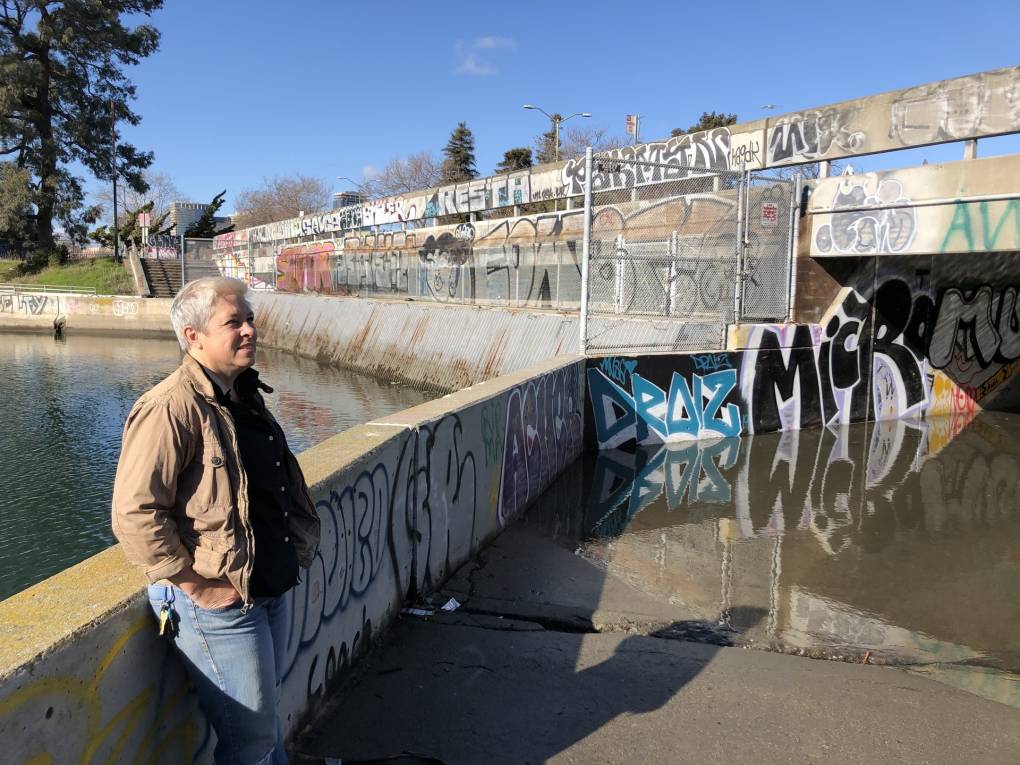
"caption": "Kristina Hill at the underpass beneath 7th and East 8th streets in Oakland on Jan 11, 2020. The underpass flooded several inches due to King Tides, the highest high tides of the year. These instances offer a window into how and where flooding will happen as sea levels rise.",
"description": "Kristina Hill at the underpass beneath 7th and E 8th streets in Oakland on Jan 11, 2020. The underpass flooded several inches due to King Tides, the highest high tides of the year. These instances offer a window into how and where flooding will happen as sea levels rise.",
"title": "RS46395_IMG_3703-qut",
"credit": "Laura Klivans/KQED",
"status": "inherit",
"altTag": "Kristina Hill at the underpass beneath 7th and E 8th streets in Oakland on Jan 11, 2020. The underpass flooded several inches due to King Tides, the highest high tides of the year. These instances offer a window into how and where flooding will happen as sea levels rise.",
"isLoading": false,
"fetchFailed": false
},
"science_1971670": {
"type": "attachments",
"id": "science_1971670",
"meta": {
"index": "attachments_1716263798",
"site": "science",
"id": "1971670",
"found": true
},
"parent": 1971666,
"imgSizes": {
"twentyfourteen-full-width": {
"file": "https://ww2.kqed.org/app/uploads/sites/35/2020/12/GettyImages-1008031442-1038x576.jpg",
"width": 1038,
"mimeType": "image/jpeg",
"height": 576
},
"thumbnail": {
"file": "https://ww2.kqed.org/app/uploads/sites/35/2020/12/GettyImages-1008031442-160x113.jpg",
"width": 160,
"mimeType": "image/jpeg",
"height": 113
},
"post-thumbnail": {
"file": "https://ww2.kqed.org/app/uploads/sites/35/2020/12/GettyImages-1008031442-672x372.jpg",
"width": 672,
"mimeType": "image/jpeg",
"height": 372
},
"kqedFullSize": {
"file": "https://ww2.kqed.org/app/uploads/sites/35/2020/12/GettyImages-1008031442-scaled.jpg",
"width": 2560,
"height": 1801
},
"2048x2048": {
"file": "https://ww2.kqed.org/app/uploads/sites/35/2020/12/GettyImages-1008031442-2048x1441.jpg",
"width": 2048,
"mimeType": "image/jpeg",
"height": 1441
},
"large": {
"file": "https://ww2.kqed.org/app/uploads/sites/35/2020/12/GettyImages-1008031442-1020x718.jpg",
"width": 1020,
"mimeType": "image/jpeg",
"height": 718
},
"1536x1536": {
"file": "https://ww2.kqed.org/app/uploads/sites/35/2020/12/GettyImages-1008031442-1536x1081.jpg",
"width": 1536,
"mimeType": "image/jpeg",
"height": 1081
},
"full-width": {
"file": "https://ww2.kqed.org/app/uploads/sites/35/2020/12/GettyImages-1008031442-1920x1351.jpg",
"width": 1920,
"mimeType": "image/jpeg",
"height": 1351
},
"medium": {
"file": "https://ww2.kqed.org/app/uploads/sites/35/2020/12/GettyImages-1008031442-800x563.jpg",
"width": 800,
"mimeType": "image/jpeg",
"height": 563
},
"medium_large": {
"file": "https://ww2.kqed.org/app/uploads/sites/35/2020/12/GettyImages-1008031442-768x540.jpg",
"width": 768,
"mimeType": "image/jpeg",
"height": 540
}
},
"publishDate": 1607714488,
"modified": 1607738706,
"caption": "A burnt out boat sits at a marina on Whiskeytown Lake after damage from the Carr Fire near Redding, Calif., on July 30, 2018. ",
"description": "TOPSHOT - A burnt out boat sits at a marina on Whiskeytown Lake after damage from the Carr fire near Redding, California, on July 30, 2018. - Thousands of firefighters in California made some progress against several large-scale blazes that have turned close to 200,000 acres (80,940 hectares) into an ashen wasteland, destroyed expensive homes, and killed eight fire personnel and civilians in the most populous US state. (Photo by Mark RALSTON / AFP) (Photo credit should read MARK RALSTON/AFP via Getty Images)",
"title": "TOPSHOT-US-FIRE-CALIFORNIA",
"credit": "Mark Ralston/AFP via Getty Images",
"status": "inherit",
"altTag": null,
"isLoading": false,
"fetchFailed": false
},
"science_1971610": {
"type": "attachments",
"id": "science_1971610",
"meta": {
"index": "attachments_1716263798",
"site": "science",
"id": "1971610",
"found": true
},
"parent": 1971608,
"imgSizes": {
"twentyfourteen-full-width": {
"file": "https://ww2.kqed.org/app/uploads/sites/35/2020/12/RS46322_GettyImages-84005004-qut-1038x576.jpg",
"width": 1038,
"mimeType": "image/jpeg",
"height": 576
},
"thumbnail": {
"file": "https://ww2.kqed.org/app/uploads/sites/35/2020/12/RS46322_GettyImages-84005004-qut-160x107.jpg",
"width": 160,
"mimeType": "image/jpeg",
"height": 107
},
"post-thumbnail": {
"file": "https://ww2.kqed.org/app/uploads/sites/35/2020/12/RS46322_GettyImages-84005004-qut-672x372.jpg",
"width": 672,
"mimeType": "image/jpeg",
"height": 372
},
"kqedFullSize": {
"file": "https://ww2.kqed.org/app/uploads/sites/35/2020/12/RS46322_GettyImages-84005004-qut.jpg",
"width": 1920,
"height": 1280
},
"large": {
"file": "https://ww2.kqed.org/app/uploads/sites/35/2020/12/RS46322_GettyImages-84005004-qut-1020x680.jpg",
"width": 1020,
"mimeType": "image/jpeg",
"height": 680
},
"1536x1536": {
"file": "https://ww2.kqed.org/app/uploads/sites/35/2020/12/RS46322_GettyImages-84005004-qut-1536x1024.jpg",
"width": 1536,
"mimeType": "image/jpeg",
"height": 1024
},
"medium": {
"file": "https://ww2.kqed.org/app/uploads/sites/35/2020/12/RS46322_GettyImages-84005004-qut-800x533.jpg",
"width": 800,
"mimeType": "image/jpeg",
"height": 533
},
"medium_large": {
"file": "https://ww2.kqed.org/app/uploads/sites/35/2020/12/RS46322_GettyImages-84005004-qut-768x512.jpg",
"width": 768,
"mimeType": "image/jpeg",
"height": 512
}
},
"publishDate": 1607630838,
"modified": 1607637963,
"caption": "The Department of Water and Power's San Fernando Valley Generating Station is seen Dec. 11, 2008, in Sun Valley, California. ",
"description": null,
"title": "California Adopts Sweeping Plan To Combat Greenhouse Gas Emissions",
"credit": "David McNew/Getty Images",
"status": "inherit",
"altTag": null,
"isLoading": false,
"fetchFailed": false
}
},
"audioPlayerReducer": {
"postId": "stream_live",
"isPaused": true,
"isPlaying": false,
"pfsActive": false,
"pledgeModalIsOpen": true,
"playerDrawerIsOpen": false,
"liveAudioPlayStartedAt": 0,
"liveAudioPlayContext": ""
},
"authorsReducer": {
"byline_science_1972437": {
"type": "authors",
"id": "byline_science_1972437",
"meta": {
"override": true
},
"slug": "byline_science_1972437",
"name": "Matthew Daly and Ellen Knickmeyer \u003cbr />AP\u003cbr>",
"isLoading": false
},
"byline_science_1972356": {
"type": "authors",
"id": "byline_science_1972356",
"meta": {
"override": true
},
"slug": "byline_science_1972356",
"name": "Lauren Sommer",
"isLoading": false
},
"byline_science_1972044": {
"type": "authors",
"id": "byline_science_1972044",
"meta": {
"override": true
},
"slug": "byline_science_1972044",
"name": "Bob Berwyn \u003cbr />InsideClimate News\u003cbr>",
"isLoading": false
},
"byline_science_1971774": {
"type": "authors",
"id": "byline_science_1971774",
"meta": {
"override": true
},
"slug": "byline_science_1971774",
"name": "Ellen Knickmeyer \u003cbr />AP\u003cbr>",
"isLoading": false
},
"byline_science_1971763": {
"type": "authors",
"id": "byline_science_1971763",
"meta": {
"override": true
},
"slug": "byline_science_1971763",
"name": "Scott Detrow, Tamara Keith and Jennifer Ludden \u003cbr />NPR\u003cbr>",
"isLoading": false
},
"kqedscience": {
"type": "authors",
"id": "6387",
"meta": {
"index": "authors_1716337520",
"id": "6387",
"found": true
},
"name": "KQED Science",
"firstName": "KQED",
"lastName": "Science",
"slug": "kqedscience",
"email": "kqedscience@gmail.com",
"display_author_email": false,
"staff_mastheads": [],
"title": null,
"bio": "KQED Science brings you award-winning science and environment coverage from the Bay Area and beyond by the flagship Northern California PBS and NPR affiliate.",
"avatar": "https://secure.gravatar.com/avatar/5a295ff49cf82a8c0f30937d3f788b2f?s=600&d=blank&r=g",
"twitter": null,
"facebook": null,
"instagram": null,
"linkedin": null,
"sites": [
{
"site": "science",
"roles": [
"contributor"
]
},
{
"site": "quest",
"roles": [
"editor"
]
},
{
"site": "food",
"roles": [
"contributor"
]
}
],
"headData": {
"title": "KQED Science | KQED",
"description": null,
"ogImgSrc": "https://secure.gravatar.com/avatar/5a295ff49cf82a8c0f30937d3f788b2f?s=600&d=blank&r=g",
"twImgSrc": "https://secure.gravatar.com/avatar/5a295ff49cf82a8c0f30937d3f788b2f?s=600&d=blank&r=g"
},
"isLoading": false,
"link": "/author/kqedscience"
},
"lklivans": {
"type": "authors",
"id": "8648",
"meta": {
"index": "authors_1716337520",
"id": "8648",
"found": true
},
"name": "Laura Klivans",
"firstName": "Laura",
"lastName": "Klivans",
"slug": "lklivans",
"email": "lklivans@kqed.org",
"display_author_email": true,
"staff_mastheads": [
"news",
"science"
],
"title": "Reporter",
"bio": "Laura Klivans is an award-winning science reporter for KQED News, where she covers climate change with an eye on both groundbreaking progress and gaps in action. She is the former host of KQED's blockbuster video series about tiny, amazing animals, \u003cem>Deep Look\u003c/em>. Her work reaches national audiences through NPR, \u003cem>Here & Now, \u003c/em>PRI, and other major outlets. \r\n\r\nLaura’s won five Northern California Area Emmy Awards for Deep Look and First Place in the Greater Bay Area Journalism Awards for a podcast exploring how one Oakland neighborhood teamed up to reduce planet-heating pollution.\r\n\r\nBeyond her reporting, she hosts and moderates events. In the past, she taught audio storytelling at the UC Berkeley Graduate School of Journalism, led international education programs, worked with immigrants and refugees along the Thai-Burmese border, taught high schoolers sex ed, and was an actress. \r\n\r\nShe's a former UC Berkeley Human Rights Fellow, USC Center for Health Journalism's California Fellow and Coro Fellow in Public Affairs. Laura has a master’s in journalism from UC Berkeley, a master’s in education from Harvard, and an undergraduate degree from Northwestern University.\r\n\r\nShe loves trying to riddle the meaning out of vanity license plates.",
"avatar": "https://secure.gravatar.com/avatar/2d2ecd1550a494cc10ad4a503406965585902124739e775a9b3817eebf1d88be?s=600&d=blank&r=g",
"twitter": "lauraklivans",
"bluesky": null,
"facebook": null,
"instagram": null,
"linkedin": null,
"sites": [
{
"site": "news",
"roles": [
"editor"
]
},
{
"site": "stateofhealth",
"roles": [
"contributor",
"editor"
]
},
{
"site": "science",
"roles": [
"editor"
]
},
{
"site": "forum",
"roles": [
"editor"
]
}
],
"headData": {
"title": "Laura Klivans | KQED",
"description": "Reporter",
"ogImgSrc": "https://secure.gravatar.com/avatar/2d2ecd1550a494cc10ad4a503406965585902124739e775a9b3817eebf1d88be?s=600&d=blank&r=g",
"twImgSrc": "https://secure.gravatar.com/avatar/2d2ecd1550a494cc10ad4a503406965585902124739e775a9b3817eebf1d88be?s=600&d=blank&r=g"
},
"isLoading": false,
"link": "/author/lklivans"
},
"dventon": {
"type": "authors",
"id": "11088",
"meta": {
"index": "authors_1716337520",
"id": "11088",
"found": true
},
"name": "Danielle Venton",
"firstName": "Danielle",
"lastName": "Venton",
"slug": "dventon",
"email": "dventon@kqed.org",
"display_author_email": true,
"staff_mastheads": [
"science"
],
"title": "Science reporter",
"bio": "Danielle Venton is a reporter for KQED Science. She covers wildfires, space and oceans (though she is prone to sea sickness).\r\n\r\nBefore joining KQED in 2015, Danielle was a staff reporter at KRCB in Sonoma County and a freelancer. She studied science communication at UC Santa Cruz and formerly worked at CERN in Geneva, Switzerland where she wrote about computing. She lives in Sonoma County and enjoys backpacking.",
"avatar": "https://secure.gravatar.com/avatar/37b292b5c40c8d93959c4f48d73b5286f41b7abd8588277e941905a3ed4c801c?s=600&d=blank&r=g",
"twitter": "DanielleVenton",
"bluesky": null,
"facebook": null,
"instagram": null,
"linkedin": null,
"sites": [
{
"site": "arts",
"roles": [
"contributor"
]
},
{
"site": "news",
"roles": [
"editor"
]
},
{
"site": "futureofyou",
"roles": [
"editor"
]
},
{
"site": "science",
"roles": [
"editor"
]
},
{
"site": "liveblog",
"roles": [
"contributor"
]
}
],
"headData": {
"title": "Danielle Venton | KQED",
"description": "Science reporter",
"ogImgSrc": "https://secure.gravatar.com/avatar/37b292b5c40c8d93959c4f48d73b5286f41b7abd8588277e941905a3ed4c801c?s=600&d=blank&r=g",
"twImgSrc": "https://secure.gravatar.com/avatar/37b292b5c40c8d93959c4f48d73b5286f41b7abd8588277e941905a3ed4c801c?s=600&d=blank&r=g"
},
"isLoading": false,
"link": "/author/dventon"
},
"parcuni": {
"type": "authors",
"id": "11368",
"meta": {
"index": "authors_1716337520",
"id": "11368",
"found": true
},
"name": "Peter Arcuni",
"firstName": "Peter",
"lastName": "Arcuni",
"slug": "parcuni",
"email": "parcuni@KQED.org",
"display_author_email": false,
"staff_mastheads": [
"science"
],
"title": "Reporter",
"bio": "Peter reports radio and online stories for \u003cem>KQED Science\u003c/em>. His work has also appeared on the \u003cem>The California Report\u003c/em> morning show and \u003cem>KQED News\u003c/em>. His production credits include \u003cem>The California Report, The California Report Magazine\u003c/em> and KQED's local news podcast \u003cem>The Bay\u003c/em>. Other credits include NPR's \u003cem>All Things Considered\u003c/em>, WNYC's \u003cem>Science Friday\u003c/em>, WBUR's \u003cem>Here & Now\u003c/em>, WIRED and SFGate. Peter graduated from Brown University and earned a master's degree in journalism from Stanford. He's covered everything from homelessness to wildfires, health, the environment, arts and Thanksgiving in San Quentin prison. In other lives, he played rock n roll music and studied neuroscience. You can email him at: parcuni@kqed.org",
"avatar": "https://secure.gravatar.com/avatar/d5032f6f27199d478af34ad2e1d98732?s=600&d=blank&r=g",
"twitter": "peterarcuni",
"facebook": null,
"instagram": null,
"linkedin": null,
"sites": [
{
"site": "news",
"roles": [
"editor"
]
},
{
"site": "science",
"roles": [
"editor"
]
}
],
"headData": {
"title": "Peter Arcuni | KQED",
"description": "Reporter",
"ogImgSrc": "https://secure.gravatar.com/avatar/d5032f6f27199d478af34ad2e1d98732?s=600&d=blank&r=g",
"twImgSrc": "https://secure.gravatar.com/avatar/d5032f6f27199d478af34ad2e1d98732?s=600&d=blank&r=g"
},
"isLoading": false,
"link": "/author/parcuni"
},
"kevinstark": {
"type": "authors",
"id": "11608",
"meta": {
"index": "authors_1716337520",
"id": "11608",
"found": true
},
"name": "Kevin Stark",
"firstName": "Kevin",
"lastName": "Stark",
"slug": "kevinstark",
"email": "kstark@kqed.org",
"display_author_email": true,
"staff_mastheads": [
"science"
],
"title": "Senior Editor",
"bio": "Kevin is a senior editor for KQED Science, managing the station's health and climate desks. His journalism career began in the Pacific Northwest, and he later became a lead reporter for the San Francisco Public Press. His work has appeared in Pacific Standard magazine, the Energy News Network, the Center for Investigative Reporting's Reveal and WBEZ in Chicago. Kevin joined KQED in 2019, and has covered issues related to energy, wildfire, climate change and the environment.",
"avatar": "https://secure.gravatar.com/avatar/365aaa4b597d3a8374f67504ff0facd323d7906e8eb4be0a7efd2427408e802c?s=600&d=blank&r=g",
"twitter": "starkkev",
"bluesky": null,
"facebook": null,
"instagram": null,
"linkedin": null,
"sites": [
{
"site": "",
"roles": [
"editor"
]
},
{
"site": "news",
"roles": [
"editor"
]
},
{
"site": "science",
"roles": [
"administrator"
]
}
],
"headData": {
"title": "Kevin Stark | KQED",
"description": "Senior Editor",
"ogImgSrc": "https://secure.gravatar.com/avatar/365aaa4b597d3a8374f67504ff0facd323d7906e8eb4be0a7efd2427408e802c?s=600&d=blank&r=g",
"twImgSrc": "https://secure.gravatar.com/avatar/365aaa4b597d3a8374f67504ff0facd323d7906e8eb4be0a7efd2427408e802c?s=600&d=blank&r=g"
},
"isLoading": false,
"link": "/author/kevinstark"
}
},
"pagesReducer": {
"science_category_climate": {
"type": "terms",
"id": "science_31",
"meta": {
"index": "terms_1716263798",
"site": "science",
"id": "31",
"score": 11.061988
},
"featImg": null,
"name": "Climate",
"description": null,
"taxonomy": "category",
"headData": {
"twImgId": null,
"twTitle": null,
"ogTitle": null,
"ogImgId": null,
"twDescription": null,
"description": null,
"title": "Climate Archives | KQED Science",
"ogDescription": null
},
"ttid": 33,
"slug": "climate",
"isLoading": false,
"title": "Climate",
"pageMeta": {
"site": "science",
"WpPageTemplate": "page-topic-editorial",
"currentPage": 43
},
"blocks": [
{
"blockName": "kqed/post-list",
"attrs": {
"layout": "cardArticle2",
"query": "posts/science?category=climate",
"seeMore": false,
"paginated": true,
"page": 43
}
},
{
"blockName": "kqed/ad"
}
]
}
},
"pfsSessionReducer": {},
"postsReducer": {
"stream_live": {
"type": "live",
"id": "stream_live",
"audioUrl": "https://streams.kqed.org/kqedradio",
"title": "Live Stream",
"excerpt": "Live Stream information currently unavailable.",
"link": "/radio",
"featImg": "",
"label": {
"name": "KQED Live",
"link": "/"
}
},
"stream_kqedNewscast": {
"type": "posts",
"id": "stream_kqedNewscast",
"audioUrl": "https://www.kqed.org/.stream/anon/radio/RDnews/newscast.mp3?_=1",
"title": "KQED Newscast",
"featImg": "",
"label": {
"name": "88.5 FM",
"link": "/"
}
},
"science_1972437": {
"type": "posts",
"id": "science_1972437",
"meta": {
"index": "posts_1716263798",
"site": "science",
"id": "1972437",
"score": null,
"sort": [
1611790274000
]
},
"guestAuthors": [],
"slug": "we-cant-wait-any-longer-biden-issues-sweeping-executive-orders-on-climate",
"title": "‘We Can’t Wait Any Longer’: Biden Issues Sweeping Executive Orders on Climate",
"publishDate": 1611790274,
"format": "aside",
"headTitle": "‘We Can’t Wait Any Longer’: Biden Issues Sweeping Executive Orders on Climate | KQED",
"labelTerm": {},
"content": "\u003cp class=\"Component-root-0-2-62 Component-p-0-2-53\">https://www.youtube.com/watch?v=2bpSkdYUtNU&feature=emb_logo\u003c/p>\n\u003cp>In the most ambitious U.S. effort to stave off the worst effects of climate change, President Biden issued executive orders Wednesday to cut oil, gas and coal emissions and double energy production from offshore wind turbines.\u003c/p>\n\u003cp class=\"Component-root-0-2-62 Component-p-0-2-53\">The orders target federal subsidies for oil and other fossil fuels and halt new oil and gas leases on federal lands and waters. They also aim to conserve 30% of the country’s lands and ocean waters in the next 10 years and move to an all-electric federal vehicle fleet.\u003c/p>\n\u003cp class=\"Component-root-0-2-62 Component-p-0-2-53\">Biden’s sweeping plan is aimed at slowing human-caused global warming, but it also carries political risk for the president and Democrats as oil- and coal-producing states face job losses from moves to sharply increase U.S. reliance on clean energy such as wind and solar power.\u003c/p>\n\u003cp class=\"Component-root-0-2-62 Component-p-0-2-53\">“We can’t wait any longer″ to address the climate crisis, Biden said at the White House. ”We see with our own eyes. We know it in our bones. It is time to act.″\u003c/p>\n\u003cp>[ad fullwidth]\u003c/p>\n\u003cp class=\"Component-root-0-2-62 Component-p-0-2-53\">He said his orders will “supercharge our administration’s ambitious plan to confront the existential threat of climate change.”\u003c/p>\n\u003cp class=\"Component-root-0-2-62 Component-p-0-2-53\">Biden has set a goal of eliminating pollution from fossil fuel in the power sector by 2035 and from the U.S. economy overall by 2050, speeding what is already a market-driven growth of solar and wind energy and lessening the country’s dependence on oil and gas. The aggressive plan is aimed at slowing human-caused global warming that is magnifying extreme weather events such as deadly wildfires in the West and drenching rains and hurricanes in the East.\u003c/p>\n\u003cp class=\"Component-root-0-2-62 Component-p-0-2-53\">Biden acknowledged the political risk, repeatedly stating that his approach would create jobs in the renewable energy and automotive sectors to offset any losses in oil, coal or natural gas.\u003c/p>\n\u003cp class=\"Component-root-0-2-62 Component-p-0-2-53\">“When I think of climate change and the answers to it, I think of jobs,” Biden said. “We’re going to put people to work. We’re not going to lose jobs. These aren’t pie-in-the-sky dreams. These are concrete actionable solutions. And we know how to do this.”\u003c/p>\n\u003cp class=\"Component-root-0-2-62 Component-p-0-2-53\">In a change from previous administrations of both parties, Biden also is directing agencies to focus help and investment on the low-income and minority communities that live closest to polluting refineries and other hazards, and the oil- and coal-patch towns that face job losses as the U.S. moves to sharply increase its reliance on wind, solar and other other energy sources that do not emit climate-warming greenhouse gases.\u003c/p>\n\u003cp class=\"Component-root-0-2-62 Component-p-0-2-53\">Biden pledged to create up to a million jobs building electric cars, as well as installing solar panels, wind turbines, “capping abandoned walls, reclaiming mines, turning old brownfield sites into the new hubs of economic growth.”\u003c/p>\n\u003cp class=\"Component-root-0-2-62 Component-p-0-2-53\">Even so, Republicans immediately criticized the plan as a job killer.\u003c/p>\n\u003cp class=\"Component-root-0-2-62 Component-p-0-2-53\">“Pie-in-the-sky government mandates and directives that restrict our mining, oil, and gas industries adversely impact our energy security and independence,” said Rep. Cathy McMorris Rodgers of Washington state, the top Republican on the House Energy and Commerce Committee.\u003c/p>\n\u003cp class=\"Component-root-0-2-62 Component-p-0-2-53\">“At a time when millions are struggling due to the COVID-19 pandemic, the last thing Americans need is big government destroying jobs, while costing the economy billions of dollars,” she said.\u003c/p>\n\u003cp class=\"Component-root-0-2-62 Component-p-0-2-53\">Biden also is elevating climate change to a national security priority. The conservation plan would set aside millions of acres for recreation, wildlife and climate efforts by 2030 as part of Biden’s campaign pledge for a $2 trillion program to slow global warming.\u003c/p>\n\u003cp class=\"Component-root-0-2-62 Component-p-0-2-53\">Former President Donald Trump, who ridiculed the science of climate change, withdrew the U.S. from the Paris global climate accord, opened more public lands to coal, gas and oil production and weakened regulation on fossil fuel emissions. Experts say these emissions are heating the Earth’s climate dangerously and worsening floods, droughts and other natural disasters.\u003c/p>\n\u003cp class=\"Component-root-0-2-62 Component-p-0-2-53\">Georgia Tech climate scientist Kim Cobb called the executive orders an “excellent start” for the new administration.\u003c/p>\n\u003cp class=\"Component-root-0-2-62 Component-p-0-2-53\">“If this Day 7 momentum is representative of this administration’s four-year term, there is every reason to believe that we might achieve carbon neutrality sooner than 2050,” even as key roadblocks lie ahead, Cobb said.\u003c/p>\n\u003cp class=\"Component-root-0-2-62 Component-p-0-2-53\">Biden’s actions came as his nominee for energy secretary, former Michigan Gov. Jennifer Granholm, faced deep skepticism from Republicans as she tried to pitch the president’s vision for a green economy.\u003c/p>\n\u003cp class=\"Component-root-0-2-62 Component-p-0-2-53\">“The last Democratic administration went on a regulatory rampage to slow or stop energy production,” said Wyoming Sen. John Barrasso, a leading Republican on the Senate Energy and Natural Resources Committee. “I’m not going to sit idly by … if the Biden administration enforces policies that threaten Wyoming’s economy.”\u003c/p>\n\u003cp class=\"Component-root-0-2-62 Component-p-0-2-53\">Granholm, as the leader of a state devastated by the 2008 recession, said she knew what it was like to “look in the eyes of men and women who have lost their jobs through no fault of their own.” She promoted emerging clean energy technologies, such as battery manufacturing, as an answer for jobs that will be lost as the U.S. transitions away from fossil fuels.\u003c/p>\n\u003cp class=\"Component-root-0-2-62 Component-p-0-2-53\">Granholm and other officials said the investment in cleaner energy nationally will net millions of jobs. But that probably will take years to happen, and the orders will face intense opposition from oil and gas and power plant industries, as well as from many Republican — and Democratic — lawmakers.\u003c/p>\n\u003cp class=\"Component-root-0-2-62 Component-p-0-2-53\">“The environmental left is leading the agenda at the White House when it comes to energy and environment issues,″ said Kathleen Sgamma, president of the Western Energy Alliance, which represents oil and gas drillers in Western states. The group filed a legal challenge soon after Biden signed the orders.\u003c/p>\n\u003cp class=\"Component-root-0-2-62 Component-p-0-2-53\">Biden is seeking to double energy production from offshore wind after the Trump administration slowed permit review of some giant offshore wind turbine projects. Significantly, he is directing agencies to eliminate spending that acts as subsidies for fossil fuel industries.\u003c/p>\n\u003cp class=\"Component-root-0-2-62 Component-p-0-2-53\">“The fossil fuel industry has inflicted tremendous damage on the planet. The administration’s review, if done correctly, will show that filthy fracking and drilling must end for good, everywhere,″ said Kierán Suckling, executive director at the Center for Biological Diversity, an environmental group that has pushed for the drilling pause.\u003c/p>\n\u003cp class=\"Component-root-0-2-62 Component-p-0-2-53\">Oil industry groups said Biden had already eliminated thousands of oil and gas jobs by killing \u003ca class=\"\" href=\"https://apnews.com/article/joe-biden-alberta-2fbcce48372f5c29c3ae6f6f93907a6d\">the Keystone XL oil pipeline\u003c/a> on his first day in office.\u003c/p>\n\u003cp class=\"Component-root-0-2-62 Component-p-0-2-53\">“Do not be fooled, this is a ban” on drilling, said Dan Naatz of the Independent Petroleum Association of America. “The Biden administration’s plan to obliterate the jobs of American oil and gas explorers and producers has been on clear display.”\u003c/p>\n\u003cp class=\"Component-root-0-2-62 Component-p-0-2-53\">The pause in onshore leasing is limited to federal lands and does not affect drilling on private lands, which is largely regulated by states. It also will not affect existing leases and could be further blunted by companies that stockpiled enough drilling permits in Trump’s final months to allow them to keep pumping oil and gas for years.\u003c/p>\n\u003cp class=\"Component-root-0-2-62 Component-p-0-2-53\">The order exempts tribal lands, mainly in the West, that are used for energy production.\u003c/p>\n\u003cp class=\"Component-root-0-2-62 Component-p-0-2-53\">Biden also will direct all U.S. agencies to use science and evidence-based decision-making in federal rule-making and announce a U.S.-hosted climate leaders summit on Earth Day, April 22.\u003c/p>\n\u003cp>[ad floatright]\u003c/p>\n\u003cp>\u003cem>Associated Press writers Alexandra Jaffe and Brian Slodysko contributed to this report.\u003c/em>\u003c/p>\n\n",
"blocks": [],
"excerpt": "President Joe Biden issued executive orders Wednesday to cut oil, gas and coal emissions and double energy production from offshore wind turbines.",
"status": "publish",
"parent": 0,
"modified": 1725577062,
"stats": {
"hasAudio": false,
"hasVideo": false,
"hasChartOrMap": false,
"iframeSrcs": [],
"hasGoogleForm": false,
"hasGallery": false,
"hasHearkenModule": false,
"hasPolis": false,
"paragraphCount": 4,
"wordCount": 1301
},
"headData": {
"title": "‘We Can’t Wait Any Longer’: Biden Issues Sweeping Executive Orders on Climate | KQED",
"description": "President Joe Biden issued executive orders Wednesday to cut oil, gas and coal emissions and double energy production from offshore wind turbines.",
"ogTitle": "",
"ogDescription": "",
"ogImgId": "",
"twTitle": "",
"twDescription": "",
"twImgId": "",
"schema": {
"@context": "https://schema.org",
"@type": "Article",
"headline": "‘We Can’t Wait Any Longer’: Biden Issues Sweeping Executive Orders on Climate",
"datePublished": "2021-01-27T15:31:14-08:00",
"dateModified": "2024-09-05T15:57:42-07:00",
"image": "https://cdn.kqed.org/wp-content/uploads/2020/02/KQED-OG-Image@1x.png"
}
},
"source": "Associated Press",
"sticky": false,
"nprByline": "Matthew Daly and Ellen Knickmeyer \u003cbr />AP\u003cbr>",
"path": "/science/1972437/we-cant-wait-any-longer-biden-issues-sweeping-executive-orders-on-climate",
"audioTrackLength": null,
"parsedContent": [
{
"type": "contentString",
"content": "\u003cdiv class=\"post-body\">\u003cp>\u003c/p>\u003cp>\u003cspan class='utils-parseShortcode-shortcodes-__youtubeShortcode__embedYoutube'>\n \u003cspan class='utils-parseShortcode-shortcodes-__youtubeShortcode__embedYoutubeInside'>\n \u003ciframe\n loading='lazy'\n class='utils-parseShortcode-shortcodes-__youtubeShortcode__youtubePlayer'\n type='text/html'\n src='//www.youtube.com/embed/2bpSkdYUtNU'\n title='//www.youtube.com/embed/2bpSkdYUtNU'\n allowfullscreen='true'\n style='border:0;'>\u003c/iframe>\n \u003c/span>\n \u003c/span>\u003c/p>\u003cp>\u003cp>In the most ambitious U.S. effort to stave off the worst effects of climate change, President Biden issued executive orders Wednesday to cut oil, gas and coal emissions and double energy production from offshore wind turbines.\u003c/p>\n\u003cp class=\"Component-root-0-2-62 Component-p-0-2-53\">The orders target federal subsidies for oil and other fossil fuels and halt new oil and gas leases on federal lands and waters. They also aim to conserve 30% of the country’s lands and ocean waters in the next 10 years and move to an all-electric federal vehicle fleet.\u003c/p>\n\u003cp class=\"Component-root-0-2-62 Component-p-0-2-53\">Biden’s sweeping plan is aimed at slowing human-caused global warming, but it also carries political risk for the president and Democrats as oil- and coal-producing states face job losses from moves to sharply increase U.S. reliance on clean energy such as wind and solar power.\u003c/p>\n\u003cp class=\"Component-root-0-2-62 Component-p-0-2-53\">“We can’t wait any longer″ to address the climate crisis, Biden said at the White House. ”We see with our own eyes. We know it in our bones. It is time to act.″\u003c/p>\n\u003cp>\u003c/p>\u003c/div>",
"attributes": {
"named": {},
"numeric": []
}
},
{
"type": "component",
"content": "",
"name": "ad",
"attributes": {
"named": {
"label": "fullwidth"
},
"numeric": [
"fullwidth"
]
}
},
{
"type": "contentString",
"content": "\u003cdiv class=\"post-body\">\u003cp>\u003c/p>\n\u003cp class=\"Component-root-0-2-62 Component-p-0-2-53\">He said his orders will “supercharge our administration’s ambitious plan to confront the existential threat of climate change.”\u003c/p>\n\u003cp class=\"Component-root-0-2-62 Component-p-0-2-53\">Biden has set a goal of eliminating pollution from fossil fuel in the power sector by 2035 and from the U.S. economy overall by 2050, speeding what is already a market-driven growth of solar and wind energy and lessening the country’s dependence on oil and gas. The aggressive plan is aimed at slowing human-caused global warming that is magnifying extreme weather events such as deadly wildfires in the West and drenching rains and hurricanes in the East.\u003c/p>\n\u003cp class=\"Component-root-0-2-62 Component-p-0-2-53\">Biden acknowledged the political risk, repeatedly stating that his approach would create jobs in the renewable energy and automotive sectors to offset any losses in oil, coal or natural gas.\u003c/p>\n\u003cp class=\"Component-root-0-2-62 Component-p-0-2-53\">“When I think of climate change and the answers to it, I think of jobs,” Biden said. “We’re going to put people to work. We’re not going to lose jobs. These aren’t pie-in-the-sky dreams. These are concrete actionable solutions. And we know how to do this.”\u003c/p>\n\u003cp class=\"Component-root-0-2-62 Component-p-0-2-53\">In a change from previous administrations of both parties, Biden also is directing agencies to focus help and investment on the low-income and minority communities that live closest to polluting refineries and other hazards, and the oil- and coal-patch towns that face job losses as the U.S. moves to sharply increase its reliance on wind, solar and other other energy sources that do not emit climate-warming greenhouse gases.\u003c/p>\n\u003cp class=\"Component-root-0-2-62 Component-p-0-2-53\">Biden pledged to create up to a million jobs building electric cars, as well as installing solar panels, wind turbines, “capping abandoned walls, reclaiming mines, turning old brownfield sites into the new hubs of economic growth.”\u003c/p>\n\u003cp class=\"Component-root-0-2-62 Component-p-0-2-53\">Even so, Republicans immediately criticized the plan as a job killer.\u003c/p>\n\u003cp class=\"Component-root-0-2-62 Component-p-0-2-53\">“Pie-in-the-sky government mandates and directives that restrict our mining, oil, and gas industries adversely impact our energy security and independence,” said Rep. Cathy McMorris Rodgers of Washington state, the top Republican on the House Energy and Commerce Committee.\u003c/p>\n\u003cp class=\"Component-root-0-2-62 Component-p-0-2-53\">“At a time when millions are struggling due to the COVID-19 pandemic, the last thing Americans need is big government destroying jobs, while costing the economy billions of dollars,” she said.\u003c/p>\n\u003cp class=\"Component-root-0-2-62 Component-p-0-2-53\">Biden also is elevating climate change to a national security priority. The conservation plan would set aside millions of acres for recreation, wildlife and climate efforts by 2030 as part of Biden’s campaign pledge for a $2 trillion program to slow global warming.\u003c/p>\n\u003cp class=\"Component-root-0-2-62 Component-p-0-2-53\">Former President Donald Trump, who ridiculed the science of climate change, withdrew the U.S. from the Paris global climate accord, opened more public lands to coal, gas and oil production and weakened regulation on fossil fuel emissions. Experts say these emissions are heating the Earth’s climate dangerously and worsening floods, droughts and other natural disasters.\u003c/p>\n\u003cp class=\"Component-root-0-2-62 Component-p-0-2-53\">Georgia Tech climate scientist Kim Cobb called the executive orders an “excellent start” for the new administration.\u003c/p>\n\u003cp class=\"Component-root-0-2-62 Component-p-0-2-53\">“If this Day 7 momentum is representative of this administration’s four-year term, there is every reason to believe that we might achieve carbon neutrality sooner than 2050,” even as key roadblocks lie ahead, Cobb said.\u003c/p>\n\u003cp class=\"Component-root-0-2-62 Component-p-0-2-53\">Biden’s actions came as his nominee for energy secretary, former Michigan Gov. Jennifer Granholm, faced deep skepticism from Republicans as she tried to pitch the president’s vision for a green economy.\u003c/p>\n\u003cp class=\"Component-root-0-2-62 Component-p-0-2-53\">“The last Democratic administration went on a regulatory rampage to slow or stop energy production,” said Wyoming Sen. John Barrasso, a leading Republican on the Senate Energy and Natural Resources Committee. “I’m not going to sit idly by … if the Biden administration enforces policies that threaten Wyoming’s economy.”\u003c/p>\n\u003cp class=\"Component-root-0-2-62 Component-p-0-2-53\">Granholm, as the leader of a state devastated by the 2008 recession, said she knew what it was like to “look in the eyes of men and women who have lost their jobs through no fault of their own.” She promoted emerging clean energy technologies, such as battery manufacturing, as an answer for jobs that will be lost as the U.S. transitions away from fossil fuels.\u003c/p>\n\u003cp class=\"Component-root-0-2-62 Component-p-0-2-53\">Granholm and other officials said the investment in cleaner energy nationally will net millions of jobs. But that probably will take years to happen, and the orders will face intense opposition from oil and gas and power plant industries, as well as from many Republican — and Democratic — lawmakers.\u003c/p>\n\u003cp class=\"Component-root-0-2-62 Component-p-0-2-53\">“The environmental left is leading the agenda at the White House when it comes to energy and environment issues,″ said Kathleen Sgamma, president of the Western Energy Alliance, which represents oil and gas drillers in Western states. The group filed a legal challenge soon after Biden signed the orders.\u003c/p>\n\u003cp class=\"Component-root-0-2-62 Component-p-0-2-53\">Biden is seeking to double energy production from offshore wind after the Trump administration slowed permit review of some giant offshore wind turbine projects. Significantly, he is directing agencies to eliminate spending that acts as subsidies for fossil fuel industries.\u003c/p>\n\u003cp class=\"Component-root-0-2-62 Component-p-0-2-53\">“The fossil fuel industry has inflicted tremendous damage on the planet. The administration’s review, if done correctly, will show that filthy fracking and drilling must end for good, everywhere,″ said Kierán Suckling, executive director at the Center for Biological Diversity, an environmental group that has pushed for the drilling pause.\u003c/p>\n\u003cp class=\"Component-root-0-2-62 Component-p-0-2-53\">Oil industry groups said Biden had already eliminated thousands of oil and gas jobs by killing \u003ca class=\"\" href=\"https://apnews.com/article/joe-biden-alberta-2fbcce48372f5c29c3ae6f6f93907a6d\">the Keystone XL oil pipeline\u003c/a> on his first day in office.\u003c/p>\n\u003cp class=\"Component-root-0-2-62 Component-p-0-2-53\">“Do not be fooled, this is a ban” on drilling, said Dan Naatz of the Independent Petroleum Association of America. “The Biden administration’s plan to obliterate the jobs of American oil and gas explorers and producers has been on clear display.”\u003c/p>\n\u003cp class=\"Component-root-0-2-62 Component-p-0-2-53\">The pause in onshore leasing is limited to federal lands and does not affect drilling on private lands, which is largely regulated by states. It also will not affect existing leases and could be further blunted by companies that stockpiled enough drilling permits in Trump’s final months to allow them to keep pumping oil and gas for years.\u003c/p>\n\u003cp class=\"Component-root-0-2-62 Component-p-0-2-53\">The order exempts tribal lands, mainly in the West, that are used for energy production.\u003c/p>\n\u003cp class=\"Component-root-0-2-62 Component-p-0-2-53\">Biden also will direct all U.S. agencies to use science and evidence-based decision-making in federal rule-making and announce a U.S.-hosted climate leaders summit on Earth Day, April 22.\u003c/p>\n\u003cp>\u003c/p>\u003c/div>",
"attributes": {
"named": {},
"numeric": []
}
},
{
"type": "component",
"content": "",
"name": "ad",
"attributes": {
"named": {
"label": "floatright"
},
"numeric": [
"floatright"
]
}
},
{
"type": "contentString",
"content": "\u003cdiv class=\"post-body\">\u003cp>\u003c/p>\n\u003cp>\u003cem>Associated Press writers Alexandra Jaffe and Brian Slodysko contributed to this report.\u003c/em>\u003c/p>\n\n\u003c/div>\u003c/p>",
"attributes": {
"named": {},
"numeric": []
}
}
],
"link": "/science/1972437/we-cant-wait-any-longer-biden-issues-sweeping-executive-orders-on-climate",
"authors": [
"byline_science_1972437"
],
"categories": [
"science_31",
"science_33",
"science_35",
"science_40",
"science_4450",
"science_3730"
],
"tags": [
"science_194",
"science_4414"
],
"featImg": "science_1972442",
"label": "source_science_1972437"
},
"science_1972356": {
"type": "posts",
"id": "science_1972356",
"meta": {
"index": "posts_1716263798",
"site": "science",
"id": "1972356",
"score": null,
"sort": [
1611179647000
]
},
"parent": 0,
"labelTerm": {},
"blocks": [],
"publishDate": 1611179647,
"format": "standard",
"title": "Biden to Quickly Reverse Trump Rollbacks on Climate Change",
"headTitle": "Biden to Quickly Reverse Trump Rollbacks on Climate Change | KQED",
"content": "\u003cp>President Biden is moving quickly on climate change on his first day in office, saying he plans to sign a sweeping executive order to undo many of the Trump administration’s environmental rollbacks.\u003c/p>\n\u003cp>Biden’s pledge to rejoin the international Paris climate accord tops his list of immediate steps. Former President Donald Trump announced the United States’ withdrawal from the landmark agreement in 2017, which was \u003ca href=\"https://www.npr.org/2020/11/03/930312701/u-s-officially-leaving-paris-climate-agreement\">completed in November 2020\u003c/a>. Trump’s administration also weakened or undid other, lesser-known climate and environmental policies that Biden has vowed to restore.\u003c/p>\n\u003cp>Biden will instruct federal agencies to review more than 100 policies, many crucial to curbing heat-trapping emissions, including fuel economy standards for cars and \u003ca href=\"https://www.npr.org/2020/08/13/901863874/trumps-methane-rollback-that-big-oil-doesn-t-want\">pollution limits on the oil and gas industry\u003c/a>.\u003c/p>\n\u003cp>“A cry for survival comes from the planet itself, a cry that can’t be any more desperate or any more clear,” Biden said \u003ca href=\"https://www.npr.org/sections/inauguration-day-live-updates/2021/01/20/958793060/biden-celebrates-triumph-of-democracy-in-inaugural-address\">in his inaugural address\u003c/a>.\u003c/p>\n\u003cp>The Trump administration systematically loosened Obama-era environmental standards that range from from energy efficiency standards for appliances and buildings to air quality standards designed to protect public health.\u003c/p>\n\u003cp>[ad fullwidth]\u003c/p>\n\u003cp>Some of those rollbacks, like fuel economy standards for cars and trucks, went further than industry wanted. Under Obama, automakers had negotiated efficiency standards that gradually became tougher year after year. Federal agencies under Trump instead froze the standards, leading some automakers to \u003ca href=\"https://www.npr.org/2019/07/25/745389326/california-signs-deal-with-automakers-to-produce-fuel-efficient-cars\">voluntarily agree\u003c/a> to continue with the tougher rules.\u003c/p>\n\u003cp>Fuel efficiency of cars and trucks in the U.S. fell for the first time in five years in 2019, according to the Environmental Protection Agency. Transportation is the country’s largest source of greenhouse gas emissions.\u003c/p>\n\u003cp>The Biden administration will also instruct the federal government to consider the long-term economic impacts of climate change when making new regulations, what’s known as the \u003ca href=\"https://www.gao.gov/assets/710/707776.pdf\">“social cost” of carbon\u003c/a>. Under Obama, those costs were weighed against the immediate cost a new regulation might pose to an industry, given that climate impacts are increasingly costing billions across many economic sectors. The Trump administration did away with that practice in 2017. Biden is reestablishing the working group to issue those guidelines, including weighing “environmental justice and intergenerational equity” considerations.\u003c/p>\n\u003cp>The planned moves were applauded by environmental groups, who warn that the U.S. has little time to act to cut emissions. Scientists say that the world is on track to exceed 1.5 Celsius of warming, which will lead to higher sea level rise and more extreme heat waves and hurricanes.\u003c/p>\n\u003cp>\u003c/p>\n\u003cp>“The sweeping nature of these executive orders are an important down payment in addressing the tatters left behind by President Trump,” Dr. Kathleen Rest, executive director at the Union of Concerned Scientists, said in a statement. “They seek to reverse policies that fly in the face of science, harm public health and degrade the environment.”\u003c/p>\n\u003cdiv class=\"fullattribution\">Copyright 2021 NPR. To see more, visit https://www.npr.org.\u003cimg decoding=\"async\" src=\"https://www.google-analytics.com/__utm.gif?utmac=UA-5828686-4&utmdt=Biden+Moves+Quickly+On+Climate+Change%2C+Reversing+Trump+Rollbacks&utme=8(APIKey)9(MDAxOTAwOTE4MDEyMTkxMDAzNjczZDljZA004)\">\u003c/div>\n\n",
"stats": {
"hasVideo": false,
"hasChartOrMap": false,
"hasAudio": false,
"hasPolis": false,
"wordCount": 495,
"hasGoogleForm": false,
"hasGallery": false,
"hasHearkenModule": false,
"iframeSrcs": [],
"paragraphCount": 12
},
"modified": 1704846821,
"excerpt": "President Biden set his sights on more than 100 Trump administration environmental rollbacks, as well as rejoining the international climate accord. ",
"headData": {
"twImgId": "",
"twTitle": "",
"ogTitle": "",
"ogImgId": "",
"twDescription": "",
"description": "President Biden set his sights on more than 100 Trump administration environmental rollbacks, as well as rejoining the international climate accord. ",
"title": "Biden to Quickly Reverse Trump Rollbacks on Climate Change | KQED",
"ogDescription": "",
"schema": {
"@context": "https://schema.org",
"@type": "Article",
"headline": "Biden to Quickly Reverse Trump Rollbacks on Climate Change",
"datePublished": "2021-01-20T13:54:07-08:00",
"dateModified": "2024-01-09T16:33:41-08:00",
"image": "https://cdn.kqed.org/wp-content/uploads/2020/02/KQED-OG-Image@1x.png"
}
},
"guestAuthors": [],
"slug": "biden-to-quickly-reverse-trump-rollbacks-on-climate-change",
"status": "publish",
"nprApiLink": "http://api.npr.org/query?id=958854421&apiKey=MDAxOTAwOTE4MDEyMTkxMDAzNjczZDljZA004",
"nprByline": "Lauren Sommer",
"nprStoryDate": "Wed, 20 Jan 2021 16:33:02 -0500",
"nprLastModifiedDate": "Wed, 20 Jan 2021 16:33:02 -0500",
"sticky": false,
"nprHtmlLink": "https://www.npr.org/sections/inauguration-day-live-updates/2021/01/20/958854421/biden-moves-quickly-on-climate-change-reversing-trump-rollbacks?ft=nprml&f=958854421",
"nprImageAgency": "AFP via Getty Images",
"nprImageCredit": "Alex Edelman",
"source": "NPR",
"nprStoryId": "958854421",
"nprRetrievedStory": "1",
"nprPubDate": "Wed, 20 Jan 2021 16:33:00 -0500",
"path": "/science/1972356/biden-to-quickly-reverse-trump-rollbacks-on-climate-change",
"audioTrackLength": null,
"parsedContent": [
{
"type": "contentString",
"content": "\u003cdiv class=\"post-body\">\u003cp>\u003cp>President Biden is moving quickly on climate change on his first day in office, saying he plans to sign a sweeping executive order to undo many of the Trump administration’s environmental rollbacks.\u003c/p>\n\u003cp>Biden’s pledge to rejoin the international Paris climate accord tops his list of immediate steps. Former President Donald Trump announced the United States’ withdrawal from the landmark agreement in 2017, which was \u003ca href=\"https://www.npr.org/2020/11/03/930312701/u-s-officially-leaving-paris-climate-agreement\">completed in November 2020\u003c/a>. Trump’s administration also weakened or undid other, lesser-known climate and environmental policies that Biden has vowed to restore.\u003c/p>\n\u003cp>Biden will instruct federal agencies to review more than 100 policies, many crucial to curbing heat-trapping emissions, including fuel economy standards for cars and \u003ca href=\"https://www.npr.org/2020/08/13/901863874/trumps-methane-rollback-that-big-oil-doesn-t-want\">pollution limits on the oil and gas industry\u003c/a>.\u003c/p>\n\u003cp>“A cry for survival comes from the planet itself, a cry that can’t be any more desperate or any more clear,” Biden said \u003ca href=\"https://www.npr.org/sections/inauguration-day-live-updates/2021/01/20/958793060/biden-celebrates-triumph-of-democracy-in-inaugural-address\">in his inaugural address\u003c/a>.\u003c/p>\n\u003cp>The Trump administration systematically loosened Obama-era environmental standards that range from from energy efficiency standards for appliances and buildings to air quality standards designed to protect public health.\u003c/p>\n\u003cp>\u003c/p>\u003c/div>",
"attributes": {
"named": {},
"numeric": []
}
},
{
"type": "component",
"content": "",
"name": "ad",
"attributes": {
"named": {
"label": "fullwidth"
},
"numeric": [
"fullwidth"
]
}
},
{
"type": "contentString",
"content": "\u003cdiv class=\"post-body\">\u003cp>\u003c/p>\n\u003cp>Some of those rollbacks, like fuel economy standards for cars and trucks, went further than industry wanted. Under Obama, automakers had negotiated efficiency standards that gradually became tougher year after year. Federal agencies under Trump instead froze the standards, leading some automakers to \u003ca href=\"https://www.npr.org/2019/07/25/745389326/california-signs-deal-with-automakers-to-produce-fuel-efficient-cars\">voluntarily agree\u003c/a> to continue with the tougher rules.\u003c/p>\n\u003cp>Fuel efficiency of cars and trucks in the U.S. fell for the first time in five years in 2019, according to the Environmental Protection Agency. Transportation is the country’s largest source of greenhouse gas emissions.\u003c/p>\n\u003cp>The Biden administration will also instruct the federal government to consider the long-term economic impacts of climate change when making new regulations, what’s known as the \u003ca href=\"https://www.gao.gov/assets/710/707776.pdf\">“social cost” of carbon\u003c/a>. Under Obama, those costs were weighed against the immediate cost a new regulation might pose to an industry, given that climate impacts are increasingly costing billions across many economic sectors. The Trump administration did away with that practice in 2017. Biden is reestablishing the working group to issue those guidelines, including weighing “environmental justice and intergenerational equity” considerations.\u003c/p>\n\u003cp>The planned moves were applauded by environmental groups, who warn that the U.S. has little time to act to cut emissions. Scientists say that the world is on track to exceed 1.5 Celsius of warming, which will lead to higher sea level rise and more extreme heat waves and hurricanes.\u003c/p>\n\u003cp>\u003c/p>\n\u003cp>“The sweeping nature of these executive orders are an important down payment in addressing the tatters left behind by President Trump,” Dr. Kathleen Rest, executive director at the Union of Concerned Scientists, said in a statement. “They seek to reverse policies that fly in the face of science, harm public health and degrade the environment.”\u003c/p>\n\u003cdiv class=\"fullattribution\">Copyright 2021 NPR. To see more, visit https://www.npr.org.\u003cimg decoding=\"async\" src=\"https://www.google-analytics.com/__utm.gif?utmac=UA-5828686-4&utmdt=Biden+Moves+Quickly+On+Climate+Change%2C+Reversing+Trump+Rollbacks&utme=8(APIKey)9(MDAxOTAwOTE4MDEyMTkxMDAzNjczZDljZA004)\">\u003c/div>\n\n\u003c/div>\u003c/p>",
"attributes": {
"named": {},
"numeric": []
}
}
],
"link": "/science/1972356/biden-to-quickly-reverse-trump-rollbacks-on-climate-change",
"authors": [
"byline_science_1972356"
],
"categories": [
"science_31",
"science_40",
"science_4450"
],
"tags": [
"science_182",
"science_4414"
],
"featImg": "science_1972357",
"label": "source_science_1972356"
},
"science_1972138": {
"type": "posts",
"id": "science_1972138",
"meta": {
"index": "posts_1716263798",
"site": "science",
"id": "1972138",
"score": null,
"sort": [
1610160450000
]
},
"parent": 0,
"labelTerm": {},
"blocks": [],
"publishDate": 1610160450,
"format": "standard",
"title": "Here's How Newsom's Proposing to Spend $4.1 Billion on the Climate and Environment",
"headTitle": "Here’s How Newsom’s Proposing to Spend $4.1 Billion on the Climate and Environment | KQED",
"content": "\u003cp class=\"p1\">The $227 billion budget proposed on Friday by Gov. Gavin Newsom includes $4.1 billion in spending on a suite of environmental initiatives meant to fight climate change, gird California against devastating wildfires, reduce smog, and bolster the adoption of clean vehicles on the state’s roads.\u003c/p>\n\u003cp>Given the pandemic-induced recession, the fact that California has so much to spend on the environment is remarkable, but the \u003ca href=\"https://www.kqed.org/science/1964349/newsom-proposes-huge-cuts-to-environmental-programs-in-latest-budget\" target=\"_blank\" rel=\"noopener noreferrer\">state is looking at a $15 billion surplus\u003c/a> thanks to a progressive tax structure that helped capture huge capital gains generated by a soaring stock market.\u003c/p>\n\u003cp>Only eight months ago, in May, Newsom was \u003ca href=\"https://www.kqed.org/science/1964349/newsom-proposes-huge-cuts-to-environmental-programs-in-latest-budget\">\u003cspan class=\"s1\">forced\u003c/span>\u003c/a> to at least temporarily abandon his biggest climate priorities in order help fill a $54.3 billion deficit.\u003cbr>\n\u003cspan class=\"s2\">\u003cbr>\n\u003c/span>But now the coffers are full enough for the governor to propose his biggest-ticket environmental expenditure, nearly $1.5 billion for the construction of charging stations and electric vehicle incentives in anticipation of a massive amount of new electric cars, trucks and other vehicles roaming state roads.\u003c/p>\n\u003cp>Newsom said he thinks the money could ensure California’s dominance as an EV marketplace. The proposed funding comes after his executive order last year to end the sale of new gasoline-powered cars in the state by the year 2035, a move Newsom says will slash planet-warming emissions by 35%.\u003c/p>\n\u003cp>“We want to accelerate our efforts on alternative fuel vehicles,” Newsom said Friday. “Remember, this is a climate move, not just an economic move, because at the end of the day, it’s about health. It’s about asthma. It’s about dirty air.”\u003c/p>\n\u003cp>[ad fullwidth]\u003c/p>\n\u003cp>The administration says the new spending will create jobs and reduce smog in heavily impacted areas of the state. Newsom wants to leverage private-sector investment to boost these efforts.\u003c/p>\n\u003cp class=\"p1\">“This is where the world is going,” he said. “You want to be big. You’ve got to be big in big things. Nothing bigger than low-carbon, green growth; nothing more impactful.”\u003c/p>\n\u003cp>https://twitter.com/Cal_OPR/status/1347641727662907393?s=20\u003c/p>\n\u003cp>Brian Nowicki, California climate policy director at the Center for Biological Diversity, applauded the investment in emissions-free vehicles, but he said the state “needs to make sure those investments are optimally applied to boost both economic and environmental equality in California’s most polluted and underserved communities.”\u003c/p>\n\u003cp>Newsom is also proposing $384 million to support agricultural programs that sequester carbon and fight climate change, and he wants to spend $300 million from the state’s general fund to pay for toxic waste cleanup in areas facing high public health risks.\u003c/p>\n\u003cp class=\"p1\">Kate Gordon, Newsom’s senior climate policy adviser, said during a press call that the budget “highlights our commitment for a carbon neutral, climate resilient and equitable future.”\u003c/p>\n\u003cp>\u003cstrong>Addressing Wildfires\u003c/strong>\u003c/p>\n\u003cp class=\"p1\">After a devastating wildfire year in which more than 9,000 blazes consumed more than 5 million acres of the state, the governor proposed a billion dollars in new spending on wildfire prevention.\u003c/p>\n\u003cp class=\"p1\">On the press call, Wade Crowfoot, California’s natural resources secretary, says the state is focusing resources on fostering ecological resilience to big fires, by reintroducing managed burns and thinning out forests.\u003c/p>\n\u003cp>“We see the growth of our catastrophic wildfires and climate change and realize that we cannot respond our way out of this crisis,” he said. “We have to do a lot more upfront to build our resilience … and find a way to use ecological fire on the land, and take a lot of actions to protect both our communities and our natural places.”\u003c/p>\n\u003cp class=\"p1\">As part of that plan, Newsom wants to spend $512 million on forest management, which would pay for prescribed fire, fire breaks, home hardening and direct investment in tribes to sustainably manage their land. \u003cspan class=\"s5\">Fuel breaks, strips of land that are altered as a preventative measure to help slow the spread of a fire, were credited with saving lives and homes during this past wildfire season.\u003c/span>\u003c/p>\n\u003cp class=\"p1\">The governor also wants to hire at least 30 more fire crews, with 15 members per crew, and purchase new air tankers, helicopters and equipment.\u003cspan class=\"Apple-converted-space\"> \u003c/span>\u003cspan class=\"s6\">\u003cbr>\n\u003c/span>\u003c/p>\n\u003cp class=\"p1\">State Sen. Bill Dodd, who represents several fire-prone counties, including Sonoma and Napa, said the new budget reflects the importance of investing in prevention.\u003c/p>\n\u003cp class=\"p1\">“The reality is we’re not able to fight these climate-driven fires anywhere near what our expectations were,” he said. “Our experience shows us that we have to do more on prevention. And I believe that this budget does that.” \u003cspan class=\"s4\">\u003cbr>\n\u003c/span>\u003c/p>\n\u003cp>\u003c/p>\n\u003cp class=\"p1\">Environmental groups such as the Save the Redwoods League applauded the proposed focus on prevention and proactive forest management, saying California’s coastal redwood and giant sequoia forests would benefit.\u003c/p>\n\n",
"stats": {
"hasVideo": false,
"hasChartOrMap": false,
"hasAudio": false,
"hasPolis": false,
"wordCount": 808,
"hasGoogleForm": false,
"hasGallery": false,
"hasHearkenModule": false,
"iframeSrcs": [],
"paragraphCount": 11
},
"modified": 1704846844,
"excerpt": "Gov. Gavin Newsom’s $227 billion budget proposal includes $4.1 billion for a suite of environmental initiatives meant to fight climate change, reduce smog, and gird against devastating wildfires.",
"headData": {
"twImgId": "",
"twTitle": "",
"ogTitle": "",
"ogImgId": "",
"twDescription": "",
"description": "Gov. Gavin Newsom’s $227 billion budget proposal includes $4.1 billion for a suite of environmental initiatives meant to fight climate change, reduce smog, and gird against devastating wildfires.",
"title": "Here's How Newsom's Proposing to Spend $4.1 Billion on the Climate and Environment | KQED",
"ogDescription": "",
"schema": {
"@context": "https://schema.org",
"@type": "Article",
"headline": "Here's How Newsom's Proposing to Spend $4.1 Billion on the Climate and Environment",
"datePublished": "2021-01-08T18:47:30-08:00",
"dateModified": "2024-01-09T16:34:04-08:00",
"image": "https://cdn.kqed.org/wp-content/uploads/2020/02/KQED-OG-Image@1x.png"
}
},
"guestAuthors": [],
"slug": "heres-how-newsoms-proposing-to-spend-4-1-billion-on-the-climate-and-environment",
"status": "publish",
"sticky": false,
"source": "Climate change",
"path": "/science/1972138/heres-how-newsoms-proposing-to-spend-4-1-billion-on-the-climate-and-environment",
"audioTrackLength": null,
"parsedContent": [
{
"type": "contentString",
"content": "\u003cdiv class=\"post-body\">\u003cp>\u003cp class=\"p1\">The $227 billion budget proposed on Friday by Gov. Gavin Newsom includes $4.1 billion in spending on a suite of environmental initiatives meant to fight climate change, gird California against devastating wildfires, reduce smog, and bolster the adoption of clean vehicles on the state’s roads.\u003c/p>\n\u003cp>Given the pandemic-induced recession, the fact that California has so much to spend on the environment is remarkable, but the \u003ca href=\"https://www.kqed.org/science/1964349/newsom-proposes-huge-cuts-to-environmental-programs-in-latest-budget\" target=\"_blank\" rel=\"noopener noreferrer\">state is looking at a $15 billion surplus\u003c/a> thanks to a progressive tax structure that helped capture huge capital gains generated by a soaring stock market.\u003c/p>\n\u003cp>Only eight months ago, in May, Newsom was \u003ca href=\"https://www.kqed.org/science/1964349/newsom-proposes-huge-cuts-to-environmental-programs-in-latest-budget\">\u003cspan class=\"s1\">forced\u003c/span>\u003c/a> to at least temporarily abandon his biggest climate priorities in order help fill a $54.3 billion deficit.\u003cbr>\n\u003cspan class=\"s2\">\u003cbr>\n\u003c/span>But now the coffers are full enough for the governor to propose his biggest-ticket environmental expenditure, nearly $1.5 billion for the construction of charging stations and electric vehicle incentives in anticipation of a massive amount of new electric cars, trucks and other vehicles roaming state roads.\u003c/p>\n\u003cp>Newsom said he thinks the money could ensure California’s dominance as an EV marketplace. The proposed funding comes after his executive order last year to end the sale of new gasoline-powered cars in the state by the year 2035, a move Newsom says will slash planet-warming emissions by 35%.\u003c/p>\n\u003cp>“We want to accelerate our efforts on alternative fuel vehicles,” Newsom said Friday. “Remember, this is a climate move, not just an economic move, because at the end of the day, it’s about health. It’s about asthma. It’s about dirty air.”\u003c/p>\n\u003cp>\u003c/p>\u003c/div>",
"attributes": {
"named": {},
"numeric": []
}
},
{
"type": "component",
"content": "",
"name": "ad",
"attributes": {
"named": {
"label": "fullwidth"
},
"numeric": [
"fullwidth"
]
}
},
{
"type": "contentString",
"content": "\u003cdiv class=\"post-body\">\u003cp>\u003c/p>\n\u003cp>The administration says the new spending will create jobs and reduce smog in heavily impacted areas of the state. Newsom wants to leverage private-sector investment to boost these efforts.\u003c/p>\n\u003cp class=\"p1\">“This is where the world is going,” he said. “You want to be big. You’ve got to be big in big things. Nothing bigger than low-carbon, green growth; nothing more impactful.”\u003c/p>\u003c/p>\u003c/div>",
"attributes": {
"named": {},
"numeric": []
}
},
{
"type": "component",
"content": "",
"name": "singleTwitterStatus",
"attributes": {
"named": {
"id": "1347641727662907393"
},
"numeric": []
}
},
{
"type": "contentString",
"content": "\u003cdiv class=\"post-body\">\u003cp>\n\u003cp>Brian Nowicki, California climate policy director at the Center for Biological Diversity, applauded the investment in emissions-free vehicles, but he said the state “needs to make sure those investments are optimally applied to boost both economic and environmental equality in California’s most polluted and underserved communities.”\u003c/p>\n\u003cp>Newsom is also proposing $384 million to support agricultural programs that sequester carbon and fight climate change, and he wants to spend $300 million from the state’s general fund to pay for toxic waste cleanup in areas facing high public health risks.\u003c/p>\n\u003cp class=\"p1\">Kate Gordon, Newsom’s senior climate policy adviser, said during a press call that the budget “highlights our commitment for a carbon neutral, climate resilient and equitable future.”\u003c/p>\n\u003cp>\u003cstrong>Addressing Wildfires\u003c/strong>\u003c/p>\n\u003cp class=\"p1\">After a devastating wildfire year in which more than 9,000 blazes consumed more than 5 million acres of the state, the governor proposed a billion dollars in new spending on wildfire prevention.\u003c/p>\n\u003cp class=\"p1\">On the press call, Wade Crowfoot, California’s natural resources secretary, says the state is focusing resources on fostering ecological resilience to big fires, by reintroducing managed burns and thinning out forests.\u003c/p>\n\u003cp>“We see the growth of our catastrophic wildfires and climate change and realize that we cannot respond our way out of this crisis,” he said. “We have to do a lot more upfront to build our resilience … and find a way to use ecological fire on the land, and take a lot of actions to protect both our communities and our natural places.”\u003c/p>\n\u003cp class=\"p1\">As part of that plan, Newsom wants to spend $512 million on forest management, which would pay for prescribed fire, fire breaks, home hardening and direct investment in tribes to sustainably manage their land. \u003cspan class=\"s5\">Fuel breaks, strips of land that are altered as a preventative measure to help slow the spread of a fire, were credited with saving lives and homes during this past wildfire season.\u003c/span>\u003c/p>\n\u003cp class=\"p1\">The governor also wants to hire at least 30 more fire crews, with 15 members per crew, and purchase new air tankers, helicopters and equipment.\u003cspan class=\"Apple-converted-space\"> \u003c/span>\u003cspan class=\"s6\">\u003cbr>\n\u003c/span>\u003c/p>\n\u003cp class=\"p1\">State Sen. Bill Dodd, who represents several fire-prone counties, including Sonoma and Napa, said the new budget reflects the importance of investing in prevention.\u003c/p>\n\u003cp class=\"p1\">“The reality is we’re not able to fight these climate-driven fires anywhere near what our expectations were,” he said. “Our experience shows us that we have to do more on prevention. And I believe that this budget does that.” \u003cspan class=\"s4\">\u003cbr>\n\u003c/span>\u003c/p>\n\u003cp>\u003c/p>\n\u003cp class=\"p1\">Environmental groups such as the Save the Redwoods League applauded the proposed focus on prevention and proactive forest management, saying California’s coastal redwood and giant sequoia forests would benefit.\u003c/p>\n\n\u003c/div>\u003c/p>",
"attributes": {
"named": {},
"numeric": []
}
}
],
"link": "/science/1972138/heres-how-newsoms-proposing-to-spend-4-1-billion-on-the-climate-and-environment",
"authors": [
"11608",
"11088"
],
"categories": [
"science_31",
"science_33",
"science_40",
"science_4450",
"science_3730"
],
"tags": [
"science_4414"
],
"featImg": "science_1972139",
"label": "source_science_1972138"
},
"science_1972044": {
"type": "posts",
"id": "science_1972044",
"meta": {
"index": "posts_1716263798",
"site": "science",
"id": "1972044",
"score": null,
"sort": [
1609876788000
]
},
"parent": 0,
"labelTerm": {},
"blocks": [],
"publishDate": 1609876788,
"format": "standard",
"title": "Global Warming Could Stop Relatively Quickly If Emissions Go to Zero, Research Suggests",
"headTitle": "Global Warming Could Stop Relatively Quickly If Emissions Go to Zero, Research Suggests | KQED",
"content": "\u003cp>Parts of the world economy may have been on pause during 2020, dampening greenhouse gas emissions for a while. But that didn’t slow the overall buildup of atmospheric carbon dioxide, which reached its \u003ca href=\"https://insideclimatenews.org/news/23112020/covid-19-coronavirus-shutdowns-greenhouse-gas-emissions/\" target=\"_blank\" rel=\"noopener noreferrer\">highest level\u003c/a> in millions of years.\u003c/p>\n\u003cp>If anything, research during the year showed global warming is accelerating. Symptoms of the fever include off-the-charts \u003ca href=\"https://insideclimatenews.org/news/13072020/africa-heat-waves-climate-science/\" target=\"_blank\" rel=\"noopener noreferrer\">heat waves on land\u003c/a> and \u003ca href=\"https://insideclimatenews.org/news/14012020/ocean-heat-2019-warmest-year-argo-hurricanes-corals-marine-animals-heatwaves/\" target=\"_blank\" rel=\"noopener noreferrer\">in the oceans\u003c/a>, and a hyperactive and \u003ca href=\"https://insideclimatenews.org/news/24122020/hurricanes-atlantic-extreme-weather-warming-climate-storms-louisiana-environmental-justice/\" target=\"_blank\" rel=\"noopener noreferrer\">destructive Atlantic hurricane season\u003c/a>.\u003c/p>\n\u003cp>And through November, the last year was on pace to end up as either the hottest, or second-hottest on record for the planet, almost 1 degree Celsius above pre-industrial times, inching closer to the 1.5 degree limit set by the \u003ca href=\"https://insideclimatenews.org/tags/paris-climate-agreement/\" target=\"_blank\" rel=\"noopener noreferrer\">Paris climate agreement\u003c/a>.\u003c/p>\n\u003cp>Here are five aspects of climate change that were new and unexpected in 2020:\u003c/p>\n\u003cp>\u003cstrong>Making it Stop\u003c/strong>\u003c/p>\n\u003cp>Some scientists are punctuating their alarming warnings with hopeful messages because they know that the worst possible outcome is avoidable.\u003c/p>\n\u003cp>Recent research shows that stopping greenhouse gas emissions will break the vicious cycle of warming temperatures, melting ice, wildfires and rising sea levels faster than expected just a few years ago.\u003c/p>\n\u003cp>There is less warming in the pipeline than we thought, said \u003ca href=\"https://twitter.com/Grantham_IC\" target=\"_blank\" rel=\"noopener noreferrer\">Imperial College\u003c/a> (London) climate scientist \u003ca href=\"https://twitter.com/JoeriRogelj\" target=\"_blank\" rel=\"noopener noreferrer\">Joeri Rogelj\u003c/a>, a lead author of the next major climate assessment from the \u003ca href=\"https://twitter.com/IPCC_CH\" target=\"_blank\" rel=\"noopener noreferrer\">Intergovernmental Panel on Climate Change\u003c/a>.\u003c/p>\n\u003cp>“It is our best understanding that, if we bring down CO2 to net zero, the warming will level off. The climate will stabilize within a decade or two,” he said. “There will be very little to no additional warming. Our best estimate is zero.”\u003c/p>\n\u003cp>The widespread idea that decades, or even centuries, of additional warming are already baked into the system, as suggested by previous IPCC reports, were based on an “unfortunate misunderstanding of experiments done with climate models that never assumed zero emissions.”\u003c/p>\n\u003cp>Those models assumed that concentrations of greenhouse gases in the atmosphere would remain constant, that it would take centuries before they decline, said Penn State climate scientist \u003ca href=\"https://twitter.com/MichaelEMann\" target=\"_blank\" rel=\"noopener noreferrer\">Michael Mann\u003c/a>, who discussed the shifting consensus last October during a segment of “60 Minutes” on CBS.\u003c/p>\n\u003cp>The idea that global warming could stop relatively quickly after emissions go to zero was described as a “game-changing new scientific understanding” by \u003ca href=\"https://www.cjr.org/covering_climate_now/michael-mann-60-minutes-emissions-warming.php\" target=\"_blank\" rel=\"noopener noreferrer\">Covering Climate Now\u003c/a>, a collaboration of news organizations covering climate.\u003c/p>\n\u003cp>“This really is true,” Mann said. “It’s a dramatic change in the paradigm that has been lost on many who cover this issue, perhaps because it hasn’t been well explained by the scientific community. It’s an important development that is still under appreciated. It’s definitely the scientific consensus now that warming stabilizes quickly, within 10 years, of emissions going to zero,” he said.\u003c/p>\n\u003cp>\u003cstrong>The La Niña Effect?\u003c/strong>\u003c/p>\n\u003cp>Some scientists noted that the persistent heating came even with the tropical Pacific Ocean tilting toward a cyclical cooling phase that suppresses the global average temperature slightly. November’s warmth across the planet was “stunning, especially considering the ongoing La Niña,” Zack Labe, an atmospheric scientist at Colorado State University, \u003ca href=\"https://twitter.com/ZLabe/status/1338629095630893057\" target=\"_blank\" rel=\"noopener noreferrer\">posted on Twitter\u003c/a>.\u003c/p>\n\u003cp>During La Niña, cooler than average sea surface temperatures spread across a large part of the tropical Pacific. During the warm El Niño phase every few years, it’s the opposite, and that’s usually when global temperatures spike to new records, most recently in 2016.\u003c/p>\n\u003cp>The global climate signal from the cycle usually is strongest about three or four months after the ocean cycle peaks, so the full effect won’t be known until next year, said climate scientist \u003ca href=\"https://twitter.com/rahmstorf\" target=\"_blank\" rel=\"noopener noreferrer\">Stefan Rahmstorf\u003c/a>, with the \u003ca href=\"https://twitter.com/PIK_Climate\" target=\"_blank\" rel=\"noopener noreferrer\">Potsdam Institute for Climate Impact Research\u003c/a>. He said, “2020 may beat 2016 without the extra push from El Niño.”\u003c/p>\n\u003cp>This year’s warming is another sign that “heat being trapped by greenhouse gases” is overwhelming the planet’s natural variability, said Jennifer Francis, a climate scientist with the \u003ca href=\"https://twitter.com/WoodwellClimate\" target=\"_blank\" rel=\"noopener noreferrer\">Woodwell Climate Research Center\u003c/a> in Massachusetts (formerly the Woods Hole Research Center).\u003c/p>\n\u003cp>“I hate to think what the global temperature would have been this year if we’d been in an El Niño rather than La Niña,” she said.\u003c/p>\n\u003cp>[ad fullwidth]\u003c/p>\n\u003cp>\u003cstrong>The Polar Breakdown\u003c/strong>\u003c/p>\n\u003cp>Warming in the Arctic and Antarctic continues to accelerate faster than the global average, scientists reported this year.\u003c/p>\n\u003cp>In September, NASA Earth \u003ca href=\"https://twitter.com/NASAEarth/status/1308107859620700163\" target=\"_blank\" rel=\"noopener noreferrer\">wrote on Twitter\u003c/a> that, “The Arctic region is warming three times as fast as the rest of the planet, with effects beyond the ocean.” In recent years, the rate of Arctic warming was widely reported at twice the global average.\u003c/p>\n\u003cp>And in June, a team of scientists tracked a similar rate of warming in Antarctica. Their research, \u003ca href=\"https://www.nature.com/articles/s41558-020-0815-z\" target=\"_blank\" rel=\"noopener noreferrer\">published in Nature\u003c/a>, found that, since 1989, the average temperature at the South Pole increased about 0.6 degrees Fahrenheit per decade, also three times as fast as the global average.\u003c/p>\n\u003cp>The warming of the polar regions disrupts global climate patterns in ways that can cause more \u003ca href=\"https://insideclimatenews.org/news/29082020/climate-extremes-record-heat-wildfires-hurricane-laura-floods/\" target=\"_blank\" rel=\"noopener noreferrer\">extreme droughts, floods and heat waves\u003c/a>, and \u003ca href=\"https://insideclimatenews.org/todaysnews/27022020/climate-change-pushing-giant-ocean-currents-poleward\" target=\"_blank\" rel=\"noopener noreferrer\">changes in climate-regulating ocean currents\u003c/a>.\u003c/p>\n\u003cp>In a recent \u003ca href=\"https://docs.google.com/forms/d/e/1FAIpQLScD3po0aq0FiqwmDBNL2fCxH7uuUyUpWQDTZyESsPQrhim91w/viewform\" target=\"_blank\" rel=\"noopener noreferrer\">letter\u003c/a> to the incoming Biden administration, 193 Arctic scientists spelled out their growing concerns, including acidification of the Arctic Ocean that threatens U.S. fisheries, and a loss of sea ice that contributes to “persistent heat waves and cold spells, prolonged stormy periods, and extended droughts that greatly worsen Western wildfires.”\u003c/p>\n\u003cp>The rapid Arctic warming has also triggered permafrost thaw that is “now releasing carbon at the same scale as many larger nations,” the scientists wrote. “Rising sea levels from melting glaciers and polar ice sheets have accelerated clear-day flooding and storm damage, especially along the U.S. Eastern and Gulf coasts,” they added.\u003c/p>\n\u003cp>The letter called on President-elect Joe Biden to appoint a U.S. ambassador with a climate mandate to the Arctic Council, as a way of recognizing the “urgency of the threat from a disintegrating Arctic.”\u003c/p>\n\u003cp>\u003cstrong>Swamped by the Seas?\u003c/strong>\u003c/p>\n\u003cp>As polar ice melts more quickly, sea level rise also accelerates. But sea level is complicated, because it \u003ca href=\"https://www.psmsl.org/products/anomalies/\" target=\"_blank\" rel=\"noopener noreferrer\">doesn’t rise at the same rate everywhere, at the same time\u003c/a>. The global average rate recently increased from about 1.3 inches to about 2 inches per decade.\u003c/p>\n\u003cp>In the best-case scenario of reaching the Paris target of capping global warming at 3.6 degrees Fahrenheit, sea level will rise between 1 and 2 feet by 2100, the Intergovernmental Panel on Climate Change warned in a \u003ca href=\"https://www.ipcc.ch/srocc/\" target=\"_blank\" rel=\"noopener noreferrer\">2019 global assessment\u003c/a>.\u003c/p>\n\u003cp>The acceleration could be felt especially strongly along the West Coast, where sea level is starting to rise much faster than in recent years, according to \u003ca href=\"https://twitter.com/NASAClimate\" target=\"_blank\" rel=\"noopener noreferrer\">NASA\u003c/a>.\u003c/p>\n\u003cp>In early November, researchers with the agency said a decadeslong lull in sea level rise is ending. Large-scale changes in the Pacific Ocean are accelerating the inundation of beaches and marshes, as well the erosion of the coastal bluffs where millions of people have built homes and businesses.\u003c/p>\n\u003cp>“We’ve definitely seen an uptick,” said Bill Sweet, a sea level rise expert with the National Oceanic and Atmospheric Administration. “In the next 20 to 30 years, by 2050, sea level will be about a foot higher, compared to 2000. There is going to be more erosion and we’re going to lose beaches,” he said, identifying San Diego and the San Francisco Bay Area as potential trouble spots.\u003c/p>\n\u003cp>A lot of the Bay Area is built on reclaimed low-lying land that is permeable and vulnerable to incoming saltwater that can cause drainage systems to back up and overflow, and interfere with freshwater supplies.\u003c/p>\n\u003cp>“You’re going to see more of what we’re already seeing on the East Coast. San Diego is a stand-out spot already. There’s more nuisance flooding these days, and they’re going to see a jump,” Sweet said. At times, the rising ocean will block roads, start to threaten low-lying properties and commerce and increase erosion, collapsing coastal bluffs and overtopping dunes, he added.\u003c/p>\n\u003cp>\u003cstrong>Climate Justice and Science are Connected\u003c/strong>\u003c/p>\n\u003cp>California, one of the wealthiest parts of the world, may be able to adapt to sea level rise, but it’s a matter of life and death for millions of other people in developing countries with small carbon footprints that contribute little to global warming.\u003c/p>\n\u003cp>But new research in 2020 showed that researchers have done relatively little to study impacts of global warming extremes in areas where the most people are affected. And this year, climate impacts were compounded by the coronavirus pandemic. Together, they affected at least 50 million people worldwide, mostly in developing countries in Asia and Africa, as well as Central America.\u003c/p>\n\u003cp>But the impacts have mostly been measured in the developed world by scientists in wealthier nations, raising a fundamental issue of climate justice in science, said \u003ca href=\"https://twitter.com/ecioxford\" target=\"_blank\" rel=\"noopener noreferrer\">University of Oxford\u003c/a> climate scientist \u003ca href=\"https://twitter.com/FrediOtto\" target=\"_blank\" rel=\"noopener noreferrer\">Fredi Otto\u003c/a>, co-author of a recent \u003ca href=\"https://journals.ametsoc.org/view/journals/bams/101/10/bamsD190317.xml\" target=\"_blank\" rel=\"noopener noreferrer\">study\u003c/a> that outlines the challenges of understanding climate extremes in lower income countries.\u003c/p>\n\u003cp>Soon after starting work on the study, she said, “It became very obvious that scientists research what’s in their backyard, but not in Africa, large parts of Asia, or South America.” As climate extremes intensify, the information gaps become “a lot more obvious,” she said.\u003c/p>\n\u003cp>The reason it’s important is that a lack of accurate information about extreme climate impacts puts more lives at risk, she said. “We don’t know what we need to adapt to and build resilience for … or what should trigger a heat warning,” she added.\u003c/p>\n\u003cdiv class=\"post-author-bio\">\n\u003cdiv class=\"image-holder\">\u003cem>\u003ca href=\"https://insideclimatenews.org/\" target=\"_blank\" rel=\"noopener noreferrer\">InsideClimate News\u003c/a> is a nonprofit, independent news organization that covers climate, energy and the environment. Sign up for the ICN newsletter \u003ca href=\"https://insideclimatenews.org/newsletter\" target=\"_blank\" rel=\"noopener noreferrer\">here\u003c/a>.\u003c/em>\u003c/div>\n\u003c/div>\n\u003cp>[ad floatright]\u003c/p>\n",
"stats": {
"hasVideo": false,
"hasChartOrMap": false,
"hasAudio": false,
"hasPolis": false,
"wordCount": 1707,
"hasGoogleForm": false,
"hasGallery": false,
"hasHearkenModule": false,
"iframeSrcs": [],
"paragraphCount": 43
},
"modified": 1704846851,
"excerpt": "Recent research shows that stopping greenhouse gas emissions will break the vicious cycle of warming temperatures, melting ice, wildfires and rising sea levels faster than expected just a few years ago. That's one of several unexpected developments around climate change last year.",
"headData": {
"twImgId": "",
"twTitle": "",
"ogTitle": "",
"ogImgId": "",
"twDescription": "",
"description": "Recent research shows that stopping greenhouse gas emissions will break the vicious cycle of warming temperatures, melting ice, wildfires and rising sea levels faster than expected just a few years ago. That's one of several unexpected developments around climate change last year.",
"title": "Global Warming Could Stop Relatively Quickly If Emissions Go to Zero, Research Suggests | KQED",
"ogDescription": "",
"schema": {
"@context": "https://schema.org",
"@type": "Article",
"headline": "Global Warming Could Stop Relatively Quickly If Emissions Go to Zero, Research Suggests",
"datePublished": "2021-01-05T11:59:48-08:00",
"dateModified": "2024-01-09T16:34:11-08:00",
"image": "https://cdn.kqed.org/wp-content/uploads/2020/02/KQED-OG-Image@1x.png"
}
},
"guestAuthors": [],
"slug": "research-suggests-global-warming-could-stop-relatively-quickly-if-emissions-go-to-zero",
"status": "publish",
"nprByline": "Bob Berwyn \u003cbr />InsideClimate News\u003cbr>",
"sticky": false,
"source": "InsideClimate News",
"path": "/science/1972044/research-suggests-global-warming-could-stop-relatively-quickly-if-emissions-go-to-zero",
"audioTrackLength": null,
"parsedContent": [
{
"type": "contentString",
"content": "\u003cdiv class=\"post-body\">\u003cp>\u003cp>Parts of the world economy may have been on pause during 2020, dampening greenhouse gas emissions for a while. But that didn’t slow the overall buildup of atmospheric carbon dioxide, which reached its \u003ca href=\"https://insideclimatenews.org/news/23112020/covid-19-coronavirus-shutdowns-greenhouse-gas-emissions/\" target=\"_blank\" rel=\"noopener noreferrer\">highest level\u003c/a> in millions of years.\u003c/p>\n\u003cp>If anything, research during the year showed global warming is accelerating. Symptoms of the fever include off-the-charts \u003ca href=\"https://insideclimatenews.org/news/13072020/africa-heat-waves-climate-science/\" target=\"_blank\" rel=\"noopener noreferrer\">heat waves on land\u003c/a> and \u003ca href=\"https://insideclimatenews.org/news/14012020/ocean-heat-2019-warmest-year-argo-hurricanes-corals-marine-animals-heatwaves/\" target=\"_blank\" rel=\"noopener noreferrer\">in the oceans\u003c/a>, and a hyperactive and \u003ca href=\"https://insideclimatenews.org/news/24122020/hurricanes-atlantic-extreme-weather-warming-climate-storms-louisiana-environmental-justice/\" target=\"_blank\" rel=\"noopener noreferrer\">destructive Atlantic hurricane season\u003c/a>.\u003c/p>\n\u003cp>And through November, the last year was on pace to end up as either the hottest, or second-hottest on record for the planet, almost 1 degree Celsius above pre-industrial times, inching closer to the 1.5 degree limit set by the \u003ca href=\"https://insideclimatenews.org/tags/paris-climate-agreement/\" target=\"_blank\" rel=\"noopener noreferrer\">Paris climate agreement\u003c/a>.\u003c/p>\n\u003cp>Here are five aspects of climate change that were new and unexpected in 2020:\u003c/p>\n\u003cp>\u003cstrong>Making it Stop\u003c/strong>\u003c/p>\n\u003cp>Some scientists are punctuating their alarming warnings with hopeful messages because they know that the worst possible outcome is avoidable.\u003c/p>\n\u003cp>Recent research shows that stopping greenhouse gas emissions will break the vicious cycle of warming temperatures, melting ice, wildfires and rising sea levels faster than expected just a few years ago.\u003c/p>\n\u003cp>There is less warming in the pipeline than we thought, said \u003ca href=\"https://twitter.com/Grantham_IC\" target=\"_blank\" rel=\"noopener noreferrer\">Imperial College\u003c/a> (London) climate scientist \u003ca href=\"https://twitter.com/JoeriRogelj\" target=\"_blank\" rel=\"noopener noreferrer\">Joeri Rogelj\u003c/a>, a lead author of the next major climate assessment from the \u003ca href=\"https://twitter.com/IPCC_CH\" target=\"_blank\" rel=\"noopener noreferrer\">Intergovernmental Panel on Climate Change\u003c/a>.\u003c/p>\n\u003cp>“It is our best understanding that, if we bring down CO2 to net zero, the warming will level off. The climate will stabilize within a decade or two,” he said. “There will be very little to no additional warming. Our best estimate is zero.”\u003c/p>\n\u003cp>The widespread idea that decades, or even centuries, of additional warming are already baked into the system, as suggested by previous IPCC reports, were based on an “unfortunate misunderstanding of experiments done with climate models that never assumed zero emissions.”\u003c/p>\n\u003cp>Those models assumed that concentrations of greenhouse gases in the atmosphere would remain constant, that it would take centuries before they decline, said Penn State climate scientist \u003ca href=\"https://twitter.com/MichaelEMann\" target=\"_blank\" rel=\"noopener noreferrer\">Michael Mann\u003c/a>, who discussed the shifting consensus last October during a segment of “60 Minutes” on CBS.\u003c/p>\n\u003cp>The idea that global warming could stop relatively quickly after emissions go to zero was described as a “game-changing new scientific understanding” by \u003ca href=\"https://www.cjr.org/covering_climate_now/michael-mann-60-minutes-emissions-warming.php\" target=\"_blank\" rel=\"noopener noreferrer\">Covering Climate Now\u003c/a>, a collaboration of news organizations covering climate.\u003c/p>\n\u003cp>“This really is true,” Mann said. “It’s a dramatic change in the paradigm that has been lost on many who cover this issue, perhaps because it hasn’t been well explained by the scientific community. It’s an important development that is still under appreciated. It’s definitely the scientific consensus now that warming stabilizes quickly, within 10 years, of emissions going to zero,” he said.\u003c/p>\n\u003cp>\u003cstrong>The La Niña Effect?\u003c/strong>\u003c/p>\n\u003cp>Some scientists noted that the persistent heating came even with the tropical Pacific Ocean tilting toward a cyclical cooling phase that suppresses the global average temperature slightly. November’s warmth across the planet was “stunning, especially considering the ongoing La Niña,” Zack Labe, an atmospheric scientist at Colorado State University, \u003ca href=\"https://twitter.com/ZLabe/status/1338629095630893057\" target=\"_blank\" rel=\"noopener noreferrer\">posted on Twitter\u003c/a>.\u003c/p>\n\u003cp>During La Niña, cooler than average sea surface temperatures spread across a large part of the tropical Pacific. During the warm El Niño phase every few years, it’s the opposite, and that’s usually when global temperatures spike to new records, most recently in 2016.\u003c/p>\n\u003cp>The global climate signal from the cycle usually is strongest about three or four months after the ocean cycle peaks, so the full effect won’t be known until next year, said climate scientist \u003ca href=\"https://twitter.com/rahmstorf\" target=\"_blank\" rel=\"noopener noreferrer\">Stefan Rahmstorf\u003c/a>, with the \u003ca href=\"https://twitter.com/PIK_Climate\" target=\"_blank\" rel=\"noopener noreferrer\">Potsdam Institute for Climate Impact Research\u003c/a>. He said, “2020 may beat 2016 without the extra push from El Niño.”\u003c/p>\n\u003cp>This year’s warming is another sign that “heat being trapped by greenhouse gases” is overwhelming the planet’s natural variability, said Jennifer Francis, a climate scientist with the \u003ca href=\"https://twitter.com/WoodwellClimate\" target=\"_blank\" rel=\"noopener noreferrer\">Woodwell Climate Research Center\u003c/a> in Massachusetts (formerly the Woods Hole Research Center).\u003c/p>\n\u003cp>“I hate to think what the global temperature would have been this year if we’d been in an El Niño rather than La Niña,” she said.\u003c/p>\n\u003cp>\u003c/p>\u003c/div>",
"attributes": {
"named": {},
"numeric": []
}
},
{
"type": "component",
"content": "",
"name": "ad",
"attributes": {
"named": {
"label": "fullwidth"
},
"numeric": [
"fullwidth"
]
}
},
{
"type": "contentString",
"content": "\u003cdiv class=\"post-body\">\u003cp>\u003c/p>\n\u003cp>\u003cstrong>The Polar Breakdown\u003c/strong>\u003c/p>\n\u003cp>Warming in the Arctic and Antarctic continues to accelerate faster than the global average, scientists reported this year.\u003c/p>\n\u003cp>In September, NASA Earth \u003ca href=\"https://twitter.com/NASAEarth/status/1308107859620700163\" target=\"_blank\" rel=\"noopener noreferrer\">wrote on Twitter\u003c/a> that, “The Arctic region is warming three times as fast as the rest of the planet, with effects beyond the ocean.” In recent years, the rate of Arctic warming was widely reported at twice the global average.\u003c/p>\n\u003cp>And in June, a team of scientists tracked a similar rate of warming in Antarctica. Their research, \u003ca href=\"https://www.nature.com/articles/s41558-020-0815-z\" target=\"_blank\" rel=\"noopener noreferrer\">published in Nature\u003c/a>, found that, since 1989, the average temperature at the South Pole increased about 0.6 degrees Fahrenheit per decade, also three times as fast as the global average.\u003c/p>\n\u003cp>The warming of the polar regions disrupts global climate patterns in ways that can cause more \u003ca href=\"https://insideclimatenews.org/news/29082020/climate-extremes-record-heat-wildfires-hurricane-laura-floods/\" target=\"_blank\" rel=\"noopener noreferrer\">extreme droughts, floods and heat waves\u003c/a>, and \u003ca href=\"https://insideclimatenews.org/todaysnews/27022020/climate-change-pushing-giant-ocean-currents-poleward\" target=\"_blank\" rel=\"noopener noreferrer\">changes in climate-regulating ocean currents\u003c/a>.\u003c/p>\n\u003cp>In a recent \u003ca href=\"https://docs.google.com/forms/d/e/1FAIpQLScD3po0aq0FiqwmDBNL2fCxH7uuUyUpWQDTZyESsPQrhim91w/viewform\" target=\"_blank\" rel=\"noopener noreferrer\">letter\u003c/a> to the incoming Biden administration, 193 Arctic scientists spelled out their growing concerns, including acidification of the Arctic Ocean that threatens U.S. fisheries, and a loss of sea ice that contributes to “persistent heat waves and cold spells, prolonged stormy periods, and extended droughts that greatly worsen Western wildfires.”\u003c/p>\n\u003cp>The rapid Arctic warming has also triggered permafrost thaw that is “now releasing carbon at the same scale as many larger nations,” the scientists wrote. “Rising sea levels from melting glaciers and polar ice sheets have accelerated clear-day flooding and storm damage, especially along the U.S. Eastern and Gulf coasts,” they added.\u003c/p>\n\u003cp>The letter called on President-elect Joe Biden to appoint a U.S. ambassador with a climate mandate to the Arctic Council, as a way of recognizing the “urgency of the threat from a disintegrating Arctic.”\u003c/p>\n\u003cp>\u003cstrong>Swamped by the Seas?\u003c/strong>\u003c/p>\n\u003cp>As polar ice melts more quickly, sea level rise also accelerates. But sea level is complicated, because it \u003ca href=\"https://www.psmsl.org/products/anomalies/\" target=\"_blank\" rel=\"noopener noreferrer\">doesn’t rise at the same rate everywhere, at the same time\u003c/a>. The global average rate recently increased from about 1.3 inches to about 2 inches per decade.\u003c/p>\n\u003cp>In the best-case scenario of reaching the Paris target of capping global warming at 3.6 degrees Fahrenheit, sea level will rise between 1 and 2 feet by 2100, the Intergovernmental Panel on Climate Change warned in a \u003ca href=\"https://www.ipcc.ch/srocc/\" target=\"_blank\" rel=\"noopener noreferrer\">2019 global assessment\u003c/a>.\u003c/p>\n\u003cp>The acceleration could be felt especially strongly along the West Coast, where sea level is starting to rise much faster than in recent years, according to \u003ca href=\"https://twitter.com/NASAClimate\" target=\"_blank\" rel=\"noopener noreferrer\">NASA\u003c/a>.\u003c/p>\n\u003cp>In early November, researchers with the agency said a decadeslong lull in sea level rise is ending. Large-scale changes in the Pacific Ocean are accelerating the inundation of beaches and marshes, as well the erosion of the coastal bluffs where millions of people have built homes and businesses.\u003c/p>\n\u003cp>“We’ve definitely seen an uptick,” said Bill Sweet, a sea level rise expert with the National Oceanic and Atmospheric Administration. “In the next 20 to 30 years, by 2050, sea level will be about a foot higher, compared to 2000. There is going to be more erosion and we’re going to lose beaches,” he said, identifying San Diego and the San Francisco Bay Area as potential trouble spots.\u003c/p>\n\u003cp>A lot of the Bay Area is built on reclaimed low-lying land that is permeable and vulnerable to incoming saltwater that can cause drainage systems to back up and overflow, and interfere with freshwater supplies.\u003c/p>\n\u003cp>“You’re going to see more of what we’re already seeing on the East Coast. San Diego is a stand-out spot already. There’s more nuisance flooding these days, and they’re going to see a jump,” Sweet said. At times, the rising ocean will block roads, start to threaten low-lying properties and commerce and increase erosion, collapsing coastal bluffs and overtopping dunes, he added.\u003c/p>\n\u003cp>\u003cstrong>Climate Justice and Science are Connected\u003c/strong>\u003c/p>\n\u003cp>California, one of the wealthiest parts of the world, may be able to adapt to sea level rise, but it’s a matter of life and death for millions of other people in developing countries with small carbon footprints that contribute little to global warming.\u003c/p>\n\u003cp>But new research in 2020 showed that researchers have done relatively little to study impacts of global warming extremes in areas where the most people are affected. And this year, climate impacts were compounded by the coronavirus pandemic. Together, they affected at least 50 million people worldwide, mostly in developing countries in Asia and Africa, as well as Central America.\u003c/p>\n\u003cp>But the impacts have mostly been measured in the developed world by scientists in wealthier nations, raising a fundamental issue of climate justice in science, said \u003ca href=\"https://twitter.com/ecioxford\" target=\"_blank\" rel=\"noopener noreferrer\">University of Oxford\u003c/a> climate scientist \u003ca href=\"https://twitter.com/FrediOtto\" target=\"_blank\" rel=\"noopener noreferrer\">Fredi Otto\u003c/a>, co-author of a recent \u003ca href=\"https://journals.ametsoc.org/view/journals/bams/101/10/bamsD190317.xml\" target=\"_blank\" rel=\"noopener noreferrer\">study\u003c/a> that outlines the challenges of understanding climate extremes in lower income countries.\u003c/p>\n\u003cp>Soon after starting work on the study, she said, “It became very obvious that scientists research what’s in their backyard, but not in Africa, large parts of Asia, or South America.” As climate extremes intensify, the information gaps become “a lot more obvious,” she said.\u003c/p>\n\u003cp>The reason it’s important is that a lack of accurate information about extreme climate impacts puts more lives at risk, she said. “We don’t know what we need to adapt to and build resilience for … or what should trigger a heat warning,” she added.\u003c/p>\n\u003cdiv class=\"post-author-bio\">\n\u003cdiv class=\"image-holder\">\u003cem>\u003ca href=\"https://insideclimatenews.org/\" target=\"_blank\" rel=\"noopener noreferrer\">InsideClimate News\u003c/a> is a nonprofit, independent news organization that covers climate, energy and the environment. Sign up for the ICN newsletter \u003ca href=\"https://insideclimatenews.org/newsletter\" target=\"_blank\" rel=\"noopener noreferrer\">here\u003c/a>.\u003c/em>\u003c/div>\n\u003c/div>\n\u003cp>\u003c/p>\u003c/div>",
"attributes": {
"named": {},
"numeric": []
}
},
{
"type": "component",
"content": "",
"name": "ad",
"attributes": {
"named": {
"label": "floatright"
},
"numeric": [
"floatright"
]
}
},
{
"type": "contentString",
"content": "\u003cdiv class=\"post-body\">\u003cp>\u003c/p>\n\u003c/div>\u003c/p>",
"attributes": {
"named": {},
"numeric": []
}
}
],
"link": "/science/1972044/research-suggests-global-warming-could-stop-relatively-quickly-if-emissions-go-to-zero",
"authors": [
"byline_science_1972044"
],
"categories": [
"science_31",
"science_33",
"science_40",
"science_4450"
],
"tags": [
"science_194"
],
"featImg": "science_1972051",
"label": "source_science_1972044"
},
"science_1972024": {
"type": "posts",
"id": "science_1972024",
"meta": {
"index": "posts_1716263798",
"site": "science",
"id": "1972024",
"score": null,
"sort": [
1609784421000
]
},
"parent": 0,
"labelTerm": {},
"blocks": [],
"publishDate": 1609784421,
"format": "standard",
"title": "Enjoying New Clout, Environmental Justice Groups May Press Biden",
"headTitle": "Enjoying New Clout, Environmental Justice Groups May Press Biden | KQED",
"content": "\u003cp>Though it may have been eclipsed in headlines and worrying by the coronavirus pandemic, the climate crisis has not gone away.\u003c/p>\n\u003cp>As new President Joe Biden tries to implement policies with the goal of redirecting economic development toward greenhouse gas reduction, he’ll have to contend with pressure not only from groups on the right who oppose environmental regulations, but with those on the left who may see Biden’s plans as too timid.\u003c/p>\n\u003cp>KQED science reporter Kevin Stark has been following the rising clout of an environmental coalition that has not always been a part of mainstream environmental thinking, but which helped \u003ca href=\"https://www.kqed.org/science/1971416/california-environmental-groups-tell-biden-not-to-pick-mary-nichols-for-epa\" target=\"_blank\" rel=\"noopener noreferrer\">derail\u003c/a> the candidacy of California’s well-regarded environmental official \u003ca href=\"https://www.kqed.org/science/1971853/mary-nichols-californias-great-environmental-warrior-did-not-fight-the-right-battles-to-some\" target=\"_blank\" rel=\"noopener noreferrer\">Mary Nichols\u003c/a> as head of Biden’s Environmental Protection Agency. He spoke with KQED’s Brian Watt about what these groups may want from the new administration.\u003c/p>\n\u003cp>\u003cstrong>Who is this new coalition and what do they care about?\u003c/strong>\u003c/p>\n\u003cp>\u003cem>Kevin Stark\u003c/em>: These are small advocacy groups — like the California Environmental Justice Alliance, Asian Pacific Environmental Network and the West Oakland Environmental Indicators Project —often organizing in their own neighborhoods. They’re animated by what they see as systemic racism, with communities of color disproportionately living around industrial sites and in neighborhoods with pollution and smog. Many of these groups argue that environmental policy should be combined with social justice measures. They supported Joe Biden’s candidacy because he promised to fight for environmental justice, and they’re promising to hold him to account.\u003c/p>\n\u003cp>[ad fullwidth]\u003c/p>\n\u003cp>\u003cstrong>If these groups are small and don’t have a lot of money, how do they have so much clout right now?\u003c/strong>\u003c/p>\n\u003cp>These groups have really been empowered by two of the biggest events of 2020. First, the anti-racism movement in the wake of the Minneapolis police killing of George Floyd, and then the dual impacts of pollution and the coronavirus.\u003c/p>\n\u003cp>The same people who are suffering from pollution in their neighborhoods are essential workers. And we know from contact tracing that they’re getting COVID-19 at higher rates than other populations. Also, studies show that breathing more polluted air over many years may itself worsen the effects of COVID-19. So there are two crises that because of structural racism are impacting the same people. And leaders from these communities are heading up these environmental groups empowered by the anti-racism movement.\u003c/p>\n\u003cp>\u003cstrong>So looking at California first, what will these groups be looking to do in the coming year?\u003c/strong>\u003c/p>\n\u003cp>From the very beginning, the state’s environmental justice groups were ideologically opposed to California’s cap-and-trade program, which aims to fight climate change by setting limits on industry emissions of greenhouse gases and allowing businesses to buy and sell credits at quarterly state-sponsored auctions. The groups argue that the program allows industries to pollute, and they they say it exacerbates environmental racism. Some new \u003ca href=\"https://dornsife.usc.edu/pere/journal-enviro-equity-cap-trade-2018/\" target=\"_blank\" rel=\"noopener noreferrer\">research\u003c/a> supports this argument.\u003c/p>\n\u003cp>These groups prefer traditional industrial regulations and increasingly outright bans on oil and gas drilling and the use of fossil fuels. They’ll be pushing for these policies as the Legislature considers a fracking ban this year.\u003c/p>\n\u003cp>\u003cstrong>Mary Nichols has been an incredibly powerful figure in California, and she’s just retired. What impact will that have on cap and trade?\u003c/strong>\u003c/p>\n\u003cp>Well, with the naming of Nichols’ successor to the head of the California Air Resources Board, the governor has a chance to put his stamp on the state’s climate policies and possibly shift away from a reliance on cap and trade. Nichols oversaw the implementation of that program, and it was supported by governors Arnold Schwarzenegger and Jerry Brown. The state’s air board under Nichols’ leadership aggressively defended the program, but the Newsom administration has agreed to reexamine it this year.\u003c/p>\n\u003cp>Nichols was reportedly Biden’s top choice to lead the EPA, but the group spoke out against her in large part because of her support for cap and trade.\u003c/p>\n\u003cp>\u003cstrong>What will these groups now want from President Biden?\u003c/strong>\u003c/p>\n\u003cp>\u003c/p>\n\u003cp>They’ll be looking for a Green New Deal-style policy, legislation and executive actions that both reduce emissions and fight pollution in communities of color. And they’ll be pushing for a national fracking ban and other strict regulations on industry.\u003c/p>\n\n",
"stats": {
"hasVideo": false,
"hasChartOrMap": false,
"hasAudio": false,
"hasPolis": false,
"wordCount": 728,
"hasGoogleForm": false,
"hasGallery": false,
"hasHearkenModule": false,
"iframeSrcs": [],
"paragraphCount": 18
},
"modified": 1704846853,
"excerpt": "As President Joe Biden tries to implement policies redirecting economic development toward greenhouse gas reduction, he'll have to contend with not only groups on the right who oppose environmental regulations, but with those on the left who may see Biden's plans as too timid.",
"headData": {
"twImgId": "",
"twTitle": "",
"ogTitle": "",
"ogImgId": "",
"twDescription": "",
"description": "As President Joe Biden tries to implement policies redirecting economic development toward greenhouse gas reduction, he'll have to contend with not only groups on the right who oppose environmental regulations, but with those on the left who may see Biden's plans as too timid.",
"title": "Enjoying New Clout, Environmental Justice Groups May Press Biden | KQED",
"ogDescription": "",
"schema": {
"@context": "https://schema.org",
"@type": "Article",
"headline": "Enjoying New Clout, Environmental Justice Groups May Press Biden",
"datePublished": "2021-01-04T10:20:21-08:00",
"dateModified": "2024-01-09T16:34:13-08:00",
"image": "https://cdn.kqed.org/wp-content/uploads/2020/02/KQED-OG-Image@1x.png"
}
},
"guestAuthors": [],
"slug": "enjoying-new-clout-what-will-environmental-justice-groups-want-from-biden",
"status": "publish",
"audioUrl": "https://traffic.omny.fm/d/clips/0af137ef-751e-4b19-a055-aaef00d2d578/ffca7e9f-6831-4[…]f-aaef00f5a073/ff52c58f-fb57-4c29-a739-aca6013b49a8/audio.mp3",
"sticky": false,
"source": "Climate",
"path": "/science/1972024/enjoying-new-clout-what-will-environmental-justice-groups-want-from-biden",
"audioTrackLength": null,
"parsedContent": [
{
"type": "contentString",
"content": "\u003cdiv class=\"post-body\">\u003cp>\u003cp>Though it may have been eclipsed in headlines and worrying by the coronavirus pandemic, the climate crisis has not gone away.\u003c/p>\n\u003cp>As new President Joe Biden tries to implement policies with the goal of redirecting economic development toward greenhouse gas reduction, he’ll have to contend with pressure not only from groups on the right who oppose environmental regulations, but with those on the left who may see Biden’s plans as too timid.\u003c/p>\n\u003cp>KQED science reporter Kevin Stark has been following the rising clout of an environmental coalition that has not always been a part of mainstream environmental thinking, but which helped \u003ca href=\"https://www.kqed.org/science/1971416/california-environmental-groups-tell-biden-not-to-pick-mary-nichols-for-epa\" target=\"_blank\" rel=\"noopener noreferrer\">derail\u003c/a> the candidacy of California’s well-regarded environmental official \u003ca href=\"https://www.kqed.org/science/1971853/mary-nichols-californias-great-environmental-warrior-did-not-fight-the-right-battles-to-some\" target=\"_blank\" rel=\"noopener noreferrer\">Mary Nichols\u003c/a> as head of Biden’s Environmental Protection Agency. He spoke with KQED’s Brian Watt about what these groups may want from the new administration.\u003c/p>\n\u003cp>\u003cstrong>Who is this new coalition and what do they care about?\u003c/strong>\u003c/p>\n\u003cp>\u003cem>Kevin Stark\u003c/em>: These are small advocacy groups — like the California Environmental Justice Alliance, Asian Pacific Environmental Network and the West Oakland Environmental Indicators Project —often organizing in their own neighborhoods. They’re animated by what they see as systemic racism, with communities of color disproportionately living around industrial sites and in neighborhoods with pollution and smog. Many of these groups argue that environmental policy should be combined with social justice measures. They supported Joe Biden’s candidacy because he promised to fight for environmental justice, and they’re promising to hold him to account.\u003c/p>\n\u003cp>\u003c/p>\u003c/div>",
"attributes": {
"named": {},
"numeric": []
}
},
{
"type": "component",
"content": "",
"name": "ad",
"attributes": {
"named": {
"label": "fullwidth"
},
"numeric": [
"fullwidth"
]
}
},
{
"type": "contentString",
"content": "\u003cdiv class=\"post-body\">\u003cp>\u003c/p>\n\u003cp>\u003cstrong>If these groups are small and don’t have a lot of money, how do they have so much clout right now?\u003c/strong>\u003c/p>\n\u003cp>These groups have really been empowered by two of the biggest events of 2020. First, the anti-racism movement in the wake of the Minneapolis police killing of George Floyd, and then the dual impacts of pollution and the coronavirus.\u003c/p>\n\u003cp>The same people who are suffering from pollution in their neighborhoods are essential workers. And we know from contact tracing that they’re getting COVID-19 at higher rates than other populations. Also, studies show that breathing more polluted air over many years may itself worsen the effects of COVID-19. So there are two crises that because of structural racism are impacting the same people. And leaders from these communities are heading up these environmental groups empowered by the anti-racism movement.\u003c/p>\n\u003cp>\u003cstrong>So looking at California first, what will these groups be looking to do in the coming year?\u003c/strong>\u003c/p>\n\u003cp>From the very beginning, the state’s environmental justice groups were ideologically opposed to California’s cap-and-trade program, which aims to fight climate change by setting limits on industry emissions of greenhouse gases and allowing businesses to buy and sell credits at quarterly state-sponsored auctions. The groups argue that the program allows industries to pollute, and they they say it exacerbates environmental racism. Some new \u003ca href=\"https://dornsife.usc.edu/pere/journal-enviro-equity-cap-trade-2018/\" target=\"_blank\" rel=\"noopener noreferrer\">research\u003c/a> supports this argument.\u003c/p>\n\u003cp>These groups prefer traditional industrial regulations and increasingly outright bans on oil and gas drilling and the use of fossil fuels. They’ll be pushing for these policies as the Legislature considers a fracking ban this year.\u003c/p>\n\u003cp>\u003cstrong>Mary Nichols has been an incredibly powerful figure in California, and she’s just retired. What impact will that have on cap and trade?\u003c/strong>\u003c/p>\n\u003cp>Well, with the naming of Nichols’ successor to the head of the California Air Resources Board, the governor has a chance to put his stamp on the state’s climate policies and possibly shift away from a reliance on cap and trade. Nichols oversaw the implementation of that program, and it was supported by governors Arnold Schwarzenegger and Jerry Brown. The state’s air board under Nichols’ leadership aggressively defended the program, but the Newsom administration has agreed to reexamine it this year.\u003c/p>\n\u003cp>Nichols was reportedly Biden’s top choice to lead the EPA, but the group spoke out against her in large part because of her support for cap and trade.\u003c/p>\n\u003cp>\u003cstrong>What will these groups now want from President Biden?\u003c/strong>\u003c/p>\n\u003cp>\u003c/p>\n\u003cp>They’ll be looking for a Green New Deal-style policy, legislation and executive actions that both reduce emissions and fight pollution in communities of color. And they’ll be pushing for a national fracking ban and other strict regulations on industry.\u003c/p>\n\n\u003c/div>\u003c/p>",
"attributes": {
"named": {},
"numeric": []
}
}
],
"link": "/science/1972024/enjoying-new-clout-what-will-environmental-justice-groups-want-from-biden",
"authors": [
"6387"
],
"categories": [
"science_31",
"science_40",
"science_4450"
],
"tags": [
"science_182",
"science_4414"
],
"featImg": "science_1963012",
"label": "source_science_1972024"
},
"science_1971853": {
"type": "posts",
"id": "science_1971853",
"meta": {
"index": "posts_1716263798",
"site": "science",
"id": "1971853",
"score": null,
"sort": [
1608585723000
]
},
"parent": 0,
"labelTerm": {},
"blocks": [],
"publishDate": 1608585723,
"format": "standard",
"title": "Mary Nichols, California's Great Environmental Warrior, Did Not Fight the Right Battles for Some",
"headTitle": "Mary Nichols, California’s Great Environmental Warrior, Did Not Fight the Right Battles for Some | KQED",
"content": "\u003cp>\u003cem>\u003cstrong>Arguably the country’s most experienced environmental official, Nichols was originally considered to be Biden’s top pick to lead the EPA. But after a complaint from environmental justice groups, she faded as a candidate.\u003c/strong>\u003c/em>\u003c/p>\n\u003cp class=\"p1\">California Air Resources Board Chair Mary Nichols, who would be considered an environmental radical in many states of the union, saw her candidacy to head the Environmental Protection Agency collapse not from the right, but the left, after a group of environmental justice advocates spoke out against her selection.\u003c/p>\n\u003cp class=\"p1\">In \u003ca href=\"https://www.kqed.org/science/1971774/biden-taps-north-carolina-environmental-official-to-run-epa\" target=\"_blank\" rel=\"noopener noreferrer\">\u003cspan class=\"s1\">choosing \u003c/span>\u003c/a> Michael Regan, North Carolina’s top environmental regular, to lead the EPA, President-Elect Joe Biden passed over Nichols, who will leave CARB at the end of the month.\u003c/p>\n\u003cp class=\"p1\">Arguably the country’s most experienced environmental official, Nichols was originally considered to be Biden’s top pick to run the agency.\u003c/p>\n\u003cp class=\"p1\">A \u003ca href=\"https://www.kqed.org/science/1971416/california-environmental-groups-tell-biden-not-to-pick-mary-nichols-for-epa\" target=\"_blank\" rel=\"noopener noreferrer\">\u003cspan class=\"s1\">letter\u003c/span>\u003c/a> from a coalition of California environmental justice leaders asking Biden’s transition team not to pick Nichols is what \u003ca href=\"https://www.nytimes.com/2020/12/17/climate/michael-regan-epa.html\" target=\"_blank\" rel=\"noopener noreferrer\">\u003cspan class=\"s1\">reportedly\u003c/span>\u003c/a> tanked her nomination.\u003c/p>\n\u003cp class=\"p1\">The groups effectively reduced Nichols’ career to two perceived faults: her track record on addressing environmental racism, which they called “bleak,” and her ideological bent toward market-based policies to reduce greenhouse gas emissions.\u003cspan class=\"Apple-converted-space\"> \u003c/span>\u003c/p>\n\u003cp>In the letter, the advocacy groups skewered California’s signature cap-and-trade policy for “further exacerbat[ing] pollution hotspots.”\u003c/p>\n\u003cp>“During Ms. Nichols’ tenure as Chair of CARB, she has staunchly pursued and defended carbon trading, while minimizing state policies that required direct emission reductions and other climate policy implementing programs that benefit environmental justice communities,” they wrote.\u003c/p>\n\u003cp>The New York Times \u003ca href=\"https://www.nytimes.com/2020/12/17/climate/michael-regan-epa.html\" target=\"_blank\" rel=\"noopener noreferrer\">\u003cspan class=\"s1\">reported\u003c/span>\u003c/a> the president-elect preferred Nichols, but was caught off guard by the intense criticism of the impact on poor communities from the cap-and-trade policies she helped design.\u003c/p>\n\u003cp>In a tweet, Nichols offered her \u003ca href=\"https://twitter.com/MaryNicholsCA/status/1339738544110112768\" target=\"_blank\" rel=\"noopener noreferrer\">support\u003c/a> to Regan, who made a name pursuing cleanups of industrial toxic substances and helping low-income and minority communities hit hardest by pollution.\u003c/p>\n\u003cp>\u003cb>Transforming CARB\u003c/b>\u003c/p>\n\u003cp>Over a four-decade career as one of the nation’s preeminent climate regulators, Nichols, who declined to be interviewed for this story, oversaw some of the strongest industrial regulations and most innovative environmental programs in the U.S.\u003c/p>\n\u003cp class=\"p1\">Next week she will end her second tour as chair of CARB, a position she’s held since 2007 after her appointment by Gov. Arnold Schwarzenegger.\u003c/p>\n\u003cp>During her tenure, she transformed the board from a subsidiary branch of the state’s environmental agency into a vanguard of climate change policy, banking more political clout in the world of environmental regulations than\u003cspan class=\"Apple-converted-space\"> \u003c/span>wielded by many governors and senators.\u003c/p>\n\u003cp class=\"p1\">In recent years, CARB operated as a powerful entity, sometimes to the frustration of the state’s elected leaders. Nichols is widely respected at the agency and among the state’s climate wonks, who praise her for her ability to work with a broad array of industry groups, policymakers and scientists to generate results.\u003c/p>\n\u003cp>“Mary operates with a mix of intellect, experience, and a fierceness that is often wrapped in a velvet glove,” said John Balmes, an air board member who served with Nichols for more than a decade.\u003c/p>\n\u003cp>“She knows her stuff,” said John Gioia, another board member from Contra Costa County. “In this field, knowledge counts. Because you can fight misinformation with accurate information. Mary knows how to work with industry and stand up to industry.”\u003c/p>\n\u003cp class=\"p1\">During the past decade, with Nichols serving as the state’s top air regulator, California cut back emissions of planet-warming gases to 1990 levels, an official climate goal the state leaped past in 2016, four years ahead of schedule.\u003c/p>\n\u003cp class=\"p1\">California also set strict limits on industrial pollution and established a \u003ca href=\"https://ww2.arb.ca.gov/our-work/programs/low-carbon-fuel-standard/about\" target=\"_blank\" rel=\"noopener noreferrer\">low-carbon fuel standard\u003c/a>.\u003c/p>\n\u003cp>Most recently, Nichols served as one of the principals in the state’s legal disputes with the Trump administration over climate and environmental policy. When President Trump sought to relax federal standards and revoke California’s waiver to set its own clean car rules, Nichols helped secure a commitment from five major automakers to follow California’s latest standard.\u003c/p>\n\u003cp>Many environmentalists credit Nichols with outflanking Trump on the issue and are hopeful California’s agreement with the companies will be adopted as a federal standard.\u003c/p>\n\u003cp>“California’s deal with the car companies is certainly a marker that people can use as a starting point to negotiate a single national rule,” said David Pettit, a senior climate attorney with the Natural Resources Defense Council.\u003c/p>\n\u003cp>In August, dry lightning storms sparked hundreds of wildfires that ripped across the state, blanketing the entire I-5 corridor from Seattle to San Diego in smoke and forcing millions of Californians to stay indoors for weeks.\u003c/p>\n\u003cp>With the public’s attention focused on the impacts of climate change, Gov. Gavin Newsom asked Nichols for policy ideas to accelerate the state’s transition away from fossil fuels.\u003c/p>\n\u003cp>Nichols’ team already had a state \u003cspan class=\"s1\">ban\u003c/span> on the sale of new gasoline cars in the works, the language of which she happily provided to Newsom. He quickly \u003ca href=\"https://www.kqed.org/science/1969807/california-to-halt-sales-of-new-gas-cars-by-2035\" target=\"_blank\" rel=\"noopener noreferrer\">issued\u003c/a> an executive order making the policy official.\u003c/p>\n\u003cp>In October, Nichols \u003ca href=\"https://www.kqed.org/science/1970449/nichols-devastating-wildfires-strengthened-support-for-ambitious-climate-agenda\" target=\"_blank\" rel=\"noopener noreferrer\">\u003cspan class=\"s1\">said\u003c/span>\u003c/a> a major lesson of the wildfire-intensive year is that California needs to “be all in on eliminating all the sources of pollution” and improve “the ability of our natural environment to be able to store and sequester carbon, as well.”\u003c/p>\n\u003cp class=\"p1\">\u003cb>Support From Arnold and Jerry\u003cbr>\n\u003c/b>\u003cbr>\nAs the transition team looked past Nichols, state leaders and California environmentalists kept pushing for her anyway.\u003c/p>\n\u003cp class=\"p1\">\u003cspan style=\"font-weight: 400\">After news outlets reported Biden’s team was looking for a candidate to replace Nichols, Schwarzenegger vouched for her during an online celebration of her career. The former governor said she did “an extraordinary job” in California and called her “a straight 10.” \u003c/span>\u003c/p>\n\u003cp>\u003cspan style=\"font-weight: 400\">Schwarzenegger, who once referred to Nichols as an “Alabama tick” — a creature difficult to get rid of once it’s fastened on to you — said the only “reason that is excusable for you to leave [CARB] is if you go to some higher position, which is to run the EPA in Washington.” He added that he was “pushing for that with everyone that I know.”\u003c/span>\u003c/p>\n\u003cp>In an interview with KQED, Jerry Brown said Nichols possesses a “unique package that is equaled nowhere else.”\u003c/p>\n\u003cp>“The whole list of factors that go into regulating climate change are matters that Mary Nichols, unlike few people in America, have had firsthand extensive knowledge,” Brown said. “And not just during the last 10 years, but stretching back to my first term as governor in the 1970s.”\u003c/p>\n\u003cp class=\"p1\">Between stints leading CARB, Nichols served as a deputy administrator for the EPA under President Bill Clinton. She was also a founding attorney for the Natural Resources Defense Council’s Los Angeles bureau.\u003c/p>\n\u003cp>https://twitter.com/greenlawchina/status/1338919811162619904?s=20\u003c/p>\n\u003cp>\u003cb>Sunk by Cap-and-Trade\u003c/b>\u003c/p>\n\u003cp class=\"p1\">The California cap-and-trade system that Nichols is associated with aims to fight climate change by setting limits on industry emissions of greenhouse gases and allowing businesses to buy and sell credits at quarterly state-sponsored auctions.\u003c/p>\n\u003cp>Businesses have generally supported this policy as an alternative to strict industrial regulations or a straight carbon tax, which are preferred by progressive environmentalists.\u003c/p>\n\u003cp>Schwarzenegger wouldn’t even allow discussion of a price on carbon, according to Balmes, who served on the board back then.\u003c/p>\n\u003cp>“It was literally against the rules,” he said. “Brown let us talk about it. But cap-and-trade had already been what California had committed to.”\u003c/p>\n\u003cp>Cap-and-trade allows industry to burn fossil fuels by paying others to reduce their own pollution, a trade-off known as “offsets” that are meant to reduce the overall carbon emitted into the atmosphere.\u003c/p>\n\u003cp>Some researchers who have \u003ca href=\"https://www.kqed.org/science/1946804/researchers-press-california-to-strengthen-landmark-climate-law\">\u003cspan class=\"s1\">examined\u003c/span>\u003c/a> the program found that California’s cap-and-trade program is not reducing emissions, and one \u003ca href=\"https://dornsife.usc.edu/pere/journal-enviro-equity-cap-trade-2018/\">\u003cspan class=\"s1\">study\u003c/span>\u003c/a> found that the policy has not produced any “improvements in environmental equity.”\u003c/p>\n\u003cp>The state’s air board vehemently defends cap-and-trade as an effective way to drive emissions down while generating money the state uses to fund other environmental programs.\u003c/p>\n\u003cp>The auctions have raised $13.6 billion with more than 50% of investments benefiting California’s most disadvantaged communities, according to CARB.\u003c/p>\n\u003cp>[ad fullwidth]\u003c/p>\n\u003cp>\u003cb>What’s Next for California Climate Policy? \u003c/b>\u003c/p>\n\u003cp class=\"p1\">\u003cspan class=\"s3\">With the \u003ca href=\"https://www.kqed.org/science/1971608/newsom-appoints-longtime-regulator-to-replace-nichols-as-top-calif-air-official\" target=\"_blank\" rel=\"noopener noreferrer\">appointment\u003c/a> of \u003c/span>Liane Randolph, a former regulator at the California Public Utilities Commission, to replace Nichols, Newsom\u003cbr>\ncould potentially shift the state away from cap-and-trade.\u003c/p>\n\u003cp>https://twitter.com/MaryNicholsCA/status/1337522436829376513?s=20\u003c/p>\n\u003cp> \u003c/p>\n\u003cp>Newsom’s picking a behind-the-scenes government regulator to replace a dominant and high-profile personality like Nichols could signal he wants to elevate the work of the entire board to stand out from that of its chair.\u003c/p>\n\u003cp class=\"p1\">One outstanding question about the post-Mary Nichols era in California: Did her power come from her position as the top climate regulator in the country’s most populous and economically powerful state, or was her position powerful because of some particular mastery?\u003c/p>\n\u003cp>Meanwhile, the same environmental justice groups who sank Nichols do not appear to be enthralled with Biden’s ultimate choice of Regan, who was not on their suggested list of alternatives. After Regan’s candidacy was announced, the groups issued a less than enthusiastic statement congratulating him, but also referencing several groups who “worked tirelessly to protect their land, water, air, and people from pipelines, logging, and toxic waste disposal in North Carolina, and experienced harm from Regan’s decisions.”\u003c/p>\n\u003cp>The statement said the organizations “appreciate that the Biden-Harris Administration took seriously their concerns” and hope Regan “will show courage and advance a transformational vision in standing up to big polluters and repair the harm they’ve done to communities in North Carolina and across the country.”\u003c/p>\n\u003cp>More mainstream environmental groups are \u003ca href=\"https://www.politico.com/states/california/story/2020/12/17/california-environmentalists-quietly-angry-at-activists-over-nichols-losing-epa-job-1348317\">\u003cspan class=\"s1\">reportedly \u003c/span>\u003c/a>seething over the activists’ letter and its successful torpedoing of Nichols’ nomination.\u003c/p>\n\u003cp>[ad floatright]\u003c/p>\n",
"stats": {
"hasVideo": false,
"hasChartOrMap": false,
"hasAudio": false,
"hasPolis": false,
"wordCount": 1720,
"hasGoogleForm": false,
"hasGallery": false,
"hasHearkenModule": false,
"iframeSrcs": [],
"paragraphCount": 35
},
"modified": 1704846862,
"excerpt": "Arguably the country’s most experienced environmental official, Nichols was originally considered to be Biden’s top pick to lead the EPA. But complaints from environmental justice groups seemed to derail her nomination.",
"headData": {
"twImgId": "",
"twTitle": "",
"ogTitle": "",
"ogImgId": "",
"twDescription": "",
"description": "Arguably the country’s most experienced environmental official, Nichols was originally considered to be Biden’s top pick to lead the EPA. But complaints from environmental justice groups seemed to derail her nomination.",
"title": "Mary Nichols, California's Great Environmental Warrior, Did Not Fight the Right Battles for Some | KQED",
"ogDescription": "",
"schema": {
"@context": "https://schema.org",
"@type": "Article",
"headline": "Mary Nichols, California's Great Environmental Warrior, Did Not Fight the Right Battles for Some",
"datePublished": "2020-12-21T13:22:03-08:00",
"dateModified": "2024-01-09T16:34:22-08:00",
"image": "https://cdn.kqed.org/wp-content/uploads/2020/02/KQED-OG-Image@1x.png"
}
},
"guestAuthors": [],
"slug": "mary-nichols-californias-great-environmental-warrior-did-not-fight-the-right-battles-to-some",
"status": "publish",
"sticky": false,
"source": "Climate Change",
"path": "/science/1971853/mary-nichols-californias-great-environmental-warrior-did-not-fight-the-right-battles-to-some",
"audioTrackLength": null,
"parsedContent": [
{
"type": "contentString",
"content": "\u003cdiv class=\"post-body\">\u003cp>\u003cp>\u003cem>\u003cstrong>Arguably the country’s most experienced environmental official, Nichols was originally considered to be Biden’s top pick to lead the EPA. But after a complaint from environmental justice groups, she faded as a candidate.\u003c/strong>\u003c/em>\u003c/p>\n\u003cp class=\"p1\">California Air Resources Board Chair Mary Nichols, who would be considered an environmental radical in many states of the union, saw her candidacy to head the Environmental Protection Agency collapse not from the right, but the left, after a group of environmental justice advocates spoke out against her selection.\u003c/p>\n\u003cp class=\"p1\">In \u003ca href=\"https://www.kqed.org/science/1971774/biden-taps-north-carolina-environmental-official-to-run-epa\" target=\"_blank\" rel=\"noopener noreferrer\">\u003cspan class=\"s1\">choosing \u003c/span>\u003c/a> Michael Regan, North Carolina’s top environmental regular, to lead the EPA, President-Elect Joe Biden passed over Nichols, who will leave CARB at the end of the month.\u003c/p>\n\u003cp class=\"p1\">Arguably the country’s most experienced environmental official, Nichols was originally considered to be Biden’s top pick to run the agency.\u003c/p>\n\u003cp class=\"p1\">A \u003ca href=\"https://www.kqed.org/science/1971416/california-environmental-groups-tell-biden-not-to-pick-mary-nichols-for-epa\" target=\"_blank\" rel=\"noopener noreferrer\">\u003cspan class=\"s1\">letter\u003c/span>\u003c/a> from a coalition of California environmental justice leaders asking Biden’s transition team not to pick Nichols is what \u003ca href=\"https://www.nytimes.com/2020/12/17/climate/michael-regan-epa.html\" target=\"_blank\" rel=\"noopener noreferrer\">\u003cspan class=\"s1\">reportedly\u003c/span>\u003c/a> tanked her nomination.\u003c/p>\n\u003cp class=\"p1\">The groups effectively reduced Nichols’ career to two perceived faults: her track record on addressing environmental racism, which they called “bleak,” and her ideological bent toward market-based policies to reduce greenhouse gas emissions.\u003cspan class=\"Apple-converted-space\"> \u003c/span>\u003c/p>\n\u003cp>In the letter, the advocacy groups skewered California’s signature cap-and-trade policy for “further exacerbat[ing] pollution hotspots.”\u003c/p>\n\u003cp>“During Ms. Nichols’ tenure as Chair of CARB, she has staunchly pursued and defended carbon trading, while minimizing state policies that required direct emission reductions and other climate policy implementing programs that benefit environmental justice communities,” they wrote.\u003c/p>\n\u003cp>The New York Times \u003ca href=\"https://www.nytimes.com/2020/12/17/climate/michael-regan-epa.html\" target=\"_blank\" rel=\"noopener noreferrer\">\u003cspan class=\"s1\">reported\u003c/span>\u003c/a> the president-elect preferred Nichols, but was caught off guard by the intense criticism of the impact on poor communities from the cap-and-trade policies she helped design.\u003c/p>\n\u003cp>In a tweet, Nichols offered her \u003ca href=\"https://twitter.com/MaryNicholsCA/status/1339738544110112768\" target=\"_blank\" rel=\"noopener noreferrer\">support\u003c/a> to Regan, who made a name pursuing cleanups of industrial toxic substances and helping low-income and minority communities hit hardest by pollution.\u003c/p>\n\u003cp>\u003cb>Transforming CARB\u003c/b>\u003c/p>\n\u003cp>Over a four-decade career as one of the nation’s preeminent climate regulators, Nichols, who declined to be interviewed for this story, oversaw some of the strongest industrial regulations and most innovative environmental programs in the U.S.\u003c/p>\n\u003cp class=\"p1\">Next week she will end her second tour as chair of CARB, a position she’s held since 2007 after her appointment by Gov. Arnold Schwarzenegger.\u003c/p>\n\u003cp>During her tenure, she transformed the board from a subsidiary branch of the state’s environmental agency into a vanguard of climate change policy, banking more political clout in the world of environmental regulations than\u003cspan class=\"Apple-converted-space\"> \u003c/span>wielded by many governors and senators.\u003c/p>\n\u003cp class=\"p1\">In recent years, CARB operated as a powerful entity, sometimes to the frustration of the state’s elected leaders. Nichols is widely respected at the agency and among the state’s climate wonks, who praise her for her ability to work with a broad array of industry groups, policymakers and scientists to generate results.\u003c/p>\n\u003cp>“Mary operates with a mix of intellect, experience, and a fierceness that is often wrapped in a velvet glove,” said John Balmes, an air board member who served with Nichols for more than a decade.\u003c/p>\n\u003cp>“She knows her stuff,” said John Gioia, another board member from Contra Costa County. “In this field, knowledge counts. Because you can fight misinformation with accurate information. Mary knows how to work with industry and stand up to industry.”\u003c/p>\n\u003cp class=\"p1\">During the past decade, with Nichols serving as the state’s top air regulator, California cut back emissions of planet-warming gases to 1990 levels, an official climate goal the state leaped past in 2016, four years ahead of schedule.\u003c/p>\n\u003cp class=\"p1\">California also set strict limits on industrial pollution and established a \u003ca href=\"https://ww2.arb.ca.gov/our-work/programs/low-carbon-fuel-standard/about\" target=\"_blank\" rel=\"noopener noreferrer\">low-carbon fuel standard\u003c/a>.\u003c/p>\n\u003cp>Most recently, Nichols served as one of the principals in the state’s legal disputes with the Trump administration over climate and environmental policy. When President Trump sought to relax federal standards and revoke California’s waiver to set its own clean car rules, Nichols helped secure a commitment from five major automakers to follow California’s latest standard.\u003c/p>\n\u003cp>Many environmentalists credit Nichols with outflanking Trump on the issue and are hopeful California’s agreement with the companies will be adopted as a federal standard.\u003c/p>\n\u003cp>“California’s deal with the car companies is certainly a marker that people can use as a starting point to negotiate a single national rule,” said David Pettit, a senior climate attorney with the Natural Resources Defense Council.\u003c/p>\n\u003cp>In August, dry lightning storms sparked hundreds of wildfires that ripped across the state, blanketing the entire I-5 corridor from Seattle to San Diego in smoke and forcing millions of Californians to stay indoors for weeks.\u003c/p>\n\u003cp>With the public’s attention focused on the impacts of climate change, Gov. Gavin Newsom asked Nichols for policy ideas to accelerate the state’s transition away from fossil fuels.\u003c/p>\n\u003cp>Nichols’ team already had a state \u003cspan class=\"s1\">ban\u003c/span> on the sale of new gasoline cars in the works, the language of which she happily provided to Newsom. He quickly \u003ca href=\"https://www.kqed.org/science/1969807/california-to-halt-sales-of-new-gas-cars-by-2035\" target=\"_blank\" rel=\"noopener noreferrer\">issued\u003c/a> an executive order making the policy official.\u003c/p>\n\u003cp>In October, Nichols \u003ca href=\"https://www.kqed.org/science/1970449/nichols-devastating-wildfires-strengthened-support-for-ambitious-climate-agenda\" target=\"_blank\" rel=\"noopener noreferrer\">\u003cspan class=\"s1\">said\u003c/span>\u003c/a> a major lesson of the wildfire-intensive year is that California needs to “be all in on eliminating all the sources of pollution” and improve “the ability of our natural environment to be able to store and sequester carbon, as well.”\u003c/p>\n\u003cp class=\"p1\">\u003cb>Support From Arnold and Jerry\u003cbr>\n\u003c/b>\u003cbr>\nAs the transition team looked past Nichols, state leaders and California environmentalists kept pushing for her anyway.\u003c/p>\n\u003cp class=\"p1\">\u003cspan style=\"font-weight: 400\">After news outlets reported Biden’s team was looking for a candidate to replace Nichols, Schwarzenegger vouched for her during an online celebration of her career. The former governor said she did “an extraordinary job” in California and called her “a straight 10.” \u003c/span>\u003c/p>\n\u003cp>\u003cspan style=\"font-weight: 400\">Schwarzenegger, who once referred to Nichols as an “Alabama tick” — a creature difficult to get rid of once it’s fastened on to you — said the only “reason that is excusable for you to leave [CARB] is if you go to some higher position, which is to run the EPA in Washington.” He added that he was “pushing for that with everyone that I know.”\u003c/span>\u003c/p>\n\u003cp>In an interview with KQED, Jerry Brown said Nichols possesses a “unique package that is equaled nowhere else.”\u003c/p>\n\u003cp>“The whole list of factors that go into regulating climate change are matters that Mary Nichols, unlike few people in America, have had firsthand extensive knowledge,” Brown said. “And not just during the last 10 years, but stretching back to my first term as governor in the 1970s.”\u003c/p>\n\u003cp class=\"p1\">Between stints leading CARB, Nichols served as a deputy administrator for the EPA under President Bill Clinton. She was also a founding attorney for the Natural Resources Defense Council’s Los Angeles bureau.\u003c/p>\u003c/p>\u003c/div>",
"attributes": {
"named": {},
"numeric": []
}
},
{
"type": "component",
"content": "",
"name": "singleTwitterStatus",
"attributes": {
"named": {
"id": "1338919811162619904"
},
"numeric": []
}
},
{
"type": "contentString",
"content": "\u003cdiv class=\"post-body\">\u003cp>\n\u003cp>\u003cb>Sunk by Cap-and-Trade\u003c/b>\u003c/p>\n\u003cp class=\"p1\">The California cap-and-trade system that Nichols is associated with aims to fight climate change by setting limits on industry emissions of greenhouse gases and allowing businesses to buy and sell credits at quarterly state-sponsored auctions.\u003c/p>\n\u003cp>Businesses have generally supported this policy as an alternative to strict industrial regulations or a straight carbon tax, which are preferred by progressive environmentalists.\u003c/p>\n\u003cp>Schwarzenegger wouldn’t even allow discussion of a price on carbon, according to Balmes, who served on the board back then.\u003c/p>\n\u003cp>“It was literally against the rules,” he said. “Brown let us talk about it. But cap-and-trade had already been what California had committed to.”\u003c/p>\n\u003cp>Cap-and-trade allows industry to burn fossil fuels by paying others to reduce their own pollution, a trade-off known as “offsets” that are meant to reduce the overall carbon emitted into the atmosphere.\u003c/p>\n\u003cp>Some researchers who have \u003ca href=\"https://www.kqed.org/science/1946804/researchers-press-california-to-strengthen-landmark-climate-law\">\u003cspan class=\"s1\">examined\u003c/span>\u003c/a> the program found that California’s cap-and-trade program is not reducing emissions, and one \u003ca href=\"https://dornsife.usc.edu/pere/journal-enviro-equity-cap-trade-2018/\">\u003cspan class=\"s1\">study\u003c/span>\u003c/a> found that the policy has not produced any “improvements in environmental equity.”\u003c/p>\n\u003cp>The state’s air board vehemently defends cap-and-trade as an effective way to drive emissions down while generating money the state uses to fund other environmental programs.\u003c/p>\n\u003cp>The auctions have raised $13.6 billion with more than 50% of investments benefiting California’s most disadvantaged communities, according to CARB.\u003c/p>\n\u003cp>\u003c/p>\u003c/div>",
"attributes": {
"named": {},
"numeric": []
}
},
{
"type": "component",
"content": "",
"name": "ad",
"attributes": {
"named": {
"label": "fullwidth"
},
"numeric": [
"fullwidth"
]
}
},
{
"type": "contentString",
"content": "\u003cdiv class=\"post-body\">\u003cp>\u003c/p>\n\u003cp>\u003cb>What’s Next for California Climate Policy? \u003c/b>\u003c/p>\n\u003cp class=\"p1\">\u003cspan class=\"s3\">With the \u003ca href=\"https://www.kqed.org/science/1971608/newsom-appoints-longtime-regulator-to-replace-nichols-as-top-calif-air-official\" target=\"_blank\" rel=\"noopener noreferrer\">appointment\u003c/a> of \u003c/span>Liane Randolph, a former regulator at the California Public Utilities Commission, to replace Nichols, Newsom\u003cbr>\ncould potentially shift the state away from cap-and-trade.\u003c/p>\u003c/p>\u003c/div>",
"attributes": {
"named": {},
"numeric": []
}
},
{
"type": "component",
"content": "",
"name": "singleTwitterStatus",
"attributes": {
"named": {
"id": "1337522436829376513"
},
"numeric": []
}
},
{
"type": "contentString",
"content": "\u003cdiv class=\"post-body\">\u003cp>\n\u003cp> \u003c/p>\n\u003cp>Newsom’s picking a behind-the-scenes government regulator to replace a dominant and high-profile personality like Nichols could signal he wants to elevate the work of the entire board to stand out from that of its chair.\u003c/p>\n\u003cp class=\"p1\">One outstanding question about the post-Mary Nichols era in California: Did her power come from her position as the top climate regulator in the country’s most populous and economically powerful state, or was her position powerful because of some particular mastery?\u003c/p>\n\u003cp>Meanwhile, the same environmental justice groups who sank Nichols do not appear to be enthralled with Biden’s ultimate choice of Regan, who was not on their suggested list of alternatives. After Regan’s candidacy was announced, the groups issued a less than enthusiastic statement congratulating him, but also referencing several groups who “worked tirelessly to protect their land, water, air, and people from pipelines, logging, and toxic waste disposal in North Carolina, and experienced harm from Regan’s decisions.”\u003c/p>\n\u003cp>The statement said the organizations “appreciate that the Biden-Harris Administration took seriously their concerns” and hope Regan “will show courage and advance a transformational vision in standing up to big polluters and repair the harm they’ve done to communities in North Carolina and across the country.”\u003c/p>\n\u003cp>More mainstream environmental groups are \u003ca href=\"https://www.politico.com/states/california/story/2020/12/17/california-environmentalists-quietly-angry-at-activists-over-nichols-losing-epa-job-1348317\">\u003cspan class=\"s1\">reportedly \u003c/span>\u003c/a>seething over the activists’ letter and its successful torpedoing of Nichols’ nomination.\u003c/p>\n\u003cp>\u003c/p>\u003c/div>",
"attributes": {
"named": {},
"numeric": []
}
},
{
"type": "component",
"content": "",
"name": "ad",
"attributes": {
"named": {
"label": "floatright"
},
"numeric": [
"floatright"
]
}
},
{
"type": "contentString",
"content": "\u003cdiv class=\"post-body\">\u003cp>\u003c/p>\n\u003c/div>\u003c/p>",
"attributes": {
"named": {},
"numeric": []
}
}
],
"link": "/science/1971853/mary-nichols-californias-great-environmental-warrior-did-not-fight-the-right-battles-to-some",
"authors": [
"11608"
],
"categories": [
"science_31",
"science_35",
"science_40",
"science_4450"
],
"tags": [
"science_4093",
"science_194",
"science_2080"
],
"featImg": "science_1971855",
"label": "source_science_1971853"
},
"science_1971791": {
"type": "posts",
"id": "science_1971791",
"meta": {
"index": "posts_1716263798",
"site": "science",
"id": "1971791",
"score": null,
"sort": [
1608250412000
]
},
"guestAuthors": [],
"slug": "only-2000-monarch-butterflies-remain-in-california-but-they-still-dont-have-protection",
"title": "Only 2,000 Monarch Butterflies Remain in California. But They Still Don’t Have Protection",
"publishDate": 1608250412,
"format": "image",
"headTitle": "Only 2,000 Monarch Butterflies Remain in California. But They Still Don’t Have Protection | KQED",
"labelTerm": {},
"content": "\u003cp>Federal wildlife officials announced this week that monarch butterflies qualify to be protected as an endangered species. But, the iconic insect won’t be receiving that status under the Endangered Species Act due to a backlog of other species in line for protection.\u003c/p>\n\u003cp>In California, where monarchs west of the Rocky Mountains mostly flock for the winter, numbers have dipped to a record low. Last year, the state’s annual Thanksgiving monarch count revealed less than 30,000 butterflies, down from millions in the 1980s. Early projections from the 2020 survey put the California population at a mere 2,000, approximately.\u003c/p>\n\u003cp>“We’re at 99.9 percent decline in the population. It’s kind of shocking even for us,” said Emma Pelton, a conservation biologist with the \u003ca href=\"https://xerces.org/western-monarch-call-to-action\" target=\"_blank\" rel=\"noopener noreferrer\">Xerces Society\u003c/a>, the nonprofit that runs the count. Pelton says a combination of habitat loss, pesticides, climate change and wildfire is driving the collapse.\u003c/p>\n\u003cp>“It’s definitely an example of death by a thousand cuts,” she said.\u003c/p>\n\u003cp>The monarch can’t be protected under the California Endangered Species Act, because a Sacramento Superior Court judge \u003ca href=\"https://www.xerces.org/blog/court-decision-undermines-state-of-californias-ability-to-protect-insects-under-its-endangered\" target=\"_blank\" rel=\"noopener noreferrer\">ruled in November\u003c/a> that the act does not cover insects. Pelton says that makes federal protection critical.\u003c/p>\n\u003cp>[ad fullwidth]\u003c/p>\n\u003cp>“It would really be kind of a lifeline to Western monarchs,” she said. “And I think at this point, that’s absolutely what we need\u003ci>.”\u003c/i>\u003c/p>\n\u003cp>The Golden State provides a safe haven for the orange- and black-winged butterfly to escape harsh temperatures while \u003ca href=\"https://monarchjointventure.org/monarch-biology/monarch-migration/overwintering\" target=\"_blank\" rel=\"noopener noreferrer\">overwintering\u003c/a> in coastal forest groves. In the spring, monarchs give birth to the next generation of butterflies, laying their eggs on native milkweed plants. Pelton says protecting this habitat is key for the insect’s survival.\u003c/p>\n\u003cp>A status assessment conducted by the U.S. Fish and Wildlife Service found that the Western population of monarchs has a 60% or more chance of going extinct within the next decade. While the Eastern migratory population has fared somewhat better, it’s experienced a 70% decline since the 1990s.\u003c/p>\n\u003cp>Fish and Wildlife published the \u003ca href=\"https://www.federalregister.gov/documents/2020/12/17/2020-27523/endangered-and-threatened-wildlife-and-plants-12-month-finding-for-the-monarch-butterfly\" target=\"_blank\" rel=\"noopener noreferrer\">results of its assessment\u003c/a>, which don’t account for this year’s precipitous drop in Western monarch populations, in the Federal Register on Thursday.\u003c/p>\n\u003cp>“We conducted an intensive, thorough review, using a rigorous, transparent science-based process and found that the monarch meets listing criteria under the Endangered Species Act,” said agency Director Aurelia Skipwith in a statement. “However, before we can propose listing, we must focus resources on our higher-priority listing actions.”\u003c/p>\n\u003cp>There are currently \u003ca href=\"https://www.fws.gov/endangered/esa-library/pdf/5-Year%20Listing%20Workplan%20May%20Version.pdf\" target=\"_blank\" rel=\"noopener noreferrer\">more than 160 species\u003c/a> in front of the monarch in line for listing, according to the agency. Officials attribute the delay to workload constraints and the critical status of other species.\u003c/p>\n\u003cp>“It gives no protection. That’s I think the biggest takeaway,” Pelton said of the decision. “It’s saying that we don’t have the capacity to deal with this right now.\u003c/p>\n\u003cp>Without legal protections, the survival of monarchs will, for now, hinge on grassroots conservation efforts from groups like the Xerces Society and others.\u003c/p>\n\u003cp>\u003ci>“\u003c/i>A little bit of a silver lining with monarchs is that all of the efforts to conserve the species across North America have made and continue to make a big difference,” said Charlie Wooley, Fish and Wildlife director for the Great Lakes region, at a press conference Tuesday. “We are just so impressed with the way the American public have raised their hands, gotten engaged in planting milkweed on their private properties in their backyards, developing wildflower gardens that help monarchs and other pollinators.”\u003c/p>\n\u003cp>\u003c/p>\n\u003cp>Unless the species rebounds, wildlife officials say, monarchs could receive endangered status in 2024.\u003c/p>\n\n",
"blocks": [],
"excerpt": "Federal wildlife officials say that monarch butterflies qualify to be protected as an endangered species but won't be receiving that protection for now.",
"status": "publish",
"parent": 0,
"modified": 1727135443,
"stats": {
"hasAudio": false,
"hasVideo": false,
"hasChartOrMap": false,
"iframeSrcs": [],
"hasGoogleForm": false,
"hasGallery": false,
"hasHearkenModule": false,
"hasPolis": false,
"paragraphCount": 17,
"wordCount": 630
},
"headData": {
"title": "Only 2,000 Monarch Butterflies Remain in California. But They Still Don’t Have Protection | KQED",
"description": "Federal wildlife officials say that monarch butterflies qualify to be protected as an endangered species but won't be receiving that protection for now.",
"ogTitle": "",
"ogDescription": "",
"ogImgId": "",
"twTitle": "",
"twDescription": "",
"twImgId": "",
"schema": {
"@context": "https://schema.org",
"@type": "Article",
"headline": "Only 2,000 Monarch Butterflies Remain in California. But They Still Don’t Have Protection",
"datePublished": "2020-12-17T16:13:32-08:00",
"dateModified": "2024-09-23T16:50:43-07:00",
"image": "https://cdn.kqed.org/wp-content/uploads/2020/02/KQED-OG-Image@1x.png"
}
},
"source": "Endangered Species",
"audioUrl": "https://traffic.omny.fm/d/clips/0af137ef-751e-4b19-a055-aaef00d2d578/ffca7e9f-6831-41c5-bcaf-aaef00f5a073/3dc1b252-32d5-46b0-94eb-ac9301227309/audio.mp3",
"sticky": false,
"templateType": "standard",
"featuredImageType": "standard",
"path": "/science/1971791/only-2000-monarch-butterflies-remain-in-california-but-they-still-dont-have-protection",
"audioDuration": 105000,
"audioTrackLength": null,
"parsedContent": [
{
"type": "contentString",
"content": "\u003cdiv class=\"post-body\">\u003cp>\u003cp>Federal wildlife officials announced this week that monarch butterflies qualify to be protected as an endangered species. But, the iconic insect won’t be receiving that status under the Endangered Species Act due to a backlog of other species in line for protection.\u003c/p>\n\u003cp>In California, where monarchs west of the Rocky Mountains mostly flock for the winter, numbers have dipped to a record low. Last year, the state’s annual Thanksgiving monarch count revealed less than 30,000 butterflies, down from millions in the 1980s. Early projections from the 2020 survey put the California population at a mere 2,000, approximately.\u003c/p>\n\u003cp>“We’re at 99.9 percent decline in the population. It’s kind of shocking even for us,” said Emma Pelton, a conservation biologist with the \u003ca href=\"https://xerces.org/western-monarch-call-to-action\" target=\"_blank\" rel=\"noopener noreferrer\">Xerces Society\u003c/a>, the nonprofit that runs the count. Pelton says a combination of habitat loss, pesticides, climate change and wildfire is driving the collapse.\u003c/p>\n\u003cp>“It’s definitely an example of death by a thousand cuts,” she said.\u003c/p>\n\u003cp>The monarch can’t be protected under the California Endangered Species Act, because a Sacramento Superior Court judge \u003ca href=\"https://www.xerces.org/blog/court-decision-undermines-state-of-californias-ability-to-protect-insects-under-its-endangered\" target=\"_blank\" rel=\"noopener noreferrer\">ruled in November\u003c/a> that the act does not cover insects. Pelton says that makes federal protection critical.\u003c/p>\n\u003cp>\u003c/p>\u003c/div>",
"attributes": {
"named": {},
"numeric": []
}
},
{
"type": "component",
"content": "",
"name": "ad",
"attributes": {
"named": {
"label": "fullwidth"
},
"numeric": [
"fullwidth"
]
}
},
{
"type": "contentString",
"content": "\u003cdiv class=\"post-body\">\u003cp>\u003c/p>\n\u003cp>“It would really be kind of a lifeline to Western monarchs,” she said. “And I think at this point, that’s absolutely what we need\u003ci>.”\u003c/i>\u003c/p>\n\u003cp>The Golden State provides a safe haven for the orange- and black-winged butterfly to escape harsh temperatures while \u003ca href=\"https://monarchjointventure.org/monarch-biology/monarch-migration/overwintering\" target=\"_blank\" rel=\"noopener noreferrer\">overwintering\u003c/a> in coastal forest groves. In the spring, monarchs give birth to the next generation of butterflies, laying their eggs on native milkweed plants. Pelton says protecting this habitat is key for the insect’s survival.\u003c/p>\n\u003cp>A status assessment conducted by the U.S. Fish and Wildlife Service found that the Western population of monarchs has a 60% or more chance of going extinct within the next decade. While the Eastern migratory population has fared somewhat better, it’s experienced a 70% decline since the 1990s.\u003c/p>\n\u003cp>Fish and Wildlife published the \u003ca href=\"https://www.federalregister.gov/documents/2020/12/17/2020-27523/endangered-and-threatened-wildlife-and-plants-12-month-finding-for-the-monarch-butterfly\" target=\"_blank\" rel=\"noopener noreferrer\">results of its assessment\u003c/a>, which don’t account for this year’s precipitous drop in Western monarch populations, in the Federal Register on Thursday.\u003c/p>\n\u003cp>“We conducted an intensive, thorough review, using a rigorous, transparent science-based process and found that the monarch meets listing criteria under the Endangered Species Act,” said agency Director Aurelia Skipwith in a statement. “However, before we can propose listing, we must focus resources on our higher-priority listing actions.”\u003c/p>\n\u003cp>There are currently \u003ca href=\"https://www.fws.gov/endangered/esa-library/pdf/5-Year%20Listing%20Workplan%20May%20Version.pdf\" target=\"_blank\" rel=\"noopener noreferrer\">more than 160 species\u003c/a> in front of the monarch in line for listing, according to the agency. Officials attribute the delay to workload constraints and the critical status of other species.\u003c/p>\n\u003cp>“It gives no protection. That’s I think the biggest takeaway,” Pelton said of the decision. “It’s saying that we don’t have the capacity to deal with this right now.\u003c/p>\n\u003cp>Without legal protections, the survival of monarchs will, for now, hinge on grassroots conservation efforts from groups like the Xerces Society and others.\u003c/p>\n\u003cp>\u003ci>“\u003c/i>A little bit of a silver lining with monarchs is that all of the efforts to conserve the species across North America have made and continue to make a big difference,” said Charlie Wooley, Fish and Wildlife director for the Great Lakes region, at a press conference Tuesday. “We are just so impressed with the way the American public have raised their hands, gotten engaged in planting milkweed on their private properties in their backyards, developing wildflower gardens that help monarchs and other pollinators.”\u003c/p>\n\u003cp>\u003c/p>\n\u003cp>Unless the species rebounds, wildlife officials say, monarchs could receive endangered status in 2024.\u003c/p>\n\n\u003c/div>\u003c/p>",
"attributes": {
"named": {},
"numeric": []
}
}
],
"link": "/science/1971791/only-2000-monarch-butterflies-remain-in-california-but-they-still-dont-have-protection",
"authors": [
"11368"
],
"programs": [
"science_5376"
],
"categories": [
"science_46",
"science_31",
"science_35",
"science_5141",
"science_4450",
"science_3423"
],
"tags": [
"science_194",
"science_261",
"science_4414",
"science_157",
"science_2053"
],
"featImg": "science_1971798",
"label": "source_science_1971791"
},
"science_1971774": {
"type": "posts",
"id": "science_1971774",
"meta": {
"index": "posts_1716263798",
"site": "science",
"id": "1971774",
"score": null,
"sort": [
1608239837000
]
},
"parent": 0,
"labelTerm": {},
"blocks": [],
"publishDate": 1608239837,
"format": "standard",
"title": "Biden Taps North Carolina Environmental Official to Run EPA",
"headTitle": "Biden Taps North Carolina Environmental Official to Run EPA | KQED",
"content": "\u003cp class=\"Component-root-0-2-62 Component-p-0-2-53\">President-elect Joe Biden on Thursday offered the leadership of the Environmental Protection Agency to Michael S. Regan, a North Carolina regulator who has made a name pursuing cleanups of industrial toxins and helping low-income and minority communities hit hardest by pollution.\u003c/p>\n\u003cp class=\"Component-root-0-2-62 Component-p-0-2-53\">Biden’s selection of Regan, who leads his state’s environmental agency, was confirmed by two people familiar with the selection process. They were not authorized the discuss the matter publicly before the official announcement and spoke on condition of anonymity.\u003c/p>\n\u003cp class=\"Component-root-0-2-62 Component-p-0-2-53\">Regan became environmental chief in North Carolina in 2017. North Carolina Gov. Roy Cooper, who hired Regan then, told The Associated Press this week that Regan was “a consensus builder and a fierce protector of the environment.”\u003c/p>\n\u003cp class=\"Component-root-0-2-62 Component-p-0-2-53\">In North Carolina, Regan led the negotiations that resulted in the cleanup of the Cape Fear River, which has been dangerously contaminated by PFAS industrial compounds from a chemical plant. He negotiated what North Carolina says was the largest cleanup agreement for toxic coal ash, with Duke Energy.\u003c/p>\n\u003cp class=\"Component-root-0-2-62 Component-p-0-2-53\">Regan also created North Carolina’s Environmental Justice and Equity Advisory Board, to help the low-income and minority communities that suffer disproportionate exposure to harmful pollutants from refineries, factories and freeways.\u003c/p>\n\u003cp>[ad fullwidth]\u003c/p>\n\u003cp class=\"Component-root-0-2-62 Component-p-0-2-53\">Regan previously spent almost a decade at the federal EPA, including managing a national program for air pollution issues.\u003c/p>\n\u003cp class=\"Component-root-0-2-62 Component-p-0-2-53\">His past jobs included serving as an associate vice president for climate and energy issues at the Environmental Defense Fund advocacy group and as head of his own environmental and energy consulting firm.\u003c/p>\n\u003cp class=\"Component-root-0-2-62 Component-p-0-2-53\">California clean-air regulator Mary Nichols, who earlier had been considered the front-runner for the job, had faced increasing objections from progressive groups. They said Nichols had not done enough to address the disproportionate harm low-income and minority communities face from living next to oil and gas installations, factories and freeways.\u003c/p>\n\u003cp>\u003c/p>\n\u003cp class=\"Component-root-0-2-62 Component-p-0-2-53\">Regan, who is Black, has a bachelor’s degree from the North Carolina Agricultural and Technical State University, a historically Black university, and a master’s from George Washington University.\u003c/p>\n\n",
"stats": {
"hasVideo": false,
"hasChartOrMap": false,
"hasAudio": false,
"hasPolis": false,
"wordCount": 345,
"hasGoogleForm": false,
"hasGallery": false,
"hasHearkenModule": false,
"iframeSrcs": [],
"paragraphCount": 2
},
"modified": 1704846874,
"excerpt": "California clean-air regulator Mary Nichols, who earlier had been considered the front-runner for the job, had faced increasing objections from progressive groups.",
"headData": {
"twImgId": "",
"twTitle": "",
"ogTitle": "",
"ogImgId": "",
"twDescription": "",
"description": "California clean-air regulator Mary Nichols, who earlier had been considered the front-runner for the job, had faced increasing objections from progressive groups.",
"title": "Biden Taps North Carolina Environmental Official to Run EPA | KQED",
"ogDescription": "",
"schema": {
"@context": "https://schema.org",
"@type": "Article",
"headline": "Biden Taps North Carolina Environmental Official to Run EPA",
"datePublished": "2020-12-17T13:17:17-08:00",
"dateModified": "2024-01-09T16:34:34-08:00",
"image": "https://cdn.kqed.org/wp-content/uploads/2020/02/KQED-OG-Image@1x.png"
}
},
"guestAuthors": [],
"slug": "biden-taps-north-carolina-environmental-official-to-run-epa",
"status": "publish",
"nprByline": "Ellen Knickmeyer \u003cbr />AP\u003cbr>",
"sticky": false,
"source": "Associated Press",
"path": "/science/1971774/biden-taps-north-carolina-environmental-official-to-run-epa",
"audioTrackLength": null,
"parsedContent": [
{
"type": "contentString",
"content": "\u003cdiv class=\"post-body\">\u003cp>\u003cp class=\"Component-root-0-2-62 Component-p-0-2-53\">President-elect Joe Biden on Thursday offered the leadership of the Environmental Protection Agency to Michael S. Regan, a North Carolina regulator who has made a name pursuing cleanups of industrial toxins and helping low-income and minority communities hit hardest by pollution.\u003c/p>\n\u003cp class=\"Component-root-0-2-62 Component-p-0-2-53\">Biden’s selection of Regan, who leads his state’s environmental agency, was confirmed by two people familiar with the selection process. They were not authorized the discuss the matter publicly before the official announcement and spoke on condition of anonymity.\u003c/p>\n\u003cp class=\"Component-root-0-2-62 Component-p-0-2-53\">Regan became environmental chief in North Carolina in 2017. North Carolina Gov. Roy Cooper, who hired Regan then, told The Associated Press this week that Regan was “a consensus builder and a fierce protector of the environment.”\u003c/p>\n\u003cp class=\"Component-root-0-2-62 Component-p-0-2-53\">In North Carolina, Regan led the negotiations that resulted in the cleanup of the Cape Fear River, which has been dangerously contaminated by PFAS industrial compounds from a chemical plant. He negotiated what North Carolina says was the largest cleanup agreement for toxic coal ash, with Duke Energy.\u003c/p>\n\u003cp class=\"Component-root-0-2-62 Component-p-0-2-53\">Regan also created North Carolina’s Environmental Justice and Equity Advisory Board, to help the low-income and minority communities that suffer disproportionate exposure to harmful pollutants from refineries, factories and freeways.\u003c/p>\n\u003cp>\u003c/p>\u003c/div>",
"attributes": {
"named": {},
"numeric": []
}
},
{
"type": "component",
"content": "",
"name": "ad",
"attributes": {
"named": {
"label": "fullwidth"
},
"numeric": [
"fullwidth"
]
}
},
{
"type": "contentString",
"content": "\u003cdiv class=\"post-body\">\u003cp>\u003c/p>\n\u003cp class=\"Component-root-0-2-62 Component-p-0-2-53\">Regan previously spent almost a decade at the federal EPA, including managing a national program for air pollution issues.\u003c/p>\n\u003cp class=\"Component-root-0-2-62 Component-p-0-2-53\">His past jobs included serving as an associate vice president for climate and energy issues at the Environmental Defense Fund advocacy group and as head of his own environmental and energy consulting firm.\u003c/p>\n\u003cp class=\"Component-root-0-2-62 Component-p-0-2-53\">California clean-air regulator Mary Nichols, who earlier had been considered the front-runner for the job, had faced increasing objections from progressive groups. They said Nichols had not done enough to address the disproportionate harm low-income and minority communities face from living next to oil and gas installations, factories and freeways.\u003c/p>\n\u003cp>\u003c/p>\n\u003cp class=\"Component-root-0-2-62 Component-p-0-2-53\">Regan, who is Black, has a bachelor’s degree from the North Carolina Agricultural and Technical State University, a historically Black university, and a master’s from George Washington University.\u003c/p>\n\n\u003c/div>\u003c/p>",
"attributes": {
"named": {},
"numeric": []
}
}
],
"link": "/science/1971774/biden-taps-north-carolina-environmental-official-to-run-epa",
"authors": [
"byline_science_1971774"
],
"categories": [
"science_31",
"science_33",
"science_35",
"science_40",
"science_4450"
],
"tags": [
"science_4209",
"science_194",
"science_2080"
],
"featImg": "science_1971775",
"label": "source_science_1971774"
},
"science_1971763": {
"type": "posts",
"id": "science_1971763",
"meta": {
"index": "posts_1716263798",
"site": "science",
"id": "1971763",
"score": null,
"sort": [
1608078560000
]
},
"parent": 0,
"labelTerm": {},
"blocks": [],
"publishDate": 1608078560,
"format": "standard",
"title": "Biden to Name Gina McCarthy, Former EPA Chief, as Domestic Climate Coordinator",
"headTitle": "Biden to Name Gina McCarthy, Former EPA Chief, as Domestic Climate Coordinator | KQED",
"content": "\u003cp>President-elect Joe Biden plans to name Gina McCarthy as his White House climate coordinator, a source familiar with the decision said on Tuesday, speaking on condition of anonymity to protect private conversations.\u003c/p>\n\u003cp>McCarthy has an ambitious assignment: coordinating efforts across the entire federal government aimed at drastically — and quickly — lowering the United States’ greenhouse gas emissions. During his campaign, Biden promised to put the U.S. economy on track to being carbon neutral by 2050.\u003c/p>\n\u003cp>McCarthy led the Environmental Protection Agency under former President Barack Obama and is currently chief executive of the Natural Resources Defense Council.\u003c/p>\n\u003cp>McCarthy has years of experience in environmental policy at both the state and federal level. As EPA administrator, she oversaw Obama’s Clean Power Plan, the first national standards for reducing carbon dioxide emissions from power plants. It was blocked from going into effect by the U.S. Supreme Court, before ultimately being withdrawn by the Trump administration. Earlier in her career, McCarthy was commissioner of the Connecticut Department of Environmental Protection and helped develop a multistate program to reduce greenhouse gas emissions.\u003c/p>\n\u003cp>McCarthy will serve as a domestic counterpoint to\u003ca href=\"https://www.npr.org/sections/biden-transition-updates/2020/11/23/938150511/john-kerry-tapped-for-newly-created-role-as-presidential-climate-envoy\" target=\"_blank\" rel=\"noopener noreferrer\"> former Secretary of State John Kerry\u003c/a>, who Biden tapped in his first wave of appointments as the administration’s international point person on climate policy. The two worked together in the Obama administration, and she worked in Massachusetts state government when he represented the state as a U.S. senator. Neither of the positions require Senate confirmation.\u003c/p>\n\u003cp>[ad fullwidth]\u003c/p>\n\u003cp>Together, the two positions underscore the priority Biden will place on climate change — a crisis the Trump administration dismissed and questioned, even as the United States experienced record wildfires, hurricanes and flooding in recent years. President Trump pulled the United States out of the Paris climate agreement, an international accord signed in 2015 in which countries promised to lower their greenhouse gas emissions. His administration repealed \u003ca href=\"https://climate.law.columbia.edu/climate-deregulation-tracker\">\u003cstrong>dozens\u003c/strong>\u003c/a> of Obama-era environmental rules aimed at cutting greenhouse gases.\u003c/p>\n\u003cp>McCarthy will be at the center of Biden’s expected push to use executive action and rule-making to rein in carbon emissions and reverse Trump’s rollbacks of environmental regulations. Biden has framed climate change as one of the four most important issues his administration will confront when he takes office on Jan. 20.\u003c/p>\n\u003cp>Biden also is expected to name Ali Zaidi as McCarthy’s deputy at the White House. Zaidi, currently a top climate adviser to New York Gov. Andrew Cuomo, worked on energy and climate policy in the Obama administration, including at the Office of Management and Budget. He was part of the delegation that negotiated the Paris climate agreement.\u003c/p>\n\u003cp>\u003cstrong>Climate as a ‘Systemic Issue’\u003c/strong>\u003c/p>\n\u003cp>In her new job as the White House domestic climate chief, McCarthy will drive policies to address climate change beyond the usual federal agencies’ work on it, such as the Interior and Energy departments and the Environmental Protection Agency — and will coordinate the planning across government agencies.\u003c/p>\n\u003cp>For example, the Department of Housing and Urban Development could make the buildings it oversees more energy-efficient and resilient. The Department of Agriculture could promote soil management to sequester carbon. The Treasury Department could do more to take climate risk into account when banks lend money, encouraging financing for renewable projects over those that rely on fossil fuels. The Pentagon could further integrate into its planning the risks climate change poses to its military installations around the world.\u003c/p>\n\u003cp>“It is being treated as a systemic issue, not something uniquely given to EPA or the Department of the Interior, but something that is all about using the entire federal budget, and the strength of the entire Cabinet, to actually move this issue forward in ways that were not available to us before. We have not had this kind of base of support, so I think this administration is ready to run,” McCarthy said in an interview with NPR last week, before news broke about her appointment.\u003c/p>\n\u003cp>\u003cstrong>Net-zero Emissions by 2050\u003c/strong>\u003c/p>\n\u003cp>Biden and his team share the widely held belief among climate advocates and scientists that the coming decade is the world’s final window to stave off the worst-case scenario of a warming planet. \u003ca href=\"https://www.npr.org/2018/10/08/655360909/grim-forecast-from-u-n-on-global-climate-change\">A report issued two years ago\u003c/a> by the United Nations’ Intergovernmental Panel on Climate Change warned of devastating changes to weather patterns, sea levels, agricultural ecosystems and much more, if the planet warms by more than 1.5 degrees Celsius. In order to meet that goal, the global community would need to halt the ever-increasing rise of greenhouse gases, and then cut emissions by up to 50% in the coming decade, the report said.\u003c/p>\n\u003cp>In a statement issued Saturday to mark the fifth anniversary of the Paris climate accord, Biden promised to rejoin the agreement, saying, “We haven’t come close to the bold action that’s needed,” he said, promising to rejoin the agreement, and then put the United States on a path to achieve net-zero emissions by 2050.\u003c/p>\n\u003cp>Meeting the goal would require a massive shift to the country’s economy, energy production and energy consumption. That’s why environmental advocates like Varshini Prakash, the co-founder of the Sunrise Movement, had pushed so hard for Biden to appoint a domestic climate coordinator.\u003c/p>\n\u003cp>“There’s a ton of power the government already has that it could wield, if it just was more effective and effectively coordinated, and somebody were ambitious and hard-nosed in making it happen,” Prakash said.\u003c/p>\n\u003cp>Speaking to NPR before McCarthy had been selected for the role, Prakash said she was hoping for a person who “would not be sort of a stand-alone, on an island, individual, but would have the resources, would have direct access to the president, and would be sitting at the tables where they’re discussing the budget, and essentially would have the ability to whip agencies into action to do everything in their power to address the climate crisis.”\u003c/p>\n\u003cp>Tiernan Sittenfeld, with the League of Conservation Voters, says she thinks Biden’s high-level, broad approach also makes clear that “dealing with the climate crisis is inextricably linked with all the crises that we face,” from economic and racial inequality to the pandemic and its economic fallout.\u003c/p>\n\u003cp>Shortly after the election, \u003ca href=\"https://www.npr.org/2020/11/14/934920666/joe-bidens-options-to-combat-climate-change\">McCarthy told NPR\u003c/a> that kind of framing might even help persuade reluctant Republicans in Congress to support investments in wind and solar, which are increasingly cheaper than coal and natural gas in many places.\u003c/p>\n\u003cp>[ad floatright]\u003c/p>\n\u003cp>“People want fairness, people want to be healthy,” she said. “I think the more we can show the value of clean energy, even in your pocketbooks, then people will be much less afraid to recognize that climate change is happening.”\u003c/p>\n\u003cdiv class=\"fullattribution\">Copyright 2020 NPR. To see more, visit https://www.npr.org.\u003cimg decoding=\"async\" src=\"https://www.google-analytics.com/__utm.gif?utmac=UA-5828686-4&utmdt=Biden+To+Name+Gina+McCarthy%2C+Former+EPA+Chief%2C+As+Domestic+Climate+Coordinator&utme=8(APIKey)9(MDAxOTAwOTE4MDEyMTkxMDAzNjczZDljZA004)\">\u003c/div>\n\n",
"stats": {
"hasVideo": false,
"hasChartOrMap": false,
"hasAudio": false,
"hasPolis": false,
"wordCount": 1164,
"hasGoogleForm": false,
"hasGallery": false,
"hasHearkenModule": false,
"iframeSrcs": [],
"paragraphCount": 23
},
"modified": 1704846880,
"excerpt": "Gina McCarthy will have an ambitious assignment: coordinating efforts across the entire federal government aimed at drastically — and quickly — lowering the United States' greenhouse gas emissions. ",
"headData": {
"twImgId": "",
"twTitle": "",
"ogTitle": "",
"ogImgId": "",
"twDescription": "",
"description": "Gina McCarthy will have an ambitious assignment: coordinating efforts across the entire federal government aimed at drastically — and quickly — lowering the United States' greenhouse gas emissions. ",
"title": "Biden to Name Gina McCarthy, Former EPA Chief, as Domestic Climate Coordinator | KQED",
"ogDescription": "",
"schema": {
"@context": "https://schema.org",
"@type": "Article",
"headline": "Biden to Name Gina McCarthy, Former EPA Chief, as Domestic Climate Coordinator",
"datePublished": "2020-12-15T16:29:20-08:00",
"dateModified": "2024-01-09T16:34:40-08:00",
"image": "https://cdn.kqed.org/wp-content/uploads/2020/02/KQED-OG-Image@1x.png"
}
},
"guestAuthors": [],
"slug": "biden-to-name-gina-mccarthy-former-epa-chief-as-domestic-climate-coordinator",
"status": "publish",
"nprApiLink": "http://api.npr.org/query?id=945937035&apiKey=MDAxOTAwOTE4MDEyMTkxMDAzNjczZDljZA004",
"nprByline": "Scott Detrow, Tamara Keith and Jennifer Ludden \u003cbr />NPR\u003cbr>",
"nprStoryDate": "Tue, 15 Dec 2020 18:37:02 -0500",
"nprLastModifiedDate": "Tue, 15 Dec 2020 19:08:36 -0500",
"sticky": false,
"nprHtmlLink": "https://www.npr.org/sections/biden-transition-updates/2020/12/15/945937035/biden-to-name-gina-mccarthy-former-epa-chief-as-domestic-climate-coordinator?ft=nprml&f=945937035",
"nprImageAgency": "Getty Images",
"nprImageCredit": "Kim Raff",
"source": "NPR",
"nprStoryId": "945937035",
"nprRetrievedStory": "1",
"nprPubDate": "Tue, 15 Dec 2020 19:08:00 -0500",
"path": "/science/1971763/biden-to-name-gina-mccarthy-former-epa-chief-as-domestic-climate-coordinator",
"audioTrackLength": null,
"parsedContent": [
{
"type": "contentString",
"content": "\u003cdiv class=\"post-body\">\u003cp>\u003cp>President-elect Joe Biden plans to name Gina McCarthy as his White House climate coordinator, a source familiar with the decision said on Tuesday, speaking on condition of anonymity to protect private conversations.\u003c/p>\n\u003cp>McCarthy has an ambitious assignment: coordinating efforts across the entire federal government aimed at drastically — and quickly — lowering the United States’ greenhouse gas emissions. During his campaign, Biden promised to put the U.S. economy on track to being carbon neutral by 2050.\u003c/p>\n\u003cp>McCarthy led the Environmental Protection Agency under former President Barack Obama and is currently chief executive of the Natural Resources Defense Council.\u003c/p>\n\u003cp>McCarthy has years of experience in environmental policy at both the state and federal level. As EPA administrator, she oversaw Obama’s Clean Power Plan, the first national standards for reducing carbon dioxide emissions from power plants. It was blocked from going into effect by the U.S. Supreme Court, before ultimately being withdrawn by the Trump administration. Earlier in her career, McCarthy was commissioner of the Connecticut Department of Environmental Protection and helped develop a multistate program to reduce greenhouse gas emissions.\u003c/p>\n\u003cp>McCarthy will serve as a domestic counterpoint to\u003ca href=\"https://www.npr.org/sections/biden-transition-updates/2020/11/23/938150511/john-kerry-tapped-for-newly-created-role-as-presidential-climate-envoy\" target=\"_blank\" rel=\"noopener noreferrer\"> former Secretary of State John Kerry\u003c/a>, who Biden tapped in his first wave of appointments as the administration’s international point person on climate policy. The two worked together in the Obama administration, and she worked in Massachusetts state government when he represented the state as a U.S. senator. Neither of the positions require Senate confirmation.\u003c/p>\n\u003cp>\u003c/p>\u003c/div>",
"attributes": {
"named": {},
"numeric": []
}
},
{
"type": "component",
"content": "",
"name": "ad",
"attributes": {
"named": {
"label": "fullwidth"
},
"numeric": [
"fullwidth"
]
}
},
{
"type": "contentString",
"content": "\u003cdiv class=\"post-body\">\u003cp>\u003c/p>\n\u003cp>Together, the two positions underscore the priority Biden will place on climate change — a crisis the Trump administration dismissed and questioned, even as the United States experienced record wildfires, hurricanes and flooding in recent years. President Trump pulled the United States out of the Paris climate agreement, an international accord signed in 2015 in which countries promised to lower their greenhouse gas emissions. His administration repealed \u003ca href=\"https://climate.law.columbia.edu/climate-deregulation-tracker\">\u003cstrong>dozens\u003c/strong>\u003c/a> of Obama-era environmental rules aimed at cutting greenhouse gases.\u003c/p>\n\u003cp>McCarthy will be at the center of Biden’s expected push to use executive action and rule-making to rein in carbon emissions and reverse Trump’s rollbacks of environmental regulations. Biden has framed climate change as one of the four most important issues his administration will confront when he takes office on Jan. 20.\u003c/p>\n\u003cp>Biden also is expected to name Ali Zaidi as McCarthy’s deputy at the White House. Zaidi, currently a top climate adviser to New York Gov. Andrew Cuomo, worked on energy and climate policy in the Obama administration, including at the Office of Management and Budget. He was part of the delegation that negotiated the Paris climate agreement.\u003c/p>\n\u003cp>\u003cstrong>Climate as a ‘Systemic Issue’\u003c/strong>\u003c/p>\n\u003cp>In her new job as the White House domestic climate chief, McCarthy will drive policies to address climate change beyond the usual federal agencies’ work on it, such as the Interior and Energy departments and the Environmental Protection Agency — and will coordinate the planning across government agencies.\u003c/p>\n\u003cp>For example, the Department of Housing and Urban Development could make the buildings it oversees more energy-efficient and resilient. The Department of Agriculture could promote soil management to sequester carbon. The Treasury Department could do more to take climate risk into account when banks lend money, encouraging financing for renewable projects over those that rely on fossil fuels. The Pentagon could further integrate into its planning the risks climate change poses to its military installations around the world.\u003c/p>\n\u003cp>“It is being treated as a systemic issue, not something uniquely given to EPA or the Department of the Interior, but something that is all about using the entire federal budget, and the strength of the entire Cabinet, to actually move this issue forward in ways that were not available to us before. We have not had this kind of base of support, so I think this administration is ready to run,” McCarthy said in an interview with NPR last week, before news broke about her appointment.\u003c/p>\n\u003cp>\u003cstrong>Net-zero Emissions by 2050\u003c/strong>\u003c/p>\n\u003cp>Biden and his team share the widely held belief among climate advocates and scientists that the coming decade is the world’s final window to stave off the worst-case scenario of a warming planet. \u003ca href=\"https://www.npr.org/2018/10/08/655360909/grim-forecast-from-u-n-on-global-climate-change\">A report issued two years ago\u003c/a> by the United Nations’ Intergovernmental Panel on Climate Change warned of devastating changes to weather patterns, sea levels, agricultural ecosystems and much more, if the planet warms by more than 1.5 degrees Celsius. In order to meet that goal, the global community would need to halt the ever-increasing rise of greenhouse gases, and then cut emissions by up to 50% in the coming decade, the report said.\u003c/p>\n\u003cp>In a statement issued Saturday to mark the fifth anniversary of the Paris climate accord, Biden promised to rejoin the agreement, saying, “We haven’t come close to the bold action that’s needed,” he said, promising to rejoin the agreement, and then put the United States on a path to achieve net-zero emissions by 2050.\u003c/p>\n\u003cp>Meeting the goal would require a massive shift to the country’s economy, energy production and energy consumption. That’s why environmental advocates like Varshini Prakash, the co-founder of the Sunrise Movement, had pushed so hard for Biden to appoint a domestic climate coordinator.\u003c/p>\n\u003cp>“There’s a ton of power the government already has that it could wield, if it just was more effective and effectively coordinated, and somebody were ambitious and hard-nosed in making it happen,” Prakash said.\u003c/p>\n\u003cp>Speaking to NPR before McCarthy had been selected for the role, Prakash said she was hoping for a person who “would not be sort of a stand-alone, on an island, individual, but would have the resources, would have direct access to the president, and would be sitting at the tables where they’re discussing the budget, and essentially would have the ability to whip agencies into action to do everything in their power to address the climate crisis.”\u003c/p>\n\u003cp>Tiernan Sittenfeld, with the League of Conservation Voters, says she thinks Biden’s high-level, broad approach also makes clear that “dealing with the climate crisis is inextricably linked with all the crises that we face,” from economic and racial inequality to the pandemic and its economic fallout.\u003c/p>\n\u003cp>Shortly after the election, \u003ca href=\"https://www.npr.org/2020/11/14/934920666/joe-bidens-options-to-combat-climate-change\">McCarthy told NPR\u003c/a> that kind of framing might even help persuade reluctant Republicans in Congress to support investments in wind and solar, which are increasingly cheaper than coal and natural gas in many places.\u003c/p>\n\u003cp>\u003c/p>\u003c/div>",
"attributes": {
"named": {},
"numeric": []
}
},
{
"type": "component",
"content": "",
"name": "ad",
"attributes": {
"named": {
"label": "floatright"
},
"numeric": [
"floatright"
]
}
},
{
"type": "contentString",
"content": "\u003cdiv class=\"post-body\">\u003cp>\u003c/p>\n\u003cp>“People want fairness, people want to be healthy,” she said. “I think the more we can show the value of clean energy, even in your pocketbooks, then people will be much less afraid to recognize that climate change is happening.”\u003c/p>\n\u003cdiv class=\"fullattribution\">Copyright 2020 NPR. To see more, visit https://www.npr.org.\u003cimg decoding=\"async\" src=\"https://www.google-analytics.com/__utm.gif?utmac=UA-5828686-4&utmdt=Biden+To+Name+Gina+McCarthy%2C+Former+EPA+Chief%2C+As+Domestic+Climate+Coordinator&utme=8(APIKey)9(MDAxOTAwOTE4MDEyMTkxMDAzNjczZDljZA004)\">\u003c/div>\n\n\u003c/div>\u003c/p>",
"attributes": {
"named": {},
"numeric": []
}
}
],
"link": "/science/1971763/biden-to-name-gina-mccarthy-former-epa-chief-as-domestic-climate-coordinator",
"authors": [
"byline_science_1971763"
],
"categories": [
"science_31",
"science_33",
"science_35",
"science_40",
"science_4450"
],
"tags": [
"science_182",
"science_2936"
],
"featImg": "science_1971764",
"label": "source_science_1971763"
},
"science_1971582": {
"type": "posts",
"id": "science_1971582",
"meta": {
"index": "posts_1716263798",
"site": "science",
"id": "1971582",
"score": null,
"sort": [
1608056266000
]
},
"parent": 0,
"labelTerm": {},
"blocks": [],
"publishDate": 1608056266,
"format": "audio",
"title": "Groundwater Beneath Your Feet Is Rising With the Sea. It Could Bring Long-Buried Toxic Contamination With It",
"headTitle": "Groundwater Beneath Your Feet Is Rising With the Sea. It Could Bring Long-Buried Toxic Contamination With It | KQED",
"content": "\u003cp>Rising seas can evoke images of waves crashing into beachfront property or a torrent of water rolling through downtown streets. But there’s a lesser-known hazard of climate change for those who live along shorelines the world over: freshwater in the ground beneath them creeping slowly upward.\u003c/p>\n\u003cp>\u003cspan class=\"s1\">For many Bay Area residents who live near the water’s edge,\u003ca href=\"https://lao.ca.gov/Publications/Report/4261\" target=\"_blank\" rel=\"noopener noreferrer\"> little-publicized research\u003c/a>\u003c/span> indicates the problem could start to manifest in 10-15 years, particularly in low-lying communities like those in Oakland, Alameda and Marin City.\u003c/p>\n\u003cp>Groundwater rise can cause a host of infrastructure issues like crumbling roads, sewage backups and extended earthquake liquefaction zones. But water that moves silently higher can also have negative impacts on human and ecological health, by resurfacing toxic substances that have lingered for years underground.\u003c/p>\n\u003cp>“Everything human beings use, they spill,” said Kristina Hill, an associate professor at UC Berkeley’s College of Environmental Design, who researches adapting urban areas and shoreline communities to climate change. The overflow includes “everything we’ve used in the last hundred and fifty years,” Hill said.\u003c/p>\n\u003cp>And the “everything” she mentions is a lot. The Bay Area is \u003ca href=\"https://geotracker.waterboards.ca.gov/\" target=\"_blank\" rel=\"noopener noreferrer\">\u003cspan class=\"s1\">rife with industrial sites\u003c/span>, \u003c/a>new and old. In East Oakland, industry boomed in the early 1900s, as lumber yards, canneries, rail depots and foundries sprung up. It was a long time before governments enacted any environmental regulations to speak of, starting in the 1960s.\u003c/p>\n\u003cp>“Through the entire postwar and World War II-era, stuff got dumped informally,” Hill said.\u003c/p>\n\u003cp>More recent contaminants lie buried as well — chemicals like benzene and toluene, leaked from underground storage tanks. Many toxic sites now considered to be contained could pose a threat as the water ascends.\u003c/p>\n\u003cp>“Legacy contamination in the soil will be remobilized when the water table comes up and intersects with these areas of contaminated soil,” Hill said.\u003c/p>\n\u003cp>That contaminated groundwater could seep into a basement or crawlspace beneath a home, or sneak in through a broken sewage line. Some of these chemicals vaporize, so that humans could breathe them in.\u003c/p>\n\u003cp>The vulnerable groundwater, which lies beneath the surface in a layer of freshwater sitting atop water from the ocean, could affect communities within a mile of the coast, according to a \u003ca href=\"https://www.alamedaca.gov/files/assets/public/alameda-pio/slr2020.pdf\" target=\"_blank\" rel=\"noopener noreferrer\">\u003cspan class=\"s1\">recent report\u003c/span>\u003c/a> by Silvestrum Climate Associates, detailing the problem in the Bay Area island city of Alameda.\u003c/p>\n\u003cp>“The relevant thing for the problem is how close [the groundwater] is to the surface,” said Hill. She and her colleagues have analyzed and \u003ca href=\"https://datadryad.org/stash/dataset/doi:10.6078/D1W01Q\" target=\"_blank\" rel=\"noopener noreferrer\">\u003cspan class=\"s1\">published data\u003c/span>\u003c/a> estimating the depth of groundwater in Bay Area coastal communities. They found the water below someone’s backyard is “typically within 6 feet of the surface when you’re within a mile of the bay edge, and so often within 2 feet or 1 foot of the surface,” she said.\u003c/p>\n\u003cp>If the groundwater flows into contaminants no longer monitored because they are considered contained, those toxic substances may start to move, unnoticed.\u003c/p>\n\u003cp>\u003cimg loading=\"lazy\" decoding=\"async\" class=\"alignright size-full wp-image-1971660\" src=\"https://ww2.kqed.org/app/uploads/sites/35/2020/12/KQEDSCIENCE_GRNDWTR.gif\" alt=\"Groundwater Rise\" width=\"400\" height=\"720\">\u003c/p>\n\u003cp>“Now it’s possible that you have contamination in that water and you might not see it or smell it. You might not know,” said Alec Naugle, who heads the toxics cleanup division for the San Francisco Bay Regional Water Quality Control Board. The agency regulates the mitigation of contaminated sites in a large area stretching over the nine Bay Area counties.\u003c/p>\n\u003cp>“If you’re exposed to these chemicals over a lifetime, they can increase your risk of cancer,” Naugle said. “Some of those chemicals also have short-term risks at much higher concentrations that we don’t typically see in the environment.”\u003c/p>\n\u003cp>Professor Hill and her colleagues have found many locations across the Bay Area at risk. For example, Marin City, she says, has topography like a bowl, and as sea levels rise, it “will fill up with water.”\u003c/p>\n\u003cp>Many of these neighborhoods have large Black and Latino populations who already deal with unequal environmental health burdens due to living near major freeways and, in Oakland, the port. Residents of East and West Oakland have \u003ca href=\"https://calepa.ca.gov/wp-content/uploads/sites/6/2018/03/OAKEJ_initiative_FINALweb.pdf\" target=\"_blank\" rel=\"noopener noreferrer\">\u003cspan class=\"s1\">high rates of asthma\u003c/span>\u003c/a>, and children in East Oakland are more than \u003ca href=\"https://calepa.ca.gov/wp-content/uploads/sites/6/2018/03/OAKEJ_initiative_FINALweb.pdf\" target=\"_blank\" rel=\"noopener noreferrer\">\u003cspan class=\"s1\">twice as likely\u003c/span>\u003c/a> to suffer from the condition than their peers across Alameda County.\u003c/p>\n\u003cp>\u003cb>‘How Is That Going to Affect My Family?’\u003c/b>\u003c/p>\n\u003cp>Marquita Price has always called \u003cspan class=\"s1\">\u003ca href=\"https://localwiki.org/oakland/map/Deep_East#zoom=13&lat=37.73602&lon=-122.16018&layers=BTT\" target=\"_blank\" rel=\"noopener noreferrer\">Deep East Oakland\u003c/a>, a section of city \u003c/span>blocks laid out between two interstates, home. When she was a kid, her extended family spent a lot of time at her grandmother’s lavender house in the Havenscourt neighborhood.\u003c/p>\n\u003cp>“All of the kids, including myself, would con our parents to be able to all stay and just spend the night with our grandparents, and just sing and dance all night,” she said.\u003c/p>\n\u003cfigure id=\"attachment_1971583\" class=\"wp-caption aligncenter\" style=\"max-width: 800px\">\u003cimg loading=\"lazy\" decoding=\"async\" class=\"wp-image-1971583 size-medium\" src=\"https://ww2.kqed.org/app/uploads/sites/35/2020/12/RS46321_IMG_3757-qut-e1607574163537-800x659.jpg\" alt=\"Marquita Price outside her grandmother's house in East Oakland. When she learned about the threat of rising groundwater, her thoughts turned to family health, and their assets like this home.\" width=\"800\" height=\"659\" srcset=\"https://cdn.kqed.org/wp-content/uploads/sites/35/2020/12/RS46321_IMG_3757-qut-e1607574163537-800x659.jpg 800w, https://cdn.kqed.org/wp-content/uploads/sites/35/2020/12/RS46321_IMG_3757-qut-e1607574163537-1020x840.jpg 1020w, https://cdn.kqed.org/wp-content/uploads/sites/35/2020/12/RS46321_IMG_3757-qut-e1607574163537-160x132.jpg 160w, https://cdn.kqed.org/wp-content/uploads/sites/35/2020/12/RS46321_IMG_3757-qut-e1607574163537-768x632.jpg 768w, https://cdn.kqed.org/wp-content/uploads/sites/35/2020/12/RS46321_IMG_3757-qut-e1607574163537.jpg 1224w\" sizes=\"(max-width: 800px) 100vw, 800px\">\u003cfigcaption class=\"wp-caption-text\">Marquita Price outside her grandmother’s house in East Oakland. When she learned about the threat of rising groundwater, her thoughts turned to the health of her family and their assets. \u003ccite>(Laura Klivans/KQED)\u003c/cite>\u003c/figcaption>\u003c/figure>\n\u003cp>These days, Price is an urban planner for \u003ca href=\"https://www.eastoaklandcollective.com/\" target=\"_blank\" rel=\"noopener noreferrer\">\u003cspan class=\"s1\">The East Oakland Collective\u003c/span>\u003c/a>, a nonprofit dedicated to racial and economic equality in the neighborhood.\u003c/p>\n\u003cp>A few years back, while participating in a \u003ca href=\"http://www.resilientbayarea.org/estuary-commons/\" target=\"_blank\" rel=\"noopener noreferrer\">\u003cspan class=\"s1\">design challenge\u003c/span>\u003c/a> calling for ways the Bay Area could prepare for climate change, Price learned about groundwater rise, and the slow-motion havoc it could wreak on her neighborhood.\u003c/p>\n\u003cp>She thought immediately of the people and places she loved, such as her grandmother’s home.\u003c/p>\n\u003cp>“How is that going to affect my family?” Price said, “And my community and the assets that we worked so hard to hold?”\u003c/p>\n\u003cp>Price then met Hill, the UC Berkeley professor, who has been raising the alarm about the threat of rising groundwater for years. Hill’s work has informed her activism on the issue.\u003c/p>\n\u003cp>“It’s something that people haven’t really thought of as an impact of sea level rise,” Hill said.\u003c/p>\n\u003cp>Hill says it’s no coincidence that large numbers of people of color live in low-lying areas that will likely face the threat of rising groundwater first.\u003c/p>\n\u003cp>“There was either redlining or restrictive homeowner covenants that prevented people of color from moving to neighborhoods on higher ground,” she said. “So effectively, white people … left them to live near the industrial areas and on low ground.”\u003c/p>\n\u003cp>[ad fullwidth]\u003cbr>\n\u003cb>Regulators Assess Next Moves\u003c/b>\u003c/p>\n\u003cp>Naugle, from the Water Quality Control Board, says contaminated sites are at risk of flooding all along California shorelines.\u003c/p>\n\u003cp>“There are literally hundreds, perhaps thousands of these cases in our region alone, not to mention statewide,” he said.\u003c/p>\n\u003cp>He and his team now face the daunting task of assessing which sites are of most concern and what to do about them.\u003c/p>\n\u003cp>They eventually plan to use a report being written by Silvestrum Climate Associates, the private environmental consulting firm that led the Alameda groundwater study. Over the next few years, Silvestrum staff will map groundwater depths and test for contamination in four Bay Area counties: San Mateo, San Francisco, Marin and Alameda. Naugle and his water board colleagues intend to use the report in identifying the most at-risk locations.\u003c/p>\n\u003cp>California’s Department of Toxic Substances Control also regulates contaminated sites. Grant Cope, the deputy director for site mitigation and restoration, said the organization plans to tackle the problem as well. He would like to work with the U.S. Geological Survey to overlay maps that show groundwater rise onto maps of contaminated sites, to use as “an early-warning system” for site managers.\u003c/p>\n\u003cp>\u003cb>What Community Members Can Do\u003c/b>\u003c/p>\n\u003cp>Naugle says if communities are concerned about the management of a site prone to groundwater contamination, they should contact the water board.\u003c/p>\n\u003cp>“We would take a look at that and figure out if that is something that does need a response,” he said.\u003c/p>\n\u003cp>Kristina Hill agrees. “Call the regional water board and ask for staff to come to a community meeting,” or call the California Environmental Protection Agency, she said. Community members should ask for updates on the status of cleanup projects in their neighborhoods and whether groundwater is being monitored at its maximum, not average, level.\u003c/p>\n\u003cp>If not, she said, “Ask for a monitoring well or two to be installed to track maximum groundwater levels nearby,” especially if people live downhill from former industrial sites like dry cleaners, gas stations or factories.\u003c/p>\n\u003cp>Californians can review sites known to contain contaminants through \u003ca href=\"https://geotracker.waterboards.ca.gov/\" target=\"_blank\" rel=\"noopener noreferrer\">\u003cspan class=\"s1\">GeoTracker\u003c/span>\u003c/a>, an online database where various regulators track cleanup efforts.\u003c/p>\n\u003cp>Inside homes, Hill said, check seals on plumbing fixtures, like the one on the floor around the toilet, and ask a plumber to check for air leaks that would come from a sewage pipe into your home.\u003c/p>\n\u003cp>Kris May of Silvestrum Climate Associates lives in a low-lying area in the city of Alameda. She installed a pump in her basement to remove water that collects there, and plans to take a sample to test for specific contaminants. She’s been talking to Alameda city leadership about assembling a network of volunteers to test samples. May also covered her pump with a milk crate, to make sure no humans or pets come in contact with potentially contaminated water.\u003c/p>\n\u003cp>May cautioned against buying an indoor air monitor to measure toxic contamination that vaporizes from groundwater, called volatile organic compounds, or VOCs. She said they won’t work well for substances like benzene.\u003c/p>\n\u003cp>Grant Cope of the state’s toxic substances control department, said, “One of the most important things that people can do is to require local governments to pass enforceable standards that apply to groundwater rise due to sea level rise.”\u003c/p>\n\u003cp>These should include local requirements for new buildings and cleanups.\u003c/p>\n\u003cp>\u003cb>Include the Community\u003c/b>\u003c/p>\n\u003cp>Earlier this year, Price looked onto a recreation field outside an East Oakland affordable housing development called Coliseum Gardens. The development sits on the location of a former recycling center, ringed by old industrial sites.\u003c/p>\n\u003cp>The land is low-lying, and the groundwater is close to the surface. Price said people in this area do see some flooding. But awareness was low of “exactly what it is and how contaminated it is and how damaging it really could be.”\u003c/p>\n\u003cp>As people learn more about the issue and lobby for solutions, Price said, she wants her community to have a role in addressing the problem.\u003c/p>\n\u003cp>“I don’t want just some outside consultants and companies to come in and carry out the plan,” she said. “Our unemployment is crazy out here. So this could definitely be a low-entry job that can provide to the community and also bring awareness [to the issue] at the same time. We can’t prevent natural disasters or any kind of disasters or problems from happening,” Price said. “It’s just about how we plan for them.”\u003c/p>\n\u003cp>[ad floatright]\u003c/p>\n",
"stats": {
"hasVideo": false,
"hasChartOrMap": false,
"hasAudio": false,
"hasPolis": false,
"wordCount": 1848,
"hasGoogleForm": false,
"hasGallery": false,
"hasHearkenModule": false,
"iframeSrcs": [],
"paragraphCount": 51
},
"modified": 1704846883,
"excerpt": "Rising sea levels are pushing up groundwater beneath coastal communities, and one consequence is the potential for contaminants once thought contained to resurface.",
"headData": {
"twImgId": "",
"twTitle": "",
"ogTitle": "",
"ogImgId": "",
"twDescription": "",
"description": "Rising sea levels are pushing up groundwater beneath coastal communities, and one consequence is the potential for contaminants once thought contained to resurface.",
"title": "Groundwater Beneath Your Feet Is Rising With the Sea. It Could Bring Long-Buried Toxic Contamination With It | KQED",
"ogDescription": "",
"schema": {
"@context": "https://schema.org",
"@type": "Article",
"headline": "Groundwater Beneath Your Feet Is Rising With the Sea. It Could Bring Long-Buried Toxic Contamination With It",
"datePublished": "2020-12-15T10:17:46-08:00",
"dateModified": "2024-01-09T16:34:43-08:00",
"image": "https://cdn.kqed.org/wp-content/uploads/2020/02/KQED-OG-Image@1x.png"
}
},
"guestAuthors": [],
"slug": "groundwater-beneath-your-feet-is-rising-with-the-sea-it-could-bring-long-buried-toxins-with-it",
"status": "publish",
"audioUrl": "https://traffic.omny.fm/d/clips/0af137ef-751e-4b19-a055-aaef00d2d578/ffca7e9f-6831-4[…]f-aaef00f5a073/b459b296-f985-4dfb-8817-ac910136974e/audio.mp3",
"sticky": false,
"source": "Climate",
"path": "/science/1971582/groundwater-beneath-your-feet-is-rising-with-the-sea-it-could-bring-long-buried-toxins-with-it",
"audioTrackLength": null,
"parsedContent": [
{
"type": "contentString",
"content": "\u003cdiv class=\"post-body\">\u003cp>\u003cp>Rising seas can evoke images of waves crashing into beachfront property or a torrent of water rolling through downtown streets. But there’s a lesser-known hazard of climate change for those who live along shorelines the world over: freshwater in the ground beneath them creeping slowly upward.\u003c/p>\n\u003cp>\u003cspan class=\"s1\">For many Bay Area residents who live near the water’s edge,\u003ca href=\"https://lao.ca.gov/Publications/Report/4261\" target=\"_blank\" rel=\"noopener noreferrer\"> little-publicized research\u003c/a>\u003c/span> indicates the problem could start to manifest in 10-15 years, particularly in low-lying communities like those in Oakland, Alameda and Marin City.\u003c/p>\n\u003cp>Groundwater rise can cause a host of infrastructure issues like crumbling roads, sewage backups and extended earthquake liquefaction zones. But water that moves silently higher can also have negative impacts on human and ecological health, by resurfacing toxic substances that have lingered for years underground.\u003c/p>\n\u003cp>“Everything human beings use, they spill,” said Kristina Hill, an associate professor at UC Berkeley’s College of Environmental Design, who researches adapting urban areas and shoreline communities to climate change. The overflow includes “everything we’ve used in the last hundred and fifty years,” Hill said.\u003c/p>\n\u003cp>And the “everything” she mentions is a lot. The Bay Area is \u003ca href=\"https://geotracker.waterboards.ca.gov/\" target=\"_blank\" rel=\"noopener noreferrer\">\u003cspan class=\"s1\">rife with industrial sites\u003c/span>, \u003c/a>new and old. In East Oakland, industry boomed in the early 1900s, as lumber yards, canneries, rail depots and foundries sprung up. It was a long time before governments enacted any environmental regulations to speak of, starting in the 1960s.\u003c/p>\n\u003cp>“Through the entire postwar and World War II-era, stuff got dumped informally,” Hill said.\u003c/p>\n\u003cp>More recent contaminants lie buried as well — chemicals like benzene and toluene, leaked from underground storage tanks. Many toxic sites now considered to be contained could pose a threat as the water ascends.\u003c/p>\n\u003cp>“Legacy contamination in the soil will be remobilized when the water table comes up and intersects with these areas of contaminated soil,” Hill said.\u003c/p>\n\u003cp>That contaminated groundwater could seep into a basement or crawlspace beneath a home, or sneak in through a broken sewage line. Some of these chemicals vaporize, so that humans could breathe them in.\u003c/p>\n\u003cp>The vulnerable groundwater, which lies beneath the surface in a layer of freshwater sitting atop water from the ocean, could affect communities within a mile of the coast, according to a \u003ca href=\"https://www.alamedaca.gov/files/assets/public/alameda-pio/slr2020.pdf\" target=\"_blank\" rel=\"noopener noreferrer\">\u003cspan class=\"s1\">recent report\u003c/span>\u003c/a> by Silvestrum Climate Associates, detailing the problem in the Bay Area island city of Alameda.\u003c/p>\n\u003cp>“The relevant thing for the problem is how close [the groundwater] is to the surface,” said Hill. She and her colleagues have analyzed and \u003ca href=\"https://datadryad.org/stash/dataset/doi:10.6078/D1W01Q\" target=\"_blank\" rel=\"noopener noreferrer\">\u003cspan class=\"s1\">published data\u003c/span>\u003c/a> estimating the depth of groundwater in Bay Area coastal communities. They found the water below someone’s backyard is “typically within 6 feet of the surface when you’re within a mile of the bay edge, and so often within 2 feet or 1 foot of the surface,” she said.\u003c/p>\n\u003cp>If the groundwater flows into contaminants no longer monitored because they are considered contained, those toxic substances may start to move, unnoticed.\u003c/p>\n\u003cp>\u003cimg loading=\"lazy\" decoding=\"async\" class=\"alignright size-full wp-image-1971660\" src=\"https://ww2.kqed.org/app/uploads/sites/35/2020/12/KQEDSCIENCE_GRNDWTR.gif\" alt=\"Groundwater Rise\" width=\"400\" height=\"720\">\u003c/p>\n\u003cp>“Now it’s possible that you have contamination in that water and you might not see it or smell it. You might not know,” said Alec Naugle, who heads the toxics cleanup division for the San Francisco Bay Regional Water Quality Control Board. The agency regulates the mitigation of contaminated sites in a large area stretching over the nine Bay Area counties.\u003c/p>\n\u003cp>“If you’re exposed to these chemicals over a lifetime, they can increase your risk of cancer,” Naugle said. “Some of those chemicals also have short-term risks at much higher concentrations that we don’t typically see in the environment.”\u003c/p>\n\u003cp>Professor Hill and her colleagues have found many locations across the Bay Area at risk. For example, Marin City, she says, has topography like a bowl, and as sea levels rise, it “will fill up with water.”\u003c/p>\n\u003cp>Many of these neighborhoods have large Black and Latino populations who already deal with unequal environmental health burdens due to living near major freeways and, in Oakland, the port. Residents of East and West Oakland have \u003ca href=\"https://calepa.ca.gov/wp-content/uploads/sites/6/2018/03/OAKEJ_initiative_FINALweb.pdf\" target=\"_blank\" rel=\"noopener noreferrer\">\u003cspan class=\"s1\">high rates of asthma\u003c/span>\u003c/a>, and children in East Oakland are more than \u003ca href=\"https://calepa.ca.gov/wp-content/uploads/sites/6/2018/03/OAKEJ_initiative_FINALweb.pdf\" target=\"_blank\" rel=\"noopener noreferrer\">\u003cspan class=\"s1\">twice as likely\u003c/span>\u003c/a> to suffer from the condition than their peers across Alameda County.\u003c/p>\n\u003cp>\u003cb>‘How Is That Going to Affect My Family?’\u003c/b>\u003c/p>\n\u003cp>Marquita Price has always called \u003cspan class=\"s1\">\u003ca href=\"https://localwiki.org/oakland/map/Deep_East#zoom=13&lat=37.73602&lon=-122.16018&layers=BTT\" target=\"_blank\" rel=\"noopener noreferrer\">Deep East Oakland\u003c/a>, a section of city \u003c/span>blocks laid out between two interstates, home. When she was a kid, her extended family spent a lot of time at her grandmother’s lavender house in the Havenscourt neighborhood.\u003c/p>\n\u003cp>“All of the kids, including myself, would con our parents to be able to all stay and just spend the night with our grandparents, and just sing and dance all night,” she said.\u003c/p>\n\u003cfigure id=\"attachment_1971583\" class=\"wp-caption aligncenter\" style=\"max-width: 800px\">\u003cimg loading=\"lazy\" decoding=\"async\" class=\"wp-image-1971583 size-medium\" src=\"https://ww2.kqed.org/app/uploads/sites/35/2020/12/RS46321_IMG_3757-qut-e1607574163537-800x659.jpg\" alt=\"Marquita Price outside her grandmother's house in East Oakland. When she learned about the threat of rising groundwater, her thoughts turned to family health, and their assets like this home.\" width=\"800\" height=\"659\" srcset=\"https://cdn.kqed.org/wp-content/uploads/sites/35/2020/12/RS46321_IMG_3757-qut-e1607574163537-800x659.jpg 800w, https://cdn.kqed.org/wp-content/uploads/sites/35/2020/12/RS46321_IMG_3757-qut-e1607574163537-1020x840.jpg 1020w, https://cdn.kqed.org/wp-content/uploads/sites/35/2020/12/RS46321_IMG_3757-qut-e1607574163537-160x132.jpg 160w, https://cdn.kqed.org/wp-content/uploads/sites/35/2020/12/RS46321_IMG_3757-qut-e1607574163537-768x632.jpg 768w, https://cdn.kqed.org/wp-content/uploads/sites/35/2020/12/RS46321_IMG_3757-qut-e1607574163537.jpg 1224w\" sizes=\"(max-width: 800px) 100vw, 800px\">\u003cfigcaption class=\"wp-caption-text\">Marquita Price outside her grandmother’s house in East Oakland. When she learned about the threat of rising groundwater, her thoughts turned to the health of her family and their assets. \u003ccite>(Laura Klivans/KQED)\u003c/cite>\u003c/figcaption>\u003c/figure>\n\u003cp>These days, Price is an urban planner for \u003ca href=\"https://www.eastoaklandcollective.com/\" target=\"_blank\" rel=\"noopener noreferrer\">\u003cspan class=\"s1\">The East Oakland Collective\u003c/span>\u003c/a>, a nonprofit dedicated to racial and economic equality in the neighborhood.\u003c/p>\n\u003cp>A few years back, while participating in a \u003ca href=\"http://www.resilientbayarea.org/estuary-commons/\" target=\"_blank\" rel=\"noopener noreferrer\">\u003cspan class=\"s1\">design challenge\u003c/span>\u003c/a> calling for ways the Bay Area could prepare for climate change, Price learned about groundwater rise, and the slow-motion havoc it could wreak on her neighborhood.\u003c/p>\n\u003cp>She thought immediately of the people and places she loved, such as her grandmother’s home.\u003c/p>\n\u003cp>“How is that going to affect my family?” Price said, “And my community and the assets that we worked so hard to hold?”\u003c/p>\n\u003cp>Price then met Hill, the UC Berkeley professor, who has been raising the alarm about the threat of rising groundwater for years. Hill’s work has informed her activism on the issue.\u003c/p>\n\u003cp>“It’s something that people haven’t really thought of as an impact of sea level rise,” Hill said.\u003c/p>\n\u003cp>Hill says it’s no coincidence that large numbers of people of color live in low-lying areas that will likely face the threat of rising groundwater first.\u003c/p>\n\u003cp>“There was either redlining or restrictive homeowner covenants that prevented people of color from moving to neighborhoods on higher ground,” she said. “So effectively, white people … left them to live near the industrial areas and on low ground.”\u003c/p>\n\u003cp>\u003c/p>\u003c/div>",
"attributes": {
"named": {},
"numeric": []
}
},
{
"type": "component",
"content": "",
"name": "ad",
"attributes": {
"named": {
"label": "fullwidth"
},
"numeric": [
"fullwidth"
]
}
},
{
"type": "contentString",
"content": "\u003cdiv class=\"post-body\">\u003cp>\u003cbr>\n\u003cb>Regulators Assess Next Moves\u003c/b>\u003c/p>\n\u003cp>Naugle, from the Water Quality Control Board, says contaminated sites are at risk of flooding all along California shorelines.\u003c/p>\n\u003cp>“There are literally hundreds, perhaps thousands of these cases in our region alone, not to mention statewide,” he said.\u003c/p>\n\u003cp>He and his team now face the daunting task of assessing which sites are of most concern and what to do about them.\u003c/p>\n\u003cp>They eventually plan to use a report being written by Silvestrum Climate Associates, the private environmental consulting firm that led the Alameda groundwater study. Over the next few years, Silvestrum staff will map groundwater depths and test for contamination in four Bay Area counties: San Mateo, San Francisco, Marin and Alameda. Naugle and his water board colleagues intend to use the report in identifying the most at-risk locations.\u003c/p>\n\u003cp>California’s Department of Toxic Substances Control also regulates contaminated sites. Grant Cope, the deputy director for site mitigation and restoration, said the organization plans to tackle the problem as well. He would like to work with the U.S. Geological Survey to overlay maps that show groundwater rise onto maps of contaminated sites, to use as “an early-warning system” for site managers.\u003c/p>\n\u003cp>\u003cb>What Community Members Can Do\u003c/b>\u003c/p>\n\u003cp>Naugle says if communities are concerned about the management of a site prone to groundwater contamination, they should contact the water board.\u003c/p>\n\u003cp>“We would take a look at that and figure out if that is something that does need a response,” he said.\u003c/p>\n\u003cp>Kristina Hill agrees. “Call the regional water board and ask for staff to come to a community meeting,” or call the California Environmental Protection Agency, she said. Community members should ask for updates on the status of cleanup projects in their neighborhoods and whether groundwater is being monitored at its maximum, not average, level.\u003c/p>\n\u003cp>If not, she said, “Ask for a monitoring well or two to be installed to track maximum groundwater levels nearby,” especially if people live downhill from former industrial sites like dry cleaners, gas stations or factories.\u003c/p>\n\u003cp>Californians can review sites known to contain contaminants through \u003ca href=\"https://geotracker.waterboards.ca.gov/\" target=\"_blank\" rel=\"noopener noreferrer\">\u003cspan class=\"s1\">GeoTracker\u003c/span>\u003c/a>, an online database where various regulators track cleanup efforts.\u003c/p>\n\u003cp>Inside homes, Hill said, check seals on plumbing fixtures, like the one on the floor around the toilet, and ask a plumber to check for air leaks that would come from a sewage pipe into your home.\u003c/p>\n\u003cp>Kris May of Silvestrum Climate Associates lives in a low-lying area in the city of Alameda. She installed a pump in her basement to remove water that collects there, and plans to take a sample to test for specific contaminants. She’s been talking to Alameda city leadership about assembling a network of volunteers to test samples. May also covered her pump with a milk crate, to make sure no humans or pets come in contact with potentially contaminated water.\u003c/p>\n\u003cp>May cautioned against buying an indoor air monitor to measure toxic contamination that vaporizes from groundwater, called volatile organic compounds, or VOCs. She said they won’t work well for substances like benzene.\u003c/p>\n\u003cp>Grant Cope of the state’s toxic substances control department, said, “One of the most important things that people can do is to require local governments to pass enforceable standards that apply to groundwater rise due to sea level rise.”\u003c/p>\n\u003cp>These should include local requirements for new buildings and cleanups.\u003c/p>\n\u003cp>\u003cb>Include the Community\u003c/b>\u003c/p>\n\u003cp>Earlier this year, Price looked onto a recreation field outside an East Oakland affordable housing development called Coliseum Gardens. The development sits on the location of a former recycling center, ringed by old industrial sites.\u003c/p>\n\u003cp>The land is low-lying, and the groundwater is close to the surface. Price said people in this area do see some flooding. But awareness was low of “exactly what it is and how contaminated it is and how damaging it really could be.”\u003c/p>\n\u003cp>As people learn more about the issue and lobby for solutions, Price said, she wants her community to have a role in addressing the problem.\u003c/p>\n\u003cp>“I don’t want just some outside consultants and companies to come in and carry out the plan,” she said. “Our unemployment is crazy out here. So this could definitely be a low-entry job that can provide to the community and also bring awareness [to the issue] at the same time. We can’t prevent natural disasters or any kind of disasters or problems from happening,” Price said. “It’s just about how we plan for them.”\u003c/p>\n\u003cp>\u003c/p>\u003c/div>",
"attributes": {
"named": {},
"numeric": []
}
},
{
"type": "component",
"content": "",
"name": "ad",
"attributes": {
"named": {
"label": "floatright"
},
"numeric": [
"floatright"
]
}
},
{
"type": "contentString",
"content": "\u003cdiv class=\"post-body\">\u003cp>\u003c/p>\n\u003c/div>\u003c/p>",
"attributes": {
"named": {},
"numeric": []
}
}
],
"link": "/science/1971582/groundwater-beneath-your-feet-is-rising-with-the-sea-it-could-bring-long-buried-toxins-with-it",
"authors": [
"8648"
],
"categories": [
"science_31",
"science_35",
"science_38",
"science_39",
"science_40",
"science_4450",
"science_98"
],
"tags": [
"science_194",
"science_4417",
"science_4414",
"science_490",
"science_206"
],
"featImg": "science_1971698",
"label": "source_science_1971582"
},
"science_1971666": {
"type": "posts",
"id": "science_1971666",
"meta": {
"index": "posts_1716263798",
"site": "science",
"id": "1971666",
"score": null,
"sort": [
1607736374000
]
},
"parent": 0,
"labelTerm": {
"site": "science"
},
"blocks": [],
"publishDate": 1607736374,
"format": "standard",
"title": "California Wildfires Killed 106 People Two Years Ago. Researchers Say the Smoke Killed 3,652",
"headTitle": "California Wildfires Killed 106 People Two Years Ago. Researchers Say the Smoke Killed 3,652 | KQED",
"content": "\u003cp>According to official numbers, the 2018 California wildfires caused 106 deaths. That was the season the Carr Fire destroyed towns around Whiskeytown Lake in Shasta County, before jumping the Sacramento River and blowing into Redding as a fierce fire tornado. A few months later the Camp Fire in Butte County caused unprecedented destruction in the rural communities of Concow and Paradise. But the damage did not stay in areas directly charred. Those fires also released plumes of toxic wildfire smoke which coated much of the state. And the economic and health damages these flames and plumes caused rippled out beyond counties into the rest of the state and the nation.\u003c/p>\n\u003cp>Researchers from UC Irvine and around the world now estimate that, when the harm of air pollution is folded in, the 2018 California wildfires led to thousands of additional deaths: 3,652.\u003c/p>\n\u003cp>“I think a problem historically is that we’ve been counting what’s easiest to count, said \u003ca href=\"https://www.ess.uci.edu/~sjdavis/cv.html\" target=\"_blank\" rel=\"noopener noreferrer\">Steven Davis\u003c/a>, a scientist at UC Irvine.\u003c/p>\n\u003cp>“[That’s] the numbers of buildings destroyed or the people that were literally killed in a fire, because they were in a building that burned. It’s a lot harder to follow the tendrils of literal smoke or the economic damages that permeate throughout the global economy.”\u003c/p>\n\u003cp>A \u003ca href=\"https://www.nature.com/articles/s41893-020-00646-7\" target=\"_blank\" rel=\"noopener noreferrer\">study published\u003c/a> Dec. 7 in \u003cem>Nature Sustainability\u003c/em> by Davis and an international team seeks to do just that — convey the comprehensive cost of wildfires. The dangers of wildfire smoke, and the associated death toll, are among the most eye-popping.\u003c/p>\n\u003cp>“For example, there could be a person with severe respiratory disease and the increased air pollution during one of the wildfires in 2018 could have triggered the event that led to their death,” wrote Colleen Reid, who studies the health impacts of smoke at the University of Colorado Boulder, but was not involved in the current study.\u003c/p>\n\u003cp>Those deaths, she says, “would be coded as respiratory distress or heart attack […] and it is possible that death would not have happened if the air pollution had not been elevated.”\u003c/p>\n\u003cp>Davis and his colleagues used a \u003ca href=\"https://www.epa.gov/sites/production/files/2015-04/documents/benmap-ce_user_manual_march_2015.pdf\" target=\"_blank\" rel=\"noopener noreferrer\">model developed\u003c/a> [PDF] by the Environmental Protection Agency, with input from air sensors to satellite data, to calculate these broad health impacts.\u003cbr>\n[pullquote]‘It’s very easy to understand the costs of moving away from fossil fuels. It’s a lot harder to understand what are the benefits of that because they’re so diffuse.’[/pullquote]\u003c/p>\n\u003cp>The researchers also tracked how industries — including services, trade and manufacturing — were affected by the fires and how that disrupted the economies of counties, the state, nation and world. They put the financial cost for the 2018 fires at nearly $150 billion. That’s six times the official estimate, which counts only destroyed and damaged property.\u003c/p>\n\u003cp>Calculating a “disaster footprint” like this is complicated. But Davis says the way we do things now distorts the costs and benefits of recovering from climate-fueled disasters and preparing for future events:\u003c/p>\n\u003cp>“It’s very easy to understand the costs of moving away from fossil fuels. It’s a lot harder to understand what are the benefits of that because they’re so diffuse.”\u003c/p>\n\u003cp>Federal and state governments pour lots of money and effort, Davis says, into suppression, but less is put “into actually managing our forests in a way to prevent fires from getting out of hand.”\u003c/p>\n\u003cp>This approach, he says, can help governments, business and the public better understand the real cost of climate-driven disasters like wildfires, the level of investment needed in recovering from or mitigating future events, and the economic benefits of addressing climate change. Calculating these broader costs has become a priority of institutions such as the World Bank, seeking to get a grasp on how much money is needed for post-disaster support in developing countries or how to better design prevention measures.\u003c/p>\n\u003cp>[aside postID='news_11835592' label=''Megafires' Don’t Have to Be Our New Normal']\u003cbr>\n“This paper is a really great illustration of how easy it is to underestimate the impact of disasters, if one focuses only on the impact on assets (that is, the value of repairing damages and replacing lost assets), which is what is usually reported in the media and most analyses,” said \u003ca href=\"https://www.worldbank.org/en/about/people/s/stephane-hallegatte\" target=\"_blank\" rel=\"noopener noreferrer\">Stéphane Hallegatte\u003c/a>, a lead economist with the Climate Change Group of the World Bank, who was not involved in the current work.\u003c/p>\n\u003cp>“This type of work is pushing the frontier in terms of disaster analysis, and contributes to building the toolbox we need to understand disasters and manage risk better.”\u003c/p>\n\u003cp>The paper, Davis says, is garnering some reaction, even amid a busy news cycle.\u003c/p>\n\u003cp>“I think it resonates very strongly with a lot of people who are concerned about the effects of these fires on the state and on the region in particular, I think people are alarmed that this is being driven by climate change and wondering what it portends for the future.”\u003c/p>\n\u003cp>[ad fullwidth]\u003c/p>\n\u003cp>\u003c/p>\n",
"stats": {
"hasVideo": false,
"hasChartOrMap": false,
"hasAudio": false,
"hasPolis": false,
"wordCount": 860,
"hasGoogleForm": false,
"hasGallery": false,
"hasHearkenModule": false,
"iframeSrcs": [],
"paragraphCount": 19
},
"modified": 1704846886,
"excerpt": "The true costs of wildfires and other climate-driven disasters are severely underreported in official statistics, say scientists. ",
"headData": {
"twImgId": "",
"twTitle": "",
"ogTitle": "",
"ogImgId": "",
"twDescription": "",
"description": "The true costs of wildfires and other climate-driven disasters are severely underreported in official statistics, say scientists. ",
"title": "California Wildfires Killed 106 People Two Years Ago. Researchers Say the Smoke Killed 3,652 | KQED",
"ogDescription": "",
"schema": {
"@context": "https://schema.org",
"@type": "Article",
"headline": "California Wildfires Killed 106 People Two Years Ago. Researchers Say the Smoke Killed 3,652",
"datePublished": "2020-12-11T17:26:14-08:00",
"dateModified": "2024-01-09T16:34:46-08:00",
"image": "https://cdn.kqed.org/wp-content/uploads/2020/02/KQED-OG-Image@1x.png"
}
},
"guestAuthors": [],
"slug": "california-wildfires-killed-106-people-two-years-ago-researchers-say-the-smoke-killed-3652",
"status": "publish",
"sticky": false,
"path": "/science/1971666/california-wildfires-killed-106-people-two-years-ago-researchers-say-the-smoke-killed-3652",
"audioTrackLength": null,
"parsedContent": [
{
"type": "contentString",
"content": "\u003cdiv class=\"post-body\">\u003cp>\u003cp>According to official numbers, the 2018 California wildfires caused 106 deaths. That was the season the Carr Fire destroyed towns around Whiskeytown Lake in Shasta County, before jumping the Sacramento River and blowing into Redding as a fierce fire tornado. A few months later the Camp Fire in Butte County caused unprecedented destruction in the rural communities of Concow and Paradise. But the damage did not stay in areas directly charred. Those fires also released plumes of toxic wildfire smoke which coated much of the state. And the economic and health damages these flames and plumes caused rippled out beyond counties into the rest of the state and the nation.\u003c/p>\n\u003cp>Researchers from UC Irvine and around the world now estimate that, when the harm of air pollution is folded in, the 2018 California wildfires led to thousands of additional deaths: 3,652.\u003c/p>\n\u003cp>“I think a problem historically is that we’ve been counting what’s easiest to count, said \u003ca href=\"https://www.ess.uci.edu/~sjdavis/cv.html\" target=\"_blank\" rel=\"noopener noreferrer\">Steven Davis\u003c/a>, a scientist at UC Irvine.\u003c/p>\n\u003cp>“[That’s] the numbers of buildings destroyed or the people that were literally killed in a fire, because they were in a building that burned. It’s a lot harder to follow the tendrils of literal smoke or the economic damages that permeate throughout the global economy.”\u003c/p>\n\u003cp>A \u003ca href=\"https://www.nature.com/articles/s41893-020-00646-7\" target=\"_blank\" rel=\"noopener noreferrer\">study published\u003c/a> Dec. 7 in \u003cem>Nature Sustainability\u003c/em> by Davis and an international team seeks to do just that — convey the comprehensive cost of wildfires. The dangers of wildfire smoke, and the associated death toll, are among the most eye-popping.\u003c/p>\n\u003cp>“For example, there could be a person with severe respiratory disease and the increased air pollution during one of the wildfires in 2018 could have triggered the event that led to their death,” wrote Colleen Reid, who studies the health impacts of smoke at the University of Colorado Boulder, but was not involved in the current study.\u003c/p>\n\u003cp>Those deaths, she says, “would be coded as respiratory distress or heart attack […] and it is possible that death would not have happened if the air pollution had not been elevated.”\u003c/p>\n\u003cp>Davis and his colleagues used a \u003ca href=\"https://www.epa.gov/sites/production/files/2015-04/documents/benmap-ce_user_manual_march_2015.pdf\" target=\"_blank\" rel=\"noopener noreferrer\">model developed\u003c/a> [PDF] by the Environmental Protection Agency, with input from air sensors to satellite data, to calculate these broad health impacts.\u003cbr>\n\u003c/p>\u003c/div>",
"attributes": {
"named": {},
"numeric": []
}
},
{
"type": "component",
"content": "‘It’s very easy to understand the costs of moving away from fossil fuels. It’s a lot harder to understand what are the benefits of that because they’re so diffuse.’",
"name": "pullquote",
"attributes": {
"named": {
"label": ""
},
"numeric": []
}
},
{
"type": "contentString",
"content": "\u003cdiv class=\"post-body\">\u003cp>\u003c/p>\n\u003cp>The researchers also tracked how industries — including services, trade and manufacturing — were affected by the fires and how that disrupted the economies of counties, the state, nation and world. They put the financial cost for the 2018 fires at nearly $150 billion. That’s six times the official estimate, which counts only destroyed and damaged property.\u003c/p>\n\u003cp>Calculating a “disaster footprint” like this is complicated. But Davis says the way we do things now distorts the costs and benefits of recovering from climate-fueled disasters and preparing for future events:\u003c/p>\n\u003cp>“It’s very easy to understand the costs of moving away from fossil fuels. It’s a lot harder to understand what are the benefits of that because they’re so diffuse.”\u003c/p>\n\u003cp>Federal and state governments pour lots of money and effort, Davis says, into suppression, but less is put “into actually managing our forests in a way to prevent fires from getting out of hand.”\u003c/p>\n\u003cp>This approach, he says, can help governments, business and the public better understand the real cost of climate-driven disasters like wildfires, the level of investment needed in recovering from or mitigating future events, and the economic benefits of addressing climate change. Calculating these broader costs has become a priority of institutions such as the World Bank, seeking to get a grasp on how much money is needed for post-disaster support in developing countries or how to better design prevention measures.\u003c/p>\n\u003cp>\u003c/p>\u003c/div>",
"attributes": {
"named": {},
"numeric": []
}
},
{
"type": "component",
"content": "",
"name": "aside",
"attributes": {
"named": {
"postid": "news_11835592",
"label": "label=''Megafires' Don’t Have to Be Our New Normal'"
},
"numeric": [
"label=''Megafires'",
"Don’t",
"Have",
"to",
"Be",
"Our",
"New",
"Normal'"
]
}
},
{
"type": "contentString",
"content": "\u003cdiv class=\"post-body\">\u003cp>\u003cbr>\n“This paper is a really great illustration of how easy it is to underestimate the impact of disasters, if one focuses only on the impact on assets (that is, the value of repairing damages and replacing lost assets), which is what is usually reported in the media and most analyses,” said \u003ca href=\"https://www.worldbank.org/en/about/people/s/stephane-hallegatte\" target=\"_blank\" rel=\"noopener noreferrer\">Stéphane Hallegatte\u003c/a>, a lead economist with the Climate Change Group of the World Bank, who was not involved in the current work.\u003c/p>\n\u003cp>“This type of work is pushing the frontier in terms of disaster analysis, and contributes to building the toolbox we need to understand disasters and manage risk better.”\u003c/p>\n\u003cp>The paper, Davis says, is garnering some reaction, even amid a busy news cycle.\u003c/p>\n\u003cp>“I think it resonates very strongly with a lot of people who are concerned about the effects of these fires on the state and on the region in particular, I think people are alarmed that this is being driven by climate change and wondering what it portends for the future.”\u003c/p>\n\u003cp>\u003c/p>\u003c/div>",
"attributes": {
"named": {},
"numeric": []
}
},
{
"type": "component",
"content": "",
"name": "ad",
"attributes": {
"named": {
"label": "fullwidth"
},
"numeric": [
"fullwidth"
]
}
},
{
"type": "contentString",
"content": "\u003cdiv class=\"post-body\">\u003cp>\u003c/p>\n\u003cp>\u003c/p>\n\u003c/div>\u003c/p>",
"attributes": {
"named": {},
"numeric": []
}
}
],
"link": "/science/1971666/california-wildfires-killed-106-people-two-years-ago-researchers-say-the-smoke-killed-3652",
"authors": [
"11088"
],
"categories": [
"science_31",
"science_40",
"science_4450",
"science_3730"
],
"tags": [
"science_182",
"science_4417",
"science_4414",
"science_113"
],
"featImg": "science_1971670",
"label": "science"
},
"science_1971608": {
"type": "posts",
"id": "science_1971608",
"meta": {
"index": "posts_1716263798",
"site": "science",
"id": "1971608",
"score": null,
"sort": [
1607635600000
]
},
"parent": 0,
"labelTerm": {},
"blocks": [],
"publishDate": 1607635600,
"format": "aside",
"title": "Newsom Appoints Longtime Regulator to Replace Nichols as Top Calif. Air Official",
"headTitle": "Newsom Appoints Longtime Regulator to Replace Nichols as Top Calif. Air Official | KQED",
"content": "\u003cfigure id=\"attachment_1971619\" class=\"wp-caption alignright\" style=\"max-width: 200px\">\u003cimg loading=\"lazy\" decoding=\"async\" class=\"wp-image-1971619 size-full\" src=\"https://ww2.kqed.org/app/uploads/sites/35/2020/12/Liane_Randolph.jpg\" alt=\"\" width=\"200\" height=\"300\" srcset=\"https://cdn.kqed.org/wp-content/uploads/sites/35/2020/12/Liane_Randolph.jpg 200w, https://cdn.kqed.org/wp-content/uploads/sites/35/2020/12/Liane_Randolph-160x240.jpg 160w\" sizes=\"(max-width: 200px) 100vw, 200px\">\u003cfigcaption class=\"wp-caption-text\">Liane Randolph will lead the California Air Resources Board. \u003ccite>(CPUC)\u003c/cite>\u003c/figcaption>\u003c/figure>\n\u003cp class=\"p1\">Gov. Gavin Newsom has appointed California Public Utilities Commissioner Liane Randolph to replace the outgoing Mary Nichols, long the center of gravity for the state’s climate policy, as the chair of the California Air Resources Board.\u003c/p>\n\u003cp>Nichols amassed a considerable amount of power in California as the state’s top air regulator, shepherding through sweeping regulations on power plants, implementing cap-and-trade legislation, and piloting pollution control measures that are some of the strongest in the nation.\u003c/p>\n\u003cp>A deft political operative, Nichols, who is retiring at the end of the month, was also on the front lines of the state’s policy battles with the Trump administration over the environment and climate change, most notably in her fostering an agreement between the state and five major automakers to follow California’s stricter clean-car rules after Trump sought to relax federal standards. She is reportedly President-elect Joe Biden’s top pick to be the next head of the federal EPA.\u003c/p>\n\u003cp class=\"p1\">In contrast, Randolph is a behind-the-scenes government attorney with a long history as a state and local government regulator, most recently with the Public Utilities Commission. She was the deputy secretary and general counsel at the California Natural Resources Agency and is a former city attorney for San Leandro, among other bureaucratic roles.\u003c/p>\n\u003cp>If Randolph, a 55-year-old Democrat from Oakland, is confirmed by the state Senate, she’ll be the first Black chair of the agency.\u003c/p>\n\u003cp>[ad fullwidth]\u003c/p>\n\u003cp>In September, Black employees at the agency raised concerns about a racist working environment and called for more diversity at the agency, in a\u003ca href=\"https://www.politico.com/states/f/?id=00000175-4ccb-d7aa-af77-5ecfb0830000\" target=\"_blank\" rel=\"noopener noreferrer\"> letter\u003c/a> obtained by Politico this week.\u003c/p>\n\u003cp class=\"p1\">In a statement announcing the appointment, Newsom said Randolph is a “bold, innovative” leader who will “lead in our fight against climate change with equity and all California’s communities at heart.”\u003c/p>\n\u003cp class=\"p1\">Randolph said in an emailed statement that she is “beyond excited and honored” to be selected to lead an agency that “has been at the forefront of environmental progress for decades.”\u003c/p>\n\u003cp>“Governor Newsom and the Legislature have set California on a bold path to address the air pollution that burdens our communities and the existential threat of climate change,” she said. “Implementing these policies requires effective management and strategy that centers the people most affected by environmental damage.”\u003c/p>\n\u003cp>For weeks the chatter at the agency and between environmentalists was that Newsom would\u003cspan class=\"Apple-converted-space\"> \u003c/span>pick either board member Hector de la Torre, a former assemblyman from Los Angeles and a close ally of Nichols, or Martha Guzman Aceves, another commissioner at the CPUC and the preferred choice of many of the state’s environmental justice groups.\u003c/p>\n\u003cp>In an interview before Newsom’s announcement, \u003cspan class=\"s1\">Miya Yoshitani, executive director of the Asian Pacific Environmental Network, said \u003c/span>Guzman Aceves would be “an excellent choice.”\u003c/p>\n\u003cp>The selection of a lower profile, nuts-and-bolts administrator to lead the agency could mean that Newsom wants to avoid an ideological fight, as well as deciding to center climate policy-making within Cal EPA and his administration. Under Nichols’ leadership, CARB operated as a powerful, almost independent entity.\u003c/p>\n\u003cp>With the naming of Nichols’ successor, Newsom has a chance to put his stamp on the state’s climate policies and possibly shift away from the reliance on market-based solutions preferred by Nichols and former Govs. Jerry Brown and Arnold Schwarzenegger.\u003c/p>\n\u003cp>California’s 2017 climate plan designates cap-and-trade as responsible for almost half of the reductions required to achieve the state’s 2030 climate target, making it the single largest driver of planned climate policy outcomes.\u003c/p>\n\u003cp class=\"p2\">But after the cap-and-trade auction \u003ca href=\"https://www.kqed.org/science/1965124/californias-cap-and-trade-program-generates-severely-reduced-revenue\">\u003cspan class=\"s2\">generated\u003c/span>\u003c/a> severely reduced revenue in May, Newsom and Jared Blumenfeld, California’s secretary for environmental protection, penned a joint letter to Senate leaders acknowledging the need to “revisit the program design” and examine how well the policy works.\u003c/p>\n\u003cp class=\"p2\">“Achieving clarity around the operating assumptions and the relative weight given to our cap-and-trade program is essential,” they wrote.\u003cspan class=\"Apple-converted-space\"> \u003c/span>\u003c/p>\n\u003cp>California’s emissions of greenhouse gas declined about 5% in the five years after the program began in 2013, but a significant portion of the reductions likely stem from the state requiring utilities to buy more power produced from solar, wind and other renewables.\u003c/p>\n\u003cp>Cap-and-trade auctions have generated billions of dollars to fund programs that are meant to further reduce greenhouse gas emissions.\u003c/p>\n\u003cp>The selection of Randolph was quickly praised by\u003cspan class=\"Apple-converted-space\"> \u003c/span>a coalition of grassroots environmental justice groups, as well as the president of the Environmental Defense Fund, Fred Krupp, who called her “an excellent choice.”\u003c/p>\n\u003cp>Gladys Limón, executive director of the California Environmental Justice Alliance,\u003cspan class=\"Apple-converted-space\"> \u003c/span>described Randolph in a statement as a “thoughtful leader” with “vast knowledge and experience.”\u003c/p>\n\u003cp>“As an alliance of EJ organizations working to improve the environmental health of communities with the worst air quality in the state, we hope Randolph prioritizes equity in her leadership and look forward to working with her,” she said.\u003c/p>\n\u003cp>Limón’s group was one of more than 70 who co-signed a \u003ca href=\"https://www.kqed.org/science/1971416/california-environmental-groups-tell-biden-not-to-pick-mary-nichols-for-epa\">\u003cspan class=\"s2\">letter\u003c/span>\u003c/a> to Joe Biden’s transition team last week asking the incoming president to avoid picking Nichols as head of the Environmental Protection Agency, in part because of her support for cap-and-trade.\u003c/p>\n\u003cp>The governor thanked Nichols for her “extraordinary tenure” as the state’s top air regulator.\u003c/p>\n\u003cp> \u003c/p>\n\u003cp> \u003c/p>\n\u003cp>\u003c/p>\n\u003cp class=\"p3\">\u003cspan class=\"Apple-converted-space\"> \u003c/span>\u003c/p>\n\n",
"stats": {
"hasVideo": false,
"hasChartOrMap": false,
"hasAudio": false,
"hasPolis": false,
"wordCount": 952,
"hasGoogleForm": false,
"hasGallery": false,
"hasHearkenModule": false,
"iframeSrcs": [],
"paragraphCount": 19
},
"modified": 1704846895,
"excerpt": "Randolph is a government attorney with a long history as a state and local government regulator. ",
"headData": {
"twImgId": "",
"twTitle": "",
"ogTitle": "",
"ogImgId": "",
"twDescription": "",
"description": "Randolph is a government attorney with a long history as a state and local government regulator. ",
"title": "Newsom Appoints Longtime Regulator to Replace Nichols as Top Calif. Air Official | KQED",
"ogDescription": "",
"schema": {
"@context": "https://schema.org",
"@type": "Article",
"headline": "Newsom Appoints Longtime Regulator to Replace Nichols as Top Calif. Air Official",
"datePublished": "2020-12-10T13:26:40-08:00",
"dateModified": "2024-01-09T16:34:55-08:00",
"image": "https://cdn.kqed.org/wp-content/uploads/2020/02/KQED-OG-Image@1x.png"
}
},
"guestAuthors": [],
"slug": "newsom-appoints-longtime-regulator-to-replace-nichols-as-top-calif-air-official",
"status": "publish",
"sticky": false,
"source": "Climate Change",
"path": "/science/1971608/newsom-appoints-longtime-regulator-to-replace-nichols-as-top-calif-air-official",
"audioTrackLength": null,
"parsedContent": [
{
"type": "contentString",
"content": "\u003cdiv class=\"post-body\">\u003cp>\u003cfigure id=\"attachment_1971619\" class=\"wp-caption alignright\" style=\"max-width: 200px\">\u003cimg loading=\"lazy\" decoding=\"async\" class=\"wp-image-1971619 size-full\" src=\"https://ww2.kqed.org/app/uploads/sites/35/2020/12/Liane_Randolph.jpg\" alt=\"\" width=\"200\" height=\"300\" srcset=\"https://cdn.kqed.org/wp-content/uploads/sites/35/2020/12/Liane_Randolph.jpg 200w, https://cdn.kqed.org/wp-content/uploads/sites/35/2020/12/Liane_Randolph-160x240.jpg 160w\" sizes=\"(max-width: 200px) 100vw, 200px\">\u003cfigcaption class=\"wp-caption-text\">Liane Randolph will lead the California Air Resources Board. \u003ccite>(CPUC)\u003c/cite>\u003c/figcaption>\u003c/figure>\n\u003cp class=\"p1\">Gov. Gavin Newsom has appointed California Public Utilities Commissioner Liane Randolph to replace the outgoing Mary Nichols, long the center of gravity for the state’s climate policy, as the chair of the California Air Resources Board.\u003c/p>\n\u003cp>Nichols amassed a considerable amount of power in California as the state’s top air regulator, shepherding through sweeping regulations on power plants, implementing cap-and-trade legislation, and piloting pollution control measures that are some of the strongest in the nation.\u003c/p>\n\u003cp>A deft political operative, Nichols, who is retiring at the end of the month, was also on the front lines of the state’s policy battles with the Trump administration over the environment and climate change, most notably in her fostering an agreement between the state and five major automakers to follow California’s stricter clean-car rules after Trump sought to relax federal standards. She is reportedly President-elect Joe Biden’s top pick to be the next head of the federal EPA.\u003c/p>\n\u003cp class=\"p1\">In contrast, Randolph is a behind-the-scenes government attorney with a long history as a state and local government regulator, most recently with the Public Utilities Commission. She was the deputy secretary and general counsel at the California Natural Resources Agency and is a former city attorney for San Leandro, among other bureaucratic roles.\u003c/p>\n\u003cp>If Randolph, a 55-year-old Democrat from Oakland, is confirmed by the state Senate, she’ll be the first Black chair of the agency.\u003c/p>\n\u003cp>\u003c/p>\u003c/div>",
"attributes": {
"named": {},
"numeric": []
}
},
{
"type": "component",
"content": "",
"name": "ad",
"attributes": {
"named": {
"label": "fullwidth"
},
"numeric": [
"fullwidth"
]
}
},
{
"type": "contentString",
"content": "\u003cdiv class=\"post-body\">\u003cp>\u003c/p>\n\u003cp>In September, Black employees at the agency raised concerns about a racist working environment and called for more diversity at the agency, in a\u003ca href=\"https://www.politico.com/states/f/?id=00000175-4ccb-d7aa-af77-5ecfb0830000\" target=\"_blank\" rel=\"noopener noreferrer\"> letter\u003c/a> obtained by Politico this week.\u003c/p>\n\u003cp class=\"p1\">In a statement announcing the appointment, Newsom said Randolph is a “bold, innovative” leader who will “lead in our fight against climate change with equity and all California’s communities at heart.”\u003c/p>\n\u003cp class=\"p1\">Randolph said in an emailed statement that she is “beyond excited and honored” to be selected to lead an agency that “has been at the forefront of environmental progress for decades.”\u003c/p>\n\u003cp>“Governor Newsom and the Legislature have set California on a bold path to address the air pollution that burdens our communities and the existential threat of climate change,” she said. “Implementing these policies requires effective management and strategy that centers the people most affected by environmental damage.”\u003c/p>\n\u003cp>For weeks the chatter at the agency and between environmentalists was that Newsom would\u003cspan class=\"Apple-converted-space\"> \u003c/span>pick either board member Hector de la Torre, a former assemblyman from Los Angeles and a close ally of Nichols, or Martha Guzman Aceves, another commissioner at the CPUC and the preferred choice of many of the state’s environmental justice groups.\u003c/p>\n\u003cp>In an interview before Newsom’s announcement, \u003cspan class=\"s1\">Miya Yoshitani, executive director of the Asian Pacific Environmental Network, said \u003c/span>Guzman Aceves would be “an excellent choice.”\u003c/p>\n\u003cp>The selection of a lower profile, nuts-and-bolts administrator to lead the agency could mean that Newsom wants to avoid an ideological fight, as well as deciding to center climate policy-making within Cal EPA and his administration. Under Nichols’ leadership, CARB operated as a powerful, almost independent entity.\u003c/p>\n\u003cp>With the naming of Nichols’ successor, Newsom has a chance to put his stamp on the state’s climate policies and possibly shift away from the reliance on market-based solutions preferred by Nichols and former Govs. Jerry Brown and Arnold Schwarzenegger.\u003c/p>\n\u003cp>California’s 2017 climate plan designates cap-and-trade as responsible for almost half of the reductions required to achieve the state’s 2030 climate target, making it the single largest driver of planned climate policy outcomes.\u003c/p>\n\u003cp class=\"p2\">But after the cap-and-trade auction \u003ca href=\"https://www.kqed.org/science/1965124/californias-cap-and-trade-program-generates-severely-reduced-revenue\">\u003cspan class=\"s2\">generated\u003c/span>\u003c/a> severely reduced revenue in May, Newsom and Jared Blumenfeld, California’s secretary for environmental protection, penned a joint letter to Senate leaders acknowledging the need to “revisit the program design” and examine how well the policy works.\u003c/p>\n\u003cp class=\"p2\">“Achieving clarity around the operating assumptions and the relative weight given to our cap-and-trade program is essential,” they wrote.\u003cspan class=\"Apple-converted-space\"> \u003c/span>\u003c/p>\n\u003cp>California’s emissions of greenhouse gas declined about 5% in the five years after the program began in 2013, but a significant portion of the reductions likely stem from the state requiring utilities to buy more power produced from solar, wind and other renewables.\u003c/p>\n\u003cp>Cap-and-trade auctions have generated billions of dollars to fund programs that are meant to further reduce greenhouse gas emissions.\u003c/p>\n\u003cp>The selection of Randolph was quickly praised by\u003cspan class=\"Apple-converted-space\"> \u003c/span>a coalition of grassroots environmental justice groups, as well as the president of the Environmental Defense Fund, Fred Krupp, who called her “an excellent choice.”\u003c/p>\n\u003cp>Gladys Limón, executive director of the California Environmental Justice Alliance,\u003cspan class=\"Apple-converted-space\"> \u003c/span>described Randolph in a statement as a “thoughtful leader” with “vast knowledge and experience.”\u003c/p>\n\u003cp>“As an alliance of EJ organizations working to improve the environmental health of communities with the worst air quality in the state, we hope Randolph prioritizes equity in her leadership and look forward to working with her,” she said.\u003c/p>\n\u003cp>Limón’s group was one of more than 70 who co-signed a \u003ca href=\"https://www.kqed.org/science/1971416/california-environmental-groups-tell-biden-not-to-pick-mary-nichols-for-epa\">\u003cspan class=\"s2\">letter\u003c/span>\u003c/a> to Joe Biden’s transition team last week asking the incoming president to avoid picking Nichols as head of the Environmental Protection Agency, in part because of her support for cap-and-trade.\u003c/p>\n\u003cp>The governor thanked Nichols for her “extraordinary tenure” as the state’s top air regulator.\u003c/p>\n\u003cp> \u003c/p>\n\u003cp> \u003c/p>\n\u003cp>\u003c/p>\n\u003cp class=\"p3\">\u003cspan class=\"Apple-converted-space\"> \u003c/span>\u003c/p>\n\n\u003c/div>\u003c/p>",
"attributes": {
"named": {},
"numeric": []
}
}
],
"link": "/science/1971608/newsom-appoints-longtime-regulator-to-replace-nichols-as-top-calif-air-official",
"authors": [
"11608"
],
"categories": [
"science_31",
"science_33",
"science_35",
"science_40",
"science_4450"
],
"tags": [
"science_4093",
"science_194",
"science_4414"
],
"featImg": "science_1971610",
"label": "source_science_1971608"
}
},
"podcastsReducer": {
"isFetching": false,
"fetchFailed": false,
"hasFetched": false,
"podcasts": {}
},
"radioProgramsReducer": {
"isFetching": false,
"fetchFailed": false,
"hasFetched": false,
"radioPrograms": {}
},
"radioSearchSegmentsReducer": {},
"programsReducer": {
"all-things-considered": {
"id": "all-things-considered",
"title": "All Things Considered",
"info": "Every weekday, \u003cem>All Things Considered\u003c/em> hosts Robert Siegel, Audie Cornish, Ari Shapiro, and Kelly McEvers present the program's trademark mix of news, interviews, commentaries, reviews, and offbeat features. Michel Martin hosts on the weekends.",
"airtime": "MON-FRI 1pm-2pm, 4:30pm-6:30pm\u003cbr />SAT-SUN 5pm-6pm",
"imageSrc": "https://cdn.kqed.org/wp-content/uploads/2024/04/All-Things-Considered-Podcast-Tile-360x360-1.jpg",
"officialWebsiteLink": "https://www.npr.org/programs/all-things-considered/",
"meta": {
"site": "news",
"source": "npr"
},
"link": "/radio/program/all-things-considered"
},
"american-suburb-podcast": {
"id": "american-suburb-podcast",
"title": "American Suburb: The Podcast",
"tagline": "The flip side of gentrification, told through one town",
"info": "Gentrification is changing cities across America, forcing people from neighborhoods they have long called home. Call them the displaced. Now those priced out of the Bay Area are looking for a better life in an unlikely place. American Suburb follows this migration to one California town along the Delta, 45 miles from San Francisco. But is this once sleepy suburb ready for them?",
"imageSrc": "https://cdn.kqed.org/wp-content/uploads/2024/04/American-Suburb-Podcast-Tile-703x703-1.jpg",
"officialWebsiteLink": "/news/series/american-suburb-podcast",
"meta": {
"site": "news",
"source": "kqed",
"order": 19
},
"link": "/news/series/american-suburb-podcast/",
"subscribe": {
"npr": "https://rpb3r.app.goo.gl/RBrW",
"apple": "https://itunes.apple.com/WebObjects/MZStore.woa/wa/viewPodcast?mt=2&id=1287748328",
"tuneIn": "https://tunein.com/radio/American-Suburb-p1086805/",
"rss": "https://ww2.kqed.org/news/series/american-suburb-podcast/feed/podcast",
"google": "https://podcasts.google.com/feed/aHR0cHM6Ly9mZWVkcy5tZWdhcGhvbmUuZm0vS1FJTkMzMDExODgxNjA5"
}
},
"baycurious": {
"id": "baycurious",
"title": "Bay Curious",
"tagline": "Exploring the Bay Area, one question at a time",
"info": "KQED’s new podcast, Bay Curious, gets to the bottom of the mysteries — both profound and peculiar — that give the Bay Area its unique identity. And we’ll do it with your help! You ask the questions. You decide what Bay Curious investigates. And you join us on the journey to find the answers.",
"imageSrc": "https://cdn.kqed.org/wp-content/uploads/2024/04/Bay-Curious-Podcast-Tile-703x703-1.jpg",
"imageAlt": "KQED Bay Curious",
"officialWebsiteLink": "/news/series/baycurious",
"meta": {
"site": "news",
"source": "kqed",
"order": 3
},
"link": "/podcasts/baycurious",
"subscribe": {
"apple": "https://podcasts.apple.com/us/podcast/bay-curious/id1172473406",
"npr": "https://www.npr.org/podcasts/500557090/bay-curious",
"rss": "https://ww2.kqed.org/news/category/bay-curious-podcast/feed/podcast",
"amazon": "https://music.amazon.com/podcasts/9a90d476-aa04-455d-9a4c-0871ed6216d4/bay-curious",
"stitcher": "https://www.stitcher.com/podcast/kqed/bay-curious",
"spotify": "https://open.spotify.com/show/6O76IdmhixfijmhTZLIJ8k"
}
},
"bbc-world-service": {
"id": "bbc-world-service",
"title": "BBC World Service",
"info": "The day's top stories from BBC News compiled twice daily in the week, once at weekends.",
"airtime": "MON-FRI 9pm-10pm, TUE-FRI 1am-2am",
"imageSrc": "https://cdn.kqed.org/wp-content/uploads/2024/04/BBC-World-Service-Podcast-Tile-360x360-1.jpg",
"officialWebsiteLink": "https://www.bbc.co.uk/sounds/play/live:bbc_world_service",
"meta": {
"site": "news",
"source": "BBC World Service"
},
"link": "/radio/program/bbc-world-service",
"subscribe": {
"apple": "https://itunes.apple.com/us/podcast/global-news-podcast/id135067274?mt=2",
"tuneIn": "https://tunein.com/radio/BBC-World-Service-p455581/",
"rss": "https://podcasts.files.bbci.co.uk/p02nq0gn.rss"
}
},
"californiareport": {
"id": "californiareport",
"title": "The California Report",
"tagline": "California, day by day",
"info": "KQED’s statewide radio news program providing daily coverage of issues, trends and public policy decisions.",
"imageSrc": "https://cdn.kqed.org/wp-content/uploads/2024/04/The-California-Report-Podcast-Tile-703x703-1.jpg",
"imageAlt": "KQED The California Report",
"officialWebsiteLink": "/californiareport",
"meta": {
"site": "news",
"source": "kqed",
"order": 8
},
"link": "/californiareport",
"subscribe": {
"apple": "https://podcasts.apple.com/us/podcast/kqeds-the-california-report/id79681292",
"amazon": "https://music.amazon.com/podcasts/26099305-72af-4542-9dde-ac1807fe36d5/kqed-s-the-california-report",
"npr": "https://www.npr.org/podcasts/432285393/the-california-report",
"stitcher": "https://www.stitcher.com/podcast/kqedfm-kqeds-the-california-report-podcast-8838",
"rss": "https://ww2.kqed.org/news/tag/tcram/feed/podcast"
}
},
"californiareportmagazine": {
"id": "californiareportmagazine",
"title": "The California Report Magazine",
"tagline": "Your state, your stories",
"info": "Every week, The California Report Magazine takes you on a road trip for the ears: to visit the places and meet the people who make California unique. The in-depth storytelling podcast from the California Report.",
"airtime": "FRI 4:30pm-5pm, 6:30pm-7pm, 11pm-11:30pm",
"imageSrc": "https://cdn.kqed.org/wp-content/uploads/2024/04/The-California-Report-Magazine-Podcast-Tile-703x703-1.jpg",
"imageAlt": "KQED The California Report Magazine",
"officialWebsiteLink": "/californiareportmagazine",
"meta": {
"site": "news",
"source": "kqed",
"order": 10
},
"link": "/californiareportmagazine",
"subscribe": {
"apple": "https://podcasts.apple.com/us/podcast/the-california-report-magazine/id1314750545",
"google": "https://podcasts.google.com/feed/aHR0cHM6Ly9mZWVkcy5tZWdhcGhvbmUuZm0vS1FJTkM3NjkwNjk1OTAz",
"npr": "https://www.npr.org/podcasts/564733126/the-california-report-magazine",
"stitcher": "https://www.stitcher.com/podcast/kqed/the-california-report-magazine",
"rss": "https://ww2.kqed.org/news/tag/tcrmag/feed/podcast"
}
},
"city-arts": {
"id": "city-arts",
"title": "City Arts & Lectures",
"info": "A one-hour radio program to hear celebrated writers, artists and thinkers address contemporary ideas and values, often discussing the creative process. Please note: tapes or transcripts are not available",
"imageSrc": "https://ww2.kqed.org/radio/wp-content/uploads/sites/50/2018/05/cityartsandlecture-300x300.jpg",
"officialWebsiteLink": "https://www.cityarts.net/",
"airtime": "SUN 1pm-2pm, TUE 10pm, WED 1am",
"meta": {
"site": "news",
"source": "City Arts & Lectures"
},
"link": "https://www.cityarts.net",
"subscribe": {
"tuneIn": "https://tunein.com/radio/City-Arts-and-Lectures-p692/",
"rss": "https://www.cityarts.net/feed/"
}
},
"closealltabs": {
"id": "closealltabs",
"title": "Close All Tabs",
"tagline": "Your irreverent guide to the trends redefining our world",
"info": "Close All Tabs breaks down how digital culture shapes our world through thoughtful insights and irreverent humor.",
"imageSrc": "https://cdn.kqed.org/wp-content/uploads/2025/02/CAT_2_Tile-scaled.jpg",
"imageAlt": "KQED Close All Tabs",
"officialWebsiteLink": "/podcasts/closealltabs",
"meta": {
"site": "news",
"source": "kqed",
"order": 1
},
"link": "/podcasts/closealltabs",
"subscribe": {
"apple": "https://podcasts.apple.com/us/podcast/close-all-tabs/id214663465",
"rss": "https://feeds.megaphone.fm/KQINC6993880386",
"amazon": "https://music.amazon.com/podcasts/92d9d4ac-67a3-4eed-b10a-fb45d45b1ef2/close-all-tabs",
"spotify": "https://open.spotify.com/show/6LAJFHnGK1pYXYzv6SIol6?si=deb0cae19813417c"
}
},
"code-switch-life-kit": {
"id": "code-switch-life-kit",
"title": "Code Switch / Life Kit",
"info": "\u003cem>Code Switch\u003c/em>, which listeners will hear in the first part of the hour, has fearless and much-needed conversations about race. Hosted by journalists of color, the show tackles the subject of race head-on, exploring how it impacts every part of society — from politics and pop culture to history, sports and more.\u003cbr />\u003cbr />\u003cem>Life Kit\u003c/em>, which will be in the second part of the hour, guides you through spaces and feelings no one prepares you for — from finances to mental health, from workplace microaggressions to imposter syndrome, from relationships to parenting. The show features experts with real world experience and shares their knowledge. Because everyone needs a little help being human.\u003cbr />\u003cbr />\u003ca href=\"https://www.npr.org/podcasts/510312/codeswitch\">\u003cem>Code Switch\u003c/em> offical site and podcast\u003c/a>\u003cbr />\u003ca href=\"https://www.npr.org/lifekit\">\u003cem>Life Kit\u003c/em> offical site and podcast\u003c/a>\u003cbr />",
"airtime": "SUN 9pm-10pm",
"imageSrc": "https://cdn.kqed.org/wp-content/uploads/2024/04/Code-Switch-Life-Kit-Podcast-Tile-360x360-1.jpg",
"meta": {
"site": "radio",
"source": "npr"
},
"link": "/radio/program/code-switch-life-kit",
"subscribe": {
"apple": "https://podcasts.apple.com/podcast/1112190608?mt=2&at=11l79Y&ct=nprdirectory",
"google": "https://podcasts.google.com/feed/aHR0cHM6Ly93d3cubnByLm9yZy9yc3MvcG9kY2FzdC5waHA_aWQ9NTEwMzEy",
"spotify": "https://open.spotify.com/show/3bExJ9JQpkwNhoHvaIIuyV",
"rss": "https://feeds.npr.org/510312/podcast.xml"
}
},
"commonwealth-club": {
"id": "commonwealth-club",
"title": "Commonwealth Club of California Podcast",
"info": "The Commonwealth Club of California is the nation's oldest and largest public affairs forum. As a non-partisan forum, The Club brings to the public airwaves diverse viewpoints on important topics. The Club's weekly radio broadcast - the oldest in the U.S., dating back to 1924 - is carried across the nation on public radio stations and is now podcasting. Our website archive features audio of our recent programs, as well as selected speeches from our long and distinguished history. This podcast feed is usually updated twice a week and is always un-edited.",
"airtime": "THU 10pm, FRI 1am",
"imageSrc": "https://cdn.kqed.org/wp-content/uploads/2024/04/Commonwealth-Club-Podcast-Tile-360x360-1.jpg",
"officialWebsiteLink": "https://www.commonwealthclub.org/podcasts",
"meta": {
"site": "news",
"source": "Commonwealth Club of California"
},
"link": "/radio/program/commonwealth-club",
"subscribe": {
"apple": "https://itunes.apple.com/us/podcast/commonwealth-club-of-california-podcast/id976334034?mt=2",
"google": "https://podcasts.google.com/feed/aHR0cDovL3d3dy5jb21tb253ZWFsdGhjbHViLm9yZy9hdWRpby9wb2RjYXN0L3dlZWtseS54bWw",
"tuneIn": "https://tunein.com/radio/Commonwealth-Club-of-California-p1060/"
}
},
"forum": {
"id": "forum",
"title": "Forum",
"tagline": "The conversation starts here",
"info": "KQED’s live call-in program discussing local, state, national and international issues, as well as in-depth interviews.",
"airtime": "MON-FRI 9am-11am, 10pm-11pm",
"imageSrc": "https://cdn.kqed.org/wp-content/uploads/2024/04/Forum-Podcast-Tile-703x703-1.jpg",
"imageAlt": "KQED Forum with Mina Kim and Alexis Madrigal",
"officialWebsiteLink": "/forum",
"meta": {
"site": "news",
"source": "kqed",
"order": 9
},
"link": "/forum",
"subscribe": {
"apple": "https://podcasts.apple.com/us/podcast/kqeds-forum/id73329719",
"google": "https://podcasts.google.com/feed/aHR0cHM6Ly9mZWVkcy5tZWdhcGhvbmUuZm0vS1FJTkM5NTU3MzgxNjMz",
"npr": "https://www.npr.org/podcasts/432307980/forum",
"stitcher": "https://www.stitcher.com/podcast/kqedfm-kqeds-forum-podcast",
"rss": "https://feeds.megaphone.fm/KQINC9557381633"
}
},
"freakonomics-radio": {
"id": "freakonomics-radio",
"title": "Freakonomics Radio",
"info": "Freakonomics Radio is a one-hour award-winning podcast and public-radio project hosted by Stephen Dubner, with co-author Steve Levitt as a regular guest. It is produced in partnership with WNYC.",
"imageSrc": "https://ww2.kqed.org/news/wp-content/uploads/sites/10/2018/05/freakonomicsRadio.png",
"officialWebsiteLink": "http://freakonomics.com/",
"airtime": "SUN 1am-2am, SAT 3pm-4pm",
"meta": {
"site": "radio",
"source": "WNYC"
},
"link": "/radio/program/freakonomics-radio",
"subscribe": {
"npr": "https://rpb3r.app.goo.gl/4s8b",
"apple": "https://itunes.apple.com/us/podcast/freakonomics-radio/id354668519",
"tuneIn": "https://tunein.com/podcasts/WNYC-Podcasts/Freakonomics-Radio-p272293/",
"rss": "https://feeds.feedburner.com/freakonomicsradio"
}
},
"fresh-air": {
"id": "fresh-air",
"title": "Fresh Air",
"info": "Hosted by Terry Gross, \u003cem>Fresh Air from WHYY\u003c/em> is the Peabody Award-winning weekday magazine of contemporary arts and issues. One of public radio's most popular programs, Fresh Air features intimate conversations with today's biggest luminaries.",
"airtime": "MON-FRI 7pm-8pm",
"imageSrc": "https://cdn.kqed.org/wp-content/uploads/2024/04/Fresh-Air-Podcast-Tile-360x360-1.jpg",
"officialWebsiteLink": "https://www.npr.org/programs/fresh-air/",
"meta": {
"site": "radio",
"source": "npr"
},
"link": "/radio/program/fresh-air",
"subscribe": {
"npr": "https://rpb3r.app.goo.gl/4s8b",
"apple": "https://itunes.apple.com/WebObjects/MZStore.woa/wa/viewPodcast?s=143441&mt=2&id=214089682&at=11l79Y&ct=nprdirectory",
"tuneIn": "https://tunein.com/radio/Fresh-Air-p17/",
"rss": "https://feeds.npr.org/381444908/podcast.xml"
}
},
"here-and-now": {
"id": "here-and-now",
"title": "Here & Now",
"info": "A live production of NPR and WBUR Boston, in collaboration with stations across the country, Here & Now reflects the fluid world of news as it's happening in the middle of the day, with timely, in-depth news, interviews and conversation. Hosted by Robin Young, Jeremy Hobson and Tonya Mosley.",
"airtime": "MON-THU 11am-12pm",
"imageSrc": "https://cdn.kqed.org/wp-content/uploads/2024/04/Here-And-Now-Podcast-Tile-360x360-1.jpg",
"officialWebsiteLink": "http://www.wbur.org/hereandnow",
"meta": {
"site": "news",
"source": "npr"
},
"link": "/radio/program/here-and-now",
"subsdcribe": {
"apple": "https://itunes.apple.com/WebObjects/MZStore.woa/wa/viewPodcast?mt=2&id=426698661",
"tuneIn": "https://tunein.com/radio/Here--Now-p211/",
"rss": "https://feeds.npr.org/510051/podcast.xml"
}
},
"hidden-brain": {
"id": "hidden-brain",
"title": "Hidden Brain",
"info": "Shankar Vedantam uses science and storytelling to reveal the unconscious patterns that drive human behavior, shape our choices and direct our relationships.",
"imageSrc": "https://ww2.kqed.org/radio/wp-content/uploads/sites/50/2018/05/hiddenbrain.jpg",
"officialWebsiteLink": "https://www.npr.org/series/423302056/hidden-brain",
"airtime": "SUN 7pm-8pm",
"meta": {
"site": "news",
"source": "NPR"
},
"link": "/radio/program/hidden-brain",
"subscribe": {
"apple": "https://itunes.apple.com/us/podcast/hidden-brain/id1028908750?mt=2",
"tuneIn": "https://tunein.com/podcasts/Science-Podcasts/Hidden-Brain-p787503/",
"rss": "https://feeds.npr.org/510308/podcast.xml"
}
},
"how-i-built-this": {
"id": "how-i-built-this",
"title": "How I Built This with Guy Raz",
"info": "Guy Raz dives into the stories behind some of the world's best known companies. How I Built This weaves a narrative journey about innovators, entrepreneurs and idealists—and the movements they built.",
"imageSrc": "https://ww2.kqed.org/news/wp-content/uploads/sites/10/2018/05/howIBuiltThis.png",
"officialWebsiteLink": "https://www.npr.org/podcasts/510313/how-i-built-this",
"airtime": "SUN 7:30pm-8pm",
"meta": {
"site": "news",
"source": "npr"
},
"link": "/radio/program/how-i-built-this",
"subscribe": {
"npr": "https://rpb3r.app.goo.gl/3zxy",
"apple": "https://itunes.apple.com/us/podcast/how-i-built-this-with-guy-raz/id1150510297?mt=2",
"tuneIn": "https://tunein.com/podcasts/Arts--Culture-Podcasts/How-I-Built-This-p910896/",
"rss": "https://feeds.npr.org/510313/podcast.xml"
}
},
"hyphenacion": {
"id": "hyphenacion",
"title": "Hyphenación",
"tagline": "Where conversation and cultura meet",
"info": "What kind of no sabo word is Hyphenación? For us, it’s about living within a hyphenation. Like being a third-gen Mexican-American from the Texas border now living that Bay Area Chicano life. Like Xorje! Each week we bring together a couple of hyphenated Latinos to talk all about personal life choices: family, careers, relationships, belonging … everything is on the table. ",
"imageSrc": "https://cdn.kqed.org/wp-content/uploads/2025/03/Hyphenacion_FinalAssets_PodcastTile.png",
"imageAlt": "KQED Hyphenación",
"officialWebsiteLink": "/podcasts/hyphenacion",
"meta": {
"site": "news",
"source": "kqed",
"order": 15
},
"link": "/podcasts/hyphenacion",
"subscribe": {
"apple": "https://podcasts.apple.com/us/podcast/hyphenaci%C3%B3n/id1191591838",
"spotify": "https://open.spotify.com/show/2p3Fifq96nw9BPcmFdIq0o?si=39209f7b25774f38",
"youtube": "https://www.youtube.com/c/kqedarts",
"amazon": "https://music.amazon.com/podcasts/6c3dd23c-93fb-4aab-97ba-1725fa6315f1/hyphenaci%C3%B3n",
"rss": "https://feeds.megaphone.fm/KQINC2275451163"
}
},
"jerrybrown": {
"id": "jerrybrown",
"title": "The Political Mind of Jerry Brown",
"tagline": "Lessons from a lifetime in politics",
"info": "The Political Mind of Jerry Brown brings listeners the wisdom of the former Governor, Mayor, and presidential candidate. Scott Shafer interviewed Brown for more than 40 hours, covering the former governor's life and half-century in the political game – and Brown has some lessons he'd like to share. ",
"imageSrc": "https://cdn.kqed.org/wp-content/uploads/2024/04/The-Political-Mind-of-Jerry-Brown-Podcast-Tile-703x703-1.jpg",
"imageAlt": "KQED The Political Mind of Jerry Brown",
"officialWebsiteLink": "/podcasts/jerrybrown",
"meta": {
"site": "news",
"source": "kqed",
"order": 18
},
"link": "/podcasts/jerrybrown",
"subscribe": {
"npr": "https://www.npr.org/podcasts/790253322/the-political-mind-of-jerry-brown",
"apple": "https://itunes.apple.com/us/podcast/id1492194549",
"rss": "https://ww2.kqed.org/news/series/jerrybrown/feed/podcast/",
"tuneIn": "http://tun.in/pjGcK",
"stitcher": "https://www.stitcher.com/podcast/kqed/the-political-mind-of-jerry-brown",
"spotify": "https://open.spotify.com/show/54C1dmuyFyKMFttY6X2j6r?si=K8SgRCoISNK6ZbjpXrX5-w",
"amazon": "https://music.amazon.com/podcasts/44420f75-3b0e-4301-ab3b-16da6b09e543/the-political-mind-of-jerry-brown"
}
},
"latino-usa": {
"id": "latino-usa",
"title": "Latino USA",
"airtime": "MON 1am-2am, SUN 6pm-7pm",
"info": "Latino USA, the radio journal of news and culture, is the only national, English-language radio program produced from a Latino perspective.",
"imageSrc": "https://ww2.kqed.org/radio/wp-content/uploads/sites/50/2018/04/latinoUsa.jpg",
"officialWebsiteLink": "http://latinousa.org/",
"meta": {
"site": "news",
"source": "npr"
},
"link": "/radio/program/latino-usa",
"subscribe": {
"npr": "https://rpb3r.app.goo.gl/xtTd",
"apple": "https://itunes.apple.com/WebObjects/MZStore.woa/wa/viewPodcast?s=143441&mt=2&id=79681317&at=11l79Y&ct=nprdirectory",
"tuneIn": "https://tunein.com/radio/Latino-USA-p621/",
"rss": "https://feeds.npr.org/510016/podcast.xml"
}
},
"marketplace": {
"id": "marketplace",
"title": "Marketplace",
"info": "Our flagship program, helmed by Kai Ryssdal, examines what the day in money delivered, through stories, conversations, newsworthy numbers and more. Updated Monday through Friday at about 3:30 p.m. PT.",
"airtime": "MON-FRI 4pm-4:30pm, MON-WED 6:30pm-7pm",
"imageSrc": "https://cdn.kqed.org/wp-content/uploads/2024/04/Marketplace-Podcast-Tile-360x360-1.jpg",
"officialWebsiteLink": "https://www.marketplace.org/",
"meta": {
"site": "news",
"source": "American Public Media"
},
"link": "/radio/program/marketplace",
"subscribe": {
"apple": "https://itunes.apple.com/WebObjects/MZStore.woa/wa/viewPodcast?s=143441&mt=2&id=201853034&at=11l79Y&ct=nprdirectory",
"tuneIn": "https://tunein.com/radio/APM-Marketplace-p88/",
"rss": "https://feeds.publicradio.org/public_feeds/marketplace-pm/rss/rss"
}
},
"masters-of-scale": {
"id": "masters-of-scale",
"title": "Masters of Scale",
"info": "Masters of Scale is an original podcast in which LinkedIn co-founder and Greylock Partner Reid Hoffman sets out to describe and prove theories that explain how great entrepreneurs take their companies from zero to a gazillion in ingenious fashion.",
"airtime": "Every other Wednesday June 12 through October 16 at 8pm (repeats Thursdays at 2am)",
"imageSrc": "https://cdn.kqed.org/wp-content/uploads/2024/04/Masters-of-Scale-Podcast-Tile-360x360-1.jpg",
"officialWebsiteLink": "https://mastersofscale.com/",
"meta": {
"site": "radio",
"source": "WaitWhat"
},
"link": "/radio/program/masters-of-scale",
"subscribe": {
"apple": "http://mastersofscale.app.link/",
"rss": "https://rss.art19.com/masters-of-scale"
}
},
"mindshift": {
"id": "mindshift",
"title": "MindShift",
"tagline": "A podcast about the future of learning and how we raise our kids",
"info": "The MindShift podcast explores the innovations in education that are shaping how kids learn. Hosts Ki Sung and Katrina Schwartz introduce listeners to educators, researchers, parents and students who are developing effective ways to improve how kids learn. We cover topics like how fed-up administrators are developing surprising tactics to deal with classroom disruptions; how listening to podcasts are helping kids develop reading skills; the consequences of overparenting; and why interdisciplinary learning can engage students on all ends of the traditional achievement spectrum. This podcast is part of the MindShift education site, a division of KQED News. KQED is an NPR/PBS member station based in San Francisco. You can also visit the MindShift website for episodes and supplemental blog posts or tweet us \u003ca href=\"https://twitter.com/MindShiftKQED\">@MindShiftKQED\u003c/a> or visit us at \u003ca href=\"/mindshift\">MindShift.KQED.org\u003c/a>",
"imageSrc": "https://cdn.kqed.org/wp-content/uploads/2024/04/Mindshift-Podcast-Tile-703x703-1.jpg",
"imageAlt": "KQED MindShift: How We Will Learn",
"officialWebsiteLink": "/mindshift/",
"meta": {
"site": "news",
"source": "kqed",
"order": 12
},
"link": "/podcasts/mindshift",
"subscribe": {
"apple": "https://podcasts.apple.com/us/podcast/mindshift-podcast/id1078765985",
"google": "https://podcasts.google.com/feed/aHR0cHM6Ly9mZWVkcy5tZWdhcGhvbmUuZm0vS1FJTkM1NzY0NjAwNDI5",
"npr": "https://www.npr.org/podcasts/464615685/mind-shift-podcast",
"stitcher": "https://www.stitcher.com/podcast/kqed/stories-teachers-share",
"spotify": "https://open.spotify.com/show/0MxSpNYZKNprFLCl7eEtyx"
}
},
"morning-edition": {
"id": "morning-edition",
"title": "Morning Edition",
"info": "\u003cem>Morning Edition\u003c/em> takes listeners around the country and the world with multi-faceted stories and commentaries every weekday. Hosts Steve Inskeep, David Greene and Rachel Martin bring you the latest breaking news and features to prepare you for the day.",
"airtime": "MON-FRI 3am-9am",
"imageSrc": "https://cdn.kqed.org/wp-content/uploads/2024/04/Morning-Edition-Podcast-Tile-360x360-1.jpg",
"officialWebsiteLink": "https://www.npr.org/programs/morning-edition/",
"meta": {
"site": "news",
"source": "npr"
},
"link": "/radio/program/morning-edition"
},
"onourwatch": {
"id": "onourwatch",
"title": "On Our Watch",
"tagline": "Deeply-reported investigative journalism",
"info": "For decades, the process for how police police themselves has been inconsistent – if not opaque. In some states, like California, these proceedings were completely hidden. After a new police transparency law unsealed scores of internal affairs files, our reporters set out to examine these cases and the shadow world of police discipline. On Our Watch brings listeners into the rooms where officers are questioned and witnesses are interrogated to find out who this system is really protecting. Is it the officers, or the public they've sworn to serve?",
"imageSrc": "https://cdn.kqed.org/wp-content/uploads/2024/04/On-Our-Watch-Podcast-Tile-703x703-1.jpg",
"imageAlt": "On Our Watch from NPR and KQED",
"officialWebsiteLink": "/podcasts/onourwatch",
"meta": {
"site": "news",
"source": "kqed",
"order": 11
},
"link": "/podcasts/onourwatch",
"subscribe": {
"apple": "https://podcasts.apple.com/podcast/id1567098962",
"google": "https://podcasts.google.com/feed/aHR0cHM6Ly9mZWVkcy5ucHIub3JnLzUxMDM2MC9wb2RjYXN0LnhtbD9zYz1nb29nbGVwb2RjYXN0cw",
"npr": "https://rpb3r.app.goo.gl/onourwatch",
"spotify": "https://open.spotify.com/show/0OLWoyizopu6tY1XiuX70x",
"tuneIn": "https://tunein.com/radio/On-Our-Watch-p1436229/",
"stitcher": "https://www.stitcher.com/show/on-our-watch",
"rss": "https://feeds.npr.org/510360/podcast.xml"
}
},
"on-the-media": {
"id": "on-the-media",
"title": "On The Media",
"info": "Our weekly podcast explores how the media 'sausage' is made, casts an incisive eye on fluctuations in the marketplace of ideas, and examines threats to the freedom of information and expression in America and abroad. For one hour a week, the show tries to lift the veil from the process of \"making media,\" especially news media, because it's through that lens that we see the world and the world sees us",
"airtime": "SUN 2pm-3pm, MON 12am-1am",
"imageSrc": "https://ww2.kqed.org/radio/wp-content/uploads/sites/50/2018/04/onTheMedia.png",
"officialWebsiteLink": "https://www.wnycstudios.org/shows/otm",
"meta": {
"site": "news",
"source": "wnyc"
},
"link": "/radio/program/on-the-media",
"subscribe": {
"apple": "https://itunes.apple.com/us/podcast/on-the-media/id73330715?mt=2",
"tuneIn": "https://tunein.com/radio/On-the-Media-p69/",
"rss": "http://feeds.wnyc.org/onthemedia"
}
},
"pbs-newshour": {
"id": "pbs-newshour",
"title": "PBS NewsHour",
"info": "Analysis, background reports and updates from the PBS NewsHour putting today's news in context.",
"airtime": "MON-FRI 3pm-4pm",
"imageSrc": "https://cdn.kqed.org/wp-content/uploads/2024/04/PBS-News-Hour-Podcast-Tile-360x360-1.jpg",
"officialWebsiteLink": "https://www.pbs.org/newshour/",
"meta": {
"site": "news",
"source": "pbs"
},
"link": "/radio/program/pbs-newshour",
"subscribe": {
"apple": "https://itunes.apple.com/us/podcast/pbs-newshour-full-show/id394432287?mt=2",
"tuneIn": "https://tunein.com/radio/PBS-NewsHour---Full-Show-p425698/",
"rss": "https://www.pbs.org/newshour/feeds/rss/podcasts/show"
}
},
"perspectives": {
"id": "perspectives",
"title": "Perspectives",
"tagline": "KQED's series of daily listener commentaries since 1991",
"info": "KQED's series of daily listener commentaries since 1991.",
"imageSrc": "https://cdn.kqed.org/wp-content/uploads/2025/01/Perspectives_Tile_Final.jpg",
"imageAlt": "KQED Perspectives",
"officialWebsiteLink": "/perspectives/",
"meta": {
"site": "radio",
"source": "kqed",
"order": 14
},
"link": "/perspectives",
"subscribe": {
"apple": "https://podcasts.apple.com/us/podcast/id73801135",
"npr": "https://www.npr.org/podcasts/432309616/perspectives",
"rss": "https://ww2.kqed.org/perspectives/category/perspectives/feed/",
"google": "https://podcasts.google.com/feed/aHR0cHM6Ly93dzIua3FlZC5vcmcvcGVyc3BlY3RpdmVzL2NhdGVnb3J5L3BlcnNwZWN0aXZlcy9mZWVkLw"
}
},
"planet-money": {
"id": "planet-money",
"title": "Planet Money",
"info": "The economy explained. Imagine you could call up a friend and say, Meet me at the bar and tell me what's going on with the economy. Now imagine that's actually a fun evening.",
"airtime": "SUN 3pm-4pm",
"imageSrc": "https://ww2.kqed.org/radio/wp-content/uploads/sites/50/2018/04/planetmoney.jpg",
"officialWebsiteLink": "https://www.npr.org/sections/money/",
"meta": {
"site": "news",
"source": "npr"
},
"link": "/radio/program/planet-money",
"subscribe": {
"npr": "https://rpb3r.app.goo.gl/M4f5",
"apple": "https://itunes.apple.com/us/podcast/planet-money/id290783428?mt=2",
"tuneIn": "https://tunein.com/podcasts/Business--Economics-Podcasts/Planet-Money-p164680/",
"rss": "https://feeds.npr.org/510289/podcast.xml"
}
},
"politicalbreakdown": {
"id": "politicalbreakdown",
"title": "Political Breakdown",
"tagline": "Politics from a personal perspective",
"info": "Political Breakdown is a new series that explores the political intersection of California and the nation. Each week hosts Scott Shafer and Marisa Lagos are joined with a new special guest to unpack politics -- with personality — and offer an insider’s glimpse at how politics happens.",
"airtime": "THU 6:30pm-7pm",
"imageSrc": "https://cdn.kqed.org/wp-content/uploads/2024/04/Political-Breakdown-2024-Podcast-Tile-703x703-1.jpg",
"imageAlt": "KQED Political Breakdown",
"officialWebsiteLink": "/podcasts/politicalbreakdown",
"meta": {
"site": "radio",
"source": "kqed",
"order": 5
},
"link": "/podcasts/politicalbreakdown",
"subscribe": {
"apple": "https://podcasts.apple.com/us/podcast/political-breakdown/id1327641087",
"amazon": "https://music.amazon.com/podcasts/e0c2d153-ad36-4c8d-901d-f1da6a724824/political-breakdown",
"npr": "https://www.npr.org/podcasts/572155894/political-breakdown",
"stitcher": "https://www.stitcher.com/podcast/kqed/political-breakdown",
"spotify": "https://open.spotify.com/show/07RVyIjIdk2WDuVehvBMoN",
"rss": "https://ww2.kqed.org/news/tag/political-breakdown/feed/podcast"
}
},
"possible": {
"id": "possible",
"title": "Possible",
"info": "Possible is hosted by entrepreneur Reid Hoffman and writer Aria Finger. Together in Possible, Hoffman and Finger lead enlightening discussions about building a brighter collective future. The show features interviews with visionary guests like Trevor Noah, Sam Altman and Janette Sadik-Khan. Possible paints an optimistic portrait of the world we can create through science, policy, business, art and our shared humanity. It asks: What if everything goes right for once? How can we get there? Each episode also includes a short fiction story generated by advanced AI GPT-4, serving as a thought-provoking springboard to speculate how humanity could leverage technology for good.",
"airtime": "SUN 2pm",
"imageSrc": "https://cdn.kqed.org/wp-content/uploads/2024/04/Possible-Podcast-Tile-360x360-1.jpg",
"officialWebsiteLink": "https://www.possible.fm/",
"meta": {
"site": "news",
"source": "Possible"
},
"link": "/radio/program/possible",
"subscribe": {
"apple": "https://podcasts.apple.com/us/podcast/possible/id1677184070",
"spotify": "https://open.spotify.com/show/730YpdUSNlMyPQwNnyjp4k"
}
},
"pri-the-world": {
"id": "pri-the-world",
"title": "PRI's The World: Latest Edition",
"info": "Each weekday, host Marco Werman and his team of producers bring you the world's most interesting stories in an hour of radio that reminds us just how small our planet really is.",
"airtime": "MON-FRI 2pm-3pm",
"imageSrc": "https://cdn.kqed.org/wp-content/uploads/2024/04/The-World-Podcast-Tile-360x360-1.jpg",
"officialWebsiteLink": "https://www.pri.org/programs/the-world",
"meta": {
"site": "news",
"source": "PRI"
},
"link": "/radio/program/pri-the-world",
"subscribe": {
"apple": "https://itunes.apple.com/us/podcast/pris-the-world-latest-edition/id278196007?mt=2",
"tuneIn": "https://tunein.com/podcasts/News--Politics-Podcasts/PRIs-The-World-p24/",
"rss": "http://feeds.feedburner.com/pri/theworld"
}
},
"radiolab": {
"id": "radiolab",
"title": "Radiolab",
"info": "A two-time Peabody Award-winner, Radiolab is an investigation told through sounds and stories, and centered around one big idea. In the Radiolab world, information sounds like music and science and culture collide. Hosted by Jad Abumrad and Robert Krulwich, the show is designed for listeners who demand skepticism, but appreciate wonder. WNYC Studios is the producer of other leading podcasts including Freakonomics Radio, Death, Sex & Money, On the Media and many more.",
"airtime": "SUN 12am-1am, SAT 2pm-3pm",
"imageSrc": "https://ww2.kqed.org/radio/wp-content/uploads/sites/50/2018/04/radiolab1400.png",
"officialWebsiteLink": "https://www.wnycstudios.org/shows/radiolab/",
"meta": {
"site": "science",
"source": "WNYC"
},
"link": "/radio/program/radiolab",
"subscribe": {
"apple": "https://itunes.apple.com/us/podcast/radiolab/id152249110?mt=2",
"tuneIn": "https://tunein.com/radio/RadioLab-p68032/",
"rss": "https://feeds.wnyc.org/radiolab"
}
},
"reveal": {
"id": "reveal",
"title": "Reveal",
"info": "Created by The Center for Investigative Reporting and PRX, Reveal is public radios first one-hour weekly radio show and podcast dedicated to investigative reporting. Credible, fact based and without a partisan agenda, Reveal combines the power and artistry of driveway moment storytelling with data-rich reporting on critically important issues. The result is stories that inform and inspire, arming our listeners with information to right injustices, hold the powerful accountable and improve lives.Reveal is hosted by Al Letson and showcases the award-winning work of CIR and newsrooms large and small across the nation. In a radio and podcast market crowded with choices, Reveal focuses on important and often surprising stories that illuminate the world for our listeners.",
"airtime": "SAT 4pm-5pm",
"imageSrc": "https://ww2.kqed.org/radio/wp-content/uploads/sites/50/2018/04/reveal300px.png",
"officialWebsiteLink": "https://www.revealnews.org/episodes/",
"meta": {
"site": "news",
"source": "npr"
},
"link": "/radio/program/reveal",
"subscribe": {
"apple": "https://itunes.apple.com/us/podcast/reveal/id886009669",
"tuneIn": "https://tunein.com/radio/Reveal-p679597/",
"rss": "http://feeds.revealradio.org/revealpodcast"
}
},
"rightnowish": {
"id": "rightnowish",
"title": "Rightnowish",
"tagline": "Art is where you find it",
"info": "Rightnowish digs into life in the Bay Area right now… ish. Journalist Pendarvis Harshaw takes us to galleries painted on the sides of liquor stores in West Oakland. We'll dance in warehouses in the Bayview, make smoothies with kids in South Berkeley, and listen to classical music in a 1984 Cutlass Supreme in Richmond. Every week, Pen talks to movers and shakers about how the Bay Area shapes what they create, and how they shape the place we call home.",
"imageSrc": "https://cdn.kqed.org/wp-content/uploads/2024/04/Rightnowish-Podcast-Tile-500x500-1.jpg",
"imageAlt": "KQED Rightnowish with Pendarvis Harshaw",
"officialWebsiteLink": "/podcasts/rightnowish",
"meta": {
"site": "arts",
"source": "kqed",
"order": 16
},
"link": "/podcasts/rightnowish",
"subscribe": {
"npr": "https://www.npr.org/podcasts/721590300/rightnowish",
"rss": "https://ww2.kqed.org/arts/programs/rightnowish/feed/podcast",
"apple": "https://podcasts.apple.com/us/podcast/rightnowish/id1482187648",
"stitcher": "https://www.stitcher.com/podcast/kqed/rightnowish",
"google": "https://podcasts.google.com/feed/aHR0cHM6Ly9mZWVkcy5tZWdhcGhvbmUuZm0vS1FJTkMxMjU5MTY3NDc4",
"spotify": "https://open.spotify.com/show/7kEJuafTzTVan7B78ttz1I"
}
},
"science-friday": {
"id": "science-friday",
"title": "Science Friday",
"info": "Science Friday is a weekly science talk show, broadcast live over public radio stations nationwide. Each week, the show focuses on science topics that are in the news and tries to bring an educated, balanced discussion to bear on the scientific issues at hand. Panels of expert guests join host Ira Flatow, a veteran science journalist, to discuss science and to take questions from listeners during the call-in portion of the program.",
"airtime": "FRI 11am-1pm",
"imageSrc": "https://cdn.kqed.org/wp-content/uploads/2024/04/Science-Friday-Podcast-Tile-360x360-1.jpg",
"officialWebsiteLink": "https://www.wnycstudios.org/shows/science-friday",
"meta": {
"site": "news",
"source": "npr"
},
"link": "/radio/program/science-friday",
"subscribe": {
"apple": "https://itunes.apple.com/WebObjects/MZStore.woa/wa/viewPodcast?s=143441&mt=2&id=73329284&at=11l79Y&ct=nprdirectory",
"tuneIn": "https://tunein.com/radio/Science-Friday-p394/",
"rss": "http://feeds.wnyc.org/science-friday"
}
},
"snap-judgment": {
"id": "snap-judgment",
"title": "Snap Judgment",
"tagline": "Real stories with killer beats",
"info": "The Snap Judgment radio show and podcast mixes real stories with killer beats to produce cinematic, dramatic radio. Snap's musical brand of storytelling dares listeners to see the world through the eyes of another. This is storytelling... with a BEAT!! Snap first aired on public radio stations nationwide in July 2010. Today, Snap Judgment airs on over 450 public radio stations and is brought to the airwaves by KQED & PRX.",
"airtime": "SAT 1pm-2pm, 9pm-10pm",
"imageSrc": "https://cdn.kqed.org/wp-content/uploads/2024/05/Snap-Judgment-Podcast-Tile-703x703-1.jpg",
"imageAlt": "KQED Snap Judgment",
"officialWebsiteLink": "https://snapjudgment.org",
"meta": {
"site": "arts",
"source": "kqed",
"order": 4
},
"link": "https://snapjudgment.org",
"subscribe": {
"apple": "https://podcasts.apple.com/us/podcast/snap-judgment/id283657561",
"npr": "https://www.npr.org/podcasts/449018144/snap-judgment",
"stitcher": "https://www.pandora.com/podcast/snap-judgment/PC:241?source=stitcher-sunset",
"spotify": "https://open.spotify.com/show/3Cct7ZWmxHNAtLgBTqjC5v",
"rss": "https://snap.feed.snapjudgment.org/"
}
},
"soldout": {
"id": "soldout",
"title": "SOLD OUT: Rethinking Housing in America",
"tagline": "A new future for housing",
"info": "Sold Out: Rethinking Housing in America",
"imageSrc": "https://cdn.kqed.org/wp-content/uploads/2024/04/Sold-Out-Podcast-Tile-703x703-1.jpg",
"imageAlt": "KQED Sold Out: Rethinking Housing in America",
"officialWebsiteLink": "/podcasts/soldout",
"meta": {
"site": "news",
"source": "kqed",
"order": 13
},
"link": "/podcasts/soldout",
"subscribe": {
"npr": "https://www.npr.org/podcasts/911586047/s-o-l-d-o-u-t-a-new-future-for-housing",
"apple": "https://podcasts.apple.com/us/podcast/introducing-sold-out-rethinking-housing-in-america/id1531354937",
"rss": "https://feeds.megaphone.fm/soldout",
"spotify": "https://open.spotify.com/show/38dTBSk2ISFoPiyYNoKn1X",
"stitcher": "https://www.stitcher.com/podcast/kqed/sold-out-rethinking-housing-in-america",
"tunein": "https://tunein.com/radio/SOLD-OUT-Rethinking-Housing-in-America-p1365871/"
}
},
"spooked": {
"id": "spooked",
"title": "Spooked",
"tagline": "True-life supernatural stories",
"info": "",
"imageSrc": "https://cdn.kqed.org/wp-content/uploads/2024/10/Spooked-Podcast-Tile-703x703-1.jpg",
"imageAlt": "KQED Spooked",
"officialWebsiteLink": "https://spookedpodcast.org/",
"meta": {
"site": "news",
"source": "kqed",
"order": 7
},
"link": "https://spookedpodcast.org/",
"subscribe": {
"apple": "https://podcasts.apple.com/us/podcast/spooked/id1279361017",
"npr": "https://www.npr.org/podcasts/549547848/snap-judgment-presents-spooked",
"spotify": "https://open.spotify.com/show/76571Rfl3m7PLJQZKQIGCT",
"rss": "https://feeds.simplecast.com/TBotaapn"
}
},
"tech-nation": {
"id": "tech-nation",
"title": "Tech Nation Radio Podcast",
"info": "Tech Nation is a weekly public radio program, hosted by Dr. Moira Gunn. Founded in 1993, it has grown from a simple interview show to a multi-faceted production, featuring conversations with noted technology and science leaders, and a weekly science and technology-related commentary.",
"airtime": "FRI 10pm",
"imageSrc": "https://cdn.kqed.org/wp-content/uploads/2024/04/Tech-Nation-Radio-Podcast-Tile-360x360-1.jpg",
"officialWebsiteLink": "http://technation.podomatic.com/",
"meta": {
"site": "science",
"source": "Tech Nation Media"
},
"link": "/radio/program/tech-nation",
"subscribe": {
"rss": "https://technation.podomatic.com/rss2.xml"
}
},
"ted-radio-hour": {
"id": "ted-radio-hour",
"title": "TED Radio Hour",
"info": "The TED Radio Hour is a journey through fascinating ideas, astonishing inventions, fresh approaches to old problems, and new ways to think and create.",
"airtime": "SUN 3pm-4pm, SAT 10pm-11pm",
"imageSrc": "https://ww2.kqed.org/radio/wp-content/uploads/sites/50/2018/04/tedRadioHour.jpg",
"officialWebsiteLink": "https://www.npr.org/programs/ted-radio-hour/?showDate=2018-06-22",
"meta": {
"site": "news",
"source": "npr"
},
"link": "/radio/program/ted-radio-hour",
"subscribe": {
"npr": "https://rpb3r.app.goo.gl/8vsS",
"apple": "https://itunes.apple.com/WebObjects/MZStore.woa/wa/viewPodcast?s=143441&mt=2&id=523121474&at=11l79Y&ct=nprdirectory",
"tuneIn": "https://tunein.com/radio/TED-Radio-Hour-p418021/",
"rss": "https://feeds.npr.org/510298/podcast.xml"
}
},
"thebay": {
"id": "thebay",
"title": "The Bay",
"tagline": "Local news to keep you rooted",
"info": "Host Devin Katayama walks you through the biggest story of the day with reporters and newsmakers.",
"imageSrc": "https://cdn.kqed.org/wp-content/uploads/2024/04/The-Bay-Podcast-Tile-703x703-1.jpg",
"imageAlt": "KQED The Bay",
"officialWebsiteLink": "/podcasts/thebay",
"meta": {
"site": "radio",
"source": "kqed",
"order": 2
},
"link": "/podcasts/thebay",
"subscribe": {
"apple": "https://podcasts.apple.com/us/podcast/the-bay/id1350043452",
"amazon": "https://music.amazon.com/podcasts/d800ea4c-7a2c-42f2-b861-edaf78a5db0b/the-bay",
"npr": "https://www.npr.org/podcasts/586725995/the-bay",
"stitcher": "https://www.stitcher.com/podcast/kqed/the-bay",
"spotify": "https://open.spotify.com/show/4BIKBKIujizLHlIlBNaAqQ",
"rss": "https://feeds.megaphone.fm/KQINC8259786327"
}
},
"thelatest": {
"id": "thelatest",
"title": "The Latest",
"tagline": "Trusted local news in real time",
"info": "",
"imageSrc": "https://cdn.kqed.org/wp-content/uploads/2025/05/The-Latest-2025-Podcast-Tile-703x703-1.jpg",
"imageAlt": "KQED The Latest",
"officialWebsiteLink": "/thelatest",
"meta": {
"site": "news",
"source": "kqed",
"order": 6
},
"link": "/thelatest",
"subscribe": {
"apple": "https://podcasts.apple.com/us/podcast/the-latest-from-kqed/id1197721799",
"npr": "https://www.npr.org/podcasts/1257949365/the-latest-from-k-q-e-d",
"spotify": "https://open.spotify.com/show/5KIIXMgM9GTi5AepwOYvIZ?si=bd3053fec7244dba",
"rss": "https://feeds.megaphone.fm/KQINC9137121918"
}
},
"theleap": {
"id": "theleap",
"title": "The Leap",
"tagline": "What if you closed your eyes, and jumped?",
"info": "Stories about people making dramatic, risky changes, told by award-winning public radio reporter Judy Campbell.",
"imageSrc": "https://cdn.kqed.org/wp-content/uploads/2024/04/The-Leap-Podcast-Tile-703x703-1.jpg",
"imageAlt": "KQED The Leap",
"officialWebsiteLink": "/podcasts/theleap",
"meta": {
"site": "news",
"source": "kqed",
"order": 17
},
"link": "/podcasts/theleap",
"subscribe": {
"apple": "https://podcasts.apple.com/us/podcast/the-leap/id1046668171",
"npr": "https://www.npr.org/podcasts/447248267/the-leap",
"stitcher": "https://www.stitcher.com/podcast/kqed/the-leap",
"spotify": "https://open.spotify.com/show/3sSlVHHzU0ytLwuGs1SD1U",
"rss": "https://ww2.kqed.org/news/programs/the-leap/feed/podcast"
}
},
"the-moth-radio-hour": {
"id": "the-moth-radio-hour",
"title": "The Moth Radio Hour",
"info": "Since its launch in 1997, The Moth has presented thousands of true stories, told live and without notes, to standing-room-only crowds worldwide. Moth storytellers stand alone, under a spotlight, with only a microphone and a roomful of strangers. The storyteller and the audience embark on a high-wire act of shared experience which is both terrifying and exhilarating. Since 2008, The Moth podcast has featured many of our favorite stories told live on Moth stages around the country. For information on all of our programs and live events, visit themoth.org.",
"airtime": "SAT 8pm-9pm and SUN 11am-12pm",
"imageSrc": "https://ww2.kqed.org/radio/wp-content/uploads/sites/50/2018/04/theMoth.jpg",
"officialWebsiteLink": "https://themoth.org/",
"meta": {
"site": "arts",
"source": "prx"
},
"link": "/radio/program/the-moth-radio-hour",
"subscribe": {
"apple": "https://itunes.apple.com/us/podcast/the-moth-podcast/id275699983?mt=2",
"tuneIn": "https://tunein.com/radio/The-Moth-p273888/",
"rss": "http://feeds.themoth.org/themothpodcast"
}
},
"the-new-yorker-radio-hour": {
"id": "the-new-yorker-radio-hour",
"title": "The New Yorker Radio Hour",
"info": "The New Yorker Radio Hour is a weekly program presented by the magazine's editor, David Remnick, and produced by WNYC Studios and The New Yorker. Each episode features a diverse mix of interviews, profiles, storytelling, and an occasional burst of humor inspired by the magazine, and shaped by its writers, artists, and editors. This isn't a radio version of a magazine, but something all its own, reflecting the rich possibilities of audio storytelling and conversation. Theme music for the show was composed and performed by Merrill Garbus of tUnE-YArDs.",
"airtime": "SAT 10am-11am",
"imageSrc": "https://cdn.kqed.org/wp-content/uploads/2024/04/The-New-Yorker-Podcast-Tile-360x360-1.jpg",
"officialWebsiteLink": "https://www.wnycstudios.org/shows/tnyradiohour",
"meta": {
"site": "arts",
"source": "WNYC"
},
"link": "/radio/program/the-new-yorker-radio-hour",
"subscribe": {
"apple": "https://itunes.apple.com/us/podcast/id1050430296",
"tuneIn": "https://tunein.com/podcasts/WNYC-Podcasts/New-Yorker-Radio-Hour-p803804/",
"rss": "https://feeds.feedburner.com/newyorkerradiohour"
}
},
"the-sam-sanders-show": {
"id": "the-sam-sanders-show",
"title": "The Sam Sanders Show",
"info": "One of public radio's most dynamic voices, Sam Sanders helped launch The NPR Politics Podcast and hosted NPR's hit show It's Been A Minute. Now, the award-winning host returns with something brand new, The Sam Sanders Show. Every week, Sam Sanders and friends dig into the culture that shapes our lives: what's driving the biggest trends, how artists really think, and even the memes you can't stop scrolling past. Sam is beloved for his way of unpacking the world and bringing you up close to fresh currents and engaging conversations. The Sam Sanders Show is smart, funny and always a good time.",
"airtime": "FRI 12-1pm AND SAT 11am-12pm",
"imageSrc": "https://cdn.kqed.org/wp-content/uploads/2025/11/The-Sam-Sanders-Show-Podcast-Tile-400x400-1.jpg",
"officialWebsiteLink": "https://www.kcrw.com/shows/the-sam-sanders-show/latest",
"meta": {
"site": "arts",
"source": "KCRW"
},
"link": "https://www.kcrw.com/shows/the-sam-sanders-show/latest",
"subscribe": {
"rss": "https://feed.cdnstream1.com/zjb/feed/download/ac/28/59/ac28594c-e1d0-4231-8728-61865cdc80e8.xml"
}
},
"the-splendid-table": {
"id": "the-splendid-table",
"title": "The Splendid Table",
"info": "\u003cem>The Splendid Table\u003c/em> hosts our nation's conversations about cooking, sustainability and food culture.",
"imageSrc": "https://cdn.kqed.org/wp-content/uploads/2024/04/The-Splendid-Table-Podcast-Tile-360x360-1.jpg",
"officialWebsiteLink": "https://www.splendidtable.org/",
"airtime": "SUN 10-11 pm",
"meta": {
"site": "radio",
"source": "npr"
},
"link": "/radio/program/the-splendid-table"
},
"this-american-life": {
"id": "this-american-life",
"title": "This American Life",
"info": "This American Life is a weekly public radio show, heard by 2.2 million people on more than 500 stations. Another 2.5 million people download the weekly podcast. It is hosted by Ira Glass, produced in collaboration with Chicago Public Media, delivered to stations by PRX The Public Radio Exchange, and has won all of the major broadcasting awards.",
"airtime": "SAT 12pm-1pm, 7pm-8pm",
"imageSrc": "https://ww2.kqed.org/radio/wp-content/uploads/sites/50/2018/04/thisAmericanLife.png",
"officialWebsiteLink": "https://www.thisamericanlife.org/",
"meta": {
"site": "news",
"source": "wbez"
},
"link": "/radio/program/this-american-life",
"subscribe": {
"apple": "https://itunes.apple.com/WebObjects/MZStore.woa/wa/viewPodcast?s=143441&mt=2&id=201671138&at=11l79Y&ct=nprdirectory",
"rss": "https://www.thisamericanlife.org/podcast/rss.xml"
}
},
"tinydeskradio": {
"id": "tinydeskradio",
"title": "Tiny Desk Radio",
"info": "We're bringing the best of Tiny Desk to the airwaves, only on public radio.",
"airtime": "SUN 8pm and SAT 9pm",
"imageSrc": "https://cdn.kqed.org/wp-content/uploads/2025/04/300x300-For-Member-Station-Logo-Tiny-Desk-Radio-@2x.png",
"officialWebsiteLink": "https://www.npr.org/series/g-s1-52030/tiny-desk-radio",
"meta": {
"site": "news",
"source": "npr"
},
"link": "/radio/program/tinydeskradio",
"subscribe": {
"rss": "https://feeds.npr.org/g-s1-52030/rss.xml"
}
},
"wait-wait-dont-tell-me": {
"id": "wait-wait-dont-tell-me",
"title": "Wait Wait... Don't Tell Me!",
"info": "Peter Sagal and Bill Kurtis host the weekly NPR News quiz show alongside some of the best and brightest news and entertainment personalities.",
"airtime": "SUN 10am-11am, SAT 11am-12pm, SAT 6pm-7pm",
"imageSrc": "https://cdn.kqed.org/wp-content/uploads/2024/04/Wait-Wait-Podcast-Tile-300x300-1.jpg",
"officialWebsiteLink": "https://www.npr.org/programs/wait-wait-dont-tell-me/",
"meta": {
"site": "news",
"source": "npr"
},
"link": "/radio/program/wait-wait-dont-tell-me",
"subscribe": {
"npr": "https://rpb3r.app.goo.gl/Xogv",
"apple": "https://itunes.apple.com/WebObjects/MZStore.woa/wa/viewPodcast?s=143441&mt=2&id=121493804&at=11l79Y&ct=nprdirectory",
"tuneIn": "https://tunein.com/radio/Wait-Wait-Dont-Tell-Me-p46/",
"rss": "https://feeds.npr.org/344098539/podcast.xml"
}
},
"weekend-edition-saturday": {
"id": "weekend-edition-saturday",
"title": "Weekend Edition Saturday",
"info": "Weekend Edition Saturday wraps up the week's news and offers a mix of analysis and features on a wide range of topics, including arts, sports, entertainment, and human interest stories. The two-hour program is hosted by NPR's Peabody Award-winning Scott Simon.",
"airtime": "SAT 5am-10am",
"imageSrc": "https://cdn.kqed.org/wp-content/uploads/2024/04/Weekend-Edition-Podcast-Tile-360x360-1.jpg",
"officialWebsiteLink": "https://www.npr.org/programs/weekend-edition-saturday/",
"meta": {
"site": "news",
"source": "npr"
},
"link": "/radio/program/weekend-edition-saturday"
},
"weekend-edition-sunday": {
"id": "weekend-edition-sunday",
"title": "Weekend Edition Sunday",
"info": "Weekend Edition Sunday features interviews with newsmakers, artists, scientists, politicians, musicians, writers, theologians and historians. The program has covered news events from Nelson Mandela's 1990 release from a South African prison to the capture of Saddam Hussein.",
"airtime": "SUN 5am-10am",
"imageSrc": "https://cdn.kqed.org/wp-content/uploads/2024/04/Weekend-Edition-Podcast-Tile-360x360-1.jpg",
"officialWebsiteLink": "https://www.npr.org/programs/weekend-edition-sunday/",
"meta": {
"site": "news",
"source": "npr"
},
"link": "/radio/program/weekend-edition-sunday"
}
},
"racesReducer": {},
"racesGenElectionReducer": {},
"racesGenElection2026Reducer": {},
"radioSchedulesReducer": {},
"listsReducer": {
"posts/science?category=climate": {
"isFetching": false,
"latestQuery": {
"from": 504,
"size": 12
},
"vitalsOnly": false,
"totalRequested": 12,
"isLoading": false,
"isLoadingMore": true,
"total": {
"value": 1586,
"relation": "eq"
},
"items": [
"science_1972437",
"science_1972356",
"science_1972138",
"science_1972044",
"science_1972024",
"science_1971853",
"science_1971791",
"science_1971774",
"science_1971763",
"science_1971582",
"science_1971666",
"science_1971608"
],
"complete": true
}
},
"recallGuideReducer": {
"intros": {},
"policy": {},
"candidates": {}
},
"savedArticleReducer": {
"articles": [],
"status": {}
},
"newslettersReducer": {
"isFetching": false,
"fetchFailed": false,
"hasFetched": false,
"newsletters": {},
"isSubscribing": false,
"isUnsubscribing": false,
"subscribedNewsletters": {}
},
"termsReducer": {
"about": {
"name": "About",
"type": "terms",
"id": "about",
"slug": "about",
"link": "/about",
"taxonomy": "site"
},
"arts": {
"name": "Arts & Culture",
"grouping": [
"arts",
"pop",
"trulyca"
],
"description": "KQED Arts provides daily in-depth coverage of the Bay Area's music, art, film, performing arts, literature and arts news, as well as cultural commentary and criticism.",
"type": "terms",
"id": "arts",
"slug": "arts",
"link": "/arts",
"taxonomy": "site"
},
"artschool": {
"name": "Art School",
"parent": "arts",
"type": "terms",
"id": "artschool",
"slug": "artschool",
"link": "/artschool",
"taxonomy": "site"
},
"bayareabites": {
"name": "KQED food",
"grouping": [
"food",
"bayareabites",
"checkplease"
],
"parent": "food",
"type": "terms",
"id": "bayareabites",
"slug": "bayareabites",
"link": "/food",
"taxonomy": "site"
},
"bayareahiphop": {
"name": "Bay Area Hiphop",
"type": "terms",
"id": "bayareahiphop",
"slug": "bayareahiphop",
"link": "/bayareahiphop",
"taxonomy": "site"
},
"campaign21": {
"name": "Campaign 21",
"type": "terms",
"id": "campaign21",
"slug": "campaign21",
"link": "/campaign21",
"taxonomy": "site"
},
"careers": {
"name": "Careers",
"type": "terms",
"id": "careers",
"slug": "careers",
"link": "/careers",
"taxonomy": "site"
},
"checkplease": {
"name": "KQED food",
"grouping": [
"food",
"bayareabites",
"checkplease"
],
"parent": "food",
"type": "terms",
"id": "checkplease",
"slug": "checkplease",
"link": "/food",
"taxonomy": "site"
},
"education": {
"name": "Education",
"grouping": [
"education"
],
"type": "terms",
"id": "education",
"slug": "education",
"link": "/education",
"taxonomy": "site"
},
"elections": {
"name": "Elections",
"type": "terms",
"id": "elections",
"slug": "elections",
"link": "/elections",
"taxonomy": "site"
},
"events": {
"name": "Events",
"type": "terms",
"id": "events",
"slug": "events",
"link": "/events",
"taxonomy": "site"
},
"event": {
"name": "Event",
"alias": "events",
"type": "terms",
"id": "event",
"slug": "event",
"link": "/event",
"taxonomy": "site"
},
"filmschoolshorts": {
"name": "Film School Shorts",
"type": "terms",
"id": "filmschoolshorts",
"slug": "filmschoolshorts",
"link": "/filmschoolshorts",
"taxonomy": "site"
},
"food": {
"name": "KQED food",
"grouping": [
"food",
"bayareabites",
"checkplease"
],
"type": "terms",
"id": "food",
"slug": "food",
"link": "/food",
"taxonomy": "site"
},
"forum": {
"name": "Forum",
"relatedContentQuery": "posts/forum?",
"parent": "news",
"type": "terms",
"id": "forum",
"slug": "forum",
"link": "/forum",
"taxonomy": "site"
},
"futureofyou": {
"name": "Future of You",
"grouping": [
"science",
"futureofyou"
],
"parent": "science",
"type": "terms",
"id": "futureofyou",
"slug": "futureofyou",
"link": "/futureofyou",
"taxonomy": "site"
},
"jpepinheart": {
"name": "KQED food",
"relatedContentQuery": "posts/food,bayareabites,checkplease",
"parent": "food",
"type": "terms",
"id": "jpepinheart",
"slug": "jpepinheart",
"link": "/food",
"taxonomy": "site"
},
"liveblog": {
"name": "Live Blog",
"type": "terms",
"id": "liveblog",
"slug": "liveblog",
"link": "/liveblog",
"taxonomy": "site"
},
"livetv": {
"name": "Live TV",
"parent": "tv",
"type": "terms",
"id": "livetv",
"slug": "livetv",
"link": "/livetv",
"taxonomy": "site"
},
"lowdown": {
"name": "The Lowdown",
"relatedContentQuery": "posts/lowdown?",
"parent": "news",
"type": "terms",
"id": "lowdown",
"slug": "lowdown",
"link": "/lowdown",
"taxonomy": "site"
},
"mindshift": {
"name": "Mindshift",
"parent": "news",
"description": "MindShift explores the future of education by highlighting the innovative – and sometimes counterintuitive – ways educators and parents are helping all children succeed.",
"type": "terms",
"id": "mindshift",
"slug": "mindshift",
"link": "/mindshift",
"taxonomy": "site"
},
"news": {
"name": "News",
"grouping": [
"news",
"forum"
],
"type": "terms",
"id": "news",
"slug": "news",
"link": "/news",
"taxonomy": "site"
},
"newsletters": {
"name": "newsletters",
"type": "terms",
"id": "newsletters",
"slug": "newsletters",
"link": "/newsletters",
"taxonomy": "site"
},
"perspectives": {
"name": "Perspectives",
"parent": "radio",
"type": "terms",
"id": "perspectives",
"slug": "perspectives",
"link": "/perspectives",
"taxonomy": "site"
},
"podcasts": {
"name": "Podcasts",
"type": "terms",
"id": "podcasts",
"slug": "podcasts",
"link": "/podcasts",
"taxonomy": "site"
},
"pop": {
"name": "Pop",
"parent": "arts",
"type": "terms",
"id": "pop",
"slug": "pop",
"link": "/pop",
"taxonomy": "site"
},
"pressroom": {
"name": "Pressroom",
"type": "terms",
"id": "pressroom",
"slug": "pressroom",
"link": "/pressroom",
"taxonomy": "site"
},
"quest": {
"name": "Quest",
"parent": "science",
"type": "terms",
"id": "quest",
"slug": "quest",
"link": "/quest",
"taxonomy": "site"
},
"radio": {
"name": "Radio",
"grouping": [
"forum",
"perspectives"
],
"description": "Listen to KQED Public Radio – home of Forum and The California Report – on 88.5 FM in San Francisco, 89.3 FM in Sacramento, 88.3 FM in Santa Rosa and 88.1 FM in Martinez.",
"type": "terms",
"id": "radio",
"slug": "radio",
"link": "/radio",
"taxonomy": "site"
},
"root": {
"name": "KQED",
"image": "https://ww2.kqed.org/app/uploads/2020/02/KQED-OG-Image@1x.png",
"imageWidth": 1200,
"imageHeight": 630,
"headData": {
"title": "KQED | News, Radio, Podcasts, TV | Public Media for Northern California",
"description": "KQED provides public radio, television, and independent reporting on issues that matter to the Bay Area. We’re the NPR and PBS member station for Northern California."
},
"type": "terms",
"id": "root",
"slug": "root",
"link": "/root",
"taxonomy": "site"
},
"science": {
"name": "Science",
"grouping": [
"science",
"futureofyou"
],
"description": "KQED Science brings you award-winning science and environment coverage from the Bay Area and beyond.",
"type": "terms",
"id": "science",
"slug": "science",
"link": "/science",
"taxonomy": "site"
},
"stateofhealth": {
"name": "State of Health",
"parent": "science",
"type": "terms",
"id": "stateofhealth",
"slug": "stateofhealth",
"link": "/stateofhealth",
"taxonomy": "site"
},
"support": {
"name": "Support",
"type": "terms",
"id": "support",
"slug": "support",
"link": "/support",
"taxonomy": "site"
},
"thedolist": {
"name": "The Do List",
"parent": "arts",
"type": "terms",
"id": "thedolist",
"slug": "thedolist",
"link": "/thedolist",
"taxonomy": "site"
},
"trulyca": {
"name": "Truly CA",
"grouping": [
"arts",
"pop",
"trulyca"
],
"parent": "arts",
"type": "terms",
"id": "trulyca",
"slug": "trulyca",
"link": "/trulyca",
"taxonomy": "site"
},
"tv": {
"name": "TV",
"type": "terms",
"id": "tv",
"slug": "tv",
"link": "/tv",
"taxonomy": "site"
},
"voterguide": {
"name": "Voter Guide",
"parent": "elections",
"alias": "elections",
"type": "terms",
"id": "voterguide",
"slug": "voterguide",
"link": "/voterguide",
"taxonomy": "site"
},
"guiaelectoral": {
"name": "Guia Electoral",
"parent": "elections",
"alias": "elections",
"type": "terms",
"id": "guiaelectoral",
"slug": "guiaelectoral",
"link": "/guiaelectoral",
"taxonomy": "site"
},
"science_category_climate": {
"isLoading": true
},
"science_31": {
"type": "terms",
"id": "science_31",
"meta": {
"index": "terms_1716263798",
"site": "science",
"id": "31",
"found": true
},
"relationships": {},
"featImg": null,
"name": "Climate",
"description": null,
"taxonomy": "category",
"headData": {
"twImgId": null,
"twTitle": null,
"ogTitle": null,
"ogImgId": null,
"twDescription": null,
"description": null,
"title": "Climate Archives | KQED Science",
"ogDescription": null
},
"ttid": 33,
"slug": "climate",
"isLoading": false,
"link": "/science/category/climate"
},
"source_science_1972437": {
"type": "terms",
"id": "source_science_1972437",
"meta": {
"override": true
},
"name": "Associated Press",
"isLoading": false
},
"source_science_1972356": {
"type": "terms",
"id": "source_science_1972356",
"meta": {
"override": true
},
"name": "NPR",
"isLoading": false
},
"source_science_1972138": {
"type": "terms",
"id": "source_science_1972138",
"meta": {
"override": true
},
"name": "Climate change",
"isLoading": false
},
"source_science_1972044": {
"type": "terms",
"id": "source_science_1972044",
"meta": {
"override": true
},
"name": "InsideClimate News",
"isLoading": false
},
"source_science_1972024": {
"type": "terms",
"id": "source_science_1972024",
"meta": {
"override": true
},
"name": "Climate",
"isLoading": false
},
"source_science_1971853": {
"type": "terms",
"id": "source_science_1971853",
"meta": {
"override": true
},
"name": "Climate Change",
"isLoading": false
},
"source_science_1971791": {
"type": "terms",
"id": "source_science_1971791",
"meta": {
"override": true
},
"name": "Endangered Species",
"isLoading": false
},
"source_science_1971774": {
"type": "terms",
"id": "source_science_1971774",
"meta": {
"override": true
},
"name": "Associated Press",
"isLoading": false
},
"source_science_1971763": {
"type": "terms",
"id": "source_science_1971763",
"meta": {
"override": true
},
"name": "NPR",
"isLoading": false
},
"source_science_1971582": {
"type": "terms",
"id": "source_science_1971582",
"meta": {
"override": true
},
"name": "Climate",
"isLoading": false
},
"source_science_1971608": {
"type": "terms",
"id": "source_science_1971608",
"meta": {
"override": true
},
"name": "Climate Change",
"isLoading": false
},
"science_33": {
"type": "terms",
"id": "science_33",
"meta": {
"index": "terms_1716263798",
"site": "science",
"id": "33",
"found": true
},
"relationships": {},
"featImg": null,
"name": "Energy",
"description": null,
"taxonomy": "category",
"headData": {
"twImgId": null,
"twTitle": null,
"ogTitle": null,
"ogImgId": null,
"twDescription": null,
"description": null,
"title": "Energy Archives | KQED Science",
"ogDescription": null
},
"ttid": 35,
"slug": "energy",
"isLoading": false,
"link": "/science/category/energy"
},
"science_35": {
"type": "terms",
"id": "science_35",
"meta": {
"index": "terms_1716263798",
"site": "science",
"id": "35",
"found": true
},
"relationships": {},
"featImg": null,
"name": "Environment",
"description": null,
"taxonomy": "category",
"headData": {
"twImgId": null,
"twTitle": null,
"ogTitle": null,
"ogImgId": null,
"twDescription": null,
"description": null,
"title": "Environment Archives | KQED Science",
"ogDescription": null
},
"ttid": 37,
"slug": "environment",
"isLoading": false,
"link": "/science/category/environment"
},
"science_40": {
"type": "terms",
"id": "science_40",
"meta": {
"index": "terms_1716263798",
"site": "science",
"id": "40",
"found": true
},
"relationships": {},
"featImg": null,
"name": "News",
"description": null,
"taxonomy": "category",
"headData": {
"twImgId": null,
"twTitle": null,
"ogTitle": null,
"ogImgId": null,
"twDescription": null,
"description": null,
"title": "News Archives | KQED Science",
"ogDescription": null
},
"ttid": 42,
"slug": "news",
"isLoading": false,
"link": "/science/category/news"
},
"science_4450": {
"type": "terms",
"id": "science_4450",
"meta": {
"index": "terms_1716263798",
"site": "science",
"id": "4450",
"found": true
},
"relationships": {},
"featImg": null,
"name": "Science",
"description": null,
"taxonomy": "category",
"headData": {
"twImgId": null,
"twTitle": null,
"ogTitle": null,
"ogImgId": null,
"twDescription": null,
"description": null,
"title": "Science Archives | KQED Science",
"ogDescription": null
},
"ttid": 4450,
"slug": "science",
"isLoading": false,
"link": "/science/category/science"
},
"science_3730": {
"type": "terms",
"id": "science_3730",
"meta": {
"index": "terms_1716263798",
"site": "science",
"id": "3730",
"found": true
},
"relationships": {},
"featImg": null,
"name": "Wildfires",
"description": null,
"taxonomy": "category",
"headData": {
"twImgId": null,
"twTitle": null,
"ogTitle": null,
"ogImgId": null,
"twDescription": null,
"description": null,
"title": "Wildfires Archives | KQED Science",
"ogDescription": null
},
"ttid": 3730,
"slug": "wildfires",
"isLoading": false,
"link": "/science/category/wildfires"
},
"science_194": {
"type": "terms",
"id": "science_194",
"meta": {
"index": "terms_1716263798",
"site": "science",
"id": "194",
"found": true
},
"relationships": {},
"featImg": null,
"name": "climate change",
"description": null,
"taxonomy": "tag",
"headData": {
"twImgId": null,
"twTitle": null,
"ogTitle": null,
"ogImgId": null,
"twDescription": null,
"description": null,
"title": "climate change Archives | KQED Science",
"ogDescription": null
},
"ttid": 198,
"slug": "climate-change",
"isLoading": false,
"link": "/science/tag/climate-change"
},
"science_4414": {
"type": "terms",
"id": "science_4414",
"meta": {
"index": "terms_1716263798",
"site": "science",
"id": "4414",
"found": true
},
"relationships": {},
"featImg": null,
"name": "featured-science",
"description": null,
"taxonomy": "tag",
"headData": {
"twImgId": null,
"twTitle": null,
"ogTitle": null,
"ogImgId": null,
"twDescription": null,
"description": null,
"title": "featured-science Archives | KQED Science",
"ogDescription": null
},
"ttid": 4414,
"slug": "featured-science",
"isLoading": false,
"link": "/science/tag/featured-science"
},
"science_182": {
"type": "terms",
"id": "science_182",
"meta": {
"index": "terms_1716263798",
"site": "science",
"id": "182",
"found": true
},
"relationships": {},
"featImg": null,
"name": "climate",
"description": null,
"taxonomy": "tag",
"headData": {
"twImgId": null,
"twTitle": null,
"ogTitle": null,
"ogImgId": null,
"twDescription": null,
"description": null,
"title": "climate Archives | KQED Science",
"ogDescription": null
},
"ttid": 186,
"slug": "climate-2",
"isLoading": false,
"link": "/science/tag/climate-2"
},
"science_4093": {
"type": "terms",
"id": "science_4093",
"meta": {
"index": "terms_1716263798",
"site": "science",
"id": "4093",
"found": true
},
"relationships": {},
"featImg": null,
"name": "CARB",
"description": null,
"taxonomy": "tag",
"headData": {
"twImgId": null,
"twTitle": null,
"ogTitle": null,
"ogImgId": null,
"twDescription": null,
"description": null,
"title": "CARB Archives | KQED Science",
"ogDescription": null
},
"ttid": 4093,
"slug": "carb",
"isLoading": false,
"link": "/science/tag/carb"
},
"science_2080": {
"type": "terms",
"id": "science_2080",
"meta": {
"index": "terms_1716263798",
"site": "science",
"id": "2080",
"found": true
},
"relationships": {},
"featImg": null,
"name": "EPA",
"description": null,
"taxonomy": "tag",
"headData": {
"twImgId": null,
"twTitle": null,
"ogTitle": null,
"ogImgId": null,
"twDescription": null,
"description": null,
"title": "EPA Archives | KQED Science",
"ogDescription": null
},
"ttid": 2091,
"slug": "epa",
"isLoading": false,
"link": "/science/tag/epa"
},
"science_5376": {
"type": "terms",
"id": "science_5376",
"meta": {
"index": "terms_1716263798",
"site": "science",
"id": "5376",
"found": true
},
"relationships": {},
"name": "Science Podcast",
"slug": "science-podcast",
"taxonomy": "program",
"description": null,
"featImg": null,
"headData": {
"title": "Science Podcast | KQED Science",
"description": null,
"ogTitle": null,
"ogDescription": null,
"ogImgId": null,
"twTitle": null,
"twDescription": null,
"twImgId": null
},
"ttid": 5376,
"isLoading": false,
"link": "/science/program/science-podcast"
},
"science_46": {
"type": "terms",
"id": "science_46",
"meta": {
"index": "terms_1716263798",
"site": "science",
"id": "46",
"found": true
},
"relationships": {},
"featImg": null,
"name": "Audio",
"description": null,
"taxonomy": "category",
"headData": {
"twImgId": null,
"twTitle": null,
"ogTitle": null,
"ogImgId": null,
"twDescription": null,
"description": null,
"title": "Audio Archives | KQED Science",
"ogDescription": null
},
"ttid": 48,
"slug": "audio",
"isLoading": false,
"link": "/science/category/audio"
},
"science_5141": {
"type": "terms",
"id": "science_5141",
"meta": {
"index": "terms_1716263798",
"site": "science",
"id": "5141",
"found": true
},
"relationships": {},
"featImg": null,
"name": "Podcast",
"description": null,
"taxonomy": "category",
"headData": {
"twImgId": null,
"twTitle": null,
"ogTitle": null,
"ogImgId": null,
"twDescription": null,
"description": null,
"title": "Podcast Archives | KQED Science",
"ogDescription": null
},
"ttid": 5141,
"slug": "podcast",
"isLoading": false,
"link": "/science/category/podcast"
},
"science_3423": {
"type": "terms",
"id": "science_3423",
"meta": {
"index": "terms_1716263798",
"site": "science",
"id": "3423",
"found": true
},
"relationships": {},
"featImg": null,
"name": "Science Podcast",
"description": null,
"taxonomy": "category",
"headData": {
"twImgId": null,
"twTitle": null,
"socialTitle": "Bay Area Science: Stories & Insights with KQED's Science Podcasts",
"ogTitle": null,
"ogImgId": null,
"twDescription": null,
"description": "Our captivating podcasts take you on a journey through the Bay Area's vibrant scientific landscape. Discover groundbreaking research & hear expert insights.",
"title": "Bay Area Science: Stories & Insights with KQED's Science Podcasts",
"ogDescription": null
},
"ttid": 3423,
"slug": "science-podcast",
"isLoading": false,
"link": "/science/category/science-podcast"
},
"science_261": {
"type": "terms",
"id": "science_261",
"meta": {
"index": "terms_1716263798",
"site": "science",
"id": "261",
"found": true
},
"relationships": {},
"featImg": null,
"name": "endangered species",
"description": null,
"taxonomy": "tag",
"headData": {
"twImgId": null,
"twTitle": null,
"ogTitle": null,
"ogImgId": null,
"twDescription": null,
"description": null,
"title": "endangered species Archives | KQED Science",
"ogDescription": null
},
"ttid": 265,
"slug": "endangered-species",
"isLoading": false,
"link": "/science/tag/endangered-species"
},
"science_157": {
"type": "terms",
"id": "science_157",
"meta": {
"index": "terms_1716263798",
"site": "science",
"id": "157",
"found": true
},
"relationships": {},
"featImg": null,
"name": "insects",
"description": null,
"taxonomy": "tag",
"headData": {
"twImgId": null,
"twTitle": null,
"ogTitle": null,
"ogImgId": null,
"twDescription": null,
"description": null,
"title": "insects Archives | KQED Science",
"ogDescription": null
},
"ttid": 161,
"slug": "insects",
"isLoading": false,
"link": "/science/tag/insects"
},
"science_2053": {
"type": "terms",
"id": "science_2053",
"meta": {
"index": "terms_1716263798",
"site": "science",
"id": "2053",
"found": true
},
"relationships": {},
"featImg": null,
"name": "monarch butterflies",
"description": null,
"taxonomy": "tag",
"headData": {
"twImgId": null,
"twTitle": null,
"ogTitle": null,
"ogImgId": null,
"twDescription": null,
"description": null,
"title": "monarch butterflies Archives | KQED Science",
"ogDescription": null
},
"ttid": 2064,
"slug": "monarch-butterflies",
"isLoading": false,
"link": "/science/tag/monarch-butterflies"
},
"science_4209": {
"type": "terms",
"id": "science_4209",
"meta": {
"index": "terms_1716263798",
"site": "science",
"id": "4209",
"found": true
},
"relationships": {},
"featImg": null,
"name": "AP",
"description": null,
"taxonomy": "tag",
"headData": {
"twImgId": null,
"twTitle": null,
"ogTitle": null,
"ogImgId": null,
"twDescription": null,
"description": null,
"title": "AP Archives | KQED Science",
"ogDescription": null
},
"ttid": 4209,
"slug": "ap",
"isLoading": false,
"link": "/science/tag/ap"
},
"science_2936": {
"type": "terms",
"id": "science_2936",
"meta": {
"index": "terms_1716263798",
"site": "science",
"id": "2936",
"found": true
},
"relationships": {},
"featImg": null,
"name": "NPR",
"description": null,
"taxonomy": "tag",
"headData": {
"twImgId": null,
"twTitle": null,
"ogTitle": null,
"ogImgId": null,
"twDescription": null,
"description": null,
"title": "NPR Archives | KQED Science",
"ogDescription": null
},
"ttid": 2936,
"slug": "npr",
"isLoading": false,
"link": "/science/tag/npr"
},
"science_38": {
"type": "terms",
"id": "science_38",
"meta": {
"index": "terms_1716263798",
"site": "science",
"id": "38",
"found": true
},
"relationships": {},
"featImg": null,
"name": "Geology",
"description": null,
"taxonomy": "category",
"headData": {
"twImgId": null,
"twTitle": null,
"ogTitle": null,
"ogImgId": null,
"twDescription": null,
"description": null,
"title": "Geology Archives | KQED Science",
"ogDescription": null
},
"ttid": 40,
"slug": "geology",
"isLoading": false,
"link": "/science/category/geology"
},
"science_39": {
"type": "terms",
"id": "science_39",
"meta": {
"index": "terms_1716263798",
"site": "science",
"id": "39",
"found": true
},
"relationships": {},
"featImg": null,
"name": "Health",
"description": null,
"taxonomy": "category",
"headData": {
"twImgId": null,
"twTitle": null,
"ogTitle": null,
"ogImgId": null,
"twDescription": null,
"description": null,
"title": "Health Archives | KQED Science",
"ogDescription": null
},
"ttid": 41,
"slug": "health",
"isLoading": false,
"link": "/science/category/health"
},
"science_98": {
"type": "terms",
"id": "science_98",
"meta": {
"index": "terms_1716263798",
"site": "science",
"id": "98",
"found": true
},
"relationships": {},
"featImg": null,
"name": "Water",
"description": null,
"taxonomy": "category",
"headData": {
"twImgId": null,
"twTitle": null,
"ogTitle": null,
"ogImgId": null,
"twDescription": null,
"description": null,
"title": "Water Archives | KQED Science",
"ogDescription": null
},
"ttid": 102,
"slug": "water",
"isLoading": false,
"link": "/science/category/water"
},
"science_4417": {
"type": "terms",
"id": "science_4417",
"meta": {
"index": "terms_1716263798",
"site": "science",
"id": "4417",
"found": true
},
"relationships": {},
"featImg": null,
"name": "featured-news",
"description": null,
"taxonomy": "tag",
"headData": {
"twImgId": null,
"twTitle": null,
"ogTitle": null,
"ogImgId": null,
"twDescription": null,
"description": null,
"title": "featured-news Archives | KQED Science",
"ogDescription": null
},
"ttid": 4417,
"slug": "featured-news",
"isLoading": false,
"link": "/science/tag/featured-news"
},
"science_490": {
"type": "terms",
"id": "science_490",
"meta": {
"index": "terms_1716263798",
"site": "science",
"id": "490",
"found": true
},
"relationships": {},
"featImg": null,
"name": "groundwater",
"description": null,
"taxonomy": "tag",
"headData": {
"twImgId": null,
"twTitle": null,
"ogTitle": null,
"ogImgId": null,
"twDescription": null,
"description": null,
"title": "groundwater Archives | KQED Science",
"ogDescription": null
},
"ttid": 496,
"slug": "groundwater",
"isLoading": false,
"link": "/science/tag/groundwater"
},
"science_206": {
"type": "terms",
"id": "science_206",
"meta": {
"index": "terms_1716263798",
"site": "science",
"id": "206",
"found": true
},
"relationships": {},
"featImg": null,
"name": "sea level rise",
"description": null,
"taxonomy": "tag",
"headData": {
"twImgId": null,
"twTitle": null,
"ogTitle": null,
"ogImgId": null,
"twDescription": null,
"description": null,
"title": "sea level rise Archives | KQED Science",
"ogDescription": null
},
"ttid": 210,
"slug": "sea-level-rise",
"isLoading": false,
"link": "/science/tag/sea-level-rise"
},
"science_113": {
"type": "terms",
"id": "science_113",
"meta": {
"index": "terms_1716263798",
"site": "science",
"id": "113",
"found": true
},
"relationships": {},
"featImg": null,
"name": "wildfire",
"description": null,
"taxonomy": "tag",
"headData": {
"twImgId": null,
"twTitle": null,
"ogTitle": null,
"ogImgId": null,
"twDescription": null,
"description": null,
"title": "wildfire Archives | KQED Science",
"ogDescription": null
},
"ttid": 117,
"slug": "wildfire",
"isLoading": false,
"link": "/science/tag/wildfire"
}
},
"userPermissionsReducer": {
"wpLoggedIn": false
},
"eventsReducer": {},
"fssReducer": {},
"tvDailyScheduleReducer": {},
"tvWeeklyScheduleReducer": {},
"tvPrimetimeScheduleReducer": {},
"tvMonthlyScheduleReducer": {},
"userAccountReducer": {
"user": {
"email": null,
"emailStatus": "EMAIL_UNVALIDATED",
"loggedStatus": "LOGGED_OUT",
"loggingChecked": false,
"articles": [],
"firstName": null,
"lastName": null,
"phoneNumber": null,
"fetchingMembership": false,
"membershipError": false,
"memberships": [
{
"id": null,
"startDate": null,
"firstName": null,
"lastName": null,
"familyNumber": null,
"memberNumber": null,
"memberSince": null,
"expirationDate": null,
"pfsEligible": false,
"isSustaining": false,
"membershipLevel": "Prospect",
"membershipStatus": "Non Member",
"lastGiftDate": null,
"renewalDate": null,
"lastDonationAmount": null
}
]
},
"authModal": {
"isOpen": false,
"view": "LANDING_VIEW"
},
"error": null
},
"youthMediaReducer": {},
"checkPleaseReducer": {
"filterData": {
"region": {
"key": "Restaurant Region",
"filters": [
"Any Region"
]
},
"cuisine": {
"key": "Restaurant Cuisine",
"filters": [
"Any Cuisine"
]
}
},
"restaurantDataById": {},
"restaurantIdsSorted": [],
"error": null
},
"userAgentReducer": {
"userAgent": "Mozilla/5.0 AppleWebKit/537.36 (KHTML, like Gecko; compatible; ClaudeBot/1.0; +claudebot@anthropic.com)",
"isBot": true
},
"requestOutcomesReducer": {
"notFound": []
}
}