window.__IS_SSR__=true
window.__INITIAL_STATE__={
"attachmentsReducer": {
"audio_0": {
"type": "attachments",
"id": "audio_0",
"imgSizes": {
"kqedFullSize": {
"file": "https://ww2.kqed.org/news/wp-content/themes/KQED-unified/img/audio_bgs/background0.jpg"
}
}
},
"audio_1": {
"type": "attachments",
"id": "audio_1",
"imgSizes": {
"kqedFullSize": {
"file": "https://ww2.kqed.org/news/wp-content/themes/KQED-unified/img/audio_bgs/background1.jpg"
}
}
},
"audio_2": {
"type": "attachments",
"id": "audio_2",
"imgSizes": {
"kqedFullSize": {
"file": "https://ww2.kqed.org/news/wp-content/themes/KQED-unified/img/audio_bgs/background2.jpg"
}
}
},
"audio_3": {
"type": "attachments",
"id": "audio_3",
"imgSizes": {
"kqedFullSize": {
"file": "https://ww2.kqed.org/news/wp-content/themes/KQED-unified/img/audio_bgs/background3.jpg"
}
}
},
"audio_4": {
"type": "attachments",
"id": "audio_4",
"imgSizes": {
"kqedFullSize": {
"file": "https://ww2.kqed.org/news/wp-content/themes/KQED-unified/img/audio_bgs/background4.jpg"
}
}
},
"placeholder": {
"type": "attachments",
"id": "placeholder",
"imgSizes": {
"thumbnail": {
"file": "https://cdn.kqed.org/wp-content/uploads/2024/12/KQED-Default-Image-816638274-2000x1333-1-160x107.jpg",
"width": 160,
"height": 107,
"mimeType": "image/jpeg"
},
"medium": {
"file": "https://cdn.kqed.org/wp-content/uploads/2024/12/KQED-Default-Image-816638274-2000x1333-1-800x533.jpg",
"width": 800,
"height": 533,
"mimeType": "image/jpeg"
},
"medium_large": {
"file": "https://cdn.kqed.org/wp-content/uploads/2024/12/KQED-Default-Image-816638274-2000x1333-1-768x512.jpg",
"width": 768,
"height": 512,
"mimeType": "image/jpeg"
},
"large": {
"file": "https://cdn.kqed.org/wp-content/uploads/2024/12/KQED-Default-Image-816638274-2000x1333-1-1020x680.jpg",
"width": 1020,
"height": 680,
"mimeType": "image/jpeg"
},
"1536x1536": {
"file": "https://cdn.kqed.org/wp-content/uploads/2024/12/KQED-Default-Image-816638274-2000x1333-1-1536x1024.jpg",
"width": 1536,
"height": 1024,
"mimeType": "image/jpeg"
},
"fd-lrg": {
"file": "https://cdn.kqed.org/wp-content/uploads/2024/12/KQED-Default-Image-816638274-2000x1333-1-1536x1024.jpg",
"width": 1536,
"height": 1024,
"mimeType": "image/jpeg"
},
"fd-med": {
"file": "https://cdn.kqed.org/wp-content/uploads/2024/12/KQED-Default-Image-816638274-2000x1333-1-1020x680.jpg",
"width": 1020,
"height": 680,
"mimeType": "image/jpeg"
},
"fd-sm": {
"file": "https://cdn.kqed.org/wp-content/uploads/2024/12/KQED-Default-Image-816638274-2000x1333-1-800x533.jpg",
"width": 800,
"height": 533,
"mimeType": "image/jpeg"
},
"post-thumbnail": {
"file": "https://cdn.kqed.org/wp-content/uploads/2024/12/KQED-Default-Image-816638274-2000x1333-1-672x372.jpg",
"width": 672,
"height": 372,
"mimeType": "image/jpeg"
},
"twentyfourteen-full-width": {
"file": "https://cdn.kqed.org/wp-content/uploads/2024/12/KQED-Default-Image-816638274-2000x1333-1-1038x576.jpg",
"width": 1038,
"height": 576,
"mimeType": "image/jpeg"
},
"xxsmall": {
"file": "https://cdn.kqed.org/wp-content/uploads/2024/12/KQED-Default-Image-816638274-2000x1333-1-160x107.jpg",
"width": 160,
"height": 107,
"mimeType": "image/jpeg"
},
"xsmall": {
"file": "https://cdn.kqed.org/wp-content/uploads/2024/12/KQED-Default-Image-816638274-2000x1333-1-672x372.jpg",
"width": 672,
"height": 372,
"mimeType": "image/jpeg"
},
"small": {
"file": "https://cdn.kqed.org/wp-content/uploads/2024/12/KQED-Default-Image-816638274-2000x1333-1-672x372.jpg",
"width": 672,
"height": 372,
"mimeType": "image/jpeg"
},
"xlarge": {
"file": "https://cdn.kqed.org/wp-content/uploads/2024/12/KQED-Default-Image-816638274-2000x1333-1-1020x680.jpg",
"width": 1020,
"height": 680,
"mimeType": "image/jpeg"
},
"full-width": {
"file": "https://cdn.kqed.org/wp-content/uploads/2024/12/KQED-Default-Image-816638274-2000x1333-1-1920x1280.jpg",
"width": 1920,
"height": 1280,
"mimeType": "image/jpeg"
},
"guest-author-32": {
"file": "https://cdn.kqed.org/wp-content/uploads/2025/01/KQED-Default-Image-816638274-1333x1333-1-160x160.jpg",
"width": 32,
"height": 32,
"mimeType": "image/jpeg"
},
"guest-author-50": {
"file": "https://cdn.kqed.org/wp-content/uploads/2025/01/KQED-Default-Image-816638274-1333x1333-1-160x160.jpg",
"width": 50,
"height": 50,
"mimeType": "image/jpeg"
},
"guest-author-64": {
"file": "https://cdn.kqed.org/wp-content/uploads/2025/01/KQED-Default-Image-816638274-1333x1333-1-160x160.jpg",
"width": 64,
"height": 64,
"mimeType": "image/jpeg"
},
"guest-author-96": {
"file": "https://cdn.kqed.org/wp-content/uploads/2025/01/KQED-Default-Image-816638274-1333x1333-1-160x160.jpg",
"width": 96,
"height": 96,
"mimeType": "image/jpeg"
},
"guest-author-128": {
"file": "https://cdn.kqed.org/wp-content/uploads/2025/01/KQED-Default-Image-816638274-1333x1333-1-160x160.jpg",
"width": 128,
"height": 128,
"mimeType": "image/jpeg"
},
"detail": {
"file": "https://cdn.kqed.org/wp-content/uploads/2025/01/KQED-Default-Image-816638274-1333x1333-1-160x160.jpg",
"width": 160,
"height": 160,
"mimeType": "image/jpeg"
},
"kqedFullSize": {
"file": "https://cdn.kqed.org/wp-content/uploads/2024/12/KQED-Default-Image-816638274-2000x1333-1.jpg",
"width": 2000,
"height": 1333
}
}
},
"science_1981170": {
"type": "attachments",
"id": "science_1981170",
"meta": {
"index": "attachments_1716263798",
"site": "science",
"id": "1981170",
"found": true
},
"parent": 1981169,
"imgSizes": {
"twentyfourteen-full-width": {
"file": "https://ww2.kqed.org/app/uploads/sites/35/2022/12/RS61811_drought-mendocino_justin-sullivan-getty-2048x1365-qut-1038x576.jpg",
"width": 1038,
"mimeType": "image/jpeg",
"height": 576
},
"thumbnail": {
"file": "https://ww2.kqed.org/app/uploads/sites/35/2022/12/RS61811_drought-mendocino_justin-sullivan-getty-2048x1365-qut-160x107.jpg",
"width": 160,
"mimeType": "image/jpeg",
"height": 107
},
"post-thumbnail": {
"file": "https://ww2.kqed.org/app/uploads/sites/35/2022/12/RS61811_drought-mendocino_justin-sullivan-getty-2048x1365-qut-672x372.jpg",
"width": 672,
"mimeType": "image/jpeg",
"height": 372
},
"kqedFullSize": {
"file": "https://ww2.kqed.org/app/uploads/sites/35/2022/12/RS61811_drought-mendocino_justin-sullivan-getty-2048x1365-qut.jpg",
"width": 1920,
"height": 1280
},
"large": {
"file": "https://ww2.kqed.org/app/uploads/sites/35/2022/12/RS61811_drought-mendocino_justin-sullivan-getty-2048x1365-qut-1020x680.jpg",
"width": 1020,
"mimeType": "image/jpeg",
"height": 680
},
"1536x1536": {
"file": "https://ww2.kqed.org/app/uploads/sites/35/2022/12/RS61811_drought-mendocino_justin-sullivan-getty-2048x1365-qut-1536x1024.jpg",
"width": 1536,
"mimeType": "image/jpeg",
"height": 1024
},
"medium": {
"file": "https://ww2.kqed.org/app/uploads/sites/35/2022/12/RS61811_drought-mendocino_justin-sullivan-getty-2048x1365-qut-800x533.jpg",
"width": 800,
"mimeType": "image/jpeg",
"height": 533
},
"medium_large": {
"file": "https://ww2.kqed.org/app/uploads/sites/35/2022/12/RS61811_drought-mendocino_justin-sullivan-getty-2048x1365-qut-768x512.jpg",
"width": 768,
"mimeType": "image/jpeg",
"height": 512
}
},
"publishDate": 1672337592,
"modified": 1672337635,
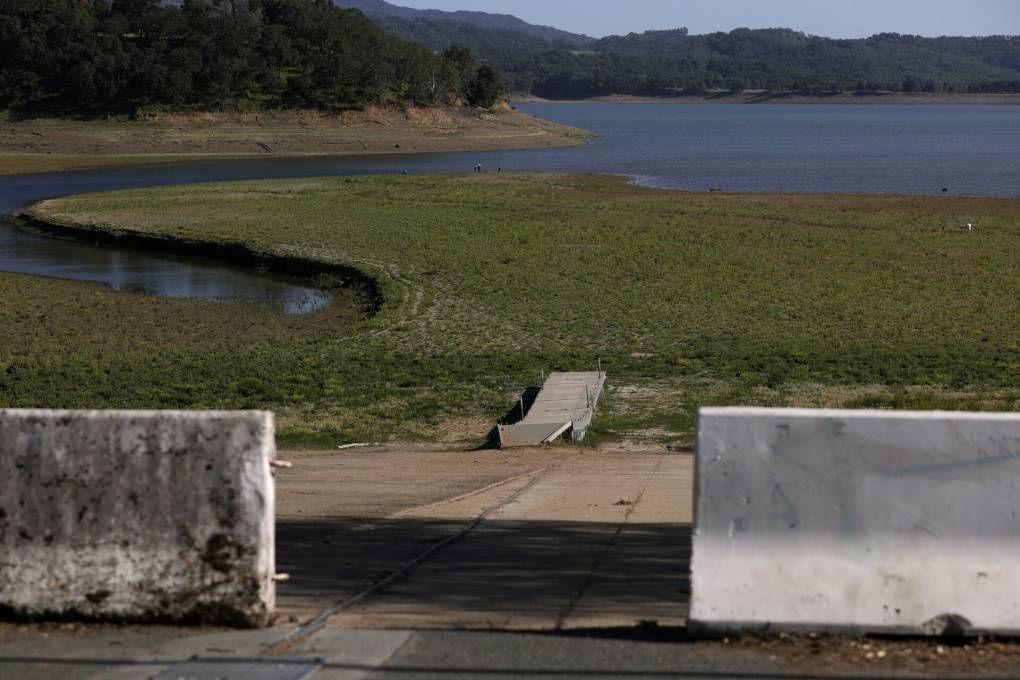
"caption": "A boat dock sits on dry ground far from the water at Lake Mendocino on April 22, 2021 in Ukiah, California. ",
"description": "A boat dock sits on dry ground far from the water at Lake Mendocino on April 22, 2021 in Ukiah, California. ",
"title": "When the State Cut Their Water, These California Users Created a Collaborative Solution",
"credit": "Justin Sullivan/Getty Images",
"status": "inherit",
"altTag": "A boat dock sits on dry ground far from the water at Lake Mendocino on April 22, 2021 in Ukiah, California.",
"isLoading": false,
"fetchFailed": false
},
"science_1981063": {
"type": "attachments",
"id": "science_1981063",
"meta": {
"index": "attachments_1716263798",
"site": "science",
"id": "1981063",
"found": true
},
"parent": 1981061,
"imgSizes": {
"twentyfourteen-full-width": {
"file": "https://ww2.kqed.org/app/uploads/sites/35/2022/12/RS61699_GettyImages-976086950-qut-1038x576.jpg",
"width": 1038,
"mimeType": "image/jpeg",
"height": 576
},
"thumbnail": {
"file": "https://ww2.kqed.org/app/uploads/sites/35/2022/12/RS61699_GettyImages-976086950-qut-160x107.jpg",
"width": 160,
"mimeType": "image/jpeg",
"height": 107
},
"post-thumbnail": {
"file": "https://ww2.kqed.org/app/uploads/sites/35/2022/12/RS61699_GettyImages-976086950-qut-672x372.jpg",
"width": 672,
"mimeType": "image/jpeg",
"height": 372
},
"kqedFullSize": {
"file": "https://ww2.kqed.org/app/uploads/sites/35/2022/12/RS61699_GettyImages-976086950-qut.jpg",
"width": 1920,
"height": 1279
},
"large": {
"file": "https://ww2.kqed.org/app/uploads/sites/35/2022/12/RS61699_GettyImages-976086950-qut-1020x679.jpg",
"width": 1020,
"mimeType": "image/jpeg",
"height": 679
},
"1536x1536": {
"file": "https://ww2.kqed.org/app/uploads/sites/35/2022/12/RS61699_GettyImages-976086950-qut-1536x1023.jpg",
"width": 1536,
"mimeType": "image/jpeg",
"height": 1023
},
"medium": {
"file": "https://ww2.kqed.org/app/uploads/sites/35/2022/12/RS61699_GettyImages-976086950-qut-800x533.jpg",
"width": 800,
"mimeType": "image/jpeg",
"height": 533
},
"medium_large": {
"file": "https://ww2.kqed.org/app/uploads/sites/35/2022/12/RS61699_GettyImages-976086950-qut-768x512.jpg",
"width": 768,
"mimeType": "image/jpeg",
"height": 512
}
},
"publishDate": 1671567122,
"modified": 1672187072,
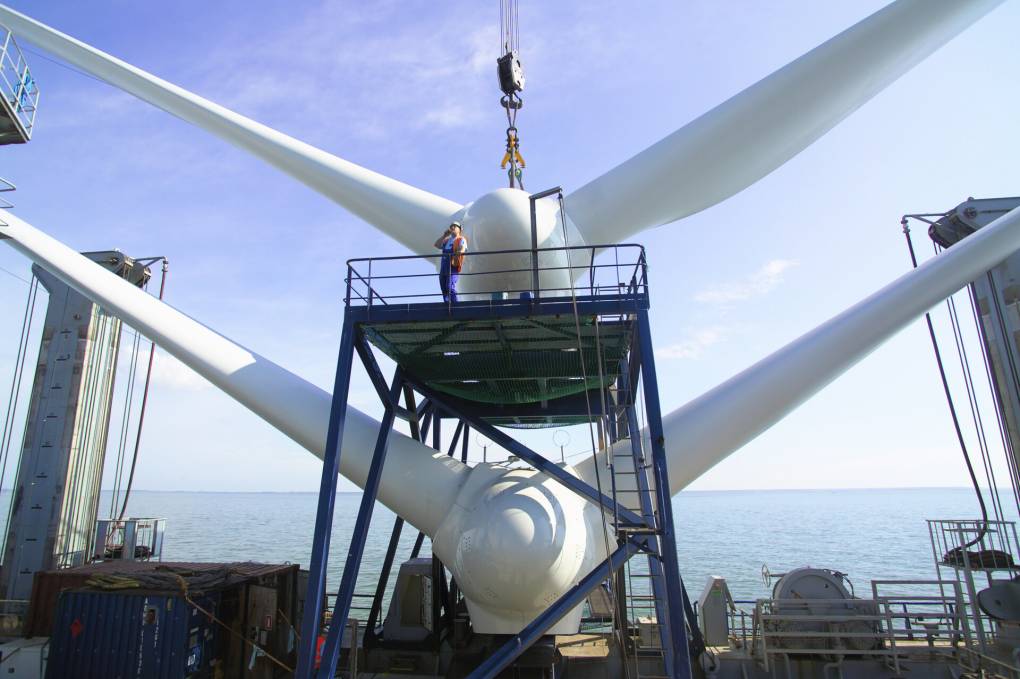
"caption": "The first nacelles onboard a sea energy \"jack-up ship,\" ready for lifting into place on the Kentish Flats Offshore Wind Farm, off Whitstable, Kent, England.",
"description": null,
"title": "First Nacelles onboard the sea energy jackup ship ready for lifting into place on the Kentish flats windfarm sight Whitstable Kent",
"credit": "Chris Laurens/Construction Photography/Avalon/Getty Images",
"status": "inherit",
"altTag": "A man stands on a platform in front of two white wind turbine propellers.",
"isLoading": false,
"fetchFailed": false
},
"science_1981049": {
"type": "attachments",
"id": "science_1981049",
"meta": {
"index": "attachments_1716263798",
"site": "science",
"id": "1981049",
"found": true
},
"parent": 1981041,
"imgSizes": {
"twentyfourteen-full-width": {
"file": "https://ww2.kqed.org/app/uploads/sites/35/2022/12/102622-Shasta-Salmonid-Collection-CDWR-CM-01-1024x576.jpg",
"width": 1024,
"mimeType": "image/jpeg",
"height": 576
},
"thumbnail": {
"file": "https://ww2.kqed.org/app/uploads/sites/35/2022/12/102622-Shasta-Salmonid-Collection-CDWR-CM-01-160x107.jpg",
"width": 160,
"mimeType": "image/jpeg",
"height": 107
},
"post-thumbnail": {
"file": "https://ww2.kqed.org/app/uploads/sites/35/2022/12/102622-Shasta-Salmonid-Collection-CDWR-CM-01-672x372.jpg",
"width": 672,
"mimeType": "image/jpeg",
"height": 372
},
"kqedFullSize": {
"file": "https://ww2.kqed.org/app/uploads/sites/35/2022/12/102622-Shasta-Salmonid-Collection-CDWR-CM-01.jpg",
"width": 1024,
"height": 682
},
"large": {
"file": "https://ww2.kqed.org/app/uploads/sites/35/2022/12/102622-Shasta-Salmonid-Collection-CDWR-CM-01-1020x679.jpg",
"width": 1020,
"mimeType": "image/jpeg",
"height": 679
},
"medium": {
"file": "https://ww2.kqed.org/app/uploads/sites/35/2022/12/102622-Shasta-Salmonid-Collection-CDWR-CM-01-800x533.jpg",
"width": 800,
"mimeType": "image/jpeg",
"height": 533
},
"medium_large": {
"file": "https://ww2.kqed.org/app/uploads/sites/35/2022/12/102622-Shasta-Salmonid-Collection-CDWR-CM-01-768x512.jpg",
"width": 768,
"mimeType": "image/jpeg",
"height": 512
}
},
"publishDate": 1671476425,
"modified": 1671583351,
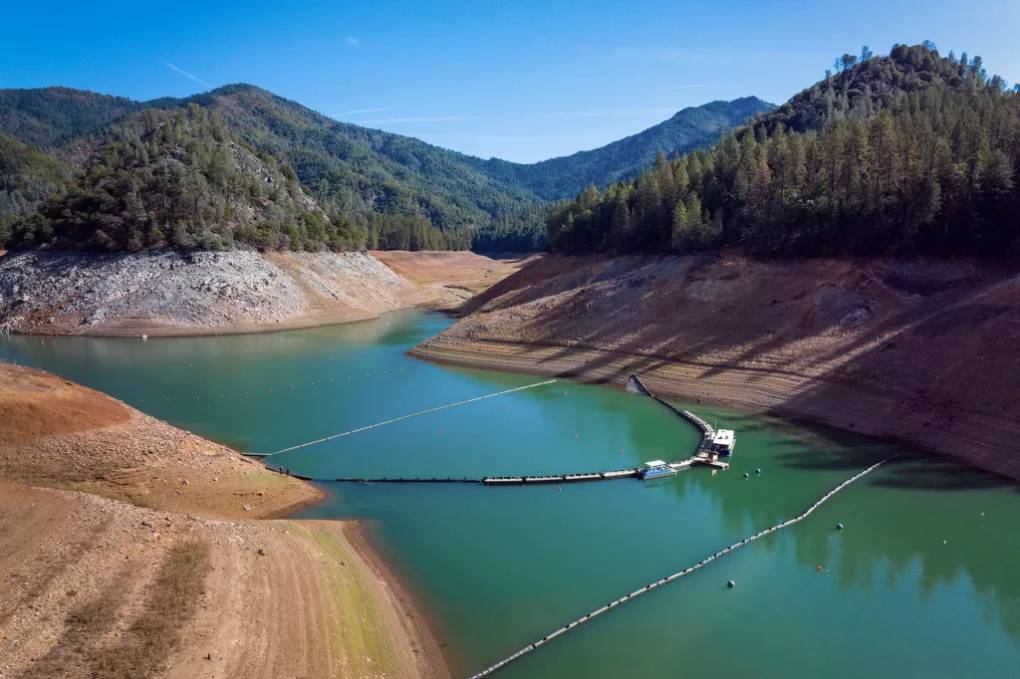
"caption": "A collection system is set up at Dekkas Rock at Shasta Lake. The pilot project will evaluate the viability of collecting juvenile salmon as they migrate out of the McCloud River upstream of Shasta Dam.",
"description": "A collection system is set up at Dekkas Rock at Shasta Lake. The pilot project will evaluate the viability of collecting juvenile salmon as they migrate out of the McCloud River upstream of Shasta Dam. ",
"title": "A collection system is set up at Dekkas Rock at Shasta Lake. The pilot project will evaluate the viability of collecting juvenile salmon as they migrate out of the McCloud River upstream of Shasta Dam.",
"credit": "Florence Flow/California Department of Water Resources",
"status": "inherit",
"altTag": "Brown dried lake bed rises up out of green water.",
"isLoading": false,
"fetchFailed": false
},
"science_1980934": {
"type": "attachments",
"id": "science_1980934",
"meta": {
"index": "attachments_1716263798",
"site": "science",
"id": "1980934",
"found": true
},
"parent": 1980933,
"imgSizes": {
"twentyfourteen-full-width": {
"file": "https://ww2.kqed.org/app/uploads/sites/35/2022/12/gettyimages-472261648-87229681b2a5093db6d32c529933bb8b620ad4bb-1038x576.jpg",
"width": 1038,
"mimeType": "image/jpeg",
"height": 576
},
"thumbnail": {
"file": "https://ww2.kqed.org/app/uploads/sites/35/2022/12/gettyimages-472261648-87229681b2a5093db6d32c529933bb8b620ad4bb-160x120.jpg",
"width": 160,
"mimeType": "image/jpeg",
"height": 120
},
"post-thumbnail": {
"file": "https://ww2.kqed.org/app/uploads/sites/35/2022/12/gettyimages-472261648-87229681b2a5093db6d32c529933bb8b620ad4bb-672x372.jpg",
"width": 672,
"mimeType": "image/jpeg",
"height": 372
},
"kqedFullSize": {
"file": "https://ww2.kqed.org/app/uploads/sites/35/2022/12/gettyimages-472261648-87229681b2a5093db6d32c529933bb8b620ad4bb-scaled.jpg",
"width": 2560,
"height": 1920
},
"2048x2048": {
"file": "https://ww2.kqed.org/app/uploads/sites/35/2022/12/gettyimages-472261648-87229681b2a5093db6d32c529933bb8b620ad4bb-2048x1536.jpg",
"width": 2048,
"mimeType": "image/jpeg",
"height": 1536
},
"large": {
"file": "https://ww2.kqed.org/app/uploads/sites/35/2022/12/gettyimages-472261648-87229681b2a5093db6d32c529933bb8b620ad4bb-1020x765.jpg",
"width": 1020,
"mimeType": "image/jpeg",
"height": 765
},
"1536x1536": {
"file": "https://ww2.kqed.org/app/uploads/sites/35/2022/12/gettyimages-472261648-87229681b2a5093db6d32c529933bb8b620ad4bb-1536x1152.jpg",
"width": 1536,
"mimeType": "image/jpeg",
"height": 1152
},
"full-width": {
"file": "https://ww2.kqed.org/app/uploads/sites/35/2022/12/gettyimages-472261648-87229681b2a5093db6d32c529933bb8b620ad4bb-1920x1440.jpg",
"width": 1920,
"mimeType": "image/jpeg",
"height": 1440
},
"medium": {
"file": "https://ww2.kqed.org/app/uploads/sites/35/2022/12/gettyimages-472261648-87229681b2a5093db6d32c529933bb8b620ad4bb-800x600.jpg",
"width": 800,
"mimeType": "image/jpeg",
"height": 600
},
"medium_large": {
"file": "https://ww2.kqed.org/app/uploads/sites/35/2022/12/gettyimages-472261648-87229681b2a5093db6d32c529933bb8b620ad4bb-768x576.jpg",
"width": 768,
"mimeType": "image/jpeg",
"height": 576
}
},
"publishDate": 1670609776,
"modified": 1670628135,
"caption": "The transportation sector makes up 27% of US greenhouse gas emissions. Of that percentage, medium- and heavy-duty trucks — everything from delivery vans to big rigs –- make up 26% according to an inventory of greenhouse gas emissions by the EPA.",
"description": null,
"title": "The transportation sector makes up 27% of U.S. greenhouse gas emissions. Of that percentage, medium and heavy duty trucks — everything from delivery vans to big rigs –- make up 26% according to an inventory of greenhouse gas emissions by the EPA.",
"credit": "Ian Mcdonnell/Getty Images",
"status": "inherit",
"altTag": "A line of semi-trucks in the foreground, with the sun setting in the background.",
"isLoading": false,
"fetchFailed": false
},
"science_1980916": {
"type": "attachments",
"id": "science_1980916",
"meta": {
"index": "attachments_1716263798",
"site": "science",
"id": "1980916",
"found": true
},
"parent": 1980900,
"imgSizes": {
"twentyfourteen-full-width": {
"file": "https://ww2.kqed.org/app/uploads/sites/35/2022/12/GettyImages-1407548832-1024x576.jpg",
"width": 1024,
"mimeType": "image/jpeg",
"height": 576
},
"thumbnail": {
"file": "https://ww2.kqed.org/app/uploads/sites/35/2022/12/GettyImages-1407548832-160x115.jpg",
"width": 160,
"mimeType": "image/jpeg",
"height": 115
},
"post-thumbnail": {
"file": "https://ww2.kqed.org/app/uploads/sites/35/2022/12/GettyImages-1407548832-672x372.jpg",
"width": 672,
"mimeType": "image/jpeg",
"height": 372
},
"kqedFullSize": {
"file": "https://ww2.kqed.org/app/uploads/sites/35/2022/12/GettyImages-1407548832.jpg",
"width": 1024,
"height": 736
},
"large": {
"file": "https://ww2.kqed.org/app/uploads/sites/35/2022/12/GettyImages-1407548832-1020x733.jpg",
"width": 1020,
"mimeType": "image/jpeg",
"height": 733
},
"medium": {
"file": "https://ww2.kqed.org/app/uploads/sites/35/2022/12/GettyImages-1407548832-800x575.jpg",
"width": 800,
"mimeType": "image/jpeg",
"height": 575
},
"medium_large": {
"file": "https://ww2.kqed.org/app/uploads/sites/35/2022/12/GettyImages-1407548832-768x552.jpg",
"width": 768,
"mimeType": "image/jpeg",
"height": 552
}
},
"publishDate": 1670460991,
"modified": 1670462632,
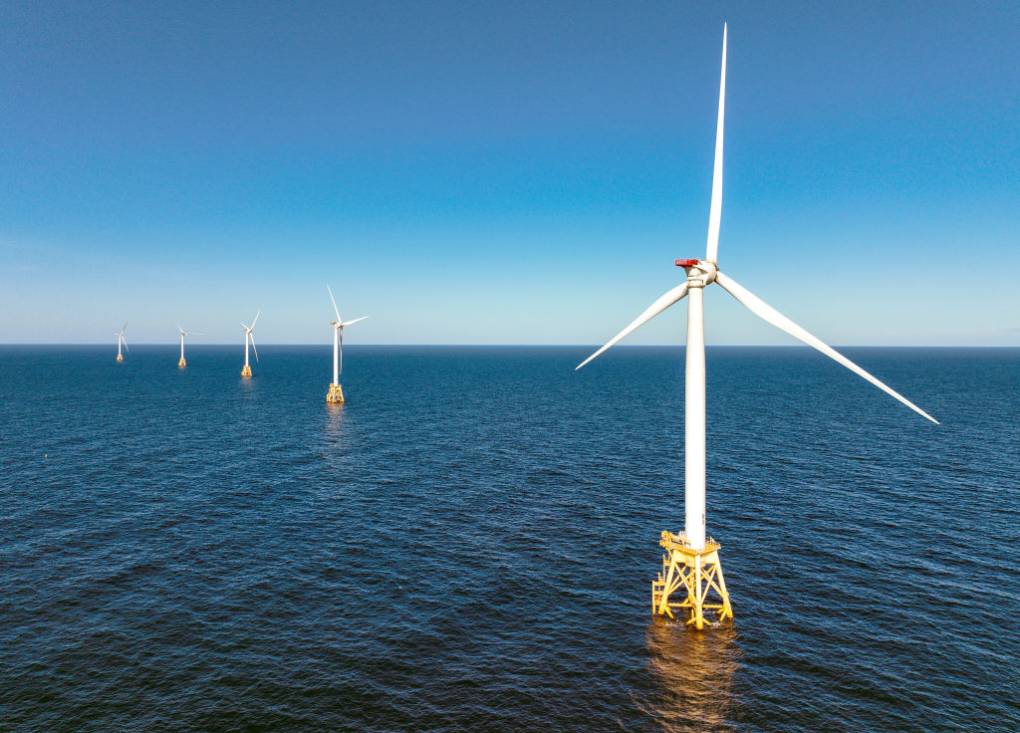
"caption": "Wind turbines generate electricity at the Block Island Wind Farm, the first commercial offshore wind farm in the United States, on July 7, 2022, near Block Island, Rhode Island.",
"description": null,
"title": "Waters Off Block Island Host America's First Offshore Wind Farm",
"credit": "John Moore/Getty Images",
"status": "inherit",
"altTag": "Wind turbines at sea.",
"isLoading": false,
"fetchFailed": false
},
"science_1980881": {
"type": "attachments",
"id": "science_1980881",
"meta": {
"index": "attachments_1716263798",
"site": "science",
"id": "1980881",
"found": true
},
"parent": 1980880,
"imgSizes": {
"twentyfourteen-full-width": {
"file": "https://ww2.kqed.org/app/uploads/sites/35/2022/12/ap22005753887062-7a718e407e4ee29be2df2f9497b26a7bb3441091-1038x576.jpg",
"width": 1038,
"mimeType": "image/jpeg",
"height": 576
},
"thumbnail": {
"file": "https://ww2.kqed.org/app/uploads/sites/35/2022/12/ap22005753887062-7a718e407e4ee29be2df2f9497b26a7bb3441091-160x120.jpg",
"width": 160,
"mimeType": "image/jpeg",
"height": 120
},
"post-thumbnail": {
"file": "https://ww2.kqed.org/app/uploads/sites/35/2022/12/ap22005753887062-7a718e407e4ee29be2df2f9497b26a7bb3441091-672x372.jpg",
"width": 672,
"mimeType": "image/jpeg",
"height": 372
},
"kqedFullSize": {
"file": "https://ww2.kqed.org/app/uploads/sites/35/2022/12/ap22005753887062-7a718e407e4ee29be2df2f9497b26a7bb3441091-scaled.jpg",
"width": 2560,
"height": 1919
},
"2048x2048": {
"file": "https://ww2.kqed.org/app/uploads/sites/35/2022/12/ap22005753887062-7a718e407e4ee29be2df2f9497b26a7bb3441091-2048x1536.jpg",
"width": 2048,
"mimeType": "image/jpeg",
"height": 1536
},
"large": {
"file": "https://ww2.kqed.org/app/uploads/sites/35/2022/12/ap22005753887062-7a718e407e4ee29be2df2f9497b26a7bb3441091-1020x765.jpg",
"width": 1020,
"mimeType": "image/jpeg",
"height": 765
},
"1536x1536": {
"file": "https://ww2.kqed.org/app/uploads/sites/35/2022/12/ap22005753887062-7a718e407e4ee29be2df2f9497b26a7bb3441091-1536x1152.jpg",
"width": 1536,
"mimeType": "image/jpeg",
"height": 1152
},
"full-width": {
"file": "https://ww2.kqed.org/app/uploads/sites/35/2022/12/ap22005753887062-7a718e407e4ee29be2df2f9497b26a7bb3441091-1920x1440.jpg",
"width": 1920,
"mimeType": "image/jpeg",
"height": 1440
},
"medium": {
"file": "https://ww2.kqed.org/app/uploads/sites/35/2022/12/ap22005753887062-7a718e407e4ee29be2df2f9497b26a7bb3441091-800x600.jpg",
"width": 800,
"mimeType": "image/jpeg",
"height": 600
},
"medium_large": {
"file": "https://ww2.kqed.org/app/uploads/sites/35/2022/12/ap22005753887062-7a718e407e4ee29be2df2f9497b26a7bb3441091-768x576.jpg",
"width": 768,
"mimeType": "image/jpeg",
"height": 576
}
},
"publishDate": 1669934324,
"modified": 1669934891,
"caption": "This photo from 2019 provided by the U.S. Air Force/Alaska National Guard photo shows how closely the village of Napakiak, Alaska is at risk of severe erosion by the nearby Kuskokwim River.",
"description": "This photo from 2019 provided by the U.S. Air Force/Alaska National Guard photo shows how closely the village of Napakiak, Alaska is at risk of severe erosion by the nearby Kuskokwim River.",
"title": "This photo from 2019 provided by the U.S. Air Force/Alaska National Guard photo shows how closely the village of Napakiak, Alaska is at risk of severe erosion by the nearby Kuskokwim River.",
"credit": "Emily Farnsworth/AP",
"status": "inherit",
"altTag": "This photo from 2019 provided by the U.S. Air Force/Alaska National Guard photo shows how closely the village of Napakiak, Alaska is at risk of severe erosion by the nearby Kuskokwim River.",
"isLoading": false,
"fetchFailed": false
},
"science_1980855": {
"type": "attachments",
"id": "science_1980855",
"meta": {
"index": "attachments_1716263798",
"site": "science",
"id": "1980855",
"found": true
},
"parent": 1980854,
"imgSizes": {
"twentyfourteen-full-width": {
"file": "https://ww2.kqed.org/app/uploads/sites/35/2022/11/ap22324152100087_custom-9ffe893d8d6f866d9c09fdf7a231bf598badc0f4-1038x576.jpg",
"width": 1038,
"mimeType": "image/jpeg",
"height": 576
},
"thumbnail": {
"file": "https://ww2.kqed.org/app/uploads/sites/35/2022/11/ap22324152100087_custom-9ffe893d8d6f866d9c09fdf7a231bf598badc0f4-160x107.jpg",
"width": 160,
"mimeType": "image/jpeg",
"height": 107
},
"post-thumbnail": {
"file": "https://ww2.kqed.org/app/uploads/sites/35/2022/11/ap22324152100087_custom-9ffe893d8d6f866d9c09fdf7a231bf598badc0f4-672x372.jpg",
"width": 672,
"mimeType": "image/jpeg",
"height": 372
},
"kqedFullSize": {
"file": "https://ww2.kqed.org/app/uploads/sites/35/2022/11/ap22324152100087_custom-9ffe893d8d6f866d9c09fdf7a231bf598badc0f4-scaled.jpg",
"width": 2560,
"height": 1705
},
"2048x2048": {
"file": "https://ww2.kqed.org/app/uploads/sites/35/2022/11/ap22324152100087_custom-9ffe893d8d6f866d9c09fdf7a231bf598badc0f4-2048x1364.jpg",
"width": 2048,
"mimeType": "image/jpeg",
"height": 1364
},
"large": {
"file": "https://ww2.kqed.org/app/uploads/sites/35/2022/11/ap22324152100087_custom-9ffe893d8d6f866d9c09fdf7a231bf598badc0f4-1020x679.jpg",
"width": 1020,
"mimeType": "image/jpeg",
"height": 679
},
"1536x1536": {
"file": "https://ww2.kqed.org/app/uploads/sites/35/2022/11/ap22324152100087_custom-9ffe893d8d6f866d9c09fdf7a231bf598badc0f4-1536x1023.jpg",
"width": 1536,
"mimeType": "image/jpeg",
"height": 1023
},
"full-width": {
"file": "https://ww2.kqed.org/app/uploads/sites/35/2022/11/ap22324152100087_custom-9ffe893d8d6f866d9c09fdf7a231bf598badc0f4-1920x1279.jpg",
"width": 1920,
"mimeType": "image/jpeg",
"height": 1279
},
"medium": {
"file": "https://ww2.kqed.org/app/uploads/sites/35/2022/11/ap22324152100087_custom-9ffe893d8d6f866d9c09fdf7a231bf598badc0f4-800x533.jpg",
"width": 800,
"mimeType": "image/jpeg",
"height": 533
},
"medium_large": {
"file": "https://ww2.kqed.org/app/uploads/sites/35/2022/11/ap22324152100087_custom-9ffe893d8d6f866d9c09fdf7a231bf598badc0f4-768x512.jpg",
"width": 768,
"mimeType": "image/jpeg",
"height": 512
}
},
"publishDate": 1669054080,
"modified": 1669054474,
"caption": "Sameh Shoukry, president of the COP27 climate summit, right, speaks during a closing plenary session at the U.N. Climate Summit, Sunday, Nov. 20, 2022, in Sharm el-Sheikh, Egypt. ",
"description": "Sameh Shoukry, president of the COP27 climate summit, right, speaks during a closing plenary session at the U.N. Climate Summit, Sunday, Nov. 20, 2022, in Sharm el-Sheikh, Egypt. ",
"title": "The COP27 summit went late into overtime, with Sameh Shoukry, president of the climate summit, speaking during a closing session on Sunday.",
"credit": "Peter Dejong/AP ",
"status": "inherit",
"altTag": "Sameh Shoukry, president of the COP27 climate summit, right, speaks during a closing plenary session at the U.N. Climate Summit, Sunday, Nov. 20, 2022, in Sharm el-Sheikh, Egypt.",
"isLoading": false,
"fetchFailed": false
},
"science_1980810": {
"type": "attachments",
"id": "science_1980810",
"meta": {
"index": "attachments_1716263798",
"site": "science",
"id": "1980810",
"found": true
},
"parent": 1980809,
"imgSizes": {
"twentyfourteen-full-width": {
"file": "https://ww2.kqed.org/app/uploads/sites/35/2022/11/wildfirestoolkit_clinic_stmartin-1038x576.jpg",
"width": 1038,
"mimeType": "image/jpeg",
"height": 576
},
"thumbnail": {
"file": "https://ww2.kqed.org/app/uploads/sites/35/2022/11/wildfirestoolkit_clinic_stmartin-160x107.jpg",
"width": 160,
"mimeType": "image/jpeg",
"height": 107
},
"post-thumbnail": {
"file": "https://ww2.kqed.org/app/uploads/sites/35/2022/11/wildfirestoolkit_clinic_stmartin-672x372.jpg",
"width": 672,
"mimeType": "image/jpeg",
"height": 372
},
"kqedFullSize": {
"file": "https://ww2.kqed.org/app/uploads/sites/35/2022/11/wildfirestoolkit_clinic_stmartin.jpg",
"width": 1100,
"height": 734
},
"large": {
"file": "https://ww2.kqed.org/app/uploads/sites/35/2022/11/wildfirestoolkit_clinic_stmartin-1020x681.jpg",
"width": 1020,
"mimeType": "image/jpeg",
"height": 681
},
"medium": {
"file": "https://ww2.kqed.org/app/uploads/sites/35/2022/11/wildfirestoolkit_clinic_stmartin-800x534.jpg",
"width": 800,
"mimeType": "image/jpeg",
"height": 534
},
"medium_large": {
"file": "https://ww2.kqed.org/app/uploads/sites/35/2022/11/wildfirestoolkit_clinic_stmartin-768x512.jpg",
"width": 768,
"mimeType": "image/jpeg",
"height": 512
}
},
"publishDate": 1668624618,
"modified": 1668804292,
"caption": "Pascale Fisher, a family nurse practitioner, checks a baby's heartbeat at La Clínica's San Antonio Neighborhood Health Center in Oakland.",
"description": "Pascale Fisher, a family nurse practitioner, checks a baby’s heartbeat at La Clínica's San Antonio Neighborhood Health Center in Oakland.",
"title": "Pascale Fisher, a family nurse practitioner, checks a baby’s heartbeat at La Clínica's San Antonio Neighborhood Health Center in Oakland.",
"credit": "Ana Homonnay/La Clínica de La Raza",
"status": "inherit",
"altTag": "Pascale Fisher, a family nurse practitioner, checks a baby’s heartbeat at La Clínica's San Antonio Neighborhood Health Center in Oakland.",
"isLoading": false,
"fetchFailed": false
},
"science_1980774": {
"type": "attachments",
"id": "science_1980774",
"meta": {
"index": "attachments_1716263798",
"site": "science",
"id": "1980774",
"found": true
},
"parent": 1980766,
"imgSizes": {
"thumbnail": {
"file": "https://ww2.kqed.org/app/uploads/sites/35/2022/11/RS58620_002_KQED_FireFoundryMarin_09152022-sfi-2-160x107.jpeg",
"width": 160,
"mimeType": "image/jpeg",
"height": 107
},
"kqedFullSize": {
"file": "https://ww2.kqed.org/app/uploads/sites/35/2022/11/RS58620_002_KQED_FireFoundryMarin_09152022-sfi-2.jpeg",
"width": 540,
"height": 360
}
},
"publishDate": 1668095577,
"modified": 1668712975,
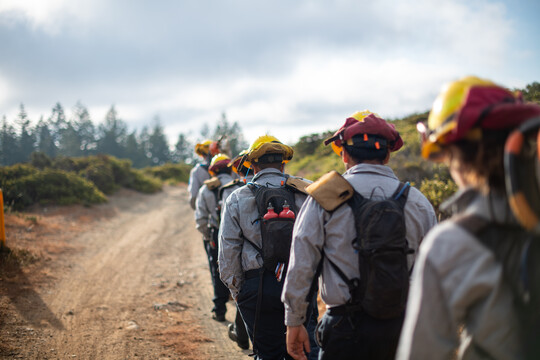
"caption": "The Fire Foundry team on a hike near the Marin County Fire Department in Woodacre on Sept. 15, 2022. ",
"description": null,
"title": "RS58620_002_KQED_FireFoundryMarin_09152022-sfi",
"credit": "Beth LaBerge/KQED",
"status": "inherit",
"altTag": "Men wearing grey shirts, black backpacks, yellow hats walk in a line along a brown fire road.",
"isLoading": false,
"fetchFailed": false
},
"science_1980794": {
"type": "attachments",
"id": "science_1980794",
"meta": {
"index": "attachments_1716263798",
"site": "science",
"id": "1980794",
"found": true
},
"parent": 1980792,
"imgSizes": {
"twentyfourteen-full-width": {
"file": "https://ww2.kqed.org/app/uploads/sites/35/2022/11/RS60159_GettyImages-94155086-qut-1038x576.jpg",
"width": 1038,
"mimeType": "image/jpeg",
"height": 576
},
"thumbnail": {
"file": "https://ww2.kqed.org/app/uploads/sites/35/2022/11/RS60159_GettyImages-94155086-qut-160x107.jpg",
"width": 160,
"mimeType": "image/jpeg",
"height": 107
},
"post-thumbnail": {
"file": "https://ww2.kqed.org/app/uploads/sites/35/2022/11/RS60159_GettyImages-94155086-qut-672x372.jpg",
"width": 672,
"mimeType": "image/jpeg",
"height": 372
},
"kqedFullSize": {
"file": "https://ww2.kqed.org/app/uploads/sites/35/2022/11/RS60159_GettyImages-94155086-qut.jpg",
"width": 1920,
"height": 1280
},
"large": {
"file": "https://ww2.kqed.org/app/uploads/sites/35/2022/11/RS60159_GettyImages-94155086-qut-1020x680.jpg",
"width": 1020,
"mimeType": "image/jpeg",
"height": 680
},
"1536x1536": {
"file": "https://ww2.kqed.org/app/uploads/sites/35/2022/11/RS60159_GettyImages-94155086-qut-1536x1024.jpg",
"width": 1536,
"mimeType": "image/jpeg",
"height": 1024
},
"medium": {
"file": "https://ww2.kqed.org/app/uploads/sites/35/2022/11/RS60159_GettyImages-94155086-qut-800x533.jpg",
"width": 800,
"mimeType": "image/jpeg",
"height": 533
},
"medium_large": {
"file": "https://ww2.kqed.org/app/uploads/sites/35/2022/11/RS60159_GettyImages-94155086-qut-768x512.jpg",
"width": 768,
"mimeType": "image/jpeg",
"height": 512
}
},
"publishDate": 1668579475,
"modified": 1668630661,
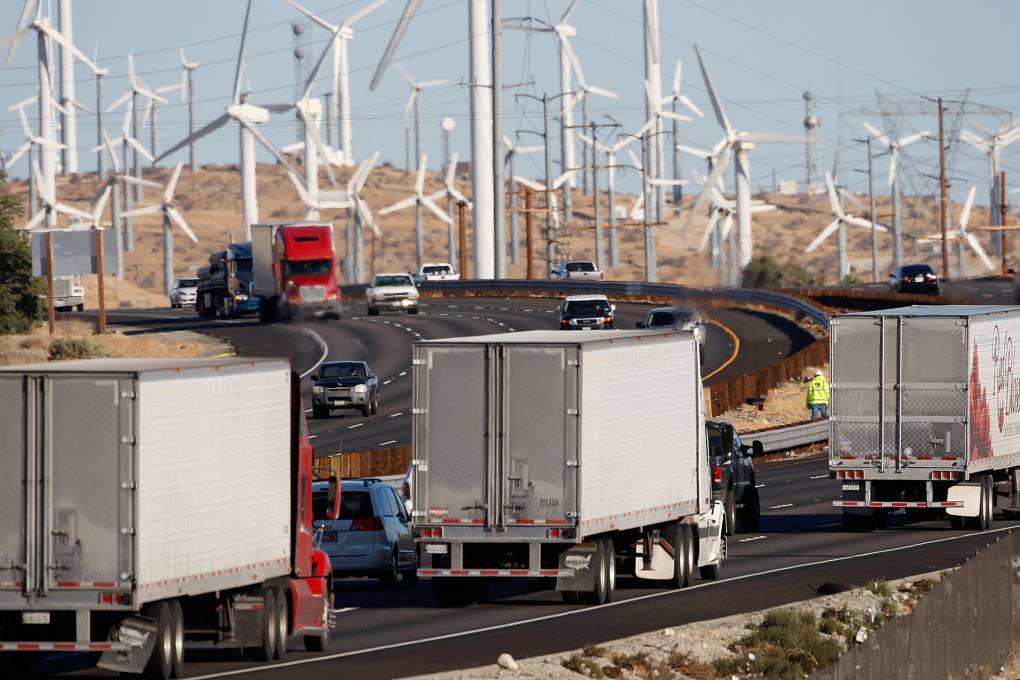
"caption": "Emissions-producing diesel trucks and cars pass non-polluting windmills along the 10 freeway on Dec. 8, 2009, near Banning. ",
"description": null,
"title": "New Climate Report Names Current Decade As Warmest On Record",
"credit": "David McNew/Getty Images",
"status": "inherit",
"altTag": "White wind turbnines in the background of a highway with big red semi-trucks.",
"isLoading": false,
"fetchFailed": false
},
"science_1980754": {
"type": "attachments",
"id": "science_1980754",
"meta": {
"index": "attachments_1716263798",
"site": "science",
"id": "1980754",
"found": true
},
"title": "Los Angeles Times",
"publishDate": 1667869249,
"status": "inherit",
"parent": 1980720,
"modified": 1752004261,
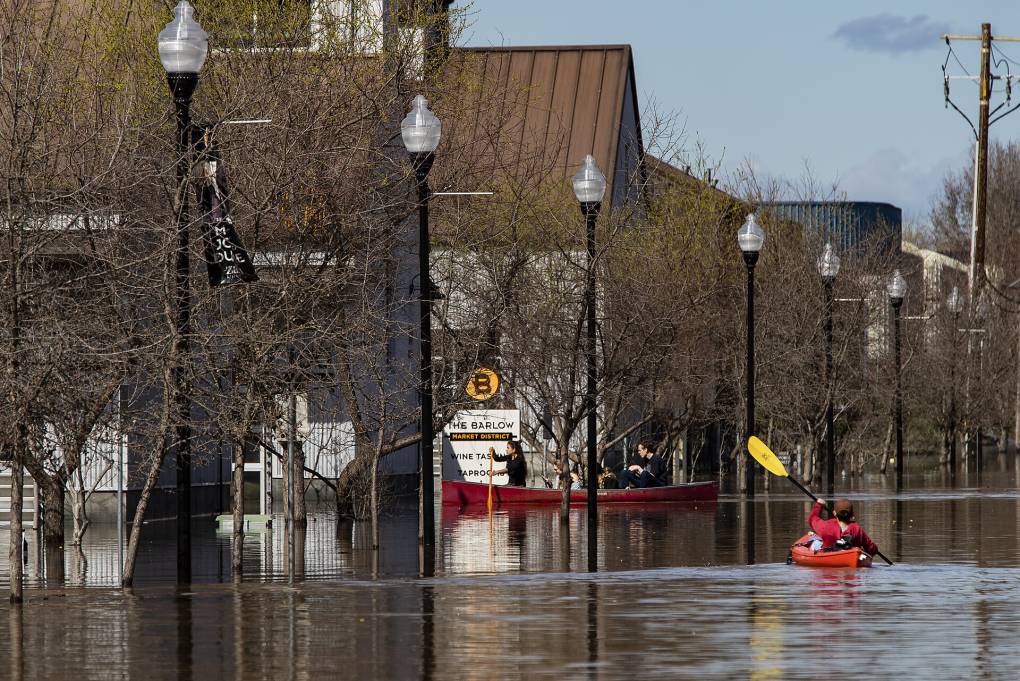
"caption": "A Sebastopol resident encounters fellow paddlers in a canoe as he paddles in the floodwaters surrounding market district, The Barlow, after the Russian River crested its banks on Feb. 28, 2019, in Sebastopol, California.",
"credit": "Gina Ferazzi/Los Angeles Times via Getty Images",
"altTag": "A kayaker in a red boat paddles down a flooded street alongside shops.",
"description": null,
"imgSizes": {
"medium": {
"file": "https://cdn.kqed.org/wp-content/uploads/sites/35/2022/11/RS59853_GettyImages-1128158019-qut-800x534.jpg",
"width": 800,
"height": 534,
"mimeType": "image/jpeg"
},
"large": {
"file": "https://cdn.kqed.org/wp-content/uploads/sites/35/2022/11/RS59853_GettyImages-1128158019-qut-1020x681.jpg",
"width": 1020,
"height": 681,
"mimeType": "image/jpeg"
},
"thumbnail": {
"file": "https://cdn.kqed.org/wp-content/uploads/sites/35/2022/11/RS59853_GettyImages-1128158019-qut-160x107.jpg",
"width": 160,
"height": 107,
"mimeType": "image/jpeg"
},
"medium_large": {
"file": "https://cdn.kqed.org/wp-content/uploads/sites/35/2022/11/RS59853_GettyImages-1128158019-qut-768x512.jpg",
"width": 768,
"height": 512,
"mimeType": "image/jpeg"
},
"1536x1536": {
"file": "https://cdn.kqed.org/wp-content/uploads/sites/35/2022/11/RS59853_GettyImages-1128158019-qut-1536x1025.jpg",
"width": 1536,
"height": 1025,
"mimeType": "image/jpeg"
},
"post-thumbnail": {
"file": "https://cdn.kqed.org/wp-content/uploads/sites/35/2022/11/RS59853_GettyImages-1128158019-qut-672x372.jpg",
"width": 672,
"height": 372,
"mimeType": "image/jpeg"
},
"twentyfourteen-full-width": {
"file": "https://cdn.kqed.org/wp-content/uploads/sites/35/2022/11/RS59853_GettyImages-1128158019-qut-1038x576.jpg",
"width": 1038,
"height": 576,
"mimeType": "image/jpeg"
},
"kqedFullSize": {
"file": "https://cdn.kqed.org/wp-content/uploads/sites/35/2022/11/RS59853_GettyImages-1128158019-qut.jpg",
"width": 1920,
"height": 1281
}
},
"isLoading": false,
"fetchFailed": false
},
"science_1980726": {
"type": "attachments",
"id": "science_1980726",
"meta": {
"index": "attachments_1716263798",
"site": "science",
"id": "1980726",
"found": true
},
"parent": 1980725,
"imgSizes": {
"twentyfourteen-full-width": {
"file": "https://ww2.kqed.org/app/uploads/sites/35/2022/11/20220630-ukrainecoal-charbage-0005-bbdb4ac8b0c1895f1a87bc340359be4309edc926-1038x576.jpg",
"width": 1038,
"mimeType": "image/jpeg",
"height": 576
},
"thumbnail": {
"file": "https://ww2.kqed.org/app/uploads/sites/35/2022/11/20220630-ukrainecoal-charbage-0005-bbdb4ac8b0c1895f1a87bc340359be4309edc926-160x120.jpg",
"width": 160,
"mimeType": "image/jpeg",
"height": 120
},
"post-thumbnail": {
"file": "https://ww2.kqed.org/app/uploads/sites/35/2022/11/20220630-ukrainecoal-charbage-0005-bbdb4ac8b0c1895f1a87bc340359be4309edc926-672x372.jpg",
"width": 672,
"mimeType": "image/jpeg",
"height": 372
},
"kqedFullSize": {
"file": "https://ww2.kqed.org/app/uploads/sites/35/2022/11/20220630-ukrainecoal-charbage-0005-bbdb4ac8b0c1895f1a87bc340359be4309edc926.jpg",
"width": 2219,
"height": 1664
},
"2048x2048": {
"file": "https://ww2.kqed.org/app/uploads/sites/35/2022/11/20220630-ukrainecoal-charbage-0005-bbdb4ac8b0c1895f1a87bc340359be4309edc926-2048x1536.jpg",
"width": 2048,
"mimeType": "image/jpeg",
"height": 1536
},
"large": {
"file": "https://ww2.kqed.org/app/uploads/sites/35/2022/11/20220630-ukrainecoal-charbage-0005-bbdb4ac8b0c1895f1a87bc340359be4309edc926-1020x765.jpg",
"width": 1020,
"mimeType": "image/jpeg",
"height": 765
},
"1536x1536": {
"file": "https://ww2.kqed.org/app/uploads/sites/35/2022/11/20220630-ukrainecoal-charbage-0005-bbdb4ac8b0c1895f1a87bc340359be4309edc926-1536x1152.jpg",
"width": 1536,
"mimeType": "image/jpeg",
"height": 1152
},
"full-width": {
"file": "https://ww2.kqed.org/app/uploads/sites/35/2022/11/20220630-ukrainecoal-charbage-0005-bbdb4ac8b0c1895f1a87bc340359be4309edc926-1920x1440.jpg",
"width": 1920,
"mimeType": "image/jpeg",
"height": 1440
},
"medium": {
"file": "https://ww2.kqed.org/app/uploads/sites/35/2022/11/20220630-ukrainecoal-charbage-0005-bbdb4ac8b0c1895f1a87bc340359be4309edc926-800x600.jpg",
"width": 800,
"mimeType": "image/jpeg",
"height": 600
},
"medium_large": {
"file": "https://ww2.kqed.org/app/uploads/sites/35/2022/11/20220630-ukrainecoal-charbage-0005-bbdb4ac8b0c1895f1a87bc340359be4309edc926-768x576.jpg",
"width": 768,
"mimeType": "image/jpeg",
"height": 576
}
},
"publishDate": 1667841915,
"modified": 1667843343,
"caption": "A mine railway operator in Eastern Ukraine waits as workers disembark. Russia's invasion of Ukraine disrupted global supplies of fossil fuels and led to more reliance on coal for electricity in some countries. The future sources of energy around the world are major topics at climate negotiations underway in Egypt starting this week.",
"description": "A mine railway operator in Eastern Ukraine waits as workers disembark. Russia's invasion of Ukraine disrupted global supplies of fossil fuels and led to more reliance on coal for electricity in some countries. The future sources of energy around the world are major topics at climate negotiations underway in Egypt starting this week.",
"title": "A mine railway operator in Eastern Ukraine waits as workers disembark. Russia's invasion of Ukraine disrupted global supplies of fossil fuels and led to more reliance on coal for electricity in some countries. The future sources of energy around the world are major topics at climate negotiations underway in Egypt starting this week.",
"credit": "Claire Harbage/NPR",
"status": "inherit",
"altTag": "A mine railway operator in Eastern Ukraine waits as workers disembark. Russia's invasion of Ukraine disrupted global supplies of fossil fuels and led to more reliance on coal for electricity in some countries. The future sources of energy around the world are major topics at climate negotiations underway in Egypt starting this week.",
"isLoading": false,
"fetchFailed": false
}
},
"audioPlayerReducer": {
"postId": "stream_live",
"isPaused": true,
"isPlaying": false,
"pfsActive": false,
"pledgeModalIsOpen": true,
"playerDrawerIsOpen": false,
"liveAudioPlayStartedAt": 0,
"liveAudioPlayContext": ""
},
"authorsReducer": {
"byline_science_1981169": {
"type": "authors",
"id": "byline_science_1981169",
"meta": {
"override": true
},
"slug": "byline_science_1981169",
"name": "Emma Foehringer Merchant \u003cbr>Inside Climate News \u003cbr>",
"isLoading": false
},
"byline_science_1981061": {
"type": "authors",
"id": "byline_science_1981061",
"meta": {
"override": true
},
"slug": "byline_science_1981061",
"name": "John Upton (Climate Central) and Kevin Stark (KQED)",
"isLoading": false
},
"byline_science_1981041": {
"type": "authors",
"id": "byline_science_1981041",
"meta": {
"override": true
},
"slug": "byline_science_1981041",
"name": "Alastair Bland",
"isLoading": false
},
"byline_science_1980880": {
"type": "authors",
"id": "byline_science_1980880",
"meta": {
"override": true
},
"slug": "byline_science_1980880",
"name": "Jaclyn Diaz\u003cbr>NPR",
"isLoading": false
},
"byline_science_1980854": {
"type": "authors",
"id": "byline_science_1980854",
"meta": {
"override": true
},
"slug": "byline_science_1980854",
"name": "Rebecca Hersher\u003cbr> NPR",
"isLoading": false
},
"byline_science_1980809": {
"type": "authors",
"id": "byline_science_1980809",
"meta": {
"override": true
},
"slug": "byline_science_1980809",
"name": "Victoria St. Martin",
"isLoading": false
},
"byline_science_1980725": {
"type": "authors",
"id": "byline_science_1980725",
"meta": {
"override": true
},
"slug": "byline_science_1980725",
"name": "Lauren Sommer, Rebecca Hersher, Michael Copley",
"isLoading": false
},
"lklivans": {
"type": "authors",
"id": "8648",
"meta": {
"index": "authors_1716337520",
"id": "8648",
"found": true
},
"name": "Laura Klivans",
"firstName": "Laura",
"lastName": "Klivans",
"slug": "lklivans",
"email": "lklivans@kqed.org",
"display_author_email": true,
"staff_mastheads": [
"news",
"science"
],
"title": "Reporter",
"bio": "Laura Klivans is an award-winning science reporter for KQED News, where she covers climate change with an eye on both groundbreaking progress and gaps in action. She is the former host of KQED's blockbuster video series about tiny, amazing animals, \u003cem>Deep Look\u003c/em>. Her work reaches national audiences through NPR, \u003cem>Here & Now, \u003c/em>PRI, and other major outlets. \r\n\r\nLaura’s won five Northern California Area Emmy Awards for Deep Look and First Place in the Greater Bay Area Journalism Awards for a podcast exploring how one Oakland neighborhood teamed up to reduce planet-heating pollution.\r\n\r\nBeyond her reporting, she hosts and moderates events. In the past, she taught audio storytelling at the UC Berkeley Graduate School of Journalism, led international education programs, worked with immigrants and refugees along the Thai-Burmese border, taught high schoolers sex ed, and was an actress. \r\n\r\nShe's a former UC Berkeley Human Rights Fellow, USC Center for Health Journalism's California Fellow and Coro Fellow in Public Affairs. Laura has a master’s in journalism from UC Berkeley, a master’s in education from Harvard, and an undergraduate degree from Northwestern University.\r\n\r\nShe loves trying to riddle the meaning out of vanity license plates.",
"avatar": "https://secure.gravatar.com/avatar/2d2ecd1550a494cc10ad4a503406965585902124739e775a9b3817eebf1d88be?s=600&d=blank&r=g",
"twitter": "lauraklivans",
"bluesky": null,
"facebook": null,
"instagram": null,
"linkedin": null,
"sites": [
{
"site": "news",
"roles": [
"editor"
]
},
{
"site": "stateofhealth",
"roles": [
"contributor",
"editor"
]
},
{
"site": "science",
"roles": [
"editor"
]
},
{
"site": "forum",
"roles": [
"editor"
]
}
],
"headData": {
"title": "Laura Klivans | KQED",
"description": "Reporter",
"ogImgSrc": "https://secure.gravatar.com/avatar/2d2ecd1550a494cc10ad4a503406965585902124739e775a9b3817eebf1d88be?s=600&d=blank&r=g",
"twImgSrc": "https://secure.gravatar.com/avatar/2d2ecd1550a494cc10ad4a503406965585902124739e775a9b3817eebf1d88be?s=600&d=blank&r=g"
},
"isLoading": false,
"link": "/author/lklivans"
},
"dventon": {
"type": "authors",
"id": "11088",
"meta": {
"index": "authors_1716337520",
"id": "11088",
"found": true
},
"name": "Danielle Venton",
"firstName": "Danielle",
"lastName": "Venton",
"slug": "dventon",
"email": "dventon@kqed.org",
"display_author_email": true,
"staff_mastheads": [
"science"
],
"title": "Science reporter",
"bio": "Danielle Venton is a reporter for KQED Science. She covers wildfires, space and oceans (though she is prone to sea sickness).\r\n\r\nBefore joining KQED in 2015, Danielle was a staff reporter at KRCB in Sonoma County and a freelancer. She studied science communication at UC Santa Cruz and formerly worked at CERN in Geneva, Switzerland where she wrote about computing. She lives in Sonoma County and enjoys backpacking.",
"avatar": "https://secure.gravatar.com/avatar/37b292b5c40c8d93959c4f48d73b5286f41b7abd8588277e941905a3ed4c801c?s=600&d=blank&r=g",
"twitter": "DanielleVenton",
"bluesky": null,
"facebook": null,
"instagram": null,
"linkedin": null,
"sites": [
{
"site": "arts",
"roles": [
"contributor"
]
},
{
"site": "news",
"roles": [
"editor"
]
},
{
"site": "futureofyou",
"roles": [
"editor"
]
},
{
"site": "science",
"roles": [
"editor"
]
},
{
"site": "liveblog",
"roles": [
"contributor"
]
}
],
"headData": {
"title": "Danielle Venton | KQED",
"description": "Science reporter",
"ogImgSrc": "https://secure.gravatar.com/avatar/37b292b5c40c8d93959c4f48d73b5286f41b7abd8588277e941905a3ed4c801c?s=600&d=blank&r=g",
"twImgSrc": "https://secure.gravatar.com/avatar/37b292b5c40c8d93959c4f48d73b5286f41b7abd8588277e941905a3ed4c801c?s=600&d=blank&r=g"
},
"isLoading": false,
"link": "/author/dventon"
},
"kevinstark": {
"type": "authors",
"id": "11608",
"meta": {
"index": "authors_1716337520",
"id": "11608",
"found": true
},
"name": "Kevin Stark",
"firstName": "Kevin",
"lastName": "Stark",
"slug": "kevinstark",
"email": "kstark@kqed.org",
"display_author_email": true,
"staff_mastheads": [
"science"
],
"title": "Senior Editor",
"bio": "Kevin is a senior editor for KQED Science, managing the station's health and climate desks. His journalism career began in the Pacific Northwest, and he later became a lead reporter for the San Francisco Public Press. His work has appeared in Pacific Standard magazine, the Energy News Network, the Center for Investigative Reporting's Reveal and WBEZ in Chicago. Kevin joined KQED in 2019, and has covered issues related to energy, wildfire, climate change and the environment.",
"avatar": "https://secure.gravatar.com/avatar/365aaa4b597d3a8374f67504ff0facd323d7906e8eb4be0a7efd2427408e802c?s=600&d=blank&r=g",
"twitter": "starkkev",
"bluesky": null,
"facebook": null,
"instagram": null,
"linkedin": null,
"sites": [
{
"site": "",
"roles": [
"editor"
]
},
{
"site": "news",
"roles": [
"editor"
]
},
{
"site": "science",
"roles": [
"administrator"
]
}
],
"headData": {
"title": "Kevin Stark | KQED",
"description": "Senior Editor",
"ogImgSrc": "https://secure.gravatar.com/avatar/365aaa4b597d3a8374f67504ff0facd323d7906e8eb4be0a7efd2427408e802c?s=600&d=blank&r=g",
"twImgSrc": "https://secure.gravatar.com/avatar/365aaa4b597d3a8374f67504ff0facd323d7906e8eb4be0a7efd2427408e802c?s=600&d=blank&r=g"
},
"isLoading": false,
"link": "/author/kevinstark"
},
"eromero": {
"type": "authors",
"id": "11746",
"meta": {
"index": "authors_1716337520",
"id": "11746",
"found": true
},
"name": "Ezra David Romero",
"firstName": "Ezra David",
"lastName": "Romero",
"slug": "eromero",
"email": "eromero@kqed.org",
"display_author_email": true,
"staff_mastheads": [
"news",
"science"
],
"title": "Climate Reporter",
"bio": "Ezra David Romero is a climate reporter for KQED News. He covers the absence and excess of water in the Bay Area — think sea level rise, flooding and drought. For nearly a decade he’s covered how warming temperatures are altering the lives of Californians. He’s reported on farmers worried their pistachio trees aren’t getting enough sleep, families desperate for water, scientists studying dying giant sequoias, and alongside firefighters containing wildfires. His work has appeared on local stations across California and nationally on public radio shows like Morning Edition, Here and Now, All Things Considered and Science Friday. ",
"avatar": "https://secure.gravatar.com/avatar/c76404d287c10ed40224227551ac36e24352c7306f106632caf6fead76f8801f?s=600&d=blank&r=g",
"twitter": "ezraromero",
"bluesky": null,
"facebook": null,
"instagram": null,
"linkedin": null,
"sites": [
{
"site": "arts",
"roles": [
"editor"
]
},
{
"site": "news",
"roles": [
"editor"
]
},
{
"site": "science",
"roles": [
"editor"
]
},
{
"site": "liveblog",
"roles": [
"author"
]
}
],
"headData": {
"title": "Ezra David Romero | KQED",
"description": "Climate Reporter",
"ogImgSrc": "https://secure.gravatar.com/avatar/c76404d287c10ed40224227551ac36e24352c7306f106632caf6fead76f8801f?s=600&d=blank&r=g",
"twImgSrc": "https://secure.gravatar.com/avatar/c76404d287c10ed40224227551ac36e24352c7306f106632caf6fead76f8801f?s=600&d=blank&r=g"
},
"isLoading": false,
"link": "/author/eromero"
}
},
"pagesReducer": {
"science_category_climate": {
"type": "terms",
"id": "science_31",
"meta": {
"index": "terms_1716263798",
"site": "science",
"id": "31",
"score": 11.06203
},
"featImg": null,
"name": "Climate",
"description": null,
"taxonomy": "category",
"headData": {
"twImgId": null,
"twTitle": null,
"ogTitle": null,
"ogImgId": null,
"twDescription": null,
"description": null,
"title": "Climate Archives | KQED Science",
"ogDescription": null
},
"ttid": 33,
"slug": "climate",
"isLoading": false,
"title": "Climate",
"pageMeta": {
"site": "science",
"WpPageTemplate": "page-topic-editorial",
"currentPage": 30
},
"blocks": [
{
"blockName": "kqed/post-list",
"attrs": {
"layout": "cardArticle2",
"query": "posts/science?category=climate",
"seeMore": false,
"paginated": true,
"page": 30
}
},
{
"blockName": "kqed/ad"
}
]
}
},
"pfsSessionReducer": {},
"postsReducer": {
"stream_live": {
"type": "live",
"id": "stream_live",
"audioUrl": "https://streams.kqed.org/kqedradio",
"title": "Live Stream",
"excerpt": "Live Stream information currently unavailable.",
"link": "/radio",
"featImg": "",
"label": {
"name": "KQED Live",
"link": "/"
}
},
"stream_kqedNewscast": {
"type": "posts",
"id": "stream_kqedNewscast",
"audioUrl": "https://www.kqed.org/.stream/anon/radio/RDnews/newscast.mp3?_=1",
"title": "KQED Newscast",
"featImg": "",
"label": {
"name": "88.5 FM",
"link": "/"
}
},
"science_1981169": {
"type": "posts",
"id": "science_1981169",
"meta": {
"index": "posts_1716263798",
"site": "science",
"id": "1981169",
"score": null,
"sort": [
1672340866000
]
},
"parent": 0,
"labelTerm": {},
"blocks": [],
"publishDate": 1672340866,
"format": "standard",
"title": "When the State Cut Their Water, These California Users Created a Collaborative Solution",
"headTitle": "When the State Cut Their Water, These California Users Created a Collaborative Solution | KQED",
"content": "\u003cp>California Gov. Gavin Newsom stood at a podium placed on the sandy bottom of Lake Mendocino, a basin built to hold more than 20 billion gallons of water. It was spring, which meant that the reservoir should have held water from the winter rains that in past decades provided water to millions of Californians. Instead, on this afternoon in 2021, the ground was dry and cracked. Newsom was there to declare a drought emergency.\u003c/p>\n\u003cp>“Climate change is intensifying both the frequency and the severity of dry periods,” he said. It was time for California to prepare for “what may be a prolonged drought at our doorstep.”\u003c/p>\n\u003cp>The state is contending with its driest three-year period on record. The lake reservoir where Newsom set his declaration supplies water to the Russian River, which in turn provides water for 600,000 people and to some of California’s best-known wineries. Now, the watershed and the reservoir where this drought began have become the proving ground for an innovative water agreement that aims to make more of scarce supplies. Creators say the program could become a prototype for accords elsewhere in the state and in the West, a beacon of collaboration in a place where water can be contentious.\u003c/p>\n\u003cp>Working through the state’s convoluted water rights system, the novel agreement inked this summer allows water users to voluntarily conserve. The water left over can be passed on to other users in the area who have less priority and who, without the program, may have been left with nothing. Very generally, in a normal year, users with older water rights are allowed first priority, and in times of shortage, junior users are the first to be cut back.\u003c/p>\n\u003cp>This year, the project ran for about four weeks of the growing season, an abbreviated test run that allowed some grape growers to keep plants alive after years of scrimping.\u003c/p>\n\u003cp>“Even if it was for only a few more weeks than the previous year, for a farmer, particularly, that can be make or break,” said Elizabeth Salomone, general manager of the Russian River Flood Control and Water Conservation Improvement District, which has contracts to disburse water from Lake Mendocino and the Russian River to farmers and water suppliers.\u003c/p>\n\u003cp>An order to reduce flows further upstream shut the program down early, but the agreement’s architects hope to keep it ready to run again next year as they plan for the potential of another dry winter in California.\u003c/p>\n\u003ch2>After privation, working together\u003c/h2>\n\u003cp>A few months after Newsom stood at the bottom of Lake Mendocino, water rights attorney Philip Williams recalls sitting in his law office, surrounded by a portrait of Abraham Lincoln and framed paintings commemorating his time serving in the Army. He was logged onto a state court website, ready to sue California.\u003c/p>\n\u003cp>“My finger was on the trigger,” he said.\u003c/p>\n\u003cp>\u003cimg loading=\"lazy\" decoding=\"async\" class=\"alignnone size-full wp-image-1981171\" src=\"https://ww2.kqed.org/app/uploads/sites/35/2022/12/RussianRiverSantaRosaCA700px.png\" alt=\"California Gov. Gavin Newsome has implemented a conservation program to provide water from Lake Mendocimo and the Russian River to drought-stricken wineries, farms and 600,000 area residents\" width=\"700\" height=\"820\" srcset=\"https://cdn.kqed.org/wp-content/uploads/sites/35/2022/12/RussianRiverSantaRosaCA700px.png 700w, https://cdn.kqed.org/wp-content/uploads/sites/35/2022/12/RussianRiverSantaRosaCA700px-160x187.png 160w\" sizes=\"(max-width: 700px) 100vw, 700px\">\u003c/p>\n\u003cp>In May 2021, the state board that controls California water rights warned that Lake Mendocino was at a critically low level. Later in the summer, to prevent the reservoir from running dry, the state ordered thousands of users to stop diverting water from several rivers, a policy known as curtailment. The state even cut the rights for Ukiah, a town of about 20,000 in rural wine country with senior water rights that is one of Williams’ clients.\u003c/p>\n\u003cp>The attorney thought the restrictions were wrong. Ukiah, which had access to recycled water and groundwater, wasn’t in danger of running out of supplies. But the town wanted to help other communities that didn’t have the same backup. The disagreement took Williams to the brink of legal action.\u003c/p>\n\u003cp>Though a lawyer by trade, litigation wasn’t Williams’ preferred remedy. A veteran who served in Iraq, Williams felt the war was an institutional failure. Though his tour was decades ago, taking the state to court felt similar to him — parties have long sued over water, yet the fights over water supplies continued. He thought there was a better path.\u003c/p>\n\u003cp>“This program is a way to show that we can get out of that cycle,” he said.\u003c/p>\n\u003cp>According to Salomone, the state water board had floated the potential for alternatives to curtailment back in 2020, suggesting in a meeting with water providers and users in the Russian River watershed that they devise some type of sharing program for constrained supplies.\u003c/p>\n\u003cp>In California, those types of agreements are exceedingly rare. A complex rights system governs water, designating who can pull from underground supplies, rivers and state-run reservoirs and canals at certain times. Williams also remembers the board raising the idea, on a call he took while driving. Others on the call met the proposal with silence, which he read as surprise. Water supplies reached severe lows before any such agreement could be hatched, and then came the curtailments in 2021.\u003c/p>\n\u003cp>Ukiah was far from the only user upset by the policy, which affected thousands of rights holders, including municipalities and farms. In Redwood Valley, a community north of Ukiah that purchases most of its water, residents were each limited to 55 gallons per day, an amount the state sets for human health and safety needs. Some reported showering with rainwater collected from their roofs. Ukiah trucked water to the coast, where restaurants could only serve water on request.\u003c/p>\n\u003cp>When users in the watershed got together in the fall to discuss solutions, the pain of those cuts and earlier ones remained fresh.\u003c/p>\n\u003cp>“There was still a lot of bruising among the community,” said Salomone, who attended the meetings and helped coordinate the agreement. “So it took us a while to get the ball rolling.”\u003c/p>\n\u003cp>The state hired a facilitator to help water users work together. Over the next several months, state regulators, water users, suppliers, tribes and city representatives including Williams met once a week, with many members gathering even more frequently in smaller groups. After months of negotiations, they unveiled a voluntary sharing agreement designed to avoid the cuts many of them had just experienced. Users signed up, agreed to conserve a certain amount based on previous usage and shared the extra water with more junior users.\u003c/p>\n\u003cp>Water users accounting for about 42% of the watershed’s demand participated, which felt like a success to the organizers of an unproven program. Contributors like Salomone see it as a way to bend the inflexibility of California water law to modern conditions influenced by climate change.\u003c/p>\n\u003cp>“It does provide a creative mentality of looking at solutions that are locally driven and collaborative,” said Devon Jones, executive director at the Mendocino County Farm Bureau, a grower membership organization where Jones estimates about three-quarters of the work is water-related. “That in itself is an improvement.”\u003c/p>\n\u003ch2>Appreciating a bit of leeway as supplies dry up\u003c/h2>\n\u003cp>California gets three-quarters of its precipitation in the months between November and March. Some of that falls as snow, which melts and eventually runs from the mountains down to the ocean. But in recent years, winters have been dry.\u003c/p>\n\u003cp>On the cusp of December this year, Lake Mendocino looked about as empty as it did in April 2021 when Newsom made his announcement. Residents walked their dogs on the reservoir’s floor, and craggy rocks marked a historic shoreline yards above the lake’s exposed bottom. Part of the reason the basin is so dry is because of a lack of rain. Climate change is making precipitation patterns in California more erratic, increasing temperatures and melting snow earlier, which makes the state drier.\u003c/p>\n\u003cp>With precipitation growing more inconsistent, users have had to look to other supplies.\u003c/p>\n\u003cp>In Ukiah, where Lake Mendocino is located, concrete basins on the edge of town can hold up to 66 million gallons of recycled water, enough to supply roughly 30% of the city’s annual use and to provide nitrogen-rich water to nearby farms. Ukiah spent $34 million to build the facility, which came online in 2019. At the end of August, the basins that hold the recycled stores were completely empty, said Sean White, Ukiah’s director of water and sewer resources.\u003c/p>\n\u003cp>Jackson Family Wines, one of the largest wine companies in the U.S., is recycling water, too. The company, which has vineyards across California, Oregon and abroad, now reuses water for washing wine barrels. In lean years, growers will also lop off weaker grape clusters to leave resources for more promising ones, or water just enough to keep vines alive.\u003c/p>\n\u003cp>Other users rely on groundwater. The Dry Creek Rancheria Band of Pomo Indians, which owns sovereign land south of Ukiah and grows grapes on nearby vineyards, muscled through the last few years of drought using only wells. Though it supports the water sharing agreement, the Tribe didn’t sign on because it had sufficient water for its needs this year, said Christopher Ott, the Tribe’s environmental director. The Tribe will consider participating in future years if the program continues.\u003c/p>\n\u003cp>When the sharing program began in July, it offered greater water supply for participants. Big wineries like Sutter Home and Gallo and cities including Ukiah and Healdsburg joined.\u003c/p>\n\u003cp>Participants said the program offered a bit of leeway amid more state water curtailments. In 2021, for example, Healdsburg was forced to stop nearly all irrigation. This year, the agreement allowed the city 10% to 20% more water, according to Terry Crowley, the city’s utilities director.\u003c/p>\n\u003cp>Carolyn Wasem, senior vice president for government relations and external affairs at Jackson Family Wines, said the company was able to extend its growing weeks when water was available. “We had one more month of water or two more months of water than we would have had otherwise,” she said.\u003c/p>\n\u003cp>“Which to me was the ultimate goal,” said Susanne Zechiel, the company’s vice president for environmental regulatory compliance.\u003c/p>\n\u003cp>But the agreement functioned for just a few weeks before it hit a snag: a federal commission ordered a reduction in water flows through a hydroelectric project and into Lake Mendocino. The reduced flows lowered the amount of water available to downstream users participating in the agreement. In August, the state put the program on indefinite hiatus and told participants that many of them would have to adhere to the very cuts they had tried to avoid.\u003c/p>\n\u003cp>The order was intended to protect water storage levels and habitat for fish. But for many associated with the water sharing agreement, the change in flows was a frustrating wrinkle in an already complex process. It’s unclear when and if flows will increase.\u003c/p>\n\u003cp>Barring any change in California’s drought emergency, the agreement officially ends at the end of the year.\u003c/p>\n\u003cp>The collaboration was nothing short of remarkable, said Sam Boland-Brien, a program manager at the state water board who helped set it in motion, and it could help other areas dealing with scarce water — even within restrictive water rights systems — to look at sharing. In Nevada, a recent Supreme Court ruling green-lighted a plan in which farmers and ranchers will work to reduce use and can trade the water left over.\u003c/p>\n\u003cp>In California, many expect the program to get a second shot next year. Its creators are working on a report to the state about how to improve the agreement for 2023.\u003c/p>\n\u003cp>“Everybody looked at each other and said, ‘I’m better off with you than without you, and the only way we’re all going to get through the drought is if we work together and we share,” said Laurel Marcus, who helped develop the agreement and operates a certification program called Fish Friendly Farming in nine California counties. “I don’t know how many places that can happen, but I bet a lot of the rural West can do that.”\u003c/p>\n\u003cp>\u003cem>\u003ca href=\"https://insideclimatenews.org/\">Inside Climate News\u003c/a> is a nonprofit, independent news organization that covers climate, energy and the environment. Sign up for the ICN newsletter \u003ca href=\"https://insideclimatenews.org/newsletter/\">here\u003c/a>.\u003c/em>\u003c/p>\n\u003cp>[ad fullwidth]\u003c/p>\n\u003cp>[ad floatright]\u003c/p>\n",
"stats": {
"hasVideo": false,
"hasChartOrMap": false,
"hasAudio": false,
"hasPolis": false,
"wordCount": 2034,
"hasGoogleForm": false,
"hasGallery": false,
"hasHearkenModule": false,
"iframeSrcs": [],
"paragraphCount": 41
},
"modified": 1704846122,
"excerpt": "In a potential beacon for other parched regions, a new program allowed users to share water.",
"headData": {
"twImgId": "",
"twTitle": "",
"ogTitle": "",
"ogImgId": "",
"twDescription": "",
"description": "In a potential beacon for other parched regions, a new program allowed users to share water.",
"title": "When the State Cut Their Water, These California Users Created a Collaborative Solution | KQED",
"ogDescription": "",
"schema": {
"@context": "https://schema.org",
"@type": "Article",
"headline": "When the State Cut Their Water, These California Users Created a Collaborative Solution",
"datePublished": "2022-12-29T11:07:46-08:00",
"dateModified": "2024-01-09T16:22:02-08:00",
"image": "https://cdn.kqed.org/wp-content/uploads/2020/02/KQED-OG-Image@1x.png"
}
},
"guestAuthors": [],
"slug": "when-the-state-cut-their-water-these-california-users-created-a-collaborative-solution",
"status": "publish",
"nprByline": "Emma Foehringer Merchant \u003cbr>Inside Climate News \u003cbr>",
"excludeFromSiteSearch": "Include",
"sticky": false,
"source": "Inside Climate News",
"showOnAuthorArchivePages": "No",
"articleAge": "0",
"path": "/science/1981169/when-the-state-cut-their-water-these-california-users-created-a-collaborative-solution",
"audioTrackLength": null,
"parsedContent": [
{
"type": "contentString",
"content": "\u003cdiv class=\"post-body\">\u003cp>\u003cp>California Gov. Gavin Newsom stood at a podium placed on the sandy bottom of Lake Mendocino, a basin built to hold more than 20 billion gallons of water. It was spring, which meant that the reservoir should have held water from the winter rains that in past decades provided water to millions of Californians. Instead, on this afternoon in 2021, the ground was dry and cracked. Newsom was there to declare a drought emergency.\u003c/p>\n\u003cp>“Climate change is intensifying both the frequency and the severity of dry periods,” he said. It was time for California to prepare for “what may be a prolonged drought at our doorstep.”\u003c/p>\n\u003cp>The state is contending with its driest three-year period on record. The lake reservoir where Newsom set his declaration supplies water to the Russian River, which in turn provides water for 600,000 people and to some of California’s best-known wineries. Now, the watershed and the reservoir where this drought began have become the proving ground for an innovative water agreement that aims to make more of scarce supplies. Creators say the program could become a prototype for accords elsewhere in the state and in the West, a beacon of collaboration in a place where water can be contentious.\u003c/p>\n\u003cp>Working through the state’s convoluted water rights system, the novel agreement inked this summer allows water users to voluntarily conserve. The water left over can be passed on to other users in the area who have less priority and who, without the program, may have been left with nothing. Very generally, in a normal year, users with older water rights are allowed first priority, and in times of shortage, junior users are the first to be cut back.\u003c/p>\n\u003cp>This year, the project ran for about four weeks of the growing season, an abbreviated test run that allowed some grape growers to keep plants alive after years of scrimping.\u003c/p>\n\u003cp>“Even if it was for only a few more weeks than the previous year, for a farmer, particularly, that can be make or break,” said Elizabeth Salomone, general manager of the Russian River Flood Control and Water Conservation Improvement District, which has contracts to disburse water from Lake Mendocino and the Russian River to farmers and water suppliers.\u003c/p>\n\u003cp>An order to reduce flows further upstream shut the program down early, but the agreement’s architects hope to keep it ready to run again next year as they plan for the potential of another dry winter in California.\u003c/p>\n\u003ch2>After privation, working together\u003c/h2>\n\u003cp>A few months after Newsom stood at the bottom of Lake Mendocino, water rights attorney Philip Williams recalls sitting in his law office, surrounded by a portrait of Abraham Lincoln and framed paintings commemorating his time serving in the Army. He was logged onto a state court website, ready to sue California.\u003c/p>\n\u003cp>“My finger was on the trigger,” he said.\u003c/p>\n\u003cp>\u003cimg loading=\"lazy\" decoding=\"async\" class=\"alignnone size-full wp-image-1981171\" src=\"https://ww2.kqed.org/app/uploads/sites/35/2022/12/RussianRiverSantaRosaCA700px.png\" alt=\"California Gov. Gavin Newsome has implemented a conservation program to provide water from Lake Mendocimo and the Russian River to drought-stricken wineries, farms and 600,000 area residents\" width=\"700\" height=\"820\" srcset=\"https://cdn.kqed.org/wp-content/uploads/sites/35/2022/12/RussianRiverSantaRosaCA700px.png 700w, https://cdn.kqed.org/wp-content/uploads/sites/35/2022/12/RussianRiverSantaRosaCA700px-160x187.png 160w\" sizes=\"(max-width: 700px) 100vw, 700px\">\u003c/p>\n\u003cp>In May 2021, the state board that controls California water rights warned that Lake Mendocino was at a critically low level. Later in the summer, to prevent the reservoir from running dry, the state ordered thousands of users to stop diverting water from several rivers, a policy known as curtailment. The state even cut the rights for Ukiah, a town of about 20,000 in rural wine country with senior water rights that is one of Williams’ clients.\u003c/p>\n\u003cp>The attorney thought the restrictions were wrong. Ukiah, which had access to recycled water and groundwater, wasn’t in danger of running out of supplies. But the town wanted to help other communities that didn’t have the same backup. The disagreement took Williams to the brink of legal action.\u003c/p>\n\u003cp>Though a lawyer by trade, litigation wasn’t Williams’ preferred remedy. A veteran who served in Iraq, Williams felt the war was an institutional failure. Though his tour was decades ago, taking the state to court felt similar to him — parties have long sued over water, yet the fights over water supplies continued. He thought there was a better path.\u003c/p>\n\u003cp>“This program is a way to show that we can get out of that cycle,” he said.\u003c/p>\n\u003cp>According to Salomone, the state water board had floated the potential for alternatives to curtailment back in 2020, suggesting in a meeting with water providers and users in the Russian River watershed that they devise some type of sharing program for constrained supplies.\u003c/p>\n\u003cp>In California, those types of agreements are exceedingly rare. A complex rights system governs water, designating who can pull from underground supplies, rivers and state-run reservoirs and canals at certain times. Williams also remembers the board raising the idea, on a call he took while driving. Others on the call met the proposal with silence, which he read as surprise. Water supplies reached severe lows before any such agreement could be hatched, and then came the curtailments in 2021.\u003c/p>\n\u003cp>Ukiah was far from the only user upset by the policy, which affected thousands of rights holders, including municipalities and farms. In Redwood Valley, a community north of Ukiah that purchases most of its water, residents were each limited to 55 gallons per day, an amount the state sets for human health and safety needs. Some reported showering with rainwater collected from their roofs. Ukiah trucked water to the coast, where restaurants could only serve water on request.\u003c/p>\n\u003cp>When users in the watershed got together in the fall to discuss solutions, the pain of those cuts and earlier ones remained fresh.\u003c/p>\n\u003cp>“There was still a lot of bruising among the community,” said Salomone, who attended the meetings and helped coordinate the agreement. “So it took us a while to get the ball rolling.”\u003c/p>\n\u003cp>The state hired a facilitator to help water users work together. Over the next several months, state regulators, water users, suppliers, tribes and city representatives including Williams met once a week, with many members gathering even more frequently in smaller groups. After months of negotiations, they unveiled a voluntary sharing agreement designed to avoid the cuts many of them had just experienced. Users signed up, agreed to conserve a certain amount based on previous usage and shared the extra water with more junior users.\u003c/p>\n\u003cp>Water users accounting for about 42% of the watershed’s demand participated, which felt like a success to the organizers of an unproven program. Contributors like Salomone see it as a way to bend the inflexibility of California water law to modern conditions influenced by climate change.\u003c/p>\n\u003cp>“It does provide a creative mentality of looking at solutions that are locally driven and collaborative,” said Devon Jones, executive director at the Mendocino County Farm Bureau, a grower membership organization where Jones estimates about three-quarters of the work is water-related. “That in itself is an improvement.”\u003c/p>\n\u003ch2>Appreciating a bit of leeway as supplies dry up\u003c/h2>\n\u003cp>California gets three-quarters of its precipitation in the months between November and March. Some of that falls as snow, which melts and eventually runs from the mountains down to the ocean. But in recent years, winters have been dry.\u003c/p>\n\u003cp>On the cusp of December this year, Lake Mendocino looked about as empty as it did in April 2021 when Newsom made his announcement. Residents walked their dogs on the reservoir’s floor, and craggy rocks marked a historic shoreline yards above the lake’s exposed bottom. Part of the reason the basin is so dry is because of a lack of rain. Climate change is making precipitation patterns in California more erratic, increasing temperatures and melting snow earlier, which makes the state drier.\u003c/p>\n\u003cp>With precipitation growing more inconsistent, users have had to look to other supplies.\u003c/p>\n\u003cp>In Ukiah, where Lake Mendocino is located, concrete basins on the edge of town can hold up to 66 million gallons of recycled water, enough to supply roughly 30% of the city’s annual use and to provide nitrogen-rich water to nearby farms. Ukiah spent $34 million to build the facility, which came online in 2019. At the end of August, the basins that hold the recycled stores were completely empty, said Sean White, Ukiah’s director of water and sewer resources.\u003c/p>\n\u003cp>Jackson Family Wines, one of the largest wine companies in the U.S., is recycling water, too. The company, which has vineyards across California, Oregon and abroad, now reuses water for washing wine barrels. In lean years, growers will also lop off weaker grape clusters to leave resources for more promising ones, or water just enough to keep vines alive.\u003c/p>\n\u003cp>Other users rely on groundwater. The Dry Creek Rancheria Band of Pomo Indians, which owns sovereign land south of Ukiah and grows grapes on nearby vineyards, muscled through the last few years of drought using only wells. Though it supports the water sharing agreement, the Tribe didn’t sign on because it had sufficient water for its needs this year, said Christopher Ott, the Tribe’s environmental director. The Tribe will consider participating in future years if the program continues.\u003c/p>\n\u003cp>When the sharing program began in July, it offered greater water supply for participants. Big wineries like Sutter Home and Gallo and cities including Ukiah and Healdsburg joined.\u003c/p>\n\u003cp>Participants said the program offered a bit of leeway amid more state water curtailments. In 2021, for example, Healdsburg was forced to stop nearly all irrigation. This year, the agreement allowed the city 10% to 20% more water, according to Terry Crowley, the city’s utilities director.\u003c/p>\n\u003cp>Carolyn Wasem, senior vice president for government relations and external affairs at Jackson Family Wines, said the company was able to extend its growing weeks when water was available. “We had one more month of water or two more months of water than we would have had otherwise,” she said.\u003c/p>\n\u003cp>“Which to me was the ultimate goal,” said Susanne Zechiel, the company’s vice president for environmental regulatory compliance.\u003c/p>\n\u003cp>But the agreement functioned for just a few weeks before it hit a snag: a federal commission ordered a reduction in water flows through a hydroelectric project and into Lake Mendocino. The reduced flows lowered the amount of water available to downstream users participating in the agreement. In August, the state put the program on indefinite hiatus and told participants that many of them would have to adhere to the very cuts they had tried to avoid.\u003c/p>\n\u003cp>The order was intended to protect water storage levels and habitat for fish. But for many associated with the water sharing agreement, the change in flows was a frustrating wrinkle in an already complex process. It’s unclear when and if flows will increase.\u003c/p>\n\u003cp>Barring any change in California’s drought emergency, the agreement officially ends at the end of the year.\u003c/p>\n\u003cp>The collaboration was nothing short of remarkable, said Sam Boland-Brien, a program manager at the state water board who helped set it in motion, and it could help other areas dealing with scarce water — even within restrictive water rights systems — to look at sharing. In Nevada, a recent Supreme Court ruling green-lighted a plan in which farmers and ranchers will work to reduce use and can trade the water left over.\u003c/p>\n\u003cp>In California, many expect the program to get a second shot next year. Its creators are working on a report to the state about how to improve the agreement for 2023.\u003c/p>\n\u003cp>“Everybody looked at each other and said, ‘I’m better off with you than without you, and the only way we’re all going to get through the drought is if we work together and we share,” said Laurel Marcus, who helped develop the agreement and operates a certification program called Fish Friendly Farming in nine California counties. “I don’t know how many places that can happen, but I bet a lot of the rural West can do that.”\u003c/p>\n\u003cp>\u003cem>\u003ca href=\"https://insideclimatenews.org/\">Inside Climate News\u003c/a> is a nonprofit, independent news organization that covers climate, energy and the environment. Sign up for the ICN newsletter \u003ca href=\"https://insideclimatenews.org/newsletter/\">here\u003c/a>.\u003c/em>\u003c/p>\n\u003cp>\u003c/p>\u003c/div>",
"attributes": {
"named": {},
"numeric": []
}
},
{
"type": "component",
"content": "",
"name": "ad",
"attributes": {
"named": {
"label": "fullwidth"
},
"numeric": [
"fullwidth"
]
}
},
{
"type": "contentString",
"content": "\u003cdiv class=\"post-body\">\u003cp>\u003c/p>\n\u003cp>\u003c/p>\u003c/div>",
"attributes": {
"named": {},
"numeric": []
}
},
{
"type": "component",
"content": "",
"name": "ad",
"attributes": {
"named": {
"label": "floatright"
},
"numeric": [
"floatright"
]
}
},
{
"type": "contentString",
"content": "\u003cdiv class=\"post-body\">\u003cp>\u003c/p>\n\u003c/div>\u003c/p>",
"attributes": {
"named": {},
"numeric": []
}
}
],
"link": "/science/1981169/when-the-state-cut-their-water-these-california-users-created-a-collaborative-solution",
"authors": [
"byline_science_1981169"
],
"categories": [
"science_31",
"science_40",
"science_4450",
"science_98"
],
"tags": [
"science_1622",
"science_182",
"science_194",
"science_192",
"science_309",
"science_201",
"science_110"
],
"featImg": "science_1981170",
"label": "source_science_1981169"
},
"science_1981061": {
"type": "posts",
"id": "science_1981061",
"meta": {
"index": "posts_1716263798",
"site": "science",
"id": "1981061",
"score": null,
"sort": [
1672138853000
]
},
"parent": 0,
"labelTerm": {},
"blocks": [],
"publishDate": 1672138853,
"format": "standard",
"title": "California Jobs Boom Anticipated Following Offshore Wind Auction",
"headTitle": "California Jobs Boom Anticipated Following Offshore Wind Auction | KQED",
"content": "\u003cp>\u003cem>This story was produced through a collaboration between \u003ca href=\"https://www.kqed.org/\">KQED\u003c/a> in California and \u003ca href=\"https://www.climatecentral.org/\">Climate Central\u003c/a>.\u003c/em>\u003c/p>\n\u003cp>Jeff Hunerlach, a building trades union leader based in Humboldt County, doesn’t represent any maritime workers — but he expects a windfall of new jobs for his members from two clusters of wind turbines planned on floating platforms 20 miles off the coast.\u003c/p>\n\u003cp>While the turbines are unlikely to generate power for another decade, the transformation of 80 acres of waterfront land in Humboldt into a hub for offshore wind operators and their vessels is imminent following a federal lease auction earlier this month. Similar work will be needed in Morro Bay, onshore from three clusters of wind turbines.\u003c/p>\n\u003cp>“The work starts now,” said Hunerlach, district representative at Operating Engineers Local No. 3 and local leader of 16 affiliated locals representing a variety of trades laborers. “For Humboldt this means growing the middle class.”\u003c/p>\n\u003cp>Joining the chorus of environmental groups that celebrated the results of the lease auctions were unions representing electricians, laborers and other trades — groups that for decades were frequently at odds with the green movement.\u003c/p>\n\u003cp>[ad fullwidth]\u003c/p>\n\u003cp>Substantial new waterfront infrastructure will be needed at Humboldt and Morro Bay to bring electricity from offshore wind turbines onto shore, where it will power homes, electric vehicles and industry.\u003c/p>\n\u003cp>At the Humboldt port, Hunerlach anticipates that hundreds of union workers will be employed during construction, with additional permanent jobs once the facility is running. Statewide, he expects that the number of jobs created to support the new industry will be in the “tens of thousands.”\u003c/p>\n\u003cp>The wind farm development rights were secured by large energy companies already developing wind farms on the East Coast, where shallower waters allow for the use of traditional tower-based designs. Some of the winning bidders are transitioning or expanding from fossil fuel to clean energy production.\u003c/p>\n\u003cfigure id=\"attachment_1981159\" class=\"wp-caption alignright\" style=\"max-width: 1920px\">\u003cimg loading=\"lazy\" decoding=\"async\" class=\"wp-image-1981159 size-full\" src=\"https://ww2.kqed.org/app/uploads/sites/35/2022/12/kqed-graphic.jpg\" alt=\"A blue graphic with a gray map of California. Turbines are located off the state's northern and central coast. \" width=\"1920\" height=\"1080\" srcset=\"https://cdn.kqed.org/wp-content/uploads/sites/35/2022/12/kqed-graphic.jpg 1920w, https://cdn.kqed.org/wp-content/uploads/sites/35/2022/12/kqed-graphic-800x450.jpg 800w, https://cdn.kqed.org/wp-content/uploads/sites/35/2022/12/kqed-graphic-1020x574.jpg 1020w, https://cdn.kqed.org/wp-content/uploads/sites/35/2022/12/kqed-graphic-160x90.jpg 160w, https://cdn.kqed.org/wp-content/uploads/sites/35/2022/12/kqed-graphic-768x432.jpg 768w, https://cdn.kqed.org/wp-content/uploads/sites/35/2022/12/kqed-graphic-1536x864.jpg 1536w\" sizes=\"(max-width: 1920px) 100vw, 1920px\">\u003cfigcaption class=\"wp-caption-text\">The floating platforms would be located about 20 miles off the state’s coast.\u003c/figcaption>\u003c/figure>\n\u003cp>“On an overall basis for offshore wind, we see the U.S. market as one of the top one or two markets globally that we’ll be investing in over the next decade and a half,” said Sam Eaton, a U.S.-based executive at RWE, a German energy company founded more than a century ago that secured the rights to build one of the wind farms off Northern California.\u003c/p>\n\u003cp>“When we focused in on the floating offshore wind space, California’s option really put the U.S. right at the forefront,” Eaton said. “It’s one of the first to hit the kind of scale that we’re talking about and sets up the Western part of the country extremely well to be a hub for the industry globally.”\u003c/p>\n\u003ch2>Best wind potential\u003c/h2>\n\u003cp>While offshore wind power is a significant component of energy industries in Europe and Asia, just a handful of turbines are currently generating power in the U.S.\u003c/p>\n\u003cp>A belated offshore wind farming boom along the Atlantic, Pacific and Gulf coasts is anticipated in the years and decades ahead, aided by international technology and know-how. Offshore wind energy is also being considered for Hawaii.\u003c/p>\n\u003cp>Offshore wind farming off the West Coast is complicated by the closeness to shore of the steep continental shelf. Waters viable for wind farming are too deep for the towers that hold most offshore turbines in place worldwide. The wind farms off California will be among the first in the world to float on giant platforms tethered to the seafloor and connected to land through electrical cables.\u003c/p>\n\u003cp>Efforts to build out the new industry will create jobs while providing federal incentives for developers to invest in coastal communities where new infrastructure will be needed. The efforts are, however, creating clashes with fishing fleets fretful not only of losing hunting grounds, but of broader impacts on their quarry from the new approach to renewables generation.\u003c/p>\n\u003cfigure id=\"attachment_1981066\" class=\"wp-caption alignleft\" style=\"max-width: 1920px\">\u003cimg loading=\"lazy\" decoding=\"async\" class=\"wp-image-1981066 size-full\" src=\"https://ww2.kqed.org/app/uploads/sites/35/2022/12/RS61560_DSC01937-qut.jpg\" alt=\"An older man who appears to be of both white and Asian ancestry, with close-cropped gray hair and a black hoodie pictured below-deck of a boat on a bright yet cloudy, glare-y day.\" width=\"1920\" height=\"2400\" srcset=\"https://cdn.kqed.org/wp-content/uploads/sites/35/2022/12/RS61560_DSC01937-qut.jpg 1920w, https://cdn.kqed.org/wp-content/uploads/sites/35/2022/12/RS61560_DSC01937-qut-800x1000.jpg 800w, https://cdn.kqed.org/wp-content/uploads/sites/35/2022/12/RS61560_DSC01937-qut-1020x1275.jpg 1020w, https://cdn.kqed.org/wp-content/uploads/sites/35/2022/12/RS61560_DSC01937-qut-160x200.jpg 160w, https://cdn.kqed.org/wp-content/uploads/sites/35/2022/12/RS61560_DSC01937-qut-768x960.jpg 768w, https://cdn.kqed.org/wp-content/uploads/sites/35/2022/12/RS61560_DSC01937-qut-1229x1536.jpg 1229w, https://cdn.kqed.org/wp-content/uploads/sites/35/2022/12/RS61560_DSC01937-qut-1638x2048.jpg 1638w\" sizes=\"(max-width: 1920px) 100vw, 1920px\">\u003cfigcaption class=\"wp-caption-text\">Dick Ogg is a commercial fisherman based out of Bodega Bay. \u003ccite>(Aryk Copley/KQED)\u003c/cite>\u003c/figcaption>\u003c/figure>\n\u003cp>“We’re going to throw billions of dollars into something that we don’t really know what the impact is going to be,” said Dick Ogg, a commercial fisherman of crab, albacore, black cod and rockfish. He’s based out of Bodega Bay but chases salmon from the state’s North Coast south to Morro Bay, which is another quiet part of California where an infrastructure boom is planned to get electricity from offshore wind turbines to land-based power customers. “We’d like to see a project that is smaller.”\u003c/p>\n\u003cp>Fishing fleets nationally are angry about what they say is a lack of consultation with them by wind developers and by the federal government, with hundreds of lobstermen in Maine attending protests about plans there. Tribes, too, say their members are being ignored.\u003c/p>\n\u003cp>“We’re asking developers to simply view us for what we are: sovereign nations,” said Frankie Myers, vice chairman of the Yurok Tribe, who for thousands of years have lived on the redwood coast and along the Klamath River in what is now northwestern California.\u003c/p>\n\u003cp>Yurok tribal leaders spoke with half a dozen potential developers in advance of California’s offshore wind auction, but Myers said they weren’t consulted by RWE or the other auction winners.\u003c/p>\n\u003cp>Myers said the worst impacts would be visual, viewed from sacred high country, particularly at night during ceremonies that include prayers. But he said the tribe also worries about unknown effects of rapid development in what has long been a quiet region.\u003c/p>\n\u003cp>“The last thing we want to do is destroy the environment in the process of trying to save it.” Myers said. “This gung ho approach of having a single-minded goal is exactly how that happens. We have to look at this. We have to weigh every step. That’s what we do as tribal people.”\u003c/p>\n\u003cp>RWE’s Eaton said the company had held off on engaging with groups like fishing fleets and tribes in California until it had won a lease at auction. “We’re prepared to begin those dialogues very soon,” he said.\u003c/p>\n\u003cp>Researchers at Princeton University modeled a variety of pathways that could see the U.S. reach net carbon neutrality by 2050, meaning the nation would stop being a net climate polluter by that point. Without offshore wind, it would technically be possible to reach “net zero” by 2050, but that would be “more expensive than tapping into the abundant strong wind potential that’s right off our shores,” said Jesse Jenkins, a member of Princeton’s \u003ca href=\"https://netzeroamerica.princeton.edu/?explorer=pathway&state=national&table=e-positive&limit=200\">Net-Zero America project\u003c/a>.\u003c/p>\n\u003cp>“The best wind potential in the country, if not the world, is off the Northern California and Southern Oregon coast,” Jenkins said. “It’s an important resource that the region is looking to tap into.”\u003c/p>\n\u003cp>While the Net-Zero America project didn’t consider potential wave energy generation because it isn’t yet commercially viable, Jenkins said the heavy chop of the Pacific Ocean could eventually be used to produce this additional form of clean ocean energy — perhaps operating off the same floating platforms as wind turbines.\u003c/p>\n\u003cp>“There are several companies working to develop wave energy,” Jenkins said. “It’s very difficult to build things that can survive the pummeling of West Coast waves.”\u003c/p>\n\u003ch2>A cornerstone of ambitious plans\u003c/h2>\n\u003cp>State renewable energy mandates in California and elsewhere have for years spurred planning of offshore wind farming, with the goal of replacing power plants that generate the pollution responsible for climate change. More recently the federal government under President Joe Biden has been working to open up additional offshore waters for potential leases and to eliminate development bottlenecks imposed by the pro-fossil-fuel Trump administration.\u003c/p>\n\u003cp>California air regulators have charted an ambitious path to dramatically reducing planet-warming emissions over the next two decades, which Gov. Gavin Newsom has said will “spur an economic transformation akin to the industrial revolution” and create a “pollution-free future.”\u003c/p>\n\u003cp>To hit clean energy targets that are among the most ambitious in the world, California will have to foster the construction of renewable generating capacity faster than ever before. The state is relying on robust offshore wind development in this plan, and it wants to see 5 gigawatts of offshore wind capacity installed by 2030, which would be roughly equivalent to the output of eight or 10 natural gas power plants. The goal quadruples by 2045.\u003c/p>\n\u003cp>California is working to overcome workforce and technological barriers that could hinder the new industry, and it’s banking on rapid global innovation to push wind farms into deeper waters.\u003c/p>\n\u003cp>“Floating platforms are going through a period of great innovation,” said Stephanie McClellan, executive director of the nonprofit \u003ca href=\"https://turnforward.org/about/\">Turn Forward\u003c/a>, which aims to accelerate the build-out of offshore wind farms nationally. Gas-and-oil drillers already use floating turbines, and some of those designs are being adapted for wind farming.\u003c/p>\n\u003cp>“We’re starting to see a variety of different innovations, a number of different designs,” McClellan said. “We’ll start to see which of these are going to rise to the top in terms of usage.”\u003c/p>\n\u003cp>While floating technology is essential for building wind turbines along California’s coast, it in many ways could turn out to be superior to the fixed-tower turbines that currently dominate the industry.\u003c/p>\n\u003cp>That’s because building further offshore, where floating technology would be required even along the East Coast and along other shallower coastlines, reaches stronger winds while reducing potential conflicts with fishing fleets. It can also ease concerns of residents and tourism operators about impacts of wind farms on ocean views. “There’s higher wind speeds in deeper waters,” McLellan said.\u003c/p>\n\u003cfigure id=\"attachment_1981064\" class=\"wp-caption aligncenter\" style=\"max-width: 1920px\">\u003cimg loading=\"lazy\" decoding=\"async\" class=\"wp-image-1981064 size-full\" src=\"https://ww2.kqed.org/app/uploads/sites/35/2022/12/RS61698_GettyImages-1241365168-qut.jpg\" alt=\"Blue water with small white turbines photographed from the sky. \" width=\"1920\" height=\"1280\" srcset=\"https://cdn.kqed.org/wp-content/uploads/sites/35/2022/12/RS61698_GettyImages-1241365168-qut.jpg 1920w, https://cdn.kqed.org/wp-content/uploads/sites/35/2022/12/RS61698_GettyImages-1241365168-qut-800x533.jpg 800w, https://cdn.kqed.org/wp-content/uploads/sites/35/2022/12/RS61698_GettyImages-1241365168-qut-1020x680.jpg 1020w, https://cdn.kqed.org/wp-content/uploads/sites/35/2022/12/RS61698_GettyImages-1241365168-qut-160x107.jpg 160w, https://cdn.kqed.org/wp-content/uploads/sites/35/2022/12/RS61698_GettyImages-1241365168-qut-768x512.jpg 768w, https://cdn.kqed.org/wp-content/uploads/sites/35/2022/12/RS61698_GettyImages-1241365168-qut-1536x1024.jpg 1536w\" sizes=\"(max-width: 1920px) 100vw, 1920px\">\u003cfigcaption class=\"wp-caption-text\">This aerial photograph taken on June 16, 2022, shows a wind turbine farm in the Baltic Sea, northeast of the island of Rügen in Germany. \u003ccite>(Fred Tanneau/AFP via Getty Images)\u003c/cite>\u003c/figcaption>\u003c/figure>\n\u003ch2>Some environmental risks, many benefits\u003c/h2>\n\u003cp>Assessing the likely environmental impacts of floating wind generation is difficult “because there’s not an awful lot of it in the world,” said Andrea Copping, an oceanographer at the Pacific Northwest National Laboratory. After spending a decade investigating likely impacts, she said, “I think the risks are reasonably small and manageable.”\u003c/p>\n\u003cp>Because the turbines will be so far out to sea, there would be fewer threats of turbine blades striking land-based birds and bats, Copping said. And tethering of platforms to the seafloor should cause fewer harms than the installation of towers, which require extensive pile driving that can harm whales and other wildlife by creating underwater booms.\u003c/p>\n\u003cp>“The more platforms you put out there, you increase the risk incrementally with each one,” Copping said. “If I have concerns at all, it’s probably looking 30 or 40 years in the future with many, many things out there.”\u003c/p>\n\u003cp>Impacts aside, some environmentalists are leery at the presence of fossil fuel companies in the growing offshore wind sector.\u003c/p>\n\u003cp>Shell is a joint-venture partner on a wind farm planned off the coast of New Jersey, which is leading efforts on the East Coast to attract offshore wind farm manufacturing and other facilities to its shores. Other gas and oil giants like BP registered to bid for last week’s auction, though none emerged as auction winners.\u003c/p>\n\u003cp>Jeff Tittel, a veteran New Jersey environmentalist and former president of the state’s Sierra Club chapter, points out that many of the wind developers setting up operations in the U.S. retain extensive fossil fuel operations, which he says erodes trust. RWE, for example, operates natural-gas-fired power plants across Western Europe.\u003c/p>\n\u003cp>“I kind of get it, that energy companies want to diversify, like they used to be coal, and then they went into oil and then they went into wind and solar,” Tittel said. “Does that mean that they’re willing to go to 100% renewable and put their other businesses out of business? That’s why I say there’s a trust issue.”\u003c/p>\n\u003cfigure id=\"attachment_1981065\" class=\"wp-caption alignleft\" style=\"max-width: 1920px\">\u003cimg loading=\"lazy\" decoding=\"async\" class=\"wp-image-1981065 size-full\" src=\"https://ww2.kqed.org/app/uploads/sites/35/2022/12/RS61700_IMG_5344-15-qut.jpg\" alt=\"Men in orange, yellow, gray shirts and hard hats stand in front of a crane. \" width=\"1920\" height=\"1280\" srcset=\"https://cdn.kqed.org/wp-content/uploads/sites/35/2022/12/RS61700_IMG_5344-15-qut.jpg 1920w, https://cdn.kqed.org/wp-content/uploads/sites/35/2022/12/RS61700_IMG_5344-15-qut-800x533.jpg 800w, https://cdn.kqed.org/wp-content/uploads/sites/35/2022/12/RS61700_IMG_5344-15-qut-1020x680.jpg 1020w, https://cdn.kqed.org/wp-content/uploads/sites/35/2022/12/RS61700_IMG_5344-15-qut-160x107.jpg 160w, https://cdn.kqed.org/wp-content/uploads/sites/35/2022/12/RS61700_IMG_5344-15-qut-768x512.jpg 768w, https://cdn.kqed.org/wp-content/uploads/sites/35/2022/12/RS61700_IMG_5344-15-qut-1536x1024.jpg 1536w\" sizes=\"(max-width: 1920px) 100vw, 1920px\">\u003cfigcaption class=\"wp-caption-text\">Jeff Hunerlach (far left), district representative at Operating Engineers Local No. 3, photographed here with the Golden State Bridge operating engineers. \u003ccite>(Courtesy of Jeff Hunerlach)\u003c/cite>\u003c/figcaption>\u003c/figure>\n\u003cp>For unions, working for fossil fuel companies is nothing new. What’s new for them are vast workforce opportunities in a fast-emerging industry — one that’s slowing the destruction of a livable climate, instead of contributing to it.\u003c/p>\n\u003cp>[ad floatright]\u003c/p>\n\u003cp>“This is a climate change issue,” said Hunerlach, the union official in Humboldt County. “We’re really excited to be able to be part of this historic new industry.”\u003c/p>\n\n",
"stats": {
"hasVideo": false,
"hasChartOrMap": false,
"hasAudio": false,
"hasPolis": false,
"wordCount": 2182,
"hasGoogleForm": false,
"hasGallery": false,
"hasHearkenModule": false,
"iframeSrcs": [],
"paragraphCount": 44
},
"modified": 1704846123,
"excerpt": "Efforts to build out the new industry will create jobs while providing federal incentives for developers to invest in coastal communities where new infrastructure will be needed.",
"headData": {
"twImgId": "",
"twTitle": "",
"ogTitle": "",
"ogImgId": "",
"twDescription": "",
"description": "Efforts to build out the new industry will create jobs while providing federal incentives for developers to invest in coastal communities where new infrastructure will be needed.",
"title": "California Jobs Boom Anticipated Following Offshore Wind Auction | KQED",
"ogDescription": "",
"schema": {
"@context": "https://schema.org",
"@type": "Article",
"headline": "California Jobs Boom Anticipated Following Offshore Wind Auction",
"datePublished": "2022-12-27T03:00:53-08:00",
"dateModified": "2024-01-09T16:22:03-08:00",
"image": "https://cdn.kqed.org/wp-content/uploads/2020/02/KQED-OG-Image@1x.png"
}
},
"guestAuthors": [],
"slug": "california-jobs-boom-anticipated-following-offshore-wind-auction",
"status": "publish",
"nprByline": "John Upton (Climate Central) and Kevin Stark (KQED)",
"excludeFromSiteSearch": "Include",
"sticky": false,
"source": "Climate Change",
"showOnAuthorArchivePages": "No",
"articleAge": "0",
"path": "/science/1981061/california-jobs-boom-anticipated-following-offshore-wind-auction",
"audioTrackLength": null,
"parsedContent": [
{
"type": "contentString",
"content": "\u003cdiv class=\"post-body\">\u003cp>\u003cp>\u003cem>This story was produced through a collaboration between \u003ca href=\"https://www.kqed.org/\">KQED\u003c/a> in California and \u003ca href=\"https://www.climatecentral.org/\">Climate Central\u003c/a>.\u003c/em>\u003c/p>\n\u003cp>Jeff Hunerlach, a building trades union leader based in Humboldt County, doesn’t represent any maritime workers — but he expects a windfall of new jobs for his members from two clusters of wind turbines planned on floating platforms 20 miles off the coast.\u003c/p>\n\u003cp>While the turbines are unlikely to generate power for another decade, the transformation of 80 acres of waterfront land in Humboldt into a hub for offshore wind operators and their vessels is imminent following a federal lease auction earlier this month. Similar work will be needed in Morro Bay, onshore from three clusters of wind turbines.\u003c/p>\n\u003cp>“The work starts now,” said Hunerlach, district representative at Operating Engineers Local No. 3 and local leader of 16 affiliated locals representing a variety of trades laborers. “For Humboldt this means growing the middle class.”\u003c/p>\n\u003cp>Joining the chorus of environmental groups that celebrated the results of the lease auctions were unions representing electricians, laborers and other trades — groups that for decades were frequently at odds with the green movement.\u003c/p>\n\u003cp>\u003c/p>\u003c/div>",
"attributes": {
"named": {},
"numeric": []
}
},
{
"type": "component",
"content": "",
"name": "ad",
"attributes": {
"named": {
"label": "fullwidth"
},
"numeric": [
"fullwidth"
]
}
},
{
"type": "contentString",
"content": "\u003cdiv class=\"post-body\">\u003cp>\u003c/p>\n\u003cp>Substantial new waterfront infrastructure will be needed at Humboldt and Morro Bay to bring electricity from offshore wind turbines onto shore, where it will power homes, electric vehicles and industry.\u003c/p>\n\u003cp>At the Humboldt port, Hunerlach anticipates that hundreds of union workers will be employed during construction, with additional permanent jobs once the facility is running. Statewide, he expects that the number of jobs created to support the new industry will be in the “tens of thousands.”\u003c/p>\n\u003cp>The wind farm development rights were secured by large energy companies already developing wind farms on the East Coast, where shallower waters allow for the use of traditional tower-based designs. Some of the winning bidders are transitioning or expanding from fossil fuel to clean energy production.\u003c/p>\n\u003cfigure id=\"attachment_1981159\" class=\"wp-caption alignright\" style=\"max-width: 1920px\">\u003cimg loading=\"lazy\" decoding=\"async\" class=\"wp-image-1981159 size-full\" src=\"https://ww2.kqed.org/app/uploads/sites/35/2022/12/kqed-graphic.jpg\" alt=\"A blue graphic with a gray map of California. Turbines are located off the state's northern and central coast. \" width=\"1920\" height=\"1080\" srcset=\"https://cdn.kqed.org/wp-content/uploads/sites/35/2022/12/kqed-graphic.jpg 1920w, https://cdn.kqed.org/wp-content/uploads/sites/35/2022/12/kqed-graphic-800x450.jpg 800w, https://cdn.kqed.org/wp-content/uploads/sites/35/2022/12/kqed-graphic-1020x574.jpg 1020w, https://cdn.kqed.org/wp-content/uploads/sites/35/2022/12/kqed-graphic-160x90.jpg 160w, https://cdn.kqed.org/wp-content/uploads/sites/35/2022/12/kqed-graphic-768x432.jpg 768w, https://cdn.kqed.org/wp-content/uploads/sites/35/2022/12/kqed-graphic-1536x864.jpg 1536w\" sizes=\"(max-width: 1920px) 100vw, 1920px\">\u003cfigcaption class=\"wp-caption-text\">The floating platforms would be located about 20 miles off the state’s coast.\u003c/figcaption>\u003c/figure>\n\u003cp>“On an overall basis for offshore wind, we see the U.S. market as one of the top one or two markets globally that we’ll be investing in over the next decade and a half,” said Sam Eaton, a U.S.-based executive at RWE, a German energy company founded more than a century ago that secured the rights to build one of the wind farms off Northern California.\u003c/p>\n\u003cp>“When we focused in on the floating offshore wind space, California’s option really put the U.S. right at the forefront,” Eaton said. “It’s one of the first to hit the kind of scale that we’re talking about and sets up the Western part of the country extremely well to be a hub for the industry globally.”\u003c/p>\n\u003ch2>Best wind potential\u003c/h2>\n\u003cp>While offshore wind power is a significant component of energy industries in Europe and Asia, just a handful of turbines are currently generating power in the U.S.\u003c/p>\n\u003cp>A belated offshore wind farming boom along the Atlantic, Pacific and Gulf coasts is anticipated in the years and decades ahead, aided by international technology and know-how. Offshore wind energy is also being considered for Hawaii.\u003c/p>\n\u003cp>Offshore wind farming off the West Coast is complicated by the closeness to shore of the steep continental shelf. Waters viable for wind farming are too deep for the towers that hold most offshore turbines in place worldwide. The wind farms off California will be among the first in the world to float on giant platforms tethered to the seafloor and connected to land through electrical cables.\u003c/p>\n\u003cp>Efforts to build out the new industry will create jobs while providing federal incentives for developers to invest in coastal communities where new infrastructure will be needed. The efforts are, however, creating clashes with fishing fleets fretful not only of losing hunting grounds, but of broader impacts on their quarry from the new approach to renewables generation.\u003c/p>\n\u003cfigure id=\"attachment_1981066\" class=\"wp-caption alignleft\" style=\"max-width: 1920px\">\u003cimg loading=\"lazy\" decoding=\"async\" class=\"wp-image-1981066 size-full\" src=\"https://ww2.kqed.org/app/uploads/sites/35/2022/12/RS61560_DSC01937-qut.jpg\" alt=\"An older man who appears to be of both white and Asian ancestry, with close-cropped gray hair and a black hoodie pictured below-deck of a boat on a bright yet cloudy, glare-y day.\" width=\"1920\" height=\"2400\" srcset=\"https://cdn.kqed.org/wp-content/uploads/sites/35/2022/12/RS61560_DSC01937-qut.jpg 1920w, https://cdn.kqed.org/wp-content/uploads/sites/35/2022/12/RS61560_DSC01937-qut-800x1000.jpg 800w, https://cdn.kqed.org/wp-content/uploads/sites/35/2022/12/RS61560_DSC01937-qut-1020x1275.jpg 1020w, https://cdn.kqed.org/wp-content/uploads/sites/35/2022/12/RS61560_DSC01937-qut-160x200.jpg 160w, https://cdn.kqed.org/wp-content/uploads/sites/35/2022/12/RS61560_DSC01937-qut-768x960.jpg 768w, https://cdn.kqed.org/wp-content/uploads/sites/35/2022/12/RS61560_DSC01937-qut-1229x1536.jpg 1229w, https://cdn.kqed.org/wp-content/uploads/sites/35/2022/12/RS61560_DSC01937-qut-1638x2048.jpg 1638w\" sizes=\"(max-width: 1920px) 100vw, 1920px\">\u003cfigcaption class=\"wp-caption-text\">Dick Ogg is a commercial fisherman based out of Bodega Bay. \u003ccite>(Aryk Copley/KQED)\u003c/cite>\u003c/figcaption>\u003c/figure>\n\u003cp>“We’re going to throw billions of dollars into something that we don’t really know what the impact is going to be,” said Dick Ogg, a commercial fisherman of crab, albacore, black cod and rockfish. He’s based out of Bodega Bay but chases salmon from the state’s North Coast south to Morro Bay, which is another quiet part of California where an infrastructure boom is planned to get electricity from offshore wind turbines to land-based power customers. “We’d like to see a project that is smaller.”\u003c/p>\n\u003cp>Fishing fleets nationally are angry about what they say is a lack of consultation with them by wind developers and by the federal government, with hundreds of lobstermen in Maine attending protests about plans there. Tribes, too, say their members are being ignored.\u003c/p>\n\u003cp>“We’re asking developers to simply view us for what we are: sovereign nations,” said Frankie Myers, vice chairman of the Yurok Tribe, who for thousands of years have lived on the redwood coast and along the Klamath River in what is now northwestern California.\u003c/p>\n\u003cp>Yurok tribal leaders spoke with half a dozen potential developers in advance of California’s offshore wind auction, but Myers said they weren’t consulted by RWE or the other auction winners.\u003c/p>\n\u003cp>Myers said the worst impacts would be visual, viewed from sacred high country, particularly at night during ceremonies that include prayers. But he said the tribe also worries about unknown effects of rapid development in what has long been a quiet region.\u003c/p>\n\u003cp>“The last thing we want to do is destroy the environment in the process of trying to save it.” Myers said. “This gung ho approach of having a single-minded goal is exactly how that happens. We have to look at this. We have to weigh every step. That’s what we do as tribal people.”\u003c/p>\n\u003cp>RWE’s Eaton said the company had held off on engaging with groups like fishing fleets and tribes in California until it had won a lease at auction. “We’re prepared to begin those dialogues very soon,” he said.\u003c/p>\n\u003cp>Researchers at Princeton University modeled a variety of pathways that could see the U.S. reach net carbon neutrality by 2050, meaning the nation would stop being a net climate polluter by that point. Without offshore wind, it would technically be possible to reach “net zero” by 2050, but that would be “more expensive than tapping into the abundant strong wind potential that’s right off our shores,” said Jesse Jenkins, a member of Princeton’s \u003ca href=\"https://netzeroamerica.princeton.edu/?explorer=pathway&state=national&table=e-positive&limit=200\">Net-Zero America project\u003c/a>.\u003c/p>\n\u003cp>“The best wind potential in the country, if not the world, is off the Northern California and Southern Oregon coast,” Jenkins said. “It’s an important resource that the region is looking to tap into.”\u003c/p>\n\u003cp>While the Net-Zero America project didn’t consider potential wave energy generation because it isn’t yet commercially viable, Jenkins said the heavy chop of the Pacific Ocean could eventually be used to produce this additional form of clean ocean energy — perhaps operating off the same floating platforms as wind turbines.\u003c/p>\n\u003cp>“There are several companies working to develop wave energy,” Jenkins said. “It’s very difficult to build things that can survive the pummeling of West Coast waves.”\u003c/p>\n\u003ch2>A cornerstone of ambitious plans\u003c/h2>\n\u003cp>State renewable energy mandates in California and elsewhere have for years spurred planning of offshore wind farming, with the goal of replacing power plants that generate the pollution responsible for climate change. More recently the federal government under President Joe Biden has been working to open up additional offshore waters for potential leases and to eliminate development bottlenecks imposed by the pro-fossil-fuel Trump administration.\u003c/p>\n\u003cp>California air regulators have charted an ambitious path to dramatically reducing planet-warming emissions over the next two decades, which Gov. Gavin Newsom has said will “spur an economic transformation akin to the industrial revolution” and create a “pollution-free future.”\u003c/p>\n\u003cp>To hit clean energy targets that are among the most ambitious in the world, California will have to foster the construction of renewable generating capacity faster than ever before. The state is relying on robust offshore wind development in this plan, and it wants to see 5 gigawatts of offshore wind capacity installed by 2030, which would be roughly equivalent to the output of eight or 10 natural gas power plants. The goal quadruples by 2045.\u003c/p>\n\u003cp>California is working to overcome workforce and technological barriers that could hinder the new industry, and it’s banking on rapid global innovation to push wind farms into deeper waters.\u003c/p>\n\u003cp>“Floating platforms are going through a period of great innovation,” said Stephanie McClellan, executive director of the nonprofit \u003ca href=\"https://turnforward.org/about/\">Turn Forward\u003c/a>, which aims to accelerate the build-out of offshore wind farms nationally. Gas-and-oil drillers already use floating turbines, and some of those designs are being adapted for wind farming.\u003c/p>\n\u003cp>“We’re starting to see a variety of different innovations, a number of different designs,” McClellan said. “We’ll start to see which of these are going to rise to the top in terms of usage.”\u003c/p>\n\u003cp>While floating technology is essential for building wind turbines along California’s coast, it in many ways could turn out to be superior to the fixed-tower turbines that currently dominate the industry.\u003c/p>\n\u003cp>That’s because building further offshore, where floating technology would be required even along the East Coast and along other shallower coastlines, reaches stronger winds while reducing potential conflicts with fishing fleets. It can also ease concerns of residents and tourism operators about impacts of wind farms on ocean views. “There’s higher wind speeds in deeper waters,” McLellan said.\u003c/p>\n\u003cfigure id=\"attachment_1981064\" class=\"wp-caption aligncenter\" style=\"max-width: 1920px\">\u003cimg loading=\"lazy\" decoding=\"async\" class=\"wp-image-1981064 size-full\" src=\"https://ww2.kqed.org/app/uploads/sites/35/2022/12/RS61698_GettyImages-1241365168-qut.jpg\" alt=\"Blue water with small white turbines photographed from the sky. \" width=\"1920\" height=\"1280\" srcset=\"https://cdn.kqed.org/wp-content/uploads/sites/35/2022/12/RS61698_GettyImages-1241365168-qut.jpg 1920w, https://cdn.kqed.org/wp-content/uploads/sites/35/2022/12/RS61698_GettyImages-1241365168-qut-800x533.jpg 800w, https://cdn.kqed.org/wp-content/uploads/sites/35/2022/12/RS61698_GettyImages-1241365168-qut-1020x680.jpg 1020w, https://cdn.kqed.org/wp-content/uploads/sites/35/2022/12/RS61698_GettyImages-1241365168-qut-160x107.jpg 160w, https://cdn.kqed.org/wp-content/uploads/sites/35/2022/12/RS61698_GettyImages-1241365168-qut-768x512.jpg 768w, https://cdn.kqed.org/wp-content/uploads/sites/35/2022/12/RS61698_GettyImages-1241365168-qut-1536x1024.jpg 1536w\" sizes=\"(max-width: 1920px) 100vw, 1920px\">\u003cfigcaption class=\"wp-caption-text\">This aerial photograph taken on June 16, 2022, shows a wind turbine farm in the Baltic Sea, northeast of the island of Rügen in Germany. \u003ccite>(Fred Tanneau/AFP via Getty Images)\u003c/cite>\u003c/figcaption>\u003c/figure>\n\u003ch2>Some environmental risks, many benefits\u003c/h2>\n\u003cp>Assessing the likely environmental impacts of floating wind generation is difficult “because there’s not an awful lot of it in the world,” said Andrea Copping, an oceanographer at the Pacific Northwest National Laboratory. After spending a decade investigating likely impacts, she said, “I think the risks are reasonably small and manageable.”\u003c/p>\n\u003cp>Because the turbines will be so far out to sea, there would be fewer threats of turbine blades striking land-based birds and bats, Copping said. And tethering of platforms to the seafloor should cause fewer harms than the installation of towers, which require extensive pile driving that can harm whales and other wildlife by creating underwater booms.\u003c/p>\n\u003cp>“The more platforms you put out there, you increase the risk incrementally with each one,” Copping said. “If I have concerns at all, it’s probably looking 30 or 40 years in the future with many, many things out there.”\u003c/p>\n\u003cp>Impacts aside, some environmentalists are leery at the presence of fossil fuel companies in the growing offshore wind sector.\u003c/p>\n\u003cp>Shell is a joint-venture partner on a wind farm planned off the coast of New Jersey, which is leading efforts on the East Coast to attract offshore wind farm manufacturing and other facilities to its shores. Other gas and oil giants like BP registered to bid for last week’s auction, though none emerged as auction winners.\u003c/p>\n\u003cp>Jeff Tittel, a veteran New Jersey environmentalist and former president of the state’s Sierra Club chapter, points out that many of the wind developers setting up operations in the U.S. retain extensive fossil fuel operations, which he says erodes trust. RWE, for example, operates natural-gas-fired power plants across Western Europe.\u003c/p>\n\u003cp>“I kind of get it, that energy companies want to diversify, like they used to be coal, and then they went into oil and then they went into wind and solar,” Tittel said. “Does that mean that they’re willing to go to 100% renewable and put their other businesses out of business? That’s why I say there’s a trust issue.”\u003c/p>\n\u003cfigure id=\"attachment_1981065\" class=\"wp-caption alignleft\" style=\"max-width: 1920px\">\u003cimg loading=\"lazy\" decoding=\"async\" class=\"wp-image-1981065 size-full\" src=\"https://ww2.kqed.org/app/uploads/sites/35/2022/12/RS61700_IMG_5344-15-qut.jpg\" alt=\"Men in orange, yellow, gray shirts and hard hats stand in front of a crane. \" width=\"1920\" height=\"1280\" srcset=\"https://cdn.kqed.org/wp-content/uploads/sites/35/2022/12/RS61700_IMG_5344-15-qut.jpg 1920w, https://cdn.kqed.org/wp-content/uploads/sites/35/2022/12/RS61700_IMG_5344-15-qut-800x533.jpg 800w, https://cdn.kqed.org/wp-content/uploads/sites/35/2022/12/RS61700_IMG_5344-15-qut-1020x680.jpg 1020w, https://cdn.kqed.org/wp-content/uploads/sites/35/2022/12/RS61700_IMG_5344-15-qut-160x107.jpg 160w, https://cdn.kqed.org/wp-content/uploads/sites/35/2022/12/RS61700_IMG_5344-15-qut-768x512.jpg 768w, https://cdn.kqed.org/wp-content/uploads/sites/35/2022/12/RS61700_IMG_5344-15-qut-1536x1024.jpg 1536w\" sizes=\"(max-width: 1920px) 100vw, 1920px\">\u003cfigcaption class=\"wp-caption-text\">Jeff Hunerlach (far left), district representative at Operating Engineers Local No. 3, photographed here with the Golden State Bridge operating engineers. \u003ccite>(Courtesy of Jeff Hunerlach)\u003c/cite>\u003c/figcaption>\u003c/figure>\n\u003cp>For unions, working for fossil fuel companies is nothing new. What’s new for them are vast workforce opportunities in a fast-emerging industry — one that’s slowing the destruction of a livable climate, instead of contributing to it.\u003c/p>\n\u003cp>\u003c/p>\u003c/div>",
"attributes": {
"named": {},
"numeric": []
}
},
{
"type": "component",
"content": "",
"name": "ad",
"attributes": {
"named": {
"label": "floatright"
},
"numeric": [
"floatright"
]
}
},
{
"type": "contentString",
"content": "\u003cdiv class=\"post-body\">\u003cp>\u003c/p>\n\u003cp>“This is a climate change issue,” said Hunerlach, the union official in Humboldt County. “We’re really excited to be able to be part of this historic new industry.”\u003c/p>\n\n\u003c/div>\u003c/p>",
"attributes": {
"named": {},
"numeric": []
}
}
],
"link": "/science/1981061/california-jobs-boom-anticipated-following-offshore-wind-auction",
"authors": [
"byline_science_1981061"
],
"categories": [
"science_31",
"science_33",
"science_40",
"science_4450",
"science_98"
],
"tags": [
"science_2889",
"science_194",
"science_134",
"science_4414",
"science_3301"
],
"featImg": "science_1981063",
"label": "source_science_1981061"
},
"science_1981041": {
"type": "posts",
"id": "science_1981041",
"meta": {
"index": "posts_1716263798",
"site": "science",
"id": "1981041",
"score": null,
"sort": [
1671562594000
]
},
"parent": 0,
"labelTerm": {},
"blocks": [],
"publishDate": 1671562594,
"format": "standard",
"title": "Saving Salmon: Chinook Return to California's Far North — With a Lot of Human Help",
"headTitle": "Saving Salmon: Chinook Return to California’s Far North — With a Lot of Human Help | KQED",
"content": "\u003cp>Chinook salmon haven’t spawned in the McCloud River for more than 80 years. But last summer, thousands of juveniles were born in the waters of this remote tributary, miles upstream of Shasta Dam.\u003c/p>\n\u003cp>The young Chinook salmon — some now finger-sized smolts in mid-migration toward the Pacific Ocean — are part of a state and federal experiment that could help make the McCloud a salmon river once again.\u003c/p>\n\u003cp>Winter-run Chinook were federally listed as endangered in 1994, but recent years have been especially hard for the fish. Facing severe drought and warm river conditions, \u003ca href=\"https://www.nrdc.org/experts/doug-obegi/agencies-planning-disaster-ca-salmon-if-2022-dry\">most winter-run salmon born naturally in the Sacramento River have perished\u003c/a> over the past three years.\u003c/p>\n\u003cp>So restoring Chinook to the McCloud has become an urgent priority for state and federal officials. In the first year of a drought-response project, about 40,000 salmon eggs were brought back to the McCloud, a picturesque river in the wilderness of the Cascade mountains.\u003c/p>\n\u003cp>Iconic in Northern California, Chinook salmon are critical pieces of the region’s environment. They are consumed by sea lions, orcas and bears, and they still support a commercial fishing industry. Chinook remain vital to the culture and traditional foods of Native Americans, including the Winnemem Wintu Tribe, whose historical salmon fishing grounds include the McCloud River.\u003c/p>\n\u003cp>[ad fullwidth]\u003c/p>\n\u003cp>Conservation experts say the McCloud’s cold, clean water holds great promise as a potential Chinook refuge — and is perhaps even a future stronghold for the species. Restoring salmon there is considered critical to the species’ survival, since they now spawn only in low-lying parts of the Central Valley near Redding and Red Bluff, where it’s often too hot and dry for most newborn fish to survive.\u003c/p>\n\u003cp>“We probably won’t be able to maintain winter-run Chinook on the valley floor forever,” said Matt Johnson, senior environmental scientist with the California Department of Fish and Wildlife.\u003c/p>\n\u003cfigure id=\"attachment_1981043\" class=\"wp-caption alignnone\" style=\"max-width: 800px\">\u003cimg loading=\"lazy\" decoding=\"async\" class=\"size-medium wp-image-1981043\" src=\"https://ww2.kqed.org/app/uploads/sites/35/2022/12/121222-Hatchery-Fish-CM-01-800x533.jpg\" alt=\"Photo shows two hatchery juveniles (with copper tails) that were used to test efficiency of the trapping system and two that spent their early lives imprinting on McCloud River water. \" width=\"800\" height=\"533\" srcset=\"https://cdn.kqed.org/wp-content/uploads/sites/35/2022/12/121222-Hatchery-Fish-CM-01-800x533.jpg 800w, https://cdn.kqed.org/wp-content/uploads/sites/35/2022/12/121222-Hatchery-Fish-CM-01-1020x679.jpg 1020w, https://cdn.kqed.org/wp-content/uploads/sites/35/2022/12/121222-Hatchery-Fish-CM-01-160x107.jpg 160w, https://cdn.kqed.org/wp-content/uploads/sites/35/2022/12/121222-Hatchery-Fish-CM-01-768x512.jpg 768w, https://cdn.kqed.org/wp-content/uploads/sites/35/2022/12/121222-Hatchery-Fish-CM-01.jpg 1024w\" sizes=\"(max-width: 800px) 100vw, 800px\">\u003cfigcaption class=\"wp-caption-text\">Matt Johnson of the state Department of Fish and Wildlife measures four winter-run Chinook salmon as part of a trial to estimate the species’ production and survival. \u003ccite>(Eric Holmes/UC Davis)\u003c/cite>\u003c/figcaption>\u003c/figure>\n\u003cp>Johnson spent much of the past five months camped beside the incubation site on the lower McCloud River, guarding the eggs and emerging fry and overseeing the experiment, which is a \u003ca href=\"https://wildlife.ca.gov/News/partners-return-winter-run-chinook-salmon-eggs-to-mccloud-river\">collaboration between his agency, the National Marine Fisheries Service (also known as NOAA Fisheries), the U.S. Fish and Wildlife Service and the Winnemem Wintu Tribe\u003c/a>.\u003c/p>\n\u003cp>So far, biologists say, the project has gone well. About 90% of the eggs hatched, and the young fish reportedly have thrived in the McCloud, growing faster than hatchery fish.\u003c/p>\n\u003cp>Recent rainstorms have boosted \u003ca href=\"https://waterdata.usgs.gov/monitoring-location/11377100/#parameterCode=00060&period=P7D\">river flows\u003c/a>, which may increase the odds that salmon will reach the ocean this year, escaping the dangerous water pumps and predators of the Sacramento–San Joaquin Delta.\u003c/p>\n\u003cp>The project is the first step in a long-term plan that may involve capturing adult winter-run Chinook in the lower Sacramento and transporting them to the McCloud to spawn. It’s a difficult and risky venture for the fish but it may be the best shot the species has at survival.\u003c/p>\n\u003cp>“The winter run is headed for extinction, no question, if we don’t develop an artificial system for keeping it going,” said Peter Moyle, a fish biologist at UC Davis who has studied Central Valley fish since the 1970s. He co-authored a \u003ca href=\"https://caltrout.org/wp-content/uploads/2017/05/SOS-II-Fish-in-Hot-Water-Report.pdf\">report warning that many of California’s native salmon and trout are likely to vanish this century (PDF)\u003c/a> as the environment warms.\u003c/p>\n\u003cp>A genetically unique run of salmon, winter-run Chinook once spawned in the McCloud in great numbers, along with other seasonal runs of the fish.\u003c/p>\n\u003cp>[pullquote size='medium' align='right' citation='Peter Moyle, fish biologist, UC Davis']‘The winter run is headed for extinction, no question, if we don’t develop an artificial system for keeping it going.’[/pullquote]\u003c/p>\n\u003cp>Even though the Central Valley’s river system, which includes the McCloud River, marks the southern limit of the Chinook’s range, it was once their stronghold. \u003ca href=\"https://cws.ucdavis.edu/library/historical-abundance-and-decline-chinook-salmon-central-valley-region-california\">Between 1 and 2 million fish\u003c/a>, some weighing 50 pounds or more, spawned in the tributaries of the Sacramento and San Joaquin rivers each year before the Gold Rush.\u003c/p>\n\u003cp>The fish have dwindled to a fraction of their historic abundance. \u003ca href=\"https://nrm.dfg.ca.gov/FileHandler.ashx?DocumentID=84381&inline\">Spawning numbers of winter-run Chinook\u003c/a> dropped to fewer than 200 in the early 1990s. They’ve rebounded, but their future remains in doubt.\u003c/p>\n\u003cp>The McCloud — a state-designated wild and scenic river — used to offer prime habitat, with deep gravel beds for egg-laying and year-round flows of clean, cold water from Mount Shasta. Construction of Shasta Dam in the 1940s — and Keswick Dam shortly after — changed all this by \u003ca href=\"https://noaa.maps.arcgis.com/apps/MapJournal/index.html?appid=ceebefd9685143daa5bf30d5a7e0c7fa\">locking ocean-run salmon out of some 500 miles of productive high-elevation habitat\u003c/a>.\u003c/p>\n\u003cp>The salmon became confined instead to the lower reaches of the Sacramento River system, where they did not previously spawn. Blazing temperatures in the summer — when the winter-run fish lay and fertilize their eggs near Redding and Red Bluff — have made it difficult for salmon to thrive. Chinook, especially in their early life stages, are sensitive to high temperatures.\u003c/p>\n\u003cp>Only with the support of hatcheries have California salmon remained abundant enough to be fished.\u003c/p>\n\u003ch2>River habitat for winter-run Chinook salmon has shrunk\u003c/h2>\n\u003cp>Juvenile Chinook salmon born in the McCloud River once migrated downstream, into the Sacramento River and out to the Pacific Ocean. Today, about 80% of the salmon’s historical river habitat is behind dams, which prevents the adult fish from swimming upstream to spawn. The state is mounting an experiment to return them to the McCloud River.\u003c/p>\n\u003cfigure id=\"attachment_1981045\" class=\"wp-caption alignnone\" style=\"max-width: 740px\">\u003cimg loading=\"lazy\" decoding=\"async\" class=\"wp-image-1981045 size-full\" src=\"https://ww2.kqed.org/app/uploads/sites/35/2022/12/download-11.png\" alt=\"Color coded map of river habitat for winter-run chinook salmon.\" width=\"740\" height=\"561\" srcset=\"https://cdn.kqed.org/wp-content/uploads/sites/35/2022/12/download-11.png 740w, https://cdn.kqed.org/wp-content/uploads/sites/35/2022/12/download-11-160x121.png 160w\" sizes=\"(max-width: 740px) 100vw, 740px\">\u003cfigcaption class=\"wp-caption-text\">Map of river habitat for winter-run Chinook salmon. \u003ccite>(NOAA)\u003c/cite>\u003c/figcaption>\u003c/figure>\n\u003cp>For decades, fishing groups, agencies and Winnemem Wintu tribal leaders have pondered the possibility of reintroducing salmon into the McCloud. Finally, last spring and summer, after two poor spawning years in a row — and with a third one looking likely — federal and state agencies took action.\u003c/p>\n\u003cp>Last year “temperature modeling going into the winter-run spawning season showed a lot of uncertainty — basically a 50-50 chance of being able to maintain suitable temperatures for winter-run eggs to develop in the river,” said Johnson of the Department of Fish and Wildlife.\u003c/p>\n\u003ch2>A bumpy trip for precious salmon eggs\u003c/h2>\n\u003cp>Because winter-run Chinook are listed as endangered, fishery agencies are scrambling to save the fish. Last spring they transported about three dozen adult winter-run Chinook trapped at the base of Keswick Dam, just north of Redding, about 50 miles southeast to the north fork of Battle Creek, a tributary near Red Bluff where waters typically run cool and clear.\u003c/p>\n\u003cp>They also launched a more complicated effort: They took winter-run Chinook eggs from adult fish at a federal salmon hatchery and transported them up and over Shasta Dam to a remote national forest campground next to the McCloud River.\u003c/p>\n\u003cp>They came in two batches of 20,000 — the first by truck on a bumpy, 80-mile ride. A helicopter delivered the second clutch. “We wanted to make sure the transportation phase went smoothly,” Johnson said.\u003c/p>\n\u003cp>The fertilized eggs were incubated in protective cages submerged in river water for weeks. The scientists even placed an electrified barrier around the eggs to protect them from foraging black bears.\u003c/p>\n\u003cfigure id=\"attachment_1981046\" class=\"wp-caption alignnone\" style=\"max-width: 800px\">\u003cimg loading=\"lazy\" decoding=\"async\" class=\"wp-image-1981046 size-medium\" src=\"https://ww2.kqed.org/app/uploads/sites/35/2022/12/121222-Hatchery-Fish-CM-003-800x533.jpg\" alt=\"Rachel Johnson of NOAA Fisheries and state biologists Sam Funakoshi and Ross Schaefer check a trap for winter-run Chinook salmon that will be transported downstream of Keswick Dam to help them migrate to the ocean.\" width=\"800\" height=\"533\" srcset=\"https://cdn.kqed.org/wp-content/uploads/sites/35/2022/12/121222-Hatchery-Fish-CM-003-800x533.jpg 800w, https://cdn.kqed.org/wp-content/uploads/sites/35/2022/12/121222-Hatchery-Fish-CM-003-1020x679.jpg 1020w, https://cdn.kqed.org/wp-content/uploads/sites/35/2022/12/121222-Hatchery-Fish-CM-003-160x107.jpg 160w, https://cdn.kqed.org/wp-content/uploads/sites/35/2022/12/121222-Hatchery-Fish-CM-003-768x512.jpg 768w, https://cdn.kqed.org/wp-content/uploads/sites/35/2022/12/121222-Hatchery-Fish-CM-003.jpg 1024w\" sizes=\"(max-width: 800px) 100vw, 800px\">\u003cfigcaption class=\"wp-caption-text\">Rachel Johnson of NOAA Fisheries and state biologists Sam Funakoshi and Ross Schaefer check a trap for winter-run Chinook salmon that will be transported downstream of Keswick Dam to help them migrate to the ocean. \u003ccite>(Carson Jeffres/UC Davis)\u003c/cite>\u003c/figcaption>\u003c/figure>\n\u003cp>Of the 40,000 eggs, Johnson said, about 36,000 emerged as fry. In late summer, the biologists released them into the wild.\u003c/p>\n\u003cp>The scientists wanted the fish to spend time in McCloud, both to utilize its invertebrate food sources and to undergo the olfactory imprinting process that enables migrating adult salmon to find their birth streams years later. Indeed, it is this process that gives salmon their remarkable homing powers and would truly make these fish McCloud River salmon.\u003c/p>\n\u003cp>In an undisturbed ecosystem, the fish in the river would simply swim downstream, through San Francisco Bay, and out into the ocean. But this unique scenario, where a dam and reservoir block their migration, called on a different approach that required human help.\u003c/p>\n\u003cp>State and federal scientists had to recapture the salmon and release them into the lower Sacramento River. The Fish and Wildlife team placed several traps on the McCloud about 20 miles below the release site and managed to capture 1,600 of them. They then drove the fish downstream and released them into the Sacramento River. If all goes well, some of the young salmon will return from the ocean in two to four years.\u003c/p>\n\u003cp>The agencies plan to repeat the project next year, transporting more Chinook eggs up to the McCloud and again hauling the young fish back downstream. “We intend to do it again, and do it better,” Johnson said.\u003c/p>\n\u003cp>To improve the program’s effectiveness, scientists are now addressing some unanswered questions from the experiment.\u003c/p>\n\u003cp>\u003ca href=\"https://www.fisheries.noaa.gov/contact/rachel-johnson-phd\">Rachel Johnson\u003c/a>, a biologist with the National Oceanic and Atmospheric Administration’s Southwest Fisheries Science Center, wants to know how many of the salmon released at the incubation site made it as far downstream as the fish trap array. This will reveal the survival rate of the released fish and help Johnson and her colleagues better understand the quality of the McCloud’s habitat.\u003c/p>\n\u003cp>To do this, she is studying data on daily river flow rates and capture rates in the traps, then combining this information with the known effectiveness of the types of gear they used. That, she said, would “give us the number that swam past.”\u003c/p>\n\u003cp>From what they already know about the size of the fish upon recapture, it’s looking good.\u003c/p>\n\u003cp>“The fish in the McCloud were 30 to 40% larger than the average winter-run fish that were being caught at the Red Bluff Diversion Dam,” she said, referring to a structure downstream of Shasta.\u003c/p>\n\u003ch2>A gem in ‘a string of pearls’\u003c/h2>\n\u003cp>A great deal of work has already been done to help Sacramento River salmon. State agencies and conservation groups have \u003ca href=\"https://calmatters.org/environment/2018/12/restoring-floodplains-reversal-california-central-valley/\">restored floodplains\u003c/a> and side channels, where slow-moving water provides young fish with abundant food and shelter from predators. This work often involves removing, or carving notches in, levees so that river water can flow over farm fields.\u003c/p>\n\u003cp>Johnson sees this connected system of restored habitat parcels as a “string of pearls,” and says the McCloud might be one of its more valuable gems.\u003c/p>\n\u003cp>Better still, the McCloud’s geographic location at the upper end of the watershed could have a beneficial trickle-down effect through the watershed and the early life stages of Chinook, ultimately improving their lifelong survival rates.\u003c/p>\n\u003cp>“If you can have such highly productive, good-growth habitat so high in the system, it starts the fish off in such a strong condition,” she said.\u003c/p>\n\u003cp>Protecting areas lower in the watershed are important to Chinook, too. Research by Jacob Katz, biologist with the group California Trout, shows that floodplains restored in the lower stretches of the Sacramento watershed have helped salmon. Smolts grow faster on inundated floodplains than they do in the river’s channelized main stem.\u003c/p>\n\u003cp>Katz said reintroducing Chinook to the high-elevation spawning areas in the McCloud will complement the work he has done, and vice versa.\u003c/p>\n\u003cp>“Both spawning habitat and rearing habitat are necessary, yet insufficient on their own,” he said. “We need to restore every link in the habitat chain.”\u003c/p>\n\u003ch2>Ambitious future plans\u003c/h2>\n\u003cp>The summer’s salmon relocation effort was technically not a reintroduction project but an emergency drought action required by the state and federal endangered species acts and intended to shield winter-run Chinook from drought impacts.\u003c/p>\n\u003cp>However, it’s likely that the McCloud effort of last summer will develop in years ahead into a full-fledged salmon reintroduction program.\u003c/p>\n\u003cp>Randy Beckwith, head of the state Department of Water Resources’ Riverine Stewardship branch, said “the juvenile collection piece is the most difficult part” of a potential long-term McCloud River reintroduction plan.\u003c/p>\n\u003cfigure id=\"attachment_1981047\" class=\"wp-caption alignnone\" style=\"max-width: 800px\">\u003cimg loading=\"lazy\" decoding=\"async\" class=\"wp-image-1981047 size-medium\" src=\"https://ww2.kqed.org/app/uploads/sites/35/2022/12/121222-Hatchery-Fish-CM-02-800x533.jpg\" alt=\"Marine Sisk, a biologist with the Winnemem Wintu tribe, measures a juvenile winter-run Chinook salmon reared in the McCloud (top) compared to a much smaller similar-age fish reared in the hatchery.\" width=\"800\" height=\"533\" srcset=\"https://cdn.kqed.org/wp-content/uploads/sites/35/2022/12/121222-Hatchery-Fish-CM-02-800x533.jpg 800w, https://cdn.kqed.org/wp-content/uploads/sites/35/2022/12/121222-Hatchery-Fish-CM-02-1020x679.jpg 1020w, https://cdn.kqed.org/wp-content/uploads/sites/35/2022/12/121222-Hatchery-Fish-CM-02-160x107.jpg 160w, https://cdn.kqed.org/wp-content/uploads/sites/35/2022/12/121222-Hatchery-Fish-CM-02-768x512.jpg 768w, https://cdn.kqed.org/wp-content/uploads/sites/35/2022/12/121222-Hatchery-Fish-CM-02.jpg 1024w\" sizes=\"(max-width: 800px) 100vw, 800px\">\u003cfigcaption class=\"wp-caption-text\">Marine Sisk, biologist with the Winnemem Wintu Tribe, measures a juvenile winter-run Chinook salmon reared in the McCloud (top) compared to a much smaller similar-age fish reared in the hatchery. \u003ccite>(Eric Holmes/UC Davis)\u003c/cite>\u003c/figcaption>\u003c/figure>\n\u003cp>While the state and federal fishery scientists did their work a few miles upstream, Beckwith’s agency tested a $1.5 million contraption dubbed the Juvenile Salmonid Collection System in the narrow McCloud River arm of Lake Shasta. The setup is a floating array designed to deflect floating debris, like logs and trash, while a dangling synthetic curtain funnels the young salmon into a dead-end live trap. The trap component has not been installed yet due to regulatory constraints associated with handling endangered species, but the agency has plans to do so, possibly next summer.\u003c/p>\n\u003cp>While traps of the sort already used on the McCloud are designed to catch a sample fraction of a river’s fish, the system the state is working on will hopefully catch all of them.\u003c/p>\n\u003cp>A successful McCloud River salmon reintroduction would also mean giving adult salmon access to the river. Currently, Keswick Dam, just upstream of Redding, marks the end of the line for free-swimming adult salmon. If they are to get beyond this point, fishery managers will need to do one of two things: build a stairway, called a fish ladder or fishway, which leads migrating salmon around a dam, or trap the fish and truck them upstream.\u003c/p>\n\u003cp>Ladders would give the salmon autonomy to migrate on their own. But Shasta Dam is a 600-foot-high barrier, so hauling them instead would be much cheaper. It is generally considered the only feasible solution on the table, although federal officials have no firm plans to do so yet.\u003c/p>\n\u003cp>But scientists have questioned the effectiveness of trap-and-haul programs. In a 2017 paper, Moyle and a colleague, biologist \u003ca href=\"https://watershed.ucdavis.edu/people/robert-lusardi\">Robert Lusardi\u003c/a>, warned that \u003ca href=\"https://afspubs.onlinelibrary.wiley.com/doi/abs/10.1080/03632415.2017.1356124\">it can cause high mortality rates in transferred fish\u003c/a>, both adults going upstream and juveniles coming downstream. A trap-and-haul program for salmon “should proceed with extreme caution,” they wrote.\u003c/p>\n\u003cp>There’s another option, too. Battle Creek, which flows off Mount Lassen’s south flank, could also serve as a lifeline for winter-run Chinook. It was once an important spawning stream and, like most California rivers, is now riddled with dams.\u003c/p>\n\u003cp>But unlike Keswick and Shasta, they are small. \u003ca href=\"https://www.usbr.gov/mp/battlecreek/status.html\">One dam was removed in 2010\u003c/a>, and Katz said there are \u003ca href=\"https://caltrout.org/campaigns/battle-creek-dams\">plans to remove or modify the rest to provide Chinook with unassisted passage\u003c/a>.\u003c/p>\n\u003cp>[ad floatright]\u003c/p>\n\u003cp>“Battle Creek offers an opportunity to have a second population of winter-run fish that doesn’t need to be trucked — a completely volitional population,” he said. “Battle Creek could be the epitome of a 21st-century reconciled watershed.”\u003c/p>\n\n",
"stats": {
"hasVideo": false,
"hasChartOrMap": false,
"hasAudio": false,
"hasPolis": false,
"wordCount": 2557,
"hasGoogleForm": false,
"hasGallery": false,
"hasHearkenModule": false,
"iframeSrcs": [],
"paragraphCount": 56
},
"modified": 1704846127,
"excerpt": "Urgently trying to help an endangered species devastated by drought, biologists hauled 40,000 eggs to the McCloud River this year, then brought the young fish back again to migrate. So far, it's gone well.",
"headData": {
"twImgId": "",
"twTitle": "",
"ogTitle": "",
"ogImgId": "",
"twDescription": "",
"description": "Urgently trying to help an endangered species devastated by drought, biologists hauled 40,000 eggs to the McCloud River this year, then brought the young fish back again to migrate. So far, it's gone well.",
"title": "Saving Salmon: Chinook Return to California's Far North — With a Lot of Human Help | KQED",
"ogDescription": "",
"schema": {
"@context": "https://schema.org",
"@type": "Article",
"headline": "Saving Salmon: Chinook Return to California's Far North — With a Lot of Human Help",
"datePublished": "2022-12-20T10:56:34-08:00",
"dateModified": "2024-01-09T16:22:07-08:00",
"image": "https://cdn.kqed.org/wp-content/uploads/2020/02/KQED-OG-Image@1x.png"
}
},
"guestAuthors": [],
"slug": "saving-salmon-chinook-return-to-californias-far-north-with-a-lot-of-human-help",
"status": "publish",
"nprByline": "Alastair Bland",
"excludeFromSiteSearch": "Include",
"sticky": false,
"source": "CalMatters",
"showOnAuthorArchivePages": "No",
"articleAge": "0",
"path": "/science/1981041/saving-salmon-chinook-return-to-californias-far-north-with-a-lot-of-human-help",
"audioTrackLength": null,
"parsedContent": [
{
"type": "contentString",
"content": "\u003cdiv class=\"post-body\">\u003cp>\u003cp>Chinook salmon haven’t spawned in the McCloud River for more than 80 years. But last summer, thousands of juveniles were born in the waters of this remote tributary, miles upstream of Shasta Dam.\u003c/p>\n\u003cp>The young Chinook salmon — some now finger-sized smolts in mid-migration toward the Pacific Ocean — are part of a state and federal experiment that could help make the McCloud a salmon river once again.\u003c/p>\n\u003cp>Winter-run Chinook were federally listed as endangered in 1994, but recent years have been especially hard for the fish. Facing severe drought and warm river conditions, \u003ca href=\"https://www.nrdc.org/experts/doug-obegi/agencies-planning-disaster-ca-salmon-if-2022-dry\">most winter-run salmon born naturally in the Sacramento River have perished\u003c/a> over the past three years.\u003c/p>\n\u003cp>So restoring Chinook to the McCloud has become an urgent priority for state and federal officials. In the first year of a drought-response project, about 40,000 salmon eggs were brought back to the McCloud, a picturesque river in the wilderness of the Cascade mountains.\u003c/p>\n\u003cp>Iconic in Northern California, Chinook salmon are critical pieces of the region’s environment. They are consumed by sea lions, orcas and bears, and they still support a commercial fishing industry. Chinook remain vital to the culture and traditional foods of Native Americans, including the Winnemem Wintu Tribe, whose historical salmon fishing grounds include the McCloud River.\u003c/p>\n\u003cp>\u003c/p>\u003c/div>",
"attributes": {
"named": {},
"numeric": []
}
},
{
"type": "component",
"content": "",
"name": "ad",
"attributes": {
"named": {
"label": "fullwidth"
},
"numeric": [
"fullwidth"
]
}
},
{
"type": "contentString",
"content": "\u003cdiv class=\"post-body\">\u003cp>\u003c/p>\n\u003cp>Conservation experts say the McCloud’s cold, clean water holds great promise as a potential Chinook refuge — and is perhaps even a future stronghold for the species. Restoring salmon there is considered critical to the species’ survival, since they now spawn only in low-lying parts of the Central Valley near Redding and Red Bluff, where it’s often too hot and dry for most newborn fish to survive.\u003c/p>\n\u003cp>“We probably won’t be able to maintain winter-run Chinook on the valley floor forever,” said Matt Johnson, senior environmental scientist with the California Department of Fish and Wildlife.\u003c/p>\n\u003cfigure id=\"attachment_1981043\" class=\"wp-caption alignnone\" style=\"max-width: 800px\">\u003cimg loading=\"lazy\" decoding=\"async\" class=\"size-medium wp-image-1981043\" src=\"https://ww2.kqed.org/app/uploads/sites/35/2022/12/121222-Hatchery-Fish-CM-01-800x533.jpg\" alt=\"Photo shows two hatchery juveniles (with copper tails) that were used to test efficiency of the trapping system and two that spent their early lives imprinting on McCloud River water. \" width=\"800\" height=\"533\" srcset=\"https://cdn.kqed.org/wp-content/uploads/sites/35/2022/12/121222-Hatchery-Fish-CM-01-800x533.jpg 800w, https://cdn.kqed.org/wp-content/uploads/sites/35/2022/12/121222-Hatchery-Fish-CM-01-1020x679.jpg 1020w, https://cdn.kqed.org/wp-content/uploads/sites/35/2022/12/121222-Hatchery-Fish-CM-01-160x107.jpg 160w, https://cdn.kqed.org/wp-content/uploads/sites/35/2022/12/121222-Hatchery-Fish-CM-01-768x512.jpg 768w, https://cdn.kqed.org/wp-content/uploads/sites/35/2022/12/121222-Hatchery-Fish-CM-01.jpg 1024w\" sizes=\"(max-width: 800px) 100vw, 800px\">\u003cfigcaption class=\"wp-caption-text\">Matt Johnson of the state Department of Fish and Wildlife measures four winter-run Chinook salmon as part of a trial to estimate the species’ production and survival. \u003ccite>(Eric Holmes/UC Davis)\u003c/cite>\u003c/figcaption>\u003c/figure>\n\u003cp>Johnson spent much of the past five months camped beside the incubation site on the lower McCloud River, guarding the eggs and emerging fry and overseeing the experiment, which is a \u003ca href=\"https://wildlife.ca.gov/News/partners-return-winter-run-chinook-salmon-eggs-to-mccloud-river\">collaboration between his agency, the National Marine Fisheries Service (also known as NOAA Fisheries), the U.S. Fish and Wildlife Service and the Winnemem Wintu Tribe\u003c/a>.\u003c/p>\n\u003cp>So far, biologists say, the project has gone well. About 90% of the eggs hatched, and the young fish reportedly have thrived in the McCloud, growing faster than hatchery fish.\u003c/p>\n\u003cp>Recent rainstorms have boosted \u003ca href=\"https://waterdata.usgs.gov/monitoring-location/11377100/#parameterCode=00060&period=P7D\">river flows\u003c/a>, which may increase the odds that salmon will reach the ocean this year, escaping the dangerous water pumps and predators of the Sacramento–San Joaquin Delta.\u003c/p>\n\u003cp>The project is the first step in a long-term plan that may involve capturing adult winter-run Chinook in the lower Sacramento and transporting them to the McCloud to spawn. It’s a difficult and risky venture for the fish but it may be the best shot the species has at survival.\u003c/p>\n\u003cp>“The winter run is headed for extinction, no question, if we don’t develop an artificial system for keeping it going,” said Peter Moyle, a fish biologist at UC Davis who has studied Central Valley fish since the 1970s. He co-authored a \u003ca href=\"https://caltrout.org/wp-content/uploads/2017/05/SOS-II-Fish-in-Hot-Water-Report.pdf\">report warning that many of California’s native salmon and trout are likely to vanish this century (PDF)\u003c/a> as the environment warms.\u003c/p>\n\u003cp>A genetically unique run of salmon, winter-run Chinook once spawned in the McCloud in great numbers, along with other seasonal runs of the fish.\u003c/p>\n\u003cp>\u003c/p>\u003c/div>",
"attributes": {
"named": {},
"numeric": []
}
},
{
"type": "component",
"content": "‘The winter run is headed for extinction, no question, if we don’t develop an artificial system for keeping it going.’",
"name": "pullquote",
"attributes": {
"named": {
"size": "medium",
"align": "right",
"citation": "Peter Moyle, fish biologist, UC Davis",
"label": ""
},
"numeric": []
}
},
{
"type": "contentString",
"content": "\u003cdiv class=\"post-body\">\u003cp>\u003c/p>\n\u003cp>Even though the Central Valley’s river system, which includes the McCloud River, marks the southern limit of the Chinook’s range, it was once their stronghold. \u003ca href=\"https://cws.ucdavis.edu/library/historical-abundance-and-decline-chinook-salmon-central-valley-region-california\">Between 1 and 2 million fish\u003c/a>, some weighing 50 pounds or more, spawned in the tributaries of the Sacramento and San Joaquin rivers each year before the Gold Rush.\u003c/p>\n\u003cp>The fish have dwindled to a fraction of their historic abundance. \u003ca href=\"https://nrm.dfg.ca.gov/FileHandler.ashx?DocumentID=84381&inline\">Spawning numbers of winter-run Chinook\u003c/a> dropped to fewer than 200 in the early 1990s. They’ve rebounded, but their future remains in doubt.\u003c/p>\n\u003cp>The McCloud — a state-designated wild and scenic river — used to offer prime habitat, with deep gravel beds for egg-laying and year-round flows of clean, cold water from Mount Shasta. Construction of Shasta Dam in the 1940s — and Keswick Dam shortly after — changed all this by \u003ca href=\"https://noaa.maps.arcgis.com/apps/MapJournal/index.html?appid=ceebefd9685143daa5bf30d5a7e0c7fa\">locking ocean-run salmon out of some 500 miles of productive high-elevation habitat\u003c/a>.\u003c/p>\n\u003cp>The salmon became confined instead to the lower reaches of the Sacramento River system, where they did not previously spawn. Blazing temperatures in the summer — when the winter-run fish lay and fertilize their eggs near Redding and Red Bluff — have made it difficult for salmon to thrive. Chinook, especially in their early life stages, are sensitive to high temperatures.\u003c/p>\n\u003cp>Only with the support of hatcheries have California salmon remained abundant enough to be fished.\u003c/p>\n\u003ch2>River habitat for winter-run Chinook salmon has shrunk\u003c/h2>\n\u003cp>Juvenile Chinook salmon born in the McCloud River once migrated downstream, into the Sacramento River and out to the Pacific Ocean. Today, about 80% of the salmon’s historical river habitat is behind dams, which prevents the adult fish from swimming upstream to spawn. The state is mounting an experiment to return them to the McCloud River.\u003c/p>\n\u003cfigure id=\"attachment_1981045\" class=\"wp-caption alignnone\" style=\"max-width: 740px\">\u003cimg loading=\"lazy\" decoding=\"async\" class=\"wp-image-1981045 size-full\" src=\"https://ww2.kqed.org/app/uploads/sites/35/2022/12/download-11.png\" alt=\"Color coded map of river habitat for winter-run chinook salmon.\" width=\"740\" height=\"561\" srcset=\"https://cdn.kqed.org/wp-content/uploads/sites/35/2022/12/download-11.png 740w, https://cdn.kqed.org/wp-content/uploads/sites/35/2022/12/download-11-160x121.png 160w\" sizes=\"(max-width: 740px) 100vw, 740px\">\u003cfigcaption class=\"wp-caption-text\">Map of river habitat for winter-run Chinook salmon. \u003ccite>(NOAA)\u003c/cite>\u003c/figcaption>\u003c/figure>\n\u003cp>For decades, fishing groups, agencies and Winnemem Wintu tribal leaders have pondered the possibility of reintroducing salmon into the McCloud. Finally, last spring and summer, after two poor spawning years in a row — and with a third one looking likely — federal and state agencies took action.\u003c/p>\n\u003cp>Last year “temperature modeling going into the winter-run spawning season showed a lot of uncertainty — basically a 50-50 chance of being able to maintain suitable temperatures for winter-run eggs to develop in the river,” said Johnson of the Department of Fish and Wildlife.\u003c/p>\n\u003ch2>A bumpy trip for precious salmon eggs\u003c/h2>\n\u003cp>Because winter-run Chinook are listed as endangered, fishery agencies are scrambling to save the fish. Last spring they transported about three dozen adult winter-run Chinook trapped at the base of Keswick Dam, just north of Redding, about 50 miles southeast to the north fork of Battle Creek, a tributary near Red Bluff where waters typically run cool and clear.\u003c/p>\n\u003cp>They also launched a more complicated effort: They took winter-run Chinook eggs from adult fish at a federal salmon hatchery and transported them up and over Shasta Dam to a remote national forest campground next to the McCloud River.\u003c/p>\n\u003cp>They came in two batches of 20,000 — the first by truck on a bumpy, 80-mile ride. A helicopter delivered the second clutch. “We wanted to make sure the transportation phase went smoothly,” Johnson said.\u003c/p>\n\u003cp>The fertilized eggs were incubated in protective cages submerged in river water for weeks. The scientists even placed an electrified barrier around the eggs to protect them from foraging black bears.\u003c/p>\n\u003cfigure id=\"attachment_1981046\" class=\"wp-caption alignnone\" style=\"max-width: 800px\">\u003cimg loading=\"lazy\" decoding=\"async\" class=\"wp-image-1981046 size-medium\" src=\"https://ww2.kqed.org/app/uploads/sites/35/2022/12/121222-Hatchery-Fish-CM-003-800x533.jpg\" alt=\"Rachel Johnson of NOAA Fisheries and state biologists Sam Funakoshi and Ross Schaefer check a trap for winter-run Chinook salmon that will be transported downstream of Keswick Dam to help them migrate to the ocean.\" width=\"800\" height=\"533\" srcset=\"https://cdn.kqed.org/wp-content/uploads/sites/35/2022/12/121222-Hatchery-Fish-CM-003-800x533.jpg 800w, https://cdn.kqed.org/wp-content/uploads/sites/35/2022/12/121222-Hatchery-Fish-CM-003-1020x679.jpg 1020w, https://cdn.kqed.org/wp-content/uploads/sites/35/2022/12/121222-Hatchery-Fish-CM-003-160x107.jpg 160w, https://cdn.kqed.org/wp-content/uploads/sites/35/2022/12/121222-Hatchery-Fish-CM-003-768x512.jpg 768w, https://cdn.kqed.org/wp-content/uploads/sites/35/2022/12/121222-Hatchery-Fish-CM-003.jpg 1024w\" sizes=\"(max-width: 800px) 100vw, 800px\">\u003cfigcaption class=\"wp-caption-text\">Rachel Johnson of NOAA Fisheries and state biologists Sam Funakoshi and Ross Schaefer check a trap for winter-run Chinook salmon that will be transported downstream of Keswick Dam to help them migrate to the ocean. \u003ccite>(Carson Jeffres/UC Davis)\u003c/cite>\u003c/figcaption>\u003c/figure>\n\u003cp>Of the 40,000 eggs, Johnson said, about 36,000 emerged as fry. In late summer, the biologists released them into the wild.\u003c/p>\n\u003cp>The scientists wanted the fish to spend time in McCloud, both to utilize its invertebrate food sources and to undergo the olfactory imprinting process that enables migrating adult salmon to find their birth streams years later. Indeed, it is this process that gives salmon their remarkable homing powers and would truly make these fish McCloud River salmon.\u003c/p>\n\u003cp>In an undisturbed ecosystem, the fish in the river would simply swim downstream, through San Francisco Bay, and out into the ocean. But this unique scenario, where a dam and reservoir block their migration, called on a different approach that required human help.\u003c/p>\n\u003cp>State and federal scientists had to recapture the salmon and release them into the lower Sacramento River. The Fish and Wildlife team placed several traps on the McCloud about 20 miles below the release site and managed to capture 1,600 of them. They then drove the fish downstream and released them into the Sacramento River. If all goes well, some of the young salmon will return from the ocean in two to four years.\u003c/p>\n\u003cp>The agencies plan to repeat the project next year, transporting more Chinook eggs up to the McCloud and again hauling the young fish back downstream. “We intend to do it again, and do it better,” Johnson said.\u003c/p>\n\u003cp>To improve the program’s effectiveness, scientists are now addressing some unanswered questions from the experiment.\u003c/p>\n\u003cp>\u003ca href=\"https://www.fisheries.noaa.gov/contact/rachel-johnson-phd\">Rachel Johnson\u003c/a>, a biologist with the National Oceanic and Atmospheric Administration’s Southwest Fisheries Science Center, wants to know how many of the salmon released at the incubation site made it as far downstream as the fish trap array. This will reveal the survival rate of the released fish and help Johnson and her colleagues better understand the quality of the McCloud’s habitat.\u003c/p>\n\u003cp>To do this, she is studying data on daily river flow rates and capture rates in the traps, then combining this information with the known effectiveness of the types of gear they used. That, she said, would “give us the number that swam past.”\u003c/p>\n\u003cp>From what they already know about the size of the fish upon recapture, it’s looking good.\u003c/p>\n\u003cp>“The fish in the McCloud were 30 to 40% larger than the average winter-run fish that were being caught at the Red Bluff Diversion Dam,” she said, referring to a structure downstream of Shasta.\u003c/p>\n\u003ch2>A gem in ‘a string of pearls’\u003c/h2>\n\u003cp>A great deal of work has already been done to help Sacramento River salmon. State agencies and conservation groups have \u003ca href=\"https://calmatters.org/environment/2018/12/restoring-floodplains-reversal-california-central-valley/\">restored floodplains\u003c/a> and side channels, where slow-moving water provides young fish with abundant food and shelter from predators. This work often involves removing, or carving notches in, levees so that river water can flow over farm fields.\u003c/p>\n\u003cp>Johnson sees this connected system of restored habitat parcels as a “string of pearls,” and says the McCloud might be one of its more valuable gems.\u003c/p>\n\u003cp>Better still, the McCloud’s geographic location at the upper end of the watershed could have a beneficial trickle-down effect through the watershed and the early life stages of Chinook, ultimately improving their lifelong survival rates.\u003c/p>\n\u003cp>“If you can have such highly productive, good-growth habitat so high in the system, it starts the fish off in such a strong condition,” she said.\u003c/p>\n\u003cp>Protecting areas lower in the watershed are important to Chinook, too. Research by Jacob Katz, biologist with the group California Trout, shows that floodplains restored in the lower stretches of the Sacramento watershed have helped salmon. Smolts grow faster on inundated floodplains than they do in the river’s channelized main stem.\u003c/p>\n\u003cp>Katz said reintroducing Chinook to the high-elevation spawning areas in the McCloud will complement the work he has done, and vice versa.\u003c/p>\n\u003cp>“Both spawning habitat and rearing habitat are necessary, yet insufficient on their own,” he said. “We need to restore every link in the habitat chain.”\u003c/p>\n\u003ch2>Ambitious future plans\u003c/h2>\n\u003cp>The summer’s salmon relocation effort was technically not a reintroduction project but an emergency drought action required by the state and federal endangered species acts and intended to shield winter-run Chinook from drought impacts.\u003c/p>\n\u003cp>However, it’s likely that the McCloud effort of last summer will develop in years ahead into a full-fledged salmon reintroduction program.\u003c/p>\n\u003cp>Randy Beckwith, head of the state Department of Water Resources’ Riverine Stewardship branch, said “the juvenile collection piece is the most difficult part” of a potential long-term McCloud River reintroduction plan.\u003c/p>\n\u003cfigure id=\"attachment_1981047\" class=\"wp-caption alignnone\" style=\"max-width: 800px\">\u003cimg loading=\"lazy\" decoding=\"async\" class=\"wp-image-1981047 size-medium\" src=\"https://ww2.kqed.org/app/uploads/sites/35/2022/12/121222-Hatchery-Fish-CM-02-800x533.jpg\" alt=\"Marine Sisk, a biologist with the Winnemem Wintu tribe, measures a juvenile winter-run Chinook salmon reared in the McCloud (top) compared to a much smaller similar-age fish reared in the hatchery.\" width=\"800\" height=\"533\" srcset=\"https://cdn.kqed.org/wp-content/uploads/sites/35/2022/12/121222-Hatchery-Fish-CM-02-800x533.jpg 800w, https://cdn.kqed.org/wp-content/uploads/sites/35/2022/12/121222-Hatchery-Fish-CM-02-1020x679.jpg 1020w, https://cdn.kqed.org/wp-content/uploads/sites/35/2022/12/121222-Hatchery-Fish-CM-02-160x107.jpg 160w, https://cdn.kqed.org/wp-content/uploads/sites/35/2022/12/121222-Hatchery-Fish-CM-02-768x512.jpg 768w, https://cdn.kqed.org/wp-content/uploads/sites/35/2022/12/121222-Hatchery-Fish-CM-02.jpg 1024w\" sizes=\"(max-width: 800px) 100vw, 800px\">\u003cfigcaption class=\"wp-caption-text\">Marine Sisk, biologist with the Winnemem Wintu Tribe, measures a juvenile winter-run Chinook salmon reared in the McCloud (top) compared to a much smaller similar-age fish reared in the hatchery. \u003ccite>(Eric Holmes/UC Davis)\u003c/cite>\u003c/figcaption>\u003c/figure>\n\u003cp>While the state and federal fishery scientists did their work a few miles upstream, Beckwith’s agency tested a $1.5 million contraption dubbed the Juvenile Salmonid Collection System in the narrow McCloud River arm of Lake Shasta. The setup is a floating array designed to deflect floating debris, like logs and trash, while a dangling synthetic curtain funnels the young salmon into a dead-end live trap. The trap component has not been installed yet due to regulatory constraints associated with handling endangered species, but the agency has plans to do so, possibly next summer.\u003c/p>\n\u003cp>While traps of the sort already used on the McCloud are designed to catch a sample fraction of a river’s fish, the system the state is working on will hopefully catch all of them.\u003c/p>\n\u003cp>A successful McCloud River salmon reintroduction would also mean giving adult salmon access to the river. Currently, Keswick Dam, just upstream of Redding, marks the end of the line for free-swimming adult salmon. If they are to get beyond this point, fishery managers will need to do one of two things: build a stairway, called a fish ladder or fishway, which leads migrating salmon around a dam, or trap the fish and truck them upstream.\u003c/p>\n\u003cp>Ladders would give the salmon autonomy to migrate on their own. But Shasta Dam is a 600-foot-high barrier, so hauling them instead would be much cheaper. It is generally considered the only feasible solution on the table, although federal officials have no firm plans to do so yet.\u003c/p>\n\u003cp>But scientists have questioned the effectiveness of trap-and-haul programs. In a 2017 paper, Moyle and a colleague, biologist \u003ca href=\"https://watershed.ucdavis.edu/people/robert-lusardi\">Robert Lusardi\u003c/a>, warned that \u003ca href=\"https://afspubs.onlinelibrary.wiley.com/doi/abs/10.1080/03632415.2017.1356124\">it can cause high mortality rates in transferred fish\u003c/a>, both adults going upstream and juveniles coming downstream. A trap-and-haul program for salmon “should proceed with extreme caution,” they wrote.\u003c/p>\n\u003cp>There’s another option, too. Battle Creek, which flows off Mount Lassen’s south flank, could also serve as a lifeline for winter-run Chinook. It was once an important spawning stream and, like most California rivers, is now riddled with dams.\u003c/p>\n\u003cp>But unlike Keswick and Shasta, they are small. \u003ca href=\"https://www.usbr.gov/mp/battlecreek/status.html\">One dam was removed in 2010\u003c/a>, and Katz said there are \u003ca href=\"https://caltrout.org/campaigns/battle-creek-dams\">plans to remove or modify the rest to provide Chinook with unassisted passage\u003c/a>.\u003c/p>\n\u003cp>\u003c/p>\u003c/div>",
"attributes": {
"named": {},
"numeric": []
}
},
{
"type": "component",
"content": "",
"name": "ad",
"attributes": {
"named": {
"label": "floatright"
},
"numeric": [
"floatright"
]
}
},
{
"type": "contentString",
"content": "\u003cdiv class=\"post-body\">\u003cp>\u003c/p>\n\u003cp>“Battle Creek offers an opportunity to have a second population of winter-run fish that doesn’t need to be trucked — a completely volitional population,” he said. “Battle Creek could be the epitome of a 21st-century reconciled watershed.”\u003c/p>\n\n\u003c/div>\u003c/p>",
"attributes": {
"named": {},
"numeric": []
}
}
],
"link": "/science/1981041/saving-salmon-chinook-return-to-californias-far-north-with-a-lot-of-human-help",
"authors": [
"byline_science_1981041"
],
"categories": [
"science_31",
"science_33",
"science_35",
"science_40",
"science_2873",
"science_4450"
],
"tags": [
"science_194",
"science_192",
"science_4414",
"science_248",
"science_1275",
"science_463"
],
"featImg": "science_1981049",
"label": "source_science_1981041"
},
"science_1980933": {
"type": "posts",
"id": "science_1980933",
"meta": {
"index": "posts_1716263798",
"site": "science",
"id": "1980933",
"score": null,
"sort": [
1670626126000
]
},
"parent": 0,
"labelTerm": {},
"blocks": [],
"publishDate": 1670626126,
"format": "standard",
"title": "Report: Truck Makers Lobby to Weaken US and California Climate Policies",
"headTitle": "Report: Truck Makers Lobby to Weaken US and California Climate Policies | KQED",
"content": "\u003cp>Truck manufacturers and an industry trade group \u003ca href=\"https://influencemap.org/report/US-Heavy-Duty-Transport-Climate-Change-20434\">privately lobbied to weaken U.S. climate policies while publicly promoting zero-emissions trucks\u003c/a>, according to a new report from a think tank that tracks corporate influence on climate policy.\u003c/p>\n\u003cp>Climate watchdog \u003ca href=\"https://influencemap.org/\">InfluenceMap\u003c/a> found that trade group \u003ca href=\"http://www.truckandenginemanufacturers.org/\">the Truck and Engine Manufacturers Association\u003c/a> (EMA) and companies \u003ca href=\"https://www.volvotrucks.us/\">Volvo\u003c/a>, \u003ca href=\"https://www.daimlertruck.com/en/\">Daimler Truck\u003c/a>, \u003ca href=\"https://www.navistar.com/\">Volkswagen (Navistar)\u003c/a> and \u003ca href=\"https://www.paccar.com/\">PACCAR\u003c/a> opposed climate policy on the federal and state levels while publicly promoting zero-emissions fleets.\u003c/p>\n\u003cp>Nationally, truck manufacturers lobbied against the \u003ca href=\"https://www.epa.gov/newsreleases/epa-seeks-input-phase-3-greenhouse-gas-standard-rulemaking-heavy-duty-engines-and\">U.S. Environmental Protection Agency’s requirements to reduce greenhouse gas emissions\u003c/a> from heavy-duty truck models. The agency started phasing in new compliance and emissions standards in 2011. It’s now developing new greenhouse gas requirements for heavy-duty engines and trucks that would be applied to model year 2030 trucks.\u003c/p>\n\u003cp>At the state level, the EMA led a lobbying campaign in several states to oppose the adoption of the \u003ca href=\"https://ww2.arb.ca.gov/resources/fact-sheets/advanced-clean-trucks-fact-sheet\">Advanced Clean Trucks rule\u003c/a> (ACT), which originated in California. The rule gradually increases the percentage of electric truck sales over the coming years. California, New Jersey, New York, Massachusetts, Oregon, Vermont and Washington have adopted the ACT.\u003c/p>\n\u003cp>The transportation sector makes up \u003ca href=\"https://www.epa.gov/greenvehicles/fast-facts-transportation-greenhouse-gas-emissions\">27% of U.S. greenhouse gas emissions\u003c/a>. Of that percentage, medium- and heavy-duty trucks — everything from delivery vans to big rigs — make up 26%, according to an inventory of greenhouse gas emissions by the EPA.\u003c/p>\n\u003cp>[ad fullwidth]\u003c/p>\n\u003cp>In November, the U.S. signed a nonbinding global agreement committing to 100% new zero-emission medium- and heavy-duty sales by 2040.\u003c/p>\n\u003cp>InfluenceMap found that while manufacturers privately oppose ambitious climate rules, they publicly promote zero-emissions fleets. The organization’s report notes that Ford Motor and General Motors disclosed “less on climate policy than the other EMA truck makers analyzed.”\u003c/p>\n\u003cp>Findings showed that Ford and GM did not join an EMA lawsuit against the California Air Resources Board that would delay emissions from heavy-duty trucks. The two companies were the only ones analyzed in the report that did not join \u003ca href=\"https://www.pzevf.org/\">Partners for a Zero Emission Vehicle Future\u003c/a>. That’s a coalition of truck manufacturers, retailers and trucking associations that opposes what it calls “a patchwork” of state regulations for getting to zero emissions.\u003c/p>\n\u003ch2>The extent of lobbying\u003c/h2>\n\u003cp>InfluenceMap analyst Kalina Dmitriew wrote \u003ca href=\"https://influencemap.org/report/US-Heavy-Duty-Transport-Climate-Change-20434\">the report\u003c/a> based in part on previously unseen lobbying documents, including private emails and letters received through 33 public records requests across 11 states.\u003c/p>\n\u003cp>Dmitriew says she knew lobbying was taking place but the “sheer scale” and the extent of it was surprising. She says such an endeavor “really appears to be a strategic and coordinated effort across multiple U.S. states.”\u003c/p>\n\u003cp>InfluenceMap’s report identified the Truck and Engine Manufacturers Association as spearheading lobbying efforts, especially on ACT rules.\u003c/p>\n\u003cp>In an email, EMA President Jed Mandel wrote that his group is “committed to a zero-emissions future for the U.S. trucking industry, which is why manufacturers are investing billions of dollars, developing groundbreaking zero-emission technologies and commercial vehicles, and working to ensure that federal and state regulations are workable and effective.”\u003c/p>\n\u003cp>Truck manufacturers are responding to regulatory demands. \u003ca href=\"https://www.epa.gov/regulations-emissions-vehicles-and-engines/regulations-greenhouse-gas-emissions-commercial-trucks\">Federal policy\u003c/a> requires the reduction of greenhouse gas emissions from diesel vehicles. States that have adopted the ACT rule require manufacturers to build zero-emissions trucks.\u003c/p>\n\u003cp>Patricio Portillo, senior advocate at the Natural Resources Defense Council, says the report shows that some truck manufacturers can’t be trusted. “The hypocrisy is frankly pretty outrageous,” he says.\u003c/p>\n\u003cp>“What’s unfortunate about this is that state and federal policymakers really look to (truck manufacturers) as valued stakeholders with important input,” Portillo says.\u003c/p>\n\u003cp>Maine and Colorado have delayed adopting versions of California’s ACT rule, and Portillo believes lobbying from truck manufacturers played a role.\u003c/p>\n\u003cp>“Rather than spending those millions to oppose clean truck rules, they should be investing [in] them,” Portillo says. “Build the manufacturing and supply chains that are actually needed to get these vehicles to market into fleets and into these states that want to see the big significant benefits that can accrue from this rule.”\u003c/p>\n\u003cp>Portillo says the regulations are not just good for the climate, but for local air quality. Medium- and heavy-duty trucks, he says, pass more frequently through lower-income communities and communities of color, generating pollution.\u003c/p>\n\u003cp>Bob Ramorino is president of Roadstar Trucking in Hayward, and he wants to add electric trucks to his fleet of about 25 vehicles. He thinks the new regulations at the federal and state levels are challenging for truck makers to address at the same time.\u003c/p>\n\u003cp>“They have got to meet the challenge,” Ramorino says, yet “they’ve got to remain profitable.”\u003c/p>\n\u003cp>For Carlos Morales, who owns and operates a tractor-trailer in Richmond, stricter standards in the state could force him to leave the industry he’s been a part of since 2003. Over the years Morales has upgraded his vehicle and bought new ones to meet changing emissions requirements.\u003c/p>\n\u003cp>\u003c/p>\n\u003cp>“This may be my last truck,” he says in Spanish. “The laws are very strict and really impact us.” Morales says he’s concerned he won’t be able to buy an electric vehicle when the time comes.\u003cimg decoding=\"async\" src=\"https://www.google-analytics.com/__utm.gif?utmac=UA-5828686-4&utmdt=Truck+makers+lobby+to+weaken+U.S.+climate+policies%2C+report+finds&utme=8(APIKey)9(MDAxOTAwOTE4MDEyMTkxMDAzNjczZDljZA004)\">\u003c/p>\n\n",
"stats": {
"hasVideo": false,
"hasChartOrMap": false,
"hasAudio": false,
"hasPolis": false,
"wordCount": 899,
"hasGoogleForm": false,
"hasGallery": false,
"hasHearkenModule": false,
"iframeSrcs": [],
"paragraphCount": 24
},
"modified": 1704846138,
"excerpt": "A new report finds that truck manufacturers and an industry trade group privately lobbied to weaken US climate policies while publicly promoting zero-emissions trucks.",
"headData": {
"twImgId": "",
"twTitle": "",
"ogTitle": "",
"ogImgId": "",
"twDescription": "",
"description": "A new report finds that truck manufacturers and an industry trade group privately lobbied to weaken US climate policies while publicly promoting zero-emissions trucks.",
"title": "Report: Truck Makers Lobby to Weaken US and California Climate Policies | KQED",
"ogDescription": "",
"schema": {
"@context": "https://schema.org",
"@type": "Article",
"headline": "Report: Truck Makers Lobby to Weaken US and California Climate Policies",
"datePublished": "2022-12-09T14:48:46-08:00",
"dateModified": "2024-01-09T16:22:18-08:00",
"image": "https://cdn.kqed.org/wp-content/uploads/2020/02/KQED-OG-Image@1x.png"
}
},
"guestAuthors": [],
"slug": "report-truck-makers-lobby-to-weaken-u-s-and-california-climate-policies",
"status": "publish",
"nprApiLink": "http://api.npr.org/query?id=1141303693&apiKey=MDAxOTAwOTE4MDEyMTkxMDAzNjczZDljZA004",
"nprStoryDate": "Thu, 08 Dec 2022 17:27:38 -0500",
"excludeFromSiteSearch": "Include",
"nprLastModifiedDate": "Thu, 08 Dec 2022 17:27:38 -0500",
"nprHtmlLink": "https://www.npr.org/2022/12/08/1141303693/truck-makers-lobby-to-weaken-u-s-climate-policies-report-finds?ft=nprml&f=1141303693",
"nprAudio": "https://ondemand.npr.org/anon.npr-mp3/npr/me/2022/12/20221206_me_truckers_anti-climate_push.mp3?orgId=150&topicId=1167&d=155&story=1141303693&ft=nprml&f=1141303693",
"nprImageAgency": "Getty Images",
"source": "NPR",
"nprAudioM3u": "http://api.npr.org/m3u/11141665363-1a4643.m3u?orgId=150&topicId=1167&d=155&story=1141303693&ft=nprml&f=1141303693",
"nprStoryId": "1141303693",
"sticky": false,
"nprImageCredit": "Ian Mcdonnell",
"showOnAuthorArchivePages": "No",
"nprRetrievedStory": "1",
"nprPubDate": "Thu, 08 Dec 2022 17:27:00 -0500",
"path": "/science/1980933/report-truck-makers-lobby-to-weaken-u-s-and-california-climate-policies",
"audioUrl": "https://ondemand.npr.org/anon.npr-mp3/npr/me/2022/12/20221206_me_truckers_anti-climate_push.mp3?orgId=150&topicId=1167&d=155&story=1141303693&ft=nprml&f=1141303693",
"audioTrackLength": null,
"parsedContent": [
{
"type": "contentString",
"content": "\u003cdiv class=\"post-body\">\u003cp>\u003cp>Truck manufacturers and an industry trade group \u003ca href=\"https://influencemap.org/report/US-Heavy-Duty-Transport-Climate-Change-20434\">privately lobbied to weaken U.S. climate policies while publicly promoting zero-emissions trucks\u003c/a>, according to a new report from a think tank that tracks corporate influence on climate policy.\u003c/p>\n\u003cp>Climate watchdog \u003ca href=\"https://influencemap.org/\">InfluenceMap\u003c/a> found that trade group \u003ca href=\"http://www.truckandenginemanufacturers.org/\">the Truck and Engine Manufacturers Association\u003c/a> (EMA) and companies \u003ca href=\"https://www.volvotrucks.us/\">Volvo\u003c/a>, \u003ca href=\"https://www.daimlertruck.com/en/\">Daimler Truck\u003c/a>, \u003ca href=\"https://www.navistar.com/\">Volkswagen (Navistar)\u003c/a> and \u003ca href=\"https://www.paccar.com/\">PACCAR\u003c/a> opposed climate policy on the federal and state levels while publicly promoting zero-emissions fleets.\u003c/p>\n\u003cp>Nationally, truck manufacturers lobbied against the \u003ca href=\"https://www.epa.gov/newsreleases/epa-seeks-input-phase-3-greenhouse-gas-standard-rulemaking-heavy-duty-engines-and\">U.S. Environmental Protection Agency’s requirements to reduce greenhouse gas emissions\u003c/a> from heavy-duty truck models. The agency started phasing in new compliance and emissions standards in 2011. It’s now developing new greenhouse gas requirements for heavy-duty engines and trucks that would be applied to model year 2030 trucks.\u003c/p>\n\u003cp>At the state level, the EMA led a lobbying campaign in several states to oppose the adoption of the \u003ca href=\"https://ww2.arb.ca.gov/resources/fact-sheets/advanced-clean-trucks-fact-sheet\">Advanced Clean Trucks rule\u003c/a> (ACT), which originated in California. The rule gradually increases the percentage of electric truck sales over the coming years. California, New Jersey, New York, Massachusetts, Oregon, Vermont and Washington have adopted the ACT.\u003c/p>\n\u003cp>The transportation sector makes up \u003ca href=\"https://www.epa.gov/greenvehicles/fast-facts-transportation-greenhouse-gas-emissions\">27% of U.S. greenhouse gas emissions\u003c/a>. Of that percentage, medium- and heavy-duty trucks — everything from delivery vans to big rigs — make up 26%, according to an inventory of greenhouse gas emissions by the EPA.\u003c/p>\n\u003cp>\u003c/p>\u003c/div>",
"attributes": {
"named": {},
"numeric": []
}
},
{
"type": "component",
"content": "",
"name": "ad",
"attributes": {
"named": {
"label": "fullwidth"
},
"numeric": [
"fullwidth"
]
}
},
{
"type": "contentString",
"content": "\u003cdiv class=\"post-body\">\u003cp>\u003c/p>\n\u003cp>In November, the U.S. signed a nonbinding global agreement committing to 100% new zero-emission medium- and heavy-duty sales by 2040.\u003c/p>\n\u003cp>InfluenceMap found that while manufacturers privately oppose ambitious climate rules, they publicly promote zero-emissions fleets. The organization’s report notes that Ford Motor and General Motors disclosed “less on climate policy than the other EMA truck makers analyzed.”\u003c/p>\n\u003cp>Findings showed that Ford and GM did not join an EMA lawsuit against the California Air Resources Board that would delay emissions from heavy-duty trucks. The two companies were the only ones analyzed in the report that did not join \u003ca href=\"https://www.pzevf.org/\">Partners for a Zero Emission Vehicle Future\u003c/a>. That’s a coalition of truck manufacturers, retailers and trucking associations that opposes what it calls “a patchwork” of state regulations for getting to zero emissions.\u003c/p>\n\u003ch2>The extent of lobbying\u003c/h2>\n\u003cp>InfluenceMap analyst Kalina Dmitriew wrote \u003ca href=\"https://influencemap.org/report/US-Heavy-Duty-Transport-Climate-Change-20434\">the report\u003c/a> based in part on previously unseen lobbying documents, including private emails and letters received through 33 public records requests across 11 states.\u003c/p>\n\u003cp>Dmitriew says she knew lobbying was taking place but the “sheer scale” and the extent of it was surprising. She says such an endeavor “really appears to be a strategic and coordinated effort across multiple U.S. states.”\u003c/p>\n\u003cp>InfluenceMap’s report identified the Truck and Engine Manufacturers Association as spearheading lobbying efforts, especially on ACT rules.\u003c/p>\n\u003cp>In an email, EMA President Jed Mandel wrote that his group is “committed to a zero-emissions future for the U.S. trucking industry, which is why manufacturers are investing billions of dollars, developing groundbreaking zero-emission technologies and commercial vehicles, and working to ensure that federal and state regulations are workable and effective.”\u003c/p>\n\u003cp>Truck manufacturers are responding to regulatory demands. \u003ca href=\"https://www.epa.gov/regulations-emissions-vehicles-and-engines/regulations-greenhouse-gas-emissions-commercial-trucks\">Federal policy\u003c/a> requires the reduction of greenhouse gas emissions from diesel vehicles. States that have adopted the ACT rule require manufacturers to build zero-emissions trucks.\u003c/p>\n\u003cp>Patricio Portillo, senior advocate at the Natural Resources Defense Council, says the report shows that some truck manufacturers can’t be trusted. “The hypocrisy is frankly pretty outrageous,” he says.\u003c/p>\n\u003cp>“What’s unfortunate about this is that state and federal policymakers really look to (truck manufacturers) as valued stakeholders with important input,” Portillo says.\u003c/p>\n\u003cp>Maine and Colorado have delayed adopting versions of California’s ACT rule, and Portillo believes lobbying from truck manufacturers played a role.\u003c/p>\n\u003cp>“Rather than spending those millions to oppose clean truck rules, they should be investing [in] them,” Portillo says. “Build the manufacturing and supply chains that are actually needed to get these vehicles to market into fleets and into these states that want to see the big significant benefits that can accrue from this rule.”\u003c/p>\n\u003cp>Portillo says the regulations are not just good for the climate, but for local air quality. Medium- and heavy-duty trucks, he says, pass more frequently through lower-income communities and communities of color, generating pollution.\u003c/p>\n\u003cp>Bob Ramorino is president of Roadstar Trucking in Hayward, and he wants to add electric trucks to his fleet of about 25 vehicles. He thinks the new regulations at the federal and state levels are challenging for truck makers to address at the same time.\u003c/p>\n\u003cp>“They have got to meet the challenge,” Ramorino says, yet “they’ve got to remain profitable.”\u003c/p>\n\u003cp>For Carlos Morales, who owns and operates a tractor-trailer in Richmond, stricter standards in the state could force him to leave the industry he’s been a part of since 2003. Over the years Morales has upgraded his vehicle and bought new ones to meet changing emissions requirements.\u003c/p>\n\u003cp>\u003c/p>\n\u003cp>“This may be my last truck,” he says in Spanish. “The laws are very strict and really impact us.” Morales says he’s concerned he won’t be able to buy an electric vehicle when the time comes.\u003cimg decoding=\"async\" src=\"https://www.google-analytics.com/__utm.gif?utmac=UA-5828686-4&utmdt=Truck+makers+lobby+to+weaken+U.S.+climate+policies%2C+report+finds&utme=8(APIKey)9(MDAxOTAwOTE4MDEyMTkxMDAzNjczZDljZA004)\">\u003c/p>\n\n\u003c/div>\u003c/p>",
"attributes": {
"named": {},
"numeric": []
}
}
],
"link": "/science/1980933/report-truck-makers-lobby-to-weaken-u-s-and-california-climate-policies",
"authors": [
"8648"
],
"categories": [
"science_31",
"science_33",
"science_40",
"science_4450"
],
"tags": [
"science_182",
"science_194",
"science_2936"
],
"featImg": "science_1980934",
"label": "source_science_1980933"
},
"science_1980900": {
"type": "posts",
"id": "science_1980900",
"meta": {
"index": "posts_1716263798",
"site": "science",
"id": "1980900",
"score": null,
"sort": [
1670462796000
]
},
"parent": 0,
"labelTerm": {},
"blocks": [],
"publishDate": 1670462796,
"format": "standard",
"title": "First California Offshore Wind Auction Nets Over $750 Million",
"headTitle": "First California Offshore Wind Auction Nets Over $750 Million | KQED",
"content": "\u003cp>The Bureau of Ocean Energy Management finalized the sale of offshore wind leases along California’s coastline Wednesday, with the combined bids totaling $757.1 million, which the agency says well exceeds the first lease sales that were held in the Atlantic.\u003c/p>\n\u003cp>The U.S. Department of the Interior’s auction lasted for more than 30 rounds over the course of two days, as developers bid aggressively for five lease areas totaling more than 500 square miles both northwest of Morro Bay and off the coast of Humboldt County.[pullquote align=\"right\" size=\"medium\" citation=\"Gov. Gavin Newsom\"]‘Together with leadership from the Biden-Harris Administration, we’re entering a new era of climate action and solutions that give our planet a new lease on life.’[/pullquote]\u003c/p>\n\u003cp>Department Secretary Deb Haaland said in a statement that the aggressive bidding is a signal of industry momentum around American offshore wind.\u003c/p>\n\u003cp>“A sustainable, clean energy future is within our grasp and the Interior Department is doing everything we can to ensure that American communities nationwide benefit,” Haaland said.\u003c/p>\n\u003cp>The auction is a crucial step toward a new source of clean power for California.\u003c/p>\n\u003cp>The federal government estimates that floating turbines that harness energy from powerful winds could power more than 1.5 million homes, and development of these turbines could create tons of new jobs.\u003c/p>\n\u003cp>“Tens of thousands of jobs from construction phase to operation and maintenance and supply chain,” Jeff Hunerlach, a district representative with Operating Engineers Local 3 in Humboldt County, told KQED in an interview. “It’s such a historical day. The work starts now. Now, we know who the companies are. We know where our energy is to zero in on, making sure that we put Californians to work.”\u003c/p>\n\u003cp>Industry analysts say the winning developers are well-known companies in the fledgling offshore wind industry.\u003c/p>\n\u003cfigure id=\"attachment_1980905\" class=\"wp-caption alignright\" style=\"max-width: 1496px\">\u003cimg loading=\"lazy\" decoding=\"async\" class=\"size-full wp-image-1980905\" src=\"https://ww2.kqed.org/app/uploads/sites/35/2022/12/floating-wind-turbines.png\" alt=\"Map of California coastline showing parcels leased for wind turbines\" width=\"1496\" height=\"1342\" srcset=\"https://cdn.kqed.org/wp-content/uploads/sites/35/2022/12/floating-wind-turbines.png 1496w, https://cdn.kqed.org/wp-content/uploads/sites/35/2022/12/floating-wind-turbines-800x718.png 800w, https://cdn.kqed.org/wp-content/uploads/sites/35/2022/12/floating-wind-turbines-1020x915.png 1020w, https://cdn.kqed.org/wp-content/uploads/sites/35/2022/12/floating-wind-turbines-160x144.png 160w, https://cdn.kqed.org/wp-content/uploads/sites/35/2022/12/floating-wind-turbines-768x689.png 768w\" sizes=\"(max-width: 1496px) 100vw, 1496px\">\u003cfigcaption class=\"wp-caption-text\">The federal government auctioned off leases for wind production in 583 square miles of deep ocean waters, located about 20 miles offshore of Humboldt County and Morro Bay. Combined, the five lease zones have the potential to produce more than 4.5 gigawatts, enough to power roughly 1.5 million homes. \u003ccite>(Associated Press, using data from the US Bureau of Ocean Energy Management)\u003c/cite>\u003c/figcaption>\u003c/figure>\n\u003cp>“These are established players, the developers that the leases are in the hands of,” said Stephanie McClellan, executive director of the offshore wind nonprofit Turn Forward, in an interview with KQED. “They’ve already got leases on the East Coast and these leases are in good hands. California West Coast offshore wind is off to the races.”\u003c/p>\n\u003cp>Gov. Gavin Newsom described the wind lease sale as a “critical component” of the state hitting its goal of 90% clean energy by 2035. “Together with leadership from the Biden-Harris Administration, we’re entering a new era of climate action and solutions that give our planet a new lease on life,” Newsom said in a statement.\u003c/p>\n\u003cp>But commercial fishers have urged federal and state regulatory agencies to slow down the process, fearing impacts to their business.\u003c/p>\n\u003cp>“Fishermen are not opposed to renewable energy,” Ken Bates, president of the California Fishermen’s Resiliency Association, told KQED in an interview. “Fishermen see what’s going on in the ocean. We see warm-water events, species shift, all of those things. Fishermen are opposed to losing the very limited fishing grounds in California. That’s our concern.”\u003c/p>\n\u003cp>Developers must now submit design, construction and operation plans to California and to the federal government for review and permitting.\u003c/p>\n\u003cp>\u003cem>Climate Central’s John Upton contributed to this report. \u003c/em>\u003c/p>\n\u003cp>[ad fullwidth]\u003c/p>\n\u003cp>\u003c/p>\n",
"stats": {
"hasVideo": false,
"hasChartOrMap": false,
"hasAudio": false,
"hasPolis": false,
"wordCount": 623,
"hasGoogleForm": false,
"hasGallery": false,
"hasHearkenModule": false,
"iframeSrcs": [],
"paragraphCount": 16
},
"modified": 1704846140,
"excerpt": "Gov. Gavin Newsom described the wind lease sale as a 'critical component' of the state hitting its goal of 90% clean energy by 2035 in what he hailed as a 'new era of climate action.'",
"headData": {
"twImgId": "",
"twTitle": "",
"ogTitle": "",
"ogImgId": "",
"twDescription": "",
"description": "Gov. Gavin Newsom described the wind lease sale as a 'critical component' of the state hitting its goal of 90% clean energy by 2035 in what he hailed as a 'new era of climate action.'",
"title": "First California Offshore Wind Auction Nets Over $750 Million | KQED",
"ogDescription": "",
"schema": {
"@context": "https://schema.org",
"@type": "Article",
"headline": "First California Offshore Wind Auction Nets Over $750 Million",
"datePublished": "2022-12-07T17:26:36-08:00",
"dateModified": "2024-01-09T16:22:20-08:00",
"image": "https://cdn.kqed.org/wp-content/uploads/2020/02/KQED-OG-Image@1x.png"
}
},
"guestAuthors": [],
"slug": "first-california-offshore-wind-auction-nets-over-750-million",
"status": "publish",
"excludeFromSiteSearch": "Include",
"sticky": false,
"source": "Climate Change",
"path": "/science/1980900/first-california-offshore-wind-auction-nets-over-750-million",
"audioTrackLength": null,
"parsedContent": [
{
"type": "contentString",
"content": "\u003cdiv class=\"post-body\">\u003cp>\u003cp>The Bureau of Ocean Energy Management finalized the sale of offshore wind leases along California’s coastline Wednesday, with the combined bids totaling $757.1 million, which the agency says well exceeds the first lease sales that were held in the Atlantic.\u003c/p>\n\u003cp>The U.S. Department of the Interior’s auction lasted for more than 30 rounds over the course of two days, as developers bid aggressively for five lease areas totaling more than 500 square miles both northwest of Morro Bay and off the coast of Humboldt County.\u003c/p>\u003c/div>",
"attributes": {
"named": {},
"numeric": []
}
},
{
"type": "component",
"content": "‘Together with leadership from the Biden-Harris Administration, we’re entering a new era of climate action and solutions that give our planet a new lease on life.’",
"name": "pullquote",
"attributes": {
"named": {
"align": "right",
"size": "medium",
"citation": "Gov. Gavin Newsom",
"label": ""
},
"numeric": []
}
},
{
"type": "contentString",
"content": "\u003cdiv class=\"post-body\">\u003cp>\u003c/p>\n\u003cp>Department Secretary Deb Haaland said in a statement that the aggressive bidding is a signal of industry momentum around American offshore wind.\u003c/p>\n\u003cp>“A sustainable, clean energy future is within our grasp and the Interior Department is doing everything we can to ensure that American communities nationwide benefit,” Haaland said.\u003c/p>\n\u003cp>The auction is a crucial step toward a new source of clean power for California.\u003c/p>\n\u003cp>The federal government estimates that floating turbines that harness energy from powerful winds could power more than 1.5 million homes, and development of these turbines could create tons of new jobs.\u003c/p>\n\u003cp>“Tens of thousands of jobs from construction phase to operation and maintenance and supply chain,” Jeff Hunerlach, a district representative with Operating Engineers Local 3 in Humboldt County, told KQED in an interview. “It’s such a historical day. The work starts now. Now, we know who the companies are. We know where our energy is to zero in on, making sure that we put Californians to work.”\u003c/p>\n\u003cp>Industry analysts say the winning developers are well-known companies in the fledgling offshore wind industry.\u003c/p>\n\u003cfigure id=\"attachment_1980905\" class=\"wp-caption alignright\" style=\"max-width: 1496px\">\u003cimg loading=\"lazy\" decoding=\"async\" class=\"size-full wp-image-1980905\" src=\"https://ww2.kqed.org/app/uploads/sites/35/2022/12/floating-wind-turbines.png\" alt=\"Map of California coastline showing parcels leased for wind turbines\" width=\"1496\" height=\"1342\" srcset=\"https://cdn.kqed.org/wp-content/uploads/sites/35/2022/12/floating-wind-turbines.png 1496w, https://cdn.kqed.org/wp-content/uploads/sites/35/2022/12/floating-wind-turbines-800x718.png 800w, https://cdn.kqed.org/wp-content/uploads/sites/35/2022/12/floating-wind-turbines-1020x915.png 1020w, https://cdn.kqed.org/wp-content/uploads/sites/35/2022/12/floating-wind-turbines-160x144.png 160w, https://cdn.kqed.org/wp-content/uploads/sites/35/2022/12/floating-wind-turbines-768x689.png 768w\" sizes=\"(max-width: 1496px) 100vw, 1496px\">\u003cfigcaption class=\"wp-caption-text\">The federal government auctioned off leases for wind production in 583 square miles of deep ocean waters, located about 20 miles offshore of Humboldt County and Morro Bay. Combined, the five lease zones have the potential to produce more than 4.5 gigawatts, enough to power roughly 1.5 million homes. \u003ccite>(Associated Press, using data from the US Bureau of Ocean Energy Management)\u003c/cite>\u003c/figcaption>\u003c/figure>\n\u003cp>“These are established players, the developers that the leases are in the hands of,” said Stephanie McClellan, executive director of the offshore wind nonprofit Turn Forward, in an interview with KQED. “They’ve already got leases on the East Coast and these leases are in good hands. California West Coast offshore wind is off to the races.”\u003c/p>\n\u003cp>Gov. Gavin Newsom described the wind lease sale as a “critical component” of the state hitting its goal of 90% clean energy by 2035. “Together with leadership from the Biden-Harris Administration, we’re entering a new era of climate action and solutions that give our planet a new lease on life,” Newsom said in a statement.\u003c/p>\n\u003cp>But commercial fishers have urged federal and state regulatory agencies to slow down the process, fearing impacts to their business.\u003c/p>\n\u003cp>“Fishermen are not opposed to renewable energy,” Ken Bates, president of the California Fishermen’s Resiliency Association, told KQED in an interview. “Fishermen see what’s going on in the ocean. We see warm-water events, species shift, all of those things. Fishermen are opposed to losing the very limited fishing grounds in California. That’s our concern.”\u003c/p>\n\u003cp>Developers must now submit design, construction and operation plans to California and to the federal government for review and permitting.\u003c/p>\n\u003cp>\u003cem>Climate Central’s John Upton contributed to this report. \u003c/em>\u003c/p>\n\u003cp>\u003c/p>\u003c/div>",
"attributes": {
"named": {},
"numeric": []
}
},
{
"type": "component",
"content": "",
"name": "ad",
"attributes": {
"named": {
"label": "fullwidth"
},
"numeric": [
"fullwidth"
]
}
},
{
"type": "contentString",
"content": "\u003cdiv class=\"post-body\">\u003cp>\u003c/p>\n\u003cp>\u003c/p>\n\u003c/div>\u003c/p>",
"attributes": {
"named": {},
"numeric": []
}
}
],
"link": "/science/1980900/first-california-offshore-wind-auction-nets-over-750-million",
"authors": [
"11608"
],
"categories": [
"science_31",
"science_33",
"science_35",
"science_40",
"science_2873",
"science_4450"
],
"tags": [
"science_2889",
"science_194",
"science_4417",
"science_1275"
],
"featImg": "science_1980916",
"label": "source_science_1980900"
},
"science_1980880": {
"type": "posts",
"id": "science_1980880",
"meta": {
"index": "posts_1716263798",
"site": "science",
"id": "1980880",
"score": null,
"sort": [
1669936815000
]
},
"guestAuthors": [],
"slug": "3-tribes-dealing-with-the-toll-of-climate-change-get-75-million-to-relocate",
"title": "3 Tribes Dealing With the Toll of Climate Change Get $75 Million to Relocate",
"publishDate": 1669936815,
"format": "standard",
"headTitle": "3 Tribes Dealing With the Toll of Climate Change Get $75 Million to Relocate | KQED",
"labelTerm": {},
"content": "\u003cp>Three Tribal communities in Alaska and Washington that have been severely impacted by the effects of climate change on their homes are getting $75 million from the Biden administration to help relocate to higher ground.\u003c/p>\n\u003cp>The Quinault Indian Nation, located on the Olympic Peninsula in Washington; the Newtok Village, located on the Ninglick River in Alaska; and the Native Village of Napakiak, located on Alaska’s Kuskokwim River will each receive $25 million, \u003ca href=\"https://www.doi.gov/pressreleases/biden-harris-administration-makes-135-million-commitment-support-relocation-tribal\">the Interior Department announced on Wednesday. \u003c/a>\u003c/p>\n\u003cp>In addition to those funds, FEMA is also awarding approximately $17.7 million to help these three communities buy, demolish and build new infrastructure.\u003c/p>\n\u003cp>These three tribes are just part of a growing number of communities in the U.S. that are facing a ticking clock as the effects of climate change pose serious risk to their homes. These tribes are already well into the expensive process of moving elsewhere, often leaving areas their families have called home for centuries. Funding has been a major obstacle in getting this done.\u003c/p>\n\u003cp>The full cost of moving the Quinault Indian Nation’s two villages about a mile uphill from its spot at the junction of the Quinault River and the Pacific Ocean is around $100 million, said Guy Capoeman, president of The Quinault Indian Nation.\u003c/p>\n\u003cp>[ad fullwidth]\u003c/p>\n\u003cp>The tribe has more than 3,000 members, “and over half of them live in these villages,” Capoeman told NPR. “Getting them up up on the hill is critical for us.”\u003c/p>\n\u003cp>The new funds will go towards moving the community’s most critical buildings. Down the line, Quinault’s plan is to develop new homes and a school.\u003c/p>\n\u003cfigure id=\"attachment_1980885\" class=\"wp-caption alignnone\" style=\"max-width: 800px\">\u003cimg loading=\"lazy\" decoding=\"async\" class=\"size-medium wp-image-1980885\" src=\"https://ww2.kqed.org/app/uploads/sites/35/2022/12/AP_507812572312-800x384.jpg\" alt=\"In this photo taken May 28, 2014, houses in the village of Taholah, on the Quinault Indian Reservation on the Pacific are shown at right. Repairs were made to the storm-damaged seawall that protects the village back in 2014, but continued erosion is forcing the community to move elsewhere.\" width=\"800\" height=\"384\" srcset=\"https://cdn.kqed.org/wp-content/uploads/sites/35/2022/12/AP_507812572312-800x384.jpg 800w, https://cdn.kqed.org/wp-content/uploads/sites/35/2022/12/AP_507812572312-1020x489.jpg 1020w, https://cdn.kqed.org/wp-content/uploads/sites/35/2022/12/AP_507812572312-160x77.jpg 160w, https://cdn.kqed.org/wp-content/uploads/sites/35/2022/12/AP_507812572312-768x368.jpg 768w, https://cdn.kqed.org/wp-content/uploads/sites/35/2022/12/AP_507812572312-1536x736.jpg 1536w, https://cdn.kqed.org/wp-content/uploads/sites/35/2022/12/AP_507812572312.jpg 1700w\" sizes=\"(max-width: 800px) 100vw, 800px\">\u003cfigcaption class=\"wp-caption-text\">In this photo taken May 28, 2014, houses in the village of Taholah, on the Quinault Indian Reservation on the Pacific are shown at right. Repairs were made to the storm-damaged seawall that protects the village back in 2014, but continued erosion is forcing the community to move elsewhere. \u003ccite>(Doug Esser/AP)\u003c/cite>\u003c/figcaption>\u003c/figure>\n\u003cp>Every bit of funding helps in this massive endeavor, Capoeman said.\u003c/p>\n\u003cp>The community started their process more than 12 years ago, even before Capoeman became the nation’s president, he said.\u003c/p>\n\u003cp>“I just picked it up as I came on board and worked with our council, our lobbyist and other people and getting the message out that this is a need. We’re here at ground zero of the very climate change everybody’s talking about,” he said.\u003c/p>\n\u003cp>The tribe is extremely vulnerable to rising sea levels, flooding, potential tsunamis and other storm surges. Capoeman noted the community is also at particular risk of a potentially big earthquake as the village sits right along the \u003ca href=\"https://www.oregon.gov/oem/hazardsprep/pages/cascadia-subduction-zone.aspx\">Cascadia subduction zone\u003c/a>. That fault line runs for hundreds of miles off the coast of the Pacific Northwest and has been building up pressure for years.\u003c/p>\n\u003cp>Earlier this year, the Newtok Village\u003ca href=\"https://www.npr.org/2022/10/07/1127400863/residents-in-an-alaska-village-try-to-outrun-the-effects-of-climate-change\"> experienced a typhoon\u003c/a> that knocked out 40 feet of land between the village and the Ninglick River.\u003c/p>\n\u003cp>\u003cimg loading=\"lazy\" decoding=\"async\" class=\"alignnone size-medium wp-image-1980883\" src=\"https://ww2.kqed.org/app/uploads/sites/35/2022/12/ap19182010913879-449ed7b98075d32406a23f6f8d13f47106dcd66c-800x599.jpg\" alt=\"This May 24, 2006, file photo shows the village of Newtok, Alaska, where the eroding bank along the Ninglick River has long been a problem for the village, 480 miles west of Anchorage.\" width=\"800\" height=\"599\" srcset=\"https://cdn.kqed.org/wp-content/uploads/sites/35/2022/12/ap19182010913879-449ed7b98075d32406a23f6f8d13f47106dcd66c-800x599.jpg 800w, https://cdn.kqed.org/wp-content/uploads/sites/35/2022/12/ap19182010913879-449ed7b98075d32406a23f6f8d13f47106dcd66c-1020x764.jpg 1020w, https://cdn.kqed.org/wp-content/uploads/sites/35/2022/12/ap19182010913879-449ed7b98075d32406a23f6f8d13f47106dcd66c-160x120.jpg 160w, https://cdn.kqed.org/wp-content/uploads/sites/35/2022/12/ap19182010913879-449ed7b98075d32406a23f6f8d13f47106dcd66c-768x575.jpg 768w, https://cdn.kqed.org/wp-content/uploads/sites/35/2022/12/ap19182010913879-449ed7b98075d32406a23f6f8d13f47106dcd66c-1536x1151.jpg 1536w, https://cdn.kqed.org/wp-content/uploads/sites/35/2022/12/ap19182010913879-449ed7b98075d32406a23f6f8d13f47106dcd66c-2048x1534.jpg 2048w, https://cdn.kqed.org/wp-content/uploads/sites/35/2022/12/ap19182010913879-449ed7b98075d32406a23f6f8d13f47106dcd66c-1920x1438.jpg 1920w\" sizes=\"(max-width: 800px) 100vw, 800px\">\u003c/p>\n\u003cp>The village is suffering from serious coastal erosion from storms, just like the one earlier this year, and degrading permafrost, according to the Interior Department.\u003c/p>\n\u003cp>“At the current rate of erosion of approximately 70 feet per year, the river is expected to threaten structures within two years and the village’s critical infrastructure within four years,” the department said.\u003c/p>\n\u003cp>Napakiak is dealing with such serious erosion that its school, fuel farm, water supply well, airport, homes and other critical infrastructure are at risk.\u003c/p>\n\u003cp>“The ongoing erosion is estimated to be 25-50 feet per year. Most of the current critical infrastructure is expected to be destroyed by 2030,” the Interior Department said in a news release.\u003c/p>\n\u003cp>The village has already established a 50-year, $200 million plan for managing relocation. \u003ca href=\"https://alaskapublic.org/2021/06/02/napakiak-develops-first-of-its-kind-50-year-plan-for-erosion-response/\">Alaska Public Media reported\u003c/a> last year that, in the next 10 years, “Napakiak will have to build the new school and move 38 homes, the store, the multi-purpose building, the water plant, and other structures.”\u003c/p>\n\u003cp>In addition to the three tribes receiving $25 million, eight additional communities will also receive $5 million, the Interior Department said.\u003c/p>\n\u003cp>Those include:\u003c/p>\n\u003cul>\n\u003cli>Native Village of Point Lay (in Alaska)\u003c/li>\n\u003cli>Huslia Village (in Alaska)\u003c/li>\n\u003cli>Native Village of Fort Yukon (in Alaska)\u003c/li>\n\u003cli>Native Village of Nelson Lagoon (in Alaska)\u003c/li>\n\u003cli>Havasupai Tribe (in Arizona)\u003c/li>\n\u003cli>Yurok Tribe (in California)\u003c/li>\n\u003cli>Chitimacha Tribe (in Louisiana)\u003c/li>\n\u003cli>Passamaquoddy Indian Tribe (in Maine)\u003c/li>\n\u003c/ul>\n\u003cp>Undergoing such a transformative move upends many of these communities’ ties to tradition, Capoeman said. For example, the Quinault have lived by the water for centuries in order to fish and gather clams.\u003c/p>\n\u003cp>\u003c/p>\n\u003cp>“We’ve lived off the land and resources for thousands and thousands of years. We can see the changes. These tides that are coming in are not normal,” he said. “To take ourselves away from that is not traditional, but we have to save ourselves. We realize that it’s the key to our very own survival at this point.”\u003c/p>\n\u003cdiv class=\"fullattribution\">Copyright 2022 NPR. To see more, visit https://www.npr.org.\u003cimg decoding=\"async\" src=\"https://www.google-analytics.com/__utm.gif?utmac=UA-5828686-4&utmdt=3+tribes+dealing+with+the+toll+of+climate+change+get+%2475+million+to+relocate&utme=8(APIKey)9(MDAxOTAwOTE4MDEyMTkxMDAzNjczZDljZA004)\">\u003c/div>\n\n",
"blocks": [],
"excerpt": "The Biden administration gave $75 million in aid to the three communities in Alaska and Washington. Eight other tribal communities received an additional $40 million.",
"status": "publish",
"parent": 0,
"modified": 1725576843,
"stats": {
"hasAudio": false,
"hasVideo": false,
"hasChartOrMap": false,
"iframeSrcs": [],
"hasGoogleForm": false,
"hasGallery": false,
"hasHearkenModule": false,
"hasPolis": false,
"paragraphCount": 24,
"wordCount": 851
},
"headData": {
"title": "3 Tribes Dealing With the Toll of Climate Change Get $75 Million to Relocate | KQED",
"description": "The Biden administration gave $75 million in aid to the three communities in Alaska and Washington. Eight other tribal communities received an additional $40 million.",
"ogTitle": "",
"ogDescription": "",
"ogImgId": "",
"twTitle": "",
"twDescription": "",
"twImgId": "",
"schema": {
"@context": "https://schema.org",
"@type": "Article",
"headline": "3 Tribes Dealing With the Toll of Climate Change Get $75 Million to Relocate",
"datePublished": "2022-12-01T15:20:15-08:00",
"dateModified": "2024-09-05T15:54:03-07:00",
"image": "https://cdn.kqed.org/wp-content/uploads/2020/02/KQED-OG-Image@1x.png"
}
},
"source": "NPR",
"sticky": false,
"nprImageCredit": "Emily Farnsworth",
"nprByline": "Jaclyn Diaz\u003cbr>NPR",
"nprImageAgency": "AP",
"nprStoryId": "1139949450",
"nprApiLink": "http://api.npr.org/query?id=1139949450&apiKey=MDAxOTAwOTE4MDEyMTkxMDAzNjczZDljZA004",
"nprHtmlLink": "https://www.npr.org/2022/12/01/1139949450/tribes-climate-change-relocation-department-of-interior?ft=nprml&f=1139949450",
"nprRetrievedStory": "1",
"nprPubDate": "Thu, 01 Dec 2022 05:01:00 -0500",
"nprStoryDate": "Thu, 01 Dec 2022 05:01:15 -0500",
"nprLastModifiedDate": "Thu, 01 Dec 2022 05:01:16 -0500",
"excludeFromSiteSearch": "Include",
"showOnAuthorArchivePages": "No",
"path": "/science/1980880/3-tribes-dealing-with-the-toll-of-climate-change-get-75-million-to-relocate",
"audioTrackLength": null,
"parsedContent": [
{
"type": "contentString",
"content": "\u003cdiv class=\"post-body\">\u003cp>\u003cp>Three Tribal communities in Alaska and Washington that have been severely impacted by the effects of climate change on their homes are getting $75 million from the Biden administration to help relocate to higher ground.\u003c/p>\n\u003cp>The Quinault Indian Nation, located on the Olympic Peninsula in Washington; the Newtok Village, located on the Ninglick River in Alaska; and the Native Village of Napakiak, located on Alaska’s Kuskokwim River will each receive $25 million, \u003ca href=\"https://www.doi.gov/pressreleases/biden-harris-administration-makes-135-million-commitment-support-relocation-tribal\">the Interior Department announced on Wednesday. \u003c/a>\u003c/p>\n\u003cp>In addition to those funds, FEMA is also awarding approximately $17.7 million to help these three communities buy, demolish and build new infrastructure.\u003c/p>\n\u003cp>These three tribes are just part of a growing number of communities in the U.S. that are facing a ticking clock as the effects of climate change pose serious risk to their homes. These tribes are already well into the expensive process of moving elsewhere, often leaving areas their families have called home for centuries. Funding has been a major obstacle in getting this done.\u003c/p>\n\u003cp>The full cost of moving the Quinault Indian Nation’s two villages about a mile uphill from its spot at the junction of the Quinault River and the Pacific Ocean is around $100 million, said Guy Capoeman, president of The Quinault Indian Nation.\u003c/p>\n\u003cp>\u003c/p>\u003c/div>",
"attributes": {
"named": {},
"numeric": []
}
},
{
"type": "component",
"content": "",
"name": "ad",
"attributes": {
"named": {
"label": "fullwidth"
},
"numeric": [
"fullwidth"
]
}
},
{
"type": "contentString",
"content": "\u003cdiv class=\"post-body\">\u003cp>\u003c/p>\n\u003cp>The tribe has more than 3,000 members, “and over half of them live in these villages,” Capoeman told NPR. “Getting them up up on the hill is critical for us.”\u003c/p>\n\u003cp>The new funds will go towards moving the community’s most critical buildings. Down the line, Quinault’s plan is to develop new homes and a school.\u003c/p>\n\u003cfigure id=\"attachment_1980885\" class=\"wp-caption alignnone\" style=\"max-width: 800px\">\u003cimg loading=\"lazy\" decoding=\"async\" class=\"size-medium wp-image-1980885\" src=\"https://ww2.kqed.org/app/uploads/sites/35/2022/12/AP_507812572312-800x384.jpg\" alt=\"In this photo taken May 28, 2014, houses in the village of Taholah, on the Quinault Indian Reservation on the Pacific are shown at right. Repairs were made to the storm-damaged seawall that protects the village back in 2014, but continued erosion is forcing the community to move elsewhere.\" width=\"800\" height=\"384\" srcset=\"https://cdn.kqed.org/wp-content/uploads/sites/35/2022/12/AP_507812572312-800x384.jpg 800w, https://cdn.kqed.org/wp-content/uploads/sites/35/2022/12/AP_507812572312-1020x489.jpg 1020w, https://cdn.kqed.org/wp-content/uploads/sites/35/2022/12/AP_507812572312-160x77.jpg 160w, https://cdn.kqed.org/wp-content/uploads/sites/35/2022/12/AP_507812572312-768x368.jpg 768w, https://cdn.kqed.org/wp-content/uploads/sites/35/2022/12/AP_507812572312-1536x736.jpg 1536w, https://cdn.kqed.org/wp-content/uploads/sites/35/2022/12/AP_507812572312.jpg 1700w\" sizes=\"(max-width: 800px) 100vw, 800px\">\u003cfigcaption class=\"wp-caption-text\">In this photo taken May 28, 2014, houses in the village of Taholah, on the Quinault Indian Reservation on the Pacific are shown at right. Repairs were made to the storm-damaged seawall that protects the village back in 2014, but continued erosion is forcing the community to move elsewhere. \u003ccite>(Doug Esser/AP)\u003c/cite>\u003c/figcaption>\u003c/figure>\n\u003cp>Every bit of funding helps in this massive endeavor, Capoeman said.\u003c/p>\n\u003cp>The community started their process more than 12 years ago, even before Capoeman became the nation’s president, he said.\u003c/p>\n\u003cp>“I just picked it up as I came on board and worked with our council, our lobbyist and other people and getting the message out that this is a need. We’re here at ground zero of the very climate change everybody’s talking about,” he said.\u003c/p>\n\u003cp>The tribe is extremely vulnerable to rising sea levels, flooding, potential tsunamis and other storm surges. Capoeman noted the community is also at particular risk of a potentially big earthquake as the village sits right along the \u003ca href=\"https://www.oregon.gov/oem/hazardsprep/pages/cascadia-subduction-zone.aspx\">Cascadia subduction zone\u003c/a>. That fault line runs for hundreds of miles off the coast of the Pacific Northwest and has been building up pressure for years.\u003c/p>\n\u003cp>Earlier this year, the Newtok Village\u003ca href=\"https://www.npr.org/2022/10/07/1127400863/residents-in-an-alaska-village-try-to-outrun-the-effects-of-climate-change\"> experienced a typhoon\u003c/a> that knocked out 40 feet of land between the village and the Ninglick River.\u003c/p>\n\u003cp>\u003cimg loading=\"lazy\" decoding=\"async\" class=\"alignnone size-medium wp-image-1980883\" src=\"https://ww2.kqed.org/app/uploads/sites/35/2022/12/ap19182010913879-449ed7b98075d32406a23f6f8d13f47106dcd66c-800x599.jpg\" alt=\"This May 24, 2006, file photo shows the village of Newtok, Alaska, where the eroding bank along the Ninglick River has long been a problem for the village, 480 miles west of Anchorage.\" width=\"800\" height=\"599\" srcset=\"https://cdn.kqed.org/wp-content/uploads/sites/35/2022/12/ap19182010913879-449ed7b98075d32406a23f6f8d13f47106dcd66c-800x599.jpg 800w, https://cdn.kqed.org/wp-content/uploads/sites/35/2022/12/ap19182010913879-449ed7b98075d32406a23f6f8d13f47106dcd66c-1020x764.jpg 1020w, https://cdn.kqed.org/wp-content/uploads/sites/35/2022/12/ap19182010913879-449ed7b98075d32406a23f6f8d13f47106dcd66c-160x120.jpg 160w, https://cdn.kqed.org/wp-content/uploads/sites/35/2022/12/ap19182010913879-449ed7b98075d32406a23f6f8d13f47106dcd66c-768x575.jpg 768w, https://cdn.kqed.org/wp-content/uploads/sites/35/2022/12/ap19182010913879-449ed7b98075d32406a23f6f8d13f47106dcd66c-1536x1151.jpg 1536w, https://cdn.kqed.org/wp-content/uploads/sites/35/2022/12/ap19182010913879-449ed7b98075d32406a23f6f8d13f47106dcd66c-2048x1534.jpg 2048w, https://cdn.kqed.org/wp-content/uploads/sites/35/2022/12/ap19182010913879-449ed7b98075d32406a23f6f8d13f47106dcd66c-1920x1438.jpg 1920w\" sizes=\"(max-width: 800px) 100vw, 800px\">\u003c/p>\n\u003cp>The village is suffering from serious coastal erosion from storms, just like the one earlier this year, and degrading permafrost, according to the Interior Department.\u003c/p>\n\u003cp>“At the current rate of erosion of approximately 70 feet per year, the river is expected to threaten structures within two years and the village’s critical infrastructure within four years,” the department said.\u003c/p>\n\u003cp>Napakiak is dealing with such serious erosion that its school, fuel farm, water supply well, airport, homes and other critical infrastructure are at risk.\u003c/p>\n\u003cp>“The ongoing erosion is estimated to be 25-50 feet per year. Most of the current critical infrastructure is expected to be destroyed by 2030,” the Interior Department said in a news release.\u003c/p>\n\u003cp>The village has already established a 50-year, $200 million plan for managing relocation. \u003ca href=\"https://alaskapublic.org/2021/06/02/napakiak-develops-first-of-its-kind-50-year-plan-for-erosion-response/\">Alaska Public Media reported\u003c/a> last year that, in the next 10 years, “Napakiak will have to build the new school and move 38 homes, the store, the multi-purpose building, the water plant, and other structures.”\u003c/p>\n\u003cp>In addition to the three tribes receiving $25 million, eight additional communities will also receive $5 million, the Interior Department said.\u003c/p>\n\u003cp>Those include:\u003c/p>\n\u003cul>\n\u003cli>Native Village of Point Lay (in Alaska)\u003c/li>\n\u003cli>Huslia Village (in Alaska)\u003c/li>\n\u003cli>Native Village of Fort Yukon (in Alaska)\u003c/li>\n\u003cli>Native Village of Nelson Lagoon (in Alaska)\u003c/li>\n\u003cli>Havasupai Tribe (in Arizona)\u003c/li>\n\u003cli>Yurok Tribe (in California)\u003c/li>\n\u003cli>Chitimacha Tribe (in Louisiana)\u003c/li>\n\u003cli>Passamaquoddy Indian Tribe (in Maine)\u003c/li>\n\u003c/ul>\n\u003cp>Undergoing such a transformative move upends many of these communities’ ties to tradition, Capoeman said. For example, the Quinault have lived by the water for centuries in order to fish and gather clams.\u003c/p>\n\u003cp>\u003c/p>\n\u003cp>“We’ve lived off the land and resources for thousands and thousands of years. We can see the changes. These tides that are coming in are not normal,” he said. “To take ourselves away from that is not traditional, but we have to save ourselves. We realize that it’s the key to our very own survival at this point.”\u003c/p>\n\u003cdiv class=\"fullattribution\">Copyright 2022 NPR. To see more, visit https://www.npr.org.\u003cimg decoding=\"async\" src=\"https://www.google-analytics.com/__utm.gif?utmac=UA-5828686-4&utmdt=3+tribes+dealing+with+the+toll+of+climate+change+get+%2475+million+to+relocate&utme=8(APIKey)9(MDAxOTAwOTE4MDEyMTkxMDAzNjczZDljZA004)\">\u003c/div>\n\n\u003c/div>\u003c/p>",
"attributes": {
"named": {},
"numeric": []
}
}
],
"link": "/science/1980880/3-tribes-dealing-with-the-toll-of-climate-change-get-75-million-to-relocate",
"authors": [
"byline_science_1980880"
],
"categories": [
"science_31",
"science_40",
"science_4450"
],
"tags": [
"science_194"
],
"featImg": "science_1980881",
"label": "source_science_1980880"
},
"science_1980854": {
"type": "posts",
"id": "science_1980854",
"meta": {
"index": "posts_1716263798",
"site": "science",
"id": "1980854",
"score": null,
"sort": [
1669056240000
]
},
"parent": 0,
"labelTerm": {},
"blocks": [],
"publishDate": 1669056240,
"format": "standard",
"title": "Did the World Make Progress on Climate Change? Here's What Was Decided at Global Talks",
"headTitle": "Did the World Make Progress on Climate Change? Here’s What Was Decided at Global Talks | KQED",
"content": "\u003cp>Contentious climate negotiations ended in Sharm El-Sheikh, Egypt, as negotiators from around the world finalized a modest deal to help control global warming and pay for the costs of a hotter Earth.\u003c/p>\n\u003cp>Deep-seated tensions flared between richer countries that have prospered by burning fossil fuels, and developing ones, which are bearing the brunt of climate-driven disasters. But in a historic move, countries agreed to establish a fund to support poorer countries already hit hardest by the impacts.\u003c/p>\n\u003cp>In a statement at the close of the meeting, Lia Nicholson of the island nation of Antigua and Barbuda said the new fund “must be the lifeboat that we need it to be.”\u003c/p>\n\u003cp>The negotiations went nearly two days past their scheduled deadline – into “\u003ca href=\"https://twitter.com/zaheer_fakir/status/1593907569281695746?s=20&t=-i5_AHiYvzMHkzmta-RNWA\">hostage phase\u003c/a>,” as one South African delegate put it. Countries struggled to compromise on a plan that would reduce global dependence on fossil fuels, while helping vulnerable countries pay for the damage caused by worsening sea level rise, storms, droughts, heat waves and other climate-driven disasters.\u003c/p>\n\u003cp>The final deal, announced Sunday morning in Egypt, reiterates the goal set by the 2015 Paris climate agreement to keep overall global warming from rising more than 1.5 degrees Celsius (about 2.8 degrees Fahrenheit) compared to pre-industrial era of the 1800s.\u003c/p>\n\u003cp>[ad fullwidth]\u003c/p>\n\u003cp>But it is unclear how that goal will be achieved, because negotiators could not agree that fossil fuels must be phased out. The vast majority of planet-warming pollution comes from humans’ use of oil, gas and coal, and most remaining fossil fuel deposits must remain untapped in order to rein in global warming, \u003ca href=\"https://www.nature.com/articles/s41586-021-03821-8\">scientists have determined.\u003c/a>\u003c/p>\n\u003cp>“We call for reduced CO2 emissions,” said Zambia’s environment minister Collins Nzovu after the meeting ended. “That’s a basic issue. Right now, as it is, we will not reach 1.5 [degrees Celsius]. We are off the map completely.”\u003c/p>\n\u003cp>Here’s what was and wasn’t decided at COP27, and what it means for humanity.\u003c/p>\n\u003ch3>World leaders did not agree to phase down fossil fuels\u003c/h3>\n\u003cp>Many nations arrived at the talks with the hope of keeping “1.5 degrees alive.” The world is on a path to hit almost double that level of warming by the end of the century. Beyond 1.5 degrees Celsius (2.8 degrees Fahrenheit), storms, heat waves and other climate impacts \u003ca href=\"https://www.npr.org/2021/11/08/1052198840/1-5-degrees-warming-climate-change\">become much more destructive\u003c/a>.\u003c/p>\n\u003cp>As the COP27 talks got underway, a broad coalition of countries began calling for the phase-down of all fossil fuels. Small island nationals joined European countries in pushing for that language to be included in a final agreement. So did India, a country that had pushed back against the idea of phasing out coal at \u003ca href=\"https://www.npr.org/2021/11/13/1055542738/cop26-climate-summit-final-decision\">last year’s COP26 talks in Glasgow\u003c/a>.\u003c/p>\n\u003cp>Despite a last minute push, the Egyptian delegation, which brokered the final deal as hosts of the conference, did not put phasing down fossil fuels in the final text. Instead, the final agreement encourages “efforts towards the phasedown of unabated coal power and phase-out of inefficient fossil fuel subsidies.”\u003c/p>\n\u003cp>Oil-producing countries like Saudi Arabia have long pushed back against efforts to curb fossil fuels. At these talks, the country announced that it continues to see a future of oil production, but \u003ca href=\"https://www.theguardian.com/environment/2022/nov/19/false-solutions-scepticism-over-saudi-carbon-capture-plan\">will invest in new efforts to capture emissions\u003c/a> and prevent them from reaching the atmosphere, known as carbon capture and sequestration. Climate activists say this new shift is simply a way to prop up fossil fuels with a technology that will not scale up for decades.\u003c/p>\n\u003cp>“New calls to accelerate deployment of renewable energy were very welcome,” said Ani Dasgupta, president of the World Resources Institute, in a statement. “But it is mind boggling that countries did not muster the courage to call for phasing down fossil fuels, which are the biggest driver of climate change. ”\u003c/p>\n\u003cfigure id=\"attachment_1980856\" class=\"wp-caption alignnone\" style=\"max-width: 800px\">\u003cimg loading=\"lazy\" decoding=\"async\" class=\"wp-image-1980856 size-medium\" src=\"https://ww2.kqed.org/app/uploads/sites/35/2022/11/ap22315109628586-fbae934167882ed092fe562e64a26ddbb2d9f4f8-800x600.jpg\" alt=\"Methane is an incredibly potent greenhouse gas that is currently released in huge quantities by oil and gas operations, landfills and agriculture. Global greenhouse gas emissions are still rising.\" width=\"800\" height=\"600\" srcset=\"https://cdn.kqed.org/wp-content/uploads/sites/35/2022/11/ap22315109628586-fbae934167882ed092fe562e64a26ddbb2d9f4f8-800x600.jpg 800w, https://cdn.kqed.org/wp-content/uploads/sites/35/2022/11/ap22315109628586-fbae934167882ed092fe562e64a26ddbb2d9f4f8-160x120.jpg 160w, https://cdn.kqed.org/wp-content/uploads/sites/35/2022/11/ap22315109628586-fbae934167882ed092fe562e64a26ddbb2d9f4f8-768x576.jpg 768w, https://cdn.kqed.org/wp-content/uploads/sites/35/2022/11/ap22315109628586-fbae934167882ed092fe562e64a26ddbb2d9f4f8.jpg 911w\" sizes=\"(max-width: 800px) 100vw, 800px\">\u003cfigcaption class=\"wp-caption-text\">Methane is an incredibly potent greenhouse gas that is currently released in huge quantities by oil and gas operations, landfills and agriculture. Global greenhouse gas emissions are still rising. \u003ccite>(Matthew Brown/AP)\u003c/cite>\u003c/figcaption>\u003c/figure>\n\u003ch3>Richer nations agree to create a fund to pay developing countries for climate damages\u003c/h3>\n\u003cp>Developing countries arrived with a key demand at these talks: wealthier countries must \u003ca href=\"https://www.npr.org/2022/11/07/1133270753/climate-change-loss-damage-cop27\">compensate them for the rising costs of floods, storms and other climate impacts\u003c/a>. Now, they’ve agreed to start setting up a fund to do just that for the most vulnerable countries, including island nations struggling for survival as sea levels rise, and low-income countries grappling with deadly droughts, floods and heat waves.\u003c/p>\n\u003cp>The richest and most-powerful 20 countries produce \u003ca href=\"https://climateanalytics.org/publications/2021/closing-the-gap-the-impact-of-g20-climate-commitments-on-limiting-temperature-rise-to-15c/\">about 80% of the world’s emissions\u003c/a> every year. Low-income countries produce relatively little heat-trapping pollution. But the toll of climate change is already devastating many of them, economically and culturally.\u003c/p>\n\u003cp>“I’ve already seen islands disappearing,” said Kathy Jetn̄il-Kijiner, Climate Envoy for the Marshall Islands. “These climate impacts are happening now.”\u003c/p>\n\u003cp>She and other representatives from smaller countries came to the conference demanding the creation of a new fund, housed under the United Nations, that would pay developing countries for the “loss and damage” they’re already suffering.\u003c/p>\n\u003cp>“If the planet is burning up, we are burning up on the front line,” said Sherry Rehman, climate change minister for Pakistan. “We are the ground-zero of that climate change. So while we are seeing that burn, we are not contributing to that burn.”\u003c/p>\n\u003cp>As talks progressed, stark fault lines emerged over which countries should pay for the damages, and which countries would be eligible to receive them.\u003c/p>\n\u003cp>The U.S. is the largest historical contributor to climate change by a large margin. Today, China is the largest emitter of greenhouse gas emissions. But Chinese representatives at COP27 said, while the country is open to voluntarily contributing to loss and damage, \u003ca href=\"https://www.reuters.com/business/environment/china-willing-contribute-climate-compensation-mechanism-chinese-climate-envoy-2022-11-09/\">it should only be an obligation\u003c/a> for historically wealthier countries like the U.S. and European Union.\u003c/p>\n\u003cp>Several European countries pushed back, wanting to see a new loss and damage fund with a “broad contributor base,” given that China and India are expected to increase their emissions until the end of the decade as their economies grow.\u003c/p>\n\u003cp>A fund that didn’t draw money from current high-emitters was “unacceptable,” said European Commission executive Vice-President Frans Timmermans, earlier in the week. “I think everybody should be brought into the system on the basis of where they are today. And those countries who have the facility to support the most vulnerable should do that.”\u003c/p>\n\u003cp>Tensions also rose over whether all developing countries should be eligible to receive funds, or just the most vulnerable, like small islands and African nations. Under the United Nations framework, India and China are \u003ca href=\"https://www.un.org/development/desa/dpad/wp-content/uploads/sites/45/WESP2022_ANNEX.pdf\">still considered developing countries\u003c/a>.\u003c/p>\n\u003cp>The U.S. said little on the issue for most of the negotiations, a silence that was deafening for many developing countries. Before the talks, Biden Administration officials said they wanted to explore using existing networks for humanitarian aid, instead of creating a new dedicated fund.\u003c/p>\n\u003cp>“No one can deny the scale of loss and damage we see around the globe,” U.N. Secretary General Antonio Guterres said in Egypt. “The world is burning and drowning before our eyes.”\u003c/p>\n\u003cp>The final COP27 agreement sets up a timeline for countries to work out the details of a new fund over the next year. Chile’s Environment Minister Maisi Rojas, who helped lead the group of negotiators who created the fund, called the agreement “historic.”\u003c/p>\n\u003cp>But she had mixed feelings about the meeting overall. “Remember, we are talking about loss and damage because we failed to reduce emissions,” she said after the marathon talks concluded early Sunday morning. “So it’s not really a reason to celebrate.”\u003c/p>\n\u003cp>The newly-created fund does not specify which countries will be required to contribute, though it mentions “expanding” the sources of funding, a nod to Europe’s demand that other countries contribute as well.\u003c/p>\n\u003cp>And the deal also does not set a firm timeline for when the money must arrive. Many wealthy countries, \u003ca href=\"https://www.npr.org/2022/11/16/1136817427/low-income-countries-want-more-money-for-climate-damage-theyre-unlikely-to-get-i\">including the U.S.\u003c/a>, have failed to follow through on billions of dollars of previously promised climate funding.\u003c/p>\n\u003cp>“It’s worth noting that we have the fund, but we need money to make it worthwhile,” said Mohamed Adow, executive director of Power Shift Africa, a policy and advocacy group working on climate action in Africa. “What we have is an empty bucket. Now we need to fill it so that support can flow to the most impacted people who are suffering right now at the hands of the climate crisis.”\u003c/p>\n\u003cfigure id=\"attachment_1980857\" class=\"wp-caption alignnone\" style=\"max-width: 800px\">\u003cimg loading=\"lazy\" decoding=\"async\" class=\"wp-image-1980857 size-medium\" src=\"https://ww2.kqed.org/app/uploads/sites/35/2022/11/ap22321420485530_custom-f74ab6b0517dcbdf9b45b95958916761325770d4-800x534.jpg\" alt=\"Demonstrators participate in a sit-in calling for reparations for loss and damage at the COP27 U.N. Climate Summit.\" width=\"800\" height=\"534\" srcset=\"https://cdn.kqed.org/wp-content/uploads/sites/35/2022/11/ap22321420485530_custom-f74ab6b0517dcbdf9b45b95958916761325770d4-800x534.jpg 800w, https://cdn.kqed.org/wp-content/uploads/sites/35/2022/11/ap22321420485530_custom-f74ab6b0517dcbdf9b45b95958916761325770d4-1020x680.jpg 1020w, https://cdn.kqed.org/wp-content/uploads/sites/35/2022/11/ap22321420485530_custom-f74ab6b0517dcbdf9b45b95958916761325770d4-160x107.jpg 160w, https://cdn.kqed.org/wp-content/uploads/sites/35/2022/11/ap22321420485530_custom-f74ab6b0517dcbdf9b45b95958916761325770d4-768x512.jpg 768w, https://cdn.kqed.org/wp-content/uploads/sites/35/2022/11/ap22321420485530_custom-f74ab6b0517dcbdf9b45b95958916761325770d4.jpg 1024w\" sizes=\"(max-width: 800px) 100vw, 800px\">\u003cfigcaption class=\"wp-caption-text\">Demonstrators participate in a sit-in calling for reparations for loss and damage at the COP27 U.N. Climate Summit. \u003ccite>(Peter Dejong/AP)\u003c/cite>\u003c/figcaption>\u003c/figure>\n\u003ch3>Money promised years earlier is still missing for developing nations\u003c/h3>\n\u003cp>Wealthier countries said in 2009 that they would provide developing nations with $100 billion a year in financing by 2020 to help them limit their own greenhouse gas emissions and adapt to impacts like more extreme floods and worsening drought. The arrangement, called climate financing, is rooted in the fact that industrialized countries such as the United States have emitted most of the pollution heating the Earth, while poorer nations are bearing disproportionate harm caused by rising temperatures.\u003c/p>\n\u003cp>Despite those promises, the latest tally by the Organization for Economic Co-operation and Development shows developing countries received just $83.3 billion in 2020.\u003c/p>\n\u003cp>That \u003ca href=\"https://www.npr.org/2022/11/06/1133532209/money-will-likely-be-the-central-tension-in-the-u-n-s-cop27-climate-negotiations\">shortfall in promised climate funding\u003c/a> for low-income nations is a “serious concern,” participants at this year’s meeting said, and they urged industrialized countries to make good on their long standing commitments. The final agreement did not say when those commitments should be met.\u003c/p>\n\u003cp>Even if wealthy nations come through on their pledges, it’ll still be far short of what developing countries actually need to respond to climate change. To meet the climate goals they’ve set so far, developing countries will require at least $5.8 trillion up to 2030, according to the final agreement.\u003c/p>\n\u003cp>“How are we going to make this transition?” said Colombia Environment Minister Susana Muhamad at the conference. “Especially for oil producing and coal exporting countries like ours, that conversation isn’t even on the table and without that conversation we’re probably not going to phase out fossil fuels.”\u003c/p>\n\u003cp>The lack of money for developing countries was one of the central issues at this year’s climate talks. Wealthier countries’ failure to deliver promised funding has added to pressure that developing countries are facing from inflation and heavy debt burdens.\u003c/p>\n\u003cp>The final agreement struck in Egypt says developing countries need “accelerated financial support” from wealthier nations. It calls for reforms at development banks like the World Bank and the International Monetary Fund so that developing countries can get more climate funding without adding to their debts. And it says development banks, which were set up to give financial and technical aid to poorer countries, should \u003ca href=\"https://www.npr.org/2022/11/09/1134865038/investors-have-trillions-to-fight-climate-change-developing-nations-get-little-o\">do more to encourage private investment\u003c/a> in low-income nations.\u003c/p>\n\u003cp>In all, the world needs to invest at least $4 trillion every year to create a low-carbon global economy, the final agreement says. Raising that sort of money will require a “transformation” of the entire financial system.\u003c/p>\n\u003cfigure id=\"attachment_1980858\" class=\"wp-caption alignnone\" style=\"max-width: 800px\">\u003cimg loading=\"lazy\" decoding=\"async\" class=\"size-medium wp-image-1980858\" src=\"https://ww2.kqed.org/app/uploads/sites/35/2022/11/ap22309085966955-1f2234f35b2b2fc3aa8a89d20575b5ac84409478-800x600.jpg\" alt=\"\" width=\"800\" height=\"600\" srcset=\"https://cdn.kqed.org/wp-content/uploads/sites/35/2022/11/ap22309085966955-1f2234f35b2b2fc3aa8a89d20575b5ac84409478-800x600.jpg 800w, https://cdn.kqed.org/wp-content/uploads/sites/35/2022/11/ap22309085966955-1f2234f35b2b2fc3aa8a89d20575b5ac84409478-160x120.jpg 160w, https://cdn.kqed.org/wp-content/uploads/sites/35/2022/11/ap22309085966955-1f2234f35b2b2fc3aa8a89d20575b5ac84409478-768x576.jpg 768w, https://cdn.kqed.org/wp-content/uploads/sites/35/2022/11/ap22309085966955-1f2234f35b2b2fc3aa8a89d20575b5ac84409478.jpg 909w\" sizes=\"(max-width: 800px) 100vw, 800px\">\u003cfigcaption class=\"wp-caption-text\">Homes are surrounded by floodwaters in Sohbat Pur city, a district of Pakistan’s southwestern Baluchistan province this summer. It is likely that climate change helped drive deadly floods in Pakistan, according to a recent scientific analysis. \u003ccite>(Zahid Hussain/AP)\u003c/cite>\u003c/figcaption>\u003c/figure>\n\u003ch3>Don’t forget: climate emissions are still rising too fast\u003c/h3>\n\u003cp>At the summit, both developing countries and the European Union pushed nations to have their emissions peak by 2025. That’s faster than China and India’s plans, which would allow emissions to rise through the end of the decade.\u003c/p>\n\u003cp>In the end, few countries submitted new plans to reduce their emissions and the final agreement didn’t impose any firm deadlines for new commitments, though it reiterated the importance of the 1.5 degree goal.\u003c/p>\n\u003cp>Nations will be leaving Egypt knowing that goal is still not in reach. In a best case scenario, emissions are only expected to fall around 10% by 2030, according to a \u003ca href=\"https://www.unep.org/resources/emissions-gap-report-2022\">report from the United Nations Environment Programme\u003c/a>. To keep warming to the crucial threshold of 1.5 degrees Celsius, emissions would need to fall 45% by 2030.\u003c/p>\n\u003cp>Still, countries aren’t keeping the promises that they’ve made so far. If emissions stay on their current course, they’ll rise around 7% compared to 2020 levels, instead of falling.\u003c/p>\n\u003ch3>There are some small bright spots\u003c/h3>\n\u003cp>Going into this meeting, there were reasons to think that some of the basic agreements of the past – for example, limiting global warming to 1.5 degrees Celsius – might be on shaky ground. That’s because the global economy is fragile. Russia invaded Ukraine and the relationship between the two largest emitters of fossil fuels, the U.S. and China, has been strained – though there are indications that relations \u003ca href=\"https://www.npr.org/2022/11/14/1136459450/biden-xi-meeting\">may be improving\u003c/a>.\u003c/p>\n\u003cp>“This has been a very difficult year with the energy crisis,” said U.N. Climate Chief Simon Steele after the meeting wrapped up, referring to fuel shortages caused by Russia’s invasion.\u003c/p>\n\u003cp>In the end, that global context did not completely derail the talks. While the final deal does not do enough to avoid catastrophic warming – and falls far short of what many climate advocates had hoped to see – countries didn’t go back on previous promises either.\u003c/p>\n\u003cp>And there were a handful of smaller announcements at COP27 that could help control greenhouse gas emissions and protect people from severe weather. One hundred and fifty countries have now signed a pledge to reduce methane pollution. Methane is a very potent greenhouse gas, which means it traps a lot of heat in the atmosphere, and it’s emitted mostly from oil and gas operations, landfills and agriculture.\u003c/p>\n\u003cp>[ad floatright]\u003c/p>\n\u003cp>There is also a new plan to \u003ca href=\"https://www.npr.org/2022/11/07/1134756354/u-n-plan-would-help-warn-people-in-vulnerable-countries-about-climate-threats\">beef up weather forecasts\u003c/a> and disaster warnings in places that don’t have robust national weather services. And on the money front, there are concrete pledges to spend \u003ca href=\"https://www.state.gov/special-presidential-envoy-for-climate-and-treasury-secretary-support-the-launch-of-the-just-energy-transition-partnership-jetp-in-indonesia/\">billions of dollars\u003c/a> on clean energy in rapidly growing countries including Indonesia, Vietnam and Senegal.\u003c/p>\n\u003cdiv class=\"fullattribution\">Copyright 2022 NPR. To see more, visit https://www.npr.org.\u003cimg decoding=\"async\" src=\"https://www.google-analytics.com/__utm.gif?utmac=UA-5828686-4&utmdt=Did+the+world+make+progress+on+climate+change%3F+Here%27s+what+was+decided+at+global+talks&utme=8(APIKey)9(MDAxOTAwOTE4MDEyMTkxMDAzNjczZDljZA004)\">\u003c/div>\n\n",
"stats": {
"hasVideo": false,
"hasChartOrMap": false,
"hasAudio": false,
"hasPolis": false,
"wordCount": 2467,
"hasGoogleForm": false,
"hasGallery": false,
"hasHearkenModule": false,
"iframeSrcs": [],
"paragraphCount": 49
},
"modified": 1704846149,
"excerpt": "Delegates reached a last-minute deal to pay vulnerable countries for damages caused by climate change. But the final agreement does not put humanity on track to avoid catastrophic warming.",
"headData": {
"twImgId": "",
"twTitle": "",
"ogTitle": "",
"ogImgId": "",
"twDescription": "",
"description": "Delegates reached a last-minute deal to pay vulnerable countries for damages caused by climate change. But the final agreement does not put humanity on track to avoid catastrophic warming.",
"title": "Did the World Make Progress on Climate Change? Here's What Was Decided at Global Talks | KQED",
"ogDescription": "",
"schema": {
"@context": "https://schema.org",
"@type": "Article",
"headline": "Did the World Make Progress on Climate Change? Here's What Was Decided at Global Talks",
"datePublished": "2022-11-21T10:44:00-08:00",
"dateModified": "2024-01-09T16:22:29-08:00",
"image": "https://cdn.kqed.org/wp-content/uploads/2020/02/KQED-OG-Image@1x.png"
}
},
"guestAuthors": [],
"slug": "did-the-world-make-progress-on-climate-change-heres-what-was-decided-at-global-talks",
"status": "publish",
"nprApiLink": "http://api.npr.org/query?id=1137349916&apiKey=MDAxOTAwOTE4MDEyMTkxMDAzNjczZDljZA004",
"nprStoryDate": "Sun, 20 Nov 2022 00:49:33 -0500",
"excludeFromSiteSearch": "Include",
"nprLastModifiedDate": "Mon, 21 Nov 2022 06:23:18 -0500",
"nprHtmlLink": "https://www.npr.org/2022/11/20/1137349916/did-the-world-make-progress-on-climate-change-heres-what-was-decided-at-global-t?ft=nprml&f=1137349916",
"nprAudio": "https://ondemand.npr.org/anon.npr-mp3/npr/wesun/2022/11/20221120_wesun_did_the_world_make_progress_on_climate_change_heres_what_was_decided_at_global_talks.mp3?orgId=1&topicId=1167&d=249&p=10&story=1137349916&ft=nprml&f=1137349916",
"nprImageAgency": "AP",
"source": "NPR",
"nprAudioM3u": "http://api.npr.org/m3u/11138051154-ea096f.m3u?orgId=1&topicId=1167&d=249&p=10&story=1137349916&ft=nprml&f=1137349916",
"nprStoryId": "1137349916",
"nprByline": "Rebecca Hersher\u003cbr> NPR",
"sticky": false,
"nprImageCredit": "Peter Dejong",
"showOnAuthorArchivePages": "No",
"nprRetrievedStory": "1",
"nprPubDate": "Mon, 21 Nov 2022 10:11:00 -0500",
"path": "/science/1980854/did-the-world-make-progress-on-climate-change-heres-what-was-decided-at-global-talks",
"audioUrl": "https://ondemand.npr.org/anon.npr-mp3/npr/wesun/2022/11/20221120_wesun_did_the_world_make_progress_on_climate_change_heres_what_was_decided_at_global_talks.mp3?orgId=1&topicId=1167&d=249&p=10&story=1137349916&ft=nprml&f=1137349916",
"audioTrackLength": null,
"parsedContent": [
{
"type": "contentString",
"content": "\u003cdiv class=\"post-body\">\u003cp>\u003cp>Contentious climate negotiations ended in Sharm El-Sheikh, Egypt, as negotiators from around the world finalized a modest deal to help control global warming and pay for the costs of a hotter Earth.\u003c/p>\n\u003cp>Deep-seated tensions flared between richer countries that have prospered by burning fossil fuels, and developing ones, which are bearing the brunt of climate-driven disasters. But in a historic move, countries agreed to establish a fund to support poorer countries already hit hardest by the impacts.\u003c/p>\n\u003cp>In a statement at the close of the meeting, Lia Nicholson of the island nation of Antigua and Barbuda said the new fund “must be the lifeboat that we need it to be.”\u003c/p>\n\u003cp>The negotiations went nearly two days past their scheduled deadline – into “\u003ca href=\"https://twitter.com/zaheer_fakir/status/1593907569281695746?s=20&t=-i5_AHiYvzMHkzmta-RNWA\">hostage phase\u003c/a>,” as one South African delegate put it. Countries struggled to compromise on a plan that would reduce global dependence on fossil fuels, while helping vulnerable countries pay for the damage caused by worsening sea level rise, storms, droughts, heat waves and other climate-driven disasters.\u003c/p>\n\u003cp>The final deal, announced Sunday morning in Egypt, reiterates the goal set by the 2015 Paris climate agreement to keep overall global warming from rising more than 1.5 degrees Celsius (about 2.8 degrees Fahrenheit) compared to pre-industrial era of the 1800s.\u003c/p>\n\u003cp>\u003c/p>\u003c/div>",
"attributes": {
"named": {},
"numeric": []
}
},
{
"type": "component",
"content": "",
"name": "ad",
"attributes": {
"named": {
"label": "fullwidth"
},
"numeric": [
"fullwidth"
]
}
},
{
"type": "contentString",
"content": "\u003cdiv class=\"post-body\">\u003cp>\u003c/p>\n\u003cp>But it is unclear how that goal will be achieved, because negotiators could not agree that fossil fuels must be phased out. The vast majority of planet-warming pollution comes from humans’ use of oil, gas and coal, and most remaining fossil fuel deposits must remain untapped in order to rein in global warming, \u003ca href=\"https://www.nature.com/articles/s41586-021-03821-8\">scientists have determined.\u003c/a>\u003c/p>\n\u003cp>“We call for reduced CO2 emissions,” said Zambia’s environment minister Collins Nzovu after the meeting ended. “That’s a basic issue. Right now, as it is, we will not reach 1.5 [degrees Celsius]. We are off the map completely.”\u003c/p>\n\u003cp>Here’s what was and wasn’t decided at COP27, and what it means for humanity.\u003c/p>\n\u003ch3>World leaders did not agree to phase down fossil fuels\u003c/h3>\n\u003cp>Many nations arrived at the talks with the hope of keeping “1.5 degrees alive.” The world is on a path to hit almost double that level of warming by the end of the century. Beyond 1.5 degrees Celsius (2.8 degrees Fahrenheit), storms, heat waves and other climate impacts \u003ca href=\"https://www.npr.org/2021/11/08/1052198840/1-5-degrees-warming-climate-change\">become much more destructive\u003c/a>.\u003c/p>\n\u003cp>As the COP27 talks got underway, a broad coalition of countries began calling for the phase-down of all fossil fuels. Small island nationals joined European countries in pushing for that language to be included in a final agreement. So did India, a country that had pushed back against the idea of phasing out coal at \u003ca href=\"https://www.npr.org/2021/11/13/1055542738/cop26-climate-summit-final-decision\">last year’s COP26 talks in Glasgow\u003c/a>.\u003c/p>\n\u003cp>Despite a last minute push, the Egyptian delegation, which brokered the final deal as hosts of the conference, did not put phasing down fossil fuels in the final text. Instead, the final agreement encourages “efforts towards the phasedown of unabated coal power and phase-out of inefficient fossil fuel subsidies.”\u003c/p>\n\u003cp>Oil-producing countries like Saudi Arabia have long pushed back against efforts to curb fossil fuels. At these talks, the country announced that it continues to see a future of oil production, but \u003ca href=\"https://www.theguardian.com/environment/2022/nov/19/false-solutions-scepticism-over-saudi-carbon-capture-plan\">will invest in new efforts to capture emissions\u003c/a> and prevent them from reaching the atmosphere, known as carbon capture and sequestration. Climate activists say this new shift is simply a way to prop up fossil fuels with a technology that will not scale up for decades.\u003c/p>\n\u003cp>“New calls to accelerate deployment of renewable energy were very welcome,” said Ani Dasgupta, president of the World Resources Institute, in a statement. “But it is mind boggling that countries did not muster the courage to call for phasing down fossil fuels, which are the biggest driver of climate change. ”\u003c/p>\n\u003cfigure id=\"attachment_1980856\" class=\"wp-caption alignnone\" style=\"max-width: 800px\">\u003cimg loading=\"lazy\" decoding=\"async\" class=\"wp-image-1980856 size-medium\" src=\"https://ww2.kqed.org/app/uploads/sites/35/2022/11/ap22315109628586-fbae934167882ed092fe562e64a26ddbb2d9f4f8-800x600.jpg\" alt=\"Methane is an incredibly potent greenhouse gas that is currently released in huge quantities by oil and gas operations, landfills and agriculture. Global greenhouse gas emissions are still rising.\" width=\"800\" height=\"600\" srcset=\"https://cdn.kqed.org/wp-content/uploads/sites/35/2022/11/ap22315109628586-fbae934167882ed092fe562e64a26ddbb2d9f4f8-800x600.jpg 800w, https://cdn.kqed.org/wp-content/uploads/sites/35/2022/11/ap22315109628586-fbae934167882ed092fe562e64a26ddbb2d9f4f8-160x120.jpg 160w, https://cdn.kqed.org/wp-content/uploads/sites/35/2022/11/ap22315109628586-fbae934167882ed092fe562e64a26ddbb2d9f4f8-768x576.jpg 768w, https://cdn.kqed.org/wp-content/uploads/sites/35/2022/11/ap22315109628586-fbae934167882ed092fe562e64a26ddbb2d9f4f8.jpg 911w\" sizes=\"(max-width: 800px) 100vw, 800px\">\u003cfigcaption class=\"wp-caption-text\">Methane is an incredibly potent greenhouse gas that is currently released in huge quantities by oil and gas operations, landfills and agriculture. Global greenhouse gas emissions are still rising. \u003ccite>(Matthew Brown/AP)\u003c/cite>\u003c/figcaption>\u003c/figure>\n\u003ch3>Richer nations agree to create a fund to pay developing countries for climate damages\u003c/h3>\n\u003cp>Developing countries arrived with a key demand at these talks: wealthier countries must \u003ca href=\"https://www.npr.org/2022/11/07/1133270753/climate-change-loss-damage-cop27\">compensate them for the rising costs of floods, storms and other climate impacts\u003c/a>. Now, they’ve agreed to start setting up a fund to do just that for the most vulnerable countries, including island nations struggling for survival as sea levels rise, and low-income countries grappling with deadly droughts, floods and heat waves.\u003c/p>\n\u003cp>The richest and most-powerful 20 countries produce \u003ca href=\"https://climateanalytics.org/publications/2021/closing-the-gap-the-impact-of-g20-climate-commitments-on-limiting-temperature-rise-to-15c/\">about 80% of the world’s emissions\u003c/a> every year. Low-income countries produce relatively little heat-trapping pollution. But the toll of climate change is already devastating many of them, economically and culturally.\u003c/p>\n\u003cp>“I’ve already seen islands disappearing,” said Kathy Jetn̄il-Kijiner, Climate Envoy for the Marshall Islands. “These climate impacts are happening now.”\u003c/p>\n\u003cp>She and other representatives from smaller countries came to the conference demanding the creation of a new fund, housed under the United Nations, that would pay developing countries for the “loss and damage” they’re already suffering.\u003c/p>\n\u003cp>“If the planet is burning up, we are burning up on the front line,” said Sherry Rehman, climate change minister for Pakistan. “We are the ground-zero of that climate change. So while we are seeing that burn, we are not contributing to that burn.”\u003c/p>\n\u003cp>As talks progressed, stark fault lines emerged over which countries should pay for the damages, and which countries would be eligible to receive them.\u003c/p>\n\u003cp>The U.S. is the largest historical contributor to climate change by a large margin. Today, China is the largest emitter of greenhouse gas emissions. But Chinese representatives at COP27 said, while the country is open to voluntarily contributing to loss and damage, \u003ca href=\"https://www.reuters.com/business/environment/china-willing-contribute-climate-compensation-mechanism-chinese-climate-envoy-2022-11-09/\">it should only be an obligation\u003c/a> for historically wealthier countries like the U.S. and European Union.\u003c/p>\n\u003cp>Several European countries pushed back, wanting to see a new loss and damage fund with a “broad contributor base,” given that China and India are expected to increase their emissions until the end of the decade as their economies grow.\u003c/p>\n\u003cp>A fund that didn’t draw money from current high-emitters was “unacceptable,” said European Commission executive Vice-President Frans Timmermans, earlier in the week. “I think everybody should be brought into the system on the basis of where they are today. And those countries who have the facility to support the most vulnerable should do that.”\u003c/p>\n\u003cp>Tensions also rose over whether all developing countries should be eligible to receive funds, or just the most vulnerable, like small islands and African nations. Under the United Nations framework, India and China are \u003ca href=\"https://www.un.org/development/desa/dpad/wp-content/uploads/sites/45/WESP2022_ANNEX.pdf\">still considered developing countries\u003c/a>.\u003c/p>\n\u003cp>The U.S. said little on the issue for most of the negotiations, a silence that was deafening for many developing countries. Before the talks, Biden Administration officials said they wanted to explore using existing networks for humanitarian aid, instead of creating a new dedicated fund.\u003c/p>\n\u003cp>“No one can deny the scale of loss and damage we see around the globe,” U.N. Secretary General Antonio Guterres said in Egypt. “The world is burning and drowning before our eyes.”\u003c/p>\n\u003cp>The final COP27 agreement sets up a timeline for countries to work out the details of a new fund over the next year. Chile’s Environment Minister Maisi Rojas, who helped lead the group of negotiators who created the fund, called the agreement “historic.”\u003c/p>\n\u003cp>But she had mixed feelings about the meeting overall. “Remember, we are talking about loss and damage because we failed to reduce emissions,” she said after the marathon talks concluded early Sunday morning. “So it’s not really a reason to celebrate.”\u003c/p>\n\u003cp>The newly-created fund does not specify which countries will be required to contribute, though it mentions “expanding” the sources of funding, a nod to Europe’s demand that other countries contribute as well.\u003c/p>\n\u003cp>And the deal also does not set a firm timeline for when the money must arrive. Many wealthy countries, \u003ca href=\"https://www.npr.org/2022/11/16/1136817427/low-income-countries-want-more-money-for-climate-damage-theyre-unlikely-to-get-i\">including the U.S.\u003c/a>, have failed to follow through on billions of dollars of previously promised climate funding.\u003c/p>\n\u003cp>“It’s worth noting that we have the fund, but we need money to make it worthwhile,” said Mohamed Adow, executive director of Power Shift Africa, a policy and advocacy group working on climate action in Africa. “What we have is an empty bucket. Now we need to fill it so that support can flow to the most impacted people who are suffering right now at the hands of the climate crisis.”\u003c/p>\n\u003cfigure id=\"attachment_1980857\" class=\"wp-caption alignnone\" style=\"max-width: 800px\">\u003cimg loading=\"lazy\" decoding=\"async\" class=\"wp-image-1980857 size-medium\" src=\"https://ww2.kqed.org/app/uploads/sites/35/2022/11/ap22321420485530_custom-f74ab6b0517dcbdf9b45b95958916761325770d4-800x534.jpg\" alt=\"Demonstrators participate in a sit-in calling for reparations for loss and damage at the COP27 U.N. Climate Summit.\" width=\"800\" height=\"534\" srcset=\"https://cdn.kqed.org/wp-content/uploads/sites/35/2022/11/ap22321420485530_custom-f74ab6b0517dcbdf9b45b95958916761325770d4-800x534.jpg 800w, https://cdn.kqed.org/wp-content/uploads/sites/35/2022/11/ap22321420485530_custom-f74ab6b0517dcbdf9b45b95958916761325770d4-1020x680.jpg 1020w, https://cdn.kqed.org/wp-content/uploads/sites/35/2022/11/ap22321420485530_custom-f74ab6b0517dcbdf9b45b95958916761325770d4-160x107.jpg 160w, https://cdn.kqed.org/wp-content/uploads/sites/35/2022/11/ap22321420485530_custom-f74ab6b0517dcbdf9b45b95958916761325770d4-768x512.jpg 768w, https://cdn.kqed.org/wp-content/uploads/sites/35/2022/11/ap22321420485530_custom-f74ab6b0517dcbdf9b45b95958916761325770d4.jpg 1024w\" sizes=\"(max-width: 800px) 100vw, 800px\">\u003cfigcaption class=\"wp-caption-text\">Demonstrators participate in a sit-in calling for reparations for loss and damage at the COP27 U.N. Climate Summit. \u003ccite>(Peter Dejong/AP)\u003c/cite>\u003c/figcaption>\u003c/figure>\n\u003ch3>Money promised years earlier is still missing for developing nations\u003c/h3>\n\u003cp>Wealthier countries said in 2009 that they would provide developing nations with $100 billion a year in financing by 2020 to help them limit their own greenhouse gas emissions and adapt to impacts like more extreme floods and worsening drought. The arrangement, called climate financing, is rooted in the fact that industrialized countries such as the United States have emitted most of the pollution heating the Earth, while poorer nations are bearing disproportionate harm caused by rising temperatures.\u003c/p>\n\u003cp>Despite those promises, the latest tally by the Organization for Economic Co-operation and Development shows developing countries received just $83.3 billion in 2020.\u003c/p>\n\u003cp>That \u003ca href=\"https://www.npr.org/2022/11/06/1133532209/money-will-likely-be-the-central-tension-in-the-u-n-s-cop27-climate-negotiations\">shortfall in promised climate funding\u003c/a> for low-income nations is a “serious concern,” participants at this year’s meeting said, and they urged industrialized countries to make good on their long standing commitments. The final agreement did not say when those commitments should be met.\u003c/p>\n\u003cp>Even if wealthy nations come through on their pledges, it’ll still be far short of what developing countries actually need to respond to climate change. To meet the climate goals they’ve set so far, developing countries will require at least $5.8 trillion up to 2030, according to the final agreement.\u003c/p>\n\u003cp>“How are we going to make this transition?” said Colombia Environment Minister Susana Muhamad at the conference. “Especially for oil producing and coal exporting countries like ours, that conversation isn’t even on the table and without that conversation we’re probably not going to phase out fossil fuels.”\u003c/p>\n\u003cp>The lack of money for developing countries was one of the central issues at this year’s climate talks. Wealthier countries’ failure to deliver promised funding has added to pressure that developing countries are facing from inflation and heavy debt burdens.\u003c/p>\n\u003cp>The final agreement struck in Egypt says developing countries need “accelerated financial support” from wealthier nations. It calls for reforms at development banks like the World Bank and the International Monetary Fund so that developing countries can get more climate funding without adding to their debts. And it says development banks, which were set up to give financial and technical aid to poorer countries, should \u003ca href=\"https://www.npr.org/2022/11/09/1134865038/investors-have-trillions-to-fight-climate-change-developing-nations-get-little-o\">do more to encourage private investment\u003c/a> in low-income nations.\u003c/p>\n\u003cp>In all, the world needs to invest at least $4 trillion every year to create a low-carbon global economy, the final agreement says. Raising that sort of money will require a “transformation” of the entire financial system.\u003c/p>\n\u003cfigure id=\"attachment_1980858\" class=\"wp-caption alignnone\" style=\"max-width: 800px\">\u003cimg loading=\"lazy\" decoding=\"async\" class=\"size-medium wp-image-1980858\" src=\"https://ww2.kqed.org/app/uploads/sites/35/2022/11/ap22309085966955-1f2234f35b2b2fc3aa8a89d20575b5ac84409478-800x600.jpg\" alt=\"\" width=\"800\" height=\"600\" srcset=\"https://cdn.kqed.org/wp-content/uploads/sites/35/2022/11/ap22309085966955-1f2234f35b2b2fc3aa8a89d20575b5ac84409478-800x600.jpg 800w, https://cdn.kqed.org/wp-content/uploads/sites/35/2022/11/ap22309085966955-1f2234f35b2b2fc3aa8a89d20575b5ac84409478-160x120.jpg 160w, https://cdn.kqed.org/wp-content/uploads/sites/35/2022/11/ap22309085966955-1f2234f35b2b2fc3aa8a89d20575b5ac84409478-768x576.jpg 768w, https://cdn.kqed.org/wp-content/uploads/sites/35/2022/11/ap22309085966955-1f2234f35b2b2fc3aa8a89d20575b5ac84409478.jpg 909w\" sizes=\"(max-width: 800px) 100vw, 800px\">\u003cfigcaption class=\"wp-caption-text\">Homes are surrounded by floodwaters in Sohbat Pur city, a district of Pakistan’s southwestern Baluchistan province this summer. It is likely that climate change helped drive deadly floods in Pakistan, according to a recent scientific analysis. \u003ccite>(Zahid Hussain/AP)\u003c/cite>\u003c/figcaption>\u003c/figure>\n\u003ch3>Don’t forget: climate emissions are still rising too fast\u003c/h3>\n\u003cp>At the summit, both developing countries and the European Union pushed nations to have their emissions peak by 2025. That’s faster than China and India’s plans, which would allow emissions to rise through the end of the decade.\u003c/p>\n\u003cp>In the end, few countries submitted new plans to reduce their emissions and the final agreement didn’t impose any firm deadlines for new commitments, though it reiterated the importance of the 1.5 degree goal.\u003c/p>\n\u003cp>Nations will be leaving Egypt knowing that goal is still not in reach. In a best case scenario, emissions are only expected to fall around 10% by 2030, according to a \u003ca href=\"https://www.unep.org/resources/emissions-gap-report-2022\">report from the United Nations Environment Programme\u003c/a>. To keep warming to the crucial threshold of 1.5 degrees Celsius, emissions would need to fall 45% by 2030.\u003c/p>\n\u003cp>Still, countries aren’t keeping the promises that they’ve made so far. If emissions stay on their current course, they’ll rise around 7% compared to 2020 levels, instead of falling.\u003c/p>\n\u003ch3>There are some small bright spots\u003c/h3>\n\u003cp>Going into this meeting, there were reasons to think that some of the basic agreements of the past – for example, limiting global warming to 1.5 degrees Celsius – might be on shaky ground. That’s because the global economy is fragile. Russia invaded Ukraine and the relationship between the two largest emitters of fossil fuels, the U.S. and China, has been strained – though there are indications that relations \u003ca href=\"https://www.npr.org/2022/11/14/1136459450/biden-xi-meeting\">may be improving\u003c/a>.\u003c/p>\n\u003cp>“This has been a very difficult year with the energy crisis,” said U.N. Climate Chief Simon Steele after the meeting wrapped up, referring to fuel shortages caused by Russia’s invasion.\u003c/p>\n\u003cp>In the end, that global context did not completely derail the talks. While the final deal does not do enough to avoid catastrophic warming – and falls far short of what many climate advocates had hoped to see – countries didn’t go back on previous promises either.\u003c/p>\n\u003cp>And there were a handful of smaller announcements at COP27 that could help control greenhouse gas emissions and protect people from severe weather. One hundred and fifty countries have now signed a pledge to reduce methane pollution. Methane is a very potent greenhouse gas, which means it traps a lot of heat in the atmosphere, and it’s emitted mostly from oil and gas operations, landfills and agriculture.\u003c/p>\n\u003cp>\u003c/p>\u003c/div>",
"attributes": {
"named": {},
"numeric": []
}
},
{
"type": "component",
"content": "",
"name": "ad",
"attributes": {
"named": {
"label": "floatright"
},
"numeric": [
"floatright"
]
}
},
{
"type": "contentString",
"content": "\u003cdiv class=\"post-body\">\u003cp>\u003c/p>\n\u003cp>There is also a new plan to \u003ca href=\"https://www.npr.org/2022/11/07/1134756354/u-n-plan-would-help-warn-people-in-vulnerable-countries-about-climate-threats\">beef up weather forecasts\u003c/a> and disaster warnings in places that don’t have robust national weather services. And on the money front, there are concrete pledges to spend \u003ca href=\"https://www.state.gov/special-presidential-envoy-for-climate-and-treasury-secretary-support-the-launch-of-the-just-energy-transition-partnership-jetp-in-indonesia/\">billions of dollars\u003c/a> on clean energy in rapidly growing countries including Indonesia, Vietnam and Senegal.\u003c/p>\n\u003cdiv class=\"fullattribution\">Copyright 2022 NPR. To see more, visit https://www.npr.org.\u003cimg decoding=\"async\" src=\"https://www.google-analytics.com/__utm.gif?utmac=UA-5828686-4&utmdt=Did+the+world+make+progress+on+climate+change%3F+Here%27s+what+was+decided+at+global+talks&utme=8(APIKey)9(MDAxOTAwOTE4MDEyMTkxMDAzNjczZDljZA004)\">\u003c/div>\n\n\u003c/div>\u003c/p>",
"attributes": {
"named": {},
"numeric": []
}
}
],
"link": "/science/1980854/did-the-world-make-progress-on-climate-change-heres-what-was-decided-at-global-talks",
"authors": [
"byline_science_1980854"
],
"categories": [
"science_31",
"science_40",
"science_4450"
],
"tags": [
"science_182",
"science_194"
],
"featImg": "science_1980855",
"label": "source_science_1980854"
},
"science_1980809": {
"type": "posts",
"id": "science_1980809",
"meta": {
"index": "posts_1716263798",
"site": "science",
"id": "1980809",
"score": null,
"sort": [
1668804861000
]
},
"parent": 0,
"labelTerm": {},
"blocks": [],
"publishDate": 1668804861,
"format": "standard",
"title": "New Toolkit Helps Patients and Care Providers Prepare for Climate Emergencies",
"headTitle": "New Toolkit Helps Patients and Care Providers Prepare for Climate Emergencies | KQED",
"content": "\u003cp>There was a moment a few years back when it seemed to Jessie Liu like the entire state of California was on fire. Mendocino, Shasta, Trinity, Lake and Santa Clara counties all endured the flames of the hellish wildfire season of 2020.\u003c/p>\n\u003cp>“It hit us so suddenly and abruptly,” said Liu, a physician at \u003ca href=\"https://laclinica.org/\">La Clínica de La Raza\u003c/a>, a health care facility that serves lower-income, uninsured and underinsured patients in Oakland. “It’s shocking how quickly that’s become the norm. It’s something that we are now expecting. We were very fortunate this year to have a relatively light — knock on wood — wildfire season. But we can’t expect to be this fortunate here and in the years to come.”\u003c/p>\n\u003cp>Liu and her patients have not yet faced evacuation because of the fires, but she figures it’s a question of when, not if. And when that moment comes, Liu will have a new tool to help ease the abruptness.\u003c/p>\n\u003cp>Climate experts at Harvard and officials with the nonprofit humanitarian relief agency Americares have prepared a first-of-its-kind series of open-source reference materials to help health care facilities successfully withstand a range of natural disasters.\u003c/p>\n\u003cp>The reference information, known as the \u003ca href=\"https://www.americares.org/what-we-do/community-health/climate-resilient-health-clinics/\">Climate Resilience for Frontline Clinics Toolkit\u003c/a>, contains detailed guidance for health care administrators, physicians and patients on topics ranging from dealing with power outages to crafting social media posts to managing the treatment of patients with such ailments as kidney disease, diabetes and asthma.\u003c/p>\n\u003cp>[ad fullwidth]\u003c/p>\n\u003cp>The information, which was largely compiled using survey data from clinic workers who were asked what they wish they knew about treating patients during natural disasters, is available as a series of downloadable PDFs at the \u003ca href=\"https://www.americares.org/what-we-do/community-health/climate-resilient-health-clinics/\">toolkit website\u003c/a>.\u003c/p>\n\u003cp>The first reference materials, which were released this summer, focused on helping facilities, doctors and their patients successfully navigate extreme heat events. Officials recently released guides focused on wildfires, and an informational module concerning hurricanes will soon be available to all.\u003c/p>\n\u003cp>The effort, a collaboration of the \u003ca href=\"https://www.hsph.harvard.edu/c-change/\">Center for Climate, Health, and the Global Environment\u003c/a> at the Harvard T.H. Chan School of Public Health, and the Harvard Global Health Institute, is specifically designed for use by free and charitable care health clinics. Biogen, the Massachusetts-based biotechnology company, has been a key sponsor of the project.\u003c/p>\n\u003cp>In future years, the designers of the toolkit hope to expand availability of the resources so they can be used by health care facilities in lower-income countries.\u003c/p>\n\u003cp>Designers of the toolkit said it occupies a unique position as a source of medical information that simultaneously provides resources both for those who work in hospitals and those who are treated in them. Policy manuals and communication plans are typically designed for health care administrators. Medical reference books are aimed at providers. And health care information pamphlets are usually reserved for patients. But with aspects of the toolkit designed for each of those audiences, its creators say it is distinctly able to serve all three of those groups.\u003c/p>\n\u003cp>“What we want to make sure we get is a crucial interface between health care systems and patients that is, potentially, uniquely able to keep people safe,” said Aaron Bernstein, director of the Harvard climate center.\u003c/p>\n\u003cp>Bernstein said that the information contained in the toolkit was designed with an eye toward anticipating potential issues and providing opportunities for planning and practical decision-making.\u003c/p>\n\u003cp>“If someone has serious medical problems and says, ‘You know, I really would like to evacuate. I just have no idea how I can do it. I don’t have a car or there’s nowhere for me to go,’” Bernstein said. “There’s a lot of folks who may not have thought as much about not only how they would and where they would evacuate to, but, again, critically, whether their medical conditions may make it so that it’s even more important for them to be proactive. And I think a provider can really underscore that.”\u003c/p>\n\u003cp>Being proactive is a chief concern for providers like Jessie Liu. She said the open-source nature of the toolkit — which keeps it free, adaptable and easy to access — is vital given that many of the patients she serves have lower incomes.\u003c/p>\n\u003cp>“In particular for our populations who are at greater risk because of their lower socioeconomic status, greater percentage of outdoor laborers, by way of being Black, brown, Native and living in communities and neighborhoods that have historically been marginalized and under-resourced, we are wanting to be able to provide culturally appropriate and easily accessible resources,” Liu said.\u003c/p>\n\u003cp>And the importance of providing that information goes beyond simply addressing medical concerns.\u003c/p>\n\u003cp>\u003c/p>\n\u003cp>“We are the bastions of health for our communities,” Liu said. “We’re at the front lines, and patients and communities come to us. They trust us. We have to … it’s our responsibility and our role to provide that information and that guidance, especially in these natural disasters that are known to have such great impacts on human health.”\u003c/p>\n\n",
"stats": {
"hasVideo": false,
"hasChartOrMap": false,
"hasAudio": false,
"hasPolis": false,
"wordCount": 875,
"hasGoogleForm": false,
"hasGallery": false,
"hasHearkenModule": false,
"iframeSrcs": [],
"paragraphCount": 19
},
"modified": 1704846152,
"excerpt": "A unique approach makes the information equally valuable to doctors, administrators and patients in communities that are most vulnerable to the impacts of global warming.",
"headData": {
"twImgId": "",
"twTitle": "",
"ogTitle": "",
"ogImgId": "",
"twDescription": "",
"description": "A unique approach makes the information equally valuable to doctors, administrators and patients in communities that are most vulnerable to the impacts of global warming.",
"socialDescription": "A unique approach makes the information equally valuable to doctors, administrators and patients in communities that are most vulnerable to the impacts of global warming.",
"title": "New Toolkit Helps Patients and Care Providers Prepare for Climate Emergencies | KQED",
"ogDescription": "",
"schema": {
"@context": "https://schema.org",
"@type": "Article",
"headline": "New Toolkit Helps Patients and Care Providers Prepare for Climate Emergencies",
"datePublished": "2022-11-18T12:54:21-08:00",
"dateModified": "2024-01-09T16:22:32-08:00",
"image": "https://cdn.kqed.org/wp-content/uploads/2020/02/KQED-OG-Image@1x.png"
}
},
"guestAuthors": [],
"slug": "new-toolkit-helps-patients-care-providers-on-the-frontlines-of-climate-change",
"status": "publish",
"nprByline": "Victoria St. Martin",
"excludeFromSiteSearch": "Include",
"sticky": false,
"source": "Inside Climate News",
"showOnAuthorArchivePages": "No",
"path": "/science/1980809/new-toolkit-helps-patients-care-providers-on-the-frontlines-of-climate-change",
"audioTrackLength": null,
"parsedContent": [
{
"type": "contentString",
"content": "\u003cdiv class=\"post-body\">\u003cp>\u003cp>There was a moment a few years back when it seemed to Jessie Liu like the entire state of California was on fire. Mendocino, Shasta, Trinity, Lake and Santa Clara counties all endured the flames of the hellish wildfire season of 2020.\u003c/p>\n\u003cp>“It hit us so suddenly and abruptly,” said Liu, a physician at \u003ca href=\"https://laclinica.org/\">La Clínica de La Raza\u003c/a>, a health care facility that serves lower-income, uninsured and underinsured patients in Oakland. “It’s shocking how quickly that’s become the norm. It’s something that we are now expecting. We were very fortunate this year to have a relatively light — knock on wood — wildfire season. But we can’t expect to be this fortunate here and in the years to come.”\u003c/p>\n\u003cp>Liu and her patients have not yet faced evacuation because of the fires, but she figures it’s a question of when, not if. And when that moment comes, Liu will have a new tool to help ease the abruptness.\u003c/p>\n\u003cp>Climate experts at Harvard and officials with the nonprofit humanitarian relief agency Americares have prepared a first-of-its-kind series of open-source reference materials to help health care facilities successfully withstand a range of natural disasters.\u003c/p>\n\u003cp>The reference information, known as the \u003ca href=\"https://www.americares.org/what-we-do/community-health/climate-resilient-health-clinics/\">Climate Resilience for Frontline Clinics Toolkit\u003c/a>, contains detailed guidance for health care administrators, physicians and patients on topics ranging from dealing with power outages to crafting social media posts to managing the treatment of patients with such ailments as kidney disease, diabetes and asthma.\u003c/p>\n\u003cp>\u003c/p>\u003c/div>",
"attributes": {
"named": {},
"numeric": []
}
},
{
"type": "component",
"content": "",
"name": "ad",
"attributes": {
"named": {
"label": "fullwidth"
},
"numeric": [
"fullwidth"
]
}
},
{
"type": "contentString",
"content": "\u003cdiv class=\"post-body\">\u003cp>\u003c/p>\n\u003cp>The information, which was largely compiled using survey data from clinic workers who were asked what they wish they knew about treating patients during natural disasters, is available as a series of downloadable PDFs at the \u003ca href=\"https://www.americares.org/what-we-do/community-health/climate-resilient-health-clinics/\">toolkit website\u003c/a>.\u003c/p>\n\u003cp>The first reference materials, which were released this summer, focused on helping facilities, doctors and their patients successfully navigate extreme heat events. Officials recently released guides focused on wildfires, and an informational module concerning hurricanes will soon be available to all.\u003c/p>\n\u003cp>The effort, a collaboration of the \u003ca href=\"https://www.hsph.harvard.edu/c-change/\">Center for Climate, Health, and the Global Environment\u003c/a> at the Harvard T.H. Chan School of Public Health, and the Harvard Global Health Institute, is specifically designed for use by free and charitable care health clinics. Biogen, the Massachusetts-based biotechnology company, has been a key sponsor of the project.\u003c/p>\n\u003cp>In future years, the designers of the toolkit hope to expand availability of the resources so they can be used by health care facilities in lower-income countries.\u003c/p>\n\u003cp>Designers of the toolkit said it occupies a unique position as a source of medical information that simultaneously provides resources both for those who work in hospitals and those who are treated in them. Policy manuals and communication plans are typically designed for health care administrators. Medical reference books are aimed at providers. And health care information pamphlets are usually reserved for patients. But with aspects of the toolkit designed for each of those audiences, its creators say it is distinctly able to serve all three of those groups.\u003c/p>\n\u003cp>“What we want to make sure we get is a crucial interface between health care systems and patients that is, potentially, uniquely able to keep people safe,” said Aaron Bernstein, director of the Harvard climate center.\u003c/p>\n\u003cp>Bernstein said that the information contained in the toolkit was designed with an eye toward anticipating potential issues and providing opportunities for planning and practical decision-making.\u003c/p>\n\u003cp>“If someone has serious medical problems and says, ‘You know, I really would like to evacuate. I just have no idea how I can do it. I don’t have a car or there’s nowhere for me to go,’” Bernstein said. “There’s a lot of folks who may not have thought as much about not only how they would and where they would evacuate to, but, again, critically, whether their medical conditions may make it so that it’s even more important for them to be proactive. And I think a provider can really underscore that.”\u003c/p>\n\u003cp>Being proactive is a chief concern for providers like Jessie Liu. She said the open-source nature of the toolkit — which keeps it free, adaptable and easy to access — is vital given that many of the patients she serves have lower incomes.\u003c/p>\n\u003cp>“In particular for our populations who are at greater risk because of their lower socioeconomic status, greater percentage of outdoor laborers, by way of being Black, brown, Native and living in communities and neighborhoods that have historically been marginalized and under-resourced, we are wanting to be able to provide culturally appropriate and easily accessible resources,” Liu said.\u003c/p>\n\u003cp>And the importance of providing that information goes beyond simply addressing medical concerns.\u003c/p>\n\u003cp>\u003c/p>\n\u003cp>“We are the bastions of health for our communities,” Liu said. “We’re at the front lines, and patients and communities come to us. They trust us. We have to … it’s our responsibility and our role to provide that information and that guidance, especially in these natural disasters that are known to have such great impacts on human health.”\u003c/p>\n\n\u003c/div>\u003c/p>",
"attributes": {
"named": {},
"numeric": []
}
}
],
"link": "/science/1980809/new-toolkit-helps-patients-care-providers-on-the-frontlines-of-climate-change",
"authors": [
"byline_science_1980809"
],
"categories": [
"science_31",
"science_33",
"science_35",
"science_40",
"science_4450"
],
"tags": [
"science_182",
"science_194"
],
"featImg": "science_1980810",
"label": "source_science_1980809"
},
"science_1980766": {
"type": "posts",
"id": "science_1980766",
"meta": {
"index": "posts_1716263798",
"site": "science",
"id": "1980766",
"score": null,
"sort": [
1668716137000
]
},
"parent": 0,
"labelTerm": {},
"blocks": [],
"publishDate": 1668716137,
"format": "standard",
"title": "Forging a More Diverse Generation of Firefighters in Marin County",
"headTitle": "Forging a More Diverse Generation of Firefighters in Marin County | KQED",
"content": "\u003cp>All morning, Armando Jimenez and Jesus Chavez shoveled loads of brush into a wood chipper, the sharp smell of bay trees wafting around a playground, parking lot and baseball field in San Anselmo’s Memorial Park. If a fire were to approach, it would approach from a steep, wooded hill that was, until this morning, covered in eucalyptus, acacia and other brush but now looks clean-shaven, cleared of small trees, branches and twigs — all good fuel for a fire.\u003c/p>\n\u003cp>Thanks to the work of Jimenez and Chavez, if a spark were to hit this hillside and start a fire, it is now much less likely to climb up the brush like a ladder and start a crown fire in the tops of the big trees, threatening nearby homes.\u003c/p>\n\u003cp>Jimenez and Chavez, and the other members of their crew, are part of the first cohort of \u003ca href=\"https://www.firefoundry.org/\">Fire Foundry\u003c/a>, a job-training program seeking to change the way firefighters are recruited in Marin County — one of California’s richest counties, \u003ca href=\"https://belonging.berkeley.edu/most-segregated-and-integrated-cities-sf-bay-area\">yet also one of its most segregated\u003c/a>.\u003c/p>\n\u003cfigure id=\"attachment_1980770\" class=\"wp-caption alignright\" style=\"max-width: 2560px\">\u003cimg loading=\"lazy\" decoding=\"async\" class=\"size-full wp-image-1980770\" src=\"https://ww2.kqed.org/app/uploads/sites/35/2022/11/RS58654_035_KQED_FireFoundryMarin_09152022-scaled.jpeg\" alt=\"A man in a yellow hard hat wrestles with a large pile of twigs and brush.\" width=\"2560\" height=\"1707\" srcset=\"https://cdn.kqed.org/wp-content/uploads/sites/35/2022/11/RS58654_035_KQED_FireFoundryMarin_09152022-scaled.jpeg 2560w, https://cdn.kqed.org/wp-content/uploads/sites/35/2022/11/RS58654_035_KQED_FireFoundryMarin_09152022-800x533.jpeg 800w, https://cdn.kqed.org/wp-content/uploads/sites/35/2022/11/RS58654_035_KQED_FireFoundryMarin_09152022-1020x680.jpeg 1020w, https://cdn.kqed.org/wp-content/uploads/sites/35/2022/11/RS58654_035_KQED_FireFoundryMarin_09152022-160x107.jpeg 160w, https://cdn.kqed.org/wp-content/uploads/sites/35/2022/11/RS58654_035_KQED_FireFoundryMarin_09152022-768x512.jpeg 768w, https://cdn.kqed.org/wp-content/uploads/sites/35/2022/11/RS58654_035_KQED_FireFoundryMarin_09152022-1536x1024.jpeg 1536w, https://cdn.kqed.org/wp-content/uploads/sites/35/2022/11/RS58654_035_KQED_FireFoundryMarin_09152022-2048x1365.jpeg 2048w, https://cdn.kqed.org/wp-content/uploads/sites/35/2022/11/RS58654_035_KQED_FireFoundryMarin_09152022-1920x1280.jpeg 1920w\" sizes=\"(max-width: 2560px) 100vw, 2560px\">\u003cfigcaption class=\"wp-caption-text\">Fire Foundry student Jesus Chavez clears brush for a wildfire hazard mitigation project near the Marin County Fire Department in Woodacre on Sept. 15, 2022. \u003ccite>(Beth LaBerge/KQED)\u003c/cite>\u003c/figcaption>\u003c/figure>\n\u003cp>The program offers full-time employment (mostly clearing vegetation and other fuels work to protect against future fires), temporary housing at the fire station, assistance with food, mental health support, tutoring, free uniforms and boots, free tuition at the College of Marin and training in using emerging fire technology, like remote sensing programs and predictive services. The goal is to get more people of color and women into the Marin County Fire Department and the field at large.\u003c/p>\n\u003cp>Laying his hard hat aside, Jimenez sits down at a wood picnic table. “I really want to see more minorities in the fire service,” he said. “That’s the major thing [that] made me want to join.”\u003c/p>\n\u003cp>The 21-year-old was born and raised in Mexico and came to the U.S. in 2010.\u003c/p>\n\u003cp>Both in Marin County and nationwide, fire department diversity is dismal. Of the county’s 80 full-time firefighters, nearly 83% are white men. Approximately 7.5% are white women, an equal percentage are Latino, and Asian firefighters account for just 2%. None of the department’s full-time firefighters are African American. In the county, 3% of the population is Black, 16% Latino and 6% Asian. Slightly more than half the population is female. According to the Bureau of Labor Statistics in 2019, 96% of U.S. career firefighters were men and 82% were white.\u003c/p>\n\u003cp>The feeder programs that funnel people into fire academies are largely the same. That’s despite a \u003ca href=\"https://www.air.org/sites/default/files/2021-06/FirstResponders_Full_Report.pdf\"> body of research literature (PDF)\u003c/a> suggesting that communities are better served if first responders look like the community they’re serving.\u003c/p>\n\u003cp>“We’re trying to break that mold,” said Marin County Fire Chief Jason Weber, who initiated the idea for Fire Foundry, which helps trainees build the skills for long-term, well-paying jobs. “We’re trying to break systemic cycles of poverty, generational poverty, and that has to do with the importance of a sustainable wage career.”\u003c/p>\n\u003cp>The reality of climate change, said Rhea Suh, current president of the Marin Community Foundation, is that the adaptation and mitigation it’ll require will incur phenomenal costs. There’s an opportunity, she said, for governments and organizations to connect middle-class, union jobs — firefighters, pipe fitters, track workers — with people who need them.\u003c/p>\n\u003cp>“We know the fires are coming. We know sea level rise is happening. Why can’t we really think about the pipeline for these positions?” she said. “These can be the great jobs of the next century.”\u003c/p>\n\u003cfigure id=\"attachment_1980782\" class=\"wp-caption alignleft\" style=\"max-width: 540px\">\u003cimg loading=\"lazy\" decoding=\"async\" class=\"wp-image-1980782 size-full\" src=\"https://ww2.kqed.org/app/uploads/sites/35/2022/11/RS58639_021_KQED_FireFoundryMarin_09152022-sfi.jpeg\" alt=\"Several men in grey shirts and yellow hard hats circle around a man leaning on a chainsaw. \" width=\"540\" height=\"360\" srcset=\"https://cdn.kqed.org/wp-content/uploads/sites/35/2022/11/RS58639_021_KQED_FireFoundryMarin_09152022-sfi.jpeg 540w, https://cdn.kqed.org/wp-content/uploads/sites/35/2022/11/RS58639_021_KQED_FireFoundryMarin_09152022-sfi-160x107.jpeg 160w\" sizes=\"(max-width: 540px) 100vw, 540px\">\u003cfigcaption class=\"wp-caption-text\">Field Supervisor Darrell Galli leads a training lesson for the Fire Foundry team in Woodacre on Sept. 15, 2022. \u003ccite>(Beth LaBerge/KQED)\u003c/cite>\u003c/figcaption>\u003c/figure>\n\u003ch2>Forged by many hands\u003c/h2>\n\u003cp>It was during the turbulent times of 2020 — COVID-19, a presidential election, the worst wildfire year in recorded history, and a summer of racial reckoning that followed a white Minneapolis police officer killing George Floyd, a Black man — that discussions about Fire Foundry gained speed.\u003c/p>\n\u003cp>It took cooperation from a suite of partners to form the program. Those partners included Conservation Corps North Bay, College of Marin, Marin County, the Marin Wildfire Prevention Authority and others.\u003c/p>\n\u003cp>“It was a moment of momentum. All of these groups came together to build something,” said Sofia Martinez, equity analyst with Marin County, one of the co-founders of the program. “People are calling for representation in all sectors of life. Especially when it comes to emergency medical response or disaster response in general, they want to see people out in the field and they want to be interacting with people that understand their lived experiences.”\u003c/p>\n\u003cp>College of Marin, Stanford University and UC Berkeley also are partners in Fire Foundry. Martinez said the program benefits from their researchers who are “passionate about changing the way things have historically been done,” and from proximity to Sonoma and Napa counties, where the destructive Glass, Kincade and Tubbs fires burned.\u003c/p>\n\u003cp>Sukh Singh is lab manager at the \u003ca href=\"https://disasterlab.berkeley.edu/\" target=\"_blank\" rel=\"noopener noreferrer\">UC Berkeley Disaster Lab\u003c/a>, which seeks to use technology and innovation to address the problems facing humankind. He heard about the idea for the program in early 2021 and was part of the development team, designing marketing and communications materials and helping with recruitment.\u003c/p>\n\u003cp>“I immigrated from India,” Singh said. “I had never thought about becoming a firefighter.”\u003c/p>\n\u003cp>He was surprised to learn firefighters can make good money, especially for those who also administer emergency medical aid, and thinks that if more people knew, they might be drawn to the profession. Depending on the city or county, starting salaries for a firefighter paramedic can range from $80,000 to $140,000 a year.\u003c/p>\n\u003cp>Knowing that could have made the job more interesting to him growing up, Singh said. “And it would have been one of the things [that] could have convinced my family,” Singh said, “because we were very low-income growing up — that this could be a valid and important career field.”\u003c/p>\n\u003cfigure id=\"attachment_1980775\" class=\"wp-caption alignright\" style=\"max-width: 540px\">\u003cimg loading=\"lazy\" decoding=\"async\" class=\"size-full wp-image-1980775\" src=\"https://ww2.kqed.org/app/uploads/sites/35/2022/11/RS58656_037_KQED_FireFoundryMarin_09152022-sfi.jpeg\" alt=\"\" width=\"540\" height=\"360\" srcset=\"https://cdn.kqed.org/wp-content/uploads/sites/35/2022/11/RS58656_037_KQED_FireFoundryMarin_09152022-sfi.jpeg 540w, https://cdn.kqed.org/wp-content/uploads/sites/35/2022/11/RS58656_037_KQED_FireFoundryMarin_09152022-sfi-160x107.jpeg 160w\" sizes=\"(max-width: 540px) 100vw, 540px\">\u003cfigcaption class=\"wp-caption-text\">Fire Foundry student Jesus Flores (left) puts his arm around fellow student Luis Alducin during a break from their work on a wildfire hazard mitigation project near the Marin County Fire Department in Woodacre on Sept. 15, 2022. \u003ccite>(Beth LaBerge/KQED)\u003c/cite>\u003c/figcaption>\u003c/figure>\n\u003ch2>Successes and loss\u003c/h2>\n\u003cp>Fire Foundry is in its infancy and is untested. This year the program was not able to retain the full roster of female recruits. Seven started the program and two remain: One is now in the Santa Rosa Junior College Firefighter Academy. The other took a job doing defensible space inspections in the Marin County Fire Department.\u003c/p>\n\u003cp>Nationwide 96% of career firefighters are men, so increasing the ranks of women is a high priority for Fire Foundry. Architects of the program are planning to make some changes for next year: more flexibility in schedules, earlier and more frequent mentoring and more tailoring to individuals’ specific needs. Weber hopes that changes will help with retention and that the program catches on around the state.\u003c/p>\n\u003cp>Observers and supporters within the county are heartened by the wraparound approach Fire Foundry offers compared to other training programs.\u003c/p>\n\u003cp>“I know the [conservation] world really well,” said Suh, of the Marin Community Foundation, “and it is and always has been dominated by white men.” She formerly led diversity programs at the Department of the Interior, nominated by former President Barack Obama.\u003c/p>\n\u003cp>“I am fascinated that there are people on the ground like the Marin fire chief who’s saying to himself, without any kind of outside pressure, ‘We have to figure out a sustainable way to maintain our pipeline and […] if we are going to attract more people of color, more women, we need to have a different attitude and posture.'”\u003c/p>\n\u003cp>For his part, Chief Weber hopes the model for the program gains ground. They tried to build it using mostly existing funds and staff.\u003c/p>\n\u003cp>“We’re trying to create something new that can be either reproduced or recreated across the state,” he said.\u003c/p>\n\u003cp>Back at the wood picnic table, Jesus Chavez, 23, said school was a struggle for him in the past. Now, he’s back in classes learning to be an EMT. “I have to face it. It’s something that I want to do — to become a better person for myself,” he said.\u003c/p>\n\u003cp>As a kid he wanted to join the fire service, but didn’t know how to get in. He applied for Fire Foundry after seeing an Instagram ad. He fell in love with the hard work outside, alongside other firefighters.\u003c/p>\n\u003cp>“They get down and dirty,” he said. “I like that. Everyone’s close, like a whole family.”\u003c/p>\n\u003cp>[ad fullwidth]\u003c/p>\n\u003cp>[ad floatright]\u003c/p>\n",
"stats": {
"hasVideo": false,
"hasChartOrMap": false,
"hasAudio": false,
"hasPolis": false,
"wordCount": 1534,
"hasGoogleForm": false,
"hasGallery": false,
"hasHearkenModule": false,
"iframeSrcs": [],
"paragraphCount": 31
},
"modified": 1704846154,
"excerpt": "In wealthy, highly segregated Marin County, a fire department seeks to break down barriers to recruitment, training and retention.",
"headData": {
"twImgId": "",
"twTitle": "",
"ogTitle": "",
"ogImgId": "",
"twDescription": "",
"description": "In wealthy, highly segregated Marin County, a fire department seeks to break down barriers to recruitment, training and retention.",
"title": "Forging a More Diverse Generation of Firefighters in Marin County | KQED",
"ogDescription": "",
"schema": {
"@context": "https://schema.org",
"@type": "Article",
"headline": "Forging a More Diverse Generation of Firefighters in Marin County",
"datePublished": "2022-11-17T12:15:37-08:00",
"dateModified": "2024-01-09T16:22:34-08:00",
"image": "https://cdn.kqed.org/wp-content/uploads/2020/02/KQED-OG-Image@1x.png"
}
},
"guestAuthors": [],
"slug": "forging-a-more-diverse-generation-of-firefighters-in-marin-county",
"status": "publish",
"audioUrl": "https://traffic.omny.fm/d/clips/0af137ef-751e-4b19-a055-aaef00d2d578/ffca7e9f-6831-4[…]f-aaef00f5a073/e5449176-bc17-4cea-8e3c-af4e0144b66c/audio.mp3",
"excludeFromSiteSearch": "Include",
"sticky": false,
"source": "Wildfire",
"path": "/science/1980766/forging-a-more-diverse-generation-of-firefighters-in-marin-county",
"audioTrackLength": null,
"parsedContent": [
{
"type": "contentString",
"content": "\u003cdiv class=\"post-body\">\u003cp>\u003cp>All morning, Armando Jimenez and Jesus Chavez shoveled loads of brush into a wood chipper, the sharp smell of bay trees wafting around a playground, parking lot and baseball field in San Anselmo’s Memorial Park. If a fire were to approach, it would approach from a steep, wooded hill that was, until this morning, covered in eucalyptus, acacia and other brush but now looks clean-shaven, cleared of small trees, branches and twigs — all good fuel for a fire.\u003c/p>\n\u003cp>Thanks to the work of Jimenez and Chavez, if a spark were to hit this hillside and start a fire, it is now much less likely to climb up the brush like a ladder and start a crown fire in the tops of the big trees, threatening nearby homes.\u003c/p>\n\u003cp>Jimenez and Chavez, and the other members of their crew, are part of the first cohort of \u003ca href=\"https://www.firefoundry.org/\">Fire Foundry\u003c/a>, a job-training program seeking to change the way firefighters are recruited in Marin County — one of California’s richest counties, \u003ca href=\"https://belonging.berkeley.edu/most-segregated-and-integrated-cities-sf-bay-area\">yet also one of its most segregated\u003c/a>.\u003c/p>\n\u003cfigure id=\"attachment_1980770\" class=\"wp-caption alignright\" style=\"max-width: 2560px\">\u003cimg loading=\"lazy\" decoding=\"async\" class=\"size-full wp-image-1980770\" src=\"https://ww2.kqed.org/app/uploads/sites/35/2022/11/RS58654_035_KQED_FireFoundryMarin_09152022-scaled.jpeg\" alt=\"A man in a yellow hard hat wrestles with a large pile of twigs and brush.\" width=\"2560\" height=\"1707\" srcset=\"https://cdn.kqed.org/wp-content/uploads/sites/35/2022/11/RS58654_035_KQED_FireFoundryMarin_09152022-scaled.jpeg 2560w, https://cdn.kqed.org/wp-content/uploads/sites/35/2022/11/RS58654_035_KQED_FireFoundryMarin_09152022-800x533.jpeg 800w, https://cdn.kqed.org/wp-content/uploads/sites/35/2022/11/RS58654_035_KQED_FireFoundryMarin_09152022-1020x680.jpeg 1020w, https://cdn.kqed.org/wp-content/uploads/sites/35/2022/11/RS58654_035_KQED_FireFoundryMarin_09152022-160x107.jpeg 160w, https://cdn.kqed.org/wp-content/uploads/sites/35/2022/11/RS58654_035_KQED_FireFoundryMarin_09152022-768x512.jpeg 768w, https://cdn.kqed.org/wp-content/uploads/sites/35/2022/11/RS58654_035_KQED_FireFoundryMarin_09152022-1536x1024.jpeg 1536w, https://cdn.kqed.org/wp-content/uploads/sites/35/2022/11/RS58654_035_KQED_FireFoundryMarin_09152022-2048x1365.jpeg 2048w, https://cdn.kqed.org/wp-content/uploads/sites/35/2022/11/RS58654_035_KQED_FireFoundryMarin_09152022-1920x1280.jpeg 1920w\" sizes=\"(max-width: 2560px) 100vw, 2560px\">\u003cfigcaption class=\"wp-caption-text\">Fire Foundry student Jesus Chavez clears brush for a wildfire hazard mitigation project near the Marin County Fire Department in Woodacre on Sept. 15, 2022. \u003ccite>(Beth LaBerge/KQED)\u003c/cite>\u003c/figcaption>\u003c/figure>\n\u003cp>The program offers full-time employment (mostly clearing vegetation and other fuels work to protect against future fires), temporary housing at the fire station, assistance with food, mental health support, tutoring, free uniforms and boots, free tuition at the College of Marin and training in using emerging fire technology, like remote sensing programs and predictive services. The goal is to get more people of color and women into the Marin County Fire Department and the field at large.\u003c/p>\n\u003cp>Laying his hard hat aside, Jimenez sits down at a wood picnic table. “I really want to see more minorities in the fire service,” he said. “That’s the major thing [that] made me want to join.”\u003c/p>\n\u003cp>The 21-year-old was born and raised in Mexico and came to the U.S. in 2010.\u003c/p>\n\u003cp>Both in Marin County and nationwide, fire department diversity is dismal. Of the county’s 80 full-time firefighters, nearly 83% are white men. Approximately 7.5% are white women, an equal percentage are Latino, and Asian firefighters account for just 2%. None of the department’s full-time firefighters are African American. In the county, 3% of the population is Black, 16% Latino and 6% Asian. Slightly more than half the population is female. According to the Bureau of Labor Statistics in 2019, 96% of U.S. career firefighters were men and 82% were white.\u003c/p>\n\u003cp>The feeder programs that funnel people into fire academies are largely the same. That’s despite a \u003ca href=\"https://www.air.org/sites/default/files/2021-06/FirstResponders_Full_Report.pdf\"> body of research literature (PDF)\u003c/a> suggesting that communities are better served if first responders look like the community they’re serving.\u003c/p>\n\u003cp>“We’re trying to break that mold,” said Marin County Fire Chief Jason Weber, who initiated the idea for Fire Foundry, which helps trainees build the skills for long-term, well-paying jobs. “We’re trying to break systemic cycles of poverty, generational poverty, and that has to do with the importance of a sustainable wage career.”\u003c/p>\n\u003cp>The reality of climate change, said Rhea Suh, current president of the Marin Community Foundation, is that the adaptation and mitigation it’ll require will incur phenomenal costs. There’s an opportunity, she said, for governments and organizations to connect middle-class, union jobs — firefighters, pipe fitters, track workers — with people who need them.\u003c/p>\n\u003cp>“We know the fires are coming. We know sea level rise is happening. Why can’t we really think about the pipeline for these positions?” she said. “These can be the great jobs of the next century.”\u003c/p>\n\u003cfigure id=\"attachment_1980782\" class=\"wp-caption alignleft\" style=\"max-width: 540px\">\u003cimg loading=\"lazy\" decoding=\"async\" class=\"wp-image-1980782 size-full\" src=\"https://ww2.kqed.org/app/uploads/sites/35/2022/11/RS58639_021_KQED_FireFoundryMarin_09152022-sfi.jpeg\" alt=\"Several men in grey shirts and yellow hard hats circle around a man leaning on a chainsaw. \" width=\"540\" height=\"360\" srcset=\"https://cdn.kqed.org/wp-content/uploads/sites/35/2022/11/RS58639_021_KQED_FireFoundryMarin_09152022-sfi.jpeg 540w, https://cdn.kqed.org/wp-content/uploads/sites/35/2022/11/RS58639_021_KQED_FireFoundryMarin_09152022-sfi-160x107.jpeg 160w\" sizes=\"(max-width: 540px) 100vw, 540px\">\u003cfigcaption class=\"wp-caption-text\">Field Supervisor Darrell Galli leads a training lesson for the Fire Foundry team in Woodacre on Sept. 15, 2022. \u003ccite>(Beth LaBerge/KQED)\u003c/cite>\u003c/figcaption>\u003c/figure>\n\u003ch2>Forged by many hands\u003c/h2>\n\u003cp>It was during the turbulent times of 2020 — COVID-19, a presidential election, the worst wildfire year in recorded history, and a summer of racial reckoning that followed a white Minneapolis police officer killing George Floyd, a Black man — that discussions about Fire Foundry gained speed.\u003c/p>\n\u003cp>It took cooperation from a suite of partners to form the program. Those partners included Conservation Corps North Bay, College of Marin, Marin County, the Marin Wildfire Prevention Authority and others.\u003c/p>\n\u003cp>“It was a moment of momentum. All of these groups came together to build something,” said Sofia Martinez, equity analyst with Marin County, one of the co-founders of the program. “People are calling for representation in all sectors of life. Especially when it comes to emergency medical response or disaster response in general, they want to see people out in the field and they want to be interacting with people that understand their lived experiences.”\u003c/p>\n\u003cp>College of Marin, Stanford University and UC Berkeley also are partners in Fire Foundry. Martinez said the program benefits from their researchers who are “passionate about changing the way things have historically been done,” and from proximity to Sonoma and Napa counties, where the destructive Glass, Kincade and Tubbs fires burned.\u003c/p>\n\u003cp>Sukh Singh is lab manager at the \u003ca href=\"https://disasterlab.berkeley.edu/\" target=\"_blank\" rel=\"noopener noreferrer\">UC Berkeley Disaster Lab\u003c/a>, which seeks to use technology and innovation to address the problems facing humankind. He heard about the idea for the program in early 2021 and was part of the development team, designing marketing and communications materials and helping with recruitment.\u003c/p>\n\u003cp>“I immigrated from India,” Singh said. “I had never thought about becoming a firefighter.”\u003c/p>\n\u003cp>He was surprised to learn firefighters can make good money, especially for those who also administer emergency medical aid, and thinks that if more people knew, they might be drawn to the profession. Depending on the city or county, starting salaries for a firefighter paramedic can range from $80,000 to $140,000 a year.\u003c/p>\n\u003cp>Knowing that could have made the job more interesting to him growing up, Singh said. “And it would have been one of the things [that] could have convinced my family,” Singh said, “because we were very low-income growing up — that this could be a valid and important career field.”\u003c/p>\n\u003cfigure id=\"attachment_1980775\" class=\"wp-caption alignright\" style=\"max-width: 540px\">\u003cimg loading=\"lazy\" decoding=\"async\" class=\"size-full wp-image-1980775\" src=\"https://ww2.kqed.org/app/uploads/sites/35/2022/11/RS58656_037_KQED_FireFoundryMarin_09152022-sfi.jpeg\" alt=\"\" width=\"540\" height=\"360\" srcset=\"https://cdn.kqed.org/wp-content/uploads/sites/35/2022/11/RS58656_037_KQED_FireFoundryMarin_09152022-sfi.jpeg 540w, https://cdn.kqed.org/wp-content/uploads/sites/35/2022/11/RS58656_037_KQED_FireFoundryMarin_09152022-sfi-160x107.jpeg 160w\" sizes=\"(max-width: 540px) 100vw, 540px\">\u003cfigcaption class=\"wp-caption-text\">Fire Foundry student Jesus Flores (left) puts his arm around fellow student Luis Alducin during a break from their work on a wildfire hazard mitigation project near the Marin County Fire Department in Woodacre on Sept. 15, 2022. \u003ccite>(Beth LaBerge/KQED)\u003c/cite>\u003c/figcaption>\u003c/figure>\n\u003ch2>Successes and loss\u003c/h2>\n\u003cp>Fire Foundry is in its infancy and is untested. This year the program was not able to retain the full roster of female recruits. Seven started the program and two remain: One is now in the Santa Rosa Junior College Firefighter Academy. The other took a job doing defensible space inspections in the Marin County Fire Department.\u003c/p>\n\u003cp>Nationwide 96% of career firefighters are men, so increasing the ranks of women is a high priority for Fire Foundry. Architects of the program are planning to make some changes for next year: more flexibility in schedules, earlier and more frequent mentoring and more tailoring to individuals’ specific needs. Weber hopes that changes will help with retention and that the program catches on around the state.\u003c/p>\n\u003cp>Observers and supporters within the county are heartened by the wraparound approach Fire Foundry offers compared to other training programs.\u003c/p>\n\u003cp>“I know the [conservation] world really well,” said Suh, of the Marin Community Foundation, “and it is and always has been dominated by white men.” She formerly led diversity programs at the Department of the Interior, nominated by former President Barack Obama.\u003c/p>\n\u003cp>“I am fascinated that there are people on the ground like the Marin fire chief who’s saying to himself, without any kind of outside pressure, ‘We have to figure out a sustainable way to maintain our pipeline and […] if we are going to attract more people of color, more women, we need to have a different attitude and posture.'”\u003c/p>\n\u003cp>For his part, Chief Weber hopes the model for the program gains ground. They tried to build it using mostly existing funds and staff.\u003c/p>\n\u003cp>“We’re trying to create something new that can be either reproduced or recreated across the state,” he said.\u003c/p>\n\u003cp>Back at the wood picnic table, Jesus Chavez, 23, said school was a struggle for him in the past. Now, he’s back in classes learning to be an EMT. “I have to face it. It’s something that I want to do — to become a better person for myself,” he said.\u003c/p>\n\u003cp>As a kid he wanted to join the fire service, but didn’t know how to get in. He applied for Fire Foundry after seeing an Instagram ad. He fell in love with the hard work outside, alongside other firefighters.\u003c/p>\n\u003cp>“They get down and dirty,” he said. “I like that. Everyone’s close, like a whole family.”\u003c/p>\n\u003cp>\u003c/p>\u003c/div>",
"attributes": {
"named": {},
"numeric": []
}
},
{
"type": "component",
"content": "",
"name": "ad",
"attributes": {
"named": {
"label": "fullwidth"
},
"numeric": [
"fullwidth"
]
}
},
{
"type": "contentString",
"content": "\u003cdiv class=\"post-body\">\u003cp>\u003c/p>\n\u003cp>\u003c/p>\u003c/div>",
"attributes": {
"named": {},
"numeric": []
}
},
{
"type": "component",
"content": "",
"name": "ad",
"attributes": {
"named": {
"label": "floatright"
},
"numeric": [
"floatright"
]
}
},
{
"type": "contentString",
"content": "\u003cdiv class=\"post-body\">\u003cp>\u003c/p>\n\u003c/div>\u003c/p>",
"attributes": {
"named": {},
"numeric": []
}
}
],
"link": "/science/1980766/forging-a-more-diverse-generation-of-firefighters-in-marin-county",
"authors": [
"11088"
],
"categories": [
"science_31",
"science_32",
"science_40",
"science_4450",
"science_3730"
],
"tags": [
"science_4414",
"science_112",
"science_113"
],
"featImg": "science_1980774",
"label": "source_science_1980766"
},
"science_1980792": {
"type": "posts",
"id": "science_1980792",
"meta": {
"index": "posts_1716263798",
"site": "science",
"id": "1980792",
"score": null,
"sort": [
1668625289000
]
},
"parent": 0,
"labelTerm": {},
"blocks": [],
"publishDate": 1668625289,
"format": "standard",
"title": "California Releases Sweeping New Climate Action Plan to Reach Carbon Neutrality",
"headTitle": "California Releases Sweeping New Climate Action Plan to Reach Carbon Neutrality | KQED",
"content": "\u003cp>California air regulators on Wednesday released a final draft of the state’s new climate blueprint, charting an ambitious path to dramatically reduce planet-warming gas emissions over the next two decades.[pullquote size=\"medium\" align=\"right\" citation=\"Gov. Gavin Newsom\"]‘It’s the most ambitious set of climate goals of any jurisdiction in the world, and it’ll spur an economic transformation akin to the industrial revolution.’[/pullquote]\u003c/p>\n\u003cp>The plan would siphon down the state’s use of fossil fuels almost entirely and paints a not-too-distant picture of what Gov. Gavin Newsom said is a “pollution-free future.”\u003c/p>\n\u003cp>“It’s the most ambitious set of climate goals of any jurisdiction in the world, and if adopted, it’ll spur an economic transformation akin to the industrial revolution,” Newsom said in a statement emailed to reporters.\u003c/p>\n\u003cp>His administration is billing it as the world’s first “achievable roadmap to implement carbon neutrality,” from a major economy. But nothing in this document will be easy for California. Nor is it guaranteed to succeed.\u003c/p>\n\u003cp>The plan, drafted by the state Air Resources Board, calls for slashing greenhouse gas emissions below 1990 levels by 48% by the year 2030 and 85% by 2045 (so far, the state has cut its carbon pollution by just 3% — and recent research from a UCLA-led \u003ca href=\"https://www.sciencedirect.com/science/article/pii/S0269749122011022#:~:text=In%20this%20short%20communication%2C%20we,GHG)%20emission%20reductions%20since%202003.\">study suggests those gains might have been wiped out by the firestorms of 2020\u003c/a>).\u003c/p>\n\u003cp>California would need to add tens of millions of electric cars to its roads and be using a tenth of the liquid petroleum, gas and diesel it uses today in a little more than two decades.[aside postID=\"news_11930288,science_1980725\" label=\"Related Posts\"]State officials said the backbone of the transition is a “clean, affordable and reliable grid,” and the policy framework includes a commitment to build no new gas plants. Instead, the state will meet the increased demand for electricity with renewable energy. To do that, California will need to build more wind and solar at a highly expedited rate, quadrupling its current capacity.\u003c/p>\n\u003cp>To keep the lights on, California will need to double its existing electricity generation capacity. The state narrowly avoided rolling blackouts this year after electricity demand nearly surpassed supply during a heat wave that baked the state for 10 days in September.\u003c/p>\n\u003cp>Lauren Sanchez, the governor’s climate adviser, acknowledged on a call with reporters that “this plan will indeed be very difficult to achieve because of the scale of the task and the speed with which it needs to be delivered.”\u003c/p>\n\u003cp>But, she said, “the governor will not take failure as an option, and neither should any of us.”\u003c/p>\n\u003ch2>A more aggressive plan\u003c/h2>\n\u003cp>The state’s powerful air board circulated a preliminary draft of the plan early in the year with the goal of 40% emissions reductions by 2030, but Gov. Newsom asked the agency to be more aggressive.\u003c/p>\n\u003cp>While the board hashed out the details over the course of months, California passed regulations to phase out the sale of new gasoline-powered cars.\u003c/p>\n\u003cp>And Newsom signed a series of aggressive climate bills into law setting new targets for clean energy and carbon sequestration on natural and working lands, establishing new rules on existing oil wells near neighborhoods and schools and expanding carbon capture and removal.\u003c/p>\n\u003cp>The latest draft incorporates these new efforts and others on offshore wind, clean fuels and climate-friendly housing construction.\u003c/p>\n\u003cp>But advocates and environmentalists want the state to move even faster, and have pressed for more aggressive targets.\u003c/p>\n\u003cp>Ellie Cohen, CEO of policy nonprofit The Climate Center, and UC Berkeley professor Dan Kammen \u003ca href=\"https://calmatters.org/commentary/2022/11/california-climate-air-resources-board-scoping-plan/\">argued in an opinion piece\u003c/a> last week for California’s target to be “at least 55% below 1990 levels by 2030.”\u003c/p>\n\u003cp>They also criticized the state for what they said is “gambling on carbon capture and storage, a failed and expensive technology that perpetuates pollution in frontline communities.”\u003c/p>\n\u003cp>Reached by email on his way back from the COP27 climate summit in Egypt, Kammen said that the state’s latest version still relies too much on these technologies.\u003c/p>\n\u003ch2>‘The harsh grip of petroleum’\u003c/h2>\n\u003cp>In 2006, Republican Gov. Arnold Schwarzenegger signed AB 32, the Global Warming Solutions Act, into law, which mandated that the state produce a climate change road map every five years. The air board released the first plan in 2008, and this is its third update.\u003c/p>\n\u003cp>Board Chair Liane Randolph told reporters that this update “is far and away the most important and the one with the most ambitious targets.”\u003c/p>\n\u003cp>“We need to take action to reduce the worst impacts of a changing climate,” Randolph said. “And there is only one way to do that: Break forever our dependance on fossil fuels, the harsh grip of petroleum, and move as fast as we can to a clean energy economy. And that’s what this plan does. It delivers a massive reduction of climate-warming pollution.”\u003c/p>\n\u003cp>The state estimates it would cut air pollution by 71% and save Californians $200 billion in health costs due to pollution, while creating 4 million new jobs.\u003c/p>\n\u003cp>[ad fullwidth]\u003c/p>\n\u003cp>\u003c/p>\n",
"stats": {
"hasVideo": false,
"hasChartOrMap": false,
"hasAudio": false,
"hasPolis": false,
"wordCount": 884,
"hasGoogleForm": false,
"hasGallery": false,
"hasHearkenModule": false,
"iframeSrcs": [],
"paragraphCount": 23
},
"modified": 1704846156,
"excerpt": "The plan would siphon down the state's use of fossil fuels almost entirely by 2045.",
"headData": {
"twImgId": "",
"twTitle": "",
"ogTitle": "",
"ogImgId": "",
"twDescription": "",
"description": "The plan would siphon down the state's use of fossil fuels almost entirely by 2045.",
"title": "California Releases Sweeping New Climate Action Plan to Reach Carbon Neutrality | KQED",
"ogDescription": "",
"schema": {
"@context": "https://schema.org",
"@type": "Article",
"headline": "California Releases Sweeping New Climate Action Plan to Reach Carbon Neutrality",
"datePublished": "2022-11-16T11:01:29-08:00",
"dateModified": "2024-01-09T16:22:36-08:00",
"image": "https://cdn.kqed.org/wp-content/uploads/2020/02/KQED-OG-Image@1x.png"
}
},
"guestAuthors": [],
"slug": "a-roadmap-to-carbon-neutrality-california-releases-sweeping-new-climate-action-plan",
"status": "publish",
"audioUrl": "https://traffic.omny.fm/d/clips/0af137ef-751e-4b19-a055-aaef00d2d578/ffca7e9f-6831-41c5-bcaf-aaef00f5a073/10d4ec7a-fb41-46d3-8dcc-af5001193eaa/audio.mp3",
"excludeFromSiteSearch": "Include",
"sticky": false,
"source": "Climate Change",
"path": "/science/1980792/a-roadmap-to-carbon-neutrality-california-releases-sweeping-new-climate-action-plan",
"audioTrackLength": null,
"parsedContent": [
{
"type": "contentString",
"content": "\u003cdiv class=\"post-body\">\u003cp>\u003cp>California air regulators on Wednesday released a final draft of the state’s new climate blueprint, charting an ambitious path to dramatically reduce planet-warming gas emissions over the next two decades.\u003c/p>\u003c/div>",
"attributes": {
"named": {},
"numeric": []
}
},
{
"type": "component",
"content": "‘It’s the most ambitious set of climate goals of any jurisdiction in the world, and it’ll spur an economic transformation akin to the industrial revolution.’",
"name": "pullquote",
"attributes": {
"named": {
"size": "medium",
"align": "right",
"citation": "Gov. Gavin Newsom",
"label": ""
},
"numeric": []
}
},
{
"type": "contentString",
"content": "\u003cdiv class=\"post-body\">\u003cp>\u003c/p>\n\u003cp>The plan would siphon down the state’s use of fossil fuels almost entirely and paints a not-too-distant picture of what Gov. Gavin Newsom said is a “pollution-free future.”\u003c/p>\n\u003cp>“It’s the most ambitious set of climate goals of any jurisdiction in the world, and if adopted, it’ll spur an economic transformation akin to the industrial revolution,” Newsom said in a statement emailed to reporters.\u003c/p>\n\u003cp>His administration is billing it as the world’s first “achievable roadmap to implement carbon neutrality,” from a major economy. But nothing in this document will be easy for California. Nor is it guaranteed to succeed.\u003c/p>\n\u003cp>The plan, drafted by the state Air Resources Board, calls for slashing greenhouse gas emissions below 1990 levels by 48% by the year 2030 and 85% by 2045 (so far, the state has cut its carbon pollution by just 3% — and recent research from a UCLA-led \u003ca href=\"https://www.sciencedirect.com/science/article/pii/S0269749122011022#:~:text=In%20this%20short%20communication%2C%20we,GHG)%20emission%20reductions%20since%202003.\">study suggests those gains might have been wiped out by the firestorms of 2020\u003c/a>).\u003c/p>\n\u003cp>California would need to add tens of millions of electric cars to its roads and be using a tenth of the liquid petroleum, gas and diesel it uses today in a little more than two decades.\u003c/p>\u003c/div>",
"attributes": {
"named": {},
"numeric": []
}
},
{
"type": "component",
"content": "",
"name": "aside",
"attributes": {
"named": {
"postid": "news_11930288,science_1980725",
"label": "Related Posts "
},
"numeric": []
}
},
{
"type": "contentString",
"content": "\u003cdiv class=\"post-body\">\u003cp>State officials said the backbone of the transition is a “clean, affordable and reliable grid,” and the policy framework includes a commitment to build no new gas plants. Instead, the state will meet the increased demand for electricity with renewable energy. To do that, California will need to build more wind and solar at a highly expedited rate, quadrupling its current capacity.\u003c/p>\n\u003cp>To keep the lights on, California will need to double its existing electricity generation capacity. The state narrowly avoided rolling blackouts this year after electricity demand nearly surpassed supply during a heat wave that baked the state for 10 days in September.\u003c/p>\n\u003cp>Lauren Sanchez, the governor’s climate adviser, acknowledged on a call with reporters that “this plan will indeed be very difficult to achieve because of the scale of the task and the speed with which it needs to be delivered.”\u003c/p>\n\u003cp>But, she said, “the governor will not take failure as an option, and neither should any of us.”\u003c/p>\n\u003ch2>A more aggressive plan\u003c/h2>\n\u003cp>The state’s powerful air board circulated a preliminary draft of the plan early in the year with the goal of 40% emissions reductions by 2030, but Gov. Newsom asked the agency to be more aggressive.\u003c/p>\n\u003cp>While the board hashed out the details over the course of months, California passed regulations to phase out the sale of new gasoline-powered cars.\u003c/p>\n\u003cp>And Newsom signed a series of aggressive climate bills into law setting new targets for clean energy and carbon sequestration on natural and working lands, establishing new rules on existing oil wells near neighborhoods and schools and expanding carbon capture and removal.\u003c/p>\n\u003cp>The latest draft incorporates these new efforts and others on offshore wind, clean fuels and climate-friendly housing construction.\u003c/p>\n\u003cp>But advocates and environmentalists want the state to move even faster, and have pressed for more aggressive targets.\u003c/p>\n\u003cp>Ellie Cohen, CEO of policy nonprofit The Climate Center, and UC Berkeley professor Dan Kammen \u003ca href=\"https://calmatters.org/commentary/2022/11/california-climate-air-resources-board-scoping-plan/\">argued in an opinion piece\u003c/a> last week for California’s target to be “at least 55% below 1990 levels by 2030.”\u003c/p>\n\u003cp>They also criticized the state for what they said is “gambling on carbon capture and storage, a failed and expensive technology that perpetuates pollution in frontline communities.”\u003c/p>\n\u003cp>Reached by email on his way back from the COP27 climate summit in Egypt, Kammen said that the state’s latest version still relies too much on these technologies.\u003c/p>\n\u003ch2>‘The harsh grip of petroleum’\u003c/h2>\n\u003cp>In 2006, Republican Gov. Arnold Schwarzenegger signed AB 32, the Global Warming Solutions Act, into law, which mandated that the state produce a climate change road map every five years. The air board released the first plan in 2008, and this is its third update.\u003c/p>\n\u003cp>Board Chair Liane Randolph told reporters that this update “is far and away the most important and the one with the most ambitious targets.”\u003c/p>\n\u003cp>“We need to take action to reduce the worst impacts of a changing climate,” Randolph said. “And there is only one way to do that: Break forever our dependance on fossil fuels, the harsh grip of petroleum, and move as fast as we can to a clean energy economy. And that’s what this plan does. It delivers a massive reduction of climate-warming pollution.”\u003c/p>\n\u003cp>The state estimates it would cut air pollution by 71% and save Californians $200 billion in health costs due to pollution, while creating 4 million new jobs.\u003c/p>\n\u003cp>\u003c/p>\u003c/div>",
"attributes": {
"named": {},
"numeric": []
}
},
{
"type": "component",
"content": "",
"name": "ad",
"attributes": {
"named": {
"label": "fullwidth"
},
"numeric": [
"fullwidth"
]
}
},
{
"type": "contentString",
"content": "\u003cdiv class=\"post-body\">\u003cp>\u003c/p>\n\u003cp>\u003c/p>\n\u003c/div>\u003c/p>",
"attributes": {
"named": {},
"numeric": []
}
}
],
"link": "/science/1980792/a-roadmap-to-carbon-neutrality-california-releases-sweeping-new-climate-action-plan",
"authors": [
"11608"
],
"categories": [
"science_31",
"science_33",
"science_35",
"science_40",
"science_4450",
"science_3730"
],
"tags": [
"science_5178",
"science_194",
"science_134",
"science_4417"
],
"featImg": "science_1980794",
"label": "source_science_1980792"
},
"science_1980720": {
"type": "posts",
"id": "science_1980720",
"meta": {
"index": "posts_1716263798",
"site": "science",
"id": "1980720",
"score": null,
"sort": [
1668081617000
]
},
"parent": 0,
"labelTerm": {},
"blocks": [],
"publishDate": 1668081617,
"format": "standard",
"title": "Delegation From Disaster-Laden Sonoma County, a Test Kitchen for Climate Innovation, Attends COP27",
"headTitle": "Delegation From Disaster-Laden Sonoma County, a Test Kitchen for Climate Innovation, Attends COP27 | KQED",
"content": "\u003cp>A delegation of mayors, climate scientists, water officials and energy leaders from Sonoma County are representing the Bay Area at this year’s annual U.N. climate conference, known as COP27, underway in Egypt.\u003c/p>\n\u003cp>They are touting Sonoma County as one of the world’s testing grounds for big climate change solutions — including water-saving ideas and clean energy projects.\u003c/p>\n\u003cp>And they have a good argument to make. More than 85% of the electricity that powers homes and businesses in Sonoma County comes from renewable sources, according to county energy officials. \u003ca href=\"https://www.kqed.org/news/11929864/recycled-water-may-prove-crucial-for-northern-california-amid-ongoing-droughts-climate-change\">Towns like Santa Rosa recycle 98% of their wastewater\u003c/a>, and the Sonoma County Water Agency recently started monitoring the skies for catastrophic storms that could cause climate-induced flooding, using several radar units that predict flood risk with precision.\u003c/p>\n\u003cp>Earlier this year, \u003ca href=\"https://www.latimes.com/california/story/2022-07-11/california-cities-ban-new-gas-stations-amid-climate-change\">Rohnert Park banned the building of new gas stations\u003c/a>, a move meant to speed up the transition to electric vehicles. Jackie Elward, the city’s mayor, is in Egypt talking about that and what else Rohnert Park is doing to decrease greenhouse gas emissions, arguing that local adaptation solutions to climate change matter.\u003c/p>\n\u003cp>“We have been changing everything to follow the evolution of climate change,” she said. “As leaders, we are supposed to show people the way.”\u003c/p>\n\u003cp>[ad fullwidth]\u003c/p>\n\u003cp>Elward is from the Democratic Republic of Congo and will make her climate case on the world stage as an immigrant and Rohnert Park’s first Black mayor.\u003c/p>\n\u003cp>Sonoma County is dealing with its fair share of climate impacts: The same Russian River that \u003ca href=\"https://www.mercurynews.com/2019/02/28/as-skies-clear-guerneville-residents-assess-flood-damage/\">flooded 3,000 homes and businesses in Guerneville in 2019\u003c/a> nearly dried up this summer after years of drought; since 2017, eight big wildfires have devastated neighborhoods around Santa Rosa and destroyed wineries.\u003c/p>\n\u003cfigure id=\"attachment_1980742\" class=\"wp-caption aligncenter\" style=\"max-width: 800px\">\u003cimg loading=\"lazy\" decoding=\"async\" class=\"size-medium wp-image-1980742\" src=\"https://ww2.kqed.org/app/uploads/sites/35/2022/11/RS27514_GettyImages-860684916-qut-800x533.jpg\" alt=\"Row and after row of a suburban neighborhood lay in shambles. The homes are no longer intact. The plots are strewn about with debris and char from fire. Naked trees line each street.\" width=\"800\" height=\"533\" srcset=\"https://cdn.kqed.org/wp-content/uploads/sites/35/2022/11/RS27514_GettyImages-860684916-qut-800x533.jpg 800w, https://cdn.kqed.org/wp-content/uploads/sites/35/2022/11/RS27514_GettyImages-860684916-qut-1020x680.jpg 1020w, https://cdn.kqed.org/wp-content/uploads/sites/35/2022/11/RS27514_GettyImages-860684916-qut-160x107.jpg 160w, https://cdn.kqed.org/wp-content/uploads/sites/35/2022/11/RS27514_GettyImages-860684916-qut-768x512.jpg 768w, https://cdn.kqed.org/wp-content/uploads/sites/35/2022/11/RS27514_GettyImages-860684916-qut-1536x1024.jpg 1536w, https://cdn.kqed.org/wp-content/uploads/sites/35/2022/11/RS27514_GettyImages-860684916-qut.jpg 1920w\" sizes=\"(max-width: 800px) 100vw, 800px\">\u003cfigcaption class=\"wp-caption-text\">An aerial view shows burned properties in Santa Rosa on Oct. 12, 2017. \u003ccite>(Josh Edelson/AFP/Getty Images)\u003c/cite>\u003c/figcaption>\u003c/figure>\n\u003cp>Santa Rosa Mayor Chris Rogers will showcase his community, which is striding toward a fossil fuel-free economy after feeling “the sting of climate change.”\u003c/p>\n\u003cp>“We have boomeranged out of tragedy,” he said. “Our story is using the tragedy to build a better community and one that’s going to be more responsive and be a part of addressing climate change.”\u003c/p>\n\u003cp>\u003ca href=\"https://sonomacleanpower.org/\">Sonoma Clean Power\u003c/a> is the public power provider for both Santa Rosa and Rohnert Park. The power aggregator uses renewable energy as its default electricity, sourcing clean power for 87% of Sonoma and Mendocino counties. Geof Syphers, CEO for the agency, is not in Egypt but wants the team to relay a message to other local leaders: Take risks. Be a test kitchen for climate ideas.\u003c/p>\n\u003cp>“You don’t want to design your trillion-dollar program and have it fall on its face,” he said. “A big part of what I want to pitch is learning from these experiments and encouraging other local governments to run those experiments.”\u003c/p>\n\u003cp>[pullquote size='medium' align='left' citation='Chris Rogers, mayor of Santa Rosa']‘We have boomeranged out of tragedy. Our story is using the tragedy to build a better community and one that’s going to be more responsive and be a part of addressing climate change.’[/pullquote]\u003c/p>\n\u003cp>One of those experiments was to make the water system in the county 100% carbon-free by 2015; now, \u003ca href=\"https://www.sonomawater.org/carbon-free-water\">all of the power that Sonoma Water uses to gather and transport water throughout the region is generated by hydroelectric, wind, geothermal and solar sources\u003c/a>.\u003c/p>\n\u003cp>Sonoma’s carbon-free water system wouldn’t have been possible without the Regional Climate Protection Authority, a Sonoma-wide collaboration that was established in 2009 with \u003ca href=\"https://rcpa.ca.gov/\">a\u003c/a> \u003ca href=\"https://rcpa.ca.gov/\">countywide\u003c/a> \u003ca href=\"https://rcpa.ca.gov/\">mindset\u003c/a> for solving climate problems. It’s the state’s only regional climate authority; every city and agency in Sonoma County coordinates grants and other planning for climate protection and reducing greenhouse gas emissions.\u003c/p>\n\u003cp>“That model is worth exploring and sharing with other communities that are looking for a way forward,” said Grant Davis, general manager of Sonoma Water.\u003c/p>\n\u003cp>Representatives from the water agency, which supplies water to more than 600,000 people, will also share in Egypt how they are adapting to atmospheric rivers — big storms that can cause extreme flooding. According to recent research from Bay Area scientists, these storms are expected to get up to \u003ca href=\"https://www.sciencedirect.com/science/article/pii/S2212094722000275\">37% wetter by the end of the century\u003c/a>.\u003c/p>\n\u003cp>The team will take part in a session on atmospheric rivers, including how the agency is providing reservoir operators with near-term climate forecasts to inform their management decisions using a program called forecast-informed reservoir operations, or FIRO.\u003c/p>\n\u003cp>“If you don’t have enough atmospheric rivers in winter, you’ll slide towards drought. If you have too many, and they’re too big, you head towards flood,” said Marty Ralph, director of the Center for Western Weather and Water Extremes at Scripps Oceanography. Ralph is attending the conference in Egypt, too.\u003c/p>\n\u003cfigure id=\"attachment_1980721\" class=\"wp-caption alignright\" style=\"max-width: 2560px\">\u003cimg loading=\"lazy\" decoding=\"async\" class=\"size-full wp-image-1980721\" src=\"https://ww2.kqed.org/app/uploads/sites/35/2022/11/IMG_0863-scaled.jpg\" alt=\"A white radar unit points toward the sky. It looks like a mix between a mushroom and a spaceship. A bright blue sky with wispy clouds is in the background.\" width=\"2560\" height=\"1920\" srcset=\"https://cdn.kqed.org/wp-content/uploads/sites/35/2022/11/IMG_0863-scaled.jpg 2560w, https://cdn.kqed.org/wp-content/uploads/sites/35/2022/11/IMG_0863-800x600.jpg 800w, https://cdn.kqed.org/wp-content/uploads/sites/35/2022/11/IMG_0863-1020x765.jpg 1020w, https://cdn.kqed.org/wp-content/uploads/sites/35/2022/11/IMG_0863-160x120.jpg 160w, https://cdn.kqed.org/wp-content/uploads/sites/35/2022/11/IMG_0863-768x576.jpg 768w, https://cdn.kqed.org/wp-content/uploads/sites/35/2022/11/IMG_0863-1536x1152.jpg 1536w, https://cdn.kqed.org/wp-content/uploads/sites/35/2022/11/IMG_0863-2048x1536.jpg 2048w, https://cdn.kqed.org/wp-content/uploads/sites/35/2022/11/IMG_0863-1920x1440.jpg 1920w\" sizes=\"(max-width: 2560px) 100vw, 2560px\">\u003cfigcaption class=\"wp-caption-text\">A radar unit in Santa Rosa hunts for severe rain. \u003ccite>(Ezra David Romero/KQED News)\u003c/cite>\u003c/figcaption>\u003c/figure>\n\u003cp>Water managers at Lake Mendocino used to release water based on demand, independent of forecasted storms. Now, they mostly conserve and wait for a major rainstorm, releasing water from the reservoir at times when they know more is on the way.\u003c/p>\n\u003cp>The program “was able to save 20% of that reservoir’s capacity in a drought year because we were able to hold the water back when you know you don’t have rain coming,” said Brad Sherwood, assistant general manager for Sonoma Water, who is also attending the global conference.\u003c/p>\n\u003cp>Congress allowed the agencies to pilot this technology — really a new way of thinking about water management — at Lake Mendocino. But the idea has spread, and reservoir operators across the West Coast are experimenting with it.\u003c/p>\n\u003cp>In partnership with agencies across the region and state, Sonoma Water is creating a Bay Area-wide system of radar units that can better predict the characteristics of a storm, called the \u003ca href=\"https://www.sonomawater.org/aqpi\">Advanced Quantitative Precipitation Information system\u003c/a>, funded by the California Department of Water Resources.[pullquote size='medium' align='right' citation='Dale Roberts, principal engineer, Sonoma Water']‘We want to give people a heads-up to start preparing for storms sooner than they would and before it’s too late.’[/pullquote]It is a regional system of low-level radar units located in fields and on mountaintops. When fully built and synced up, they will generate local information about how dumping rains could affect the flooding of burn scars, highways, towns, streams and rivers.\u003c/p>\n\u003cp>“We’ll be able to help the community be prepared to, perhaps, evacuate, put up sandbags or perhaps weatherproof their houses,” said Dale Roberts, principal engineer for the agency.\u003c/p>\n\u003cp>The white radar units slowly spin, rising around 20 feet into the air and pointing up to the sky, looking like a cross between a mushroom and a spaceship. Agency officials want to understand a storm’s direction, moisture content and speed; they use the radar to hunt for rain that’s on its way within the next few hours.\u003c/p>\n\u003cp>Scientists can cross-reference that data against how fast streams or rivers are moving and other factors to forecast the severity of a storm on a community or highway. There are radar units in San José, Santa Rosa and Santa Cruz, but the scientists expect that number to grow to seven by the end of 2023, including one in the hills of Alameda County, one in San Mateo County, one facing the ocean in Marin County and another near Geyserville in Sonoma County.\u003c/p>\n\u003cp>[ad floatright]\u003c/p>\n\u003cp>“We want to give people a heads-up to start preparing for storms sooner than they would and before it’s too late,” Roberts said.\u003c/p>\n\n",
"stats": {
"hasVideo": false,
"hasChartOrMap": false,
"hasAudio": false,
"hasPolis": false,
"wordCount": 1323,
"hasGoogleForm": false,
"hasGallery": false,
"hasHearkenModule": false,
"iframeSrcs": [],
"paragraphCount": 28
},
"modified": 1704846158,
"excerpt": "A delegation from Sonoma County will represent the Bay Area at COP27.",
"headData": {
"twImgId": "",
"twTitle": "",
"ogTitle": "",
"ogImgId": "",
"twDescription": "",
"description": "A delegation from Sonoma County will represent the Bay Area at COP27.",
"title": "Delegation From Disaster-Laden Sonoma County, a Test Kitchen for Climate Innovation, Attends COP27 | KQED",
"ogDescription": "",
"schema": {
"@context": "https://schema.org",
"@type": "Article",
"headline": "Delegation From Disaster-Laden Sonoma County, a Test Kitchen for Climate Innovation, Attends COP27",
"datePublished": "2022-11-10T04:00:17-08:00",
"dateModified": "2024-01-09T16:22:38-08:00",
"image": "https://cdn.kqed.org/wp-content/uploads/2020/02/KQED-OG-Image@1x.png"
}
},
"guestAuthors": [],
"slug": "delegation-from-disaster-laden-sonoma-county-a-test-kitchen-for-climate-innovation-attends-cop27",
"status": "publish",
"excludeFromSiteSearch": "Include",
"sticky": false,
"source": "Climate Change",
"path": "/science/1980720/delegation-from-disaster-laden-sonoma-county-a-test-kitchen-for-climate-innovation-attends-cop27",
"audioTrackLength": null,
"parsedContent": [
{
"type": "contentString",
"content": "\u003cdiv class=\"post-body\">\u003cp>\u003cp>A delegation of mayors, climate scientists, water officials and energy leaders from Sonoma County are representing the Bay Area at this year’s annual U.N. climate conference, known as COP27, underway in Egypt.\u003c/p>\n\u003cp>They are touting Sonoma County as one of the world’s testing grounds for big climate change solutions — including water-saving ideas and clean energy projects.\u003c/p>\n\u003cp>And they have a good argument to make. More than 85% of the electricity that powers homes and businesses in Sonoma County comes from renewable sources, according to county energy officials. \u003ca href=\"https://www.kqed.org/news/11929864/recycled-water-may-prove-crucial-for-northern-california-amid-ongoing-droughts-climate-change\">Towns like Santa Rosa recycle 98% of their wastewater\u003c/a>, and the Sonoma County Water Agency recently started monitoring the skies for catastrophic storms that could cause climate-induced flooding, using several radar units that predict flood risk with precision.\u003c/p>\n\u003cp>Earlier this year, \u003ca href=\"https://www.latimes.com/california/story/2022-07-11/california-cities-ban-new-gas-stations-amid-climate-change\">Rohnert Park banned the building of new gas stations\u003c/a>, a move meant to speed up the transition to electric vehicles. Jackie Elward, the city’s mayor, is in Egypt talking about that and what else Rohnert Park is doing to decrease greenhouse gas emissions, arguing that local adaptation solutions to climate change matter.\u003c/p>\n\u003cp>“We have been changing everything to follow the evolution of climate change,” she said. “As leaders, we are supposed to show people the way.”\u003c/p>\n\u003cp>\u003c/p>\u003c/div>",
"attributes": {
"named": {},
"numeric": []
}
},
{
"type": "component",
"content": "",
"name": "ad",
"attributes": {
"named": {
"label": "fullwidth"
},
"numeric": [
"fullwidth"
]
}
},
{
"type": "contentString",
"content": "\u003cdiv class=\"post-body\">\u003cp>\u003c/p>\n\u003cp>Elward is from the Democratic Republic of Congo and will make her climate case on the world stage as an immigrant and Rohnert Park’s first Black mayor.\u003c/p>\n\u003cp>Sonoma County is dealing with its fair share of climate impacts: The same Russian River that \u003ca href=\"https://www.mercurynews.com/2019/02/28/as-skies-clear-guerneville-residents-assess-flood-damage/\">flooded 3,000 homes and businesses in Guerneville in 2019\u003c/a> nearly dried up this summer after years of drought; since 2017, eight big wildfires have devastated neighborhoods around Santa Rosa and destroyed wineries.\u003c/p>\n\u003cfigure id=\"attachment_1980742\" class=\"wp-caption aligncenter\" style=\"max-width: 800px\">\u003cimg loading=\"lazy\" decoding=\"async\" class=\"size-medium wp-image-1980742\" src=\"https://ww2.kqed.org/app/uploads/sites/35/2022/11/RS27514_GettyImages-860684916-qut-800x533.jpg\" alt=\"Row and after row of a suburban neighborhood lay in shambles. The homes are no longer intact. The plots are strewn about with debris and char from fire. Naked trees line each street.\" width=\"800\" height=\"533\" srcset=\"https://cdn.kqed.org/wp-content/uploads/sites/35/2022/11/RS27514_GettyImages-860684916-qut-800x533.jpg 800w, https://cdn.kqed.org/wp-content/uploads/sites/35/2022/11/RS27514_GettyImages-860684916-qut-1020x680.jpg 1020w, https://cdn.kqed.org/wp-content/uploads/sites/35/2022/11/RS27514_GettyImages-860684916-qut-160x107.jpg 160w, https://cdn.kqed.org/wp-content/uploads/sites/35/2022/11/RS27514_GettyImages-860684916-qut-768x512.jpg 768w, https://cdn.kqed.org/wp-content/uploads/sites/35/2022/11/RS27514_GettyImages-860684916-qut-1536x1024.jpg 1536w, https://cdn.kqed.org/wp-content/uploads/sites/35/2022/11/RS27514_GettyImages-860684916-qut.jpg 1920w\" sizes=\"(max-width: 800px) 100vw, 800px\">\u003cfigcaption class=\"wp-caption-text\">An aerial view shows burned properties in Santa Rosa on Oct. 12, 2017. \u003ccite>(Josh Edelson/AFP/Getty Images)\u003c/cite>\u003c/figcaption>\u003c/figure>\n\u003cp>Santa Rosa Mayor Chris Rogers will showcase his community, which is striding toward a fossil fuel-free economy after feeling “the sting of climate change.”\u003c/p>\n\u003cp>“We have boomeranged out of tragedy,” he said. “Our story is using the tragedy to build a better community and one that’s going to be more responsive and be a part of addressing climate change.”\u003c/p>\n\u003cp>\u003ca href=\"https://sonomacleanpower.org/\">Sonoma Clean Power\u003c/a> is the public power provider for both Santa Rosa and Rohnert Park. The power aggregator uses renewable energy as its default electricity, sourcing clean power for 87% of Sonoma and Mendocino counties. Geof Syphers, CEO for the agency, is not in Egypt but wants the team to relay a message to other local leaders: Take risks. Be a test kitchen for climate ideas.\u003c/p>\n\u003cp>“You don’t want to design your trillion-dollar program and have it fall on its face,” he said. “A big part of what I want to pitch is learning from these experiments and encouraging other local governments to run those experiments.”\u003c/p>\n\u003cp>\u003c/p>\u003c/div>",
"attributes": {
"named": {},
"numeric": []
}
},
{
"type": "component",
"content": "‘We have boomeranged out of tragedy. Our story is using the tragedy to build a better community and one that’s going to be more responsive and be a part of addressing climate change.’",
"name": "pullquote",
"attributes": {
"named": {
"size": "medium",
"align": "left",
"citation": "Chris Rogers, mayor of Santa Rosa",
"label": ""
},
"numeric": []
}
},
{
"type": "contentString",
"content": "\u003cdiv class=\"post-body\">\u003cp>\u003c/p>\n\u003cp>One of those experiments was to make the water system in the county 100% carbon-free by 2015; now, \u003ca href=\"https://www.sonomawater.org/carbon-free-water\">all of the power that Sonoma Water uses to gather and transport water throughout the region is generated by hydroelectric, wind, geothermal and solar sources\u003c/a>.\u003c/p>\n\u003cp>Sonoma’s carbon-free water system wouldn’t have been possible without the Regional Climate Protection Authority, a Sonoma-wide collaboration that was established in 2009 with \u003ca href=\"https://rcpa.ca.gov/\">a\u003c/a> \u003ca href=\"https://rcpa.ca.gov/\">countywide\u003c/a> \u003ca href=\"https://rcpa.ca.gov/\">mindset\u003c/a> for solving climate problems. It’s the state’s only regional climate authority; every city and agency in Sonoma County coordinates grants and other planning for climate protection and reducing greenhouse gas emissions.\u003c/p>\n\u003cp>“That model is worth exploring and sharing with other communities that are looking for a way forward,” said Grant Davis, general manager of Sonoma Water.\u003c/p>\n\u003cp>Representatives from the water agency, which supplies water to more than 600,000 people, will also share in Egypt how they are adapting to atmospheric rivers — big storms that can cause extreme flooding. According to recent research from Bay Area scientists, these storms are expected to get up to \u003ca href=\"https://www.sciencedirect.com/science/article/pii/S2212094722000275\">37% wetter by the end of the century\u003c/a>.\u003c/p>\n\u003cp>The team will take part in a session on atmospheric rivers, including how the agency is providing reservoir operators with near-term climate forecasts to inform their management decisions using a program called forecast-informed reservoir operations, or FIRO.\u003c/p>\n\u003cp>“If you don’t have enough atmospheric rivers in winter, you’ll slide towards drought. If you have too many, and they’re too big, you head towards flood,” said Marty Ralph, director of the Center for Western Weather and Water Extremes at Scripps Oceanography. Ralph is attending the conference in Egypt, too.\u003c/p>\n\u003cfigure id=\"attachment_1980721\" class=\"wp-caption alignright\" style=\"max-width: 2560px\">\u003cimg loading=\"lazy\" decoding=\"async\" class=\"size-full wp-image-1980721\" src=\"https://ww2.kqed.org/app/uploads/sites/35/2022/11/IMG_0863-scaled.jpg\" alt=\"A white radar unit points toward the sky. It looks like a mix between a mushroom and a spaceship. A bright blue sky with wispy clouds is in the background.\" width=\"2560\" height=\"1920\" srcset=\"https://cdn.kqed.org/wp-content/uploads/sites/35/2022/11/IMG_0863-scaled.jpg 2560w, https://cdn.kqed.org/wp-content/uploads/sites/35/2022/11/IMG_0863-800x600.jpg 800w, https://cdn.kqed.org/wp-content/uploads/sites/35/2022/11/IMG_0863-1020x765.jpg 1020w, https://cdn.kqed.org/wp-content/uploads/sites/35/2022/11/IMG_0863-160x120.jpg 160w, https://cdn.kqed.org/wp-content/uploads/sites/35/2022/11/IMG_0863-768x576.jpg 768w, https://cdn.kqed.org/wp-content/uploads/sites/35/2022/11/IMG_0863-1536x1152.jpg 1536w, https://cdn.kqed.org/wp-content/uploads/sites/35/2022/11/IMG_0863-2048x1536.jpg 2048w, https://cdn.kqed.org/wp-content/uploads/sites/35/2022/11/IMG_0863-1920x1440.jpg 1920w\" sizes=\"(max-width: 2560px) 100vw, 2560px\">\u003cfigcaption class=\"wp-caption-text\">A radar unit in Santa Rosa hunts for severe rain. \u003ccite>(Ezra David Romero/KQED News)\u003c/cite>\u003c/figcaption>\u003c/figure>\n\u003cp>Water managers at Lake Mendocino used to release water based on demand, independent of forecasted storms. Now, they mostly conserve and wait for a major rainstorm, releasing water from the reservoir at times when they know more is on the way.\u003c/p>\n\u003cp>The program “was able to save 20% of that reservoir’s capacity in a drought year because we were able to hold the water back when you know you don’t have rain coming,” said Brad Sherwood, assistant general manager for Sonoma Water, who is also attending the global conference.\u003c/p>\n\u003cp>Congress allowed the agencies to pilot this technology — really a new way of thinking about water management — at Lake Mendocino. But the idea has spread, and reservoir operators across the West Coast are experimenting with it.\u003c/p>\n\u003cp>In partnership with agencies across the region and state, Sonoma Water is creating a Bay Area-wide system of radar units that can better predict the characteristics of a storm, called the \u003ca href=\"https://www.sonomawater.org/aqpi\">Advanced Quantitative Precipitation Information system\u003c/a>, funded by the California Department of Water Resources.\u003c/p>\u003c/div>",
"attributes": {
"named": {},
"numeric": []
}
},
{
"type": "component",
"content": "‘We want to give people a heads-up to start preparing for storms sooner than they would and before it’s too late.’",
"name": "pullquote",
"attributes": {
"named": {
"size": "medium",
"align": "right",
"citation": "Dale Roberts, principal engineer, Sonoma Water",
"label": ""
},
"numeric": []
}
},
{
"type": "contentString",
"content": "\u003cdiv class=\"post-body\">\u003cp>It is a regional system of low-level radar units located in fields and on mountaintops. When fully built and synced up, they will generate local information about how dumping rains could affect the flooding of burn scars, highways, towns, streams and rivers.\u003c/p>\n\u003cp>“We’ll be able to help the community be prepared to, perhaps, evacuate, put up sandbags or perhaps weatherproof their houses,” said Dale Roberts, principal engineer for the agency.\u003c/p>\n\u003cp>The white radar units slowly spin, rising around 20 feet into the air and pointing up to the sky, looking like a cross between a mushroom and a spaceship. Agency officials want to understand a storm’s direction, moisture content and speed; they use the radar to hunt for rain that’s on its way within the next few hours.\u003c/p>\n\u003cp>Scientists can cross-reference that data against how fast streams or rivers are moving and other factors to forecast the severity of a storm on a community or highway. There are radar units in San José, Santa Rosa and Santa Cruz, but the scientists expect that number to grow to seven by the end of 2023, including one in the hills of Alameda County, one in San Mateo County, one facing the ocean in Marin County and another near Geyserville in Sonoma County.\u003c/p>\n\u003cp>\u003c/p>\u003c/div>",
"attributes": {
"named": {},
"numeric": []
}
},
{
"type": "component",
"content": "",
"name": "ad",
"attributes": {
"named": {
"label": "floatright"
},
"numeric": [
"floatright"
]
}
},
{
"type": "contentString",
"content": "\u003cdiv class=\"post-body\">\u003cp>\u003c/p>\n\u003cp>“We want to give people a heads-up to start preparing for storms sooner than they would and before it’s too late,” Roberts said.\u003c/p>\n\n\u003c/div>\u003c/p>",
"attributes": {
"named": {},
"numeric": []
}
}
],
"link": "/science/1980720/delegation-from-disaster-laden-sonoma-county-a-test-kitchen-for-climate-innovation-attends-cop27",
"authors": [
"11746"
],
"categories": [
"science_31",
"science_33",
"science_35",
"science_40",
"science_4450"
],
"tags": [
"science_2889",
"science_182",
"science_4414"
],
"featImg": "science_1980754",
"label": "source_science_1980720"
},
"science_1980725": {
"type": "posts",
"id": "science_1980725",
"meta": {
"index": "posts_1716263798",
"site": "science",
"id": "1980725",
"score": null,
"sort": [
1667845464000
]
},
"parent": 0,
"labelTerm": {},
"blocks": [],
"publishDate": 1667845464,
"format": "standard",
"title": "FAQ: What's at Stake at the COP27 Global Climate Negotiations",
"headTitle": "FAQ: What’s at Stake at the COP27 Global Climate Negotiations | KQED",
"content": "\u003cp>A major international climate meeting is kicking off in Sharm el-Sheikh, Egypt. Hundreds of world leaders will spend the next two weeks discussing global efforts to dramatically reduce greenhouse gas emissions and pay for the costs of climate change.\u003c/p>\n\u003cp>The meeting comes at a crucial time for the planet: if nations, including the United States, follow through on their current promises to pivot away from fossil fuels, it’s still possible to avoid catastrophic warming later this century. But it’s unclear how, exactly, those promises will be met, and who will foot the bill for the deadly climate effects already underway.\u003c/p>\n\u003cp>Here’s what you need to know about what’s at stake and how the meeting will unfold.\u003c/p>\n\u003ch3>1. Why is this meeting happening now?\u003c/h3>\n\u003cp>The meeting that begins today is an annual event hosted by the branch of the United Nations that handles global negotiations about climate change. At the 2015 meeting, the Paris Climate agreement was signed.\u003c/p>\n\u003cp>Under that agreement, basically every country in the world promised to address climate change by coming up with their own plans to cut greenhouse gas emissions that are making the world hotter. Since then, the annual meeting has taken on extra significance, because it’s the official time to check in on those promises, and make new ones. For example, the \u003ca href=\"https://www.npr.org/2021/04/16/987667828/how-the-u-s-could-halve-climate-emissions-by-2030\">U.S. promised to cut its emissions by about half\u003c/a> by 2030.\u003c/p>\n\u003cp>[ad fullwidth]\u003c/p>\n\u003cp>In United Nations jargon, the meeting is called the Conference of the Parties, or COP. This is the 27th Conference of the Parties meeting, so it’s frequently referred to as COP27.\u003c/p>\n\u003ch3>2. What has happened since last year’s COP meeting?\u003c/h3>\n\u003cp>At \u003ca href=\"https://www.npr.org/2021/11/13/1055542738/cop26-climate-summit-final-decision\">last year’s meeting\u003c/a>, world leaders agreed to transition away from fossil fuels and cut greenhouse gas emissions more quickly than in the past. But they failed to make substantive promises about how that would happen.\u003c/p>\n\u003cp>Since then, there have been some big geopolitical changes. The Russian invasion of Ukraine will loom over this year’s meeting. The invasion further complicated relationships between the world’s largest economies, and upended global fossil fuel markets. One immediate effect of the war is multiple countries \u003ca href=\"https://www.npr.org/2022/04/25/1094586702/china-promotes-coal-in-setback-for-efforts-to-cut-emissions\">including China\u003c/a> have increased their short-term reliance on coal-fired power plants, which are the most intense global source of greenhouse gas emissions.\u003c/p>\n\u003cp>Another effect is that many countries, especially in Europe, are scrambling to develop new sources of natural gas to replace imports of Russian gas. In order to avoid the direst climate catastrophes in the future, nearly all new gas, coal and oil have to stay in the ground, experts say.\u003c/p>\n\u003cp>But there have been positive developments as well. Renewable energy, such as wind and solar, is growing rapidly. The \u003ca href=\"https://www.npr.org/2022/10/27/1132003727/an-influential-energy-group-sees-reason-for-climate-optimism\">International Energy Agency predicts\u003c/a> that global demand for all types of fossil fuels will peak by the mid-2030s.\u003c/p>\n\u003cfigure id=\"attachment_1980729\" class=\"wp-caption alignnone\" style=\"max-width: 800px\">\u003cimg loading=\"lazy\" decoding=\"async\" class=\"size-medium wp-image-1980729\" src=\"https://ww2.kqed.org/app/uploads/sites/35/2022/11/COP27-1-NPR-800x588.png\" alt=\"Notes Climate policy and warming projections display the likely range of potential outcomes. Source: United Nations Environment Programme Emissions Gap Report 2022\" width=\"800\" height=\"588\" srcset=\"https://cdn.kqed.org/wp-content/uploads/sites/35/2022/11/COP27-1-NPR-800x588.png 800w, https://cdn.kqed.org/wp-content/uploads/sites/35/2022/11/COP27-1-NPR-160x118.png 160w, https://cdn.kqed.org/wp-content/uploads/sites/35/2022/11/COP27-1-NPR-768x564.png 768w, https://cdn.kqed.org/wp-content/uploads/sites/35/2022/11/COP27-1-NPR.png 995w\" sizes=\"(max-width: 800px) 100vw, 800px\">\u003cfigcaption class=\"wp-caption-text\">\u003cstrong>Notes\u003c/strong>\u003cbr>Climate policy and warming projections display the likely range of potential outcomes.\u003cbr>Source: United Nations Environment Programme Emissions Gap Report 2022 \u003ccite>(Connie Hanzhang Jin/NPR)\u003c/cite>\u003c/figcaption>\u003c/figure>\n\u003ch3>3. How much ground do world leaders need to make up at this conference?\u003c/h3>\n\u003cp>In short, the world is \u003ca href=\"https://www.npr.org/2022/10/27/1131687504/heres-how-far-behind-the-world-is-on-reining-in-climate-change\">way off track\u003c/a> from its goal of cutting the pollution that drives climate change. Collectively, nations have promised to cut their emissions by about 3% by 2030. But the science shows emissions need to fall dramatically faster – 45% by 2030. That’s to limit warming to the goal set by the Paris climate agreement: 1.5 degrees Celsius by the end of the century. That’s about 2.7 degrees Fahrenheit.\u003c/p>\n\u003cp>Most nations aren’t even cutting emissions enough to meet the pledges they’ve already made. So today, the world is heading toward about 5 degrees Fahrenheit of warming by 2100. While a handful of countries are expected to make new, more ambitious emissions pledges at these talks, the countries producing most of the climate pollution aren’t expected to make dramatic cutbacks.\u003c/p>\n\u003cp>Two of the largest emitters, China and India, plan to increase emissions until 2030. They’ve argued that their growing economies need the support of fossil fuels, as other wealthier countries have historically done.\u003c/p>\n\u003ch3>4. What do scientists say is at stake if world leaders don’t make deeper cuts to greenhouse gas emissions?\u003c/h3>\n\u003cp>The science is clear: the faster greenhouse emissions drop, the more lives and livelihoods will be saved. And the sooner, the better.\u003c/p>\n\u003cp>We know that because earlier this year, international \u003ca href=\"https://www.npr.org/2022/02/28/1082564304/billions-of-people-are-in-danger-from-climate-change-u-n-report-warns\">climate scientists finished\u003c/a> publishing the \u003ca href=\"https://www.npr.org/2021/08/13/1027457702/three-hopeful-takeaways-from-the-uns-climate-change-report\">most comprehensive\u003c/a> climate science report ever. It catalogued the ways in which climate change is affecting everyday lives around the world, because the Earth is already about 2 degrees Fahrenheit (1 degree Celsius) hotter than it was in the late 1800s.\u003c/p>\n\u003cp>Scientists say it’s possible to limit overall global warming to about 3.5 degrees Fahrenheit, (2 degrees Celsius), which is the upper limit set by the 2015 Paris climate agreement.\u003c/p>\n\u003cfigure id=\"attachment_1980728\" class=\"wp-caption alignnone\" style=\"max-width: 800px\">\u003cimg loading=\"lazy\" decoding=\"async\" class=\"size-medium wp-image-1980728\" src=\"https://ww2.kqed.org/app/uploads/sites/35/2022/11/COP27-2-NPR-800x559.png\" alt=\"Notes Global temperature refers to the average temperature of Earth's air and water. Source: NOAA, as of Nov. 4\" width=\"800\" height=\"559\" srcset=\"https://cdn.kqed.org/wp-content/uploads/sites/35/2022/11/COP27-2-NPR-800x559.png 800w, https://cdn.kqed.org/wp-content/uploads/sites/35/2022/11/COP27-2-NPR-160x112.png 160w, https://cdn.kqed.org/wp-content/uploads/sites/35/2022/11/COP27-2-NPR-768x537.png 768w, https://cdn.kqed.org/wp-content/uploads/sites/35/2022/11/COP27-2-NPR.png 1004w\" sizes=\"(max-width: 800px) 100vw, 800px\">\u003cfigcaption class=\"wp-caption-text\">\u003cstrong>Notes\u003c/strong>\u003cbr>Global temperature refers to the average temperature of Earth’s air and water.\u003cbr>Source: NOAA, as of Nov. 4 \u003ccite>(Jess Eng and Connie Hanzhang Jin/NPR)\u003c/cite>\u003c/figcaption>\u003c/figure>\n\u003cp>Scientists also warn that decades of sea level rise, extreme drought, heat waves and storms are unavoidable because of how much global temperatures have already risen. That means billions of people will need to adapt to a hotter Earth.\u003c/p>\n\u003cp>But limiting emissions could avoid some of the most extreme impacts, like much more deadly heat waves, more flooding in coastal cities due to sea level rise and the loss of almost all coral reefs.\u003c/p>\n\u003ch3>5. What will be the most contentious topics at these talks?\u003c/h3>\n\u003cp>Developing countries are getting increasingly frustrated with wealthier nations. Most low-income countries have done little to cause climate change, since their greenhouse gas emissions are small. But impacts like extreme storms and flooding are taking a huge toll on them, often because they lack the resources to better protect themselves. This year, a coalition of the most vulnerable countries is seeking compensation for these costs, known as “loss and damage.”\u003c/p>\n\u003cp>They argue that wealthier nations should pay for the problems they caused, including the cultural losses that happen when towns and villages must relocate. So far, wealthier countries have agreed to keep discussing it, but haven’t committed to providing new funding.\u003c/p>\n\u003ch3>6. How much would it cost to deal with climate change?\u003c/h3>\n\u003cp>It’s going to require huge investments. There’s no getting around it. But there’s also a lot of money to be made eliminating emissions from the global economy. And experts say the cost of not dealing with this problem could be ruinous.\u003c/p>\n\u003cp>In the United States alone, quickly cutting carbon emissions could grow the country’s economy by $3 trillion over the next 50 years, says Deloitte, the consulting firm. On the other hand, not doing enough to respond to climate change could cost the U.S. $14.5 trillion over the same period.\u003c/p>\n\u003cp>At COP27, one of the biggest issues is going to be money that developed countries promised poorer nations years ago to help them cut emissions and adapt to the climate impacts they’re already experiencing. Since industrialized nations are responsible for most of the emissions that are making the planet hotter, they pledged $100 billion a year in financing for developing countries by 2020. But rich countries still haven’t delivered.\u003c/p>\n\u003cp>[ad floatright]\u003c/p>\n\u003cp>Experts say making good on that promise is crucial to keep poorer nations on board with efforts to cut emissions. But they also say that $100 billion is just a fraction of the money the developing world is going to need.\u003c/p>\n\u003cdiv class=\"fullattribution\">Copyright 2022 NPR. To see more, visit https://www.npr.org.\u003cimg decoding=\"async\" src=\"https://www.google-analytics.com/__utm.gif?utmac=UA-5828686-4&utmdt=FAQ%3A+What%27s+at+stake+at+the+COP27+global+climate+negotiations&utme=8(APIKey)9(MDAxOTAwOTE4MDEyMTkxMDAzNjczZDljZA004)\">\u003c/div>\n\n",
"stats": {
"hasVideo": false,
"hasChartOrMap": false,
"hasAudio": false,
"hasPolis": false,
"wordCount": 1299,
"hasGoogleForm": false,
"hasGallery": false,
"hasHearkenModule": false,
"iframeSrcs": [],
"paragraphCount": 26
},
"modified": 1704846159,
"excerpt": "World leaders are meeting in Egypt for the next two weeks to talk about reining in climate change and paying for its deadly effects. Here's what you need to know.",
"headData": {
"twImgId": "",
"twTitle": "",
"ogTitle": "",
"ogImgId": "",
"twDescription": "",
"description": "World leaders are meeting in Egypt for the next two weeks to talk about reining in climate change and paying for its deadly effects. Here's what you need to know.",
"title": "FAQ: What's at Stake at the COP27 Global Climate Negotiations | KQED",
"ogDescription": "",
"schema": {
"@context": "https://schema.org",
"@type": "Article",
"headline": "FAQ: What's at Stake at the COP27 Global Climate Negotiations",
"datePublished": "2022-11-07T10:24:24-08:00",
"dateModified": "2024-01-09T16:22:39-08:00",
"image": "https://cdn.kqed.org/wp-content/uploads/2020/02/KQED-OG-Image@1x.png"
}
},
"guestAuthors": [],
"slug": "faq-whats-at-stake-at-the-cop27-global-climate-negotiations",
"status": "publish",
"nprApiLink": "http://api.npr.org/query?id=1132796190&apiKey=MDAxOTAwOTE4MDEyMTkxMDAzNjczZDljZA004",
"nprStoryDate": "Mon, 07 Nov 2022 05:14:00 -0500",
"excludeFromSiteSearch": "Include",
"nprLastModifiedDate": "Mon, 07 Nov 2022 11:37:49 -0500",
"nprHtmlLink": "https://www.npr.org/2022/11/07/1132796190/faq-whats-at-stake-at-the-cop27-global-climate-negotiations?ft=nprml&f=1132796190",
"nprAudio": "https://ondemand.npr.org/anon.npr-mp3/npr/me/2022/11/20221107_me_faq_whats_at_stake_at_the_cop27_global_climate_negotiations1.mp3?orgId=1&topicId=1167&d=216&p=3&story=1132796190&ft=nprml&f=1132796190",
"nprImageAgency": "NPR",
"source": "NPR",
"nprAudioM3u": "http://api.npr.org/m3u/11134713737-3f8097.m3u?orgId=1&topicId=1167&d=216&p=3&story=1132796190&ft=nprml&f=1132796190",
"nprStoryId": "1132796190",
"nprByline": "Lauren Sommer, Rebecca Hersher, Michael Copley",
"sticky": false,
"nprImageCredit": "Claire Harbage",
"showOnAuthorArchivePages": "No",
"nprRetrievedStory": "1",
"nprPubDate": "Mon, 07 Nov 2022 11:37:00 -0500",
"path": "/science/1980725/faq-whats-at-stake-at-the-cop27-global-climate-negotiations",
"audioUrl": "https://ondemand.npr.org/anon.npr-mp3/npr/me/2022/11/20221107_me_faq_whats_at_stake_at_the_cop27_global_climate_negotiations1.mp3?orgId=1&topicId=1167&d=216&p=3&story=1132796190&ft=nprml&f=1132796190",
"audioTrackLength": null,
"parsedContent": [
{
"type": "contentString",
"content": "\u003cdiv class=\"post-body\">\u003cp>\u003cp>A major international climate meeting is kicking off in Sharm el-Sheikh, Egypt. Hundreds of world leaders will spend the next two weeks discussing global efforts to dramatically reduce greenhouse gas emissions and pay for the costs of climate change.\u003c/p>\n\u003cp>The meeting comes at a crucial time for the planet: if nations, including the United States, follow through on their current promises to pivot away from fossil fuels, it’s still possible to avoid catastrophic warming later this century. But it’s unclear how, exactly, those promises will be met, and who will foot the bill for the deadly climate effects already underway.\u003c/p>\n\u003cp>Here’s what you need to know about what’s at stake and how the meeting will unfold.\u003c/p>\n\u003ch3>1. Why is this meeting happening now?\u003c/h3>\n\u003cp>The meeting that begins today is an annual event hosted by the branch of the United Nations that handles global negotiations about climate change. At the 2015 meeting, the Paris Climate agreement was signed.\u003c/p>\n\u003cp>Under that agreement, basically every country in the world promised to address climate change by coming up with their own plans to cut greenhouse gas emissions that are making the world hotter. Since then, the annual meeting has taken on extra significance, because it’s the official time to check in on those promises, and make new ones. For example, the \u003ca href=\"https://www.npr.org/2021/04/16/987667828/how-the-u-s-could-halve-climate-emissions-by-2030\">U.S. promised to cut its emissions by about half\u003c/a> by 2030.\u003c/p>\n\u003cp>\u003c/p>\u003c/div>",
"attributes": {
"named": {},
"numeric": []
}
},
{
"type": "component",
"content": "",
"name": "ad",
"attributes": {
"named": {
"label": "fullwidth"
},
"numeric": [
"fullwidth"
]
}
},
{
"type": "contentString",
"content": "\u003cdiv class=\"post-body\">\u003cp>\u003c/p>\n\u003cp>In United Nations jargon, the meeting is called the Conference of the Parties, or COP. This is the 27th Conference of the Parties meeting, so it’s frequently referred to as COP27.\u003c/p>\n\u003ch3>2. What has happened since last year’s COP meeting?\u003c/h3>\n\u003cp>At \u003ca href=\"https://www.npr.org/2021/11/13/1055542738/cop26-climate-summit-final-decision\">last year’s meeting\u003c/a>, world leaders agreed to transition away from fossil fuels and cut greenhouse gas emissions more quickly than in the past. But they failed to make substantive promises about how that would happen.\u003c/p>\n\u003cp>Since then, there have been some big geopolitical changes. The Russian invasion of Ukraine will loom over this year’s meeting. The invasion further complicated relationships between the world’s largest economies, and upended global fossil fuel markets. One immediate effect of the war is multiple countries \u003ca href=\"https://www.npr.org/2022/04/25/1094586702/china-promotes-coal-in-setback-for-efforts-to-cut-emissions\">including China\u003c/a> have increased their short-term reliance on coal-fired power plants, which are the most intense global source of greenhouse gas emissions.\u003c/p>\n\u003cp>Another effect is that many countries, especially in Europe, are scrambling to develop new sources of natural gas to replace imports of Russian gas. In order to avoid the direst climate catastrophes in the future, nearly all new gas, coal and oil have to stay in the ground, experts say.\u003c/p>\n\u003cp>But there have been positive developments as well. Renewable energy, such as wind and solar, is growing rapidly. The \u003ca href=\"https://www.npr.org/2022/10/27/1132003727/an-influential-energy-group-sees-reason-for-climate-optimism\">International Energy Agency predicts\u003c/a> that global demand for all types of fossil fuels will peak by the mid-2030s.\u003c/p>\n\u003cfigure id=\"attachment_1980729\" class=\"wp-caption alignnone\" style=\"max-width: 800px\">\u003cimg loading=\"lazy\" decoding=\"async\" class=\"size-medium wp-image-1980729\" src=\"https://ww2.kqed.org/app/uploads/sites/35/2022/11/COP27-1-NPR-800x588.png\" alt=\"Notes Climate policy and warming projections display the likely range of potential outcomes. Source: United Nations Environment Programme Emissions Gap Report 2022\" width=\"800\" height=\"588\" srcset=\"https://cdn.kqed.org/wp-content/uploads/sites/35/2022/11/COP27-1-NPR-800x588.png 800w, https://cdn.kqed.org/wp-content/uploads/sites/35/2022/11/COP27-1-NPR-160x118.png 160w, https://cdn.kqed.org/wp-content/uploads/sites/35/2022/11/COP27-1-NPR-768x564.png 768w, https://cdn.kqed.org/wp-content/uploads/sites/35/2022/11/COP27-1-NPR.png 995w\" sizes=\"(max-width: 800px) 100vw, 800px\">\u003cfigcaption class=\"wp-caption-text\">\u003cstrong>Notes\u003c/strong>\u003cbr>Climate policy and warming projections display the likely range of potential outcomes.\u003cbr>Source: United Nations Environment Programme Emissions Gap Report 2022 \u003ccite>(Connie Hanzhang Jin/NPR)\u003c/cite>\u003c/figcaption>\u003c/figure>\n\u003ch3>3. How much ground do world leaders need to make up at this conference?\u003c/h3>\n\u003cp>In short, the world is \u003ca href=\"https://www.npr.org/2022/10/27/1131687504/heres-how-far-behind-the-world-is-on-reining-in-climate-change\">way off track\u003c/a> from its goal of cutting the pollution that drives climate change. Collectively, nations have promised to cut their emissions by about 3% by 2030. But the science shows emissions need to fall dramatically faster – 45% by 2030. That’s to limit warming to the goal set by the Paris climate agreement: 1.5 degrees Celsius by the end of the century. That’s about 2.7 degrees Fahrenheit.\u003c/p>\n\u003cp>Most nations aren’t even cutting emissions enough to meet the pledges they’ve already made. So today, the world is heading toward about 5 degrees Fahrenheit of warming by 2100. While a handful of countries are expected to make new, more ambitious emissions pledges at these talks, the countries producing most of the climate pollution aren’t expected to make dramatic cutbacks.\u003c/p>\n\u003cp>Two of the largest emitters, China and India, plan to increase emissions until 2030. They’ve argued that their growing economies need the support of fossil fuels, as other wealthier countries have historically done.\u003c/p>\n\u003ch3>4. What do scientists say is at stake if world leaders don’t make deeper cuts to greenhouse gas emissions?\u003c/h3>\n\u003cp>The science is clear: the faster greenhouse emissions drop, the more lives and livelihoods will be saved. And the sooner, the better.\u003c/p>\n\u003cp>We know that because earlier this year, international \u003ca href=\"https://www.npr.org/2022/02/28/1082564304/billions-of-people-are-in-danger-from-climate-change-u-n-report-warns\">climate scientists finished\u003c/a> publishing the \u003ca href=\"https://www.npr.org/2021/08/13/1027457702/three-hopeful-takeaways-from-the-uns-climate-change-report\">most comprehensive\u003c/a> climate science report ever. It catalogued the ways in which climate change is affecting everyday lives around the world, because the Earth is already about 2 degrees Fahrenheit (1 degree Celsius) hotter than it was in the late 1800s.\u003c/p>\n\u003cp>Scientists say it’s possible to limit overall global warming to about 3.5 degrees Fahrenheit, (2 degrees Celsius), which is the upper limit set by the 2015 Paris climate agreement.\u003c/p>\n\u003cfigure id=\"attachment_1980728\" class=\"wp-caption alignnone\" style=\"max-width: 800px\">\u003cimg loading=\"lazy\" decoding=\"async\" class=\"size-medium wp-image-1980728\" src=\"https://ww2.kqed.org/app/uploads/sites/35/2022/11/COP27-2-NPR-800x559.png\" alt=\"Notes Global temperature refers to the average temperature of Earth's air and water. Source: NOAA, as of Nov. 4\" width=\"800\" height=\"559\" srcset=\"https://cdn.kqed.org/wp-content/uploads/sites/35/2022/11/COP27-2-NPR-800x559.png 800w, https://cdn.kqed.org/wp-content/uploads/sites/35/2022/11/COP27-2-NPR-160x112.png 160w, https://cdn.kqed.org/wp-content/uploads/sites/35/2022/11/COP27-2-NPR-768x537.png 768w, https://cdn.kqed.org/wp-content/uploads/sites/35/2022/11/COP27-2-NPR.png 1004w\" sizes=\"(max-width: 800px) 100vw, 800px\">\u003cfigcaption class=\"wp-caption-text\">\u003cstrong>Notes\u003c/strong>\u003cbr>Global temperature refers to the average temperature of Earth’s air and water.\u003cbr>Source: NOAA, as of Nov. 4 \u003ccite>(Jess Eng and Connie Hanzhang Jin/NPR)\u003c/cite>\u003c/figcaption>\u003c/figure>\n\u003cp>Scientists also warn that decades of sea level rise, extreme drought, heat waves and storms are unavoidable because of how much global temperatures have already risen. That means billions of people will need to adapt to a hotter Earth.\u003c/p>\n\u003cp>But limiting emissions could avoid some of the most extreme impacts, like much more deadly heat waves, more flooding in coastal cities due to sea level rise and the loss of almost all coral reefs.\u003c/p>\n\u003ch3>5. What will be the most contentious topics at these talks?\u003c/h3>\n\u003cp>Developing countries are getting increasingly frustrated with wealthier nations. Most low-income countries have done little to cause climate change, since their greenhouse gas emissions are small. But impacts like extreme storms and flooding are taking a huge toll on them, often because they lack the resources to better protect themselves. This year, a coalition of the most vulnerable countries is seeking compensation for these costs, known as “loss and damage.”\u003c/p>\n\u003cp>They argue that wealthier nations should pay for the problems they caused, including the cultural losses that happen when towns and villages must relocate. So far, wealthier countries have agreed to keep discussing it, but haven’t committed to providing new funding.\u003c/p>\n\u003ch3>6. How much would it cost to deal with climate change?\u003c/h3>\n\u003cp>It’s going to require huge investments. There’s no getting around it. But there’s also a lot of money to be made eliminating emissions from the global economy. And experts say the cost of not dealing with this problem could be ruinous.\u003c/p>\n\u003cp>In the United States alone, quickly cutting carbon emissions could grow the country’s economy by $3 trillion over the next 50 years, says Deloitte, the consulting firm. On the other hand, not doing enough to respond to climate change could cost the U.S. $14.5 trillion over the same period.\u003c/p>\n\u003cp>At COP27, one of the biggest issues is going to be money that developed countries promised poorer nations years ago to help them cut emissions and adapt to the climate impacts they’re already experiencing. Since industrialized nations are responsible for most of the emissions that are making the planet hotter, they pledged $100 billion a year in financing for developing countries by 2020. But rich countries still haven’t delivered.\u003c/p>\n\u003cp>\u003c/p>\u003c/div>",
"attributes": {
"named": {},
"numeric": []
}
},
{
"type": "component",
"content": "",
"name": "ad",
"attributes": {
"named": {
"label": "floatright"
},
"numeric": [
"floatright"
]
}
},
{
"type": "contentString",
"content": "\u003cdiv class=\"post-body\">\u003cp>\u003c/p>\n\u003cp>Experts say making good on that promise is crucial to keep poorer nations on board with efforts to cut emissions. But they also say that $100 billion is just a fraction of the money the developing world is going to need.\u003c/p>\n\u003cdiv class=\"fullattribution\">Copyright 2022 NPR. To see more, visit https://www.npr.org.\u003cimg decoding=\"async\" src=\"https://www.google-analytics.com/__utm.gif?utmac=UA-5828686-4&utmdt=FAQ%3A+What%27s+at+stake+at+the+COP27+global+climate+negotiations&utme=8(APIKey)9(MDAxOTAwOTE4MDEyMTkxMDAzNjczZDljZA004)\">\u003c/div>\n\n\u003c/div>\u003c/p>",
"attributes": {
"named": {},
"numeric": []
}
}
],
"link": "/science/1980725/faq-whats-at-stake-at-the-cop27-global-climate-negotiations",
"authors": [
"byline_science_1980725"
],
"categories": [
"science_31",
"science_40",
"science_4450"
],
"tags": [
"science_194"
],
"featImg": "science_1980726",
"label": "source_science_1980725"
}
},
"podcastsReducer": {
"isFetching": false,
"fetchFailed": false,
"hasFetched": false,
"podcasts": {}
},
"radioProgramsReducer": {
"isFetching": false,
"fetchFailed": false,
"hasFetched": false,
"radioPrograms": {}
},
"radioSearchSegmentsReducer": {},
"programsReducer": {
"all-things-considered": {
"id": "all-things-considered",
"title": "All Things Considered",
"info": "Every weekday, \u003cem>All Things Considered\u003c/em> hosts Robert Siegel, Audie Cornish, Ari Shapiro, and Kelly McEvers present the program's trademark mix of news, interviews, commentaries, reviews, and offbeat features. Michel Martin hosts on the weekends.",
"airtime": "MON-FRI 1pm-2pm, 4:30pm-6:30pm\u003cbr />SAT-SUN 5pm-6pm",
"imageSrc": "https://cdn.kqed.org/wp-content/uploads/2024/04/All-Things-Considered-Podcast-Tile-360x360-1.jpg",
"officialWebsiteLink": "https://www.npr.org/programs/all-things-considered/",
"meta": {
"site": "news",
"source": "npr"
},
"link": "/radio/program/all-things-considered"
},
"american-suburb-podcast": {
"id": "american-suburb-podcast",
"title": "American Suburb: The Podcast",
"tagline": "The flip side of gentrification, told through one town",
"info": "Gentrification is changing cities across America, forcing people from neighborhoods they have long called home. Call them the displaced. Now those priced out of the Bay Area are looking for a better life in an unlikely place. American Suburb follows this migration to one California town along the Delta, 45 miles from San Francisco. But is this once sleepy suburb ready for them?",
"imageSrc": "https://cdn.kqed.org/wp-content/uploads/2024/04/American-Suburb-Podcast-Tile-703x703-1.jpg",
"officialWebsiteLink": "/news/series/american-suburb-podcast",
"meta": {
"site": "news",
"source": "kqed",
"order": 19
},
"link": "/news/series/american-suburb-podcast/",
"subscribe": {
"npr": "https://rpb3r.app.goo.gl/RBrW",
"apple": "https://itunes.apple.com/WebObjects/MZStore.woa/wa/viewPodcast?mt=2&id=1287748328",
"tuneIn": "https://tunein.com/radio/American-Suburb-p1086805/",
"rss": "https://ww2.kqed.org/news/series/american-suburb-podcast/feed/podcast",
"google": "https://podcasts.google.com/feed/aHR0cHM6Ly9mZWVkcy5tZWdhcGhvbmUuZm0vS1FJTkMzMDExODgxNjA5"
}
},
"baycurious": {
"id": "baycurious",
"title": "Bay Curious",
"tagline": "Exploring the Bay Area, one question at a time",
"info": "KQED’s new podcast, Bay Curious, gets to the bottom of the mysteries — both profound and peculiar — that give the Bay Area its unique identity. And we’ll do it with your help! You ask the questions. You decide what Bay Curious investigates. And you join us on the journey to find the answers.",
"imageSrc": "https://cdn.kqed.org/wp-content/uploads/2024/04/Bay-Curious-Podcast-Tile-703x703-1.jpg",
"imageAlt": "KQED Bay Curious",
"officialWebsiteLink": "/news/series/baycurious",
"meta": {
"site": "news",
"source": "kqed",
"order": 3
},
"link": "/podcasts/baycurious",
"subscribe": {
"apple": "https://podcasts.apple.com/us/podcast/bay-curious/id1172473406",
"npr": "https://www.npr.org/podcasts/500557090/bay-curious",
"rss": "https://ww2.kqed.org/news/category/bay-curious-podcast/feed/podcast",
"amazon": "https://music.amazon.com/podcasts/9a90d476-aa04-455d-9a4c-0871ed6216d4/bay-curious",
"stitcher": "https://www.stitcher.com/podcast/kqed/bay-curious",
"spotify": "https://open.spotify.com/show/6O76IdmhixfijmhTZLIJ8k"
}
},
"bbc-world-service": {
"id": "bbc-world-service",
"title": "BBC World Service",
"info": "The day's top stories from BBC News compiled twice daily in the week, once at weekends.",
"airtime": "MON-FRI 9pm-10pm, TUE-FRI 1am-2am",
"imageSrc": "https://cdn.kqed.org/wp-content/uploads/2024/04/BBC-World-Service-Podcast-Tile-360x360-1.jpg",
"officialWebsiteLink": "https://www.bbc.co.uk/sounds/play/live:bbc_world_service",
"meta": {
"site": "news",
"source": "BBC World Service"
},
"link": "/radio/program/bbc-world-service",
"subscribe": {
"apple": "https://itunes.apple.com/us/podcast/global-news-podcast/id135067274?mt=2",
"tuneIn": "https://tunein.com/radio/BBC-World-Service-p455581/",
"rss": "https://podcasts.files.bbci.co.uk/p02nq0gn.rss"
}
},
"californiareport": {
"id": "californiareport",
"title": "The California Report",
"tagline": "California, day by day",
"info": "KQED’s statewide radio news program providing daily coverage of issues, trends and public policy decisions.",
"imageSrc": "https://cdn.kqed.org/wp-content/uploads/2024/04/The-California-Report-Podcast-Tile-703x703-1.jpg",
"imageAlt": "KQED The California Report",
"officialWebsiteLink": "/californiareport",
"meta": {
"site": "news",
"source": "kqed",
"order": 8
},
"link": "/californiareport",
"subscribe": {
"apple": "https://podcasts.apple.com/us/podcast/kqeds-the-california-report/id79681292",
"amazon": "https://music.amazon.com/podcasts/26099305-72af-4542-9dde-ac1807fe36d5/kqed-s-the-california-report",
"npr": "https://www.npr.org/podcasts/432285393/the-california-report",
"stitcher": "https://www.stitcher.com/podcast/kqedfm-kqeds-the-california-report-podcast-8838",
"rss": "https://ww2.kqed.org/news/tag/tcram/feed/podcast"
}
},
"californiareportmagazine": {
"id": "californiareportmagazine",
"title": "The California Report Magazine",
"tagline": "Your state, your stories",
"info": "Every week, The California Report Magazine takes you on a road trip for the ears: to visit the places and meet the people who make California unique. The in-depth storytelling podcast from the California Report.",
"airtime": "FRI 4:30pm-5pm, 6:30pm-7pm, 11pm-11:30pm",
"imageSrc": "https://cdn.kqed.org/wp-content/uploads/2024/04/The-California-Report-Magazine-Podcast-Tile-703x703-1.jpg",
"imageAlt": "KQED The California Report Magazine",
"officialWebsiteLink": "/californiareportmagazine",
"meta": {
"site": "news",
"source": "kqed",
"order": 10
},
"link": "/californiareportmagazine",
"subscribe": {
"apple": "https://podcasts.apple.com/us/podcast/the-california-report-magazine/id1314750545",
"google": "https://podcasts.google.com/feed/aHR0cHM6Ly9mZWVkcy5tZWdhcGhvbmUuZm0vS1FJTkM3NjkwNjk1OTAz",
"npr": "https://www.npr.org/podcasts/564733126/the-california-report-magazine",
"stitcher": "https://www.stitcher.com/podcast/kqed/the-california-report-magazine",
"rss": "https://ww2.kqed.org/news/tag/tcrmag/feed/podcast"
}
},
"city-arts": {
"id": "city-arts",
"title": "City Arts & Lectures",
"info": "A one-hour radio program to hear celebrated writers, artists and thinkers address contemporary ideas and values, often discussing the creative process. Please note: tapes or transcripts are not available",
"imageSrc": "https://ww2.kqed.org/radio/wp-content/uploads/sites/50/2018/05/cityartsandlecture-300x300.jpg",
"officialWebsiteLink": "https://www.cityarts.net/",
"airtime": "SUN 1pm-2pm, TUE 10pm, WED 1am",
"meta": {
"site": "news",
"source": "City Arts & Lectures"
},
"link": "https://www.cityarts.net",
"subscribe": {
"tuneIn": "https://tunein.com/radio/City-Arts-and-Lectures-p692/",
"rss": "https://www.cityarts.net/feed/"
}
},
"closealltabs": {
"id": "closealltabs",
"title": "Close All Tabs",
"tagline": "Your irreverent guide to the trends redefining our world",
"info": "Close All Tabs breaks down how digital culture shapes our world through thoughtful insights and irreverent humor.",
"imageSrc": "https://cdn.kqed.org/wp-content/uploads/2025/02/CAT_2_Tile-scaled.jpg",
"imageAlt": "KQED Close All Tabs",
"officialWebsiteLink": "/podcasts/closealltabs",
"meta": {
"site": "news",
"source": "kqed",
"order": 1
},
"link": "/podcasts/closealltabs",
"subscribe": {
"apple": "https://podcasts.apple.com/us/podcast/close-all-tabs/id214663465",
"rss": "https://feeds.megaphone.fm/KQINC6993880386",
"amazon": "https://music.amazon.com/podcasts/92d9d4ac-67a3-4eed-b10a-fb45d45b1ef2/close-all-tabs",
"spotify": "https://open.spotify.com/show/6LAJFHnGK1pYXYzv6SIol6?si=deb0cae19813417c"
}
},
"code-switch-life-kit": {
"id": "code-switch-life-kit",
"title": "Code Switch / Life Kit",
"info": "\u003cem>Code Switch\u003c/em>, which listeners will hear in the first part of the hour, has fearless and much-needed conversations about race. Hosted by journalists of color, the show tackles the subject of race head-on, exploring how it impacts every part of society — from politics and pop culture to history, sports and more.\u003cbr />\u003cbr />\u003cem>Life Kit\u003c/em>, which will be in the second part of the hour, guides you through spaces and feelings no one prepares you for — from finances to mental health, from workplace microaggressions to imposter syndrome, from relationships to parenting. The show features experts with real world experience and shares their knowledge. Because everyone needs a little help being human.\u003cbr />\u003cbr />\u003ca href=\"https://www.npr.org/podcasts/510312/codeswitch\">\u003cem>Code Switch\u003c/em> offical site and podcast\u003c/a>\u003cbr />\u003ca href=\"https://www.npr.org/lifekit\">\u003cem>Life Kit\u003c/em> offical site and podcast\u003c/a>\u003cbr />",
"airtime": "SUN 9pm-10pm",
"imageSrc": "https://cdn.kqed.org/wp-content/uploads/2024/04/Code-Switch-Life-Kit-Podcast-Tile-360x360-1.jpg",
"meta": {
"site": "radio",
"source": "npr"
},
"link": "/radio/program/code-switch-life-kit",
"subscribe": {
"apple": "https://podcasts.apple.com/podcast/1112190608?mt=2&at=11l79Y&ct=nprdirectory",
"google": "https://podcasts.google.com/feed/aHR0cHM6Ly93d3cubnByLm9yZy9yc3MvcG9kY2FzdC5waHA_aWQ9NTEwMzEy",
"spotify": "https://open.spotify.com/show/3bExJ9JQpkwNhoHvaIIuyV",
"rss": "https://feeds.npr.org/510312/podcast.xml"
}
},
"commonwealth-club": {
"id": "commonwealth-club",
"title": "Commonwealth Club of California Podcast",
"info": "The Commonwealth Club of California is the nation's oldest and largest public affairs forum. As a non-partisan forum, The Club brings to the public airwaves diverse viewpoints on important topics. The Club's weekly radio broadcast - the oldest in the U.S., dating back to 1924 - is carried across the nation on public radio stations and is now podcasting. Our website archive features audio of our recent programs, as well as selected speeches from our long and distinguished history. This podcast feed is usually updated twice a week and is always un-edited.",
"airtime": "THU 10pm, FRI 1am",
"imageSrc": "https://cdn.kqed.org/wp-content/uploads/2024/04/Commonwealth-Club-Podcast-Tile-360x360-1.jpg",
"officialWebsiteLink": "https://www.commonwealthclub.org/podcasts",
"meta": {
"site": "news",
"source": "Commonwealth Club of California"
},
"link": "/radio/program/commonwealth-club",
"subscribe": {
"apple": "https://itunes.apple.com/us/podcast/commonwealth-club-of-california-podcast/id976334034?mt=2",
"google": "https://podcasts.google.com/feed/aHR0cDovL3d3dy5jb21tb253ZWFsdGhjbHViLm9yZy9hdWRpby9wb2RjYXN0L3dlZWtseS54bWw",
"tuneIn": "https://tunein.com/radio/Commonwealth-Club-of-California-p1060/"
}
},
"forum": {
"id": "forum",
"title": "Forum",
"tagline": "The conversation starts here",
"info": "KQED’s live call-in program discussing local, state, national and international issues, as well as in-depth interviews.",
"airtime": "MON-FRI 9am-11am, 10pm-11pm",
"imageSrc": "https://cdn.kqed.org/wp-content/uploads/2024/04/Forum-Podcast-Tile-703x703-1.jpg",
"imageAlt": "KQED Forum with Mina Kim and Alexis Madrigal",
"officialWebsiteLink": "/forum",
"meta": {
"site": "news",
"source": "kqed",
"order": 9
},
"link": "/forum",
"subscribe": {
"apple": "https://podcasts.apple.com/us/podcast/kqeds-forum/id73329719",
"google": "https://podcasts.google.com/feed/aHR0cHM6Ly9mZWVkcy5tZWdhcGhvbmUuZm0vS1FJTkM5NTU3MzgxNjMz",
"npr": "https://www.npr.org/podcasts/432307980/forum",
"stitcher": "https://www.stitcher.com/podcast/kqedfm-kqeds-forum-podcast",
"rss": "https://feeds.megaphone.fm/KQINC9557381633"
}
},
"freakonomics-radio": {
"id": "freakonomics-radio",
"title": "Freakonomics Radio",
"info": "Freakonomics Radio is a one-hour award-winning podcast and public-radio project hosted by Stephen Dubner, with co-author Steve Levitt as a regular guest. It is produced in partnership with WNYC.",
"imageSrc": "https://ww2.kqed.org/news/wp-content/uploads/sites/10/2018/05/freakonomicsRadio.png",
"officialWebsiteLink": "http://freakonomics.com/",
"airtime": "SUN 1am-2am, SAT 3pm-4pm",
"meta": {
"site": "radio",
"source": "WNYC"
},
"link": "/radio/program/freakonomics-radio",
"subscribe": {
"npr": "https://rpb3r.app.goo.gl/4s8b",
"apple": "https://itunes.apple.com/us/podcast/freakonomics-radio/id354668519",
"tuneIn": "https://tunein.com/podcasts/WNYC-Podcasts/Freakonomics-Radio-p272293/",
"rss": "https://feeds.feedburner.com/freakonomicsradio"
}
},
"fresh-air": {
"id": "fresh-air",
"title": "Fresh Air",
"info": "Hosted by Terry Gross, \u003cem>Fresh Air from WHYY\u003c/em> is the Peabody Award-winning weekday magazine of contemporary arts and issues. One of public radio's most popular programs, Fresh Air features intimate conversations with today's biggest luminaries.",
"airtime": "MON-FRI 7pm-8pm",
"imageSrc": "https://cdn.kqed.org/wp-content/uploads/2024/04/Fresh-Air-Podcast-Tile-360x360-1.jpg",
"officialWebsiteLink": "https://www.npr.org/programs/fresh-air/",
"meta": {
"site": "radio",
"source": "npr"
},
"link": "/radio/program/fresh-air",
"subscribe": {
"npr": "https://rpb3r.app.goo.gl/4s8b",
"apple": "https://itunes.apple.com/WebObjects/MZStore.woa/wa/viewPodcast?s=143441&mt=2&id=214089682&at=11l79Y&ct=nprdirectory",
"tuneIn": "https://tunein.com/radio/Fresh-Air-p17/",
"rss": "https://feeds.npr.org/381444908/podcast.xml"
}
},
"here-and-now": {
"id": "here-and-now",
"title": "Here & Now",
"info": "A live production of NPR and WBUR Boston, in collaboration with stations across the country, Here & Now reflects the fluid world of news as it's happening in the middle of the day, with timely, in-depth news, interviews and conversation. Hosted by Robin Young, Jeremy Hobson and Tonya Mosley.",
"airtime": "MON-THU 11am-12pm",
"imageSrc": "https://cdn.kqed.org/wp-content/uploads/2024/04/Here-And-Now-Podcast-Tile-360x360-1.jpg",
"officialWebsiteLink": "http://www.wbur.org/hereandnow",
"meta": {
"site": "news",
"source": "npr"
},
"link": "/radio/program/here-and-now",
"subsdcribe": {
"apple": "https://itunes.apple.com/WebObjects/MZStore.woa/wa/viewPodcast?mt=2&id=426698661",
"tuneIn": "https://tunein.com/radio/Here--Now-p211/",
"rss": "https://feeds.npr.org/510051/podcast.xml"
}
},
"hidden-brain": {
"id": "hidden-brain",
"title": "Hidden Brain",
"info": "Shankar Vedantam uses science and storytelling to reveal the unconscious patterns that drive human behavior, shape our choices and direct our relationships.",
"imageSrc": "https://ww2.kqed.org/radio/wp-content/uploads/sites/50/2018/05/hiddenbrain.jpg",
"officialWebsiteLink": "https://www.npr.org/series/423302056/hidden-brain",
"airtime": "SUN 7pm-8pm",
"meta": {
"site": "news",
"source": "NPR"
},
"link": "/radio/program/hidden-brain",
"subscribe": {
"apple": "https://itunes.apple.com/us/podcast/hidden-brain/id1028908750?mt=2",
"tuneIn": "https://tunein.com/podcasts/Science-Podcasts/Hidden-Brain-p787503/",
"rss": "https://feeds.npr.org/510308/podcast.xml"
}
},
"how-i-built-this": {
"id": "how-i-built-this",
"title": "How I Built This with Guy Raz",
"info": "Guy Raz dives into the stories behind some of the world's best known companies. How I Built This weaves a narrative journey about innovators, entrepreneurs and idealists—and the movements they built.",
"imageSrc": "https://ww2.kqed.org/news/wp-content/uploads/sites/10/2018/05/howIBuiltThis.png",
"officialWebsiteLink": "https://www.npr.org/podcasts/510313/how-i-built-this",
"airtime": "SUN 7:30pm-8pm",
"meta": {
"site": "news",
"source": "npr"
},
"link": "/radio/program/how-i-built-this",
"subscribe": {
"npr": "https://rpb3r.app.goo.gl/3zxy",
"apple": "https://itunes.apple.com/us/podcast/how-i-built-this-with-guy-raz/id1150510297?mt=2",
"tuneIn": "https://tunein.com/podcasts/Arts--Culture-Podcasts/How-I-Built-This-p910896/",
"rss": "https://feeds.npr.org/510313/podcast.xml"
}
},
"hyphenacion": {
"id": "hyphenacion",
"title": "Hyphenación",
"tagline": "Where conversation and cultura meet",
"info": "What kind of no sabo word is Hyphenación? For us, it’s about living within a hyphenation. Like being a third-gen Mexican-American from the Texas border now living that Bay Area Chicano life. Like Xorje! Each week we bring together a couple of hyphenated Latinos to talk all about personal life choices: family, careers, relationships, belonging … everything is on the table. ",
"imageSrc": "https://cdn.kqed.org/wp-content/uploads/2025/03/Hyphenacion_FinalAssets_PodcastTile.png",
"imageAlt": "KQED Hyphenación",
"officialWebsiteLink": "/podcasts/hyphenacion",
"meta": {
"site": "news",
"source": "kqed",
"order": 15
},
"link": "/podcasts/hyphenacion",
"subscribe": {
"apple": "https://podcasts.apple.com/us/podcast/hyphenaci%C3%B3n/id1191591838",
"spotify": "https://open.spotify.com/show/2p3Fifq96nw9BPcmFdIq0o?si=39209f7b25774f38",
"youtube": "https://www.youtube.com/c/kqedarts",
"amazon": "https://music.amazon.com/podcasts/6c3dd23c-93fb-4aab-97ba-1725fa6315f1/hyphenaci%C3%B3n",
"rss": "https://feeds.megaphone.fm/KQINC2275451163"
}
},
"jerrybrown": {
"id": "jerrybrown",
"title": "The Political Mind of Jerry Brown",
"tagline": "Lessons from a lifetime in politics",
"info": "The Political Mind of Jerry Brown brings listeners the wisdom of the former Governor, Mayor, and presidential candidate. Scott Shafer interviewed Brown for more than 40 hours, covering the former governor's life and half-century in the political game – and Brown has some lessons he'd like to share. ",
"imageSrc": "https://cdn.kqed.org/wp-content/uploads/2024/04/The-Political-Mind-of-Jerry-Brown-Podcast-Tile-703x703-1.jpg",
"imageAlt": "KQED The Political Mind of Jerry Brown",
"officialWebsiteLink": "/podcasts/jerrybrown",
"meta": {
"site": "news",
"source": "kqed",
"order": 18
},
"link": "/podcasts/jerrybrown",
"subscribe": {
"npr": "https://www.npr.org/podcasts/790253322/the-political-mind-of-jerry-brown",
"apple": "https://itunes.apple.com/us/podcast/id1492194549",
"rss": "https://ww2.kqed.org/news/series/jerrybrown/feed/podcast/",
"tuneIn": "http://tun.in/pjGcK",
"stitcher": "https://www.stitcher.com/podcast/kqed/the-political-mind-of-jerry-brown",
"spotify": "https://open.spotify.com/show/54C1dmuyFyKMFttY6X2j6r?si=K8SgRCoISNK6ZbjpXrX5-w",
"amazon": "https://music.amazon.com/podcasts/44420f75-3b0e-4301-ab3b-16da6b09e543/the-political-mind-of-jerry-brown"
}
},
"latino-usa": {
"id": "latino-usa",
"title": "Latino USA",
"airtime": "MON 1am-2am, SUN 6pm-7pm",
"info": "Latino USA, the radio journal of news and culture, is the only national, English-language radio program produced from a Latino perspective.",
"imageSrc": "https://ww2.kqed.org/radio/wp-content/uploads/sites/50/2018/04/latinoUsa.jpg",
"officialWebsiteLink": "http://latinousa.org/",
"meta": {
"site": "news",
"source": "npr"
},
"link": "/radio/program/latino-usa",
"subscribe": {
"npr": "https://rpb3r.app.goo.gl/xtTd",
"apple": "https://itunes.apple.com/WebObjects/MZStore.woa/wa/viewPodcast?s=143441&mt=2&id=79681317&at=11l79Y&ct=nprdirectory",
"tuneIn": "https://tunein.com/radio/Latino-USA-p621/",
"rss": "https://feeds.npr.org/510016/podcast.xml"
}
},
"marketplace": {
"id": "marketplace",
"title": "Marketplace",
"info": "Our flagship program, helmed by Kai Ryssdal, examines what the day in money delivered, through stories, conversations, newsworthy numbers and more. Updated Monday through Friday at about 3:30 p.m. PT.",
"airtime": "MON-FRI 4pm-4:30pm, MON-WED 6:30pm-7pm",
"imageSrc": "https://cdn.kqed.org/wp-content/uploads/2024/04/Marketplace-Podcast-Tile-360x360-1.jpg",
"officialWebsiteLink": "https://www.marketplace.org/",
"meta": {
"site": "news",
"source": "American Public Media"
},
"link": "/radio/program/marketplace",
"subscribe": {
"apple": "https://itunes.apple.com/WebObjects/MZStore.woa/wa/viewPodcast?s=143441&mt=2&id=201853034&at=11l79Y&ct=nprdirectory",
"tuneIn": "https://tunein.com/radio/APM-Marketplace-p88/",
"rss": "https://feeds.publicradio.org/public_feeds/marketplace-pm/rss/rss"
}
},
"masters-of-scale": {
"id": "masters-of-scale",
"title": "Masters of Scale",
"info": "Masters of Scale is an original podcast in which LinkedIn co-founder and Greylock Partner Reid Hoffman sets out to describe and prove theories that explain how great entrepreneurs take their companies from zero to a gazillion in ingenious fashion.",
"airtime": "Every other Wednesday June 12 through October 16 at 8pm (repeats Thursdays at 2am)",
"imageSrc": "https://cdn.kqed.org/wp-content/uploads/2024/04/Masters-of-Scale-Podcast-Tile-360x360-1.jpg",
"officialWebsiteLink": "https://mastersofscale.com/",
"meta": {
"site": "radio",
"source": "WaitWhat"
},
"link": "/radio/program/masters-of-scale",
"subscribe": {
"apple": "http://mastersofscale.app.link/",
"rss": "https://rss.art19.com/masters-of-scale"
}
},
"mindshift": {
"id": "mindshift",
"title": "MindShift",
"tagline": "A podcast about the future of learning and how we raise our kids",
"info": "The MindShift podcast explores the innovations in education that are shaping how kids learn. Hosts Ki Sung and Katrina Schwartz introduce listeners to educators, researchers, parents and students who are developing effective ways to improve how kids learn. We cover topics like how fed-up administrators are developing surprising tactics to deal with classroom disruptions; how listening to podcasts are helping kids develop reading skills; the consequences of overparenting; and why interdisciplinary learning can engage students on all ends of the traditional achievement spectrum. This podcast is part of the MindShift education site, a division of KQED News. KQED is an NPR/PBS member station based in San Francisco. You can also visit the MindShift website for episodes and supplemental blog posts or tweet us \u003ca href=\"https://twitter.com/MindShiftKQED\">@MindShiftKQED\u003c/a> or visit us at \u003ca href=\"/mindshift\">MindShift.KQED.org\u003c/a>",
"imageSrc": "https://cdn.kqed.org/wp-content/uploads/2024/04/Mindshift-Podcast-Tile-703x703-1.jpg",
"imageAlt": "KQED MindShift: How We Will Learn",
"officialWebsiteLink": "/mindshift/",
"meta": {
"site": "news",
"source": "kqed",
"order": 12
},
"link": "/podcasts/mindshift",
"subscribe": {
"apple": "https://podcasts.apple.com/us/podcast/mindshift-podcast/id1078765985",
"google": "https://podcasts.google.com/feed/aHR0cHM6Ly9mZWVkcy5tZWdhcGhvbmUuZm0vS1FJTkM1NzY0NjAwNDI5",
"npr": "https://www.npr.org/podcasts/464615685/mind-shift-podcast",
"stitcher": "https://www.stitcher.com/podcast/kqed/stories-teachers-share",
"spotify": "https://open.spotify.com/show/0MxSpNYZKNprFLCl7eEtyx"
}
},
"morning-edition": {
"id": "morning-edition",
"title": "Morning Edition",
"info": "\u003cem>Morning Edition\u003c/em> takes listeners around the country and the world with multi-faceted stories and commentaries every weekday. Hosts Steve Inskeep, David Greene and Rachel Martin bring you the latest breaking news and features to prepare you for the day.",
"airtime": "MON-FRI 3am-9am",
"imageSrc": "https://cdn.kqed.org/wp-content/uploads/2024/04/Morning-Edition-Podcast-Tile-360x360-1.jpg",
"officialWebsiteLink": "https://www.npr.org/programs/morning-edition/",
"meta": {
"site": "news",
"source": "npr"
},
"link": "/radio/program/morning-edition"
},
"onourwatch": {
"id": "onourwatch",
"title": "On Our Watch",
"tagline": "Deeply-reported investigative journalism",
"info": "For decades, the process for how police police themselves has been inconsistent – if not opaque. In some states, like California, these proceedings were completely hidden. After a new police transparency law unsealed scores of internal affairs files, our reporters set out to examine these cases and the shadow world of police discipline. On Our Watch brings listeners into the rooms where officers are questioned and witnesses are interrogated to find out who this system is really protecting. Is it the officers, or the public they've sworn to serve?",
"imageSrc": "https://cdn.kqed.org/wp-content/uploads/2024/04/On-Our-Watch-Podcast-Tile-703x703-1.jpg",
"imageAlt": "On Our Watch from NPR and KQED",
"officialWebsiteLink": "/podcasts/onourwatch",
"meta": {
"site": "news",
"source": "kqed",
"order": 11
},
"link": "/podcasts/onourwatch",
"subscribe": {
"apple": "https://podcasts.apple.com/podcast/id1567098962",
"google": "https://podcasts.google.com/feed/aHR0cHM6Ly9mZWVkcy5ucHIub3JnLzUxMDM2MC9wb2RjYXN0LnhtbD9zYz1nb29nbGVwb2RjYXN0cw",
"npr": "https://rpb3r.app.goo.gl/onourwatch",
"spotify": "https://open.spotify.com/show/0OLWoyizopu6tY1XiuX70x",
"tuneIn": "https://tunein.com/radio/On-Our-Watch-p1436229/",
"stitcher": "https://www.stitcher.com/show/on-our-watch",
"rss": "https://feeds.npr.org/510360/podcast.xml"
}
},
"on-the-media": {
"id": "on-the-media",
"title": "On The Media",
"info": "Our weekly podcast explores how the media 'sausage' is made, casts an incisive eye on fluctuations in the marketplace of ideas, and examines threats to the freedom of information and expression in America and abroad. For one hour a week, the show tries to lift the veil from the process of \"making media,\" especially news media, because it's through that lens that we see the world and the world sees us",
"airtime": "SUN 2pm-3pm, MON 12am-1am",
"imageSrc": "https://ww2.kqed.org/radio/wp-content/uploads/sites/50/2018/04/onTheMedia.png",
"officialWebsiteLink": "https://www.wnycstudios.org/shows/otm",
"meta": {
"site": "news",
"source": "wnyc"
},
"link": "/radio/program/on-the-media",
"subscribe": {
"apple": "https://itunes.apple.com/us/podcast/on-the-media/id73330715?mt=2",
"tuneIn": "https://tunein.com/radio/On-the-Media-p69/",
"rss": "http://feeds.wnyc.org/onthemedia"
}
},
"pbs-newshour": {
"id": "pbs-newshour",
"title": "PBS NewsHour",
"info": "Analysis, background reports and updates from the PBS NewsHour putting today's news in context.",
"airtime": "MON-FRI 3pm-4pm",
"imageSrc": "https://cdn.kqed.org/wp-content/uploads/2024/04/PBS-News-Hour-Podcast-Tile-360x360-1.jpg",
"officialWebsiteLink": "https://www.pbs.org/newshour/",
"meta": {
"site": "news",
"source": "pbs"
},
"link": "/radio/program/pbs-newshour",
"subscribe": {
"apple": "https://itunes.apple.com/us/podcast/pbs-newshour-full-show/id394432287?mt=2",
"tuneIn": "https://tunein.com/radio/PBS-NewsHour---Full-Show-p425698/",
"rss": "https://www.pbs.org/newshour/feeds/rss/podcasts/show"
}
},
"perspectives": {
"id": "perspectives",
"title": "Perspectives",
"tagline": "KQED's series of daily listener commentaries since 1991",
"info": "KQED's series of daily listener commentaries since 1991.",
"imageSrc": "https://cdn.kqed.org/wp-content/uploads/2025/01/Perspectives_Tile_Final.jpg",
"imageAlt": "KQED Perspectives",
"officialWebsiteLink": "/perspectives/",
"meta": {
"site": "radio",
"source": "kqed",
"order": 14
},
"link": "/perspectives",
"subscribe": {
"apple": "https://podcasts.apple.com/us/podcast/id73801135",
"npr": "https://www.npr.org/podcasts/432309616/perspectives",
"rss": "https://ww2.kqed.org/perspectives/category/perspectives/feed/",
"google": "https://podcasts.google.com/feed/aHR0cHM6Ly93dzIua3FlZC5vcmcvcGVyc3BlY3RpdmVzL2NhdGVnb3J5L3BlcnNwZWN0aXZlcy9mZWVkLw"
}
},
"planet-money": {
"id": "planet-money",
"title": "Planet Money",
"info": "The economy explained. Imagine you could call up a friend and say, Meet me at the bar and tell me what's going on with the economy. Now imagine that's actually a fun evening.",
"airtime": "SUN 3pm-4pm",
"imageSrc": "https://ww2.kqed.org/radio/wp-content/uploads/sites/50/2018/04/planetmoney.jpg",
"officialWebsiteLink": "https://www.npr.org/sections/money/",
"meta": {
"site": "news",
"source": "npr"
},
"link": "/radio/program/planet-money",
"subscribe": {
"npr": "https://rpb3r.app.goo.gl/M4f5",
"apple": "https://itunes.apple.com/us/podcast/planet-money/id290783428?mt=2",
"tuneIn": "https://tunein.com/podcasts/Business--Economics-Podcasts/Planet-Money-p164680/",
"rss": "https://feeds.npr.org/510289/podcast.xml"
}
},
"politicalbreakdown": {
"id": "politicalbreakdown",
"title": "Political Breakdown",
"tagline": "Politics from a personal perspective",
"info": "Political Breakdown is a new series that explores the political intersection of California and the nation. Each week hosts Scott Shafer and Marisa Lagos are joined with a new special guest to unpack politics -- with personality — and offer an insider’s glimpse at how politics happens.",
"airtime": "THU 6:30pm-7pm",
"imageSrc": "https://cdn.kqed.org/wp-content/uploads/2024/04/Political-Breakdown-2024-Podcast-Tile-703x703-1.jpg",
"imageAlt": "KQED Political Breakdown",
"officialWebsiteLink": "/podcasts/politicalbreakdown",
"meta": {
"site": "radio",
"source": "kqed",
"order": 5
},
"link": "/podcasts/politicalbreakdown",
"subscribe": {
"apple": "https://podcasts.apple.com/us/podcast/political-breakdown/id1327641087",
"amazon": "https://music.amazon.com/podcasts/e0c2d153-ad36-4c8d-901d-f1da6a724824/political-breakdown",
"npr": "https://www.npr.org/podcasts/572155894/political-breakdown",
"stitcher": "https://www.stitcher.com/podcast/kqed/political-breakdown",
"spotify": "https://open.spotify.com/show/07RVyIjIdk2WDuVehvBMoN",
"rss": "https://ww2.kqed.org/news/tag/political-breakdown/feed/podcast"
}
},
"possible": {
"id": "possible",
"title": "Possible",
"info": "Possible is hosted by entrepreneur Reid Hoffman and writer Aria Finger. Together in Possible, Hoffman and Finger lead enlightening discussions about building a brighter collective future. The show features interviews with visionary guests like Trevor Noah, Sam Altman and Janette Sadik-Khan. Possible paints an optimistic portrait of the world we can create through science, policy, business, art and our shared humanity. It asks: What if everything goes right for once? How can we get there? Each episode also includes a short fiction story generated by advanced AI GPT-4, serving as a thought-provoking springboard to speculate how humanity could leverage technology for good.",
"airtime": "SUN 2pm",
"imageSrc": "https://cdn.kqed.org/wp-content/uploads/2024/04/Possible-Podcast-Tile-360x360-1.jpg",
"officialWebsiteLink": "https://www.possible.fm/",
"meta": {
"site": "news",
"source": "Possible"
},
"link": "/radio/program/possible",
"subscribe": {
"apple": "https://podcasts.apple.com/us/podcast/possible/id1677184070",
"spotify": "https://open.spotify.com/show/730YpdUSNlMyPQwNnyjp4k"
}
},
"pri-the-world": {
"id": "pri-the-world",
"title": "PRI's The World: Latest Edition",
"info": "Each weekday, host Marco Werman and his team of producers bring you the world's most interesting stories in an hour of radio that reminds us just how small our planet really is.",
"airtime": "MON-FRI 2pm-3pm",
"imageSrc": "https://cdn.kqed.org/wp-content/uploads/2024/04/The-World-Podcast-Tile-360x360-1.jpg",
"officialWebsiteLink": "https://www.pri.org/programs/the-world",
"meta": {
"site": "news",
"source": "PRI"
},
"link": "/radio/program/pri-the-world",
"subscribe": {
"apple": "https://itunes.apple.com/us/podcast/pris-the-world-latest-edition/id278196007?mt=2",
"tuneIn": "https://tunein.com/podcasts/News--Politics-Podcasts/PRIs-The-World-p24/",
"rss": "http://feeds.feedburner.com/pri/theworld"
}
},
"radiolab": {
"id": "radiolab",
"title": "Radiolab",
"info": "A two-time Peabody Award-winner, Radiolab is an investigation told through sounds and stories, and centered around one big idea. In the Radiolab world, information sounds like music and science and culture collide. Hosted by Jad Abumrad and Robert Krulwich, the show is designed for listeners who demand skepticism, but appreciate wonder. WNYC Studios is the producer of other leading podcasts including Freakonomics Radio, Death, Sex & Money, On the Media and many more.",
"airtime": "SUN 12am-1am, SAT 2pm-3pm",
"imageSrc": "https://ww2.kqed.org/radio/wp-content/uploads/sites/50/2018/04/radiolab1400.png",
"officialWebsiteLink": "https://www.wnycstudios.org/shows/radiolab/",
"meta": {
"site": "science",
"source": "WNYC"
},
"link": "/radio/program/radiolab",
"subscribe": {
"apple": "https://itunes.apple.com/us/podcast/radiolab/id152249110?mt=2",
"tuneIn": "https://tunein.com/radio/RadioLab-p68032/",
"rss": "https://feeds.wnyc.org/radiolab"
}
},
"reveal": {
"id": "reveal",
"title": "Reveal",
"info": "Created by The Center for Investigative Reporting and PRX, Reveal is public radios first one-hour weekly radio show and podcast dedicated to investigative reporting. Credible, fact based and without a partisan agenda, Reveal combines the power and artistry of driveway moment storytelling with data-rich reporting on critically important issues. The result is stories that inform and inspire, arming our listeners with information to right injustices, hold the powerful accountable and improve lives.Reveal is hosted by Al Letson and showcases the award-winning work of CIR and newsrooms large and small across the nation. In a radio and podcast market crowded with choices, Reveal focuses on important and often surprising stories that illuminate the world for our listeners.",
"airtime": "SAT 4pm-5pm",
"imageSrc": "https://ww2.kqed.org/radio/wp-content/uploads/sites/50/2018/04/reveal300px.png",
"officialWebsiteLink": "https://www.revealnews.org/episodes/",
"meta": {
"site": "news",
"source": "npr"
},
"link": "/radio/program/reveal",
"subscribe": {
"apple": "https://itunes.apple.com/us/podcast/reveal/id886009669",
"tuneIn": "https://tunein.com/radio/Reveal-p679597/",
"rss": "http://feeds.revealradio.org/revealpodcast"
}
},
"rightnowish": {
"id": "rightnowish",
"title": "Rightnowish",
"tagline": "Art is where you find it",
"info": "Rightnowish digs into life in the Bay Area right now… ish. Journalist Pendarvis Harshaw takes us to galleries painted on the sides of liquor stores in West Oakland. We'll dance in warehouses in the Bayview, make smoothies with kids in South Berkeley, and listen to classical music in a 1984 Cutlass Supreme in Richmond. Every week, Pen talks to movers and shakers about how the Bay Area shapes what they create, and how they shape the place we call home.",
"imageSrc": "https://cdn.kqed.org/wp-content/uploads/2024/04/Rightnowish-Podcast-Tile-500x500-1.jpg",
"imageAlt": "KQED Rightnowish with Pendarvis Harshaw",
"officialWebsiteLink": "/podcasts/rightnowish",
"meta": {
"site": "arts",
"source": "kqed",
"order": 16
},
"link": "/podcasts/rightnowish",
"subscribe": {
"npr": "https://www.npr.org/podcasts/721590300/rightnowish",
"rss": "https://ww2.kqed.org/arts/programs/rightnowish/feed/podcast",
"apple": "https://podcasts.apple.com/us/podcast/rightnowish/id1482187648",
"stitcher": "https://www.stitcher.com/podcast/kqed/rightnowish",
"google": "https://podcasts.google.com/feed/aHR0cHM6Ly9mZWVkcy5tZWdhcGhvbmUuZm0vS1FJTkMxMjU5MTY3NDc4",
"spotify": "https://open.spotify.com/show/7kEJuafTzTVan7B78ttz1I"
}
},
"science-friday": {
"id": "science-friday",
"title": "Science Friday",
"info": "Science Friday is a weekly science talk show, broadcast live over public radio stations nationwide. Each week, the show focuses on science topics that are in the news and tries to bring an educated, balanced discussion to bear on the scientific issues at hand. Panels of expert guests join host Ira Flatow, a veteran science journalist, to discuss science and to take questions from listeners during the call-in portion of the program.",
"airtime": "FRI 11am-1pm",
"imageSrc": "https://cdn.kqed.org/wp-content/uploads/2024/04/Science-Friday-Podcast-Tile-360x360-1.jpg",
"officialWebsiteLink": "https://www.wnycstudios.org/shows/science-friday",
"meta": {
"site": "news",
"source": "npr"
},
"link": "/radio/program/science-friday",
"subscribe": {
"apple": "https://itunes.apple.com/WebObjects/MZStore.woa/wa/viewPodcast?s=143441&mt=2&id=73329284&at=11l79Y&ct=nprdirectory",
"tuneIn": "https://tunein.com/radio/Science-Friday-p394/",
"rss": "http://feeds.wnyc.org/science-friday"
}
},
"snap-judgment": {
"id": "snap-judgment",
"title": "Snap Judgment",
"tagline": "Real stories with killer beats",
"info": "The Snap Judgment radio show and podcast mixes real stories with killer beats to produce cinematic, dramatic radio. Snap's musical brand of storytelling dares listeners to see the world through the eyes of another. This is storytelling... with a BEAT!! Snap first aired on public radio stations nationwide in July 2010. Today, Snap Judgment airs on over 450 public radio stations and is brought to the airwaves by KQED & PRX.",
"airtime": "SAT 1pm-2pm, 9pm-10pm",
"imageSrc": "https://cdn.kqed.org/wp-content/uploads/2024/05/Snap-Judgment-Podcast-Tile-703x703-1.jpg",
"imageAlt": "KQED Snap Judgment",
"officialWebsiteLink": "https://snapjudgment.org",
"meta": {
"site": "arts",
"source": "kqed",
"order": 4
},
"link": "https://snapjudgment.org",
"subscribe": {
"apple": "https://podcasts.apple.com/us/podcast/snap-judgment/id283657561",
"npr": "https://www.npr.org/podcasts/449018144/snap-judgment",
"stitcher": "https://www.pandora.com/podcast/snap-judgment/PC:241?source=stitcher-sunset",
"spotify": "https://open.spotify.com/show/3Cct7ZWmxHNAtLgBTqjC5v",
"rss": "https://snap.feed.snapjudgment.org/"
}
},
"soldout": {
"id": "soldout",
"title": "SOLD OUT: Rethinking Housing in America",
"tagline": "A new future for housing",
"info": "Sold Out: Rethinking Housing in America",
"imageSrc": "https://cdn.kqed.org/wp-content/uploads/2024/04/Sold-Out-Podcast-Tile-703x703-1.jpg",
"imageAlt": "KQED Sold Out: Rethinking Housing in America",
"officialWebsiteLink": "/podcasts/soldout",
"meta": {
"site": "news",
"source": "kqed",
"order": 13
},
"link": "/podcasts/soldout",
"subscribe": {
"npr": "https://www.npr.org/podcasts/911586047/s-o-l-d-o-u-t-a-new-future-for-housing",
"apple": "https://podcasts.apple.com/us/podcast/introducing-sold-out-rethinking-housing-in-america/id1531354937",
"rss": "https://feeds.megaphone.fm/soldout",
"spotify": "https://open.spotify.com/show/38dTBSk2ISFoPiyYNoKn1X",
"stitcher": "https://www.stitcher.com/podcast/kqed/sold-out-rethinking-housing-in-america",
"tunein": "https://tunein.com/radio/SOLD-OUT-Rethinking-Housing-in-America-p1365871/"
}
},
"spooked": {
"id": "spooked",
"title": "Spooked",
"tagline": "True-life supernatural stories",
"info": "",
"imageSrc": "https://cdn.kqed.org/wp-content/uploads/2024/10/Spooked-Podcast-Tile-703x703-1.jpg",
"imageAlt": "KQED Spooked",
"officialWebsiteLink": "https://spookedpodcast.org/",
"meta": {
"site": "news",
"source": "kqed",
"order": 7
},
"link": "https://spookedpodcast.org/",
"subscribe": {
"apple": "https://podcasts.apple.com/us/podcast/spooked/id1279361017",
"npr": "https://www.npr.org/podcasts/549547848/snap-judgment-presents-spooked",
"spotify": "https://open.spotify.com/show/76571Rfl3m7PLJQZKQIGCT",
"rss": "https://feeds.simplecast.com/TBotaapn"
}
},
"tech-nation": {
"id": "tech-nation",
"title": "Tech Nation Radio Podcast",
"info": "Tech Nation is a weekly public radio program, hosted by Dr. Moira Gunn. Founded in 1993, it has grown from a simple interview show to a multi-faceted production, featuring conversations with noted technology and science leaders, and a weekly science and technology-related commentary.",
"airtime": "FRI 10pm",
"imageSrc": "https://cdn.kqed.org/wp-content/uploads/2024/04/Tech-Nation-Radio-Podcast-Tile-360x360-1.jpg",
"officialWebsiteLink": "http://technation.podomatic.com/",
"meta": {
"site": "science",
"source": "Tech Nation Media"
},
"link": "/radio/program/tech-nation",
"subscribe": {
"rss": "https://technation.podomatic.com/rss2.xml"
}
},
"ted-radio-hour": {
"id": "ted-radio-hour",
"title": "TED Radio Hour",
"info": "The TED Radio Hour is a journey through fascinating ideas, astonishing inventions, fresh approaches to old problems, and new ways to think and create.",
"airtime": "SUN 3pm-4pm, SAT 10pm-11pm",
"imageSrc": "https://ww2.kqed.org/radio/wp-content/uploads/sites/50/2018/04/tedRadioHour.jpg",
"officialWebsiteLink": "https://www.npr.org/programs/ted-radio-hour/?showDate=2018-06-22",
"meta": {
"site": "news",
"source": "npr"
},
"link": "/radio/program/ted-radio-hour",
"subscribe": {
"npr": "https://rpb3r.app.goo.gl/8vsS",
"apple": "https://itunes.apple.com/WebObjects/MZStore.woa/wa/viewPodcast?s=143441&mt=2&id=523121474&at=11l79Y&ct=nprdirectory",
"tuneIn": "https://tunein.com/radio/TED-Radio-Hour-p418021/",
"rss": "https://feeds.npr.org/510298/podcast.xml"
}
},
"thebay": {
"id": "thebay",
"title": "The Bay",
"tagline": "Local news to keep you rooted",
"info": "Host Devin Katayama walks you through the biggest story of the day with reporters and newsmakers.",
"imageSrc": "https://cdn.kqed.org/wp-content/uploads/2024/04/The-Bay-Podcast-Tile-703x703-1.jpg",
"imageAlt": "KQED The Bay",
"officialWebsiteLink": "/podcasts/thebay",
"meta": {
"site": "radio",
"source": "kqed",
"order": 2
},
"link": "/podcasts/thebay",
"subscribe": {
"apple": "https://podcasts.apple.com/us/podcast/the-bay/id1350043452",
"amazon": "https://music.amazon.com/podcasts/d800ea4c-7a2c-42f2-b861-edaf78a5db0b/the-bay",
"npr": "https://www.npr.org/podcasts/586725995/the-bay",
"stitcher": "https://www.stitcher.com/podcast/kqed/the-bay",
"spotify": "https://open.spotify.com/show/4BIKBKIujizLHlIlBNaAqQ",
"rss": "https://feeds.megaphone.fm/KQINC8259786327"
}
},
"thelatest": {
"id": "thelatest",
"title": "The Latest",
"tagline": "Trusted local news in real time",
"info": "",
"imageSrc": "https://cdn.kqed.org/wp-content/uploads/2025/05/The-Latest-2025-Podcast-Tile-703x703-1.jpg",
"imageAlt": "KQED The Latest",
"officialWebsiteLink": "/thelatest",
"meta": {
"site": "news",
"source": "kqed",
"order": 6
},
"link": "/thelatest",
"subscribe": {
"apple": "https://podcasts.apple.com/us/podcast/the-latest-from-kqed/id1197721799",
"npr": "https://www.npr.org/podcasts/1257949365/the-latest-from-k-q-e-d",
"spotify": "https://open.spotify.com/show/5KIIXMgM9GTi5AepwOYvIZ?si=bd3053fec7244dba",
"rss": "https://feeds.megaphone.fm/KQINC9137121918"
}
},
"theleap": {
"id": "theleap",
"title": "The Leap",
"tagline": "What if you closed your eyes, and jumped?",
"info": "Stories about people making dramatic, risky changes, told by award-winning public radio reporter Judy Campbell.",
"imageSrc": "https://cdn.kqed.org/wp-content/uploads/2024/04/The-Leap-Podcast-Tile-703x703-1.jpg",
"imageAlt": "KQED The Leap",
"officialWebsiteLink": "/podcasts/theleap",
"meta": {
"site": "news",
"source": "kqed",
"order": 17
},
"link": "/podcasts/theleap",
"subscribe": {
"apple": "https://podcasts.apple.com/us/podcast/the-leap/id1046668171",
"npr": "https://www.npr.org/podcasts/447248267/the-leap",
"stitcher": "https://www.stitcher.com/podcast/kqed/the-leap",
"spotify": "https://open.spotify.com/show/3sSlVHHzU0ytLwuGs1SD1U",
"rss": "https://ww2.kqed.org/news/programs/the-leap/feed/podcast"
}
},
"the-moth-radio-hour": {
"id": "the-moth-radio-hour",
"title": "The Moth Radio Hour",
"info": "Since its launch in 1997, The Moth has presented thousands of true stories, told live and without notes, to standing-room-only crowds worldwide. Moth storytellers stand alone, under a spotlight, with only a microphone and a roomful of strangers. The storyteller and the audience embark on a high-wire act of shared experience which is both terrifying and exhilarating. Since 2008, The Moth podcast has featured many of our favorite stories told live on Moth stages around the country. For information on all of our programs and live events, visit themoth.org.",
"airtime": "SAT 8pm-9pm and SUN 11am-12pm",
"imageSrc": "https://ww2.kqed.org/radio/wp-content/uploads/sites/50/2018/04/theMoth.jpg",
"officialWebsiteLink": "https://themoth.org/",
"meta": {
"site": "arts",
"source": "prx"
},
"link": "/radio/program/the-moth-radio-hour",
"subscribe": {
"apple": "https://itunes.apple.com/us/podcast/the-moth-podcast/id275699983?mt=2",
"tuneIn": "https://tunein.com/radio/The-Moth-p273888/",
"rss": "http://feeds.themoth.org/themothpodcast"
}
},
"the-new-yorker-radio-hour": {
"id": "the-new-yorker-radio-hour",
"title": "The New Yorker Radio Hour",
"info": "The New Yorker Radio Hour is a weekly program presented by the magazine's editor, David Remnick, and produced by WNYC Studios and The New Yorker. Each episode features a diverse mix of interviews, profiles, storytelling, and an occasional burst of humor inspired by the magazine, and shaped by its writers, artists, and editors. This isn't a radio version of a magazine, but something all its own, reflecting the rich possibilities of audio storytelling and conversation. Theme music for the show was composed and performed by Merrill Garbus of tUnE-YArDs.",
"airtime": "SAT 10am-11am",
"imageSrc": "https://cdn.kqed.org/wp-content/uploads/2024/04/The-New-Yorker-Podcast-Tile-360x360-1.jpg",
"officialWebsiteLink": "https://www.wnycstudios.org/shows/tnyradiohour",
"meta": {
"site": "arts",
"source": "WNYC"
},
"link": "/radio/program/the-new-yorker-radio-hour",
"subscribe": {
"apple": "https://itunes.apple.com/us/podcast/id1050430296",
"tuneIn": "https://tunein.com/podcasts/WNYC-Podcasts/New-Yorker-Radio-Hour-p803804/",
"rss": "https://feeds.feedburner.com/newyorkerradiohour"
}
},
"the-sam-sanders-show": {
"id": "the-sam-sanders-show",
"title": "The Sam Sanders Show",
"info": "One of public radio's most dynamic voices, Sam Sanders helped launch The NPR Politics Podcast and hosted NPR's hit show It's Been A Minute. Now, the award-winning host returns with something brand new, The Sam Sanders Show. Every week, Sam Sanders and friends dig into the culture that shapes our lives: what's driving the biggest trends, how artists really think, and even the memes you can't stop scrolling past. Sam is beloved for his way of unpacking the world and bringing you up close to fresh currents and engaging conversations. The Sam Sanders Show is smart, funny and always a good time.",
"airtime": "FRI 12-1pm AND SAT 11am-12pm",
"imageSrc": "https://cdn.kqed.org/wp-content/uploads/2025/11/The-Sam-Sanders-Show-Podcast-Tile-400x400-1.jpg",
"officialWebsiteLink": "https://www.kcrw.com/shows/the-sam-sanders-show/latest",
"meta": {
"site": "arts",
"source": "KCRW"
},
"link": "https://www.kcrw.com/shows/the-sam-sanders-show/latest",
"subscribe": {
"rss": "https://feed.cdnstream1.com/zjb/feed/download/ac/28/59/ac28594c-e1d0-4231-8728-61865cdc80e8.xml"
}
},
"the-splendid-table": {
"id": "the-splendid-table",
"title": "The Splendid Table",
"info": "\u003cem>The Splendid Table\u003c/em> hosts our nation's conversations about cooking, sustainability and food culture.",
"imageSrc": "https://cdn.kqed.org/wp-content/uploads/2024/04/The-Splendid-Table-Podcast-Tile-360x360-1.jpg",
"officialWebsiteLink": "https://www.splendidtable.org/",
"airtime": "SUN 10-11 pm",
"meta": {
"site": "radio",
"source": "npr"
},
"link": "/radio/program/the-splendid-table"
},
"this-american-life": {
"id": "this-american-life",
"title": "This American Life",
"info": "This American Life is a weekly public radio show, heard by 2.2 million people on more than 500 stations. Another 2.5 million people download the weekly podcast. It is hosted by Ira Glass, produced in collaboration with Chicago Public Media, delivered to stations by PRX The Public Radio Exchange, and has won all of the major broadcasting awards.",
"airtime": "SAT 12pm-1pm, 7pm-8pm",
"imageSrc": "https://ww2.kqed.org/radio/wp-content/uploads/sites/50/2018/04/thisAmericanLife.png",
"officialWebsiteLink": "https://www.thisamericanlife.org/",
"meta": {
"site": "news",
"source": "wbez"
},
"link": "/radio/program/this-american-life",
"subscribe": {
"apple": "https://itunes.apple.com/WebObjects/MZStore.woa/wa/viewPodcast?s=143441&mt=2&id=201671138&at=11l79Y&ct=nprdirectory",
"rss": "https://www.thisamericanlife.org/podcast/rss.xml"
}
},
"tinydeskradio": {
"id": "tinydeskradio",
"title": "Tiny Desk Radio",
"info": "We're bringing the best of Tiny Desk to the airwaves, only on public radio.",
"airtime": "SUN 8pm and SAT 9pm",
"imageSrc": "https://cdn.kqed.org/wp-content/uploads/2025/04/300x300-For-Member-Station-Logo-Tiny-Desk-Radio-@2x.png",
"officialWebsiteLink": "https://www.npr.org/series/g-s1-52030/tiny-desk-radio",
"meta": {
"site": "news",
"source": "npr"
},
"link": "/radio/program/tinydeskradio",
"subscribe": {
"rss": "https://feeds.npr.org/g-s1-52030/rss.xml"
}
},
"wait-wait-dont-tell-me": {
"id": "wait-wait-dont-tell-me",
"title": "Wait Wait... Don't Tell Me!",
"info": "Peter Sagal and Bill Kurtis host the weekly NPR News quiz show alongside some of the best and brightest news and entertainment personalities.",
"airtime": "SUN 10am-11am, SAT 11am-12pm, SAT 6pm-7pm",
"imageSrc": "https://cdn.kqed.org/wp-content/uploads/2024/04/Wait-Wait-Podcast-Tile-300x300-1.jpg",
"officialWebsiteLink": "https://www.npr.org/programs/wait-wait-dont-tell-me/",
"meta": {
"site": "news",
"source": "npr"
},
"link": "/radio/program/wait-wait-dont-tell-me",
"subscribe": {
"npr": "https://rpb3r.app.goo.gl/Xogv",
"apple": "https://itunes.apple.com/WebObjects/MZStore.woa/wa/viewPodcast?s=143441&mt=2&id=121493804&at=11l79Y&ct=nprdirectory",
"tuneIn": "https://tunein.com/radio/Wait-Wait-Dont-Tell-Me-p46/",
"rss": "https://feeds.npr.org/344098539/podcast.xml"
}
},
"weekend-edition-saturday": {
"id": "weekend-edition-saturday",
"title": "Weekend Edition Saturday",
"info": "Weekend Edition Saturday wraps up the week's news and offers a mix of analysis and features on a wide range of topics, including arts, sports, entertainment, and human interest stories. The two-hour program is hosted by NPR's Peabody Award-winning Scott Simon.",
"airtime": "SAT 5am-10am",
"imageSrc": "https://cdn.kqed.org/wp-content/uploads/2024/04/Weekend-Edition-Podcast-Tile-360x360-1.jpg",
"officialWebsiteLink": "https://www.npr.org/programs/weekend-edition-saturday/",
"meta": {
"site": "news",
"source": "npr"
},
"link": "/radio/program/weekend-edition-saturday"
},
"weekend-edition-sunday": {
"id": "weekend-edition-sunday",
"title": "Weekend Edition Sunday",
"info": "Weekend Edition Sunday features interviews with newsmakers, artists, scientists, politicians, musicians, writers, theologians and historians. The program has covered news events from Nelson Mandela's 1990 release from a South African prison to the capture of Saddam Hussein.",
"airtime": "SUN 5am-10am",
"imageSrc": "https://cdn.kqed.org/wp-content/uploads/2024/04/Weekend-Edition-Podcast-Tile-360x360-1.jpg",
"officialWebsiteLink": "https://www.npr.org/programs/weekend-edition-sunday/",
"meta": {
"site": "news",
"source": "npr"
},
"link": "/radio/program/weekend-edition-sunday"
}
},
"racesReducer": {},
"racesGenElectionReducer": {},
"racesGenElection2026Reducer": {},
"radioSchedulesReducer": {},
"listsReducer": {
"posts/science?category=climate": {
"isFetching": false,
"latestQuery": {
"from": 348,
"size": 12
},
"vitalsOnly": false,
"totalRequested": 12,
"isLoading": false,
"isLoadingMore": true,
"total": {
"value": 1586,
"relation": "eq"
},
"items": [
"science_1981169",
"science_1981061",
"science_1981041",
"science_1980933",
"science_1980900",
"science_1980880",
"science_1980854",
"science_1980809",
"science_1980766",
"science_1980792",
"science_1980720",
"science_1980725"
],
"complete": true
}
},
"recallGuideReducer": {
"intros": {},
"policy": {},
"candidates": {}
},
"savedArticleReducer": {
"articles": [],
"status": {}
},
"newslettersReducer": {
"isFetching": false,
"fetchFailed": false,
"hasFetched": false,
"newsletters": {},
"isSubscribing": false,
"isUnsubscribing": false,
"subscribedNewsletters": {}
},
"termsReducer": {
"about": {
"name": "About",
"type": "terms",
"id": "about",
"slug": "about",
"link": "/about",
"taxonomy": "site"
},
"arts": {
"name": "Arts & Culture",
"grouping": [
"arts",
"pop",
"trulyca"
],
"description": "KQED Arts provides daily in-depth coverage of the Bay Area's music, art, film, performing arts, literature and arts news, as well as cultural commentary and criticism.",
"type": "terms",
"id": "arts",
"slug": "arts",
"link": "/arts",
"taxonomy": "site"
},
"artschool": {
"name": "Art School",
"parent": "arts",
"type": "terms",
"id": "artschool",
"slug": "artschool",
"link": "/artschool",
"taxonomy": "site"
},
"bayareabites": {
"name": "KQED food",
"grouping": [
"food",
"bayareabites",
"checkplease"
],
"parent": "food",
"type": "terms",
"id": "bayareabites",
"slug": "bayareabites",
"link": "/food",
"taxonomy": "site"
},
"bayareahiphop": {
"name": "Bay Area Hiphop",
"type": "terms",
"id": "bayareahiphop",
"slug": "bayareahiphop",
"link": "/bayareahiphop",
"taxonomy": "site"
},
"campaign21": {
"name": "Campaign 21",
"type": "terms",
"id": "campaign21",
"slug": "campaign21",
"link": "/campaign21",
"taxonomy": "site"
},
"careers": {
"name": "Careers",
"type": "terms",
"id": "careers",
"slug": "careers",
"link": "/careers",
"taxonomy": "site"
},
"checkplease": {
"name": "KQED food",
"grouping": [
"food",
"bayareabites",
"checkplease"
],
"parent": "food",
"type": "terms",
"id": "checkplease",
"slug": "checkplease",
"link": "/food",
"taxonomy": "site"
},
"education": {
"name": "Education",
"grouping": [
"education"
],
"type": "terms",
"id": "education",
"slug": "education",
"link": "/education",
"taxonomy": "site"
},
"elections": {
"name": "Elections",
"type": "terms",
"id": "elections",
"slug": "elections",
"link": "/elections",
"taxonomy": "site"
},
"events": {
"name": "Events",
"type": "terms",
"id": "events",
"slug": "events",
"link": "/events",
"taxonomy": "site"
},
"event": {
"name": "Event",
"alias": "events",
"type": "terms",
"id": "event",
"slug": "event",
"link": "/event",
"taxonomy": "site"
},
"filmschoolshorts": {
"name": "Film School Shorts",
"type": "terms",
"id": "filmschoolshorts",
"slug": "filmschoolshorts",
"link": "/filmschoolshorts",
"taxonomy": "site"
},
"food": {
"name": "KQED food",
"grouping": [
"food",
"bayareabites",
"checkplease"
],
"type": "terms",
"id": "food",
"slug": "food",
"link": "/food",
"taxonomy": "site"
},
"forum": {
"name": "Forum",
"relatedContentQuery": "posts/forum?",
"parent": "news",
"type": "terms",
"id": "forum",
"slug": "forum",
"link": "/forum",
"taxonomy": "site"
},
"futureofyou": {
"name": "Future of You",
"grouping": [
"science",
"futureofyou"
],
"parent": "science",
"type": "terms",
"id": "futureofyou",
"slug": "futureofyou",
"link": "/futureofyou",
"taxonomy": "site"
},
"jpepinheart": {
"name": "KQED food",
"relatedContentQuery": "posts/food,bayareabites,checkplease",
"parent": "food",
"type": "terms",
"id": "jpepinheart",
"slug": "jpepinheart",
"link": "/food",
"taxonomy": "site"
},
"liveblog": {
"name": "Live Blog",
"type": "terms",
"id": "liveblog",
"slug": "liveblog",
"link": "/liveblog",
"taxonomy": "site"
},
"livetv": {
"name": "Live TV",
"parent": "tv",
"type": "terms",
"id": "livetv",
"slug": "livetv",
"link": "/livetv",
"taxonomy": "site"
},
"lowdown": {
"name": "The Lowdown",
"relatedContentQuery": "posts/lowdown?",
"parent": "news",
"type": "terms",
"id": "lowdown",
"slug": "lowdown",
"link": "/lowdown",
"taxonomy": "site"
},
"mindshift": {
"name": "Mindshift",
"parent": "news",
"description": "MindShift explores the future of education by highlighting the innovative – and sometimes counterintuitive – ways educators and parents are helping all children succeed.",
"type": "terms",
"id": "mindshift",
"slug": "mindshift",
"link": "/mindshift",
"taxonomy": "site"
},
"news": {
"name": "News",
"grouping": [
"news",
"forum"
],
"type": "terms",
"id": "news",
"slug": "news",
"link": "/news",
"taxonomy": "site"
},
"newsletters": {
"name": "newsletters",
"type": "terms",
"id": "newsletters",
"slug": "newsletters",
"link": "/newsletters",
"taxonomy": "site"
},
"perspectives": {
"name": "Perspectives",
"parent": "radio",
"type": "terms",
"id": "perspectives",
"slug": "perspectives",
"link": "/perspectives",
"taxonomy": "site"
},
"podcasts": {
"name": "Podcasts",
"type": "terms",
"id": "podcasts",
"slug": "podcasts",
"link": "/podcasts",
"taxonomy": "site"
},
"pop": {
"name": "Pop",
"parent": "arts",
"type": "terms",
"id": "pop",
"slug": "pop",
"link": "/pop",
"taxonomy": "site"
},
"pressroom": {
"name": "Pressroom",
"type": "terms",
"id": "pressroom",
"slug": "pressroom",
"link": "/pressroom",
"taxonomy": "site"
},
"quest": {
"name": "Quest",
"parent": "science",
"type": "terms",
"id": "quest",
"slug": "quest",
"link": "/quest",
"taxonomy": "site"
},
"radio": {
"name": "Radio",
"grouping": [
"forum",
"perspectives"
],
"description": "Listen to KQED Public Radio – home of Forum and The California Report – on 88.5 FM in San Francisco, 89.3 FM in Sacramento, 88.3 FM in Santa Rosa and 88.1 FM in Martinez.",
"type": "terms",
"id": "radio",
"slug": "radio",
"link": "/radio",
"taxonomy": "site"
},
"root": {
"name": "KQED",
"image": "https://ww2.kqed.org/app/uploads/2020/02/KQED-OG-Image@1x.png",
"imageWidth": 1200,
"imageHeight": 630,
"headData": {
"title": "KQED | News, Radio, Podcasts, TV | Public Media for Northern California",
"description": "KQED provides public radio, television, and independent reporting on issues that matter to the Bay Area. We’re the NPR and PBS member station for Northern California."
},
"type": "terms",
"id": "root",
"slug": "root",
"link": "/root",
"taxonomy": "site"
},
"science": {
"name": "Science",
"grouping": [
"science",
"futureofyou"
],
"description": "KQED Science brings you award-winning science and environment coverage from the Bay Area and beyond.",
"type": "terms",
"id": "science",
"slug": "science",
"link": "/science",
"taxonomy": "site"
},
"stateofhealth": {
"name": "State of Health",
"parent": "science",
"type": "terms",
"id": "stateofhealth",
"slug": "stateofhealth",
"link": "/stateofhealth",
"taxonomy": "site"
},
"support": {
"name": "Support",
"type": "terms",
"id": "support",
"slug": "support",
"link": "/support",
"taxonomy": "site"
},
"thedolist": {
"name": "The Do List",
"parent": "arts",
"type": "terms",
"id": "thedolist",
"slug": "thedolist",
"link": "/thedolist",
"taxonomy": "site"
},
"trulyca": {
"name": "Truly CA",
"grouping": [
"arts",
"pop",
"trulyca"
],
"parent": "arts",
"type": "terms",
"id": "trulyca",
"slug": "trulyca",
"link": "/trulyca",
"taxonomy": "site"
},
"tv": {
"name": "TV",
"type": "terms",
"id": "tv",
"slug": "tv",
"link": "/tv",
"taxonomy": "site"
},
"voterguide": {
"name": "Voter Guide",
"parent": "elections",
"alias": "elections",
"type": "terms",
"id": "voterguide",
"slug": "voterguide",
"link": "/voterguide",
"taxonomy": "site"
},
"guiaelectoral": {
"name": "Guia Electoral",
"parent": "elections",
"alias": "elections",
"type": "terms",
"id": "guiaelectoral",
"slug": "guiaelectoral",
"link": "/guiaelectoral",
"taxonomy": "site"
},
"science_category_climate": {
"isLoading": true
},
"science_31": {
"type": "terms",
"id": "science_31",
"meta": {
"index": "terms_1716263798",
"site": "science",
"id": "31",
"found": true
},
"relationships": {},
"featImg": null,
"name": "Climate",
"description": null,
"taxonomy": "category",
"headData": {
"twImgId": null,
"twTitle": null,
"ogTitle": null,
"ogImgId": null,
"twDescription": null,
"description": null,
"title": "Climate Archives | KQED Science",
"ogDescription": null
},
"ttid": 33,
"slug": "climate",
"isLoading": false,
"link": "/science/category/climate"
},
"source_science_1981169": {
"type": "terms",
"id": "source_science_1981169",
"meta": {
"override": true
},
"name": "Inside Climate News",
"isLoading": false
},
"source_science_1981061": {
"type": "terms",
"id": "source_science_1981061",
"meta": {
"override": true
},
"name": "Climate Change",
"isLoading": false
},
"source_science_1981041": {
"type": "terms",
"id": "source_science_1981041",
"meta": {
"override": true
},
"name": "CalMatters",
"isLoading": false
},
"source_science_1980933": {
"type": "terms",
"id": "source_science_1980933",
"meta": {
"override": true
},
"name": "NPR",
"isLoading": false
},
"source_science_1980900": {
"type": "terms",
"id": "source_science_1980900",
"meta": {
"override": true
},
"name": "Climate Change",
"isLoading": false
},
"source_science_1980880": {
"type": "terms",
"id": "source_science_1980880",
"meta": {
"override": true
},
"name": "NPR",
"isLoading": false
},
"source_science_1980854": {
"type": "terms",
"id": "source_science_1980854",
"meta": {
"override": true
},
"name": "NPR",
"isLoading": false
},
"source_science_1980809": {
"type": "terms",
"id": "source_science_1980809",
"meta": {
"override": true
},
"name": "Inside Climate News",
"isLoading": false
},
"source_science_1980766": {
"type": "terms",
"id": "source_science_1980766",
"meta": {
"override": true
},
"name": "Wildfire",
"isLoading": false
},
"source_science_1980792": {
"type": "terms",
"id": "source_science_1980792",
"meta": {
"override": true
},
"name": "Climate Change",
"isLoading": false
},
"source_science_1980720": {
"type": "terms",
"id": "source_science_1980720",
"meta": {
"override": true
},
"name": "Climate Change",
"isLoading": false
},
"source_science_1980725": {
"type": "terms",
"id": "source_science_1980725",
"meta": {
"override": true
},
"name": "NPR",
"isLoading": false
},
"science_40": {
"type": "terms",
"id": "science_40",
"meta": {
"index": "terms_1716263798",
"site": "science",
"id": "40",
"found": true
},
"relationships": {},
"featImg": null,
"name": "News",
"description": null,
"taxonomy": "category",
"headData": {
"twImgId": null,
"twTitle": null,
"ogTitle": null,
"ogImgId": null,
"twDescription": null,
"description": null,
"title": "News Archives | KQED Science",
"ogDescription": null
},
"ttid": 42,
"slug": "news",
"isLoading": false,
"link": "/science/category/news"
},
"science_4450": {
"type": "terms",
"id": "science_4450",
"meta": {
"index": "terms_1716263798",
"site": "science",
"id": "4450",
"found": true
},
"relationships": {},
"featImg": null,
"name": "Science",
"description": null,
"taxonomy": "category",
"headData": {
"twImgId": null,
"twTitle": null,
"ogTitle": null,
"ogImgId": null,
"twDescription": null,
"description": null,
"title": "Science Archives | KQED Science",
"ogDescription": null
},
"ttid": 4450,
"slug": "science",
"isLoading": false,
"link": "/science/category/science"
},
"science_98": {
"type": "terms",
"id": "science_98",
"meta": {
"index": "terms_1716263798",
"site": "science",
"id": "98",
"found": true
},
"relationships": {},
"featImg": null,
"name": "Water",
"description": null,
"taxonomy": "category",
"headData": {
"twImgId": null,
"twTitle": null,
"ogTitle": null,
"ogImgId": null,
"twDescription": null,
"description": null,
"title": "Water Archives | KQED Science",
"ogDescription": null
},
"ttid": 102,
"slug": "water",
"isLoading": false,
"link": "/science/category/water"
},
"science_1622": {
"type": "terms",
"id": "science_1622",
"meta": {
"index": "terms_1716263798",
"site": "science",
"id": "1622",
"found": true
},
"relationships": {},
"featImg": null,
"name": "California drought",
"description": null,
"taxonomy": "tag",
"headData": {
"twImgId": null,
"twTitle": null,
"ogTitle": null,
"ogImgId": null,
"twDescription": null,
"description": null,
"title": "California drought Archives | KQED Science",
"ogDescription": null
},
"ttid": 1631,
"slug": "california-drought",
"isLoading": false,
"link": "/science/tag/california-drought"
},
"science_182": {
"type": "terms",
"id": "science_182",
"meta": {
"index": "terms_1716263798",
"site": "science",
"id": "182",
"found": true
},
"relationships": {},
"featImg": null,
"name": "climate",
"description": null,
"taxonomy": "tag",
"headData": {
"twImgId": null,
"twTitle": null,
"ogTitle": null,
"ogImgId": null,
"twDescription": null,
"description": null,
"title": "climate Archives | KQED Science",
"ogDescription": null
},
"ttid": 186,
"slug": "climate-2",
"isLoading": false,
"link": "/science/tag/climate-2"
},
"science_194": {
"type": "terms",
"id": "science_194",
"meta": {
"index": "terms_1716263798",
"site": "science",
"id": "194",
"found": true
},
"relationships": {},
"featImg": null,
"name": "climate change",
"description": null,
"taxonomy": "tag",
"headData": {
"twImgId": null,
"twTitle": null,
"ogTitle": null,
"ogImgId": null,
"twDescription": null,
"description": null,
"title": "climate change Archives | KQED Science",
"ogDescription": null
},
"ttid": 198,
"slug": "climate-change",
"isLoading": false,
"link": "/science/tag/climate-change"
},
"science_192": {
"type": "terms",
"id": "science_192",
"meta": {
"index": "terms_1716263798",
"site": "science",
"id": "192",
"found": true
},
"relationships": {},
"featImg": null,
"name": "environment",
"description": null,
"taxonomy": "tag",
"headData": {
"twImgId": null,
"twTitle": null,
"ogTitle": null,
"ogImgId": null,
"twDescription": null,
"description": null,
"title": "environment Archives | KQED Science",
"ogDescription": null
},
"ttid": 196,
"slug": "environment-2",
"isLoading": false,
"link": "/science/tag/environment-2"
},
"science_309": {
"type": "terms",
"id": "science_309",
"meta": {
"index": "terms_1716263798",
"site": "science",
"id": "309",
"found": true
},
"relationships": {},
"featImg": null,
"name": "science",
"description": null,
"taxonomy": "tag",
"headData": {
"twImgId": null,
"twTitle": null,
"ogTitle": null,
"ogImgId": null,
"twDescription": null,
"description": null,
"title": "science Archives | KQED Science",
"ogDescription": null
},
"ttid": 314,
"slug": "science",
"isLoading": false,
"link": "/science/tag/science"
},
"science_201": {
"type": "terms",
"id": "science_201",
"meta": {
"index": "terms_1716263798",
"site": "science",
"id": "201",
"found": true
},
"relationships": {},
"featImg": null,
"name": "water",
"description": null,
"taxonomy": "tag",
"headData": {
"twImgId": null,
"twTitle": null,
"ogTitle": null,
"ogImgId": null,
"twDescription": null,
"description": null,
"title": "water Archives | KQED Science",
"ogDescription": null
},
"ttid": 205,
"slug": "water-2",
"isLoading": false,
"link": "/science/tag/water-2"
},
"science_110": {
"type": "terms",
"id": "science_110",
"meta": {
"index": "terms_1716263798",
"site": "science",
"id": "110",
"found": true
},
"relationships": {},
"featImg": null,
"name": "water supply",
"description": null,
"taxonomy": "tag",
"headData": {
"twImgId": null,
"twTitle": null,
"ogTitle": null,
"ogImgId": null,
"twDescription": null,
"description": null,
"title": "water supply Archives | KQED Science",
"ogDescription": null
},
"ttid": 114,
"slug": "water-supply",
"isLoading": false,
"link": "/science/tag/water-supply"
},
"science_33": {
"type": "terms",
"id": "science_33",
"meta": {
"index": "terms_1716263798",
"site": "science",
"id": "33",
"found": true
},
"relationships": {},
"featImg": null,
"name": "Energy",
"description": null,
"taxonomy": "category",
"headData": {
"twImgId": null,
"twTitle": null,
"ogTitle": null,
"ogImgId": null,
"twDescription": null,
"description": null,
"title": "Energy Archives | KQED Science",
"ogDescription": null
},
"ttid": 35,
"slug": "energy",
"isLoading": false,
"link": "/science/category/energy"
},
"science_2889": {
"type": "terms",
"id": "science_2889",
"meta": {
"index": "terms_1716263798",
"site": "science",
"id": "2889",
"found": true
},
"relationships": {},
"featImg": null,
"name": "clean energy",
"description": null,
"taxonomy": "tag",
"headData": {
"twImgId": null,
"twTitle": null,
"ogTitle": null,
"ogImgId": null,
"twDescription": null,
"description": null,
"title": "clean energy Archives | KQED Science",
"ogDescription": null
},
"ttid": 2889,
"slug": "clean-energy",
"isLoading": false,
"link": "/science/tag/clean-energy"
},
"science_134": {
"type": "terms",
"id": "science_134",
"meta": {
"index": "terms_1716263798",
"site": "science",
"id": "134",
"found": true
},
"relationships": {},
"featImg": null,
"name": "energy",
"description": null,
"taxonomy": "tag",
"headData": {
"twImgId": null,
"twTitle": null,
"ogTitle": null,
"ogImgId": null,
"twDescription": null,
"description": null,
"title": "energy Archives | KQED Science",
"ogDescription": null
},
"ttid": 138,
"slug": "energy-2",
"isLoading": false,
"link": "/science/tag/energy-2"
},
"science_4414": {
"type": "terms",
"id": "science_4414",
"meta": {
"index": "terms_1716263798",
"site": "science",
"id": "4414",
"found": true
},
"relationships": {},
"featImg": null,
"name": "featured-science",
"description": null,
"taxonomy": "tag",
"headData": {
"twImgId": null,
"twTitle": null,
"ogTitle": null,
"ogImgId": null,
"twDescription": null,
"description": null,
"title": "featured-science Archives | KQED Science",
"ogDescription": null
},
"ttid": 4414,
"slug": "featured-science",
"isLoading": false,
"link": "/science/tag/featured-science"
},
"science_3301": {
"type": "terms",
"id": "science_3301",
"meta": {
"index": "terms_1716263798",
"site": "science",
"id": "3301",
"found": true
},
"relationships": {},
"featImg": null,
"name": "fossil fuels",
"description": null,
"taxonomy": "tag",
"headData": {
"twImgId": null,
"twTitle": null,
"ogTitle": null,
"ogImgId": null,
"twDescription": null,
"description": null,
"title": "fossil fuels Archives | KQED Science",
"ogDescription": null
},
"ttid": 3301,
"slug": "fossil-fuels",
"isLoading": false,
"link": "/science/tag/fossil-fuels"
},
"science_35": {
"type": "terms",
"id": "science_35",
"meta": {
"index": "terms_1716263798",
"site": "science",
"id": "35",
"found": true
},
"relationships": {},
"featImg": null,
"name": "Environment",
"description": null,
"taxonomy": "category",
"headData": {
"twImgId": null,
"twTitle": null,
"ogTitle": null,
"ogImgId": null,
"twDescription": null,
"description": null,
"title": "Environment Archives | KQED Science",
"ogDescription": null
},
"ttid": 37,
"slug": "environment",
"isLoading": false,
"link": "/science/category/environment"
},
"science_2873": {
"type": "terms",
"id": "science_2873",
"meta": {
"index": "terms_1716263798",
"site": "science",
"id": "2873",
"found": true
},
"relationships": {},
"featImg": null,
"name": "Oceans",
"description": null,
"taxonomy": "category",
"headData": {
"twImgId": null,
"twTitle": null,
"ogTitle": null,
"ogImgId": null,
"twDescription": null,
"description": null,
"title": "Oceans Archives | KQED Science",
"ogDescription": null
},
"ttid": 2873,
"slug": "oceans",
"isLoading": false,
"link": "/science/category/oceans"
},
"science_248": {
"type": "terms",
"id": "science_248",
"meta": {
"index": "terms_1716263798",
"site": "science",
"id": "248",
"found": true
},
"relationships": {},
"featImg": null,
"name": "fish",
"description": null,
"taxonomy": "tag",
"headData": {
"twImgId": null,
"twTitle": null,
"ogTitle": null,
"ogImgId": null,
"twDescription": null,
"description": null,
"title": "fish Archives | KQED Science",
"ogDescription": null
},
"ttid": 252,
"slug": "fish",
"isLoading": false,
"link": "/science/tag/fish"
},
"science_1275": {
"type": "terms",
"id": "science_1275",
"meta": {
"index": "terms_1716263798",
"site": "science",
"id": "1275",
"found": true
},
"relationships": {},
"featImg": null,
"name": "fishing",
"description": null,
"taxonomy": "tag",
"headData": {
"twImgId": null,
"twTitle": null,
"ogTitle": null,
"ogImgId": null,
"twDescription": null,
"description": null,
"title": "fishing Archives | KQED Science",
"ogDescription": null
},
"ttid": 1284,
"slug": "fishing",
"isLoading": false,
"link": "/science/tag/fishing"
},
"science_463": {
"type": "terms",
"id": "science_463",
"meta": {
"index": "terms_1716263798",
"site": "science",
"id": "463",
"found": true
},
"relationships": {},
"featImg": null,
"name": "Shasta Dam",
"description": null,
"taxonomy": "tag",
"headData": {
"twImgId": null,
"twTitle": null,
"ogTitle": null,
"ogImgId": null,
"twDescription": null,
"description": null,
"title": "Shasta Dam Archives | KQED Science",
"ogDescription": null
},
"ttid": 469,
"slug": "shasta-dam",
"isLoading": false,
"link": "/science/tag/shasta-dam"
},
"science_2936": {
"type": "terms",
"id": "science_2936",
"meta": {
"index": "terms_1716263798",
"site": "science",
"id": "2936",
"found": true
},
"relationships": {},
"featImg": null,
"name": "NPR",
"description": null,
"taxonomy": "tag",
"headData": {
"twImgId": null,
"twTitle": null,
"ogTitle": null,
"ogImgId": null,
"twDescription": null,
"description": null,
"title": "NPR Archives | KQED Science",
"ogDescription": null
},
"ttid": 2936,
"slug": "npr",
"isLoading": false,
"link": "/science/tag/npr"
},
"science_4417": {
"type": "terms",
"id": "science_4417",
"meta": {
"index": "terms_1716263798",
"site": "science",
"id": "4417",
"found": true
},
"relationships": {},
"featImg": null,
"name": "featured-news",
"description": null,
"taxonomy": "tag",
"headData": {
"twImgId": null,
"twTitle": null,
"ogTitle": null,
"ogImgId": null,
"twDescription": null,
"description": null,
"title": "featured-news Archives | KQED Science",
"ogDescription": null
},
"ttid": 4417,
"slug": "featured-news",
"isLoading": false,
"link": "/science/tag/featured-news"
},
"science_32": {
"type": "terms",
"id": "science_32",
"meta": {
"index": "terms_1716263798",
"site": "science",
"id": "32",
"found": true
},
"relationships": {},
"featImg": null,
"name": "Education",
"description": null,
"taxonomy": "category",
"headData": {
"twImgId": null,
"twTitle": null,
"ogTitle": null,
"ogImgId": null,
"twDescription": null,
"description": null,
"title": "Education Archives | KQED Science",
"ogDescription": null
},
"ttid": 34,
"slug": "education",
"isLoading": false,
"link": "/science/category/education"
},
"science_3730": {
"type": "terms",
"id": "science_3730",
"meta": {
"index": "terms_1716263798",
"site": "science",
"id": "3730",
"found": true
},
"relationships": {},
"featImg": null,
"name": "Wildfires",
"description": null,
"taxonomy": "category",
"headData": {
"twImgId": null,
"twTitle": null,
"ogTitle": null,
"ogImgId": null,
"twDescription": null,
"description": null,
"title": "Wildfires Archives | KQED Science",
"ogDescription": null
},
"ttid": 3730,
"slug": "wildfires",
"isLoading": false,
"link": "/science/category/wildfires"
},
"science_112": {
"type": "terms",
"id": "science_112",
"meta": {
"index": "terms_1716263798",
"site": "science",
"id": "112",
"found": true
},
"relationships": {},
"featImg": null,
"name": "fire",
"description": null,
"taxonomy": "tag",
"headData": {
"twImgId": null,
"twTitle": null,
"ogTitle": null,
"ogImgId": null,
"twDescription": null,
"description": null,
"title": "fire Archives | KQED Science",
"ogDescription": null
},
"ttid": 116,
"slug": "fire",
"isLoading": false,
"link": "/science/tag/fire"
},
"science_113": {
"type": "terms",
"id": "science_113",
"meta": {
"index": "terms_1716263798",
"site": "science",
"id": "113",
"found": true
},
"relationships": {},
"featImg": null,
"name": "wildfire",
"description": null,
"taxonomy": "tag",
"headData": {
"twImgId": null,
"twTitle": null,
"ogTitle": null,
"ogImgId": null,
"twDescription": null,
"description": null,
"title": "wildfire Archives | KQED Science",
"ogDescription": null
},
"ttid": 117,
"slug": "wildfire",
"isLoading": false,
"link": "/science/tag/wildfire"
},
"science_5178": {
"type": "terms",
"id": "science_5178",
"meta": {
"index": "terms_1716263798",
"site": "science",
"id": "5178",
"found": true
},
"relationships": {},
"featImg": null,
"name": "California",
"description": null,
"taxonomy": "tag",
"headData": {
"twImgId": null,
"twTitle": null,
"ogTitle": null,
"ogImgId": null,
"twDescription": null,
"description": null,
"title": "California Archives | KQED Science",
"ogDescription": null
},
"ttid": 5178,
"slug": "california",
"isLoading": false,
"link": "/science/tag/california"
}
},
"userPermissionsReducer": {
"wpLoggedIn": false
},
"eventsReducer": {},
"fssReducer": {},
"tvDailyScheduleReducer": {},
"tvWeeklyScheduleReducer": {},
"tvPrimetimeScheduleReducer": {},
"tvMonthlyScheduleReducer": {},
"userAccountReducer": {
"user": {
"email": null,
"emailStatus": "EMAIL_UNVALIDATED",
"loggedStatus": "LOGGED_OUT",
"loggingChecked": false,
"articles": [],
"firstName": null,
"lastName": null,
"phoneNumber": null,
"fetchingMembership": false,
"membershipError": false,
"memberships": [
{
"id": null,
"startDate": null,
"firstName": null,
"lastName": null,
"familyNumber": null,
"memberNumber": null,
"memberSince": null,
"expirationDate": null,
"pfsEligible": false,
"isSustaining": false,
"membershipLevel": "Prospect",
"membershipStatus": "Non Member",
"lastGiftDate": null,
"renewalDate": null,
"lastDonationAmount": null
}
]
},
"authModal": {
"isOpen": false,
"view": "LANDING_VIEW"
},
"error": null
},
"youthMediaReducer": {},
"checkPleaseReducer": {
"filterData": {
"region": {
"key": "Restaurant Region",
"filters": [
"Any Region"
]
},
"cuisine": {
"key": "Restaurant Cuisine",
"filters": [
"Any Cuisine"
]
}
},
"restaurantDataById": {},
"restaurantIdsSorted": [],
"error": null
},
"userAgentReducer": {
"userAgent": "Mozilla/5.0 AppleWebKit/537.36 (KHTML, like Gecko; compatible; ClaudeBot/1.0; +claudebot@anthropic.com)",
"isBot": true
},
"requestOutcomesReducer": {
"notFound": []
}
}